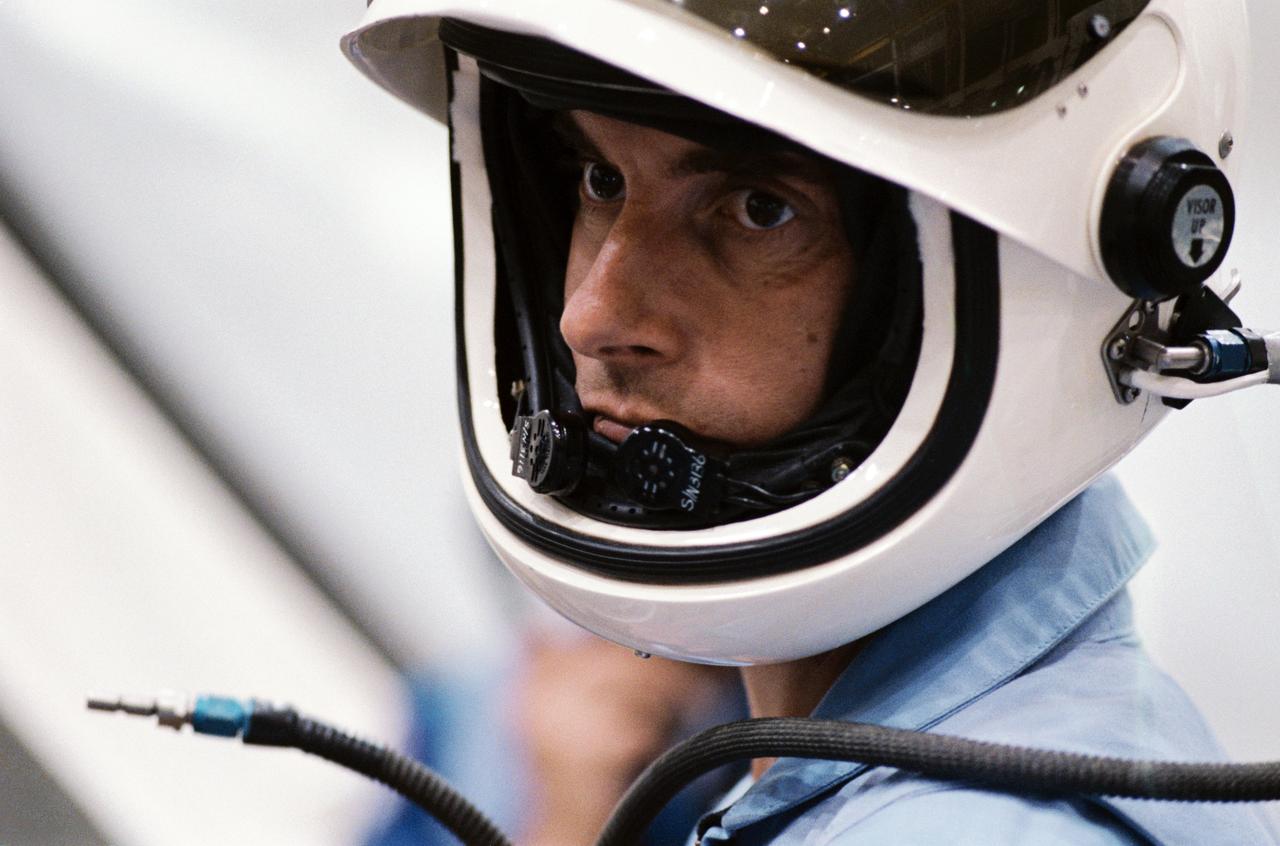
S83-41190 (9 September 1983) --- A close-up view of the serious countenance of West German Physicist Ulf Merbold was captured during a training session with all six STS-9 crewmembers in the Johnson Space Center’s (JSC) Shuttle Mockup and Integration Laboratory. Dr. Merbold is SL-1 payload specialist representing the European Space Agency (ESA). Dr. Merbold, from Max-Planck Institute in Stuttgart, is a specialist in crystal lattice defects and low-temperature physics. The photograph was taken by Otis Imboden.
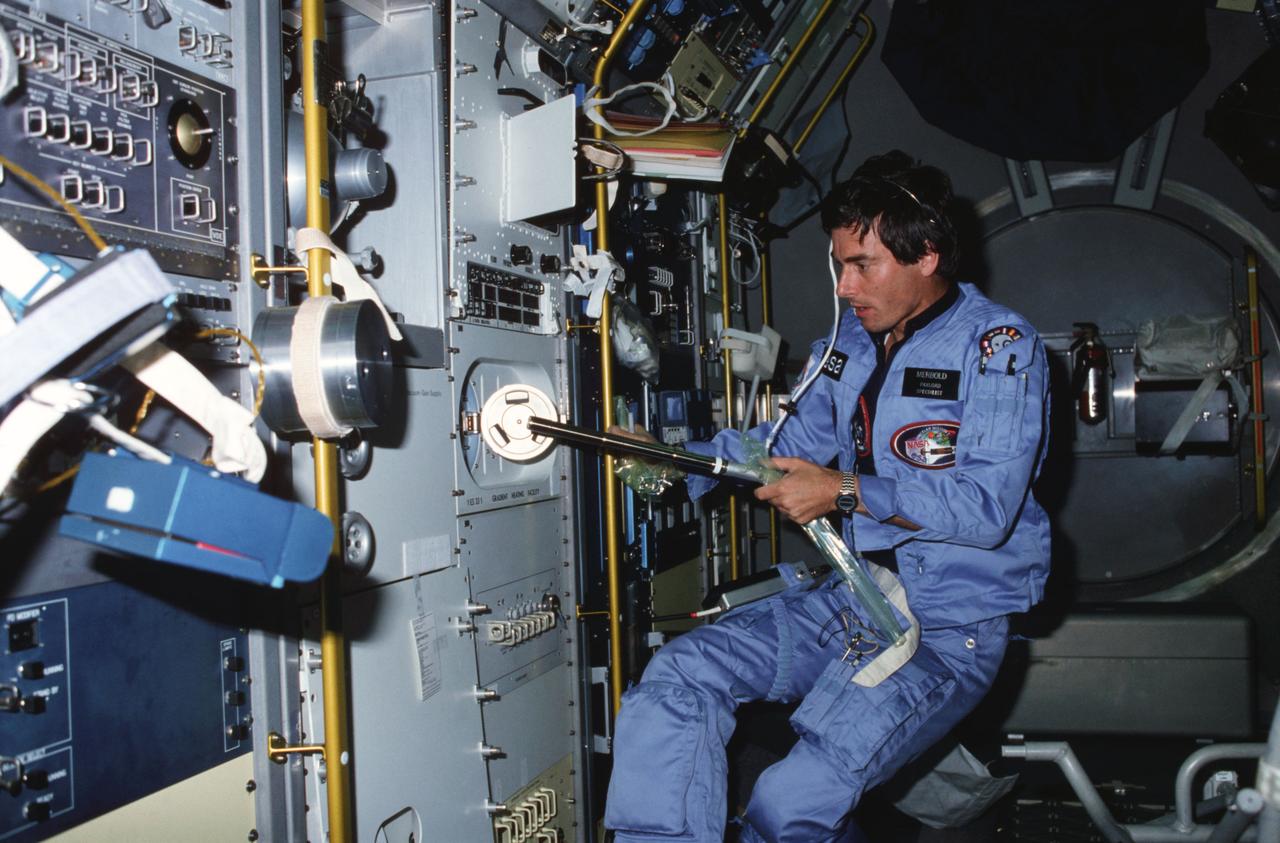
STS009-13-699 (28 Nov - 8 Dec 1983) --? Ulf Merbold, Spacelab 1 payload specialist, carries out one of the experiments using the gradient heating facility on the materials science double rack facility in the busy science module aboard the Earth-orbiting Space Shuttle Columbia. Representing the European Space Agency, Dr. Merbold comes from Max-Planck Institute in Stuttgart, the Federal Republic of Germany. He is a specialist in crystal lattice defects and low temperature physics. The photograph was made with a 35mm camera.
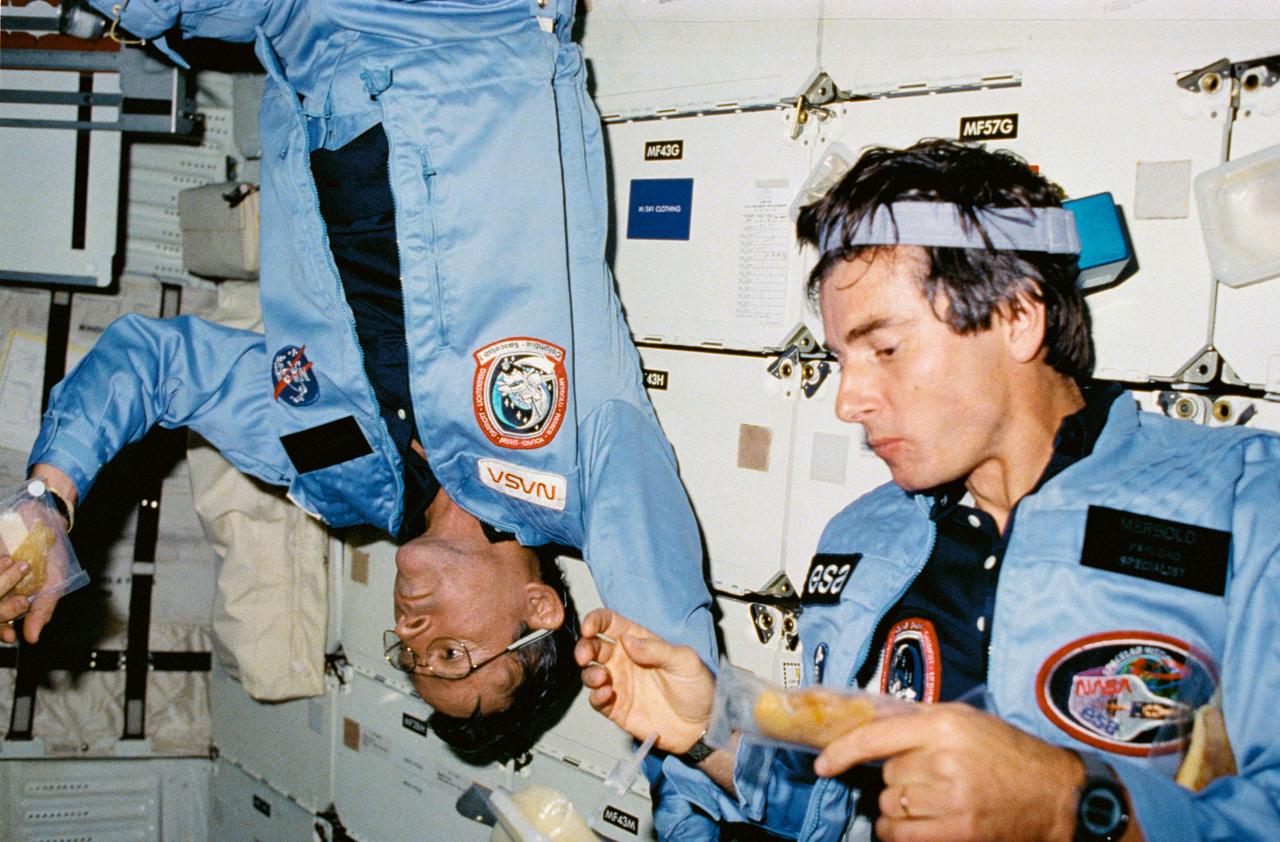
STS009-003-075 (28 November - 8 December 1983) --- Astronaut John W. Young (left), STS-9 crew commander; and Ulf Merbold, payload specialist, enjoy a meal in the middeck of the Earth-orbiting Space Shuttle Columbia. Merbold is a physicist from the Federal Republic of Germany, representing the European Space Agency (ESA) on this 10-day flight. Many of the nearby stowage lockers are used for clothing and food. The photograph was made with a 35mm camera.
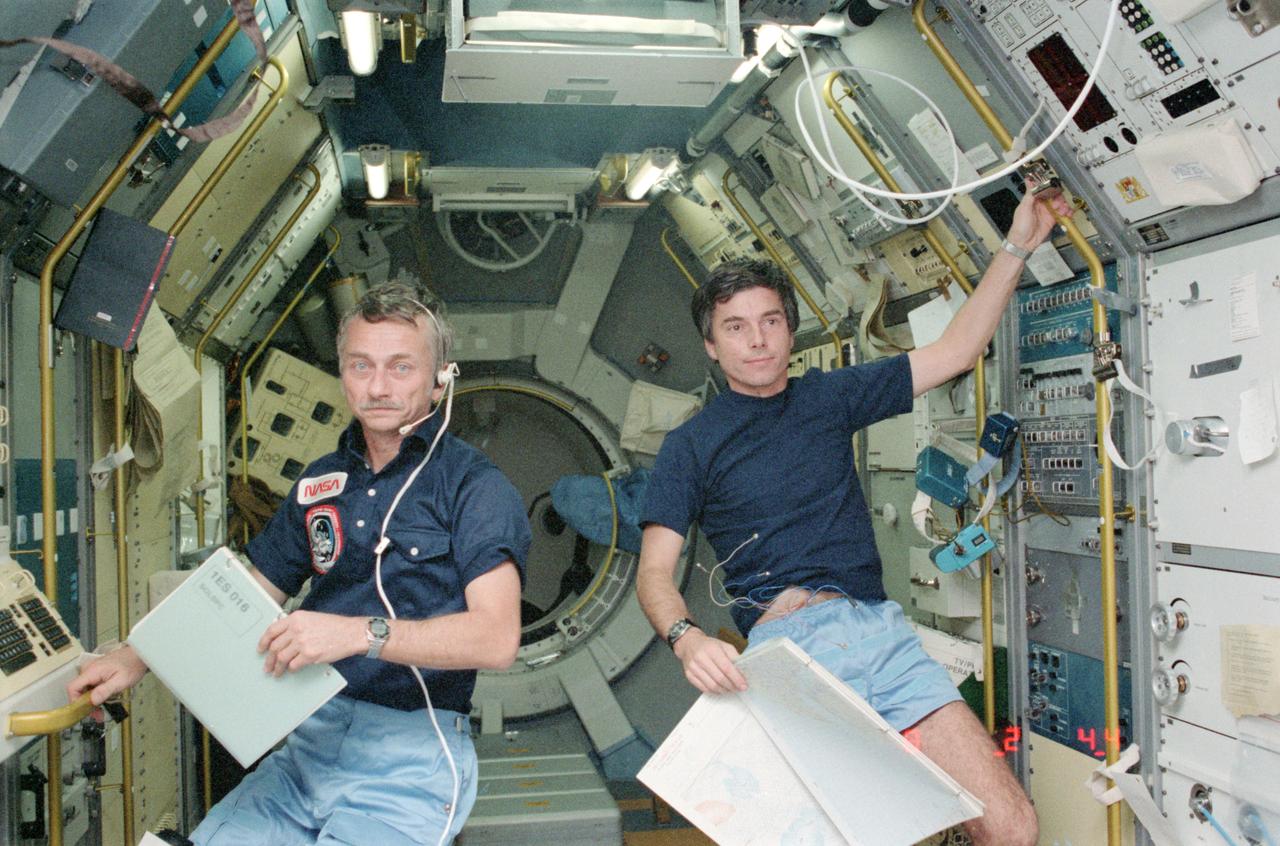
STS009-123-340 (28 Nov 1983) --- Astronaut Owen K. Garriott, STS-9 mission specialist, left, and Ulf Merbold, payload specialist, take a break from monitoring experimentation aboard Spacelab to be photographed. Dr. Garriott, holds in his left hand a data/log book for the solar spectrum experiment. Dr. Merbold, holds a map in his left hand for the monitoring of ground objectives of the metric camera.

S91-52649 (Nov 1991) ---- Astronaut Ulf Merbold, PhD, European Space Agency (ESA) Payload Specialist for STS-42, International Microgravity Laboratory (IML-1).
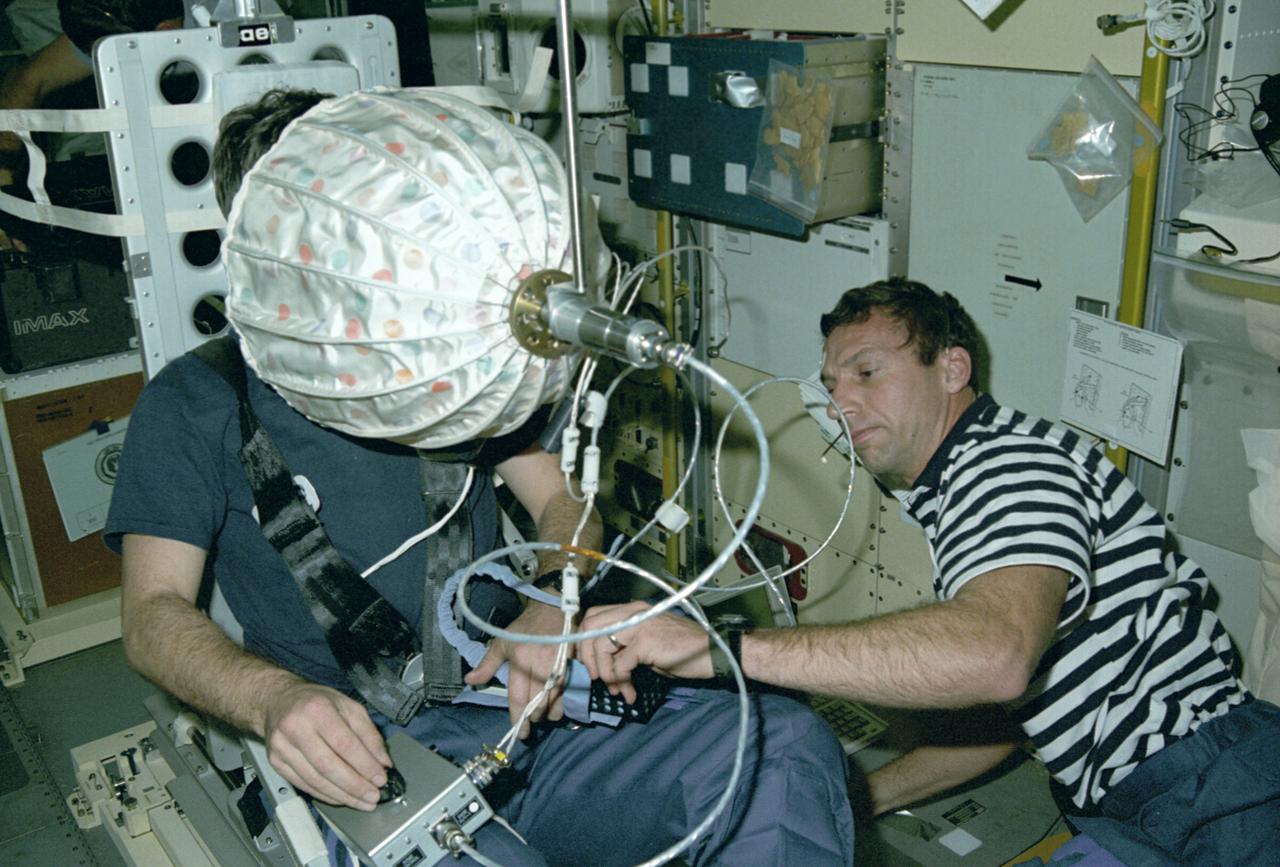
Astronaut Ulf Merbold on the stationary seat of the mini-sled, stares into an umbrella-shaped rotating dome with colored dots. Astronaut Merbold, assisted by astronaut David Hilmer, are conducting the Visual Simulator Experiment, a space physiology experiment. The Visual Stimulator Experiment measures the relative importance of visual and vestibular information in determining body orientation. When a person looks at a rotating visual field, a false sensation of self-rotation, called circularvection, results. In weightlessness, circularvection should increase immediately and may continue to increase as the nervous system comes to rely more on visual than vestibular cues. As Astronaut Merbold stares into the rotating dome with a pattern of colored dots and its interior, he turns a knob to indicate his perception of body rotation. The strength of circularvection is calculated by comparing signals from the dome and the knob. The greater the false sense of circularvection, the more the subject is relying on visual information instead of otolith information. The IML-1 mission was the first in a series of Shuttle flights dedicated to fundamental materials and life sciences research with the international partners. The participating space agencies included: NASA, the 14-nation European Space Agency (ESA), the Canadian Space Agency (CSA), the French National Center of Space Studies (CNES), the German Space Agency and the German Aerospace Research Establishment (DAR/DLR), and the National Space Development Agency of Japan (NASDA). Managed by the Marshall Space Flight Center, IML-1 was launched on January 22, 1992 aboard the Space Shuttle Orbiter Discovery (STS-42 mission).
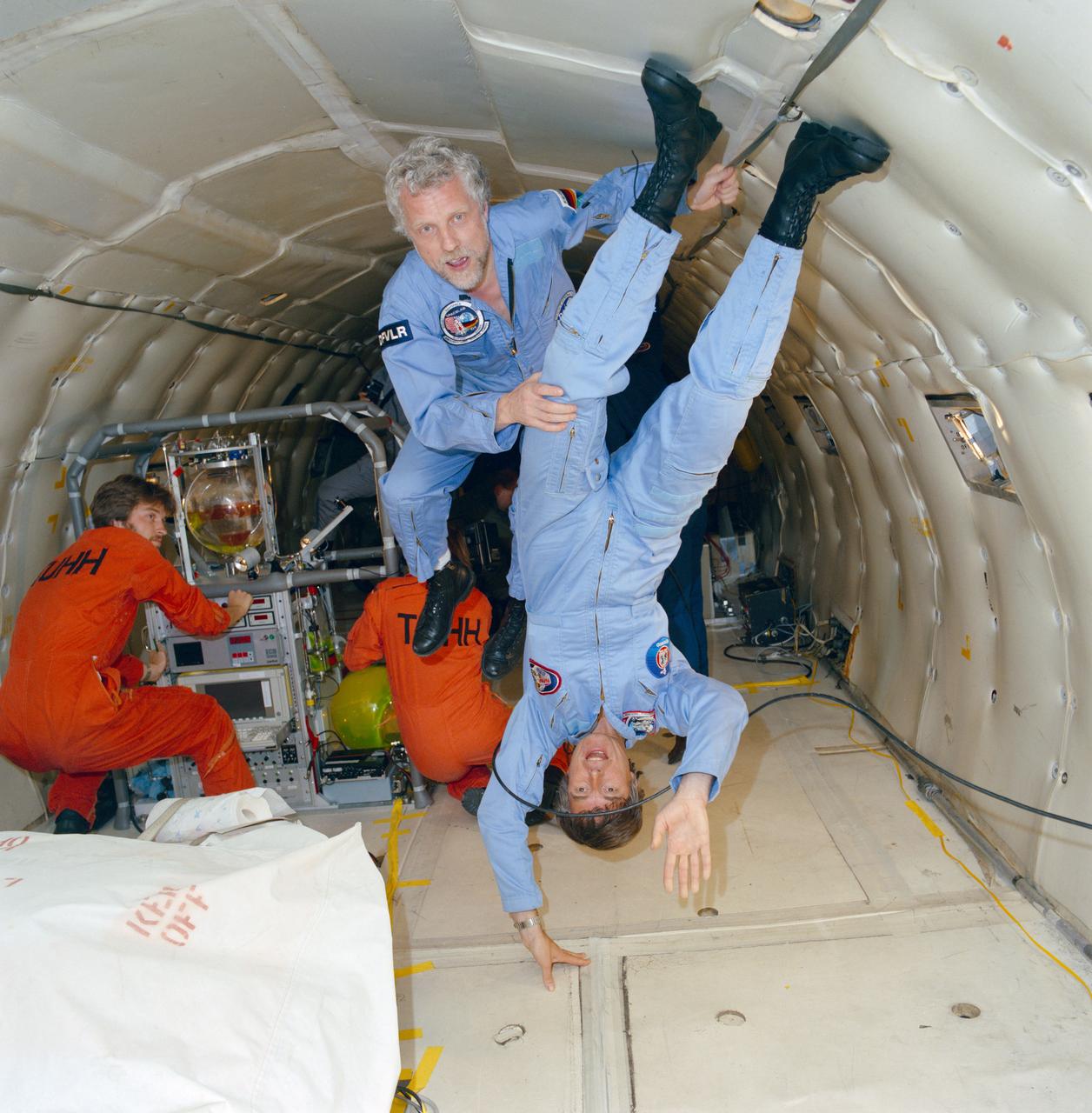
S88-37966 (2 Oct 1988) --- European Space Agency payload specialists Ulf Merbold (STS-42, right) and Reinhold Furrer (STS 61-A) get the "feel" of zero-gravity aboard NASA's KC-135 aircraft over the Gulf of Mexico.
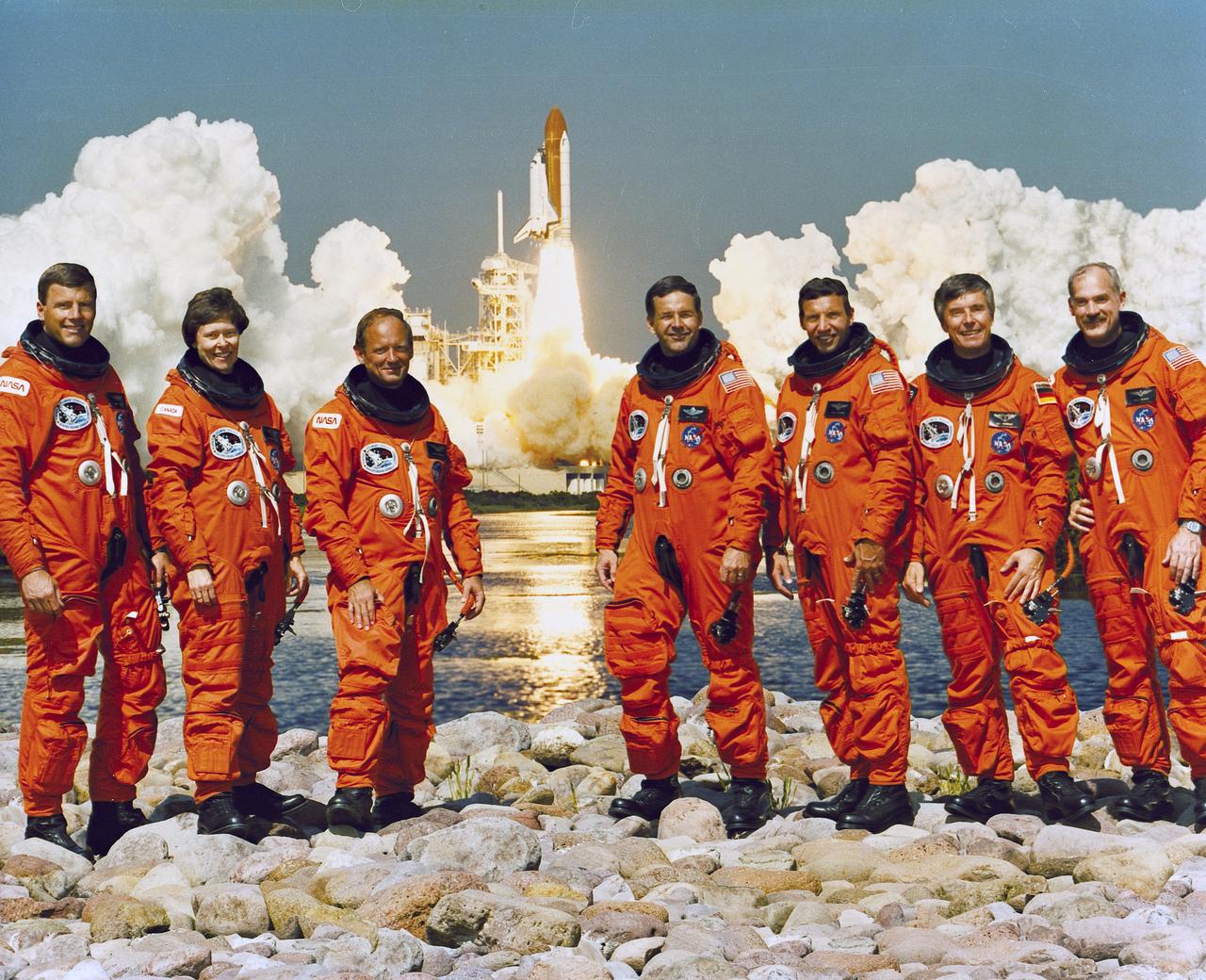
The STS-42 crew portrait includes from left to right: Stephen S. Oswald, pilot; Roberta L. Bondar, payload specialist 1; Norman E. Thagard, mission specialist 1; Ronald J. Grabe, commander; David C. Hilmers, mission specialist 2; Ulf D. Merbold, payload specialist 2; and William F. Readdy, mission specialist 3. Launched aboard the Space Shuttle Discovery on January 22, 1992 at 9:52:33 am (EST), the STS-42 served as the International Microgravity Laboratory-1 (ML-1 ) mission.
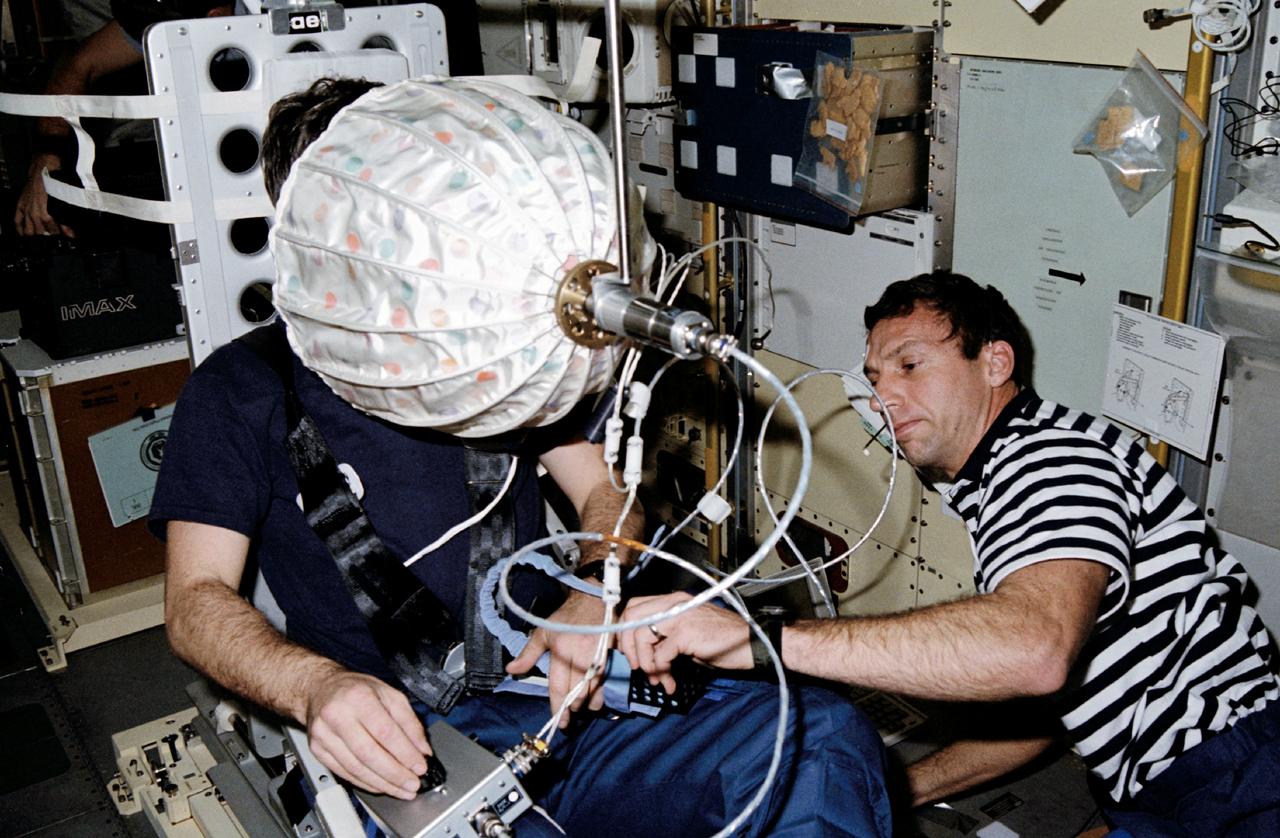
STS042-203-024 (22-30 Jan. 1992) --- Astronaut David C. Hilmers (right), STS-42 mission specialist, assists European Space Agency (ESA) payload specialist Ulf Merbold with the visual stimulator experiment on the Space Shuttle Discovery's middeck. This particular test is part of an ongoing study of the Space Adaptation Syndrome (SAS). Seated in a stationary mini-sled, Merbold (or any other subject for this test) stares at an umbrella-shaped rotating dome with a pattern of colored dots on its interior. While observing the rotating dome, the subject turns a knob to indicate his perception of body rotation. The strength of circular vection is calculated by comparing the signals from the dome and the knob. The greater the false sense of circular vection, the more the subject is relying on visual information instead of otolith information.
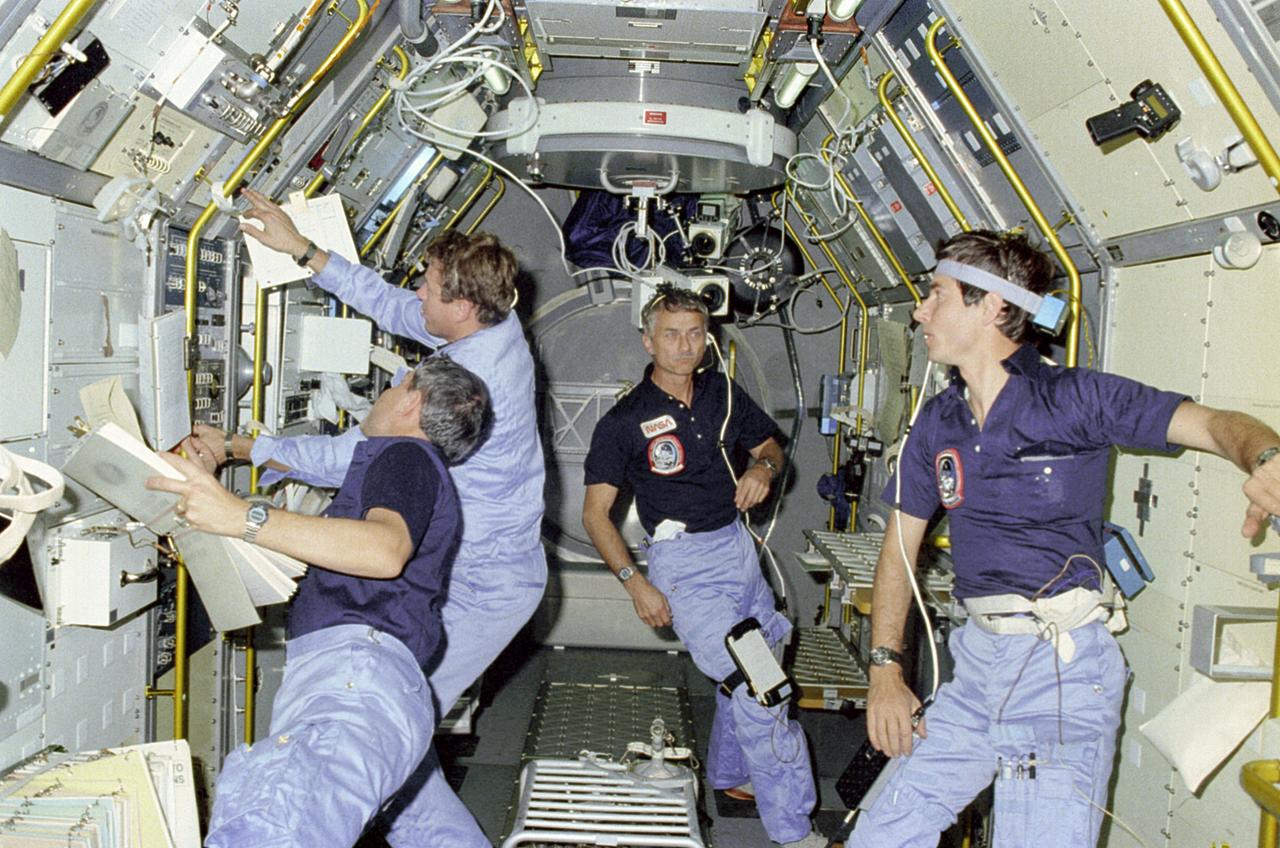
This photograph shows activities inside the science module during the Spacelab-1 (STS-9) mission. Left to right are Mission Specialist Robert Parker, Payload Specialist Byron Lichtenberg, Mission Specialist Owen Garriott, and Payload Specialist Ulf Merbold. The overall goal of the Spacelab-1 mission, the first mission of the Spacelab facility, were: (1) To verify the Spacelab system capability, (2) to obtain valuable scientific, applications, and technology data from a U.S./European multidisciplinary payload, and (3) to demonstrate the broad capability of Spacelab for scientific research. More than 70 experiments in 5 disciplines from 14 nations were conducted during the mission. The mission marked the the entry of non-astronaut persornel, called Payload Specialists, into space as working members of the crew. They are fellow scientists representing the international group of investigators using the mission. Mission Specialists are NASA astronauts who have broad scientific training. They operate various Orbiter-Spacelab systems, perform any required activity outside the spacecraft, and support investigations as needed. The Space Shuttle Orbiter Columbia that carried Spacelab-1 was operated by two other NASA astronauts serving as commander and pilot. The STS-9 mission, managed by the Marshall Space Flight Center, was launched on November 28, 1983.
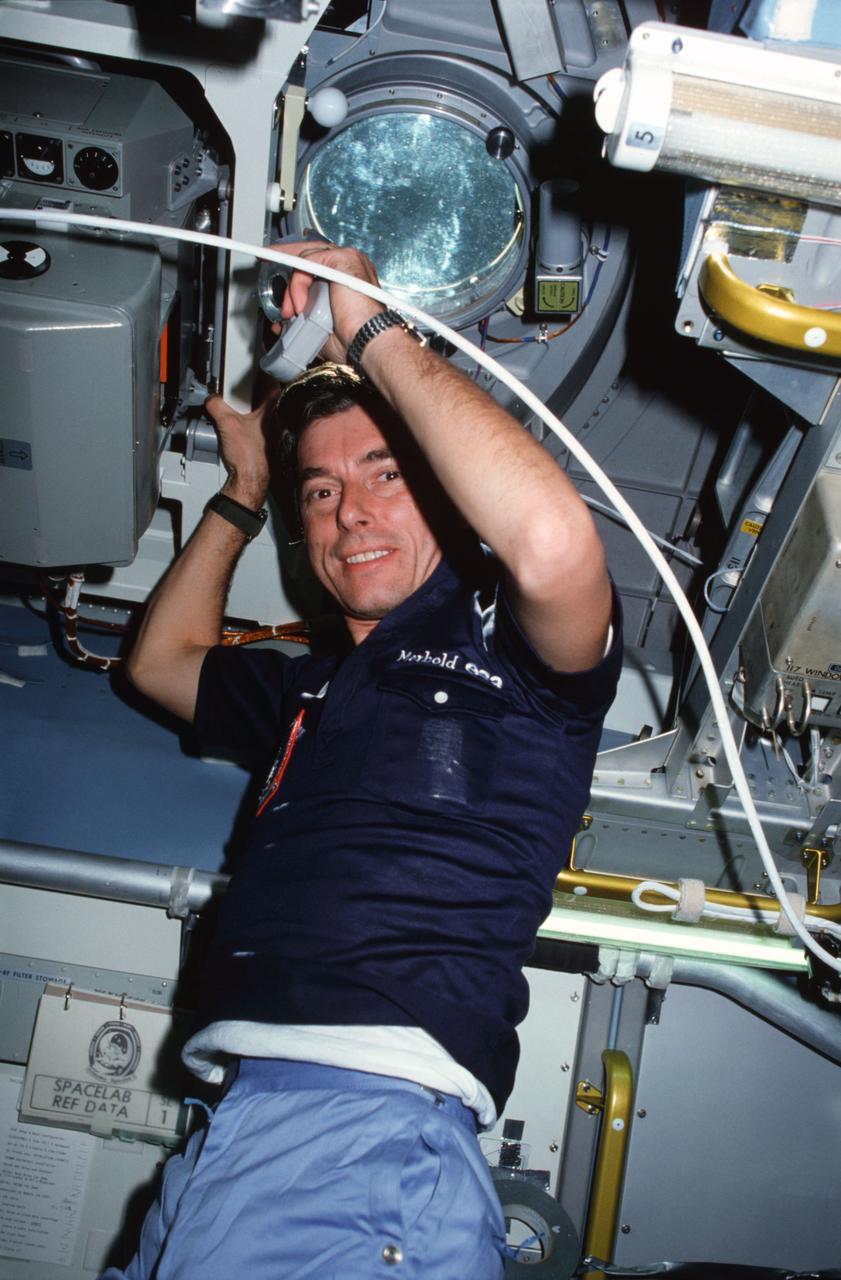
STS009-04-116 (28 Nov 1983) --- Payload Specialist Ulf Merbold shown working in the Spacelab 1 module onboard the Space Shuttle Columbia.
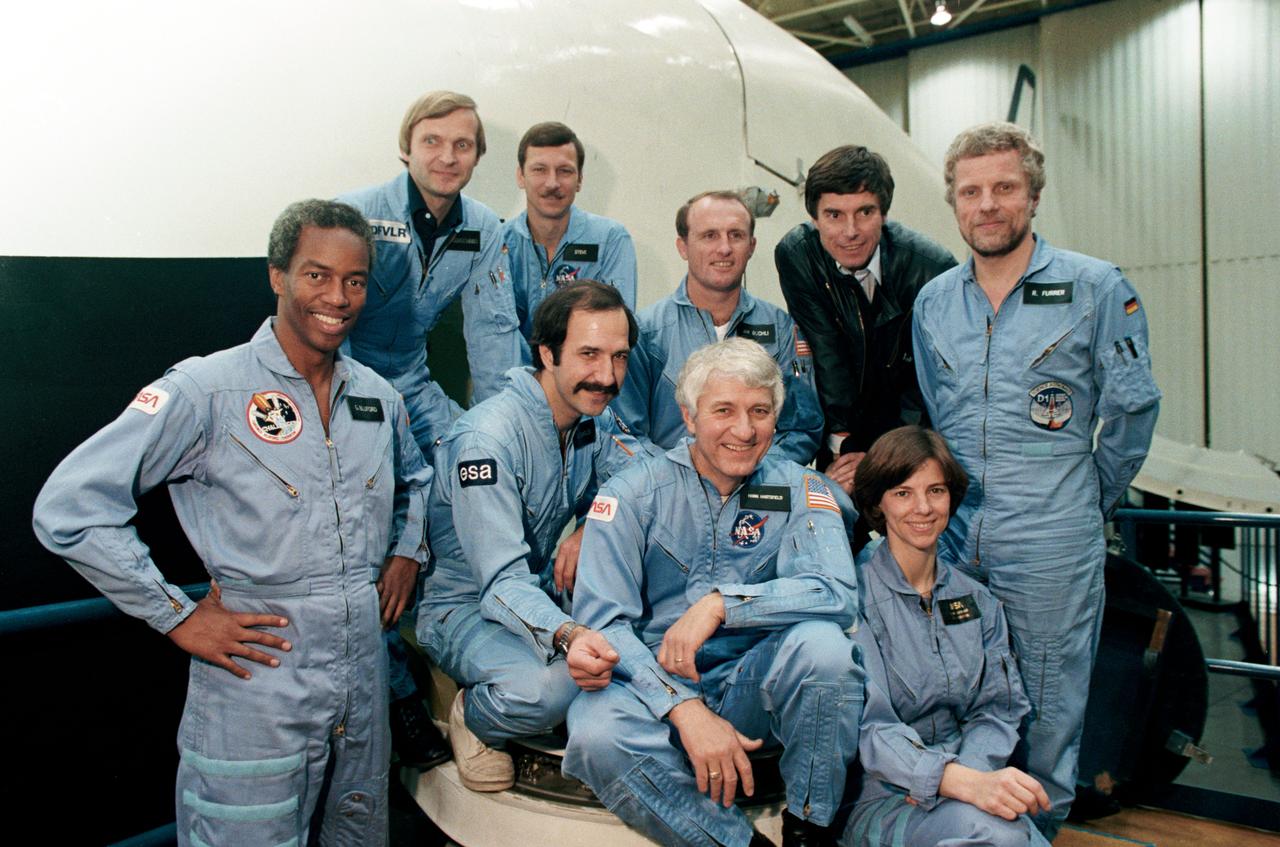
Unofficial group photo of the STS-61A Crew and Ulf Merbold, Bldg. 9A; and, 1-G Trainer Cockpit. JSC, HOUSTON, TX Also available in 4x5 BW
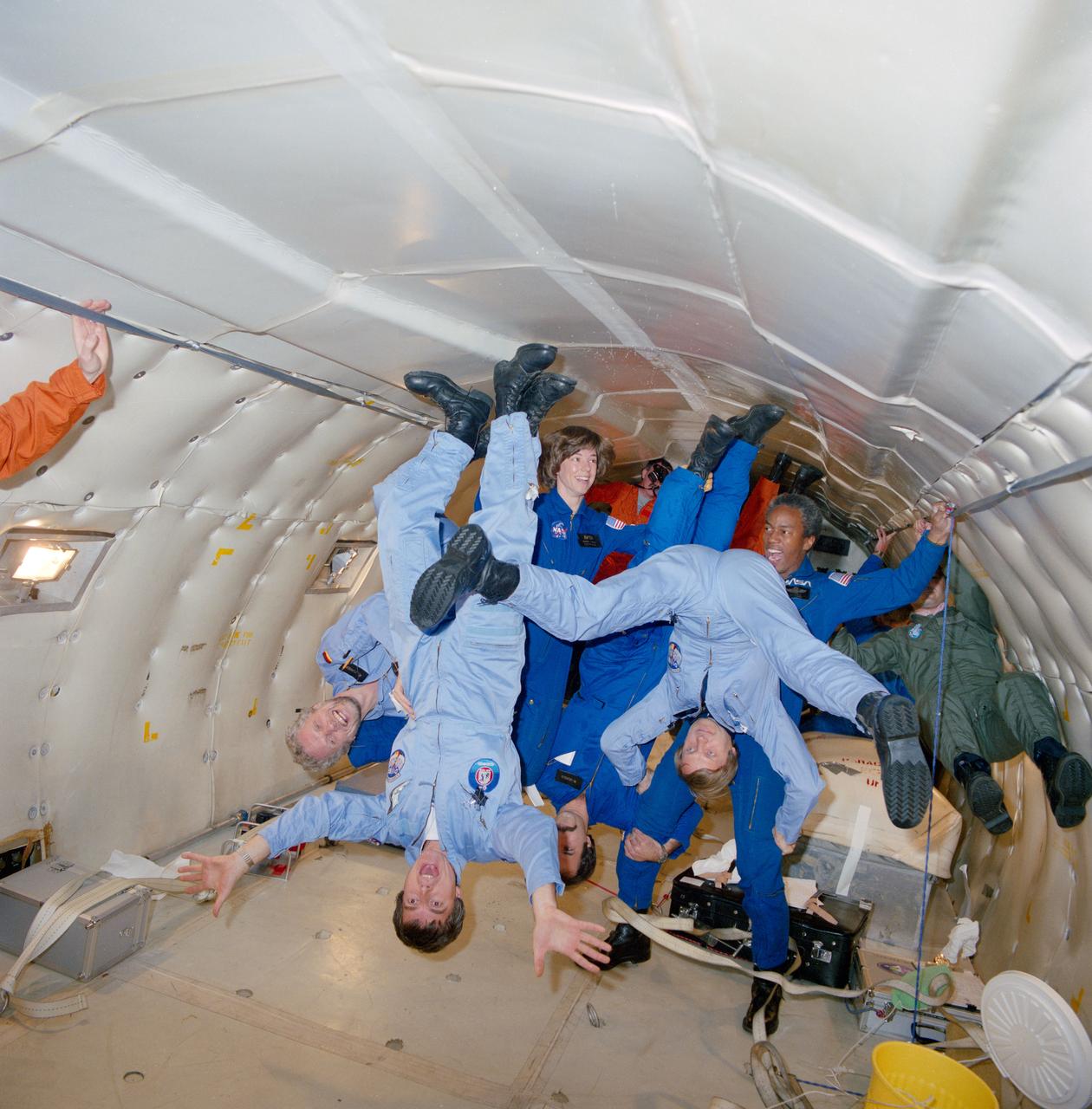
S84-47177 (17 Dec 1984) --- A recent flight in NASA's KC-135 aircraft gave the STS 61-A/Spacelab D-1 crewmembers a chance to get a preview of weightlessness. Mission specialists Bonnie J. Dunbar and Guion S. Bluford appear to be balancing several payload specialists during a few brief moments of microgravity. With heads near the floor are, left to right, Payload Specialists Reinhard Furrer, Ulf Merbold, Wubbo J. Ockels and Ernst Messerschmid. Ockels is from the Netherlands; the others, from Germany, with Merbold serving as backup.
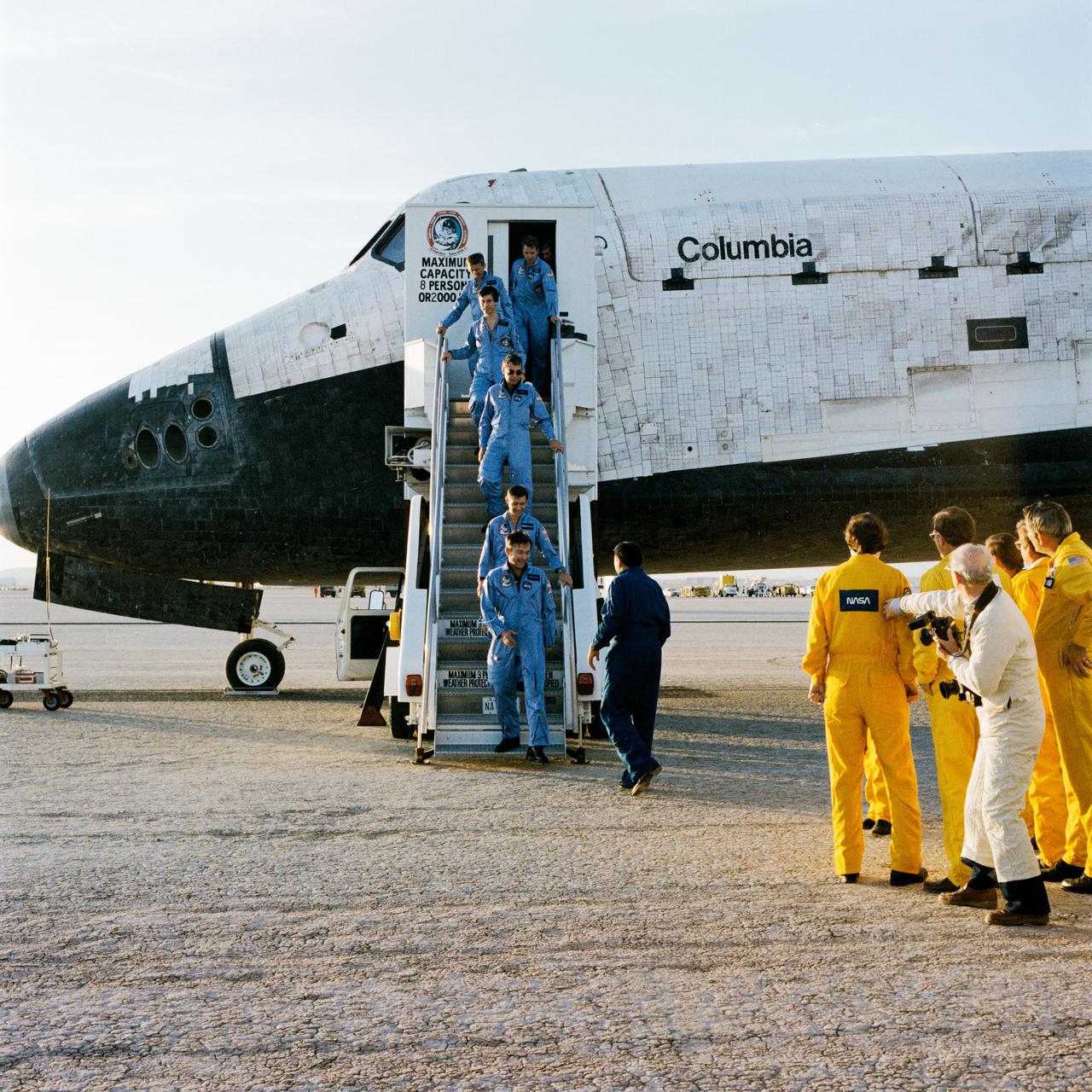
S83-45648 (8 Dec 1983) --- After more than 10 days in Earth orbit, the crewmembers for STS-9 egress the Space Shuttle Columbia following its successful landing at Edwards Air Force Base in southern California. Descending the stairs are (from bottom) Astronaut John W. Young, Brewster H. Shaw Jr. and Robert A. R. Parker; West German physicist Dr. Ulf Merbold; Astronaut Owen K. Garriott, and Dr. Byron K. Lichtenberg, a biomedical engineer from the Massachusetts Institute of Technology. Young was STS-9 crew commander; Shaw, pilot Drs. Parker and Garriott were mission specialists; and Drs. Merbold and Lichtenberg, payload specialists. Dr. Merbold was the European Space Agency?s first scientist to fly aboard a NASA spacecraft and Dr. Lichtenberg was America?s first non-astronaut to join a NASA crew in space. On hand to greet the crewmembers is George W. S. Abbey, director of flight crew operations.

STS009-15-755 (28 Nov-8 Dec 1983) --- The lone television monitor in the Spacelab module is a popular item in this 35mm scene of all four science specialists on the 10-day STS-9 mission. Left to right are Robert A. R. Parker, Byron K. Lichtenberg, Owen K. Garriott and Ulf Merbold.
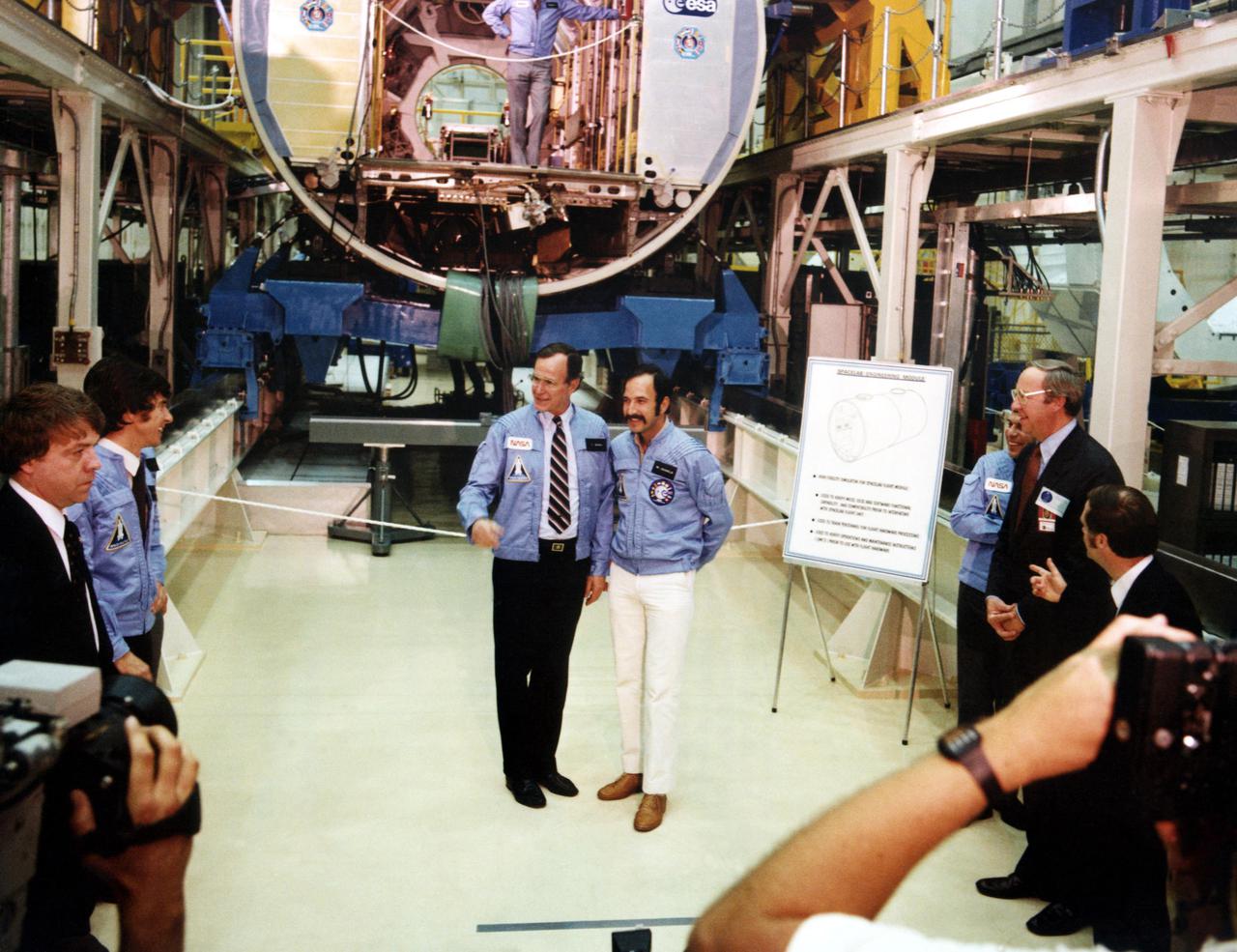
KENNEDY SPACE CENTER, FLA. -- Vice President George F. Bush, center left, is pictured with Payload Specialist Wubbo Ockels of the Netherlands during the Spacelab Arrival Ceremony. Second from left is Payload Specialist Ulf Merbold, Germany. At far right are James McCulls, chief, Special Services Branch, NASA Headquarters; and James C. Harrington, director, Spacelab Program, NASA. Overhead, astronaut Owen K. Garriott, U.S.A., stands in the Spacelab Engineering Module.
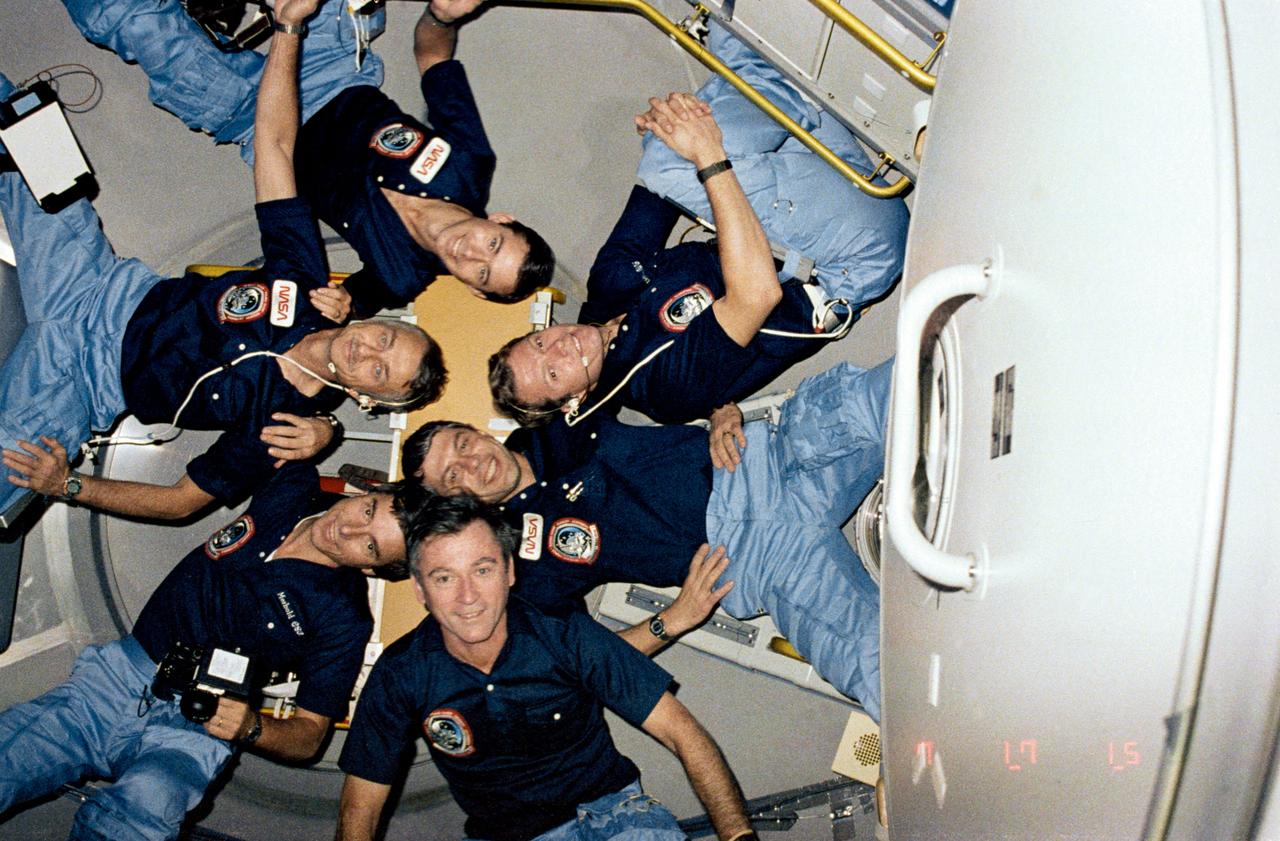
STS009-126-441 (28 Nov 1983) --- The six crewmembers of STS-9 position themselves in a star bust-like cluster in the aft end cone of Spacelab aboard the Shuttle Columbia. Clockwise, beginning with John W. Young, are Ulf Merbold, Owen K. Garriott, Brewster H. Shaw, Jr., Byron M. Lichtenberg and Robert A.R. Parker.
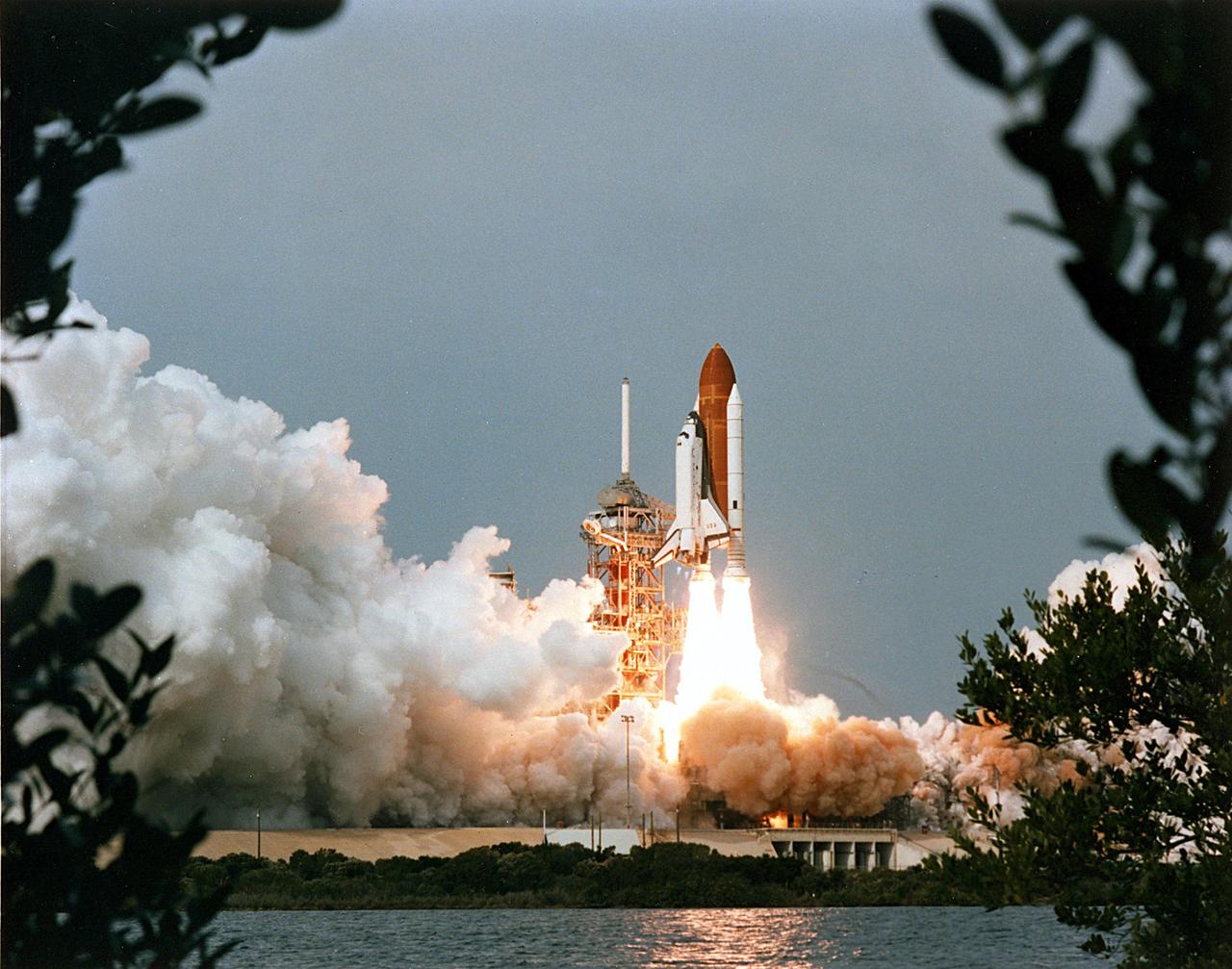
KENNEDY SPACE CENTER, FLA. -- Columbia launches on mission STS-9 from Launch Pad 39-A. This is the first Shuttle flight with six crew members: Commander John W. Young, Pilot Brewster H. Shaw Jr., Mission Specialists Owen K. Garriott and Robert A.R. Parker, and Payload Specialists Byron K. Lichtenberg and Ulf Merbold, who is with the European Space Agency (ESA). The flight carries the first Spacelab mission and first astronaut to represent ESA.
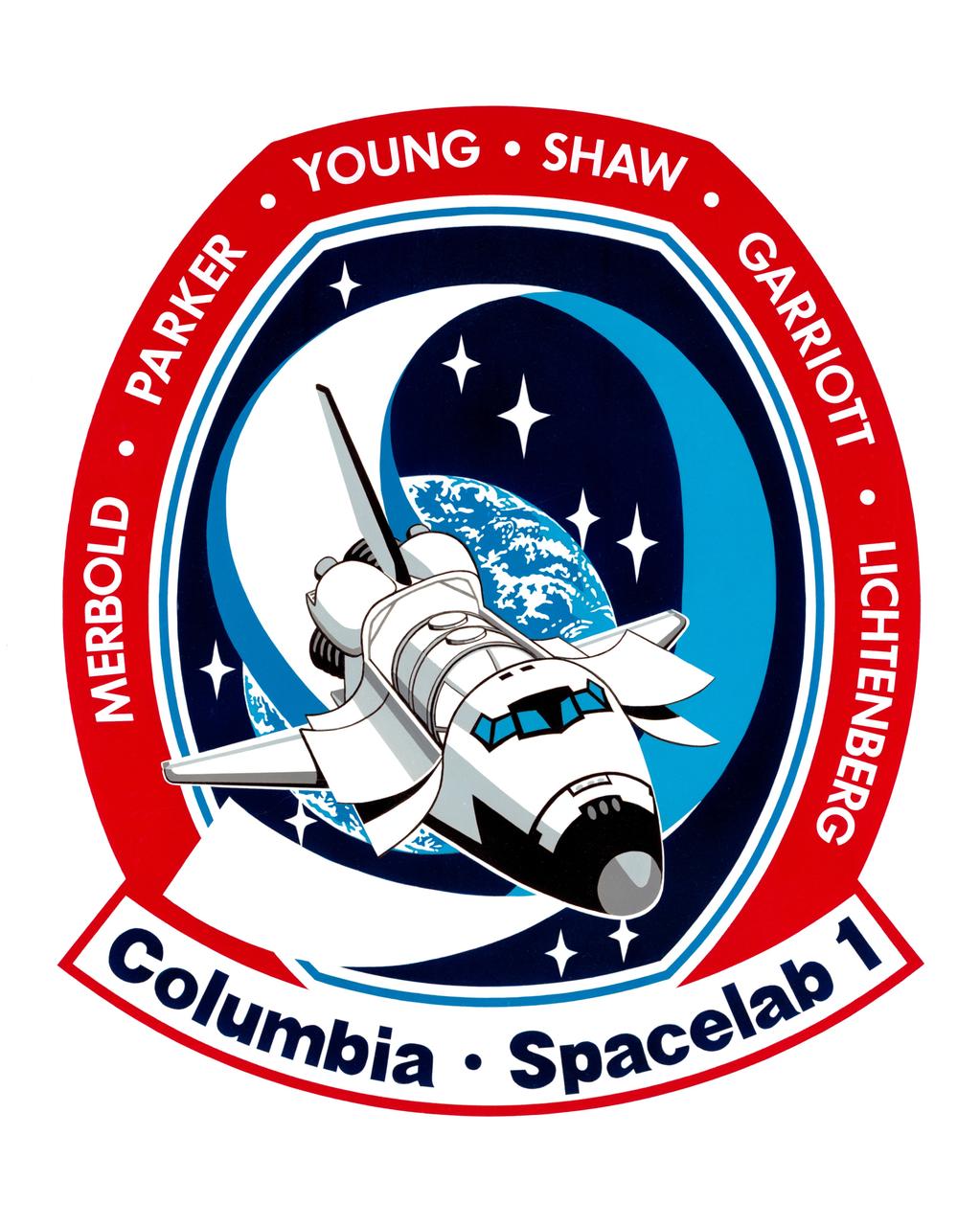
S83-32900 (25 May 1983) --- This is the official insignia for STS-9, the major payload of which is Spacelab-1, depicted in the cargo bay of the space shuttle Columbia. The nine stars and the path of the orbiter tell the flight's numerical designation in the Space Transportation System's mission sequence. Astronaut John W. Young is crew commander; Brewster H. Shaw Jr., pilot. NASA astronauts Owen K. Garriott and Robert A.R. Parker are mission specialists. Byron K. Lichtenberg of the Massachusetts Institute of Technology and Ulf Merbold of the Republic of West Germany are the Spacelab-1 payload specialists. Launch has been set for late 1983. Merbold is a physicist representing the European Space Agency (ESA). The NASA insignia design for space shuttle flights is reserved for use by the astronauts and for other official use as the NASA Administrator may authorize. Public availability has been approved only in the forms of illustrations by the various news media. When and if there is any change in this policy, which is not anticipated, the change will be publicly announced. Photo credit: NASA
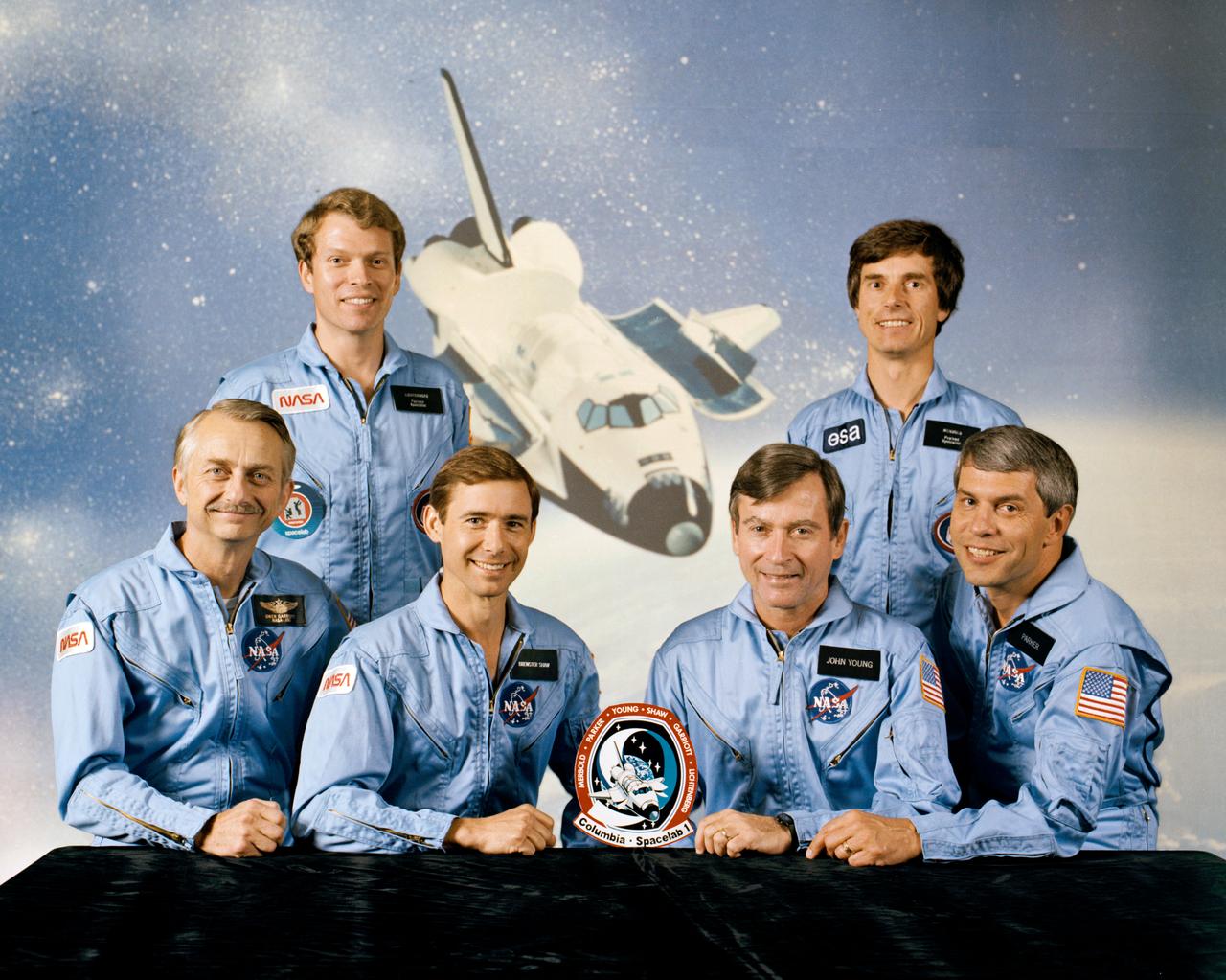
S83-35017 (June 1983) --- These six men represent the first crewmembers to man the Columbia when it gets reactivated later this year. The four NASA astronauts are joined by a European and MIT scientist payload specialist and the Spacelab module and experiment array for STS-9. On the front row are Astronauts Owen K. Garriott, mission specialist; Brewster H. Shaw, Jr., pilot; John W. Young, commander; and Robert A. R. Parker, mission specialist. Byron K. Lichtenberg of the Massachusetts of Technology, left and Ulf Merbold of the Republic of West Germany and the European Space Agency stand in front of an orbital scene featuring the Columbia. Columbia was used for the first five Space Transportation System missions in 1981 and 1982.
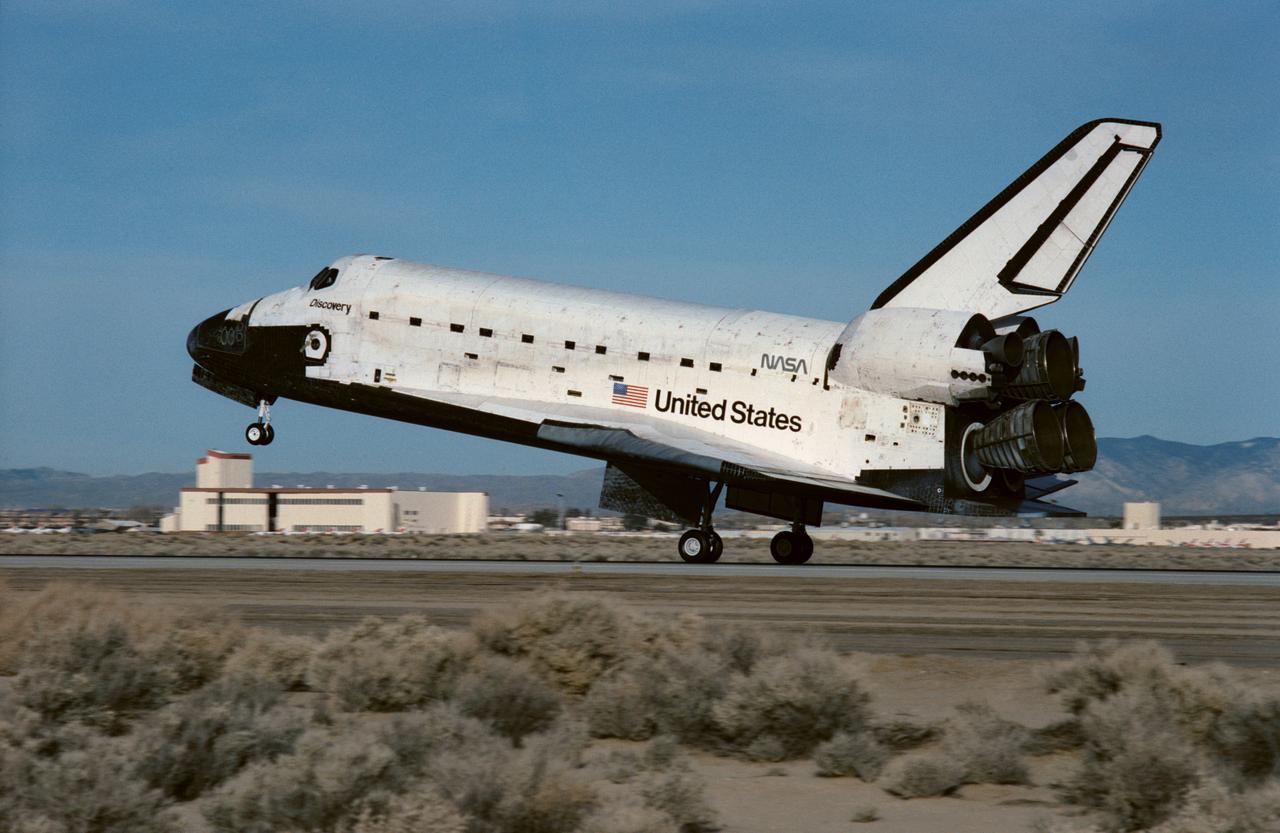
STS042-S-094 (30 Jan 1992) --- Space Shuttle Discovery lands on Runway 22 at Edwards Air Force Base in southern California to complete an eight-day mission. Main gear touchdown occurred at 8:07:18 a.m. (PST), Jan. 30, 1992. The crewmembers aboard Discovery for the first International Microgravity Laboratory (IML-1) mission were astronauts Ronald J. Grabe, mission commander; Stephen S. Oswald, pilot; Norman E. Thagard, payload commander; and David C. Hilmers and William F. Readdy, both mission specialists; and payload specialists Roberta L. Bondar of Canada and Ulf Merbold, representing the European Space Agency (ESA).
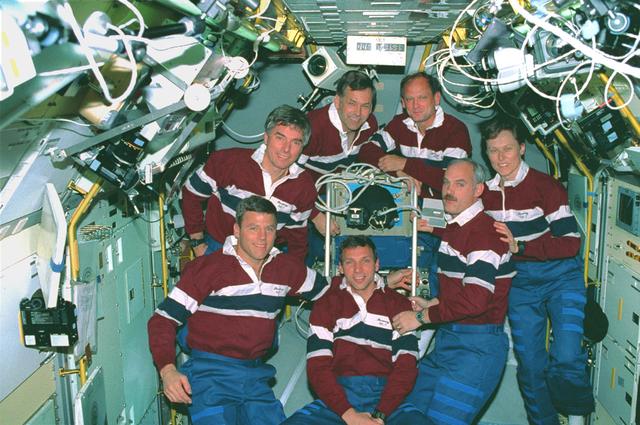
Onboard Space Shuttle Discovery (STS-42) the seven crewmembers pose for a traditional in-space portrait in the shirt-sleeve environment of the International Microgravity Laboratory (IML-1) science module in the Shuttle's cargo bay. Pictured are (clockwise from top),Commander Ronald J. Grabe, payload commander Norman E. Thagard, payload specialist Roberta L. Bondar; mission specialists William F. Readdy and David C. Hilmers; pilot Stephen S. Oswald and payload specialist Ulf Merbold. The rotating chair, used often in biomedical tests on the eight-day flight, is in center frame.
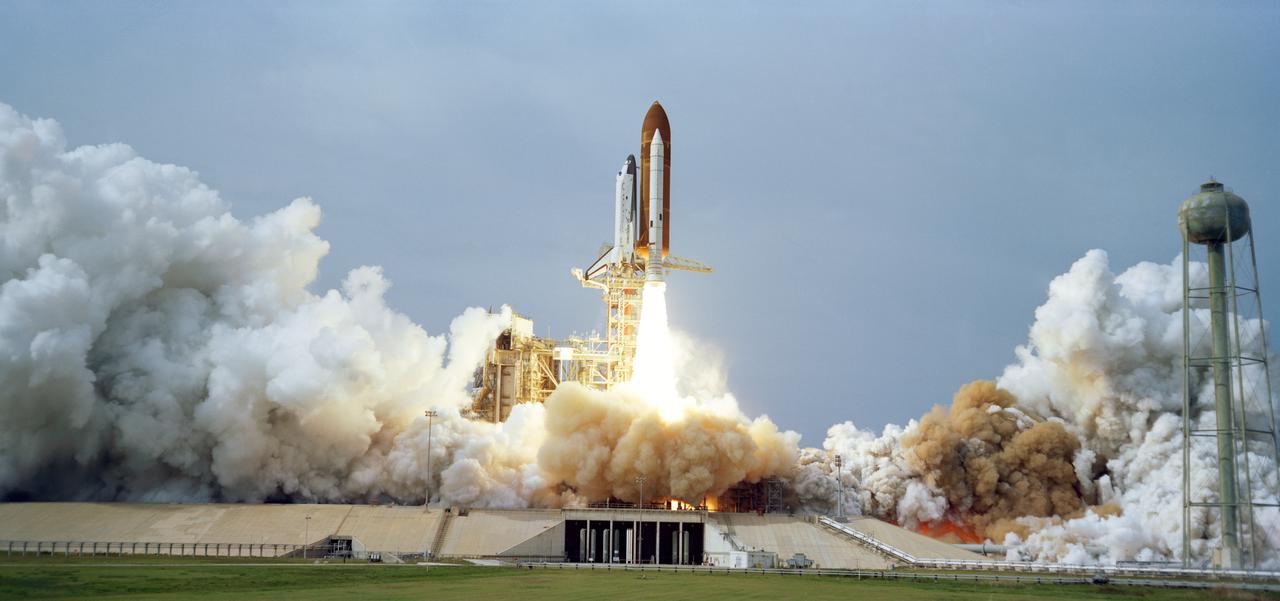
S83-44997 (28 Nov 1983) --- The Columbia lifts off once again from launch pad 39A at the Kennedy Space Center to begin a busy nine days in space for six crewmembers. Official launch time was 11:00:00:84 a.m. (EST). Onboard the spacecraft are Astronauts John W. Young, Brewster Shaw, Jr., Dr. Owen K. Garriott, Dr. Robert A. R. Parker; the European Space Agency?s Dr. Ulf Merbold; and Dr. Byron K. Lichtenberg, biomedical engineer with Massachusetts Institute of Technology.
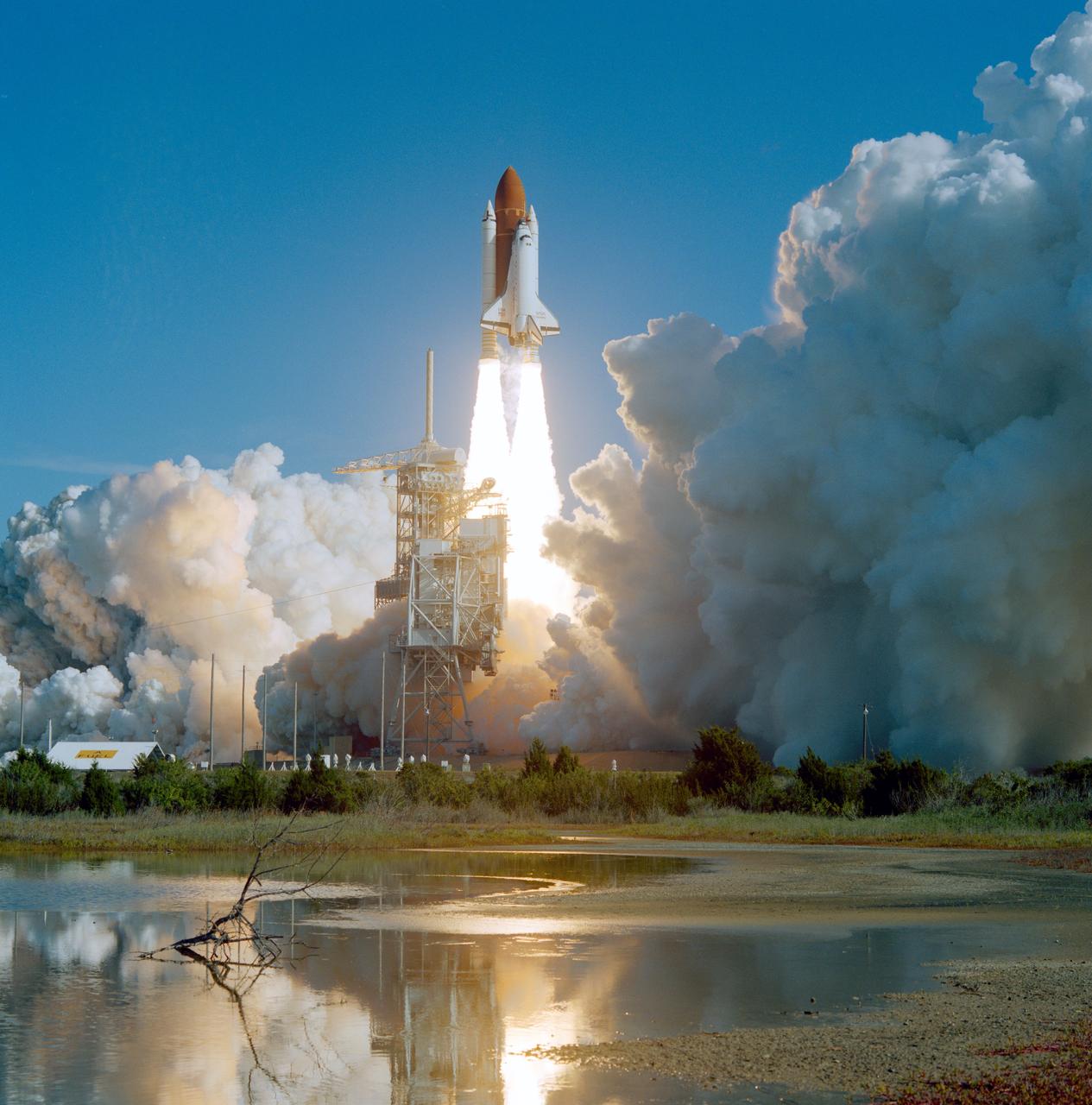
STS042-S-064 (22 Jan 1992) --- A horizontal image of liftoff of STS-42, with a crew of seven and the International Microgravity Laboratory (IML-1) onboard. Crewmembers are astronauts Ronald J. Grabe, mission commander; Stephen S. Oswald, pilot; Norman E. Thagard, payload commander; David C. Hilmers and William F. Readdy, both mission specialists; and payload specialists Roberta L. Bondar of Canada and Ulf Merbold, representing the European Space Agency (ESA). Liftoff occurred at 9:52:33 a.m. (EST), Jan. 22, 1992.
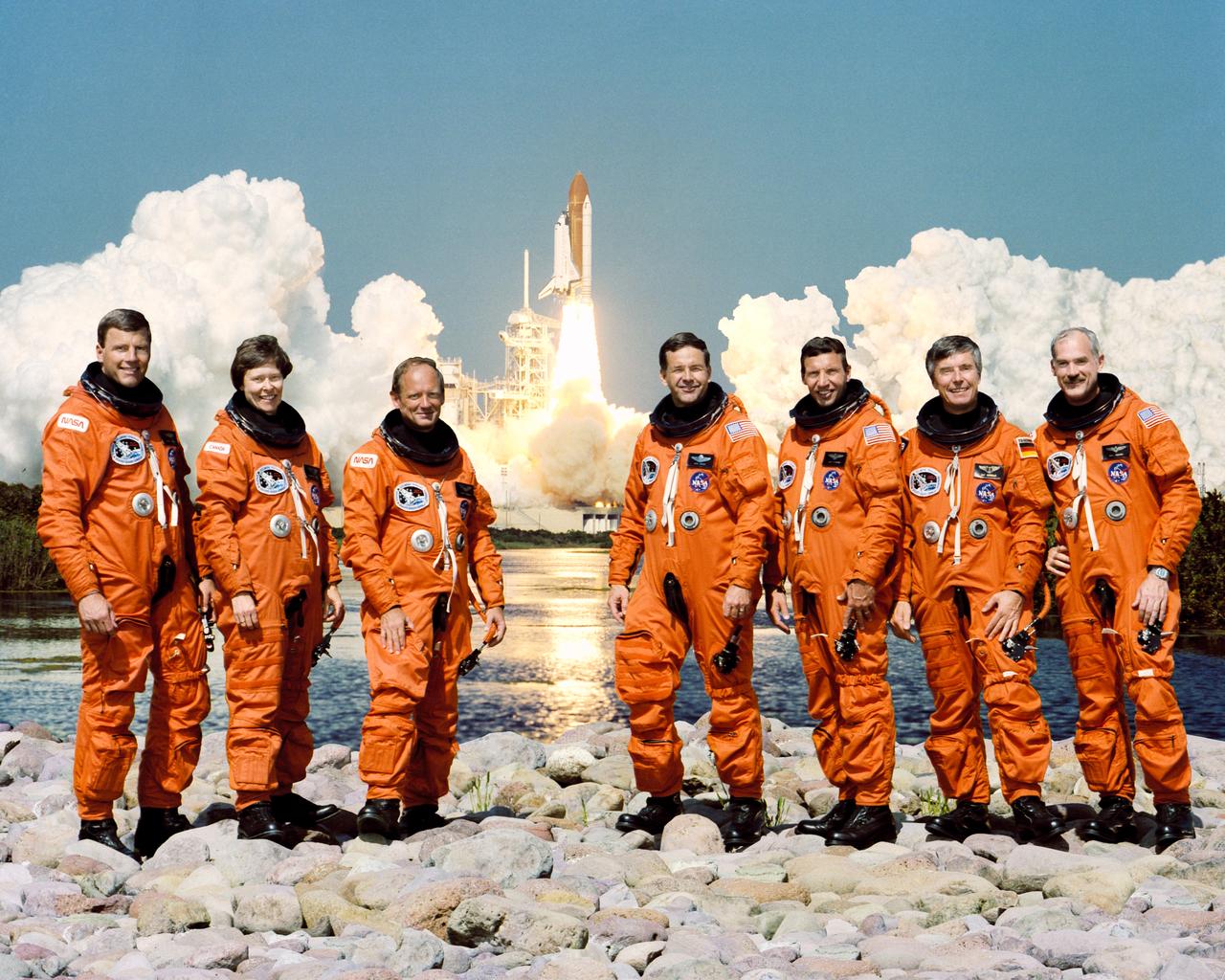
STS042-S-002 (November 1991) --- Payload specialists representing Canada and the European Space Agency (CSA - ESA) join five NASA astronauts for the January 1992 scheduled STS-42 mission. Left to right are astronauts Stephen S. Oswald, pilot; Roberta L. Bondar, payload specialist; Norman E. Thagard, payload commander; Ronald J. Grabe, mission commander; David C. Hilmers, mission specialist; Ulf Merbold, payload specialist; and William F. Readdy, mission specialist. The STS-42 mission will utilize the Space Shuttle Discovery to carry out experiments for the International Microgravity Laboratory (IML-1).
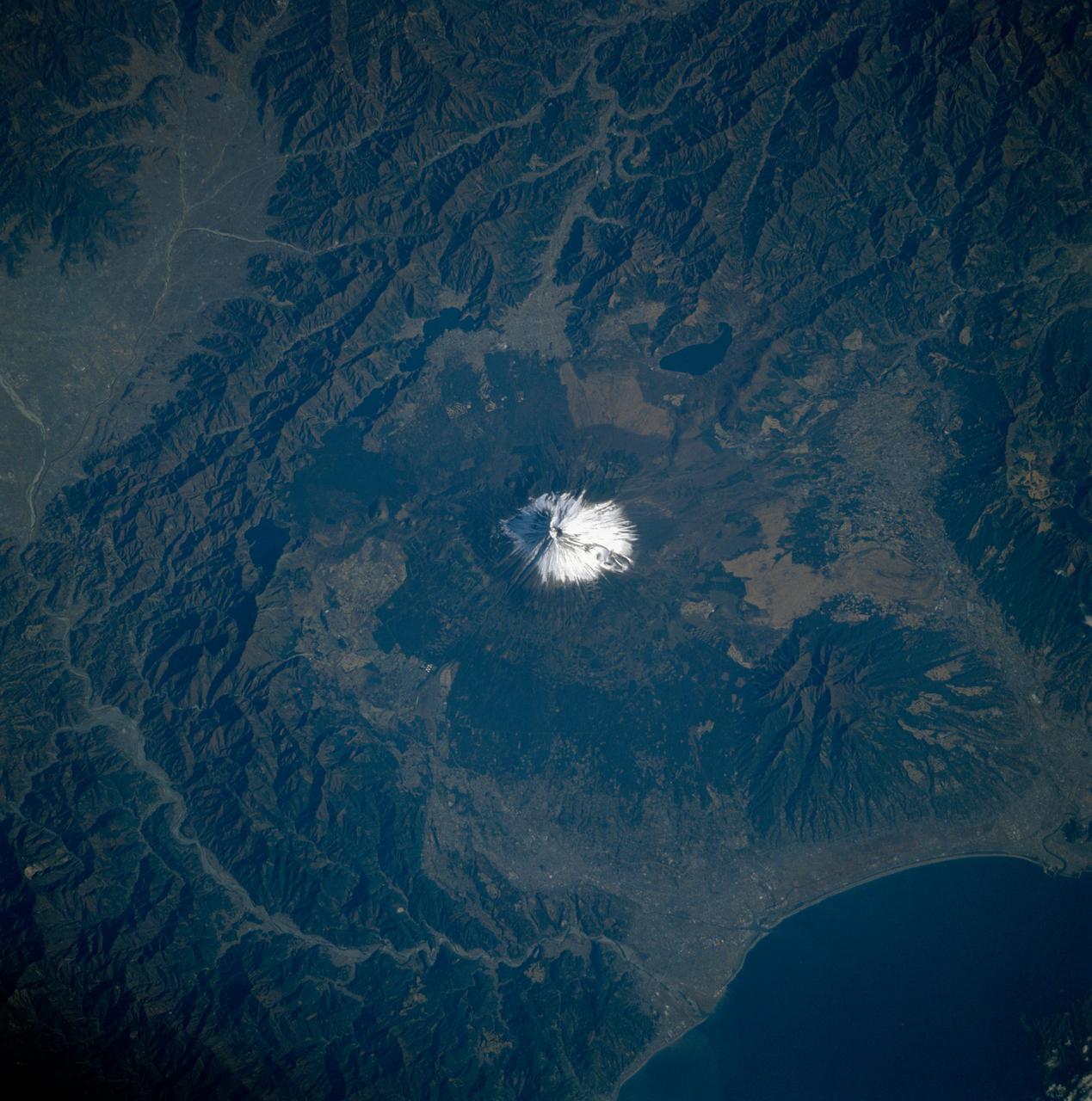
STS009-40-2575 (28 Nov-8 Dec 1983) --- This view of the Fuji volcano, Japan was taken on the 54th orbit of the Space Shuttle Columbia. The center coordinates are 35.5 degrees north latitude and 139.0 degrees east longitude. This was the first time a non-United States crew member was flown aboard the United States Space Shuttle, European Space Agency (ESA) payload specialist Ulf Merbold, Germany. The crew included NASA astronauts John W. Young, commander; Brewster H. Shaw Jr., pilot; Owen K. Garriott, mission specialist, Robert A. Parker, mission specialist; and Byron Lichtenberg, payload specialist.
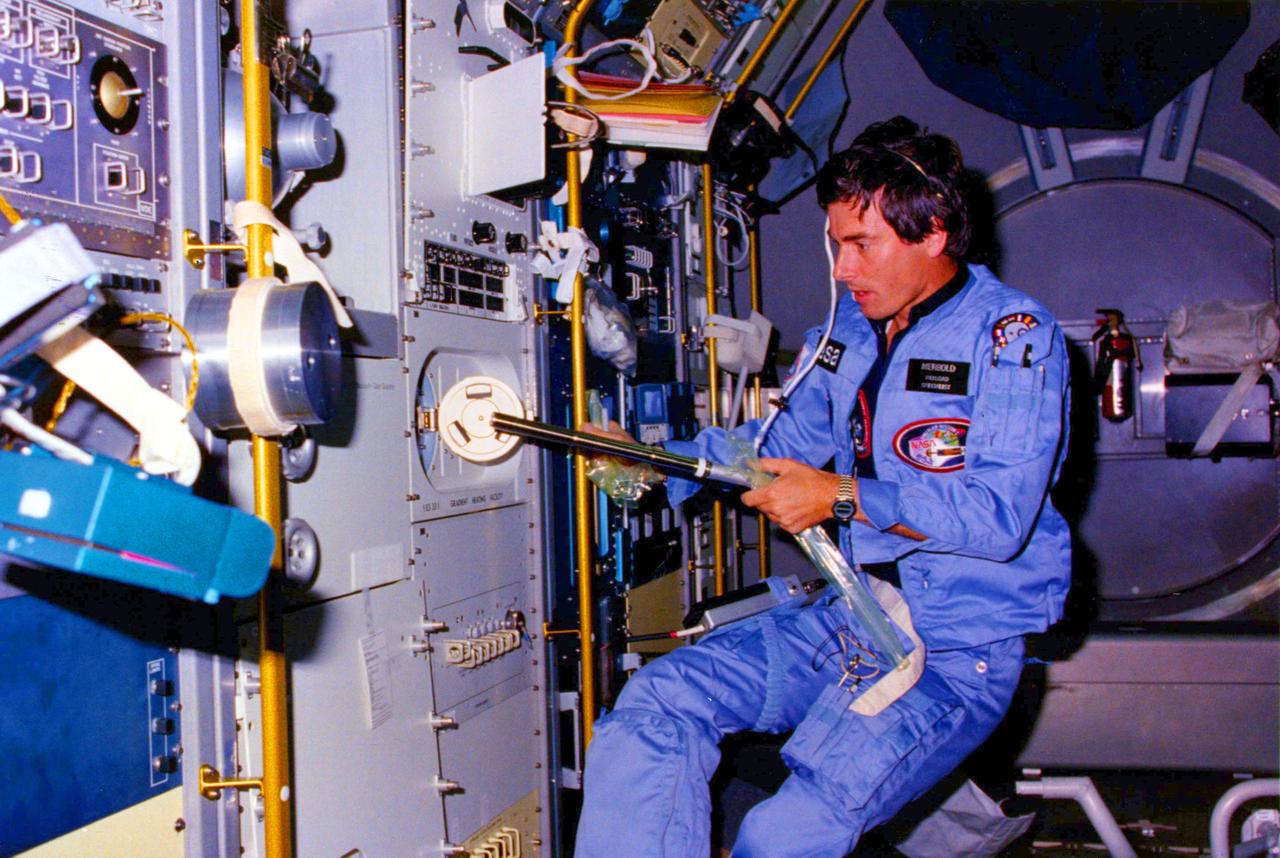
The Space Shuttle was designed to carry large payloads into Earth orbit. One of the most important payloads is Spacelab. The Spacelab serves as a small but well-equipped laboratory in space to perform experiments in zero-gravity and make astronomical observations above the Earth's obscuring atmosphere. In this photograph, Payload Specialist, Ulf Merbold, is working at Gradient Heating Facility on the Materials Science Double Rack (MSDR) inside the science module in the Orbiter Columbia's payload bay during STS-9, Spacelab-1 mission. Spacelab-1, the joint ESA (European Space Agency)/NASA mission, was the first operational flight for the Spacelab, and demonstrated new instruments and methods for conducting experiments that are difficult or impossible in ground-based laboratories. This facility performed, in extremely low gravity, a wide variety of materials processing experiments in crystal growth, fluid physics, and metallurgy. The Marshall Space Flight Center had overall management responsibilities.
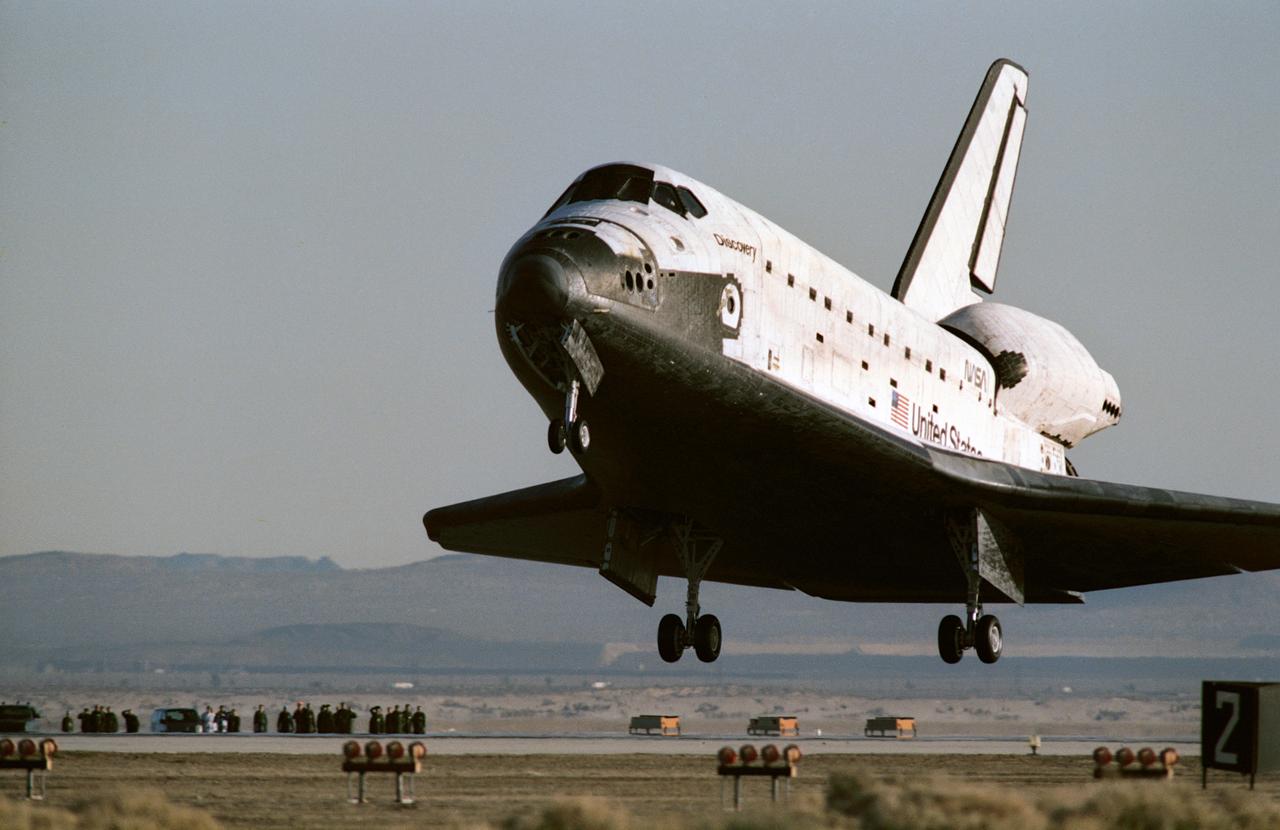
STS042-S-093 (30 Jan 1992) --- Space Shuttle Discovery is just about to ease down its main gear on Runway 22 at Edwards Air Force Base in southern California. Main gear touchdown occurred at 8:07:18 a.m. (PST), Jan. 30, 1992. The successful landing completed an eight-day mission for five NASA astronauts and two payload specialists supporting the first International Microgravity Laboratory (IML-1) mission. Onboard were astronauts Ronald J. Grabe, mission commander; Stephen S. Oswald, pilot; Norman E. Thagard, payload commander; David C. Hilmers and William F. Readdy, both mission specialists; and payload specialists Roberta L. Bondar of Canada and Ulf Merbold, representing the European Space Agency (ESA).
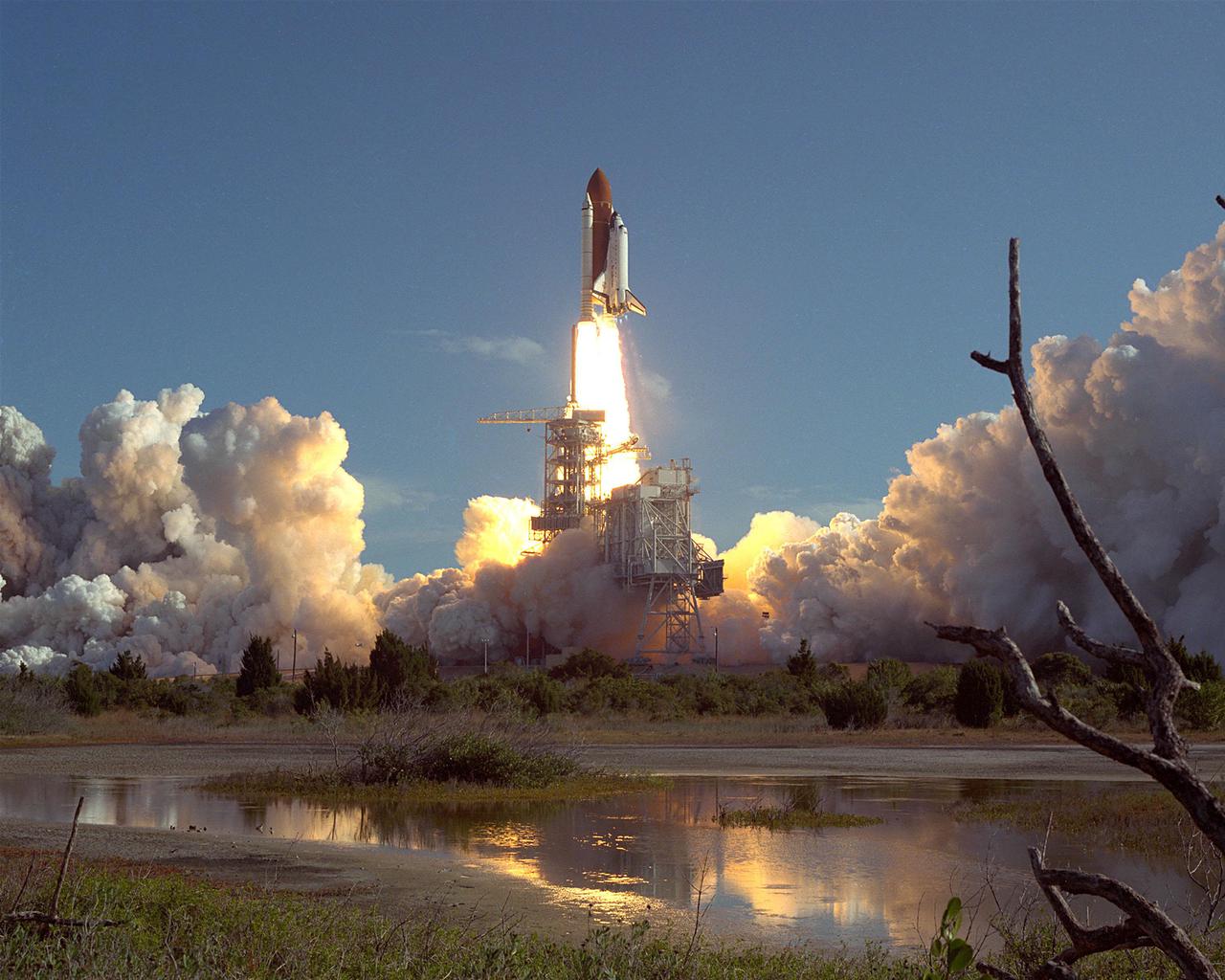
KENNEDY SPACE CENTER, FLA. -- The mid-morning liftoff of the Space Shuttle Discovery on mission STS-42 was even prettier than a picture at the start of the first Shuttle mission of 1992. The seven-member crew is scheduled to spend seven days in space, mostly to conduct a variety of experiments in the International Microgravity Laboratory-1. The experiments will explore the effects of weightlessness on living organisms and materials processing. Liftoff was at 9:52 a.m. EST. The seven crew members are Commander Ronald J. Grabe, Pilot Stephen S. Oswald, Payload Commander and Mission Specialist Dr. Norman E. Thagard, Mission Specialists David C. Hilmers and William F. Readdy, and Payload Specialists Dr. Roberta L. Bondar of the Canadian Space Agency and Ulf D. Merbold of the European Space Agency
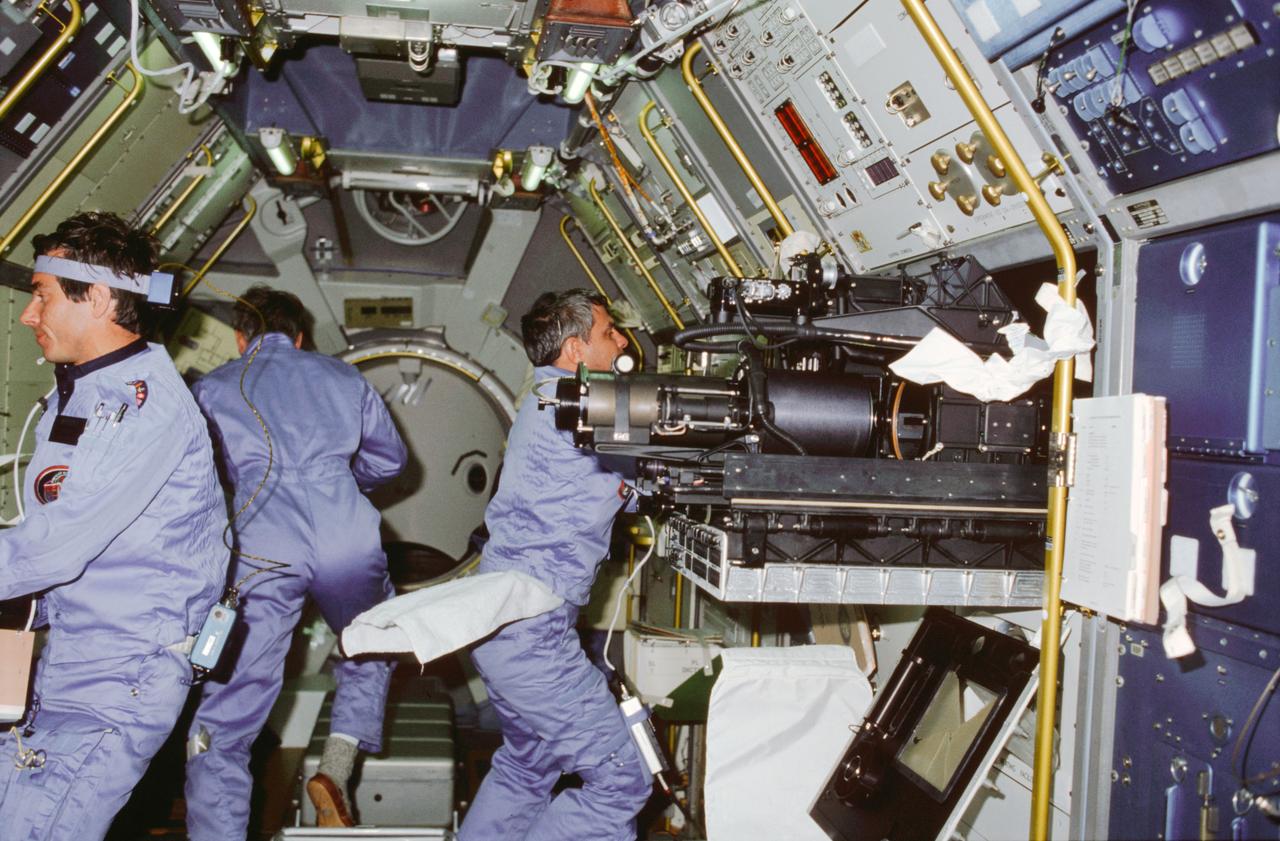
STS009-03-093 (28 Nov-8 Dec 1983) --- A mission specialist and two payload specialists busy themselves in the Spacelab 1 module aboard the Earth orbiting Space Shuttle Columbia. Left to right are Payload Specialist Robert A. R. Parker. Parker is partially obscured by a deployed instrument of the fluid physics module at the materials sciences double rack. Merbold, a physicist from Max-Planck Institute in the Federal Republic of Germany, wears a head band-like device and a recorder as part of an overall effort to learn more about space adaptation. Both Space lab 1 payload specialists wore the devices during most of their waking hours on this 10-day flight. The frame was exposed with a 35mm camera.
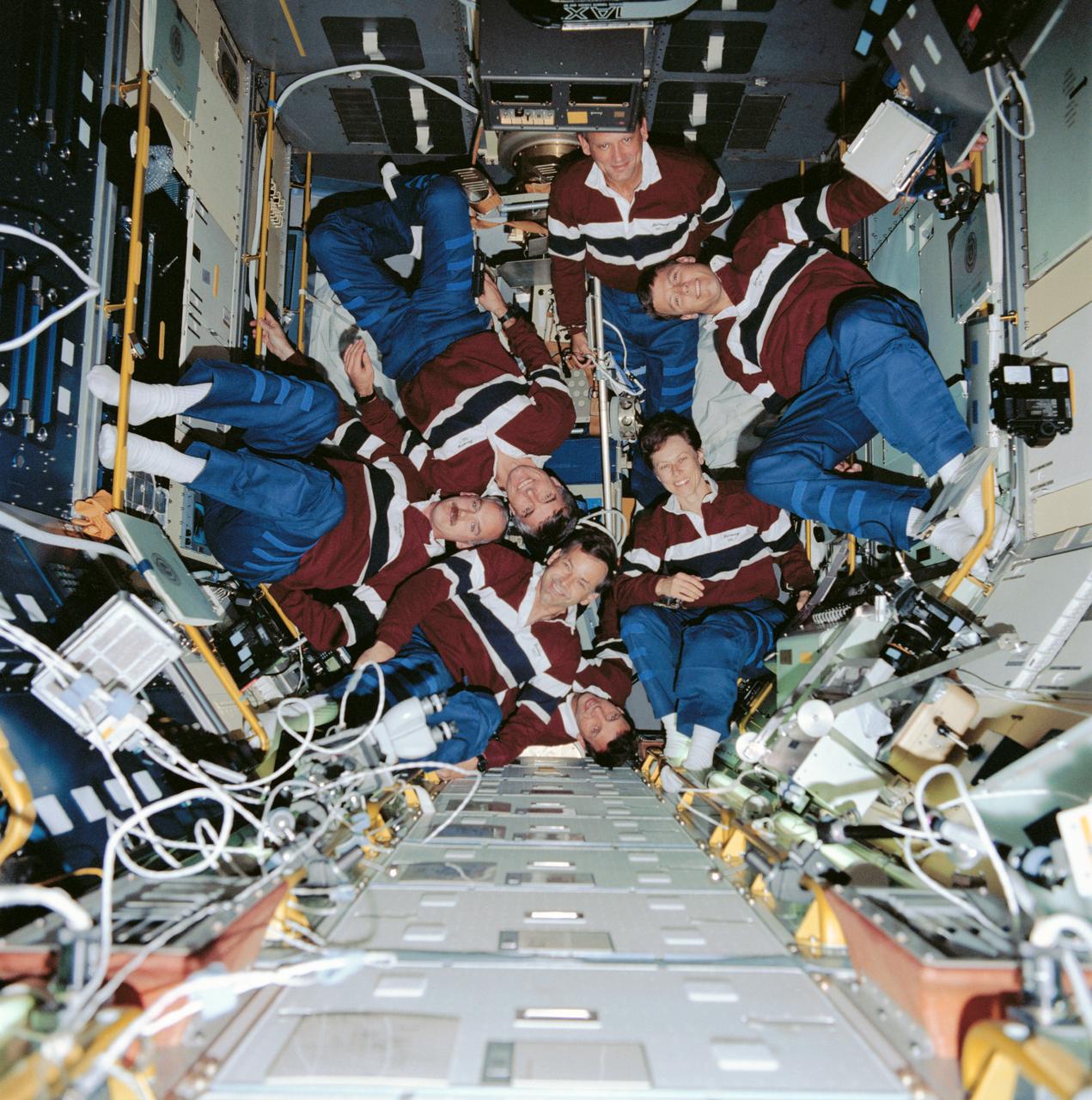
STS042-78-061 (22-30 Jan. 1992) --- The seven STS-42 crewmembers pose for a traditional in-space portrait in the shirt-sleeve environment of the International Microgravity Laboratory (IML-1) science module in the shuttle's cargo bay. (Hold picture with index numbers at top.) David C. Hilmers, mission specialist, is at top center of the 70mm image. Others pictured are (clockwise) Ronald J. Grabe, mission commander; William F. Readdy; mission specialist; Ulf Merbold, European Space Agency (ESA) payload specialist; Norman E. Thagard, payload commander; Stephen S. Oswald, pilot; and Roberta L. Bondar, Canadian payload specialist. The rotating chair, used often in biomedical tests on the eight-day flight, is (partially obscured) in center frame.