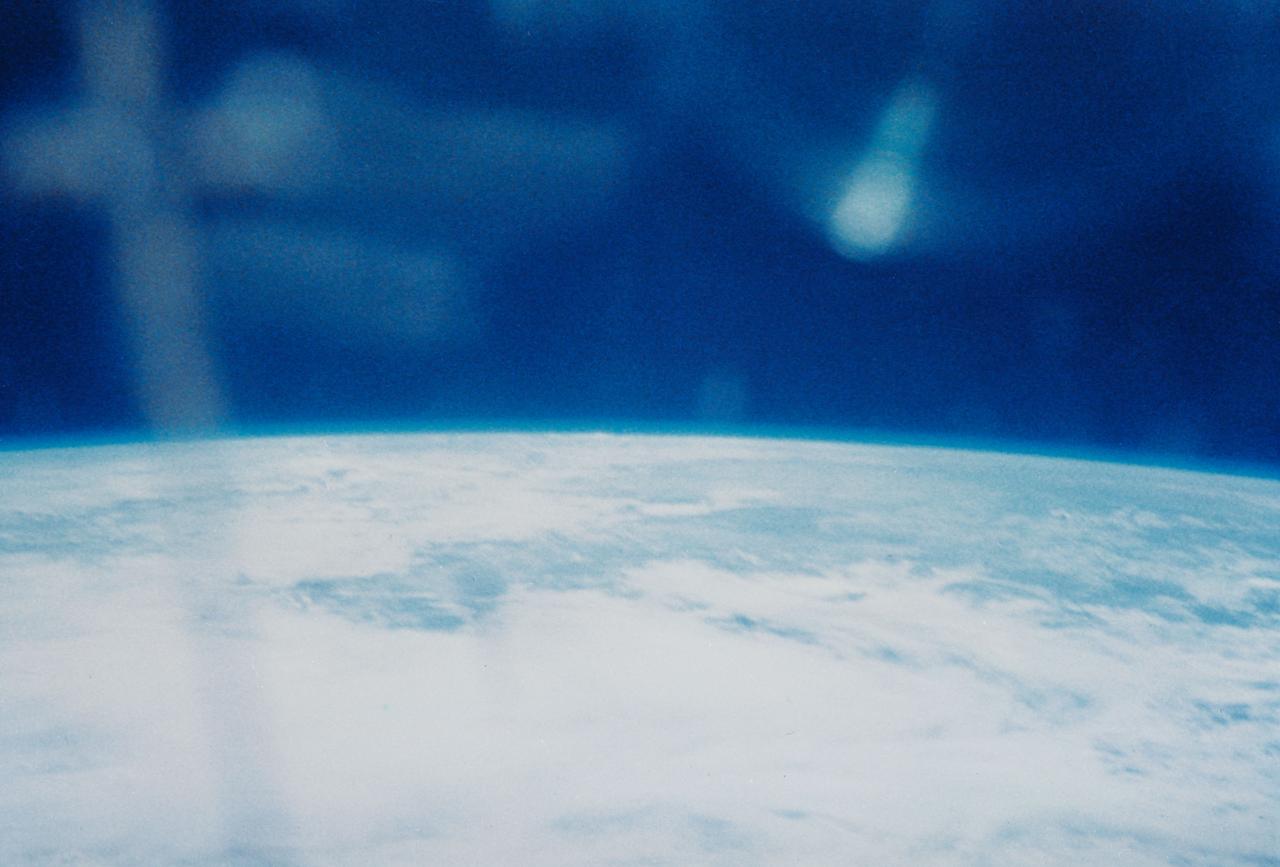
S62-03248 (24 May 1962) --- Earth and sky views taken with hand-held camera by astronaut M. Scott Carpenter during Mercury-Atlas 7 (MA-7) mission. Photo credit: NASA
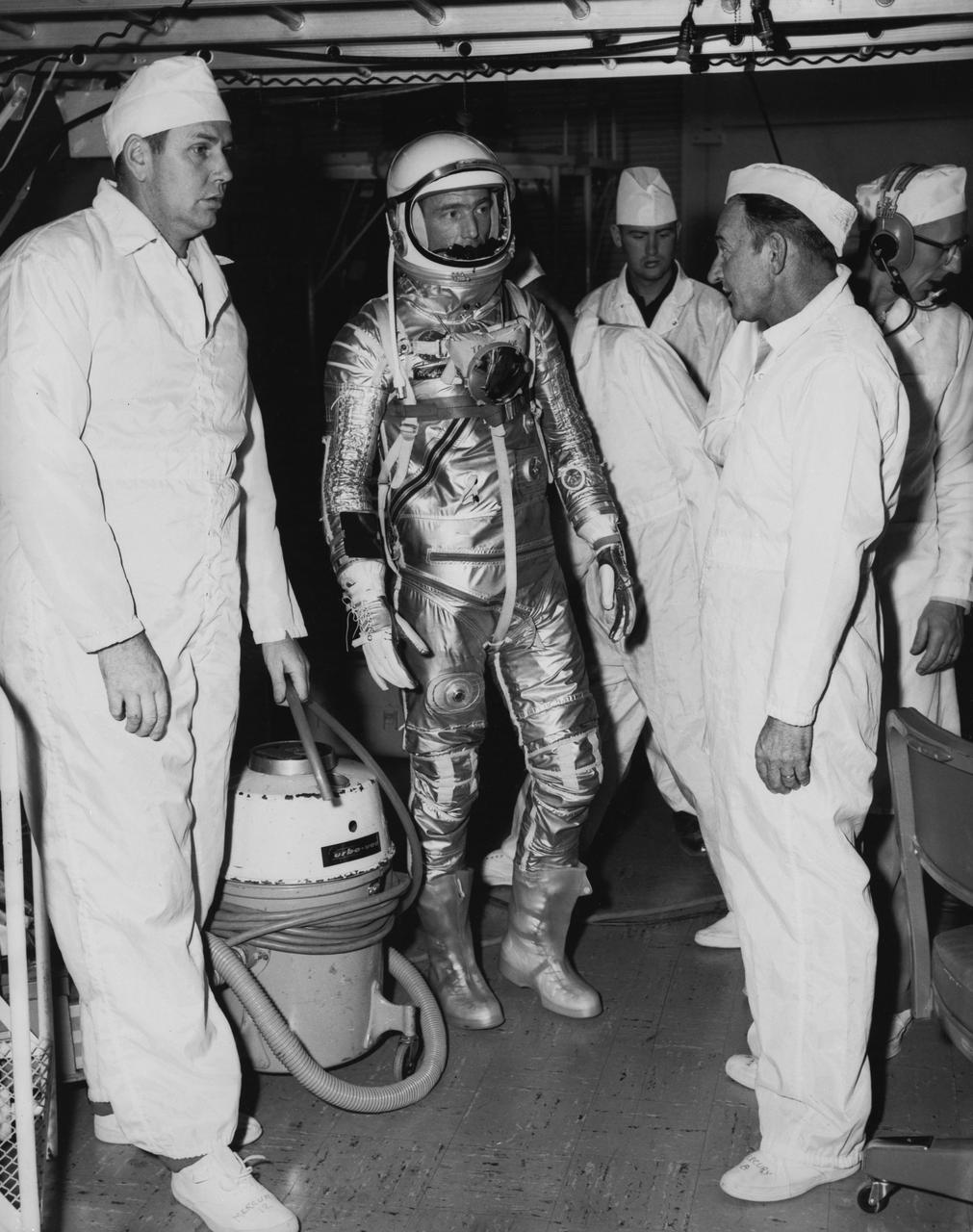
S62-00120 (1961) --- Astronaut M. Scott Carpenter, prime pilot for the Mercury-Atlas 7 (MA-7) spaceflight, is seen in Hangar S crew quarters during a suiting exercise at Cape Canaveral, Florida. Photo credit: NASA

Astronaut John H. Glenn, one of the original seven astronauts for Mercury Project selected by NASA on April 27, 1959. The MA-6 mission, boosted by the Mercury-Atlas vehicle, was the first manned orbital launch by the United States, and carried Astronaut Glenn aboard the Friendship 7 spacecraft to orbit the Earth.
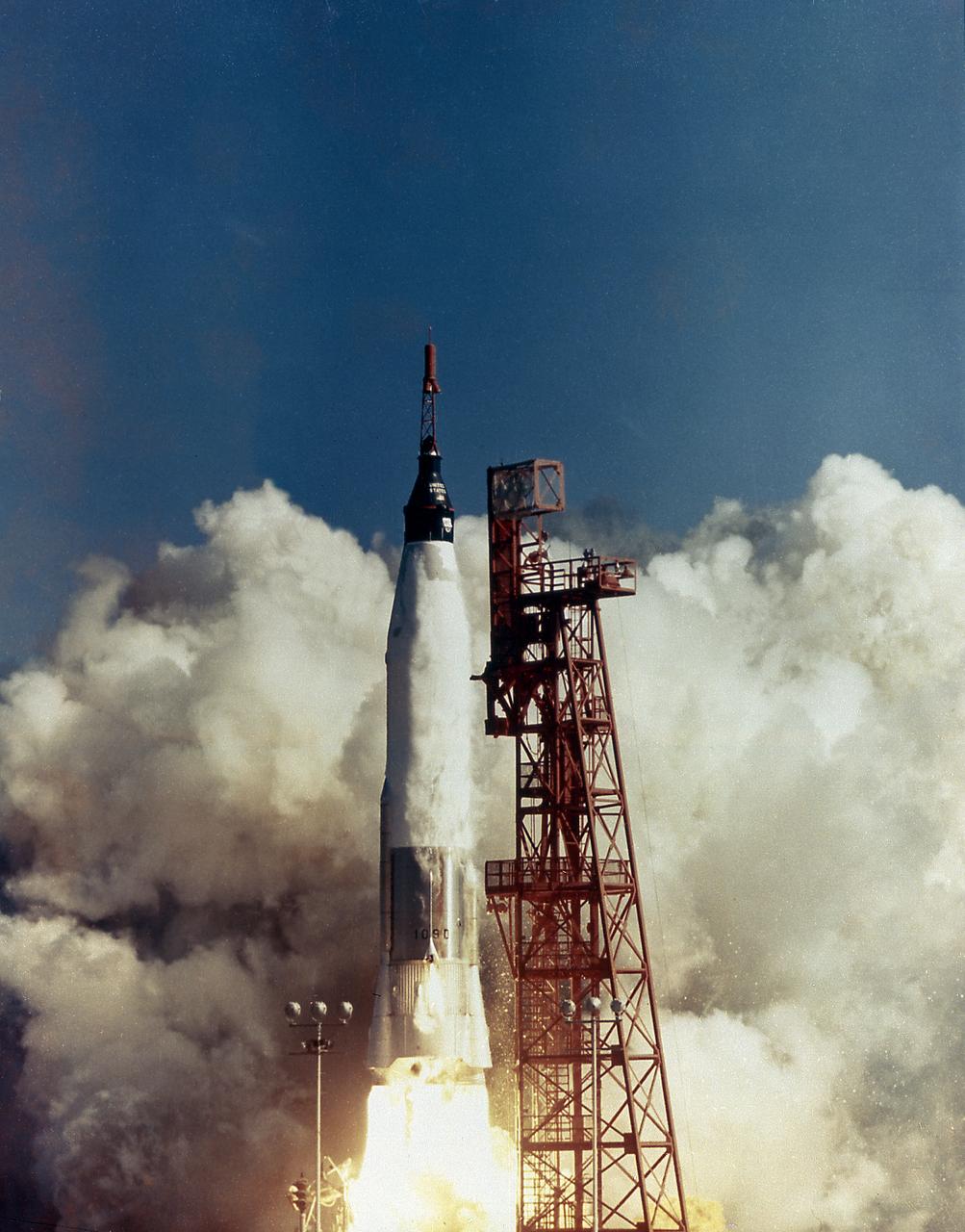
The launch of the MA-6, Friendship 7, on February 20, 1962. Boosted by the Mercury-Atlas vehicle, a modified Atlas Intercontinental Ballistic Missile (ICBM), Friendship 7 was the first U.S. marned orbital flight and carried Astronaut John H. Glenn into orbit. Astronaut Glenn became the first American to orbit the Earth.
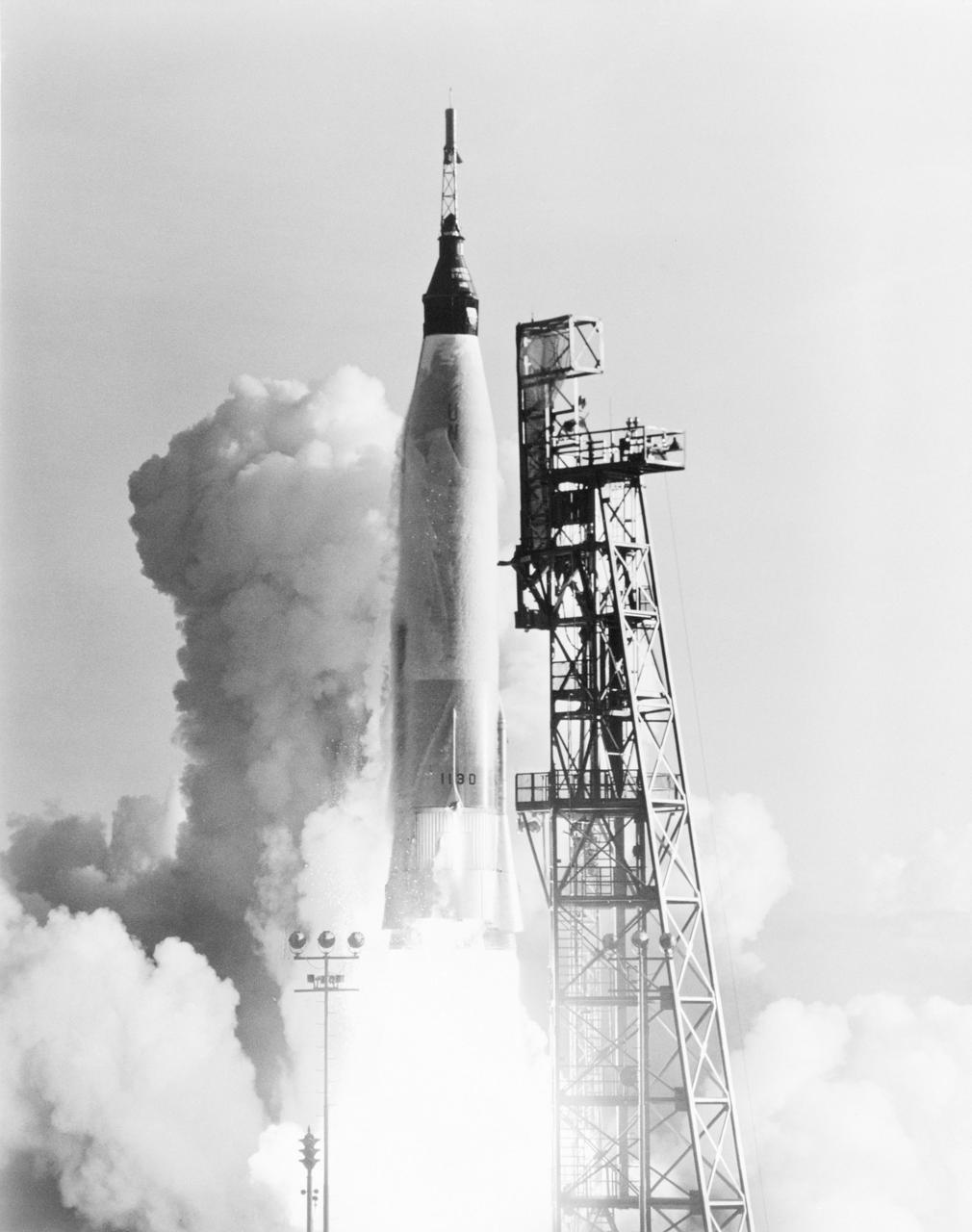
S62-06006 (3 Oct. 1962) --- Launch of the Mercury-Atlas 8 "Sigma 7" mission. Photo credit: NASA
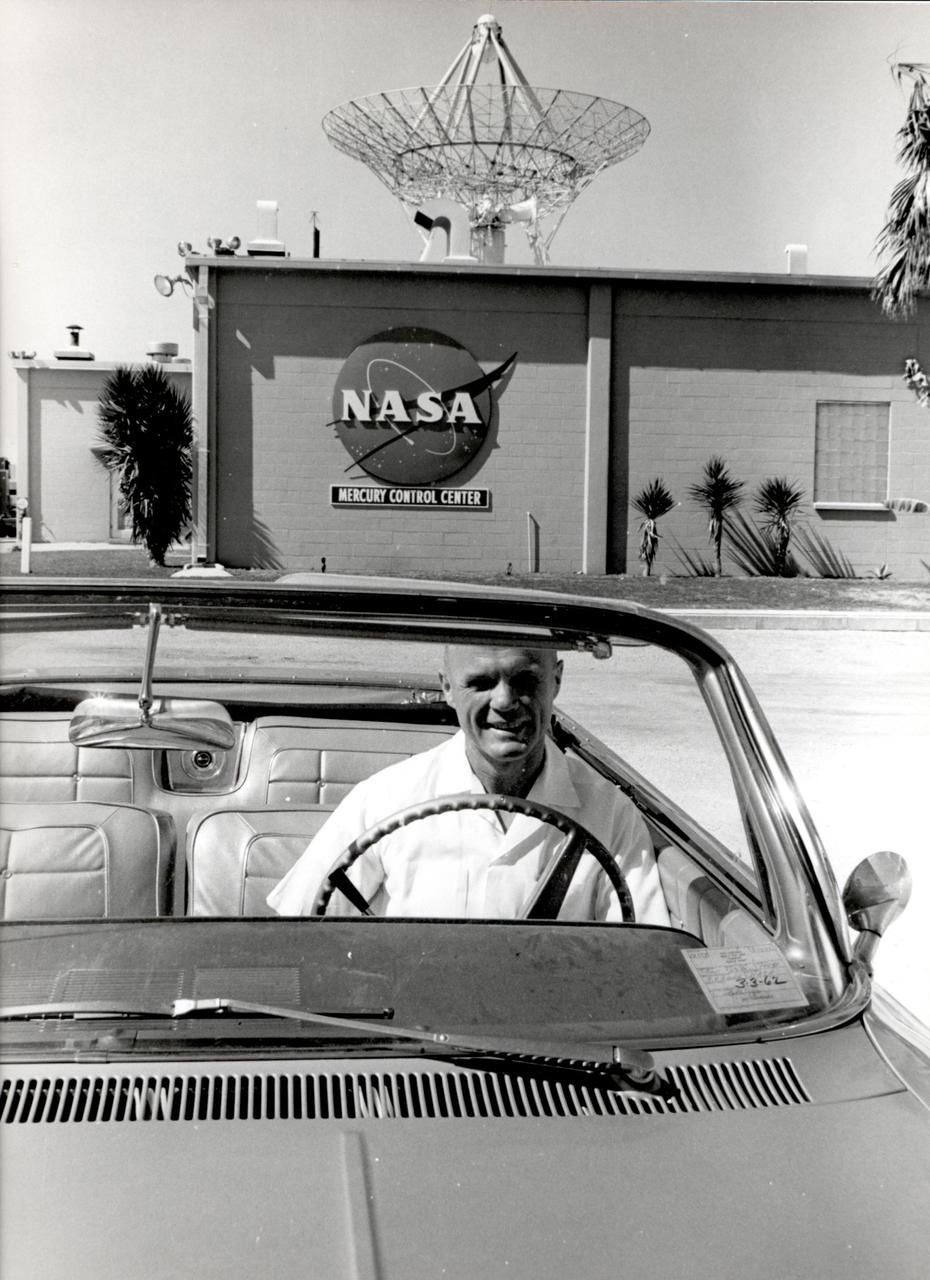
Astronaut John H. Glenn sits in a car in front of the east side of the Mercury Mission Control building. Glenn was the pilot for the Mercury-Atlas 6 mission aboard Friendship 7, which launched Feb. 20, 1962.

Astronaut L. Gordon Cooper, Jr., one of the original seven astronauts for Mercury Project selected by NASA on April 27, 1959. The MA-9 mission, boosted by the Mercury-Atlas launch vehicle, was the last flight of the Mercury Project. The Faith 7 spacecraft orbited the Earth 22 times in 1-1/2 days.
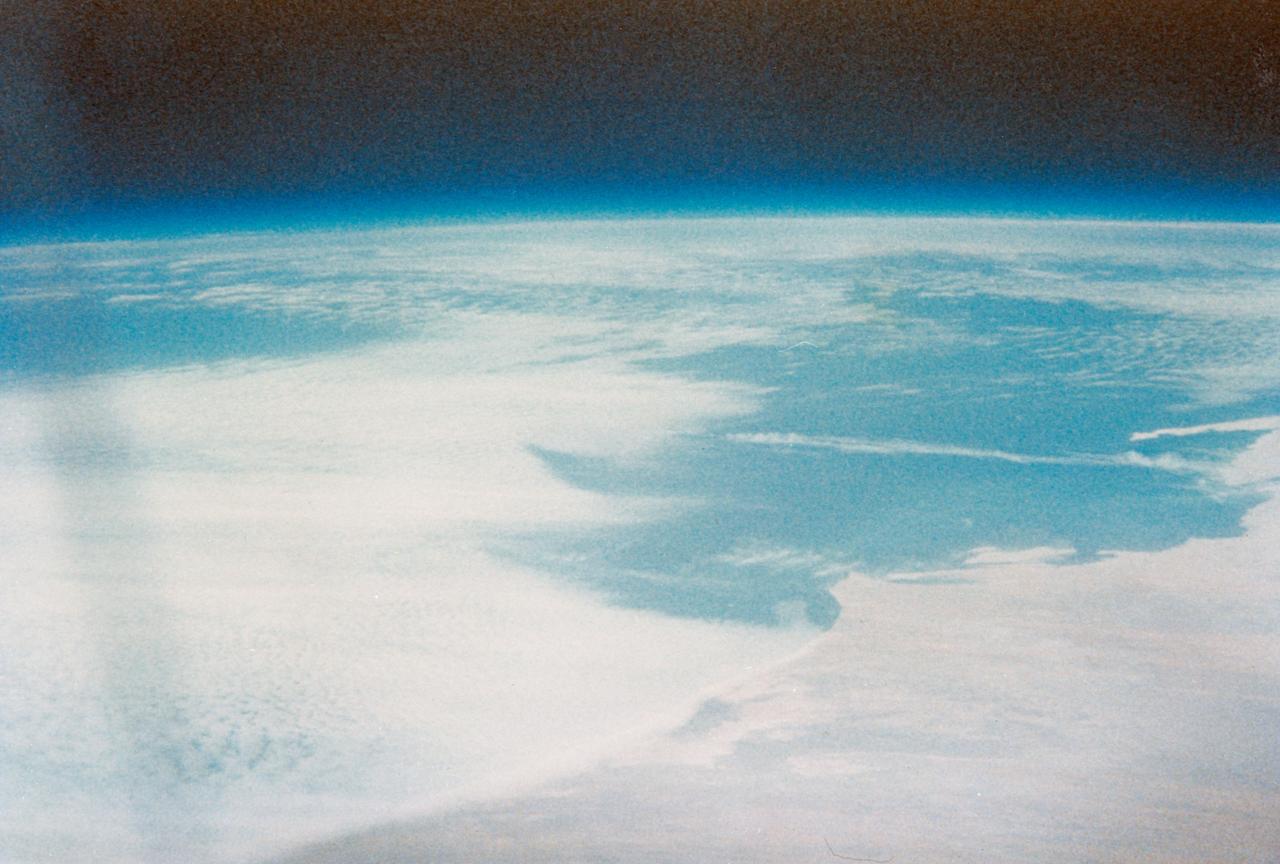
S62-03266 (24 May 1962) --- Earth and sky views taken with hand-held camera by astronaut M. Scott Carpenter during Mercury-Atlas 7 (MA-7) mission. Photo credit: NASA
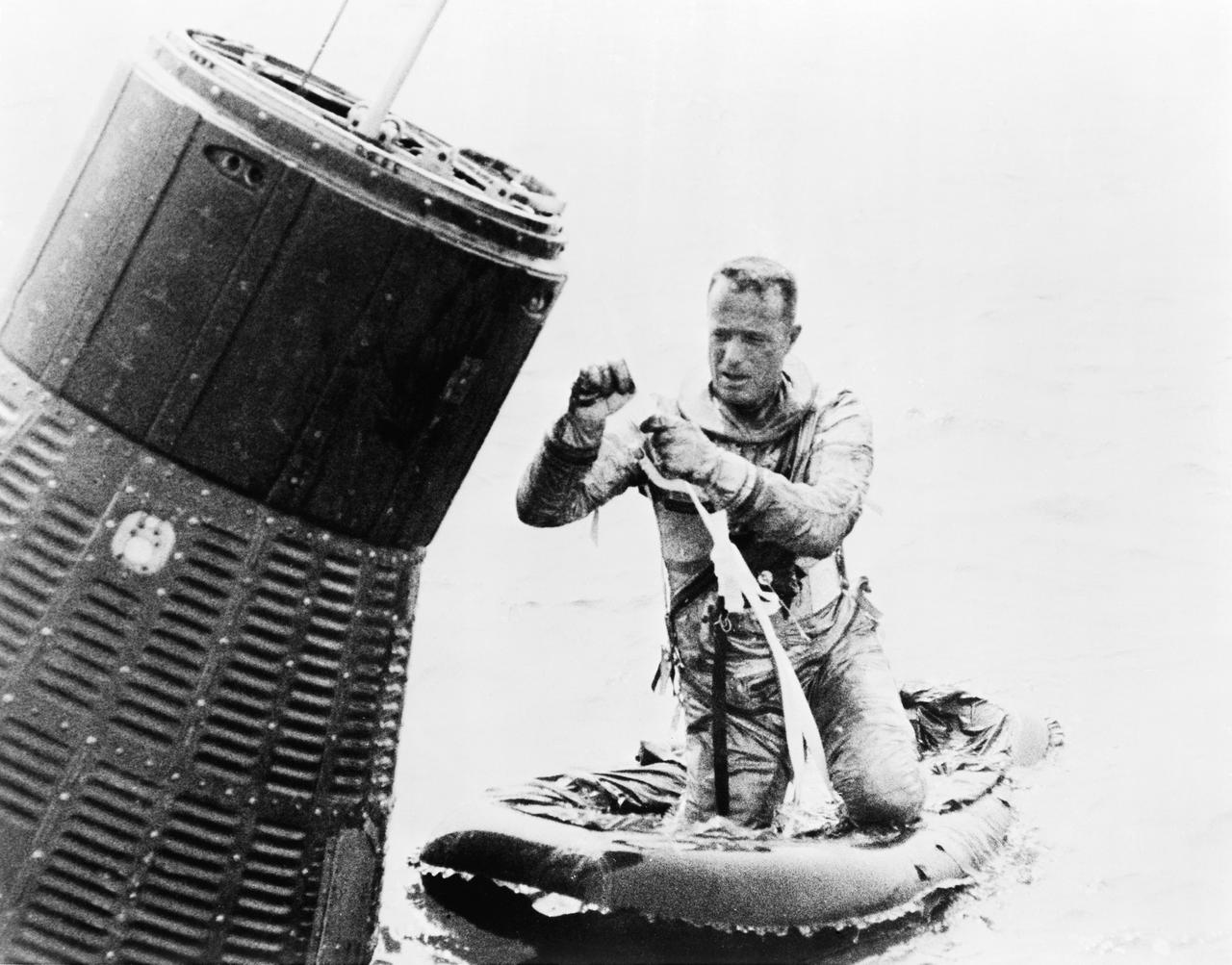
S62-02852 (1962) --- Astronaut M. Scott Carpenter, prime pilot for the Mercury-Atlas 7 (MA-7) mission, goes through a water egress training session. Photo credit: NASA
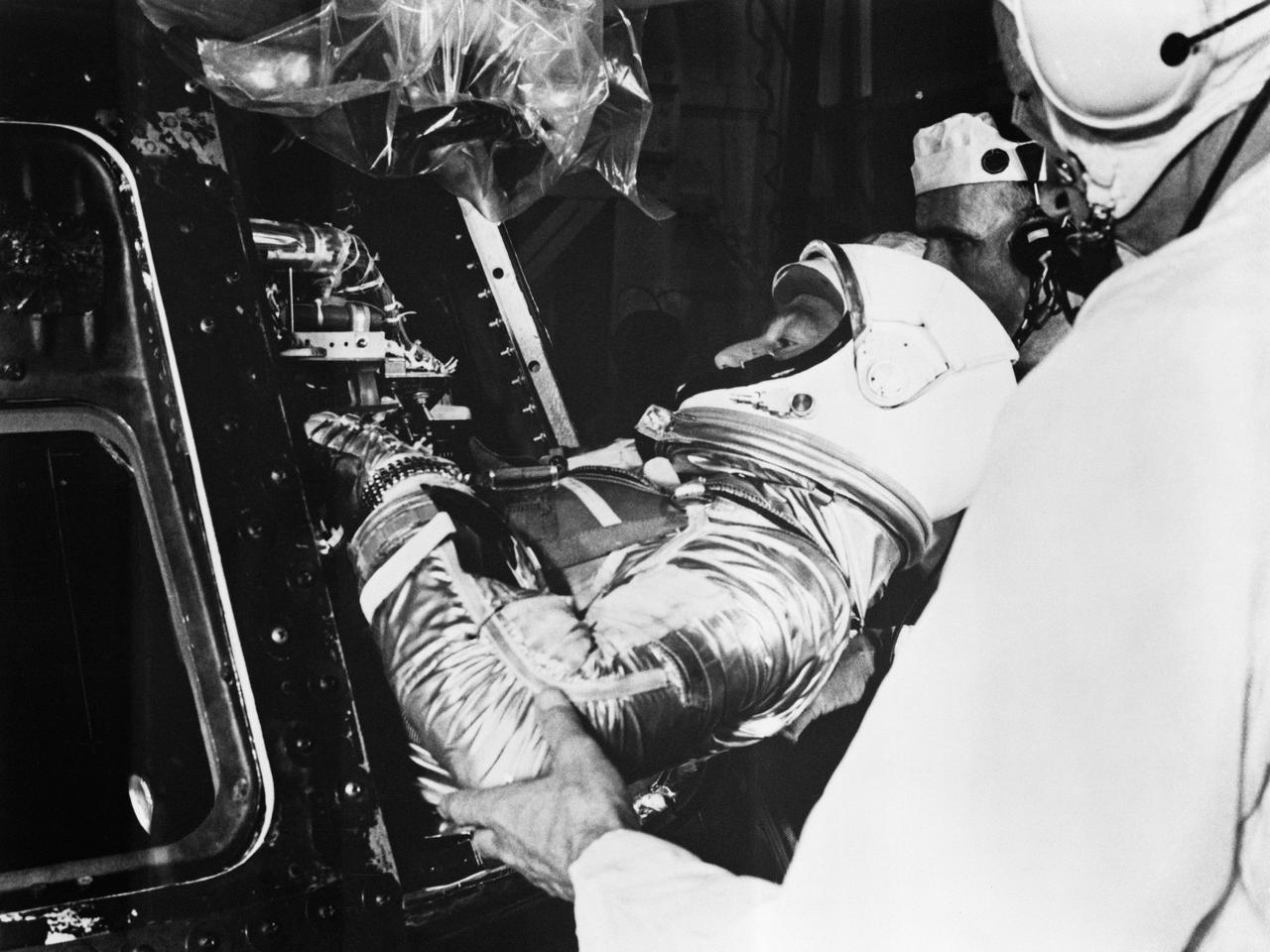
S62-02846 (24 May 1962) --- Project Mercury astronaut M. Scott Carpenter, prime pilot for the Mercury-Atlas 7 (MA-7) mission, is assisted into the MA-7 spacecraft by techicians at Launch Pad 14, Cape Canaveral, Florida. MA-7 is the United States? second attempt in orbital flight around Earth. The spacecraft was designated the ?Aurora? 7. Photo credit: NASA
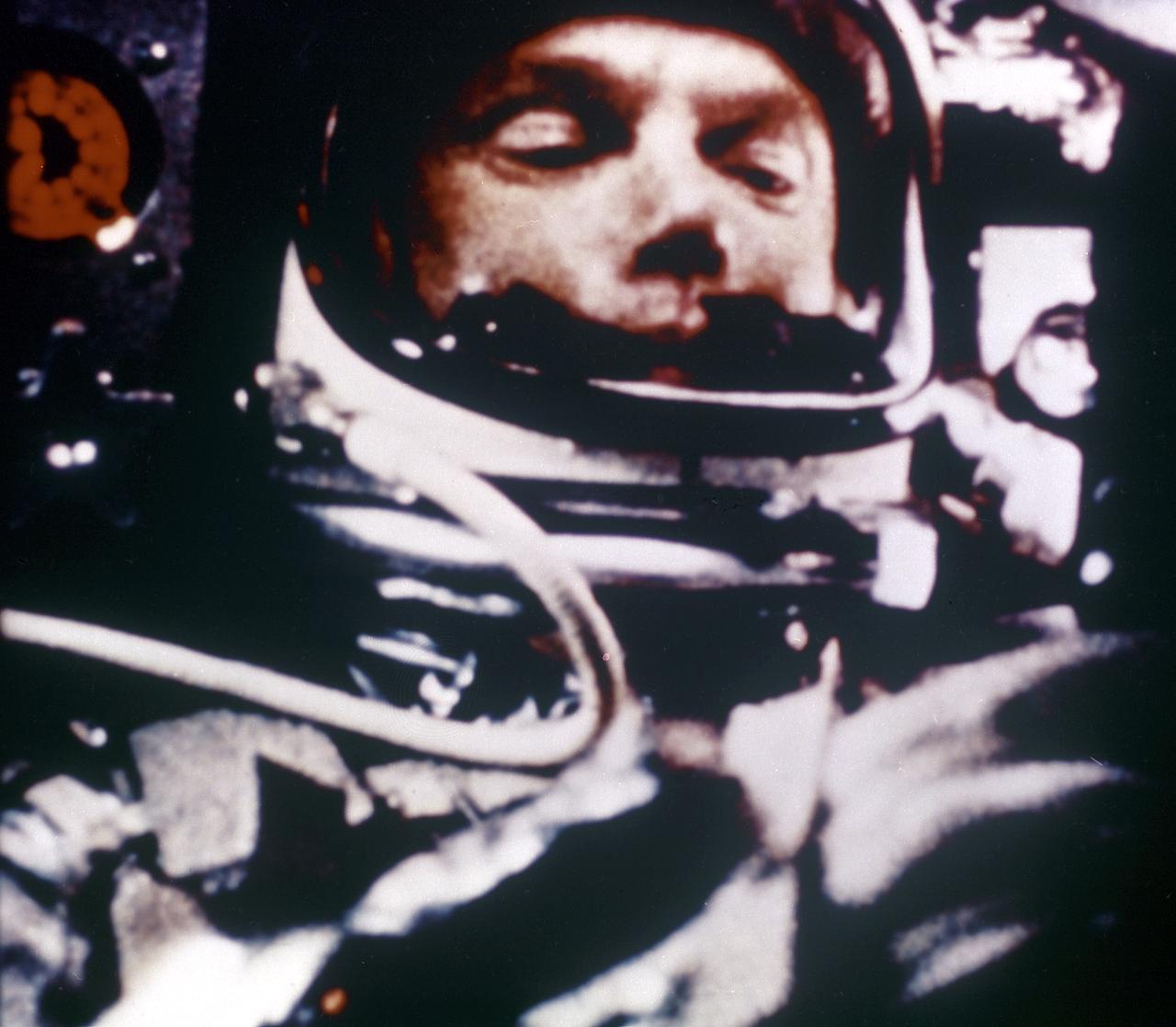
Astronaut John Glenn in the Friendship 7 capsule during the first manned orbital flight, the MA-6 mission. Boosted by the Mercury-Atlas vehicle, a modified Atlas (intercontinental ballistic missile), the MA-6 mission lasted for 5 hours and orbited the Earth three times.
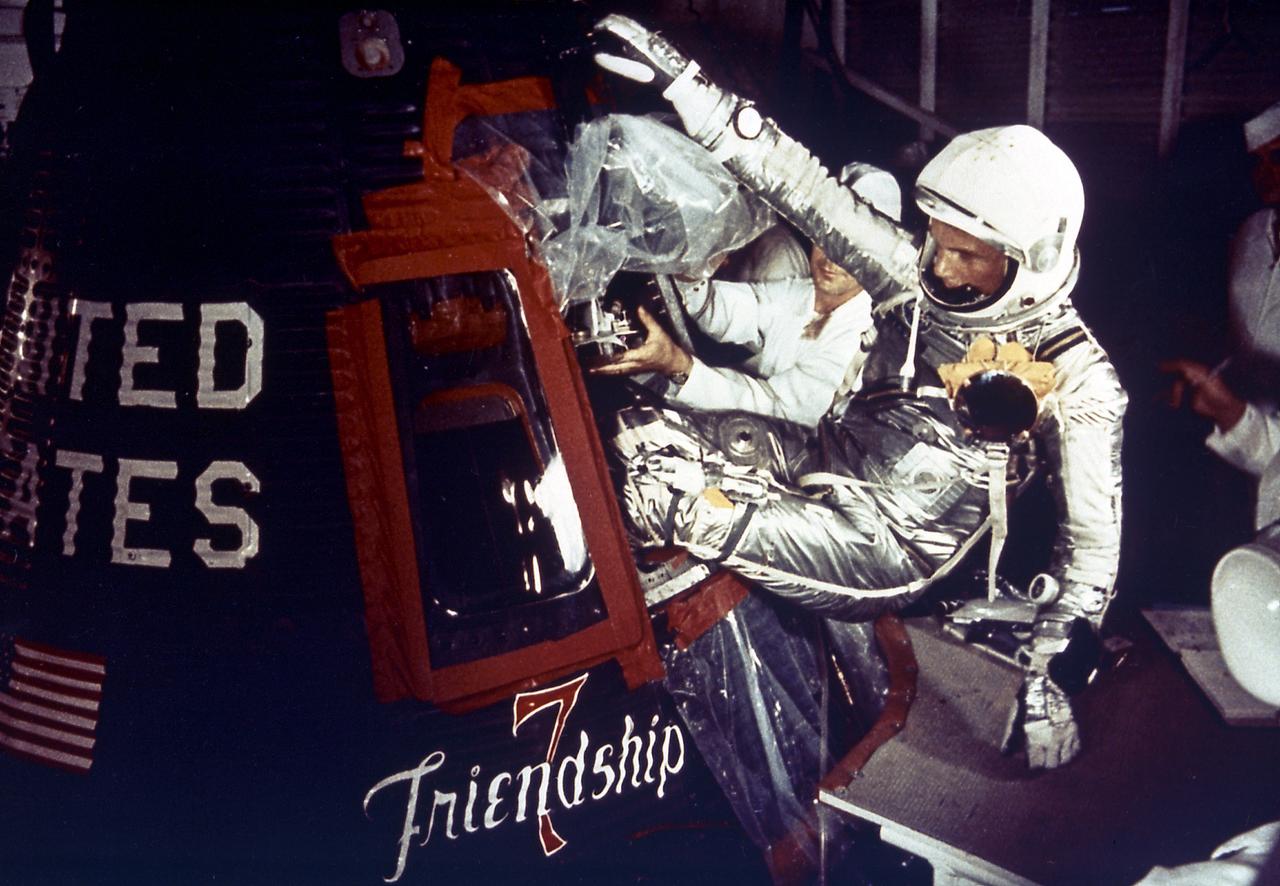
Astronaut John Glenn enters the Mercury spacecraft, Friendship 7, prior to the launch of MA-6 on February 20, 1961 and became the first American who orbited the Earth. The MA-6 mission was the first manned orbital flight boosted by the Mercury-Atlas vehicle, a modified Atlas ICBM (Intercontinental Ballistic Missile), lasted for five hours, and orbited the Earth three times.
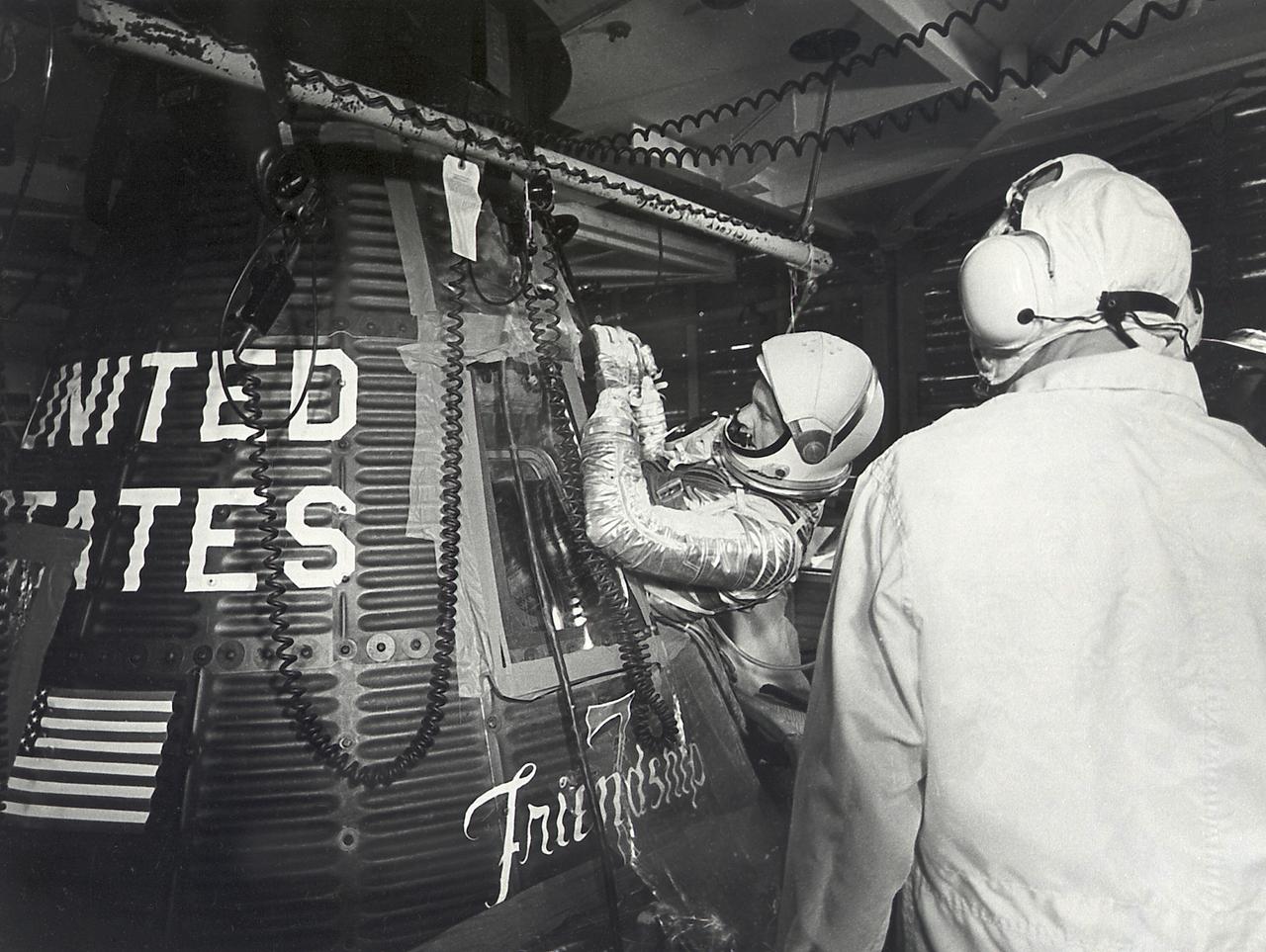
Astronaut John Glenn enters the Mercury spacecraft, Friendship 7, prior to the launch of MA-6 on February 20, 1961 and became the first American who orbited the Earth. The MA-6 mission was the first manned orbital flight boosted by the Mercury-Atlas vehicle, a modified Atlas ICBM (Intercontinental Ballistic Missile), lasted for five hours, and orbited the Earth three times.

Astronaut Walter M. "Wally" Schirra, one of the original seven astronauts for Mercury Project selected by NASA on April 27, 1959. The MA-8 (Mercury-Atlas) mission with Sigma 7 spacecraft was the third marned orbital flight by the United States, and made the six orbits in 9-1/4 hours.
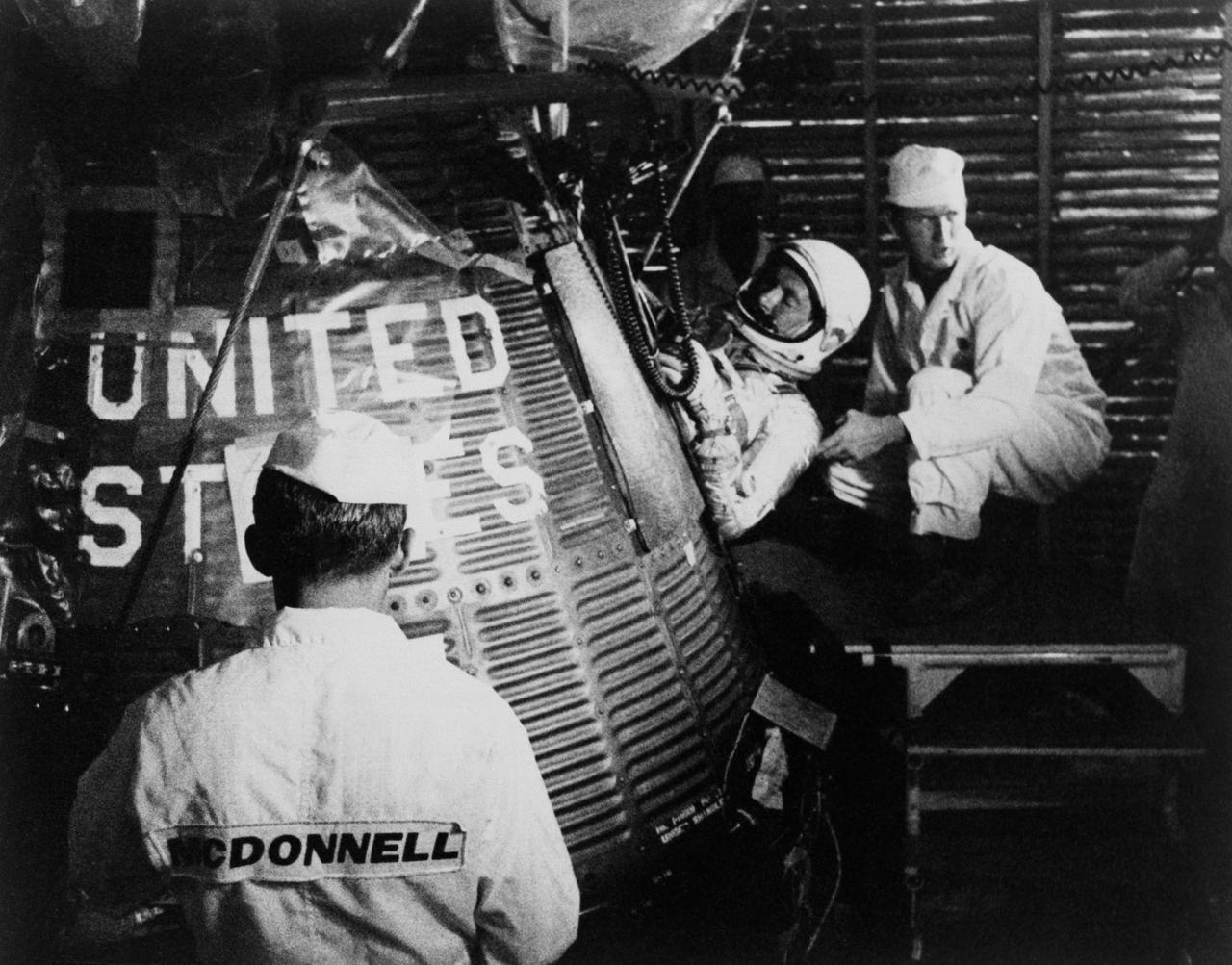
S62-04018 (24 May 1962) --- Astronaut M. Scott Carpenter is inserted inside his Aurora 7 spacecraft, before the launch of the Mercury-Atlas 7 (MA-7) mission. Photo credit: NASA
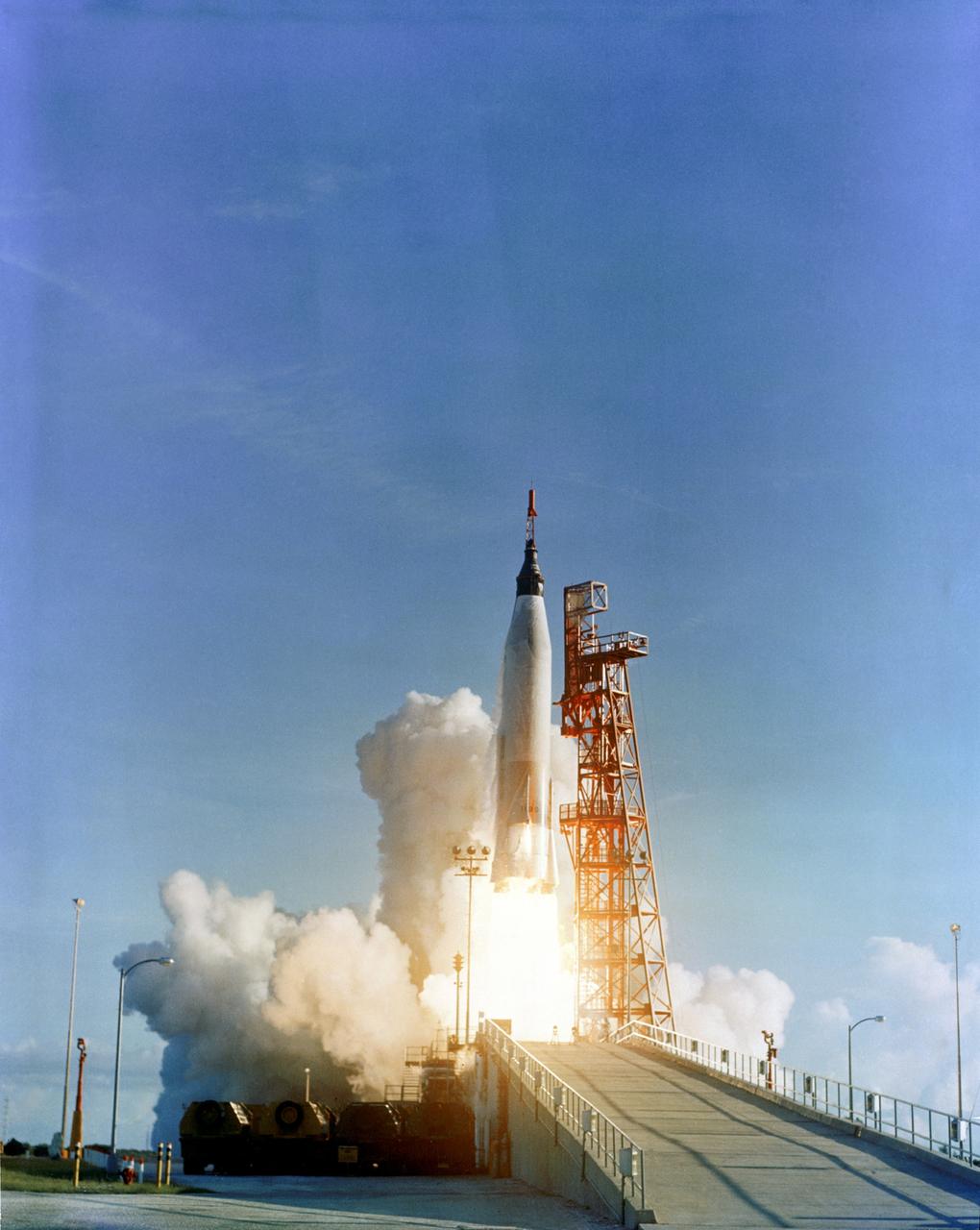
S62-07872 (3 Oct. 1962) --- Launch of the Mercury-Atlas 8 (MA-8) "Sigma 7" mission, carrying astronaut Walter M. Schirra Jr., pilot of the Earth-orbital spaceflight. Photo credit: NASA
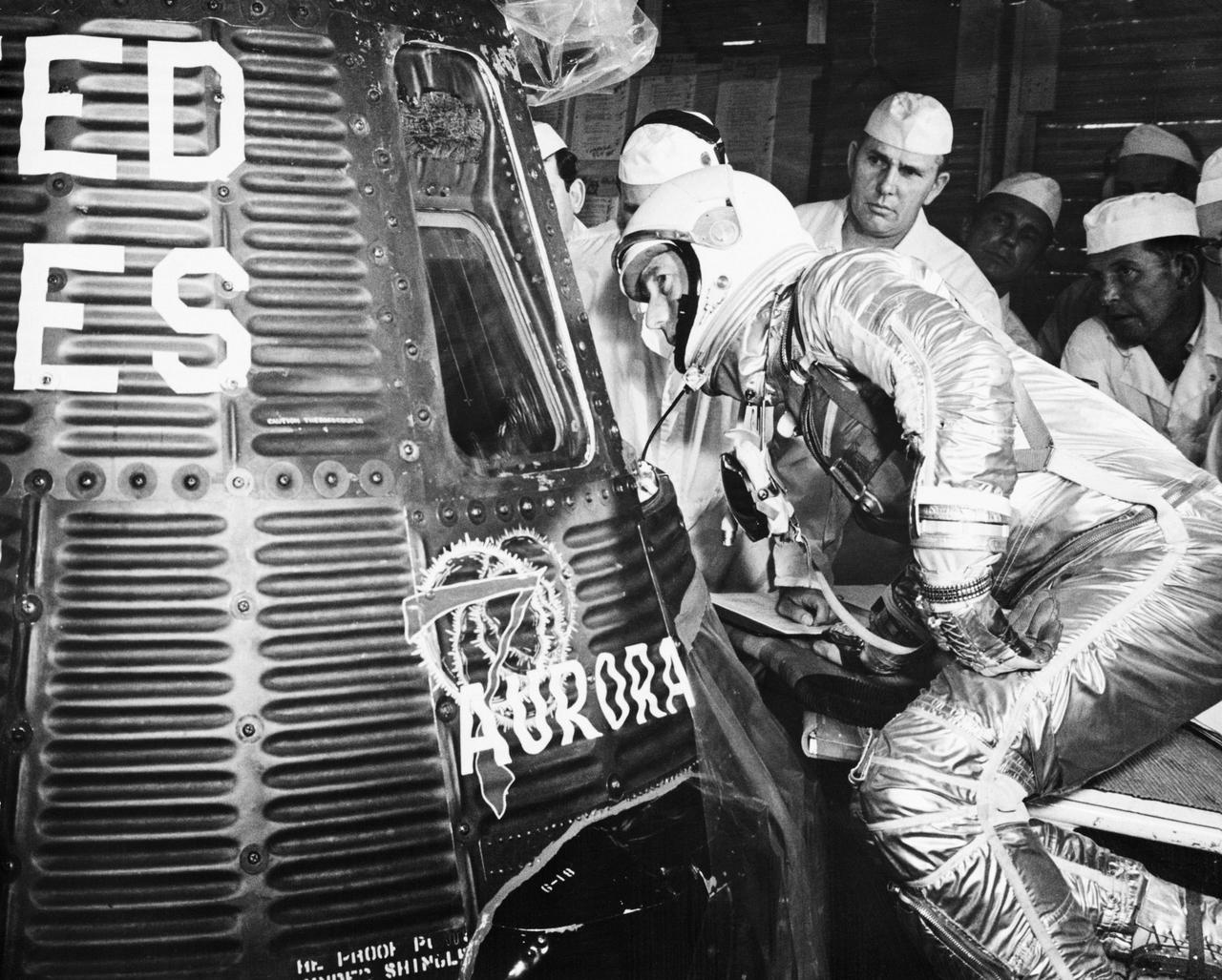
S62-03907 (24 May 1962) --- Astronaut M. Scott Carpenter looks into his Mercury-Atlas 7 spacecraft, the Aurora 7, before being inserted to begin the launch. Photo credit: NASA
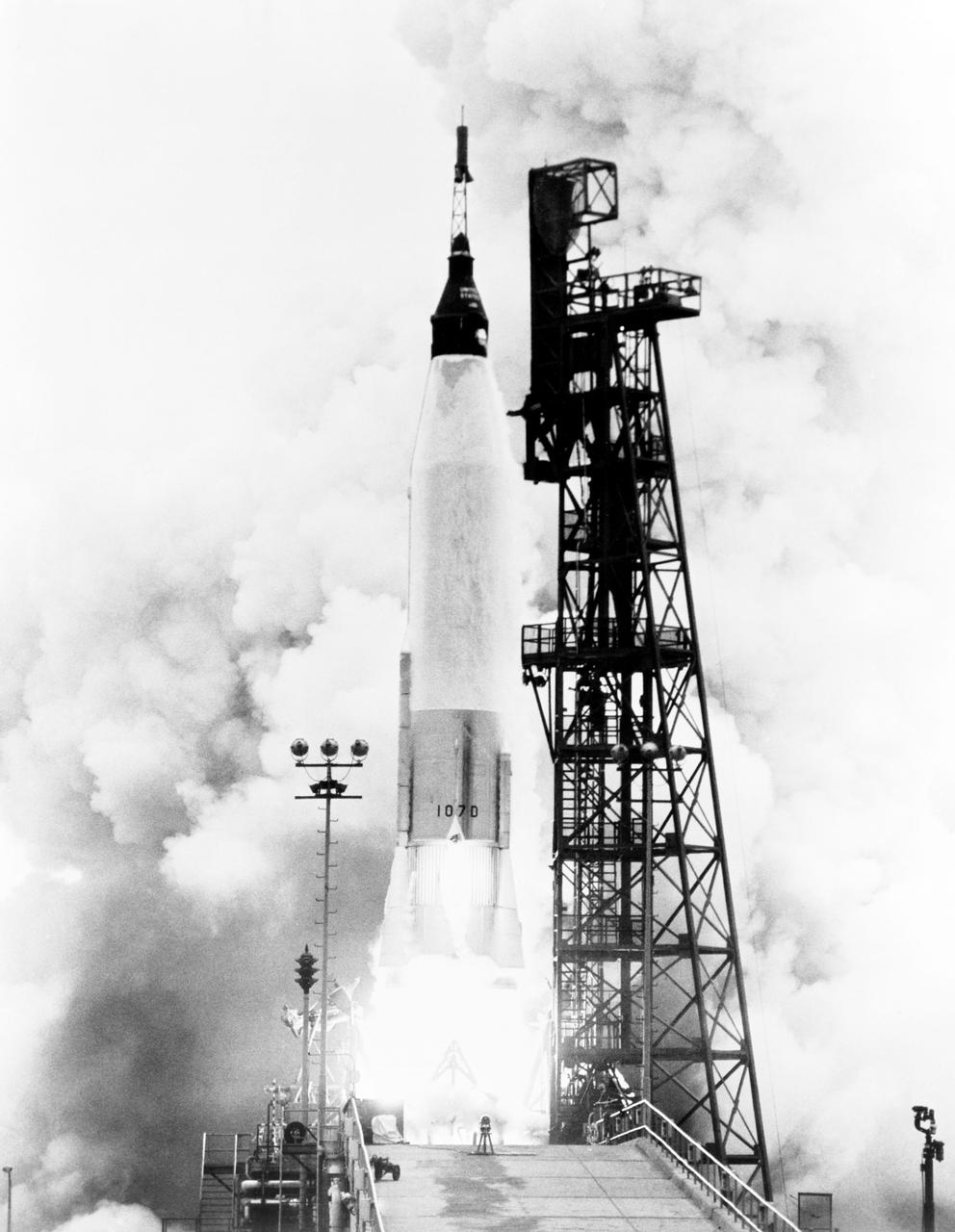
S62-02849 (24 May 1962) --- The Mercury-Atlas 7 (MA-7), carrying astronaut M. Scott Carpenter, was launched by NASA from Pad 14, Cape Canaveral, Florida, on May 24, 1962. Photo credit: NASA
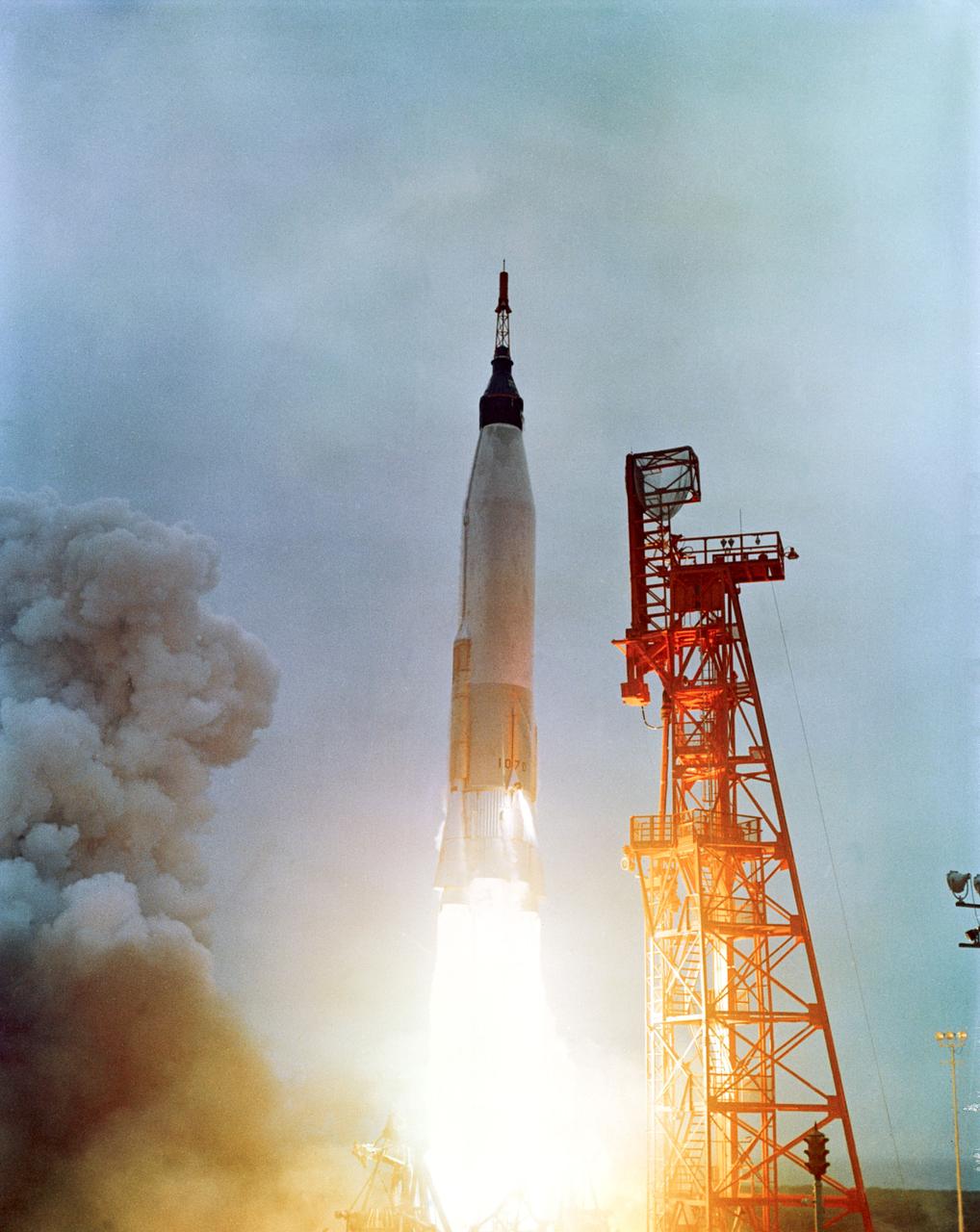
S62-05529 (24 May 1962) --- The Mercury-Atlas 7 (MA-7), carrying astronaut M. Scott Carpenter, was launched by NASA from Pad 14, Cape Canaveral, Florida, on May 24, 1962. Photo credit: NASA
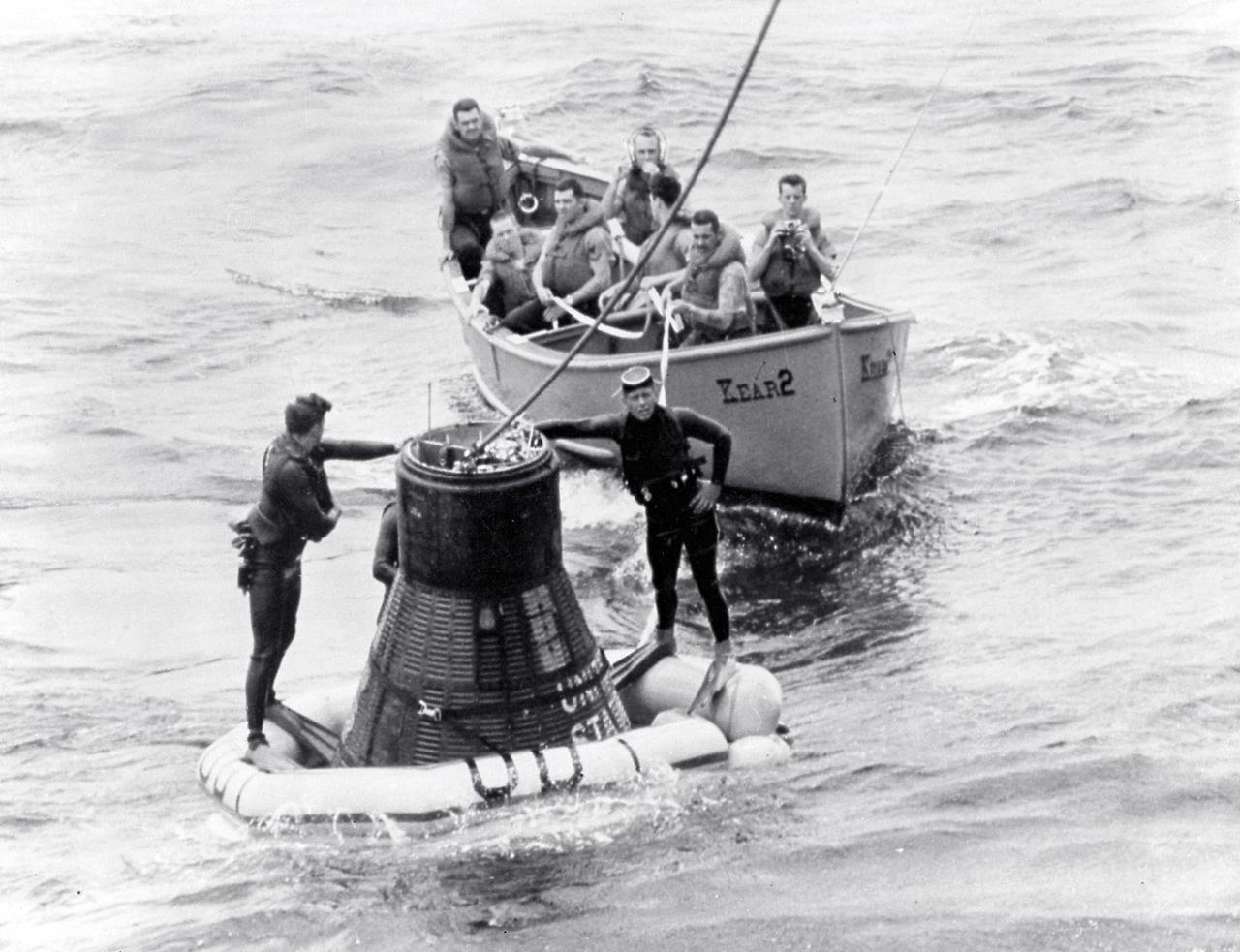
The recovery operation of the Faith 7 spacecraft after the completion of the 1-1/2 day orbital flight (MA-9 mission) with Astronaut Gordon Cooper. Navy frogmen attach the flotation collar to the spacecraft. The MA-9 mission was the last flight of the Mercury Project and launched on May 15, 1963 boosted by The Mercury-Atlas launch vehicle.
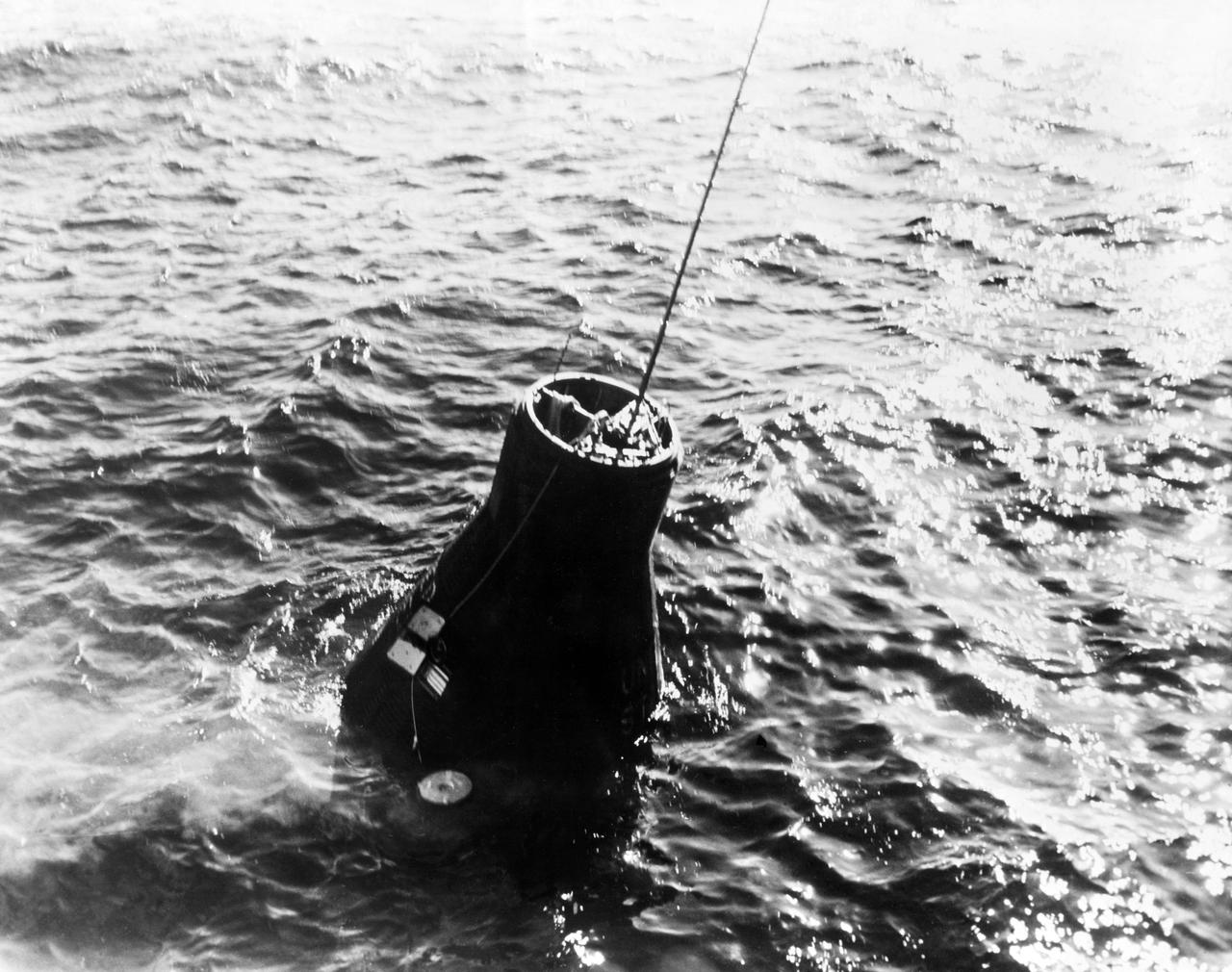
S62-00941 (20 Feb. 1962) --- The Mercury-Atlas 6 (MA-6) "Friendship 7" spacecraft is retrieved from the Atlantic Ocean following astronaut John H. Glenn Jr.'s three-orbit space mission. In this view, the capsule is still in the water, with retrieval cable connected to it. Photo credit: NASA
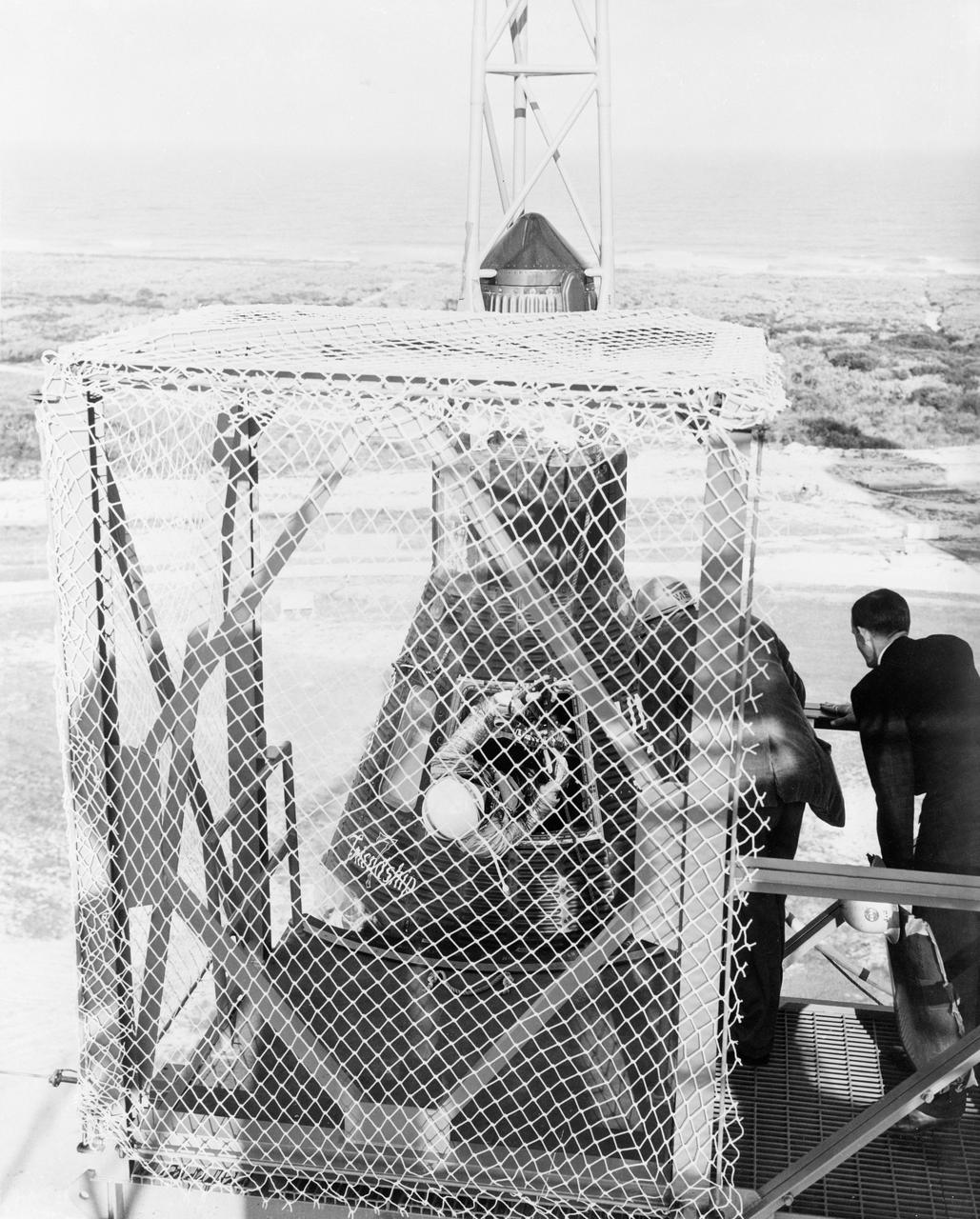
S62-00490 (20 Feb. 1962) --- View of Mercury Atlas 6 (MA-6) Friendship 7 capsule on top of its booster rocket with astronaut John H. Glenn Jr. just visible in the open hatch. Photo credit: NASA
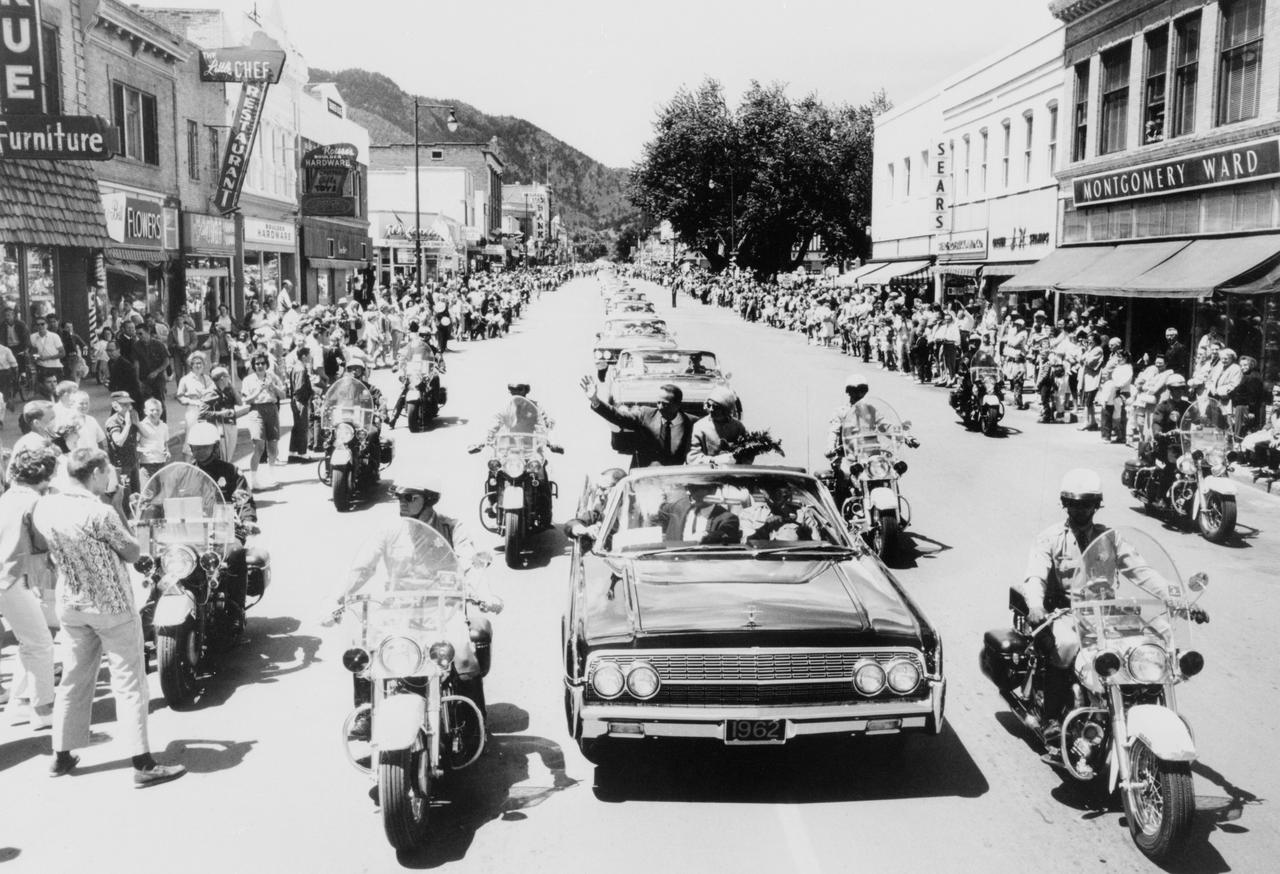
S62-05458 (1962) --- Astronaut M. Scott Carpenter, pilot of the Mercury-Atlas 7 (MA-7) mission, and his wife participate in a postflight parade in Boulder, Colorado. Photo credit: NASA
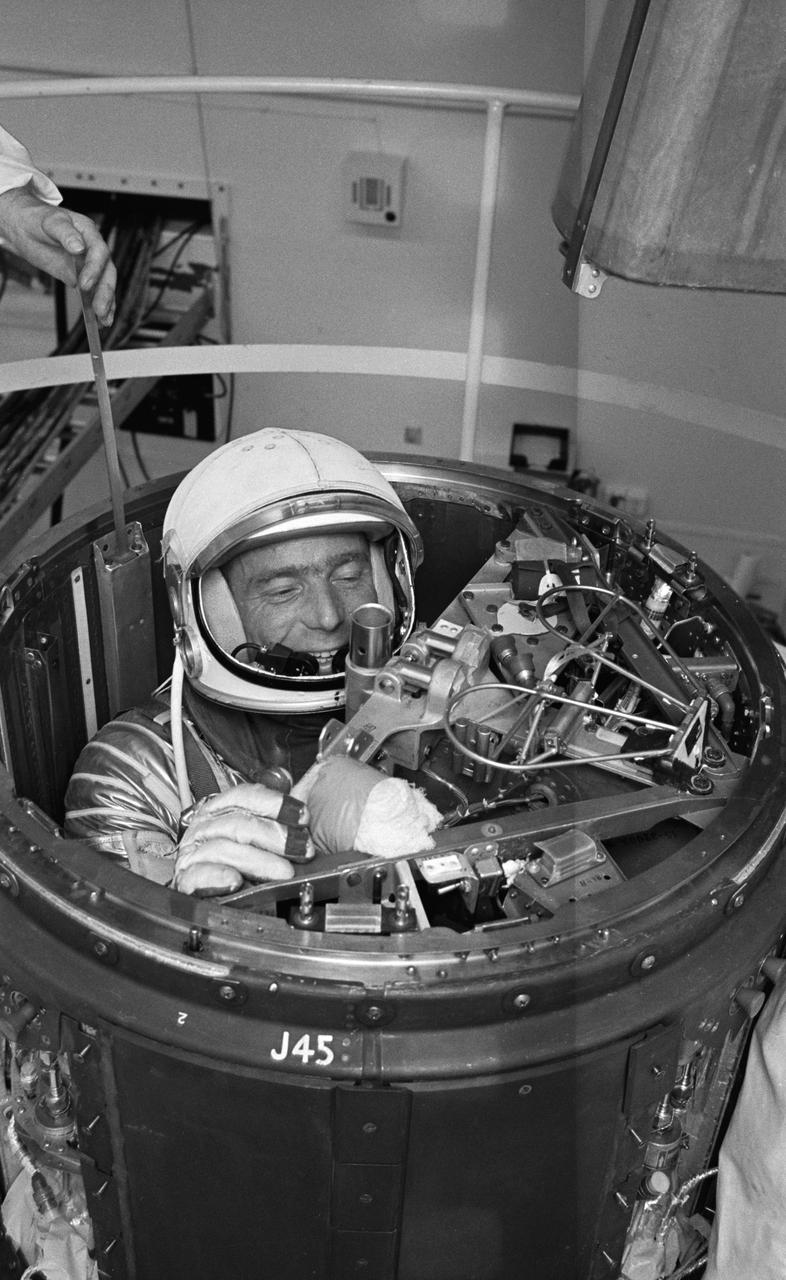
S62-01381 (1962) --- Astronaut M. Scott Carpenter practices top egress from neck of the spacecraft prior to the launch of the Mercury-Atlas 7 (MA-7) spaceflight. Photo credit: NASA

S62-03270 (24 May 1962) --- Earth and sky views taken with hand-held camera by astronaut M. Scott Carpenter during Mercury-Atlas 7 (MA-7) mission. Photo credit: NASA
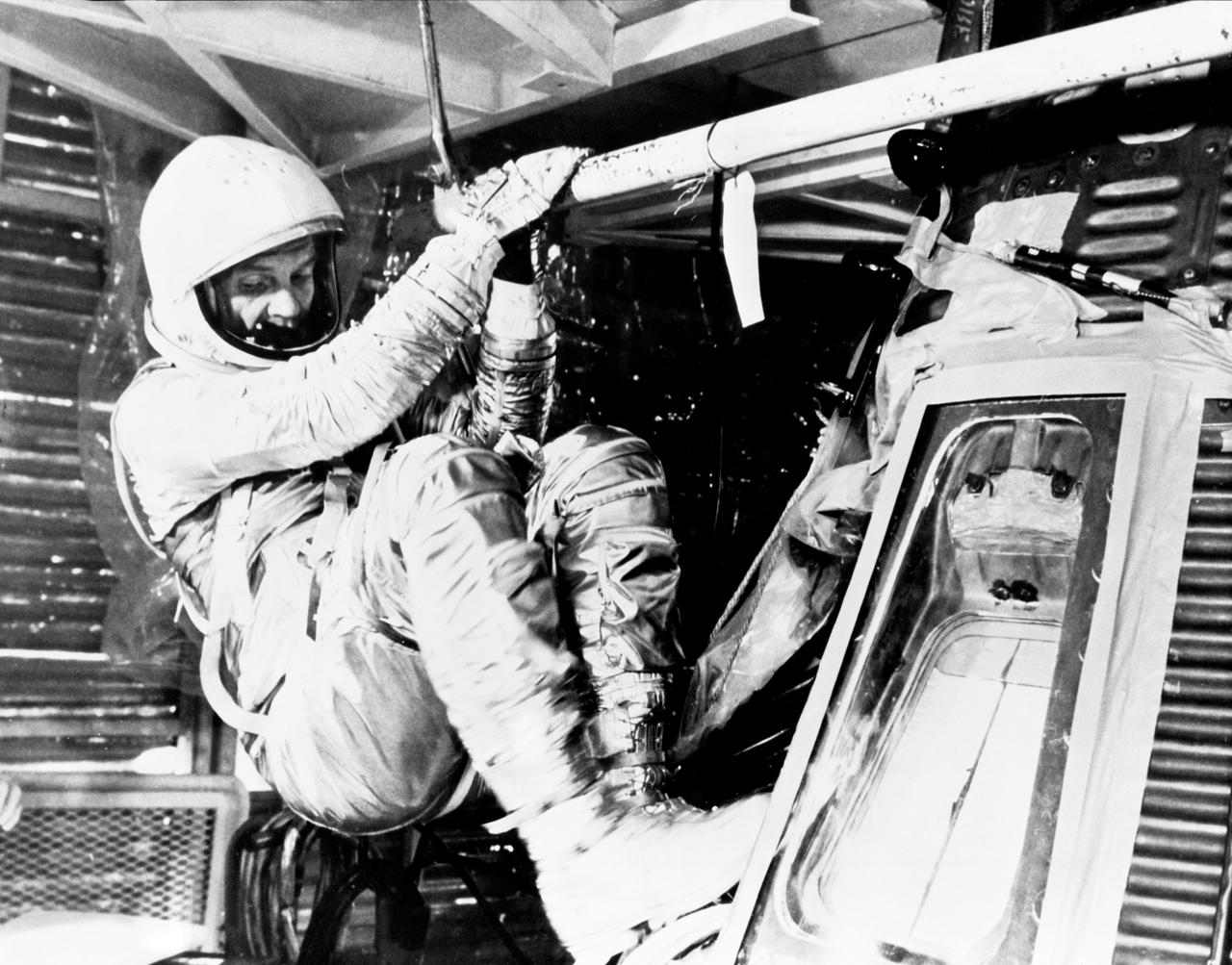
S62-00993 (1962) --- Astronaut John H. Glenn Jr., pilot of the Mercury-Atlas 6 (MA-6) mission, practices insertion into the Mercury "Friendship 7" spacecraft during MA-6 preflight training activity at Cape Canaveral, Florida. He is wearing the full pressure suit and helmet. Photo credit: NASA
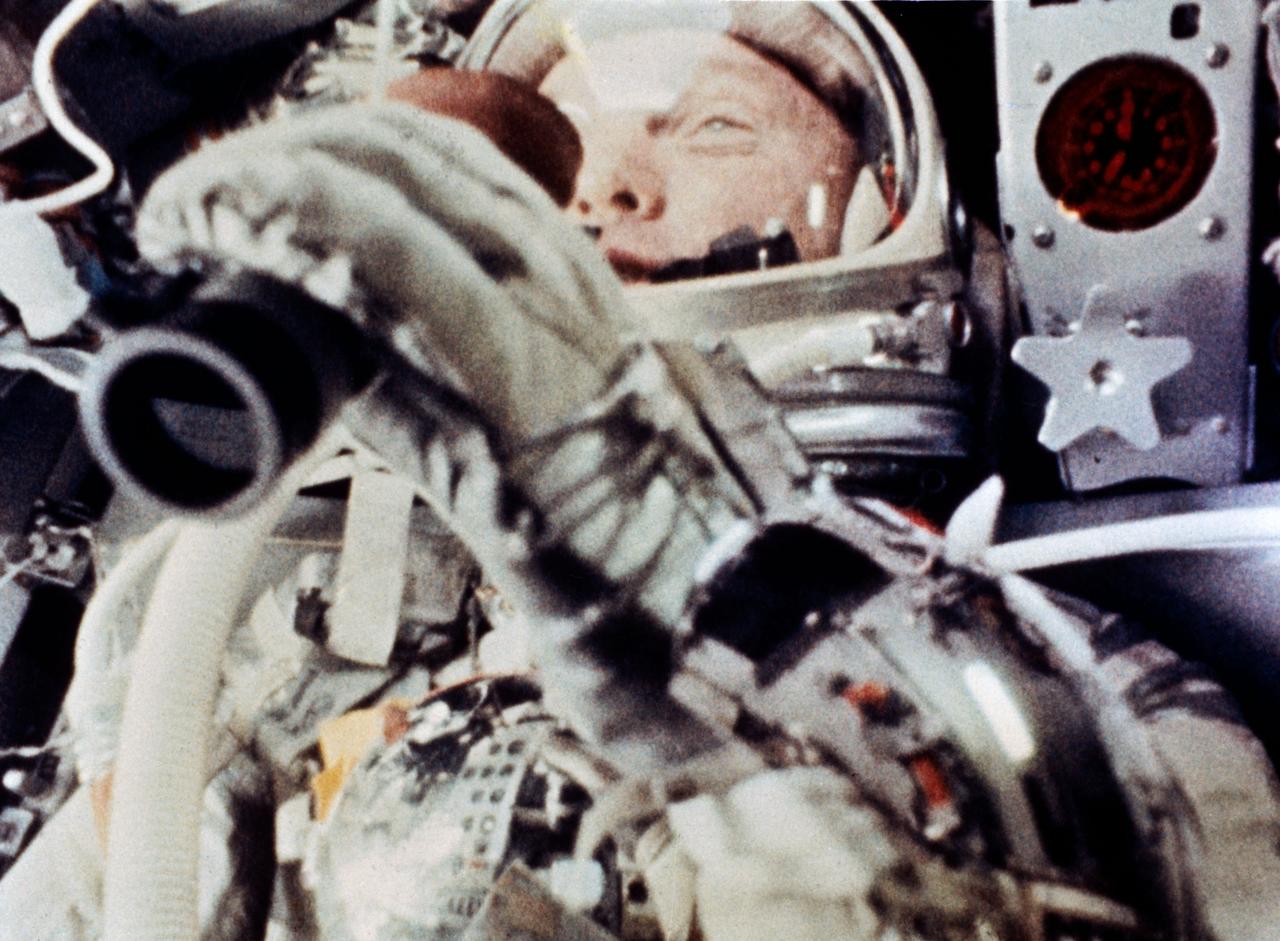
S62-00304 (20 Feb. 1962) --- Astronaut John H. Glenn Jr. is pictured aboard the Mercury-Atlas (MA-6) Friendship 7 capsule during the U.S.'s initial orbital flight. Photo credit: NASA
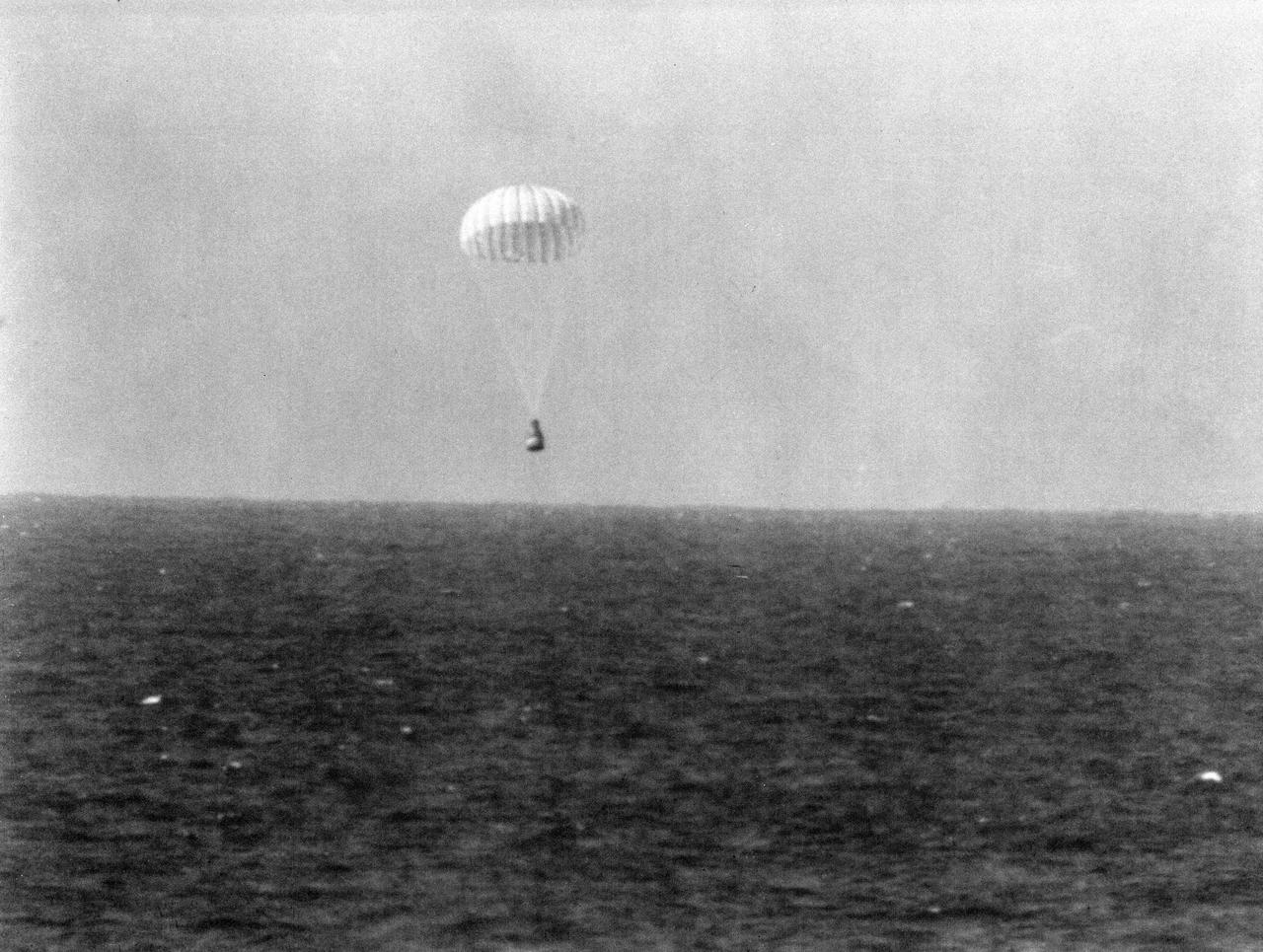
S62-04534 (3 Oct. 1962) --- Landing with parachute extended of astronaut Walter M. Schirra's Mercury-Atlas 8 (MA-8) capsule, called the Sigma 7, after a world orbital flight. Photo credit: NASA
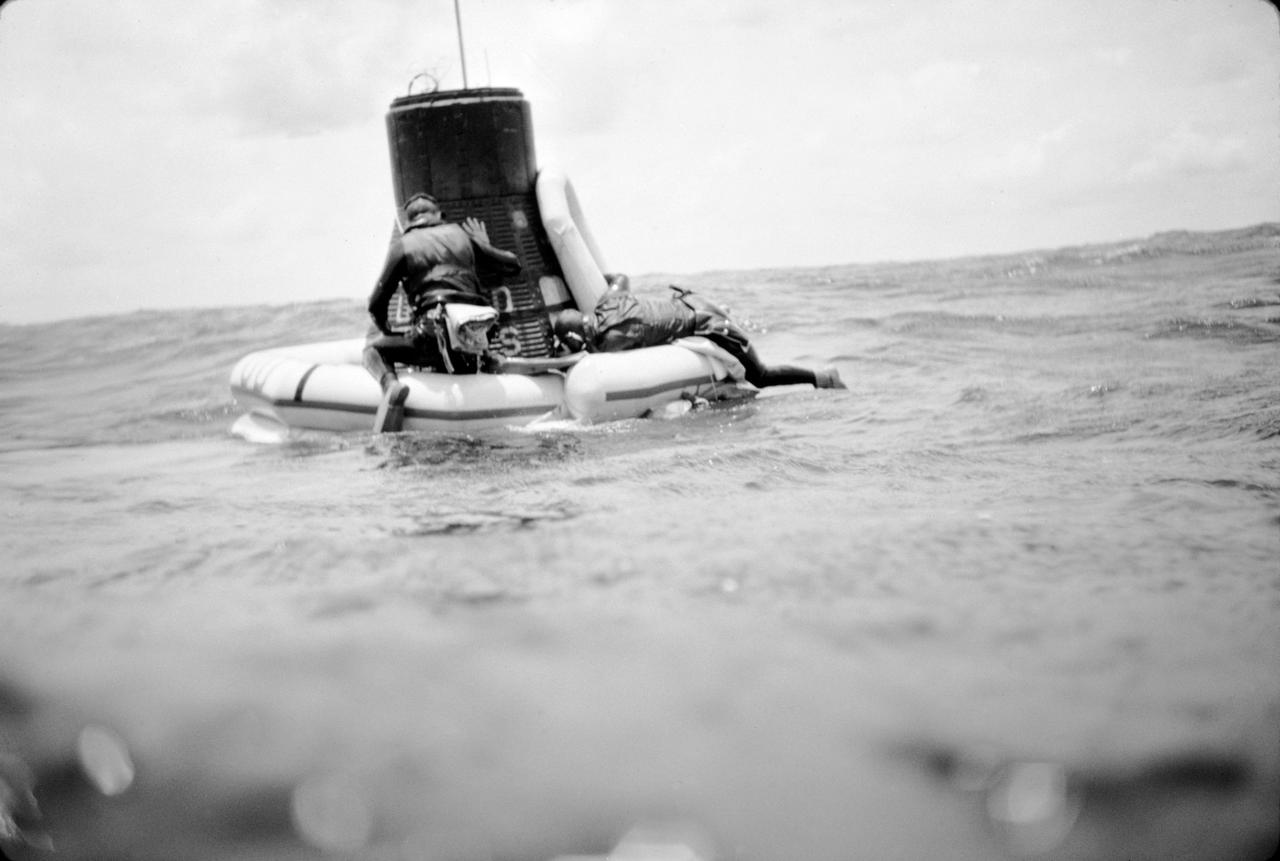
S63-07707 (16 May 1963) --- A U.S. Navy frogman team attaches a flotation collar to the Mercury-Atlas 9 (MA-9)"Faith 7" spacecraft during recovery operations in the central Pacific near Midway Island. The Mercury-Atlas spacecraft with astronaut L. Gordon Cooper Jr., pilot, still inside, was hoisted aboard the USS Kearnage. Photo credit: NASA
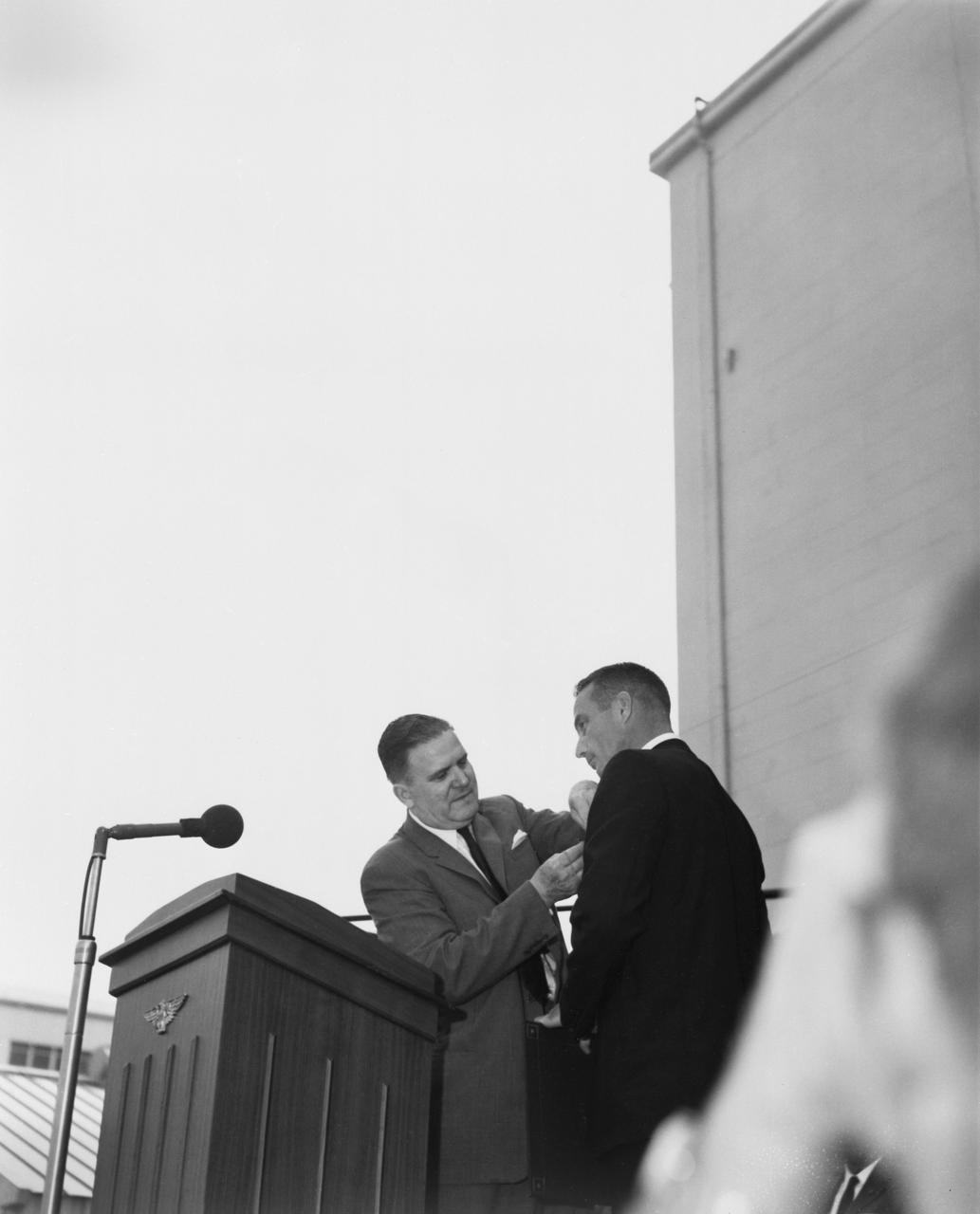
S62-04114 (1962) --- Astronaut M. Scott Carpenter, pilot of the Mercury-Atlas 7 (MA-7) mission, receives the NASA Distinguished Service Medal from NASA Adminstrator James E. Webb during ceremonies at Cape Canaveral, Florida. Photo credit: NASA
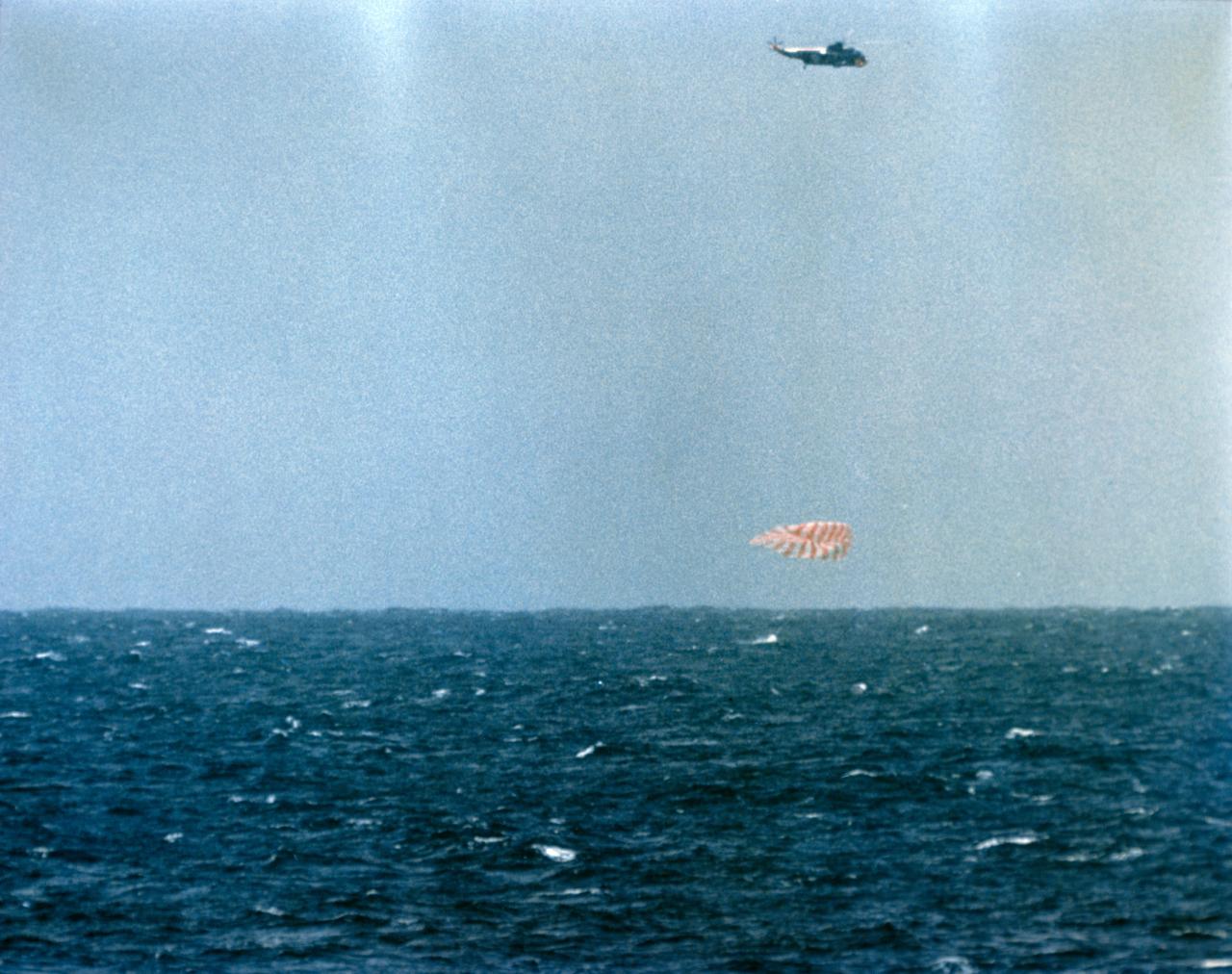
S71-24944 (16 May 1963) --- The Mercury-Atlas 9 "Faith 7" spacecraft, with astronaut L. Gordon Cooper Jr. aboard, splashes down in the Pacific Ocean to conclude a 22-orbit mission lasting 34 hours and 20.5 minutes. The capsule's parachute is fully deployed in this view. A rescue helicopter hovers overhead. Photo credit: NASA
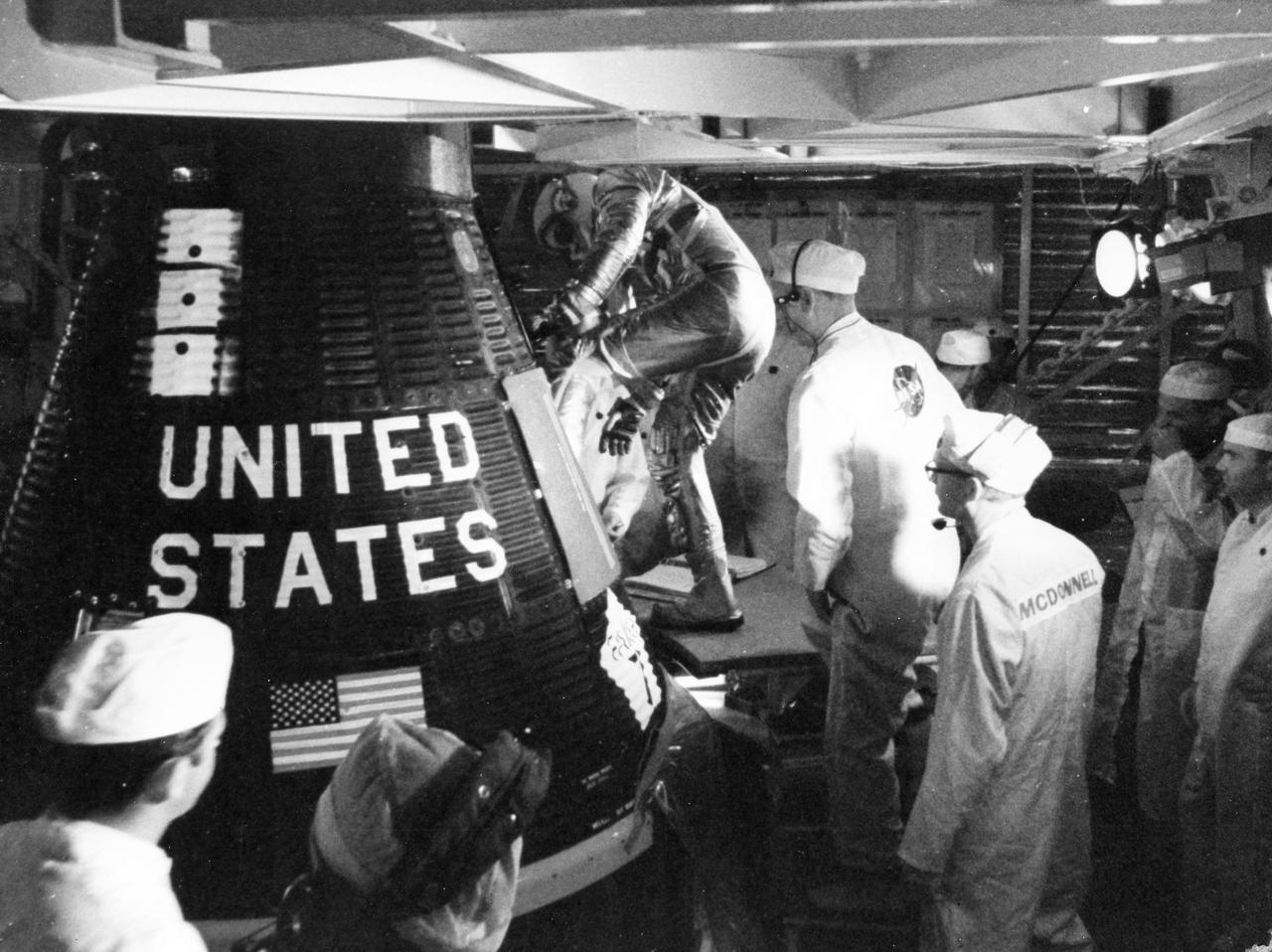
S63-06259 (14 May 1963) --- Astronaut L. Gordon Cooper Jr., prime pilot for the Mercury-Atlas 9 (MA-9) mission, is assisted into his "Faith 7" Mercury spacecraft early morning on May 14, 1963. Cooper remained in the spacecraft for approximately five hours and then climbed out again as the mission was delayed because of trouble at a tracking station. Photo credit: NASA
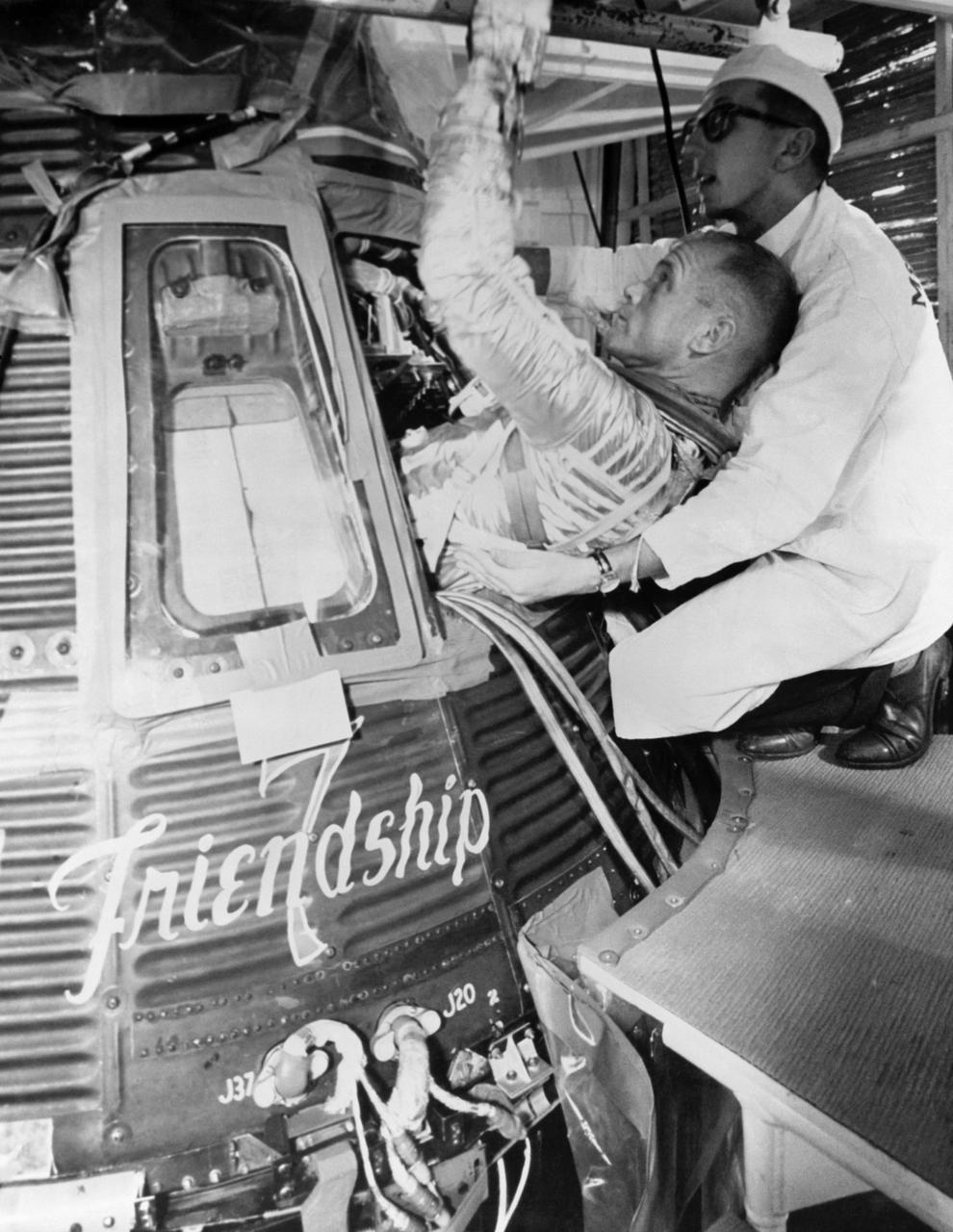
S62-00994 (1962) --- Astronaut John H. Glenn Jr., pilot of the Mercury-Atlas 6 mission, practices insertion into the Mercury "Friendship 7? spacecraft, with help of a McDonnell Aircraft Corporation technician, during MA-6 preflight training activity at Cape Canaveral, Florida. He is wearing the full pressure suit. Photo credit: NASA
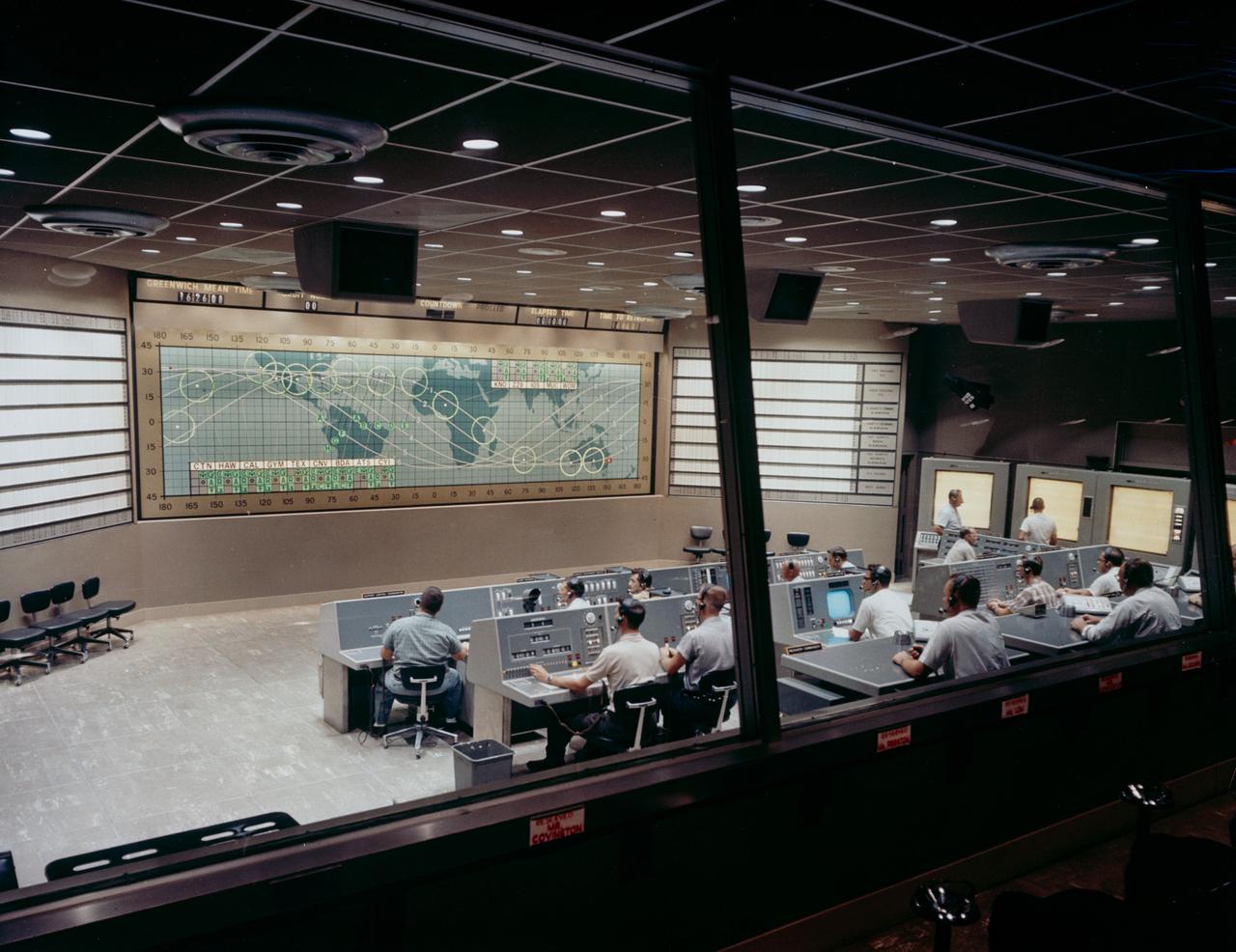
S62-05139 (1962) --- View of Mercury Control Center prior to the Mercury-Atlas 8 (MA-8) flight of the Sigma 7. Photo credit: NASA
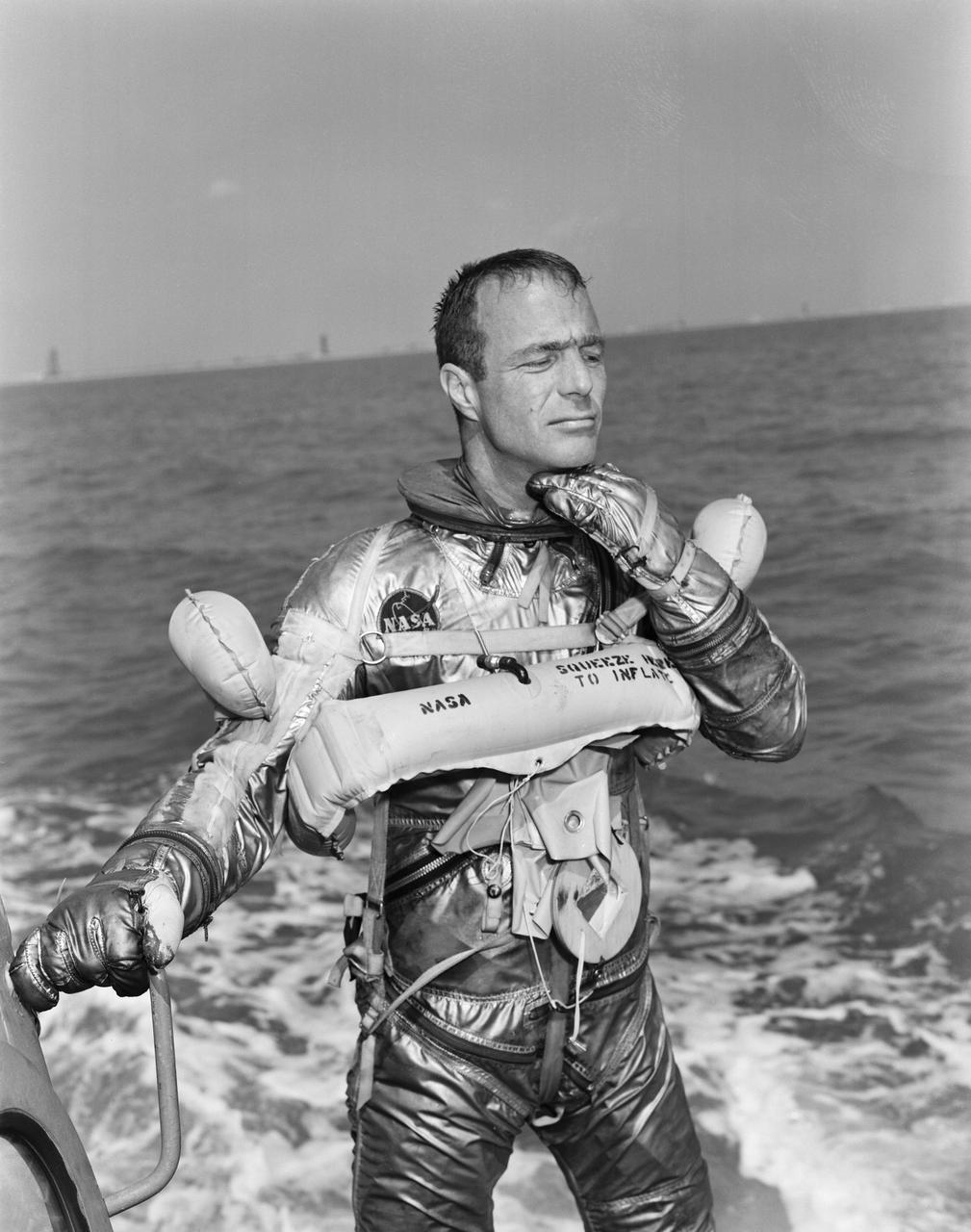
S62-01358 (1962) --- Project Mercury astronaut M. Scott Carpenter, prime pilot of the Mercury-Atlas 7 (MA-7) spaceflight, goes through a water egress test. He is in the Mercury pressure suit, without the helmet, and is wearing a life vest. Photo credit: NASA
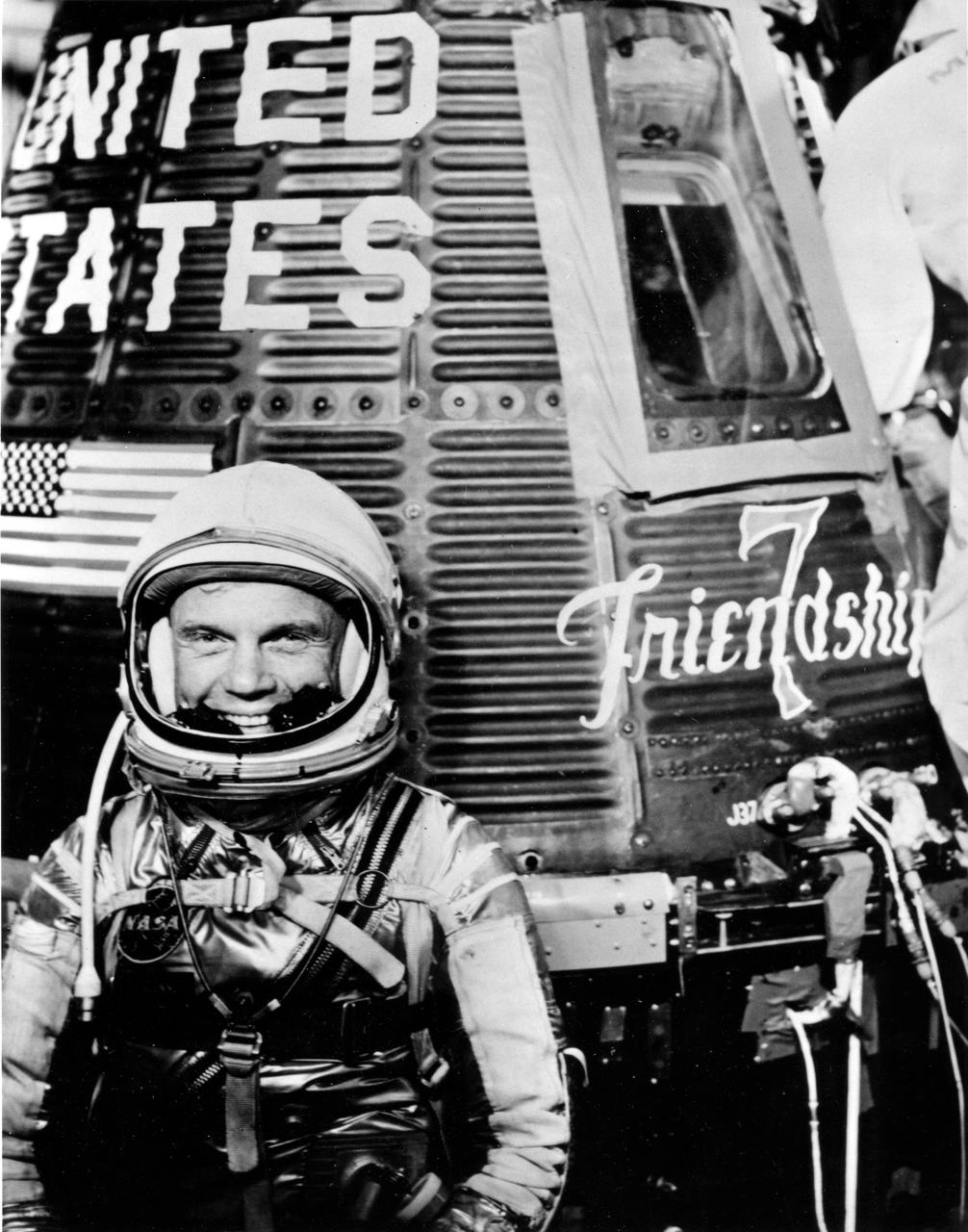
62-MA6-55 (1962) --- Astronaut John H. Glenn Jr., pilot of the Mercury Atlas 6 (MA-6) spaceflight, poses for a photo with the Mercury "Friendship 7" spacecraft during preflight activities. Photo credit: NASA
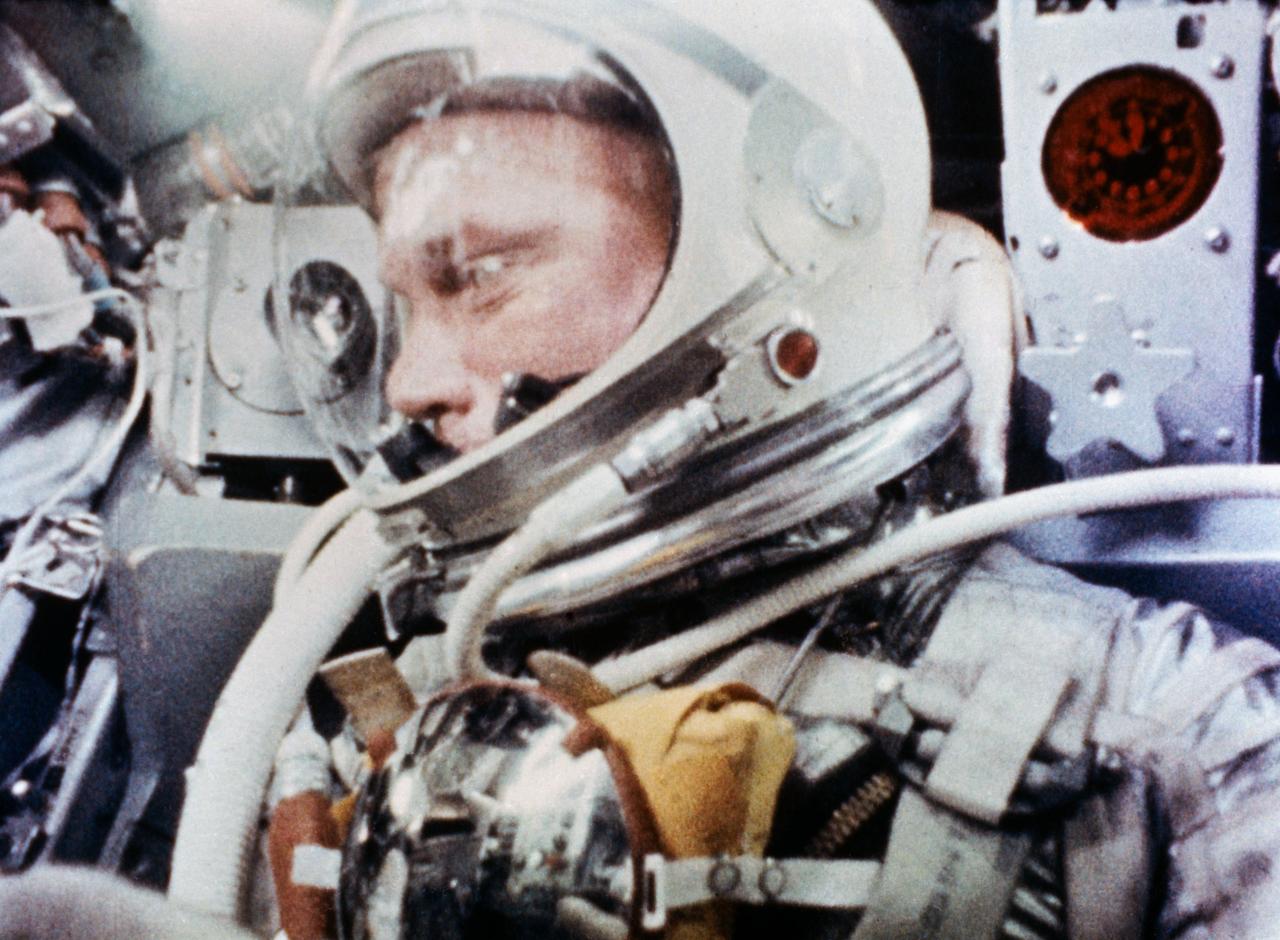
S62-00302 (20 Feb. 1962) --- A camera onboard the "Friendship 7" Mercury spacecraft photographs astronaut John H. Glenn Jr. during his Mercury-Atlas 6 spaceflight. Photo credit: NASA
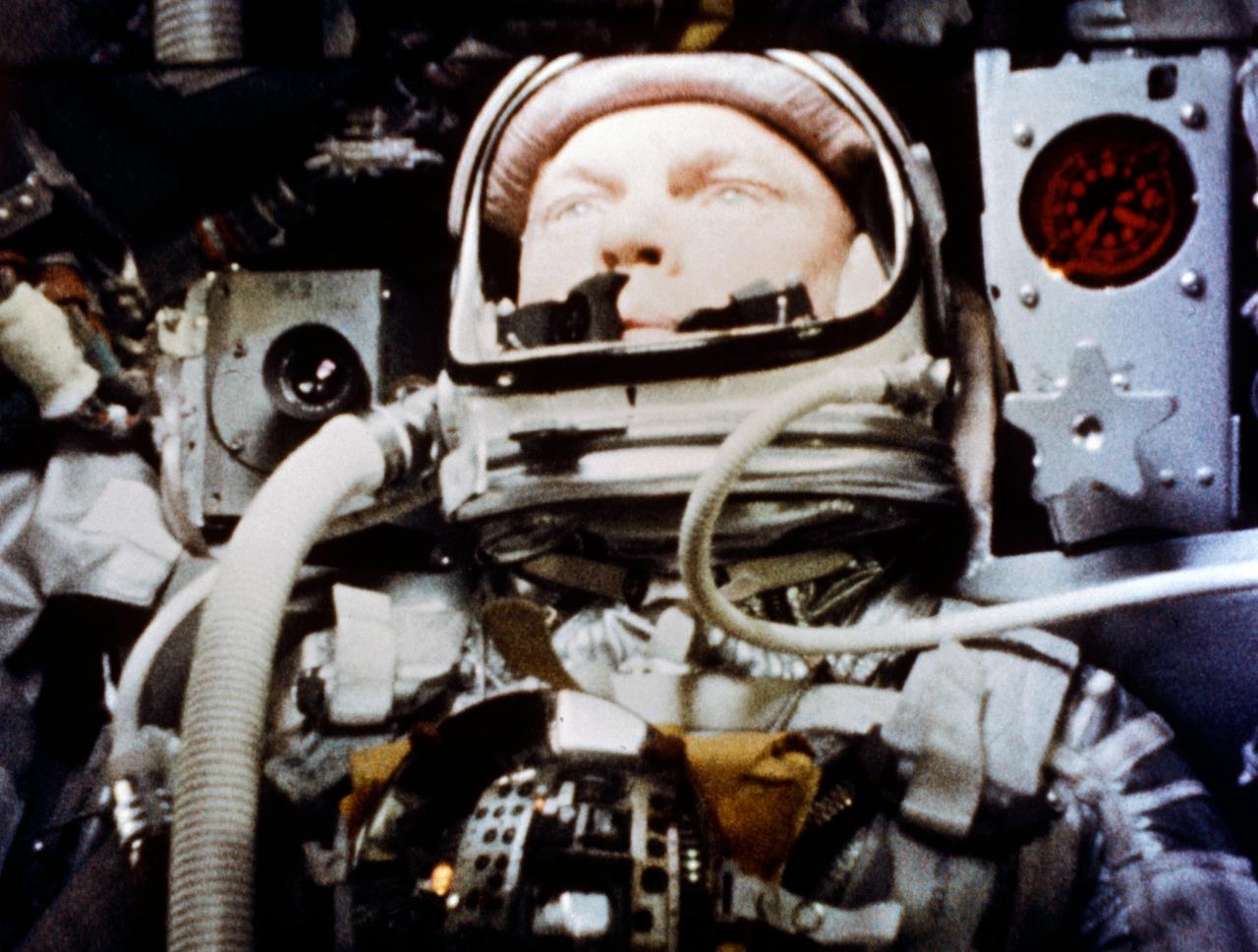
S62-00303 (20 Feb. 1962) --- A camera onboard the "Friendship 7" Mercury spacecraft photographs astronaut John H. Glenn Jr. during the Mercury-Atlas 6 spaceflight. Photo credit: NASA
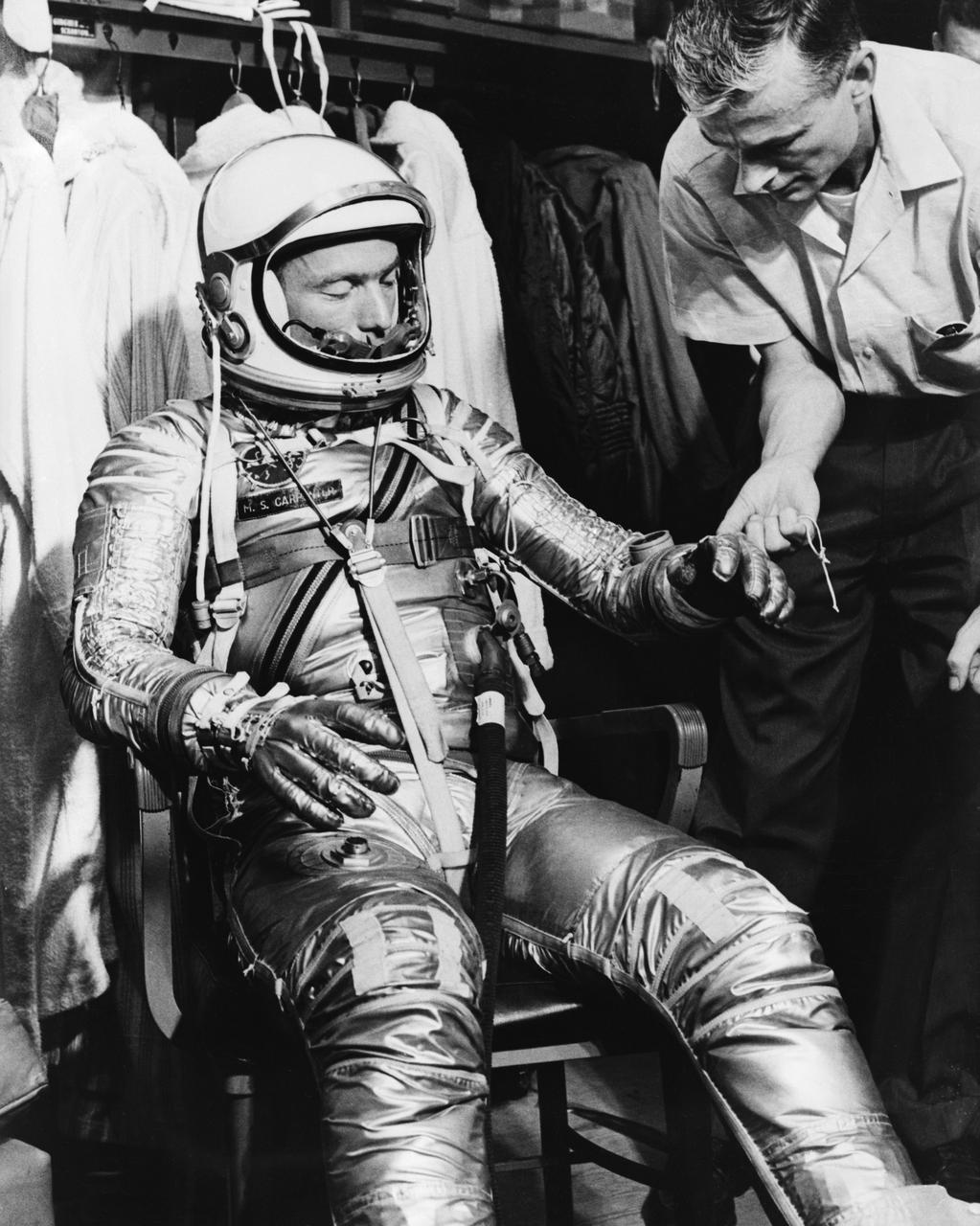
S61-03522 (1961) --- Mercury astronaut M. Scott Carpenter, prime pilot for the Mercury-Atlas 7 (MA-7) spaceflight, and Crew Equipment Specialist Joe Schmitt are pictured during a suiting exercise. Schmidt is seen checking the gloves on Carpenter's pressure suit. Photo credit: NASA
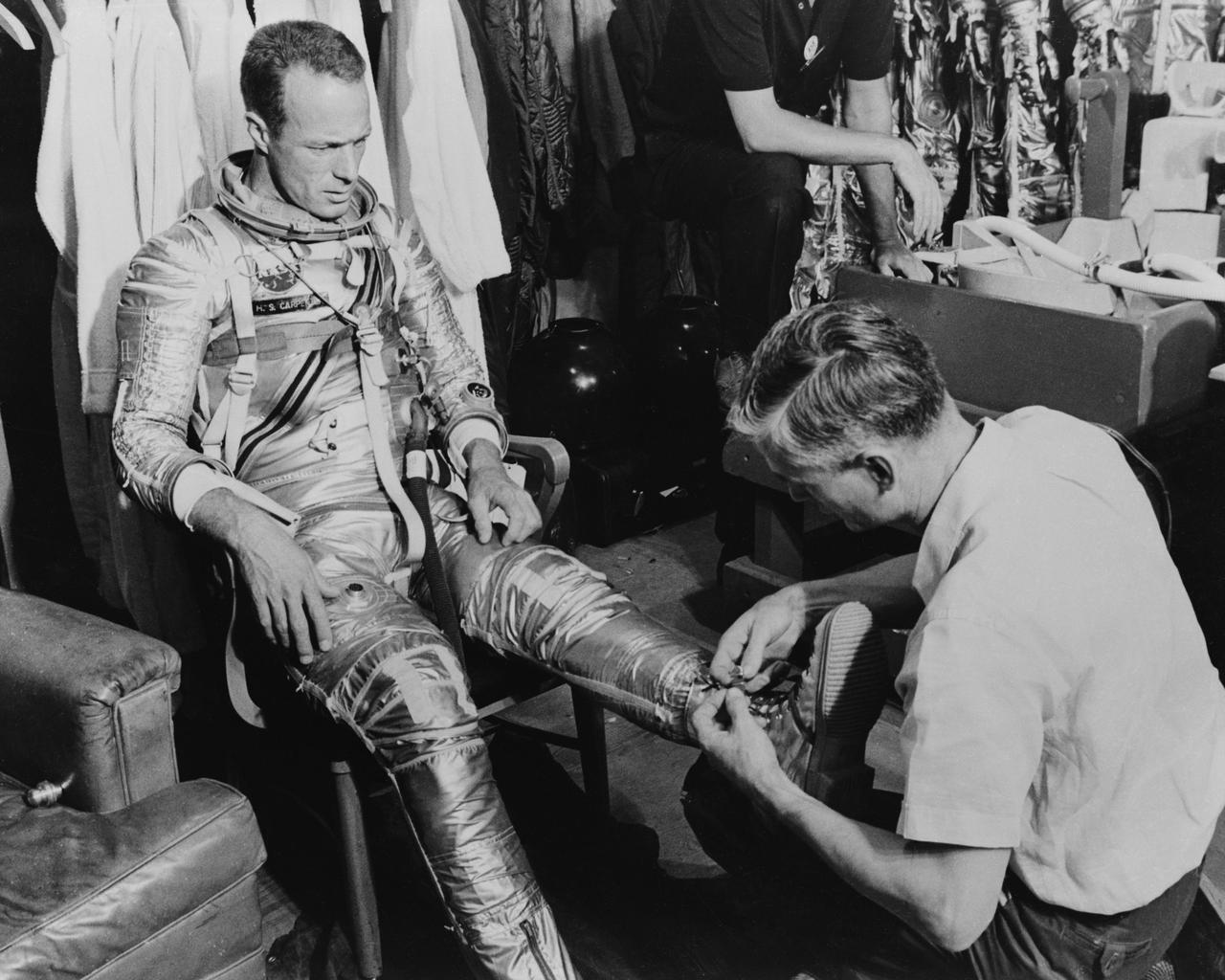
S61-03513 (1961) --- Mercury astronaut M. Scott Carpenter, prime pilot for the Mercury-Atlas 7 (MA-7) spaceflight, and Crew Equipment Specialist Joe Schmitt are pictured during a suiting exercise. Schmitt is seen lacing up Carpenter's boots. Photo credit: NASA
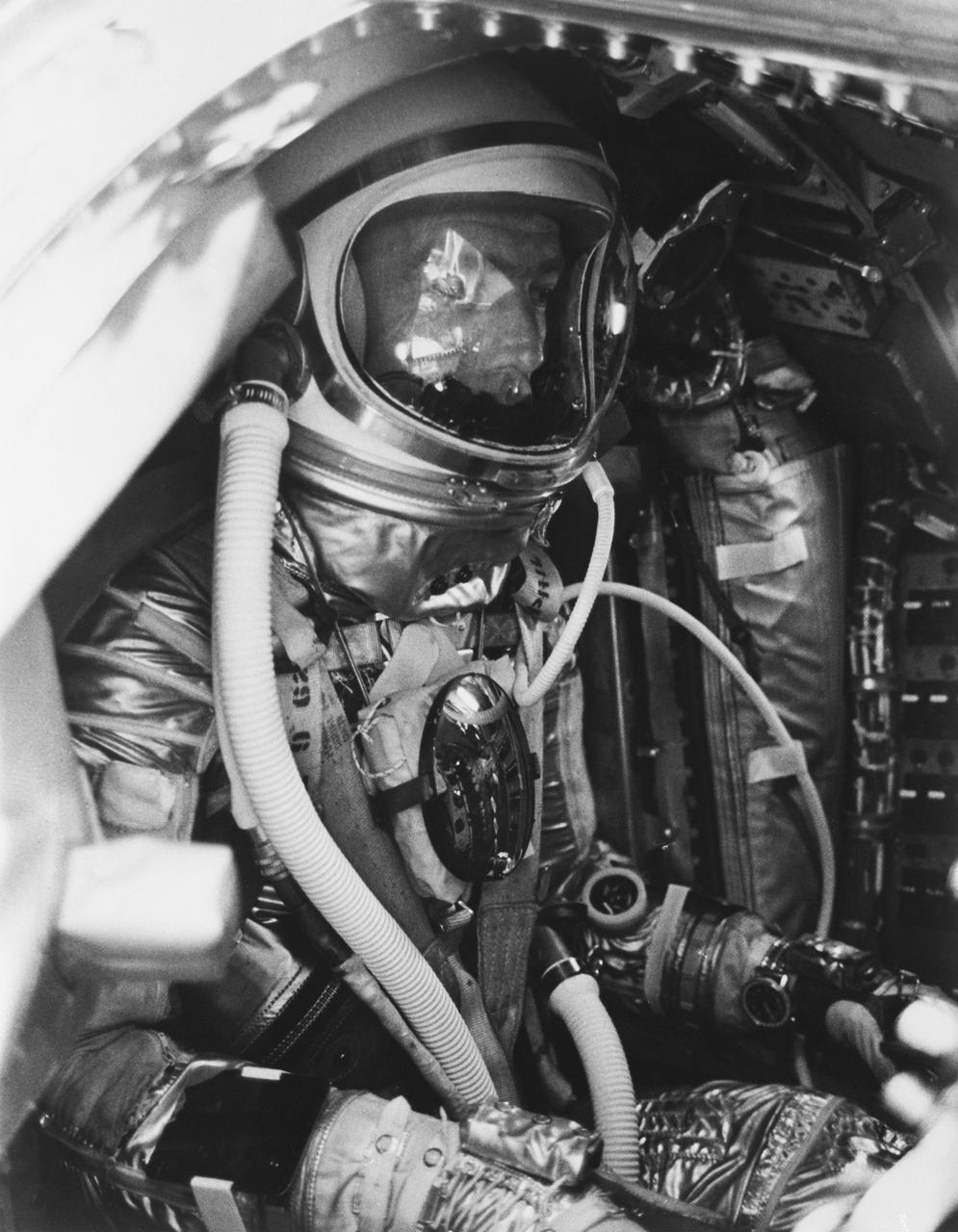
S62-04047 (24 May 1962) --- Close-up of astronaut M. Scott Carpenter inside his Aurora 7 spacecraft before the launch of the Mercury-Atlas 7 (MA-7) mission. Photo credit: NASA
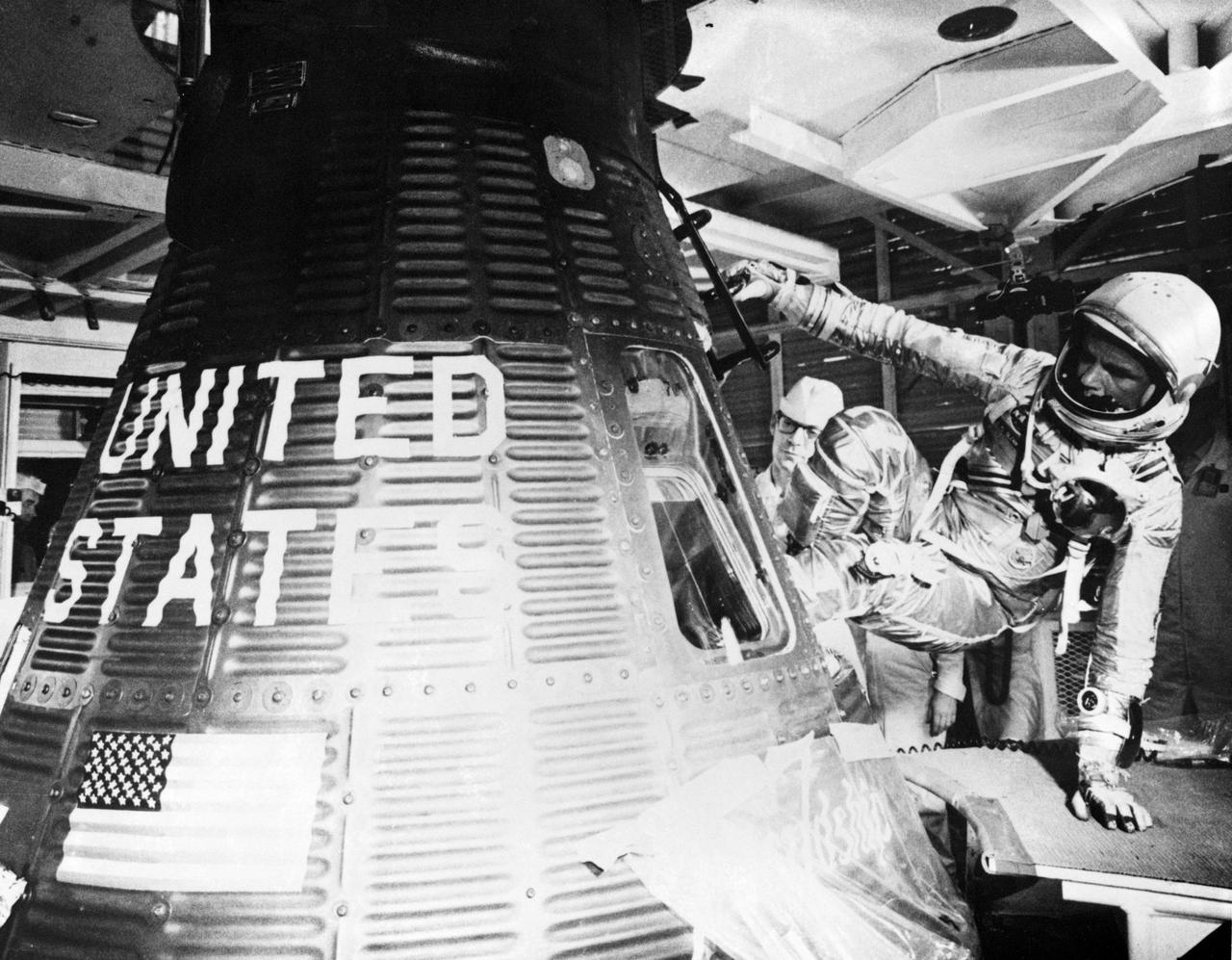
S62-00371 (20 Feb. 1962) --- Mercury astronaut John H. Glenn Jr., pilot of the Mercury-Atlas 6 (MA-6) spaceflight, enters the Mercury "Friendship 7" spacecraft during the MA-6 prelaunch preparations at Cape Canaveral, Florida. Glenn became the first American to orbit Earth. Photo credit: NASA
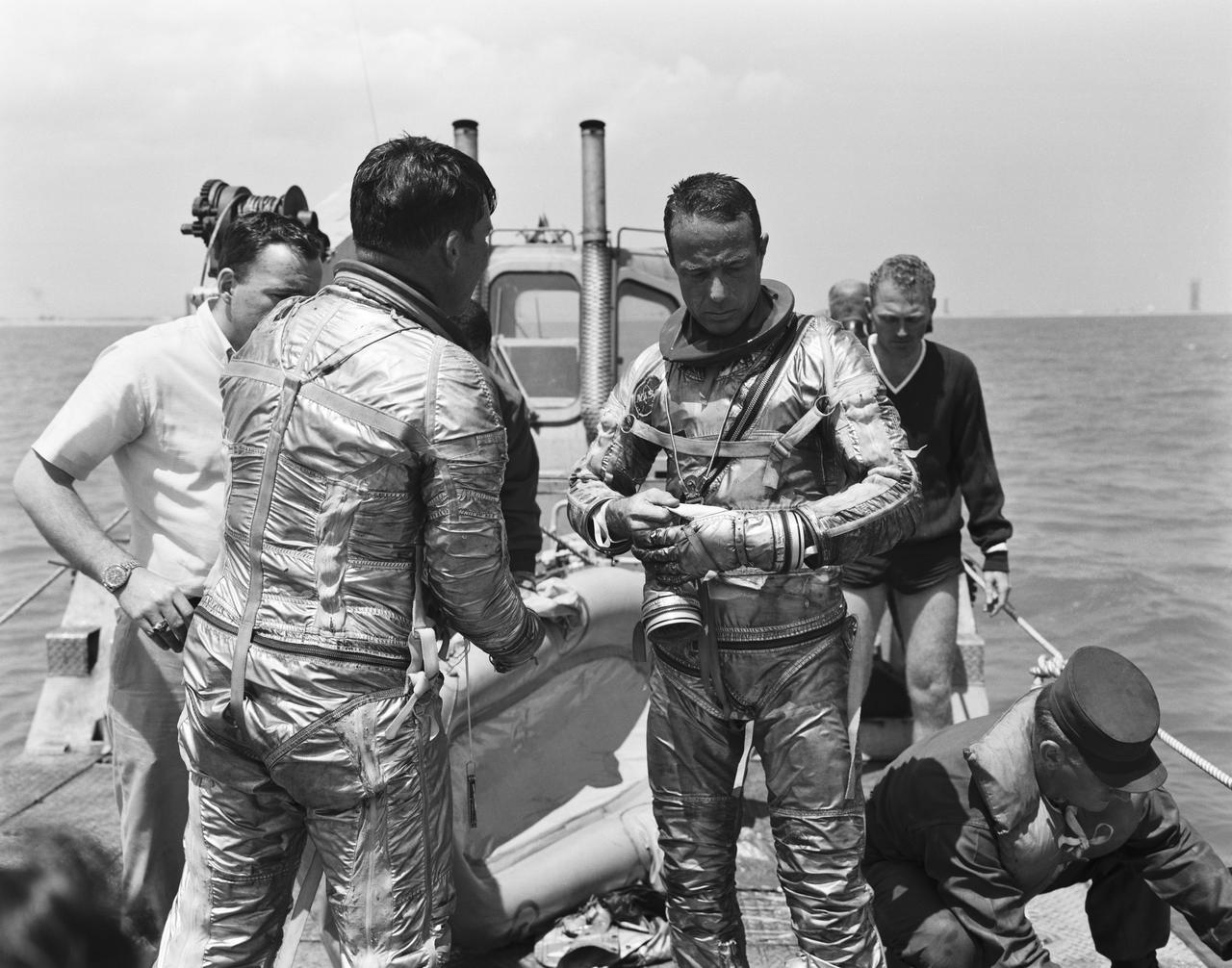
S62-01355 (1962) --- Project Mercury astronauts M. Scott Carpenter, prime pilot of the Mercury-Atlas 7 (MA-7) spaceflight, prepares to go through a water egress test. Astronaut Walter M. Schirra (back to camera), the backup MA-7 pilot is also present. Carpenter and Schirra are in the Mercury pressure suit, without the helmet. Behind them is an inflated life raft. Photo credit: NASA
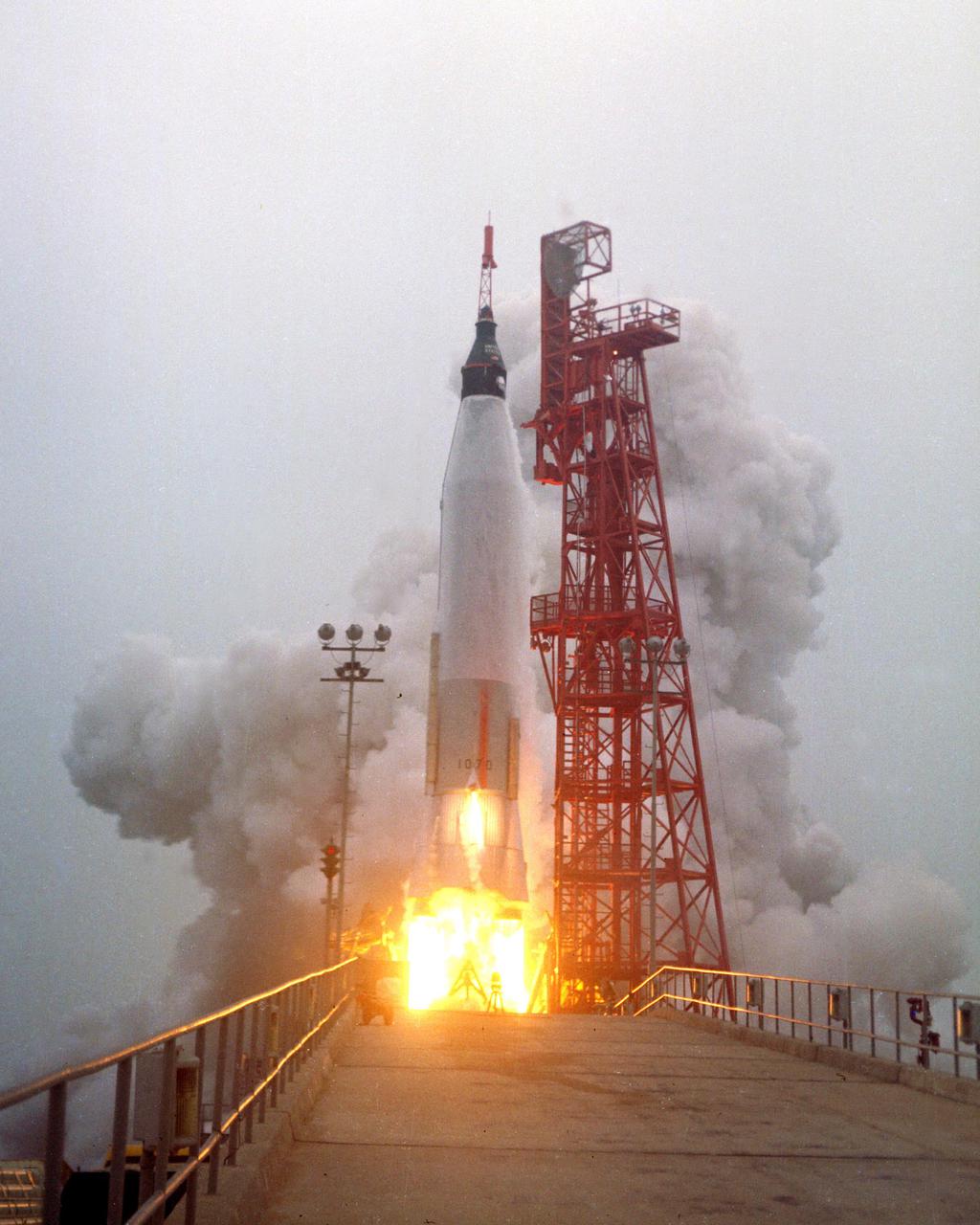
KENNEDY SPACE CENTER, FLA. -- Mercury Atlas 7 lifted off today from Complex 14 carrying Astronaut Scott Carpenter and the Aurora 7 for the second manned orbital mission.
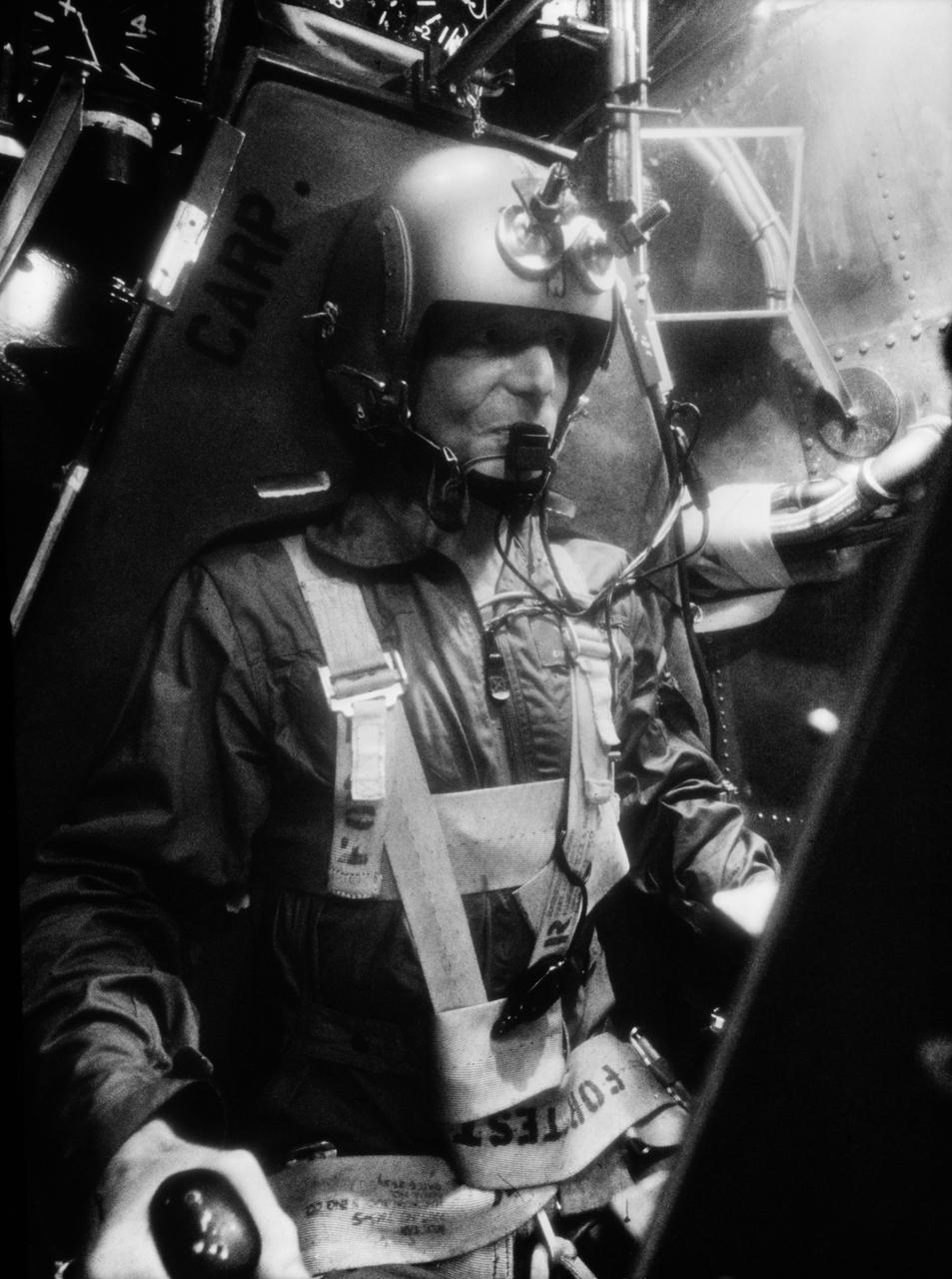
B59-00723 (1959) --- Close-up of astronaut M. Scott Carpenter, prime pilot for the Mercury-Atlas 7 (MA-7) mission, during centrifuge training. (M-199) Photo credit: NASA
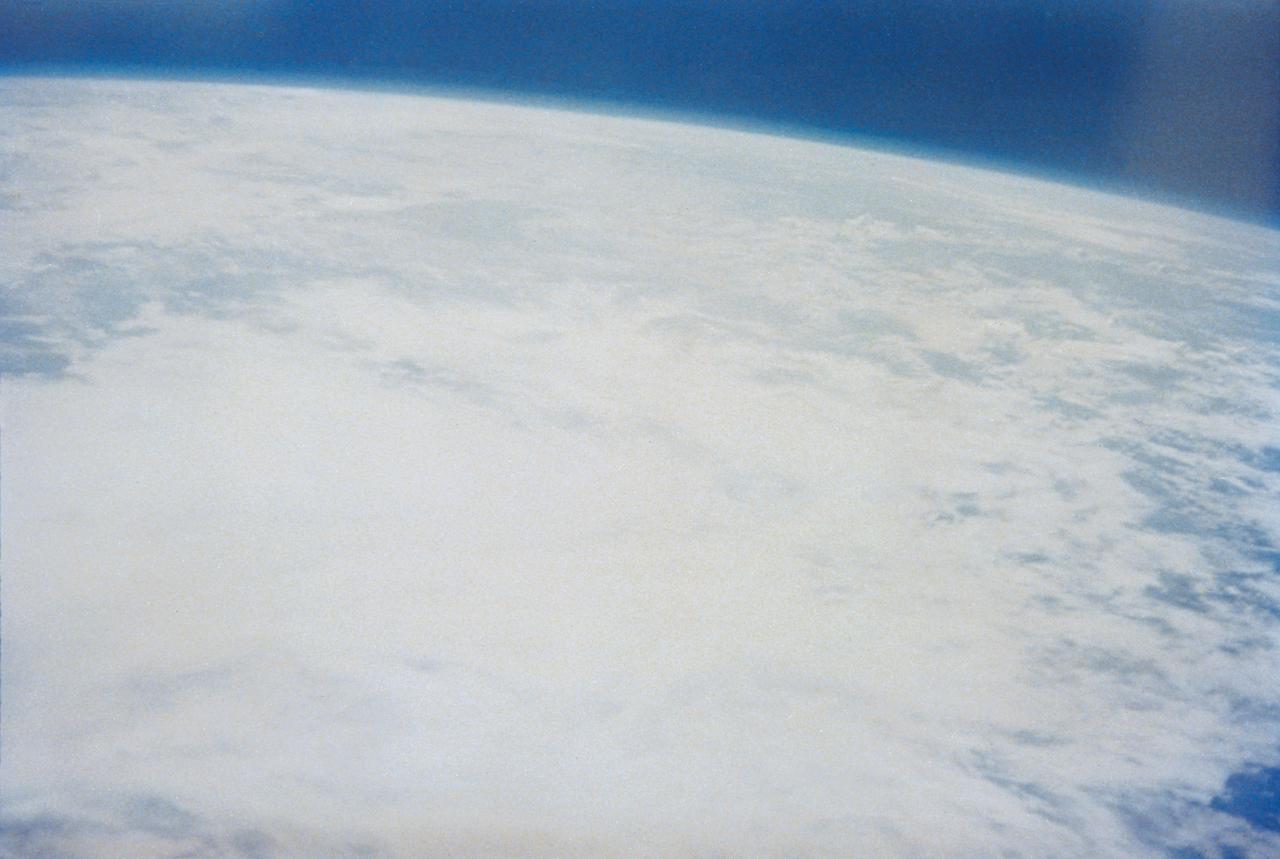
S62-03257 (24 May 1962) --- Earth and sky views taken with hand-held camera by astronaut M. Scott Carpenter during Mercury-Atlas 7 (MA-7) mission. Photo credit: NASA
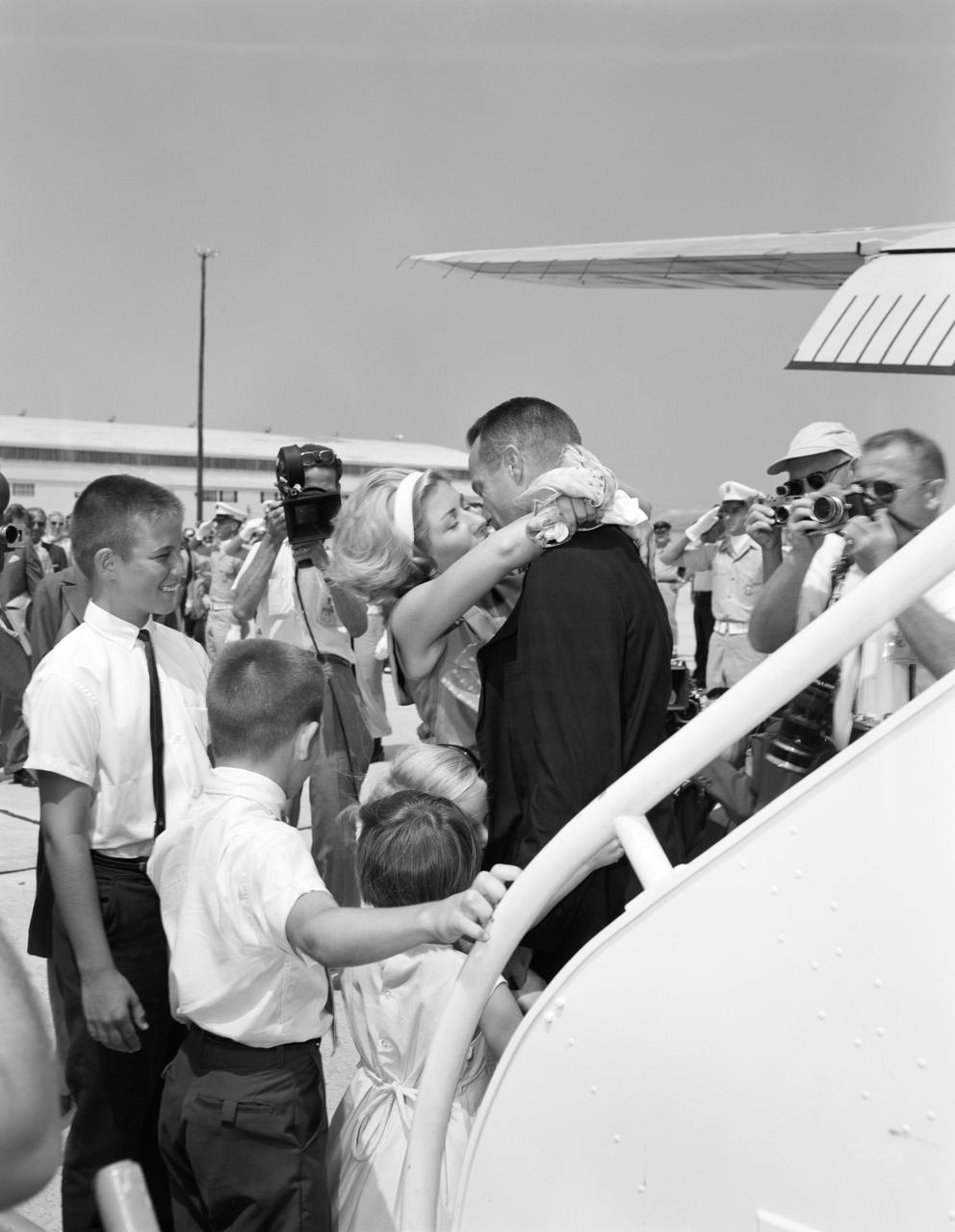
S62-03916 (May 1962) --- The wife and children of astronaut M. Scott Carpenter welcome him after the successful Mercury-Atlas 7 (MA-7) flight. Photo credit: NASA
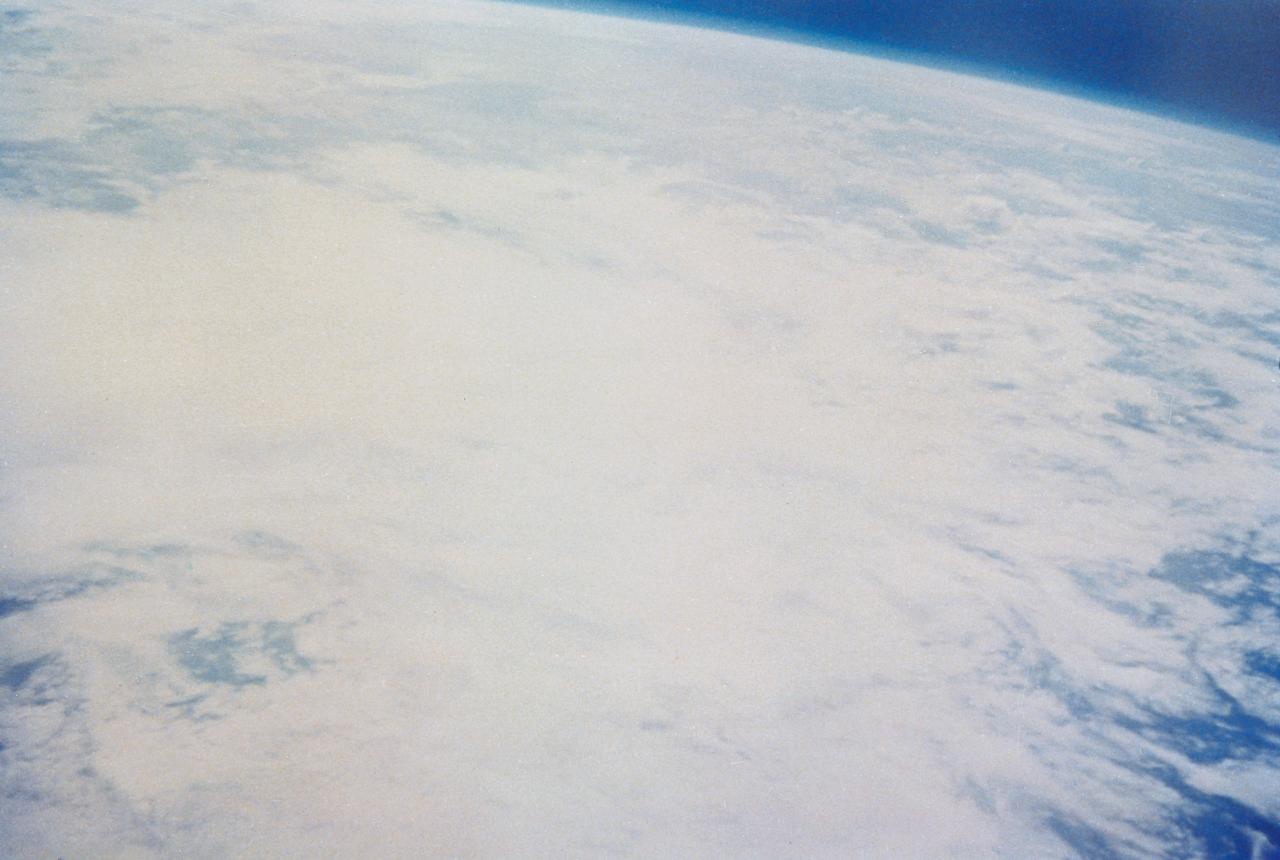
S62-03250 (24 May 1962) --- Earth and sky views taken with hand-held camera by astronaut M. Scott Carpenter during Mercury-Atlas 7 (MA-7) mission. Photo credit: NASA
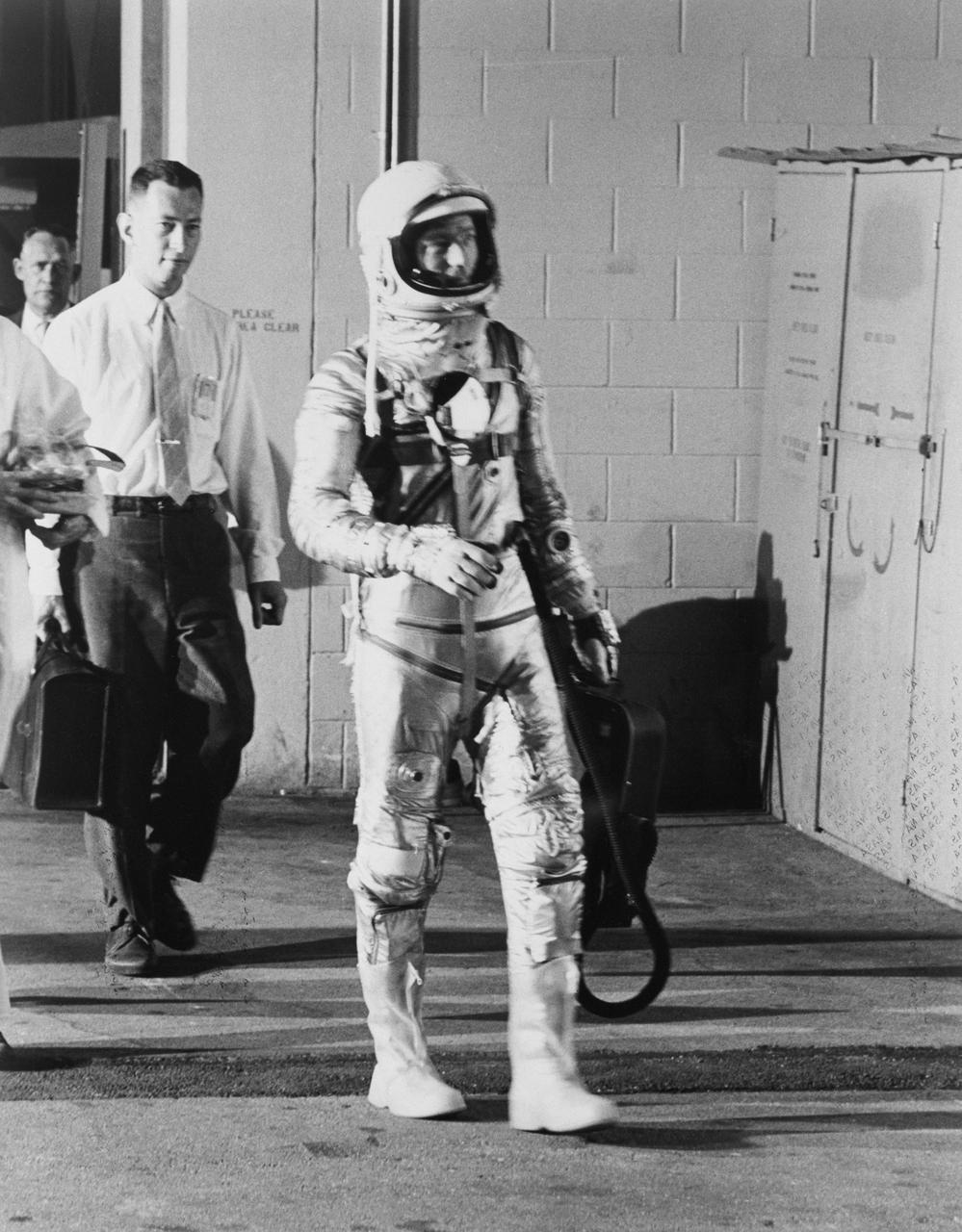
S62-04044 (24 May 1962) --- Astronaut Scott Carpenter leaving White Room for launch site to begin Mercury-Atlas 7 (MA-7) mission. Photo credit: NASA
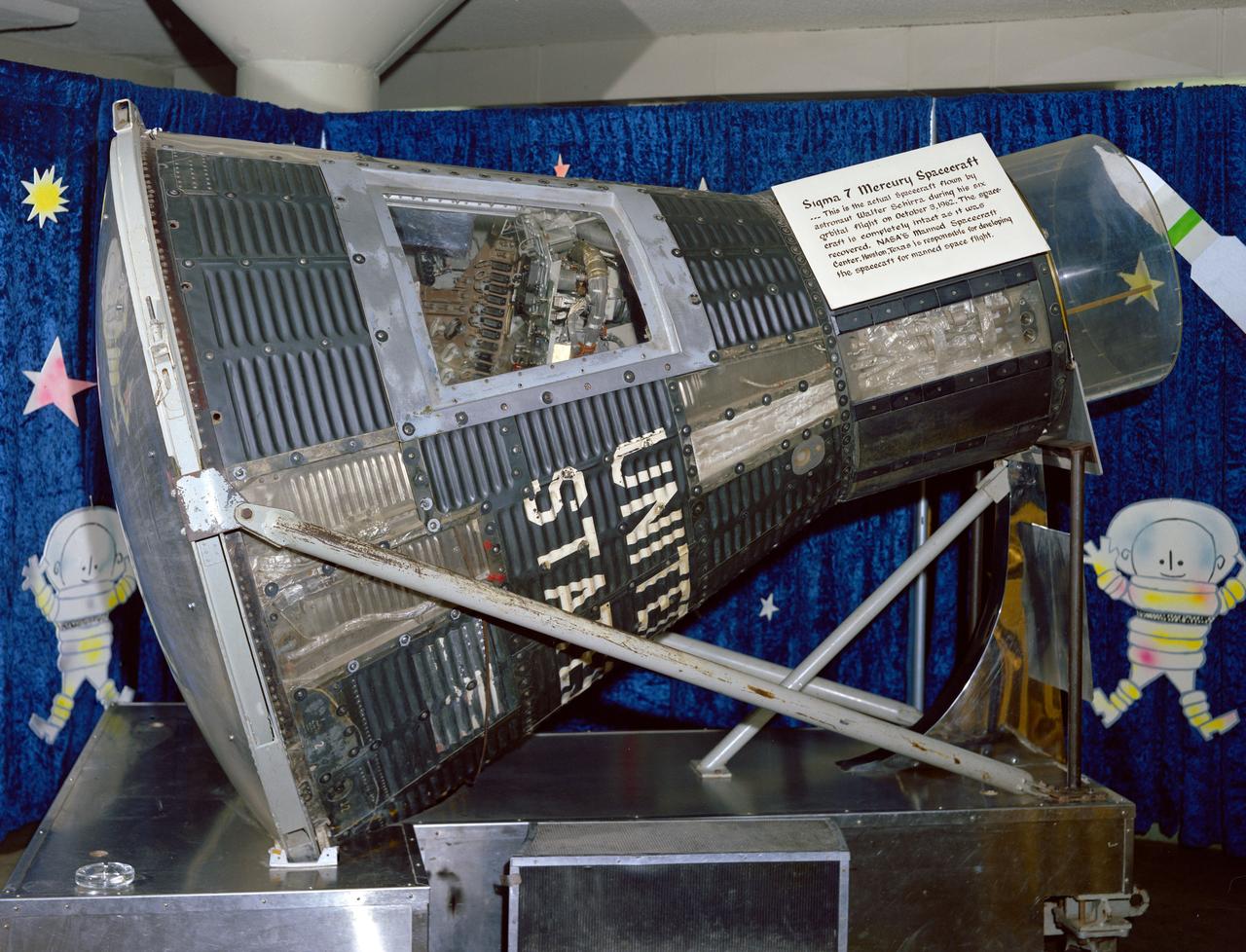
S66-53205 (1966) --- Mercury Atlas (MA-8) Sigma 7 capsule on display at the Johnson Space Center. Photo credit: NASA
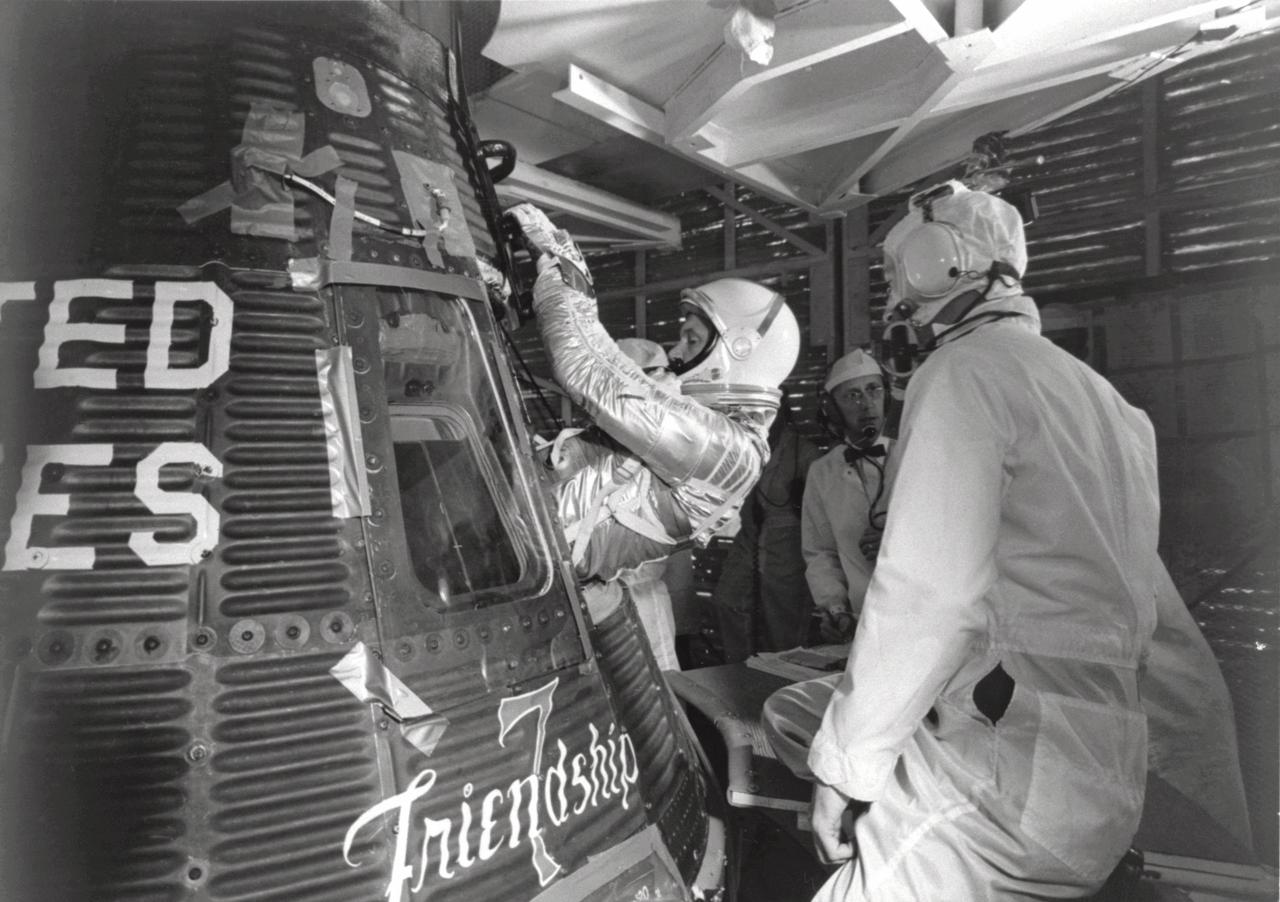
CAPE CANAVERAL, Fla. -- Astronaut John H. Glenn Jr. enters his Mercury capsule, "Friendship 7," as he prepares for launch of the Mercury-Atlas rocket. On February 20, 1962, Glenn lifted off into space aboard his Mercury Atlas 6 MA-6 rocket and became the first American to orbit the Earth. After orbiting the Earth 3 times, Friendship 7 landed in the Atlantic Ocean 4 hours, 55 minutes and 23 seconds later, just East of Grand Turk Island in the Bahamas. Glenn and his capsule were recovered by the Navy Destroyer Noa, 21 minutes after splashdown. Photo credit: NASA
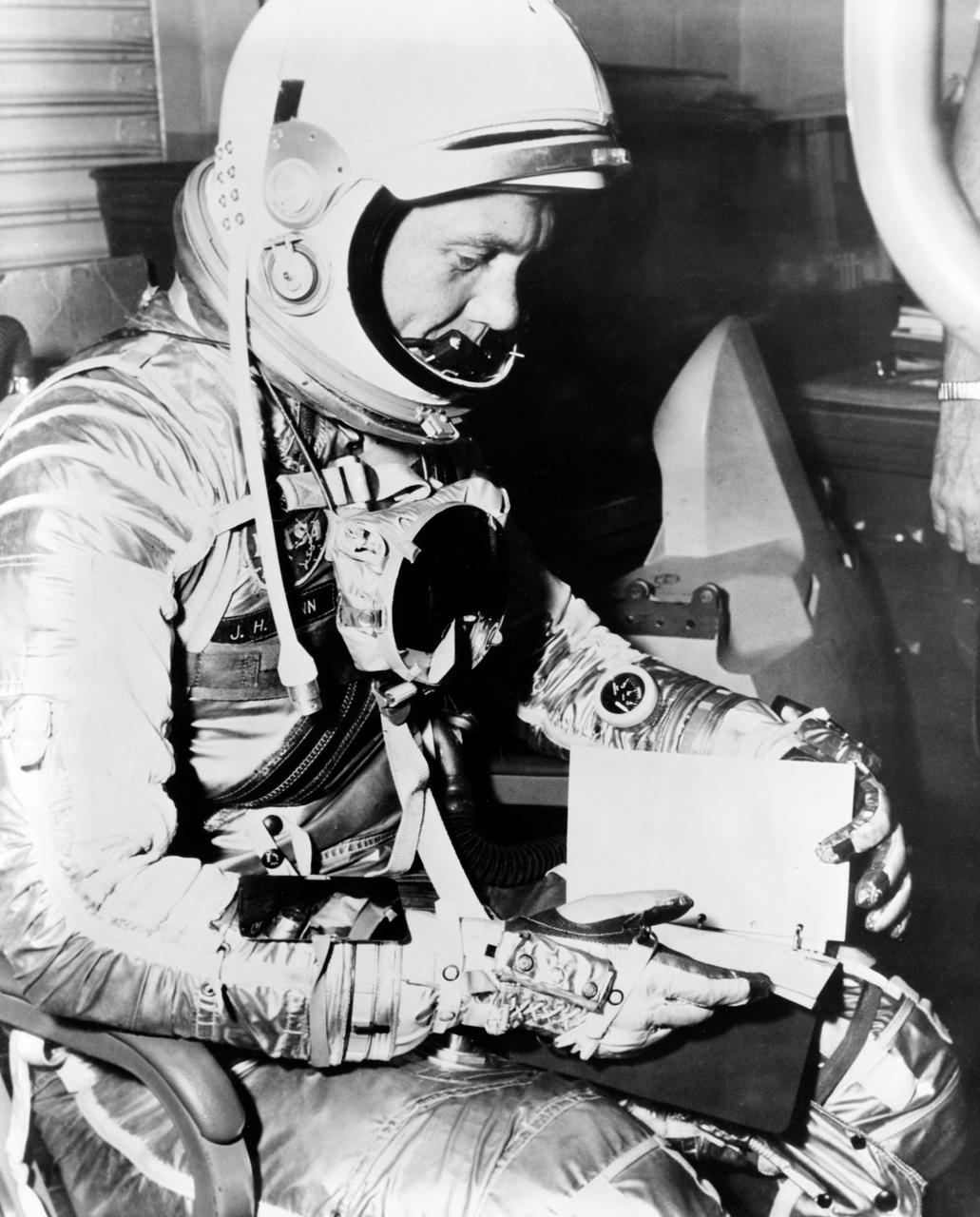
S62-01000 (20 Feb. 1962) --- Astronaut John H. Glenn Jr., pilot of the Mercury-Atlas 6 "Friendship 7" mission, looks over a checklist during MA-6 preflight activity. He is wearing his Mercury spacesuit. Photo credit: NASA
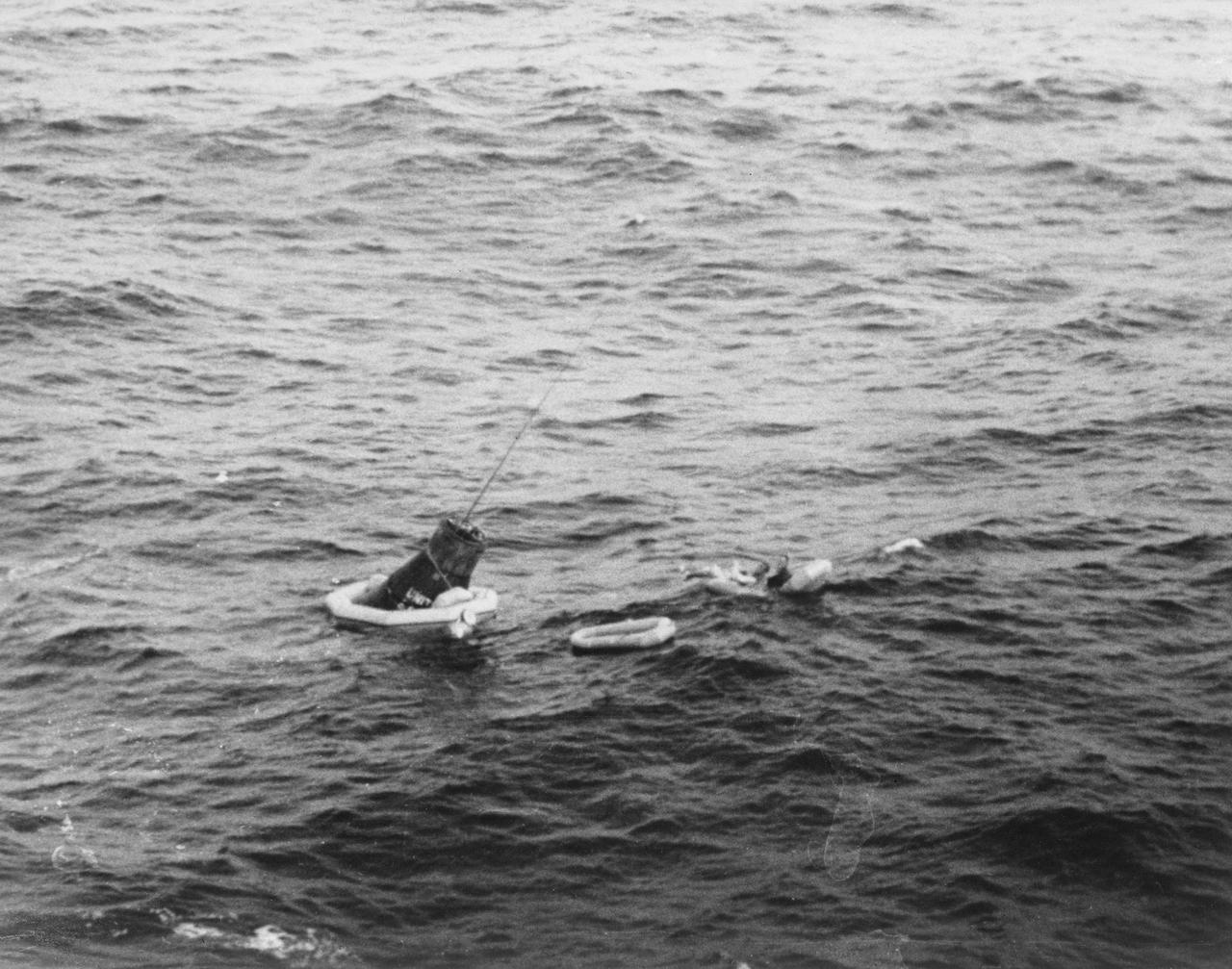
S62-04065 (24 May 1962) --- Astronaut M. Scott Carpenter, prime pilot for the Mercury-Atlas 7 (MA-7) mission, is seen being recovered from the Atlantic Ocean after MA-7 flight. A diver helps Carpenter into a life raft while the capsule floats nearby. Photo credit: NASA
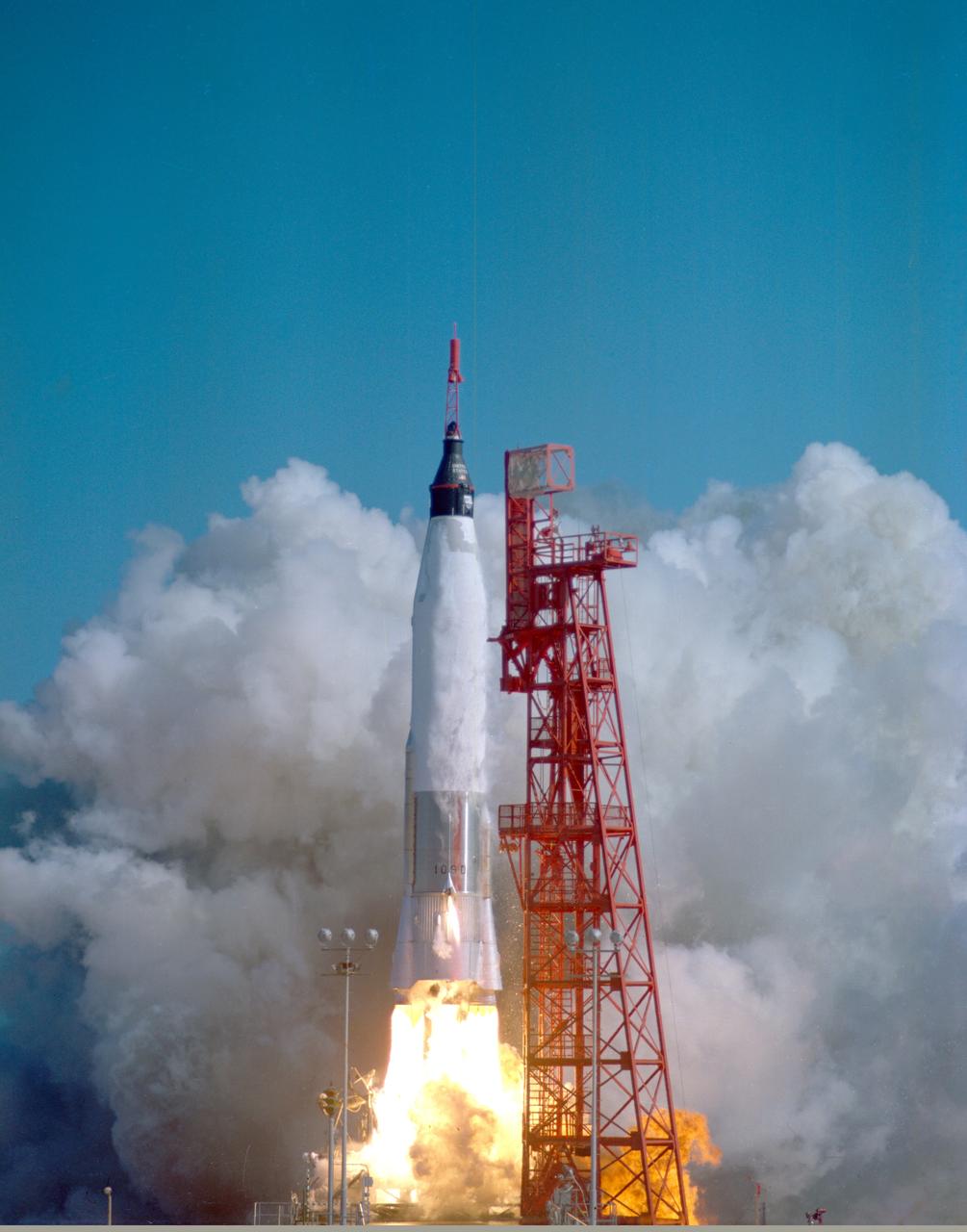
CAPE CANAVERAL, Fla. -- Launch of Friendship 7, the first manned orbital space flight. Astronaut John Glenn aboard, the Mercury-Atlas rocket is launched from Pad 14. Photo credit: NASA
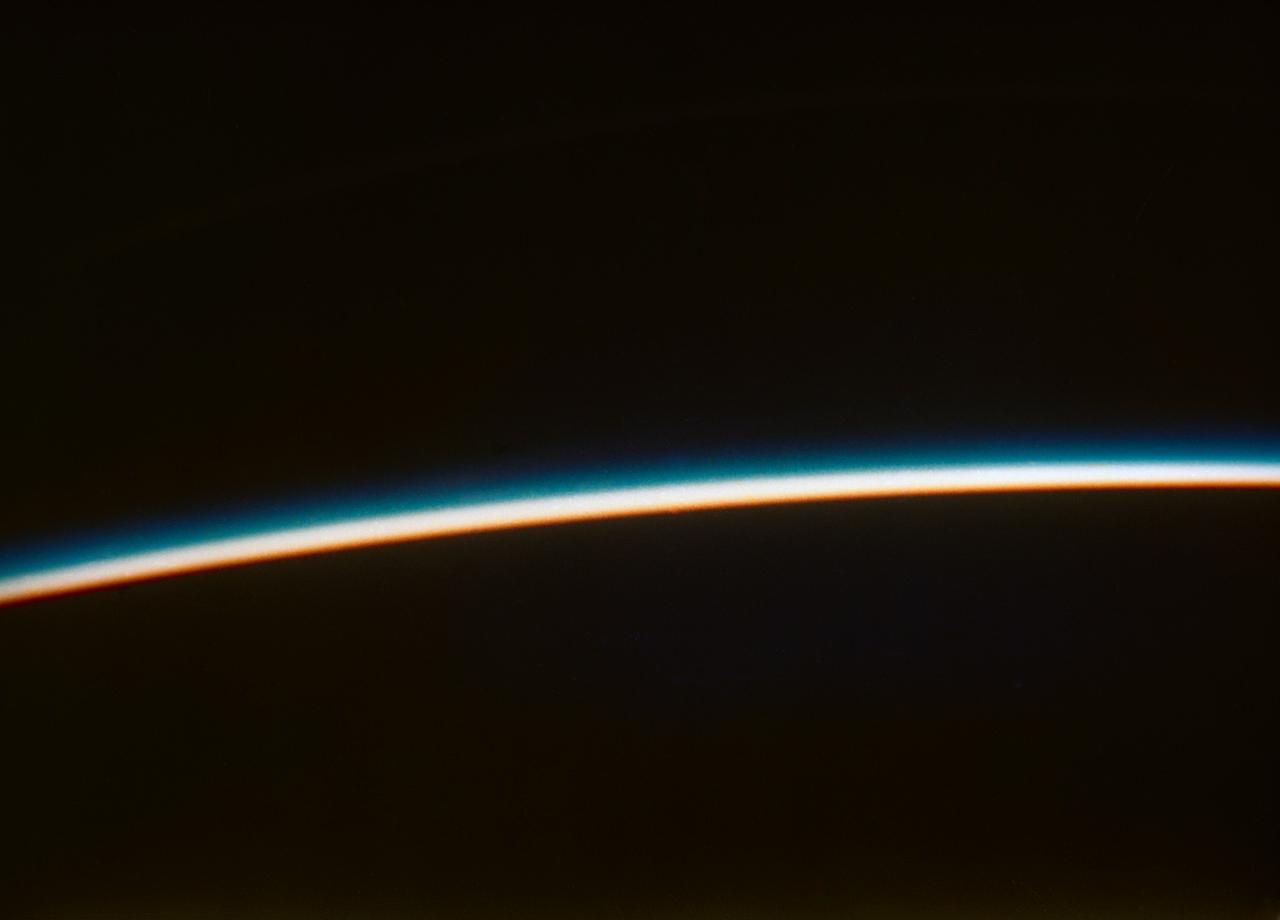
S62-06040 (20 Feb. 1962) --- Orbital sunset photographed by astronaut John H. Glenn Jr. aboard the "Friendship 7" during his Mercury-Atlas 6 (MA-6) spaceflight. Photo credit: NASA
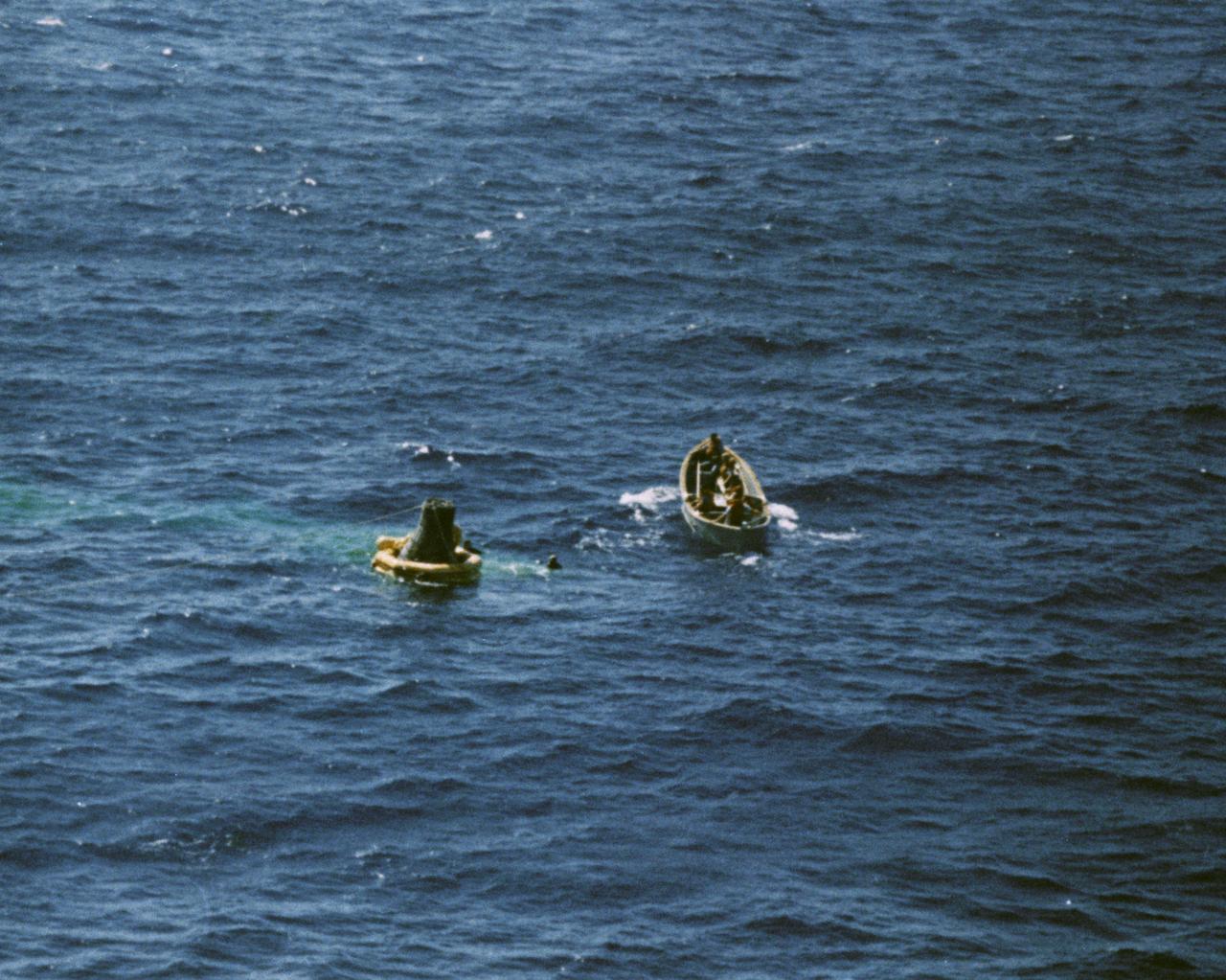
S62-09049 (3 Oct. 1962) --- Aerial view of a life boat from the USS Kearsarge, recovery ship, approaching the floating Sigma 7 capsule for the Mercury-Atlas 8 (MA-8) mission. Photo credit: NASA
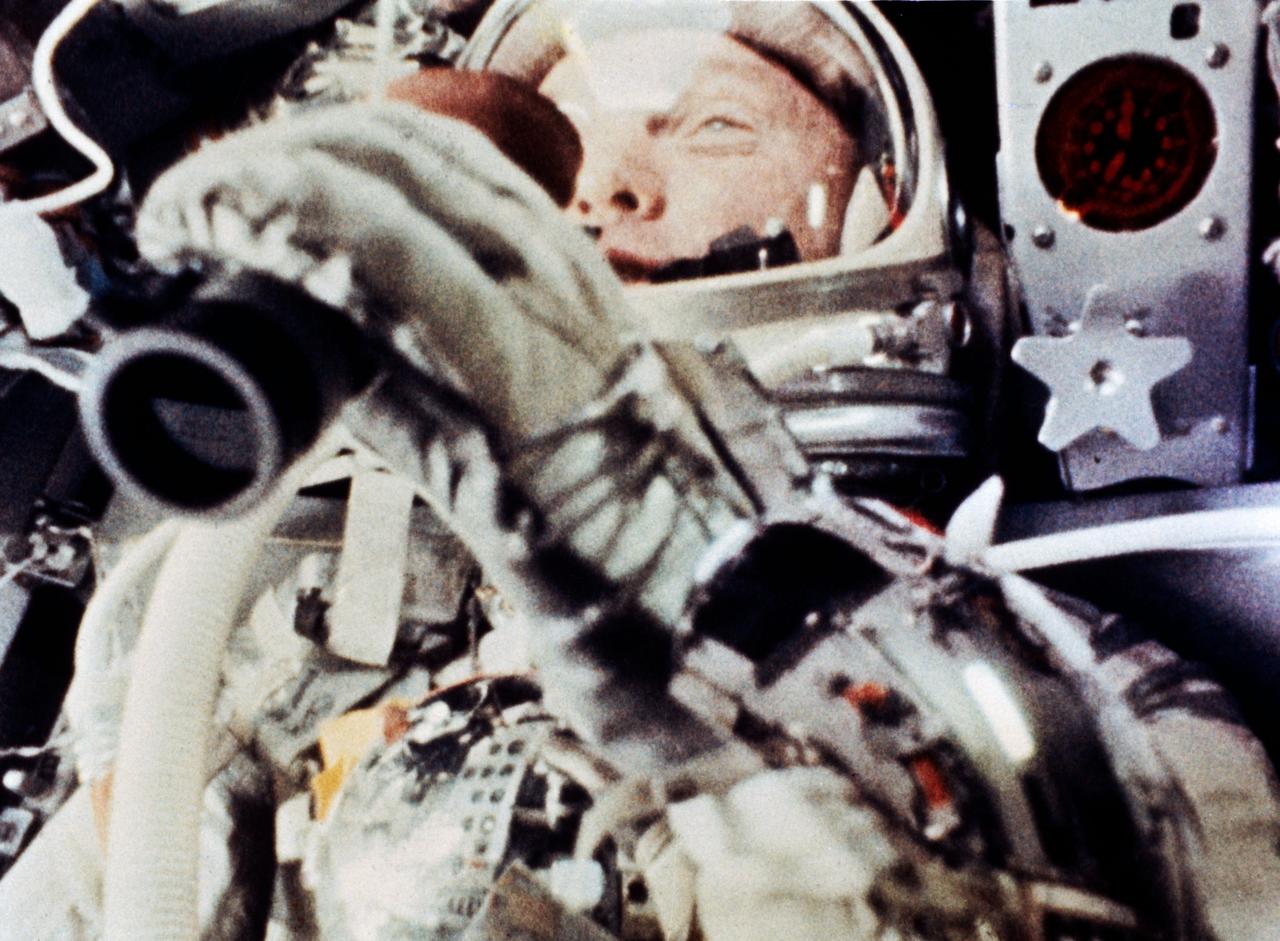
Astronaut John H. Glenn Jr. uses binoculars to view the Earth through the window of the Mercury-Atlas (MA-6) Friendship 7 capsule during the U.S.'s initial orbital flight.
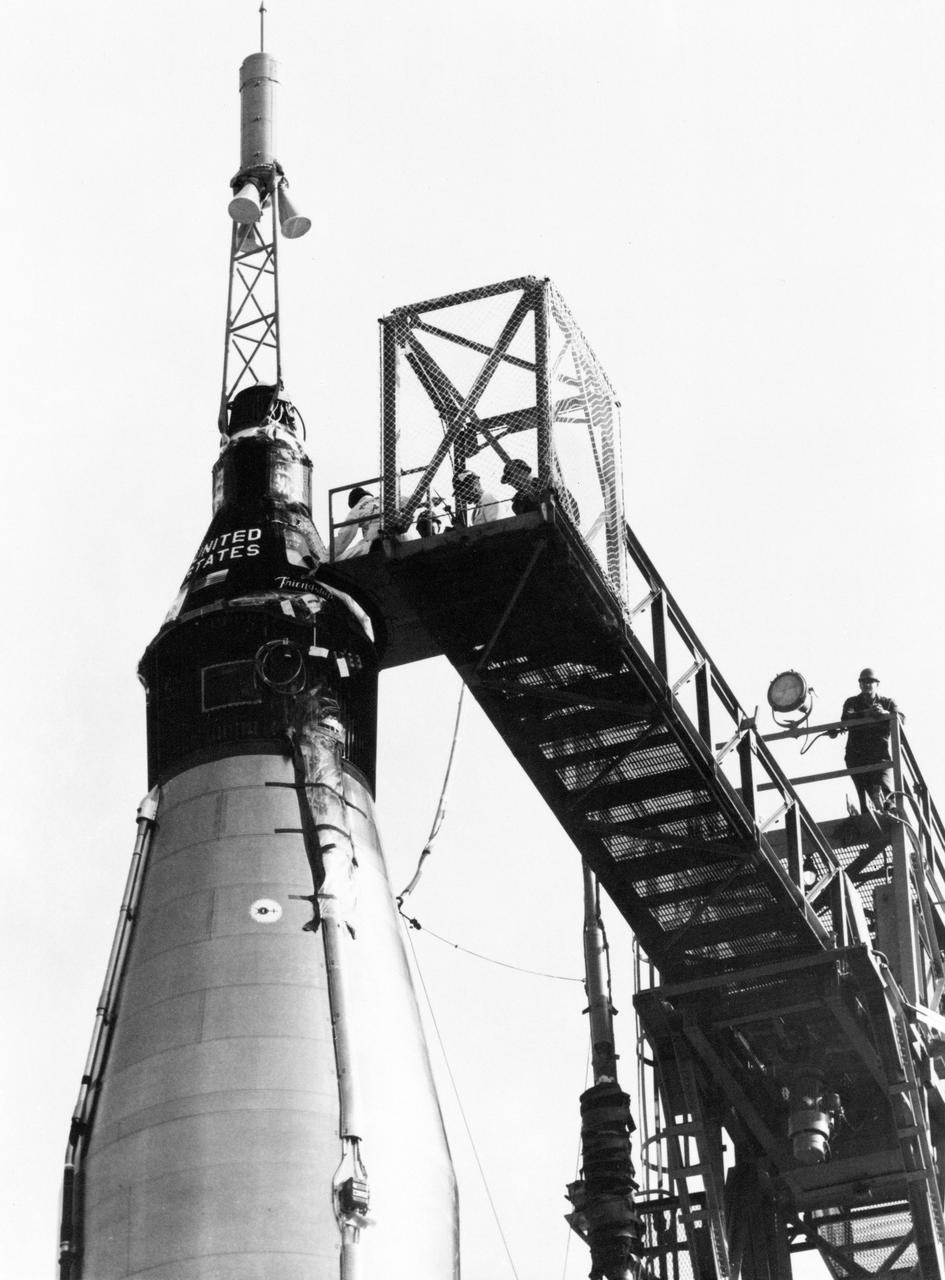
S62-00380 (20 Feb. 1962) --- Close-up view of the Mercury Atlas 6 (MA-6) Friendship 7 capsule on top of its booster rocket with catwalk still attached. Photo credit: NASA
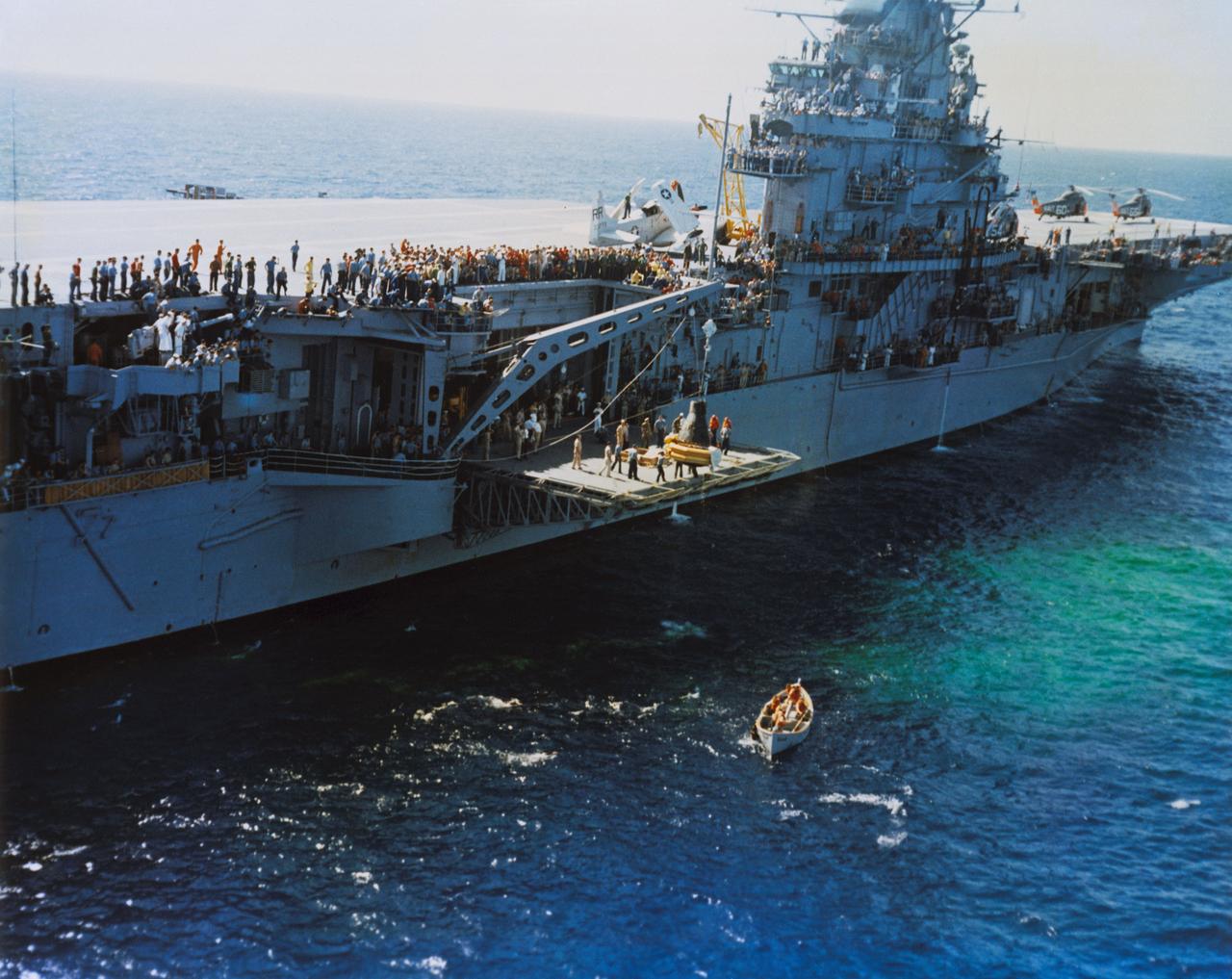
S62-09050 (3 Oct. 1962) --- Aerial view of the Mercury-Atlas 8 (MA-8) Sigma 7 capsule being lowered to the deck of the carrier USS Kearsarge. Photo credit: NASA
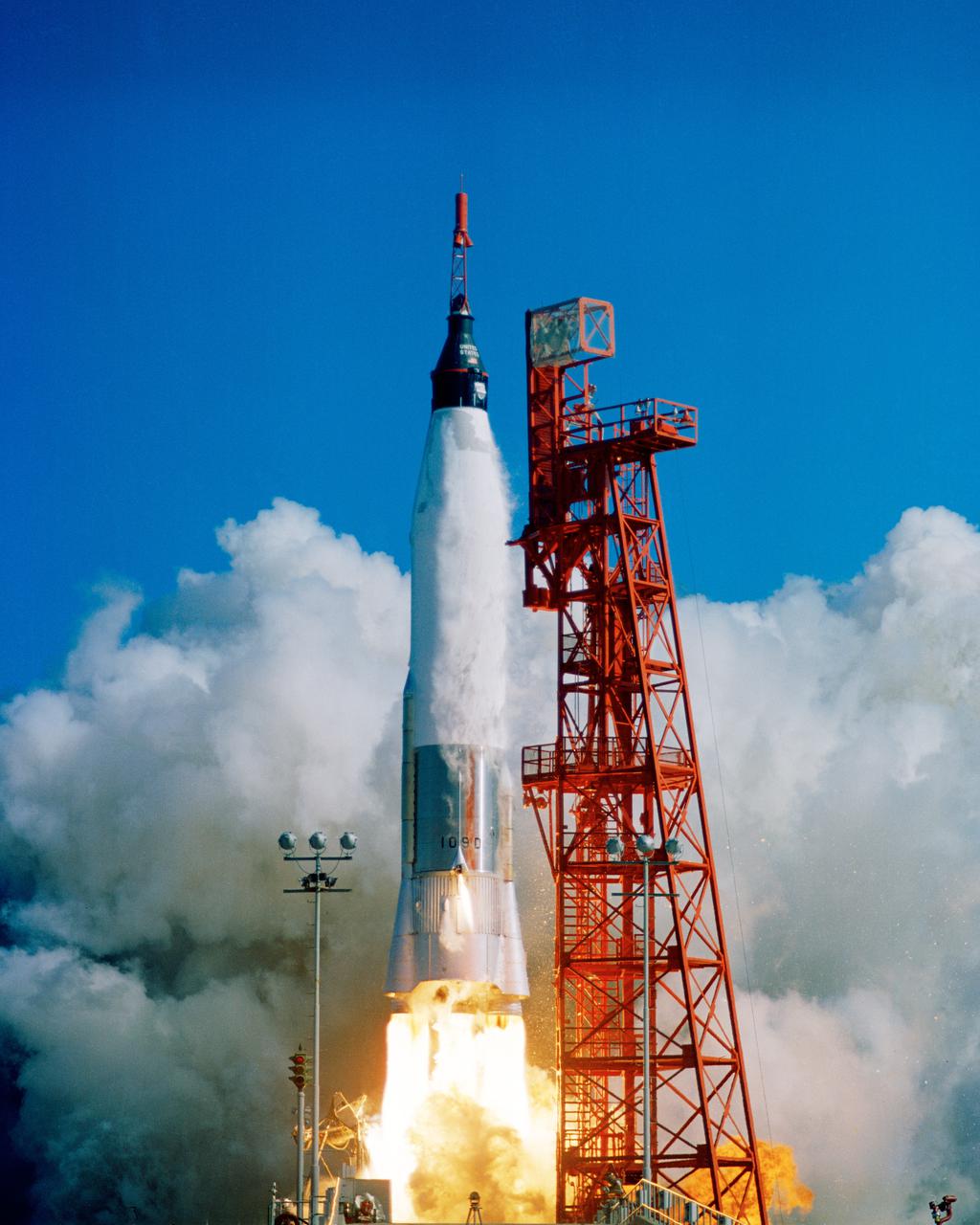
CAPE CANAVERAL, Fla. -- Launch of Friendship 7, the first manned orbital space flight. Astronaut John Glenn aboard, the Mercury-Atlas rocket is launched from Pad 14. Photo credit: NASA
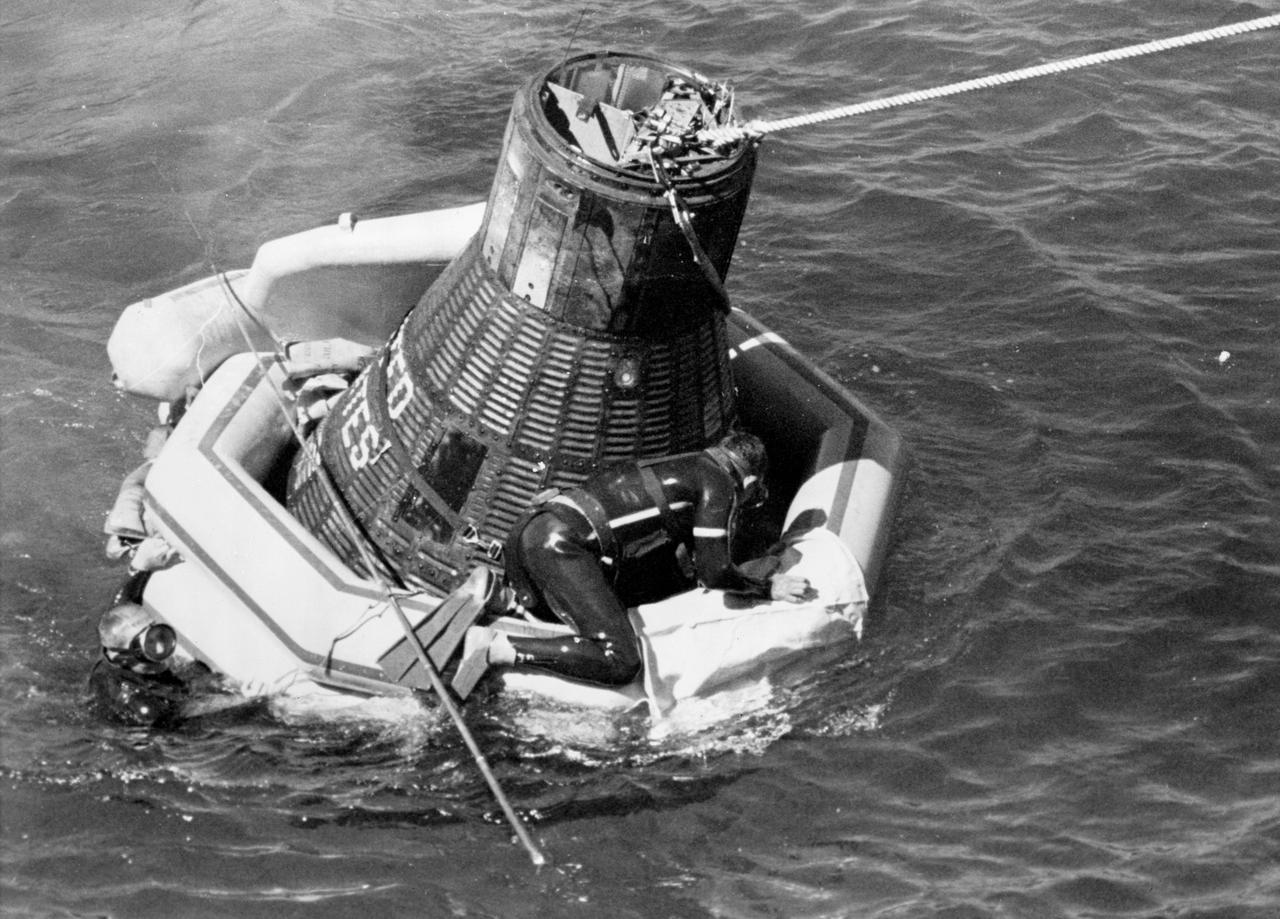
S62-061060 (3 Oct. 1962) --- Navy frogman astride Mercury-Atlas 8 caspule, the Sigma 7, floatation collar to secure tow line for recovery by USS Kearsarge. Photo credit: NASA
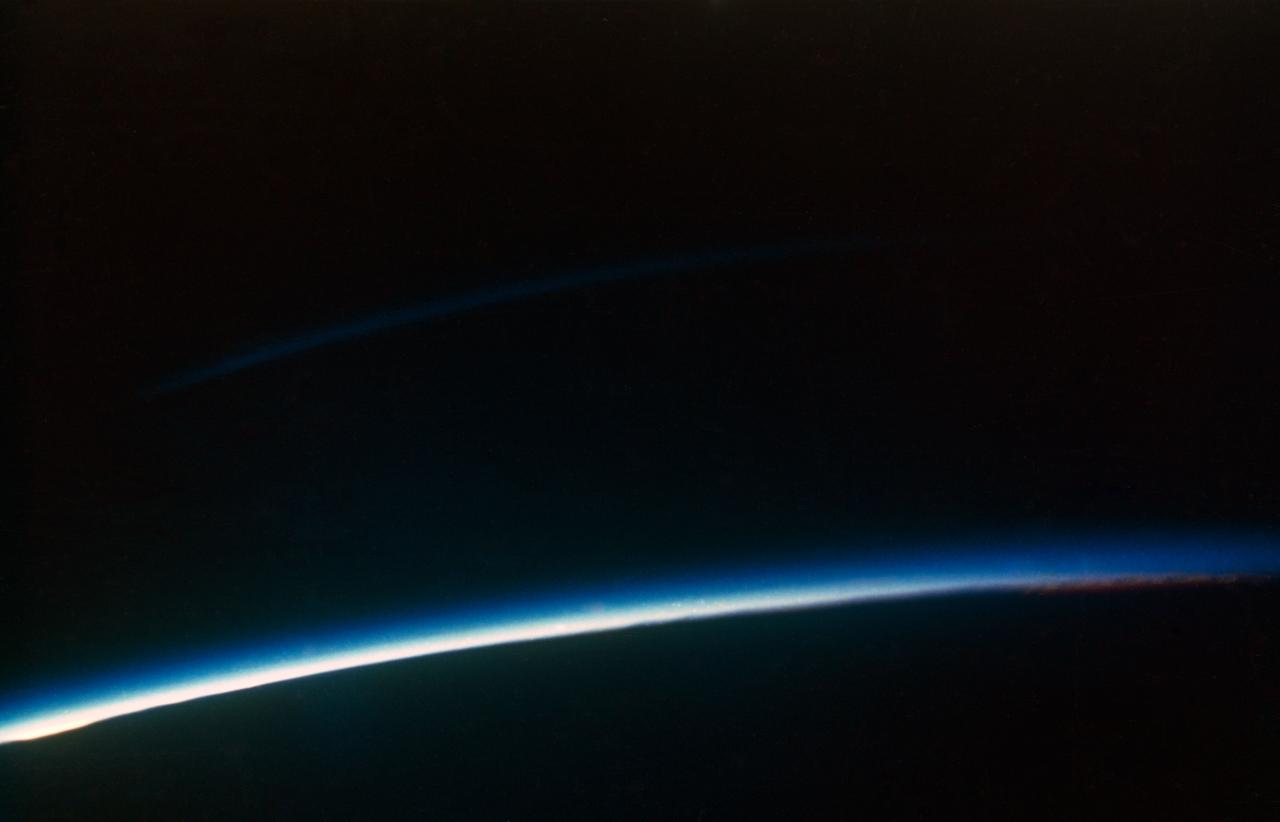
S62-06012 (20 Feb. 1962) --- Orbital sunset photographed by astronaut John H. Glenn Jr. aboard the "Friendship 7" during his Mercury-Atlas 6 (MA-6) spaceflight. Photo credit: NASA
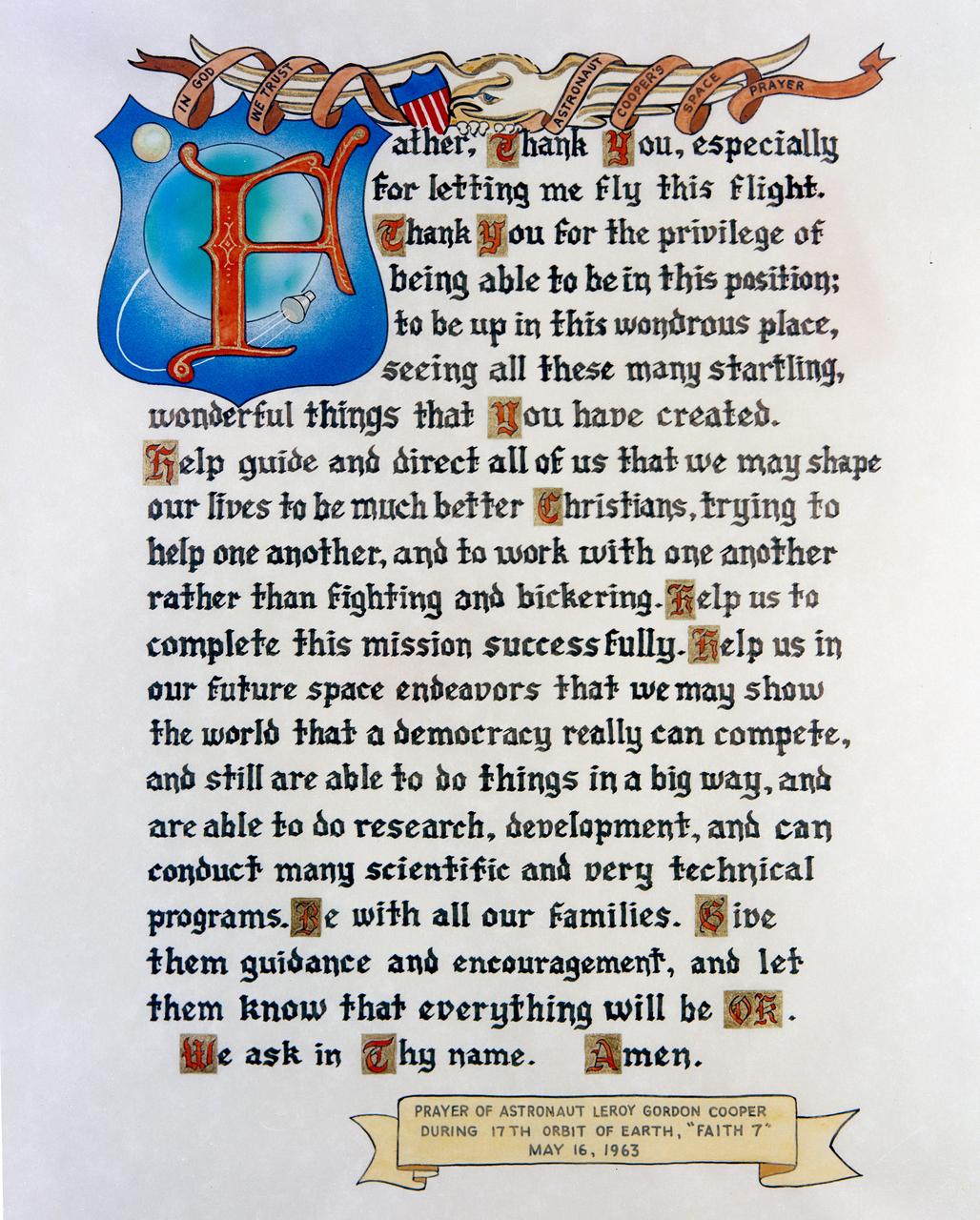
S63-08512 (1963) --- Prayer, written in calligraphy, of astronaut L. Gordon Cooper Jr., pilot of the Mercury-Atlas 9 (MA-9) mission, read during the 17th orbit of Earth in the "Faith 7". Photo credit: NASA
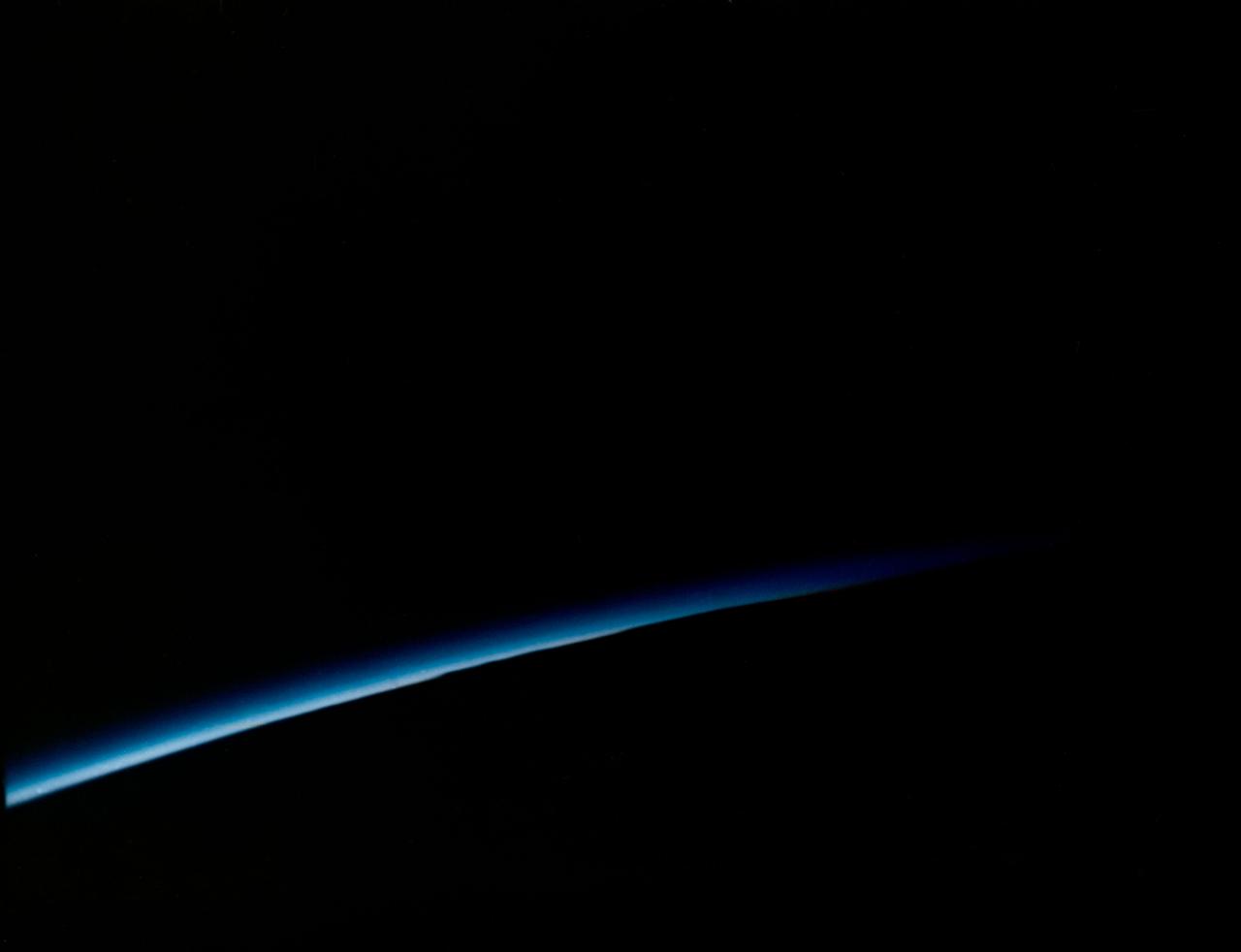
S62-06011 (20 Feb. 1962) --- Orbital sunset photographed by astronaut John H. Glenn Jr. aboard the "Friendship 7" during his Mercury-Atlas 6 (MA-6) spaceflight. Photo credit: NASA
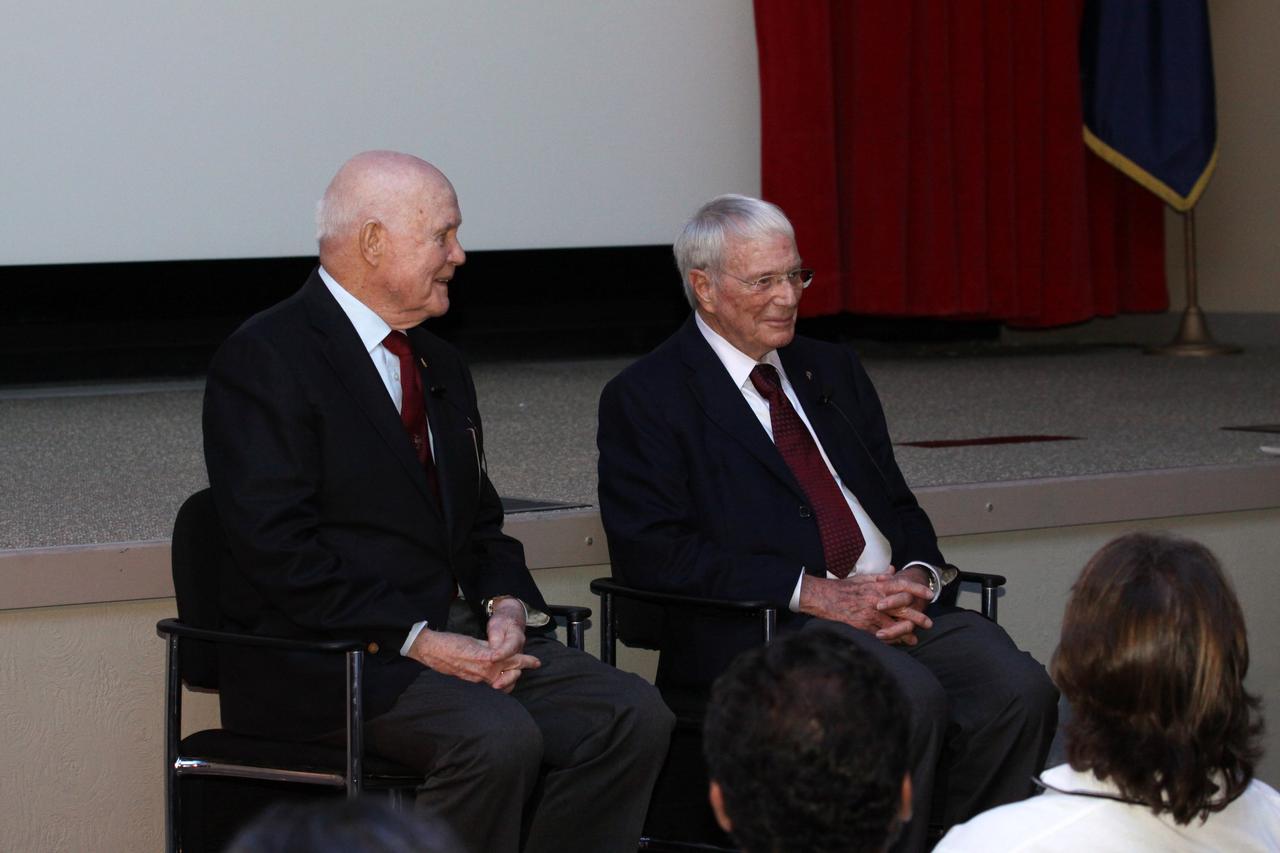
CAPE CANAVERAL, Fla. -- Mercury astronauts, John Glenn, left, and Scott Carpenter, talk to Mercury Project workers and other guests in the Astronaut Encounter Theater at the Kennedy Space Center Visitor Complex in Florida. The pair participated in 50th anniversary events at the launch site of Glenn's first orbital flight aboard NASA's Friendship 7 capsule, which launched Feb. 20, 1962, aboard an Atlas rocket. Glenn's launch aboard an Atlas rocket took with it the hopes of an entire nation and ushered in a new era of space travel that eventually led to Americans walking on the moon by the end of the 1960s. Glenn soon was followed into orbit by Carpenter, Walter Schirra and Gordon Cooper. Their fellow Mercury astronauts Alan Shepard and Virgil "Gus" Grissom flew earlier suborbital flights. Deke Slayton, a member of NASA's original Mercury 7 astronauts, was grounded by a medical condition until the Apollo-Soyuz Test Project in 1975. Photo credit: Kim Shiflett
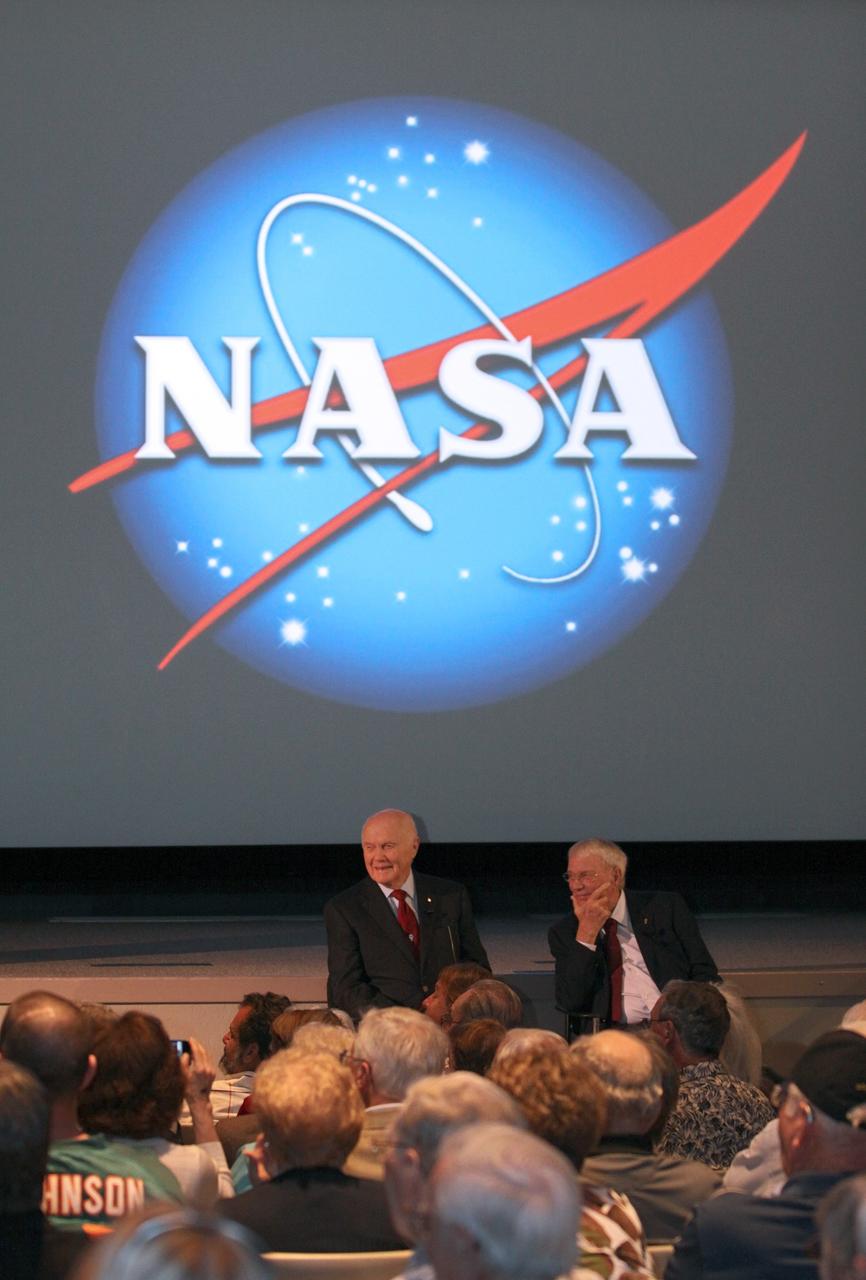
CAPE CANAVERAL, Fla. -- Mercury astronauts, John Glenn, left, and Scott Carpenter, talk to Mercury Project workers and other guests in the Astronaut Encounter Theater at the Kennedy Space Center Visitor Complex in Florida. The pair participated in 50th anniversary events at the launch site of Glenn's first orbital flight aboard NASA's Friendship 7 capsule, which launched Feb. 20, 1962, aboard an Atlas rocket. Glenn's launch aboard an Atlas rocket took with it the hopes of an entire nation and ushered in a new era of space travel that eventually led to Americans walking on the moon by the end of the 1960s. Glenn soon was followed into orbit by Carpenter, Walter Schirra and Gordon Cooper. Their fellow Mercury astronauts Alan Shepard and Virgil "Gus" Grissom flew earlier suborbital flights. Deke Slayton, a member of NASA's original Mercury 7 astronauts, was grounded by a medical condition until the Apollo-Soyuz Test Project in 1975. Photo credit: Kim Shiflett
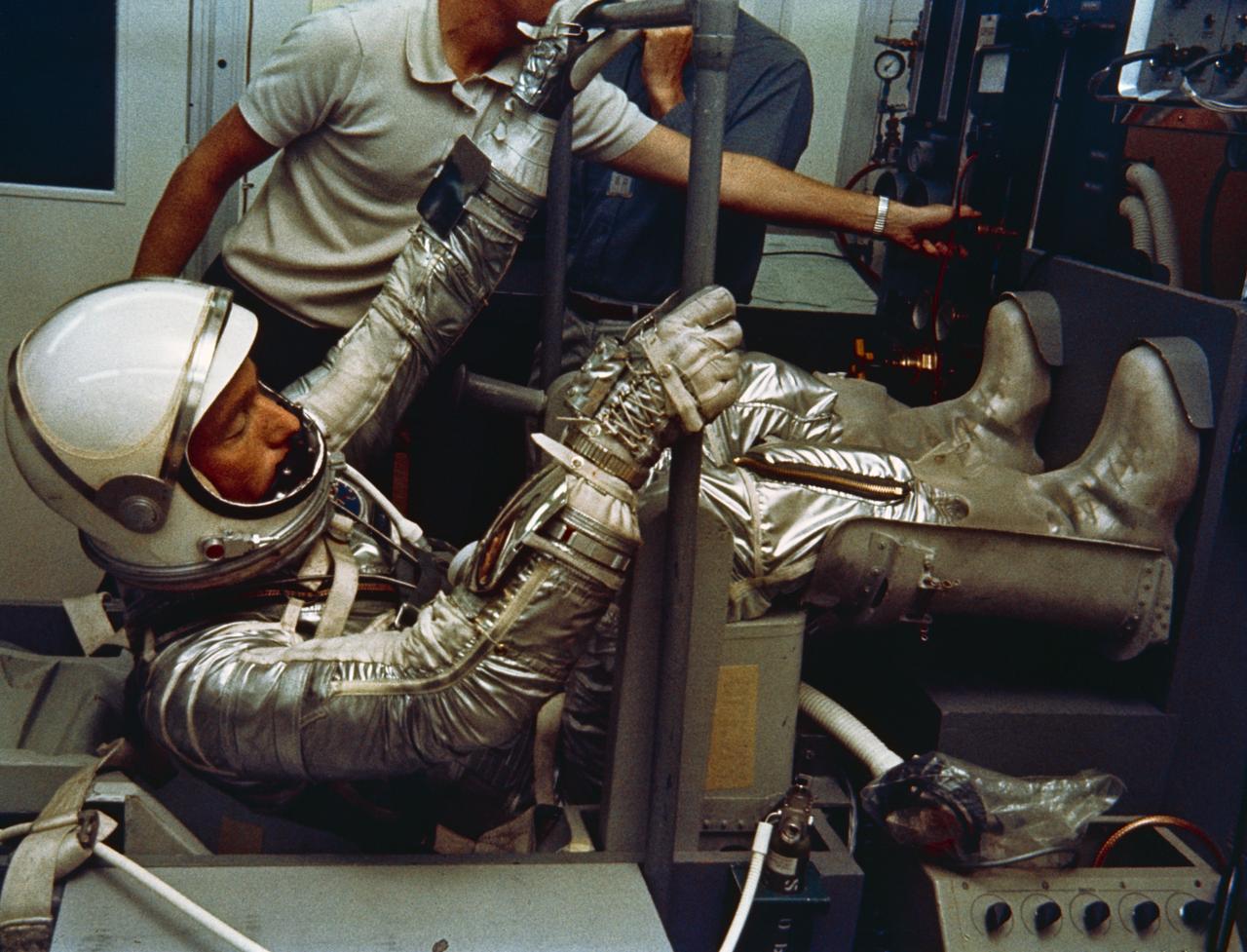
S65-24623 (May 1962) --- Astronaut M. Scott Carpenter, prime pilot for the Mercury-Atlas 7 (MA-7) flight, is seen in Hangar S crew quarters during a suiting exercise. Carpenter is seated in a mock-up of his pilot's seat while fully suited. Photo credit: NASA
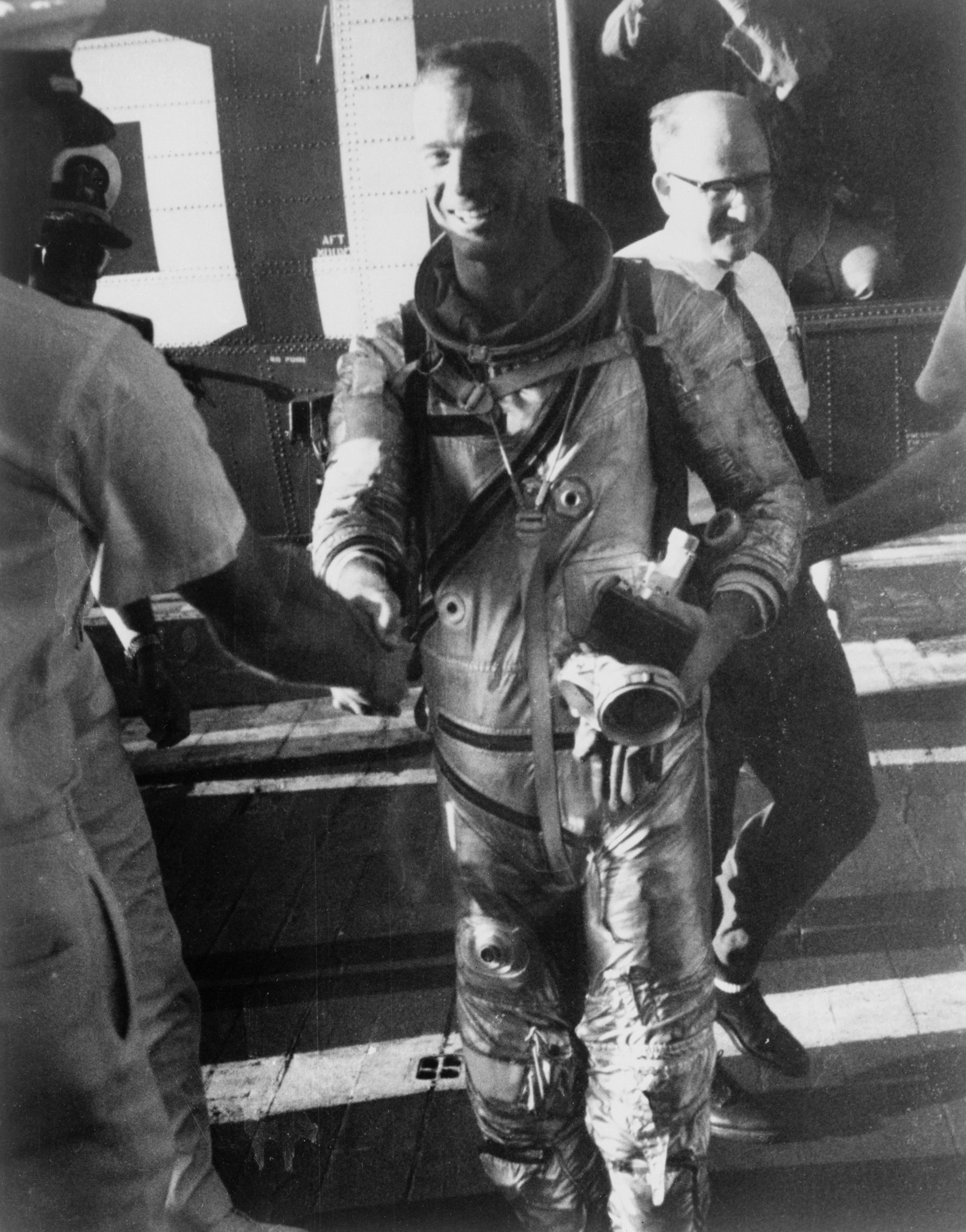
S62-04027 (24 May 1962) --- Astronaut M. Scott Carpenter, prime pilot for the Mercury-Atlas 7 (MA-7) mission, arrives aboard the prime recovery ship, USS Intrepid, during recovery operations following his Earth-orbital mission. Photo credit: NASA
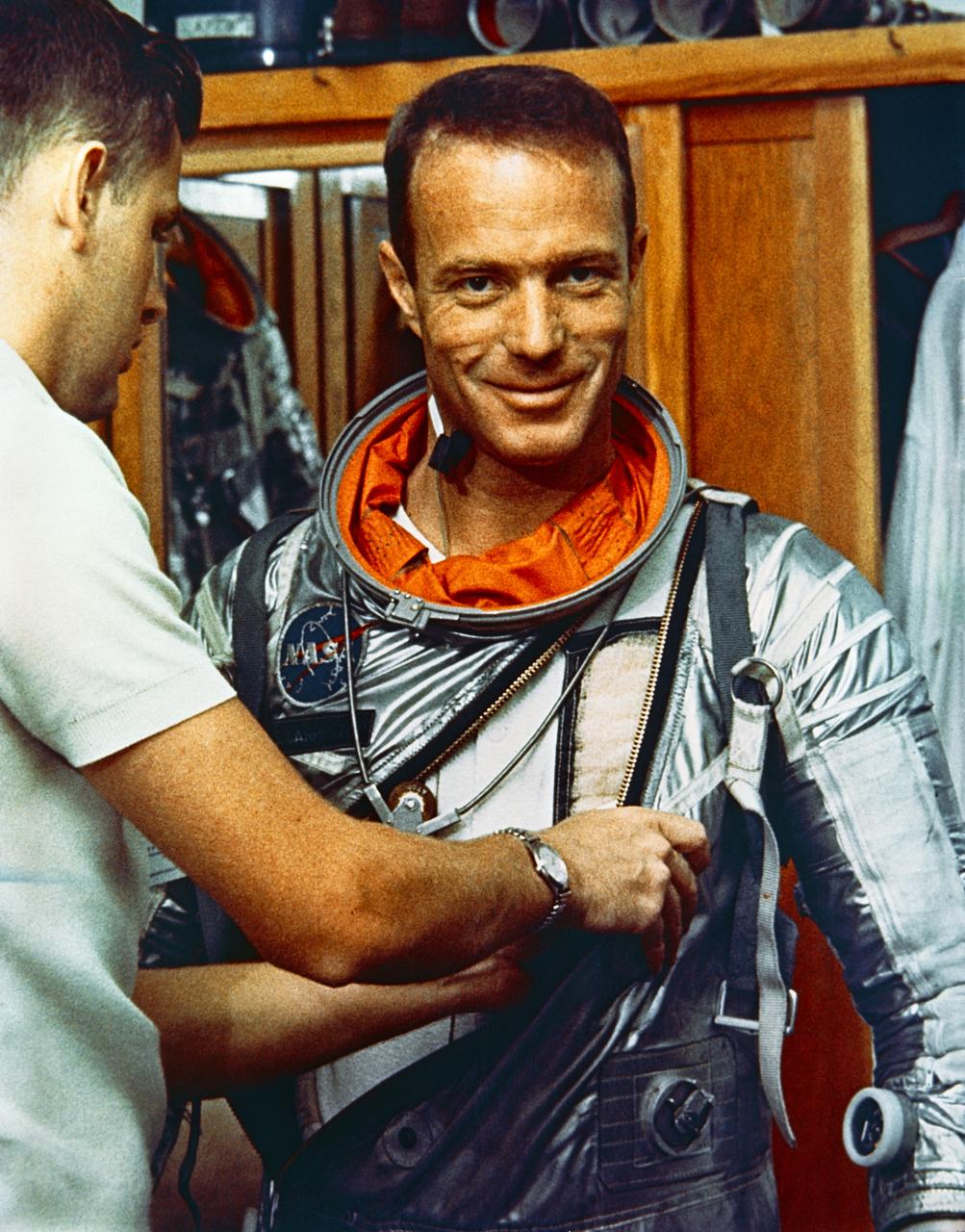
S65-24624 (22 May 1962) --- Astronaut M. Scott Carpenter, prime pilot for the Mercury-Atlas 7 (MA-7) flight, is seen in Hangar S crew quarters during a suiting exercise. He smiles at camera as suiting technician Al Rochford adjusts his suit. Photo credit: NASA
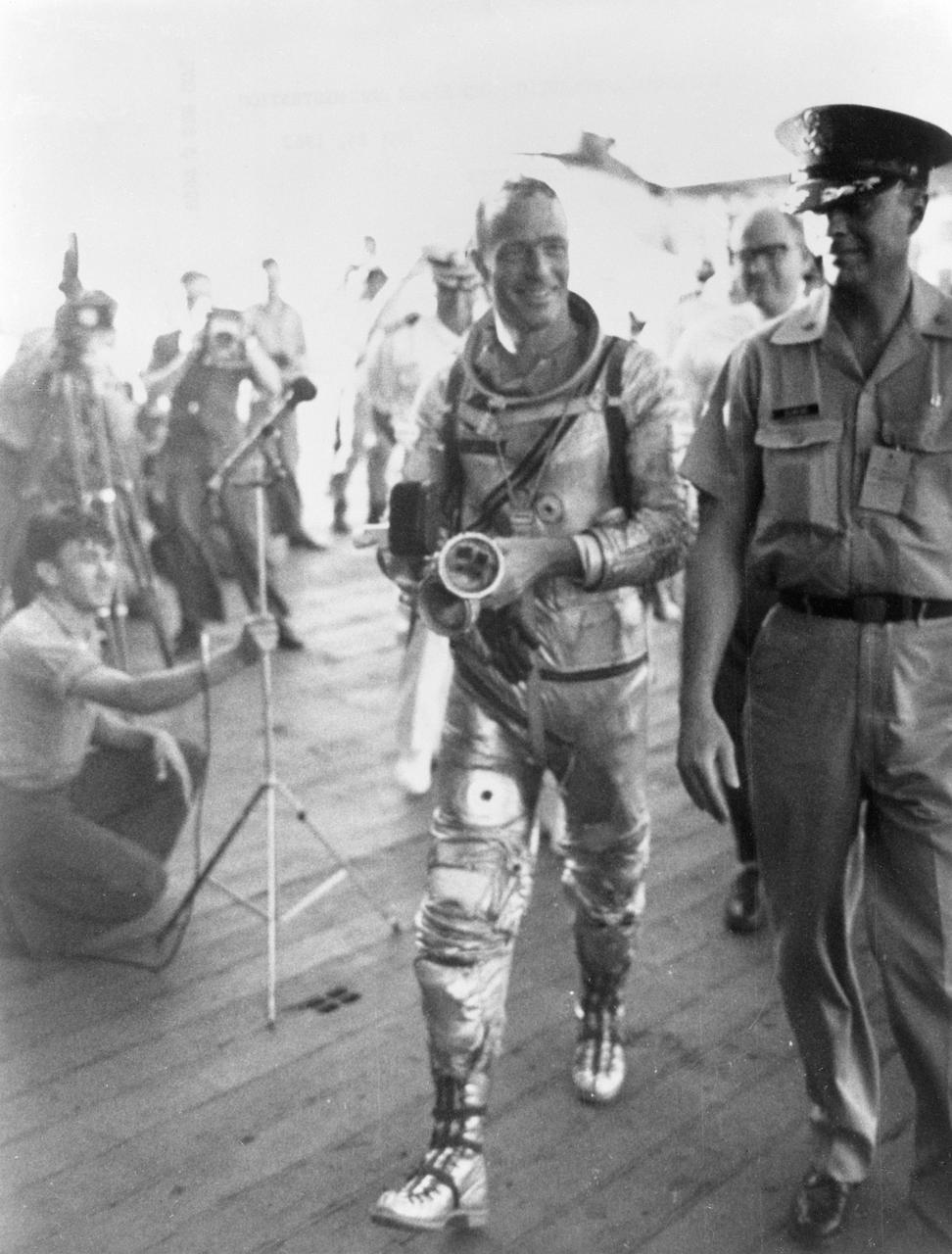
S62-04058 (24 May 1962) --- Astronaut M. Scott Carpenter, prime pilot for the Mercury-Atlas 7 (MA-7) mission, arrives aboard the prime recovery ship, USS Intrepid, during recovery operations following his Earth-orbital mission. Photo credit: NASA
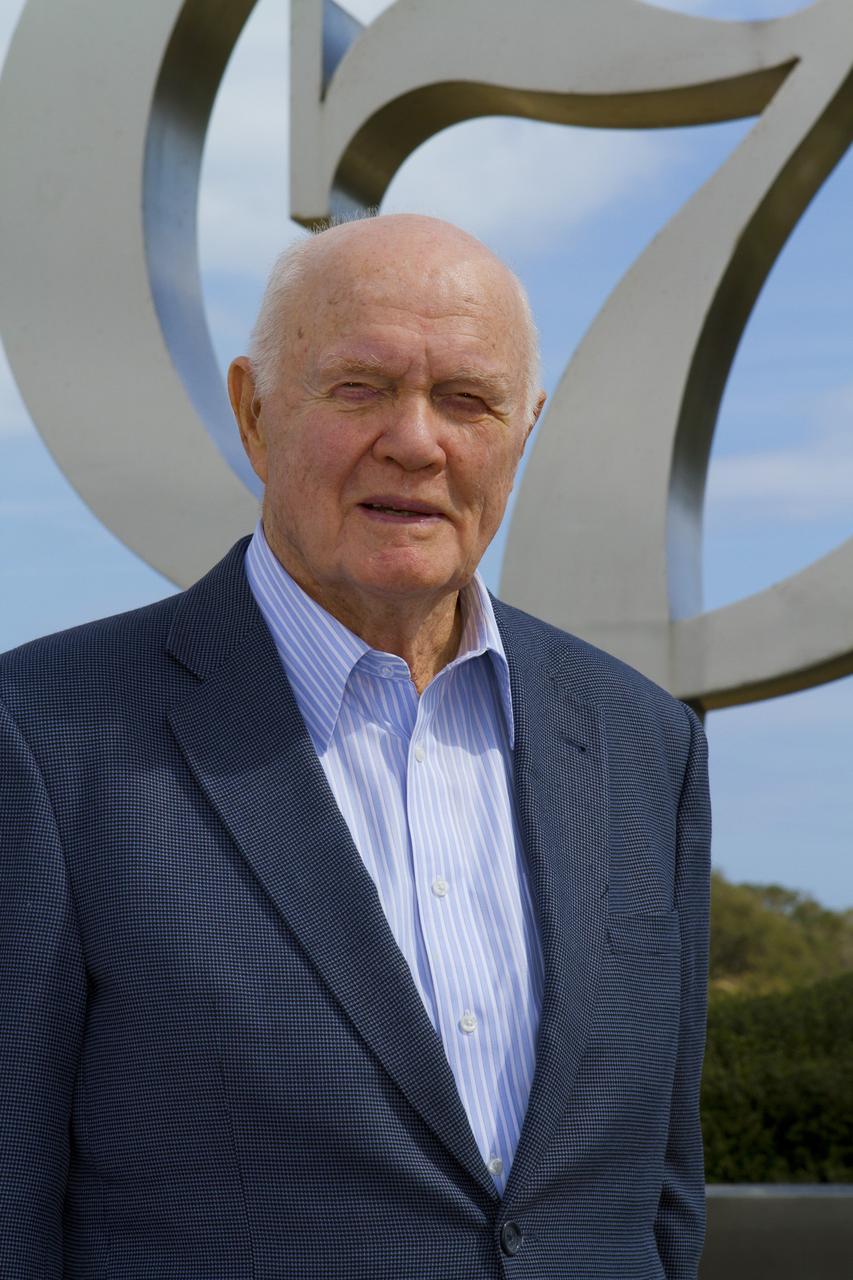
CAPE CANAVERAL, Fla. -- Mercury astronaut John Glenn poses for a photo in front of the Project Mercury monument at Launch Complex-14 LC-14 at Cape Canaveral Air Force Station in Florida. During events at the Cape and NASA's Kennedy Space Center, Glenn is marking the 50th anniversary of being the first American astronaut to orbit the Earth inside the Friendship 7 capsule on Feb. 20, 1962. Glenn's launch aboard an Atlas rocket took with it the hopes of an entire nation and ushered in a new era of space travel that eventually led to Americans walking on the moon by the end of the 1960s. Glenn soon was followed into orbit by Scott Carpenter, Walter Schirra and Gordon Cooper. Their fellow Mercury astronauts Alan Shepard and Virgil "Gus" Grissom flew earlier suborbital flights. Deke Slayton, a member of NASA's original Mercury 7 astronauts, was grounded by a medical condition until the Apollo-Soyuz Test Project in 1975. Photo credit: Kim Shiflett
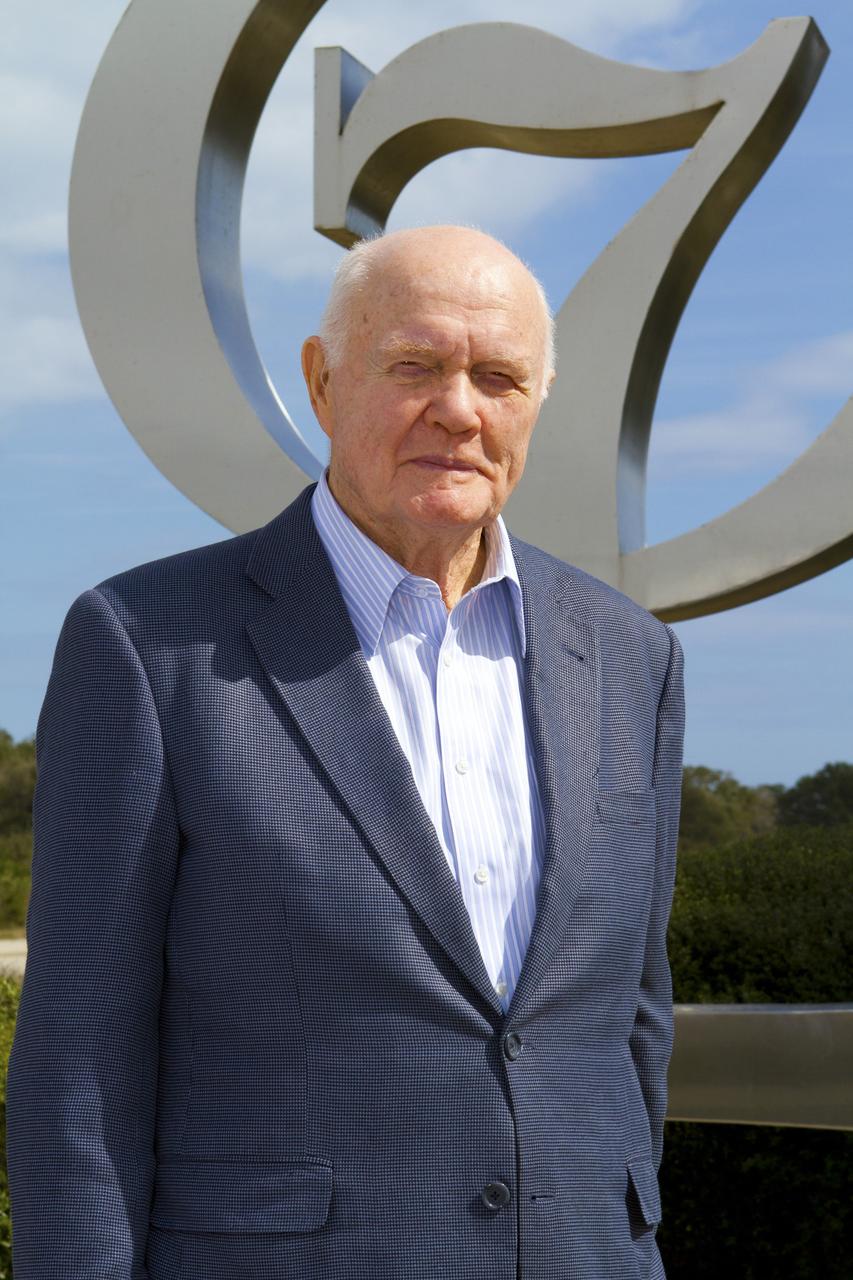
CAPE CANAVERAL, Fla. -- Mercury astronaut John Glenn poses for a photo in front of the Project Mercury monument at Launch Complex-14 LC-14 at Cape Canaveral Air Force Station in Florida. During events at the Cape and NASA's Kennedy Space Center, Glenn is marking the 50th anniversary of being the first American astronaut to orbit the Earth inside the Friendship 7 capsule on Feb. 20, 1962. Glenn's launch aboard an Atlas rocket took with it the hopes of an entire nation and ushered in a new era of space travel that eventually led to Americans walking on the moon by the end of the 1960s. Glenn soon was followed into orbit by Scott Carpenter, Walter Schirra and Gordon Cooper. Their fellow Mercury astronauts Alan Shepard and Virgil "Gus" Grissom flew earlier suborbital flights. Deke Slayton, a member of NASA's original Mercury 7 astronauts, was grounded by a medical condition until the Apollo-Soyuz Test Project in 1975. Photo credit: Kim Shiflett
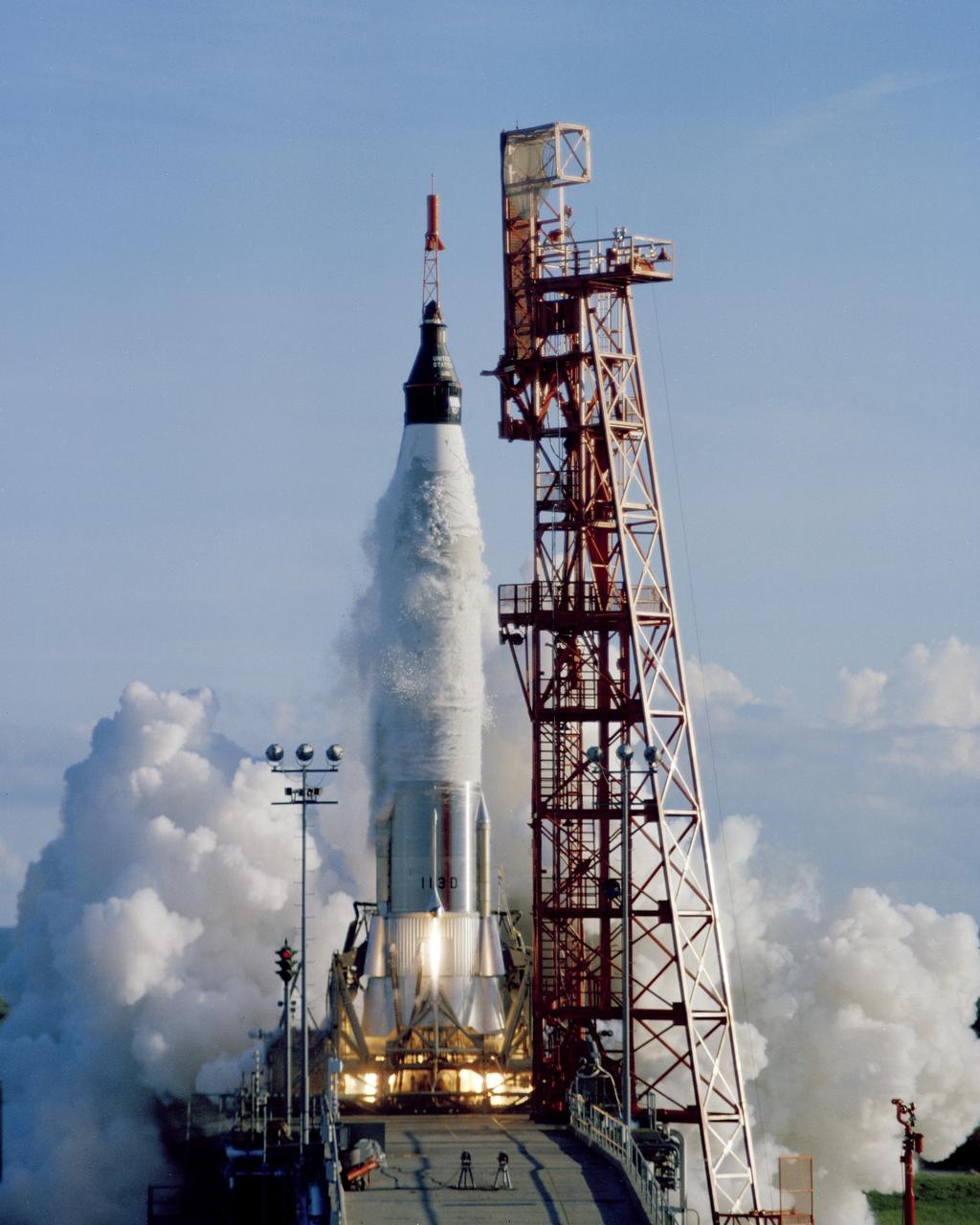
CAPE CANAVERAL, Fla. -- An Atlas launch vehicle lifts off with the Mercury spacecraft Sigma 7 atop with astronaut Walter M. Schirra Jr. aboard. The fifth American into space and the third to orbit the Earth plans to circle the globe six time prior to a planned splashdown in the Pacific Ocean. Photo Credit: NASA
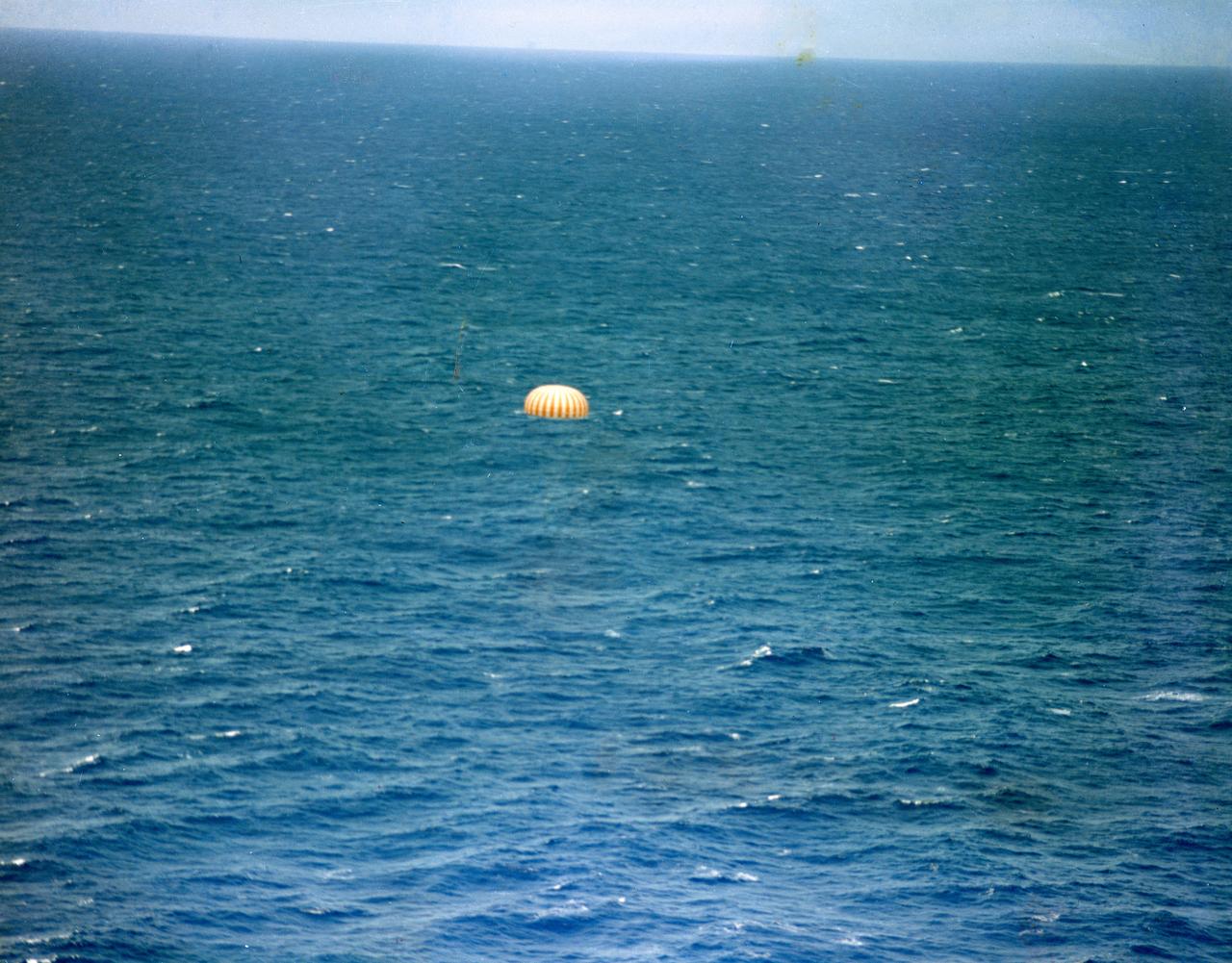
S63-09630 (16 May 1963) --- The Mercury-Atlas 9 (MA-9) "Faith 7" spacecraft, with astronaut L. Gordon Cooper Jr. aboard, nears splashdown in the Pacific Ocean to conclude a 22-orbit mission lasting 34 hours and 20.5 minutes. The capsule's parachute is fully deployed in this view. Photo credit: NASA
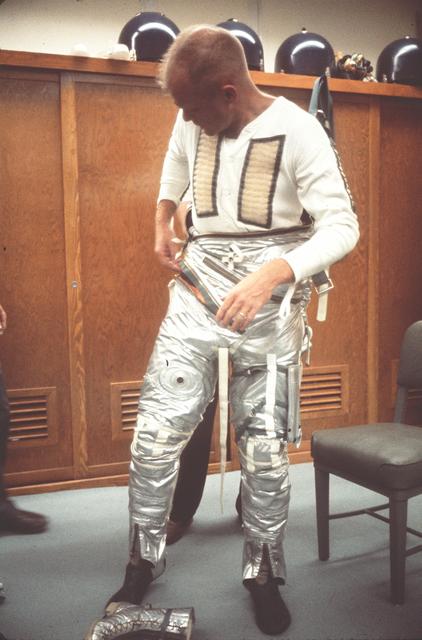
S64-14848 (20 Feb. 1962) --- Astronaut John H. Glenn Jr. dons spacesuit during preflight operations at Cape Canaveral, Feb. 20, 1962, the day he flew his Mercury-Atlas 6 spacecraft, Friendship 7, into orbital flight around Earth. Photo credit: NASA
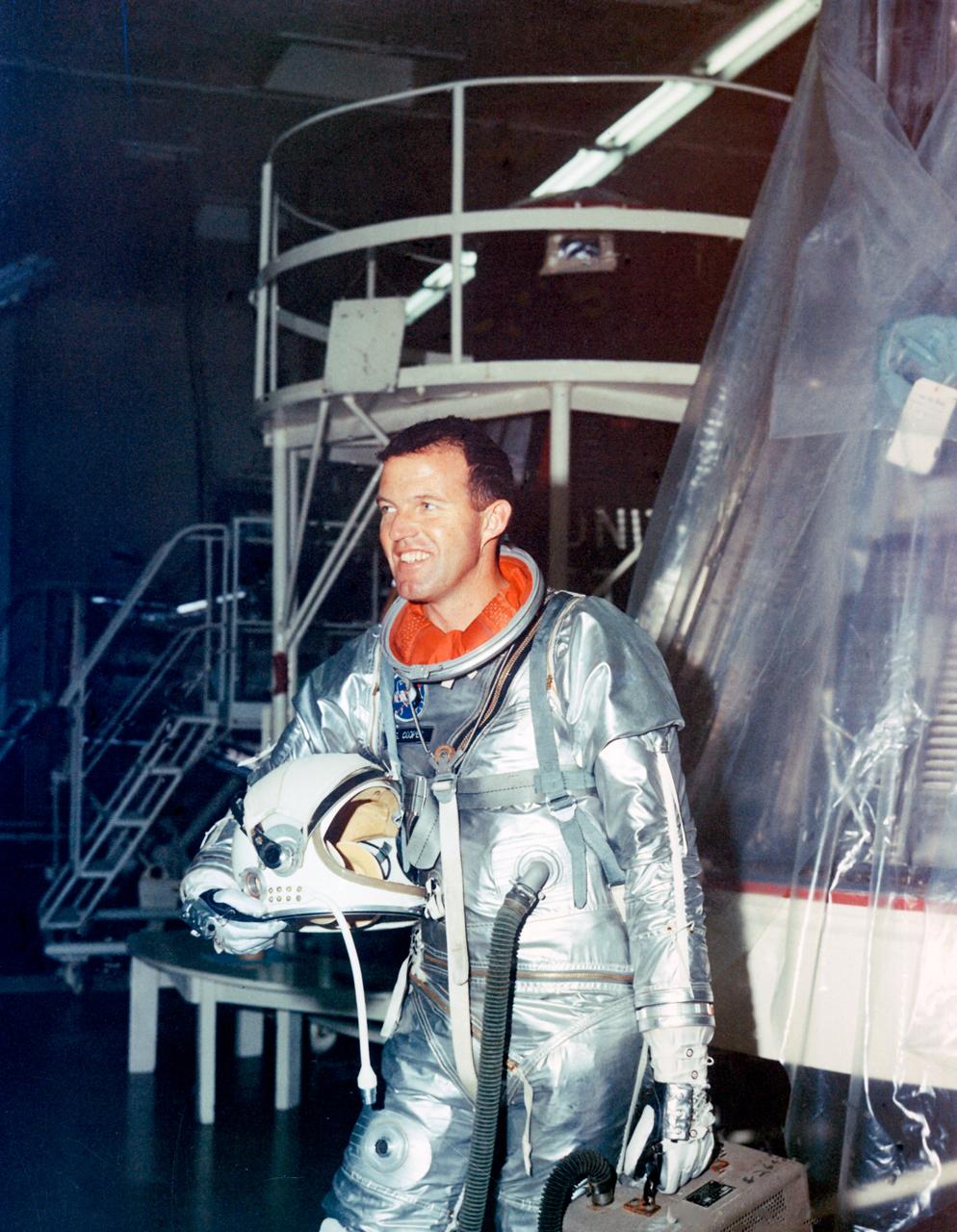
S63-01922 (1963) --- Astronaut L. Gordon Cooper Jr., pilot for the Mercury-Atlas 9 (MA-9) mission, stands fully suited beside his spacecraft during preflight testing. Cooper named his spacecraft the Faith 7. Photo credit: NASA
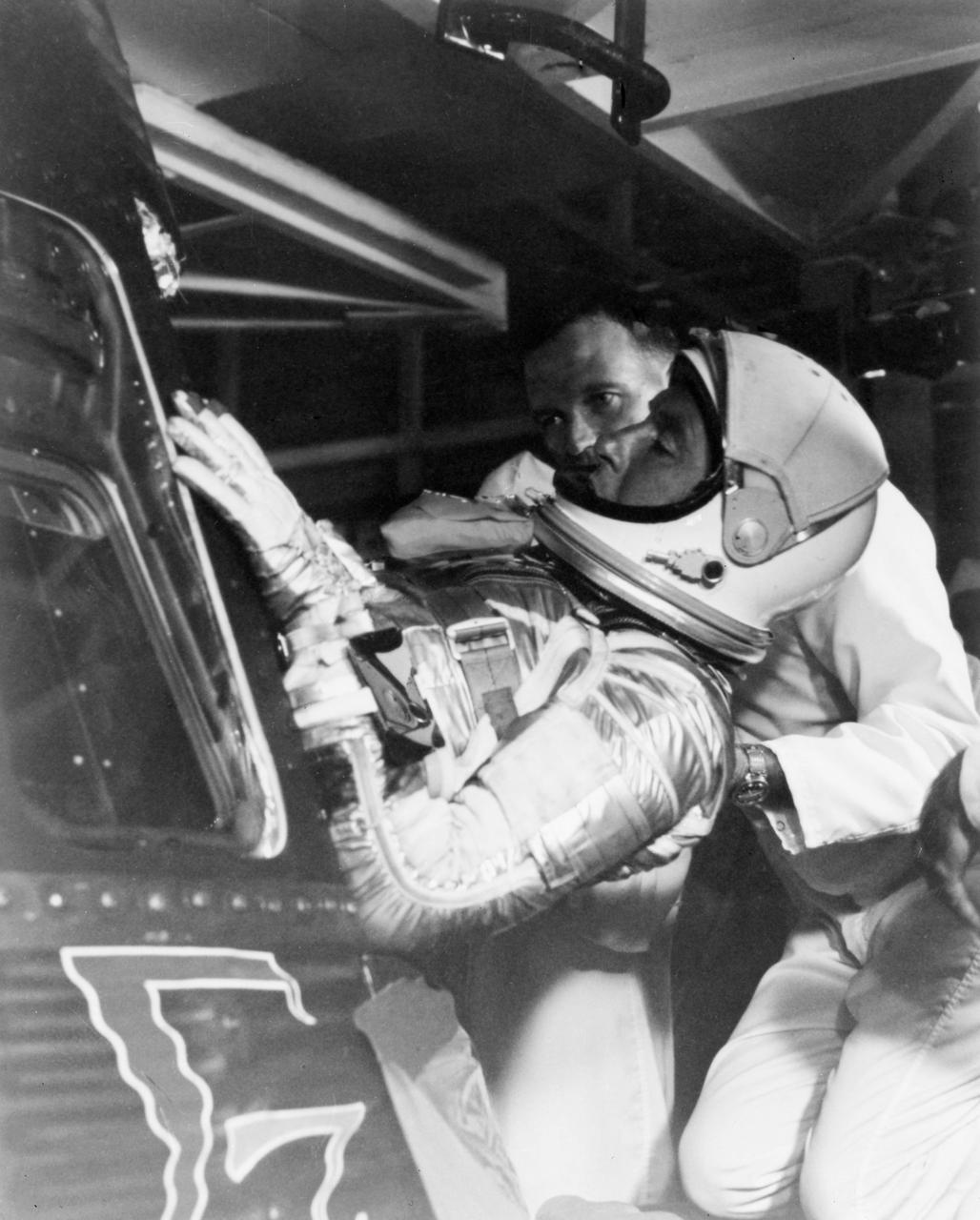
S62-06002 (3 Oct. 1962) --- Astronaut Walter M. Schirra Jr., pilot of the Mercury-Atlas 8 (MA-8) Earth-orbital spaceflight, is assisted by backup pilot L. Gordon Cooper into his Sigma 7 spacecraft for the begining of the MA-8 mission. Photo credit: NASA
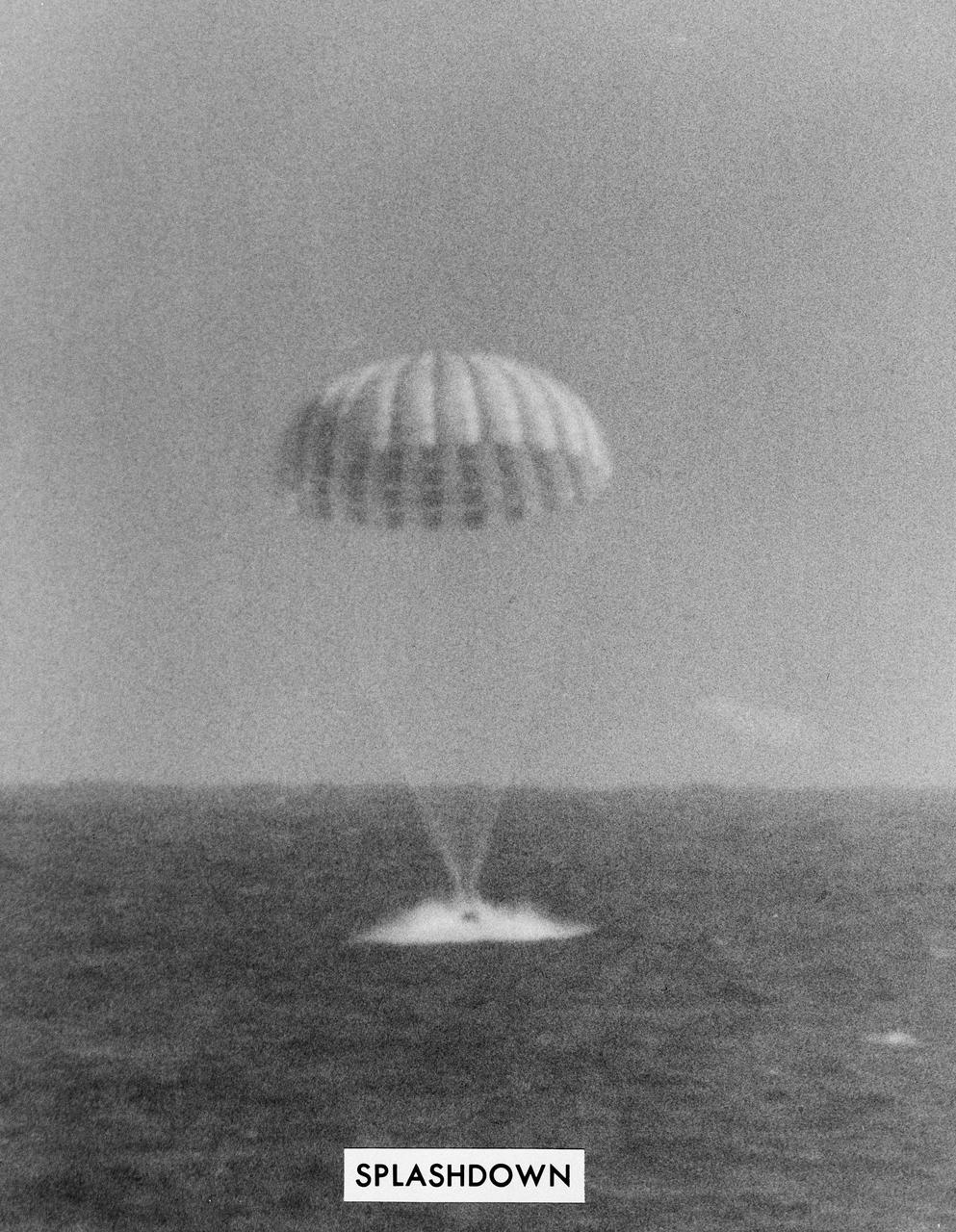
S63-00693 (3 Oct. 1962) --- Landing with parachute extended of astronaut Walter M. Schirra's Mercury-Atlas 8 (MA-8) capsule, called the Sigma 7, after a world orbital flight. Photo is labeled "Splashdown". Photo credit: NASA
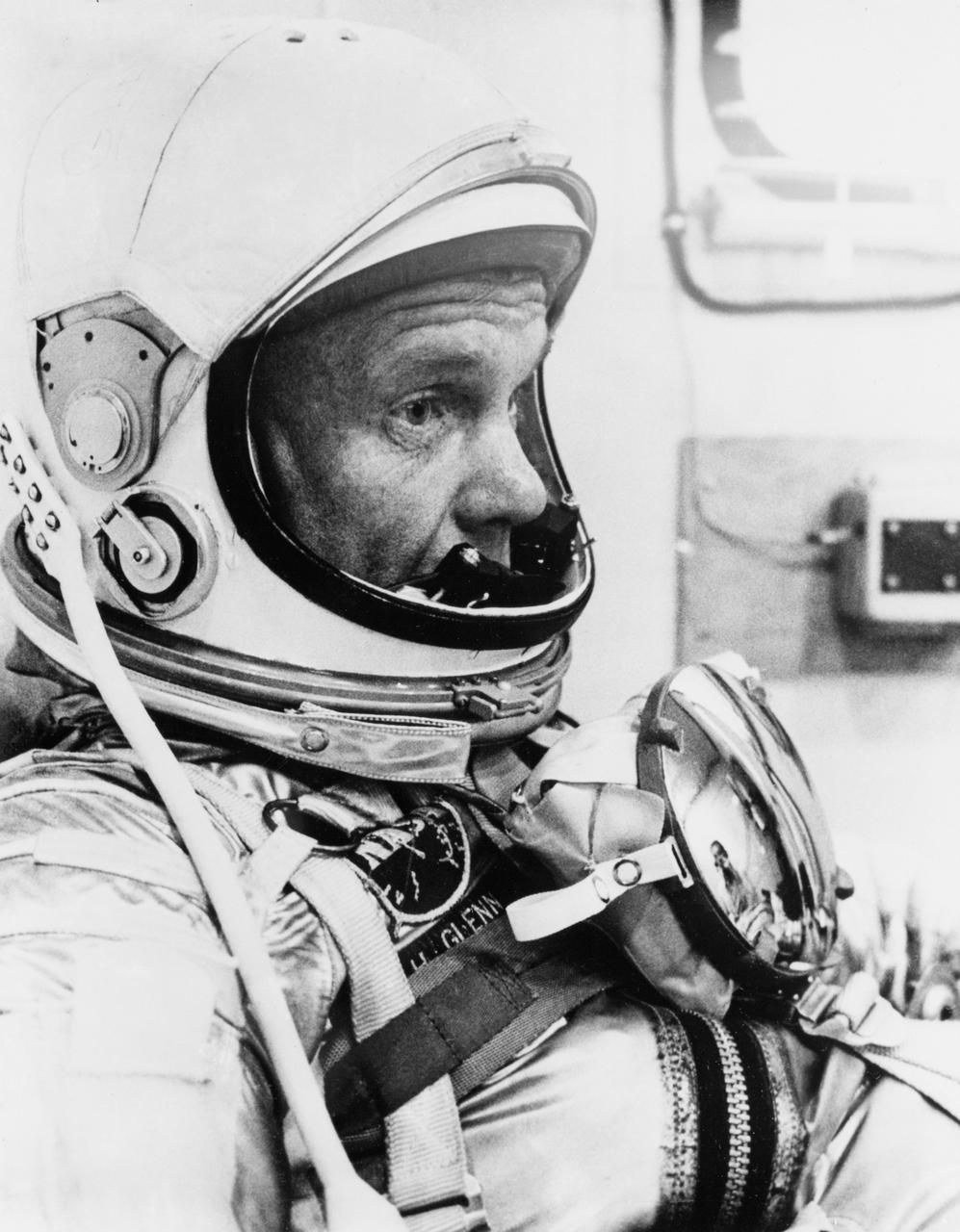
S62-00965 (20 Feb. 1962) --- Astronaut John H. Glenn Jr., finishes suiting up, and prepares for the launch of his Mercury-Atlas 6 (MA-6) spacecraft. The MA-6 ?Friendship 7? mission marks America's first manned Earth-orbiting spaceflight. Photo credit: NASA
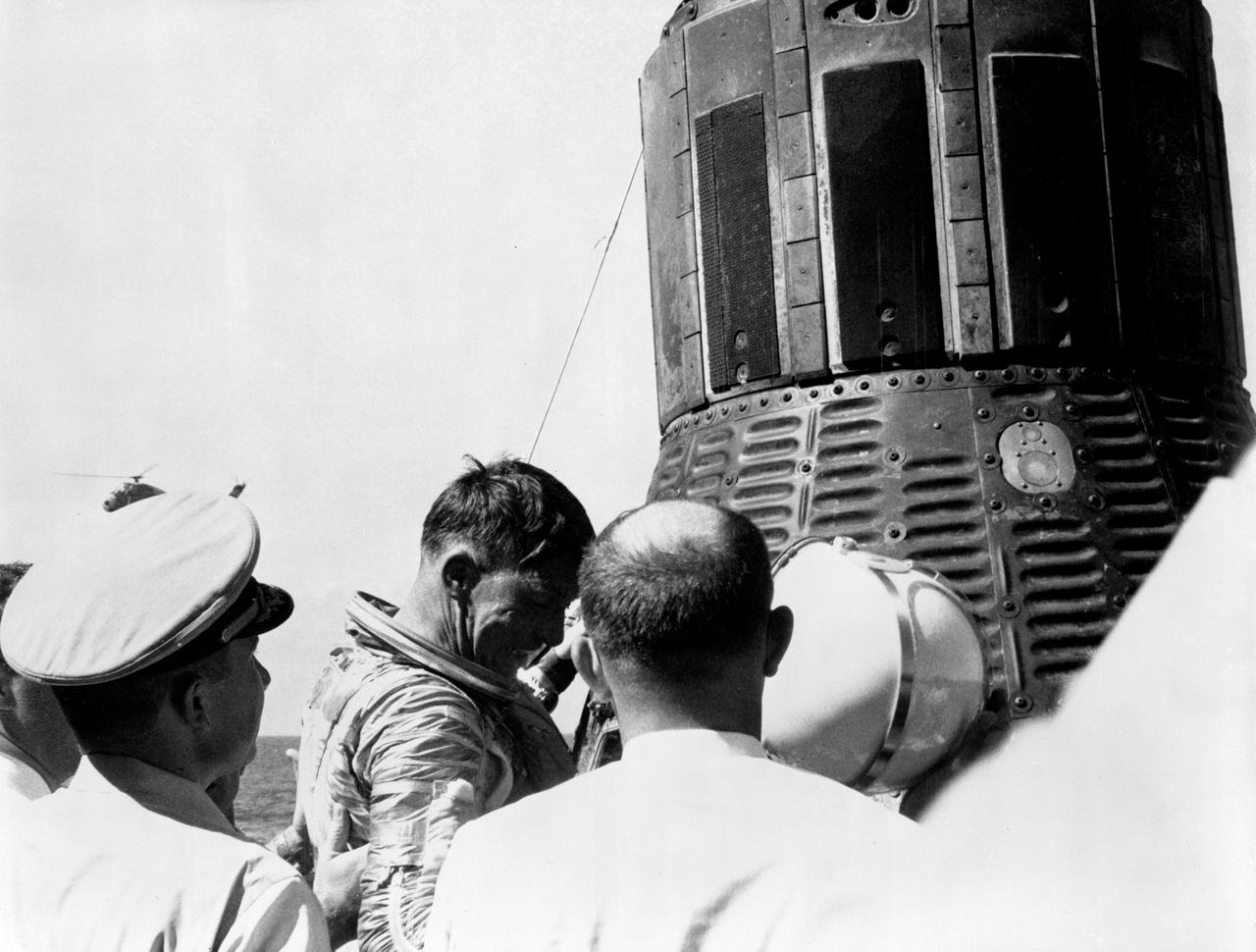
S62-06148 (3 Oct. 1962) --- Close-up view of Mercury-Atlas 8 (MA-8) astronaut Walter Schirra being removed from his Sigma 7 capsule by Navy personnel. Schirra has just removed his helmet. Photo credit: NASA

S61-04546 (1961) --- Astronaut John H. Glenn Jr., pilot of the Mercury-Atlas 6 (MA-6) "Friendship 7" mission, takes part in spacecraft systems briefing during preflight activity at Cape Canaveral, Florida. Photo credit: NASA
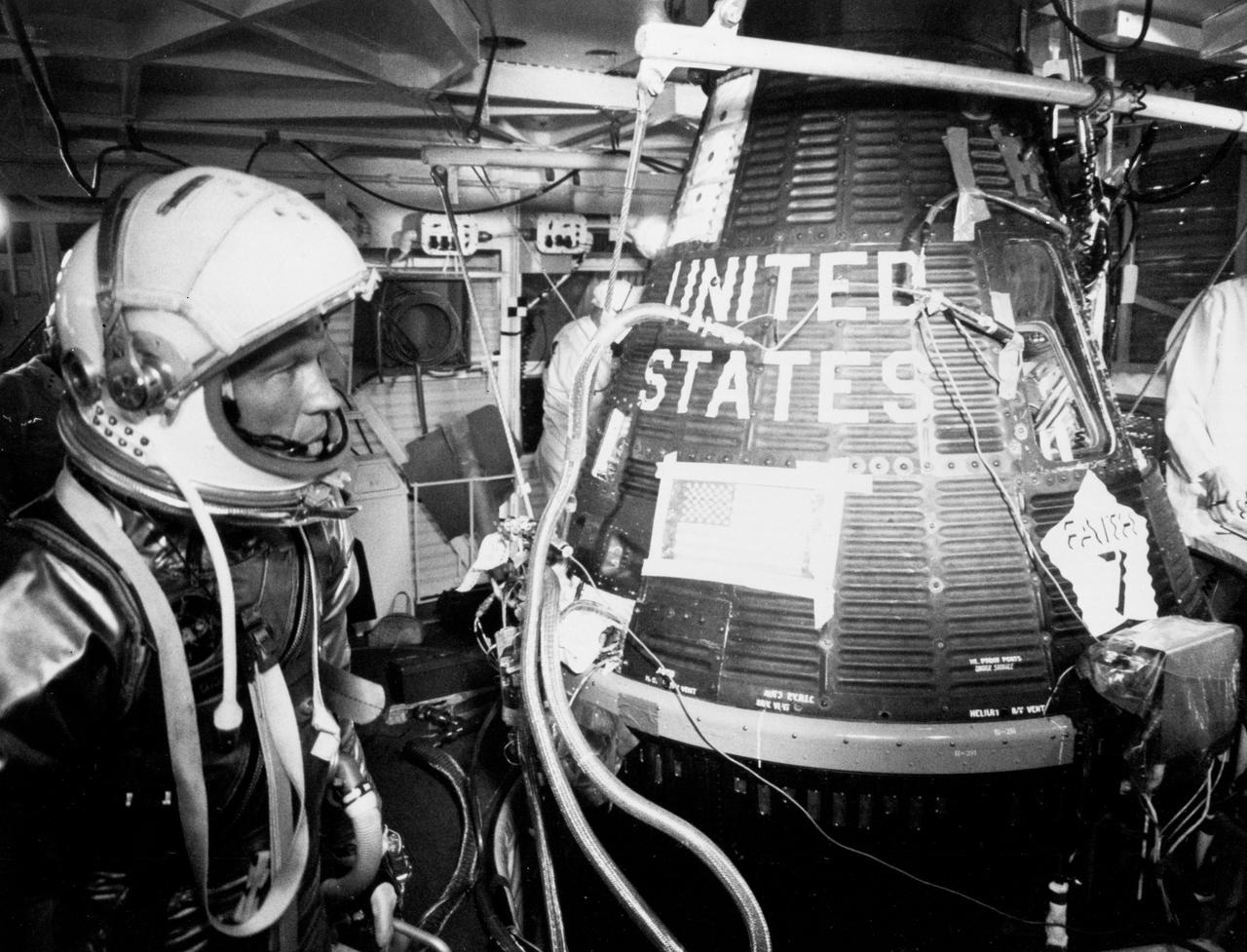
S63-06124 (1963) --- Astronaut L. Gordon Cooper Jr., prime pilot for the Mercury Atlas 9 (MA-9) mission, arrives at the top of the gantry during a preflight simulated mission, three days before he is scheduled to take "Faith 7" on the 22-orbit flight. Photo credit: NASA
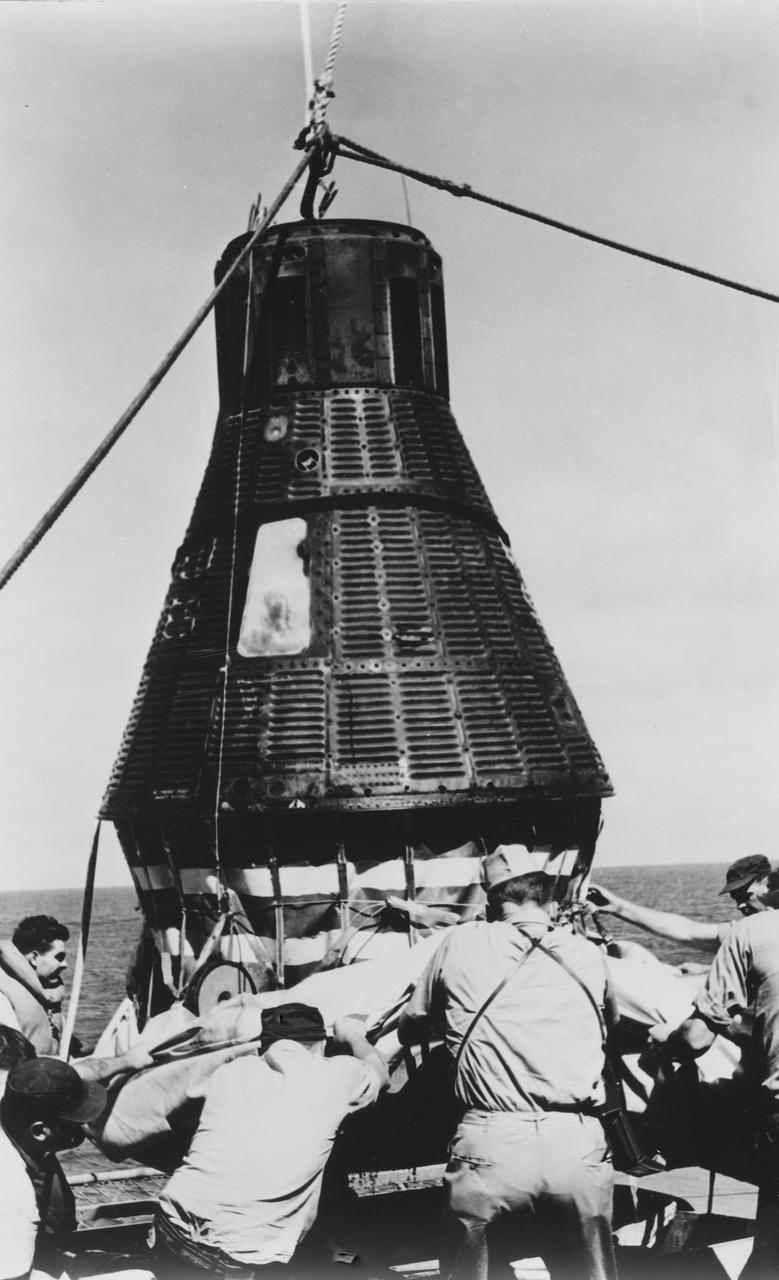
S62-06175 (3 Oct. 1962) --- Closeup view of the Mercury-Atlas 8 (MA-8) Sigma 7 capsule being lowered to recovery ship's deck. Navy personnel remove the floatation device before opening the capsule. Photo credit: NASA
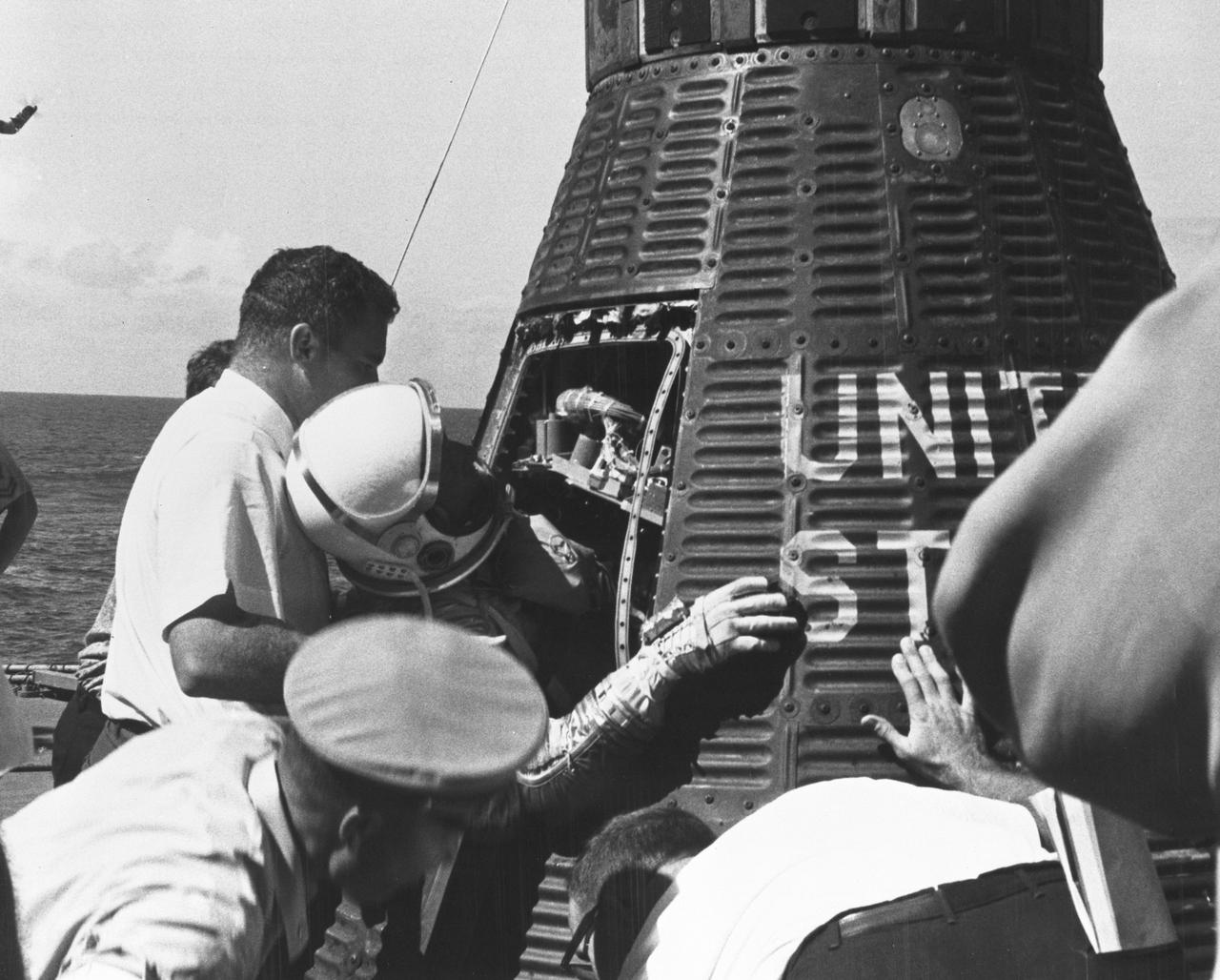
S62-06108 (3 Oct. 1962) --- Close-up view of Mercury-Atlas 8 (MA-8) astronaut Walter Schirra Jr. being removed from his Sigma 7 capsule by Navy personnel. Photo credit: NASA
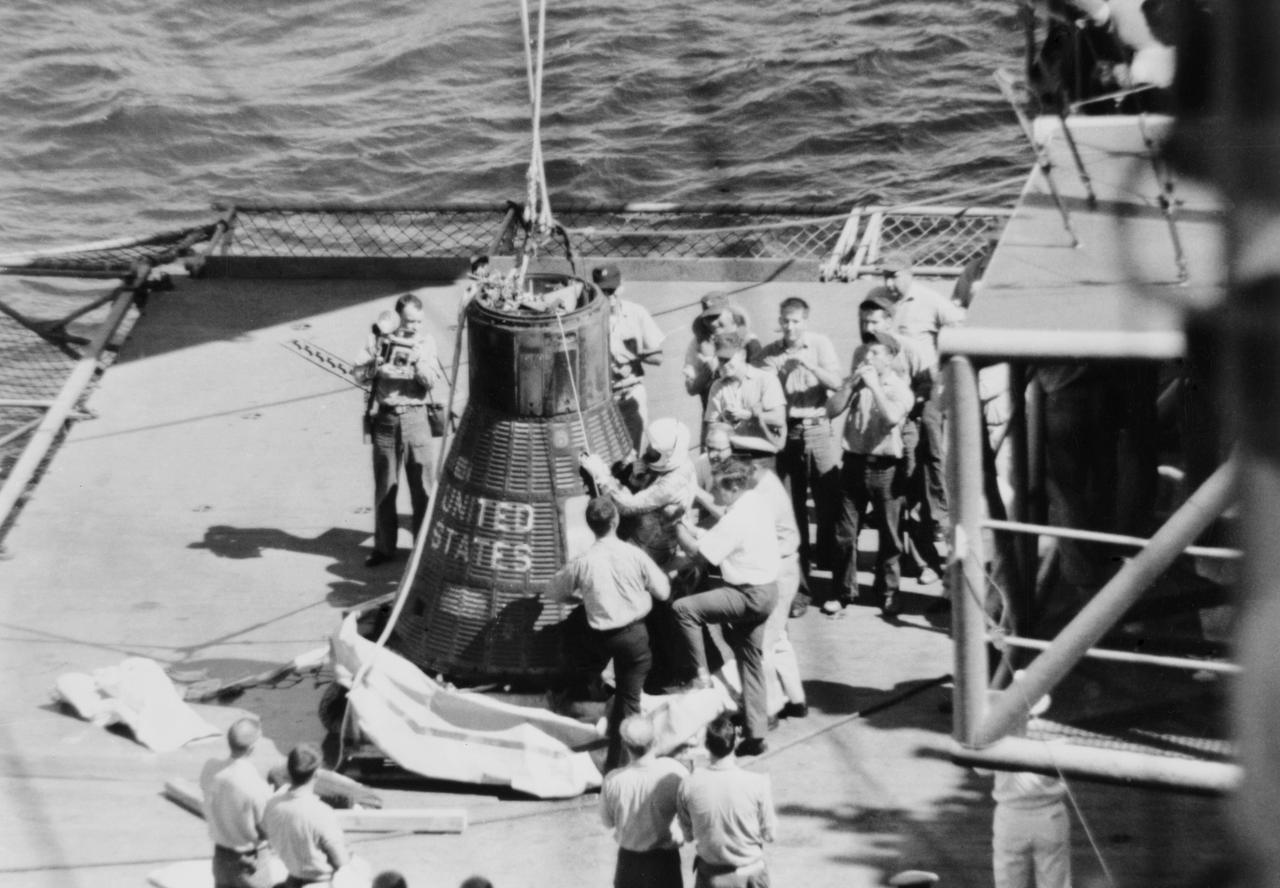
S62-06144 (3 Oct. 1962) --- Wide angle view of Mercury-Atlas 8 (MA-8) astronaut Walter Schirra Jr. being removed from his Sigma 7 capsule by Navy personnel. Photo credit: NASA
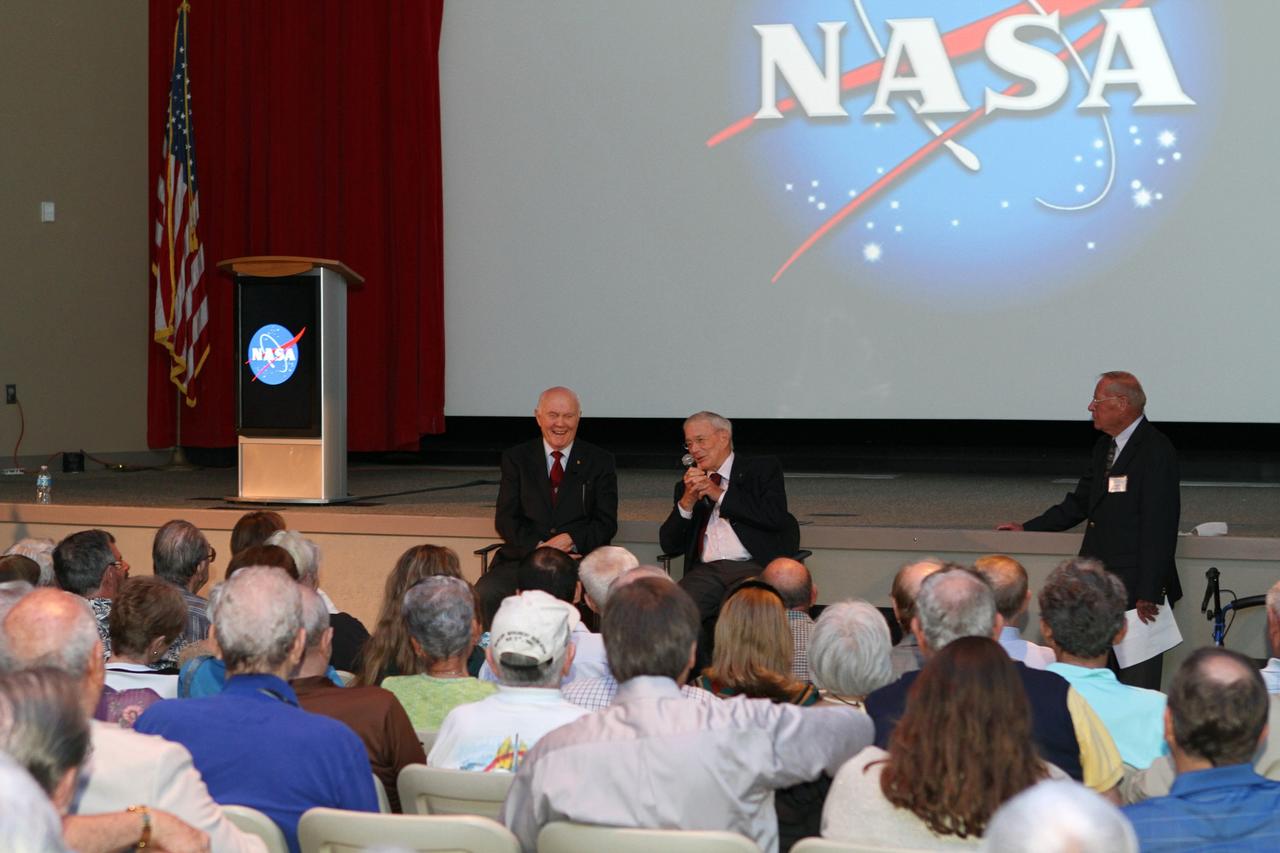
CAPE CANAVERAL, Fla. -- Mercury astronauts, John Glenn, left, and Scott Carpenter, talk to Mercury Project workers and other guests in the Astronaut Encounter Theater at the Kennedy Space Center Visitor Complex in Florida. The pair participated in 50th anniversary events at the launch site of Glenn's first orbital flight aboard NASA's Friendship 7 capsule, which launched Feb. 20, 1962, aboard an Atlas rocket. At right, is Jack King, who was chief of Kennedy's Public Information Office during Project Mercury. Glenn's launch aboard an Atlas rocket took with it the hopes of an entire nation and ushered in a new era of space travel that eventually led to Americans walking on the moon by the end of the 1960s. Glenn soon was followed into orbit by Carpenter, Walter Schirra and Gordon Cooper. Their fellow Mercury astronauts Alan Shepard and Virgil "Gus" Grissom flew earlier suborbital flights. Deke Slayton, a member of NASA's original Mercury 7 astronauts, was grounded by a medical condition until the Apollo-Soyuz Test Project in 1975. Photo credit: Kim Shiflett
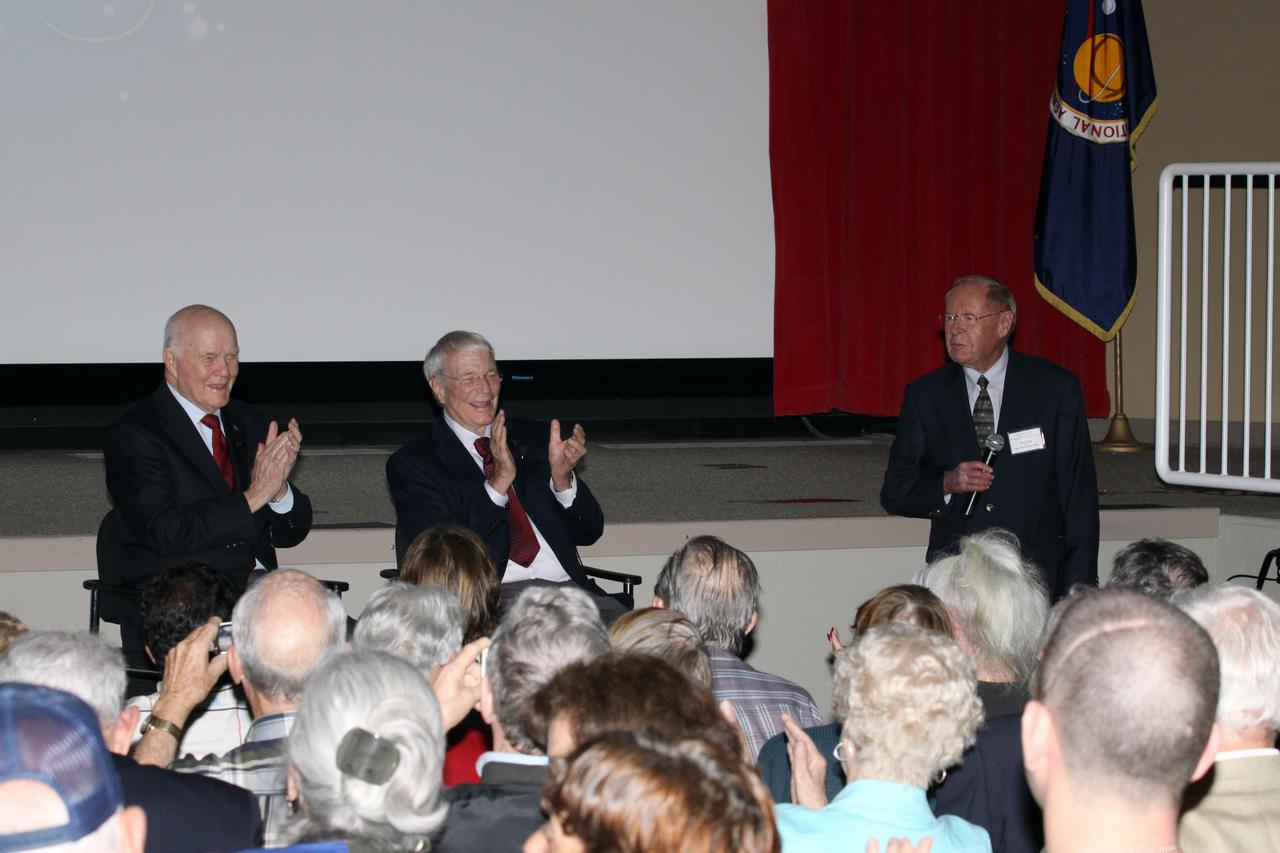
CAPE CANAVERAL, Fla. -- Mercury astronauts, John Glenn, left, and Scott Carpenter, talk to Mercury Project workers and other guests in the Astronaut Encounter Theater at the Kennedy Space Center Visitor Complex in Florida. The pair participated in 50th anniversary events at the launch site of Glenn's first orbital flight aboard NASA's Friendship 7 capsule, which launched Feb. 20, 1962, aboard an Atlas rocket. At right, is Jack King, who was chief of Kennedy's Public Information Office during Project Mercury. Glenn's launch aboard an Atlas rocket took with it the hopes of an entire nation and ushered in a new era of space travel that eventually led to Americans walking on the moon by the end of the 1960s. Glenn soon was followed into orbit by Carpenter, Walter Schirra and Gordon Cooper. Their fellow Mercury astronauts Alan Shepard and Virgil "Gus" Grissom flew earlier suborbital flights. Deke Slayton, a member of NASA's original Mercury 7 astronauts, was grounded by a medical condition until the Apollo-Soyuz Test Project in 1975. Photo credit: Kim Shiflett
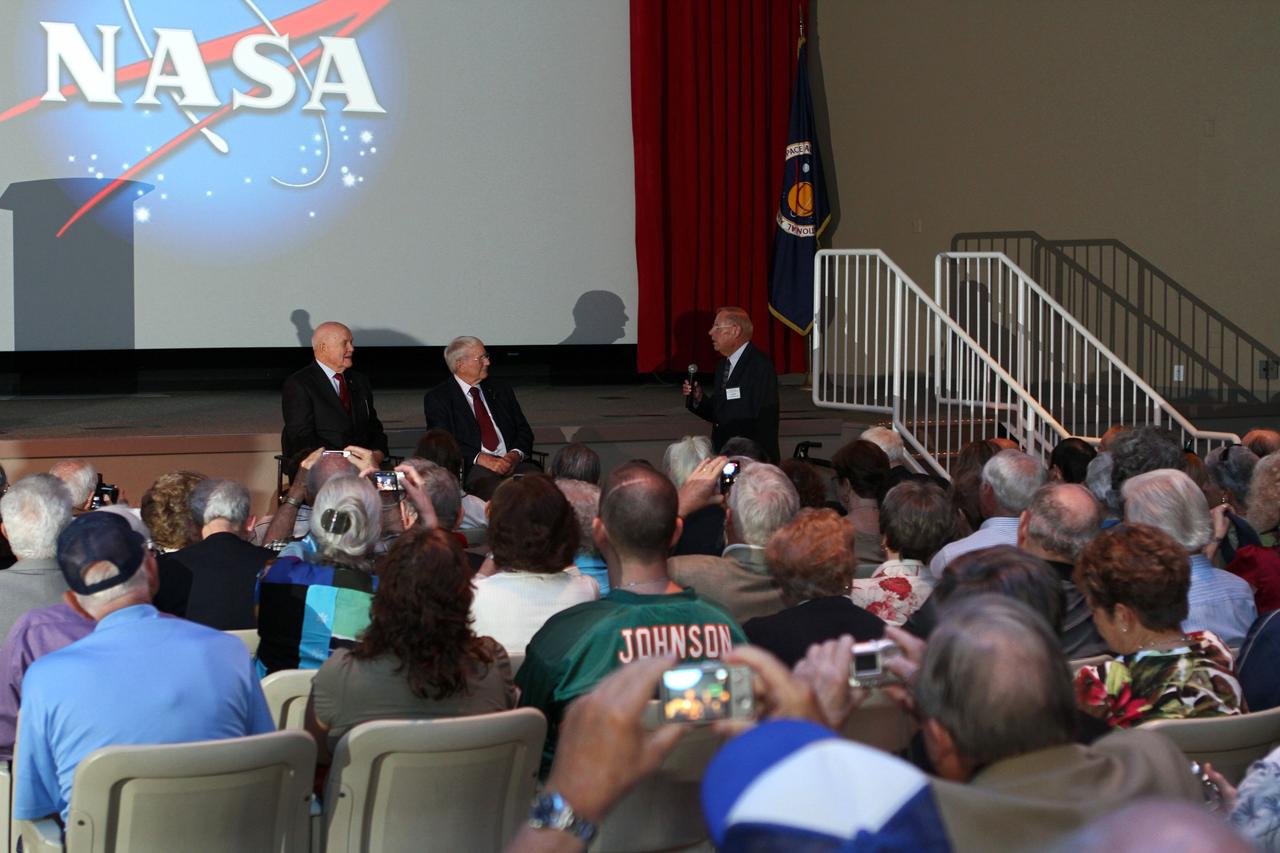
CAPE CANAVERAL, Fla. -- Mercury astronauts, John Glenn, left, and Scott Carpenter, talk to Mercury Project workers and other guests in the Astronaut Encounter Theater at the Kennedy Space Center Visitor Complex in Florida. The pair participated in 50th anniversary events at the launch site of Glenn's first orbital flight aboard NASA's Friendship 7 capsule, which launched Feb. 20, 1962, aboard an Atlas rocket. At right, is Jack King, who was chief of Kennedy's Public Information Office during Project Mercury. Glenn's launch aboard an Atlas rocket took with it the hopes of an entire nation and ushered in a new era of space travel that eventually led to Americans walking on the moon by the end of the 1960s. Glenn soon was followed into orbit by Carpenter, Walter Schirra and Gordon Cooper. Their fellow Mercury astronauts Alan Shepard and Virgil "Gus" Grissom flew earlier suborbital flights. Deke Slayton, a member of NASA's original Mercury 7 astronauts, was grounded by a medical condition until the Apollo-Soyuz Test Project in 1975. Photo credit: Kim Shiflett
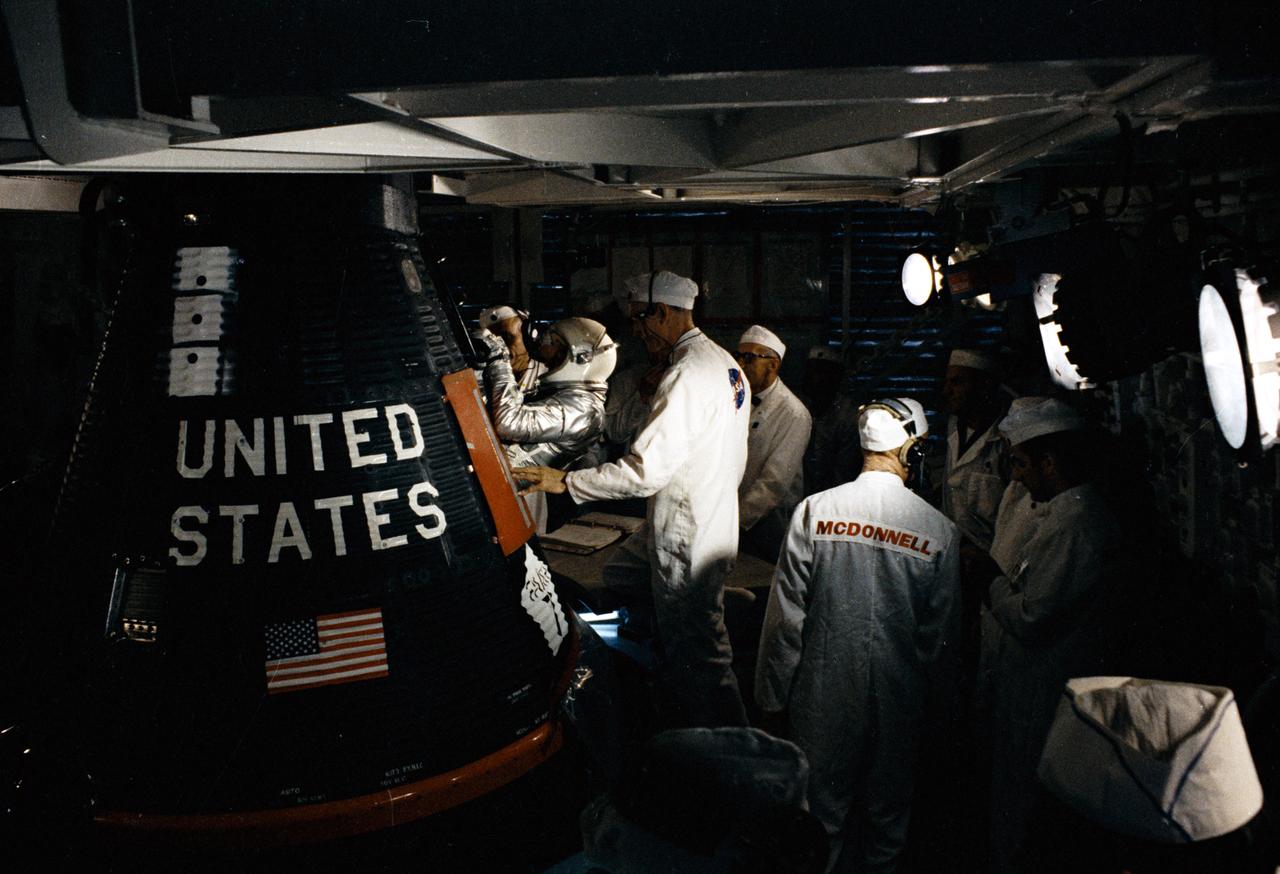
S63-09676-E (15 May 1963) --- Astronaut L. Gordon Cooper Jr., pilot of the Mercury-Atlas 9 (MA-9) Earth-orbital space mission, is assisted into his "Faith 7" Mercury spacecraft during the prelaunch countdown. MA-9 was launched on May 15, 1963, and the flight lasted for 34 hours and 20 minutes. Photo credit: NASA
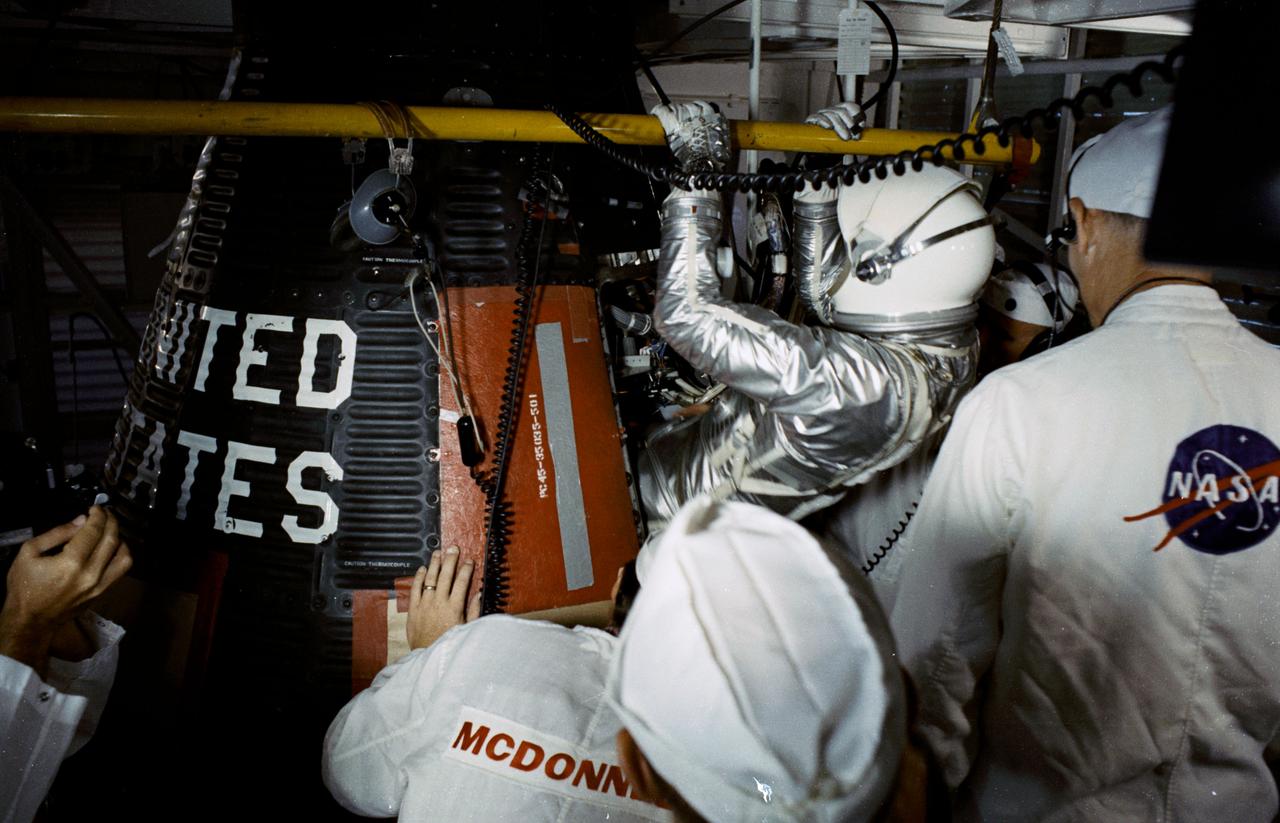
S63-07521 (15 May 1963) --- Astronaut L. Gordon Cooper Jr., pilot of the Mercury-Atlas 9 (MA-9) Earth-orbital space mission, is assisted into his "Faith 7" Mercury spacecraft during the prelaunch countdown. MA-9 was launched on May 15, 1963, and the flight lasted for 34 hours and 20 minutes. Photo credit: NASA
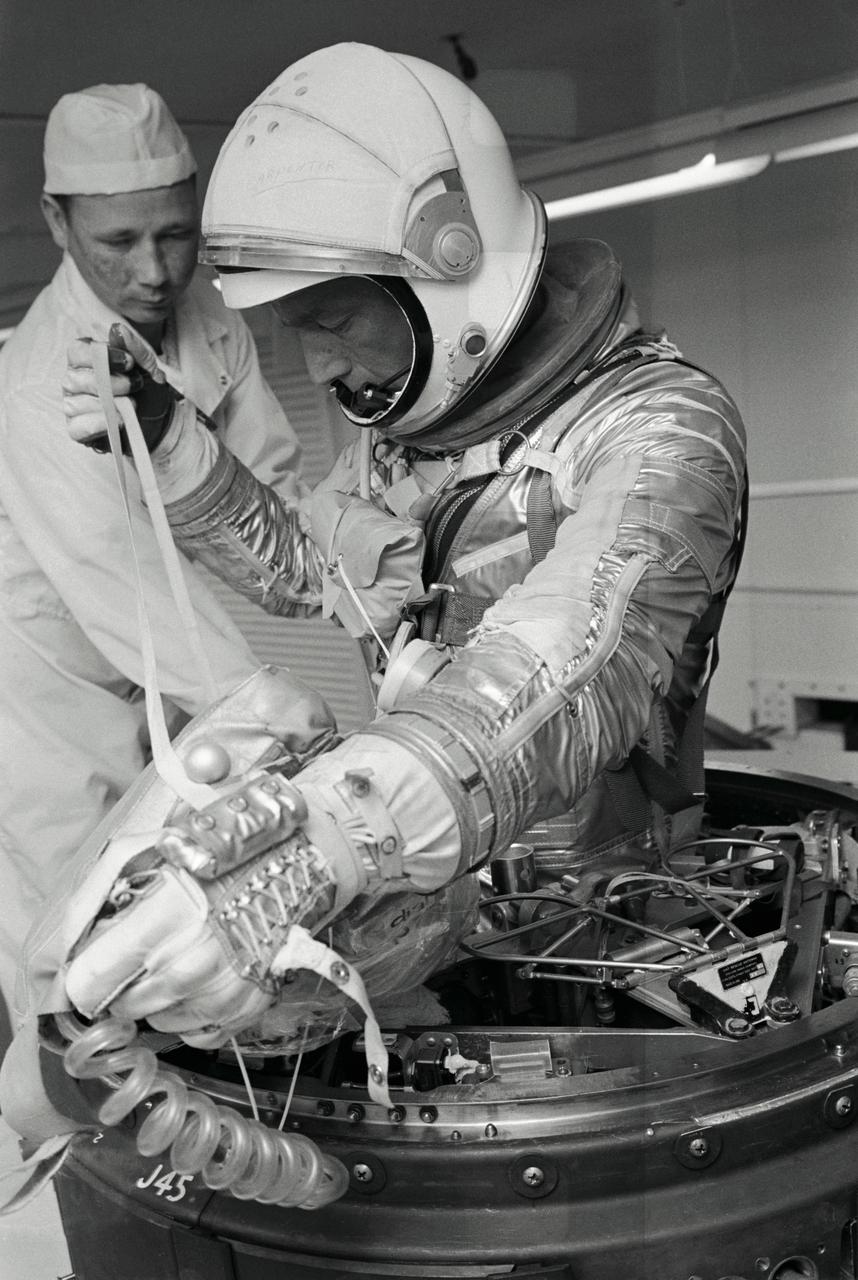
S62-01383 (1962) --- Project Mercury astronaut M. Scott Carpenter, prime pilot of the Mercury-Atlas 7 (the nation's second manned orbital flight), completes top egress training in the white room at Cape Canaveral, Florida. The line he is holding is known as the "man line" which attaches the survival kit to the astronaut. The bag is the survival kit he carries for contingency landings. Clearly visible around his neck is the bag containing the life vest. Photo credit: NASA
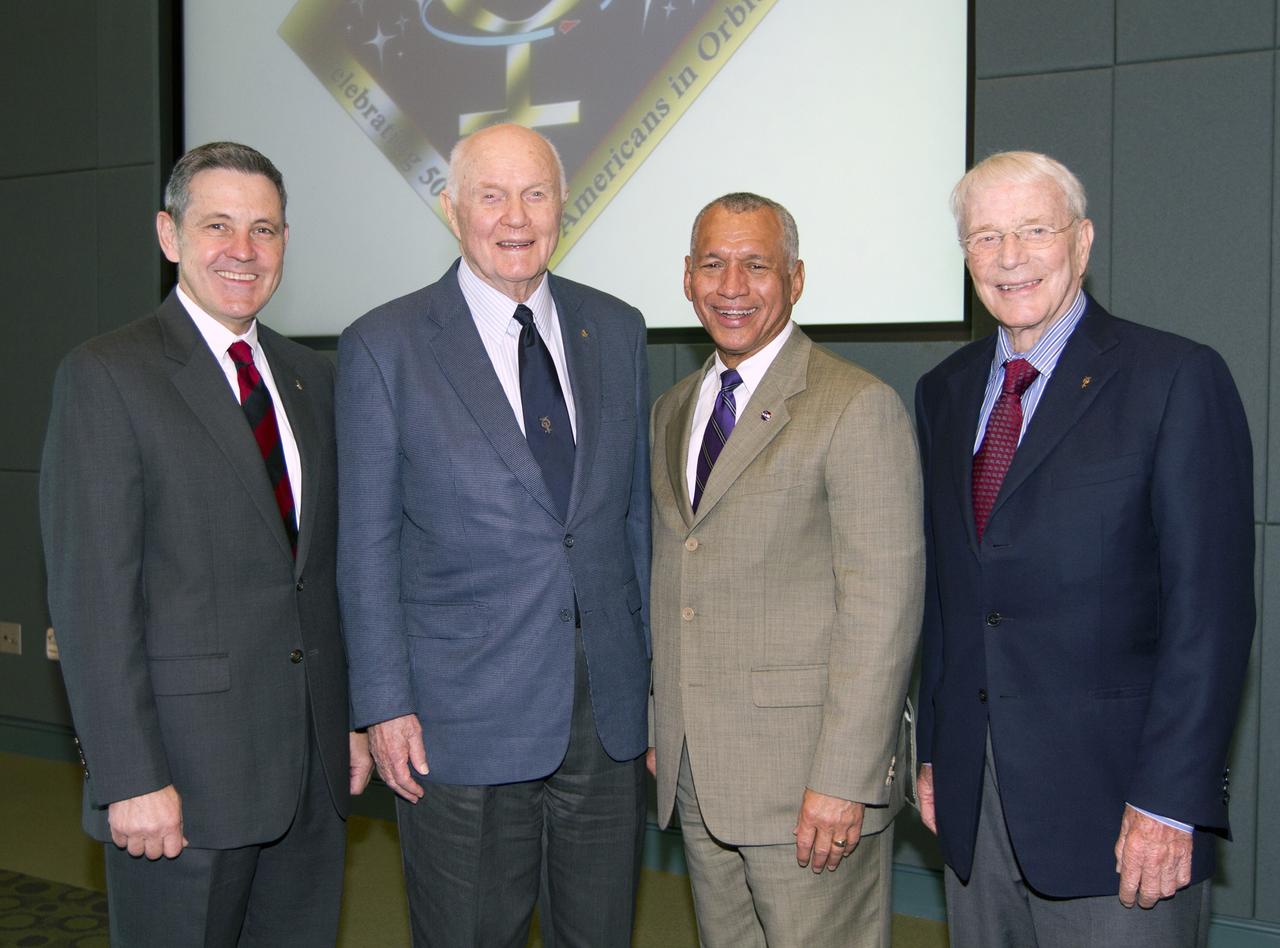
CAPE CANAVERAL, Fla. - Kennedy Space Center Director Bob Cabana, from left, Mercury astronaut John Glenn, NASA Administrator Charles Bolden and Mercury astronaut Scott Carpenter pose during a luncheon Feb. 17, 2012, celebrating 50 years of Americans in orbit, an era which began with Glenn's Mercury mission MA-6, on Feb. 20, 1962. Glenn's launch aboard an Atlas rocket took with it the hopes of an entire nation and ushered in a new era of space travel that eventually led to Americans walking on the moon by the end of the 1960s. Glenn soon was followed into orbit by Scott Carpenter, Walter Schirra and Gordon Cooper. Their fellow Mercury astronauts Alan Shepard and Virgil "Gus" Grissom flew earlier suborbital flights. Deke Slayton, a member of NASA's original Mercury 7 astronauts, was grounded by a medical condition until the Apollo-Soyuz Test Project in 1975. Photo credit: NASA/Kim Shiflett
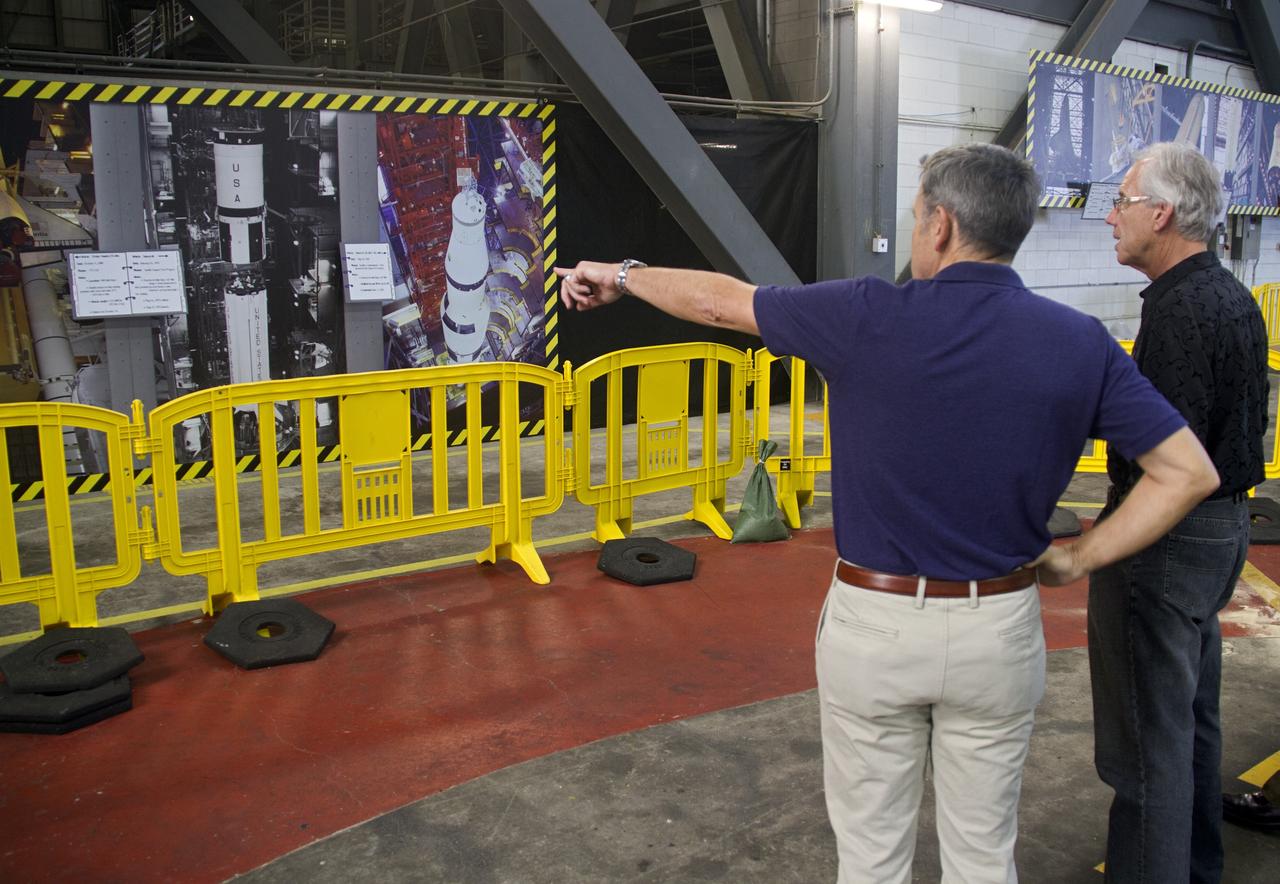
CAPE CANAVERAL, Fla. -- NASA Kennedy Space Center Bob Cabana talks to a guest about the Mercury Project's Atlas rocket in the Vehicle Assembly Building. At the space center in Florida, Cabana is helping John Glenn mark the 50th anniversary of being the first American astronaut to orbit the Earth inside the NASA Mercury Project's Friendship 7 capsule on Feb. 20, 1962. Glenn later returned to space in October 1998 as a payload specialist aboard space shuttle Discovery's STS-95 mission. Glenn's launch aboard an Atlas rocket took with it the hopes of an entire nation and ushered in a new era of space travel that eventually led to Americans walking on the moon by the end of the 1960s. Glenn soon was followed into orbit by Scott Carpenter, Walter Schirra and Gordon Cooper. Their fellow Mercury astronauts Alan Shepard and Virgil "Gus" Grissom flew earlier suborbital flights. Deke Slayton, a member of NASA's original Mercury 7 astronauts, was grounded by a medical condition until the Apollo-Soyuz Test Project in 1975. Photo credit: Cory Huston
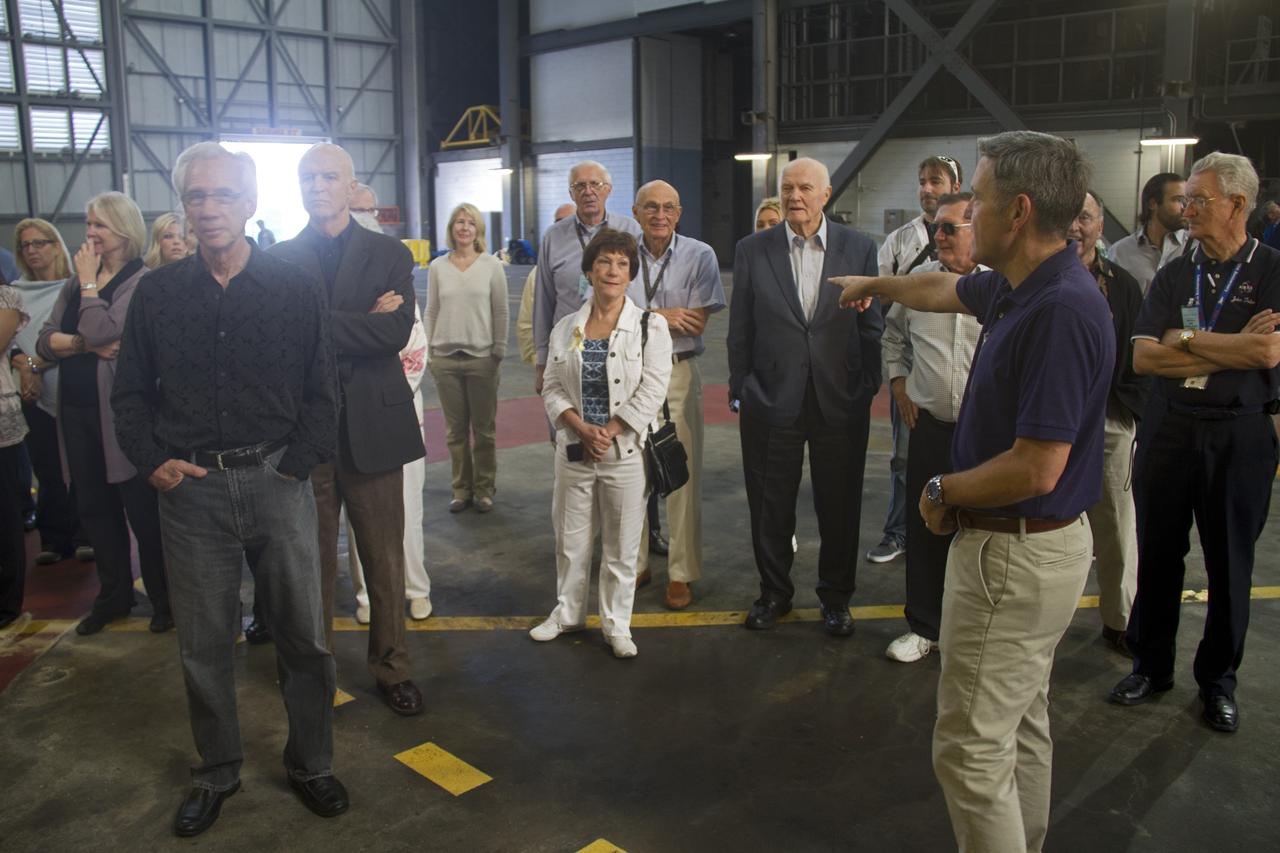
CAPE CANAVERAL, Fla. -- NASA Kennedy Space Center Bob Cabana talks to guests about the Mercury Project's Atlas rocket in the Vehicle Assembly Building. At the space center in Florida, Cabana is helping John Glenn mark the 50th anniversary of being the first American astronaut to orbit the Earth inside the NASA Mercury Project's Friendship 7 capsule on Feb. 20, 1962. Glenn later returned to space in October 1998 as a payload specialist aboard space shuttle Discovery's STS-95 mission. Glenn's launch aboard an Atlas rocket took with it the hopes of an entire nation and ushered in a new era of space travel that eventually led to Americans walking on the moon by the end of the 1960s. Glenn soon was followed into orbit by Scott Carpenter, Walter Schirra and Gordon Cooper. Their fellow Mercury astronauts Alan Shepard and Virgil "Gus" Grissom flew earlier suborbital flights. Deke Slayton, a member of NASA's original Mercury 7 astronauts, was grounded by a medical condition until the Apollo-Soyuz Test Project in 1975. Photo credit: Cory Huston
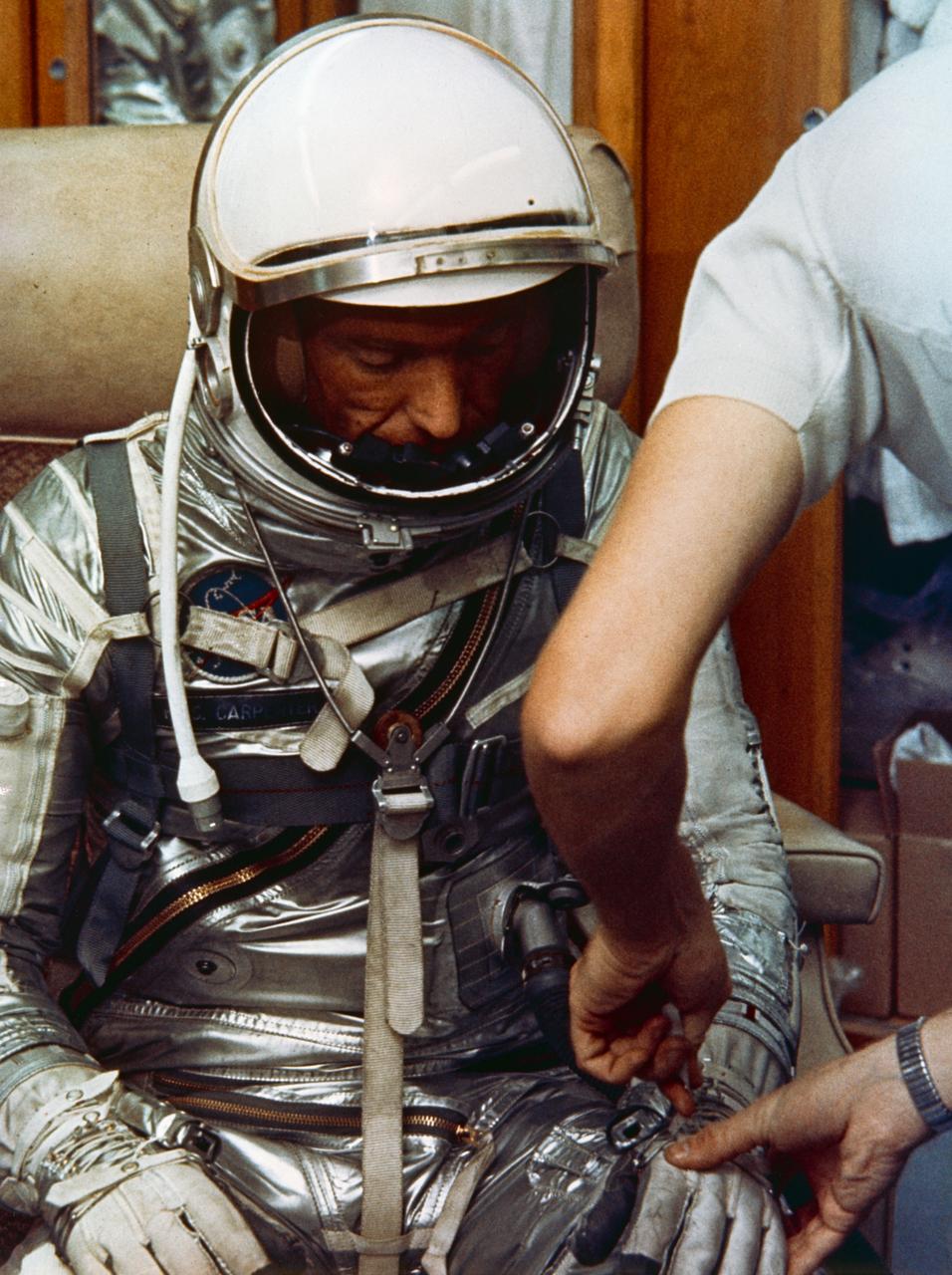
S65-24622 (May 1962) --- Astronaut M. Scott Carpenter, prime pilot for the Mercury-Atlas 7 (MA-7) flight, is seen in Hangar S crew quarters during a suiting exercise. He is assisted in suiting by technician Al Rochford. In this view, Carpenter is fully suited and is having his gloves adjusted. Photo credit: NASA
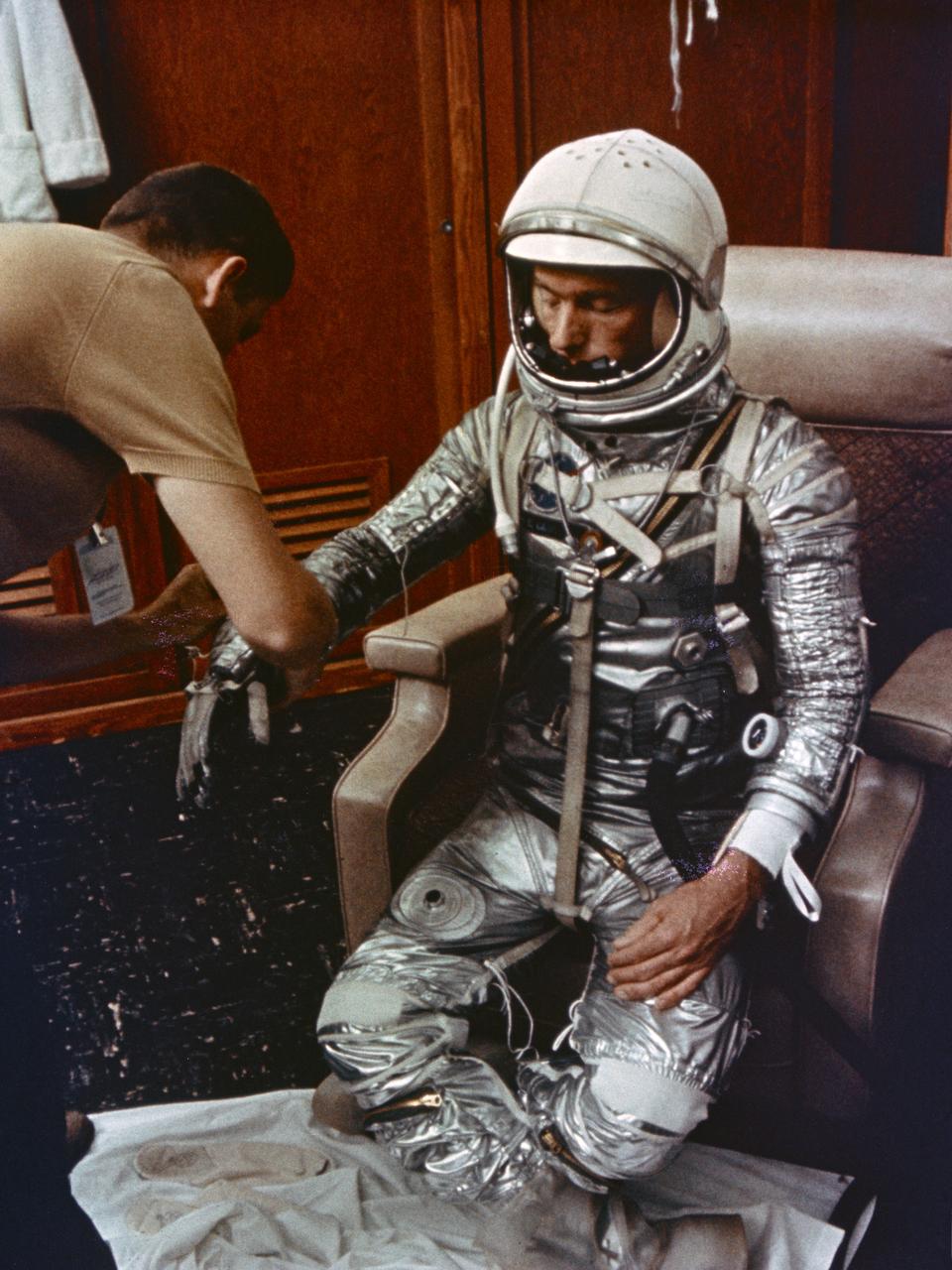
S64-14870 (May 1962) --- Astronaut M. Scott Carpenter, prime pilot for the Mercury-Atlas 7 (MA-7) flight, is seen in Hangar S crew quarters during a preflight suiting activity at Cape Canaveral, Florida. He is assisted in suiting by technician Al Rochford. In this view, Carpenter is fully suited and is having his gloves adjusted. Photo credit: NASA
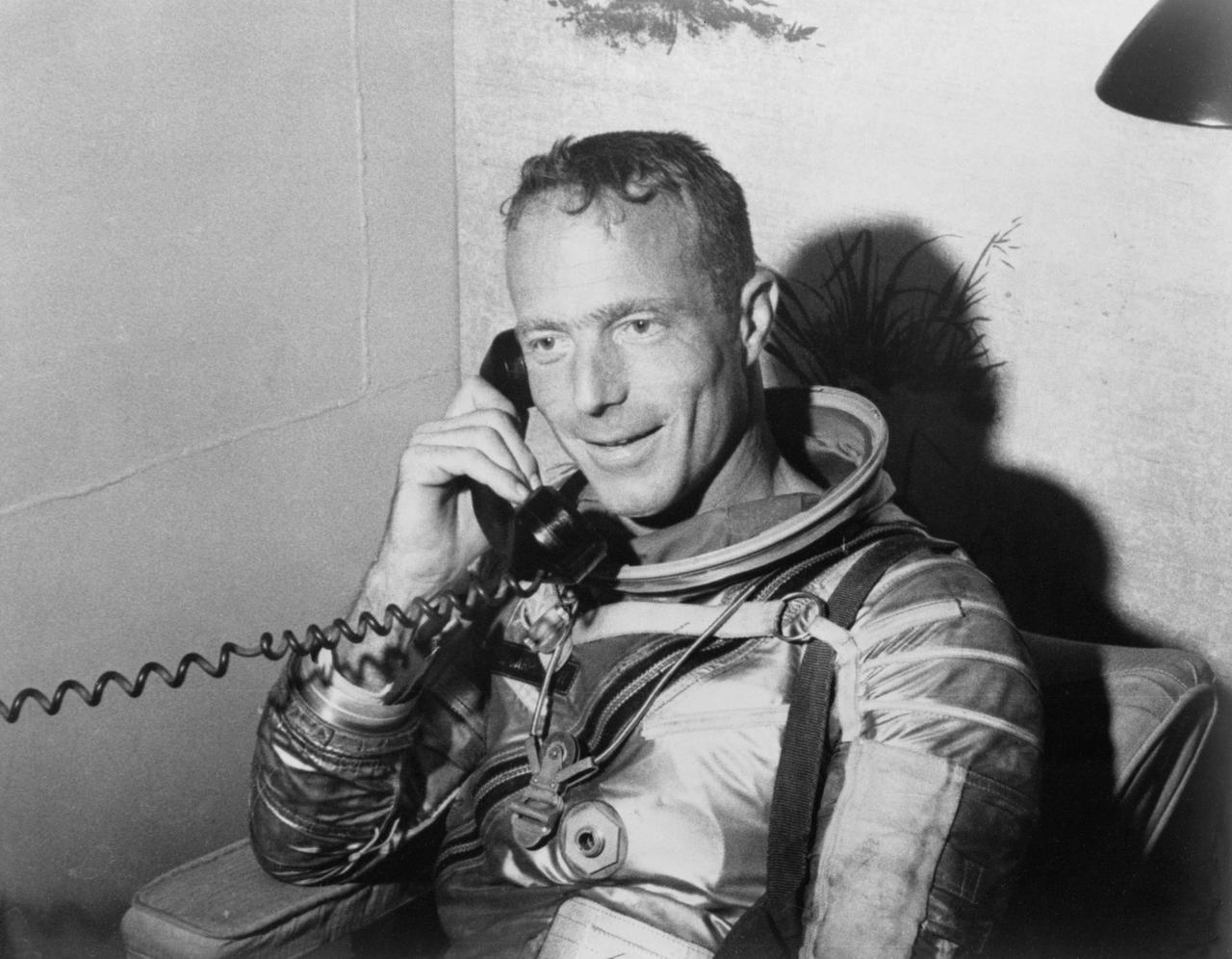
S62-04057 (24 May 1962) --- Astronaut M. Scott Carpenter, prime pilot for the Mercury-Atlas 7 (MA-7) mission, talks with President John F. Kennedy via radio-telephone from aboard the carrier USS Intrepid. Carpenter was recovered by a helicopter and taken to the Intrepid after a four-hour and 56-minute mission in space. Photo credit: NASA
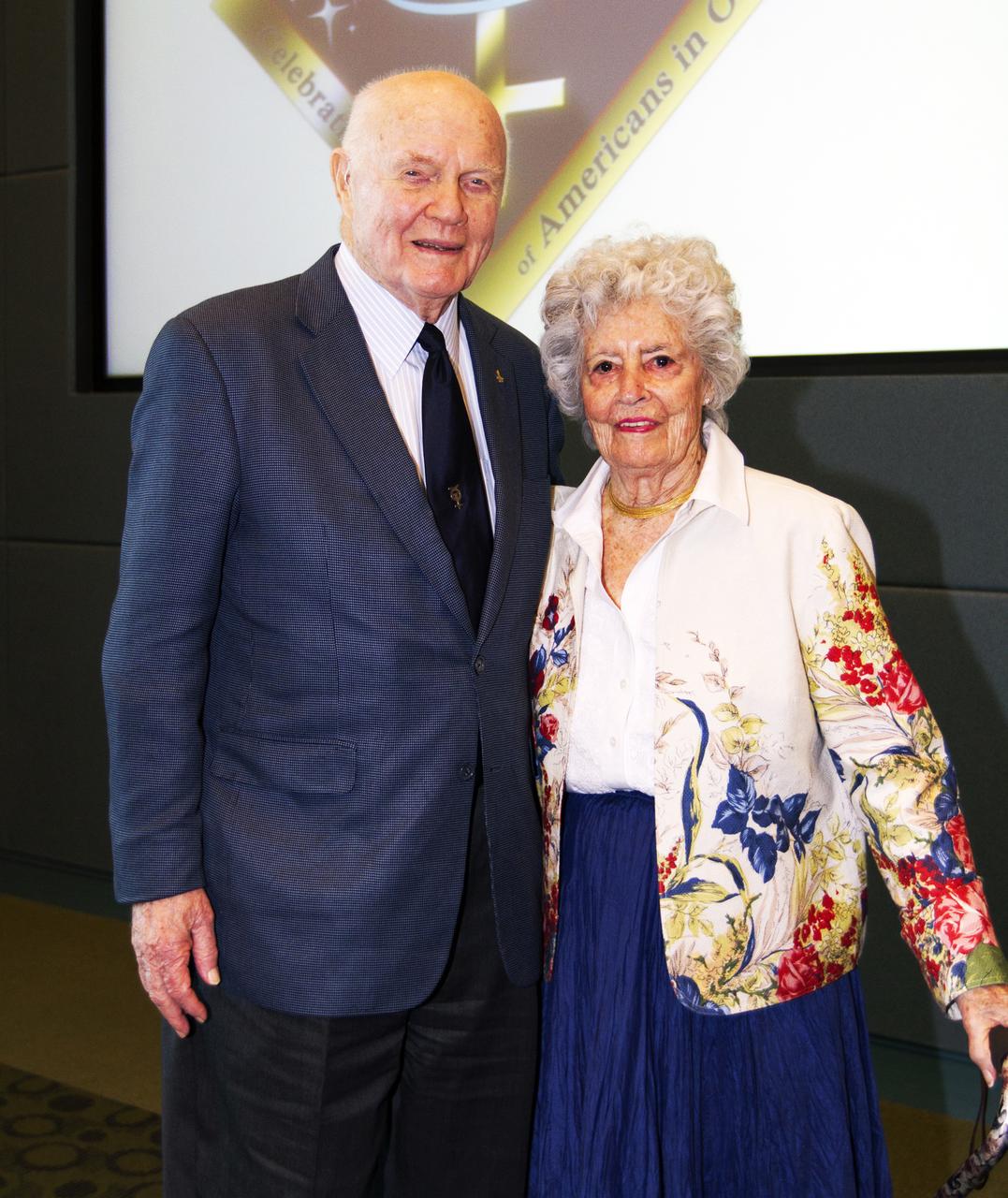
Mercury astronaut John Glenn and his wife, Annie, pose during a luncheon Feb. 17, 2012, celebrating 50 years of Americans in orbit, an era which began with Glenn's Mercury mission MA-6, on Feb. 20, 1962. Glenn's launch aboard an Atlas rocket took with it the hopes of an entire nation and ushered in a new era of space travel that eventually led to Americans walking on the moon by the end of the 1960s. Glenn soon was followed into orbit by Scott Carpenter, Walter Schirra and Gordon Cooper. Their fellow Mercury astronauts Alan Shepard and Virgil "Gus" Grissom flew earlier suborbital flights. Deke Slayton, a member of NASA's original Mercury 7 astronauts, was grounded by a medical condition until the Apollo-Soyuz Test Project in 1975.
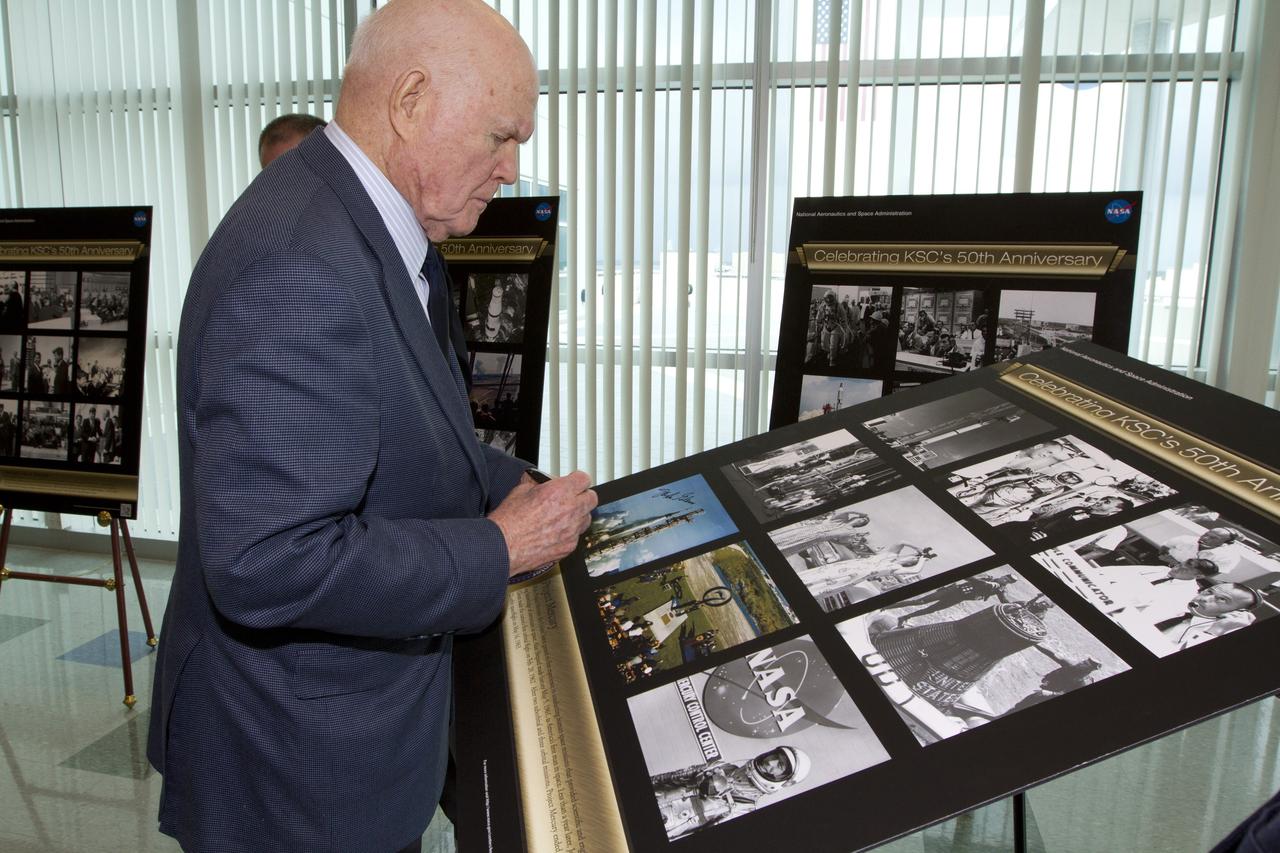
CAPE CANAVERAL, Fla. - Mercury astronaut John Glenn signs a poster celebrating 50 years of Americans in orbit, an era which began with Glenn's Mercury mission MA-6, on Feb. 20, 1962. Glenn's launch aboard an Atlas rocket took with it the hopes of an entire nation and ushered in a new era of space travel that eventually led to Americans walking on the moon by the end of the 1960s. Glenn soon was followed into orbit by Scott Carpenter, Walter Schirra and Gordon Cooper. Their fellow Mercury astronauts Alan Shepard and Virgil "Gus" Grissom flew earlier suborbital flights. Deke Slayton, a member of NASA's original Mercury 7 astronauts, was grounded by a medical condition until the Apollo-Soyuz Test Project in 1975. Photo credit: NASA/Kim Shiflett
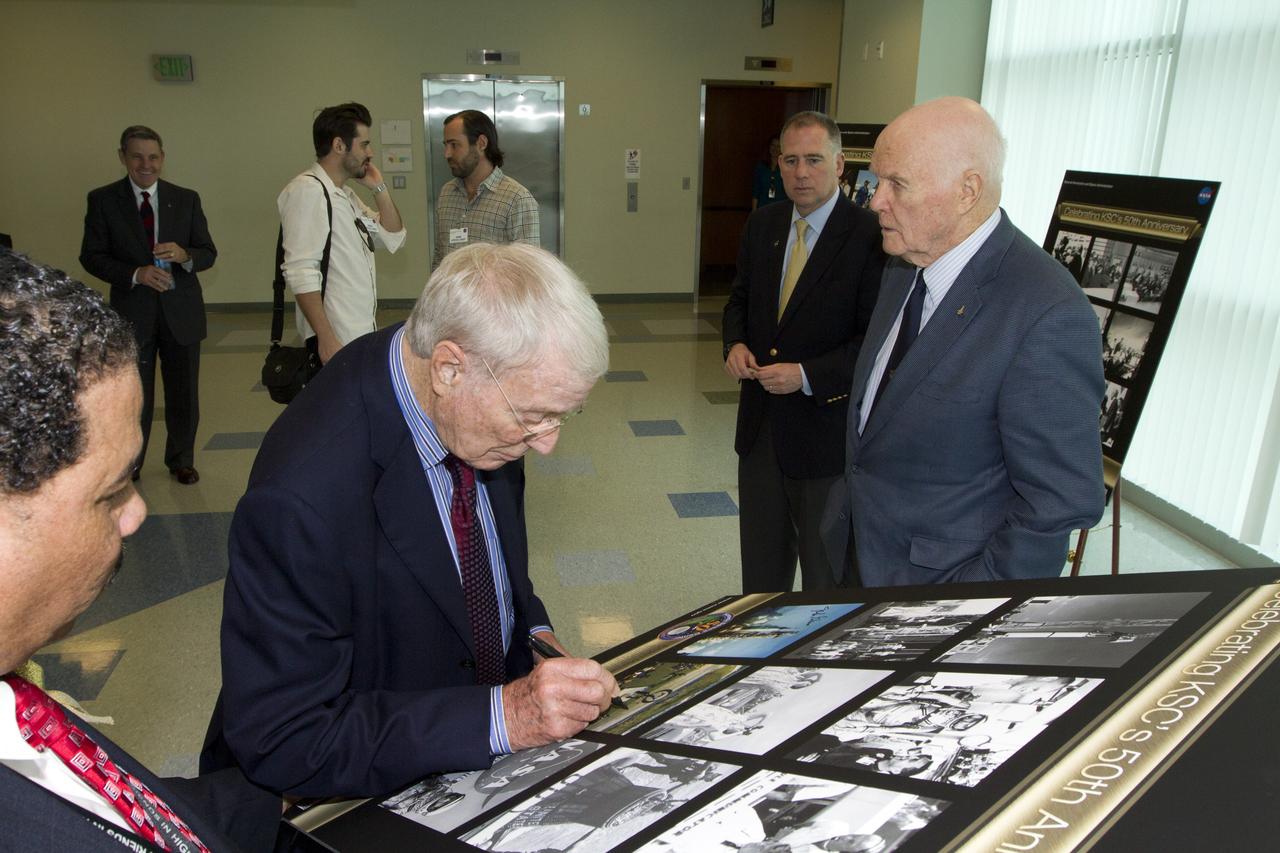
CAPE CANAVERAL, Fla. - Mercury astronaut Scott Carpenter signs a poster celebrating 50 years of Americans in orbit, an era which began with Glenn's Mercury mission MA-6, on Feb. 20, 1962. Glenn's launch aboard an Atlas rocket took with it the hopes of an entire nation and ushered in a new era of space travel that eventually led to Americans walking on the moon by the end of the 1960s. Glenn soon was followed into orbit by Scott Carpenter, Walter Schirra and Gordon Cooper. Their fellow Mercury astronauts Alan Shepard and Virgil "Gus" Grissom flew earlier suborbital flights. Deke Slayton, a member of NASA's original Mercury 7 astronauts, was grounded by a medical condition until the Apollo-Soyuz Test Project in 1975. Photo credit: NASA/Kim Shiflett