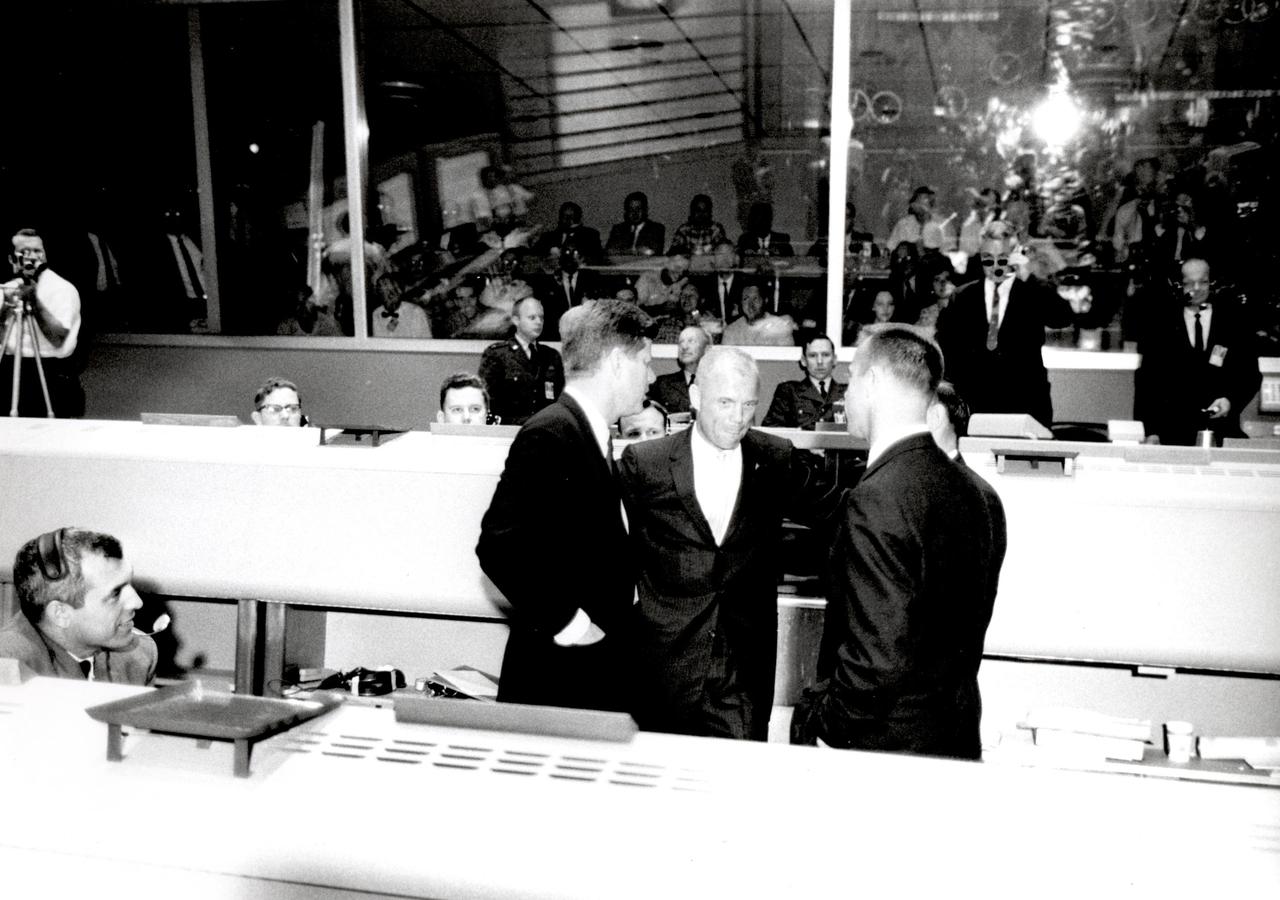
President John F. Kennedy (left) visits Mercury's Flight Control Area a few days after John Glenn's flight in February 1962. To Kennedy's right are Glenn and astronaut Alan Shepard.
President John F. Kennedy Visits Mercury's Flight Control
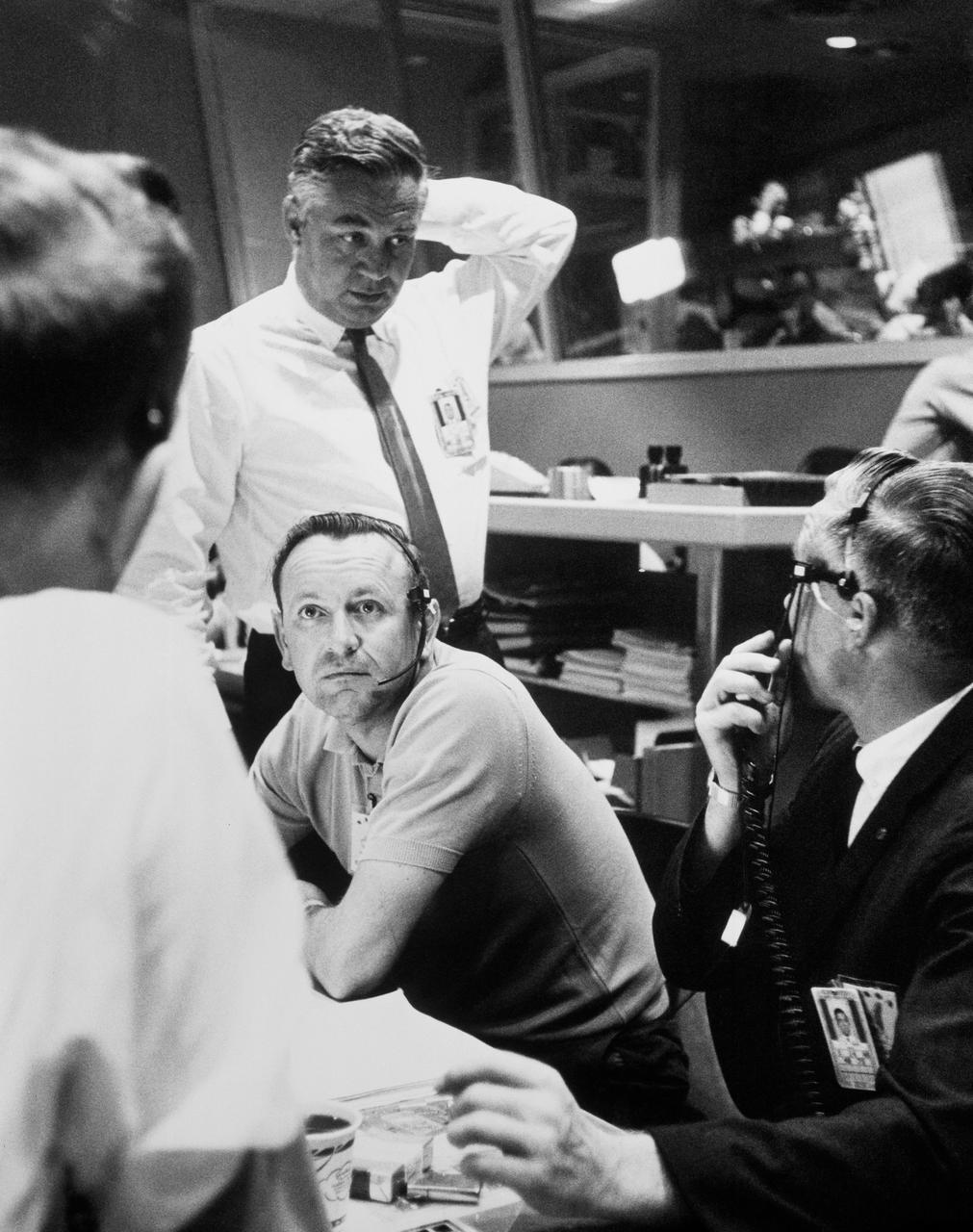
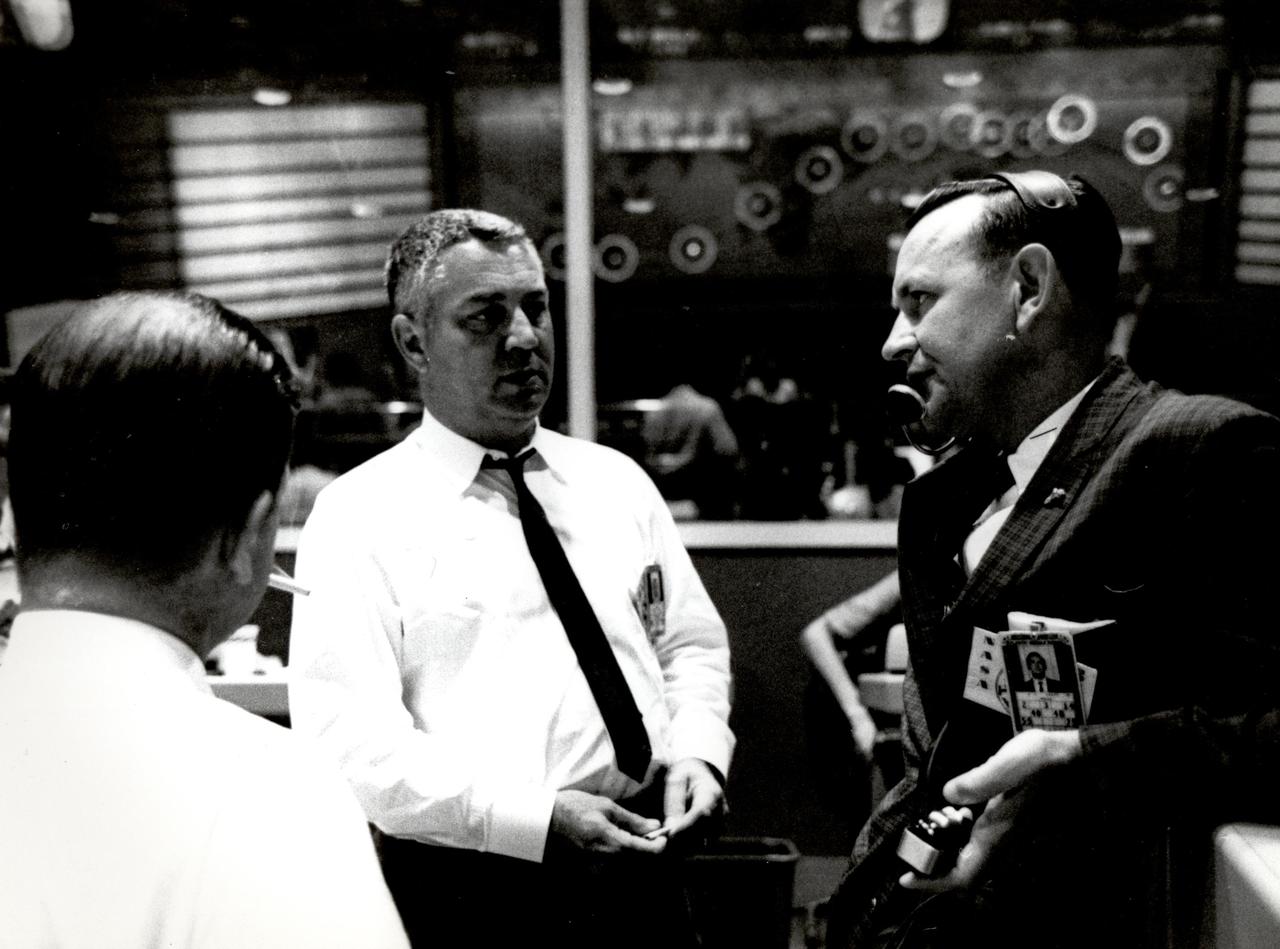
Inside Mercury flight control, Walter C. Williams, associate director for Project Mercury operations (center) listens to Christopher Kraft, flight director (right).
Walter C. Williams and Christopher Kraft
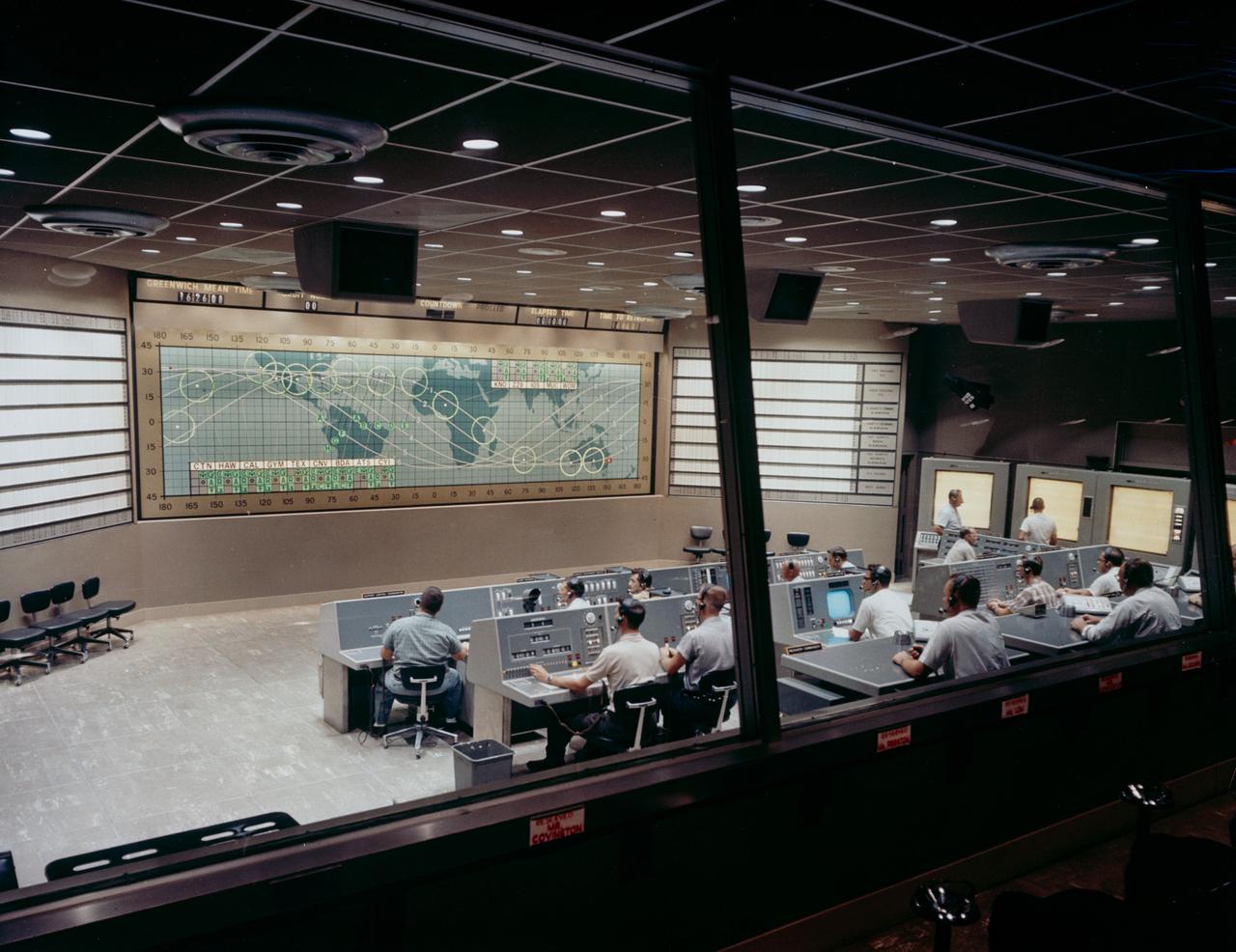
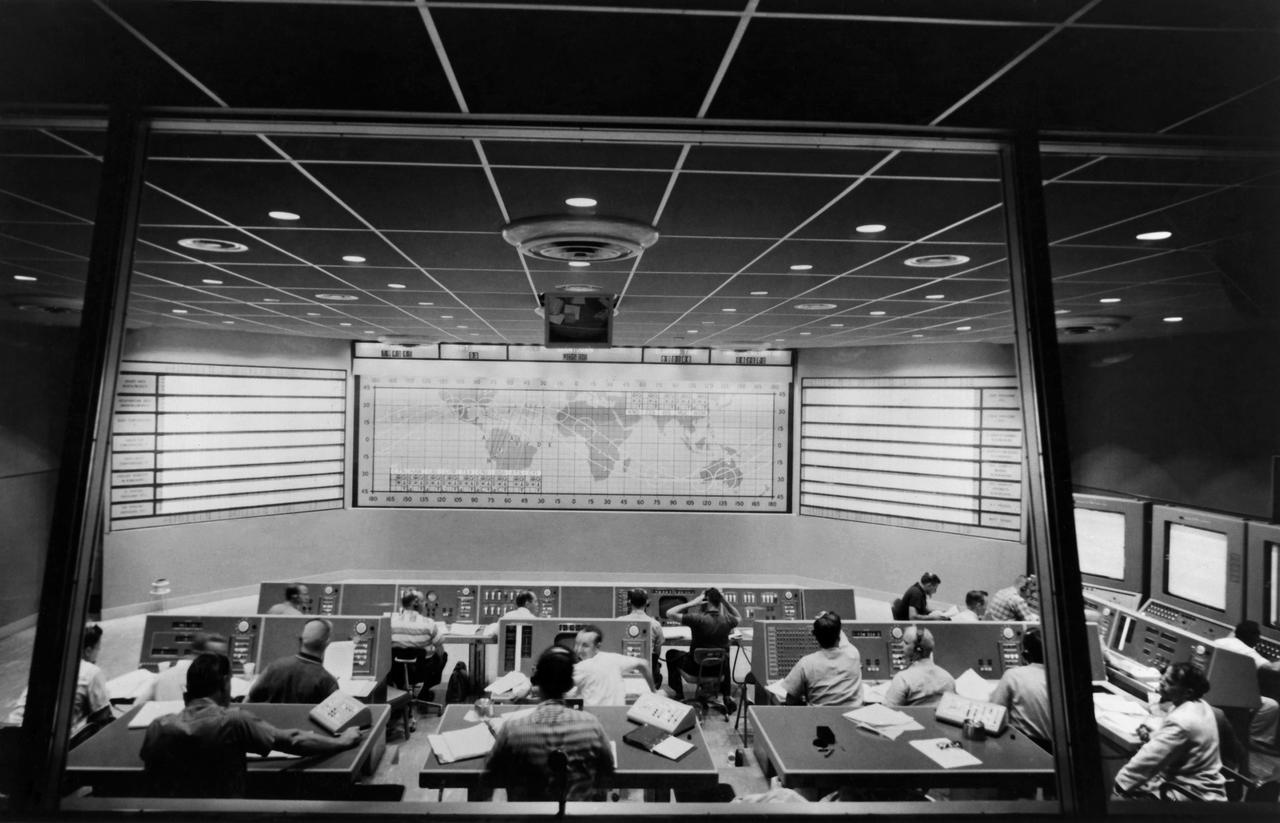
S62-05139 (1962) --- View of Mercury Control Center prior to the Mercury-Atlas 8 (MA-8) flight of the Sigma 7. Photo credit: NASA
View of Mercury Control Center prior to MA-8 flight
Christopher Kraft, flight director during Project Mercury, works at his console inside the Flight Control area at Mercury Mission Control.
Christopher Kraft, flight director during Project Mercury
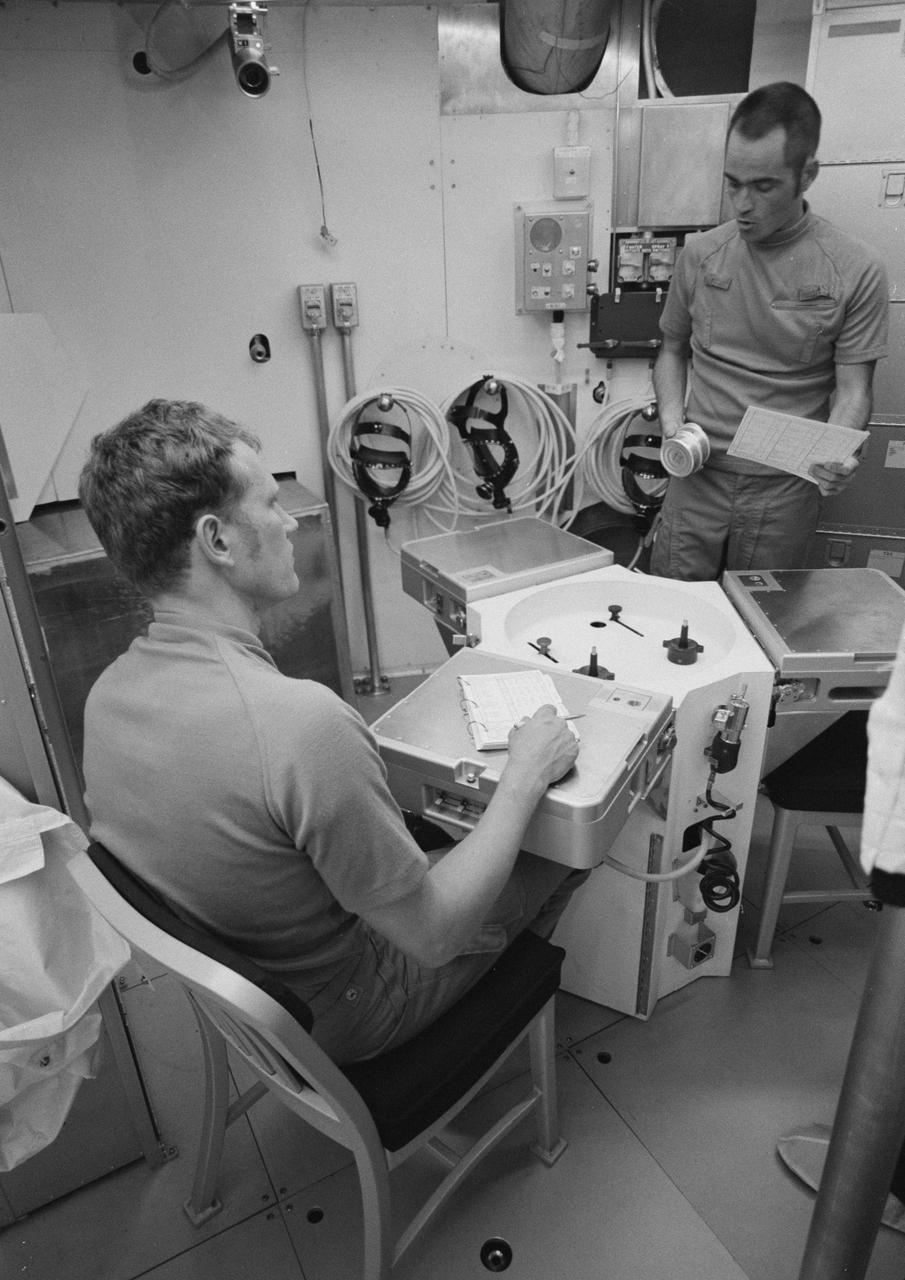
S72-41853 (15 June 1972) --- Two members of the three-man Skylab Medical Experiment Altitude Test (SMEAT) crew, that will spend up to 56 days in the Crew Systems Division's 20-foot altitude chamber at the Manned Spacecraft Center (MSC) beginning in mid-July, go over a menu in the food preparation area. Seated at the simulated wardroom food table is astronaut Karol J. Bobko, SMEAT pilot, and standing is astronaut Robert L. Crippen, SMEAT commander. Dr. William E. Thornton, SMEAT science pilot, the third crew member is not shown in this view. Photo credit: NASA
Skylab - Skylab Medical Evaluation Activities Test (SMEAT) - MSC
CAPE CANAVERAL, Fla. - Inside Mercury Mission Control, Walter C. Williams standing, associate director for Project Mercury operations, and Christopher Kraft seated, left, flight director, work in flight control as the decision is made to have Mercury astronaut Gordon Cooper aboard his spacecraft, Faith 7, go the full 22 orbits. The launch took place on May 15, 1963.     The Mercury Mission Control Center in Florida played a key role in the United States' early spaceflight program. Located at Cape Canaveral Air Force Station, the original part of the building was constructed between 1956 and 1958, with additions in 1959 and 1963. The facility officially was transferred to NASA on Dec. 26, 1963, and served as mission control during all the Project Mercury missions, as well as the first three flights of the Gemini Program, when it was renamed Mission Control Center. With its operational days behind, on June 1, 1967, the Mission Control Center became a stop on the public tour of NASA facilities until the mid-90s. In 1999, much of the equipment and furnishings from the Flight Control Area were moved to the Kennedy Space Center Visitor Complex where they became part of the exhibit there. The building was demolished in spring 2010. Photo credit: NASA
KSC-63-MA9-155
CAPE CANAVERAL, Fla. - Mercury astronauts, from left, Wally Schirra, Deke Slayton and Alan Shepard work inside the Mercury Control Center where they were stationed during the Faith 7 mission of astronaut Gordon Cooper, launched on May 15, 1963. This was the final mission of the Mercury Program.     The Mercury Mission Control Center in Florida played a key role in the United States' early spaceflight program. Located at Cape Canaveral Air Force Station, the original part of the building was constructed between 1956 and 1958, with additions in 1959 and 1963. The facility officially was transferred to NASA on Dec. 26, 1963, and served as mission control during all the Project Mercury missions, as well as the first three flights of the Gemini Program, when it was renamed Mission Control Center. With its operational days behind, on June 1, 1967, the Mission Control Center became a stop on the public tour of NASA facilities until the mid-90s. In 1999, much of the equipment and furnishings from the Flight Control Area were moved to the Kennedy Space Center Visitor Complex where they became part of the exhibit there. The building was demolished in spring 2010. Photo credit: NASA
KSC-63-MA9-98
CAPE CANAVERAL, Fla. - Inside Mercury Mission Control, Christopher Kraft, Mercury's flight director, sits at his console during preparations for astronaut Gordon Cooper's Faith 7 launch, which took place on May 15, 1963.     The Mercury Mission Control Center in Florida played a key role in the United States' early spaceflight program. Located at Cape Canaveral Air Force Station, the original part of the building was constructed between 1956 and 1958, with additions in 1959 and 1963. The facility officially was transferred to NASA on Dec. 26, 1963, and served as mission control during all the Project Mercury missions, as well as the first three flights of the Gemini Program, when it was renamed Mission Control Center. With its operational days behind, on June 1, 1967, the Mission Control Center became a stop on the public tour of NASA facilities until the mid-90s. In 1999, much of the equipment and furnishings from the Flight Control Area were moved to the Kennedy Space Center Visitor Complex where they became part of the exhibit there. The building was demolished in spring 2010. Photo credit: NASA
KSC-63-MA9-101
CAPE CANAVERAL, Fla. - Inside Mercury Mission Control, astronaut Wally Schirra, capsule communicator, or capcom for the Mercury-Atlas 9 mission, talks to Trudy Cooper, wife of astronaut Gordon Cooper, on May 16, 1963, to inform her that he had just been recovered by the USS Kearsarge after his 22-orbit flight.     The Mercury Mission Control Center in Florida played a key role in the United States' early spaceflight program. Located at Cape Canaveral Air Force Station, the original part of the building was constructed between 1956 and 1958, with additions in 1959 and 1963. The facility officially was transferred to NASA on Dec. 26, 1963, and served as mission control during all the Project Mercury missions, as well as the first three flights of the Gemini Program, when it was renamed Mission Control Center. With its operational days behind, on June 1, 1967, the Mission Control Center became a stop on the public tour of NASA facilities until the mid-90s. In 1999, much of the equipment and furnishings from the Flight Control Area were moved to the Kennedy Space Center Visitor Complex where they became part of the exhibit there. The building was demolished in spring 2010. Photo credit: NASA
KSC-63-MA9-158
CAPE CANAVERAL, Fla. - Inside Mercury Mission Control, astronaut Deke Slayton left discusses a point with Christopher Kraft, Mercury's flight director, during preparations for astronaut Gordon Cooper's Faith 7 launch, which took place on May 15, 1963.     The Mercury Mission Control Center in Florida played a key role in the United States' early spaceflight program. Located at Cape Canaveral Air Force Station, the original part of the building was constructed between 1956 and 1958, with additions in 1959 and 1963. The facility officially was transferred to NASA on Dec. 26, 1963, and served as mission control during all the Project Mercury missions, as well as the first three flights of the Gemini Program, when it was renamed Mission Control Center. With its operational days behind, on June 1, 1967, the Mission Control Center became a stop on the public tour of NASA facilities until the mid-90s. In 1999, much of the equipment and furnishings from the Flight Control Area were moved to the Kennedy Space Center Visitor Complex where they became part of the exhibit there. The building was demolished in spring 2010. Photo credit: NASA
KSC-63-MA9-100
CAPE CANAVERAL, Fla. - Mercury astronaut Scott Carpenter stands in front of the Mercury Control Center. Carpenter flew the Aurora 7 mission, launched on May 24, 1962.     The Mercury Mission Control Center in Florida played a key role in the United States' early spaceflight program. Located at Cape Canaveral Air Force Station, the original part of the building was constructed between 1956 and 1958, with additions in 1959 and 1963. The facility officially was transferred to NASA on Dec. 26, 1963, and served as mission control during all the Project Mercury missions, as well as the first three flights of the Gemini Program, when it was renamed Mission Control Center. With its operational days behind, on June 1, 1967, the Mission Control Center became a stop on the public tour of NASA facilities until the mid-90s. In 1999, much of the equipment and furnishings from the Flight Control Area were moved to the Kennedy Space Center Visitor Complex where they became part of the exhibit there. The building was demolished in spring 2010. Photo credit: NASA
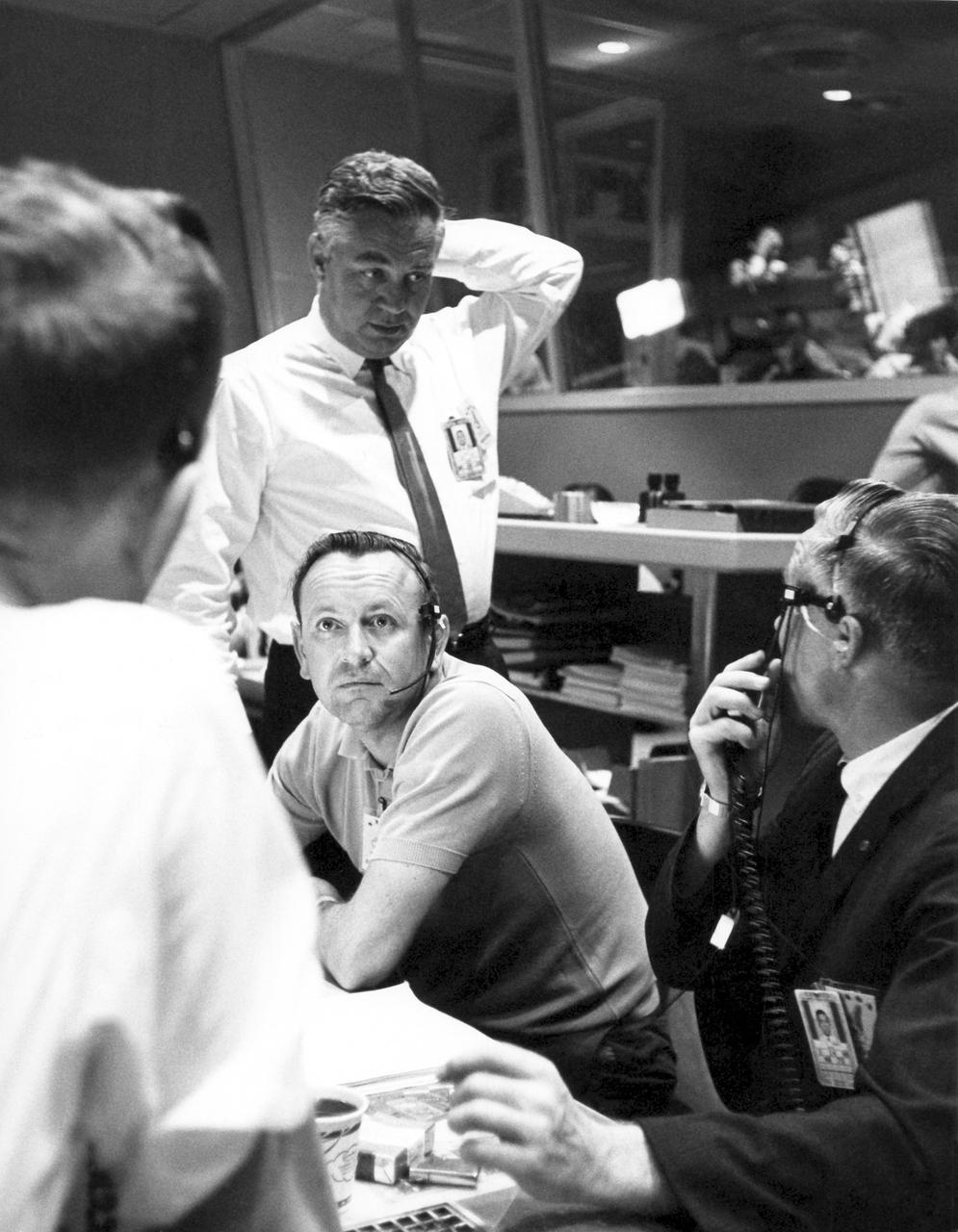
KSC-62-MA7-55
S63-03960 (1 Feb. 1963) --- Astronaut L. Gordon Cooper Jr., prime pilot for the Mercury-Atlas 9 (MA-9) mission, checks over the instrument panel from Mercury spacecraft #20 with Robert Graham, McDonnell Aircraft Corp. spacecraft engineer. It contains the instruments necessary to monitor spacecraft systems and sequencing, the controls required to initiate primary sequences manually, and flight control displays. Photo credit: NASA
MERCURY-ATLAS (MA)-9 - "FRIENDSHIP 7" SPACECRAFT - PRELAUNCH ACTIVITIES - CAPE
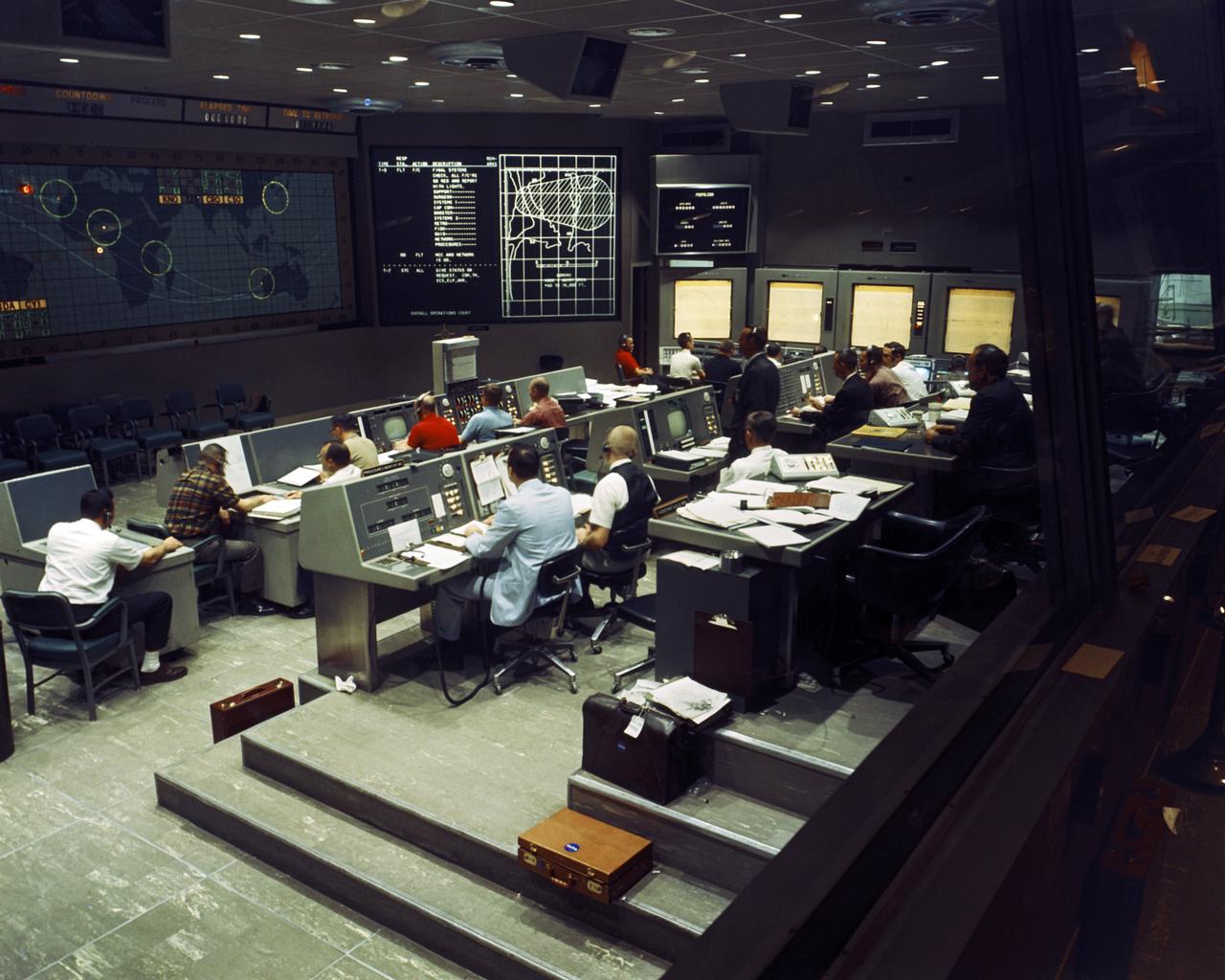
CAPE CANAVERAL, Fla. - Flight controllers gather inside Mercury Mission Control during the first orbit of John Glenn's Friendship 7 mission, which launched on Feb. 20, 1962.      The Mercury Mission Control Center in Florida played a key role in the United States' early spaceflight program. Located at Cape Canaveral Air Force Station, the original part of the building was constructed between 1956 and 1958, with additions in 1959 and 1963. The facility officially was transferred to NASA on Dec. 26, 1963, and served as mission control during all the Project Mercury missions, as well as the first three flights of the Gemini Program, when it was renamed Mission Control Center. With its operational days behind, on June 1, 1967, the Mission Control Center became a stop on the public tour of NASA facilities until the mid-90s. In 1999, much of the equipment and furnishings from the Flight Control Area were moved to the Kennedy Space Center Visitor Complex where they became part of the exhibit there. The building was demolished in spring 2010. Photo credit: NASA
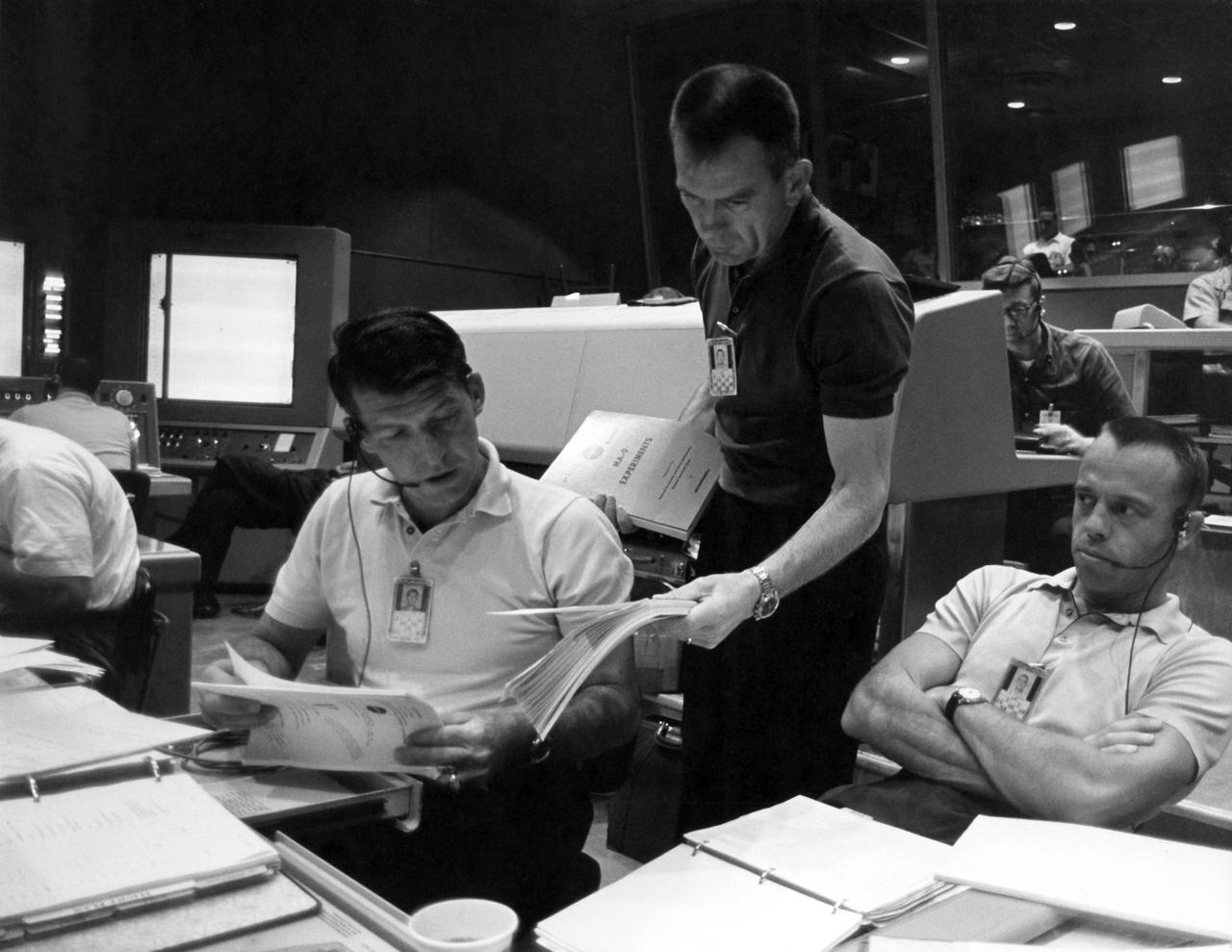
KSC-62-MA6-161
CAPE CANAVERAL, Fla. - Flight controllers gather inside Mercury Mission Control for Alan Shepard's Freedom 7 mission, which launched on May 5, 1961.       The Mercury Mission Control Center in Florida played a key role in the United States' early spaceflight program. Located at Cape Canaveral Air Force Station, the original part of the building was constructed between 1956 and 1958, with additions in 1959 and 1963. The facility officially was transferred to NASA on Dec. 26, 1963, and served as mission control during all the Project Mercury missions, as well as the first three flights of the Gemini Program, when it was renamed Mission Control Center. With its operational days behind, on June 1, 1967, the Mission Control Center became a stop on the public tour of NASA facilities until the mid-90s. In 1999, much of the equipment and furnishings from the Flight Control Area were moved to the Kennedy Space Center Visitor Complex where they became part of the exhibit there. The building was demolished in spring 2010. Photo credit: NASA
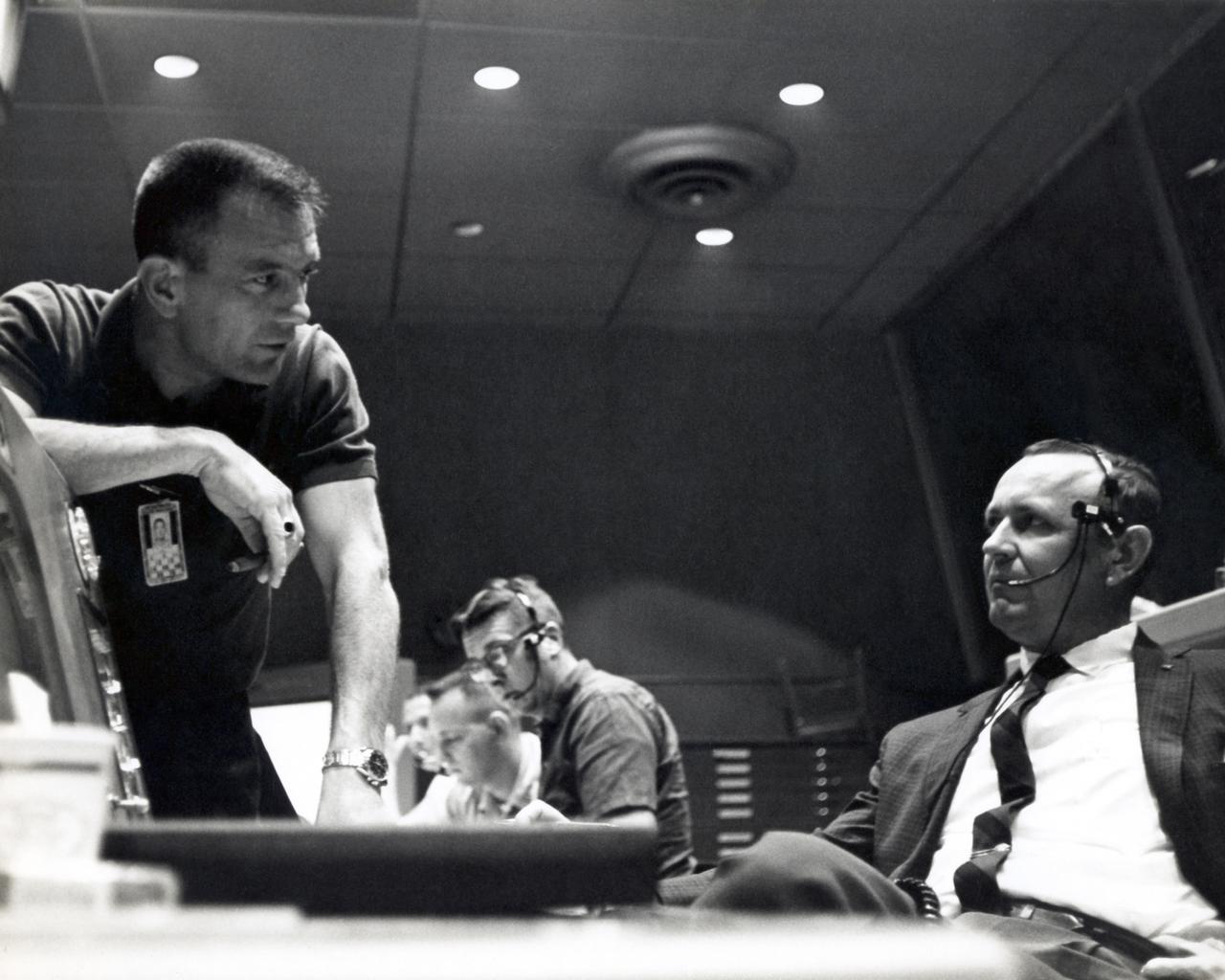
KSC-61-MR3-95
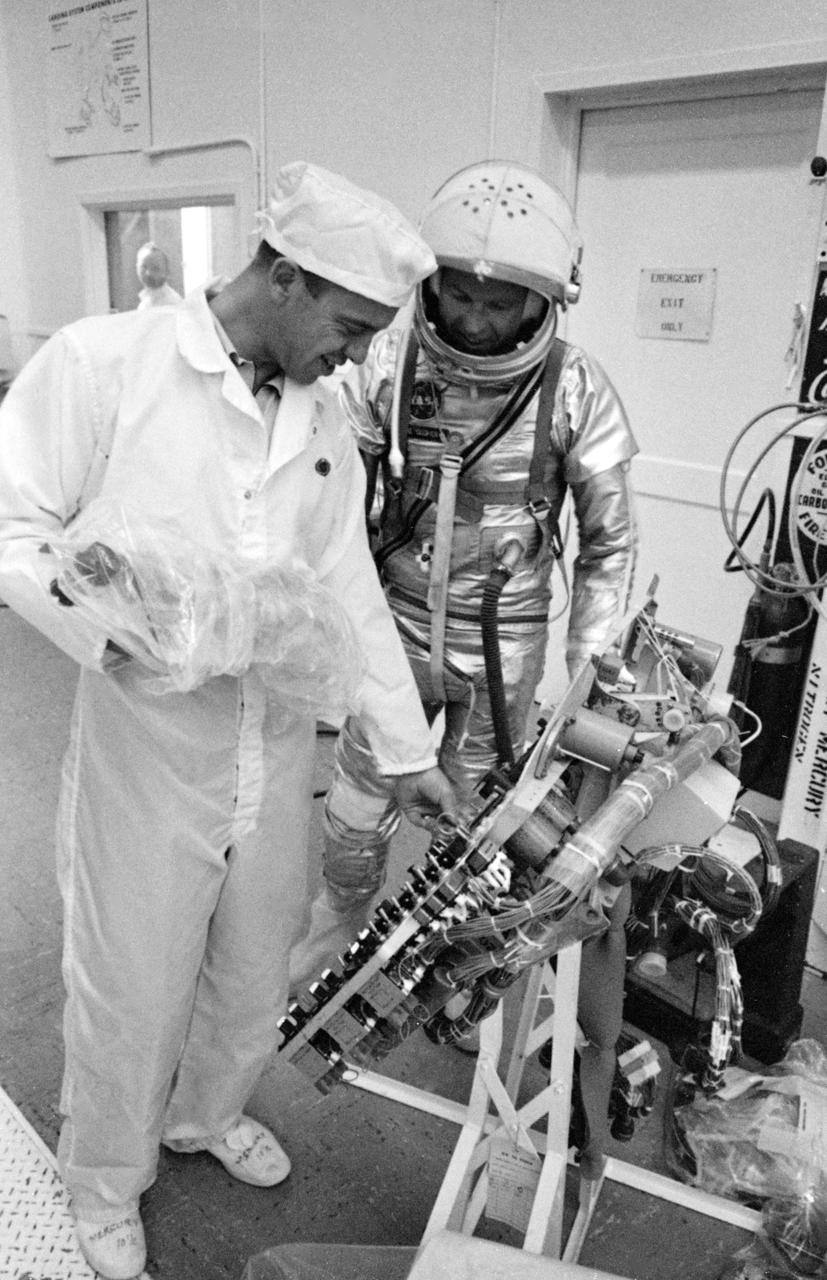
S63-03965 (1963) --- Astronauts Alan Shepard (left) and L. Gordon Cooper Jr.(in suit) check over the instrument panel from Mercury spacecraft #20. It contains the instruments necessary to monitor spacecraft systems and sequencing, the controls required to initiate primary sequences manually, and the necessary flight control displays. Photo credit: NASA
White Room - Mercury-Atlas (MA)-9 Prelaunch Activities - Astronauts Cooper and Shepard - Cape
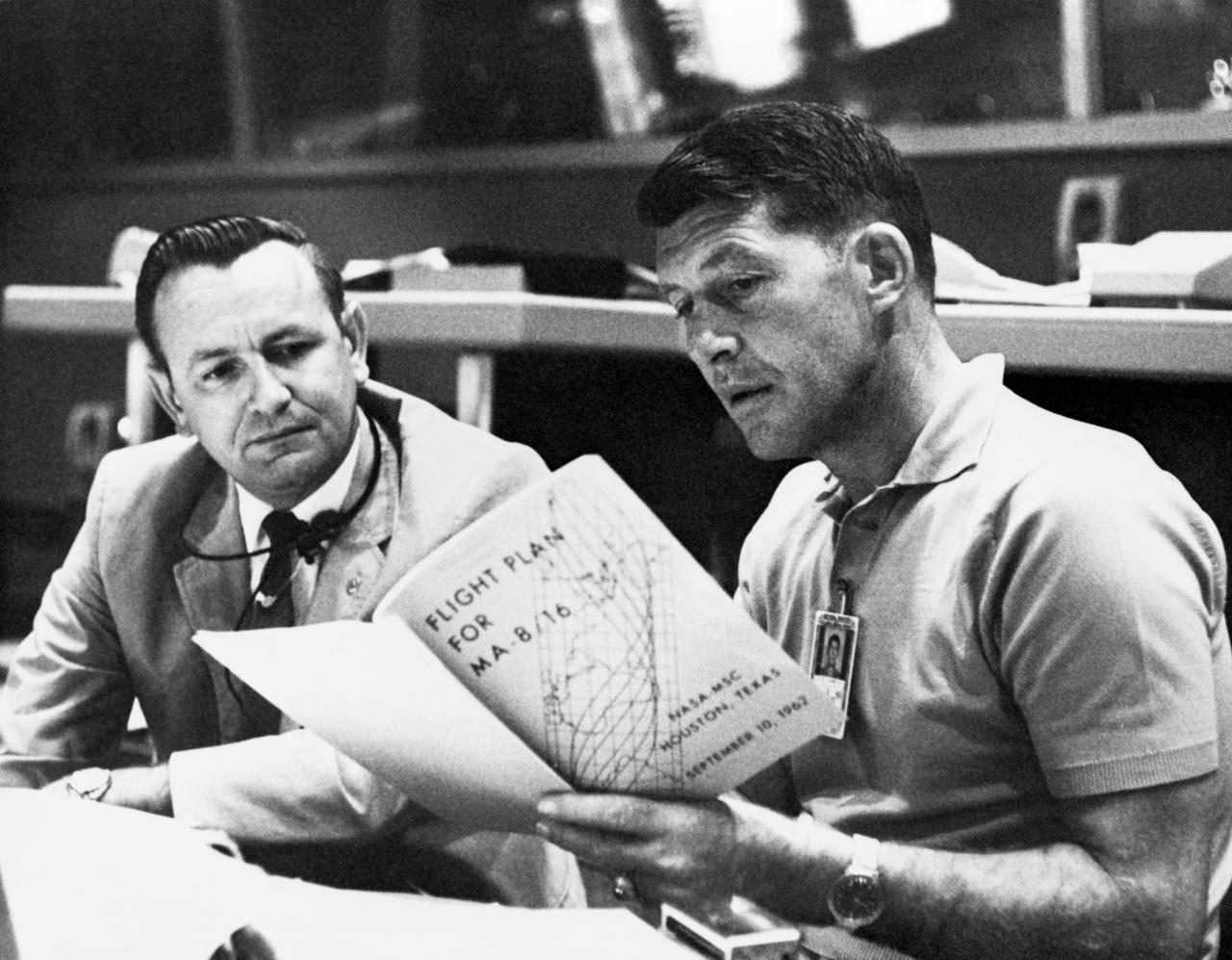
S74-33004 (19 Sept. 1962) --- Astronaut Walter M. Schirra Jr, (right), Mercury-Atlas 8 (MA-8) pilot, discusses the MA-8 flight plan with flight director Christopher C. Kraft Jr., Chief of the Flight Operations Division at the Manned Spacecraft Center, Houston, during MA-8 preflight preparations at Cape Canaveral, Florida. They are seated at a console in the Mercury Control Center. Photo credit: NASA
BLDG. 30 - SIMULATIONS (COMMUNICATIONS - ASTP)
S74-33006 (19 Sept. 1962) --- Flight director Christopher C. Kraft Jr. (center), Chief of the Flight Operations Division at the Manned Spacecraft Center, Houston, discusses the Mercury-Atlas 8 (MA-8) flight plan with astronauts L. Gordon Cooper Jr. (left) and Walter M. Schirra Jr., on Sept. 19, 1962. They are standing in the Mercury Control Center at Cape Canaveral, Florida. Photo credit: NASA
BLDG. 30 - SIMULATIONS (COMMUNICATIONS - ASTP)
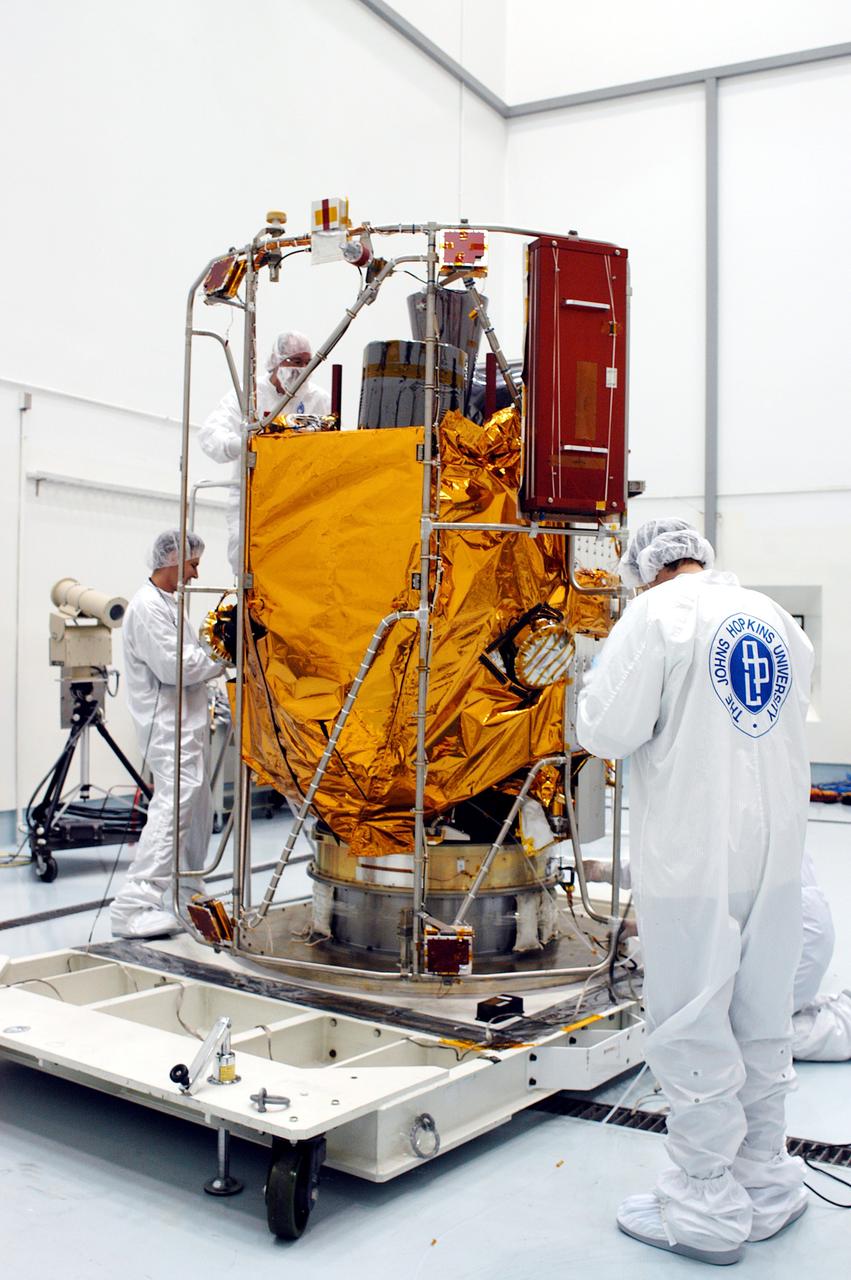
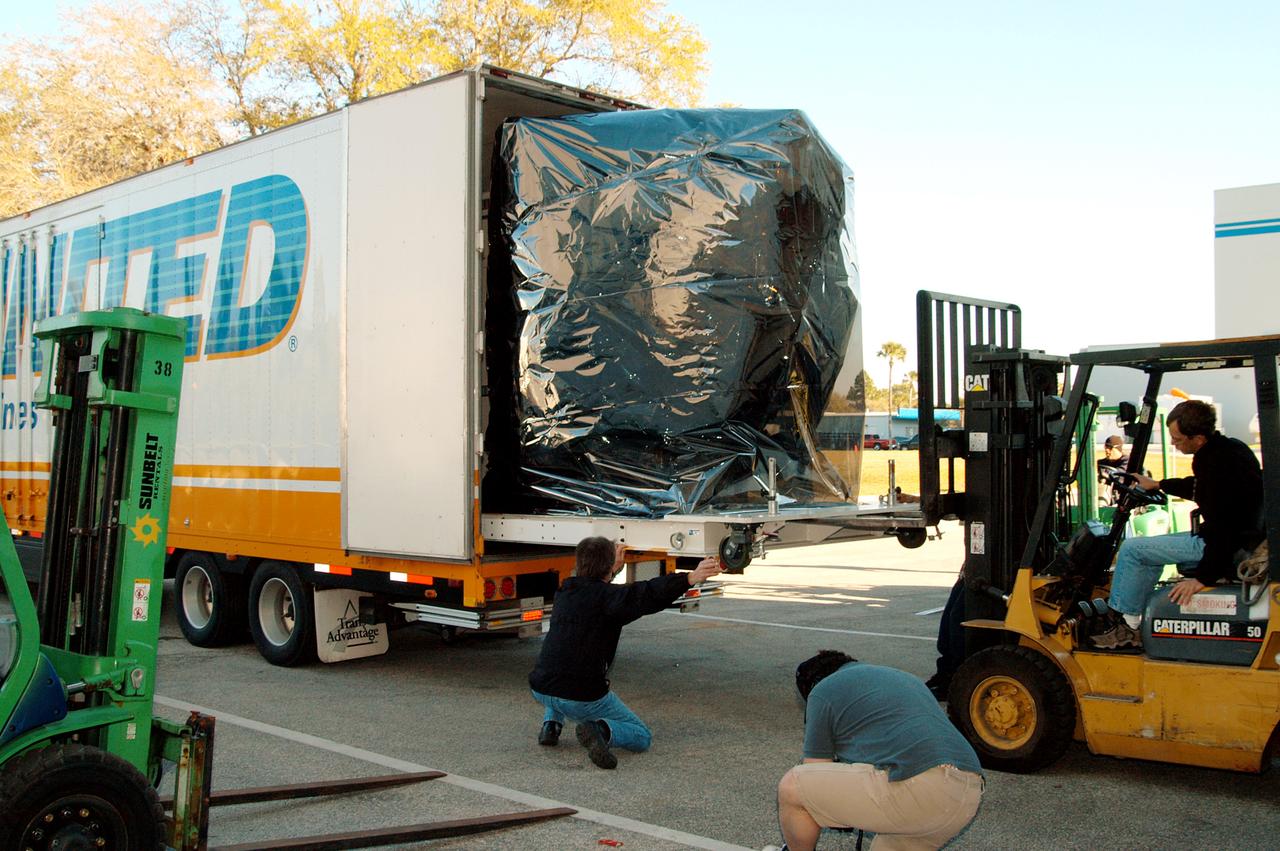
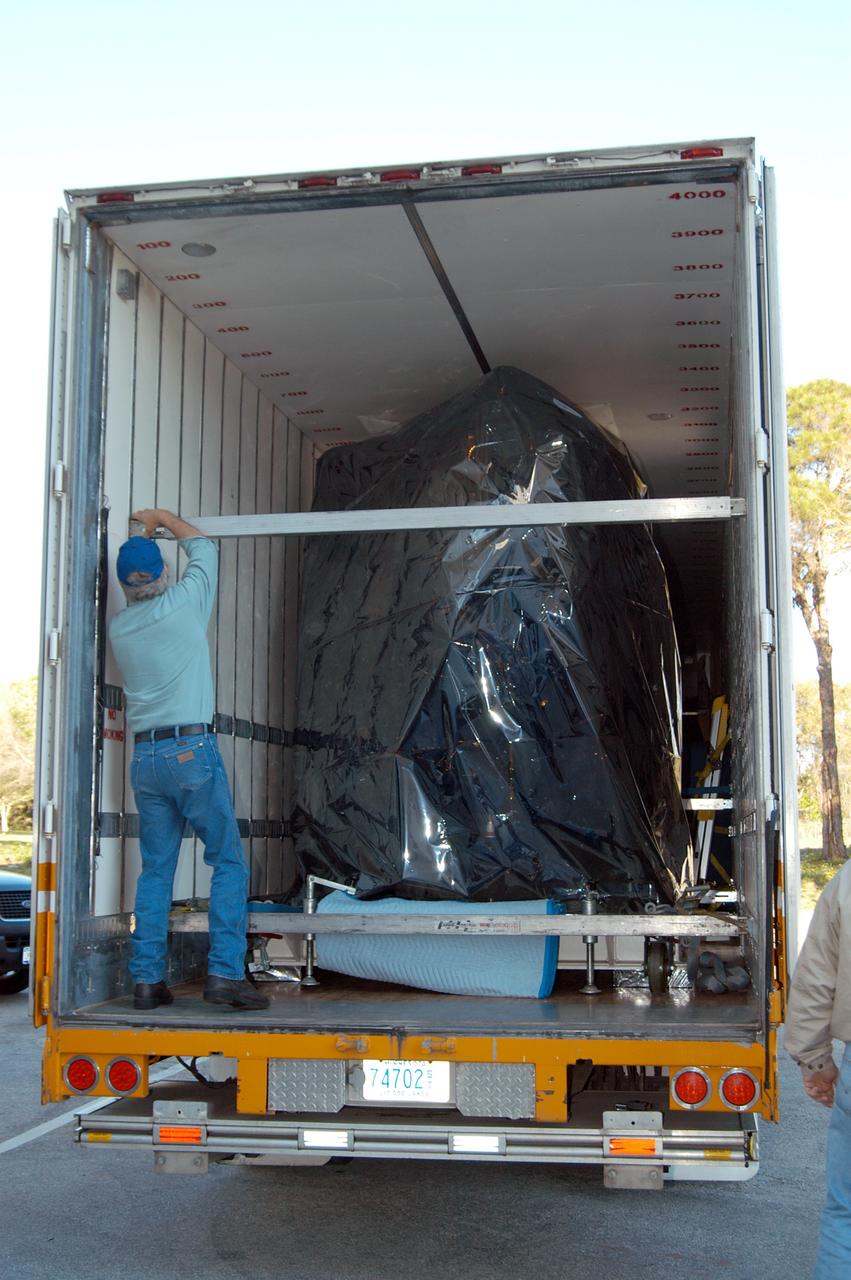
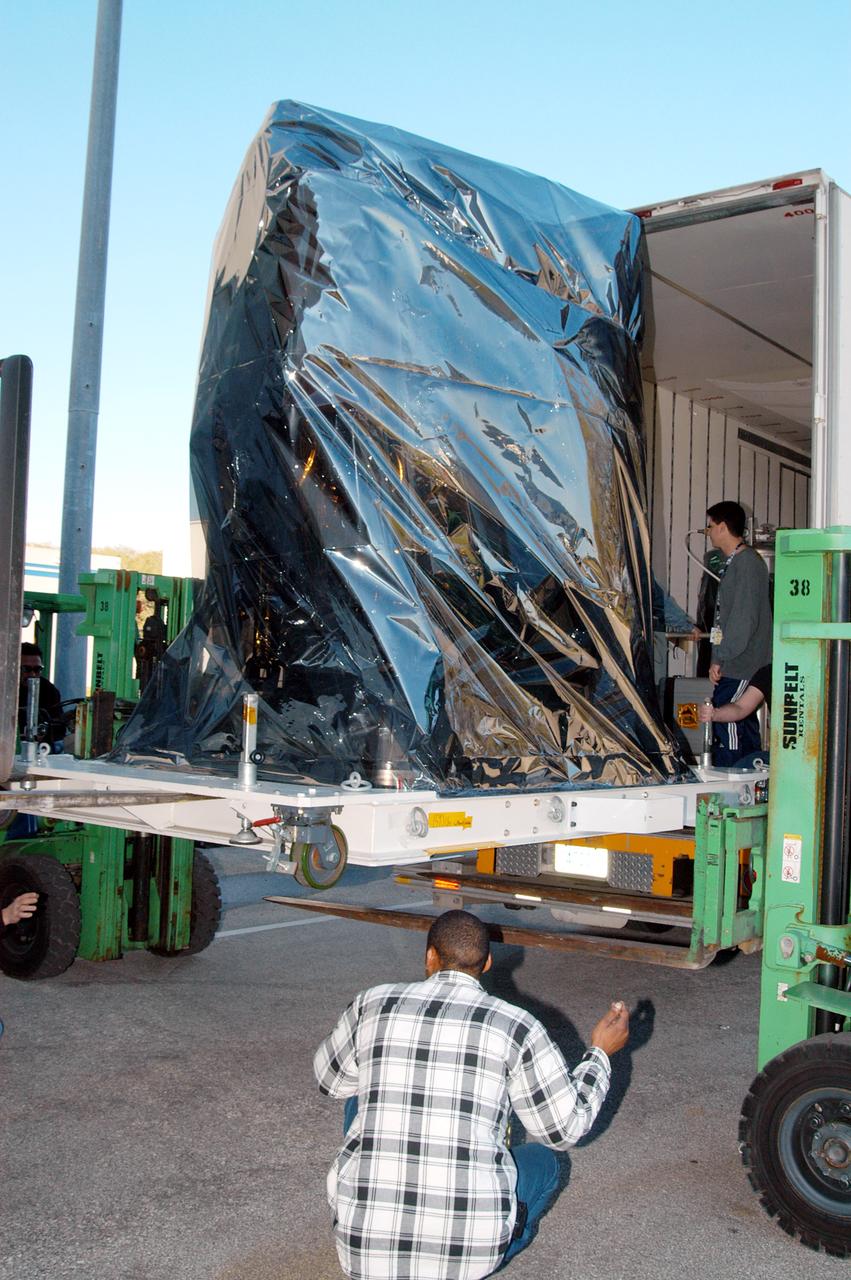
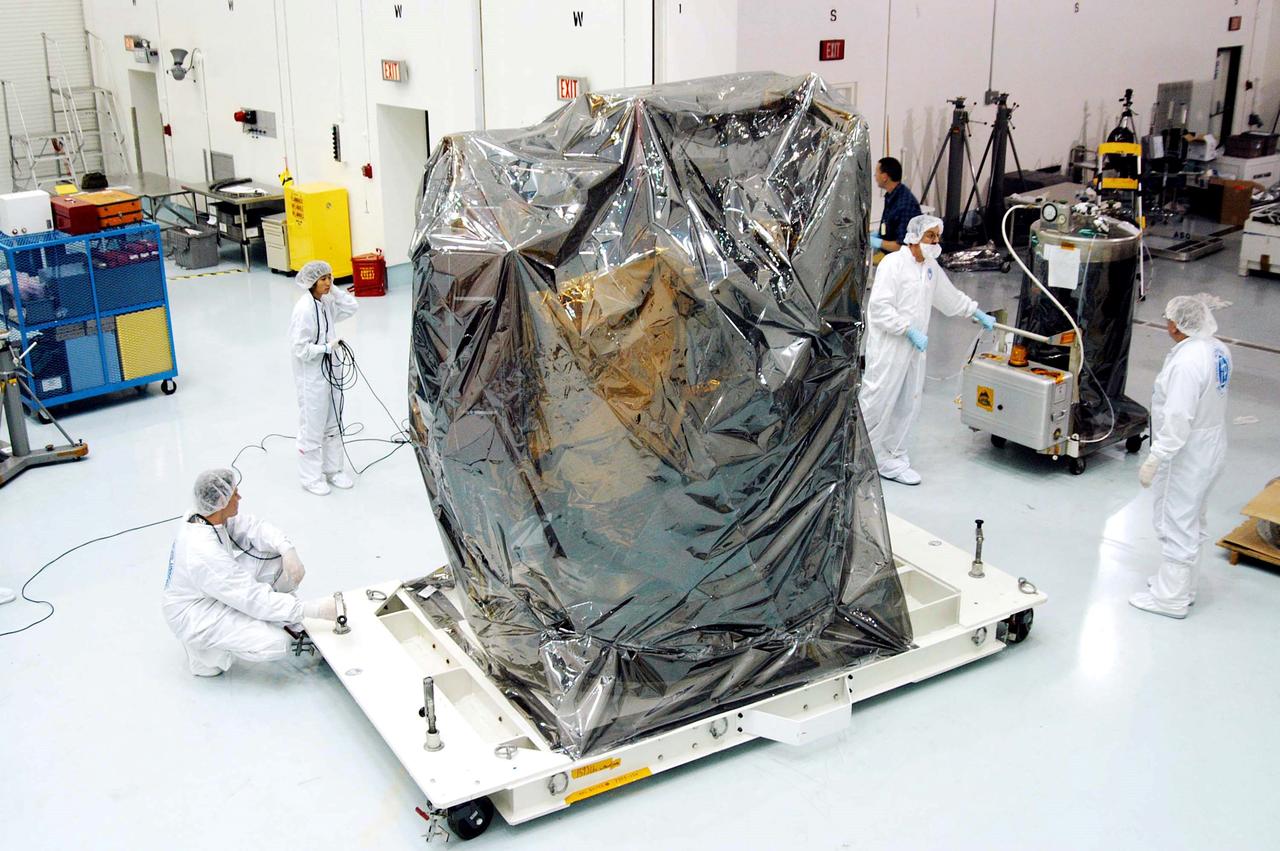
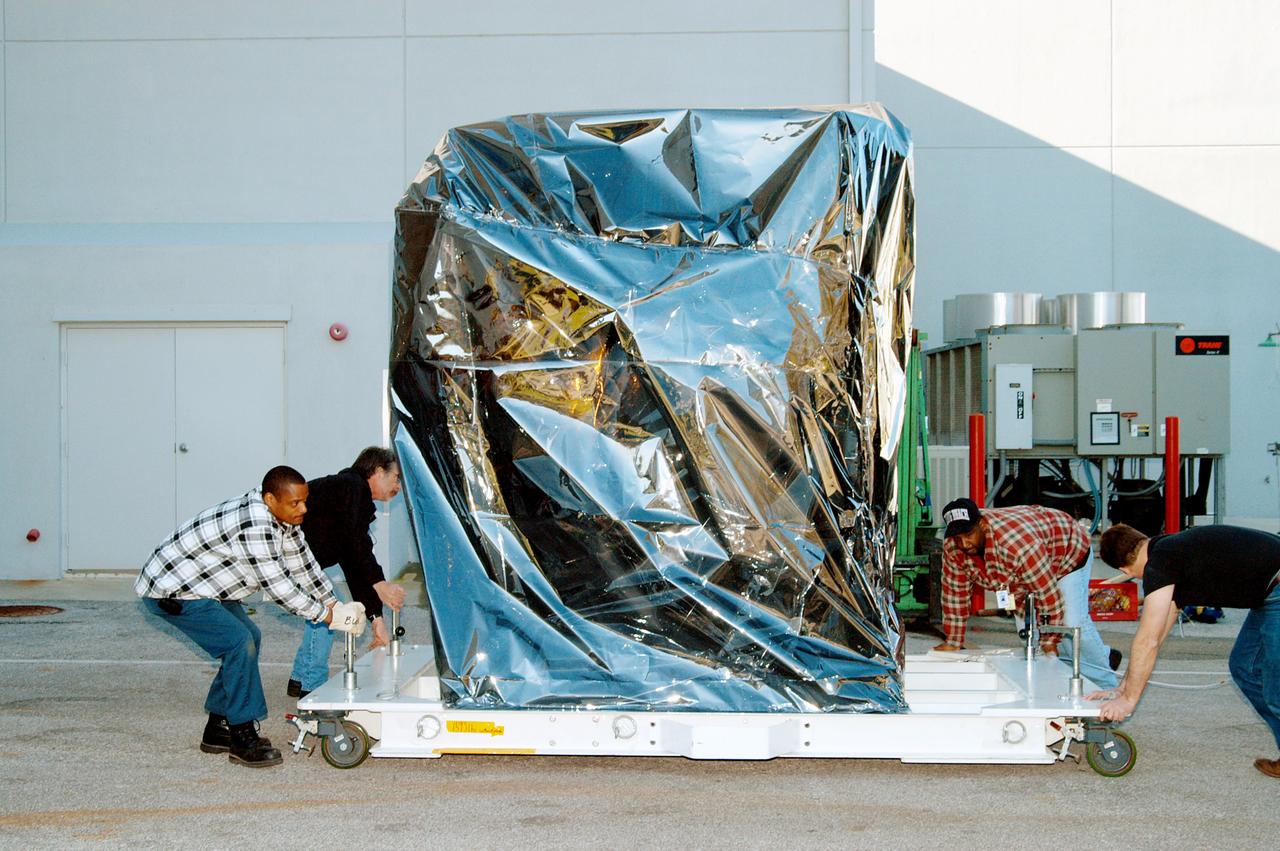
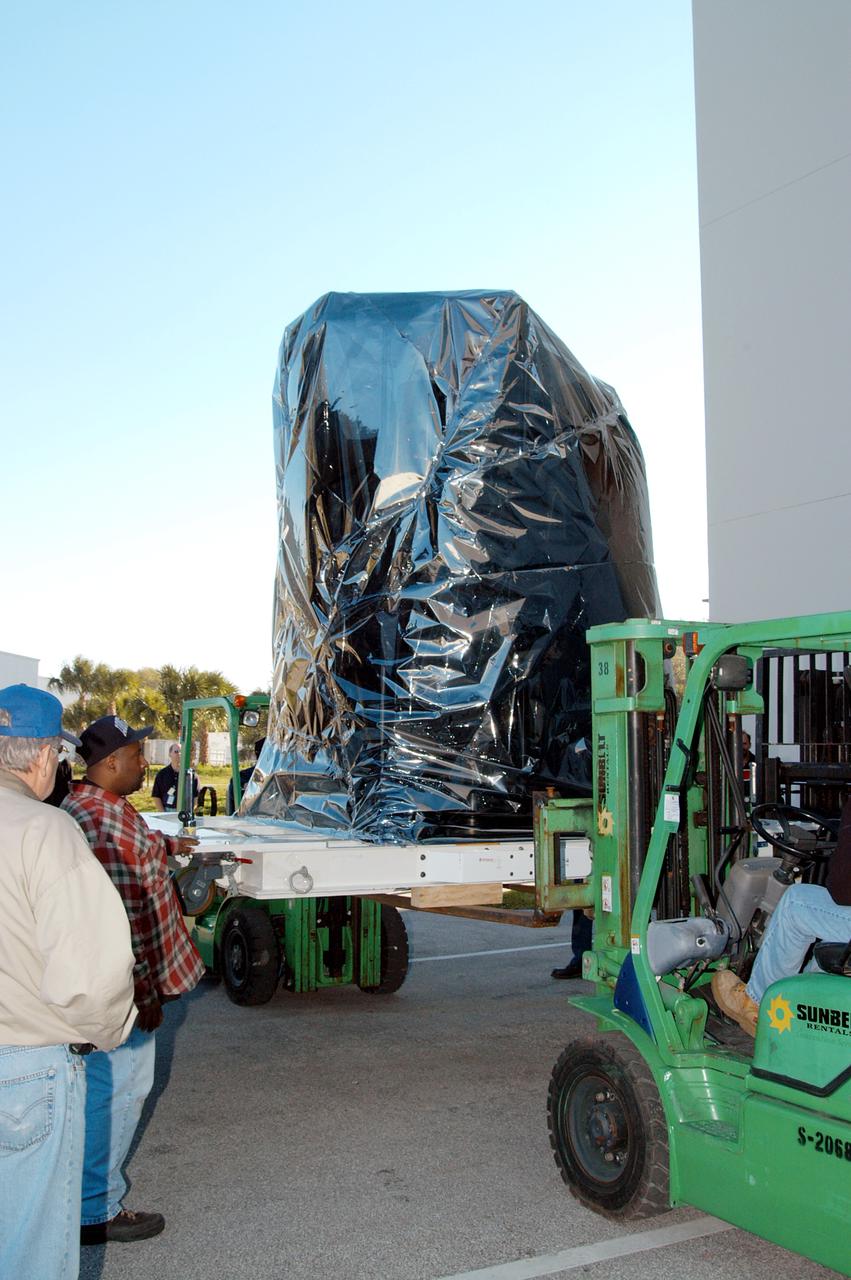
KENNEDY SPACE CENTER, FLA. -  Shipped in an air-conditioned transportation van from NASA’s Goddard Space Flight Center in Greenbelt, Md., NASA’s MESSENGER spacecraft, the first Mercury orbiter, arrives at the Astrotech Space Operations processing facilities near KSC.    MESSENGER - short for MErcury Surface, Space ENvironment, GEochemistry and Ranging - will be offloaded and taken into a high bay clean room.  After the spacecraft is removed from its shipping container, employees of the Johns Hopkins University Applied Physics Laboratory, builders of the spacecraft, will perform an initial state-of-health check.  Then processing for launch can begin, including checkout of the power systems, communications systems and control systems.  The thermal blankets will also be attached for flight.  MESSENGER will be launched May 11 on a six-year mission aboard a Boeing Delta II rocket.  Liftoff is targeted for 2:26 a.m. EDT on Tuesday, May 11.
KENNEDY SPACE CENTER, FLA. - Shipped in an air-conditioned transportation van from NASA’s Goddard Space Flight Center in Greenbelt, Md., NASA’s MESSENGER spacecraft, the first Mercury orbiter, arrives at the Astrotech Space Operations processing facilities near KSC. MESSENGER - short for MErcury Surface, Space ENvironment, GEochemistry and Ranging - will be offloaded and taken into a high bay clean room. After the spacecraft is removed from its shipping container, employees of the Johns Hopkins University Applied Physics Laboratory, builders of the spacecraft, will perform an initial state-of-health check. Then processing for launch can begin, including checkout of the power systems, communications systems and control systems. The thermal blankets will also be attached for flight. MESSENGER will be launched May 11 on a six-year mission aboard a Boeing Delta II rocket. Liftoff is targeted for 2:26 a.m. EDT on Tuesday, May 11.
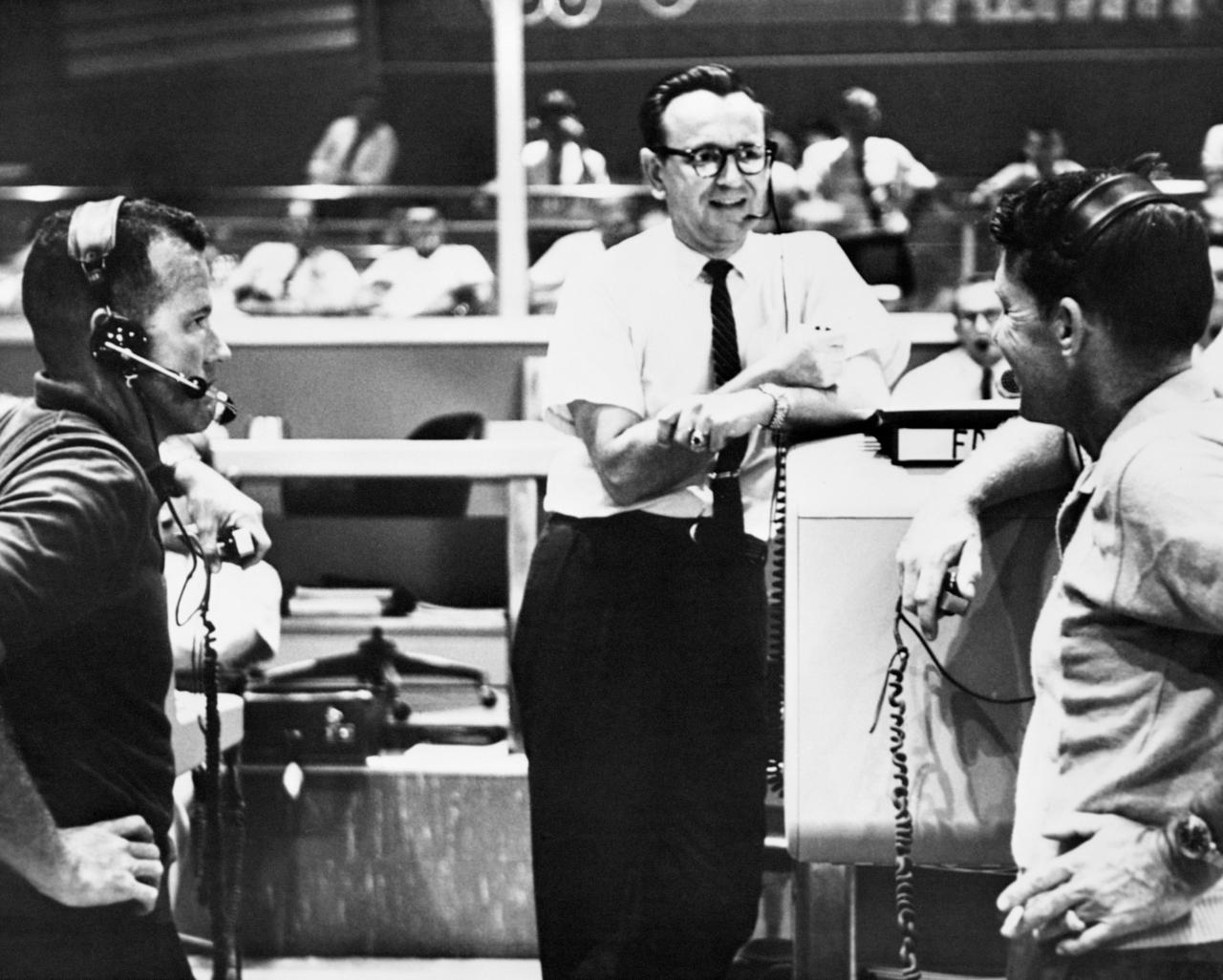
S63-07881 (15-16 May 1963) --- Walter C. Williams, Flight Operations Director; and Chris Kraft, Chief of the Flight Operations Division, MSC, are shown in the Mercury Control Center, Cape Canaveral, Florida, as the decision to go for the full 22 orbits is made for the Mercury Atlas 9 (MA-9) mission. Photo credit: NASA
PERSONNEL - KRAFT, CHRISTOPHER - CAPE
CAPE CANAVERAL, Fla. – At Cape Canaveral Air Force Station in Florida, the control room of the Mercury Mission Control Center is exposed to the elements during the deconstruction of the dilapidated facility.   The original building, constructed between 1956 and 1958, was last modified in 1963.  The center succumbed to the two worst enemies of structures along the space coast - time and salt air - necessitating that it be demolished as a safety measure.  The facility served as mission control during all the Project Mercury missions, as well as the first three flights of the Gemini Program. The center housed the flight controllers whose duty was to take over flight control after liftoff and follow it through until splashdown. Additionally, it supported vehicle checkout, spacecraft tracking, and astronaut training. With Gemini IV, mission control moved to Houston, and the facility took on the roles of launch control and tracking station. In 1999, much of the equipment and furnishings from the flight control area was moved to Kennedy Space Center's Visitor Complex.  A re-created mission control room currently is on display in the complex's Dr. Kurt H. Debus Conference Facility.  Speegle II of Cocoa, Fla., was awarded the contract for the deconstruction project.  Frank-Lin Excavating is performing the demolition for Sunrise Systems of Brevard, a subcontractor to Speegle II.  Photo credit: NASA_Dimitri Gerondidakis
KSC-2010-3153
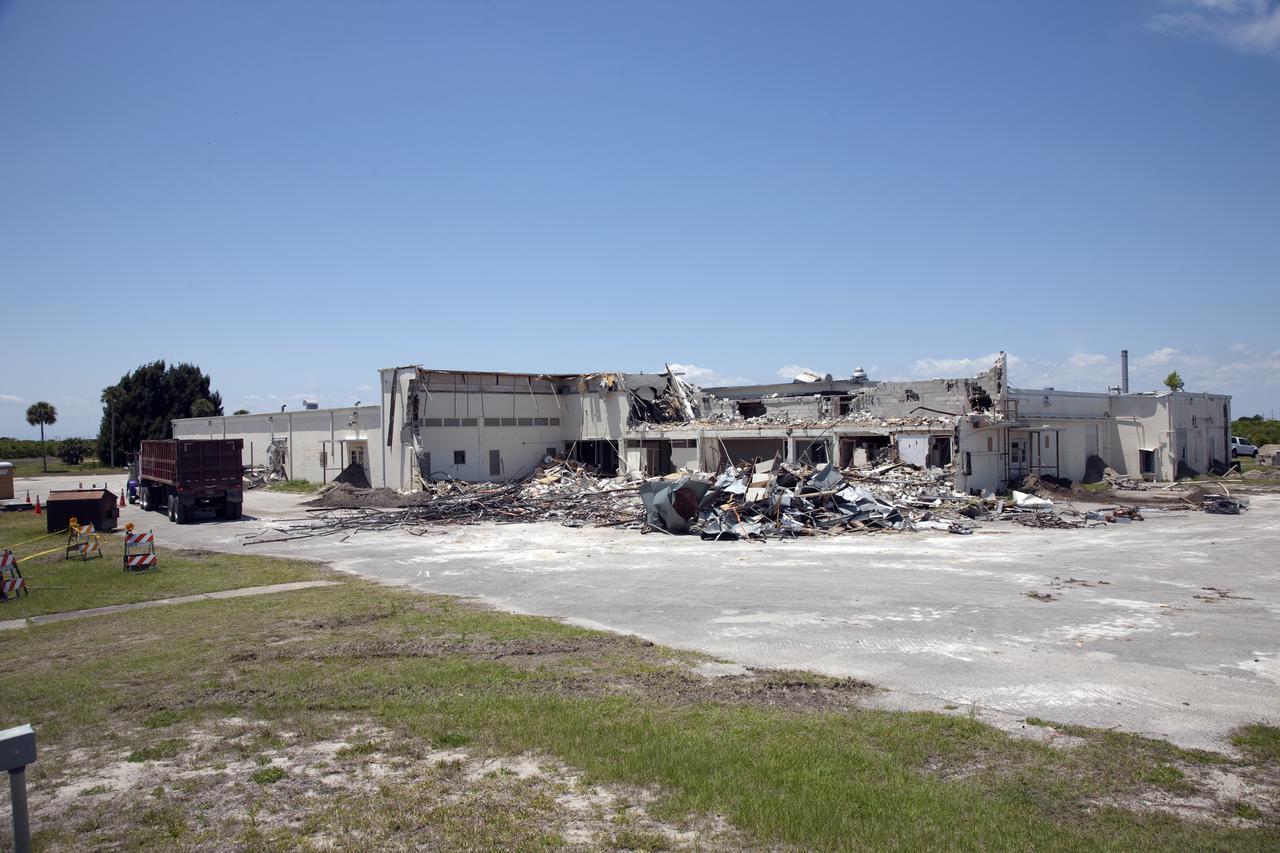
CAPE CANAVERAL, Fla. – At Cape Canaveral Air Force Station in Florida, preparations are under way to tear down the Mercury Mission Control Center.  The original building, constructed between 1956 and 1958, was last modified in 1963.  The center succumbed to the two worst enemies of structures along the space coast - time and salt air - necessitating that it be demolished as a safety measure.  The facility served as mission control during all the Project Mercury missions, as well as the first three flights of the Gemini Program. The center housed the flight controllers whose duty was to take over flight control after liftoff and follow it through until splashdown. Additionally, it supported vehicle checkout, spacecraft tracking, and astronaut training. With Gemini IV, mission control moved to Houston, and the facility took on the roles of launch control and tracking station. In 1999, much of the equipment and furnishings from the flight control area was moved to Kennedy Space Center's Visitor Complex.  A re-created mission control room currently is on display in the complex's Dr. Kurt H. Debus Conference Facility.  Speegle II of Cocoa, Fla., was awarded the contract for the deconstruction project.  Frank-Lin Excavating is performing the demolition for Sunrise Systems of Brevard, a subcontractor to Speegle II.  Photo credit: NASA_Jack Pfaller
KSC-2010-3102
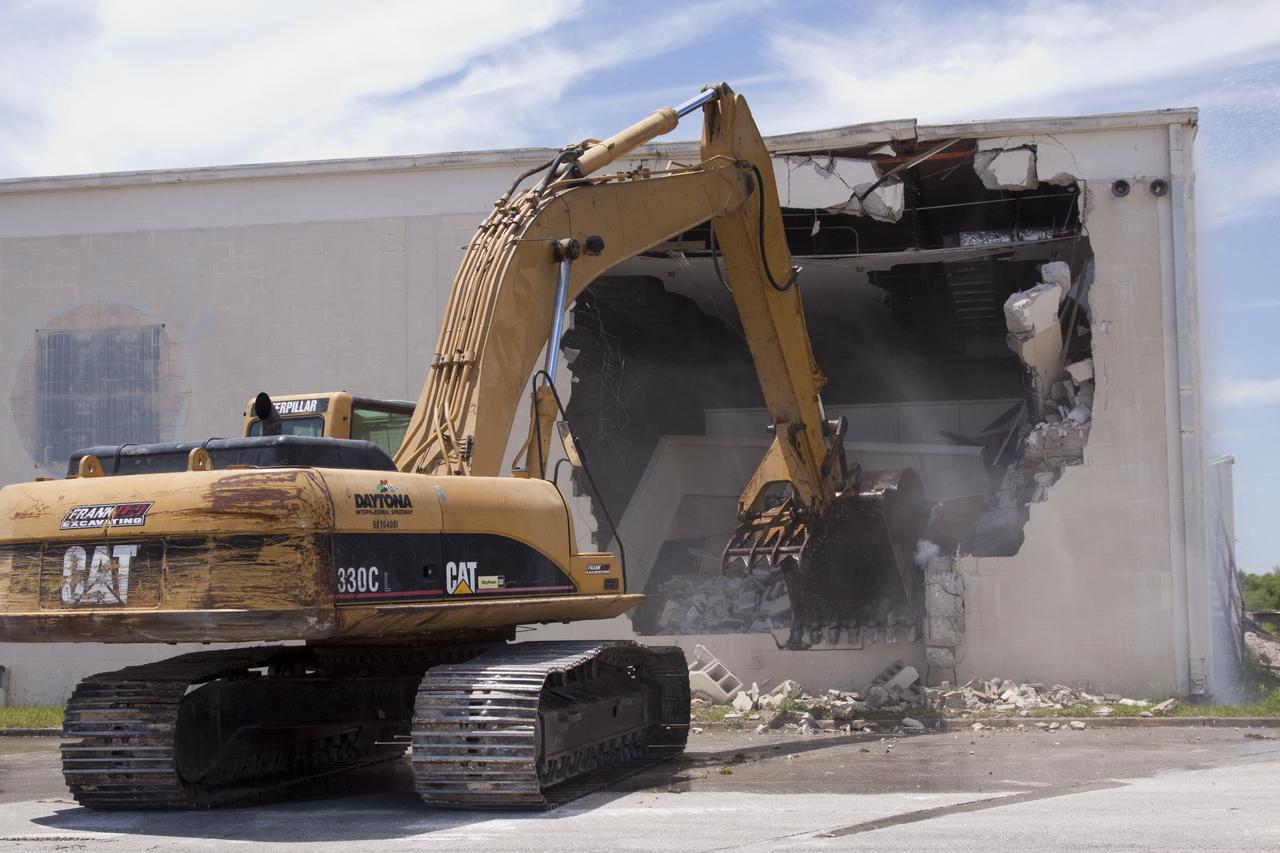
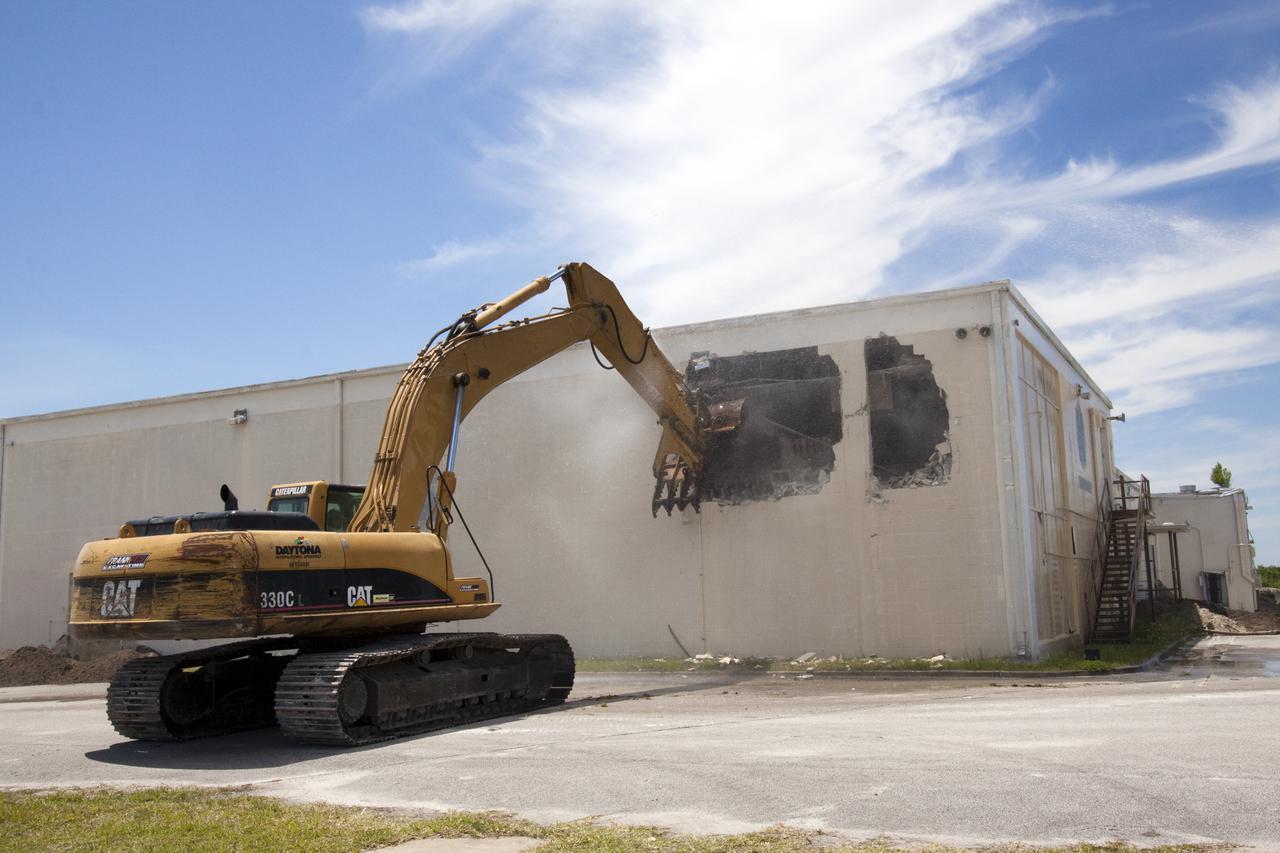
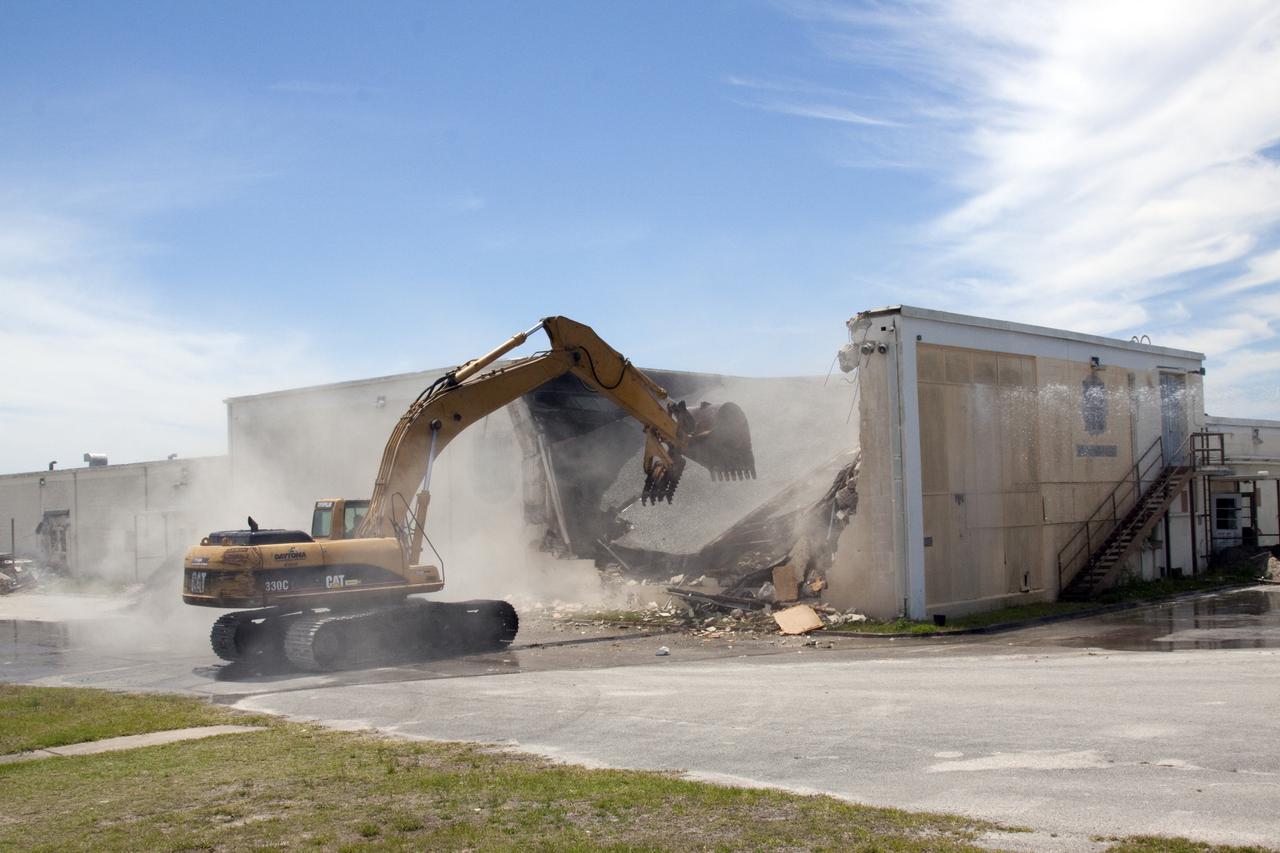
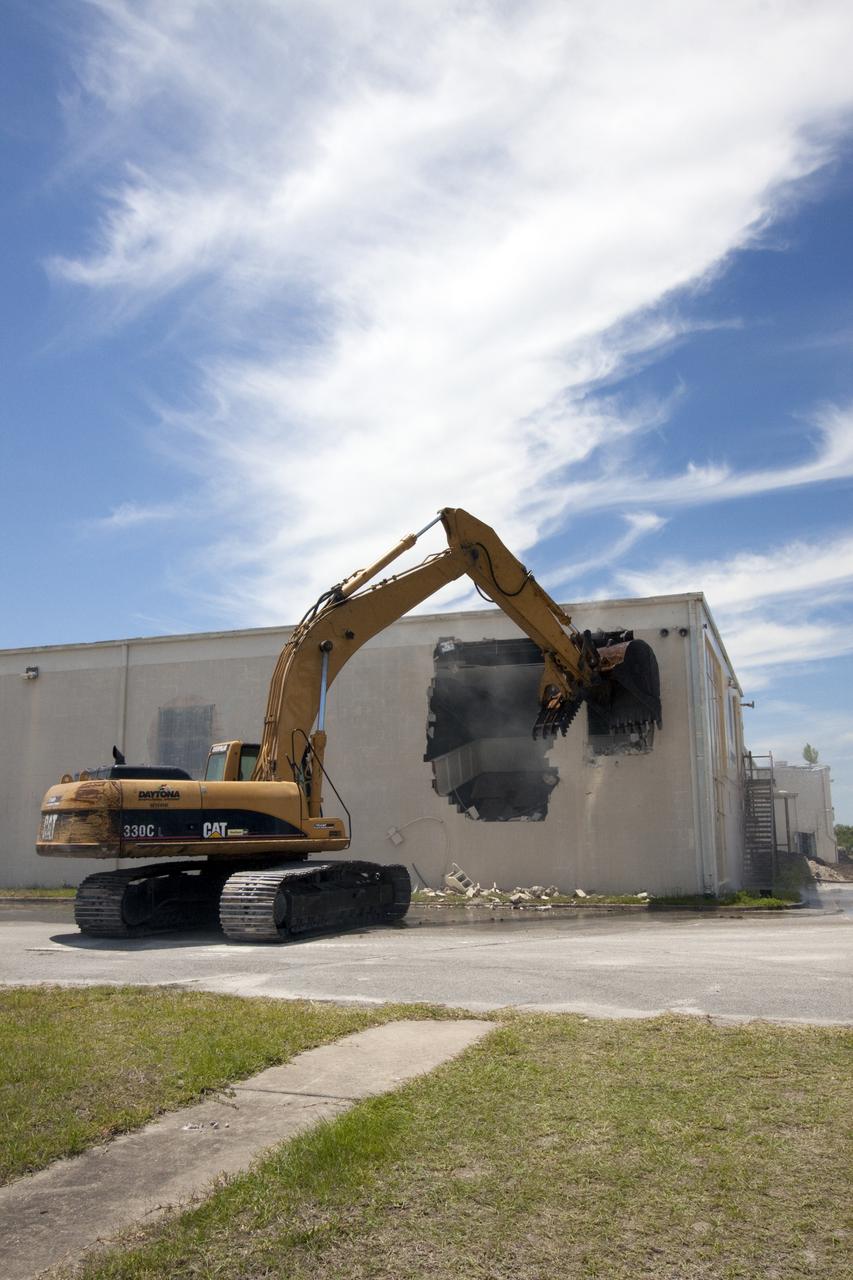
CAPE CANAVERAL, Fla. – At Cape Canaveral Air Force Station in Florida, a Caterpillar 330 track-hoe punches a hole in the wall of the Mercury Mission Control Center.  The original building, constructed between 1956 and 1958, was last modified in 1963.  The center succumbed to the two worst enemies of structures along the space coast - time and salt air - necessitating that it be demolished as a safety measure.  The facility served as mission control during all the Project Mercury missions, as well as the first three flights of the Gemini Program. The center housed the flight controllers whose duty was to take over flight control after liftoff and follow it through until splashdown. Additionally, it supported vehicle checkout, spacecraft tracking, and astronaut training. With Gemini IV, mission control moved to Houston, and the facility took on the roles of launch control and tracking station. In 1999, much of the equipment and furnishings from the flight control area was moved to Kennedy Space Center's Visitor Complex.  A re-created mission control room currently is on display in the complex's Dr. Kurt H. Debus Conference Facility.  Speegle II of Cocoa, Fla., was awarded the contract for the deconstruction project.  Frank-Lin Excavating is performing the demolition for Sunrise Systems of Brevard, a subcontractor to Speegle II.  Photo credit: NASA_Jack Pfaller
KSC-2010-3103
CAPE CANAVERAL, Fla. – At Cape Canaveral Air Force Station in Florida, a Caterpillar 330 track-hoe rips through the wall of the Mercury Mission Control Center.  The original building, constructed between 1956 and 1958, was last modified in 1963.  The center succumbed to the two worst enemies of structures along the space coast - time and salt air - necessitating that it be demolished as a safety measure.  The facility served as mission control during all the Project Mercury missions, as well as the first three flights of the Gemini Program. The center housed the flight controllers whose duty was to take over flight control after liftoff and follow it through until splashdown. Additionally, it supported vehicle checkout, spacecraft tracking, and astronaut training. With Gemini IV, mission control moved to Houston, and the facility took on the roles of launch control and tracking station. In 1999, much of the equipment and furnishings from the flight control area was moved to Kennedy Space Center's Visitor Complex.  A re-created mission control room currently is on display in the complex's Dr. Kurt H. Debus Conference Facility.  Speegle II of Cocoa, Fla., was awarded the contract for the deconstruction project.  Frank-Lin Excavating is performing the demolition for Sunrise Systems of Brevard, a subcontractor to Speegle II.  Photo credit: NASA_Jack Pfaller
KSC-2010-3104
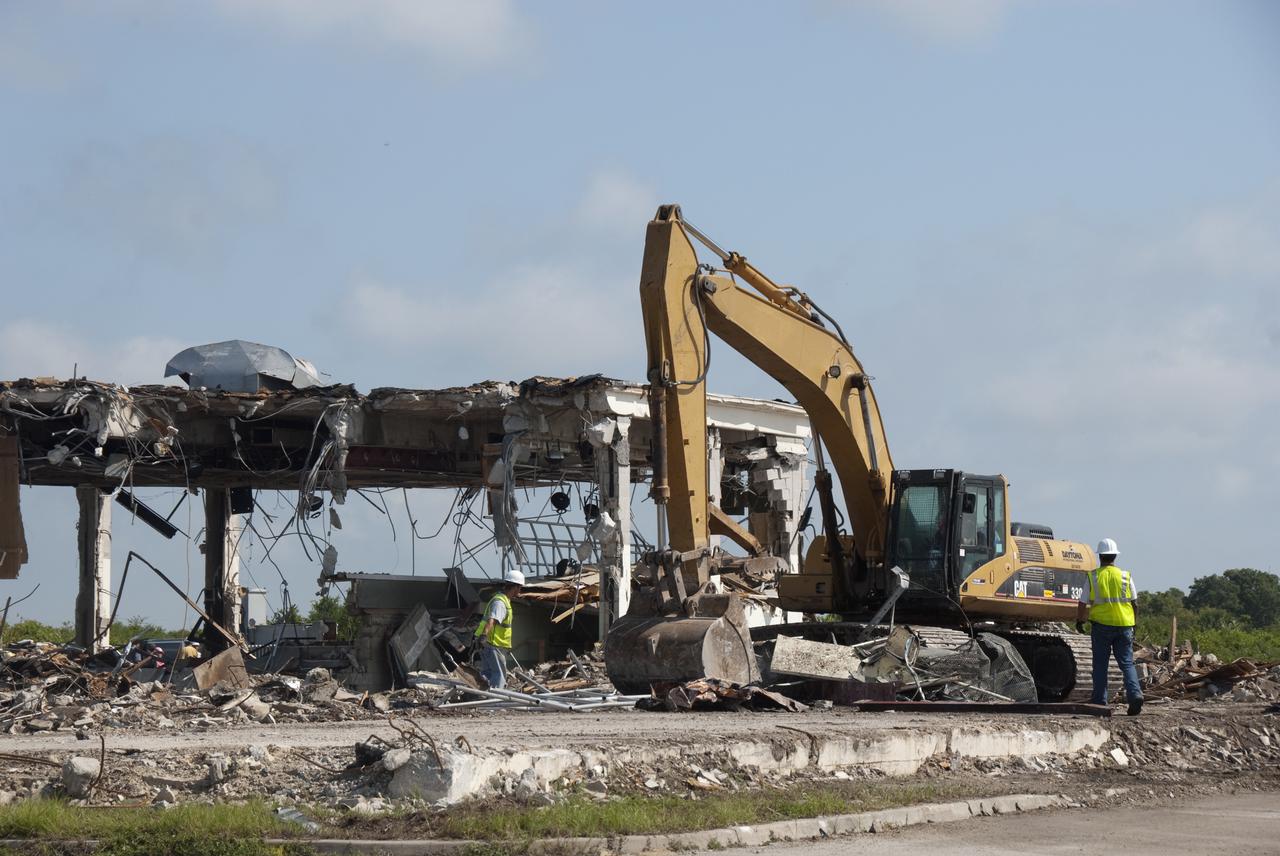
CAPE CANAVERAL, Fla. – At Cape Canaveral Air Force Station in Florida, a Caterpillar 330 track-hoe, at right, cleans up the rubble it has made of the Mercury Mission Control Center during its deconstruction.  The original building, constructed between 1956 and 1958, was last modified in 1963.  The center succumbed to the two worst enemies of structures along the space coast - time and salt air - necessitating that it be demolished as a safety measure.  The facility served as mission control during all the Project Mercury missions, as well as the first three flights of the Gemini Program. The center housed the flight controllers whose duty was to take over flight control after liftoff and follow it through until splashdown. Additionally, it supported vehicle checkout, spacecraft tracking, and astronaut training. With Gemini IV, mission control moved to Houston, and the facility took on the roles of launch control and tracking station. In 1999, much of the equipment and furnishings from the flight control area was moved to Kennedy Space Center's Visitor Complex.  A re-created mission control room currently is on display in the complex's Dr. Kurt H. Debus Conference Facility.  Speegle II of Cocoa, Fla., was awarded the contract for the deconstruction project.  Frank-Lin Excavating is performing the demolition for Sunrise Systems of Brevard, a subcontractor to Speegle II.  Photo credit: NASA_Dimitri Gerondidakis
KSC-2010-3151
CAPE CANAVERAL, Fla. – At Cape Canaveral Air Force Station in Florida, a Caterpillar 330 track-hoe knocks down the Mercury Mission Control Center.  The original building, constructed between 1956 and 1958, was last modified in 1963.  The center succumbed to the two worst enemies of structures along the space coast - time and salt air - necessitating that it be demolished as a safety measure.  The facility served as mission control during all the Project Mercury missions, as well as the first three flights of the Gemini Program. The center housed the flight controllers whose duty was to take over flight control after liftoff and follow it through until splashdown. Additionally, it supported vehicle checkout, spacecraft tracking, and astronaut training. With Gemini IV, mission control moved to Houston, and the facility took on the roles of launch control and tracking station. In 1999, much of the equipment and furnishings from the flight control area was moved to Kennedy Space Center's Visitor Complex.  A re-created mission control room currently is on display in the complex's Dr. Kurt H. Debus Conference Facility.  Speegle II of Cocoa, Fla., was awarded the contract for the deconstruction project.  Frank-Lin Excavating is performing the demolition for Sunrise Systems of Brevard, a subcontractor to Speegle II.  Photo credit: NASA_Jack Pfaller
KSC-2010-3105
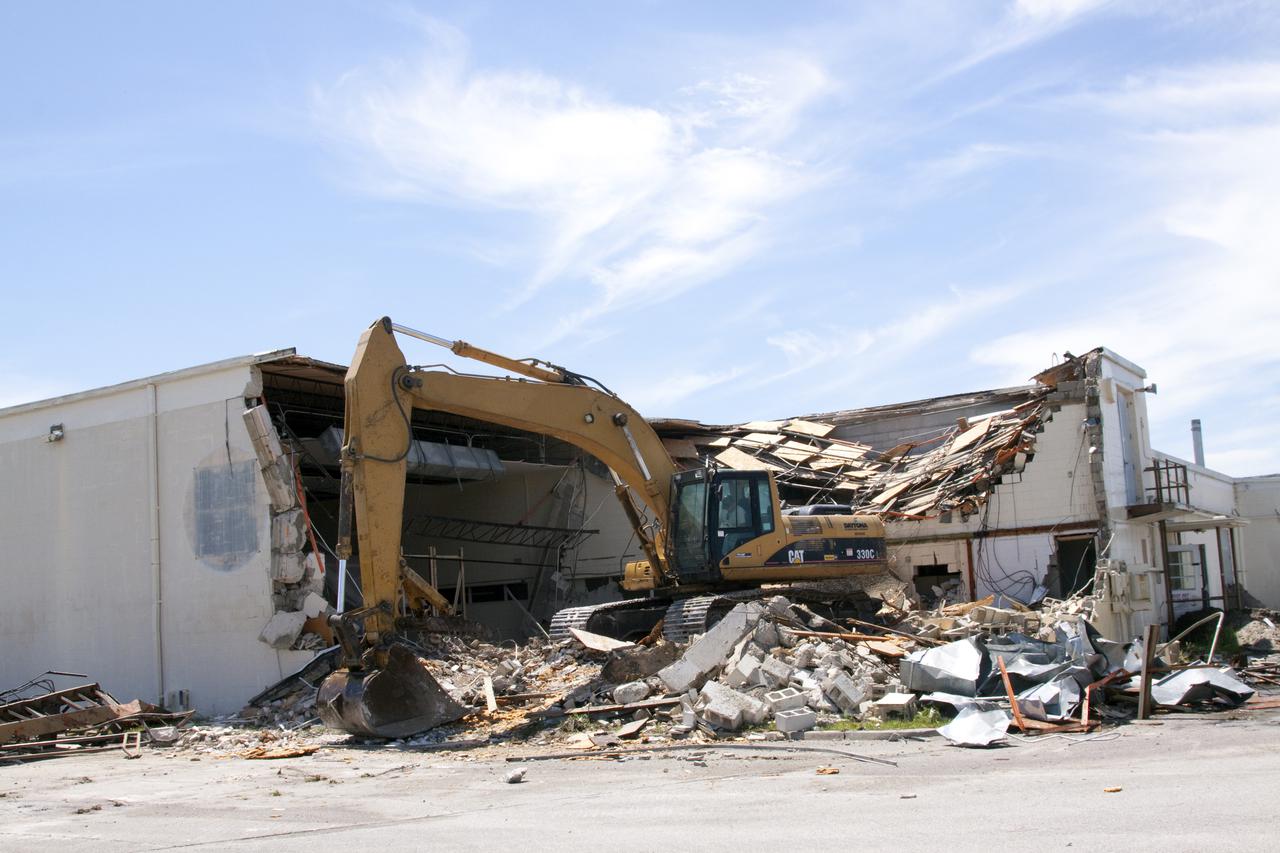
CAPE CANAVERAL, Fla. – At Cape Canaveral Air Force Station in Florida, the walls of the Mercury Mission Control Center tumble down under the careful guidance of a Caterpillar 330 track-hoe.  The original building, constructed between 1956 and 1958, was last modified in 1963.  The center succumbed to the two worst enemies of structures along the space coast - time and salt air - necessitating that it be demolished as a safety measure.  The facility served as mission control during all the Project Mercury missions, as well as the first three flights of the Gemini Program. The center housed the flight controllers whose duty was to take over flight control after liftoff and follow it through until splashdown. Additionally, it supported vehicle checkout, spacecraft tracking, and astronaut training. With Gemini IV, mission control moved to Houston, and the facility took on the roles of launch control and tracking station. In 1999, much of the equipment and furnishings from the flight control area was moved to Kennedy Space Center's Visitor Complex.  A re-created mission control room currently is on display in the complex's Dr. Kurt H. Debus Conference Facility.  Speegle II of Cocoa, Fla., was awarded the contract for the deconstruction project.  Frank-Lin Excavating is performing the demolition for Sunrise Systems of Brevard, a subcontractor to Speegle II.  Photo credit: NASA_Jack Pfaller
KSC-2010-3109
CAPE CANAVERAL, Fla. – At Cape Canaveral Air Force Station in Florida, workers take time out from operation of a Caterpillar 330 track-hoe and the demolition of NASA's Mercury Mission Control Center to determine their next steps.  The deconstruction project began on April 28. The original building, constructed between 1956 and 1958, was last modified in 1963.  The center succumbed to the two worst enemies of structures along the space coast - time and salt air - necessitating that it be demolished as a safety measure.  The facility served as mission control during all the Project Mercury missions, as well as the first three flights of the Gemini Program. The center housed the flight controllers whose duty was to take over flight control after liftoff and follow it through until splashdown. Additionally, it supported vehicle checkout, spacecraft tracking, and astronaut training. With Gemini IV, mission control moved to Houston, and the facility took on the roles of launch control and tracking station. In 1999, much of the equipment and furnishings from the flight control area was moved to Kennedy Space Center's Visitor Complex.  A re-created mission control room currently is on display in the complex's Dr. Kurt H. Debus Conference Facility.  Speegle II of Cocoa, Fla., was awarded the contract for the deconstruction project.  Frank-Lin Excavating is performing the demolition for Sunrise Systems of Brevard, a subcontractor to Speegle II.  Photo credit: NASA_Jack Pfaller
KSC-2010-3462
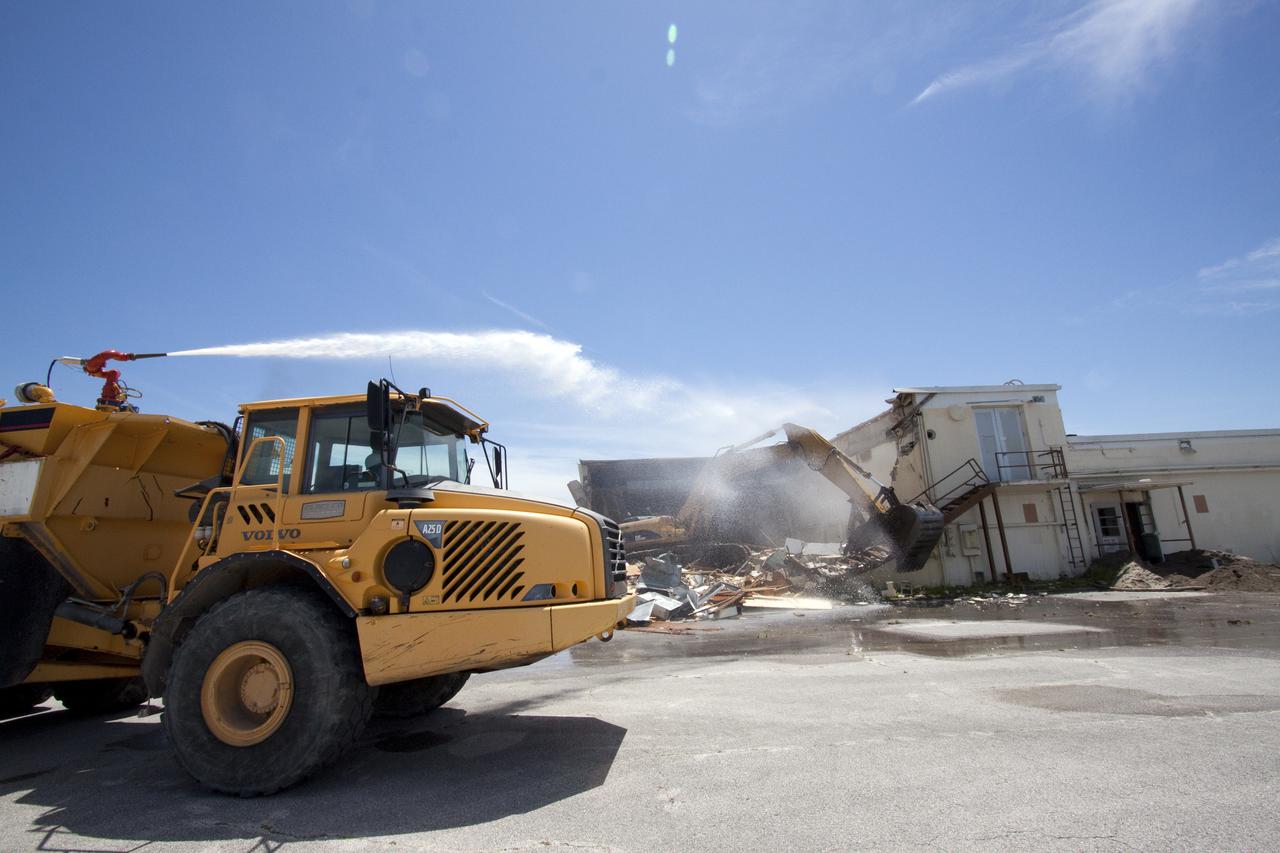
CAPE CANAVERAL, Fla. – At Cape Canaveral Air Force Station in Florida, demolition of the Mercury Mission Control Center has begun.  The original building, constructed between 1956 and 1958, was last modified in 1963.  The center succumbed to the two worst enemies of structures along the space coast - time and salt air - necessitating that it be demolished as a safety measure.  The facility served as mission control during all the Project Mercury missions, as well as the first three flights of the Gemini Program. The center housed the flight controllers whose duty was to take over flight control after liftoff and follow it through until splashdown. Additionally, it supported vehicle checkout, spacecraft tracking, and astronaut training. With Gemini IV, mission control moved to Houston, and the facility took on the roles of launch control and tracking station. In 1999, much of the equipment and furnishings from the flight control area was moved to Kennedy Space Center's Visitor Complex.  A re-created mission control room currently is on display in the complex's Dr. Kurt H. Debus Conference Facility.  Speegle II of Cocoa, Fla., was awarded the contract for the deconstruction project.  Frank-Lin Excavating is performing the demolition for Sunrise Systems of Brevard, a subcontractor to Speegle II.  Photo credit: NASA_Dimitri Gerondidakis
KSC-2010-3126
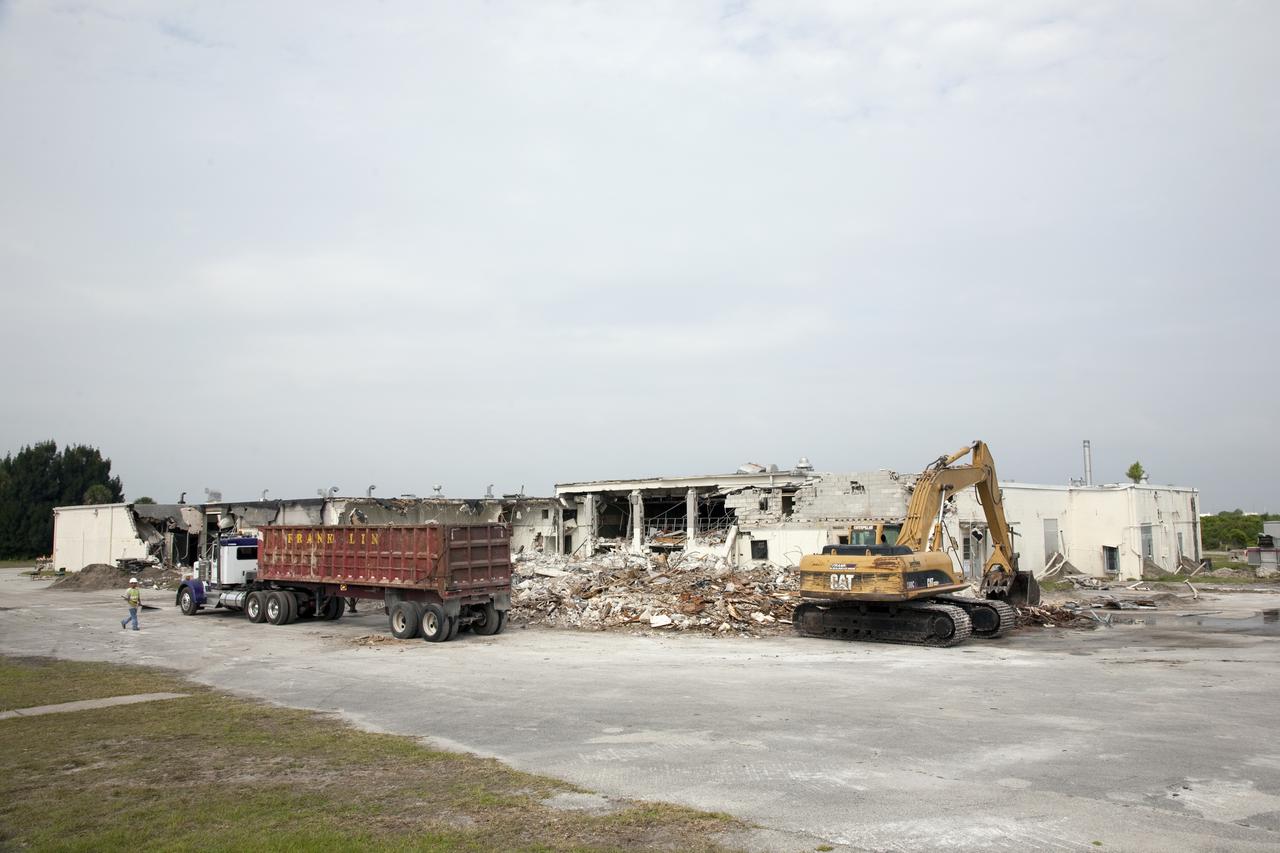
CAPE CANAVERAL, Fla. – At Cape Canaveral Air Force Station in Florida, a Caterpillar 330 track-hoe turns the Mercury Mission Control Center into a pile of rubble.  The original building, constructed between 1956 and 1958, was last modified in 1963.  The center succumbed to the two worst enemies of structures along the space coast - time and salt air - necessitating that it be demolished as a safety measure.  The facility served as mission control during all the Project Mercury missions, as well as the first three flights of the Gemini Program. The center housed the flight controllers whose duty was to take over flight control after liftoff and follow it through until splashdown. Additionally, it supported vehicle checkout, spacecraft tracking, and astronaut training. With Gemini IV, mission control moved to Houston, and the facility took on the roles of launch control and tracking station. In 1999, much of the equipment and furnishings from the flight control area was moved to Kennedy Space Center's Visitor Complex.  A re-created mission control room currently is on display in the complex's Dr. Kurt H. Debus Conference Facility.  Speegle II of Cocoa, Fla., was awarded the contract for the deconstruction project.  Frank-Lin Excavating is performing the demolition for Sunrise Systems of Brevard, a subcontractor to Speegle II.  Photo credit: NASA_Jack Pfaller
KSC-2010-3106
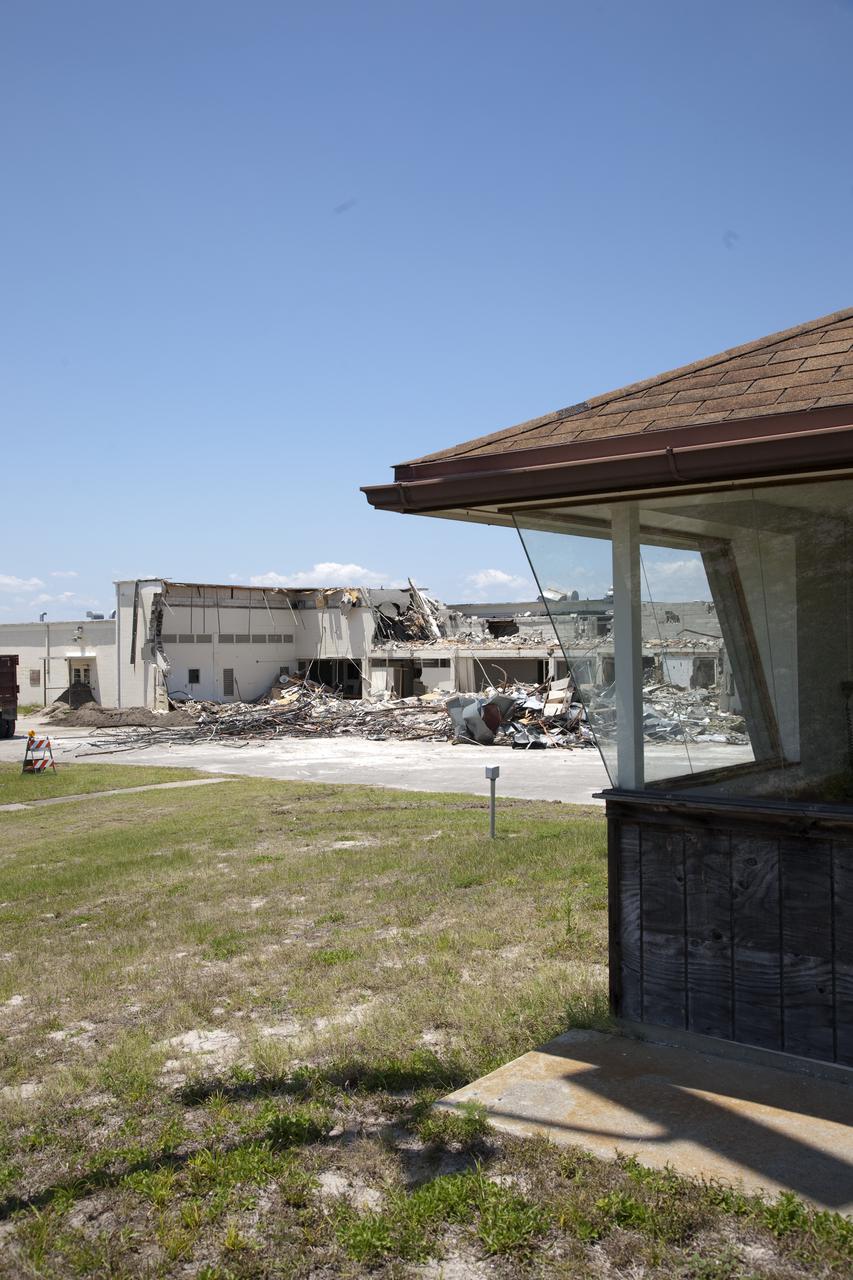
CAPE CANAVERAL, Fla. – At Cape Canaveral Air Force Station in Florida, deconstruction of the Mercury Mission Control Center is under way.  The original building, constructed between 1956 and 1958, was last modified in 1963.  The center succumbed to the two worst enemies of structures along the space coast - time and salt air - necessitating that it be demolished as a safety measure.  The facility served as mission control during all the Project Mercury missions, as well as the first three flights of the Gemini Program. The center housed the flight controllers whose duty was to take over flight control after liftoff and follow it through until splashdown. Additionally, it supported vehicle checkout, spacecraft tracking, and astronaut training. With Gemini IV, mission control moved to Houston, and the facility took on the roles of launch control and tracking station. In 1999, much of the equipment and furnishings from the flight control area was moved to Kennedy Space Center's Visitor Complex.  A re-created mission control room currently is on display in the complex's Dr. Kurt H. Debus Conference Facility.  Speegle II of Cocoa, Fla., was awarded the contract for the deconstruction project.  Frank-Lin Excavating is performing the demolition for Sunrise Systems of Brevard, a subcontractor to Speegle II.  Photo credit: NASA_Dimitri Gerondidakis
KSC-2010-3125
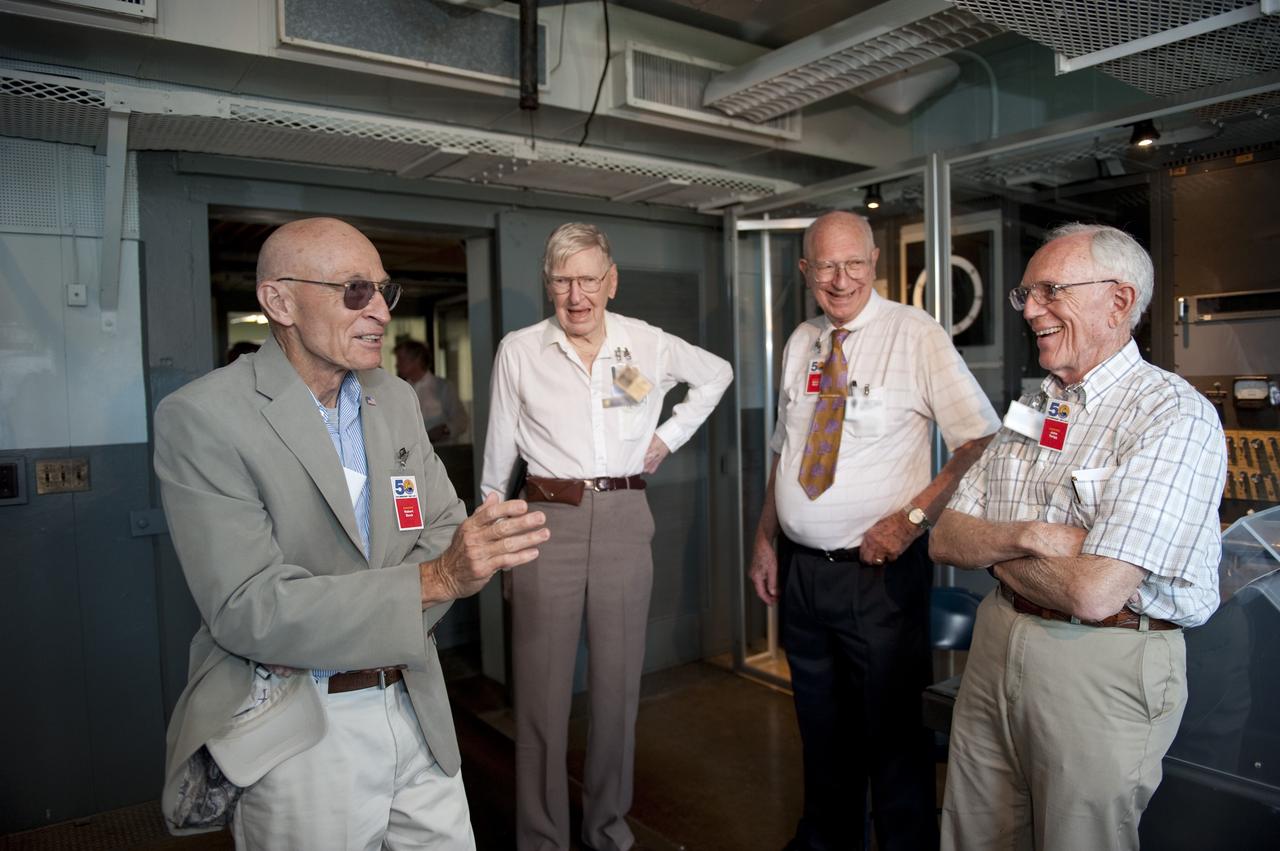
CAPE CANAVERAL, Fla. -- On Cape Canaveral Air Force Station in Florida, invited guests tour the blockhouse at Complex 5/6 during a celebration of Alan Shepard's historic flight 50 years ago. From left are Robert Sieck, former shuttle launch director; Andy Anderson, former manager for communications in the Mercury Mission Control Center; Bob Moser, former chief test conductor for the Mercury-Redstone launches; and John Twigg, former backup chief test conductor for the Mercury-Redstone launches.    The celebration was held at the launch site of the first U.S. manned spaceflight May 5, 1961, to mark the 50th anniversary of the flight.  Fifty years ago, astronaut Alan Shepard lifted off inside the Mercury capsule, "Freedom 7," atop an 82-foot-tall Mercury-Redstone rocket at 9:34 a.m. EST, sending him on a remarkably successful, 15-minute suborbital flight. The event was attended by more than 200 workers from the original Mercury program and included a re-creation of Shepard's flight and recovery, as well as a tribute to his contributions as a moonwalker on the Apollo 14 lunar mission. For more information, visit www.nasa.gov/topics/history/milestones/index.html. Photo credit: NASA/Kim Shiflett
KSC-2011-3333
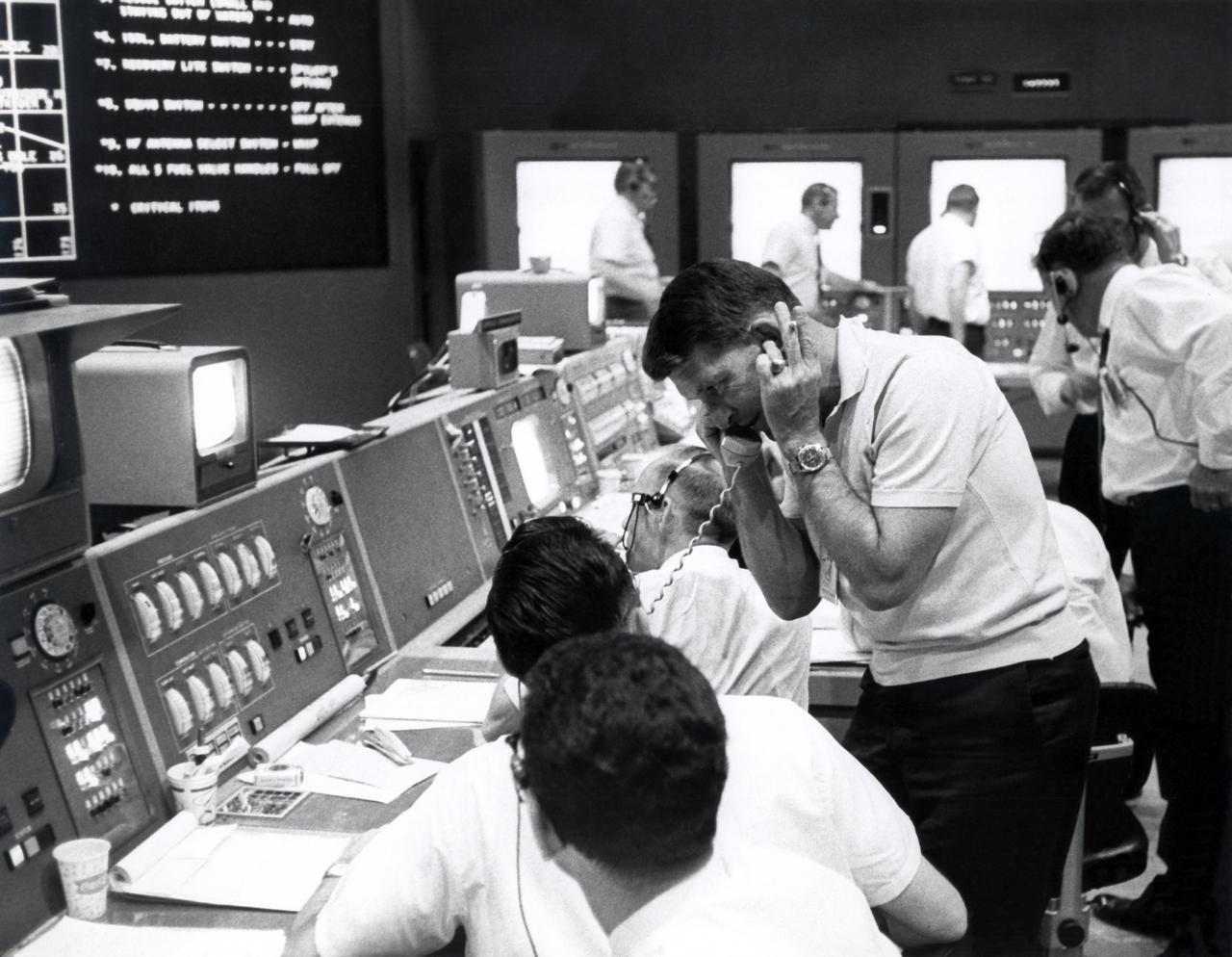
CAPE CANAVERAL, Fla. - Renamed the Mission Control Center, the facility continued to be the flight control through the first three missions of Project Gemini.     The Mercury Mission Control Center in Florida played a key role in the United States' early spaceflight program. Located at Cape Canaveral Air Force Station, the original part of the building was constructed between 1956 and 1958, with additions in 1959 and 1963. The facility officially was transferred to NASA on Dec. 26, 1963, and served as mission control during all the Project Mercury missions, as well as the first three flights of the Gemini Program, when it was renamed Mission Control Center. With its operational days behind, on June 1, 1967, the Mission Control Center became a stop on the public tour of NASA facilities until the mid-90s. In 1999, much of the equipment and furnishings from the Flight Control Area were moved to the Kennedy Space Center Visitor Complex where they became part of the exhibit there. The building was demolished in spring 2010. Photo credit: NASA
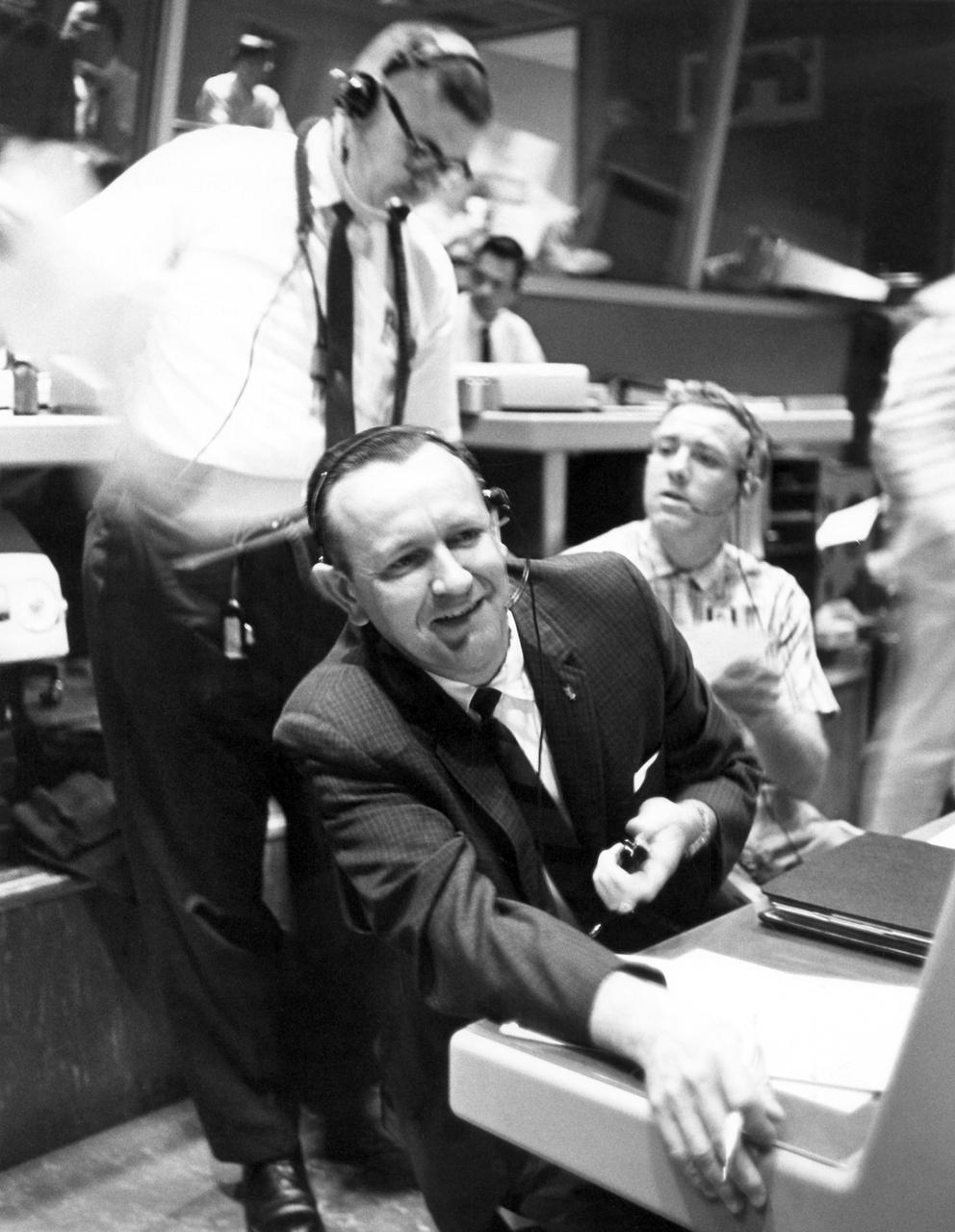
KSC-64C-1889
CAPE CANAVERAL, Fla. - Renamed the Mission Control Center, the facility continued to be the flight control through the first three missions of Project Gemini.     The Mercury Mission Control Center in Florida played a key role in the United States' early spaceflight program. Located at Cape Canaveral Air Force Station, the original part of the building was constructed between 1956 and 1958, with additions in 1959 and 1963. The facility officially was transferred to NASA on Dec. 26, 1963, and served as mission control during all the Project Mercury missions, as well as the first three flights of the Gemini Program, when it was renamed Mission Control Center. With its operational days behind, on June 1, 1967, the Mission Control Center became a stop on the public tour of NASA facilities until the mid-90s. In 1999, much of the equipment and furnishings from the Flight Control Area were moved to the Kennedy Space Center Visitor Complex where they became part of the exhibit there. The building was demolished in spring 2010. Photo credit: NASA
KSC-64C-2699
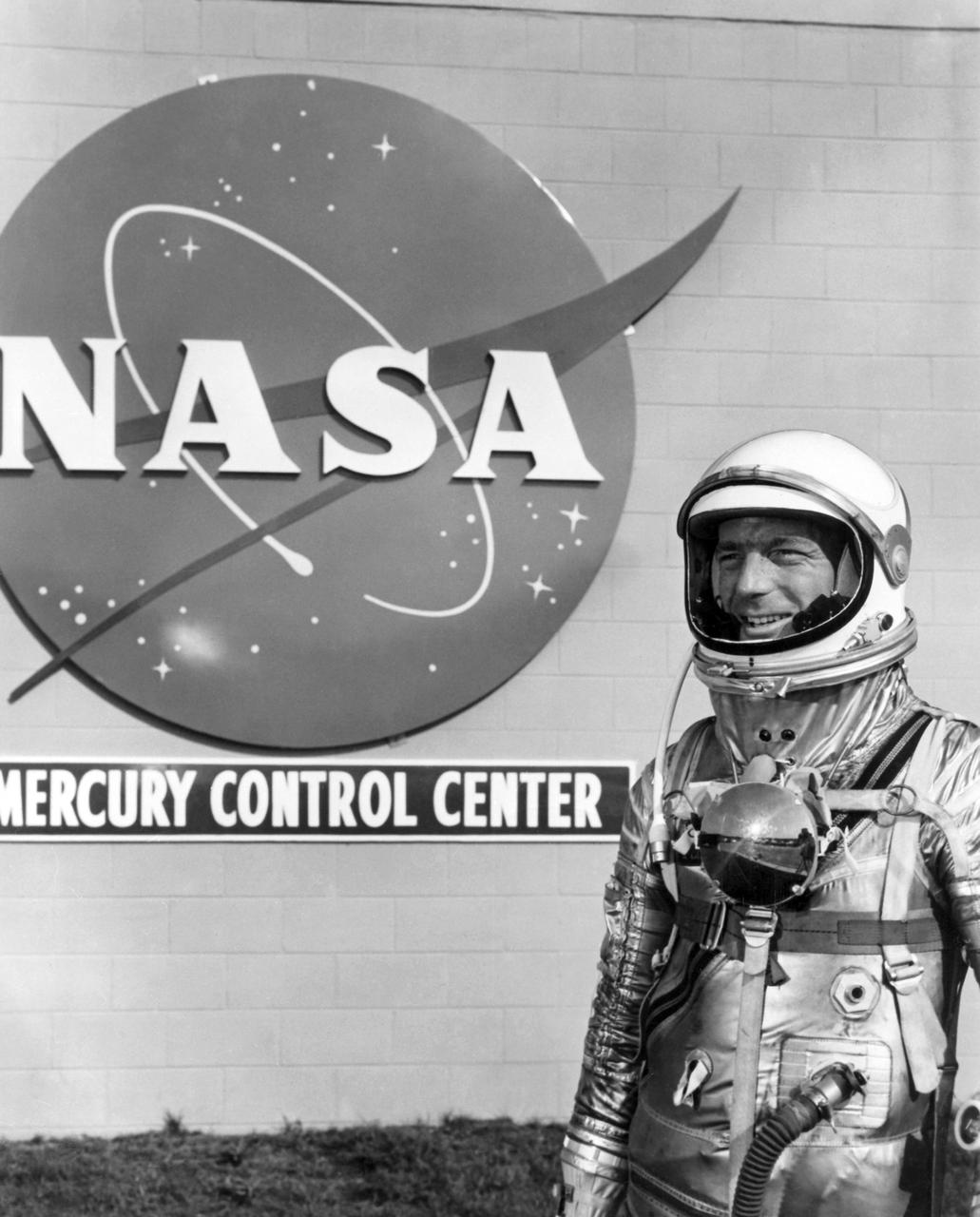
CAPE CANAVERAL, Fla. - Inside the Mission Control Center, flight controllers work during the Gemini I mission, an orbital test of the Titan-II launch vehicle.    The Mercury Mission Control Center in Florida played a key role in the United States' early spaceflight program. Located at Cape Canaveral Air Force Station, the original part of the building was constructed between 1956 and 1958, with additions in 1959 and 1963. The facility officially was transferred to NASA on Dec. 26, 1963, and served as mission control during all the Project Mercury missions, as well as the first three flights of the Gemini Program, when it was renamed Mission Control Center. With its operational days behind, on June 1, 1967, the Mission Control Center became a stop on the public tour of NASA facilities until the mid-90s. In 1999, much of the equipment and furnishings from the Flight Control Area were moved to the Kennedy Space Center Visitor Complex where they became part of the exhibit there. The building was demolished in spring 2010. Photo credit: NASA
KSC-64C-861
CAPE CANAVERAL, Fla. -- Applauding the launch team inside the Launch Control Center are United States President Bill Clinton and First Lady Hillary Rodham Clinton, right. They joined NASA Administrator Daniel Goldin left in the firing room following the successful launch of STS-95, which included as part of the flight crew John H. Glenn Jr., senator from Oho and former NASA Mercury astronaut. The shuttle launch marked Glenn's second flight to space, coming 36 years after his Mercury flight in February 1962. Image credit: NASA
KSC-98PC-1501
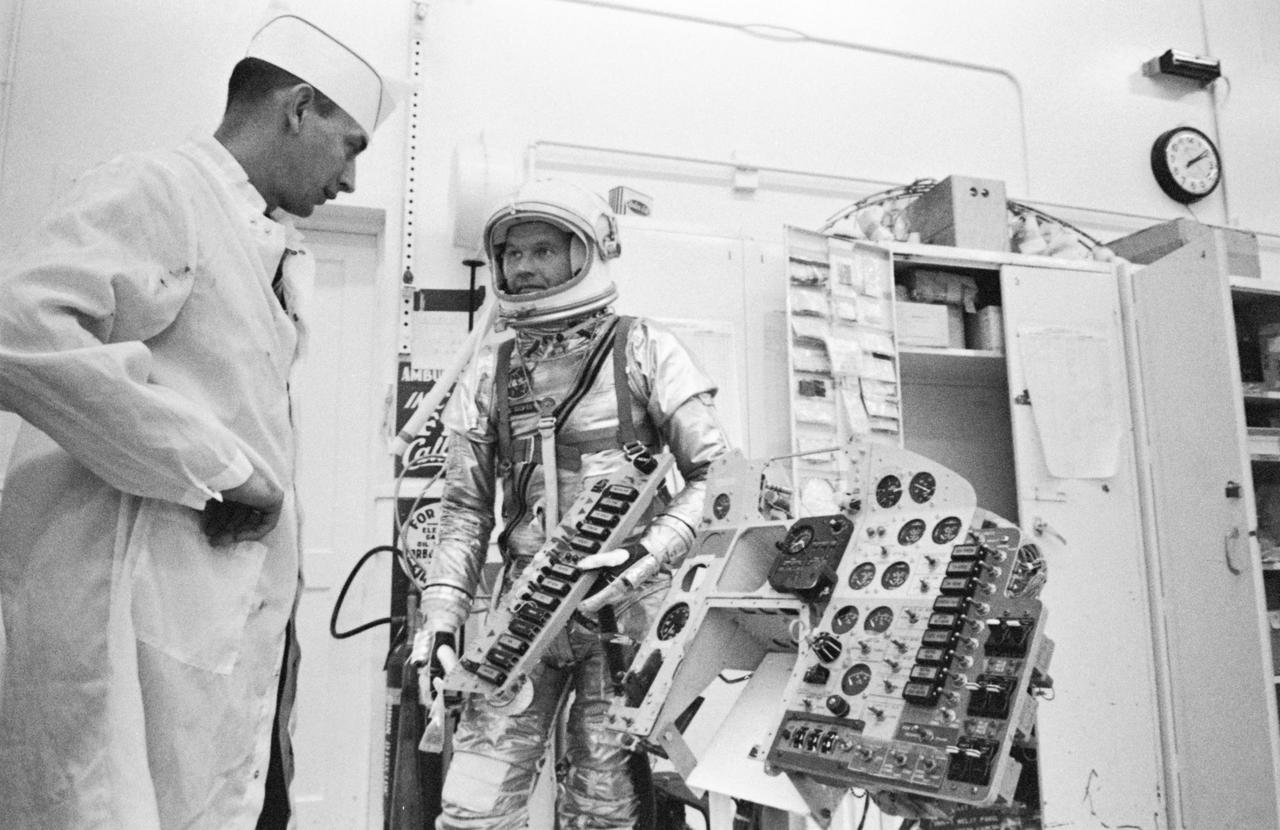
CAPE CANAVERAL, Fla. - The tracking board and consoles are seen inside the Mission Control Center during the early Gemini flights.    The Mercury Mission Control Center in Florida played a key role in the United States' early spaceflight program. Located at Cape Canaveral Air Force Station, the original part of the building was constructed between 1956 and 1958, with additions in 1959 and 1963. The facility officially was transferred to NASA on Dec. 26, 1963, and served as mission control during all the Project Mercury missions, as well as the first three flights of the Gemini Program, when it was renamed Mission Control Center. With its operational days behind, on June 1, 1967, the Mission Control Center became a stop on the public tour of NASA facilities until the mid-90s. In 1999, much of the equipment and furnishings from the Flight Control Area were moved to the Kennedy Space Center Visitor Complex where they became part of the exhibit there. The building was demolished in spring 2010. Photo credit: NASA
KSC-64C-1868
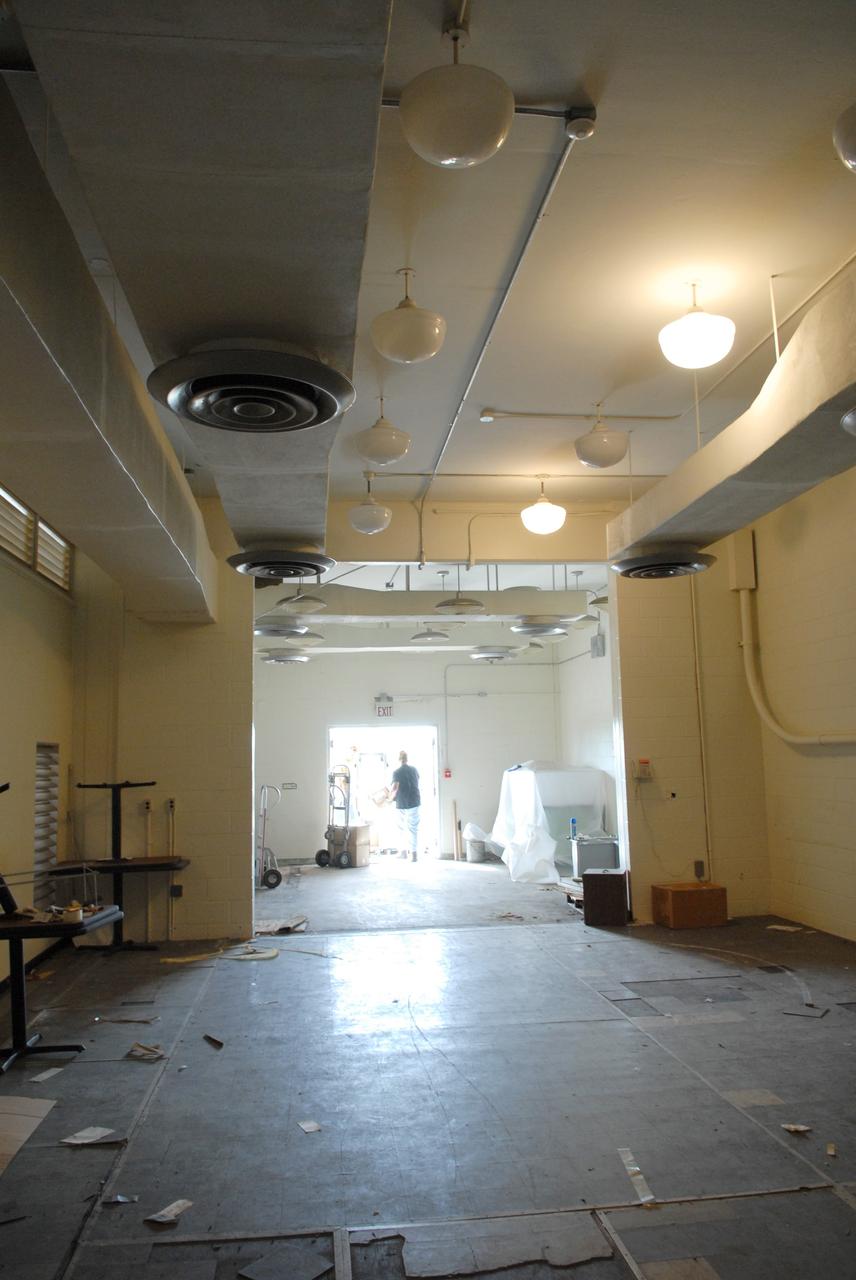
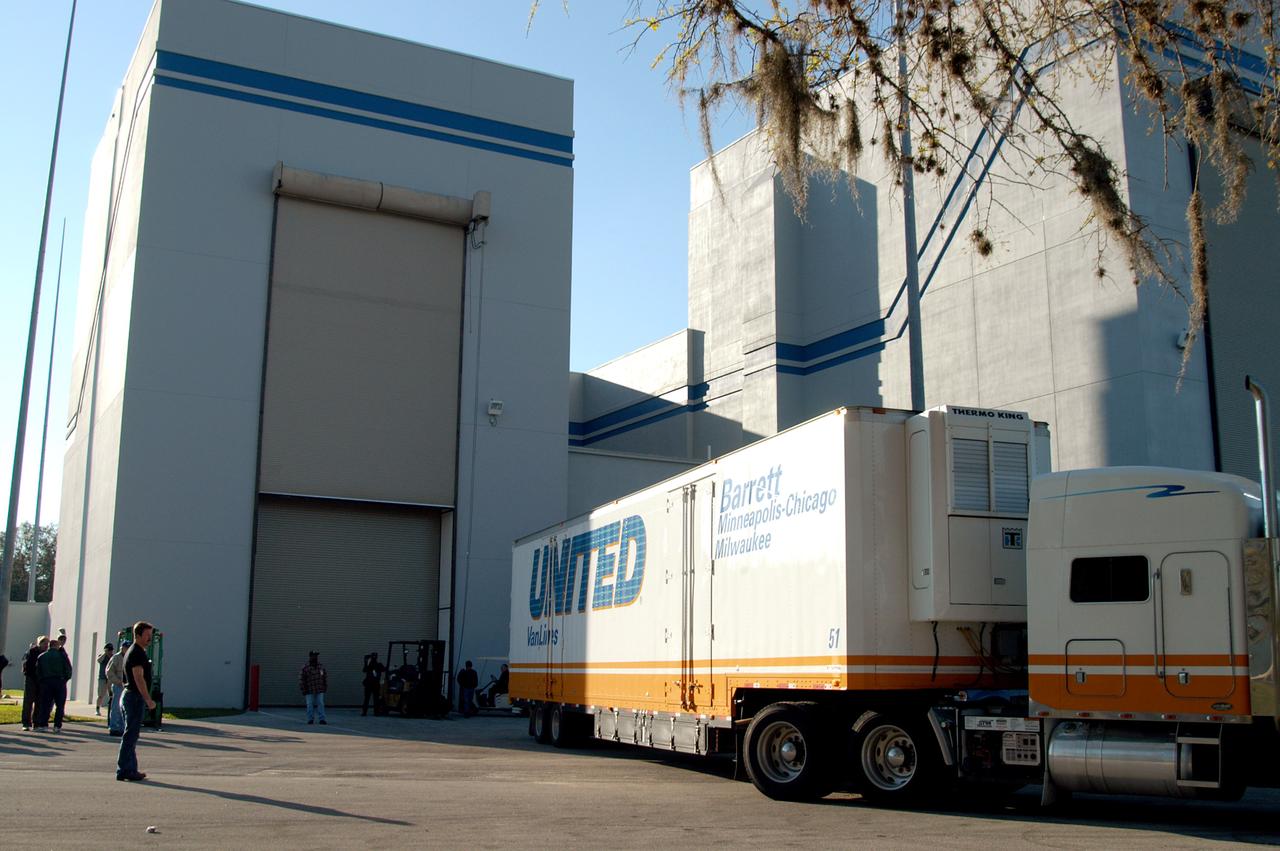
CAPE CANAVERAL, Fla. – A trailer hauls boxes and equipment from the 50-year-old Mission Control Center on the Cape Canaveral Air Force Station in Florida.  Out of use for many years, and with no valid operational or other use for the facility, NASA plans to demolish the site. The facility once controlled all manned Mercury space flights and the first two unmanned Gemini flights from May 1961-1963.  It provided launch, orbital, re-entry and landing control for the flights.  That function was later transferred to NASA's Johnson Space Center in Houston.  Photo credit: NASA/Jack Pfaller
KSC-2009-2877
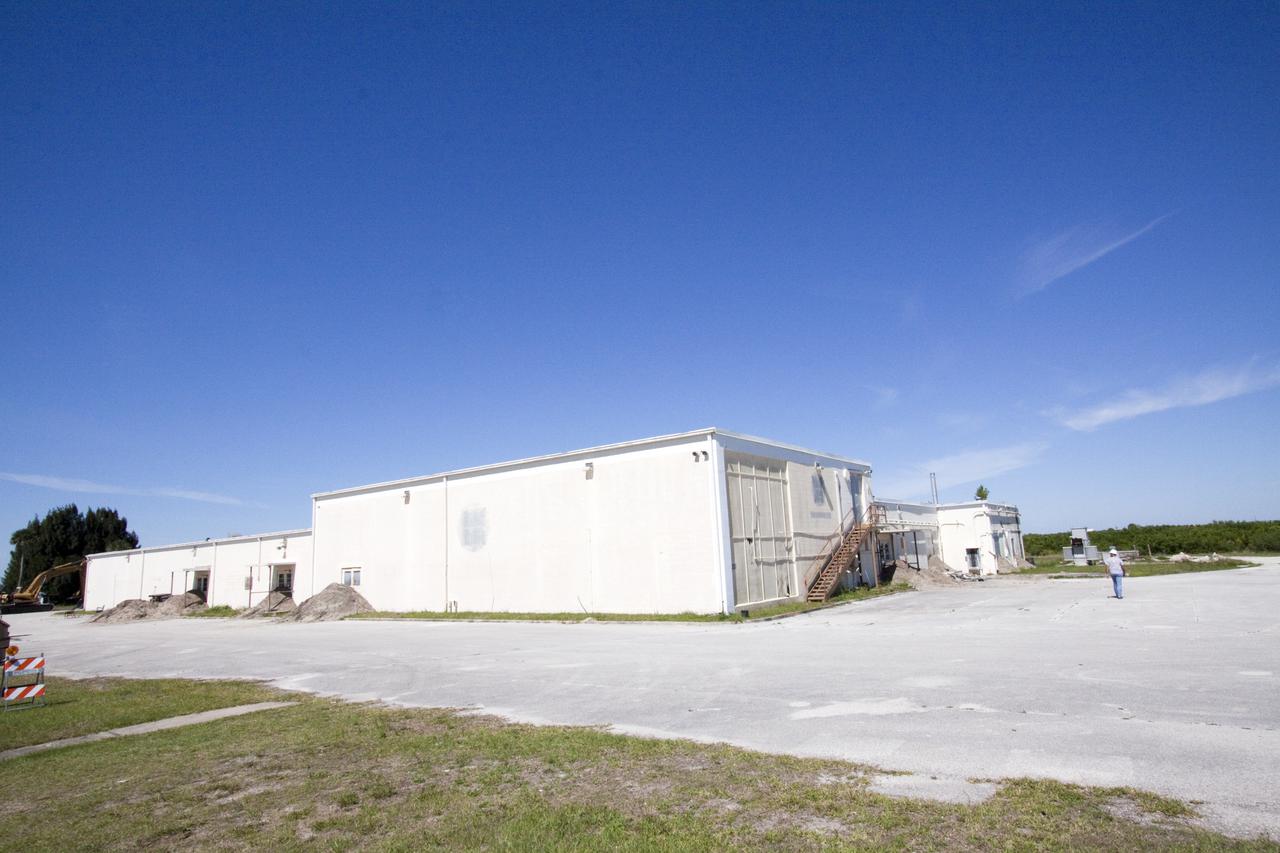
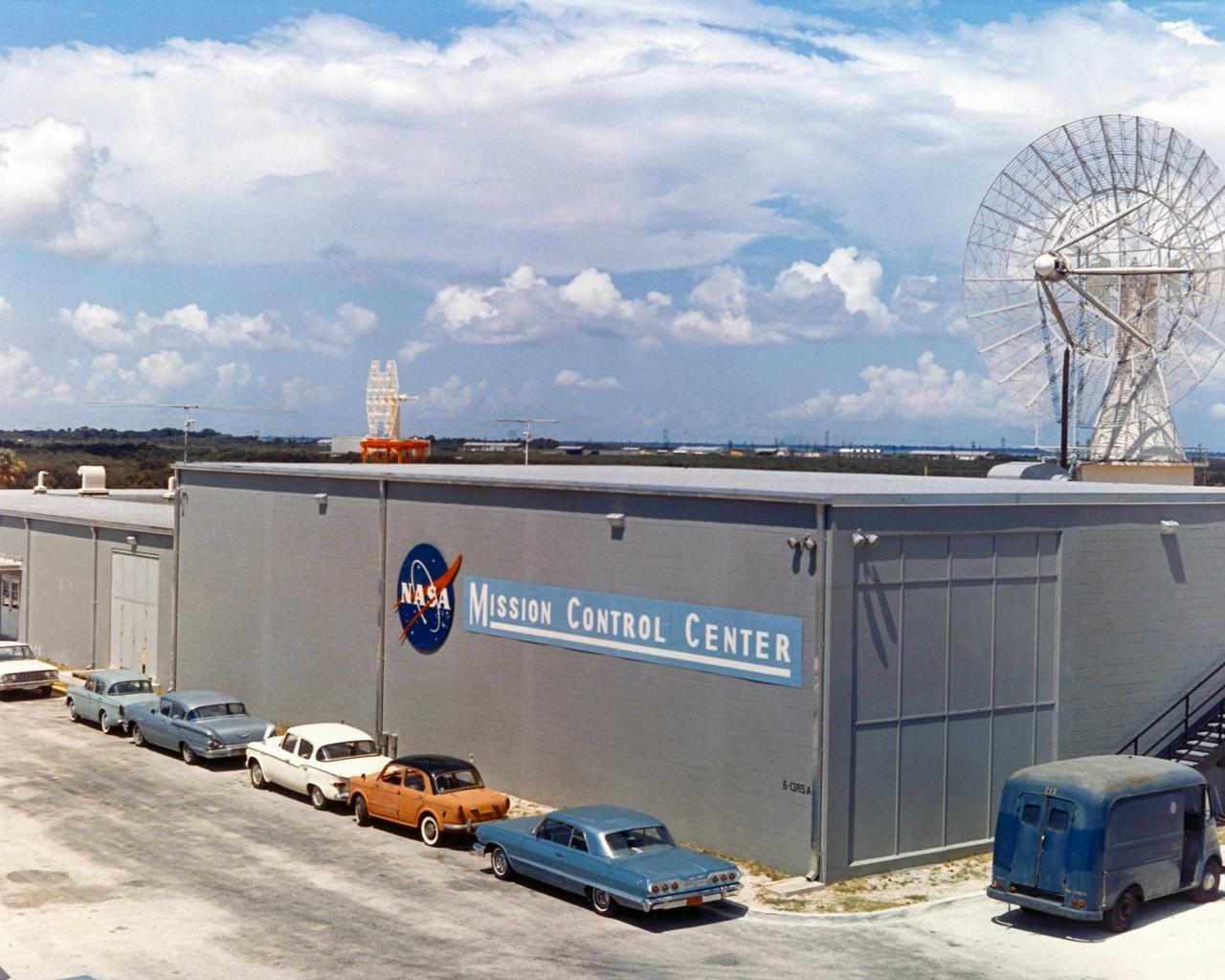
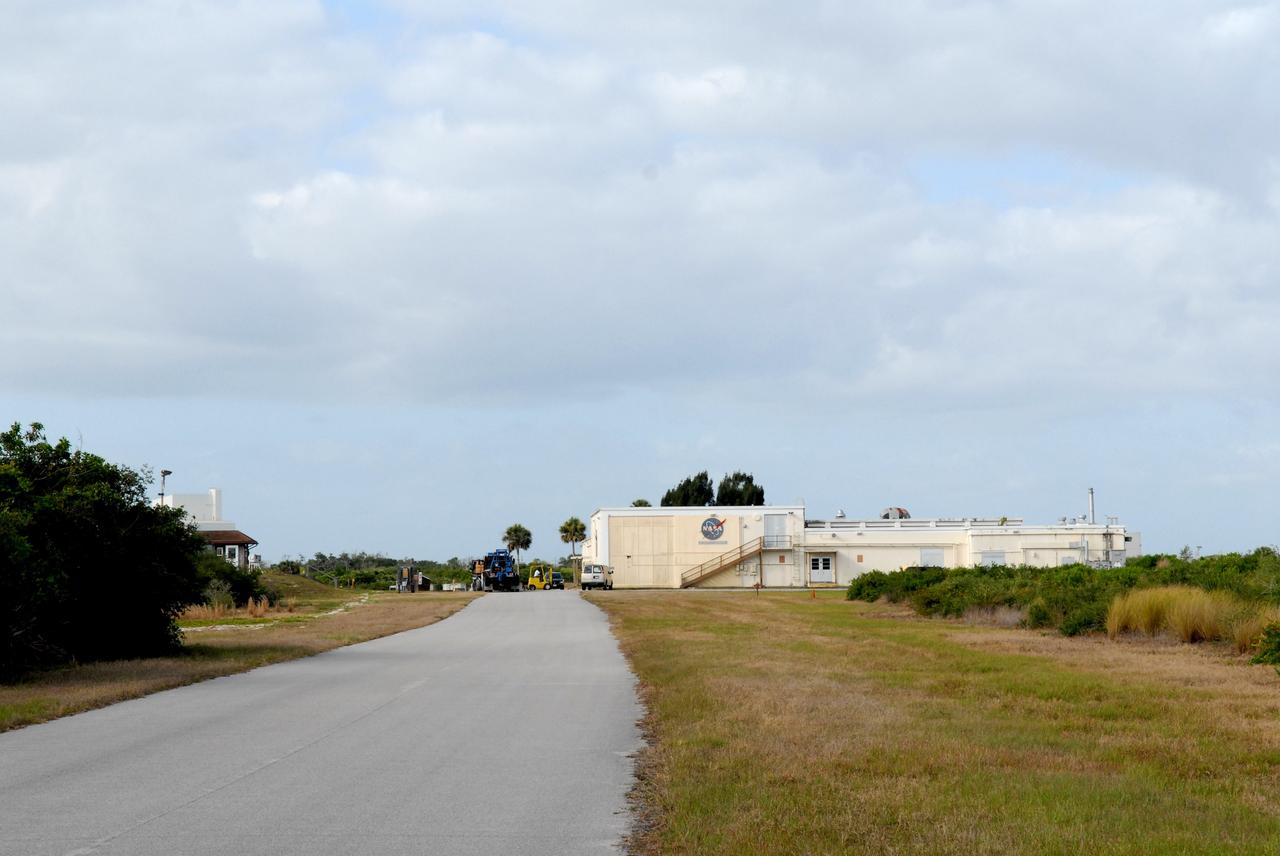
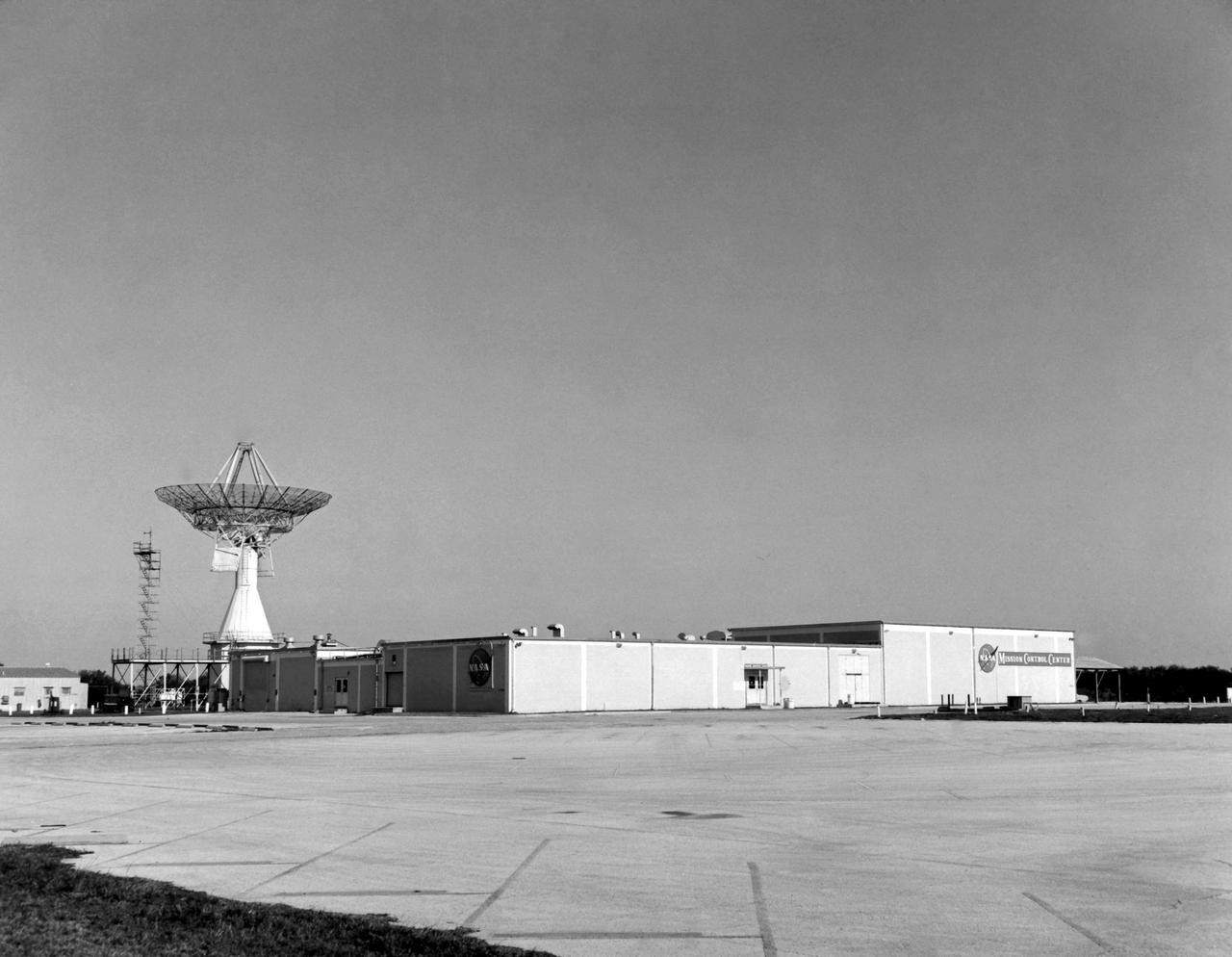
CAPE CANAVERAL, Fla. – Built in 1958, the Mission Control Center is located on the Cape Canaveral Air Force Station in Florida.  Out of use for many years, and with no valid operational or other use for the facility, NASA plans to demolish the site. The facility once controlled all manned Mercury space flights and the first two unmanned Gemini flights from May 1961-1963.  It provided launch, orbital, re-entry and landing control for the flights.  That function was later transferred to NASA's Johnson Space Center in Houston.  Photo credit: NASA/Jack Pfaller
KSC-2009-2875
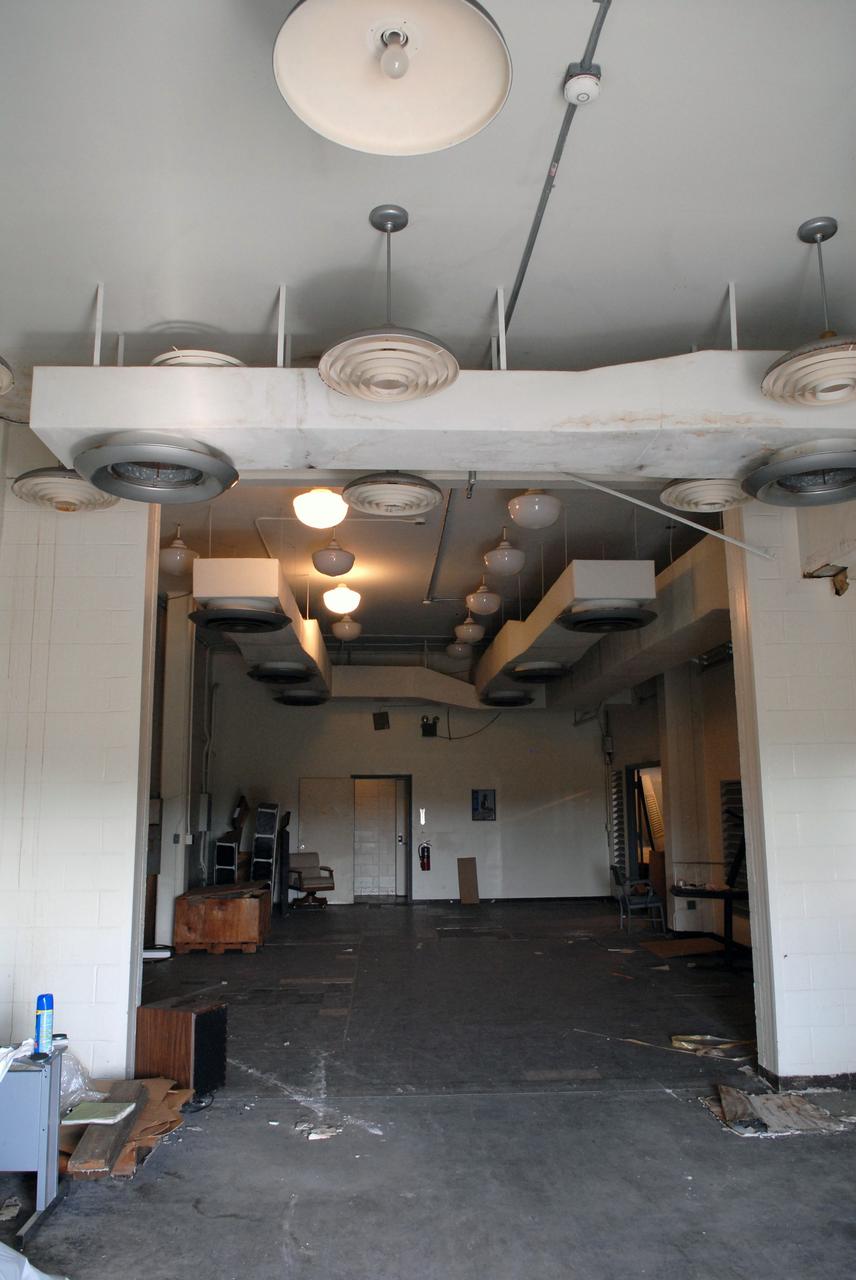
CAPE CANAVERAL, Fla. – Outdated furniture and display items are being moved out of the 50-year-old Mission Control Center on the Cape Canaveral Air Force Station in Florida. Out of use for many years, and with no valid operational or other use for the facility, NASA plans to demolish the site.  The facility once controlled all manned Mercury space flights and the first two unmanned Gemini flights from May 1961-1963.  It provided launch, orbital, re-entry and landing control for the flights.  That function was later transferred to NASA's Johnson Space Center in Houston.  Photo credit: NASA/Jack Pfaller
KSC-2009-2882
CAPE CANAVERAL, Fla. – Rooms are being dismantled in the 50-year-old Mission Control Center on the Cape Canaveral Air Force Station in Florida. Out of use for many years, and with no valid operational or other use for the facility, NASA plans to demolish the site.  The facility once controlled all manned Mercury space flights and the first two unmanned Gemini flights from May 1961-1963.  It provided launch, orbital, re-entry and landing control for the flights.  That function was later transferred to NASA's Johnson Space Center in Houston.  Photo credit: NASA/Jack Pfaller
KSC-2009-2884
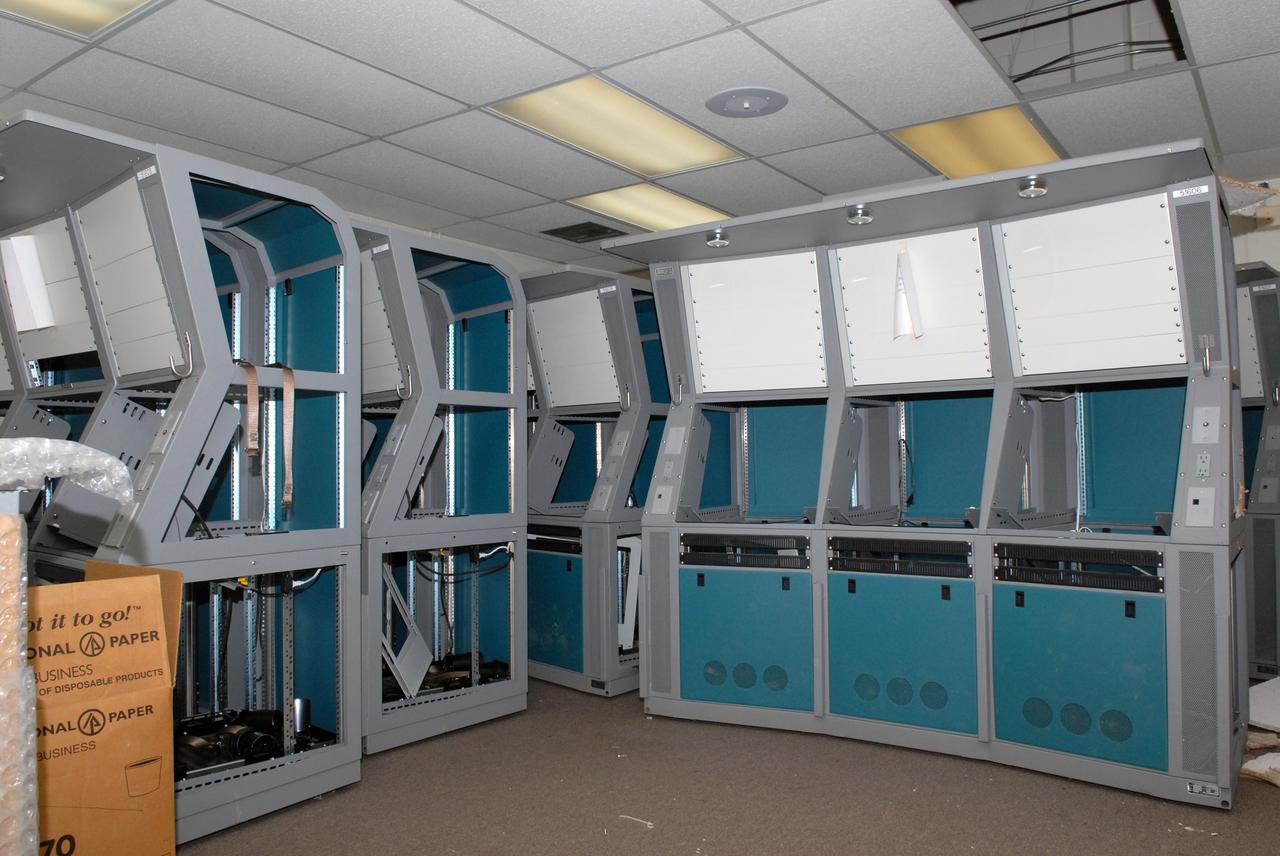
CAPE CANAVERAL, Fla. – Equipment is staged for removal from the 50-year-old Mission Control Center on the Cape Canaveral Air Force Station in Florida. Out of use for many years, and with no valid operational or other use for the facility, NASA plans to demolish the site.  The facility once controlled all manned Mercury space flights and the first two unmanned Gemini flights from May 1961-1963.  It provided launch, orbital, re-entry and landing control for the flights.  That function was later transferred to NASA's Johnson Space Center in Houston.  Photo credit: NASA/Jack Pfaller
KSC-2009-2881
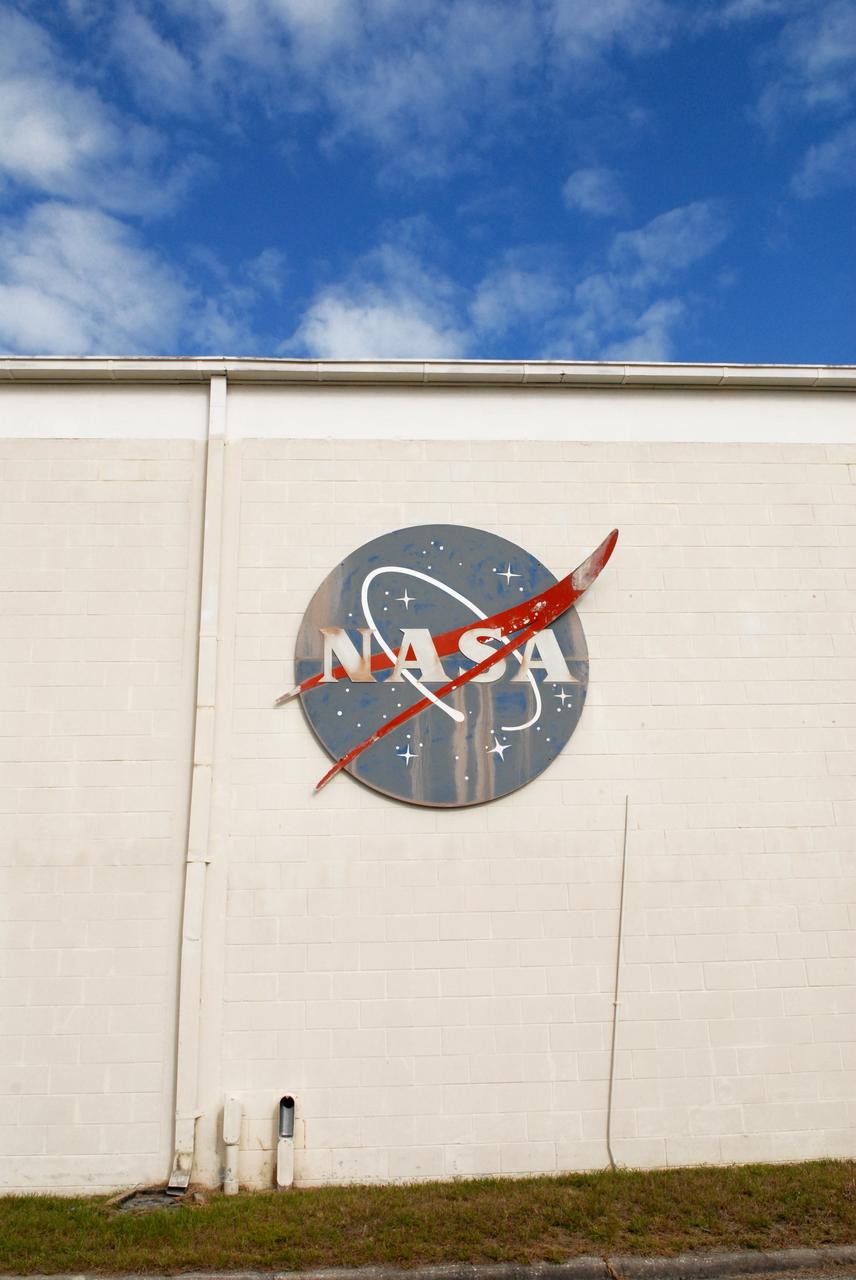
CAPE CANAVERAL, Fla. – The NASA insignia has faded on the 50-year-old Mission Control Center on the Cape Canaveral Air Force Station in Florida. Out of use for many years, and with no valid operational or other use for the facility, NASA plans to demolish the site.  The facility once controlled all manned Mercury space flights and the first two unmanned Gemini flights from May 1961-1963.  It provided launch, orbital, re-entry and landing control for the flights.  That function was later transferred to NASA's Johnson Space Center in Houston.  Photo credit: NASA/Jack Pfaller
KSC-2009-2878
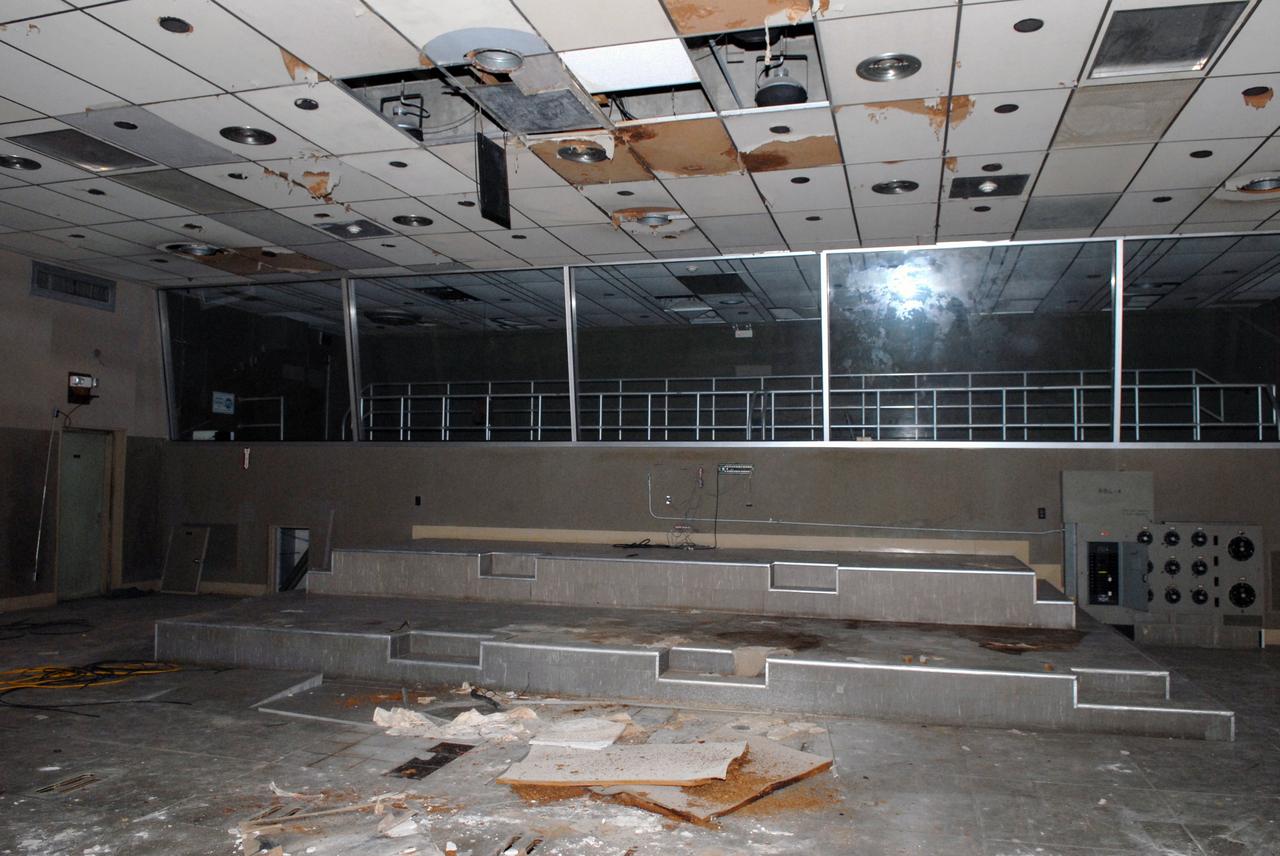
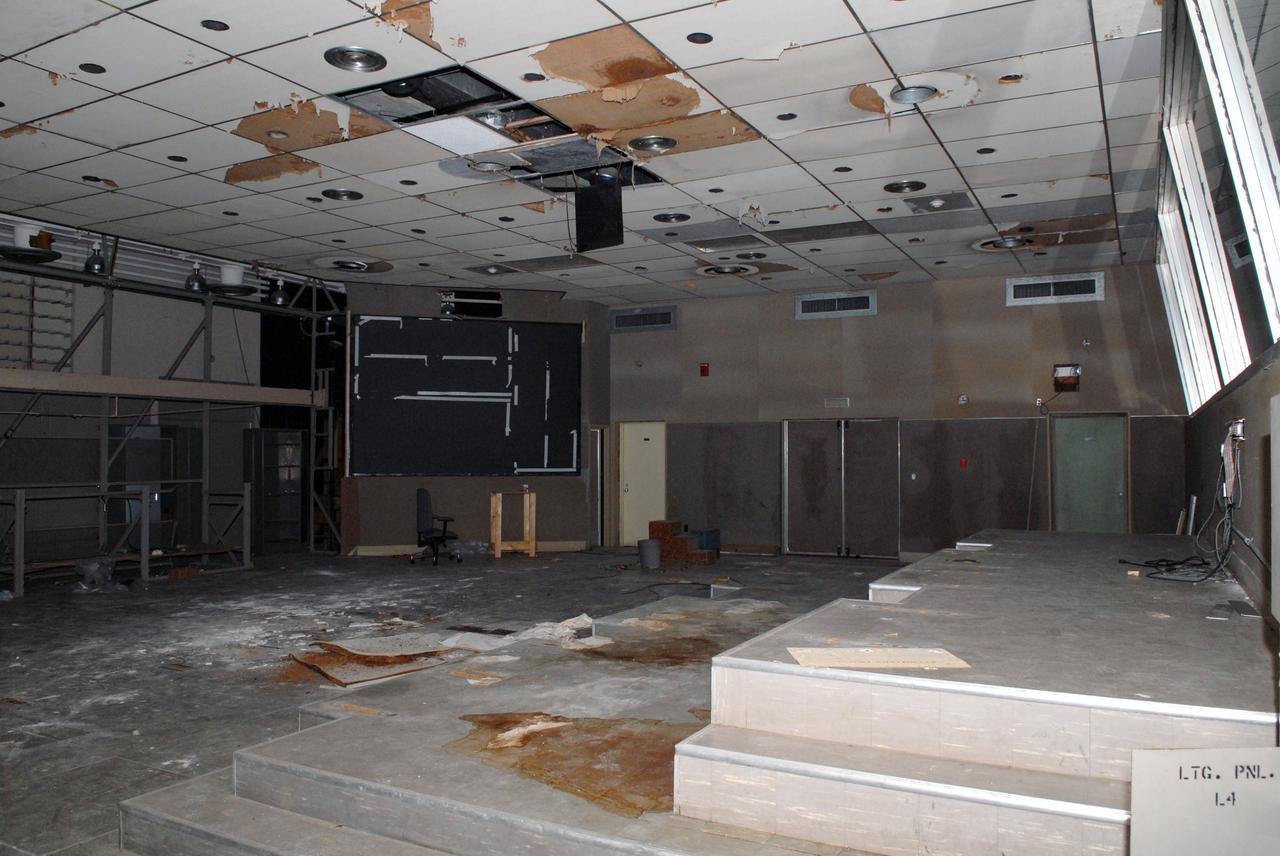
CAPE CANAVERAL, Fla. – Water damage and mold in rooms in the 50-year-old Mission Control Center on the Cape Canaveral Air Force Station in Florida are part of the reason for NASA's decision to demolish the site. The center has been out of use for many years, and NASA has found no valid operational or other use for the facility. The facility once controlled all manned Mercury space flights and the first two unmanned Gemini flights from May 1961-1963.  It provided launch, orbital, re-entry and landing control for the flights.  That function was later transferred to NASA's Johnson Space Center in Houston.  Photo credit: NASA/Jack Pfaller
KSC-2009-2883
CAPE CANAVERAL, Fla. – Furniture and equipment is being moved out of the 50-year-old Mission Control Center on the Cape Canaveral Air Force Station in Florida. Out of use for many years, and with no valid operational or other use for the facility, NASA plans to demolish the site. The facility once controlled all manned Mercury space flights and the first two unmanned Gemini flights from May 1961-1963.  It provided launch, orbital, re-entry and landing control for the flights.  That function was later transferred to NASA's Johnson Space Center in Houston.  Photo credit: NASA/Jack Pfaller
KSC-2009-2887
CAPE CANAVERAL, Fla. – A trailer hauls boxes and equipment from the 50-year-old Mission Control Center on the Cape Canaveral Air Force Station in Florida.  Out of use for many years, and with no valid operational or other use for the facility, NASA plans to demolish the site. The facility once controlled all manned Mercury space flights and the first two unmanned Gemini flights from May 1961-1963.  It provided launch, orbital, re-entry and landing control for the flights.  That function was later transferred to NASA's Johnson Space Center in Houston.  Photo credit: NASA/Jack Pfaller
KSC-2009-2876
CAPE CANAVERAL, Fla. – Water damage and mold in rooms in the 50-year-old Mission Control Center on the Cape Canaveral Air Force Station in Florida are part of the reason for NASA's decision to demolish the site. The center has been out of use for many years, and NASA has found no valid operational or other use for the facility.  The facility once controlled all manned Mercury space flights and the first two unmanned Gemini flights from May 1961-1963.  It provided launch, orbital, re-entry and landing control for the flights.  That function was later transferred to NASA's Johnson Space Center in Houston.  Photo credit: NASA/Jack Pfaller
KSC-2009-2885
CAPE CANAVERAL, Fla. – Furniture and equipment is being moved out of the 50-year-old Mission Control Center on the Cape Canaveral Air Force Station in Florida. Out of use for many years, and with no valid operational or other use for the facility, NASA plans to demolish the site. The facility once controlled all manned Mercury space flights and the first two unmanned Gemini flights from May 1961-1963.  It provided launch, orbital, re-entry and landing control for the flights.  That function was later transferred to NASA's Johnson Space Center in Houston.  Photo credit: NASA/Jack Pfaller
KSC-2009-2880
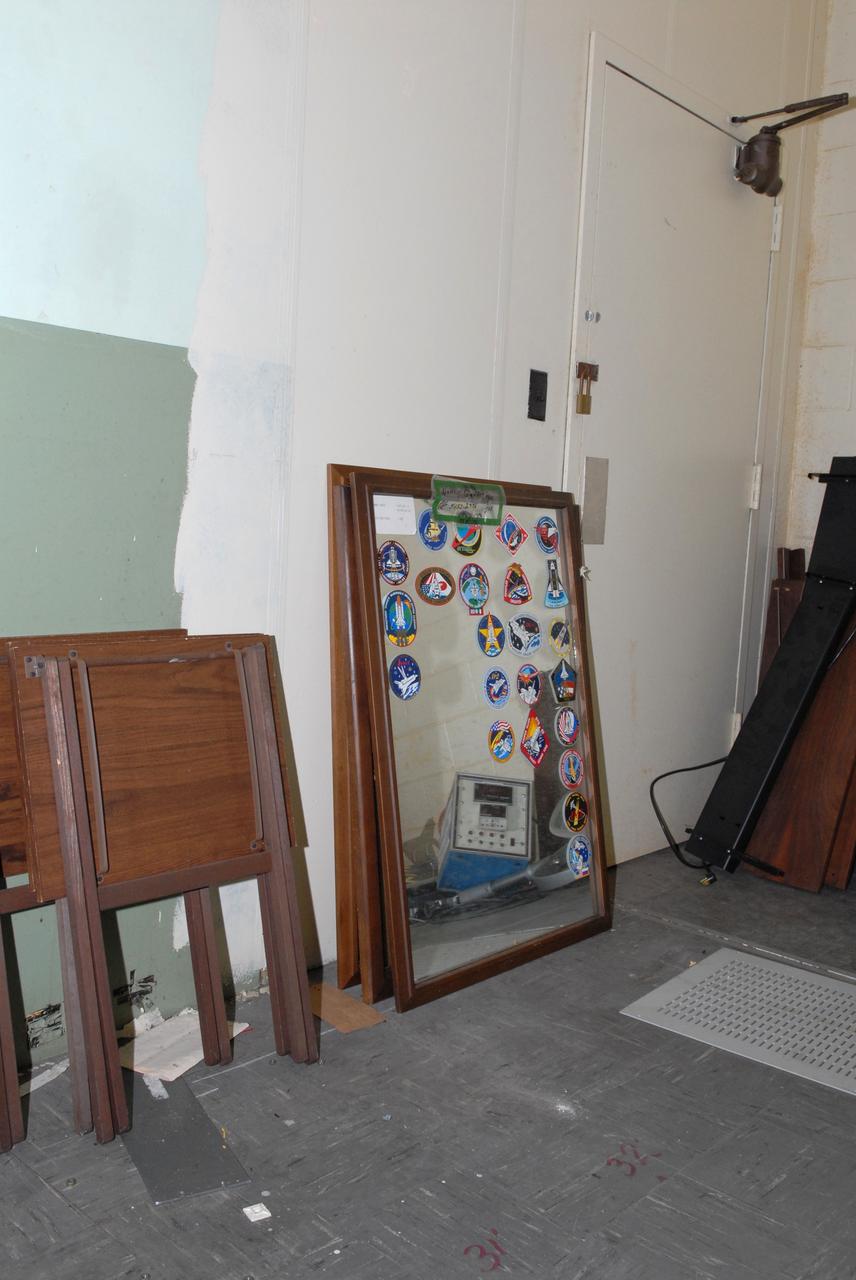
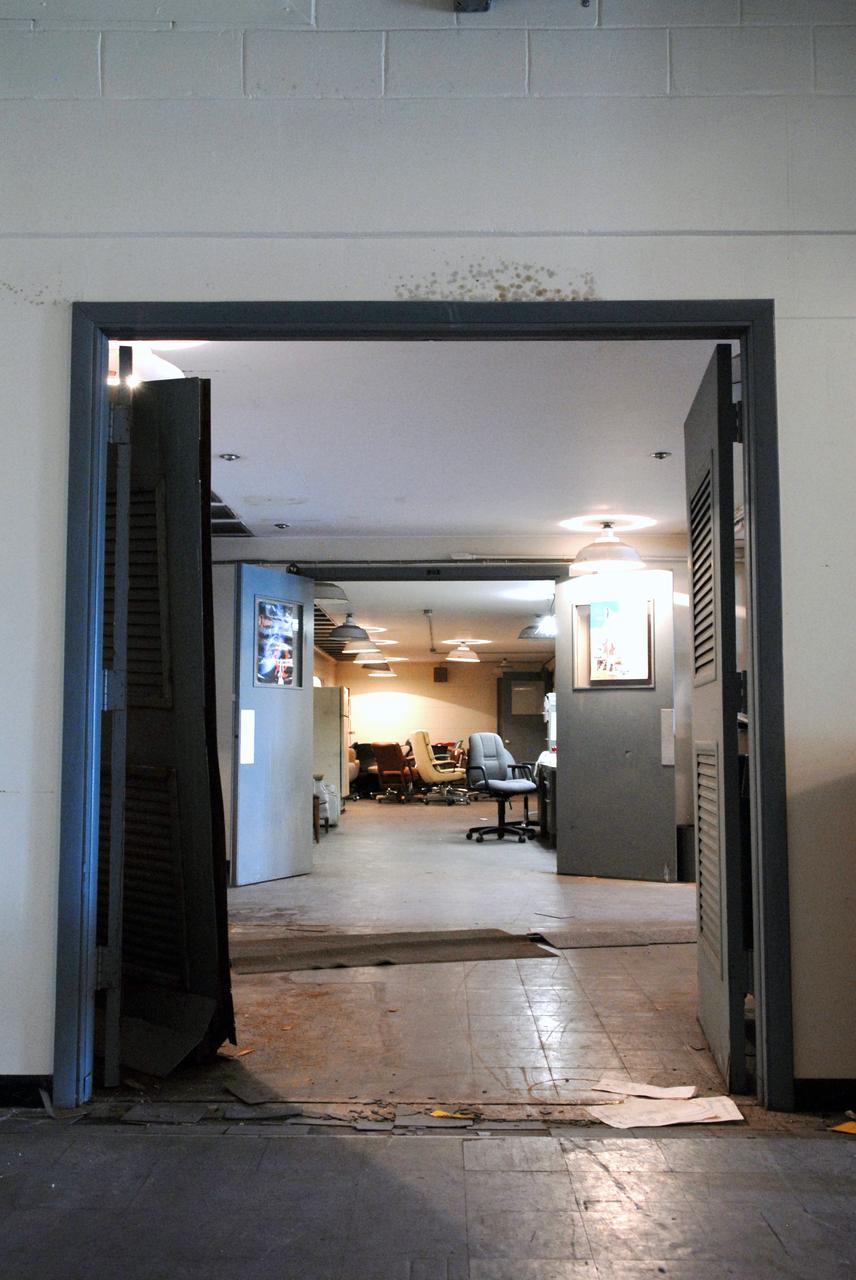
CAPE CANAVERAL, Fla. – Furniture no longer in use is stored in the far room of the 50-year-old Mission Control Center on the Cape Canaveral Air Force Station in Florida. Out of use for many years, and with no valid operational or other use for the facility, NASA plans to demolish the site.  The facility once controlled all manned Mercury space flights and the first two unmanned Gemini flights from May 1961-1963.  It provided launch, orbital, re-entry and landing control for the flights.  That function was later transferred to NASA's Johnson Space Center in Houston.  Photo credit: NASA/Jack Pfaller
KSC-2009-2886
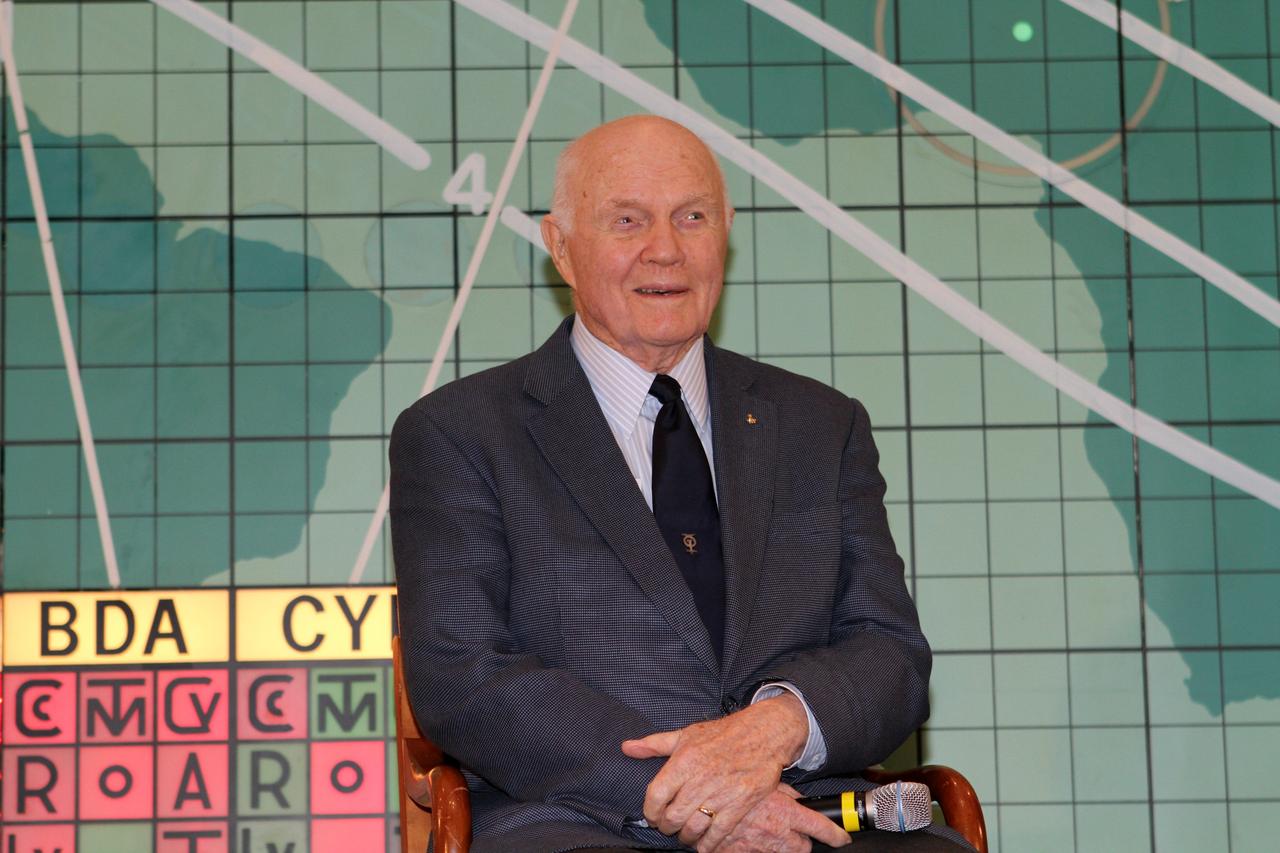
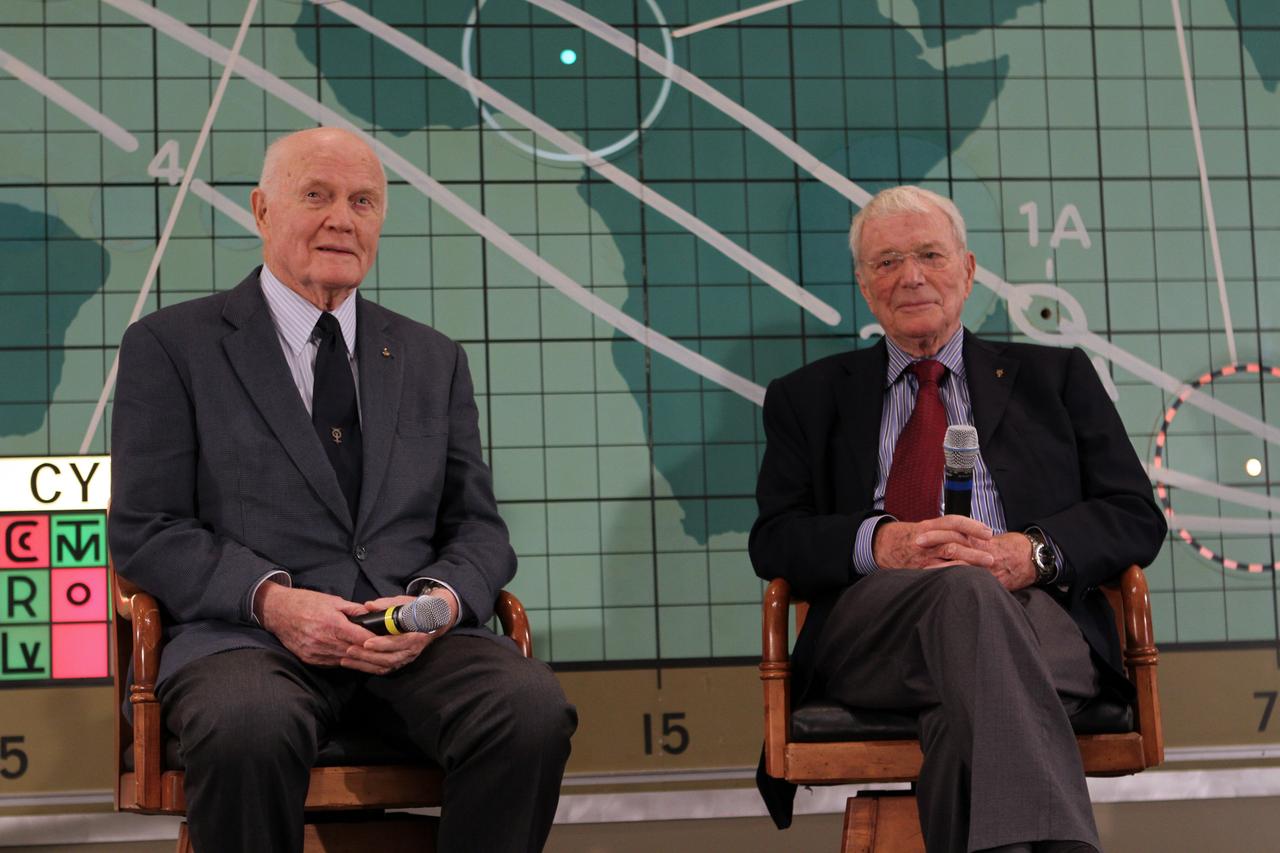
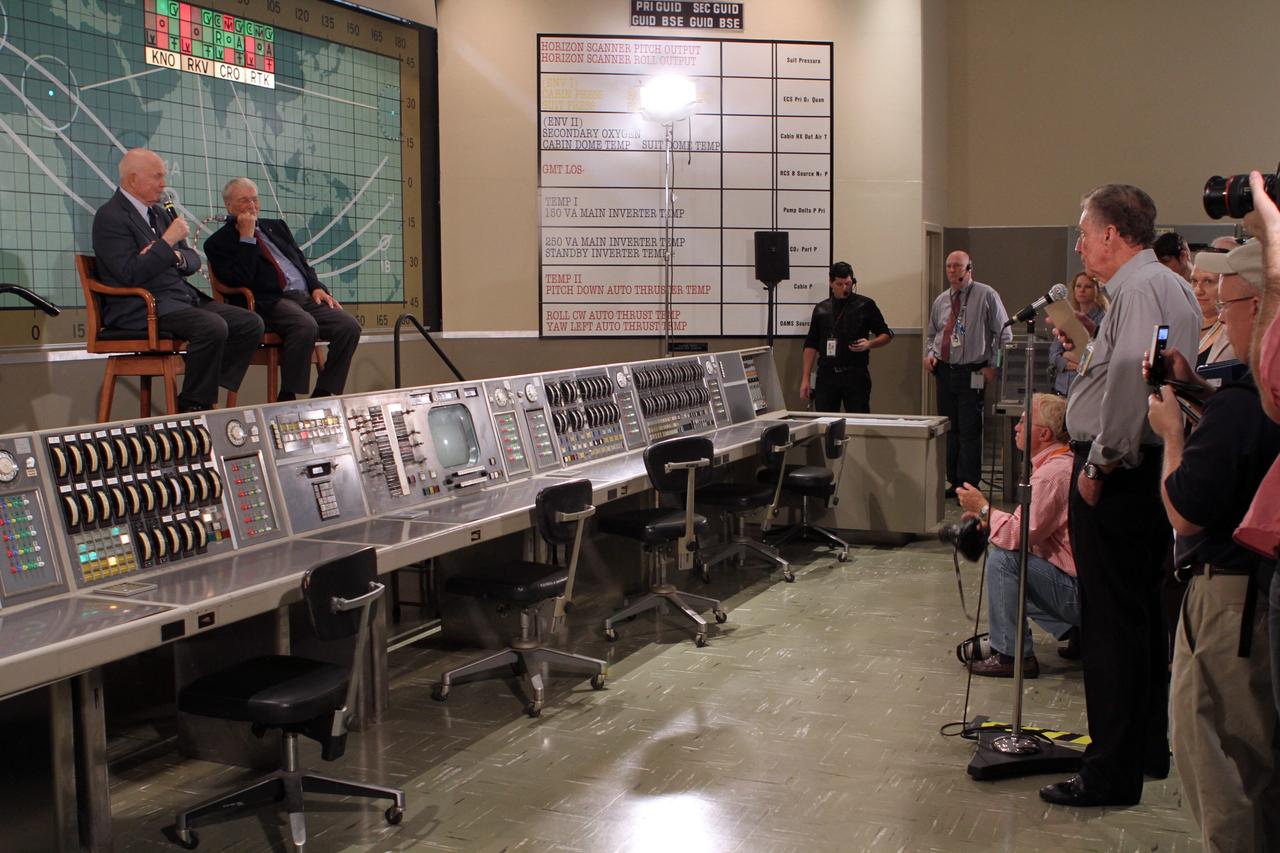
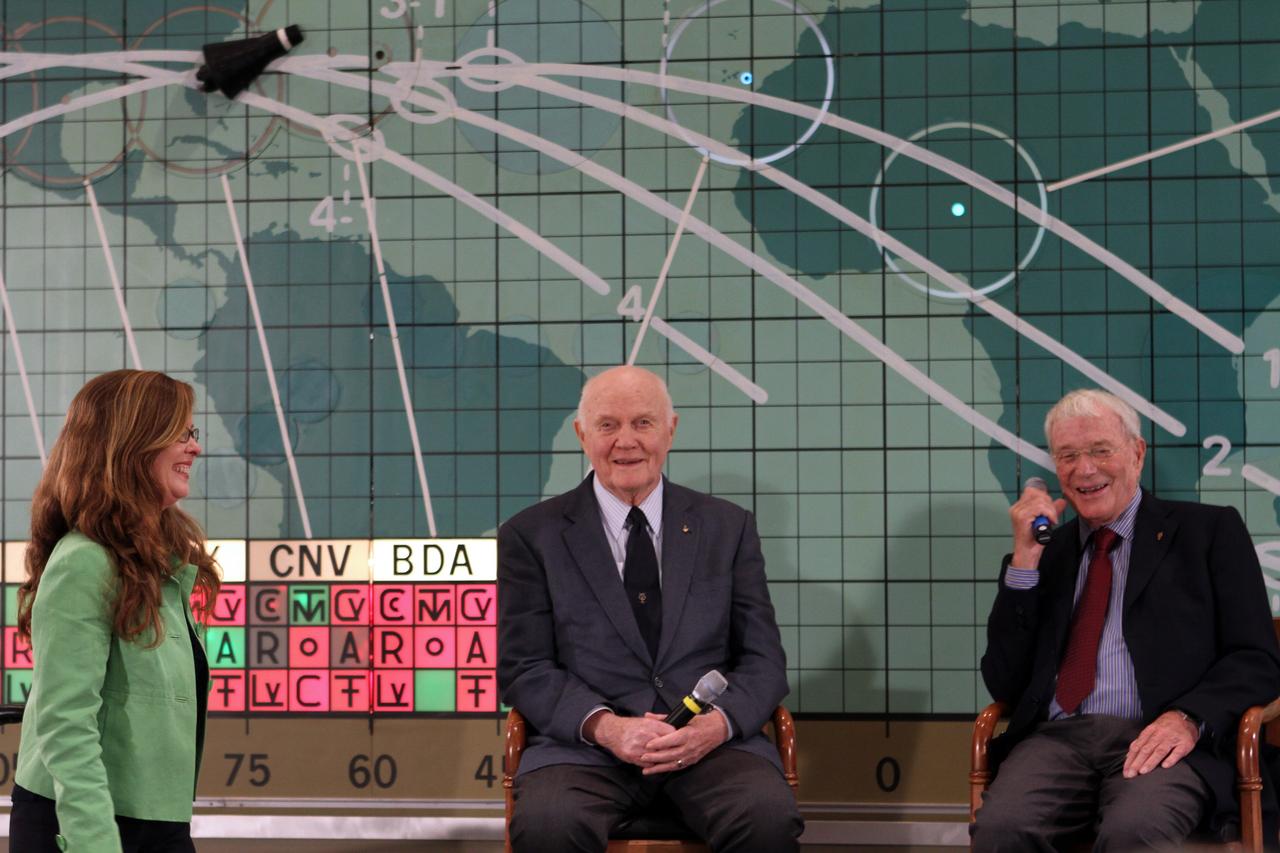
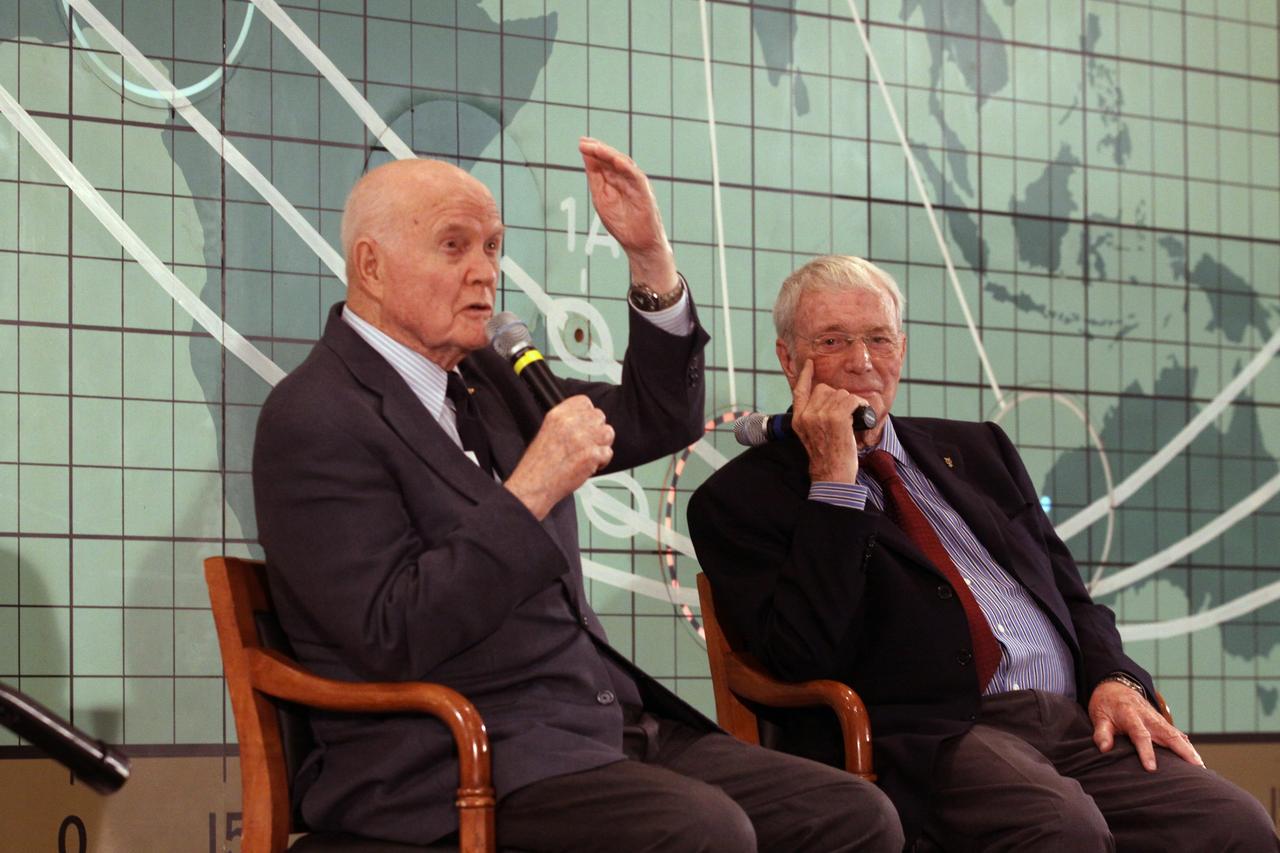
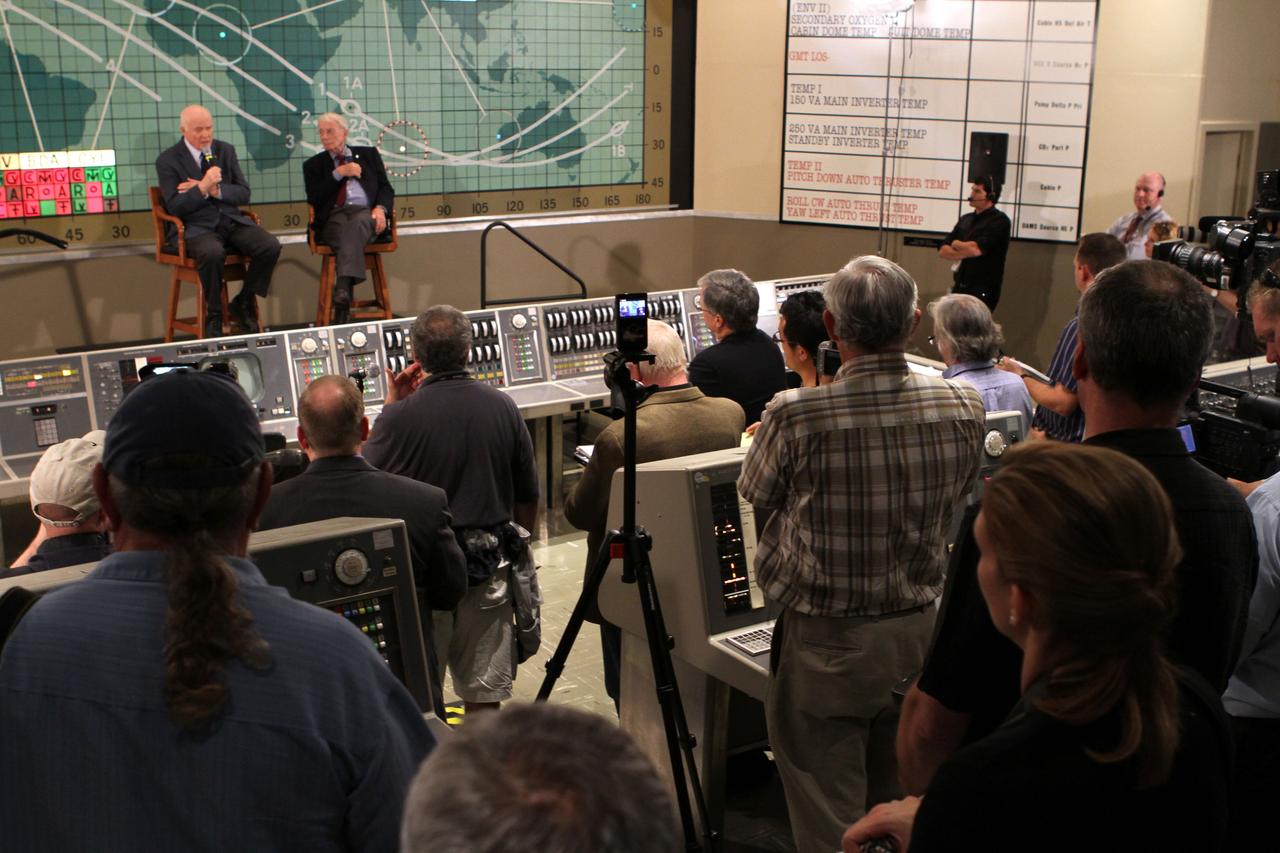
CAPE CANAVERAL, Fla. -- Mercury astronaut John Glenn sits in front of the plot board from the Mercury control center on display at the Kennedy Space Center Visitor Complex in Florida. The astronaut, part of the original class of seven astronauts chosen by NASA, was taking part in a question-and-answer session with the media as part of events celebrating 50 years of Americans in orbit, an era which began with Glenn's Mercury mission MA-6, on Feb. 20, 1962.  Glenn's launch aboard an Atlas rocket took with it the hopes of an entire nation and ushered in a new era of space travel that eventually led to Americans walking on the moon by the end of the 1960s. Glenn soon was followed into orbit by Carpenter, Walter Schirra and Gordon Cooper. Their fellow Mercury astronauts Alan Shepard and Virgil "Gus" Grissom flew earlier suborbital flights. Deke Slayton was grounded by a medical condition until the Apollo-Soyuz Test Project in 1975. Photo credit: NASA/Kim Shiflett
KSC-2012-1435
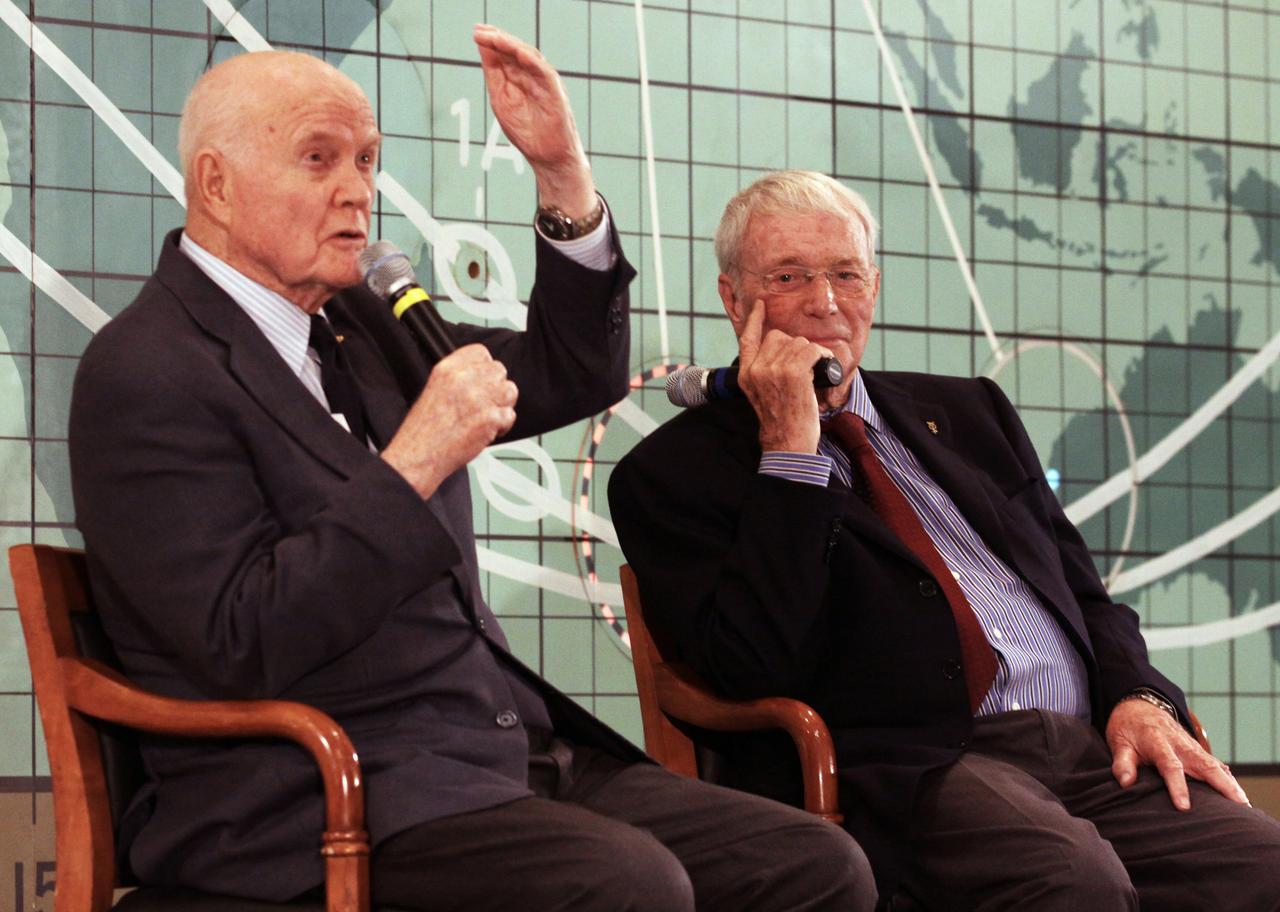
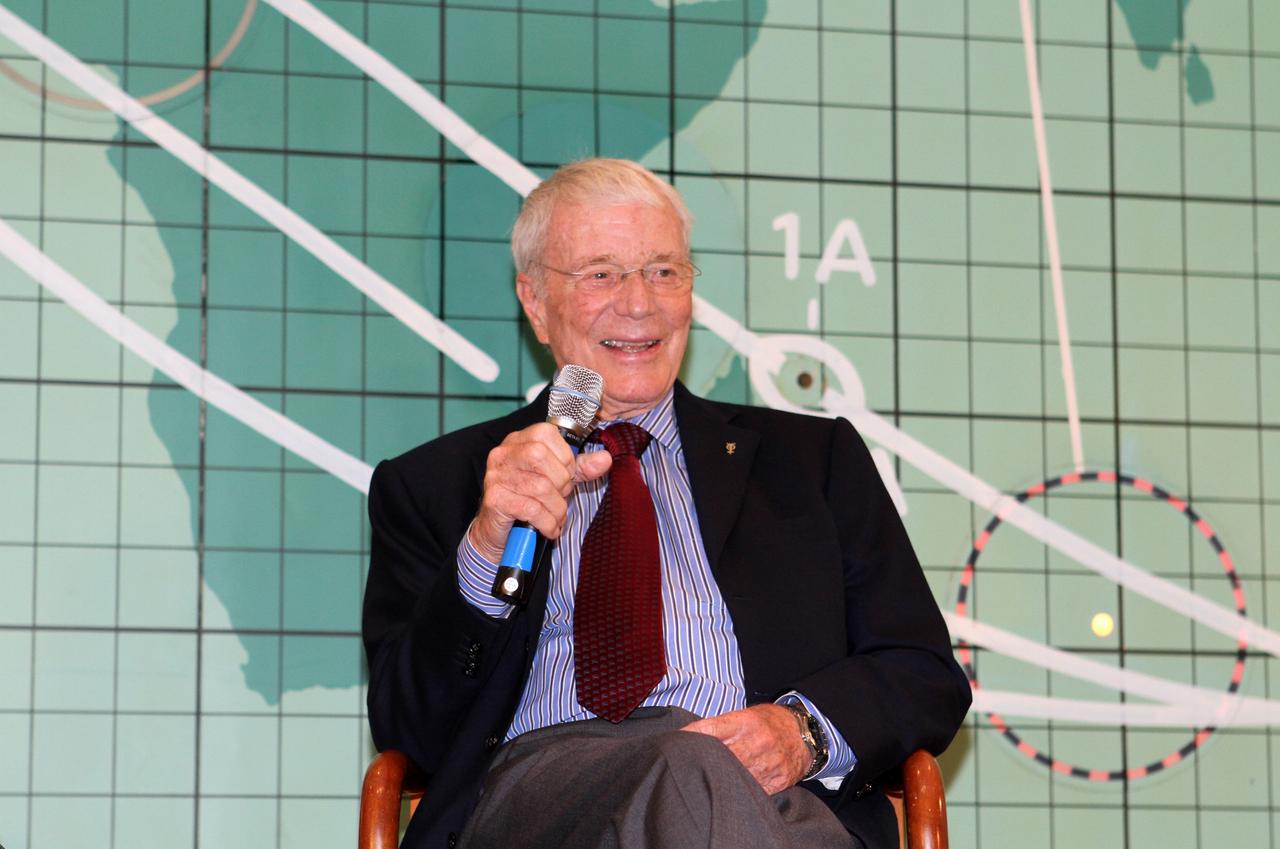
Mercury astronauts John Glenn, left, and Scott Carpenter sit in front of the plot board from the Mercury control center on display at the Kennedy Space Center Visitor Complex. The astronauts, part of the original class of seven astronauts chosen by NASA, were taking part in a question-and-answer session with the media as part of events celebrating 50 years of Americans in orbit, an era which began with John Glenn's Mercury mission MA-6, on Feb. 20, 1962. Glenn's launch aboard an Atlas rocket took with it the hopes of an entire nation and ushered in a new era of space travel that eventually led to Americans walking on the moon by the end of the 1960s. Glenn soon was followed into orbit by Carpenter, Walter Schirra and Gordon Cooper. Their fellow Mercury astronauts Alan Shepard and Virgil "Gus" Grissom flew earlier suborbital flights. Deke Slayton was grounded by a medical condition until the Apollo-Soyuz Test Project in 1975.
John H Glenn Jr.
CAPE CANAVERAL, Fla. -- Mercury astronaut Scott Carpenter sits in front of the plot board from the Mercury control center on display at the Kennedy Space Center Visitor Complex in Florida. The astronaut, part of the original class of seven astronauts chosen by NASA, was taking part in a question-and-answer session with the media as part of events celebrating 50 years of Americans in orbit, an era which began with John Glenn's Mercury mission MA-6, on Feb. 20, 1962.  Glenn's launch aboard an Atlas rocket took with it the hopes of an entire nation and ushered in a new era of space travel that eventually led to Americans walking on the moon by the end of the 1960s. Glenn soon was followed into orbit by Carpenter, Walter Schirra and Gordon Cooper. Their fellow Mercury astronauts Alan Shepard and Virgil "Gus" Grissom flew earlier suborbital flights. Deke Slayton was grounded by a medical condition until the Apollo-Soyuz Test Project in 1975. Photo credit: NASA/Kim Shiflett
KSC-2012-1436
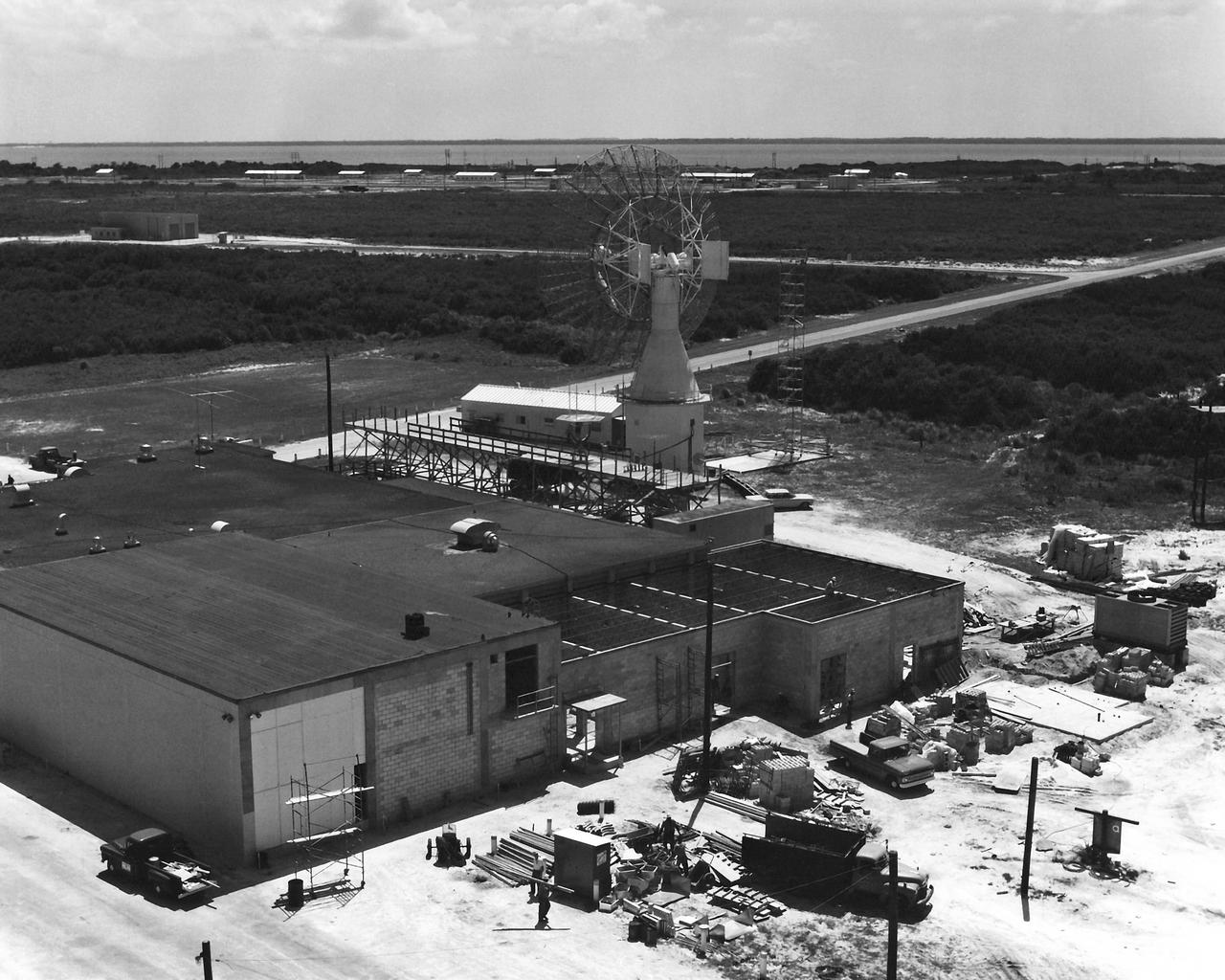
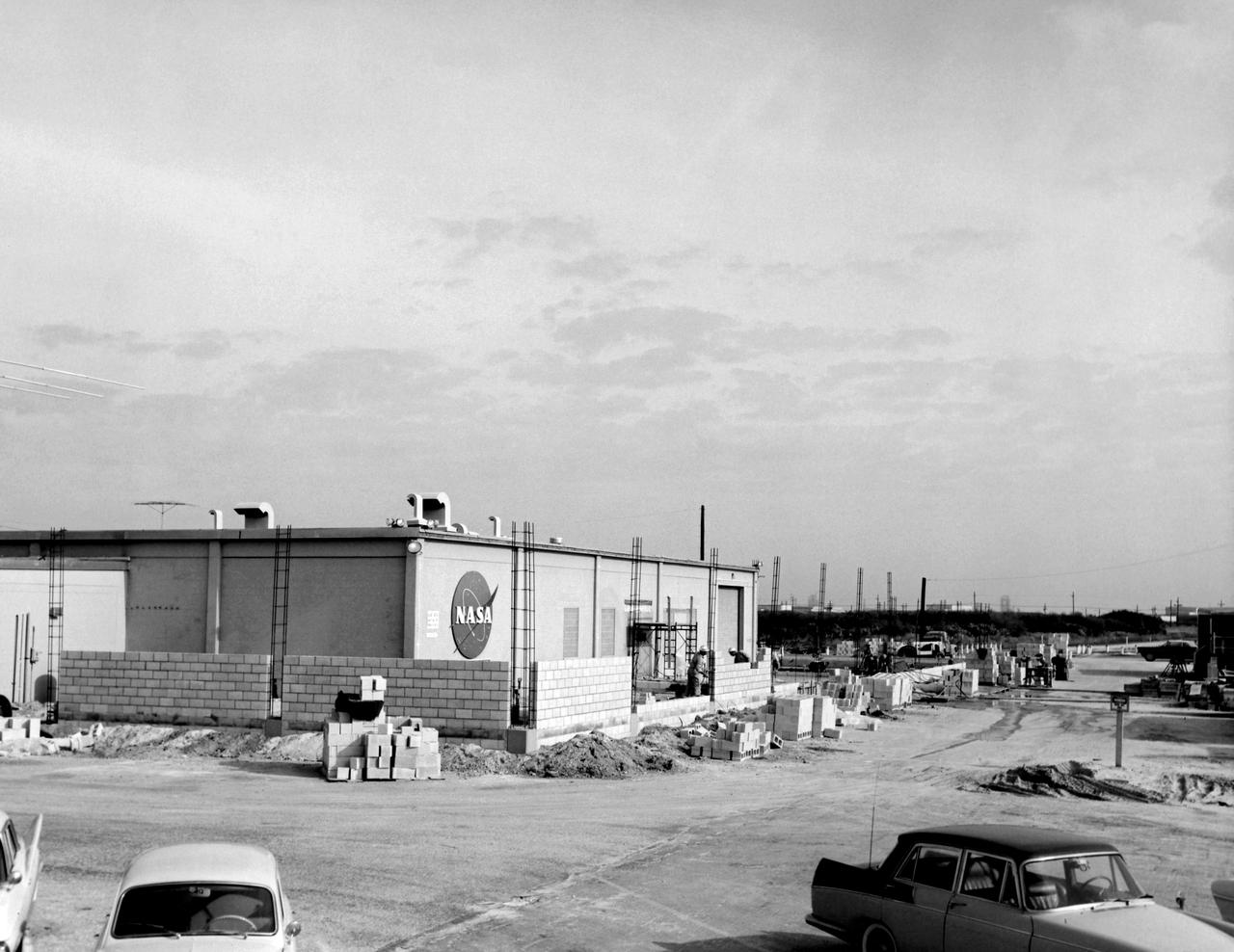
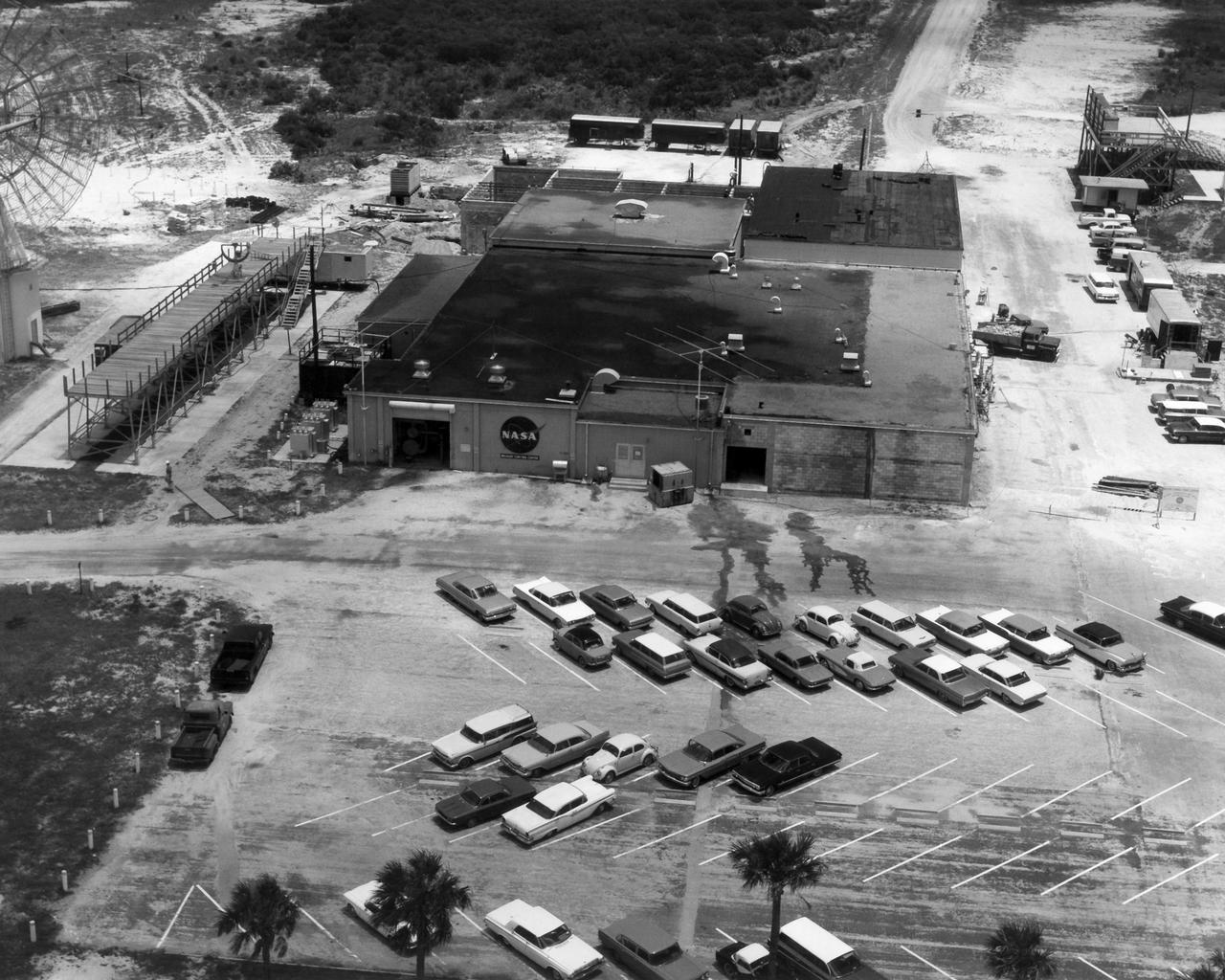
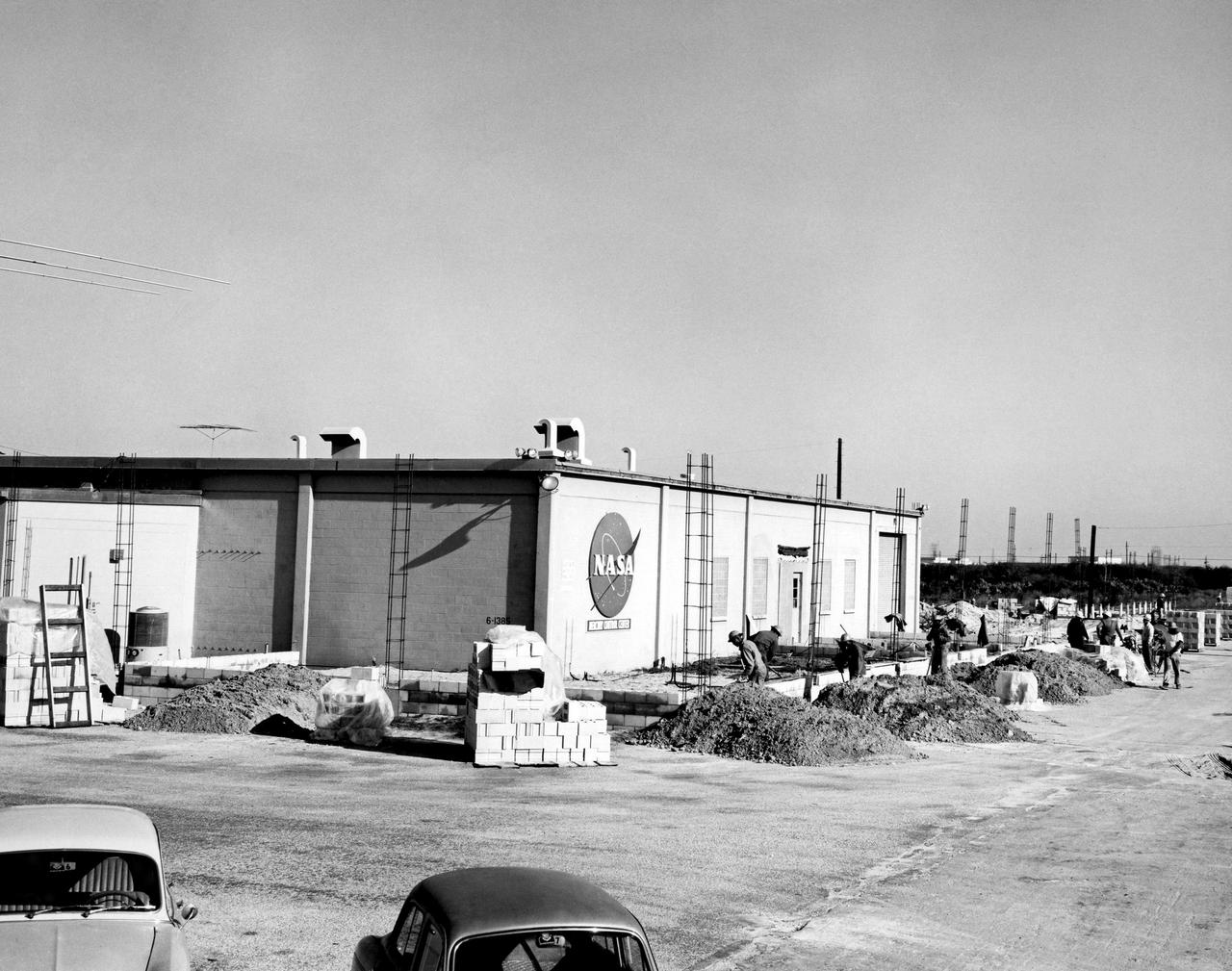
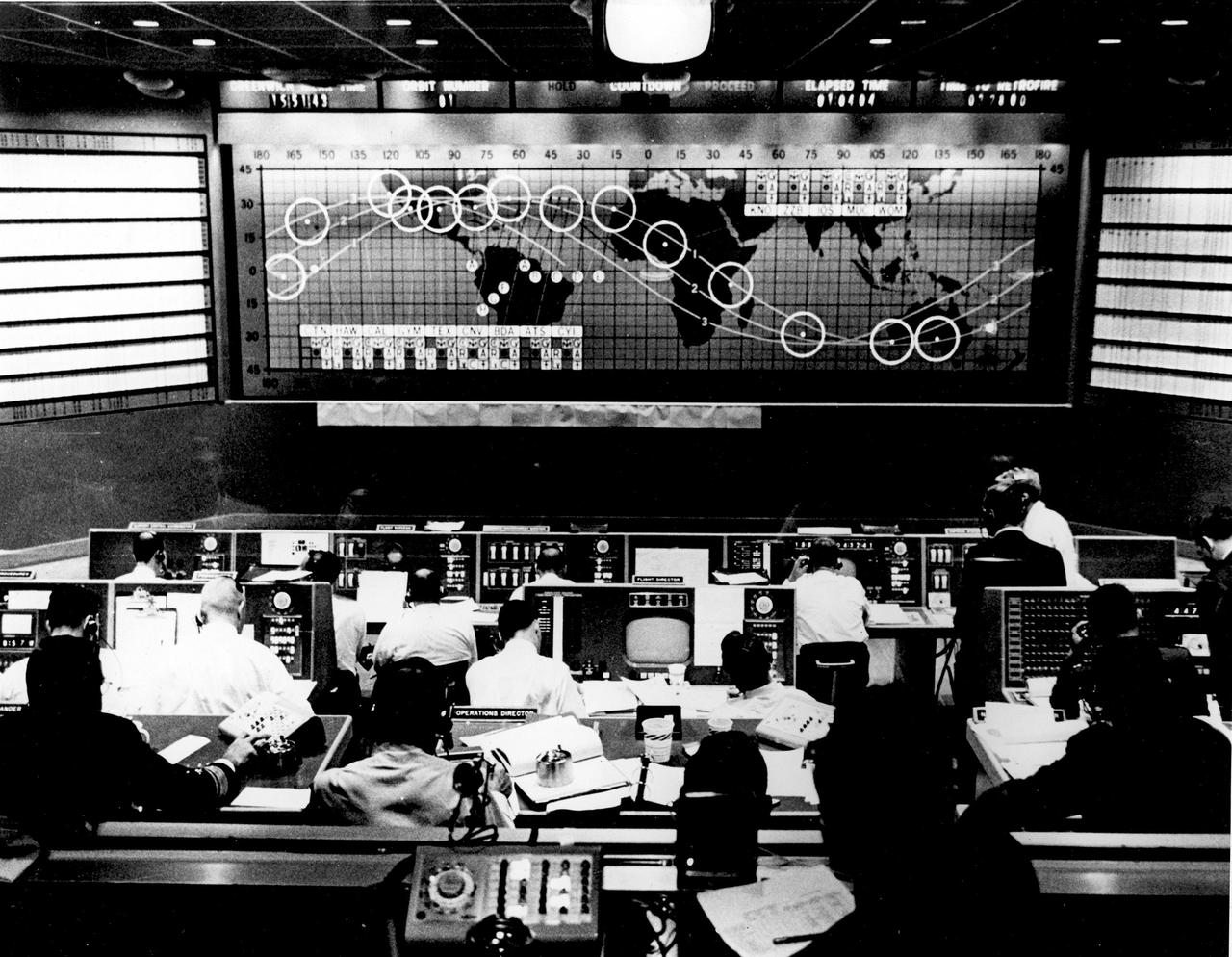
CAPE CANAVERAL, Fla. - Between 1962 and 1963, the Mission Control Center was modified to handle the additional complexities of the Gemini Program. In 1962, Pan American World Airways Inc. was contracted to design an addition to the facility, which wrapped around the east, north, and most of the west and south sides.           The Mercury Mission Control Center in Florida played a key role in the United States' early spaceflight program. Located at Cape Canaveral Air Force Station, the original part of the building was constructed between 1956 and 1958, with additions in 1959 and 1963. The facility officially was transferred to NASA on Dec. 26, 1963, and served as mission control during all the Project Mercury missions, as well as the first three flights of the Gemini Program, when it was renamed Mission Control Center. With its operational days behind, on June 1, 1967, the Mission Control Center became a stop on the public tour of NASA facilities until the mid-90s. In 1999, much of the equipment and furnishings from the Flight Control Area were moved to the Kennedy Space Center Visitor Complex where they became part of the exhibit there. The building was demolished in spring 2010. Photo credit: NASA
KSC-LOC-63-5635
CAPE CANAVERAL, Fla. - Between 1962 and 1963, the Mission Control Center was modified to handle the additional complexities of the Gemini Program. In 1962, Pan American World Airways Inc. was contracted to design an addition to the facility, which wrapped around the east, north, and most of the west and south sides.           The Mercury Mission Control Center in Florida played a key role in the United States' early spaceflight program. Located at Cape Canaveral Air Force Station, the original part of the building was constructed between 1956 and 1958, with additions in 1959 and 1963. The facility officially was transferred to NASA on Dec. 26, 1963, and served as mission control during all the Project Mercury missions, as well as the first three flights of the Gemini Program, when it was renamed Mission Control Center. With its operational days behind, on June 1, 1967, the Mission Control Center became a stop on the public tour of NASA facilities until the mid-90s. In 1999, much of the equipment and furnishings from the Flight Control Area were moved to the Kennedy Space Center Visitor Complex where they became part of the exhibit there. The building was demolished in spring 2010. Photo credit: NASA
KSC-LOC-63-5674
CAPE CANAVERAL, Fla. - Between 1962 and 1963, the Mission Control Center was modified to handle the additional complexities of the Gemini Program. In 1962, Pan American World Airways Inc. was contracted to design an addition to the facility, which wrapped around the east, north, and most of the west and south sides.           The Mercury Mission Control Center in Florida played a key role in the United States' early spaceflight program. Located at Cape Canaveral Air Force Station, the original part of the building was constructed between 1956 and 1958, with additions in 1959 and 1963. The facility officially was transferred to NASA on Dec. 26, 1963, and served as mission control during all the Project Mercury missions, as well as the first three flights of the Gemini Program, when it was renamed Mission Control Center. With its operational days behind, on June 1, 1967, the Mission Control Center became a stop on the public tour of NASA facilities until the mid-90s. In 1999, much of the equipment and furnishings from the Flight Control Area were moved to the Kennedy Space Center Visitor Complex where they became part of the exhibit there. The building was demolished in spring 2010. Photo credit: NASA
KSC-LOC-63-1971
CAPE CANAVERAL, Fla. - Between 1962 and 1963, the Mission Control Center was modified to handle the additional complexities of the Gemini Program. In 1962, Pan American World Airways Inc. was contracted to design an addition to the facility, which wrapped around the east, north, and most of the west and south sides.           The Mercury Mission Control Center in Florida played a key role in the United States' early spaceflight program. Located at Cape Canaveral Air Force Station, the original part of the building was constructed between 1956 and 1958, with additions in 1959 and 1963. The facility officially was transferred to NASA on Dec. 26, 1963, and served as mission control during all the Project Mercury missions, as well as the first three flights of the Gemini Program, when it was renamed Mission Control Center. With its operational days behind, on June 1, 1967, the Mission Control Center became a stop on the public tour of NASA facilities until the mid-90s. In 1999, much of the equipment and furnishings from the Flight Control Area were moved to the Kennedy Space Center Visitor Complex where they became part of the exhibit there. The building was demolished in spring 2010. Photo credit: NASA
KSC-LOC-63-1017
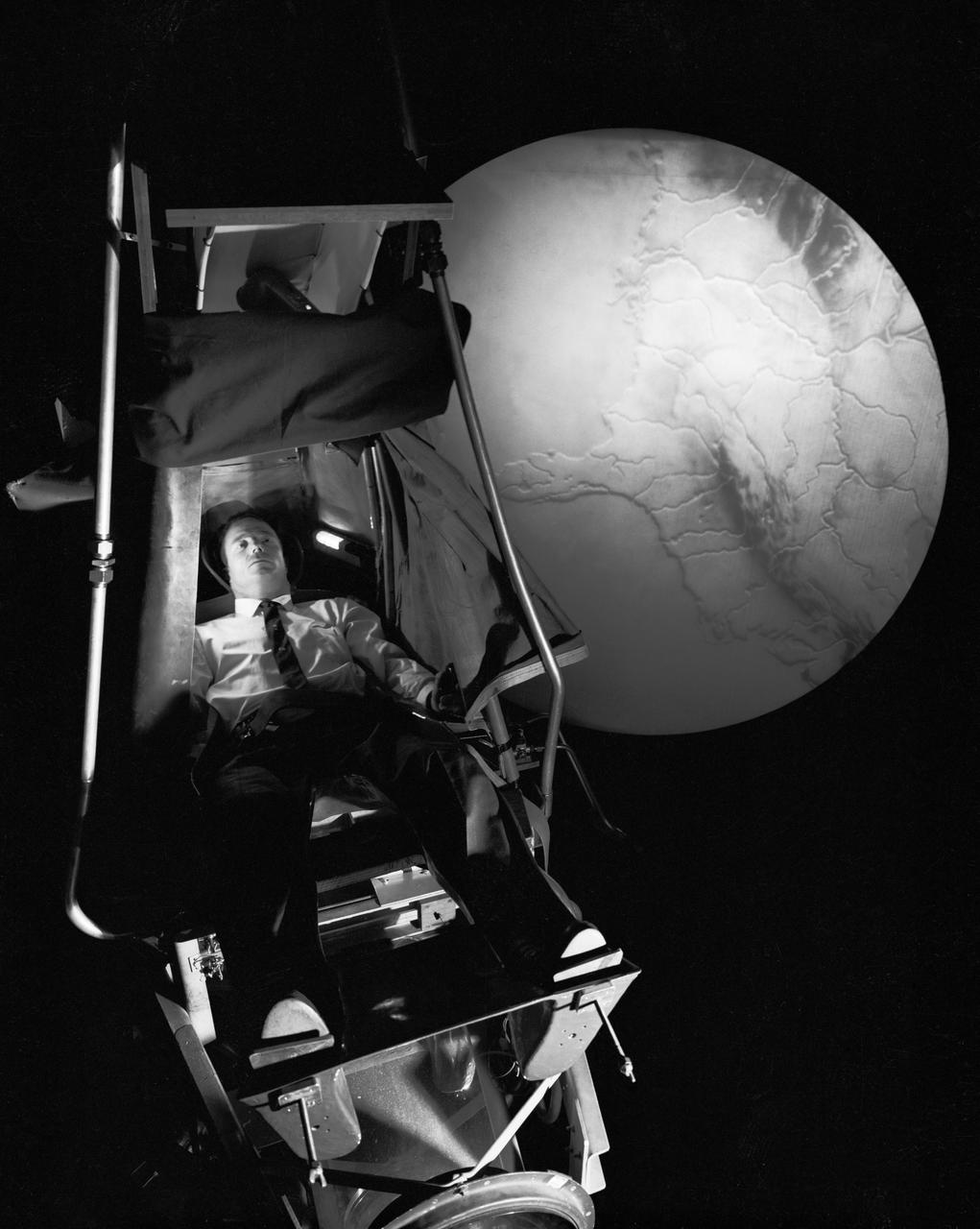
S62-01145 (1961) --- Project Mercury astronaut M. Scott Carpenter practices manual control of a spacecraft in the Air Lubricated Free Attitude (ALFA) trainer located at NASA?s Langley Air Force Base, Virginia. This trainer allows the astronaut to see the image of Earth?s surface at his feet while manually controlling the spacecraft. Carpenter has been selected as the prime pilot of the United States? second orbital flight. Photo credit: NASA
Astronaut Scott Carpenter - Practices - Air Lubricated Free Attitude (ALFA) Trainer - Langley AFB, VA
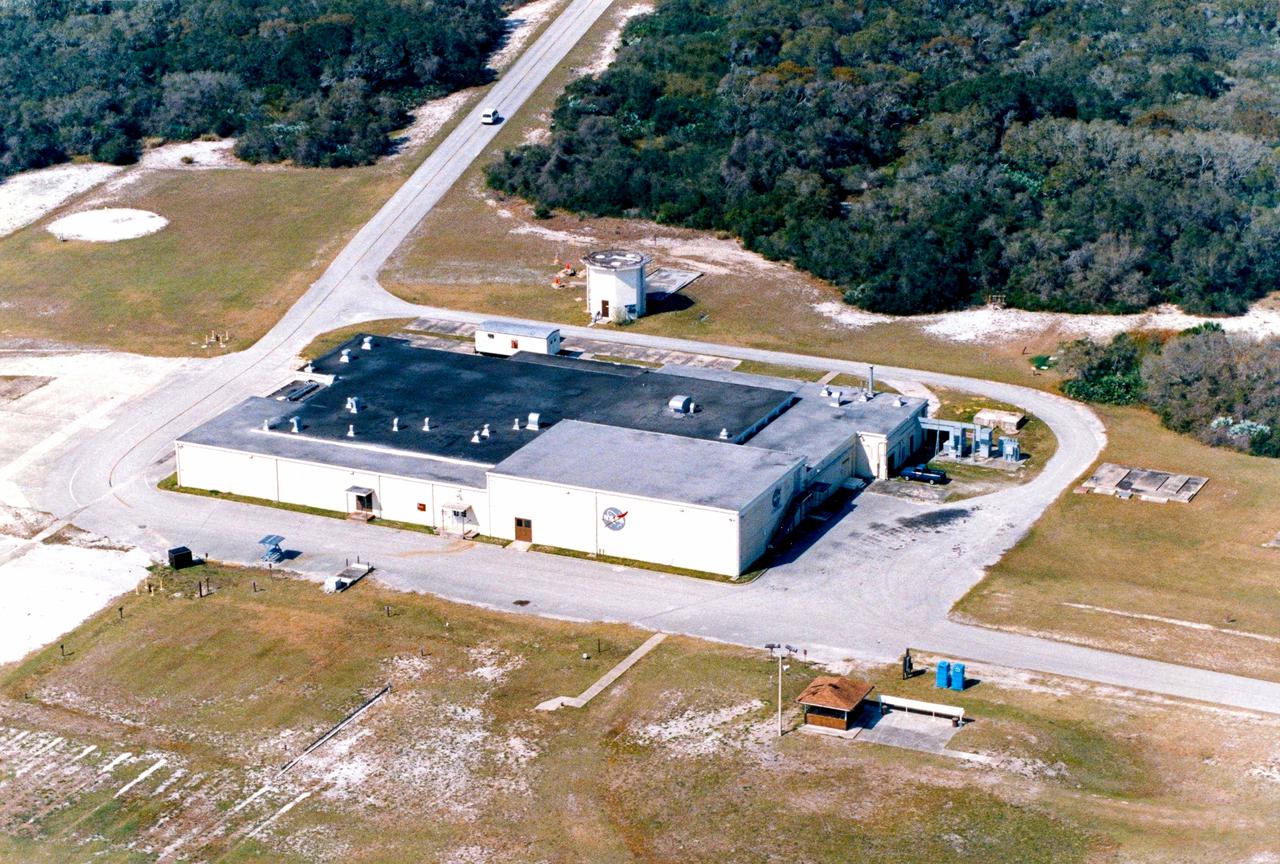
CAPE CANAVERAL, Fla. - With its operational days behind, on June 1, 1967, the Mission Control Center became a stop on the public tour of NASA facilities offered through the Kennedy Space Center Visitor’s Center, now called the Visitor Complex. Tours of the facility continued until the mid-90s.     The Mercury Mission Control Center in Florida played a key role in the United States' early spaceflight program. Located at Cape Canaveral Air Force Station, the original part of the building was constructed between 1956 and 1958, with additions in 1959 and 1963. The facility officially was transferred to NASA on Dec. 26, 1963, and served as mission control during all the Project Mercury missions, as well as the first three flights of the Gemini Program, when it was renamed Mission Control Center.  In 1999, much of the equipment and furnishings from the Flight Control Area were moved to the Kennedy Space Center Visitor Complex where they became part of the exhibit there. The building was demolished in spring 2010. Photo credit: NASA
KSC-116-KSC-68-2626
CAPE CANAVERAL, Fla. - With its operational days behind, on June 1, 1967, the Mission Control Center became a stop on the public tour of NASA facilities offered through the Kennedy Space Center Visitor’s Center, now called the Visitor Complex. Tours of the facility continued until the mid-90s.     The Mercury Mission Control Center in Florida played a key role in the United States' early spaceflight program. Located at Cape Canaveral Air Force Station, the original part of the building was constructed between 1956 and 1958, with additions in 1959 and 1963. The facility officially was transferred to NASA on Dec. 26, 1963, and served as mission control during all the Project Mercury missions, as well as the first three flights of the Gemini Program, when it was renamed Mission Control Center.  In 1999, much of the equipment and furnishings from the Flight Control Area were moved to the Kennedy Space Center Visitor Complex where they became part of the exhibit there. The building was demolished in spring 2010. Photo credit: NASA
KSC-396C-0995-29
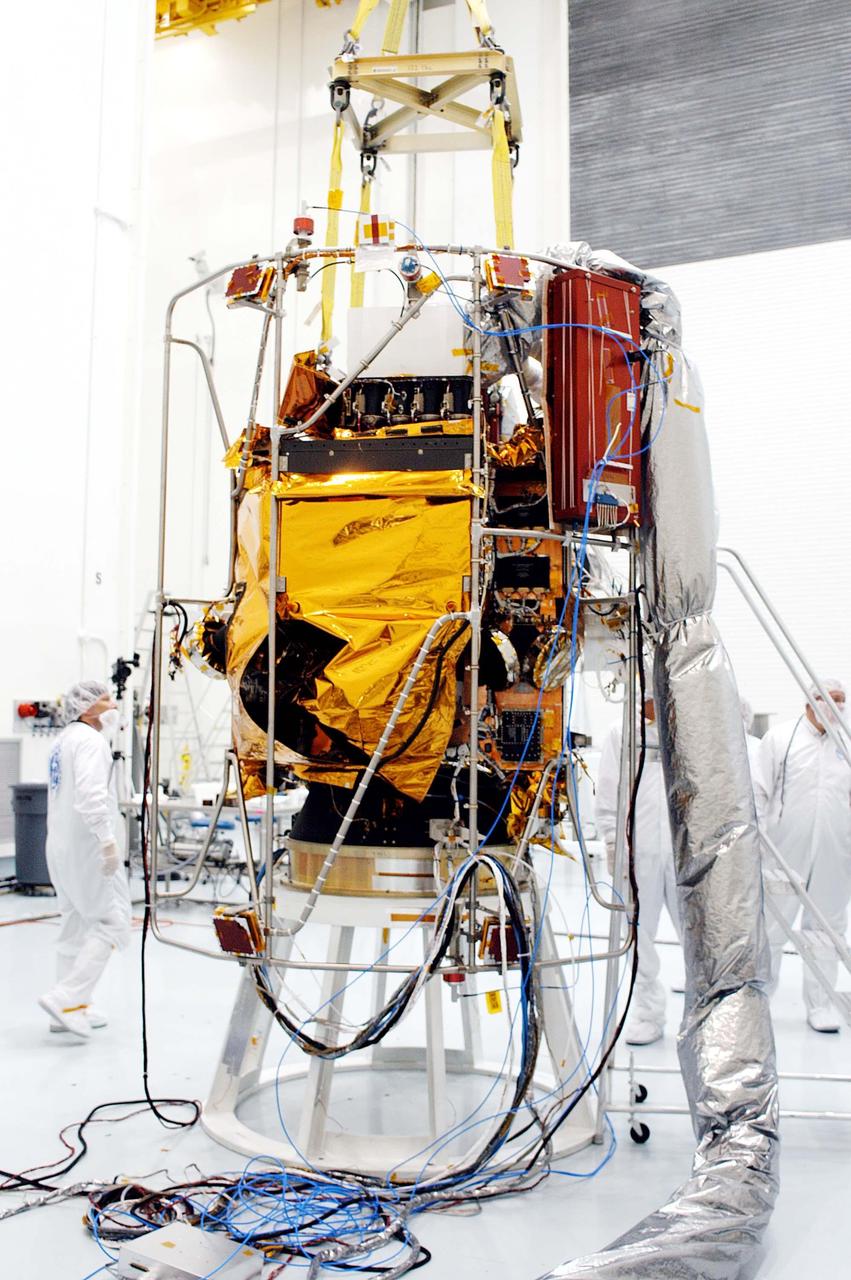
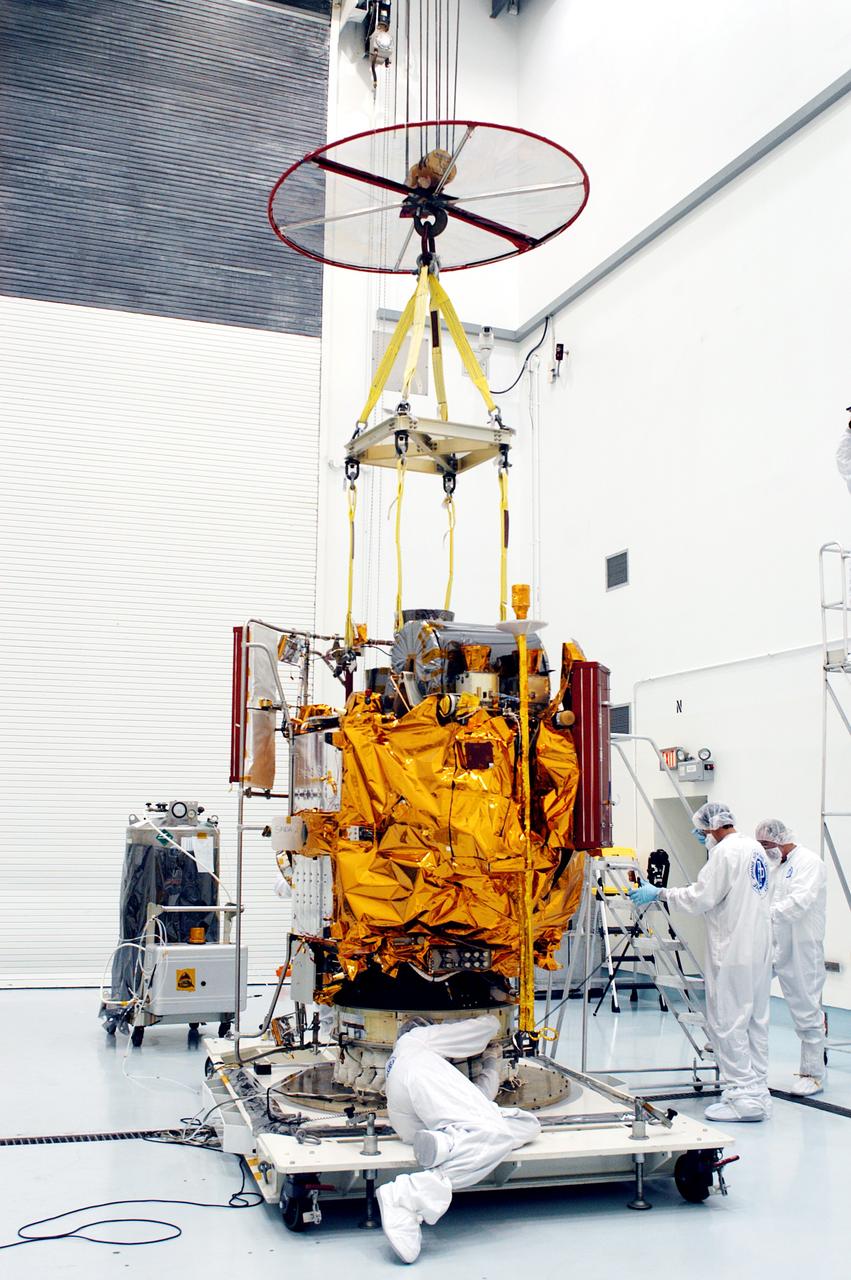
KENNEDY SPACE CENTER, FLA. -  At the Astrotech Space Operations processing facilities, an overhead crane moves NASA’s MESSENGER spacecraft toward a work stand. There employees of the Johns Hopkins University Applied Physics Laboratory, builders of the spacecraft, will perform an initial state-of-health check.  Then processing for launch can begin, including checkout of the power systems, communications systems and control systems.  The thermal blankets will also be attached for flight.  MESSENGER - short for MErcury Surface, Space ENvironment, GEochemistry and Ranging - will be launched May 11 on a six-year mission aboard a Boeing Delta II rocket.  Liftoff is targeted for 2:26 a.m. EDT on Tuesday, May 11.
KENNEDY SPACE CENTER, FLA. - At the Astrotech Space Operations processing facilities, an overhead crane moves NASA’s MESSENGER spacecraft toward a work stand. There employees of the Johns Hopkins University Applied Physics Laboratory, builders of the spacecraft, will perform an initial state-of-health check. Then processing for launch can begin, including checkout of the power systems, communications systems and control systems. The thermal blankets will also be attached for flight. MESSENGER - short for MErcury Surface, Space ENvironment, GEochemistry and Ranging - will be launched May 11 on a six-year mission aboard a Boeing Delta II rocket. Liftoff is targeted for 2:26 a.m. EDT on Tuesday, May 11.
KENNEDY SPACE CENTER, FLA. -  At the Astrotech Space Operations processing facilities, NASA’s MESSENGER spacecraft is secure after transfer to the work stand. There employees of the Johns Hopkins University Applied Physics Laboratory, builders of the spacecraft, will perform an initial state-of-health check.  Then processing for launch can begin, including checkout of the power systems, communications systems and control systems.  The thermal blankets will also be attached for flight.  MESSENGER - short for MErcury Surface, Space ENvironment, GEochemistry and Ranging - will be launched May 11 on a six-year mission aboard a Boeing Delta II rocket.  Liftoff is targeted for 2:26 a.m. EDT on Tuesday, May 11.
KENNEDY SPACE CENTER, FLA. - At the Astrotech Space Operations processing facilities, NASA’s MESSENGER spacecraft is secure after transfer to the work stand. There employees of the Johns Hopkins University Applied Physics Laboratory, builders of the spacecraft, will perform an initial state-of-health check. Then processing for launch can begin, including checkout of the power systems, communications systems and control systems. The thermal blankets will also be attached for flight. MESSENGER - short for MErcury Surface, Space ENvironment, GEochemistry and Ranging - will be launched May 11 on a six-year mission aboard a Boeing Delta II rocket. Liftoff is targeted for 2:26 a.m. EDT on Tuesday, May 11.
KENNEDY SPACE CENTER, FLA. -  At the Astrotech Space Operations processing facilities, an overhead crane lowers NASA’s MESSENGER spacecraft onto a work stand. There employees of the Johns Hopkins University Applied Physics Laboratory, builders of the spacecraft, will perform an initial state-of-health check.  Then processing for launch can begin, including checkout of the power systems, communications systems and control systems.  The thermal blankets will also be attached for flight.  MESSENGER - short for MErcury Surface, Space ENvironment, GEochemistry and Ranging - will be launched May 11 on a six-year mission aboard a Boeing Delta II rocket.  Liftoff is targeted for 2:26 a.m. EDT on Tuesday, May 11.
KENNEDY SPACE CENTER, FLA. - At the Astrotech Space Operations processing facilities, an overhead crane lowers NASA’s MESSENGER spacecraft onto a work stand. There employees of the Johns Hopkins University Applied Physics Laboratory, builders of the spacecraft, will perform an initial state-of-health check. Then processing for launch can begin, including checkout of the power systems, communications systems and control systems. The thermal blankets will also be attached for flight. MESSENGER - short for MErcury Surface, Space ENvironment, GEochemistry and Ranging - will be launched May 11 on a six-year mission aboard a Boeing Delta II rocket. Liftoff is targeted for 2:26 a.m. EDT on Tuesday, May 11.
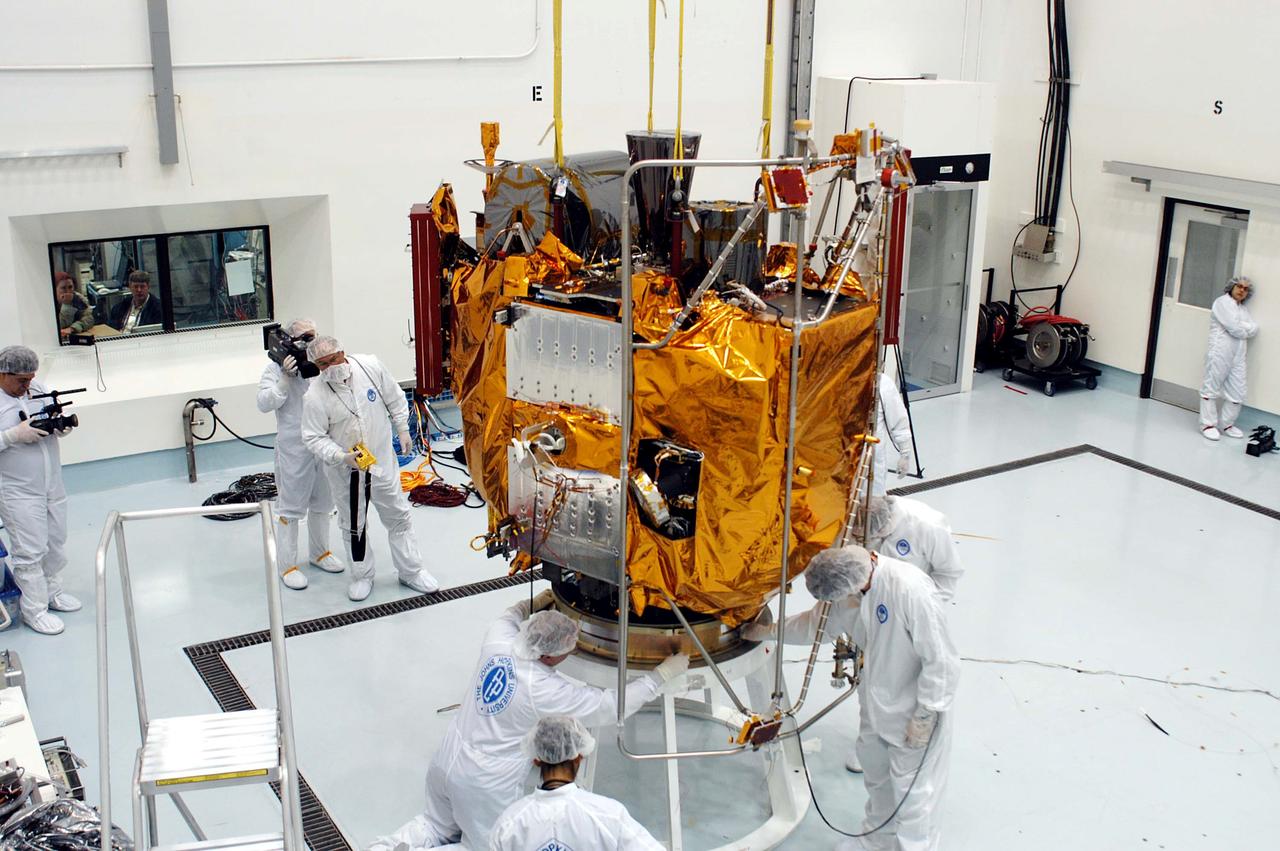
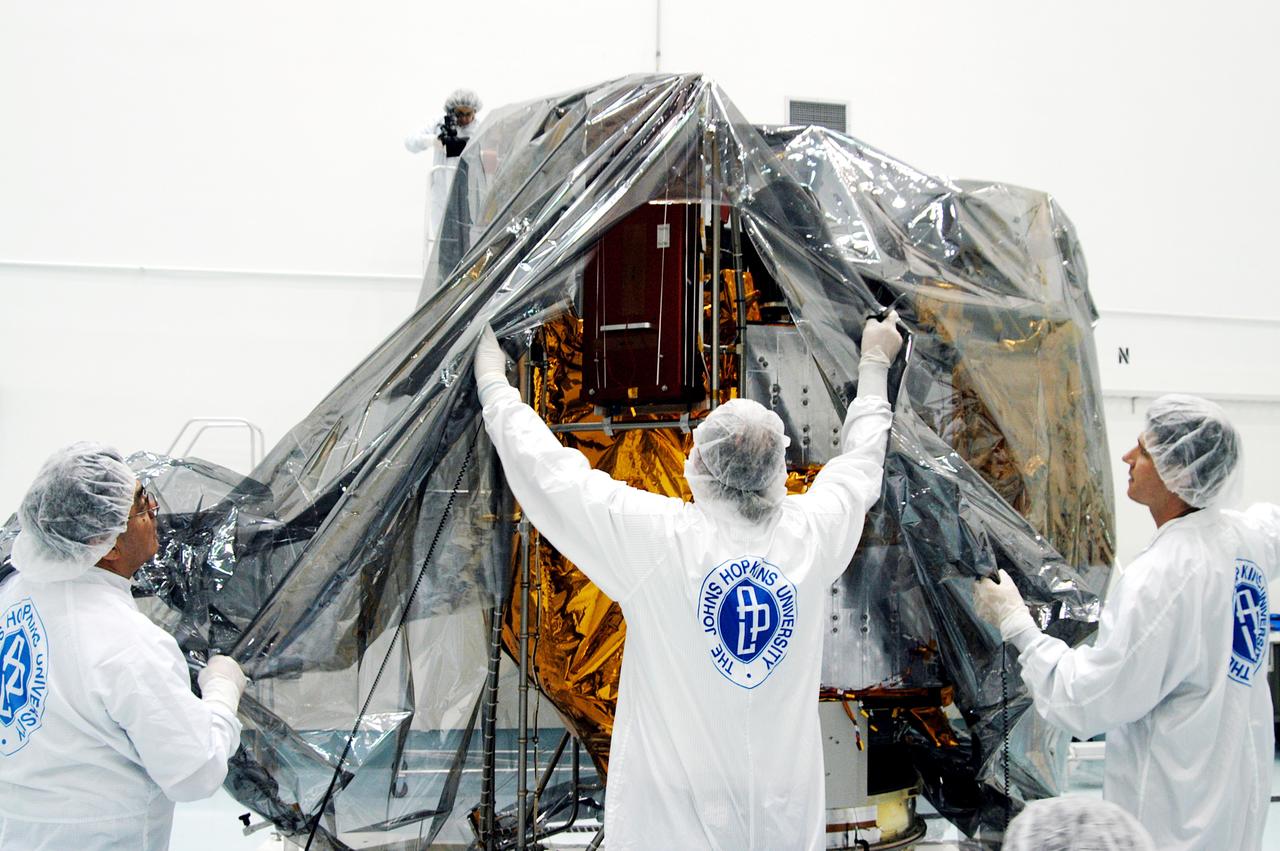
KENNEDY SPACE CENTER, FLA. -  In the high bay clean room at the Astrotech Space Operations processing facilities near KSC, NASA’s MESSENGER spacecraft is revealed.  Employees of the Johns Hopkins University Applied Physics Laboratory, builders of the spacecraft, will perform an initial state-of-health check.  Then processing for launch can begin, including checkout of the power systems, communications systems and control systems.  The thermal blankets will also be attached for flight.  MESSENGER - short for MErcury Surface, Space ENvironment, GEochemistry and Ranging - will be launched May 11 on a six-year mission aboard a Boeing Delta II rocket.  Liftoff is targeted for 2:26 a.m. EDT on Tuesday, May 11.
KENNEDY SPACE CENTER, FLA. - In the high bay clean room at the Astrotech Space Operations processing facilities near KSC, NASA’s MESSENGER spacecraft is revealed. Employees of the Johns Hopkins University Applied Physics Laboratory, builders of the spacecraft, will perform an initial state-of-health check. Then processing for launch can begin, including checkout of the power systems, communications systems and control systems. The thermal blankets will also be attached for flight. MESSENGER - short for MErcury Surface, Space ENvironment, GEochemistry and Ranging - will be launched May 11 on a six-year mission aboard a Boeing Delta II rocket. Liftoff is targeted for 2:26 a.m. EDT on Tuesday, May 11.
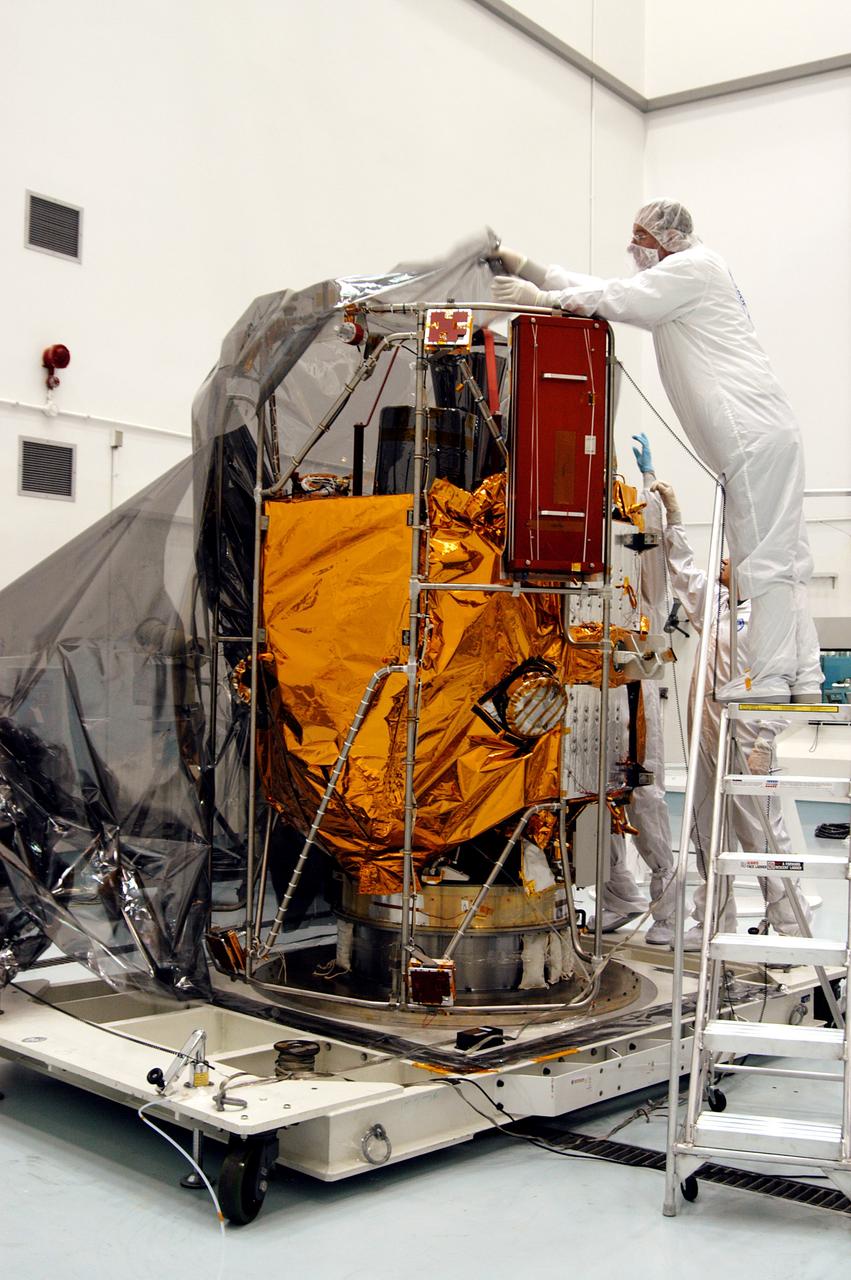
KENNEDY SPACE CENTER, FLA. -  In the high bay clean room at the Astrotech Space Operations processing facilities near KSC, workers remove the protective cover from NASA’s MESSENGER spacecraft.  Employees of the Johns Hopkins University Applied Physics Laboratory, builders of the spacecraft, will perform an initial state-of-health check.  Then processing for launch can begin, including checkout of the power systems, communications systems and control systems.  The thermal blankets will also be attached for flight.  MESSENGER - short for MErcury Surface, Space ENvironment, GEochemistry and Ranging - will be launched May 11 on a six-year mission aboard a Boeing Delta II rocket.  Liftoff is targeted for 2:26 a.m. EDT on Tuesday, May 11.
KENNEDY SPACE CENTER, FLA. - In the high bay clean room at the Astrotech Space Operations processing facilities near KSC, workers remove the protective cover from NASA’s MESSENGER spacecraft. Employees of the Johns Hopkins University Applied Physics Laboratory, builders of the spacecraft, will perform an initial state-of-health check. Then processing for launch can begin, including checkout of the power systems, communications systems and control systems. The thermal blankets will also be attached for flight. MESSENGER - short for MErcury Surface, Space ENvironment, GEochemistry and Ranging - will be launched May 11 on a six-year mission aboard a Boeing Delta II rocket. Liftoff is targeted for 2:26 a.m. EDT on Tuesday, May 11.
KENNEDY SPACE CENTER, FLA. -  At the Astrotech Space Operations processing facilities, workers check the placement of NASA’s MESSENGER spacecraft on a work stand. There employees of the Johns Hopkins University Applied Physics Laboratory, builders of the spacecraft, will perform an initial state-of-health check.  Then processing for launch can begin, including checkout of the power systems, communications systems and control systems.  The thermal blankets will also be attached for flight.  MESSENGER - short for MErcury Surface, Space ENvironment, GEochemistry and Ranging - will be launched May 11 on a six-year mission aboard a Boeing Delta II rocket.  Liftoff is targeted for 2:26 a.m. EDT on Tuesday, May 11.
KENNEDY SPACE CENTER, FLA. - At the Astrotech Space Operations processing facilities, workers check the placement of NASA’s MESSENGER spacecraft on a work stand. There employees of the Johns Hopkins University Applied Physics Laboratory, builders of the spacecraft, will perform an initial state-of-health check. Then processing for launch can begin, including checkout of the power systems, communications systems and control systems. The thermal blankets will also be attached for flight. MESSENGER - short for MErcury Surface, Space ENvironment, GEochemistry and Ranging - will be launched May 11 on a six-year mission aboard a Boeing Delta II rocket. Liftoff is targeted for 2:26 a.m. EDT on Tuesday, May 11.
KENNEDY SPACE CENTER, FLA. -  In the high bay clean room at the Astrotech Space Operations processing facilities near KSC, workers remove the protective cover from NASA’s MESSENGER spacecraft.  Employees of the Johns Hopkins University Applied Physics Laboratory, builders of the spacecraft, will perform an initial state-of-health check.  Then processing for launch can begin, including checkout of the power systems, communications systems and control systems.  The thermal blankets will also be attached for flight.  MESSENGER - short for MErcury Surface, Space ENvironment, GEochemistry and Ranging - will be launched May 11 on a six-year mission aboard a Boeing Delta II rocket.  Liftoff is targeted for 2:26 a.m. EDT on Tuesday, May 11.
KENNEDY SPACE CENTER, FLA. - In the high bay clean room at the Astrotech Space Operations processing facilities near KSC, workers remove the protective cover from NASA’s MESSENGER spacecraft. Employees of the Johns Hopkins University Applied Physics Laboratory, builders of the spacecraft, will perform an initial state-of-health check. Then processing for launch can begin, including checkout of the power systems, communications systems and control systems. The thermal blankets will also be attached for flight. MESSENGER - short for MErcury Surface, Space ENvironment, GEochemistry and Ranging - will be launched May 11 on a six-year mission aboard a Boeing Delta II rocket. Liftoff is targeted for 2:26 a.m. EDT on Tuesday, May 11.
KENNEDY SPACE CENTER, FLA. -  In the high bay clean room at the Astrotech Space Operations processing facilities near KSC, workers prepare NASA’s MESSENGER spacecraft for transfer to a work stand.  There employees of the Johns Hopkins University Applied Physics Laboratory, builders of the spacecraft, will perform an initial state-of-health check.  Then processing for launch can begin, including checkout of the power systems, communications systems and control systems.  The thermal blankets will also be attached for flight.  MESSENGER - short for MErcury Surface, Space ENvironment, GEochemistry and Ranging - will be launched May 11 on a six-year mission aboard a Boeing Delta II rocket.  Liftoff is targeted for 2:26 a.m. EDT on Tuesday, May 11.
KENNEDY SPACE CENTER, FLA. - In the high bay clean room at the Astrotech Space Operations processing facilities near KSC, workers prepare NASA’s MESSENGER spacecraft for transfer to a work stand. There employees of the Johns Hopkins University Applied Physics Laboratory, builders of the spacecraft, will perform an initial state-of-health check. Then processing for launch can begin, including checkout of the power systems, communications systems and control systems. The thermal blankets will also be attached for flight. MESSENGER - short for MErcury Surface, Space ENvironment, GEochemistry and Ranging - will be launched May 11 on a six-year mission aboard a Boeing Delta II rocket. Liftoff is targeted for 2:26 a.m. EDT on Tuesday, May 11.
KENNEDY SPACE CENTER, FLA. -  At the Astrotech Space Operations processing facilities, an overhead crane lowers NASA’s MESSENGER spacecraft onto a work stand. There employees of the Johns Hopkins University Applied Physics Laboratory, builders of the spacecraft, will perform an initial state-of-health check.  Then processing for launch can begin, including checkout of the power systems, communications systems and control systems.  The thermal blankets will also be attached for flight.  MESSENGER - short for MErcury Surface, Space ENvironment, GEochemistry and Ranging - will be launched May 11 on a six-year mission aboard a Boeing Delta II rocket.  Liftoff is targeted for 2:26 a.m. EDT on Tuesday, May 11.
KENNEDY SPACE CENTER, FLA. - At the Astrotech Space Operations processing facilities, an overhead crane lowers NASA’s MESSENGER spacecraft onto a work stand. There employees of the Johns Hopkins University Applied Physics Laboratory, builders of the spacecraft, will perform an initial state-of-health check. Then processing for launch can begin, including checkout of the power systems, communications systems and control systems. The thermal blankets will also be attached for flight. MESSENGER - short for MErcury Surface, Space ENvironment, GEochemistry and Ranging - will be launched May 11 on a six-year mission aboard a Boeing Delta II rocket. Liftoff is targeted for 2:26 a.m. EDT on Tuesday, May 11.
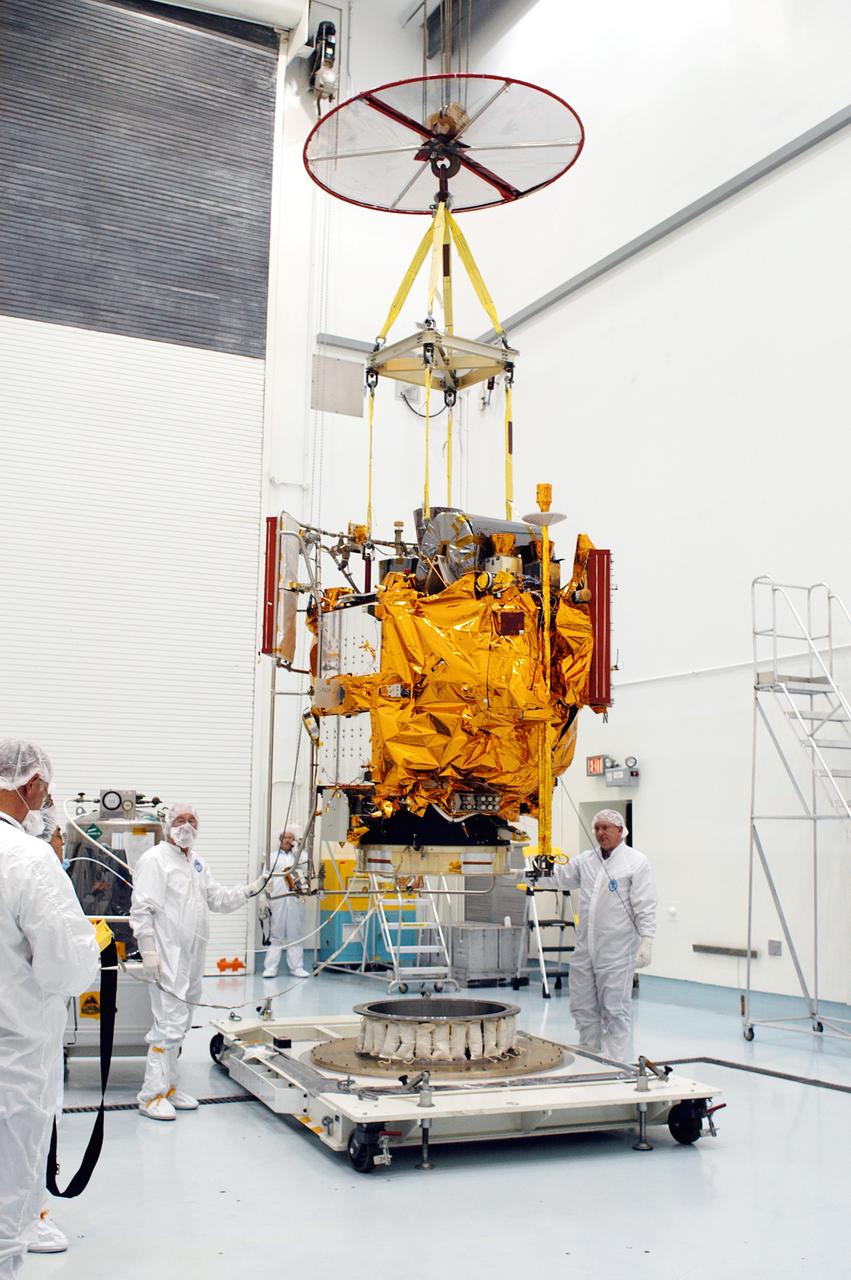
KENNEDY SPACE CENTER, FLA. -  At the Astrotech Space Operations processing facilities, NASA’s MESSENGER spacecraft is lifted off the pallet for transfer to a work stand. There employees of the Johns Hopkins University Applied Physics Laboratory, builders of the spacecraft, will perform an initial state-of-health check.  Then processing for launch can begin, including checkout of the power systems, communications systems and control systems.  The thermal blankets will also be attached for flight.  MESSENGER - short for MErcury Surface, Space ENvironment, GEochemistry and Ranging - will be launched May 11 on a six-year mission aboard a Boeing Delta II rocket.  Liftoff is targeted for 2:26 a.m. EDT on Tuesday, May 11.
KENNEDY SPACE CENTER, FLA. - At the Astrotech Space Operations processing facilities, NASA’s MESSENGER spacecraft is lifted off the pallet for transfer to a work stand. There employees of the Johns Hopkins University Applied Physics Laboratory, builders of the spacecraft, will perform an initial state-of-health check. Then processing for launch can begin, including checkout of the power systems, communications systems and control systems. The thermal blankets will also be attached for flight. MESSENGER - short for MErcury Surface, Space ENvironment, GEochemistry and Ranging - will be launched May 11 on a six-year mission aboard a Boeing Delta II rocket. Liftoff is targeted for 2:26 a.m. EDT on Tuesday, May 11.
KENNEDY SPACE CENTER, FLA. -  At the Astrotech Space Operations processing facilities near KSC, workers move NASA’s MESSENGER spacecraft into a high bay clean room.  Employees of the Johns Hopkins University Applied Physics Laboratory, builders of the spacecraft, will perform an initial state-of-health check.  Then processing for launch can begin, including checkout of the power systems, communications systems and control systems.  The thermal blankets will also be attached for flight.  MESSENGER - short for MErcury Surface, Space ENvironment, GEochemistry and Ranging - will be launched May 11 on a six-year mission aboard a Boeing Delta II rocket.  Liftoff is targeted for 2:26 a.m. EDT on Tuesday, May 11.
KENNEDY SPACE CENTER, FLA. - At the Astrotech Space Operations processing facilities near KSC, workers move NASA’s MESSENGER spacecraft into a high bay clean room. Employees of the Johns Hopkins University Applied Physics Laboratory, builders of the spacecraft, will perform an initial state-of-health check. Then processing for launch can begin, including checkout of the power systems, communications systems and control systems. The thermal blankets will also be attached for flight. MESSENGER - short for MErcury Surface, Space ENvironment, GEochemistry and Ranging - will be launched May 11 on a six-year mission aboard a Boeing Delta II rocket. Liftoff is targeted for 2:26 a.m. EDT on Tuesday, May 11.
KENNEDY SPACE CENTER, FLA. -  At the Astrotech Space Operations processing facilities, NASA’s MESSENGER spacecraft is lifted off the pallet for transfer to a work stand. There employees of the Johns Hopkins University Applied Physics Laboratory, builders of the spacecraft, will perform an initial state-of-health check.  Then processing for launch can begin, including checkout of the power systems, communications systems and control systems.  The thermal blankets will also be attached for flight.  MESSENGER - short for MErcury Surface, Space ENvironment, GEochemistry and Ranging - will be launched May 11 on a six-year mission aboard a Boeing Delta II rocket.  Liftoff is targeted for 2:26 a.m. EDT on Tuesday, May 11.
KENNEDY SPACE CENTER, FLA. - At the Astrotech Space Operations processing facilities, NASA’s MESSENGER spacecraft is lifted off the pallet for transfer to a work stand. There employees of the Johns Hopkins University Applied Physics Laboratory, builders of the spacecraft, will perform an initial state-of-health check. Then processing for launch can begin, including checkout of the power systems, communications systems and control systems. The thermal blankets will also be attached for flight. MESSENGER - short for MErcury Surface, Space ENvironment, GEochemistry and Ranging - will be launched May 11 on a six-year mission aboard a Boeing Delta II rocket. Liftoff is targeted for 2:26 a.m. EDT on Tuesday, May 11.
KENNEDY SPACE CENTER, FLA. -  At the Astrotech Space Operations processing facilities, workers check the placement of NASA’s MESSENGER spacecraft on a work stand. There employees of the Johns Hopkins University Applied Physics Laboratory, builders of the spacecraft, will perform an initial state-of-health check.  Then processing for launch can begin, including checkout of the power systems, communications systems and control systems.  The thermal blankets will also be attached for flight.  MESSENGER - short for MErcury Surface, Space ENvironment, GEochemistry and Ranging - will be launched May 11 on a six-year mission aboard a Boeing Delta II rocket.  Liftoff is targeted for 2:26 a.m. EDT on Tuesday, May 11.
KENNEDY SPACE CENTER, FLA. - At the Astrotech Space Operations processing facilities, workers check the placement of NASA’s MESSENGER spacecraft on a work stand. There employees of the Johns Hopkins University Applied Physics Laboratory, builders of the spacecraft, will perform an initial state-of-health check. Then processing for launch can begin, including checkout of the power systems, communications systems and control systems. The thermal blankets will also be attached for flight. MESSENGER - short for MErcury Surface, Space ENvironment, GEochemistry and Ranging - will be launched May 11 on a six-year mission aboard a Boeing Delta II rocket. Liftoff is targeted for 2:26 a.m. EDT on Tuesday, May 11.
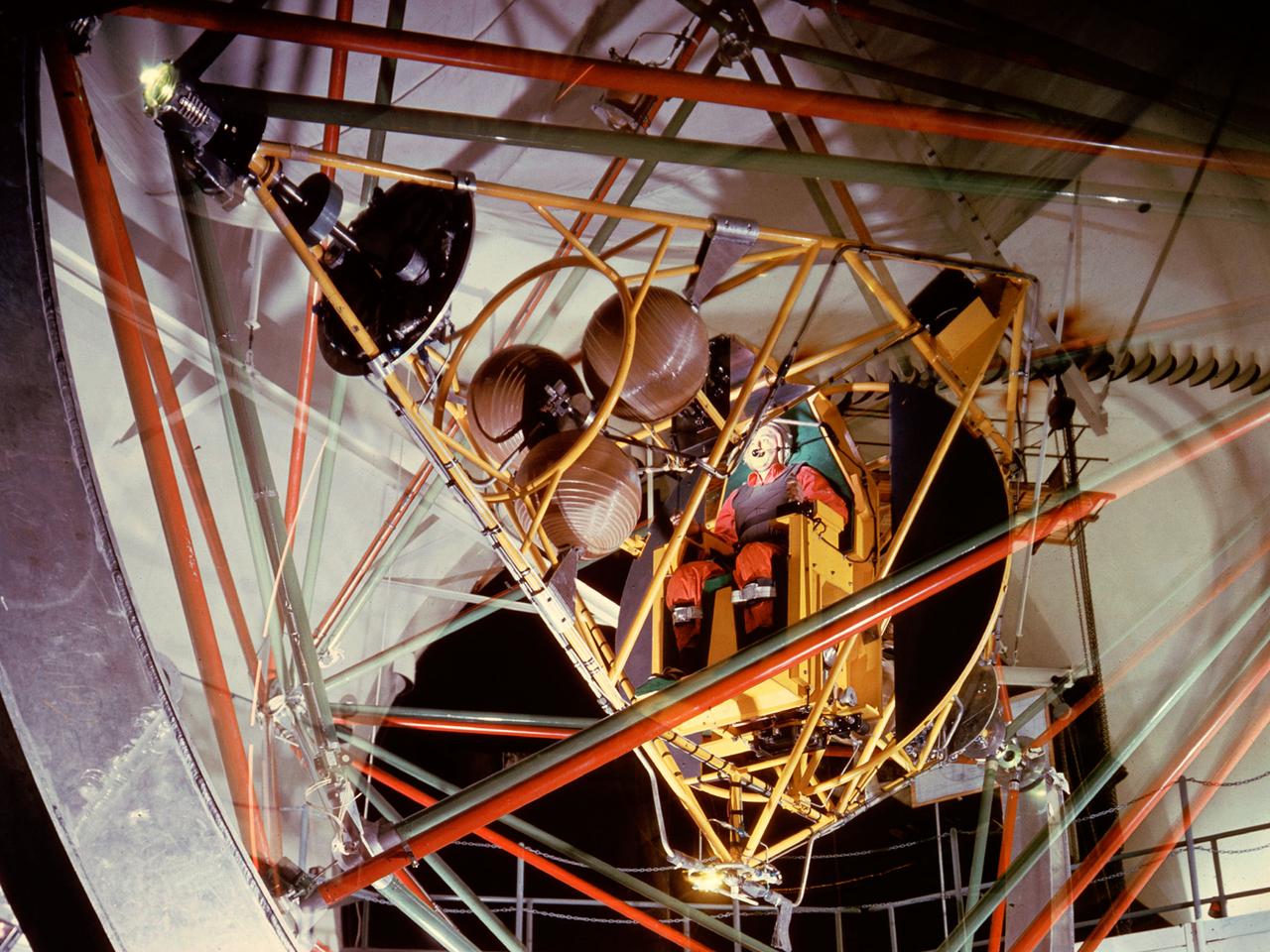
National Aeronautics and Space Administration (NASA) pilot Joe Algranti tests the Multi-Axis Space Test Inertia Facility (MASTIF) inside the Altitude Wind Tunnel while researcher Robert Miller looks on. The MASTIF was a three-axis rig with a pilot’s chair mounted in the center to train Project Mercury pilots to bring a spinning spacecraft under control. An astronaut was secured in a foam couch in the center of the rig. The rig then spun on three axes from 2 to 50 rotations per minute. Small nitrogen gas thrusters were used by the astronauts to bring the MASTIF under control.     The device was originally designed in early 1959 without the chair and controllers. It was used by Lewis researchers to determine if the Lewis-designed autopilot system could rectify the capsule’s attitude following separation. If the control system failed to work properly, the heatshield would be out of place and the spacecraft would burn up during reentry. The system was flight tested during the September 1959 launch of the Lewis-assembled Big Joe capsule.    The MASTIF was adapted in late 1959 for the astronaut training. NASA engineers added a pilot’s chair, a hand controller, and an instrument display to the MASTIF in order familiarize the astronauts with the sensations of an out-of-control spacecraft. NASA Lewis researcher James Useller and Algranti perfected and calibrated the MASTIF in the fall of 1959. In February and March 1960, the seven Project Mercury astronauts traveled to Cleveland to train on the MASTIF.
The Multi-Axis Space Test Inertia Facility in the Altitude Wind Tunnel
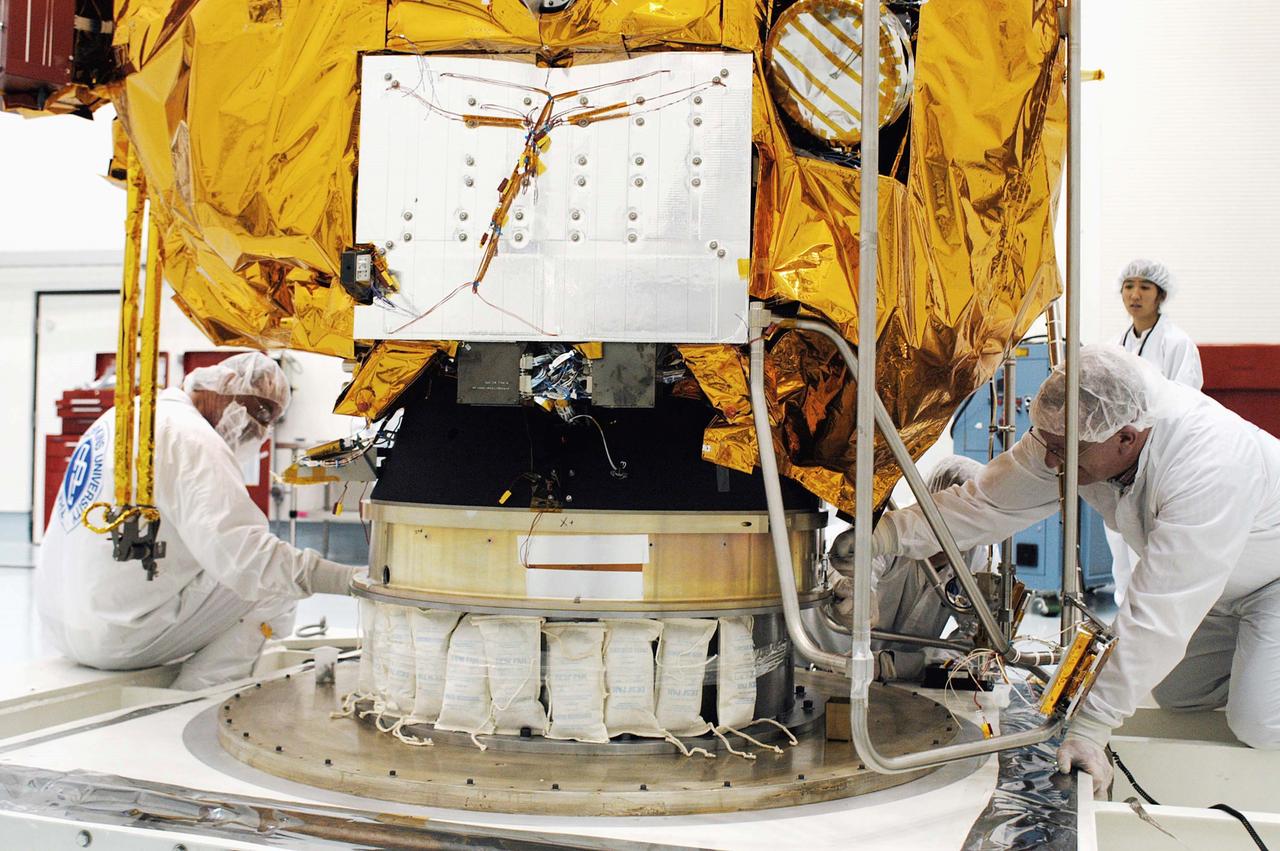
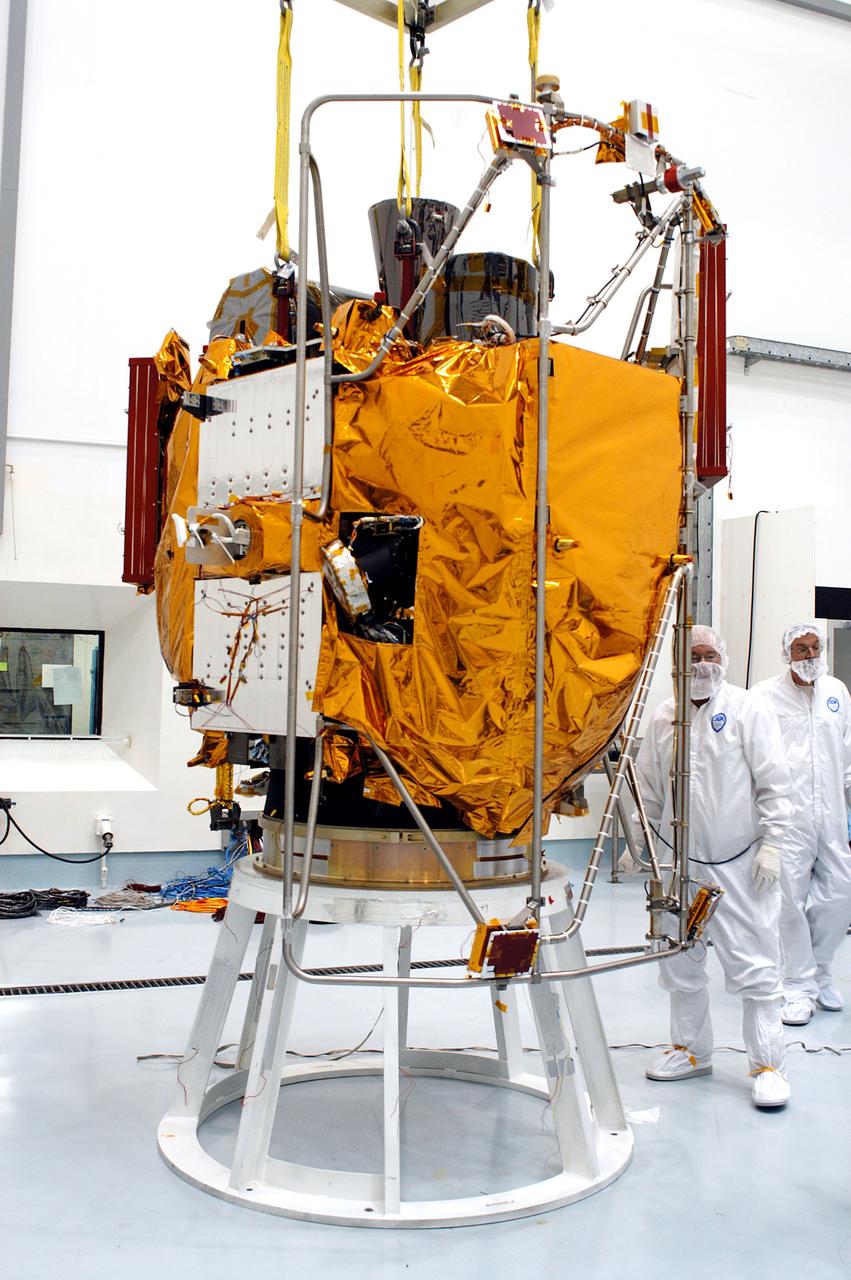
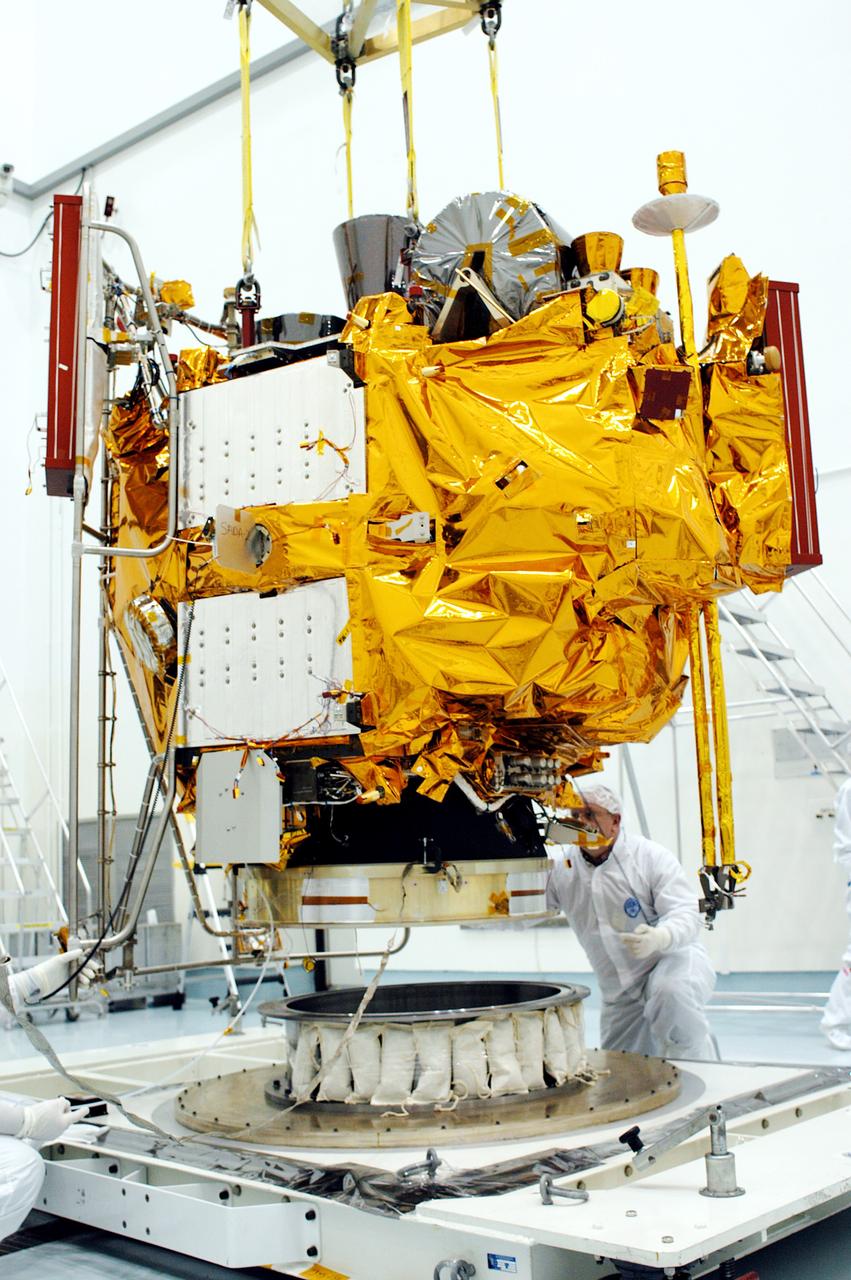
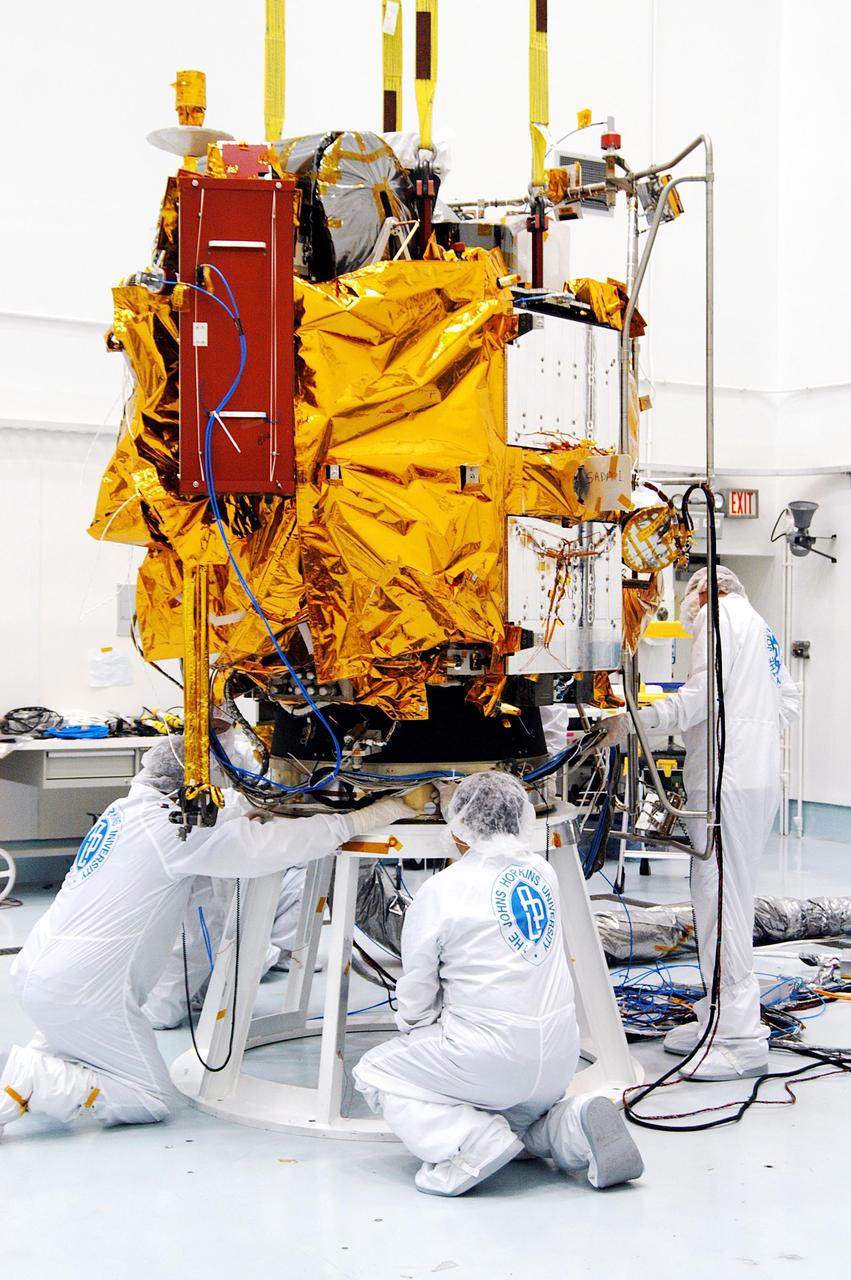
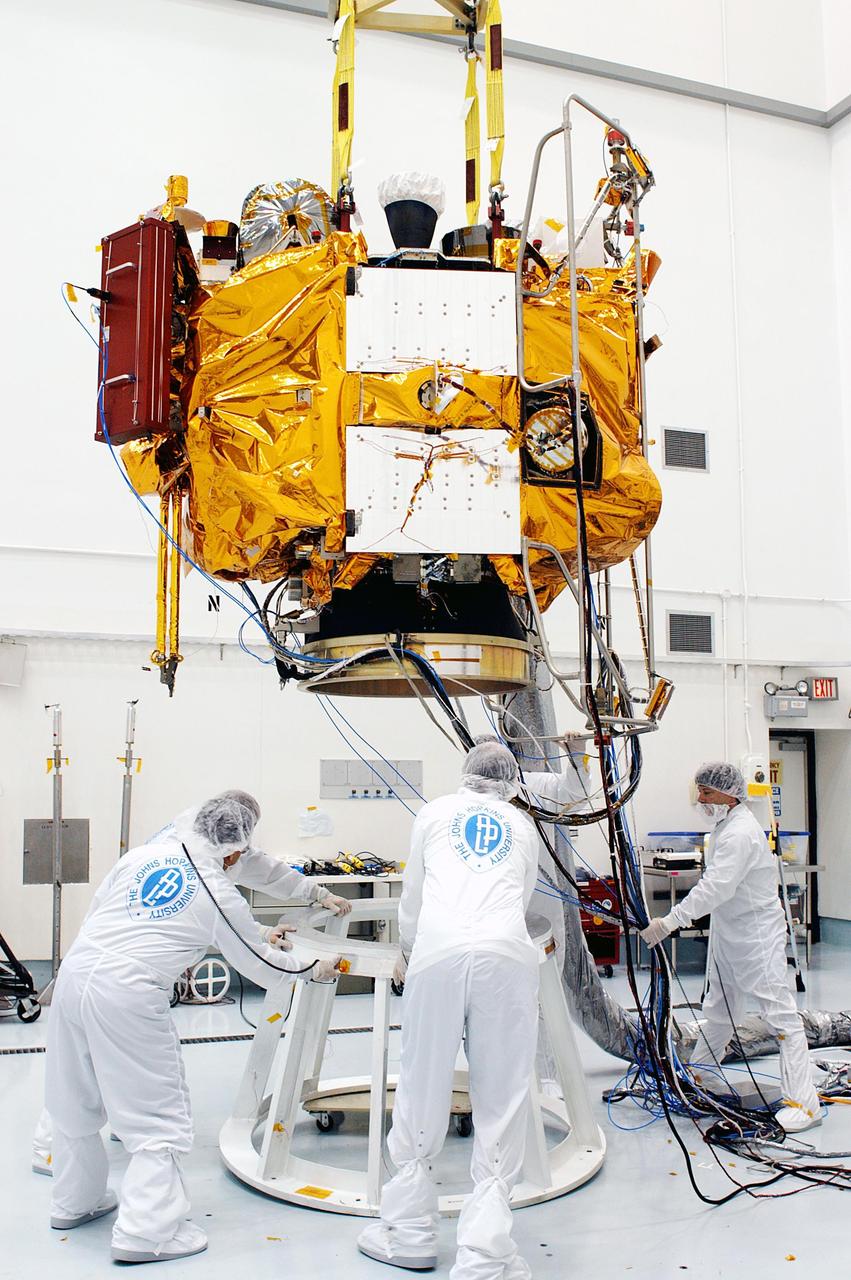
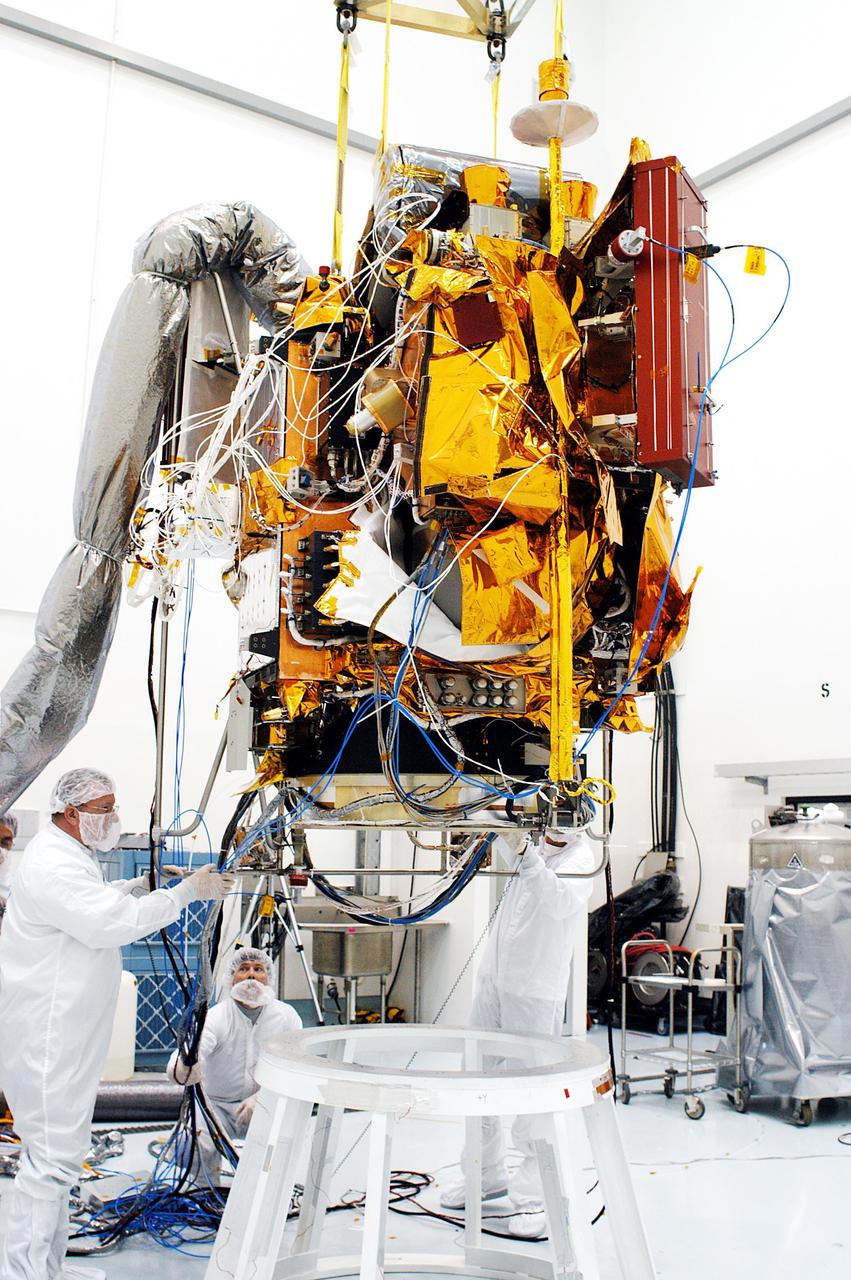
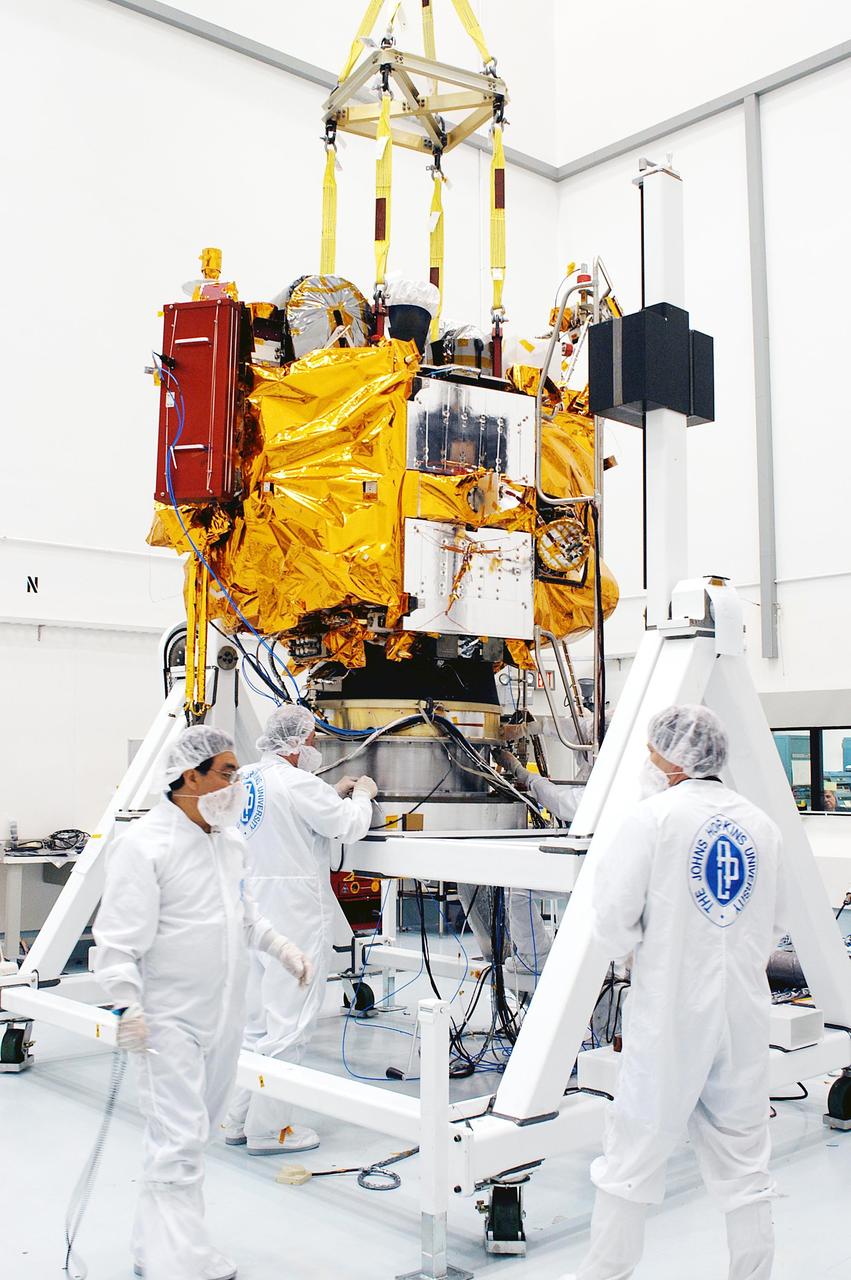
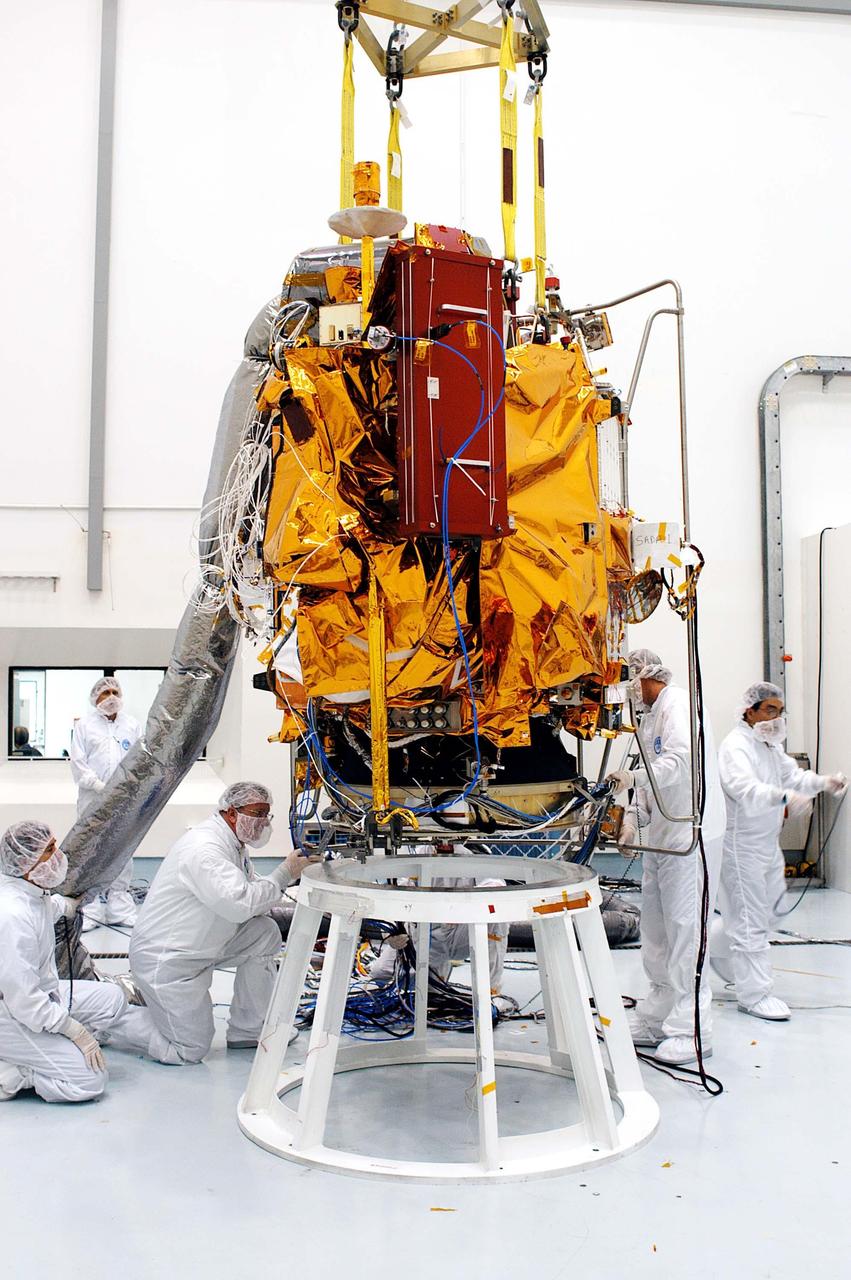
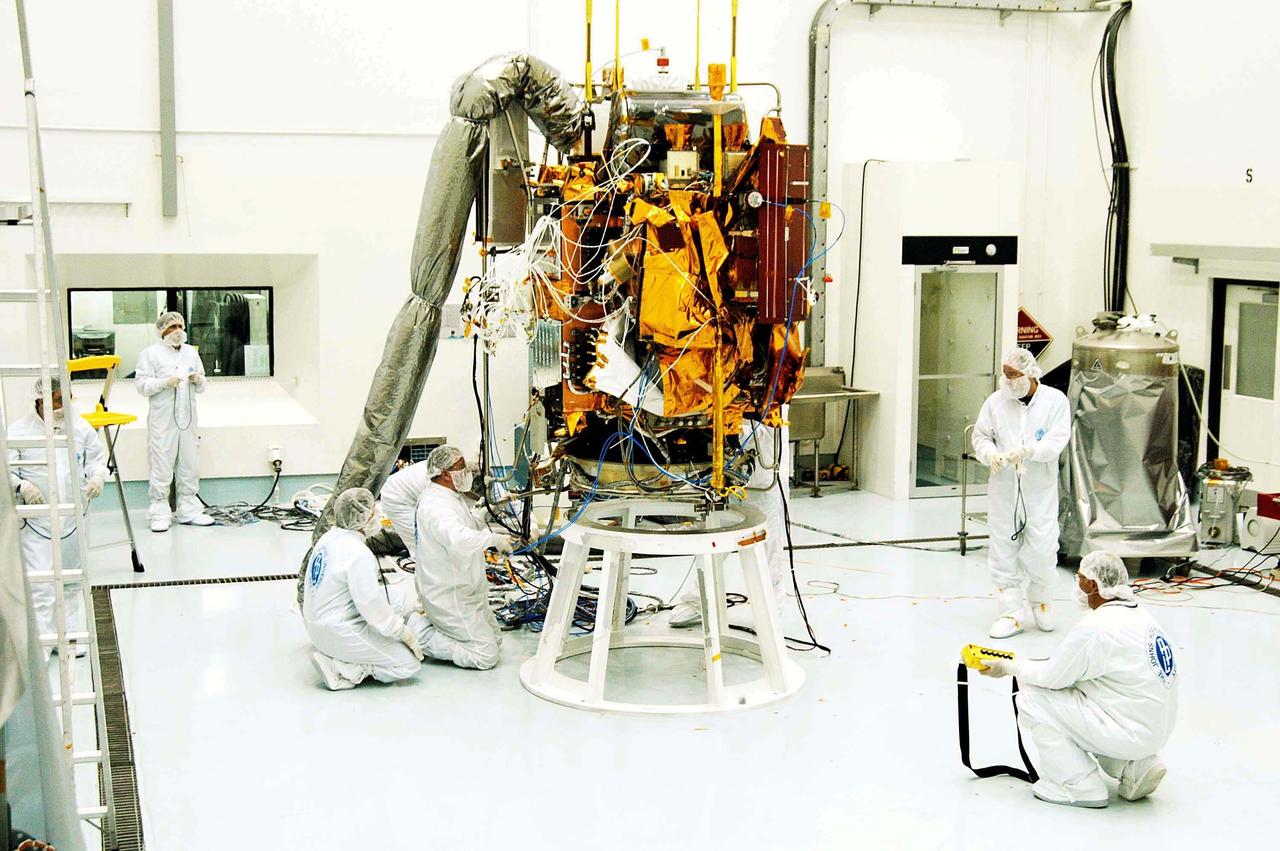
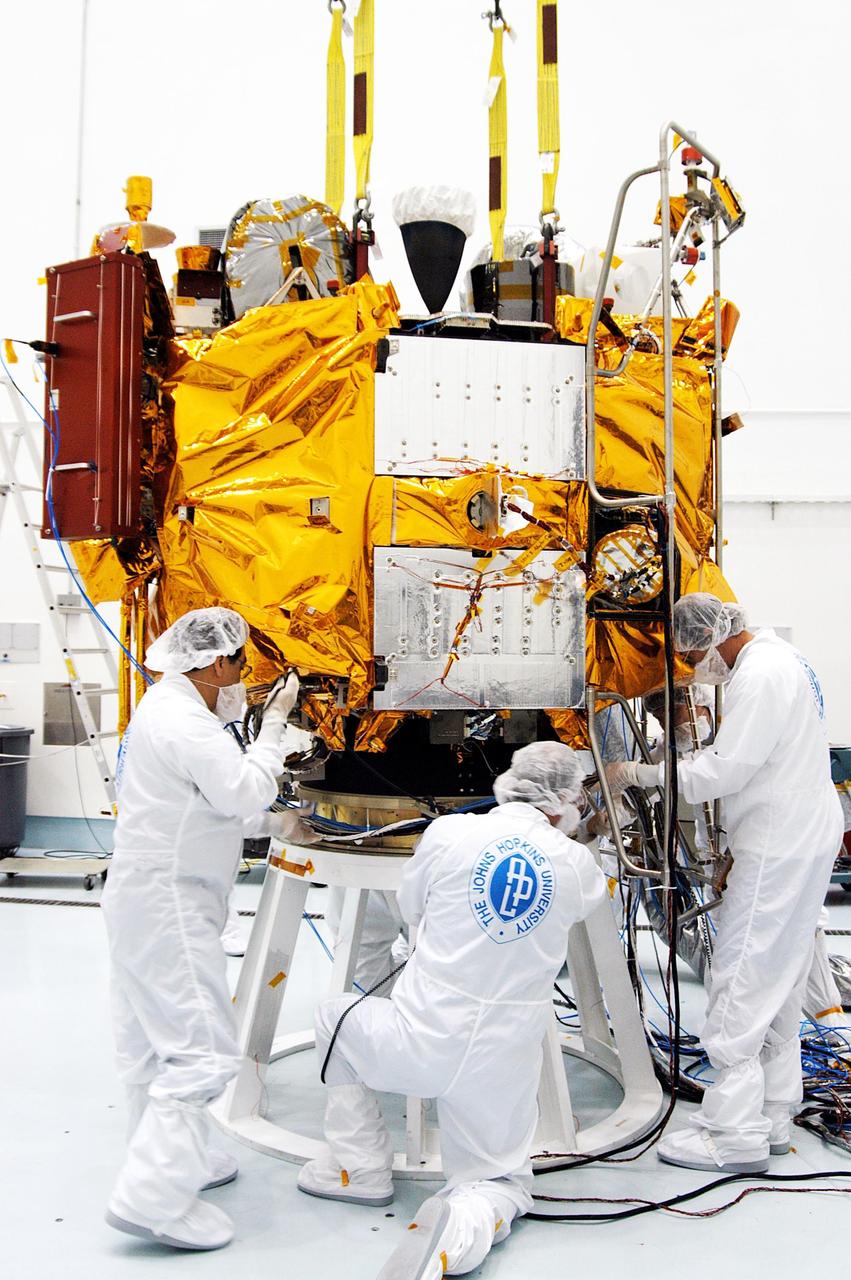
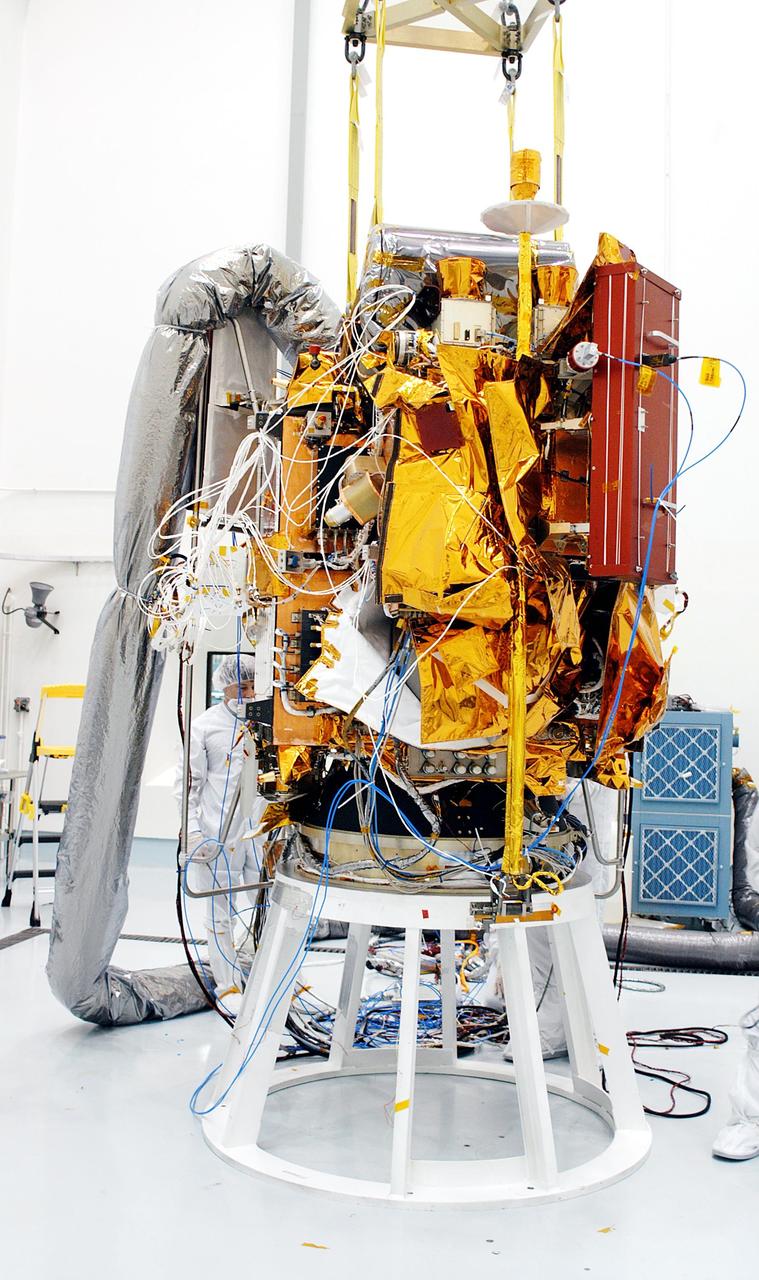
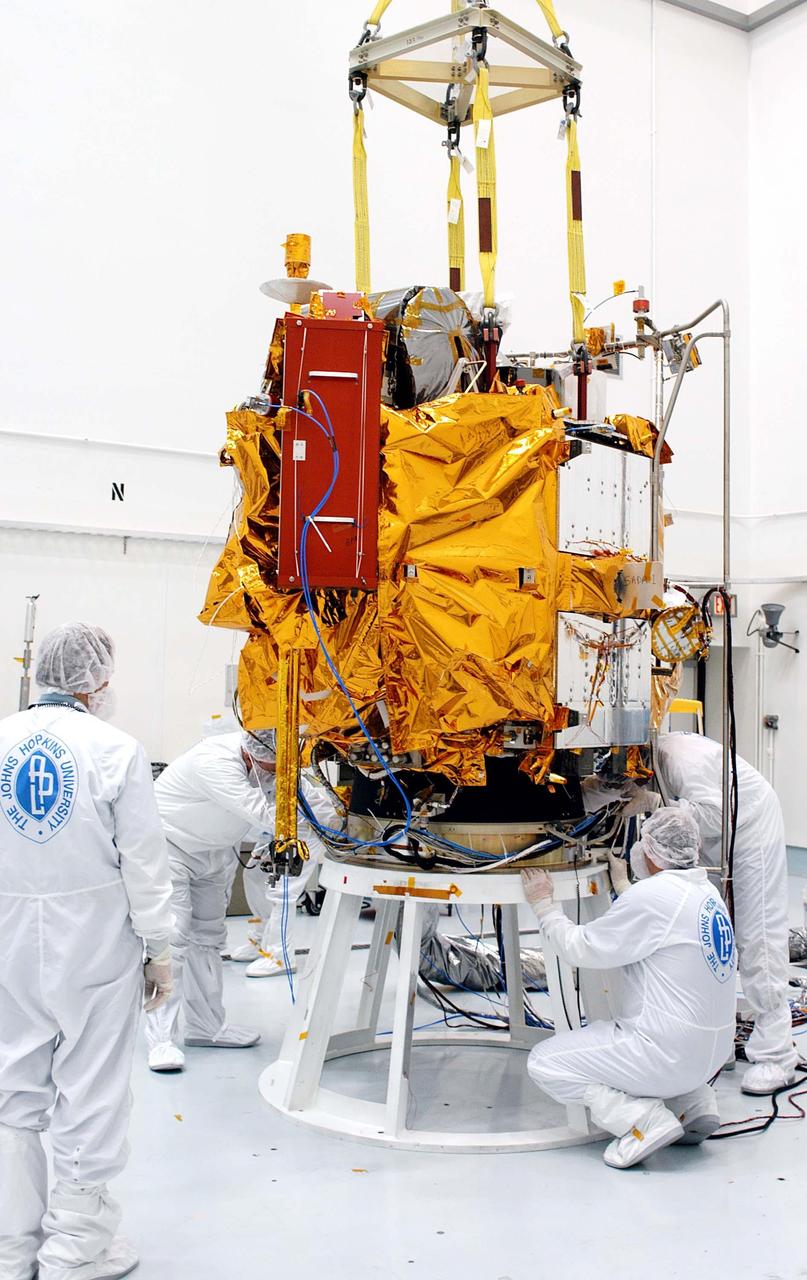
KENNEDY SPACE CENTER, FLA. -- At the Astrotech Space Operations processing facilities, the attachment of NASA’s MESSENGER spacecraft to a test stand is complete. The spacecraft is now ready for employees of the Johns Hopkins University Applied Physics Laboratory, builders of the spacecraft, to begin final processing for launch, including checkout of the power systems, communications systems and control systems. The thermal blankets will also be attached for flight. MESSENGER - short for MErcury Surface, Space ENvironment, GEochemistry and Ranging - will be launched aboard a Boeing Delta II rocket no earlier than July 30 on a six-year mission to study the planet Mercury.
KSC-04pd0603
KENNEDY SPACE CENTER, FLA. -- At the Astrotech Space Operations processing facilities, workers secure NASA’s MESSENGER spacecraft on a test stand. Once in place, employees of the Johns Hopkins University Applied Physics Laboratory, builders of the spacecraft, will begin final processing for launch, including checkout of the power systems, communications systems and control systems. The thermal blankets will also be attached for flight. MESSENGER - short for MErcury Surface, Space ENvironment, GEochemistry and Ranging - will be launched aboard a Boeing Delta II rocket no earlier than July 30 on a six-year mission to study the planet Mercury.
KSC-04pd0600
KENNEDY SPACE CENTER, FLA. -- At the Astrotech Space Operations processing facilities, workers secure NASA’s MESSENGER spacecraft on a test stand. Once in place, employees of the Johns Hopkins University Applied Physics Laboratory, builders of the spacecraft, will begin final processing for launch, including checkout of the power systems, communications systems and control systems. The thermal blankets will also be attached for flight. MESSENGER - short for MErcury Surface, Space ENvironment, GEochemistry and Ranging - will be launched aboard a Boeing Delta II rocket no earlier than July 30 on a six-year mission to study the planet Mercury.
KSC-04pd0602
KENNEDY SPACE CENTER, FLA. -- At the Astrotech Space Operations processing facilities, workers prepare for contact of NASA’s MESSENGER spacecraft with a test stand. Once in place, employees of the Johns Hopkins University Applied Physics Laboratory, builders of the spacecraft, will begin final processing for launch, including checkout of the power systems, communications systems and control systems. The thermal blankets will also be attached for flight. MESSENGER - short for MErcury Surface, Space ENvironment, GEochemistry and Ranging - will be launched aboard a Boeing Delta II rocket no earlier than July 30 on a six-year mission to study the planet Mercury.
KSC-04pd0597
KENNEDY SPACE CENTER, FLA. -- At the Astrotech Space Operations processing facilities, workers lower NASA’s MESSENGER spacecraft onto a test stand using an overhead crane. Once in place, employees of the Johns Hopkins University Applied Physics Laboratory, builders of the spacecraft, will begin final processing for launch, including checkout of the power systems, communications systems and control systems. The thermal blankets will also be attached for flight. MESSENGER - short for MErcury Surface, Space ENvironment, GEochemistry and Ranging - will be launched aboard a Boeing Delta II rocket no earlier than July 30 on a six-year mission to study the planet Mercury.
KSC-04pd0595
KENNEDY SPACE CENTER, FLA. -- At the Astrotech Space Operations processing facilities, workers prepare to move NASA’s MESSENGER spacecraft onto a test stand using an overhead crane. There, employees of the Johns Hopkins University Applied Physics Laboratory, builders of the spacecraft, will begin final processing for launch, including checkout of the power systems, communications systems and control systems. The thermal blankets will also be attached for flight. MESSENGER - short for MErcury Surface, Space ENvironment, GEochemistry and Ranging - will be launched aboard a Boeing Delta II rocket no earlier than July 30 on a six-year mission to study the planet Mercury.
KSC-04pd0594
KENNEDY SPACE CENTER, FLA. -- At the Astrotech Space Operations processing facilities, workers secure NASA’s MESSENGER spacecraft on a test stand. Once in place, employees of the Johns Hopkins University Applied Physics Laboratory, builders of the spacecraft, will begin final processing for launch, including checkout of the power systems, communications systems and control systems. The thermal blankets will also be attached for flight. MESSENGER - short for MErcury Surface, Space ENvironment, GEochemistry and Ranging - will be launched aboard a Boeing Delta II rocket no earlier than July 30 on a six-year mission to study the planet Mercury.
KSC-04pd0601
KENNEDY SPACE CENTER, FLA. -- At the Astrotech Space Operations processing facilities, workers verify the correct placement of NASA’s MESSENGER spacecraft on a test stand. Once in place, employees of the Johns Hopkins University Applied Physics Laboratory, builders of the spacecraft, will begin final processing for launch, including checkout of the power systems, communications systems and control systems. The thermal blankets will also be attached for flight. MESSENGER - short for MErcury Surface, Space ENvironment, GEochemistry and Ranging - will be launched aboard a Boeing Delta II rocket no earlier than July 30 on a six-year mission to study the planet Mercury.
KSC-04pd0599
KENNEDY SPACE CENTER, FLA. -- At the Astrotech Space Operations processing facilities, workers monitor NASA’s MESSENGER spacecraft as it is lowered onto a test stand by an overhead crane. Once in place, employees of the Johns Hopkins University Applied Physics Laboratory, builders of the spacecraft, will begin final processing for launch, including checkout of the power systems, communications systems and control systems. The thermal blankets will also be attached for flight. MESSENGER - short for MErcury Surface, Space ENvironment, GEochemistry and Ranging - will be launched aboard a Boeing Delta II rocket no earlier than July 30 on a six-year mission to study the planet Mercury.
KSC-04pd0596
KENNEDY SPACE CENTER, FLA. -- At the Astrotech Space Operations processing facilities, workers check for the correct alignment of NASA’s MESSENGER spacecraft as it is lowered onto a test stand. Once in place, employees of the Johns Hopkins University Applied Physics Laboratory, builders of the spacecraft, will begin final processing for launch, including checkout of the power systems, communications systems and control systems. The thermal blankets will also be attached for flight. MESSENGER - short for MErcury Surface, Space ENvironment, GEochemistry and Ranging - will be launched aboard a Boeing Delta II rocket no earlier than July 30 on a six-year mission to study the planet Mercury.
KSC-04pd0598
CAPE CANAVERAL, Fla. – At Cape Canaveral Air Force Station in Florida, a custom-built end dump truck spews water over the Mercury Mission Control Center to reduce the particles dispensed into the air by a Caterpillar 330 track-hoe tearing down the building.  The truck's operator controls the water spray using joy sticks installed in the cab of the truck.  The original building, constructed between 1956 and 1958, was last modified in 1963.  The center succumbed to the two worst enemies of structures along the space coast - time and salt air - necessitating that it be demolished as a safety measure.  The facility served as mission control during all the Project Mercury missions, as well as the first three flights of the Gemini Program. The center housed the flight controllers whose duty was to take over flight control after liftoff and follow it through until splashdown. Additionally, it supported vehicle checkout, spacecraft tracking, and astronaut training. With Gemini IV, mission control moved to Houston, and the facility took on the roles of launch control and tracking station. In 1999, much of the equipment and furnishings from the flight control area was moved to Kennedy Space Center's Visitor Complex.  A re-created mission control room currently is on display in the complex's Dr. Kurt H. Debus Conference Facility.  Speegle II of Cocoa, Fla., was awarded the contract for the deconstruction project.  Frank-Lin Excavating is performing the demolition for Sunrise Systems of Brevard, a subcontractor to Speegle II.  Photo credit: NASA_Jack Pfaller
KSC-2010-3108
KENNEDY SPACE CENTER, FLA. -  At the Astrotech Space Operations processing facilities near KSC, a lift helps offload NASA’s MESSENGER spacecraft shipped from NASA’s Goddard Space Flight Center in Greenbelt, Md.  MESSENGER - short for MErcury Surface, Space ENvironment, GEochemistry and Ranging - will be taken into a high bay clean room and employees of the Johns Hopkins University Applied Physics Laboratory, builders of the spacecraft, will perform an initial state-of-health check.  Then processing for launch can begin, including checkout of the power systems, communications systems and control systems.  The thermal blankets will also be attached for flight.  MESSENGER will be launched May 11 on a six-year mission aboard a Boeing Delta II rocket.  Liftoff is targeted for 2:26 a.m. EDT on Tuesday, May 11.
KENNEDY SPACE CENTER, FLA. - At the Astrotech Space Operations processing facilities near KSC, a lift helps offload NASA’s MESSENGER spacecraft shipped from NASA’s Goddard Space Flight Center in Greenbelt, Md. MESSENGER - short for MErcury Surface, Space ENvironment, GEochemistry and Ranging - will be taken into a high bay clean room and employees of the Johns Hopkins University Applied Physics Laboratory, builders of the spacecraft, will perform an initial state-of-health check. Then processing for launch can begin, including checkout of the power systems, communications systems and control systems. The thermal blankets will also be attached for flight. MESSENGER will be launched May 11 on a six-year mission aboard a Boeing Delta II rocket. Liftoff is targeted for 2:26 a.m. EDT on Tuesday, May 11.
KENNEDY SPACE CENTER, FLA. -  Doors are open on the air-conditioned transportation van that carried NASA’s MESSENGER spacecraft from NASA’s Goddard Space Flight Center in Greenbelt, Md., to the Astrotech Space Operations processing facilities near KSC.  After offloading, MESSENGER - short for MErcury Surface, Space ENvironment, GEochemistry and Ranging - will be taken into a high bay clean room and employees of the Johns Hopkins University Applied Physics Laboratory, builders of the spacecraft, will perform an initial state-of-health check.  Then processing for launch can begin, including checkout of the power systems, communications systems and control systems.  The thermal blankets will also be attached for flight.  MESSENGER will be launched May 11 on a six-year mission aboard a Boeing Delta II rocket.  Liftoff is targeted for 2:26 a.m. EDT on Tuesday, May 11.
KENNEDY SPACE CENTER, FLA. - Doors are open on the air-conditioned transportation van that carried NASA’s MESSENGER spacecraft from NASA’s Goddard Space Flight Center in Greenbelt, Md., to the Astrotech Space Operations processing facilities near KSC. After offloading, MESSENGER - short for MErcury Surface, Space ENvironment, GEochemistry and Ranging - will be taken into a high bay clean room and employees of the Johns Hopkins University Applied Physics Laboratory, builders of the spacecraft, will perform an initial state-of-health check. Then processing for launch can begin, including checkout of the power systems, communications systems and control systems. The thermal blankets will also be attached for flight. MESSENGER will be launched May 11 on a six-year mission aboard a Boeing Delta II rocket. Liftoff is targeted for 2:26 a.m. EDT on Tuesday, May 11.
KENNEDY SPACE CENTER, FLA. -  At the Astrotech Space Operations processing facilities near KSC, NASA’s MESSENGER spacecraft from NASA’s Goddard Space Flight Center in Greenbelt, Md., is offloaded.  MESSENGER - short for MErcury Surface, Space ENvironment, GEochemistry and Ranging - will be taken into a high bay clean room and employees of the Johns Hopkins University Applied Physics Laboratory, builders of the spacecraft, will perform an initial state-of-health check.  Then processing for launch can begin, including checkout of the power systems, communications systems and control systems.  The thermal blankets will also be attached for flight.  MESSENGER will be launched May 11 on a six-year mission aboard a Boeing Delta II rocket.  Liftoff is targeted for 2:26 a.m. EDT on Tuesday, May 11.
KENNEDY SPACE CENTER, FLA. - At the Astrotech Space Operations processing facilities near KSC, NASA’s MESSENGER spacecraft from NASA’s Goddard Space Flight Center in Greenbelt, Md., is offloaded. MESSENGER - short for MErcury Surface, Space ENvironment, GEochemistry and Ranging - will be taken into a high bay clean room and employees of the Johns Hopkins University Applied Physics Laboratory, builders of the spacecraft, will perform an initial state-of-health check. Then processing for launch can begin, including checkout of the power systems, communications systems and control systems. The thermal blankets will also be attached for flight. MESSENGER will be launched May 11 on a six-year mission aboard a Boeing Delta II rocket. Liftoff is targeted for 2:26 a.m. EDT on Tuesday, May 11.
S63-03978 (1963) --- Astronaut L. Gordon Cooper Jr., prime pilot for the Mercury-Atlas 9 (MA-9) mission, is strapped into the gondola while undergoing tests in the centrifuge at the Naval Air Development Center, Johnsville, Pennsylvania. The centrifuge is used to investigate by simulation the pilot's capability to control the vehicle during the actual flight in its booster and reentry profile. Photo credit: NASA
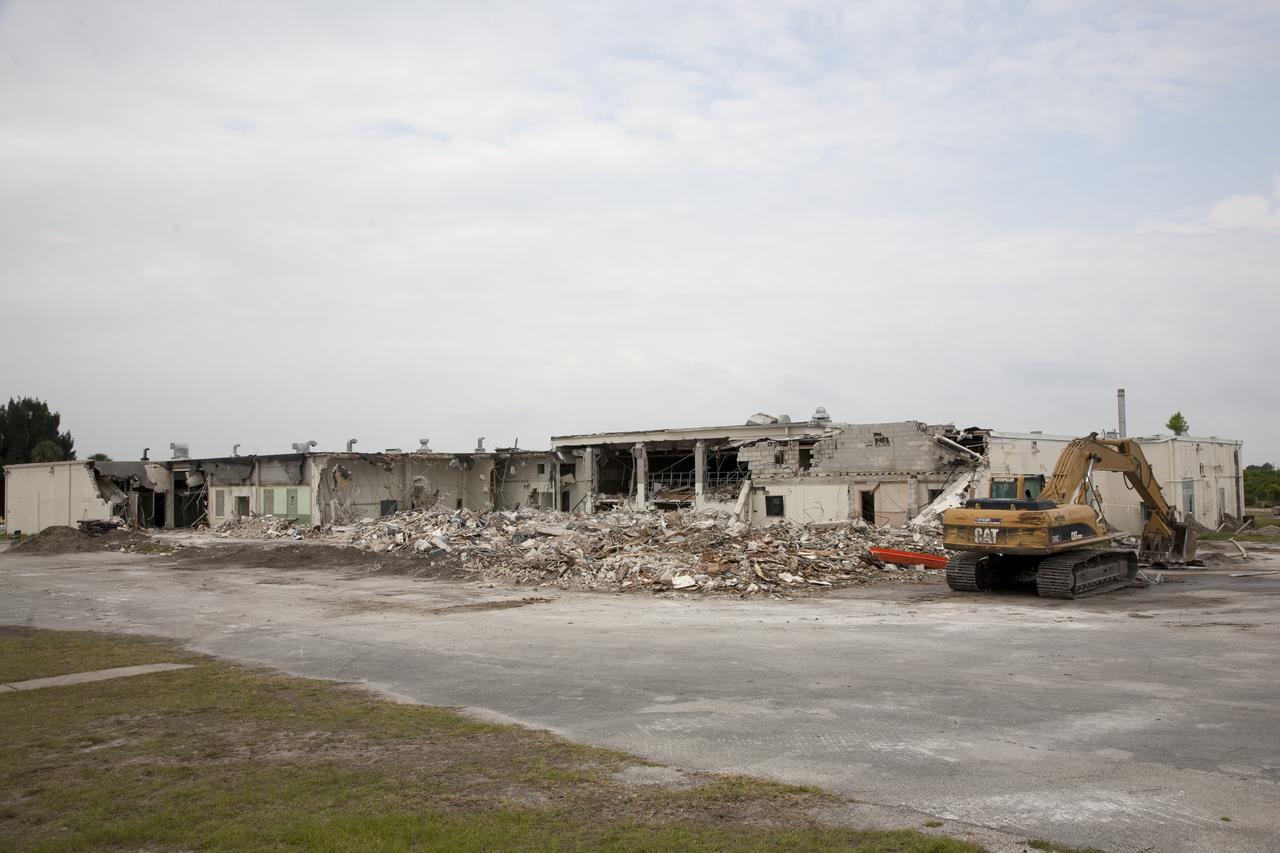
CONTOUR COUCH - MERCURY-ATLAS (MA)-9 PRELAUNCH - ASTRONAUT COOPER - PA
CAPE CANAVERAL, Fla. -- Mercury astronauts John Glenn, left, and Scott Carpenter sit in front of the plot board from the Mercury control center on display at the Kennedy Space Center Visitor Complex. The astronauts, part of the original class of seven astronauts chosen by NASA, were taking part in a question-and-answer session with the media as part of events celebrating 50 years of Americans in orbit, an era which began with John Glenn's Mercury mission MA-6, on Feb. 20, 1962.  Glenn's launch aboard an Atlas rocket took with it the hopes of an entire nation and ushered in a new era of space travel that eventually led to Americans walking on the moon by the end of the 1960s. Glenn soon was followed into orbit by Carpenter, Walter Schirra and Gordon Cooper. Their fellow Mercury astronauts Alan Shepard and Virgil "Gus" Grissom flew earlier suborbital flights. Deke Slayton was grounded by a medical condition until the Apollo-Soyuz Test Project in 1975. Photo credit: NASA/Kim Shiflett
KSC-2012-1440
CAPE CANAVERAL, Fla. -- Lisa Malone, left, director of Public Affairs at NASA's Kennedy Space Center in Florida, talks with Mercury astronauts John Glenn, center, and Scott Carpenter in front of the plot board from the Mercury control center on display at the Kennedy Space Center Visitor Complex. The astronauts, part of the original class of seven astronauts chosen by NASA, were taking part in a question-and-answer session with the media as part of events celebrating 50 years of Americans in orbit, an era which began with John Glenn's Mercury mission MA-6, on Feb. 20, 1962.  Glenn's launch aboard an Atlas rocket took with it the hopes of an entire nation and ushered in a new era of space travel that eventually led to Americans walking on the moon by the end of the 1960s. Glenn soon was followed into orbit by Carpenter, Walter Schirra and Gordon Cooper. Their fellow Mercury astronauts Alan Shepard and Virgil "Gus" Grissom flew earlier suborbital flights. Deke Slayton was grounded by a medical condition until the Apollo-Soyuz Test Project in 1975. Photo credit: NASA/Kim Shiflett
KSC-2012-1439
CAPE CANAVERAL, Fla. -- Mercury astronauts John Glenn, left, and Scott Carpenter sit in front of the plot board from the Mercury control center on display at the Kennedy Space Center Visitor Complex. The astronauts, part of the original class of seven astronauts chosen by NASA, were taking part in a question-and-answer session with the media as part of events celebrating 50 years of Americans in orbit, an era which began with John Glenn's Mercury mission MA-6, on Feb. 20, 1962.  Glenn's launch aboard an Atlas rocket took with it the hopes of an entire nation and ushered in a new era of space travel that eventually led to Americans walking on the moon by the end of the 1960s. Glenn soon was followed into orbit by Carpenter, Walter Schirra and Gordon Cooper. Their fellow Mercury astronauts Alan Shepard and Virgil "Gus" Grissom flew earlier suborbital flights. Deke Slayton was grounded by a medical condition until the Apollo-Soyuz Test Project in 1975. Photo credit: NASA/Kim Shiflett
KSC-2012-1441
CAPE CANAVERAL, Fla. --Mercury astronauts John Glenn, left, and Scott Carpenter sit in front of the plot board from the Mercury control center on display at the Kennedy Space Center Visitor Complex. The astronauts, part of the original class of seven astronauts chosen by NASA, were taking part in a question-and-answer session with the media as part of events celebrating 50 years of Americans in orbit, an era which began with John Glenn's Mercury mission MA-6, on Feb. 20, 1962.  Glenn's launch aboard an Atlas rocket took with it the hopes of an entire nation and ushered in a new era of space travel that eventually led to Americans walking on the moon by the end of the 1960s. Glenn soon was followed into orbit by Carpenter, Walter Schirra and Gordon Cooper. Their fellow Mercury astronauts Alan Shepard and Virgil "Gus" Grissom flew earlier suborbital flights. Deke Slayton was grounded by a medical condition until the Apollo-Soyuz Test Project in 1975. Photo credit: NASA/Kim Shiflett
KSC-2012-1442
CAPE CANAVERAL, Fla. --Mercury astronauts John Glenn, left, and Scott Carpenter sit in front of the plot board from the Mercury control center on display at the Kennedy Space Center Visitor Complex in Florida. The astronaut, part of the original class of seven astronauts chosen by NASA, was taking part in a question-and-answer session with the media as part of events celebrating 50 years of Americans in orbit, an era which began with John Glenn's Mercury mission MA-6, on Feb. 20, 1962.  Glenn's launch aboard an Atlas rocket took with it the hopes of an entire nation and ushered in a new era of space travel that eventually led to Americans walking on the moon by the end of the 1960s. Glenn soon was followed into orbit by Carpenter, Walter Schirra and Gordon Cooper. Their fellow Mercury astronauts Alan Shepard and Virgil "Gus" Grissom flew earlier suborbital flights. Deke Slayton was grounded by a medical condition until the Apollo-Soyuz Test Project in 1975. Photo credit: NASA/Kim Shiflett
KSC-2012-1437
CAPE CANAVERAL, Fla. -- NASA Kennedy Space Center Director Bob Cabana sits at the controls in the flight deck of space shuttle Discovery in Orbiter Processing Facility-1 OPF-1. At the space center in Florida, Cabana is helping John Glenn mark the 50th anniversary of being the first American astronaut to orbit the Earth inside the NASA Mercury Project's Friendship 7 capsule on Feb. 20, 1962. Glenn later returned to space in October 1998 as a payload specialist aboard Discovery's STS-95 mission.     Glenn's launch aboard an Atlas rocket took with it the hopes of an entire nation and ushered in a new era of space travel that eventually led to Americans walking on the moon by the end of the 1960s. Glenn soon was followed into orbit by Scott Carpenter, Walter Schirra and Gordon Cooper. Their fellow Mercury astronauts Alan Shepard and Virgil "Gus" Grissom flew earlier suborbital flights. Deke Slayton, a member of NASA's original Mercury 7 astronauts, was grounded by a medical condition until the Apollo-Soyuz Test Project in 1975. Shuttle Discovery currently is being prepared for display at Smithsonian’s National Air and Space Museum, Steven F. Udvar-Hazy Center in Chantilly, Va. Photo credit: Cory Huston
KSC-2012-1455
CAPE CANAVERAL, Fla. -- NASA astronaut Stephen Robinson sits at the controls in the flight deck of space shuttle Discovery in Orbiter Processing Facility-1 OPF-1 at NASA's Kennedy Space Center in Florida. Robinson is helping John Glenn mark the 50th anniversary of being the first American astronaut to orbit the Earth inside the NASA Mercury Project's Friendship 7 capsule on Feb. 20, 1962. Glenn later returned to space in October 1998 as a payload specialist aboard Discovery's STS-95 mission. Robinson was the payload commander of STS-95.        Glenn's launch aboard an Atlas rocket took with it the hopes of an entire nation and ushered in a new era of space travel that eventually led to Americans walking on the moon by the end of the 1960s. Glenn soon was followed into orbit by Scott Carpenter, Walter Schirra and Gordon Cooper. Their fellow Mercury astronauts Alan Shepard and Virgil "Gus" Grissom flew earlier suborbital flights. Deke Slayton, a member of NASA's original Mercury 7 astronauts, was grounded by a medical condition until the Apollo-Soyuz Test Project in 1975. Shuttle Discovery currently is being prepared for display at Smithsonian’s National Air and Space Museum, Steven F. Udvar-Hazy Center in Chantilly, Va. Photo credit: Cory Huston
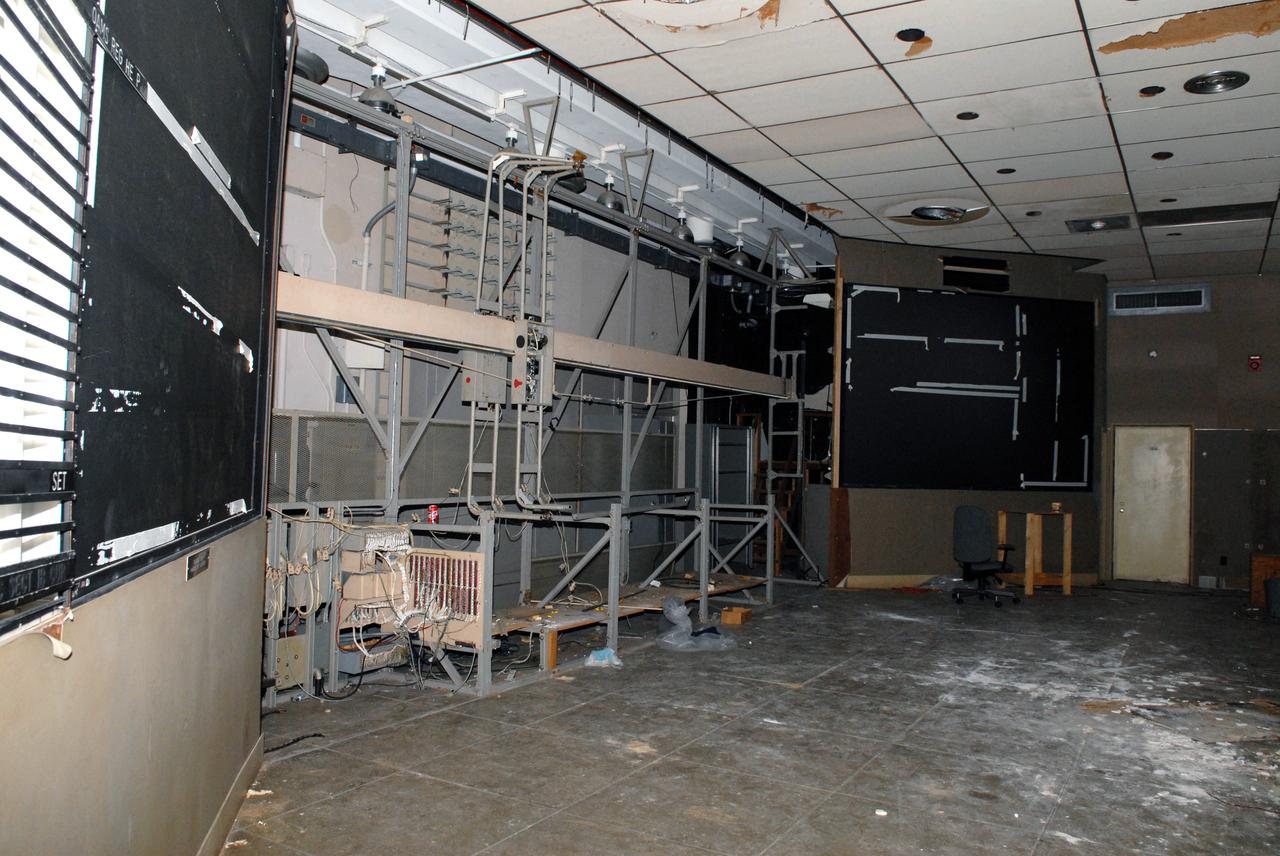
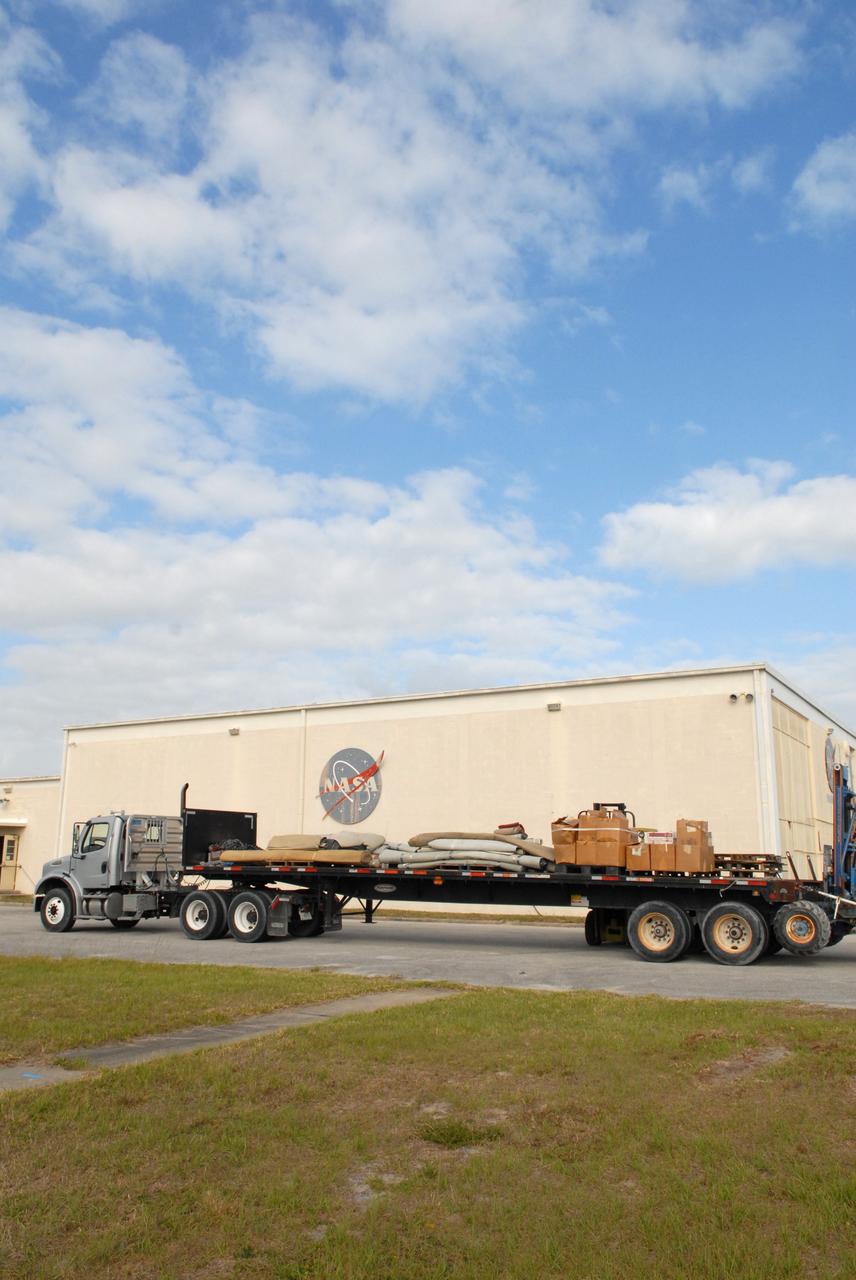
KSC-2012-1456
Cast and crew members of the upcoming motion picture "Hidden Figures" participate in a question and answer session at the Kennedy Space Center Visitor Complex. From the left are Pharrell Williams, musician and producer of “Hidden Figures," Taraji P. Henson, who portrays Katherine Johnson in the film, Janelle Monáe, who portrays Mary Jackson, and Octavia Spencer, who portrays Dorothy Vaughan. They are seated in front of the original consoles of the Mercury Mission Control room with the world map that was used to follow the path of capsules between tracking stations. The movie is based on the book of the same title, by Margot Lee Shetterly. It chronicles the lives of Katherine Johnson, Dorothy Vaughan and Mary Jackson, three African-American women who worked for NASA as human "computers.” Their mathematical calculations were crucial to the success of Project Mercury missions including John Glenn’s orbital flight aboard Friendship 7 in 1962. The film is due in theaters in January 2017.
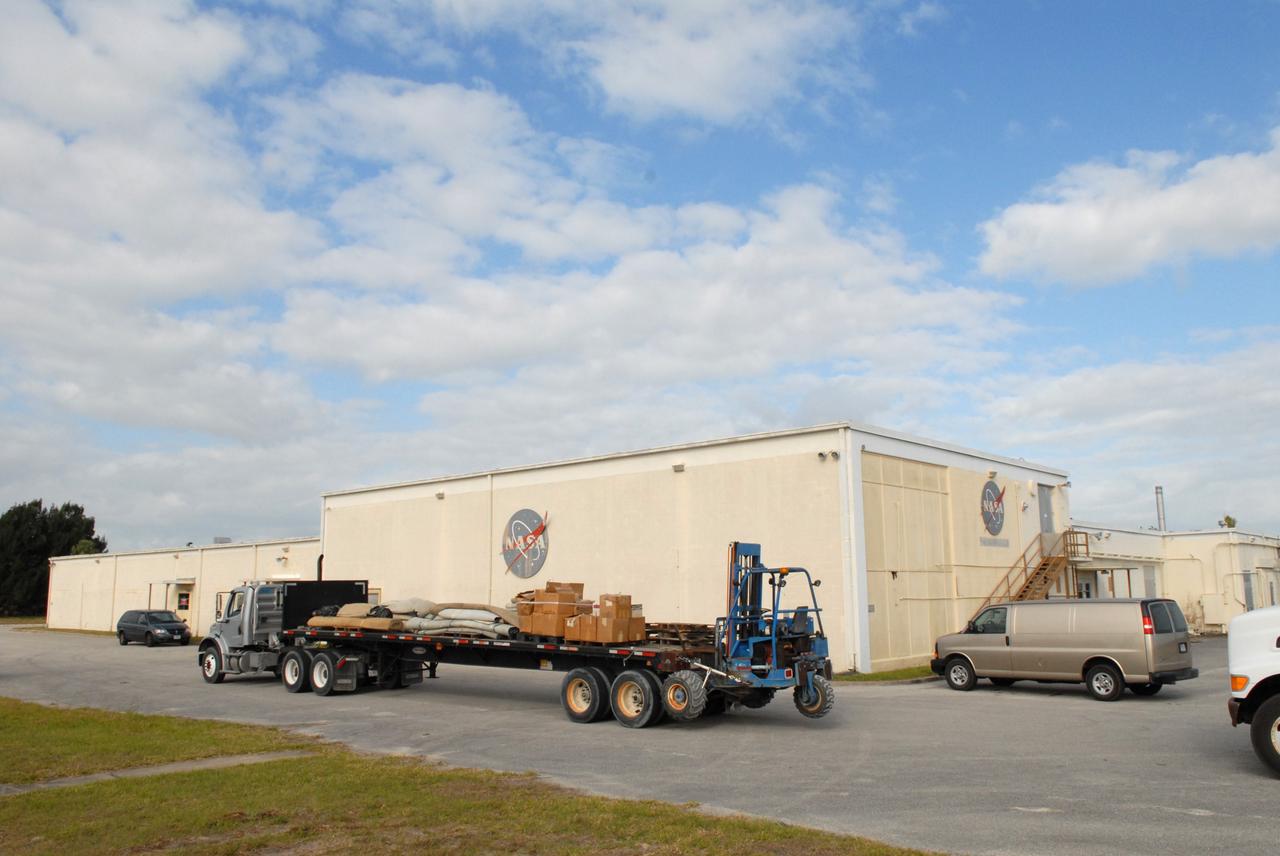
Hidden Figures Tour Kennedy Space Center Visitor Complex
KENNEDY SPACE CENTER, FLA. -  At the Astrotech Space Operations processing facilities near KSC, workers begin moving NASA’s MESSENGER spacecraft into the building  MESSENGER - short for MErcury Surface, Space ENvironment, GEochemistry and Ranging - is being taken into a high bay clean room where employees of the Johns Hopkins University Applied Physics Laboratory, builders of the spacecraft, will perform an initial state-of-health check.  Then processing for launch can begin, including checkout of the power systems, communications systems and control systems.  The thermal blankets will also be attached for flight.  MESSENGER will be launched May 11 on a six-year mission aboard a Boeing Delta II rocket.  Liftoff is targeted for 2:26 a.m. EDT on Tuesday, May 11.
KENNEDY SPACE CENTER, FLA. - At the Astrotech Space Operations processing facilities near KSC, workers begin moving NASA’s MESSENGER spacecraft into the building MESSENGER - short for MErcury Surface, Space ENvironment, GEochemistry and Ranging - is being taken into a high bay clean room where employees of the Johns Hopkins University Applied Physics Laboratory, builders of the spacecraft, will perform an initial state-of-health check. Then processing for launch can begin, including checkout of the power systems, communications systems and control systems. The thermal blankets will also be attached for flight. MESSENGER will be launched May 11 on a six-year mission aboard a Boeing Delta II rocket. Liftoff is targeted for 2:26 a.m. EDT on Tuesday, May 11.
KENNEDY SPACE CENTER, FLA. -  In the high bay clean room at the Astrotech Space Operations processing facilities near KSC, workers attach an overhead crane to NASA’s MESSENGER spacecraft.  The spacecraft will be moved to a work stand where employees of the Johns Hopkins University Applied Physics Laboratory, builders of the spacecraft, will perform an initial state-of-health check.  Then processing for launch can begin, including checkout of the power systems, communications systems and control systems.  The thermal blankets will also be attached for flight.  MESSENGER - short for MErcury Surface, Space ENvironment, GEochemistry and Ranging - will be launched May 11 on a six-year mission aboard a Boeing Delta II rocket.  Liftoff is targeted for 2:26 a.m. EDT on Tuesday, May 11.
KENNEDY SPACE CENTER, FLA. - In the high bay clean room at the Astrotech Space Operations processing facilities near KSC, workers attach an overhead crane to NASA’s MESSENGER spacecraft. The spacecraft will be moved to a work stand where employees of the Johns Hopkins University Applied Physics Laboratory, builders of the spacecraft, will perform an initial state-of-health check. Then processing for launch can begin, including checkout of the power systems, communications systems and control systems. The thermal blankets will also be attached for flight. MESSENGER - short for MErcury Surface, Space ENvironment, GEochemistry and Ranging - will be launched May 11 on a six-year mission aboard a Boeing Delta II rocket. Liftoff is targeted for 2:26 a.m. EDT on Tuesday, May 11.
KENNEDY SPACE CENTER, FLA. -  At the Astrotech Space Operations processing facilities near KSC, workers check the moveable pallet holding NASA’s MESSENGER spacecraft.  MESSENGER - short for MErcury Surface, Space ENvironment, GEochemistry and Ranging - will be taken into a high bay clean room and employees of the Johns Hopkins University Applied Physics Laboratory, builders of the spacecraft, will perform an initial state-of-health check.  Then processing for launch can begin, including checkout of the power systems, communications systems and control systems.  The thermal blankets will also be attached for flight.  MESSENGER will be launched May 11 on a six-year mission aboard a Boeing Delta II rocket.  Liftoff is targeted for 2:26 a.m. EDT on Tuesday, May 11.
KENNEDY SPACE CENTER, FLA. - At the Astrotech Space Operations processing facilities near KSC, workers check the moveable pallet holding NASA’s MESSENGER spacecraft. MESSENGER - short for MErcury Surface, Space ENvironment, GEochemistry and Ranging - will be taken into a high bay clean room and employees of the Johns Hopkins University Applied Physics Laboratory, builders of the spacecraft, will perform an initial state-of-health check. Then processing for launch can begin, including checkout of the power systems, communications systems and control systems. The thermal blankets will also be attached for flight. MESSENGER will be launched May 11 on a six-year mission aboard a Boeing Delta II rocket. Liftoff is targeted for 2:26 a.m. EDT on Tuesday, May 11.
KENNEDY SPACE CENTER, FLA. -  In the high bay clean room at the Astrotech Space Operations processing facilities near KSC, workers get ready to remove the protective cover from NASA’s MESSENGER spacecraft.  Employees of the Johns Hopkins University Applied Physics Laboratory, builders of the spacecraft, will perform an initial state-of-health check.  Then processing for launch can begin, including checkout of the power systems, communications systems and control systems.  The thermal blankets will also be attached for flight.  MESSENGER - short for MErcury Surface, Space ENvironment, GEochemistry and Ranging - will be launched May 11 on a six-year mission aboard a Boeing Delta II rocket.  Liftoff is targeted for 2:26 a.m. EDT on Tuesday, May 11.
KENNEDY SPACE CENTER, FLA. - In the high bay clean room at the Astrotech Space Operations processing facilities near KSC, workers get ready to remove the protective cover from NASA’s MESSENGER spacecraft. Employees of the Johns Hopkins University Applied Physics Laboratory, builders of the spacecraft, will perform an initial state-of-health check. Then processing for launch can begin, including checkout of the power systems, communications systems and control systems. The thermal blankets will also be attached for flight. MESSENGER - short for MErcury Surface, Space ENvironment, GEochemistry and Ranging - will be launched May 11 on a six-year mission aboard a Boeing Delta II rocket. Liftoff is targeted for 2:26 a.m. EDT on Tuesday, May 11.
KENNEDY SPACE CENTER, FLA. -  In the high bay clean room at the Astrotech Space Operations processing facilities near KSC, workers prepare to attach an overhead crane to NASA’s MESSENGER spacecraft.  The spacecraft will be moved to a work stand where employees of the Johns Hopkins University Applied Physics Laboratory, builders of the spacecraft, will perform an initial state-of-health check.  Then processing for launch can begin, including checkout of the power systems, communications systems and control systems.  The thermal blankets will also be attached for flight.  MESSENGER - short for MErcury Surface, Space ENvironment, GEochemistry and Ranging - will be launched May 11 on a six-year mission aboard a Boeing Delta II rocket.  Liftoff is targeted for 2:26 a.m. EDT on Tuesday, May 11.
KENNEDY SPACE CENTER, FLA. - In the high bay clean room at the Astrotech Space Operations processing facilities near KSC, workers prepare to attach an overhead crane to NASA’s MESSENGER spacecraft. The spacecraft will be moved to a work stand where employees of the Johns Hopkins University Applied Physics Laboratory, builders of the spacecraft, will perform an initial state-of-health check. Then processing for launch can begin, including checkout of the power systems, communications systems and control systems. The thermal blankets will also be attached for flight. MESSENGER - short for MErcury Surface, Space ENvironment, GEochemistry and Ranging - will be launched May 11 on a six-year mission aboard a Boeing Delta II rocket. Liftoff is targeted for 2:26 a.m. EDT on Tuesday, May 11.