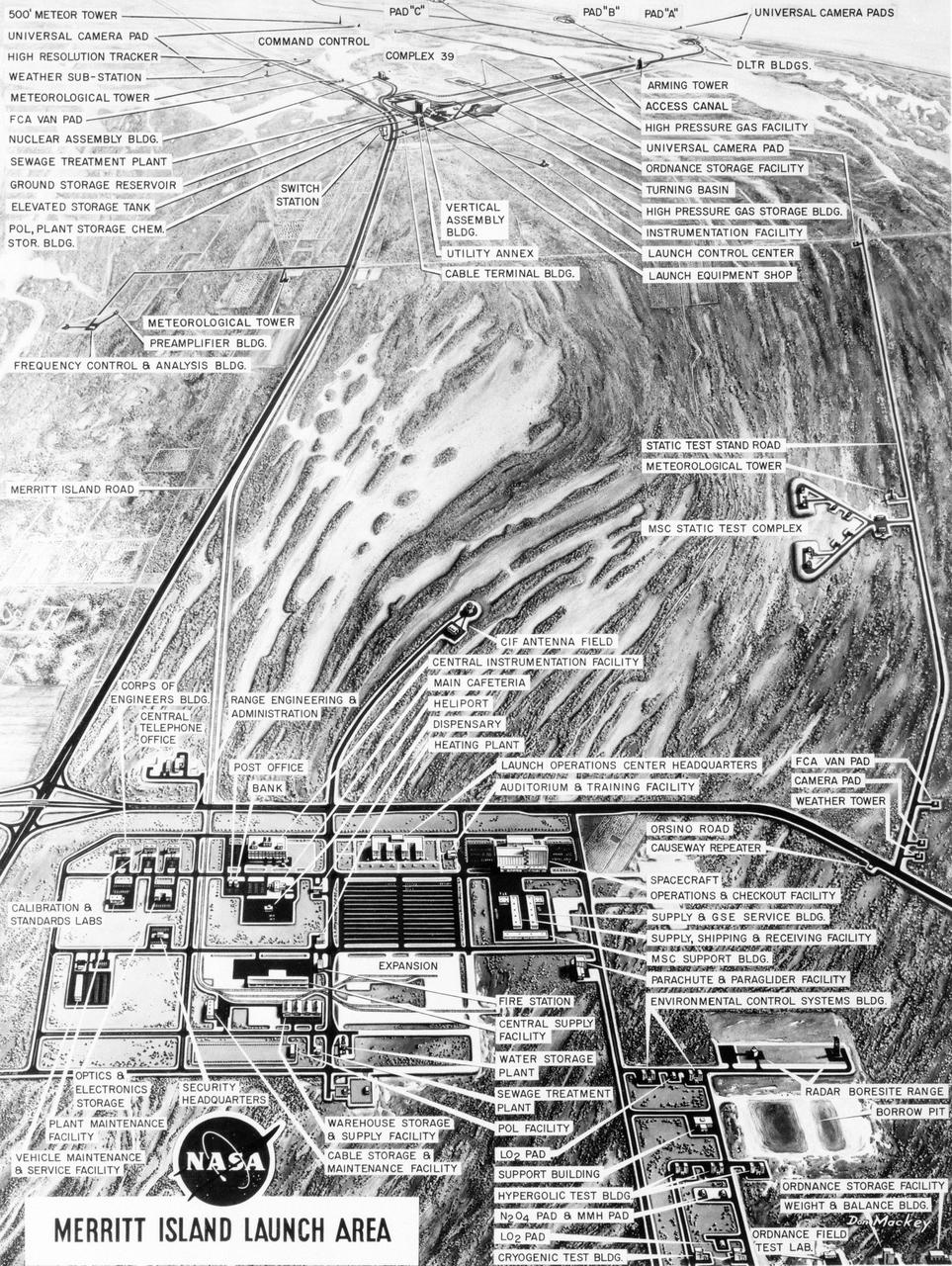
S63-23618 (December 1963) --- Aerial oblique artist concept of the Merritt Island Launch Complex, Merritt Island, Florida. Photo credit: NASA

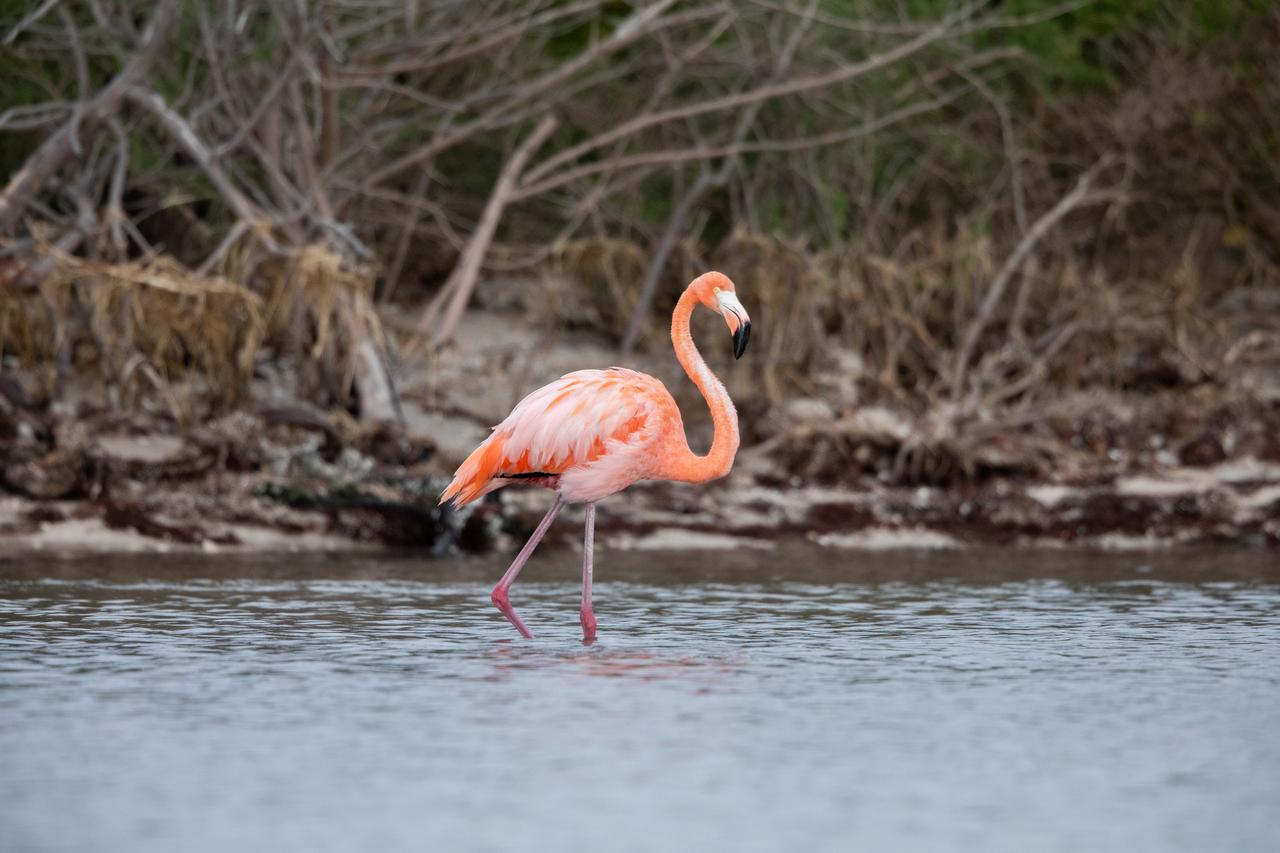
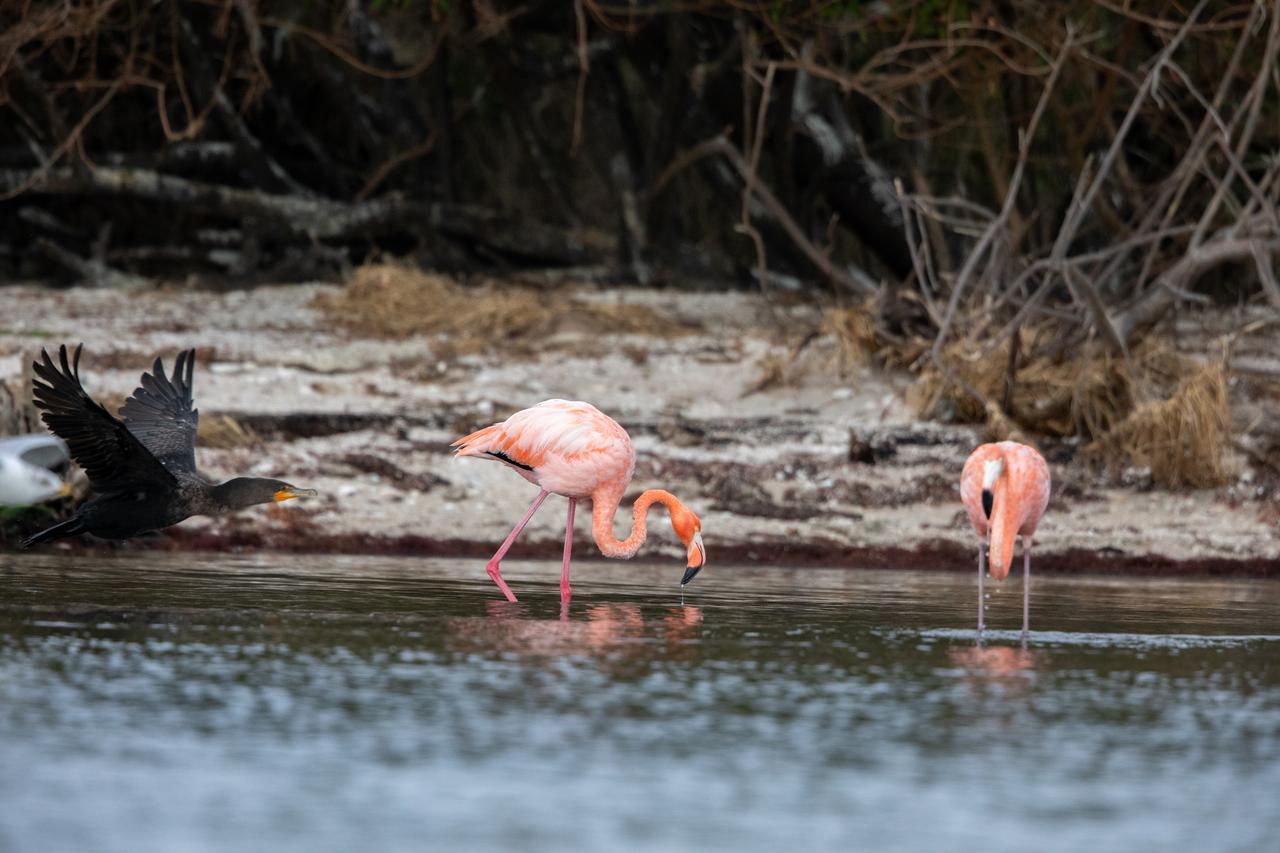
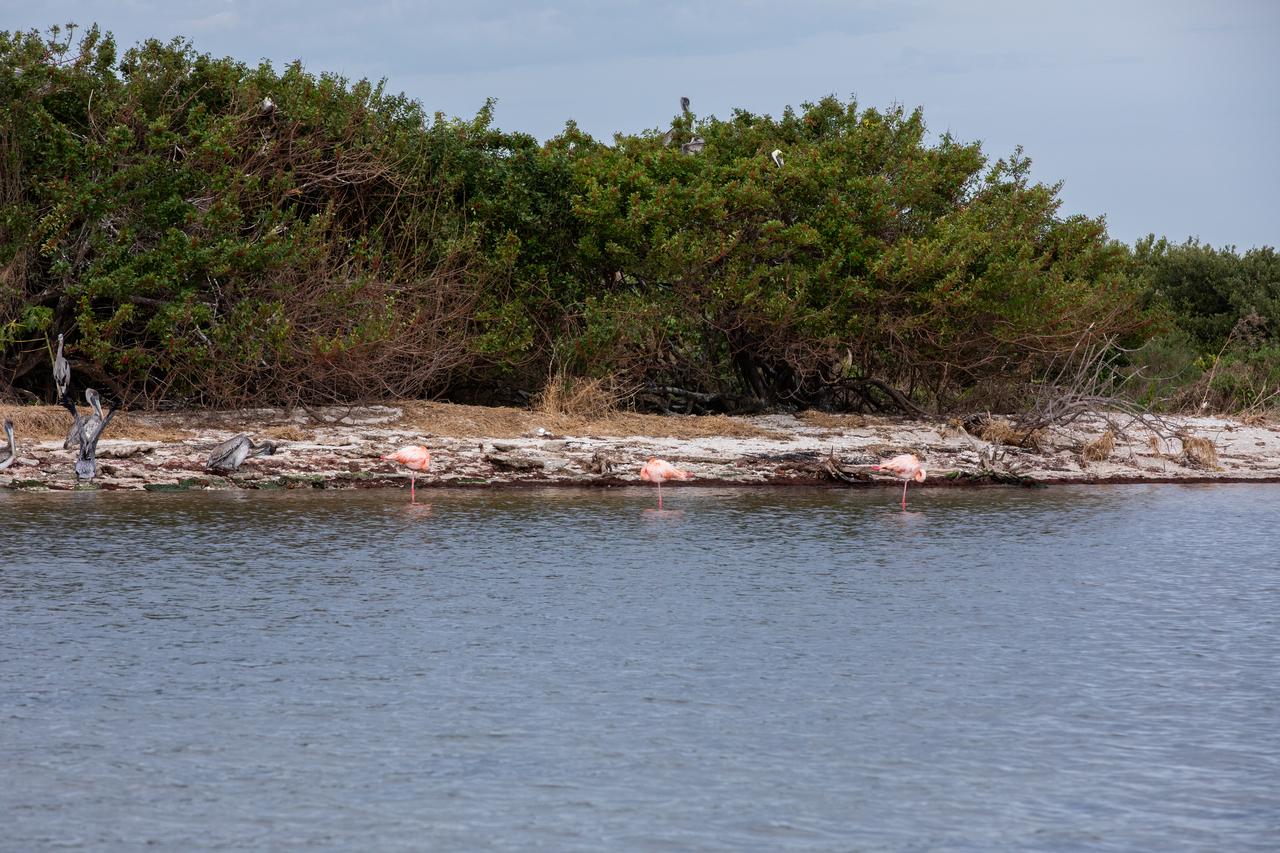
Three American Flamingos cool off in the Indian River at Haulover Canal on Merritt Island on Thursday, Jan. 11, 2024. The American Flamingos are more common in Mexico and Cuba but the winds from Hurricane Idalia relocated them to Florida in September 2023. Kennedy Space Center in Florida shares a border with the Merritt Island National Wildlife Refuge where more than 310 species of birds inhabit the refuge.

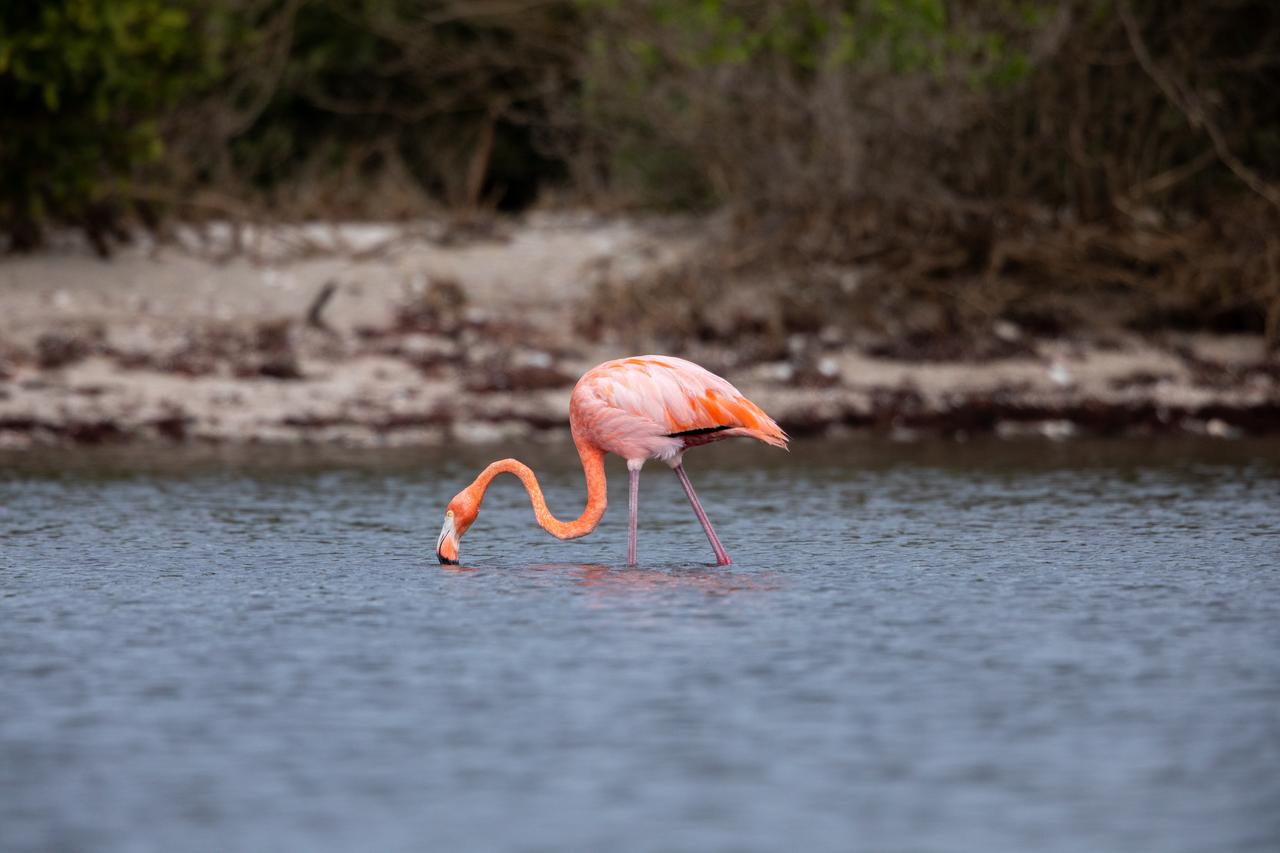
An American Flamingo takes a sip of water in the Indian River at Haulover Canal on Merritt Island on Thursday, Jan. 11, 2024. The American Flamingos are more common in Mexico and Cuba but the winds from Hurricane Idalia relocated them to Florida in September 2023. Kennedy Space Center in Florida shares a border with the Merritt Island National Wildlife Refuge where more than 310 species of birds inhabit the refuge.

American Flamingos cool off in the Indian River at Haulover Canal on Merritt Island on Thursday, Jan. 11, 2024. The American Flamingos are more common in Mexico and Cuba but the winds from Hurricane Idalia relocated them to Florida in September 2023. Kennedy Space Center in Florida shares a border with the Merritt Island National Wildlife Refuge where more than 310 species of birds inhabit the refuge.

An American Flamingo cools off in the Indian River at Haulover Canal on Merritt Island on Thursday, Jan. 11, 2024. The American Flamingos are more common in Mexico and Cuba but the winds from Hurricane Idalia relocated them to Florida in September 2023. Kennedy Space Center in Florida shares a border with the Merritt Island National Wildlife Refuge where more than 310 species of birds inhabit the refuge.

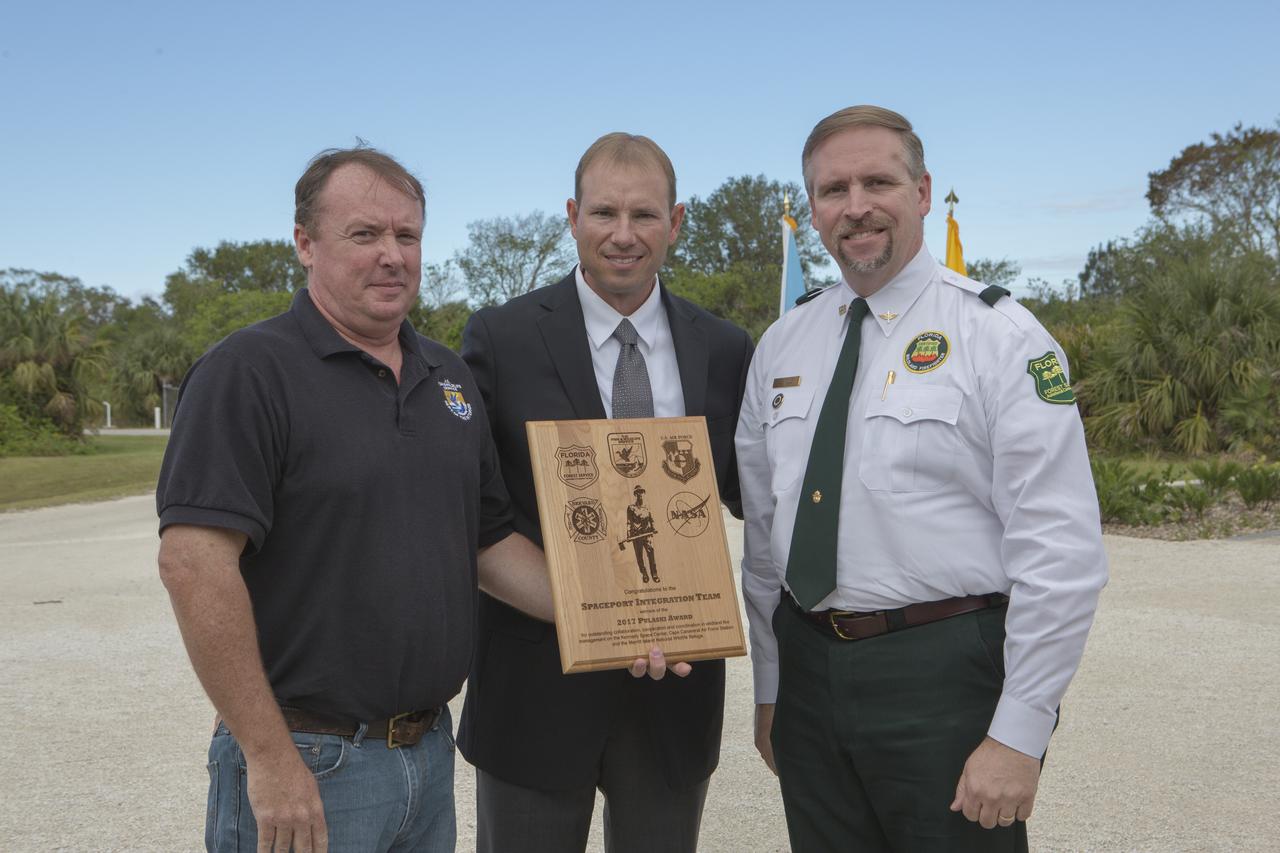
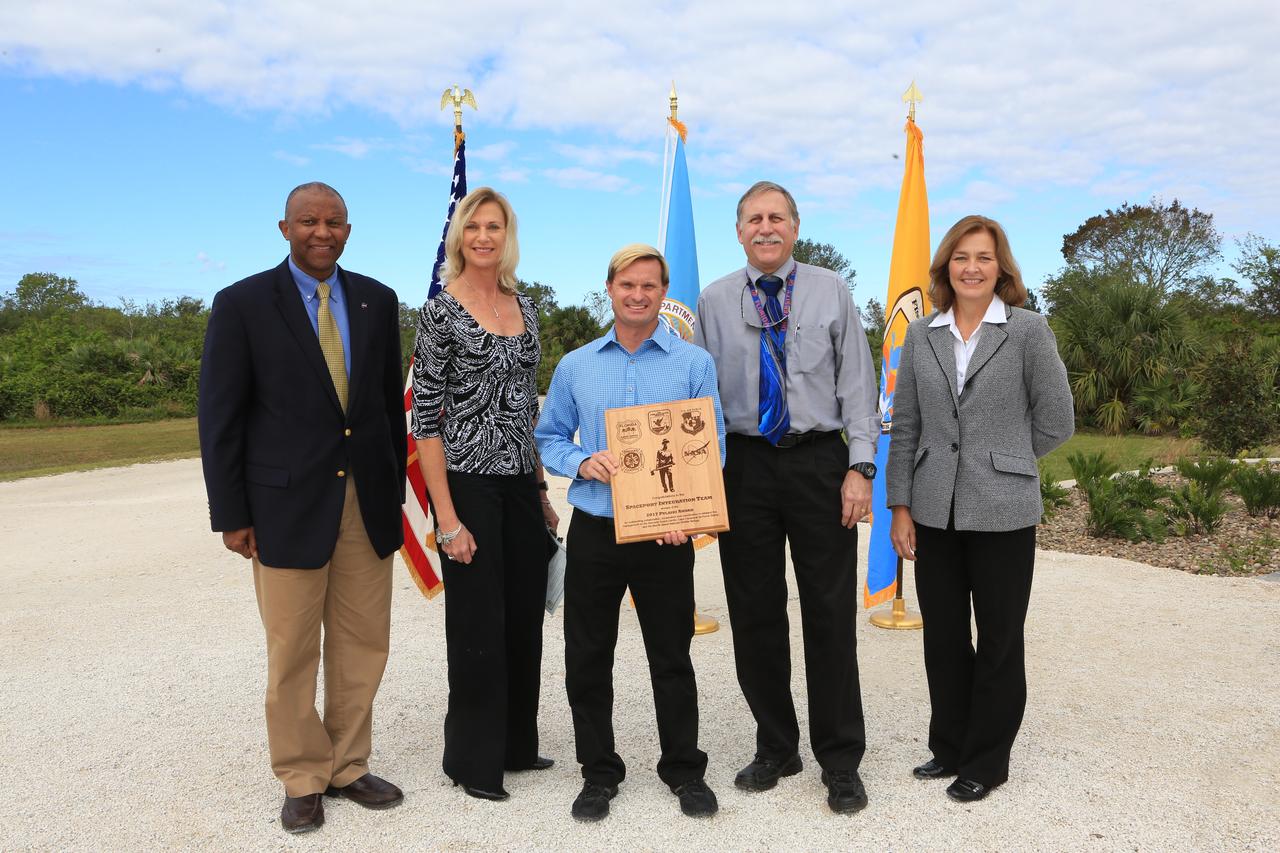
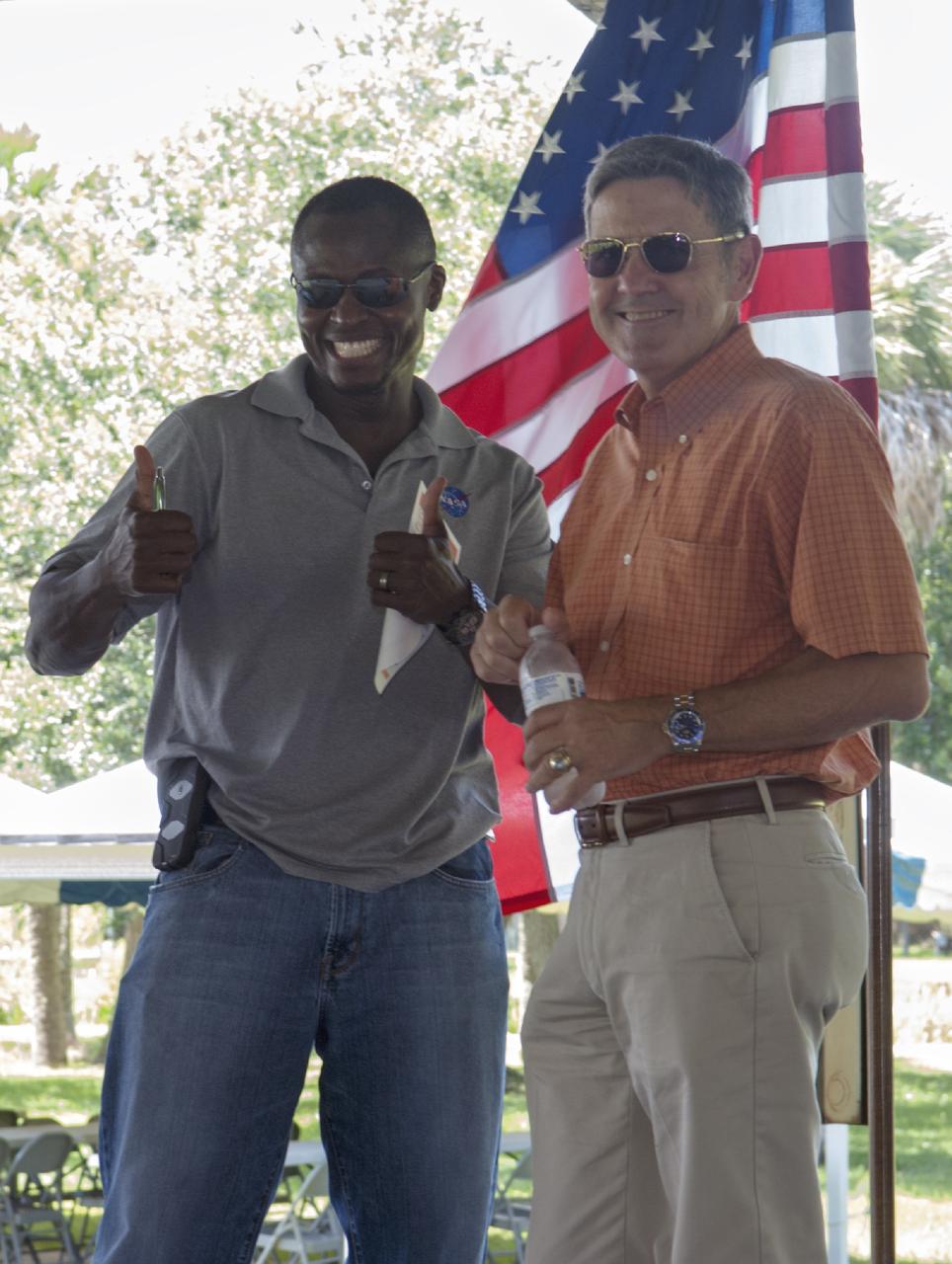
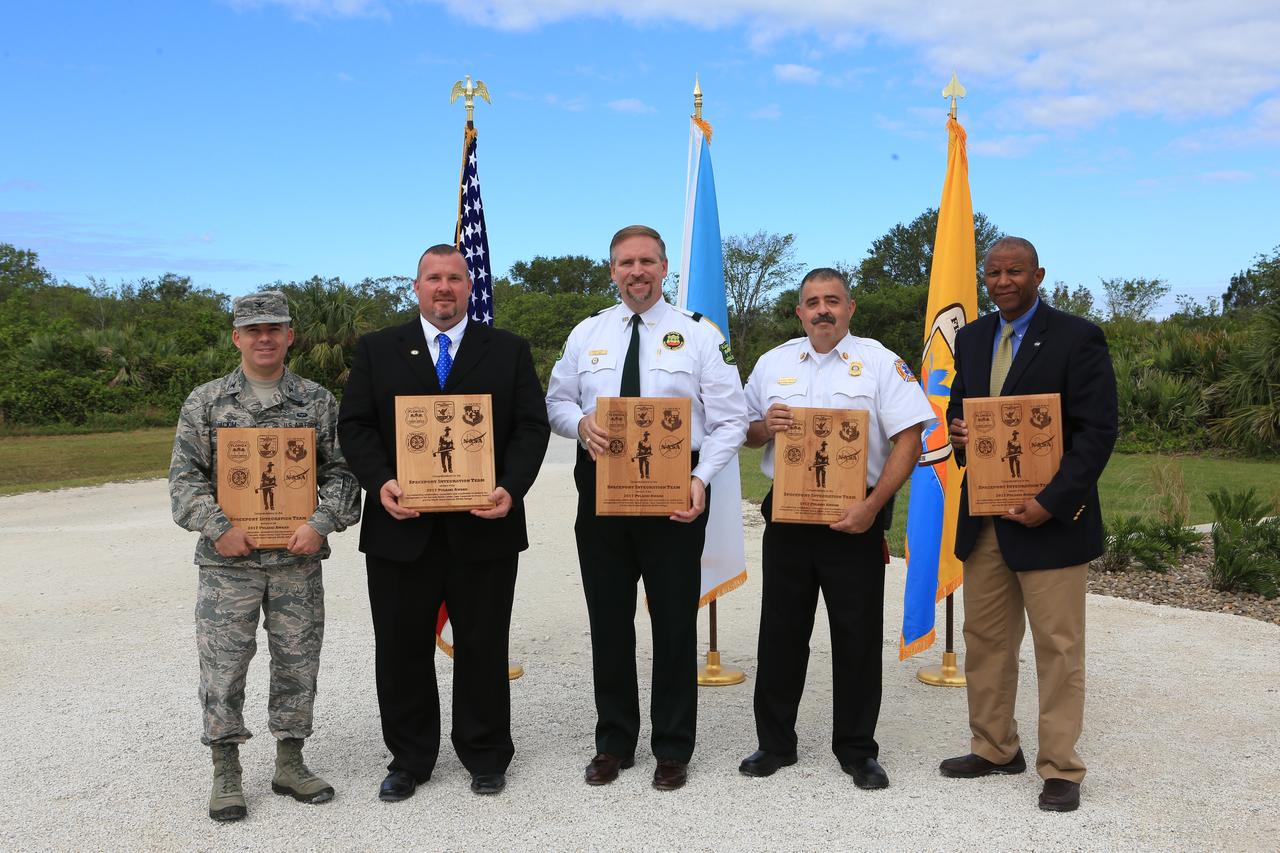
From left, Col. Z. Walter Jackim, vice commander, 45th Space Wing, Cape Canaveral Air Force Station; Michael Good, assistant fire management officer, Merritt Island National Wildlife Refuge; John Fish, chief, Florida Forest Service; Mark Schollmeyer, chief, Brevard County Fire Rescue; and Kelvin Manning, associate director, NASA's Kennedy Space Center, pose for a portrait following a ceremony Nov. 1 on the Merritt Island National Wildlife Refuge in Florida. During the joint ceremony, the Spaceport Integration Team and its partners were presented with the prestigious 2017 Pulaski Award and a new memorial marker was dedicated. The multi-agency team includes representatives from NASA's Kennedy Space Center, Cape Canaveral Air Force Station's 45th Space Wing, the Merritt Island National Wildlife Refuge, as well as the Florida Forest Service and Brevard County Fire Rescue. The memorial marker honors two fallen firefighters, Scott Maness and Beau Sauselein, who died fighting a wildfire on space center property in 1981. Held outdoors, the ceremony was attended by 140 guests.
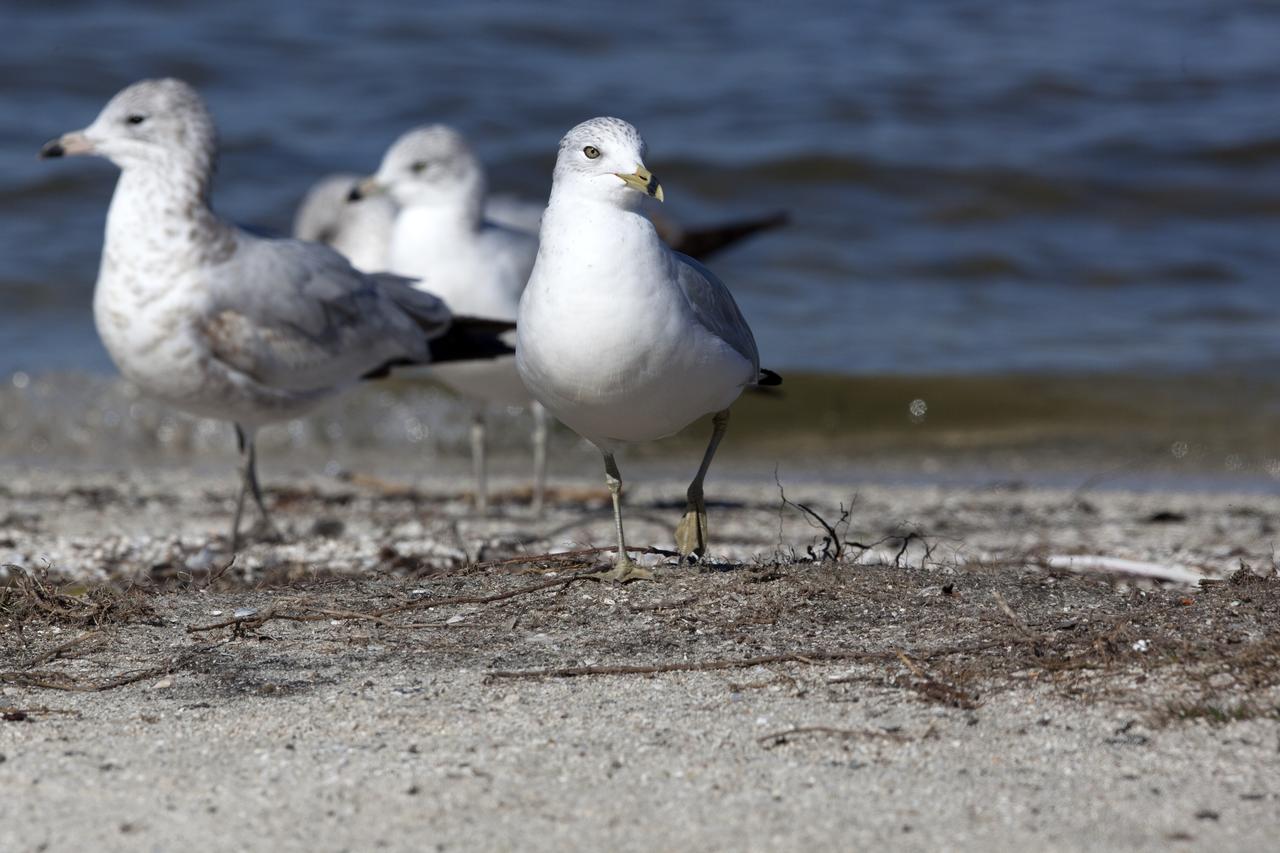
Seagulls gather along a shoreline at NASA's Kennedy Space Center in Florida. Kennedy shares a boundary with the Merritt Island National Wildlife Refuge. The refuge encompasses 140,000 acres that are a habitat for more than 331 species of birds, 31 mammals, 117 fish, and 65 amphibians and reptiles. The marshes and open water of the refuge provide wintering areas for 23 species of migratory waterfowl, as well as a year-round home for great blue herons, great egrets, wood storks, cormorants, brown pelicans and other species of marsh and shore birds.

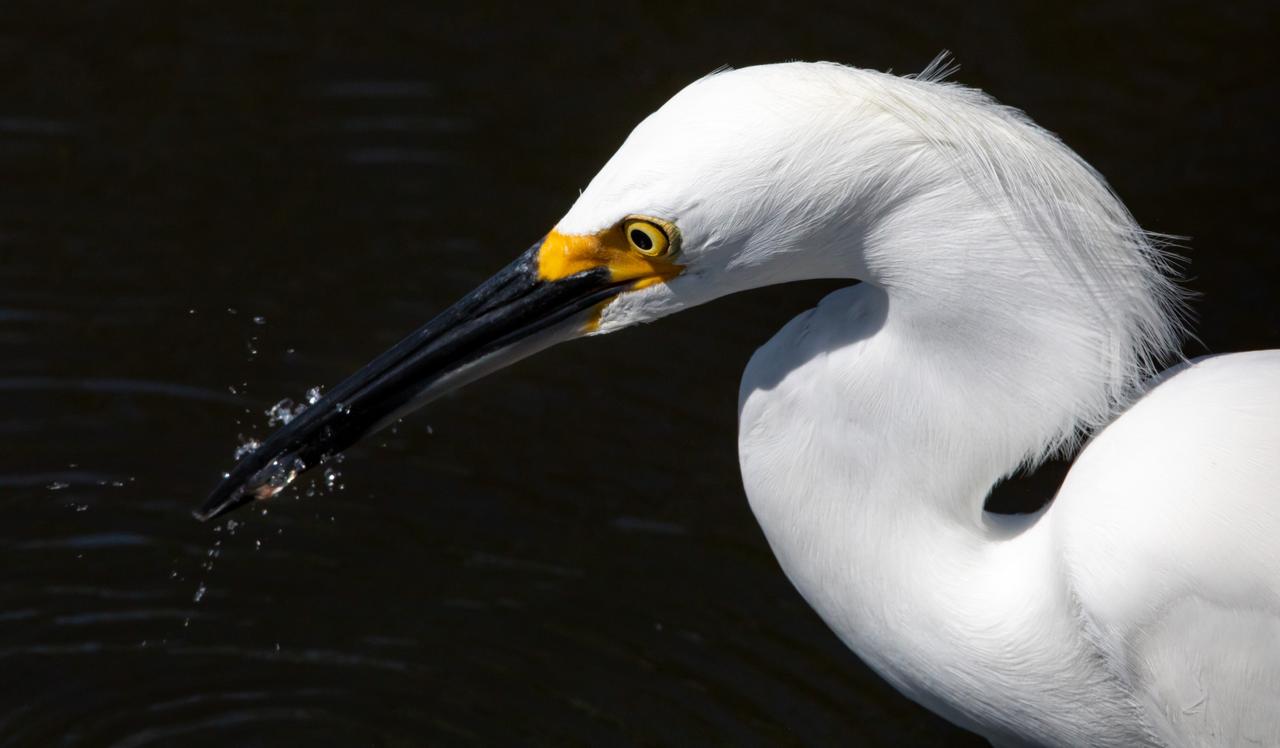
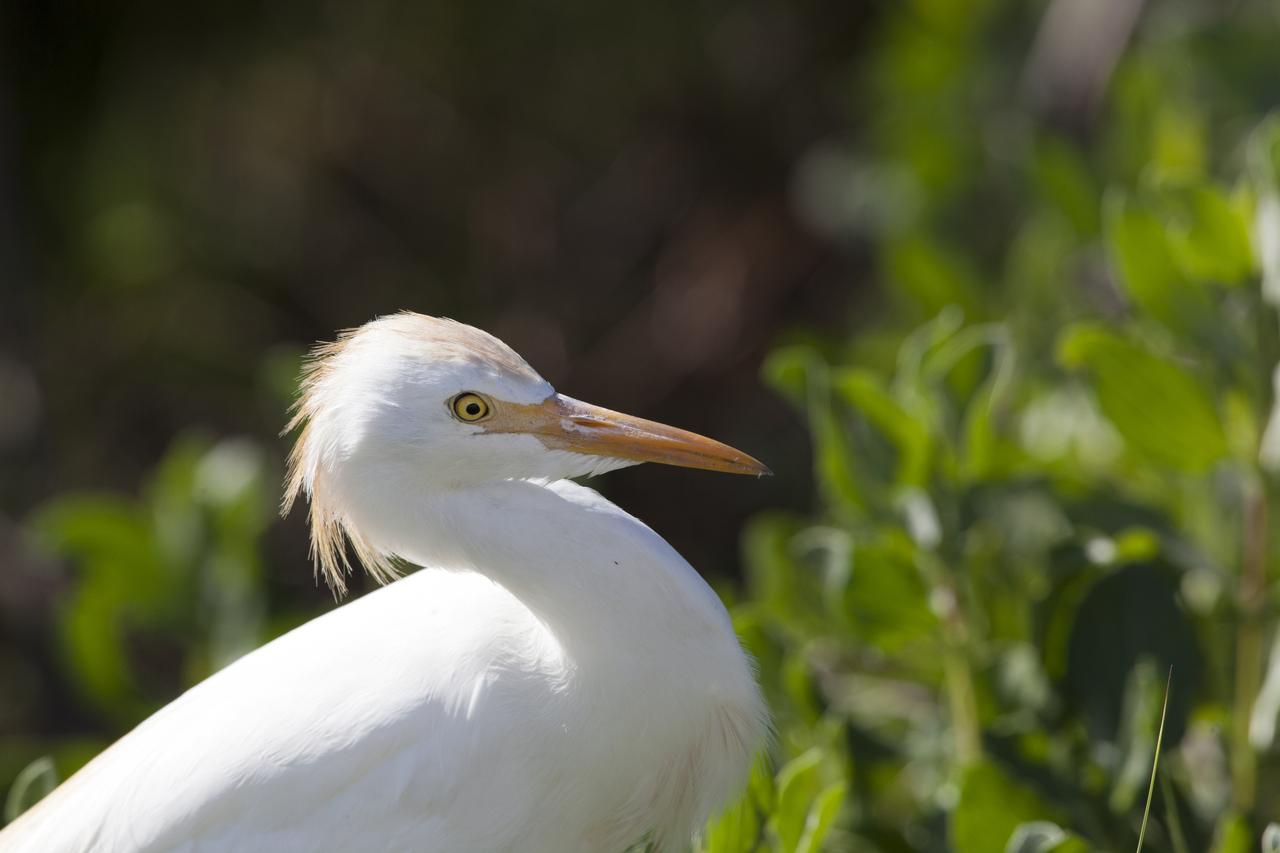
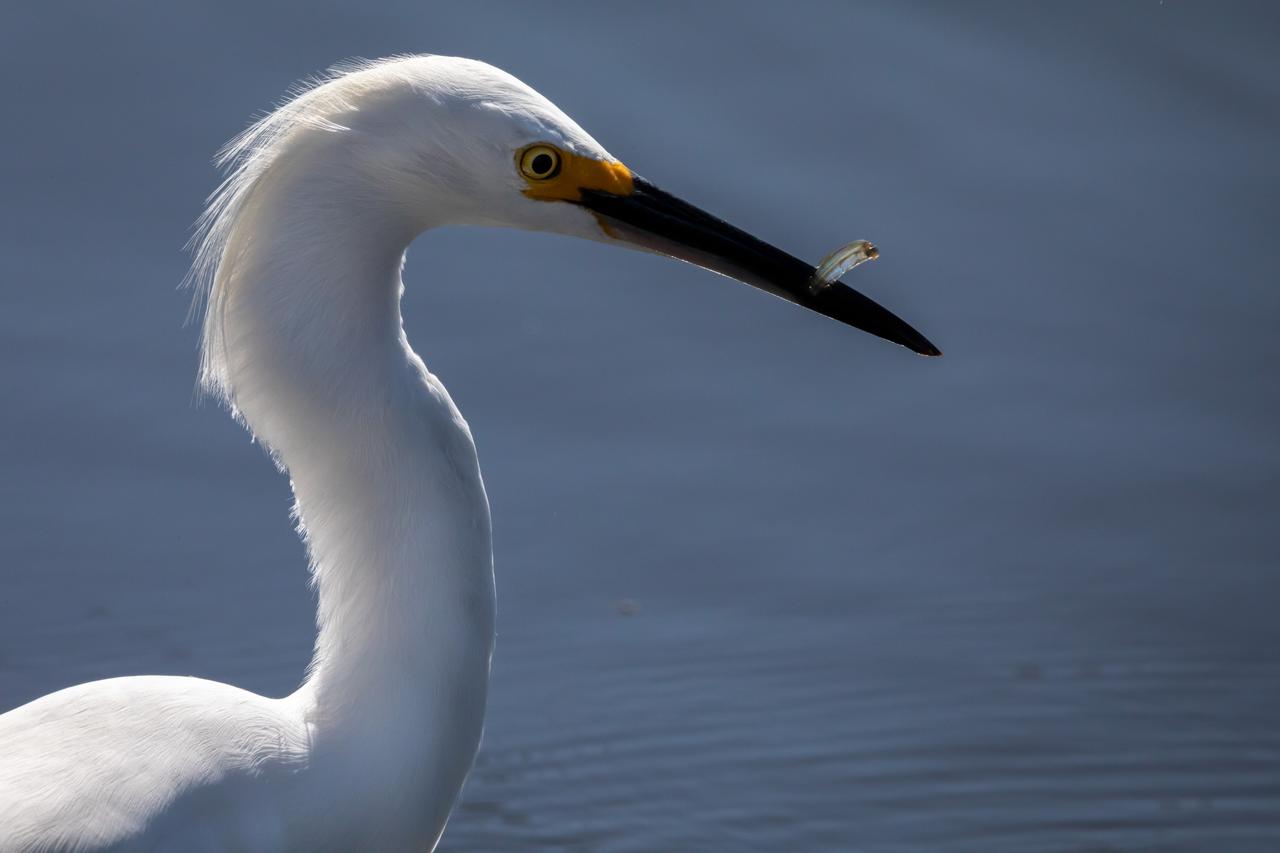
A snowy egret is seen at NASA's Kennedy Space Center in Florida. Kennedy shares a boundary with the Merritt Island National Wildlife Refuge. The refuge encompasses 140,000 acres that are a habitat for more than 331 species of birds, 31 mammals, 117 fish, and 65 amphibians and reptiles. The marshes and open water of the refuge provide wintering areas for 23 species of migratory waterfowl, as well as a year-round home for great blue herons, great egrets, wood storks, cormorants, brown pelicans and other species of marsh and shore birds.

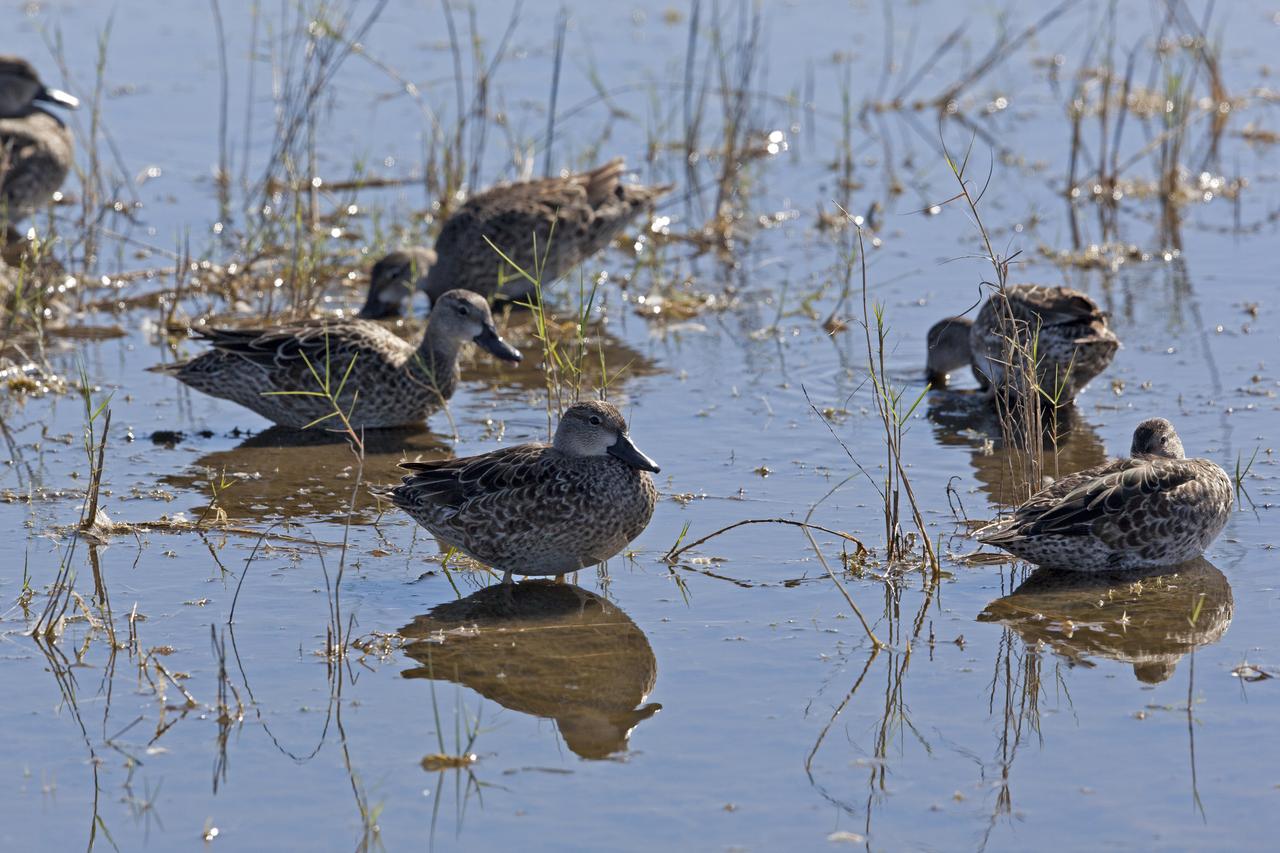
Ducks gather in a waterway at NASA's Kennedy Space Center in Florida. Kennedy shares a boundary with the Merritt Island National Wildlife Refuge. The refuge encompasses 140,000 acres that are a habitat for more than 331 species of birds, 31 mammals, 117 fish, and 65 amphibians and reptiles. The marshes and open water of the refuge provide wintering areas for 23 species of migratory waterfowl, as well as a year-round home for great blue herons, great egrets, wood storks, cormorants, brown pelicans and other species of marsh and shore birds.

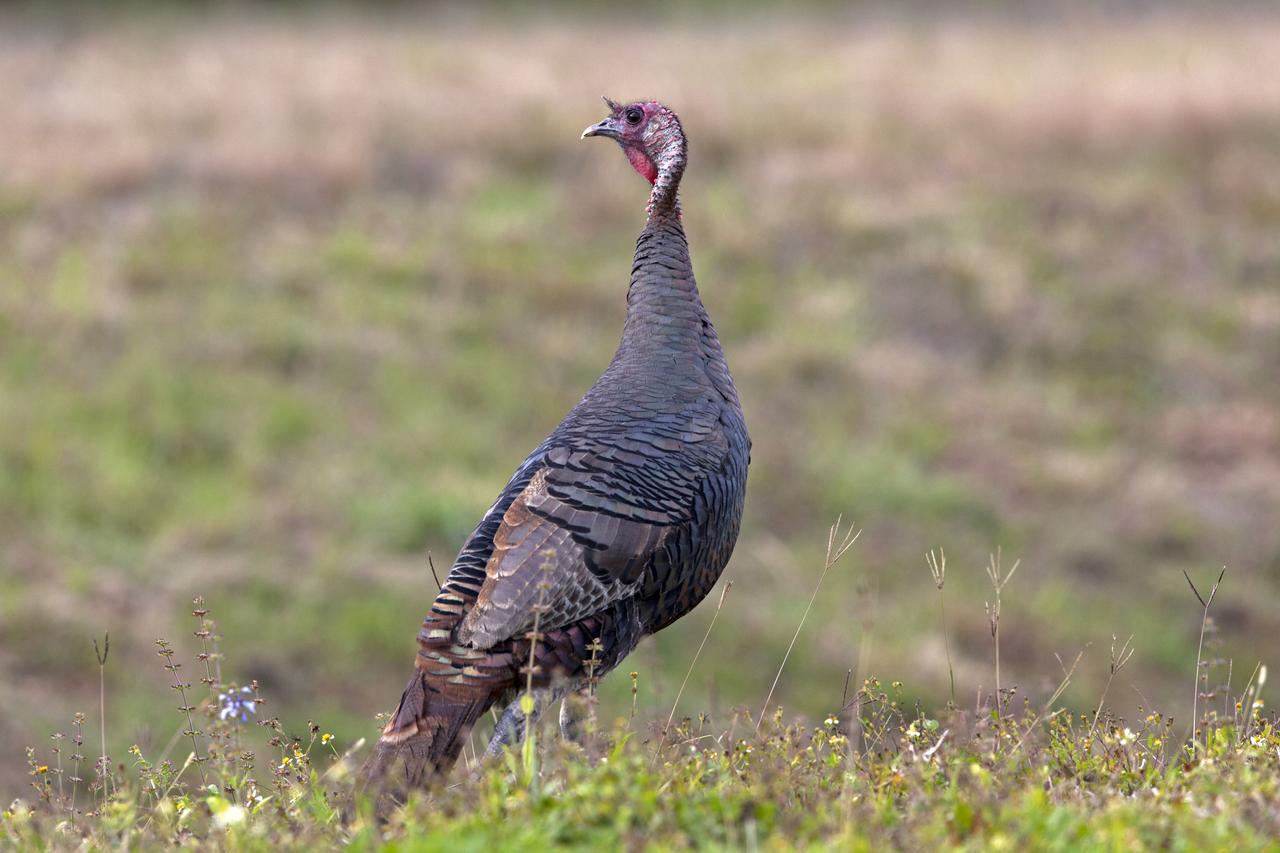
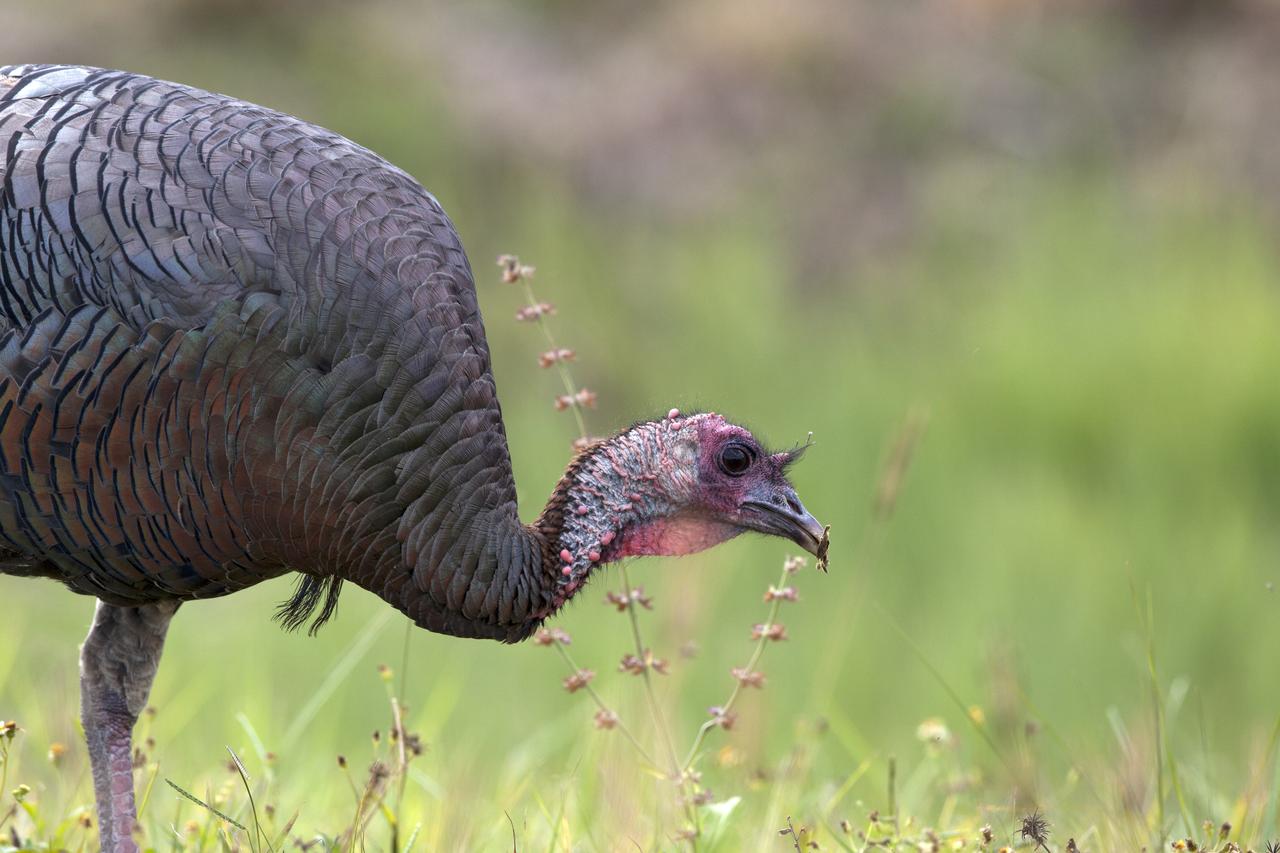
A wild turkey is seen at NASA's Kennedy Space Center in Florida. Kennedy shares a boundary with the Merritt Island National Wildlife Refuge. The refuge encompasses 140,000 acres that are a habitat for more than 331 species of birds, 31 mammals, 117 fish, and 65 amphibians and reptiles. The marshes and open water of the refuge provide wintering areas for 23 species of migratory waterfowl, as well as a year-round home for great blue herons, great egrets, wood storks, cormorants, brown pelicans and other species of marsh and shore birds.

A wild turkey is seen at NASA's Kennedy Space Center in Florida. Kennedy shares a boundary with the Merritt Island National Wildlife Refuge. The refuge encompasses 140,000 acres that are a habitat for more than 331 species of birds, 31 mammals, 117 fish, and 65 amphibians and reptiles. The marshes and open water of the refuge provide wintering areas for 23 species of migratory waterfowl, as well as a year-round home for great blue herons, great egrets, wood storks, cormorants, brown pelicans and other species of marsh and shore birds.

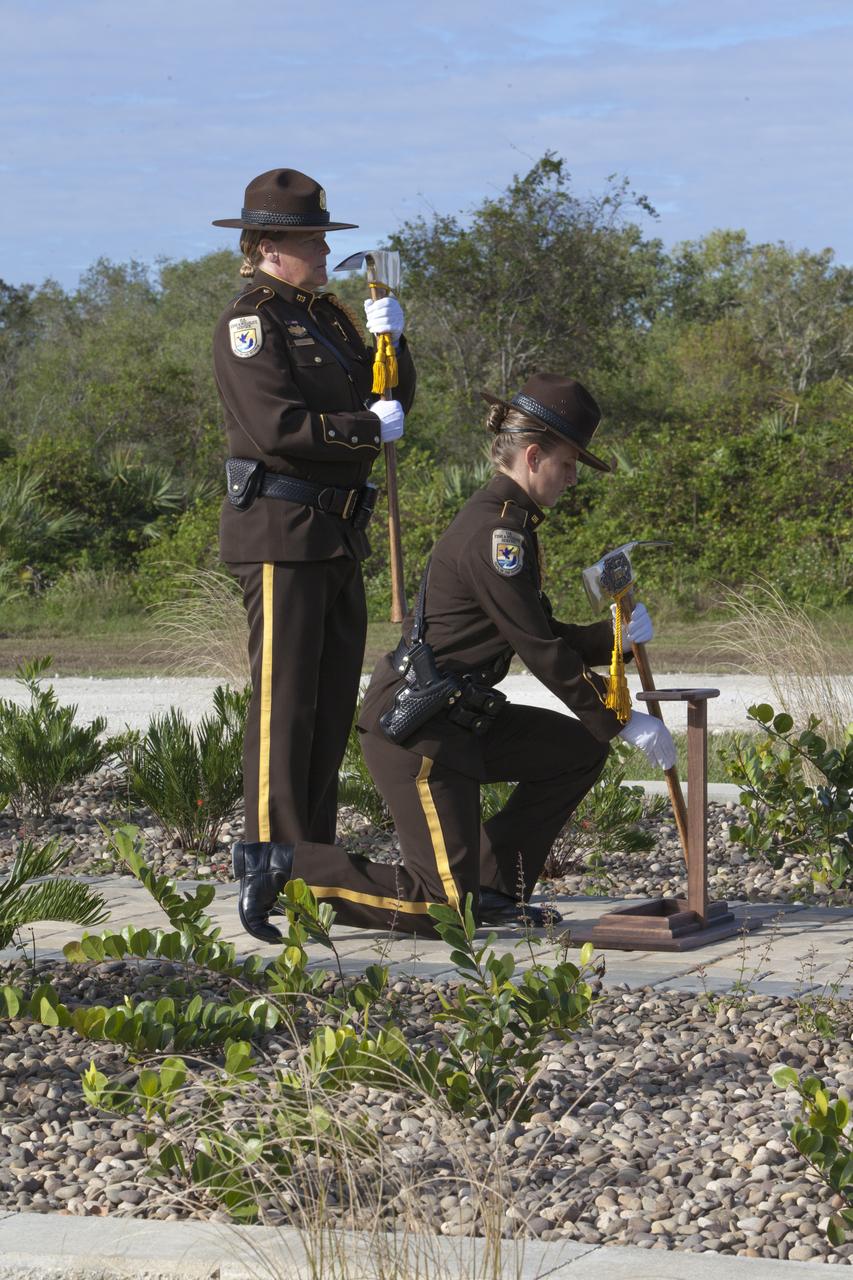
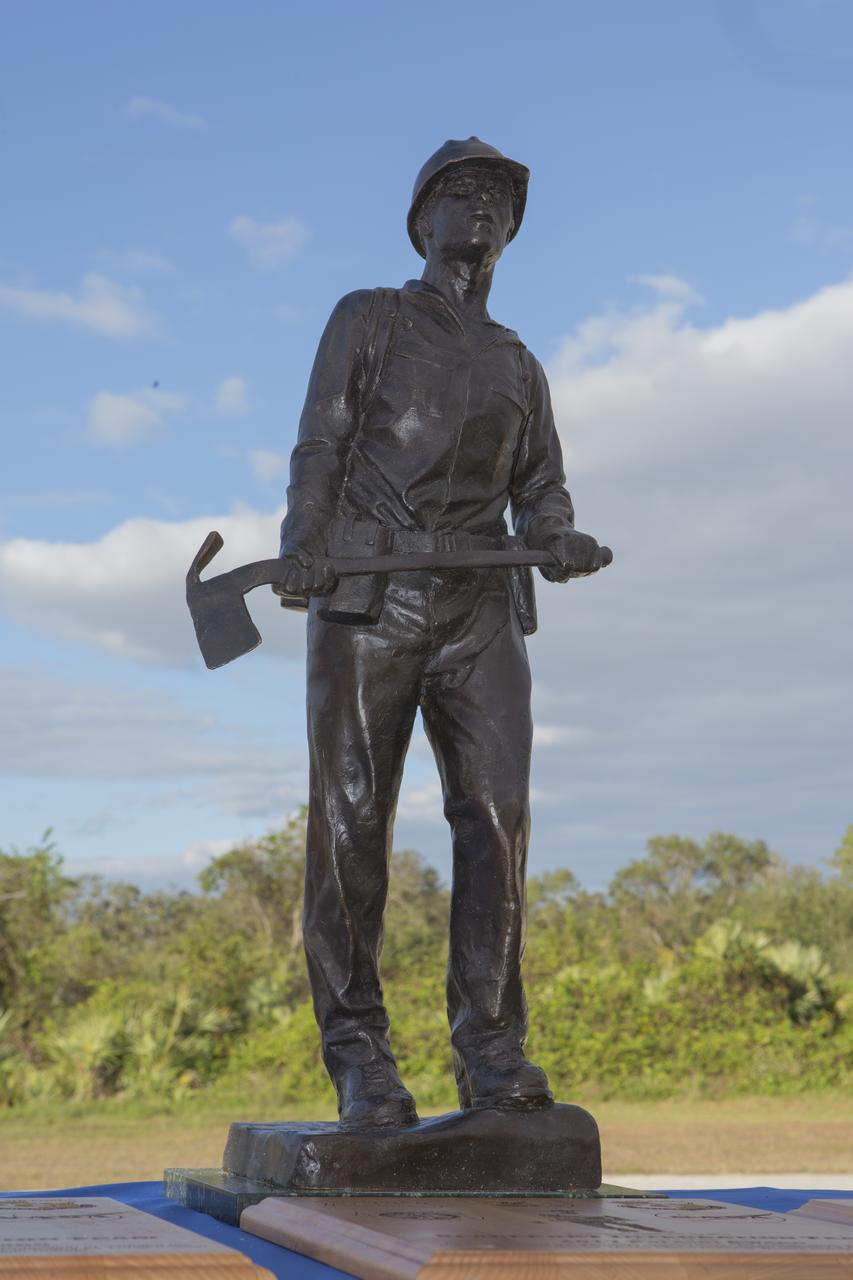
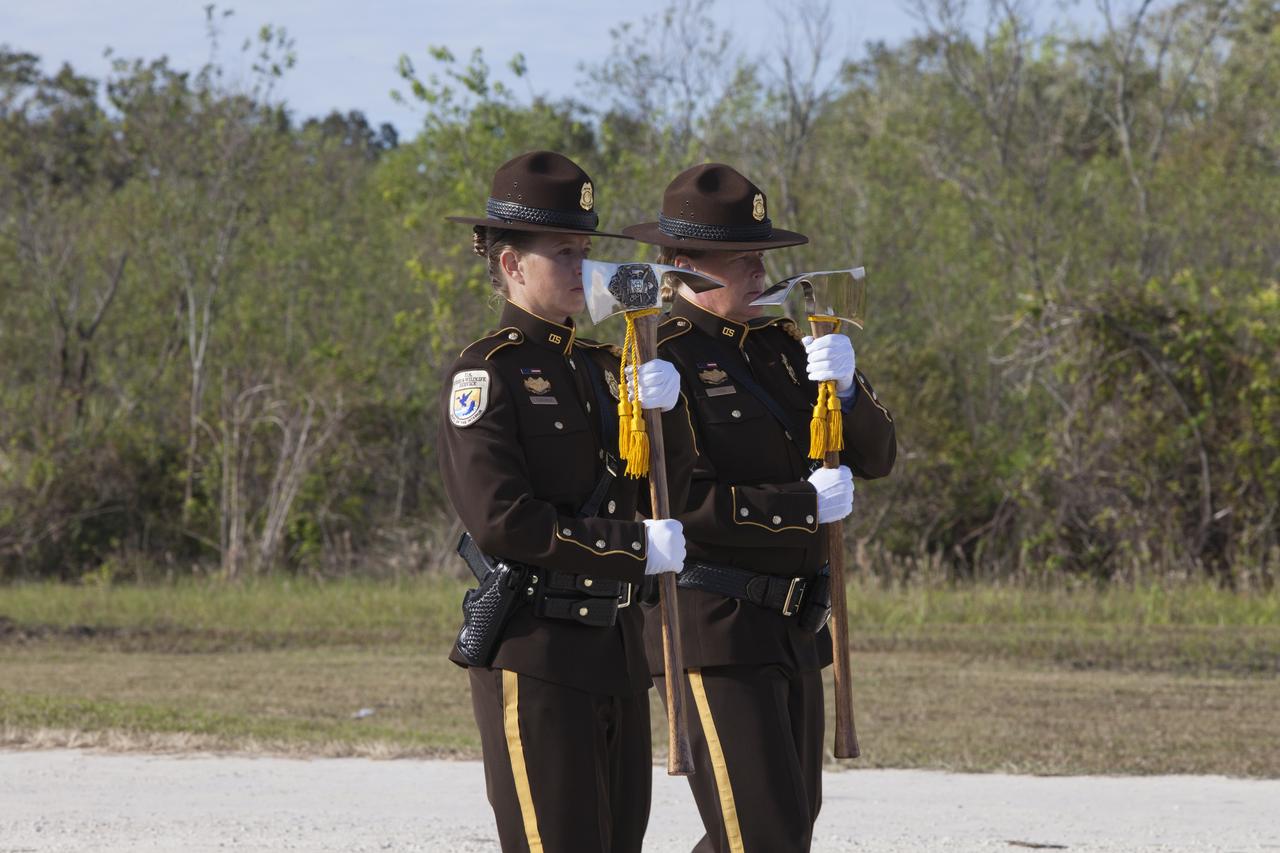
Firefighters place ceremonial Pulaski tools by a new memorial marker Nov. 1 on the Merritt Island National Wildlife Refuge in Florida. During a joint ceremony, the Spaceport Integration Team and its partners were presented with the prestigious 2017 Pulaski Award and the new memorial marker was dedicated. The multi-agency team includes representatives from NASA's Kennedy Space Center, Cape Canaveral Air Force Station's 45th Space Wing, the Merritt Island National Wildlife Refuge, as well as the Florida Forest Service and Brevard County Fire Rescue. The memorial marker honors two fallen firefighters, Scott Maness and Beau Sauselein, who died fighting a wildfire on space center property in 1981. Held outdoors, the ceremony was attended by 140 guests.
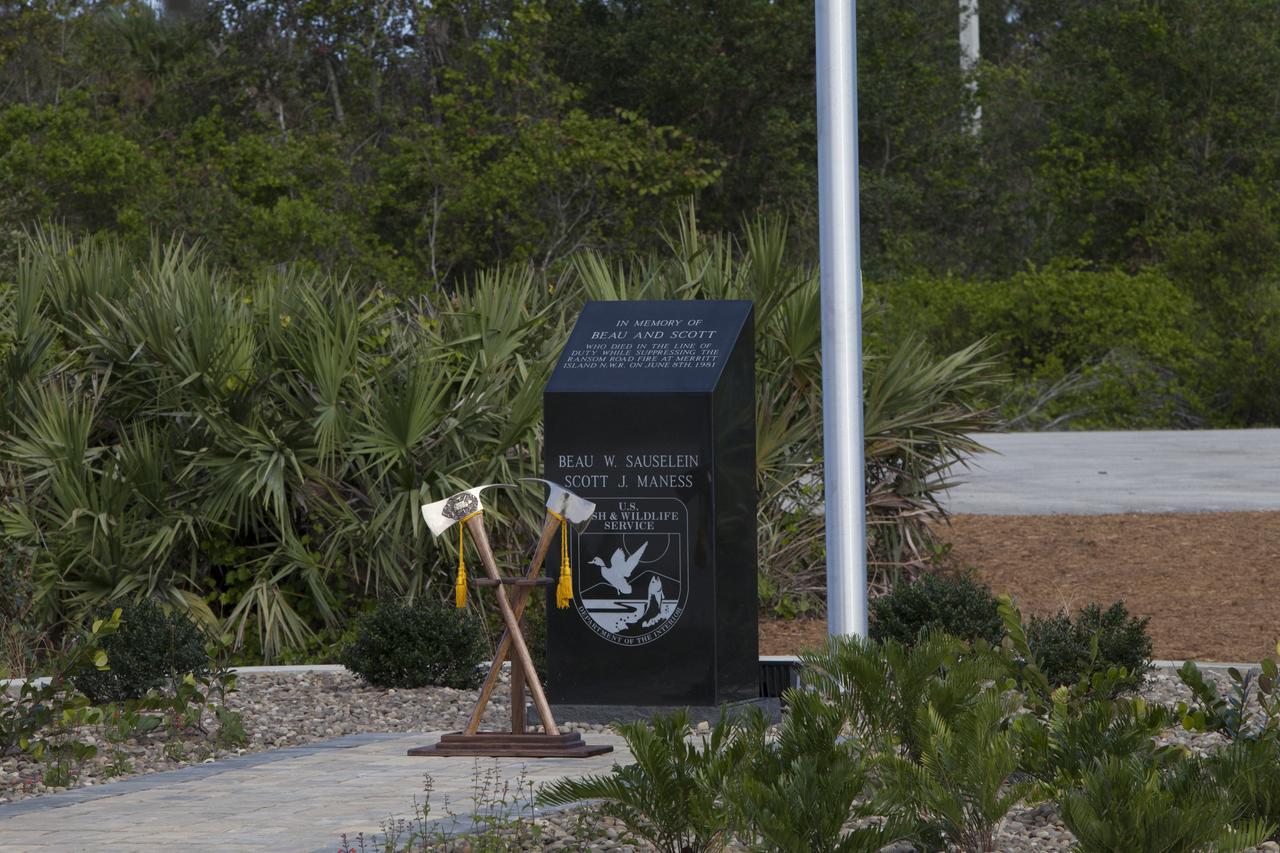
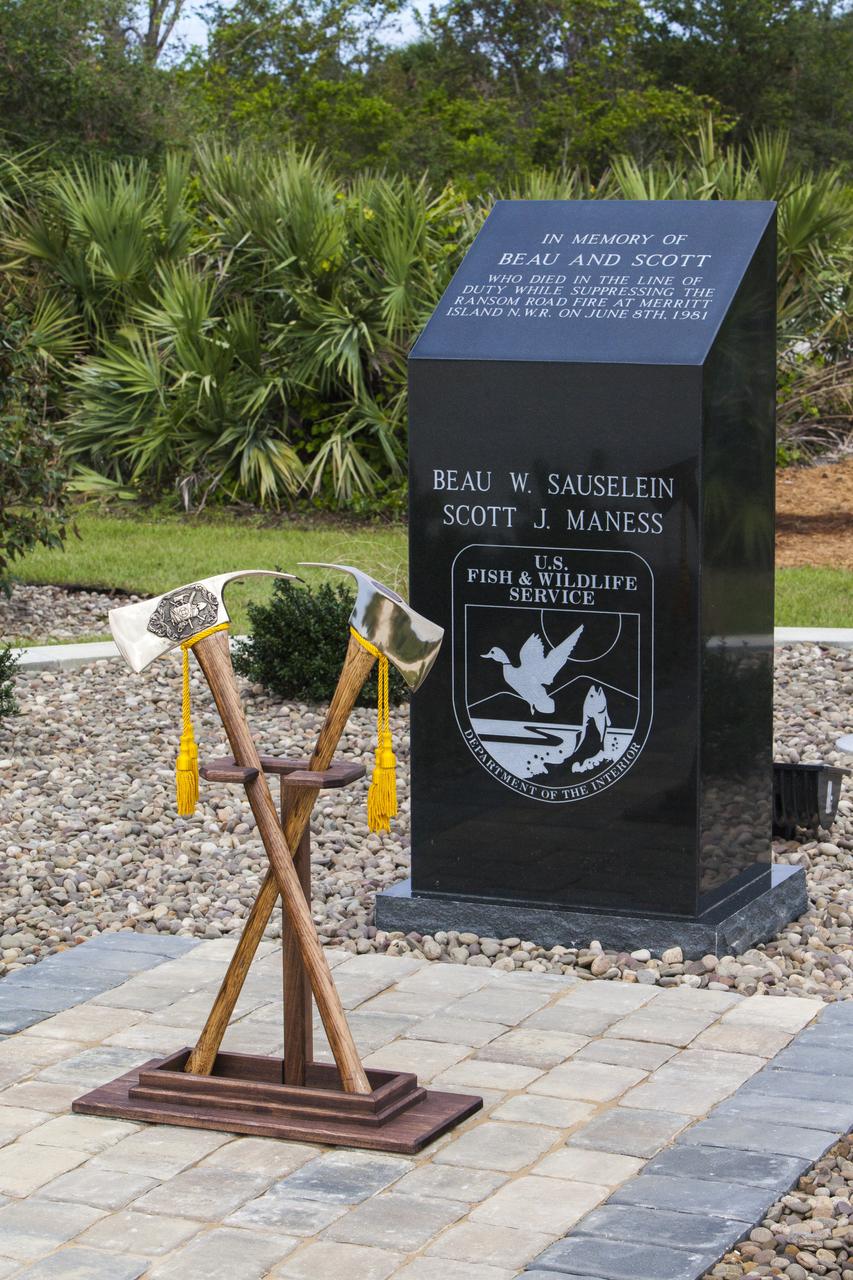
Ceremonial Pulaski tools are positioned in front of a new memorial marker Nov. 1 on the Merritt Island National Wildlife Refuge in Florida. During a joint ceremony, the Spaceport Integration Team and its partners were presented with the prestigious 2017 Pulaski Award and the new memorial marker was dedicated. The multi-agency team includes representatives from NASA's Kennedy Space Center, Cape Canaveral Air Force Station's 45th Space Wing, the Merritt Island National Wildlife Refuge, as well as the Florida Forest Service and Brevard County Fire Rescue. The memorial marker honors two fallen firefighters, Scott Maness and Beau Sauselein, who died fighting a wildfire on space center property in 1981. Held outdoors, the ceremony was attended by 140 guests.
Ceremonial Pulaski tools are positioned in front of a new memorial marker Nov. 1 on the Merritt Island National Wildlife Refuge in Florida. During a joint ceremony, the Spaceport Integration Team and its partners were presented with the prestigious 2017 Pulaski Award and the new memorial marker was dedicated. The multi-agency team includes representatives from NASA's Kennedy Space Center, Cape Canaveral Air Force Station's 45th Space Wing, the Merritt Island National Wildlife Refuge, as well as the Florida Forest Service and Brevard County Fire Rescue. The memorial marker honors two fallen firefighters, Scott Maness and Beau Sauselein, who died fighting a wildfire on space center property in 1981. Held outdoors, the ceremony was attended by 140 guests.
Firefighters prepare to place ceremonial Pulaski tools by a new memorial marker Nov. 1 on the Merritt Island National Wildlife Refuge in Florida. During a joint ceremony, the Spaceport Integration Team and its partners were presented with the prestigious 2017 Pulaski Award and the new memorial marker was dedicated. The multi-agency team includes representatives from NASA's Kennedy Space Center, Cape Canaveral Air Force Station's 45th Space Wing, the Merritt Island National Wildlife Refuge, as well as the Florida Forest Service and Brevard County Fire Rescue. The memorial marker honors two fallen firefighters, Scott Maness and Beau Sauselein, who died fighting a wildfire on space center property in 1981. Held outdoors, the ceremony was attended by 140 guests.
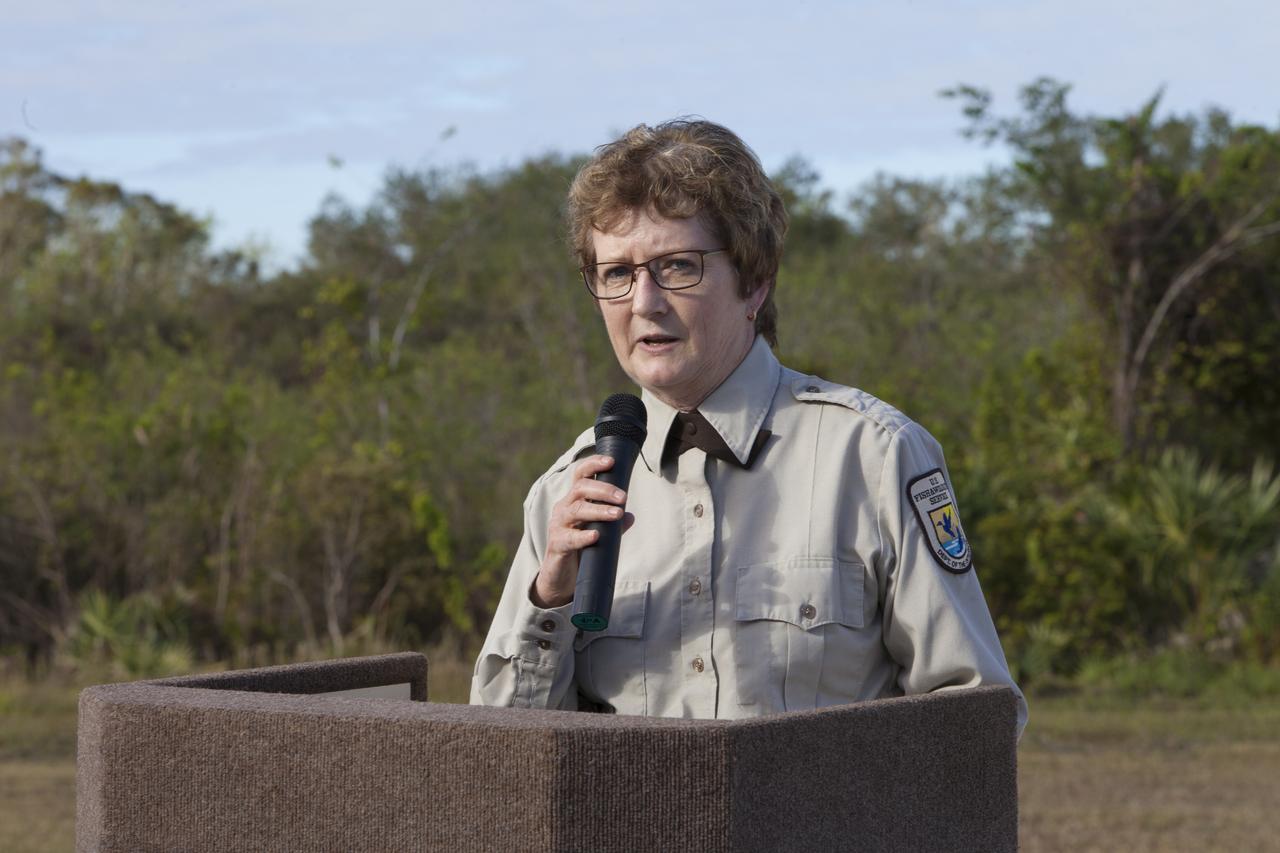
Layne Hamilton, manager of the Merritt Island National Wildlife Refuge, welcomes guests to a ceremony held Nov. 1 on the refuge in Florida. During the joint ceremony, the Spaceport Integration Team and its partners were presented with the prestigious 2017 Pulaski Award and a new memorial marker was dedicated. The multi-agency team includes representatives from NASA's Kennedy Space Center, Cape Canaveral Air Force Station's 45th Space Wing, the Merritt Island National Wildlife Refuge, as well as the Florida Forest Service and Brevard County Fire Rescue. The memorial marker honors two fallen firefighters, Scott Maness and Beau Sauselein, who died fighting a wildfire on space center property in 1981. Held outdoors, the ceremony was attended by 140 guests.
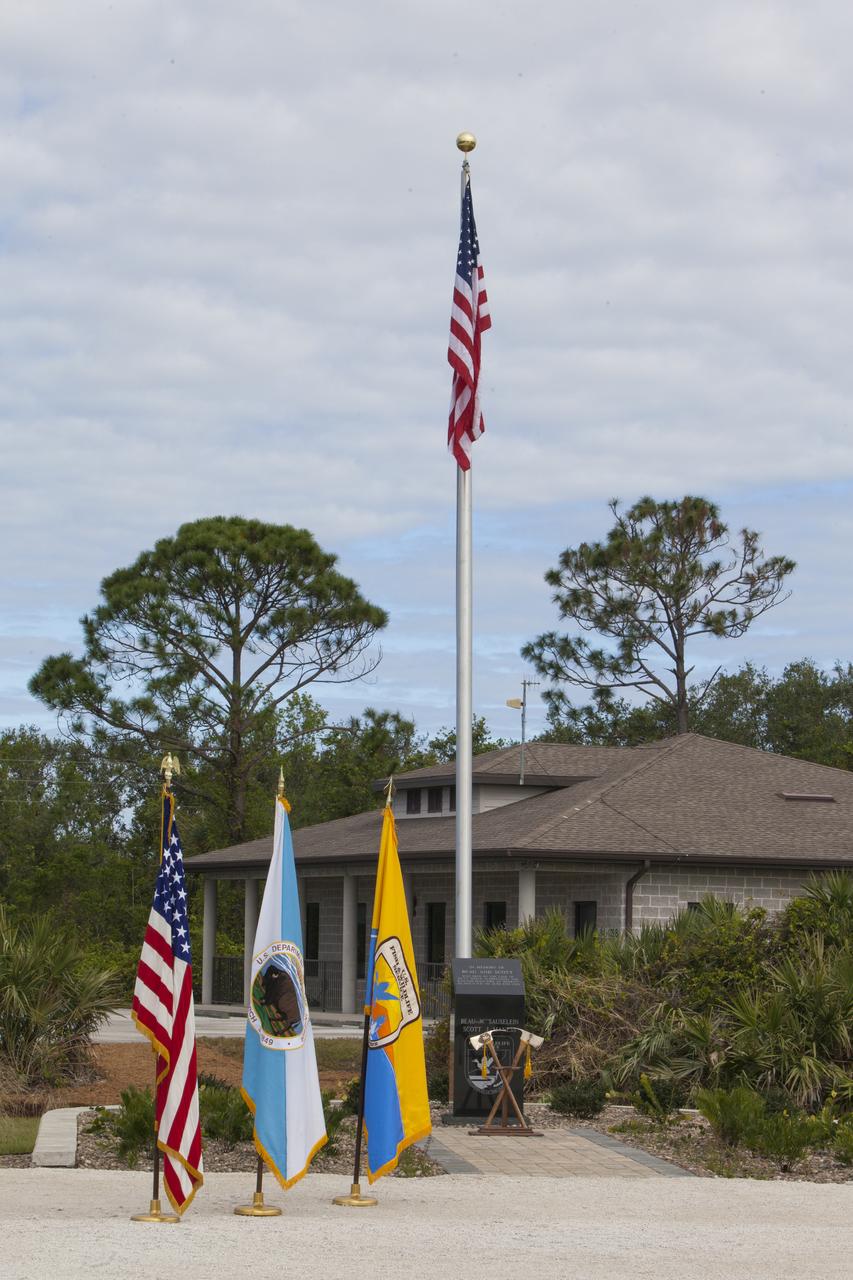
A presentation of colors opened a ceremony Nov. 1 on the Merritt Island National Wildlife Refuge in Florida. During the joint ceremony, the Spaceport Integration Team and its partners were presented with the prestigious 2017 Pulaski Award and a new memorial marker was dedicated. The multi-agency team includes representatives from NASA's Kennedy Space Center, Cape Canaveral Air Force Station's 45th Space Wing, the Merritt Island National Wildlife Refuge, as well as the Florida Forest Service and Brevard County Fire Rescue. The memorial marker honors two fallen firefighters, Scott Maness and Beau Sauselein, who died fighting a wildfire on space center property in 1981. Held outdoors, the ceremony was attended by 140 guests.
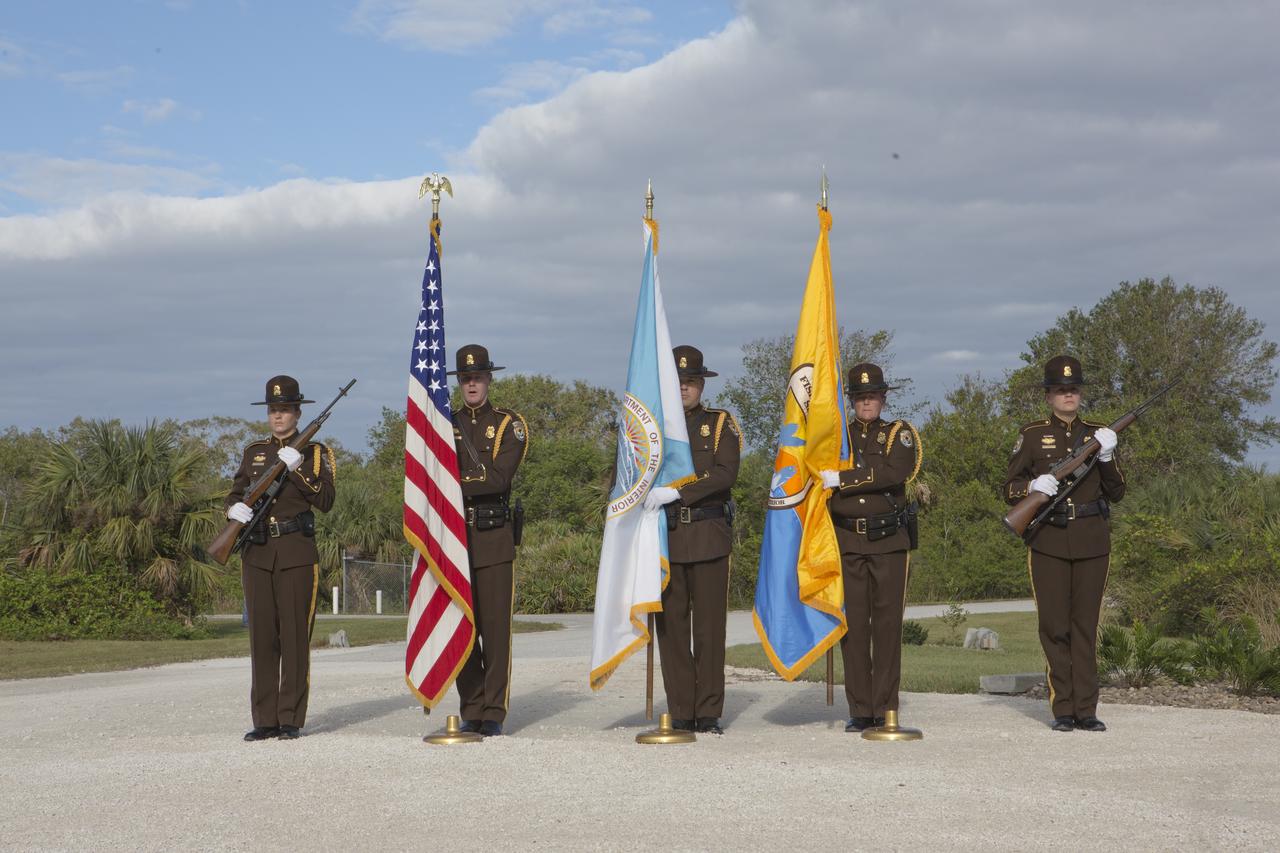
A presentation of colors by the U.S. Fish and Wildlife Service honor guard opened a ceremony Nov. 1 on the Merritt Island National Wildlife Refuge in Florida. During the joint ceremony, the Spaceport Integration Team and its partners were presented with the prestigious 2017 Pulaski Award and the new memorial marker was dedicated. The multi-agency team includes representatives from NASA's Kennedy Space Center, Cape Canaveral Air Force Station's 45th Space Wing, the Merritt Island National Wildlife Refuge, as well as the Florida Forest Service and Brevard County Fire Rescue. The memorial marker honors two fallen firefighters, Scott Maness and Beau Sauselein, who died fighting a wildfire on space center property in 1981. Held outdoors, the ceremony was attended by 140 guests.
The prestigious 2017 Pulaski Award is on display near a new memorial marker on the Merritt Island National Wildlife Refuge in Florida. During a joint ceremony, the Spaceport Integration Team and its partners were presented with the award and a new memorial marker was dedicated. The multi-agency team includes representatives from NASA's Kennedy Space Center, Cape Canaveral Air Force Station's 45th Space Wing, the Merritt Island National Wildlife Refuge, as well as the Florida Forest Service and Brevard County Fire Rescue. The memorial marker honors two fallen firefighters, Scott Maness and Beau Sauselein, who died fighting a wildfire on space center property in 1981. Held outdoors, the ceremony was attended by 140 guests.
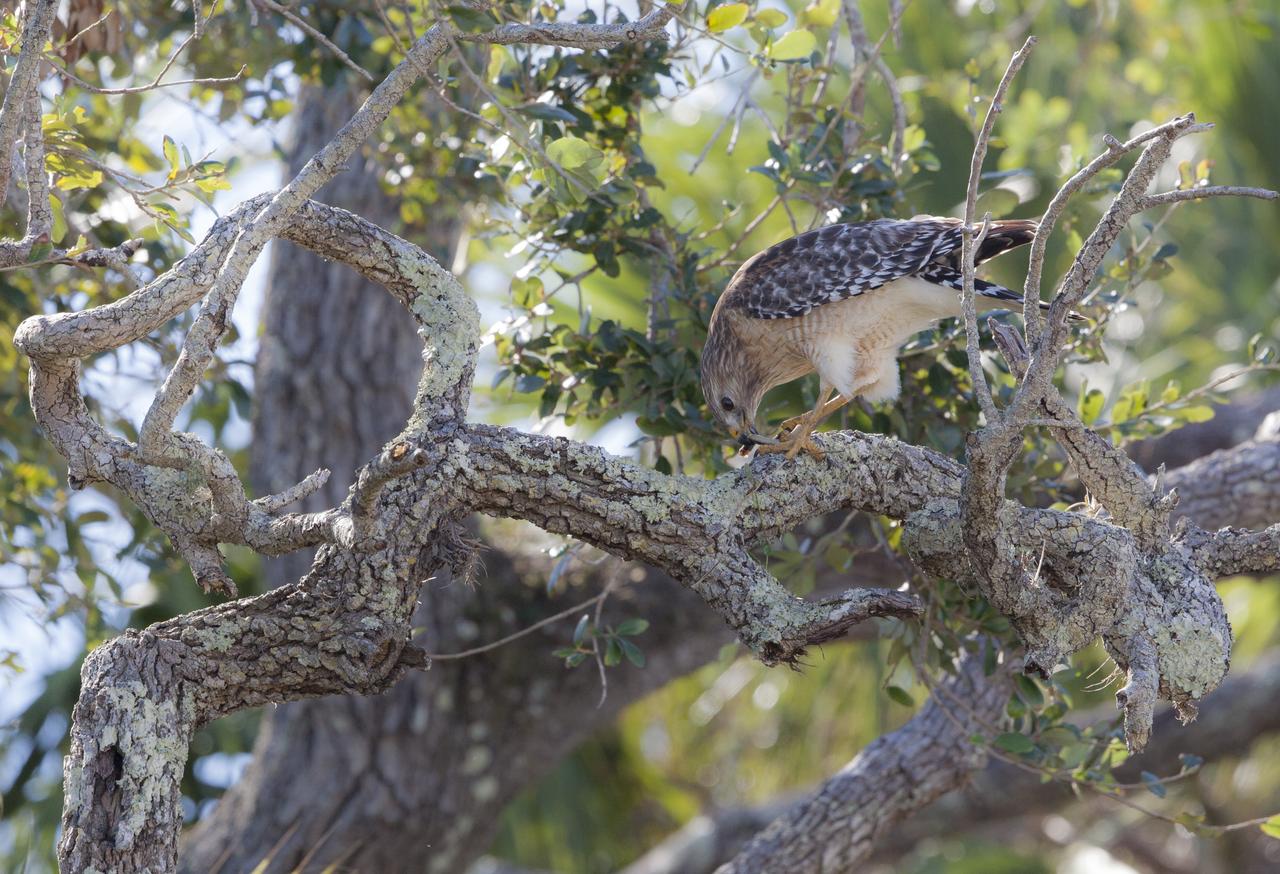
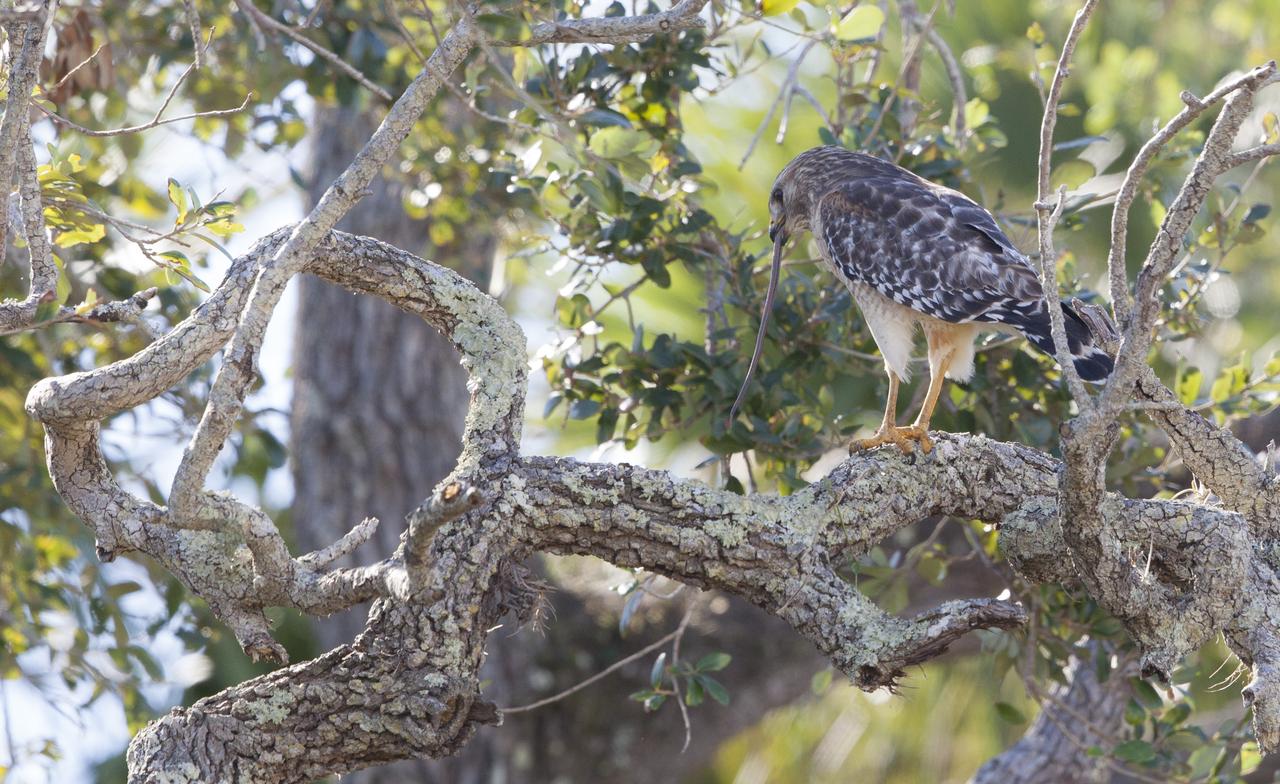
A red-shouldered hawk sits on a tree branch while snacking on a snake at NASA’s Kennedy Space Center in Florida. Kennedy shares a boundary with the Merritt Island National Wildlife Refuge. The Refuge encompasses 140,000 acres that are a habitat for more than 331 species of birds, 31 mammals, 117 fishes, and 65 amphibians and reptiles. The marshes and open water of the refuge provide wintering areas for 23 species of migratory waterfowl, as well as a year-round home for great blue herons, great egrets, wood storks, cormorants, brown pelicans and other species of marsh and shore birds, as well as a variety of insects.

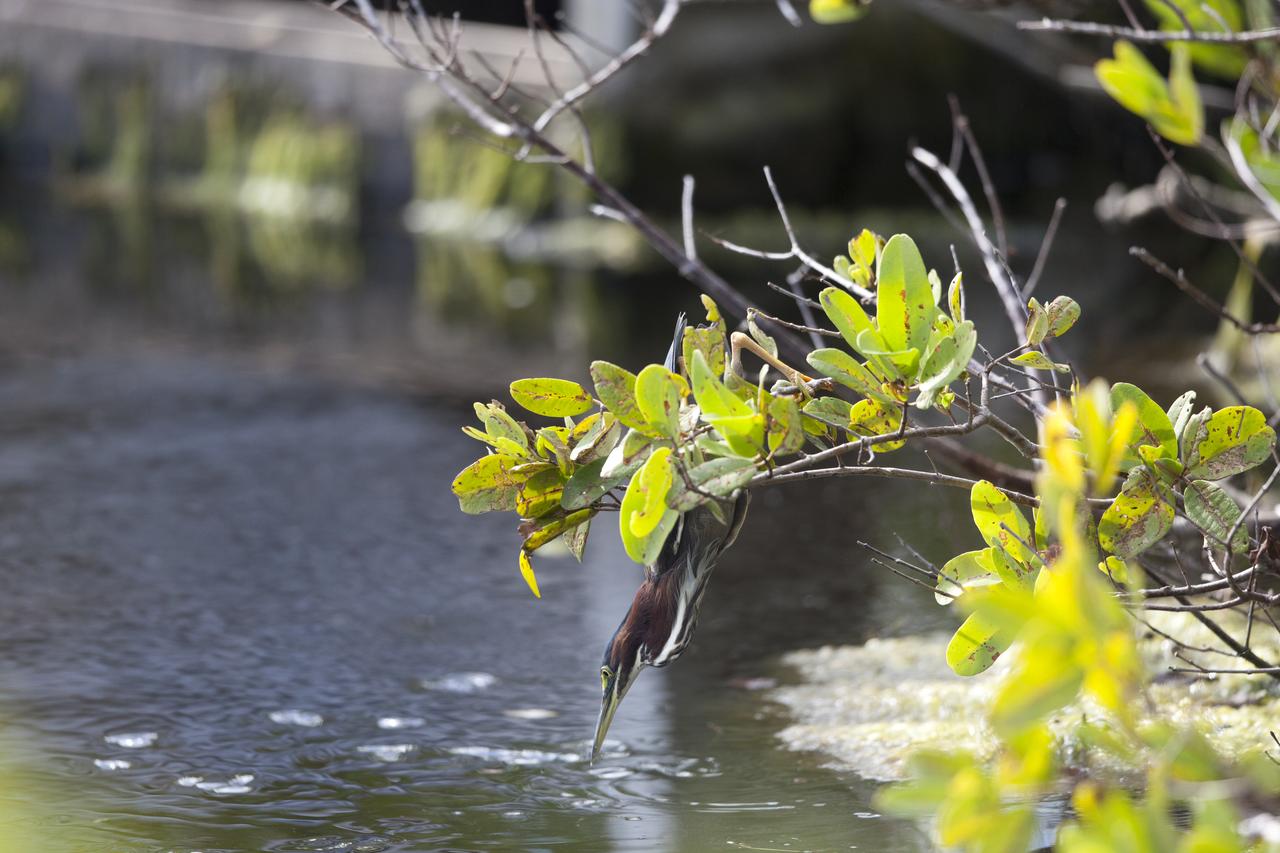
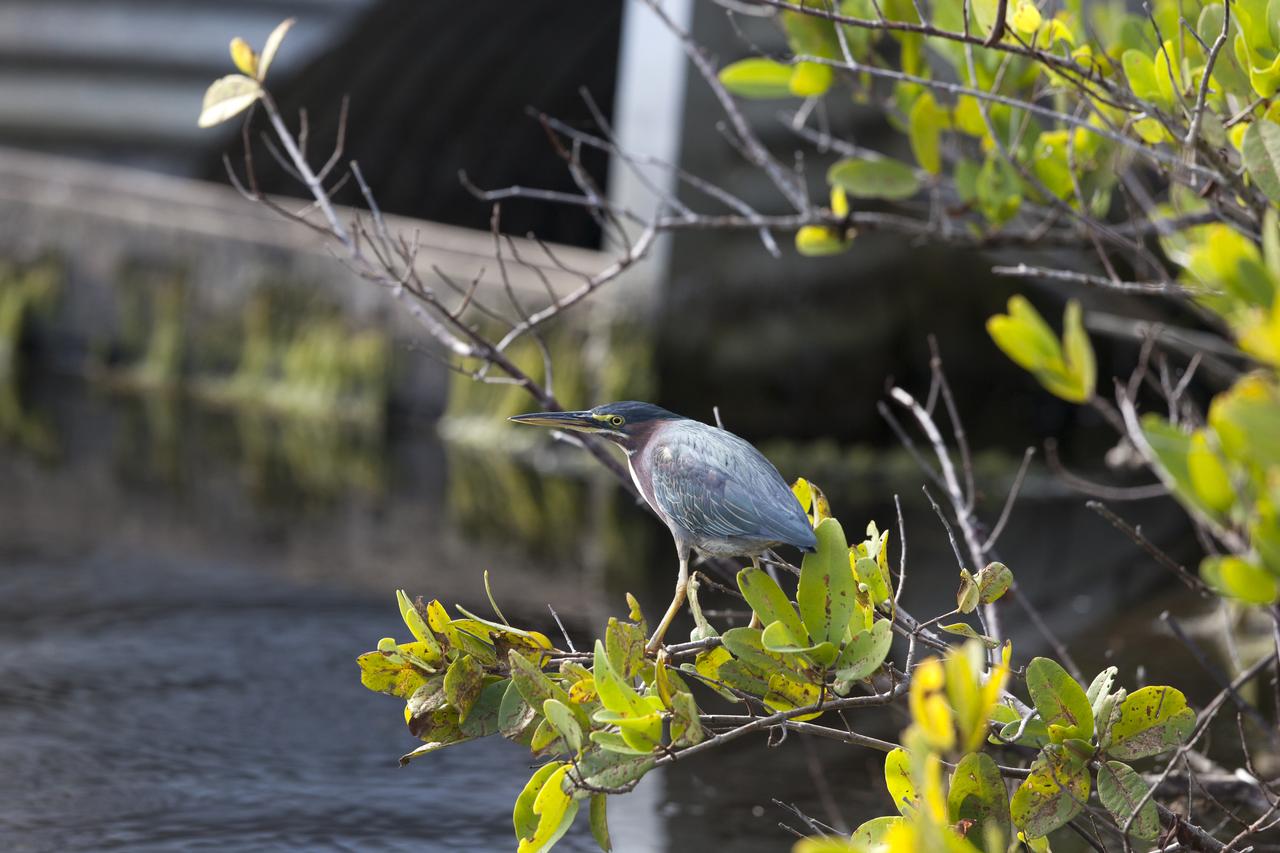
A little green heron is perched in a tree at NASA's Kennedy Space Center in Florida. Kennedy shares a boundary with the Merritt Island National Wildlife Refuge. The refuge encompasses 140,000 acres that are a habitat for more than 331 species of birds, 31 mammals, 117 fish, and 65 amphibians and reptiles. The marshes and open water of the refuge provide wintering areas for 23 species of migratory waterfowl, as well as a year-round home for great blue herons, great egrets, wood storks, cormorants, brown pelicans and other species of marsh and shore birds.

A red-shouldered hawk sits on a tree branch while snacking on a snake at NASA’s Kennedy Space Center in Florida. Kennedy shares a boundary with the Merritt Island National Wildlife Refuge. The Refuge encompasses 140,000 acres that are a habitat for more than 331 species of birds, 31 mammals, 117 fishes, and 65 amphibians and reptiles. The marshes and open water of the refuge provide wintering areas for 23 species of migratory waterfowl, as well as a year-round home for great blue herons, great egrets, wood storks, cormorants, brown pelicans and other species of marsh and shore birds, as well as a variety of insects.

A little green heron is perched in a tree at NASA's Kennedy Space Center in Florida. Kennedy shares a boundary with the Merritt Island National Wildlife Refuge. The refuge encompasses 140,000 acres that are a habitat for more than 331 species of birds, 31 mammals, 117 fish, and 65 amphibians and reptiles. The marshes and open water of the refuge provide wintering areas for 23 species of migratory waterfowl, as well as a year-round home for great blue herons, great egrets, wood storks, cormorants, brown pelicans and other species of marsh and shore birds.

A red-shouldered hawk sits on a tree branch while snacking on a snake at NASA’s Kennedy Space Center in Florida. Kennedy shares a boundary with the Merritt Island National Wildlife Refuge. The Refuge encompasses 140,000 acres that are a habitat for more than 331 species of birds, 31 mammals, 117 fishes, and 65 amphibians and reptiles. The marshes and open water of the refuge provide wintering areas for 23 species of migratory waterfowl, as well as a year-round home for great blue herons, great egrets, wood storks, cormorants, brown pelicans and other species of marsh and shore birds, as well as a variety of insects.

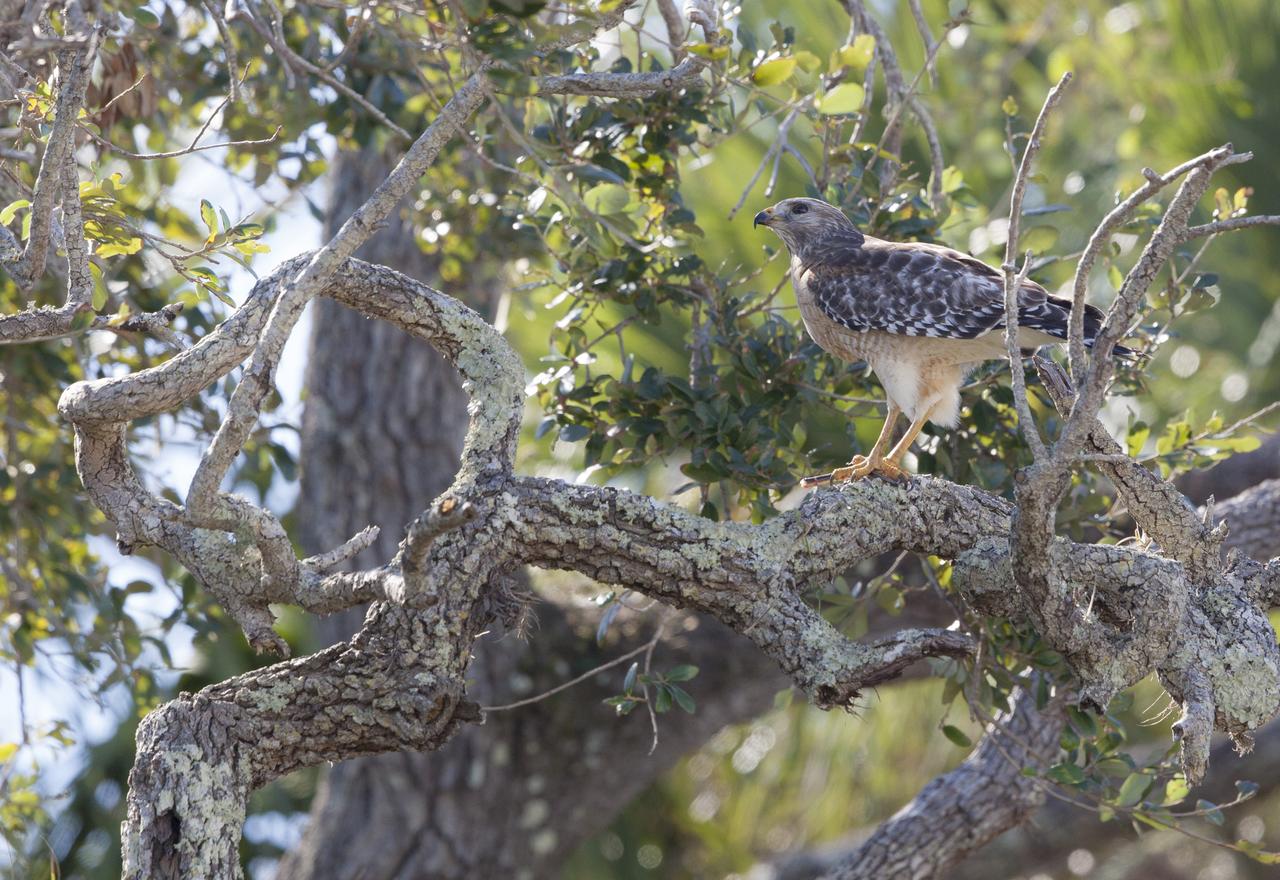
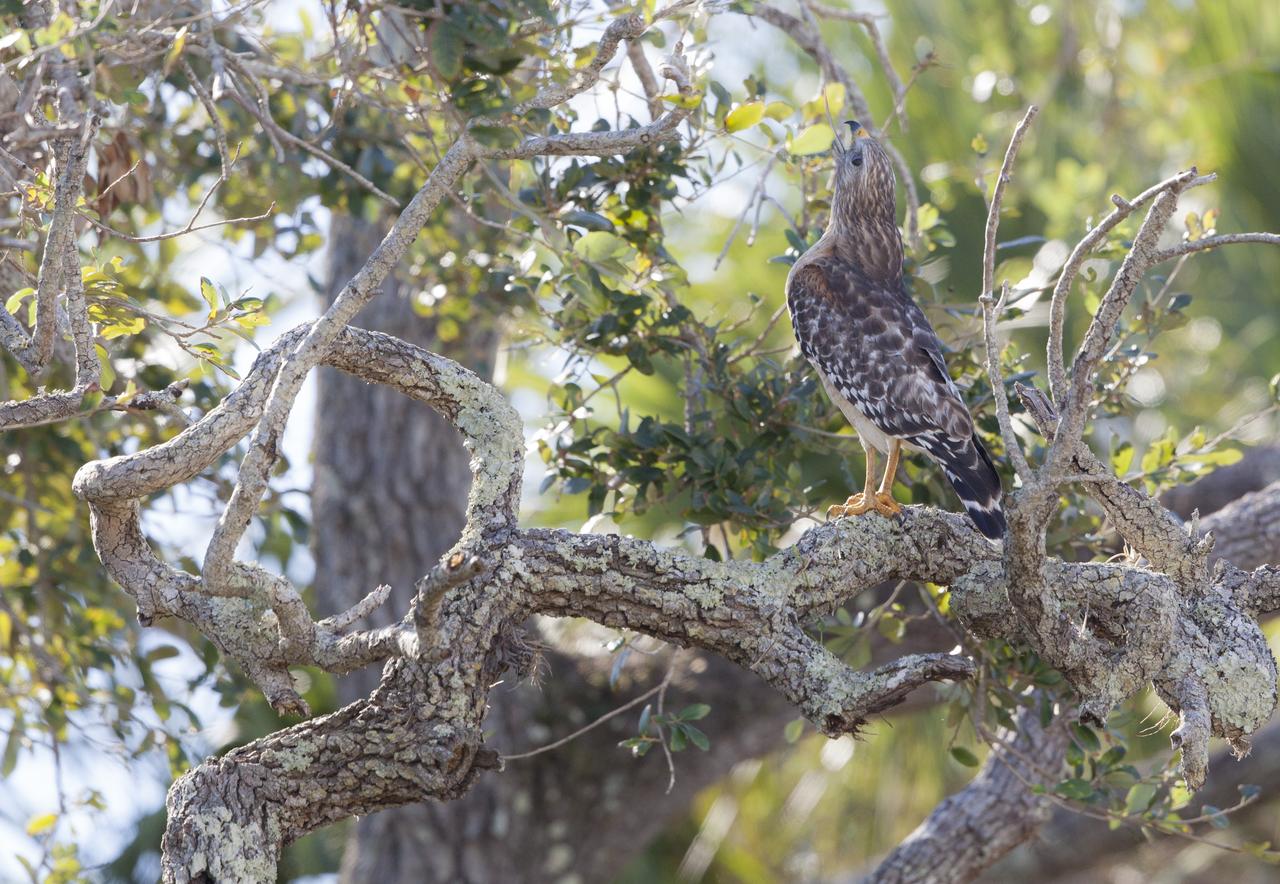
A red-shouldered hawk sits on a tree branch at NASA’s Kennedy Space Center in Florida. Kennedy shares a boundary with the Merritt Island National Wildlife Refuge. The Refuge encompasses 140,000 acres that are a habitat for more than 331 species of birds, 31 mammals, 117 fishes, and 65 amphibians and reptiles. The marshes and open water of the refuge provide wintering areas for 23 species of migratory waterfowl, as well as a year-round home for great blue herons, great egrets, wood storks, cormorants, brown pelicans and other species of marsh and shore birds, as well as a variety of insects.

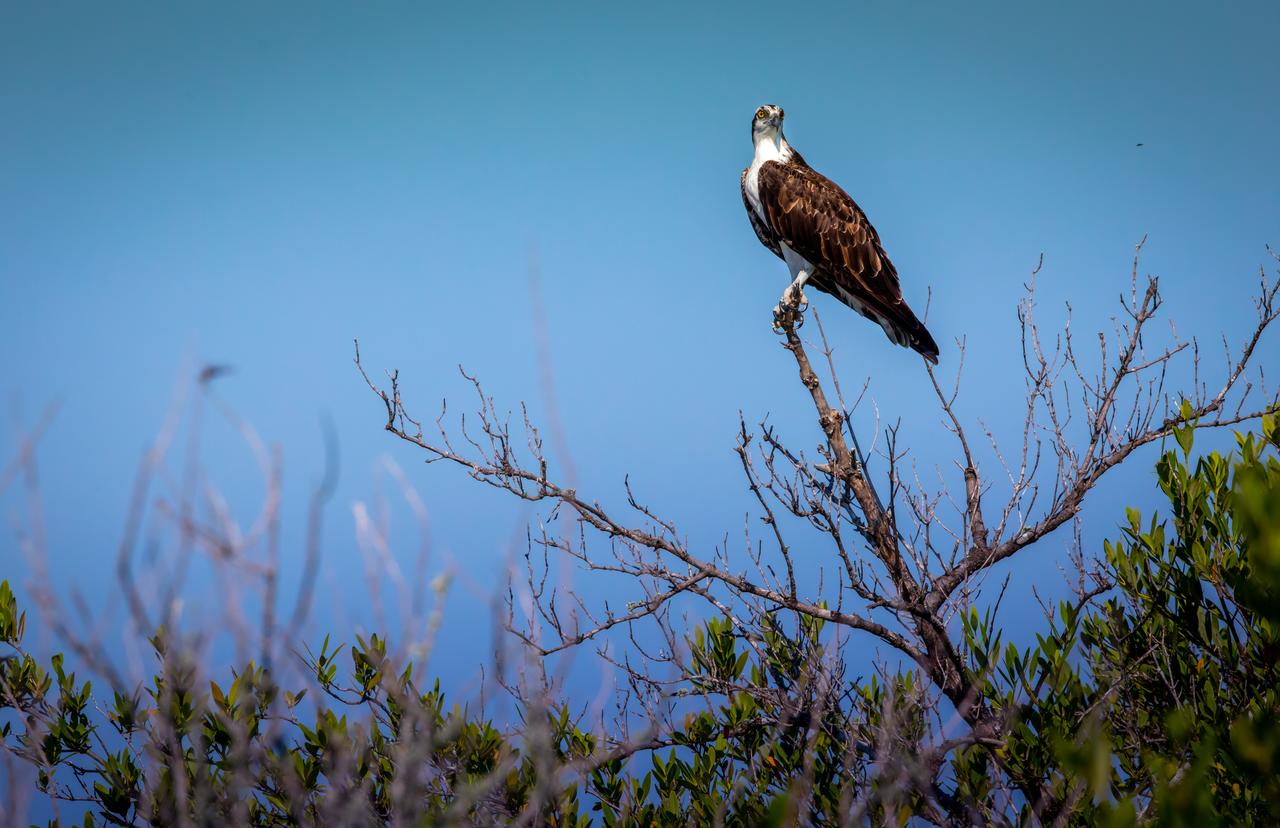
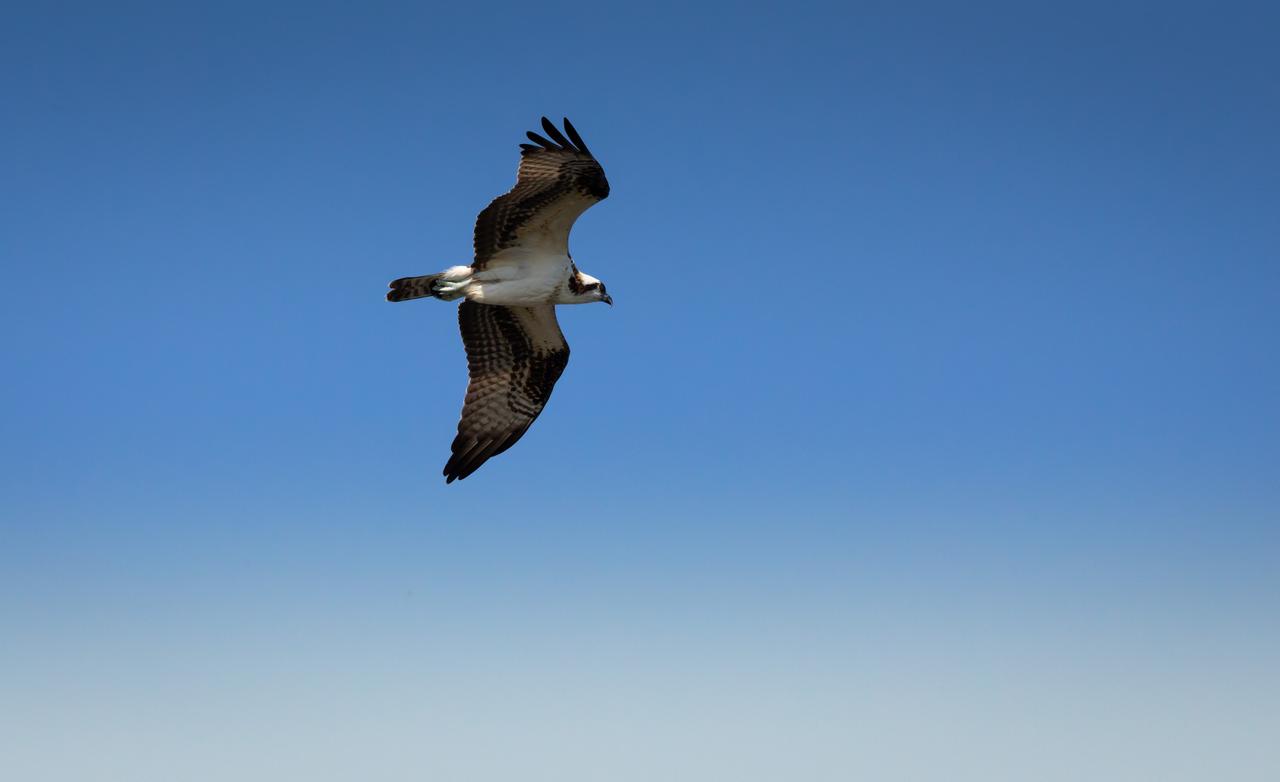
An osprey soars above NASA's Kennedy Space Center in Florida. The center shares a border with the Merritt Island National Wildlife Refuge. More than 330 native and migratory bird species, 25 mammal, 117 fish and 65 amphibian and reptile species call Kennedy and the wildlife refuge home.

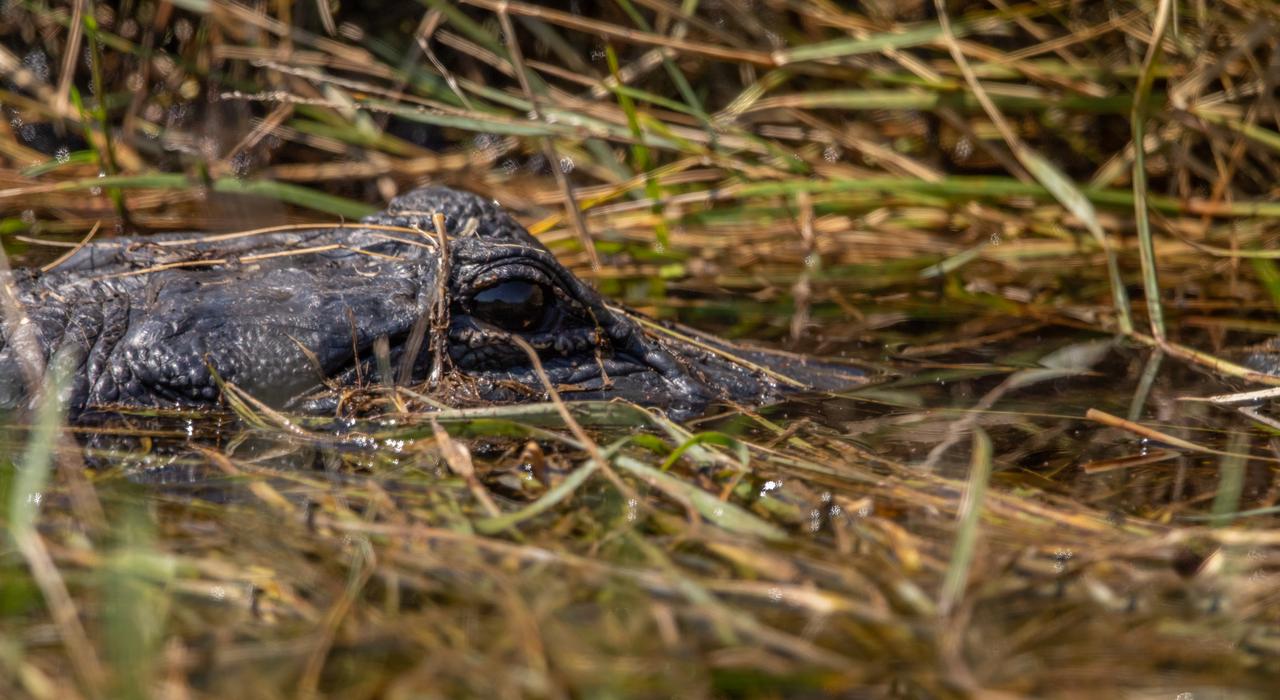
An alligator lurks in a marshy waterway at NASA's Kennedy Space Center in Florida. The center shares a border with the Merritt Island National Wildlife Refuge. More than 330 native and migratory bird species, 25 mammal, 117 fish and 65 amphibian and reptile species call Kennedy and the wildlife refuge home.

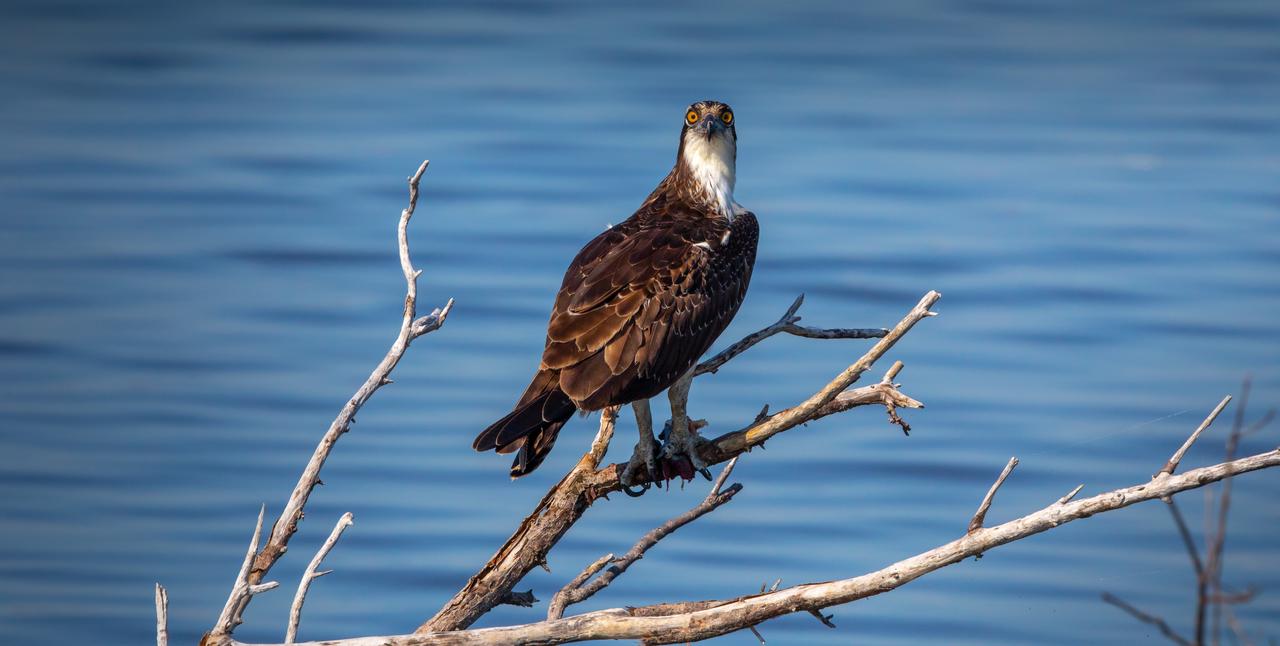
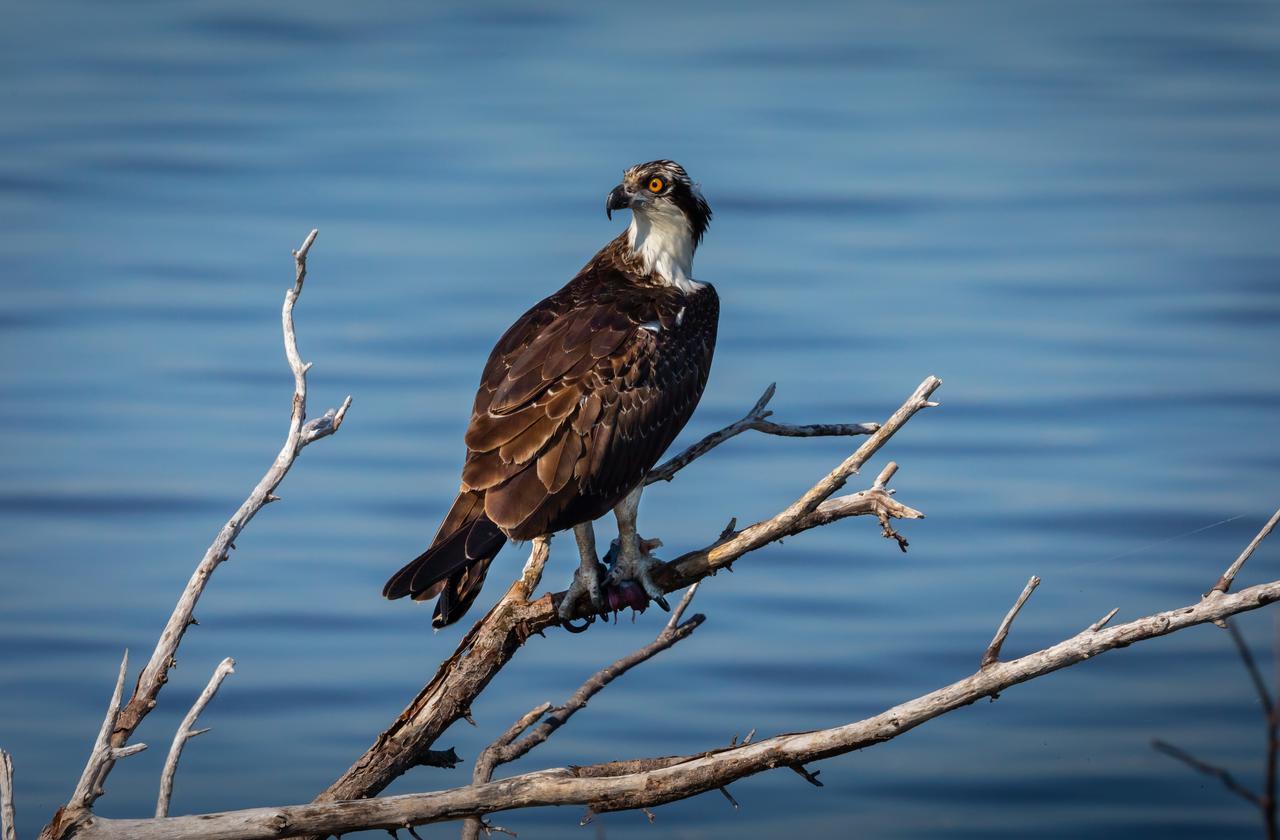
An osprey sits on a branch near a waterway at NASA's Kennedy Space Center in Florida. The center shares a border with the Merritt Island National Wildlife Refuge. More than 330 native and migratory bird species, 25 mammal, 117 fish and 65 amphibian and reptile species call Kennedy and the wildlife refuge home.

A Reddish Egret perches in a tree at NASA's Kennedy Space Center in Florida. The center shares a border with the Merritt Island National Wildlife Refuge. More than 330 native and migratory bird species, 25 mammal, 117 fish and 65 amphibian and reptile species call Kennedy and the wildlife refuge home.

A Reddish Egret perches in a tree near a waterway at NASA's Kennedy Space Center in Florida. The center shares a border with the Merritt Island National Wildlife Refuge. More than 330 native and migratory bird species, 25 mammal, 117 fish and 65 amphibian and reptile species call Kennedy and the wildlife refuge home.

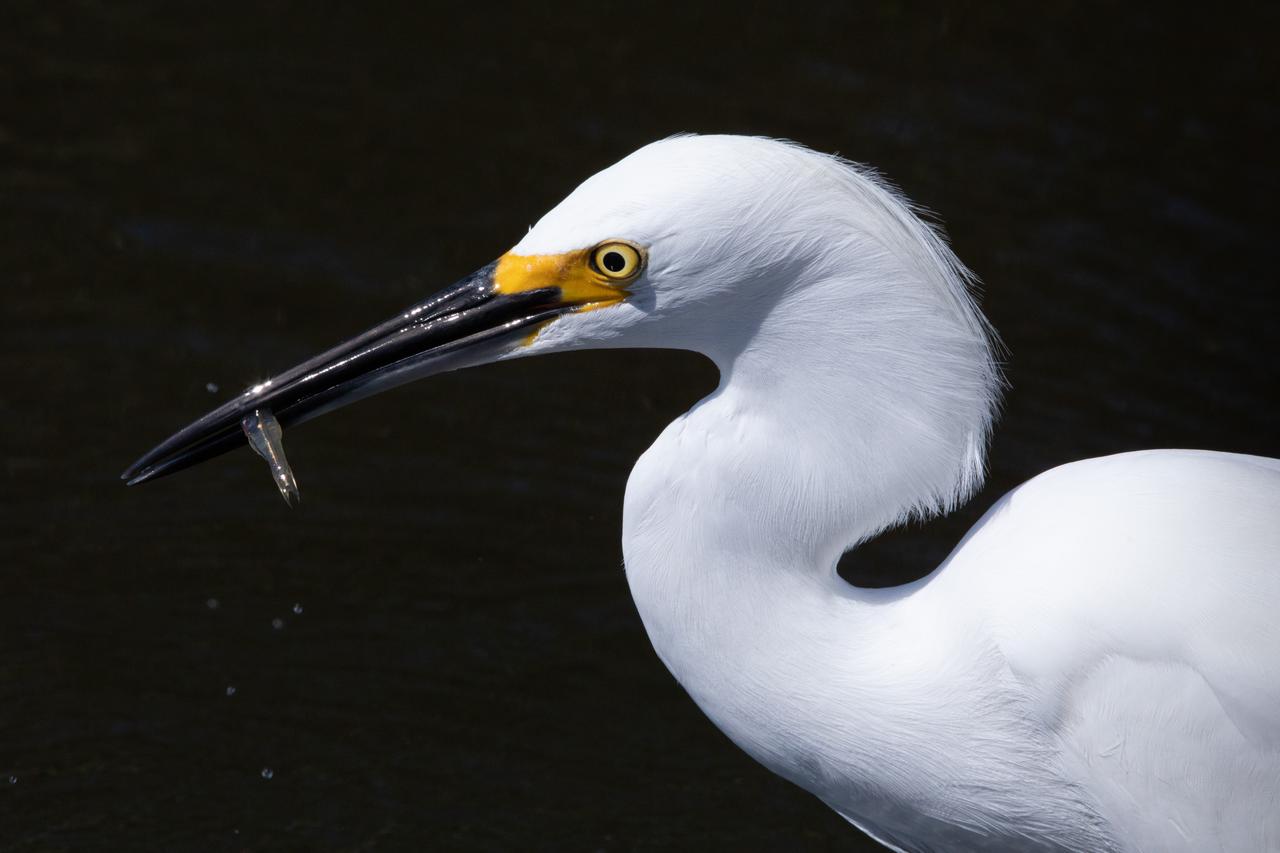
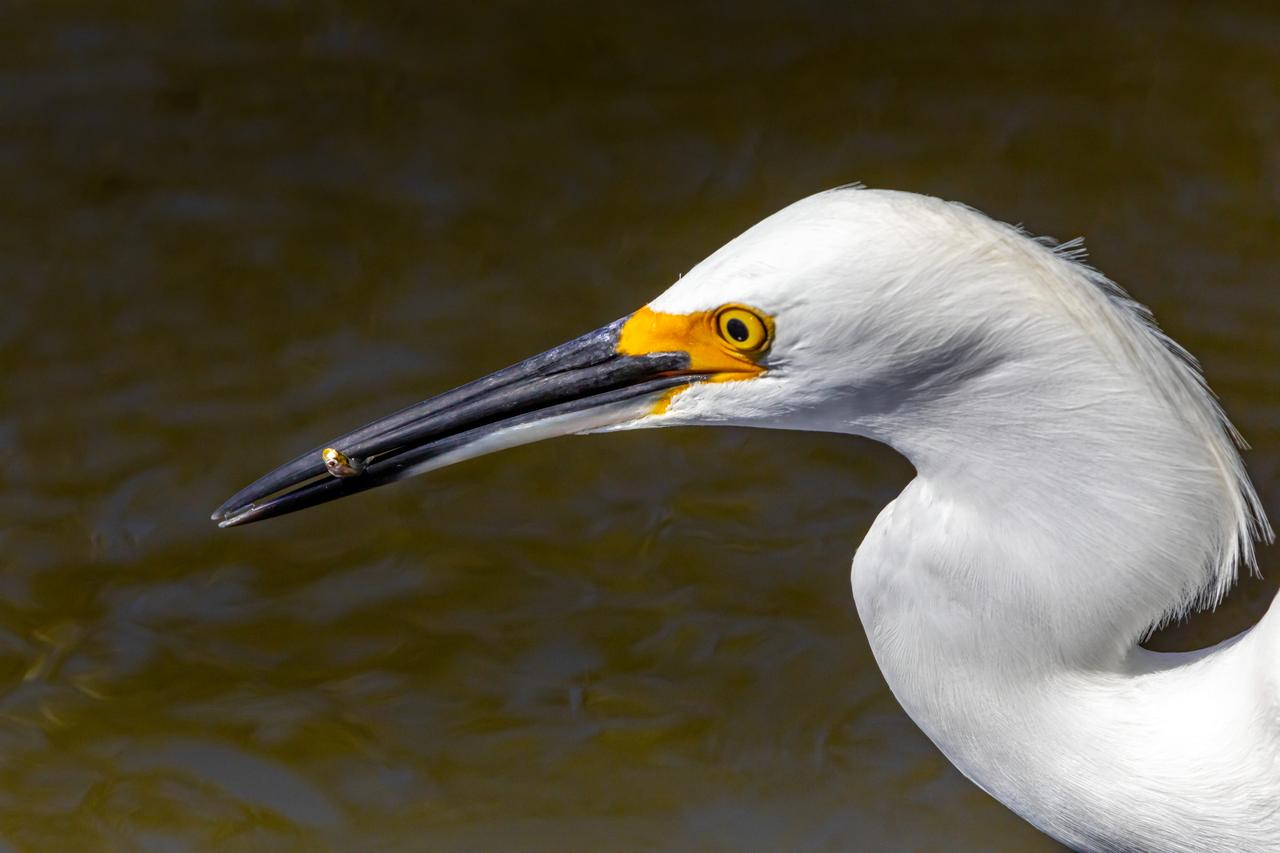
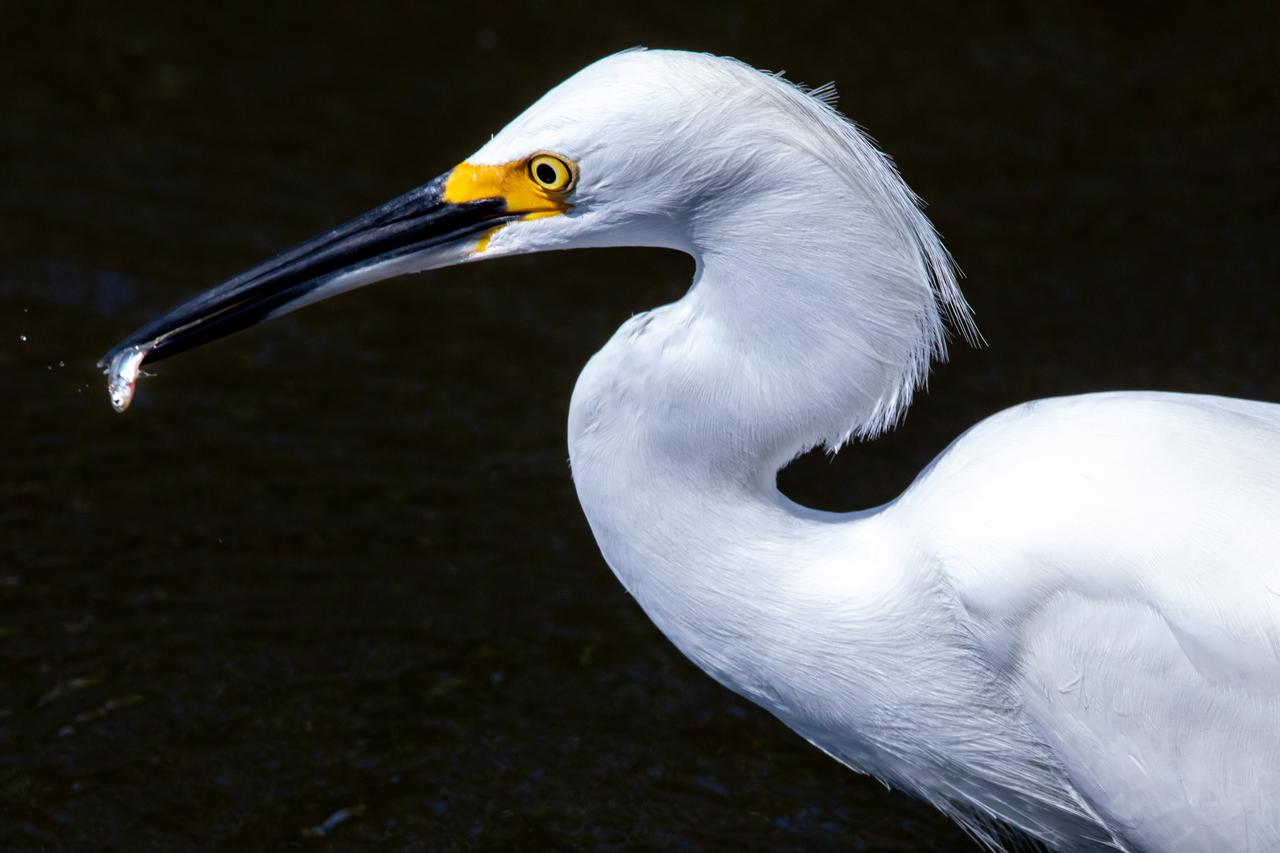
A Great Egret catches a small fish in a waterway at NASA's Kennedy Space Center in Florida. The center shares a border with the Merritt Island National Wildlife Refuge. More than 330 native and migratory bird species, 25 mammal, 117 fish and 65 amphibian and reptile species call Kennedy and the wildlife refuge home.

An osprey sits on a branch near a waterway at NASA's Kennedy Space Center in Florida. The center shares a border with the Merritt Island National Wildlife Refuge. More than 330 native and migratory bird species, 25 mammal, 117 fish and 65 amphibian and reptile species call Kennedy and the wildlife refuge home.

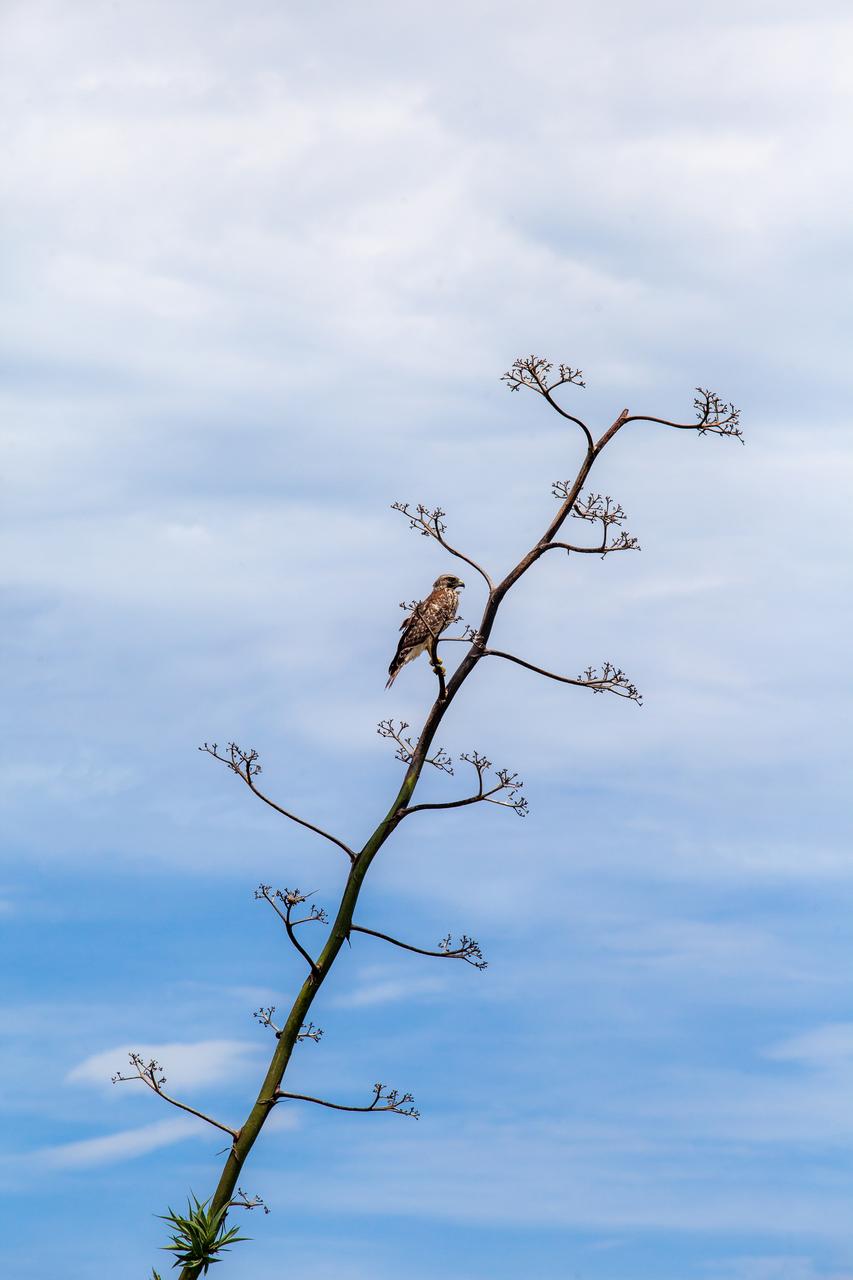
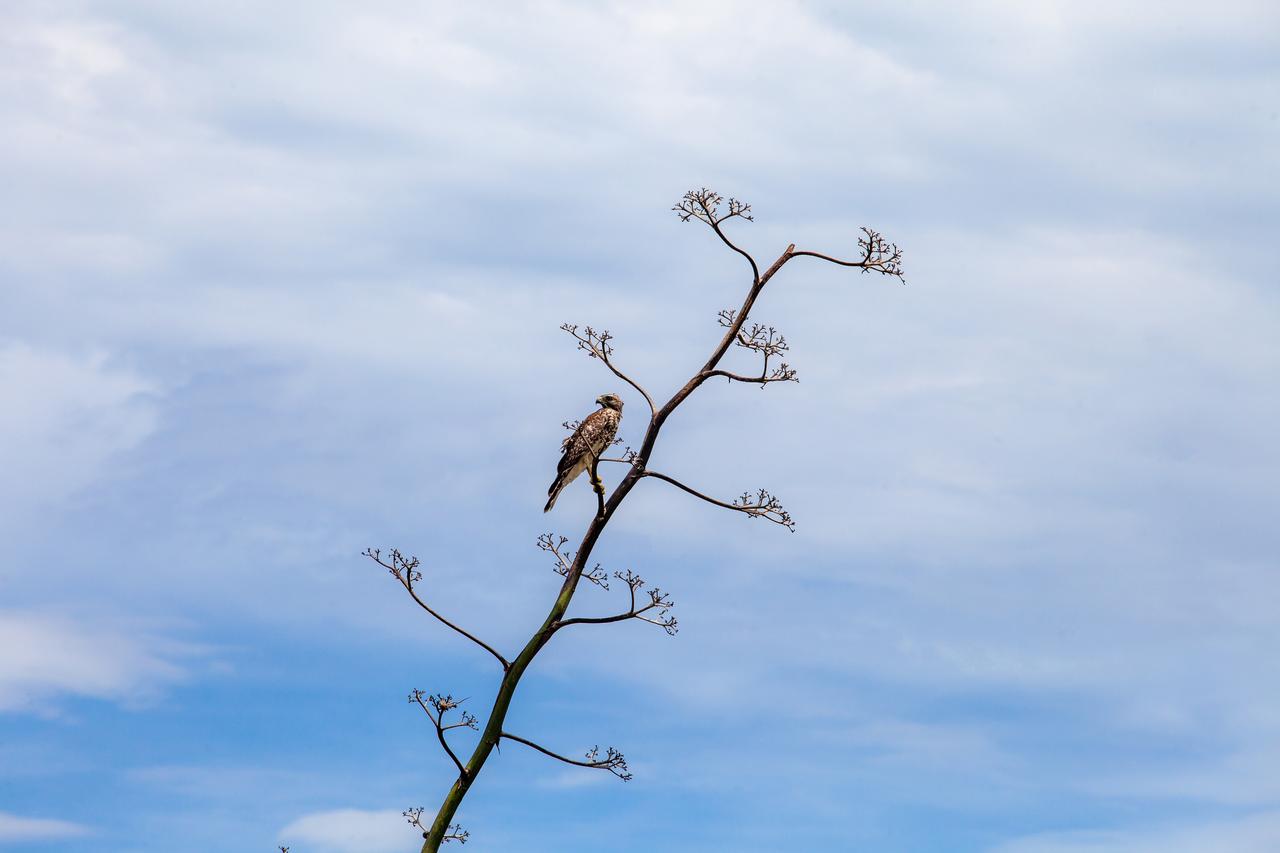
A hawk perches on a tree branch at NASA’s Kennedy Space Center in Florida. Kennedy shares a border with the Merritt Island National Wildlife Refuge, consisting of 140,000 acres of land, water and marshes. Within the refuge, many species of birds, reptiles, fish, amphibians and mammals can be found.

A Great Egret catches a small fish in a waterway at NASA's Kennedy Space Center in Florida. The center shares a border with the Merritt Island National Wildlife Refuge. More than 330 native and migratory bird species, 25 mammal, 117 fish and 65 amphibian and reptile species call Kennedy and the wildlife refuge home.

A Great Egret catches a small fish in a waterway at NASA's Kennedy Space Center in Florida. The center shares a border with the Merritt Island National Wildlife Refuge. More than 330 native and migratory bird species, 25 mammal, 117 fish and 65 amphibian and reptile species call Kennedy and the wildlife refuge home.

An osprey sits on a branch near a waterway at NASA's Kennedy Space Center in Florida. The center shares a border with the Merritt Island National Wildlife Refuge. More than 330 native and migratory bird species, 25 mammal, 117 fish and 65 amphibian and reptile species call Kennedy and the wildlife refuge home.

A hawk sits on a tree branch at NASA’s Kennedy Space Center in Florida. Kennedy shares a border with the Merritt Island National Wildlife Refuge, consisting of 140,000 acres of land, water and marshes. Within the refuge, many species of birds, reptiles, fish, amphibians and mammals can be found.

A Great Egret catches a small fish in a waterway at NASA's Kennedy Space Center in Florida. The center shares a border with the Merritt Island National Wildlife Refuge. More than 330 native and migratory bird species, 25 mammal, 117 fish and 65 amphibian and reptile species call Kennedy and the wildlife refuge home.

A Great Egret is in a waterway at NASA's Kennedy Space Center in Florida. The center shares a border with the Merritt Island National Wildlife Refuge. More than 330 native and migratory bird species, 25 mammal, 117 fish and 65 amphibian and reptile species call Kennedy and the wildlife refuge home.

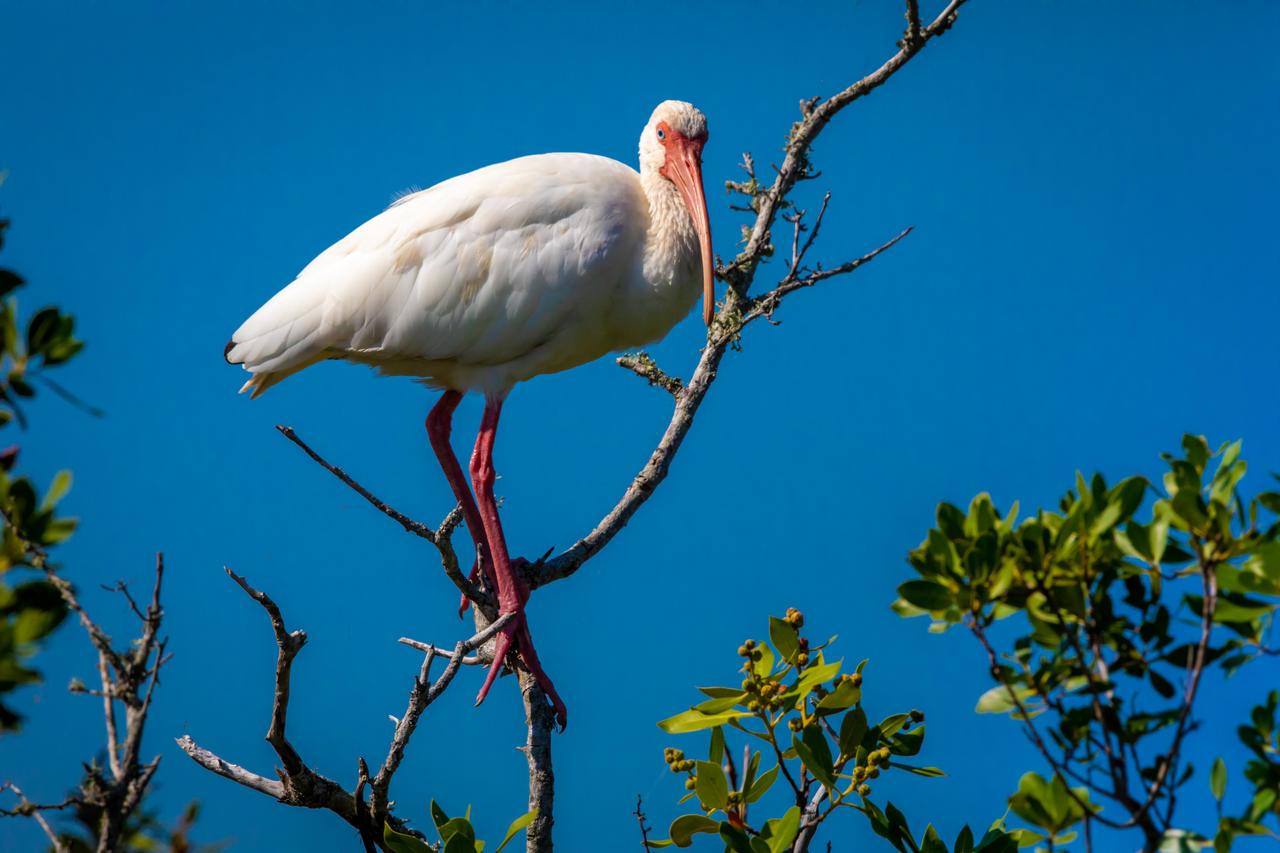
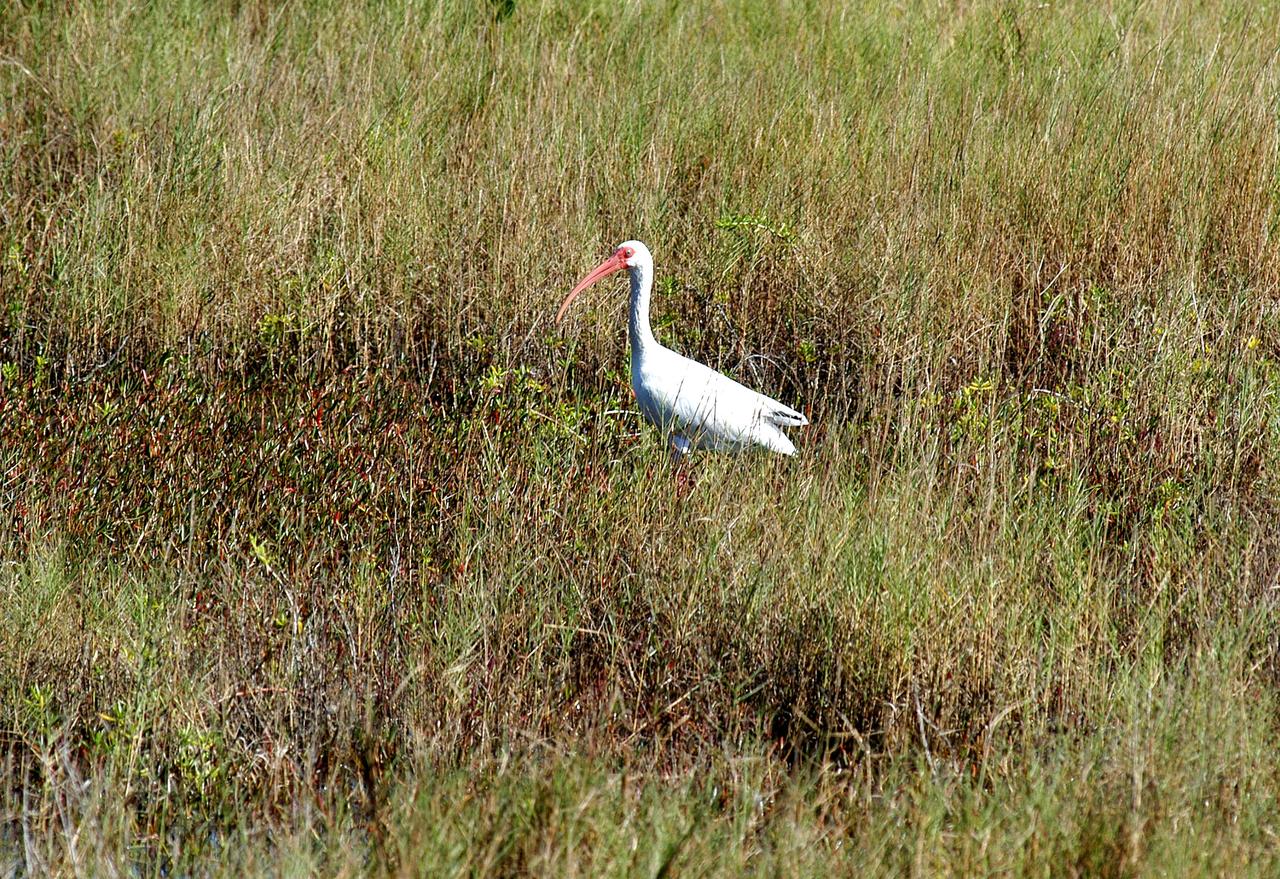
A White Ibis perches on the branch of a tree at NASA's Kennedy Space Center in Florida. The center shares a border with the Merritt Island National Wildlife Refuge. More than 330 native and migratory bird species, 25 mammal, 117 fish and 65 amphibian and reptile species call Kennedy and the wildlife refuge home.

Two baby eagles perch in a nest in a tree along State Road 3 at NASA's Kennedy Space Center in Florida. The center shares a border with the 140,000-acre Merritt Island National Wildlife Refuge. More than 330 native and migratory bird species, 25 mammals, 117 fishes and 65 amphibians and reptiles call Kennedy and the wildlife refuge home.

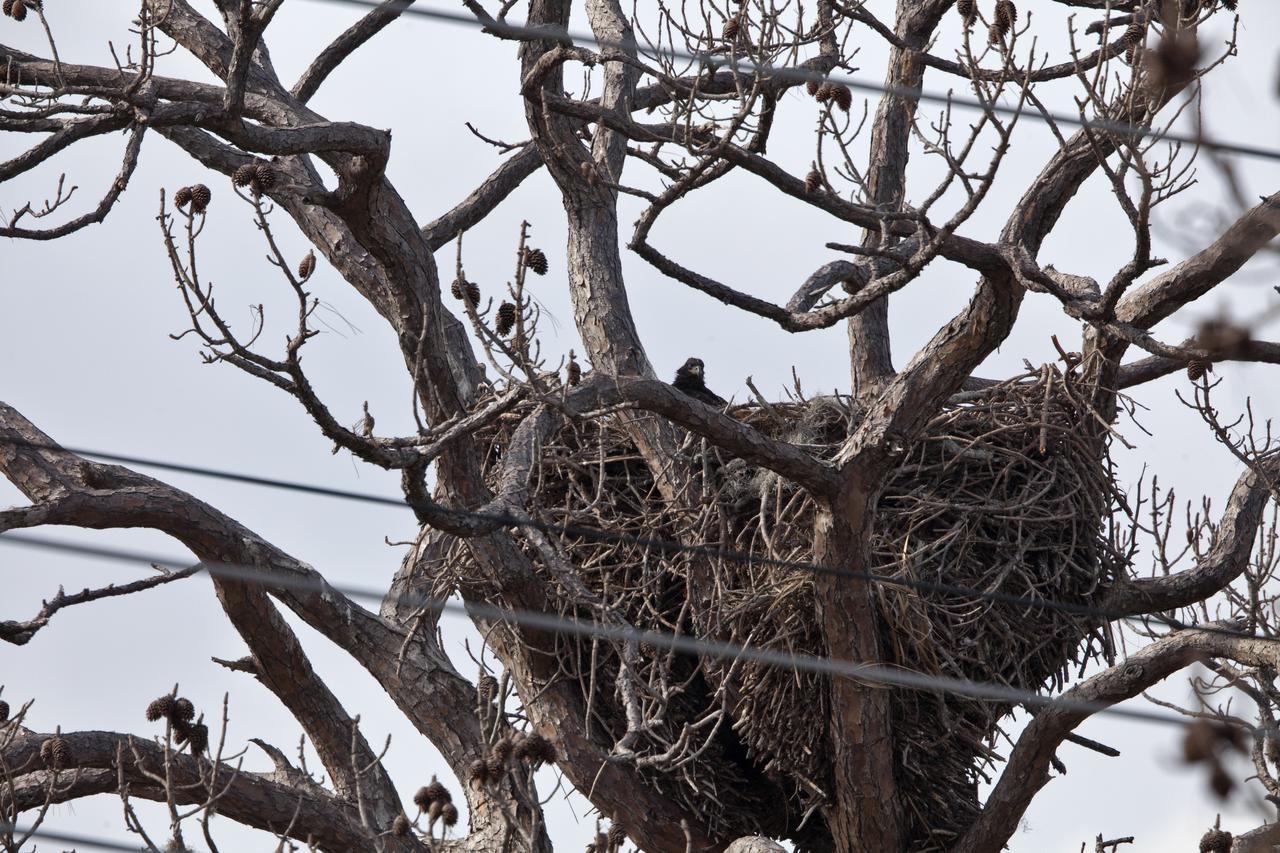
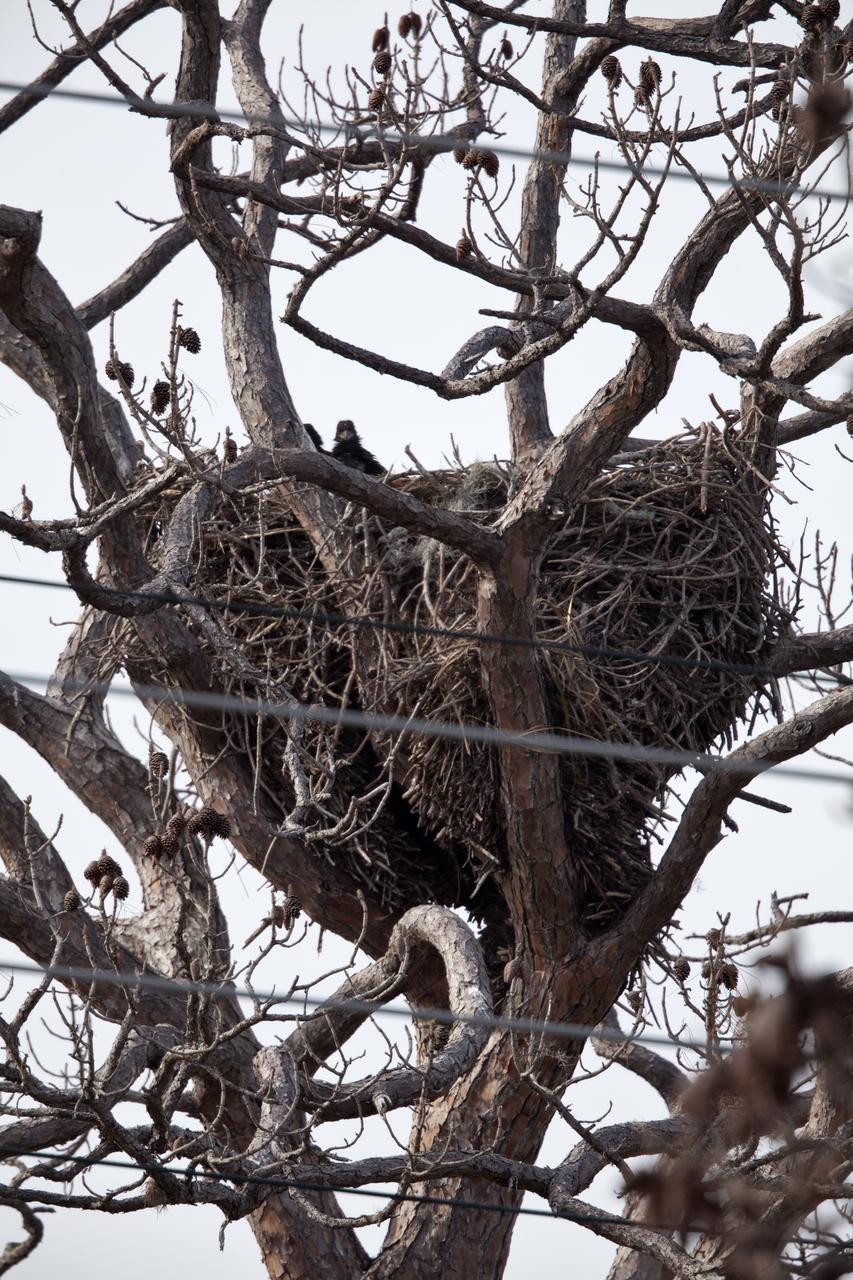
A baby eagle perches in a nest in a tree along State Road 3 at NASA's Kennedy Space Center in Florida. The center shares a border with the 140,000-acre Merritt Island National Wildlife Refuge. More than 330 native and migratory bird species, 25 mammals, 117 fishes and 65 amphibians and reptiles call Kennedy and the wildlife refuge home.

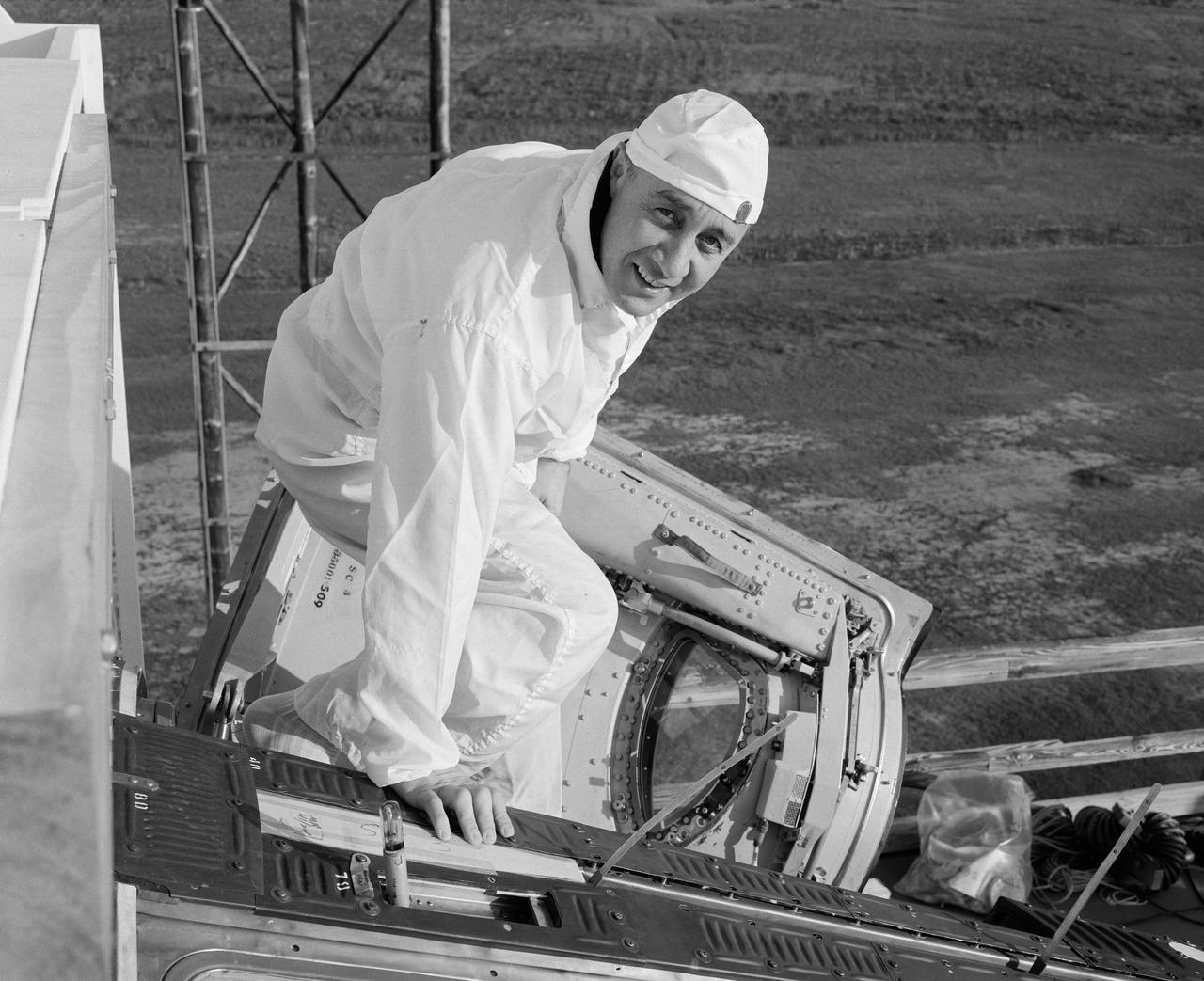
S65-13243 (6 Jan. 1965) --- Astronaut Virgil I. Grissom, Gemini-Titan 3 command pilot, is shown entering the Gemini-3 spacecraft for a communications test at the Merritt Island launch area.

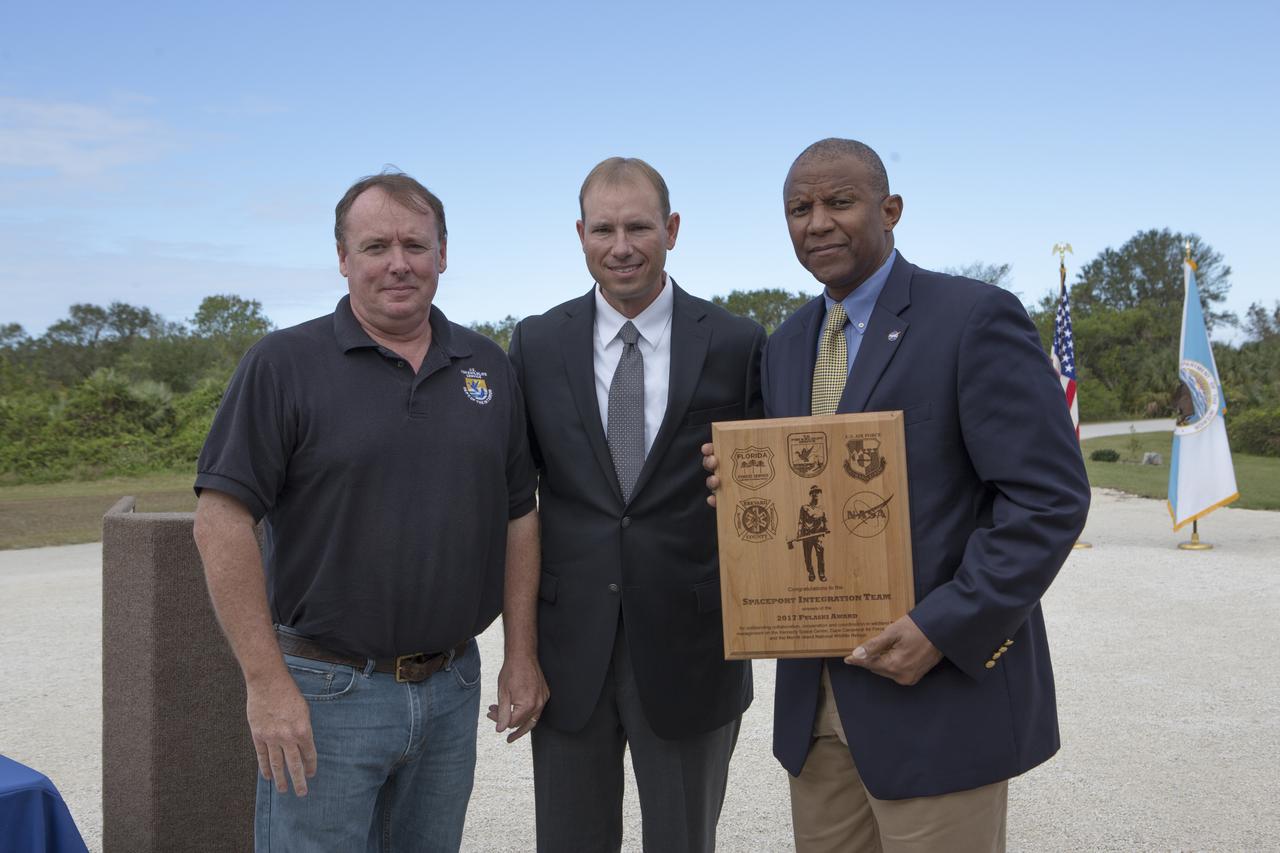
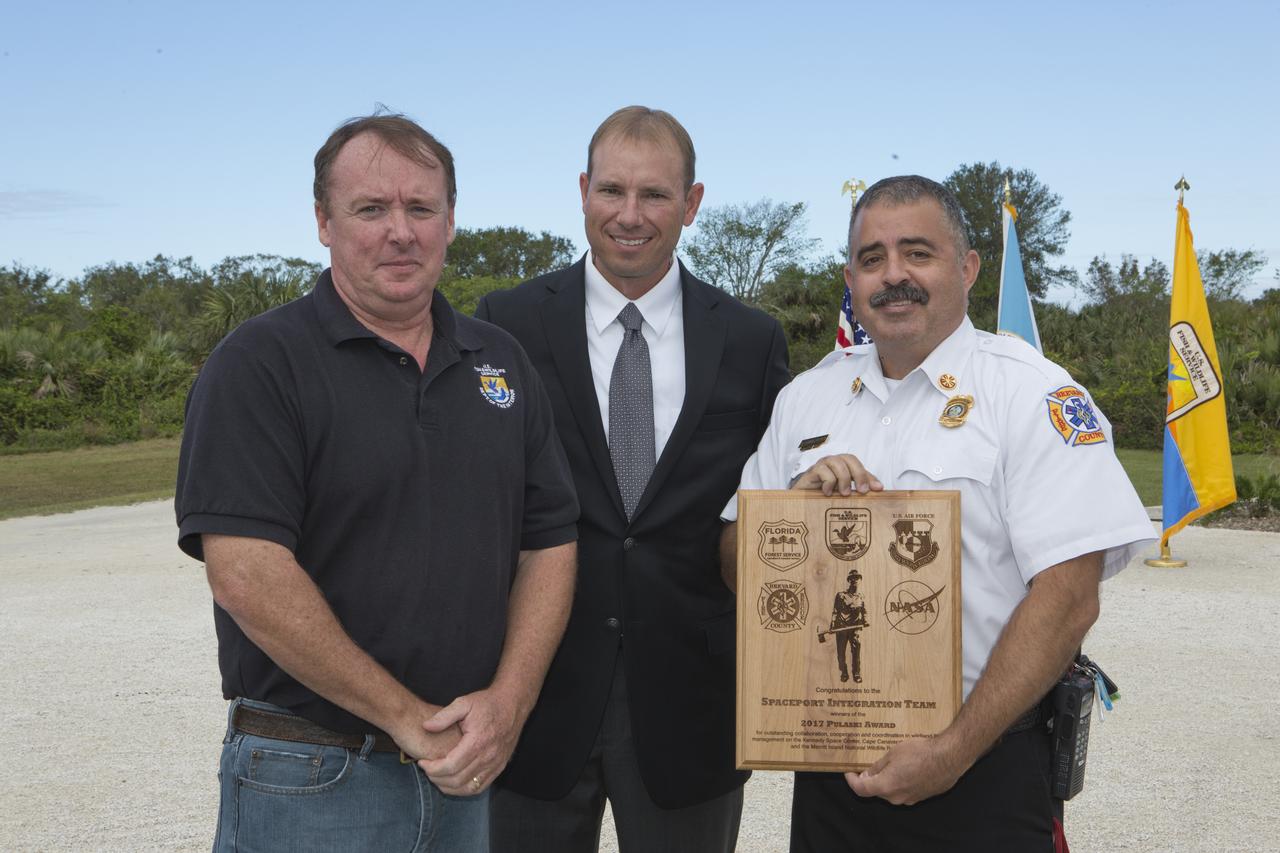
From left, Jon Wallace, deputy fire coordinator, U.S. Fish and Wildlife Service Southeast Region, Atlanta, Georgia; Chris Wilcox, U.S. Fish and Wildlife chief, Fire Management, National Interagency Fire Center, Boise, Idaho; and Kelvin Manning, associate director, NASA's Kennedy Space Center, pose for a portrait following a ceremony Nov. 1 on the Merritt Island National Wildlife Refuge in Florida. During the joint ceremony, the Spaceport Integration Team and its partners were presented with the prestigious 2017 Pulaski Award and a new memorial marker was dedicated. The multi-agency team includes representatives from NASA's Kennedy Space Center, Cape Canaveral Air Force Station's 45th Space Wing, the Merritt Island National Wildlife Refuge, as well as the Florida Forest Service and Brevard County Fire Rescue. The memorial marker honors two fallen firefighters, Scott Maness and Beau Sauselein, who died fighting a wildfire on space center property in 1981. Held outdoors, the ceremony was attended by 140 guests.
From left, Jon Wallace, deputy fire coordinator, U.S. Fish and Wildlife Service Southeast Region, Atlanta, Georgia; Chris Wilcox, U.S. Fish and Wildlife chief, Fire Management, National Interagency Fire Center, Boise, Idaho; and John Fish, chief, Florida Forest Service, pose for a portrait following a ceremony Nov. 1 on the Merritt Island National Wildlife Refuge in Florida. During the joint ceremony, the Spaceport Integration Team and its partners were presented with the prestigious 2017 Pulaski Award and a new memorial marker was dedicated. The multi-agency team includes representatives from NASA's Kennedy Space Center, Cape Canaveral Air Force Station's 45th Space Wing, the Merritt Island National Wildlife Refuge, as well as the Florida Forest Service and Brevard County Fire Rescue. The memorial marker honors two fallen firefighters, Scott Maness and Beau Sauselein, who died fighting a wildfire on space center property in 1981. Held outdoors, the ceremony was attended by 140 guests.
NASA's Kennedy Space Center Associate Director Kelvin Manning, left, and representatives from Kennedy's Spaceport Integration and Services pose for a portrait following a ceremony Nov. 1 on the Merritt Island National Wildlife Refuge in Florida. Next to Manning are, from left, Nancy Bray, director; William Heidtman, Spaceport Integrator; Dan Tweed, deputy director, Technical; and Jean Flowers, chief, Customer Services and Integration Branch. During the joint ceremony, the Spaceport Integration Team and its partners were presented with the prestigious 2017 Pulaski Award and a new memorial marker was dedicated. The multi-agency team includes representatives from NASA's Kennedy Space Center, Cape Canaveral Air Force Station's 45th Space Wing, the Merritt Island National Wildlife Refuge, as well as the Florida Forest Service and Brevard County Fire Rescue. The memorial marker honors two fallen firefighters, Scott Maness and Beau Sauselein, who died fighting a wildfire on space center property in 1981. Held outdoors, the ceremony was attended by 140 guests.
From left, Jon Wallace, deputy fire coordinator, U.S. Fish and Wildlife Service Southeast Region, Atlanta, Georgia; Chris Wilcox, U.S. Fish and Wildlife chief, Fire Management, National Interagency Fire Center, Boise, Idaho; and Mark Schollmeyer, chief, Brevard County Fire Rescue, pose for a portrait following a ceremony Nov. 1 on the Merritt Island National Wildlife Refuge in Florida. During the joint ceremony, the Spaceport Integration Team and its partners were presented with the prestigious 2017 Pulaski Award and a new memorial marker was dedicated. The multi-agency team includes representatives from NASA's Kennedy Space Center, Cape Canaveral Air Force Station's 45th Space Wing, the Merritt Island National Wildlife Refuge, as well as the Florida Forest Service and Brevard County Fire Rescue. The memorial marker honors two fallen firefighters, Scott Maness and Beau Sauselein, who died fighting a wildfire on space center property in 1981. Held outdoors, the ceremony was attended by 140 guests.
In this lunar eclipse viewed from Merritt Island, Fla., at 11:55 p.m., the full moon takes on a dark red color because it is being lighted slightly by sunlight passing through the Earth's atmosphere. This light has the blue component preferentially scattered out (this is also why the sky appears blue from the surface of the Earth), leaving faint reddish light to illuminate the Moon during the eclipse. Eclipses occur when the Sun, Earth and Moon line up. They are rare because the Moon usually passes above or below the imaginary line connecting Earth and the Sun. The Earth casts a shadow that the Moon can pass through -when it does, it is called a lunar eclipse

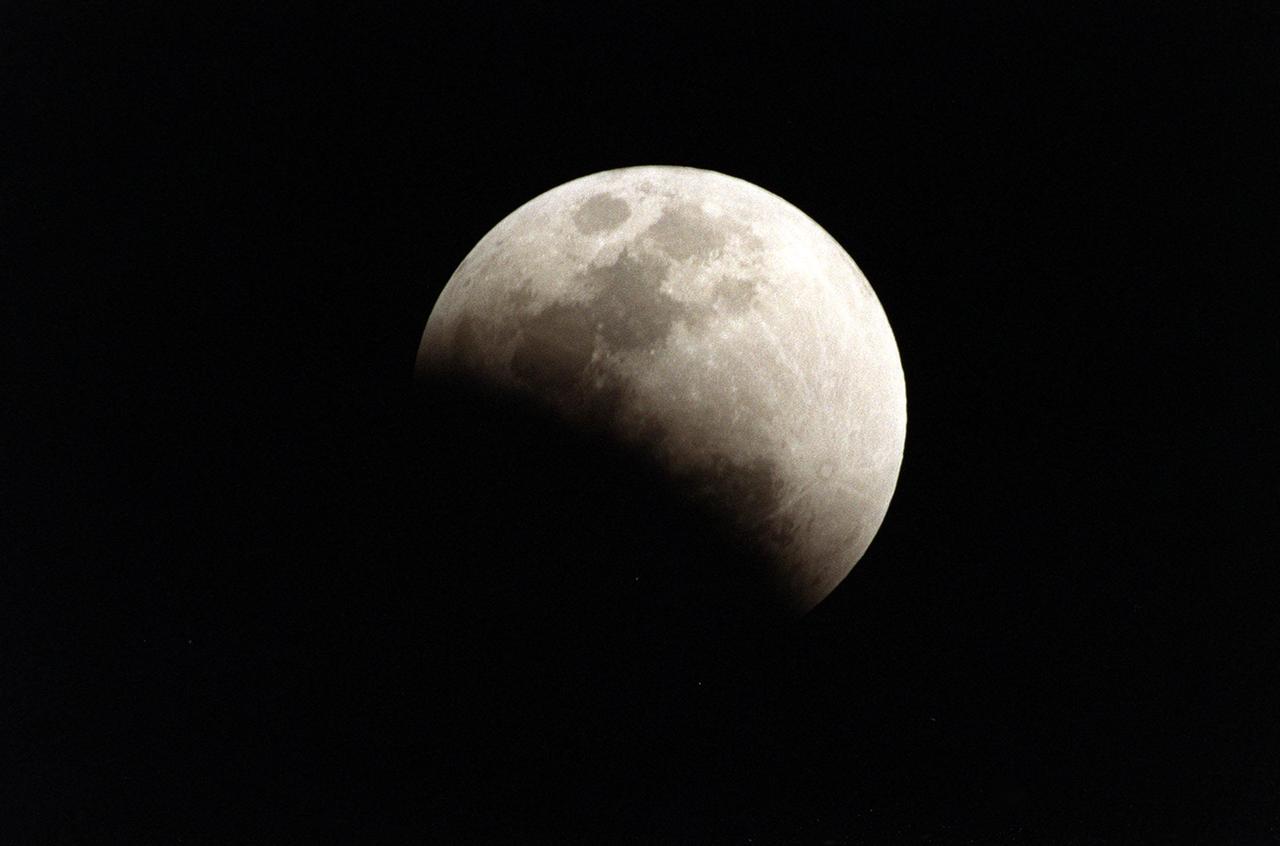
In this lunar eclipse viewed from Merritt Island, Fla., the full moon takes on a dark red color because it is being lighted slightly by sunlight passing through the Earth's atmosphere. This light has the blue component preferentially scattered out (this is also why the sky appears blue from the surface of the Earth), leaving faint reddish light to illuminate the Moon. Eclipses occur when the Sun, Earth and Moon line up. They are rare because the Moon usually passes above or below the imaginary line connecting Earth and the Sun. The Earth casts a shadow that the Moon can pass through - when it does, it is called a lunar eclipse.

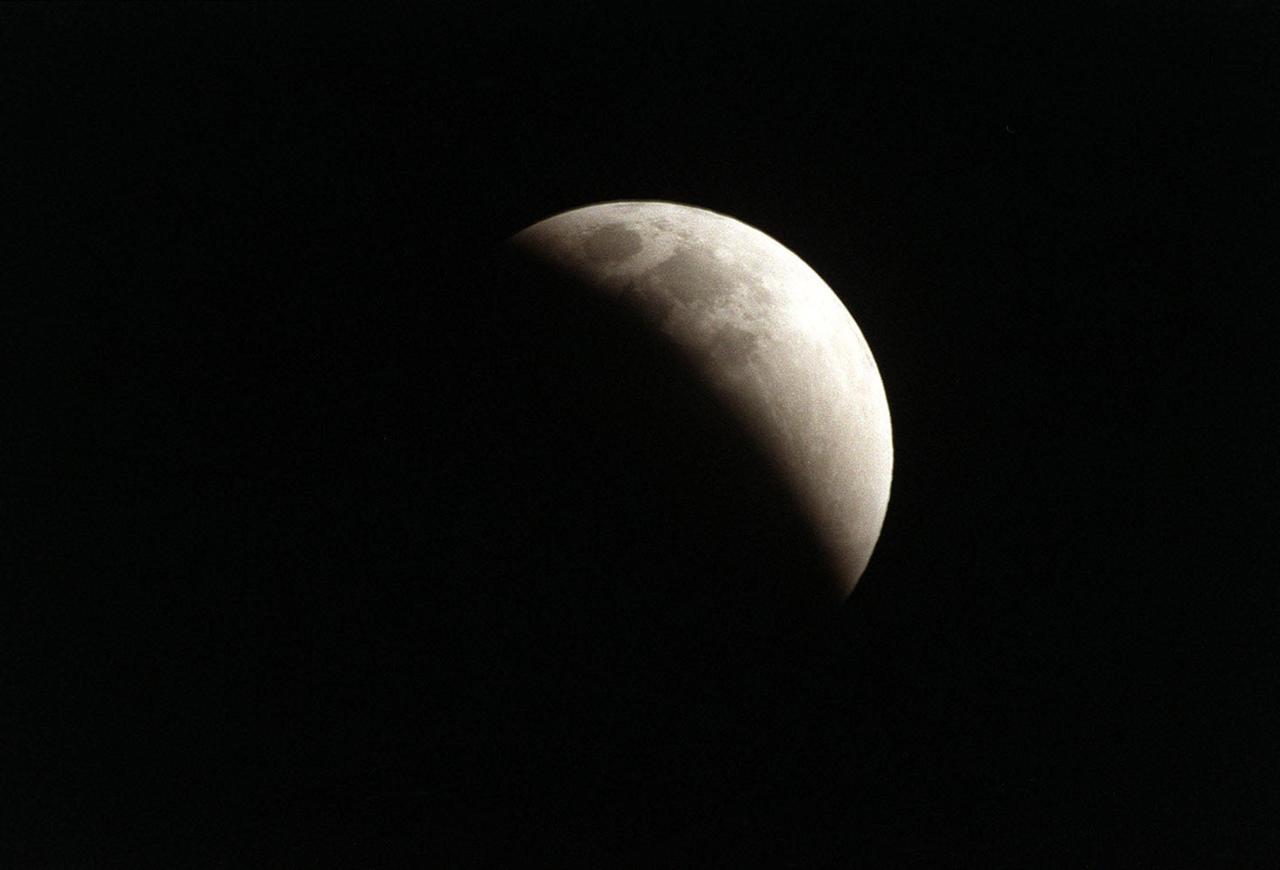
In this lunar eclipse viewed from Merritt Island, Fla., at midnight, the full moon takes on a dark red color because it is being lighted slightly by sunlight passing through the Earth's atmosphere. This light has the blue component preferentially scattered out (this is also why the sky appears blue from the surface of the Earth), leaving faint reddish light to illuminate the Moon during the eclipse. Eclipses occur when the Sun, Earth and Moon line up. They are rare because the Moon usually passes above or below the imaginary line connecting Earth and the Sun. The Earth casts a shadow that the Moon can pass through -when it does, it is called a lunar eclipse

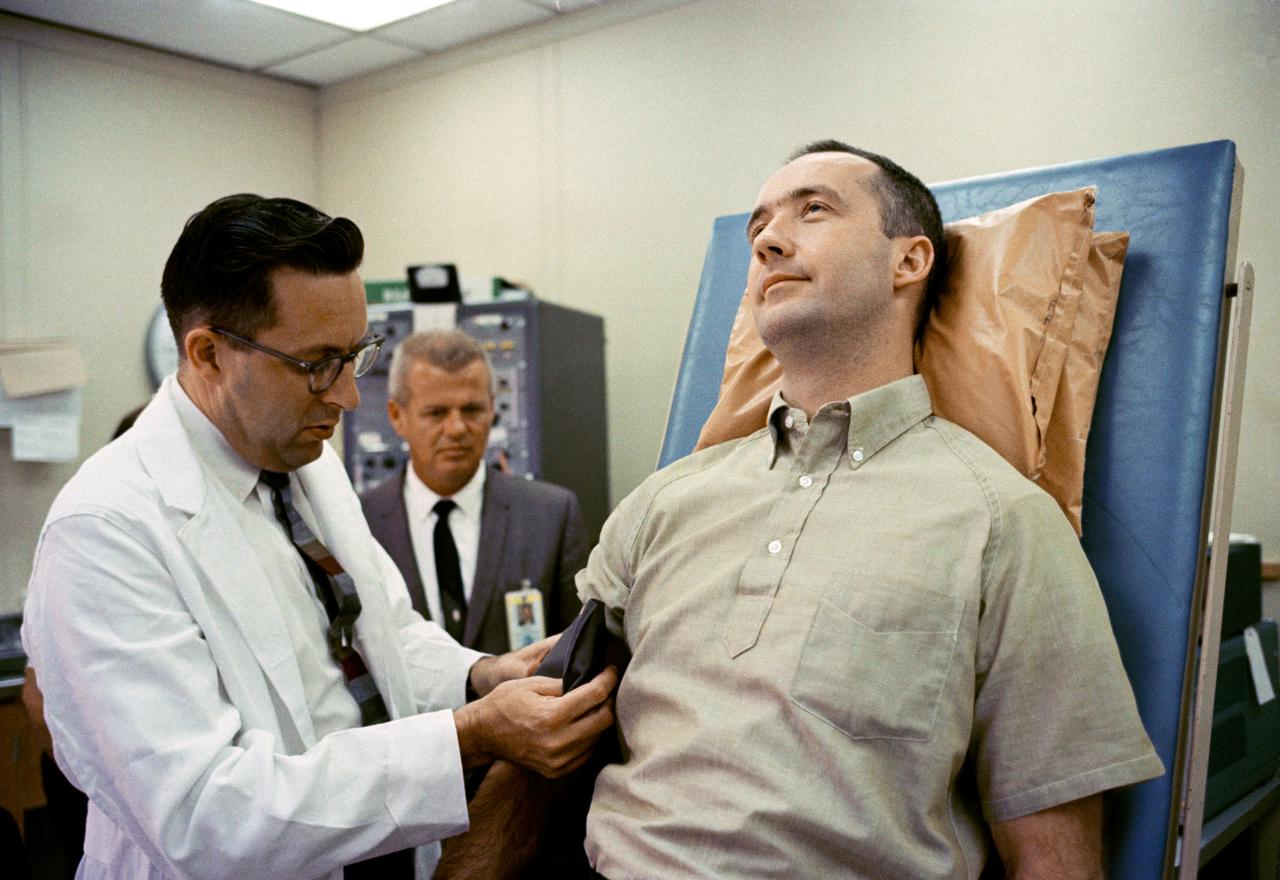
S65-19524 (1 June 1965) --- Dr. Charles A. Berry, chief of Center Medical Programs, MSC, Houston, Texas, prepares to check the blood pressure of astronaut James A. McDivitt, command pilot for the Gemini-Titan 4 spaceflight. McDivitt is on the tilt table at the Aero Medical Area, MSC, Merritt Island, where he and astronaut Edward H. White II (out of frame), GT-4 pilot, underwent preflight physicals in preparation for the four-day, 62-revolution spaceflight. The two astronauts were declared in top physical condition. In the background is Dr. Gordon Benson, NASA physician at Cape Kennedy.

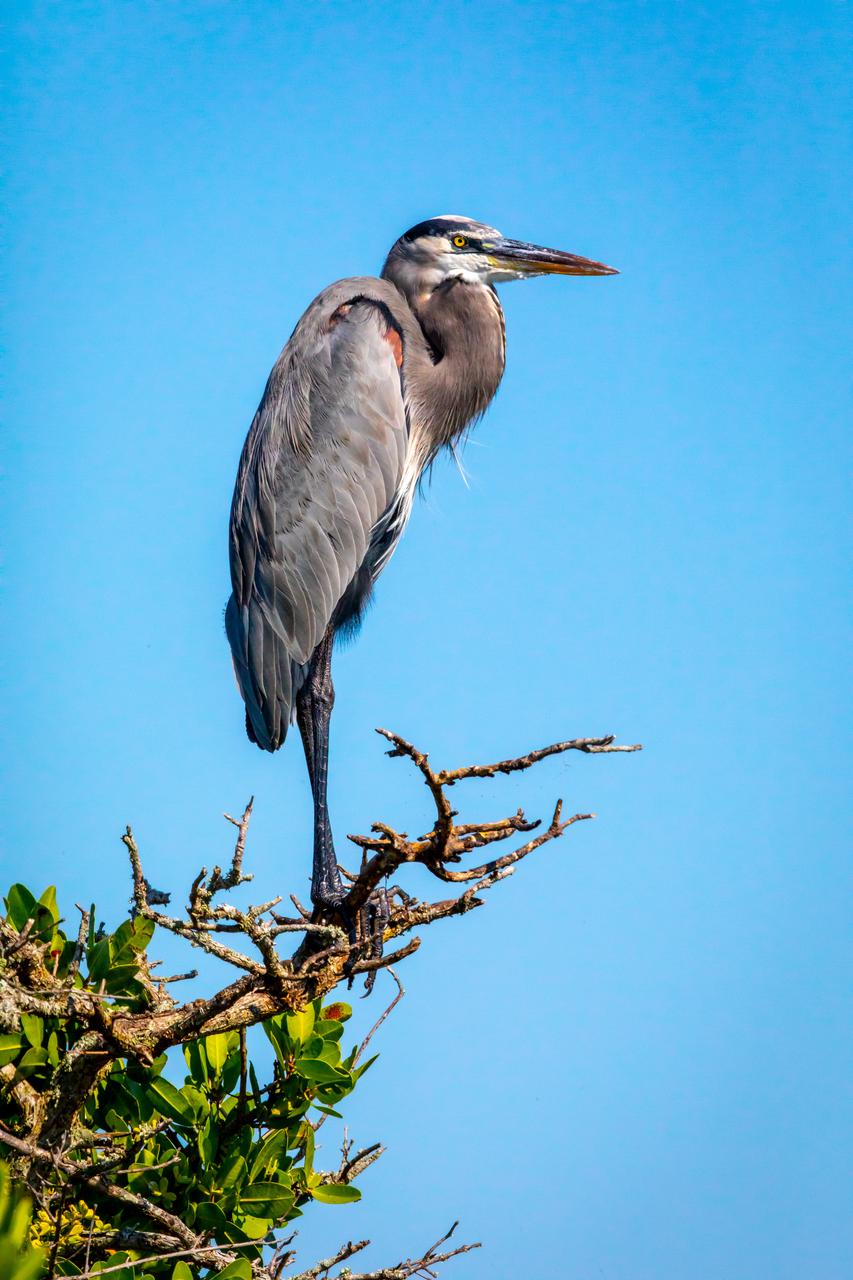
A young Great Blue Heron balances perfectly on the branch of a tree at NASA's Kennedy Space Center in Florida. The center shares a border with the Merritt Island National Wildlife Refuge. More than 330 native and migratory bird species, along 25 mammal, 117 fish and 65 amphibian and reptile species call Kennedy and the wildlife refuge home.

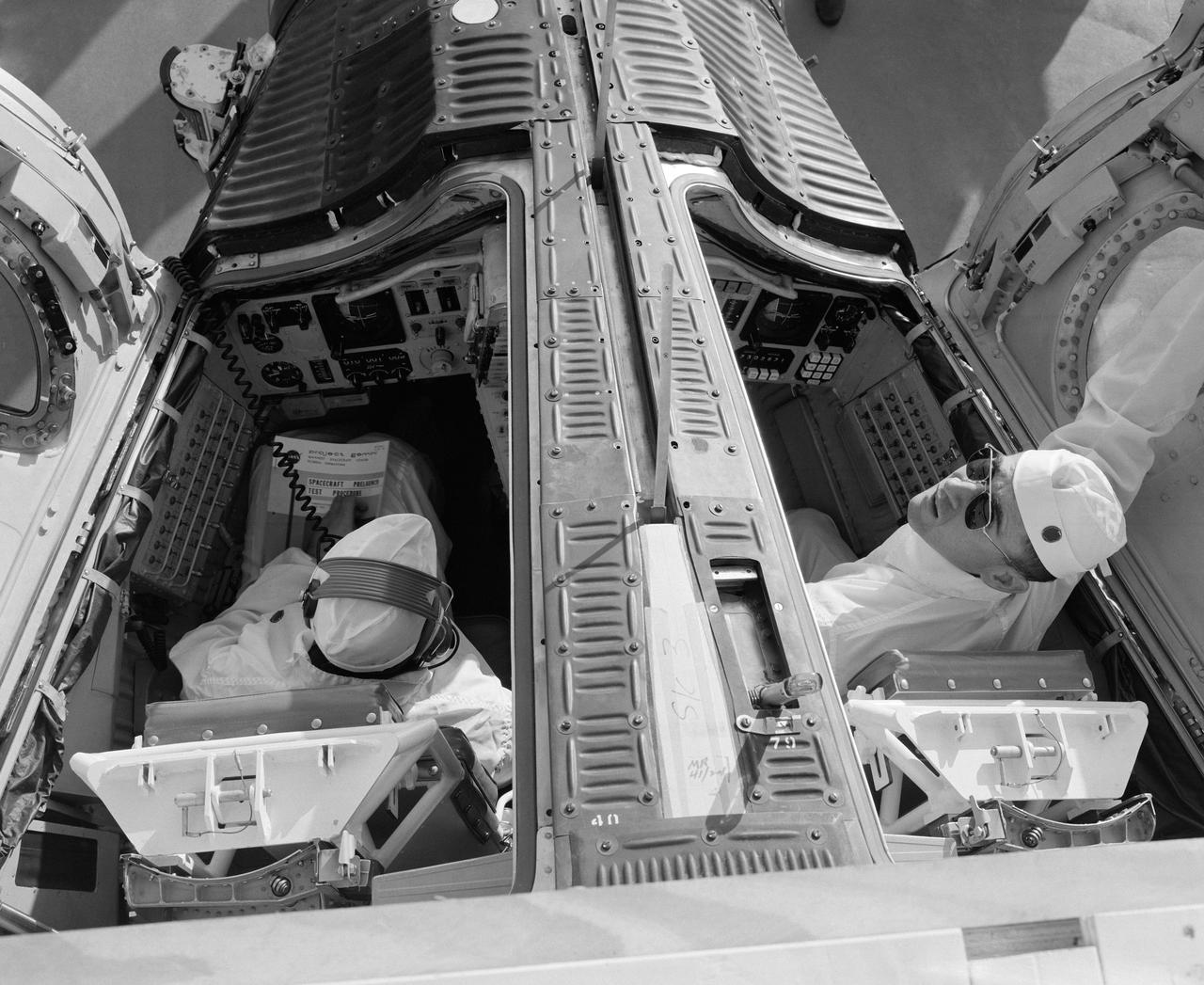
S65-13244 (6 Jan. 1965) --- The Gemini-Titan 3 prime crew, astronauts Virgil I. Grissom (left) and John W. Young, are shown in the Gemini-3 spacecraft during a communications test at the Merritt Island launch area.

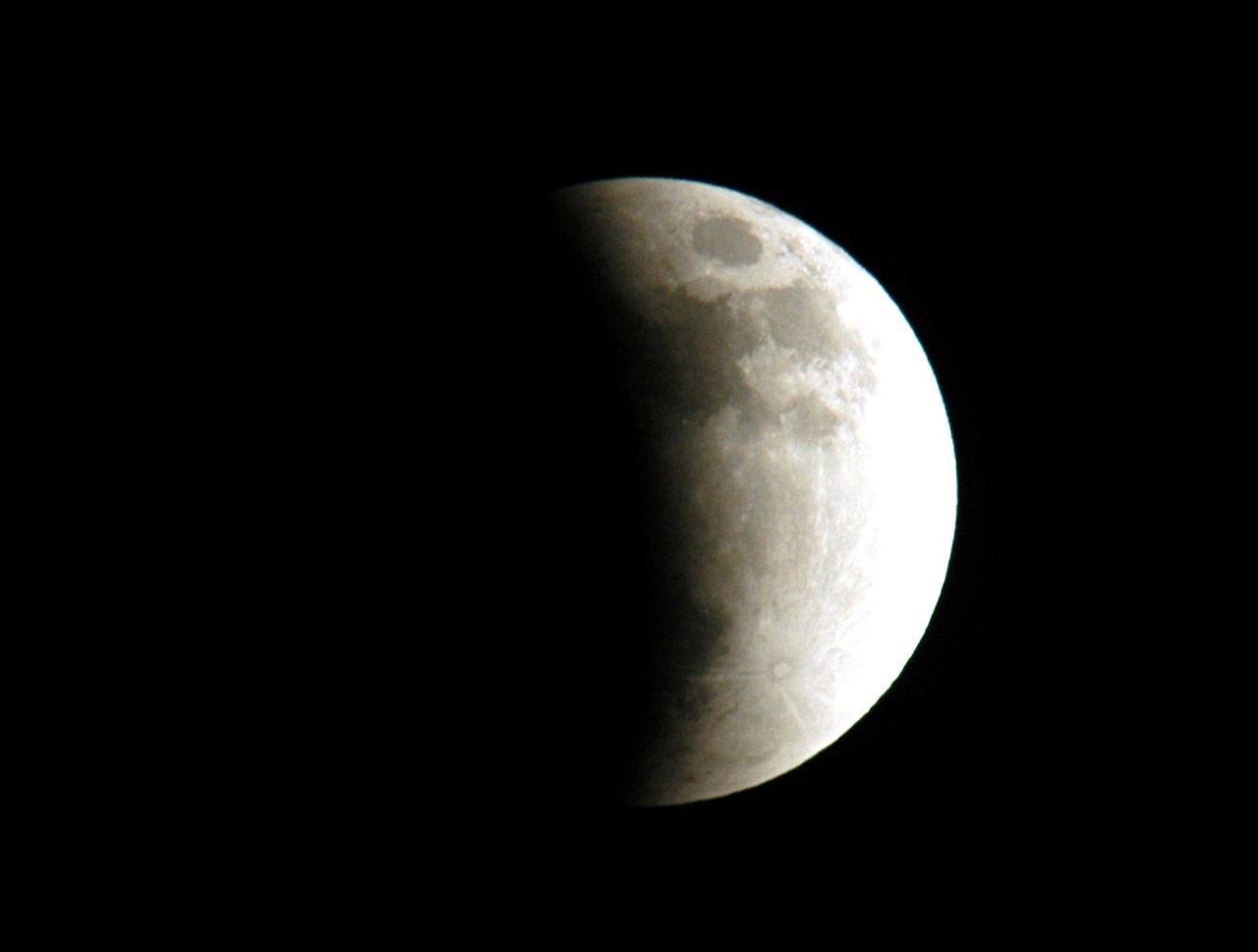
Viewed from Merritt Island, Fla., at 10:59 p.m. EST, the full moon, traveling west to east, is three-quarters of the way into the Earth's shadow during a lunar eclipse. Eclipses occur when the Sun, Earth and Moon line up. They are rare because the Moon usually passes above or below the imaginary line connecting Earth and the Sun. The Earth casts a shadow that the Moon can pass through -when it does, it is called a lunar eclipse. They can only occur when the moon is "full." During a total lunar eclipse the Moon takes on a dark red color because it is being lighted slightly by sunlight passing through the Earth's atmosphere and this light has the blue component preferentially scattered out (this is also why the sky appears blue from the surface of the Earth), leaving faint reddish light to illuminate the Moon during the eclipse

Viewed from Merritt Island, Fla., at 11:25 p.m. EST, the full moon, traveling west to east, is nearly completely in the Earth's shadow, producing a lunar eclipse. Eclipses occur when the Sun, Earth and Moon line up. They are rare because the Moon usually passes above or below the imaginary line connecting Earth and the Sun. The Earth casts a shadow that the Moon can pass through -when it does, it is called a lunar eclipse. They can only occur when the moon is "full." During a total lunar eclipse the Moon takes on a dark red color because it is being lighted slightly by sunlight passing through the Earth's atmosphere and this light has the blue component preferentially scattered out (this is also why the sky appears blue from the surface of the Earth), leaving faint reddish light to illuminate the Moon during the eclipse

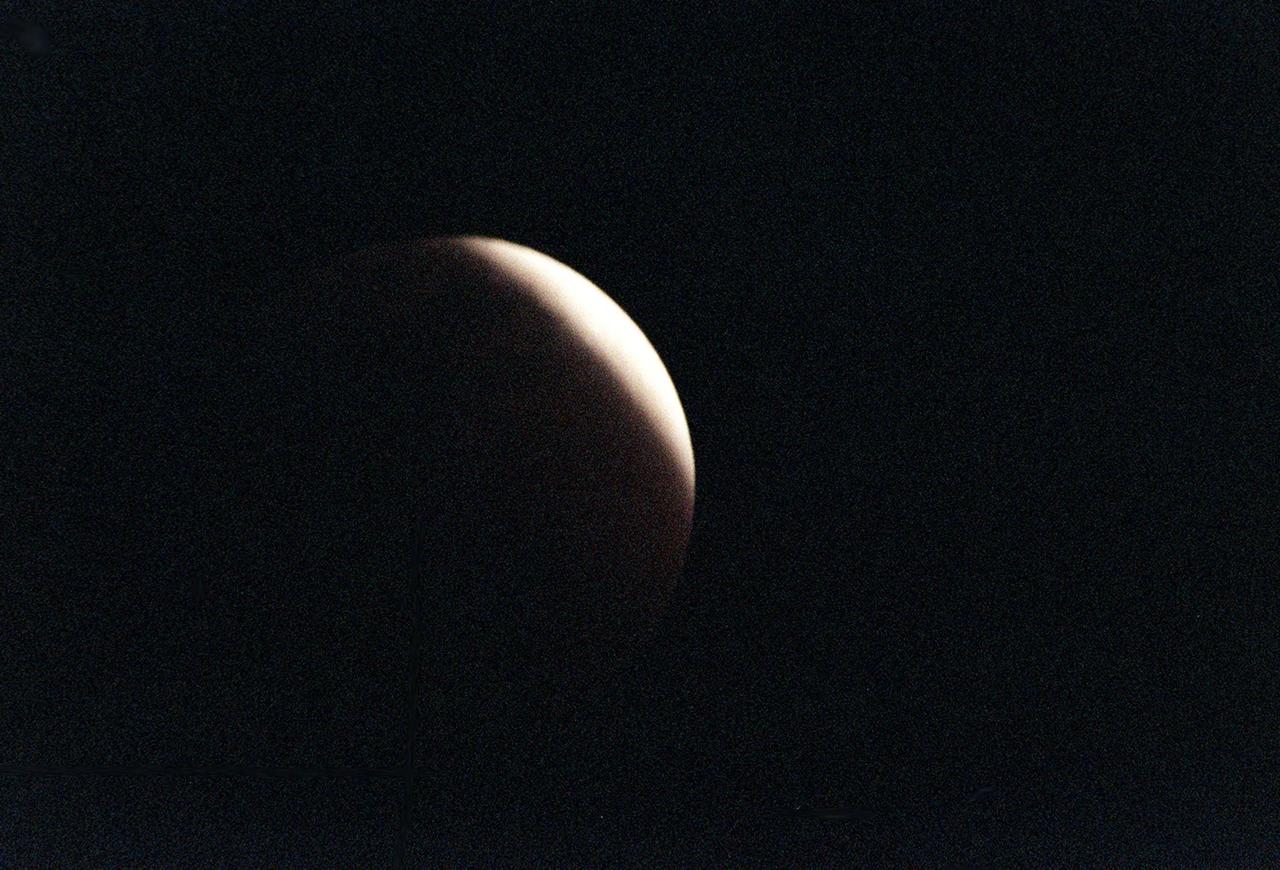
Traveling west to east, the full moon, viewed from Merritt Island, Fla., at 10:35 p.m. EST, moves into the Earth's shadow during a lunar eclipse. Eclipses occur when the Sun, Earth and Moon line up. They are rare because the Moon usually passes above or below the imaginary line connecting Earth and the Sun. The Earth casts a shadow that the Moon can pass through -when it does, it is called a lunar eclipse. They can only occur when the moon is "full." During a total lunar eclipse the Moon takes on a dark red color because it is being lighted slightly by sunlight passing through the Earth's atmosphere and this light has the blue component preferentially scattered out (this is also why the sky appears blue from the surface of the Earth), leaving faint reddish light to illuminate the Moon during the eclipse

Traveling west to east, the full moon, viewed from Merritt Island, Fla., at 10:18 p.m. EST, begins moving into the Earth's shadow, at the start of a lunar eclipse. Eclipses occur when the Sun, Earth and Moon line up. They are rare because the Moon usually passes above or below the imaginary line connecting Earth and the Sun. The Earth casts a shadow that the Moon can pass through -when it does, it is called a lunar eclipse. They can only occur when the moon is "full." During a total lunar eclipse the Moon takes on a dark red color because it is being lighted slightly by sunlight passing through the Earth's atmosphere and this light has the blue component preferentially scattered out (this is also why the sky appears blue from the surface of the Earth), leaving faint reddish light to illuminate the Moon during the eclipse

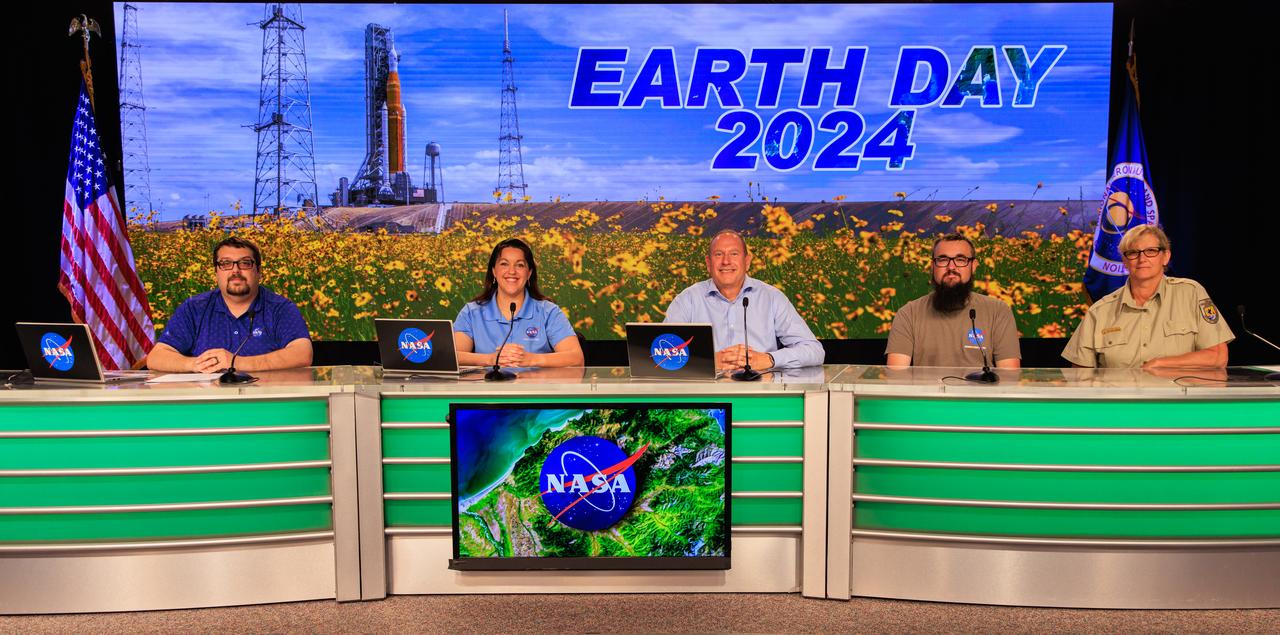
As part of NASA’s NextGen STEM project, the agency hosted an environmentally focused Earth Day briefing on Tuesday, April 2, 2024, inside NASA News Center’s John Holliman Auditorium at the agency’s Kennedy Space Center. Participants from left to right include, Messod Bendayan, NASA Communications; Kelly McCarthy, NASA’s Office of STEM Engagement, Bob Kline, Kennedy’s Environmental Assurance Branch; Spencer Davis, Kennedy’s Exploration Ground Systems; and Kim King-Wrenn, Merritt Island National Wildlife Refuge.

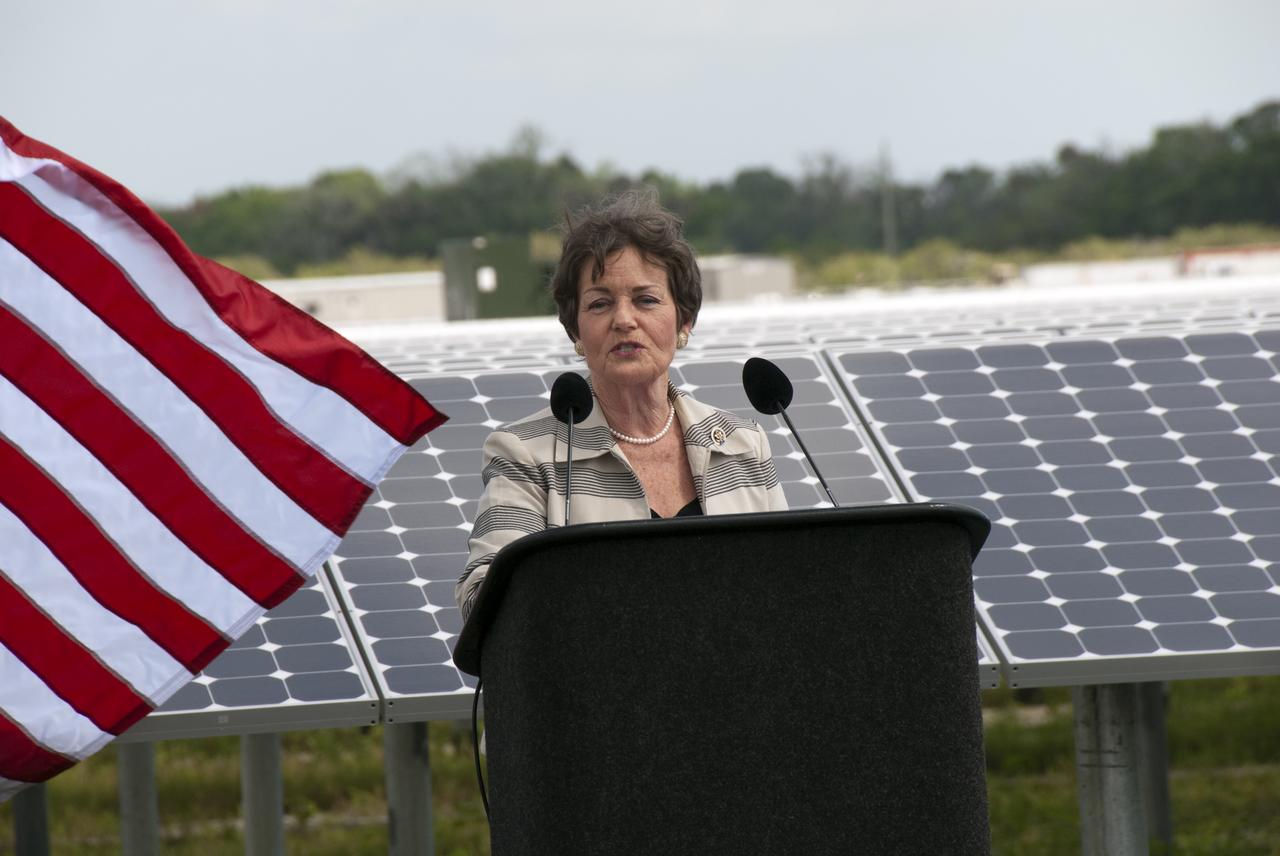
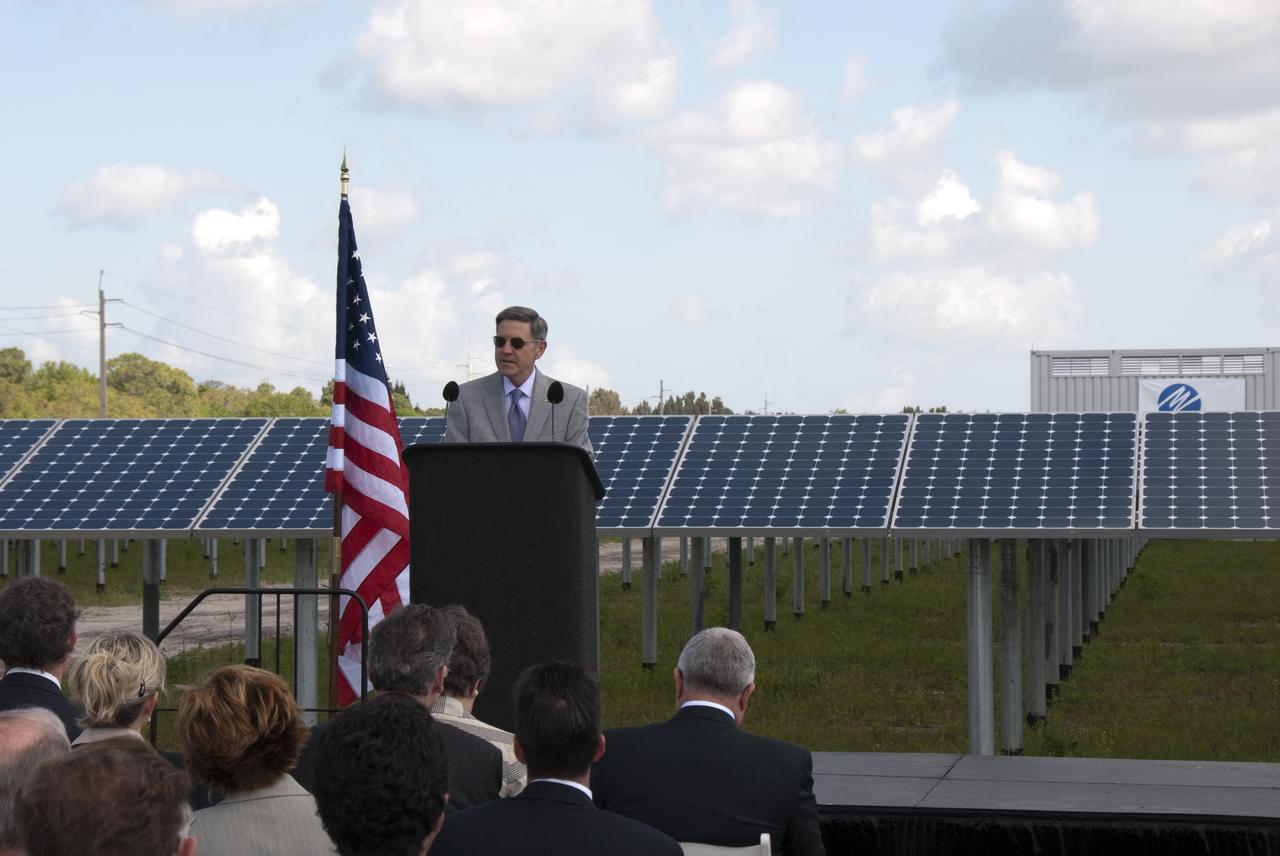
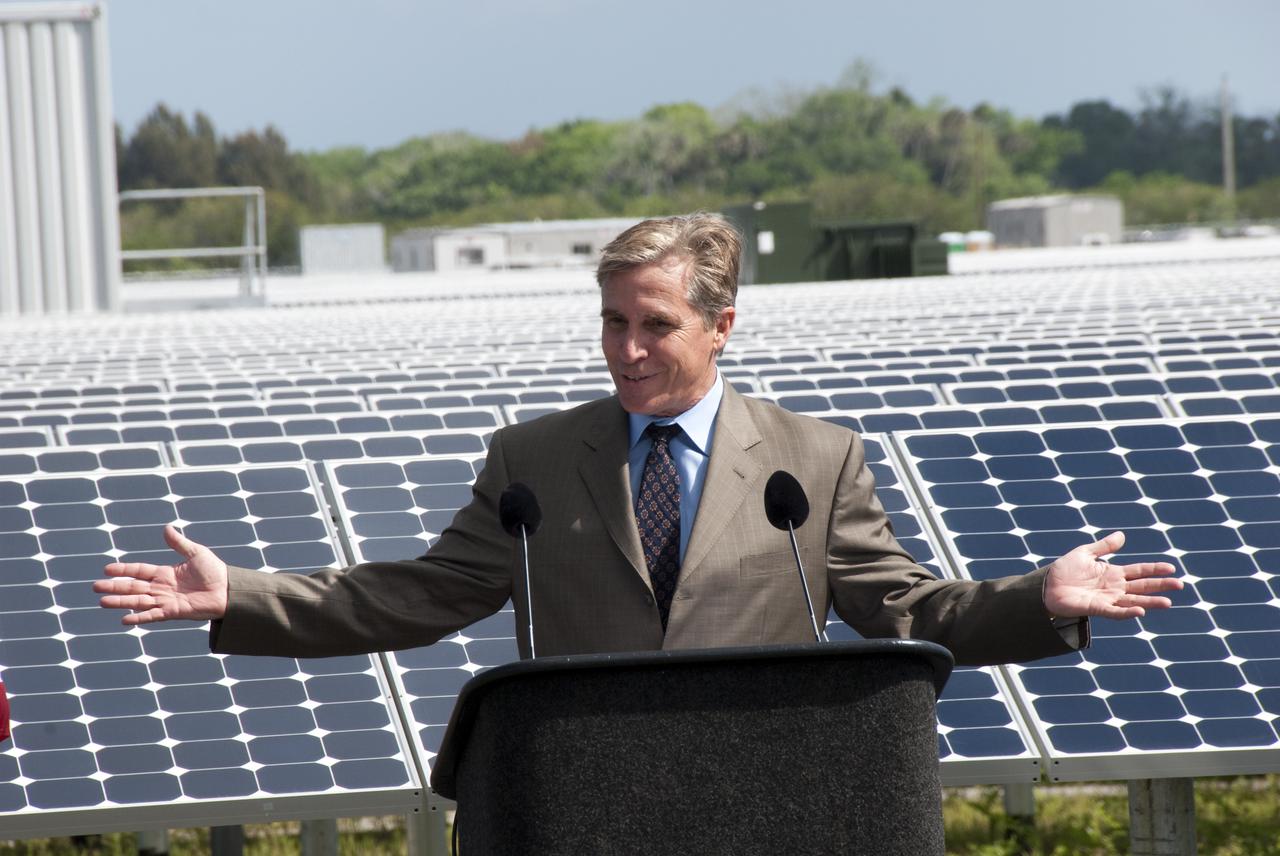
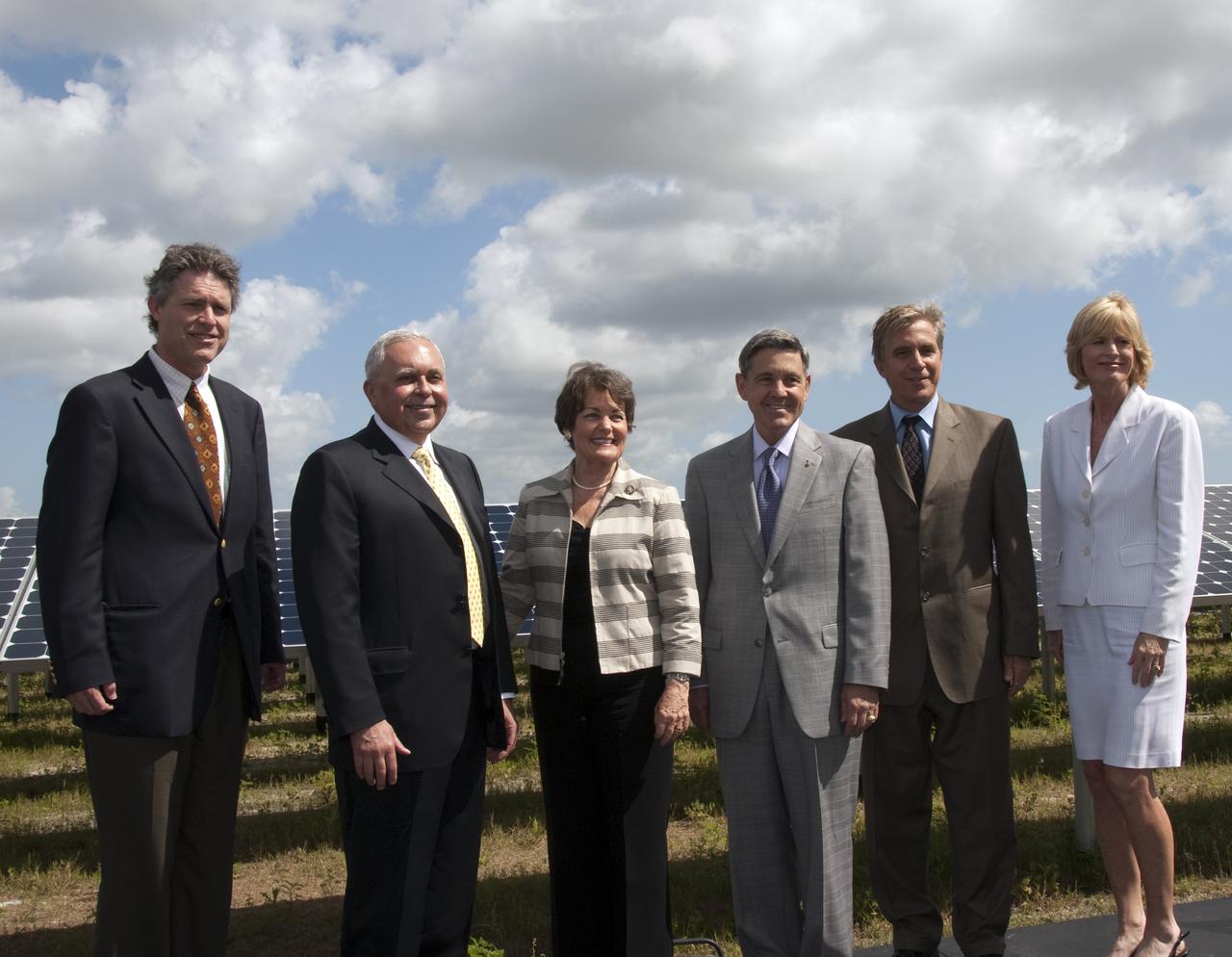
NEW NASA-FPL SOLAR FIELD DEDICATION - NORTH MERRITT ISLAND

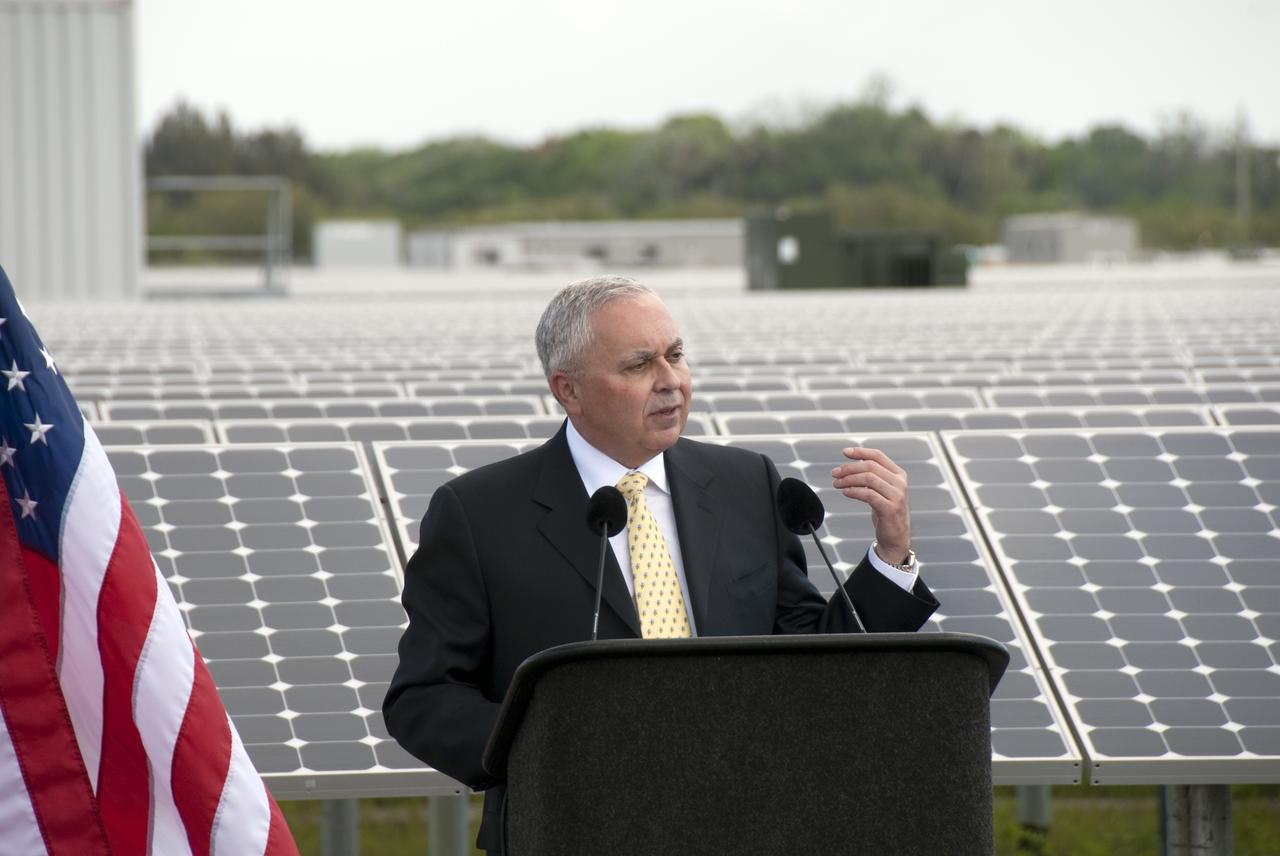
NEW NASA-FPL SOLAR FIELD DEDICATION - NORTH MERRITT ISLAND

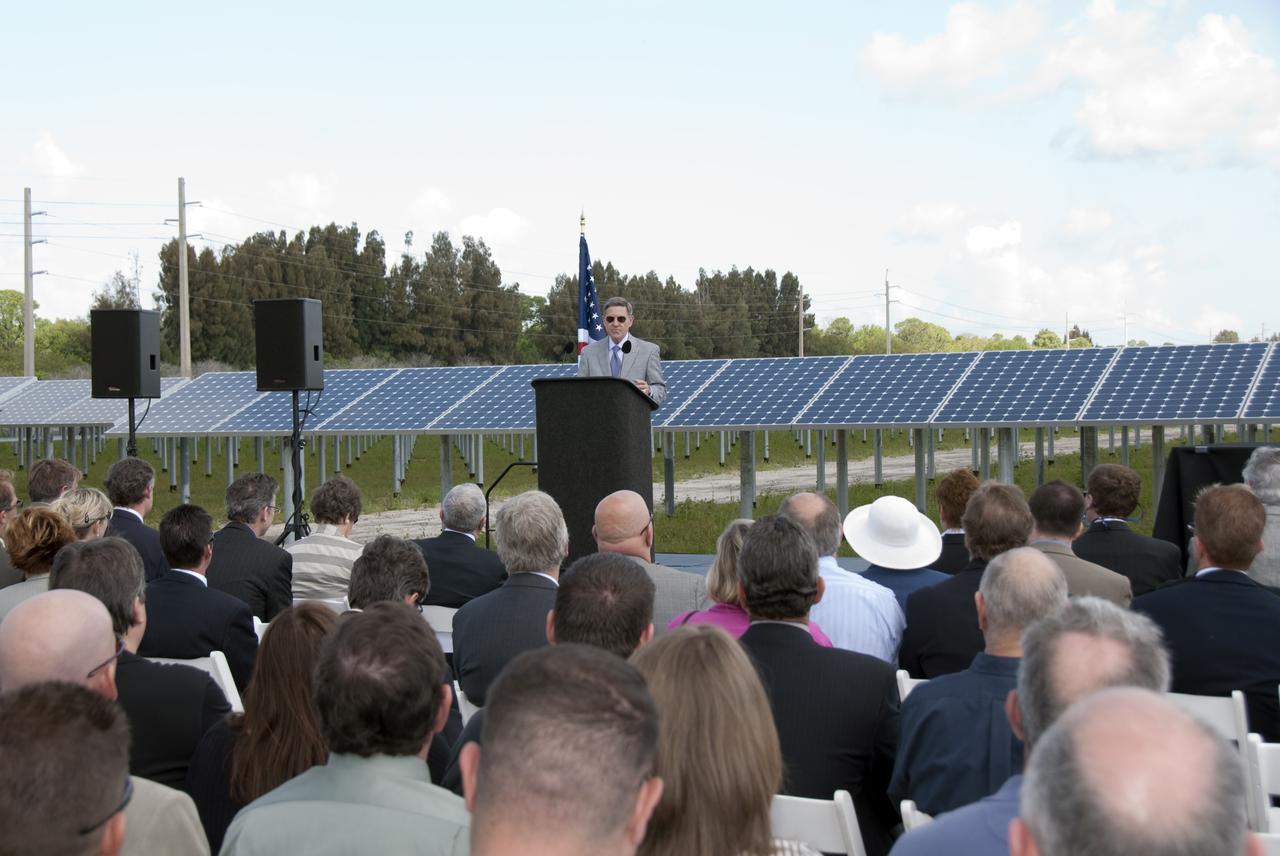
NEW NASA-FPL SOLAR FIELD DEDICATION - NORTH MERRITT ISLAND

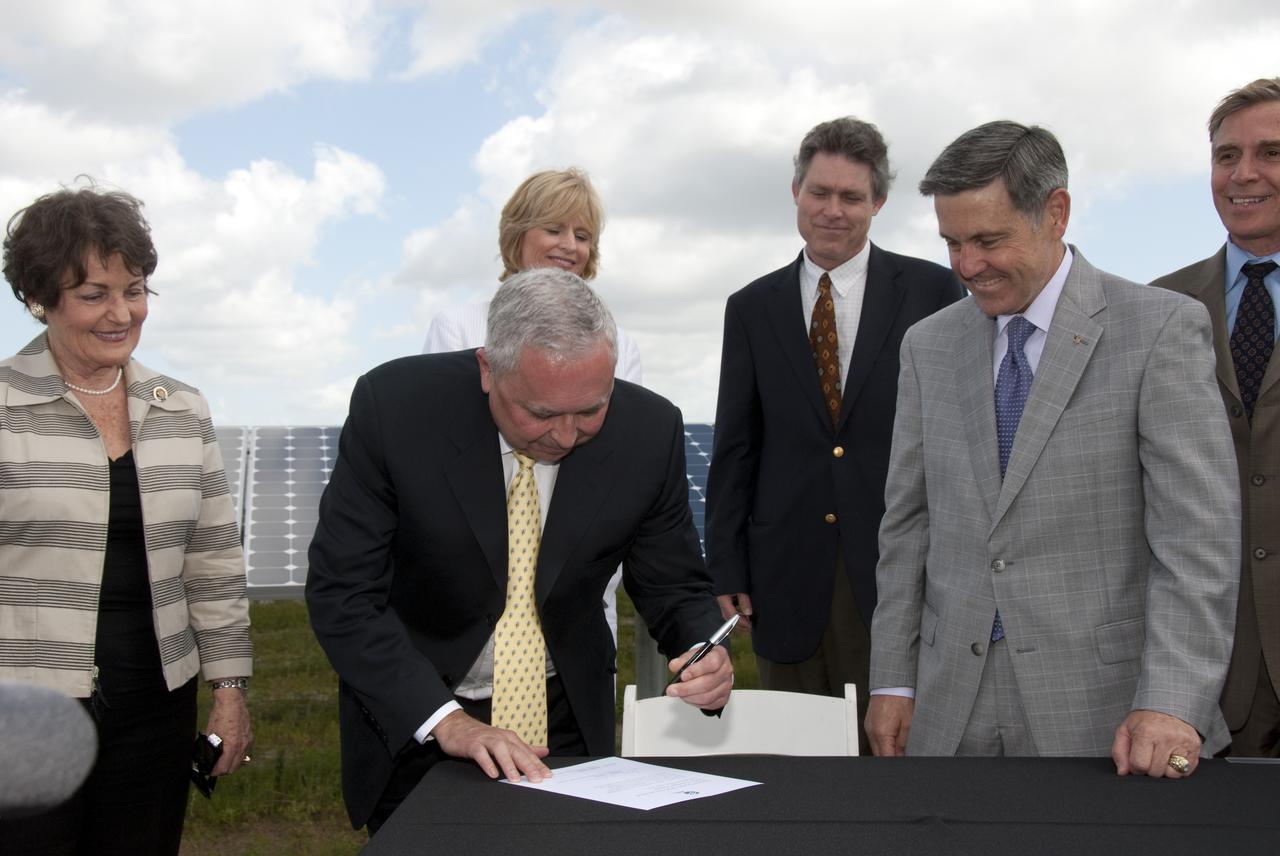
NEW NASA-FPL SOLAR FIELD DEDICATION - NORTH MERRITT ISLAND

NEW NASA-FPL SOLAR FIELD DEDICATION - NORTH MERRITT ISLAND

NEW NASA-FPL SOLAR FIELD DEDICATION - NORTH MERRITT ISLAND

NEW NASA-FPL SOLAR FIELD DEDICATION - NORTH MERRITT ISLAND

NEW NASA-FPL SOLAR FIELD DEDICATION - NORTH MERRITT ISLAND

NEW NASA-FPL SOLAR FIELD DEDICATION - NORTH MERRITT ISLAND

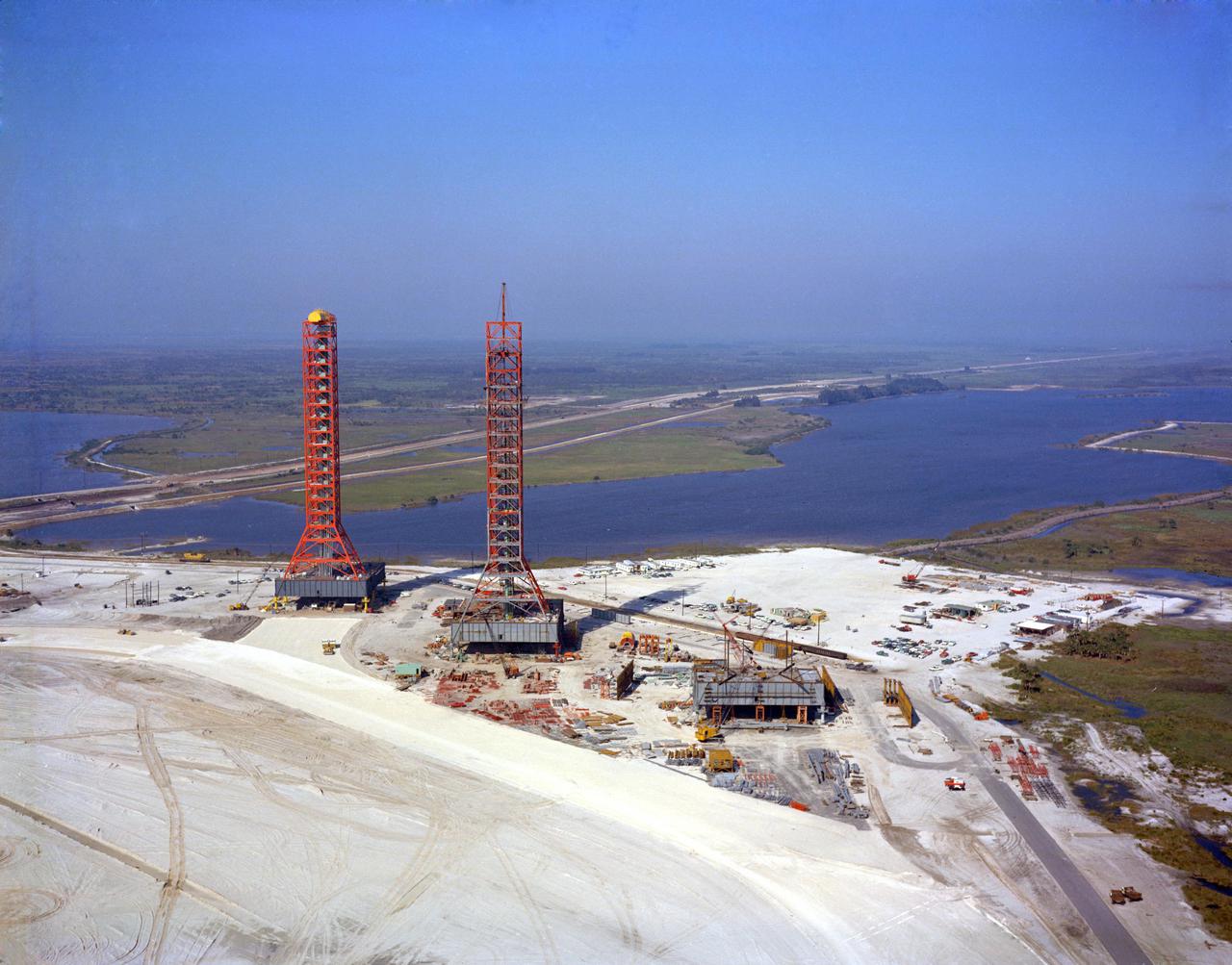
KENNEDY SPACE CENTER, FLA. -- Aerial view of Launcher Umbilical Towers, Merritt Island Launch Area (MILA).

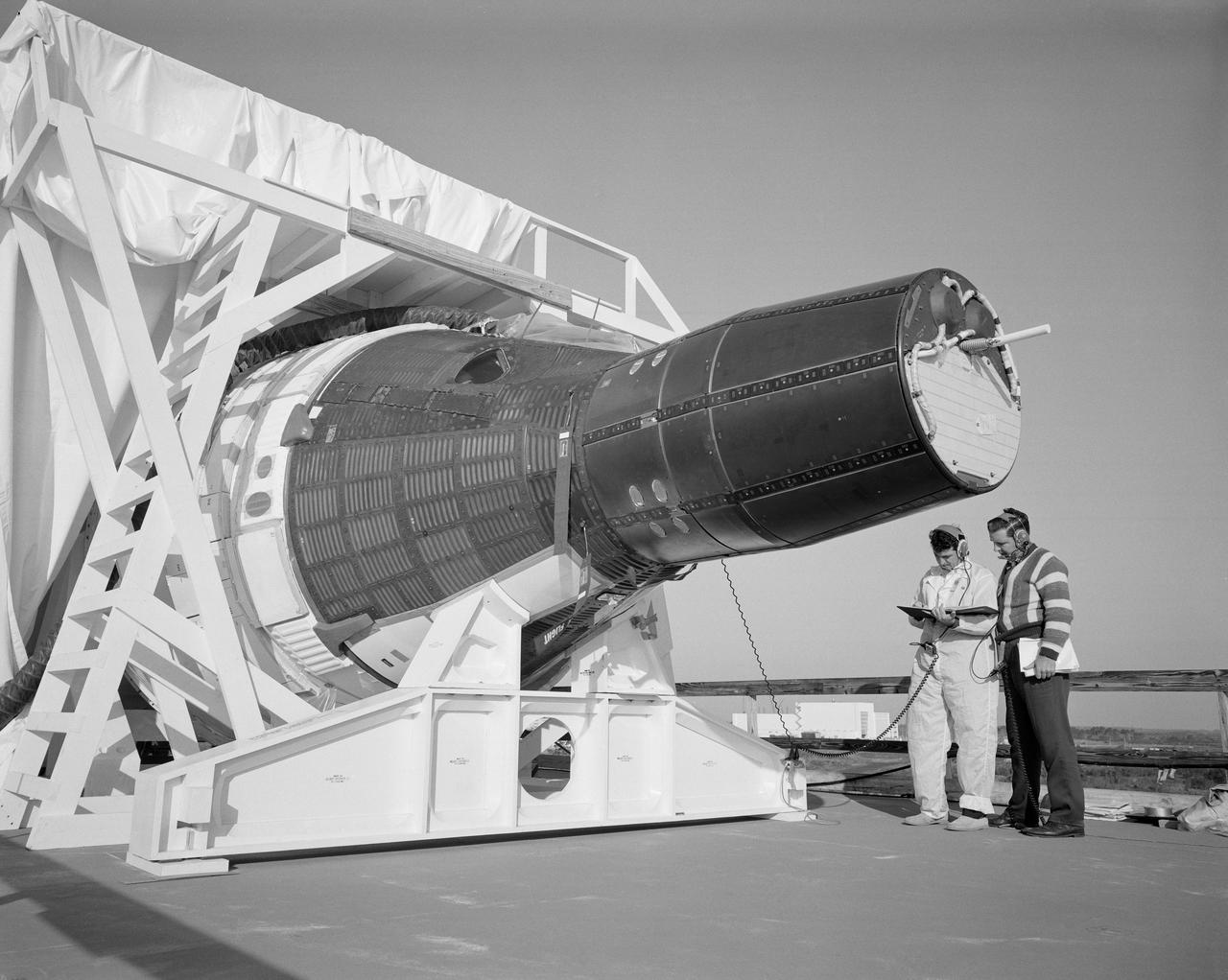
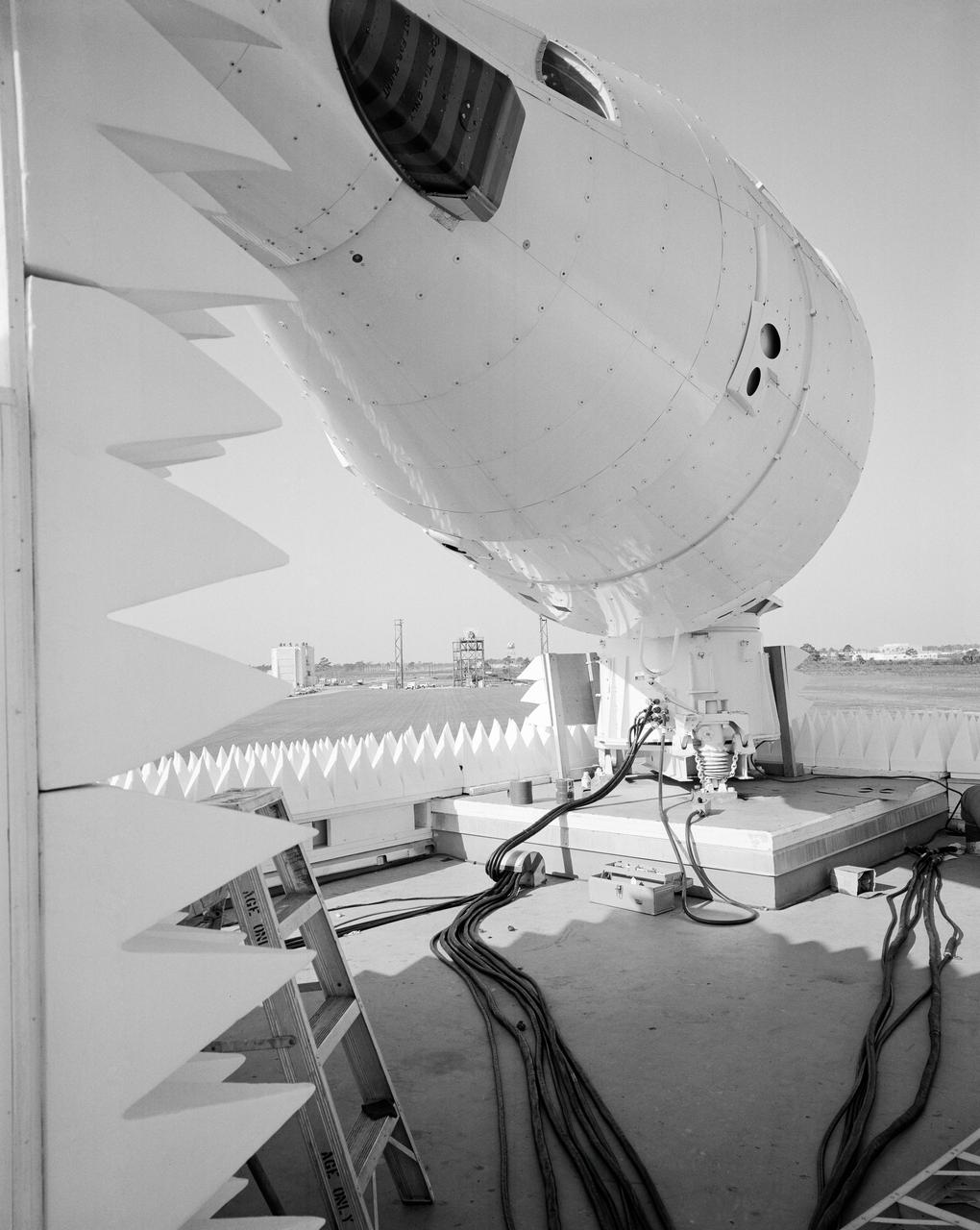
S65-13395 (6 Jan. 1965) --- Gemini-3 spacecraft (final configuation) during test at Boresight Range, Merritt Island launch area.

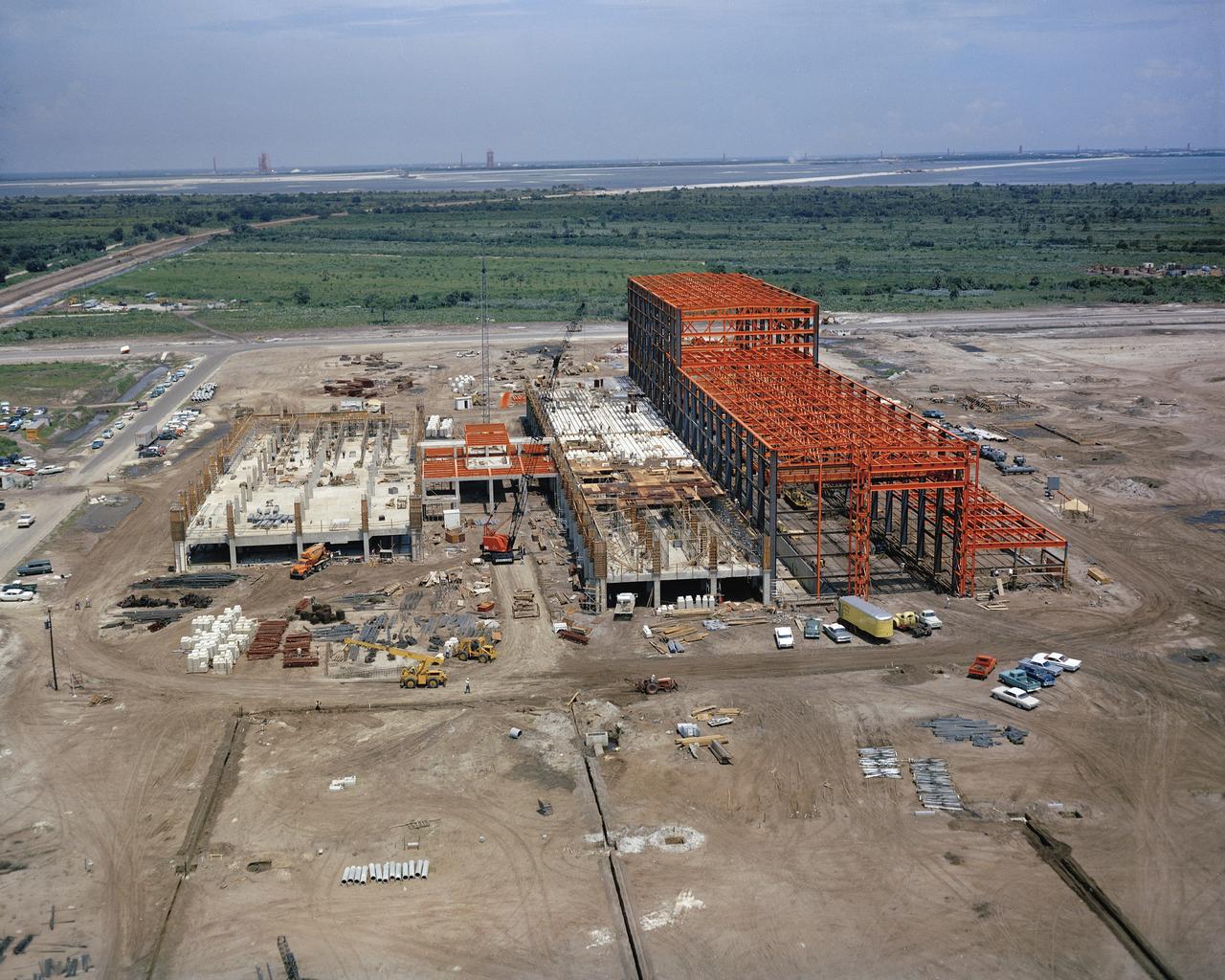
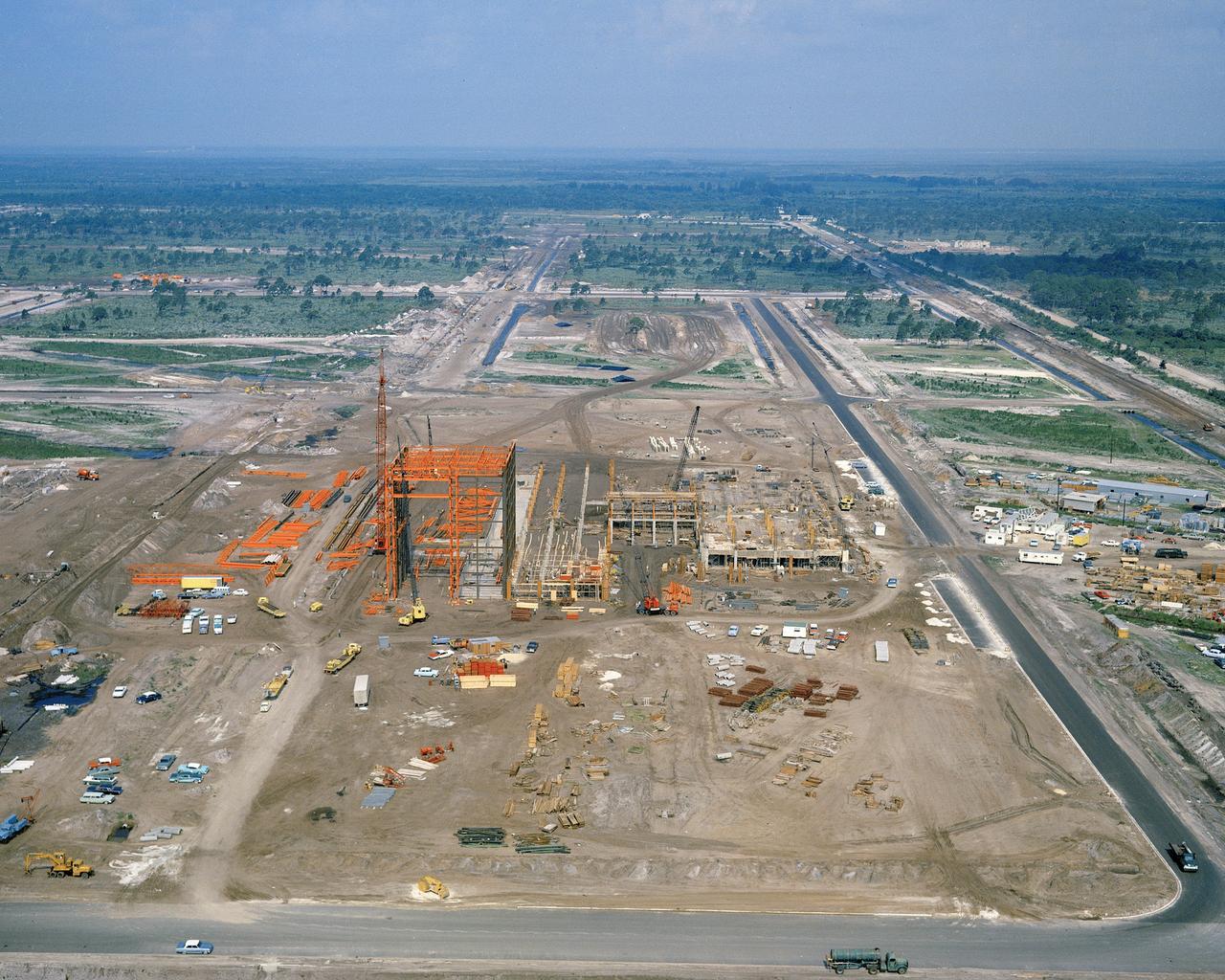
CAPE CANAVERAL Fla. -- This aerial view shows construction progress of the Manned Spacecraft Operations Building at NASA's Merritt Island Launch Annex. Photo Credit: NASA

S65-13394 (6 Jan. 1965) --- Gemini-3 spacecraft (background) on tower at Boresight Range, Merritt Island launch area, showing simulator in foreground.

CAPE CANAVERAL Fla. -- This aerial view shows construction progress of the Manned Spacecraft Operations Building at NASA's Merritt Island Launch Annex. Photo Credit: NASA

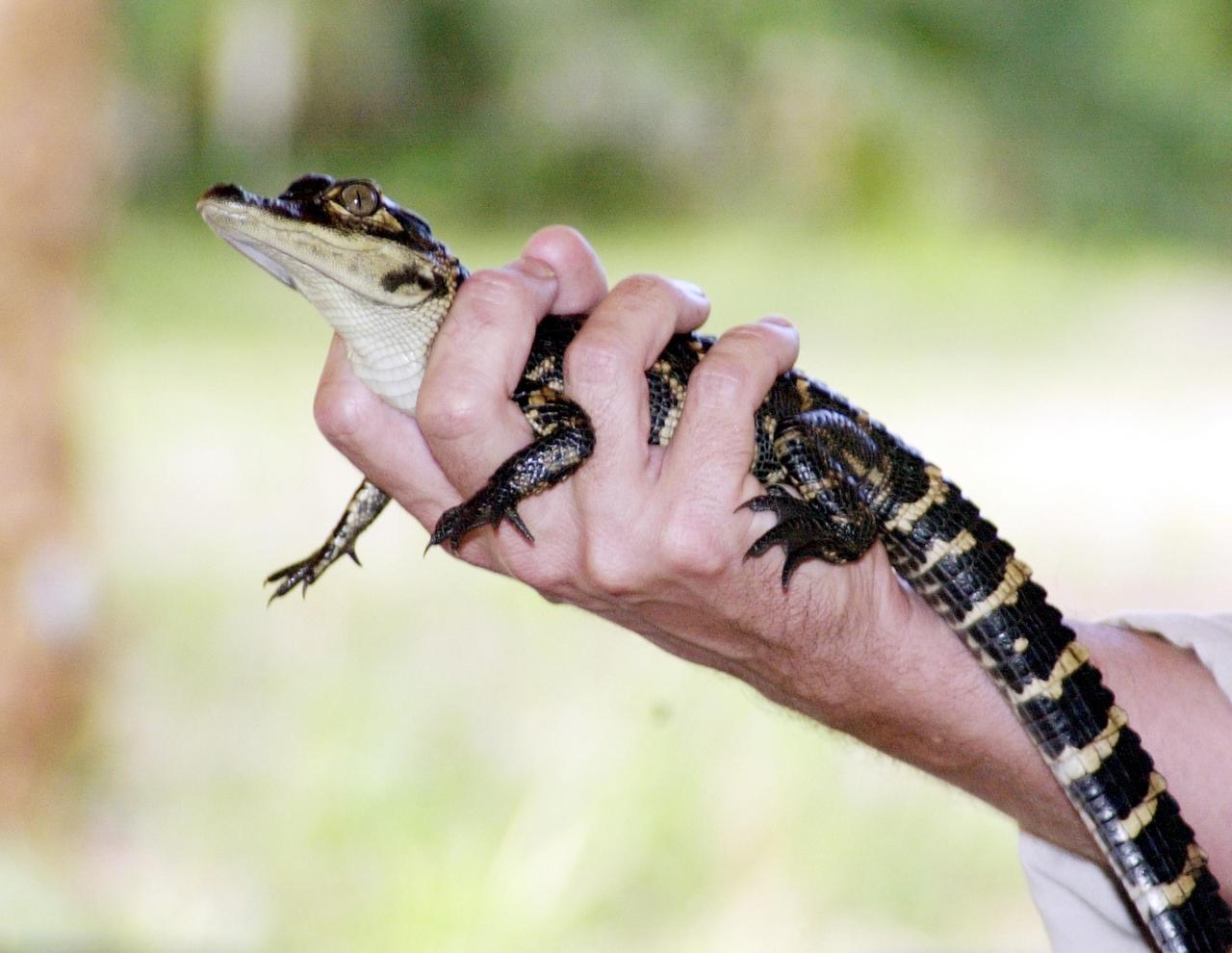
KENNEDY SPACE CENTER, FLA. - A baby alligator is displayed during the dedication of the Sendler Education Outpost, located at Dummit Cove on the Merritt Island National Wildlife Refuge (MINWR). The outpost is a resource for environmental educational students in the Central Florida area. It is named for Karl Sendler, a space pioneer and manager under Dr. Kurt Debus, KSC's first center director. Funding for the facility was provided by the Merritt Island Wildlife Association with assistance from MINWR and Kennedy Space Center.

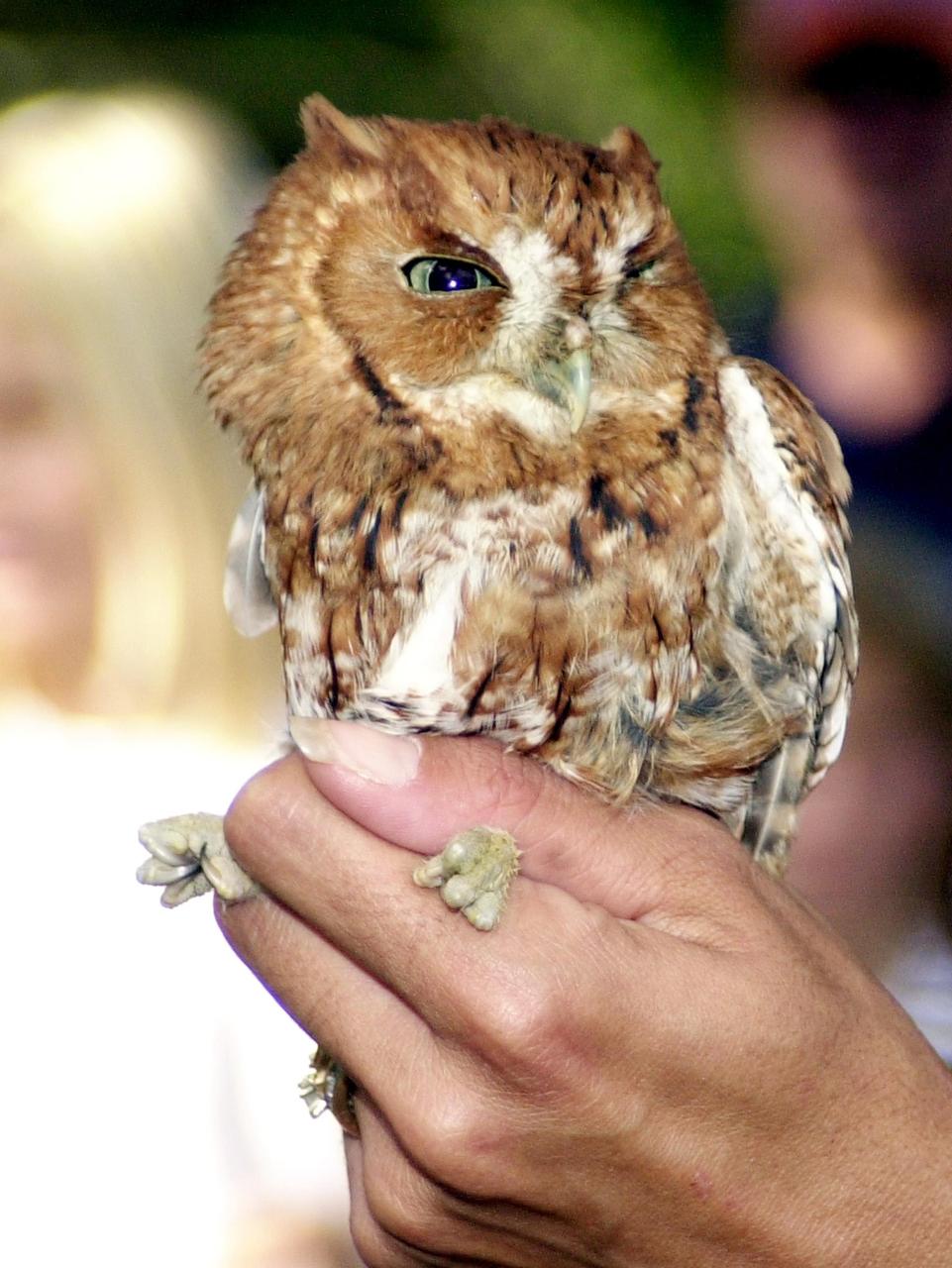
KENNEDY SPACE CENTER, FLA. -- An owl is held just before its release during the dedication of the Sendler Education Outpost, located at Dummit Cove on the Merritt Island National Wildlife Refuge (MINWR). The outpost is a resource for environmental educational students in the Central Florida area. It is named for Karl Sendler, a space pioneer and manager under Dr. Kurt Debus, KSC's first center director. Funding for the facility was provided by the Merritt Island Wildlife Association with assistance from MINWR and Kennedy Space Center.

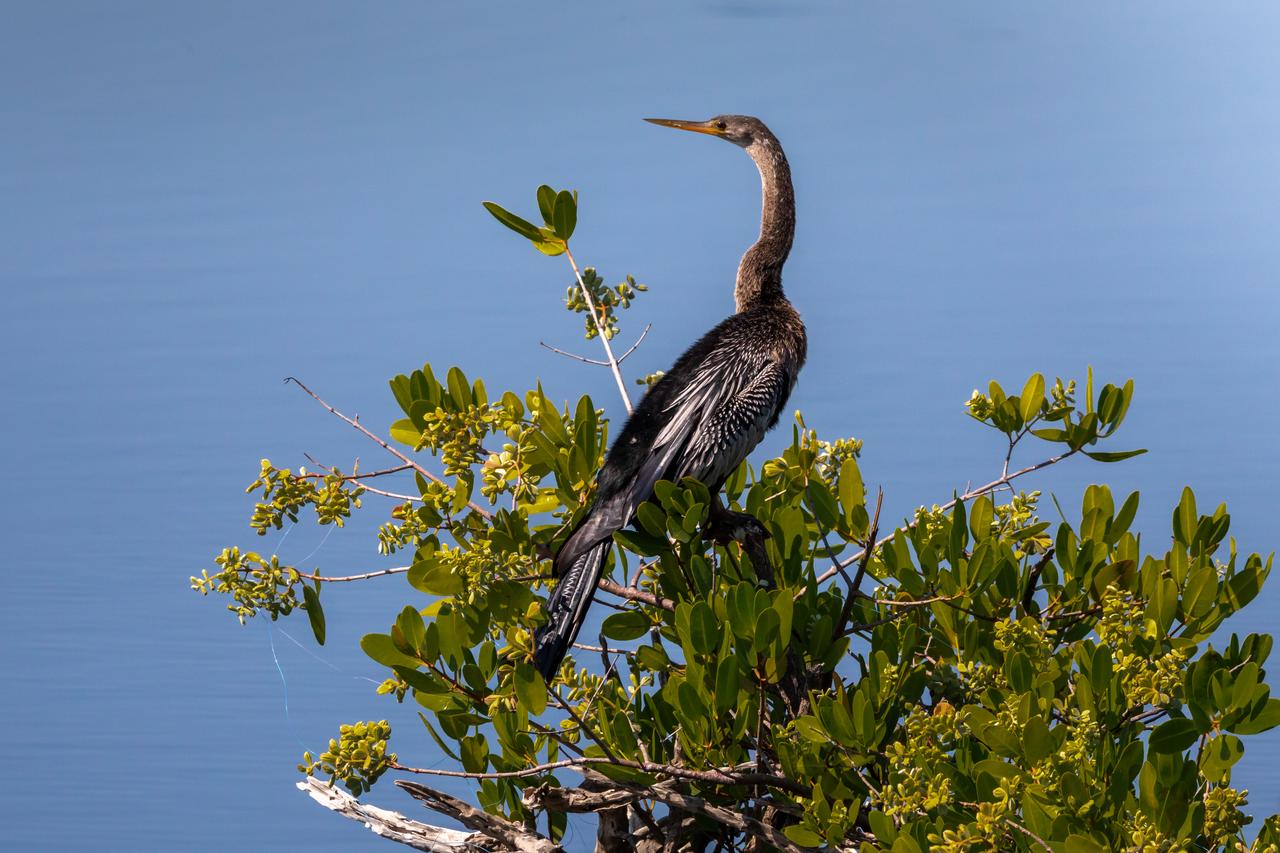
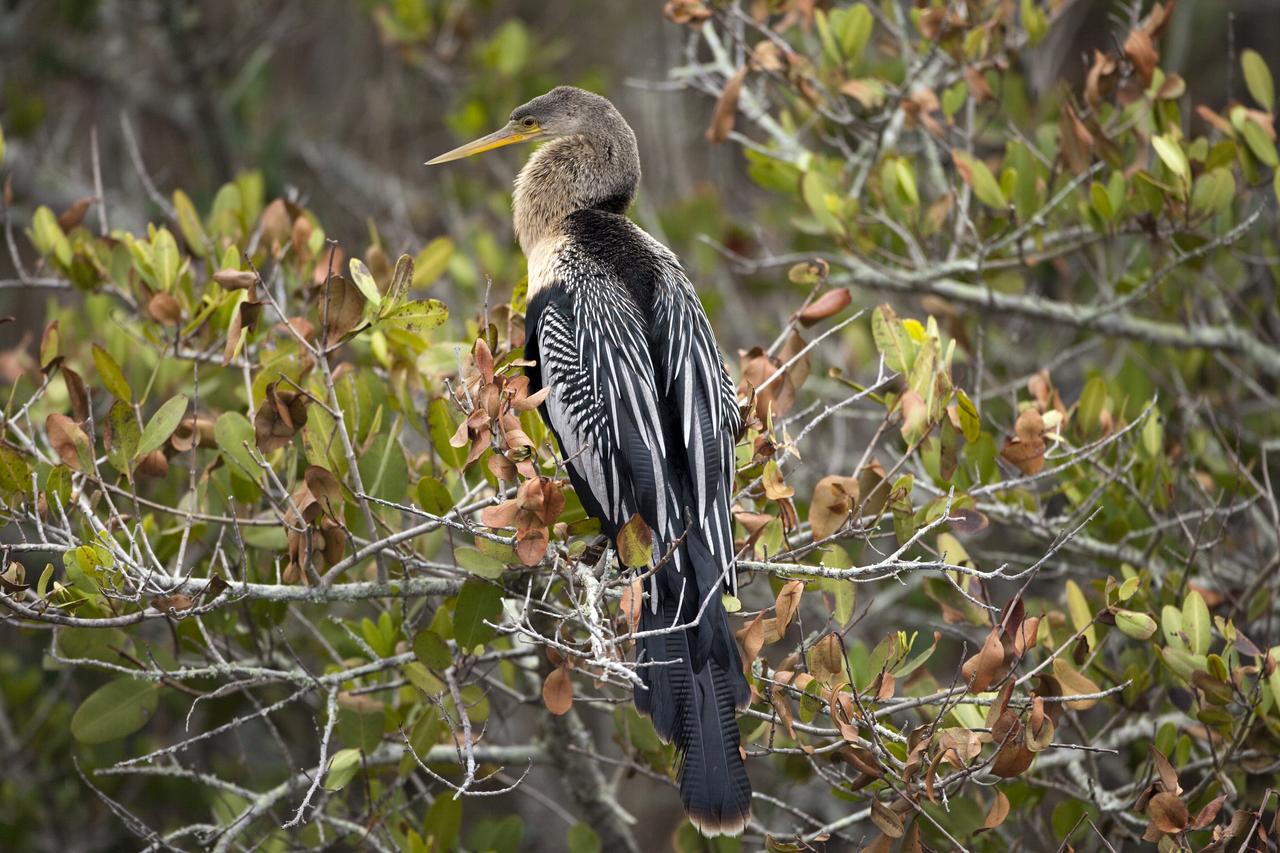
CAPE CANAVERAL, Fla. -- An Anhinga perches in a shrub in the Merritt Island National Wildlife Refuge, which borders NASA's Kennedy Space Center in Florida. Anhingas inhabit freshwater ponds and swamps with thick vegetation. Kennedy coexists with the Merritt Island National Wildlife Refuge, habitat to more than 310 species of birds, 25 mammals, 117 fish and 65 amphibians and reptiles. Photo credit: NASA/Frankie Martin

As part of NASA’s NextGen STEM project, students from Andrew Jackson Middle School in Titusville, Florida, participate in an environmentally focused Earth Day briefing on Tuesday, April 2, 2024, inside the news auditorium at the agency’s Kennedy Space Center in Florida. Along with the students participating in person, middle school students from across the country participated virtually to discuss how technology and science coexist with nature at Kennedy with panel participants. The panelists from left to right are Messod Bendayan, NASA Communications; Kelly McCarthy, NASA’s Office of STEM Engagement, Bob Kline, Kennedy’s Environmental Assurance Branch; Spencer Davis, Kennedy’s Exploration Ground Systems; Kim King-Wrenn, Merritt Island National Wildlife Refuge.

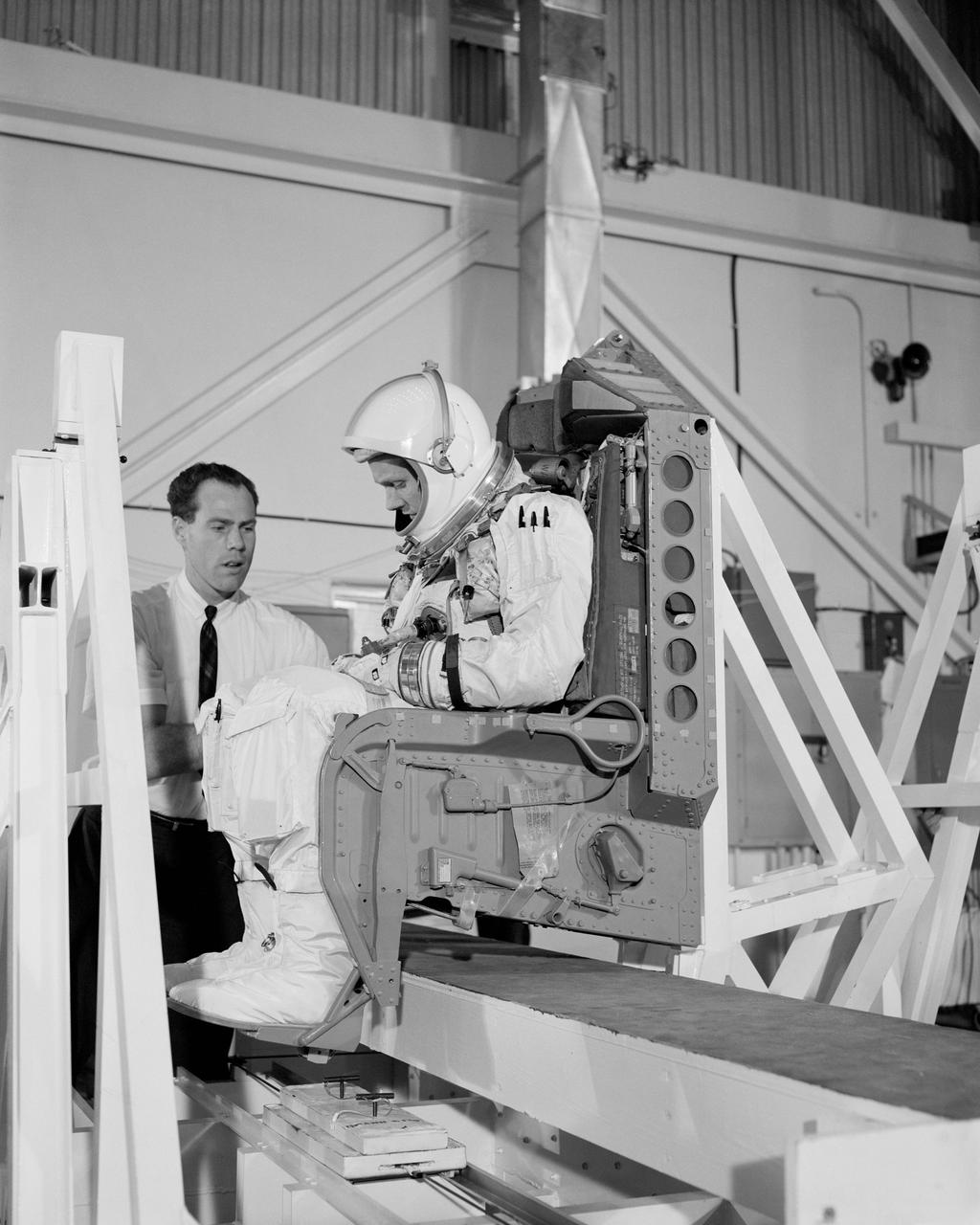
S66-22933 (18 Feb. 1966) --- Astronaut Neil A. Armstrong undergoes weight and balance tests in the Pyrotechnic Installation Building, Merritt Island, Kennedy Space Center, Florida. Photo credit: NASA

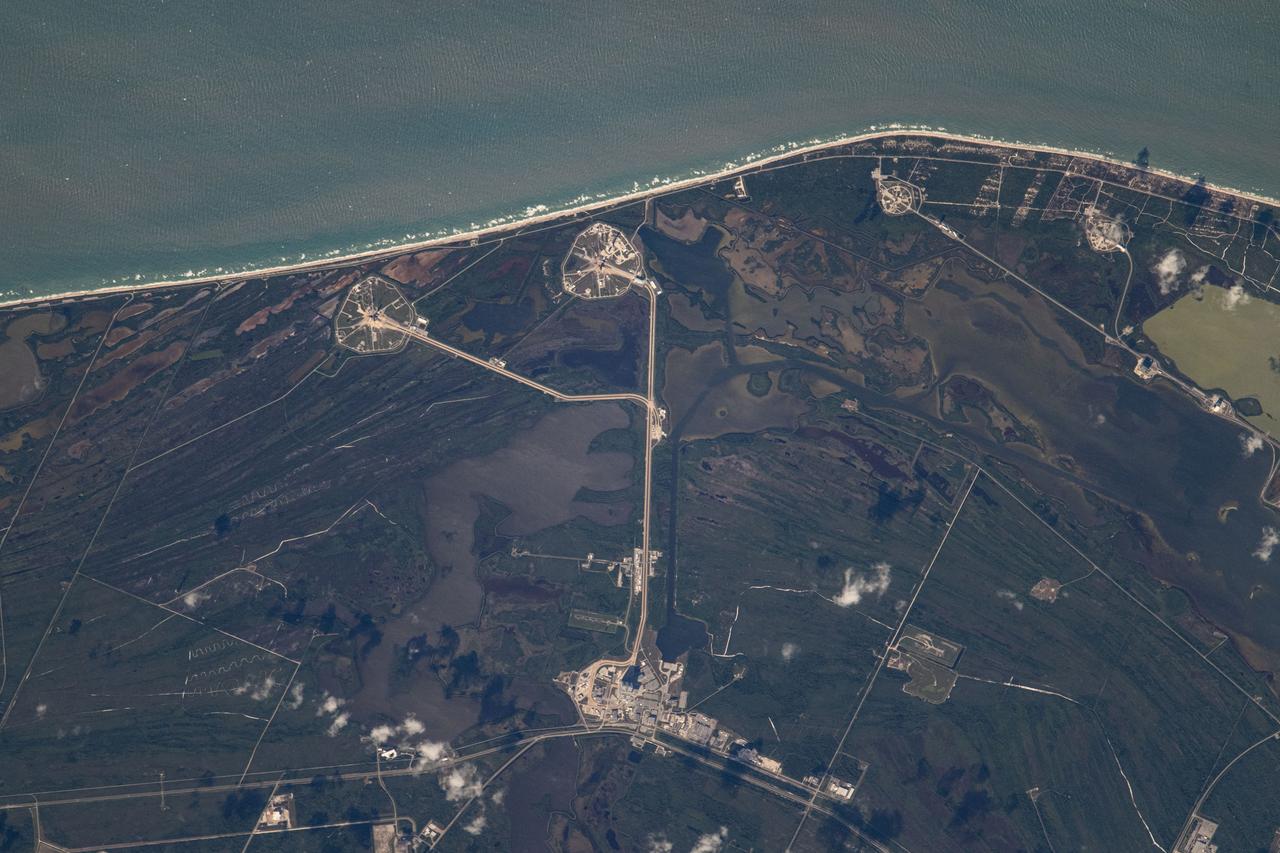
iss071e104917 (May 20, 2024) --- Kennedy Space Center's Launch Pads 39A and 39B on Florida's Merritt Island are clearly visible in this photograph from the International Space Station as it orbited 259 miles above the Atlantic Ocean.

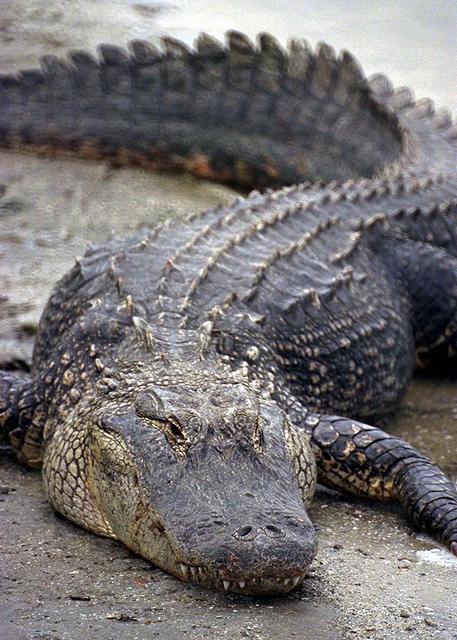
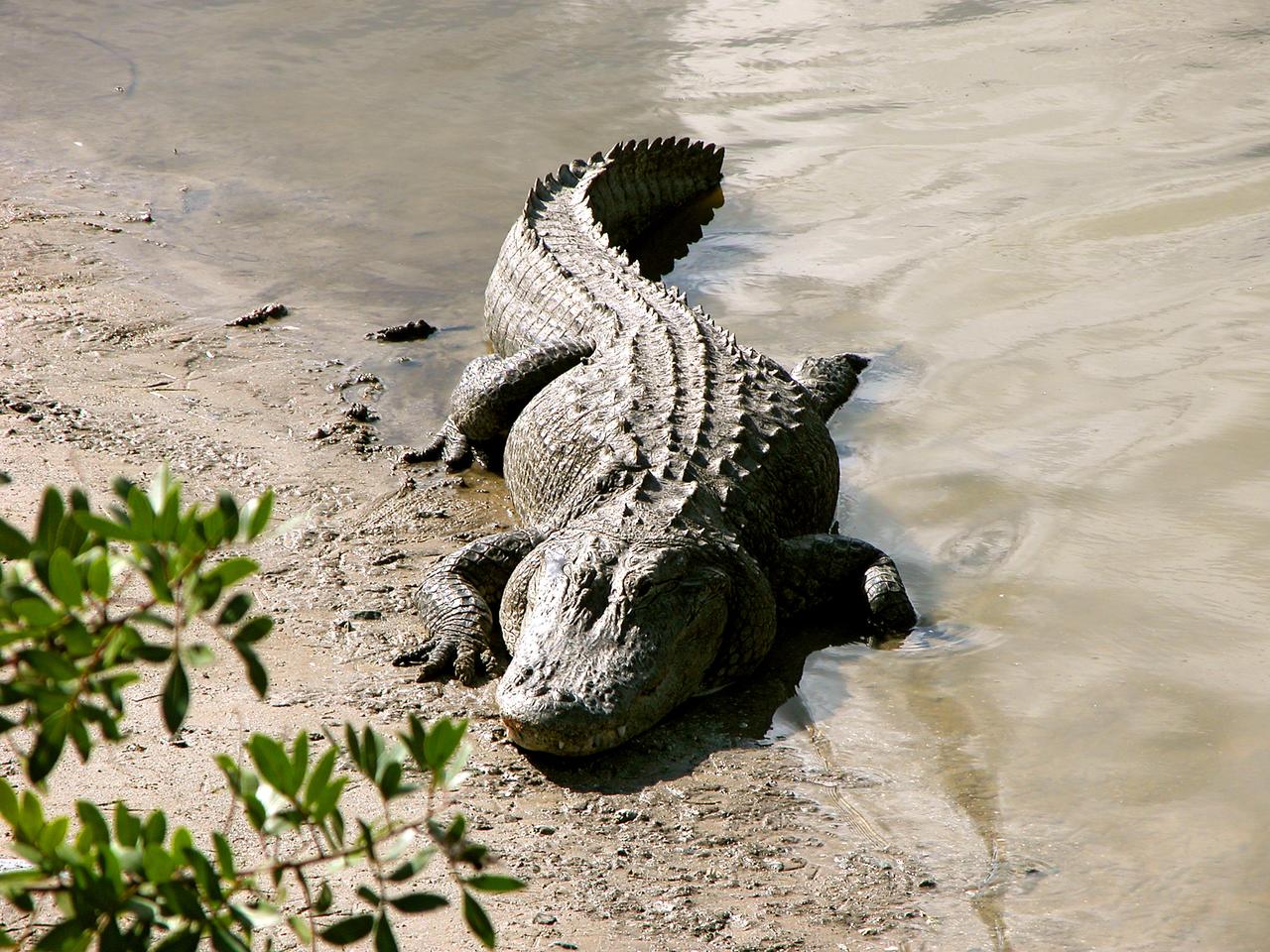
KENNEDY SPACE CENTER, FLA. -- An alligator rests on the bank of a creek in Kennedy Space Center. Alligators are common in the waters of Central Florida, and especially within the Merritt Island National Wildlife Refuge, which is located on Kennedy property.

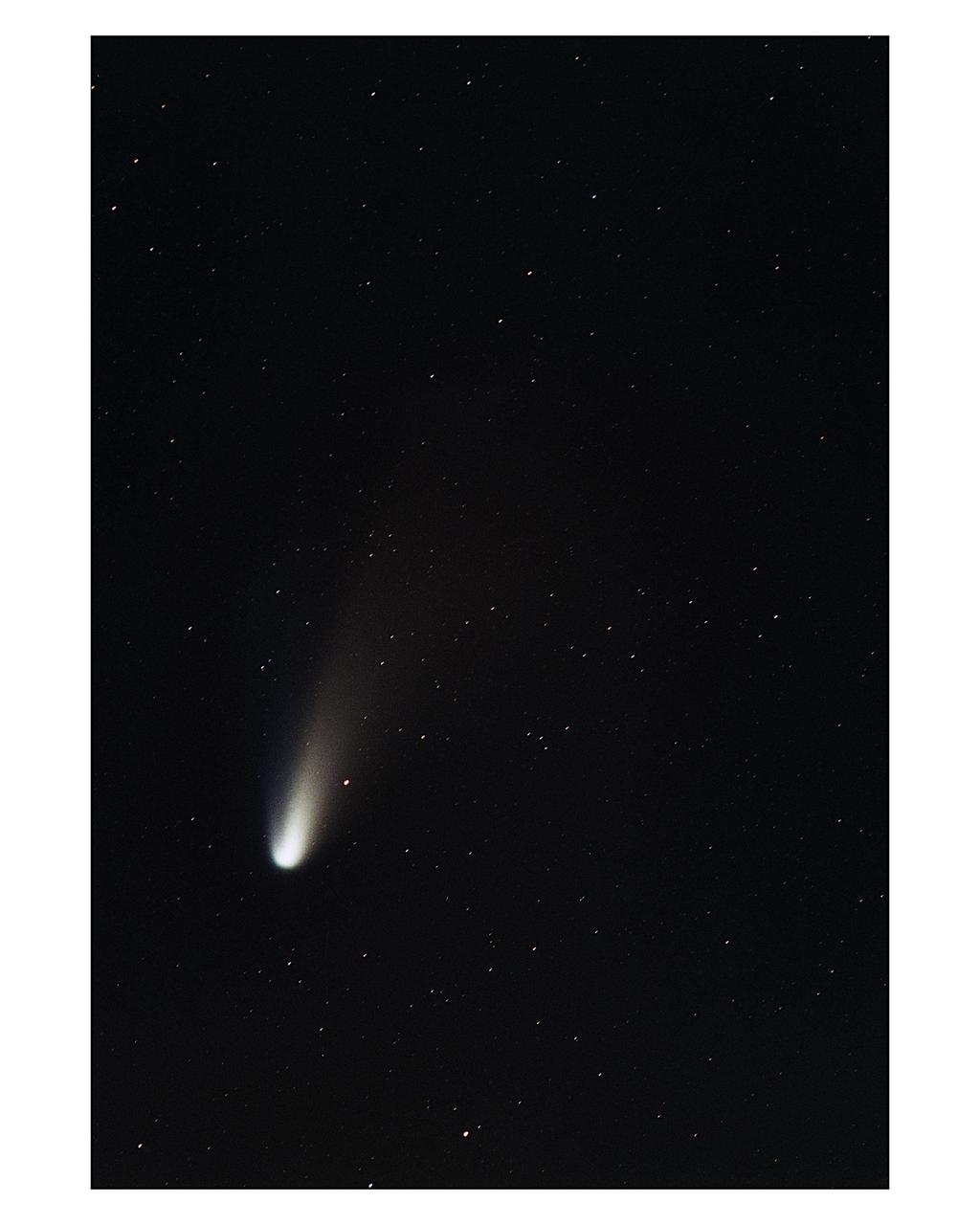
Comet Hale-Bopp is seen in the constellation Lacerta at 5:18 a.m. on March 9, 1997. North is to the left of the comet in this photograph, which was taken on Merritt Island, Florida, near Kennedy Space Center

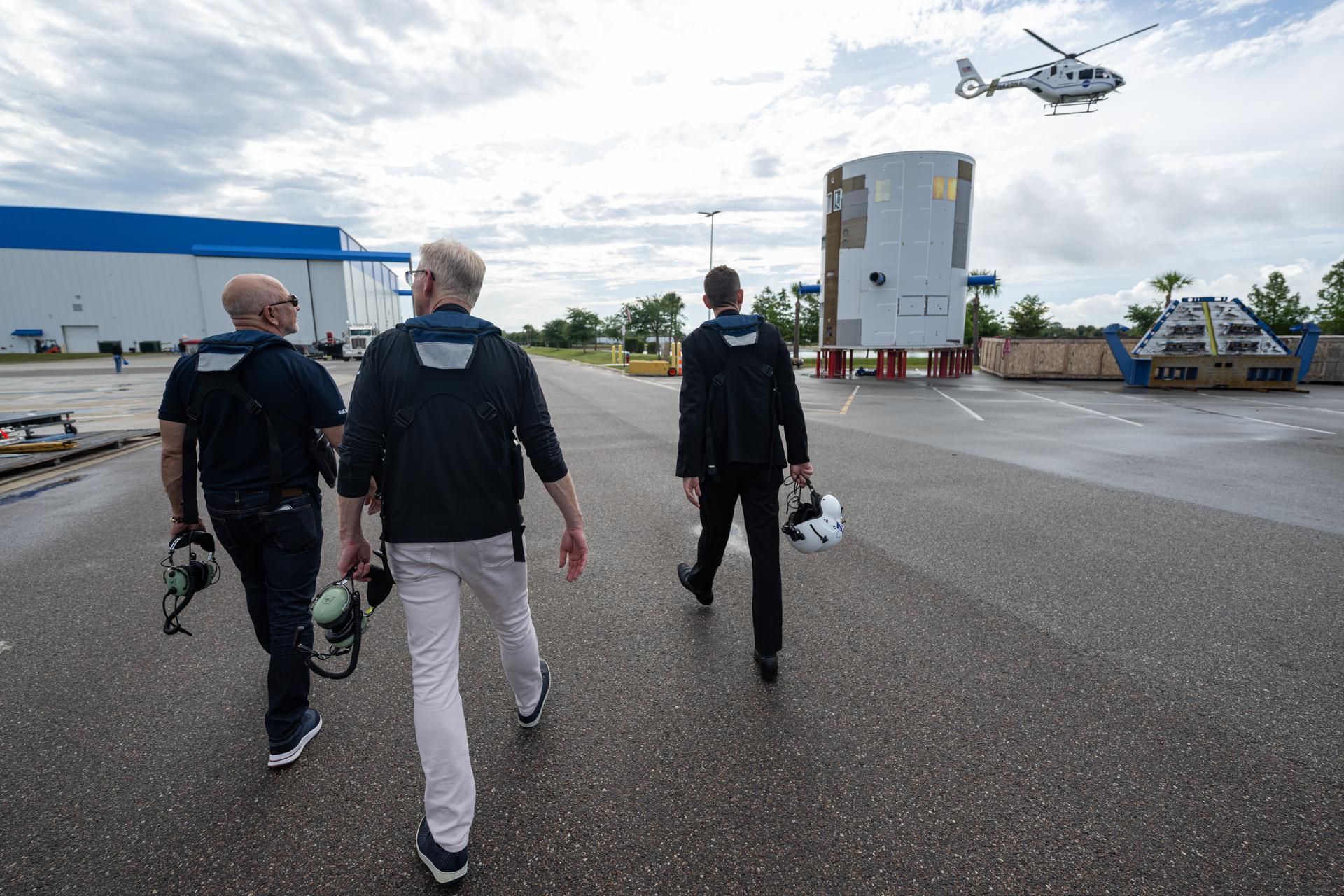
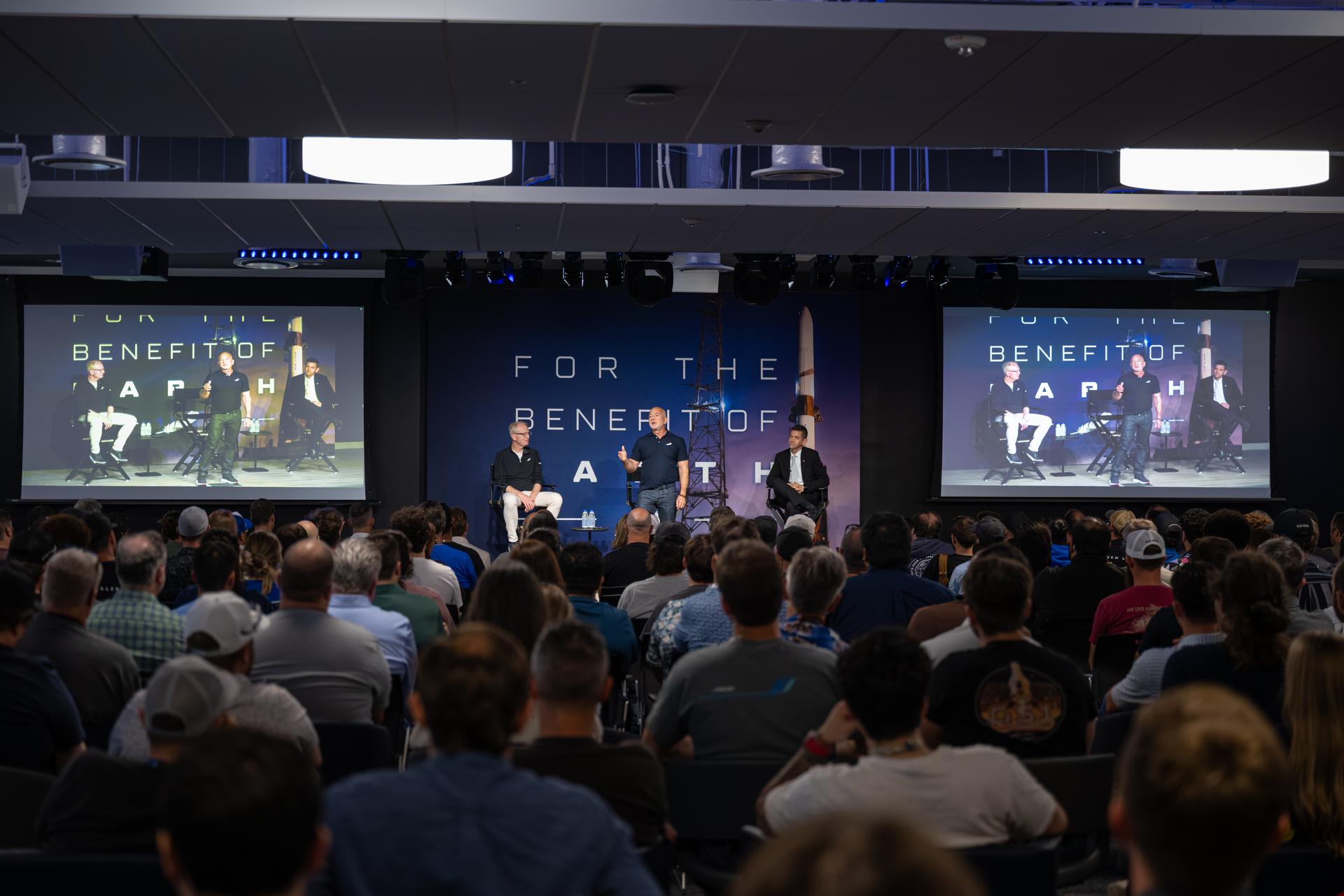
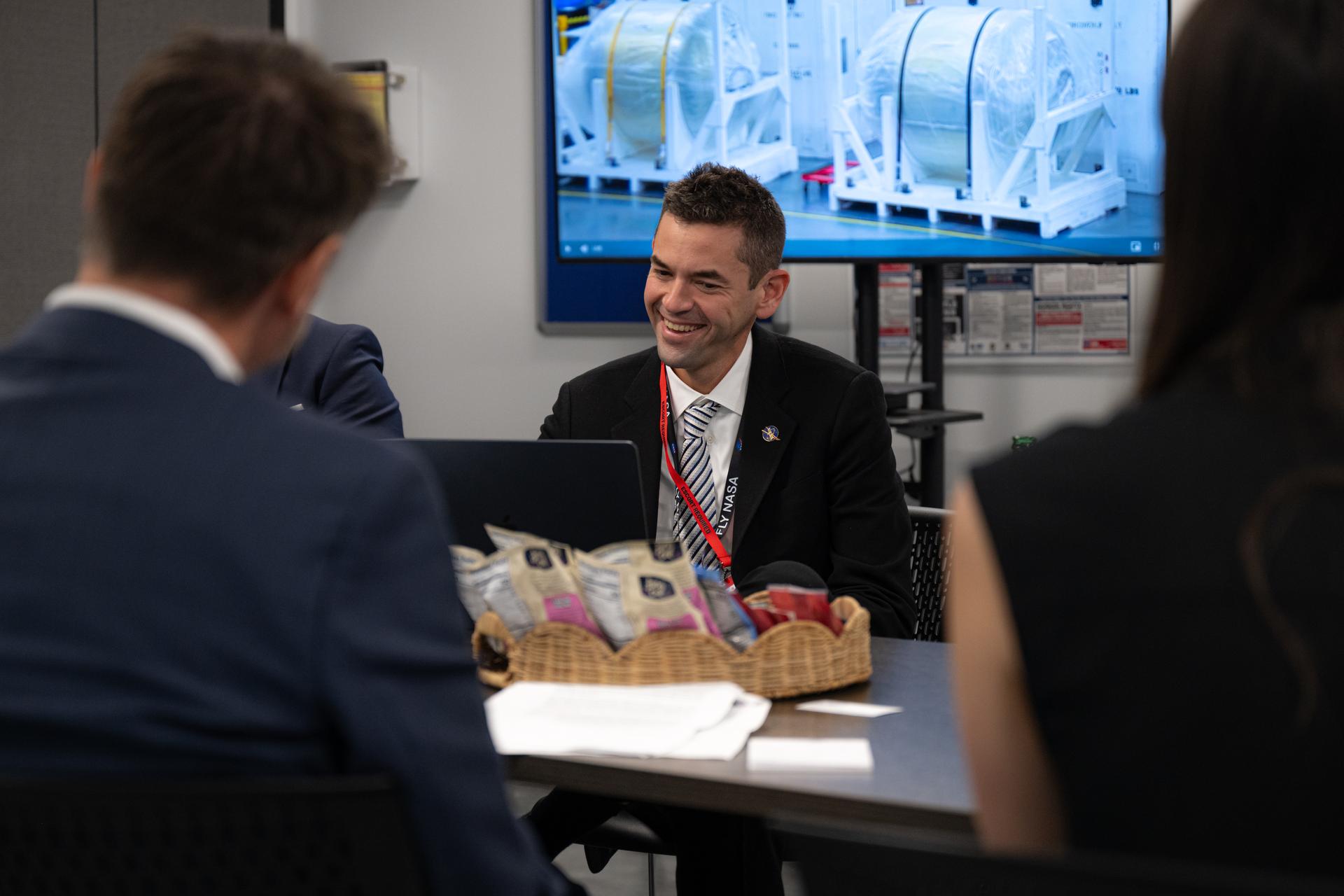
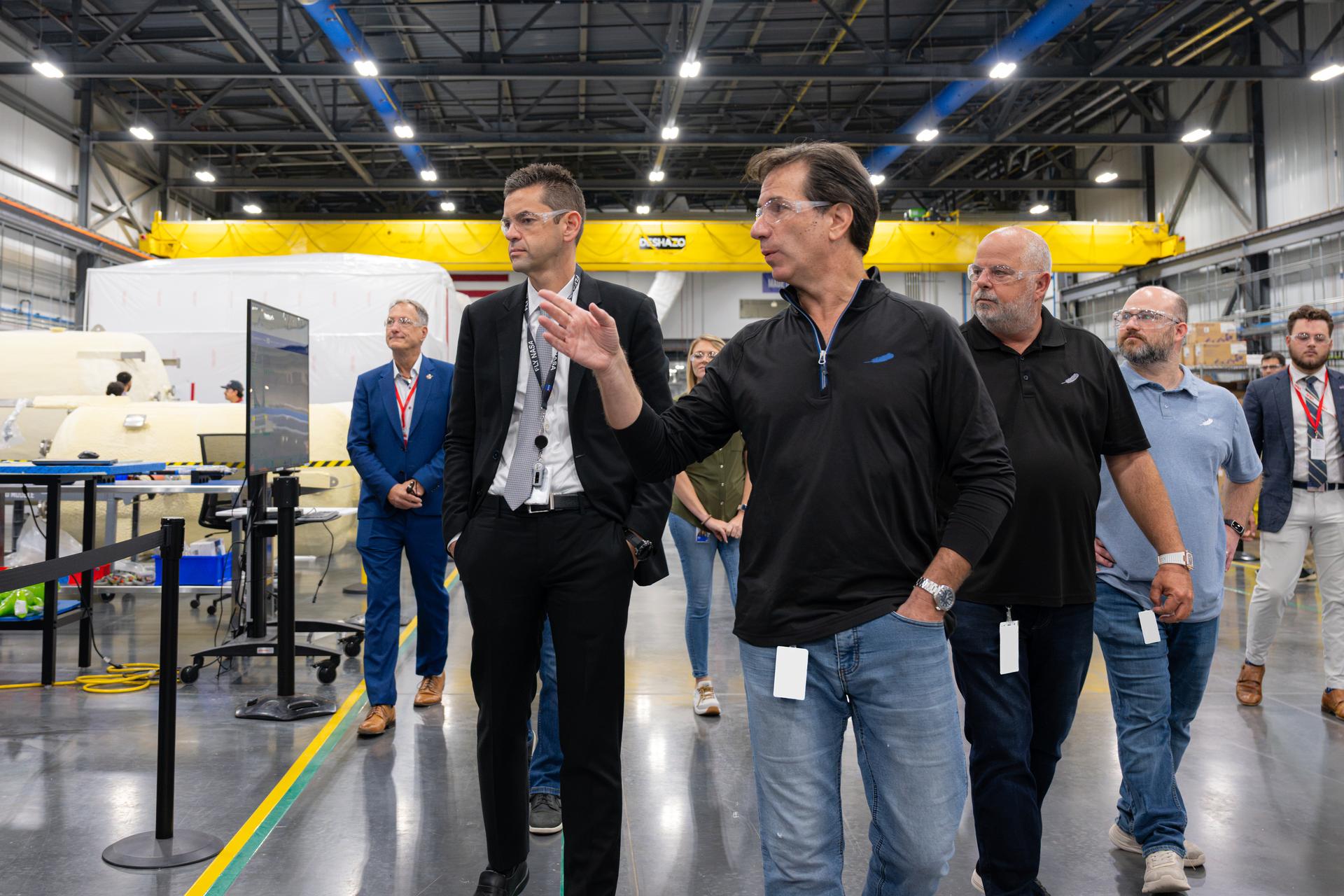
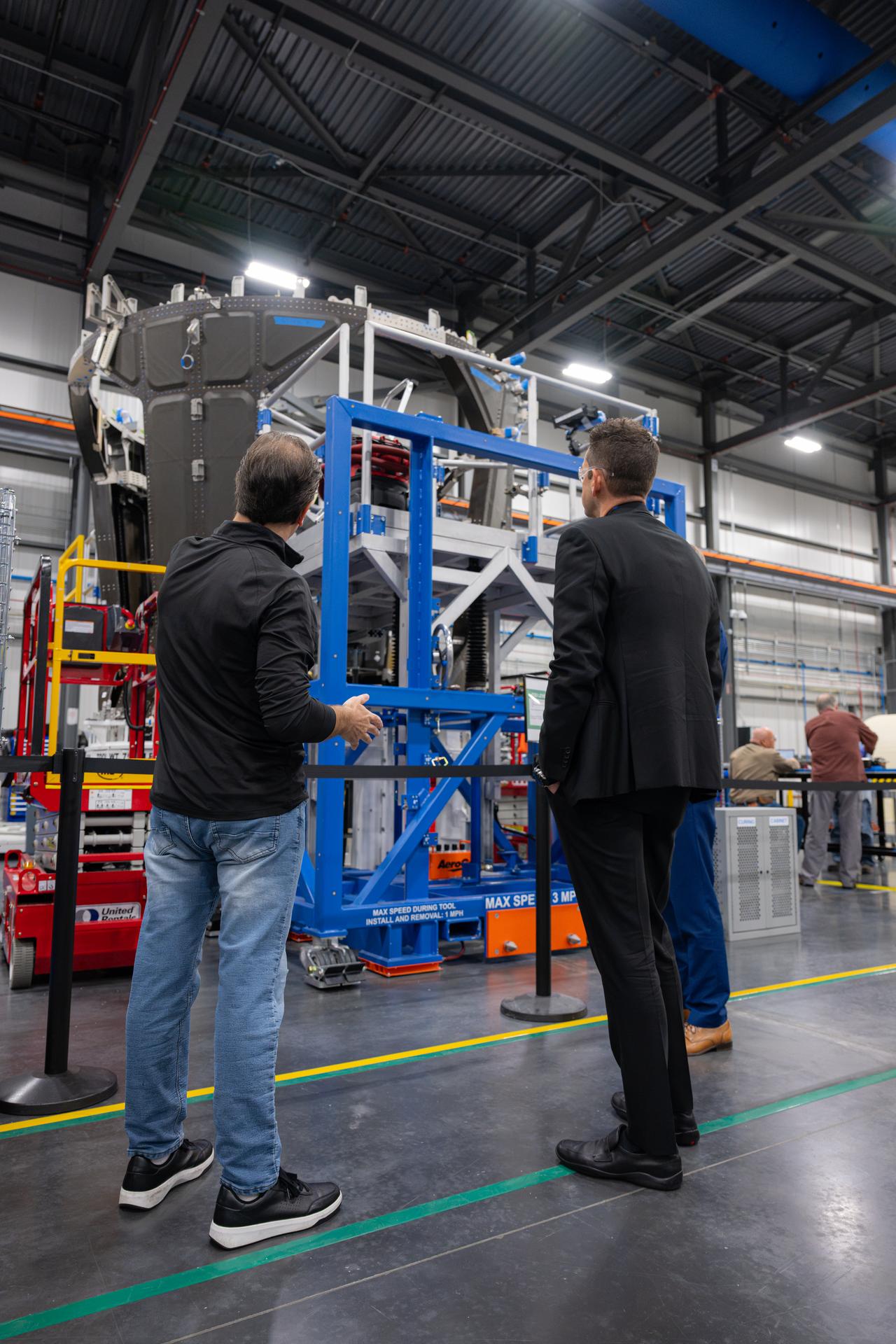
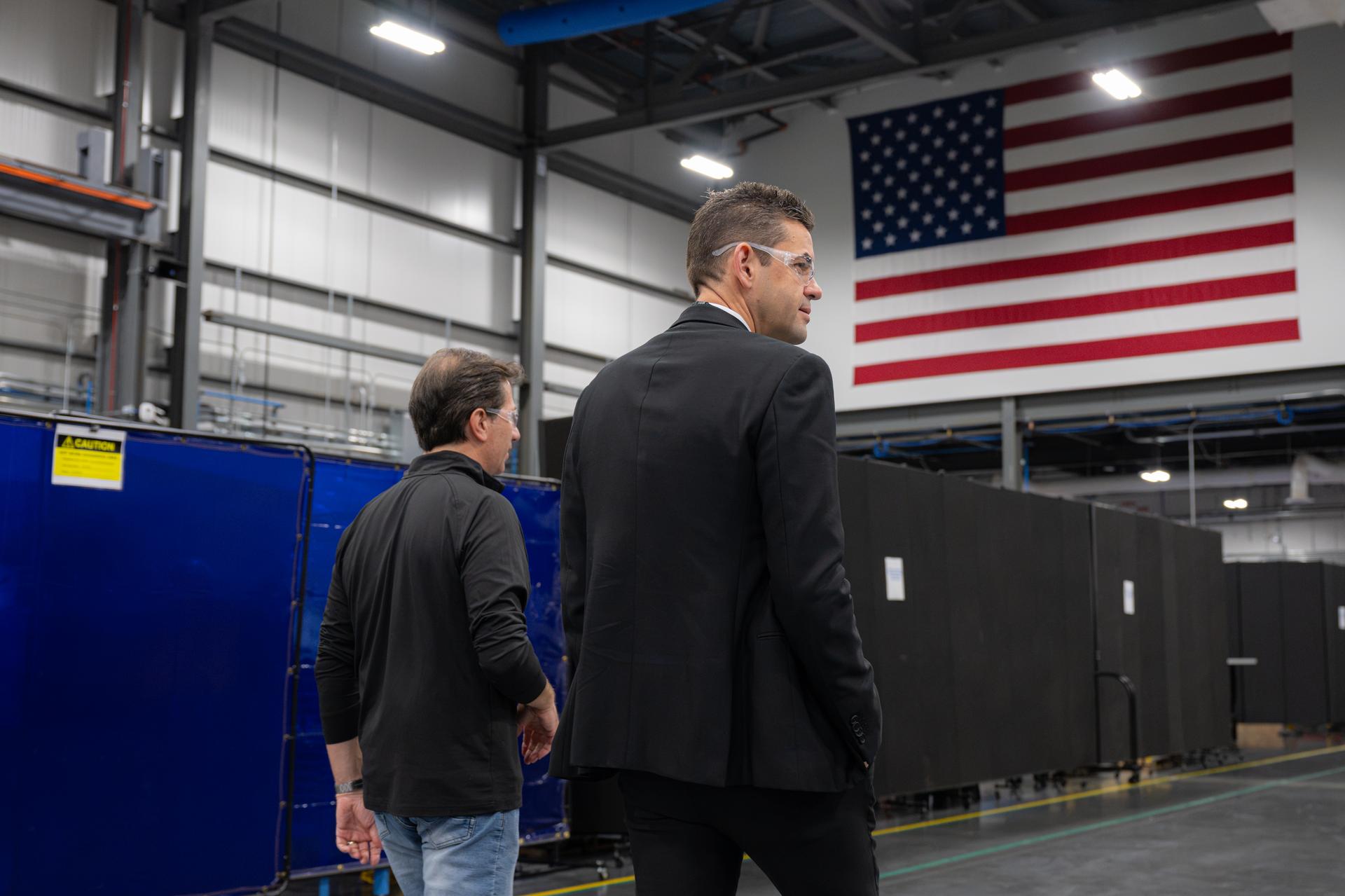
NASA Administrator Jared Isaacman meets with Blue Origin leadership, Tuesday, Jan. 13, 2026, at the company’s Lunar Plant 1 facility in Merritt Island, Fla. Photo Credit: (NASA/John Kraus)

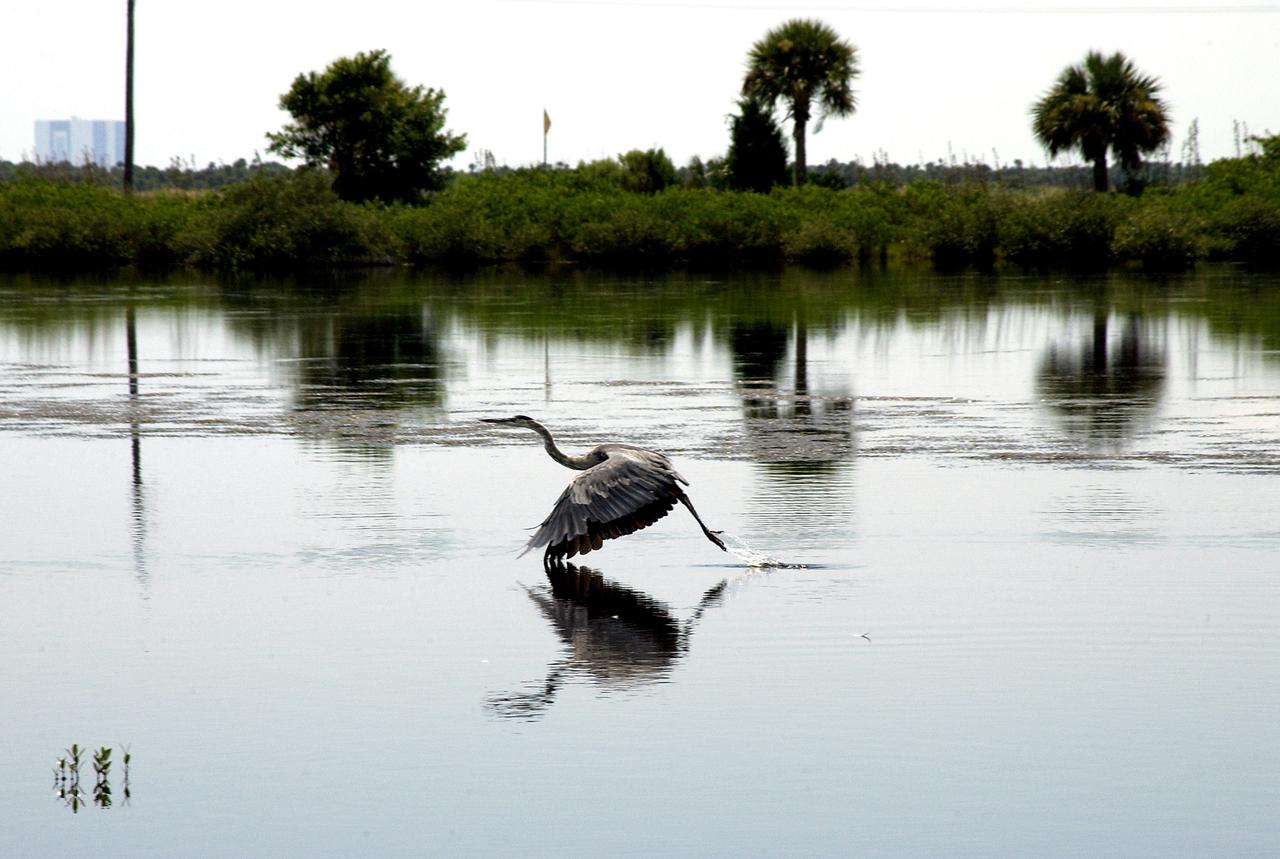
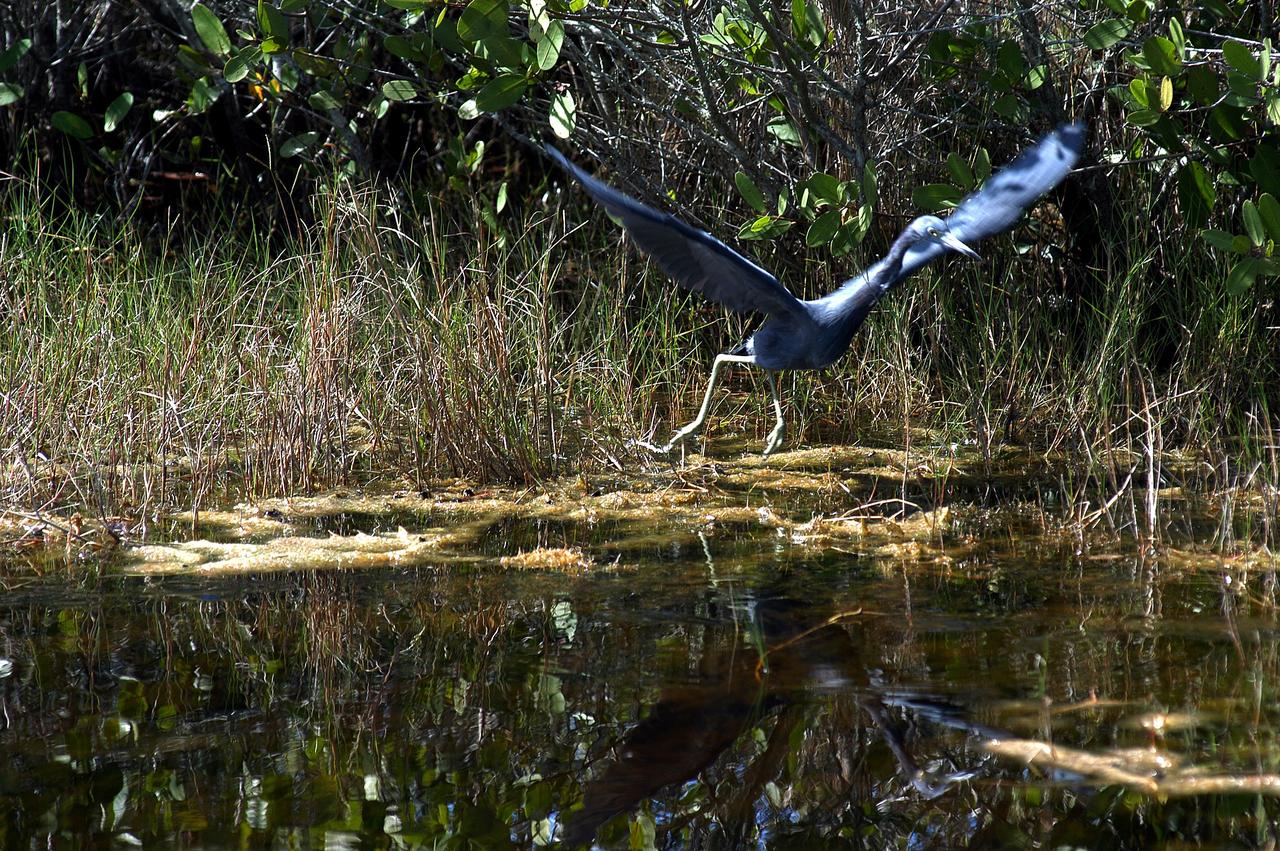
KENNEDY SPACE CENTER, FLA. - A Great Blue Heron takes flight from waters on KSC. It is one of 310 species of birds that inhabit the National Merritt Island Wildlife Refuge, which shares a boundary with KSC. The marshes and open water of the refuge also provide wintering areas for 23 species of migratory waterfowl, as well as a year-round home for great blue herons, great egrets, wood storks, cormorants, brown pelicans and other species of marsh and shore birds.

KENNEDY SPACE CENTER, FLA. - A great blue heron swoops down for a landing on the water near KSC. The heron is one of 310 species of birds that inhabit the National Merritt Island Wildlife Refuge, which shares a boundary with KSC. The marshes and open water of the refuge also provide wintering areas for 23 species of migratory waterfowl, as well as a year-round home for great blue herons, great egrets, wood storks, cormorants, brown pelicans and other species of marsh and shore birds.

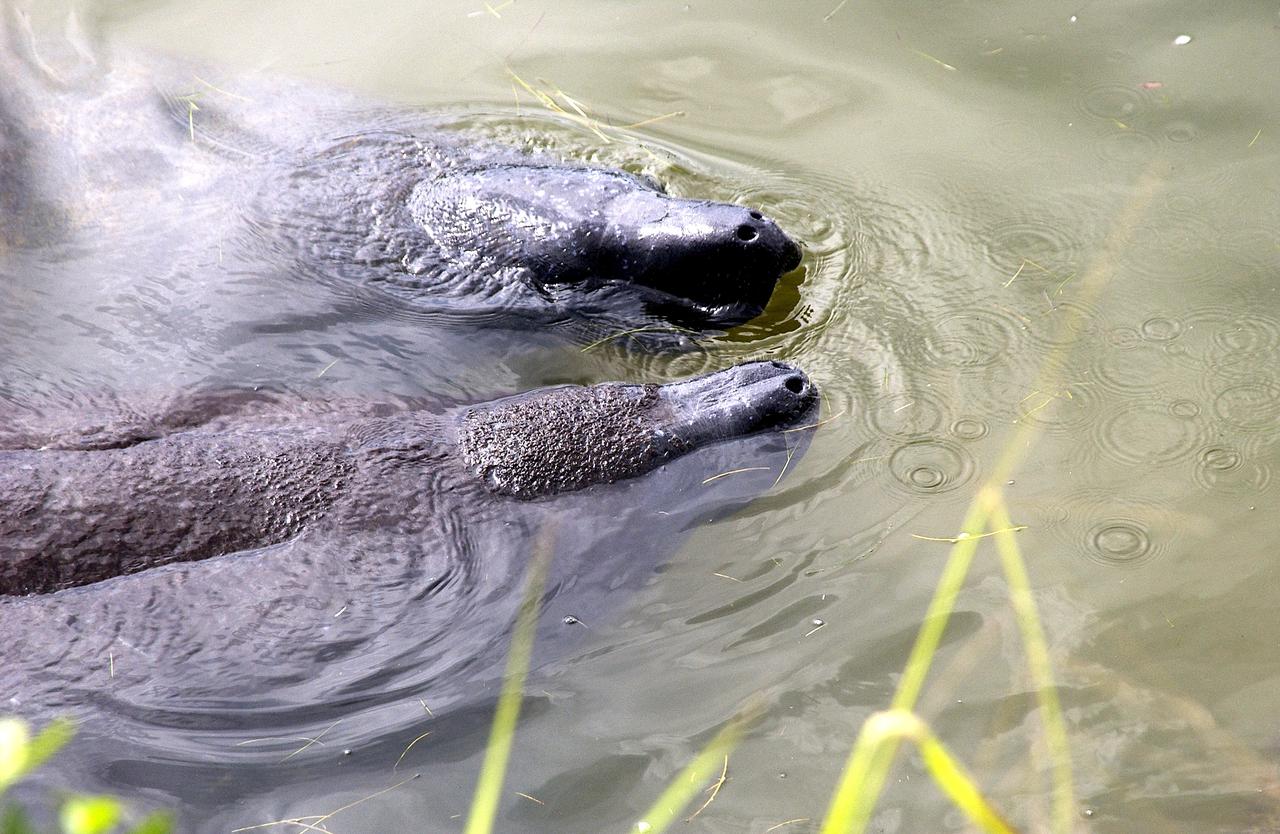
KENNEDY SPACE CENTER, FLA. - Two manatees surface for air in water on KSC. Manatees live in Florida's warm water rivers and inland springs. KSC shares a boundary with the Merritt Island National Wildlife Refuge, which encompasses 92,000 acres that are a habitat for more than 331 species of birds, 31 mammals, 117 fishes, and 65 amphibians and reptiles.

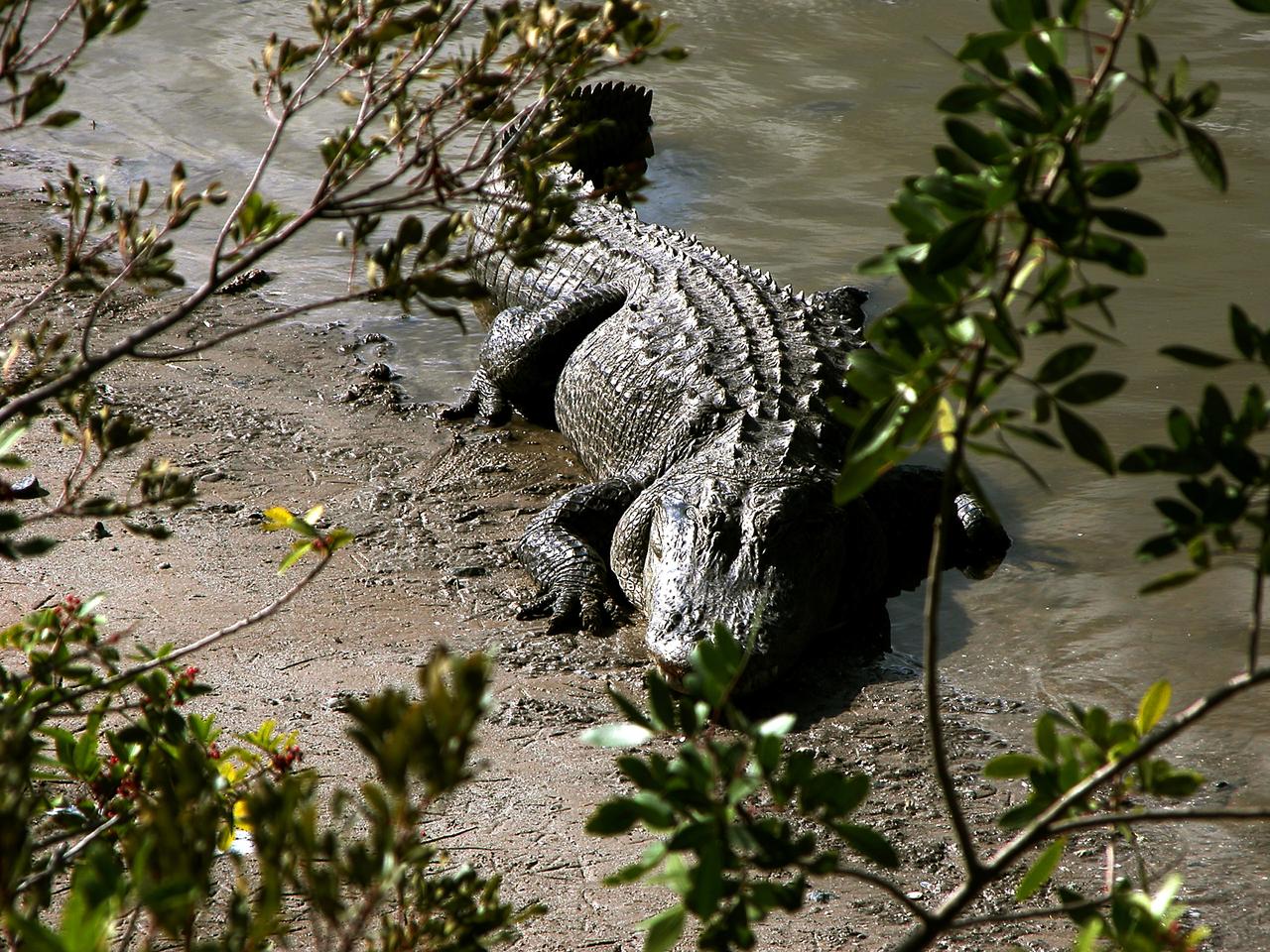
KENNEDY SPACE CENTER, FLA. -- An alligator is spotted sunning on the muddy bank of a canal in KSC. Nearly 5,000 alligators can be found in canals, ponds, and waterways throughout the Center and the surrounding Merritt Island National Wildlife Refuge. American alligators feed and rest in the water, and lay their eggs in dens they dig into the banks. The young alligators spend their first several weeks in these dens. The Wildlife Refuge encompasses 92,000 acres that are a habitat for more than 331 species of birds, 31 mammals, 117 fishes, and 65 amphibians and reptiles.

KENNEDY SPACE CENTER, FLA. - The start of a lunar eclipse is viewed from Merritt Island, Fla. Eclipses occur when the Sun, Earth and Moon line up. They are rare because the Moon usually passes above or below the imaginary line connecting Earth and the Sun. The Earth casts a shadow that the Moon can pass through - when it does, it is called a lunar eclipse.

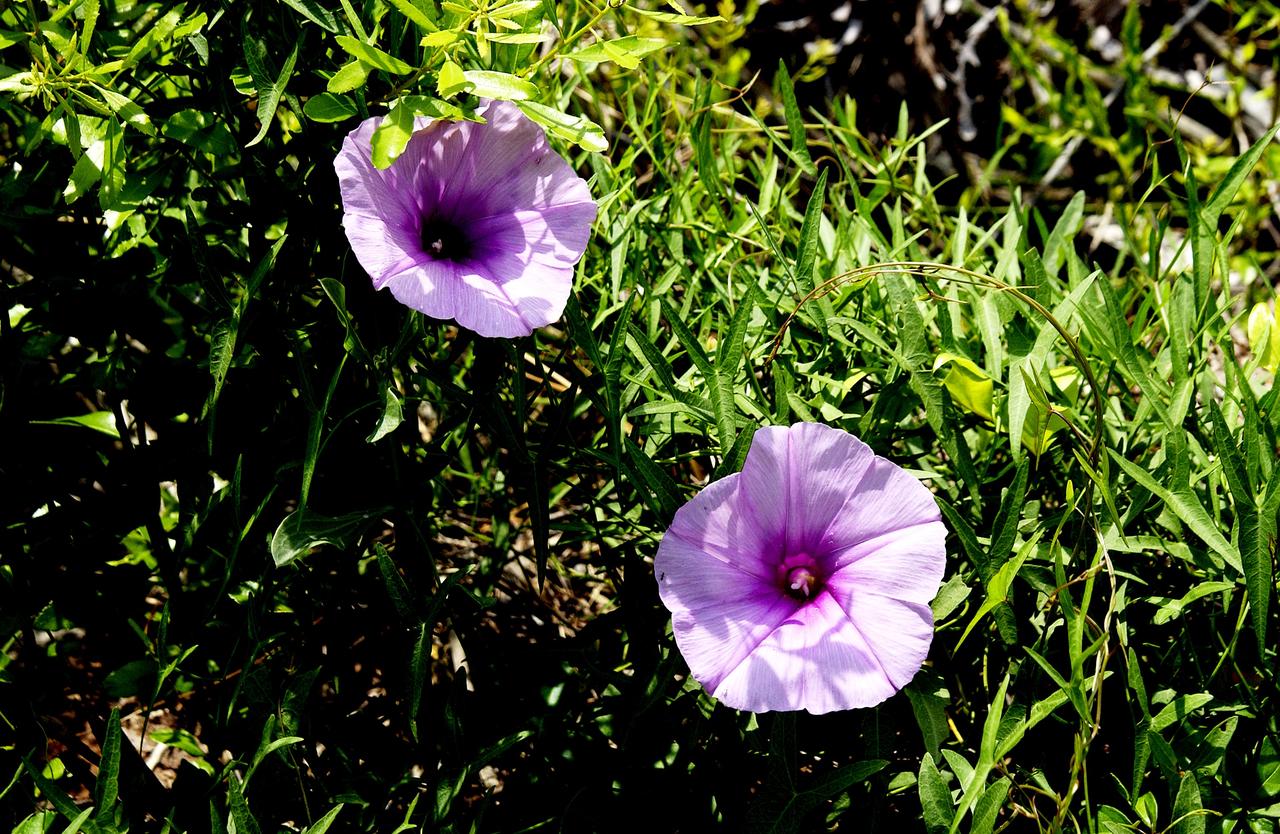
KENNEDY SPACE CENTER, FLA. - Wildflowers resembling petunias stand out against the deep green of the marsh foliage at KSC, which shares a boundary with the National Merritt Island Wildlife Refuge. Approximately one half of the Refuge's 140,000 acres consists of brackish estuaries and marshes. The remaining lands consist of coastal dunes, scrub oaks, pine forests and flatwoods, and palm and oak hammocks.

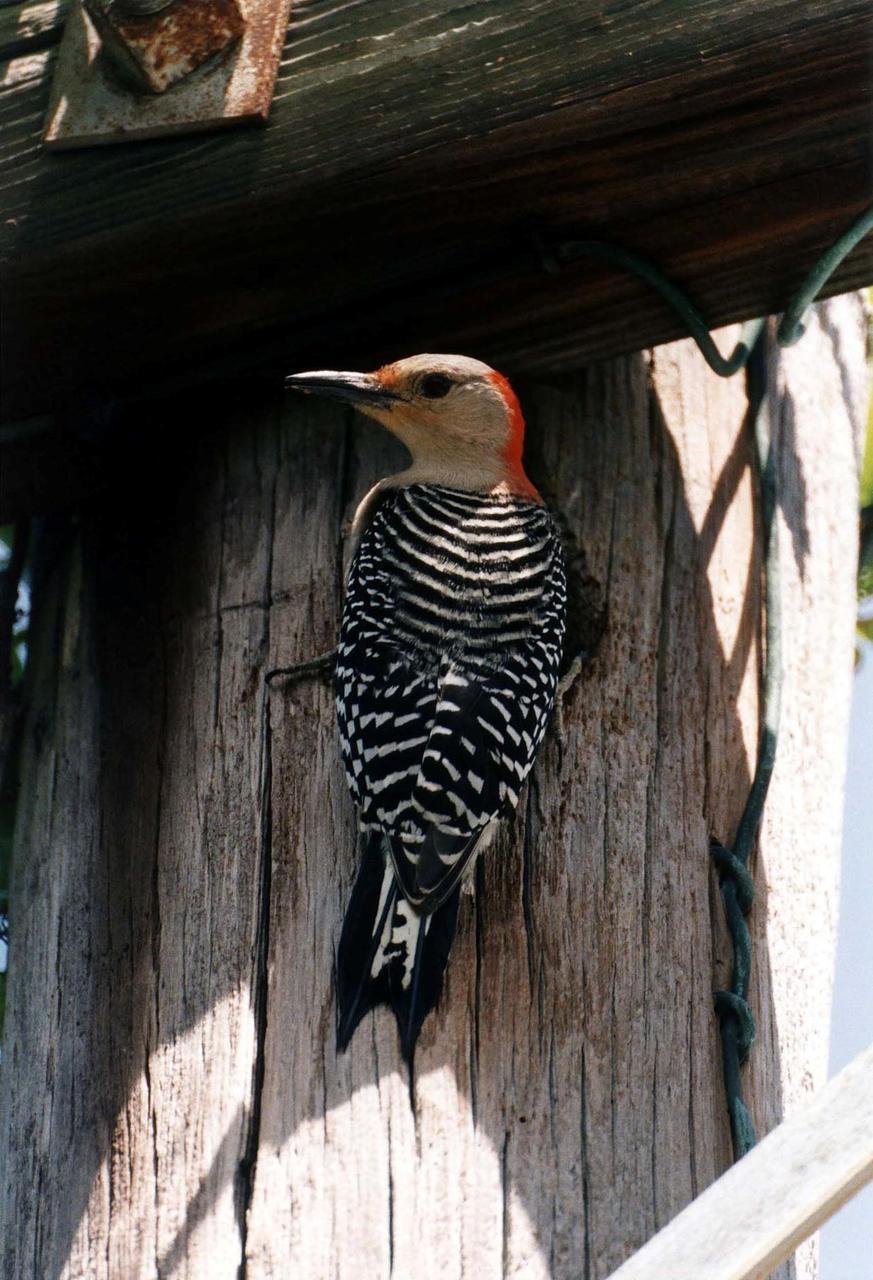
KENNEDY SPACE CENTER, FLA. - A female Red-bellied Woodpecker clings to a utility pole where it has made a home on Merritt Island Wildlife Refuge. The most common type of woodpecker in the South, the "Zebraback" nests in the cavities of trees and consumes large quantities of wood-boring beetles, as well as other insect pests. More than 280 species of birds make their homes on the 140,000-acre refuge, which lies within the boundaries of Kennedy Space Center.
KENNEDY SPACE CENTER, FLA. -- An alligator is spotted sunning on the muddy bank of a canal in KSC. Nearly 5,000 alligators can be found in canals, ponds, and waterways throughout the Center and the surrounding Merritt Island National Wildlife Refuge. American alligators feed and rest in the water, and lay their eggs in dens they dig into the banks. The young alligators spend their first several weeks in these dens. The Wildlife Refuge encompasses 92,000 acres that are a habitat for more than 331 species of birds, 31 mammals, 117 fishes, and 65 amphibians and reptiles.
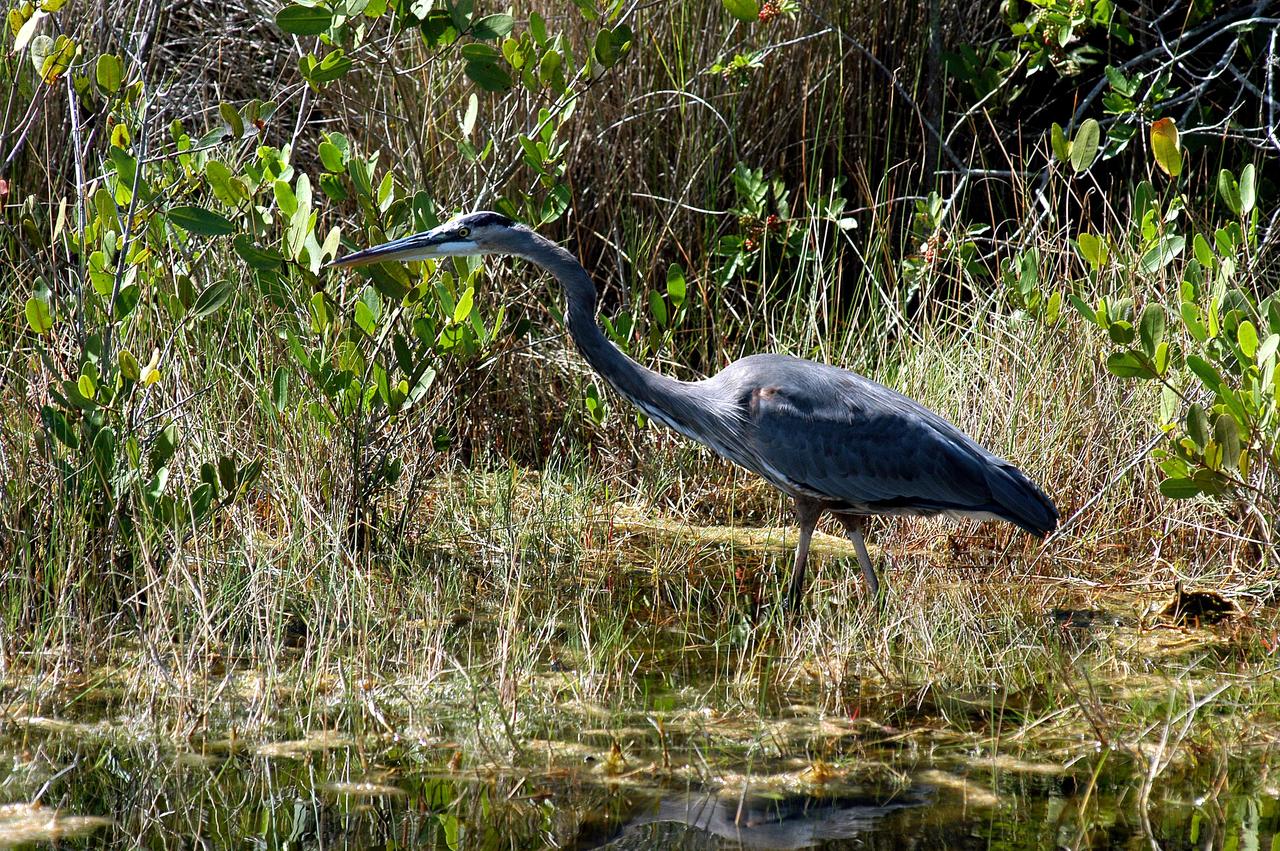
KENNEDY SPACE CENTER, FLA. - A great blue heron patiently stalks its prey in the marshes around KSC. The heron is one of 310 species of birds that inhabit the National Merritt Island Wildlife Refuge, which shares a boundary with KSC. The marshes and open water of the refuge also provide wintering areas for 23 species of migratory waterfowl, as well as a year-round home for great blue herons, great egrets, wood storks, cormorants, brown pelicans and other species of marsh and shore birds.
KENNEDY SPACE CENTER, FLA. - A great white heron silently waits in the tall grass within KSC. The heron is one of 310 species of birds that inhabit the National Merritt Island Wildlife Refuge, which shares a boundary with KSC. The marshes and open water of the refuge also provide wintering areas for 23 species of migratory waterfowl, as well as a year-round home for great blue herons, great egrets, wood storks, cormorants, brown pelicans and other species of marsh and shore birds.

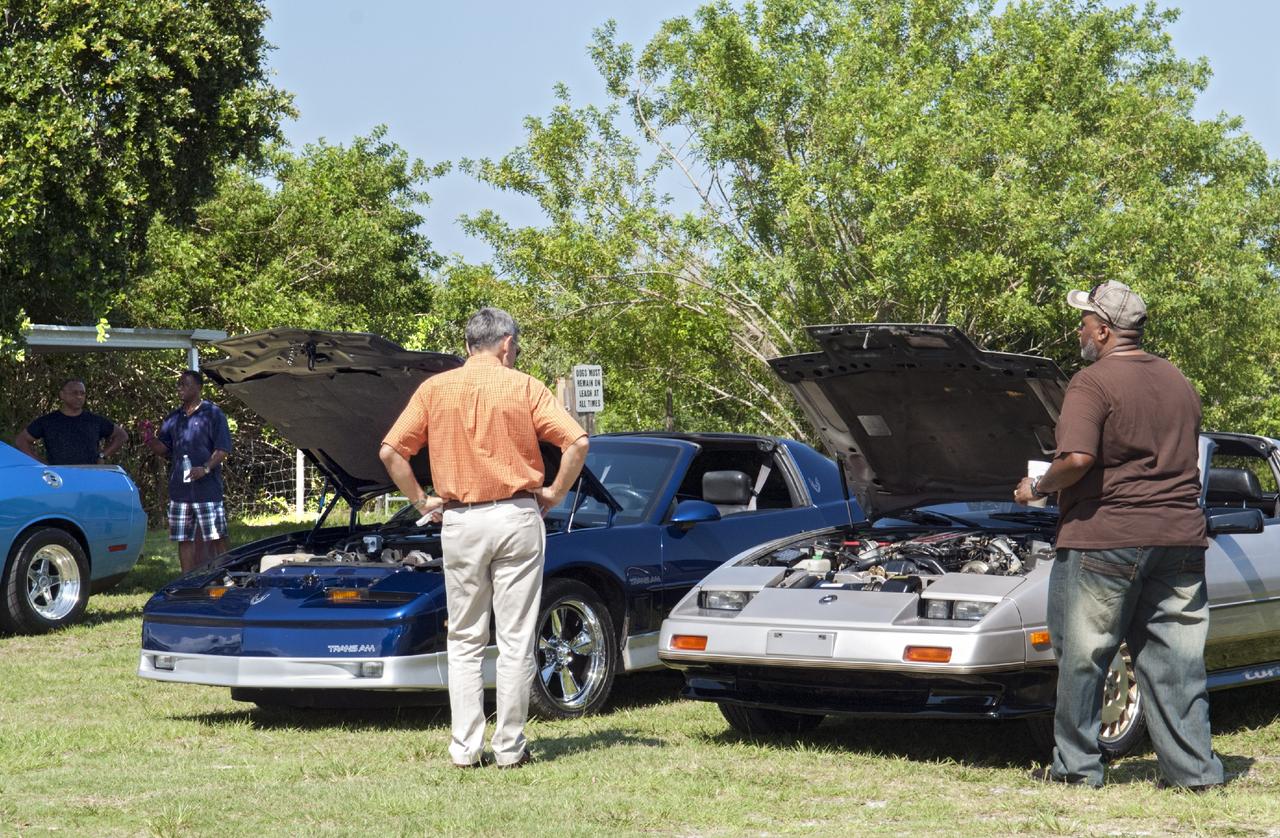
Merritt Island, Fla. – Kennedy Space Center Director Bob Cabana enjoys the automobiles on display in the a noncompetitive car show at 2013 Black Employee Strategy Team BEST BBQ at KARS Park I on Merritt Island. Events also included a spades tournament. BEST hosts the barbecue as a fundraiser for the Evelyn Johnson Scholarship, which is handed out every year to students who exemplify significant achievement both academically and in their community. The scholarship is in honor of Evelyn Johnson, a founding member of BEST and former deputy director of Kennedy’s Diversity and Equal Opportunity Office. Photo credit: NASA/ Charisse Nahser

KENNEDY SPACE CENTER, FLA. - Representatives from the Merritt Island National Wildlife Refuge (MINWR) and KSC unveil a plaque dedicating the Sendler Education Outpost, located at Dummit Cove on the Refuge. Fourth from right is Acting Deputy Director JoAnn Morgan. The outpost is a resource for environmental educational students in the Central Florida area. It is named for Karl Sendler, a space pioneer and manager under Dr. Kurt Debus, KSC's first center director. Funding for the facility was provided by the Merritt Island Wildlife Association with assistance from MINWR and Kennedy Space Center.

Merritt Island, Fla. – Kennedy Space Center worker Bettye Lee serves Center Director Bob Cabana some delicious food at the 2013 The Black Employee Strategy Team BEST BBQ at KARS I Park on Merritt Island. Events included a noncompetitive car show and a spades tournament. BEST hosts the barbecue as a fundraiser for the Evelyn Johnson Scholarship, which is handed out every year to students who exemplify significant achievement both academically and in their community. The scholarship is in honor of Evelyn Johnson, a founding member of BEST and former deputy director of Kennedy’s Diversity and Equal Opportunity office. Photo credit: NASA/ Charisse Nahser

Merritt Island, Fla. – Kennedy Space Center worker Yves Lamothe and Center Director Bob Cabana welcome guests to the 2013 Black Employee Strategy Team BEST BBQ at KARS Park I on Merritt Island. Events included a noncompetitive car show and a spades tournament. BEST hosts the barbecue as a fundraiser for the Evelyn Johnson Scholarship, which is handed out every year to students who exemplify significant achievement both academically and in their community. The scholarship is in honor of Evelyn Johnson, a founding member of BEST and former deputy director of Kennedy’s Diversity and Equal Opportunity Office. Photo credit: NASA/ Charisse Nahser

Merritt Island, Fla. – Kennedy Space Center worker Yves Lamothe and Center Director Bob Cabana welcome guests to the 2013 Black Employee Strategy Team BEST BBQ at KARS Park I on Merritt Island. Events included a noncompetitive car show and a spades tournament. BEST hosts the barbecue as a fundraiser for the Evelyn Johnson Scholarship, which is handed out every year to students who exemplify significant achievement both academically and in their community. The scholarship is in honor of Evelyn Johnson, a founding member of BEST and former deputy director of Kennedy’s Diversity and Equal Opportunity Office. Photo credit: NASA/ Charisse Nahser

Merritt Island, Fla. – Kennedy Space Center worker James Davis, Maxine Daniels, and Bettye Lee serve delicious food to attendees at the 2013 Black Employee Strategy Team BEST BBQ at KARS I Park on Merritt Island. Events included a noncompetitive car show and a spades tournament. BEST hosts the barbecue as a fundraiser for the Evelyn Johnson Scholarship, which is handed out every year to students who exemplify significant achievement both academically and in their community. The scholarship is in honor of Evelyn Johnson, a founding member of BEST and former deputy director of Kennedy’s Diversity and Equal Opportunity Office. Photo credit: NASA/ Charisse Nahser

Several manatees swim in the turn basin of Launch Complex 39 at NASA’s Kennedy Space Center in Florida on Tuesday, Nov. 26, 2024. NASA Kennedy shares a boundary with the Merritt Island Wildlife National Refuge and is home to more than 1,500 species of plants and animals on 140,000 acres.

An alligator is in view in a waterway at NASA’s Kennedy Space Center in Florida on May 16, 2022. The center shares a border with the Merritt Island Wildlife Refuge. More than 65 amphibian and reptile species call Kennedy and the wildlife refuge home.

Two large alligators sun themselves on the sand near the NASA Causeway at Kennedy Space Center in Florida. The center shares a boundary with the Merritt Island National Wildlife Refuge. The refuge is home to more than 65 amphibian and reptile species, along with 330 native and migratory bird species, 25 mammal and 117 fish species.