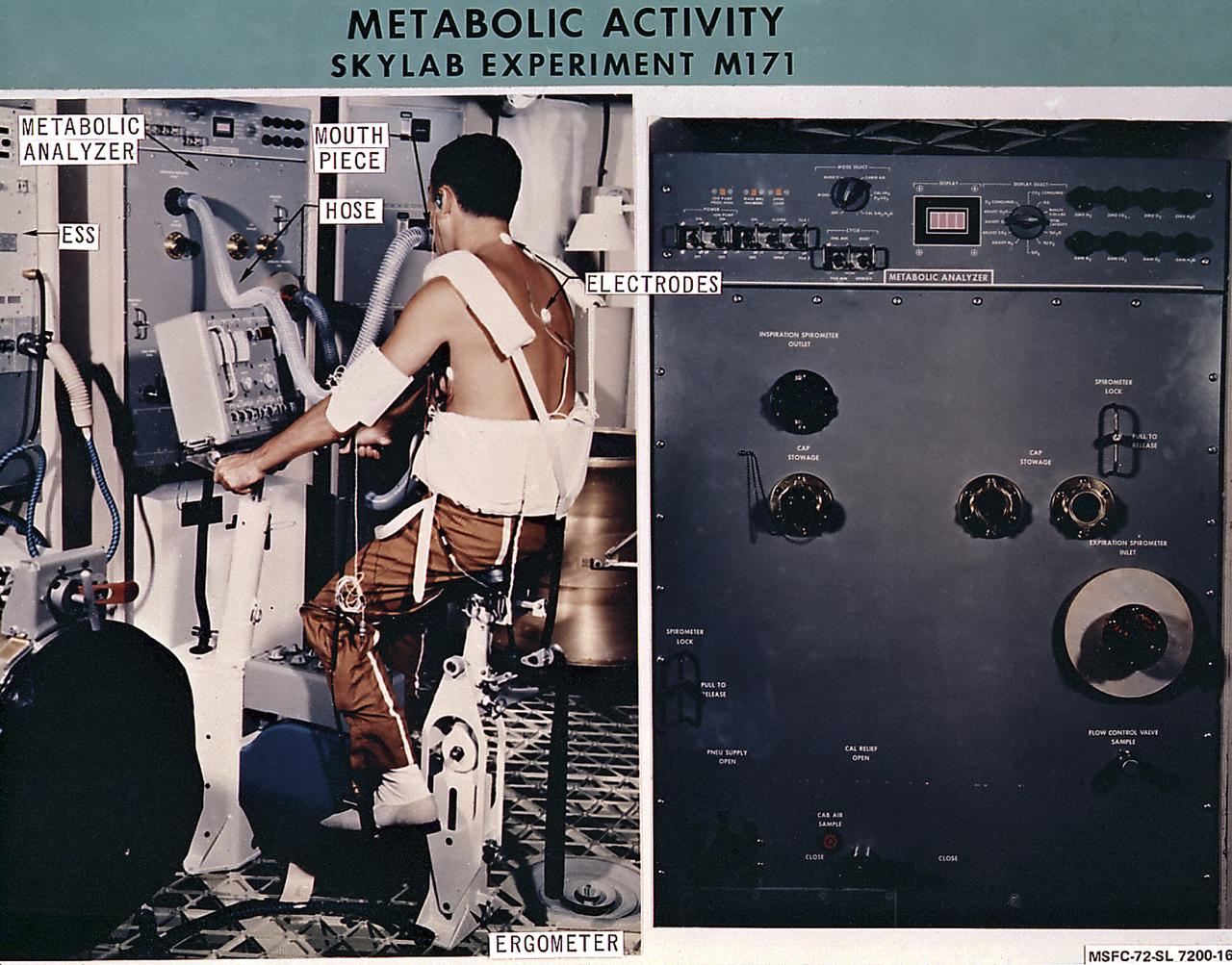
This chart details Skylab's Metabolic Activity experiment (M171), a medical evaluation facility designed to measure astronauts' metabolic changes while on long-term space missions. The experiment obtained information on astronauts' physiological capabilities and limitations and provided data useful in the design of future spacecraft and work programs. Physiological responses to physical activity was deduced by analyzing inhaled and exhaled air, pulse rate, blood pressure, and other selected variables of the crew while they performed controlled amounts of physical work with a bicycle ergometer. The Marshall Space Flight Center had program responsibility for the development of Skylab hardware and experiments.
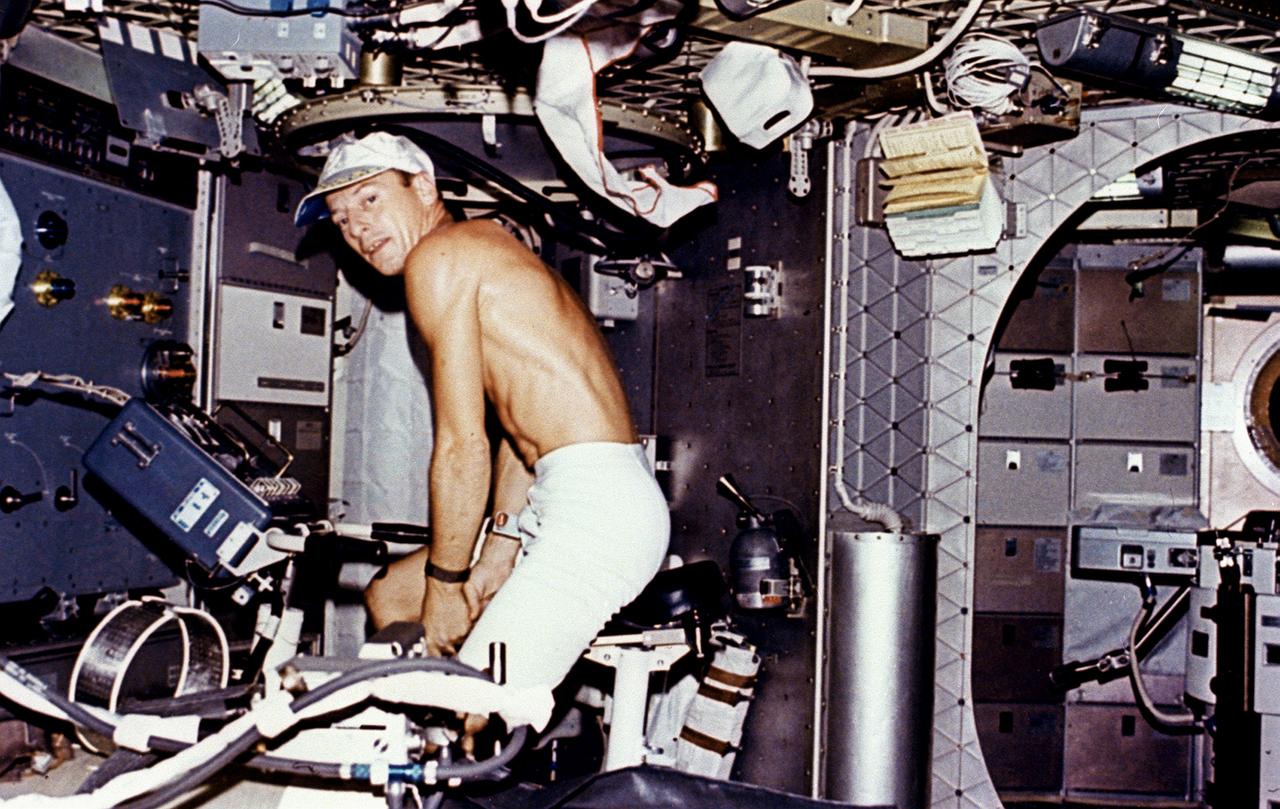
This Skylab-2 onboard photograph shows astronaut Charles "Pete" Conrad exercising on a stationary bicycle (ergometer) used for monitoring the metabolism of the astronauts. The ergometer was used to conduct both Vectorcardiogram experiment (M093) and Metabolic Activity experiment (M171). Experiment M093 was a medical evaluation designed to monitor changes in astronauts' cardiovascular systems, while Experiment M171 was to measure astronauts' metabolic changes during long-duration space missions.
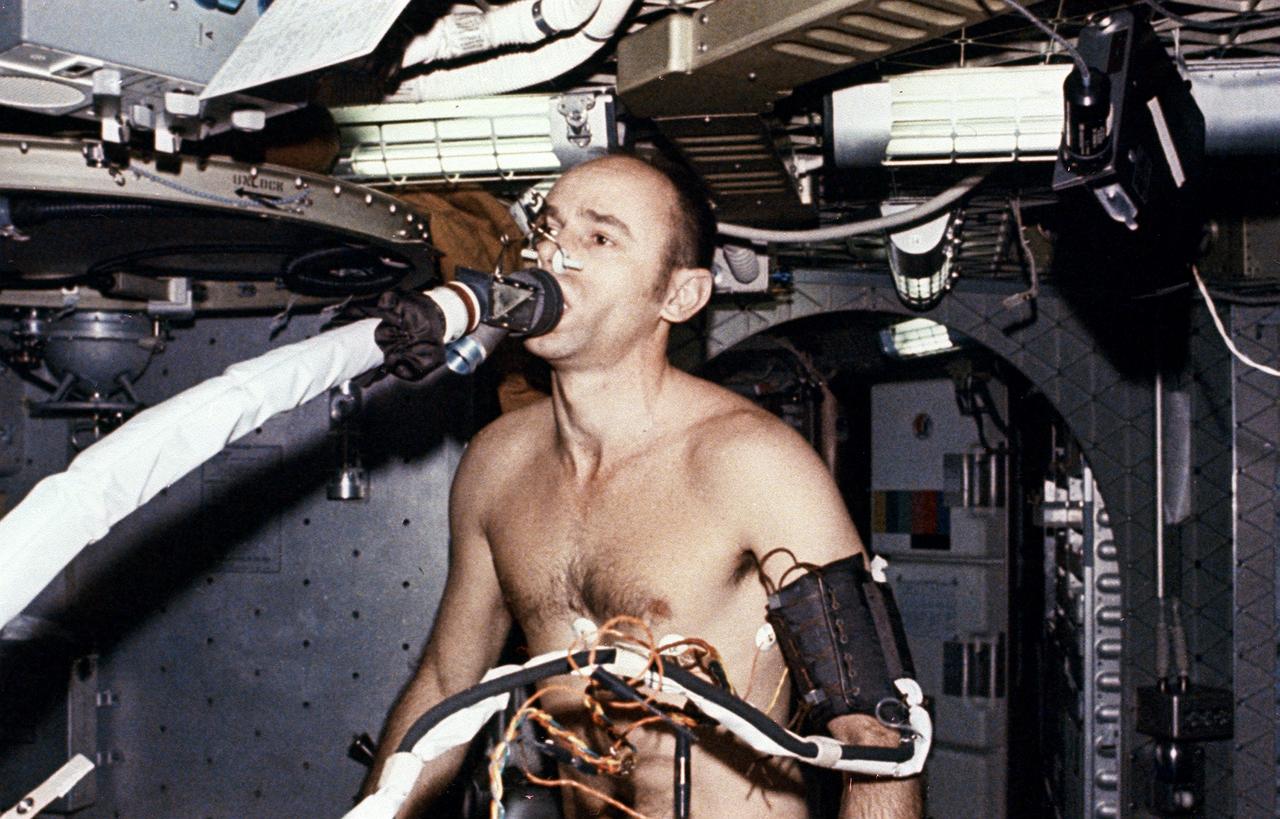
This Skylab-3 onboard photograph shows Astronaut Allen Bean on the ergometer, breathing into the metabolic analyzer. Skylab's Metabolic Activity experiment (M171), a medical evaluation facility, was designed to measure astronauts' metabolic changes while on long-term space missions. The experiment obtained information on astronauts' physiological capabilities and limitations and provided data useful in the design of future spacecraft and work programs. Physiological responses to physical activity was deduced by analyzing inhaled and exhaled air, pulse rate, blood pressure, and other selected variables of the crew while they performed controlled amounts of physical work with a bicycle ergometer.
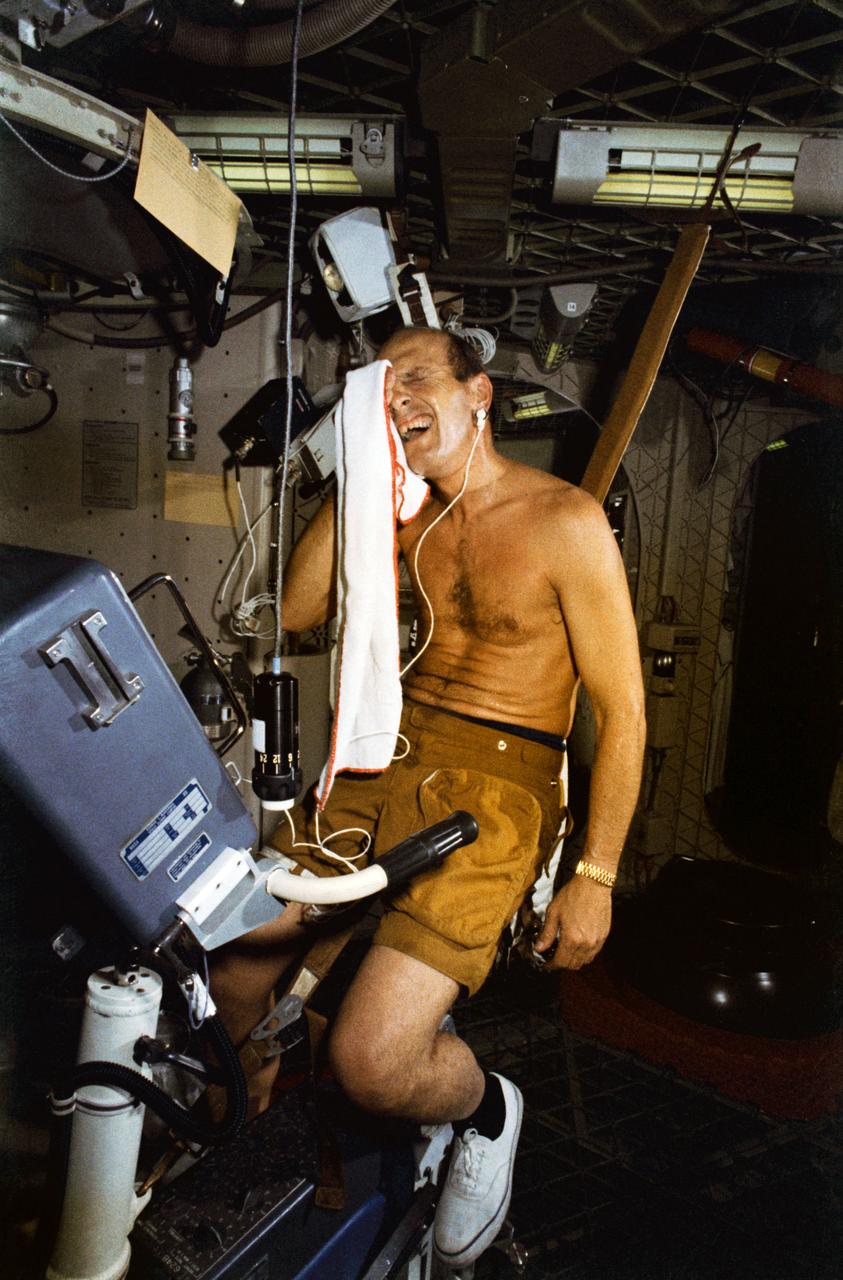
S73-20713 (1 March 1973) --- Astronaut Charles Conrad Jr., commander of the first manned Skylab mission, wipes perspiration from his face following an exercise session on the bicycle ergometer during Skylab training at Johnson Space Center. Conrad is in the work and experiments compartment of the crew quarters of the Skylab Orbital Workshop (OWS) trainer at JSC. In addition to being the prime exercise for the crewmen, the ergometer is also used for the vector-cardiogram test and the metabolic activity experiment. The bicycle ergometer produces measured workloads for use in determining man's metabolic effectiveness. Photo credit: NASA
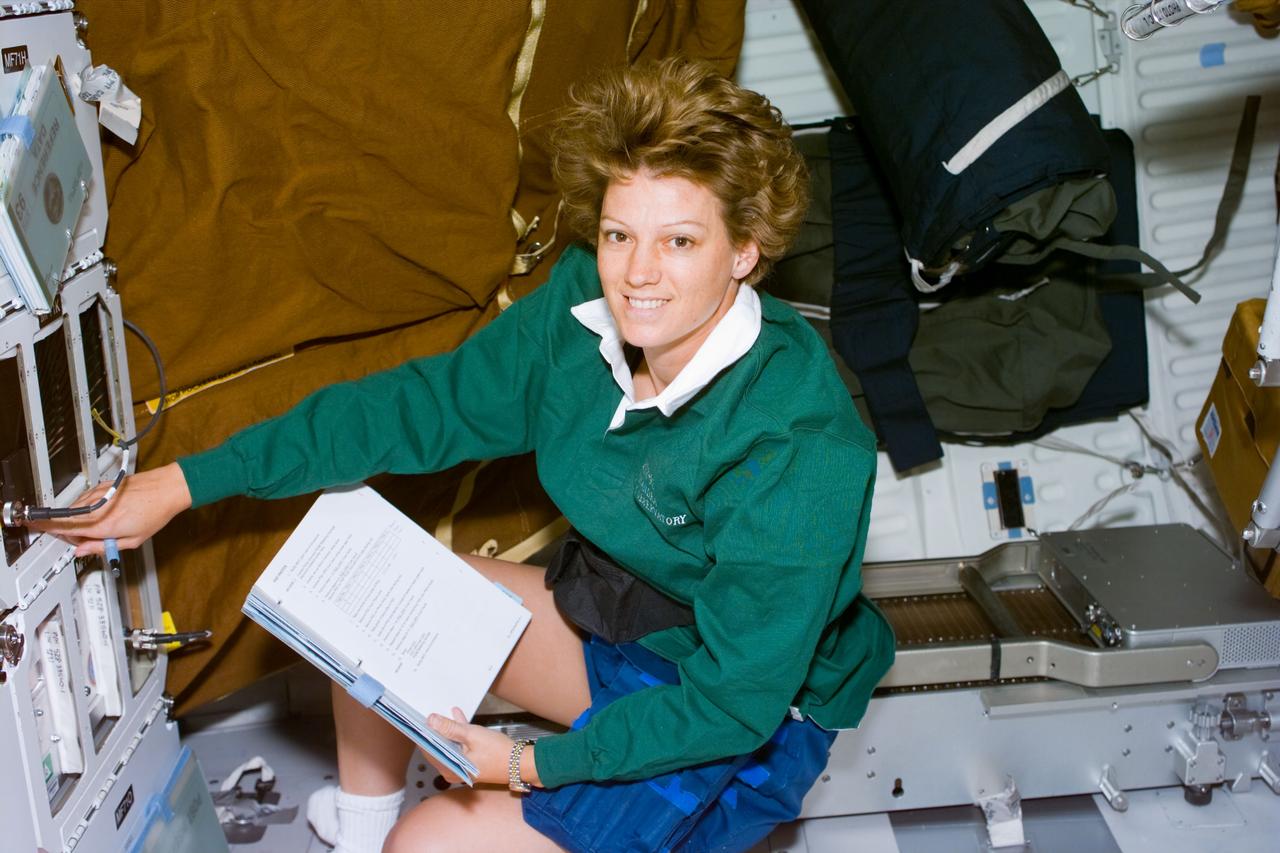
S93-E-5016 (23 July 1999) --- Astronaut Eileen M. Collins, mission commander, checks on an experiment on Columbia's middeck during Flight Day 1 activity. The experiment is called the Cell Culture Model, Configuration C. Objectives of it are to validate cell culture models for muscle, bone and endothelial cell biochemical and functional loss induced by microgravity stress; to evaluate cytoskeleton, metabolism, membrane integrity and protease activity in target cells; and to test tissue loss pharmaceuticals for efficacy. The photo was recorded with an electronic still camera (ESC).
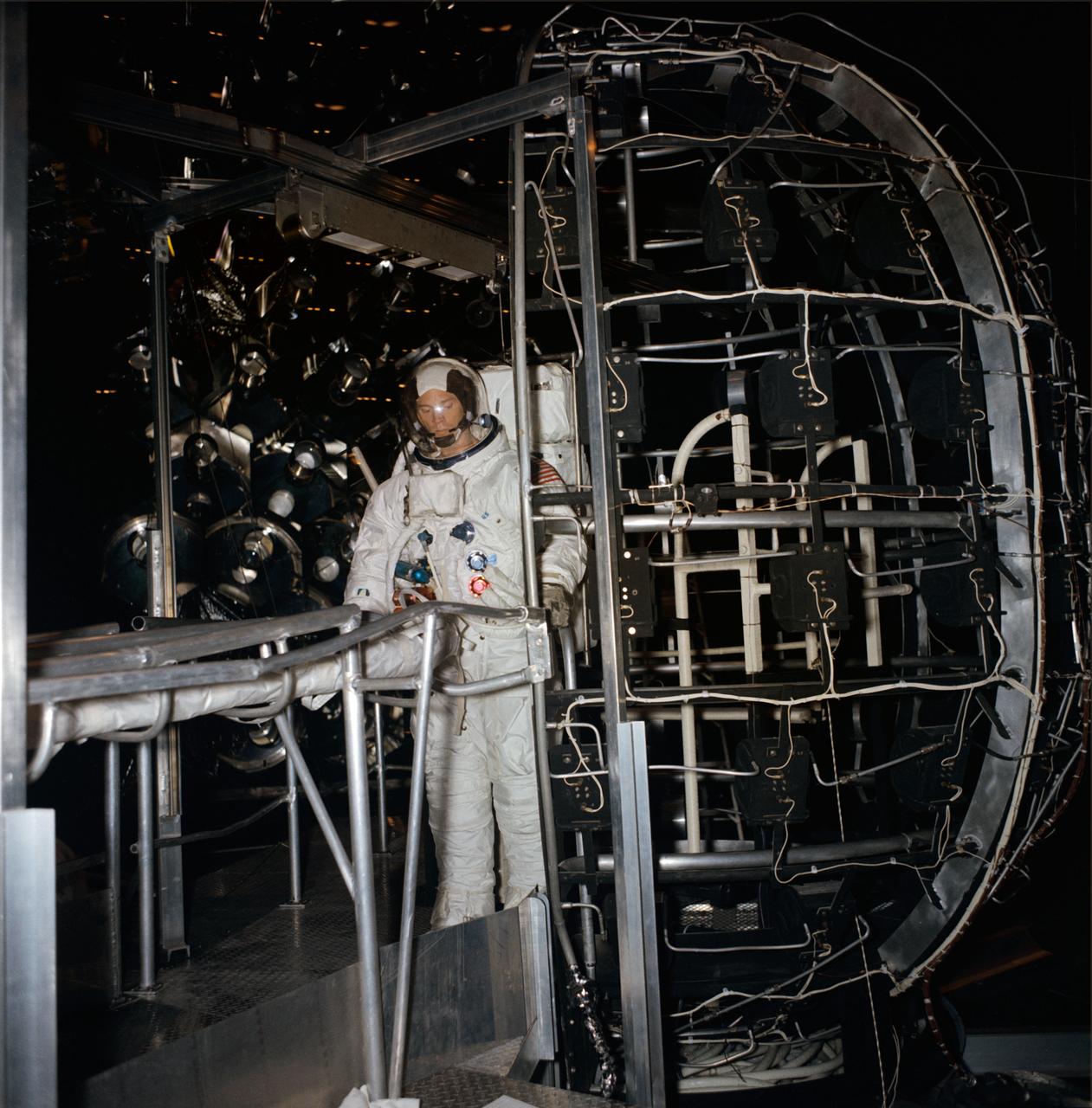
S68-55391 (11 Dec. 1968) --- Astronaut Russell L. Schweickart, lunar module pilot of the Apollo 9 (Spacecraft 104/Lunar Module 3/Saturn 504) space mission, is seen inside Chamber "A," Space Environment Simulation Laboratory, Building 32, participating in dry run activity in preparation for extravehicular activity which is scheduled in Chamber "A." The purpose of the scheduled training is to familiarize the crewmen with the operation of EVA equipment in a simulated space environment. In addition, metabolic and workload profiles will be simulated on each crewman. Astronauts Schweickart and Alan L. Bean, backup lunar module pilot, are scheduled to receive thermal-vacuum training simulating Earth-orbital EVA.
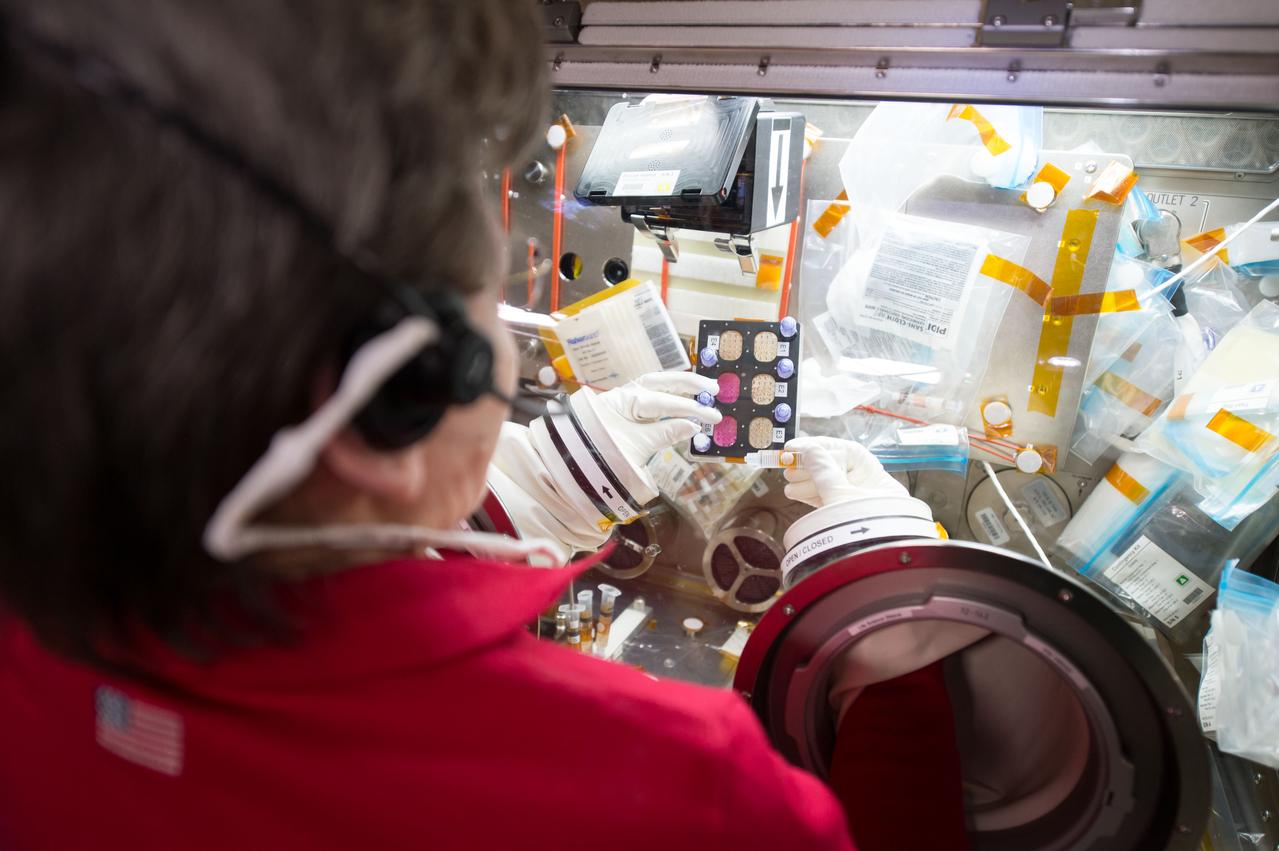
iss052e018939 (7/24/2017) --- NASA astronaut Peggy Whitson working with the Efficacy and Metabolism of Azonafide Antibody-Drug Conjugates in Microgravity (ADCs in Microgravity). The ADCs in Microgravity investigation evaluates new antibody-drug conjugates that combine an immune-activating drug with antibodies in order to target only cancer cells, increasing the effectiveness of chemotherapy and reducing its side effects. In microgravity, cancer cells grow in three-dimensional, spheroid structures that closely resemble their form in the human body, allowing for better drug testing. This investigation may accelerate development of targeted therapies for cancer patients.
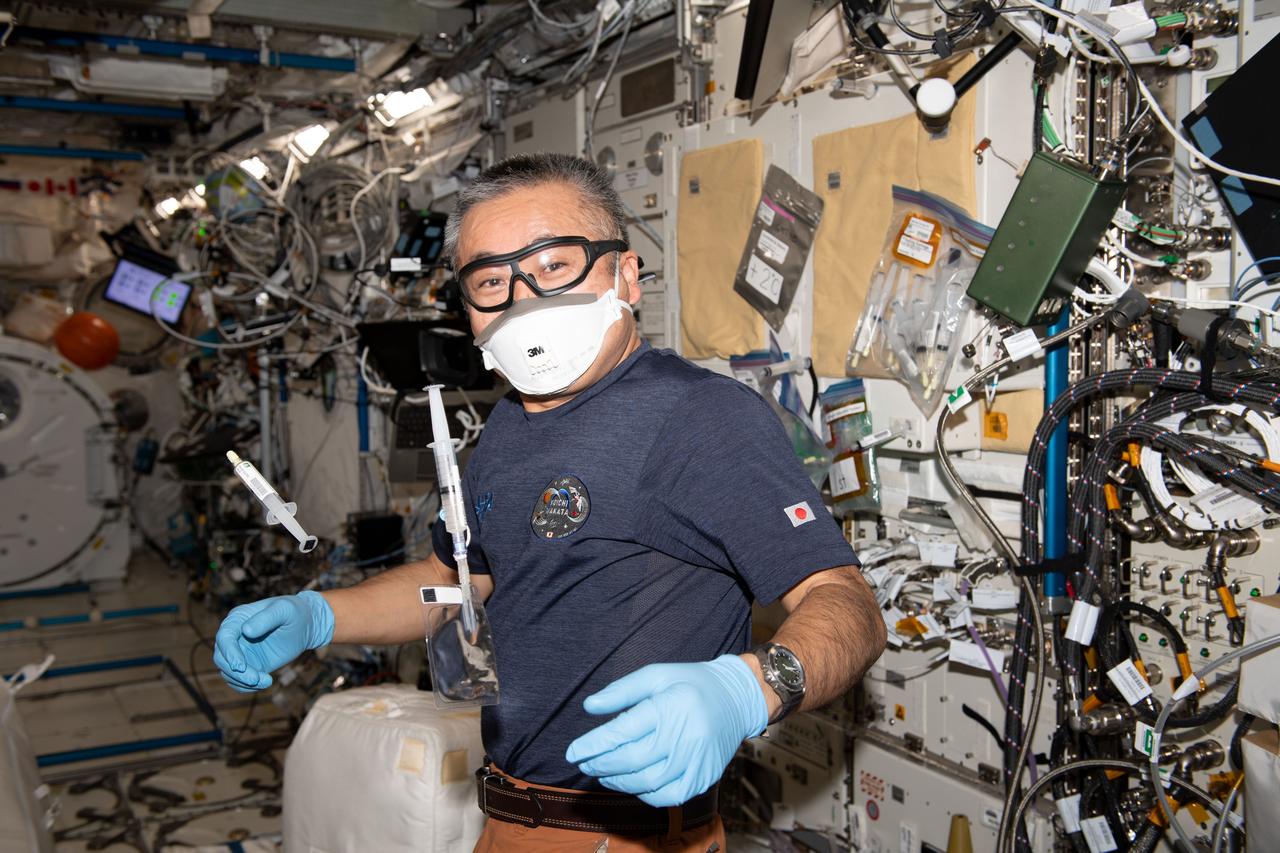
iss068e028286 (Dec. 1, 2022) --- Expedition 68 Flight Engineer Koichi Wakata of the Japan Aerospace Exploration (JAXA) works on the Neural Integration System investigation. The investigation uses nematodes (also known as roundworms) to examine how microgravity affects the nervous system. Previous experiments have shown that the C. elegans nematode species experiences muscle atrophy and reduced motor activity and metabolism in microgravity. Research also has shown that space can affect the nervous system, and neural networks may transmit the effects of microgravity throughout the body. Results could support development of countermeasures to protect crew members on future space missions and contribute to better health for Earth’s aging population.
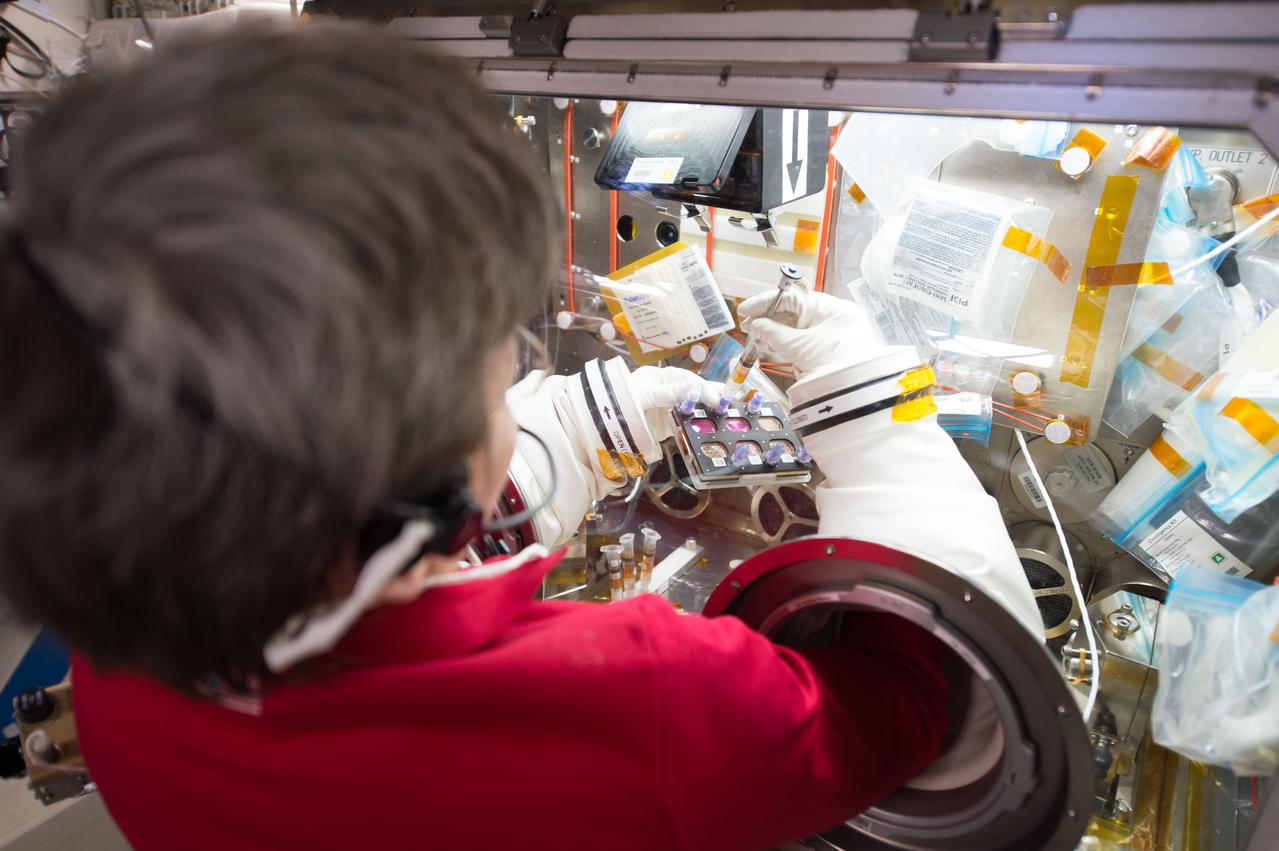
iss052e018944 (7/24/2017) --- NASA astronaut Peggy Whitson working with the Efficacy and Metabolism of Azonafide Antibody-Drug Conjugates in Microgravity (ADCs in Microgravity). The ADCs in Microgravity investigation evaluates new antibody-drug conjugates that combine an immune-activating drug with antibodies in order to target only cancer cells, increasing the effectiveness of chemotherapy and reducing its side effects. In microgravity, cancer cells grow in three-dimensional, spheroid structures that closely resemble their form in the human body, allowing for better drug testing. This investigation may accelerate development of targeted therapies for cancer patients.
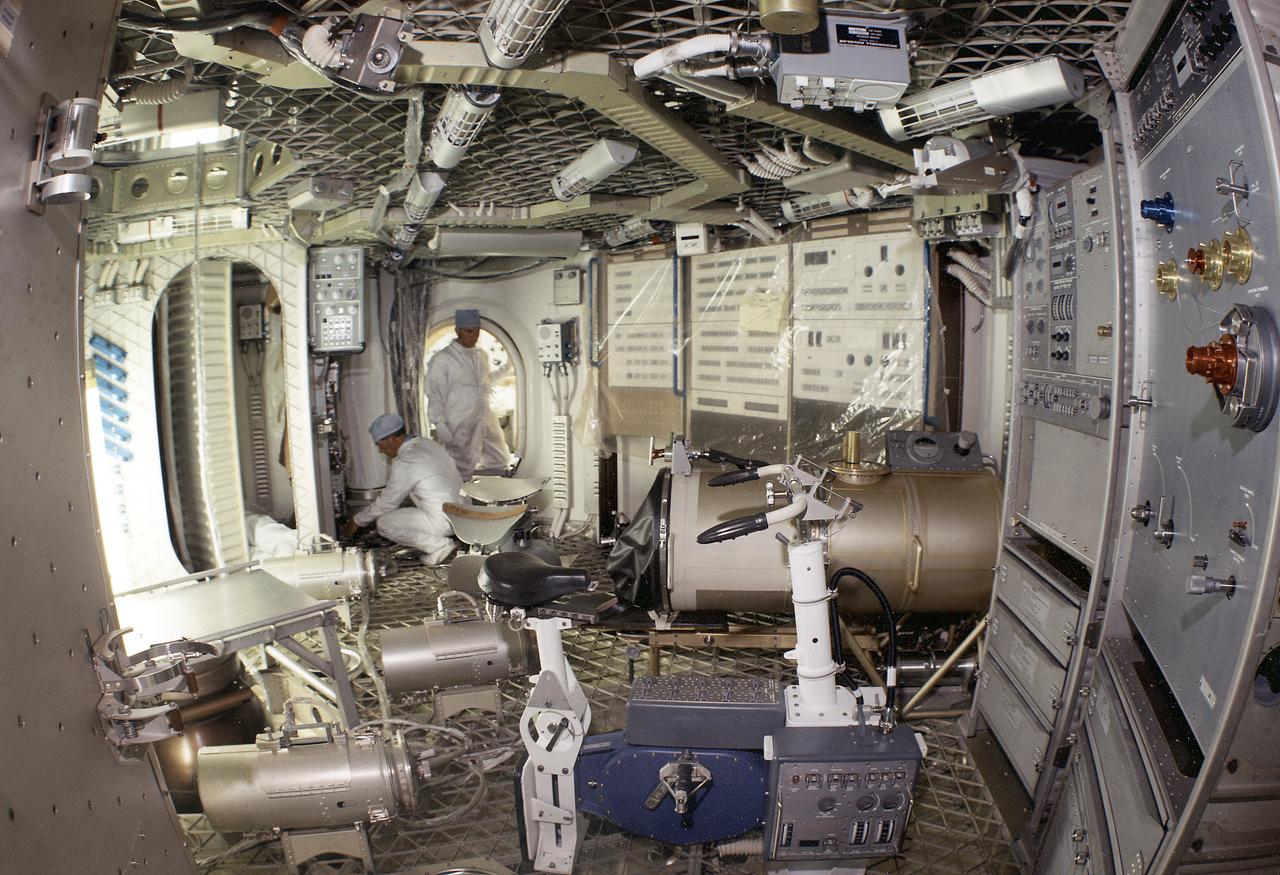
This is a wide-angle view of the Orbital Workshop lower level experiment area. In center foreground is the ergometer bicycle. In center background is a litter chair for the Human Vestibular Function experiment (Skylab Experiment M131) and in right background is the Lower Body Negative Pressure System experiment (Skylab Experiment M092). The ergometer bicycle was used for metabolic activity experiments and exercise. The purpose of the Human Vestibular (irner ear) Function experiment was to examine the effect of weightlessness on man's sensitivity and susceptibility to motion rotation, and his perception of orientation. The Lower Body Negative Pressure experiment investigated the relationship between the zero gravity environment and cardiovascular deconditioning. A characteristic of cardiovascular deconditoning is the partial failure of the blood vessels resulting in the excessive pooling of the blood in the legs when a person assumes an erect posture in a gravity field. The Marshall Space Flight Center had the program management responsibility for the development of Skylab hardware and experiments.
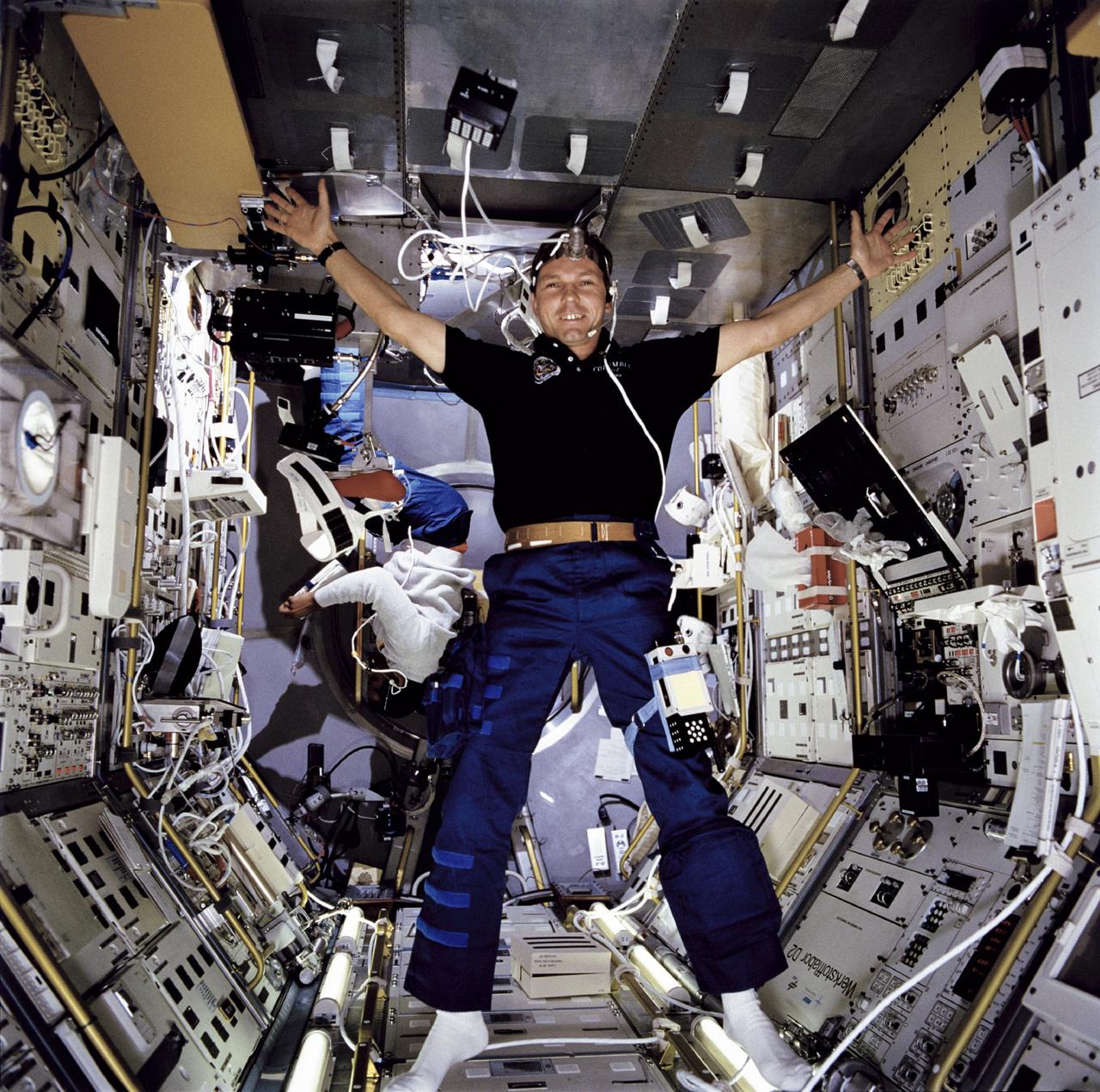
STS055-106-090 (26 April- 6 May 1993) --- Hans Schlegel, one of two STS-55 payload specialists representing the German Aerospace Research Establishment (DLR) onboard the Space Shuttle Columbia, finds plenty of room to "spread out" while participating in a Tissue experiment. Astronaut Bernard A. Harris, Jr., mission specialist, monitors an experiment in the background.
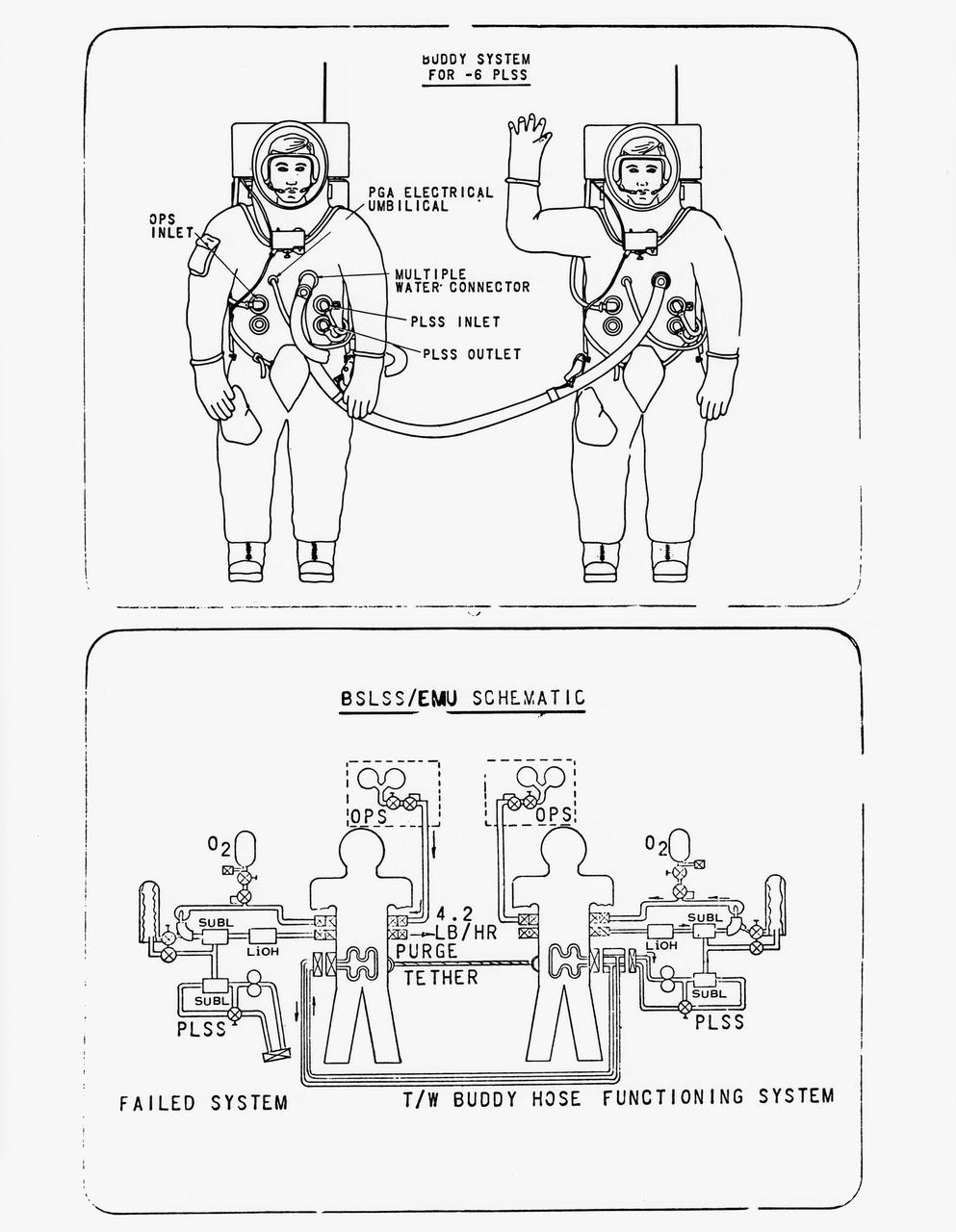
S70-56965 (December 1970) --- Drawing of the newly developed Buddy Secondary Life Support System (BSLSS). The life-sustaining system will be provided for the first time on the Apollo 14 lunar landing mission. The two flexible hoses, to be used on the second Apollo 14 extravehicular activity (EVA), will be among the paraphernalia on the Modular Equipment Transporter (MET) or two-wheeled workshop, and readily accessible in an emergency. During EVAs the Portable Life Support System (PLSS) supplies the astronaut with breathing and suit-pressurizing oxygen and water flow for the liquid-cooling garment -- a suit of knitted long underwear with thin tubing woven in the torso and limbs. The tubes carry water from a reservoir in the PLSS, and the circulating water serves to carry the astronaut's metabolic heat to a heat exchanger in the PLSS. Before the BSLSS was devised, the emergency tank was required to furnish not only suit pressure and breathing oxygen, but also cooling through a high oxygen flow rate. The BSLSS, by sharing the water supply between the two crewmen, stretches the time of the emergency oxygen from about 40 minutes to 60 to 75 minutes.
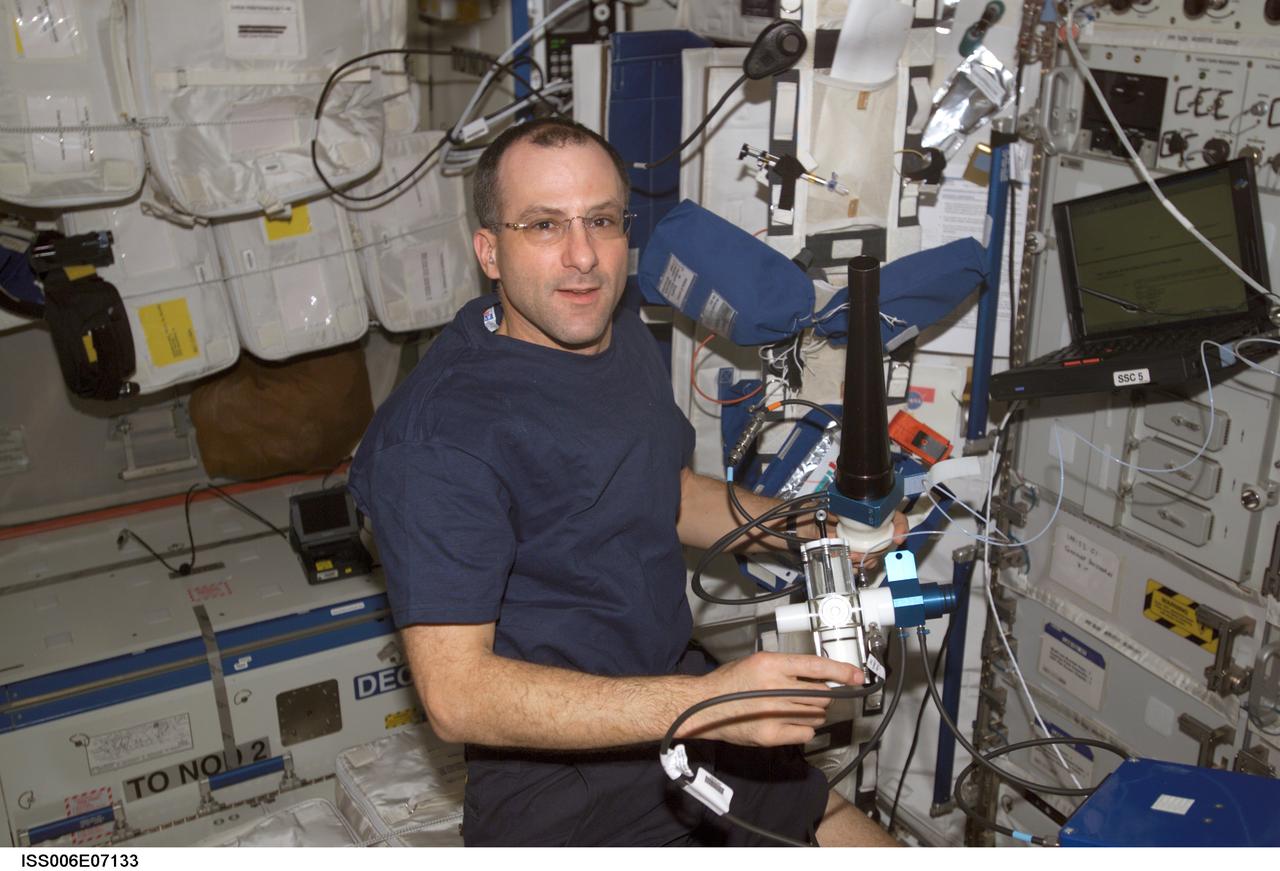
In this International Space Station (ISS) onboard photo, Expedition Six Science Officer Donald R. Pettit works to set up the Pulmonary Function in Flight (PuFF) experiment hardware in the Destiny Laboratory. Expedition Six is the fourth and final crew to perform the PuFF experiment. The PuFF experiment was developed to better understand what effects long term exposure to microgravity may have on the lungs. The focus is on measuring changes in the everness of gas exchange in the lungs, and on detecting changes in respiratory muscle strength. It allows astronauts to measure blood flow through the lungs, the ability of the lung to take up oxygen, and lung volumes. Each PuFF session includes five lung function tests, which involve breathing only cabin air. For each planned extravehicular (EVA) activity, a crew member performs a PuFF test within one week prior to the EVA. Following the EVA, those crew members perform another test to document the effect of exposure of the lungs to the low-pressure environment of the space suits. This experiment utilizes the Gas Analyzer System for Metabolic Analysis Physiology, or GASMAP, located in the Human Research Facility (HRF), along with a variety of other Puff equipment including a manual breathing valve, flow meter, pressure-flow module, pressure and volume calibration syringes, and disposable mouth pieces.