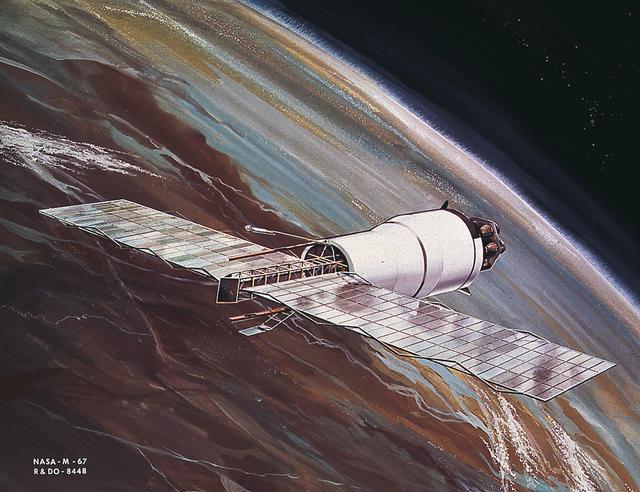
This image is an artist's conception of the Pegasus, meteoroid detection satellite, in orbit with meteoroid detector extended. The satellite, a payload for Saturn I SA-8, SA-9, and SA-10 missions, was used to obtain data on frequency and penetration of the potentially hazardous micrometeoroids in low Earth orbits and to relay the information back to Earth.
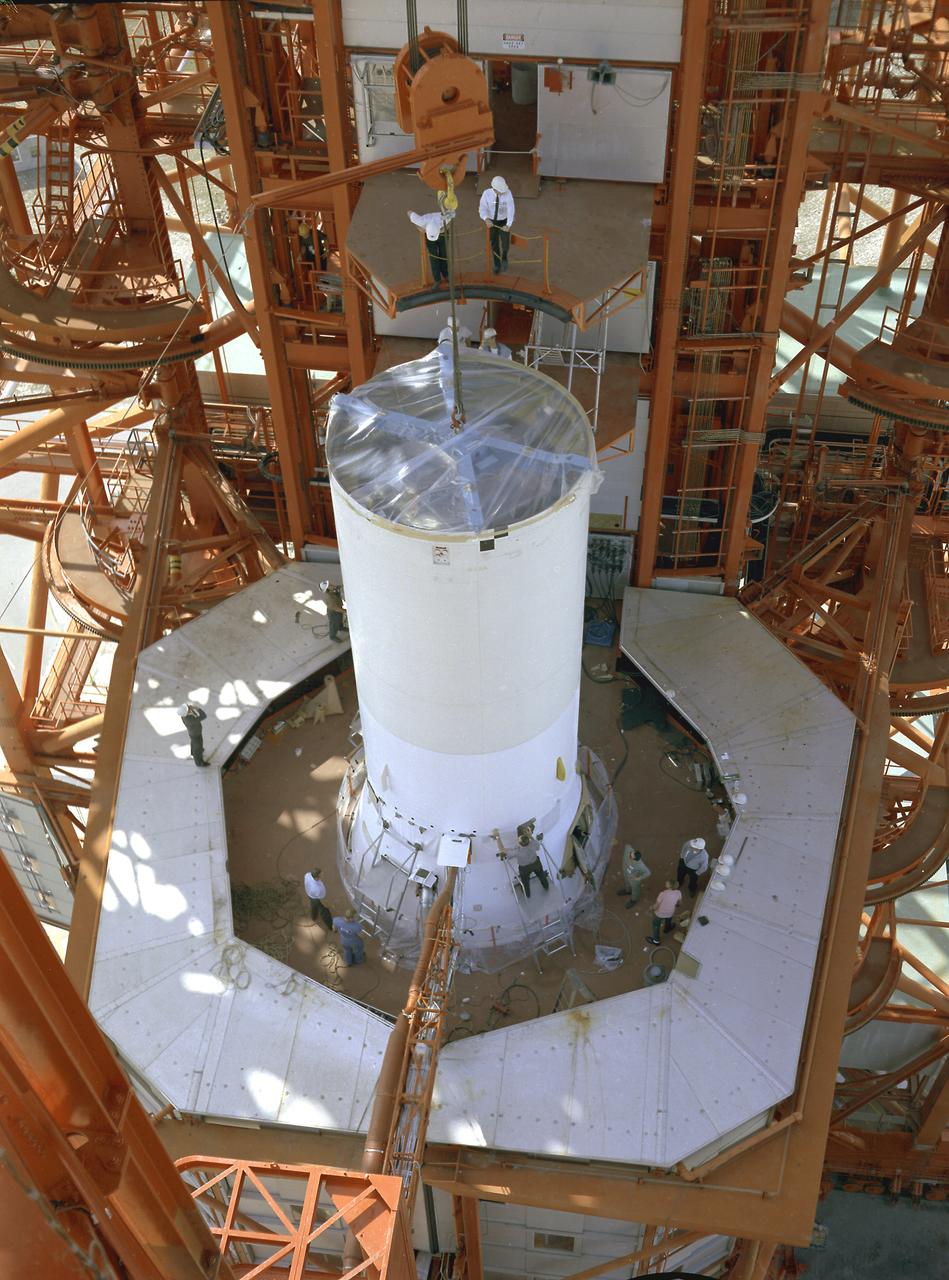
Pegasus-1, meteoroid detection satellite, installed on Saturn I (SA-9 mission) S-IV stage, January 13, 1965. The satellite was used to obtain data on frequency and penetration of the potentially hazardous micrometeoroids in low Earth orbits and to relay the information back to Earth. SA-9 was launched on February 16, 1965 and the Pegasus-1 satellite was the first operational payload for Saturn I.
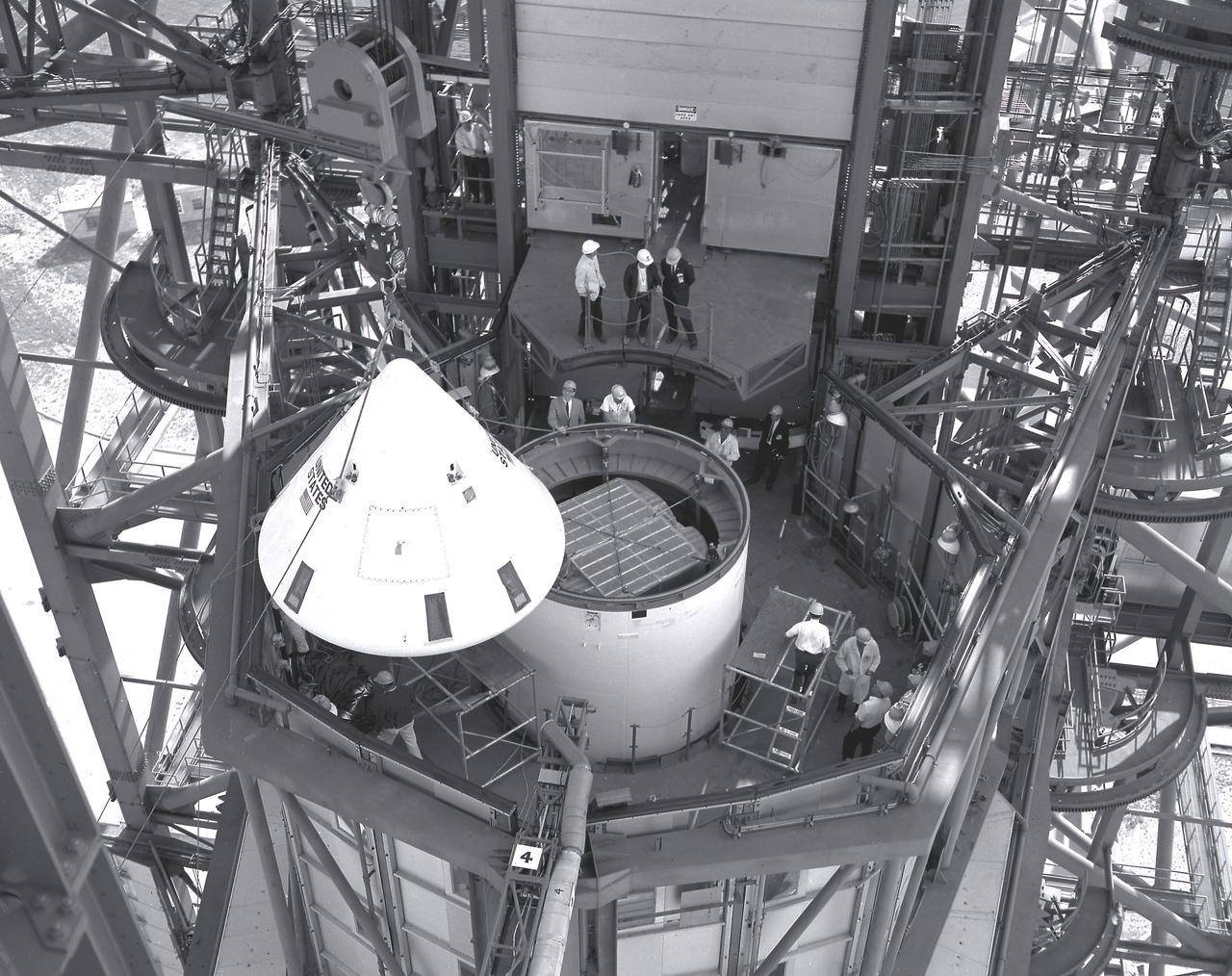
In this photograph, the Pegasus, meteoroid detection satellite is installed in its specially modified Apollo service module atop the S-IV stage (second stage) of a Saturn I vehicle for the SA-9 mission at Cape Kennedy. Personnel in the service structure moved the boilerplate Apollo command module into place to cap the vehicle. The command and service modules, visible here, were jettisoned into orbit to free the Pegasus for wing deployment. The satellite was used to obtain data on frequency and penetration of the potentially hazardous micrometeoroids in low Earth orbits and to relay the information back to Earth. The SA-9 was launched on February 16, 1965.
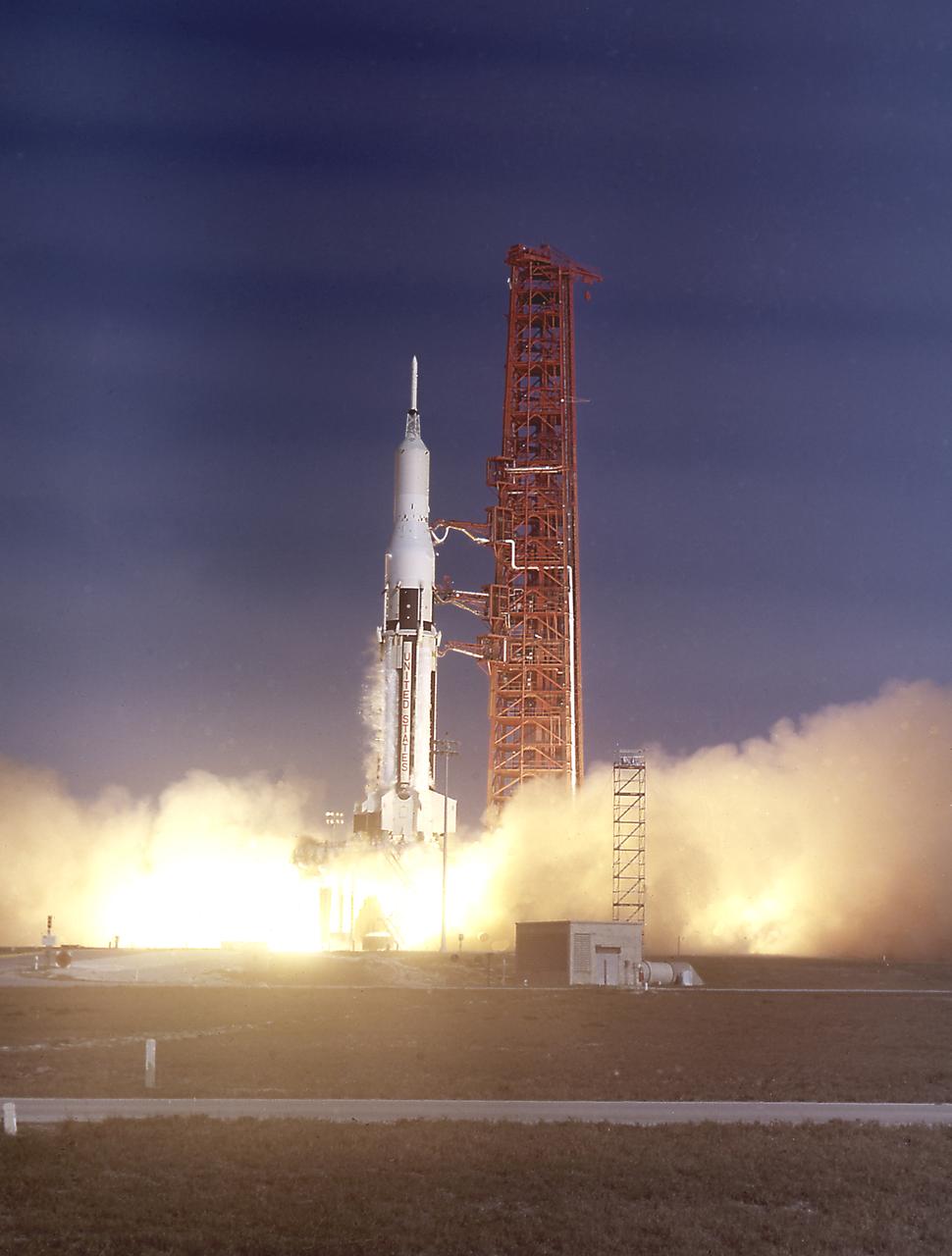
The SA-9 (Saturn I Block II), the eighth Saturn I flight, lifted off on February 16, 1965. This was the first Saturn with an operational payload, the Pegasus I meteoroid detection satellite. SA-9 successfully deployed the Pegasus I, NASA's largest unmarned instrumented satellite, into near Earth orbit.
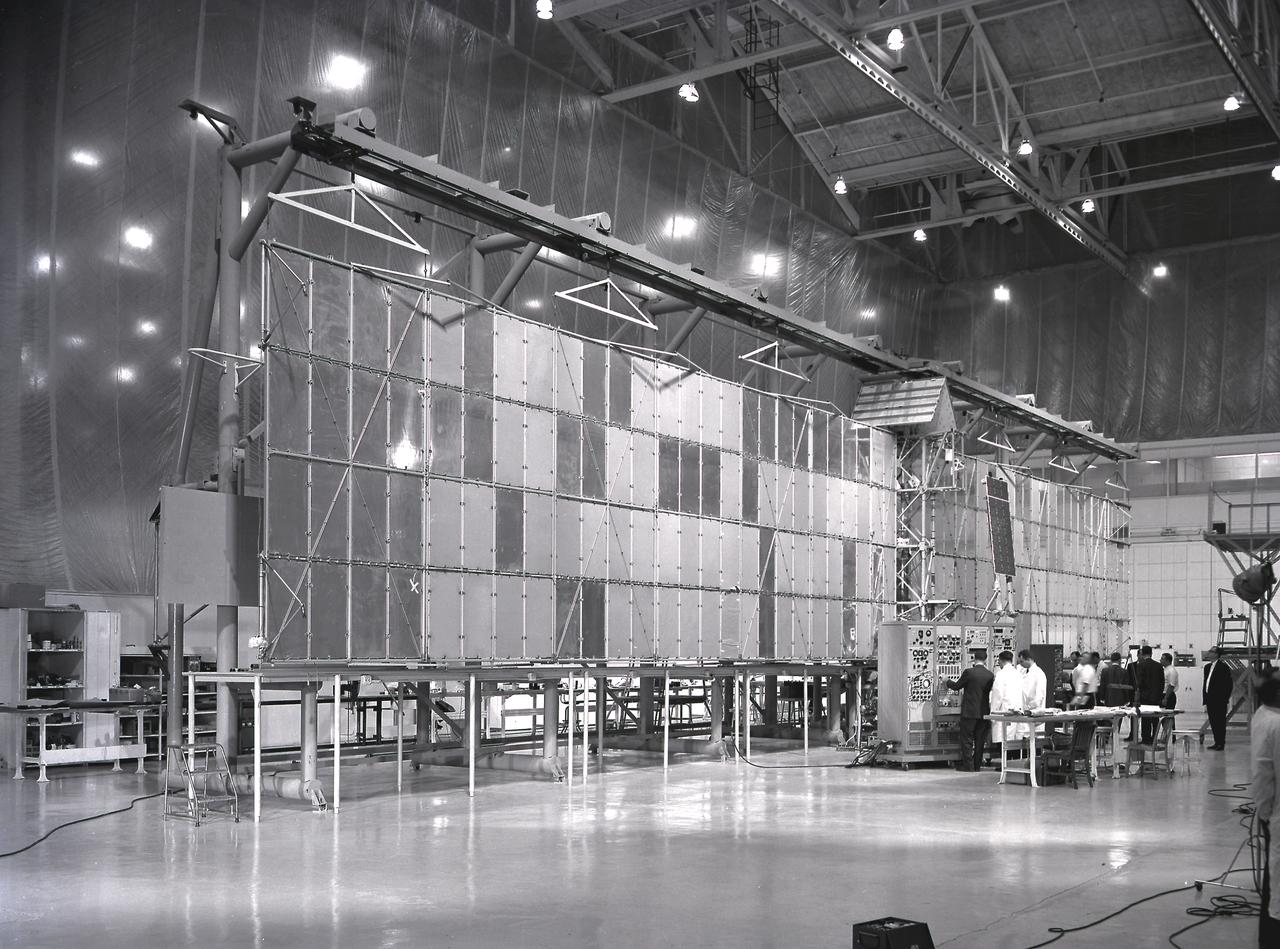
Fairchild technicians check out the extended Pegasus meteoroid detection surface. The Pegasus was developed by Fairchild Stratos Corporation, Hagerstown, Maryland, for NASA through the Marshall Space Flight Center. Three Pegasus satellites were flown aboard Saturn I SA-8, SA-9, and SA-10 missions. After being placed into orbit around the Earth, the satellite unfolded a series of giant panels to form a pair of wings measuring 96 feet across. The purpose of the satellite was to electronically record the size and frequency of particles in space, and compare the performance of protected and unprotected solar cells as important new preliminaries to a marned flight to the Moon.
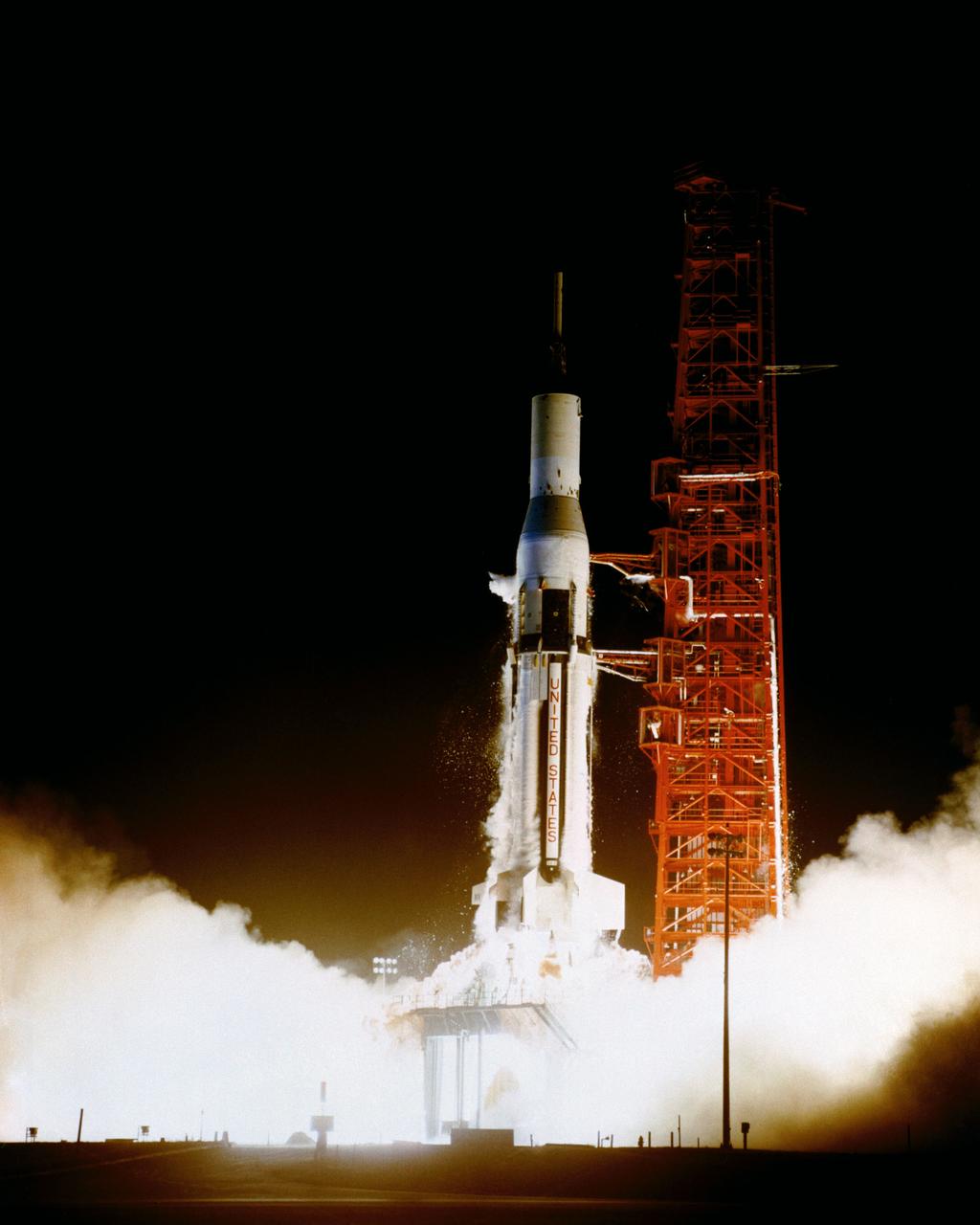
First night time launching of a Saturn I launch vehicle took place at 2:35 a.m., May 25, 1965, with the launch of the second Pegasus meteoroid detection satellite from Complex 37, Cape Kennedy, Florida.
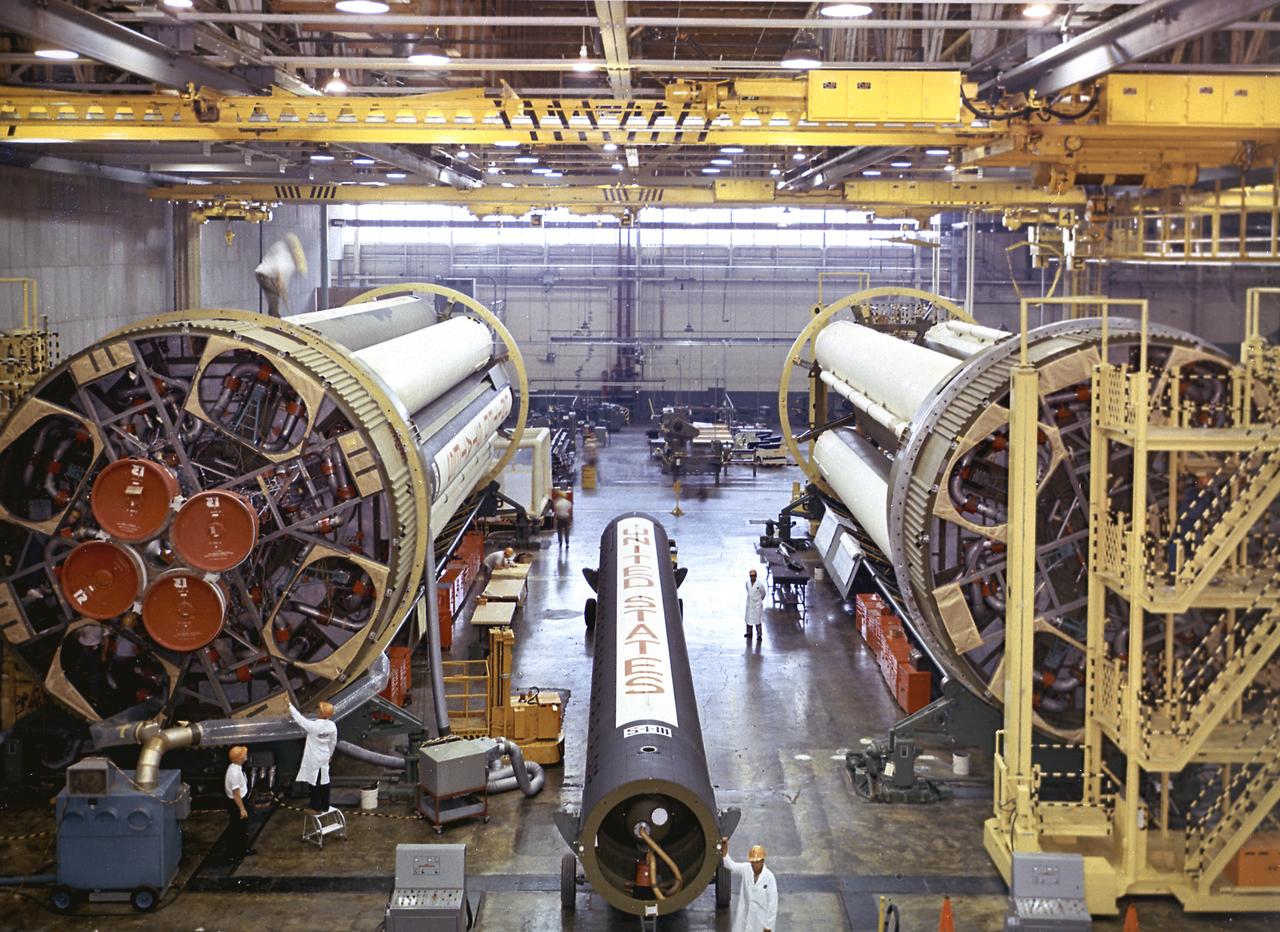
The Saturn I S-I stages for the SA-8 and SA-10 mission in final assembly phase in a manufacturing building at the Michoud Assembly Facility in New Orleans, Louisiana. The SA-8 mission was launched on May 25, 1965 with the first industry-built booster, and deployed the Pegasus II Micrometeoroid Detection satellite. The SA-10 mission was the last Saturn I mission, launched on July 30, 1965, and carried the Pegasus III Meteoroid Detection satellite.
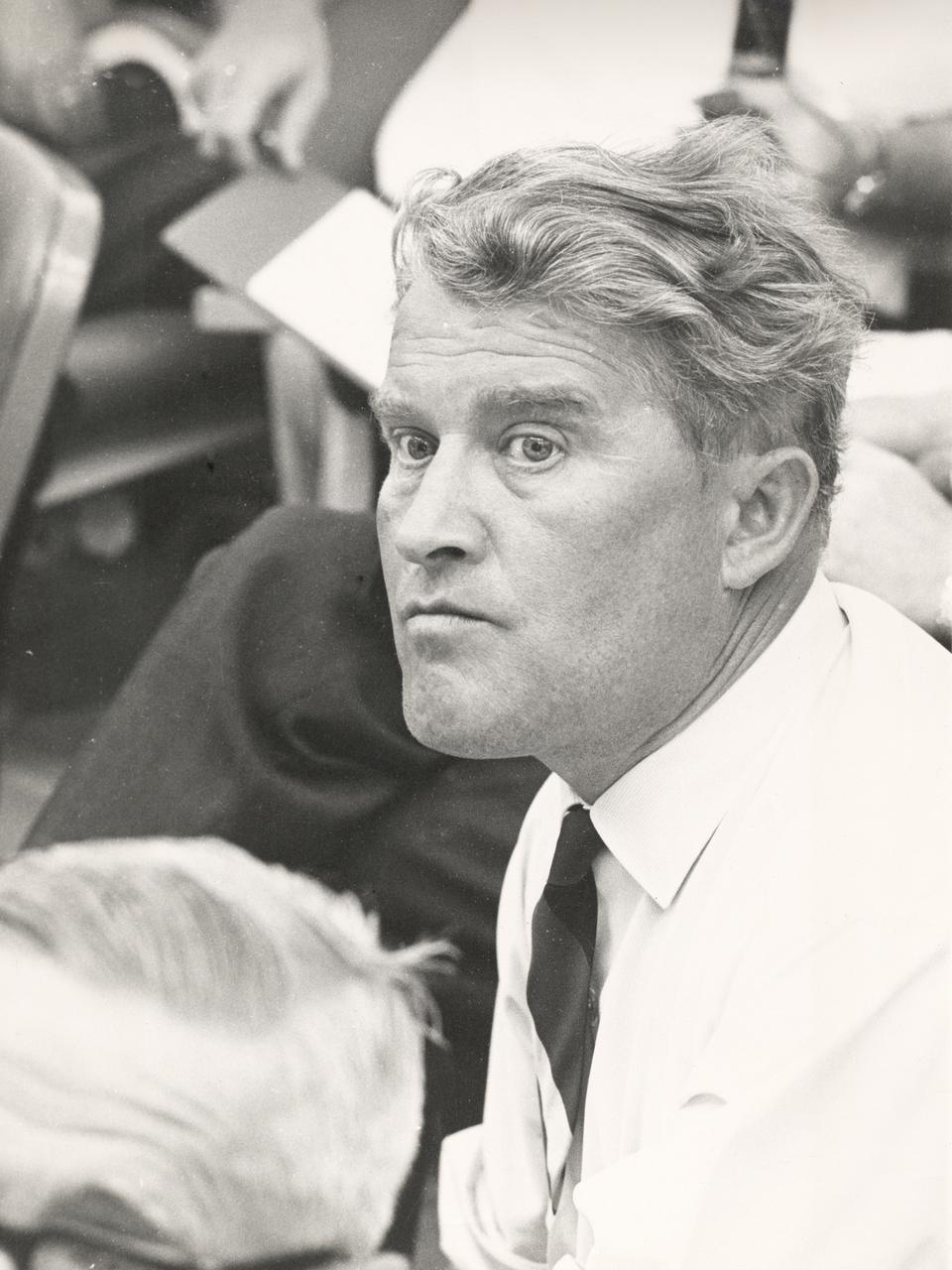
In this photo, Dr. von Braun anxiously awaits the launch of the Saturn I vehicle (SA-8) in the Launch Complex Control Center at the Kennedy Space Center in Florida on May 25, 1965. The SA-8 mission made the first night launch and deployed the Pegasus II micro meteoroid detection satellite.
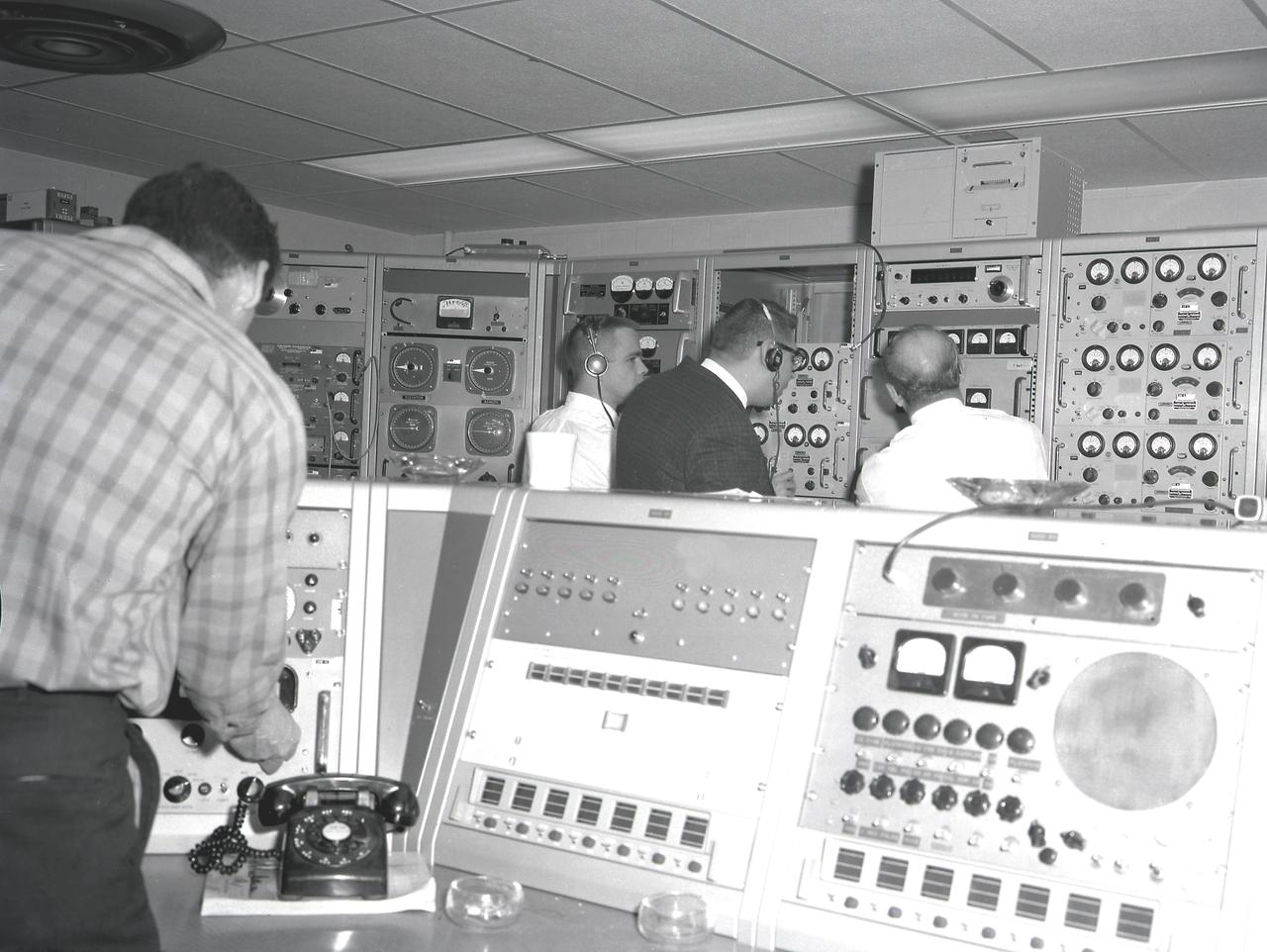
Activities at Green Mountain Tracking Station, Alabama, during lift-off of the Saturn I, SA-9 mission, showing the overall view of instrument panels used in tracking the Pegasus, meteoroid-detection satellite. The satellite was used to obtain data on frequency and penetration of the potentially hazardous micrometeoroids in low Earth orbits and to relay the information back to Earth.
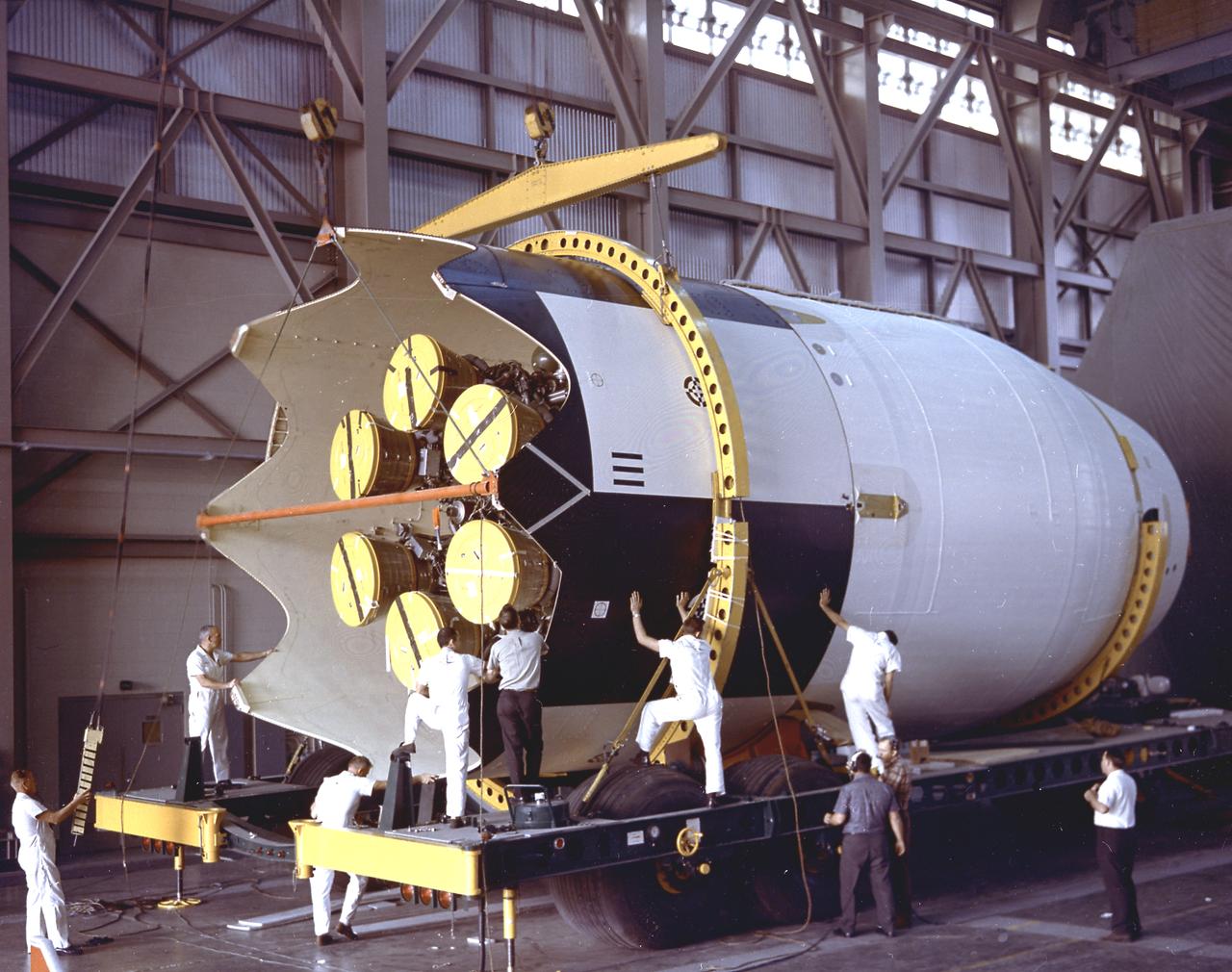
The Saturn I S-IV stage (second stage) assembly for the SA-9 mission underwent the weight and balance test in the hangar building at Cape Canaveral. The S-IV stage had six RL-10 engines which used liquid hydrogen and liquid oxygen as its propellants arranged in a circle. Each RL-10 engine produced a thrust of 15,000 pounds, a total combined thrust of 90,000 pounds. The SA-9 mission was the first Saturn with operational payload Pegasus I, meteoroid detection satellite, and launched on February 16, 1965.