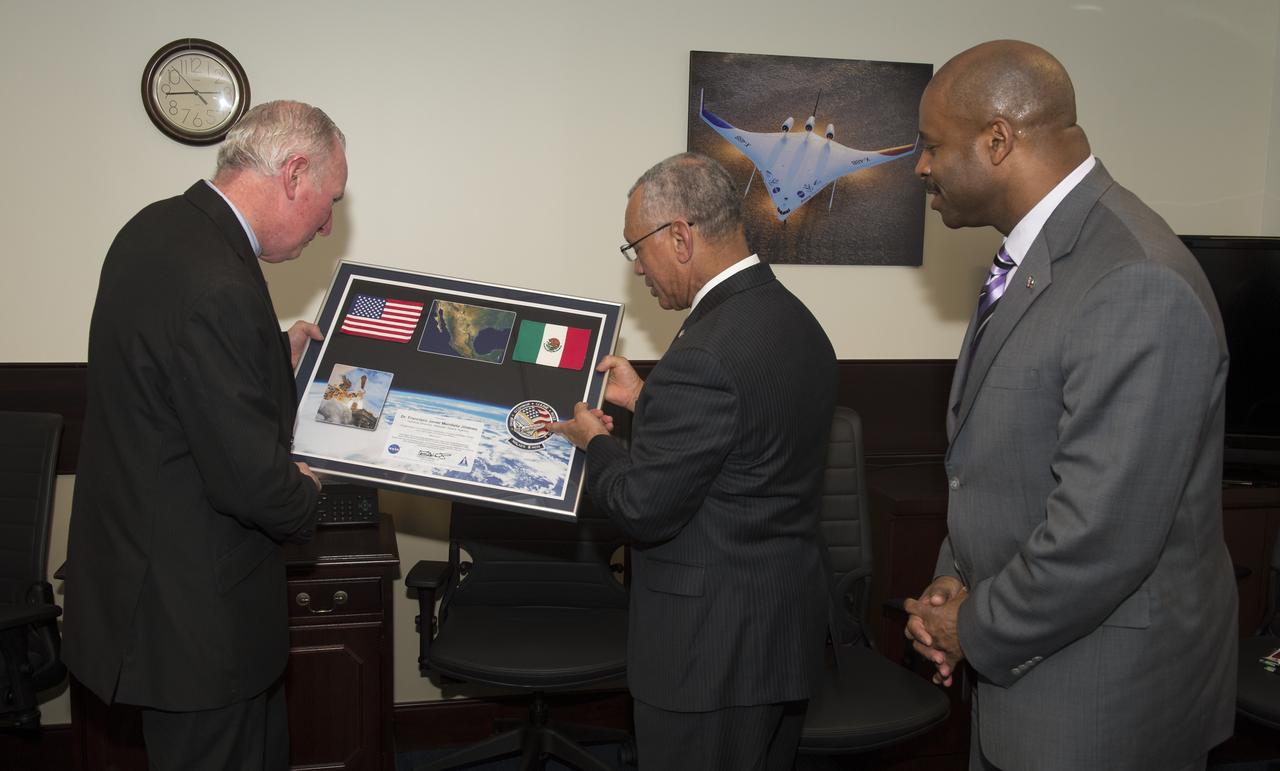
NASA Administrator Charles Bolden (center) presents Dr. Francisco Javier Mendieta Jimenez, Director General of the Mexican Space Agency, a NASA montage in honor of the Reimbursable Space Act Agreement (RSAA) signed between the two agencies, Monday, March 18, 2013 at NASA Headquarters in Washington. Leland Melvin (right), NASA Associate Administrator for Education looks on. The International Internship Program is a pilot program developed at NASA which will provide and avenue for non-US students to come to NASA for an internship. US students will be paired with a foreign student to work on a NASA research project under the guidance of a mentor. This is the first NASA-Mexico agreement signed. Photo Credit: (NASA/Carla Cioffi)
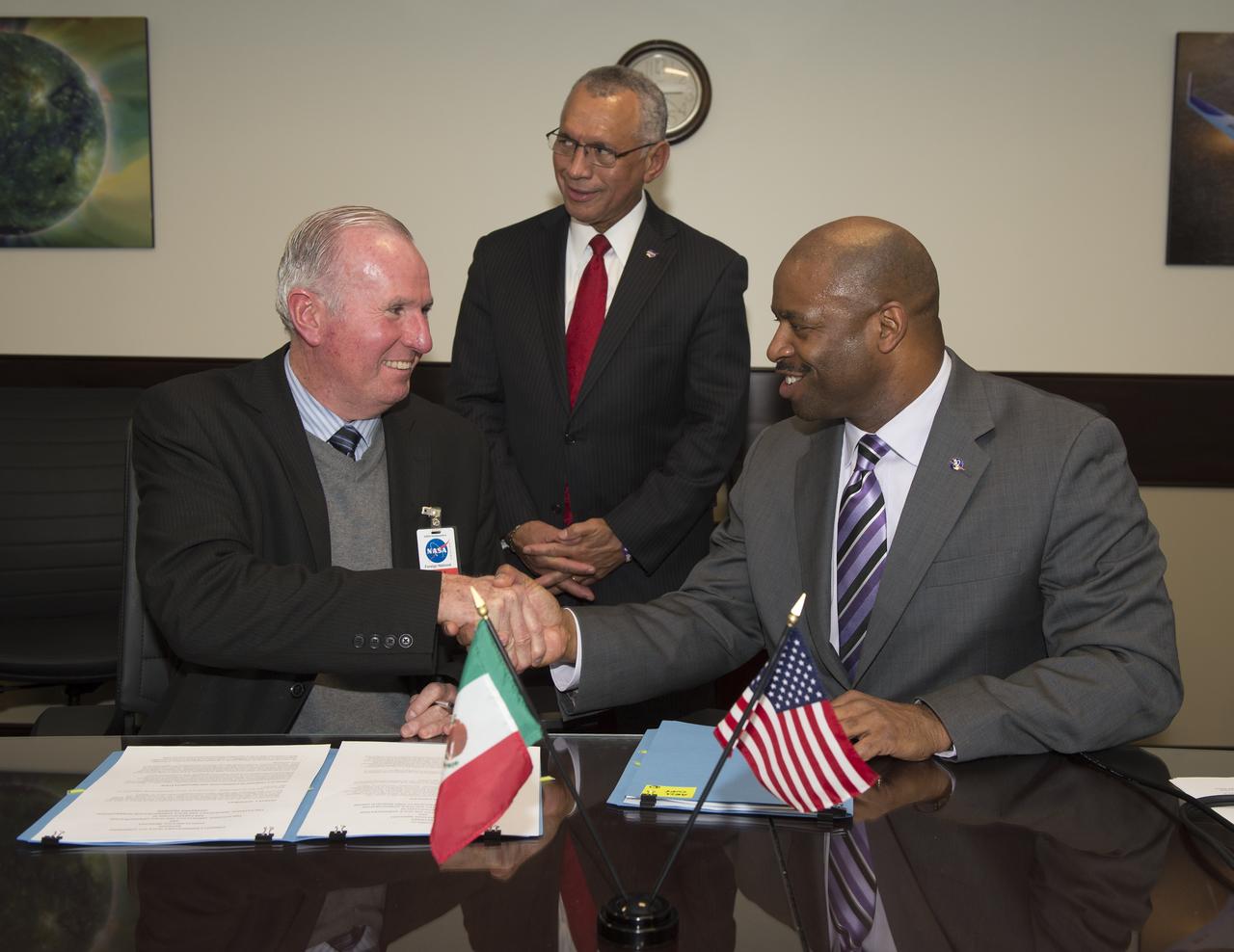
Leland Melvin (right), NASA Associate Administrator for Education, along with the head of the Mexican Space Agency, Dr. Francisco Javier Mendieta Jimenez shake hands after signing a Reimbursable Space Act Agreement (RSAA) for a NASA International Internship Program as NASA Administrator Charles Bolden looks on, Monday, March 18, 2013 at NASA Headquarters in Washington. The International Internship Program is a pilot program developed at NASA which will provide and avenue for non-US students to come to NASA for an internship. US students will be paired with a foreign student to work on a NASA research project under the guidance of a mentor. This is the first NASA-Mexico agreement signed. Photo Credit: (NASA/Carla Cioffi)
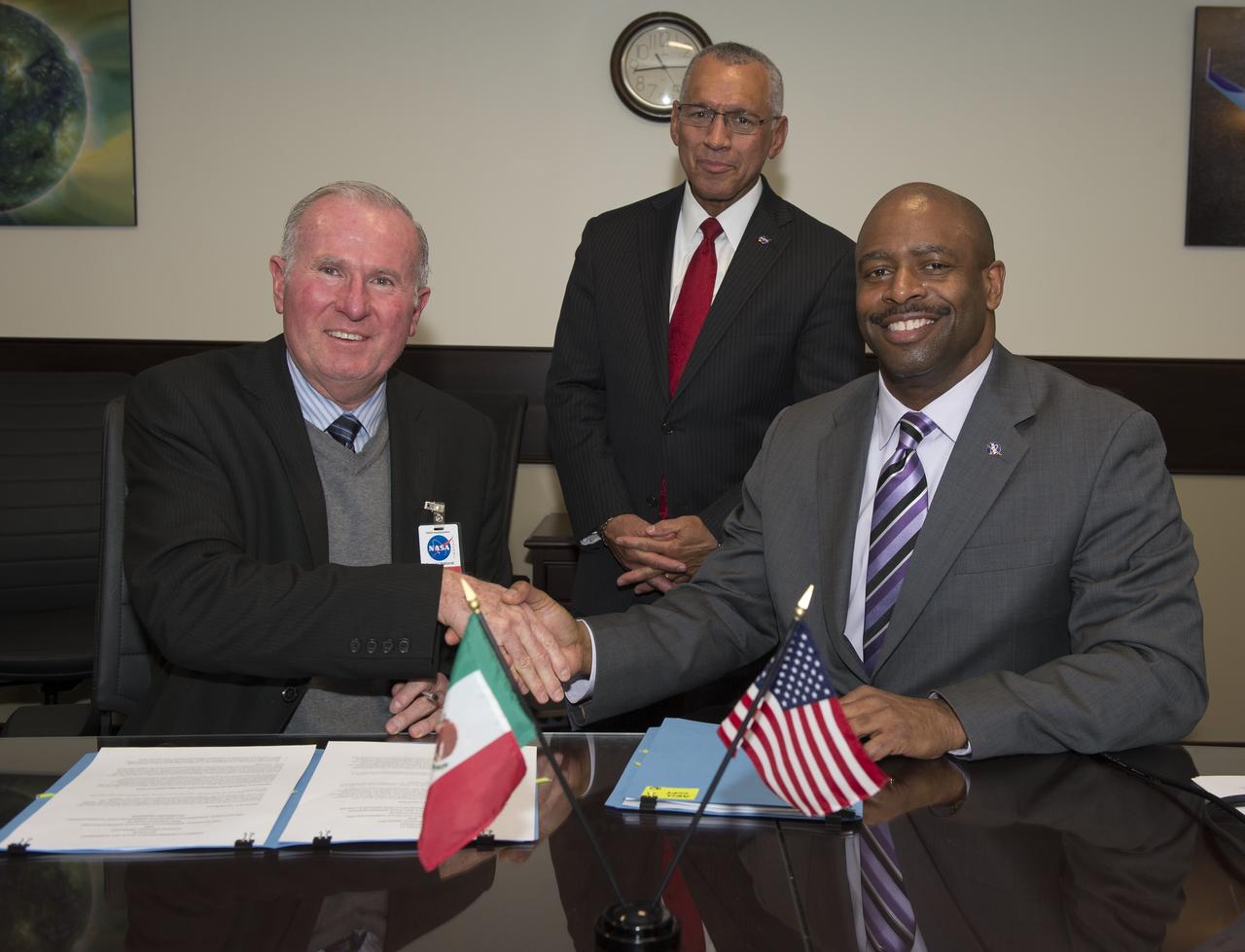
Leland Melvin (right), NASA Associate Administrator for Education, along with the head of the Mexican Space Agency, Dr. Francisco Javier Mendieta Jimenez pose for a photo after signing a Reimbursable Space Act Agreement (RSAA) for a NASA International Internship Program as NASA Administrator Charles Bolden looks on, Monday, March 18, 2013 at NASA Headquarters in Washington. The International Internship Program is a pilot program developed at NASA which will provide and avenue for non-US students to come to NASA for an internship. US students will be paired with a foreign student to work on a NASA research project under the guidance of a mentor. This is the first NASA-Mexico agreement signed. Photo Credit: (NASA/Carla Cioffi)
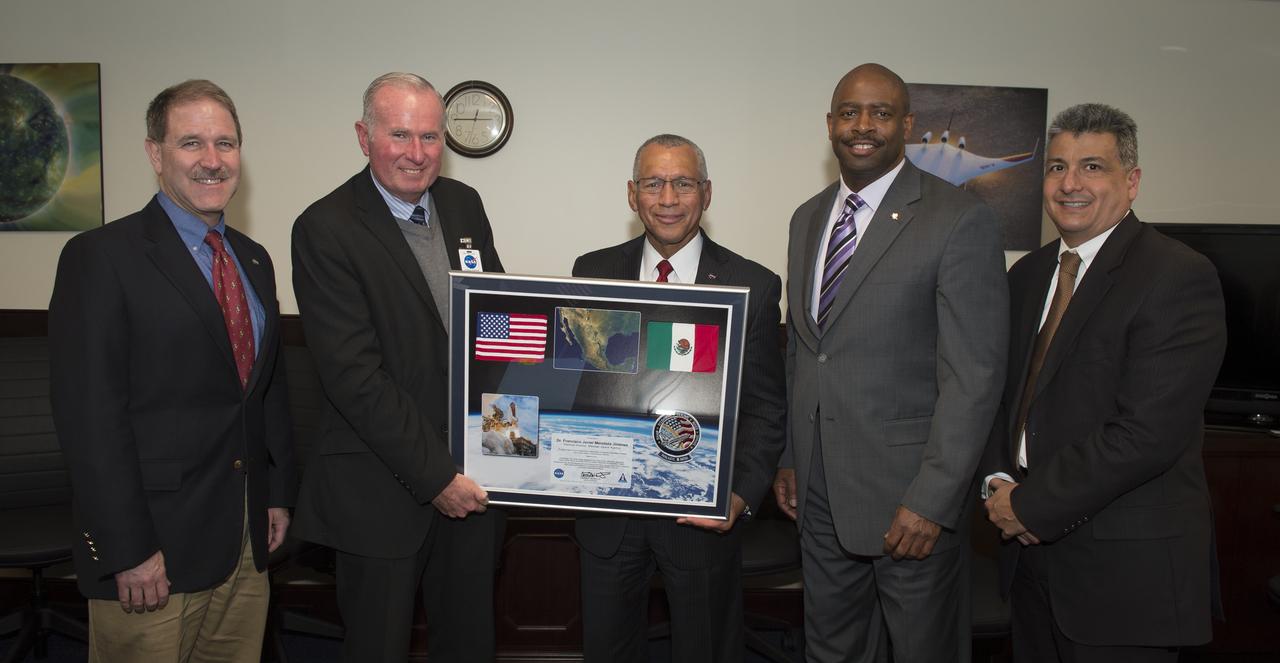
John Grunsfeld (far left), Associate Administrator for the Science Mission Directorate at NASA Headquarters, Dr. Francisco Javier Mendieta Jimenez, Director General of the Mexican Space Agency, NASA Administrator Charles Bolden, Leland Melvin, NASA Associate Administrator for Education and Al Condes (far right), Deputy Associate Administrator for International and Interagency Relations pose for a photo, Monday, March 18, 2013 at NASA Headquarters in Washington. A Reimbursable Space Act Agreement (RSAA) for a NASA International Internship Program was signed between the two agencies. This is the first NASA-Mexico agreement signed. Photo Credit: (NASA/Carla Cioffi)

A What’s On Board Briefing for SpaceX’s 19th Commercial Resupply Services (CRS-19) mission for NASA to the International Space Station took place on Dec. 3, 2019, at the agency’s Kennedy Space Center in Florida. Rosa Reyna gonzales, student researcher for AzTechSat-1, the first Mexican-developed nanosatellite to be launched from the space station, discusses her role in the experiment and how the investigation will demonstrate communication between a CubeSat and the GlobalStar Constellation satellite network in low-Earth orbit. The SpaceX Falcon 9 rocket and Dragon cargo module are scheduled to launch on Dec. 4, 2019, from Space Launch Complex 40 on Cape Canaveral Air Force Station in Florida.
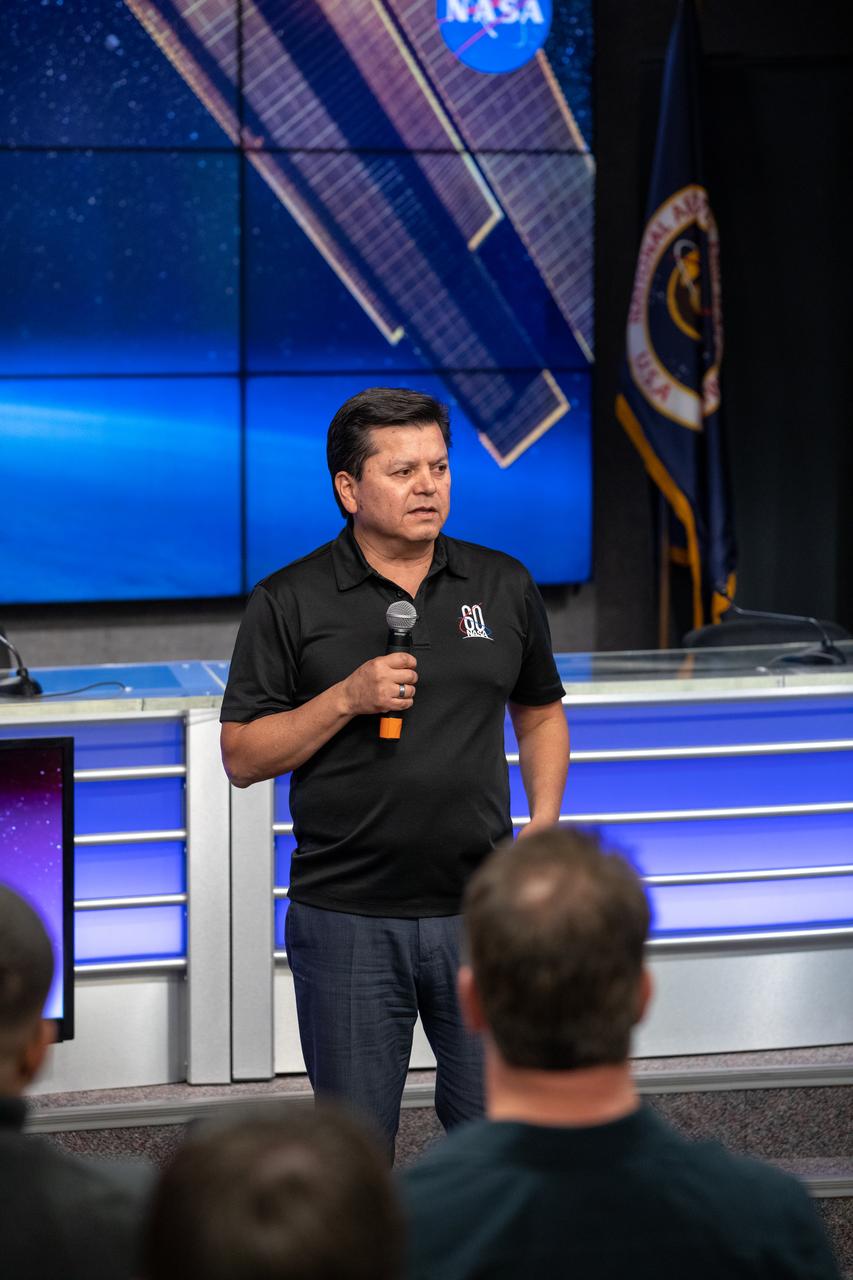
A What’s On Board Briefing for SpaceX’s 19th Commercial Resupply Services (CRS-19) mission for NASA to the International Space Station took place on Dec. 3, 2019, at the agency’s Kennedy Space Center in Florida. Andres Martinez, principal investigator for AzTechSat-1, the first Mexican-developed nanosatellite to be launched from the space station, discusses how the investigation will demonstrate communication between a CubeSat and the GlobalStar Constellation satellite network in low-Earth orbit. The SpaceX Falcon 9 rocket and Dragon cargo module are scheduled to launch on Dec. 4, 2019, from Space Launch Complex 40 on Cape Canaveral Air Force Station in Florida.