
Ingenuity project manager, JPL, MiMi Aung, gives remarks during a NASA Perseverance rover mission engineering and technology overview, Tuesday, Feb. 16, 2021, at NASA's Jet Propulsion Laboratory in Pasadena, California. The Ingenuity Mars helicopter is a technology demonstration to test the first powered flight on Mars. The helicopter will ride to Mars attached to the belly of the Perseverance rover. The Perseverance Mars rover is due to land on Mars Thursday, Feb. 18, 2021. A key objective for Perseverance’s mission on Mars is astrobiology, including the search for signs of ancient microbial life. The rover will characterize the planet’s geology and past climate, pave the way for human exploration of the Red Planet, and be the first mission to collect and cache Martian rock and regolith. Photo Credit: (NASA/Bill Ingalls)
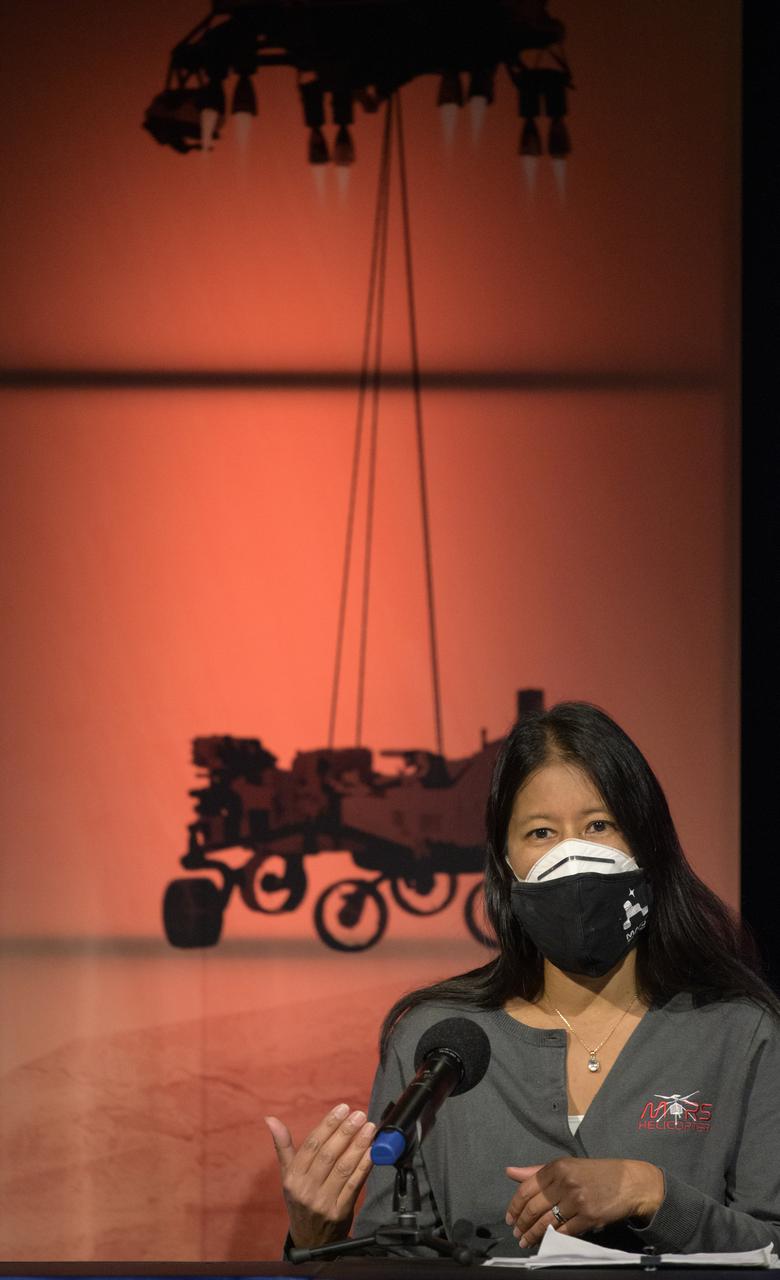
Ingenuity project manager, JPL, MiMi Aung, gives remarks during a NASA Perseverance rover mission engineering and technology overview, Tuesday, Feb. 16, 2021, at NASA's Jet Propulsion Laboratory in Pasadena, California. The Ingenuity Mars helicopter is a technology demonstration to test the first powered flight on Mars. The helicopter will ride to Mars attached to the belly of the Perseverance rover. The Perseverance Mars rover is due to land on Mars Thursday, Feb. 18, 2021. A key objective for Perseverance’s mission on Mars is astrobiology, including the search for signs of ancient microbial life. The rover will characterize the planet’s geology and past climate, pave the way for human exploration of the Red Planet, and be the first mission to collect and cache Martian rock and regolith. Photo Credit: (NASA/Bill Ingalls)
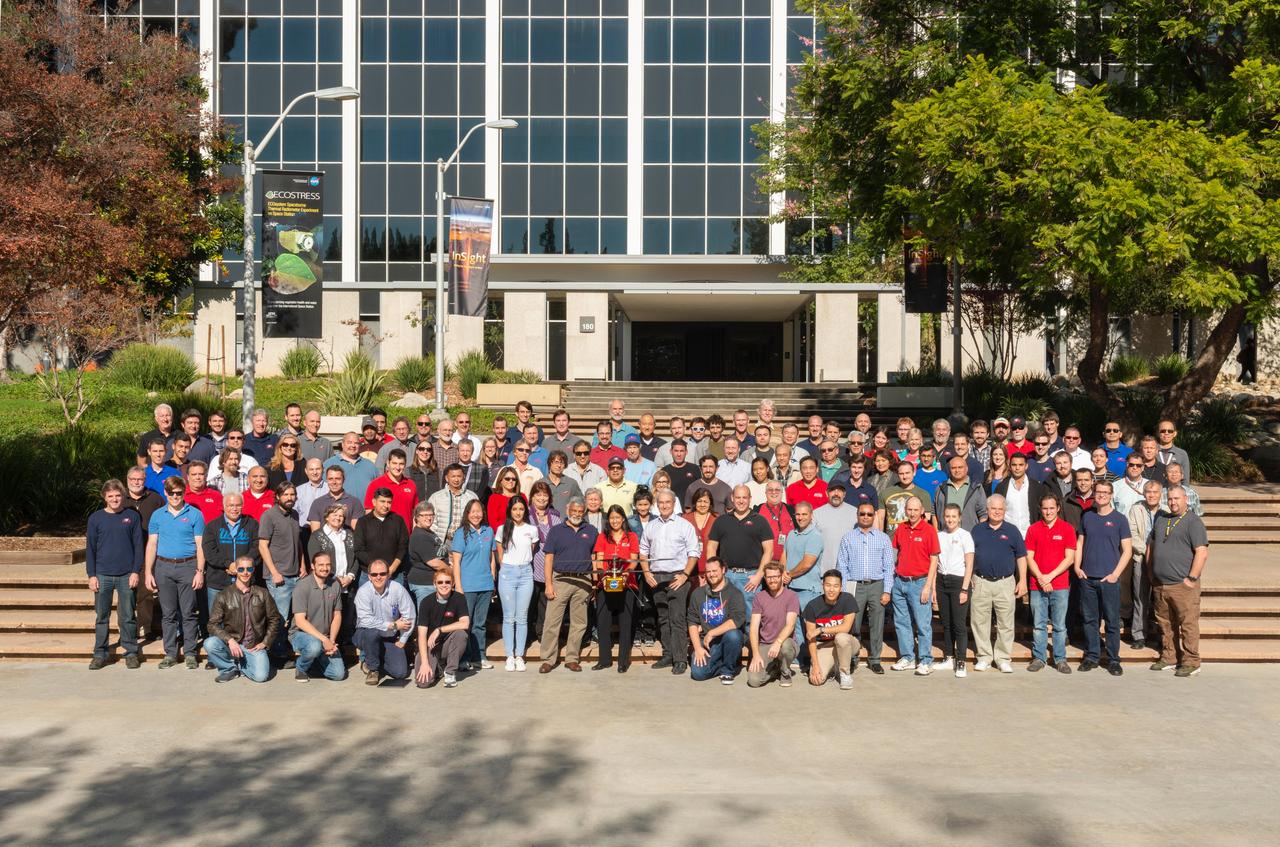
The Mars Helicopter team gathers for a group photo at NASA's Jet Propulsion Laboratory in Southern California on Dec. 3, 2018. Holding a full-size model of the helicopter, named Ingenuity, is MiMi Aung, the project manager at JPL. https://photojournal.jpl.nasa.gov/catalog/PIA22649
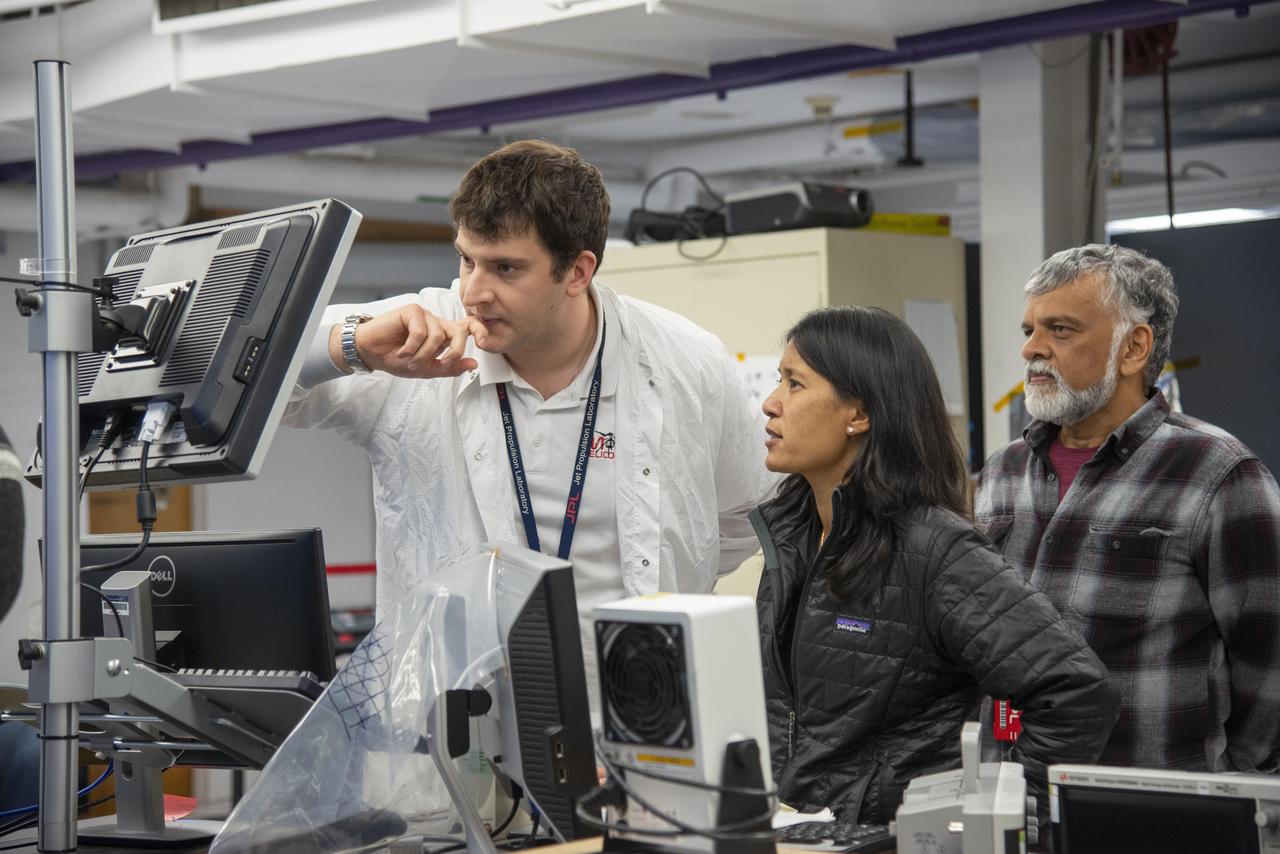
Teddy Tzanetos, MiMi Aung and Bob Balaram of NASA's Mars Helicopter project observe a flight test. The image was taken on Jan. 18, 2019 as the flight model of the Mars Helicopter was tested in the Space Simulator, a 25-foot-wide (7.62 meter-wide) vacuum chamber at NASA's Jet Propulsion Laboratory in Pasadena, California. https://photojournal.jpl.nasa.gov/catalog/PIA23161
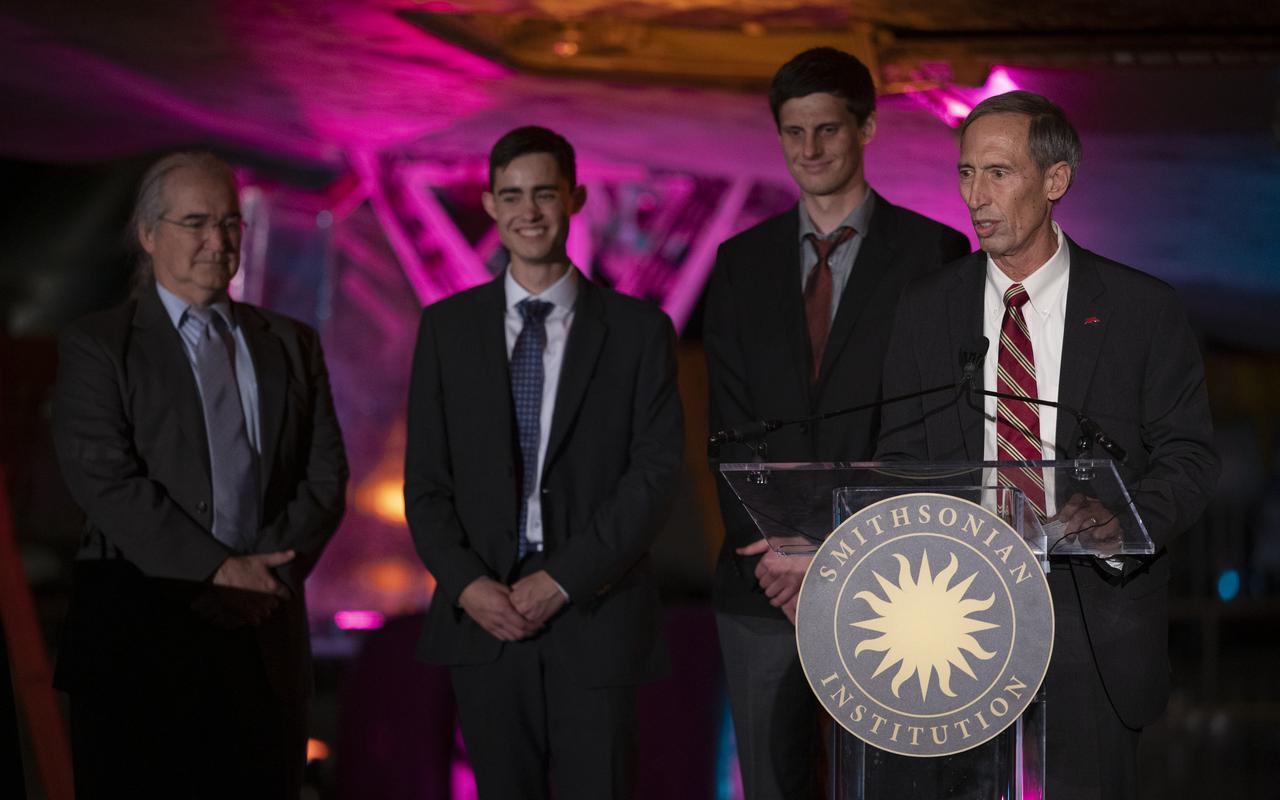
Interim director of NASA’s Jet Propulsion Laboratory Lt. Gen. Larry James, USAF (Ret.), right, delivers remarks after accepting the 2022 Michael Collins Trophy for Current Achievement on behalf of MiMi Aung and the Mars Ingenuity Helicopter Team, Thursday, March 24, 2022, at the Smithsonian National Air and Space Museum’s Steven F. Udvar-Hazy center in Chantilly, Va. Pictured with James are Dave Lavery, program executive for Solar System Exploration at NASA Headquarters, left, Joshua Anderson, Ingenuity Mars Helicopter tactical lead at NASA JPL, second from left, and Gerik Kubiak, Ingenuity Mars Helicopter flight software lead at NASA JPL, center. The Smithsonian National Air and Space Museum’s Michael Collins Trophy recognizes extraordinary accomplishments in aeronautics and spaceflight. Photo Credit: (NASA/Joel Kowsky)
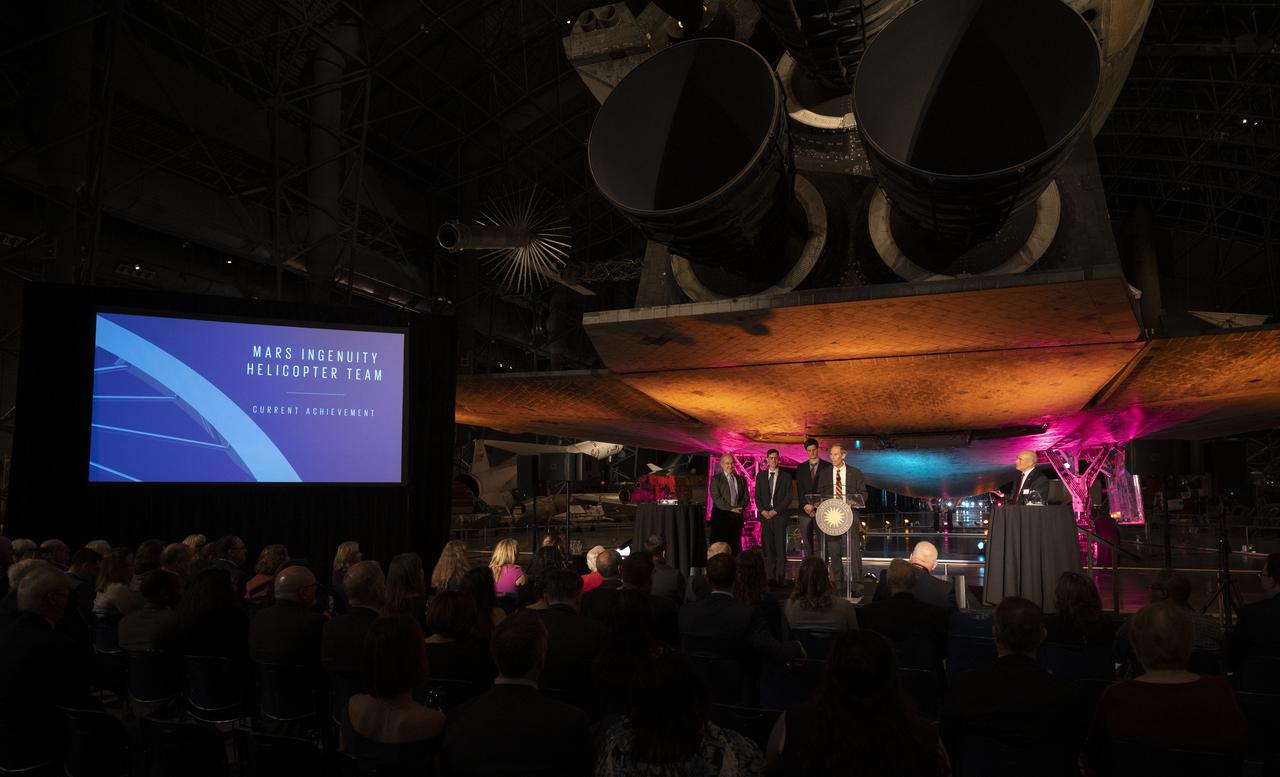
Interim director of NASA’s Jet Propulsion Laboratory Lt. Gen. Larry James, USAF (Ret.), right, delivers remarks after accepting the 2022 Michael Collins Trophy for Current Achievement on behalf of MiMi Aung and the Mars Ingenuity Helicopter Team, Thursday, March 24, 2022, at the Smithsonian National Air and Space Museum’s Steven F. Udvar-Hazy center in Chantilly, Va. Pictured with James are Dave Lavery, program executive for Solar System Exploration at NASA Headquarters, left, Joshua Anderson, Ingenuity Mars Helicopter tactical lead at NASA JPL, second from left, and Gerik Kubiak, Ingenuity Mars Helicopter flight software lead at NASA JPL, center. The Smithsonian National Air and Space Museum’s Michael Collins Trophy recognizes extraordinary accomplishments in aeronautics and spaceflight. Photo Credit: (NASA/Joel Kowsky)
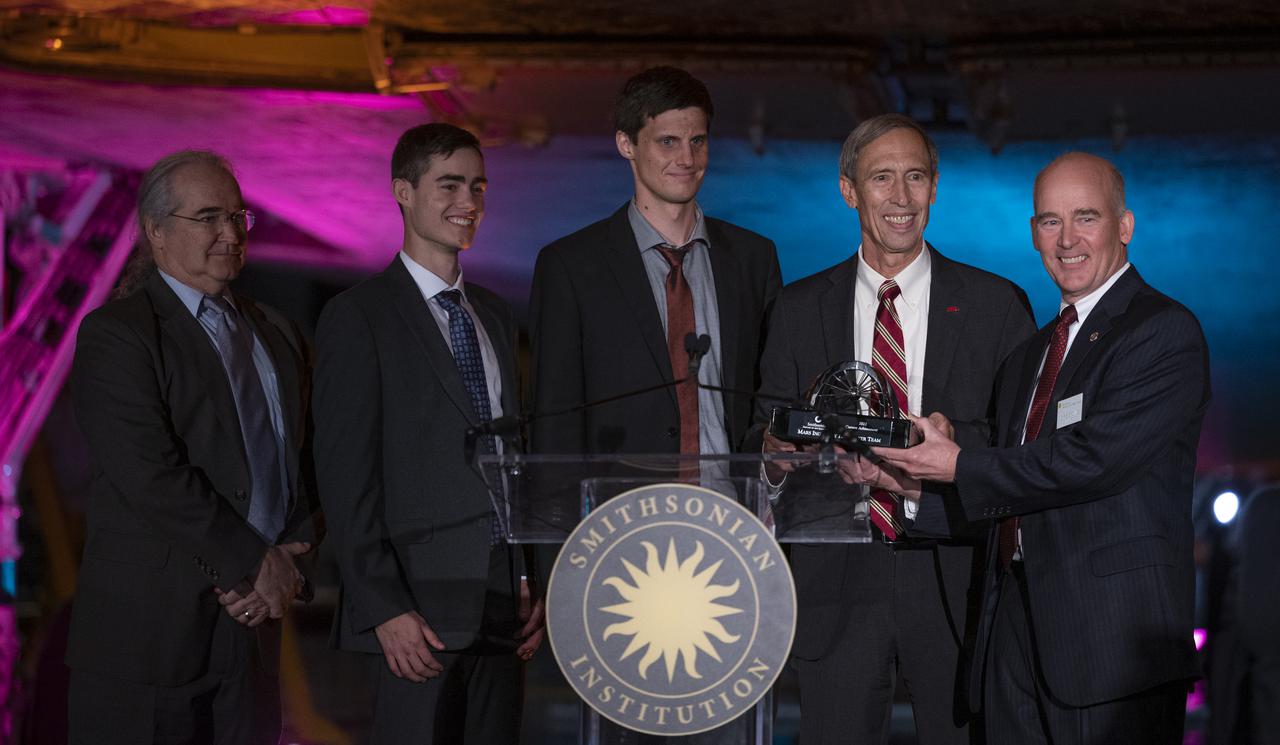
Interim director of NASA’s Jet Propulsion Laboratory Lt. Gen. Larry James, USAF (Ret.), second from right, accepts the 2022 Michael Collins Trophy for Current Achievement from Christopher Browne, acting director of the Smithsonian’s National Air and Space Museum, right, on behalf of MiMi Aung and the Mars Ingenuity Helicopter Team, Thursday, March 24, 2022, at the Smithsonian National Air and Space Museum’s Steven F. Udvar-Hazy center in Chantilly, Va. Pictured with James and Browne are Dave Lavery, program executive for Solar System Exploration at NASA Headquarters, left, Joshua Anderson, Ingenuity Mars Helicopter tactical lead at NASA JPL, second from left, and Gerik Kubiak, Ingenuity Mars Helicopter flight software lead at NASA JPL, center. The Smithsonian National Air and Space Museum’s Michael Collins Trophy recognizes extraordinary accomplishments in aeronautics and spaceflight. Photo Credit: (NASA/Joel Kowsky)
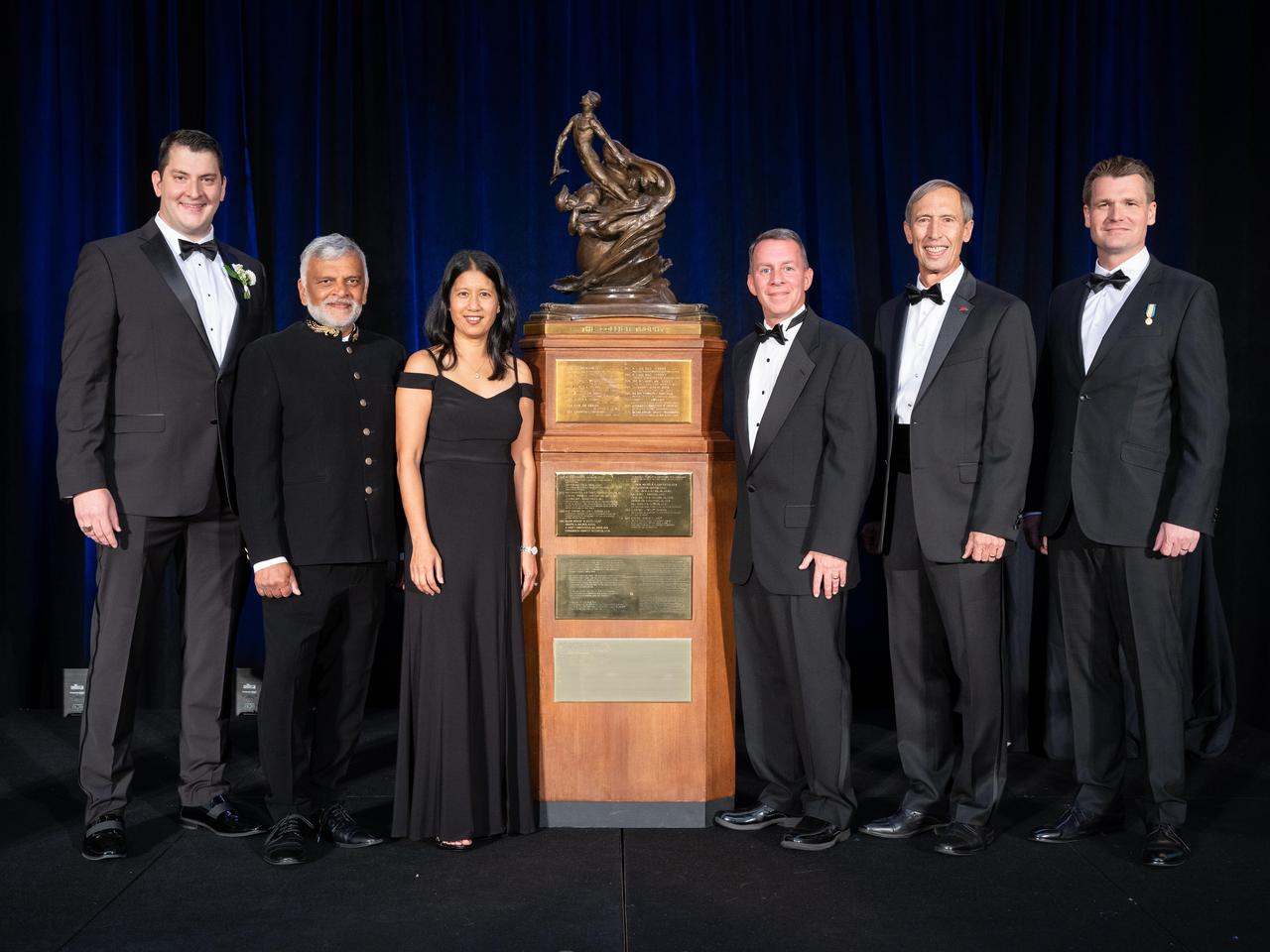
Members of NASA's Ingenuity Mars Helicopter team stand next to the Collier Trophy during the Robert J. Collier Dinner in Washington on June 9, 2022. The team was awarded the 2021 Collier Trophy "for the first powered, controlled flight of an aircraft on another planet, thereby opening the skies of Mars and other worlds for future scientific discovery and exploration," the award citation states. From left to right: Teddy Tzanetos, Ingenuity team lead at NASA's Jet Propulsion Laboratory; Bob Balaram, Ingenuity emeritus chief engineer at JPL; MiMi Aung, former Ingenuity project manager at JPL; Bobby Braun, former director for Planetary Science at JPL; Larry James, deputy director at JPL; Håvard Grip, Ingenuity chief pilot at JPL. This historic trophy – which is on permanent display at the Smithsonian Air and Space Museum in Washington – is awarded annually by the National Aeronautic Association "for the greatest achievement in aeronautics or astronautics in America, with respect to improving the performance, efficiency, and safety of air or space vehicles, the value of which has been thoroughly demonstrated by actual use during the preceding year." https://photojournal.jpl.nasa.gov/catalog/PIA25323
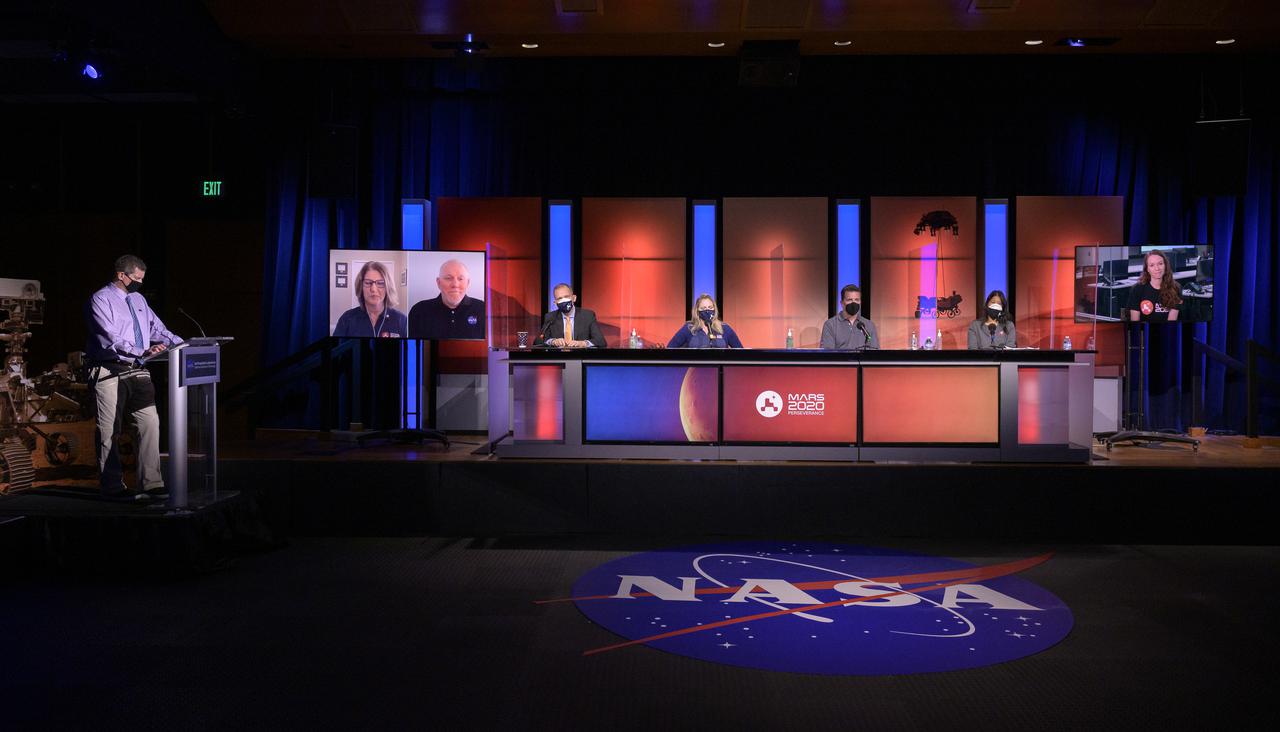
NASA and JPL Perseverance Mars rover mission management are seen during an engineering and technology overview, Tuesday, Feb. 16, 2021, at NASA's Jet Propulsion Laboratory in Pasadena, California. The Perseverance Mars rover is due to land on Mars Thursday, Feb. 18, 2021. A key objective for Perseverance’s mission on Mars is astrobiology, including the search for signs of ancient microbial life. The rover will characterize the planet’s geology and past climate, pave the way for human exploration of the Red Planet, and be the first mission to collect and cache Martian rock and regolith. Photo Credit: (NASA/Bill Ingalls)
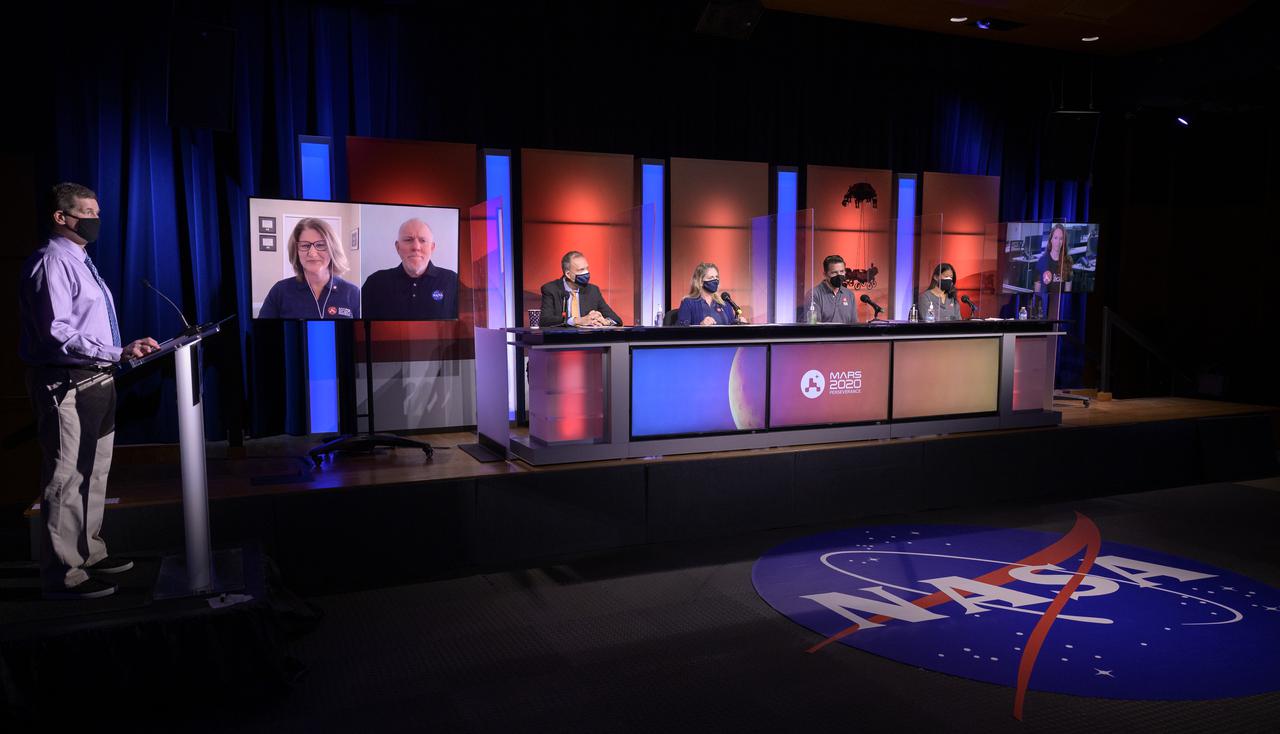
NASA and JPL Perseverance Mars rover mission management are seen during an engineering and technology overview, Tuesday, Feb. 16, 2021, at NASA's Jet Propulsion Laboratory in Pasadena, California. The Perseverance Mars rover is due to land on Mars Thursday, Feb. 18, 2021. A key objective for Perseverance’s mission on Mars is astrobiology, including the search for signs of ancient microbial life. The rover will characterize the planet’s geology and past climate, pave the way for human exploration of the Red Planet, and be the first mission to collect and cache Martian rock and regolith. Photo Credit: (NASA/Bill Ingalls)