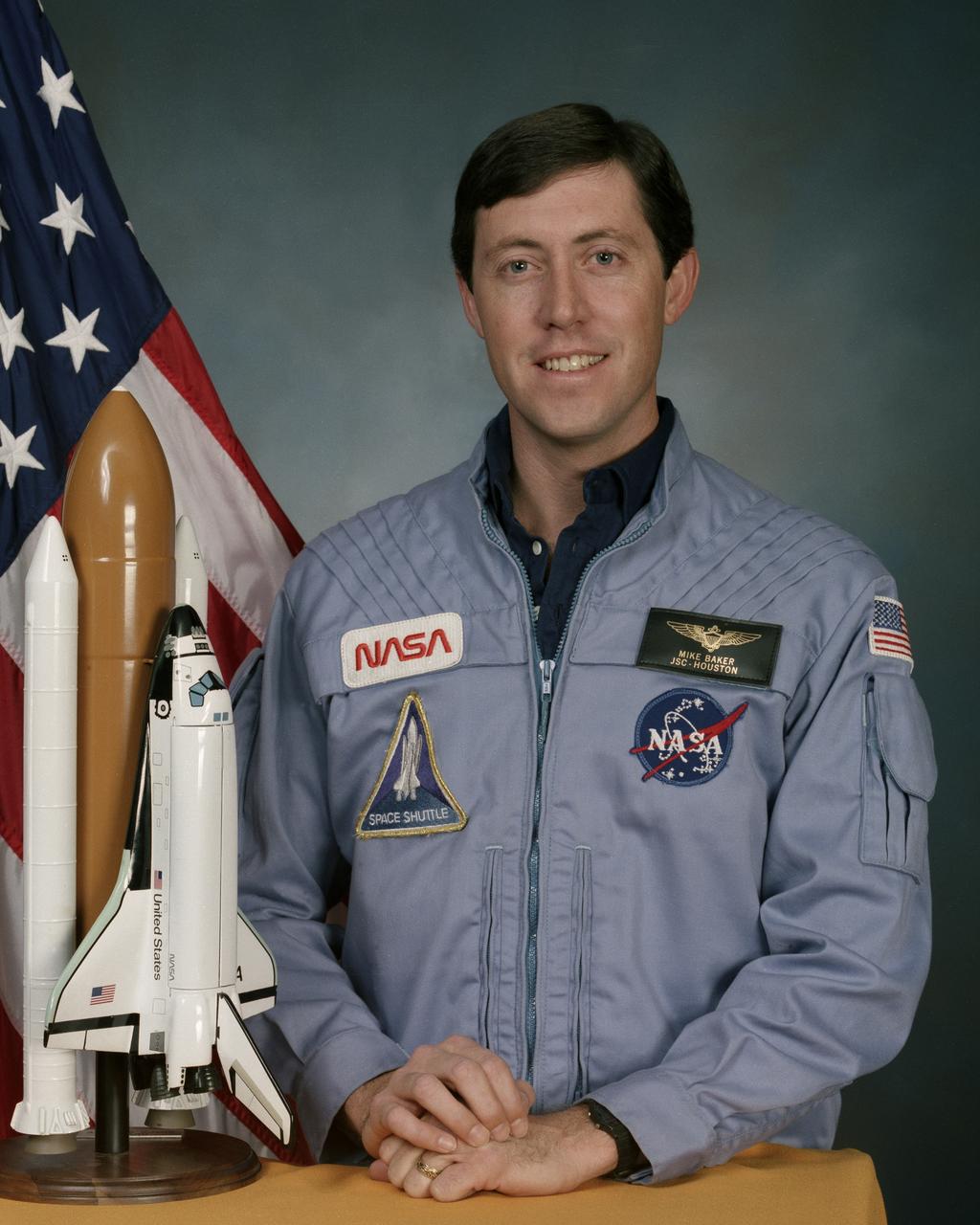
S85-41895 (October 1985) --- Astronaut Michael A. Baker, mission commander
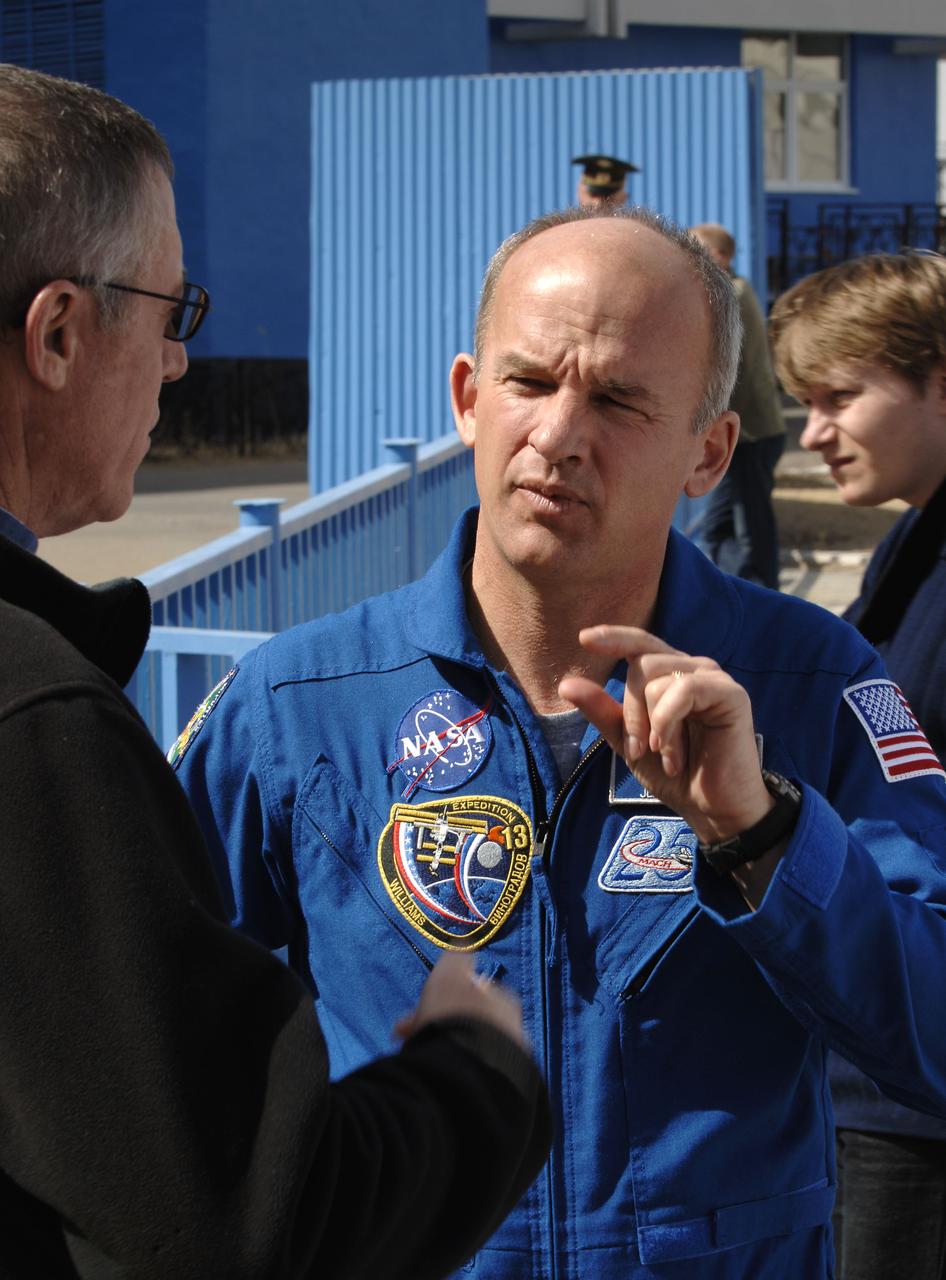
Jeffrey N. Williams, Expedition 13 Science Officer and Flight Engineer, talking with Michael Baker of NASA after the crew's final check of the Soyuz at building 254 of the Baikonur Cosmodrome in Baikonur, Kazakhstan. Sunday, March 26, 2006. Photo Credit: (NASA/Bill Ingalls)
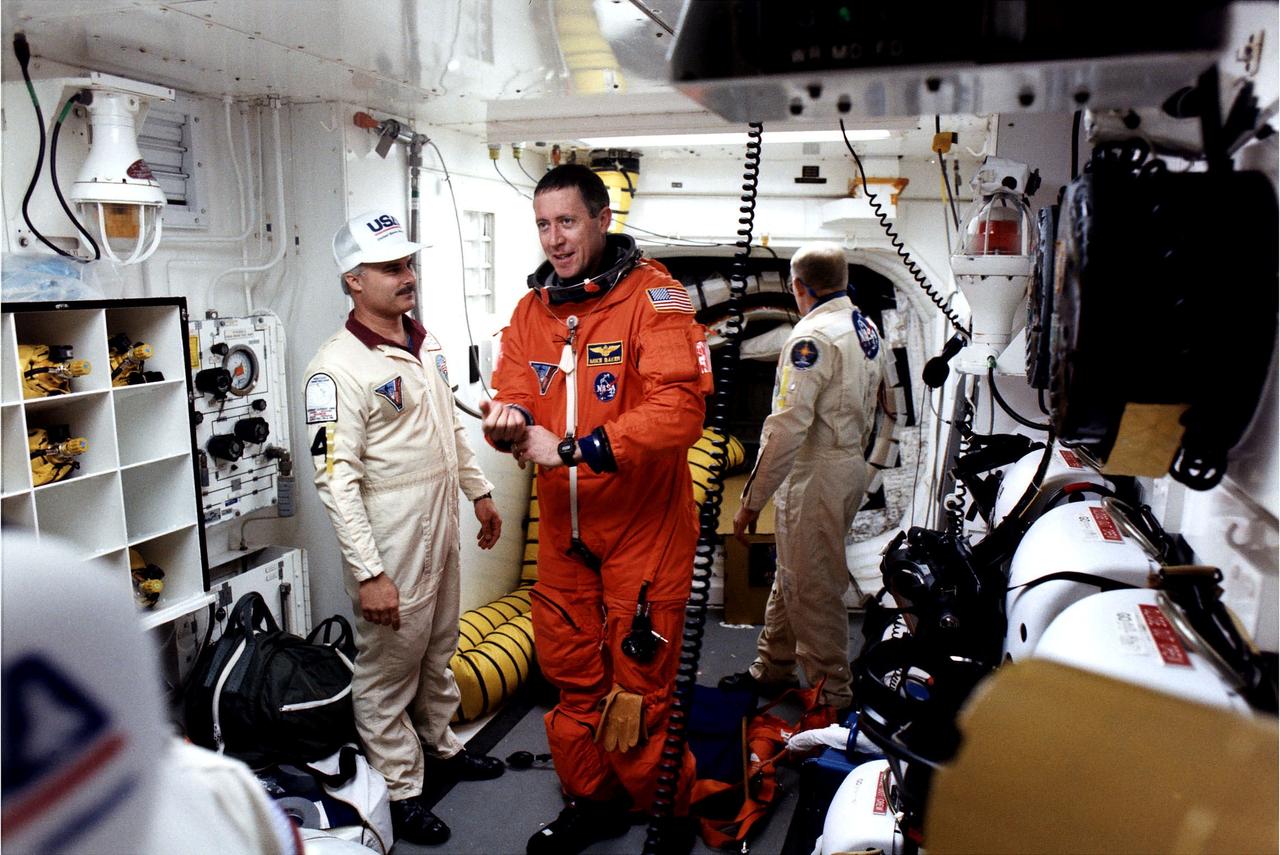
KENNEDY SPACE CENTER, FLA. - STS-81 Mission Commander Michael Baker prepares to enter the Space Shuttle Atlantis at Launch Pad 39B with help from White Room closeout crew members Chris Meinert (left) and Danny Wyatt.

STS081-E-05126 (13 Jan. 1997) --- Astronaut Michael A. Baker, mission commander, uses a 35mm camera to photograph a target of opportunity on Earth from the Space Shuttle Atlantis' aft flight deck. Baker and five crew mates will dock with Russia's Mir Space Station around the middle of the week. This image was recorded with an Electronic Still Camera (ESC) and was later downlinked to flight controllers in Houston, Texas. A second ESC, devoted to an educational, geographic project called Kidsat, is mounted in the viewing port above Baker's head.

STS081-338-037 (12-22 Jan. 1997) --- Astronaut Michael A. Baker, STS-81 commander, mans the commander's station on the Space Shuttle Atlantis' flight deck.
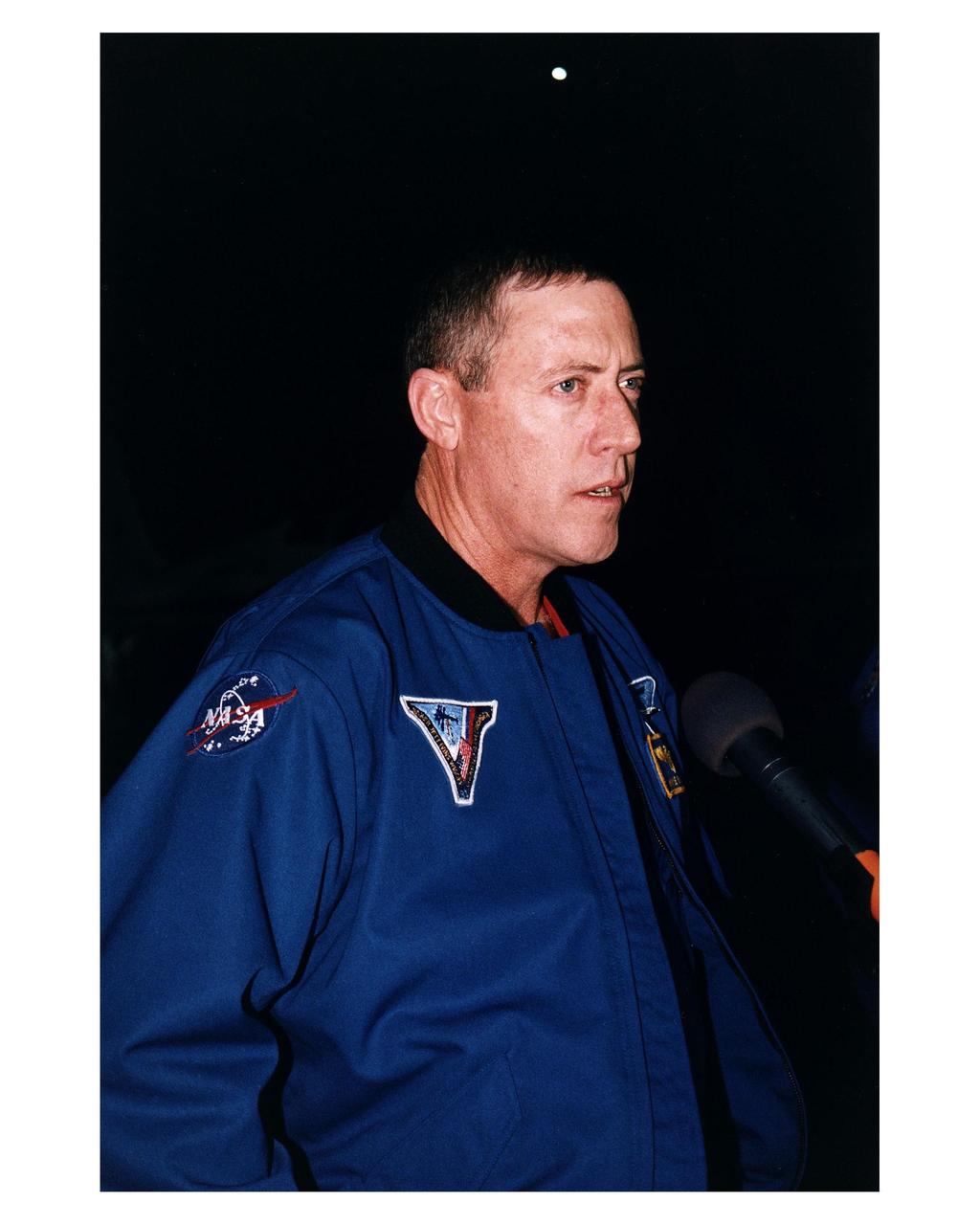
STS-81 Mission Commander Michael A. Baker talks to the press at the KSC Shuttle Landing Facility after he and his crew arrived at the space center for the final countdown preparations for the fifth Shuttle-Mir docking mission
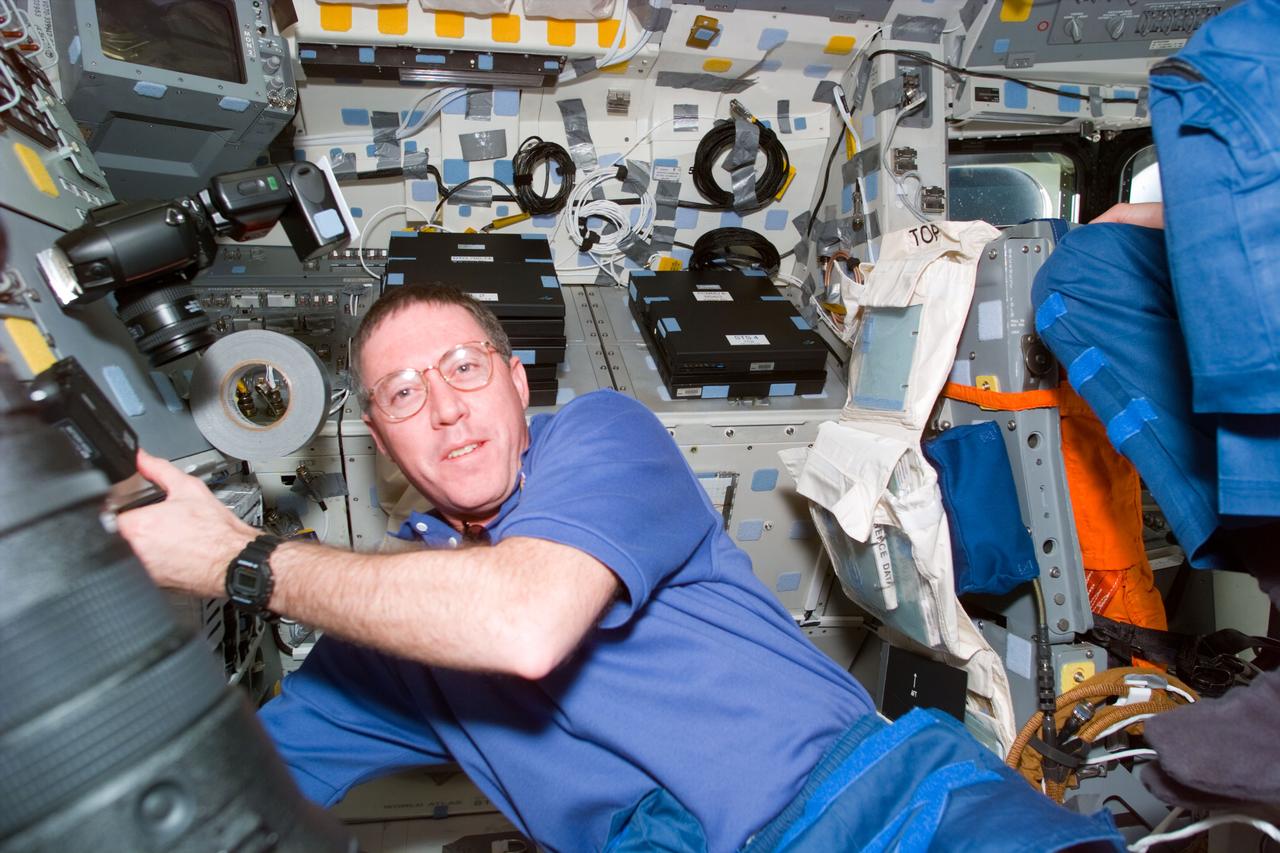
STS081-E-05091 (12 Jan. 1997) --- Astronaut Michael A. Baker, mission commander, prepares to retrieve a temporarily stowed camera from the Space Shuttle Atlantis' aft flight deck during early phases of the scheduled ten-day mission. Baker and five crew mates will dock with Russia's Mir Space Station around the middle of the week. This image was recorded with an Electronic Still Camera (ESC) and was later downlinked to flight controllers in Houston, Texas.
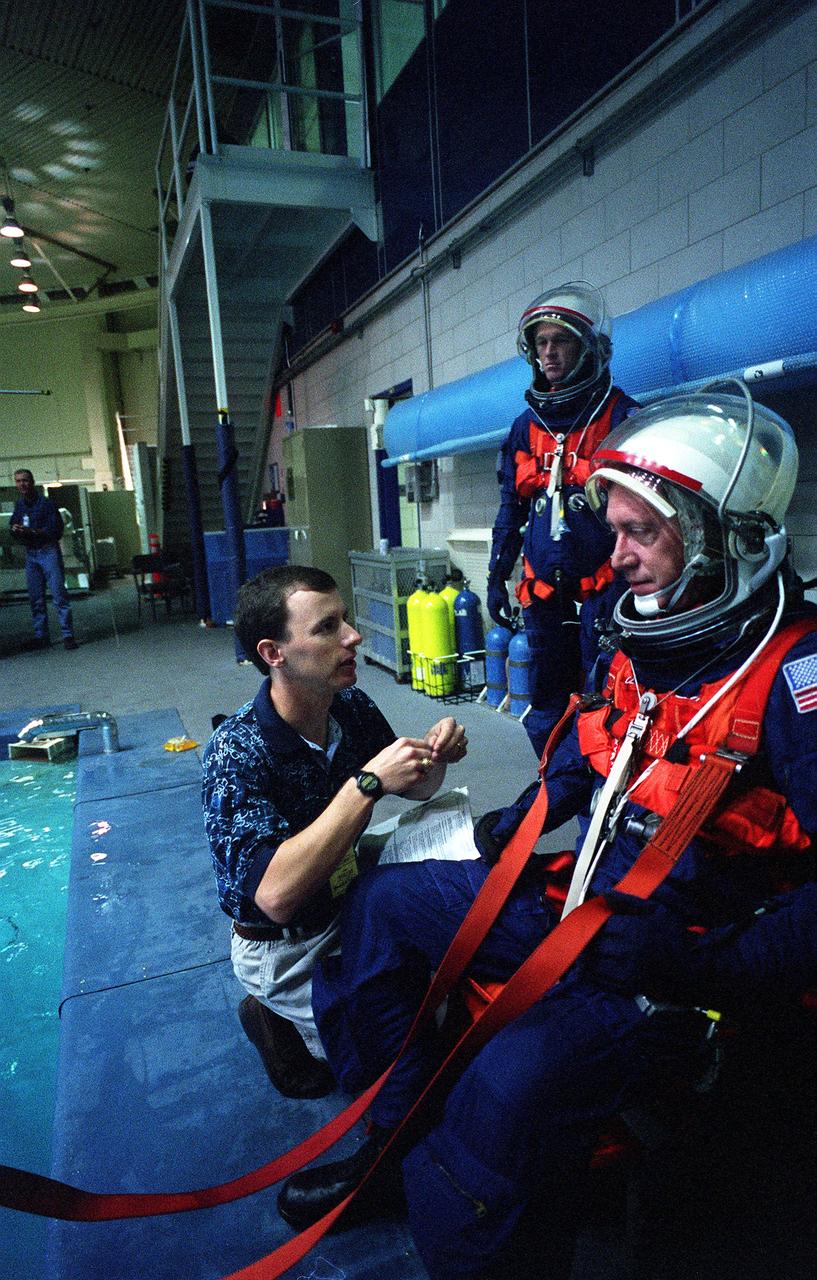
S96-15388 (26 Sept. 1996) --- In the Johnson Space Center's weightless environment training facility, astronaut Michael Baker, STS-81 mission commander, prepares to simulate a parachute drop into water. David Pogue helps with the final touches on Baker's training version of the launch and entry suit, as Brent W. Jett (background), pilot, looks on.
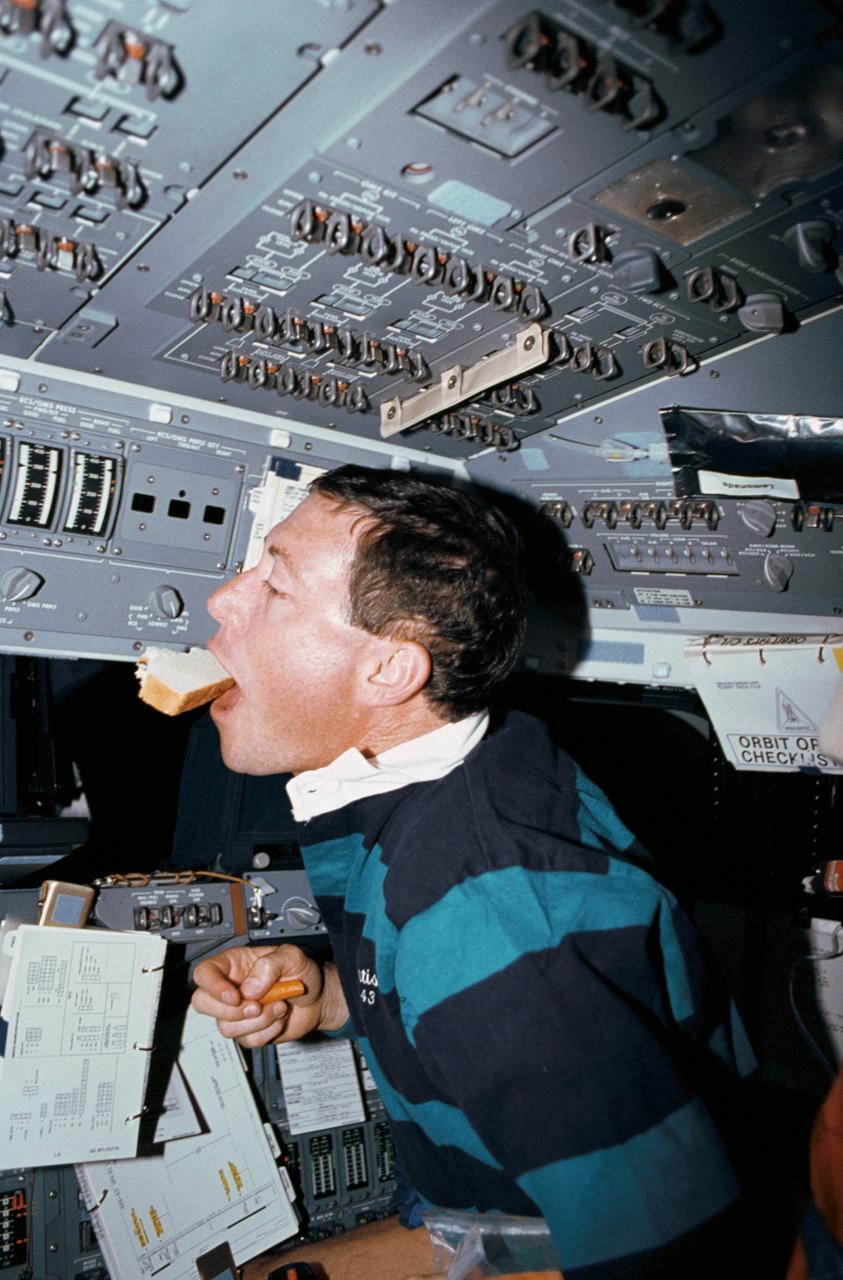
STS043-02-020 (2-11 Aug. 1991) --- Astronaut Michael A. Baker, STS-43 pilot, seated at the forward flight deck pilot station controls of the Space Shuttle Atlantis, eats a free-floating peanut butter and jelly sandwich while holding a carrot. Surrounding Baker are procedural checklists, control panels, and windows. A lemonade drink bag is velcroed to overhead panel.
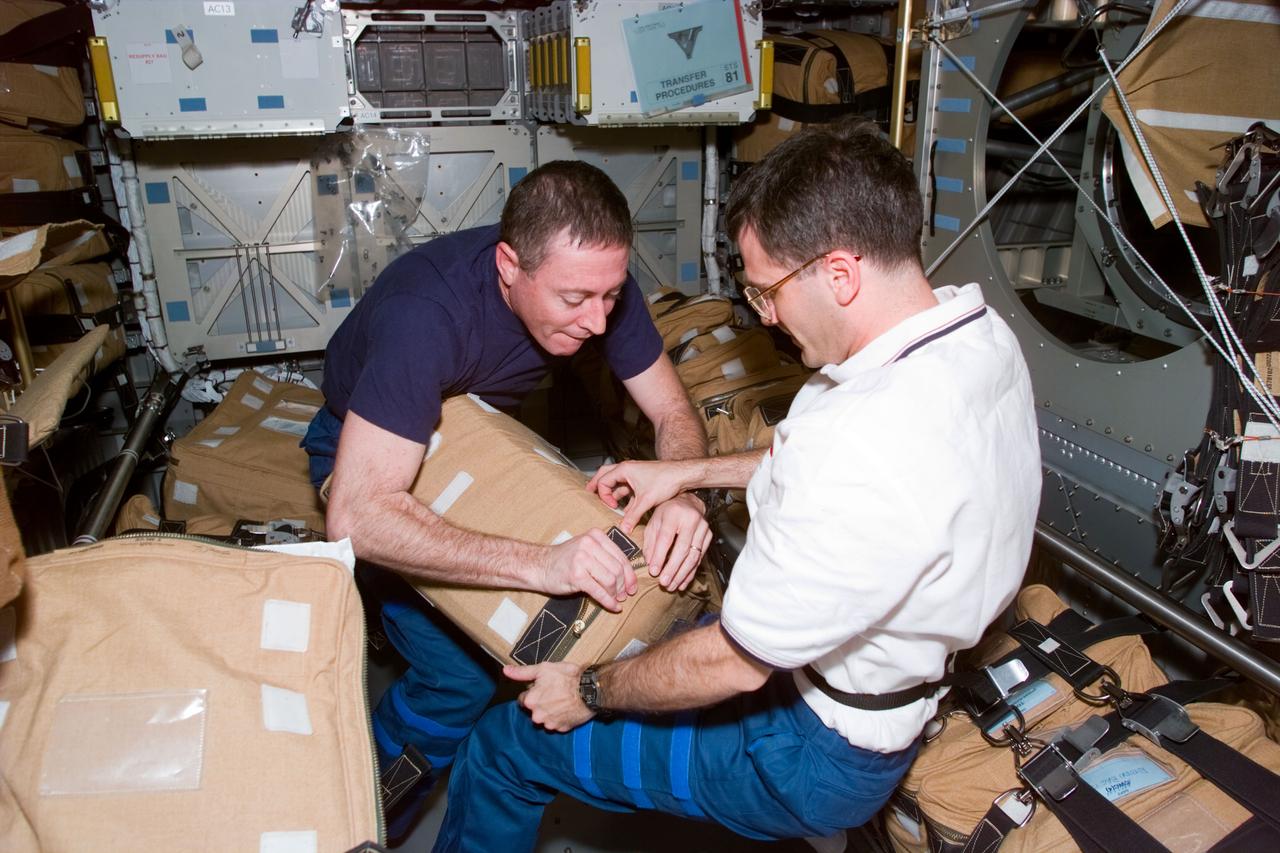
STS081-E-05515 (16 Jan. 1997) --- Astronauts Michael A. Baker, commander, and Peter J. K. (Jeff) Wisoff, mission specialist, secure a bag filled with a drawer of supplies in the Spacehab Double Module (DM). The scene was recorded with an Electronic Still Camera (ESC) and later downlinked to flight controllers in Houston, Texas.
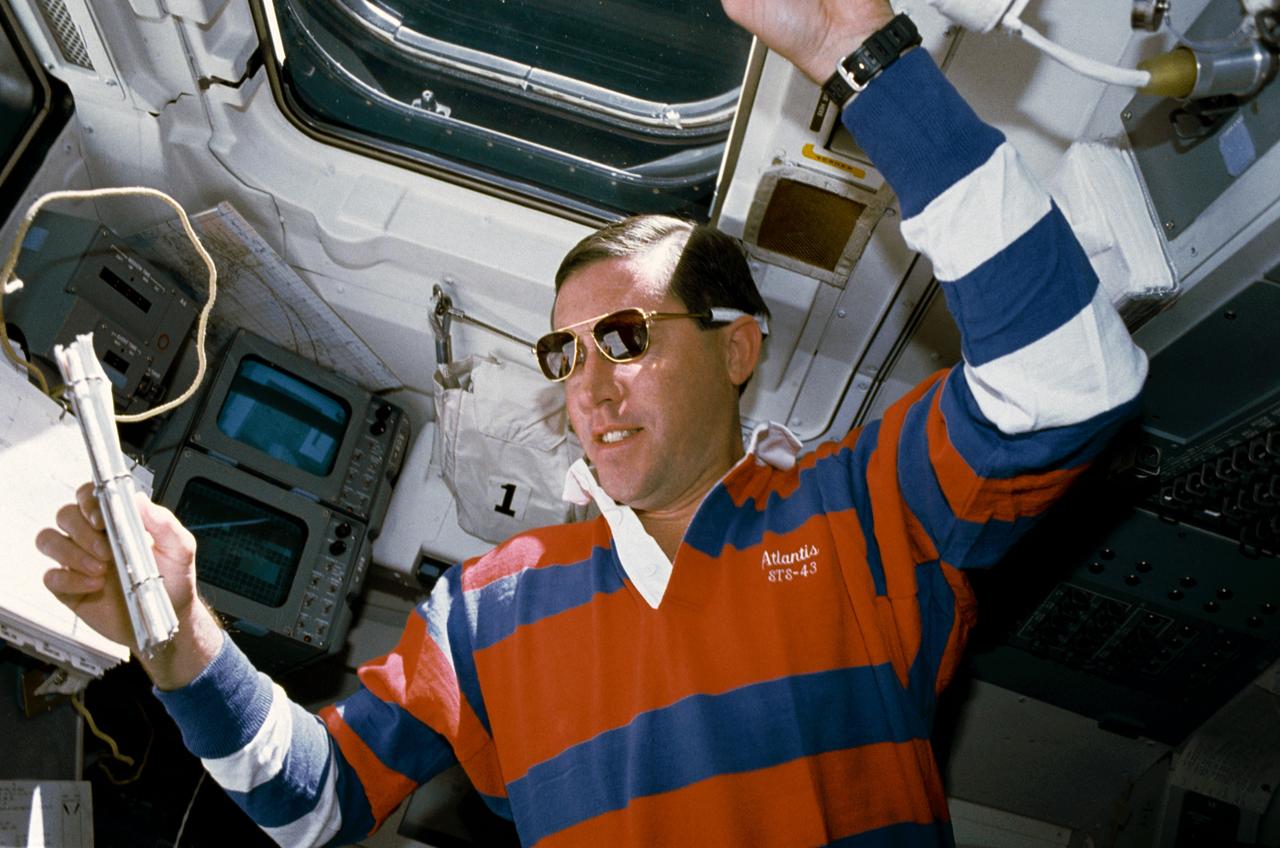
STS043-04-032 (11 Aug 1991) --- STS-43 Pilot Michael A. Baker, wearing sunglasses, reviews a checklist on the aft flight deck of Atlantis, Orbiter Vehicle (OV) 104. He is monitoring data associated with the Space Station Heat Pipe Advanced Radiator Element II (SHARE-II) located in OV-104's payload bay (PLB) from his position in front of the aft flight deck viewing windows. Behind Baker are the closed circuit television (CCTV) monitors and above his head is overhead window W8.
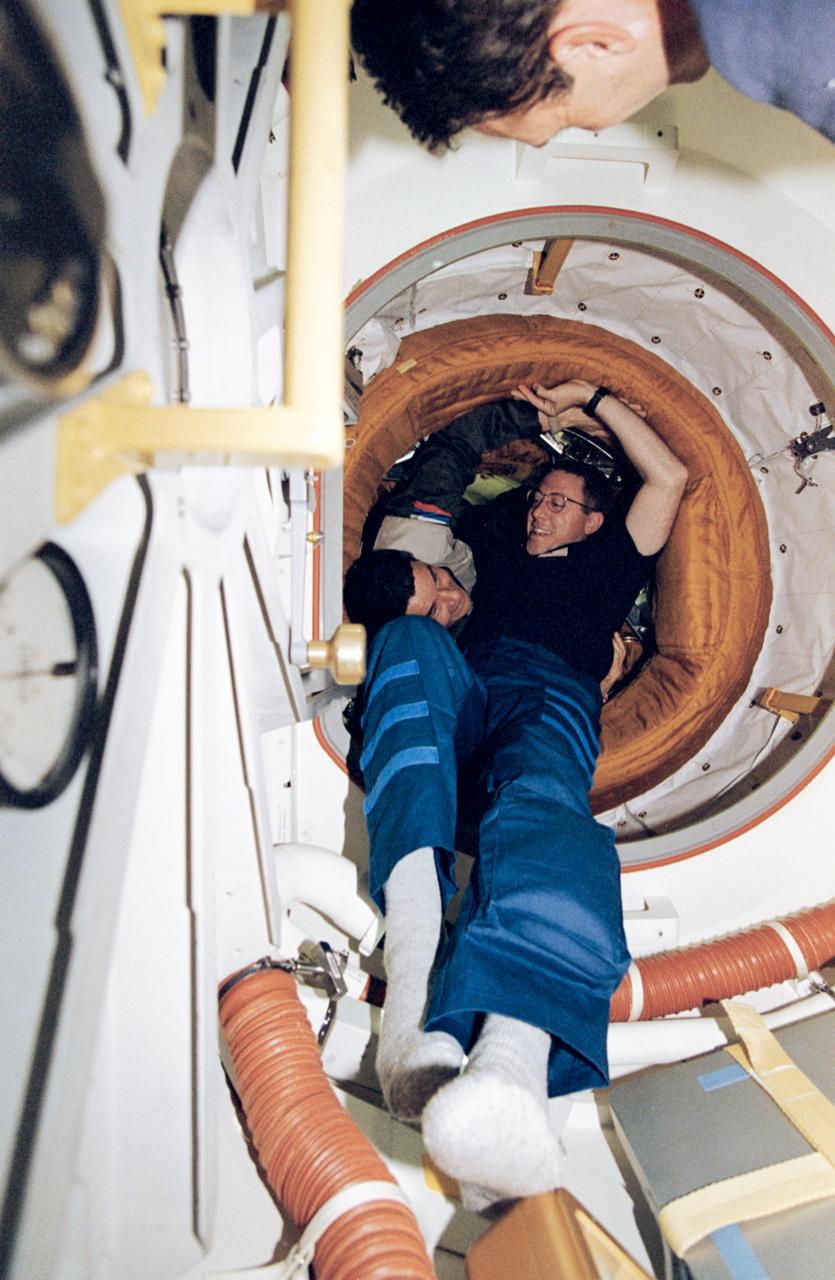
STS081-373-025 (14 Jan 1997) --- Greeting between commanders - astronaut Michael A. Baker (foreground) and cosmonaut Valeri G. Korzun - just after hatch opening following the January 14, 1997, docking. Out of frame on the Space Shuttle Atlantis is astronaut Jerry M. Linenger, soon to be trading places with John E. Blaha, the current cosmonaut guest researcher, onboard Russia?s Mir Space Station since mid September 1996. Along with Baker and Linenger, other crew members now aboard Atlantis are astronauts Brent W. Jett, Jr., pilot; and mission specialists John M. Grunsfeld, Marsha S. Ivins and Peter J. K. (Jeff) Wisoff.
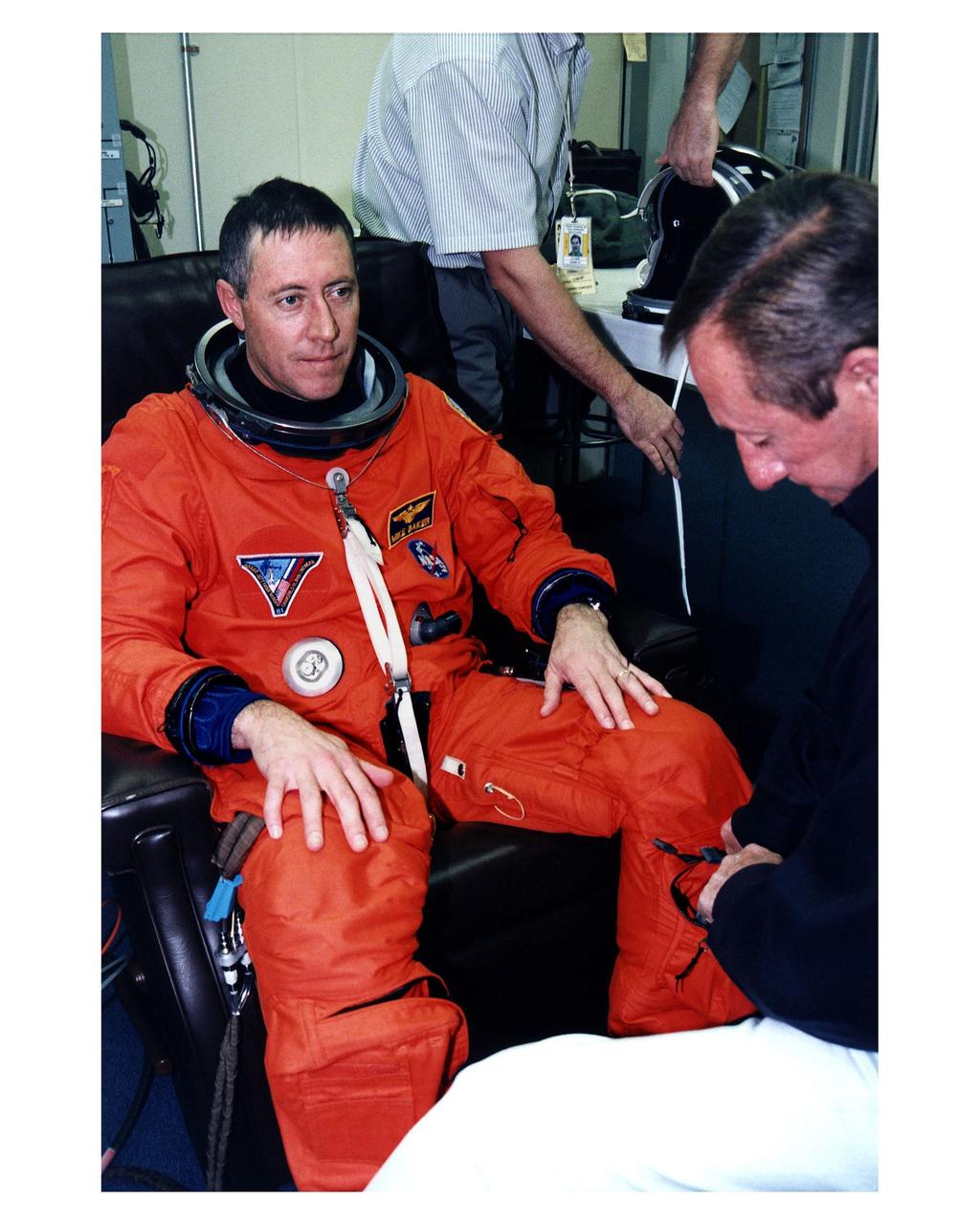
STS-81 Mission Commander Michael A. Baker is assisted into his launch/entry suit in the Operations and Checkout (O&C) Building. Baker is on his fourth space flight and will have responsibility for the 10-day mission, including the intricate docking and undocking maneuvers with the Russian Mir space station. He will also be in charge of two in-flight Risk Mitigation experiments and be the subject of a Human Life Sciences experiment. He and five crew members will shortly depart the O&C and head for Launch Pad 39B, where the Space Shuttle Atlantis will lift off during a 7-minute window that opens at 4:27 a.m. EST, January 12
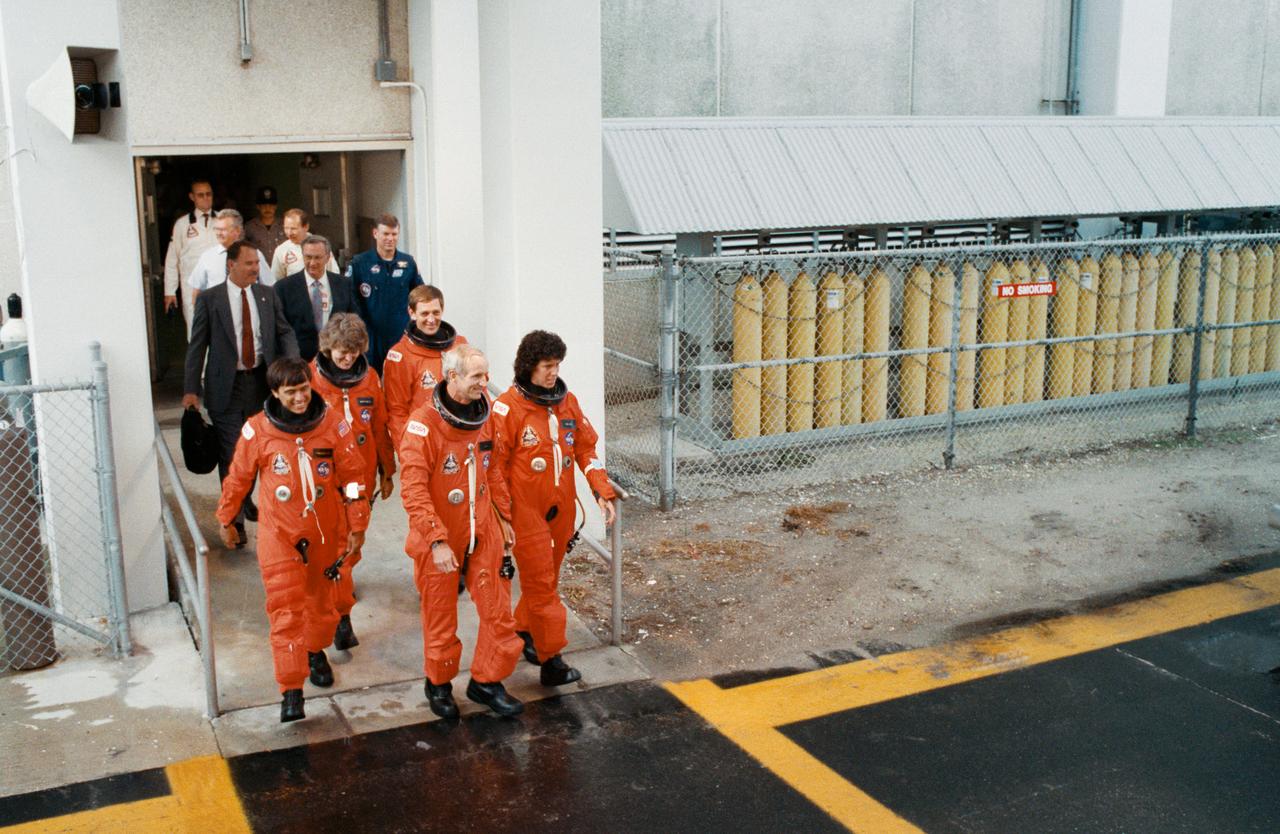
STS-34 crewmembers leave the Kennedy Space Center (KSC) Operations and Checkout (O&C) Building. Crewmembers will then board a vehicle which will carry them to Launch Complex (LC) Pad 39B. Crewmembers, wearing orange launch and entry suits (LESs), are (left to right) Mission Specialist (MS) Franklin R. Chang-Diaz, MS Shannon W. Lucid, Pilot Michael J. McCulley, Commander Donald E. Williams, and MS Ellen S. Baker. Following the crewmembers are (dark clothing, left to right) Donald R. Puddy, Olan J. Bertrand, and astronaut Michael L. Coats of JSC.
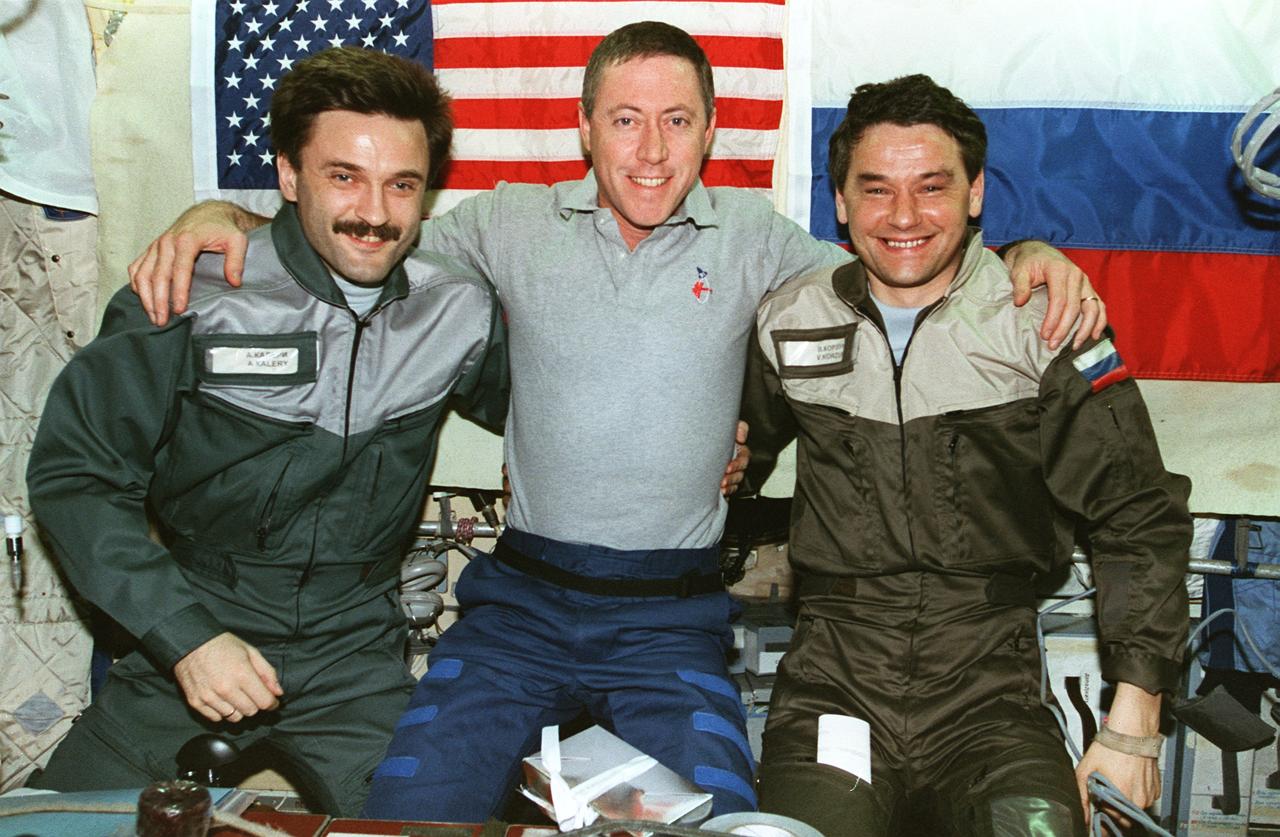
STS081-369-028 (12-22 Jan. 1997) --- On the eve of undocking of the Space Shuttle Atlantis and Russia's Mir Space Station, astronaut Michael A. Baker (center), STS-81 mission commander, bids farewell to cosmonauts Aleksandr Y. Kaleri (left), Mir-22 flight engineer, and Valeri G. Korzun, Mir-22 mission commander. The three are in the Base Block Module of the Mir complex.
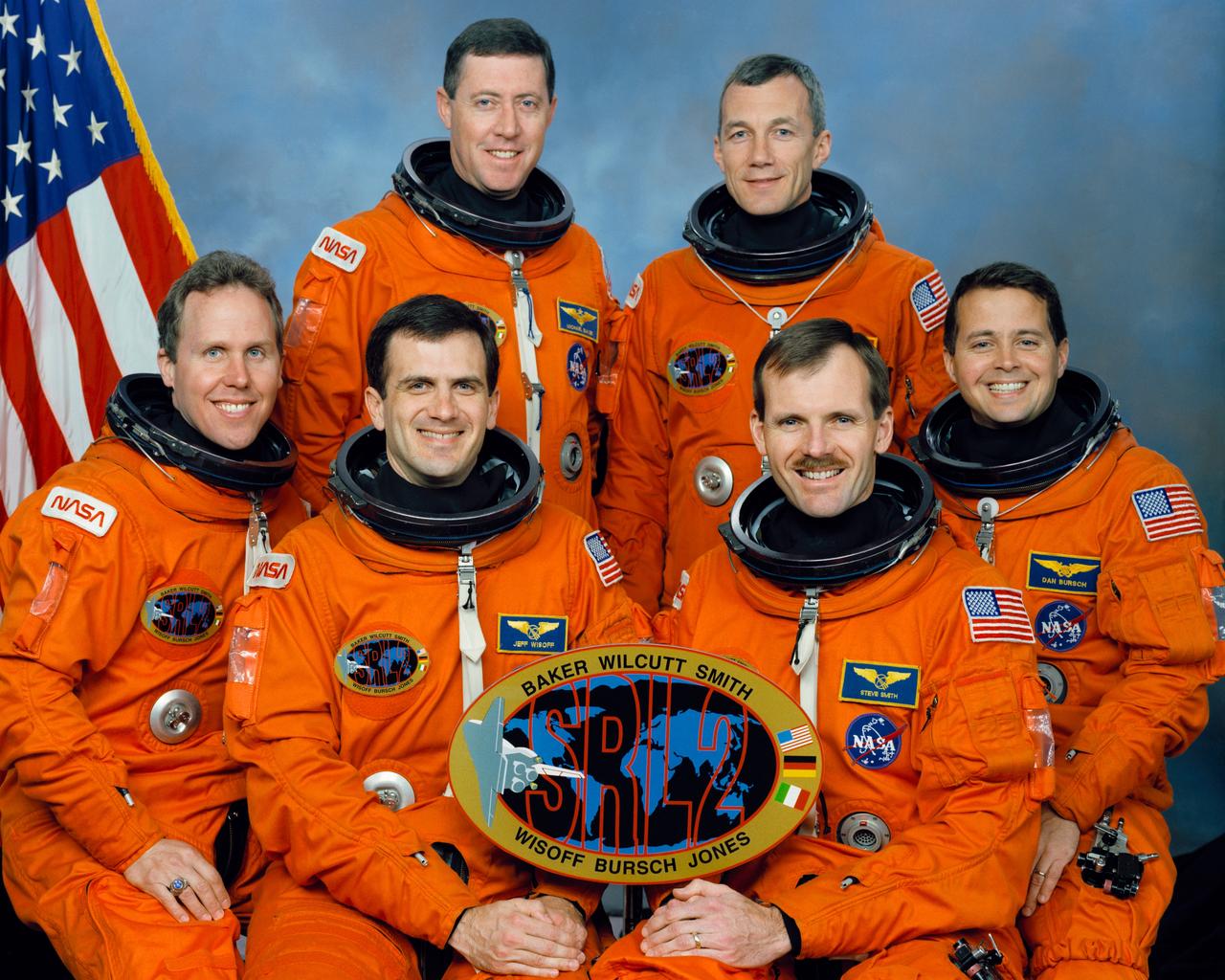
STS068-S-002 (March 1994) --- These six NASA astronauts are in training for the mission, scheduled for launch later this year. Standing are, left to right, Michael A. Baker, mission commander; and Terrence W. Wilcutt, pilot. On the front row are, left to right, Thomas D. Jones, payload commander; and Peter J. K. (Jeff) Wisoff, Steven L. Smith and Daniel W. Bursch, all mission specialists.
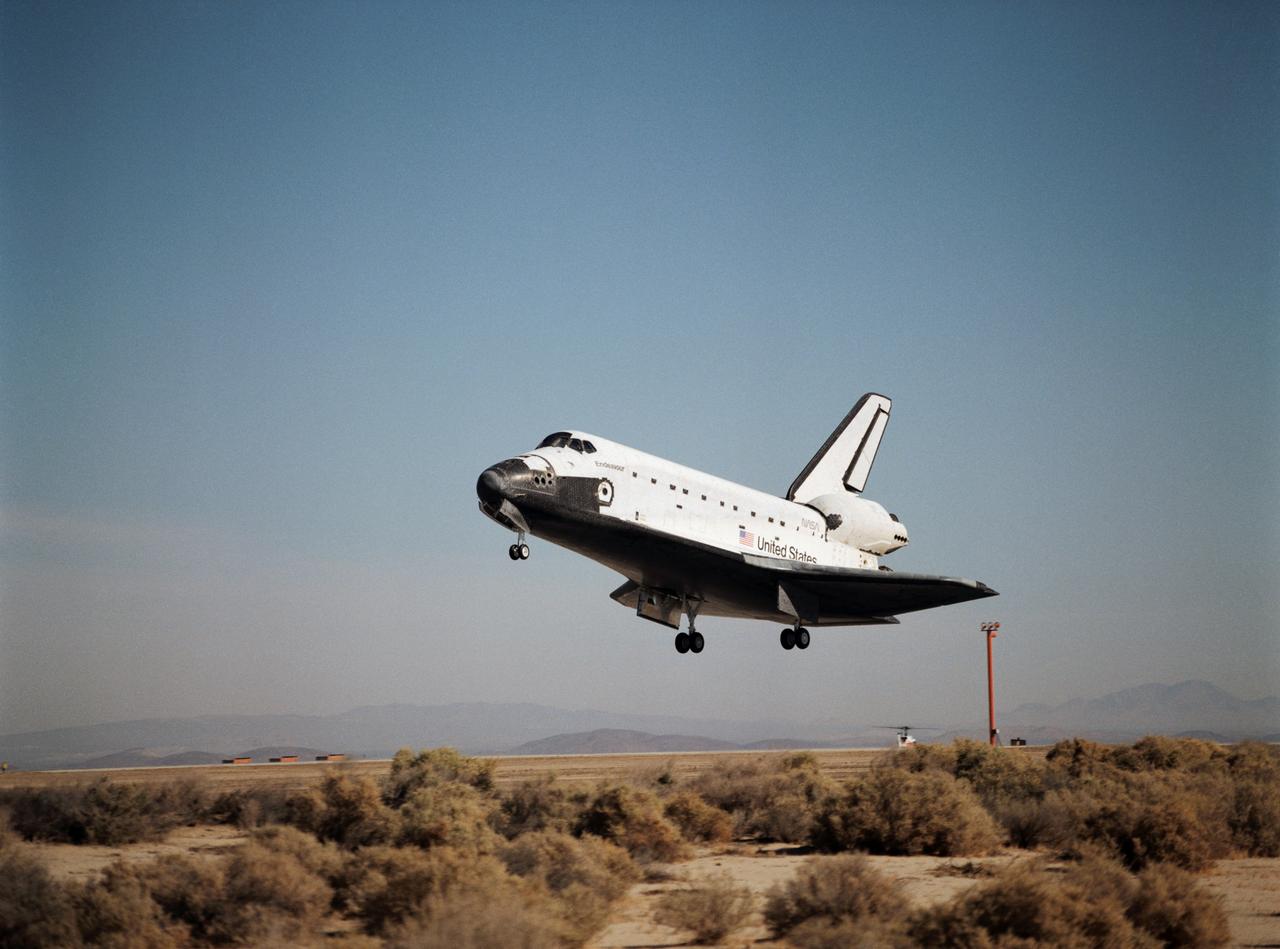
STS068-S-060 (11 October 1994) --- With its main landing gear not quite on the runway, the Space Shuttle Endeavour wraps up an eleven-day mission at Edwards Air Force Base, California. Landing occurred at 10:02 a.m. (PDT), October 11, 1994. Onboard were astronauts Michael A. Baker, mission commander; Terrence W. Wilcutt, pilot; Thomas D. Jones, payload commander; and Daniel W. Bursch, Peter J. K. (Jeff) Wisoff and Steven L. Smith, all mission specialists.
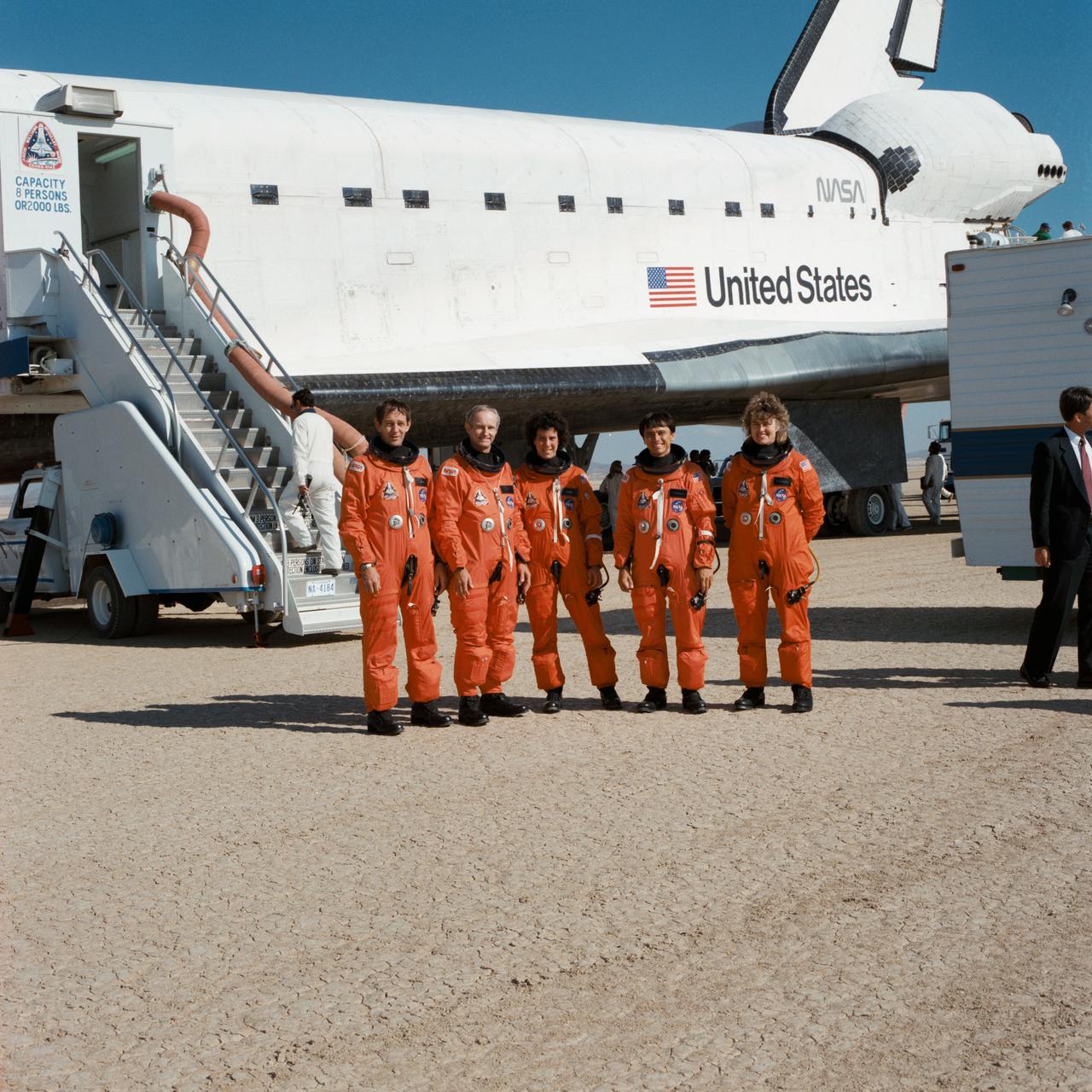
STS-34 crewmembers, wearing launch and entry suits (LESs), stand in front of Atlantis, Orbiter Vehicle (OV) 104, on Runway 23 dry lake bed at Edwards Air Force Base (EAFB), California. Left to right are Pilot Michael J. McCulley, Commander Donald E. Williams, Mission Specialist (MS) Ellen S. Baker, MS Franklin R. Chang-Diaz, and MS Shannon W. Lucid. Ground crews service OV-104 in the background.
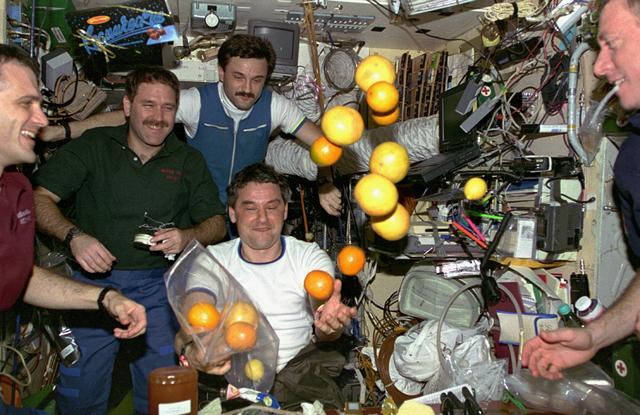
STS081-343-014 (12-22 Jan. 1997) --- Oranges and grapefruit brought up from Earth get a popular reception by the Mir-22 crewmembers. Left to right astronauts Peter J. K. (Jeff) Wisoff and John M. Grunsfeld, along with cosmonauts Aleksandr Y. Kaleri and Valeri G. Korzun, Mir-22 flight engineer and commander respectively, view the microgravity behavior of the seasonal gifts. Astronaut Michael A. Baker, mission commander, looks on at frame's right edge.
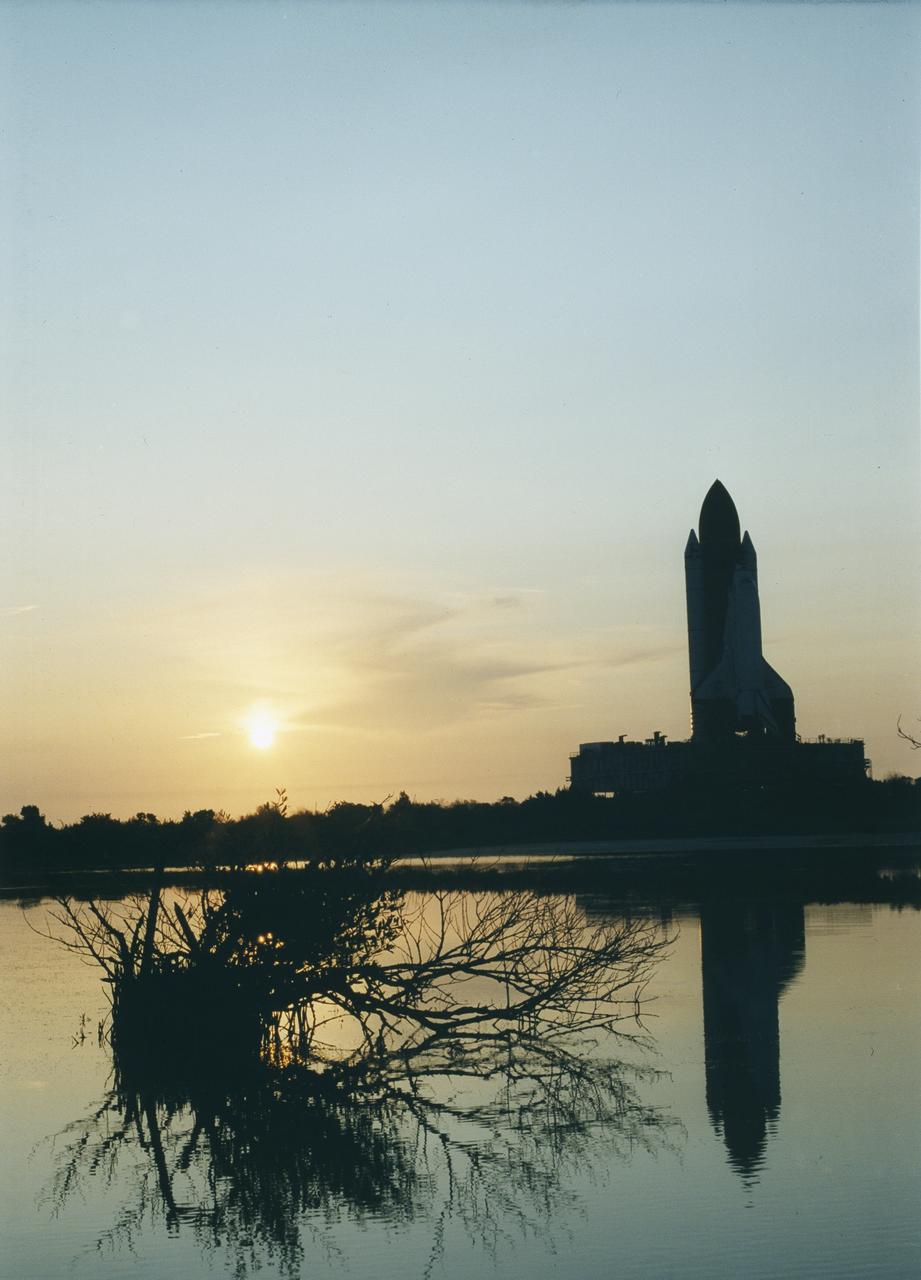
Launched aboard the Space Shuttle Atlantis on August 2, 1991, the STS-43 mission’s primary payload was the Tracking and Data Relay Satellite 5 (TDRS-5) attached to an Inertial Upper Stage (IUS), which became the 4th member of an orbiting TDRS cluster. The flight crew consisted of five astronauts: John E. Blaha, commander; Michael A. Baker, pilot; Shannon W. Lucid, mission specialist 1; James C. Adamson, mission specialist 2; and G. David Low, mission specialist 3.
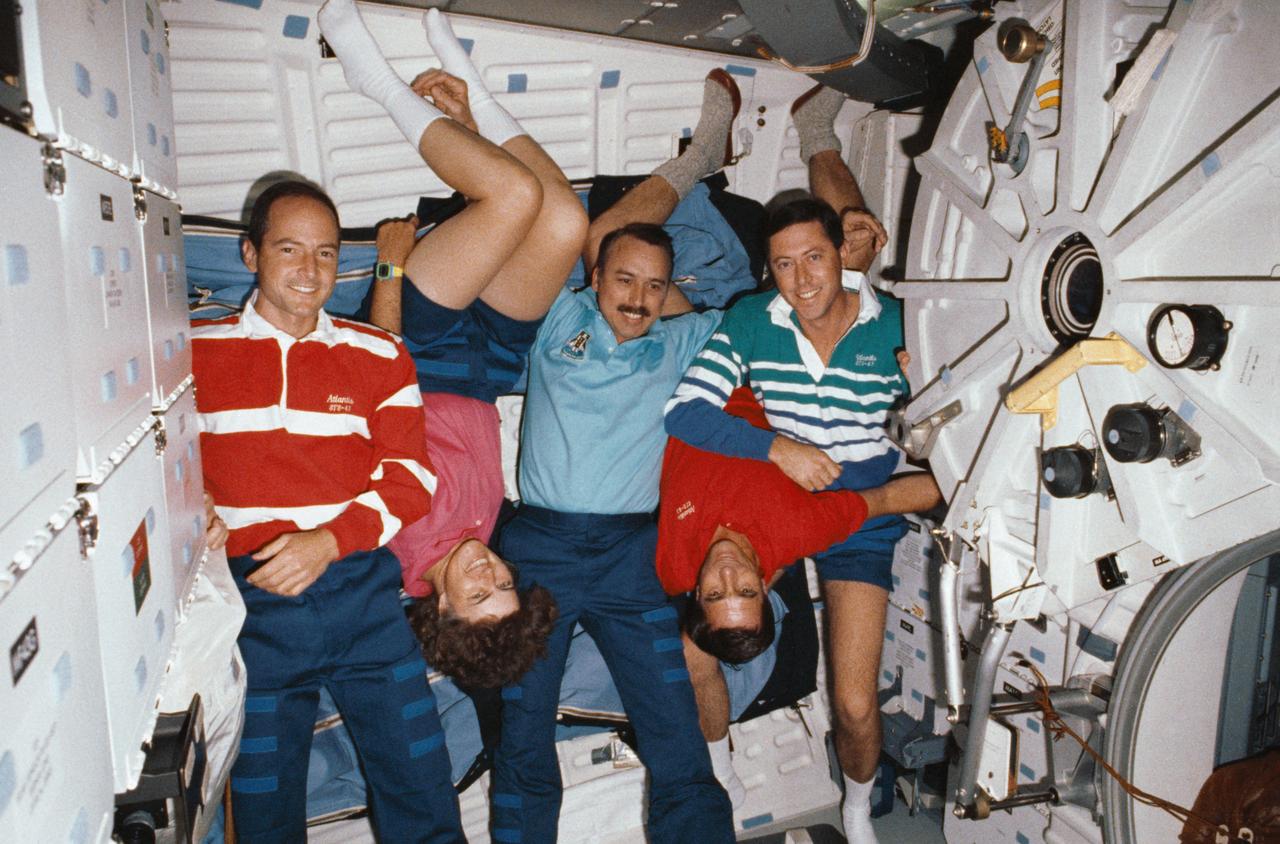
STS043-40-029 (2-11 Aug 1991) --- The five crewmembers on NASA's STS-43 mission pose for the traditional in-flight crew portrait. The photo should be oriented with Atlantis' middeck hatch on the right. Left to right are astronauts G. David Low, Shannon W. Lucid and James C. Adamson, all mission specialists; John E. Blaha, mission commander; and Michael A. Baker, pilot.
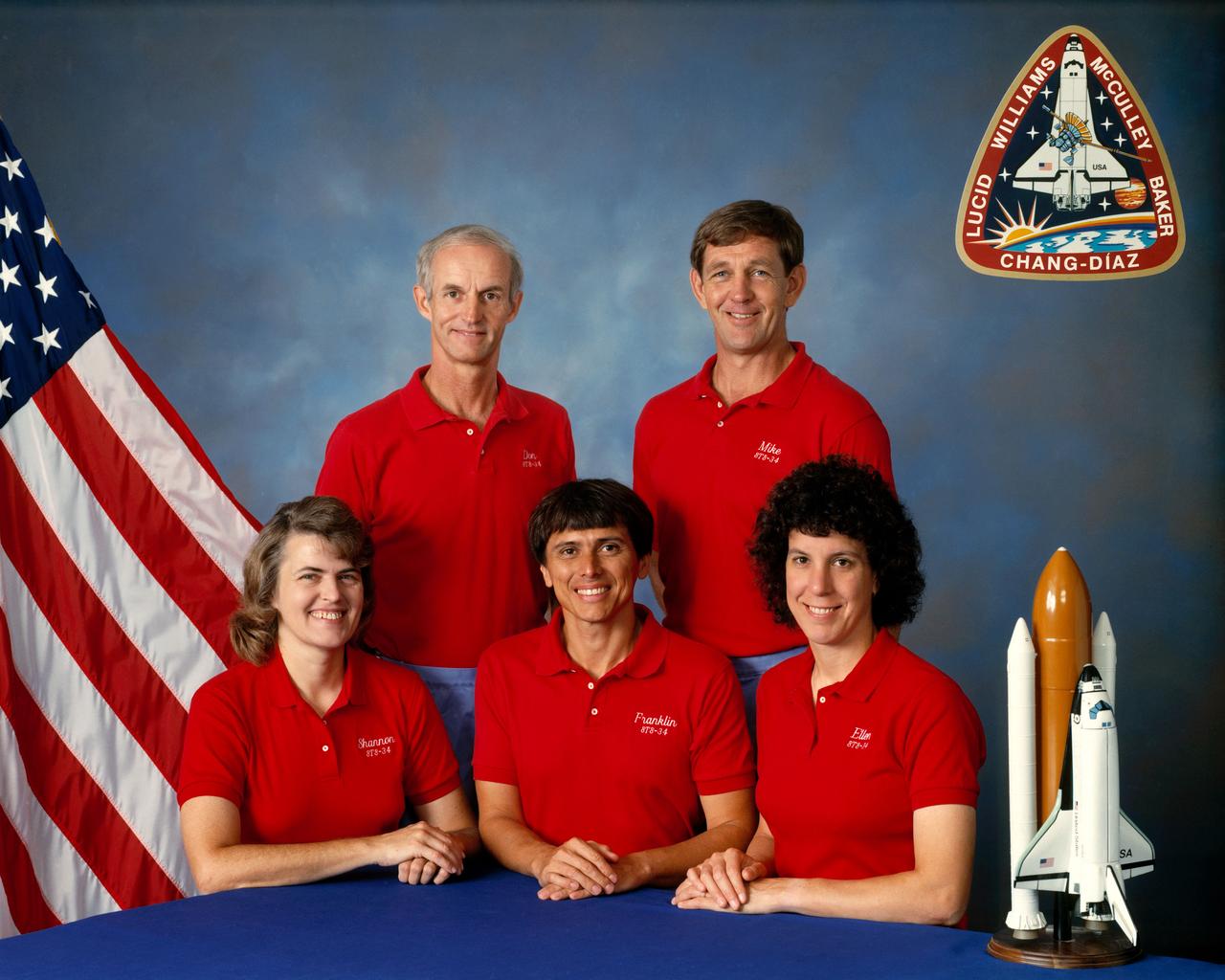
S89-39803 (July 1989) --- These five astronauts have been assigned to fly the Space Shuttle Atlantis for the mission on which the Jupiter probe, Galileo will be deployed. The mission is scheduled for October of this year. Seated, left to right, are mission specialists Shannon W. Lucid, Ph.D.; Franklin Chang-Diaz, Ph.D.; and Ellen S. Baker, M.D. Standing behind the mission specialists are left, Donald E. Williams, commander; and Michael J. McCulley, pilot.
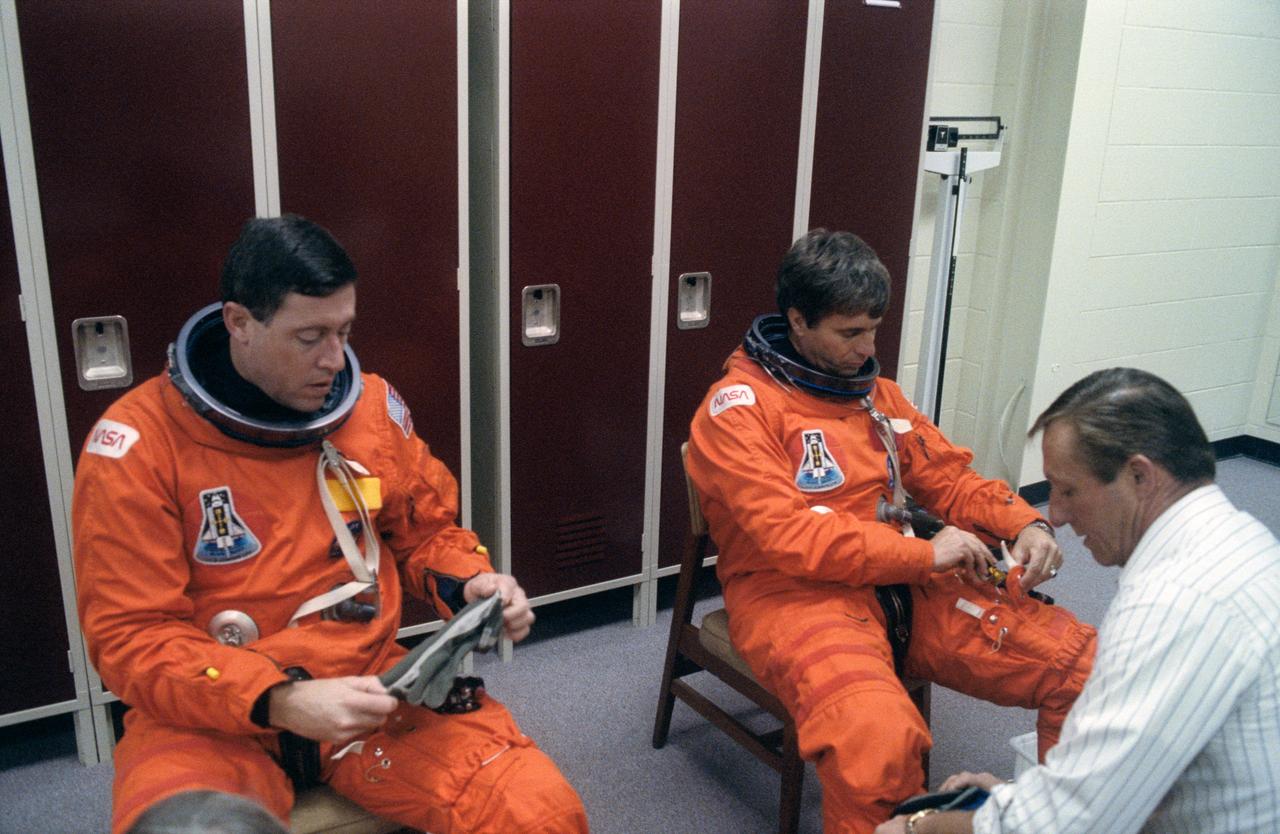
S91-37294 (May 1991) --- Astronauts Michael A. Baker, left, and John E. Blaha, STS-43 pilot and mission commander, respectively, suit up for a session of emergency egress training at the Johnson Space Center's Shuttle Mockup and Integration Laboratory. Bill Todd, a crew escape equipment suit technician for Boeing, assits them. The two astronauts are wearing the orange partial pressure suits which are used by Shuttle crewmembers during launch and entry phases of their flights.
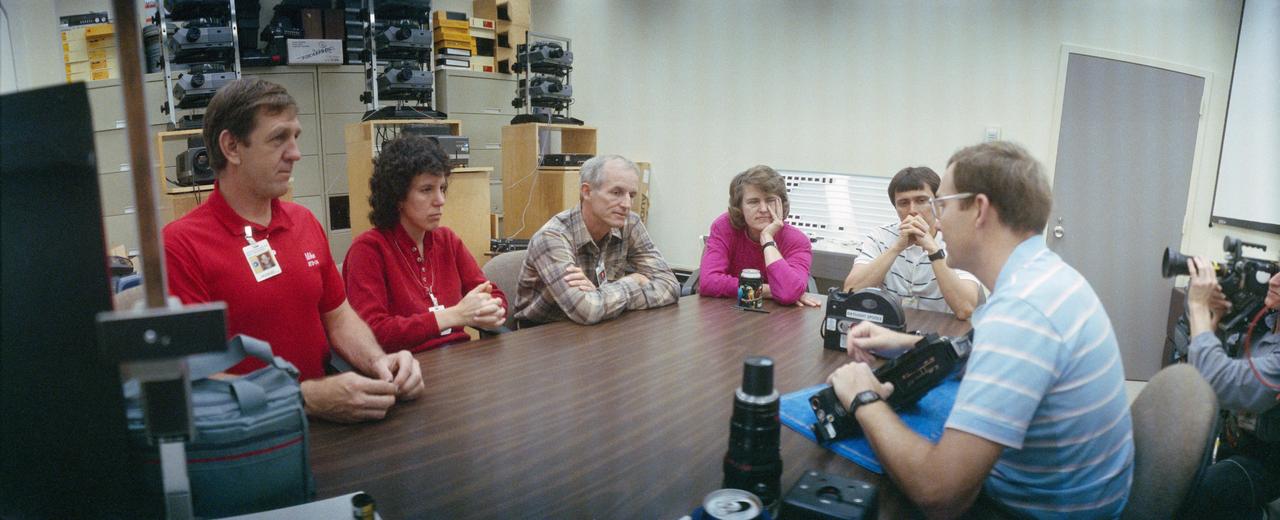
STS-34 Atlantis, Orbiter Vehicle (OV) 104, crewmembers listen to trainer Bill Bowers explain ARRIFLEX camera equipment during briefing at JSC. Across the table from Bowers are (left to right) Pilot Michael J. McCulley, Mission Specialist (MS) Ellen S. Baker, Commander Donald E. Williams, MS Shannon W. Lucid, and MS Franklin R. Chang-Diaz.
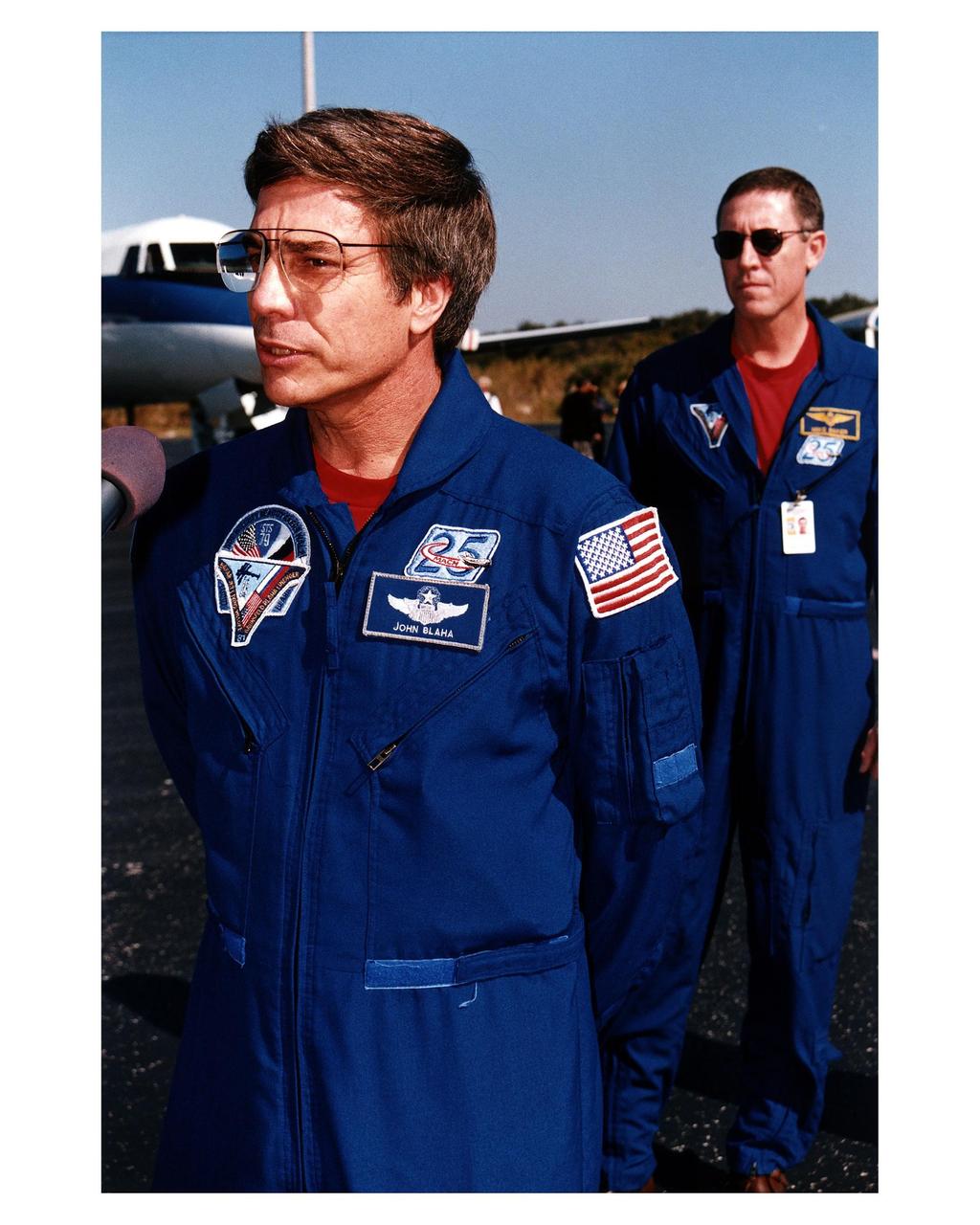
Returning NASA astronaut and former Mir 22 crew member John E. Blaha (left), addresses the news media at the Skid Strip at Cape Canaveral Air Station as he and fellow STS-81 crew members prepare to depart for Johnson Space Center Jan. 23. The crew arrived at KSC aboard the Space Shuttle Atlantis Jan. 22 to conclude the fifth Shuttle-Mir docking mission and return Blaha to Earth after four months in space. Behind Blaha is Mission Commander Michael A. Baker
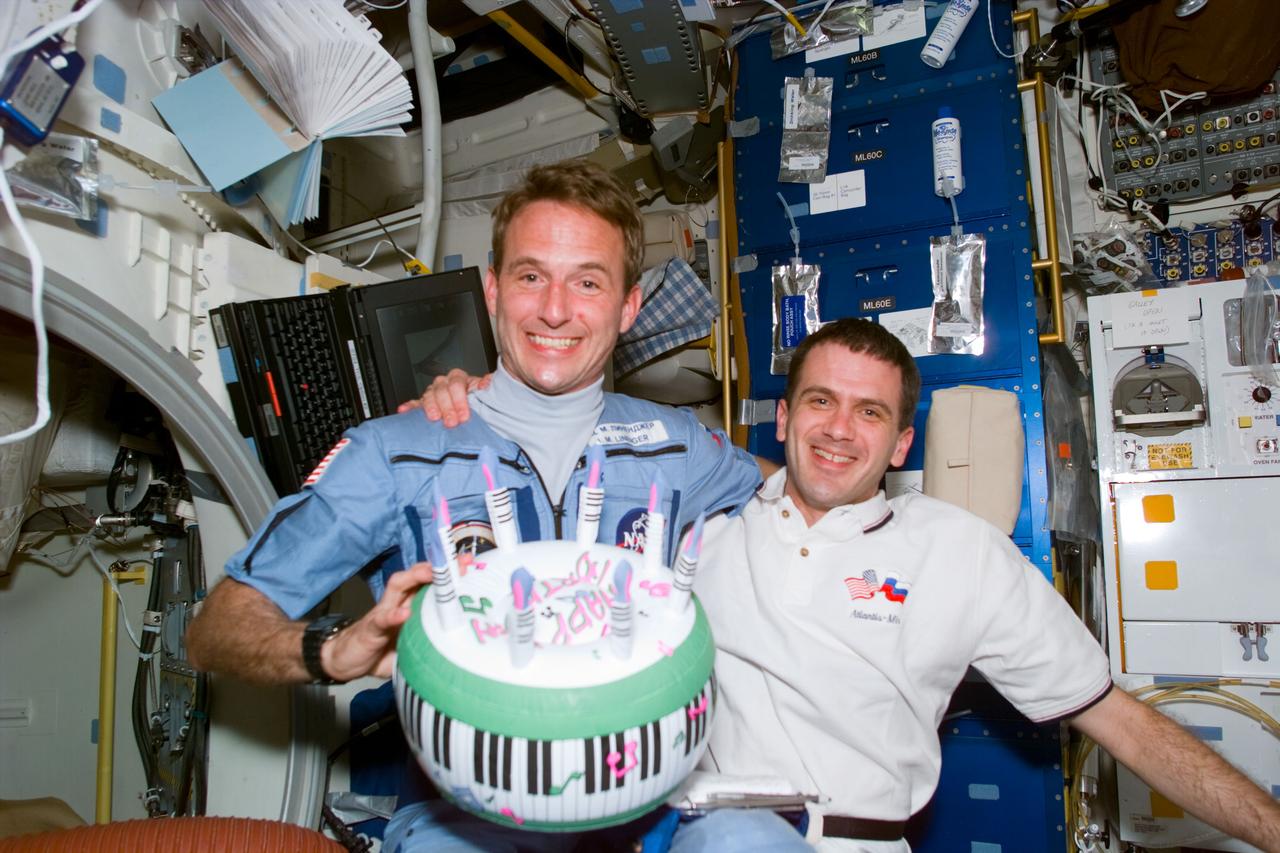
STS081-E-05498 (16 Jan. 1997) --- Supplies and equipment transfer are the topic of the day, as the Space Shuttle Atlantis and Russia's Mir Space Station respective commanders have a discussion aboard the Orbiter. Left to right are cosmonauts Valeri G. Korzun and Aleksandr Y. Kaleri, Mir-22 commander and flight engineer respectively; along with astronaut Michael A. Baker, mission commander. The photograph was recorded with an Electronic Still Camera (ESC) and later was downlinked to flight controllers in Houston, Texas.
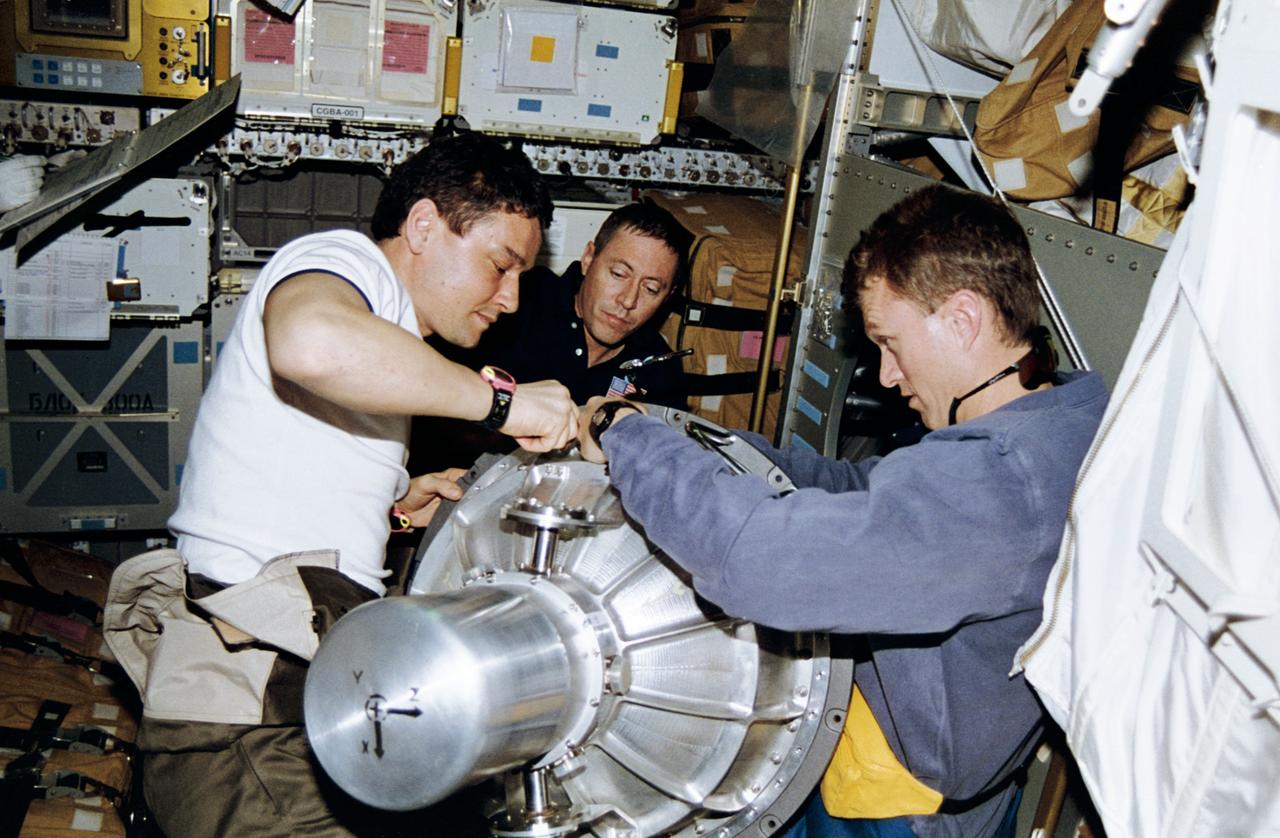
STS081-301-031 (12-22 Jan 1997) --- Shortly after docking of the Space Shuttle Atlantis and Russia's Mir Space Station, crew members from the respective spacecraft begin to transfer hardware from the Spacehab Double Module (DM) onto the Mir complex. Here, cosmonaut Valeri G. Korzun, Mir-22 commander, along with astronauts Michael A. Baker, commander, and Brent W. Jett, Jr., pilot, unstow a gyrodyne, device for attitude control, transfer to Mir.
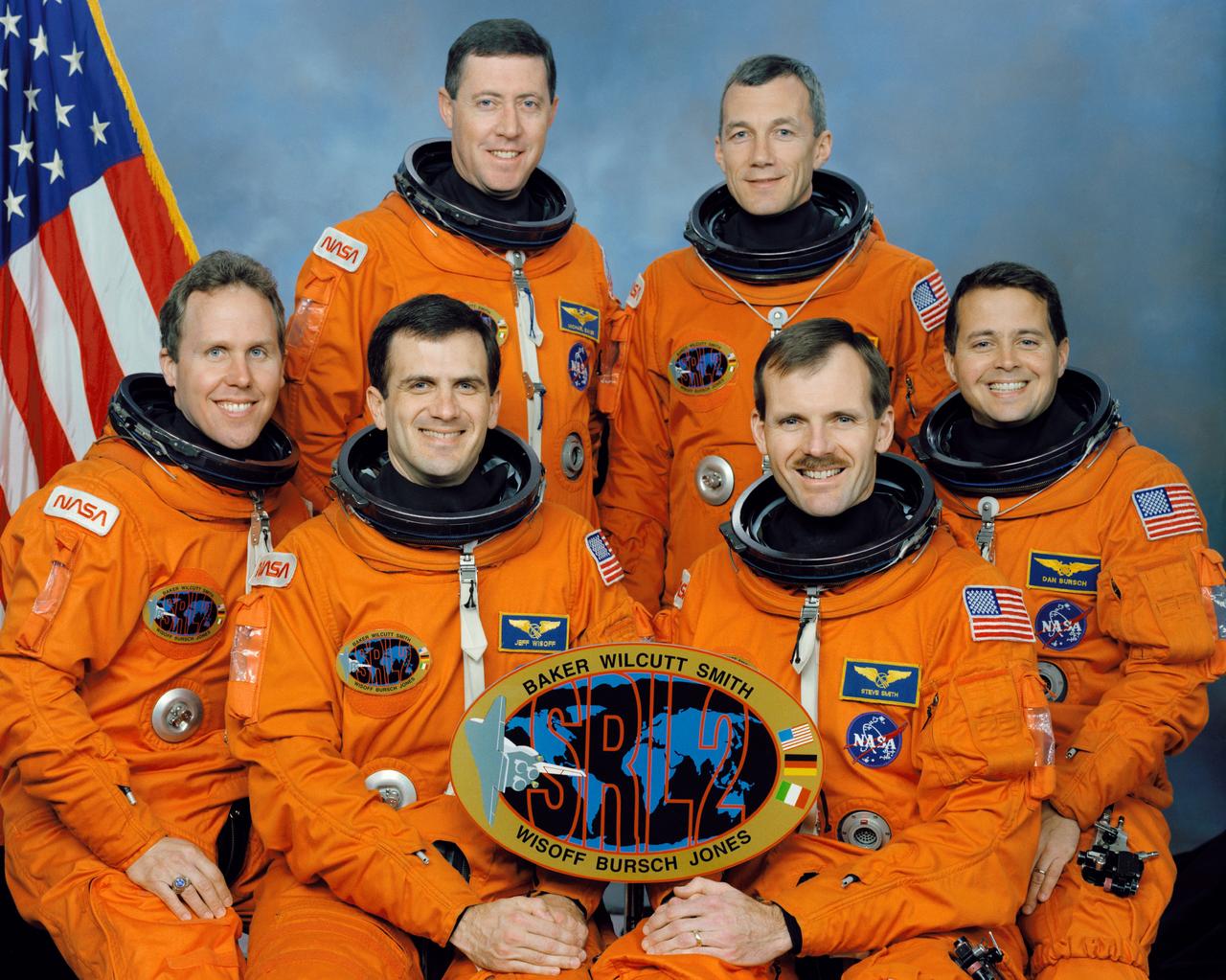
These six NASA astronauts composed the crew of the STS-68 mission that launched aboard the Space Shuttle Endeavour on September 30, 1994. Standing are, left to right, Michael A. Baker, mission commander; and Terrence W. Wilcutt, pilot. On the front row are, left to right, Thomas D. Jones, payload commander; and Peter J. K. (Jeff) Wisoff, Steven L. Smith, and Daniel W. Bursch, all mission specialists. STS-68 marked the second flight of the Space Radar Laboratory, part of NASA’s mission to planet Earth.
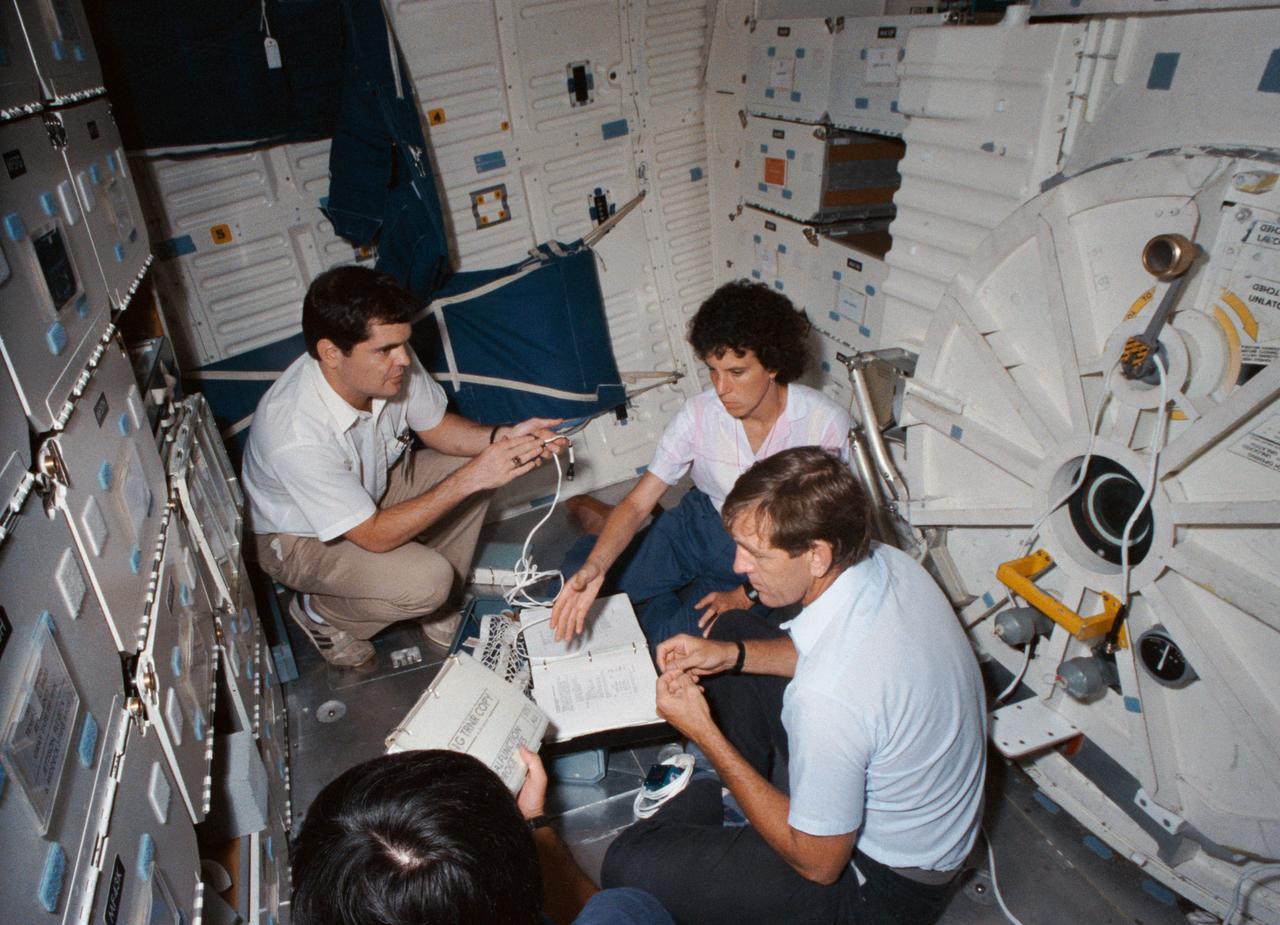
S89-39537 (July 1989) --- Two astronaut-crewmembers for NASA's STS-34 mission are briefed on inflight maintenance procedures on the mid-deck of the Space Shuttle crew compartment trainer in JSC's Shuttle mockup and integration laboratory. They are Ellen S. Baker and Michael J. McCulley, mission specialist and pilot, respectively for the scheduled Oct. 1989 mission aboard the Atlantis.
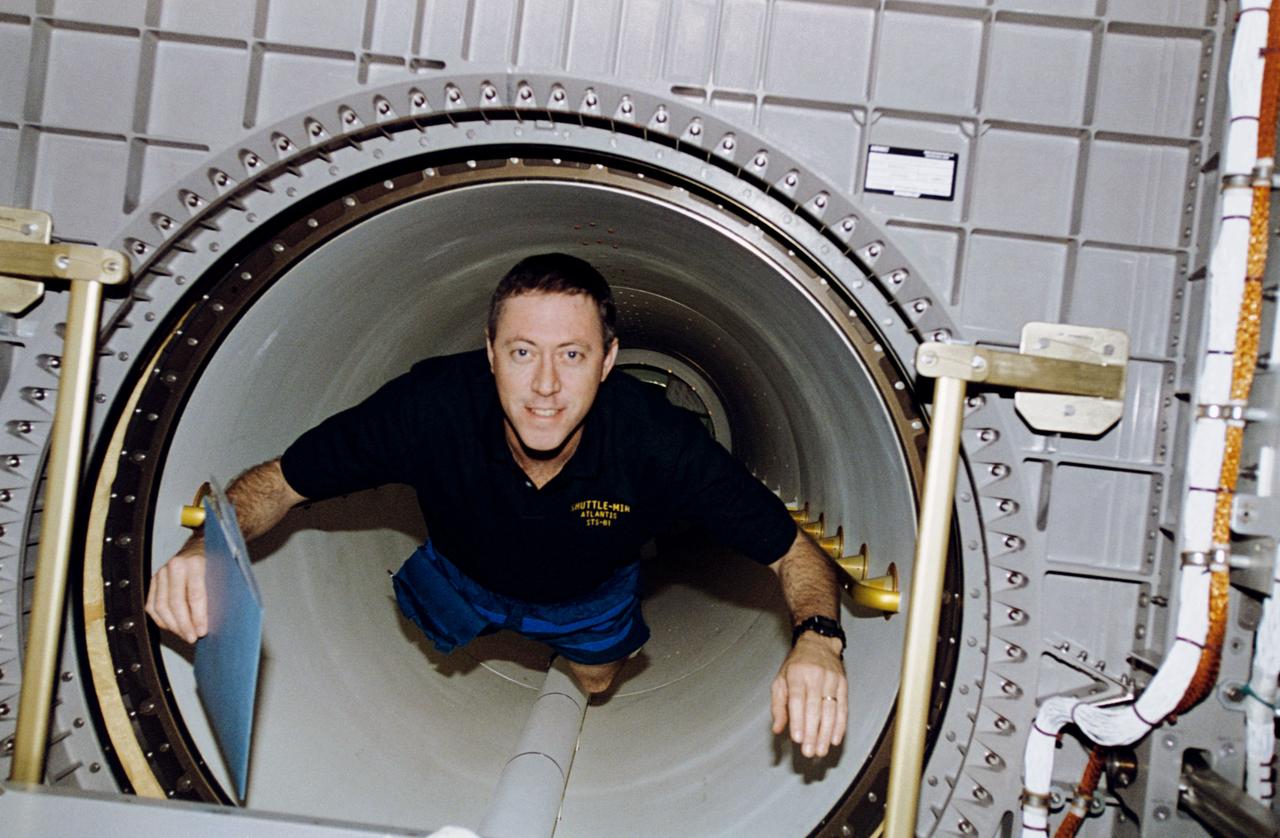
STS081-314-019 (12-22 Jan 1997) --- Astronaut Michael A. Baker, mission commander, floats through the tunnel leading from the Space Shuttle Atlantis mid-deck into Spacehab Double Module (DM). For a period of five days, seven astronauts and two Russian cosmonauts are sharing a variety of chores in space as the spacecraft from their respective nations are docked in Earth-orbit.
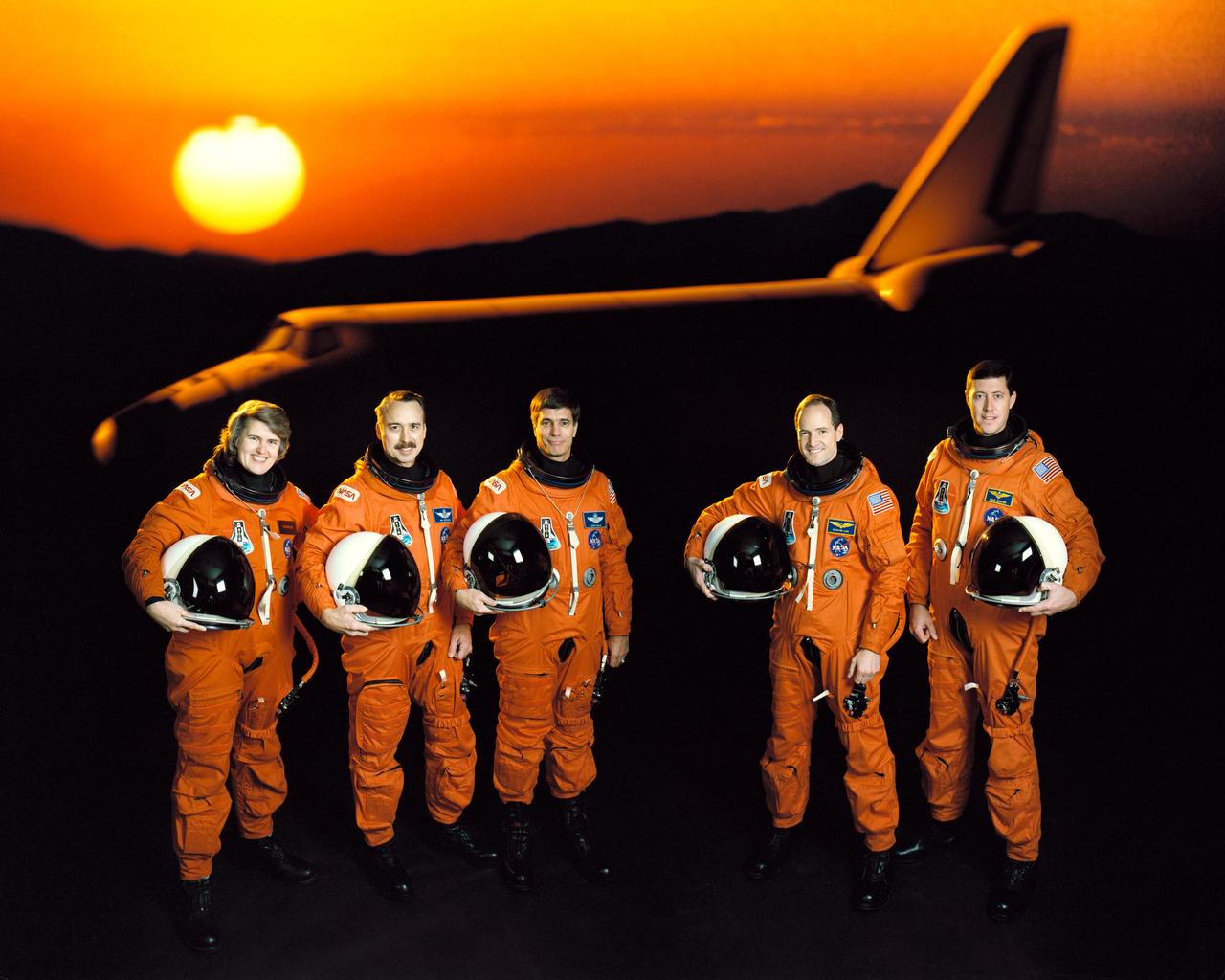
STS043-S-002 (May 1991) --- These five astronauts have been assigned to fly aboard the Space Shuttle Atlantis for NASA's STS-43 mission. Astronaut John E. Blaha (center) is mission commander. Other crew members are, left to right, astronauts Shannon W. Lucid, James C. Adamson and G. David Low, all mission specialists; and Michael A. Baker, pilot.
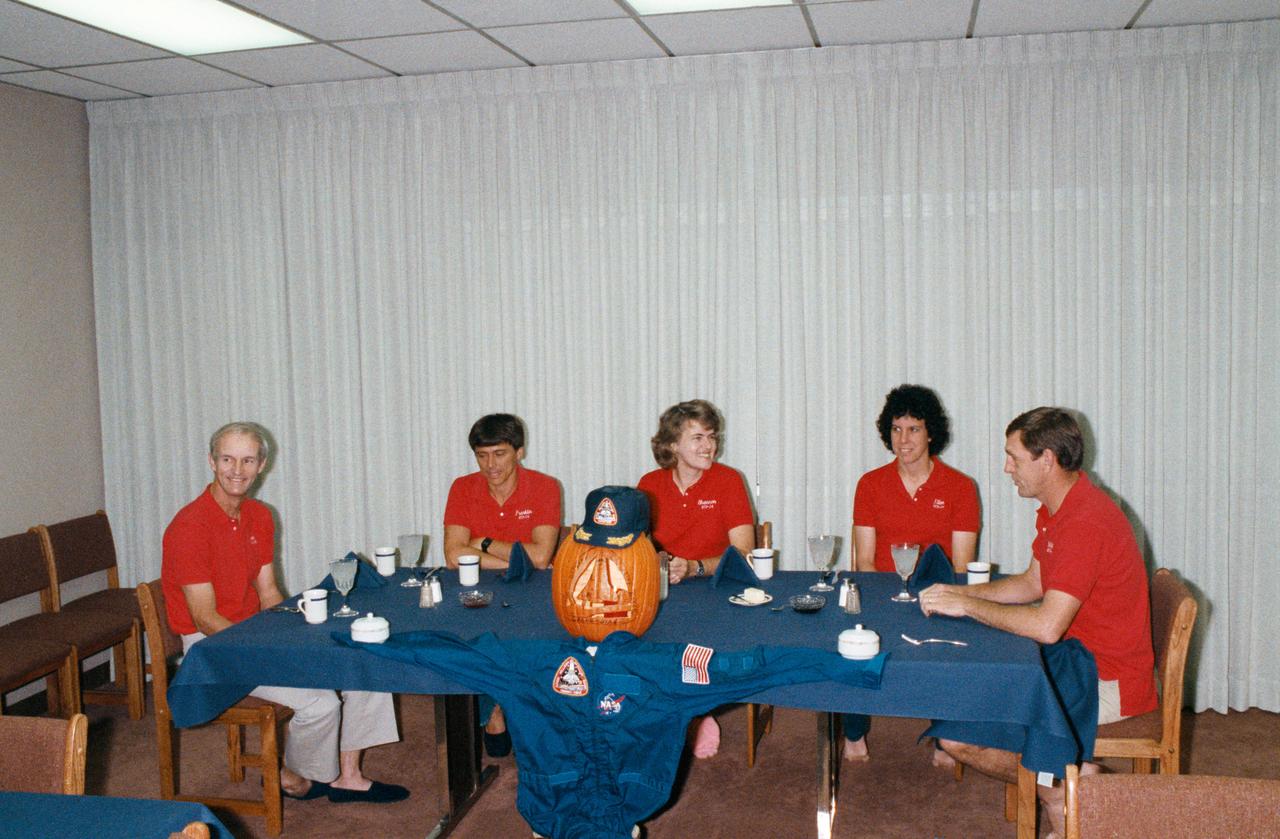
STS034-S-021 (18 Oct 1989) --- The traditional light pre-launch breakfast greets the five astronaut crew-members for NASA's STS-34 mission in the Operations and Checkout Facility at Kennedy Space Center (KSC). From the left are Astronauts Donald E. Williams, mission commander; Franklin R. Chang-Diaz, Shannon W. Lucid and Ellen S. Baker, all mission specialists; and Michael J. McCulley, pilot. A pumpkin converted into a Jack-o-lantern adds a seasonal touch to the table.
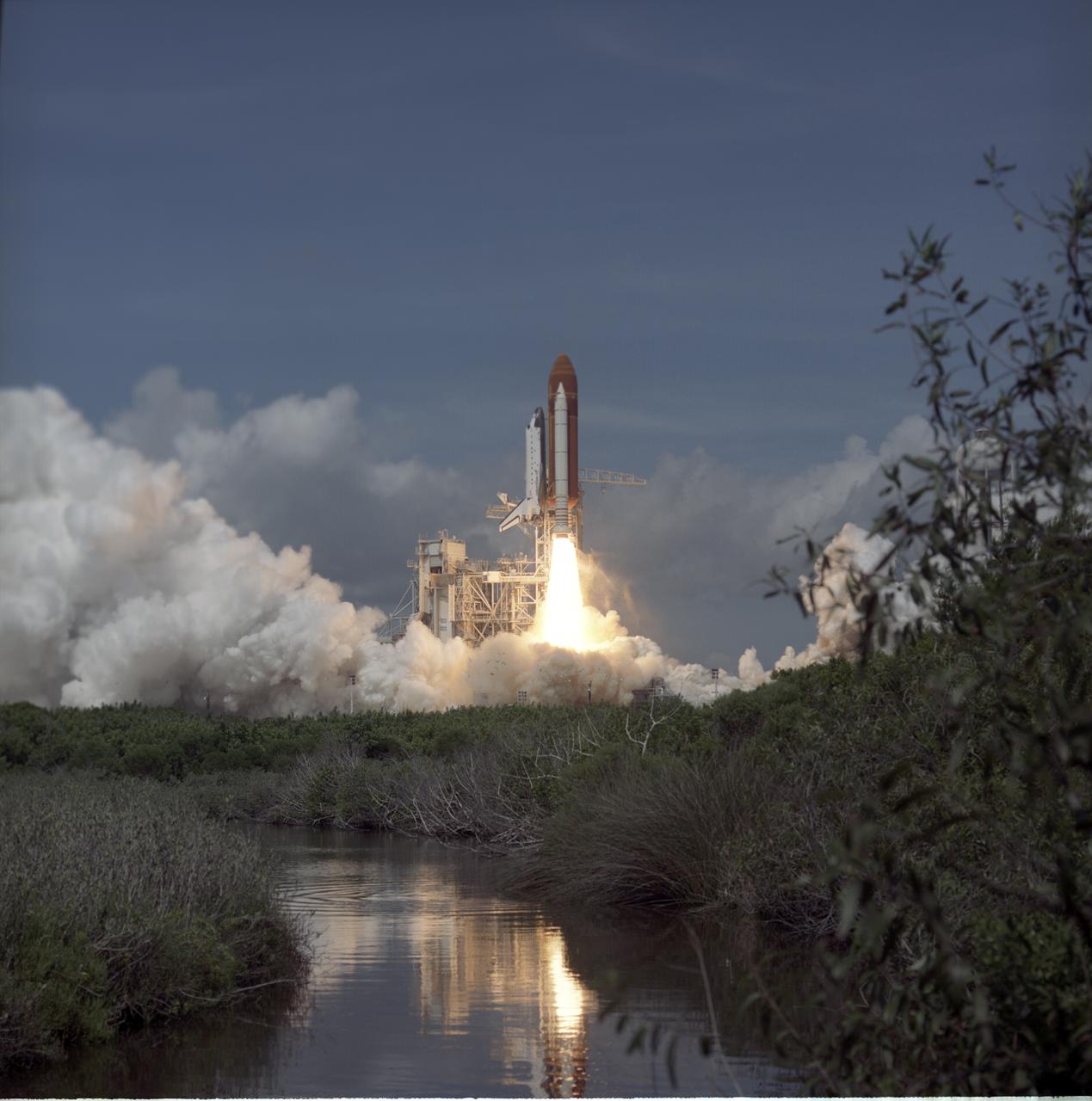
Launched aboard the Space Shuttle Atlantis on August 2, 1991, the STS-43 mission’s primary payload was the Tracking and Data Relay Satellite 5 (TDRS-5) attached to an Inertial Upper Stage (IUS), which became the 4th member of an orbiting TDRS cluster. The flight crew consisted of 5 astronauts: John E. Blaha, commander; Michael A. Baker, pilot; Shannon W. Lucid, mission specialist 1; James C. Adamson, mission specialist 2; and G. David Low, mission specialist 3.
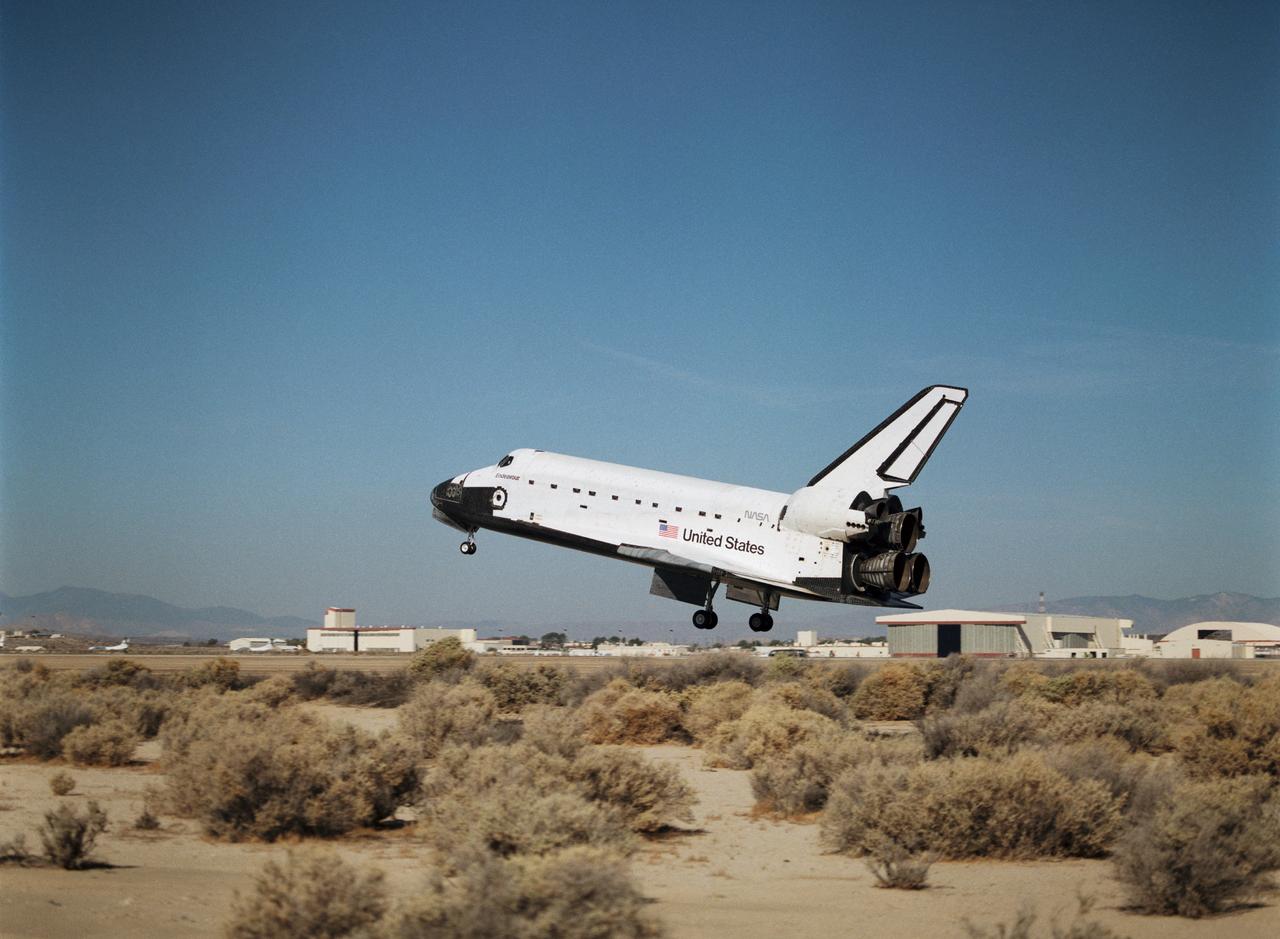
STS068-S-059 (11 October 1994) --- With its main landing gear not quite on the runway, the Space Shuttle Endeavour wraps up an eleven-day mission at Edwards Air Force Base, California. Landing occurred at 10:02 a.m. (PDT), October 11, 1994. Onboard were astronauts Michael A. Baker, mission commander; Terrence W. Wilcutt, pilot; Thomas D. Jones, payload commander; and Daniel W. Bursch, Peter J. K. (Jeff) Wisoff and Steven L. Smith, all mission specialists.
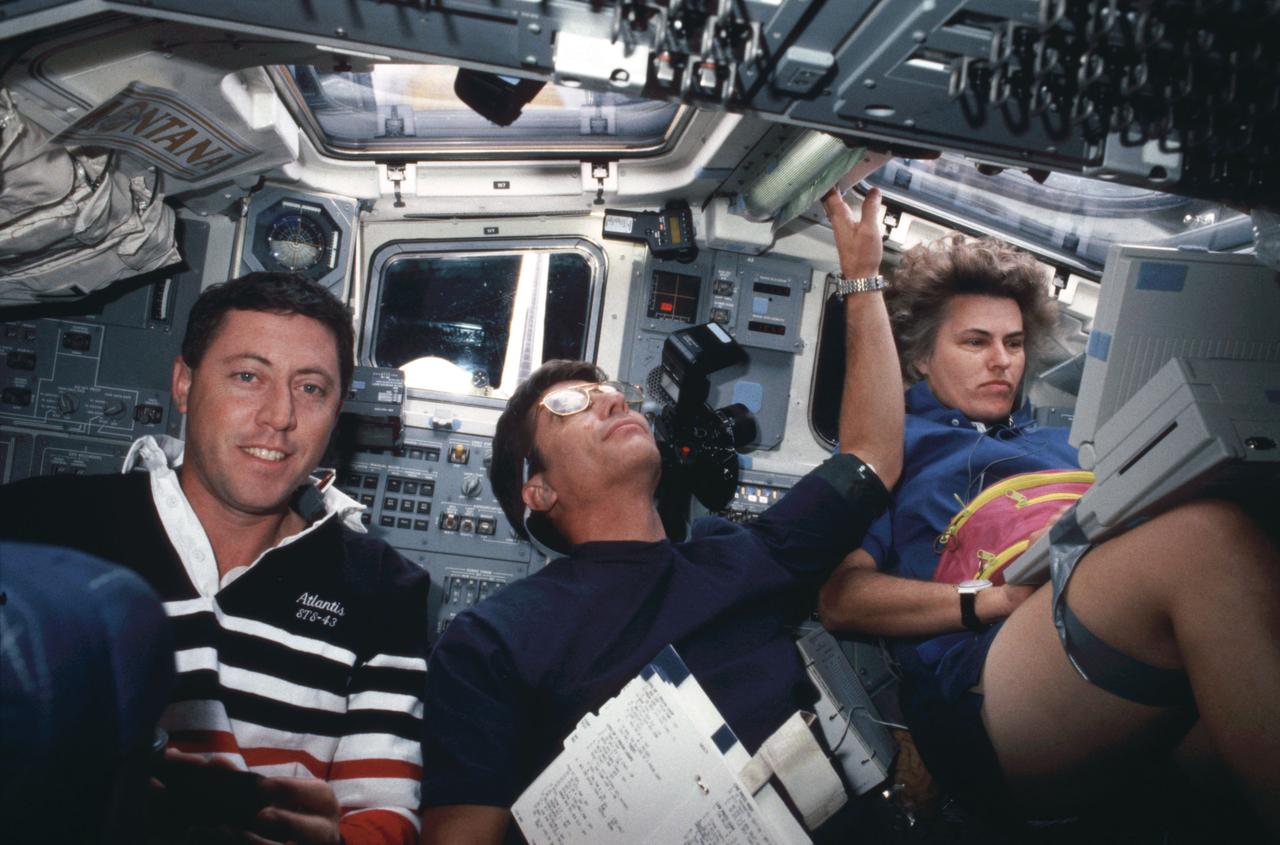
STS043-37-012 (2-11 Aug 1991) --- Three STS-43 astronauts are busy at work onboard the earth-orbiting space shuttle Atlantis. Astronaut Shannon W. Lucid is pictured performing one of several tests on Computer hardware with space station applications in mind. Sharing the aft flight deck with Lucid are Michael A. Baker (left), pilot and John E. Blaha, mission commander.
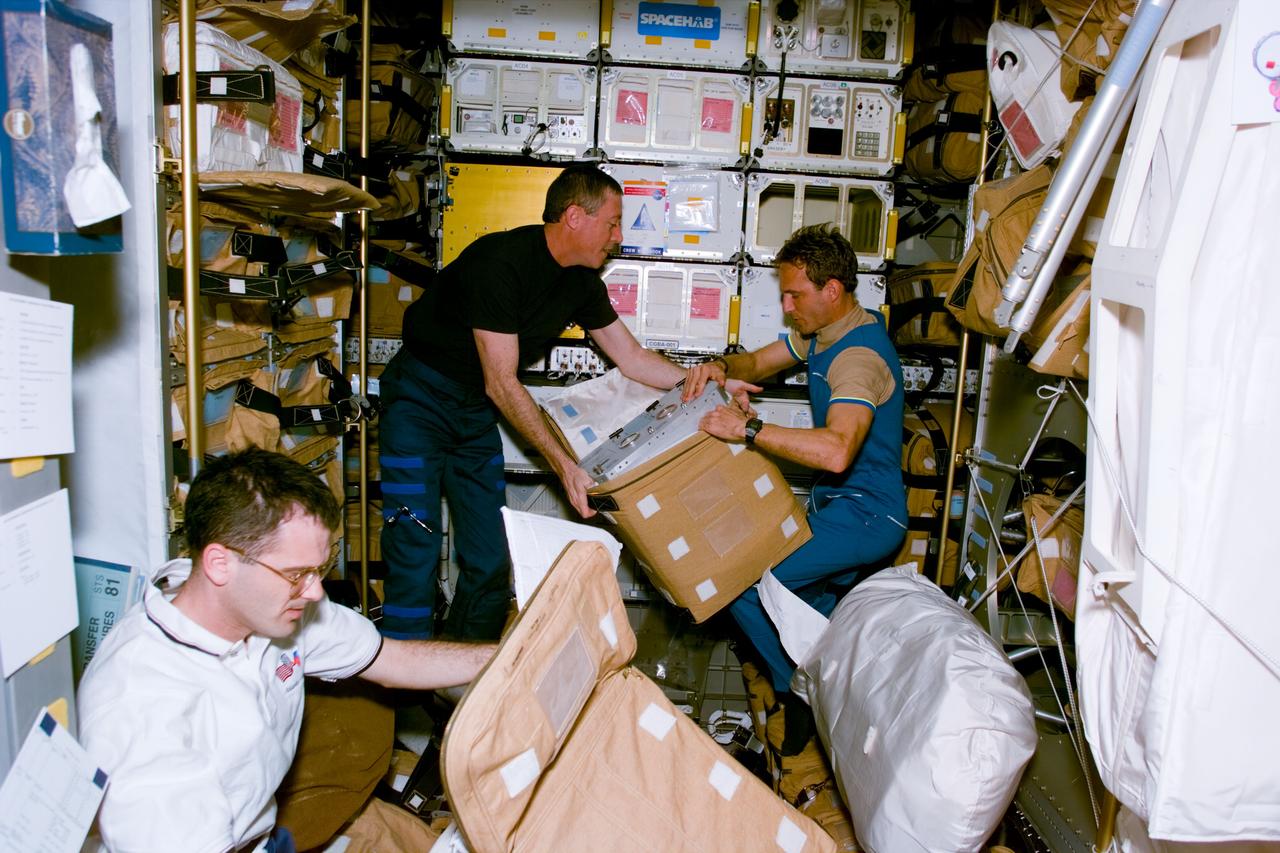
STS081-E-05514 (16 Jan. 1997) --- The transfer of equipment and supplies continues aboard the Spacehab Double Module (DM) aboard the Space Shuttle Atlantis. Here, left to right, astronauts Peter J. K. Wisoff and Michael A. Baker along with newly initiated "cosmonaut" Jerry M. Linenger, Mir-22 cosmonaut guest researcher, load and move supplies. The photograph was recorded with an Electronic Still Camera (ESC) and later was downlinked to flight controllers in Houston, Texas.
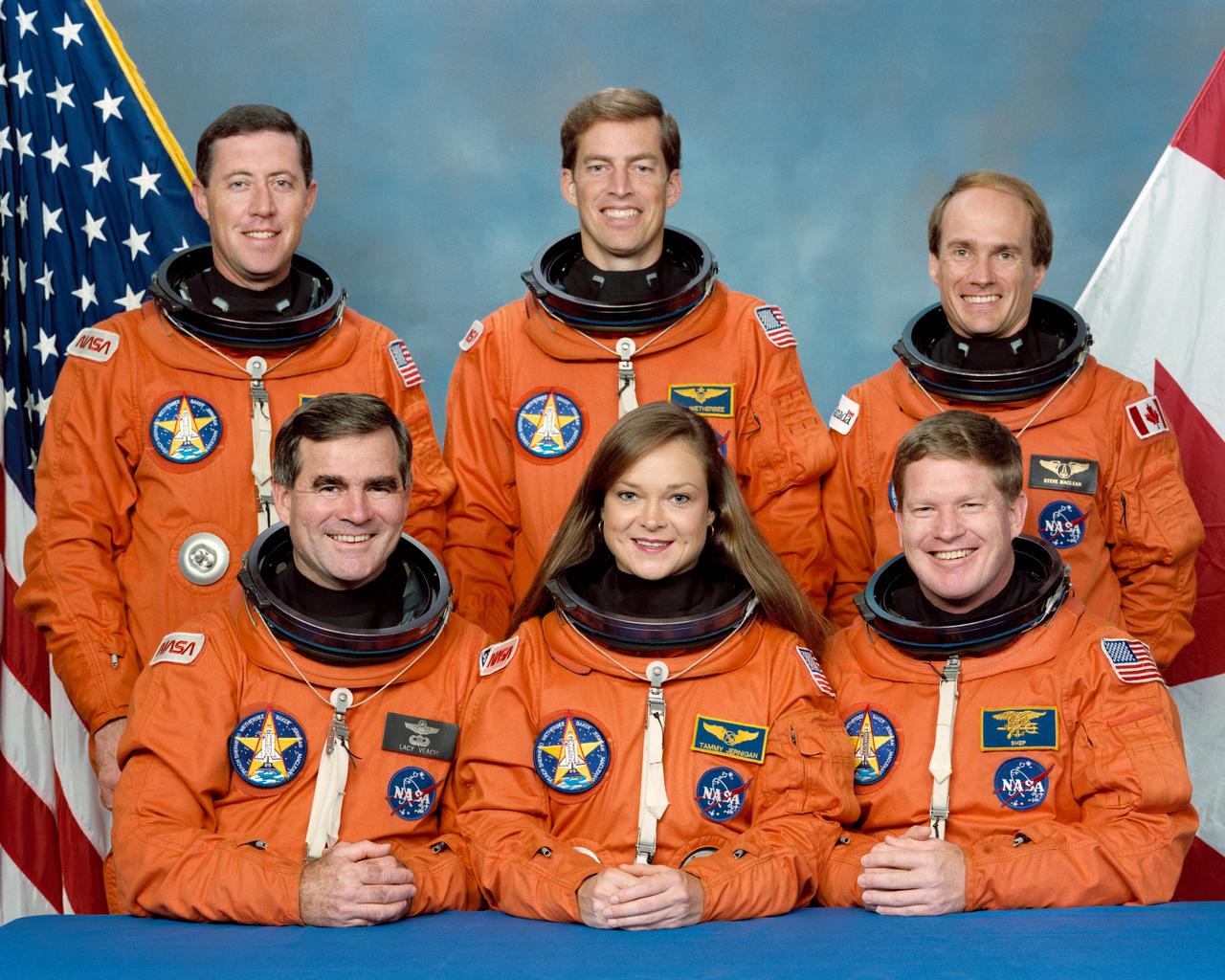
STS052-S-002 (August 1992) --- These five NASA astronauts and a Canadian payload specialist are assigned to the flight, scheduled for later this year. Pictured on the back row are, left to right, astronauts Michael A. Baker, pilot; James D. Wetherbee, mission commander; and Steven G. MacLean, payload specialist representing the Canadian Space Agency (CSA). In front are, left to right, astronauts Charles L. (Lacy) Veach, Tamara E. Jernigan and William M. Shepherd, all mission specialists.
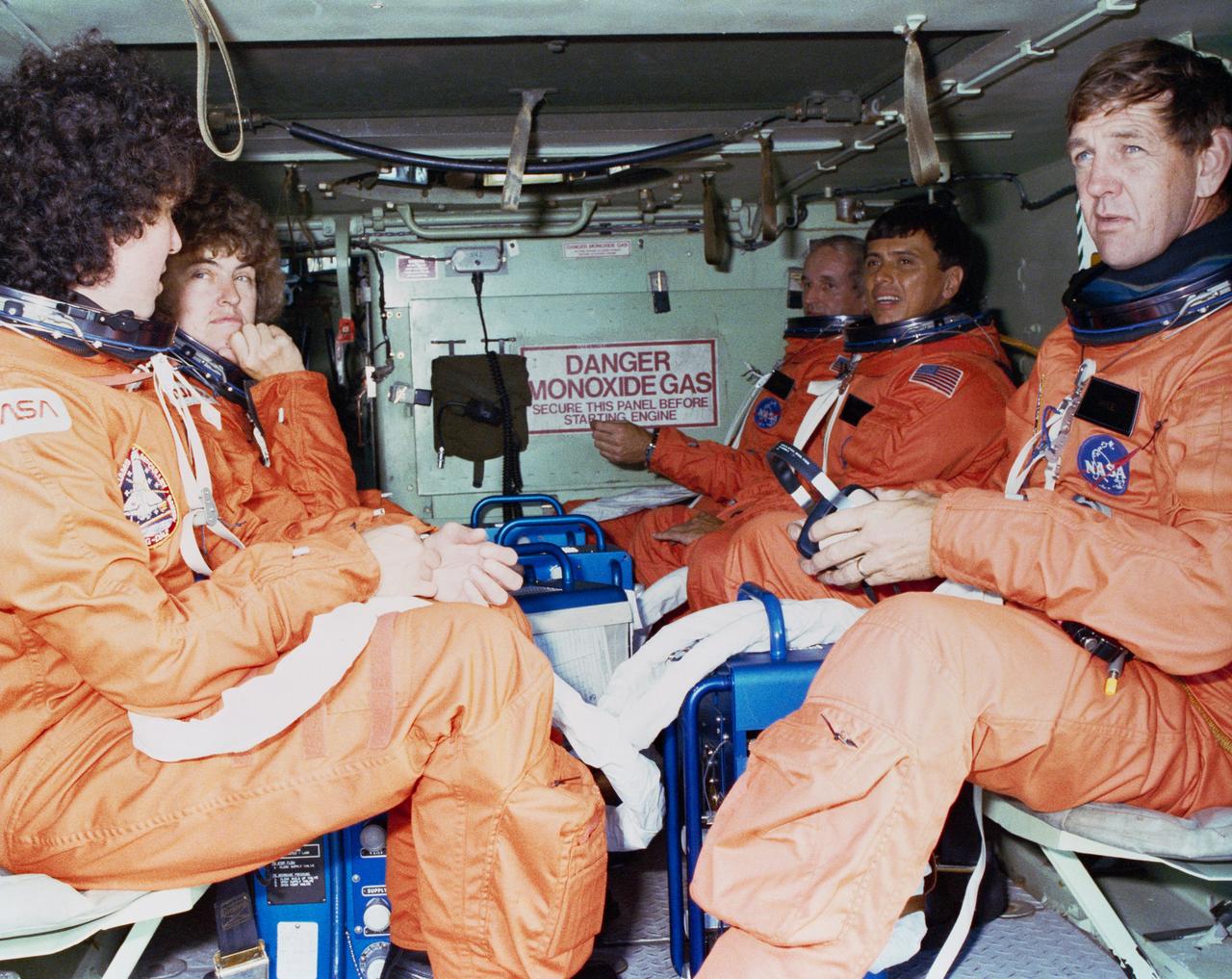
STS-34 crewmembers sit in M1-13 Armored Personnel Carrier (APC) during emergency egress training at KSC's shuttle landing facility (SLF) prior to terminal countdown demonstration test (TCDT) activities. Wearing launch and entry suits (LESs), are (from left) Mission Specialist (MS) Ellen S. Baker, MS Shannon W. Lucid, Commander Donald E. Williams (right side, in back), MS Franklin R. Chang-Diaz, and Pilot Michael J. McCulley (holding headset). View provided by KSC with alternate number KSC-89PC-871.
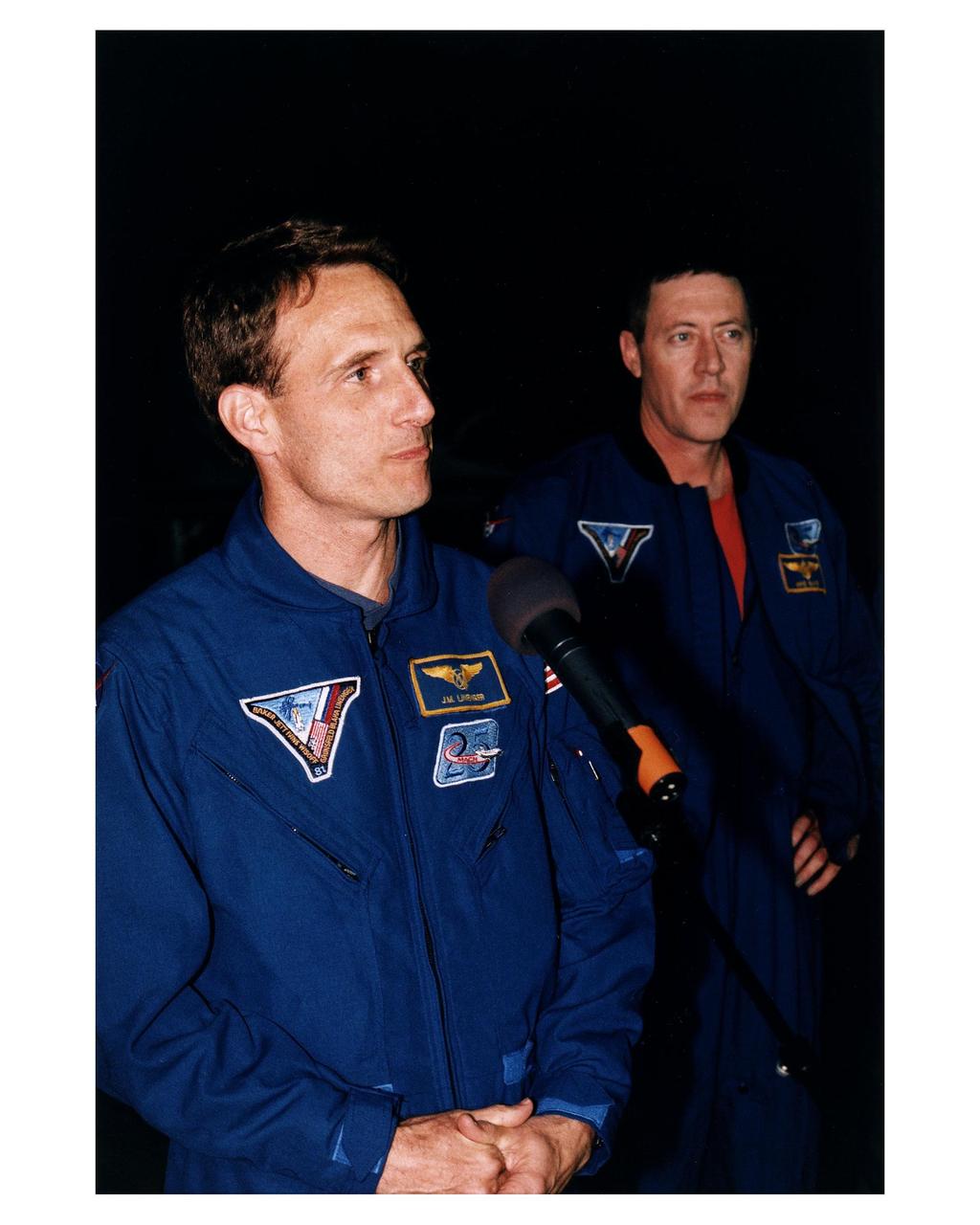
STS-81 Mission Specialist J.M. "Jerry" Linenger talks to the press at the KSC Shuttle Landing Facility after the flight crew arrived at the space center for the final countdown preparations for the fifth Shuttle-Mir docking mission. The 10-day mission will feature the transfer of Linenger to Mir to replace astronaut John Blaha, who has been on the orbital laboratory since Sept. 19, 1996. Linenger will be the fourth U.S. astronaut to stay onboard the Russian space station and serve as a Mir crew member. Mission Commander Michael A. Baker is to his left
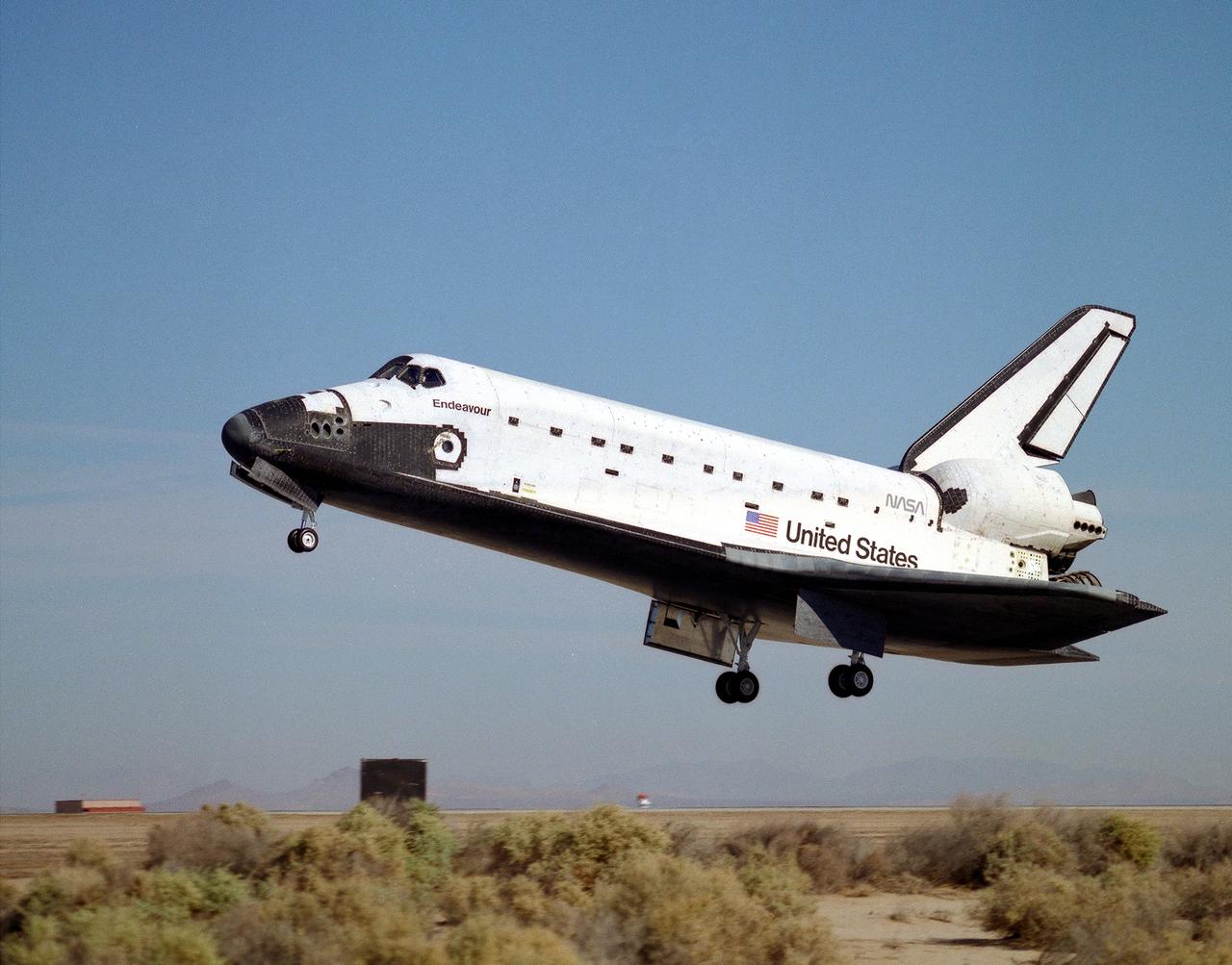
The space shuttle Endeavour glides to a landing on runway 22 at Edwards, California, to complete the highly successful STS-68 mission dedicated to radar imaging of the earth's surface as part of NASA's Mission To Planet Earth program. The landing was at 10:02 a.m. (PDT) 11 October 1994, after waiving off from the Kennedy Space Center, Florida, earlier that morning due to adverse weather at Kennedy. The Endeavour crew was originally scheduled to land at Kennedy the morning of October 10, but mission planners decided early in the flight to extend the mission by one day. Mission commander was Michael A. Baker, making his third flight, and the pilot was Terrence W. Wilcutt, on his first mission.

Greeted by cheers from wellwishers at KSC and eager for their venture into space on the fifth Shuttle-Mir docking mission, the STS-81 astronauts depart the Operations and Checkout Building and board the Astrovan for their 25-minute trip to Launch Pad 39B. Leading the six-member crew is Mission Commander Michael A. Baker, followed by Pilot Brent W. Jett, Jr. Behind them are Mission Specialists John M. Grunsfeld, Jerry Linenger, Peter J. K. "Jeff" Wisoff, and Marsha S. Ivins. Once at the pad, they will take their positions in the crew cabin of the Space Shuttle Atlantis to await a liftoff during a seven-minute window that will open at 4:27 a.m. EST, January 12
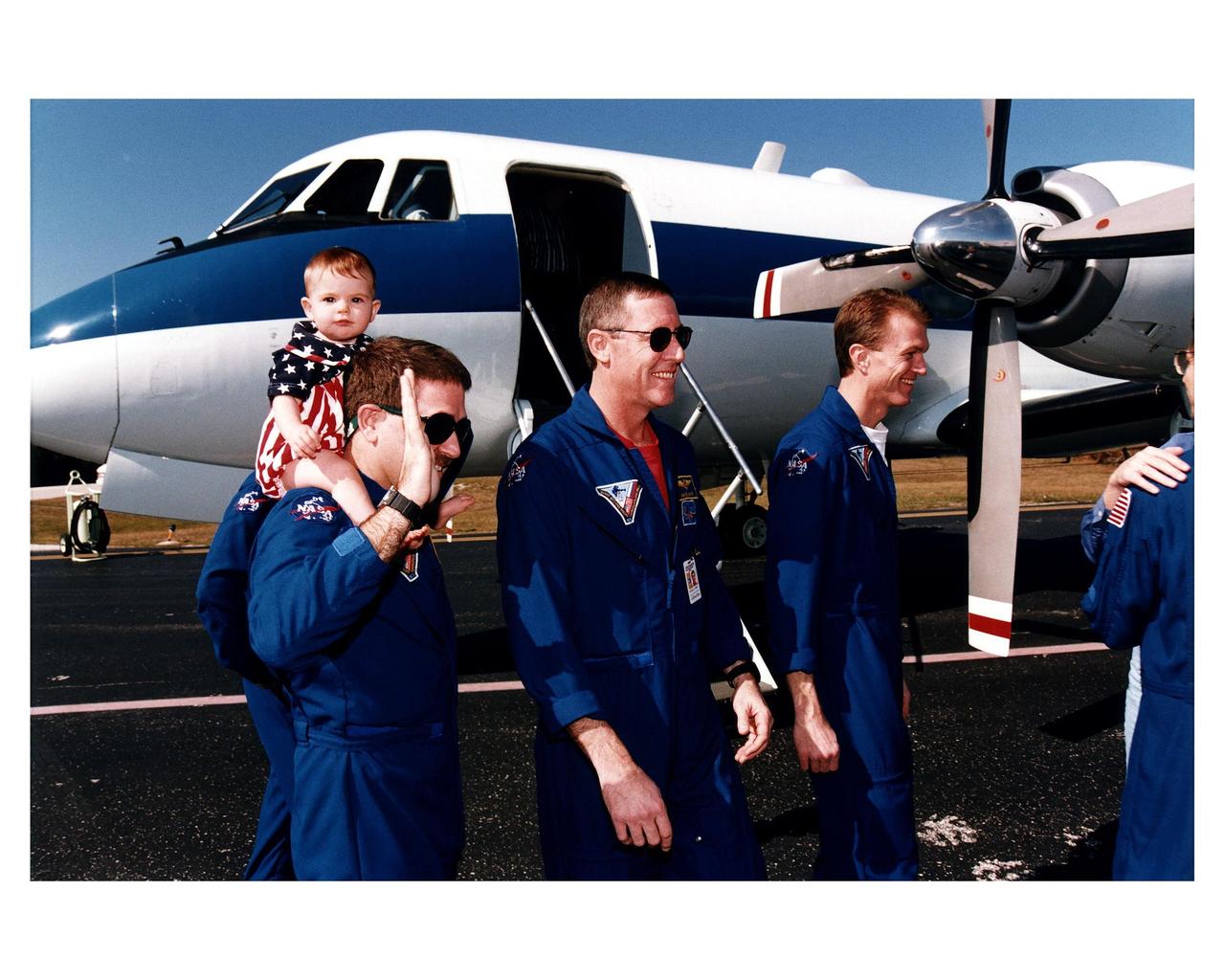
Members of the STS-81 crew prepare to depart for Johnson Space Center Jan. 23 from the Skid Strip at Cape Canaveral Air Station. The crew arrived at KSC aboard the Space Shuttle Atlantis Jan. 22 to conclude the fifth Shuttle-Mir docking mission and return U. S. astronaut John E. Blaha to Earth after four months in space as member of the Mir 22 crew. On the left is Mission Specialist John M. Grunsfeld, with his daughter, Sarah, on his back. Also pictured are Mission Commander Michael A. Baker (center); Pilot Brent W. Jett (second from right); and Blaha
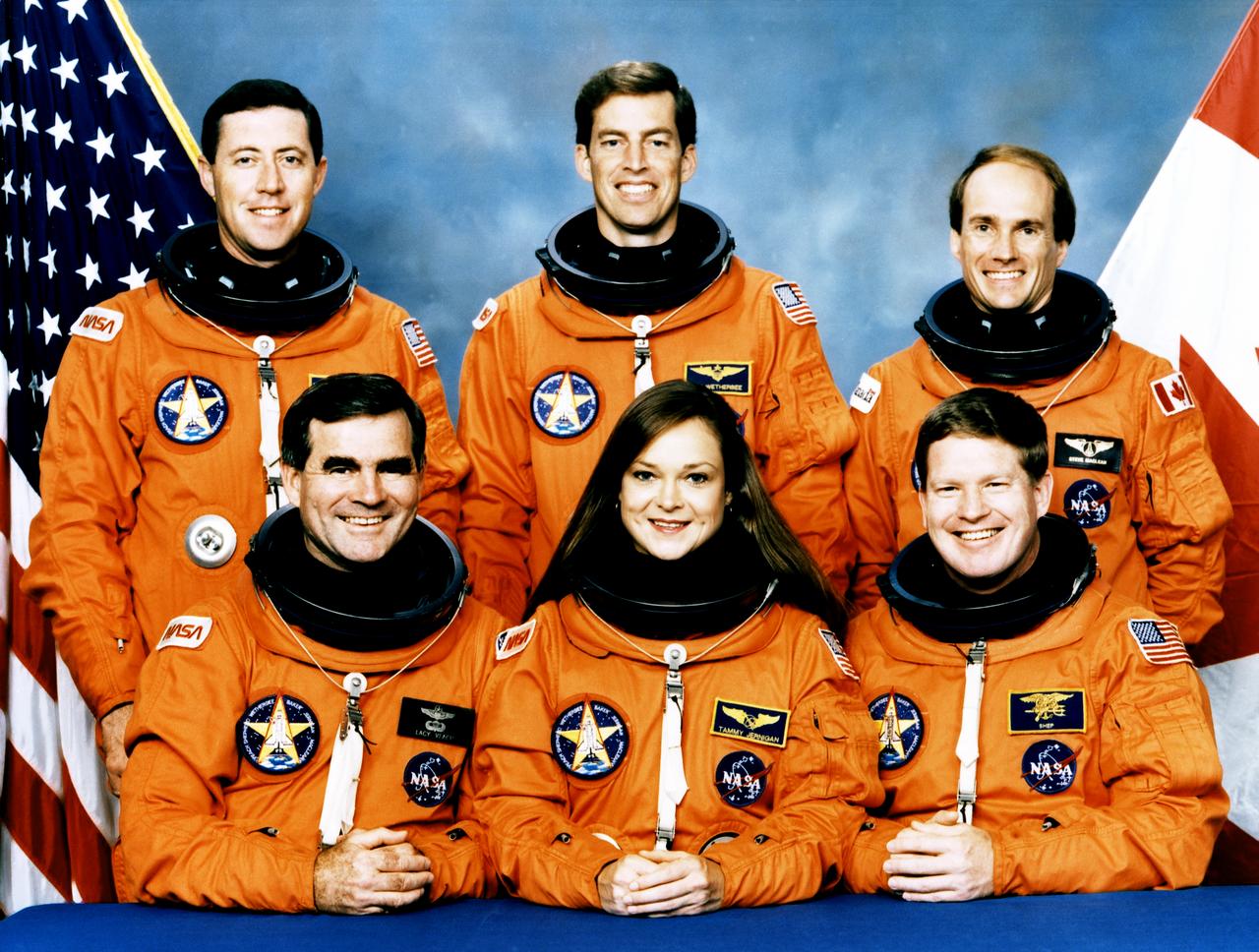
Five NASA astronauts and one Canadian payload specialist composed the STS-52 crew. Pictured on the back row, left to right, are Michael A. Baker, pilot; James B. Wetherbee, commander; and Steven G. Maclean, payload specialist. On the front row, left to right, are mission specialists Charles (Lacy) Veach, Tamara Jernigan, and William Shepherd. Launched aboard the Space Shuttle Columbia on October 22, 1992 at 1:09:39 p.m. (EDT), the crew’s primary objectives were the deployment of the Laser Geodynamic Satellite (LAGEOS II) and operation of the U.S. Microgravity Payload-1 (USMP-1).
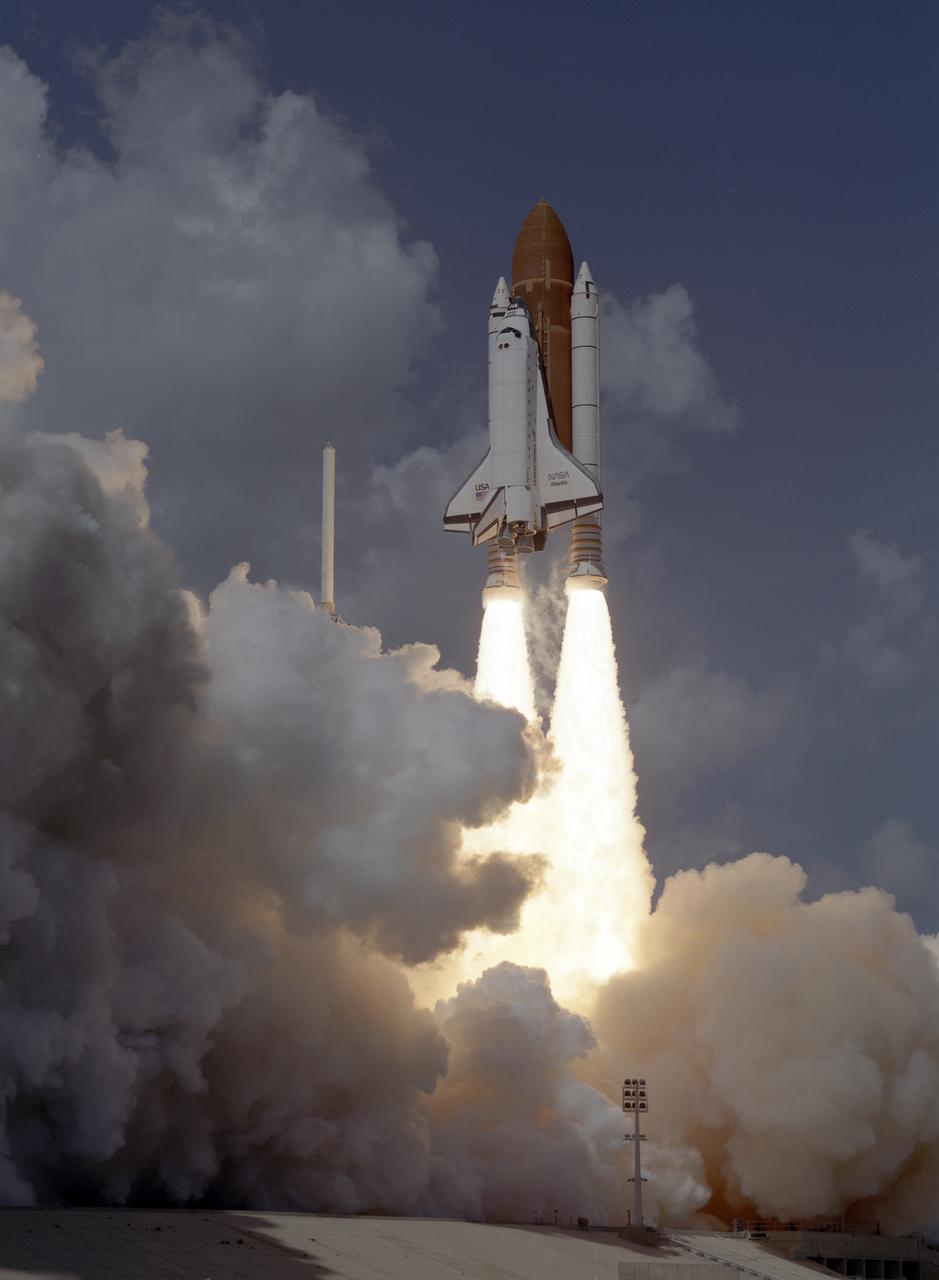
The STS-34 crew of five launched aboard the Space Shuttle Orbiter Atlantis on October 18, 1989 at 12:53:40pm (EDT). Crew members included commander Donald E. Williams, pilot Michael J. McCulley; and mission Specialists Shannon W. Lucid, Franklin R. Chang-Diaz, and Ellen S. Baker. The primary payload was the Galileo Jupiter Spacecraft and attached Inertial Upper Stage (IUS). Deployed 6 hours and 30 minutes into the flight, the IUS stages fired boosting Galileo on trajectory for a 6 year trip to Jupiter.
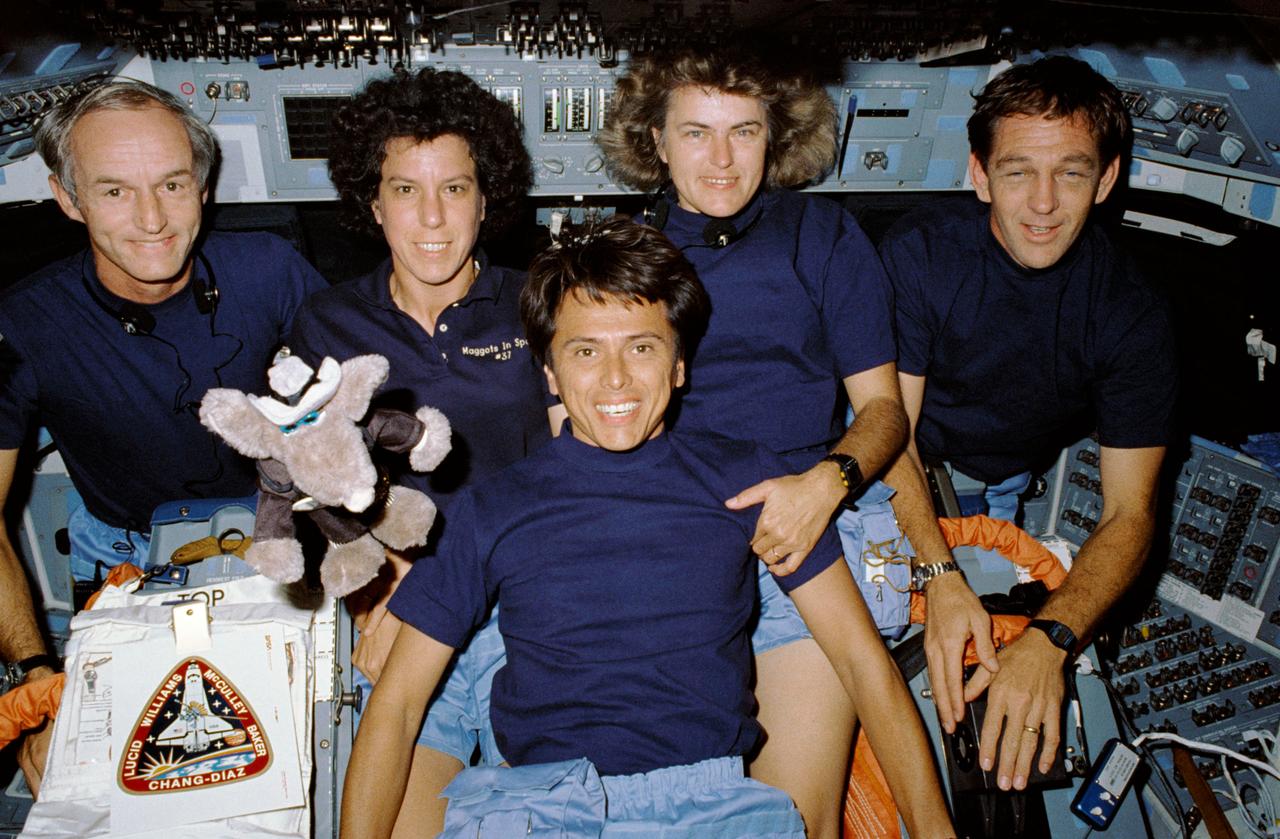
STS034-06-019 (18-23 Oct. 1989) --- The five astronaut crew members for NASA's STS-34 mission pose for an in-space crew "portrait," using a pre-set 35mm camera. Coincidentally, astronauts Donald E. Williams (left), commander, and Michael J. McCulley (right), pilot, are positioned at their respective stations of operation (except that they are turned 180 degrees) aboard the Earth-orbiting space shuttle Atlantis. They form "bookends" for the crew's three mission specialists -- Ellen S. Baker (second left), Shannon W. Lucid and Franklin R. Chang-Diaz.
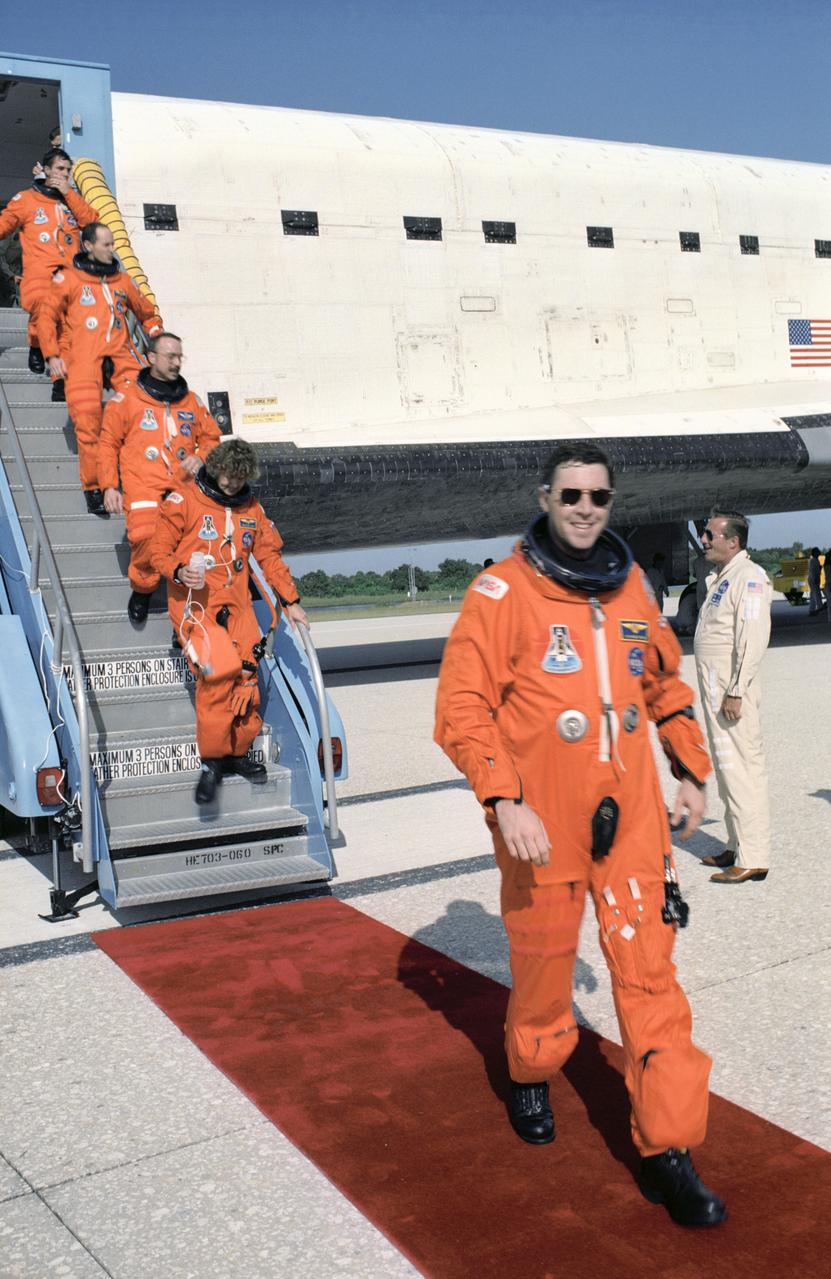
STS043-S-145 (11 Aug 1991) --- STS-43 crewmembers, wearing launch and entry suits (LESs), egress Atlantis, Orbiter Vehicle (OV) 104, via mobile stairway after landing on runway 15 at the Kennedy Space Center (KSC) Shuttle Landing Facility (SLF). Leading the crew and the first to step onto the red carpet is Pilot Michael A. Baker. He is followed by Mission Specialist (MS) Shannon W. Lucid, MS James C. Adamson, MS G. David Low, and Commander John E. Blaha. OV-104's fuselage is visible in the background.
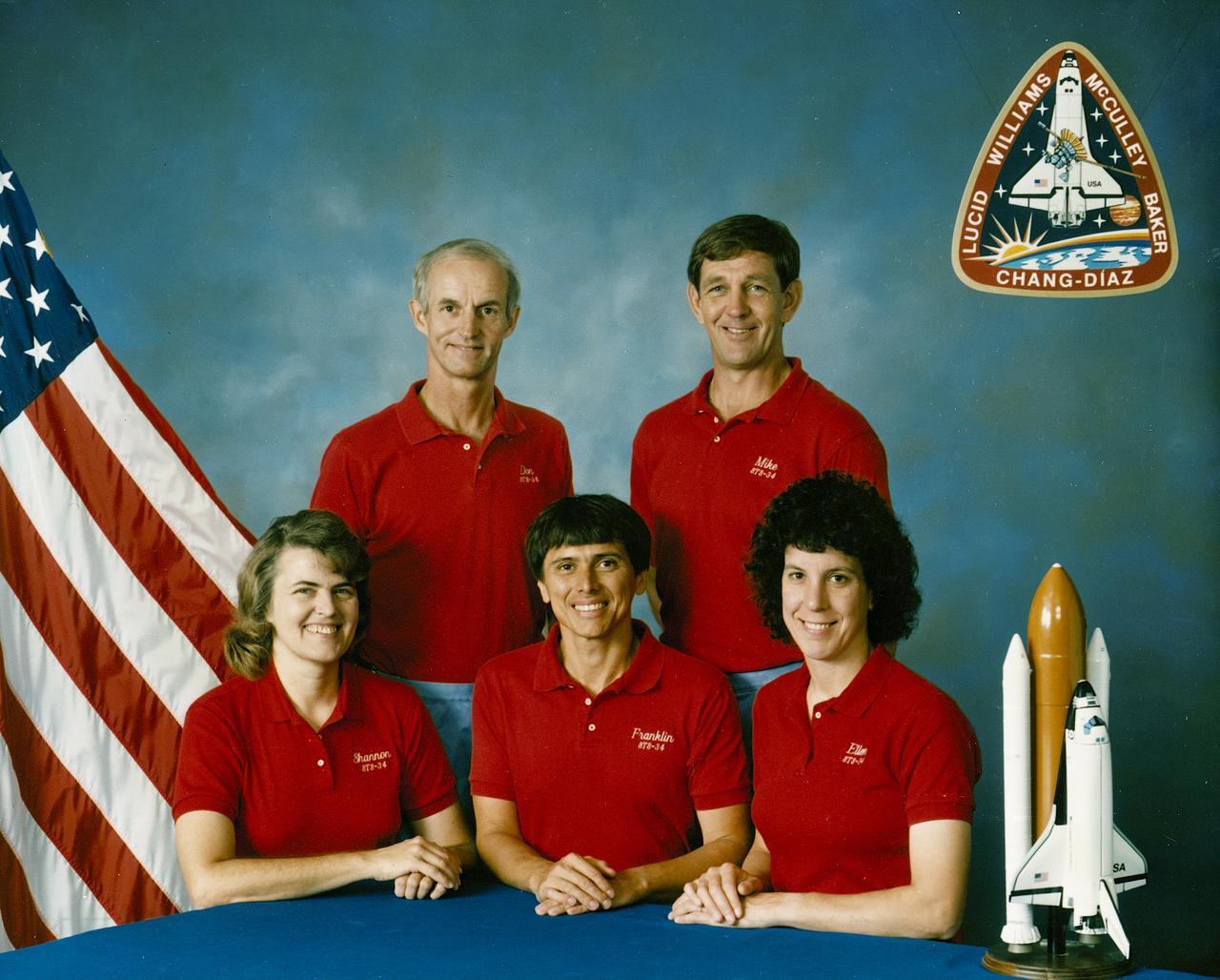
The STS-34 crew portrait includes 5 astronauts. Pictured left to right are Shannon W. Lucid, mission specialist; Donald E. Williams, commander; Franklin R. Chang-Diaz, mission specialist; Michael J. McCulley, pilot; and Ellen S. Baker, mission secialist. The crew of 5 launched aboard the Space Shuttle Orbiter Atlantis on October 18, 1989 at 12:53:40pm (EDT). The primary payload was the Galileo Jupiter Spacecraft and attached inertial upper stage (IUS). Deployed 6 hours and 30 minutes into the flight, the IUS stages fired, boosting Galileo on trajectory for a 6 year trip to Jupiter.
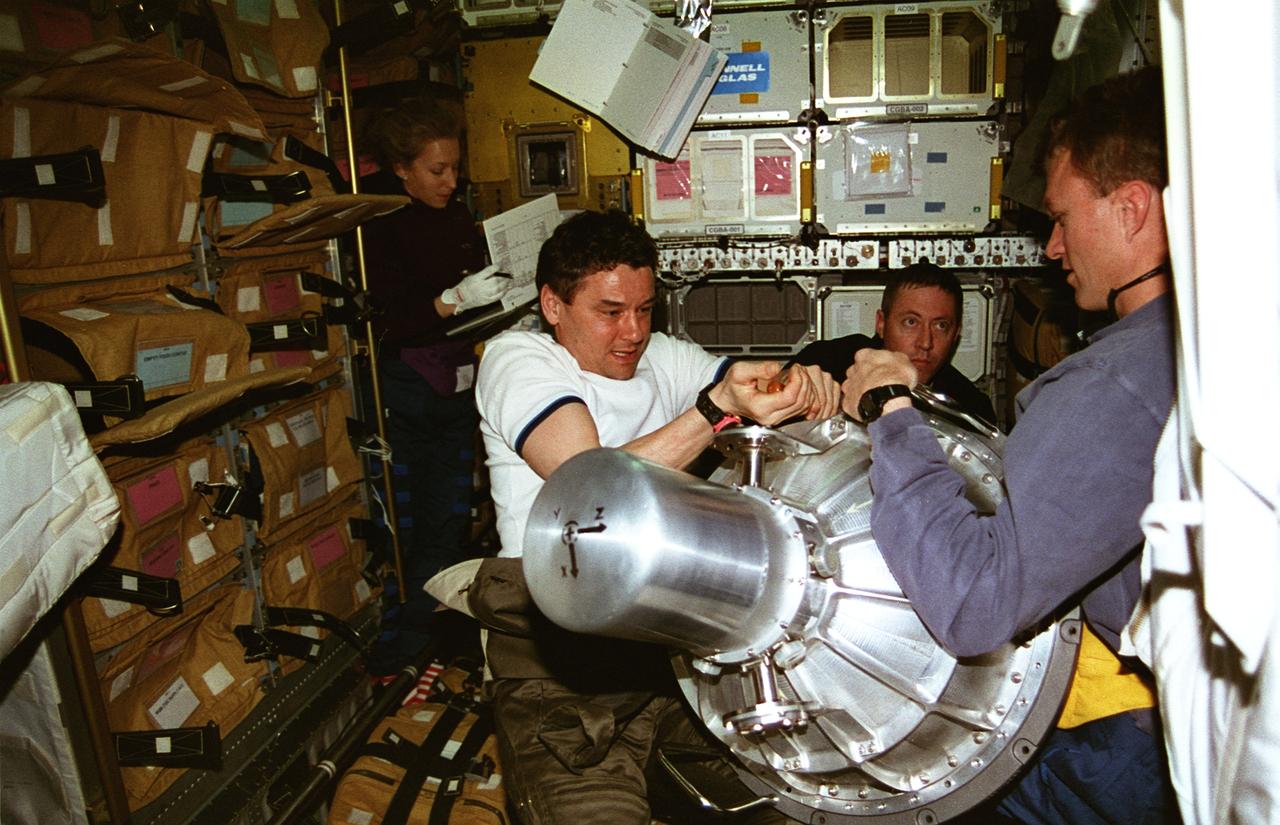
STS081-301-032 (12-22 Jan. 1997) --- Shortly after the docking of the Space Shuttle Atlantis and Russia's Mir Space Station, crewmembers from the respective spacecraft begin to transfer hardware from the Spacehab Double Module (DM) onto the Mir complex. In this scene, cosmonaut Valeri G. Korzun (second left) Mir-22 commander, along with astronauts Michael A. Baker (second right) commander, and Brent W. Jett, Jr., pilot, unstow a gyrodyne, a device used for attitude control, for transfer to Mir. Astronaut Marsha S. Ivins looks over a lengthy inventory of supplies to be transferred.
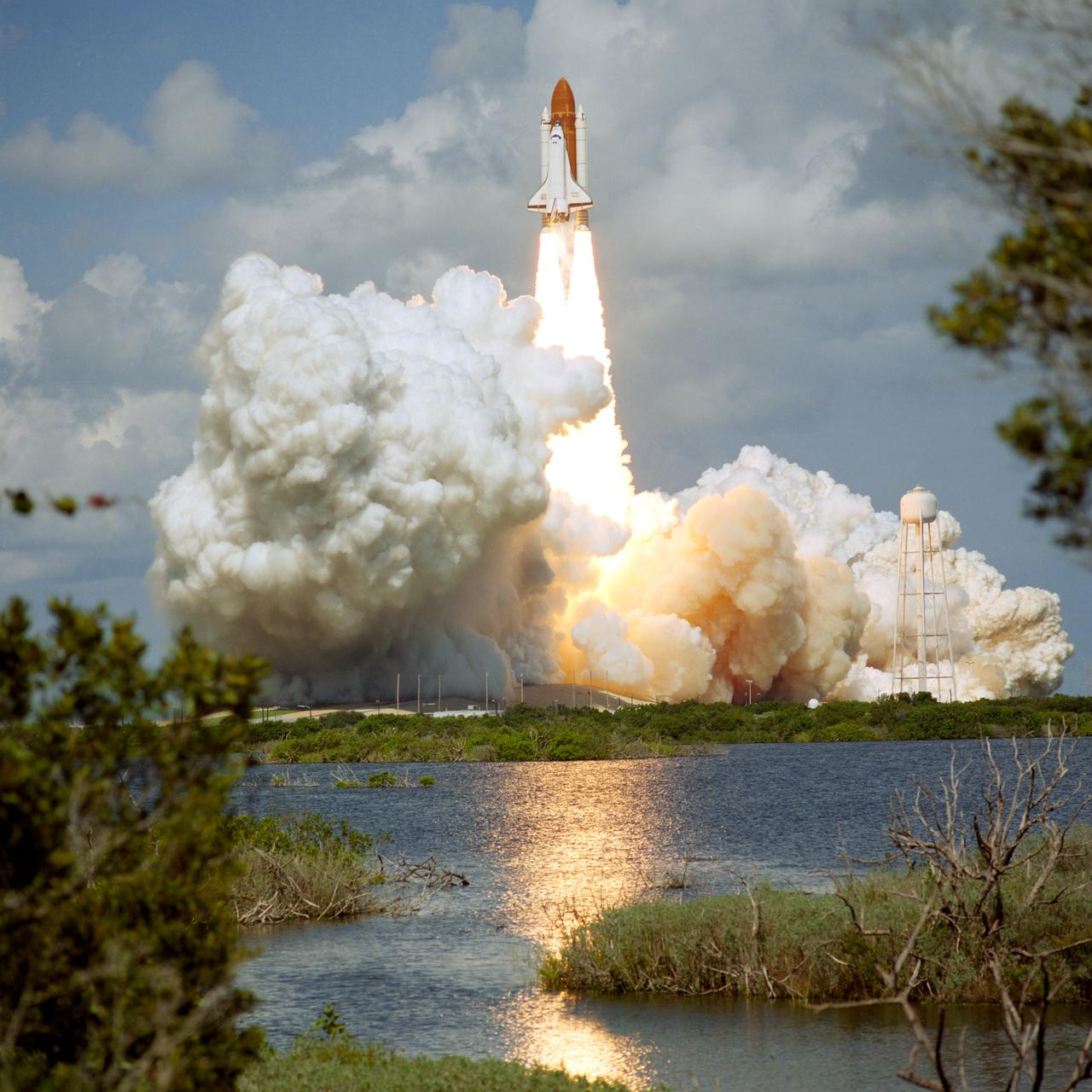
STS034-S-025 (18 Oct 1989) --- The STS-34 Space Shuttle Atlantis lifts off from Launch Pad 39-B at 2:53:39:983 p.m. (EDT), marking the beginning of a five-day mission in space. Atlantis carries a crew of five and the spacecraft Galileo, along with a number of other scientific experiments. The Jupiter-bound probe will be deployed from Atlantis some six hours after launch. The journey to the giant planet is expected to take over six years. Crewmembers for the mission are astronauts Donald E. Williams, Michael J. McCulley, Shannon W. Lucid, Franklin R. Chang-Diaz and Ellen S. Baker. The scene was recorded with a 70mm camera.
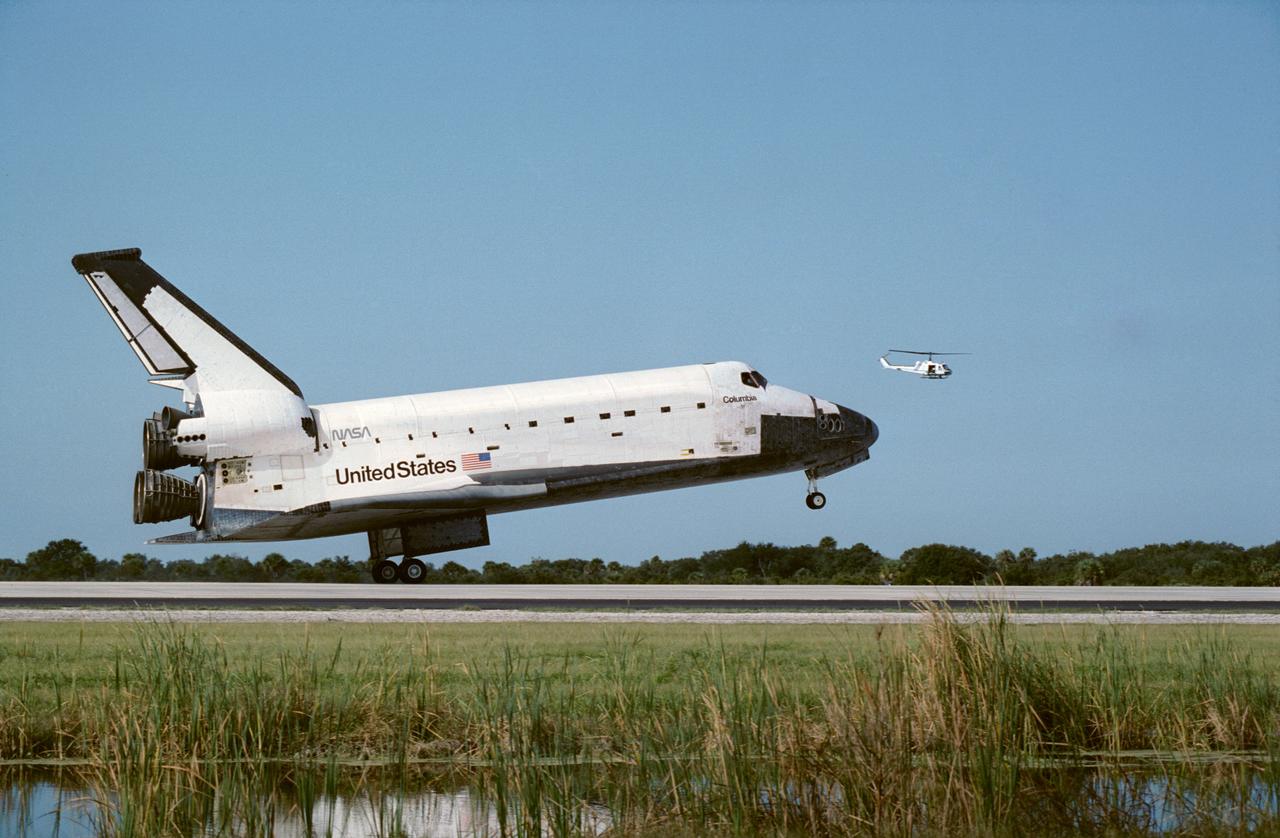
STS052-S-098 (1 Nov 1992) --- This ground-level side view shows the Space Shuttle Columbia just prior to main landing gear touchdown at KSC's Shuttle Landing Facility to successfully complete a ten-day Earth-orbital mission. Onboard were a crew of five NASA astronauts and a Canadian payload specialist. Landing occurred at 9:05:53 a.m. (EST), November 1, 1992. Crewmembers are astronauts James D. Wetherbee, Michael A. Baker, Tamara E. Jernigan, Charles L. (Lacy) Veach and William M. Shepherd along with payload specialist Steven G. MacLean. The view was recorded with a 35mm camera.
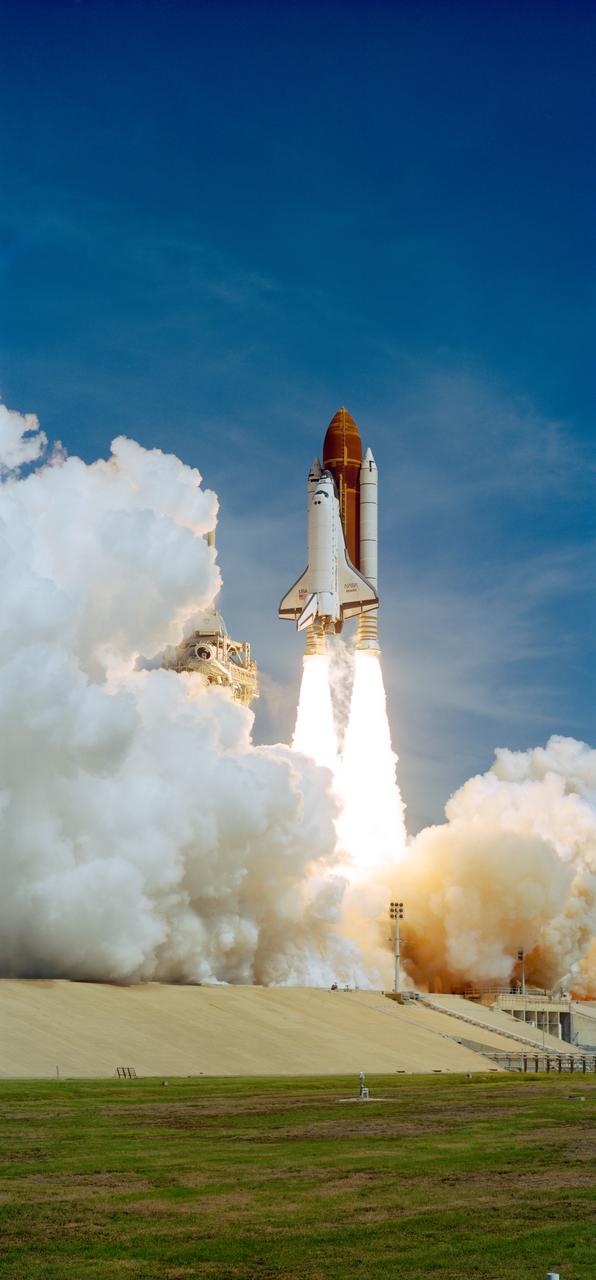
STS043-S-090 (2 Aug 1991) --- The Space Shuttle Atlantis soars toward space to begin a scheduled nine-day mission. The 11:02:00 a.m. (EDT) liftoff from Launch Pad 39A came at the beginning of the launch window. Onboard the spacecraft were astronauts John E. Blaha, mission commander; Michael A. Baker, pilot; and Shannon W. Lucid, James C. Adamson and G. David Low, all mission specialists. Six hours after this picture was taken, the astronauts deployed the Tracking and Data Relay Satellite (TDRS-E).
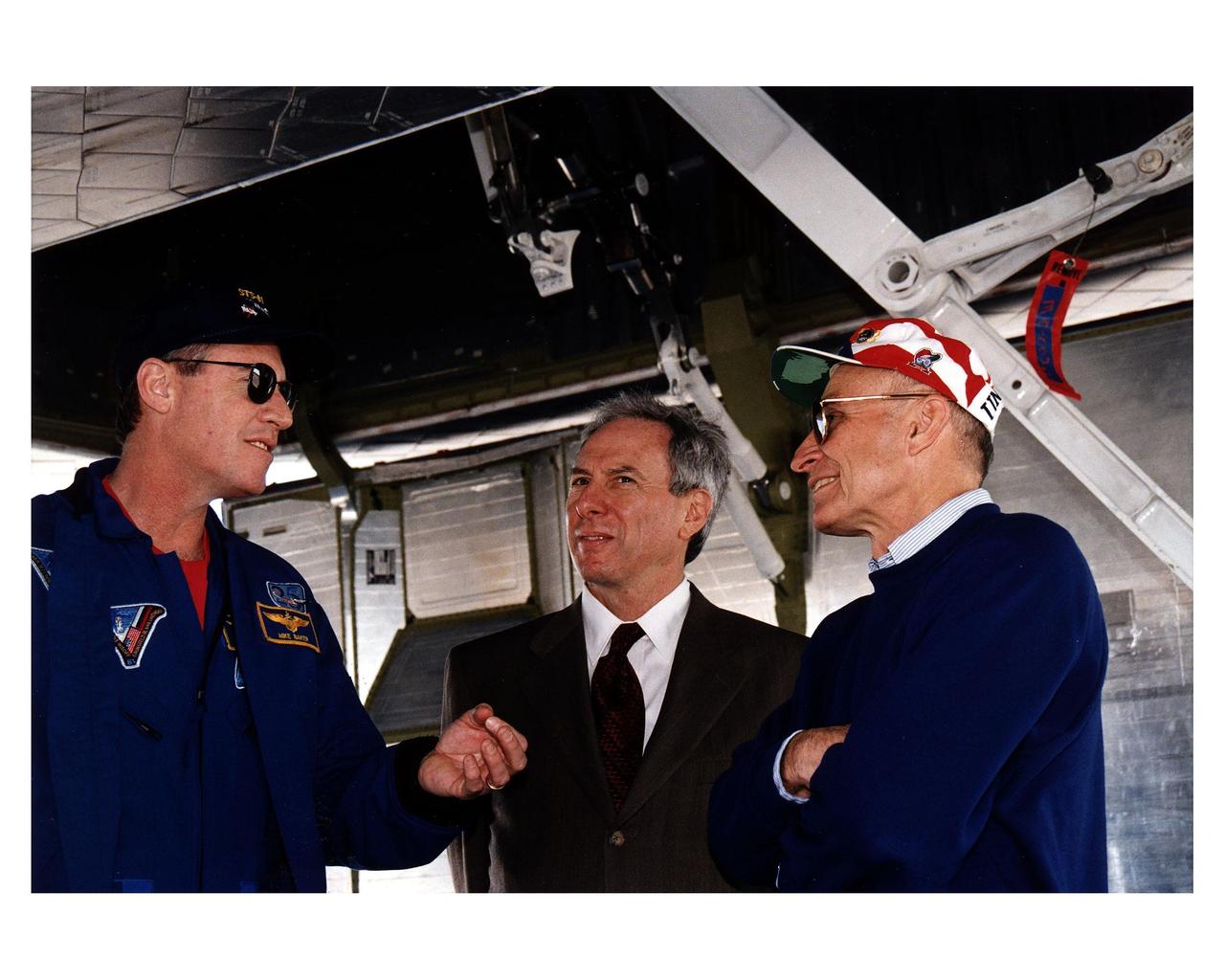
KENNEDY SPACE CENTER, FLA. -- NASA Administrator Daniel S. Goldin (center) and KSC Director of Shuttle Operations Robert B. Sieck (right) discuss the successful conclusion of the STS-81 mission with Mission Commander Michael A. Baker (left). They are underneath the Space Shuttle orbiter Atlantis after the space plane landed on Runway 33 at the KSC Shuttle Landing Facility at 9:22:44 a.m. EST Jan. 22 to conclude the fifth Shuttle-Mir docking mission. At main gear touchdown, the STS-81 mission duration was 10 days, 4 hours, 55 minutes. This was the 34th KSC landing in Shuttle history
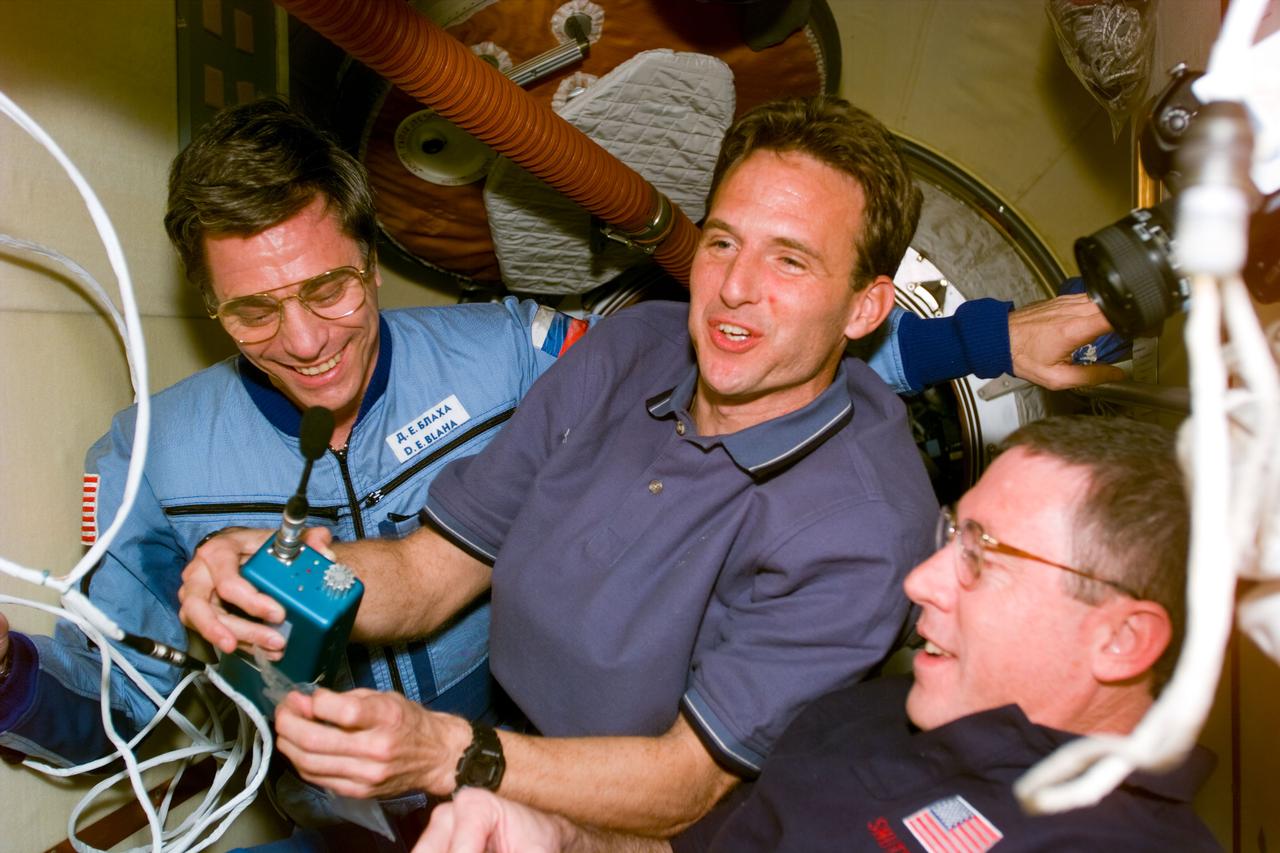
STS081-E-05432 (15 Jan. 1997) --- Left to right, astronaut John E. Blaha, his cosmonaut guest researcher replacement Jerry M. Linenger and Michael A. Baker, mission commander, shortly after docking and hatch opening. Blaha had just joined the NASA crew, having served as a cosmonaut guest researcher aboard Russia's Mir Space Station since mid September 1996. The photograph was taken with an Electronic Still Camera (ESC), which was used throughout the 10-day mission to downlink current photographs of the crews' joint activities.
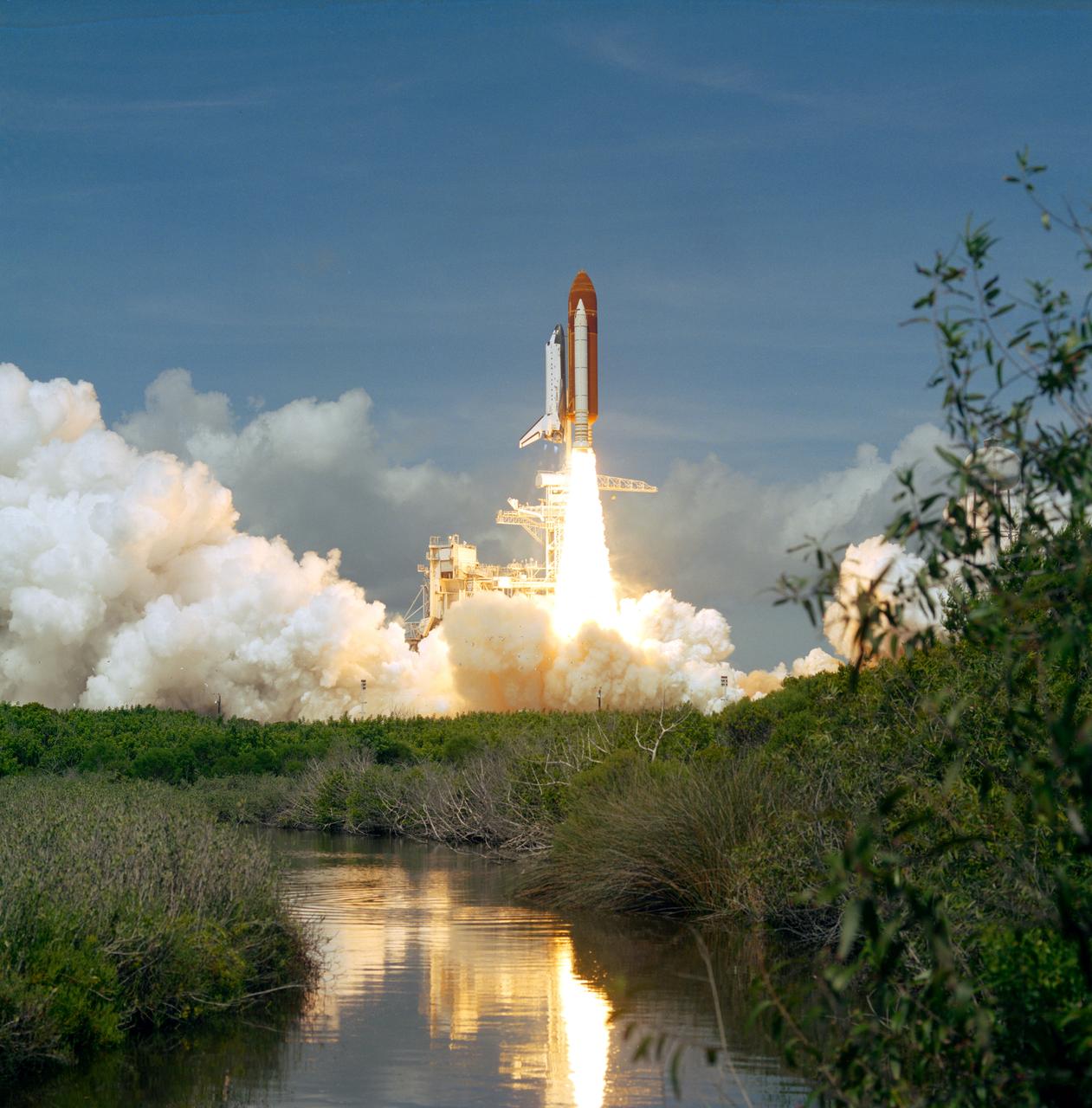
STS043-S-087 (2 Aug 1991) --- The Space Shuttle Atlantis soars toward space to begin a scheduled nine-day mission. The 11:02:00 a.m. (EDT) liftoff from Launch Pad 39A came at the beginning of the launch window. Onboard the spacecraft were astronauts John E. Blaha, mission commander; Michael A. Baker, pilot; and Shannon W. Lucid, James C. Adamson and G. David Low, all mission specialists. Six hours after this picture was taken, the astronauts deployed the Tracking and Data Relay Satellite (TDRS-E).
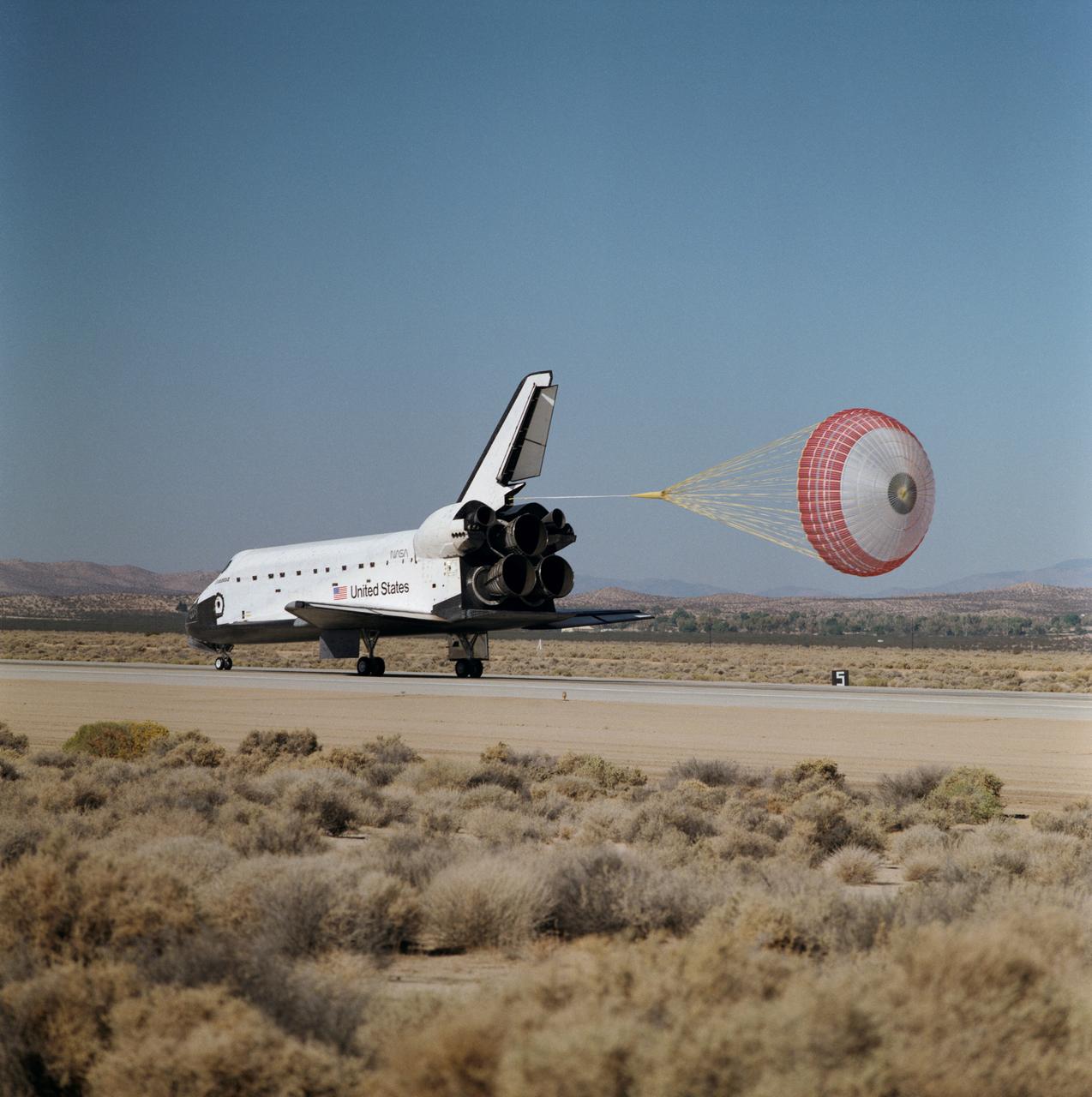
STS068-S-061 (11 October 1994) --- The drag chute system, one of 13 Detailed Test Objectives (DTO) for STS-68, is deployed as the Space Shuttle Endeavour completes an eleven-day mission at Edwards Air Force Base, California. Landing occurred at 10:02 a.m. (PDT), October 11, 1994. Onboard were astronauts Michael A. Baker, mission commander; Terrence W. Wilcutt, pilot; Thomas D. Jones, payload commander; and Daniel W. Bursch, Peter J. K. (Jeff) Wisoff and Steven L. Smith, all mission specialists.
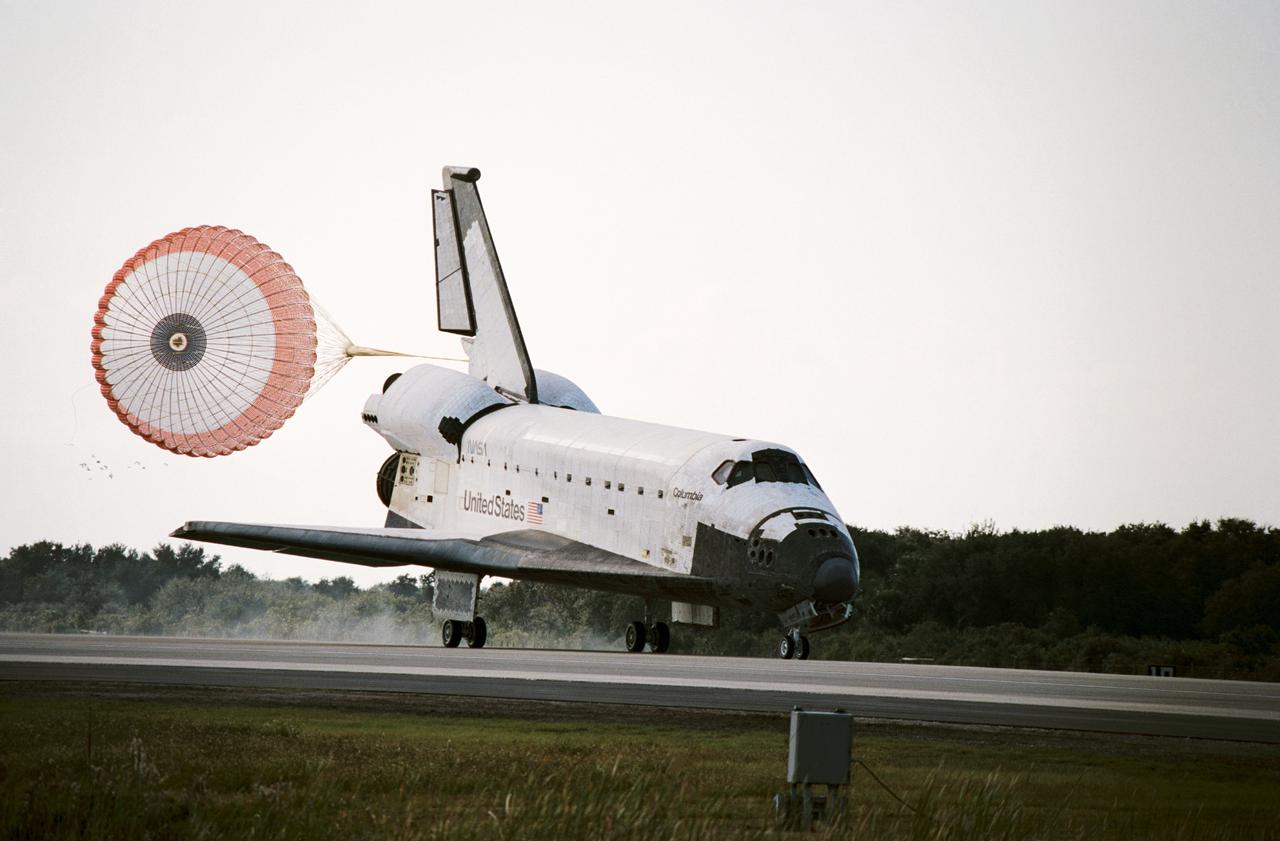
STS052-S-099 (1 Nov. 1992) --- This three-quarter front view shows the Space Shuttle Columbia just after deployment of the drag chute during landing at KSC's Shuttle Landing Facility. Onboard were a crew of five NASA astronauts and a Canadian payload specialist. Landing occurred at 9:05:53 a.m. (EST), November 1, 1992. Crewmembers are astronauts James D. Wetherbee, Michael A. Baker, Tamara E. Jernigan, Charles L. (Lacy) Veach and William M. Shepherd along with payload specialist Steven G. MacLean. The photo was taken with a 35mm camera.
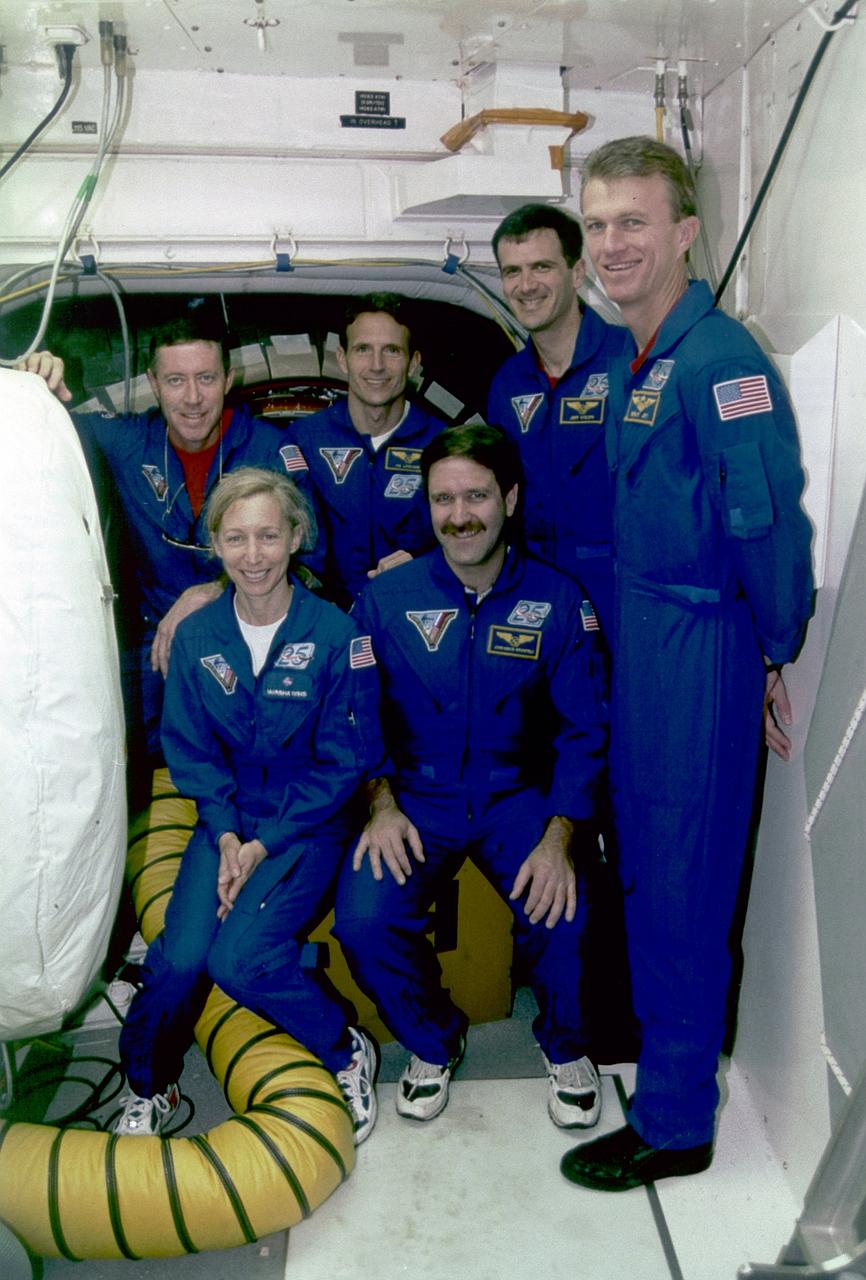
S97-00247 (15 Dec. 1996) --- The STS-81 mission flight crew poses outside the hatch of the space shuttle Atlantis at Launch Pad 39B during a Terminal Countdown Demonstration Test (TCDT). The TCDT represents a simulated final countdown rehearsal that ends just before main engine ignition. The actual launch is now scheduled for Jan. 12, 1997. Pictured (from the left) are astronauts Michael A. Baker, Marsha S. Ivins, Jerry M. Linenger, John M. Grunsfeld, Peter J.K. (Jeff) Wisoff, and Brent W. Jett Jr.
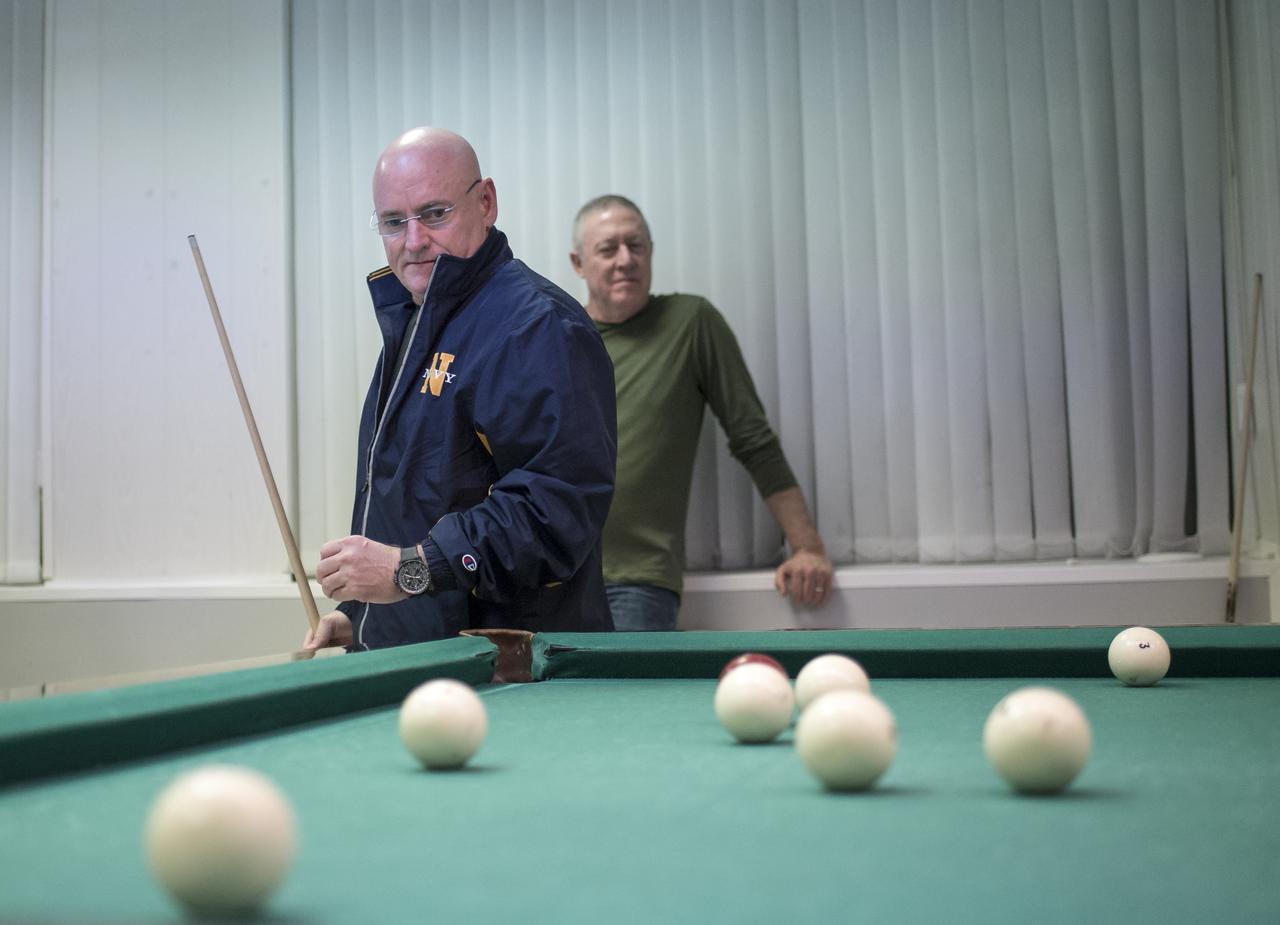
Expedition 43 NASA Astronaut Scott Kelly, left, plays pool with Russian Cosmonaut Mikhail Kornienko of the Russian Federal Space Agency (Roscosmos), as NASA International Space Station Program Manager for International and Crew Operations Michael Baker looks on at the Cosmonaut Hotel, Thursday, March 19, 2015 in Baikonur, Kazakhstan. Kelly, Kornienko, and Russian Cosmonaut Gennady Padalka are preparing for launch to the International Space Station in their Soyuz TMA-16M spacecraft from the Baikonur Cosmodrome in Kazakhstan March 28, Kazakh time. As the one-year crew, Kelly and Kornienko will return to Earth on Soyuz TMA-18M in March 2016. Photo Credit: (NASA/Bill Ingalls)
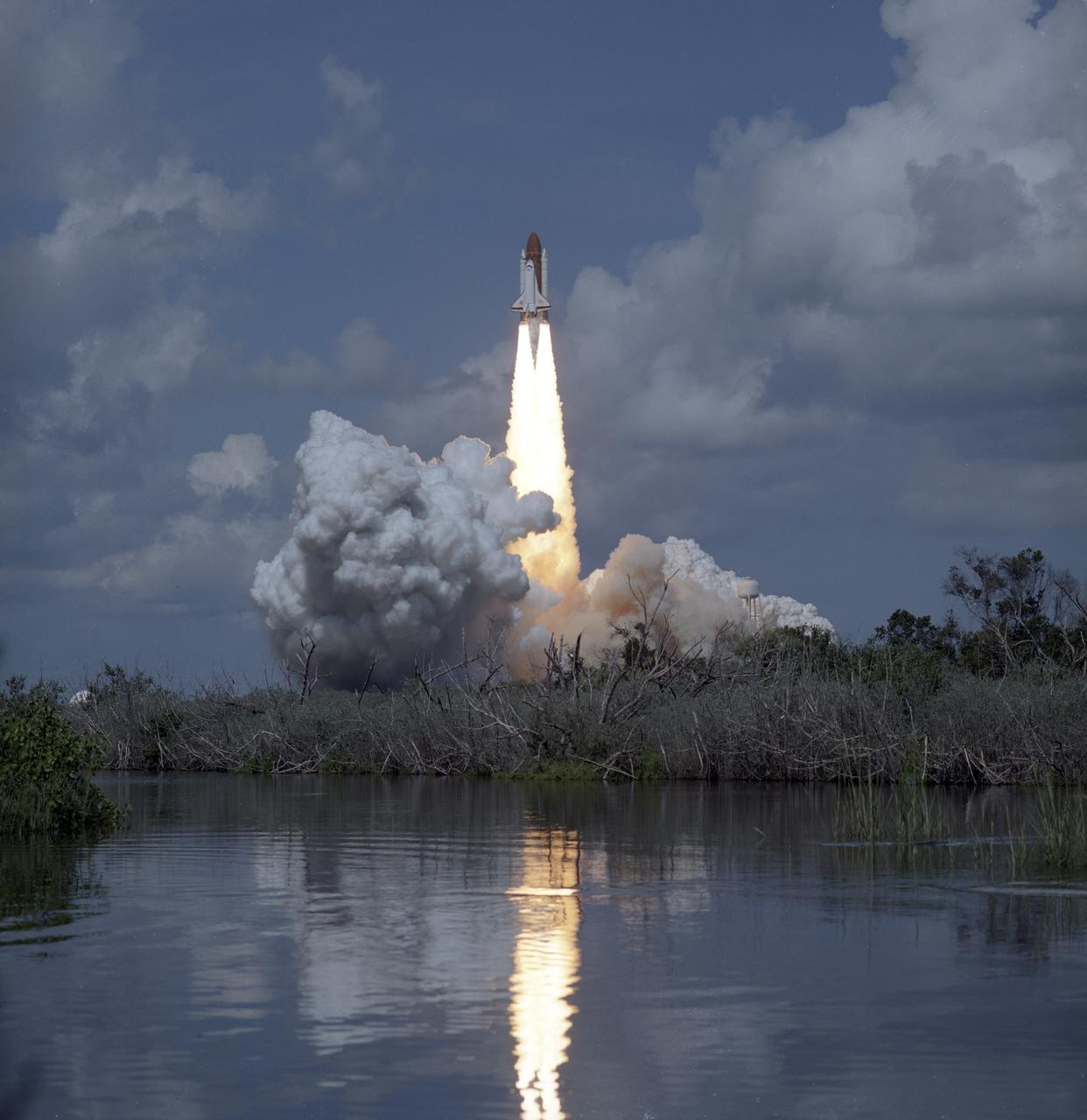
The STS-34 crew of five launched aboard the Space Shuttle Orbiter Atlantis on October 18, 1989 at 12:53:40pm (EDT). Crew members included commander Donald E. Williams, pilot Michael J. McCulley, and mission Specialists Shannon W. Lucid, Franklin R. Chang-Diaz, and Ellen S. Baker. The primary payload was the Galileo Jupiter Spacecraft and attached Inertial Upper Stage (IUS). Deployed 6 hours and 30 minutes into the flight, the IUS stages fired boosting Galileo on trajectory for a 6 year trip to Jupiter.
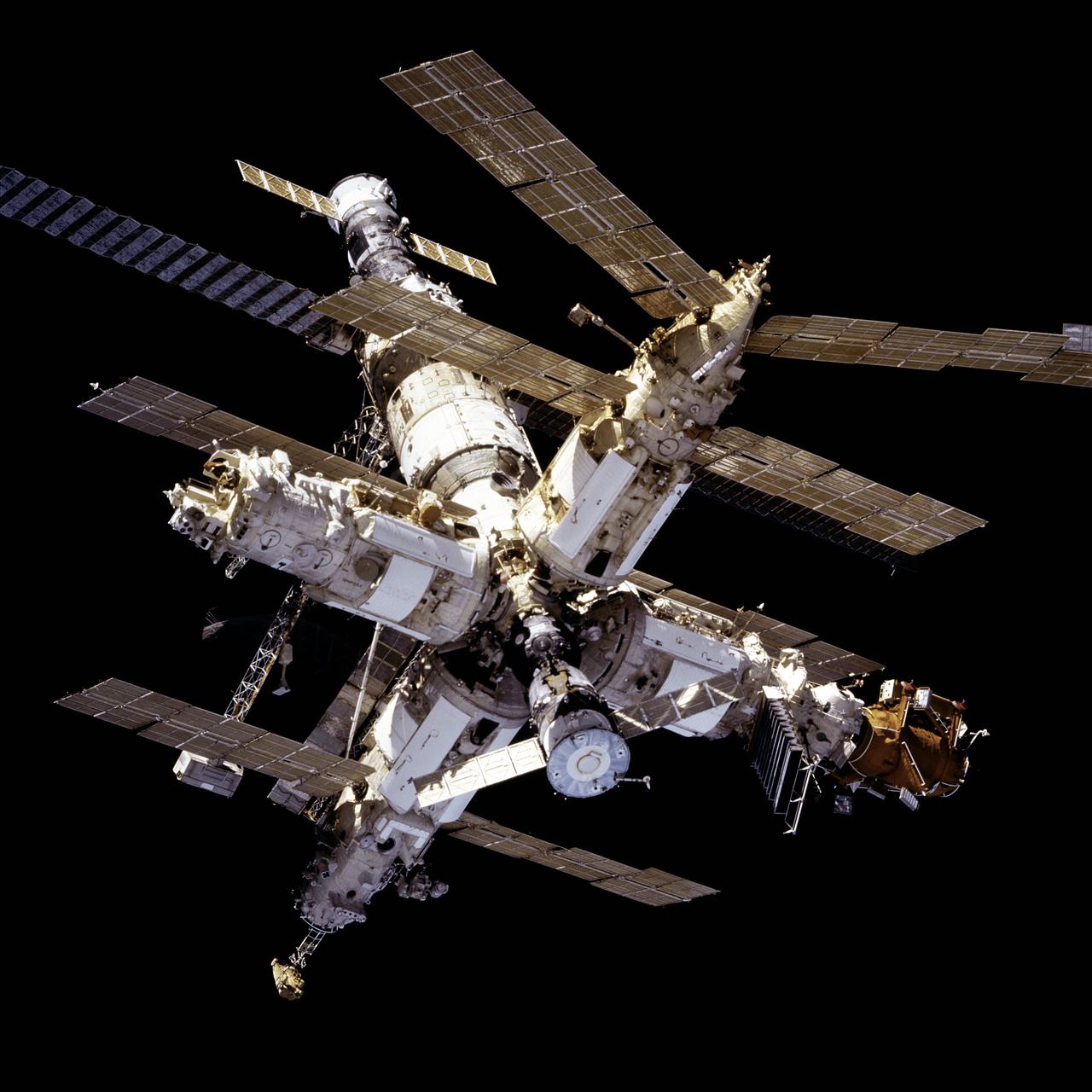
STS081-736-034 (14 Jan 1997) --- This 70mm frame affords a full view of Russia?s Mir Space Station complex during approach for docking, backdropped against the blackness of space. Astronaut Jerry M. Linenger, now onboard the Space Shuttle Atlantis, will trade places with John E. Blaha, current cosmonaut guest researcher onboard Mir since mid September 1996. Along with Linenger, other crew members now aboard Atlantis are astronauts Michael A. Baker, commander; Brent W. Jett, Jr., pilot; and mission specialists John M. Grunsfeld, Marsha S. Ivins and Peter J. K. (Jeff) Wisoff.
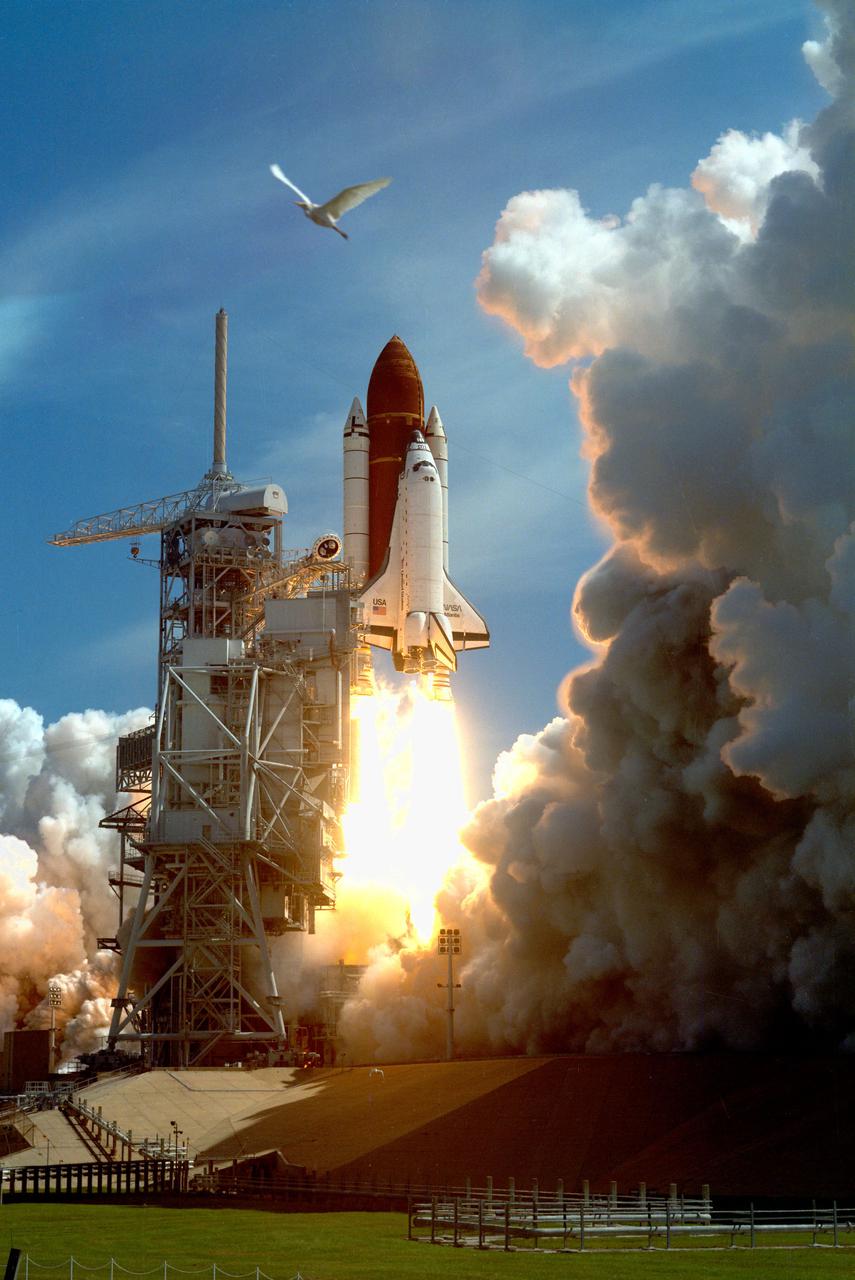
KENNEDY SPACE CENTER, FLA. - The Space Shuttle Atlantis breaks free from the confines of Earth as it soars towards space to begin its STS-43 nine-day mission. The 11:02 a.m. EDT liftoff from Launch Pad 39A was at the opening of the launch window. The five-member crew will conduct a variety of activities, including the primary objective of deploying the fourth Tracking and Data Relay Satellite TDRS-E. Crew members are Mission Commander John E. Blaha, Pilot Michael E. Baker, and Mission Specialists Shannon W. Lucid, James C. Adamson and G. David Low. Photo Credit: NASA
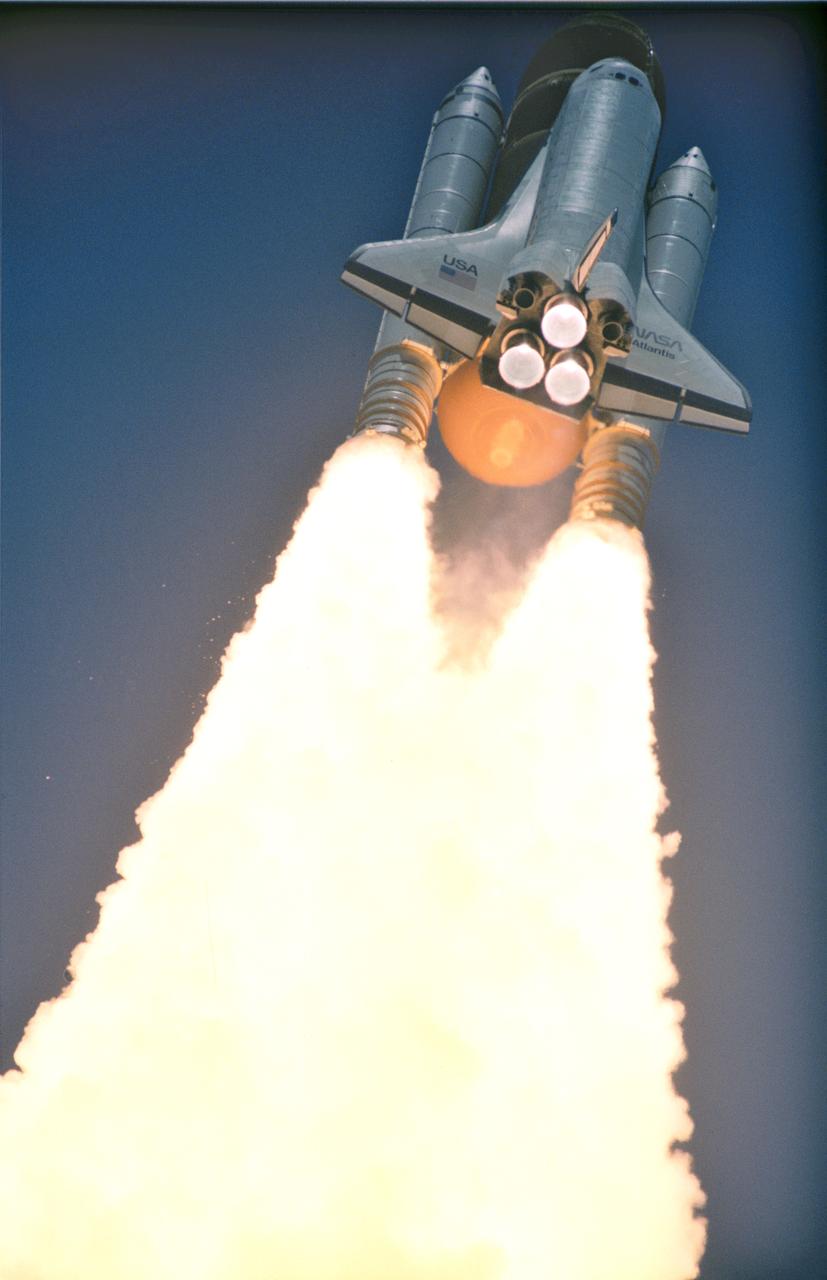
STS043-S-088 (2 Aug 1991) --- A low angle, 35mm view of the Space Shuttle Atlantis as it soars toward space to begin a scheduled nine-day mission. The 11:02:00 a.m. (EDT) liftoff from Launch Pad 39A came at the beginning of the launch window. Onboard the spacecraft were astronauts John E. Blaha, mission commander; Michael A. Baker, pilot; and Shannon W. Lucid, James C. Adamson and G. David Low, all mission specialists. Six hours after this picture was taken, the astronauts deployed the Tracking and Data Relay Satellite (TDRS-E).
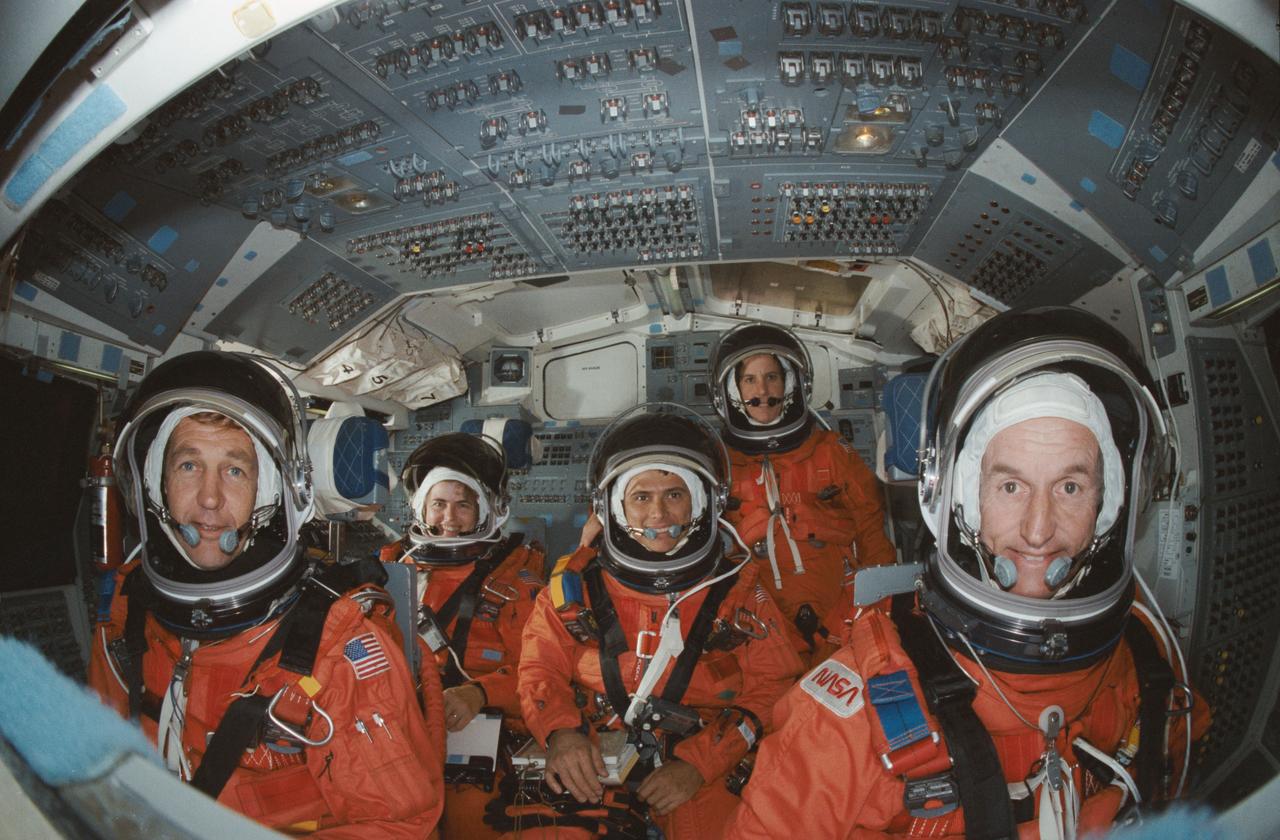
S89-45735 (Sept 1989) --- Five astronauts take a break from training for NASA's STS-34 mission to pose for a photo in the crew compartment trainer (CCT) in the Shuttle mockup and integration lab at JSC. Left to right are Astronauts Michael J. McCulley, pilot; Shannon W. Lucid, Franklin R. Chang-Diaz and Ellen S. Baker, all mission specialists; and Donald E. Williams, mission commander. They are wearing the orange partial pressure suits for the ascent and entry phase of flight. Their launch aboard the Atlantis is scheduled for Oct. 12. The photograph was made by Bill Bowers, a crew trainer at JSC.
![KENNEDY SPACE CENTER, FLA. -- Seventeen new astronaut candidates visited the Vehicle Assembly Building as part of an orientation tour of KSC facilities. Here they are grouped around one of the external fuel tanks in the transfer aisle of the VAB. This latest group of candidates is the tenth chosen since the original seven Mercury astronauts. [From left, Michael J. McCulley, Curtis L. Brown Jr., Frank L. Culbertson Jr., Kathryn C. Thornton, Mark N. Brown, Mark C. Lee, Kenneth D. Cameron, John H. Casper, L. Blaine Hammond Jr., Charles Lacy Veach (deceased), James C. Adamson, William M. Shepherd, Sidney M. Gutierrez, Marsha S. Ivins, David G. Low, Michael J. Smith (deceased), Ellen S. Baker, Sonny Carter (deceased).]](https://images-assets.nasa.gov/image/108-KSC-84P-339/108-KSC-84P-339~medium.jpg)
KENNEDY SPACE CENTER, FLA. -- Seventeen new astronaut candidates visited the Vehicle Assembly Building as part of an orientation tour of KSC facilities. Here they are grouped around one of the external fuel tanks in the transfer aisle of the VAB. This latest group of candidates is the tenth chosen since the original seven Mercury astronauts. [From left, Michael J. McCulley, Curtis L. Brown Jr., Frank L. Culbertson Jr., Kathryn C. Thornton, Mark N. Brown, Mark C. Lee, Kenneth D. Cameron, John H. Casper, L. Blaine Hammond Jr., Charles Lacy Veach (deceased), James C. Adamson, William M. Shepherd, Sidney M. Gutierrez, Marsha S. Ivins, David G. Low, Michael J. Smith (deceased), Ellen S. Baker, Sonny Carter (deceased).]
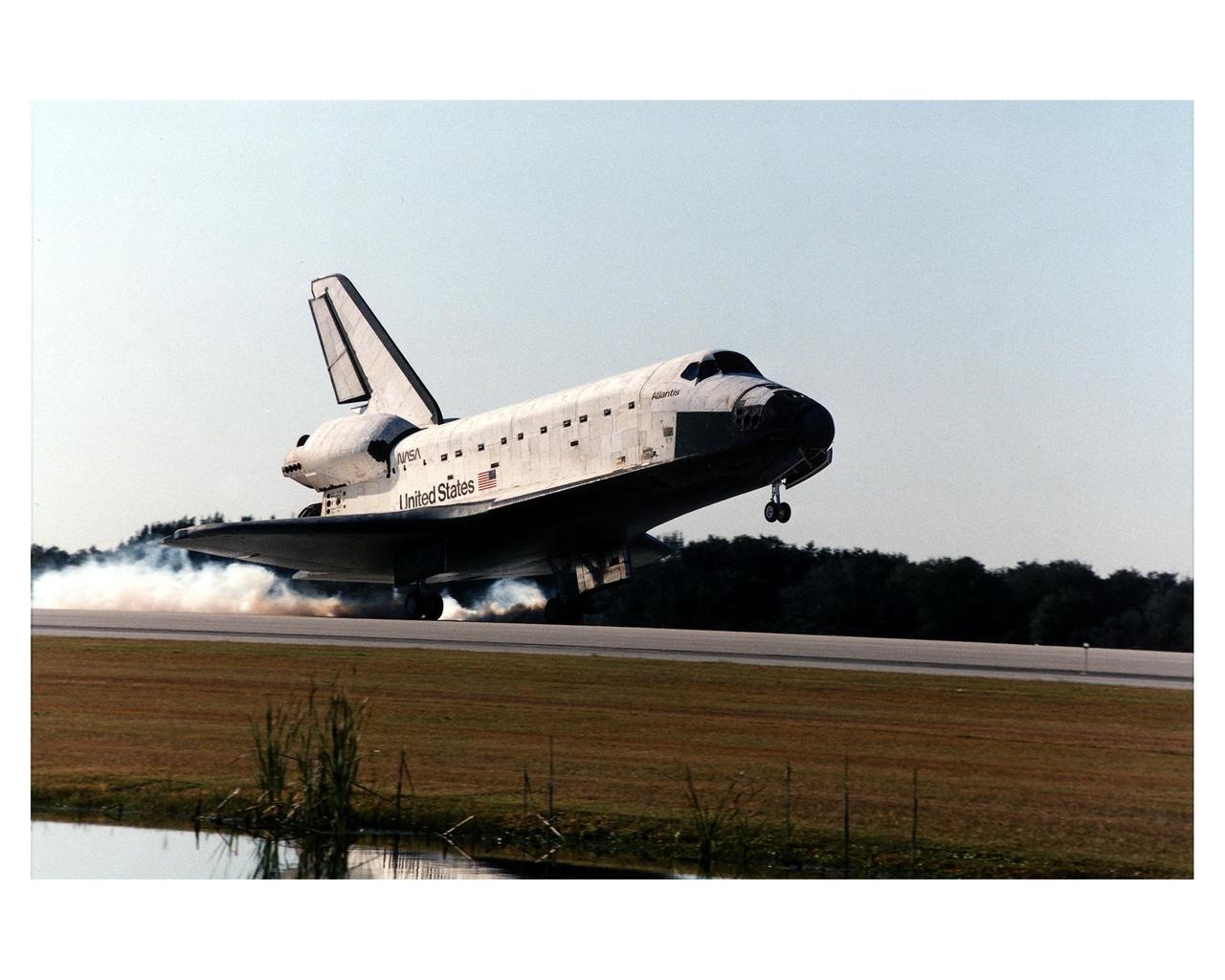
The Space Shuttle orbiter Atlantis touches down on Runway 33 at 9:22:44 a.m. EST Jan. 22 to conclude the fifth Shuttle-Mir docking mission and return NASA astronaut John Blaha to Earth after four months in space. Blaha was replaced by STS-81 Mission Specialist Jerry Linenger during the five days of docked operations. At main gear touchdown, the STS-81 mission duration was 10 days, 4 hours, 55 minutes. This was the 34th KSC landing in Shuttle history. Mission Commander Michael A. Baker flew Atlantis to a perfect landing, with help from Pilot Brent W. Jett, Jr. Other returning STS-81 crew members are Mission Specialists John M. Grunsfeld, Peter J. K. "Jeff" Wisoff and Marsha S. Ivins. Atlantis also brought back experiment samples from the Russian space station for analysis on Earth, along with Russian logistics equipment
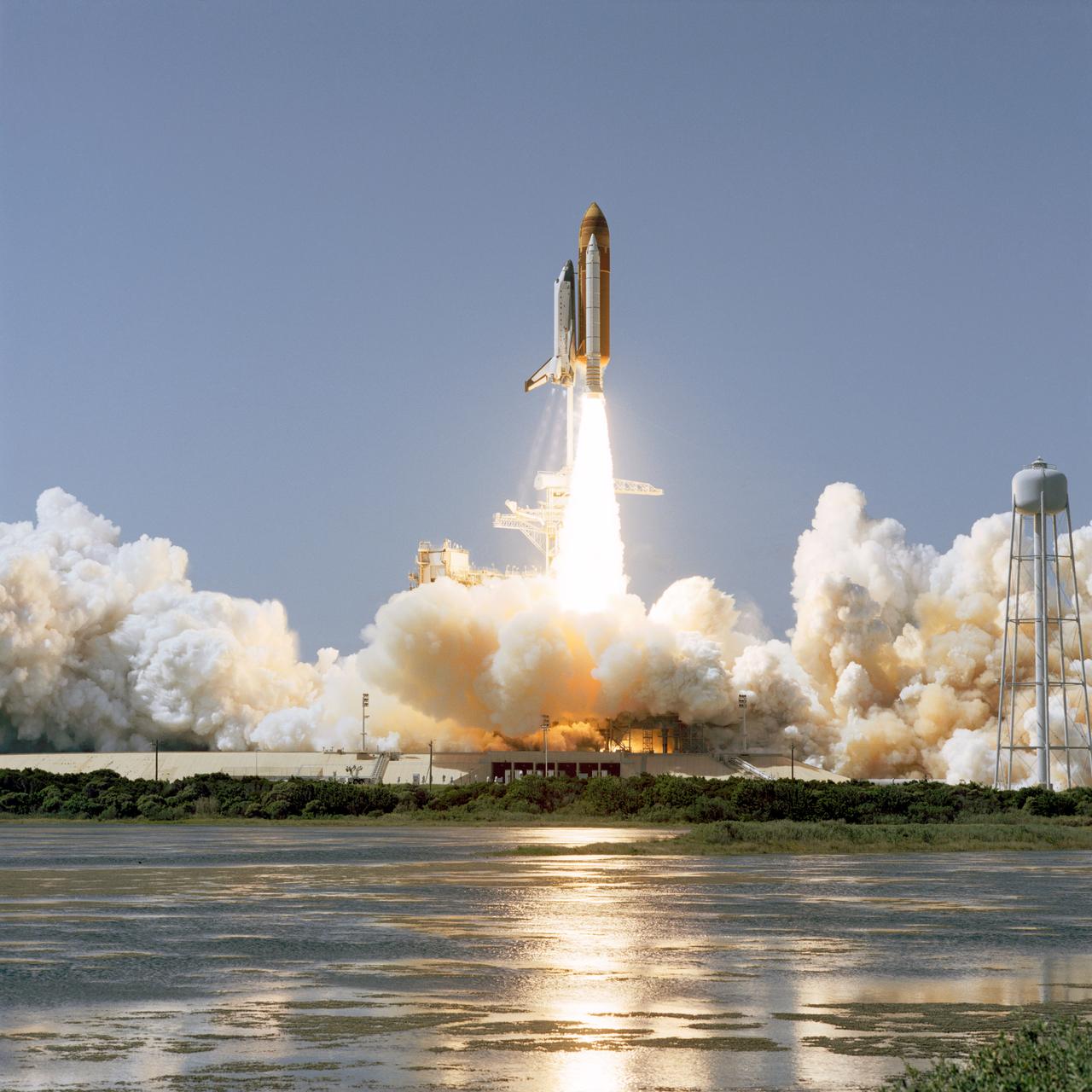
STS052-S-051 (22 Oct 1992) --- This distant 70mm image shows the Space Shuttle Columbia clearing the tower at Launch Pad 39B, at the Kennedy Space Center (KSC), on its way toward a ten-day Earth-orbital mission with a crew of five NASA astronauts and a Canadian payload specialist. Liftoff occurred at 1:09:39 p.m. (EDT), October 22, 1992. Crew members are astronauts James D. Wetherbee, Michael A. Baker, Tamara E. Jernigan, Charles L. (Lacy) Veach and William M. Shepherd, along with payload specialist Steven G. MacLean. Payloads onboard include the Laser Geodynamic Satellite II (LAGEOS II), which will be deployed early in the mission, a series of Canadian experiments, and the United States Microgravity Payload-1 (USMP-1).
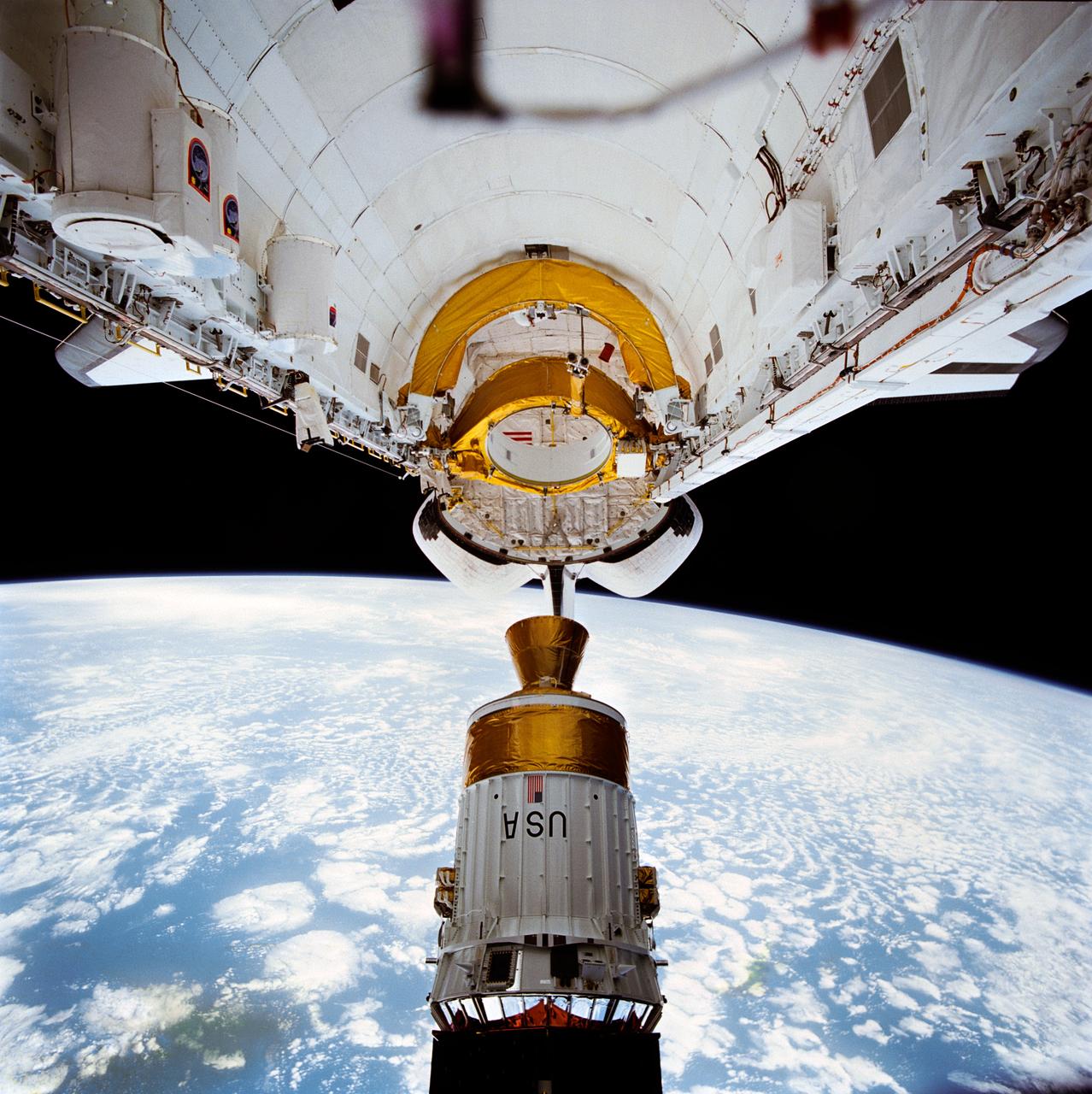
STS043-72-059 (2 Aug 1991) --- The Tracking and Data Relay Satellite (TDRS-E), leaves the payload bay of the earth-orbiting Atlantis a mere six hours after the Space Shuttle was launched from Pad 39A at Kennedy Space Center, Florida. TDRS, built by TRW, will be placed in a geosynchronous orbit and after on-orbit testing, which requires several weeks, will be designated TDRS-5. The communications satellite will replace TDRS-3 at 174 degrees West longitude. The backbone of NASA's space-to-ground communications, the Tracking and Data Relay satellites have increased NASA's ability to send and receive data to spacecraft in low-earth orbit to more than 85 percent of the time. The five astronauts of the STS 43 mission are John E. Blaha, mission commander, Michael A. Baker, pilot, and Shannon W. Lucid, G. David Low, and James C. Adamson, all mission specialists.
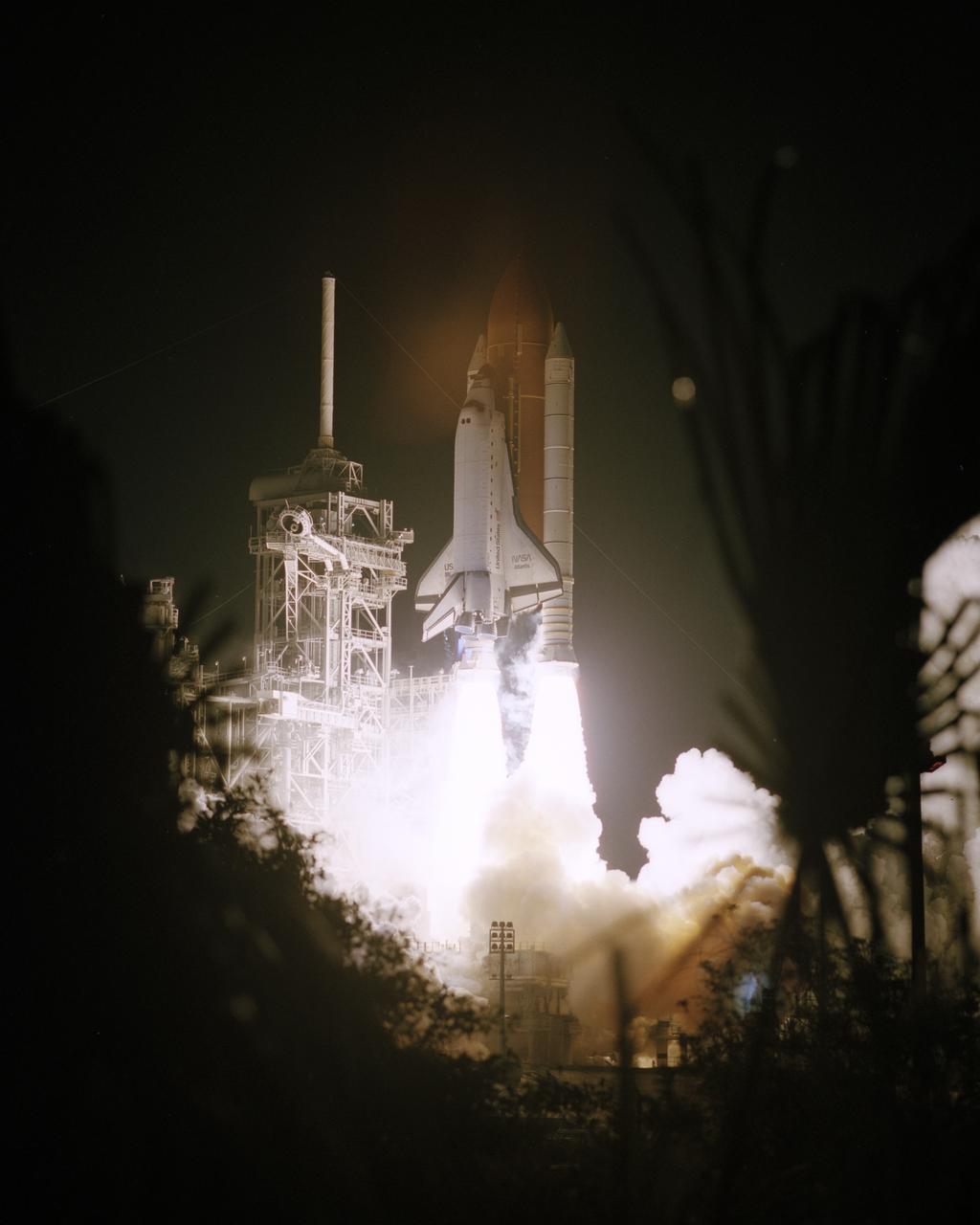
STS081-S-007 (12 Jan. 1997) --- Framed by a silhouette of Florida foliage, the Space Shuttle Atlantis lifts off from Pad 39B at 4:27:23 a.m. (EST) Jan. 12, 1997 on its way for a docking mission with Russia's Mir Space Station. Onboard are six astronauts and a SPACEHAB Double Module (DM), along with a large supply of food, water, hardware and other materials for Mir. Astronaut Jerry M. Linenger, now onboard Atlantis, will trade places with John E. Blaha, cosmonaut guest researcher, onboard Mir since mid September 1996. Along with Linenger, other crewmembers now aboard Atlantis are astronauts Michael A. Baker, commander; Brent W. Jett, Jr., pilot; and mission specialists John M. Grunsfeld, Marsha S. Ivins and Peter J. K. (Jeff) Wisoff.
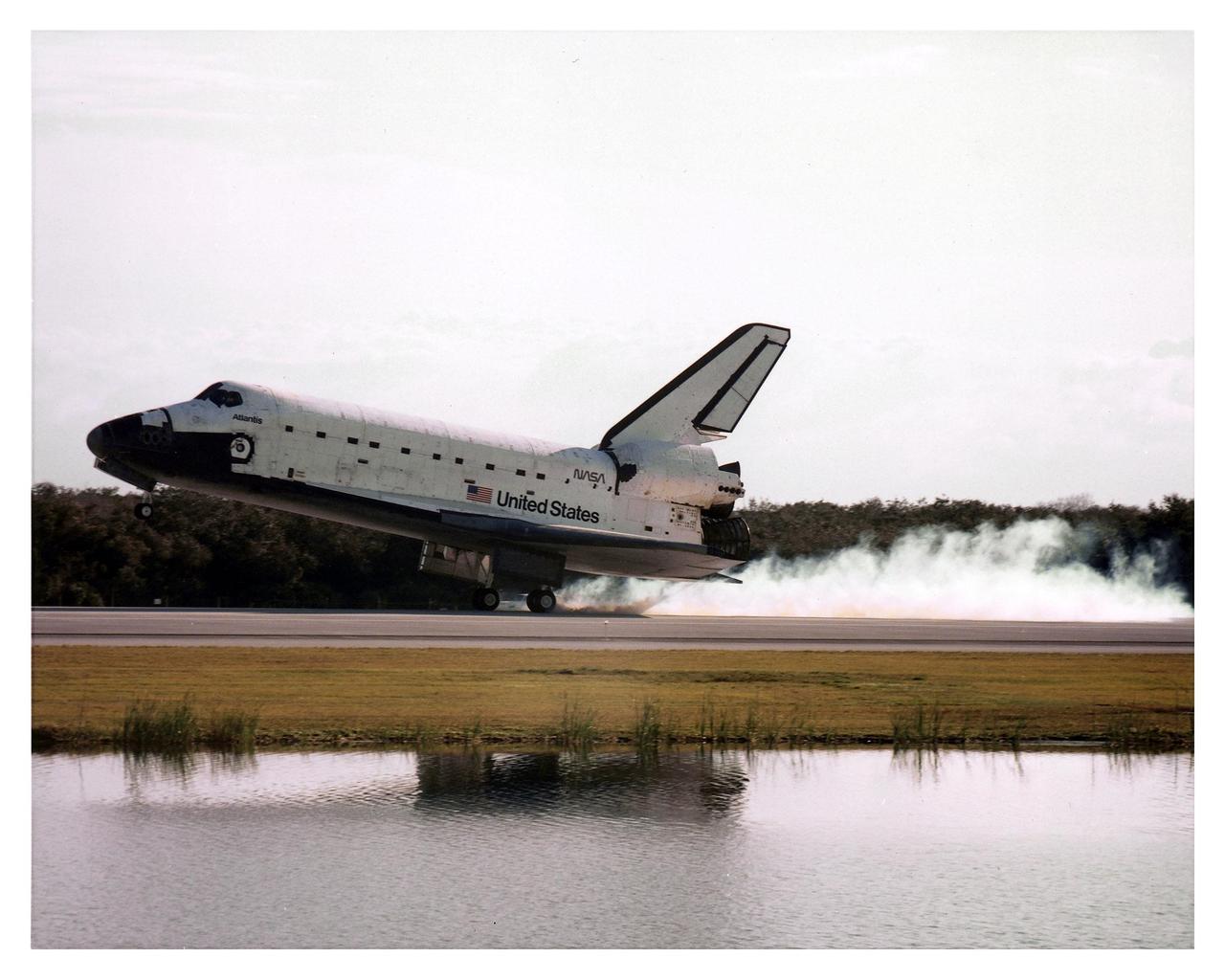
The Space Shuttle orbiter Atlantis touches down on Runway 33 at 9:22:44 a.m. EST Jan. 22 to conclude the fifth Shuttle-Mir docking mission and return NASA astronaut John Blaha to Earth after four months in space. Blaha was replaced by STS-81 Mission Specialist Jerry Linenger during the five days of docked operations. At main gear touchdown, the STS-81 mission duration was 10 days, 4 hours, 55 minutes. This was the 34th KSC landing in Shuttle history. Mission Commander Michael A. Baker flew Atlantis to a perfect landing, with help from Pilot Brent W. Jett, Jr. Other returning STS-81 crew members are Mission Specialists John M. Grunsfeld, Peter J. K. "Jeff" Wisoff and Marsha S. Ivins. Atlantis also brought back experiment samples from the Russian space station for analysis on Earth, along with Russian logistics equipment
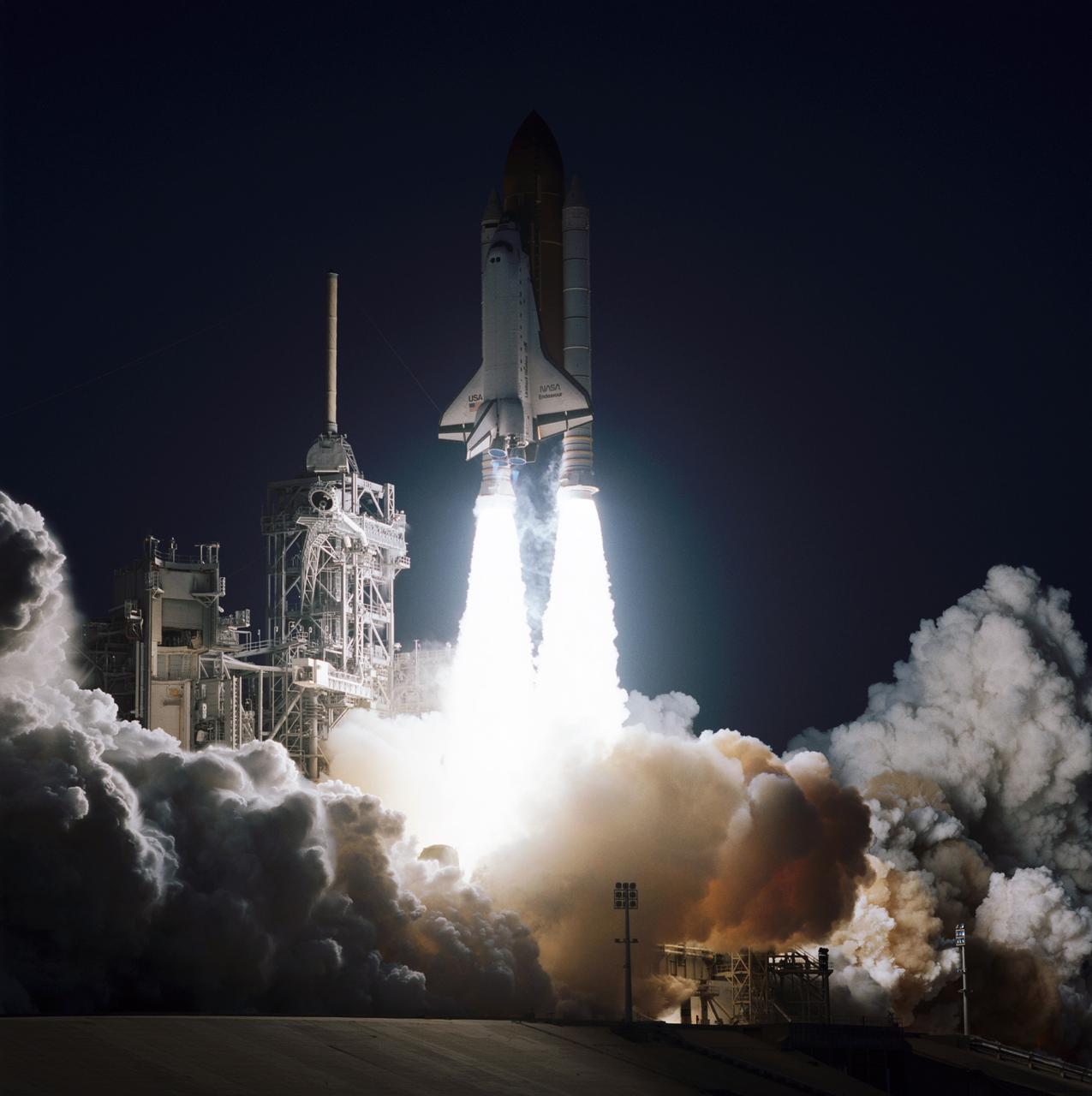
STS068-S-037 (30 September 1994) --- The Space Shuttle Endeavour lifts off from Launch Pad 39A in a halo of light. Aboard for an on time launch at 7:16:00:068 a.m. (EDT) are a crew of six NASA astronauts and the Space Radar Laboratory-2 (SRL-2). Mission commander for the 65th Space Shuttle flight is Michael A. Baker; the pilot is Terrence W. Wilcutt; Thomas D. Jones is the payload commander, and the three mission specialists are Daniel W. Bursch, Steven L. Smith and Peter J. K. "Jeff" Wisoff. During the planned ten-day flight of mission STS-68 around-the-clock operation of the SRL-2 will once again yield a wealth of data about Earth's global environment and the changes - both human-induced and natural - which are affecting it. This is the second flight this year of the SRL, and the second launch try for mission STS-68.
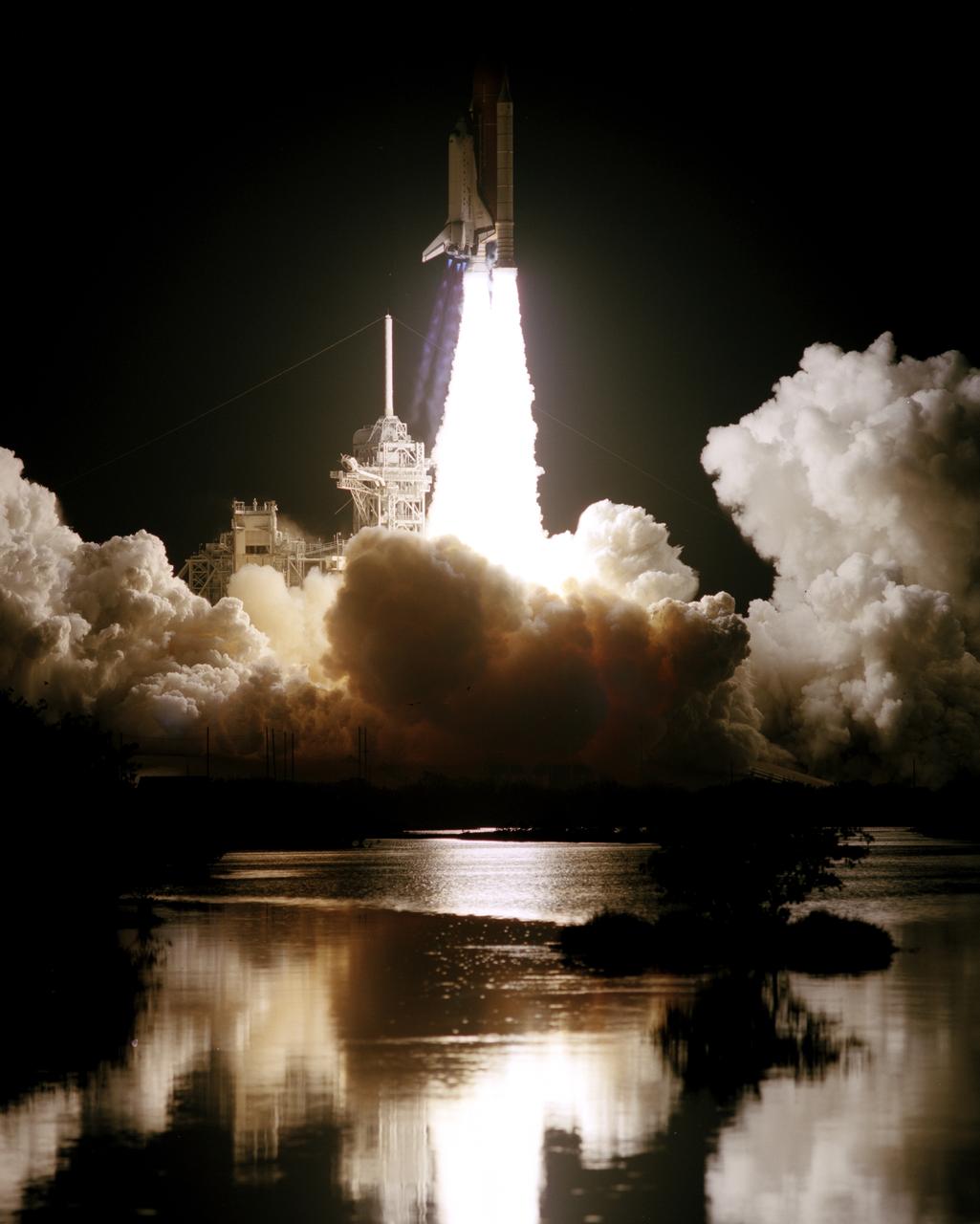
STS081-S-005 (12 Jan. 1997) --- Lighting up an early morning sky, the Space Shuttle Atlantis lifts off from Pad 39B to begin the new year of space missions for NASA's shuttle fleet. Launch occurred at 4:27:23 a.m. (EST), Jan. 12, 1997. Now on their way for a docking mission with Russia's Mir Space Station are a crew of six astronauts and a SPACEHAB Double Module (DM), along with a large supply of food, water, hardware and other materials for Mir. Astronaut Jerry M. Linenger, now onboard Atlantis, will trade places with John E. Blaha, cosmonaut guest researcher, onboard Mir since mid September 1996. Along with Linenger, other crewmembers now aboard Atlantis are astronauts Michael A. Baker, commander; Brent W. Jett, Jr., pilot; and mission specialists John M. Grunsfeld, Marsha S. Ivins and Peter J. K. (Jeff) Wisoff.

KENNEDY SPACE CENTER, FLA. -- With its drag chute deployed, the Space Shuttle orbiter Atlantis touches down on Runway 33 on the second opportunity at 9:22:44 a.m. EST Jan. 22 to conclude the fifth Shuttle-Mir docking mission and return NASA astronaut John Blaha to Earth after four months in space. At main gear touchdown, the STS-81 mission duration was 10 days, 4 hours, 55 minutes. This was the 34th KSC landing in Shuttle history. Mission Commander Michael A. Baker flew Atlantis to a perfect landing, with help from Pilot Brent W. Jett, Jr. Other returning STS-81 crew members are Mission Specialists John M.Grunsfeld, Peter J. K. "Jeff" Wisoff and Marsha S. Ivins. Atlantis also brought back experiment samples from the Russian space station Mir for analysis on Earth, along with Russian logistics equipment
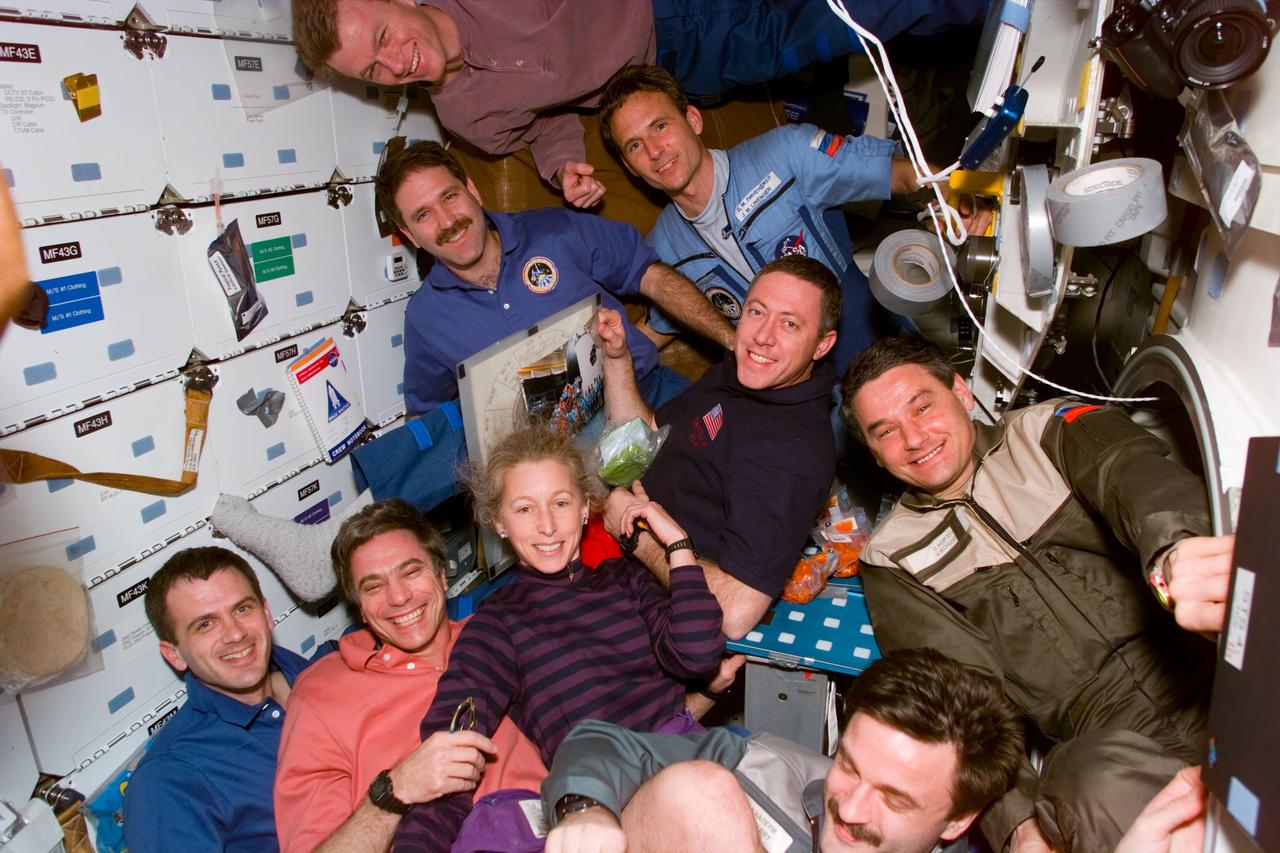
STS081-E-05535 (17 Jan. 1997) --- Seven NASA astronauts and two Russian cosmonauts take a break from busy supply-transfer duties on the space shuttle Atlantis' middeck halfway through the ten-day mission. Left to right at bottom of the frame are mission specialists Peter J. K. (Jeff) Wisoff, John E. Blaha, Marsha S. Ivins and cosmonaut Aleksandr Y. Kaleri, Mir-22 flight engineer. In the top half of the scene are, from the top left, Brent W. Jett, Jr., pilot; John M. Grunsfeld, mission specialist; Jerry M. Linenger, cosmonaut guest researcher; Michael A. Baker, commander; and cosmonaut Valeri G. Korzun, Mir-22 commander. The picture was recorded with a pre-set 35mm Electronic Still Camera (ESC).
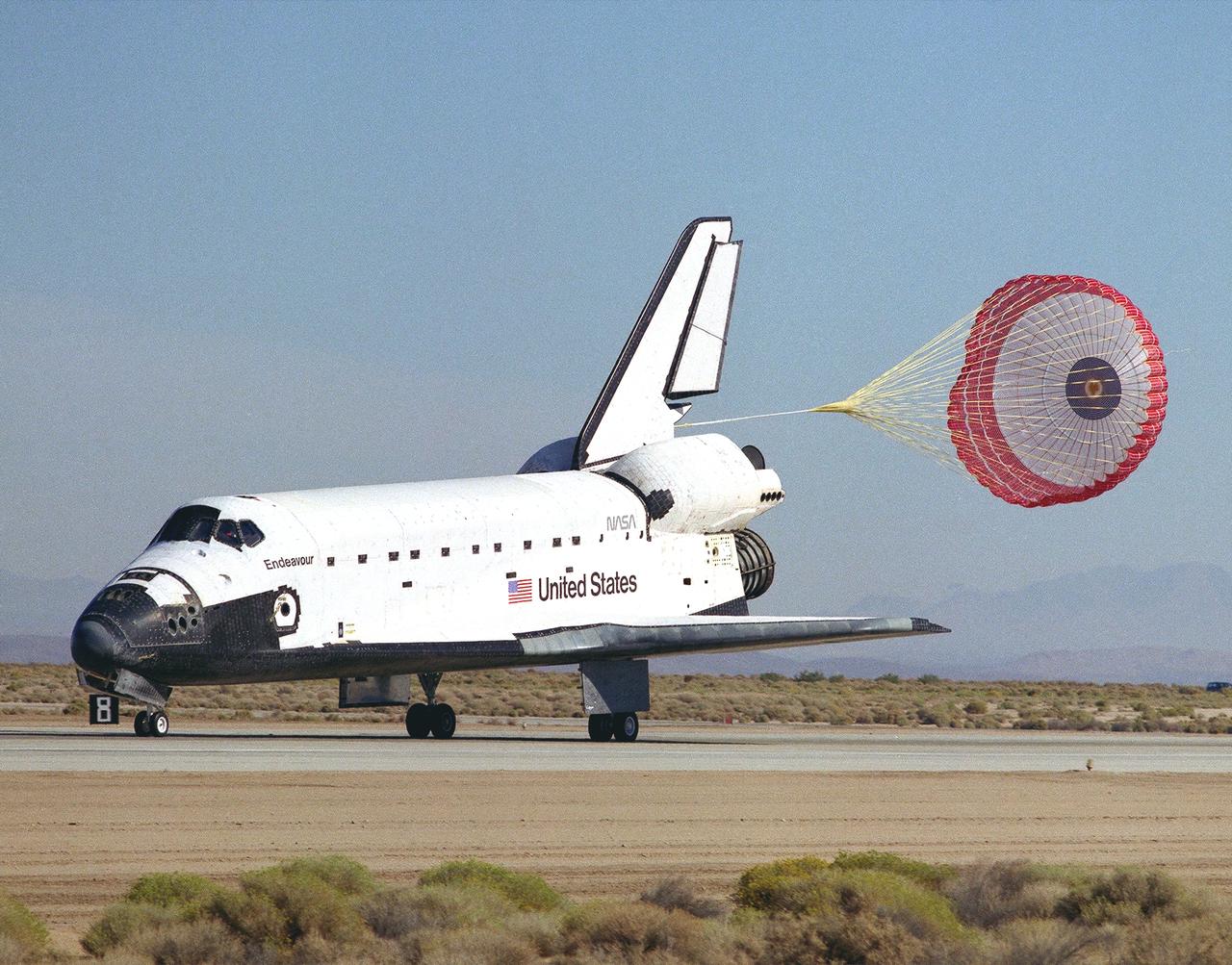
A drag chute slows the shuttle Endeavour after landing on runway 22 at Edwards, California, to complete the highly successful STS-68 mission dedicated to radar imaging of the earth's surface as part of NASA's Mission To Planet Earth program. The landing was at 10:02 a.m. (PDT) 11 October 1994, after waiving off from the Kennedy Space Center, Florida, earlier that morning due to adverse weather at Kennedy. The Endeavour crew was originally scheduled to land at Kennedy the morning of 10 October, but mission planners decided early in the flight to extend the mission by one day. Mission commander was Michael A. Baker and the pilot was Terrence W. Wilcutt. The four mission specialists were Thomas D. Jones, payload; Steven L. Smith; Daniel W. Bursch; and Peter J.K. Wisoff.
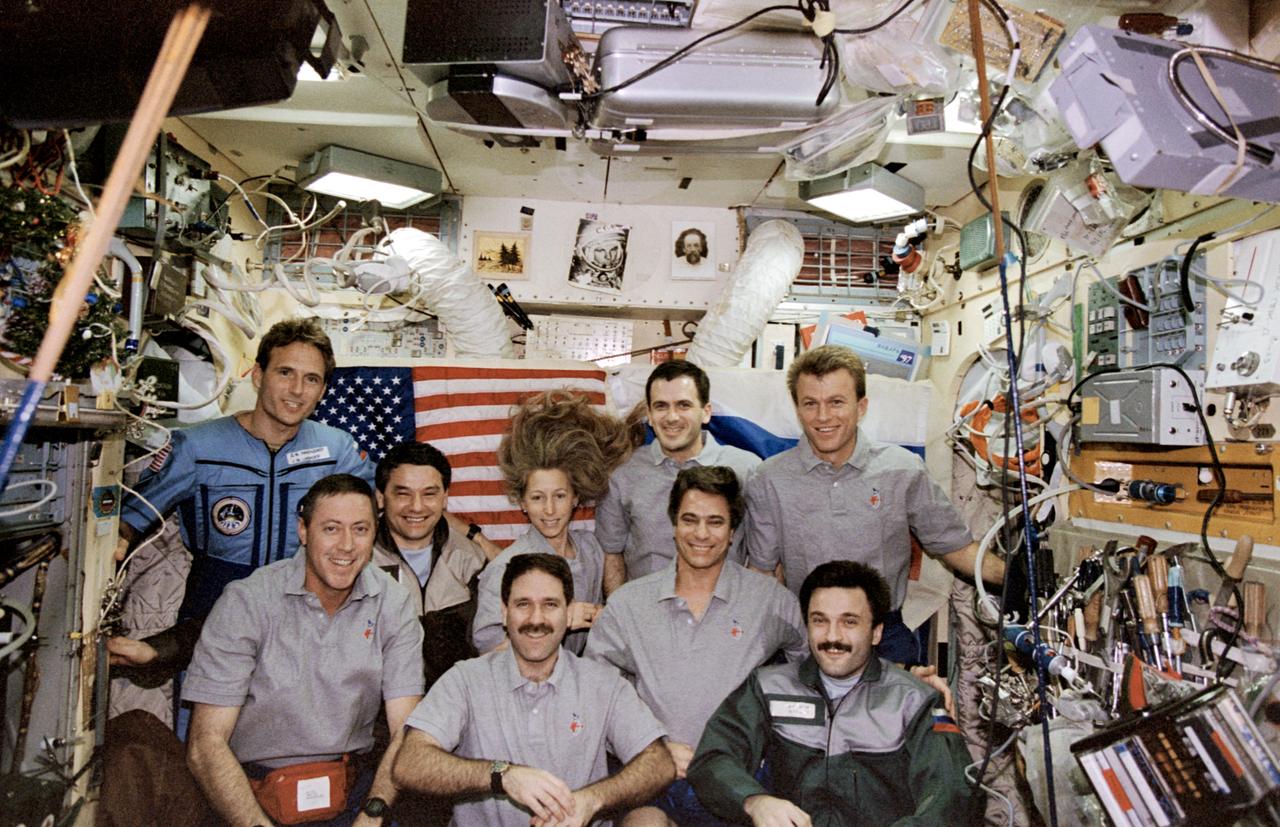
STS081-369-003 (12-22 Jan. 1997) --- Traditional inflight crew portrait of the combined Mir-22 and STS-81 crews in the Base Block Module aboard Russia's Mir Space Station. Front row: left to right, Michael A. Baker, commander; John M. Grunsfeld, mission specialist; and cosmonaut Aleksandr Y. Kaleri, Mir-22 flight engineer. Middle row: cosmonaut Valeri G. Korzun, Mir-22 commander; Marsha S. Ivins, mission specialist; and John E. Blaha, former cosmonaut guest researcher. Back row: Jerry M. Linenger, cosmonaut guest researcher; Peter J. K. (Jeff) Wisoff, mission specialist; and Brent W. Jett, Jr., pilot. Linenger is seen in a Russian jump suit, and Blaha now wears a Space Shuttle inflight garment as the two exchanged cosmonaut guest researcher roles on January 14, 1997, following the docking of the Atlantis and the Mir complex.
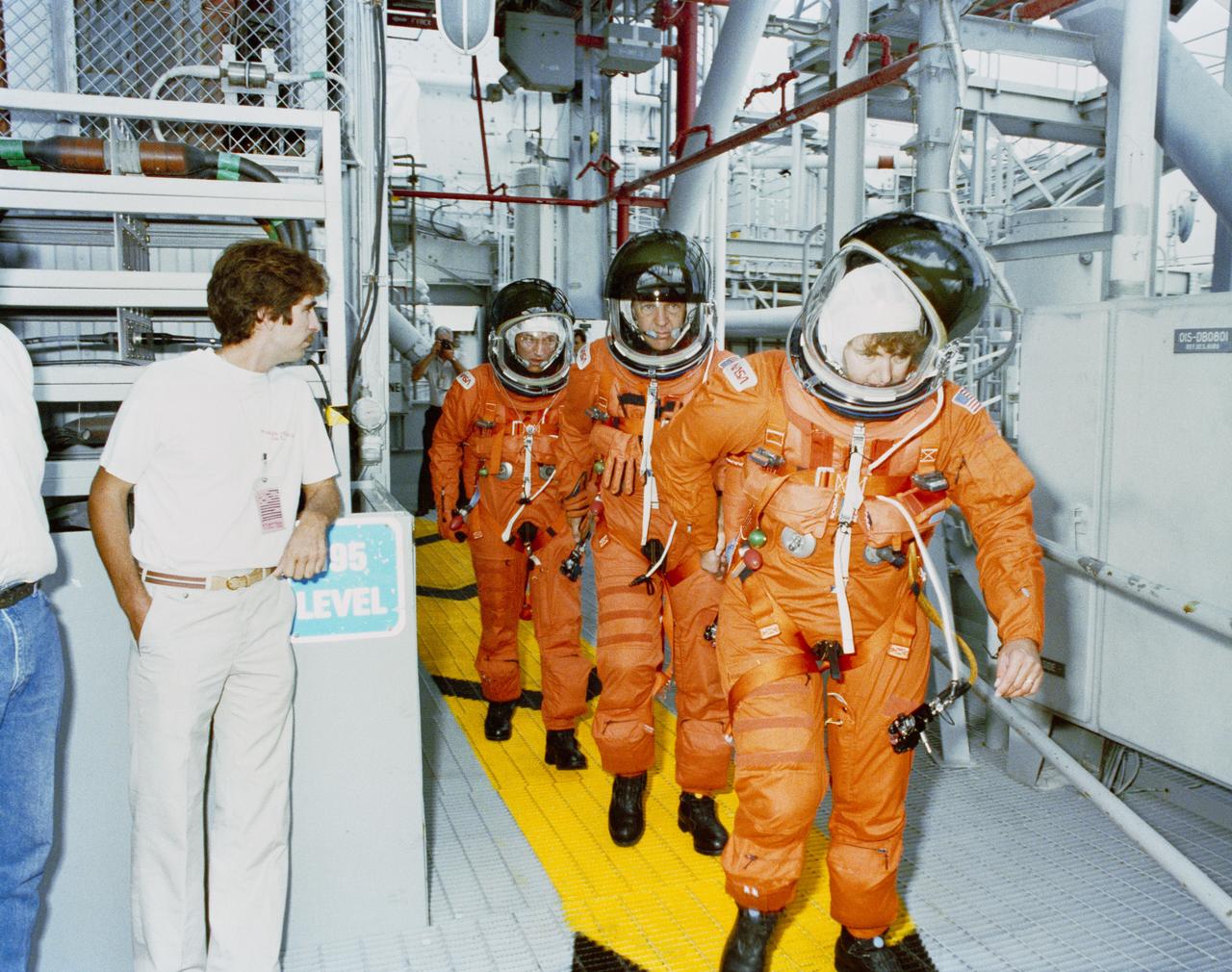
S89-46513 (15 Sept 1989) --- Three members of the STS-34 crew rehearse for their pre-launch procedures at Launch Pad 39B during Terminal Countdown Demonstration Test (TCDT) activities at Kennedy Space Center (KSC). From the foreground, Astronauts Shannon W. Lucid, Michael J. McCulley and Donald E. Williams are at the 195-ft. level of at Pad B. The crew entered Atlantis for the mock countdown. The five astronauts are expected to spend more than five days in Earth orbit next month, with their primary objective being to release the Galileo spacecraft and send it on its way to Jupiter. Not in the frame are Astronauts Franklin R. Chang-Diaz and Ellen S. Baker. (KSC-89PC-898)

Greeted by cheers from wellwishers at KSC and eager for their venture into space on the fifth Shuttle-Mir docking mission, the STS-81 astronauts depart the Operations and Checkout Building on their way to Launch Pad 39B. Leading the six-member crew is Mission Commander Michael A. Baker, followed by Pilot Brent W. Jett, Jr. Behind them are Mission Specialists John M. Grunsfeld, Jerry Linenger, Peter J. K. "Jeff" Wisoff, and Marsha S. Ivins. Their trip to the pad will take about 25 minutes aboard the Astrovan. Once there, they will take their positions in the crew cabin of the Space Shuttle Atlantis to await a liftoff during a seven-minute window that will open at 4:27 a.m. EST, January 12
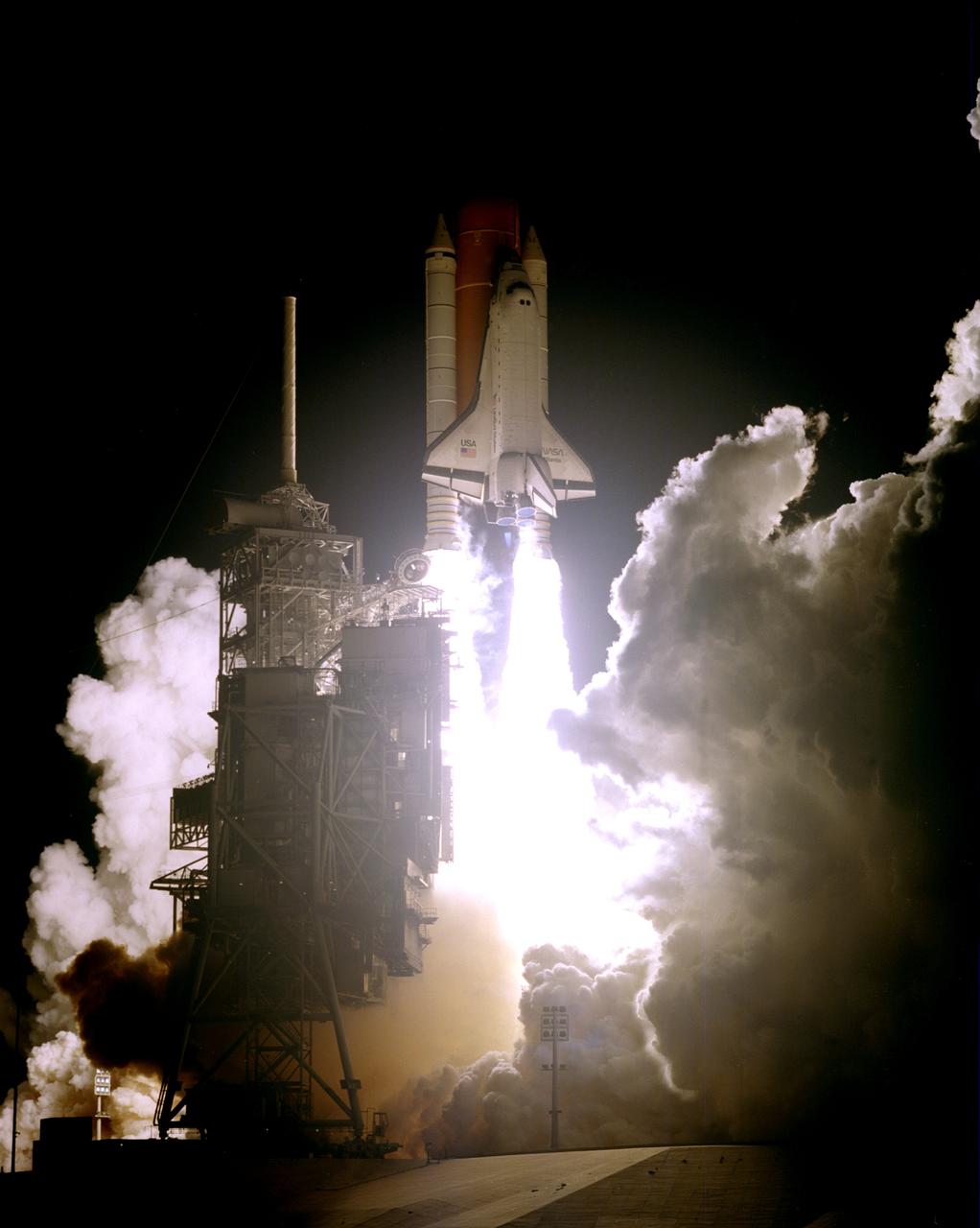
STS081-S-006 (12 Jan. 1997) --- The Space Shuttle Atlantis lifts off from Pad 39B at 4:27:23 a.m. (EST) Jan. 12, 1997 on its way for a docking mission with Russia's Mir Space Station. Onboard are six astronauts and a SPACEHAB Double Module (DM), along with a large supply of food, water, hardware and other materials for Mir. Astronaut Jerry M. Linenger, now onboard Atlantis, will trade places with John E. Blaha, cosmonaut guest researcher, onboard Mir since mid September 1996. Along with Linenger, other crewmembers now aboard Atlantis are astronauts Michael A. Baker, commander; Brent W. Jett, Jr., pilot; and mission specialists John M. Grunsfeld, Marsha S. Ivins and Peter J. K. (Jeff) Wisoff.
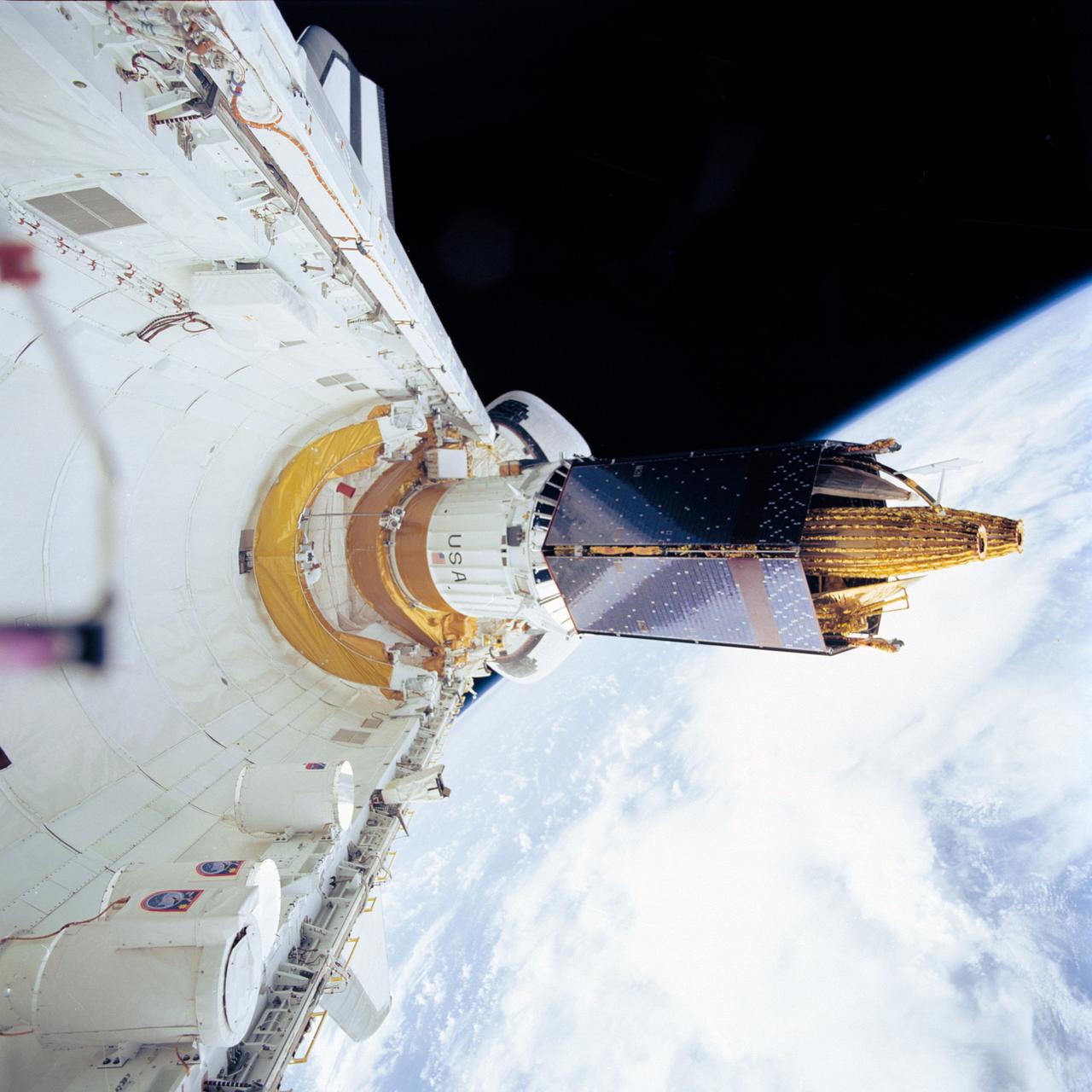
STS043-72-002 (2 Aug 1991) --- The Tracking and Data Relay Satellite (TDRS-E), leaves the payload bay of the earth-orbiting Atlantis a mere six hours after the Space Shuttle was launched from Pad 39A at Kennedy Space Center, Florida. TDRS, built by TRW, will be placed in a geosynchronous orbit and after on-orbit testing, which requires several weeks, will be designated TDRS-5. The communications satellite will replace TDRS-3 at 174 degrees West longitude. The backbone of NASA's space-to-ground communications, the Tracking and Data Relay satellites have increased NASA's ability to send and receive data to spacecraft in low-earth orbit to more than 85 percent of the time. The five astronauts of the STS 43 mission are John E. Blaha, mission commander, Michael A. Baker, pilot, and Shannon W. Lucid, G. David Low, and James C. Adamson, all mission specialists.
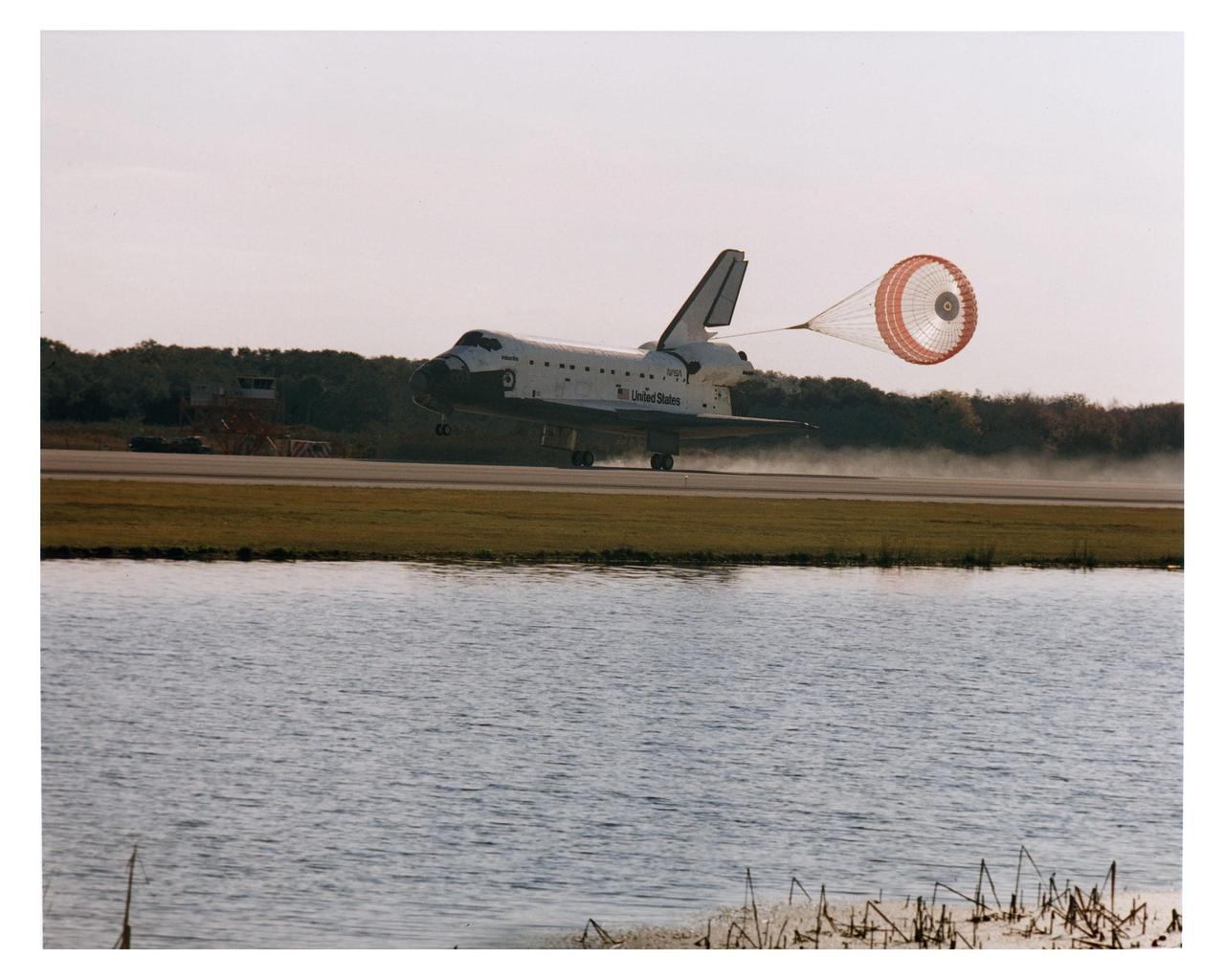
KENNEDY SPACE CENTER, FLA. -- With its drag chute deployed, the Space Shuttle orbiter Atlantis touches down on Runway 33 on the second opportunity at 9:22:44 a.m. EST Jan. 22 to conclude the fifth Shuttle-Mir docking mission and return NASA astronaut John Blaha to Earth after four months in space. At main gear touchdown, the STS-81 mission duration was 10 days, 4 hours, 55 minutes. This was the 34th KSC landing in Shuttle history. Mission Commander Michael A. Baker flew Atlantis to a perfect landing, with help from Pilot Brent W. Jett, Jr. Other returning STS-81 crew members are Mission Specialists John M.Grunsfeld, Peter J. K. "Jeff" Wisoff and Marsha S. Ivins. Atlantis also brought back experiment samples from the Russian space station Mir for analysis on Earth, along with Russian logistics equipment
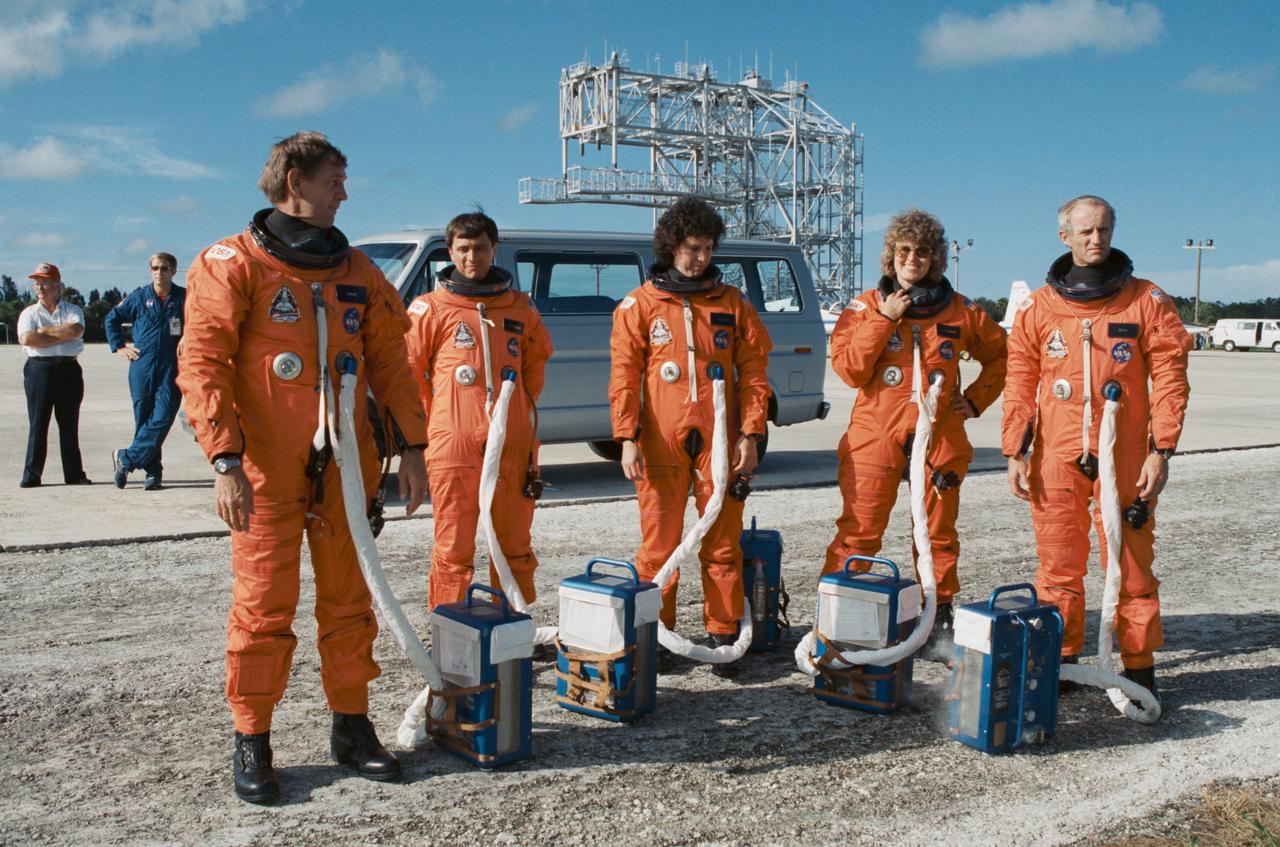
S89-45249 (13 Sept 1989) --- The astronaut crewmembers for NASA's STS-34 mission prepare to participate in emergency egress training in their partially pressurized flight suits with attached cooling packs at the Shuttle landing facility. Left to right are Astronauts Michael J. McCulley, pilot; Franklin R. Chang-Diaz, Ellen S. Baker and Shannon W. Lucid, all mission specialists; and Donald E. Williams, mission commander. The five were at the Kennedy Space Center (KSC) primarily to participate in the Terminal Countdown Demonstration Test (TCDT). The Space Shuttle Atlantis is scheduled to be launched October 12. Primary payload for the five-day mission is the spacecraft Galileo which will be deployed in space begin its journey to Jupiter.
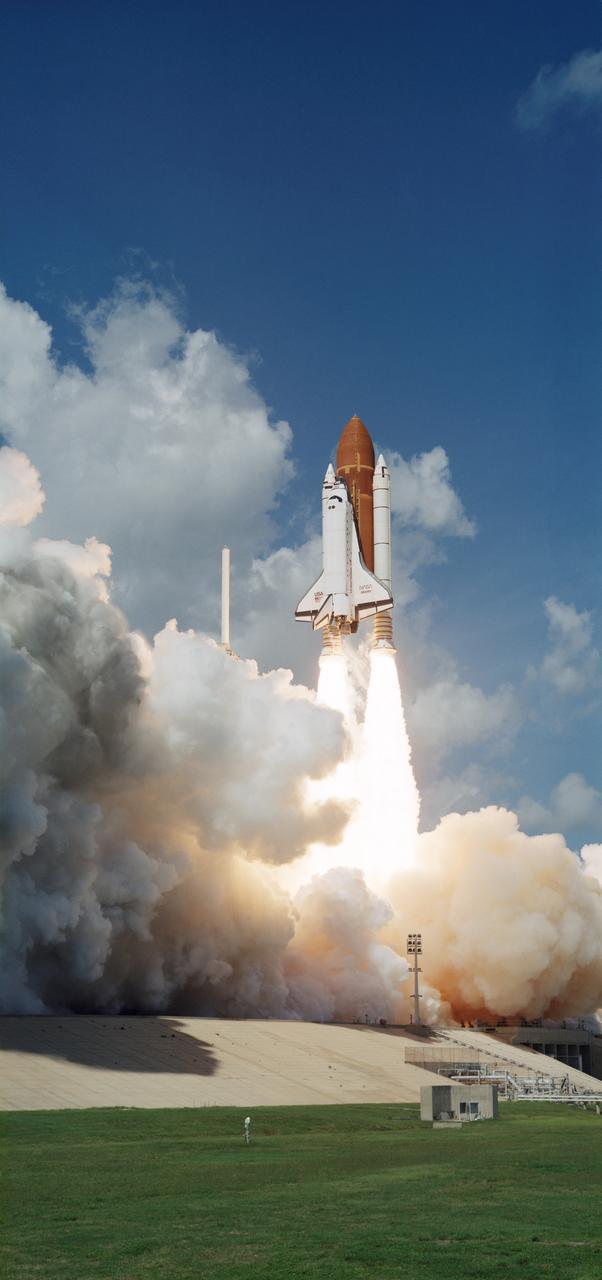
STS034-S-023 (18 Oct. 1989) --- The STS-34 Space Shuttle Atlantis lifts off from Kennedy Space Center’s launch pad 39-B at l2:53:39 p.m. (EDT) on Oct. 18, 1989, marking the beginning of a five-day mission in space. Atlantis carries a crew of five and the spacecraft Galileo. The Jupiter-bound probe will be deployed from Atlantis some six hours after launch. The journey to the giant planet is expected to take over six years. Crewmembers for the mission are astronauts Donald E. Williams, Michael J. McCulley, Shannon W. Lucid, Franklin R. Chang-Diaz and Ellen S. Baker. The scene was recorded with a 70mm camera.
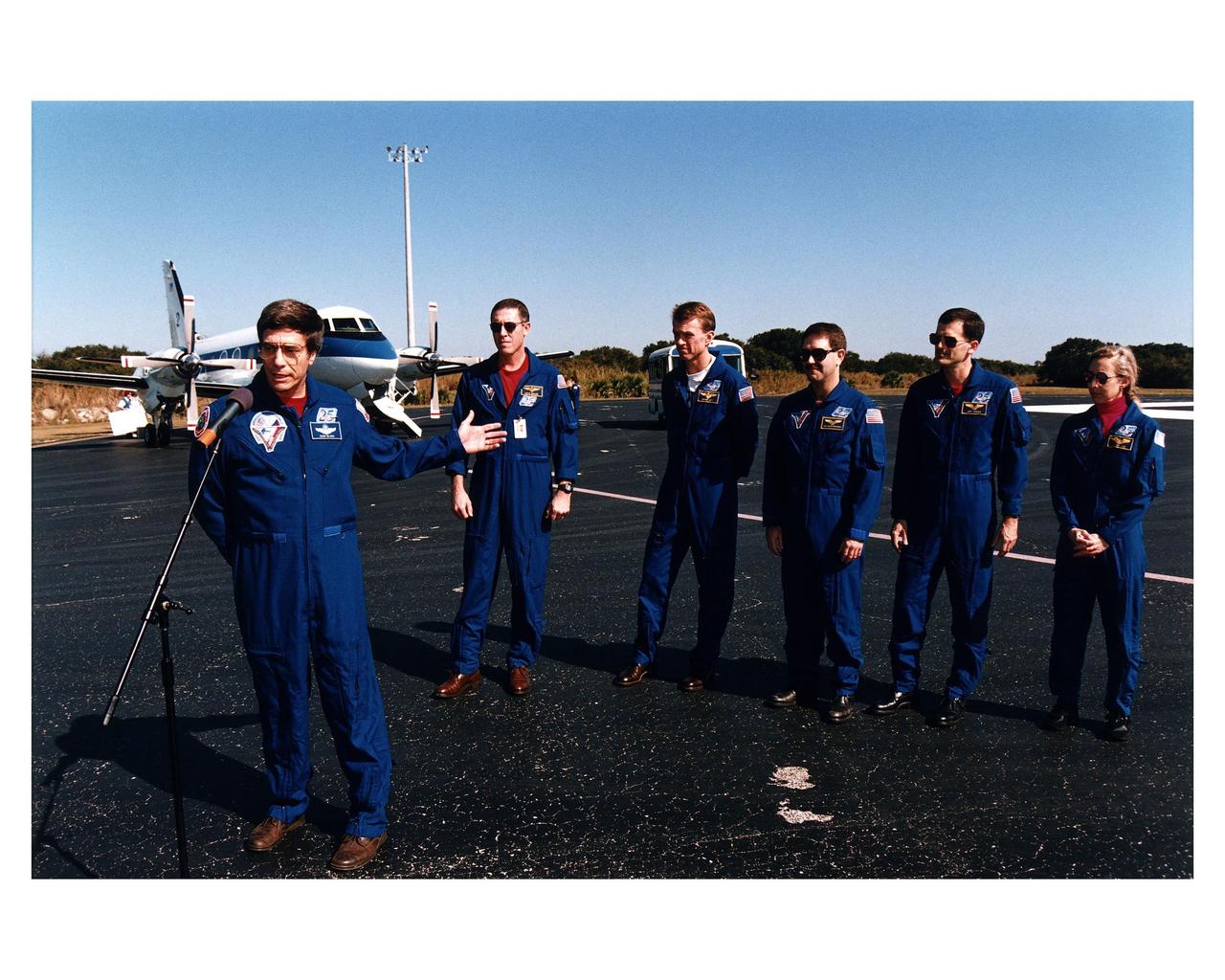
Returning NASA astronaut and former Mir 22 crew member John E. Blaha (left), gestures towards his fellow STS-81 crew members during a press conference prior to their departure for Johnson Space Center Jan. 23 from the Skid Strip at Cape Canaveral Air Station. The crew arrived at KSC aboard the Space Shuttle Atlantis Jan. 22 to conclude the fifth Shuttle-Mir docking mission and return Blaha to Earth after four months in space. Behind Blaha from the left are Mission Commander Michael A. Baker; Pilot Brent W. Jett, and Mission Specialists John M. Grunsfeld, Peter J. K. "Jeff" Wisoff and Marsha S. Ivins
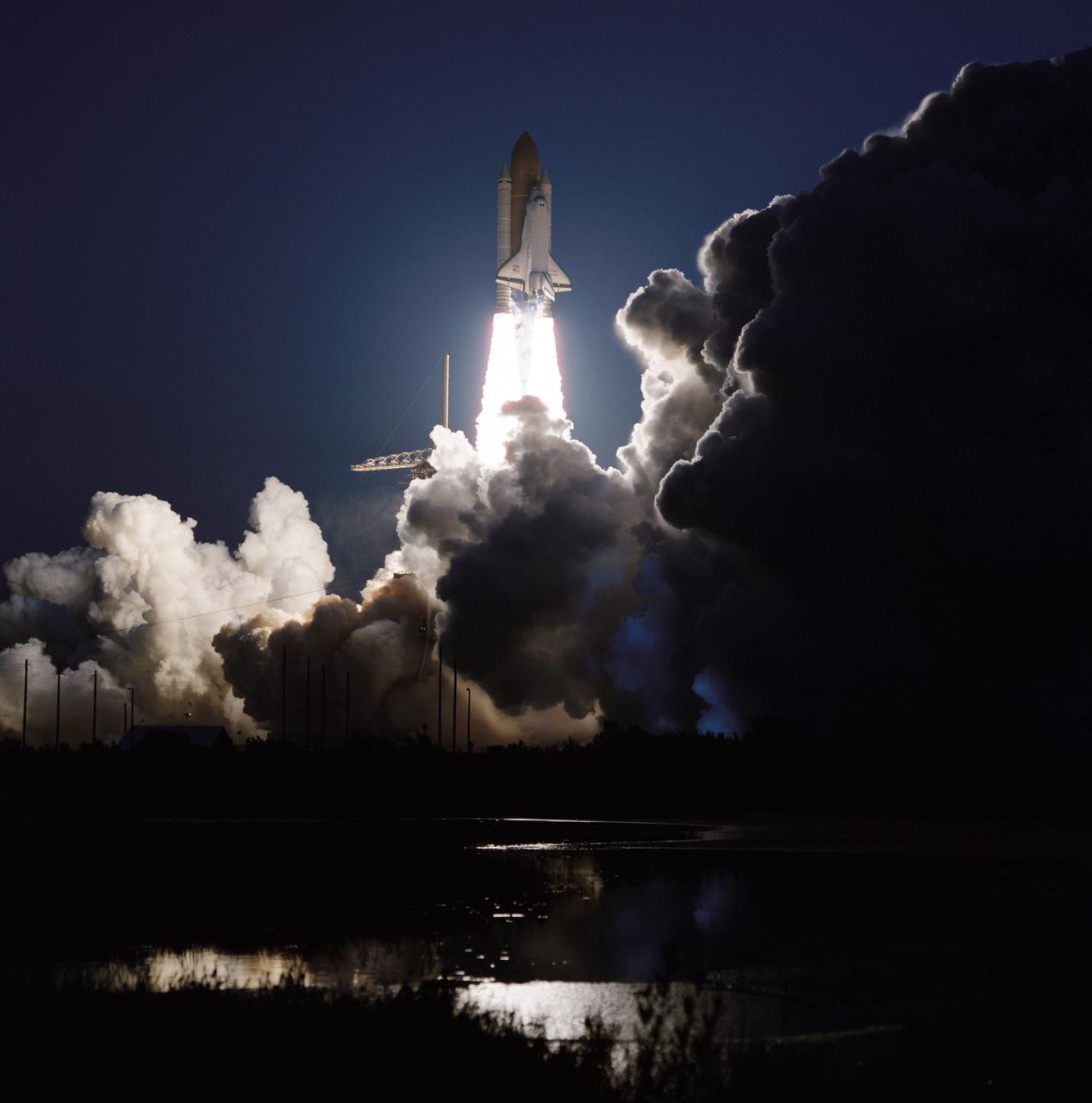
STS068-S-034 (30 September 1994) --- The Space Shuttle Endeavour lifts off from Launch Pad 39A in a halo of light. Aboard for an on time launch at 7:16:00:068 a.m. (EDT) are a crew of six NASA astronauts and the Space Radar Laboratory-2 (SRL-2). Mission commander for the 65th Space Shuttle flight is Michael A. Baker; the pilot is Terrence W. Wilcutt; Thomas D. Jones is the payload commander, and the three mission specialists are Daniel W. Bursch, Steven L. Smith and Peter J. K. "Jeff" Wisoff. During the planned ten-day flight of mission STS-68 around-the-clock operation of the SRL-2 will once again yield a wealth of data about Earth's global environment and the changes - both human-induced and natural - which are affecting it. This is the second flight this year of the SRL, and the second launch try for mission STS-68.

KENNEDY SPACE CENTER, FLA. -- The Space Shuttle orbiter Atlantis glides out of a morning sky as it prepares to land on Runway 33 at a scheduled time of about 9:23 a.m. EST Jan. 22 to conclude the fifth Shuttle-Mir docking mission and return NASA astronaut John Blaha to Earth after four months in space. At main gear touchdown, the STS-81 mission duration will be 10 days, 4 hours, 55 minutes. This is the 34th KSC landing in Shuttle history. Mission Commander Michael A. Baker is steering Atlantis to a perfect landing, with help from Pilot Brent W. Jett, Jr. Other returning STS-81 crew members are Mission Specialists John M. Grunsfeld, Peter J. K. "Jeff" Wisoff and Marsha S. Ivins. Atlantis also brought back experiment samples from the Russian space station Mir for analysis on Earth
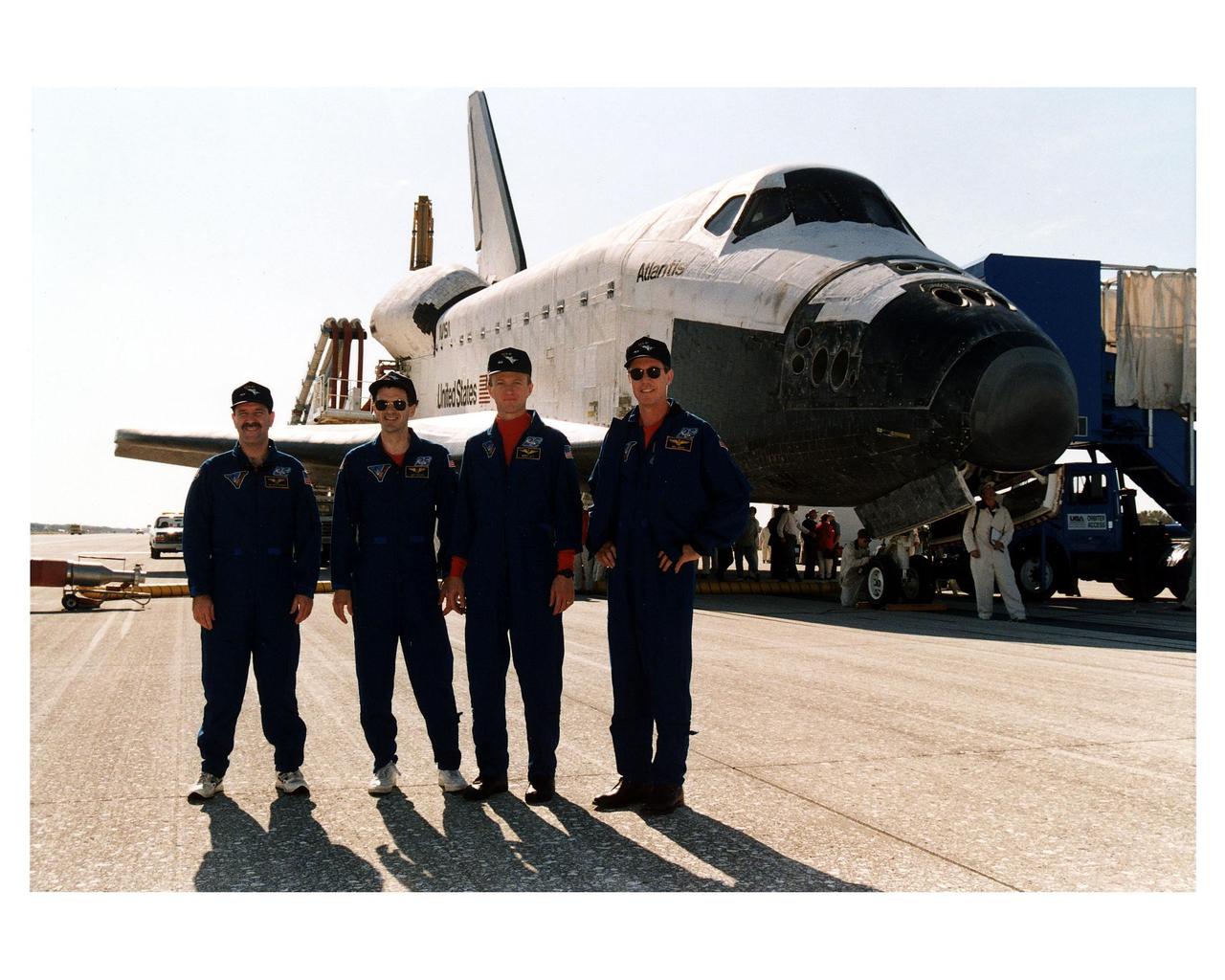
KENNEDY SPACE CENTER, FLA. -- Four members of the STS-81 crew pose in front of the Space Shuttle orbiter Atlantis on Runway 33 of KSC’s Shuttle Landing Facility after the space plane touched down at 9:22:44 a.m. EST Jan. 22 to conclude the fifth Shuttle-Mir docking mission. The crew members are (from left): Mission Specialists John M. Grunsfeld and Peter J. K. "Jeff" Wisoff ; Pilot Brent W. Jett, Jr.; and Mission Commander Michael A. Baker. Also returning on board Atlantis were Mission Specialist Marsha S. Ivins and John Blaha, who had been a member of the Mir 22 crew for four months. At main gear touchdown, the STS-81 mission duration was 10 days, 4 hours, 55 minutes. This was the 34th KSC landing in Shuttle history
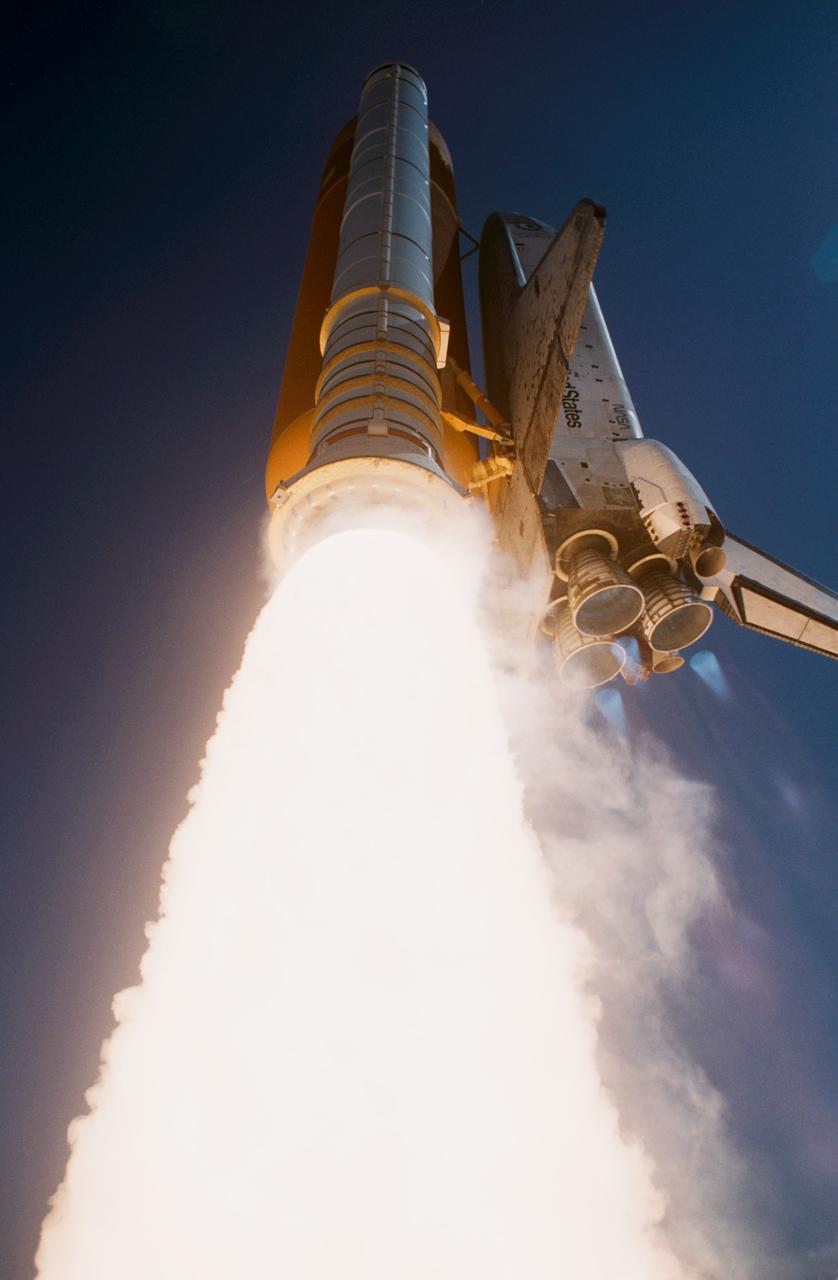
STS052-S-053 (22 Oct. 1992) --- This low-angle 35mm image shows the space shuttle Columbia on its way toward a ten-day Earth-orbital mission with a crew of five NASA astronauts and a Canadian payload specialist. Liftoff occurred at 1:09:39 p.m. (EDT), Oct. 22, from Kennedy Space Center?s (KSC) Launch Pad 39B. Crew members onboard are astronauts James D. Wetherbee, Michael A. Baker, Tamara E. Jernigan, Charles L. (Lacy) Veach and William M. Shepherd, along with payload specialist Steven G. MacLean. Payloads onboard include the Laser Geodynamic Satellite II (LAGEOS II), which will be deployed early in the mission, a series of Canadian experiments, and the United States Microgravity Payload-1 (USMP-1). Photo credit: NASA
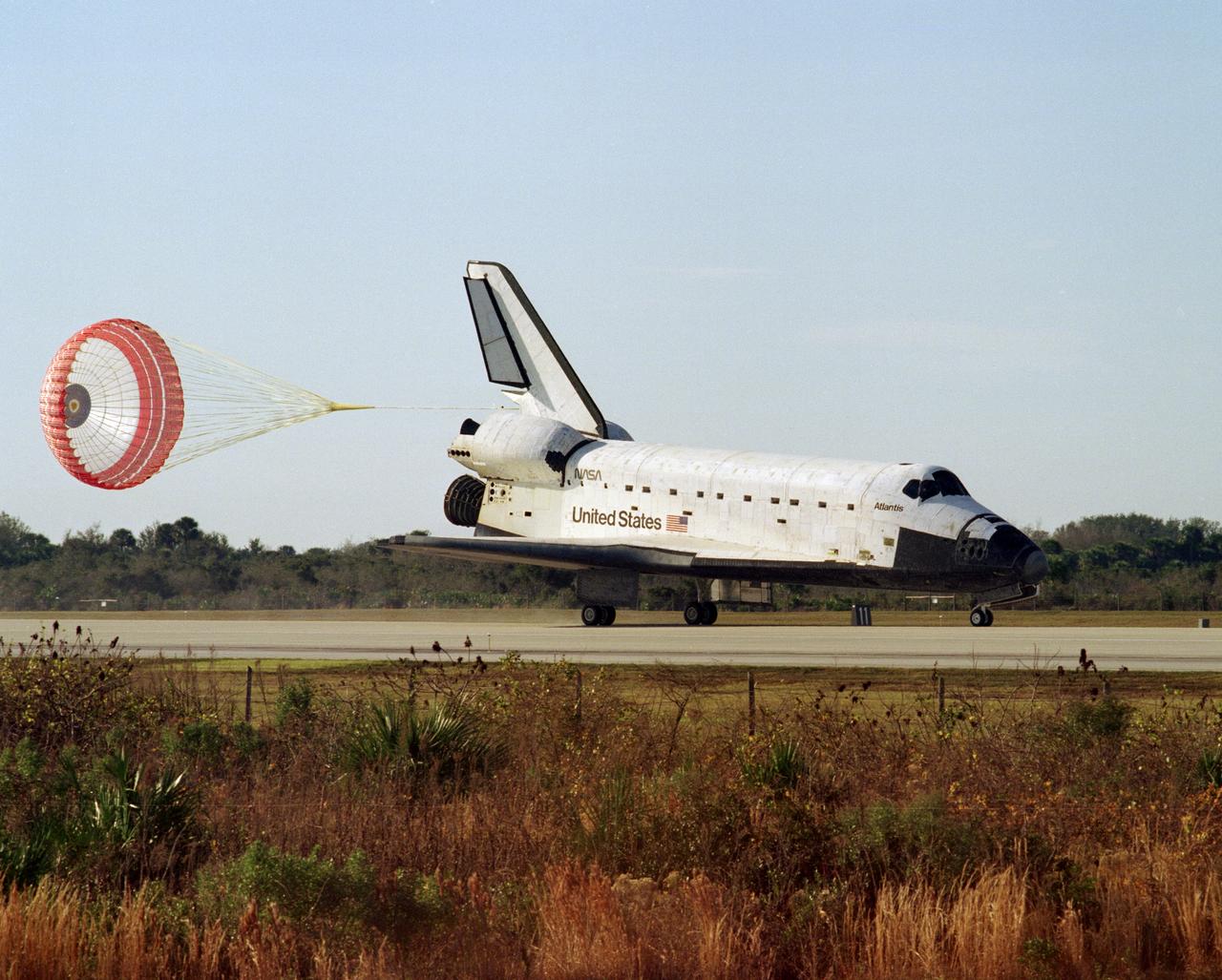
STS081-S-010 (22 Jan. 1997) --- A drag chute is deployed as the Space Shuttle Atlantis rolls toward a wheels stopped mode on Runway 33 at the Kennedy Space Center (KSC) to conclude the fifth Shuttle-Mir docking mission. Coming to a halt at 9:22:44 a.m. (EST), January 22, the mission also accomplished the return of astronaut John E. Blaha, cosmonaut guest researcher, who had been aboard Russia's Mir Space Station complex since mid September 1996. Blaha was replaced by Jerry M. Linenger during the five days of joint activities of the Mir-22 and STS-81 crew members while Atlantis and Mir were docked in Earth-orbit. At main gear touchdown, the mission's duration was 10 days, 4 hours and 55 minutes. This was the 34th space shuttle landing at KSC. The crew aboard at landing included astronauts Michael A. Baker, commander; Brent W. Jett, Jr., pilot; Blaha; and mission specialists Marsha S. Ivins, Peter J. K. (Jeff) Wisoff and John M. Grunsfeld.
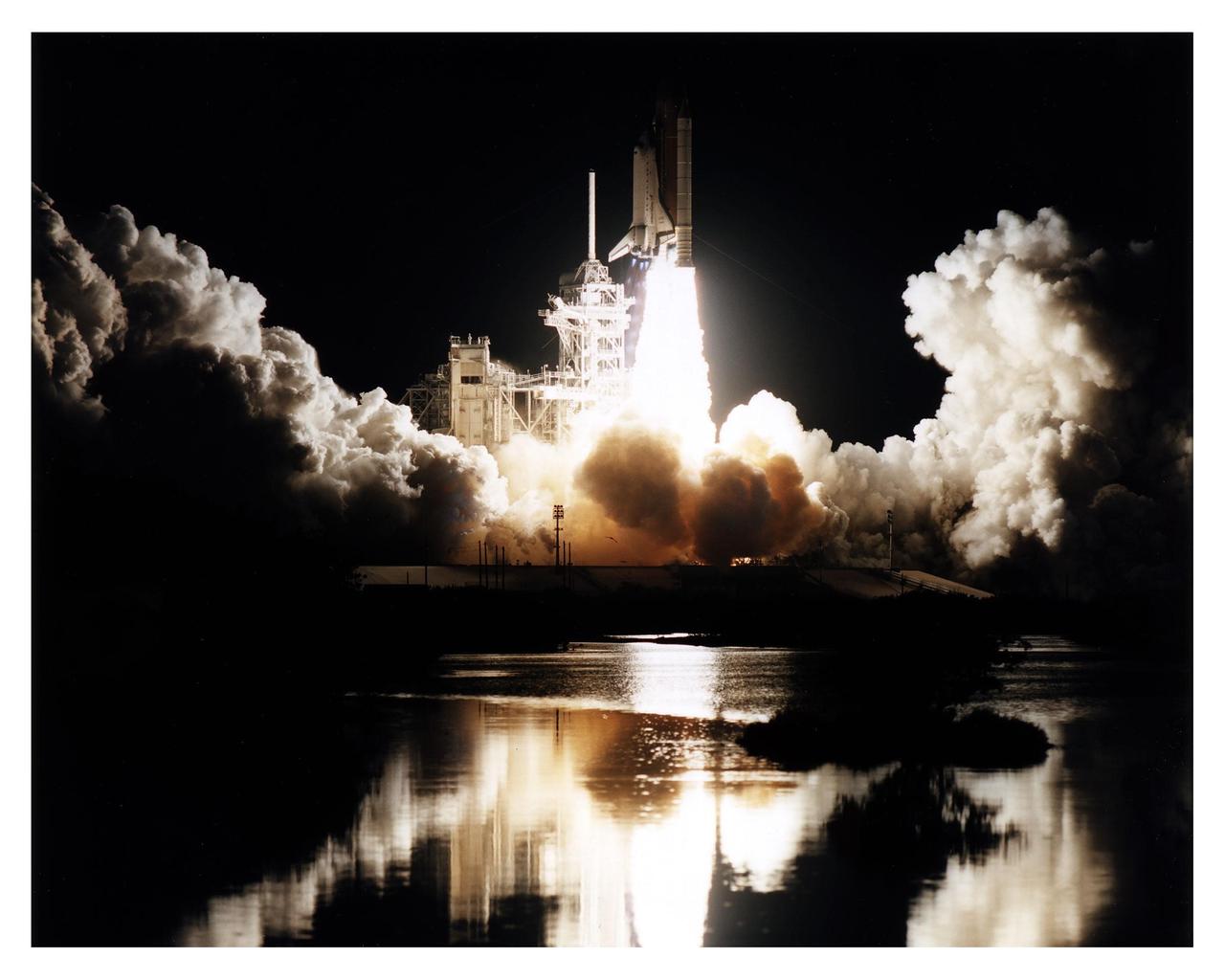
Like a rising sun lighting up the night, the Space Shuttle Atlantis soars from Launch Pad 39B at 4:27:23 a.m. EST Jan. 12 on its way to dock with the Mir space station for the fifth time. The 10-day mission will feature the transfer of Mission Specialist Jerry Linenger to Mir to replace astronaut John Blaha, who has been on the orbital laboratory since Sept. 19, 1996. The other STS-81 crew members include Mission Commander Michael A. Baker; Pilot Brent W. Jett, Jr.; and Mission Specialists John M. Grunsfeld, Peter J. K. "Jeff" Wisoff and Marsha S. Ivins. During the five-day docking operations, the Shuttle and Mir crews will conduct risk mitigation, human life science, microgravity and materials processing experiments that will provide data for the design, development and operation of the International Space Station. The primary payload is the SPACEHAB-DM double module that will provide space for more than 2,000 pounds of hardware, food and water that will be transferred into the Russian space station.The SPACEHAB will also be used to return experiment samples from the Mir to Earth for analysis and for microgravity experiments during the mission
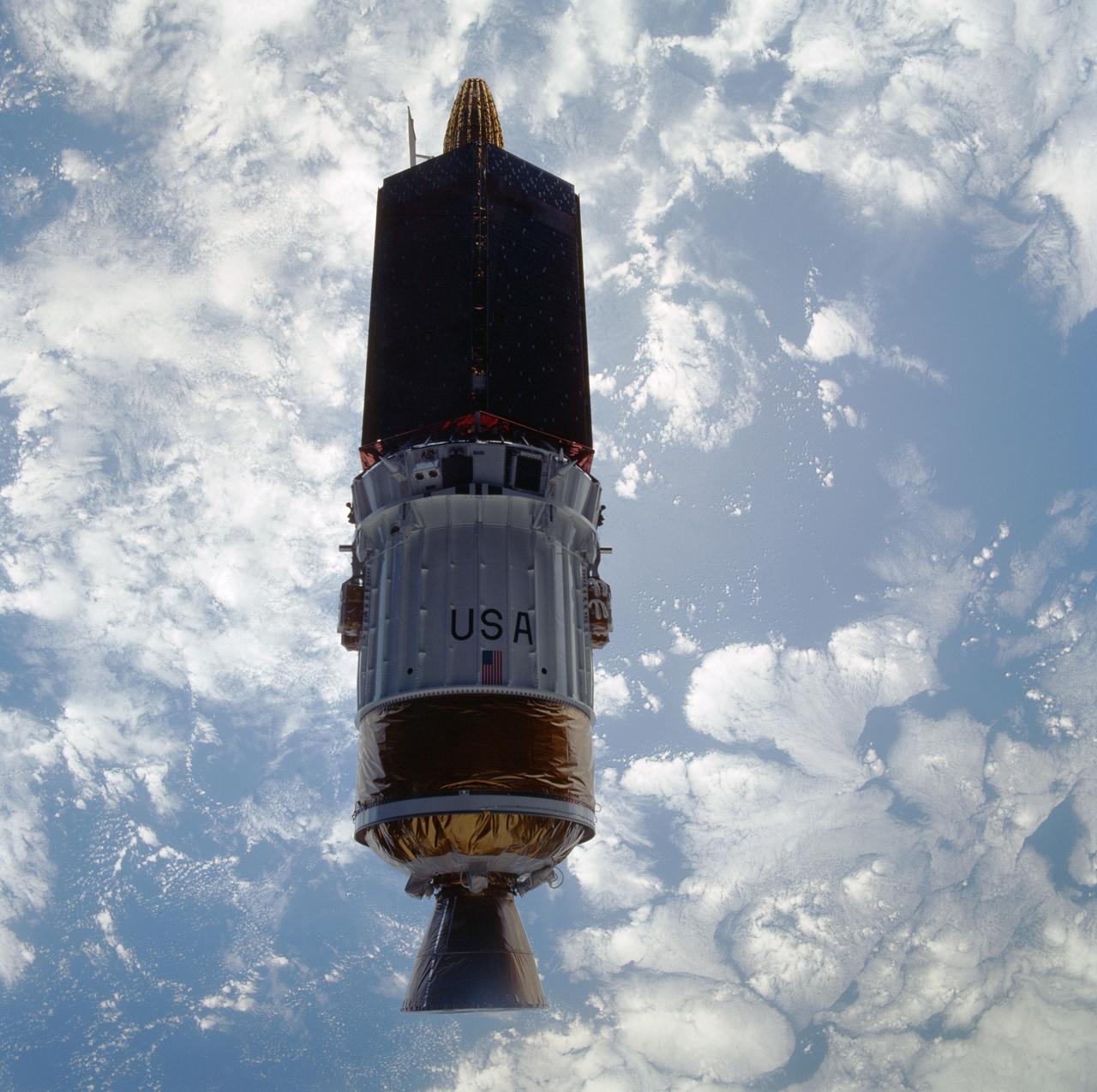
STS043-601-033 (2 Aug 1991) --- The Tracking and Data Relay Satellite (TDRS-E), is seen almost as a silhouette in this 70mm image. The TDRS spacecraft was captured on film as it moved away from the earth-orbiting Atlantis a mere six hours after the shuttle was launched from Pad 39A at Kennedy Space Center, Florida. TDRS, built by TRW, will be placed in a geosynchronous orbit and after on-orbit testing, which requires several weeks, will be designated TDRS-5. The communications satellite will replace TDRS-3 at 174 degrees west longitude. The backbone of NASA's space-to-ground communications, the Tracking and Data Relay Satellites have increased NASA's ability to send and receive data to spacecraft in low-earth orbit to more than 85 percent of the time. Before TDRS, NASA relied solely on a system of ground stations that permitted communications only 15 percent of the time. Increased coverage has allowed on-orbit repairs, live television broadcast from space and continuous dialogues between astronaut crews and ground control during critical periods such as space shuttle landings. The five astronauts of the STS-43 are John E. Blaha, mission commander, Michael a. Baker, pilot, and mission specialists Shannon W. Lucid, G. David Low and James C. Adamson.
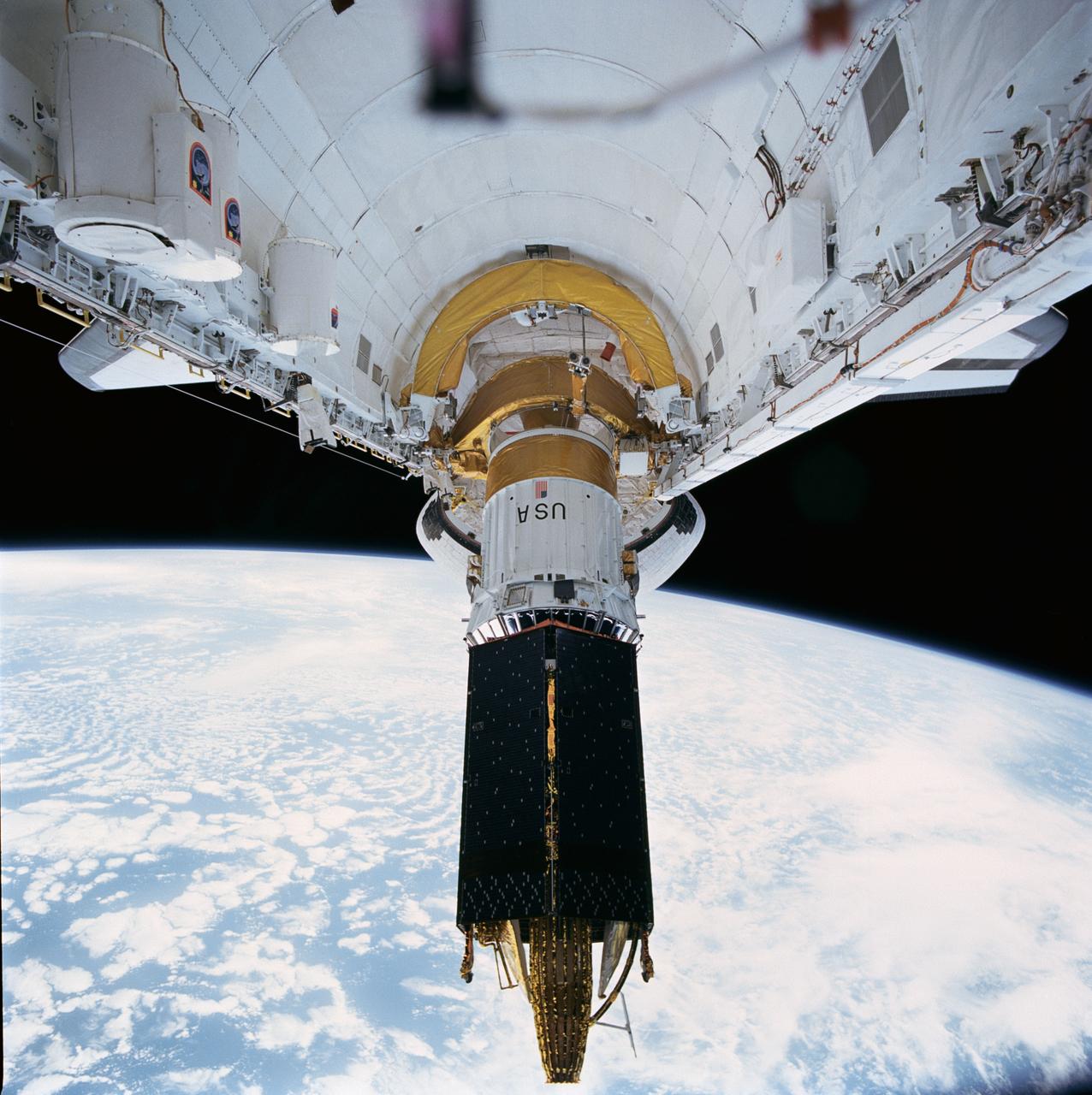
STS043-72-020 (2 Aug 1991) --- The Tracking and Data Relay Satellite (TDRS-E), is loosened from its restraint device and begins to leave the payload bay of the earth-orbiting Atlantis. The deployment came a mere six hours after the Space Shuttle was launched from Pad 39A at Kennedy Space Center, Florida. TDRS, built by TRW, will be placed in a geosynchronous orbit and after on-orbit testing, which requires several weeks, will be designated TDRS-5. The communications satellite will replace TDRS-3 at 174 degrees West longitude. The backbone of NASA's space-to-ground communications, the Tracking and Data Relay satellites have increased NASA's ability to send and receive data to spacecraft in low-earth orbit to more than 85 percent of the time. The five astronauts of the STS 43 mission are John E. Blaha, mission commander, Michael A. Baker, pilot, and Shannon W. Lucid, G. David Low, and James C. Adamson, all mission specialists.
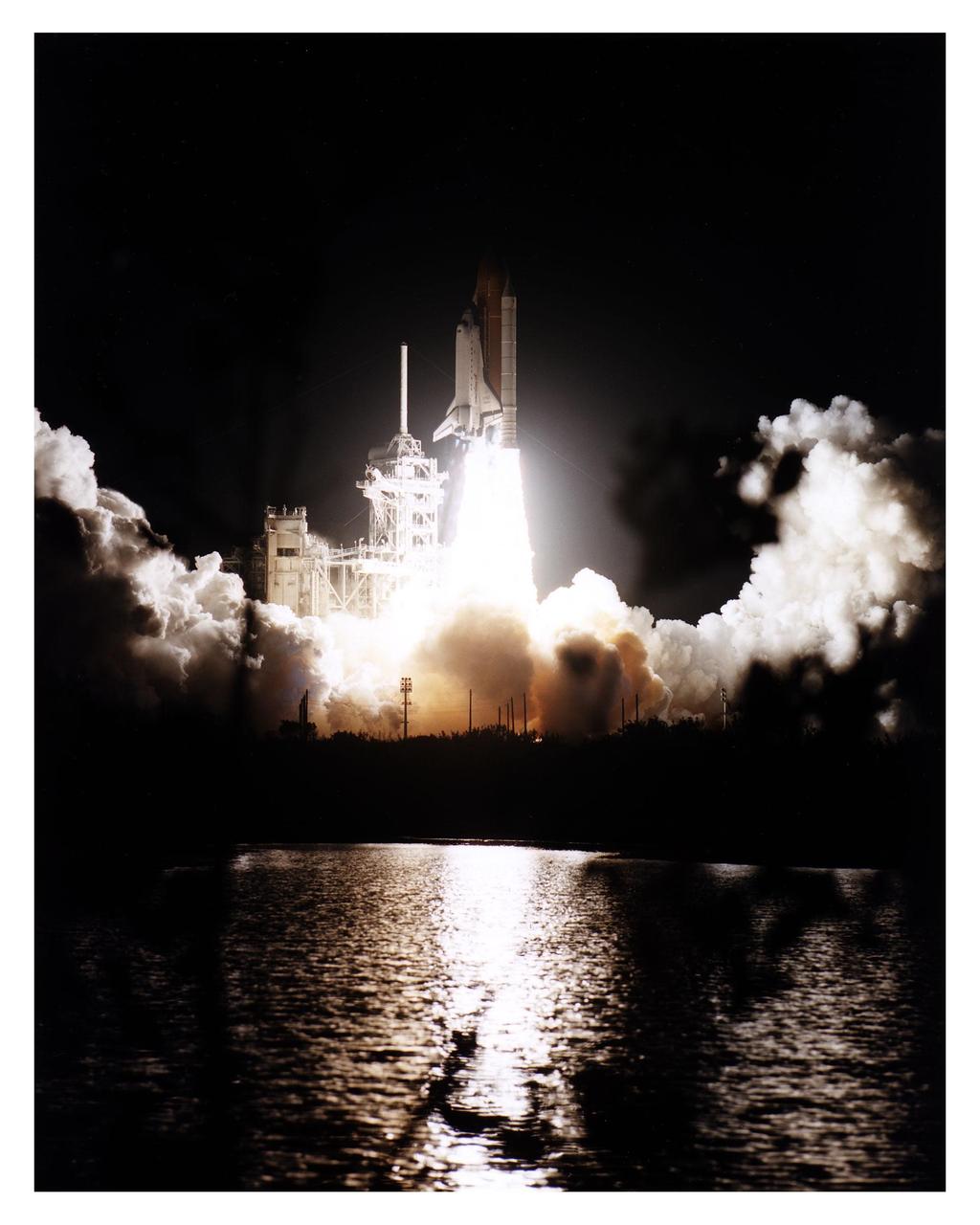
KENNEDY SPACE CENTER, FLA. -- The Space Shuttle Atlantis transforms the early morning at KSC into near-daylight as its more than 7 million pounds of rocket thrust propels it from Launch Pad 39B at 4:27:23 a.m. EST Jan. 12 on its way to dock with the Mir space station for the fifth time.The 10-day mission will feature the transfer of Mission Specialist Jerry Linenger to Mir to replace astronaut John Blaha, who has been on the orbital laboratory since Sept. 19, 1996. The other STS-81 crew members include Mission Commander Michael A. Baker; Pilot Brent W. Jett, Jr.; and Mission Specialists John M. Grunsfeld, Peter J. K. "Jeff" Wisoff and Marsha S. Ivins. During the five-day docking operations, the Shuttle and Mir crews will conduct risk mitigation, human life science, microgravity and materials processing experiments that will provide data for the design, development and operation of the International Space Station. The primary payload is the SPACEHAB-DM double module that will provide space for more than 2,000 pounds of hardware, food and water that will be transferred into the Russian space station. The SPACEHAB will also be used to return experiment samples from the Mir to Earth for analysis and for microgravity experiments during the mission
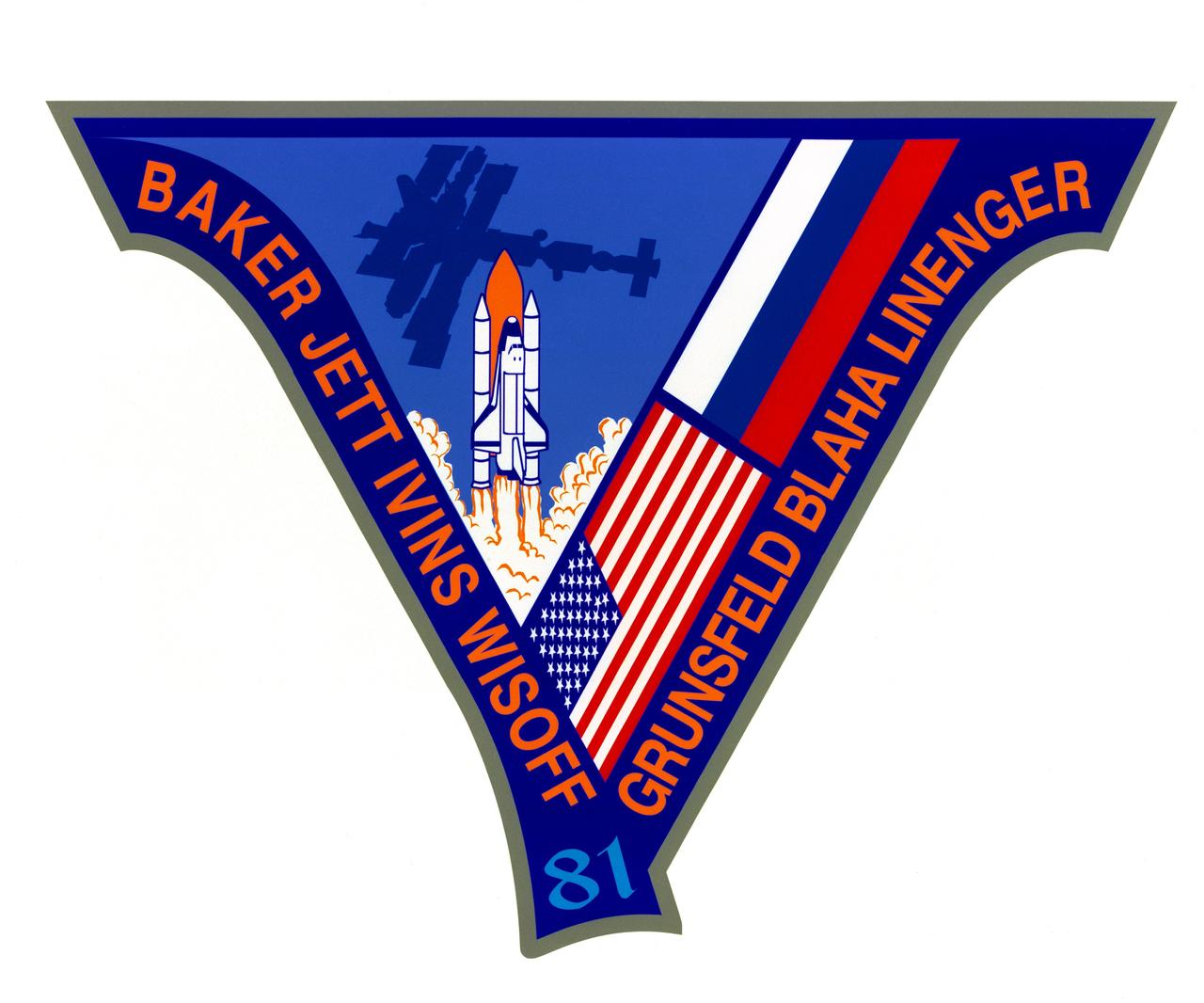
STS081-S-001 (June 1996) --- The STS-81 crew patch for the fifth Shuttle-Mir docking mission, is shaped to represent the Roman numeral V. The space shuttle Atlantis, OV-104, is launching toward a rendezvous with Russia?s Mir Space Station, silhouetted in the background. Atlantis and the STS-81 crew will spend several days docked to Mir during which time astronaut Jerry M. Linenger (NASA-Mir 4) will replace astronaut John E. Blaha (NASA-Mir 3) as the United States crew member onboard Mir. Scientific experiments and logistics will also be transferred between Atlantis and Mir. The United States and Russian flags are depicted along with the names of the shuttle crew members: Michael A. Baker, commander; Brent W. Jett, pilot; Peter J. K.(Jeff) Wisoff, mission specialist 1; John W. Grunsfeld, mission specialist 2; Marsha S. Ivins, mission specialist 3; Linenger; mission specialist 4; and Blaha, mission specialist 5. The NASA insignia design for space shuttle flights is reserved for use by the astronauts and for other official use as the NASA Administrator may authorize. Public availability has been approved only in the forms of illustrations by the various news media. When and if there is any change in this policy, which is not anticipated, the change will be publicly announced. Photo credit: NASA
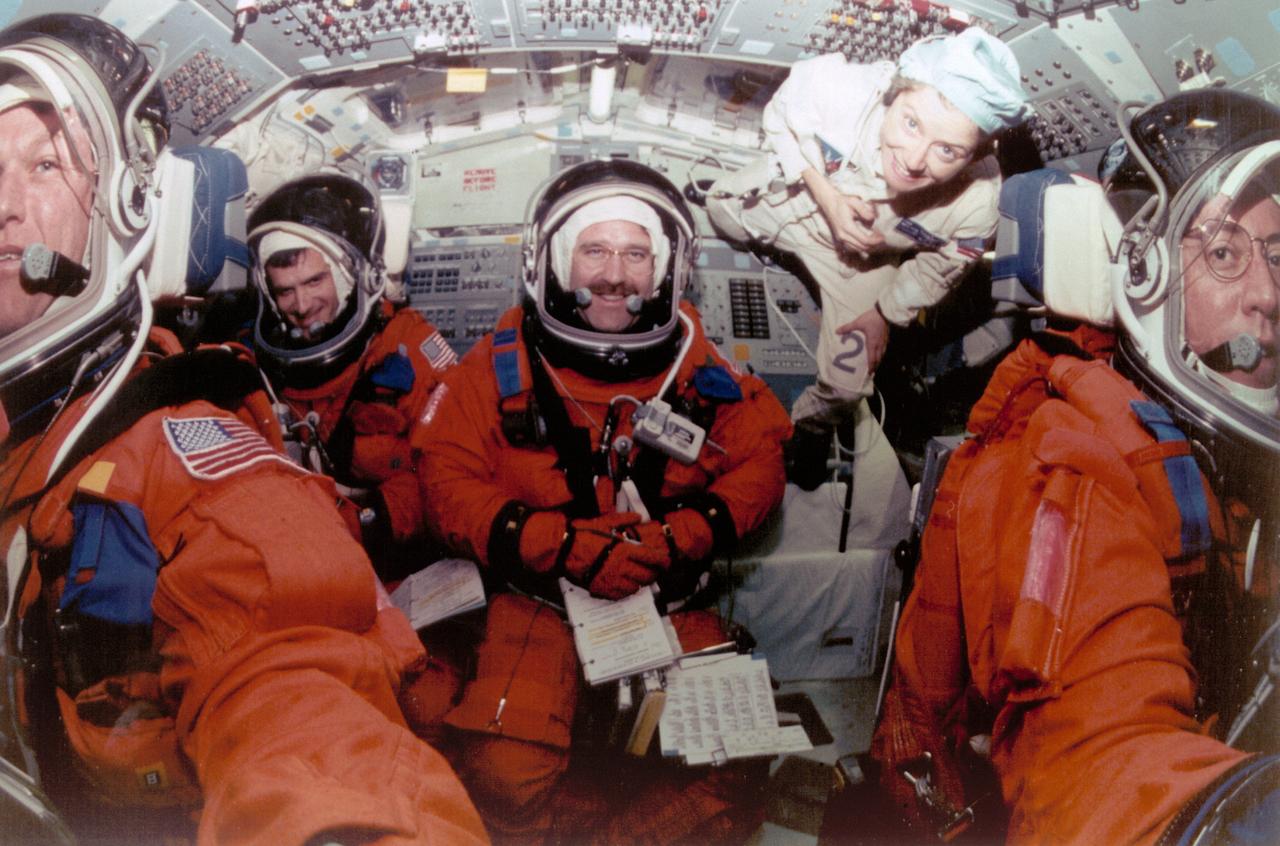
S97-00254 (17 Dec 1996) --- The STS-81 flight crew goes over pre-flight checklists on the flight deck of the Space Shuttle Atlantis during the final phase of the Terminal Countdown Demonstration Test (TCDT) exercises for the January 1997 mission. Crew members pictured, are (from the left) Brent W. Jett, Jr., pilot; Peter J. K. (Jeff) Wisoff and John M. Grunsfeld, mission specialists; along with Michael A. Baker, mission commander. The TCDT represents a simulated final countdown until just before main engine ignition. The astronauts are in their flight positions with the Orbiter in a vertical attitude at Launch Pad 39B, with the camera pointed down from the forward cabin. This angle creates the illusion that astronaut Pam Melroy (in lab suit), mission support assistant, is floating in space. On the mid-deck and out of frame are astronauts Marsha S. Ivins and Jerry M. Linenger. The six will visit Russia?s Mir Space Station, from which they will retrieve John M. Blaha who has been aboard the Mir since September of 1996. Linenger is to replace Blaha, as cosmonaut guest researcher.

STS081-S-008 (22 Jan. 1997) --- The Space Shuttle Atlantis touches down on Runway 33 at the Kennedy Space Center (KSC) to conclude the fifth Shuttle-Mir docking mission. Coming to a halt at 9:22:44 a.m. (EST), January 22, the mission also accomplished the return of astronaut John E. Blaha, cosmonaut guest researcher, who had been aboard Russia's Mir Space Station complex since mid September 1996. Blaha was replaced by Jerry M. Linenger during the five days of joint activities of the Mir-22 and STS-81 crewmembers while Atlantis and Mir were docked in Earth-orbit. At main gear touchdown, the mission's duration was 10 days, 4 hours and 55 minutes. This was the 34th space shuttle landing at KSC. The crew aboard at landing included astronauts Michael A. Baker, commander; Brent W. Jett, Jr., pilot; Blaha; and mission specialists Marsha S. Ivins, Peter J. K. (Jeff) Wisoff and John M. Grunsfeld.
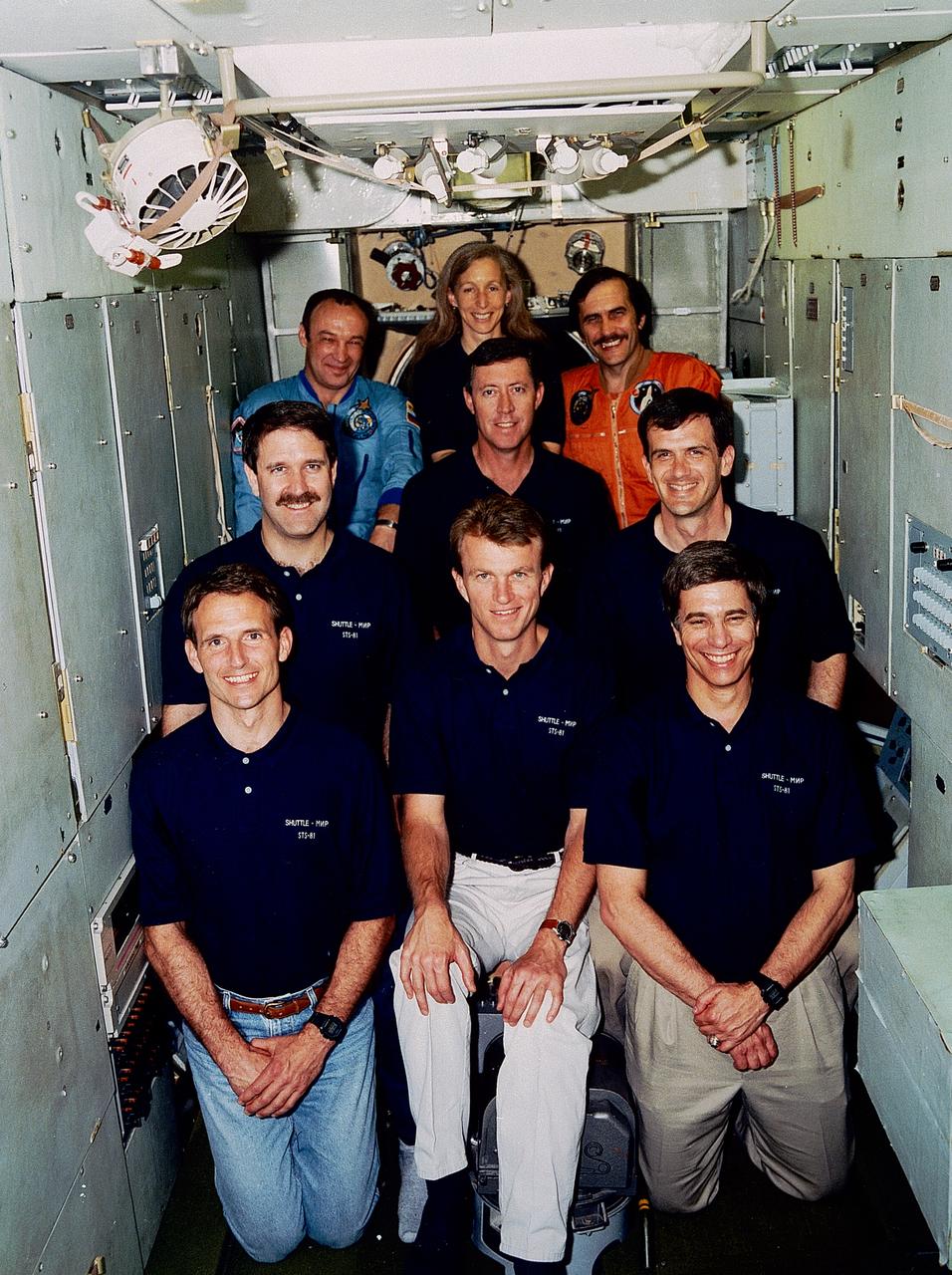
S96-10557 (May 1996) --- The original Mir-22 crew assigned to duty aboard Russia's Mir Space Station poses with the STS-81 crew. The cosmonauts, flanking astronaut Marsha S. Ivins on the top row, are Gennadiy M. Manakov (left) mission commander; and Pavel V. Vinogradov, flight engineer. After this photo was taken, a shift of Russian crew assignments occurred and Manakov and Vinogradov were replaced with Valeri G. Korzun and Aleksandr Y. Kaleri. The astronauts are, front row (left to right): Jerry M. Linenger, Brent W. Jett, Jr., and John E. Blaha. Second row, left to right, John W. Grunsfeld, Michael A. Baker and Peter J. K. (Jeff) Wisoff. All the STS-81 crewmembers except Blaha are scheduled to be launched in December 1996 aboard the Space Shuttle Atlantis and those six will be joined by Mir-22 cosmonaut researcher Blaha when the two spacecraft are joined in Earth-orbit. Blaha will have been launched into Earth-orbit to connect with Russia's Mir Space Station on an earlier mission - STS-79 - of the space shuttle Atlantis, scheduled for launch in the summer of 1996. Linenger will remain onboard Mir for a tour of duty as a cosmonaut researcher.
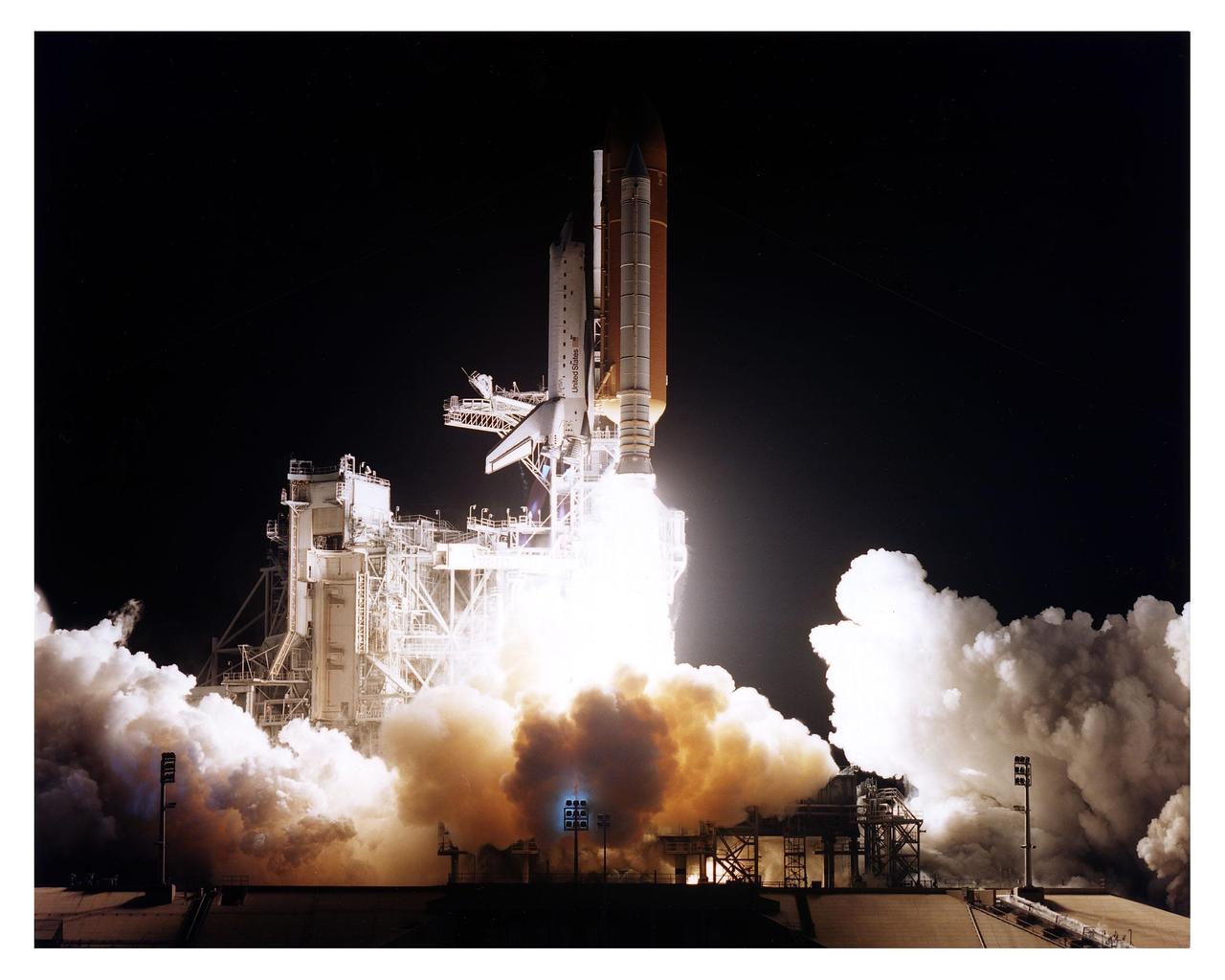
The Space Shuttle Atlantis transforms the early morning at KSC into near-daylight as its more than 7 million pounds of rocket thrust propels it from Launch Pad 39B at 4:27:23 a.m. EST Jan. 12 on its way to dock with the Mir space station for the fifth time.The 10-day mission will feature the transfer of Mission Specialist Jerry Linenger to Mir to replace astronaut John Blaha, who has been on the orbital laboratory since Sept. 19, 1996. The other STS-81 crew members include Mission Commander Michael A. Baker; Pilot Brent W. Jett, Jr.; and Mission Specialists John M. Grunsfeld, Peter J. K. "Jeff" Wisoff and Marsha S. Ivins. During the five-day docking operations, the Shuttle and Mir crews will conduct risk mitigation, human life science, microgravity and materials processing experiments that will provide data for the design, development and operation of the International Space Station. The primary payload is the SPACEHAB-DM double module that will provide space for more than 2,000 pounds of hardware, food and water that will be transferred into the Russian space station. The SPACEHAB will also be used to return experiment samples from the Mir to Earth for analysis and for microgravity experiments during the mission
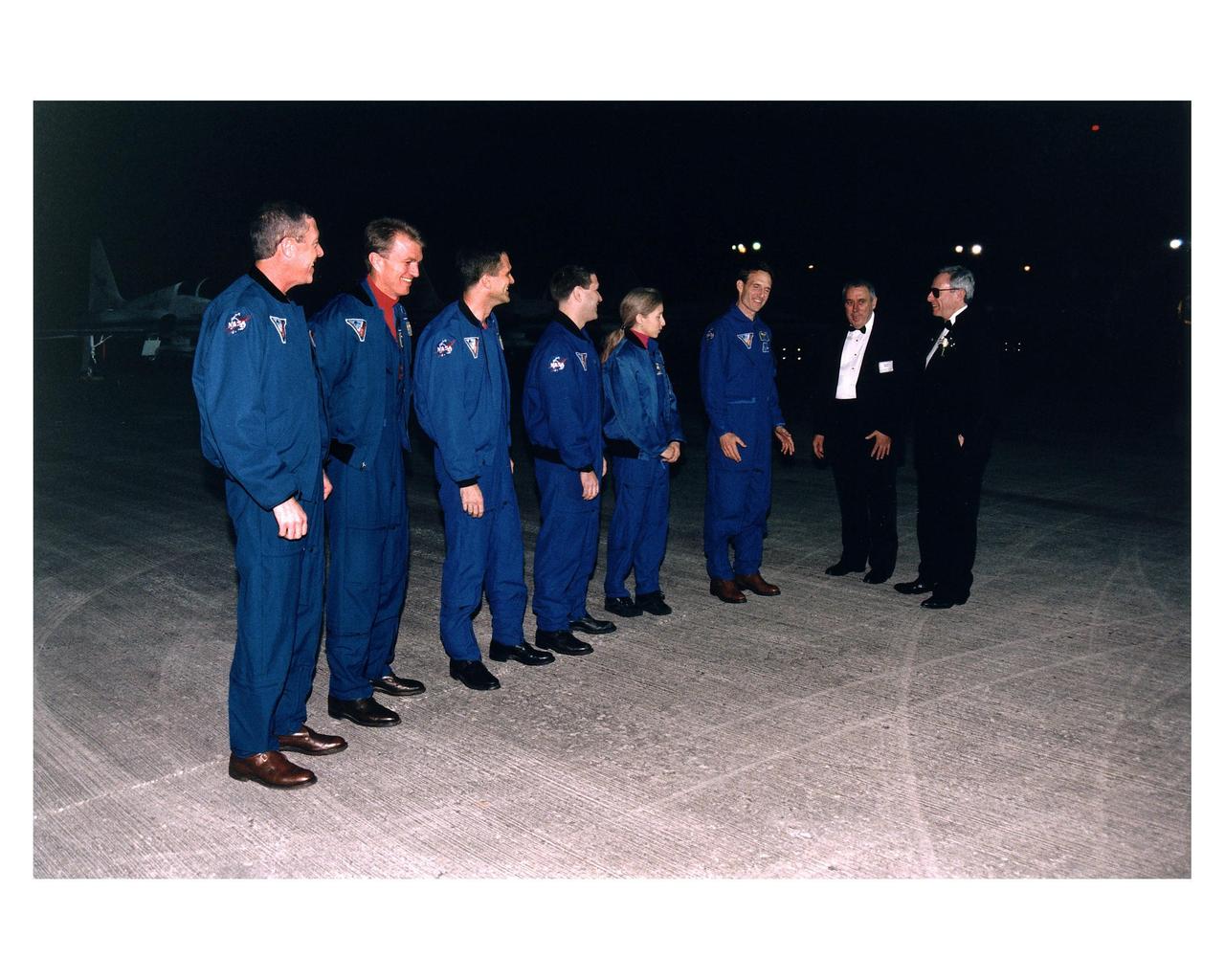
The STS-81 flight crew is welcomed to KSC by NASA Administrator Daniel Goldin (far right) and Johnson Space Center Director George Abbey (second from right) as they arrive at the space center for the final countdown preparations for the fifth Shuttle-Mir docking mission. They are (from left): Mission Commander Michael A. Baker; Pilot Brent W. Jett, Jr.; and Mission Specialists Peter J. K. "Jeff" Wisoff; John M. Grunsfeld, Marsha S. Ivins, and J.M. "Jerry" Linenger. The 10-day mission will feature the transfer of Linenger to Mir to replace astronaut John Blaha, who has been on the orbital laboratory since Sept. 19, 1996 after arrival there during the STS-79 mission. During STS-81, Shuttle and Mir crews will conduct risk mitigation, human life science, microgravity and materials processing experiments that will provide data for the design, development and operation of the International Space Station. The primary payload is the SPACEHAB-DM double module which will provide space for more than 2,000 pounds of hardware, food and water that will be transferred into the Russian space station during five days of docking operations. The SPACEHAB will also be used to return experiment samples from the Mir to Earth for analysis and for microgravity experiments during the mission
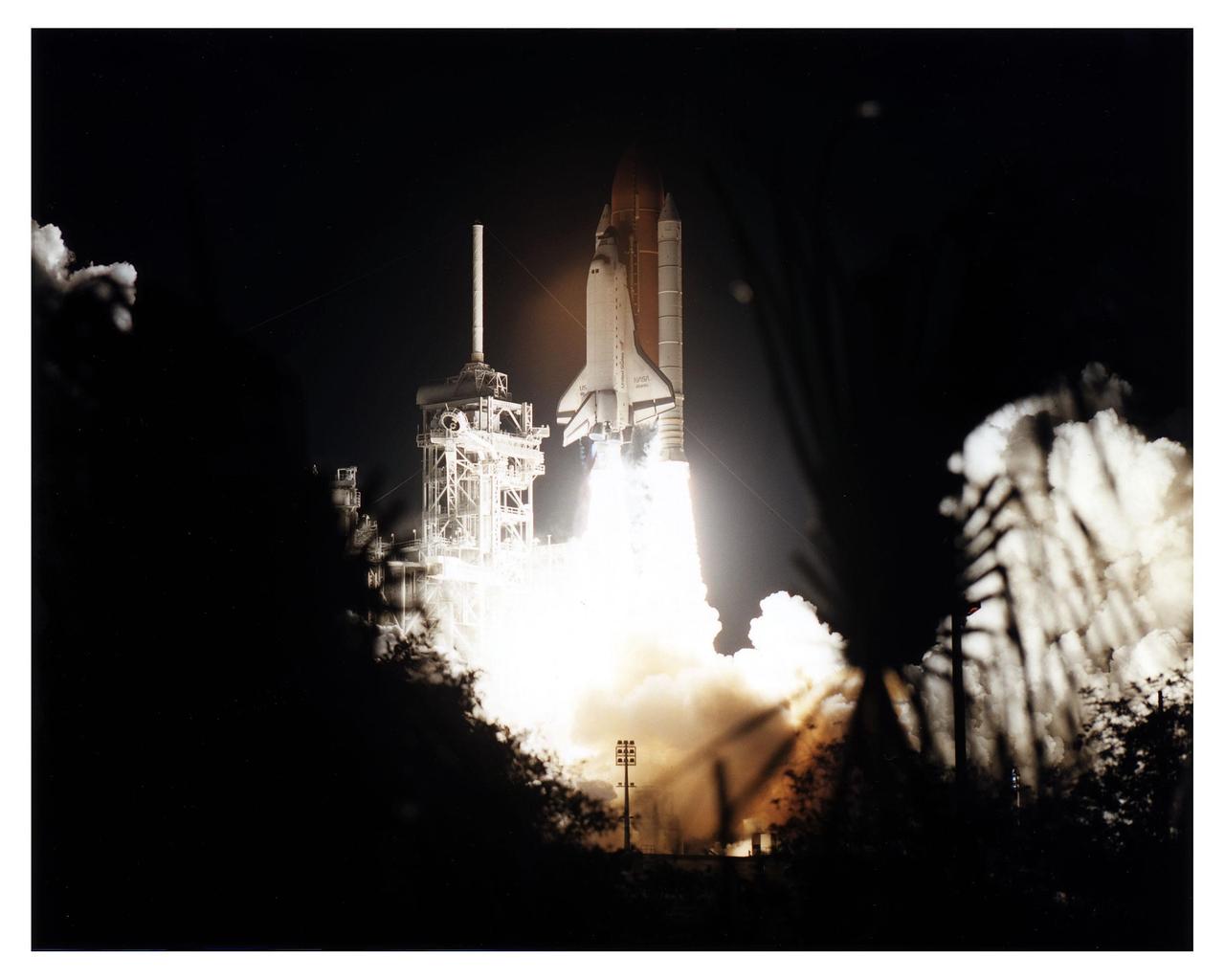
KENNEDY SPACE CENTER, FLA. -- Like a rising sun lighting up the night, the Space Shuttle Atlantis soars from Launch Pad 39B at 4:27:23 a.m. EST Jan. 12 on its way to dock with the Mir space station for the fifth time. The 10-day mission will feature the transfer of Mission Specialist Jerry Linenger to Mir to replace astronaut John Blaha, who has been on the orbital laboratory since Sept. 19, 1996. The other STS-81 crew members include Mission Commander Michael A. Baker; Pilot Brent W. Jett, Jr.; and Mission Specialists John M. Grunsfeld, Peter J. K. "Jeff" Wisoff and Marsha S. Ivins. During the five-day docking operations, the Shuttle and Mir crews will conduct risk mitigation, human life science, microgravity and materials processing experiments that will provide data for the design, development and operation of the International Space Station. The primary payload is the SPACEHAB-DM double module that will provide space for more than 2,000 pounds of hardware, food and water that will be transferred into the Russian space station.The SPACEHAB will also be used to return experiment samples from the Mir to Earth for analysis and for microgravity experiments during the mission
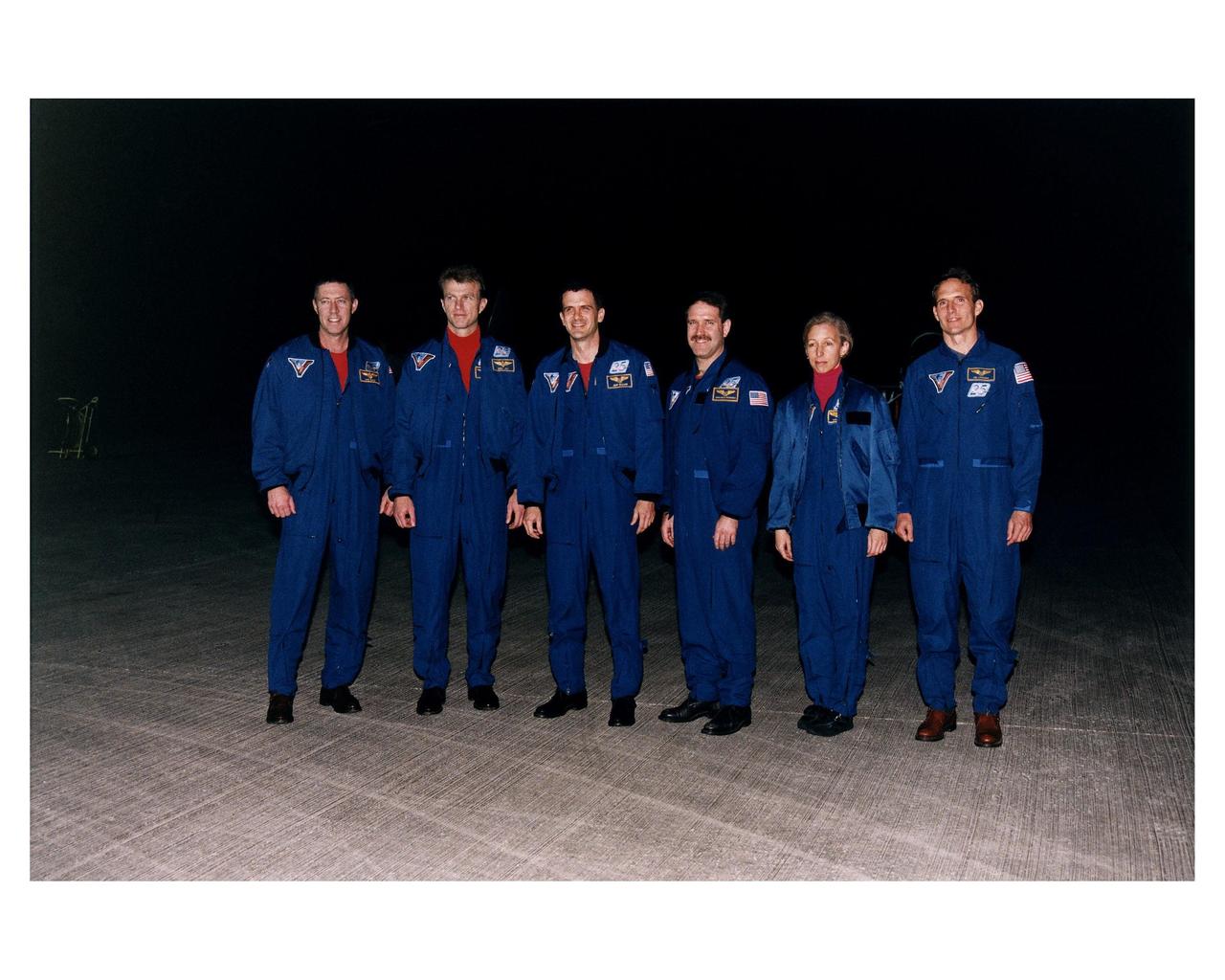
The STS-81 flight crew poses on the runway of KSC Shuttle Landing Facility after they arrive at the space center for the final countdown preparations for the fifth Shuttle-Mir docking mission. They are (from left): Mission Commander Michael A. Baker; Pilot Brent W. Jett, Jr.; and Mission Specialists Peter J. K. "Jeff" Wisoff; John M. Grunsfeld, Marsha S. Ivins, and J.M. "Jerry" Linenger. The 10-day mission will feature the transfer of Linenger to Mir to replace astronaut John Blaha, who has been on the orbital laboratory since Sept. 19, 1996 after arrival there during the STS-79 mission. During STS-81, Shuttle and Mir crews will conduct risk mitigation, human life science, microgravity and materials processing experiments that will provide data for the design, development and operation of the International Space Station. The primary payload is the SPACEHAB-DM double module which will provide space for more than 2,000 pounds of hardware, food and water that will be transferred into the Russian space station during five days of docking operations. The SPACEHAB will also be used to return experiment samples from the Mir to Earth for analysis and for microgravity experiments during the mission