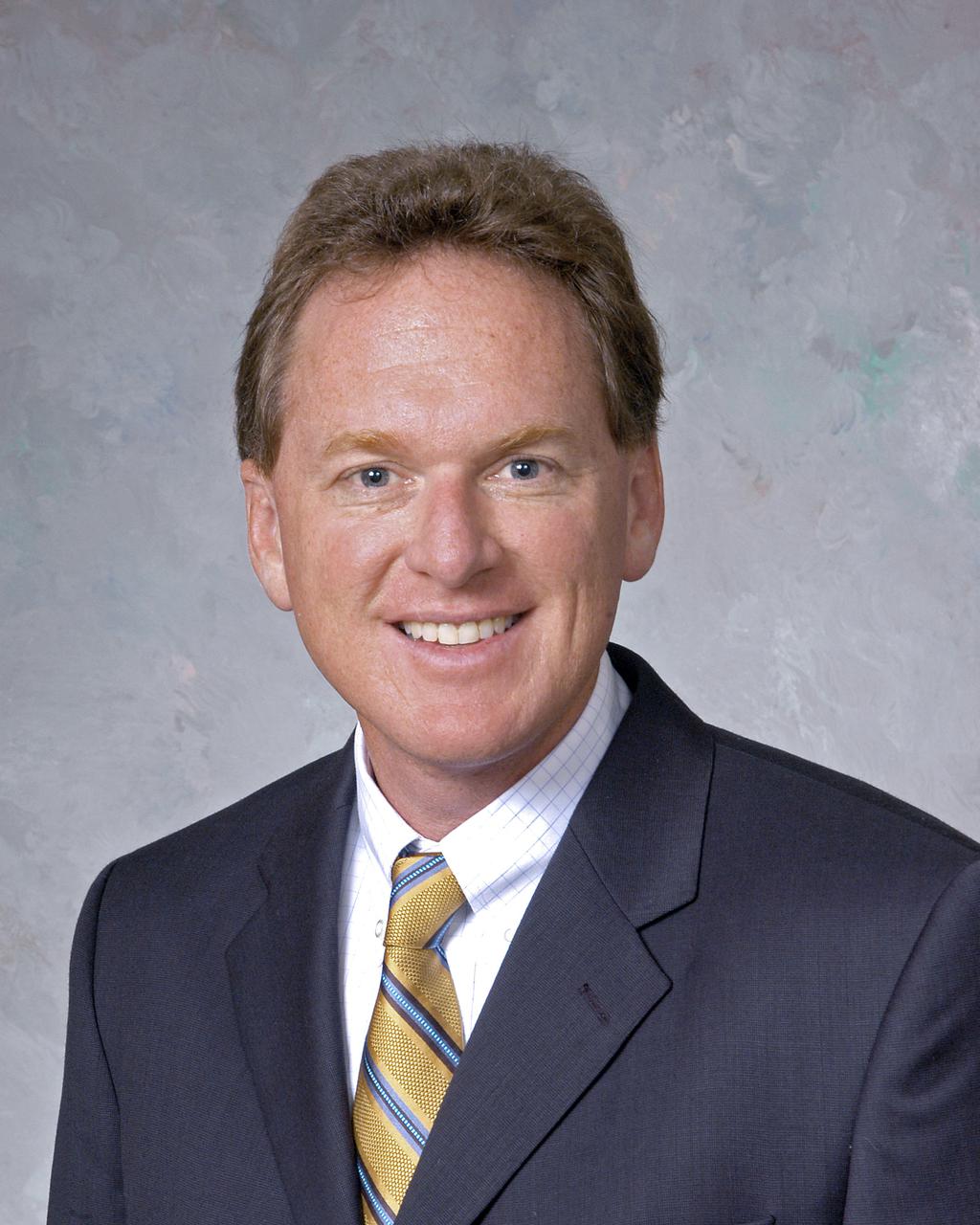
CAPE CANAVERAL, Fla. – Michael Bolger, Director, Information Technology and Communications Services Directorate at the Kennedy Space Center in Florida. Photo credit: NASA
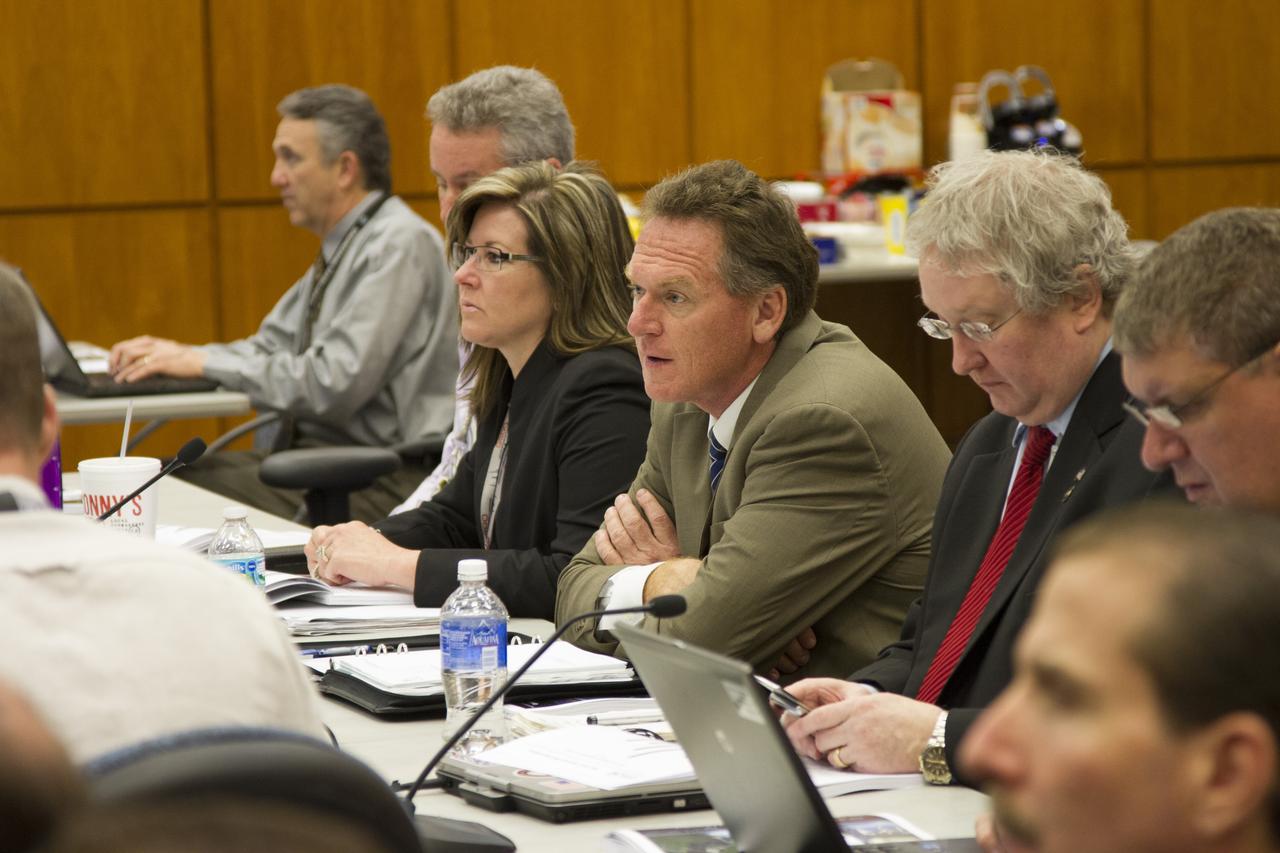
CAPE CANAVERAL, Fla. – Mike Bolger, program manager for the Ground Systems Development and Operations, or GSDO, Program speaks to participants during completion of the preliminary design review in the Mission Briefing Room inside the Operations and Checkout Building at NASA’s Kennedy Space Center in Florida. Representatives from NASA, its contractor partners and experts from across the aerospace industry met in the Mission Briefing Room inside the Operations and Checkout Building at NASA’s Kennedy Space Center in Florida to conclude the initial design and technology development phase. Completion of this review has validated that the baseline architecture is sound and aligns with the agency's exploration objectives. NASA is developing the Space Launch System and Orion spacecraft to provide an entirely new capability for human exploration beyond low-Earth orbit, with the flexibility to launch spacecraft for crew and cargo missions, including to an asteroid and Mars. Orion’s first unpiloted test flight is scheduled to launch later this year atop a Delta IV rocket. A second uncrewed flight test is scheduled for fiscal year 2018 on the Space Launch System rocket. For more information, visit http://www.nasa.gov/orion. Photo credit: NASA/Cory Huston
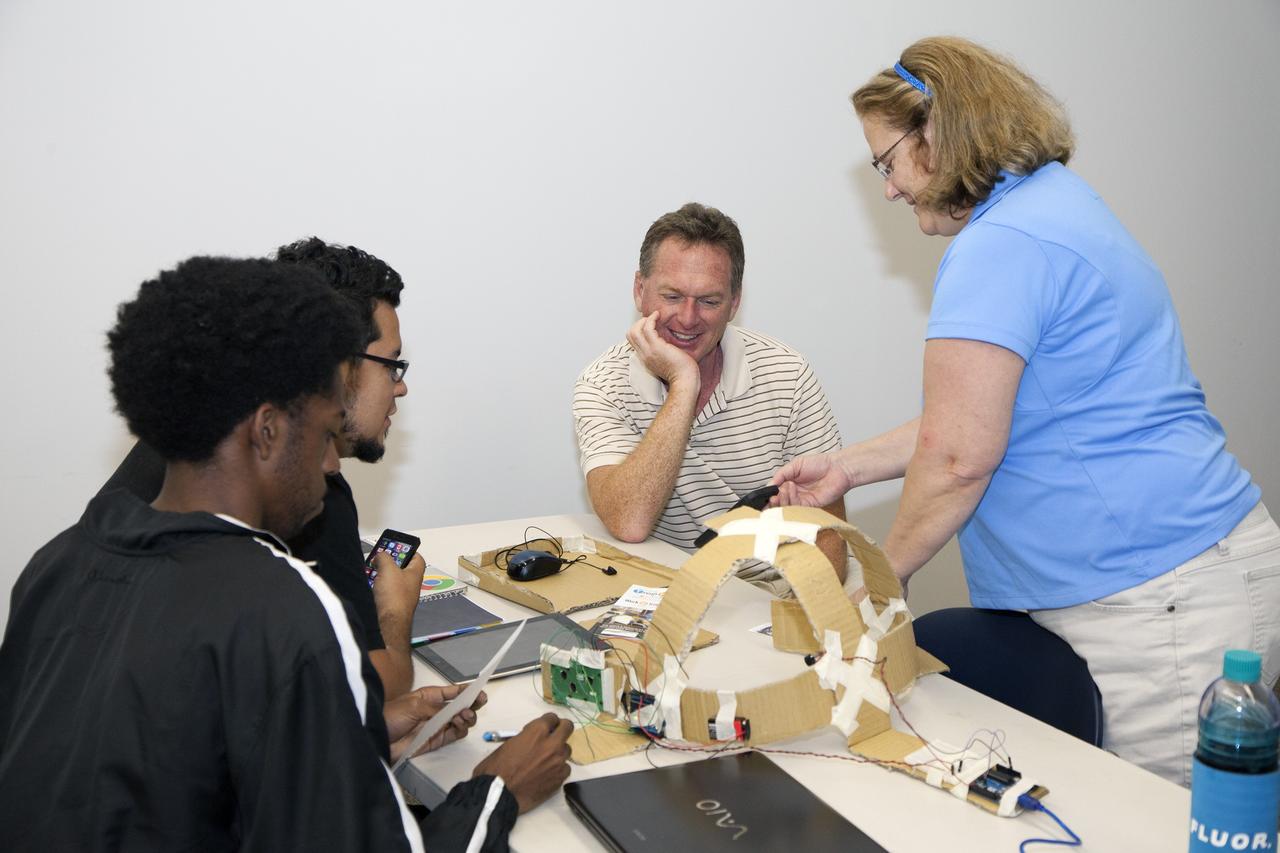
CAPE CANAVERAL, Fla. - SpaceWear team members Keith Hargett, left, and Alejandro Velasco demonstrate their entry in the International Space Apps Challenge to NASA Ground Systems Development and Operation Program Manager Michael Bolger and NASA's Lisa Singleton in the Center for Space Education at the Kennedy Space Center Visitor Complex in Florida. Kennedy Space Center hosted one of the over 90 locations around the world where participants congregated for the attempt to design innovative solutions for global challenges over a 48-hour period. This year's development marathon focused on five NASA mission areas: Asteroids, Earth Watch, Human Spaceflight, Robotics, and Technology in Space. Three of this year’s challenges were developed by KSC employees: Space Wearables: Fashion Designer to Astronauts, Growing Food for a Martian Table, and Asteroid Prospector. The winners selected in 2014 at Kennedy were Astronaut Resource Managing System, or ARMS, for Best Use of Data and SpaceWear for Best Use of Hardware. ARMS also took the People's Choice Award. For more information, visit https://2014.spaceappschallenge.org. Photo credit: NASA/Daniel Casper
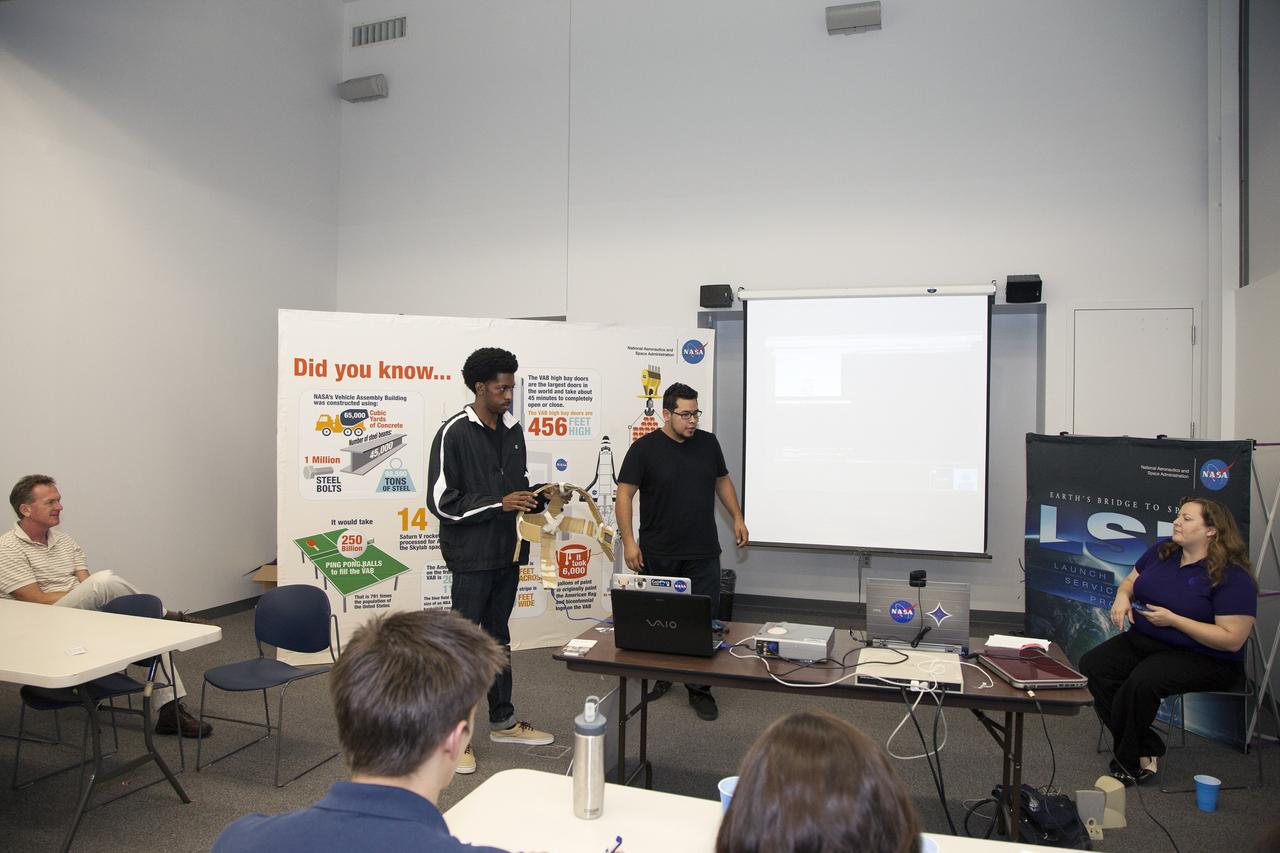
CAPE CANAVERAL, Fla. - SpaceWear team members Keith Hargett, left, and Alejandro Velasco explain their entry in the International Space Apps Challenge to an audience in the Center for Space Education at the Kennedy Space Center Visitor Complex in Florida. In the audience at left is NASA Ground Systems Development and Operations Program Manager Michael Bolger. Caley Burke, the NASA event organizer lead, is at right. Kennedy Space Center hosted one of the over 90 locations around the world where participants congregated for the attempt to design innovative solutions for global challenges over a 48-hour period. This year's development marathon focused on five NASA mission areas: Asteroids, Earth Watch, Human Spaceflight, Robotics, and Technology in Space. Three of this year’s challenges were developed by KSC employees: Space Wearables: Fashion Designer to Astronauts, Growing Food for a Martian Table, and Asteroid Prospector. The winners selected in 2014 at Kennedy were Astronaut Resource Managing System, or ARMS, for Best Use of Data and SpaceWear for Best Use of Hardware. ARMS also took the People's Choice Award. For more information, visit https://2014.spaceappschallenge.org. Photo credit: NASA/Daniel Casper
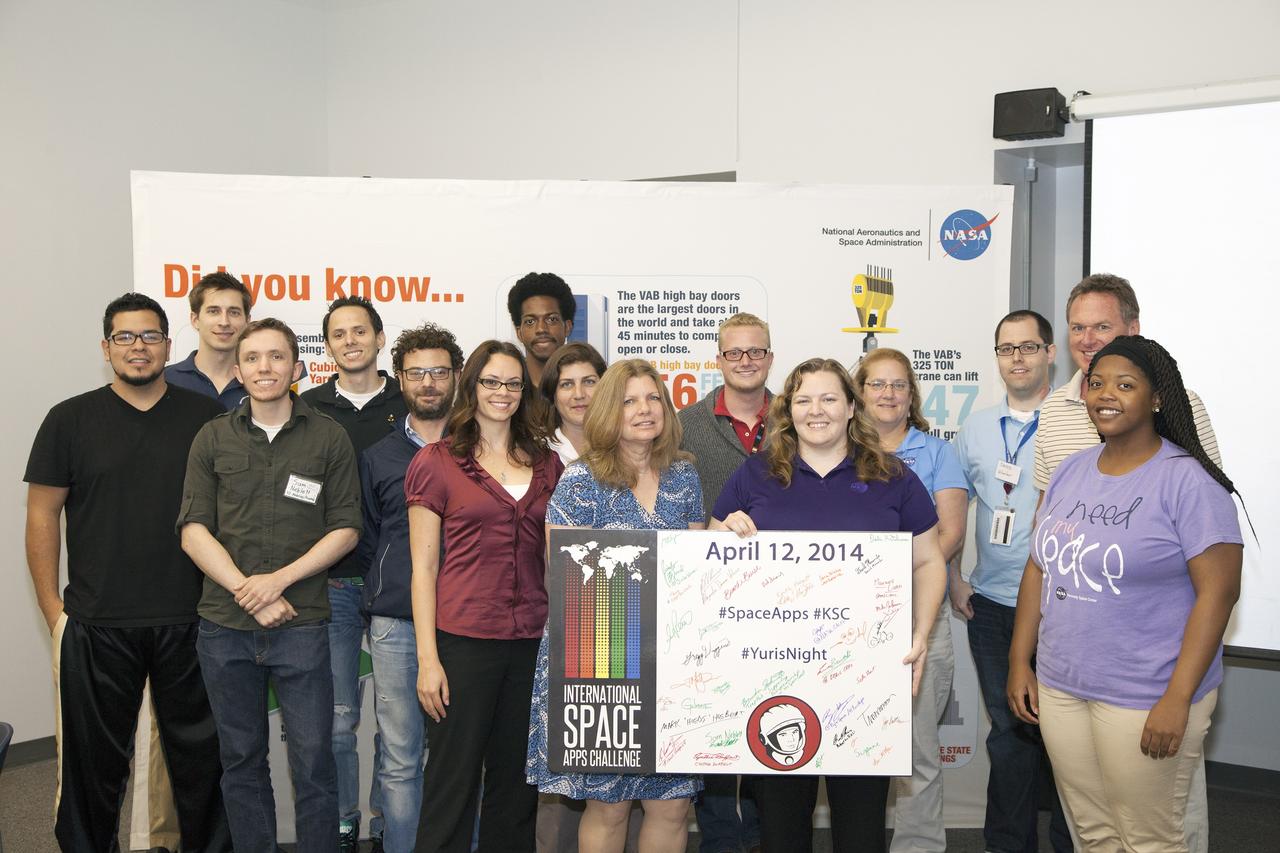
CAPE CANAVERAL, Fla. - Members of the winning Astronaut Resource Managing System and SpaceWear teams in the International Space Apps Challenge pose for a group portrait with the NASA volunteers, judges and event organizers. From left are Alejandro Velasco, NASA's Justin Treptow, Sam Neblett, Roberto Ricci, James Brucato, NASA's Suzanne Plantec, Keith Hargett, NASA's Cynthia Duffaut, NASA's Launa Maier, event organizer James Wood, event organizer lead Caley Burke, NASA's Lisa Singleton, event organizer David Miranda, NASA Ground Systems Development and Operation Program Manager Michael Bolger and NASA intern Brandi Burse. Kennedy Space Center hosted one of the over 90 locations around the world where participants congregated for the attempt to design innovative solutions for global challenges over a 48-hour period. This year's development marathon focused on five NASA mission areas: Asteroids, Earth Watch, Human Spaceflight, Robotics, and Technology in Space. Three of this year’s challenges were developed by KSC employees: Space Wearables: Fashion Designer to Astronauts, Growing Food for a Martian Table, and Asteroid Prospector. The winners selected in 2014 at Kennedy were Astronaut Resource Managing System, or ARMS, for Best Use of Data and SpaceWear for Best Use of Hardware. ARMS also took the People's Choice Award. For more information, visit https://2014.spaceappschallenge.org. Photo credit: NASA/Daniel Casper