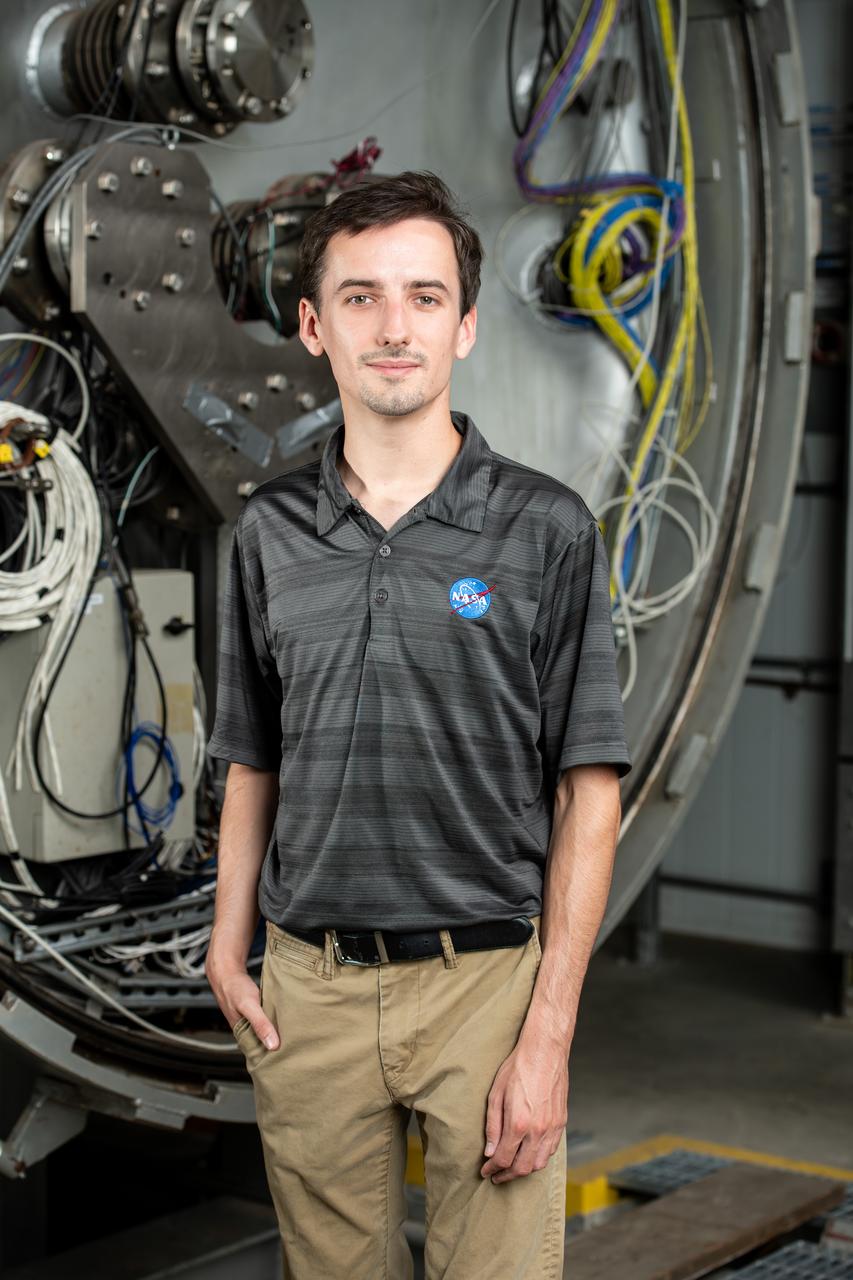
Each year, the NESC produces the NESC Technical Update, which highlights two or three individuals from each Center and includes assessments throughout the year. Because of the critical contributions to the NESC mission this year, Rob Jankovsky, NESC Chief Engineer at GRC, chose two individuals to be highlighted. This year, it is Andrew Ring and Michael Cooper. The Lead Analyst for GRC’s Chemical and Thermal Propulsion Systems branch, Mr. Michael Cooper, is supporting NESC test operations on reaction control system thrusters for Gateway’s Power & Propulsion Element. “These thrusters are small with few moving parts, but the heat and mass transfers involved are very complex,” he said. The test campaign is putting the thrusters through a rigorous profile to simulate the lifetime they will experience over decades in space. Mr. Cooper is analyzing test data gathered on chamber pressure, temperature, flow rates, and more to develop models on thruster performance. He also built the tool that read in that data from the test stand instrumentation. Photo Credit: (NASA/Sara Lowthian-Hanna)
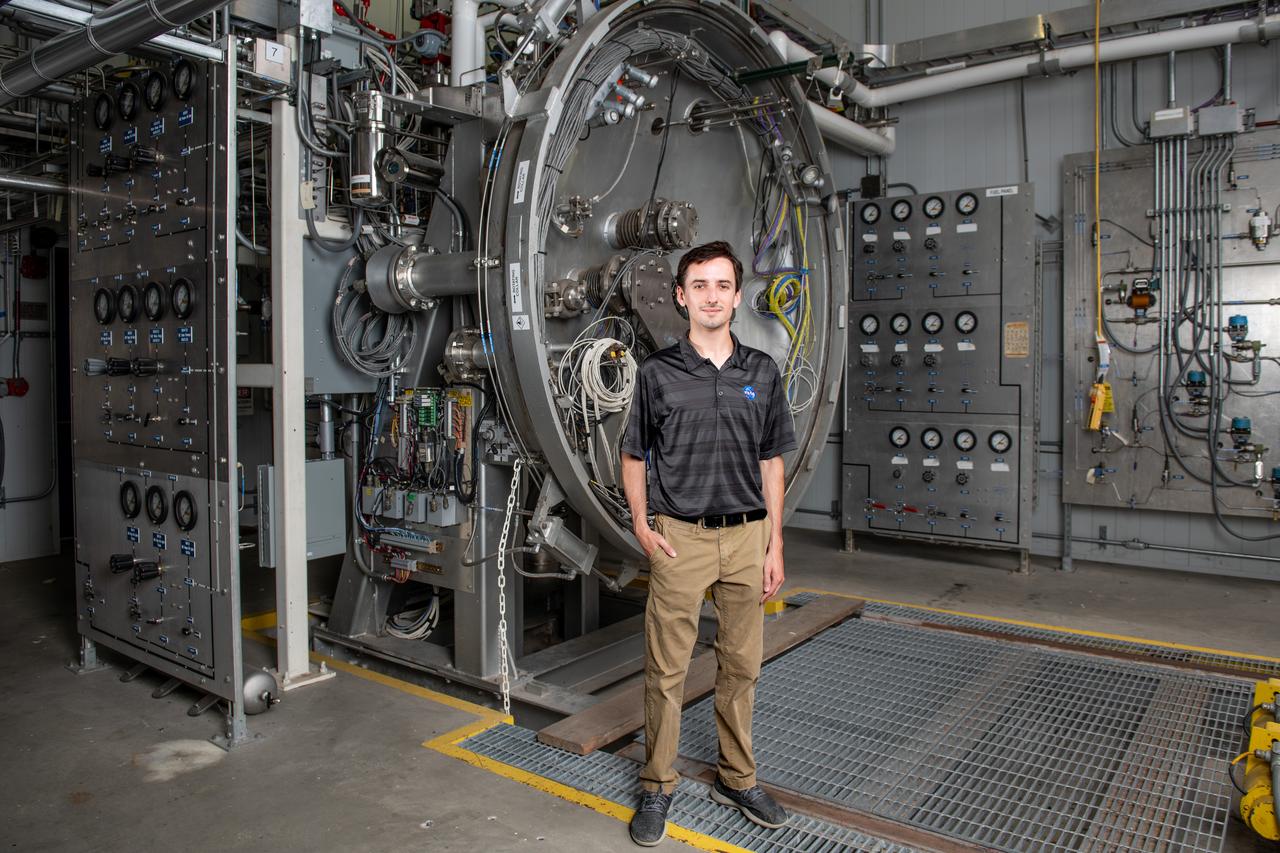
Each year, the NESC produces the NESC Technical Update, which highlights two or three individuals from each Center and includes assessments throughout the year. Because of the critical contributions to the NESC mission this year, Rob Jankovsky, NESC Chief Engineer at GRC, chose two individuals to be highlighted. This year, it is Andrew Ring and Michael Cooper. The Lead Analyst for GRC’s Chemical and Thermal Propulsion Systems branch, Mr. Michael Cooper pictured here in this environmental portrait on August 16, 2024. He is supporting NESC test operations on reaction control system thrusters for Gateway’s Power & Propulsion Element. “These thrusters are small with few moving parts, but the heat and mass transfers involved are very complex,” he said. The test campaign is putting the thrusters through a rigorous profile to simulate the lifetime they will experience over decades in space. Mr. Cooper is analyzing test data gathered on chamber pressure, temperature, flow rates, and more to develop models on thruster performance. He also built the tool that read in that data from the test stand instrumentation. Photo Credit: (NASA/Sara Lowthian-Hanna)
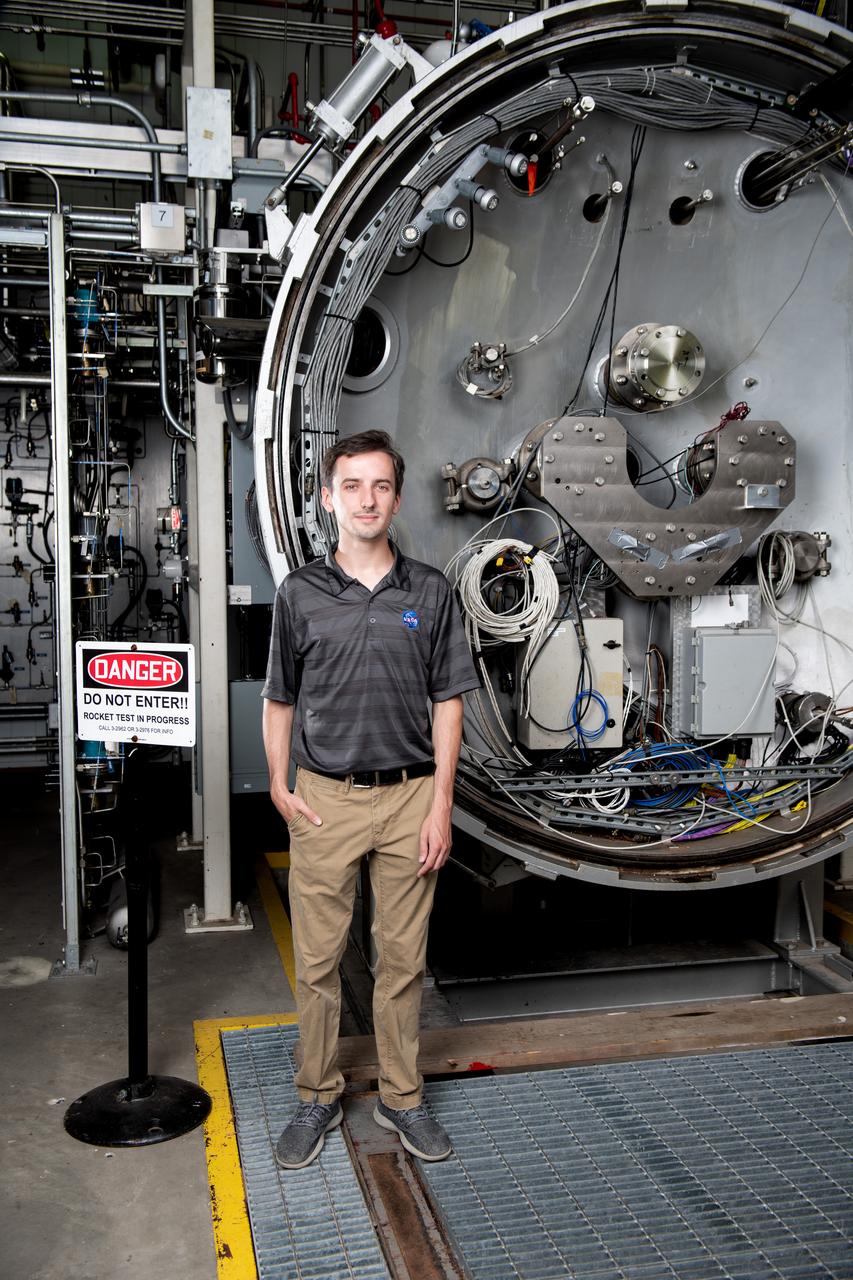
Each year, the NESC produces the NESC Technical Update, which highlights two or three individuals from each Center and includes assessments throughout the year. Because of the critical contributions to the NESC mission this year, Rob Jankovsky, NESC Chief Engineer at GRC, chose two individuals to be highlighted. This year, it is Andrew Ring and Michael Cooper. The Lead Analyst for GRC’s Chemical and Thermal Propulsion Systems branch, Mr. Michael Cooper, is supporting NESC test operations on reaction control system thrusters for Gateway’s Power & Propulsion Element. “These thrusters are small with few moving parts, but the heat and mass transfers involved are very complex,” he said. The test campaign is putting the thrusters through a rigorous profile to simulate the lifetime they will experience over decades in space. Mr. Cooper is analyzing test data gathered on chamber pressure, temperature, flow rates, and more to develop models on thruster performance. He also built the tool that read in that data from the test stand instrumentation. Photo Credit: (NASA/Sara Lowthian-Hanna)
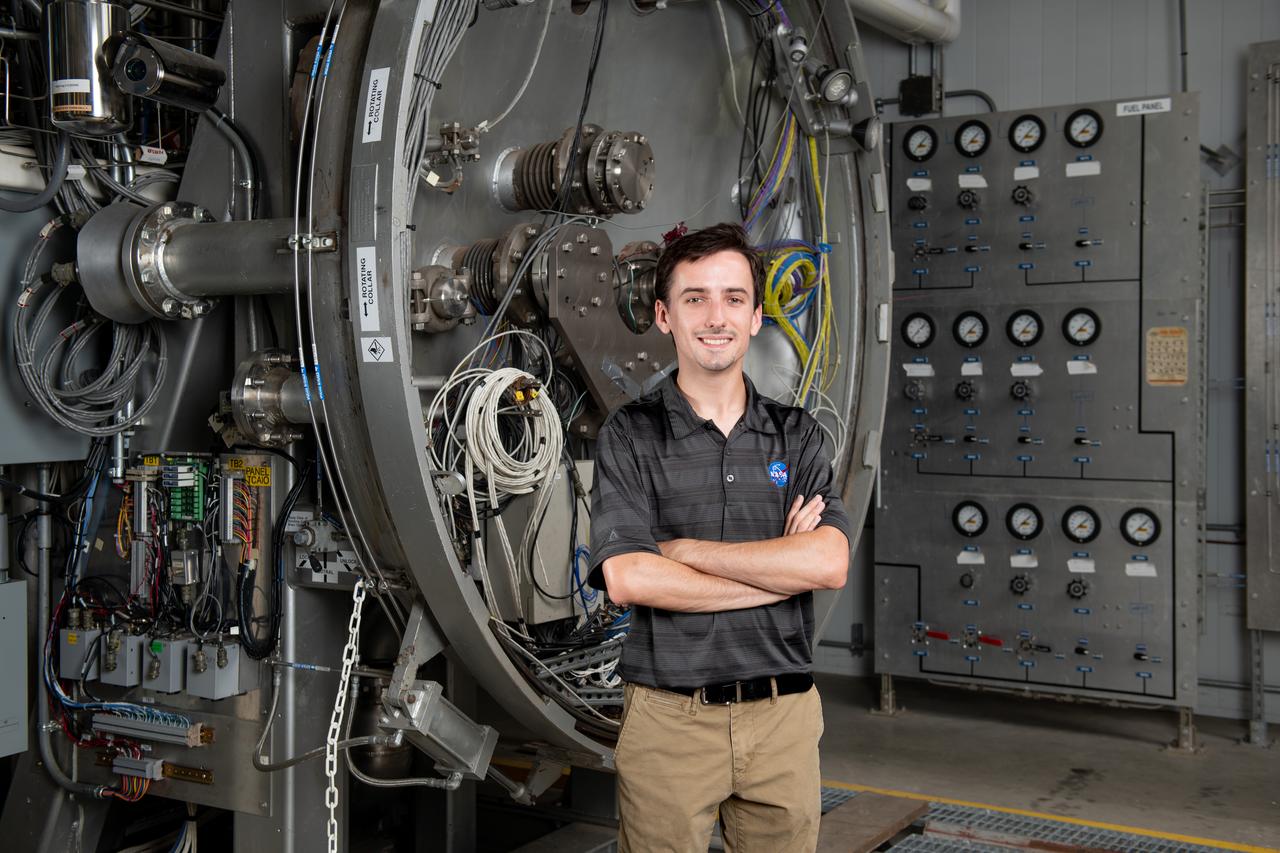
Each year, the NESC produces the NESC Technical Update, which highlights two or three individuals from each Center and includes assessments throughout the year. Because of the critical contributions to the NESC mission this year, Rob Jankovsky, NESC Chief Engineer at GRC, chose two individuals to be highlighted. This year, it is Andrew Ring and Michael Cooper. The Lead Analyst for GRC’s Chemical and Thermal Propulsion Systems branch, Mr. Michael Cooper, is supporting NESC test operations on reaction control system thrusters for Gateway’s Power & Propulsion Element. “These thrusters are small with few moving parts, but the heat and mass transfers involved are very complex,” he said. The test campaign is putting the thrusters through a rigorous profile to simulate the lifetime they will experience over decades in space. Mr. Cooper is analyzing test data gathered on chamber pressure, temperature, flow rates, and more to develop models on thruster performance. He also built the tool that read in that data from the test stand instrumentation. Photo Credit: (NASA/Sara Lowthian-Hanna)
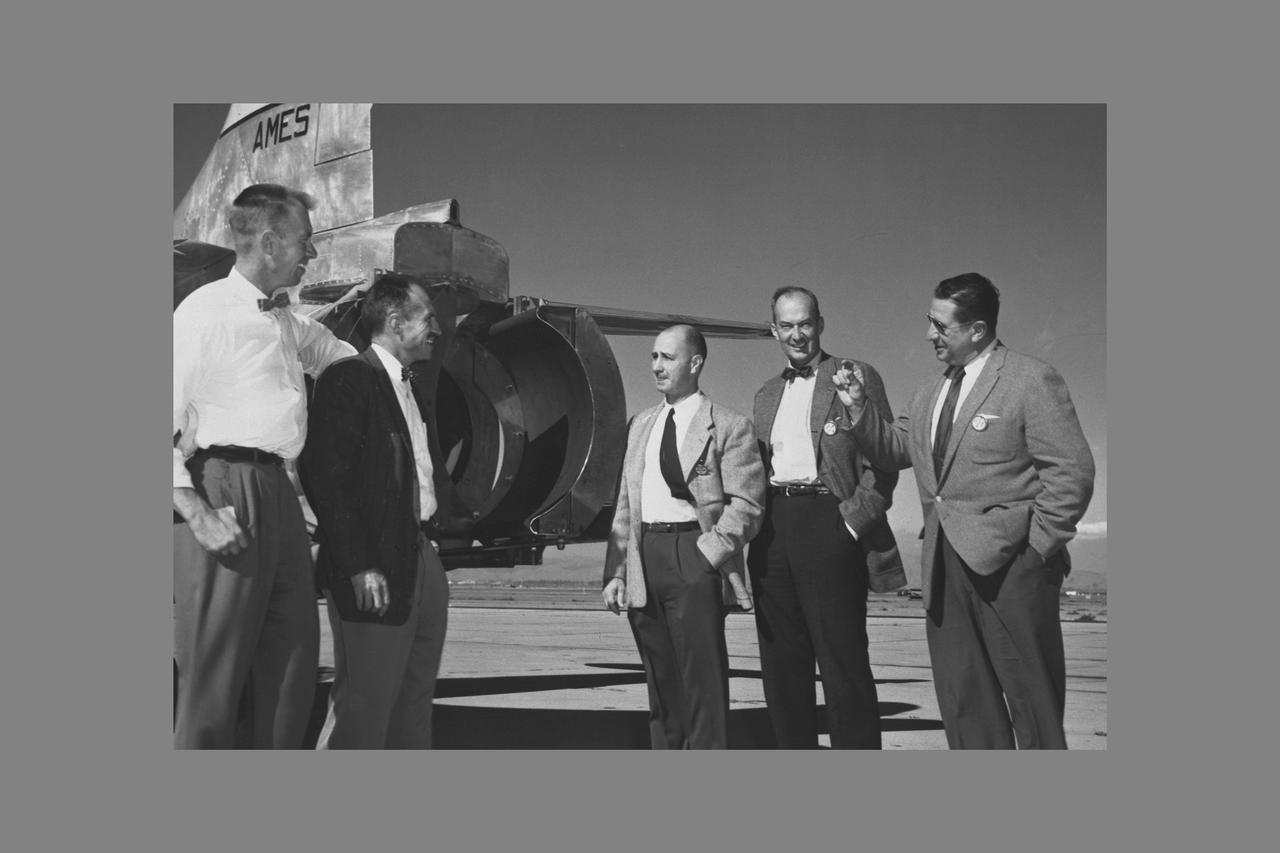
NACA AMES ENGINEERS: Seth B. ANDERSON AND NACA AMES PILOT Gorge E. COOPER WITH W.E. RHOADES, ROBERT McIVER, MICHAEL CASSENLY OF UNITED AIRLINES. Visit Ames to dicuss Thrust Reverser Problems.
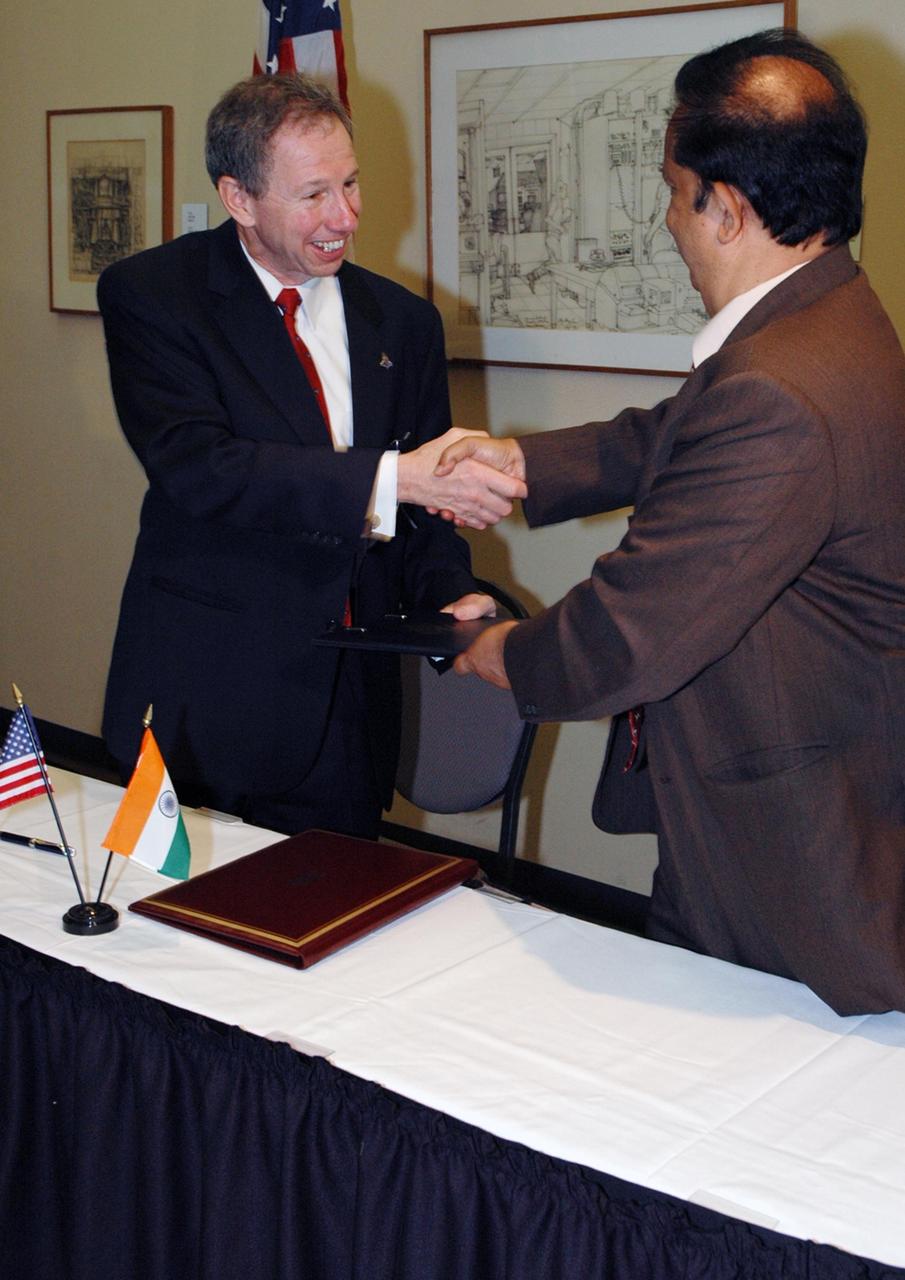
KENNEDY SPACE CENTER, FLA. -- At the NASA's Kennedy Space Center Visitor Complex, NASA Administrator Michael Griffin (left) and Indian Space Research Organization Chairman G. Madhavan Nair show their pleasure after signing a framework agreement establishing the terms for future cooperation between the two agencies in the exploration and use of outer space for peaceful purposes. According to the framework agreement, the two agencies will identify areas of mutual interest and seek to develop cooperative programs or projects in Earth and space science, exploration, human space flight and other activities. In addition to a long history of cooperation in Earth science, NASA and the Indian Space Research Organization also are cooperating on India's first, mission to the moon, Chandrayaan-1, which will be launched later this year. NASA is providing two of the 11 instruments on the spacecraft: the moon mineralogy mapper instrument and the miniature synthetic aperture radar instrument. Photo credit: NASA/Kim Shiflett
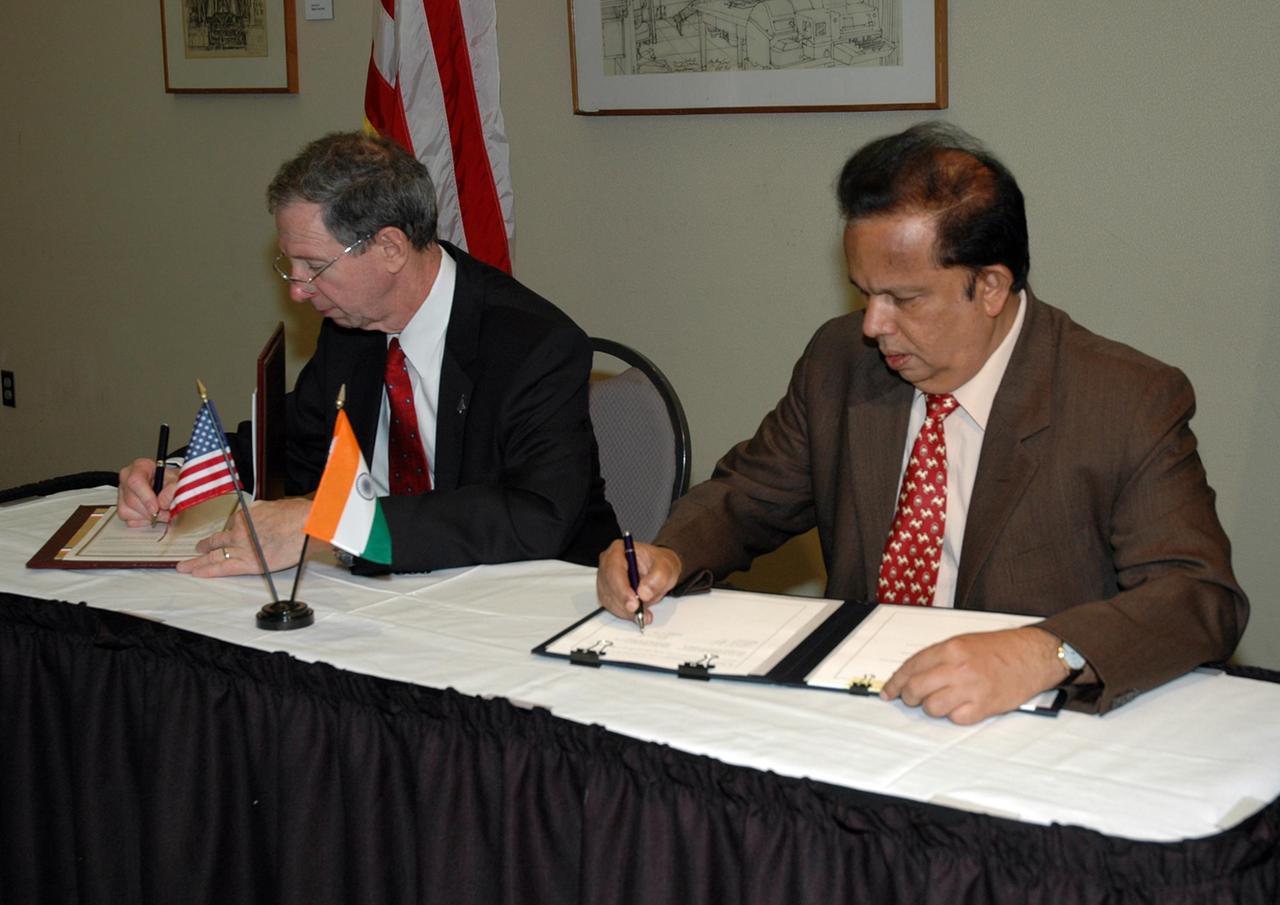
KENNEDY SPACE CENTER, FLA. -- At a ceremony at the NASA's Kennedy Space Center Visitor Complex, NASA Administrator Michael Griffin (left) and Indian Space Research Organization Chairman G. Madhavan Nair sign a framework agreement establishing the terms for future cooperation between the two agencies in the exploration and use of outer space for peaceful purposes. According to the framework agreement, the two agencies will identify areas of mutual interest and seek to develop cooperative programs or projects in Earth and space science, exploration, human space flight and other activities. In addition to a long history of cooperation in Earth science, NASA and the Indian Space Research Organization also are cooperating on India's first, mission to the moon, Chandrayaan-1, which will be launched later this year. NASA is providing two of the 11 instruments on the spacecraft: the moon mineralogy mapper instrument and the miniature synthetic aperture radar instrument. Photo credit: NASA/Kim Shiflett
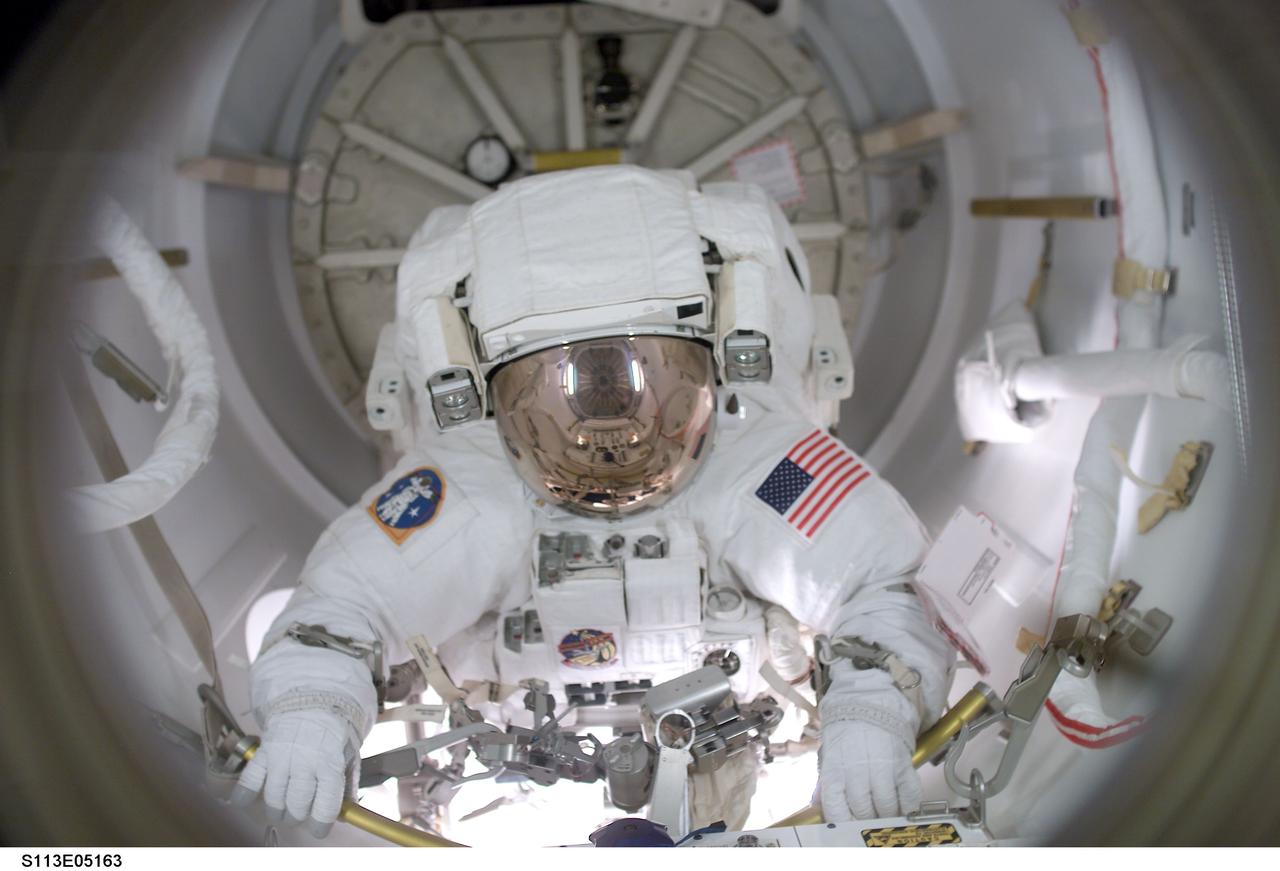
STS113-E-05163 (26 November 2002) --- Astronaut John B. Herrington prepares to egress the airlock to begin the first of three scheduled STS-113 spacewalks to perform work on the International Space Station (ISS). In cooperation with the rest of the shuttle and station crewmembers, astronauts Herrington and Michael E. Lopez-Alegria, both mission specialists, went on to complete a smooth spacewalk to hook up connections between the Port One (P1) truss and the rest of the station.
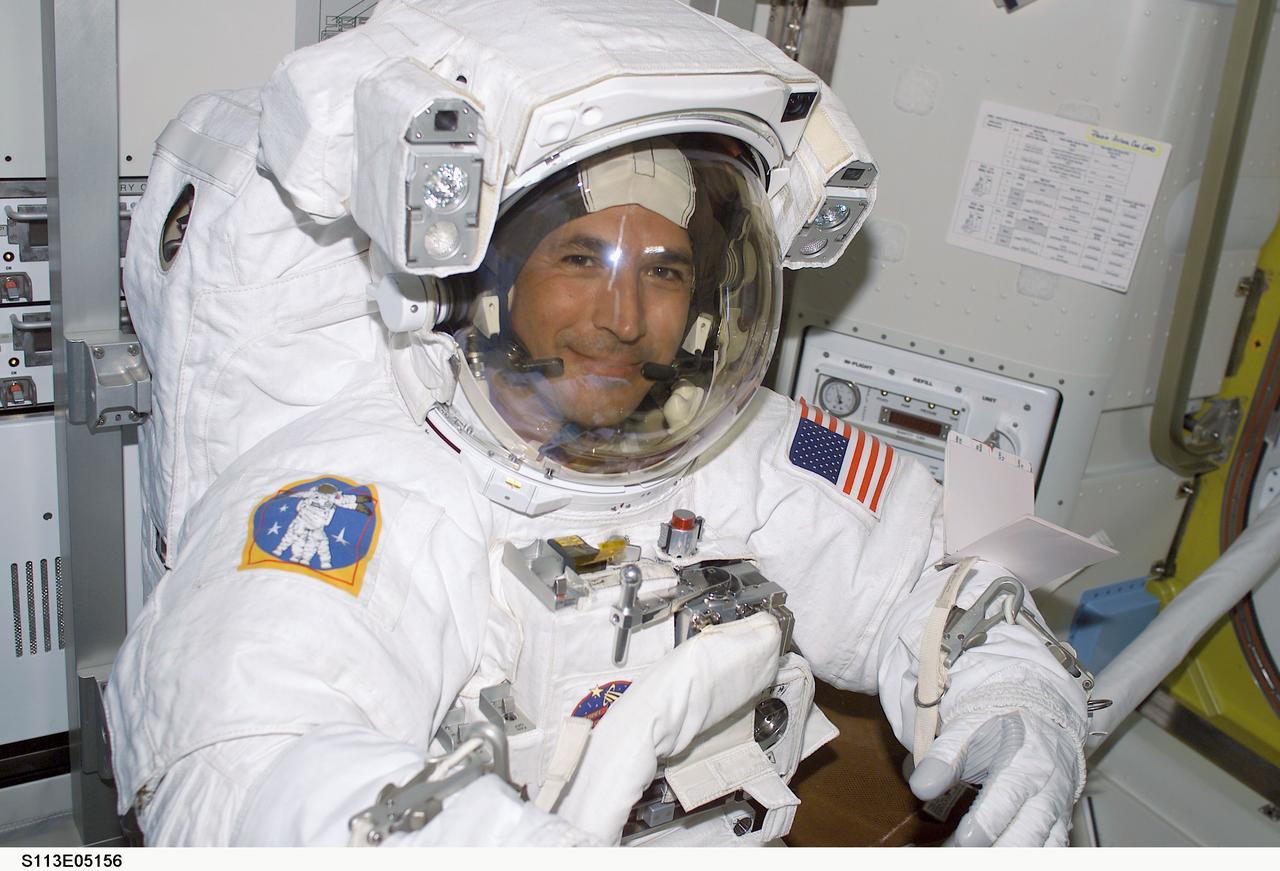
STS113-E-05156 (26 November 2002) --- Astronaut John B. Herrington has completed donning his extravehicular mobility unit (EMU) space suit and is ready to begin the first of three scheduled STS-113 spacewalks to perform work on the International Space Station (ISS). In cooperation with the rest of the shuttle and station crewmembers, astronauts Herrington and Michael E. Lopez-Alegria, both mission specialists, went on to complete a smooth spacewalk to hook up connections between the Port One (P1) truss and the rest of the station.
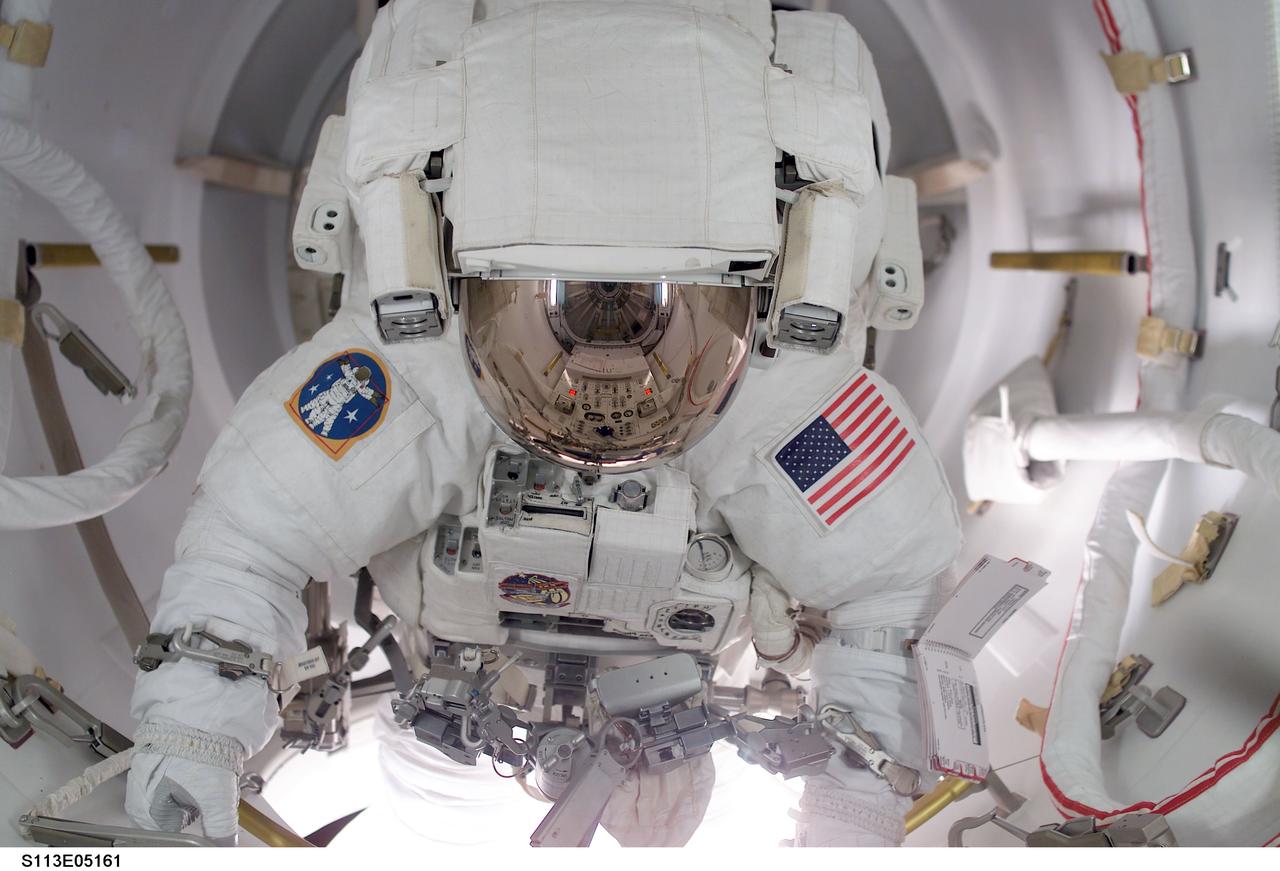
STS113-E-05161 (26 November 2002) --- Astronaut John B. Herrington prepares to egress the airlock to begin the first of three scheduled STS-113 spacewalks to perform work on the International Space Station (ISS). In cooperation with the rest of the shuttle and station crewmembers, astronauts Herrington and Michael E. Lopez-Alegria, both mission specialists, went on to complete a smooth spacewalk to hook up connections between the Port One (P1) truss and the rest of the station.
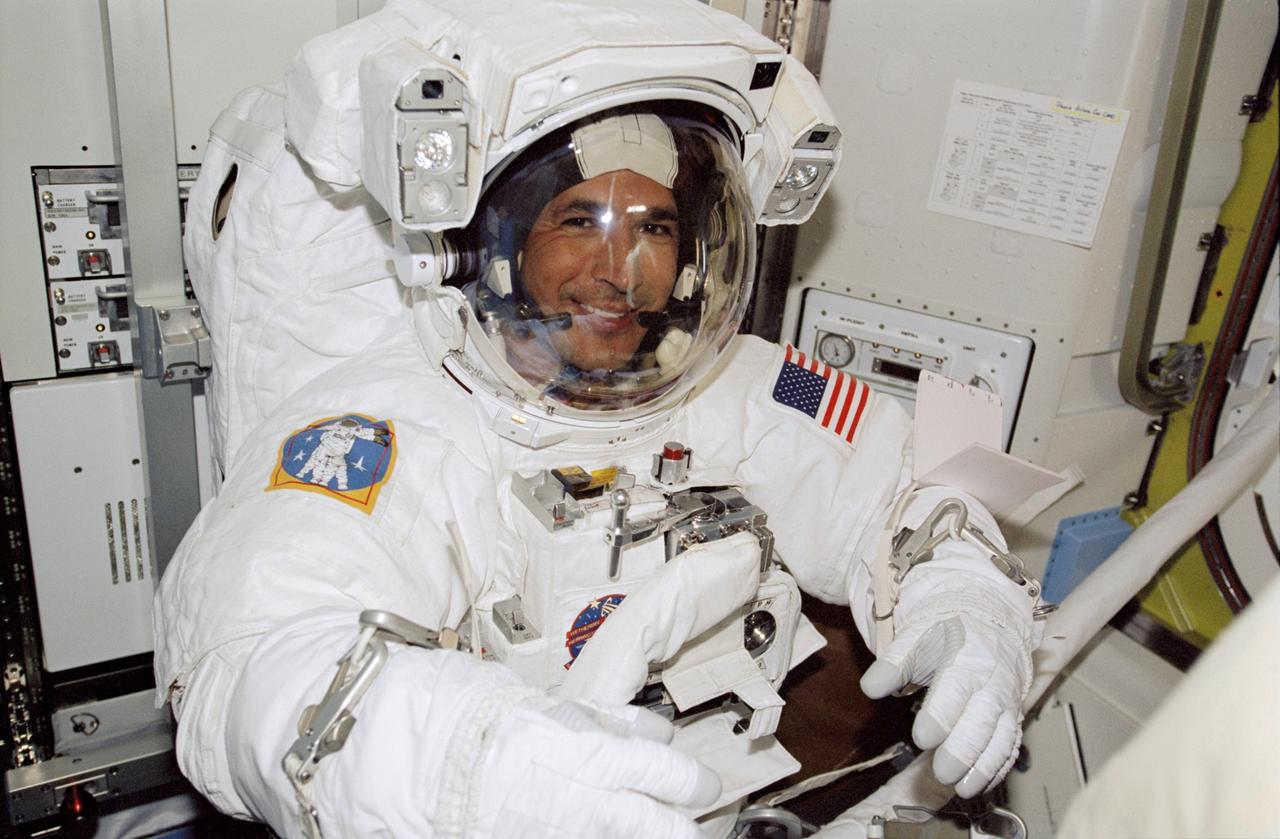
STS113-360-023 (26 November 2002) --- Astronaut John B. Herrington, STS-113 mission specialist, attired in his Extravehicular Mobility Unit (EMU) spacesuit, is pictured in the Quest Airlock on the International Space Station (ISS). Herrington was about to begin the first of three scheduled STS-113 spacewalks to perform work on the station. In cooperation with the rest of the shuttle and station crewmembers, Herrington and Michael E. Lopez-Alegria went on to complete a smooth spacewalk to hook up connections between the Port One (P1) truss and the rest of the station.

Civil Air Patrol cadets (L to R) Benjamin Errington, Caden Thomas, and Isabelle Cooper of the Alvin Callander Composite Squadron record weather data and track the impact of Solar Eclipses on VHF Radio Operations as they participate in the CAP Solar Eclipse Mission, a continent-wide project collecting solar eclipse data in partnership with NASA. The cadets spent over six hours taking measurements at their base of operations at Lakefront Airport in New Orleans on Monday, April 8, 2024. New Orleans is home to NASA’s Michoud Assembly Facility. A total solar eclipse tracked along a narrow strip of the North American continent from Mexico’s Pacific coast to the Atlantic coast of Newfoundland, Canada. A partial solar eclipse was visible across the entire North American continent as well as parts of Europe and Central America. Image credit: NASA/Michael DeMocker

Civil Air Patrol cadets (L to R) Benjamin Errington, Caden Thomas, and Isabelle Cooper of the Alvin Callander Composite Squadron record weather data and track the impact of Solar Eclipses on VHF Radio Operations as they participate in the CAP Solar Eclipse Mission, a continent-wide project collecting solar eclipse data in partnership with NASA. The cadets spent over six hours taking measurements at their base of operations at Lakefront Airport in New Orleans on Monday, April 8, 2024. New Orleans is home to NASA’s Michoud Assembly Facility. A total solar eclipse tracked along a narrow strip of the North American continent from Mexico’s Pacific coast to the Atlantic coast of Newfoundland, Canada. A partial solar eclipse was visible across the entire North American continent as well as parts of Europe and Central America. Image credit: NASA/Michael DeMocker
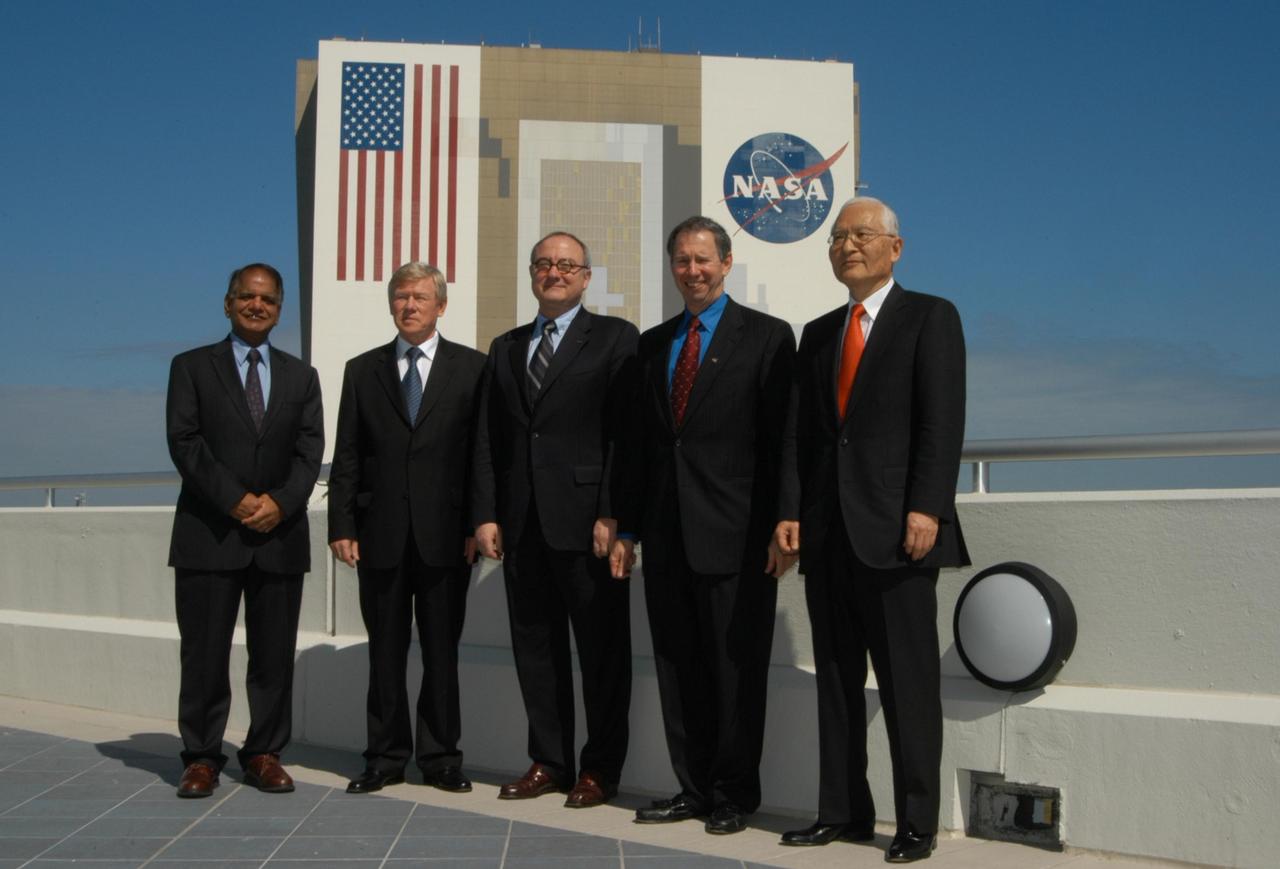
KENNEDY SPACE CENTER, FLA. - Leaders from space agencies around the world take a moment from the International Space Station Heads of Agency meeting being held at Kennedy Space Center for a group portrait in front of the Vehicle Assembly Building. From left are Canadian Space Agency Vice-President Space Science, Technology and Programs Virendra Jha; Russian Federal Space Agency Head Anatolii Perminov; European Space Agency Director-General Jean-Jacques Dordain; NASA Administrator Michael Griffin; and Japan Aerospace Exploration Agency President Keiji Tachikawa. The purpose of the meeting is to review International Space Station cooperation and endorse a revision to the station configuration and assembly sequence.
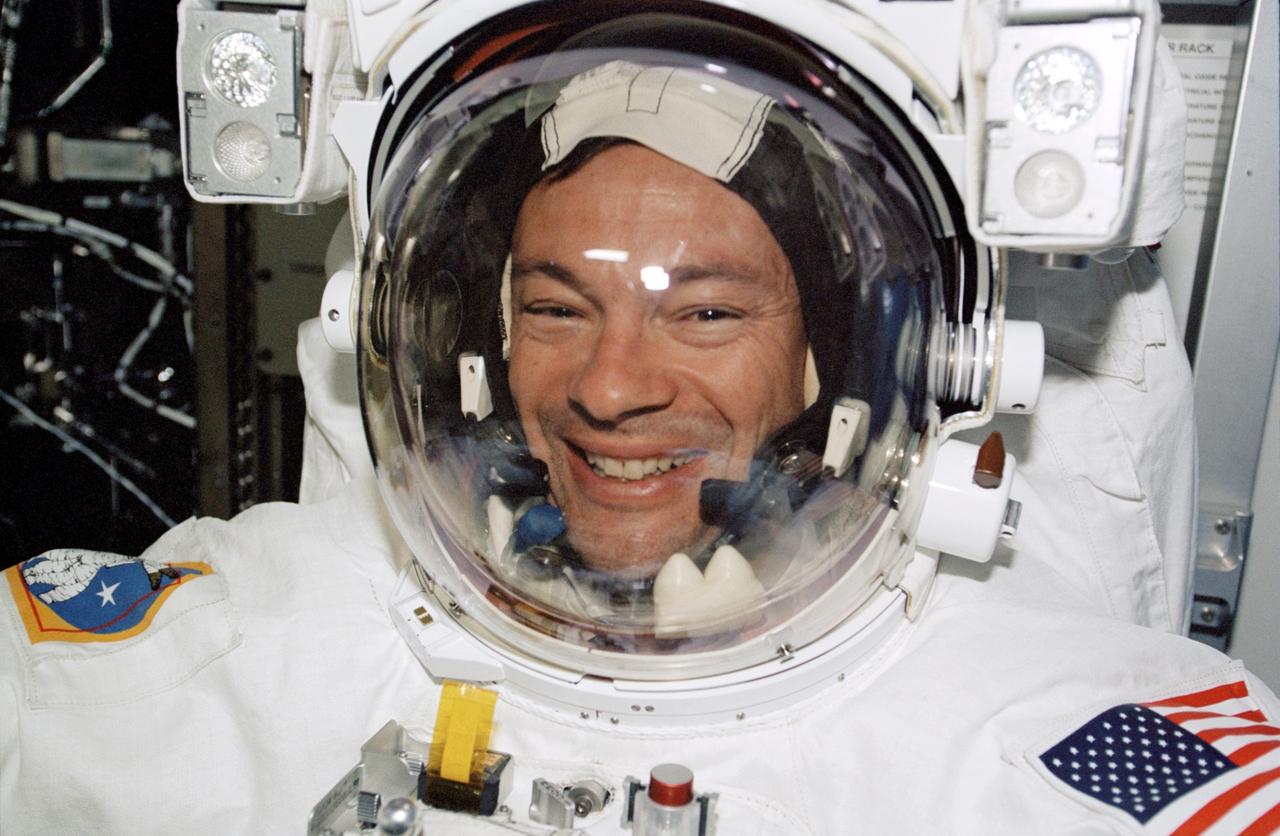
STS113-360-030 (26 November 2002) --- Astronaut Michael E. Lopez-Alegria, STS-113 mission specialist, attired in his Extravehicular Mobility Unit (EMU) spacesuit, is pictured in the Quest Airlock on the International Space Station (ISS). Lopez-Alegria was about to begin the first of three scheduled STS-113 spacewalks to perform work on the station. In cooperation with the rest of the shuttle and station crewmembers, Lopez-Alegria and John B. Herrington went on to complete a smooth spacewalk to hook up connections between the Port One (P1) truss and the rest of the station.
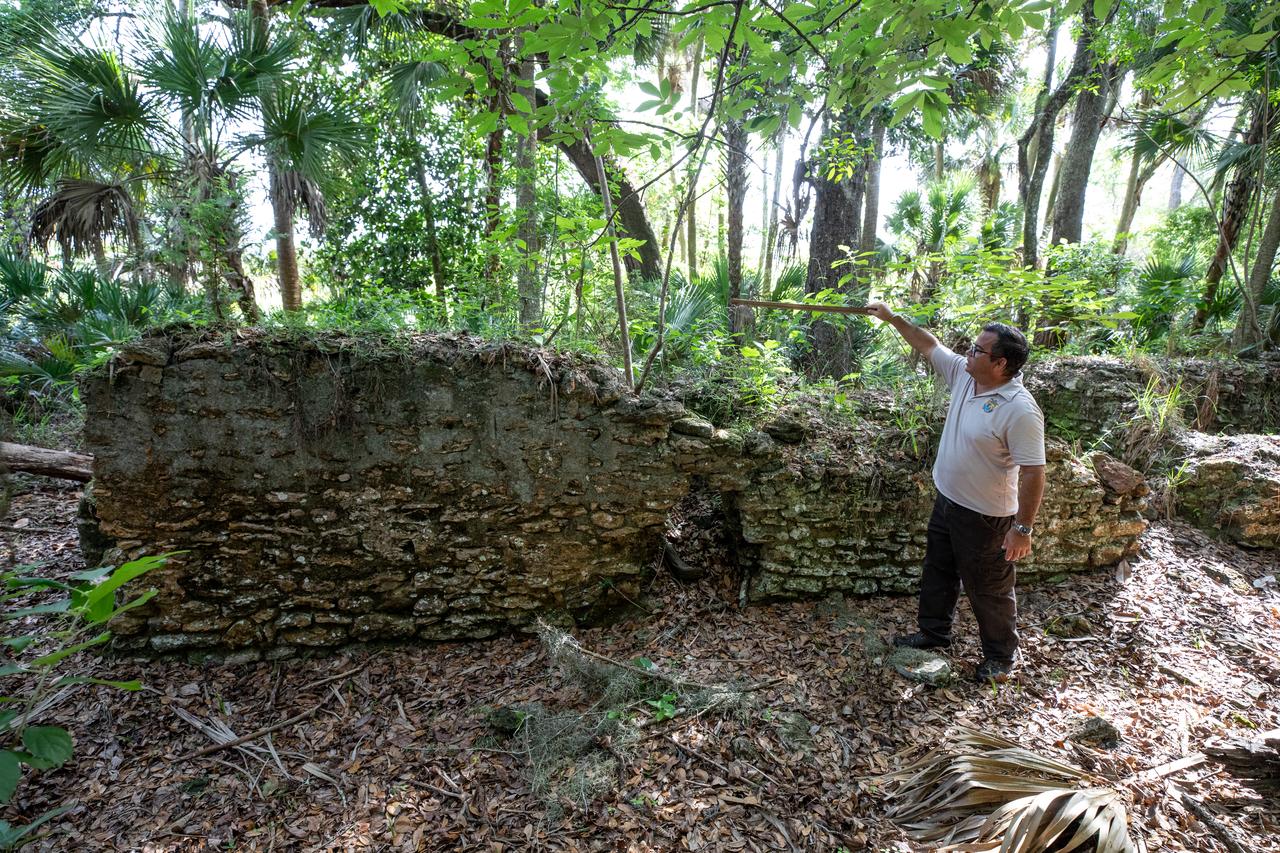
Near the archeological ruins of the Elliot Plantation sugar mill at NASA’s Kennedy Space Center in Florida, Michael Legare, of the U.S. Fish and Wildlife Service, recreates the original wall height of the structure on May 26, 2022. The plantation’s enslaved community built the sugar mill structure, or sugar train, where sugar cane juice would be boiled during processing in graduated copper kettles until the liquid reduced into a thick syrup. The ruins of Elliot Plantation date from the 1760s and represent the largest, earliest, and southernmost British period sugar plantation in the U.S., as well as one of the most intact and best examples of a completely preserved enslaved landscape. The archeological site is managed through interagency cooperation between the National Park Service, the U.S. Fish and Wildlife Service, and NASA.
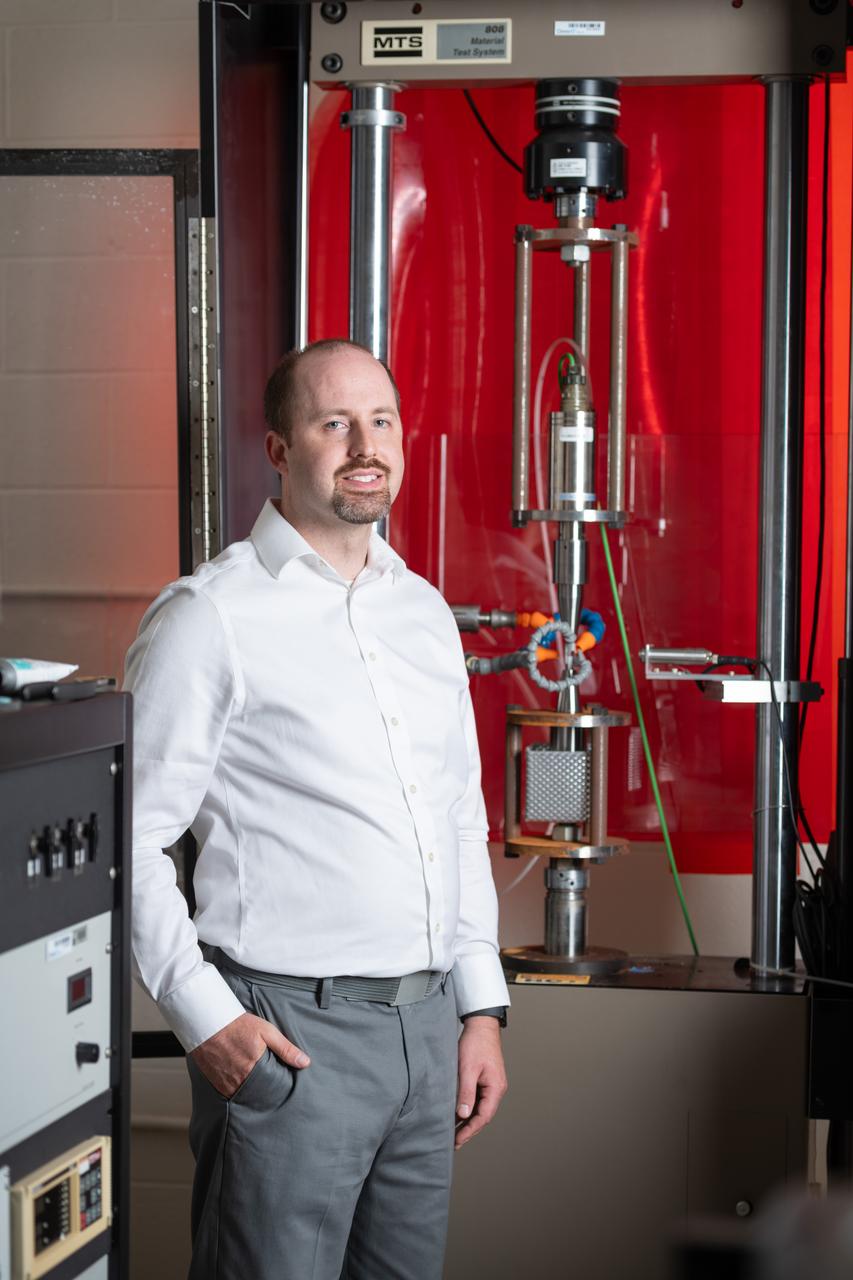
Each year, the NESC produces the NESC Technical Update, which highlights two or three individuals from each Center and includes assessments throughout the year. Because of the critical contributions to the NESC mission this year, Rob Jankovsky, NESC Chief Engineer at GRC, chose two individuals to be highlighted. This year, it is Andrew Ring and Michael Cooper. Mr. Ring, pictured here, performs stress and fatigue testing on all manner of materials in various environments and research on jet engine materials, looking for ways to increase the performance and safety of turbine blades and disks. Several NESC assessments have benefited from his expertise, most recently in understanding crack initiation and propagation in the aluminum-magnesium alloys that make up the modules of the ISS. He has also used image processing techniques to quantify the variables in parachute energy modulator production and performance and investigate flaws in the composite weave of overwrapped pressure vessels.
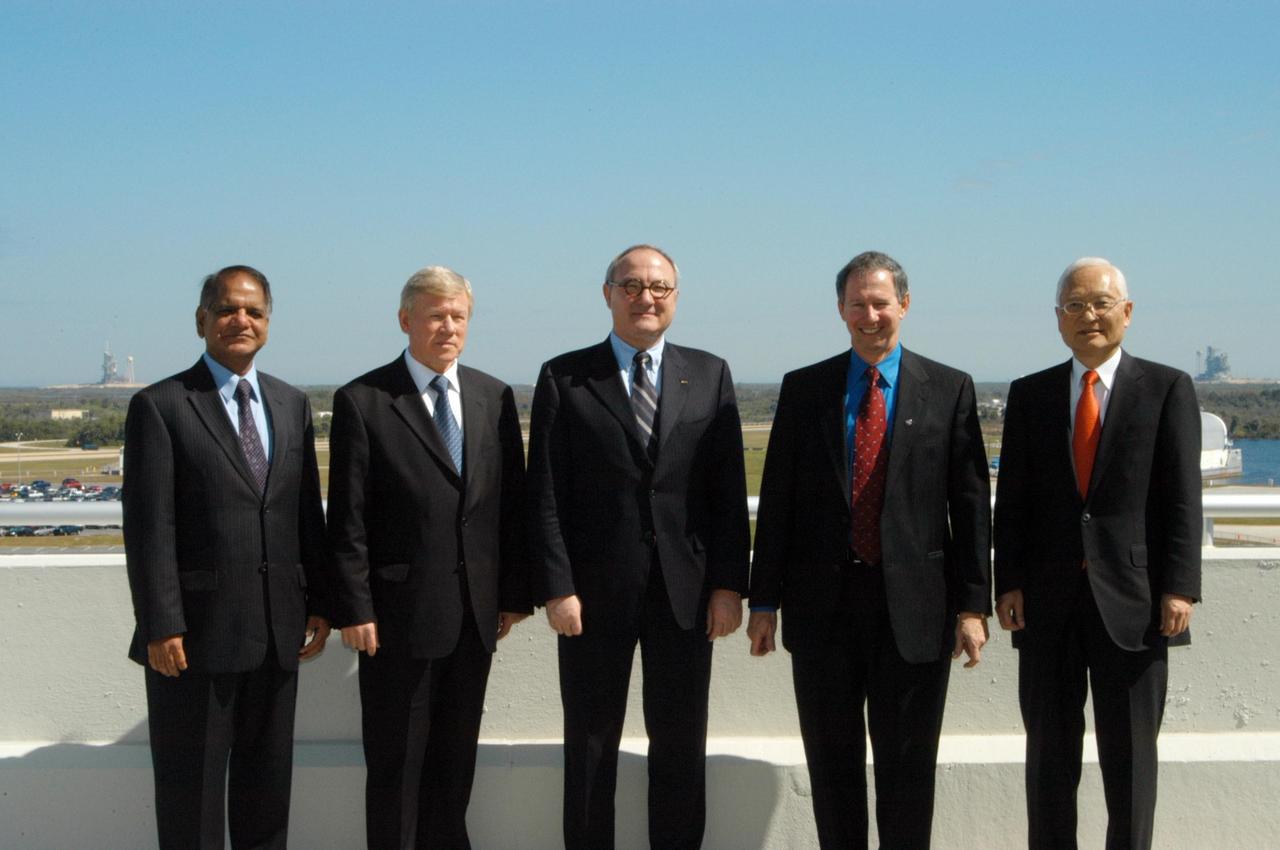
KENNEDY SPACE CENTER, FLA. - Leaders from space agencies around the world take a moment from the International Space Station Heads of Agency meeting being held at Kennedy Space Center for a group portrait, framed by the space shuttle launch pads in Launch Complex 39. From left are Canadian Space Agency Vice-President Space Science, Technology and Programs Virendra Jha; Russian Federal Space Agency Head Anatolii Perminov; European Space Agency Director-General Jean-Jacques Dordain; NASA Administrator Michael Griffin; and Japan Aerospace Exploration Agency President Keiji Tachikawa. The purpose of the meeting is to review International Space Station cooperation and endorse a revision to the station configuration and assembly sequence.
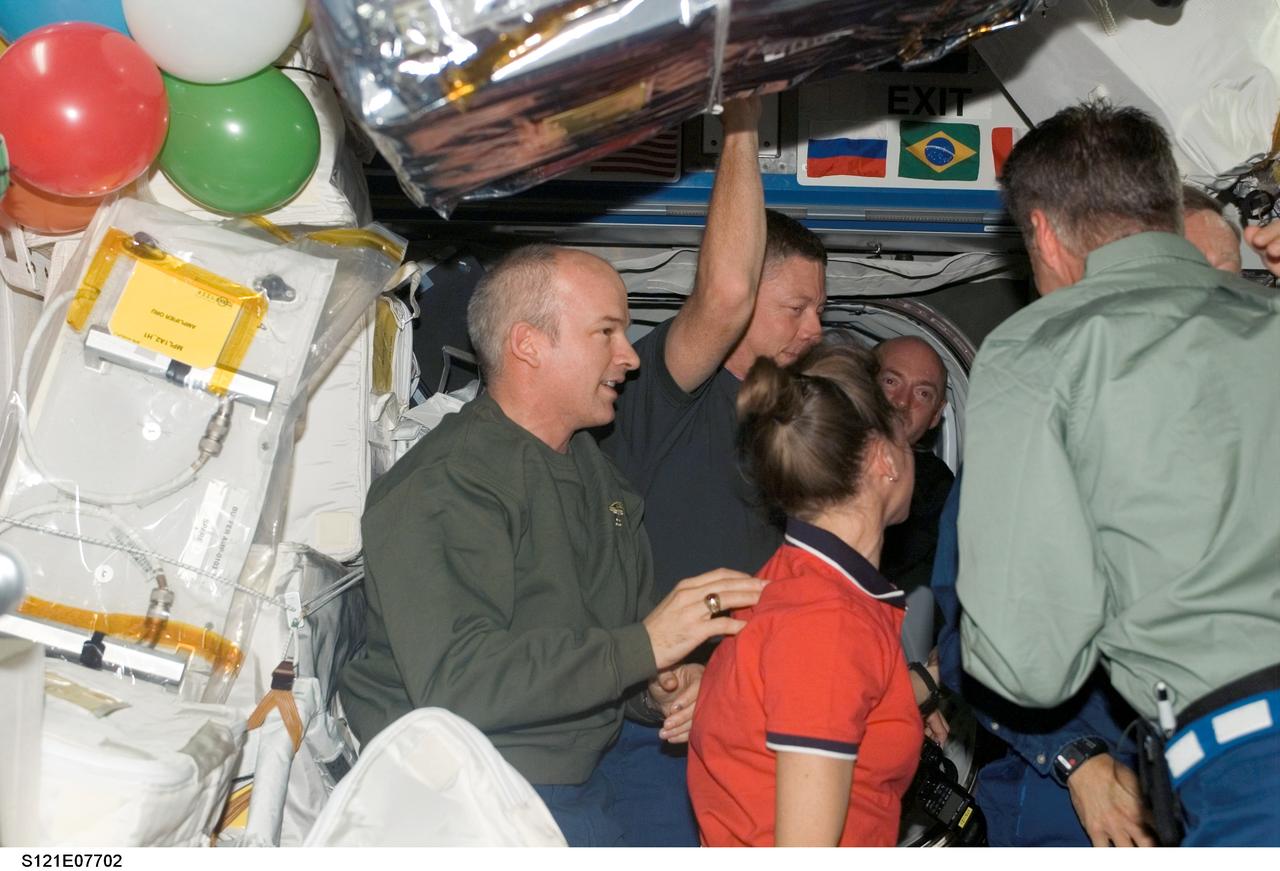
S121-E-07702 (15 July 2006) --- After almost nine days of cooperative work onboard the International Space Station and Space Shuttle Discovery, the STS-121 and Expedition 13 crews bid farewell to each other prior to the undocking of the two spacecraft. Pictured are astronauts Jeffrey N. Williams, Expedition 13 NASA space station science officer and flight engineer; Lisa M. Nowak and Michael E. Fossum, STS-121 mission specialists; European Space Agency (ESA) astronaut Thomas Reiter, Expedition 13 flight engineer; and Mark E. Kelly, STS-121 pilot. Undocking of the two spacecraft occurred at 5:08 a.m. (CDT) on July 15, 2006.
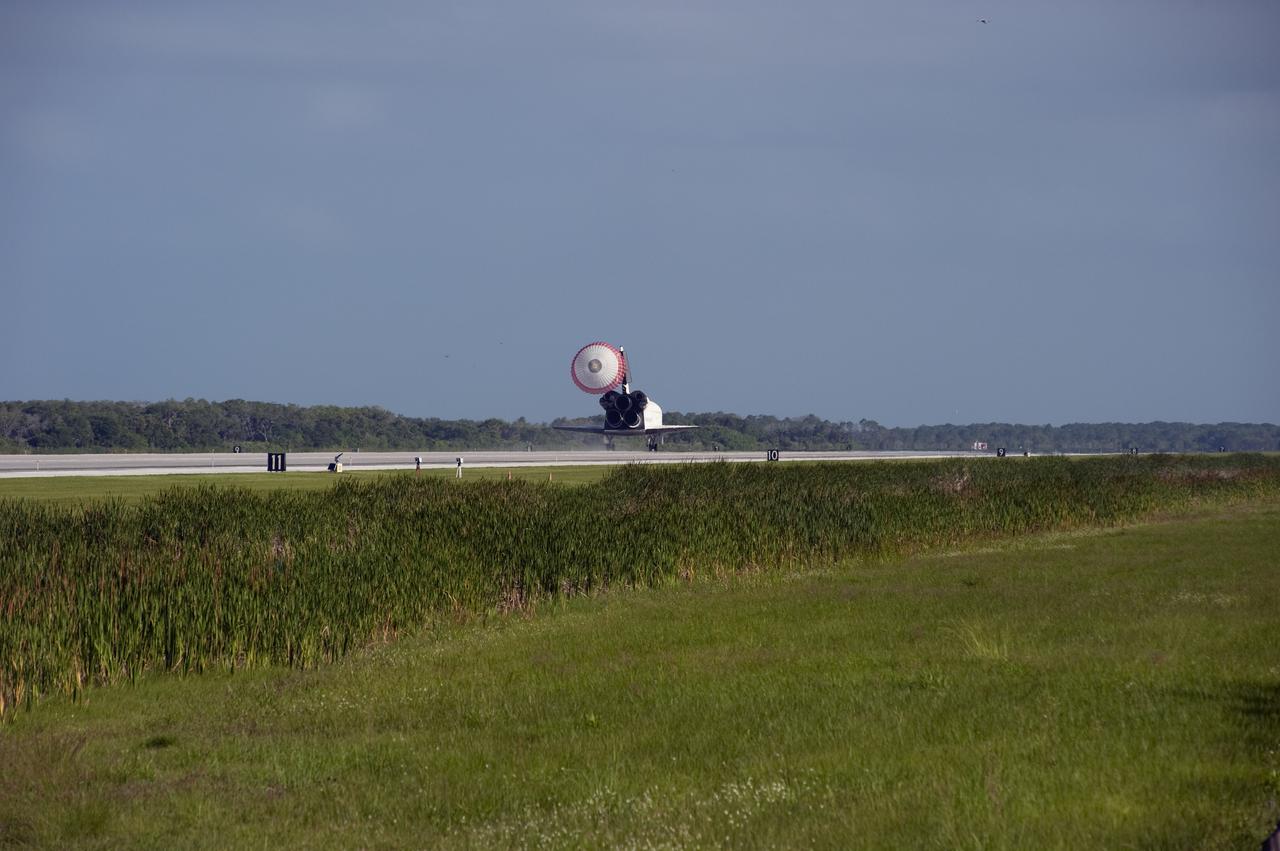
CAPE CANAVERAL, Fla. - The drag chute slows space shuttle Atlantis as it rolls down Runway 33 at the Shuttle Landing Facility at NASA's Kennedy Space Center in Florida. Landing was at 8:48 a.m. EDT, completing the 12-day STS-132 mission to the International Space Station. Main gear touchdown was at 8:48:11 a.m. EDT, followed by nose gear touchdown at 8:48:21 a.m. and wheelstop at 8:49:18 a.m. On board are Commander Ken Ham, Pilot Tony Antonelli, Mission Specialists Garrett Reisman, Michael Good, Steve Bowen and Piers Sellers. The six-member STS-132 crew carried the Russian-built Mini Research Module-1 to the International Space Station. STS-132 is the 34th shuttle mission to the station, the 132nd shuttle mission overall and the last planned flight for Atlantis. For information on the STS-132 mission and crew, visit www.nasa.gov_mission_pages_shuttle_shuttlemissions_sts132_index.html. Photo credit: NASA_Ben Cooper
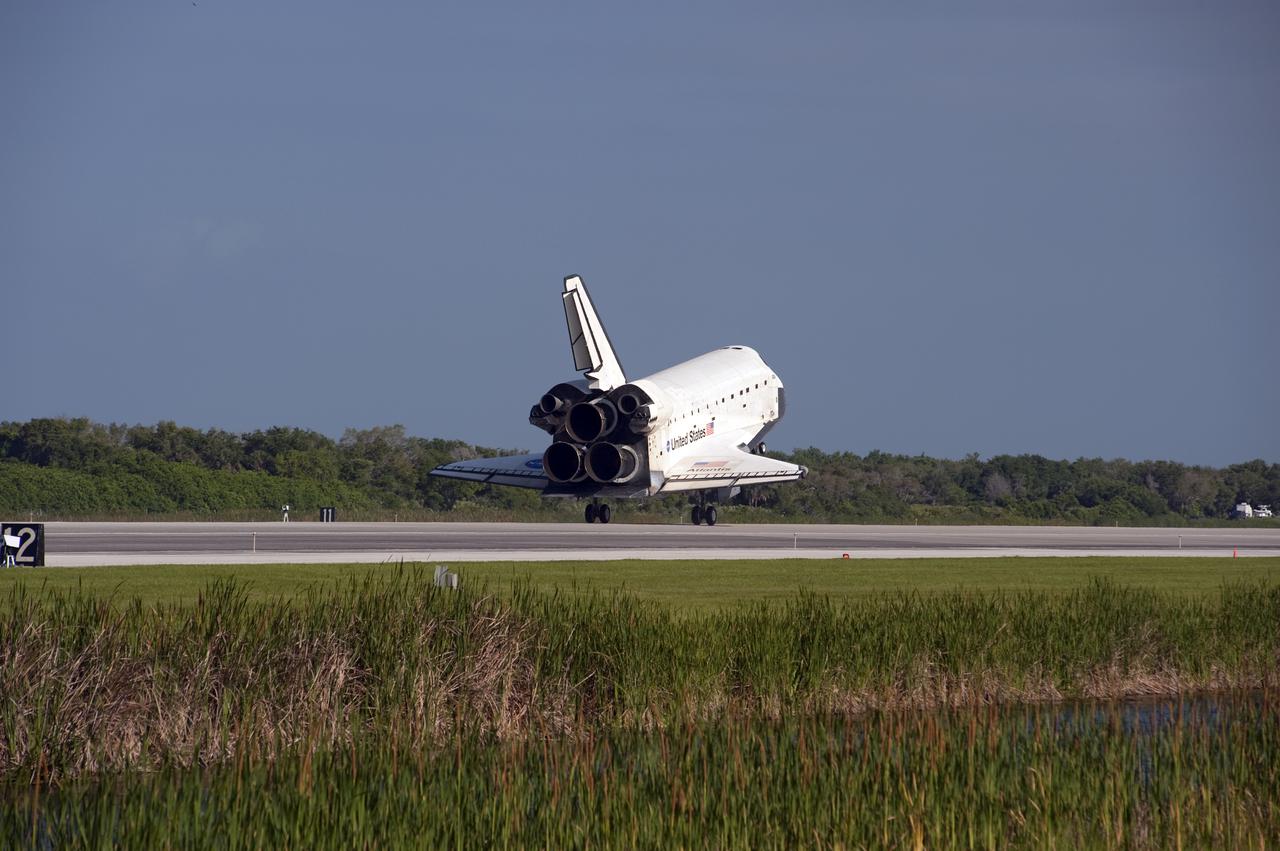
CAPE CANAVERAL, Fla. - Space shuttle Atlantis' main gear touches down on Runway 33 at the Shuttle Landing Facility at NASA's Kennedy Space Center in Florida. Landing was at 8:48 a.m. EDT, completing the 12-day STS-132 mission to the International Space Station. Main gear touchdown was at 8:48:11 a.m. EDT, followed by nose gear touchdown at 8:48:21 a.m. and wheelstop at 8:49:18 a.m. On board are Commander Ken Ham, Pilot Tony Antonelli, Mission Specialists Garrett Reisman, Michael Good, Steve Bowen and Piers Sellers. The six-member STS-132 crew carried the Russian-built Mini Research Module-1 to the International Space Station. STS-132 is the 34th shuttle mission to the station, the 132nd shuttle mission overall and the last planned flight for Atlantis. For information on the STS-132 mission and crew, visit www.nasa.gov_mission_pages_shuttle_shuttlemissions_sts132_index.html. Photo credit: NASA_Ben Cooper

CAPE CANAVERAL, Fla. -- Space shuttle Discovery's main landing gear touches down on Runway 15 at the Shuttle Landing Facility at NASA's Kennedy Space Center in Florida after 13-days in space, completing the 5.3-million-mile STS-133 mission. Main gear touchdown was at 11:57:17 a.m., followed by nose gear touchdown at 11:57:28, and wheelstop at 11:58:14 a.m. On board are Commander Steve Lindsey, Pilot Eric Boe, and Mission Specialists Nicole Stott, Michael Barratt, Alvin Drew and Steve Bowen. Discovery and its six-member crew delivered the Permanent Multipurpose Module, packed with supplies and critical spare parts, as well as Robonaut 2, the dexterous humanoid astronaut helper, to the orbiting outpost. STS-133 was Discovery's 39th and final mission. This was the 133rd Space Shuttle Program mission and the 35th shuttle voyage to the space station. Photo credit: NASA/Ben Cooper
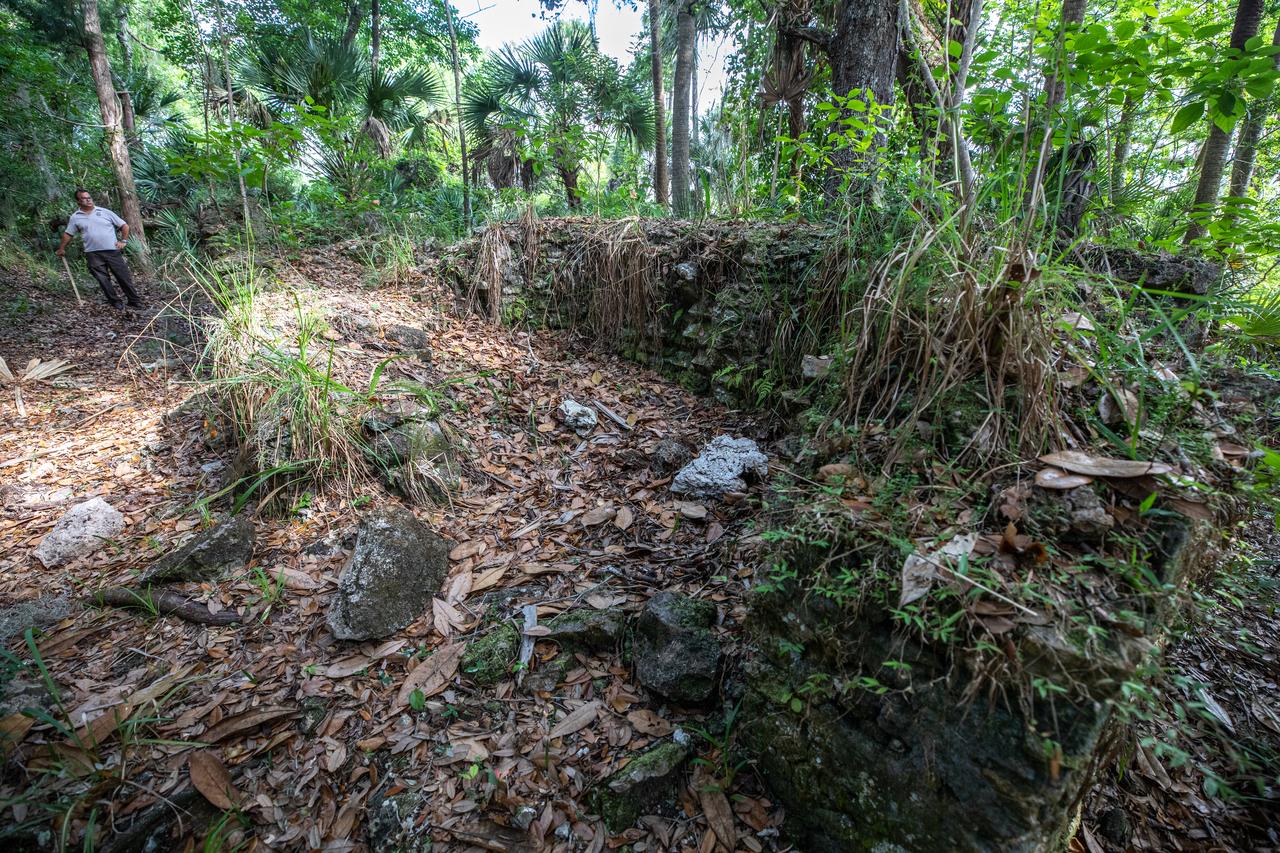
Michael Legare, of the U.S. Fish and Wildlife Service, stands near the archeological ruins of the Elliot Plantation sugar mill at NASA’s Kennedy Space Center in Florida on May 26, 2022. The plantation’s enslaved community built the sugar mill structure, or sugar train, where sugar cane juice would be boiled during processing in graduated copper kettles until the liquid reduced into a thick syrup. The ruins of Elliot Plantation date from the 1760s and represent the largest, earliest, and southernmost British period sugar plantation in the U.S., as well as one of the most intact and best examples of a completely preserved enslaved landscape. The archeological site is managed through interagency cooperation between the National Park Service, the U.S. Fish and Wildlife Service, and NASA.
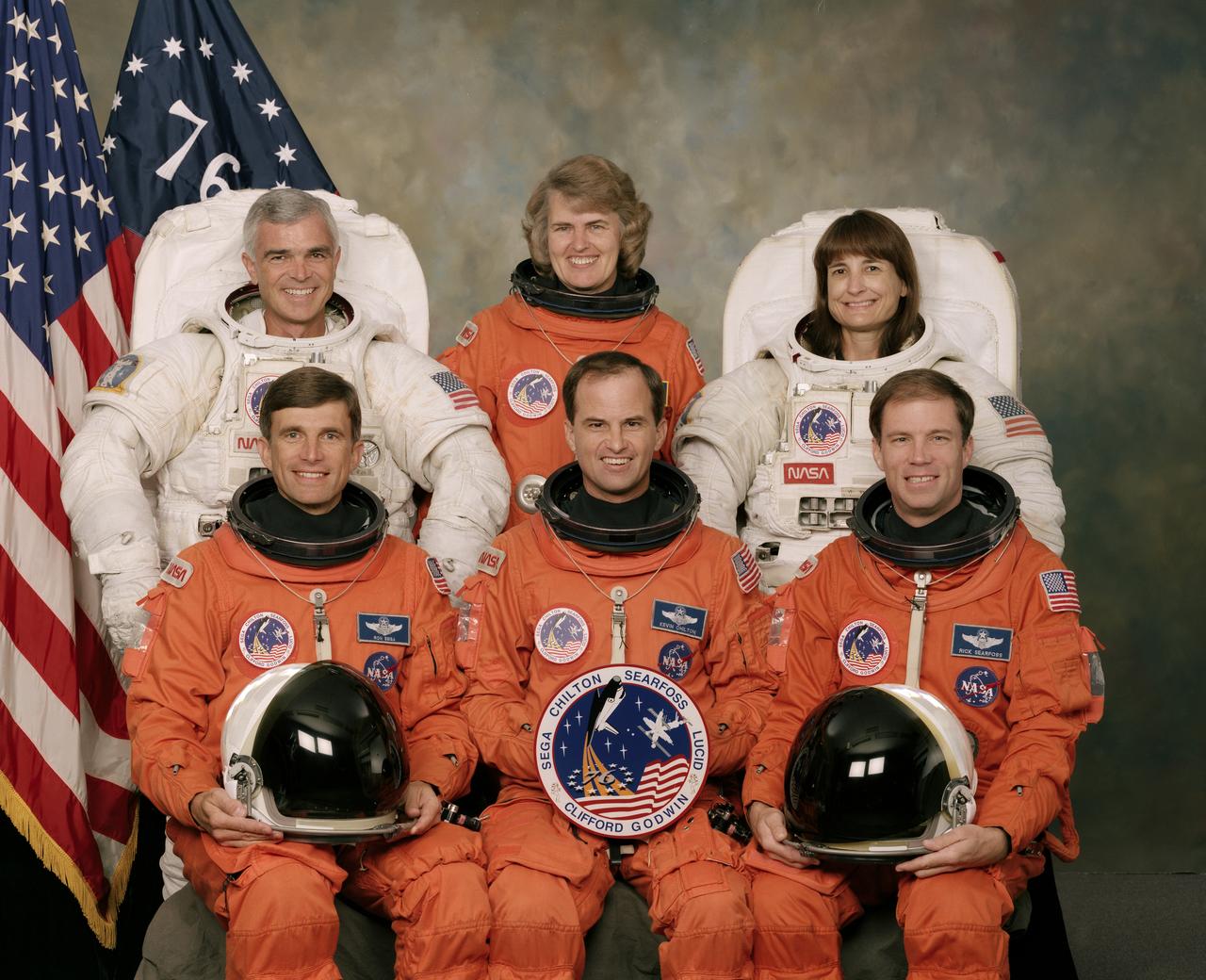
These six NASA astronauts launched into space aboard the Space Shuttle Atlantis on March 22, 1996 for the STS-76 mission. Pictured on the front row, left to right, are astronauts Ronald M. Sega, mission specialist; Kevin P. Chilton, mission commander; and Richard A. Searfoss, pilot. On the back row, left to right, are mission specialists Michael R. (Rich) Clifford, Shannon W. Lucid, and Linda M. Godwin. The third U.S. Shuttle-Mir docking, STS-76 began a new period of international cooperation in space exploration with the first Shuttle transport of a United States astronaut (Lucid) to Russia’s Mir Space Station for extended joint space research. Clifford and Godwin, pictured here in training versions of the Extravehicular Mobility Unit (EMU), performed the first Extravehicular Activity (EVA) during Mir-Shuttle docked operations.
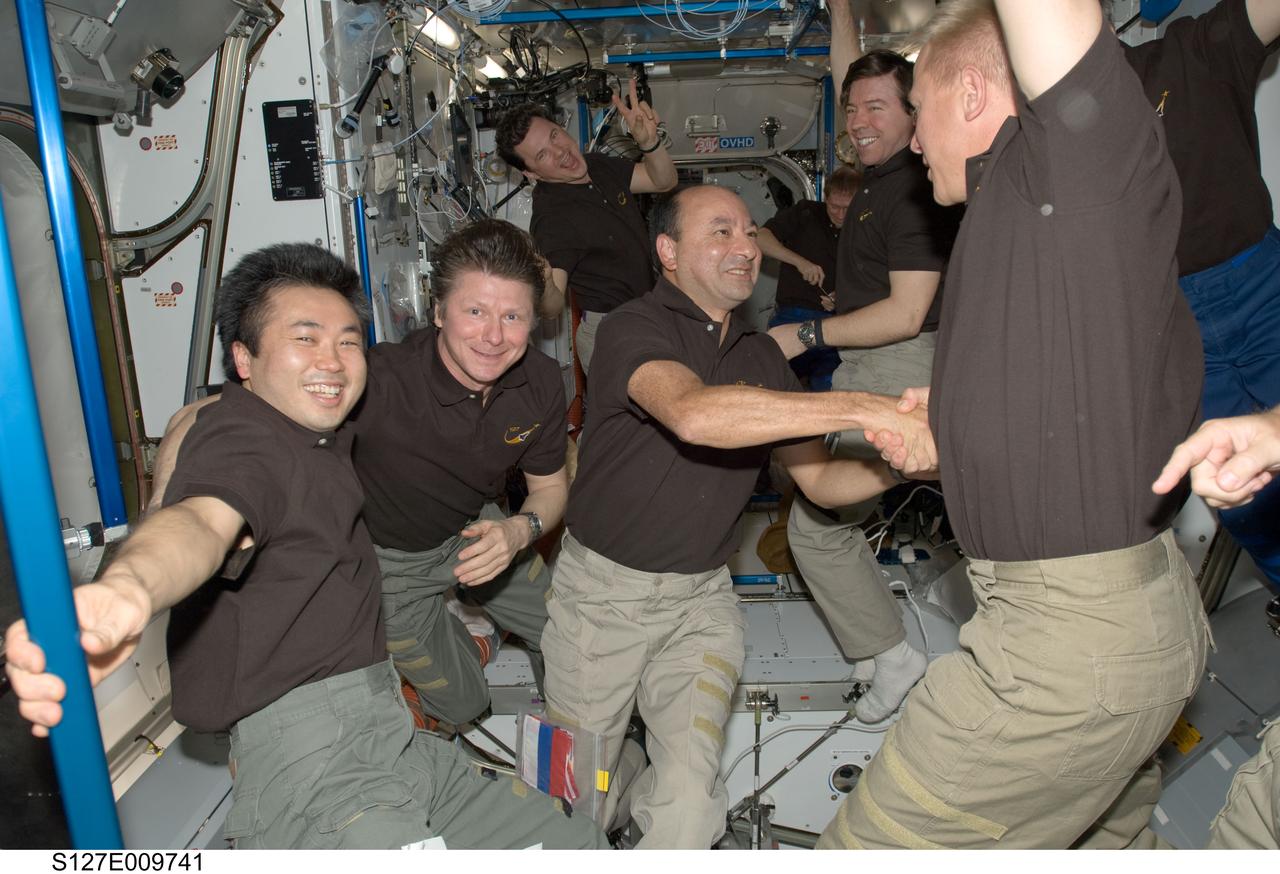
S127-E-009741 (28 July 2009) --- After 11 days of cooperative work onboard the International Space Station and Space Shuttle Endeavour, the STS-127 and Expedition 20 crew members bid farewell to each other prior to the undocking of the two spacecraft. Pictured in the foreground are Japan Aerospace Exploration Agency (JAXA) astronaut Koichi Wakata (left), STS-127 mission specialist; cosmonaut Gennady Padalka, Expedition 20 commander; NASA astronaut Mark Polansky, STS-127 commander; and NASA astronaut Tim Kopra, Expedition 20 flight engineer. Pictured in the background are cosmonaut Roman Romanenko, NASA astronaut Michael Barratt and European Space Agency astronaut Frank De Winne, all Expedition 20 flight engineers. Undocking occurred at 12:26 p.m. (CDT) on July 28, 2009.
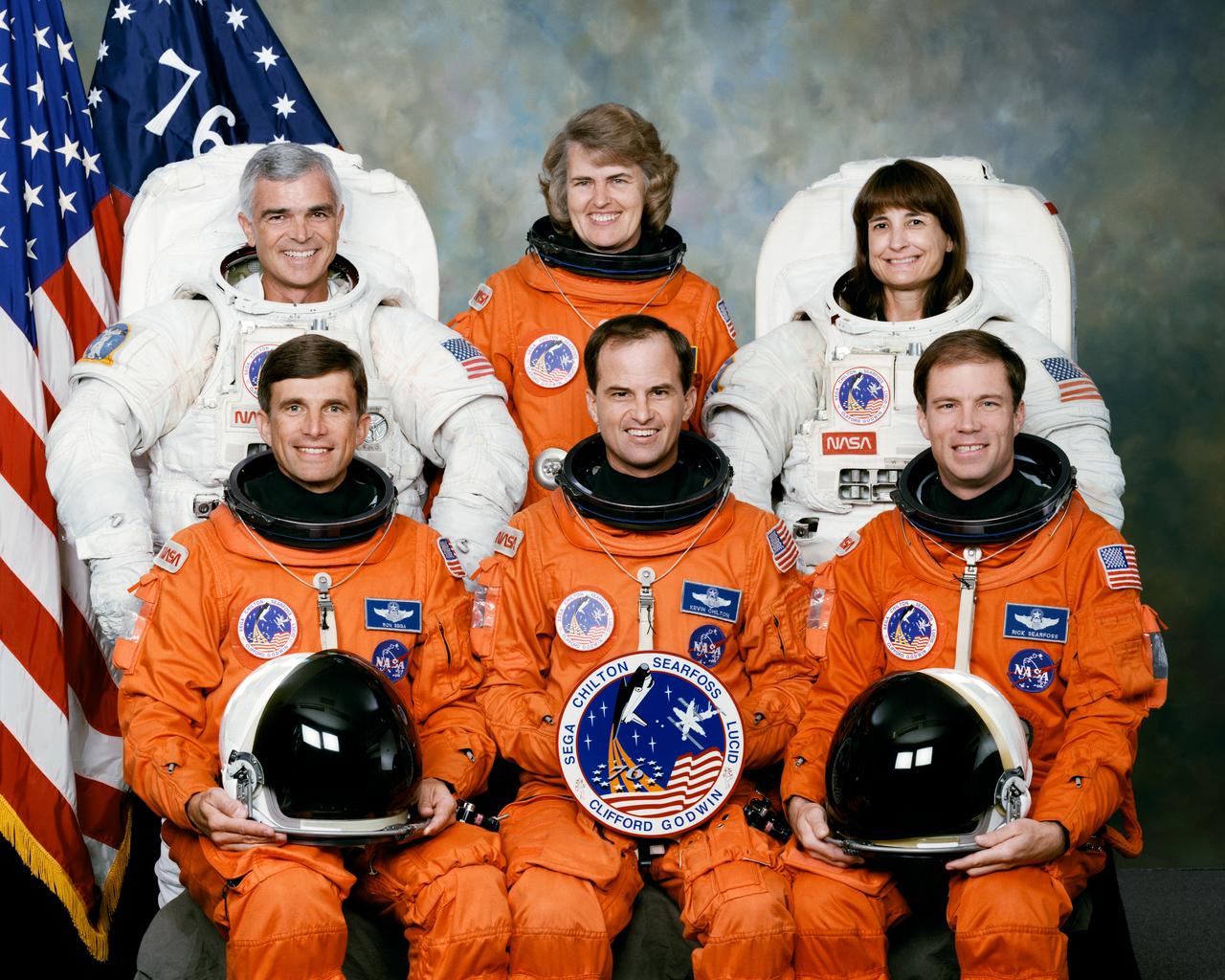
STS076-S-002 (November 1995) --- These six NASA astronauts will be launched into space aboard the Space Shuttle Atlantis early next year. Front row, left to right, are astronauts Ronald M. Sega, mission specialist; Kevin P. Chilton, mission commander; and Richard A. Searfoss, pilot. Back row, left to right, are mission specialists Michael R. (Rich) Clifford, Shannon W. Lucid and Linda M. Godwin. STS-76 begins a new period of international cooperation in space exploration with the first Shuttle transport of a United States astronaut (Lucid) to Russia’s Mir Space Station for extended joint space research. Clifford and Godwin, pictured here in training versions of the Extravehicular Mobility Unit (EMU), are scheduled to perform the first Extravehicular Activity (EVA) during Mir-Shuttle docked operations.
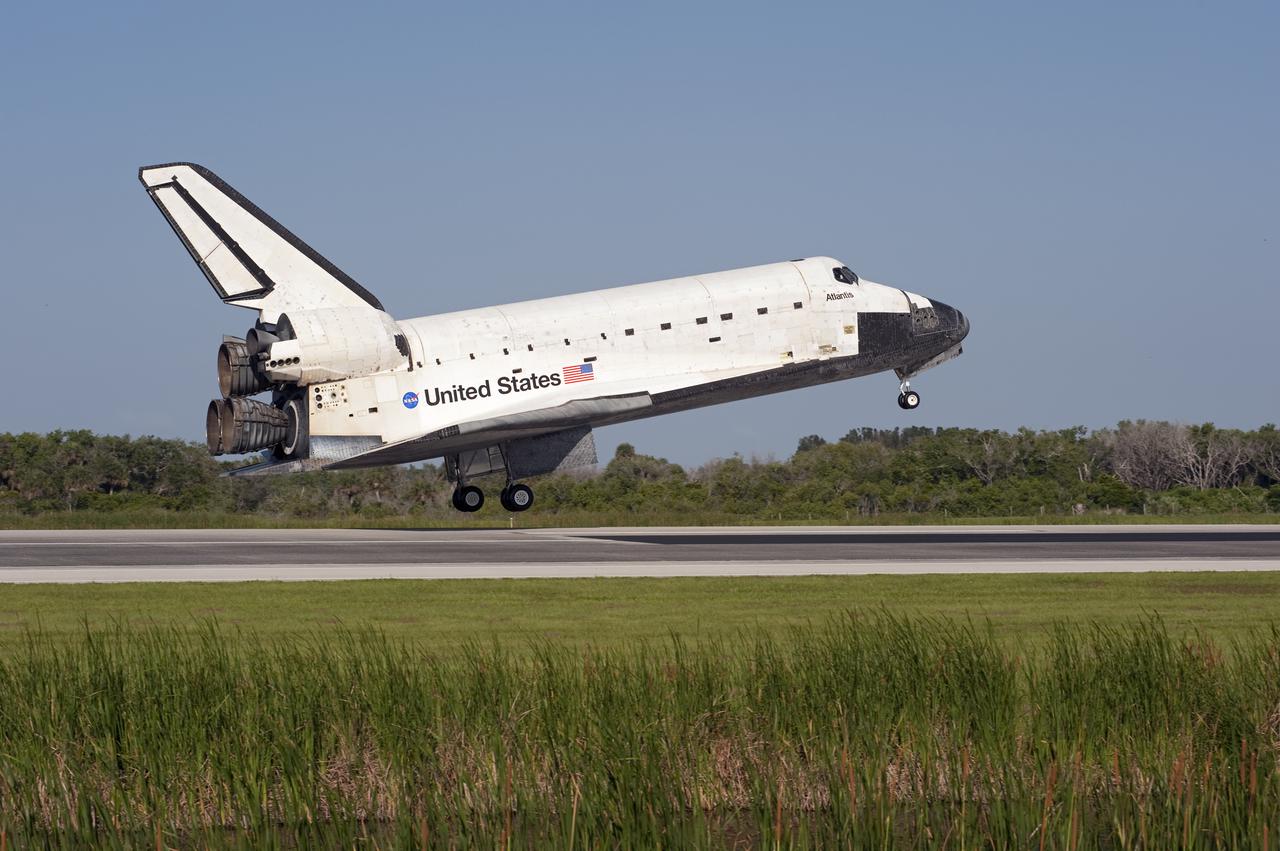
CAPE CANAVERAL, Fla. - Space shuttle Atlantis nears touchdown on Runway 33 at the Shuttle Landing Facility at NASA's Kennedy Space Center in Florida. Landing was at 8:48 a.m. EDT, completing the 12-day STS-132 mission to the International Space Station. Main gear touchdown was at 8:48:11 a.m. EDT, followed by nose gear touchdown at 8:48:21 a.m. and wheelstop at 8:49:18 a.m. On board are Commander Ken Ham, Pilot Tony Antonelli, Mission Specialists Garrett Reisman, Michael Good, Steve Bowen and Piers Sellers. The six-member STS-132 crew carried the Russian-built Mini Research Module-1 to the International Space Station. STS-132 is the 34th shuttle mission to the station, the 132nd shuttle mission overall and the last planned flight for Atlantis. For information on the STS-132 mission and crew, visit www.nasa.gov_mission_pages_shuttle_shuttlemissions_sts132_index.html. Photo credit: NASA_Ben Cooper
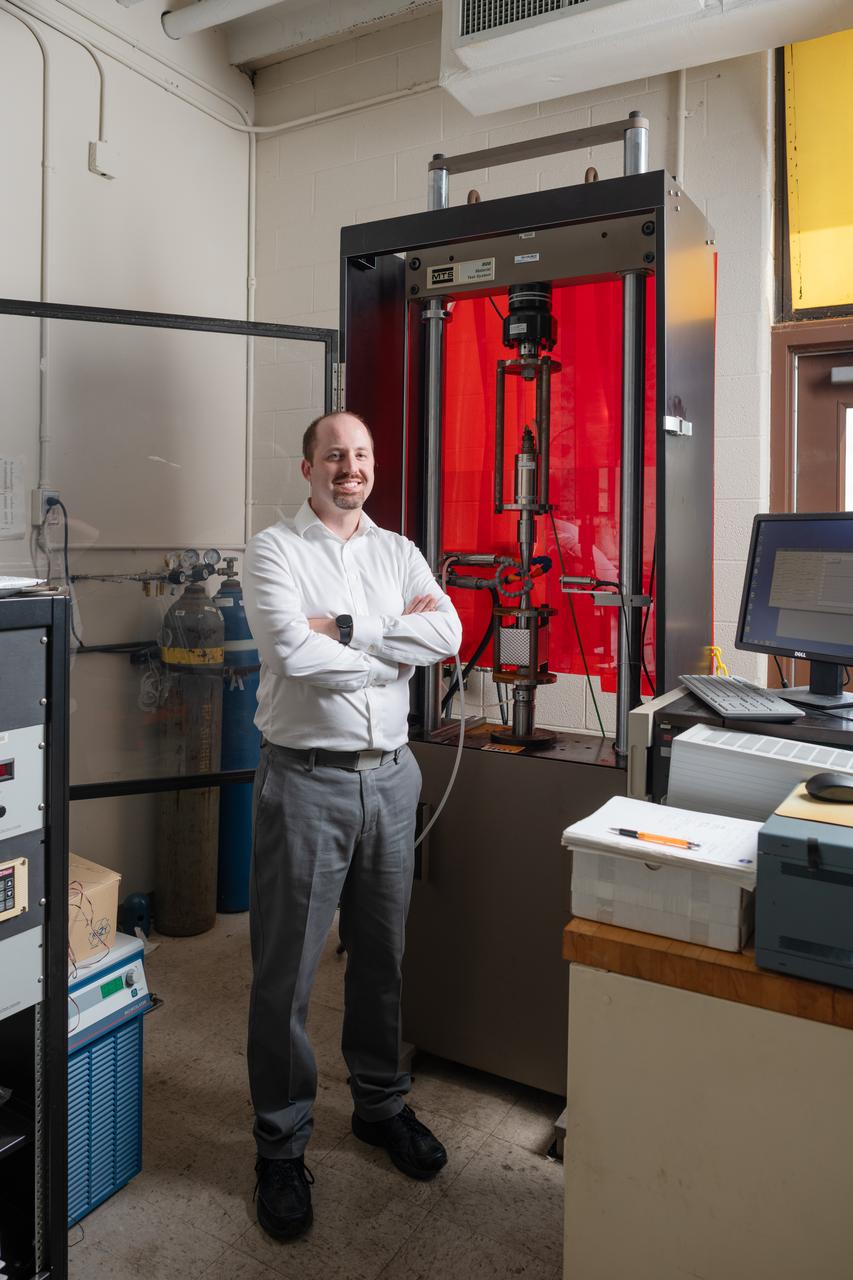
Each year, the NESC produces the NESC Technical Update, which highlights two or three individuals from each Center and includes assessments throughout the year. Because of the critical contributions to the NESC mission this year, Rob Jankovsky, NESC Chief Engineer at GRC, chose two individuals to be highlighted. This year, it is Andrew Ring and Michael Cooper. Mr. Ring, pictured here, performs stress and fatigue testing on all manner of materials in various environments and research on jet engine materials, looking for ways to increase the performance and safety of turbine blades and disks. Several NESC assessments have benefited from his expertise, most recently in understanding crack initiation and propagation in the aluminum-magnesium alloys that make up the modules of the ISS. He has also used image processing techniques to quantify the variables in parachute energy modulator production and performance and investigate flaws in the composite weave of overwrapped pressure vessels.
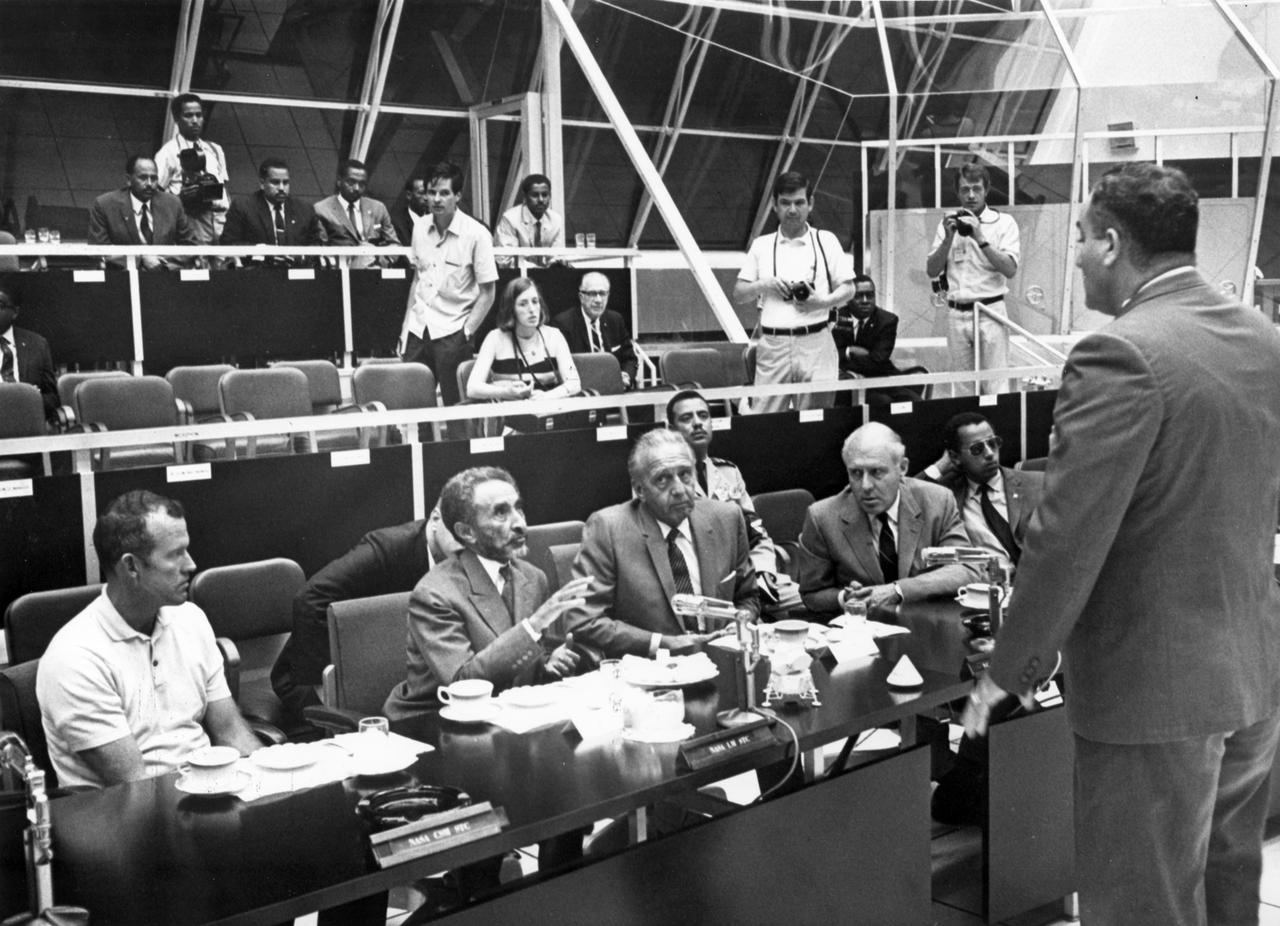
During a Kennedy Space Center (KSC) briefing on the next day’s Apollo 11 launch, Emperor Haile Selassie of Ethiopia (with raised hand) asks a question of Rocco A. Petrone, director of launch operations at KSC. To the right of the emperor is astronaut Gordon Cooper and to his left is Dr. Kurt Debus, director of KSC. The first manned lunar launch occurred at 9:32 am on July 16, 1969. The crew included astronauts Neil A. Armstrong, commander; Michael Collins, Command Module (CM) pilot; and Edwin E. Aldrin Jr., Lunar Module (LM) pilot. After 21/2 hours of collecting samples on the lunar surface, the crew safely splashed down into the Pacific Ocean on July 24, 1969. With the success of Apollo 11, the national objective to land men on the Moon and return them safely to Earth had been accomplished.
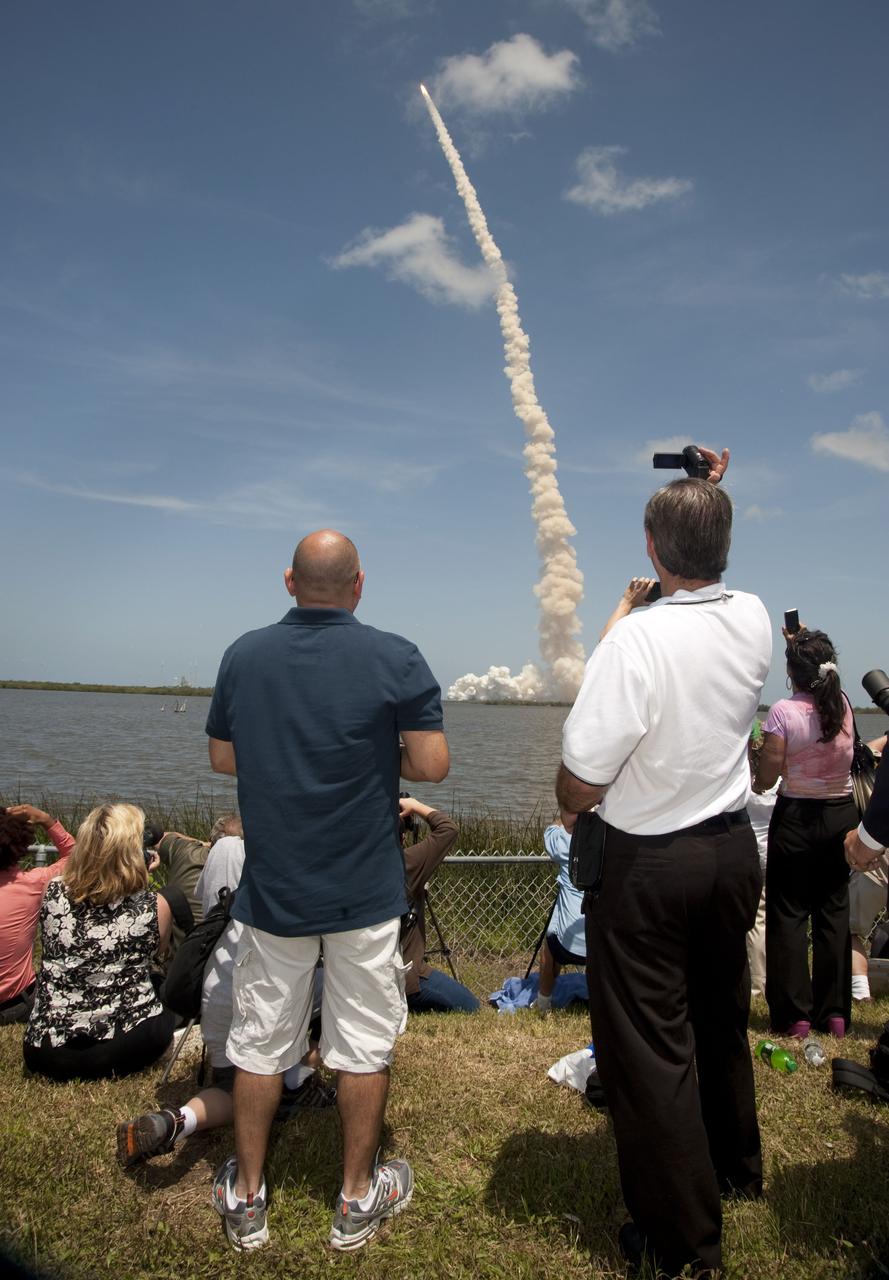
STS132-S-013 (14 May 2010) --- As visitors watch, the space shuttle Atlantis and its six-member STS-132 crew head toward Earth orbit and rendezvous with the International Space Station. Liftoff was at 2:20 p.m. (EDT) on May 14, 2010, from launch pad 39A at NASA's Kennedy Space Center. Onboard are NASA astronauts Ken Ham, commander; Tony Antonelli, pilot; Garrett Reisman, Michael Good, Steve Bowen and Piers Sellers, all mission specialists. The crew will deliver the Russian-built Mini-Research Module 1 (MRM-1) to the International Space Station. Named Rassvet, Russian for "dawn," the module is the second in a series of new pressurized components for Russia and will be permanently attached to the Earth-facing port of the Zarya Functional Cargo Block (FGB). Rassvet will be used for cargo storage and will provide an additional docking port to the station. Also aboard Atlantis is an Integrated Cargo Carrier, or ICC, an unpressurized flat bed pallet and keel yoke assembly used to support the transfer of exterior cargo from the shuttle to the station. STS-132 is the 34th mission to the station and the last scheduled flight for Atlantis. For more information on the STS-132 mission objectives, payload and crew, visit www.nasa.gov/mission_pages/shuttle/shuttlemissions/sts132/index.html. Photo Credit: NASA/Ben Cooper
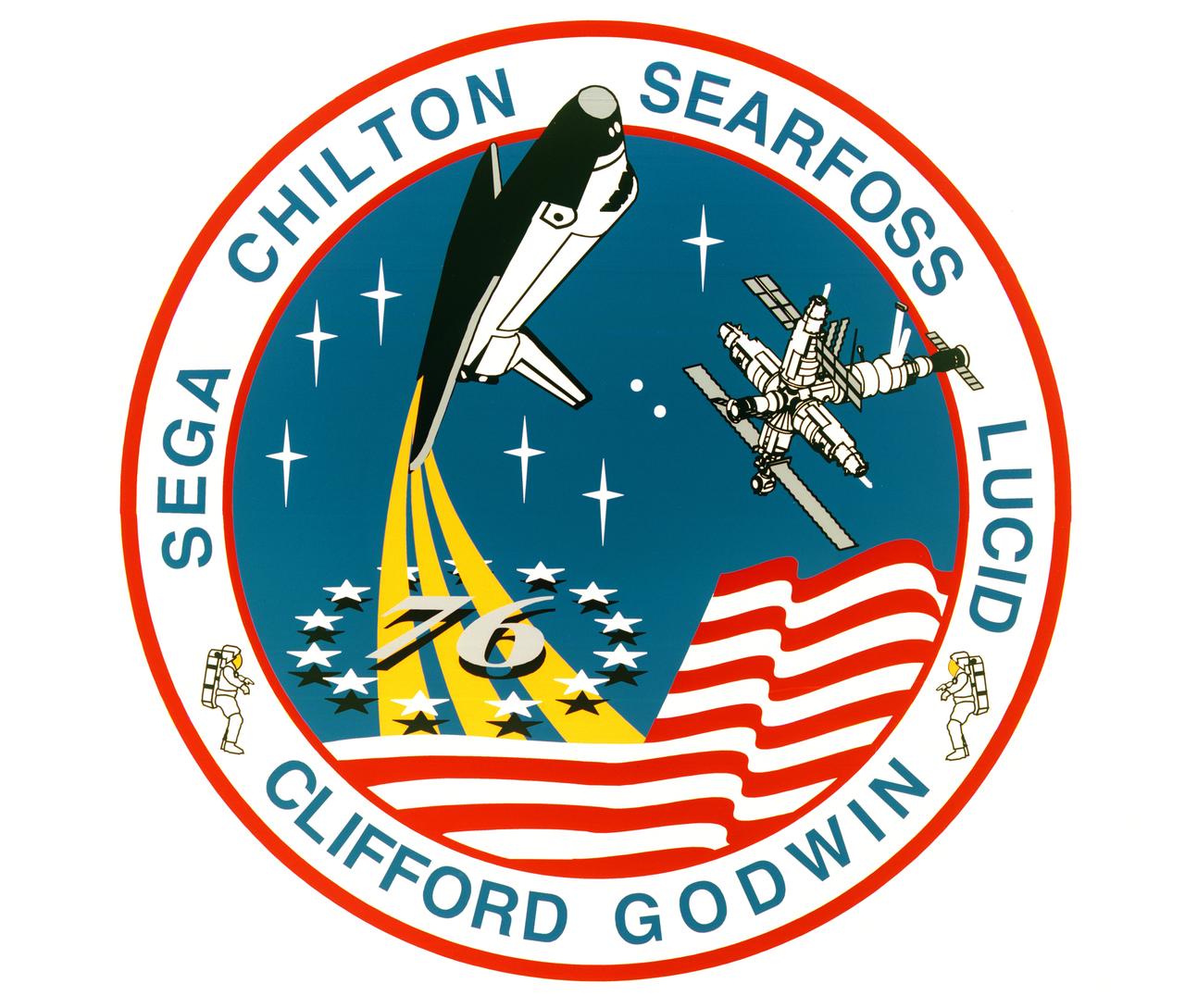
The STS-76 crew patch depicts the Space Shuttle Atlantis and Russia's Mir Space Station as the space ships prepare for a rendezvous and docking. The Spirit of 76, an era of new beginnings, is represented by the Space Shuttle rising through the circle of 13 stars in the Betsy Ross flag. STS-76 begins a new period of international cooperation in space exploration with the first Shuttle transport of a United States astronaut, Shannon W. Lucid, to the Mir Space Station for extended joint space research. Frontiers for future exploration are represented by stars and the planets. The three gold trails and the ring of stars in union form the astronaut logo. Two suited extravehicular activity (EVA) crew members in the outer ring represent the first EVA during Shuttle-Mir docked operations. The EVA objectives were to install science experiments on the Mir exterior and to develop procedures for future EVA's on the International Space Station. The surnames of the crew members encircle the patch: Kevin P. Chilton, mission commander; Richard A. Searfoss, pilot; Ronald M. Sega, Michael R. ( Rich) Clifford, Linda M. Godwin and Lucid, all mission specialists. This patch was designed by Brandon Clifford, age 12, and the crew members of STS-76.
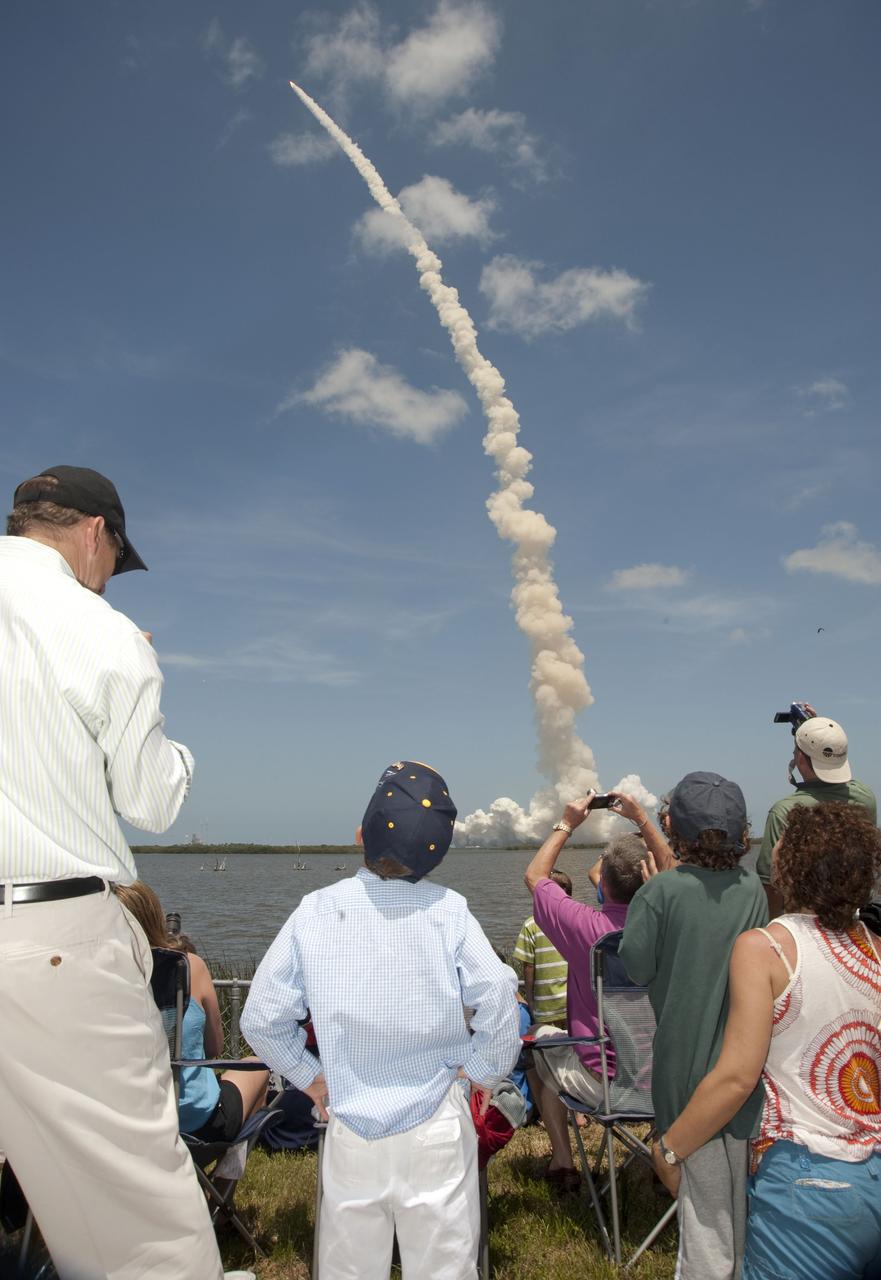
STS132-S-014 (14 May 2010) --- With visitors looking on, the space shuttle Atlantis and its six-member STS-132 crew head toward Earth orbit and rendezvous with the International Space Station. Liftoff was at 2:20 p.m. (EDT) on May 14, 2010, from launch pad 39A at NASA's Kennedy Space Center. Onboard are NASA astronauts Ken Ham, commander; Tony Antonelli, pilot; Garrett Reisman, Michael Good, Steve Bowen and Piers Sellers, all mission specialists. The crew will deliver the Russian-built Mini-Research Module 1 (MRM-1) to the International Space Station. Named Rassvet, Russian for "dawn," the module is the second in a series of new pressurized components for Russia and will be permanently attached to the Earth-facing port of the Zarya Functional Cargo Block (FGB). Rassvet will be used for cargo storage and will provide an additional docking port to the station. Also aboard Atlantis is an Integrated Cargo Carrier, or ICC, an unpressurized flat bed pallet and keel yoke assembly used to support the transfer of exterior cargo from the shuttle to the station. STS-132 is the 34th mission to the station and the last scheduled flight for Atlantis. For more information on the STS-132 mission objectives, payload and crew, visit www.nasa.gov/mission_pages/shuttle/shuttlemissions/sts132/index.html. Photo Credit: NASA/Ben Cooper
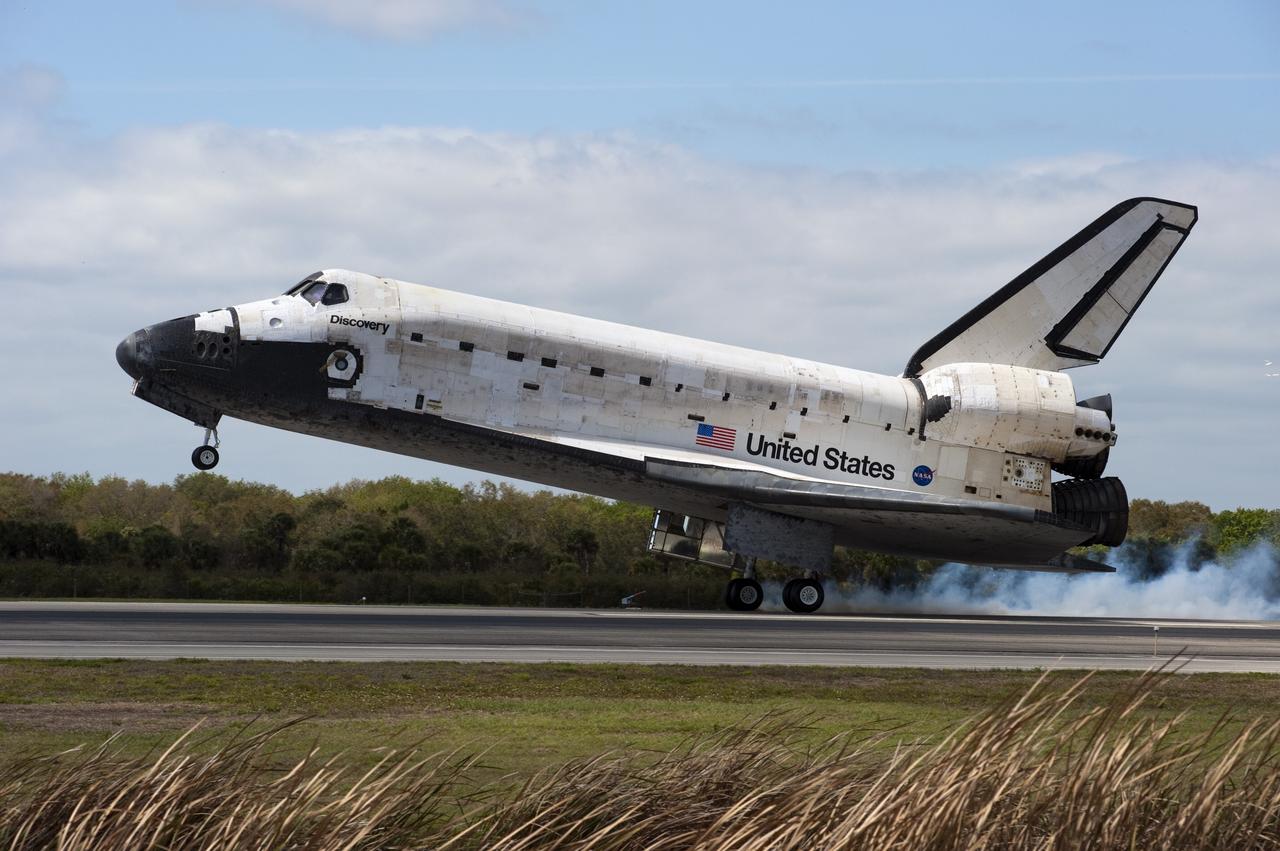
CAPE CANAVERAL, Fla. -- Streams of smoke trail from the main landing gear tires as space shuttle Discovery touches down on Runway 15 at the Shuttle Landing Facility at NASA's Kennedy Space Center in Florida after 13-days in space, completing the 5.3-million-mile STS-133 mission. Main gear touchdown was at 11:57:17 a.m., followed by nose gear touchdown at 11:57:28, and wheelstop at 11:58:14 a.m. On board are Commander Steve Lindsey, Pilot Eric Boe, and Mission Specialists Nicole Stott, Michael Barratt, Alvin Drew and Steve Bowen. Discovery and its six-member crew delivered the Permanent Multipurpose Module, packed with supplies and critical spare parts, as well as Robonaut 2, the dexterous humanoid astronaut helper, to the orbiting outpost. STS-133 was Discovery's 39th and final mission. This was the 133rd Space Shuttle Program mission and the 35th shuttle voyage to the space station. Photo credit: NASA/Ben Cooper
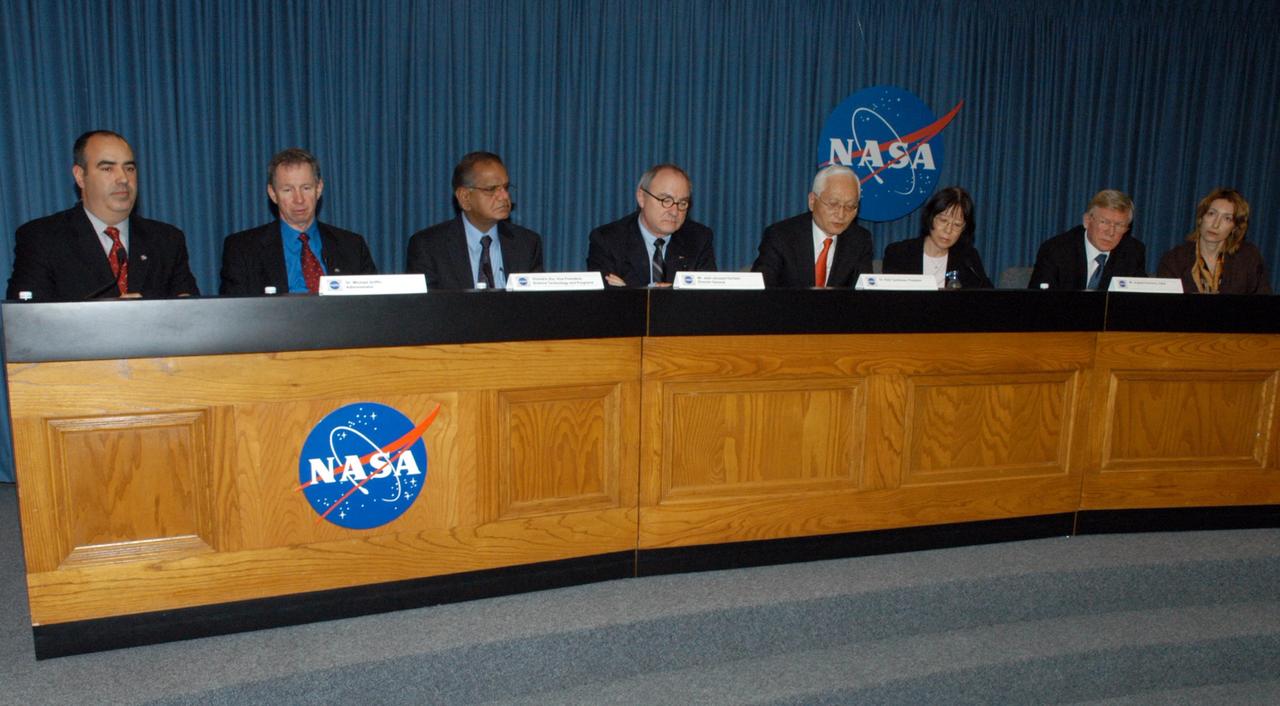
KENNEDY SPACE CENTER, FLA. - Leaders from space agencies around the world participate in a news briefing following the International Space Station Heads of Agency meeting held at Kennedy Space Center. From left are NASA Press Secretary Dean Acosta; NASA Administrator Michael Griffin; Canadian Space Agency Vice-President Space Science, Technology and Programs Virendra Jha; European Space Agency Director-General Jean-Jacques Dordain; Japan Aerospace Exploration Agency President Keiji Tachikawa; Japanese interpreter Masako Kaharia; Russian Federal Space Agency Head Anatolii Perminov; and Russian interpreter Elena Maroko. The purpose of the meeting was to review International Space Station cooperation and endorse a revision to the station configuration and assembly sequence. At the meeting, the partners reaffirmed their agencies' commitment to meet their mutual obligations, to implement six person crew operations in 2009 and an adequate number of shuttle flights to complete the assembly of the space station by the end of the decade. Photo credit: NASA/George Shelton
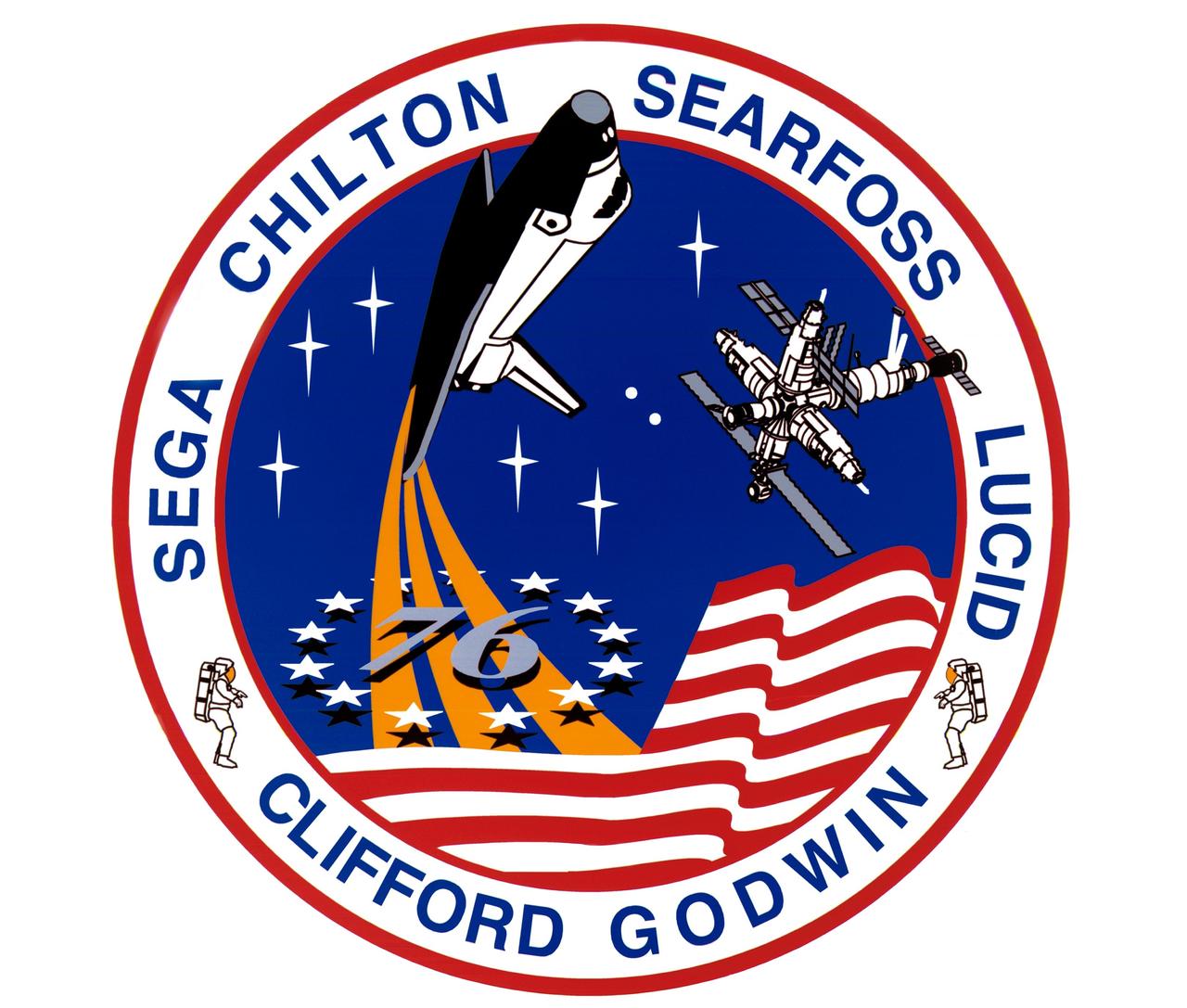
STS076-S-001 (November 1995) --- The STS-76 crew patch depicts the space shuttle Atlantis and Russia's Mir Space Station as the space ships prepare for a rendezvous and docking. The "Spirit of 76," an era of new beginnings, is represented by the space shuttle rising through the circle of 13 stars in the Betsy Ross flag. STS-76 begins a new period of international cooperation in space exploration with the first shuttle transport of a United States astronaut, Shannon W. Lucid, to the Mir Space Station for extended joint space research. Frontiers for future exploration are represented by stars and the planets. The three gold trails and the ring of stars in union form the astronaut logo. Two suited extravehicular activity (EVA) crew members in the outer ring represent the first EVA during Shuttle-Mir docked operations. The EVA objectives are to install science experiments on the Mir exterior and to develop procedures for future EVA's on the International Space Station. The surnames of the crew members encircle the patch: Kevin P. Chilton, mission commander; Richard A. Searfoss, pilot; Ronald M. Sega, Michael R. ( Rich) Clifford, Linda M. Godwin and Lucid, all mission specialists. This patch was designed by Brandon Clifford, age 12, and the crew members of STS-76. The NASA insignia design for space shuttle flights is reserved for use by the astronauts and for other official use as the NASA Administrator may authorize. Public availability has been approved only in the forms of illustrations by the various news media. When and if there is any change in this policy, which is not anticipated, the change will be publicly announced. Photo credit: NASA