
The Most Reverend Michael Curry speaks during the Smithsonian National Air and Space Museum's Spirit of Apollo event commemorating the 50th anniversary of Apollo 8, Tuesday, Dec. 11, 2018 at the Washington National Cathedral in Washington, DC. Apollo 8 was humanity's first journey to another world, taking astronauts Frank Borman, Jim Lovell, and William Anders to the Moon and back in December of 1968. Photo Credit: (NASA/Joel Kowsky)
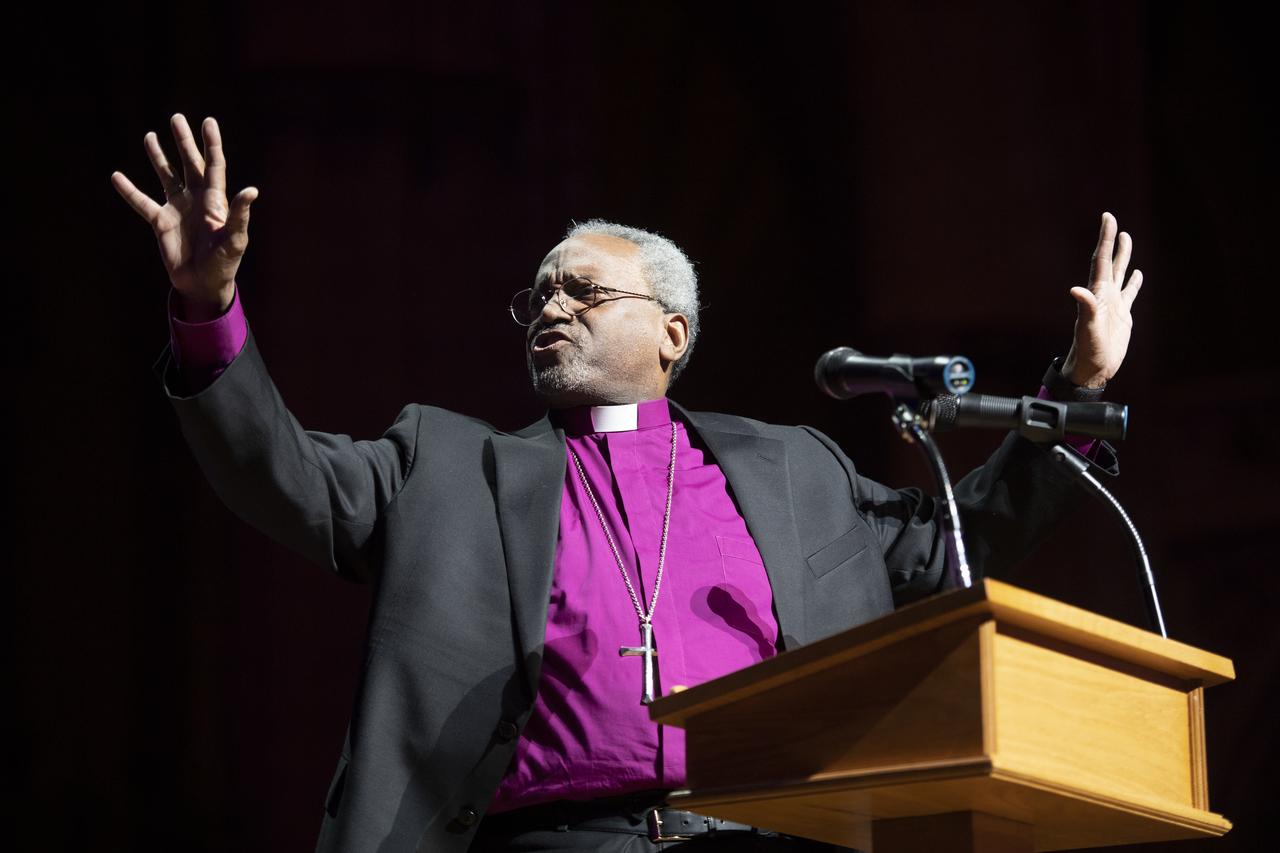
The Most Reverend Michael Curry speaks during the Smithsonian National Air and Space Museum's Spirit of Apollo event commemorating the 50th anniversary of Apollo 8, Tuesday, Dec. 11, 2018 at the Washington National Cathedral in Washington, DC. Apollo 8 was humanity's first journey to another world, taking astronauts Frank Borman, Jim Lovell, and William Anders to the Moon and back in December of 1968. Photo Credit: (NASA/Joel Kowsky)
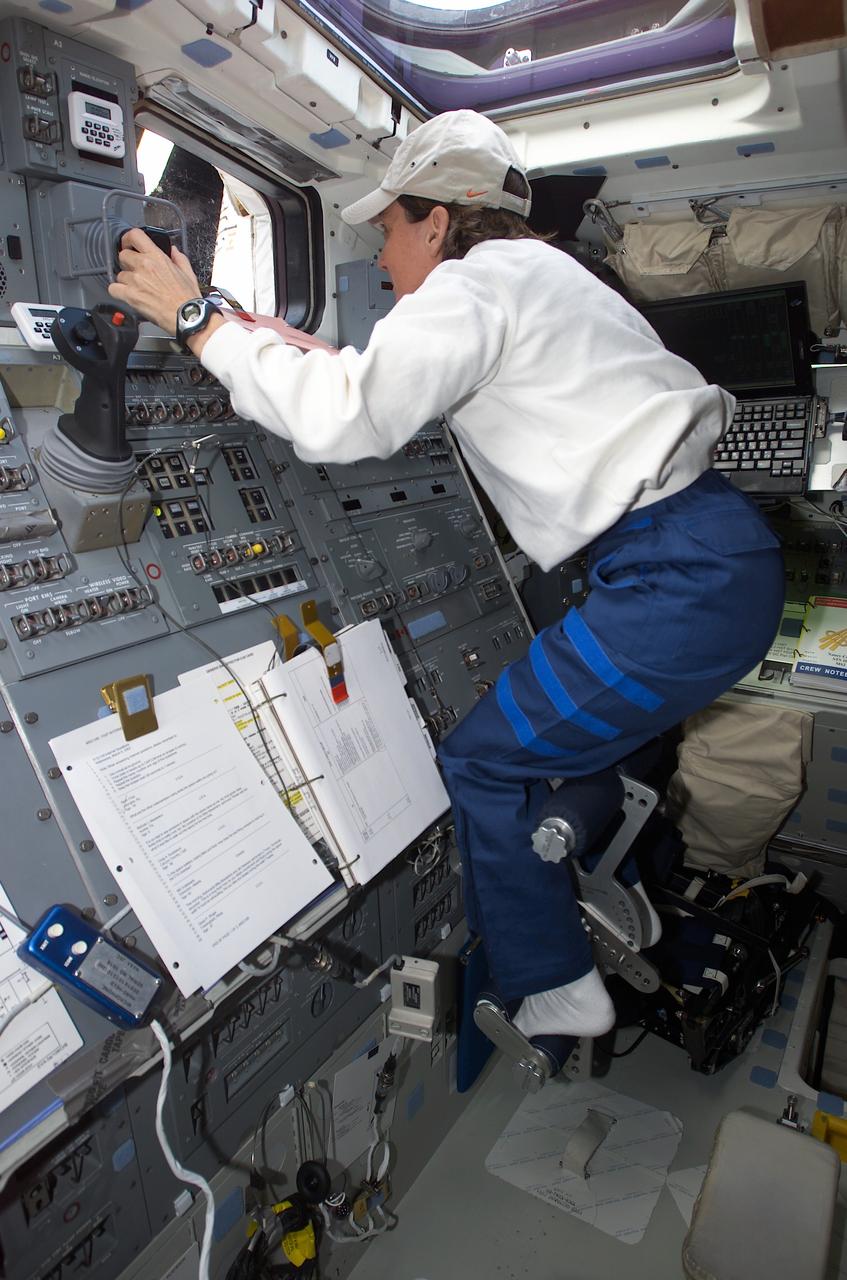
STS109-E-5685 (7 March 2002) --- Astronaut Nancy J. Currie, mission specialist, works the controls for Columbia's Remote Manipulator System (RMS) on the crew cabin's aft flight deck. On a week with one lengthy space walk per day, Currie has had her hands full with RMS duties to support the space walks of four crewmates. Astronauts James H. Newman and Michael J. Massimino had just begin EVA-4, during which the duo required the services of Currie to control the robotic arm to maneuver them around the various workstations on the Hubble Space Telescope (HST). The image was recorded with a digital still camera.
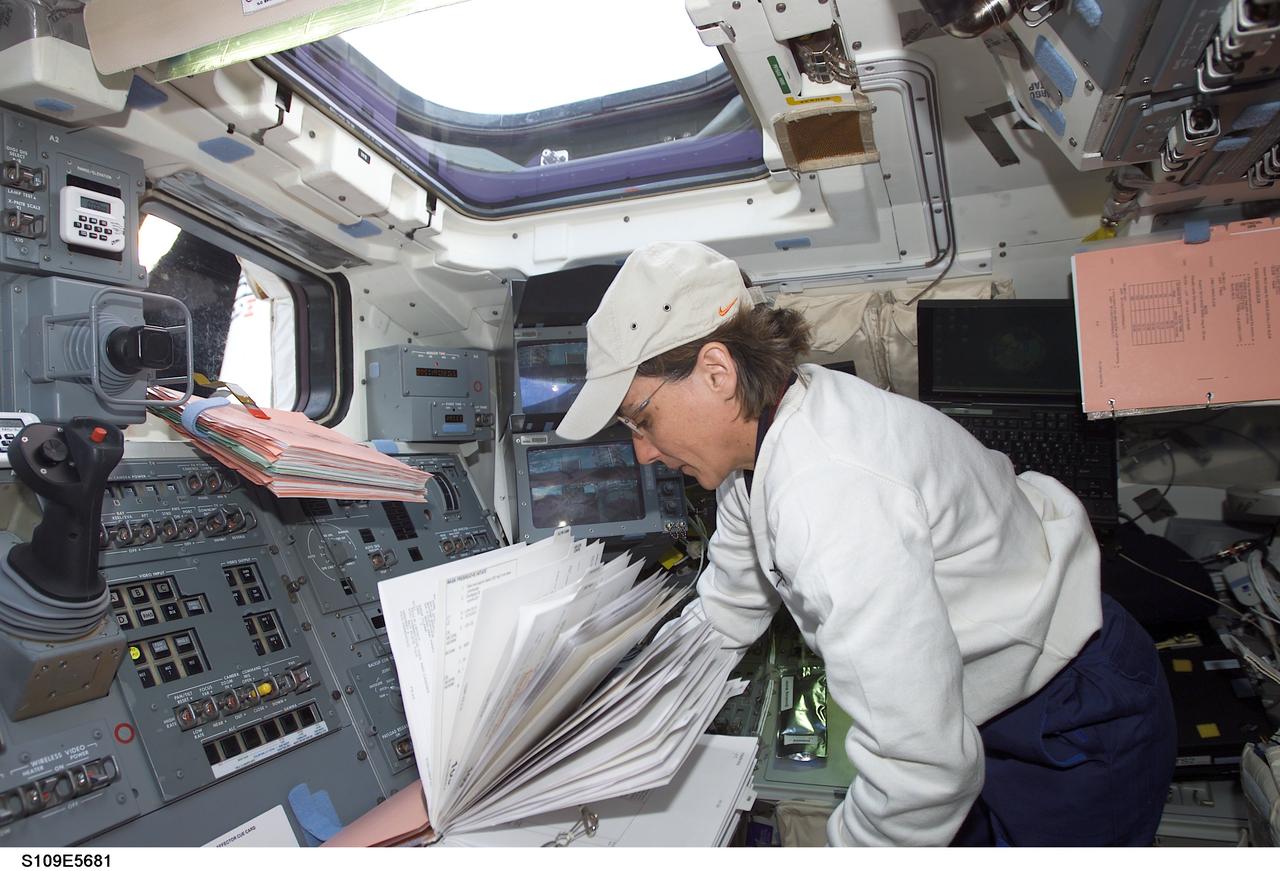
STS109-E-5681 (7 March 2002) --- Astronaut Nancy J. Currie, mission specialist, remains very near the controls (upper left) for Columbia's Remote Manipulator System (RMS). On a week with one lengthy space walk per day, Currie has had her hands full with RMS duties to support the space walks of four crewmates. A short time later on this day, astronauts James H. Newman and Michael J. Massimino began EVA-4 and the duo required the services of Currie to control the robotic arm to maneuver them around the various work stations on the Hubble Space Telescope (HST). The image was recorded with a digital still camera.
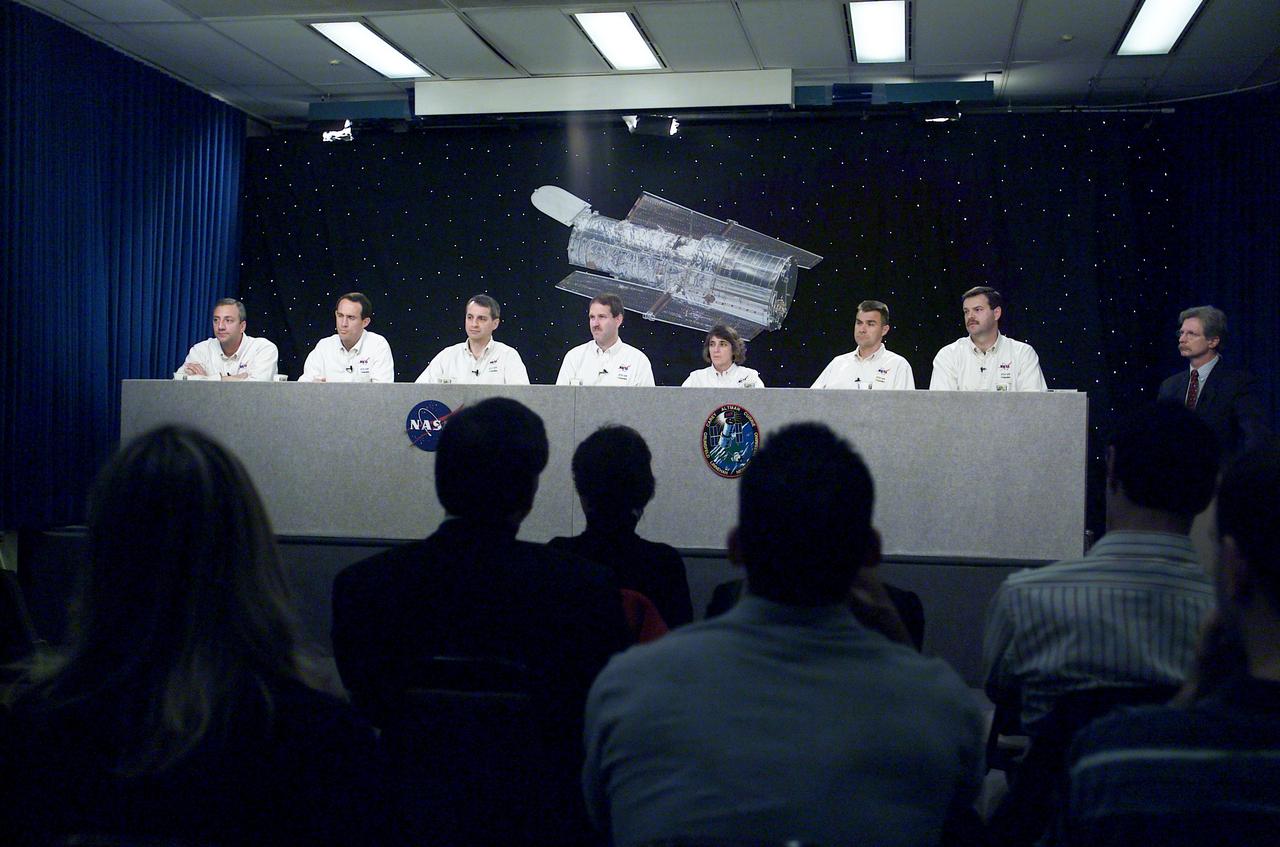
JSC2002-E-05104 (15 February 2002) --- The STS-109 crewmembers are photographed during a pre-flight press conference at Johnson Space Center (JSC). From the left are astronauts Michael J. Massimino, James H. Newman, Richard M. Linnehan, John M. Grunsfeld, Nancy J. Currie, Duane G. Carey, and Scott D. Altman. Altman and Carey are mission commander and pilot, respectively. Grunsfeld is payload commander and Currie, Linnehan, Newman and Massimino are mission specialists.
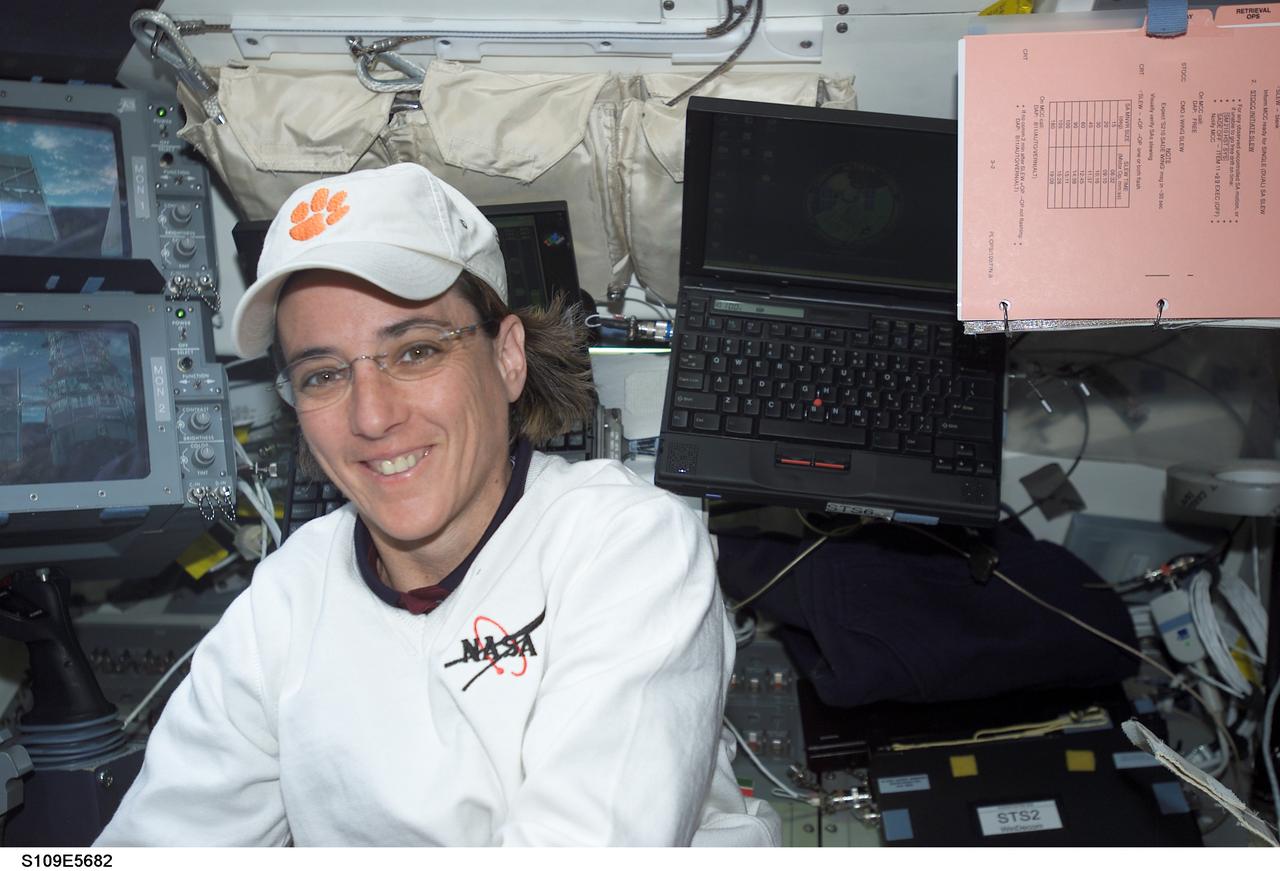
STS109-E-5682 (7 March 2002) --- Astronaut Nancy J. Currie, mission specialist, remains very near the controls for Columbia's Remote Manipulator System (out of frame) on the crew cabin's aft flight deck. On a week with one lengthy space walk per day, Currie has had her hands full with RMS duties to support the space walks of four crewmates. A short time later on this day, astronauts James H. Newman and Michael J. Massimino began EVA-4, during which the duo required the services of Currie to control the robotic arm to maneuver them around the various work stations on the Hubble Space Telescope (HST). The image was recorded with a digital still camera.
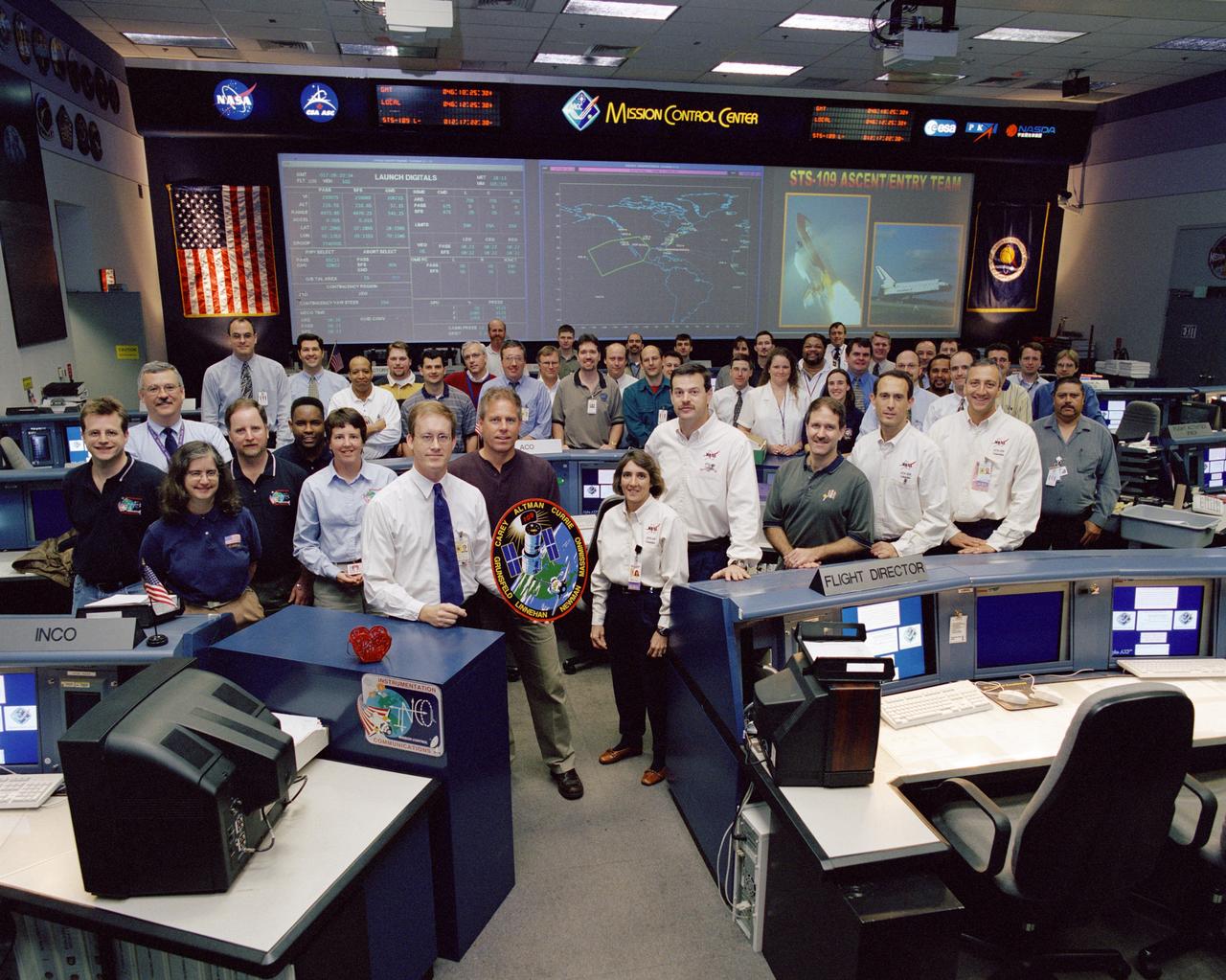
JSC2002-00514 (February 2002)--- The STS-109 flight crew poses with the ascent and entry shift team in the Shuttle Flight Control Room of the Johnson Space Center's Mission Control Center. Flight Director John Shannon holds the mission insignia. Members of the flight crew are astronauts Scott D. Altman, commander; Duane G. Carey, pilot; John M. Grunsfeld, payload commander; and James H. Newman, Nancy J. Currie, Richard M. Linnehan and Michael J. Massimino, all mission specialists. Currie stands to the right of the logo, followed by, left to right, Altman, Grunsfeld, Newman and Massimino. Linnehan and Carey are not pictured.
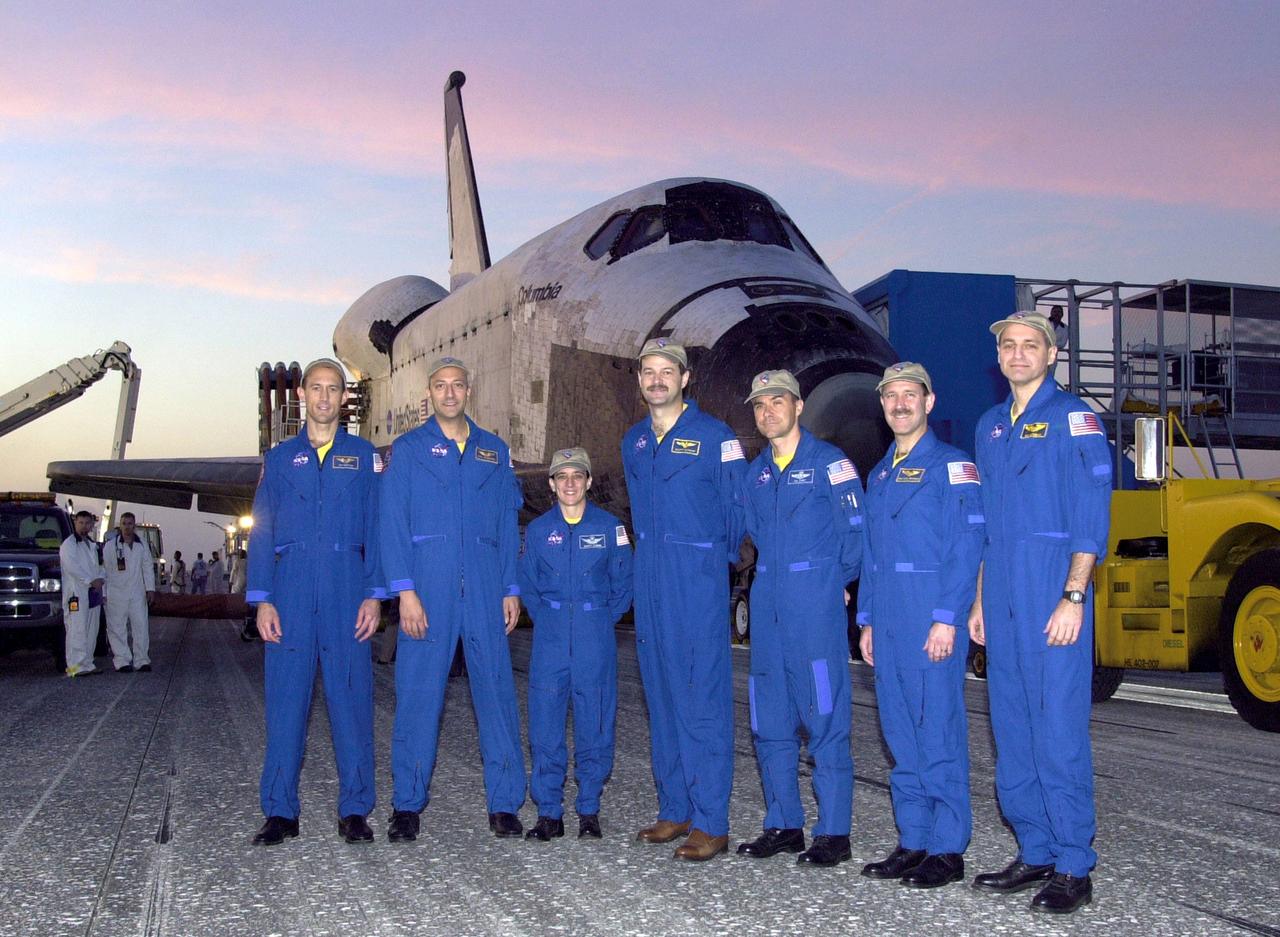
Posing in front of the Space Shuttle Columbia is the returning STS-109 crew. From left are astronauts James H. Newman, Michael J. Massimino, Nancy J. Currie, Scott D. Altman, Duane G. Carey, John M. Grunsfeld and Richard M. Linnehan. The crew returned to Earth after a successful 11-day mission servicing and upgrading the Hubble Space Telescope.
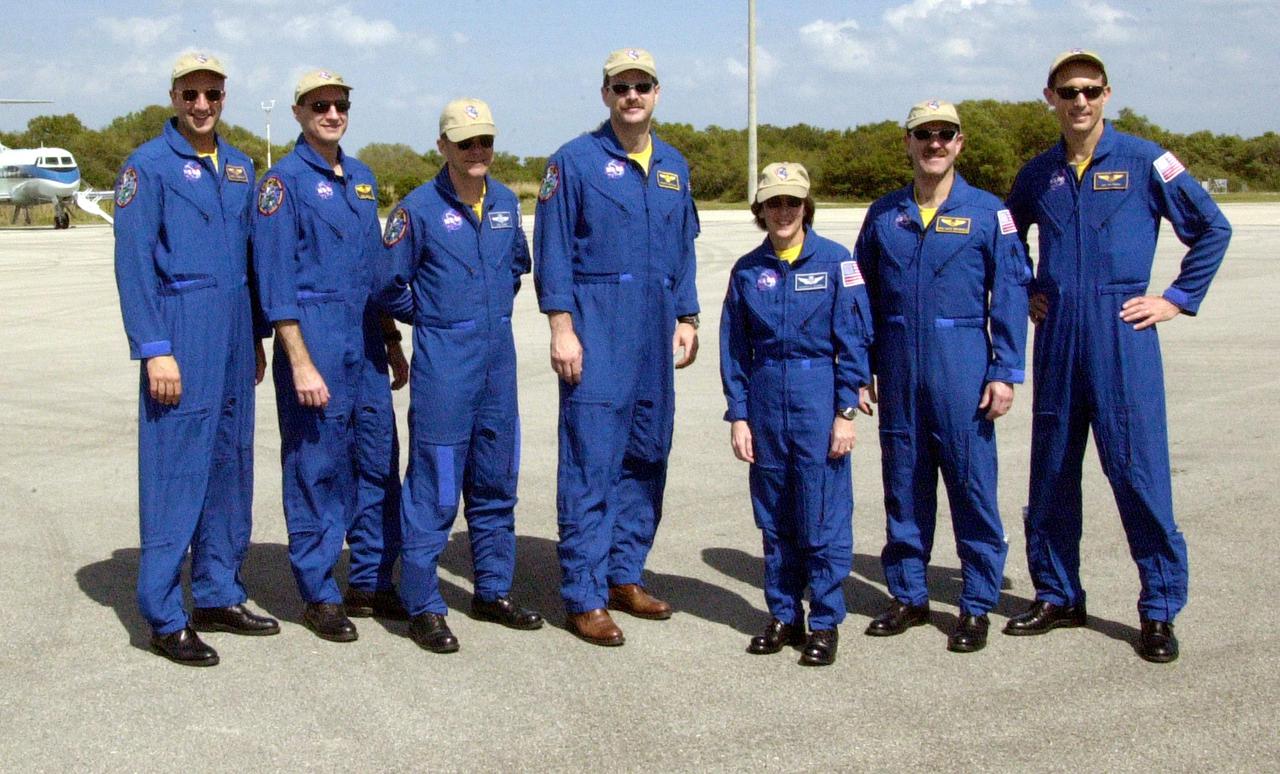
KENNEDY SPACE CENTER, FLA. - The STS-109 crew poses at the Cape Canaveral Air Force Station Skid Strip before departing for Houston. The crew returned to KSC aboard Columbia March 12 after an 11-day mission servicing the Hubble Space Telescope. From left to right are Mission Specialists Michael Massimino and Richard Linnehan; Pilot Duane Carey; Commander Scott Altman; and Mission Specialists Nancy Currie, John Grunsfeld and James Newman. Grunsfeld was Payload Commander on the mission
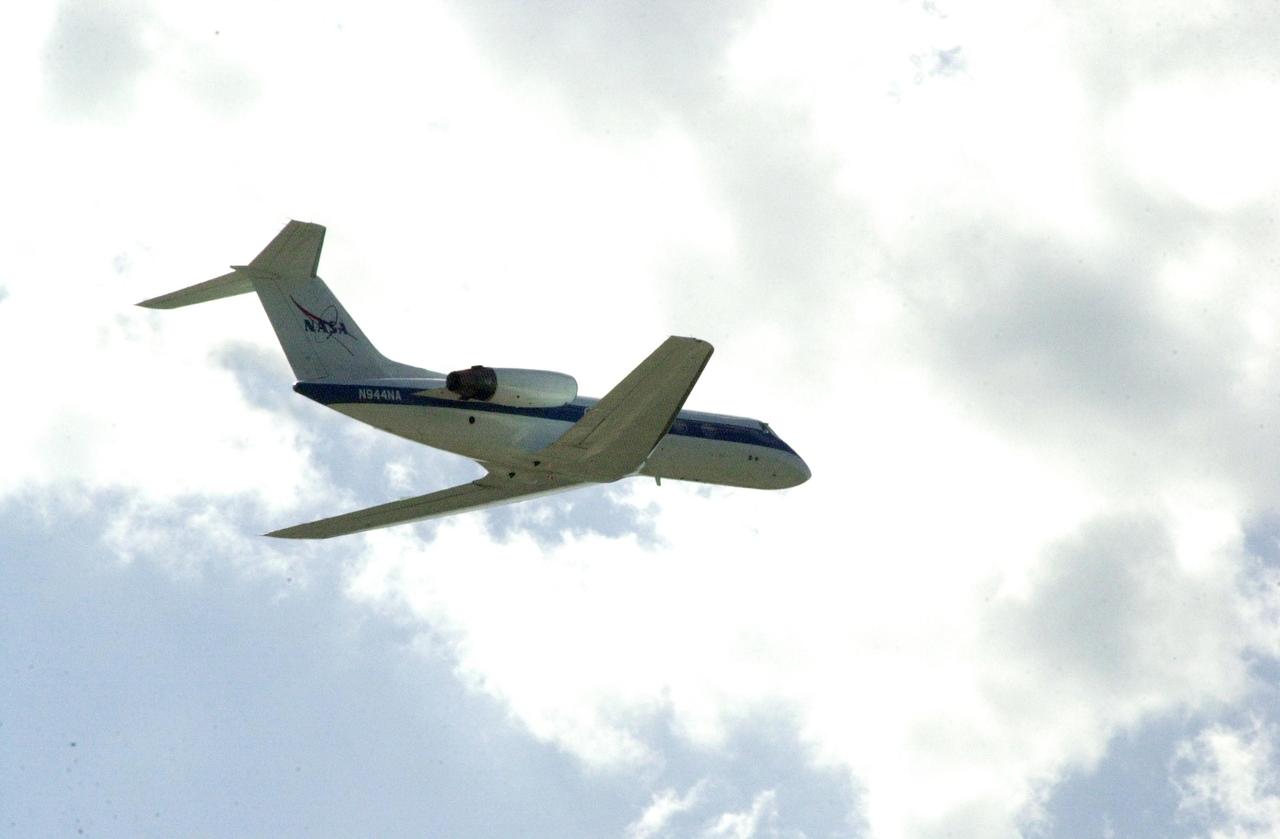
KENNEDY SPACE CENTER, FLA. - The NASA aircraft departs for Houston with the STS-109 crew on board: Commander Scott Altman, Pilot Duane Carey and Mission Specialists John Grunsfeld, James Newman, Nancy Currie, Richard Linnehan and Michael Massimino. The crew returned to KSC aboard Columbia March 12 after an 11-day mission servicing the Hubble Space Telescope

JSC2002-E-03553 (17 January 2002) --- The STS-109 crewmembers participate in a bench review of equipment and gear in an offsite facility near Johnson Space Center (JSC). From the left (in blue lab coats) are astronauts Michael J. Massimino, mission specialist, John M. Grunsfeld, payload commander, Richard M. Linnehan, mission specialist, Duane G. Carey, pilot, Nancy J. Currie, mission specialist, Scott D. Altman, mission commander, and James H. Newman, mission specialist.
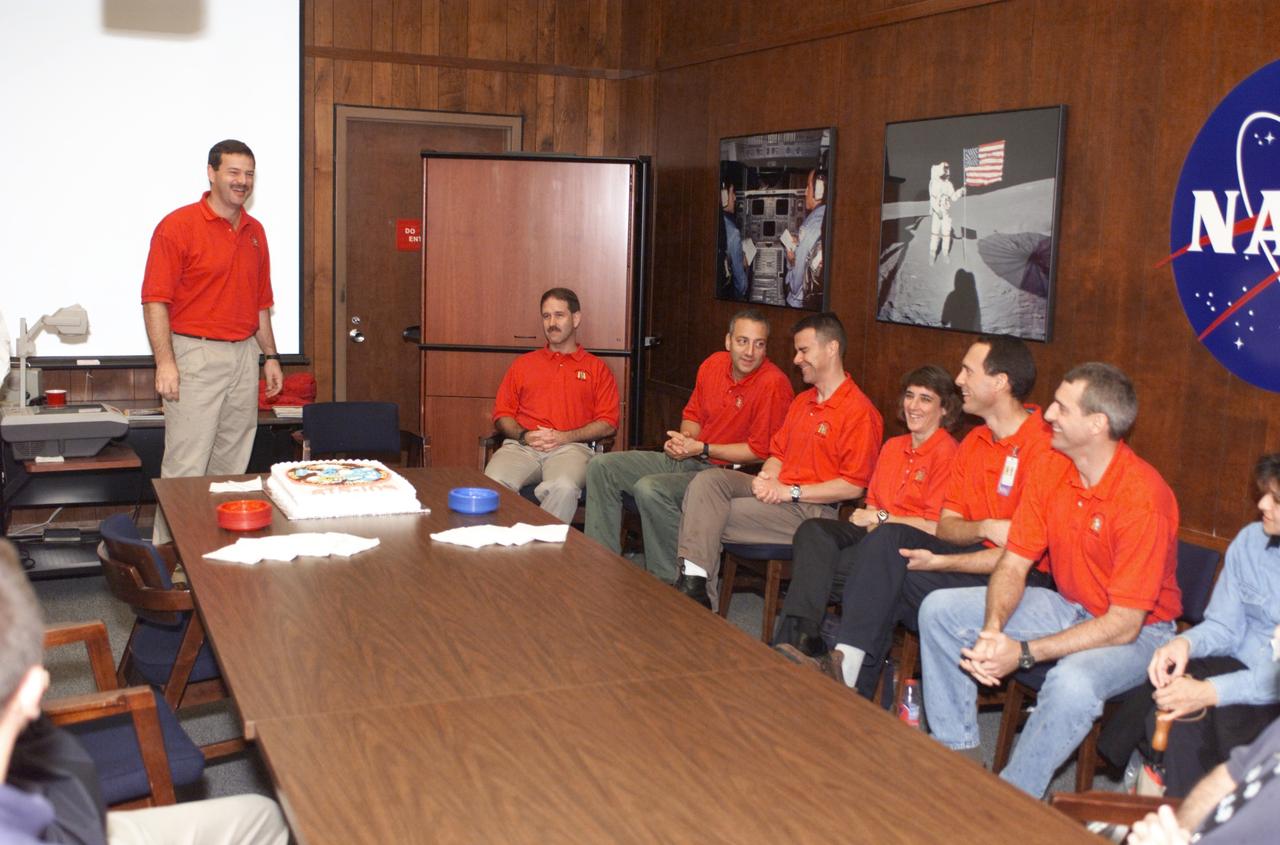
JSC2001-E-44844 (December 2001) --- The STS-109 crew members pause from their mission training for a cake cutting ceremony in the Jake Garn Simulation and Training Facility at the Johnson Space Center (JSC). Standing is astronaut Scott D. Altman, mission commander. Seated from left to right are astronauts John M. Grunsfeld, payload commander; Michael J. Massimino, mission specialist; Duane G. Carey, pilot; along with Nancy J. Currie, James H. Newman, and Richard M. Linnehan, mission specialists.
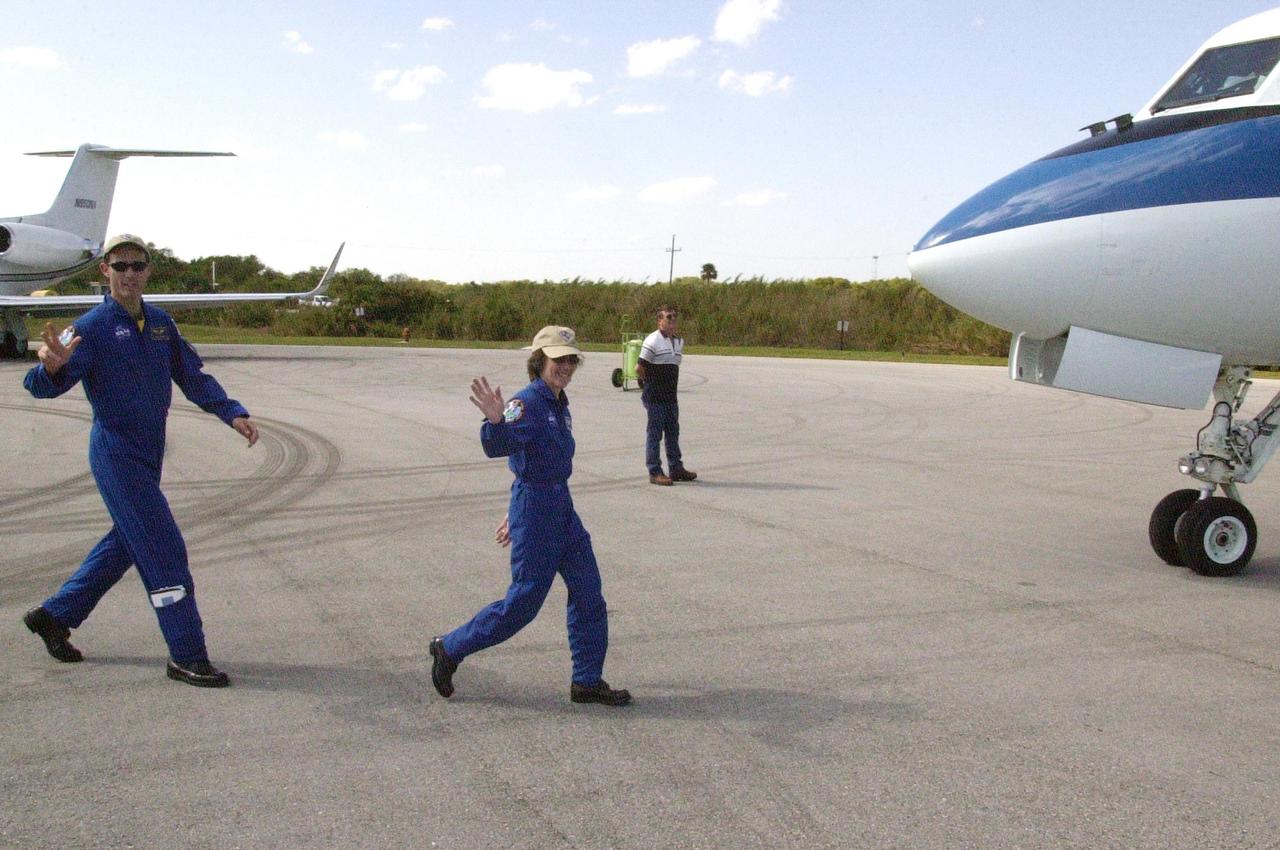
KENNEDY SPACE CENTER, FLA. - At the Cape Canaveral Air Force Station Skid Strip, STS-109 Mission Specialists James Newman and Nancy Currie wave to onlookers as they head for the aircraft and departure for Houston. The crew returned to KSC aboard Columbia March 12 after an 11-day mission servicing the Hubble Space Telescope. The other crew members are Commander Scott Altman, Pilot Duane Carey and Mission Specialists John Grunsfeld, Richard Linnehan and Michael Massimino
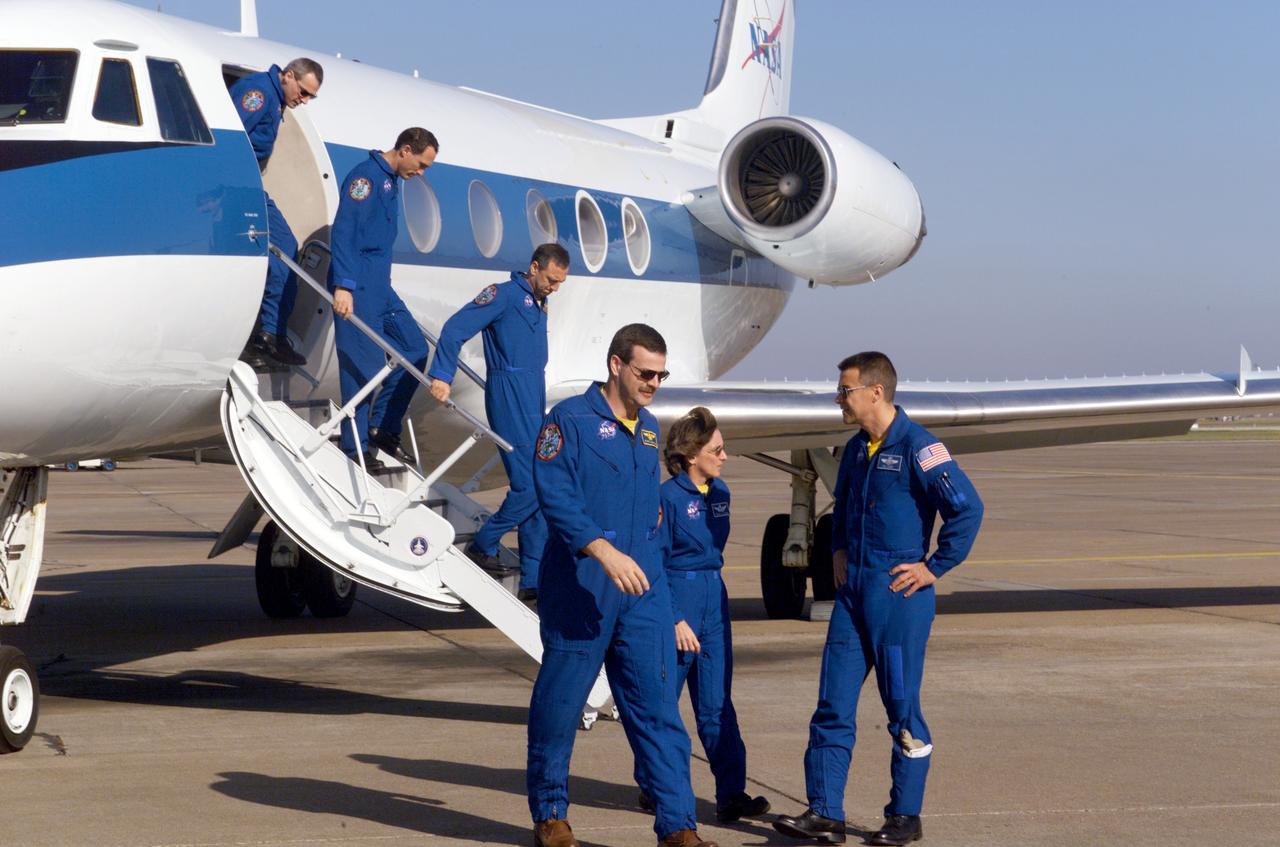
JSC2002-E-09328 (13 March 2002) --- The STS-109 crew exit a Gulfstream aircraft during the crew return ceremonies at Ellington Field. From the left (foreground) are astronauts Scott D. Altman, mission commander, Nancy J. Currie, mission specialist, and Duane G. Carey, pilot. From the top of the stairs are astronauts Richard M. Linnehan, James H. Newman, and Michael J. Massimino, all mission specialists. Astronaut John M. Grunsfeld, payload commander, is out of frame.
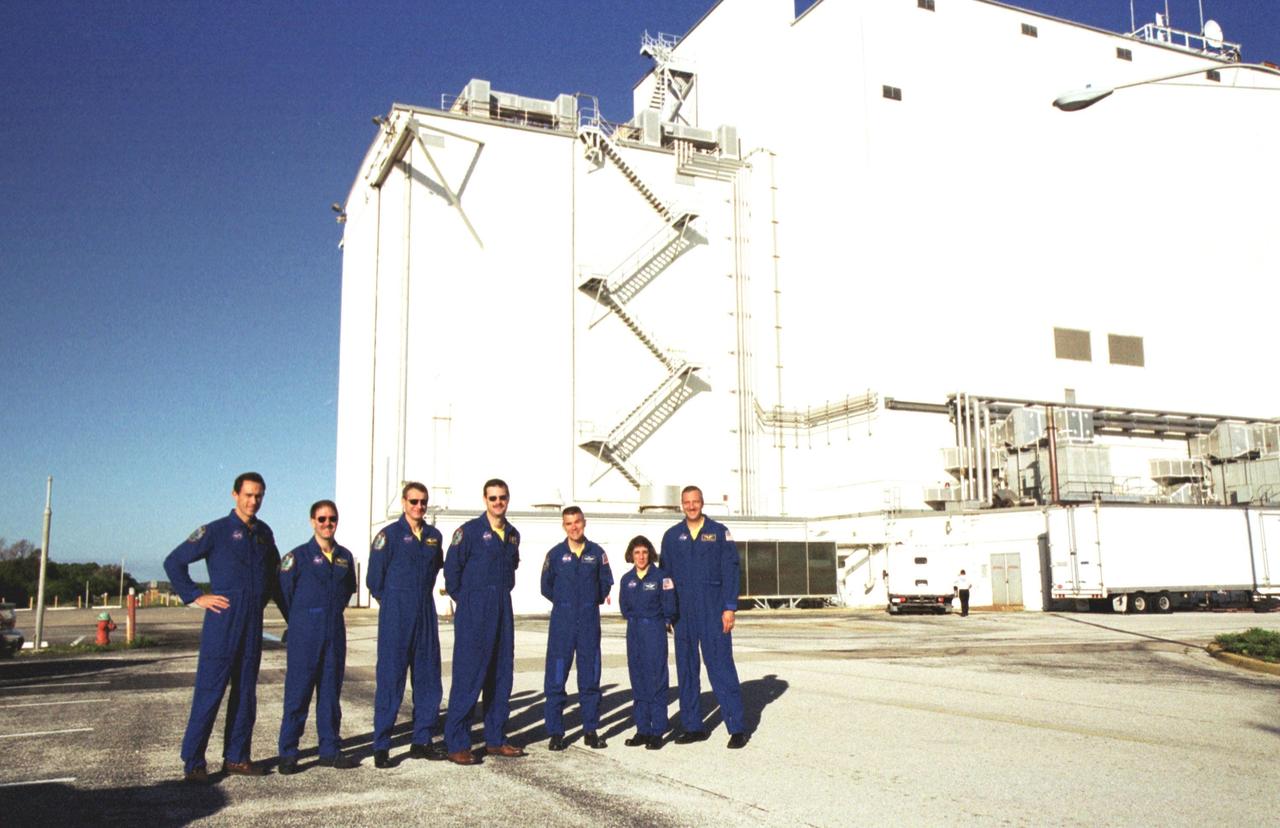
KENNEDY SPACE CENTER, Fla. -- The STS-109 crew poses for a group photo outside the Vertical Processing Facility at KSC. From left are Mission Specialist James Newman, Payload Commander John Grunsfeld, Mission Specialist Richard Linnehan, Commander Scott Altman, Pilot Duane Carey, and Mission Specialists Nancie Currie and Michael Massimino. STS-109 is the Hubble Space Telescope (HST) Servicing mission. The crew comprises Commander Scott Altman, Pilot Duane Carey, Payload Commander John Grunsfeld and Mission Specialists Nancy Currie, James Newman, Richard Linnehan and Michael Massimino. The goal of the mission is to service the HST, replacing Solar Array 2 with Solar Array 3, replacing the Power Control Unit, removing the Faint Object Camera and installing the Advanced Camera for Surveys, installing the Near Infrared Camera and Multi-Object Spectrometer (NICMOS) Cooling System, and installing New Outer Blanket Layer insulation on bays 5 through 8. Mission STS-109 is scheduled for launch Feb. 14, 2002
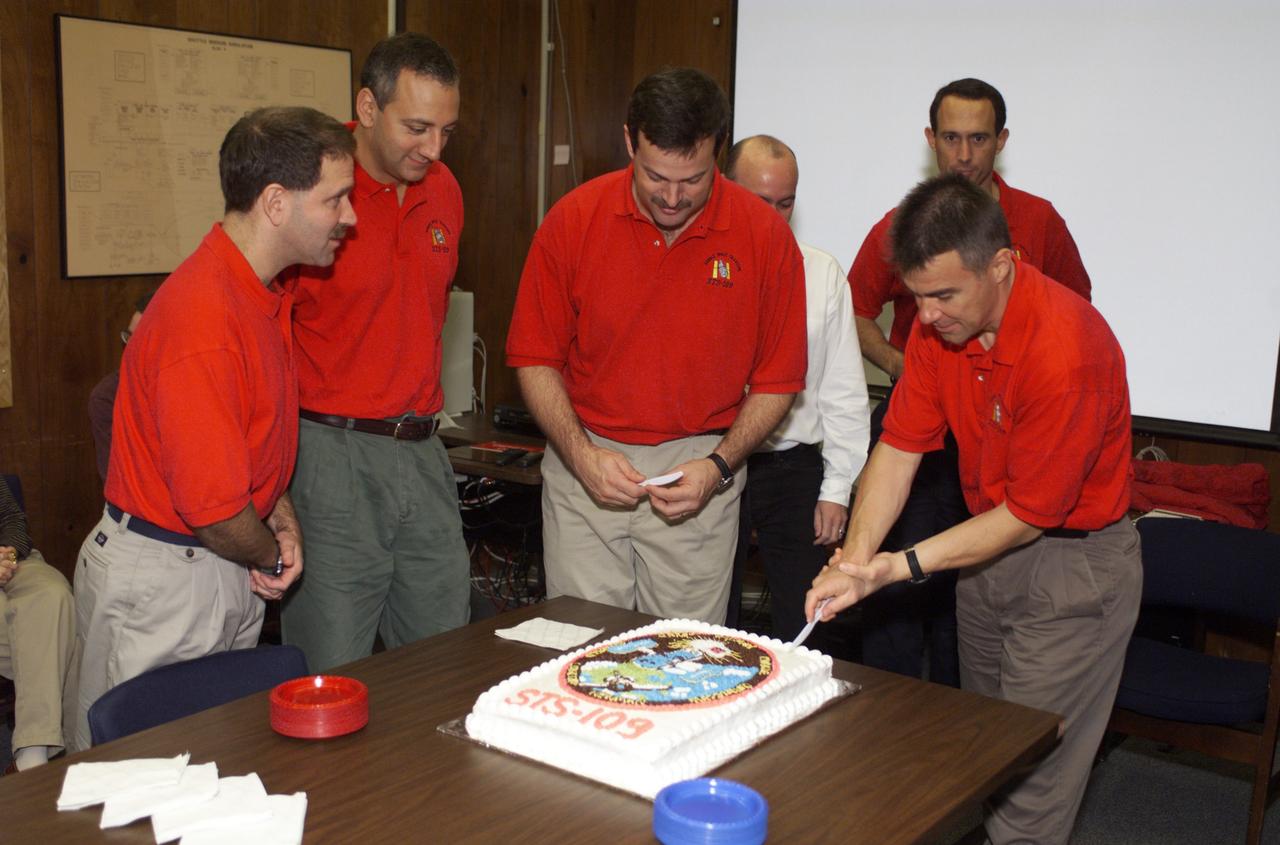
JSC2001-E-44846 (December 2001) --- The STS-109 crew members pause from their mission training for a cake cutting ceremony in the Jake Garn Simulation and Training Facility at the Johnson Space Center (JSC). From left to right are astronauts John M. Grunsfeld, Michael J. Massimino, Scott D. Altman, and Duane G. Carey, James H. Newman; along with David Steward of the United Space Alliance (USA). Altman and Carey are mission commander and pilot, respectively. Grunsfeld is payload commander, with the others serving as mission specialists. Astronauts Nancy J. Currie and Richard M. Linnehan are out of frame.
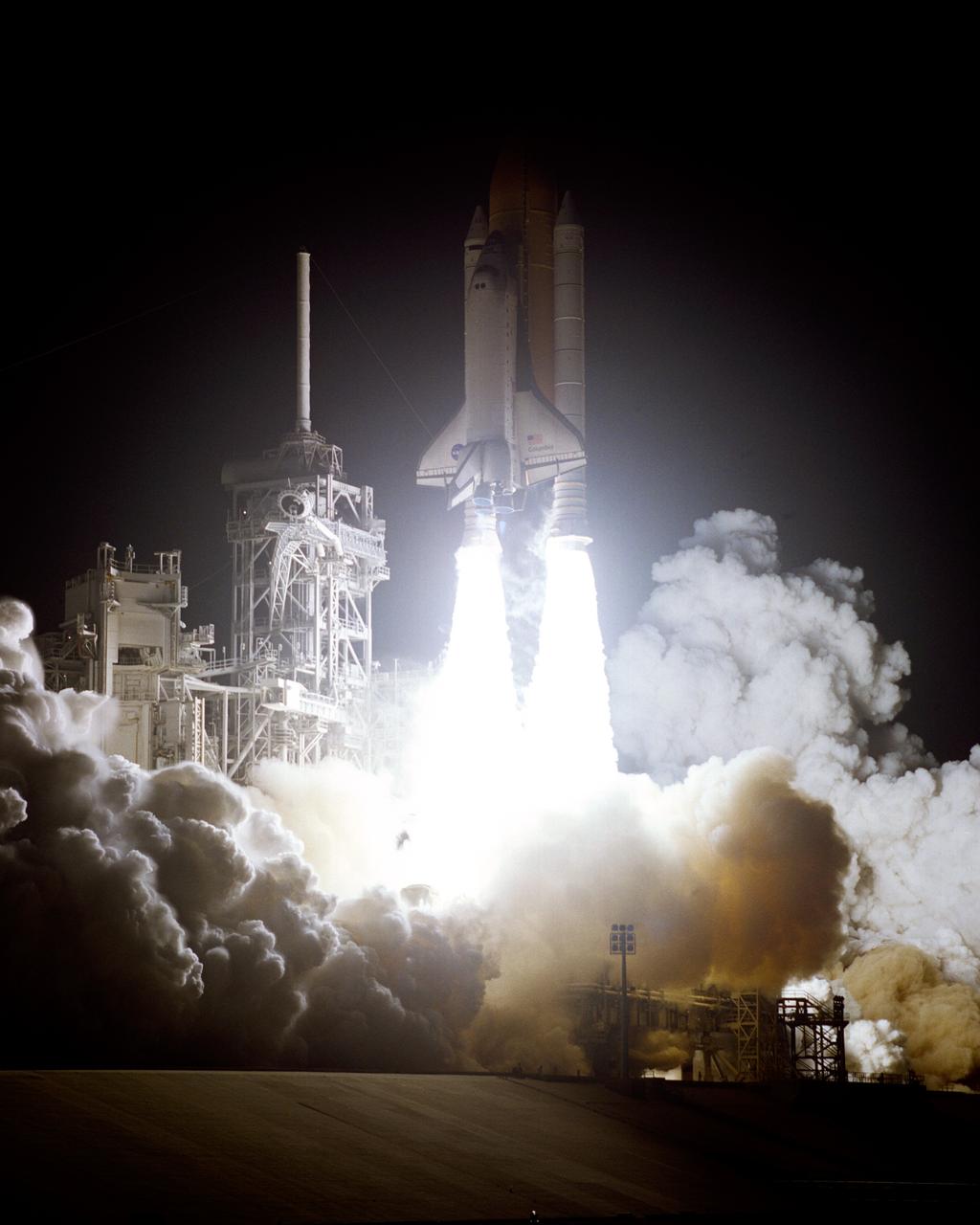
STS109-S-007 (1 March 2002) --- The Space Shuttle Columbia begins its 27th flight in the pre-dawn hours from Launch Pad 39A. Liftoff for STS-109 occurred at 6:22:02:08 a.m., EST (11:22:02:08 GMT). The goal of the mission is the maintenance and upgrade of the Hubble Space Telescope, to be carried out in five space walks. On board the spacecraft were astronauts Scott D. Altman, Duane G. Carey, Nancy J. Currie, John M. Grunsfeld, James H. Newman, Richard M. Linnehan and Michael J. Massimino.
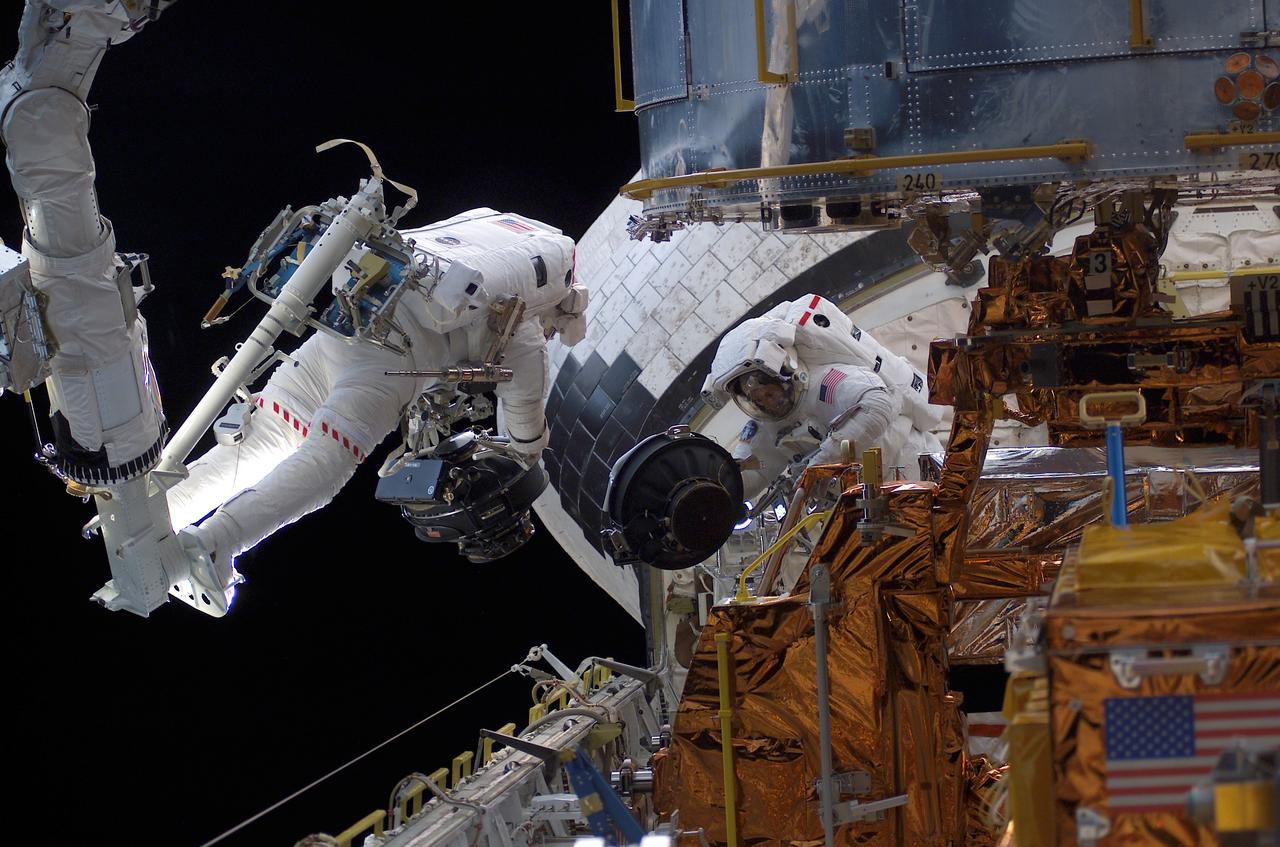
STS109-E-5402 (5 March 2002) --- With his feet secured on a platform connected to the remote manipulator system (RMS) robotic arm of the Space Shuttle Columbia, astronaut Michael J. Massimino, mission specialist, hovers over the shuttle's cargo bay while working in tandem with astronaut James H. Newman, mission specialist, during the STS-109 mission's second day of extravehicular activity (EVA). Inside Columbia's cabin, astronaut Nancy J. Currie, mission specialist, controlled the RMS. The image was recorded with a digital still camera.
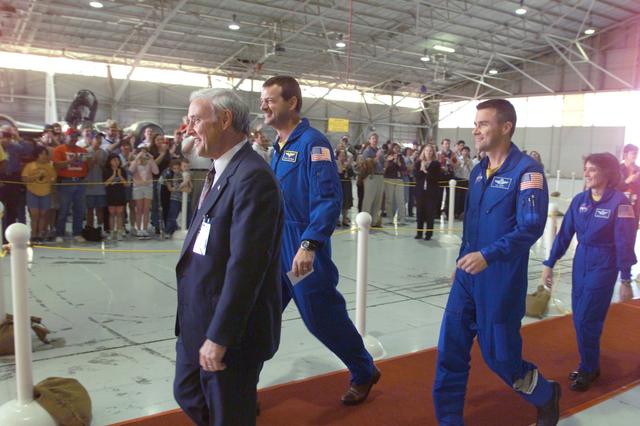
JSC2002-E-09319 (13 March 2002) --- The STS-109 crew and Johnson Space Center’s (JSC) Acting Director Roy Estess enter Hangar 990 at Ellington Field during the crew return ceremonies. From the left are Estess, along with astronauts Scott D. Altman and Duane G. Carey, mission commander and pilot, respectively; and Nancy J. Currie, mission specialist. Out of frame are John M. Grunsfeld, payload commander; and Richard M. Linnehan, James H. Newman, and Michael J. Massimino, all mission specialists.
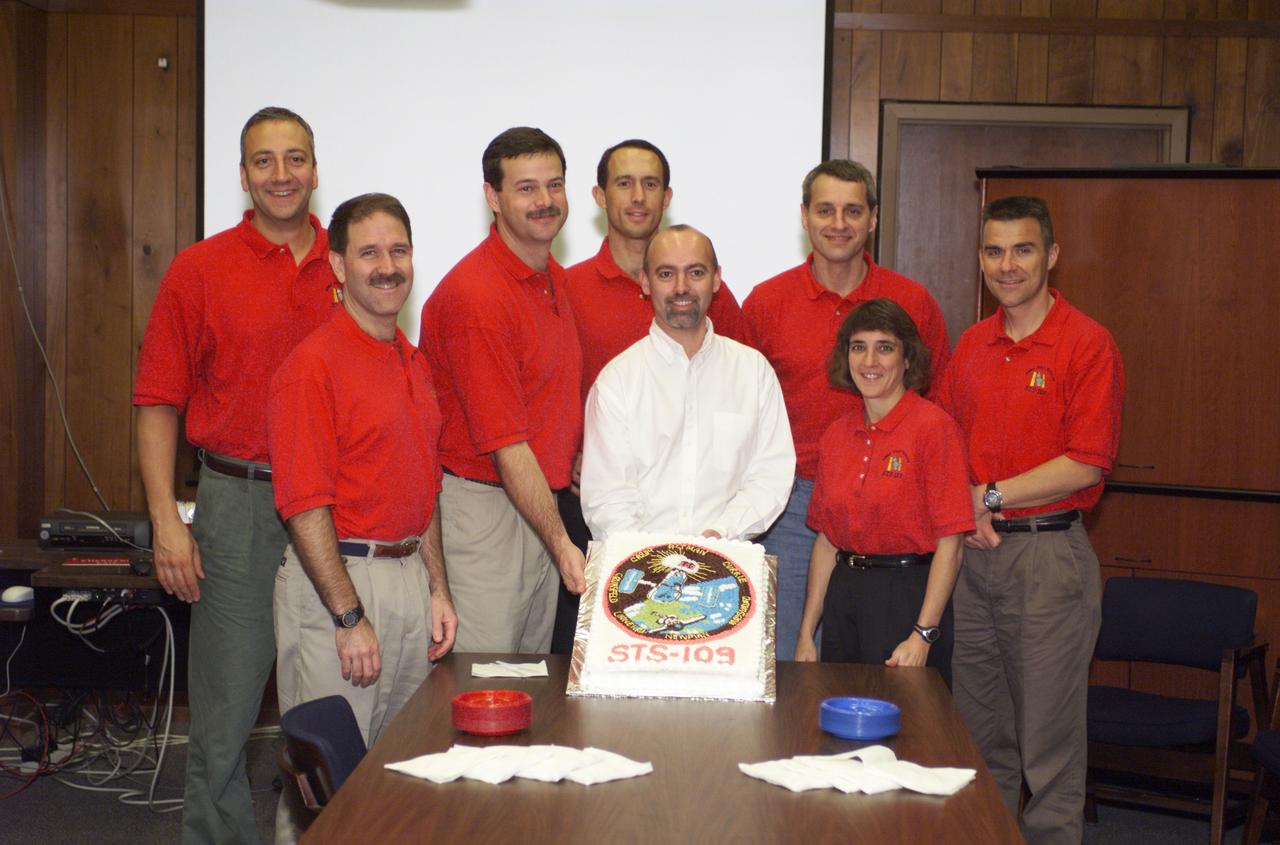
JSC2001-E-44845 (December 2001) --- The STS-109 crew members, along with David Steward (center) of the United Space Alliance (USA), pause from their mission training for a cake cutting ceremony in the Jake Garn Simulation and Training Facility at the Johnson Space Center (JSC). From left to right are astronauts Michael J. Massimino, John M. Grunsfeld, Scott D. Altman, James H. Newman, Richard M. Linnehan, Nancy J. Currie, and Duane G. Carey. Altman and Carey, are mission commander and pilot, respectively. Grunsfeld is payload commander, with the others serving as mission specialists.
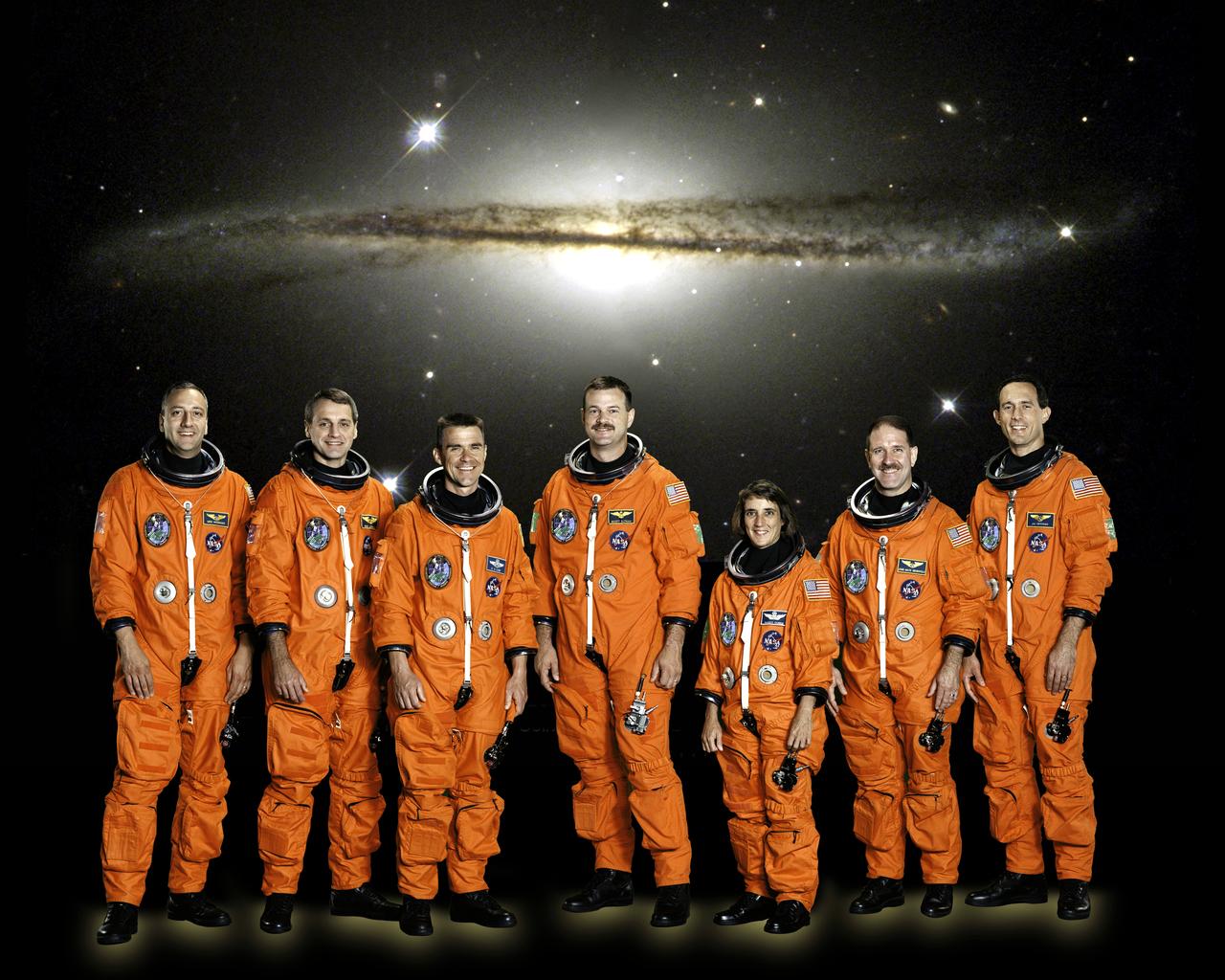
Posing for the traditional preflight crew portrait, the seven astronauts of the STS-109 mission are (left to right) astronauts Michael J. Massimino, Richard M. Linnehan, Duane G. Carey, Scott D. Altman, Nancy J. Currie, John M. Grunsfeld and James H. Newman. Altman and Carey were commander and pilot, respectively, with the others serving as mission specialists. Grunsfeld was payload commander. Launched aboard the Space Shuttle Columbia on March 1, 2002, the group was the fourth visit to the the Hubble Space Telescope (HST) for performing upgrade and servicing on the giant orbital observatory.
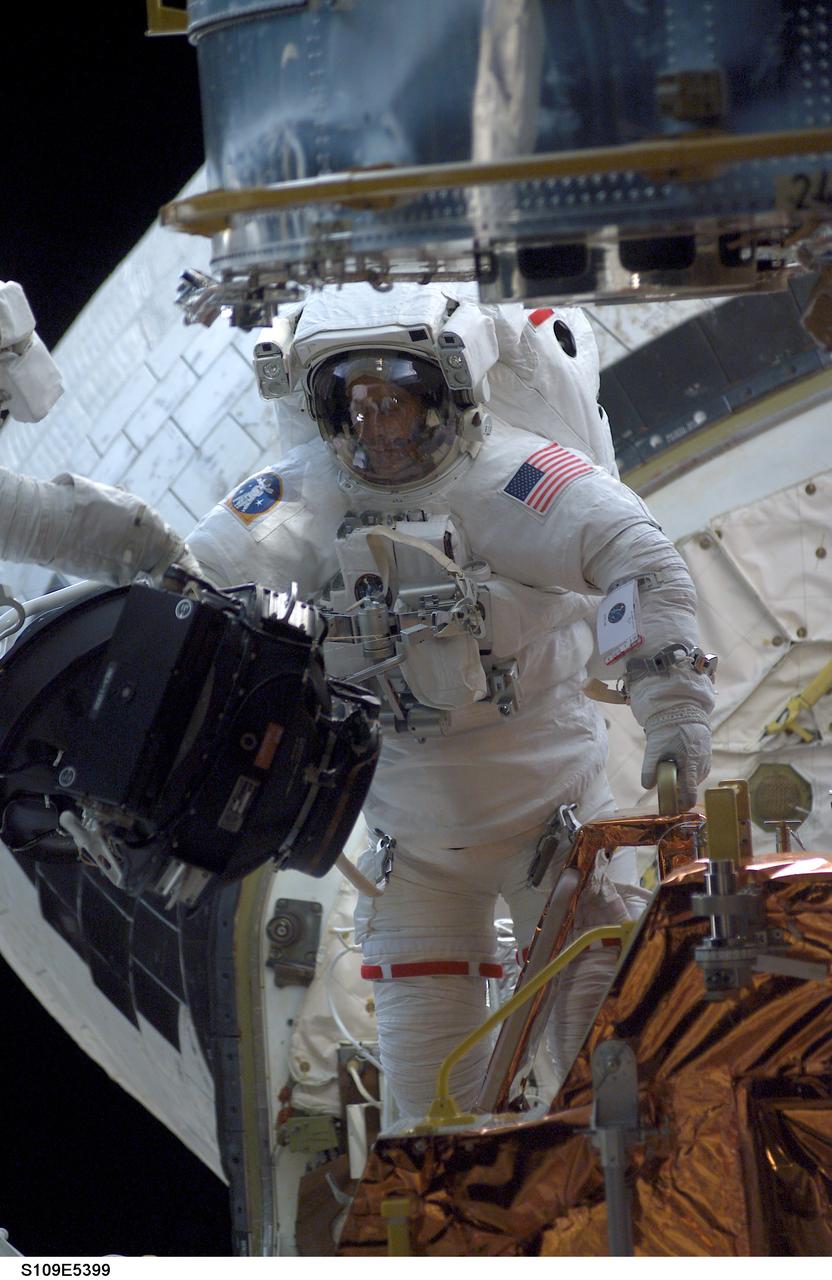
STS109-E-5399 (5 March 2002) --- Astronaut James H. Newman, mission specialist, moves about in the Space Shuttle Columbia's cargo bay while working in tandem with astronaut Michael J. Massimino (out of frame), mission specialist, during the STS-109 mission's second day of extravehicular activity (EVA). Inside Columbia's cabin, astronaut Nancy J. Currie, mission specialist, controlled the Remote Manipulator System (RMS) to assist the two in their work on the Hubble Space Telescope (HST). Part of the giant telescope's base, latched down in the payload bay, can be seen just above Newman. The image was recorded with a digital still camera.
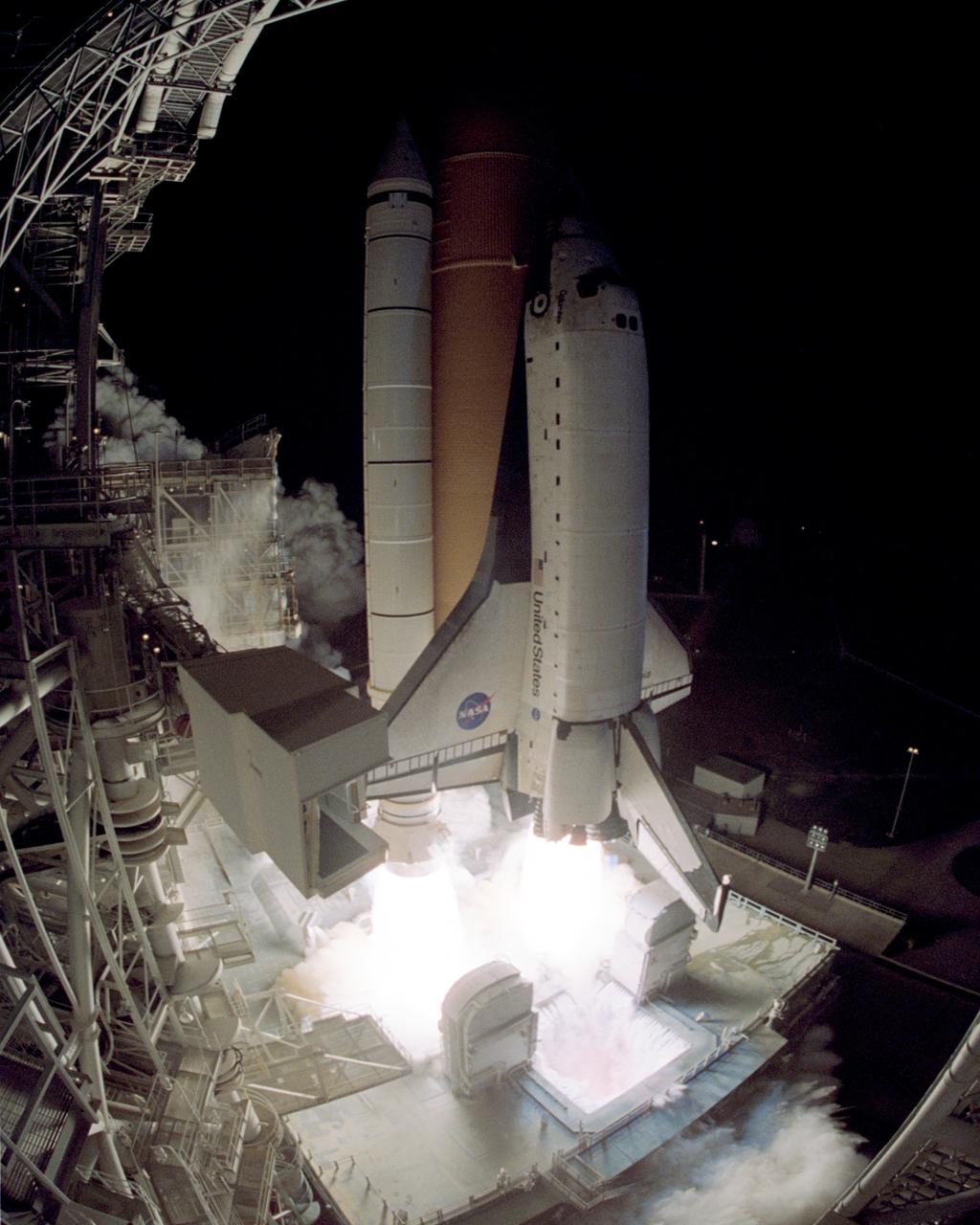
STS109-S-005 (1 March 2002) --- The Space Shuttle Columbia begins its 27th flight in the pre-dawn hours from Launch Pad 39A. Liftoff for STS-109 occurred at 6:22:02:08 a.m., EST (11:22:02:08 GMT). The goal of the mission is the maintenance and upgrade of the Hubble Space Telescope, to be carried out in five space walks. On board the spacecraft were astronauts Scott D. Altman, Duane G. Carey, Nancy J. Currie, John M. Grunsfeld, James H. Newman, Richard M. Linnehan and Michael J. Massimino.
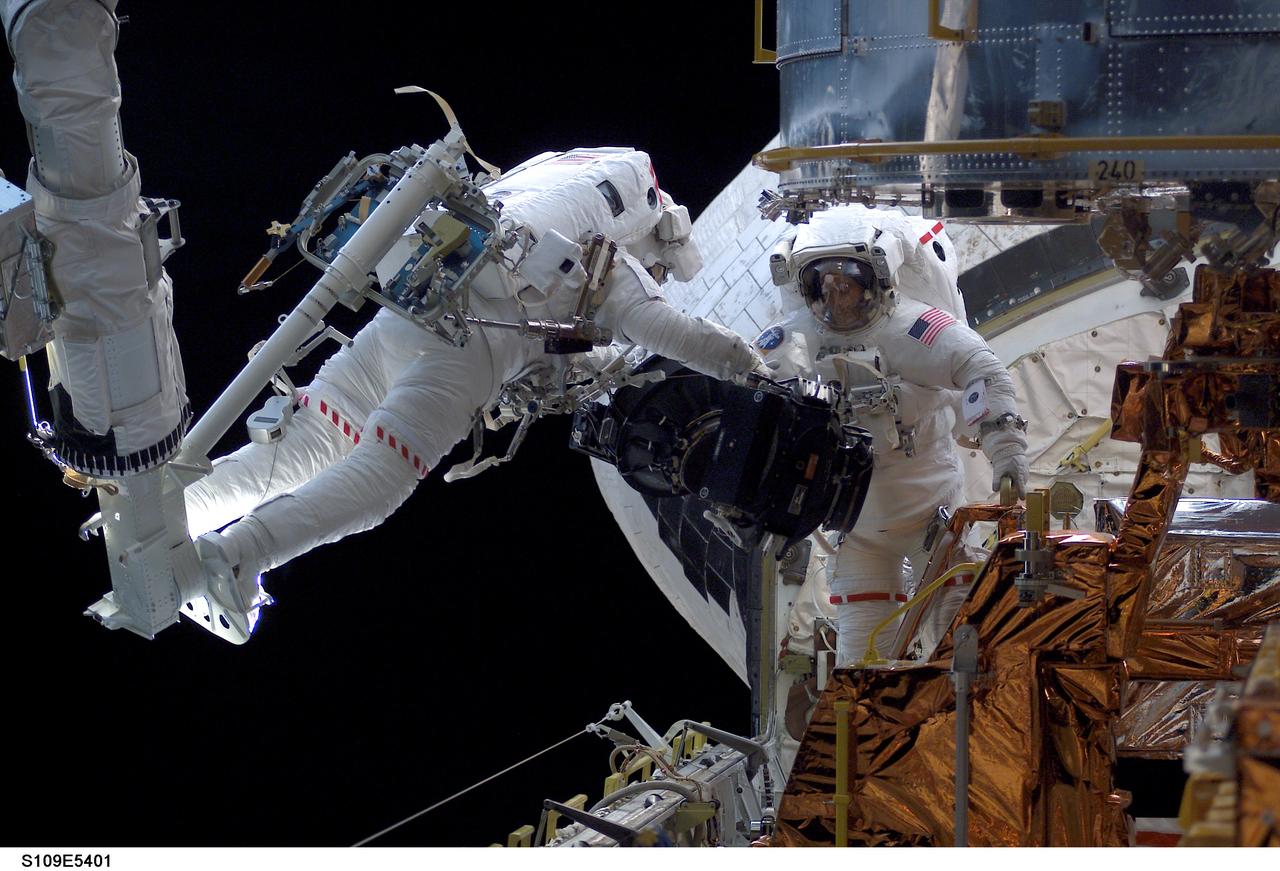
STS109-E-5401 (5 March 2002) --- With his feet secured on a platform connected to the remote manipulator system (RMS) robotic arm of the Space Shuttle Columbia, astronaut Michael J. Massimino, mission specialist, hovers over the shuttle's cargo bay while working in tandem with astronaut James H. Newman, mission specialist, during the STS-109 mission's second day of extravehicular activity (EVA). Inside Columbia's cabin, astronaut Nancy J. Currie, mission specialist, controlled the RMS. The image was recorded with a digital still camera.
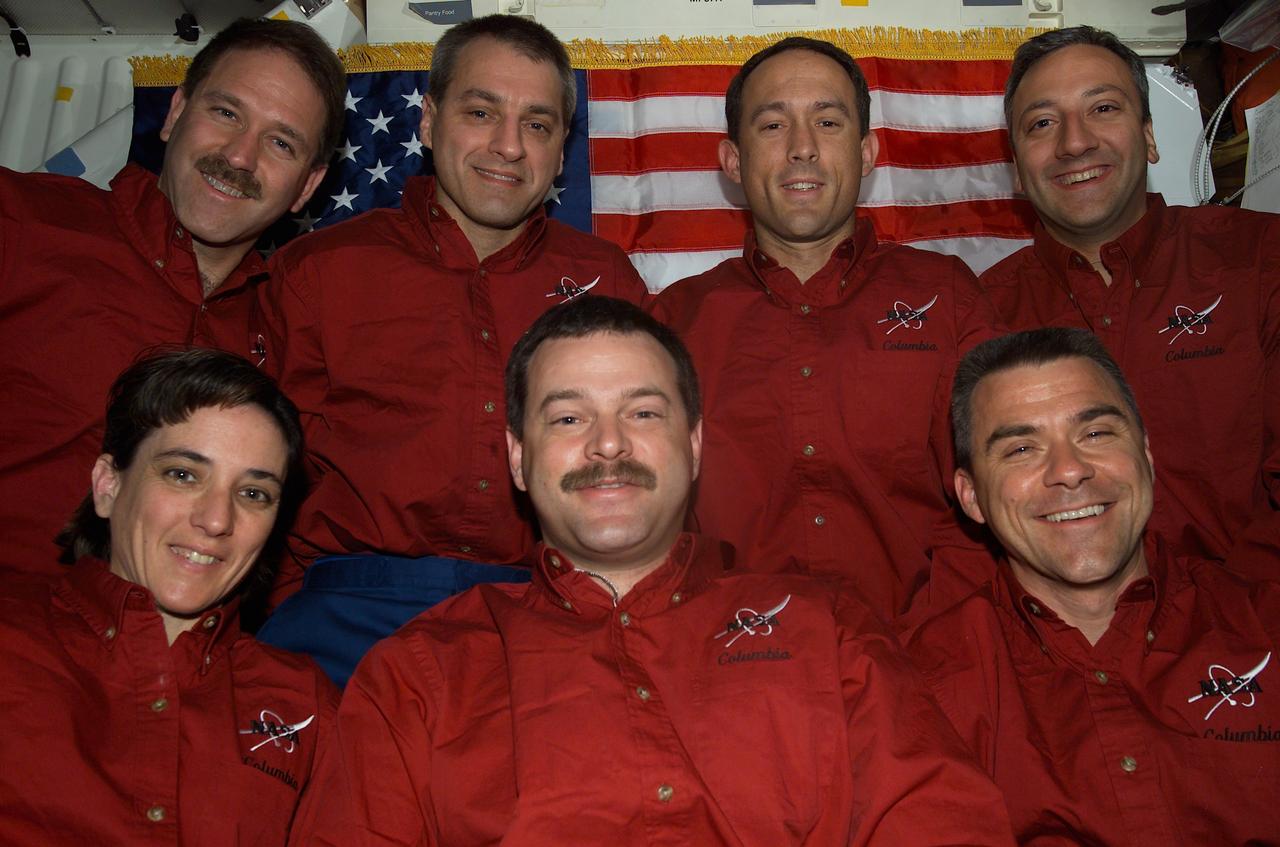
STS109-E-6032 (11 March 2002) --- On the Space Shuttle Columbia’s mid deck, the crewmembers for the STS-109 mission pose for the traditional in-flight portrait. From the left (front row), are astronauts Nancy J. Currie, mission specialist, Scott D. Altman, mission commander, and Duane G. Carey, pilot. From the left (back row), are astronauts John M. Grunsfeld, payload commander, and Richard M. Linnehan, James H. Newman, and Michael J. Massimino, all mission specialists. The image was recorded with a digital still camera.
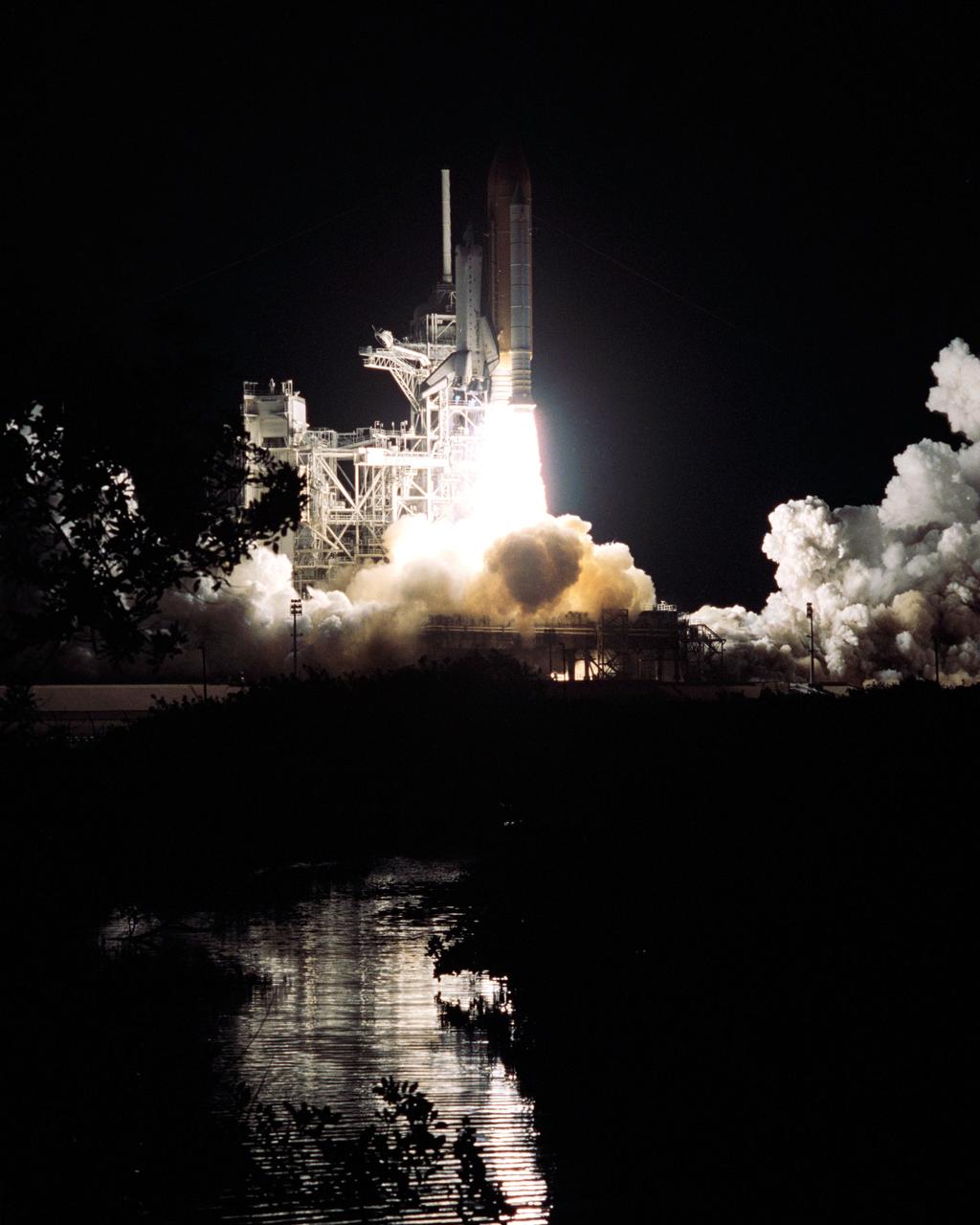
STS109-S-006 (1 March 2002) --- The Space Shuttle Columbia begins its 27th flight in the pre-dawn hours from Launch Pad 39A. Liftoff for STS-109 occurred at 6:22:02:08 a.m., EST (11:22:02:08 GMT). The goal of the mission is the maintenance and upgrade of the Hubble Space Telescope, to be carried out in five space walks. On board the spacecraft were astronauts Scott D. Altman, Duane G. Carey, Nancy J. Currie, John M. Grunsfeld, James H. Newman, Richard M. Linnehan and Michael J. Massimino.
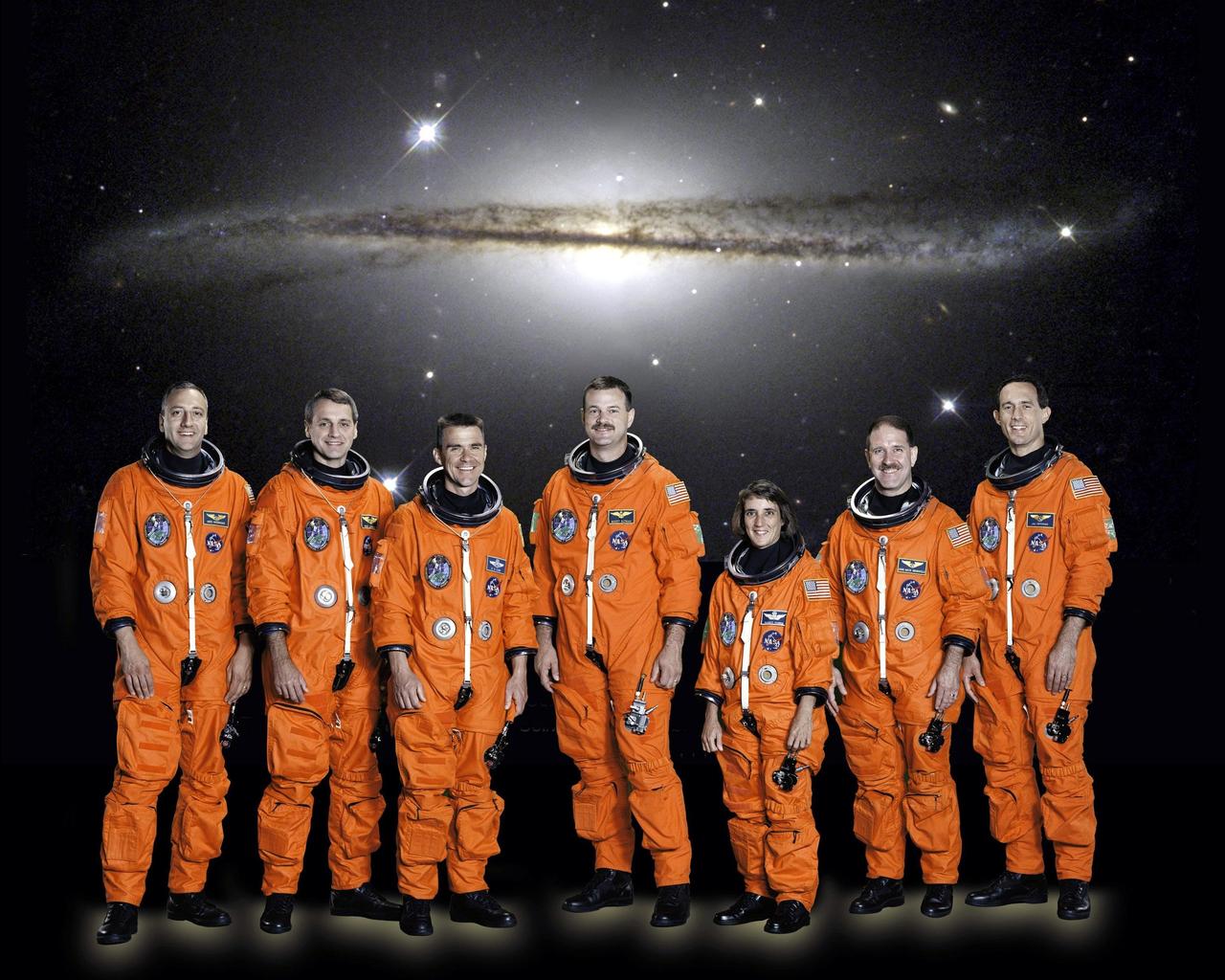
JOHNSON SPACE CENTER, HOUSTON, TEXAS -- (JSC STS109-5-002) -- STS-109 CREW PORTRAIT -- Seven astronauts take a break from training for the STS-109 mission to pose for the traditional pre-flight crew portrait. From the left are astronauts Michael J. Massimino, Richard M. Linnehan, Duane G. Carey, Scott D. Altman, Nancy J. Currie, John M. Grunsfeld and James H. Newman. Altman and Carey are commander and pilot, respectively, with the others serving as mission specialists. Grunsfeld is payload commander. The group will be the fourth to visit the Hubble Space Telescope (HST) for performing upgrade and servicing on the giant orbital observatory
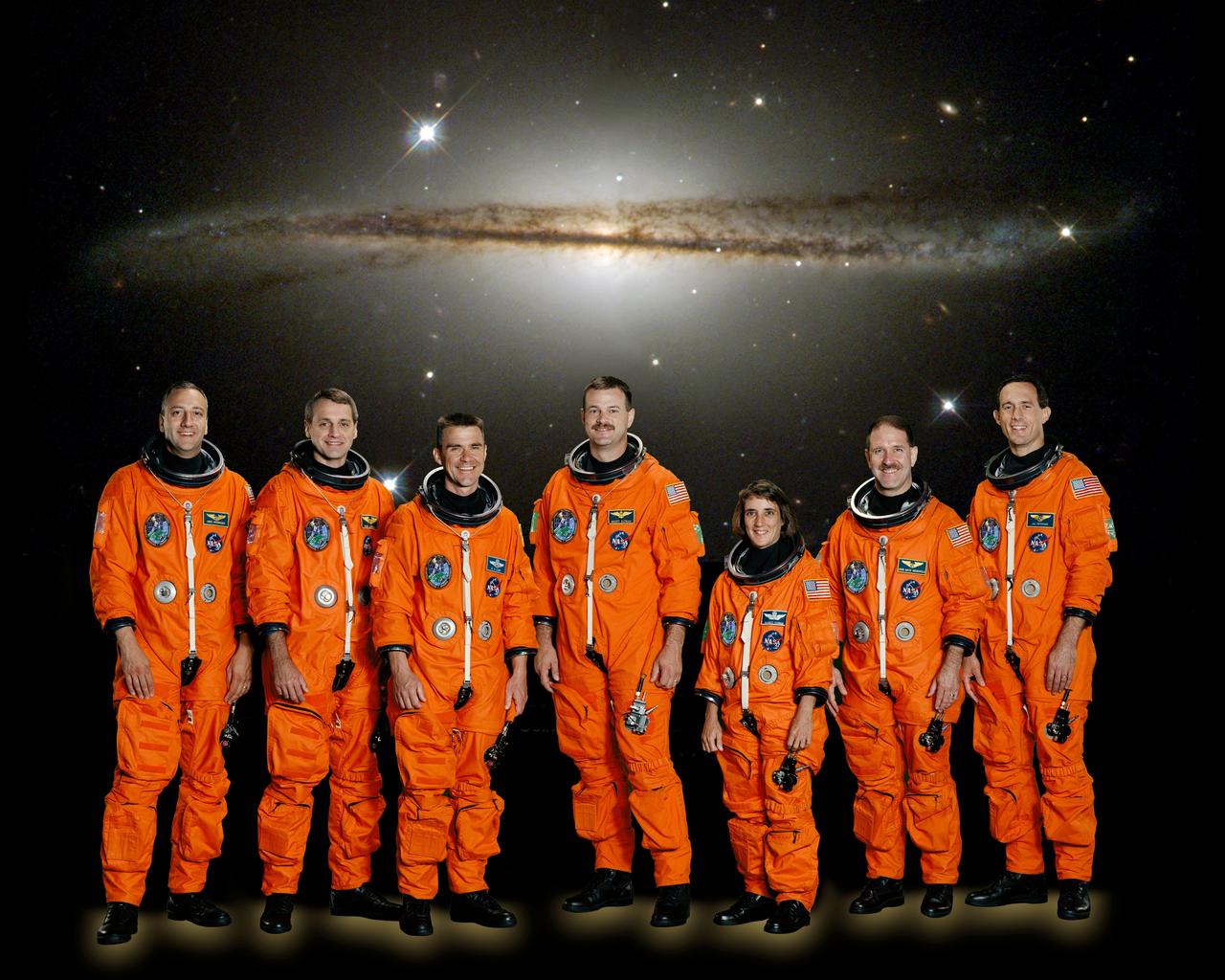
STS109-S-002 (November 2001) --- Seven astronauts take a break from training for the STS-109 mission to pose for the traditional pre-flight crew portrait. From the left are astronauts Michael J. Massimino, Richard M. Linnehan, Duane G. Carey, Scott D. Altman, Nancy J. Currie, John M. Grunsfeld and James H. Newman. Altman and Carey are commander and pilot, respectively, with the others serving as mission specialists. Grunsfeld is payload commander. The group will be the fourth to visit the Hubble Space Telescope (HST) for performing upgrade and servicing on the giant orbital observatory.
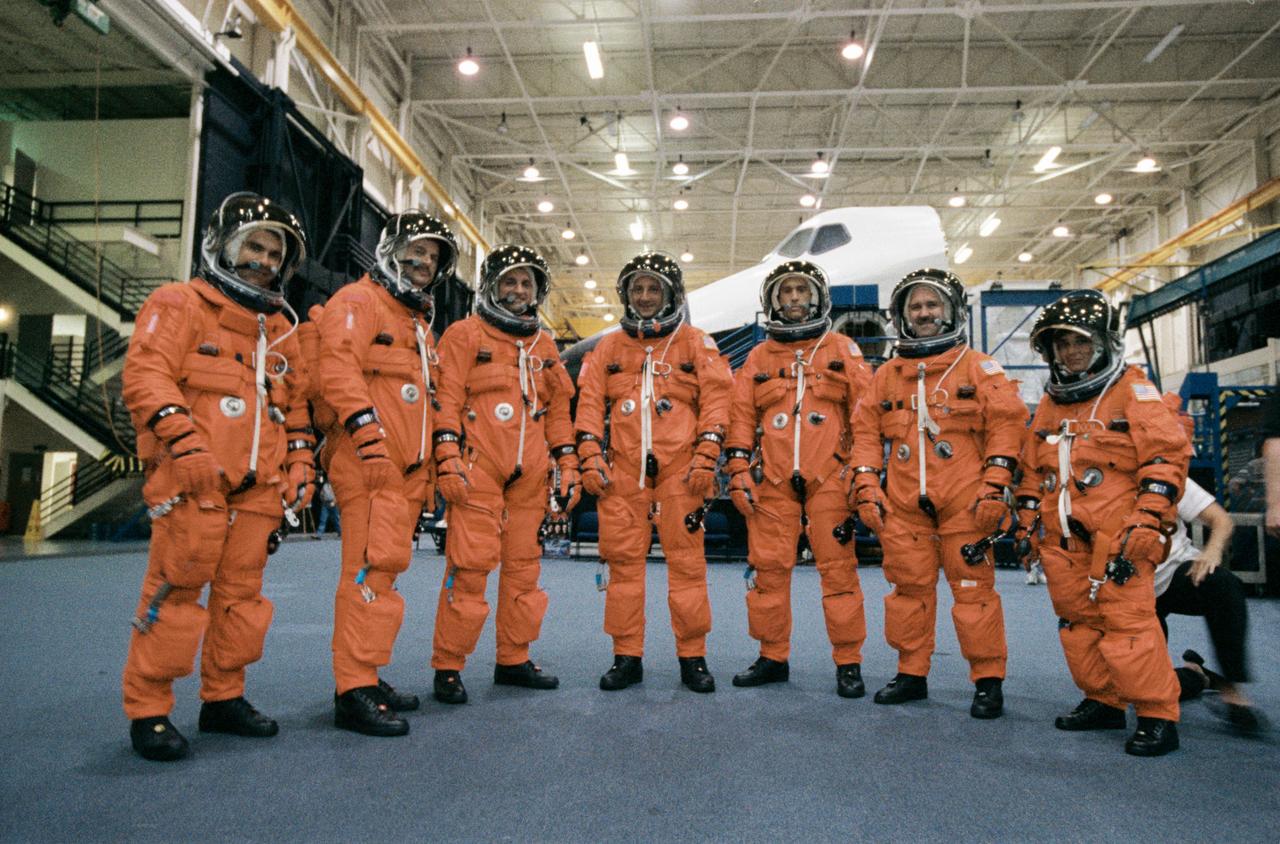
JSC2001-02205 (9 August 2001) --- The seven STS-109 crew members wait for a training and photo session to begin in the Space Vehicle Mockup Facility at the Johnson Space Center (JSC). From the left are astronauts Duane G. Carey and Scott D. Altman, pilot and mission commander, respectively, and Richard M. Linnehan, Michael J. Massimino, James H. Newman, John M. Grunsfeld, and Nancy J. Currie, all mission specialists. STS-109 will be the 108th shuttle flight and the fourth Hubble Space Telescope (HST) servicing mission.
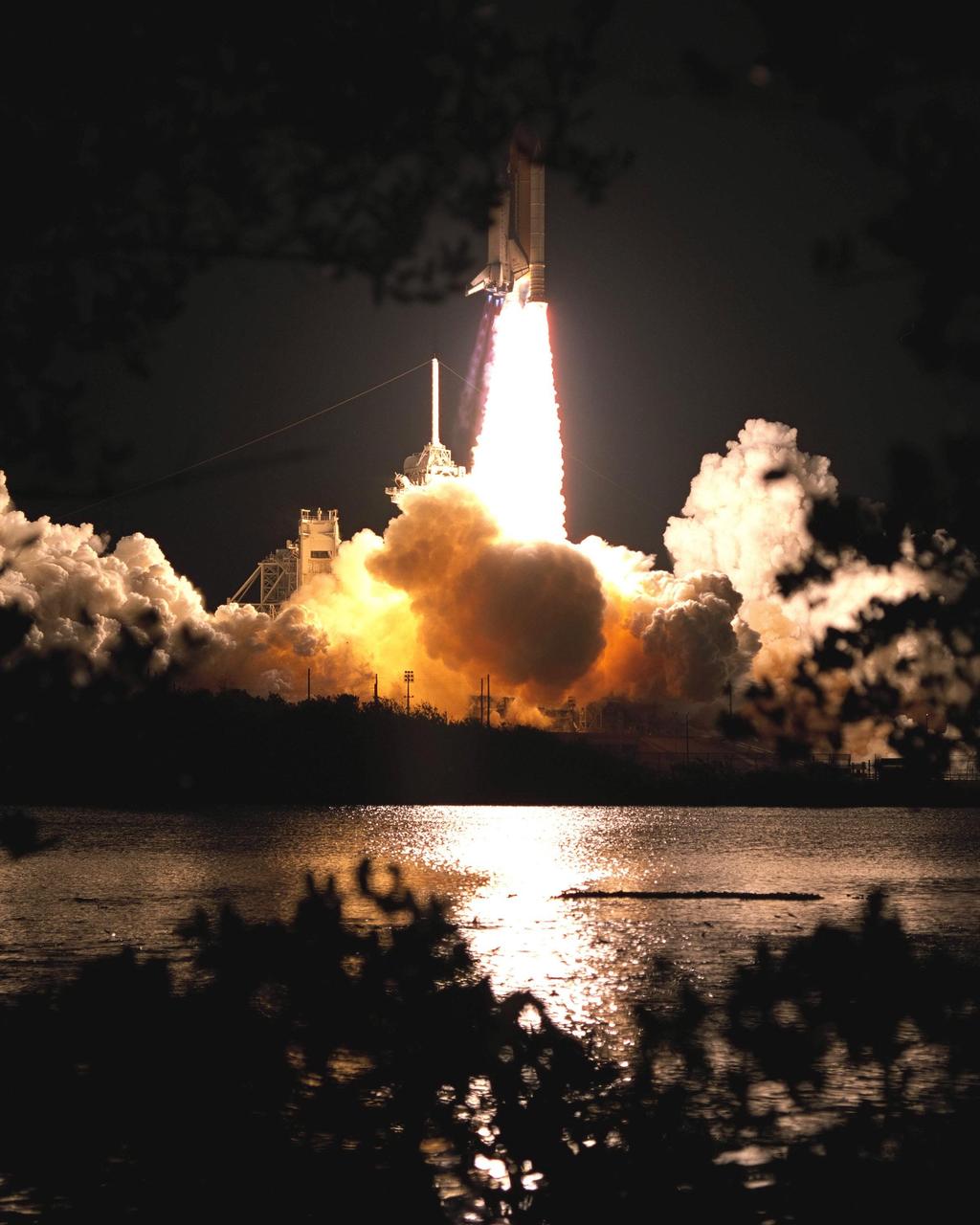
KENNEDY SPACE CENTER, Fla. - Space Shuttle Columbia hurtles into space above a fiery trail of flames that illuminate the clouds of smoke and steam below. The nearby water reflects the brilliance as well. Liftoff of Columbia occurred at 6:22:02:08 a.m. EST (11:22:02:08 GMT). This was the 27th flight of the vehicle and 108th in the history of the Shuttle program. The goal of the mission is the maintenance and upgrade of the Hubble Space Telescope, to be carried out in five spacewalks. The crew comprises Commander Scott D. Altman, Pilot Duane G. Carey, Payload Commander John M. Grunsfeld, and Mission Specialists Nancy Jane Currie, Richard M. Linnehan, James H. Newman and Michael J. Massimino. After the 11-day mission, Columbia is expected to return to KSC March 12 about 4:35 a.m. EST (09:35 GMT)
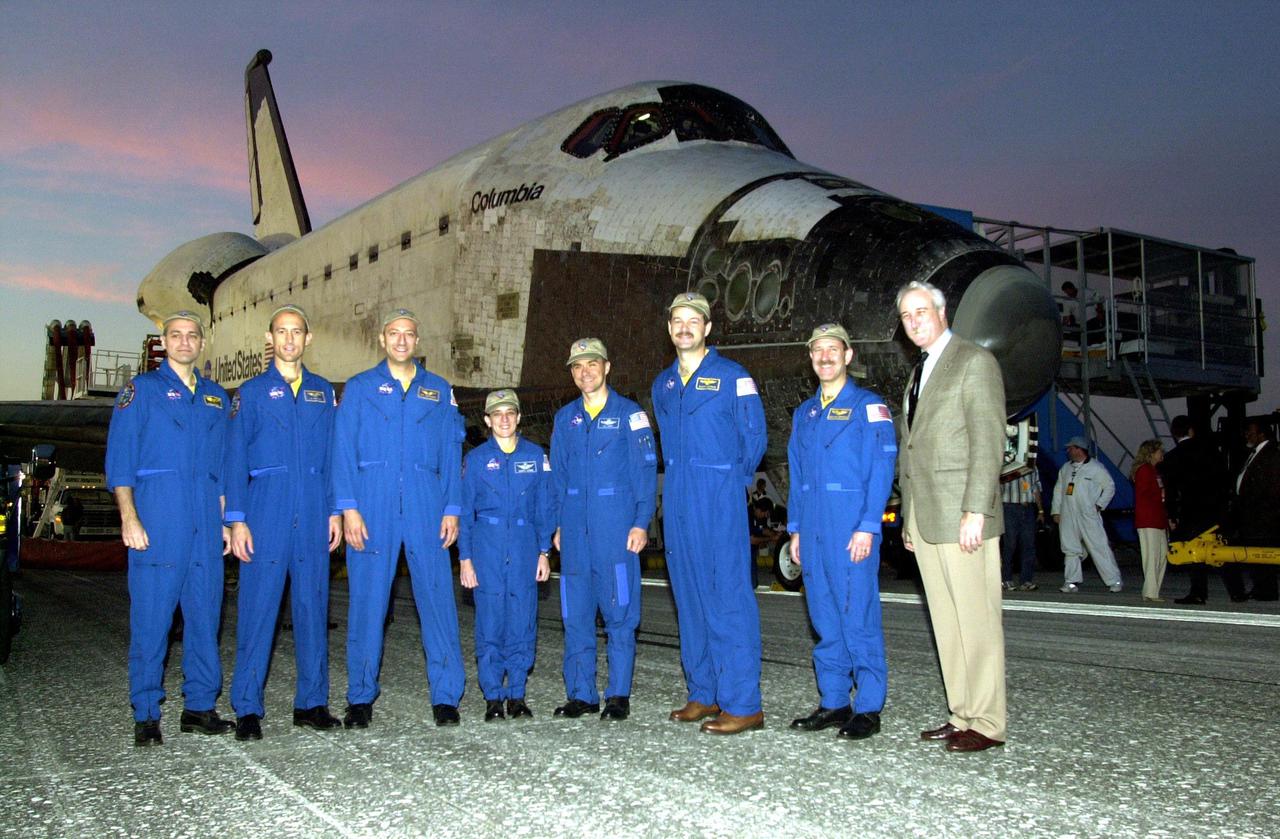
KENNEDY SPACE CENTER, FLA. -- Posing in front of orbiter Columbia is the returning STS-109 crew along with NASA Administrator Sean O'Keefe (right). From left are Mission Specialists Richard Linnehan, James Newman, Michael Massimino and Nancy Jane Currie; Pilot Duane Carey; Commander Scott Altman; Payload Commander John Grunsfeld; and O'Keefe. The crew returned to Earth after a successful 11-day mission servicing the Hubble Space Telescope. Wheel stop occurred on orbit 165 at 4:33:09 a.m. EST. Main gear touchdown occurred at 4:31:52 a.m. and nose wheel touchdown at 4:32:02. Rollout time was 1 minute, 17 seconds. This was the 58th landing at KSC out of 108 missions in the history of the Shuttle program
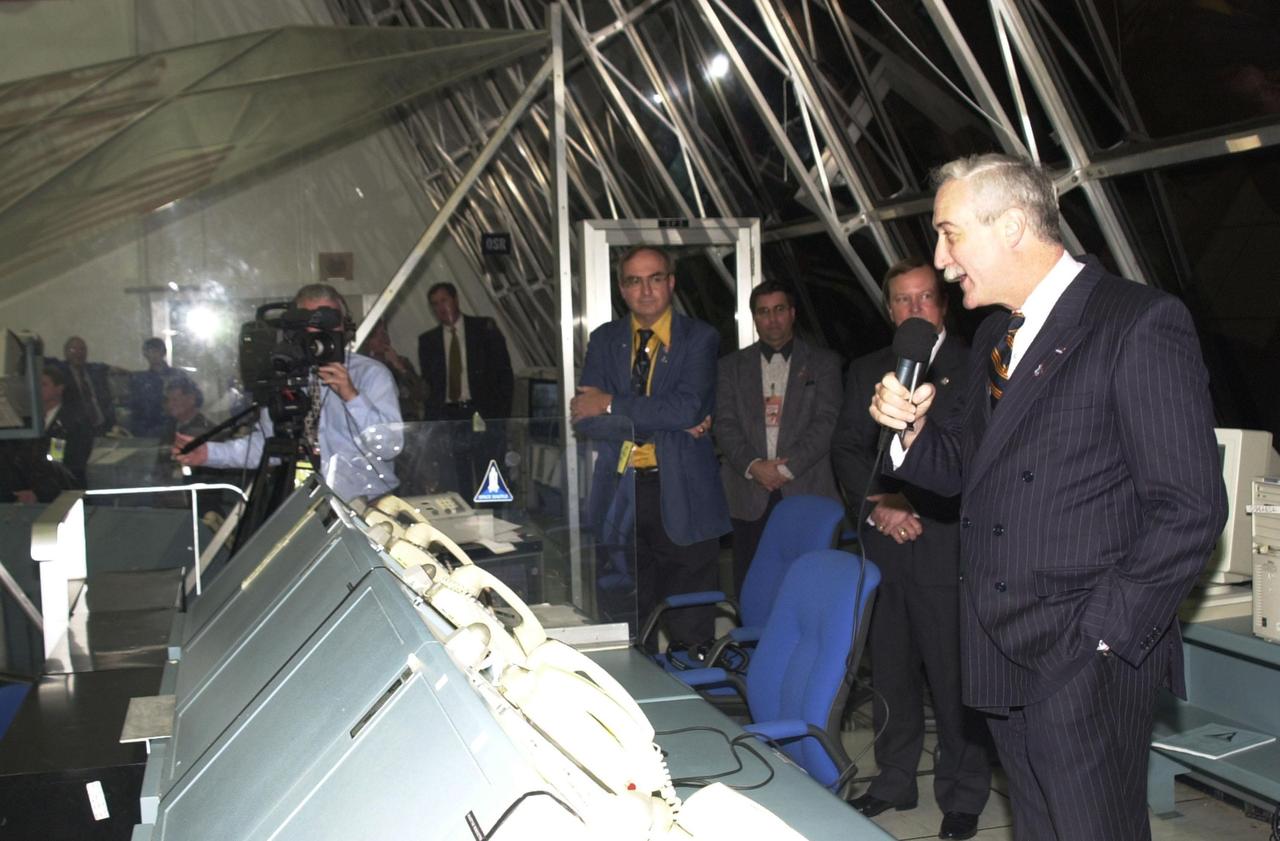
KENNEDY SPACE CENTER, Fla. - In the firing room, NASA Administrator Sean O'Keefe (right) congratulates the launch team after the successful on-time launch of Space Shuttle Columbia. Standing next to O'Keefe is Launch Director Mike Leinbach. Liftoff occurred at 6:22:02:08 a.m. EST (11:22:02:08 GMT). Columbia is on its 27th flight and the 108th flight of the Shuttle Program. The goal of the mission is the maintenance and upgrade of the Hubble Space Telescope, to be carried out in five spacewalks. The crew of STS-109 comprises Commander Scott D. Altman, Pilot Duane G. Carey, Payload Commander John M. Grunsfeld, and Mission Specialists Nancy Jane Currie, Richard M. Linnehan, James H. Newman and Michael J. Massimino. After an 11-day mission, Columbia is expected to return to Kennedy March 12 about 4:35 a.m. EST (09:35 GMT)
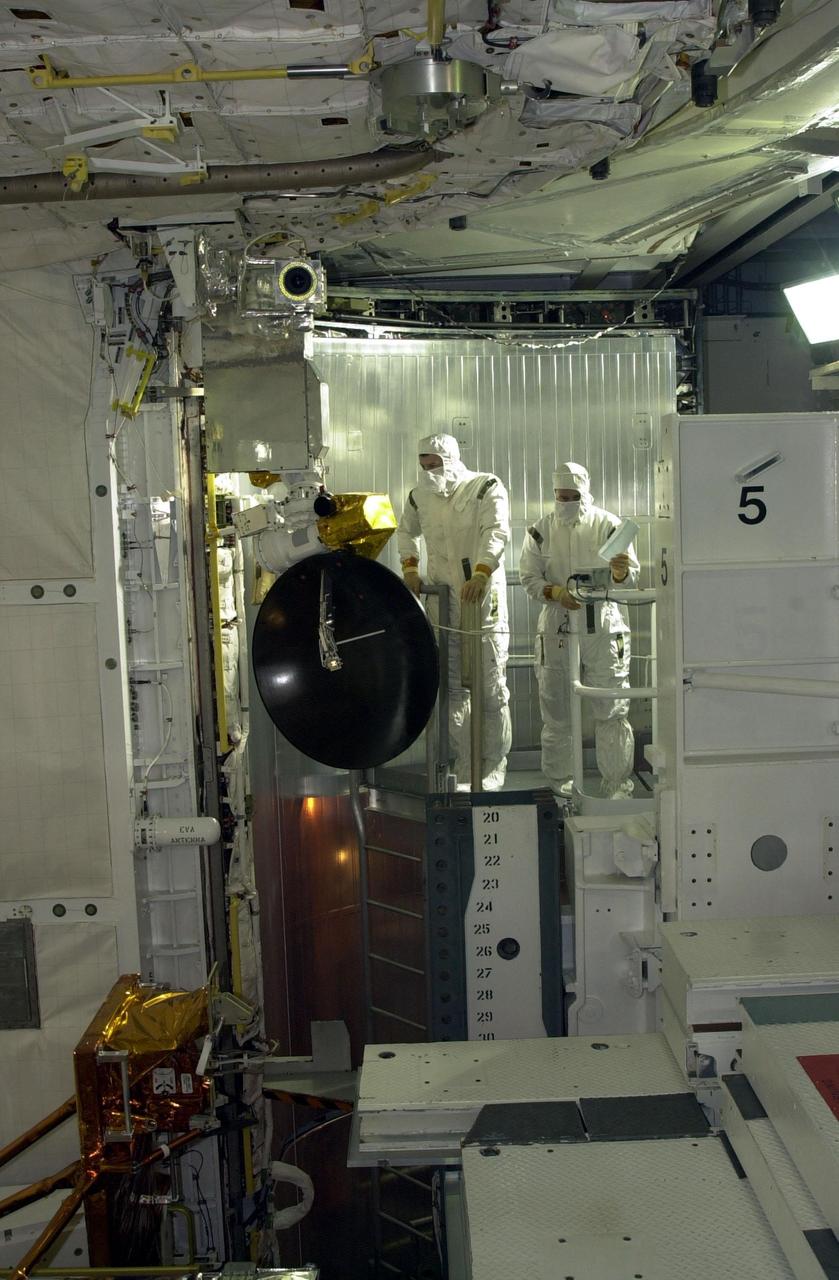
KENNEDY SPACE CENTER, Fla. - On Launch Pad 39A, members of the STS-109 crew perform a final inspection of the Hubble payload they will deploy on orbit during five spacewalks. The crew comprises Commander Scott Altman, Pilot Duane Carey, Payload Commander John Grunsfeld, and Mission Specialists Nancy Currie, James Newman, Richrd Linnehan and Michael Massimino. The goal of the mission is to replace Solar Array 2 with Solar Array 3, replace the Power Control Unit, remove the Faint Object Camera and install the Advanced Camera for Surveys (ACS), install the Near Infrared Camera and Multi-Object Spectrometer (NICMOS) Cooling System, and install New Outer Blanket Layer insulation. Launch of Shuttle Columbia on mission STS-109 is scheduled for Feb. 28 at 6:48 a.m. EST
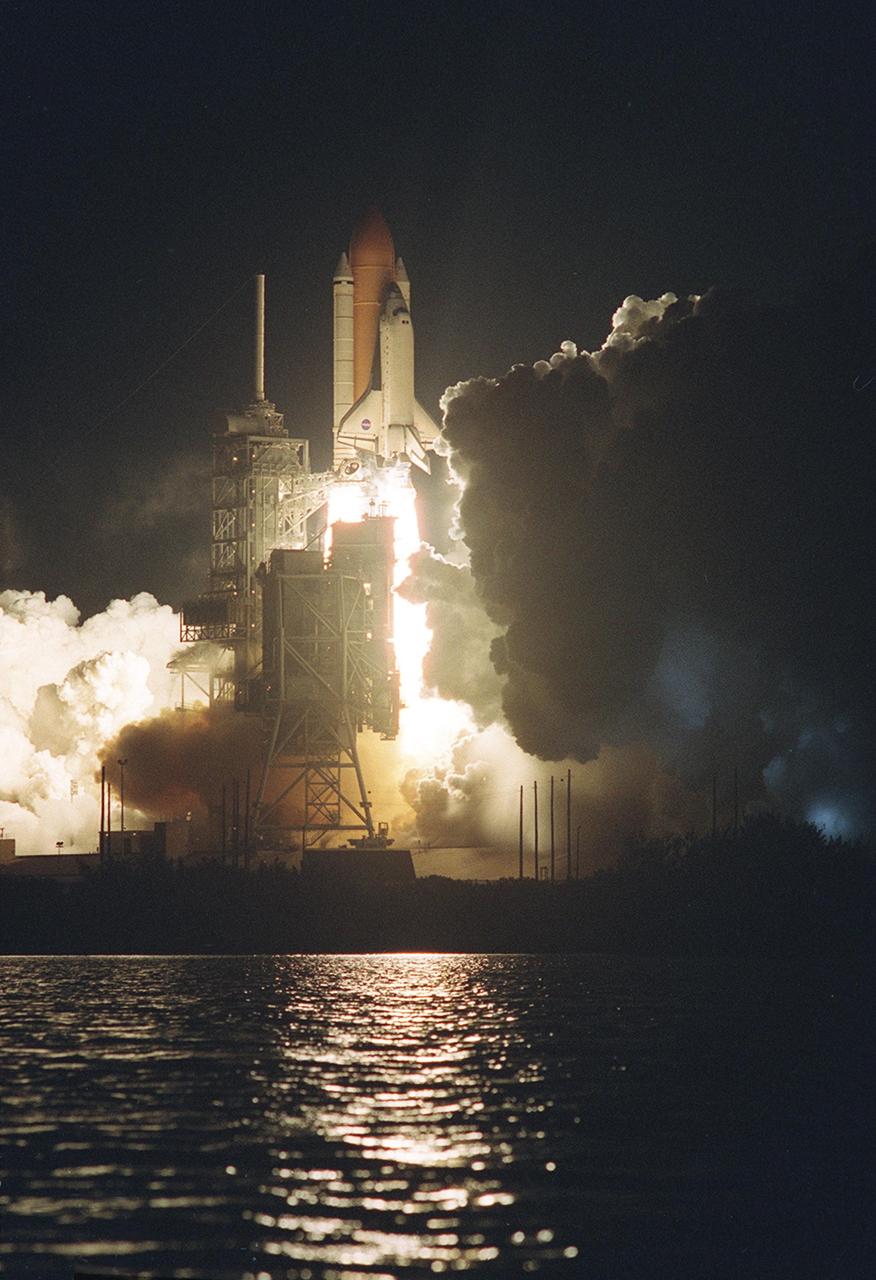
KENNEDY SPACE CENTER, Fla. - As Space Shuttle Columbia hurtles into the pre-dawn sky on mission STS-109, its brilliant exhaust illuminates the clouds of smoke and steam and spreads across the nearby water. Liftoff of Columbia occurred at 6:22:02:08 a.m. EST (11:22:02:08 GMT). This was the 27th flight of the vehicle and 108th in the history of the Shuttle program. The goal of the mission is the maintenance and upgrade of the Hubble Space Telescope, to be carried out in five spacewalks. The crew comprises Commander Scott D. Altman, Pilot Duane G. Carey, Payload Commander John M. Grunsfeld, and Mission Specialists Nancy Jane Currie, Richard M. Linnehan, James H. Newman and Michael J. Massimino. After the 11-day mission, Columbia is expected to return to KSC March 12 about 4:35 a.m. EST (09:35 GMT)
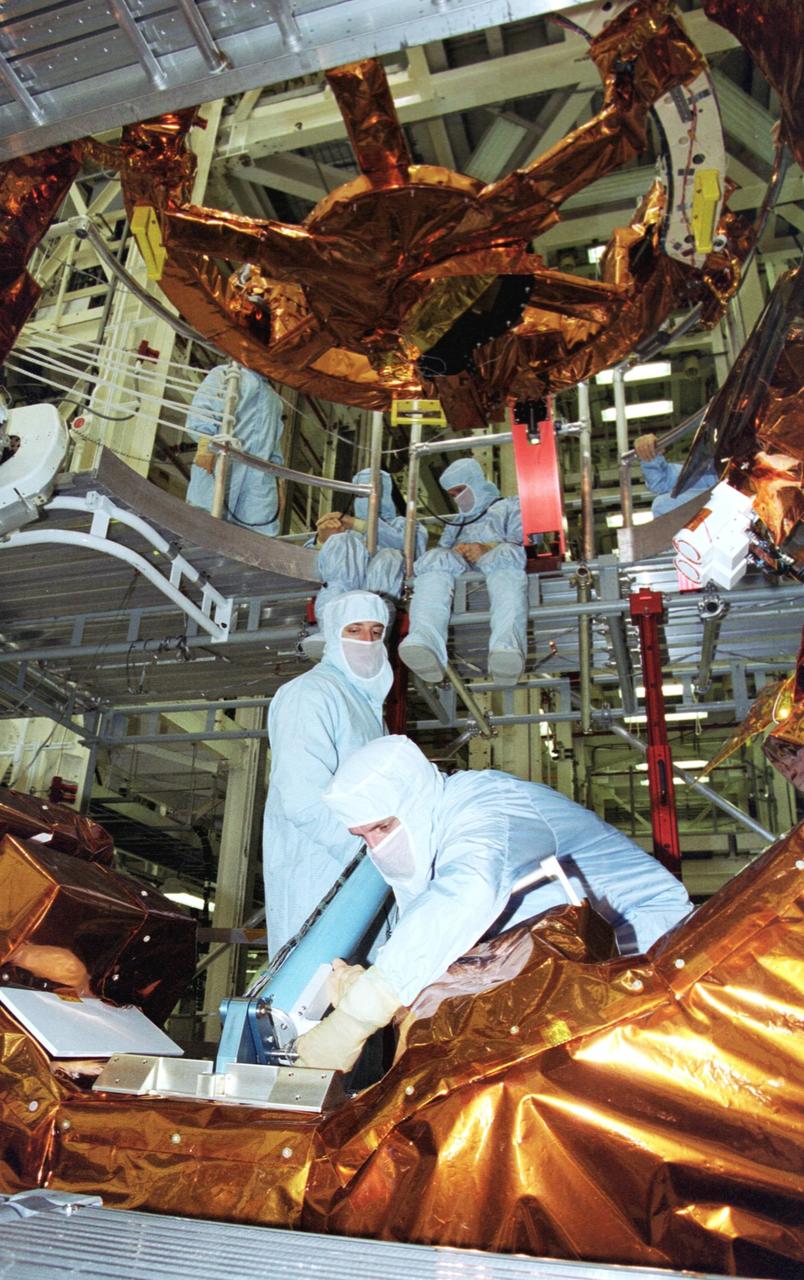
KENNEDY SPACE CENTER, Fla. - In the Vertical Processing Facility, members of the STS-109 crew practice using some of the equipment for their Hubble Space Telescope (HST) Servicing mission. Seen in the foreground are Mission Specialists Michael Massimino (standing) and Richard Linnehan (bending over). The rest of the crew members are Commander Scott Altman, Pilot Duane Carey, Payload Commander John Grunsfeld and Mission Specialists Nancy Currie and James Newman. The goal of the mission is to service the HST, replacing Solar Array 2 with Solar Array 3, replacing the Power Control Unit, removing the Faint Object Camera and installing the Advanced Camera for Surveys, installing the Near Infrared Camera and Multi-Object Spectrometer (NICMOS) Cooling System, and installing New Outer Blanket Layer insulation on bays 5 through 8. Mission STS-109 is scheduled for launch Feb. 14, 2002
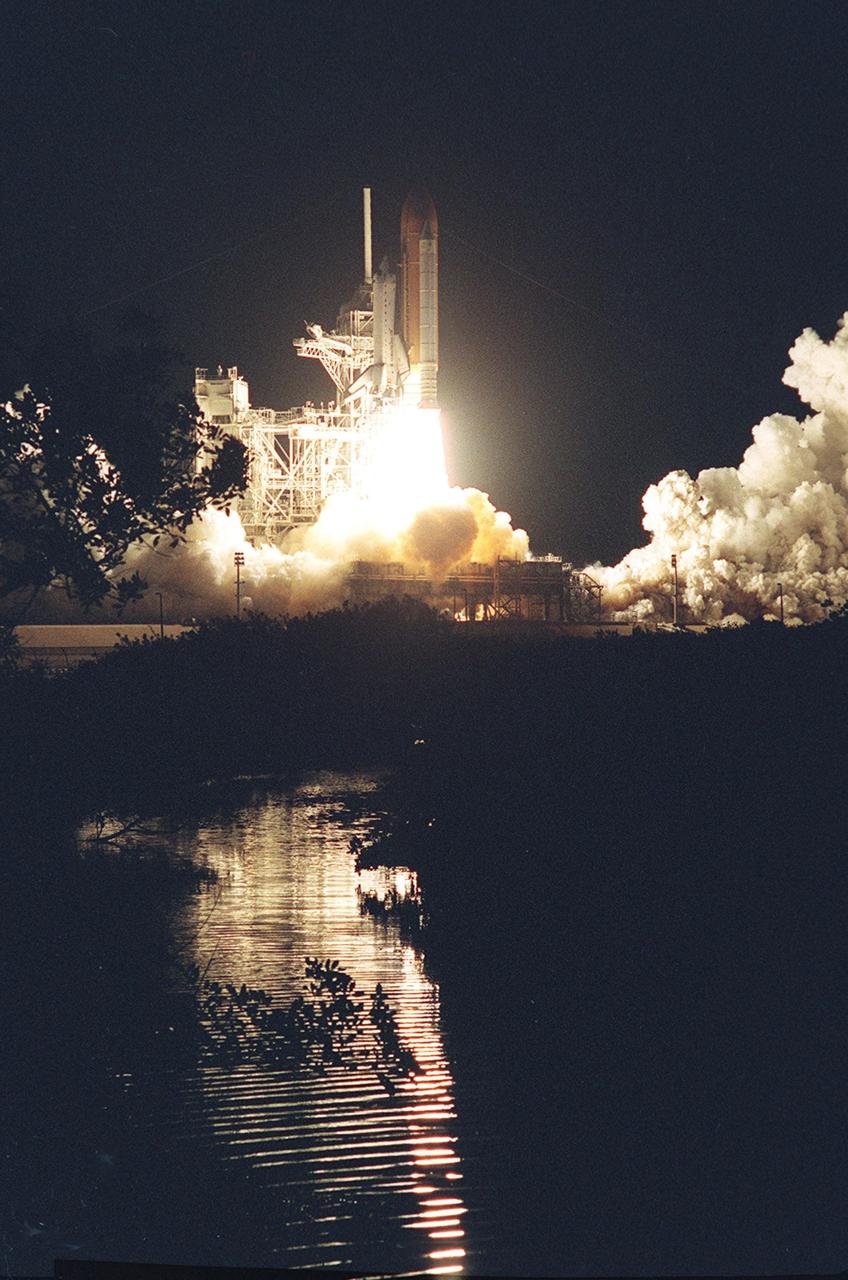
KENNEDY SPACE CENTER, Fla. - As Space Shuttle Columbia hurtles into the pre-dawn sky on mission STS-109, its brilliant exhaust spreads across the launch pad and nearby water. Liftoff of Columbia occurred at 6:22:02:08 a.m. EST (11:22:02:08 GMT). This was the 27th flight of the vehicle and 108th in the history of the Shuttle program. The goal of the mission is the maintenance and upgrade of the Hubble Space Telescope, to be carried out in five spacewalks. The crew comprises Commander Scott D. Altman, Pilot Duane G. Carey, Payload Commander John M. Grunsfeld, and Mission Specialists Nancy Jane Currie, Richard M. Linnehan, James H. Newman and Michael J. Massimino. After the 11-day mission, Columbia is expected to return to KSC March 12 about 4:35 a.m. EST (09:35 GMT)
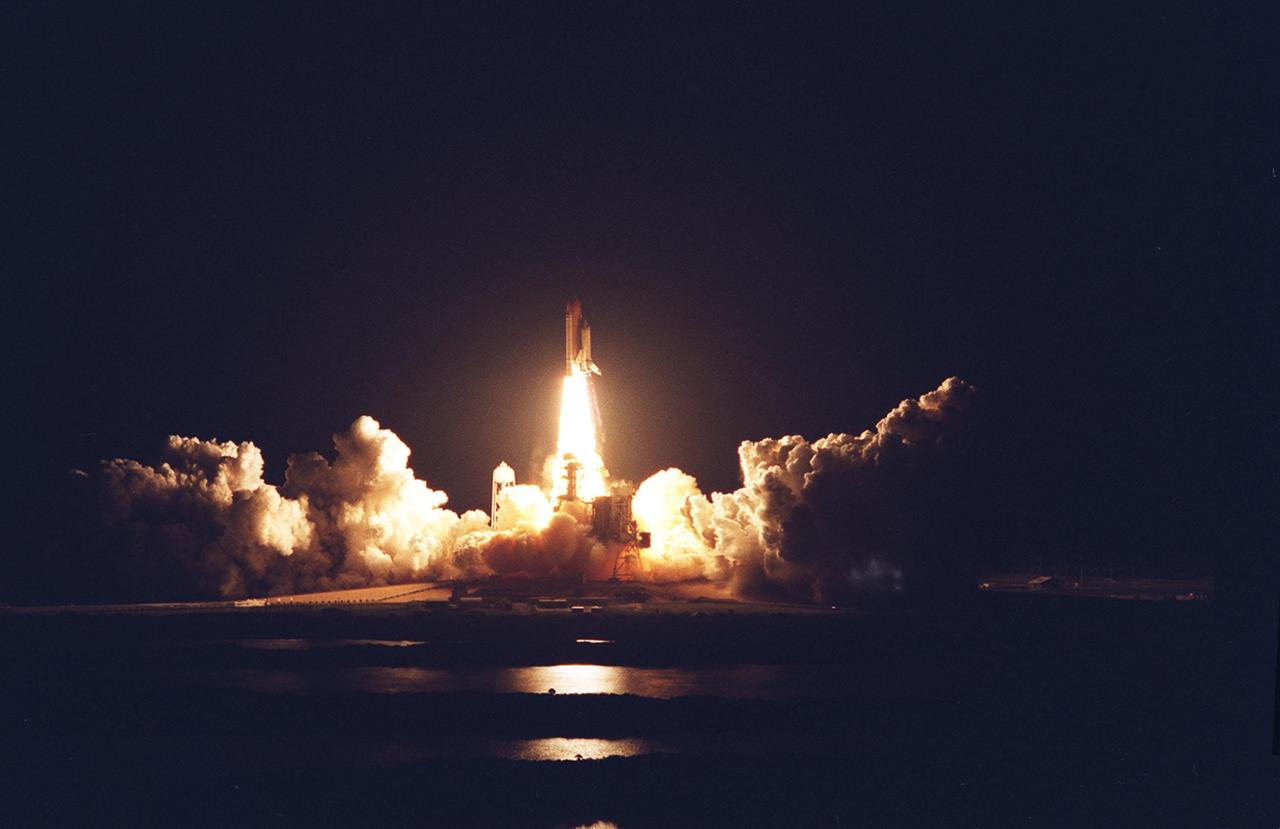
KENNEDY SPACE CENTER, Fla. - Billows of smoke and steam flow over the launch pad as Space Shuttle Columbia leaps into space on mission STS-109. Liftoff occurred at 6:22:02:08 a.m. EST (11:22:02:08 GMT). This was the 27th flight of the vehicle and 108th in the history of the Shuttle program. The goal of mission STS-109 is the maintenance and upgrade of the Hubble Space Telescope, to be carried out in five spacewalks. The crew comprises Commander Scott D. Altman, Pilot Duane G. Carey, Payload Commander John M. Grunsfeld, and Mission Specialists Nancy Jane Currie, Richard M. Linnehan, James H. Newman and Michael J. Massimino. After the 11-day mission, Columbia is expected to return to KSC March 12 about 4:35 a.m. EST (09:35 GMT).
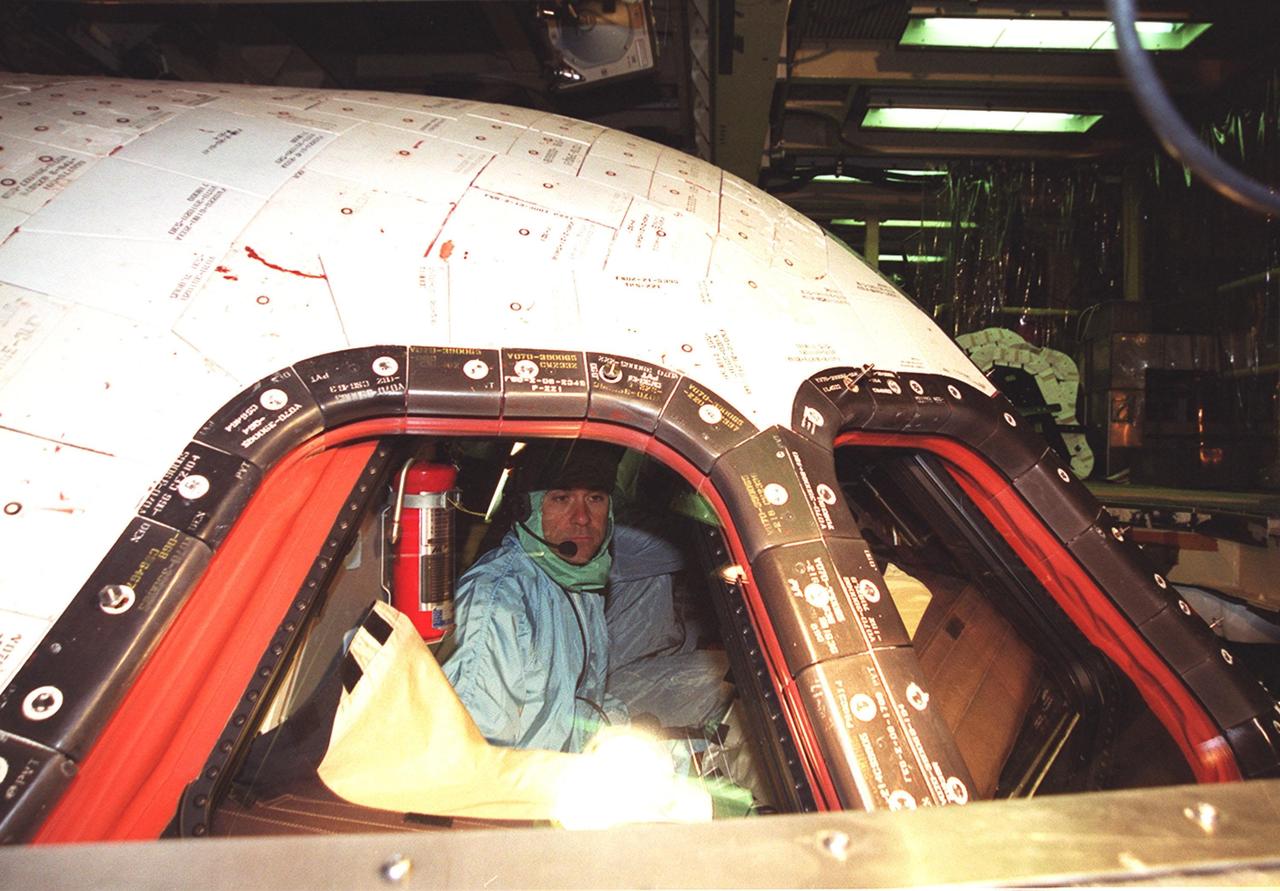
KENNEDY SPACE CENTER, Fla. - STS-109 Pilot Duane Carey checks the windshield and windows from inside Columbia. This is Carey's first Shuttle flight. He and the crew are at KSC to take part in Crew Equipment Interface Test activities that include familiarization with the orbiter and equipment. STS-109 is the Hubble Space Telescope (HST) Servicing mission. The crew also comprises Commander Scott Altman, Payload Commander John Grunsfeld and Mission Specialists Nancy Currie, James Newman, Richard Linnehan and Michael Massimino. The goal of the mission is to service the HST, replacing Solar Array 2 with Solar Array 3, replacing the Power Control Unit, removing the Faint Object Camera and installing the Advanced Camera for Surveys, installing the Near Infrared Camera and Multi-Object Spectrometer (NICMOS) Cooling System, and installing New Outer Blanket Layer insulation on bays 5 through 8. Mission STS-109 is scheduled for launch Feb. 14, 2002
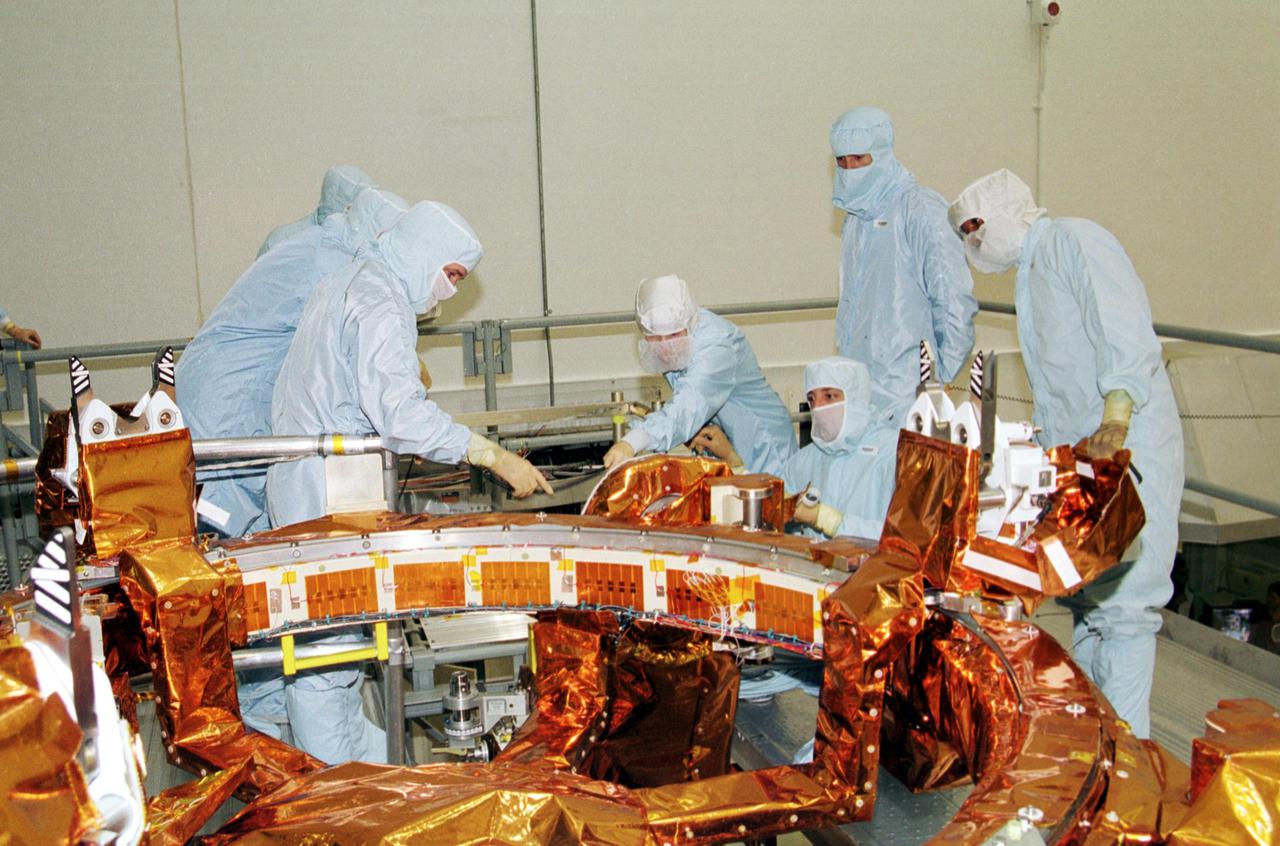
KENNEDY SPACE CENTER, Fla. - Inside the Vertical Processing Facility, the STS-109 crew checks out part of the equipment for their Hubble Space Telescope (HST) Servicing mission. The crew comprises Commander Scott altman, Pilot Duane Carey, Payload Commander John Grunsfeld and Mission Specialists Nancy Currie, James Newman, Richard Linnehan and Michael Massimino. The goal of the mission is to service the HST, replacing Solar Array 2 with Solar Array 3, replacing the Power Control Unit, removing the Faint Object Camera and installing the Advanced Camera for Surveys, installing the Near Infrared Camera and Multi-Object Spectrometer (NICMOS) Cooling System, and installing New Outer Blanket Layer insulation on bays 5 through 8. Mission STS-109 is scheduled for launch Feb. 14, 2002
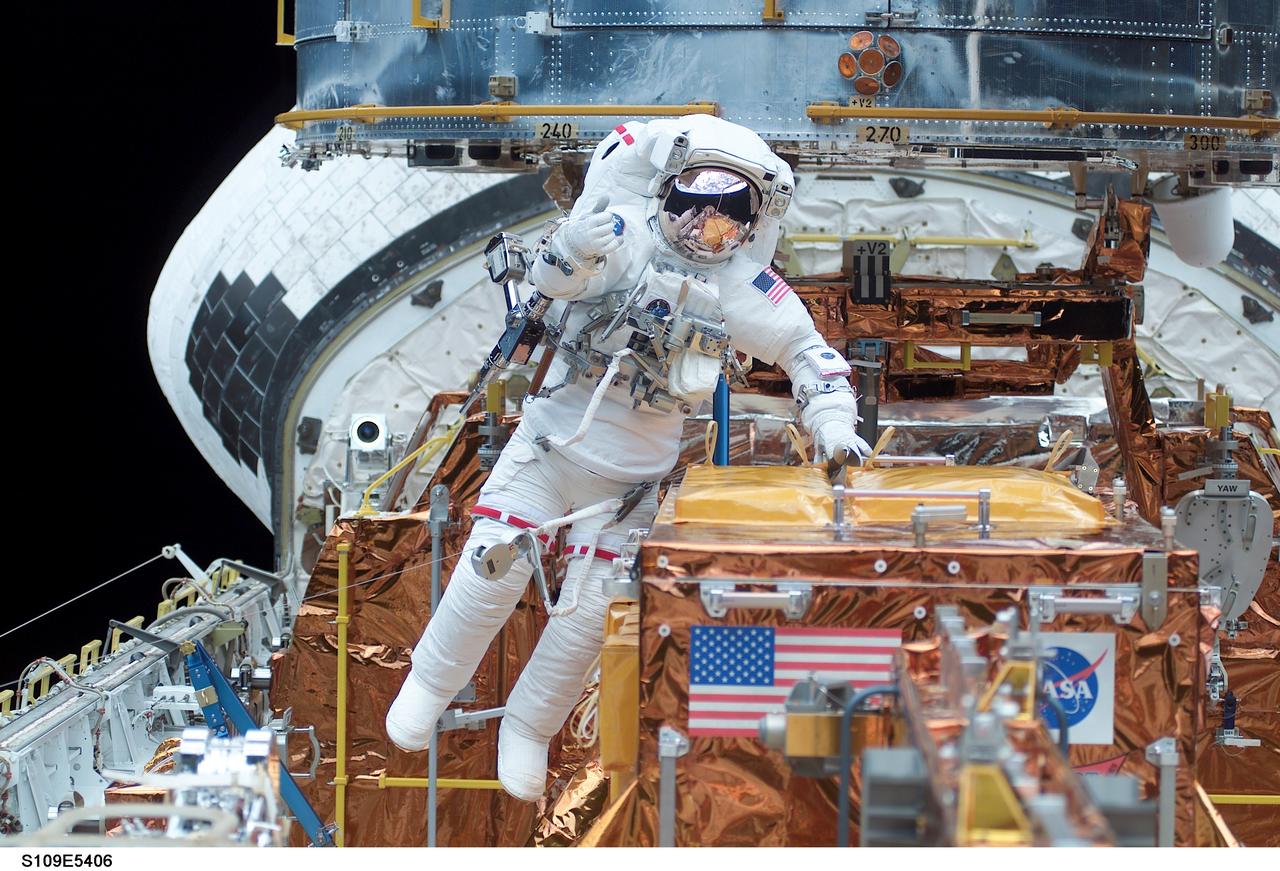
STS109-E-5406 (5 March 2002) --- Astronaut James H. Newman, mission specialist, moves about in the Space Shuttle Columbia's cargo bay while working in tandem with astronaut Michael J. Massimino (out of frame), mission specialist, during the STS-109 mission's second day of extravehicular activity (EVA). The space walk lasted seven hours, 16 minutes. Inside Columbia's cabin, astronaut Nancy J. Currie, mission specialist, controlled the Remote Manipulator System (RMS) to assist the two in their work on the Hubble Space Telescope (HST). Part of the giant telescope's base, latched down in the payload bay, can be seen behind Newman. The image was recorded with a digital still camera.
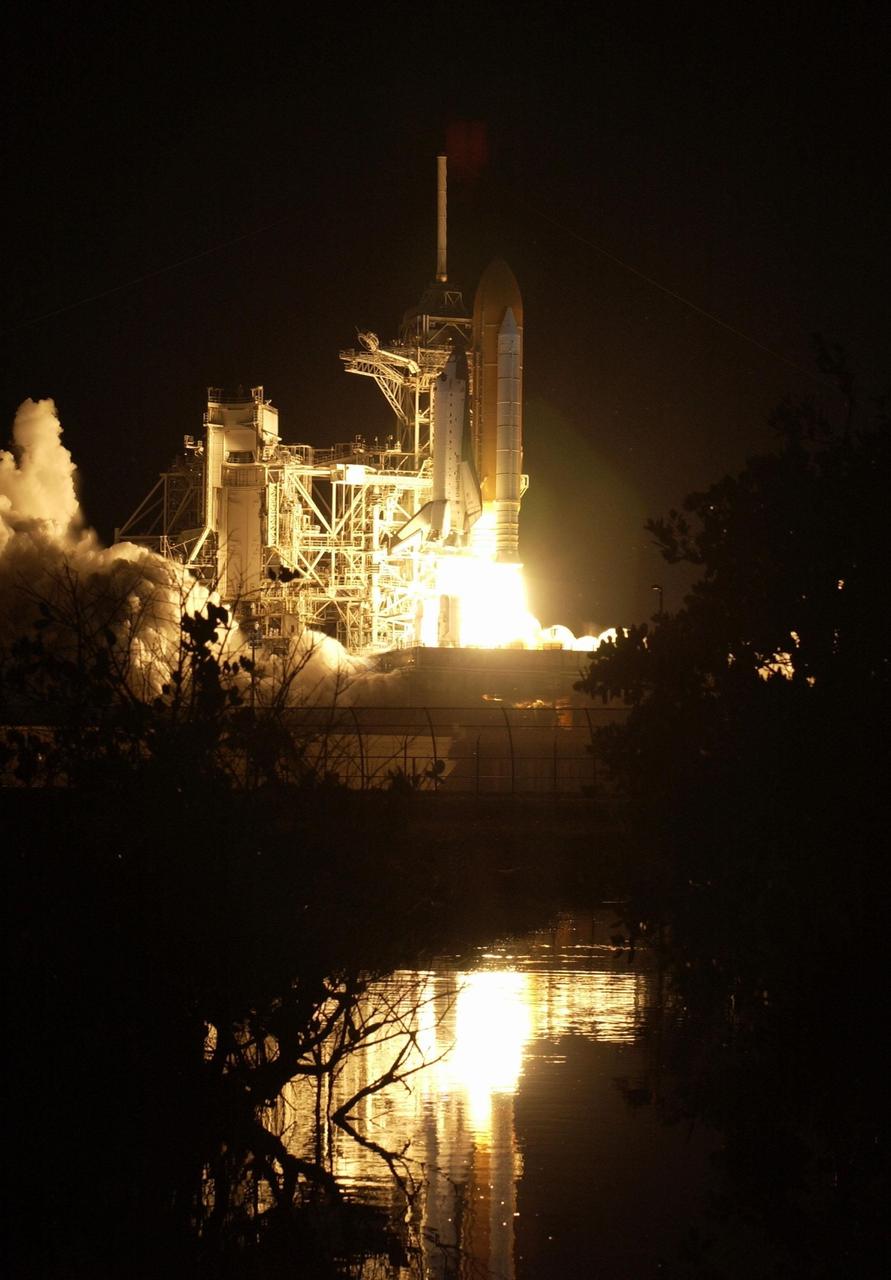
KENNEDY SPACE CENTER, Fla. - Space Shuttle Columbia spews flames and smoke as it leaps off the launch pad on its 27th flight into space on mission STS-109. Liftoff occurred at 6:22:02:08 a.m. EST (11:22:02:08 GMT). The goal of the mission is the maintenance and upgrade of the Hubble Space Telescope, to be carried out in five spacewalks. The crew of STS-109 comprises Commander Scott D. Altman, Pilot Duane G. Carey, Payload Commander John M. Grunsfeld, and Mission Specialists Nancy Jane Currie, Richard M. Linnehan, James H. Newman and Michael J. Massimino. After an 11-day mission, Columbia is expected to return to Kennedy March 12 about 4:35 a.m. EST (09:35 GMT).
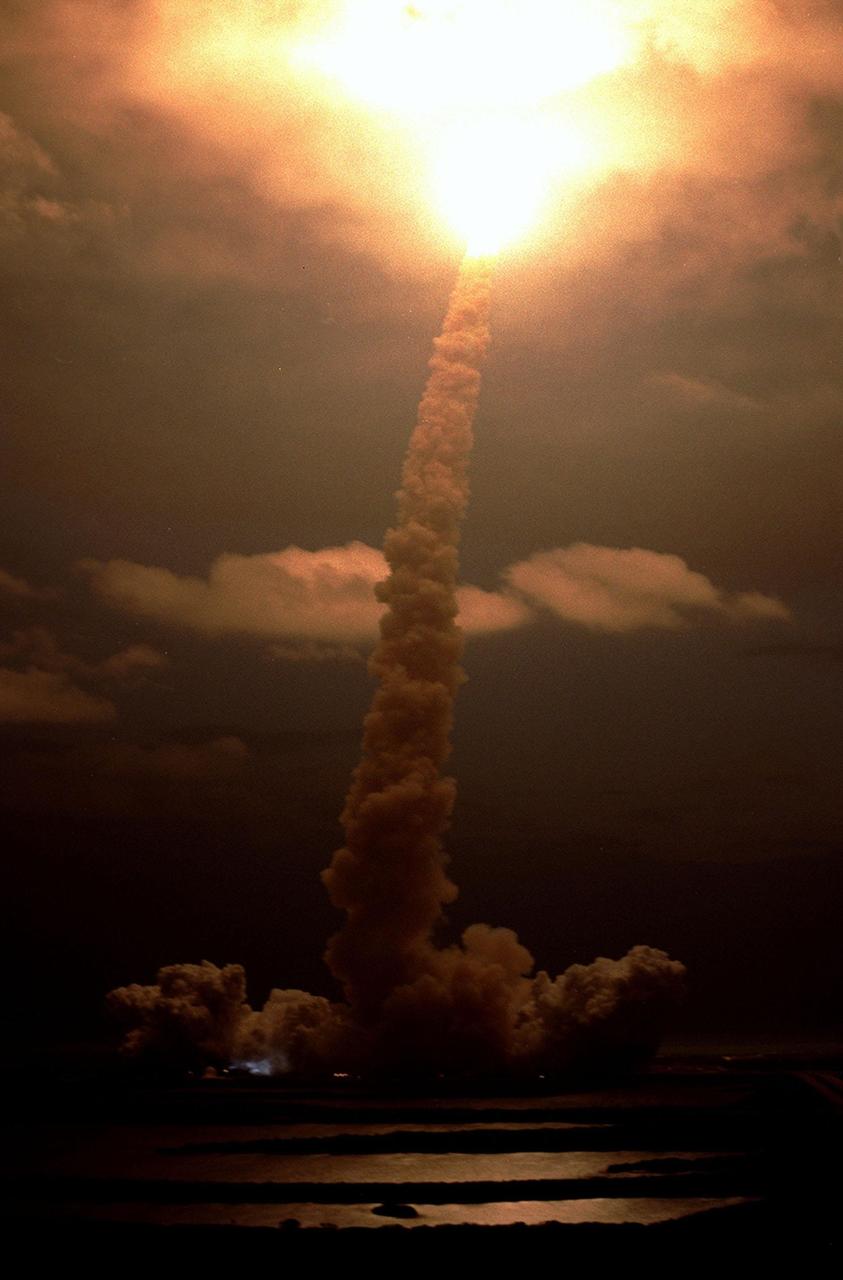
KENNEDY SPACE CENTER, Fla. - The smoke plume identifies the direction of Space Shuttle Columbia as it climbs into the clouds, illuminated by the Shuttle's exhaust, after launch on mission STS-109. Liftoff occurred at 6:22:02:08 a.m. EST (11:22:02:08 GMT). This was the 27th flight of the vehicle and 108th in the history of the Shuttle program. The goal of mission STS-109 is the maintenance and upgrade of the Hubble Space Telescope, to be carried out in five spacewalks. The crew comprises Commander Scott D. Altman, Pilot Duane G. Carey, Payload Commander John M. Grunsfeld, and Mission Specialists Nancy Jane Currie, Richard M. Linnehan, James H. Newman and Michael J. Massimino. After the 11-day mission, Columbia is expected to return to KSC March 12 about 4:35 a.m. EST (09:35 GMT).
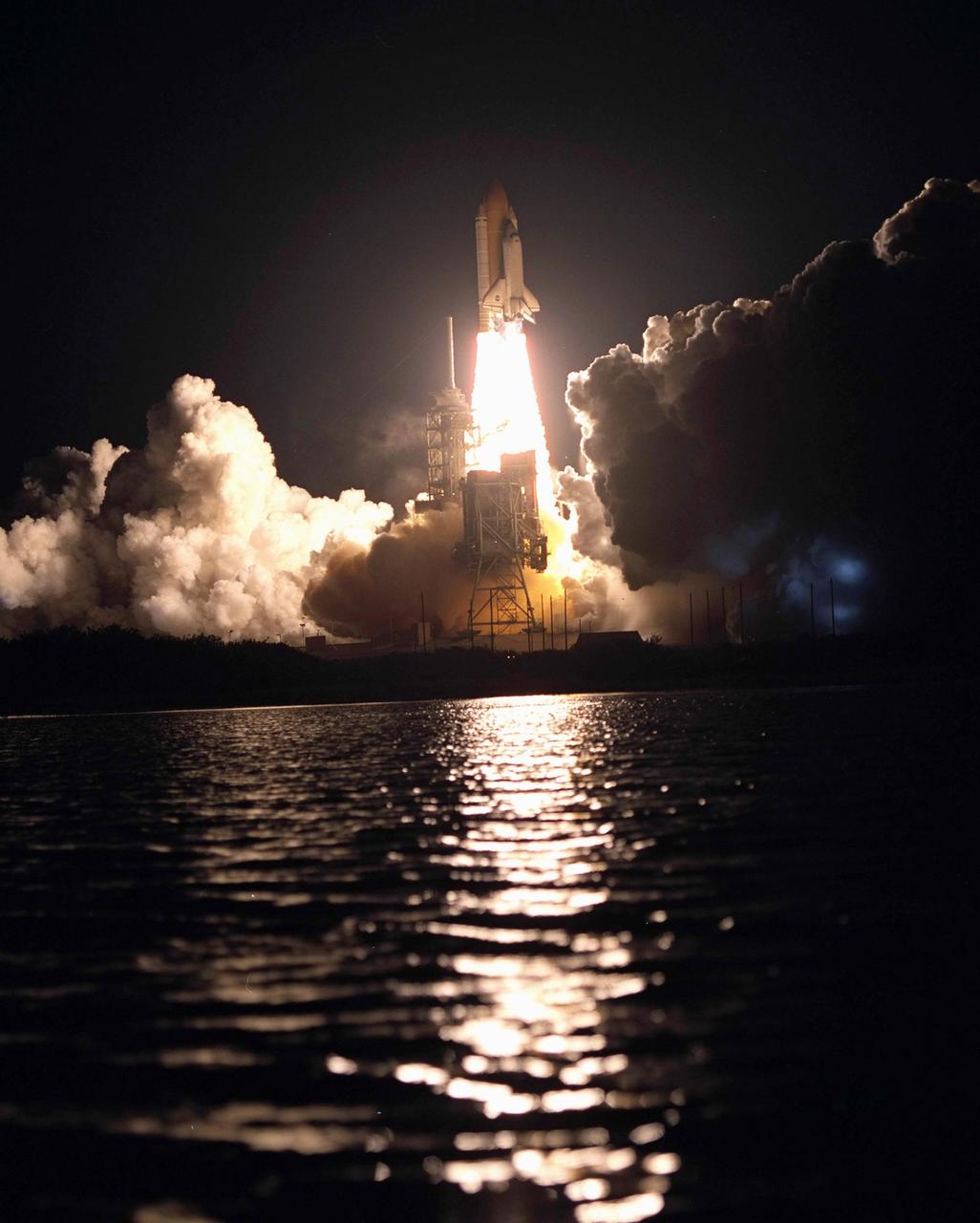
KENNEDY SPACE CENTER, Fla. - With its fiery exhaust casting a beam across the water and billows of smoke casting shadows, Space Shuttle Columbia roars into the pre-dawn sky on mission STS-109. Liftoff occurred at 6:22:02:08 a.m. EST (11:22:02:08 GMT). This was the 27th flight of the vehicle and 108th in the history of the Shuttle program. The goal of mission STS-109 is the maintenance and upgrade of the Hubble Space Telescope, to be carried out in five spacewalks. The crew comprises Commander Scott D. Altman, Pilot Duane G. Carey, Payload Commander John M. Grunsfeld, and Mission Specialists Nancy Jane Currie, Richard M. Linnehan, James H. Newman and Michael J. Massimino. After the 11-day mission, Columbia is expected to return to KSC March 12 about 4:35 a.m. EST (09:35 GMT).
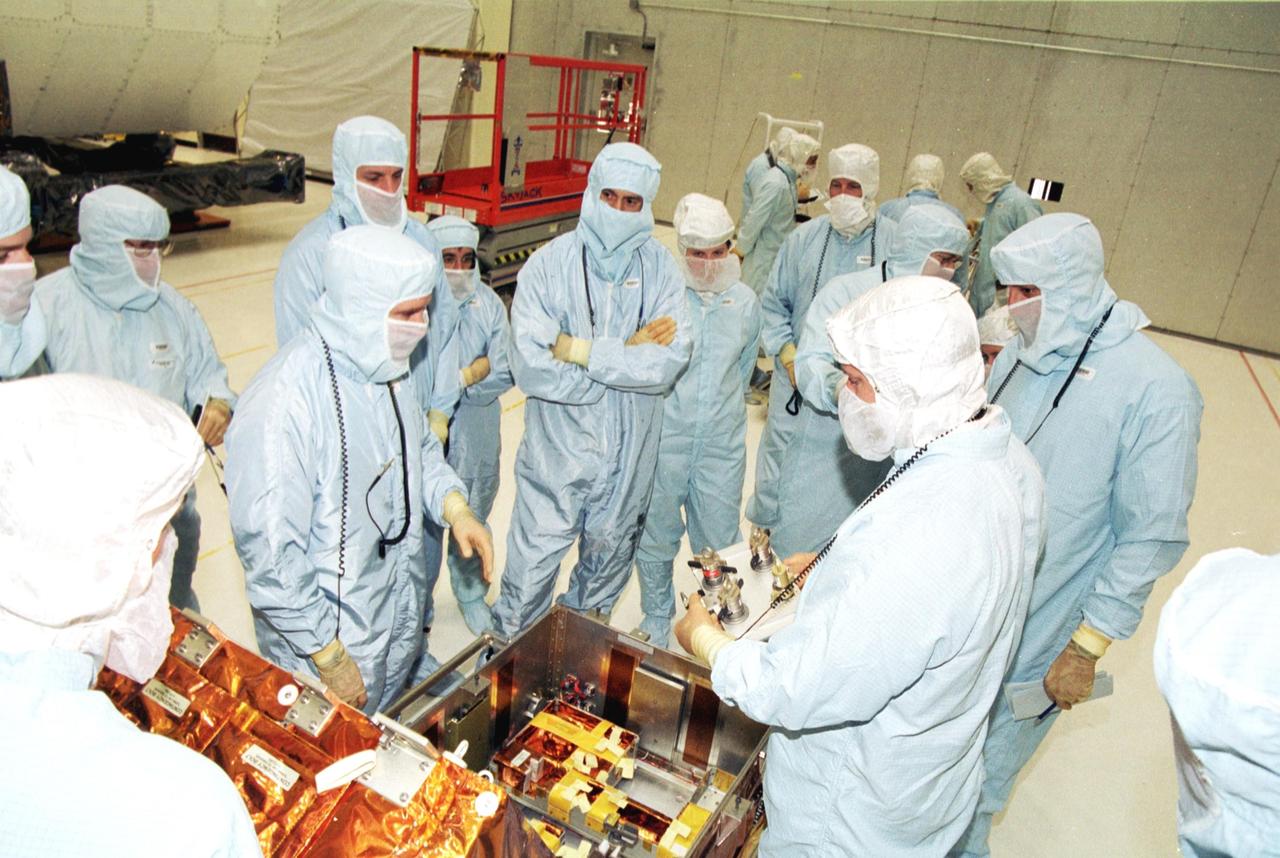
KENNEDY SPACE CENTER, Fla. - The STS-109 crew is in the Vertical Processing Facility to look over equipment for their Hubble Space Telescope (HST) Servicing mission. The crew comprises Commander Scott Altman, Pilot Duane Carey, Payload Commander John Grunsfeld and Mission Specialists Nancy Currie, James Newman, Richard Linnehan and Michael Massimino. The goal of the mission is to service the HST, replacing Solar Array 2 with Solar Array 3, replacing the Power Control Unit, removing the Faint Object Camera and installing the Advanced Camera for Surveys, installing the Near Infrared Camera and Multi-Object Spectrometer (NICMOS) Cooling System, and installing New Outer Blanket Layer insulation on bays 5 through 8. Mission STS-109 is scheduled for launch Feb. 14, 2002
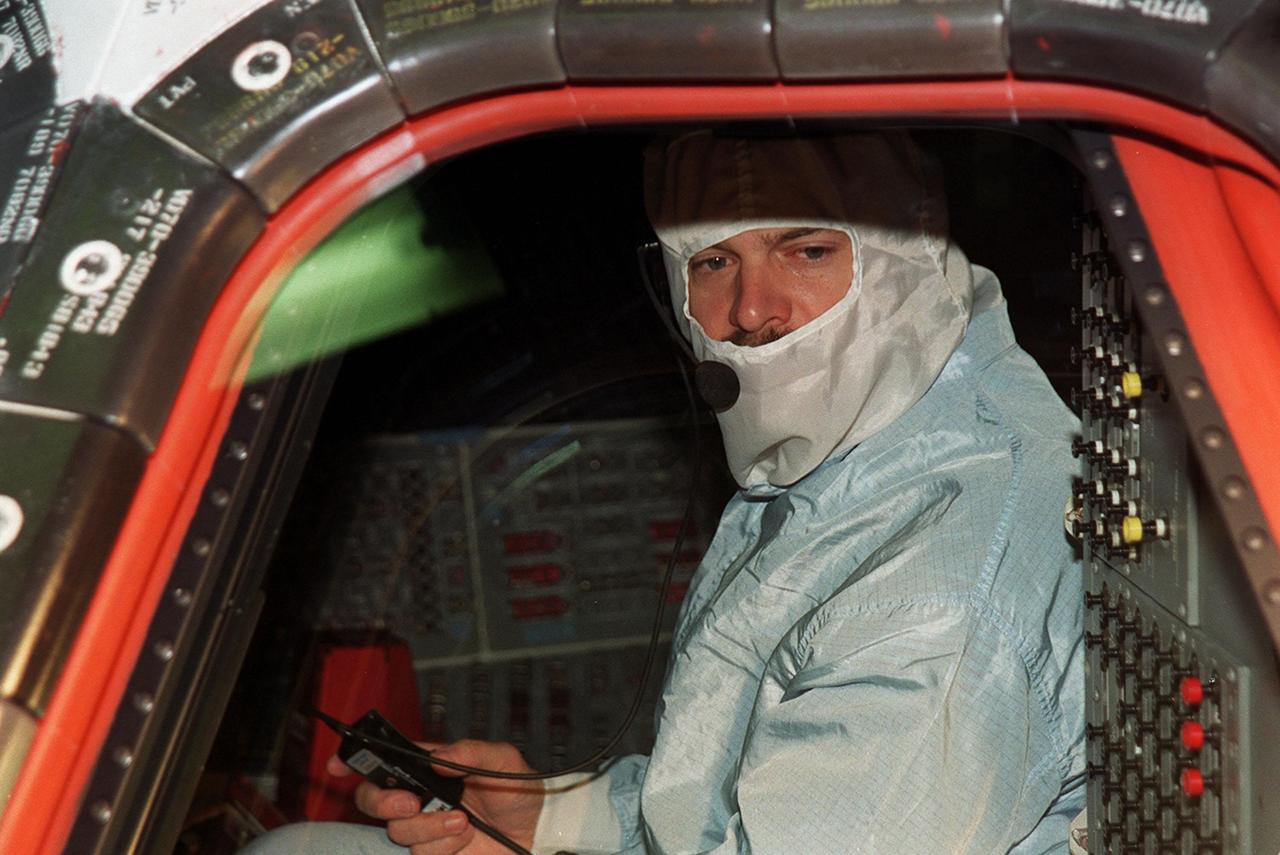
KENNEDY SPACE CENTER, Fla. -- STS-109 Commander Scott Altman checks the windshield and windows from inside Columbia. He and the crew are at KSC to take part in Crew Equipment Interface Test activities that include familiarization with the orbiter and equipment. STS-109 is the Hubble Space Telescope (HST) Servicing mission. The crew also comprises Pilot Duane Carey, Payload Commander John Grunsfeld and Mission Specialists Nancy Currie, James Newman, Richard Linnehan and Michael Massimino. The goal of the mission is to service the HST, replacing Solar Array 2 with Solar Array 3, replacing the Power Control Unit, removing the Faint Object Camera and installing the Advanced Camera for Surveys, installing the Near Infrared Camera and Multi-Object Spectrometer (NICMOS) Cooling System, and installing New Outer Blanket Layer insulation on bays 5 through 8. Mission STS-109 is scheduled for launch Feb. 14, 2002
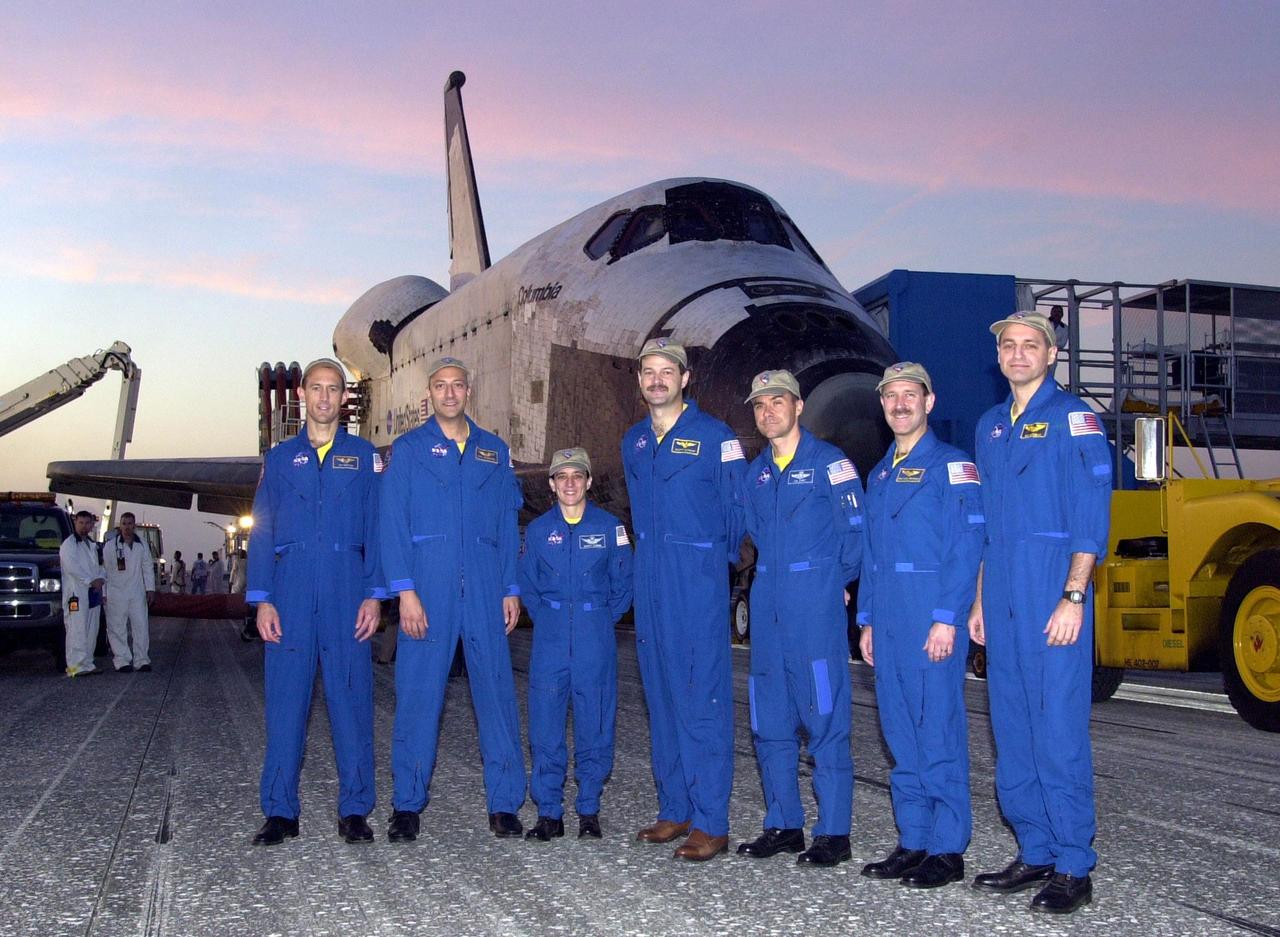
KENNEDY SPACE CENTER, FLA. -- Before orbiter Columbia is towed from the Shuttle Landing Facility to the Orbiter Processing Facility, the STS-109 crew poses for photo. From left to right are Mission Specialists James Newman, Michael Massimino and Nancy Jane Currie; Commander Scott Altman; Pilot Duane Carey; Payload Commander John Grunsfeld; and Mission Specialist Richard Linnehan. The crew returned to Earth after a successful 11-day mission servicing the Hubble Space Telescope. Wheel stop occurred on orbit 165 at 4:33:09 a.m. EST. Main gear touchdown occurred at 4:31:52 a.m. and nose wheel touchdown at 4:32:02. Rollout time was 1 minute, 17 seconds. This was the 58th landing at KSC out of 108 missions in the history of the Shuttle program
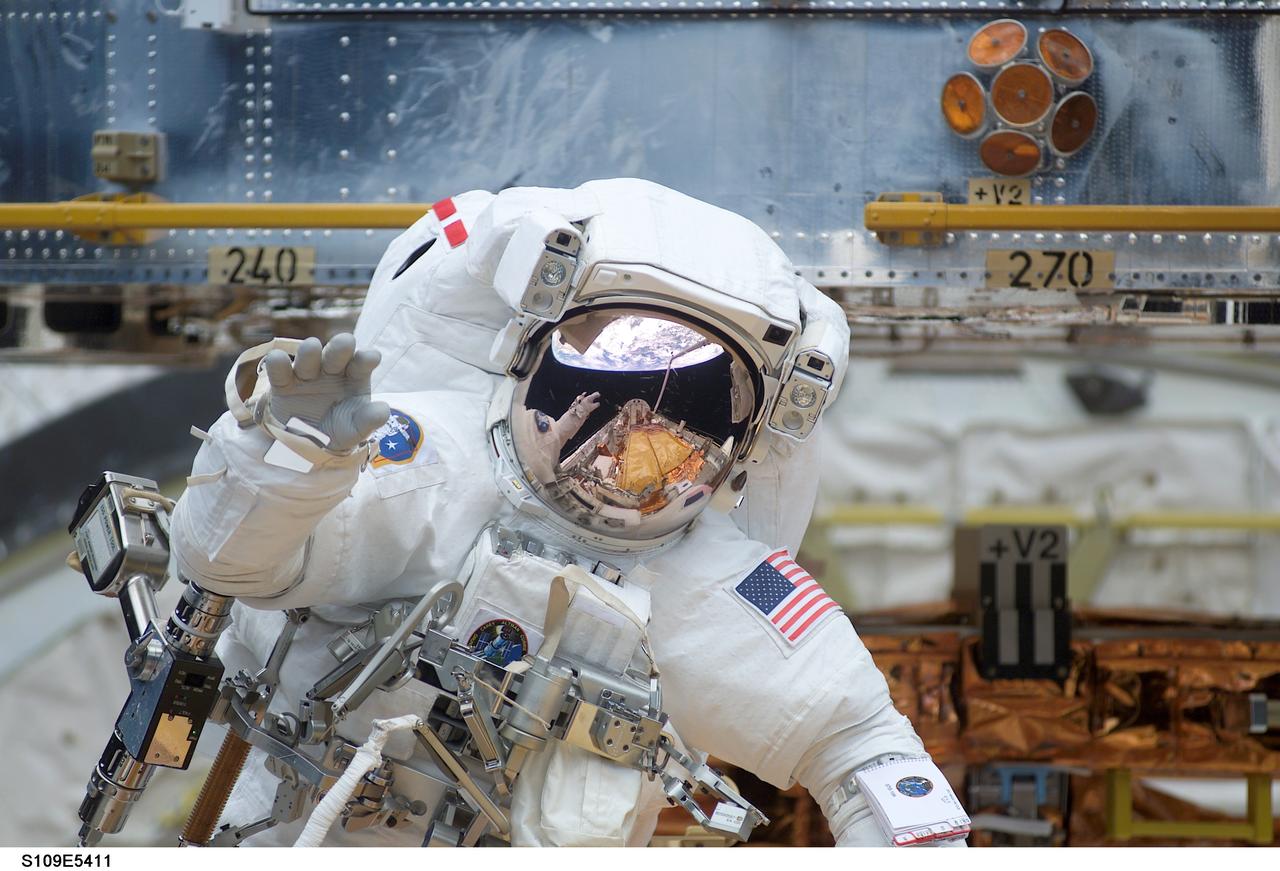
STS109-E-5411 (5 March 2002) --- Astronaut James H. Newman, mission specialist, waves to a cabin-bound crewmate while moving about in the Space Shuttle Columbia's cargo bay. The veteran of four previous NASA space walks was working in tandem with astronaut Michael J. Massimino (out of frame), mission specialist, during the STS-109 mission's second day of extravehicular activity (EVA). The space walk lasted seven hours, 16 minutes. Inside Columbia's cabin, astronaut Nancy J. Currie, mission specialist, controlled the Remote Manipulator System (RMS) to assist the two in their work on the Hubble Space Telescope (HST). Part of the giant telescope's base, latched down in the payload bay, can be seen behind Newman. The image was recorded with a digital still camera.
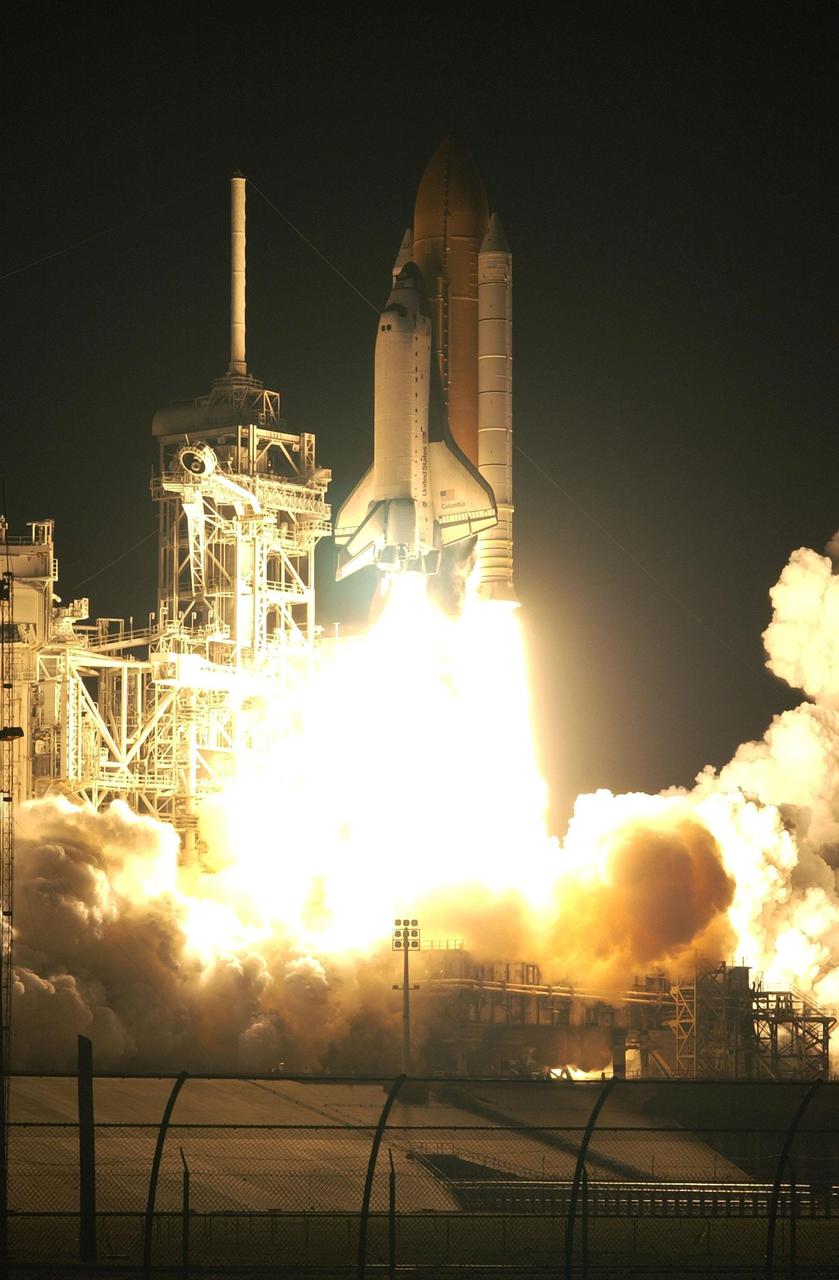
KENNEDY SPACE CENTER, Fla. - Flames and smoke stream from behind Space Shuttle Columbia as it leaps off the launch pad on its 27th flight into space on mission STS-109. Liftoff occurred at 6:22:02:08 a.m. EST (11:22:02:08 GMT). The goal of the mission is the maintenance and upgrade of the Hubble Space Telescope, to be carried out in five spacewalks. The crew of STS-109 comprises Commander Scott D. Altman, Pilot Duane G. Carey, Payload Commander John M. Grunsfeld, and Mission Specialists Nancy Jane Currie, Richard M. Linnehan, James H. Newman and Michael J. Massimino. After an 11-day mission, Columbia is expected to return to Kennedy March 12 about 4:35 a.m. EST (09:35 GMT).
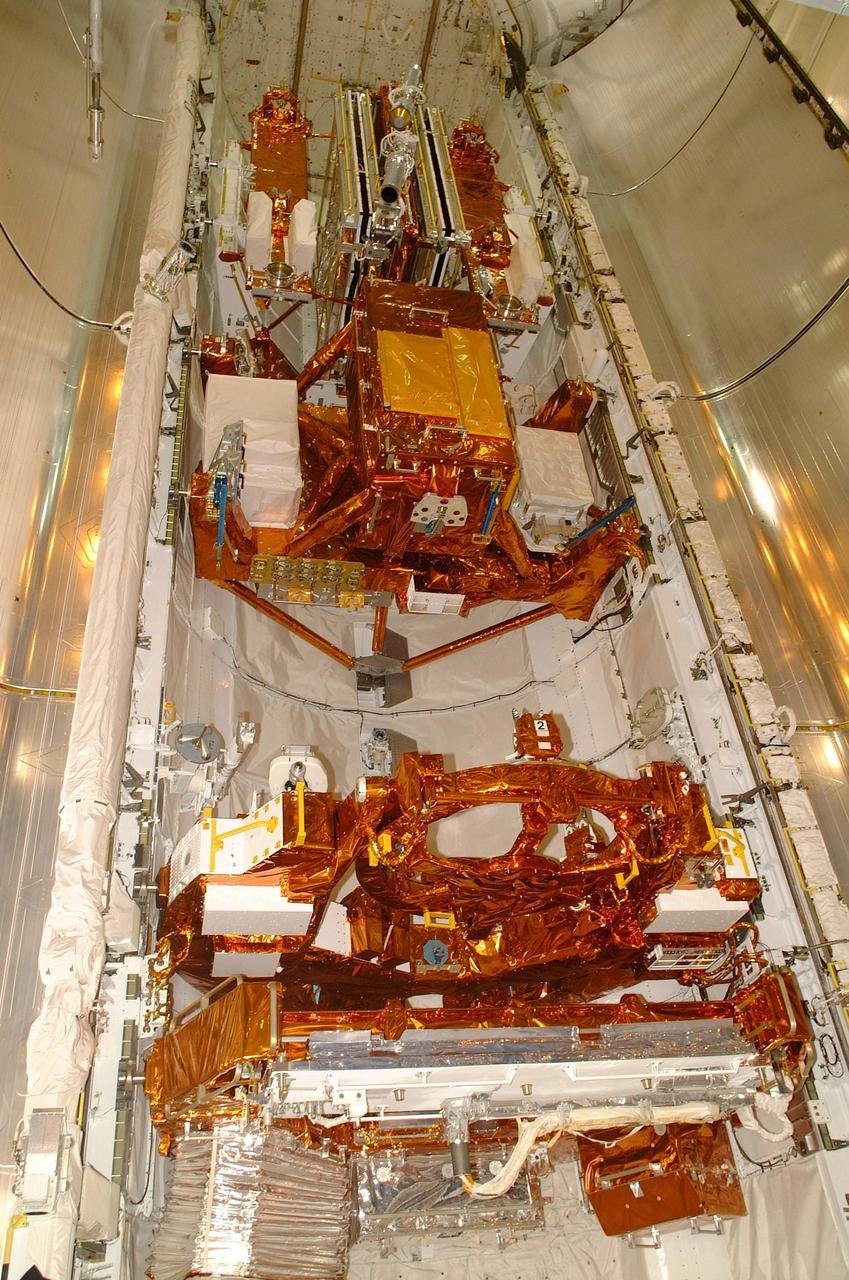
KENNEDY SPACE CENTER, FLA. -- All of the payload elements on mission STS-109 are installed in Columbia's payload bay: Solar Array 3, a new Power Control Unit, the Advanced Camera for Surveys (ACS), Near Infrared Camera, Multi-Object Spectrometer (NICMOS) Cooling System, and New Outer Blanket Layer insulation. Four mission specialists will perform five scheduled spacewalks to complete system upgrades to the telescope with these components. The STS-109 crew includes Commander Scott D. Altman, Pilot Duane G. Carey, and Mission Specialists John M. Grunsfeld, Nancy J. Currie, James H. Newman, Richard M. Linnehan and Michael J. Massimino. Launch is scheduled for Feb. 28, 2002, at 6:48 a.m. EST (11:48 GMT). Photo by Carl Winebarger
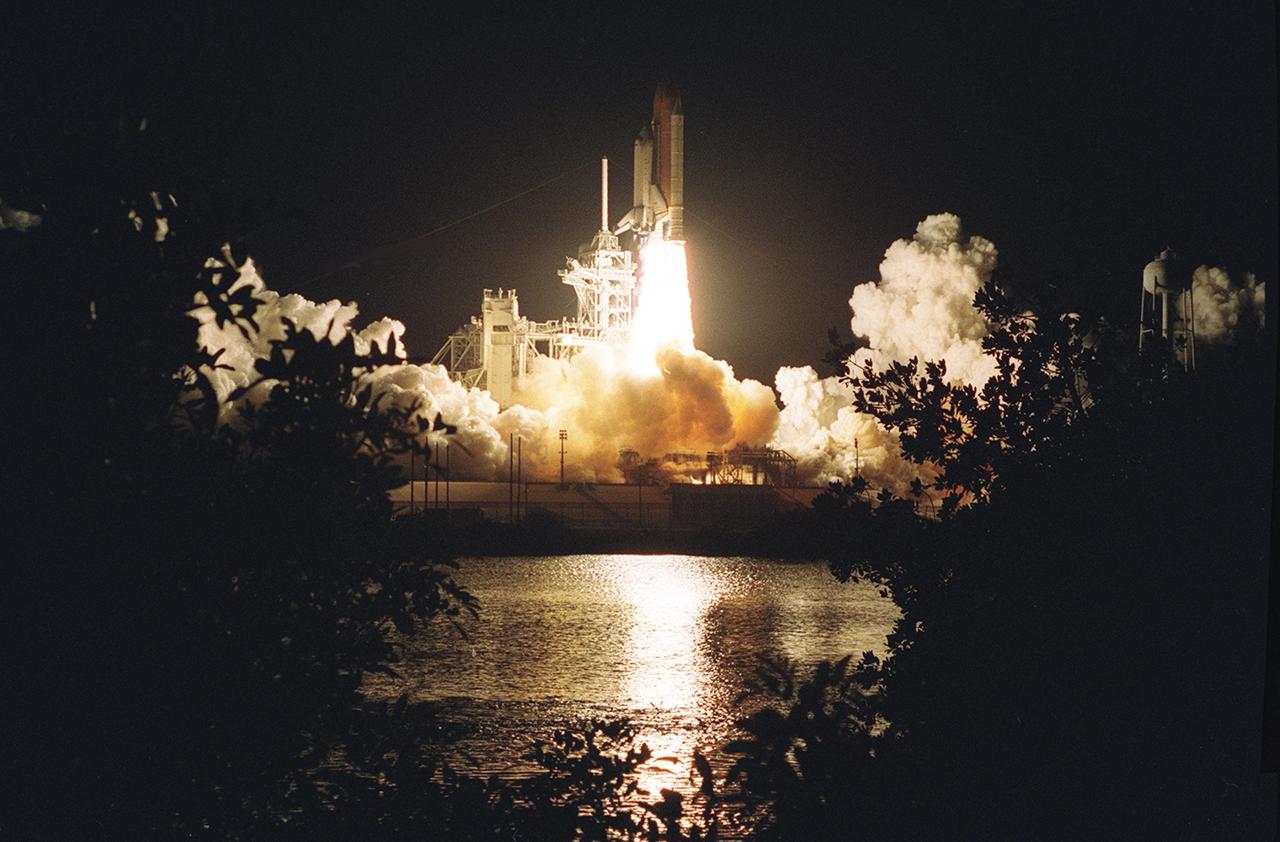
KENNEDY SPACE CENTER, Fla. - Trees and shrubs are silhouetted on the near bank by the brilliant exhaust of Space Shuttle Columbia as it hurtles into the pre-dawn sky on mission STS-109. Liftoff of Columbia occurred at 6:22:02:08 a.m. EST (11:22:02:08 GMT). This was the 27th flight of the vehicle and 108th in the history of the Shuttle program. The goal of the mission is the maintenance and upgrade of the Hubble Space Telescope, to be carried out in five spacewalks. The crew comprises Commander Scott D. Altman, Pilot Duane G. Carey, Payload Commander John M. Grunsfeld, and Mission Specialists Nancy Jane Currie, Richard M. Linnehan, James H. Newman and Michael J. Massimino. After the 11-day mission, Columbia is expected to return to KSC March 12 about 4:35 a.m. EST (09:35 GMT)
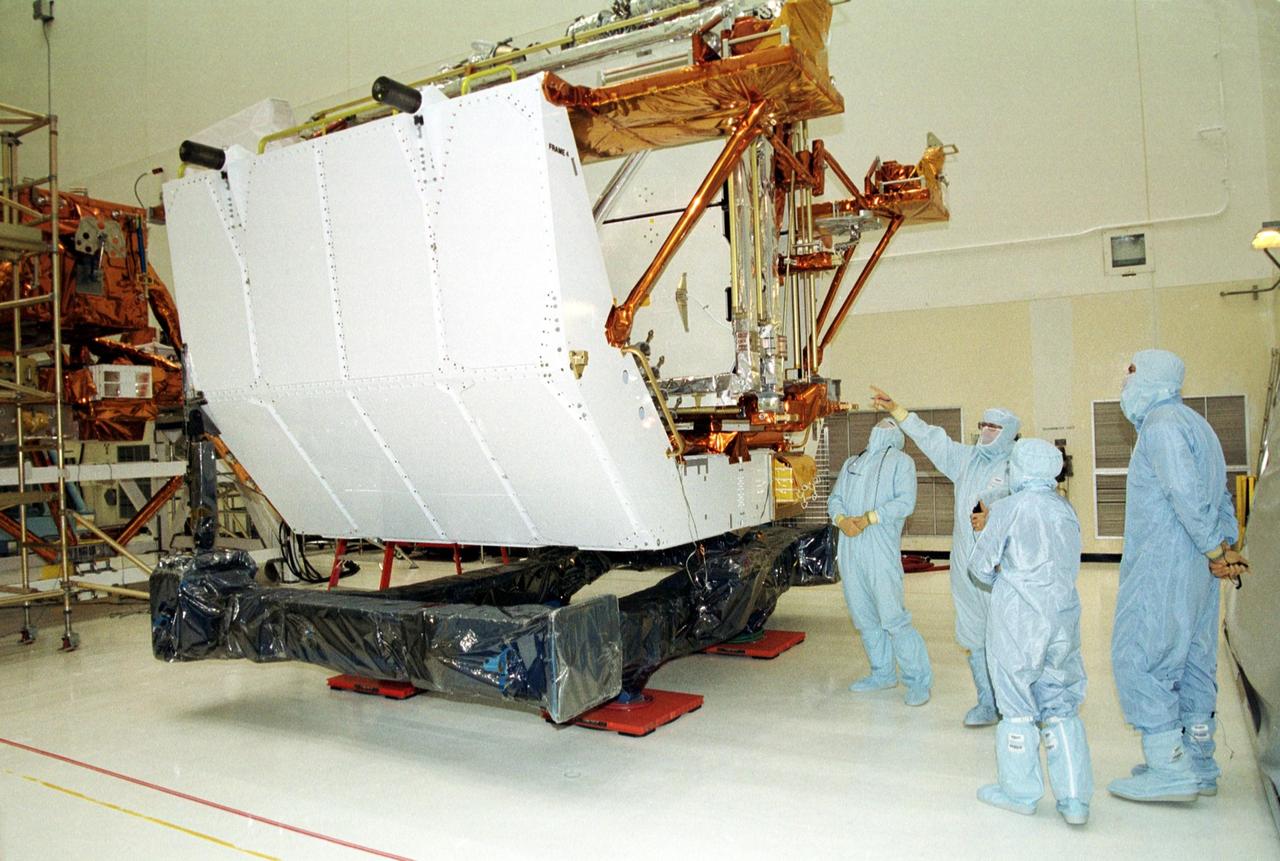
KENNEDY SPACE CENTER, Fla. -- In the Vertical Processing Facility, members of the STS-109 crew look over the Solar Array 3 panels that will be replacing Solar Array 2 panels on the Hubble Space Telescope (HST). Trainers, at left, point to the panels while Mission Specialist Nancy Currie (second from right) and Commander Scott Altman (far right) look on. Other crew members are Pilot Duane Carey, Payload Commander John Grunsfeld and Mission Specialists James Newman, Richard Linnehan and Michael Massimino. The other goals of the mission are replacing the Power Control Unit, removing the Faint Object Camera and installing the Advanced Camera for Surveys, installing the Near Infrared Camera and Multi-Object Spectrometer (NICMOS) Cooling System, and installing New Outer Blanket Layer insulation on bays 5 through 8. Mission STS-109 is scheduled for launch Feb. 14, 2002
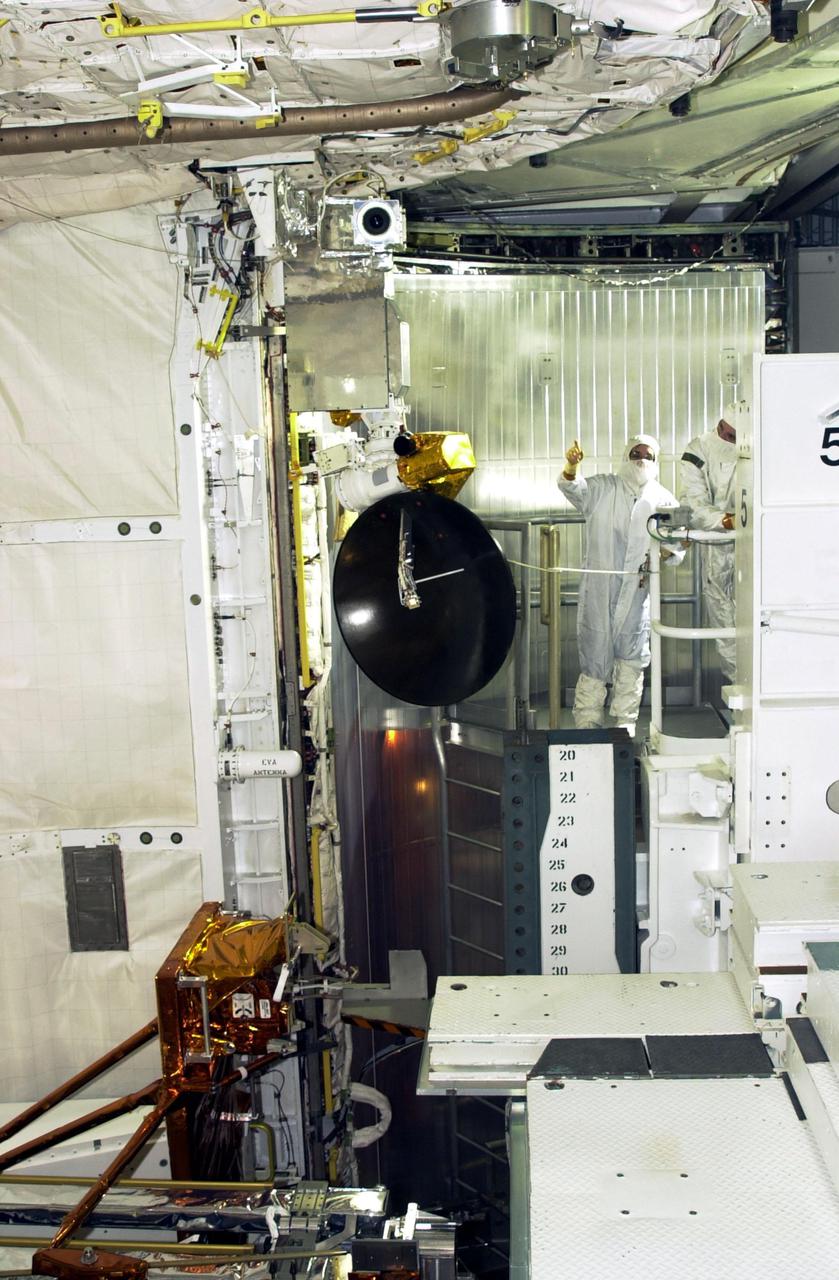
KENNEDY SPACE CENTER, FLA. -- On Launch Pad 39A, members of the STS-109 crew perform a final inspection of the Hubble payload they will deploy on orbit during five spacewalks. Mission Specialist Nancy Currie is seen pointing at a piece of the equipment. Other crew members are Commander Scott Altman, Pilot Duane Carey, Payload Commander John Grunsfeld, and Mission Specialists James Newman, Richrd Linnehan and Michael Massimino. The goal of the mission is to replace Solar Array 2 with Solar Array 3, replace the Power Control Unit, remove the Faint Object Camera and install the Advanced Camera for Surveys (ACS), install the Near Infrared Camera and Multi-Object Spectrometer (NICMOS) Cooling System, and install New Outer Blanket Layer insulation. Launch of Shuttle Columbia on mission STS-109 is scheduled for Feb. 28 at 6:48 a.m. EST
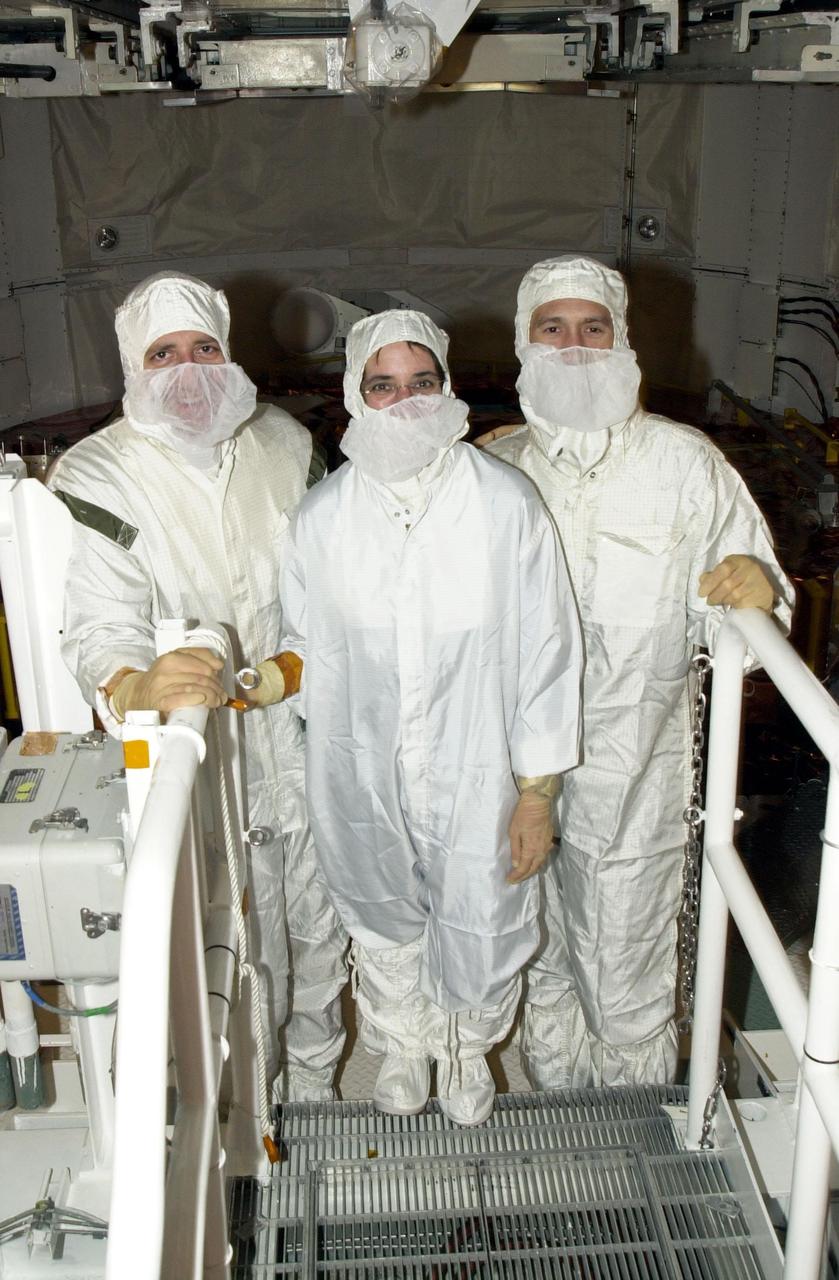
KENNEDY SPACE CENTER, Fla. - On Launch Pad 39A, members of the STS-109 crew pause during their final inspection of the Hubble payload they will deploy on orbit during five spacewalks. Seen here (left to right) are Mission Specialists Michael Massimino, Nancy Currie and James Newman. The crew also comprises Commander Scott Altman, Pilot Duane Carey, Payload Commander John Grunsfeld, and Mission Specialist Richard Linnehan. The goal of the mission is to replace Solar Array 2 with Solar Array 3, replace the Power Control Unit, remove the Faint Object Camera and install the Advanced Camera for Surveys (ACS), install the Near Infrared Camera and Multi-Object Spectrometer (NICMOS) Cooling System, and install New Outer Blanket Layer insulation. Launch of Shuttle Columbia on mission STS-109 is scheduled for Feb. 28 at 6:48 a.m. EST
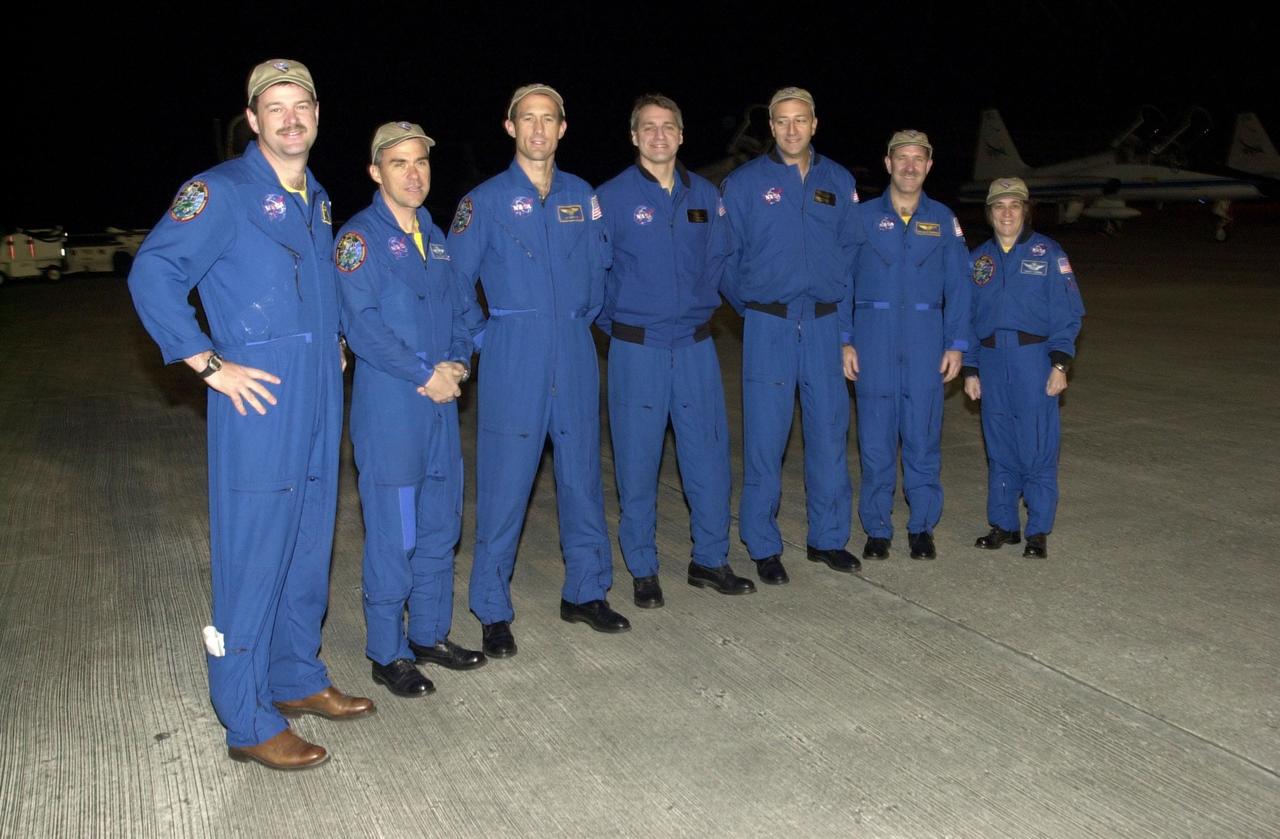
KENNEDY SPACE CENTER, Fla. - The STS-109 crew stops for a photograph after arriving at KSC aboard a T-38 jet aircraft to begin launch preparations. Standing left to right are Commander Scott Altman, Pilot Duane Carey, and Mission Specialists James Newman, Richard Linnehan and Michael Massimino, Payload Commander John Grunsfeld, and Mission Specialist Nancy Currie. The goal of the 11-day mission is repair and maintenance on the Hubble Space Telescope. Five spacewalks are planned to replace Solar Array 2 with Solar Array 3, replace the Power Control Unit, remove the Faint Object Camera and install the Advanced Camera for Surveys (ACS), install the Near Infrared Camera and Multi-Object Spectrometer (NICMOS) Cooling System, and install New Outer Blanket Layer insulation. Launch is scheduled for Feb. 28 at 6:48 a.m. EST
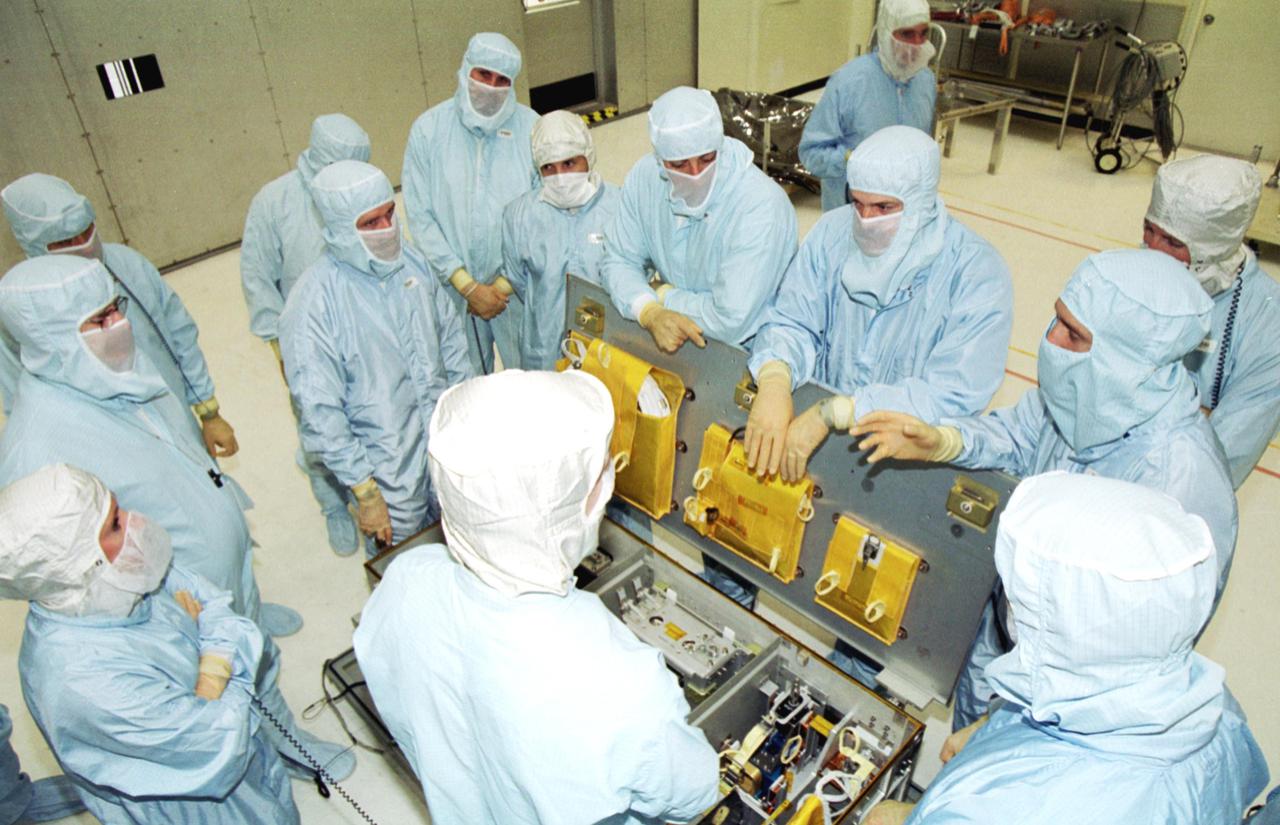
KENNEDY SPACE CENTER, Fla. - In the Vertical Processing Facility, members of the STS-109 crew listen to instructions about using some of the equipment for their Hubble Space Telescope (HST) Servicing mission. At left are three trainers. The crew, whose faces can be seen, are (left to right) Payload Commander John Grunsfeld, Pilot Duane Carey, Mission Specialists Nancy Currie and Richard Linnehan, Commander Scott Altman, and Mission Specialists James Newman and Michael Massimino (behind Newman). The goal of the mission is to service the HST, replacing Solar Array 2 with Solar Array 3, replacing the Power Control Unit, removing the Faint Object Camera and installing the Advanced Camera for Surveys, installing the Near Infrared Camera and Multi-Object Spectrometer (NICMOS) Cooling System, and installing New Outer Blanket Layer insulation on bays 5 through 8. Mission STS-109 is scheduled for launch Feb. 14, 2002
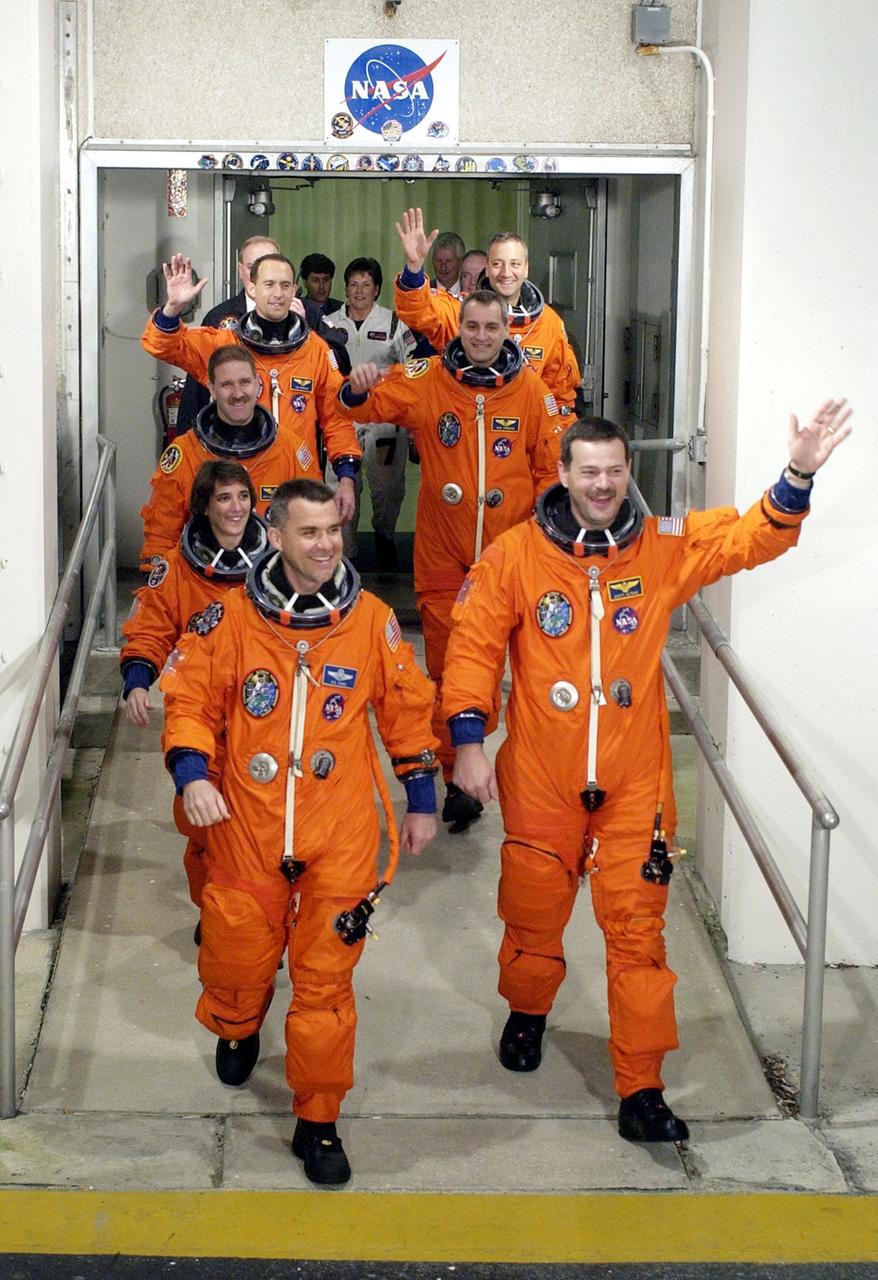
STS109-S-021 (1 March 2002) --- The STS-109 crew members wave to onlookers as they stride out from the Operations and Checkout Building, eager to get to the launch pad. They are, from front to back, Duane G. Carey (left) and Scott D. Altman (right); Nancy J. Currie, mission specialist; John M. Grunsfeld (left), payload commander, and Richard M. Linnehan (right); James H. Newman (left) and Michael J. Massimino (right), all mission specialists. On mission STS-109, the crew will capture the Hubble Space Telescope using Columbia's robotic arm and secure it on a work stand in Columbia's payload bay. Four members of the crew will perform five scheduled space walks to complete system upgrades to the telescope. Mission STS-109 is the 27th flight of the orbiter Columbia and the 108th flight overall in NASA's Space Shuttle program.
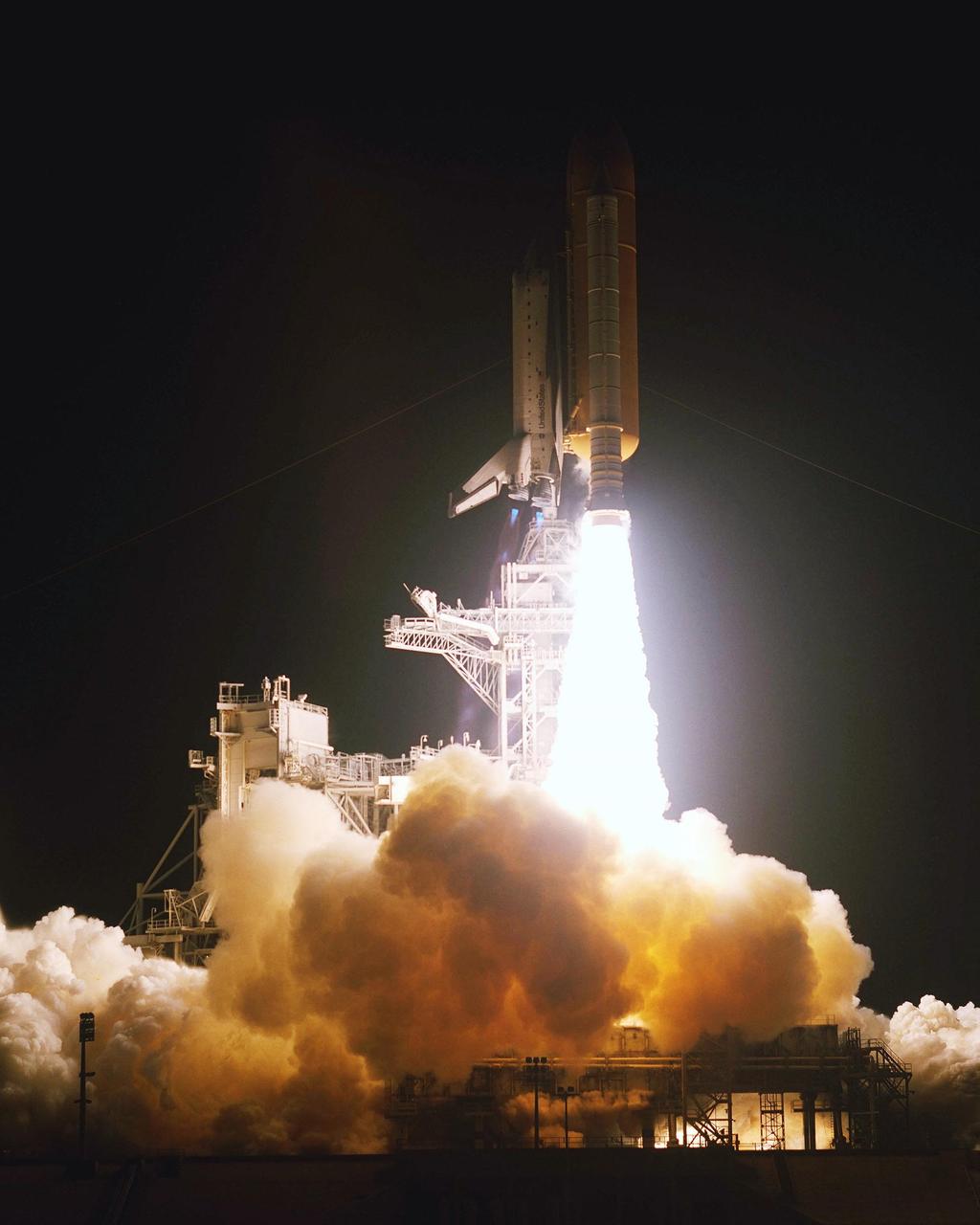
KENNEDY SPACE CENTER, Fla. - Space Shuttle Columbia hurtles into space above a fiery trail of flames that illuminate the clouds of smoke and steam below. Liftoff of Columbia occurred at 6:22:02:08 a.m. EST (11:22:02:08 GMT). This was the 27th flight of the vehicle and 108th in the history of the Shuttle program. The goal of the mission is the maintenance and upgrade of the Hubble Space Telescope, to be carried out in five spacewalks. The crew comprises Commander Scott D. Altman, Pilot Duane G. Carey, Payload Commander John M. Grunsfeld, and Mission Specialists Nancy Jane Currie, Richard M. Linnehan, James H. Newman and Michael J. Massimino. After the 11-day mission, Columbia is expected to return to KSC March 12 about 4:35 a.m. EST (09:35 GMT)
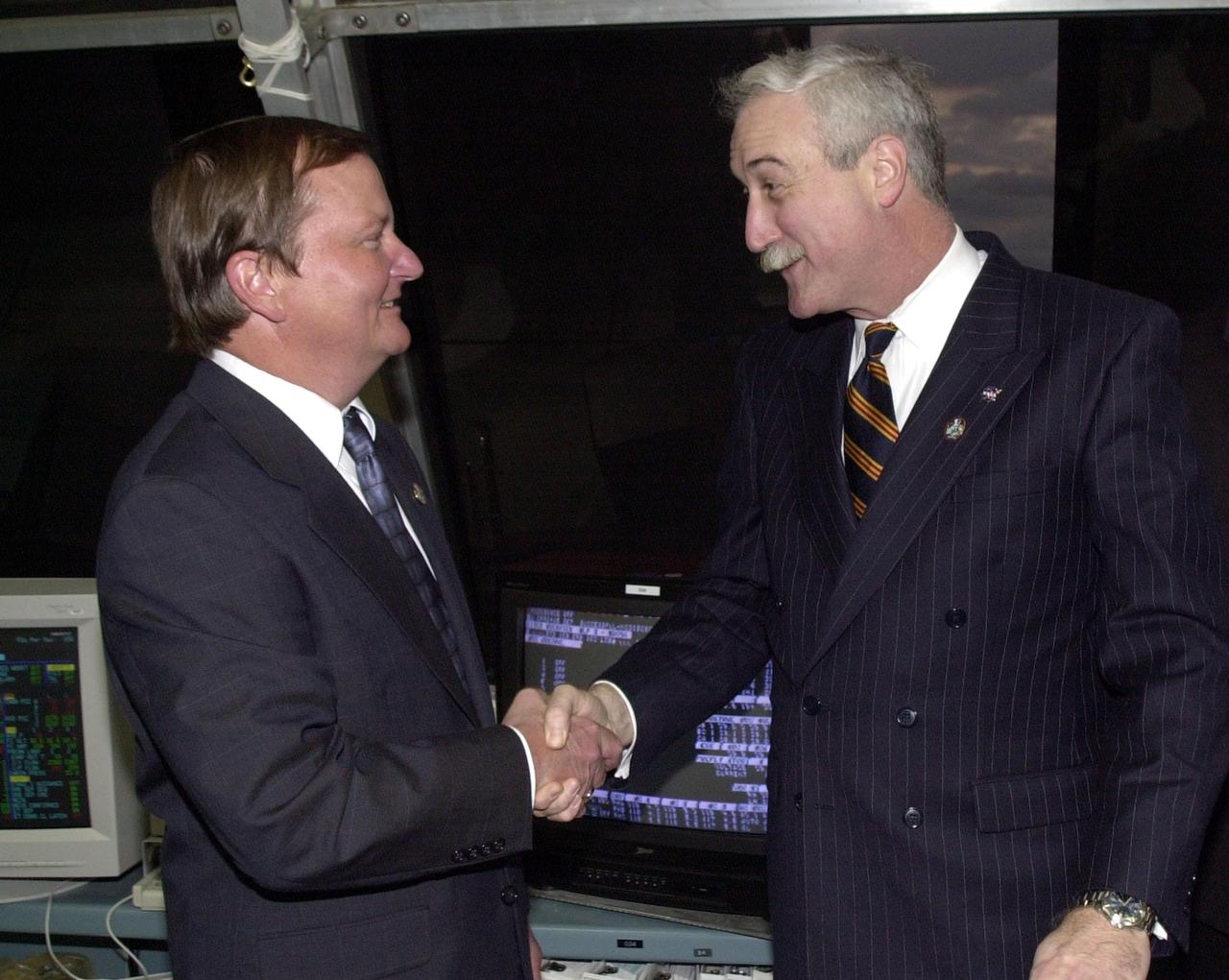
KENNEDY SPACE CENTER, Fla. - In the firing room, NASA Administrator Sean O'Keefe (right) congratulates Launch Director Mike Leinbach for the successful on-time launch of Space Shuttle Columbia. Liftoff occurred at 6:22:02:08 a.m. EST (11:22:02:08 GMT). Columbia is on its 27th flight and the 108th flight of the Shuttle Program. The goal of the mission is the maintenance and upgrade of the Hubble Space Telescope, to be carried out in five spacewalks. The crew of STS-109 comprises Commander Scott D. Altman, Pilot Duane G. Carey, Payload Commander John M. Grunsfeld, and Mission Specialists Nancy Jane Currie, Richard M. Linnehan, James H. Newman and Michael J. Massimino. After an 11-day mission, Columbia is expected to return to Kennedy March 12 about 4:35 a.m. EST (09:35 GMT)
KENNEDY SPACE CENTER, Fla. - Billows of smoke and steam flow over the launch pad as Space Shuttle Columbia leaps into space on mission STS-109. Liftoff occurred at 6:22:02:08 a.m. EST (11:22:02:08 GMT). This was the 27th flight of the vehicle and 108th in the history of the Shuttle program. The goal of mission STS-109 is the maintenance and upgrade of the Hubble Space Telescope, to be carried out in five spacewalks. The crew comprises Commander Scott D. Altman, Pilot Duane G. Carey, Payload Commander John M. Grunsfeld, and Mission Specialists Nancy Jane Currie, Richard M. Linnehan, James H. Newman and Michael J. Massimino. After the 11-day mission, Columbia is expected to return to KSC March 12 about 4:35 a.m. EST (09:35 GMT).
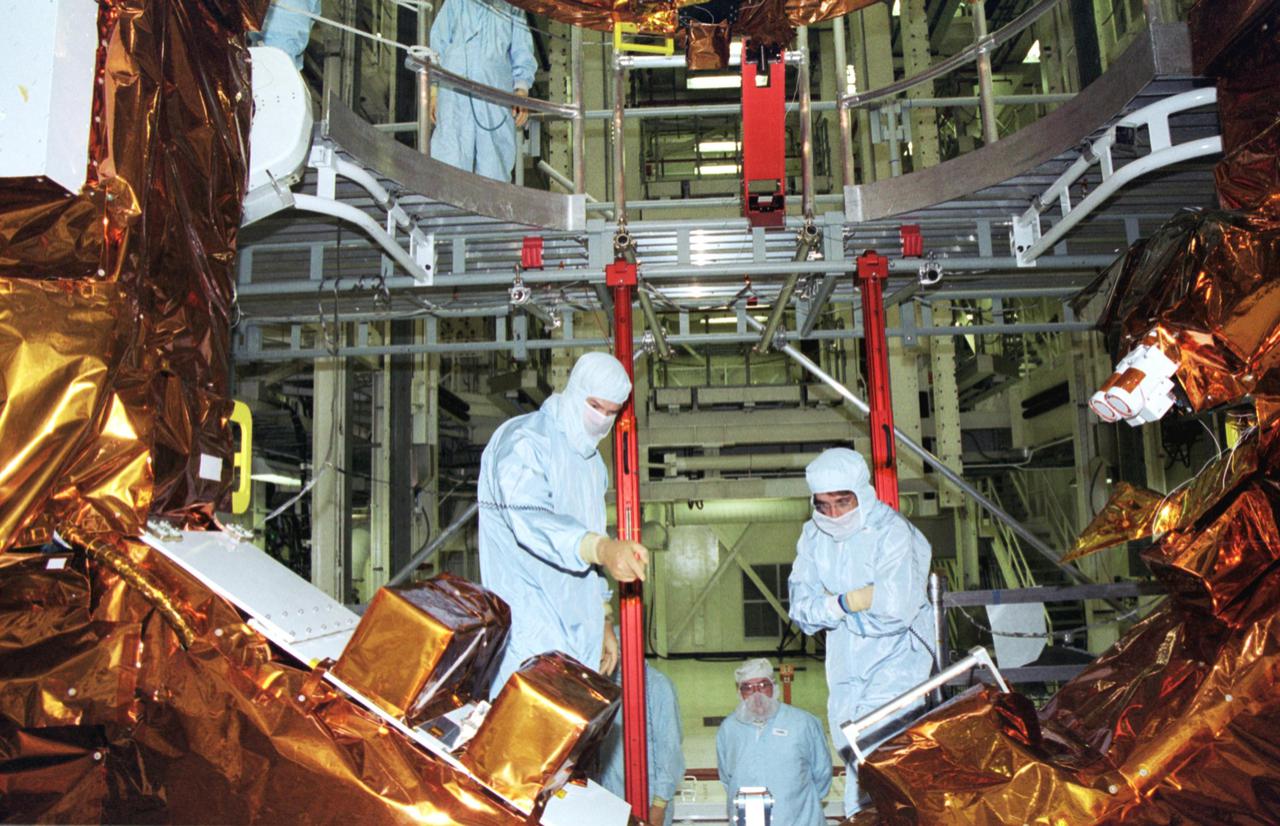
KENNEDY SPACE CENTER, Fla. -- Inside the Vertical Processing Facility, members of the STS-109 crew looks over equipment for their Hubble Space Telescope (HST) Servicing mission. Seen in the foreground are Commander Scott Altman and Mission Specialist Nancy Currie. Other crew members are Pilot Duane Carey, Payload Commander John Grunsfeld and Mission Specialists James Newman, Richard Linnehan and Michael Massimino. The goal of the mission is to service the HST, replacing Solar Array 2 with Solar Array 3, replacing the Power Control Unit, removing the Faint Object Camera and installing the Advanced Camera for Surveys, installing the Near Infrared Camera and Multi-Object Spectrometer (NICMOS) Cooling System, and installing New Outer Blanket Layer insulation on bays 5 through 8. Mission STS-109 is scheduled for launch Feb. 14, 2002
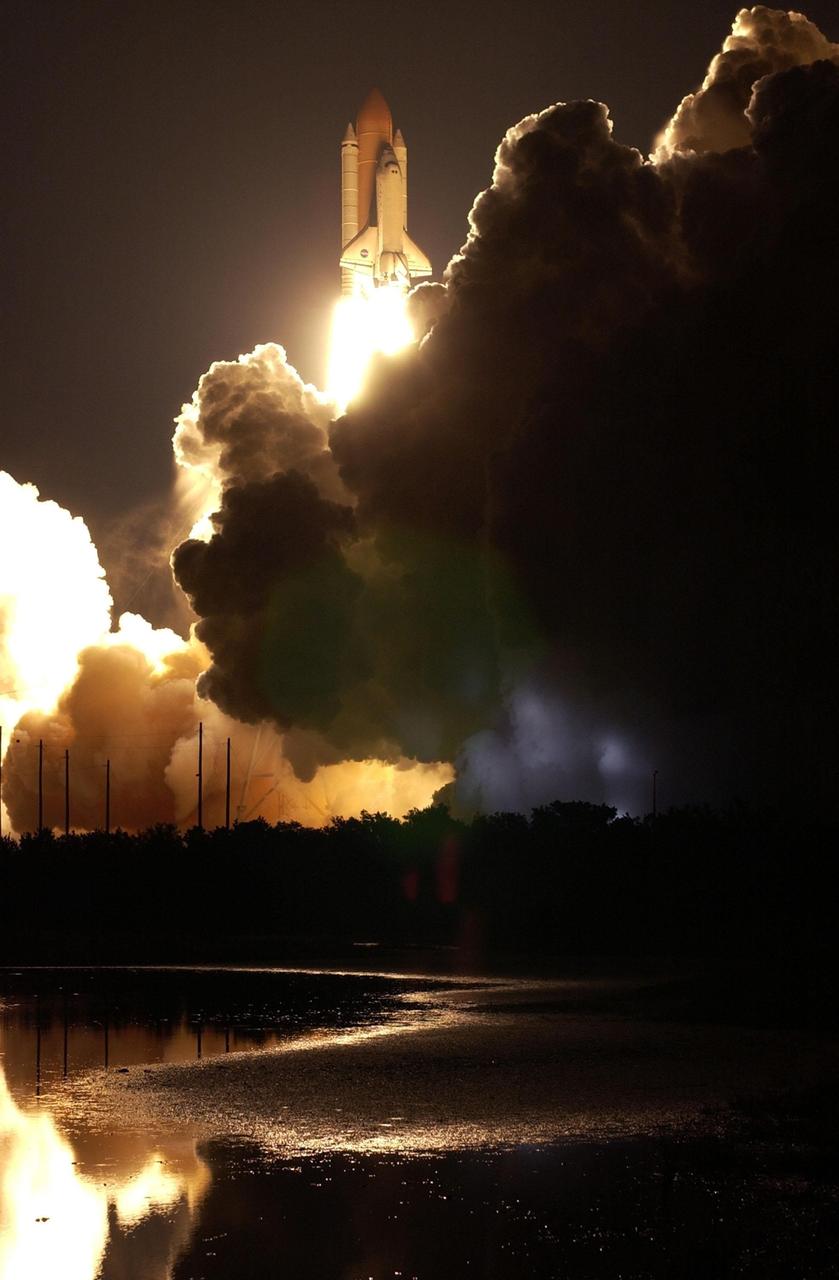
KENNEDY SPACE CENTER, Fla. - Billowing clouds of smoke are backlit by the flames streaming from behind Space Shuttle Columbia as it leaps off the launch pad on its 27th flight into space on mission STS-109. Liftoff occurred at 6:22:02:08 a.m. EST (11:22:02:08 GMT). The goal of the mission is the maintenance and upgrade of the Hubble Space Telescope, to be carried out in five spacewalks. The crew of STS-109 comprises Commander Scott D. Altman, Pilot Duane G. Carey, Payload Commander John M. Grunsfeld, and Mission Specialists Nancy Jane Currie, Richard M. Linnehan, James H. Newman and Michael J. Massimino. After an 11-day mission, Columbia is expected to return to Kennedy March 12 about 4:35 a.m. EST (09:35 GMT)
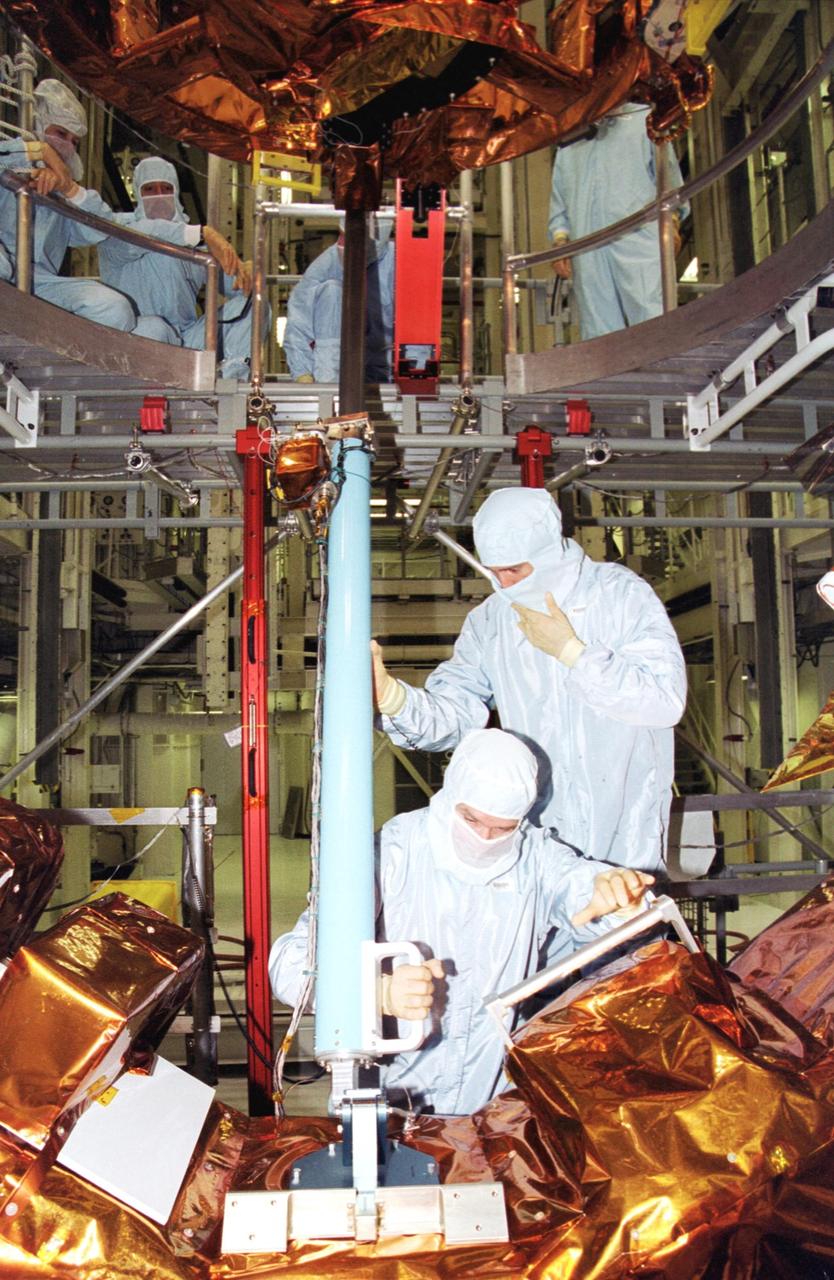
KENNEDY SPACE CENTER, Fla. - In the Vertical Processing Facility, members of the STS-109 crew practice on some of the equipment for their Hubble Space Telescope (HST) Servicing mission. Seen in the foreground are (left) Payload Commander John Grunsfeld and (right) Mission Specialist James Newman. The rest of the crew are Commander Scott Altman, Pilot Duane Carey, and Mission Specialists Nancy Currie, Richard Linnehan and Michael Massimino. The goal of the mission is to service the HST, replacing Solar Array 2 with Solar Array 3, replacing the Power Control Unit, removing the Faint Object Camera and installing the Advanced Camera for Surveys, installing the Near Infrared Camera and Multi-Object Spectrometer (NICMOS) Cooling System, and installing New Outer Blanket Layer insulation on bays 5 through 8. Mission STS-109 is scheduled for launch Feb. 14, 2002
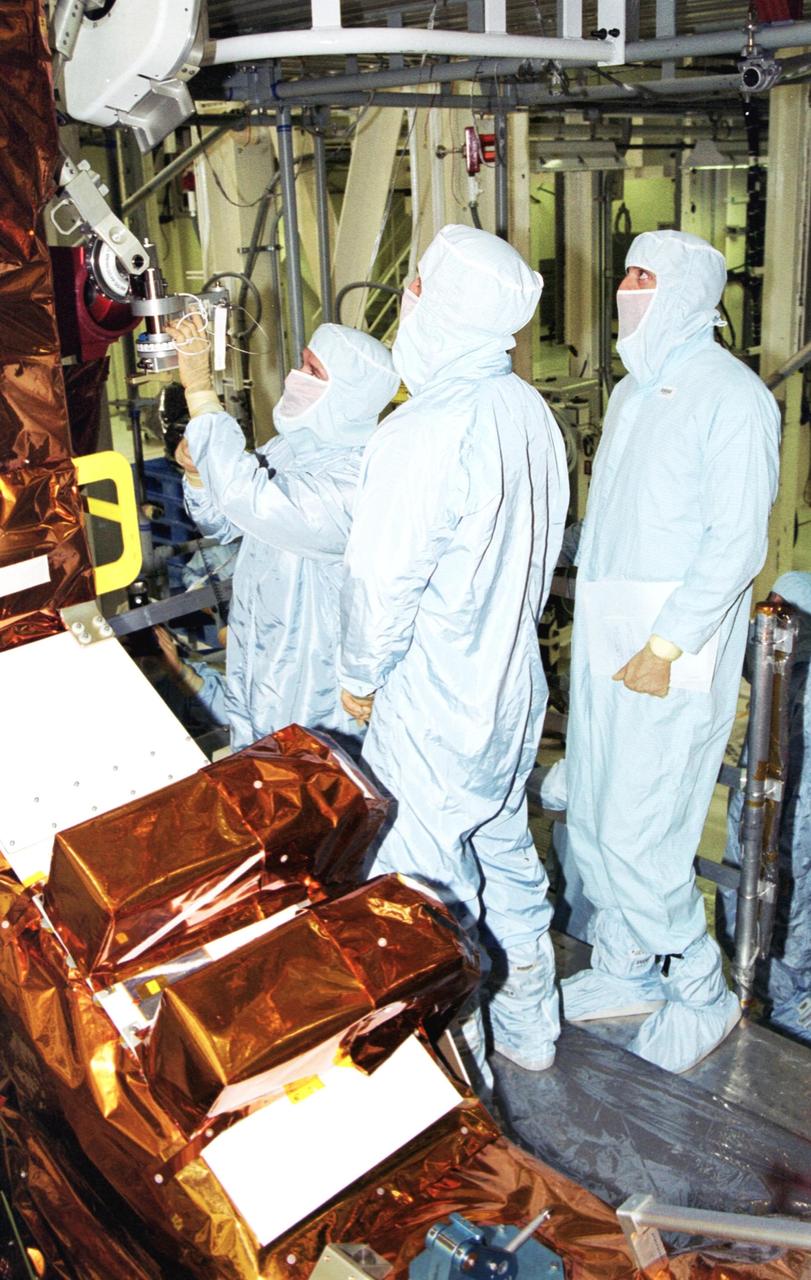
KENNEDY SPACE CENTER, Fla. - In the Vertical Processing Facility, members of the STS-109 crew look over a piece of the equipment for their Hubble Space Telescope (HST) Servicing mission. Seen are Payload Commander John Grunsfeld and Mission Specialists Richard Linnehan and Michael Massimino. Other crew members are Commander Scott Altman, Pilot Duane Carey and Mission Specialists Nancy Currie and James Newman. The goal of the mission is to service the HST, replacing Solar Array 2 with Solar Array 3, replacing the Power Control Unit, removing the Faint Object Camera and installing the Advanced Camera for Surveys, installing the Near Infrared Camera and Multi-Object Spectrometer (NICMOS) Cooling System, and installing New Outer Blanket Layer insulation on bays 5 through 8. Mission STS-109 is scheduled for launch Feb. 14, 2002
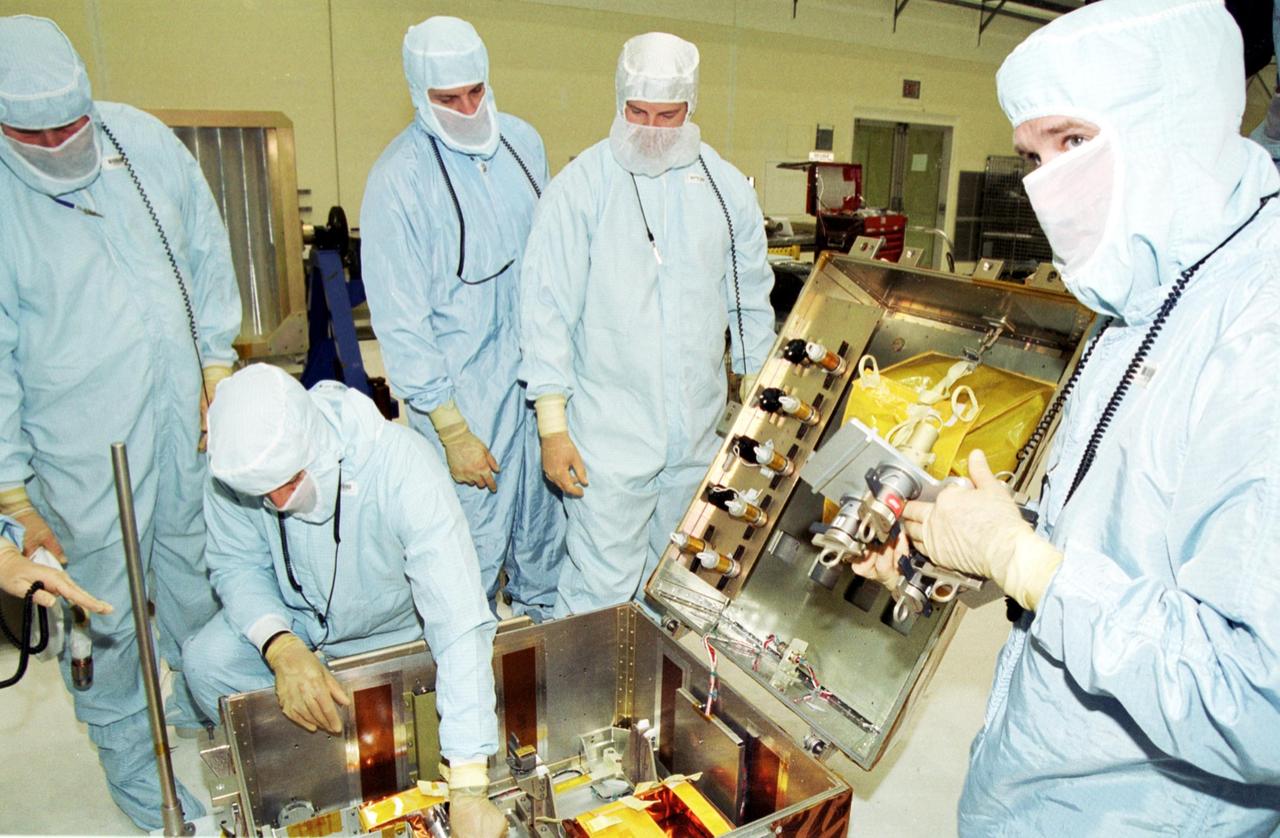
KENNEDY SPACE CENTER, Fla. -- Inside the Vertical Processing Facility, the STS-109 crew looks over equipment for their Hubble Space Telescope (HST) Servicing mission. Seen are (starting second from left), Mission Specialists Michael Massimino and Richard Linnehan, Commander Scott Altman and Payload Commander John Grunsfeld. Other crew members are Pilot Duane Carey and Mission Spcialists Nancy Currie and James Newman. The goal of the mission is to service the HST, replacing Solar Array 2 with Solar Array 3, replacing the Power Control Unit, removing the Faint Object Camera and installing the Advanced Camera for Surveys, installing the Near Infrared Camera and Multi-Object Spectrometer (NICMOS) Cooling System, and installing New Outer Blanket Layer insulation on bays 5 through 8. Mission STS-109 is scheduled for launch Feb. 14, 2002
![KENNEDY SPACE CENTER, FLA. -- Space Shuttle Columbia emblazons the pre-dawn clouds as it soars into the sky on its 27th flight into space on mission STS-109. Liftoff occurred at 6:22:02:08 a.m. EST(11:22:02:08 GMT). The goal of the mission is the maintenance and upgrade of the Hubble Space Telescope, to be carried out in five spacewalks. The crew of STS-109 comprises Commander Scott D. Altman, Pilot Duane G. Carey, Payload Commander John M. Grunsfeld, and Mission Specialists Nancy Jane Currie, Richard M. Linnehan, James H. Newman and Michael J. Massimino. After an 11-day mission, Columbia is expected to return to Kennedy March 12 about 4:35 a.m. EST (09:35 GMT). [Photo by Anita Barrett]](https://images-assets.nasa.gov/image/KSC-02pd0217/KSC-02pd0217~medium.jpg)
KENNEDY SPACE CENTER, FLA. -- Space Shuttle Columbia emblazons the pre-dawn clouds as it soars into the sky on its 27th flight into space on mission STS-109. Liftoff occurred at 6:22:02:08 a.m. EST(11:22:02:08 GMT). The goal of the mission is the maintenance and upgrade of the Hubble Space Telescope, to be carried out in five spacewalks. The crew of STS-109 comprises Commander Scott D. Altman, Pilot Duane G. Carey, Payload Commander John M. Grunsfeld, and Mission Specialists Nancy Jane Currie, Richard M. Linnehan, James H. Newman and Michael J. Massimino. After an 11-day mission, Columbia is expected to return to Kennedy March 12 about 4:35 a.m. EST (09:35 GMT). [Photo by Anita Barrett]
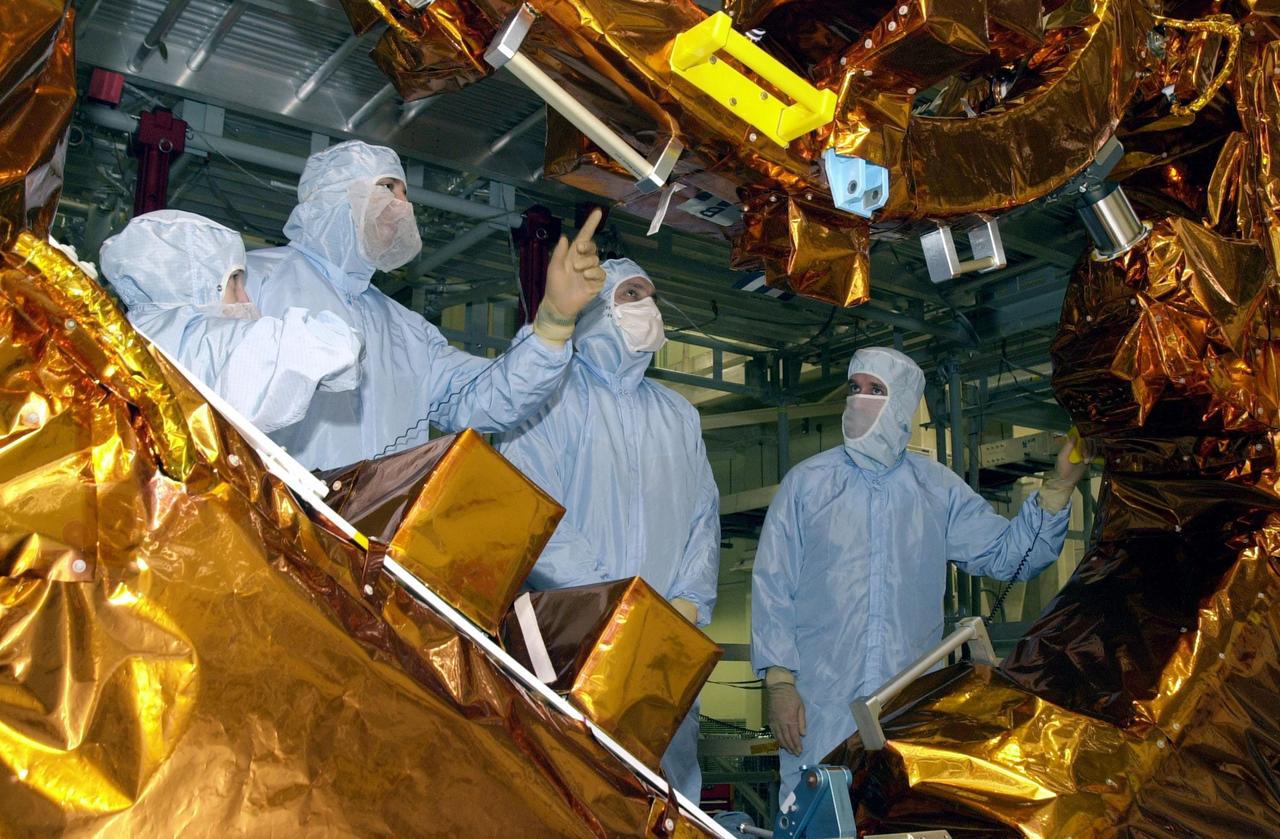
KENNEDY SPACE CENTER, FLA. -- In the Vertical Processing Facility, STS-109 crew members take part in familiarization activities, looking over the payload of repair equipment they will be handling on the mission. From left are Mission Specialists Nancy Curry, Michael Massimino and Richard Linnehan, and Payload Commander John Grunsfeld. The goal of the mission is to service the Hubble Space Telescope, replacing Solar Array 2 with Solar Array 3, replacing the Power Control Unit, removing the Faint Object Camera and installing the Advanced Camera System, installing the Near Infrared Camera and Multi-Object Spectrometer (NICMOS) Cooling System, and installing New Outer Blanket Layer insulation. Launch of Columbia on mission STS-109 is scheduled Feb. 28, 2002
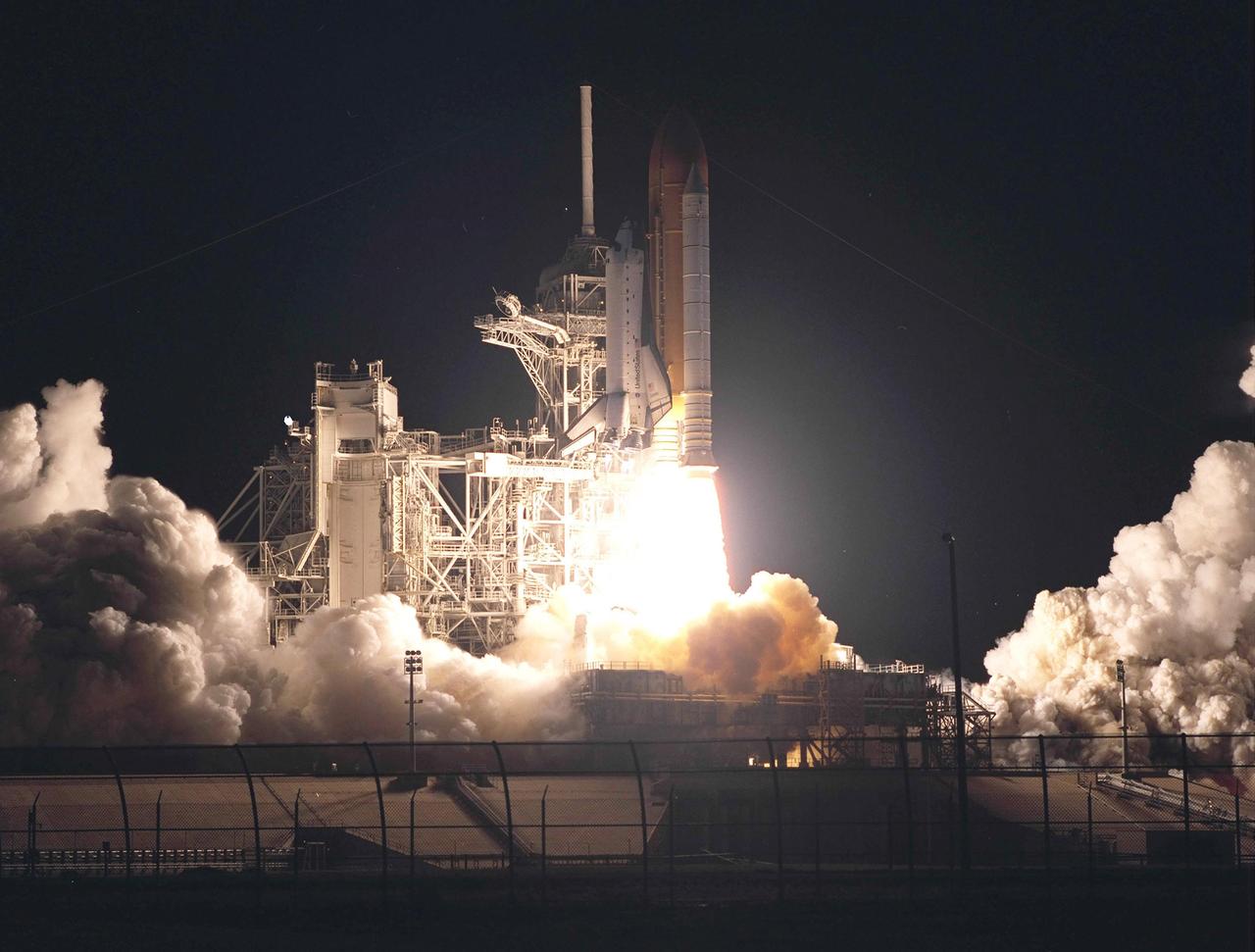
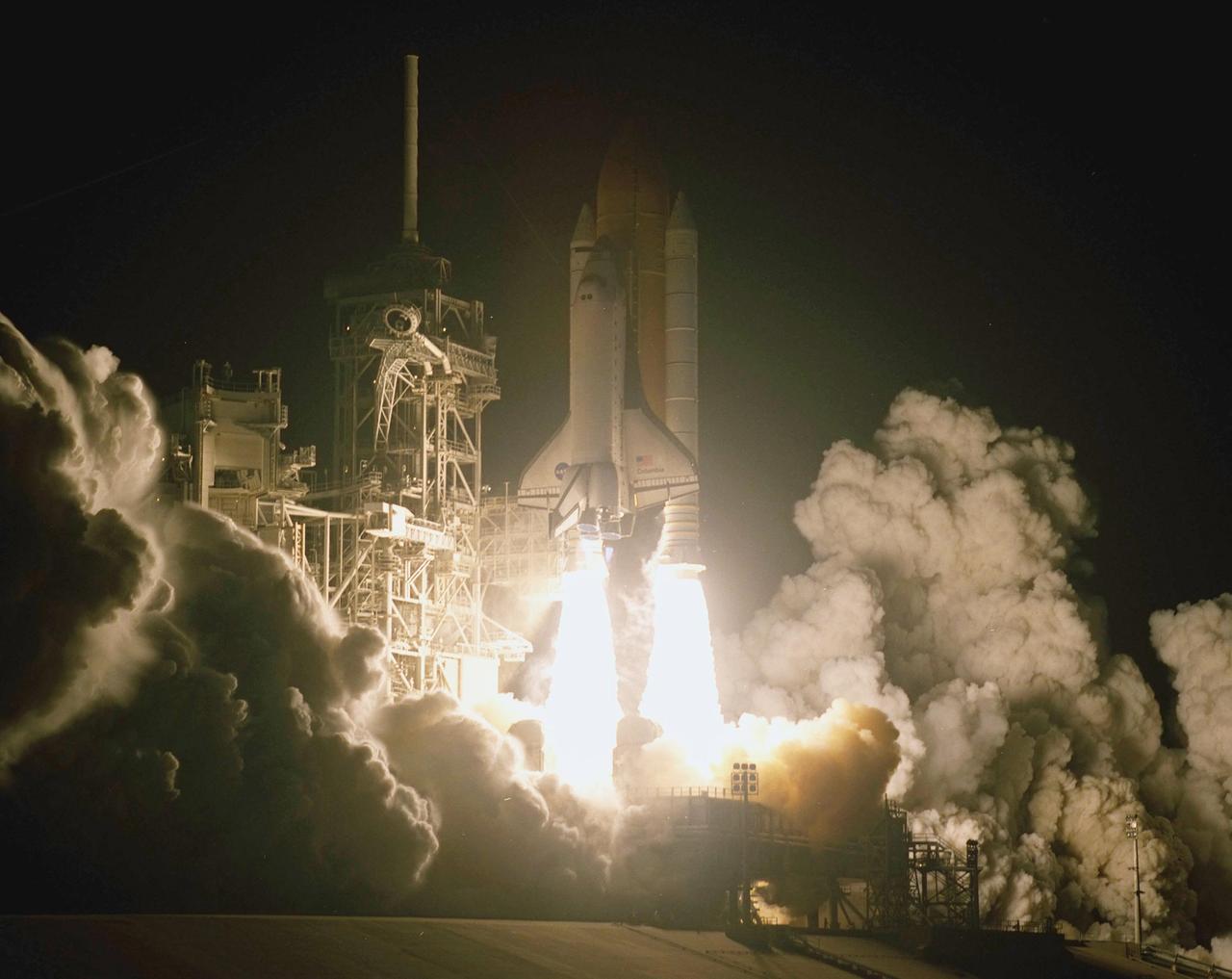
KENNEDY SPACE CENTER, Fla. - Space Shuttle Columbia's fiery exhaust illuminates Launch Pad 39A as the vehicle climbs toward its destination in space on mission STS-109. Bathed in the white light are the Rotating Service Structure (left) and Fixed Service Structure with its 80-foot lightning mast on top. Liftoff occurred at 6:22:02:08 a.m. EST (11:22:02:08 GMT). This was the 27th flight of the vehicle and 108th in the history of the Shuttle program. The goal of the mission is the maintenance and upgrade of the Hubble Space Telescope, to be carried out in five spacewalks. The crew comprises Commander Scott D. Altman, Pilot Duane G. Carey, Payload Commander John M. Grunsfeld, and Mission Specialists Nancy Jane Currie, Richard M. Linnehan, James H. Newman and Michael J. Massimino. After the 11-day mission, Columbia is expected to return to KSC March 12 about 4:35 a.m. EST (09:35 GMT).
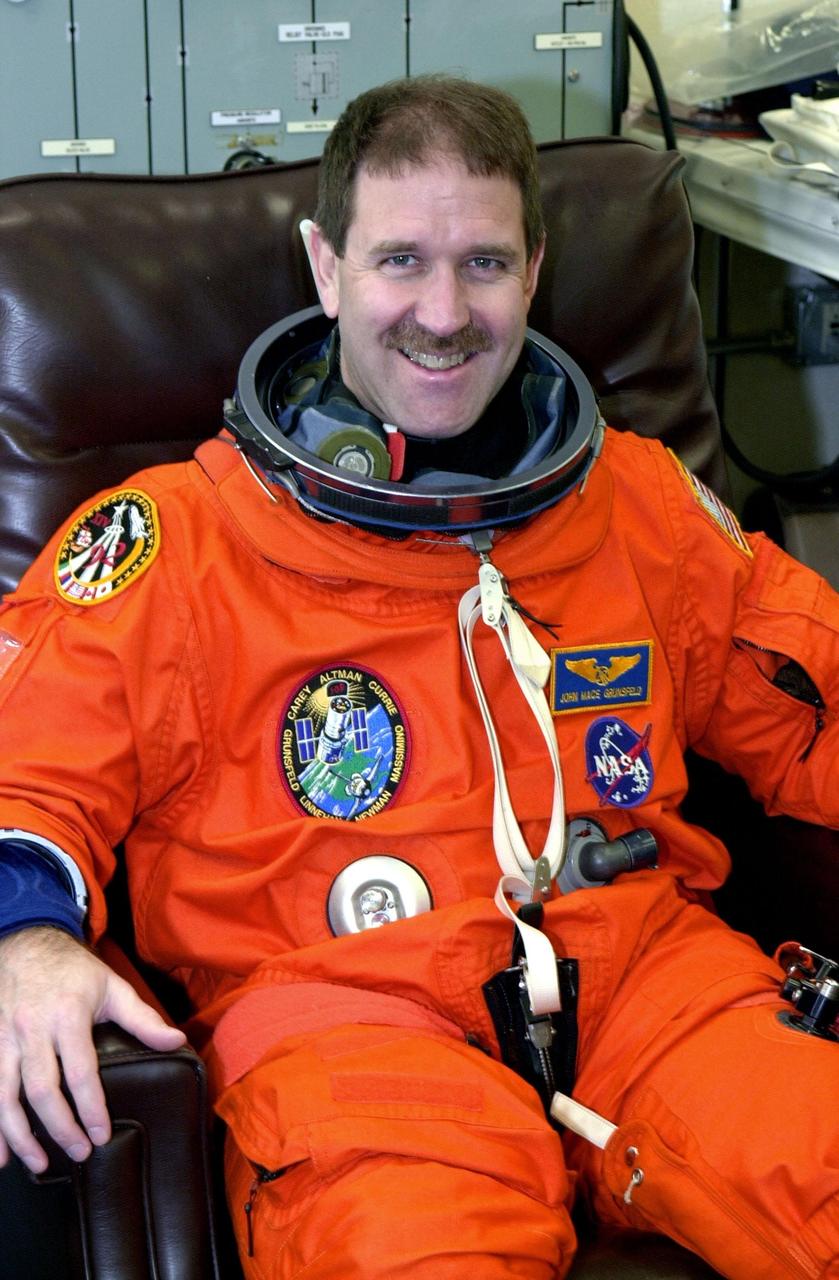
KENNEDY SPACE CENTER, FLA. -- STS-109 Payload Commander John Grunsfeld relaxes during suit check, which is part of Terminal Countdown Demonstration Test activities. He and other crew members - Commander Scott Altman, Pilot Duane Carey and Mission Specialists Nancy Currie, James Newman, Richard Linnehan and Michael Massimino - are at Kennedy for the TCDT that also includes emergency egress training and a simulated countdown. Columbia is scheduled to be launched Feb. 28 on mission STS-109, a Hubble Servicing Mission. The goal of the mission is to replace Solar Array 2 with Solar Array 3, replace the Power Control Unit, remove the Faint Object Camera and install the ACS, install the Near Infrared Camera and Multi-Object Spectrometer (NICMOS) Cooling System, and install New Outer Blanket Layer insulation. The launch will be the first for Columbia after returning from California where it underwent extensive maintenance, inspections and enhancements. More than 100 upgrades make Columbia safer and more reliable than ever before
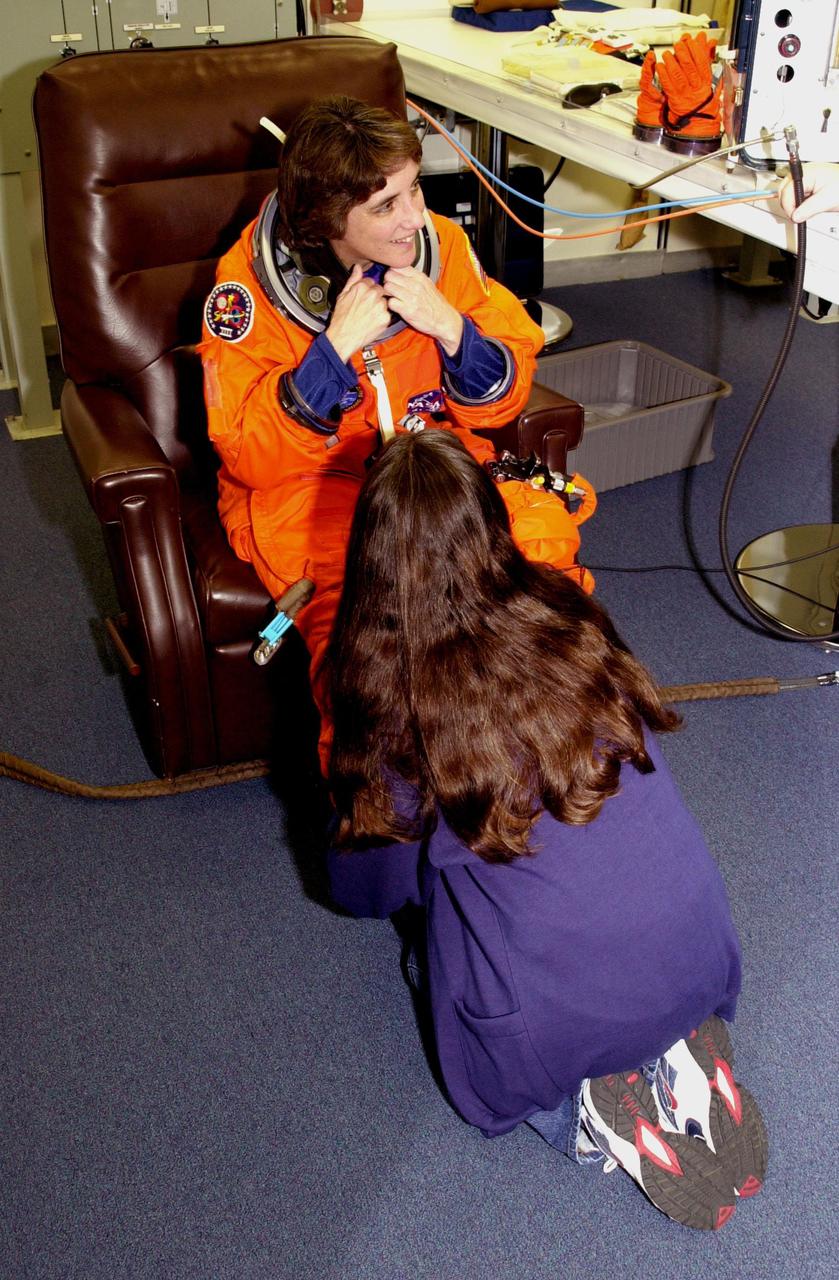
KENNEDY SPACE CENTER, Fla. - STS-109 Mission Specialist Nancy J. Currie gets a final fitting on her launch and entry suit two days before launch. On mission STS-109, the seven-member crew will capture the Hubble Space Telescope using the Shuttle's robotic arm and secure it on a workstand in Columbia's payload bay. Four mission specialists will perform five scheduled spacewalks to complete system upgrades to the telescope. More durable solar arrays, a large gyroscopic assembly to help point the telescope properly, a new telescope power control unit, and a cooling system to restore the use of a key infrared camera and spectrometer unit, which has been dormant since 1999, will all be installed. In addition, the telescope’s view of the Universe will be improved with the addition of the Advanced Camera for Surveys (ACS), which replaces the Faint Object Camera, the last of Hubble's original instruments. The STS-109 crew also includes Commander Scott D. Altman, Pilot Duane G. Carey, and Mission Specialists John M. Grunsfeld, James H. Newman, Richard M. Linnehan and Michael J. Massimino. Launch is scheduled for Feb. 28, 2002, at 6:48 a.m. EST (11:48 GMT)
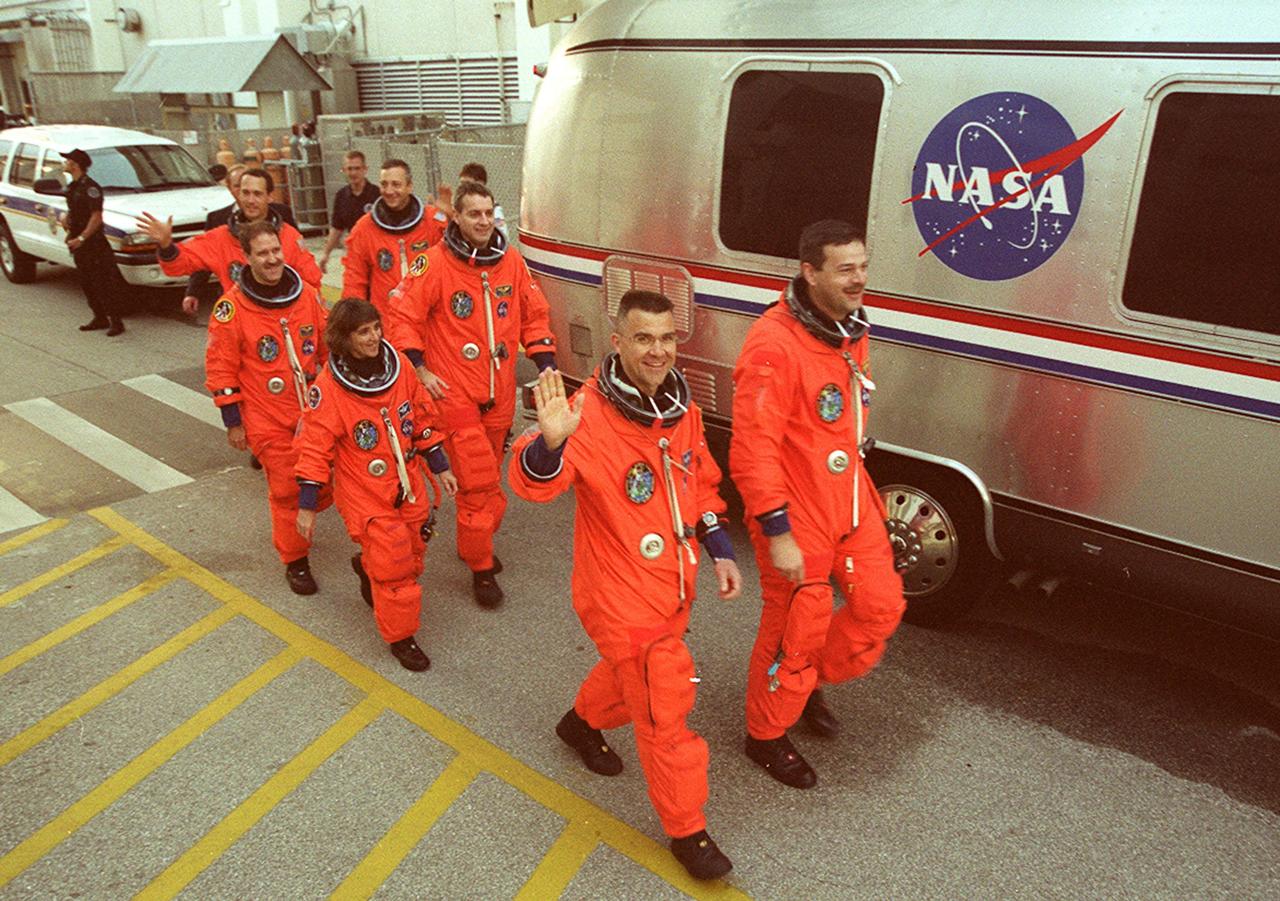
KENNEDY SPACE CENTER, FLA. -- The STS-109 crew walks toward the Astrovan for a ride to the launch pad. Leading the way are Commander Scott Altman and Pilot Duane Carey; behind them are Mission Specialist Nancy Currie followed by Payload Commander John Grunsfeld (left) and Mission Specialist Rick Linnehan (right); in the rear are Mission Specialists James Newman and Michael Massimino. The crew is taking part in Terminal Countdown Demonstration Test activities that include emergency egress training and a simulated countdown at the pad. Columbia is scheduled to be launched Feb. 28 on mission STS-109, a Hubble Servicing Mission. The goal of the mission is to replace Solar Array 2 with Solar Array 3, replace the Power Control Unit, remove the Faint Object Camera and install the ACS, install the Near Infrared Camera and Multi-Object Spectrometer (NICMOS) Cooling System, and install New Outer Blanket Layer insulation. The launch will be the first for Columbia after returning from California where it underwent extensive maintenance, inspections and enhancements. More than 100 upgrades make Columbia safer and more reliable than ever before
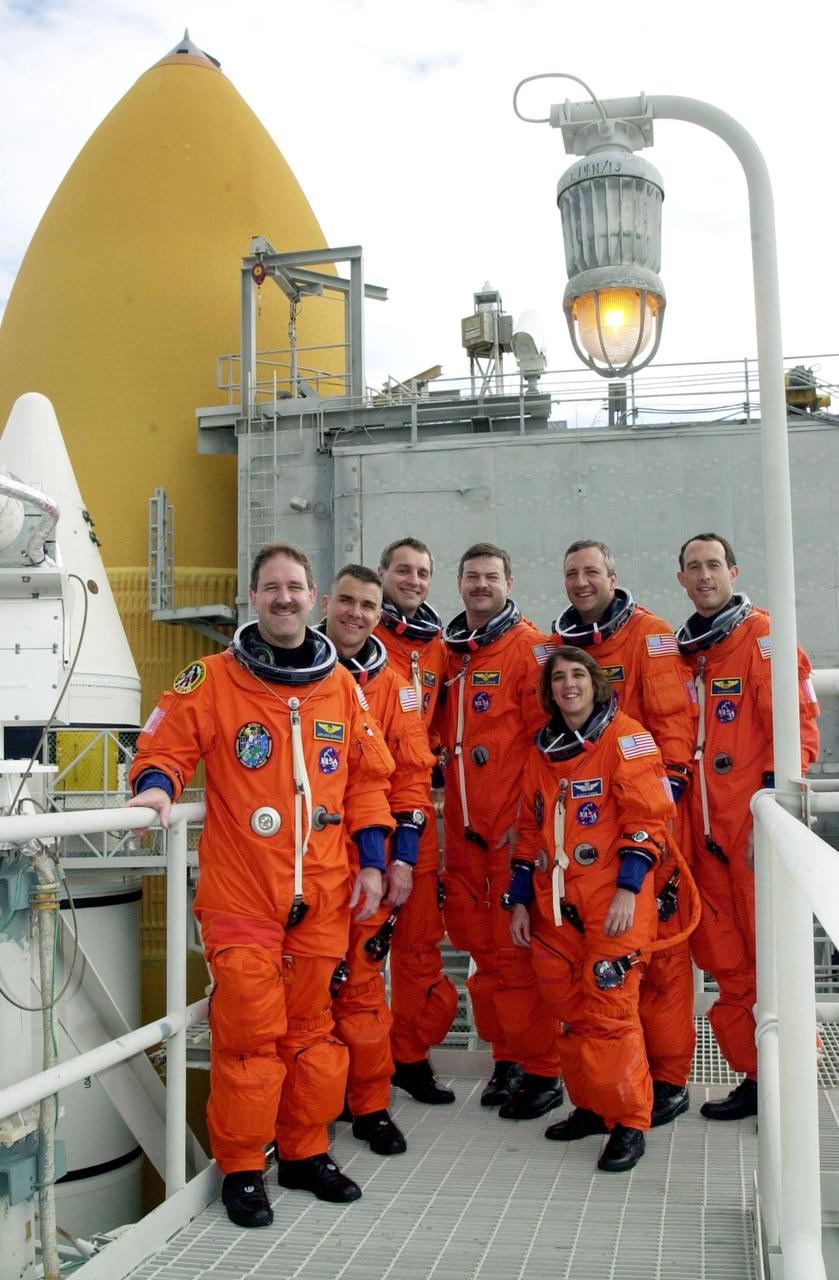
KENNEDY SPACE CENTER, FLA. -- After emergency exit practice on Launch Pad 39A, the STS-109 crew poses for a photo on the 225-foot level of the Fixed Service Structure. Clockwise from left are Mission Specialist John Grunsfeld; Pilot Duane Carey; Mission Specialist Richard Linnehan; Commander Scott Altman; and Mission Specialists Michael Massimino, James Newman and Nancy Currie. Behind them at left can be seen one of the twin solid rocket boosters and the larger external tank that will propel Columbia and the crew into space. The goal of mission STS-109, a Hubble Servicing Mission, is to replace Solar Array 2 with Solar Array 3, replace the Power Control Unit, remove the Faint Object Camera and install the ACS, install the Near Infrared Camera and Multi-Object Spectrometer (NICMOS) Cooling System, and install New Outer Blanket Layer insulation. The launch will be the first for Columbia after returning from California where it underwent extensive maintenance, inspections and enhancements. More than 100 upgrades make Columbia safer and more reliable than ever before. Columbia is scheduled to be launched Feb. 28
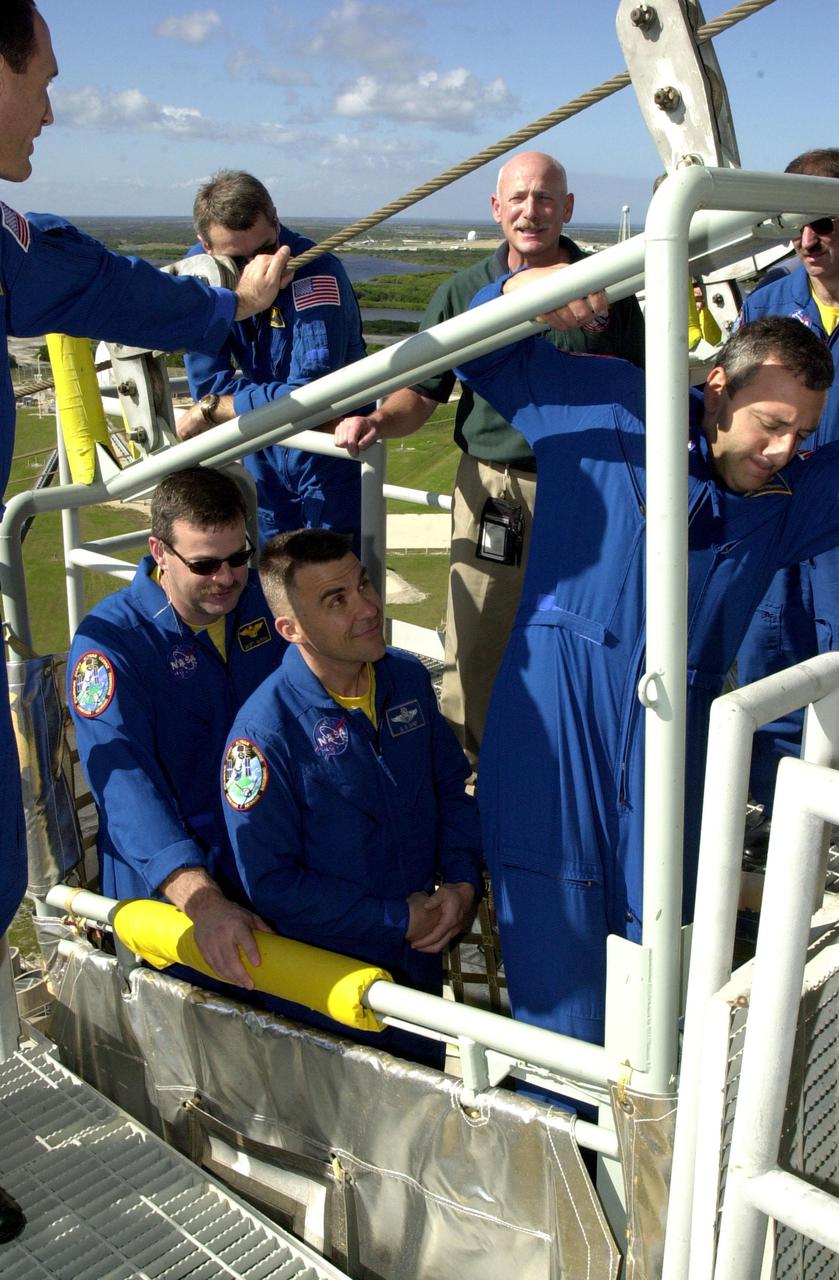
KENNEDY SPACE CENTER, FLA. -- On Launch Pad 39A, the STS-109 crew takes part in slidewire basket_ emergency egress training on the 195-foot level. In the basket are (left to right) Commander Scott Altman, Pilot Duane Carey and Mission Specialist Michael Massimino. Outside the basket, at left, is Mission Specialist James Newman. On the other side are (left to right) Mission Specialist Richard Linnehan, the trainer, and Mission Specialist John Grunsfeld. Not seen is Mission Specialist Nancy Currie. The training is part of Terminal Countdown Demonstration Test activities that include a simulated countdown at the pad. Columbia is scheduled to be launched Feb. 28 on mission STS-109, a Hubble Servicing Mission. The goal of the mission is to replace Solar Array 2 with Solar Array 3, replace the Power Control Unit, remove the Faint Object Camera and install the ACS, install the Near Infrared Camera and Multi-Object Spectrometer (NICMOS) Cooling System, and install New Outer Blanket Layer insulation. . The launch will be the first for Columbia after returning from California where it underwent extensive maintenance, inspections and enhancements. More than 100 upgrades make Columbia safer and more reliable than ever before
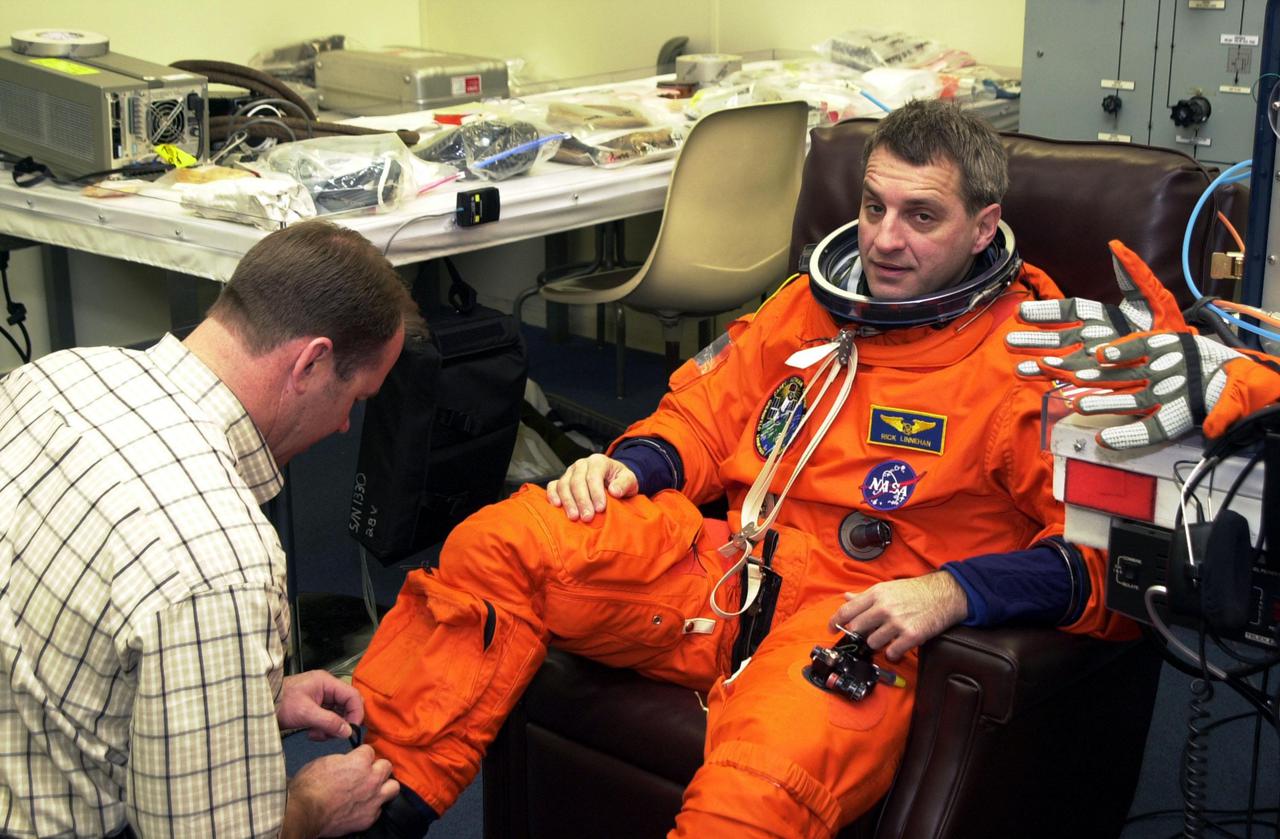
KENNEDY SPACE CENTER, FLA. -- STS-109 Mission Specialist Richard Linnehan gets a suit check during Terminal Countdown Demonstration Test activities. He and other crew members - Commander Scott Altman, Pilot Duane Carey, Payload Commander John Grunsfeld and Mission Specialists Nancy Currie, James Newman and Michael Massimino - are at Kennedy for the TCDT that also includes emergency egress training and a simulated countdown. Columbia is scheduled to be launched Feb. 28 on mission STS-109, a Hubble Servicing Mission. The goal of the mission is to replace Solar Array 2 with Solar Array 3, replace the Power Control Unit, remove the Faint Object Camera and install the ACS, install the Near Infrared Camera and Multi-Object Spectrometer (NICMOS) Cooling System, and install New Outer Blanket Layer insulation. The launch will be the first for Columbia after returning from California where it underwent extensive maintenance, inspections and enhancements. More than 100 upgrades make Columbia safer and more reliable than ever before
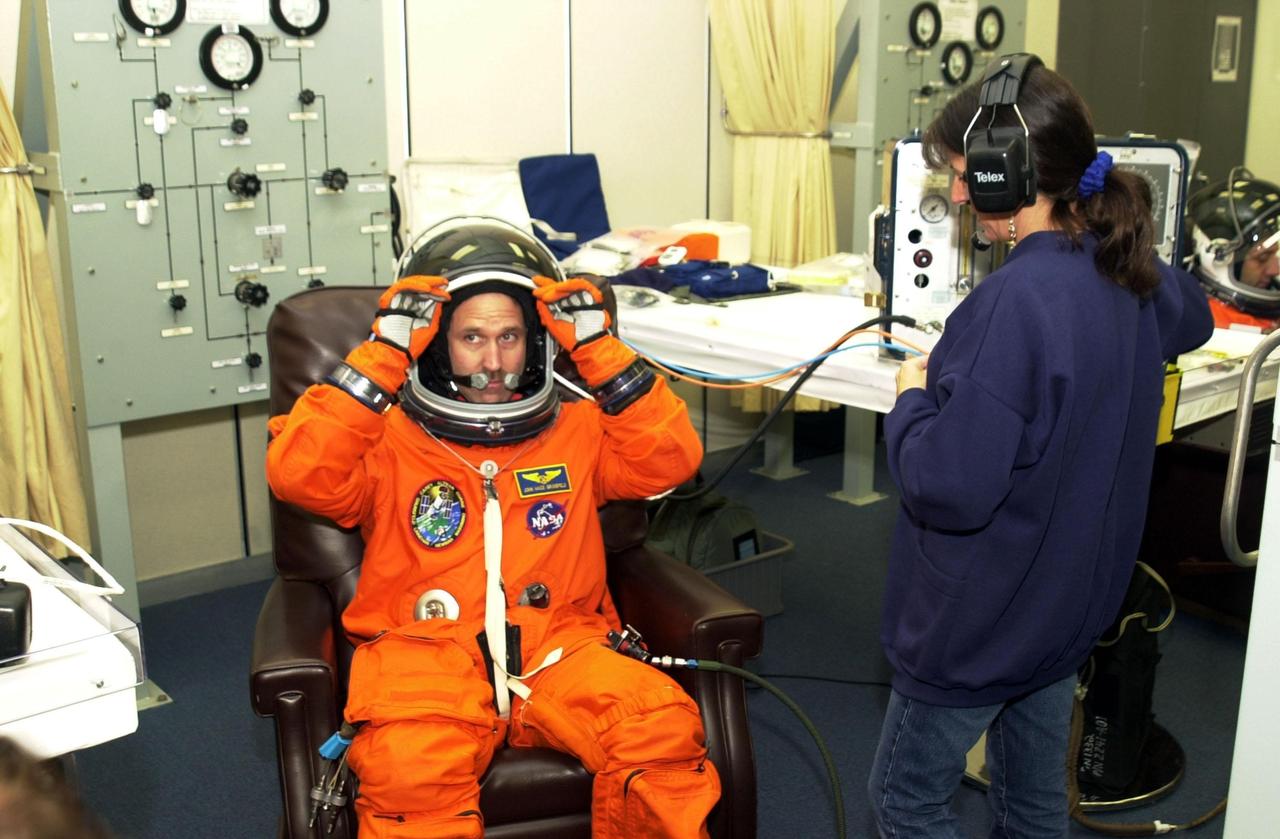
KENNEDY SPACE CENTER, Fla. - STS-109 Payload Commander John M. Grunsfeld gets a final fitting on his launch and entry suit two days before launch. On mission STS-109, the seven-member crew will capture the Hubble Space Telescope using the Shuttle's robotic arm and secure it on a workstand in Columbia's payload bay. Four mission specialists will perform five scheduled spacewalks to complete system upgrades to the telescope. More durable solar arrays, a large gyroscopic assembly to help point the telescope properly, a new telescope power control unit, and a cooling system to restore the use of a key infrared camera and spectrometer unit, which has been dormant since 1999, will all be installed. In addition, the telescope’s view of the Universe will be improved with the addition of the Advanced Camera for Surveys (ACS), which replaces the Faint Object Camera, the last of Hubble's original instruments. The STS-109 crew also includes Commander Scott D. Altman, Pilot Duane G. Carey, and Mission Specialists James H. Newman, Nancy J. Currie, Richard M. Linnehan and Michael J. Massimino. Launch is scheduled for Feb. 28, 2002, at 6:48 a.m. EST (11:48 GMT)
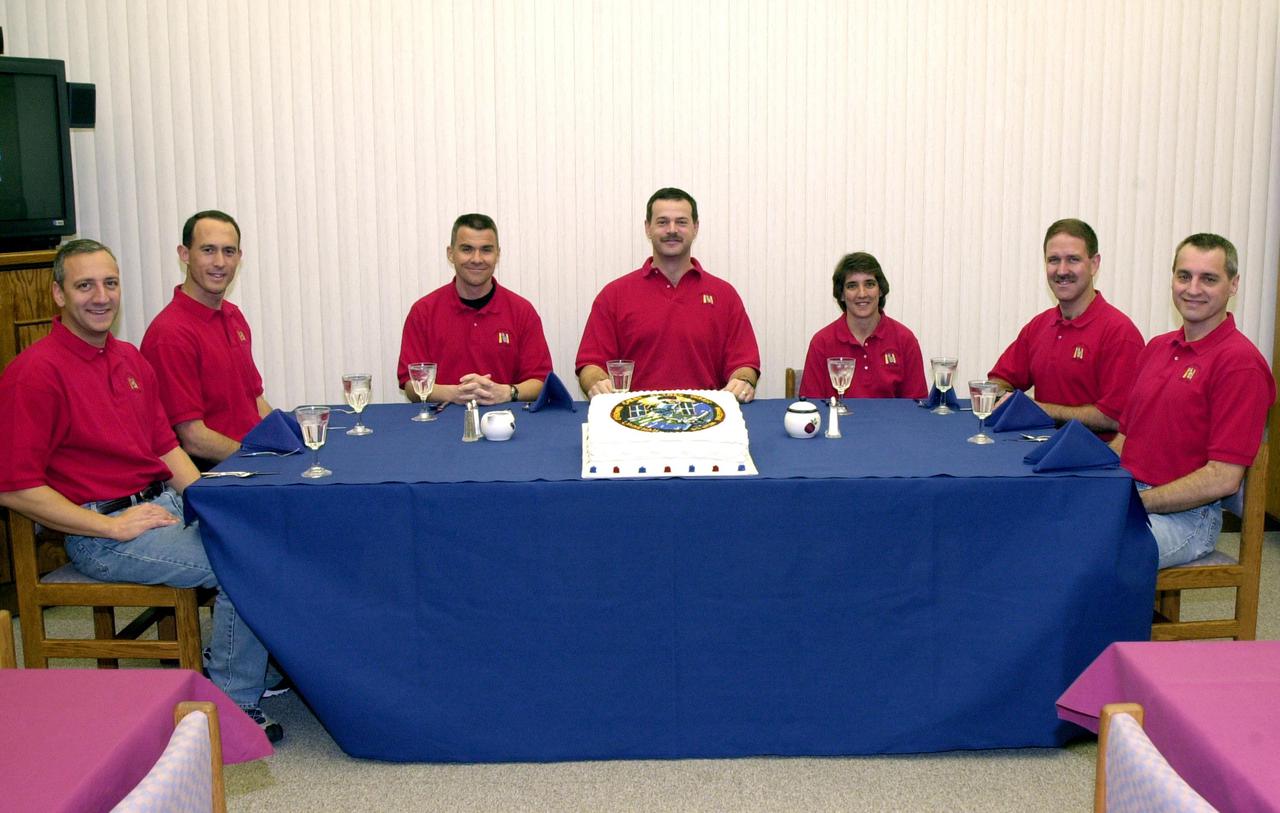
KENNEDY SPACE CENTER, Fla. -- The STS-109 crew enjoys an early morning snack that includes a symbolic cake with the mission logo, part of a ritual before a launch. Seated, left to right, are MIssion Specialists Michael Massimino and James Newman; Pilot Duane Carey; Commander Scott Altman; and Mission Specialists Nancy Currie, John Grunsfeld and Richard Linnehan. On mission STS-109, the crew will capture the Hubble Space Telescope using the Shuttle’s robotic arm and secure it on a workstand in Columbia's payload bay. Four mission specialists will perform five scheduled spacewalks to complete system upgrades to the telescope. More durable solar arrays, a large gyroscopic assembly to help point the telescope properly, a new telescope power control unit, and a cooling system to restore the use of a key infrared camera and spectrometer unit, which has been dormant since 1999, will all be installed. In addition, the telescope's view of the Universe will be improved with the addition of the Advanced Camera for Surveys (ACS), which replaces the Faint Object Camera, the last of Hubble's original instruments. Mission STS-109 is the 27th flight of the orbiter Columbia and the 108th flight overall in NASA’s Space Shuttle program. After the 11-day mission, STS-109 is scheduled to land about 4:35 a.m. EST on March 12
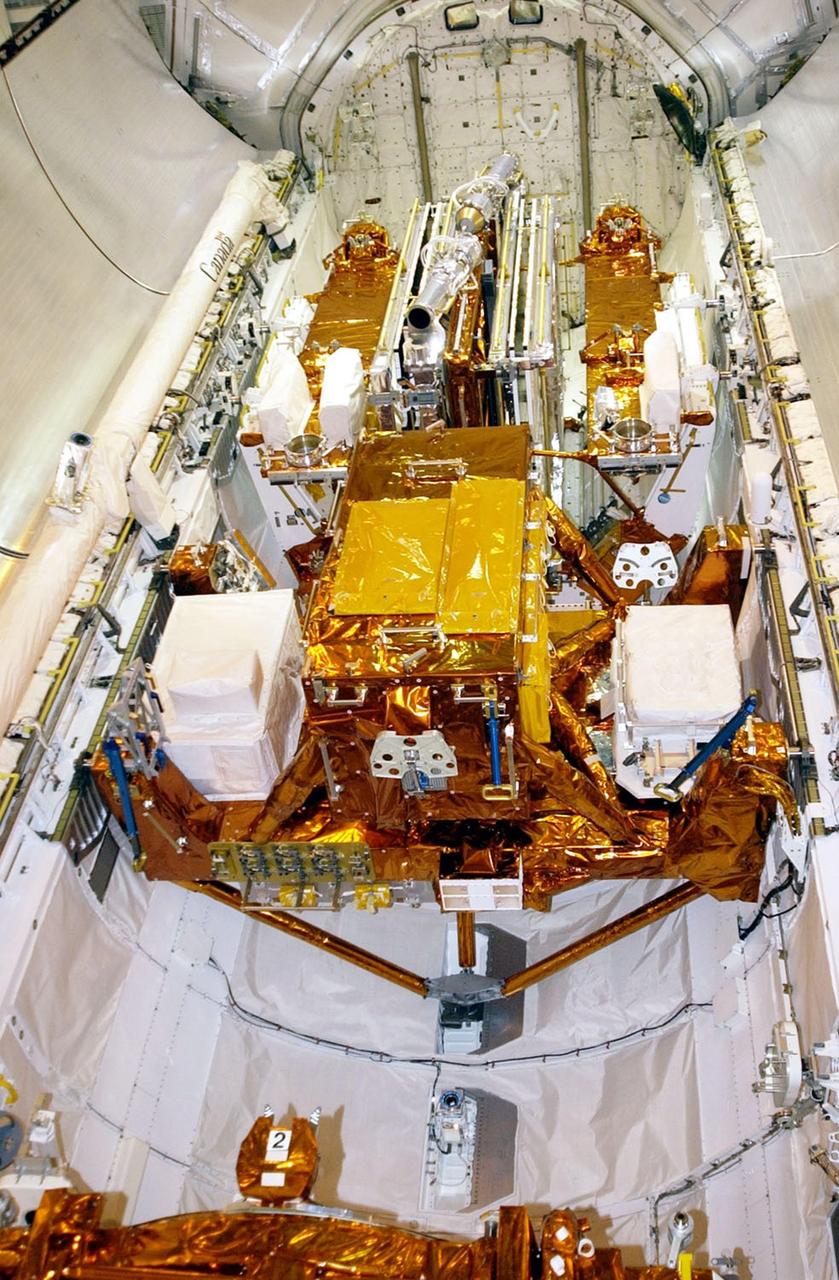
KENNEDY SPACE CENTER, FLA. -- The STS-109 payload sits in place inside Columbia’s payload bay. On mission STS-109, the seven-member crew will capture the Hubble Space Telescope using the Shuttle's robotic arm and secure it on a workstand in Columbia’s payload bay. Four mission specialists will perform five scheduled spacewalks to complete system upgrades to the telescope. More durable solar arrays, a large gyroscopic assembly to help point the telescope properly, a new telescope power control unit, and a cooling system to restore the use of a key infrared camera and spectrometer unit, which has been dormant since 1999, will all be installed. In addition, the telescope's view of the Universe will be improved with the addition of the Advanced Camera for Surveys (ACS), which replaces the Faint Object Camera, the last of Hubble's original instruments. The STS-109 crew includes Commander Scott D. Altman, Pilot Duane G. Carey, and Mission Specialists John M. Grunsfeld, Nancy J. Currie, James H. Newman, Richard M. Linnehan and Michael J. Massimino. Launch is scheduled for Feb. 28, 2002, at 6:48 a.m. EST (11:48 GMT).
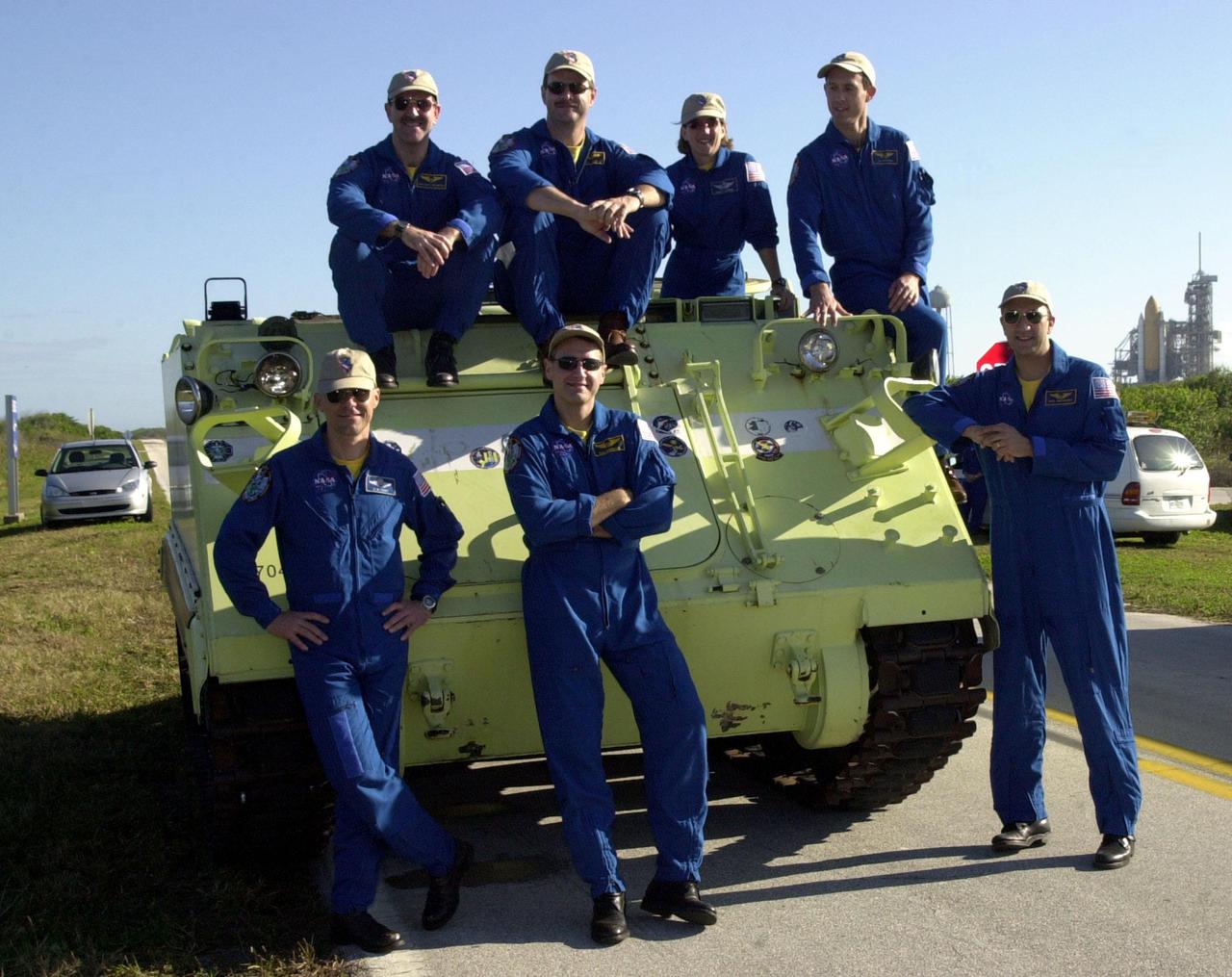
KENNEDY SPACE CENTER, FLA. - After training on the M-113 armored personnel carrier, the STS-109 crew gather for a photo. Seated on top are (left to right) Payload Commander John Grunsfeld, Commander Scott Altman and Mission Specialists Nancie Currie and James Newman; standing below are Pilot Duane Carey and Mission Specialists Richard Linnehan and Michael Massimino. The carrier is part of emergency egress training at the launch pad. The crew is taking part in Terminal Countdown Demonstration Test activities that also include a simulated countdown at the pad. STS-109 is a Hubble Space Telescope Servicing Mission, with goals to replace Solar Array 2 with Solar Array 3, replace the Power Control Unit, remove the Faint Object Camera and install the Advanced Camera for Surveys (ACS), install the Near Infrared Camera and Multi-Object Spectrometer (NICMOS) Cooling System, and install New Outer Blanket Layer insulation. The 11-day mission will require grasping the satellite with a robotic arm in order for the crew to perform the tasks during five spacewalks. Launch of STS-109 aboard Space Shuttle Columbia is scheduled for Feb. 28, 2002
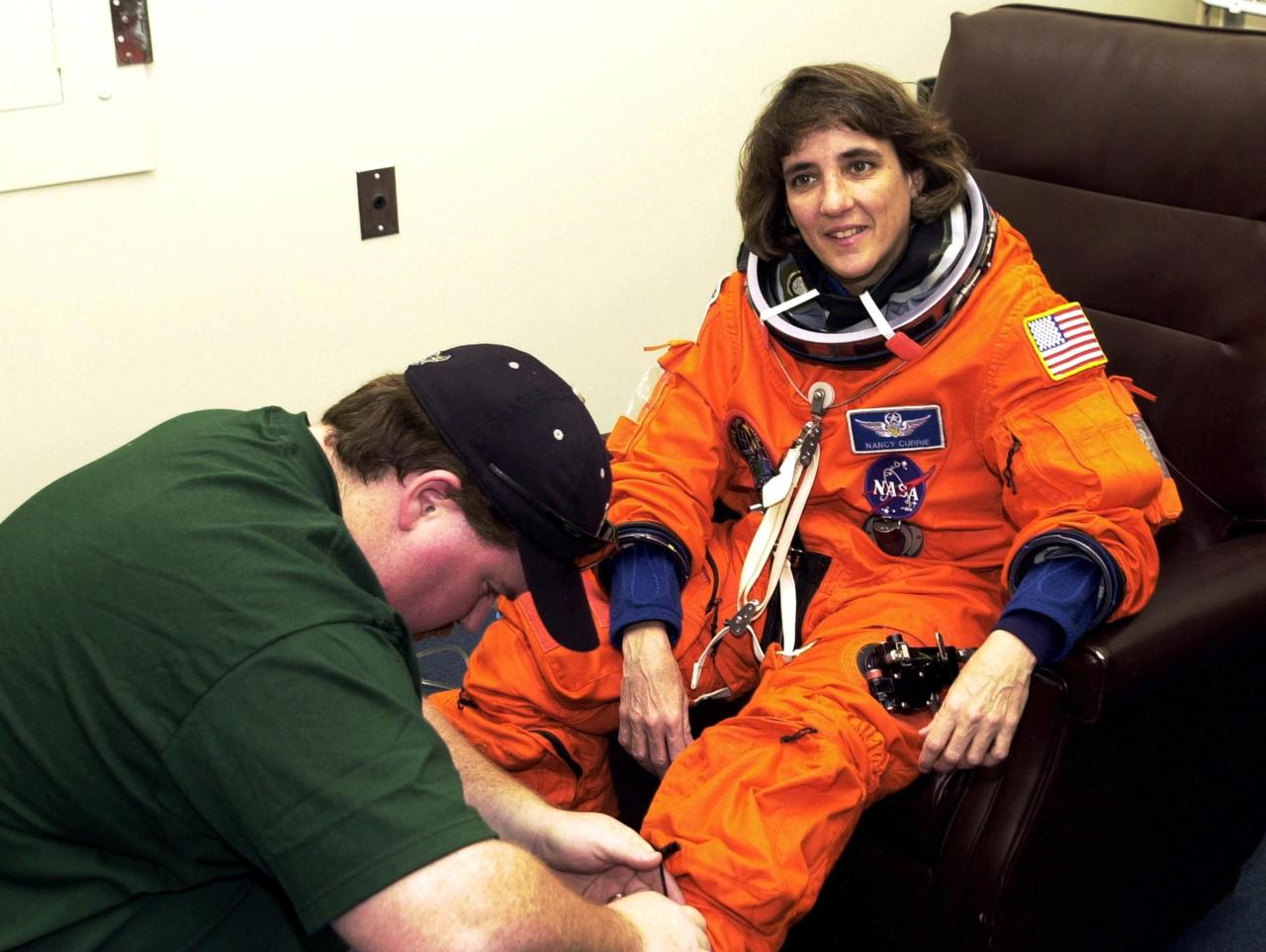
KENNEDY SPACE CENTER, FLA. - STS-109 Mission Specialist Nancy Currie gets a suit check during Terminal Countdown Demonstration Test activities. She and other crew members - Commander Scott Altman, Pilot Duane Carey, Payload Commander John Grunsfeld and Mission Specialists James Newman, Richard Linnehan and Michael Massimino - are at Kennedy for the TCDT that also includes emergency egress training and a simulated countdown. Columbia is scheduled to be launched Feb. 28 on mission STS-109, a Hubble Servicing Mission. The goal of the mission is to replace Solar Array 2 with Solar Array 3, replace the Power Control Unit, remove the Faint Object Camera and install the ACS, install the Near Infrared Camera and Multi-Object Spectrometer (NICMOS) Cooling System, and install New Outer Blanket Layer insulation. The launch will be the first for Columbia after returning from California where it underwent extensive maintenance, inspections and enhancements. More than 100 upgrades make Columbia safer and more reliable than ever before
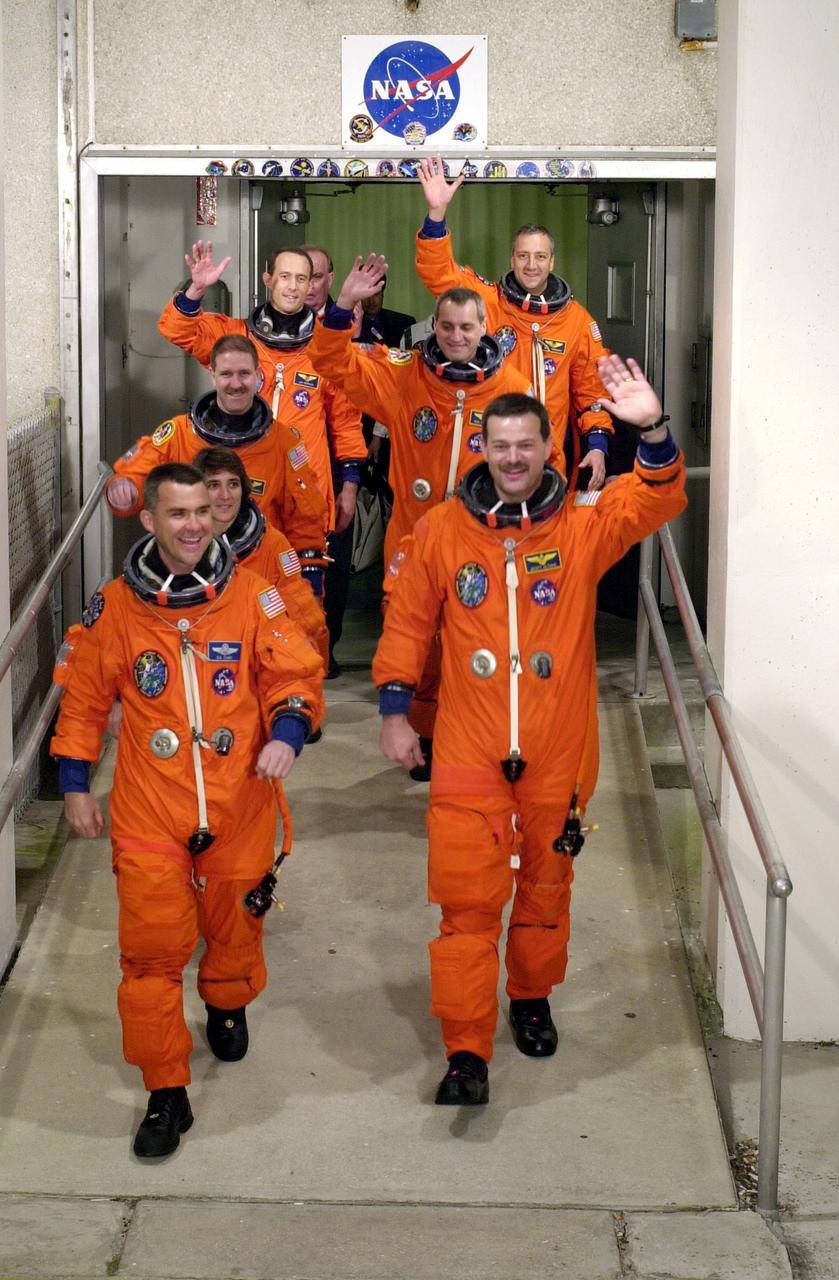
The STS-109 crew of seven waved to onlookers as they emerged from the Operations and Checkout Buildings at Kennedy Space Flight Center eager to get to the launch pad to embark upon the Space Shuttle Orbiter Columbia's 27th flight into space. Crew members included, from front to back, Duane G. Carey (left) and Scott D. Altman (right); Nancy J. Currie, mission specialist; John M. Grunsfield (left), payload commander, and Richard M. Linneham (right); James H. Newman (left) and Michael J. Massimino (right), all mission specialists. Launched March 1, 2002, the goal of the mission was the maintenance and upgrade of the Hubble Space Telescope (HST). The Marshall Space Flight Center had the responsibility for the design, development, and construction of the HST, which is the most complex and sensitive optical telescope ever made, to study the cosmos from a low-Earth orbit. By using Columbia's robotic arm, the telescope was captured and secured on a work stand in Columbia's payload bay where four members of the crew performed five spacewalks to complete system upgrades to the HST. Lasting 10 days, 22 hours, and 11 minutes, the STS-109 mission was the 108th flight overall in NASA's Space Shuttle Program.
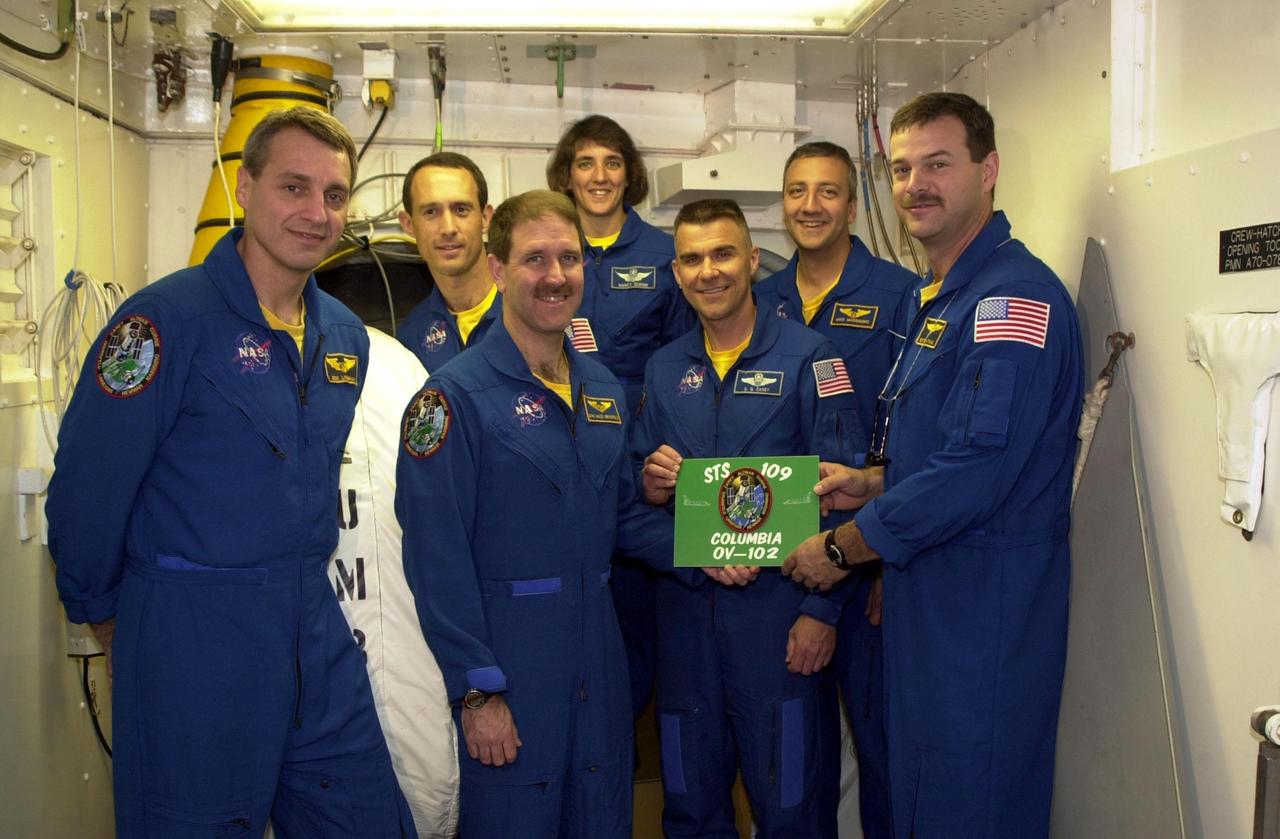
KENNEDY SPACE CENTER, FLA. -- At Launch Pad 39A, the STS-109 crew stands in the White Room, outside the entry into Space Shuttle Columbia, displaying the mission patch and placard. Standing, left to right, are Mission Specialists Richard Linnehan, James Newman, John Grunsfeld and Nancy Currie; Pilot Duane Carey; Mission Specialist Michael Massimino; and Commander Scott Altman. The White Room is an environmentally controlled structure at the end of the Orbiter Access Room that provides access to the orbiter. The crew is taking part in Terminal Countdown Demonstration Test activities that include emergency egress training and a simulated countdown at the pad. Columbia is scheduled to be launched Feb. 28 on mission STS-109, a Hubble Servicing Mission. The goal of the mission is to replace Solar Array 2 with Solar Array 3, replace the Power Control Unit, remove the Faint Object Camera and install the ACS, install the Near Infrared Camera and Multi-Object Spectrometer (NICMOS) Cooling System, and install New Outer Blanket Layer insulation. . The launch will be the first for Columbia after returning from California where it underwent extensive maintenance, inspections and enhancements. More than 100 upgrades make Columbia safer and more reliable than ever before
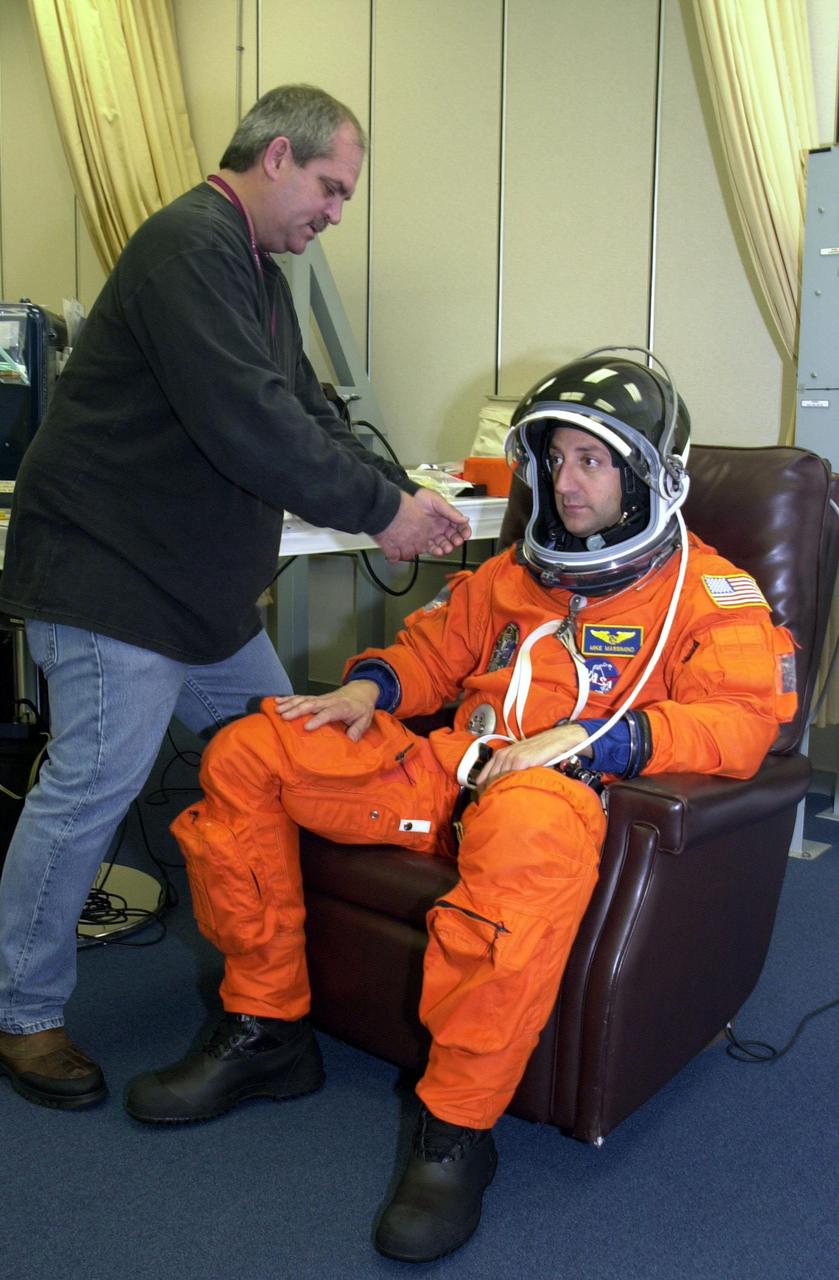
KENNEDY SPACE CENTER, Fla. - STS-109 Mission Specialist Michael J. Massimino gets a final fitting on his launch and entry suit two days before launch. On mission STS-109, the seven-member crew will capture the Hubble Space Telescope using the Shuttle's robotic arm and secure it on a workstand in Columbia's payload bay. Four mission specialists will perform five scheduled spacewalks to complete system upgrades to the telescope. More durable solar arrays, a large gyroscopic assembly to help point the telescope properly, a new telescope power control unit, and a cooling system to restore the use of a key infrared camera and spectrometer unit, which has been dormant since 1999, will all be installed. In addition, the telescope’s view of the Universe will be improved with the addition of the Advanced Camera for Surveys (ACS), which replaces the Faint Object Camera, the last of Hubble's original instruments. The STS-109 crew also includes Commander Scott D. Altman, Pilot Duane G. Carey, and Mission Specialists John M. Grunsfeld, James H. Newman, Nancy J. Currie and Richard M. Linnehan. Launch is scheduled for Feb. 28, 2002, at 6:48 a.m. EST (11:48 GMT)
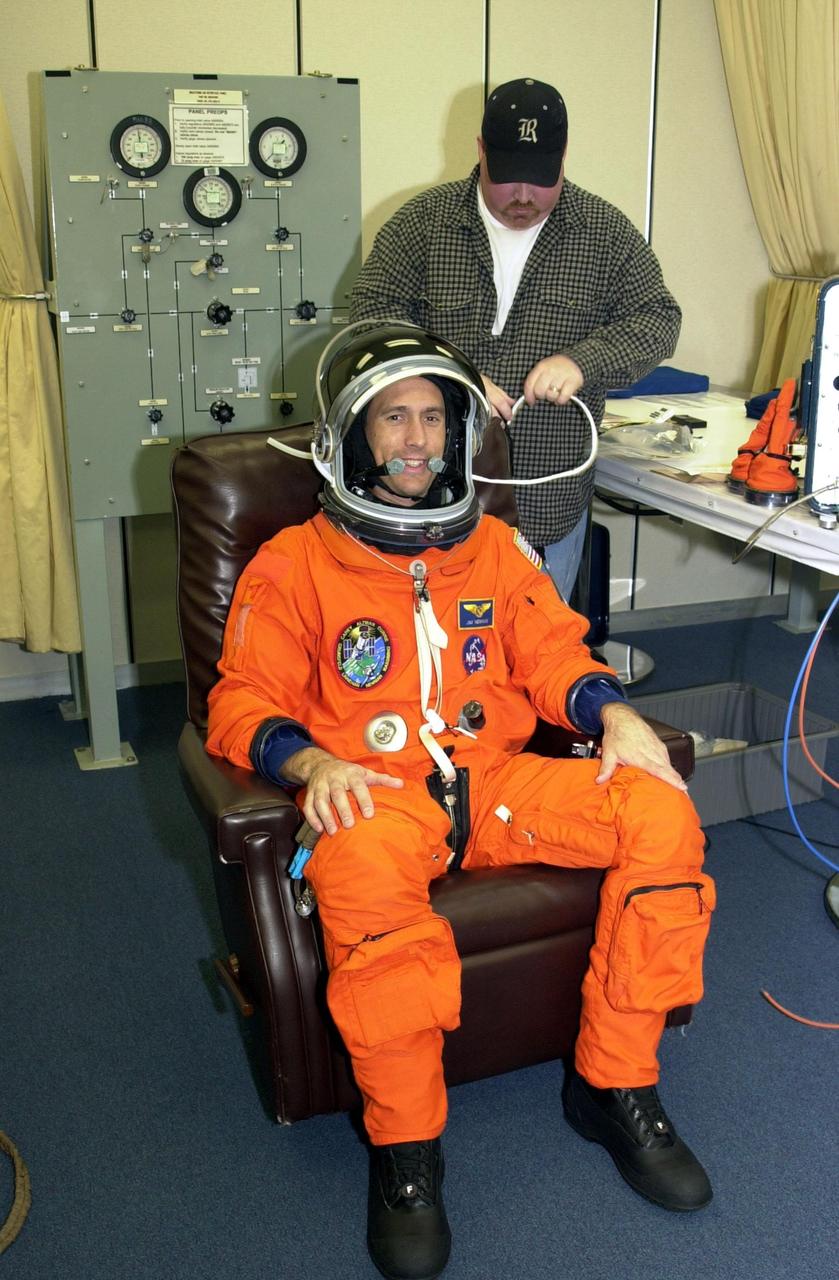
KENNEDY SPACE CENTER, FLA. -- STS-109 Mission Specialist James H. Newman gets a final fitting on his launch and entry suit two days before launch. On mission STS-109, the seven-member crew will capture the Hubble Space Telescope using the Shuttle's robotic arm and secure it on a workstand in Columbia's payload bay. Four mission specialists will perform five scheduled spacewalks to complete system upgrades to the telescope. More durable solar arrays, a large gyroscopic assembly to help point the telescope properly, a new telescope power control unit, and a cooling system to restore the use of a key infrared camera and spectrometer unit, which has been dormant since 1999, will all be installed. In addition, the telescope’s view of the Universe will be improved with the addition of the Advanced Camera for Surveys (ACS), which replaces the Faint Object Camera, the last of Hubble's original instruments. The STS-109 crew also includes Commander Scott D. Altman, Pilot Duane G. Carey, and Mission Specialists John M. Grunsfeld, Nancy J. Currie, Richard M. Linnehan and Michael J. Massimino. Launch is scheduled for Feb. 28, 2002, at 6:48 a.m. EST (11:48 GMT)
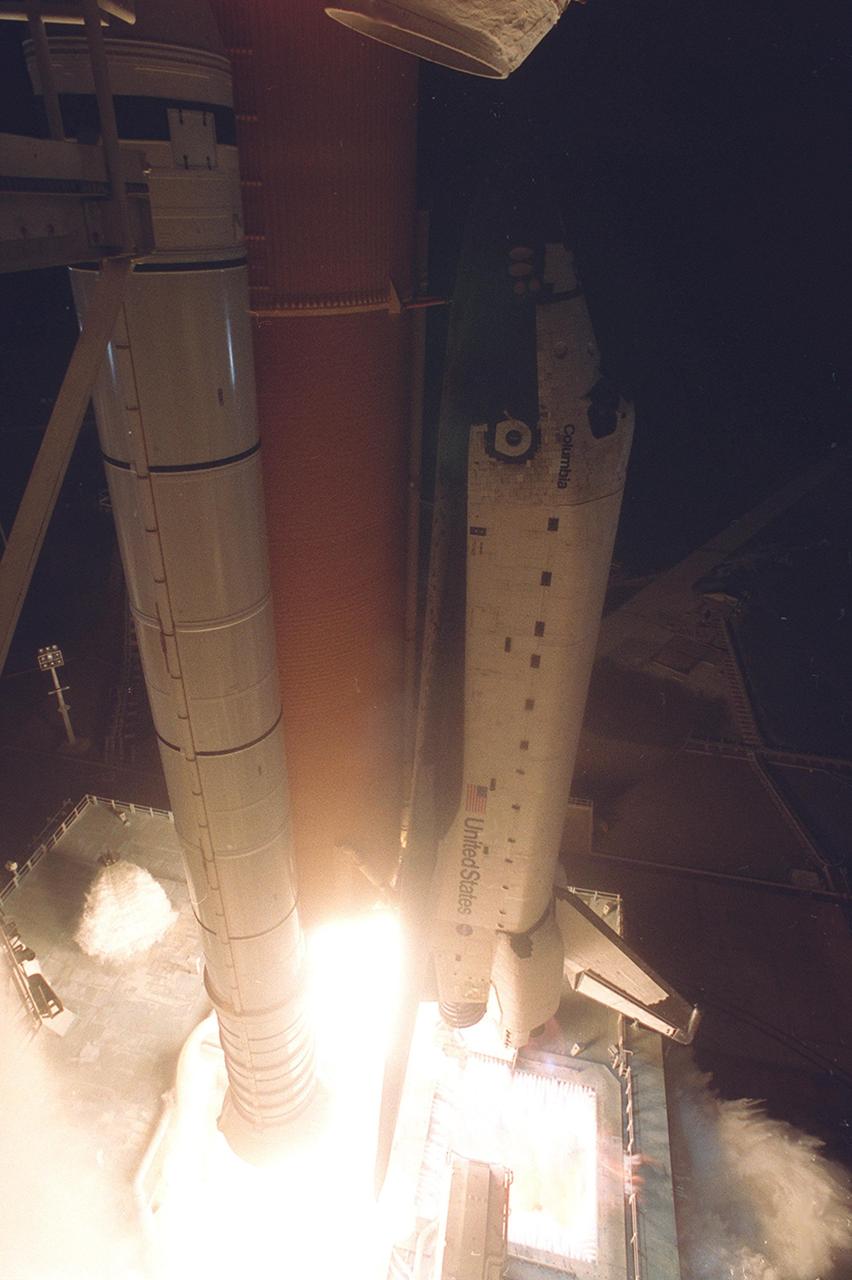
KENNEDY SPACE CENTER, Fla. - At liftoff of Space Shuttle Columbia, a torrent of water begins to flow from rainbirds (at bottom left and right) onto the Mobile Launcher Platform to help with sound suppression. Acoustical levels reach their peak when the Space Shuttle is about 300 feet above the MLP. There are six 12-foot rainbirds mounted on the MLP. Liftoff of Columbia on mission STS-109 occurred at 6:22:02:08 a.m. EST (11:22:02:08 GMT). This was the 27th flight of the vehicle and 108th in the history of the Shuttle program. The goal of the mission is the maintenance and upgrade of the Hubble Space Telescope, to be carried out in five spacewalks. The crew comprises Commander Scott D. Altman, Pilot Duane G. Carey, Payload Commander John M. Grunsfeld, and Mission Specialists Nancy Jane Currie, Richard M. Linnehan, James H. Newman and Michael J. Massimino. After the 11-day mission, Columbia is expected to return to KSC March 12 about 4:35 a.m. EST (09:35 GMT)
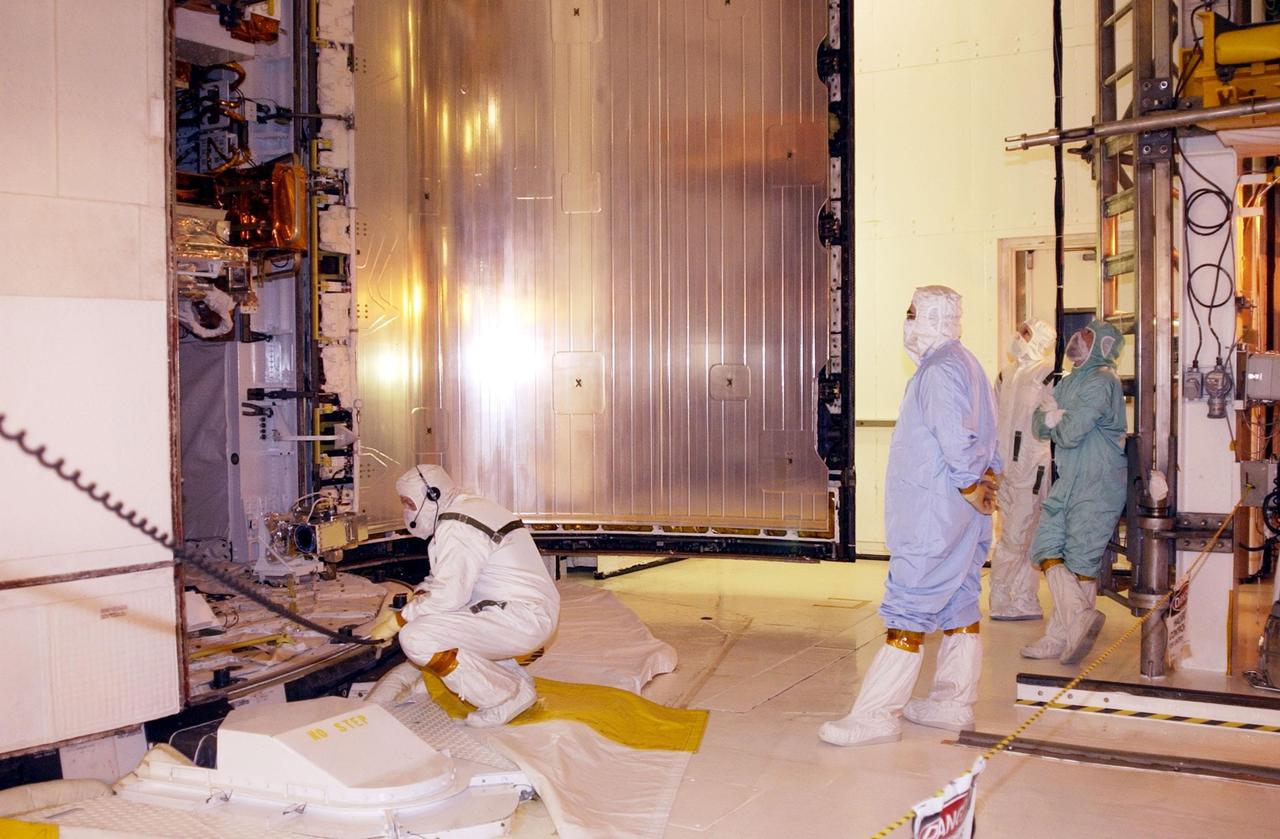
KENNEDY SPACE CENTER, Fla. - Workers in the Payload Changeout Room, Launch Pad 39A, check the progress of Columbia’s payload bay doors closing around the equipment inside to be used on mission STS-109. During their 11 days in space, the seven-member crew will capture the Hubble Space Telescope using the Shuttle's robotic arm and secure it on a workstand in Columbia’s payload bay. Four mission specialists will perform five scheduled spacewalks to complete system upgrades to the telescope. More durable solar arrays, a large gyroscopic assembly to help point the telescope properly, a new telescope power control unit, and a cooling system to restore the use of a key infrared camera and spectrometer unit, which has been dormant since 1999, will all be installed. In addition, the telescope's view of the Universe will be improved with the addition of the Advanced Camera for Surveys (ACS), which replaces the Faint Object Camera, the last of Hubble's original instruments. The STS-109 crew includes Commander Scott D. Altman, Pilot Duane G. Carey, and Mission Specialists John M. Grunsfeld, Nancy J. Currie, James H. Newman, Richard M. Linnehan and Michael J. Massimino. Launch is scheduled for Feb. 28, 2002, at 6:48 a.m. EST (11:48 GMT).
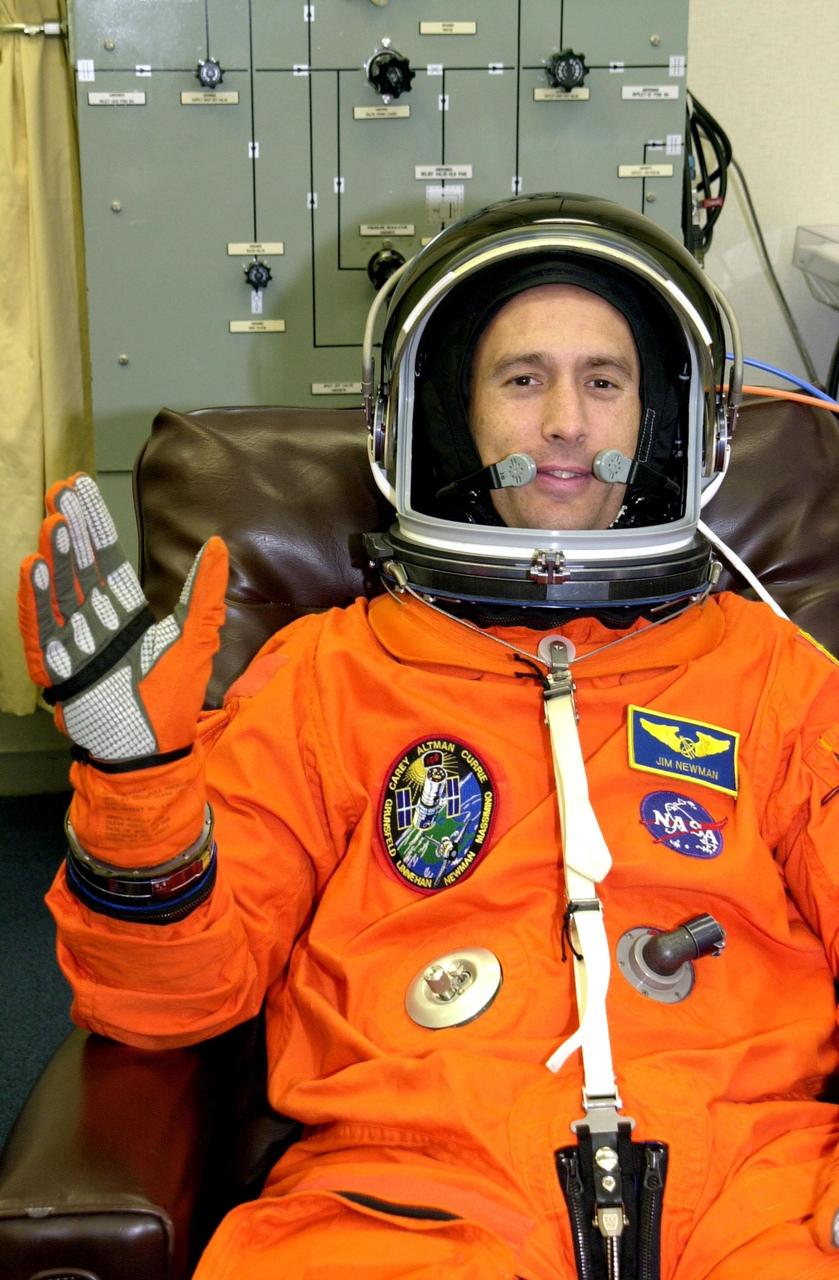
KENNEDY SPACE CENTER, FLA. -- STS-109 Mission Specialist James Newman waves during suit check, which is part of Terminal Countdown Demonstration Test activities. He and other crew members - Commander Scott Altman, Pilot Duane Carey, Payload Commander John Grunsfeld and Mission Specialists Nancy Currie, Richard Linnehan and Michael Massimino - are at Kennedy for the TCDT that also includes emergency egress training and a simulated countdown. Columbia is scheduled to be launched Feb. 28 on mission STS-109, a Hubble Servicing Mission. The goal of the mission is to replace Solar Array 2 with Solar Array 3, replace the Power Control Unit, remove the Faint Object Camera and install the ACS, install the Near Infrared Camera and Multi-Object Spectrometer (NICMOS) Cooling System, and install New Outer Blanket Layer insulation. The launch will be the first for Columbia after returning from California where it underwent extensive maintenance, inspections and enhancements. More than 100 upgrades make Columbia safer and more reliable than ever before
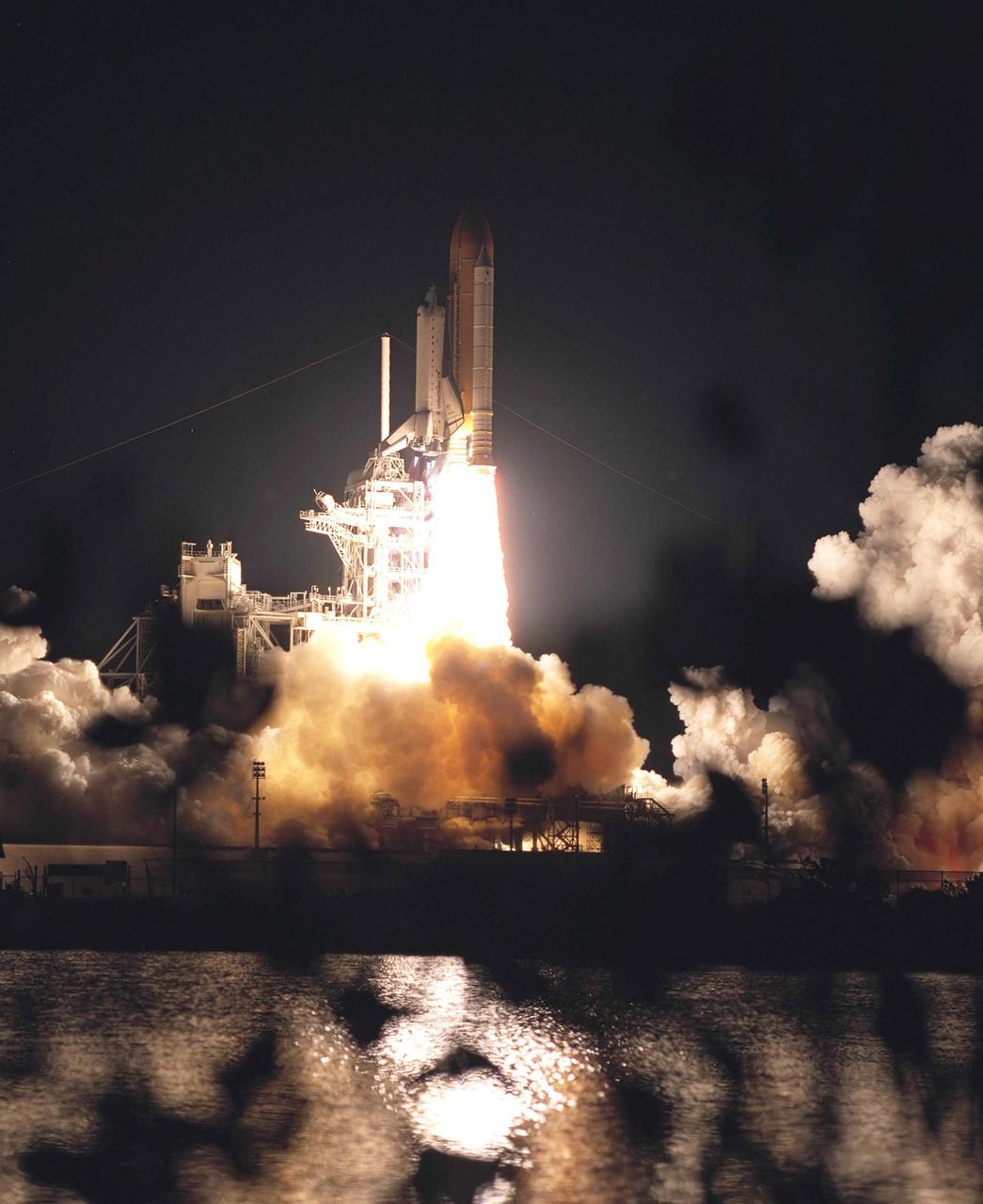
KENNEDY SPACE CENTER, Fla. - Space Shuttle Columbia roars past the lighting mast on launch pad 39A as its fiery exhaust emblazons the pre-dawn sky and nearby water. Both the Rotating Service Structure (left) and Fixed Service Structure are clearly defined in the brilliant light. Liftoff of Columbia on mission STS-109 occurred at 6:22:02:08 a.m. EST (11:22:02:08 GMT). This was the 27th flight of the vehicle and 108th in the history of the Shuttle program. The goal of the mission is the maintenance and upgrade of the Hubble Space Telescope, to be carried out in five spacewalks. The crew comprises Commander Scott D. Altman, Pilot Duane G. Carey, Payload Commander John M. Grunsfeld, and Mission Specialists Nancy Jane Currie, Richard M. Linnehan, James H. Newman and Michael J. Massimino. After the 11-day mission, Columbia is expected to return to KSC March 12 about 4:35 a.m. EST (09:35 GMT).
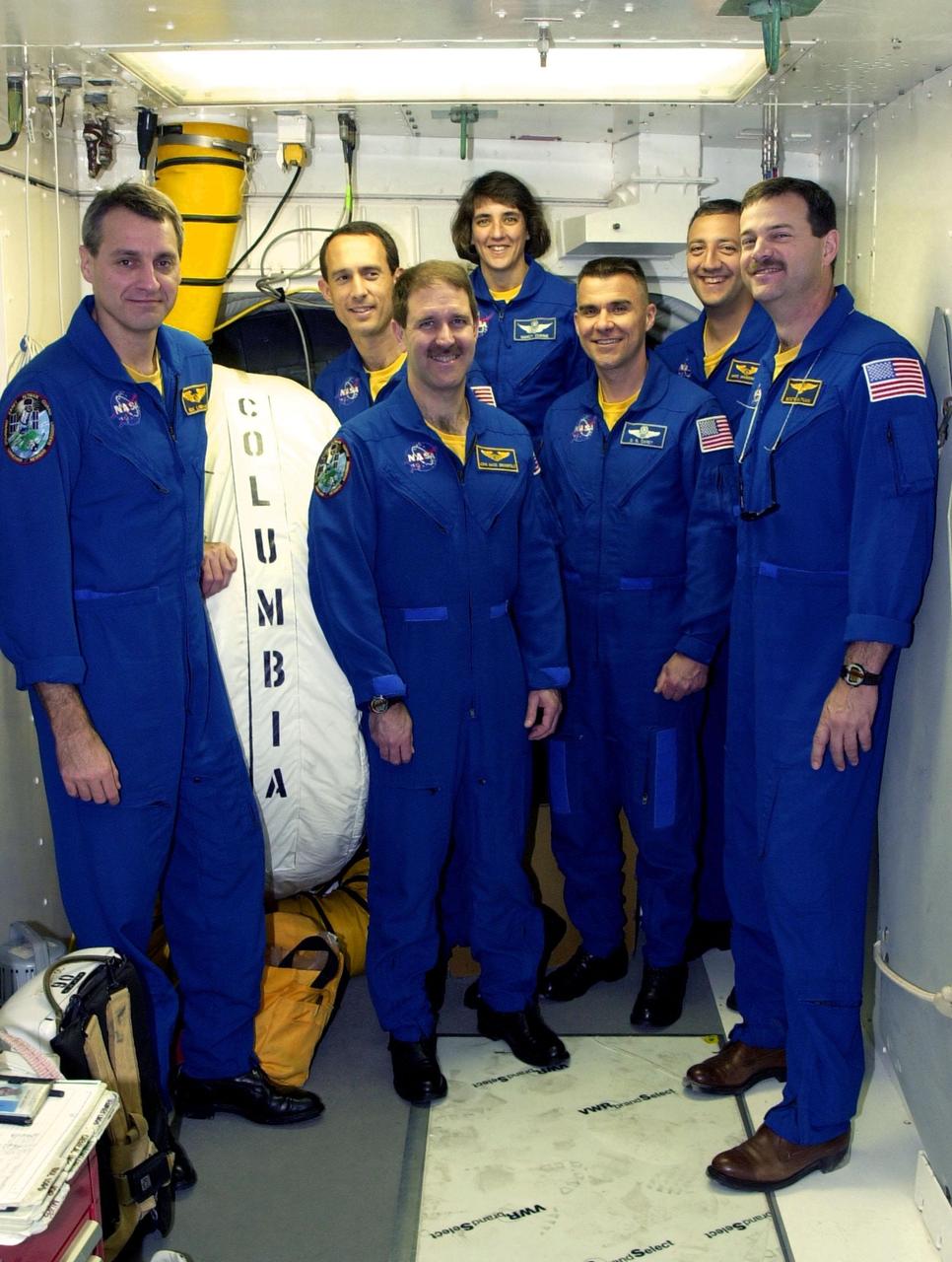
KENNEDY SPACE CENTER, FLA. -- At Launch Pad 39A, the STS-109 crew stands in the White Room, outside the entry into Space Shuttle Columbia. Standing, left to right, are Mission Specialists Richard Linnehan, James Newman, John Grunsfeld and Nancy Currie; Pilot Duane Carey; Mission Specialist Michael Massimino; and Commander Scott Altman. The White Room is an environmentally controlled structure at the end of the Orbiter Access Room that provides access to the orbiter. The crew is taking part in Terminal Countdown Demonstration Test activities that include emergency egress training and a simulated countdown at the pad. Columbia is scheduled to be launched Feb. 28 on mission STS-109, a Hubble Servicing Mission. The goal of the mission is to replace Solar Array 2 with Solar Array 3, replace the Power Control Unit, remove the Faint Object Camera and install the ACS, install the Near Infrared Camera and Multi-Object Spectrometer (NICMOS) Cooling System, and install New Outer Blanket Layer insulation. . The launch will be the first for Columbia after returning from California where it underwent extensive maintenance, inspections and enhancements. More than 100 upgrades make Columbia safer and more reliable than ever before
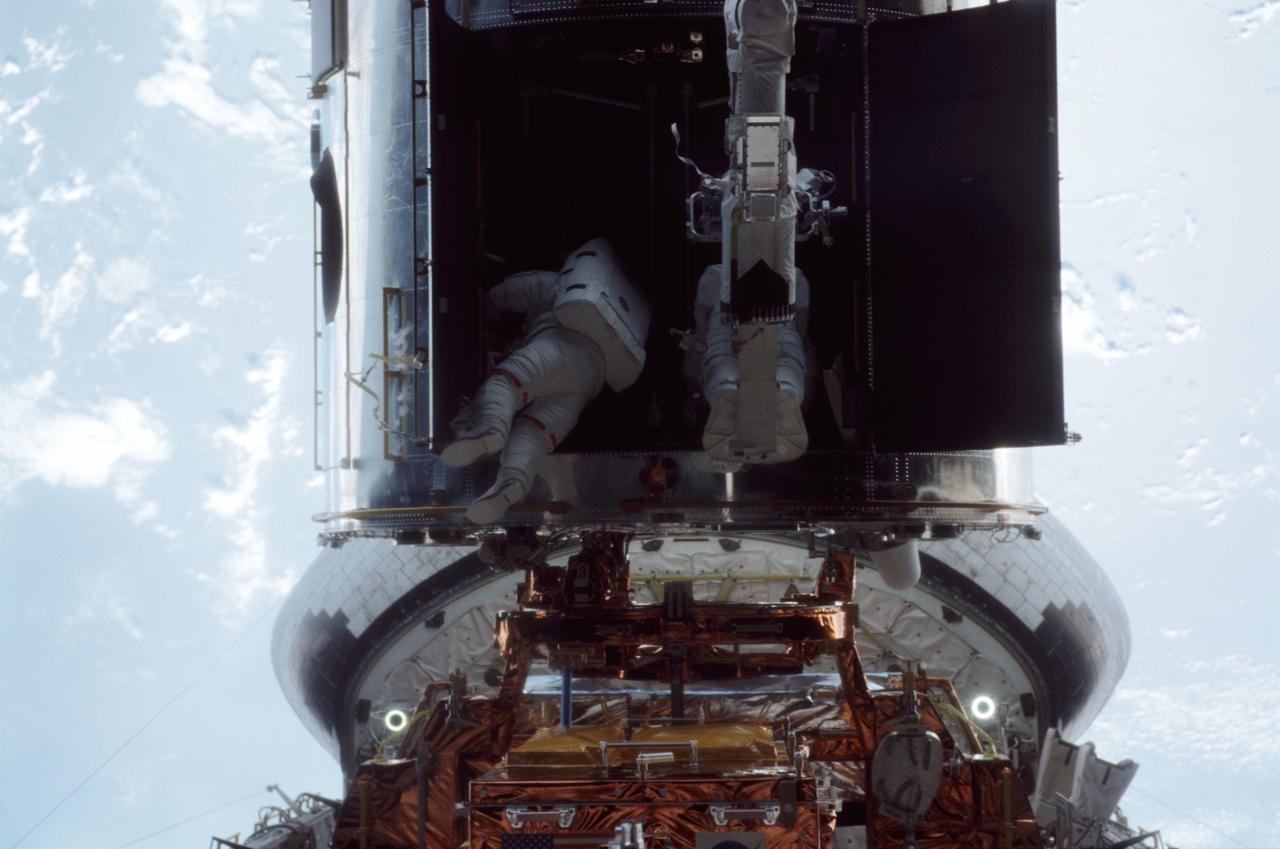
STS109-315-005 (8 March 2002) --- Barely visible within the Hubble Space Telescope's heavily shadowed shroud doors, astronauts John M. Grunsfeld (left) and Richard M. Linnehan participate in the final space walk of the STS-109 mission. The crew of the space shuttle Columbia completed the last of its five ambitious space walks early on March 8, 2002, with the successful installation of an experimental cooling system for Hubble’s Near-Infrared Camera and Multi-Object Spectrometer (NICMOS). The NICMOS has been dormant since January 1999 when its original coolant ran out. Astronauts Grunsfeld and Linnehan began their third spacewalk of the mission at 2:46 a.m. CST. Linnehan was given a ride on the shuttle’s robotic arm to the aft shroud doors by astronaut Nancy J. Currie, working from the aft flight deck of Columbia. After the shroud doors were open, Linnehan was moved back to Columbia’s payload bay to remove the NICMOS cryocooler from its carrier. Grunsfeld and Linnehan then installed the cryocooler inside the aft shroud and connected cables from its Electronics Support Module (ESM). That module was installed on March 7 during a spacewalk by astronauts James H. Newman and Michael J. Massimino.
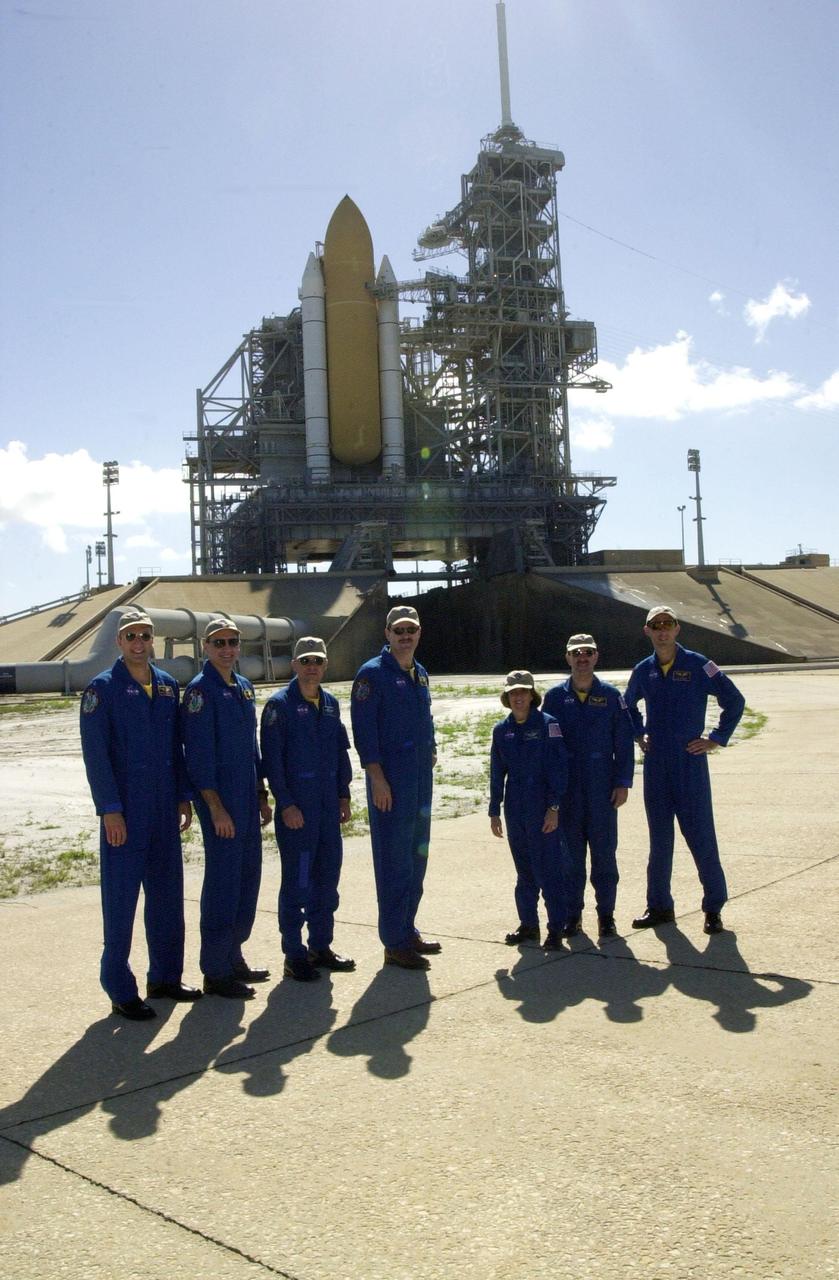
KENNEDY SPACE CENTER, FLA. -- The STS-109 crew poses for a photo at Launch Pad 39A during a break in training. From left are Mission Specialists Michael Massimino and Richard Linnehan, Pilot Duane Carey, Commander Scott Altman, and Mission Specialists Nancy Currie, John Grunsfeld and James Newman. Grunsfeld is also Payload Commander on the mission. The crew is taking part in Terminal Countdown Demonstration Test activities that include emergency egress training and a simulated countdown at the pad. Columbia is scheduled to be launched Feb. 28 on mission STS-109, a Hubble Servicing Mission. The goal of the mission is to replace Solar Array 2 with Solar Array 3, replace the Power Control Unit, remove the Faint Object Camera and install the ACS, install the Near Infrared Camera and Multi-Object Spectrometer (NICMOS) Cooling System, and install New Outer Blanket Layer insulation. In the background can be seen the external tank flanked by the twin solid rocket boosters that will propel Columbia (unseen on the other side of the stack) into space. The launch will be the first for Columbia after returning from California where it underwent extensive maintenance, inspections and enhancements. More than 100 upgrades make Columbia safer and more reliable than ever before
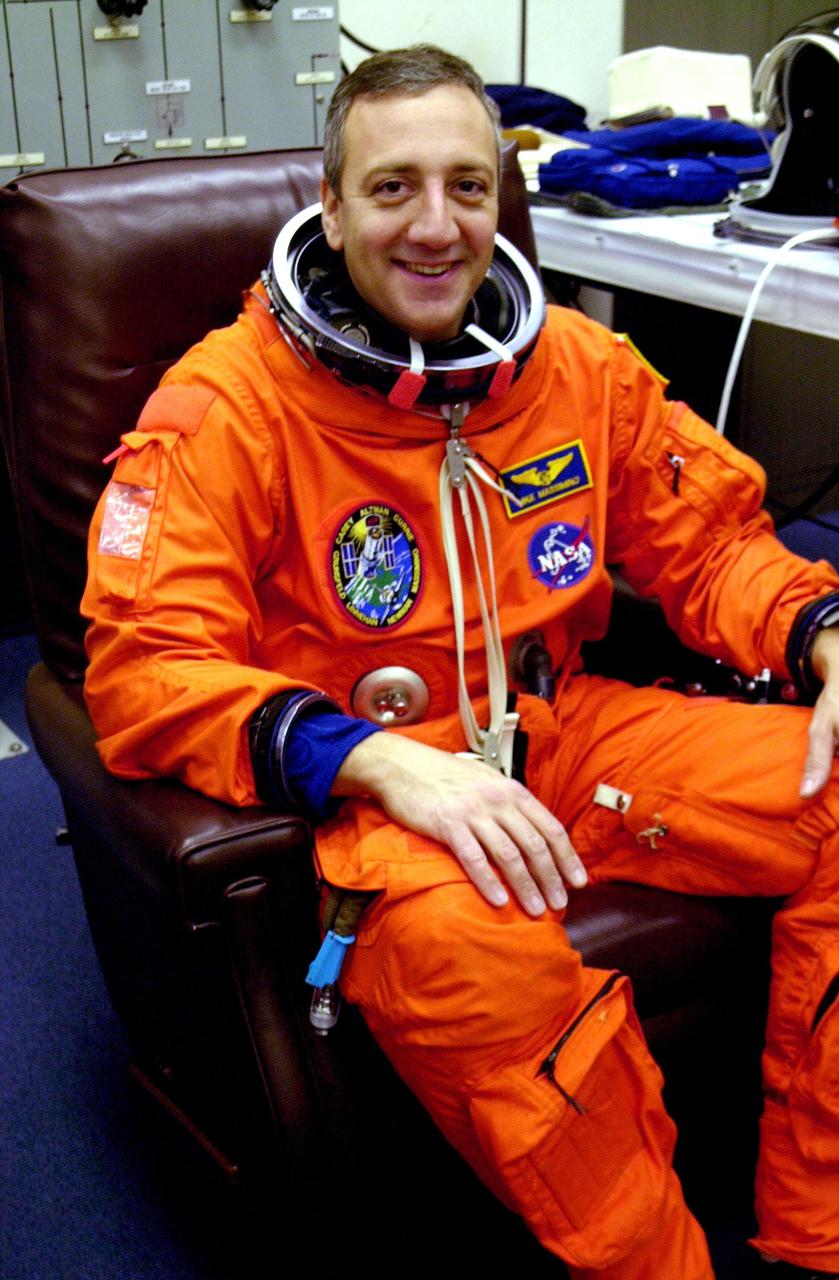
KENNEDY SPACE CENTER, FLA. -- STS-109 Mission Specialist Michael Massimino relaxes during a suit check, part of Terminal Countdown Demonstration Test activities. He and other crew members - Commander Scott Altman, Pilot Duane Carey, Payload Commander John Grunsfeld and Mission Specialists Nancy Currie, James Newman and Richard Linnehan - are at Kennedy for the TCDT that also includes emergency egress training and a simulated countdown. Columbia is scheduled to be launched Feb. 28 on mission STS-109, a Hubble Servicing Mission. The goal of the mission is to replace Solar Array 2 with Solar Array 3, replace the Power Control Unit, remove the Faint Object Camera and install the ACS, install the Near Infrared Camera and Multi-Object Spectrometer (NICMOS) Cooling System, and install New Outer Blanket Layer insulation. The launch will be the first for Columbia after returning from California where it underwent extensive maintenance, inspections and enhancements. More than 100 upgrades make Columbia safer and more reliable than ever before
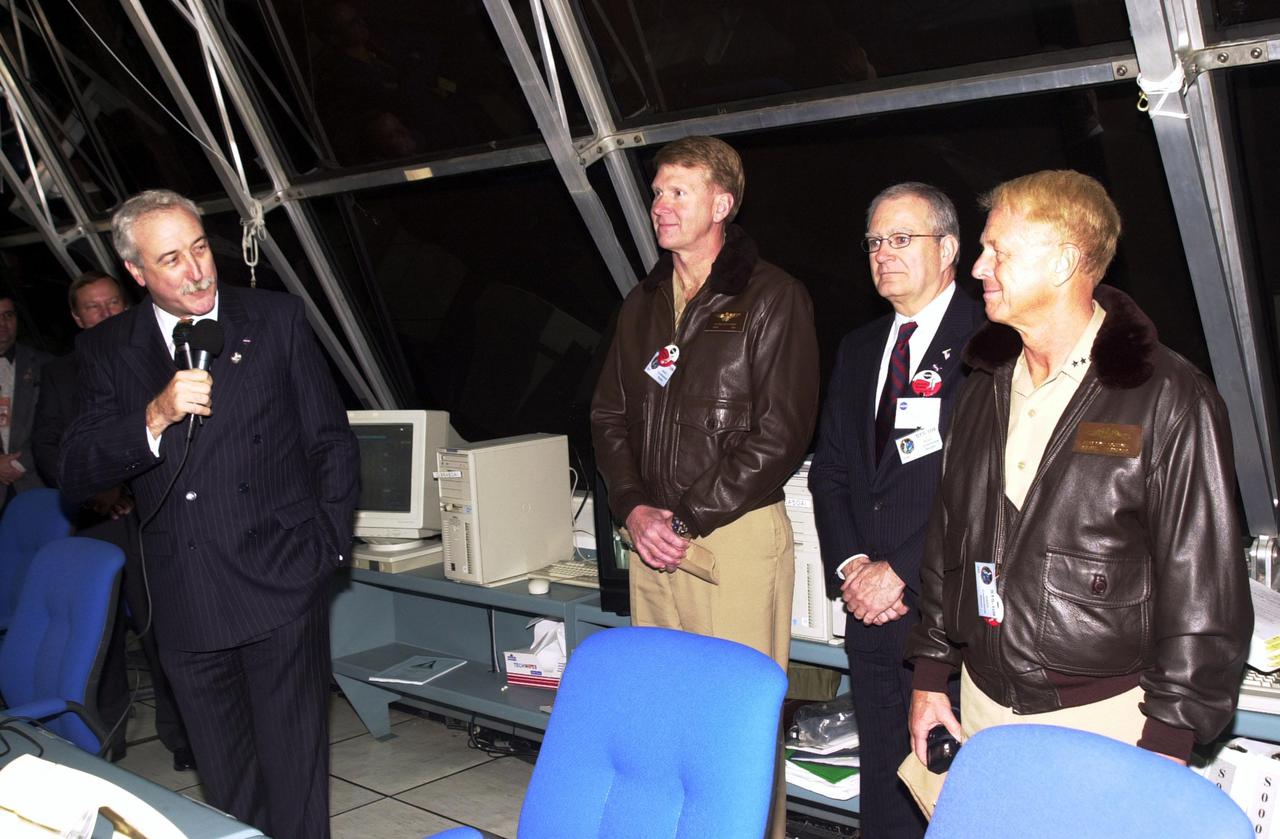
KENNEDY SPACE CENTER, Fla. - In the firing room, NASA Administrator Sean O'Keefe (left) introduces guests who attended the launch of Space Shuttle Columbia. Starting in the center, left to right, are Rear Admiral John D. Stufflebeem, U.S. Navy; Lieutenant General Joseph M. Cosumano Jr., US. Army; and Admiral Frank L. Bowman, U.S. Navy. Liftoff occurred at 6:22:02:08 a.m. EST (11:22:02:08 GMT). Columbia is on its 27th flight and the 108th flight of the Shuttle Program. The goal of the mission is the maintenance and upgrade of the Hubble Space Telescope, to be carried out in five spacewalks. The crew of STS-109 comprises Commander Scott D. Altman, Pilot Duane G. Carey, Payload Commander John M. Grunsfeld, and Mission Specialists Nancy Jane Currie, Richard M. Linnehan, James H. Newman and Michael J. Massimino. After an 11-day mission, Columbia is expected to return to Kennedy March 12 about 4:35 a.m. EST (09:35 GMT)
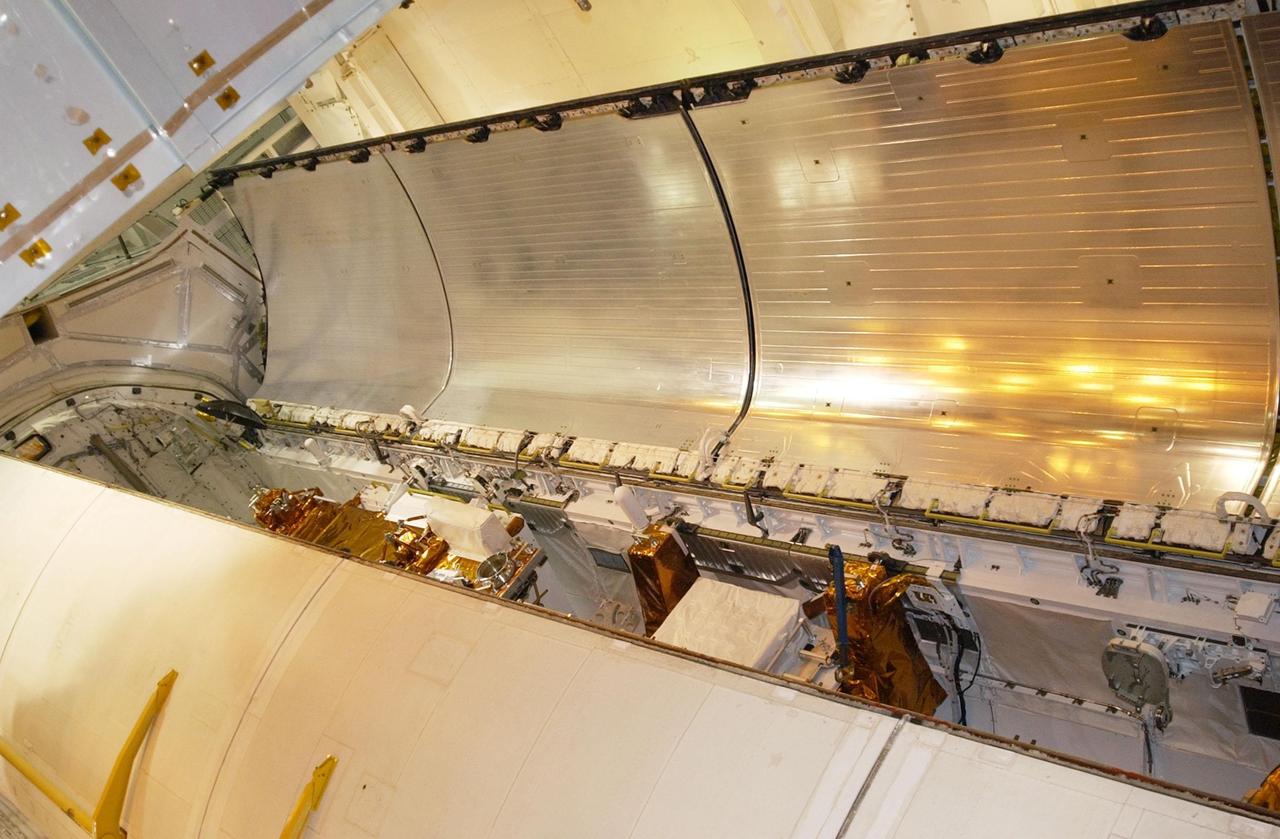
KENNEDY SPACE CENTER, Fla. - Columbia’s payload bay doors begin closing over the equipment inside to be used on mission STS-109. During their 11 days in space, the seven-member crew will capture the Hubble Space Telescope using the Shuttle's robotic arm and secure it on a workstand in Columbia’s payload bay. Four mission specialists will perform five scheduled spacewalks to complete system upgrades to the telescope. More durable solar arrays, a large gyroscopic assembly to help point the telescope properly, a new telescope power control unit, and a cooling system to restore the use of a key infrared camera and spectrometer unit, which has been dormant since 1999, will all be installed. In addition, the telescope's view of the Universe will be improved with the addition of the Advanced Camera for Surveys (ACS), which replaces the Faint Object Camera, the last of Hubble's original instruments. The STS-109 crew includes Commander Scott D. Altman, Pilot Duane G. Carey, and Mission Specialists John M. Grunsfeld, Nancy J. Currie, James H. Newman, Richard M. Linnehan and Michael J. Massimino. Launch is scheduled for Feb. 28, 2002, at 6:48 a.m. EST (11:48 GMT).

On the Space Shuttle Columbia's mid deck, the STS-109 crew of seven pose for the traditional in-flight portrait. From the left (front row), are astronauts Nancy J. Currie, mission specialist; Scott D. Altman, mission commander; and Duane G. Carey, pilot. Pictured on the back row from left to right are astronauts John M. Grunsfield, payload commander; and Richard M. Lirneham, James H. Newman, and Michael J. Massimino, all mission specialists. The 108th flight overall in NASA's Space Shuttle Program, the STS-109 mission launched March 1, 2002, and lasted 10 days, 22 hours, and 11 minutes. The goal of the mission was the maintenance and upgrade of the Hubble Space Telescope (HST). Using Columbia's robotic arm, the telescope was captured and secured on a work stand in Columbia's payload bay where four members of the crew performed five space walks to complete system upgrades to the HST. The Marshall Space Flight Center had the responsibility for the design, development, and construction of the HST, which is the most complex and sensitive optical telescope ever made, to study the cosmos from a low-Earth orbit.
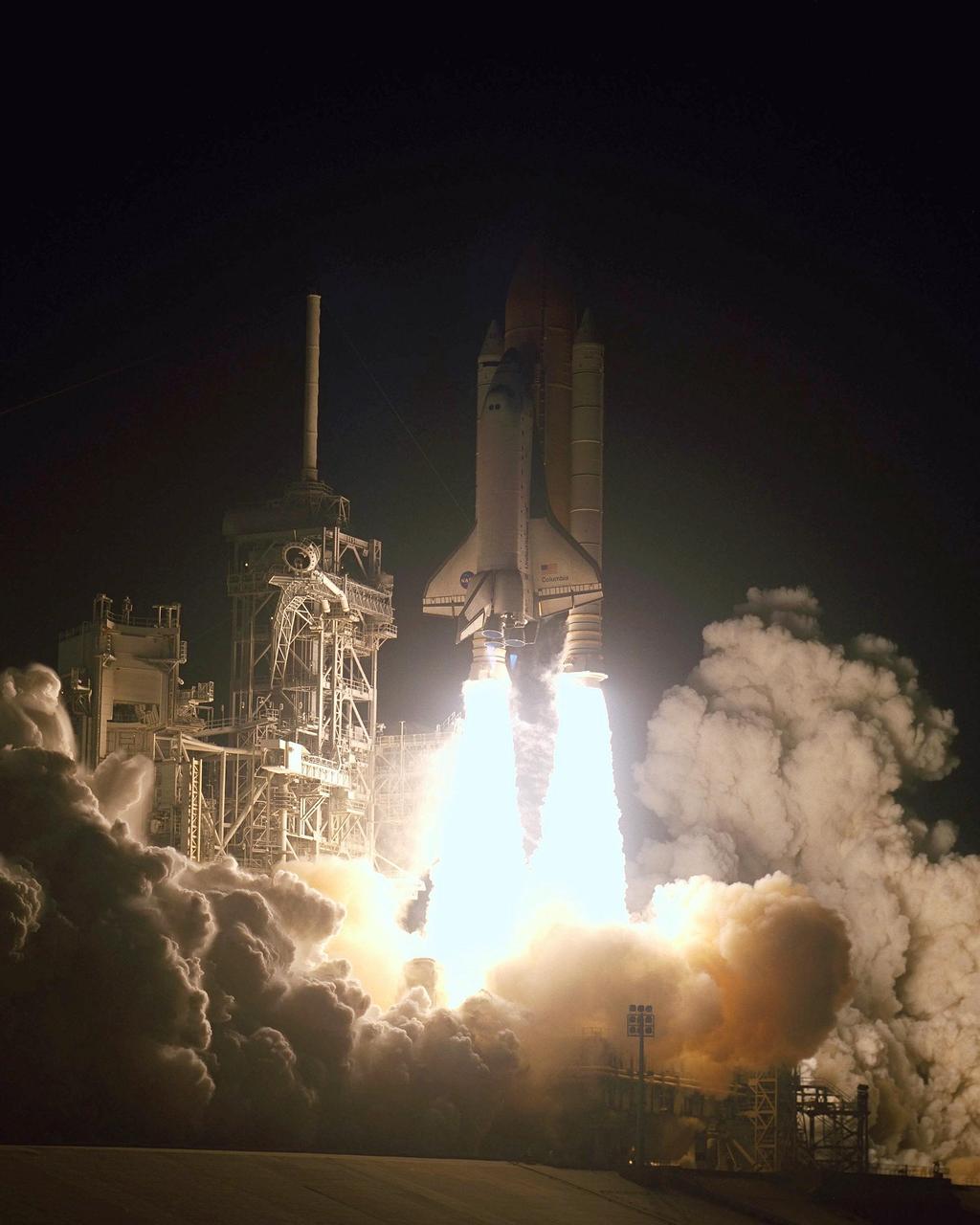
KENNEDY SPACE CENTER, Fla. - The flaming solid rocket boosters, looking like inverted torches, help hurl Space Shuttle Columbia into the pre-dawn sky on mission STS-109. The light illuminates the Fixed Service Structure at left, with its 80-foot lightning mast on top. . Liftoff of Columbia occurred at 6:22:02:08 a.m. EST (11:22:02:08 GMT). This was the 27th flight of the vehicle and 108th in the history of the Shuttle program. The goal of the mission is the maintenance and upgrade of the Hubble Space Telescope, to be carried out in five spacewalks. The crew comprises Commander Scott D. Altman, Pilot Duane G. Carey, Payload Commander John M. Grunsfeld, and Mission Specialists Nancy Jane Currie, Richard M. Linnehan, James H. Newman and Michael J. Massimino. After the 11-day mission, Columbia is expected to return to KSC March 12 about 4:35 a.m. EST (09:35 GMT)
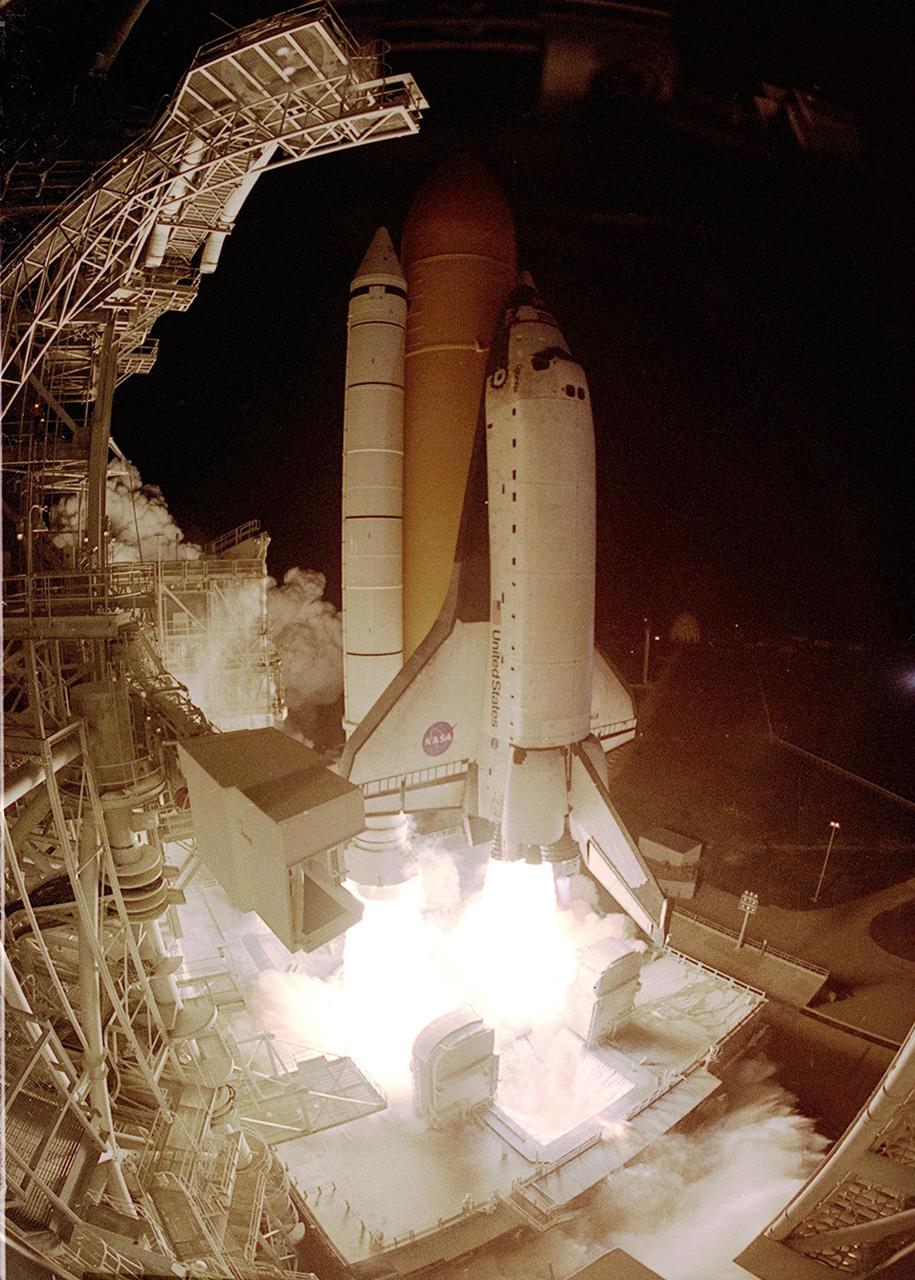
KENNEDY SPACE CENTER, Fla. - A fish-eye lens gives a different perspective to the launch of Space Shuttle Columbia on mission STS-109. Torrents of water spread over the Mobile Launcher Platform from 12-foot rainbirds and into the flame trench as part of the sound suppression system. Acoustical levels reach their peak when the Space Shuttle is about 300 feet above the MLP. At left of the Shuttle is the Fixed Service Structure with the Orbiter Access Arm and White Room, seen in the foreground. Liftoff of Columbia occurred at 6:22:02:08 a.m. EST (11:22:02:08 GMT). This was the 27th flight of the vehicle and 108th in the history of the Shuttle program. The goal of the mission is the maintenance and upgrade of the Hubble Space Telescope, to be carried out in five spacewalks. The crew comprises Commander Scott D. Altman, Pilot Duane G. Carey, Payload Commander John M. Grunsfeld, and Mission Specialists Nancy Jane Currie, Richard M. Linnehan, James H. Newman and Michael J. Massimino. After the 11-day mission, Columbia is expected to return to KSC March 12 about 4:35 a.m. EST (09:35 GMT)
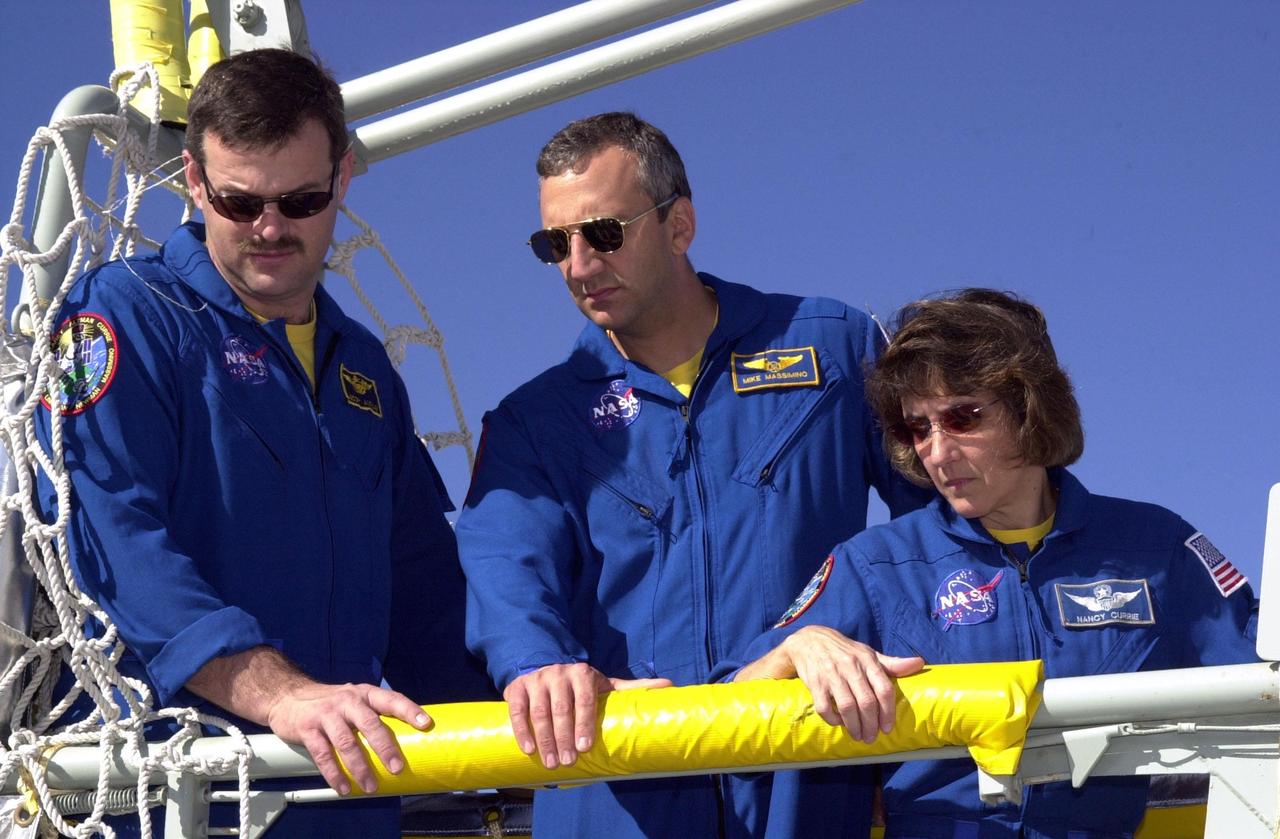
KENNEDY SPACE CENTER, FLA. - Near the bunker at the bottom of Launch Pad 39A, the STS-109 crew takes part in slidewire basket/emergency egress training. In the slidewire basket are (left to right) Commander Scott Altman and Mission Specialists Michael Massimino and Nancy Currie. The training is part of Terminal Countdown Demonstration Test activities that include a simulated countdown at the pad. Columbia is scheduled to be launched Feb. 28 on mission STS-109, a Hubble Servicing Mission. The goal of the mission is to replace Solar Array 2 with Solar Array 3, replace the Power Control Unit, remove the Faint Object Camera and install the ACS, install the Near Infrared Camera and Multi-Object Spectrometer (NICMOS) Cooling System, and install New Outer Blanket Layer insulation. . The launch will be the first for Columbia after returning from California where it underwent extensive maintenance, inspections and enhancements. More than 100 upgrades make Columbia safer and more reliable than ever before
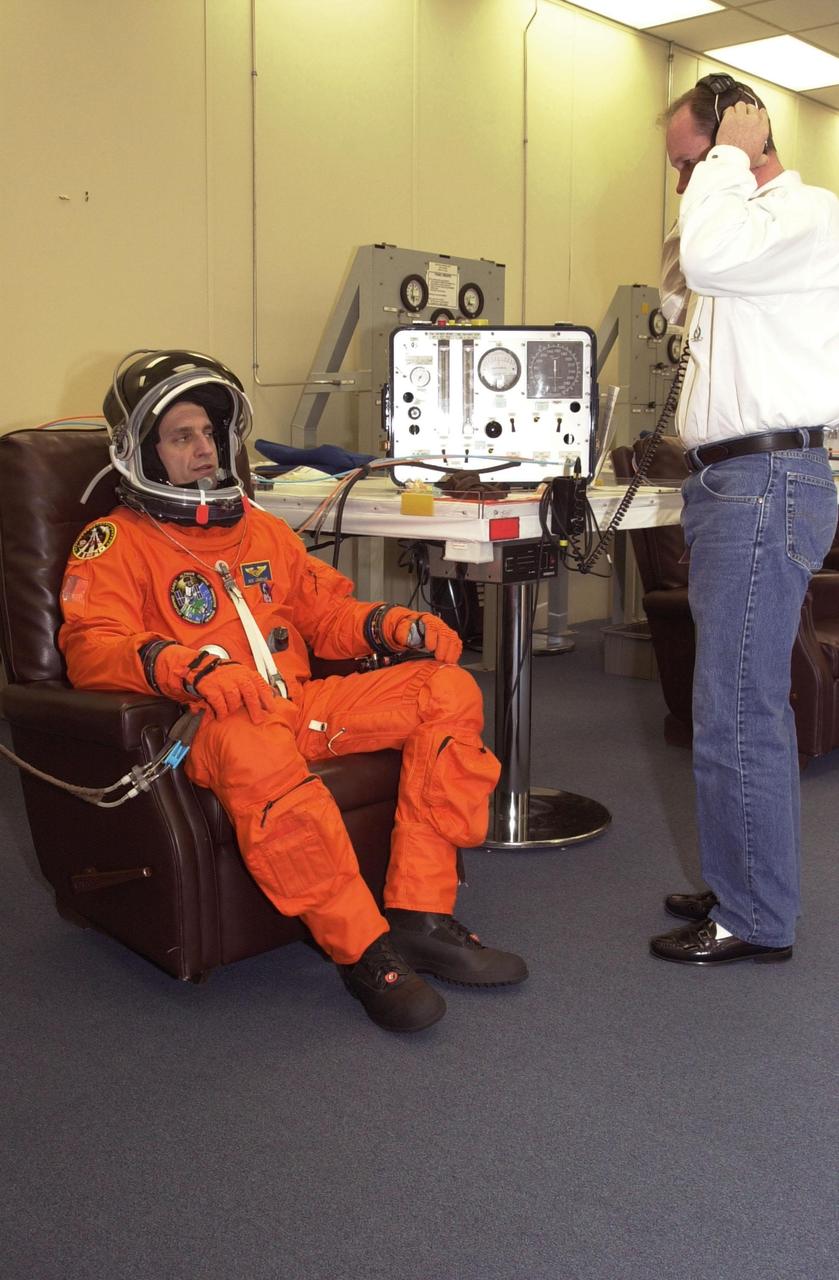
KENNEDY SPACE CENTER, Fla. - STS-109 Mission Specialist Richard M. Linnehan gets a final fitting on his launch and entry suit two days before launch. On mission STS-109, the seven-member crew will capture the Hubble Space Telescope using the Shuttle's robotic arm and secure it on a workstand in Columbia's payload bay. Four mission specialists will perform five scheduled spacewalks to complete system upgrades to the telescope. More durable solar arrays, a large gyroscopic assembly to help point the telescope properly, a new telescope power control unit, and a cooling system to restore the use of a key infrared camera and spectrometer unit, which has been dormant since 1999, will all be installed. In addition, the telescope’s view of the Universe will be improved with the addition of the Advanced Camera for Surveys (ACS), which replaces the Faint Object Camera, the last of Hubble's original instruments. The STS-109 crew also includes Commander Scott D. Altman, Pilot Duane G. Carey, and Mission Specialists John M. Grunsfeld, James H. Newman, Nancy J. Currie and Michael J. Massimino. Launch is scheduled for Feb. 28, 2002, at 6:48 a.m. EST (11:48 GMT)
![Photographic documentation of the STS-109 Crew Return Ceremony. The events take place at Hangar 990 at Ellington Field. Views include: Overall view of crewmembers [09319]; View of crewmembers standing on stage talking to group [09320]; Unidentified crewmember waving to crowd [09321]; Unidentified crewmember autographing photo [09322]; Mission Specialist Michael J. Massimino holding crew photo as he talks to child in group [09323]; Pilot Duane G. Carey signing a crew photo for a visitor [09324]; Unidentified crewmember signing a photo for visitor [09325]; Commander Scott D. Altman talking to child in group [09326]; Unidentified crewmember giving a photo to visitor [09327]; Crewmembers exiting plane [09328]; Duane G. Carey shaking hands with visitor. Astronaut Scott Altman smiling in the background [09329); Astronaut Jim Newman kissing his child [09330]; Jim Newman holding his daughter as his son grabs at his pant leg [09331]; Close-up view of Payload Commander John Grunsfeld holding his daughter [09332]; Duane G. Carey standing with family members [09333]; Close-up view of Duane G. Carey placing his hand on a child's head as he is talking to him [09334]; Overall view of spectator watching ceremony [09335]; Close-up view of speaker during ceremony [09336]; Close-up view of Scott Altman speaking to crowd [09337]; Close-up view of a young spectator at ceremony [09338]; Close-up view of Duane G. Carey speaking to the crowd [09339]; Close-up view of Mission Specialist Nancy J. Currie speaking to the crowd [09340]; Close-up view of John M. Grunsfield speaking to the crowd [09341]; Close-up view of Mission Specialist Richard M. Linnehan speaking to the crowd [09342]; Close-up view of James H. Newman speaking to the crowd [09343]; Close-up view of Michael J. Massimino speaking to the crowd [09344]](https://images-assets.nasa.gov/image/jsc2002e09331/jsc2002e09331~medium.jpg)
Photographic documentation of the STS-109 Crew Return Ceremony. The events take place at Hangar 990 at Ellington Field. Views include: Overall view of crewmembers [09319]; View of crewmembers standing on stage talking to group [09320]; Unidentified crewmember waving to crowd [09321]; Unidentified crewmember autographing photo [09322]; Mission Specialist Michael J. Massimino holding crew photo as he talks to child in group [09323]; Pilot Duane G. Carey signing a crew photo for a visitor [09324]; Unidentified crewmember signing a photo for visitor [09325]; Commander Scott D. Altman talking to child in group [09326]; Unidentified crewmember giving a photo to visitor [09327]; Crewmembers exiting plane [09328]; Duane G. Carey shaking hands with visitor. Astronaut Scott Altman smiling in the background [09329); Astronaut Jim Newman kissing his child [09330]; Jim Newman holding his daughter as his son grabs at his pant leg [09331]; Close-up view of Payload Commander John Grunsfeld holding his daughter [09332]; Duane G. Carey standing with family members [09333]; Close-up view of Duane G. Carey placing his hand on a child's head as he is talking to him [09334]; Overall view of spectator watching ceremony [09335]; Close-up view of speaker during ceremony [09336]; Close-up view of Scott Altman speaking to crowd [09337]; Close-up view of a young spectator at ceremony [09338]; Close-up view of Duane G. Carey speaking to the crowd [09339]; Close-up view of Mission Specialist Nancy J. Currie speaking to the crowd [09340]; Close-up view of John M. Grunsfield speaking to the crowd [09341]; Close-up view of Mission Specialist Richard M. Linnehan speaking to the crowd [09342]; Close-up view of James H. Newman speaking to the crowd [09343]; Close-up view of Michael J. Massimino speaking to the crowd [09344]
![Photographic documentation of the STS-109 Crew Return Ceremony. The events take place at Hangar 990 at Ellington Field. Views include: Overall view of crewmembers [09319]; View of crewmembers standing on stage talking to group [09320]; Unidentified crewmember waving to crowd [09321]; Unidentified crewmember autographing photo [09322]; Mission Specialist Michael J. Massimino holding crew photo as he talks to child in group [09323]; Pilot Duane G. Carey signing a crew photo for a visitor [09324]; Unidentified crewmember signing a photo for visitor [09325]; Commander Scott D. Altman talking to child in group [09326]; Unidentified crewmember giving a photo to visitor [09327]; Crewmembers exiting plane [09328]; Duane G. Carey shaking hands with visitor. Astronaut Scott Altman smiling in the background [09329); Astronaut Jim Newman kissing his child [09330]; Jim Newman holding his daughter as his son grabs at his pant leg [09331]; Close-up view of Payload Commander John Grunsfeld holding his daughter [09332]; Duane G. Carey standing with family members [09333]; Close-up view of Duane G. Carey placing his hand on a child's head as he is talking to him [09334]; Overall view of spectator watching ceremony [09335]; Close-up view of speaker during ceremony [09336]; Close-up view of Scott Altman speaking to crowd [09337]; Close-up view of a young spectator at ceremony [09338]; Close-up view of Duane G. Carey speaking to the crowd [09339]; Close-up view of Mission Specialist Nancy J. Currie speaking to the crowd [09340]; Close-up view of John M. Grunsfield speaking to the crowd [09341]; Close-up view of Mission Specialist Richard M. Linnehan speaking to the crowd [09342]; Close-up view of James H. Newman speaking to the crowd [09343]; Close-up view of Michael J. Massimino speaking to the crowd [09344]](https://images-assets.nasa.gov/image/jsc2002e09332/jsc2002e09332~medium.jpg)
Photographic documentation of the STS-109 Crew Return Ceremony. The events take place at Hangar 990 at Ellington Field. Views include: Overall view of crewmembers [09319]; View of crewmembers standing on stage talking to group [09320]; Unidentified crewmember waving to crowd [09321]; Unidentified crewmember autographing photo [09322]; Mission Specialist Michael J. Massimino holding crew photo as he talks to child in group [09323]; Pilot Duane G. Carey signing a crew photo for a visitor [09324]; Unidentified crewmember signing a photo for visitor [09325]; Commander Scott D. Altman talking to child in group [09326]; Unidentified crewmember giving a photo to visitor [09327]; Crewmembers exiting plane [09328]; Duane G. Carey shaking hands with visitor. Astronaut Scott Altman smiling in the background [09329); Astronaut Jim Newman kissing his child [09330]; Jim Newman holding his daughter as his son grabs at his pant leg [09331]; Close-up view of Payload Commander John Grunsfeld holding his daughter [09332]; Duane G. Carey standing with family members [09333]; Close-up view of Duane G. Carey placing his hand on a child's head as he is talking to him [09334]; Overall view of spectator watching ceremony [09335]; Close-up view of speaker during ceremony [09336]; Close-up view of Scott Altman speaking to crowd [09337]; Close-up view of a young spectator at ceremony [09338]; Close-up view of Duane G. Carey speaking to the crowd [09339]; Close-up view of Mission Specialist Nancy J. Currie speaking to the crowd [09340]; Close-up view of John M. Grunsfield speaking to the crowd [09341]; Close-up view of Mission Specialist Richard M. Linnehan speaking to the crowd [09342]; Close-up view of James H. Newman speaking to the crowd [09343]; Close-up view of Michael J. Massimino speaking to the crowd [09344]
![Photographic documentation of the STS-109 Crew Return Ceremony. The events take place at Hangar 990 at Ellington Field. Views include: Overall view of crewmembers [09319]; View of crewmembers standing on stage talking to group [09320]; Unidentified crewmember waving to crowd [09321]; Unidentified crewmember autographing photo [09322]; Mission Specialist Michael J. Massimino holding crew photo as he talks to child in group [09323]; Pilot Duane G. Carey signing a crew photo for a visitor [09324]; Unidentified crewmember signing a photo for visitor [09325]; Commander Scott D. Altman talking to child in group [09326]; Unidentified crewmember giving a photo to visitor [09327]; Crewmembers exiting plane [09328]; Duane G. Carey shaking hands with visitor. Astronaut Scott Altman smiling in the background [09329); Astronaut Jim Newman kissing his child [09330]; Jim Newman holding his daughter as his son grabs at his pant leg [09331]; Close-up view of Payload Commander John Grunsfeld holding his daughter [09332]; Duane G. Carey standing with family members [09333]; Close-up view of Duane G. Carey placing his hand on a child's head as he is talking to him [09334]; Overall view of spectator watching ceremony [09335]; Close-up view of speaker during ceremony [09336]; Close-up view of Scott Altman speaking to crowd [09337]; Close-up view of a young spectator at ceremony [09338]; Close-up view of Duane G. Carey speaking to the crowd [09339]; Close-up view of Mission Specialist Nancy J. Currie speaking to the crowd [09340]; Close-up view of John M. Grunsfield speaking to the crowd [09341]; Close-up view of Mission Specialist Richard M. Linnehan speaking to the crowd [09342]; Close-up view of James H. Newman speaking to the crowd [09343]; Close-up view of Michael J. Massimino speaking to the crowd [09344]](https://images-assets.nasa.gov/image/jsc2002e09324/jsc2002e09324~small.jpg)
Photographic documentation of the STS-109 Crew Return Ceremony. The events take place at Hangar 990 at Ellington Field. Views include: Overall view of crewmembers [09319]; View of crewmembers standing on stage talking to group [09320]; Unidentified crewmember waving to crowd [09321]; Unidentified crewmember autographing photo [09322]; Mission Specialist Michael J. Massimino holding crew photo as he talks to child in group [09323]; Pilot Duane G. Carey signing a crew photo for a visitor [09324]; Unidentified crewmember signing a photo for visitor [09325]; Commander Scott D. Altman talking to child in group [09326]; Unidentified crewmember giving a photo to visitor [09327]; Crewmembers exiting plane [09328]; Duane G. Carey shaking hands with visitor. Astronaut Scott Altman smiling in the background [09329); Astronaut Jim Newman kissing his child [09330]; Jim Newman holding his daughter as his son grabs at his pant leg [09331]; Close-up view of Payload Commander John Grunsfeld holding his daughter [09332]; Duane G. Carey standing with family members [09333]; Close-up view of Duane G. Carey placing his hand on a child's head as he is talking to him [09334]; Overall view of spectator watching ceremony [09335]; Close-up view of speaker during ceremony [09336]; Close-up view of Scott Altman speaking to crowd [09337]; Close-up view of a young spectator at ceremony [09338]; Close-up view of Duane G. Carey speaking to the crowd [09339]; Close-up view of Mission Specialist Nancy J. Currie speaking to the crowd [09340]; Close-up view of John M. Grunsfield speaking to the crowd [09341]; Close-up view of Mission Specialist Richard M. Linnehan speaking to the crowd [09342]; Close-up view of James H. Newman speaking to the crowd [09343]; Close-up view of Michael J. Massimino speaking to the crowd [09344]