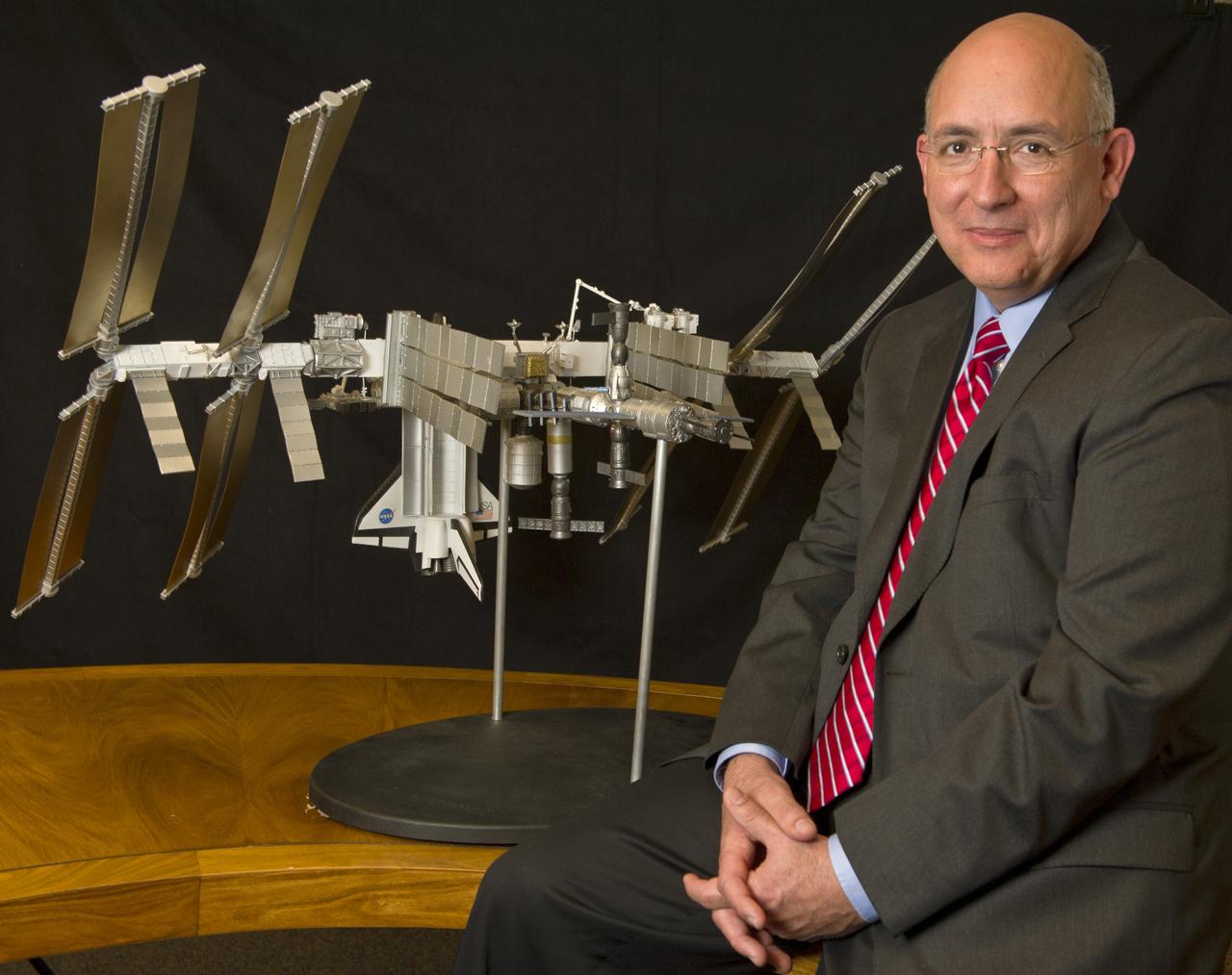
Michael Suffredini, Manager, International Space Station (ISS) Program, is seen with a scale model of the International Space Station at NASA Headquarters in Washington, Friday, Jan. 14, 2011, . Photo Credit: (NASA/Paul E. Alers)
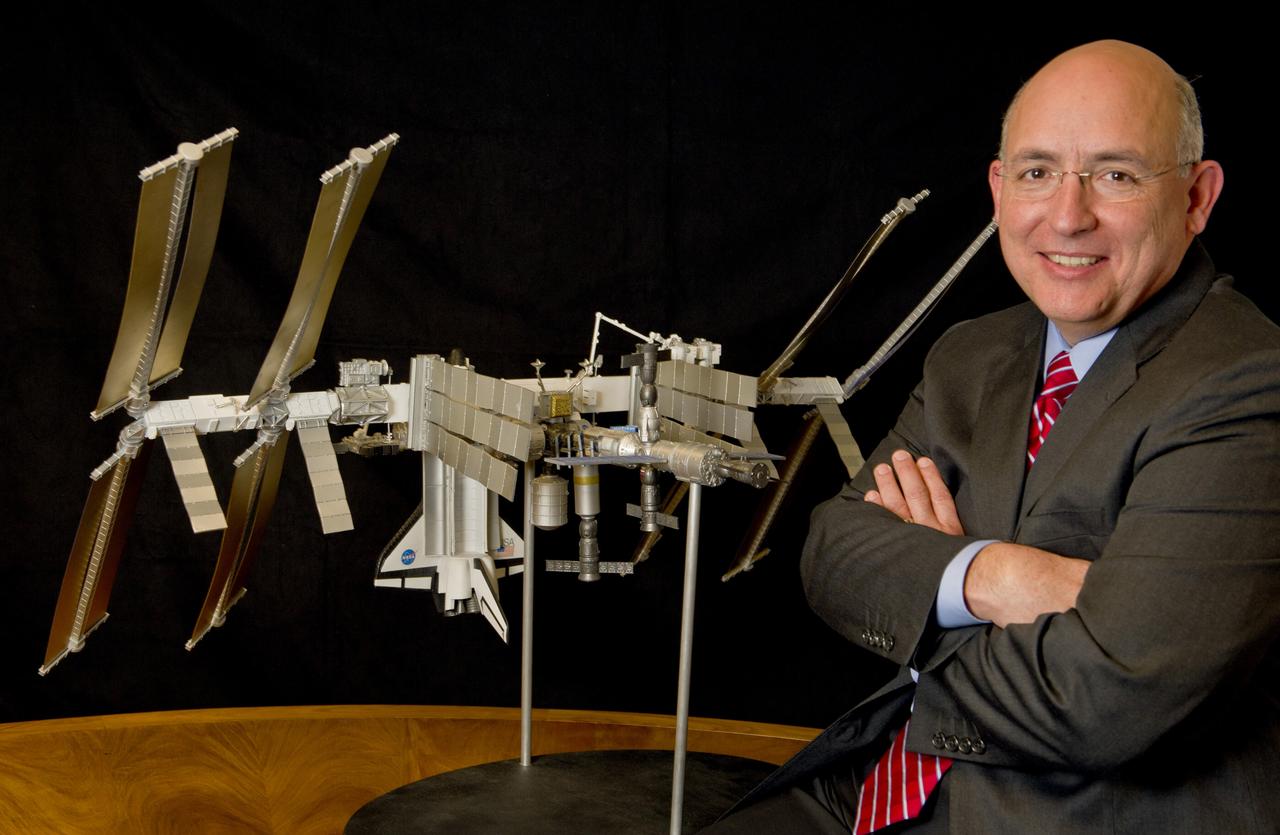
Michael Suffredini, Manager, International Space Station (ISS) Program, is seen, Friday, Jan. 14, 2011, with a scale model of the International Space Station at NASA Headquarters in Washington. Photo Credit: (NASA/Paul E. Alers)
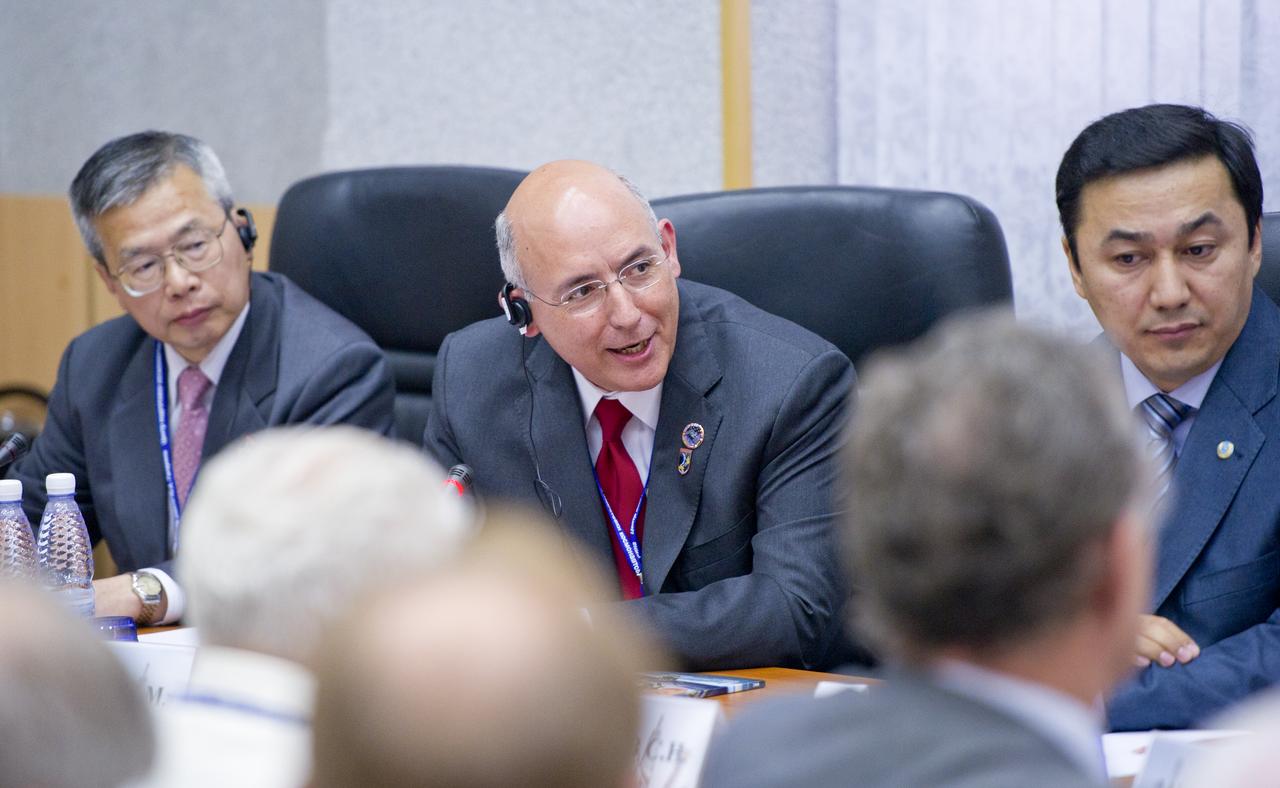
Michael Suffredini, Manager, International Space Station (ISS) Program, center, speaks during the State Commission meeting to approve the Soyuz launch of Expedition 28 to the International Space Station, Monday, June 6, 2011, at the Cosmonaut Hotel in Baikonur, Kazakhstan. The mission is set to launch on on Tuesday, June 8, from the Baikonur Cosmodrome. Photo Credit: (NASA/Carla Cioffi)
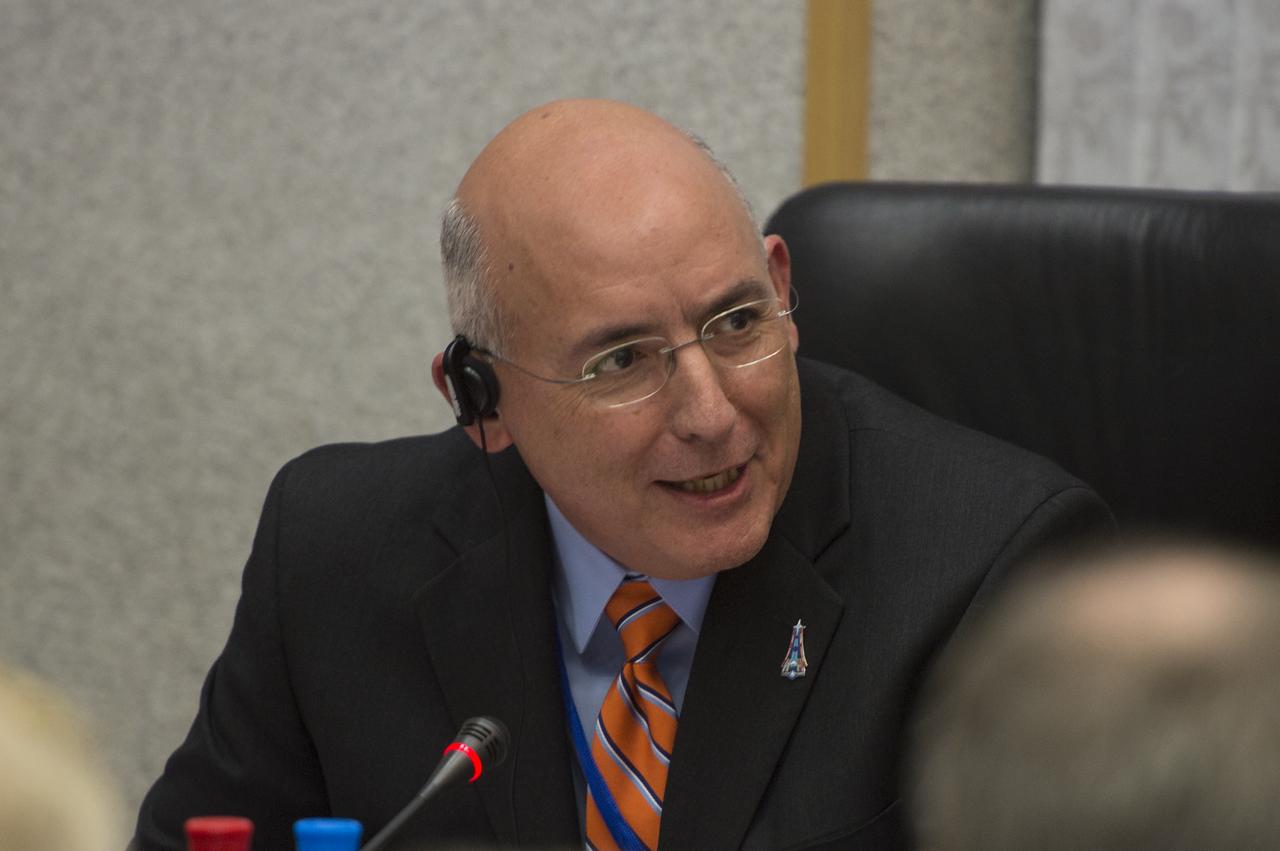
Michael Suffredini, NASA International Space Station Program Manager, speaks during the State Commission meeting to approve the Soyuz launch of Expedition 41 to the International Space Station, Wednesday, Sept. 24, 2014, at the Cosmonaut Hotel in Baikonur, Kazakhstan. The mission is set to launch Sept. 26 from the Baikonur Cosmodrome. Photo Credit: (NASA/Aubrey Gemignani)
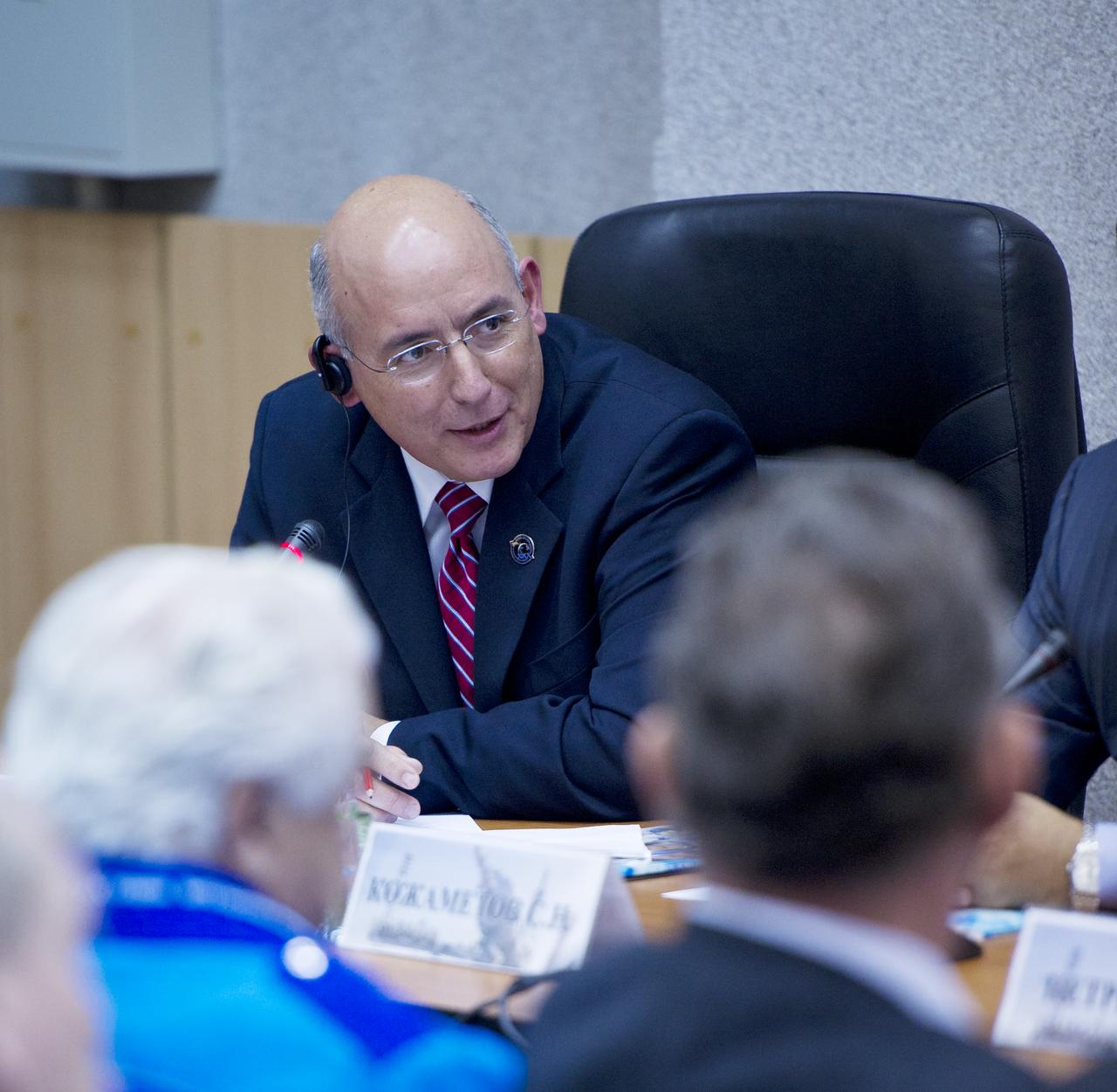
Michael Suffredini, Manager, International Space Station (ISS) Program speaks during the State Commission meeting to approve the Soyuz launch of Expedition 29 to the International Space Station, Saturday, Nov. 12, 2011, at the Cosmonaut Hotel in Baikonur, Kazakhstan. The mission is set to launch November 14 from the Baikonur Cosmodrome. Photo Credit: (NASA/Carla Cioffi)
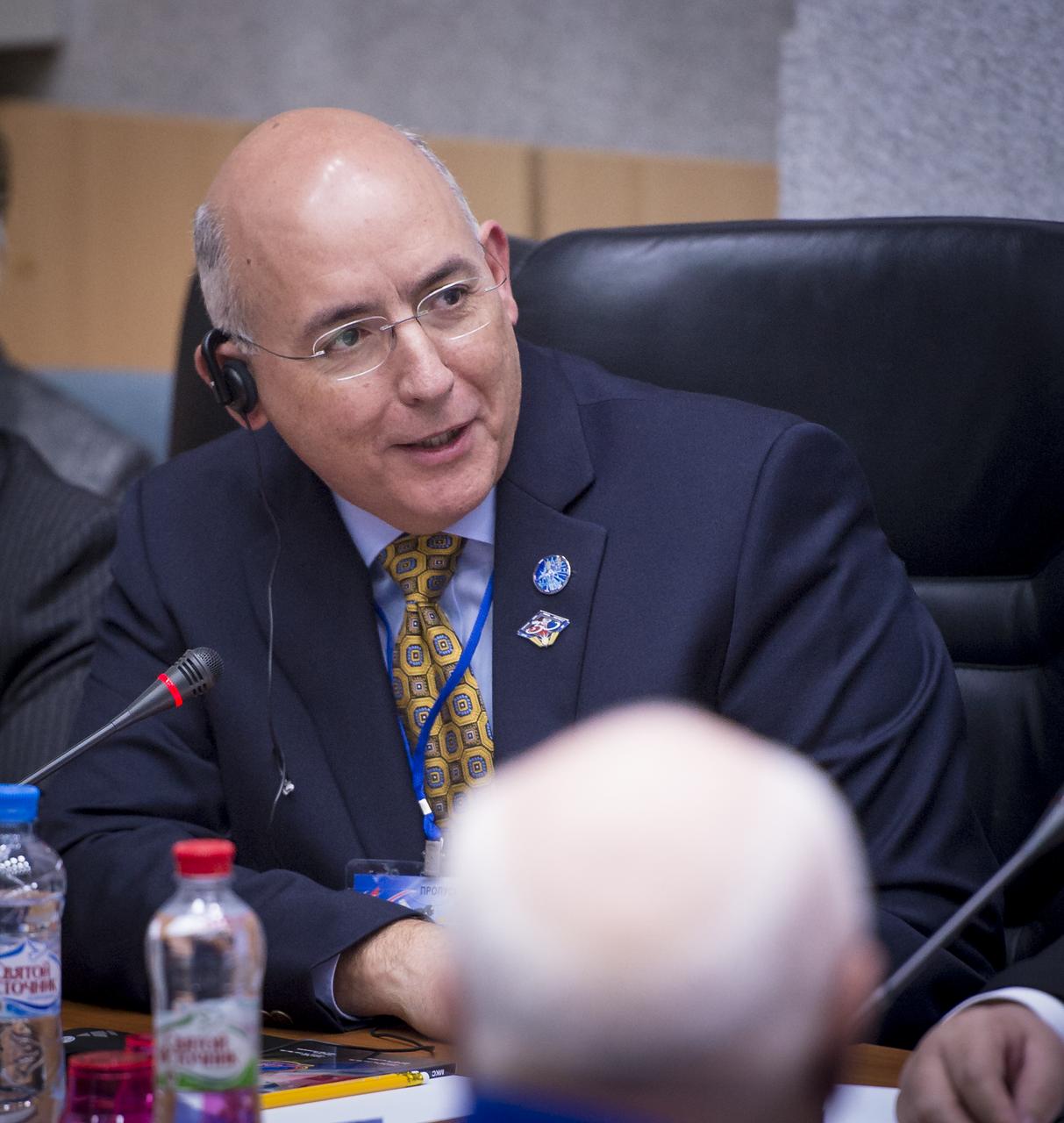
NASA Space Station Program Office Manager Michael T. Suffredini, talks during the State Commission meeting to approve the Soyuz rocket launch of Expedition 38 Soyuz Commander Mikhail Tyurin of Roscosmos, Flight Engineer Koichi Wakata of the Japan Aerospace Exploration Agency, and, Flight Engineer Rick Mastracchio of NASA for a six month mission aboard the International Space Station, Wednesday, Nov. 6, 2013 at the Cosmonaut Hotel in Baikonur, Kazakhstan. Photo Credit: (NASA/Bill Ingalls)
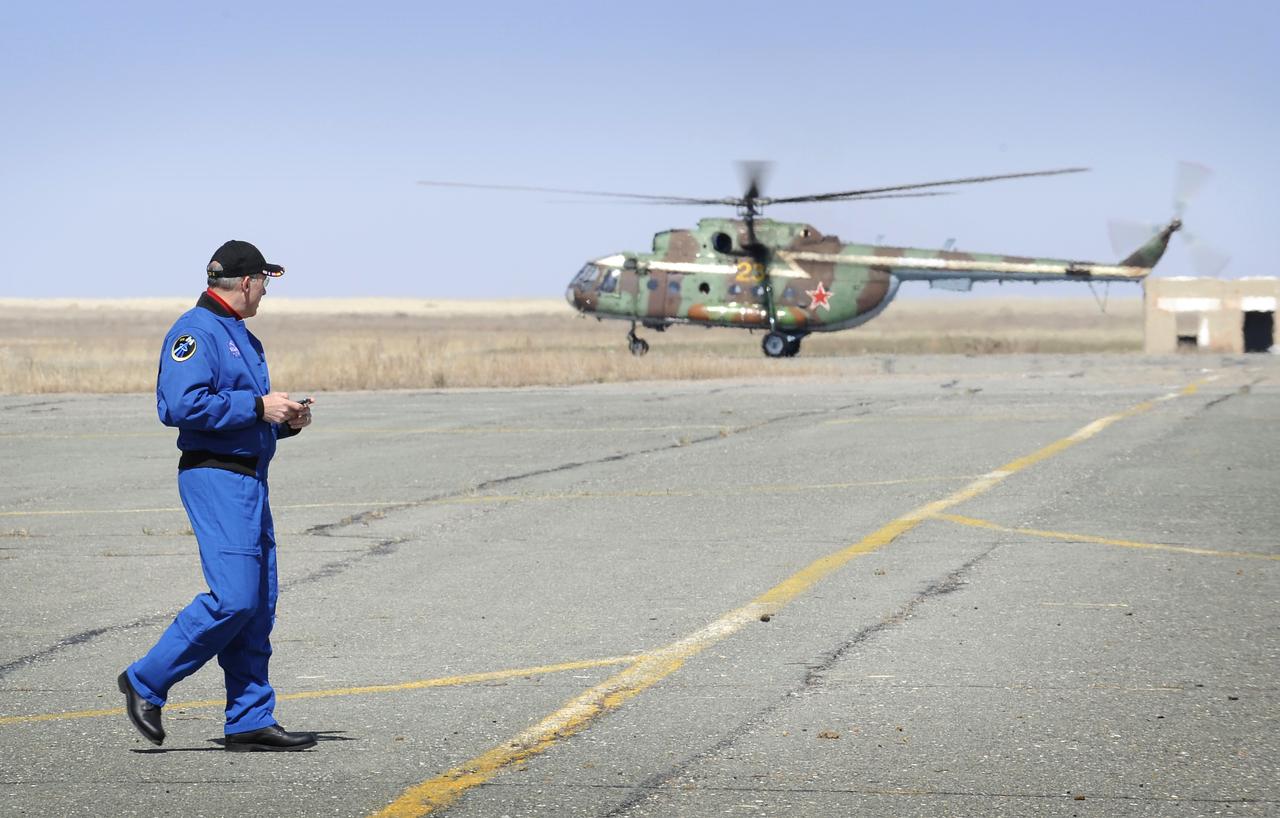
International Space Station Program Manager Michael Suffredini watches as the first wave of helicopters leaves the Arkalyk airport in Kazakhstan in preparation for the Soyuz TMA-11 landing, Friday, April 19, 2008. The Soyuz TMA-11 spacecraft carrying Expedition 16 Commander Peggy Whitson, Flight Engineer and Soyuz Commander Yuri Malenchenko and South Korean spacelfight participant So-yeon Yi landed in central Kazakhstan to complete 192 days in space for Whitson and Malenchenko and 11 days in orbit for Yi. Photo Credit: (NASA/Bill Ingalls)
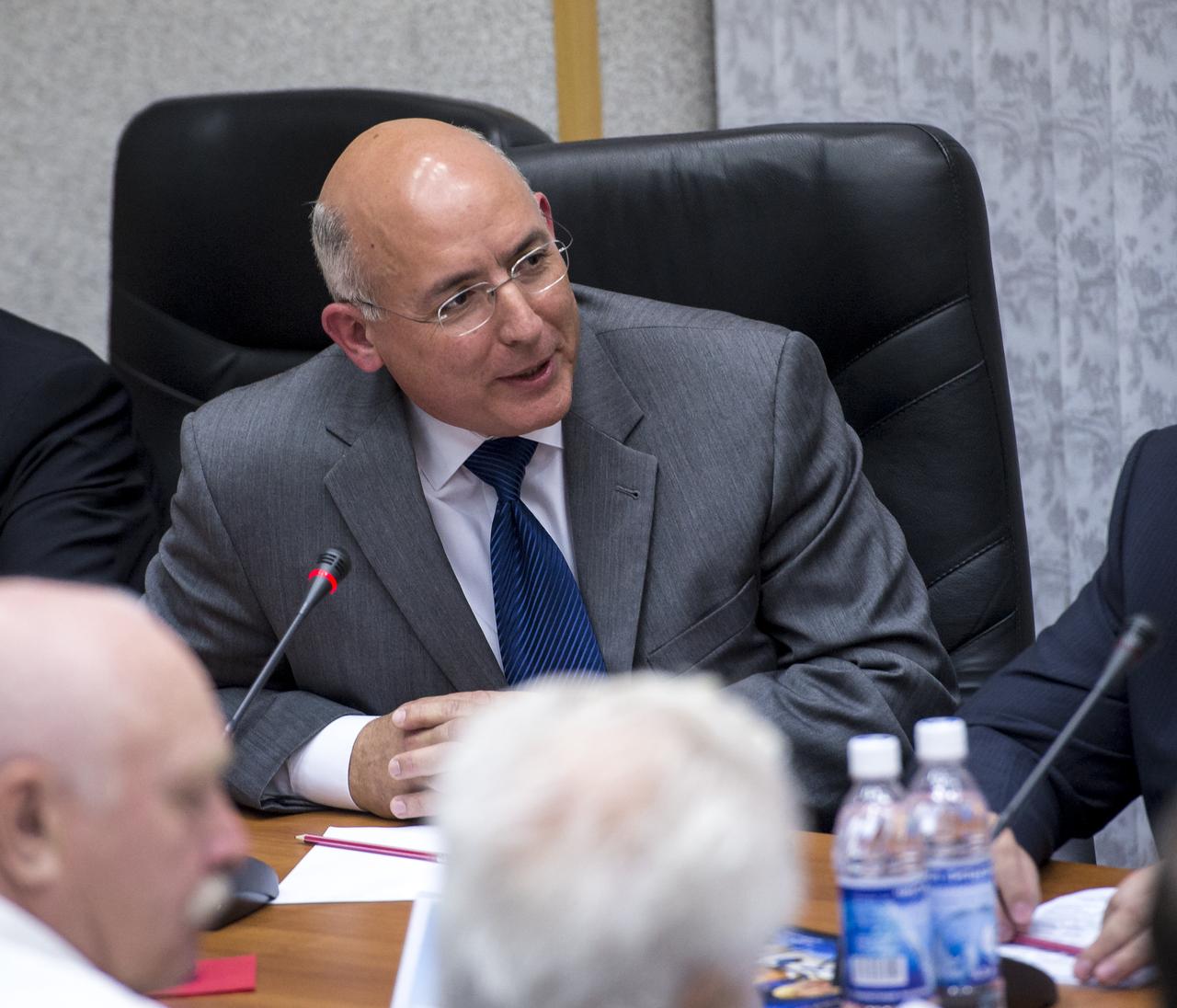
Michael Suffredini, manager, International Space Station (ISS) Program, speaks during the State Commission meeting to approve the Soyuz launch of Expedition 36 Soyuz Commander Fyodor Yurchikhin of the Russian Federal Space Agency (Roscosmos), Flight Engineers; Karen Nyberg of NASA, and Luca Parmitano at the Cosmonaut Hotel, Monday, May 27, 2013, in Kazakhstan. Photo credit: (NASA/Bill Ingalls)
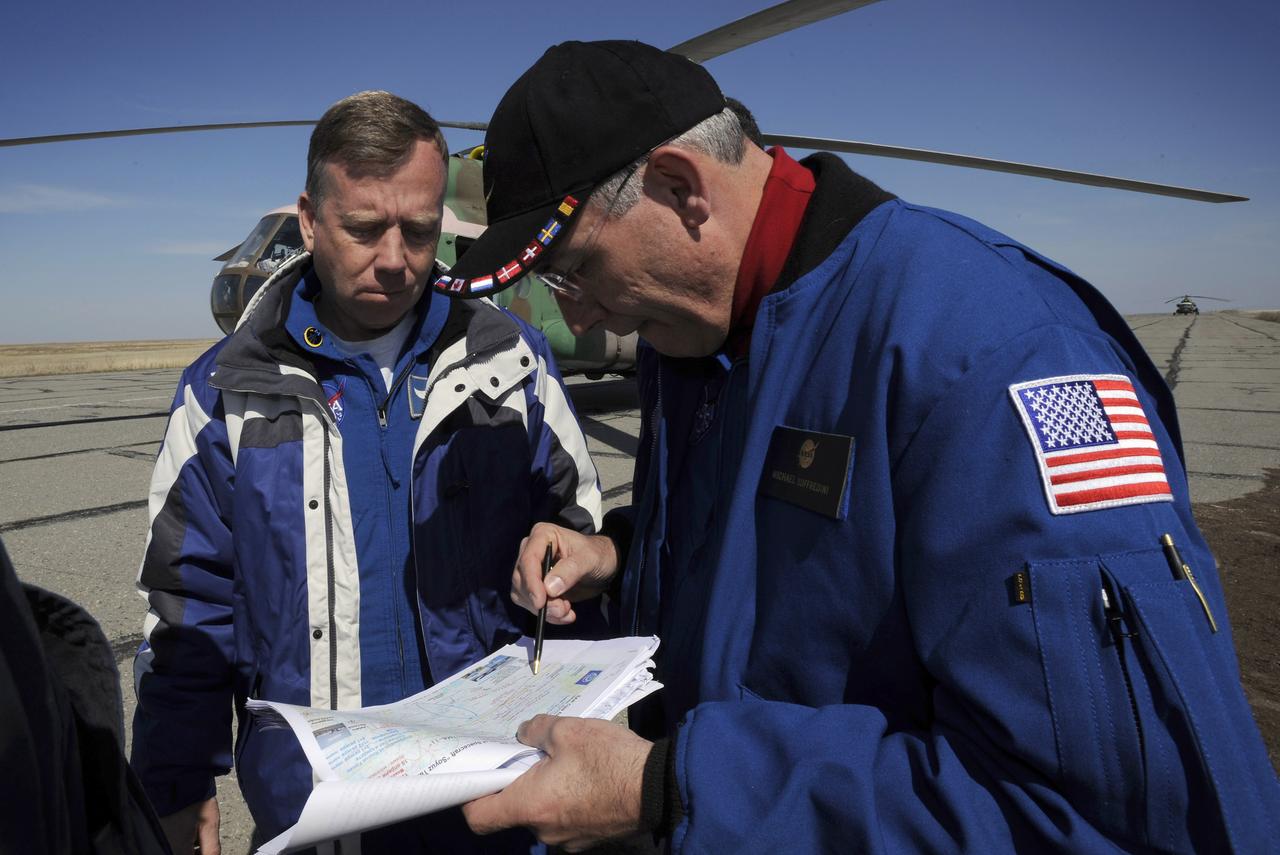
Chief of NASA's Astronaut office, Steve Lindsey, left, and International Space Station Program Manager, Michael Suffredini, examine a map of central Kazakhstan at the Arkalyk airport as they received information on the landing of the Expedition 16 crew in the Soyuz TMA-11 capsule, Saturday, April 19, 2008. The Soyuz made a ballistic landing, touching down more then 400 kilometers short of the intended target in central Kazakhstan. The crew reported by satellite phone to recovery forces that they were in good shape. Photo Credit: (NASA/Bill Ingalls)
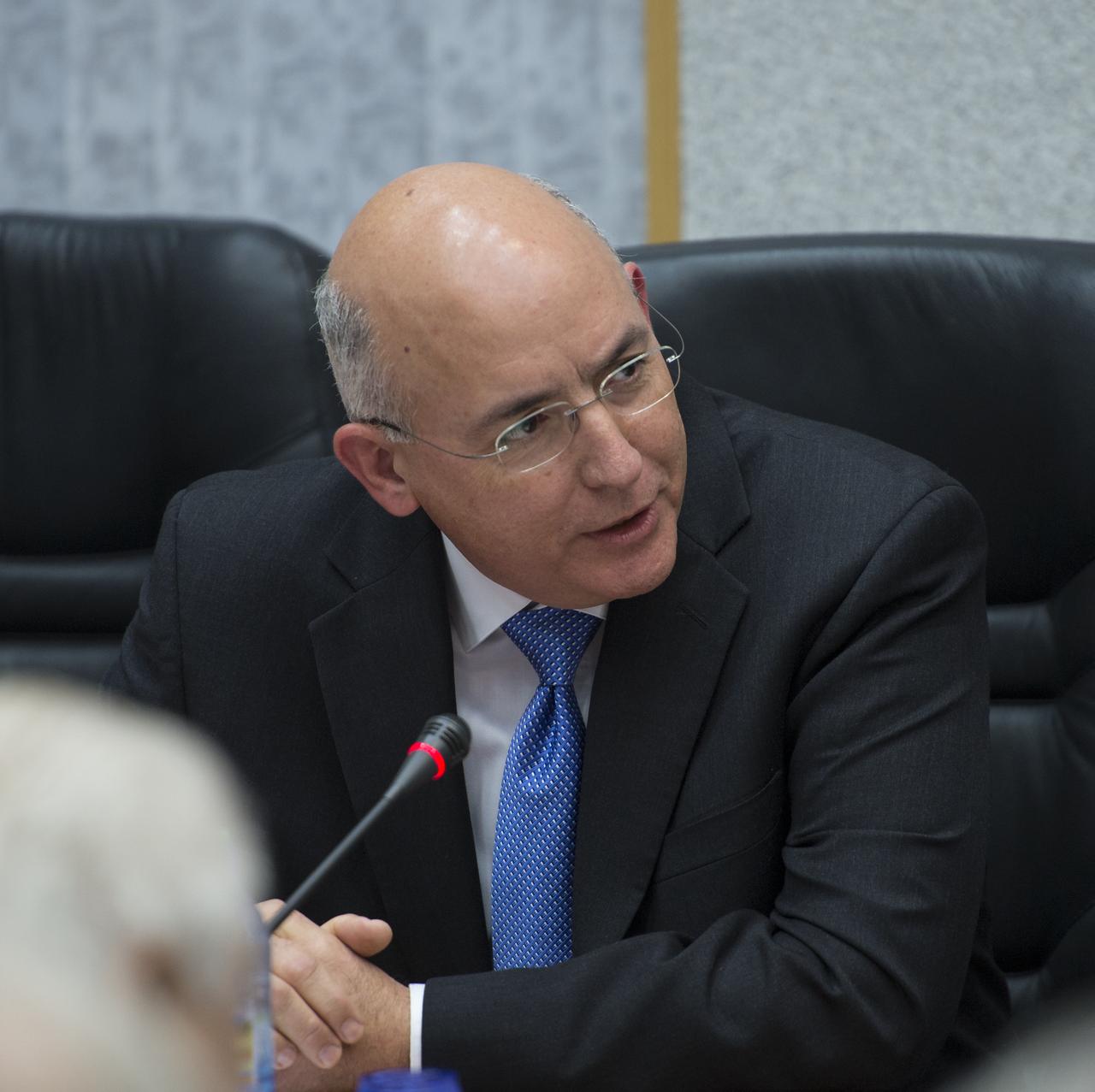
Michael Suffredini, NASA International Space Station Program Manager, speaks during the State Commission meeting to approve the Soyuz launch of Expedition 42 to the International Space Station, Saturday, Nov. 22, 2014, at the Cosmonaut Hotel in Baikonur, Kazakhstan. The mission is set to launch Nov. 24 from the Baikonur Cosmodrome. Photo Credit: (NASA/Aubrey Gemignani)
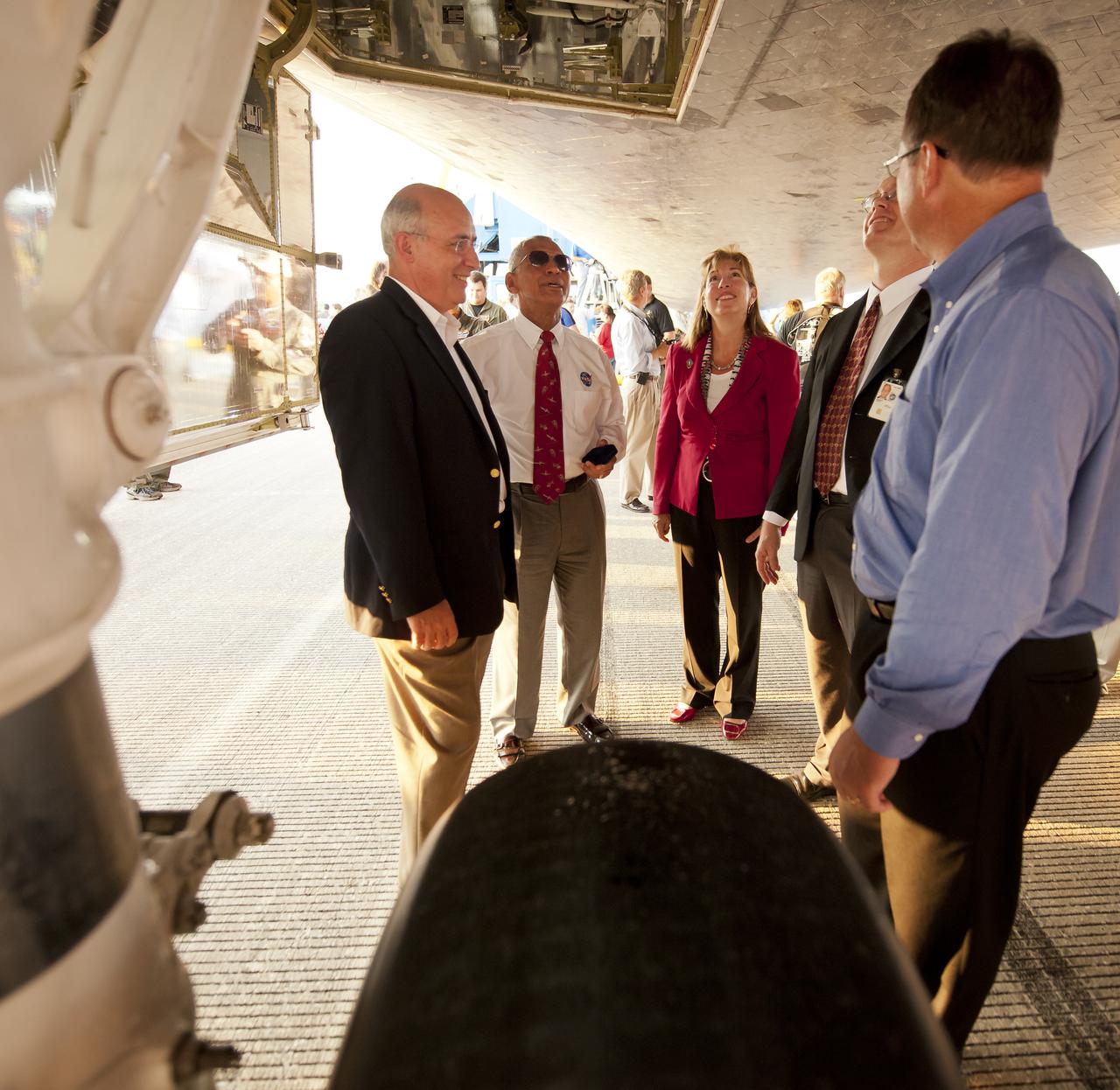
NASA International Space Station Program Office Manager Michael Suffredini, left, NASA Administrator Charles Bolden, second from left, Deputy Administrator Lori Garver, Manager, Space Shuttle Program Office John Shannon, third from left, and an unidentified colleague, talk under the space shuttle Atlantis at the Kennedy Space Center Shuttle Landing Facility (SLF) shortly after Atlantis (STS-135) landed early Thursday morning, July 21, 2011, in Cape Canaveral, Fla. Overall, Atlantis spent 307 days in space and traveled nearly 126 million miles during its 33 flights. Atlantis, the fourth orbiter built, launched on its first mission on Oct. 3, 1985. Photo Credit: (NASA/Bill Ingalls)
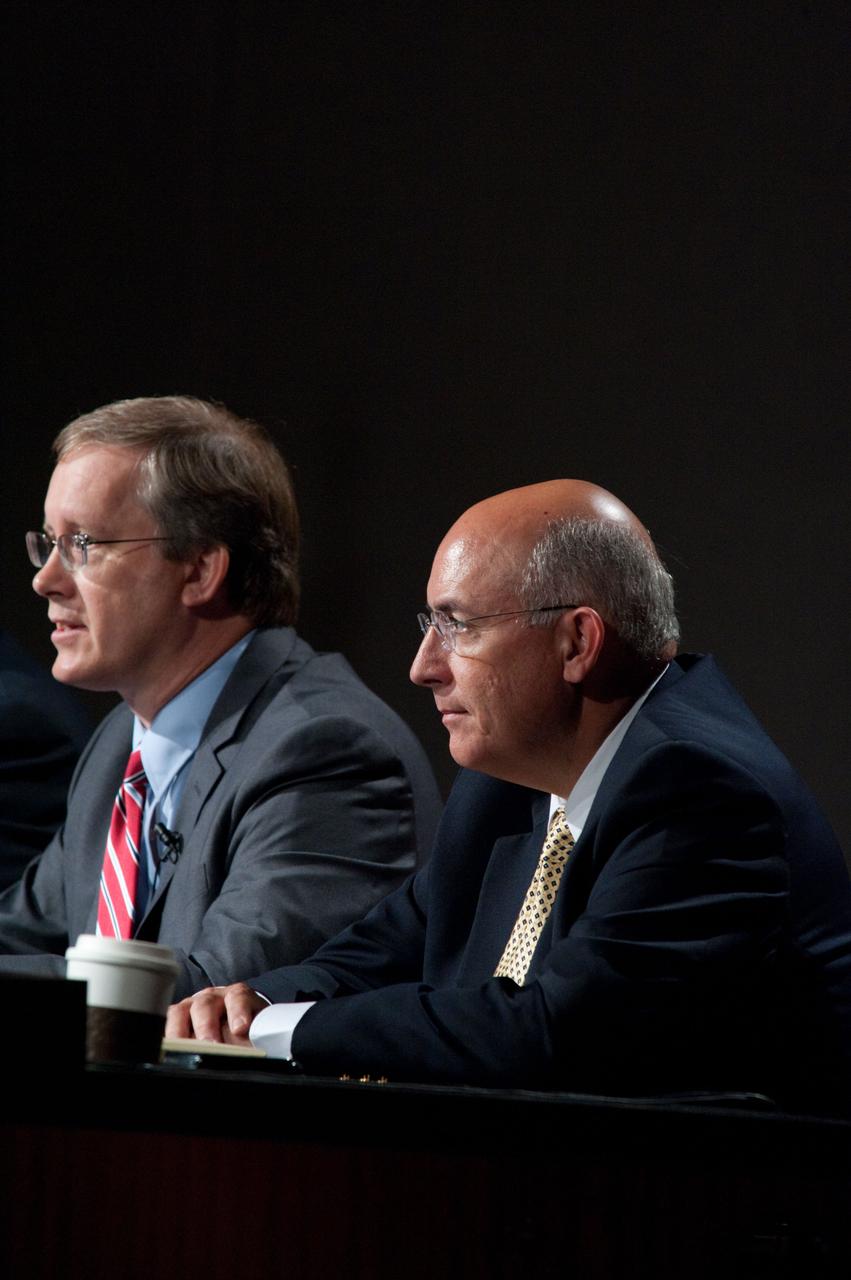
JSC2011-E-060712 (30 June 2011) --- Space Shuttle Program Manager John Shannon (left) and International Space Station Program Manager Michael Suffredini are pictured during a space shuttle and space station program overview press conference at NASA's Johnson Space Center. Photo credit: NASA
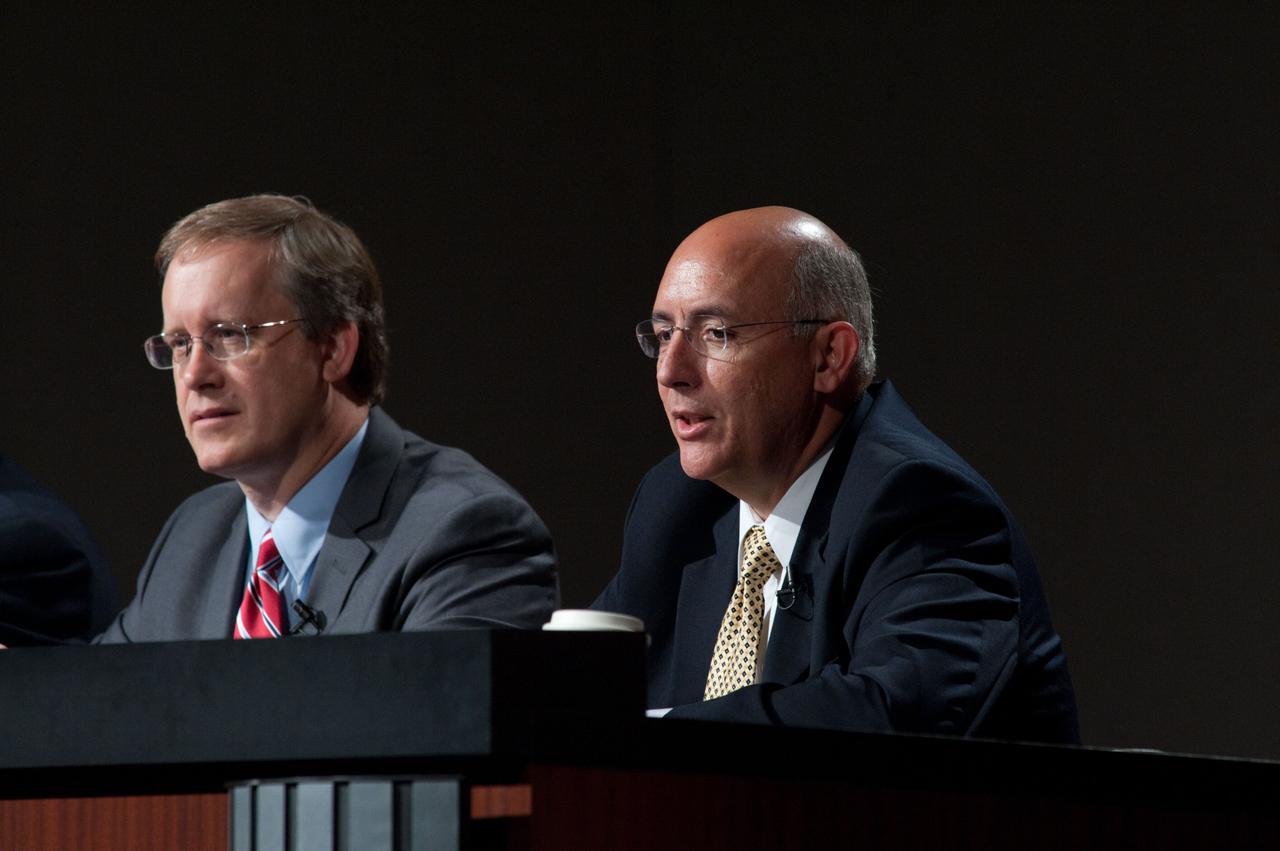
JSC2011-E-060708 (30 June 2011) --- Space Shuttle Program Manager John Shannon (left) and International Space Station Program Manager Michael Suffredini are pictured during a space shuttle and space station program overview press conference at NASA's Johnson Space Center. Photo credit: NASA

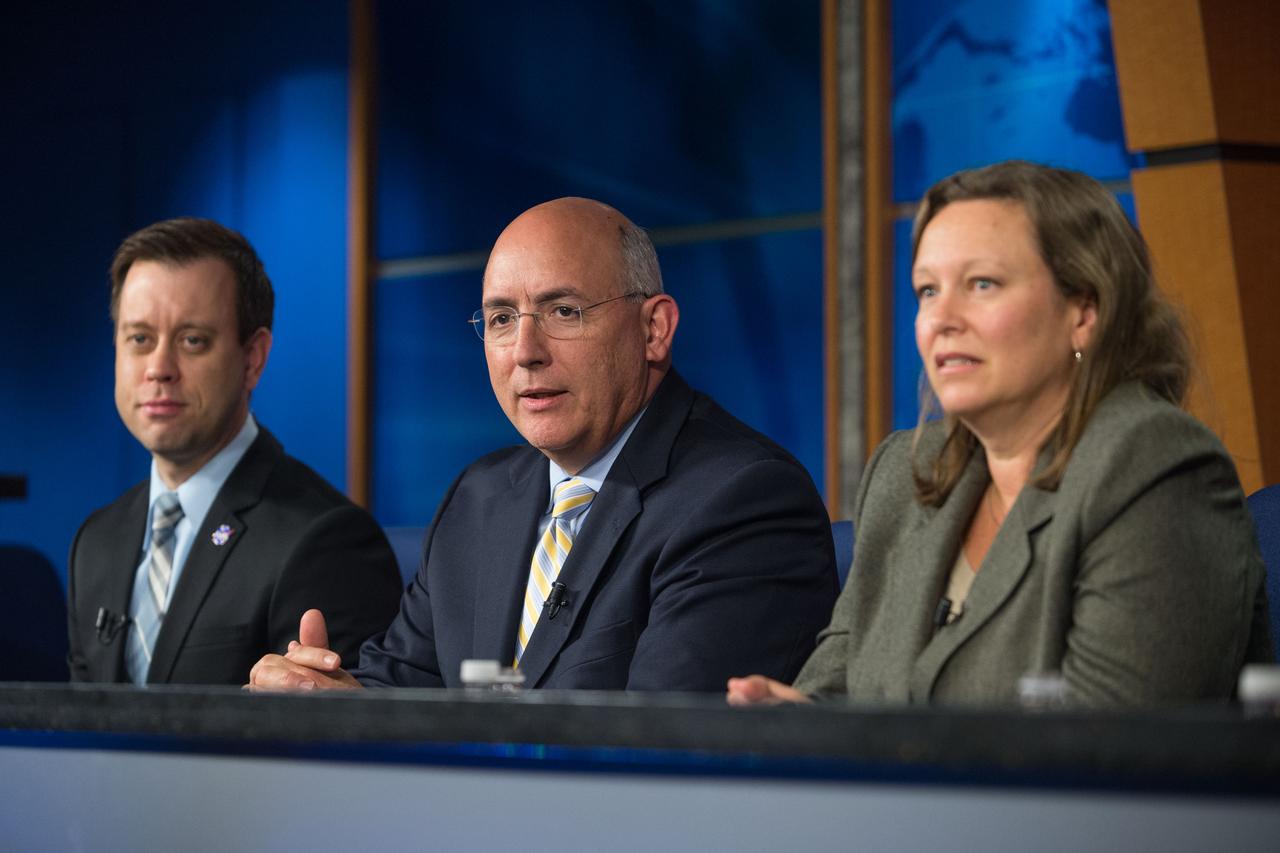
Date: 03-20-12 Location: Bldg 2, Briefing Room Subject: International Space Station Program and Science Overview Briefing with Michael Suffredini, ISS Program Manager, Dina Contella, Expedition 32 lead flight director, and Tara Ruttley, Associate ISS Program Scientist. Photographer: James Blair

Date: 03-20-12 Location: Bldg 2, Briefing Room Subject: International Space Station Program and Science Overview Briefing with Michael Suffredini, ISS Program Manager, Dina Contella, Expedition 32 lead flight director, and Tara Ruttley, Associate ISS Program Scientist. Photographer: James Blair
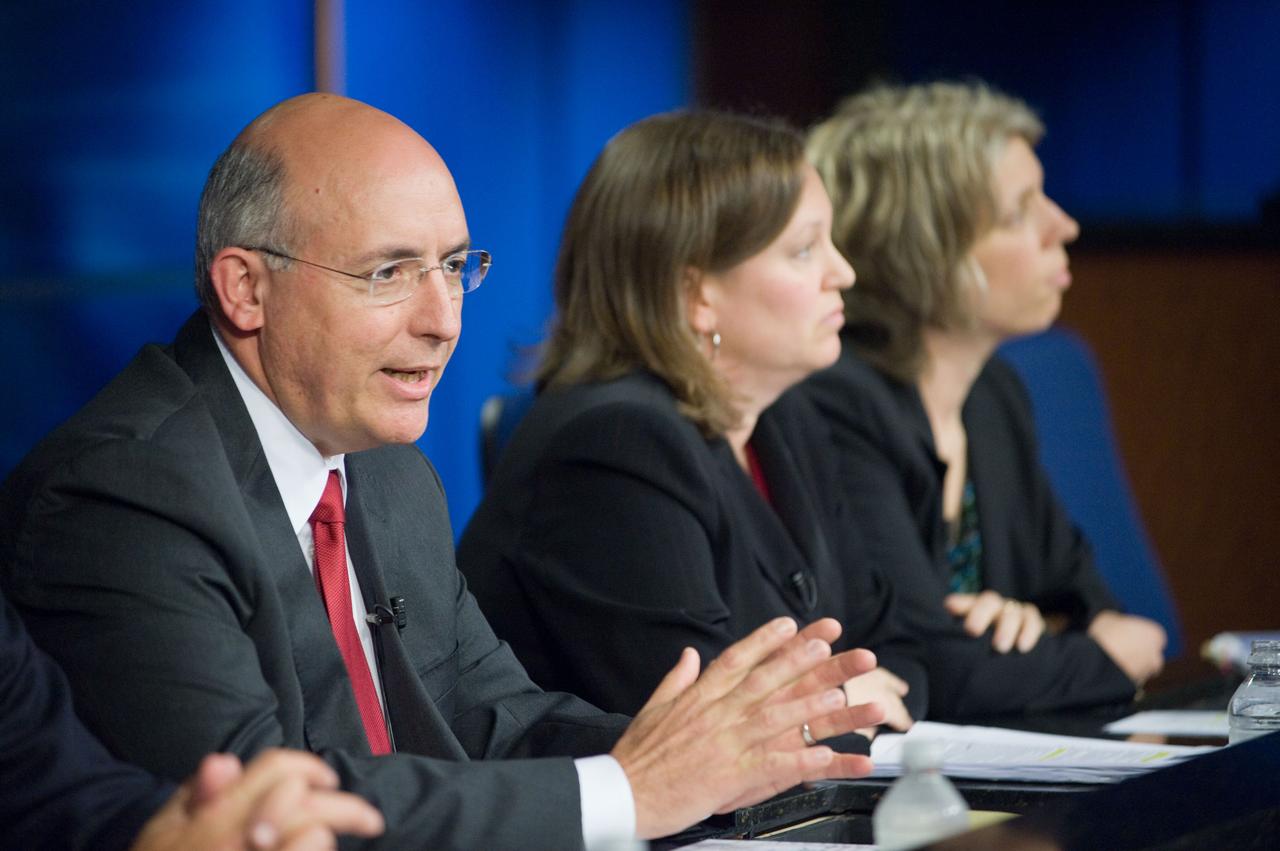
Date: 03-20-12 Location: Bldg 2, Briefing Room Subject: International Space Station Program and Science Overview Briefing with Michael Suffredini, ISS Program Manager, Dina Contella, Expedition 32 lead flight director, and Tara Ruttley, Associate ISS Program Scientist. Photographer: James Blair
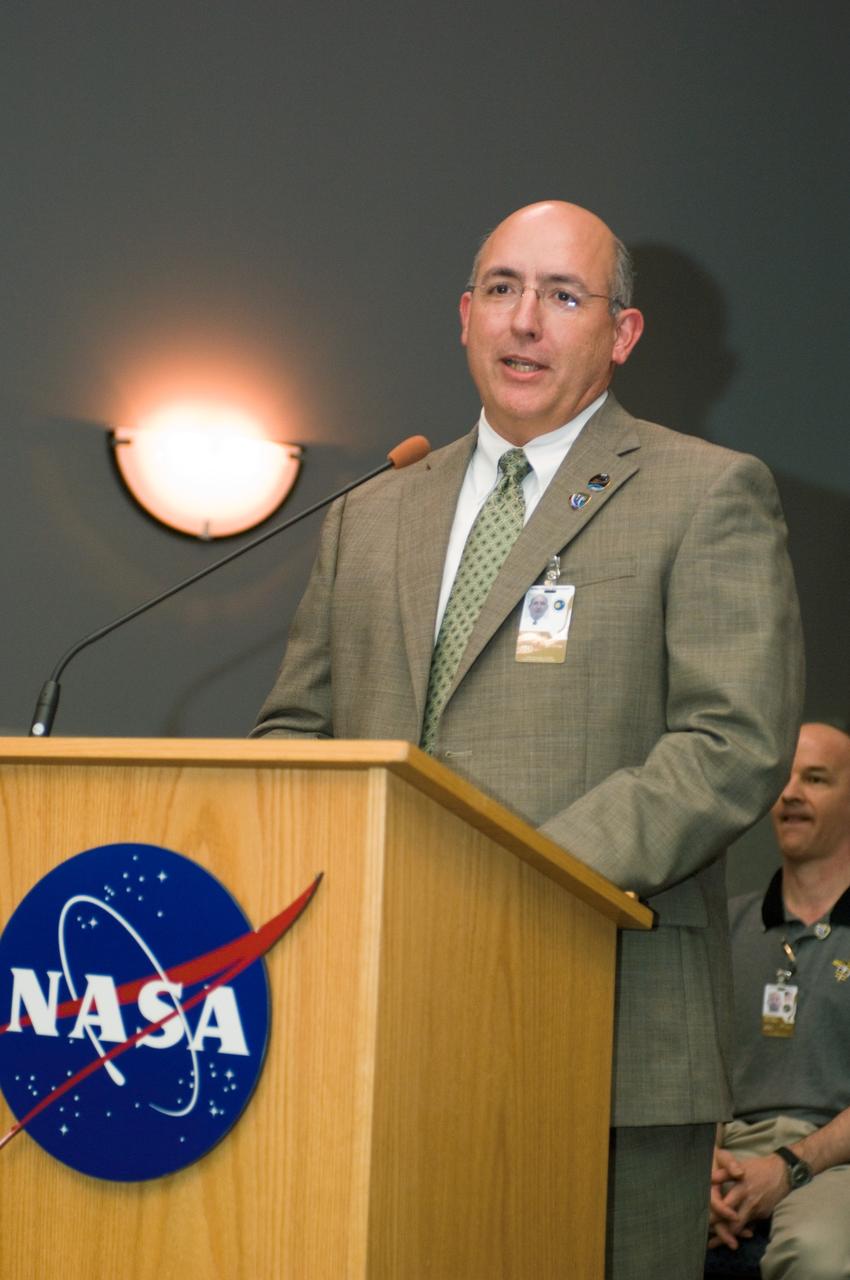
JSC2006-E-46693 (26 Oct. 2006) --- Michael T. Suffredini, International Space Station program manager, speaks from the lectern in the ballroom of the Gilruth Center at Johnson Space Center during the welcome home ceremony for the Expedition 13 crewmembers.
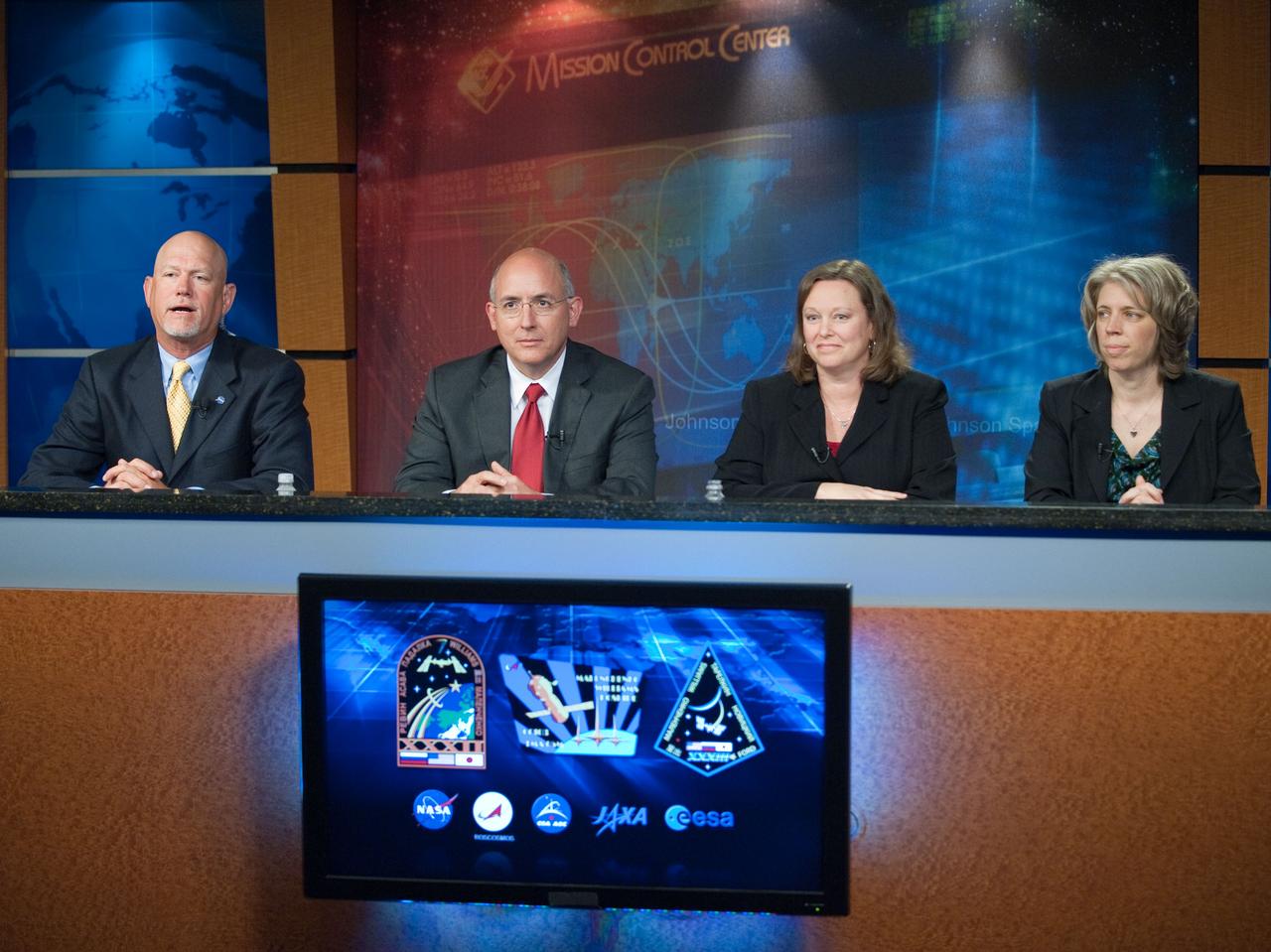
Date: 03-20-12 Location: Bldg 2, Briefing Room Subject: International Space Station Program and Science Overview Briefing with Michael Suffredini, ISS Program Manager, Dina Contella, Expedition 32 lead flight director, and Tara Ruttley, Associate ISS Program Scientist. Photographer: James Blair

Date: 03-20-12 Location: Bldg 2, Briefing Room Subject: International Space Station Program and Science Overview Briefing with Michael Suffredini, ISS Program Manager, Dina Contella, Expedition 32 lead flight director, and Tara Ruttley, Associate ISS Program Scientist. Photographer: James Blair
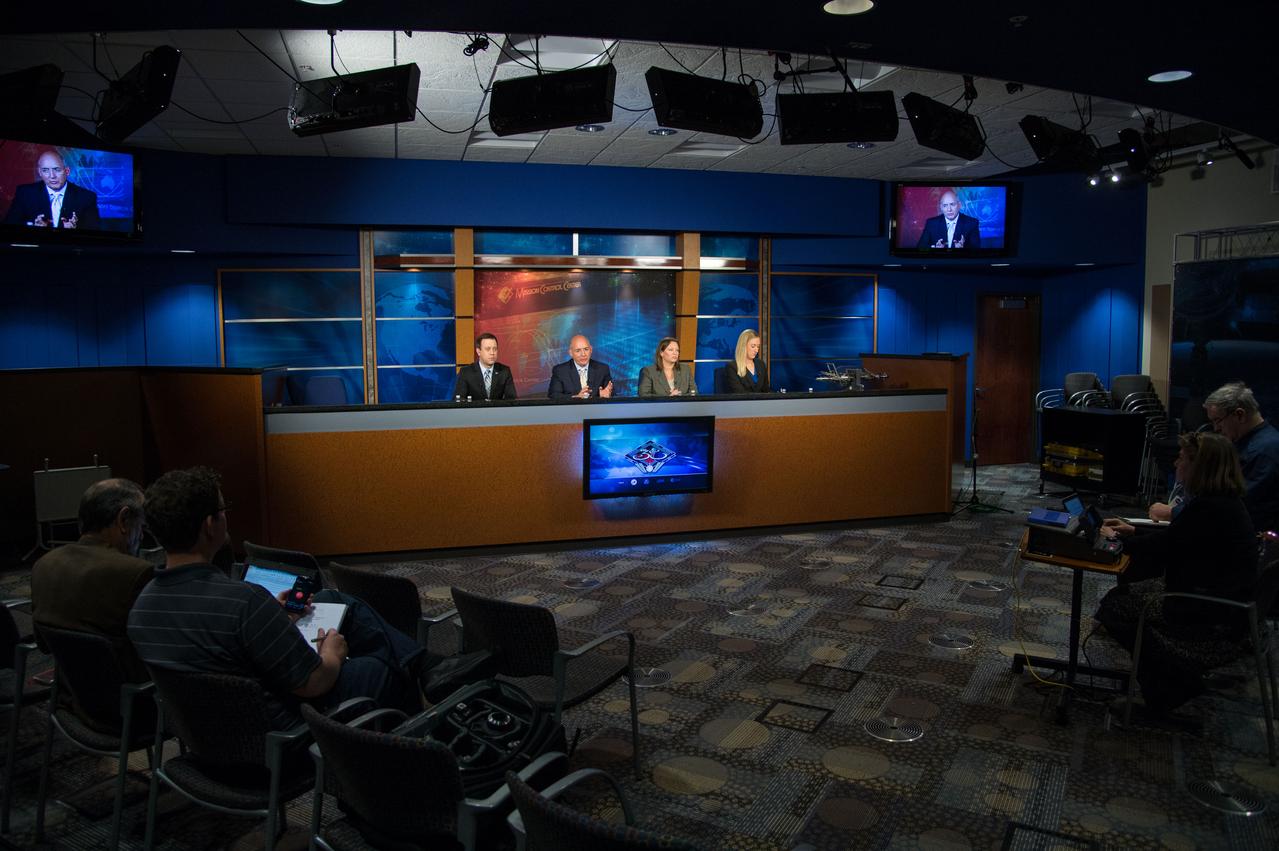
Date: 12-18-13 Location: Bldg 2, Press Conf. Subject: NASA's press conference to discuss spacewalk repairs to the ISS cooling system. Briefing participants include Michael Suffredini, ISS program manager, Dina Contella, ISS flight director, Allison Bolinger, lead spacewalk officer Photographer: James Blair/NASA

Date: 12-18-13 Location: Bldg 2, Press Conf. Subject: NASA's press conference to discuss spacewalk repairs to the ISS cooling system. Briefing participants include Michael Suffredini, ISS program manager, Dina Contella, ISS flight director, Allison Bolinger, lead spacewalk officer Photographer: James Blair/NASA
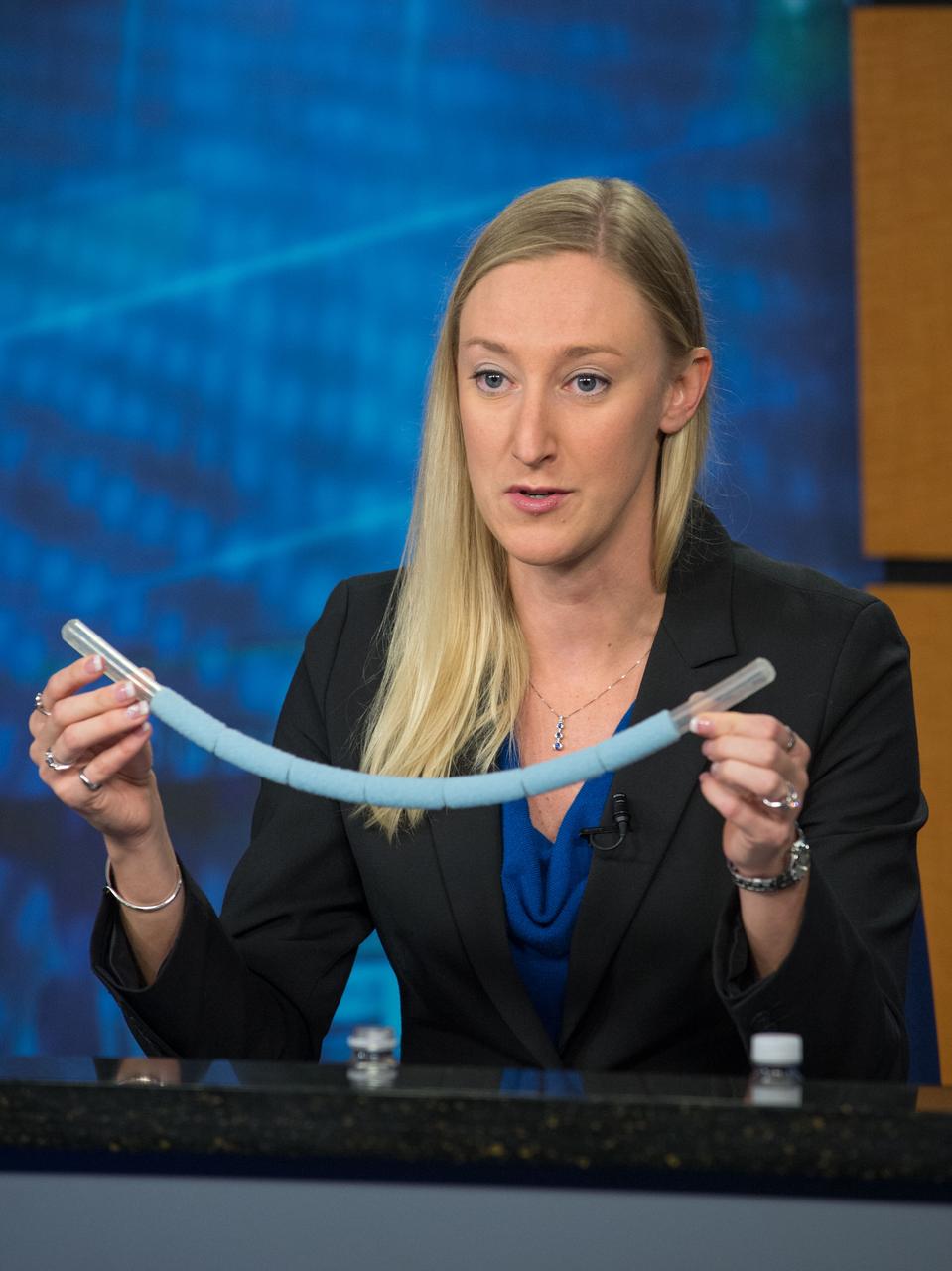
Date: 12-18-13 Location: Bldg 2, Press Conf. Subject: NASA's press conference to discuss spacewalk repairs to the ISS cooling system. Briefing participants include Michael Suffredini, ISS program manager, Dina Contella, ISS flight director, Allison Bolinger, lead spacewalk officer Photographer: James Blair/NASA
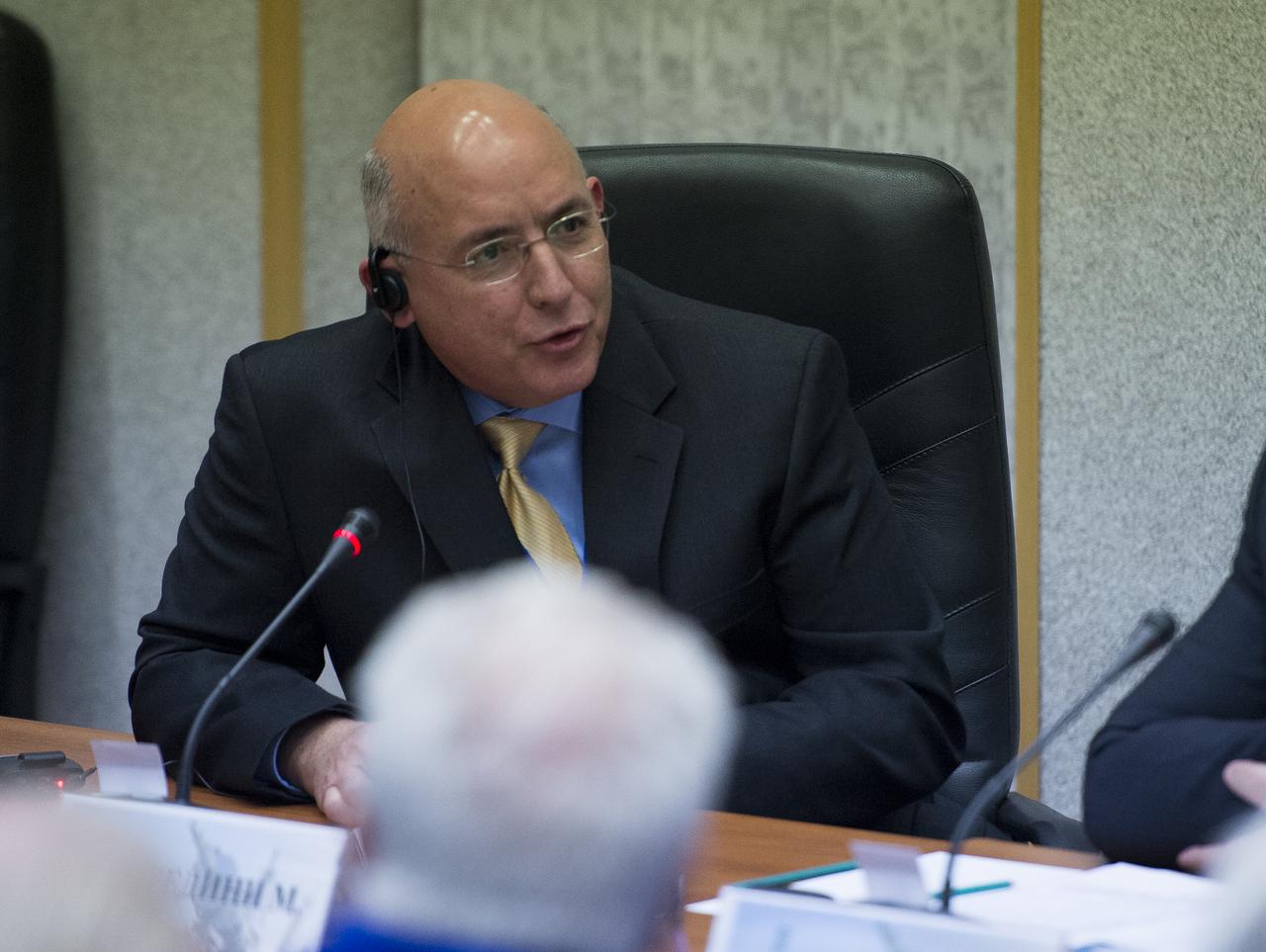
NASA Space Station Program Office Manager Michael T. Suffredini, talks during the State Commission meeting to approve the Soyuz rocket launch of Expedition 39 Soyuz Commander Alexander Skvortsov of the Russian Federal Space Agency, Flight Engineer Steve Swanson of NASA, and Flight Engineer Oleg Artemyev of Roscosmos on a six month mission aboard the International Space Station, Monday, March 24, 2014 at the Cosmonaut Hotel in Baikonur, Kazakhstan. Photo Credit: (NASA/Joel Kowsky)
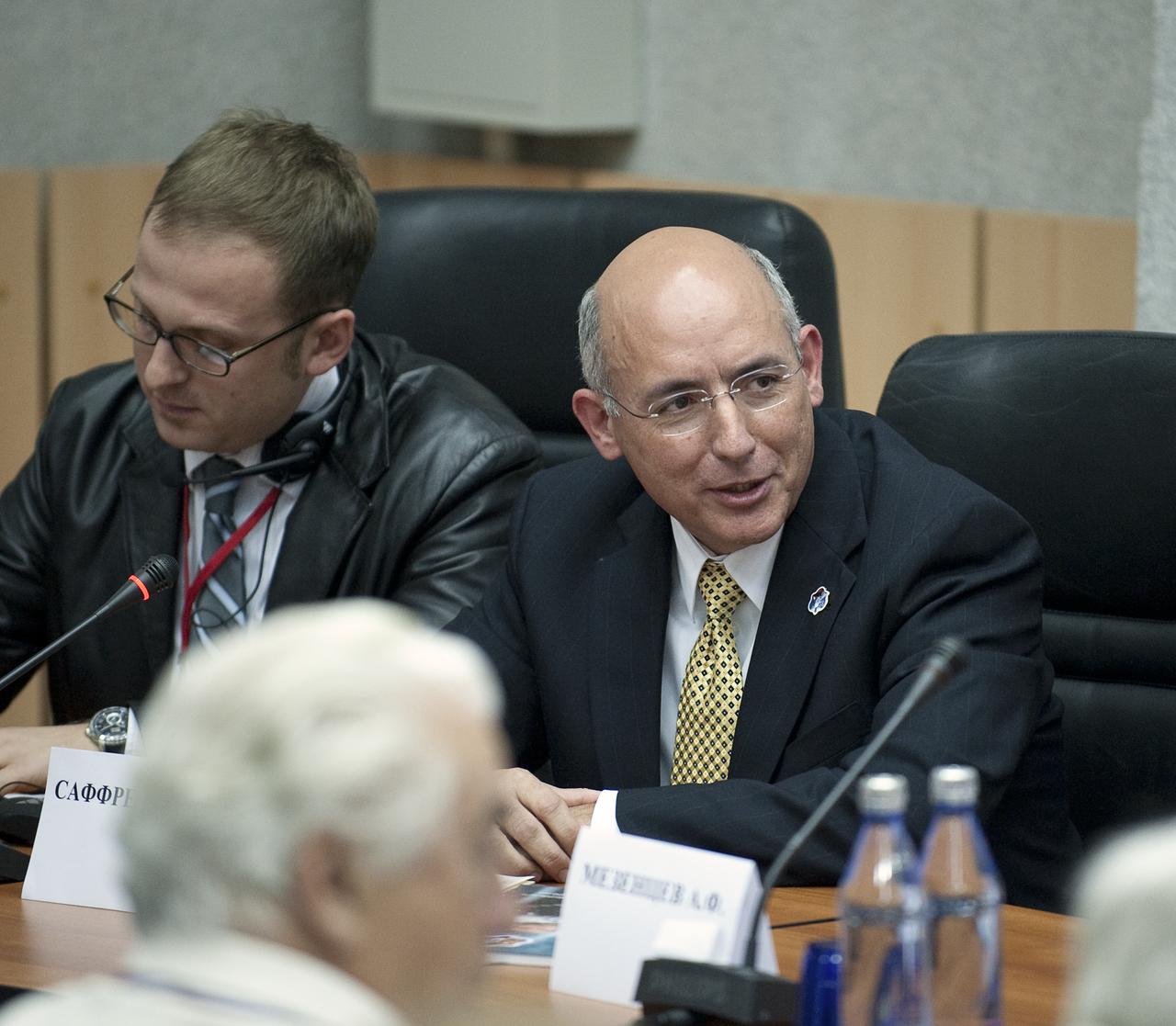
Manager, International Space Station (ISS) Program, Michael Suffredini, speaks during the State Commission meeting to approve the Soyuz launch of Expedition 21 Flight Engineer Jeffrey N. Williams, Flight Engineer Maxim Suraev and Spaceflight Participant Guy Laliberté on Tuesday, Sept. 29, 2009 in Baikonur, Kazakhstan. Photo Credit: (NASA/Bill Ingalls)
Date: 12-18-13 Location: Bldg 2, Press Conf. Subject: NASA's press conference to discuss spacewalk repairs to the ISS cooling system. Briefing participants include Michael Suffredini, ISS program manager, Dina Contella, ISS flight director, Allison Bolinger, lead spacewalk officer Photographer: James Blair/NASA
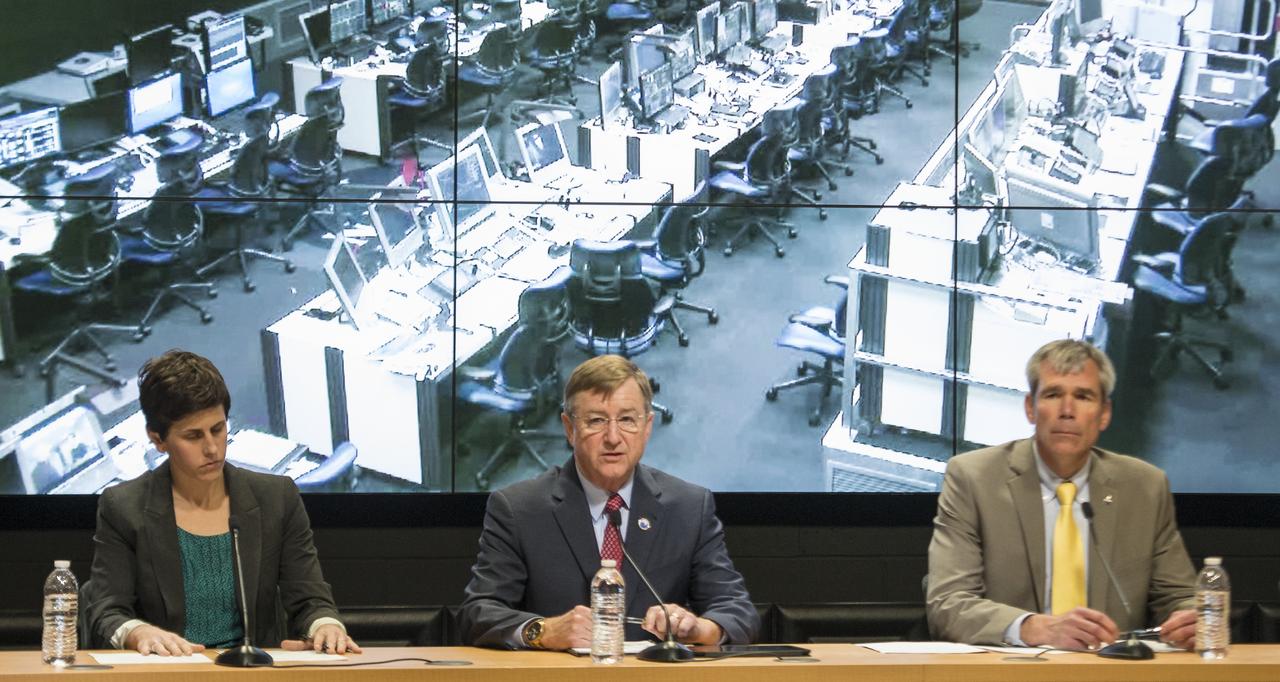
Rachel Kraft, NASA public affairs officer, left, Frank Culbertson, Executive Vice President and General Manager of Advanced Program Group at Orbital Sciences Corp., center, Bill Wrobel, director of NASA's Wallops Flight Facility, right, are seen during a press conference held after a mishap occurred during the launch of the Antares rocket, with the Cygnus cargo spacecraft aboard, Tuesday, Oct. 28, 2014, NASA Wallops Flight Facility, Virginia. William Gerstenmaier, associate administrator of NASA's Human Exploration and Operations Mission Directorate and Michael Suffredini, NASA's International Space Station Program Manager also participated in the press conference via phone. Cygnus was on its way to rendezvous with the space station. The Antares rocket lifted off to start its third resupply mission to the International Space Station, but suffered a catastrophic anomaly shortly after liftoff at 6:22 p.m. EDT. Photo Credit: (NASA/Joel Kowsky)
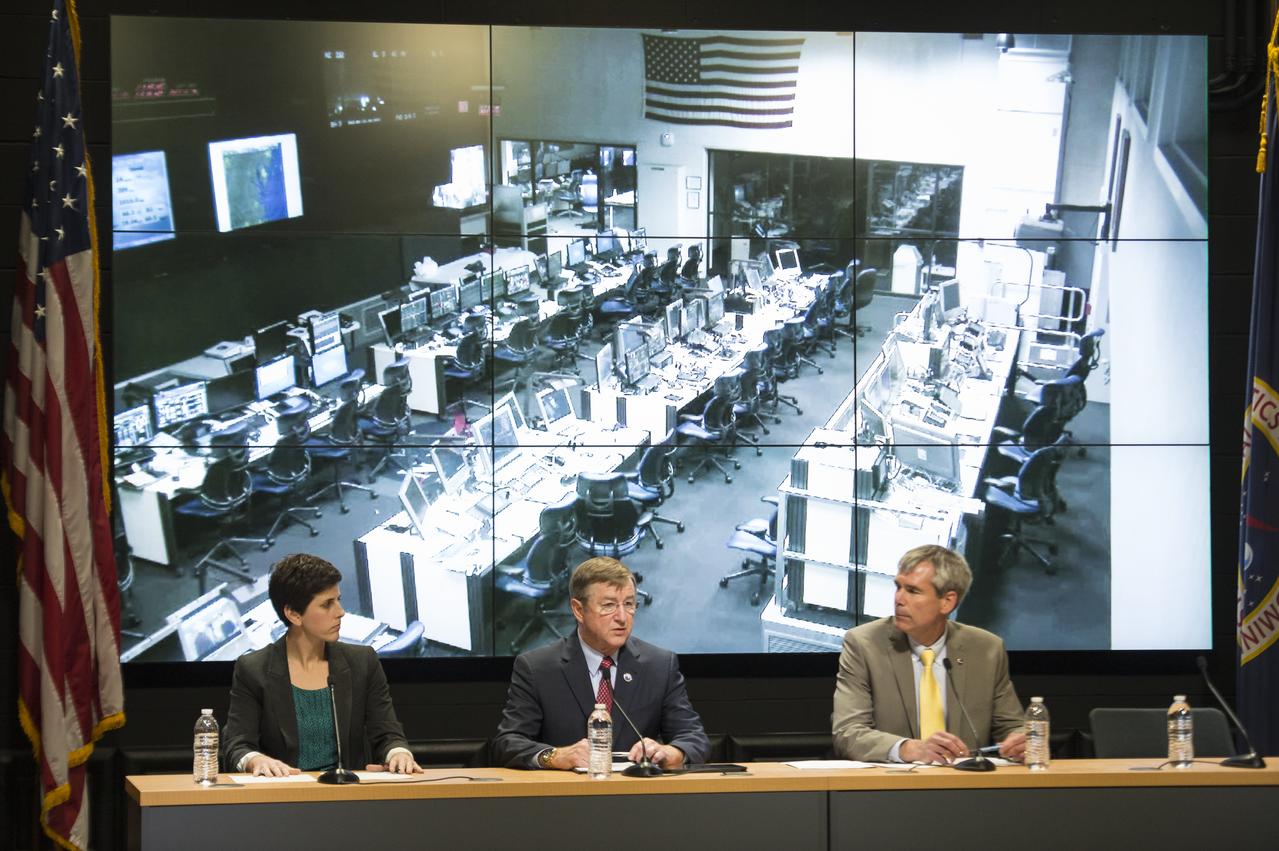
Rachel Kraft, NASA public affairs officer, left, Frank Culbertson, Executive Vice President and General Manager of Advanced Program Group at Orbital Sciences Corp., center, Bill Wrobel, director of NASA's Wallops Flight Facility, right, are seen during a press conference held after a mishap occurred during the launch of the Antares rocket, with the Cygnus cargo spacecraft aboard, Tuesday, Oct. 28, 2014, NASA Wallops Flight Facility, Virginia. William Gerstenmaier, associate administrator of NASA's Human Exploration and Operations Mission Directorate and Michael Suffredini, NASA's International Space Station Program Manager also participated in the press conference via phone. Cygnus was on its way to rendezvous with the space station. The Antares rocket lifted off to start its third resupply mission to the International Space Station, but suffered a catastrophic anomaly shortly after liftoff at 6:22 p.m. EDT. Photo Credit: (NASA/Joel Kowsky)
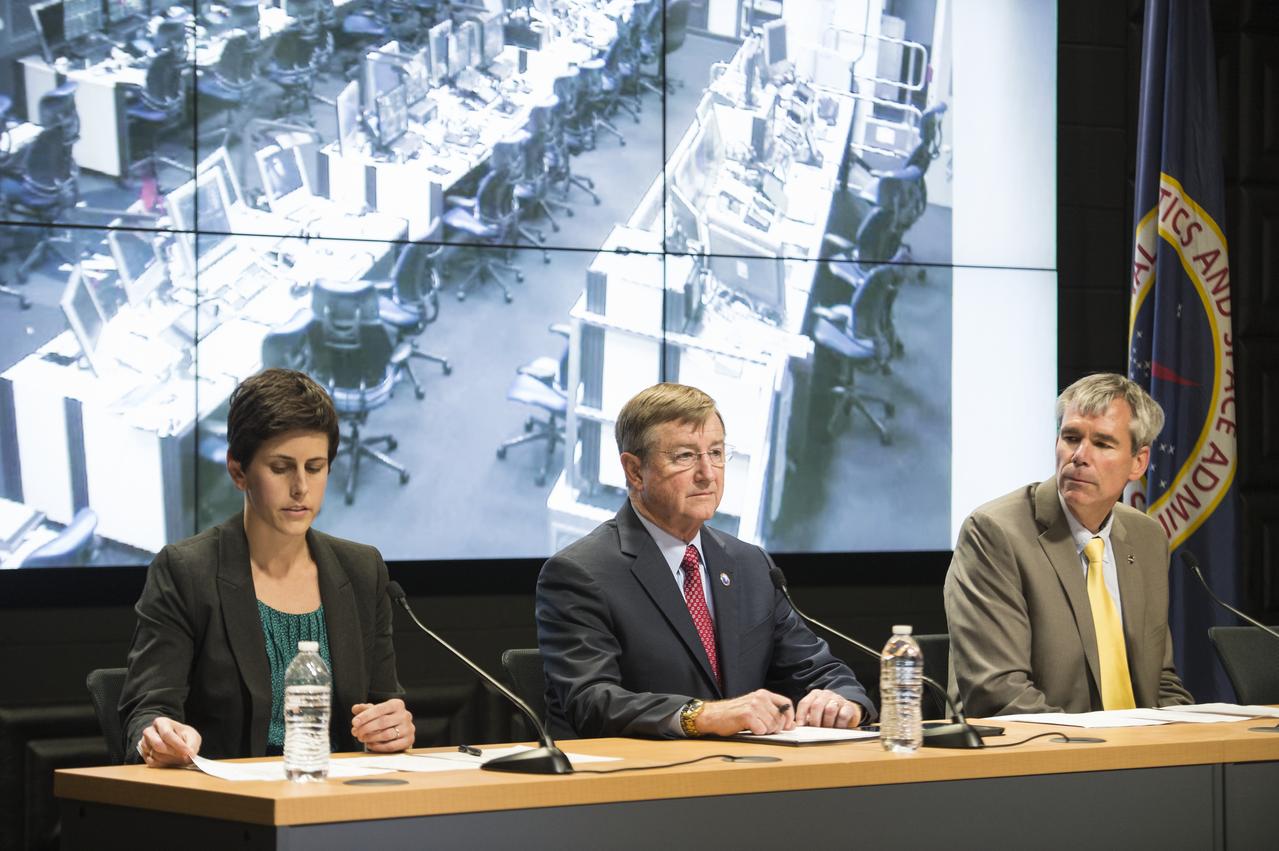
Rachel Kraft, NASA public affairs officer, left, Frank Culbertson, Executive Vice President and General Manager of Advanced Program Group at Orbital Sciences Corp., center, Bill Wrobel, director of NASA's Wallops Flight Facility, right, are seen during a press conference held after a mishap occurred during the launch of the Antares rocket, with the Cygnus cargo spacecraft aboard, Tuesday, Oct. 28, 2014, NASA Wallops Flight Facility, Virginia. William Gerstenmaier, associate administrator of NASA's Human Exploration and Operations Mission Directorate and Michael Suffredini, NASA's International Space Station Program Manager also participated in the press conference via phone. Cygnus was on its way to rendezvous with the space station. The Antares rocket lifted off to start its third resupply mission to the International Space Station, but suffered a catastrophic anomaly shortly after liftoff at 6:22 p.m. EDT. Photo Credit: (NASA/Joel Kowsky)
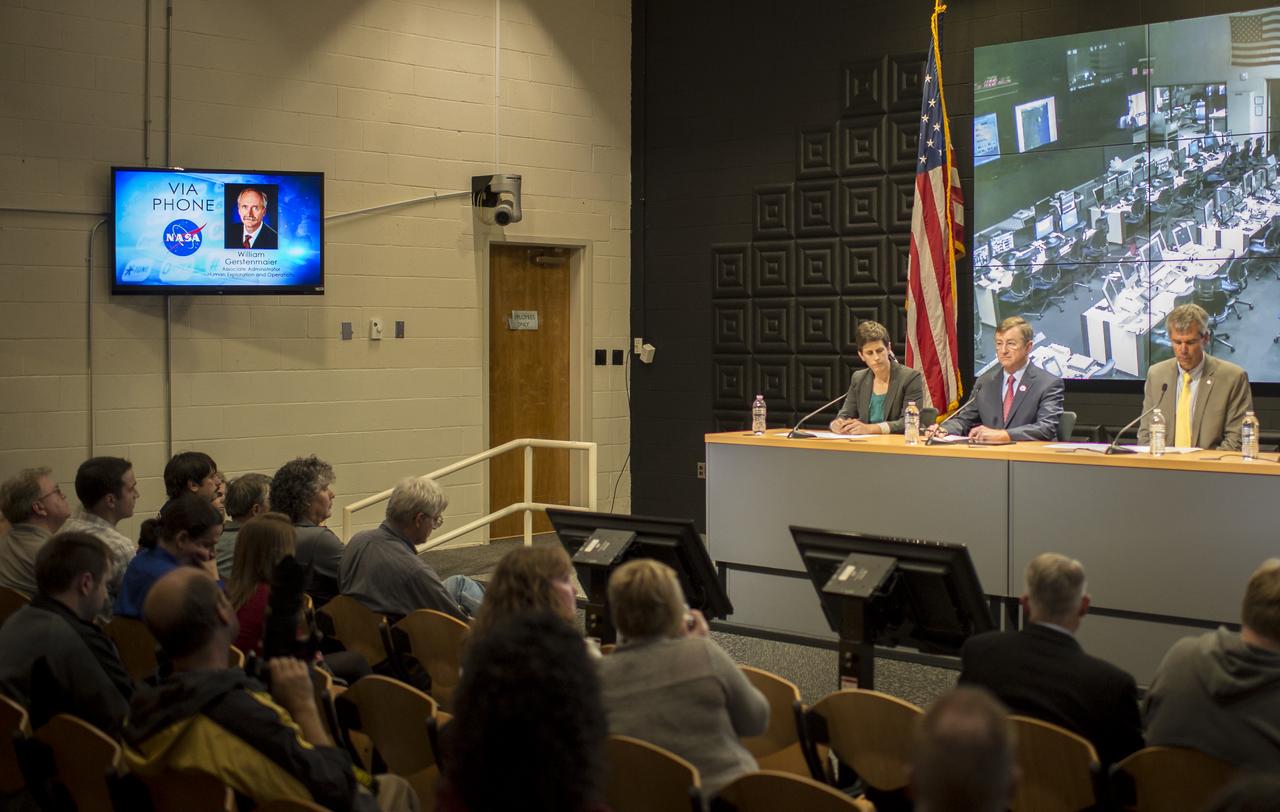
William Gerstenmaier, associate administrator of NASA's Human Exploration and Operations Mission Directorate, participates via phone, in a press conference with Rachel Kraft, NASA public affairs officer, seated left, Frank Culbertson, Executive Vice President and General Manager of Advanced Program Group at Orbital Sciences Corp., center, and Bill Wrobel, director of NASA's Wallops Flight Facility, after a mishap occurred during the launch of the Antares rocket, with the Cygnus cargo spacecraft aboard, Tuesday, Oct. 28, 2014, NASA Wallops Flight Facility, Virginia. Michael Suffredini, NASA's International Space Station Program Manager also participated via phone. Cygnus was on its way to rendezvous with the space station. The Antares rocket lifted off to start its third resupply mission to the International Space Station, but suffered a catastrophic anomaly shortly after liftoff at 6:22 p.m. EDT. Photo Credit: (NASA/Joel Kowsky)
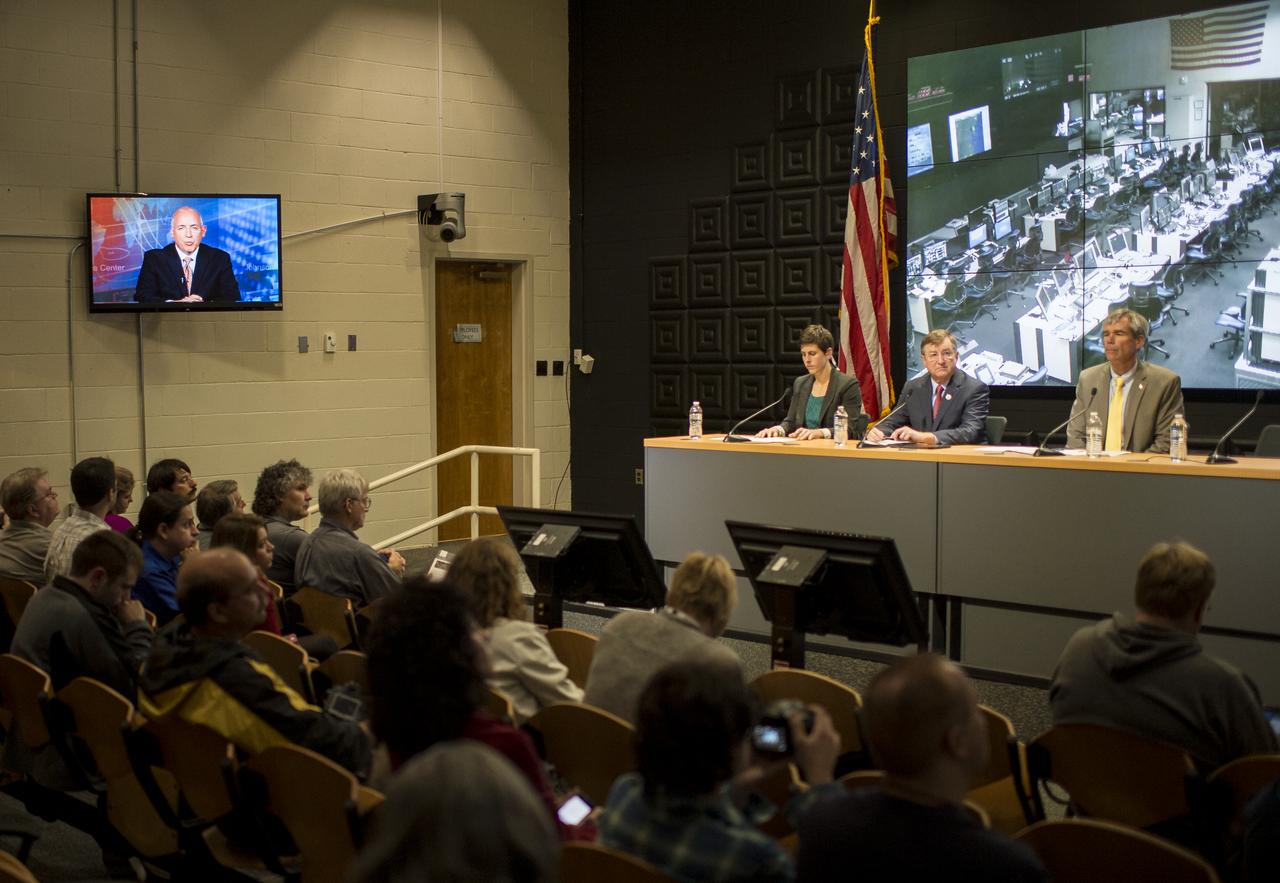
Michael Suffredini, NASA's International Space Station Program Manager participates via phone, in a press conference with Rachel Kraft, NASA public affairs officer, seated left, Frank Culbertson, Executive Vice President and General Manager of Advanced Program Group at Orbital Sciences Corp., center, and Bill Wrobel, director of NASA's Wallops Flight Facility, after a mishap occurred during the launch of the Antares rocket, with the Cygnus cargo spacecraft aboard, Tuesday, Oct. 28, 2014, NASA Wallops Flight Facility, Virginia. William Gerstenmaier, associate administrator of NASA's Human Exploration and Operations Mission Directorate also participated via phone. Cygnus was on its way to rendezvous with the space station. The Antares rocket lifted off to start its third resupply mission to the International Space Station, but suffered a catastrophic anomaly shortly after liftoff at 6:22 p.m. EDT. Photo Credit: (NASA/Joel Kowsky)
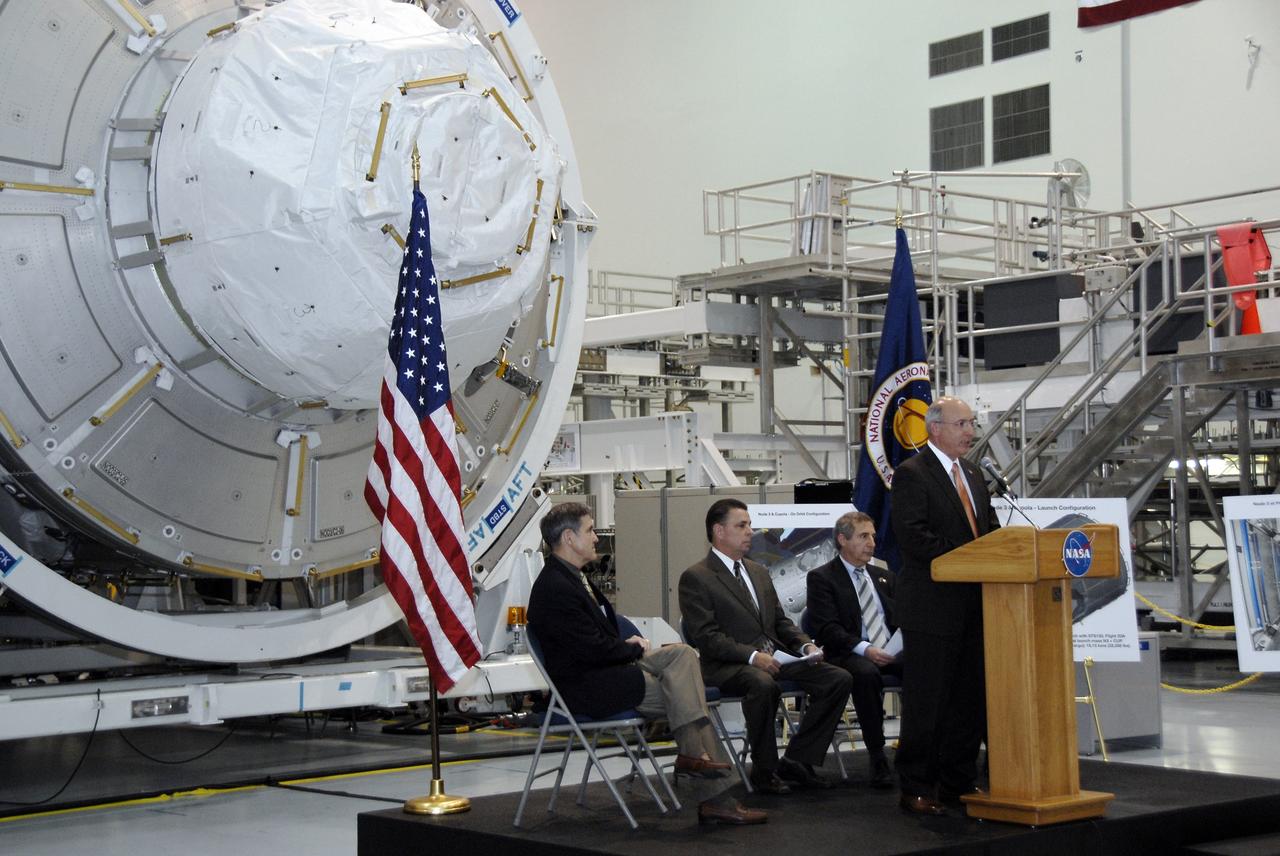
CAPE CANAVERAL, Fla. – In the Space Station Processing Facility at NASA's Kennedy Space Center in Florida, Michael Suffredini, program manager, International Space Station, NASA, addresses the invited guests at a ceremony transferring the ownership of node 3 for the International Space Station, looming in the background, from the European Space Agency, or ESA, to NASA. Seated, from left, are Michael Suffredini, program manager, International Space Station, NASA; William Dowdell, deputy for Operations, International Space Station and Spacecraft Processing, Kennedy; and Bernardo Patti, head of International Space Station, Program Department, ESA. Node 3 is named "Tranquility" after the Sea of Tranquility, the lunar landing site of Apollo 11. The payload for the STS-130 mission, Tranquility is a pressurized module that will provide room for many of the International Space Station's life support systems. The module was built for ESA by Thales Alenia Space in Turin, Italy. Attached to one end of Tranquility is a cupola, a unique work station with six windows on its sides and one on top. The cupola resembles a circular bay window and will provide a vastly improved view of the station's exterior. Just under 10 feet in diameter, the module will accommodate two crew members and portable workstations that can control station and robotic activities. The multi-directional view will allow the crew to monitor spacewalks and docking operations, as well as provide a spectacular view of Earth and other celestial objects. Space shuttle Endeavour's STS-130 mission is targeted to launch Feb. 4, 2010. Photo credit: NASA/Kim Shiflett
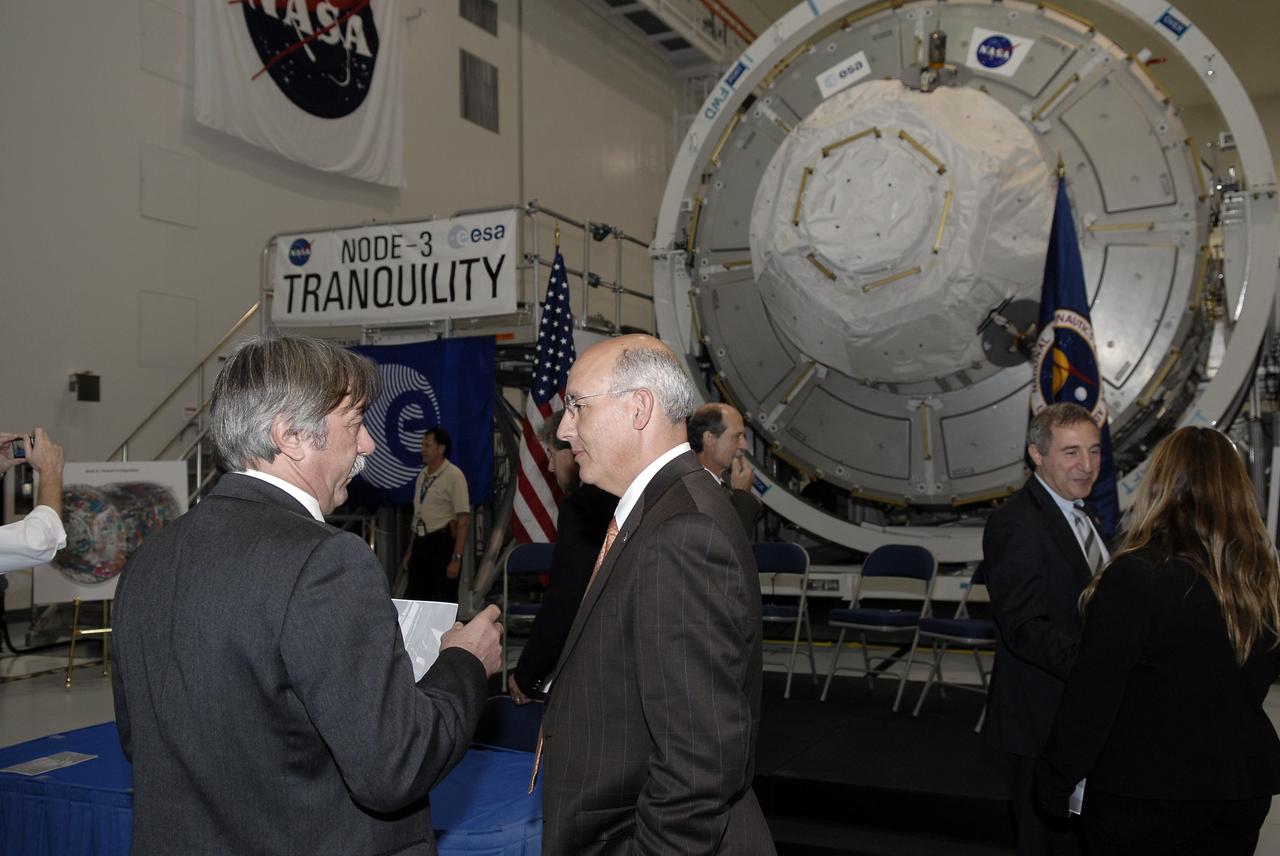
CAPE CANAVERAL, Fla. – In the Space Station Processing Facility at NASA's Kennedy Space Center in Florida, Secondino Brondolo, at left, head of the Space Infrastructure, Thales Alenia Space Italy, talks to Michael Suffredini, program manager, International Space Station, NASA, following a ceremony transferring the ownership of node 3 for the International Space Station from the European Space Agency, or ESA, to NASA. Node 3 is named "Tranquility" after the Sea of Tranquility, the lunar landing site of Apollo 11. The payload for the STS-130 mission, Tranquility is a pressurized module that will provide room for many of the International Space Station's life support systems. The module was built for ESA by Thales Alenia Space in Turin, Italy. Attached to one end of Tranquility is a cupola, a unique work station with six windows on its sides and one on top. The cupola resembles a circular bay window and will provide a vastly improved view of the station's exterior. Just under 10 feet in diameter, the module will accommodate two crew members and portable workstations that can control station and robotic activities. The multi-directional view will allow the crew to monitor spacewalks and docking operations, as well as provide a spectacular view of Earth and other celestial objects. Space shuttle Endeavour's STS-130 mission is targeted to launch Feb. 4, 2010. Photo credit: NASA/Kim Shiflett
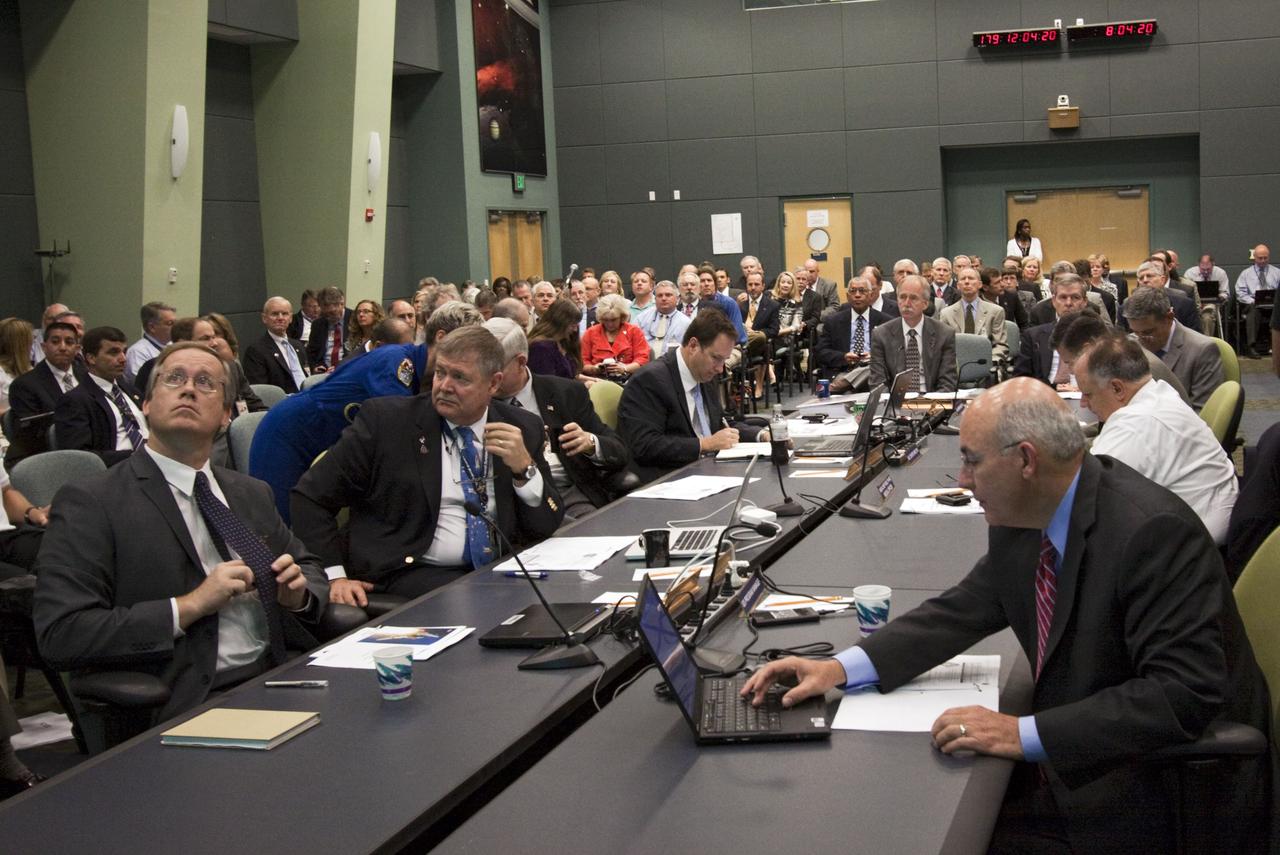
CAPE CANAVERAL, Fla. -- In the Operations Support Building II at NASA's Kennedy Space Center in Florida, Space Shuttle Program and mission managers meet for the traditional Flight Readiness Review, a thorough assessment of preparations for the mission. Seen here are Space Shuttle Program Manager John Shannon (left) and International Space Station Program Manager Michael Suffredini (right). The June 28 meeting is designed to produce a number of key decisions about Atlantis' STS-135 mission, including the announcement of an official launch date. Atlantis and its crew are targeted to lift off July 8, taking with them the Raffaello multi-purpose logistics module packed with supplies and spare parts to the International Space Station. The STS-135 mission also will fly a system to investigate the potential for robotically refueling existing satellites and return a failed ammonia pump module to help NASA better understand the failure mechanism and improve pump designs for future systems. STS-135 will be the 33rd flight of Atlantis, the 37th shuttle mission to the space station, and the 135th and final mission of NASA's Space Shuttle Program. For more information visit, www.nasa.gov/mission_pages/shuttle/shuttlemissions/sts135/index.html. Photo credit: Jim Grossmann
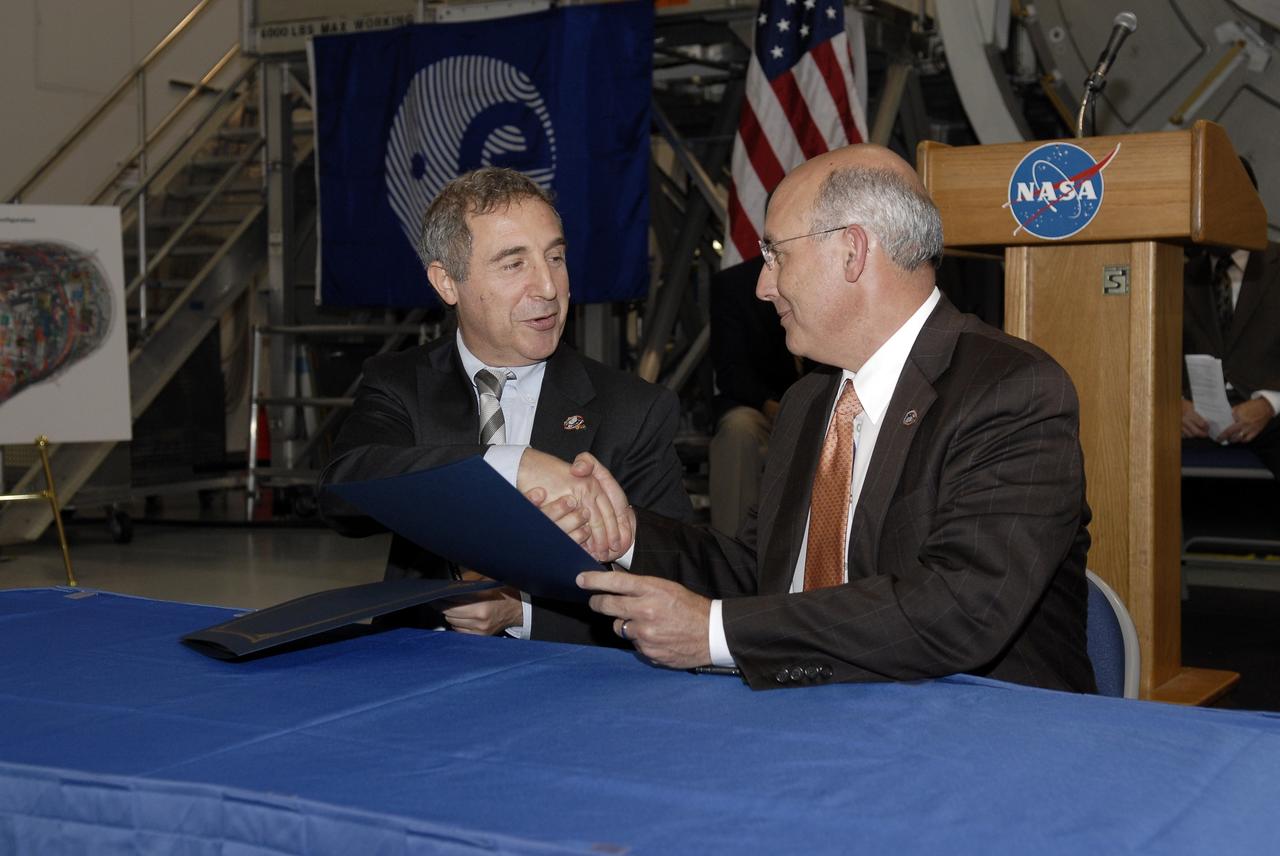
CAPE CANAVERAL, Fla. – In the Space Station Processing Facility at NASA's Kennedy Space Center in Florida, Bernardo Patti, at left, head of International Space Station, Program Department, European Space Agency, congratulates Michael Suffredini, program manager, International Space Station, NASA, upon transfer of the ownership of node 3 for the International Space Station from the European Space Agency, or ESA, to NASA. Node 3 is named "Tranquility" after the Sea of Tranquility, the lunar landing site of Apollo 11. The payload for the STS-130 mission, Tranquility is a pressurized module that will provide room for many of the International Space Station's life support systems. The module was built for ESA by Thales Alenia Space in Turin, Italy. Attached to one end of Tranquility is a cupola, a unique work station with six windows on its sides and one on top. The cupola resembles a circular bay window and will provide a vastly improved view of the station's exterior. Just under 10 feet in diameter, the module will accommodate two crew members and portable workstations that can control station and robotic activities. The multi-directional view will allow the crew to monitor spacewalks and docking operations, as well as provide a spectacular view of Earth and other celestial objects. Space shuttle Endeavour's STS-130 mission is targeted to launch Feb. 4, 2010. Photo credit: NASA/Kim Shiflett

CAPE CANAVERAL, Fla. -- Japan Aerospace Exploration Agency and International Space Station Program Manager Tetsuro Yokoyama addresses attendees of the American Astronautical Society's 2010 National Conference held at the Radisson Resort at the Port in Cape Canaveral, Fla. The panel of speakers seated from left to right are, International Space Services President James Zimmerman; International Space Station Program Manager Michael Suffredini; Canadian Space Agency Director of Space Exploration Operations and Infrastructure Pierre Jean; European Space Agency Directorate of Human Spaceflight and International Space Station Programme Department Bernado Patti and Roskosmos Piloted Space Programs Department Director Alexey Krasnov. This year's conference was titled: International Space Station: The Next Decade - Utilization and Research. The conference was organized with the support of Kennedy and sponsored by The Boeing Company, Honeywell International Inc., Northrop Grumman Corp., Space Florida and the Universities Space Research Association (USRA). Photo credit: NASA/Jim Grossmann
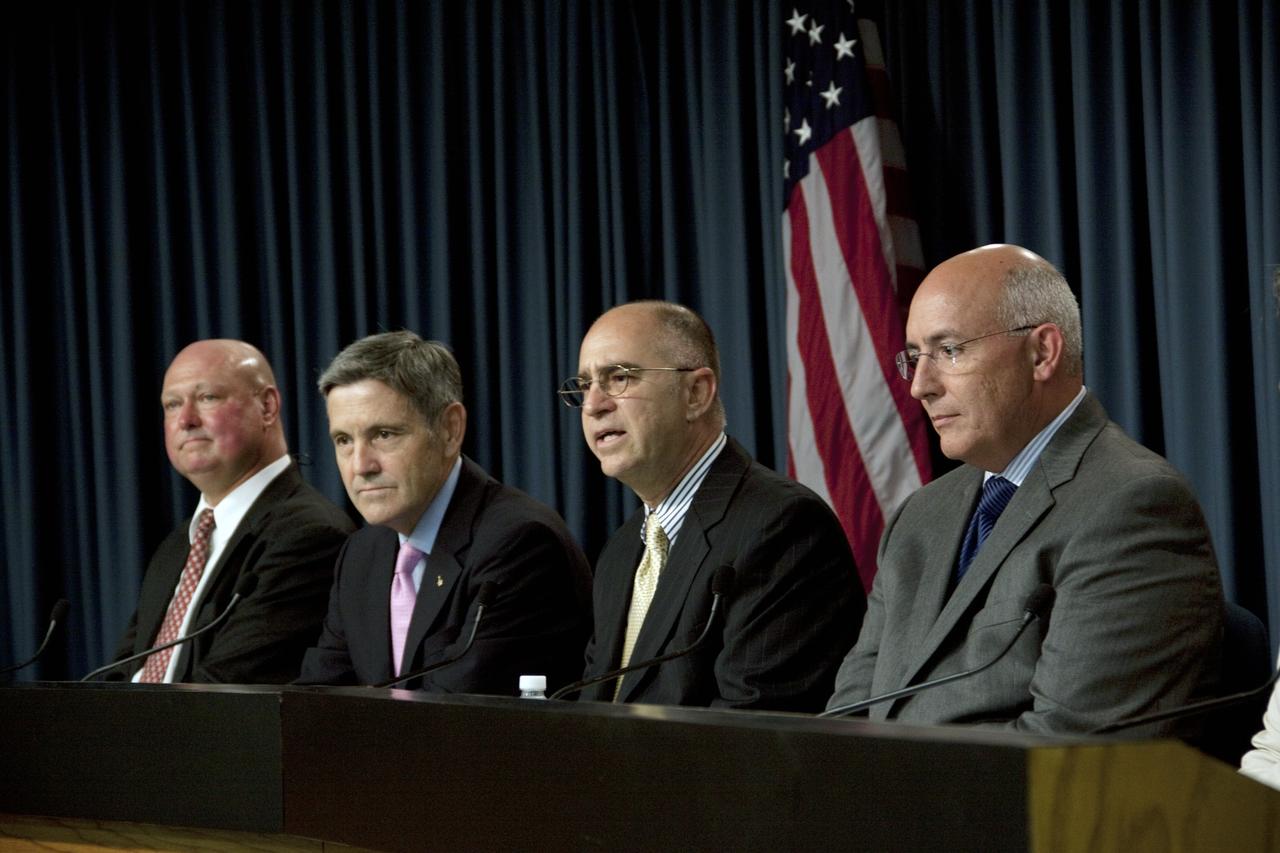
CAPE CANAVERAL, Fla. -- Sam Scimemi, director of International Space Station at NASA Headquarters, participates in a prelaunch news conference in Kennedy Space Center's Press Site auditorium in Florida. Also pictured are, from left, Michael Curie, NASA Public Affairs, Bob Cabana, director of NASA Kennedy Space Center, and to Scimemi's right, Mike Suffredini, program manager of International Space Station at NASA Johnson Space Center. The news conference provided the media with a status on the readiness to launch NASA's first Commercial Resupply Services, or CRS-1, mission to the International Space Station. Space Exploration Technologies Corp., or SpaceX, built both the mission's Falcon 9 rocket and Dragon capsule. Launch is scheduled for 8:35 p.m. EDT on Oct. 7 from Space Launch Complex 40 on Cape Canaveral Air Force Station. SpaceX CRS-1 is an important step toward making America’s microgravity research program self-sufficient by providing a way to deliver and return significant amounts of cargo, including science experiments, to and from the orbiting laboratory. NASA has contracted for 12 commercial resupply flights from SpaceX and eight from the Orbital Sciences Corp. For more information, visit http://www.nasa.gov/mission_pages/station/living/launch/index.html. Photo credit: NASA/Jim Grossmann
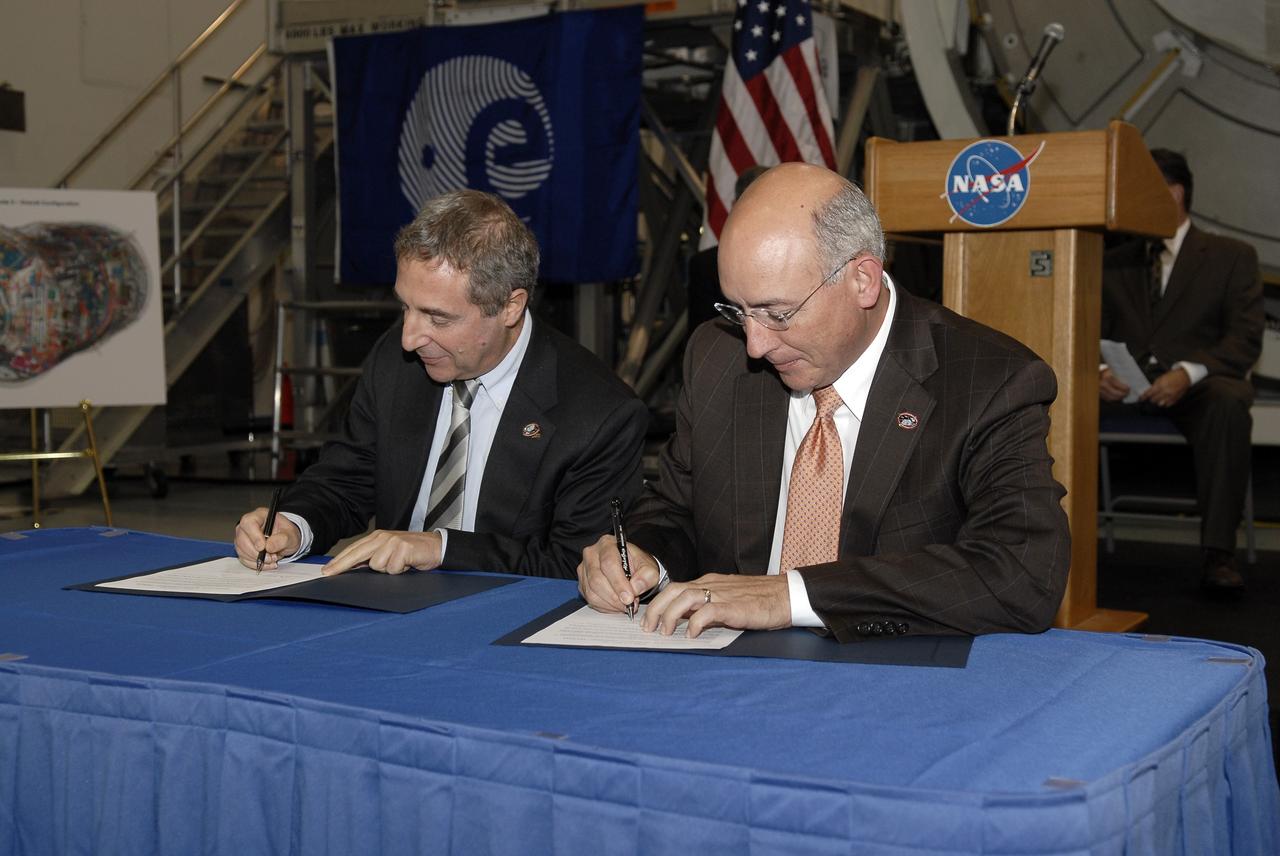
CAPE CANAVERAL, Fla. – In the Space Station Processing Facility at NASA's Kennedy Space Center in Florida, Bernardo Patti, at left, head of International Space Station, Program Department, European Space Agency, and Michael Suffredini, program manager, International Space Station, NASA, sign documents transferring the ownership of node 3 for the International Space Station from the European Space Agency, or ESA, to NASA. Node 3 is named "Tranquility" after the Sea of Tranquility, the lunar landing site of Apollo 11. The payload for the STS-130 mission, Tranquility is a pressurized module that will provide room for many of the International Space Station's life support systems. The module was built for ESA by Thales Alenia Space in Turin, Italy. Attached to one end of Tranquility is a cupola, a unique work station with six windows on its sides and one on top. The cupola resembles a circular bay window and will provide a vastly improved view of the station's exterior. Just under 10 feet in diameter, the module will accommodate two crew members and portable workstations that can control station and robotic activities. The multi-directional view will allow the crew to monitor spacewalks and docking operations, as well as provide a spectacular view of Earth and other celestial objects. Space shuttle Endeavour's STS-130 mission is targeted to launch Feb. 4, 2010. Photo credit: NASA/Kim Shiflett
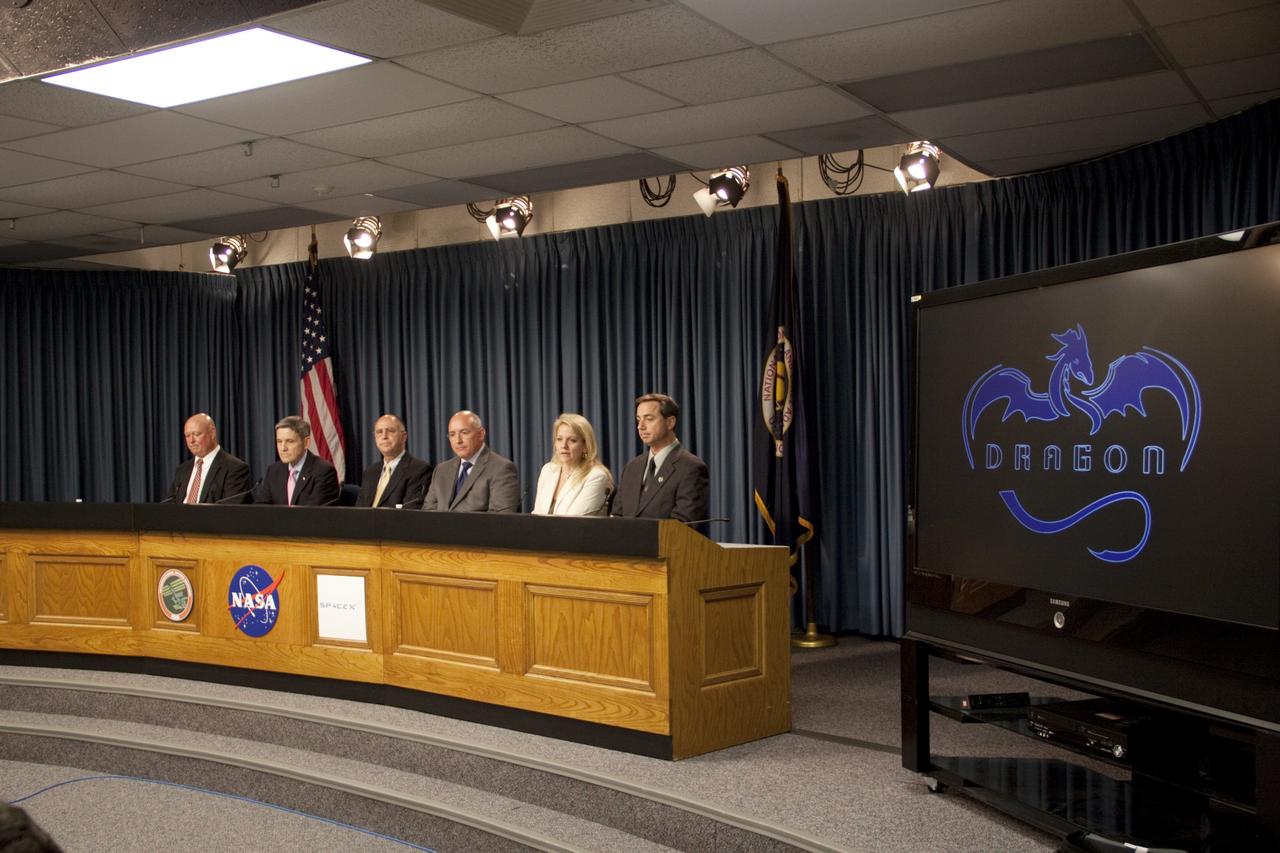
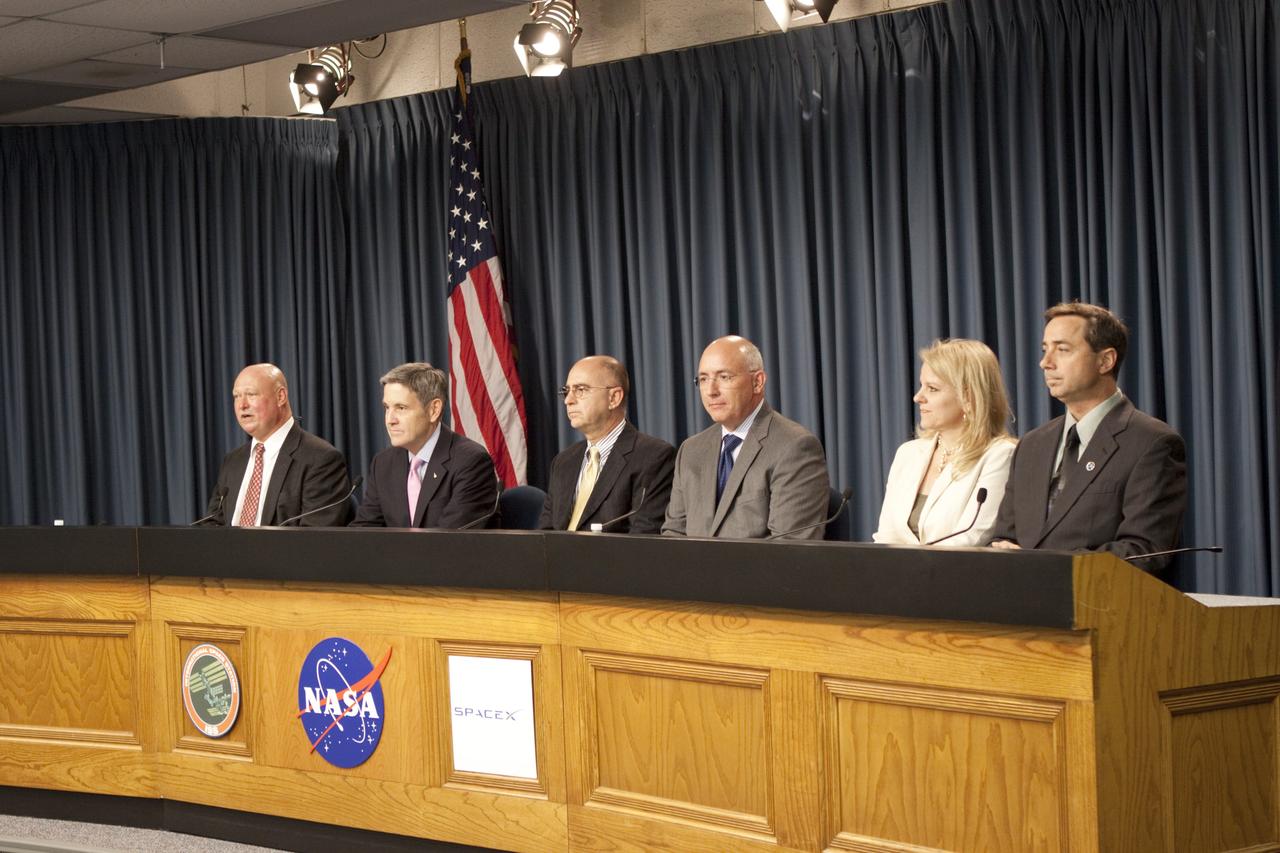
CAPE CANAVERAL, Fla. -- A prelaunch news conference is held in NASA Kennedy Space Center's Press Site auditorium in Florida. From left are Michael Curie, NASA Public Affairs, Bob Cabana, director of NASA Kennedy Space Center, Sam Scimemi, director of International Space Station at NASA Headquarters, Mike Suffredini, program manager of International Space Station at NASA Johnson Space Center, Gwynne Shotwell, president of Space Exploration Technologies Corp., or SpaceX, and Mike McAleenan, launch weather officer from the 45th Weather Squadron at Cape Canaveral Air Force Station. The news conference provided the media with a status on the readiness to launch NASA's first Commercial Resupply Services, or CRS-1, mission to the International Space Station. Space Exploration Technologies Corp., or SpaceX, built both the mission's Falcon 9 rocket and Dragon capsule. Launch is scheduled for 8:35 p.m. EDT on Oct. 7 from Space Launch Complex 40 on Cape Canaveral Air Force Station. SpaceX CRS-1 is an important step toward making America’s microgravity research program self-sufficient by providing a way to deliver and return significant amounts of cargo, including science experiments, to and from the orbiting laboratory. NASA has contracted for 12 commercial resupply flights from SpaceX and eight from the Orbital Sciences Corp. For more information, visit http://www.nasa.gov/mission_pages/station/living/launch/index.html. Photo credit: NASA/Jim Grossmann
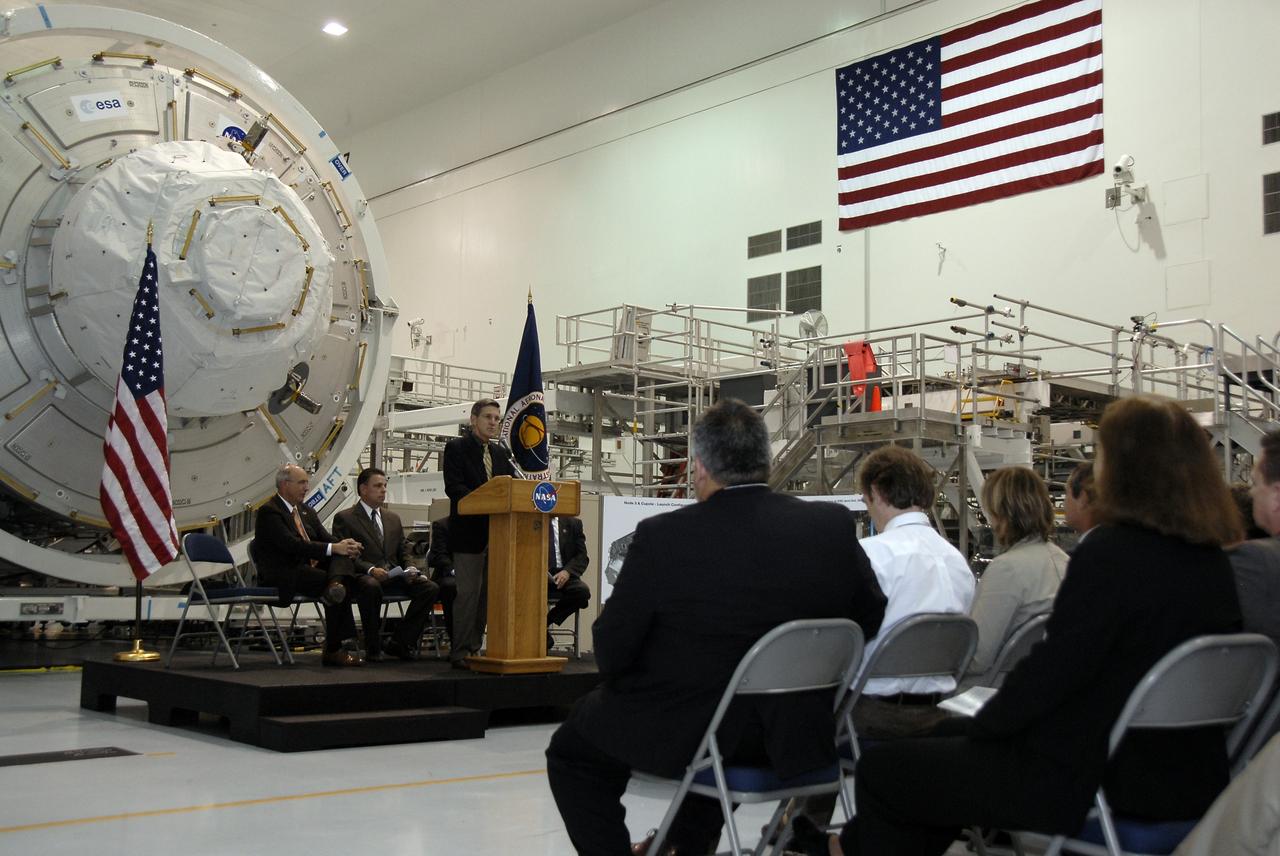
CAPE CANAVERAL, Fla. – In the Space Station Processing Facility at NASA's Kennedy Space Center in Florida, Kennedy Director Bob Cabana addresses the invited guests at a ceremony transferring the ownership of node 3 for the International Space Station, looming in the background, from the European Space Agency, or ESA, to NASA. Seated, from left, are Michael Suffredini, program manager, International Space Station, NASA, and William Dowdell, deputy for Operations, International Space Station and Spacecraft Processing, Kennedy. Node 3 is named "Tranquility" after the Sea of Tranquility, the lunar landing site of Apollo 11. The payload for the STS-130 mission, Tranquility is a pressurized module that will provide room for many of the International Space Station's life support systems. The module was built for ESA by Thales Alenia Space in Turin, Italy. Attached to one end of Tranquility is a cupola, a unique work station with six windows on its sides and one on top. The cupola resembles a circular bay window and will provide a vastly improved view of the station's exterior. Just under 10 feet in diameter, the module will accommodate two crew members and portable workstations that can control station and robotic activities. The multi-directional view will allow the crew to monitor spacewalks and docking operations, as well as provide a spectacular view of Earth and other celestial objects. Space shuttle Endeavour's STS-130 mission is targeted to launch Feb. 4, 2010. Photo credit: NASA/Kim Shiflett
CAPE CANAVERAL, Fla. -- A prelaunch news conference is held in NASA Kennedy Space Center's Press Site auditorium in Florida. From left are Michael Curie, NASA Public Affairs, Bob Cabana, director of NASA Kennedy Space Center, Sam Scimemi, director of International Space Station at NASA Headquarters, Mike Suffredini, program manager of International Space Station at NASA Johnson Space Center, Gwynne Shotwell, president of Space Exploration Technologies Corp., or SpaceX, and Mike McAleenan, launch weather officer from the 45th Weather Squadron at Cape Canaveral Air Force Station. The news conference provided the media with a status on the readiness to launch NASA's first Commercial Resupply Services, or CRS-1, mission to the International Space Station. Space Exploration Technologies Corp., or SpaceX, built both the mission's Falcon 9 rocket and Dragon capsule. Launch is scheduled for 8:35 p.m. EDT on Oct. 7 from Space Launch Complex 40 on Cape Canaveral Air Force Station. SpaceX CRS-1 is an important step toward making America’s microgravity research program self-sufficient by providing a way to deliver and return significant amounts of cargo, including science experiments, to and from the orbiting laboratory. NASA has contracted for 12 commercial resupply flights from SpaceX and eight from the Orbital Sciences Corp. For more information, visit http://www.nasa.gov/mission_pages/station/living/launch/index.html. Photo credit: NASA/Jim Grossmann
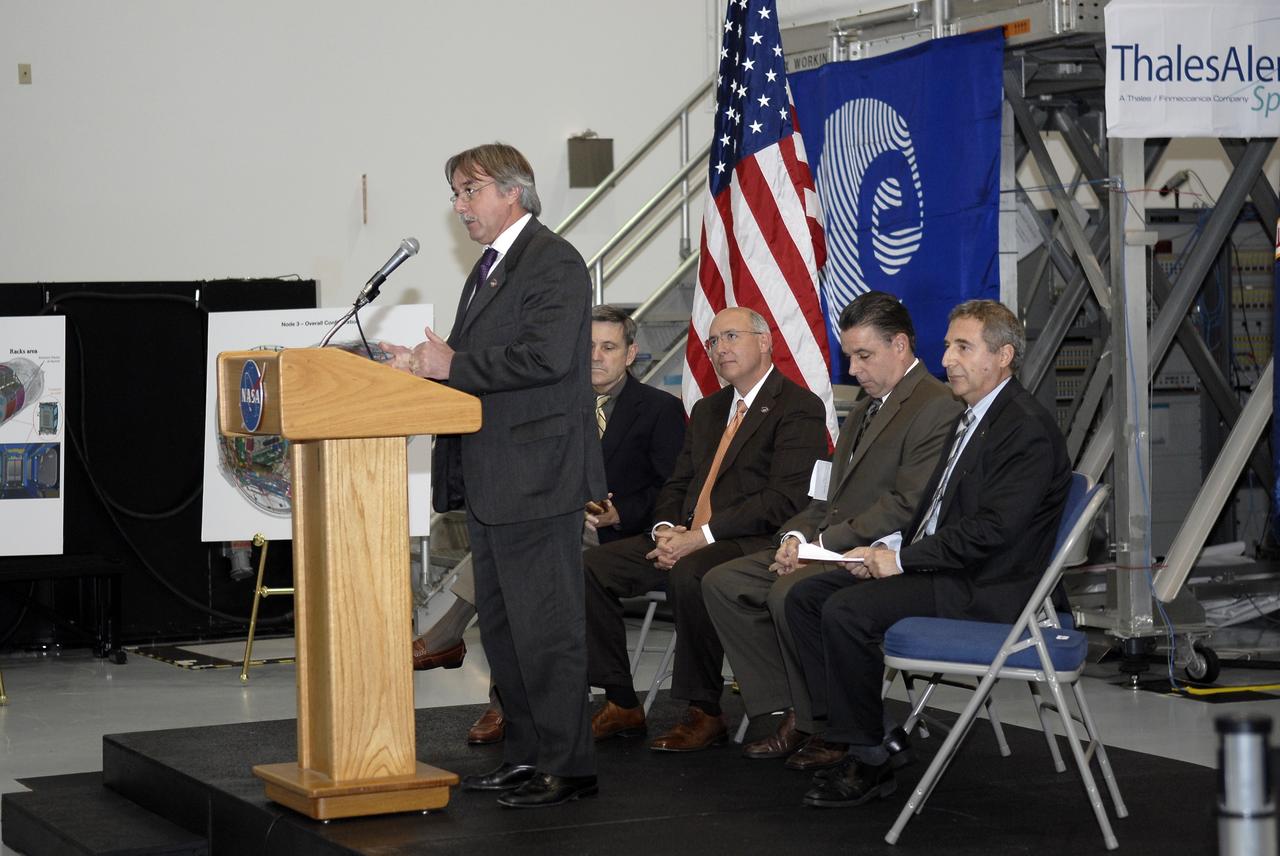
CAPE CANAVERAL, Fla. – In the Space Station Processing Facility at NASA's Kennedy Space Center in Florida, Secondino Brondolo, head of the Space Infrastructure, Thales Alenia Space Italy, addresses the invited guests at a ceremony transferring the ownership of node 3 for the International Space Station from the European Space Agency, or ESA, to NASA. Seated, from left, are Bob Cabana, Kennedy Space Center director; Michael Suffredini, program manager, International Space Station, NASA; William Dowdell, deputy for Operations, International Space Station and Spacecraft Processing, Kennedy; and Bernardo Patti, head of International Space Station, Program Department, ESA. Node 3 is named "Tranquility" after the Sea of Tranquility, the lunar landing site of Apollo 11. The payload for the STS-130 mission, Tranquility is a pressurized module that will provide room for many of the International Space Station's life support systems. The module was built for ESA by Thales Alenia Space in Turin, Italy. Attached to one end of Tranquility is a cupola, a unique work station with six windows on its sides and one on top. The cupola resembles a circular bay window and will provide a vastly improved view of the station's exterior. Just under 10 feet in diameter, the module will accommodate two crew members and portable workstations that can control station and robotic activities. The multi-directional view will allow the crew to monitor spacewalks and docking operations, as well as provide a spectacular view of Earth and other celestial objects. Space shuttle Endeavour's STS-130 mission is targeted to launch Feb. 4, 2010. Photo credit: NASA/Kim Shiflett
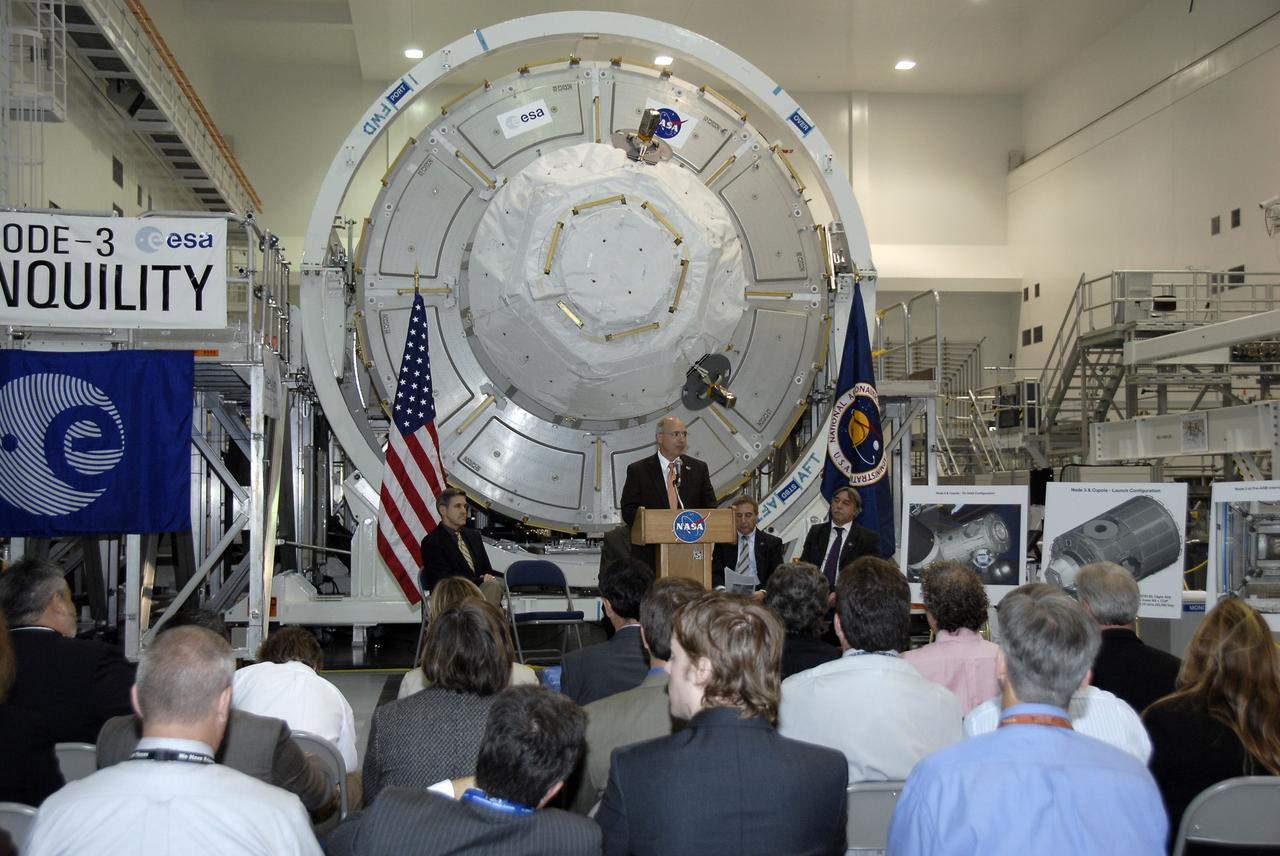
CAPE CANAVERAL, Fla. – In the Space Station Processing Facility at NASA's Kennedy Space Center in Florida, Michael Suffredini, program manager, International Space Station, NASA, addresses the invited guests at a ceremony transferring the ownership of node 3 for the International Space Station, looming in the background, from the European Space Agency, or ESA, to NASA. Seated, from left, are Bob Cabana, Kennedy Space Center director; Bernardo Patti, head of International Space Station, Program Department, ESA; and Secondino Brondolo, head of the Space Infrastructure, Thales Alenia Space Italy. Node 3 is named "Tranquility" after the Sea of Tranquility, the lunar landing site of Apollo 11. The payload for the STS-130 mission, Tranquility is a pressurized module that will provide room for many of the International Space Station's life support systems. The module was built for ESA by Thales Alenia Space in Turin, Italy. Attached to one end of Tranquility is a cupola, a unique work station with six windows on its sides and one on top. The cupola resembles a circular bay window and will provide a vastly improved view of the station's exterior. Just under 10 feet in diameter, the module will accommodate two crew members and portable workstations that can control station and robotic activities. The multi-directional view will allow the crew to monitor spacewalks and docking operations, as well as provide a spectacular view of Earth and other celestial objects. Space shuttle Endeavour's STS-130 mission is targeted to launch Feb. 4, 2010. Photo credit: NASA/Kim Shiflett
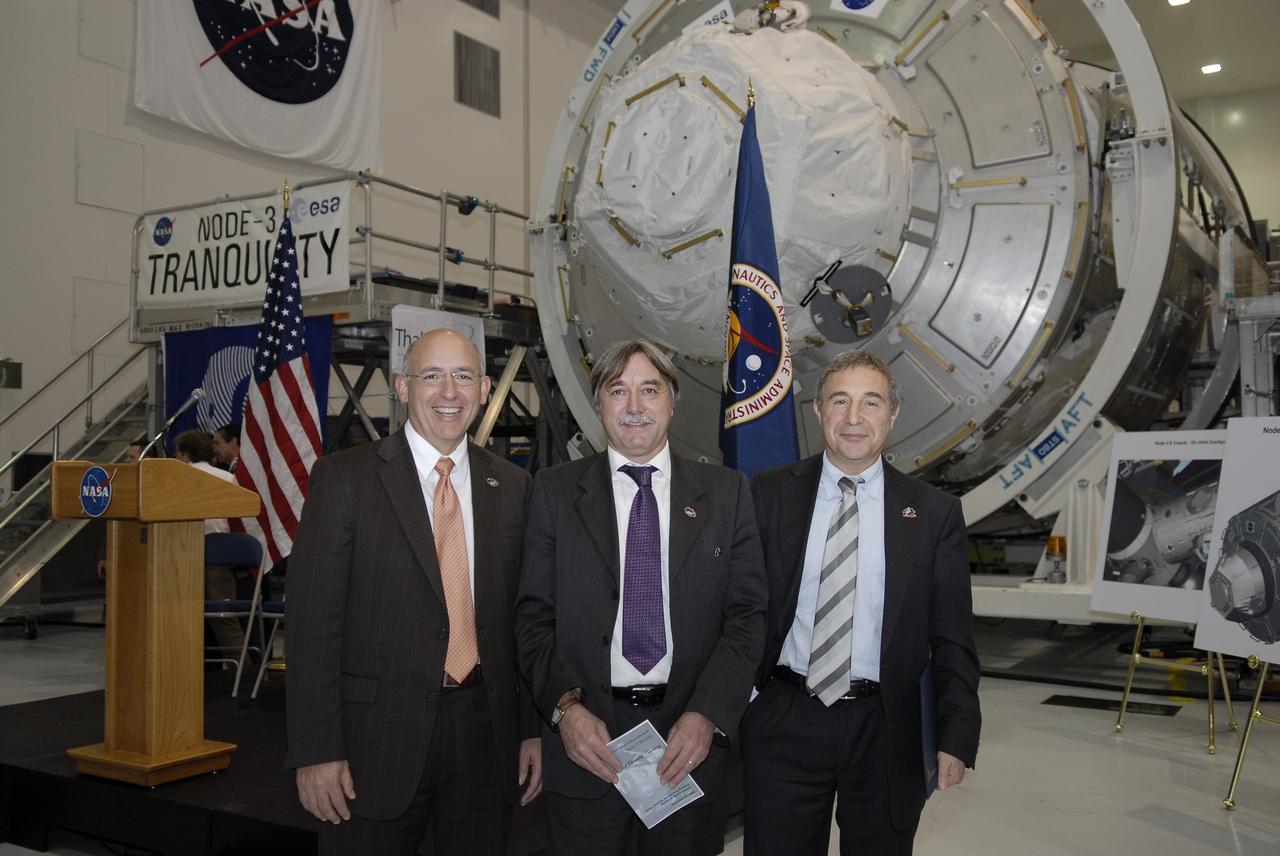
CAPE CANAVERAL, Fla. – In the Space Station Processing Facility at NASA's Kennedy Space Center in Florida, from left, Michael Suffredini, program manager, International Space Station, NASA; Secondino Brondolo, head of the Space Infrastructure, Thales Alenia Space Italy; and Bernardo Patti, head of International Space Station, Program Department, ESA, are photographed in front of node 3 for the International Space Station following a ceremony transferring the ownership of the node from the European Space Agency, or ESA, to NASA. Node 3 is named "Tranquility" after the Sea of Tranquility, the lunar landing site of Apollo 11. The payload for the STS-130 mission, Tranquility is a pressurized module that will provide room for many of the International Space Station's life support systems. The module was built for ESA by Thales Alenia Space in Turin, Italy. Attached to one end of Tranquility is a cupola, a unique work station with six windows on its sides and one on top. The cupola resembles a circular bay window and will provide a vastly improved view of the station's exterior. Just under 10 feet in diameter, the module will accommodate two crew members and portable workstations that can control station and robotic activities. The multi-directional view will allow the crew to monitor spacewalks and docking operations, as well as provide a spectacular view of Earth and other celestial objects. Space shuttle Endeavour's STS-130 mission is targeted to launch Feb. 4, 2010. Photo credit: NASA/Kim Shiflett