
NASA associate administrator for Science, Thomas Zurbuchen, left, makes closing remarks with Dr. Michael Freilich, right, at the conclusion of a renaming ceremony for the international ocean science satellite previously known as Sentinel-6A/Jason-CS, Tuesday, January 28, 2020, at NASA Headquarters in Washington. NASA and its European partners renamed the satellite Sentinel-6 Michael Freilich after NASA’s former director of the Earth Science division, Dr. Michael Freilich. Sentinel-6A Michael Freilich will observe and record global sea level changes and will be joined by an identical satellite slated to launch in 2025 for a total of ten years of targeted observations. Photo Credit: (NASA/Aubrey Gemignani)
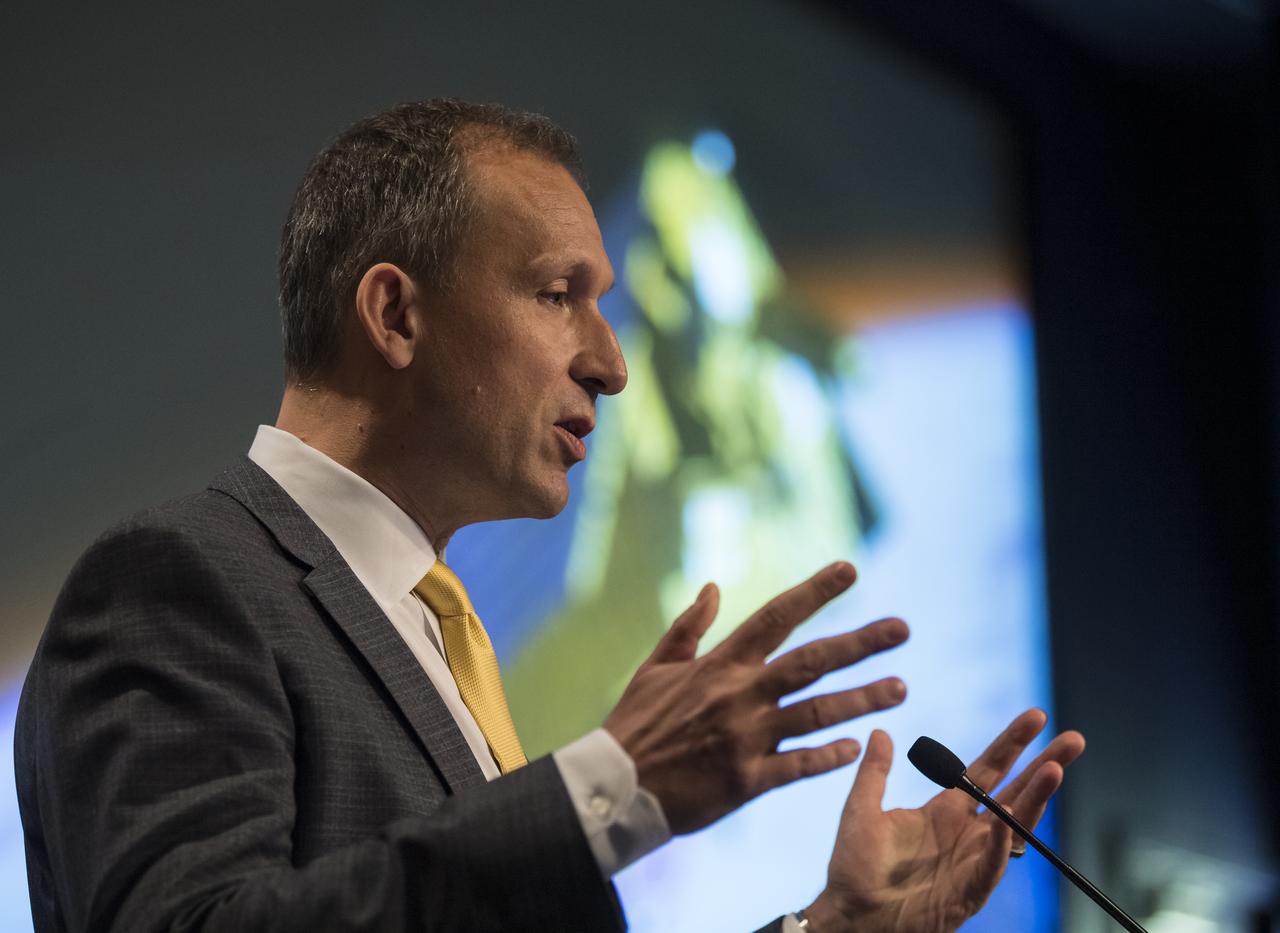
NASA associate administrator for Science, Thomas Zurbuchen, speaks at a renaming ceremony for the international ocean science satellite previously known as Sentinel-6A/Jason-CS, Tuesday, January 28, 2020, at NASA Headquarters in Washington. NASA and its European partners renamed the satellite Sentinel-6 Michael Freilich after NASA’s former director of the Earth Science division, Dr. Michael Freilich. Sentinel-6A Michael Freilich will observe and record global sea level changes and will be joined by an identical satellite slated to launch in 2025 for a total of ten years of targeted observations.” Photo Credit: (NASA/Aubrey Gemignani)

NASA associate administrator for Science, Thomas Zurbuchen, speaks at a renaming ceremony for the international ocean science satellite previously known as Sentinel-6A/Jason-CS, Tuesday, January 28, 2020, at NASA Headquarters in Washington. NASA and its European partners renamed the satellite Sentinel-6 Michael Freilich after NASA’s former director of the Earth Science division, Dr. Michael Freilich. Sentinel-6A Michael Freilich will observe and record global sea level changes and will be joined by an identical satellite slated to launch in 2025 for a total of ten years of targeted observations.” Photo Credit: (NASA/Aubrey Gemignani)
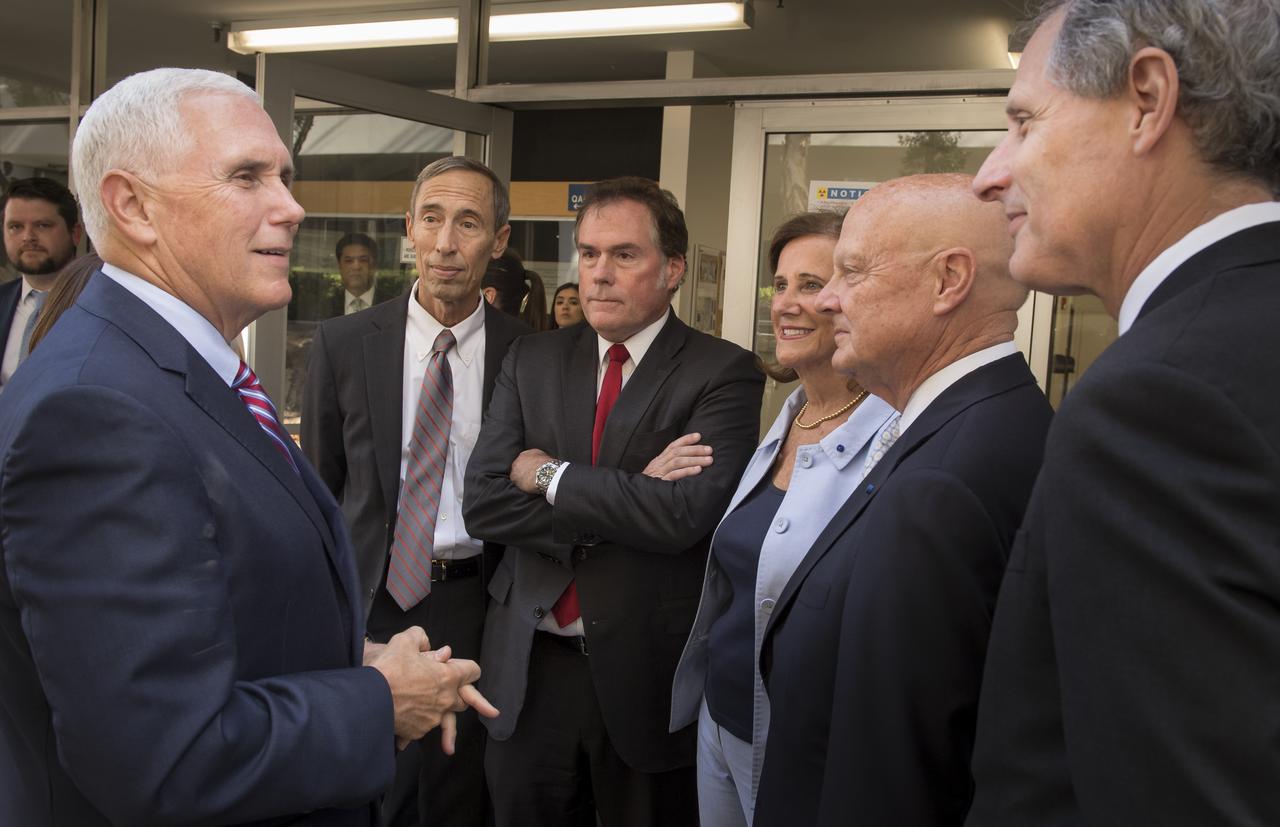
U.S. Vice President Mike Pence, left, thanks JPL Deputy Director Lt. Gen. (Ret) Larry James, JPL Director Michael Watkins, JPL Distinguished Visiting Scientist and Spouse of UAG Chairman James Ellis, Elisabeth Pate-Cornell , UAG Chairman, Admiral (Ret) James Ellis , and California Institute of Technology President Thomas Rosenbaum, right, for giving him a tour of NASA's Jet Propulsion Laboratory, Saturday, April 28, 2018 in Pasadena, California. Photo Credit: (NASA/Bill Ingalls)
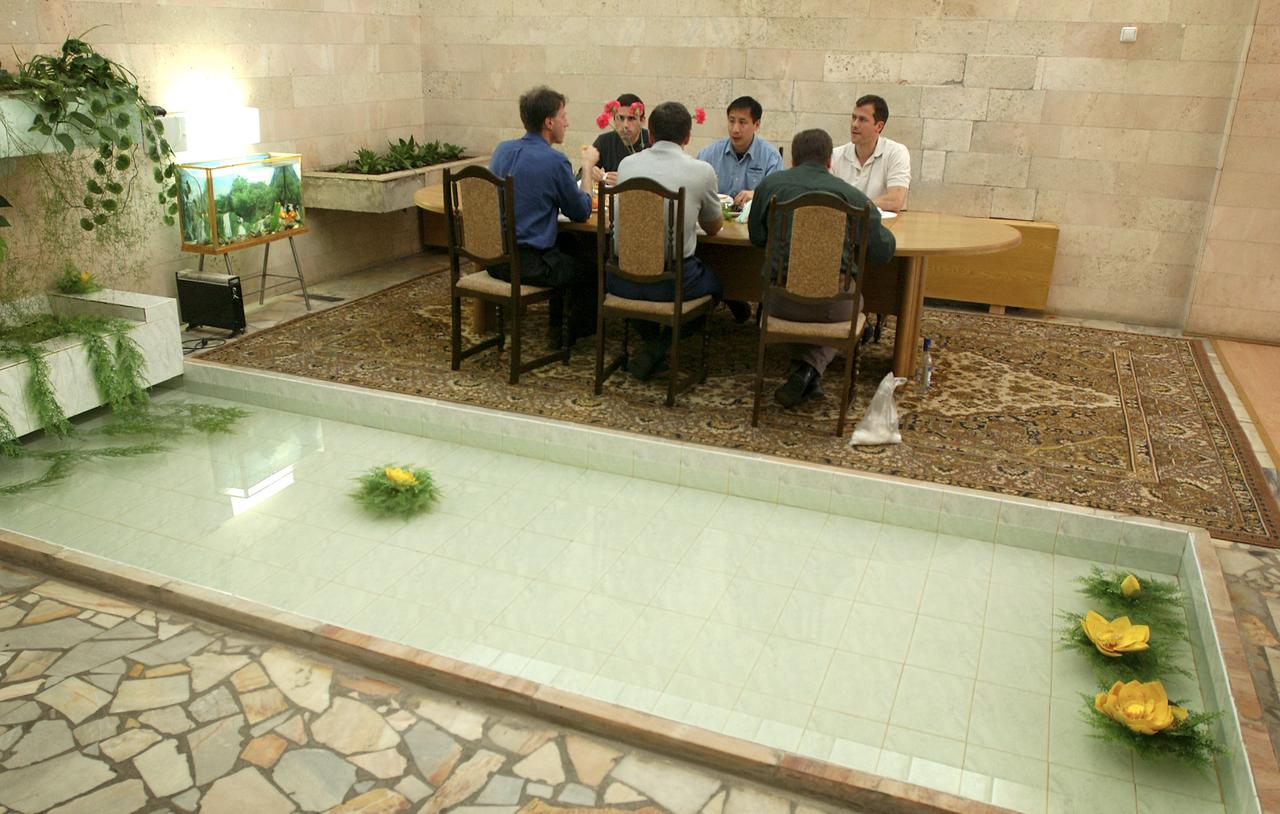
Expedition 7 Commander, Yuri I. Malenchenko, second from left, facing camera, NASA International Space Station Science Officer and Flight Engineer, Edward T. Lu, center, and prime crew Flight Surgeon Thomas Marshburn eat dinner at the Cosmonaut Hotel along with the backup crew members, astronaut Michael Foale, left, back to camera, cosmonaut Alexander Kaleri, center, back to camera, and an unidentified Russian flight surgeon in Baikonur, Kazakhstan, Wednesday, April 9, 2003. Photo Credit: (NASA/Bill Ingalls)
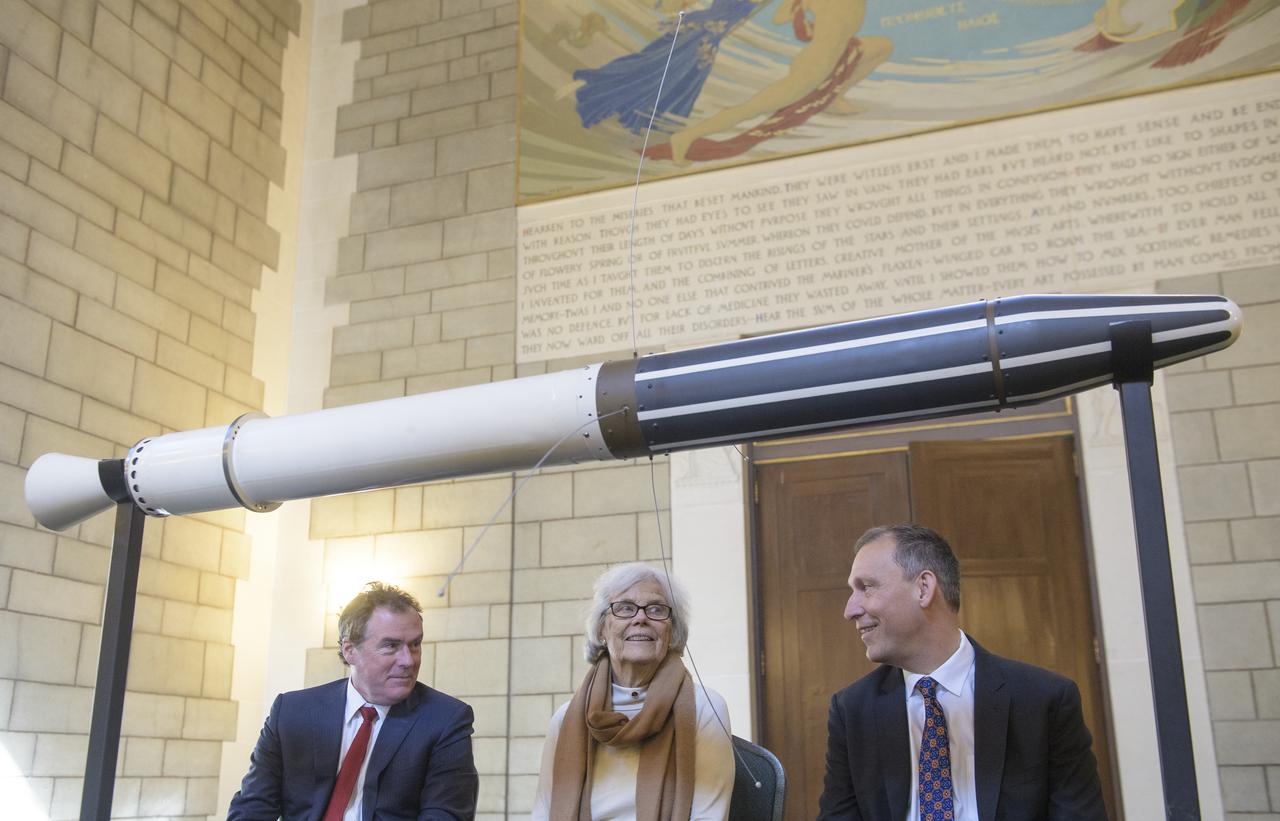
Michael Watkins, Director of NASA's Jet Propulsion Laboratory, left, Susan Finley, who began working at NASA's Jet Propulsion Laboratory in January 1958 as a "human computer", center, and Thomas Zurbuchen, Associate Administrator for NASA's Science Mission Directorate, right, pose for a picture with a replica of the Explorer 1 satellite during an event celebrating the 60th Anniversary of the Explorer 1 mission and the discovery of Earth's radiation belts, Wednesday, Jan. 31, 2018, at the National Academy of Sciences in Washington. The first U.S. satellite, Explorer 1, was launched from Cape Canaveral on January 31, 1958. The 30-pound satellite would yield a major scientific discovery, the Van Allen radiation belts circling our planet, and begin six decades of groundbreaking space science and human exploration. (NASA/Joel Kowsky)
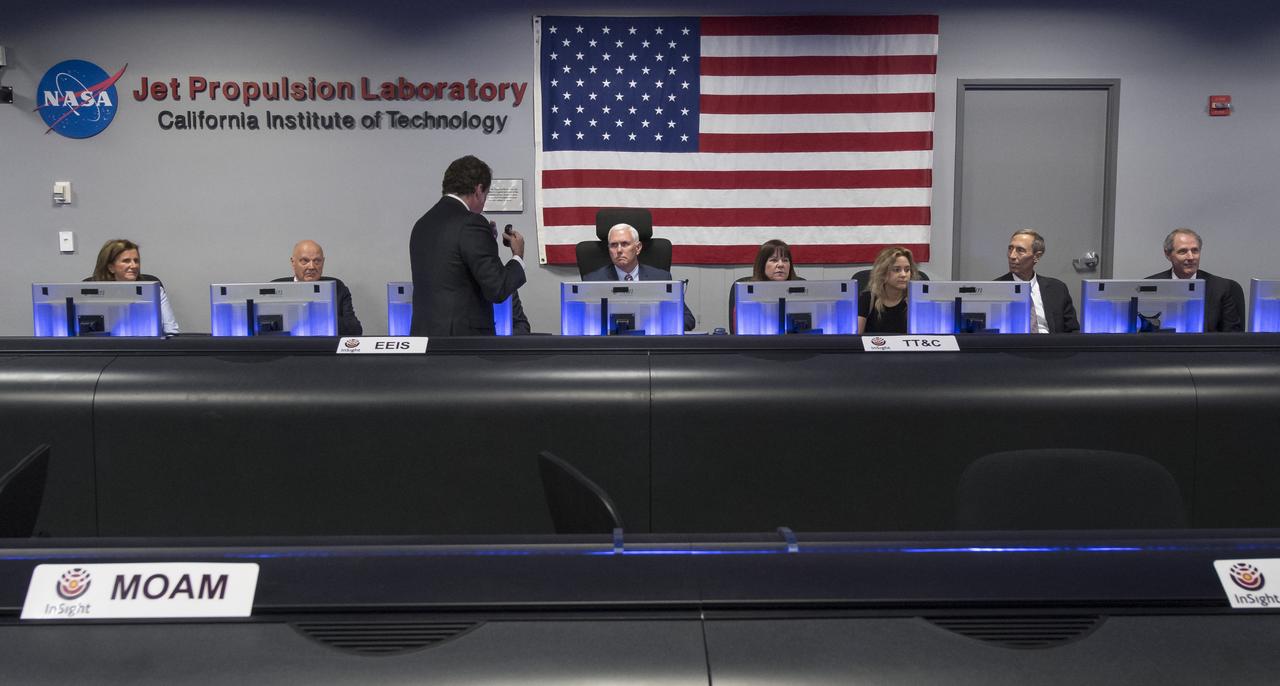
JPL Director Michael Watkins, standing, explains the history of NASA's Jet Propulsion Laboratory and the use of the Mission Support Area to Vice President Mike Pence, seated next to his wife Karen and daughter Charlotte Pence, during a tour of JPL, Saturday, April 28, 2018 in Pasadena, California. Joining the Vice President was, JPL Distinguished Visiting Scientist and Spouse of UAG Chairman James Ellis, Elisabeth Pate-Cornell, left, UAG Chairman, Admiral (Ret) James Ellis, JPL Deputy Director Lt. Gen. (Ret) Larry James, and California Institute of Technology President Thomas Rosenbaum. Photo Credit: (NASA/Bill Ingalls)
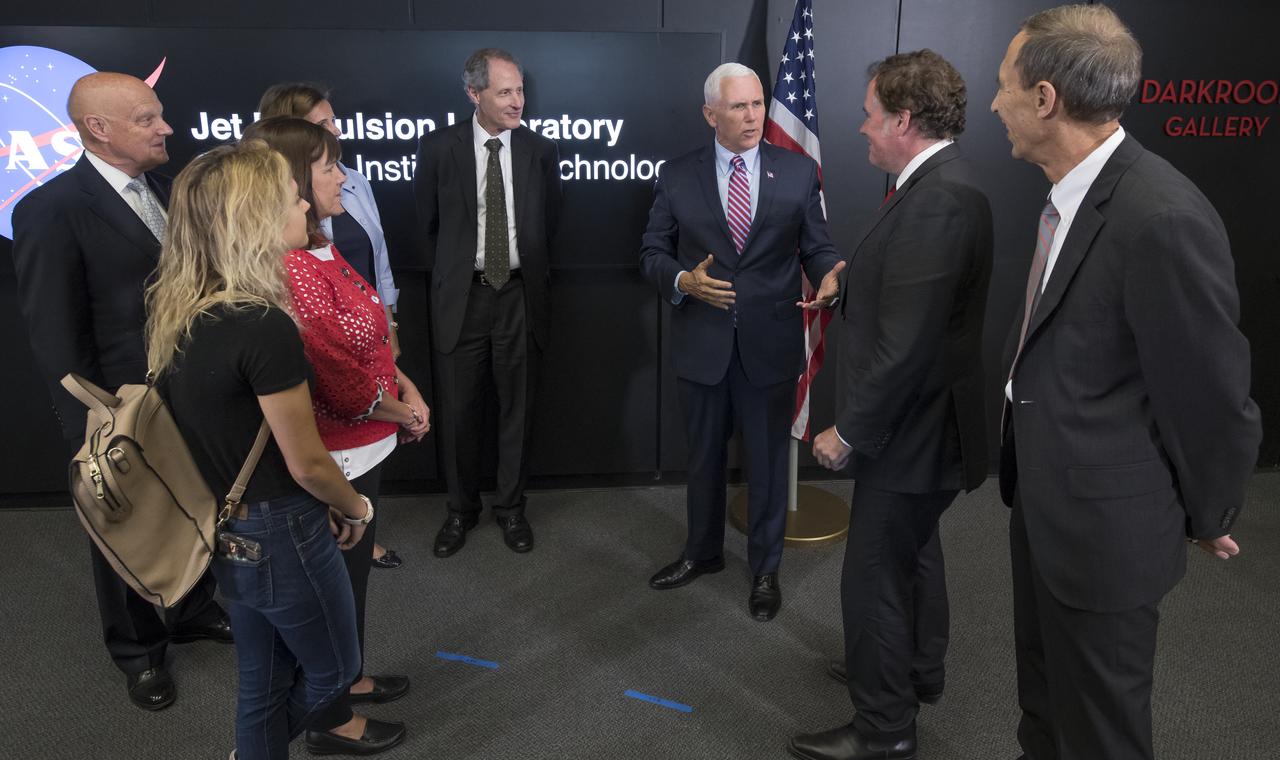
U.S. Vice President Mike Pence, 3rd from right, tours NASA's Jet Propulsion Laboratory along with his wife Karen, and daughter Charlotte, Saturday, April 28, 2018 in Pasadena, California. Joining the Vice President t and his family on the tour are: UAG Chairman, Admiral (Ret) James Ellis , left, JPL Distinguished Visiting Scientist and Spouse of UAG Chairman James Ellis, Elisabeth Pate-Cornell, behind Mrs. Pence, California Institute of Technology President Thomas Rosenbaum, JPL Director Michael Watkins, and JPL Deputy Director Lt. Gen. (Ret) Larry James, right. Photo Credit: (NASA/Bill Ingalls)
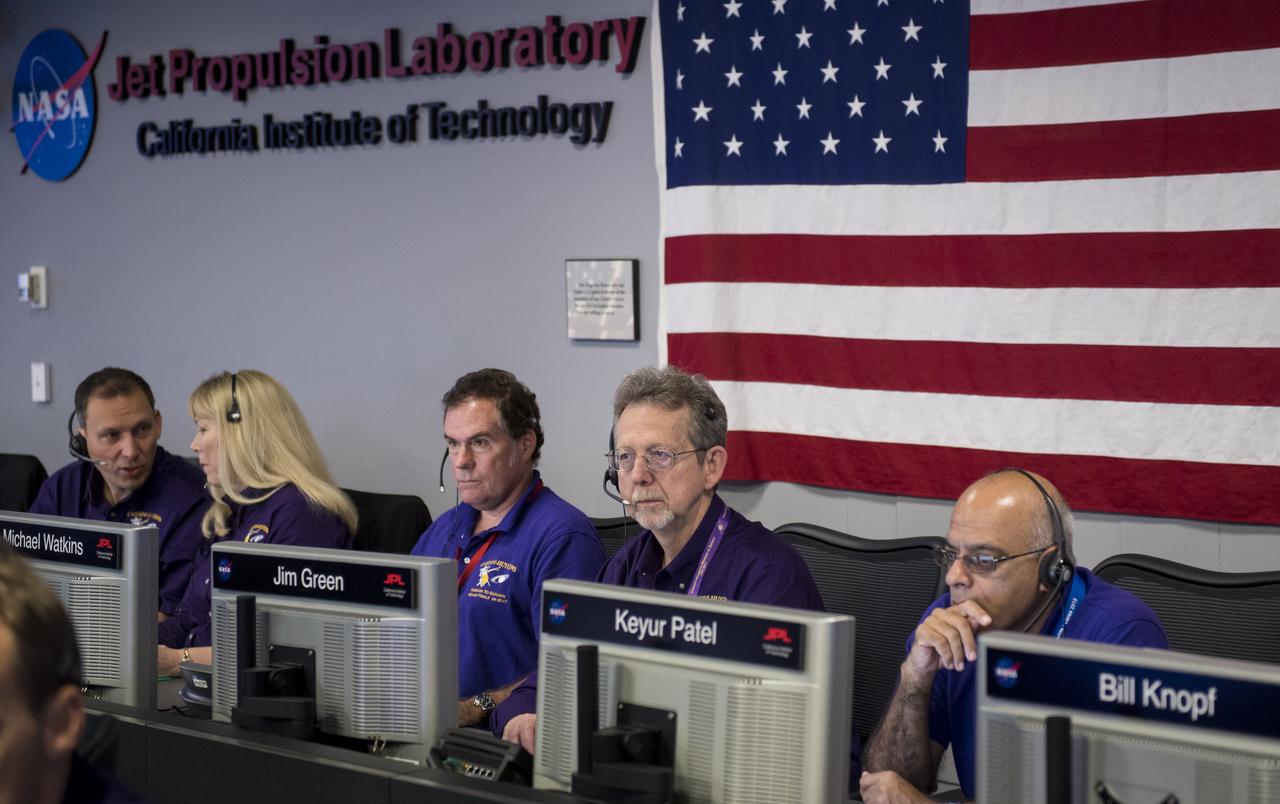
Associate administrator for NASA's Science Mission Directorate Thomas Zurbuchen, left, Cassini project scientist at JPL, Linda Spilker, second from left, director of NASA's Jet Propulsion Laboratory, Michael Watkins, center, director of NASA's Planetary Science Division, Jim Green, second from right, and director of the interplanetary network directorate at NASA's Jet Propulsion Laboratory, Keyur Patel, left, are seen in mission control, Friday, Sept. 15, 2017 at NASA's Jet Propulsion Laboratory in Pasadena, California. Since its arrival in 2004, the Cassini-Huygens mission has been a discovery machine, revolutionizing our knowledge of the Saturn system and captivating us with data and images never before obtained with such detail and clarity. On Sept. 15, 2017, operators deliberately plunged the spacecraft into Saturn, as Cassini gathered science until the end. Loss of contact with the Cassini spacecraft occurred at 7:55 a.m. EDT (4:55 a.m. PDT). The “plunge” ensures Saturn’s moons will remain pristine for future exploration. During Cassini’s final days, mission team members from all around the world gathered at NASA’s Jet Propulsion Laboratory, Pasadena, California, to celebrate the achievements of this historic mission. Photo Credit: (NASA/Joel Kowsky)
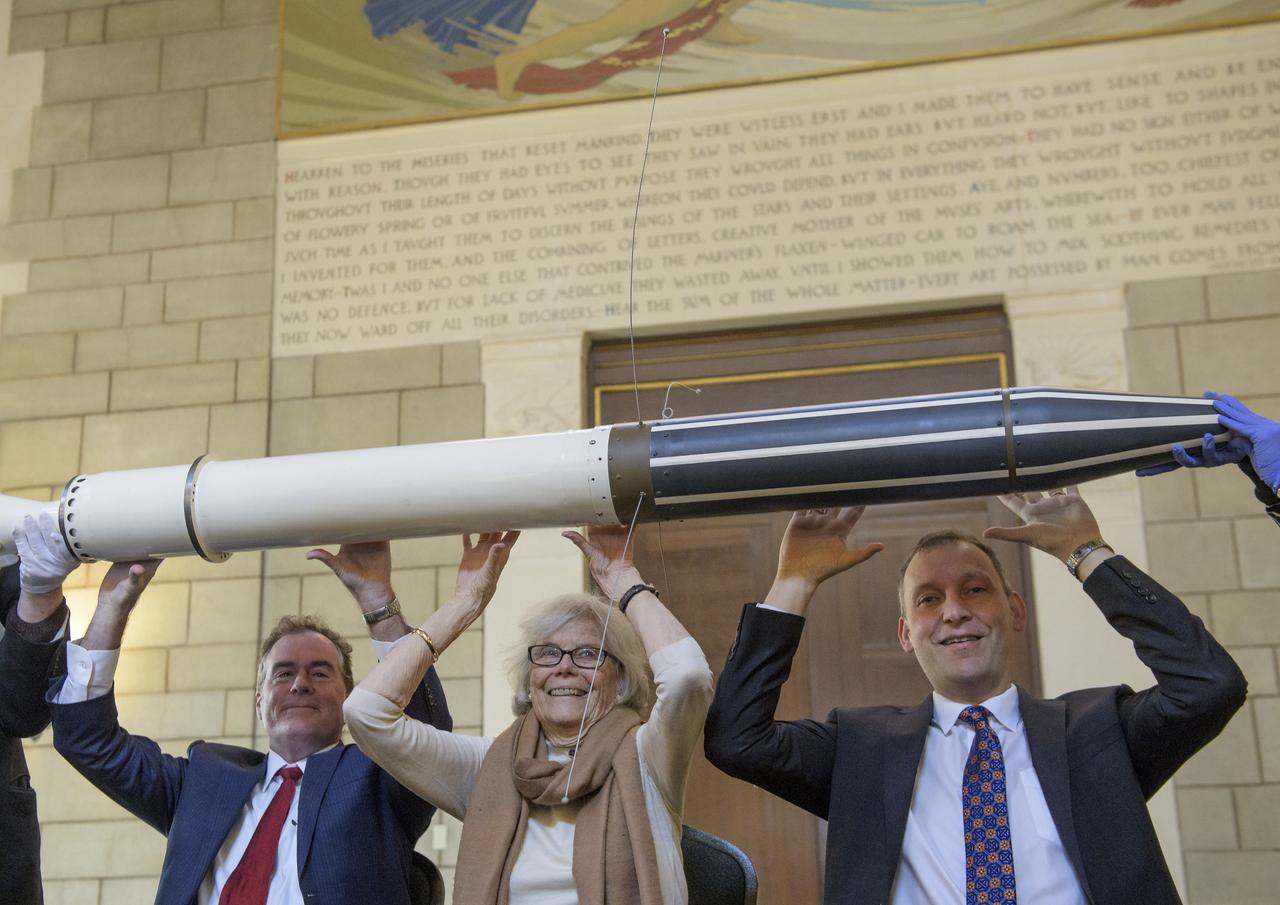
Michael Watkins, Director of NASA's Jet Propulsion Laboratory, left, Susan Finley, who began working at NASA's Jet Propulsion Laboratory in January 1958 as a "human computer", center, and Thomas Zurbuchen, Associate Administrator for NASA's Science Mission Directorate, right, reenact the famous picture of Dr. William H. Pickering, Dr. James A. van Allen, and Dr. Wernher von Braun, hoisting a model of Explorer 1 above their heads at a press conference announcing the satellite's success with a replica of the Explorer 1 satellite during an event celebrating the 60th Anniversary of the Explorer 1 mission and the discovery of Earth's radiation belts, Wednesday, Jan. 31, 2018, at the National Academy of Sciences in Washington. The first U.S. satellite, Explorer 1, was launched from Cape Canaveral on January 31, 1958. The 30-pound satellite would yield a major scientific discovery, the Van Allen radiation belts circling our planet, and begin six decades of groundbreaking space science and human exploration. (NASA/Joel Kowsky)
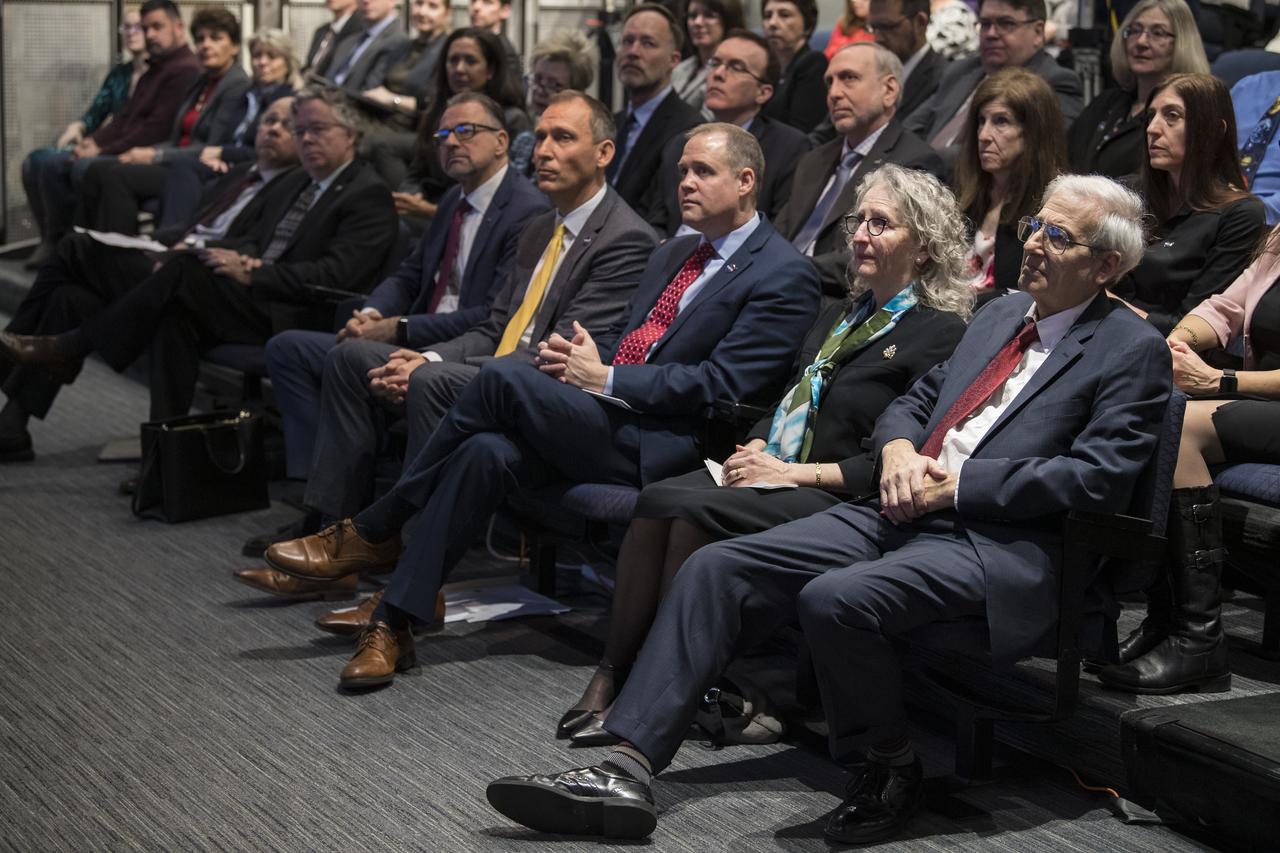
Front row, from left to right, EUMETSAT director-general, Alain Ratier; National Oceanic and Atmospheric Administration (NOAA) assistant administrator for Satellite and Information Services, Stephen Volz; ESA (European Space Agency) director of Earth Observation Programmes, Josef Aschbacher; NASA associate administrator for Science, Thomas Zurbuchen; NASA Administrator Jim Bridenstine; and Former director of NASA’s Earth Science Division, Mike Freilich and his wife are seen in the audience at a renaming ceremony for the international ocean science satellite previously known as Sentinel-6A/Jason-CS, Tuesday, January 28, 2020, at NASA Headquarters in Washington. NASA and its European partners renamed the satellite Sentinel-6 Michael Freilich after NASA’s former director of the Earth Science division, Dr. Michael Freilich. Sentinel-6A Michael Freilich will observe and record global sea level changes and will be joined by an identical satellite slated to launch in 2025 for a total of ten years of targeted observations. Photo Credit: (NASA/Aubrey Gemignani)
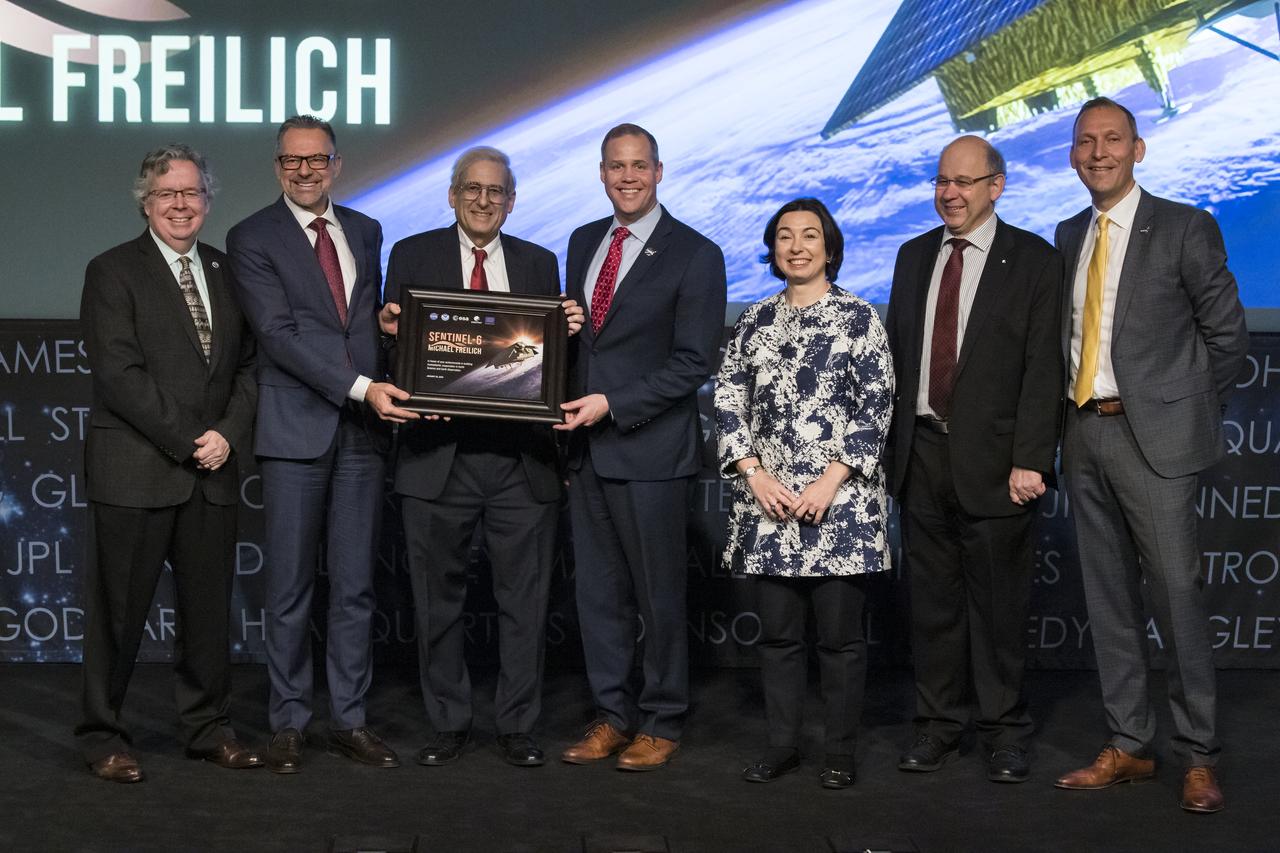
From left to right, National Oceanic and Atmospheric Administration (NOAA) assistant administrator for Satellite and Information Services, Stephen Volz; ESA (European Space Agency) director of Earth Observation Programmes, Josef Aschbacher; Former director of NASA’s Earth Science Division, Mike Freilich; NASA Administrator Jim Bridenstine; Head of Global Issues and Innovation of the European Union delegation to the United States, Mercedes Garcia Pérez; EUMETSAT director-general, Alain Ratier; and NASA associate administrator for Science, Thomas Zurbuchen pose for a group photo at the conclusion of a renaming ceremony for the international ocean science satellite previously known as Sentinel-6A/Jason-CS, Tuesday, January 28, 2020, at NASA Headquarters in Washington. NASA and its European partners renamed the satellite Sentinel-6 Michael Freilich after Dr. Freilich. Sentinel-6A Michael Freilich will observe and record global sea level changes and will be joined by an identical satellite slated to launch in 2025 for a total of ten years of targeted observations. Photo Credit: (NASA/Aubrey Gemignani)
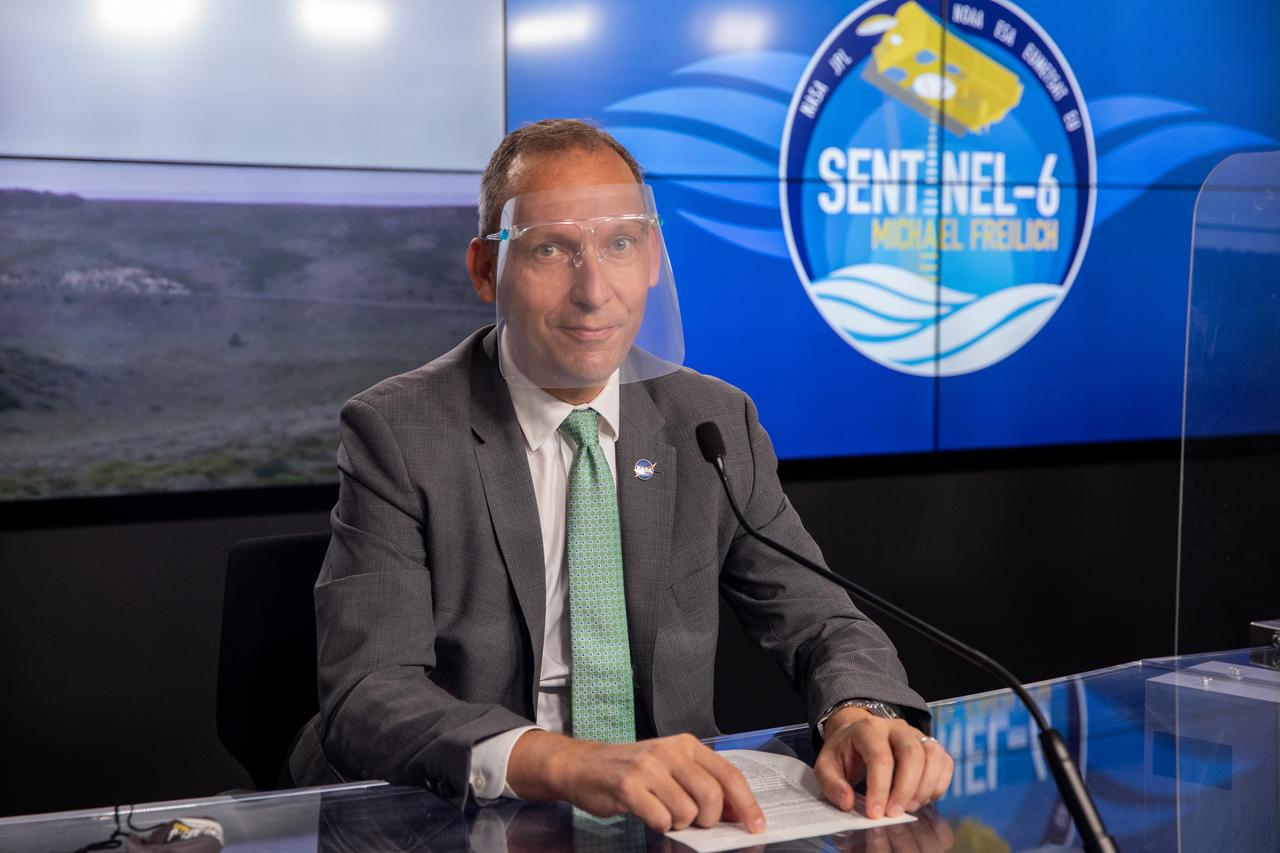
Thomas Zurbuchen, associate administrator for Science Mission Directorate at NASA Headquarters, participates in a prelaunch news conference for the Sentinel-6 Michael Freilich mission at Vandenberg Air Force Base in California on Nov. 20, 2020. The Sentinel-6/Jason-CS (Continuity of Service) mission consists of the Sentinel-6 Michael Freilich satellite, which will be followed by its twin, the Sentinel-6B satellite, in 2025. The Sentinel-6/Jason-CS mission is part of Copernicus, the European Union’s Earth observation program, managed by the European Commission. Continuing the legacy of the Jason series missions, Sentinel-6/Jason-CS will extend the records of sea level into their fourth decade, collecting accurate measurements of sea surface height for more than 90% of the world’s seas, and providing crucial information for operational oceanography, marine meteorology, and climate studies. Sentinel-6 Michael Freilich launched Nov. 21, 2020, at 9:17 PST (12:17 EST). NASA’s Launch Services Program at Kennedy Space Center was responsible for launch management.
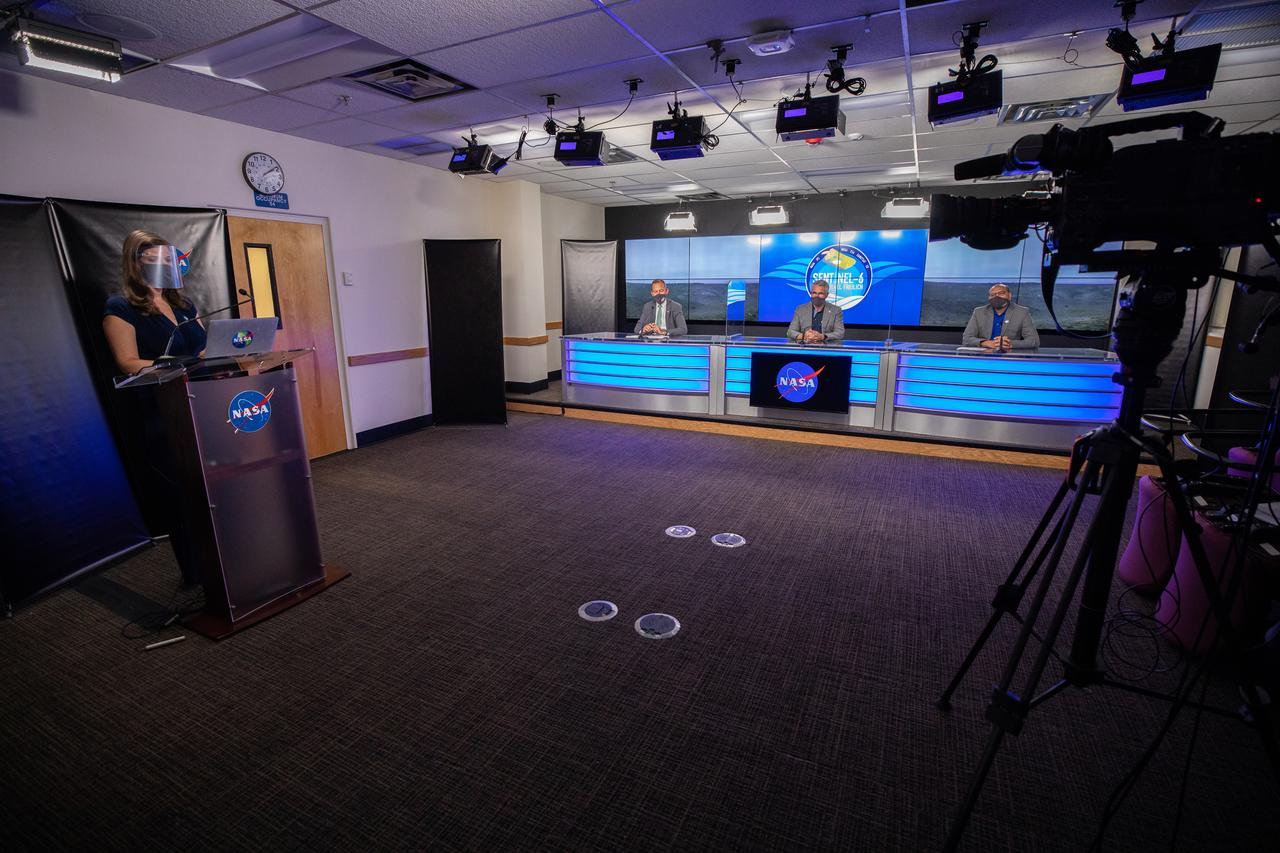
Mission and launch officials participate in a prelaunch news conference for the Sentinel-6 Michael Freilich mission at Vandenberg Air Force Base in California on Nov. 20, 2020. From left are Marina Jurica of NASA’s Jet Propulsion Laboratory in Pasadena; Thomas Zurbuchen, associate administrator for Science Mission Directorate at NASA Headquarters; Pierrik Vuilleumier, project manager, European Space Agency (ESA); and Parag Vaze, project manager, NASA’s Jet Propulsion Laboratory in Pasadena. The Sentinel-6/Jason-CS (Continuity of Service) mission consists of the Sentinel-6 Michael Freilich satellite, which will be followed by its twin, the Sentinel-6B satellite, in 2025. The Sentinel-6/Jason-CS mission is part of Copernicus, the European Union’s Earth observation program, managed by the European Commission. Continuing the legacy of the Jason series missions, Sentinel-6/Jason-CS will extend the records of sea level into their fourth decade, collecting accurate measurements of sea surface height for more than 90% of the world’s seas, and providing crucial information for operational oceanography, marine meteorology, and climate studies. Sentinel-6 Michael Freilich launched Nov. 21, 2020, at 9:17 PST (12:17 EST). NASA’s Launch Services Program at Kennedy Space Center was responsible for launch management.
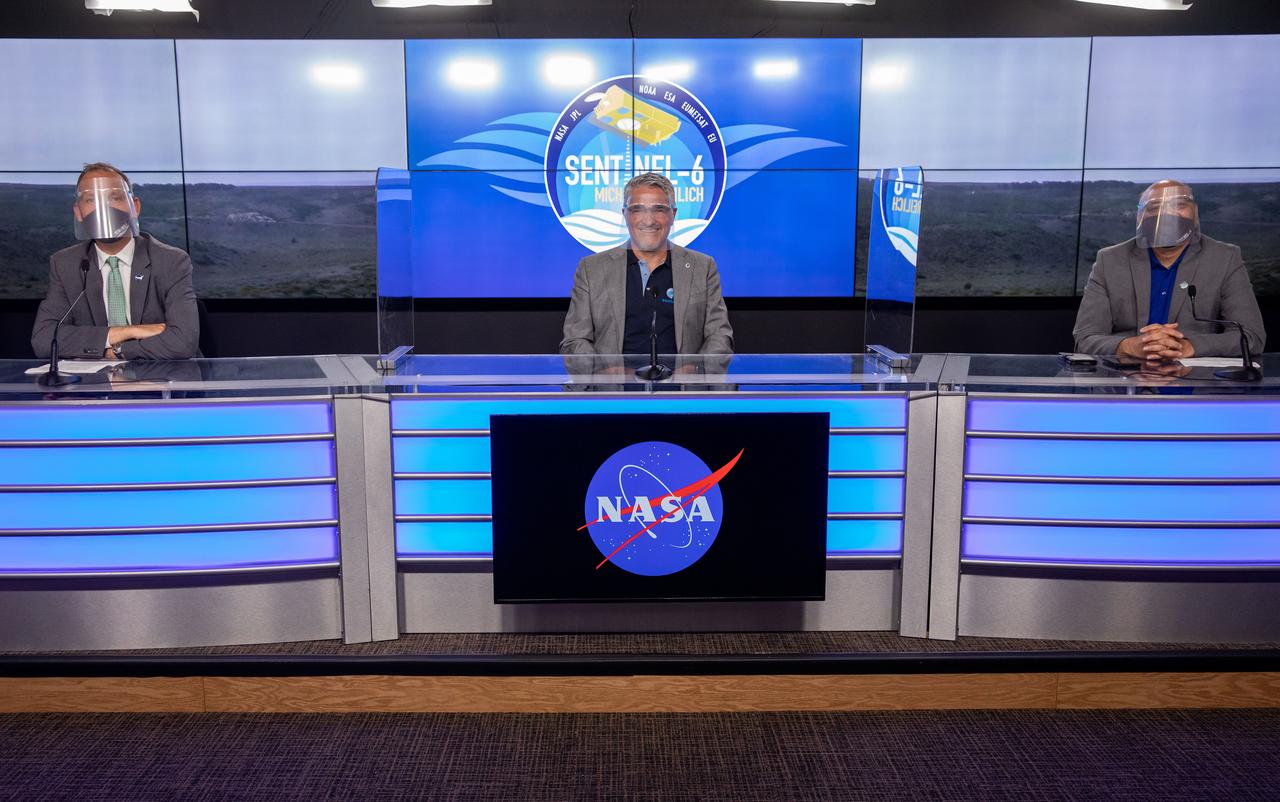
Mission and launch officials participate in a prelaunch news conference for the Sentinel-6 Michael Freilich mission at Vandenberg Air Force Base in California on Nov. 20, 2020. From left are Thomas Zurbuchen, associate administrator for Science Mission Directorate at NASA Headquarters; Pierrik Vuilleumier, project manager, European Space Agency (ESA); and Parag Vaze, project manager, NASA’s Jet Propulsion Laboratory in Pasadena. The Sentinel-6/Jason-CS (Continuity of Service) mission consists of the Sentinel-6 Michael Freilich satellite, which will be followed by its twin, the Sentinel-6B satellite, in 2025. The Sentinel-6/Jason-CS mission is part of Copernicus, the European Union’s Earth observation program, managed by the European Commission. Continuing the legacy of the Jason series missions, Sentinel-6/Jason-CS will extend the records of sea level into their fourth decade, collecting accurate measurements of sea surface height for more than 90% of the world’s seas, and providing crucial information for operational oceanography, marine meteorology, and climate studies. Sentinel-6 Michael Freilich launched Nov. 21, 2020, at 9:17 PST (12:17 EST). NASA’s Launch Services Program at Kennedy Space Center was responsible for launch management.
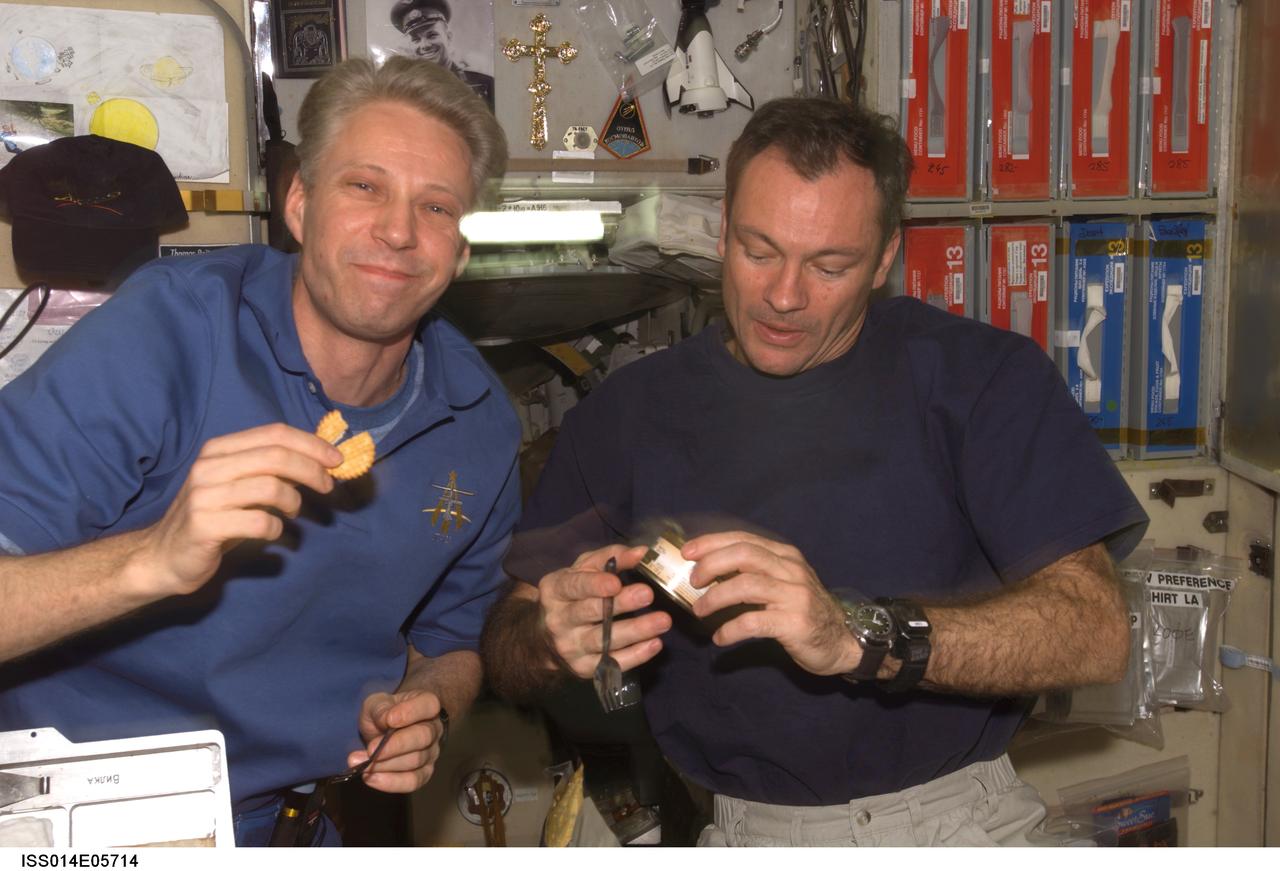
ISS014-E-05714 (15 Oct. 2006) --- Astronauts Michael E. Lopez-Alegria (right), Expedition 14 commander and NASA space station science officer, and Thomas Reiter, flight engineer representing the European Space Agency (ESA), share a meal in the Zvezda Service Module of the International Space Station.
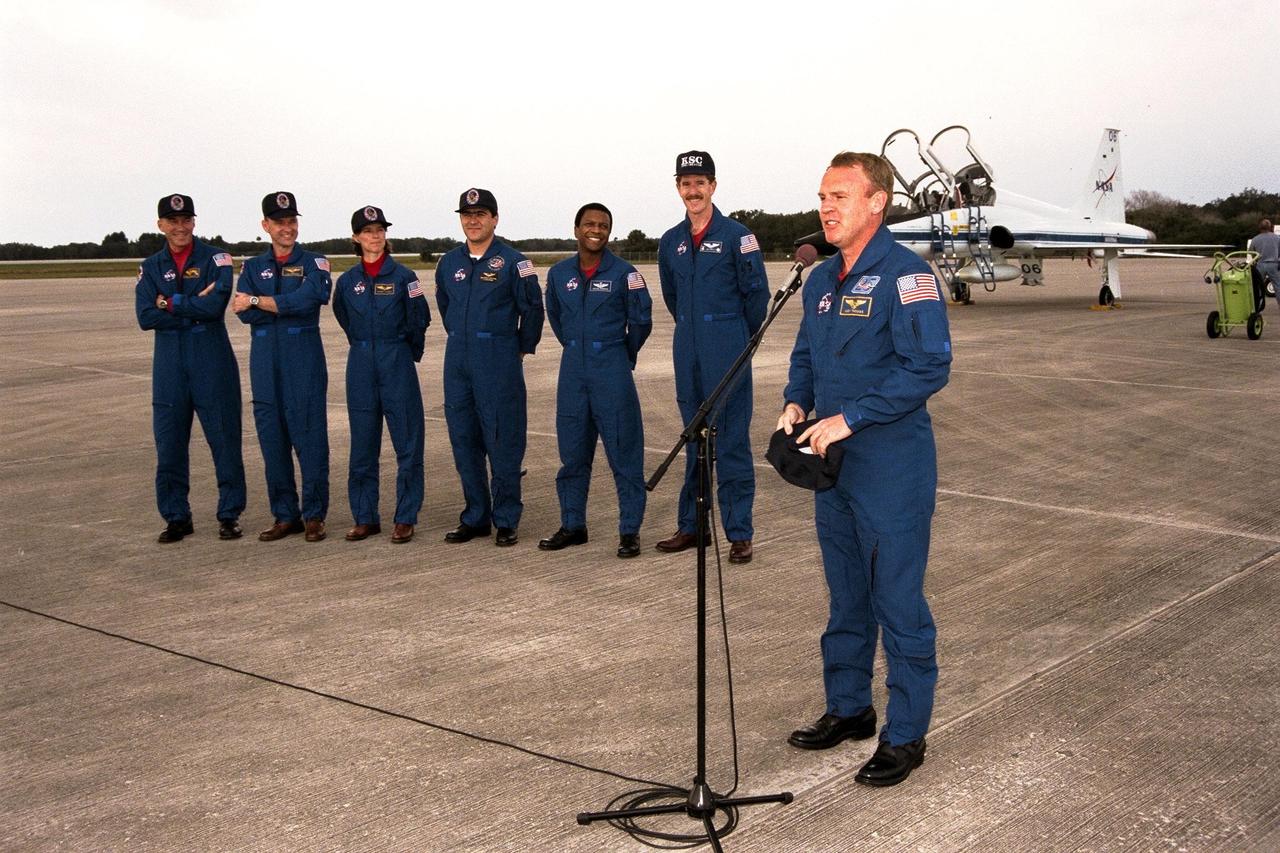
The STS-89 crew speak with the press after arriving at Kennedy Space Center's Shuttle Landing Facility in preparation for launch later this week. From left to right the crew include Commander Terrence Wilcutt; Pilot Joe Edwards Jr.; and Mission Specialists Bonnie Dunbar, Ph.D.; Salizhan Sharipov with the Russian Space Agency; Michael Anderson; James Reilly, Ph.D.; and Andrew Thomas, Ph.D. (at microphone). Dr. Thomas will succeed David Wolf, M.D., on the Russian Space Station Mir. Launch is scheduled for January 22 at 9:48 p.m. EST
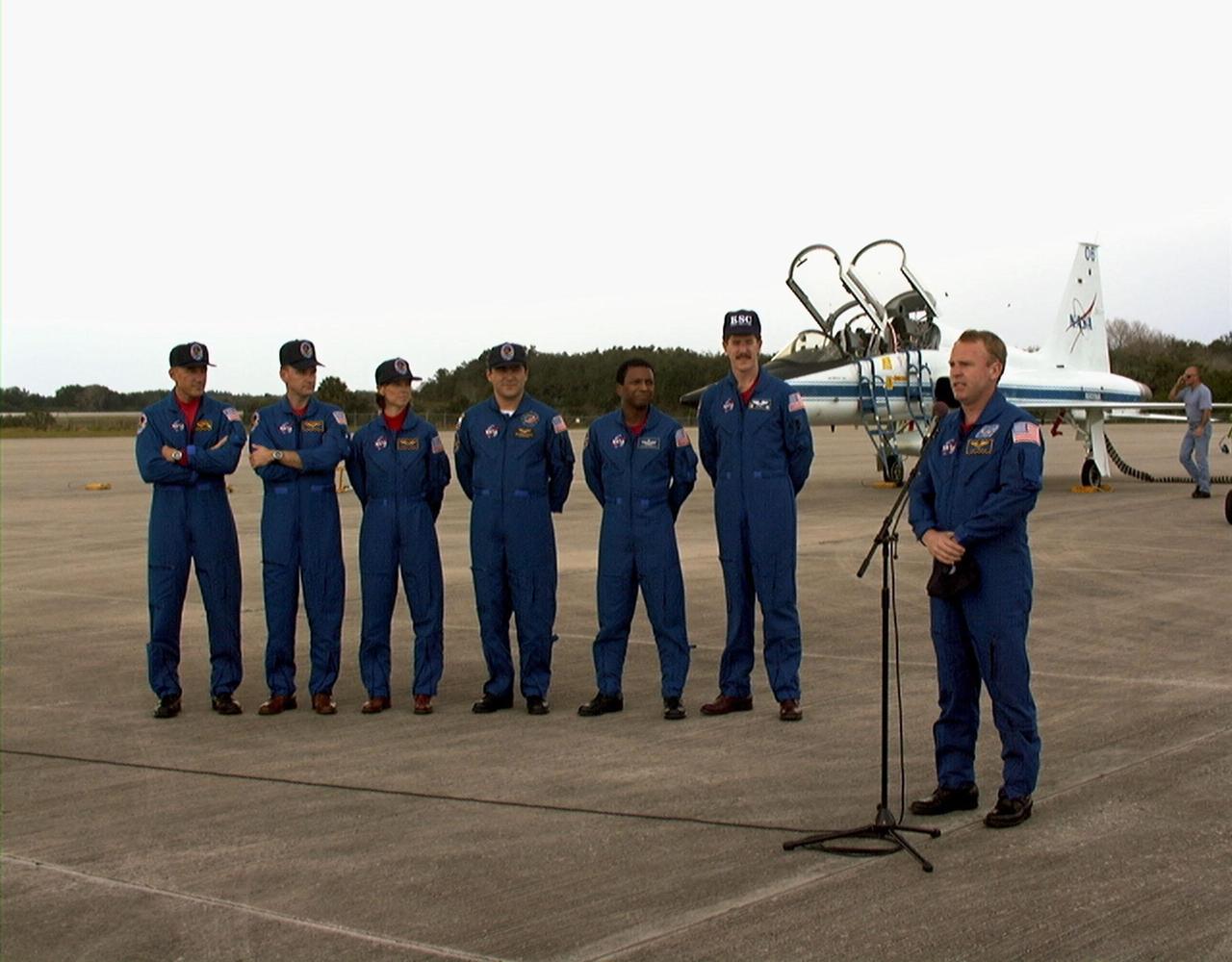
The STS-89 crew speak with the press after arriving at Kennedy Space Center's Shuttle Landing Facility in preparation for launch later this week. From left to right the crew include Commander Terrence Wilcutt; Pilot Joe Edwards Jr.; and Mission Specialists Bonnie Dunbar, Ph.D.; Salizhan Sharipov with the Russian Space Agency; Michael Anderson; James Reilly, Ph.D.; and Andrew Thomas, Ph.D. (at microphone). Dr. Thomas will succeed David Wolf, M.D., on the Russian Space Station Mir. Launch is scheduled for January 22 at 9:48 p.m. EST
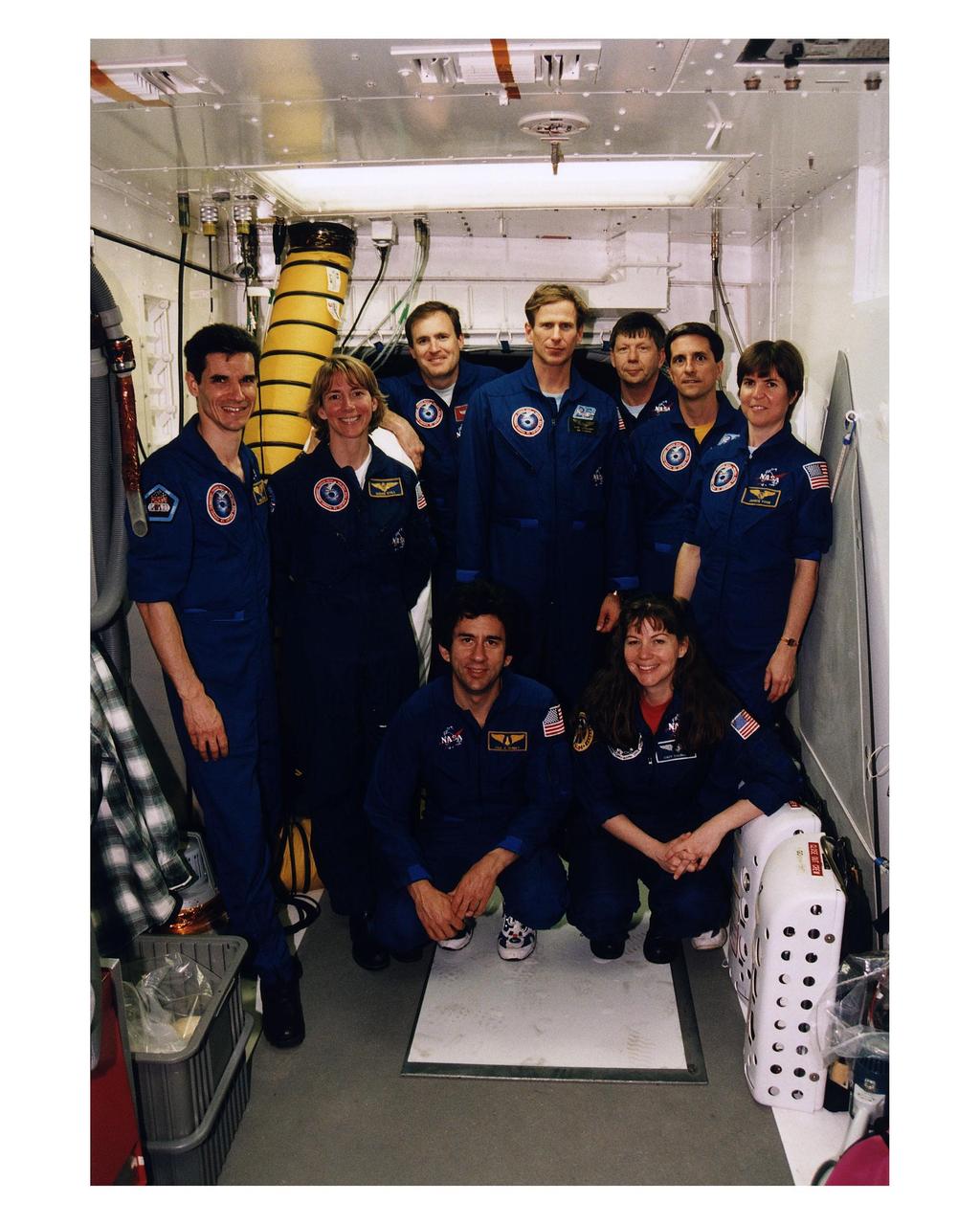
The STS-83 crew poses in the White Room at Launch Complex 39A during the crew's <a href="http://www-pao.ksc.nasa.gov/kscpao/release/1997/40-97.htm">Terminal Countdown Demonstration Test (TCDT).</a> From left to right, standing, they are Payload Specialist Gregory T. Linteris, Pilot Susan L. Still, Mission Commander James D. Halsell, Mission Specialist Michael L. Gernhardt, Payload Specialist Roger K. Crouch, and Mission Specialists Donald Thomas and Janice E. Voss. Cady Coleman, the backup Mission Specialist for Donald Thomas, is kneeling on the right
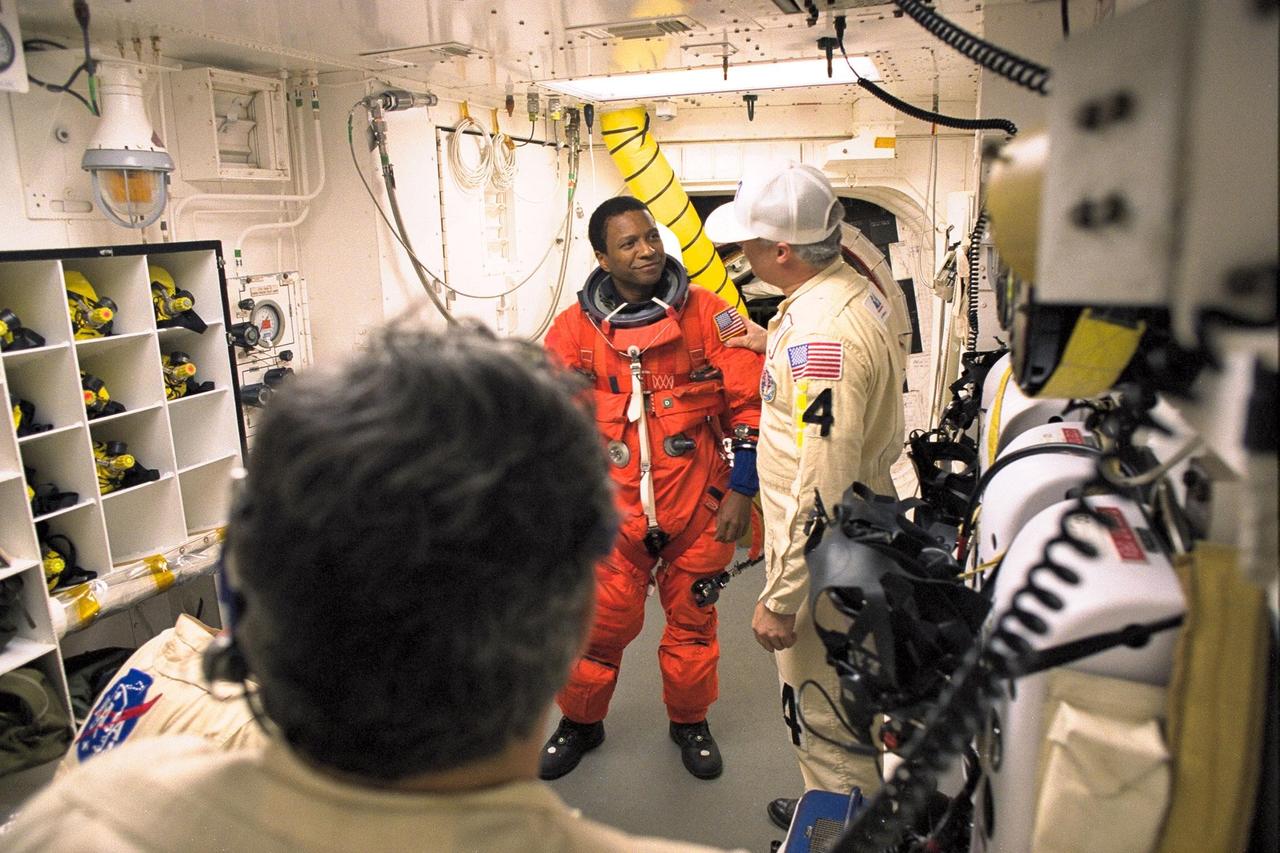
STS-89 Mission Specialist Michael Anderson is assisted with his ascent and re-entry flight suit in the white room at Launch Pad 39A before entering Space Shuttle Endeavour for launch. The STS-89 mission will be the eighth docking of the Space Shuttle with the Russian Space Station Mir. After docking, Mission Specialist Andrew Thomas, Ph.D., will transfer to the space station, succeeding David Wolf, M.D., who will return to Earth aboard Endeavour. Dr. Thomas will live and work on Mir until June. STS-89 is scheduled for a Jan. 22 liftoff at 9:48 p.m
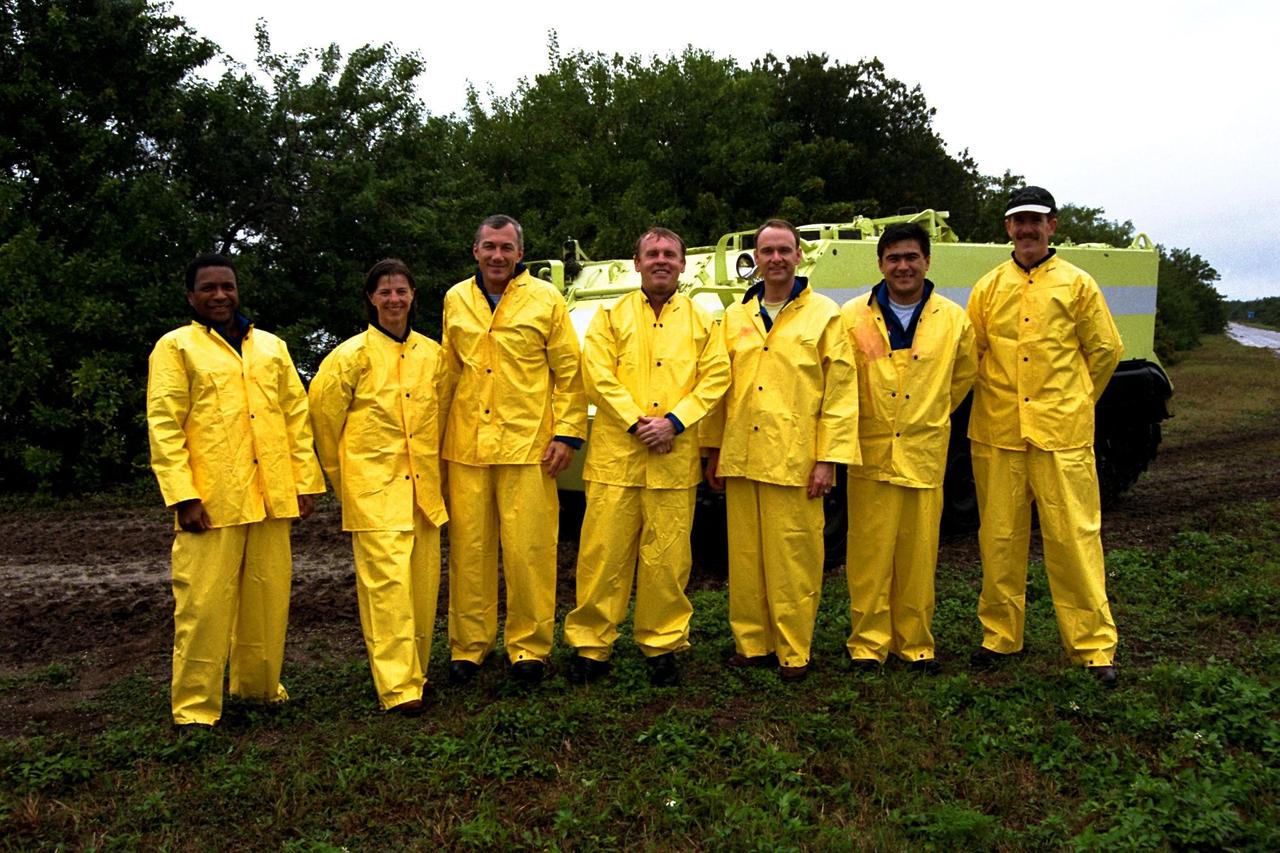
The STS-89 crew pose in front of an M-113 armored personnel carrier while participating in Terminal Countdown Demonstration Test (TCDT) activities. The TCDT is held at KSC prior to each Space Shuttle flight to provide crews with an opportunity to participate in simulated countdown activities. Posing, from left to right, are Mission Specialists Michael Anderson and Bonnie Dunbar, Ph.D.; Commander Terrence Wilcutt; Mission Specialist Andrew Thomas, Ph.D.; Pilot Joe Edwards Jr.; and Mission Specialists Salizhan Sharipov of the Russian Space Agency and James Reilly, Ph.D. The STS-89 mission will be the eighth docking of the Space Shuttle with the Russian Space Station Mir. After docking, Dr. Thomas will transfer to the space station, succeeding David Wolf, M.D., who will return to Earth aboard Endeavour. Dr. Thomas will live and work on Mir until June. STS-89 is scheduled for a Jan. 22 liftoff at 9:48 p.m
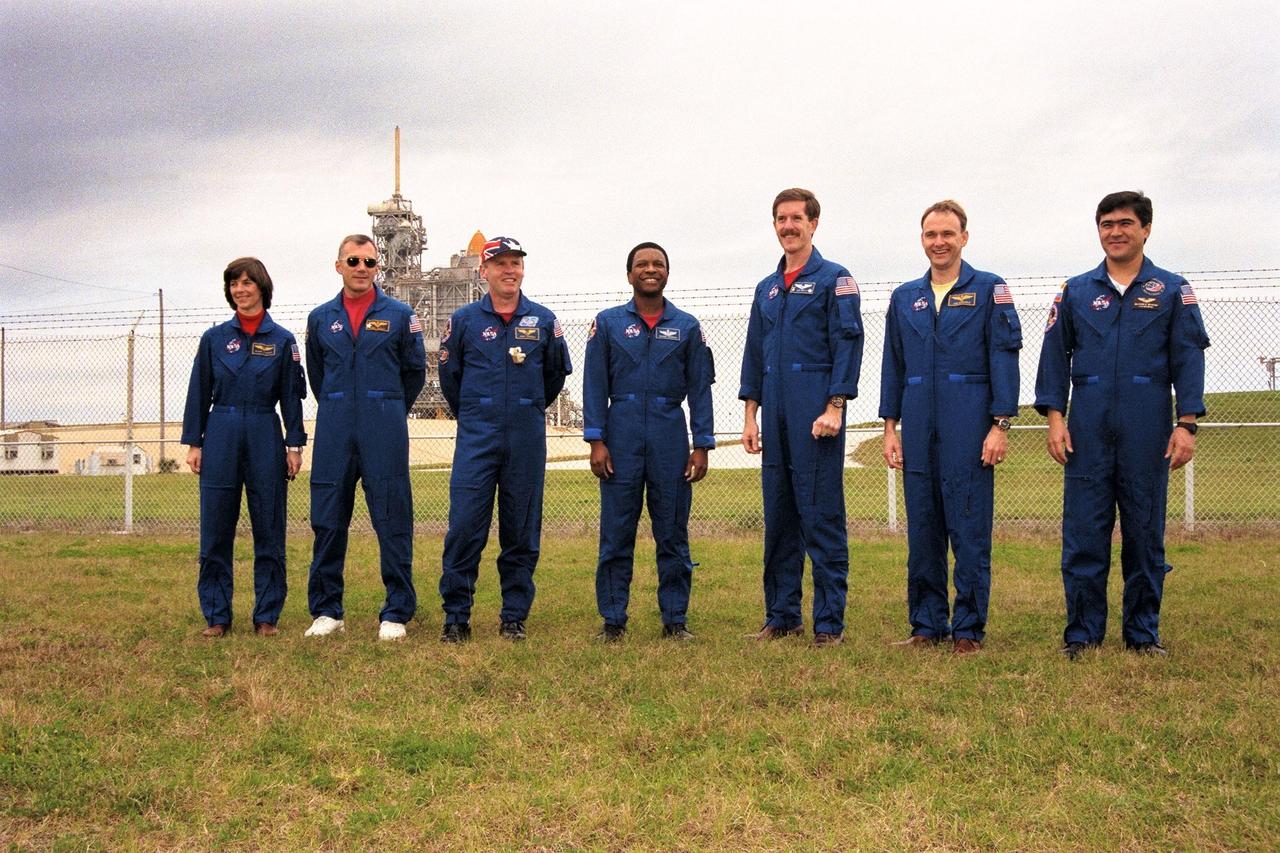
KENNEDY SPACE CENTER, Fla. -- STS-89 Mission Specialist Bonnie Dunbar, Ph.D.; Commander Terrence Wilcutt; Mission Specialists Andrew Thomas, Ph.D., Michael Anderson, James Reilly, Ph.D.; Pilot Joe Edwards Jr.; and Mission Specialist Salizhan Sharipov of the Russian Space Agency pose at KSC's Launch Pad 39A the day before the scheduled launch of Space Shuttle Endeavour. Final preparations are under way toward liftoff on Jan. 22 on the eighth mission to dock with the Russian Space Station Mir. After docking, Dr. Thomas will transfer to the space station, succeeding David Wolf, M.D., who will return to Earth aboard Endeavour. Dr. Thomas will live and work on Mir until June. STS-89 is scheduled for liftoff at 9:48 p.m. EST

S95-00355 (12-14 September 1992) --- Astronaut candidate Koichi Wakata prepares to jump off a box during a parachute landing demonstration at Vance Air Force Base. This portion of the training is designed to familiarize the trainees with the proper way to hit the ground following a parachute jump. Looking on are astronaut candidates Michael L. Gernhardt (left) and Andrew W. S. Thomas (second left), along with a United States Air Force (USAF) instructor. Wakata, representing Japan's National Space Development Agency (NASDA), is one of seven international mission specialist candidates who joined 19 United States astronaut candidates, including Gernhardt and Thomas, for the three-day parachute/survival training school at the Oklahoma Base. EDITORS NOTE: Since this photograph was taken, Gernhardt, Wakata and Thomas have been named as mission specialists for the STS-69, STS-72 and STS-77 missions, respectively.
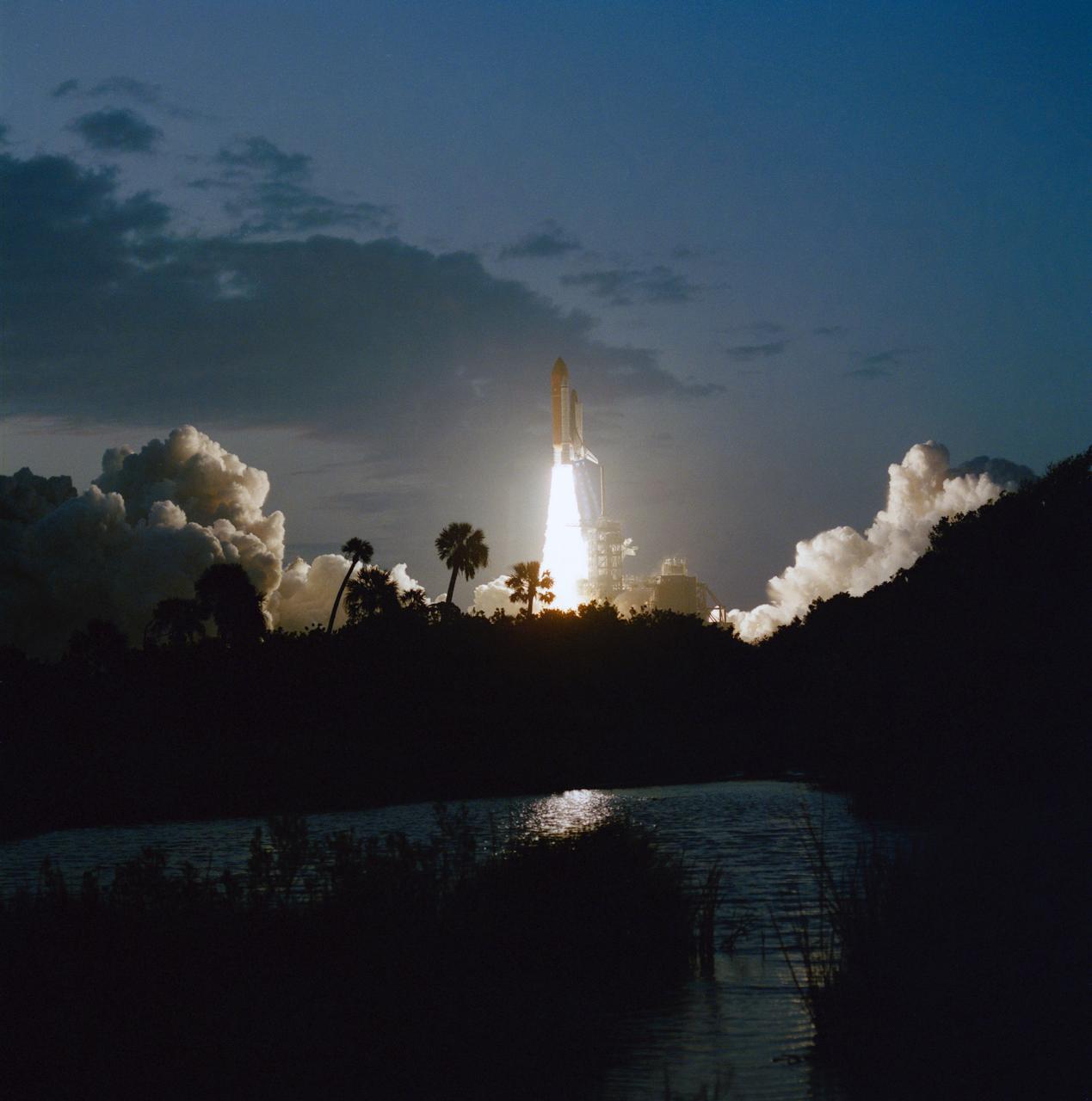
STS059-S-034 (9 April 1994) --- The liftoff of the Space Shuttle Endeavour is backdropped against a dawn sky at the Kennedy Space Center (KSC) as six NASA astronauts head for a week and a half in Earth orbit. Liftoff occurred at 7:05 a.m. (EDT), April 9, 1994. Onboard for the Space Radar Laboratory (SRL-1) mission were astronauts Sidney M. Gutierrez, Kevin P. Chilton, Jerome (Jay) Apt, Linda M. Godwin, Michael R. U. (Rich) Clifford and Thomas D. Jones.
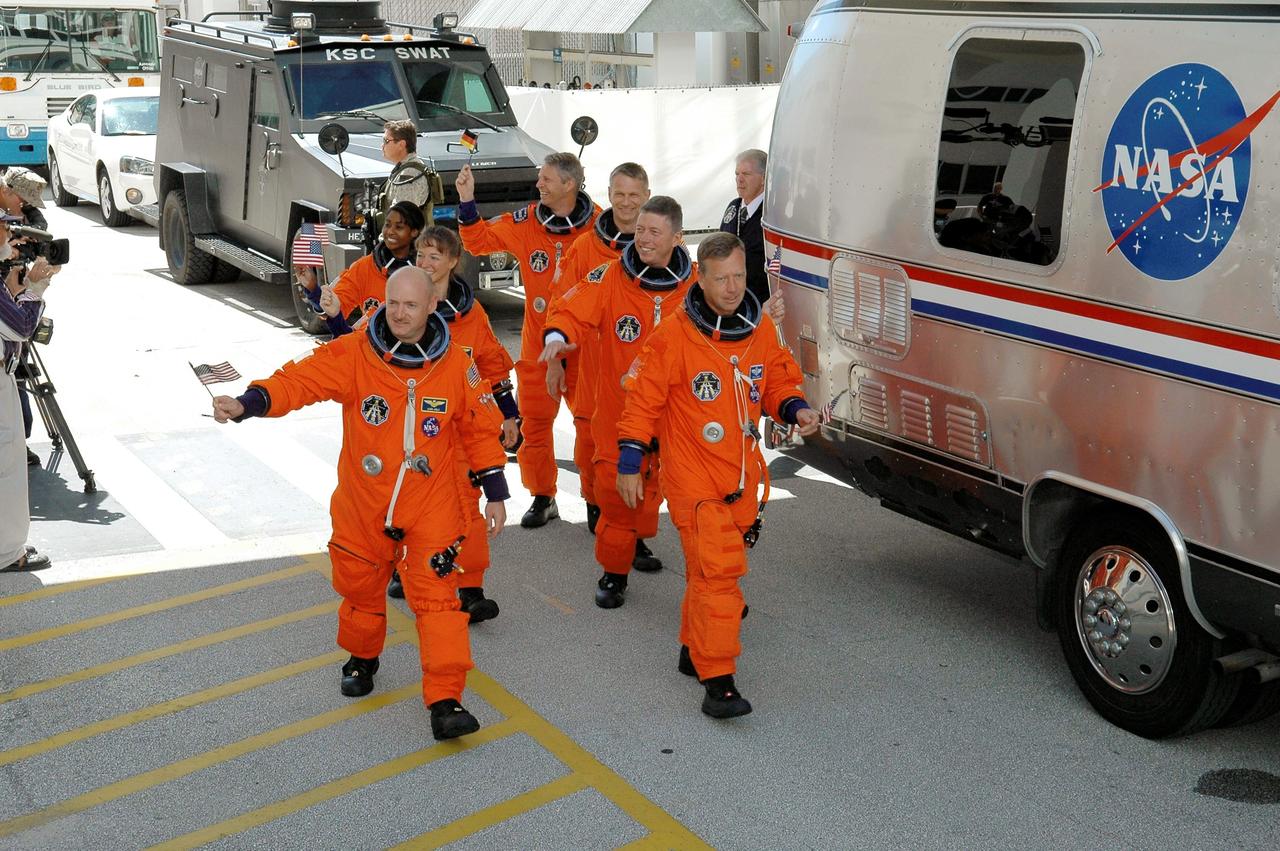
STS121-S-006 (4 July 2006) --- The STS-121 crewmembers, having donned their shuttle launch and entry suits, wave flags for the Fourth of July as they prepare to board the transfer van awaiting to take them to Launch Pad 39B. Steven W. Lindsey (right front), commander, and Mark E. Kelly, pilot, lead the way. Other crewmembers - Lisa M. Nowak, Michael E. Fossum, Stephanie D. Wilson, Piers J. Sellers and European Space Agency (ESA) astronaut Thomas Reiter of Germany - follow.
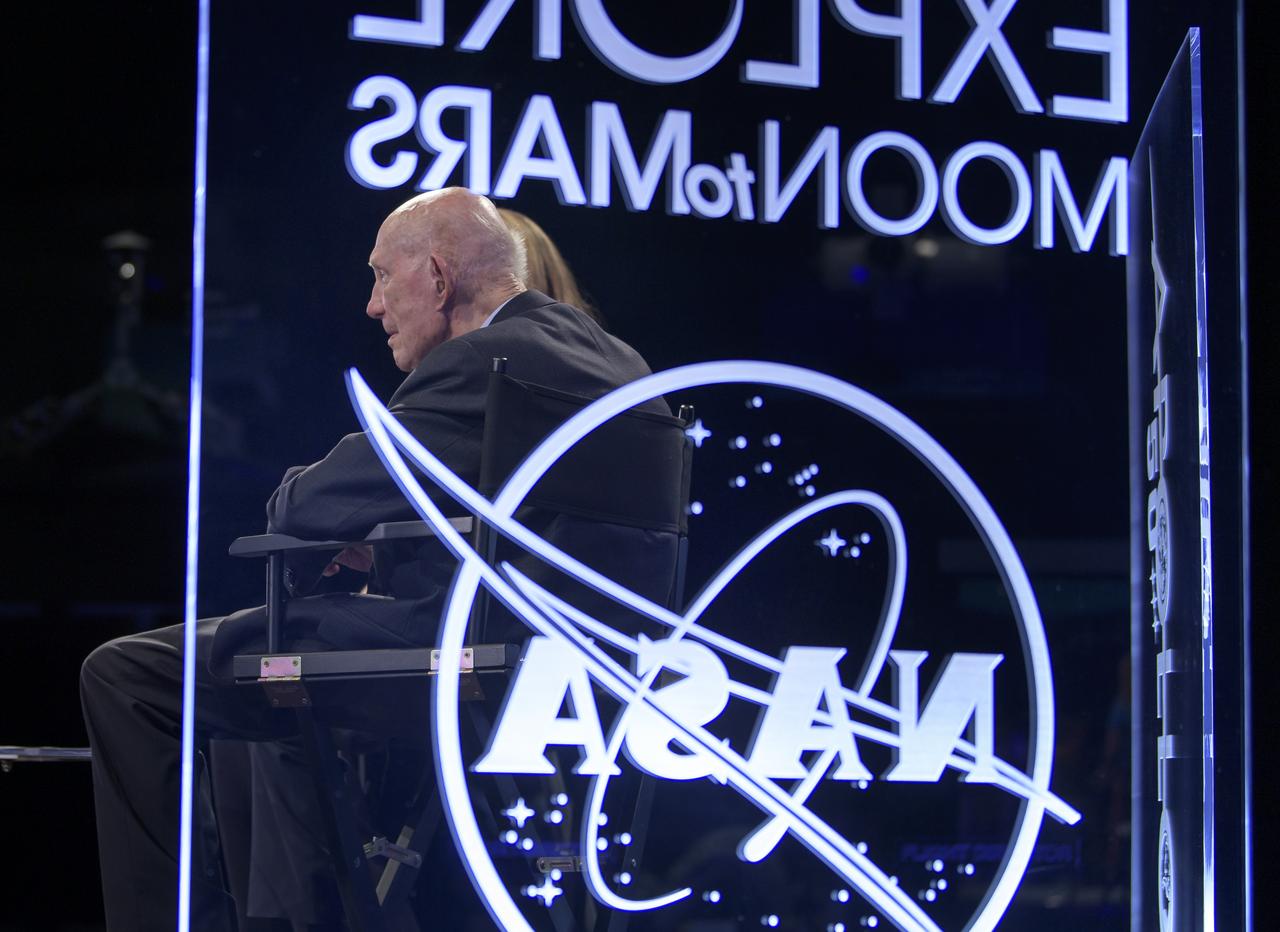
Apollo 10 astronaut General Thomas Stafford talks about his mission during “NASA’s Giant Leaps: Past and Future," a live television program on Friday, July 19, 2019 from the Smithsonian National Air and Space Museum in Washington. NASA and the world are recognizing the 50th anniversary of Apollo 11, in which astronauts Neil Armstrong, Michael Collins, and Buzz Aldrin crewed the first mission to land astronauts on the Moon. Photo Credit: (NASA/Bill Ingalls)
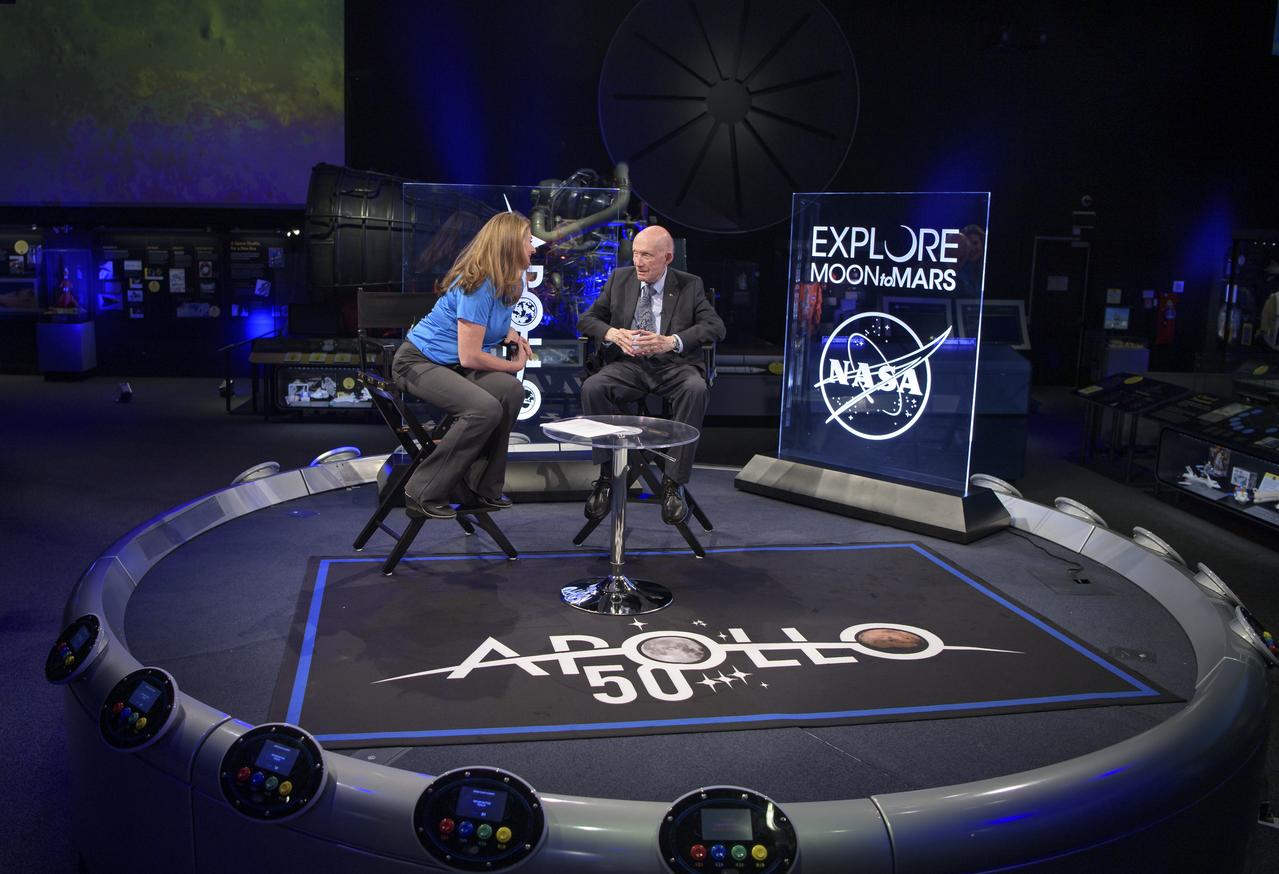
NASA Public Affairs Officer for Heliophysics Karen Fox interviews Apollo 10 astronaut General Thomas Stafford during “NASA’s Giant Leaps: Past and Future," a live television program on Friday, July 19, 2019 from the Smithsonian National Air and Space Museum in Washington. NASA and the world are recognizing the 50th anniversary of Apollo 11, in which astronauts Neil Armstrong, Michael Collins, and Buzz Aldrin crewed the first mission to land astronauts on the Moon. Photo Credit: (NASA/Bill Ingalls)
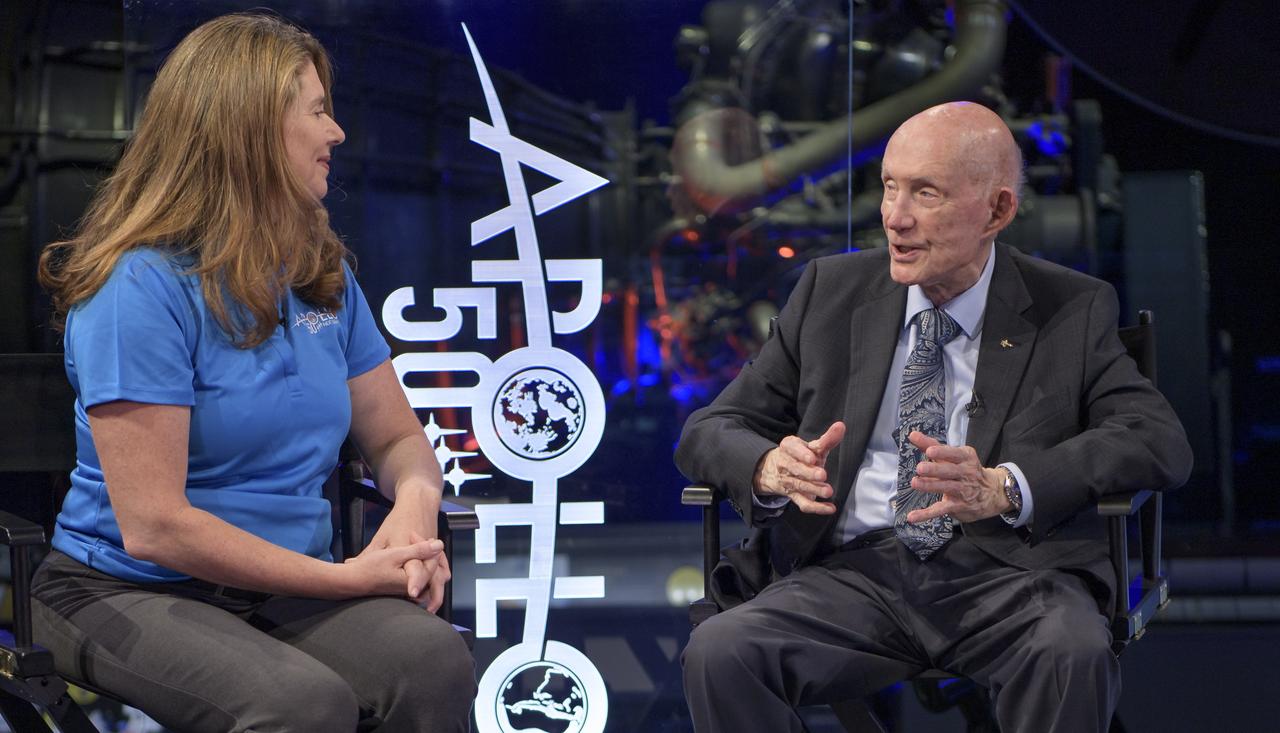
NASA Public Affairs Officer for Heliophysics Karen Fox interviews Apollo 10 astronaut General Thomas Stafford during “NASA’s Giant Leaps: Past and Future," a live television program on Friday, July 19, 2019 from the Smithsonian National Air and Space Museum in Washington. NASA and the world are recognizing the 50th anniversary of Apollo 11, in which astronauts Neil Armstrong, Michael Collins, and Buzz Aldrin crewed the first mission to land astronauts on the Moon. Photo Credit: (NASA/Bill Ingalls)
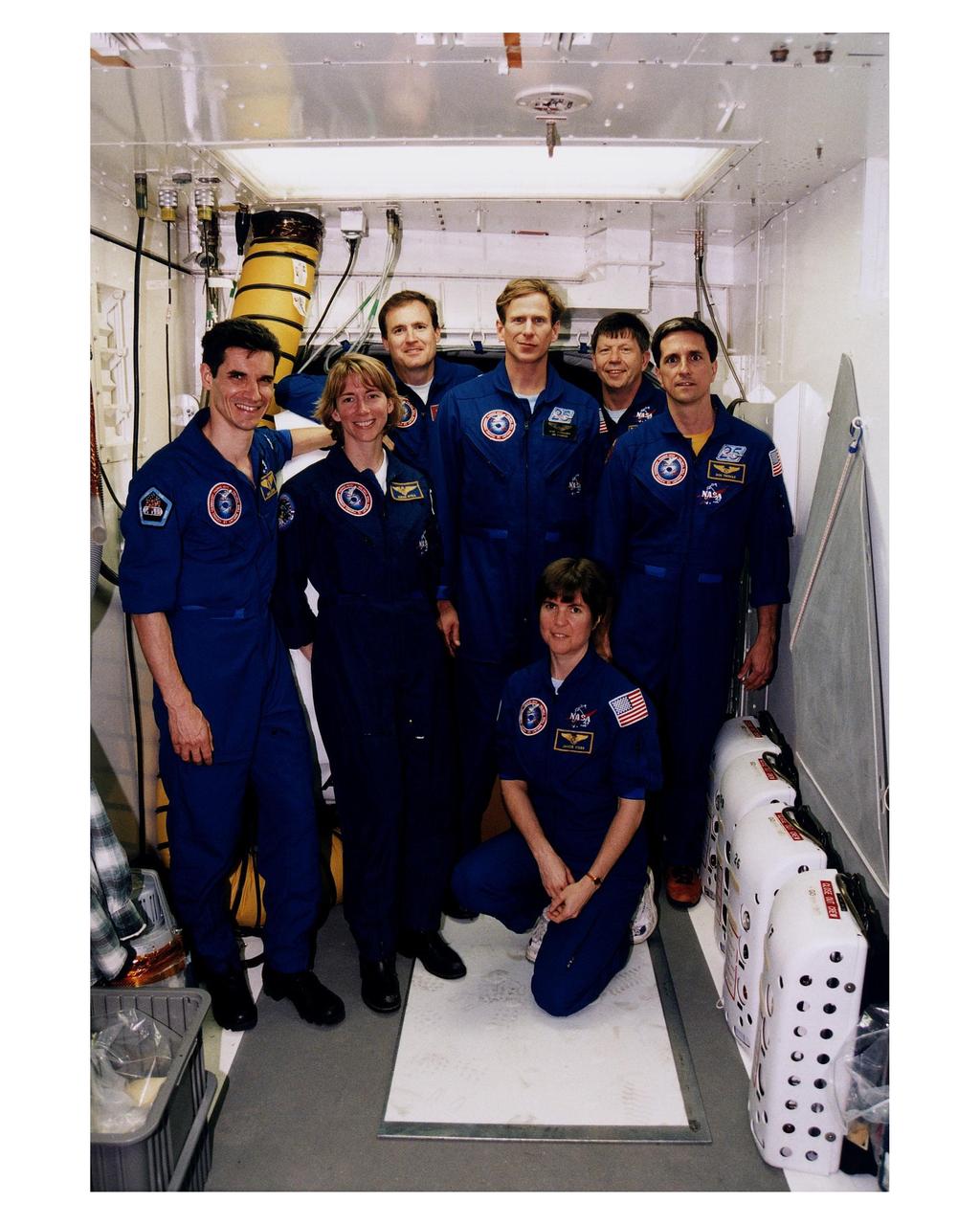
The STS-83 crew poses in the White Room at Launch Complex 39A during the crew's <a href="http://www-pao.ksc.nasa.gov/kscpao/release/1997/40-97.htm">Terminal Countdown Demonstration Test (TCDT).</a> From left to right, standing, they are Payload Specialist Gregory T. Linteris, Pilot Susan L. Still, Mission Commander James D. Halsell, Mission Specialist Michael L. Gernhardt, Payload Specialist Roger K. Crouch, and Mission Specialist Donald Thomas. Mission Specialist Janice E. Voss is kneeling
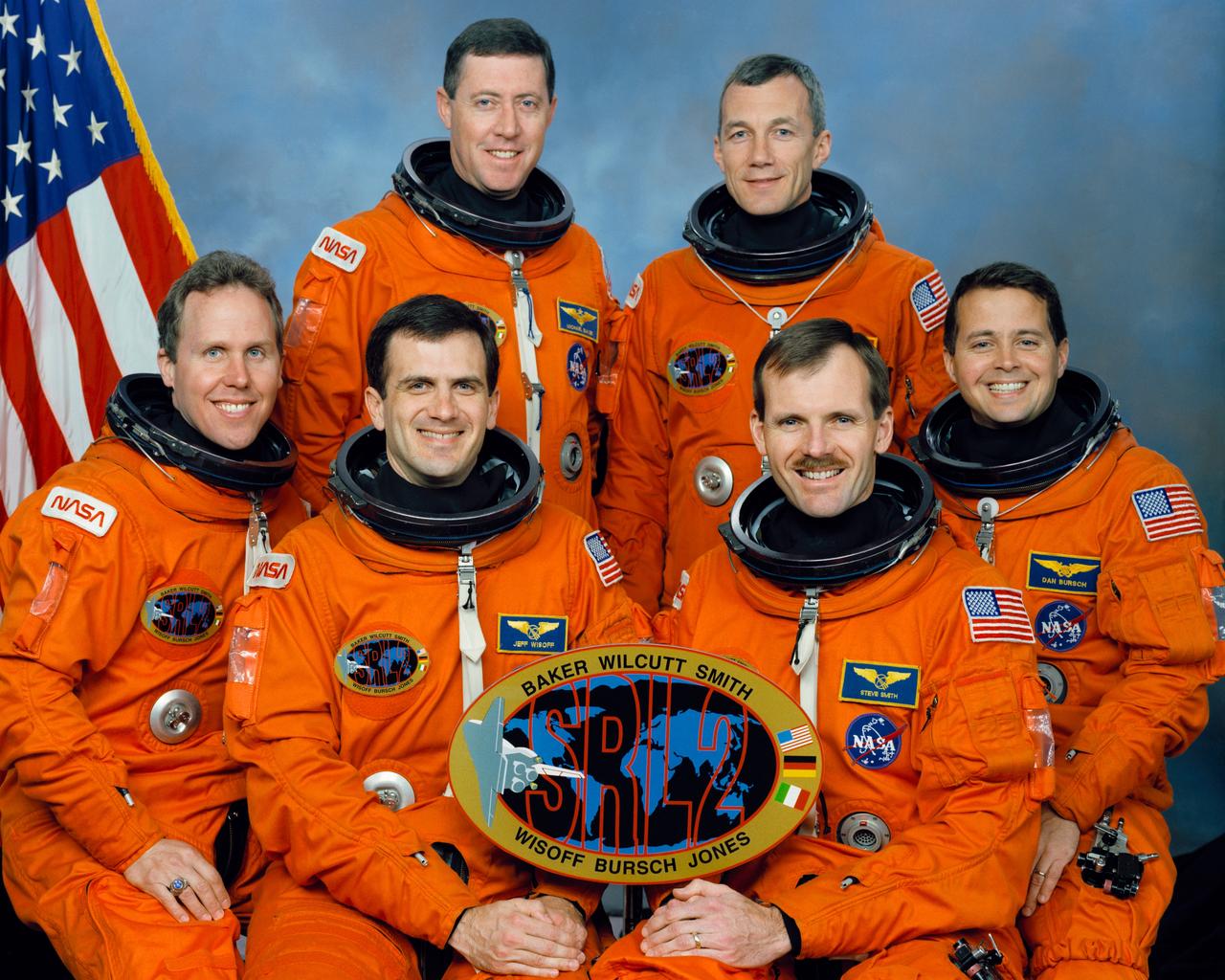
STS068-S-002 (March 1994) --- These six NASA astronauts are in training for the mission, scheduled for launch later this year. Standing are, left to right, Michael A. Baker, mission commander; and Terrence W. Wilcutt, pilot. On the front row are, left to right, Thomas D. Jones, payload commander; and Peter J. K. (Jeff) Wisoff, Steven L. Smith and Daniel W. Bursch, all mission specialists.
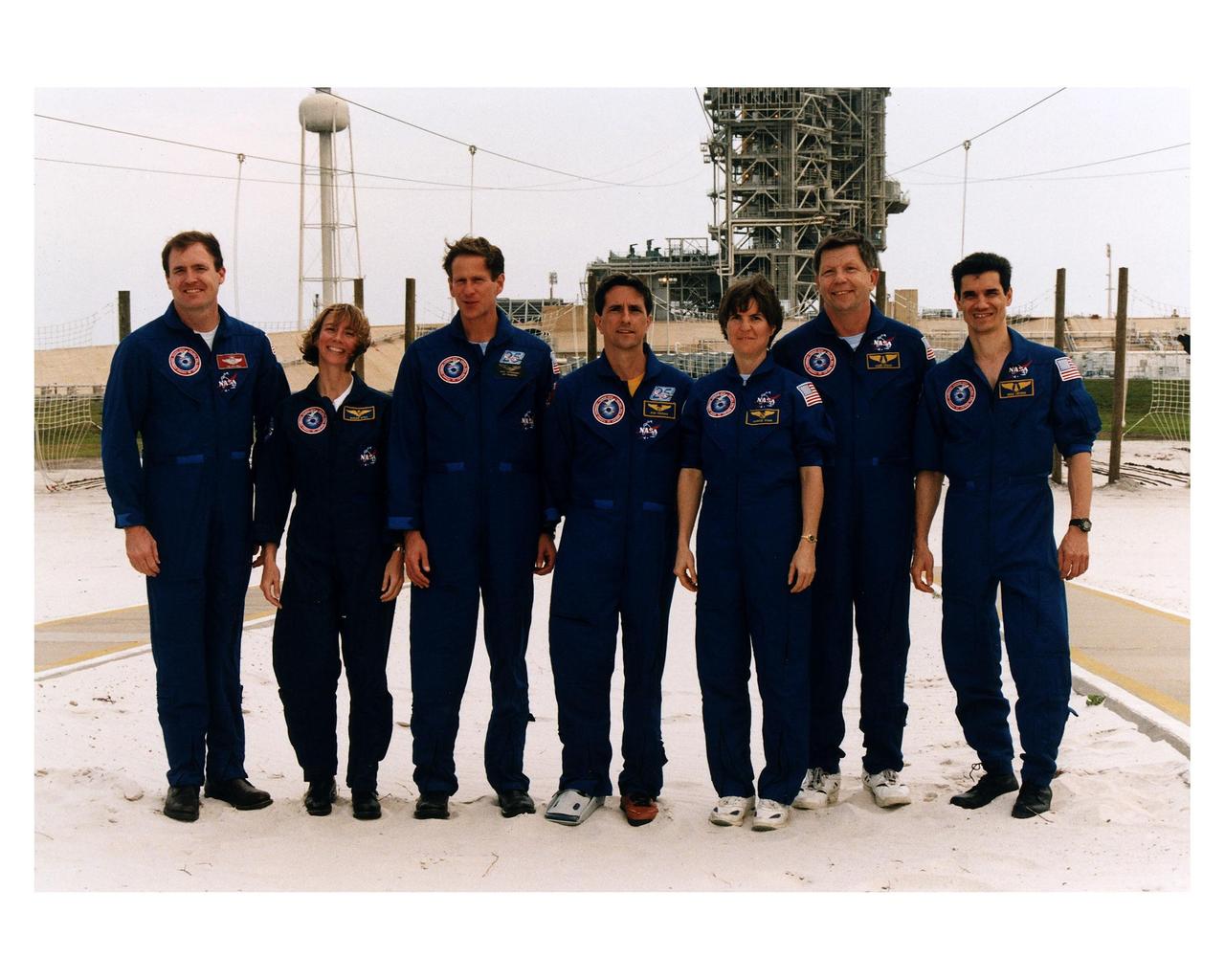
The STS-83 crew poses for the media at Launch Complex 39A during the crew's <a href="http://www-pao.ksc.nasa.gov/kscpao/release/1997/40-97.htm">Terminal Countdown Demonstration Test (TCDT).</a> From left to right, they are Mission Commander James D. Halsell; Pilot Susan L. Still; Mission Specialists Michael L. Gernhardt, Donald Thomas, and Janice E. Voss; and Payload Specialists Roger K. Crouch and Gregory T. Linteris
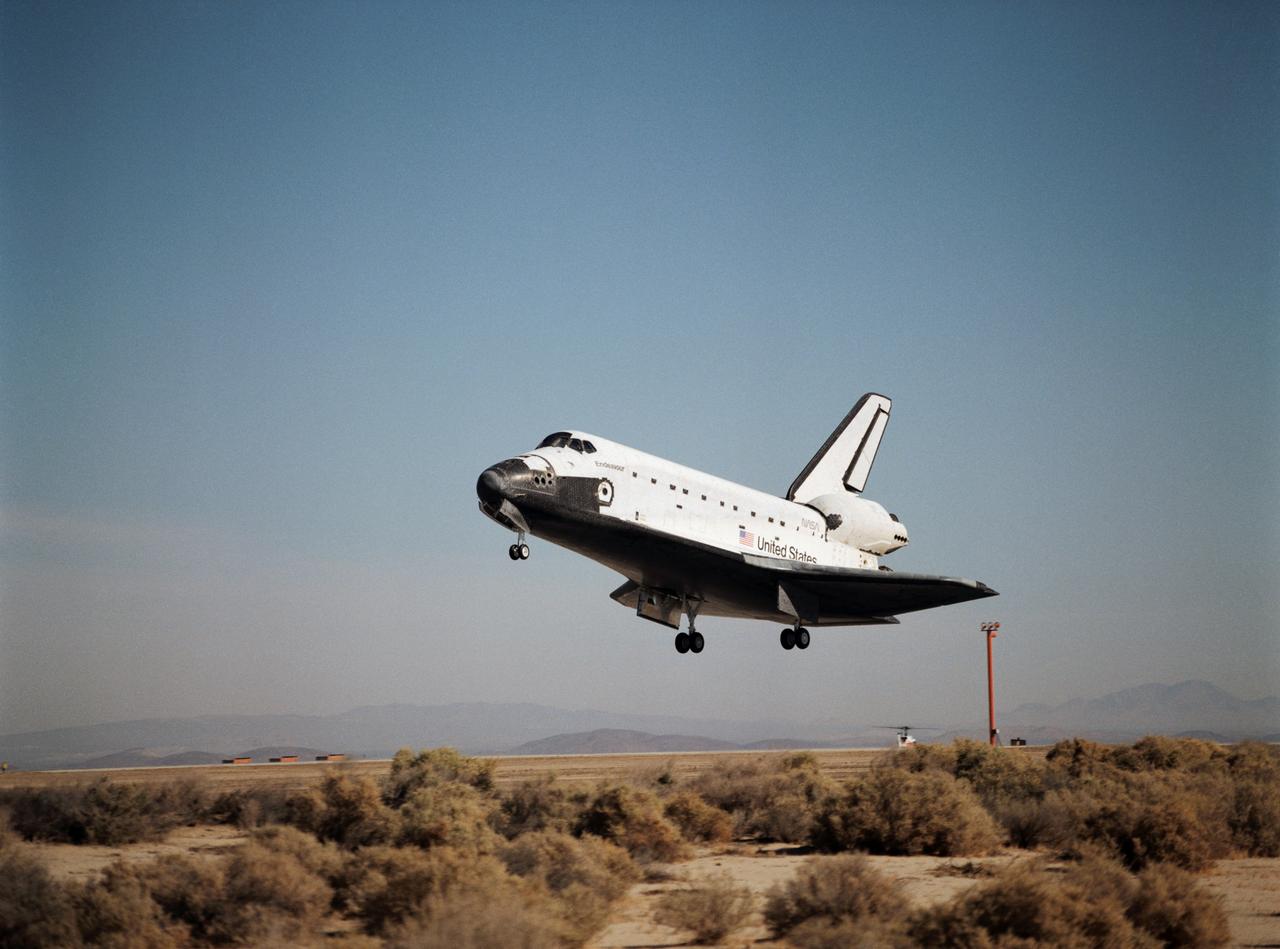
STS068-S-060 (11 October 1994) --- With its main landing gear not quite on the runway, the Space Shuttle Endeavour wraps up an eleven-day mission at Edwards Air Force Base, California. Landing occurred at 10:02 a.m. (PDT), October 11, 1994. Onboard were astronauts Michael A. Baker, mission commander; Terrence W. Wilcutt, pilot; Thomas D. Jones, payload commander; and Daniel W. Bursch, Peter J. K. (Jeff) Wisoff and Steven L. Smith, all mission specialists.
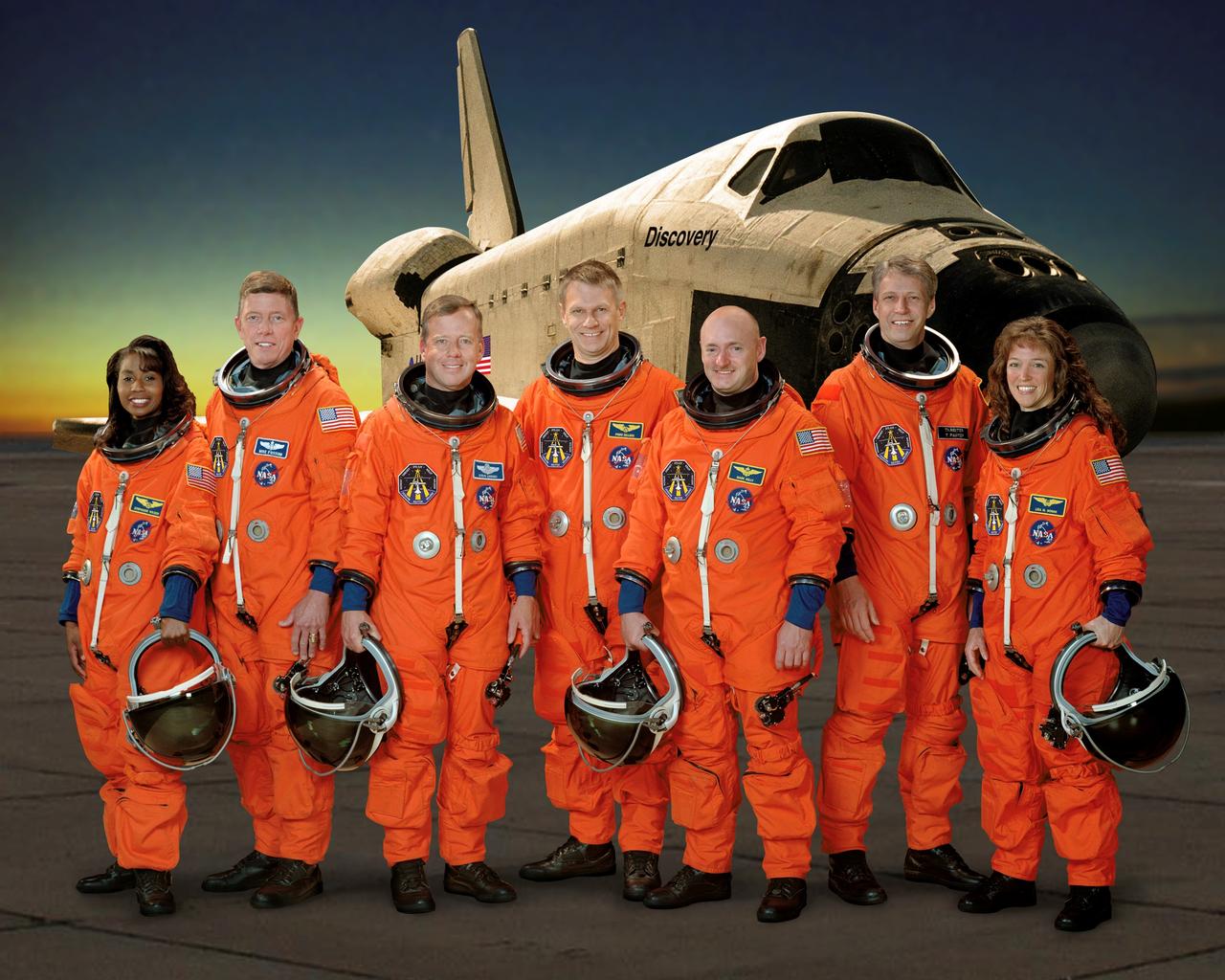
STS121-S-002 (5 April 2006) --- These seven astronauts take a break from training to pose for the STS-121 crew portrait. From the left are astronauts Stephanie D. Wilson, Michael E. Fossum, both mission specialists; Steven W. Lindsey, commander; Piers J. Sellers, mission specialist; Mark E. Kelly, pilot; European Space Agency (ESA) astronaut Thomas Reiter of Germany; and Lisa M. Nowak, both mission specialists. The crewmembers are attired in training versions of their shuttle launch and entry suit.
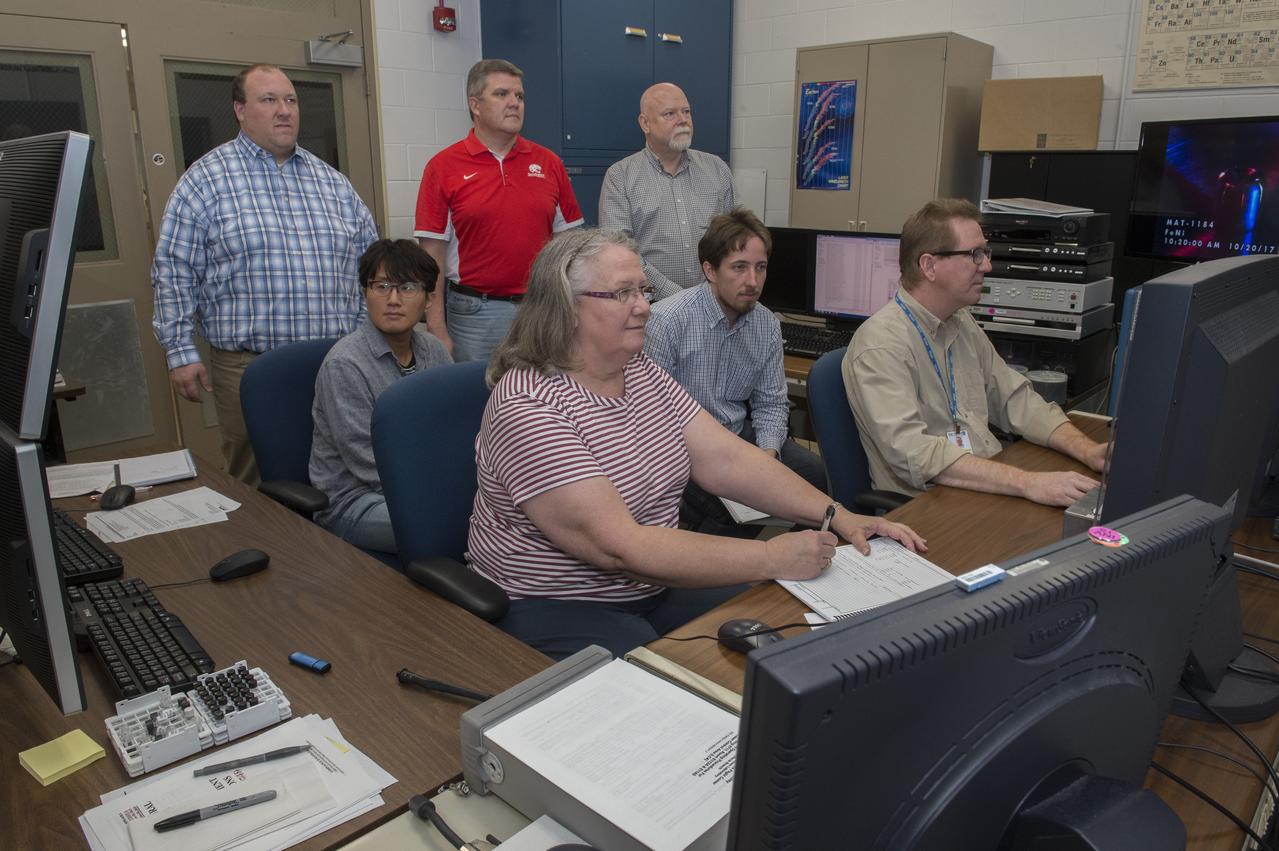
Dr. Douglas Matson, Tufts University, experimenting with an aerodynamic levitator. Dr. Matson, along with students and NASA personnel view data from tests of an aerodynamic levitator in support of his MaterialsLab experiments. back row: Michael SanSoucie (MSFC EM41), Shawn Reagan (MSFC HP30), and Douglas Matson (Tufts University) Middle row: Sangho Jeon (Tufts University) and Thomas Leitner (Graz University of Technology) Front row: Trudy Allen (MSFC EM41) and Glenn Fountain (MSFC EM41)
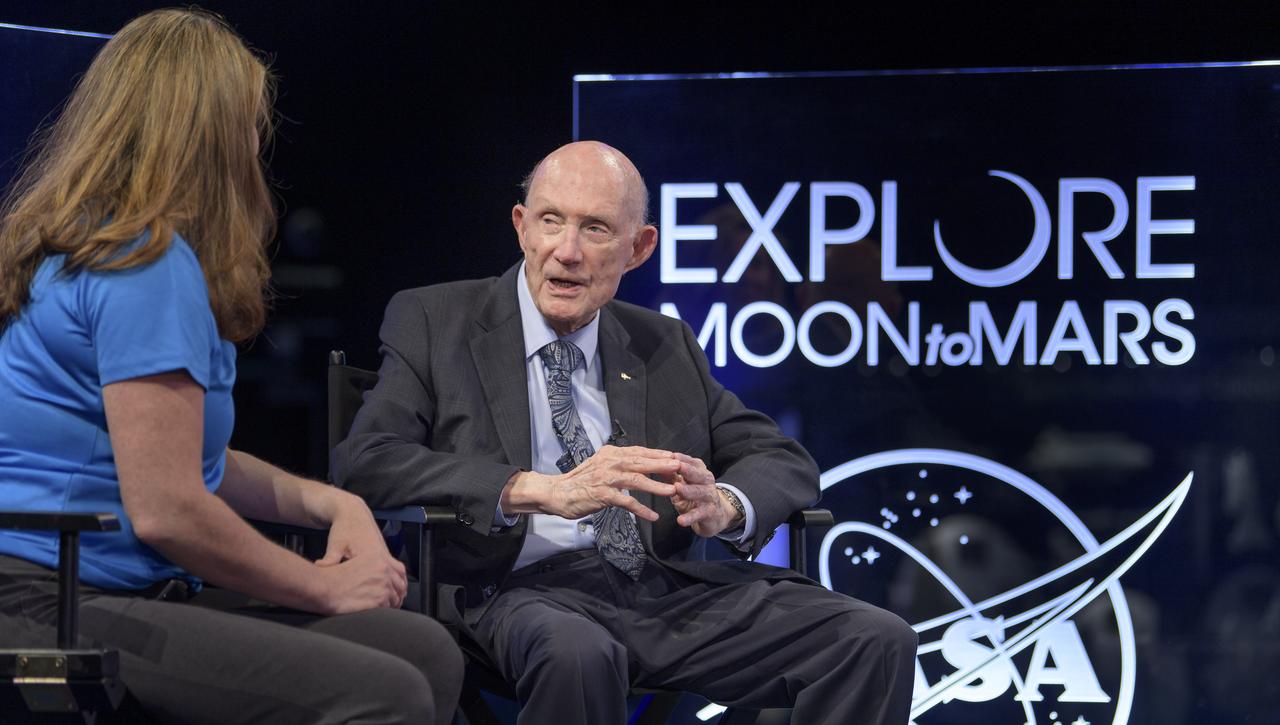
NASA Public Affairs Officer for Heliophysics Karen Fox interviews Apollo 10 astronaut General Thomas Stafford during “NASA’s Giant Leaps: Past and Future," a live television program on Friday, July 19, 2019 from the Smithsonian National Air and Space Museum in Washington. NASA and the world are recognizing the 50th anniversary of Apollo 11, in which astronauts Neil Armstrong, Michael Collins, and Buzz Aldrin crewed the first mission to land astronauts on the Moon. Photo Credit: (NASA/Bill Ingalls)

ISS014-E-08320 (27 Nov. 2006) --- Cosmonaut Mikhail Tyurin (left), Expedition 14 flight engineer representing Russia's Federal Space Agency; astronaut Thomas Reiter, flight engineer representing the European Space Agency (ESA); and astronaut Michael E. Lopez-Alegria, commander and NASA space station science officer, share a meal at the galley in the Zvezda Service Module of the International Space Station.
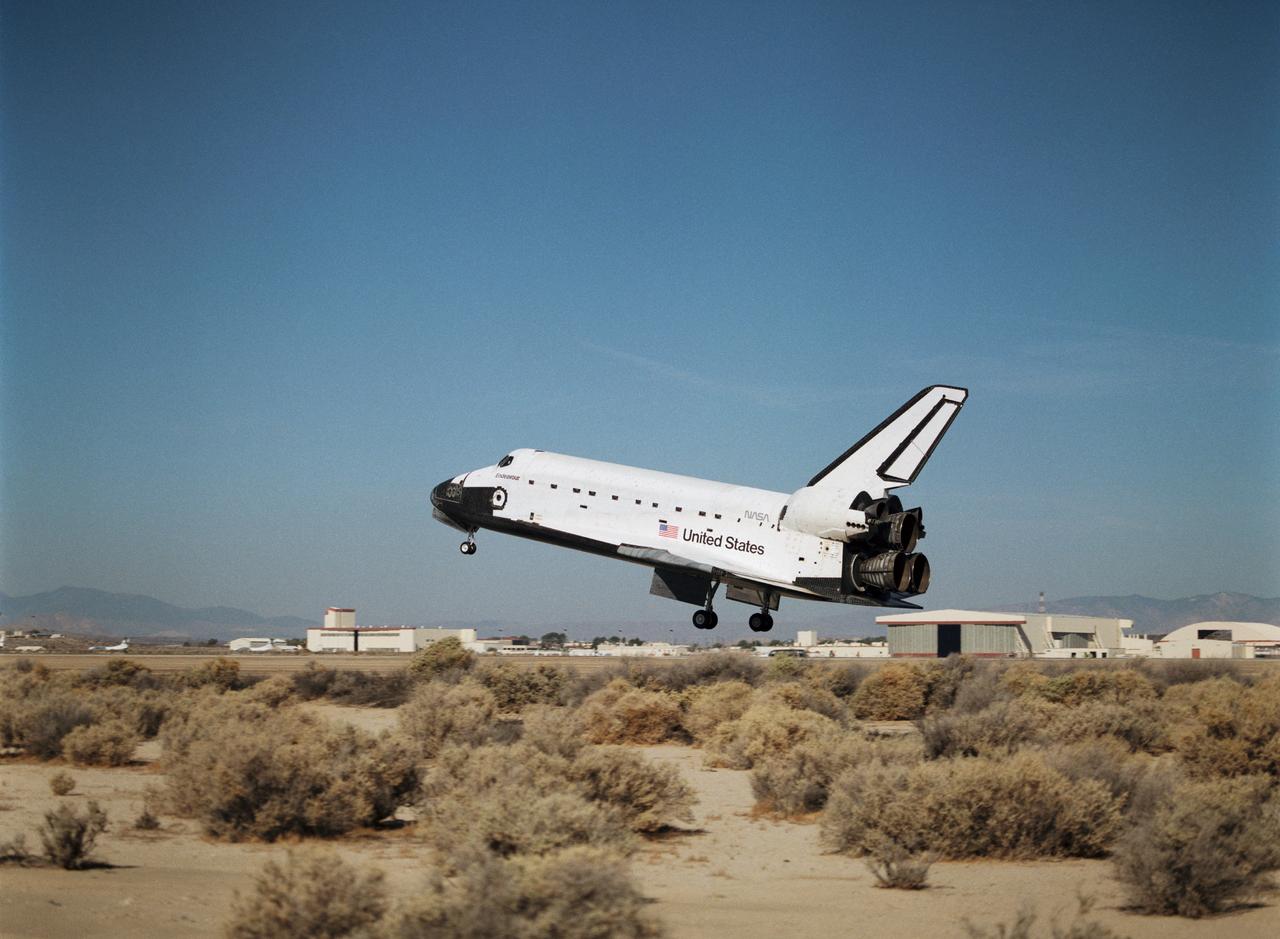
STS068-S-059 (11 October 1994) --- With its main landing gear not quite on the runway, the Space Shuttle Endeavour wraps up an eleven-day mission at Edwards Air Force Base, California. Landing occurred at 10:02 a.m. (PDT), October 11, 1994. Onboard were astronauts Michael A. Baker, mission commander; Terrence W. Wilcutt, pilot; Thomas D. Jones, payload commander; and Daniel W. Bursch, Peter J. K. (Jeff) Wisoff and Steven L. Smith, all mission specialists.
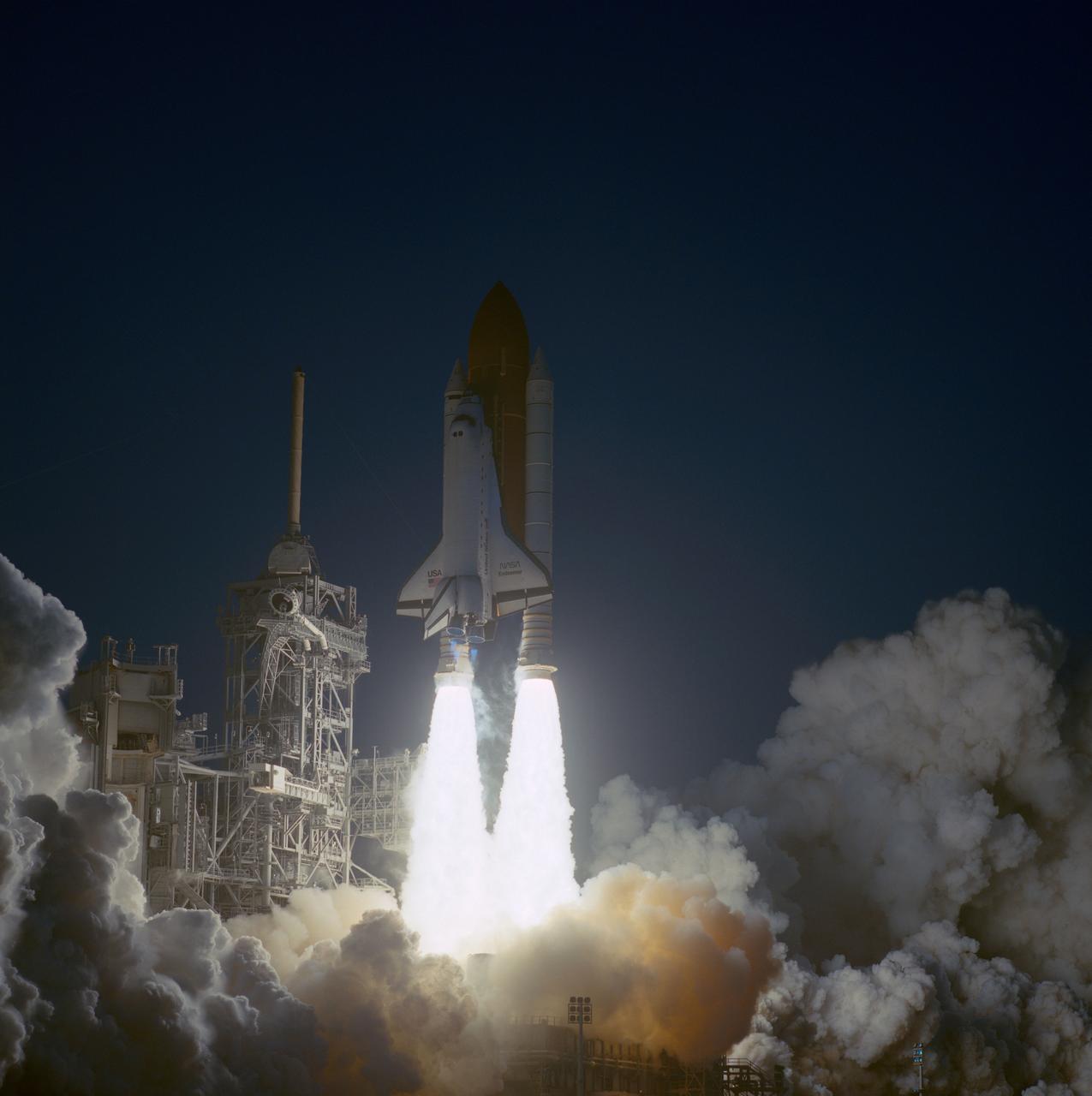
STS059-S-037 (9 April 1994) --- The liftoff of the Space Shuttle Endeavour is backdropped against a dawn sky at the Kennedy Space Center (KSC) as six NASA astronauts head for a week and a half in Earth orbit. Liftoff occurred at 7:05 a.m. (EDT), April 9, 1994. Onboard for the Space Radar Laboratory (SRL-1) mission were astronauts Sidney M. Gutierrez, Kevin P. Chilton, Jerome (Jay) Apt, Linda M. Godwin, Michael R.U. (Rich) Clifford and Thomas D. Jones.
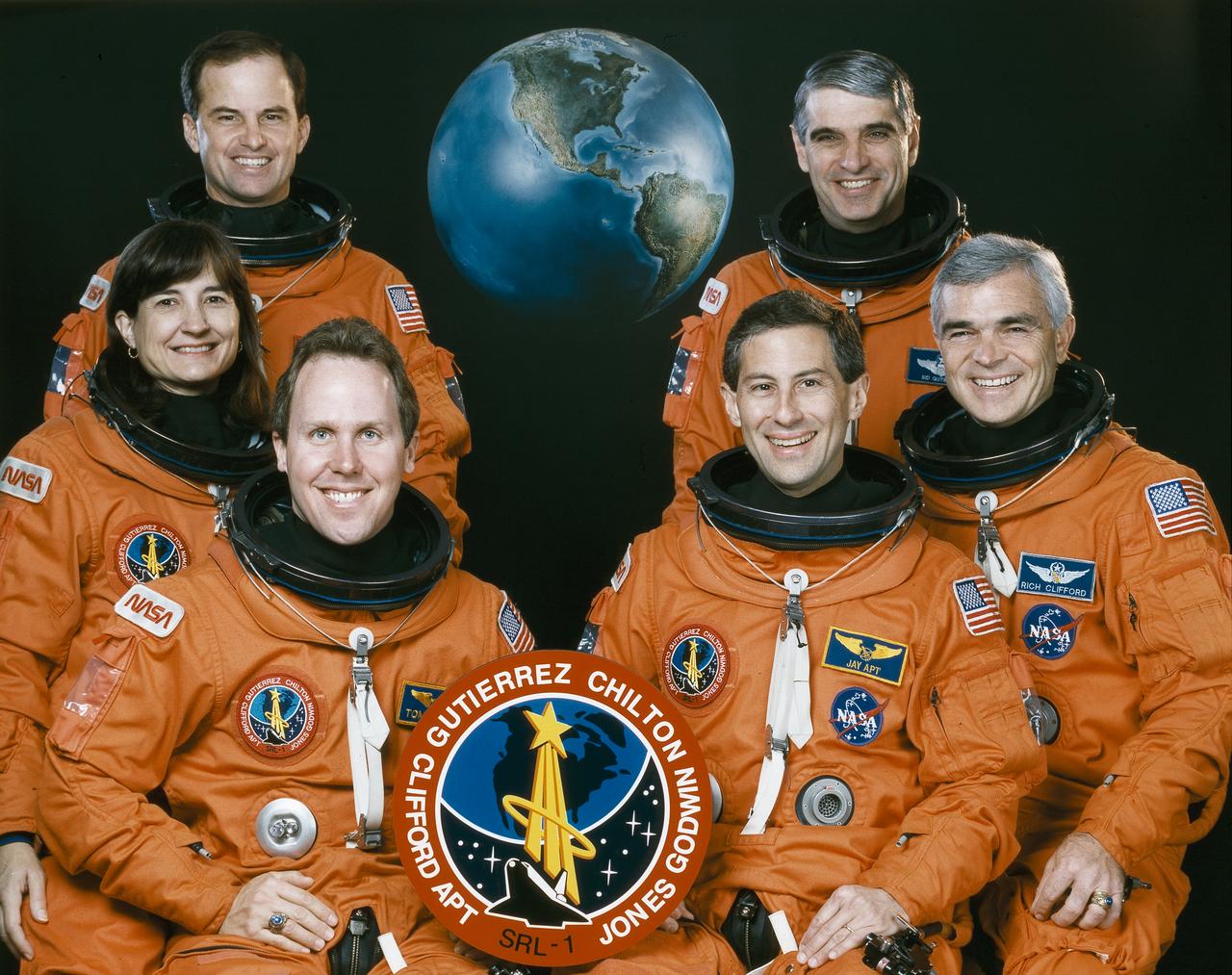
Astronauts included in the STS-59 crew portrait include (standing in rear, left to right) Kevin P. Chilton, pilot; and Sidney M. Gutierrez, commander. Seated left to right are Linda M. Godwin, payload commander; and mission specialists Thomas D. Jones, Jay Apt, and Michael R. Clifford. Launched aboard the Space Shuttle Endeavour on April 9, 1994 at 7:05:00 am (EDT), the STS-59 mission deployed the Space Radar Laboratory (SRL-1).
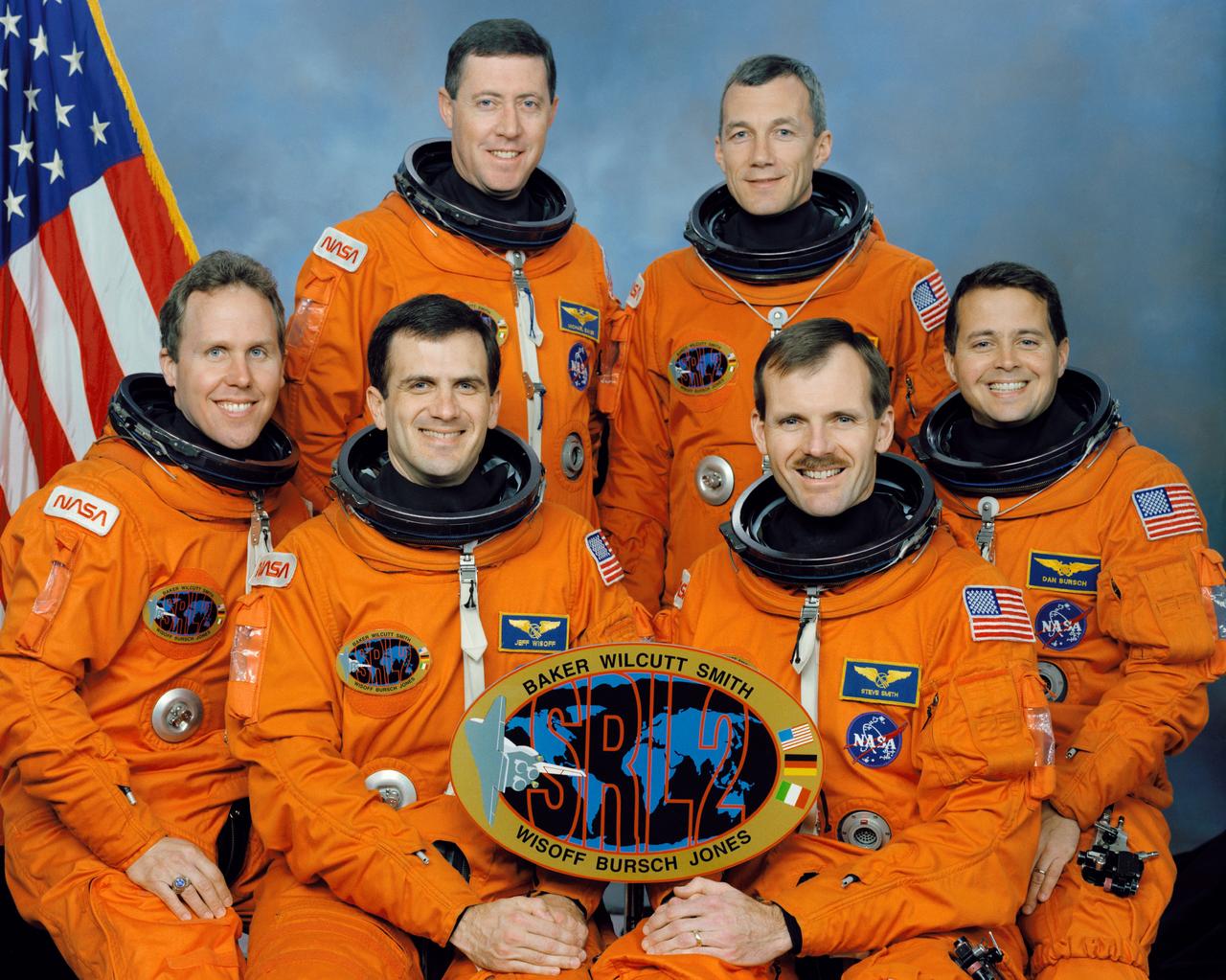
These six NASA astronauts composed the crew of the STS-68 mission that launched aboard the Space Shuttle Endeavour on September 30, 1994. Standing are, left to right, Michael A. Baker, mission commander; and Terrence W. Wilcutt, pilot. On the front row are, left to right, Thomas D. Jones, payload commander; and Peter J. K. (Jeff) Wisoff, Steven L. Smith, and Daniel W. Bursch, all mission specialists. STS-68 marked the second flight of the Space Radar Laboratory, part of NASA’s mission to planet Earth.
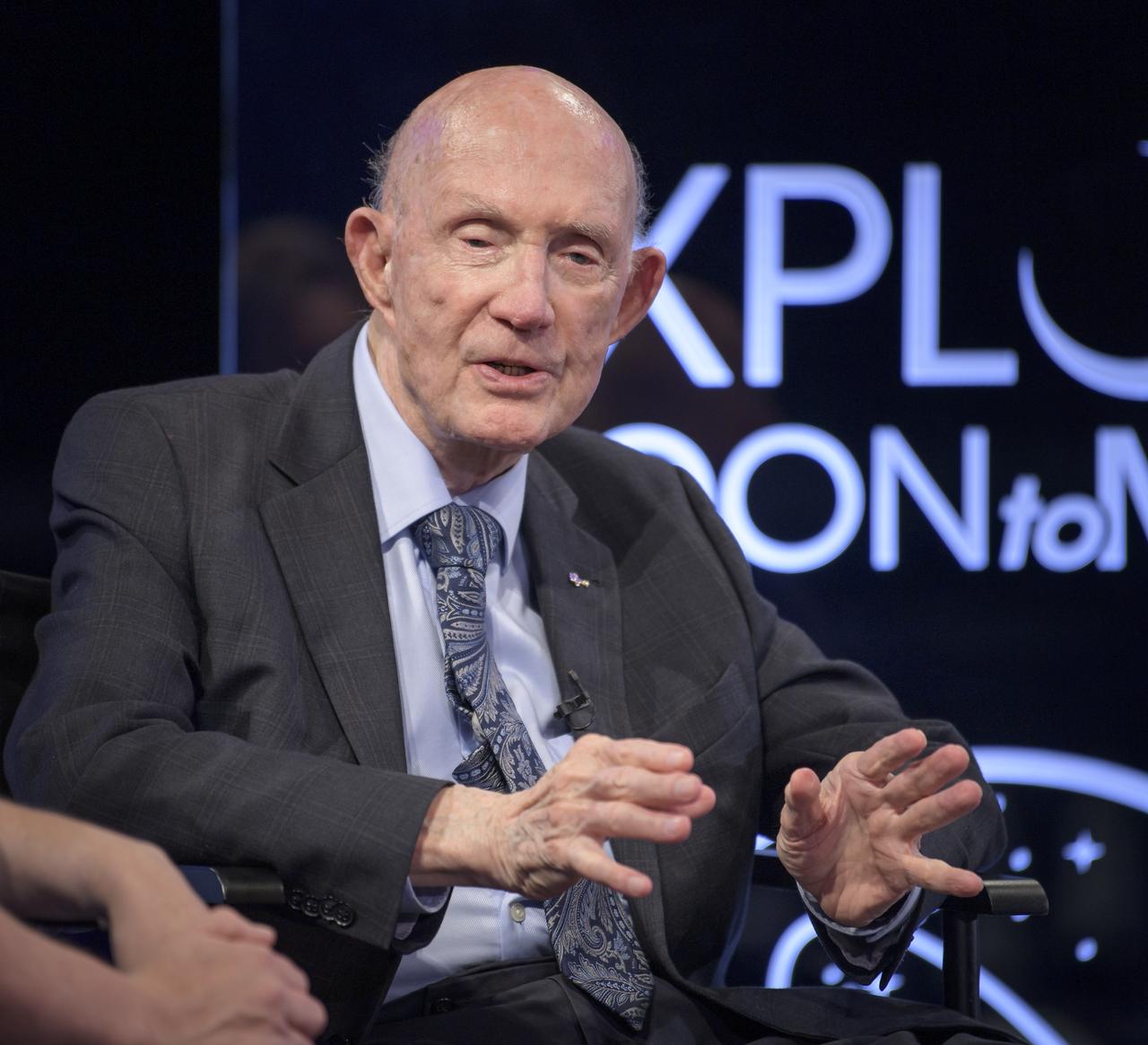
Apollo 10 astronaut General Thomas Stafford talks about his mission during “NASA’s Giant Leaps: Past and Future," a live television program on Friday, July 19, 2019 from the Smithsonian National Air and Space Museum in Washington. NASA and the world are recognizing the 50th anniversary of Apollo 11, in which astronauts Neil Armstrong, Michael Collins, and Buzz Aldrin crewed the first mission to land astronauts on the Moon. Photo Credit: (NASA/Bill Ingalls)
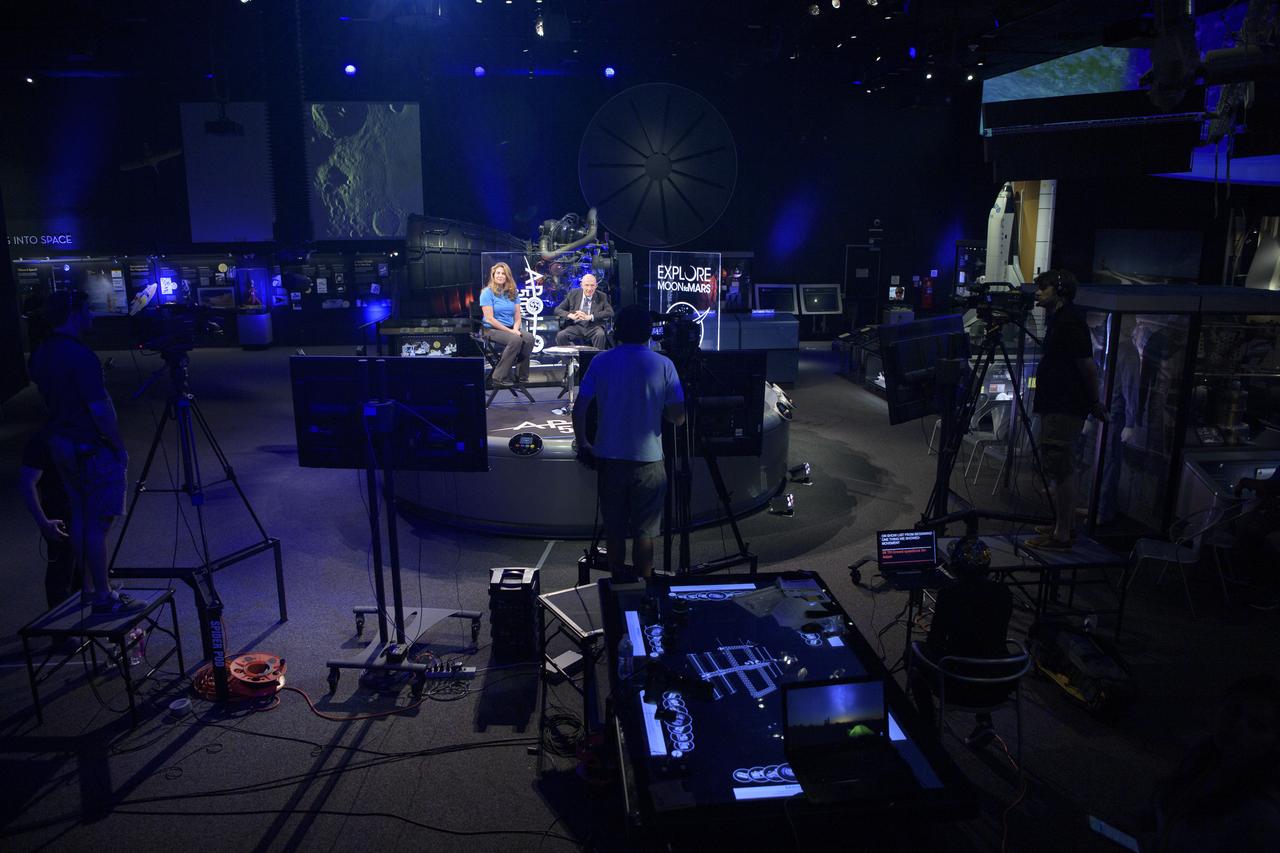
NASA Public Affairs Officer for Heliophysics Karen Fox interviews Apollo 10 astronaut General Thomas Stafford during “NASA’s Giant Leaps: Past and Future," a live television program on Friday, July 19, 2019 from the Smithsonian National Air and Space Museum in Washington. NASA and the world are recognizing the 50th anniversary of Apollo 11, in which astronauts Neil Armstrong, Michael Collins, and Buzz Aldrin crewed the first mission to land astronauts on the Moon. Photo Credit: (NASA/Bill Ingalls)
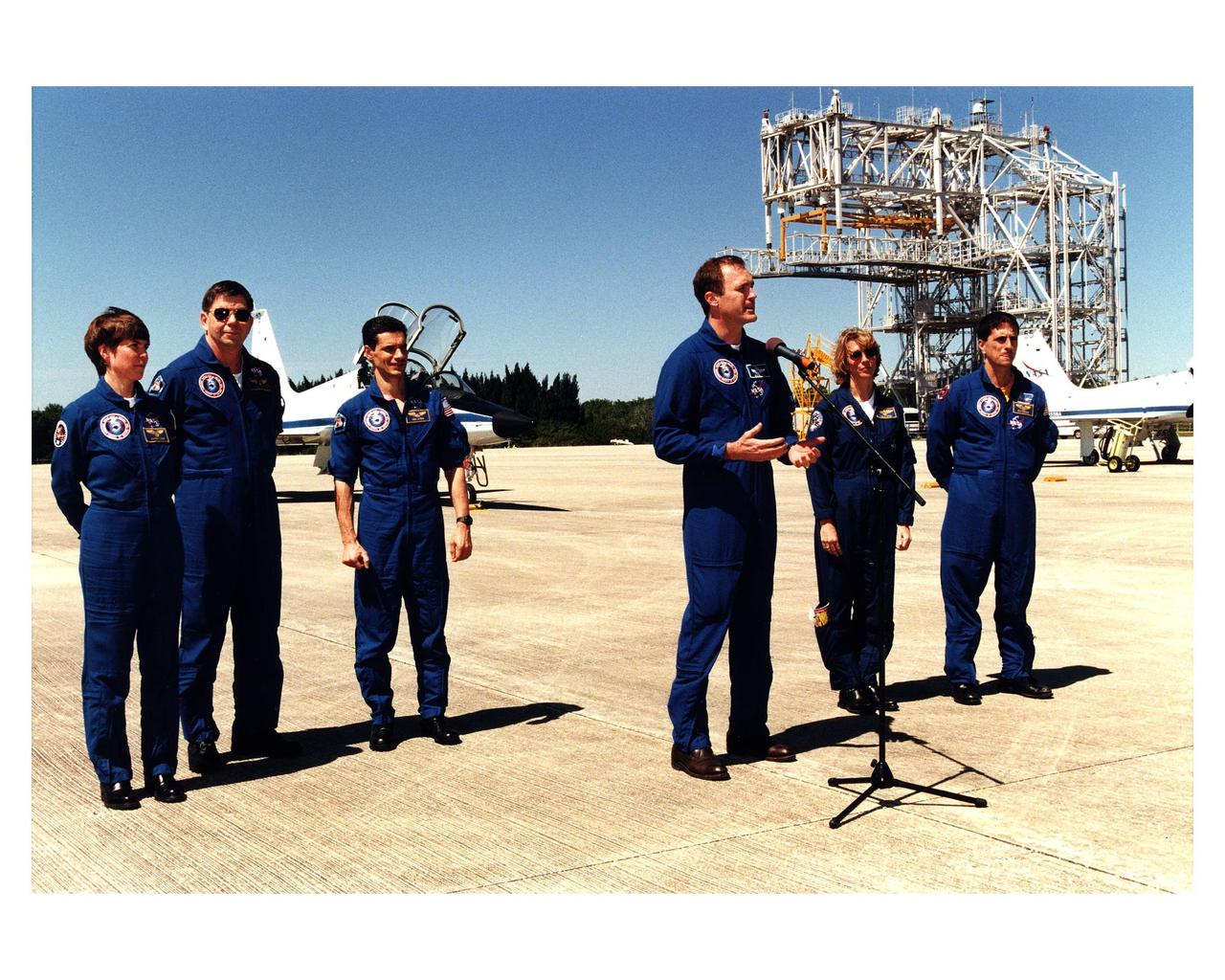
With the mate-demate device as backdrop, six of the seven STS-83 crew members speak to the media after arriving at Kennedy Space Center's Shuttle Landing Facility prior to Space Shuttle Columbia's launch. From left to right, they are Payload Commander Janice E. Voss; Payload Specialists Roger K. Crouch and Gregory T. Linteris; Commander James D. Halsell, Jr.; Pilot Susan Leigh Still; and Mission Specialist Donald A. Thomas. Mission Specialist Michael L. Gernhardt arrived separately later in the afternoon
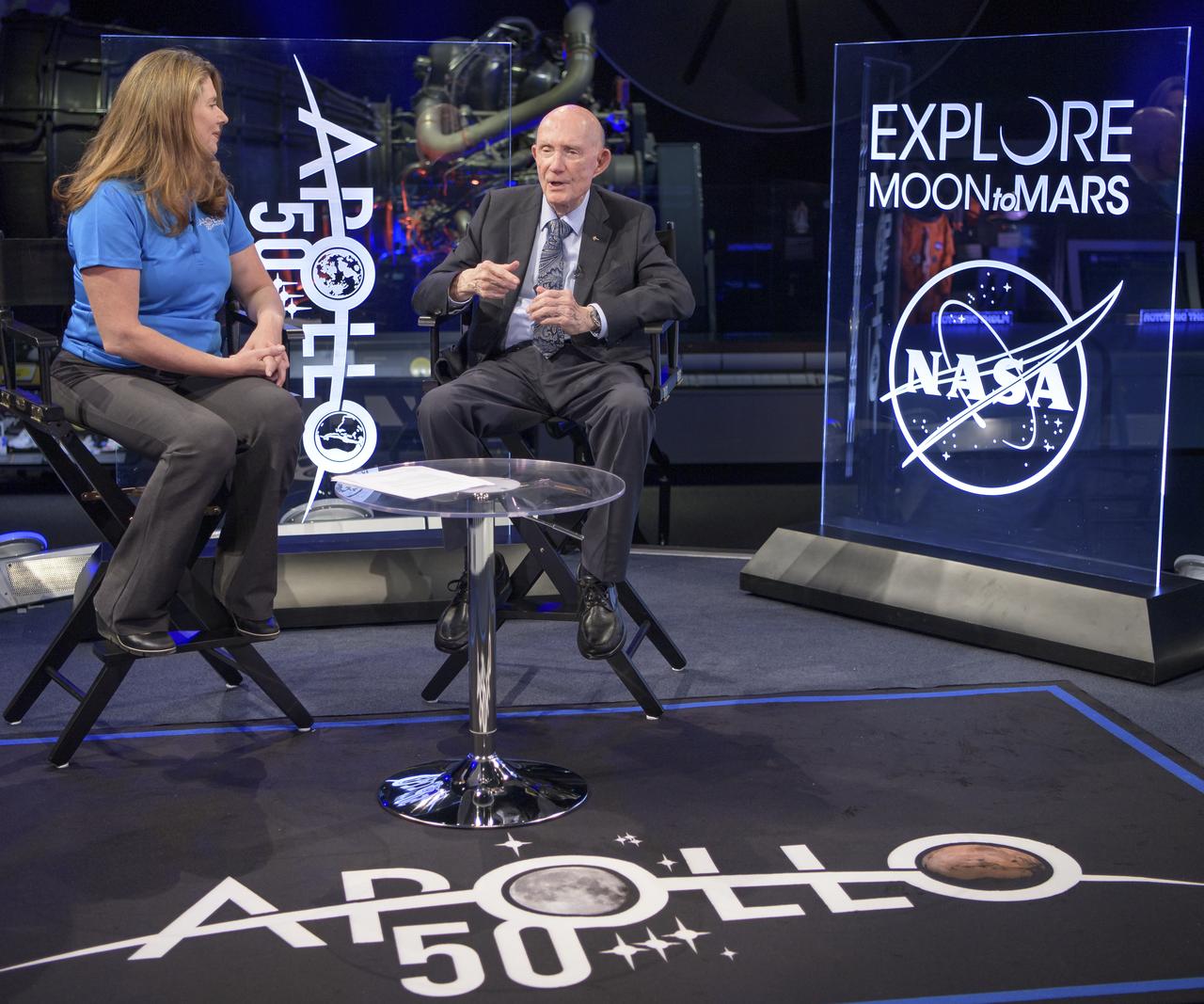
NASA Public Affairs Officer for Heliophysics Karen Fox interviews Apollo 10 astronaut General Thomas Stafford during “NASA’s Giant Leaps: Past and Future," a live television program on Friday, July 19, 2019 from the Smithsonian National Air and Space Museum in Washington. NASA and the world are recognizing the 50th anniversary of Apollo 11, in which astronauts Neil Armstrong, Michael Collins, and Buzz Aldrin crewed the first mission to land astronauts on the Moon. Photo Credit: (NASA/Bill Ingalls)
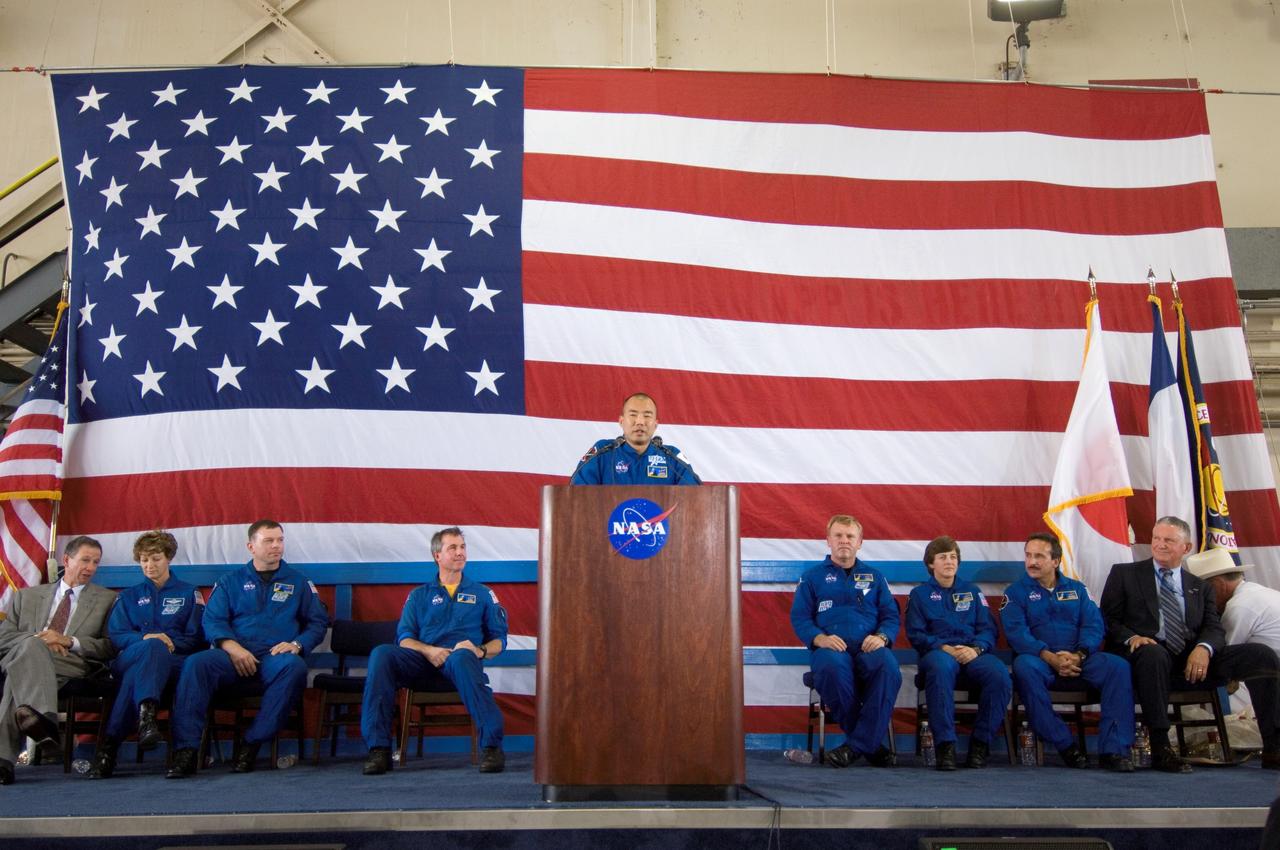
Images from the STS-114 Homecoming Ceremony, held in Hangar 276 at Ellington Field. Crew member Soichi Noguchi speaks to the crowd during the ceremonies. Seated onstage (from left) are NASA Administrator Michael Griffin, crew members Eileen Collins, James Kelly, Stephen Robinson, Andrew Thomas, Wendy Lawrence, Charles Camarda, and Center Director Jefferson Howell.
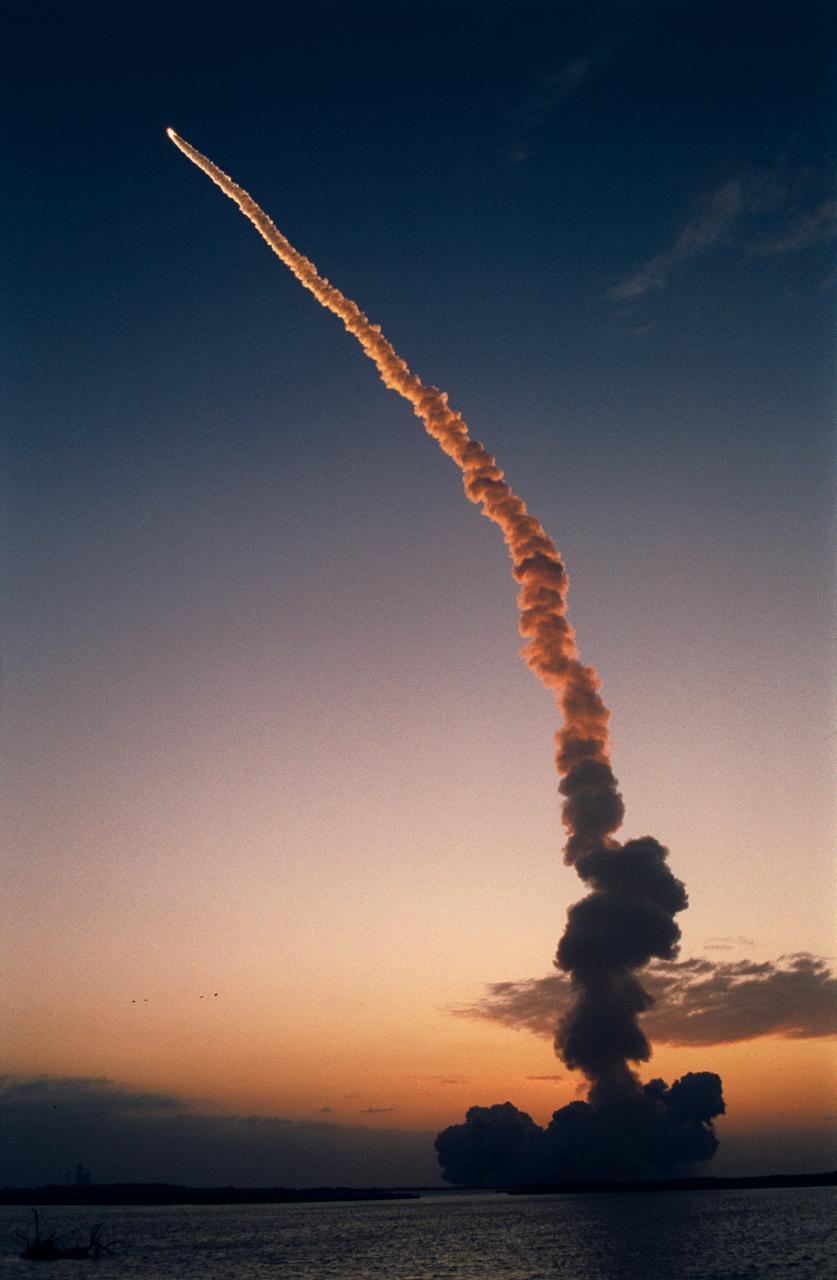
STS059-S-109 (9 April 1994) --- The Space Shuttle Endeavour heads for its sixth mission in space. Liftoff occurred at 7:05 a.m. (EDT), April 9, 1994. Onboard were astronauts Sidney M. Gutierrez, Kevin P. Chilton, Linda M. Godwin, Jerome (Jay) Apt, Michael R. (Rich) Clifford and Thomas D. Jones. The photograph was taken by Karen Dillon of San Jose, California, who observed the liftoff from the NASA causeway.
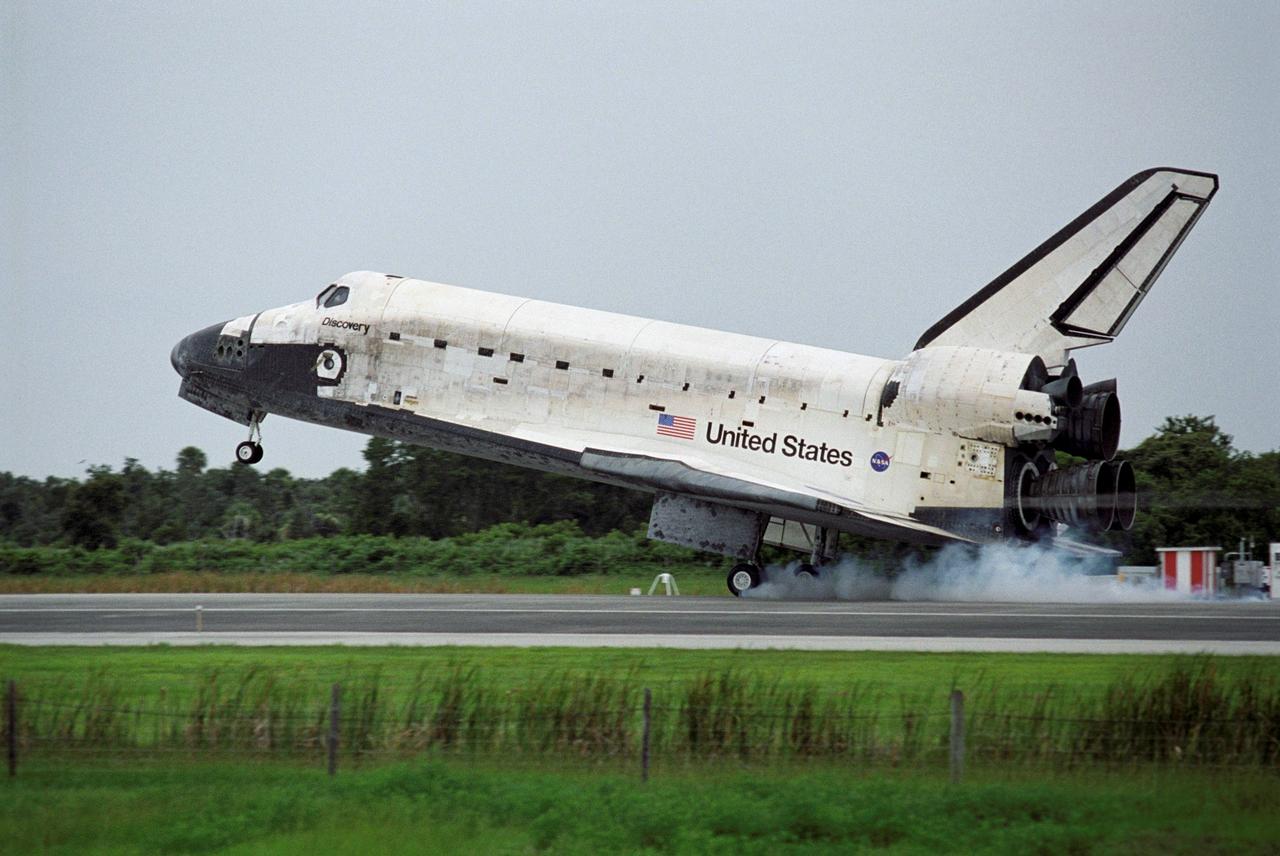
STS121-E-079 (17 July 2006) --- The main landing gear of the Space Shuttle Discovery touches down on the KSC landing facility. Onboard are six of the seven astronauts who nearly two weeks earlier had lifted off from the nearby launch complex--astronauts Steven W. Lindsey, Piers J. Sellers, Mark E. Kelly, Michael E. Fossum, Stephanie D. Wilson and Lisa M. Nowak. European Space Agency astronaut Thomas Reiter remained aboard the International Space Station.
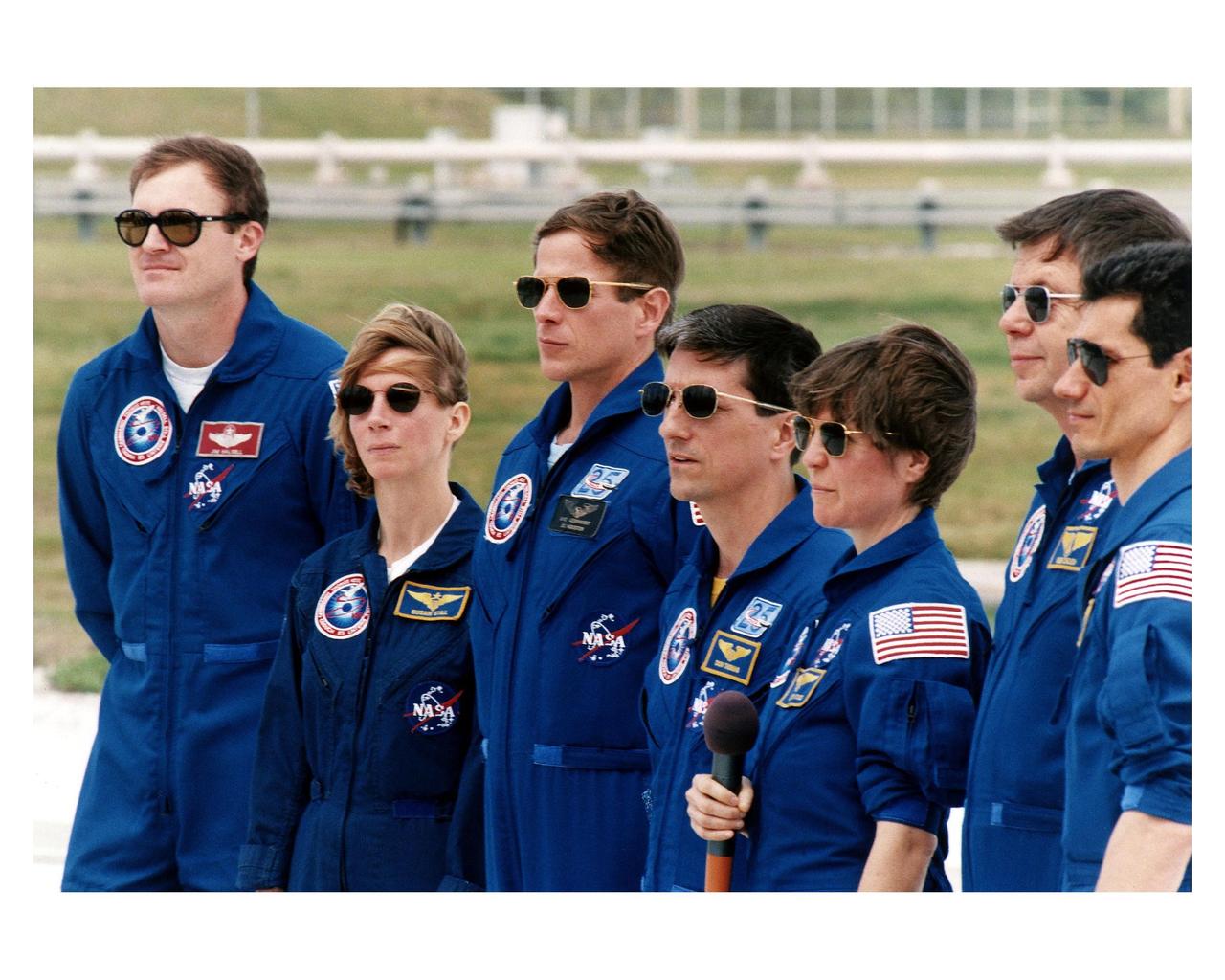
The Space Shuttle Mission STS-83 crew talks to the media at Launch Complex 39A during the crew's <a href="http://www-pao.ksc.nasa.gov/kscpao/release/1997/40-97.htm">Terminal Countdown Demonstration Test (TCDT).</a> From left to right, they are Mission Commander James D. Halsell; Pilot Susan L. Still; Mission Specialists Michael L. Gernhardt, Donald Thomas, and Janice E. Voss (holding microphone); and Payload Specialists Roger K. Crouch and Gregory T. Linteris
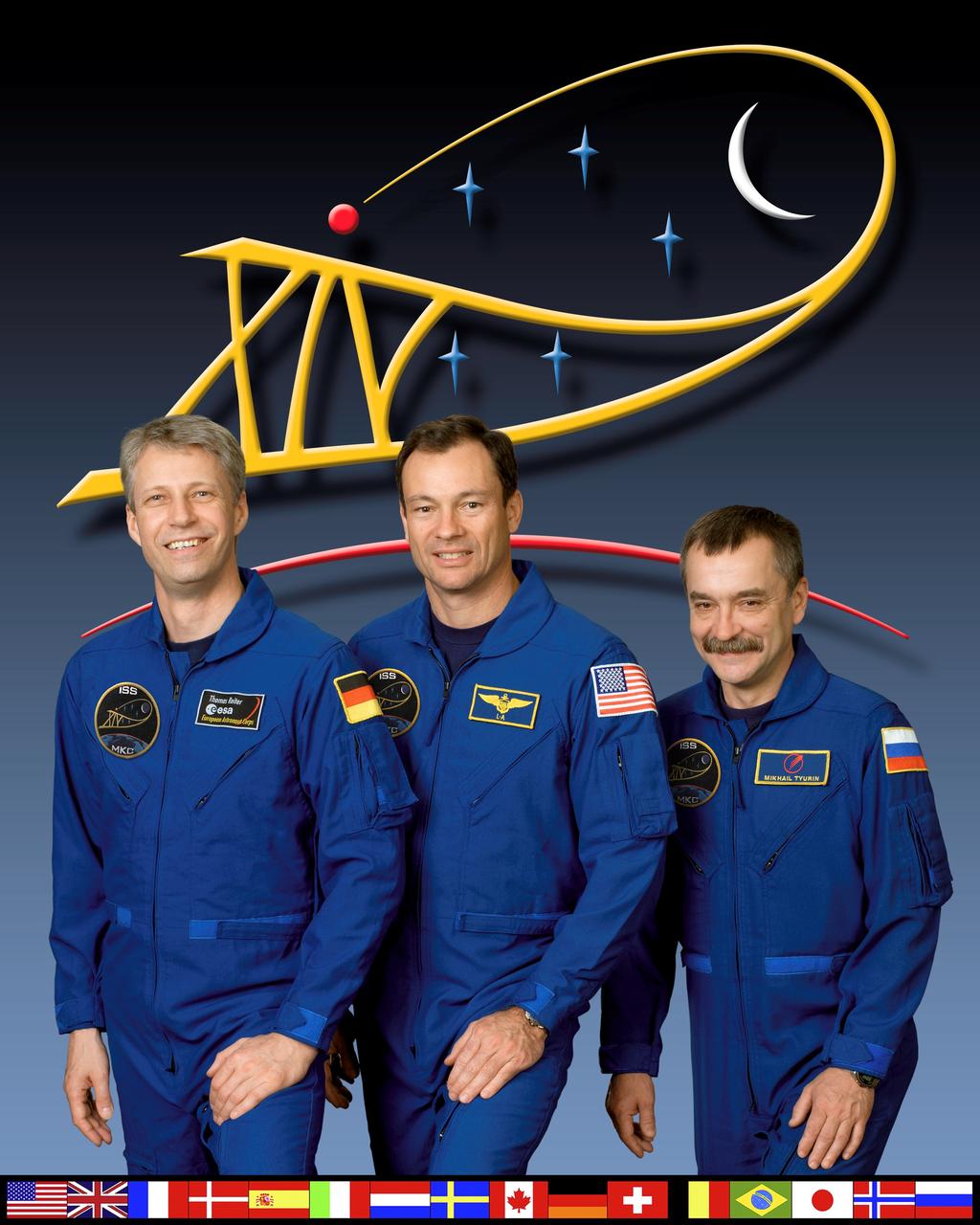
ISS014-S-002B (30 March 2006) --- Astronaut Michael E. Lopez-Alegria (center), Expedition 14 commander and NASA space station science officer; cosmonaut Mikhail Tyurin (right), flight engineer representing Russia's Federal Space Agency; and European Space Agency (ESA) astronaut Thomas Reiter, flight engineer, take a break from training at Johnson Space Center to pose for a crew portrait.
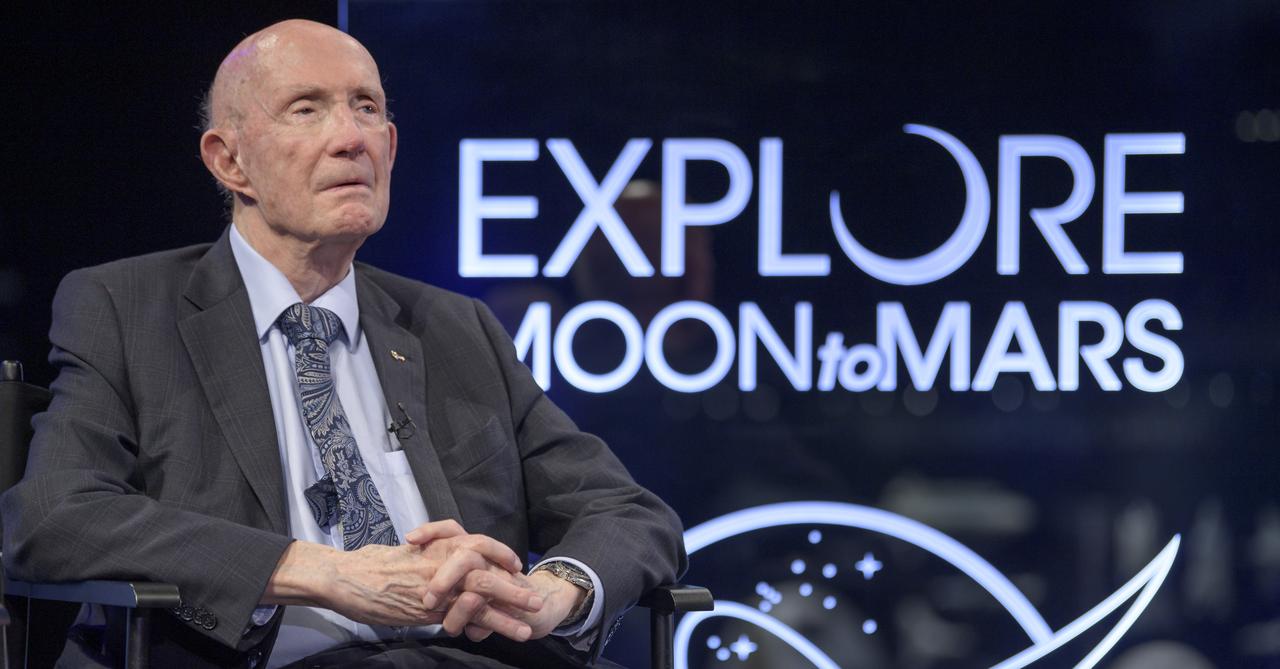
Apollo 10 astronaut General Thomas Stafford talks about his mission during “NASA’s Giant Leaps: Past and Future," a live television program on Friday, July 19, 2019 from the Smithsonian National Air and Space Museum in Washington. NASA and the world are recognizing the 50th anniversary of Apollo 11, in which astronauts Neil Armstrong, Michael Collins, and Buzz Aldrin crewed the first mission to land astronauts on the Moon. Photo Credit: (NASA/Bill Ingalls)

KENNEDY SPACE CENTER, FLA. - Greeted by cheers from wellwishers at KSC and eager for their ventur into space on the Microgrvity Science Laboratory-1 (MSL-1) mission, the STS-83 astronauts depart the Operations and Checkout Building on their way to Launch Pad 39A. Leading the seven-member crew is Mission Commander James D. Halsell Jr. Behind Halsell and to his right is Pilot Susan L. Still. Behind Still is Payload Commander Janice Voss, with Mission Specialist Donald A. Thomas to her left. Behind Thomas, in order, are Mission Specialist Michael L. Gernhardt and Payload Specialists Roger K. Crouch and Gregory T. Linteris. During the scheduled 16-day STS-83 mission, the MSL-1 will be used to test some of the hardware, facilities and procedures that are planned for use on the International Space Station while the flight crew conducts combustion, protein crystal growth and materials processing experiments. Also onboard is the Hitchhiker Cryogenic Flexible Diode (CRYOFD) experiment payload, which is attched to the right side of Columbia's payload bay.
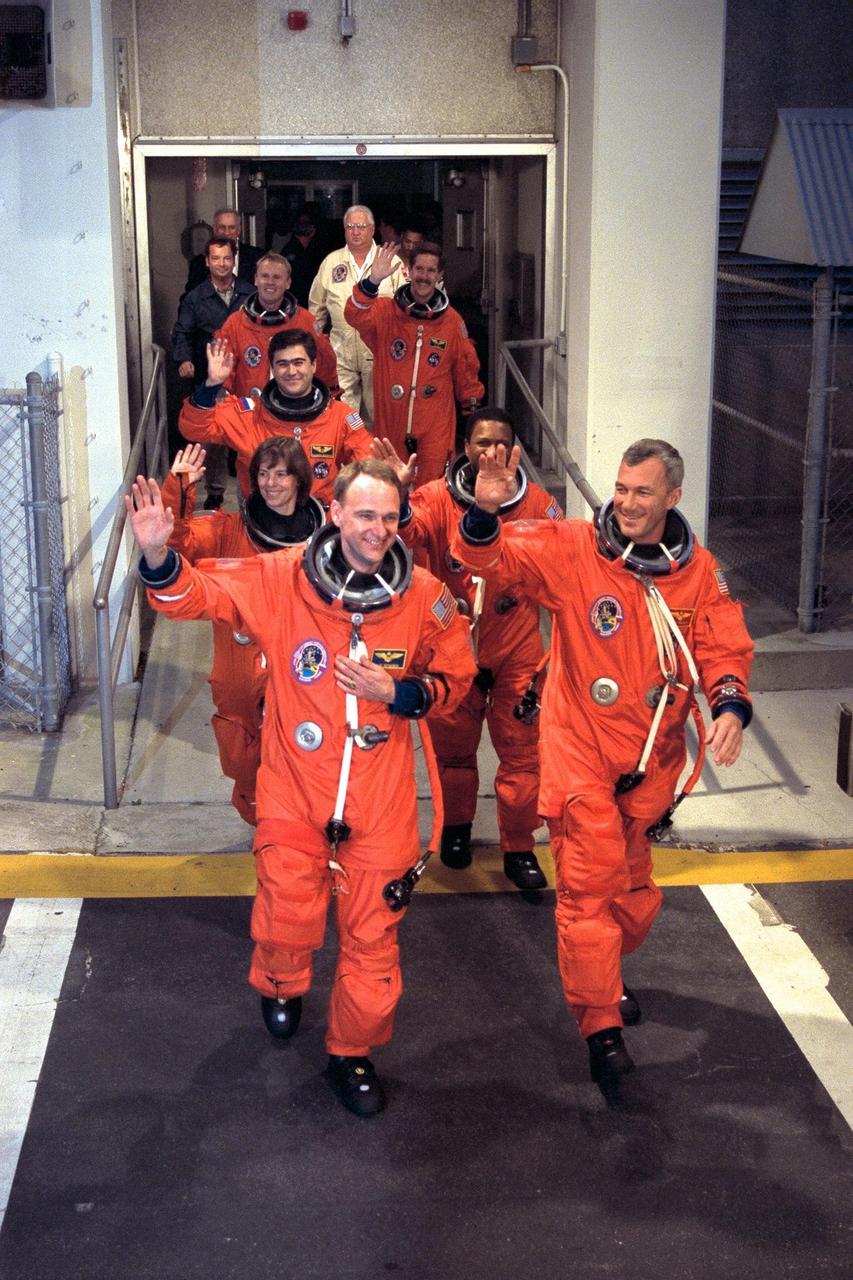
The STS-89 crew walk out of the Operations and Checkout Building and head for the Astrovan that will transport them to Launch Pad 39A, where the Space Shuttle Endeavour awaits to take them to Russia’s Mir space station. Waving to the crowd and leading the way, from front to back, left to right, are Pilot Joe Edwards Jr., Commander Terrence Wilcutt, and Mission Specialists Bonnie Dunbar, Ph.D., Michael Anderson, Salizhan Sharipov of the Russian Space Agency, Andrew Thomas, Ph.D., and James Reilly, Ph.D. STS-89, slated for a 9:48 p.m. EST liftoff Jan. 22, is the eighth docking with the Russian Space Station Mir, the first Mir docking for Endeavour (all previous dockings were made by Atlantis), and the first launch of 1998. After docking with Mir, Mission Specialist Andrew Thomas, Ph.D., will transfer to the space station, succeeding David Wolf, M.D
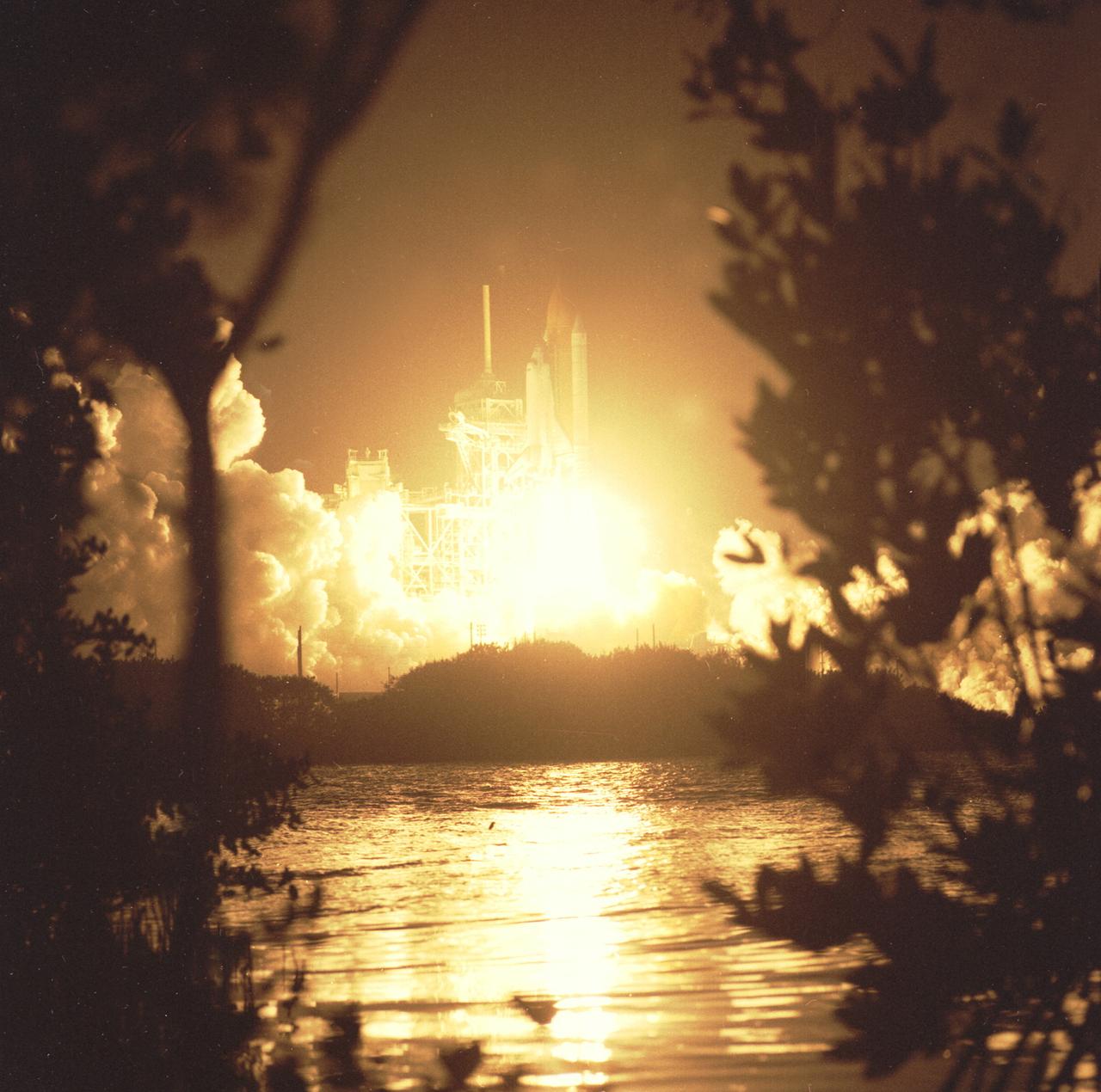
STS089-S-006 (22 Jan. 1998) --- Silhouettes of Florida foliage frame the space shuttle Endeavour in this wide scene of its nocturnal launch. Endeavour lifted off from Launch Pad 39A at 9:48:15 p.m. (EST), Jan. 22, 1998. STS-89 represents the eighth docking mission with Mir (all previous such flights utilized the Atlantis). After the docking with Mir, Andrew S. W. Thomas, mission specialist, will transfer to the station, succeeding astronaut David A. Wolf as guest cosmonaut researcher. Wolf will return to Earth aboard Endeavour. Thomas is expected to live and work on Mir until June 1998. Other crew members onboard were Terrence W. Wilcutt, Joe F. Edwards Jr., Bonnie J. Dunbar, James F. Reilly, Michael P. Anderson and Salizhan S. Sharipov. Sharipov represents the Russian Space Agency (RSA). Photo credit: NASA
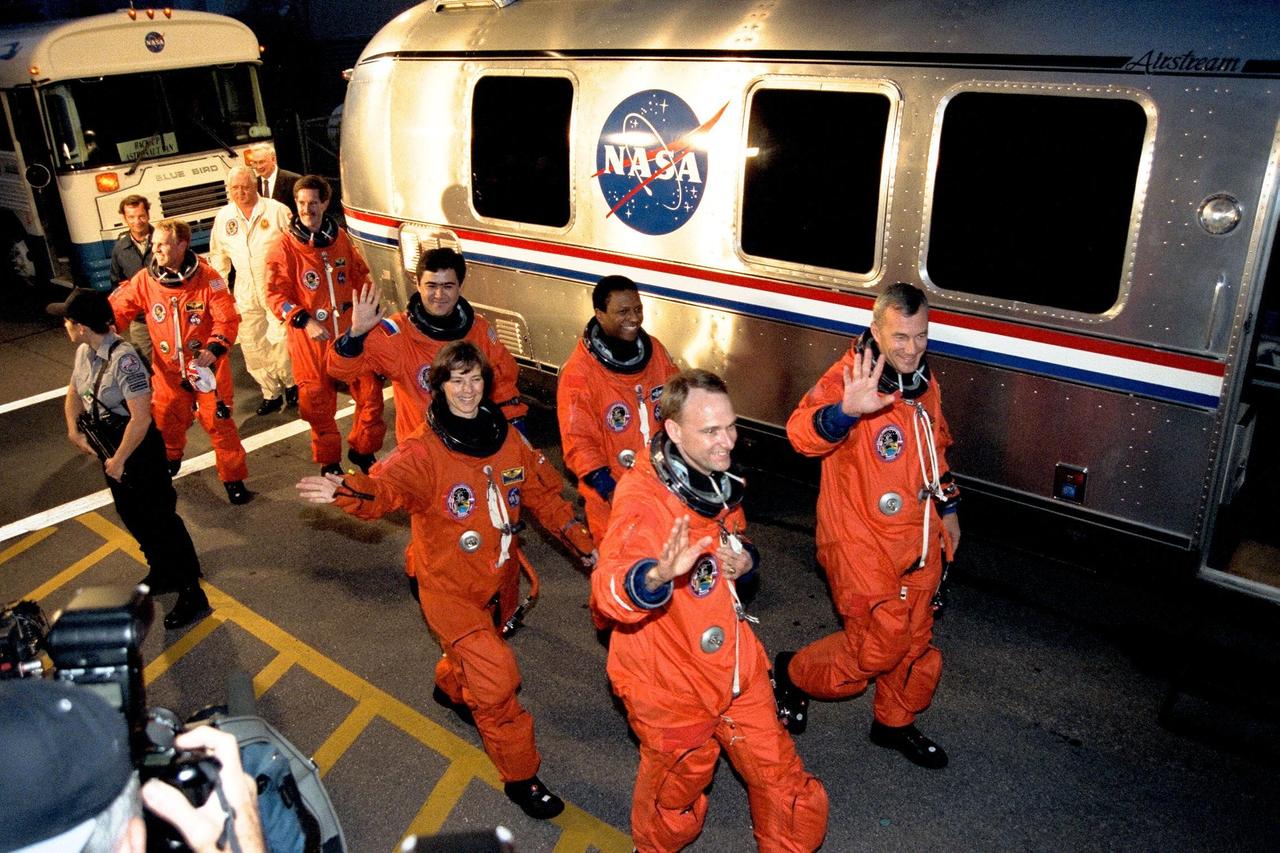
The STS-89 crew walk out of the Operations and Checkout Building and head for the Astrovan that will transport them to Launch Pad 39A, where the Space Shuttle Endeavour awaits to take them to Russia’s Mir space station. Waving to the crowd and leading the way, from front to back, left to right, are Pilot Joe Edwards Jr., Commander Terrence Wilcutt, and Mission Specialists Bonnie Dunbar, Ph.D., Michael Anderson, Salizhan Sharipov of the Russian Space Agency, Andrew Thomas, Ph.D., and James Reilly, Ph.D. STS-89, slated for a 9:48 p.m. EST liftoff Jan. 22, is the eighth docking with the Russian Space Station Mir, the first Mir docking for Endeavour (all previous dockings were made by Atlantis), and the first launch of 1998. After docking with Mir, Mission Specialist Andrew Thomas, Ph.D., will transfer to the space station, succeeding David Wolf, M.D
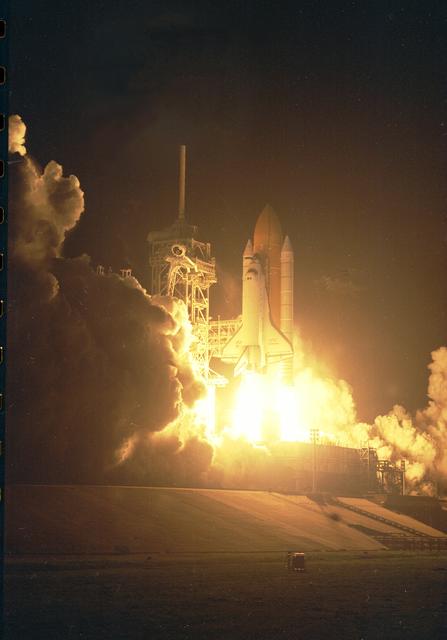
STS089-S-005 (22 Jan. 1998) --- The space shuttle Endeavour cuts a bright swath through the dark sky as it blazes a trail toward the Russian Mir Space Station. Endeavour lifted off from Launch Pad 39A at 9:48:15 p.m. (EST), Jan. 22, 1998. STS-89 represents the eighth docking mission with Mir (all previous such flights utilized the Atlantis). After the docking with Mir, Andrew S. W. Thomas, mission specialist, will transfer to the station, succeeding astronaut David A. Wolf as guest cosmonaut researcher. Wolf will return to Earth aboard Endeavour. Thomas is expected to live and work on Mir until June 1998. Other crew members onboard were Terrence W. Wilcutt, Joe F. Edwards Jr., Bonnie J. Dunbar, James F. Reilly, Michael P. Anderson and Salizhan S. Sharipov. Sharipov represents the Russian Space Agency (RSA). Photo credit: NASA
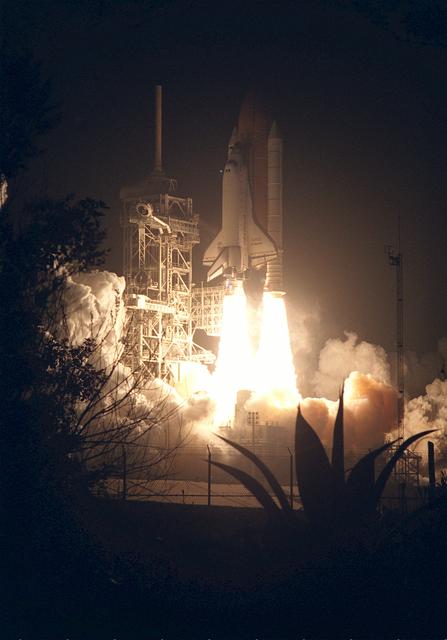
STS089-S-010 (22 Jan. 1998) --- The space shuttle Endeavour heads toward its Earth-orbital destination to the Russian Mir Space Station. Endeavour lifted off from Launch Pad 39A at 9:48:15 p.m. (EST), Jan. 22, 1998. STS-89 represents the eighth docking mission with Mir (all previous such flights utilized the Atlantis). After the docking with Mir, Andrew S. W. Thomas, mission specialist, will transfer to the station, succeeding astronaut David A. Wolf as guest cosmonaut researcher. Wolf will return to Earth aboard Endeavour. Thomas is expected to live and work on Mir until June 1998. Other astronauts onboard were Terrence W. Wilcutt, Joe F. Edwards Jr., Bonnie J. Dunbar, James F. Reilly, Michael P. Anderson and Salizhan S. Sharipov. Sharipov represents the Russian Space Agency (RSA). Photo credit: NASA
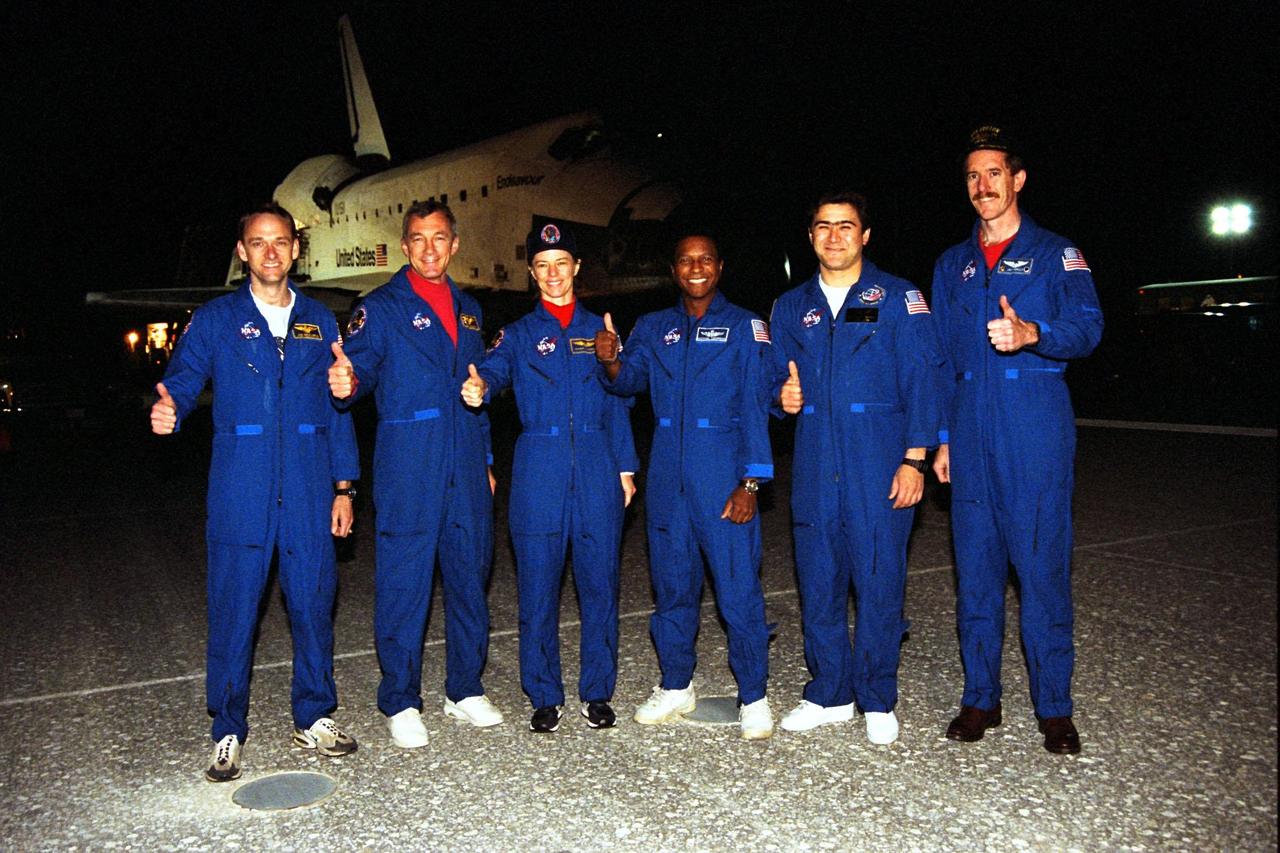
KENNEDY SPACE CENTER, FLA. -- STS-89 crew members give a "thumbs up" on KSC’s Runway 15 following completion of their successful mission that lasted nearly nine days. From left are Pilot Joe Edwards Jr.; Commander Terrence Wilcutt; and Mission Specialists Bonnie Dunbar, Ph.D.; Michael Anderson; Salizhan Sharipov of the Russian Space Agency; and James Reilly, Ph.D. Not shown are Mission Specialist Andrew Thomas, Ph.D., and returning astronaut and Mir 24 crew member David Wolf, M.D. STS-89 was the eighth docking of the Space Shuttle with the Russian Space Station Mir. Dr. Thomas succeeded Dr. Wolf on Mir, who has been on the Russian space station since late September. Dr. Thomas is scheduled to remain on Mir until the STS-91 Shuttle mission returns in June 1998. In addition to the docking and crew exchange, STS-89 included the transfer of science, logistical equipment and supplies between the two orbiting spacecrafts
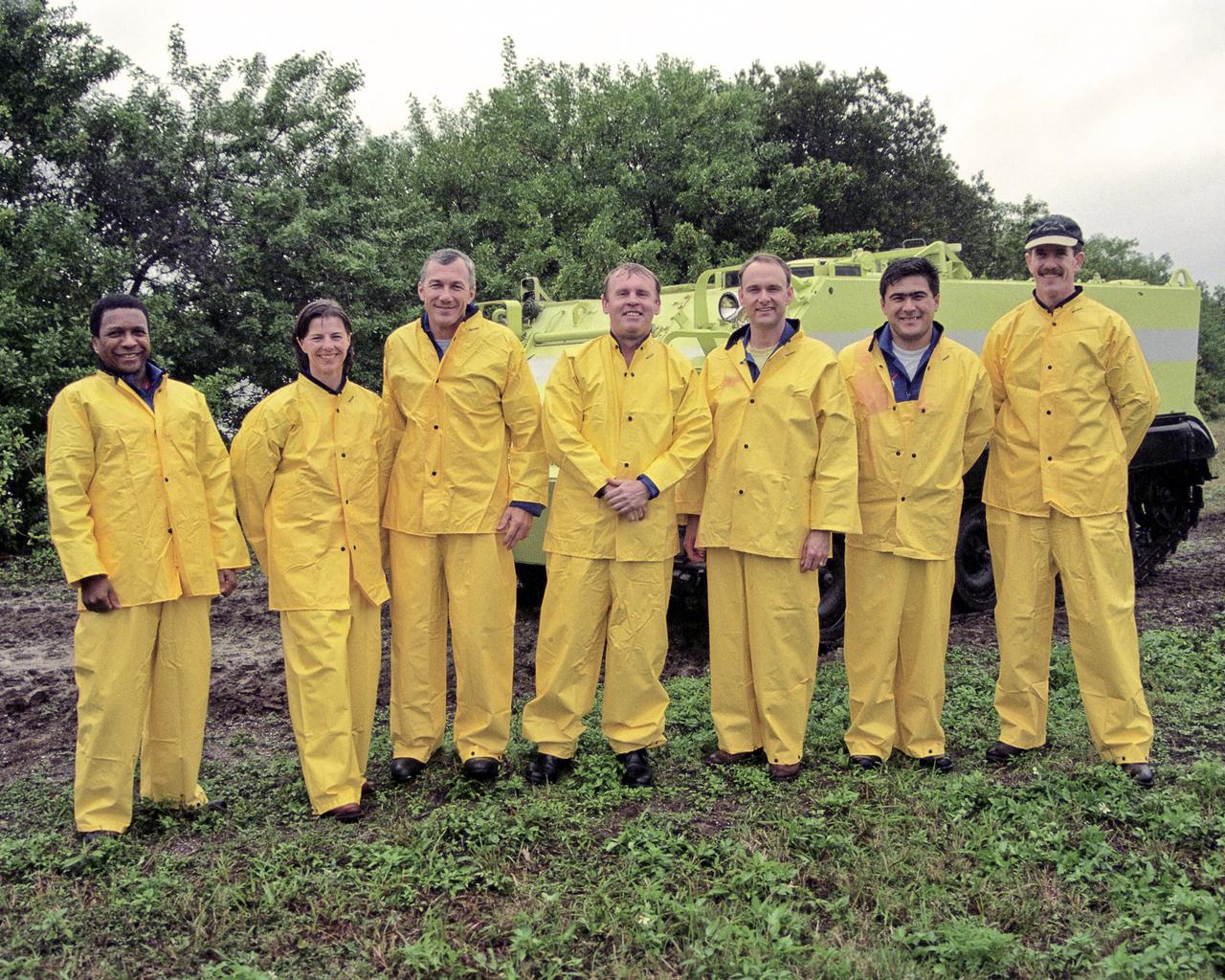
CAPE CANAVERAL, Fla. --The STS-89 crew pose in front of an M-113 armored personnel carrier while participating in Terminal Countdown Demonstration Test TCDT activities. The TCDT is held at KSC prior to each Space Shuttle flight to provide crews with an opportunity to participate in simulated countdown activities. Posing, from left to right, are Mission Specialists Michael Anderson and Bonnie Dunbar, Ph.D. Commander Terrence Wilcutt Mission Specialist Andrew Thomas, Ph.D. Pilot Joe Edwards, Jr. and Mission Specialists Salizhan Sharipov of the Russian Space Agency and James Reilly, Ph.D. The STS-89 mission will be the eighth docking of the Space Shuttle with the Russian Space Station Mir. After docking, Dr. Thomas will transfer to the space station, succeeding David Wolf, M.D., who will return to Earth aboard Endeavour. Dr. Thomas will live and work on Mir until June. STS-89 is scheduled for a January 22 liftoff at 9:48 p.m. Photo credit: NASA
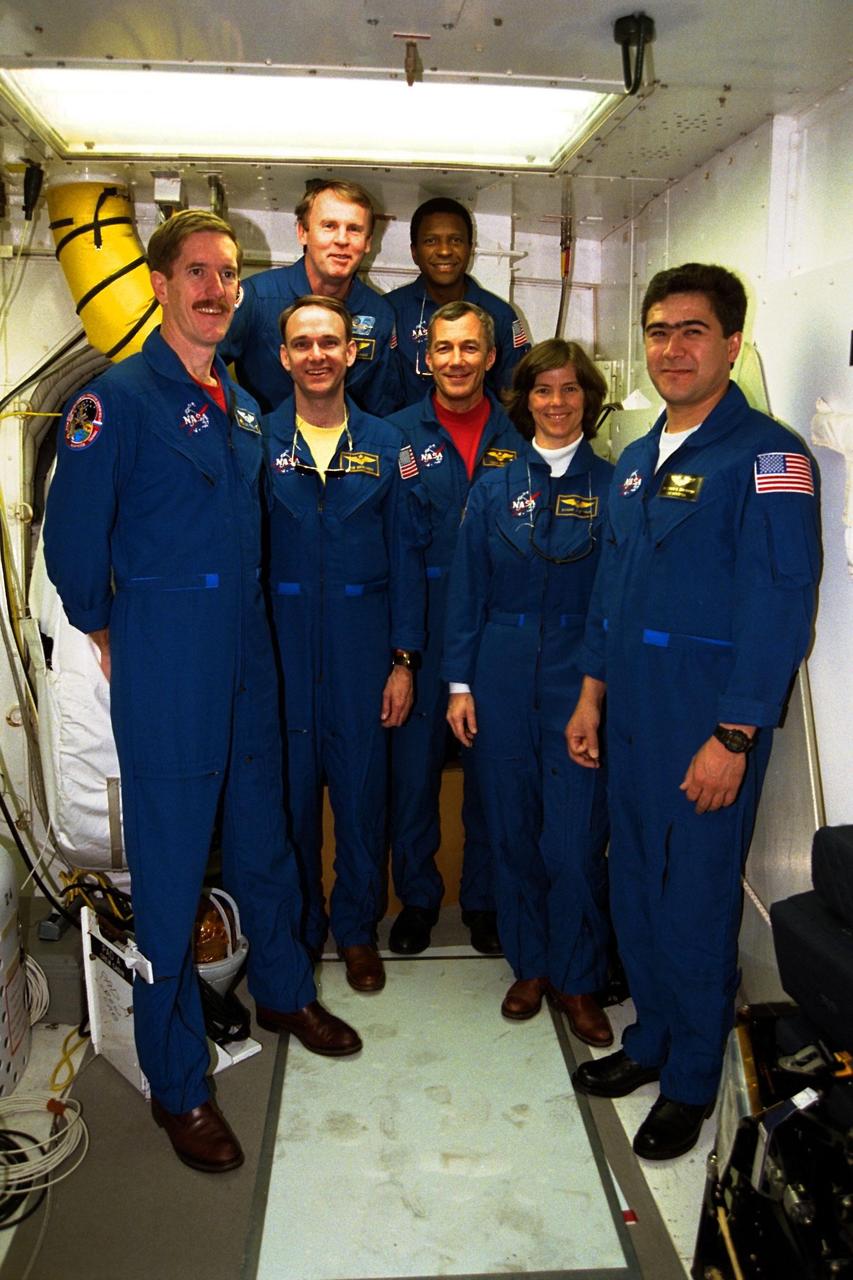
The STS-89 crew pose in the white room at the entrance to the Space Shuttle Endeavour at KSC’s Launch Pad 39A during Terminal Countdown Demonstration Test (TCDT) activities. The crew include, from left to right, Mission Specialist James Reilly, Ph.D.; Pilot Joe Edwards Jr.; Commander Terrence Wilcutt; Mission Specialists Bonnie Dunbar, Ph.D., and Salizhan Sharipov of the Russian Space Agency. In back are, from left to right, Mission Specialists Andrew Thomas, Ph.D., and Michael Anderson. The TCDT is held at KSC prior to each Space Shuttle flight to provide crews with an opportunity to participate in simulated countdown activities. The STS-89 mission will be the eighth docking of the Space Shuttle with the Russian Space Station Mir. After docking, Mission Specialist Andrew Thomas, Ph.D., will transfer to the space station, succeeding David Wolf, M.D., who will return to Earth aboard Endeavour. Dr. Thomas will live and work on Mir until June. STS-89 is scheduled for a Jan. 22 liftoff at 9:48 p.m
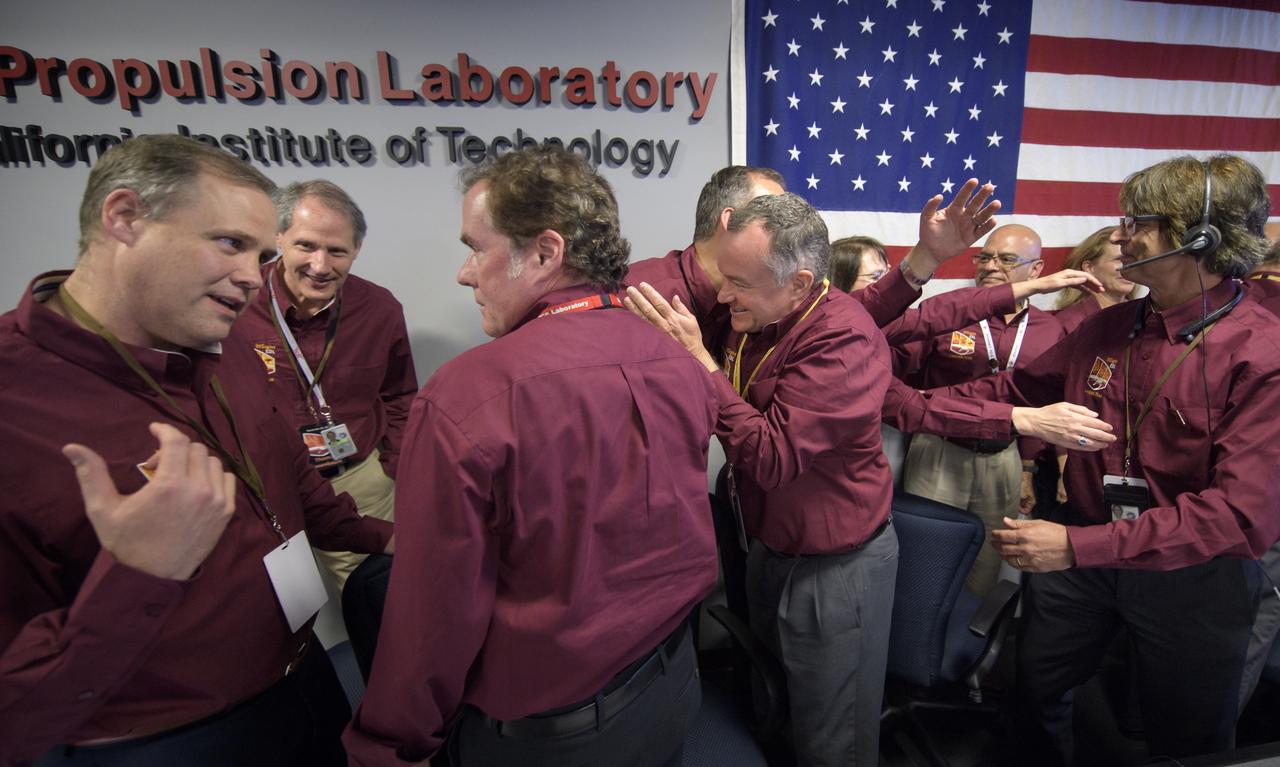
NASA Administrator Jim Bridenstine, left, celebrates with other managers after receiving confirmation that the Mars InSight lander successfully touched down on the surface of Mars, Monday, Nov. 26, 2018 inside the Mission Support Area at NASA's Jet Propulsion Laboratory in Pasadena, California. InSight, short for Interior Exploration using Seismic Investigations, Geodesy and Heat Transport, is a Mars lander designed to study the "inner space" of Mars: its crust, mantle, and core. Photo Credit: (NASA/Bill Ingalls)

Civil Air Patrol cadets (L to R) Benjamin Errington, Caden Thomas, and Isabelle Cooper of the Alvin Callander Composite Squadron record weather data and track the impact of Solar Eclipses on VHF Radio Operations as they participate in the CAP Solar Eclipse Mission, a continent-wide project collecting solar eclipse data in partnership with NASA. The cadets spent over six hours taking measurements at their base of operations at Lakefront Airport in New Orleans on Monday, April 8, 2024. New Orleans is home to NASA’s Michoud Assembly Facility. A total solar eclipse tracked along a narrow strip of the North American continent from Mexico’s Pacific coast to the Atlantic coast of Newfoundland, Canada. A partial solar eclipse was visible across the entire North American continent as well as parts of Europe and Central America. Image credit: NASA/Michael DeMocker

Civil Air Patrol cadets (L to R) Benjamin Errington, Caden Thomas, and Isabelle Cooper of the Alvin Callander Composite Squadron record weather data and track the impact of Solar Eclipses on VHF Radio Operations as they participate in the CAP Solar Eclipse Mission, a continent-wide project collecting solar eclipse data in partnership with NASA. The cadets spent over six hours taking measurements at their base of operations at Lakefront Airport in New Orleans on Monday, April 8, 2024. New Orleans is home to NASA’s Michoud Assembly Facility. A total solar eclipse tracked along a narrow strip of the North American continent from Mexico’s Pacific coast to the Atlantic coast of Newfoundland, Canada. A partial solar eclipse was visible across the entire North American continent as well as parts of Europe and Central America. Image credit: NASA/Michael DeMocker
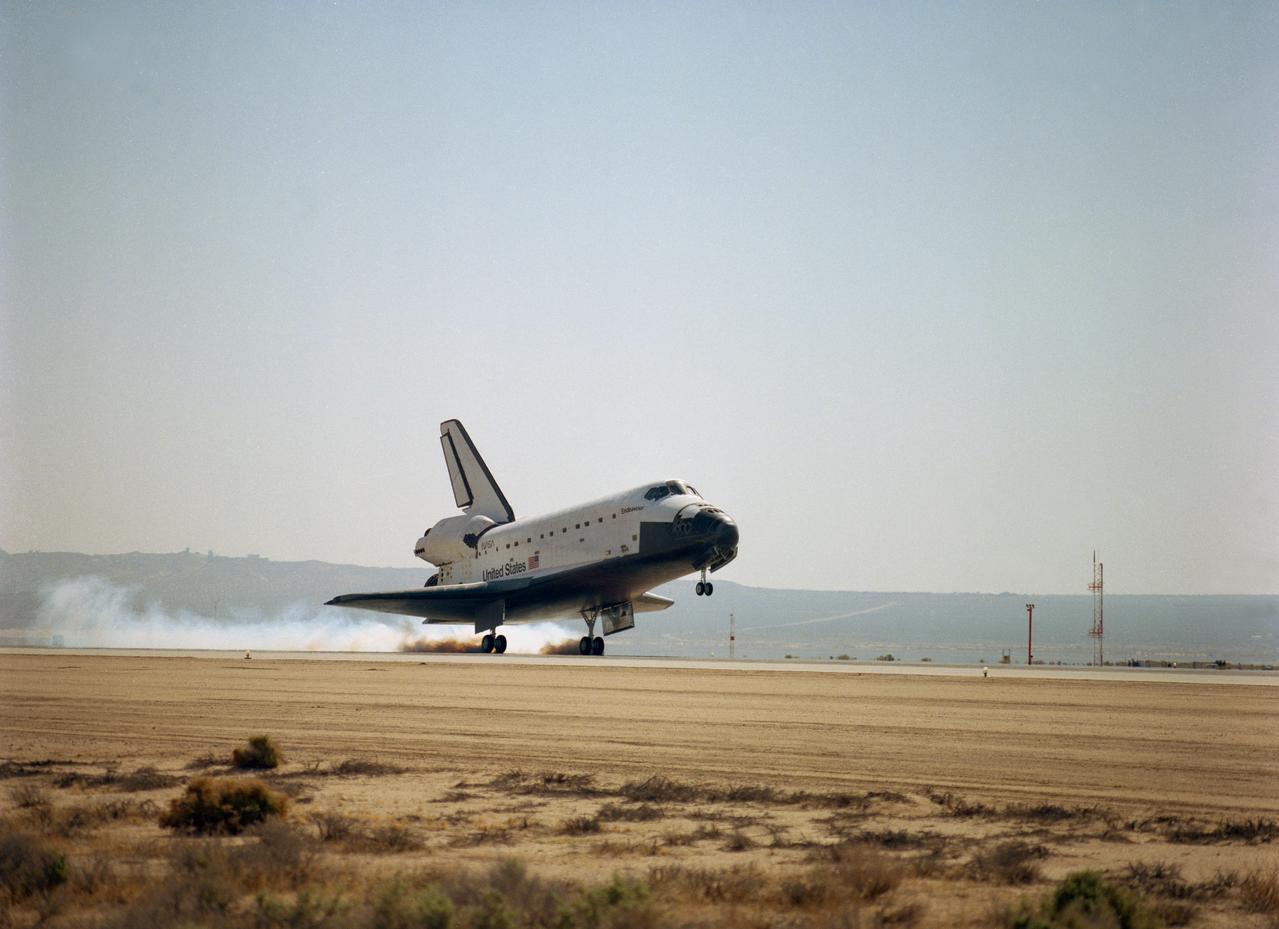
STS059-S-107 (20 April 1994) --- The main landing gear of the Space Shuttle Endeavour touches down at Edwards Air Force Base to complete the 11-day STS-59/SRL-1 mission. Landing occurred at 9:54 a.m. (PDT), April 20, 1994. Mission duration was 11 days, 5 hours, 49 minutes. Guiding Endeavour to a landing was astronaut Sidney M. Gutierrez, STS-59 commander. His crew was Kevin P. Chilton, Linda M. Godwin, Jerome (Jay) Apt, Michael R. (Rich) Clifford and Thomas D. Jones.
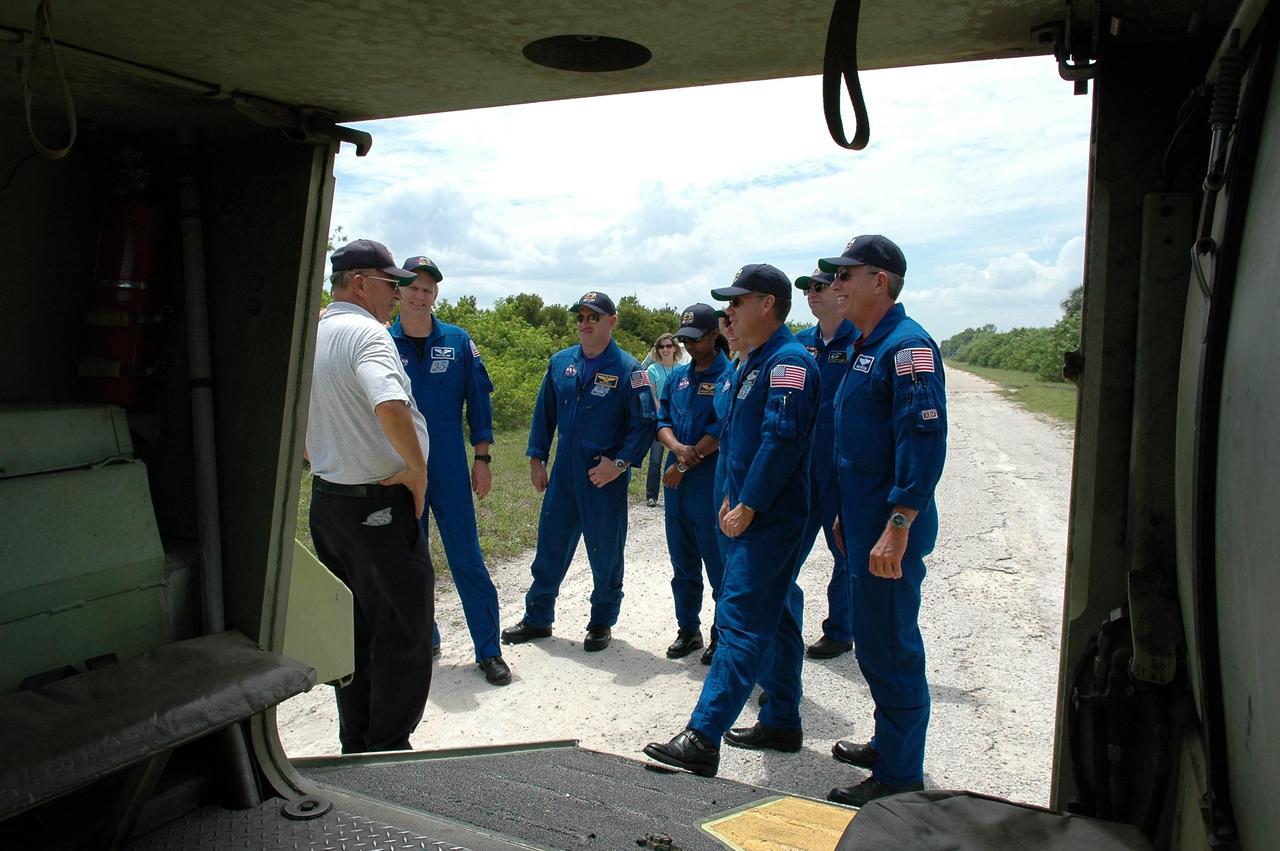
KENNEDY SPACE CENTER, FLA. - During Terminal Countdown Demonstration Test (TCDT) activities, the STS-121 crew gets instructions about emergency egress from the pad from Capt. George Hoggard (left), who is astronaut rescue team leader. Crew members are (from left) Mission Specialist Piers Sellers, Pilot Mark Kelly, Mission Specialists Stephanie Wilson and Lisa Nowak, Commander Steven Lindsey, and Mission Specialists Thomas Reiter and Michael Fossum. Part of the training will be driving an M-113, which is an armored personnel carrier. Mission STS-121 is designated for launch on July 1. Photo credit: NASA/Kim Shiflett
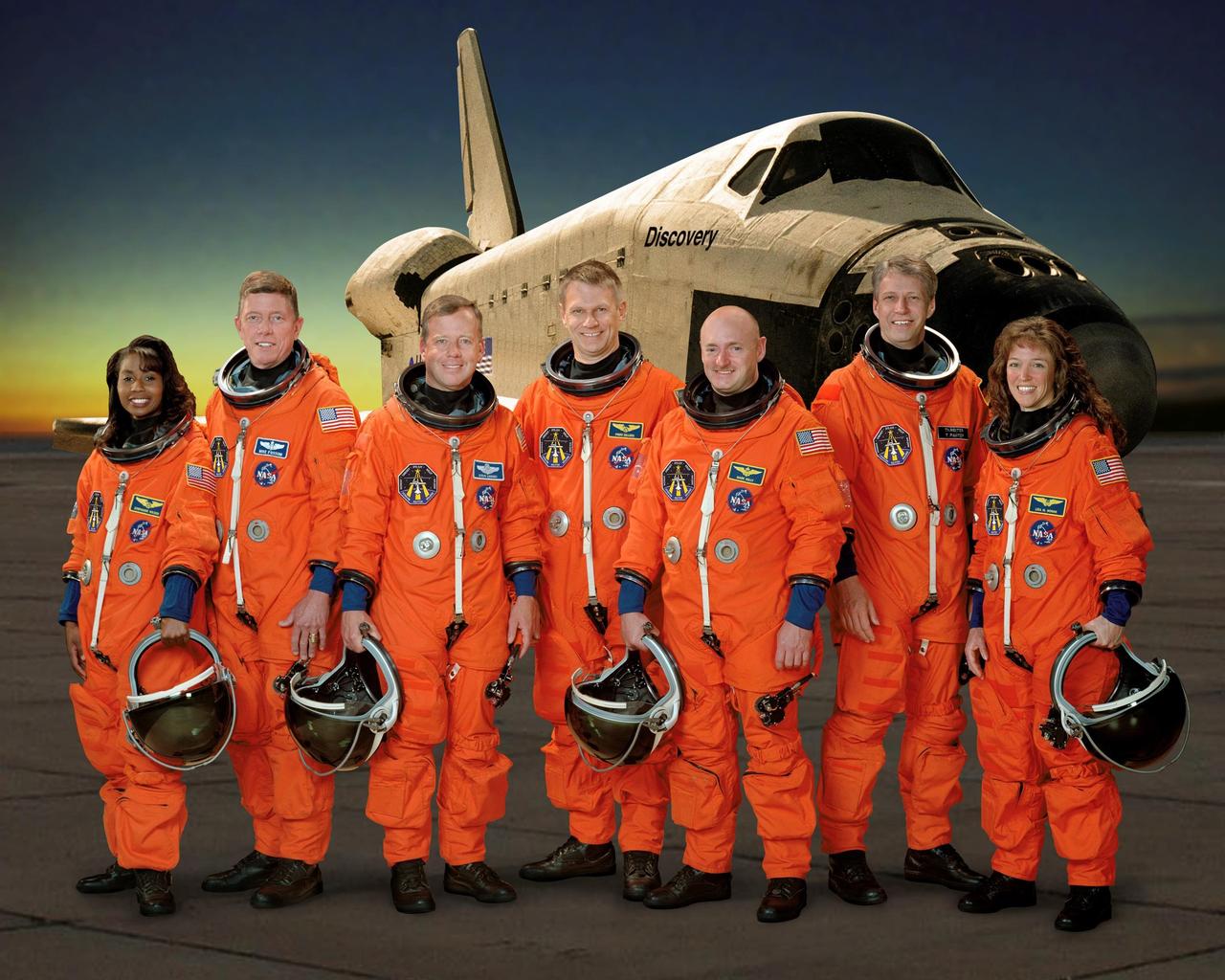
JOHNSON SPACE CENTER, TEXAS - STS121-S-002 (5 April 2006) --- These seven astronauts take a break from training to pose for the STS-121 crew portrait. From the left are astronauts Stephanie D. Wilson, Michael E. Fossum, both mission specialists; Steven W. Lindsey, commander; Piers J. Sellers, mission specialist; Mark E. Kelly, pilot; European Space Agency (ESA) astronaut Thomas Reiter of Germany; and Lisa M. Nowak, both mission specialists. The crewmembers are attired in training versions of their shuttle launch and entry suit.
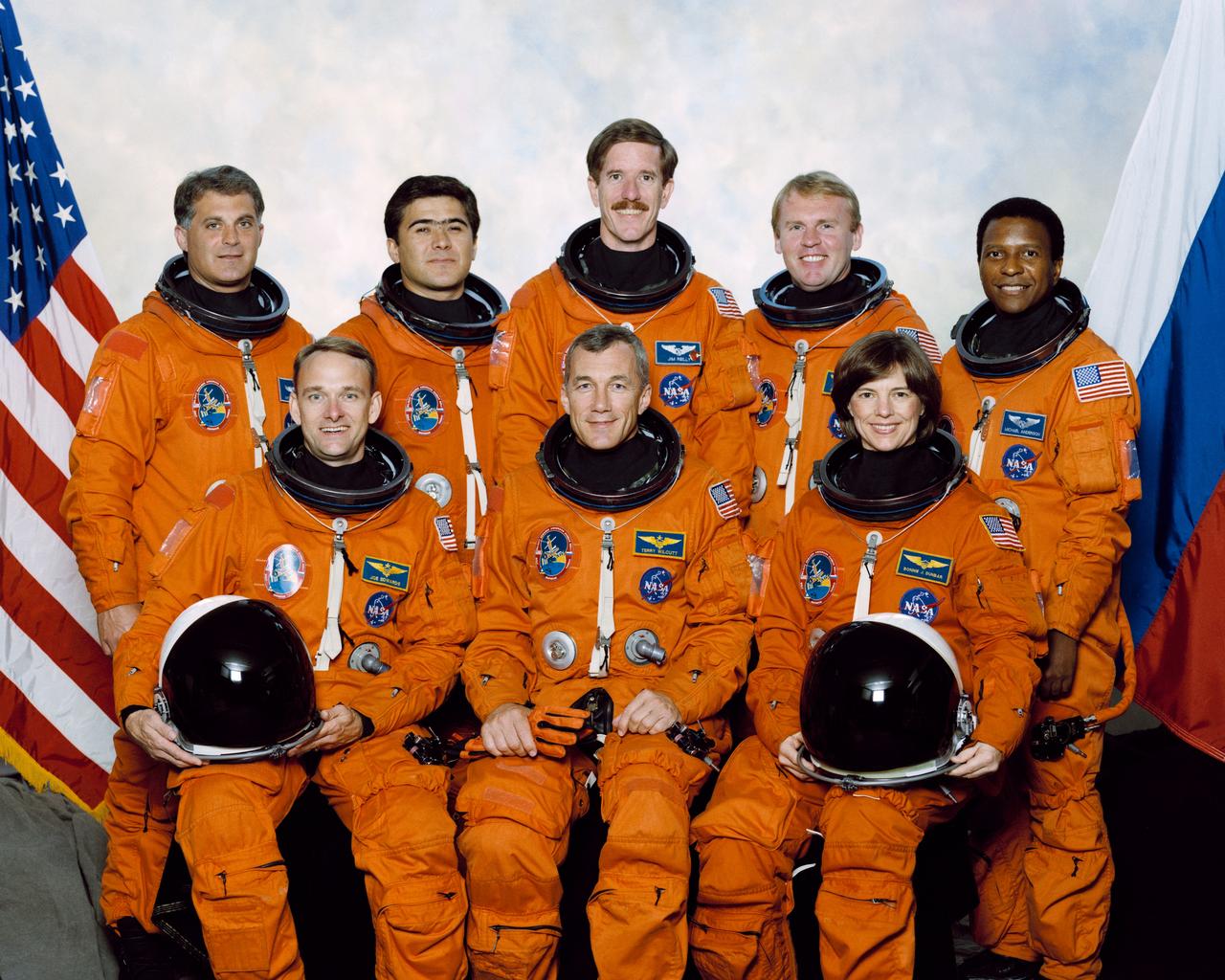
STS089-S-002 (Oct. 1997) --- These seven astronauts and one cosmonaut represent the flight crew for the STS-89 mission to Russia?s Mir Space Station. On the front row, from the left, are astronauts Joe F. Edwards, Jr., pilot; Terrence W. Wilcutt, commander; and Bonnie J. Dunbar, mission specialist. On the back row are David A. Wolf, currently onboard the Mir Space Station as a cosmonaut guest researcher; Salizan S. Sharipov, mission specialist representing the Russian Space Agency (RSA); James F. Reilly, mission specialist; Andrew S. W. Thomas, replacing Wolf aboard Mir as cosmonaut guest researcher; and Michael P. Anderson, mission specialist.
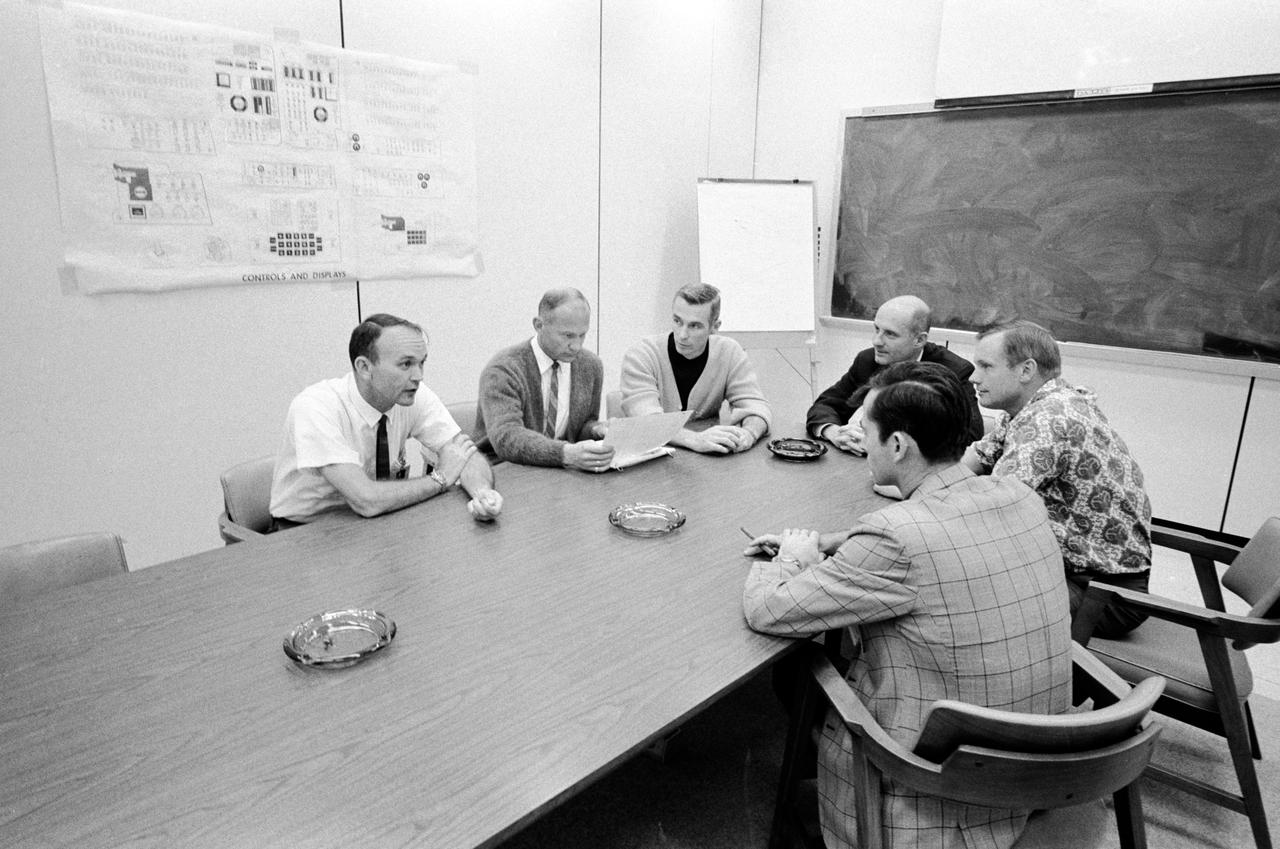
S69-35507 (June 1969) --- The prime crews of the Apollo 10 lunar orbit mission and the Apollo 11 lunar landing mission are photographed during an Apollo 10 postflight de-briefing session. Clockwise, from left, are astronauts Michael Collins, Apollo 11 command module pilot; Edwin E. Aldrin Jr., Apollo 11 lunar module pilot; Eugene A. Cernan, Apollo 10 lunar module pilot; Thomas P. Stafford, Apollo 10 commander; Neil A. Armstrong, Apollo 11 commander; and John W. Young, Apollo 10 command module pilot.
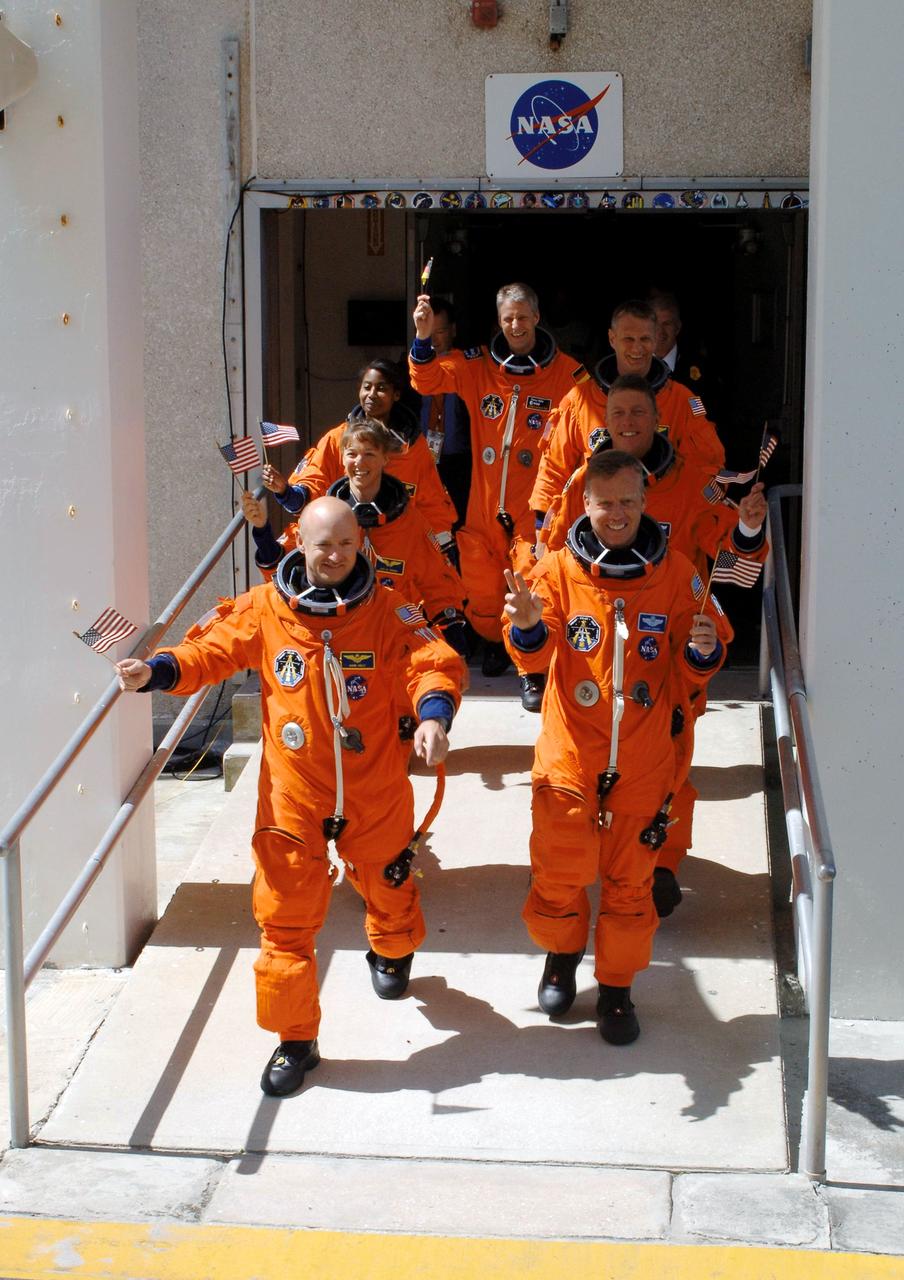
STS121-S-005 (4 July 2006) --- The STS-121 crewmembers, having donned their shuttle launch and entry suits, wave flags for the Fourth of July as they head out of the Operations and Checkout Building at Kennedy Space Center to the transfer van awaiting to take them to Launch Pad 39B. Steven W. Lindsey (right front), commander, and Mark E. Kelly, pilot, lead the way. Other crewmembers - Lisa M. Nowak, Michael E. Fossum, Stephanie D. Wilson, Piers J. Sellers and European Space Agency (ESA) astronaut Thomas Reiter of Germany - follow.
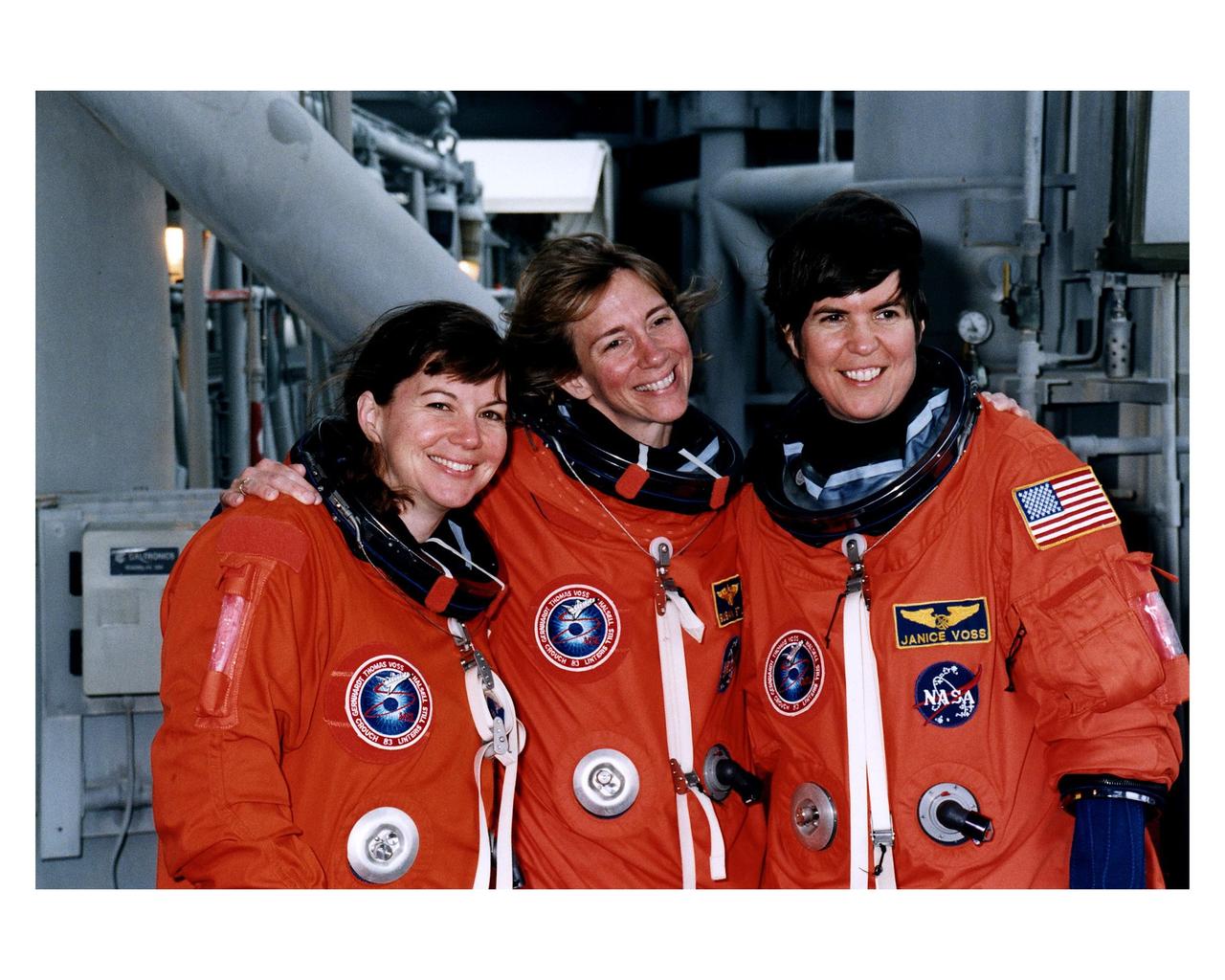
STS-83 Alternate Mission Specialist Catherine "Cady" Coleman, Pilot Susan L. Still and Payload Commander Janice Voss mug for the camera at the 195-foot level of Launch Pad 39A during Terminal Countdown Demonstration Test (TCDT) exercises for that mission. The other crew members for the 16-day Microgravity Science Laboratory-1 (MSL-1) mission are Mission Commander James D. Halsell, Jr.; Mission Specialist Donald A. Thomas; Payload Specialist Gregory T. Linteris; Mission Specialist Michael L. Gernhardt; and Payload Specialist Roger K. Crouch
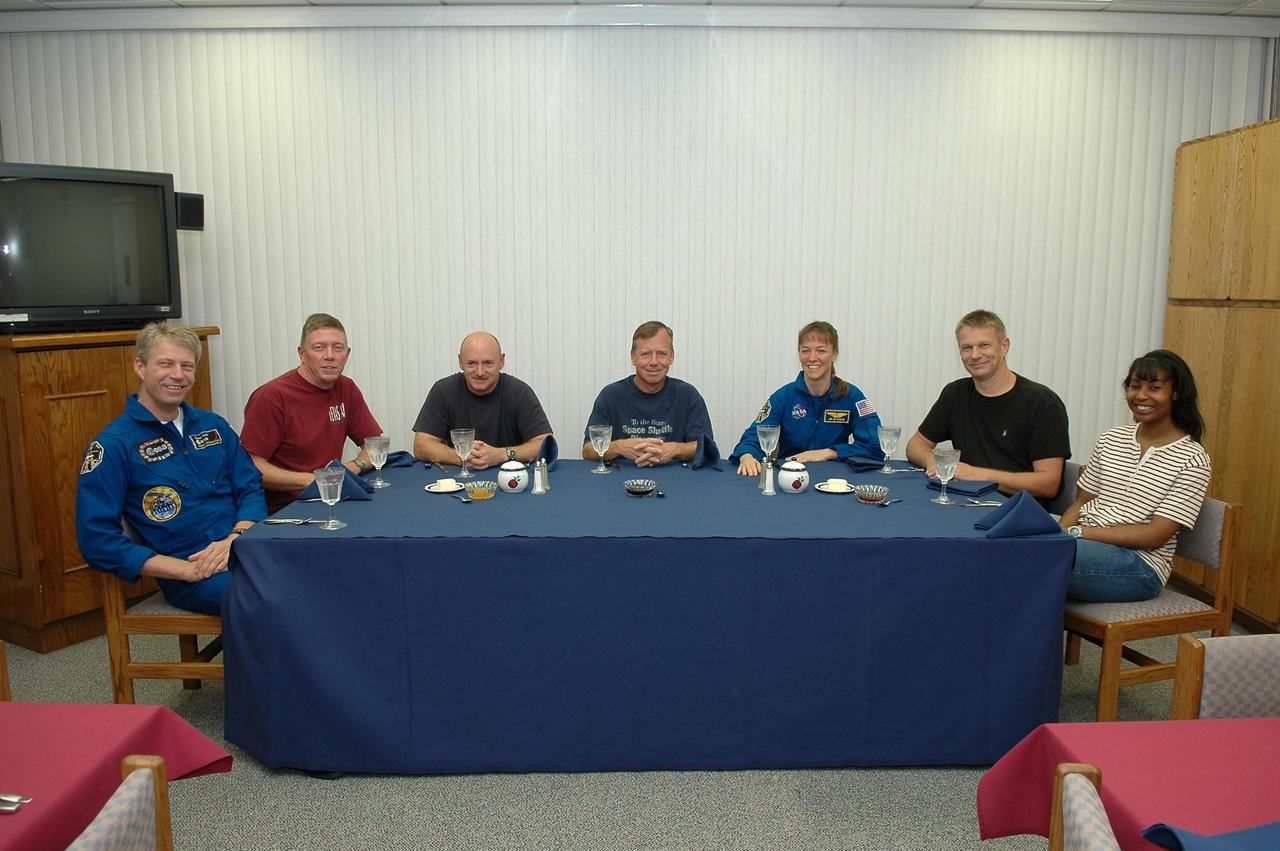
KENNEDY SPACE CENTER, FLA. - The STS-121 crew have breakfast in the Operations and Checkout Building at NASA's Kennedy Space Center before suiting up for the simulated countdown at the launch pad. Seated left to right are Mission Specialists Thomas Reiter of Germany and Michael Fossum, Pilot Mark Kelly, Commander Steven Lindsey, and Mission Specialists Lisa Nowak, Piers Sellers and Stephanie Wilson. Reiter represents the European Space Agency. The crew is taking part in Terminal Countdown Demonstration Test activities, including the dress rehearsal for launch. Mission STS-121 is scheduled to be launched July 1. Photo credit: NASA/Kim Shiflett
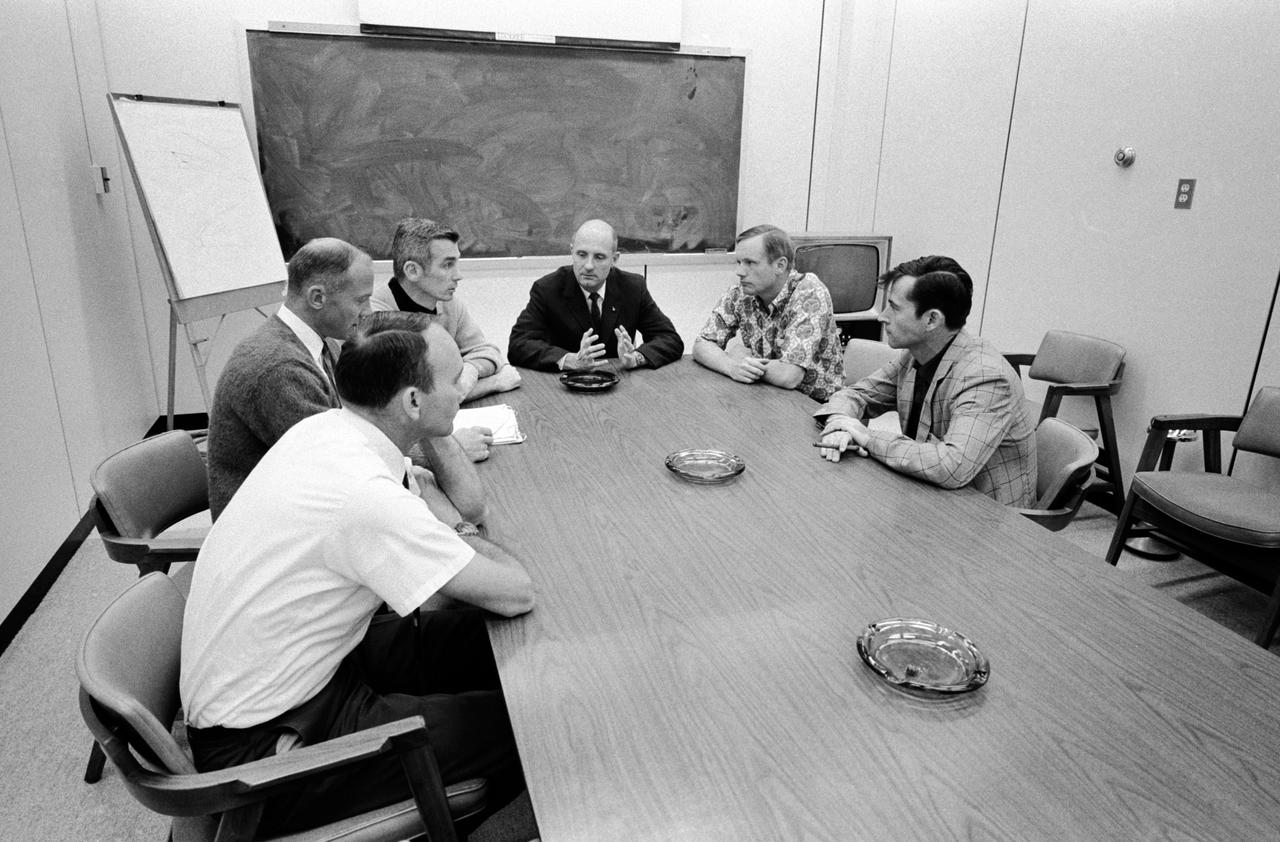
S69-35504 (June 1969) --- The prime crews of the Apollo 10 lunar orbit mission and the Apollo 11 lunar landing mission are photographed during an Apollo 10 postflight de-briefing session. Clockwise, from left foreground, are astronauts Michael Collins, Apollo 11 command module pilot; Edwin E. Aldrin Jr., Apollo 11 lunar module pilot; Eugene A. Cernan, Apollo 10 lunar module pilot; Thomas P. Stafford, Apollo 10 commander; Neil A. Armstrong, Apollo 11 commander; and John W. Young, Apollo 10 command module pilot.
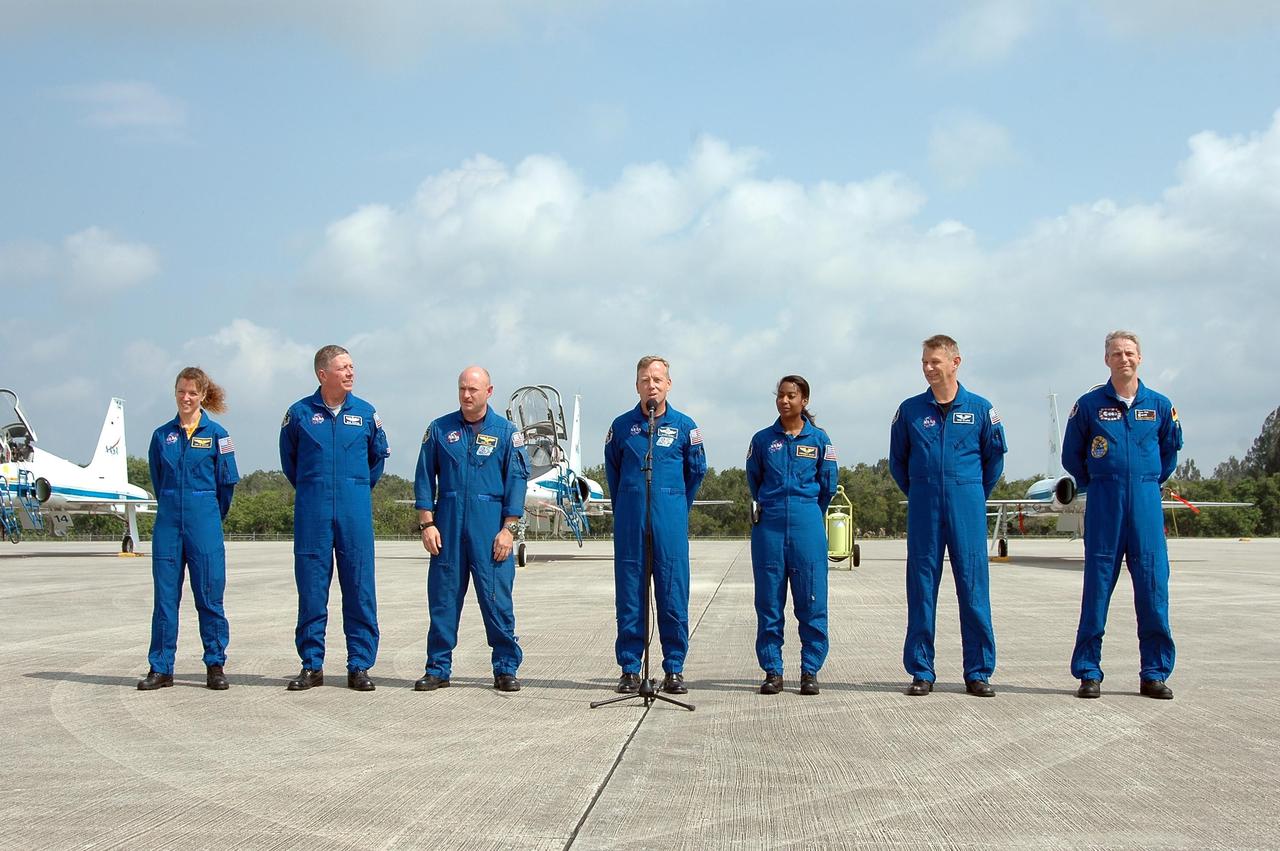
KENNEDY SPACE CENTER, FLA. - After their arrival at KSC to prepare for launch on July 1, the STS-121 crew greets the media on the Shuttle Landing Facility. From left are Mission Specialists Lisa Nowak and Michael Fossum, Pilot Mark Kelly, Commander Steven Lindsey, and Mission Specialists Stephanie Wilson, Piers Sellers and Thomas Reiter. During the 12-day mission, the STS-121 crew will test new equipment and procedures to improve shuttle safety, as well as deliver supplies and make repairs to the International Space Station. This mission is the 115th shuttle flight and the 18th U.S. flight to the International Space Station. Photo credit: NASA/Kim Shiflett
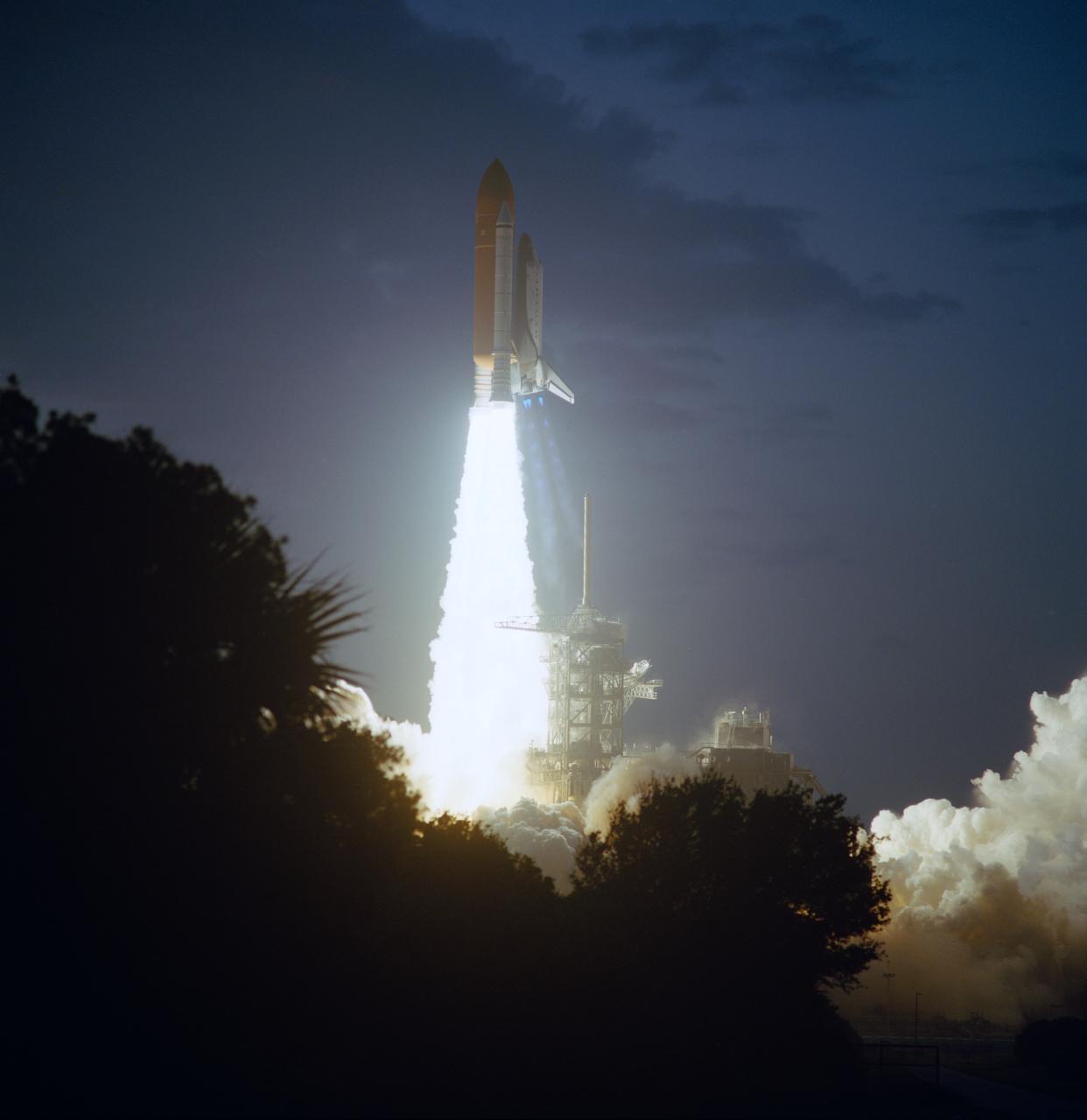
STS059-S-036 (9 April 1994) --- The liftoff of the Space Shuttle Endeavour is backdropped against a dawn sky at the Kennedy Space Center (KSC) as six NASA astronauts head for a week and a half in Earth orbit. The morning sky allows for a contrasting backdrop for the diamond shock effect of the thrust from Endeavour's main engines. Liftoff occurred at 7:05 a.m. (EDT), April 9, 1994. Onboard for the Space Radar Laboratory (SRL-1) mission were astronauts Sidney M. Gutierrez, Kevin P. Chilton, Jerome (Jay) Apt, Linda M. Godwin, Michael R. U. (Rich) Clifford and Thomas D. Jones.
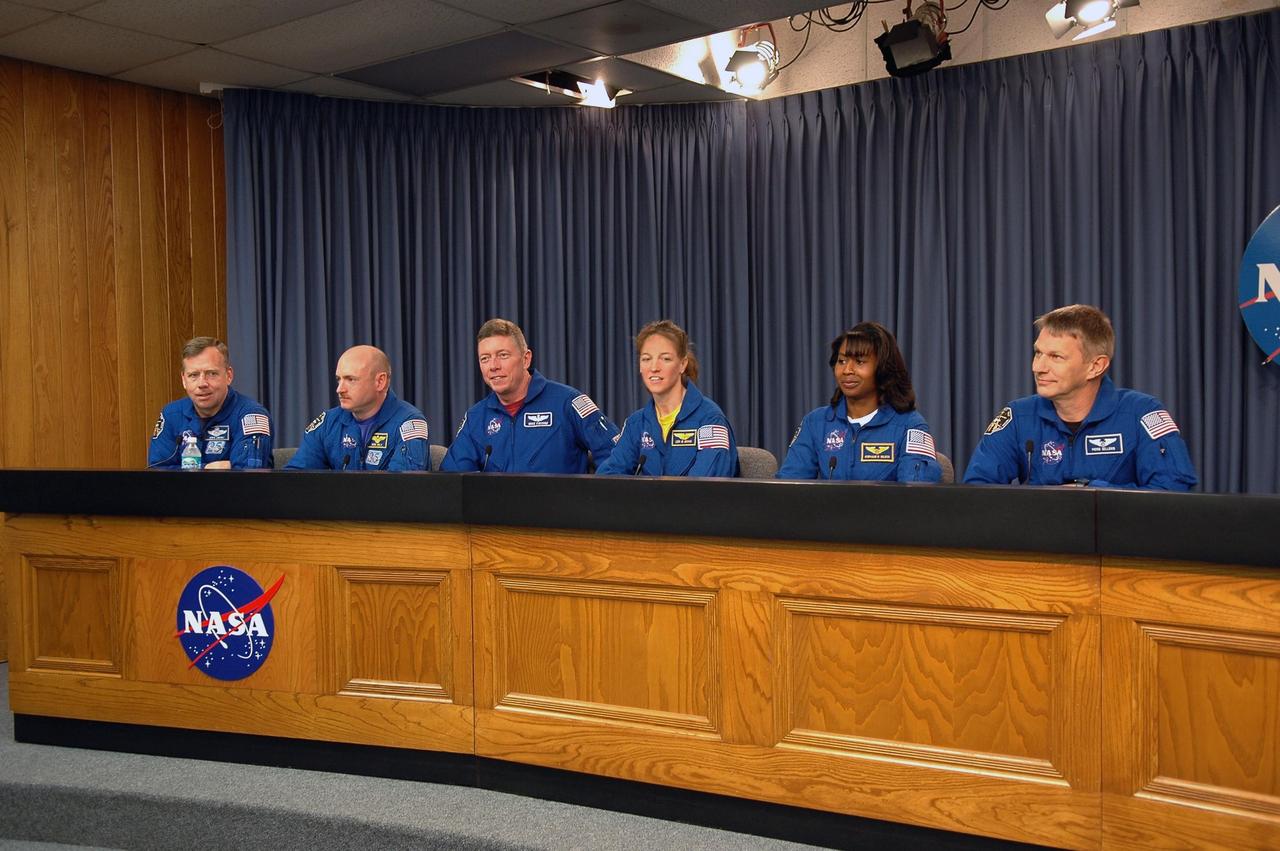
KENNEDY SPACE CENTER, FLA. - In the television studio at NASA Kennedy Space Center, the STS-121 crew answers questions during a media conference. Seated from left are Commander Steven Lindsey, Pilot Mark Kelly and Mission Specialists Michael Fossum, Lisa Nowak, Stephanie Wilson and Piers Sellers. The seventh crew member, Mission Specialist Thomas Reiter, did not attend. The crew is at NASA Kennedy Space Center for the crew equipment interface test, which provides hands-on experiences with equipment used on-orbit. The launch of STS-121, the second return-to-flight mission, is scheduled for May. Photo credit: NASA/Kim Shiflett
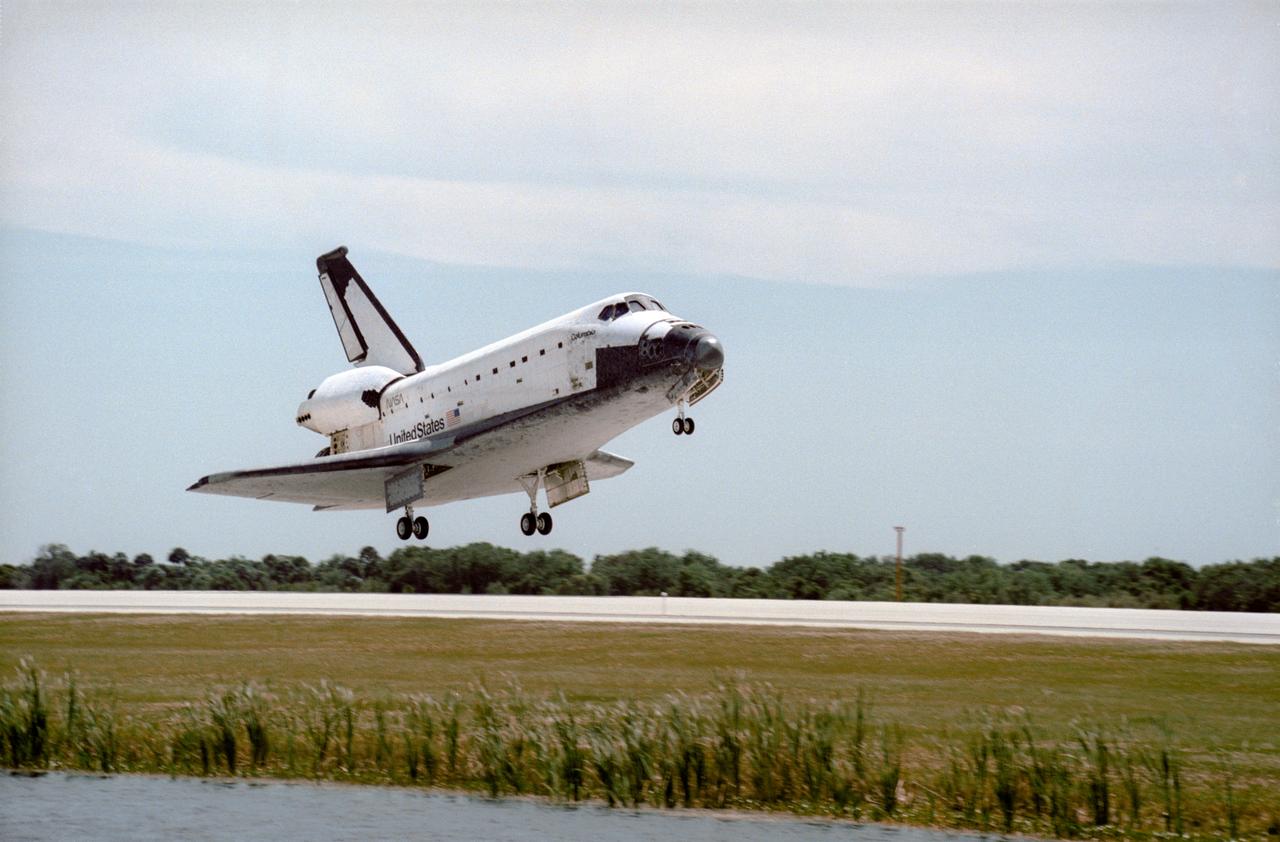
STS083-S-009 (8 April 1997) --- The Space Shuttle Columbia nears touchdown on the Shuttle Landing Facility (SLF) runway at the Kennedy Space Center (KSC), after completing almost four days of a scheduled 16-day mission in Earth-orbit. A problem with one of three fuel cells led to an early landing for the seven-member Microgravity Science Laboratory 1 (MSL-1) crew. Touchdown occurred at 1:33:11 p.m. (EDT), April 8, 1997. Onboard Columbia were James D. Halsell, Jr., Susan L. Still, Janice E. Voss, Donald A. Thomas, Michael L. Gernhardt, Roger K. Crouch and Gregory T. Linteris.
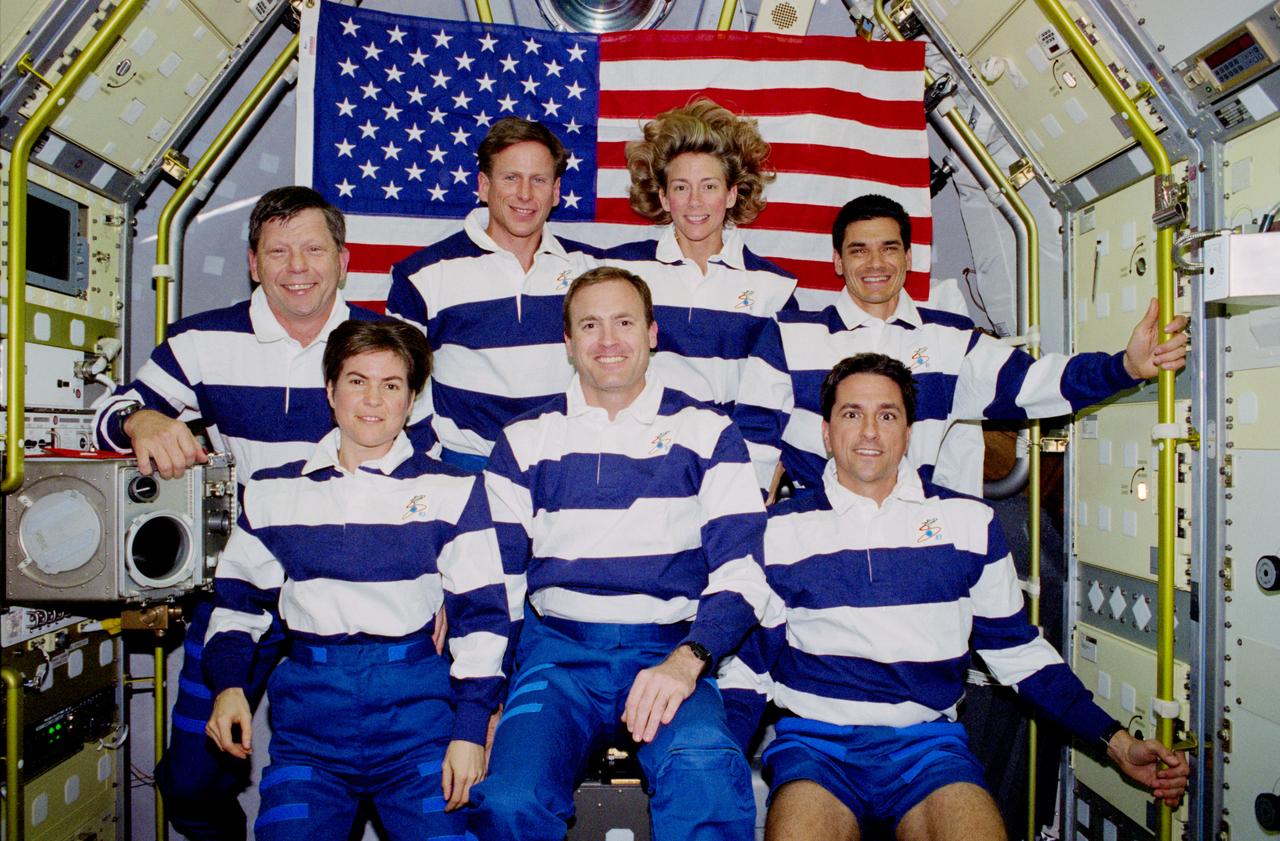
STS083-325-004 (4-8 April 1997) --- Five NASA astronauts and two payload specialists pose for the traditional inflight crew portrait during a Microgravity Science Laboratory 1 (MSL-1) shift changeover in the Spacelab Module aboard the Space Shuttle Columbia. In front (from the left) are astronauts Janice E. Voss, James D. Halsell, Jr. and Donald A. Thomas. From left to right in the rear are Roger K. Crouch, along with astronauts Michael L. Gernhardt and Susan L. Still, and Gregory T. Linteris. Crouch and Linteris are payload specialists.
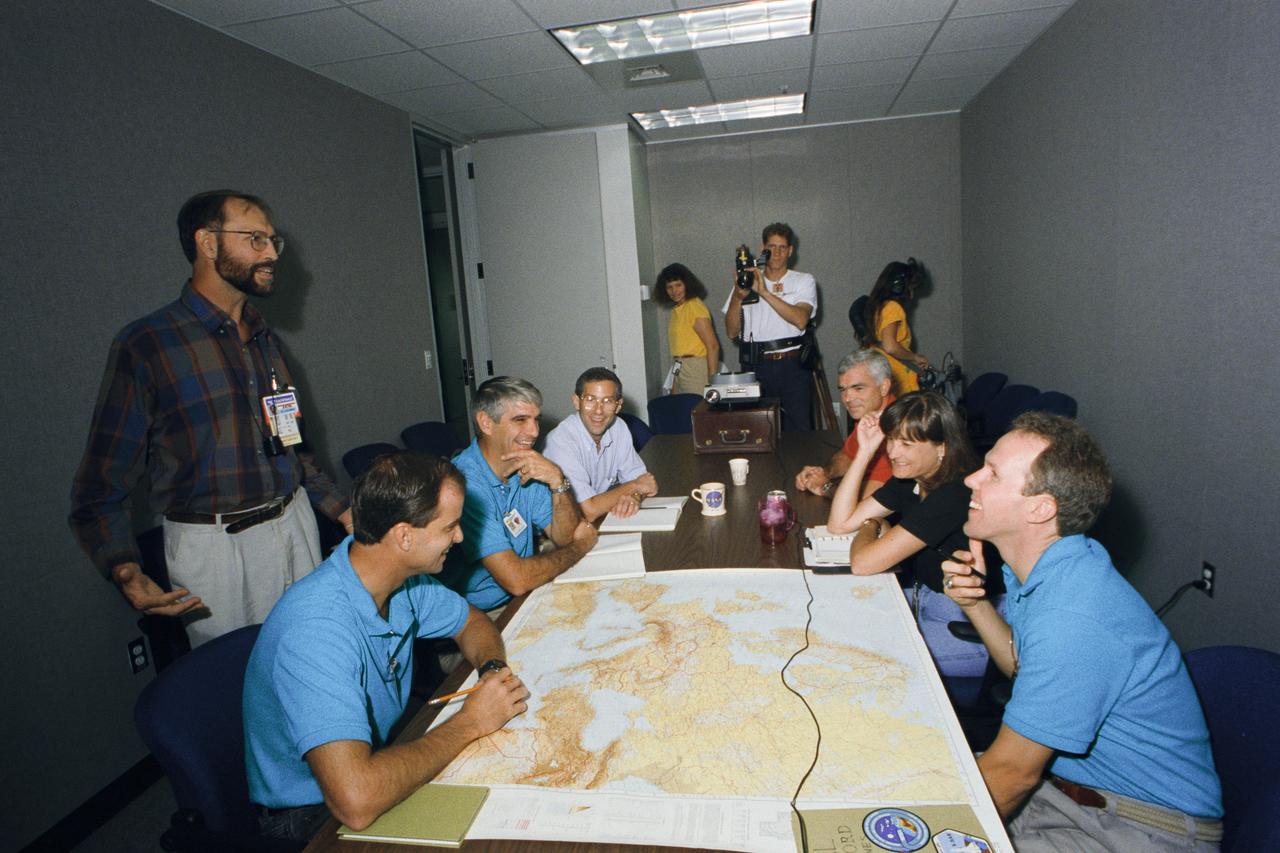
S93-42727 (26 Aug 1993) --- The six astronauts in training for the STS-59 mission are given some onboard Earth observations tips by Justin Wilkinson (standing, foreground) of the Space Shuttle Earth Observations Project (SSEOP) group. Astronaut Sidney M. Gutierrez, mission commander, is at center on the left side of the table. Others, left to right, are astronauts Kevin P. Chilton, pilot; Jerome (Jay) Apt and Michael R.U. (Rich) Clifford, both mission specialists; Linda M. Godwin, payload commander; and Thomas D. Jones, mission specialist.
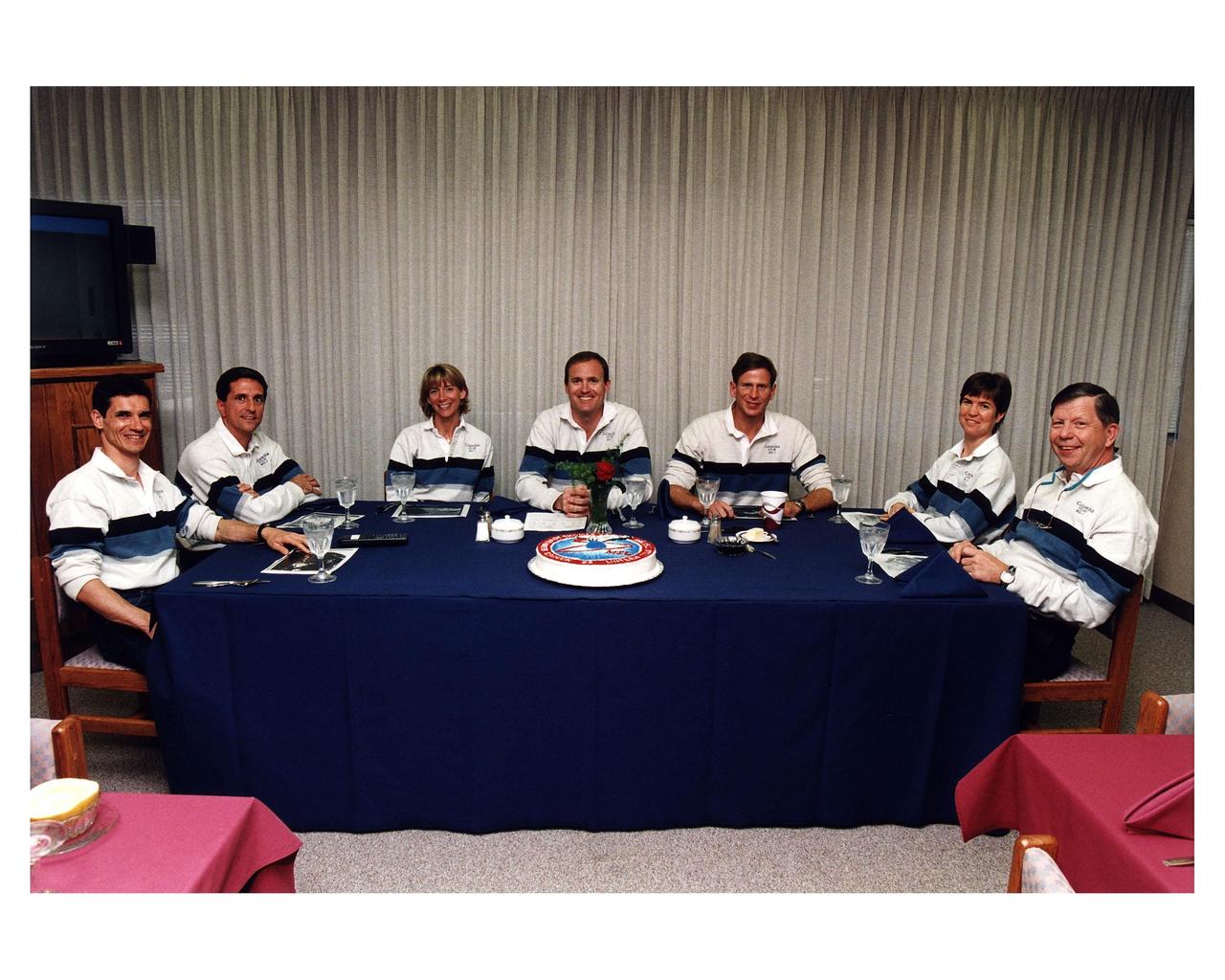
The STS-83 flight crew enjoys the traditional pre-liftoff breakfast in the crew quarters of the Operations and Checkout Building. They are (from left): Payload Specialist Gregory T. Linteris; Mission Specialist Donald A. Thomas; Pilot Susan L. Still; Mission Commander James D. Halsell, Jr.; Mission Specialist Michael L. Gernhardt; Payload Commander Janice E. Voss; and Payload Specialist Roger K. Crouch. After a weather briefing, the flight crew will be fitted with their launch/entry suits and depart for Launch Pad 39A. Once there, they will take their positions in the crew cabin of the Space Shuttle Columbia to await a liftoff during a window that will open at 2:00 p.m. EST, April 4
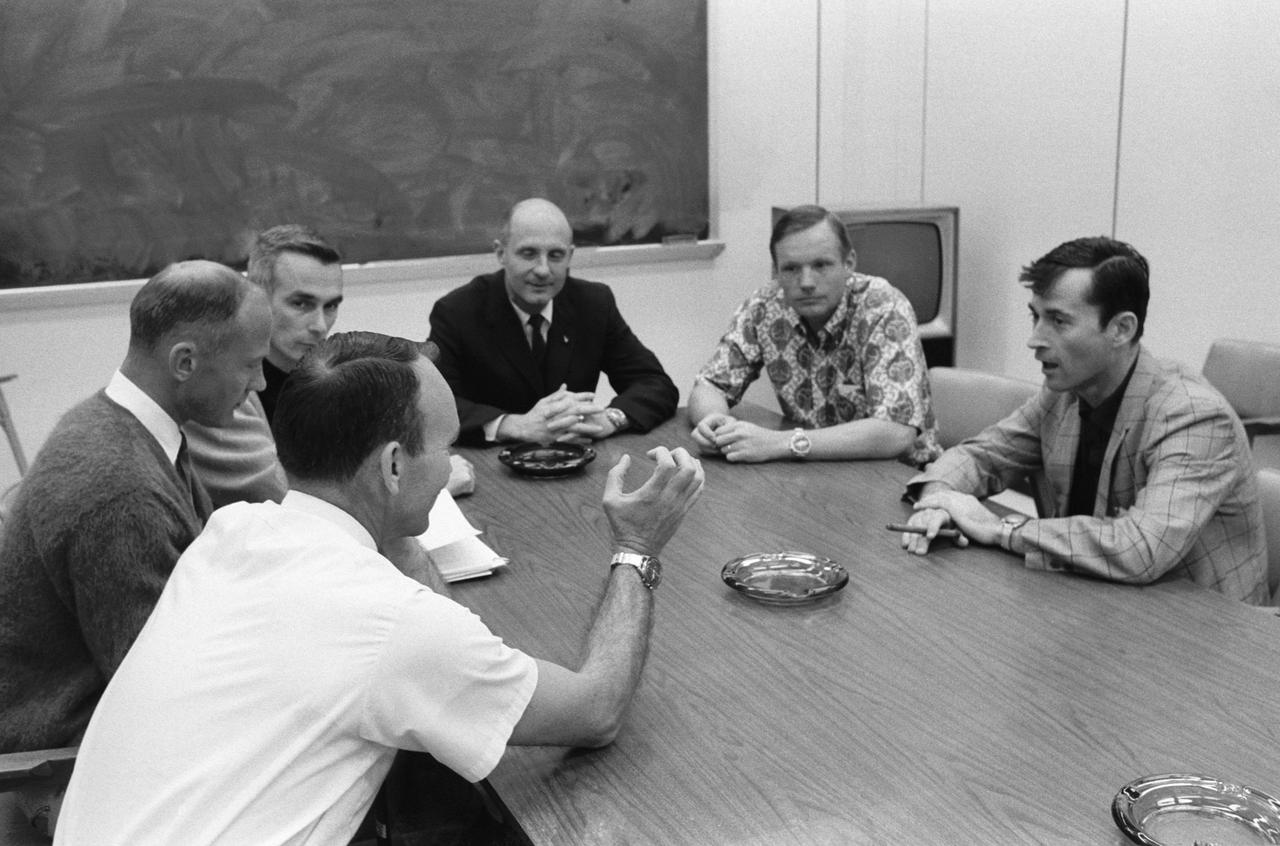
S69-35505 (June 1969) --- The prime crews of the Apollo 10 lunar orbit mission and the Apollo 11 lunar landing mission are photographed during an Apollo 10 postflight de-briefing session. Clockwise, from left foreground, are astronauts Michael Collins, Apollo 11 command module pilot; Edwin E. Aldrin Jr., Apollo 11 lunar module pilot; Eugene A. Cernan, Apollo 10 lunar module pilot; Thomas P. Stafford, Apollo 10 commander; Neil A. Armstrong, Apollo 11 commander; and John W. Young, Apollo 10 command module pilot.
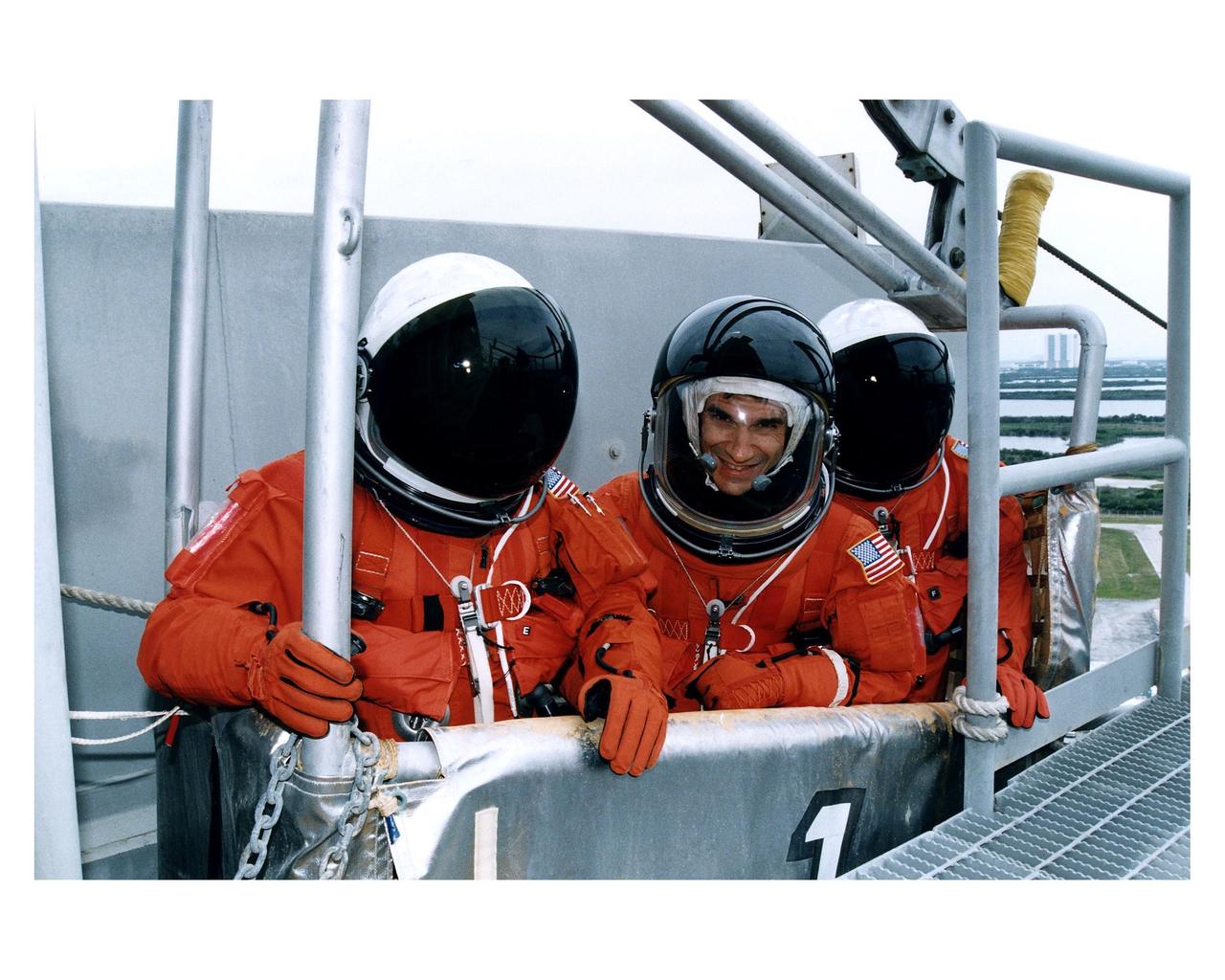
Three members of the STS-83 flight crew check out one of the baskets for the emergency egress slidewire system at Launch Pad 39A during Terminal Countdown Demonstration Test (TCDT) exercises for that mission. Payload Specialist Gregory T. Linteris is in the center of the group. Other crew members on the 16-day Microgravity Science Laboratory-1 (MSL-1) mission are: Mission Commander James D. Halsell, Jr.; Pilot Susan L. Still; Payload Commander Janice Voss; Mission Specialists Michael L. Gernhardt and Donald A. Thomas; and Payload Specialist Roger K. Crouch
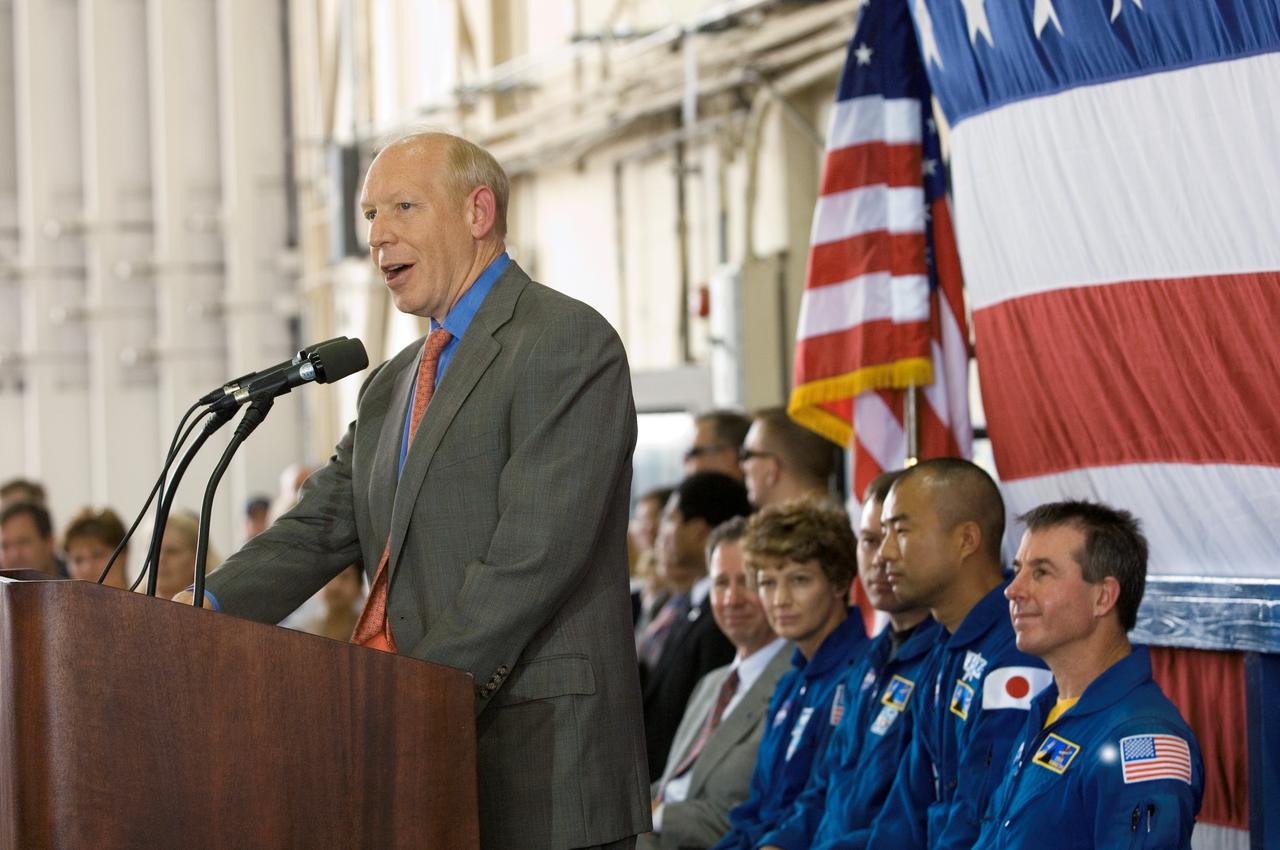
JSC2005-E-33358 (10 August 2005) --- Houston Mayor Bill White speaks to a crowd on hand at Ellington Field’s Hangar 276 near Johnson Space Center (JSC) during the STS-114 crew return ceremonies. Seated (from the left) are NASA Administrator Michael Griffin; astronauts Eileen M. Collins, commander; James M. Kelly, pilot; Soichi Noguchi, mission specialist representing Japan Aerospace Exploration Agency (JAXA); Stephen K. Robinson, mission specialist. Not pictured are astronauts Andrew S. W. Thomas, Wendy B. Lawrence and Charles J. Camarda, mission specialists.
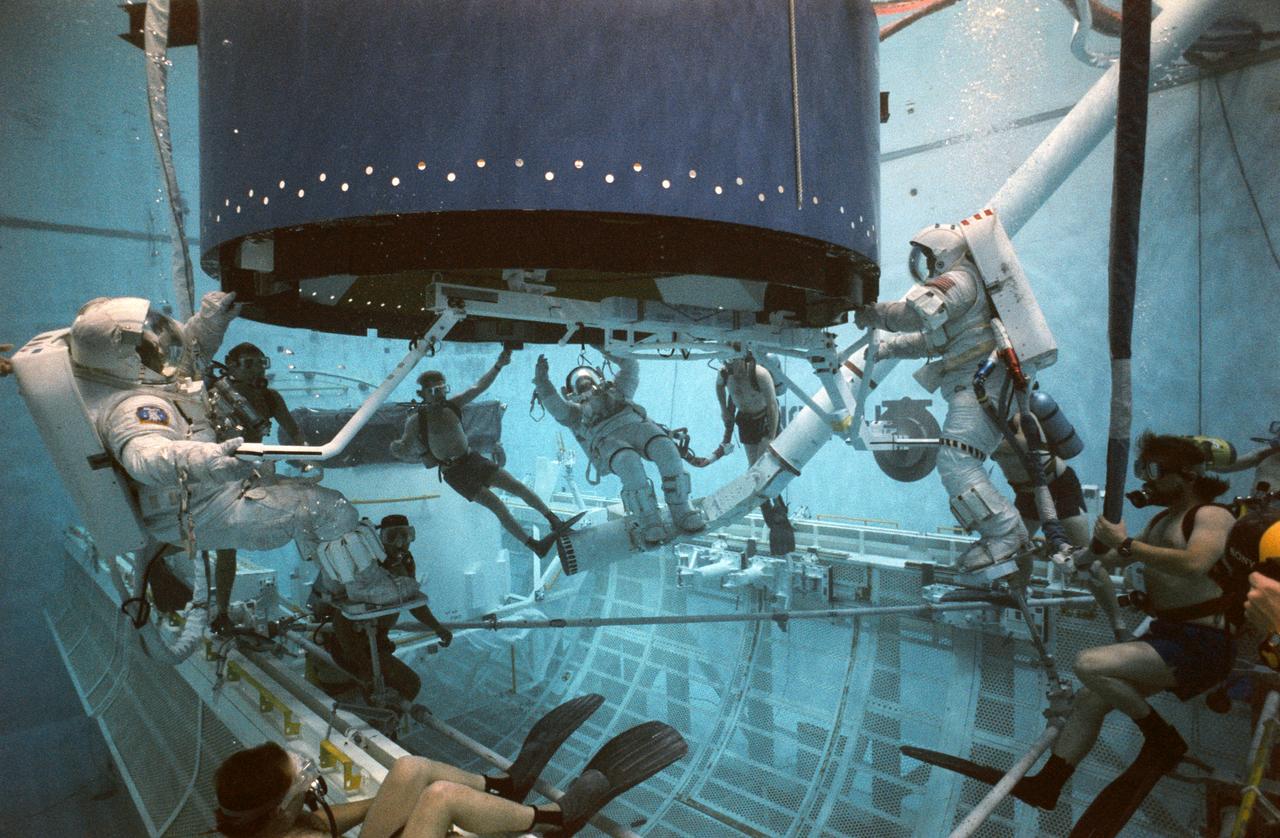
S92-35764 (12 May 1992) --- Wearing extravehicular mobility units (EMU's) and fitted with weights for neutral buoyancy are three trouble-shooting astronauts. The astronauts practiced techniques for capturing Intelsat, and climbing into the airlock mockup in the Weightless Environment Training Facility (WETF). No apparent problems were identified in placing three astronauts in the airlock at one time. Left to right are, Michael R. (Rich) Clifford, Story Musgrave, and James S. Voss. Three Endeavour astronauts, Pierre J. Thuot, Richard J. Hieb and Thomas D. Akers, will attempt to capture Intelsat again on May 13. Clifford played the role of Hieb, Musgrave for Thuot, and Voss, Akers.
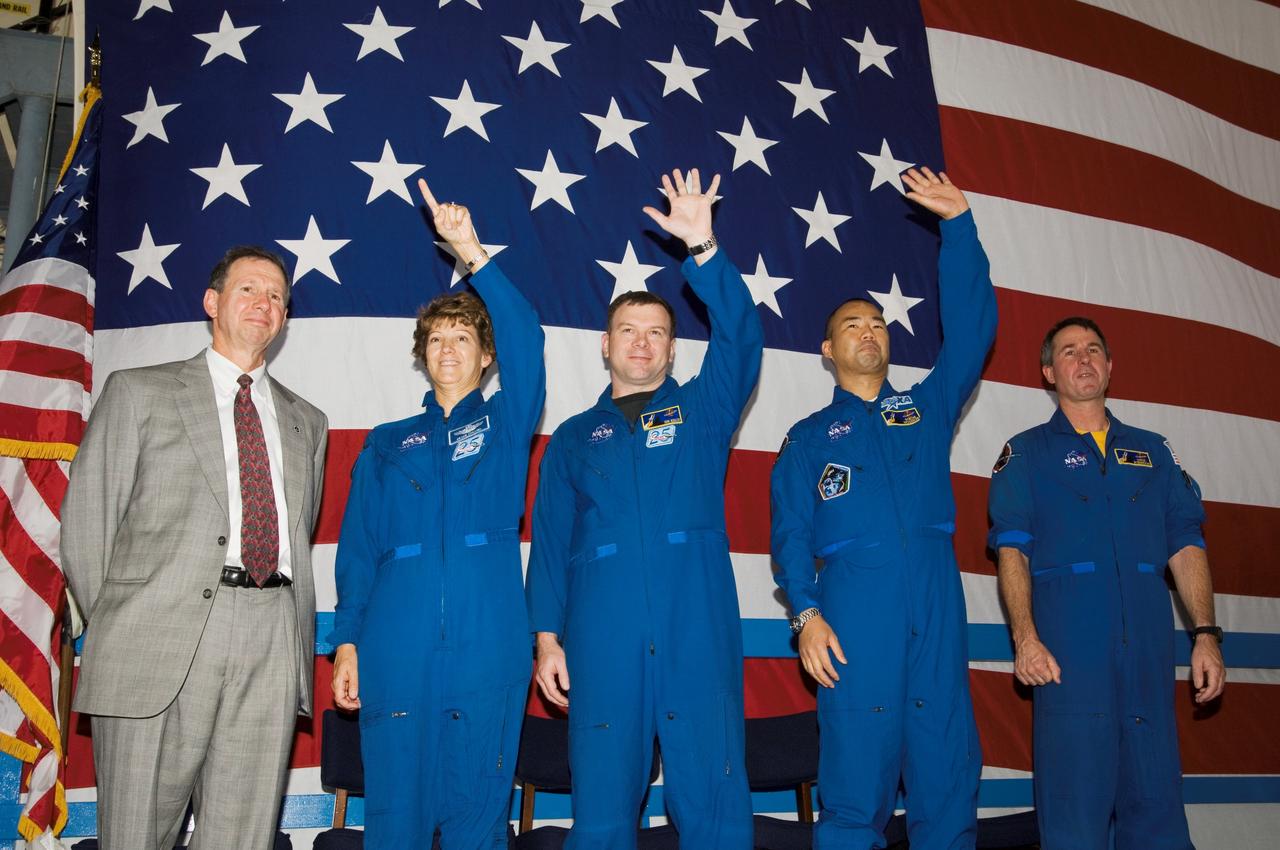
JSC2005-E-33327 (10 August 2005) --- The STS-114 crewmembers wave to a crowd on hand at Ellington Field’s Hangar 276 near Johnson Space Center (JSC) during the crew return ceremonies. Pictured, from the left, are NASA Administrator Michael Griffin; astronauts Eileen M. Collins, commander; James M. Kelly, pilot; Soichi Noguchi, mission specialist representing Japan Aerospace Exploration Agency (JAXA); and Stephen K. Robinson, mission specialist. Not pictured are astronauts Andrew S. W. Thomas, Wendy B. Lawrence and Charles J. Camarda, mission specialists.
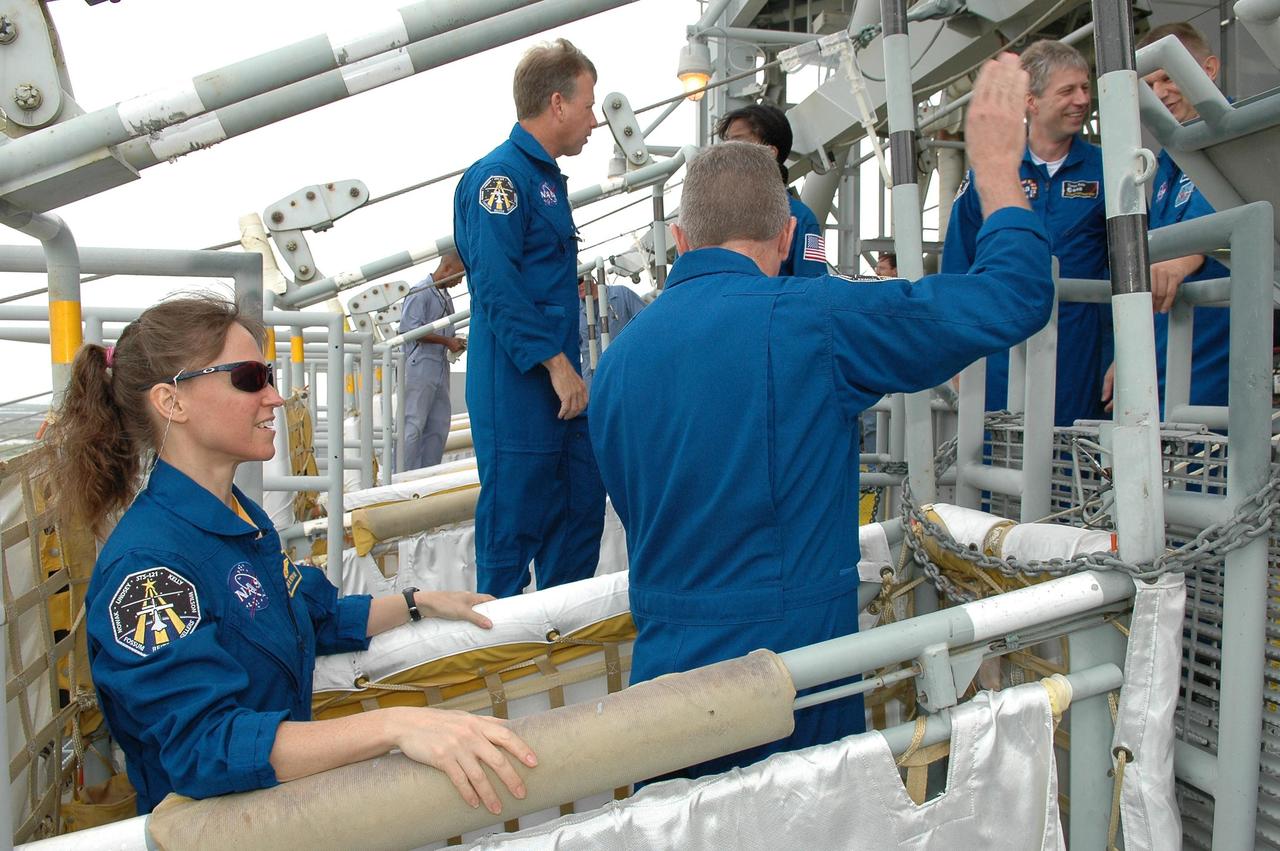
KENNEDY SPACE CENTER, FLA. - Some of the STS-121 crew practices getting into a slidewire basket on Launch Pad 39B. At left is Mission Specialist Lisa Nowak; in front of her is Mission Specialist Michael Fossum. In the background are Commander Steven Lindsey and Mission Specialists Stephanie Wilson, Thomas Reiter and Piers Sellers. The crew is at Kennedy for Terminal Countdown Demonstration Test activities, including emergency egress training from the pad. They will also suit up in their orange flight suits for a simulated countdown to launch. Discovery is designated to launch July 1 on mission STS-121. It will carry supplies to the International Space Station. Photo credit: NASA/Kim Shiflett
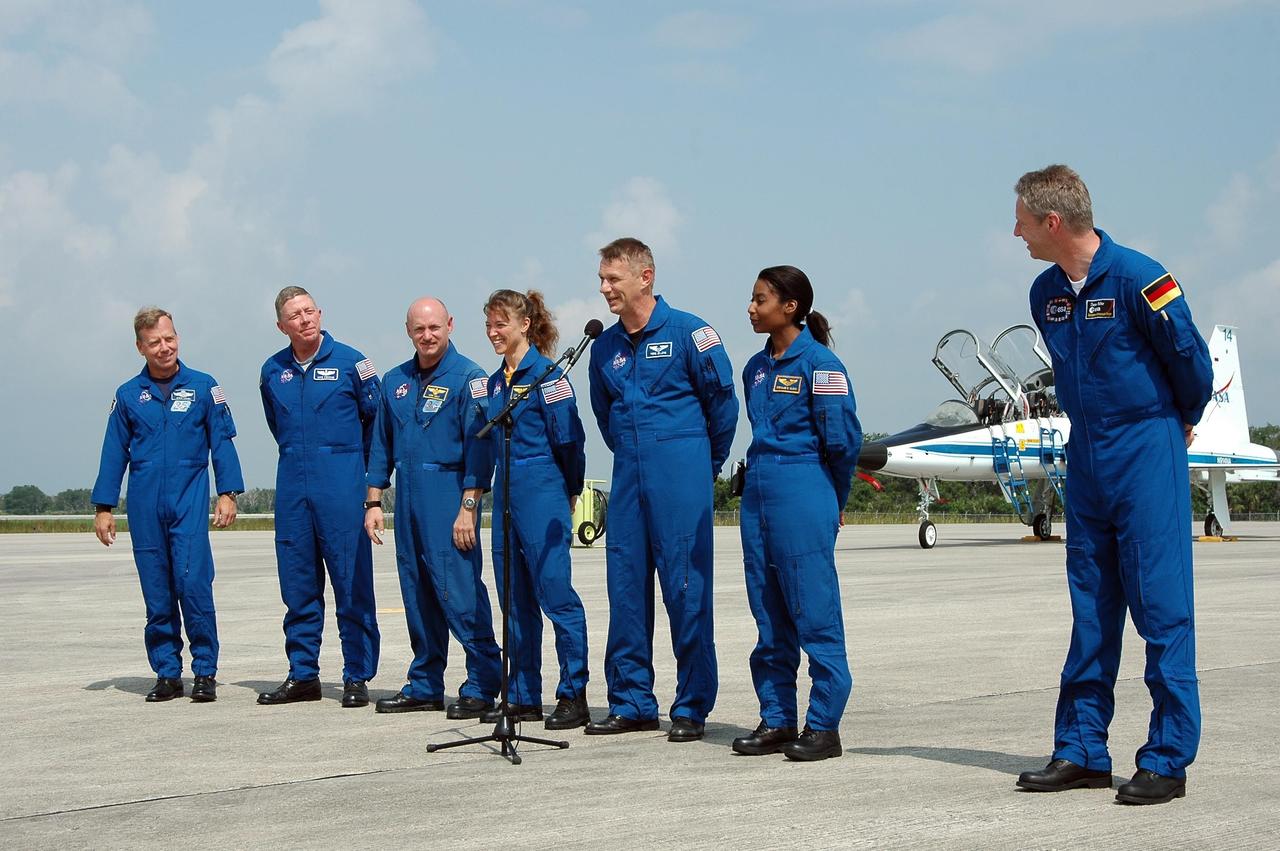
KENNEDY SPACE CENTER, FLA. - After their arrival at KSC to prepare for launch on July 1, the STS-121 crew greets the media on the Shuttle Landing Facility. At the microphone is Mission Specialist Piers Sellers. From left are Commander Steven Lindsey, Mission Specialist Michael Fossum, Pilot Mark Kelly, and Mission Specialists Lisa Nowak, Sellers, Stephanie Wilson and Thomas Reiter. During the 12-day mission, the STS-121 crew will test new equipment and procedures to improve shuttle safety, as well as deliver supplies and make repairs to the International Space Station. This mission is the 115th shuttle flight and the 18th U.S. flight to the International Space Station. Photo credit: NASA/Kim Shiflett
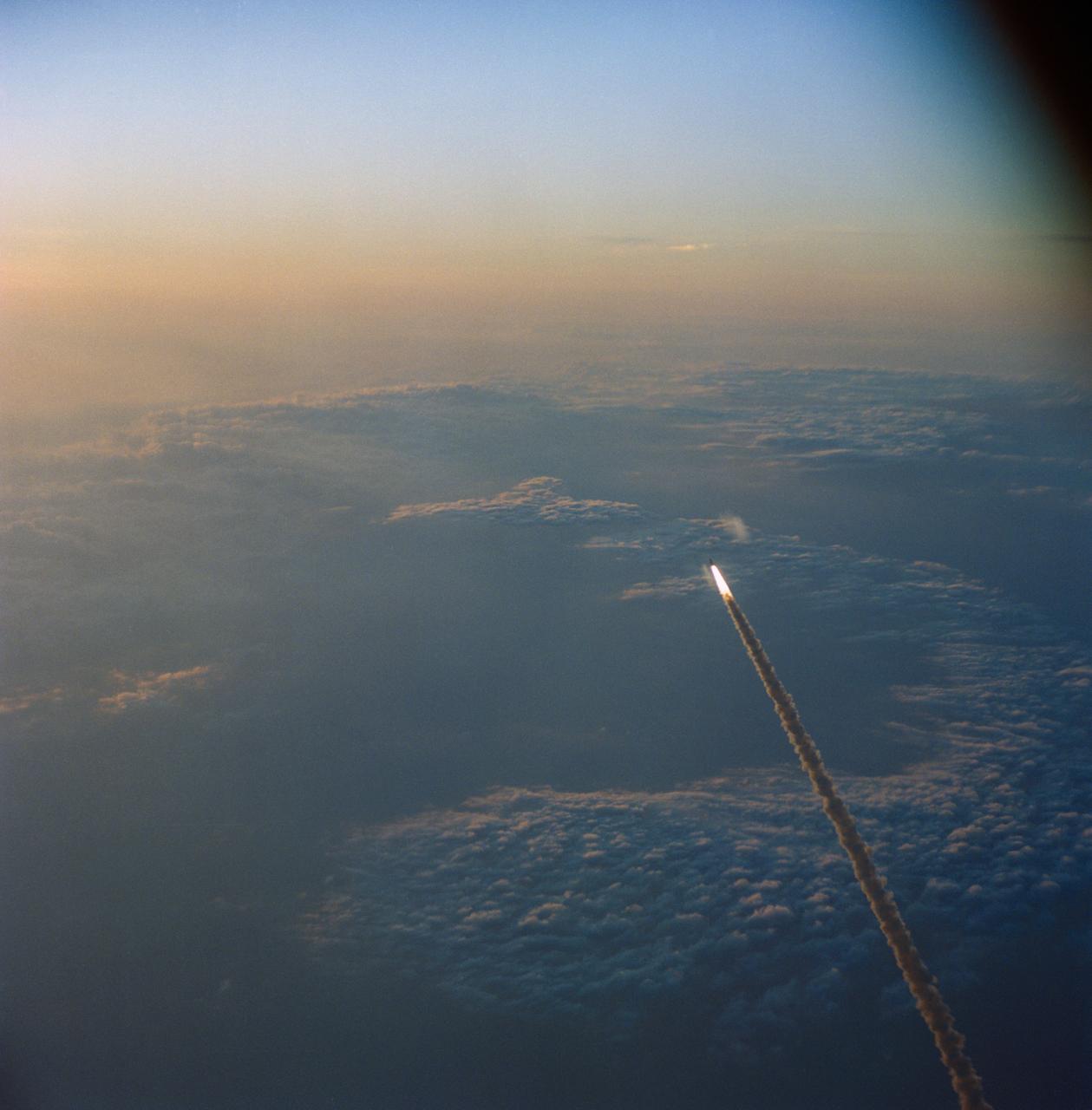
STS059-S-066 (9 April 1994) --- The liftoff of the Space Shuttle Endeavour is backdropped against clouds at the Kennedy Space Center (KSC) as six NASA astronauts head for a week and a half in Earth orbit. Liftoff occurred at 7:05 a.m. (EDT), April 9, 1994. The air-to-air view was photographed from the Shuttle Training Aircraft (STA) piloted by astronaut Robert L. Gibson. Onboard for the Space Radar Laboratory (SRL-1) mission were astronauts Sidney M. Gutierrez, Kevin P. Chilton, Jerome (Jay) Apt, Linda M. Godwin, Michael (Rich) Clifford and Thomas D. Jones.
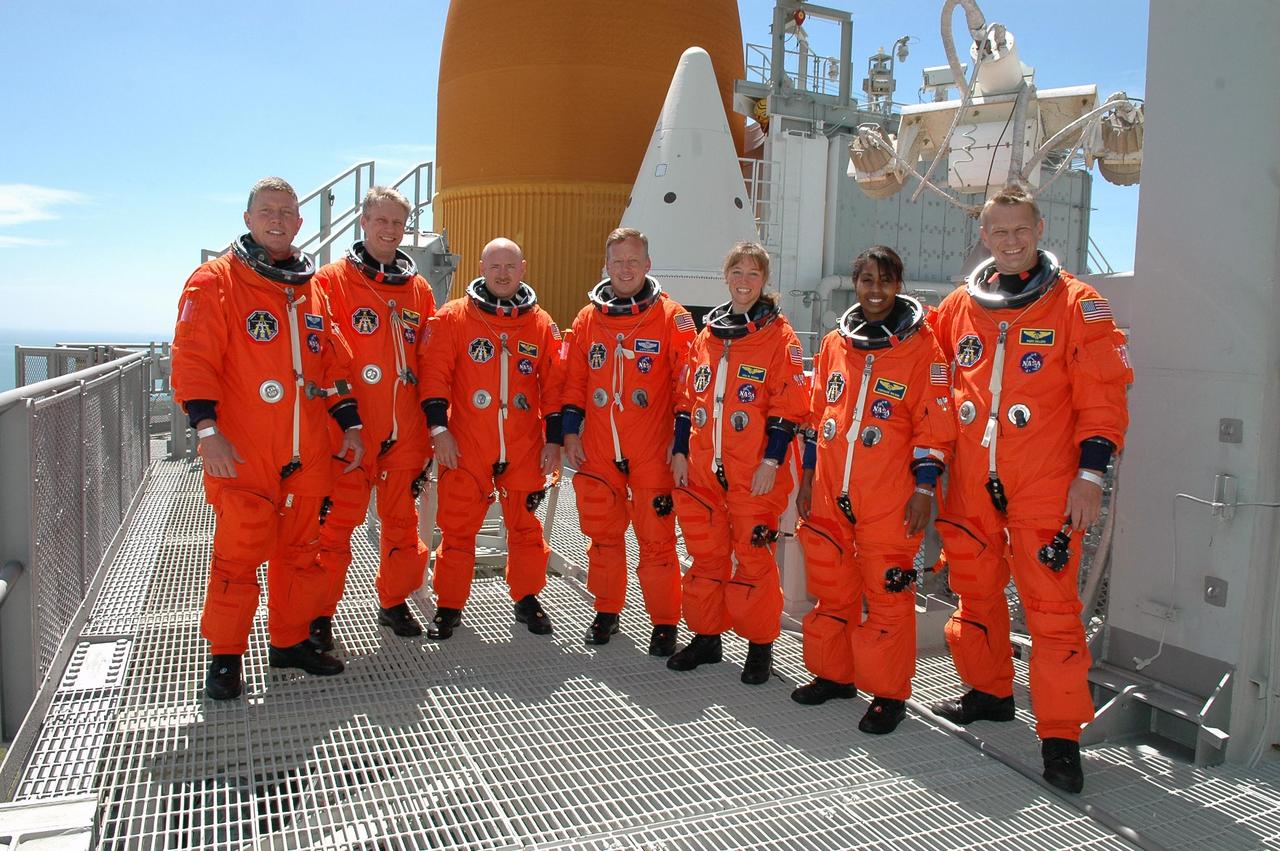
KENNEDY SPACE CENTER, FLA. - The STS-121 crew concludes emergency egress practice from Launch Pad 39B with a photo at the top of the fixed service structure. From left are Mission Specialists Michael Fossum and Thomas Reiter, Pilot Mark Kelly, Commander Steven Lindsey, and Mission Specialists Lisa Nowak, Stephanie Wilson and Piers Sellers. Reiter is from Germany and represents the European Space Agency. The crew has been taking part in Terminal Countdown Demonstration Test (TCDT) activities that include a simulated countdown culminating in main engine cutoff. Mission STS-121 is scheduled to be launched July 1. Photo credit: NASA/Kim Shiflett
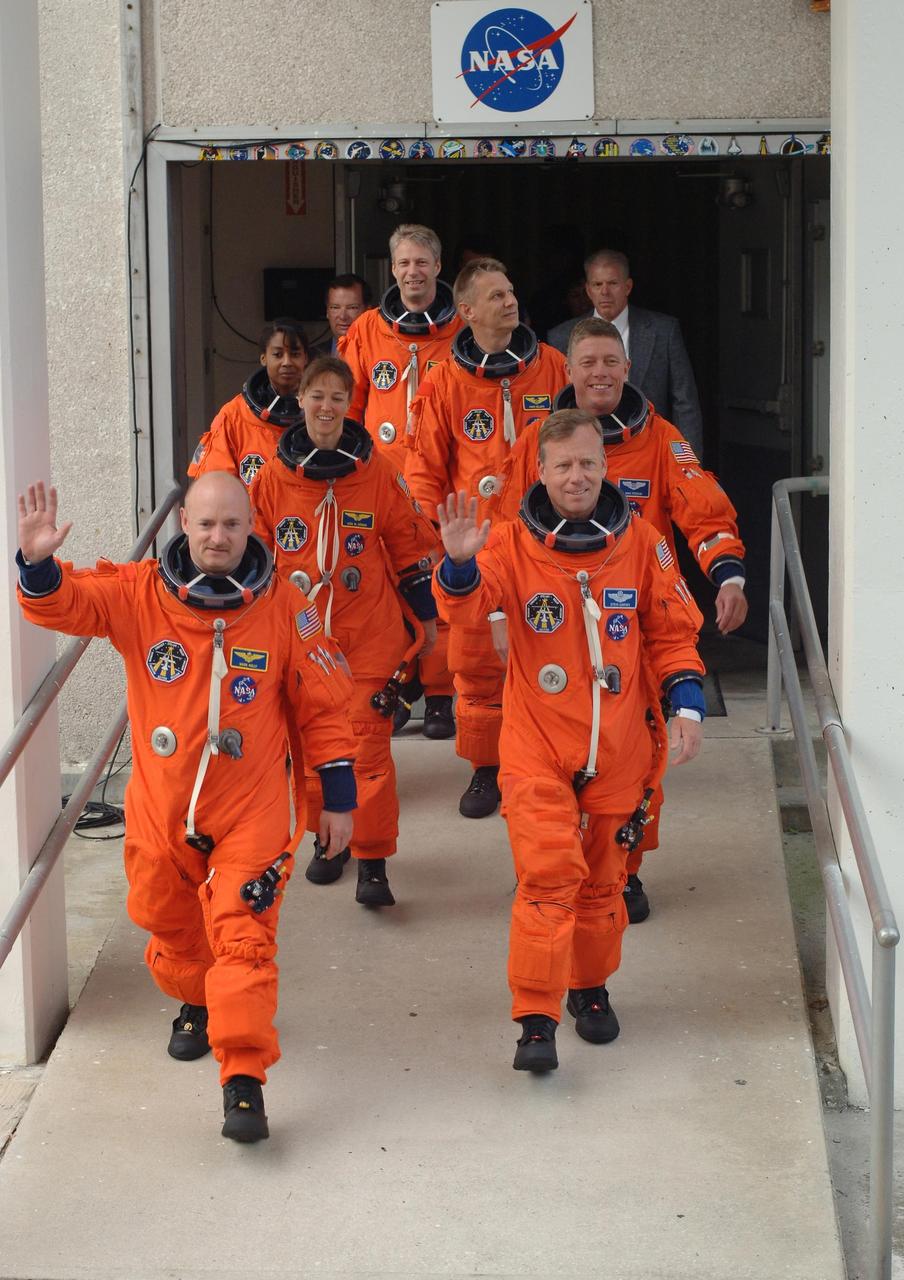
KENNEDY SPACE CENTER, FLA. - The suited STS-121 crew members stride out of the Operations and Checkout Building on their way to Launch Pad 39B for a simulated countdown. Leading the way are Pilot Mark Kelly (left) and Commander Steven Lindsey. Behind Kelly are Mission Specialists Lisa Nowak, Stephanie Wilson and Thomas Reiter of Germany, who represents the European Space Agency. Behind Lindsey are Mission Specialists Michael Fossum and Piers Sellers. The crew is taking part in Terminal Countdown Demonstration Test activities, including the dress rehearsal for launch. Mission STS-121 is scheduled to be launched July 1. Photo credit: NASA/Kim Shiflett

KENNEDY SPACE CENTER, FLA. - STS-114 Mission Commander Eileen Collins (left) is greeted at the entrance to the V.A. Outpatient Clinic in Viera, Fla., by Dr. Thomas Howard (center), chief medical officer, and Dr. Michael Doukas (right), chief of staff with the Orlando V.A. Medical Center. Collins is participating in the dedication of a hospital wing in honor of space shuttle Discovery, to be known as the Discovery wing. Collins and her crew have returned to Florida especially for a celebration in the KSC Visitor Complex of the successful return to flight mission that launched July 26 of this year.
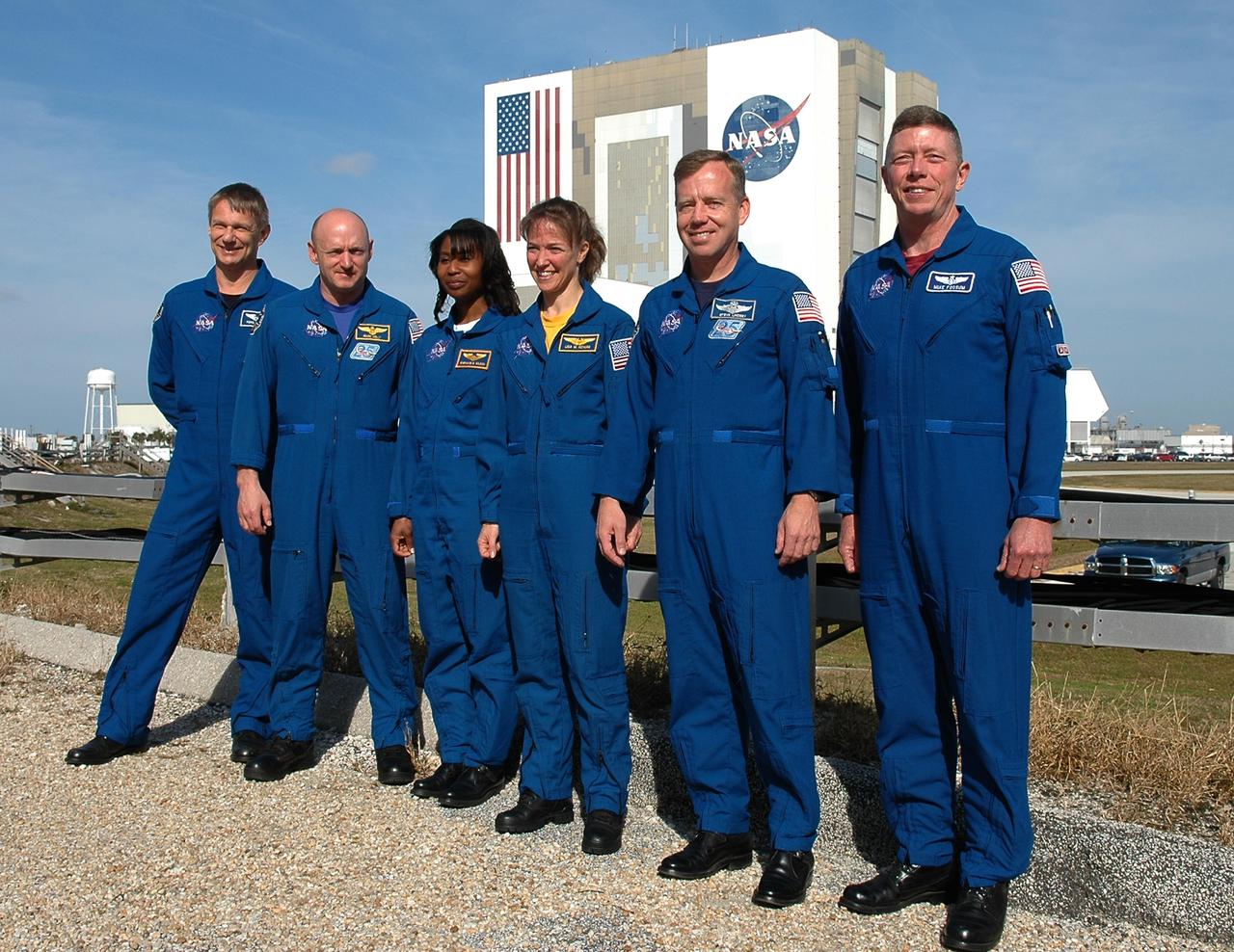
KENNEDY SPACE CENTER, FLA. - The STS-121 crew stands for a photo in front of the Vehicle Assembly Building after a media conference. From left are Mission Specialist Piers Sellers, Pilot Mark Kelly, Mission Specialists Stephanie Wilson and Lisa Nowak, Commander Steven Lindsey and Mission Specialist Michael Fossum. The remaining member of the crew, not pictured, is Mission Specialist Thomas Reiter. The crew is at NASA Kennedy Space Center for the crew equipment interface test, which provides hands-on experiences with equipment used on-orbit. The launch of STS-121, the second return-to-flight mission, is scheduled for May. Photo credit: NASA/Kim Shiflett
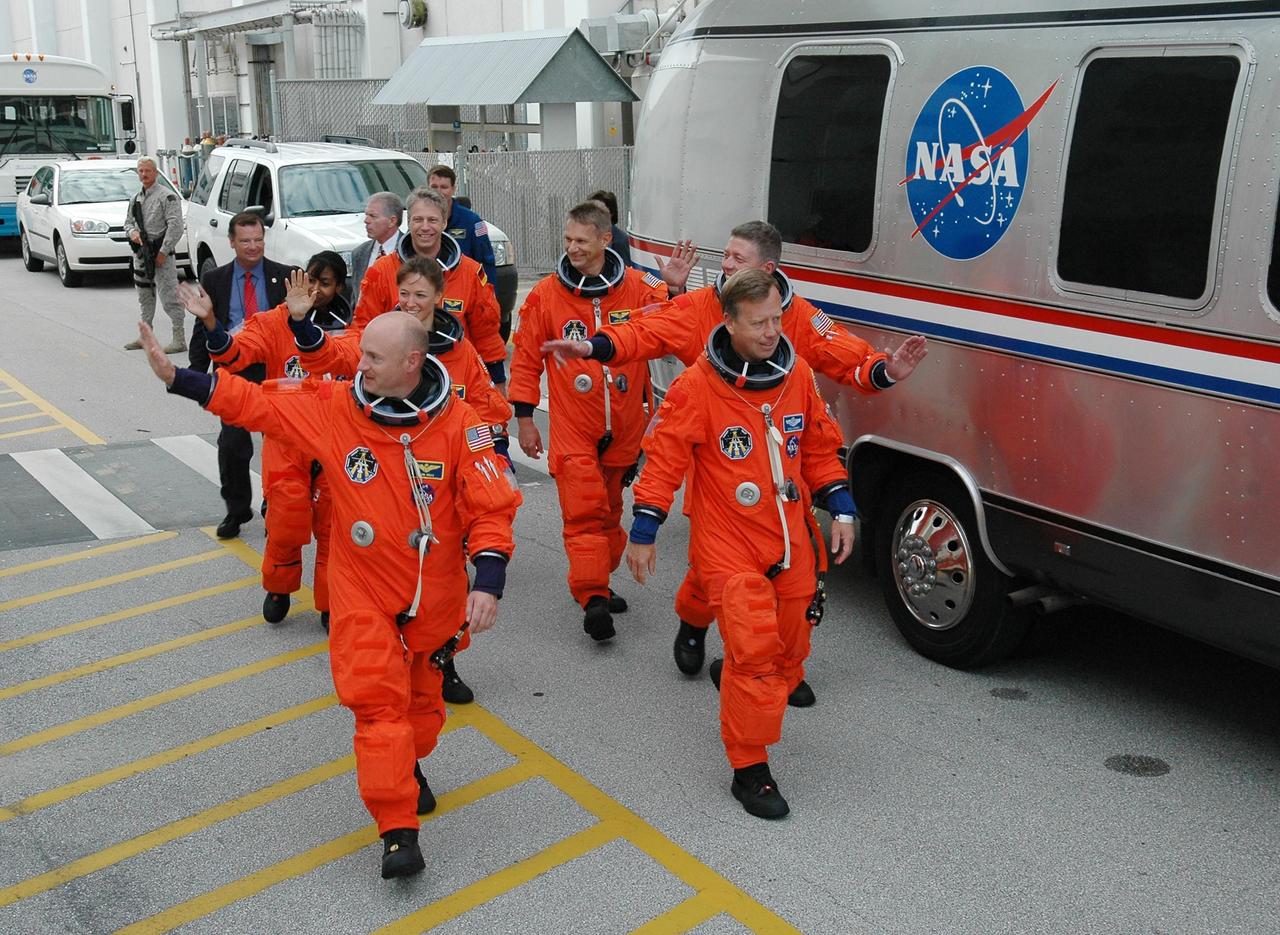
KENNEDY SPACE CENTER, FLA. - The suited STS-121 crew members walk to the bus that will take them to Launch Pad 39B for a simulated countdown. On the left, back to front, are Mission Specialists Stephanie Wilson and Lisa Nowak, and Pilot Mark Kelly. On the right, back to front, are Mission Specialists Thomas Reiter of Germany, Piers Sellers and Michael Fossum, and Commander Steven Lindsey. Reiter represents the European Space Agency. The crew is taking part in Terminal Countdown Demonstration Test activities, including the dress rehearsal for launch. Mission STS-121 is scheduled to be launched July 1. Photo credit: NASA/Kim Shiflett
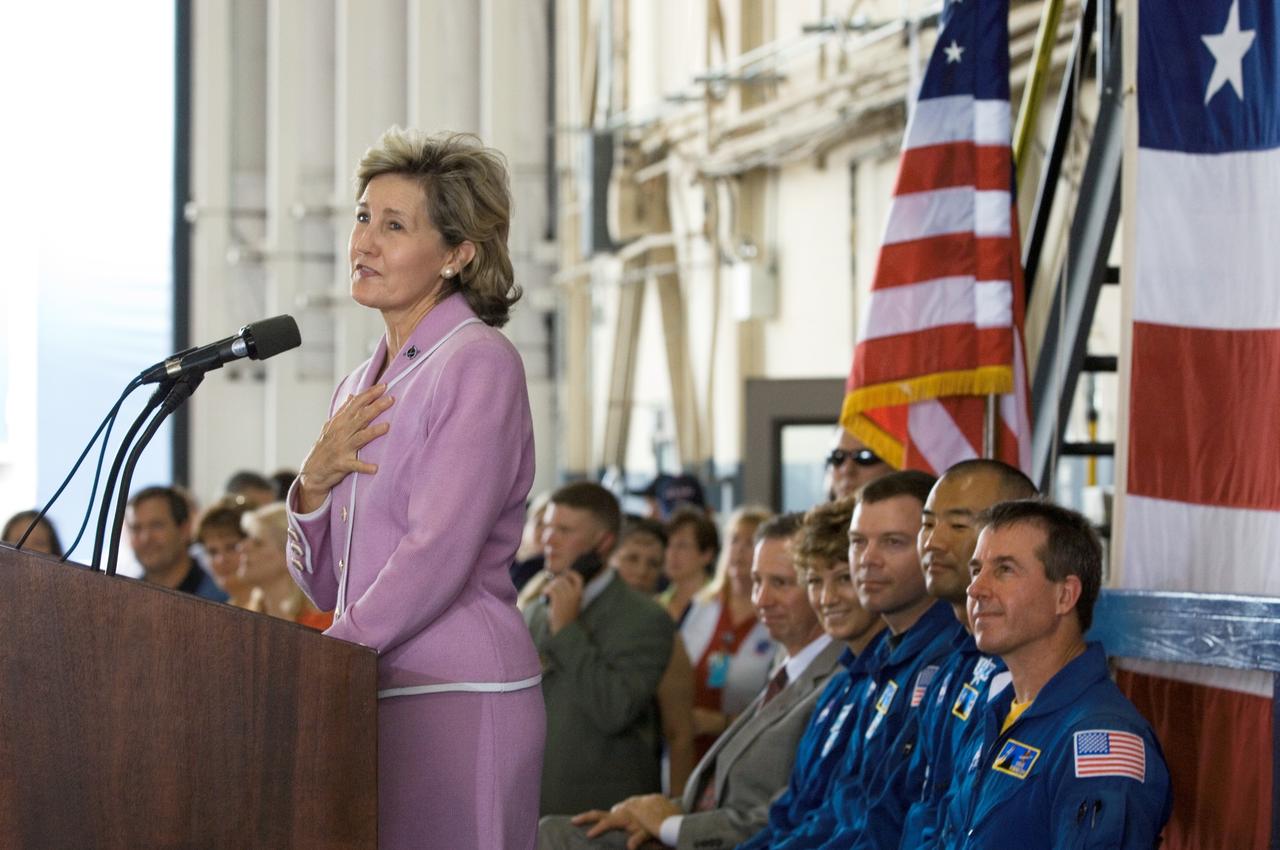
JSC2005-E-33356 (10 August 2005) --- U.S. Senator Kay Bailey Hutchison (R.-Texas) speaks to a crowd on hand at Ellington Field’s Hangar 276 near Johnson Space Center (JSC) during the STS-114 crew return ceremonies. Seated (from the left) are NASA Administrator Michael Griffin; astronauts Eileen M. Collins, commander; James M. Kelly, pilot; Soichi Noguchi, mission specialist representing Japan Aerospace Exploration Agency (JAXA); Stephen K. Robinson, mission specialist. Not pictured are astronauts Andrew S. W. Thomas, Wendy B. Lawrence and Charles J. Camarda, mission specialists.
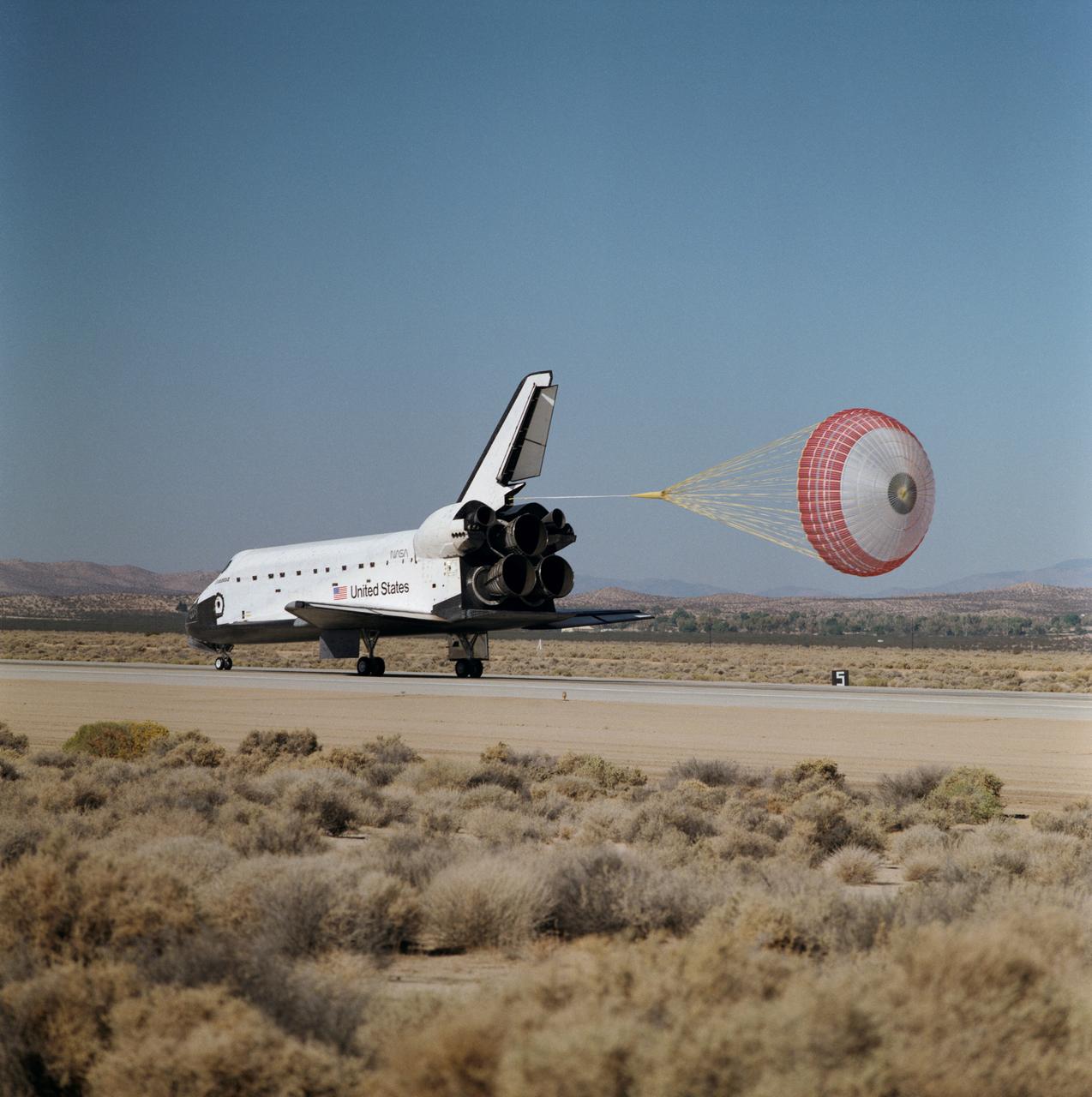
STS068-S-061 (11 October 1994) --- The drag chute system, one of 13 Detailed Test Objectives (DTO) for STS-68, is deployed as the Space Shuttle Endeavour completes an eleven-day mission at Edwards Air Force Base, California. Landing occurred at 10:02 a.m. (PDT), October 11, 1994. Onboard were astronauts Michael A. Baker, mission commander; Terrence W. Wilcutt, pilot; Thomas D. Jones, payload commander; and Daniel W. Bursch, Peter J. K. (Jeff) Wisoff and Steven L. Smith, all mission specialists.
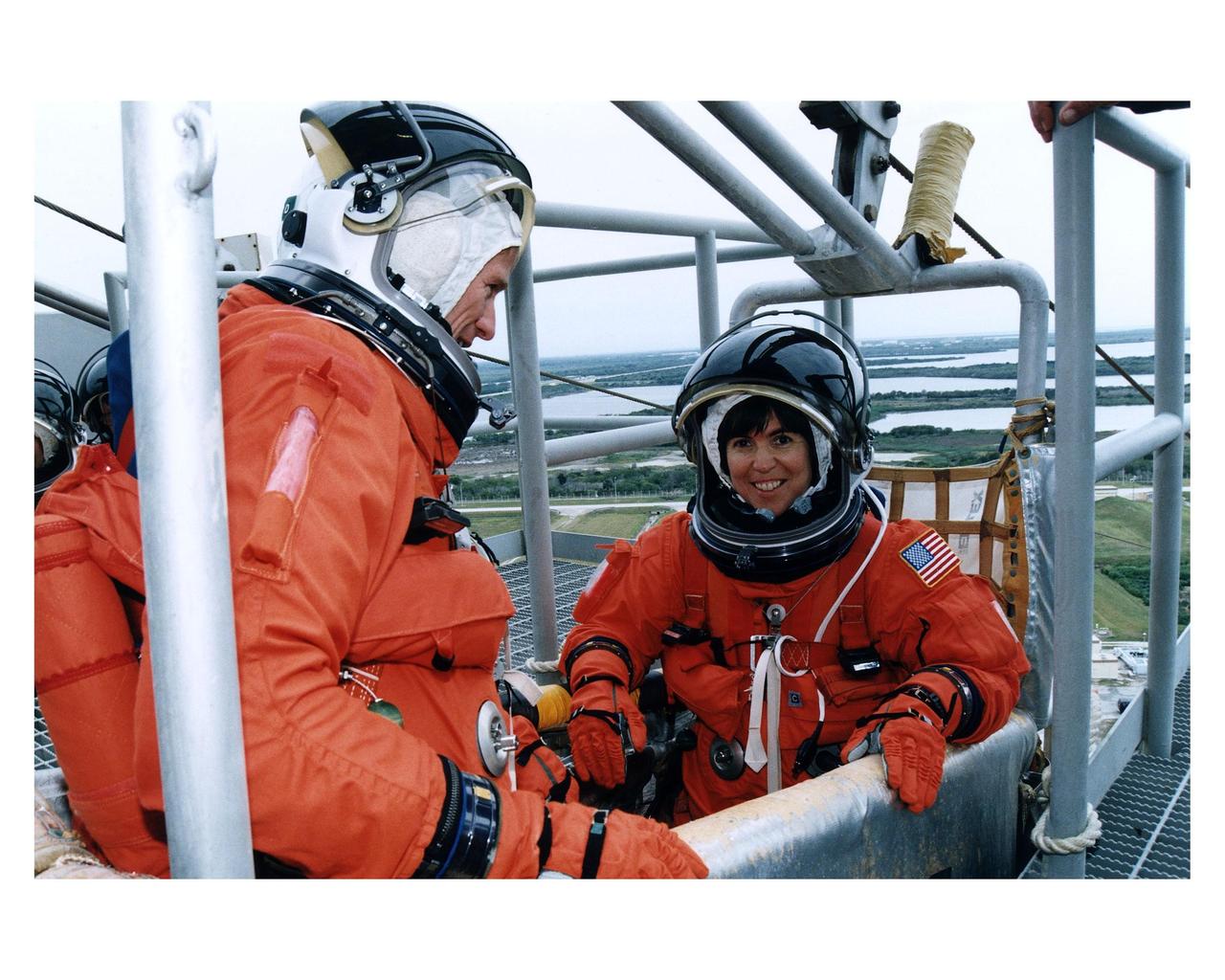
STS-83 Mission Specialist Michael L. Gernhardt and Payload Commander Janice Voss check out one of the baskets for the emergency egress slidewire system at Launch Pad 39A during Terminal Countdown Demonstration Test (TCDT) exercises for that mission. Mission Specialist Donald A. Thomas can be seen to the far left. Other crew members on the 16-day Microgravity Science Laboratory1 (MSL-1) mission are: Mission Commander James D. Halsell, Jr.; Pilot Susan L. Still; and Payload Specialists Gregory T. Linteris and Roger K. Crouch
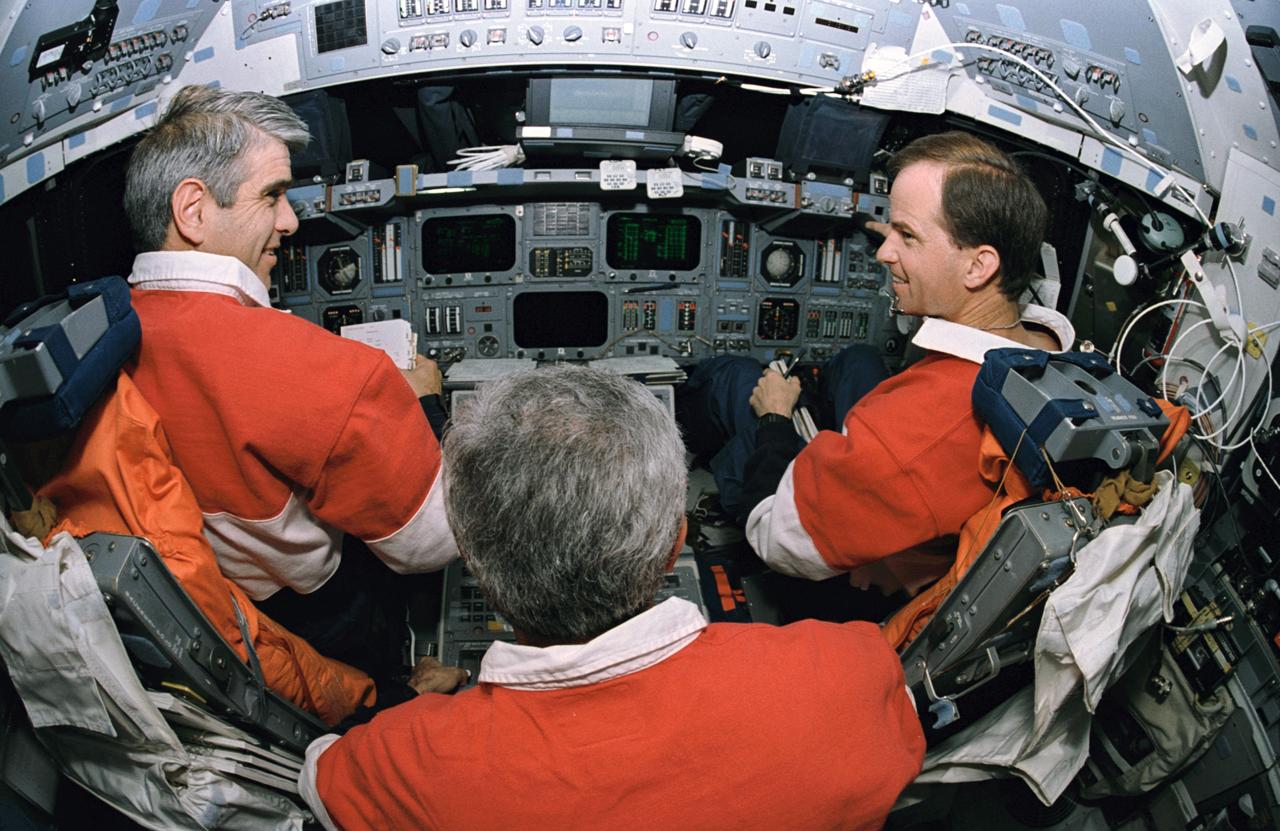
STS059-12-035 (9-20 April 1994) --- A 16mm lens on a 35mm camera provides a "fish-eye" effect for this rare scene on the Space Shuttle Endeavour's flight deck during checkout of the spacecraft's flight control systems. Astronauts Sidney M. Gutierrez (left) and Kevin P. Chilton (right) man the commander and pilot stations, respectively. Astronaut Michael R. (Rich) Clifford, the flight engineer, is seated behind the two. Not pictured are astronauts Linda M. Godwin, payload commander, and Jerome (Jay) Apt and Thomas D. Jones, both mission specialists.
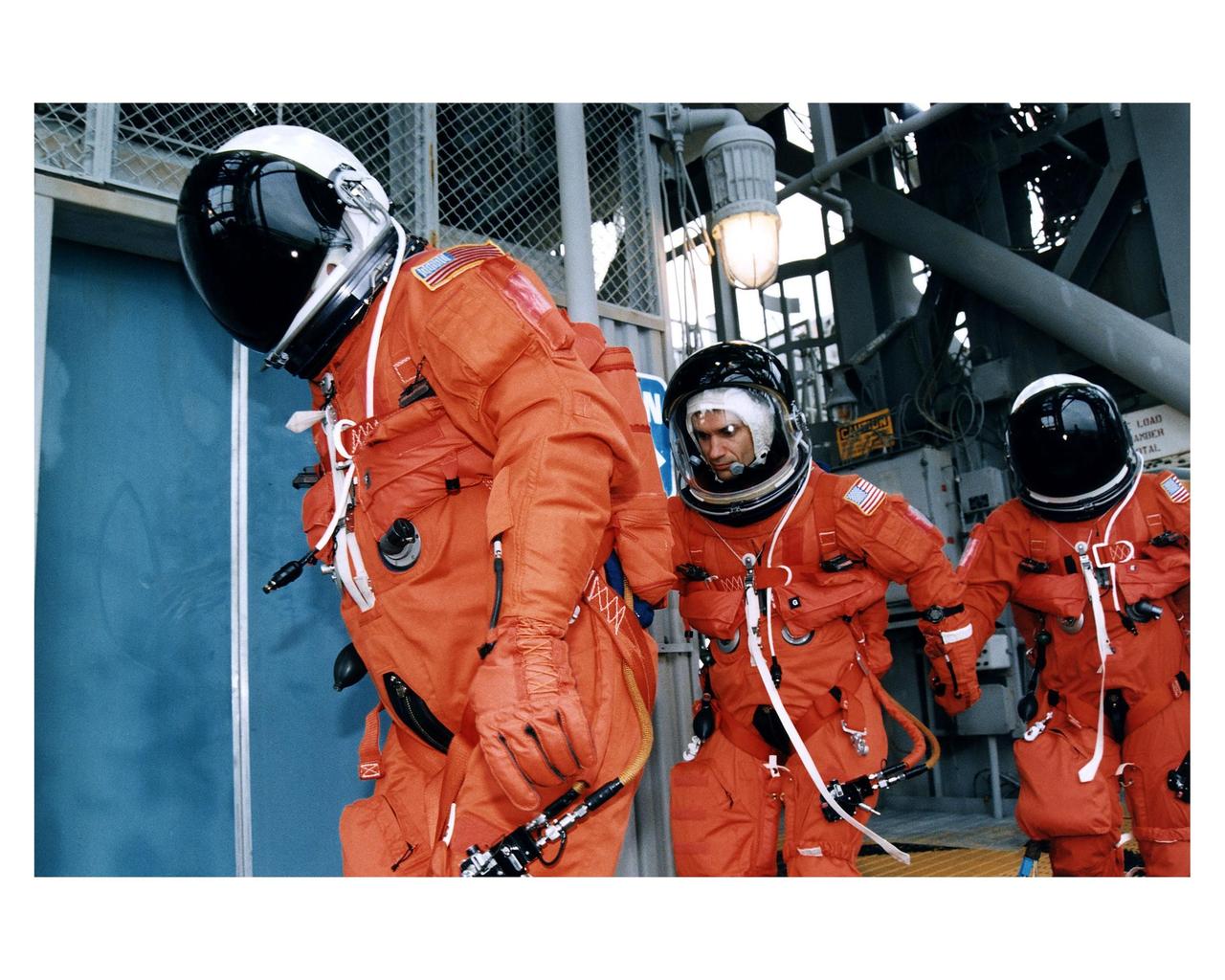
Three members of the STS-83 flight crew head toward the orbiter access arm on the 195-foot level Launch of Pad 39A that will take them to the crew hatch of the Space Shuttle Columbia during Terminal Countdown Demonstration Test (TCDT) exercises for that mission. Mission Specialist Donald A. Thomas is in the center of the group. Other crew members on the 16-day Microgravity Science Laboratory-1 (MSL-1) mission are: Mission Commander James D. Halsell, Jr.; Pilot Susan L. Still; Payload Commander Janice Voss; Mission Specialist Michael L.Gernhardt; and Payload Specialists Gregory T. Linteris and Roger K. Crouch
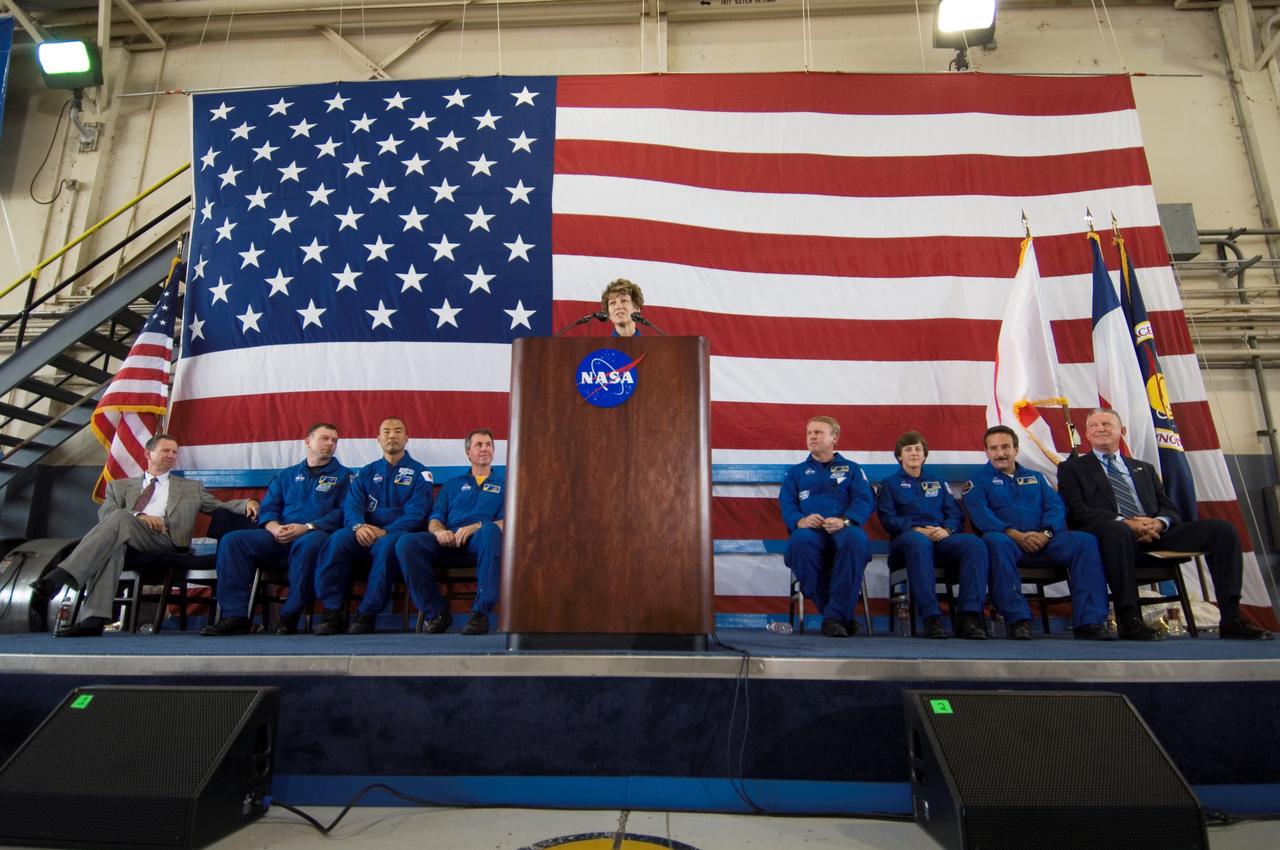
JSC2005-E-33333 (10 August 2005) --- Astronaut Eileen M. Collins, STS-114 commander, speaks from a lectern in Ellington Field’s Hangar 276 near Johnson Space Center (JSC) during the STS-114 crew return ceremonies. Seated from the left are NASA Administrator Michael Griffin; astronauts James M. Kelly, pilot; Soichi Noguchi, mission specialist representing Japan Aerospace Exploration Agency (JAXA); Stephen K. Robinson, Andrew S. W. Thomas, Wendy B. Lawrence, Charles J. Camarda, mission specialists; and JSC Director General Jefferson D. Howell, Jr.
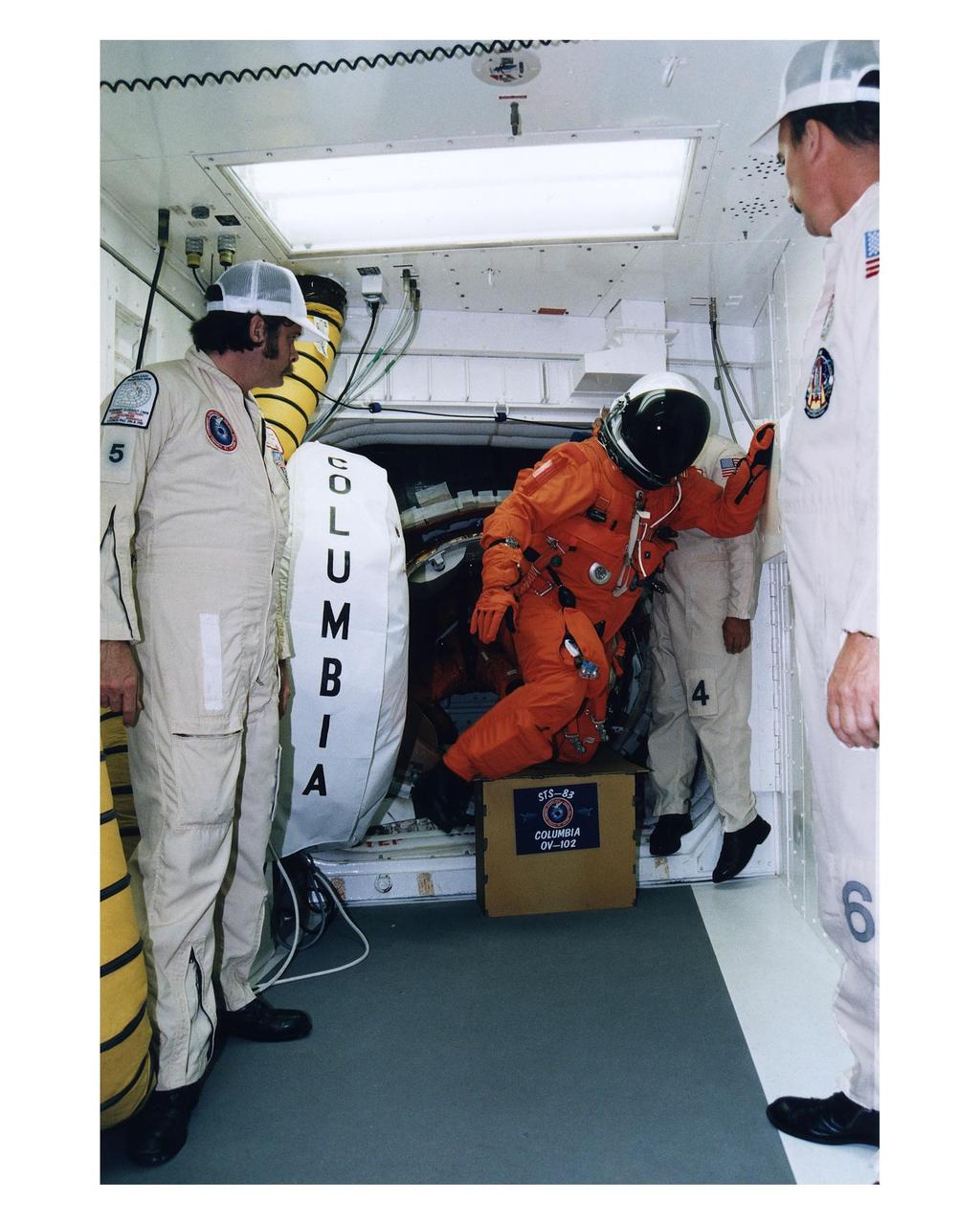
A member of the STS-83 flight crew enters the crew hatch of the Space Shuttle Columbia with the help of the white room crew during Terminal Countdown Demonstration Test (TCDT) exercises for that mission. Members of the white room crew are (from left): Steve Crosbie, Rene Arriens and Bob Saulnier. The STS-83 crew members for the 16-day Microgravity Science Laboratory-1 (MSL-1) mission are: Mission Commander James D. Halsell, Jr.; Pilot Susan L. Still; Payload Commander Janice Voss; Mission Specialists Michael L. Gernhardt and Donald A. Thomas; and Payload Specialists Gregory T. Linteris and Roger K. Crouch
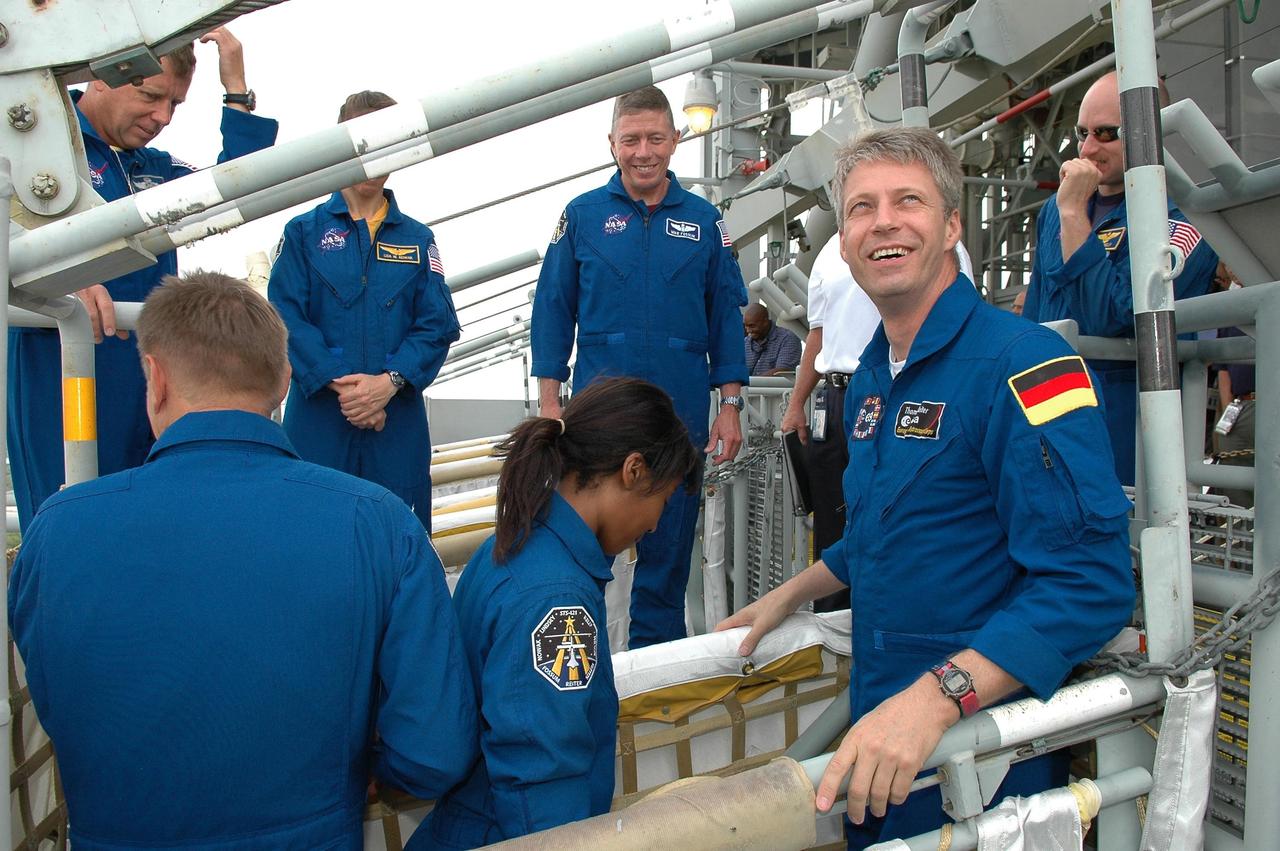
KENNEDY SPACE CENTER, FLA. - Some of the STS-121 crew practices getting into a slidewire basket on Launch Pad 39B while others watch. In the basket are Mission Specialists Piers Sellers, Stephanie Wilson and Thomas Reiter. Behind them are Commander Steven Lindsey, Mission Specialists Lisa Nowak and Michael Fossum, and Pilot Mark Kelly. The crew is at Kennedy for Terminal Countdown Demonstration Test activities, including emergency egress training from the pad. They will also suit up in their orange flight suits for a simulated countdown to launch. Discovery is designated to launch July 1 on mission STS-121. It will carry supplies to the International Space Station. Photo credit: NASA/Kim Shiflett
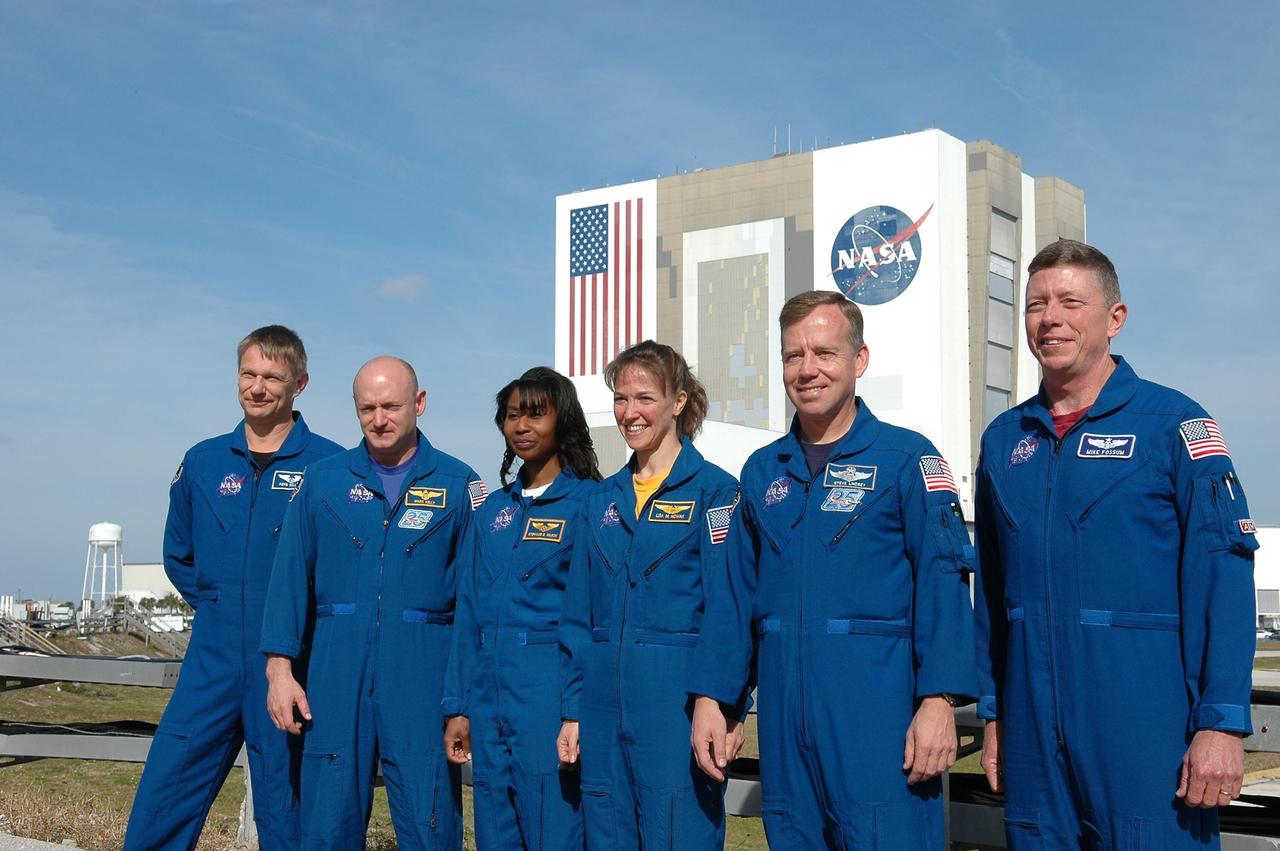
KENNEDY SPACE CENTER, FLA. - The STS-121 crew stands for a photo in front of the Vehicle Assembly Building after a media conference. From left are Mission Specialist Piers Sellers, Pilot Mark Kelly, Mission Specialists Stephanie Wilson and Lisa Nowak, Commander Steven Lindsey and Mission Specialist Michael Fossum. The remaining member of the crew, not pictured, is Mission Specialist Thomas Reiter. The crew is at NASA Kennedy Space Center for the crew equipment interface test, which provides hands-on experiences with equipment used on-orbit. The launch of STS-121, the second return-to-flight mission, is scheduled for May. Photo credit: NASA/Kim Shiflett