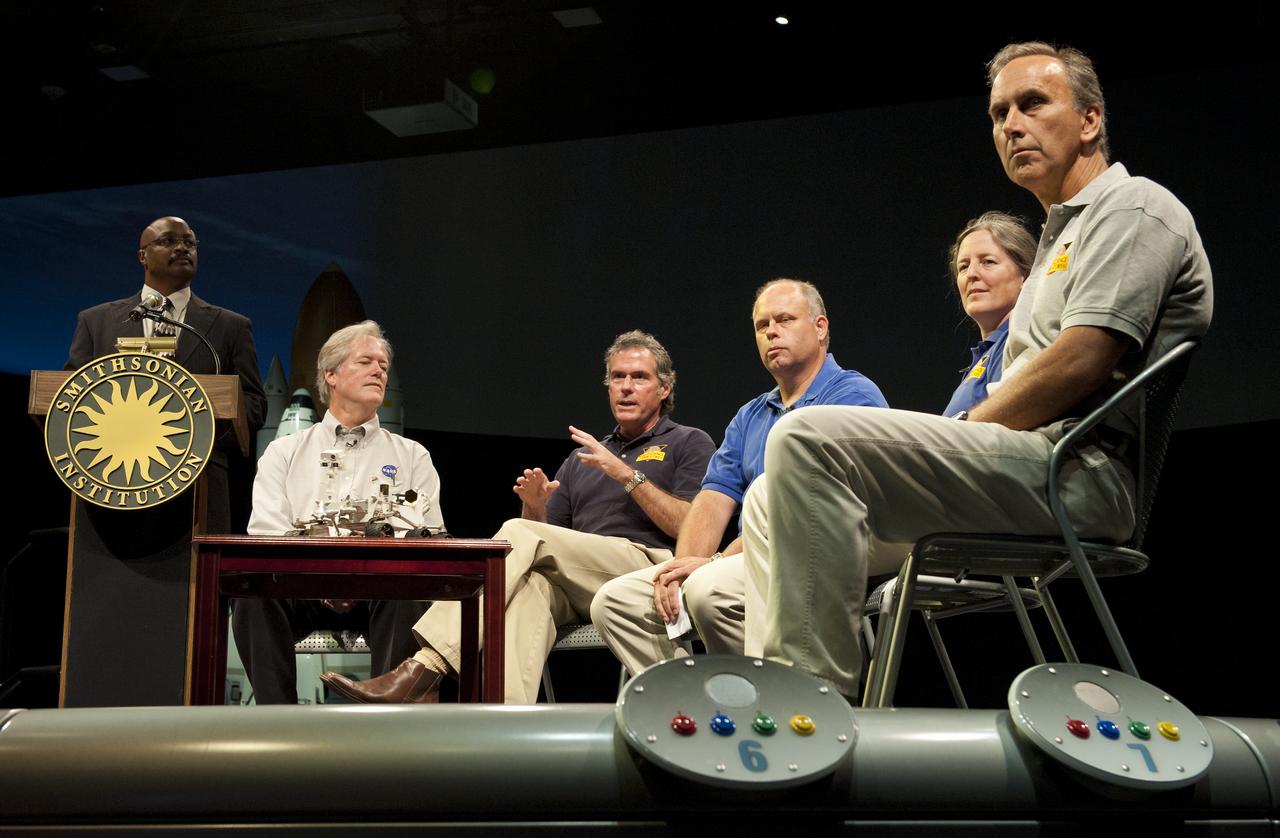
Michael Watkins (third from left), mission manager and project engineer, Mars Science Laboratory (MSL), Jet Propulsion Lab, Pasadena, Calif., speaks at a press conference at the Smithsonian's National Air and Space Museum on Friday, July 22, 2011 in Washington. From left to right, Watkins is joined by Dwayne Brown, NASA Headquarters public affairs officer; Michael Meyer, lead scientist Mars Exploration Program, NASA Headquarters; Watkins; John Grant, geologist, Smithsonian National Air and Space Museum in Washington; Dawn Sumner, geologist, University of California, Davis and John Grotzinger, MSL project scientist, JPL. Photo Credit: (NASA/Carla Cioffi)

U.S. Vice President Mike Pence, left, meets with JPL Director Michael Watkins during a tour of NASA's Jet Propulsion Laboratory, Saturday, April 28, 2018 in Pasadena, California. Photo Credit: (NASA/Bill Ingalls)
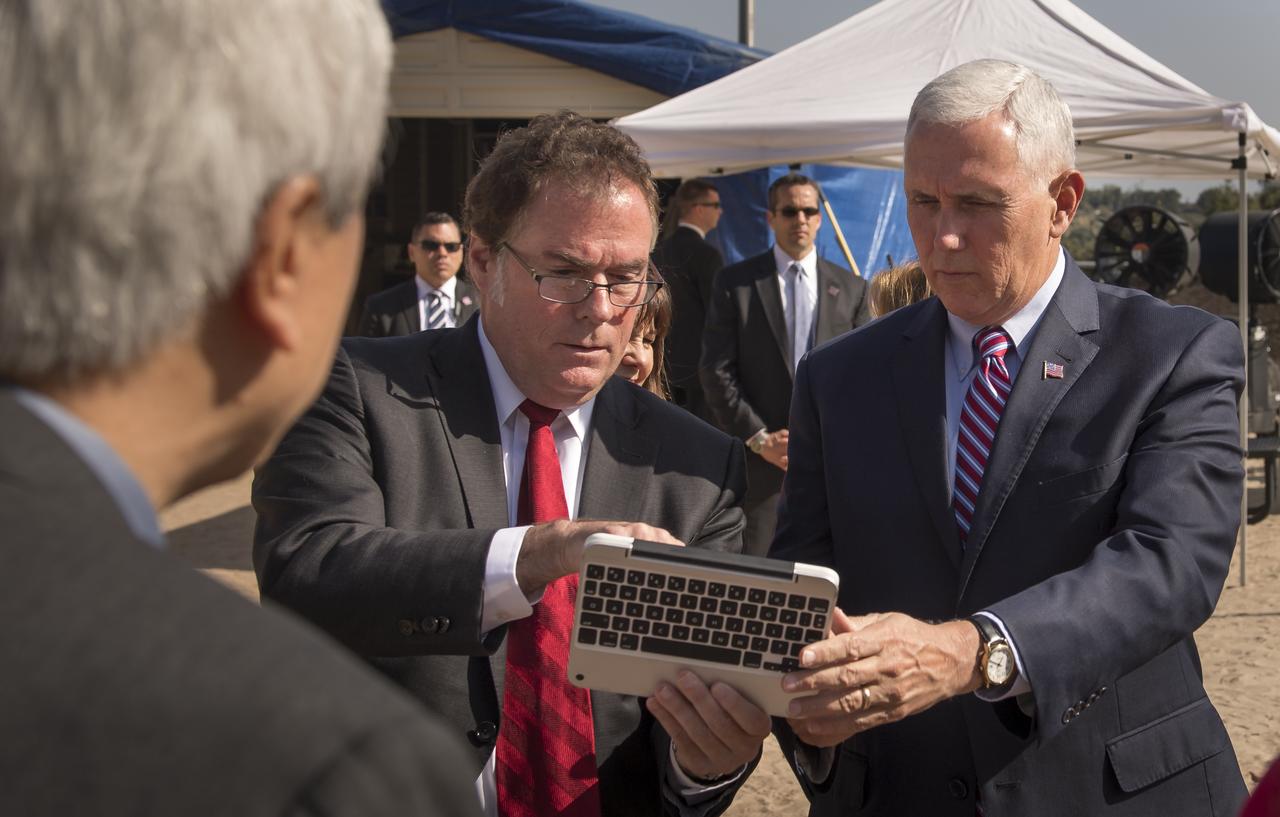
U.S. Vice President Mike Pence is given instructions on how to drive a rover nicknamed "Scarecrow" by JPL Director Michael Watkins at NASA's Jet Propulsion Laboratory Mars Yard, Saturday, April 28, 2018 in Pasadena, California. Scarecrow is used to test mobility of rovers on Mars. Photo Credit: (NASA/Bill Ingalls)
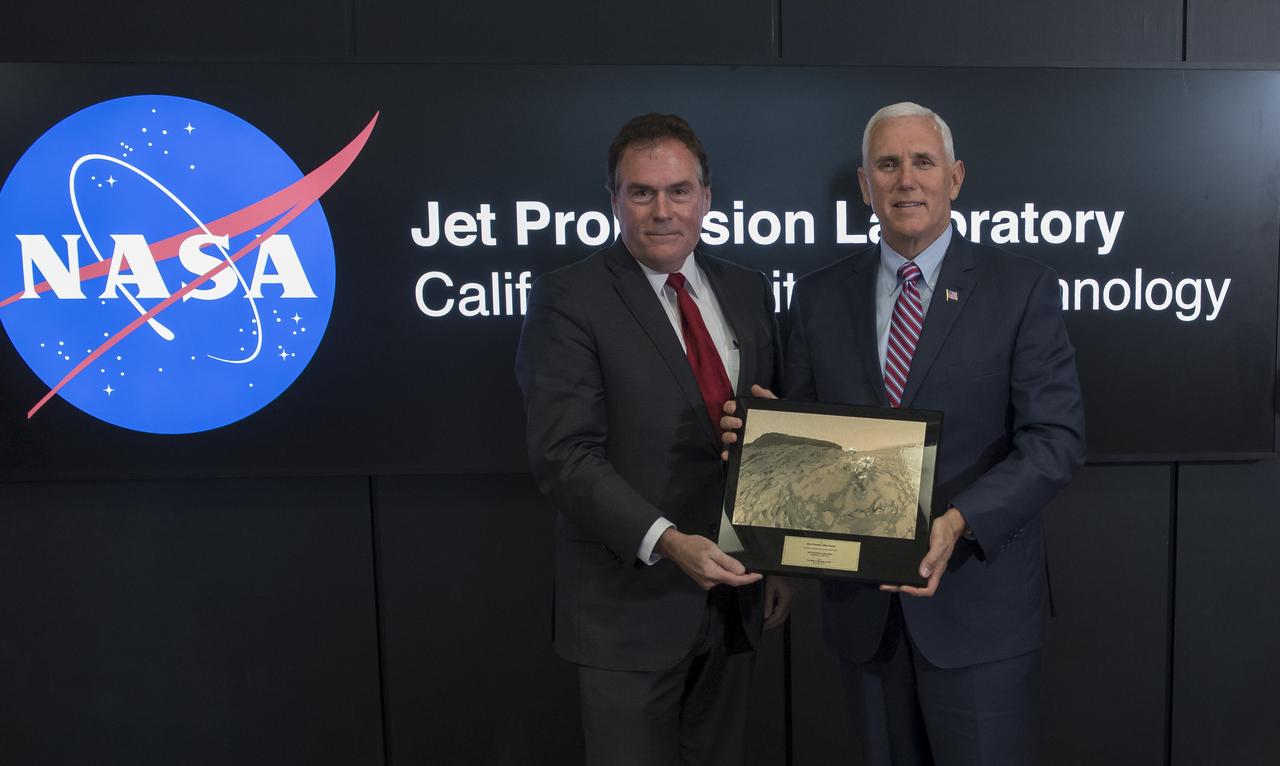
U.S. Vice President Mike Pence, right, is presented a plaque by JPL Director Michael Watkins during a tour of NASA's Jet Propulsion Laboratory, Saturday, April 28, 2018 in Pasadena, California. The plaque presents a view of the Mars Science Laboratory rover Curiosity on the surface of Mars. Photo Credit: (NASA/Bill Ingalls)

JPL Director Michael Watkins, standing, explains the history of NASA's Jet Propulsion Laboratory and the use of the Mission Support Area to Vice President Mike Pence during a tour of JPL, Saturday, April 28, 2018 in Pasadena, California. Photo Credit: (NASA/Bill Ingalls)
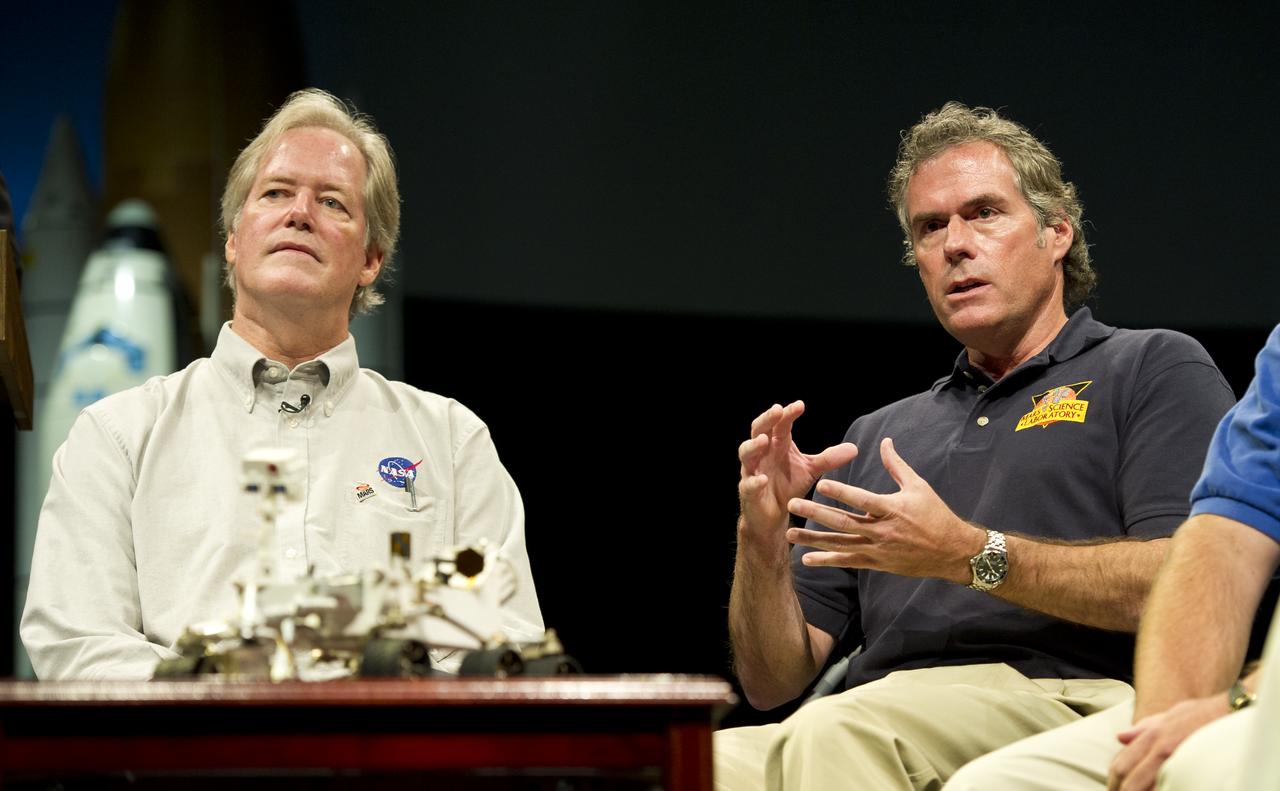
Michael Watkins (right), mission manager and Mars Science Laboratory (MSL) engineer, Jet Propulsion Lab, Pasadena, Calif., speaks at a press conference, as Michael Meyer, Mars Exploration Program lead scientist looks on, at the Smithsonian's National Air and Space Museum on Friday, July 22, 2011 in Washington. The MSL, or Curiosity, is scheduled to launch late this year from NASA's Kennedy Space Center in Florida and land in August 2012. Curiosity is twice as long and more than five times as heavy as previous Mars rovers. The rover will study whether the landing region at Gale crater had favorable environmental conditions for supporting microbial life and for preserving clues about whether life ever existed. Photo Credit: (NASA/Carla Cioffi)
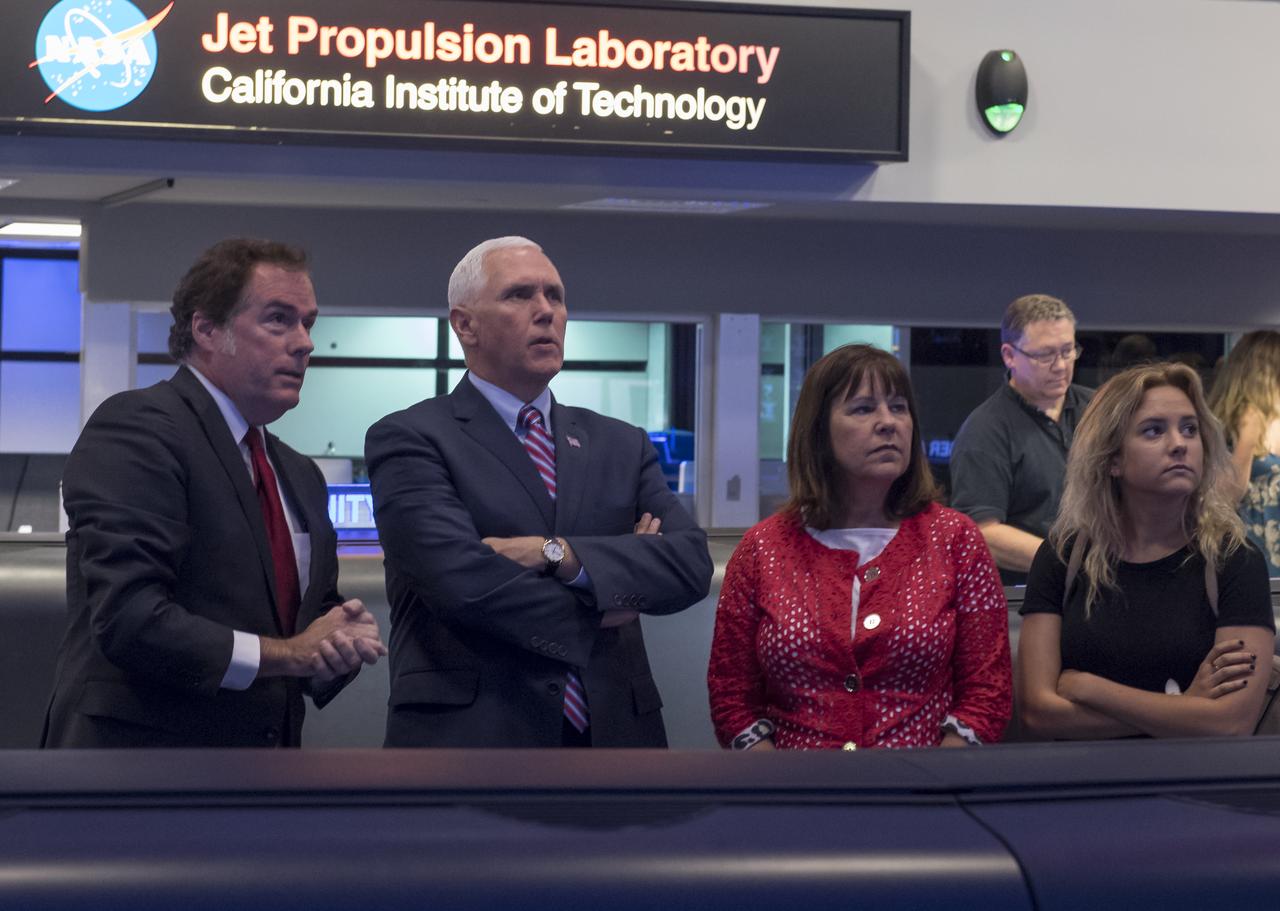
U.S. Vice President Mike Pence, 2nd from left, his wife Karen, and daughter Charlotte are given a tour of NASA's Jet Propulsion Laboratory by JPL Director Michael Watkins, Saturday, April 28, 2018 in Pasadena, California. Photo Credit: (NASA/Bill Ingalls)
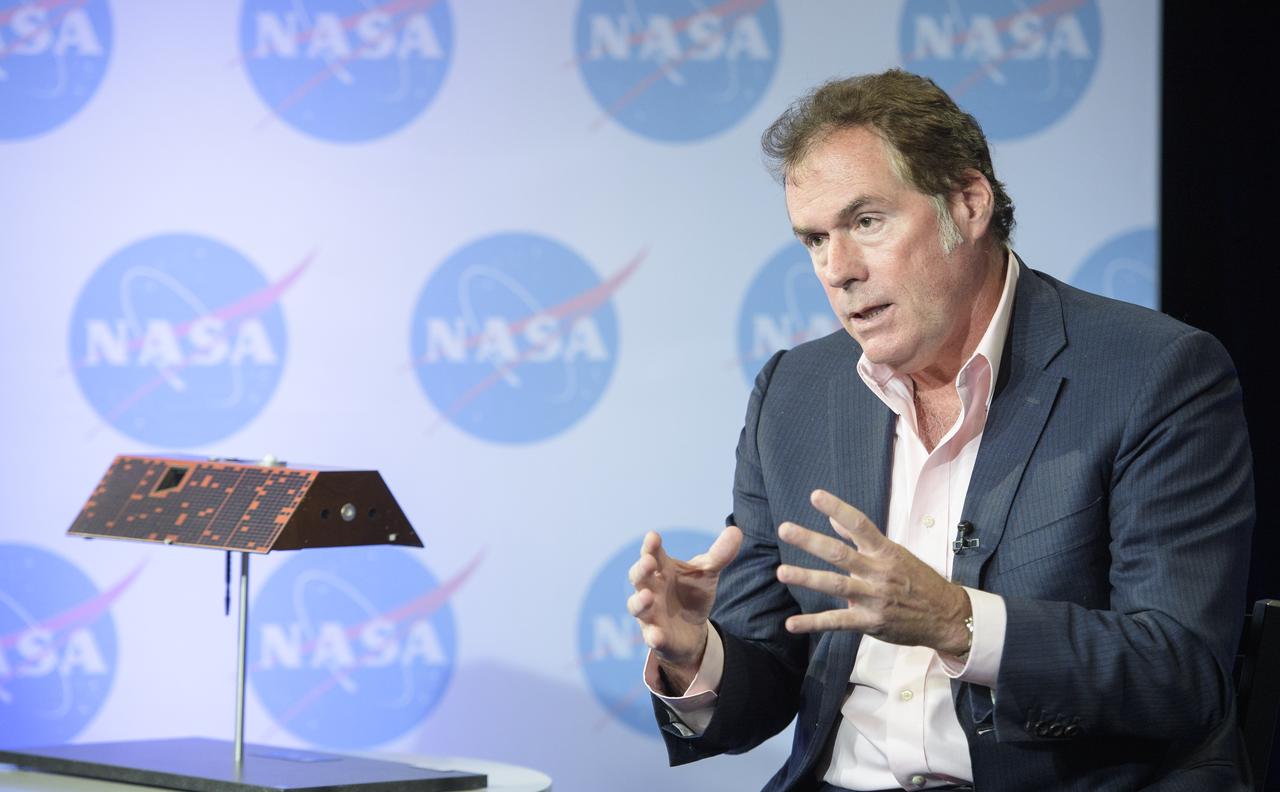
Michael Watkins, GRACE-FO science lead and director of NASA's Jet Propulsion Laboratory, discusses the upcoming launch of the Gravity Recovery and Climate Experiment Follow-On (GRACE-FO) mission, Monday, April 30, 2018 at NASA Headquarters in Washington. The twin GRACE-FO spacecraft will measure and monitor monthly changes in how mass is redistributed within and among Earth's atmosphere, oceans, land and ice sheets, as well as within Earth itself. Photo Credit: (NASA/Joel Kowsky)

Michael Watkins, GRACE-FO science lead and director of NASA's Jet Propulsion Laboratory, discusses the upcoming launch of the Gravity Recovery and Climate Experiment Follow-On (GRACE-FO) mission, Monday, April 30, 2018 at NASA Headquarters in Washington. The twin GRACE-FO spacecraft will measure and monitor monthly changes in how mass is redistributed within and among Earth's atmosphere, oceans, land and ice sheets, as well as within Earth itself. Photo Credit: (NASA/Joel Kowsky)
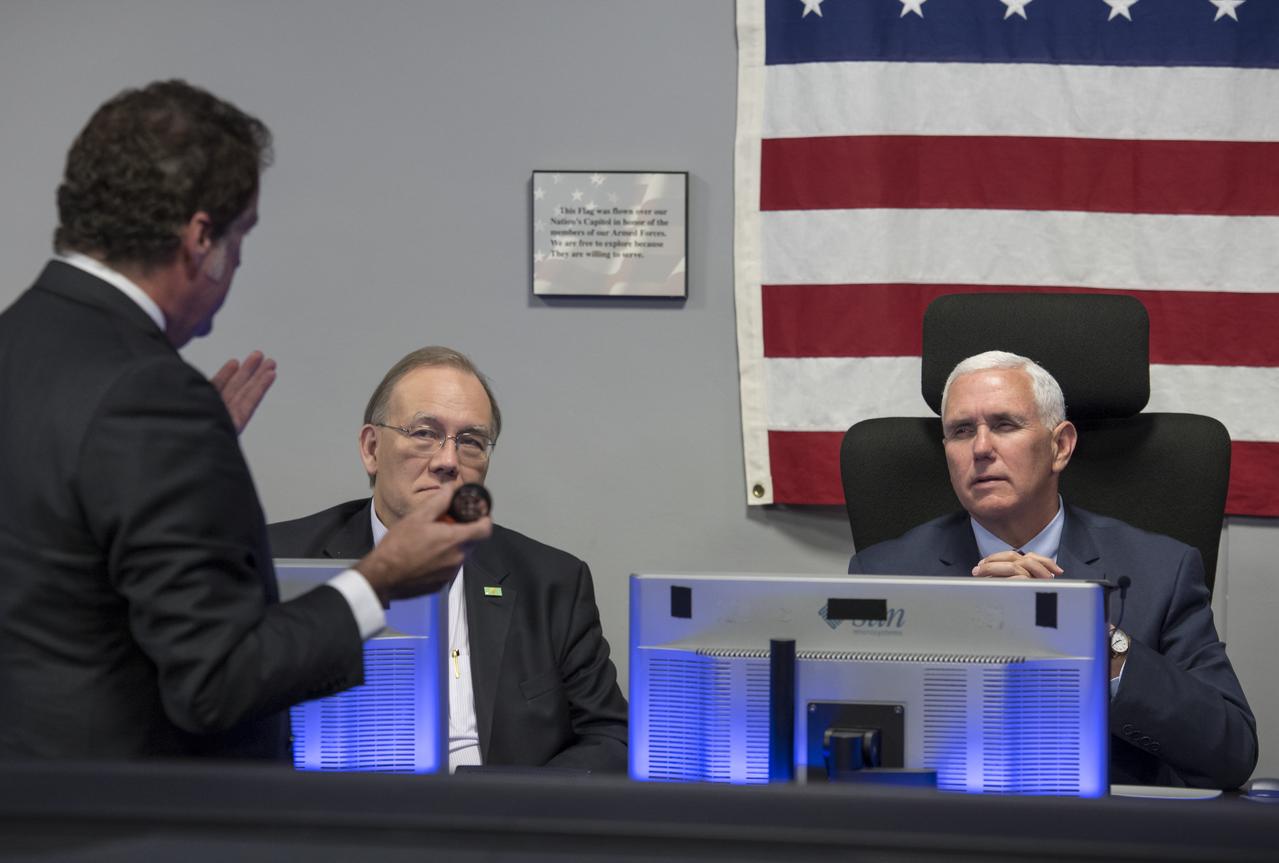
JPL Director Michael Watkins, standing, explains the history of NASA's Jet Propulsion Laboratory and the use of the Mission Support Area to Vice President Mike Pence, right, and Executive Director of the National Space Council Scott Pace during a tour of JPL, Saturday, April 28, 2018 in Pasadena, California. Photo Credit: (NASA/Bill Ingalls)

JPL Director Michael Watkins gives remarks during a NASA Perseverance rover mission post-landing update, Thursday, Feb. 18, 2021, at NASA's Jet Propulsion Laboratory in Pasadena, California. A key objective for Perseverance’s mission on Mars is astrobiology, including the search for signs of ancient microbial life. The rover will characterize the planet’s geology and past climate, pave the way for human exploration of the Red Planet, and be the first mission to collect and cache Martian rock and regolith. Photo Credit: (NASA/Bill Ingalls)
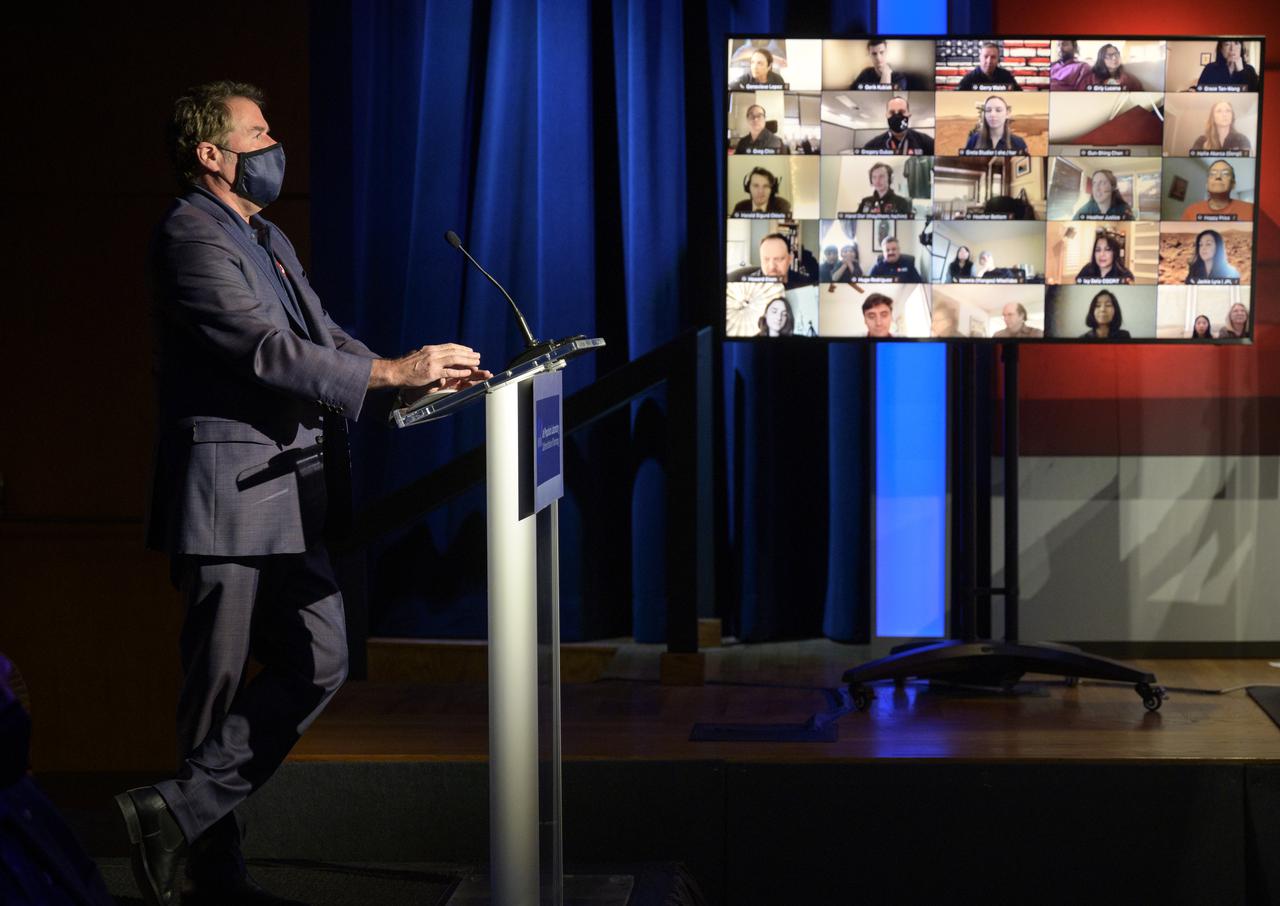
JPL Director Michael Watkins gives remarks during a NASA Perseverance rover mission post-landing update, Thursday, Feb. 18, 2021, at NASA's Jet Propulsion Laboratory in Pasadena, California. A key objective for Perseverance’s mission on Mars is astrobiology, including the search for signs of ancient microbial life. The rover will characterize the planet’s geology and past climate, pave the way for human exploration of the Red Planet, and be the first mission to collect and cache Martian rock and regolith. Photo Credit: (NASA/Bill Ingalls)

JPL Director Michael Watkins gives remarks during a Mars InSight post-landing press conference, Monday, Nov. 26, 2018 at NASA's Jet Propulsion Laboratory in Pasadena, California. InSight, short for Interior Exploration using Seismic Investigations, Geodesy and Heat Transport, is a Mars lander designed to study the "inner space" of Mars: its crust, mantle, and core. Photo Credit: (NASA/Bill Ingalls)
JPL Director Michael Watkins gives remarks during a NASA Perseverance rover mission post-landing update, Thursday, Feb. 18, 2021, at NASA's Jet Propulsion Laboratory in Pasadena, California. A key objective for Perseverance’s mission on Mars is astrobiology, including the search for signs of ancient microbial life. The rover will characterize the planet’s geology and past climate, pave the way for human exploration of the Red Planet, and be the first mission to collect and cache Martian rock and regolith. Photo Credit: (NASA/Bill Ingalls)

JPL Director Michael Watkins gives remarks during a NASA Perseverance rover mission post-landing update, Thursday, Feb. 18, 2021, at NASA's Jet Propulsion Laboratory in Pasadena, California. A key objective for Perseverance’s mission on Mars is astrobiology, including the search for signs of ancient microbial life. The rover will characterize the planet’s geology and past climate, pave the way for human exploration of the Red Planet, and be the first mission to collect and cache Martian rock and regolith. Photo Credit: (NASA/Bill Ingalls)
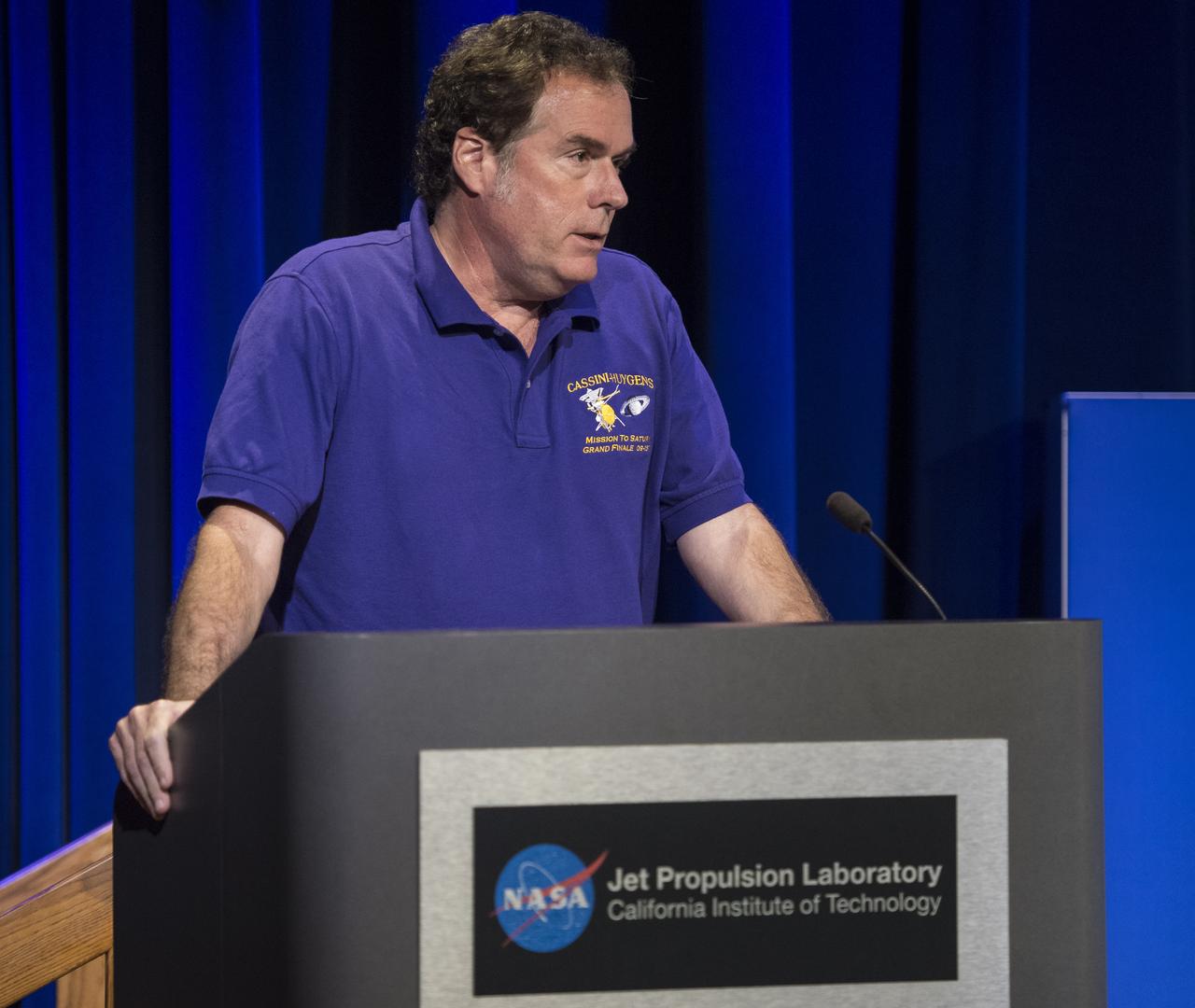
Director of NASA's Jet Propulsion Laboratory, Michael Watkins speaks during a press conference held after the end of the Cassini mission, Friday, Sept. 15, 2017 at NASA's Jet Propulsion Laboratory in Pasadena, California. Since its arrival in 2004, the Cassini-Huygens mission has been a discovery machine, revolutionizing our knowledge of the Saturn system and captivating us with data and images never before obtained with such detail and clarity. On Sept. 15, 2017, operators deliberately plunged the spacecraft into Saturn, as Cassini gathered science until the end. Loss of contact with the Cassini spacecraft occurred at 7:55 a.m. EDT (4:55 a.m. PDT). The “plunge” ensures Saturn’s moons will remain pristine for future exploration. During Cassini’s final days, mission team members from all around the world gathered at NASA’s Jet Propulsion Laboratory, Pasadena, California, to celebrate the achievements of this historic mission. Photo Credit: (NASA/Joel Kowsky)
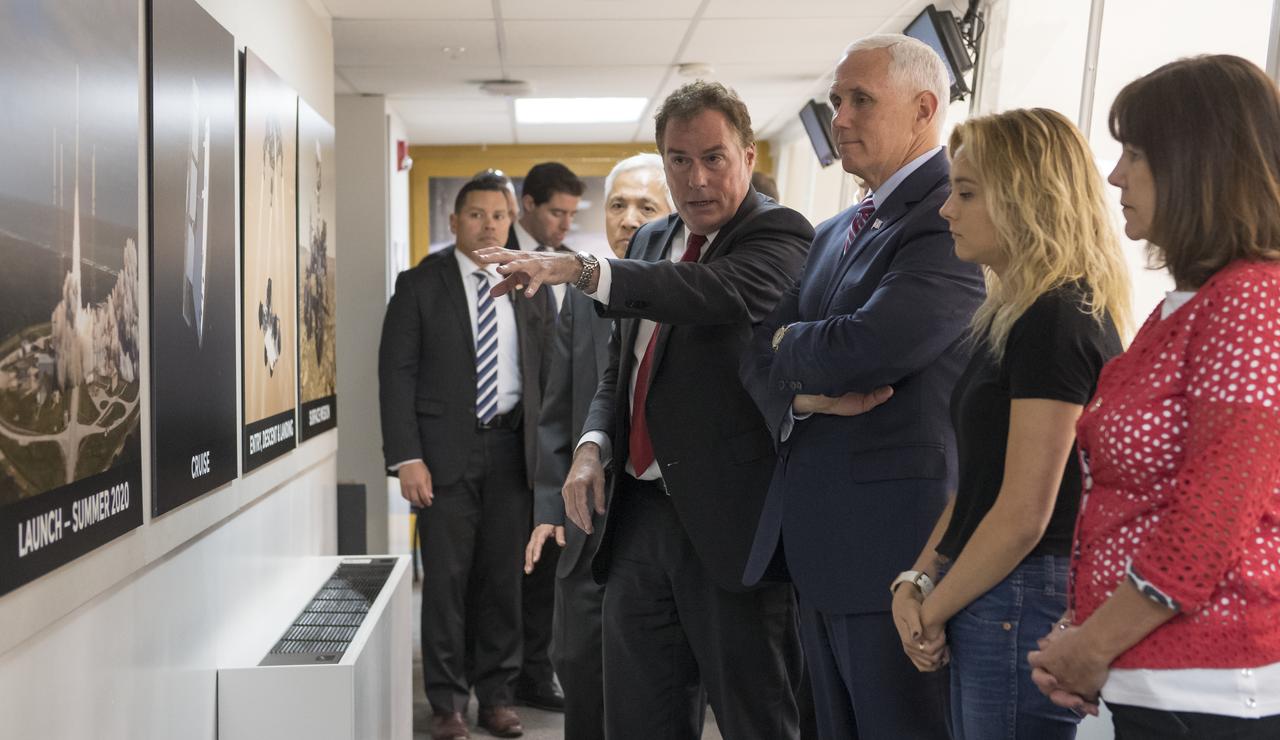
JPL Director Michael Watkins, left, explains to U.S. Vice President Mike Pence, daughter of Mike Pence, Charlotte Pence, and wife of Mike Pence, Karen Pence the progress for the Mars 2020 mission while inside the Spacecraft Assembly Facility (SAF) during a tour of NASA's Jet Propulsion Laboratory, Saturday, April 28, 2018 in Pasadena, California. Photo Credit: (NASA/Bill Ingalls)
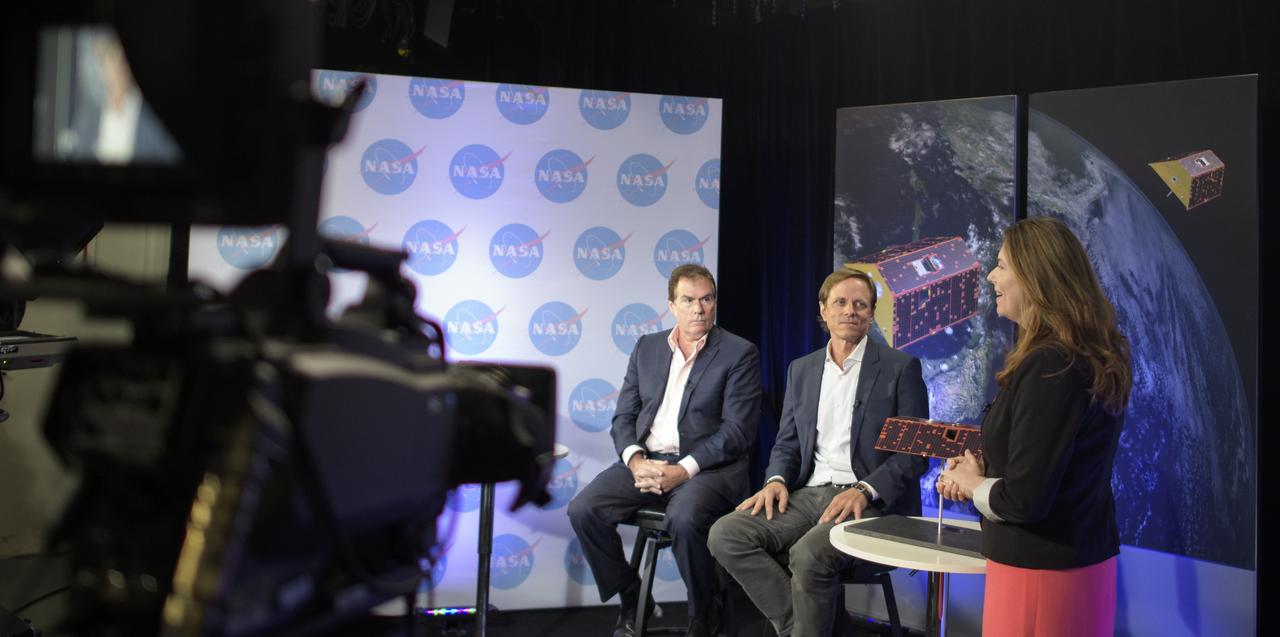
Karen Fox, of NASA's Office of Communications, right, discusses the upcoming launch of the Gravity Recovery and Climate Experiment Follow-On (GRACE-FO) mission with Michael Watkins, GRACE-FO science lead and director of NASA's Jet Propulsion Laboratory, left, and Frank Webb, GRACE-FO project scientist at JPL, Monday, April 30, 2018 at NASA Headquarters in Washington. The twin GRACE-FO spacecraft will measure and monitor monthly changes in how mass is redistributed within and among Earth's atmosphere, oceans, land and ice sheets, as well as within Earth itself. Photo Credit: (NASA/Joel Kowsky)
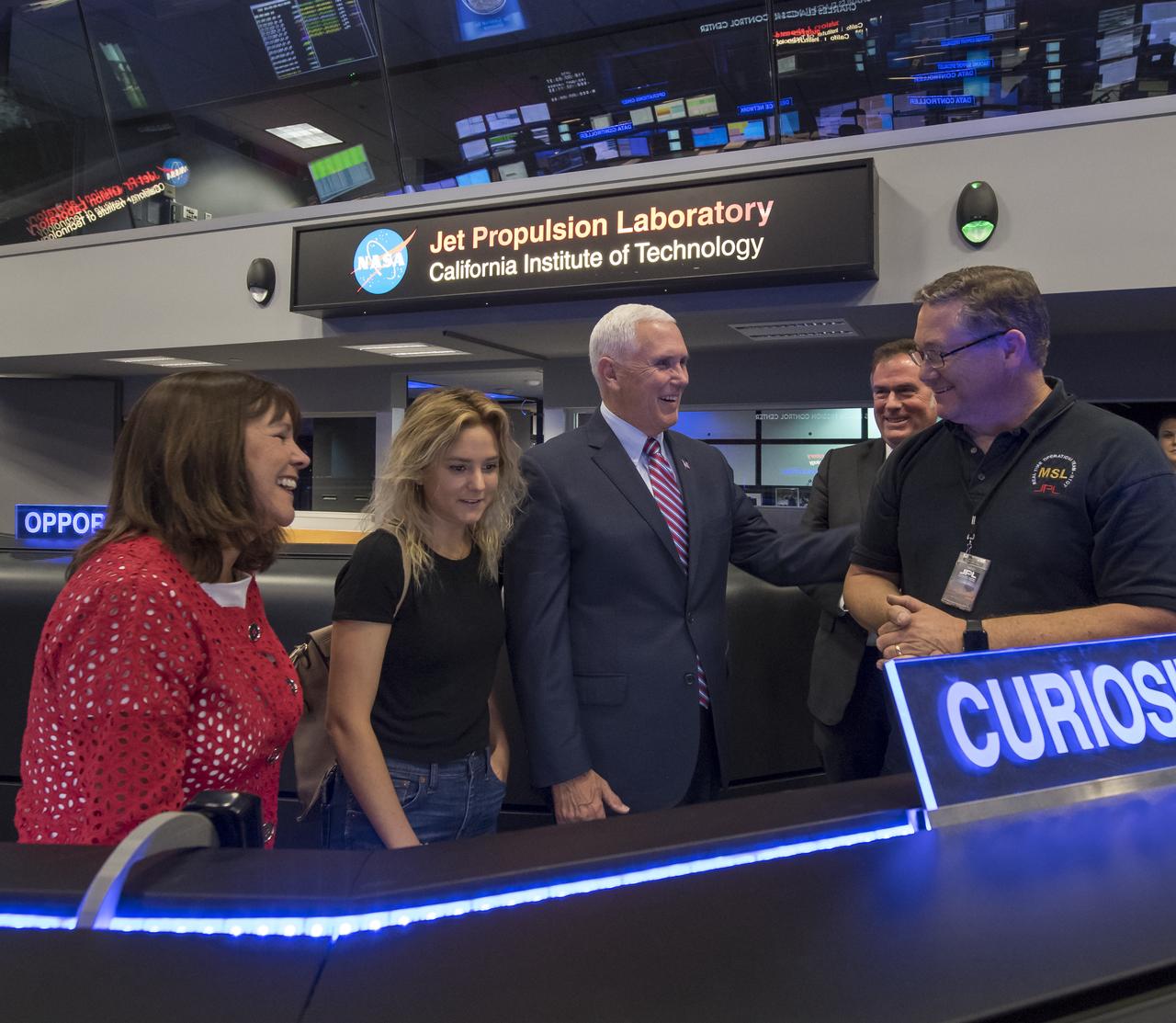
U.S. Vice President Mike Pence, 3rd from left, his wife Karen, and their daughter Charlotte meet with JPL Director Michael Watkins, and Mars Curiosity Mission ACE Walt Hoffman, right, during a tour of NASA's Jet Propulsion Laboratory, Saturday, April 28, 2018 in Pasadena, California. Photo Credit: (NASA/Bill Ingalls)
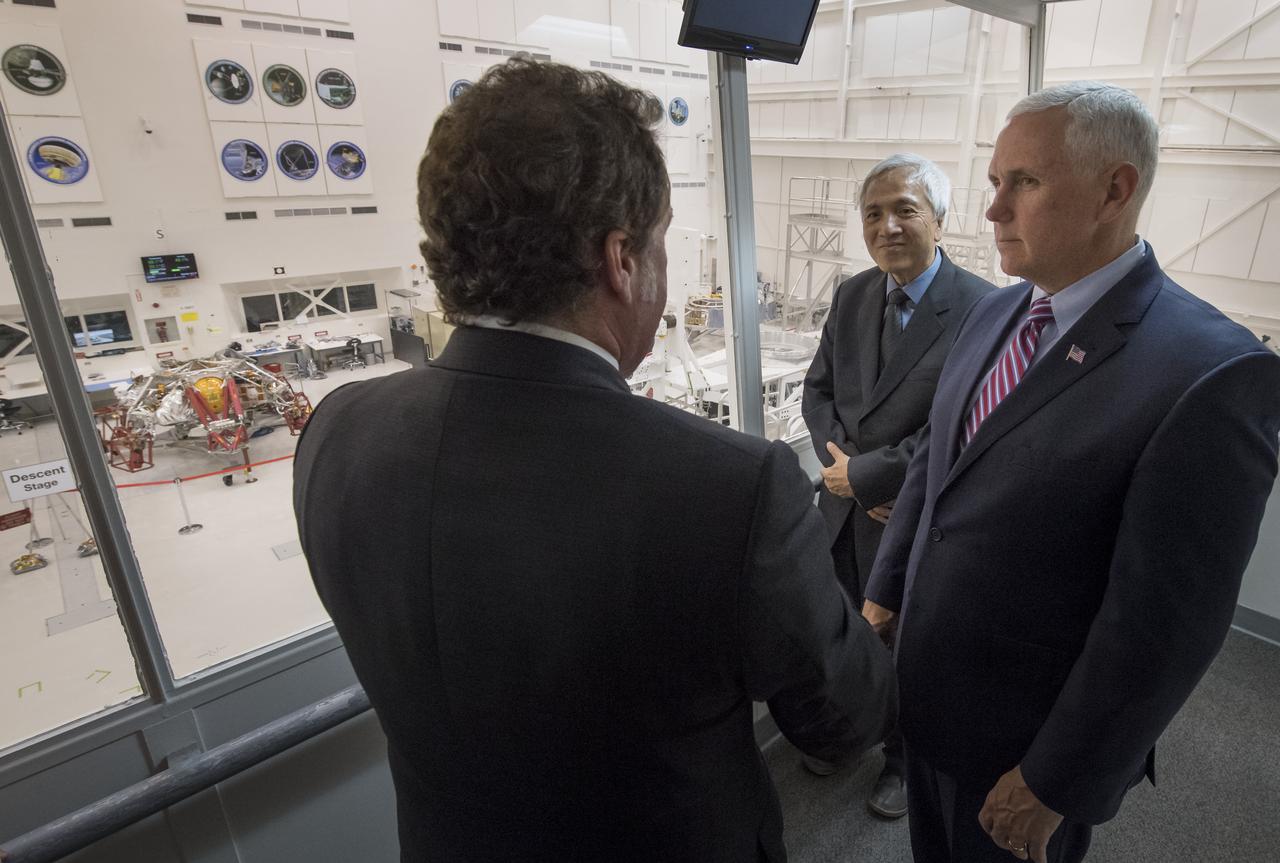
U.S. Vice President Mike Pence, right, is shown the Mars 2020 spacecraft descent stage from inside the Spacecraft Assembly Facility (SAF) by JPL Director Michael Watkins, left, and NASA Mars Exploration Manager Li Fuk at NASA's Jet Propulsion Laboratory, Saturday, April 28, 2018 in Pasadena, California. Mars 2020 is a Mars rover mission by NASA's Mars Exploration Program with a planned launch in 2020. Photo Credit: (NASA/Bill Ingalls)
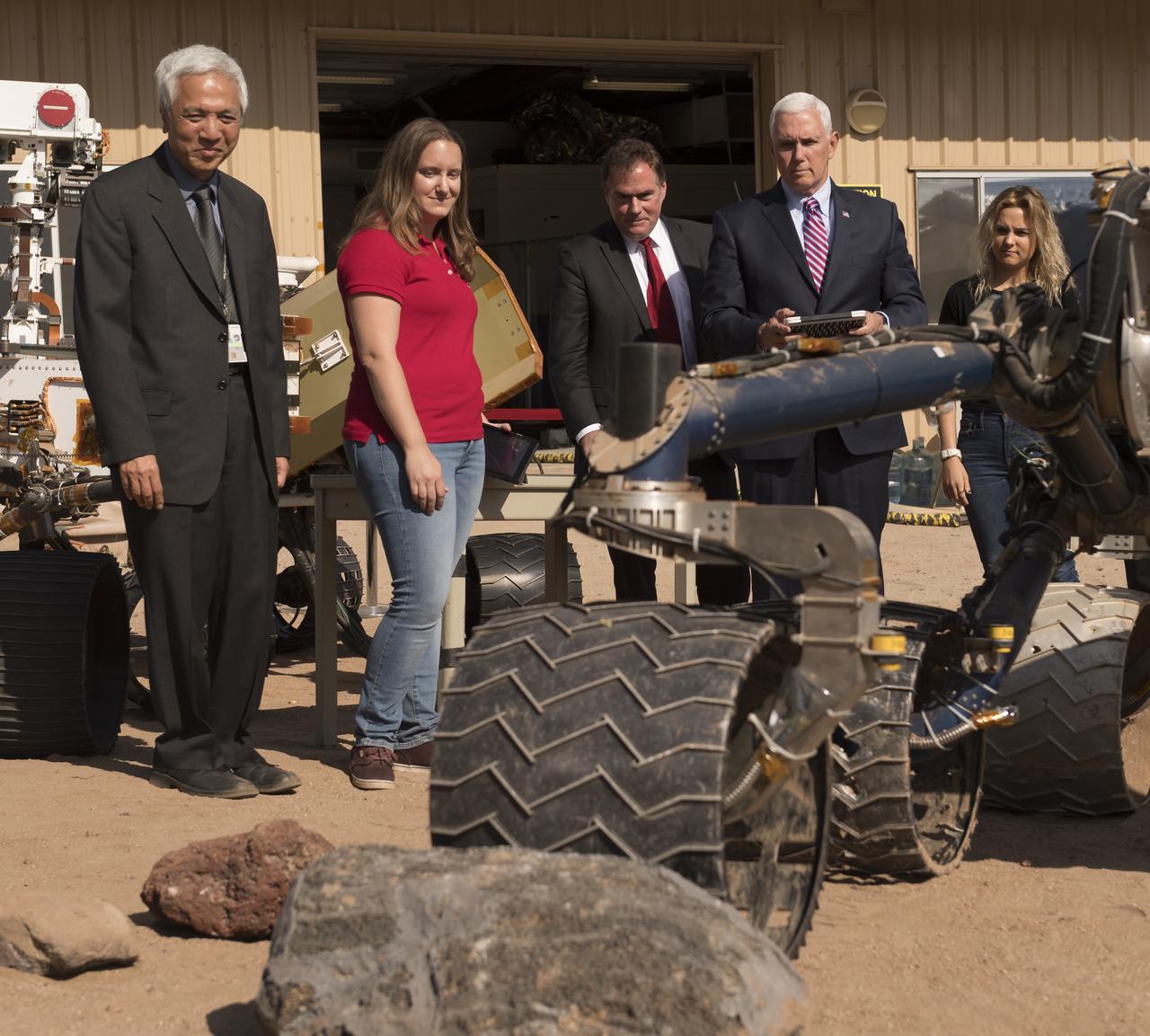
U.S. Vice President Mike Pence gives commands to a rover nicknamed "Scarecrow" as NASA Mars Exploration Manager Li Fuk, left, Mars Curiosity Engineering Operations Team Chief Megan Lin, JPL Director Michael Watkins, and daughter of Mike Pence, Charlotte Pence, right, look on, Saturday, April 28, 2018 in Pasadena, California. Scarecrow is used to test mobility of rovers on Mars. Photo Credit: (NASA/Bill Ingalls)
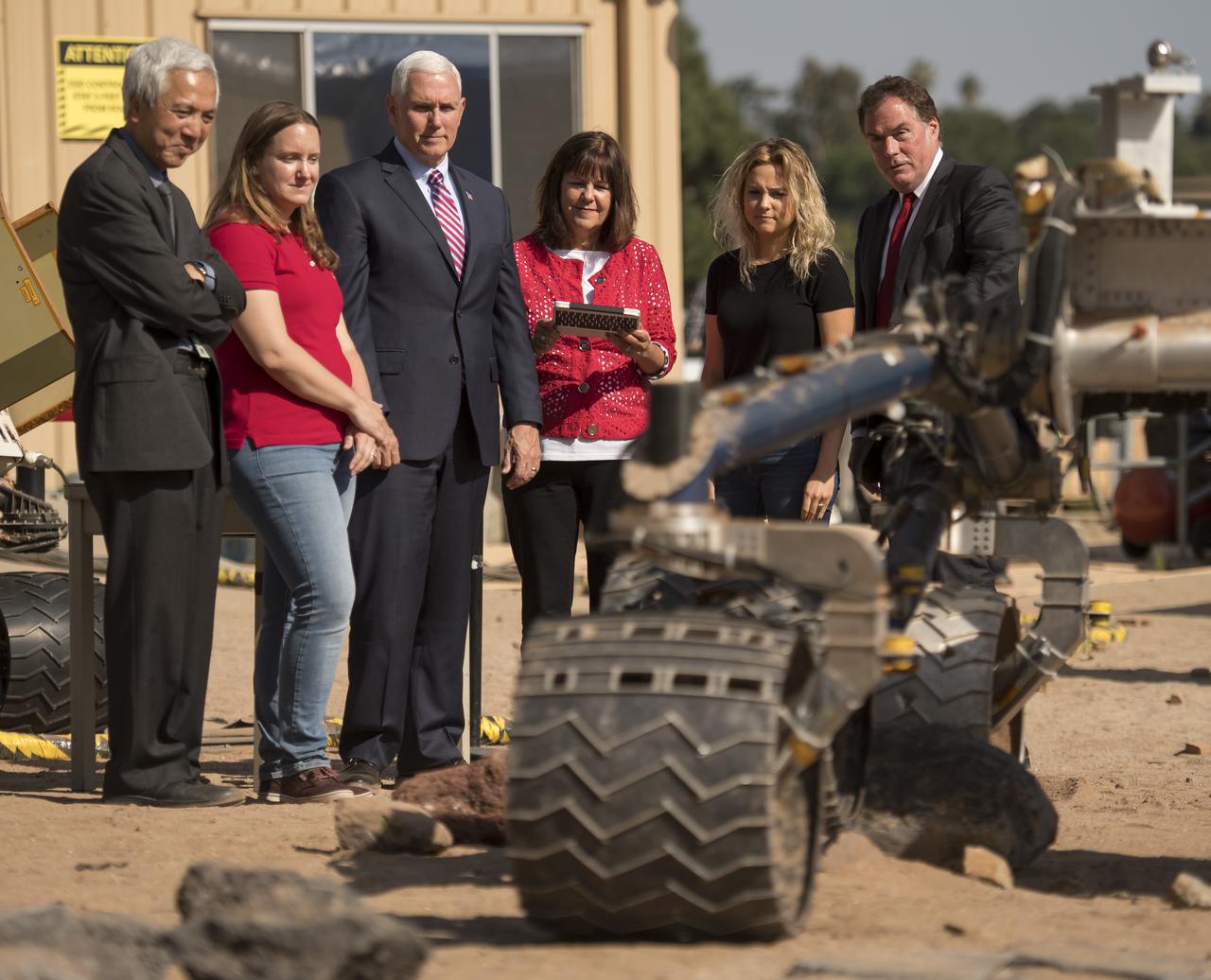
Second Lady Karen Pence gives commands to a rover nicknamed "Scarecrow" as NASA Mars Exploration Manager Li Fuk, left, Mars Curiosity Engineering Operations Team Chief Megan Lin, Vice President Mike Pence, daughter of Mike Pence, Charlotte Pence, and JPL Director Michael Watkins, right, look on, Saturday, April 28, 2018 in Pasadena, California. Scarecrow is used to test mobility of rovers on Mars. Photo Credit: (NASA/Bill Ingalls)

U.S. Vice President Mike Pence, left, thanks JPL Deputy Director Lt. Gen. (Ret) Larry James, JPL Director Michael Watkins, JPL Distinguished Visiting Scientist and Spouse of UAG Chairman James Ellis, Elisabeth Pate-Cornell , UAG Chairman, Admiral (Ret) James Ellis , and California Institute of Technology President Thomas Rosenbaum, right, for giving him a tour of NASA's Jet Propulsion Laboratory, Saturday, April 28, 2018 in Pasadena, California. Photo Credit: (NASA/Bill Ingalls)
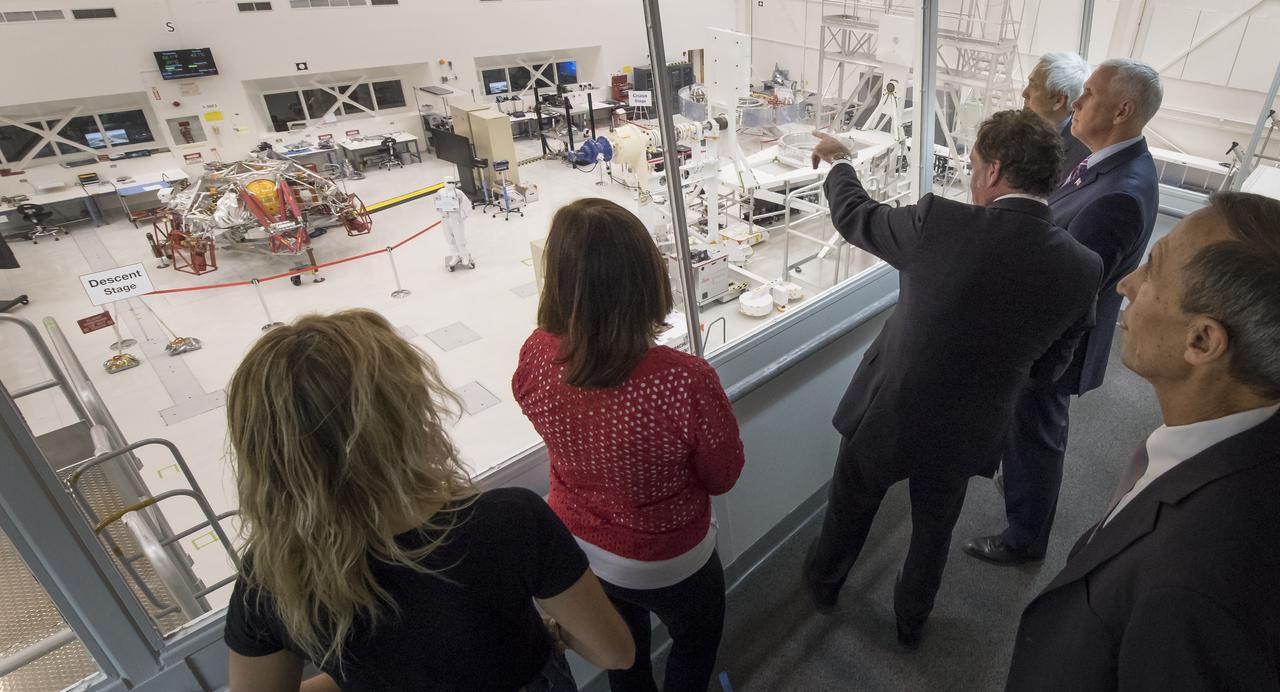
U.S. Vice President Mike Pence, 2nd from right, is shown the Mars 2020 spacecraft descent stage from inside the Spacecraft Assembly Facility (SAF) by JPL Director Michael Watkins, to the Vice President's left, and NASA Mars Exploration Manager Li Fuk at NASA's Jet Propulsion Laboratory, Saturday, April 28, 2018 in Pasadena, California. Mars 2020 is a Mars rover mission by NASA's Mars Exploration Program with a planned launch in 2020. Photo Credit: (NASA/Bill Ingalls)
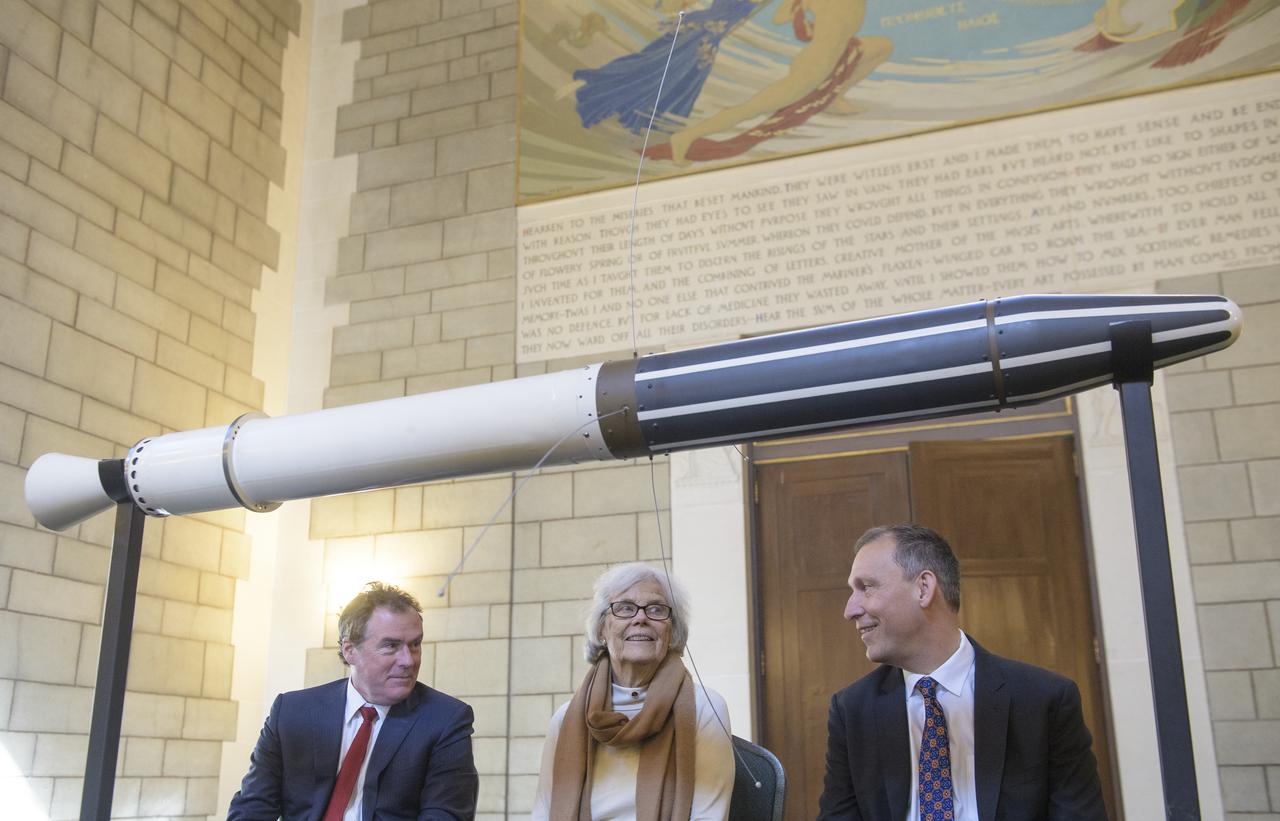
Michael Watkins, Director of NASA's Jet Propulsion Laboratory, left, Susan Finley, who began working at NASA's Jet Propulsion Laboratory in January 1958 as a "human computer", center, and Thomas Zurbuchen, Associate Administrator for NASA's Science Mission Directorate, right, pose for a picture with a replica of the Explorer 1 satellite during an event celebrating the 60th Anniversary of the Explorer 1 mission and the discovery of Earth's radiation belts, Wednesday, Jan. 31, 2018, at the National Academy of Sciences in Washington. The first U.S. satellite, Explorer 1, was launched from Cape Canaveral on January 31, 1958. The 30-pound satellite would yield a major scientific discovery, the Van Allen radiation belts circling our planet, and begin six decades of groundbreaking space science and human exploration. (NASA/Joel Kowsky)

JPL Director Michael Watkins, right, talks with Acting NASA Administrator Steve Jurczyk as they and the NASA Perseverance Mars rover team await the landing of the spacecraft in mission control, Thursday, Feb. 18, 2021, at NASA's Jet Propulsion Laboratory in Pasadena, California. A key objective for Perseverance’s mission on Mars is astrobiology, including the search for signs of ancient microbial life. The rover will characterize the planet’s geology and past climate, pave the way for human exploration of the Red Planet, and be the first mission to collect and cache Martian rock and regolith. Photo Credit: (NASA/Bill Ingalls)
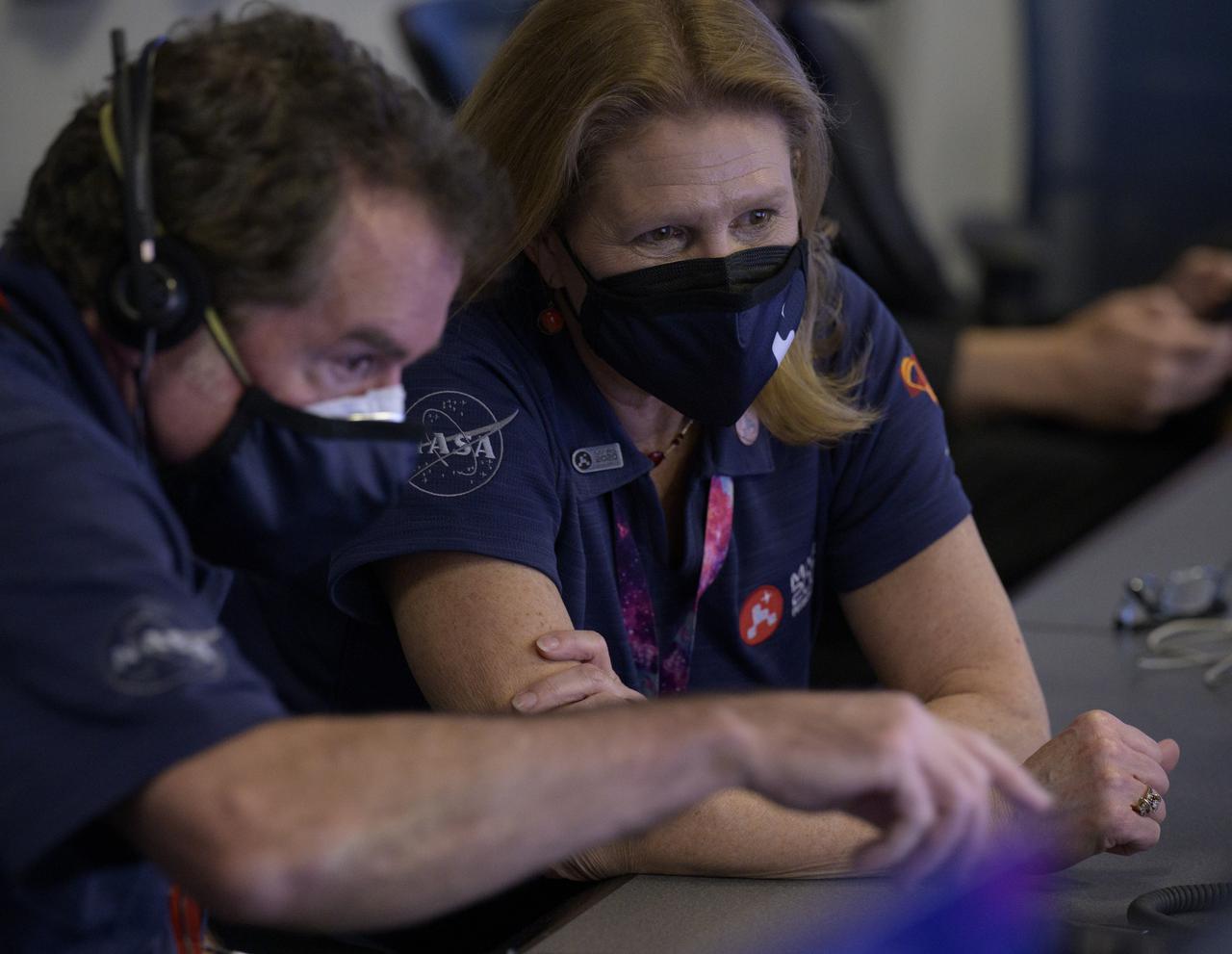
JPL Director Michael Watkins, left, talks with Director of NASA's Science Mission Directorate’s Planetary Science Division, Lori Glaze, as they and the NASA Perseverance Mars rover team await the landing of the spacecraft in mission control, Thursday, Feb. 18, 2021, at NASA's Jet Propulsion Laboratory in Pasadena, California. A key objective for Perseverance’s mission on Mars is astrobiology, including the search for signs of ancient microbial life. The rover will characterize the planet’s geology and past climate, pave the way for human exploration of the Red Planet, and be the first mission to collect and cache Martian rock and regolith. Photo Credit: (NASA/Bill Ingalls)
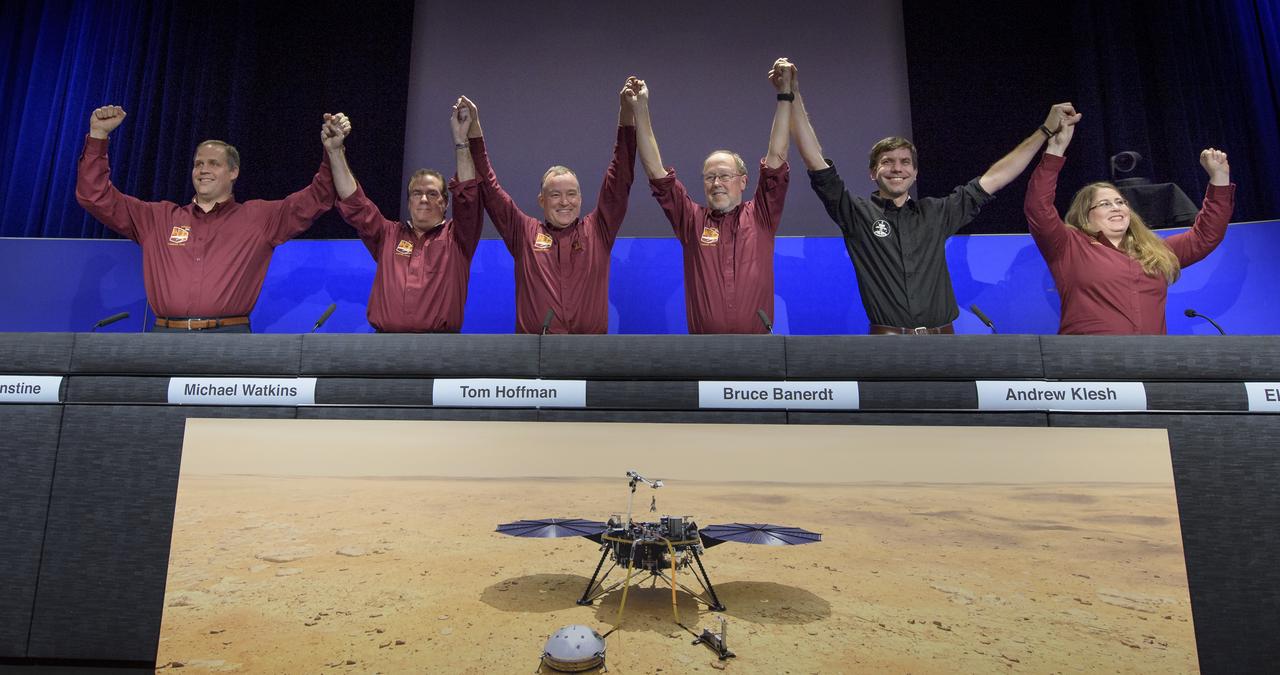
NASA Administrator Jim Bridenstine, left, JPL Director Michael Watkins, InSight Project Manager Tom Hoffman, InSight Principal Investigator Bruce Banerdt, MarCO chief engineer Andy Klesh, and InSight Instrument Operations Lead Elizabeth Barrett, celebrate Mars InSight landing successfully on Mars during a press conference, Monday, Nov. 26, 2018 at NASA's Jet Propulsion Laboratory in Pasadena, California. InSight, short for Interior Exploration using Seismic Investigations, Geodesy and Heat Transport, is a Mars lander designed to study the "inner space" of Mars: its crust, mantle, and core. Photo Credit: (NASA/Bill Ingalls)
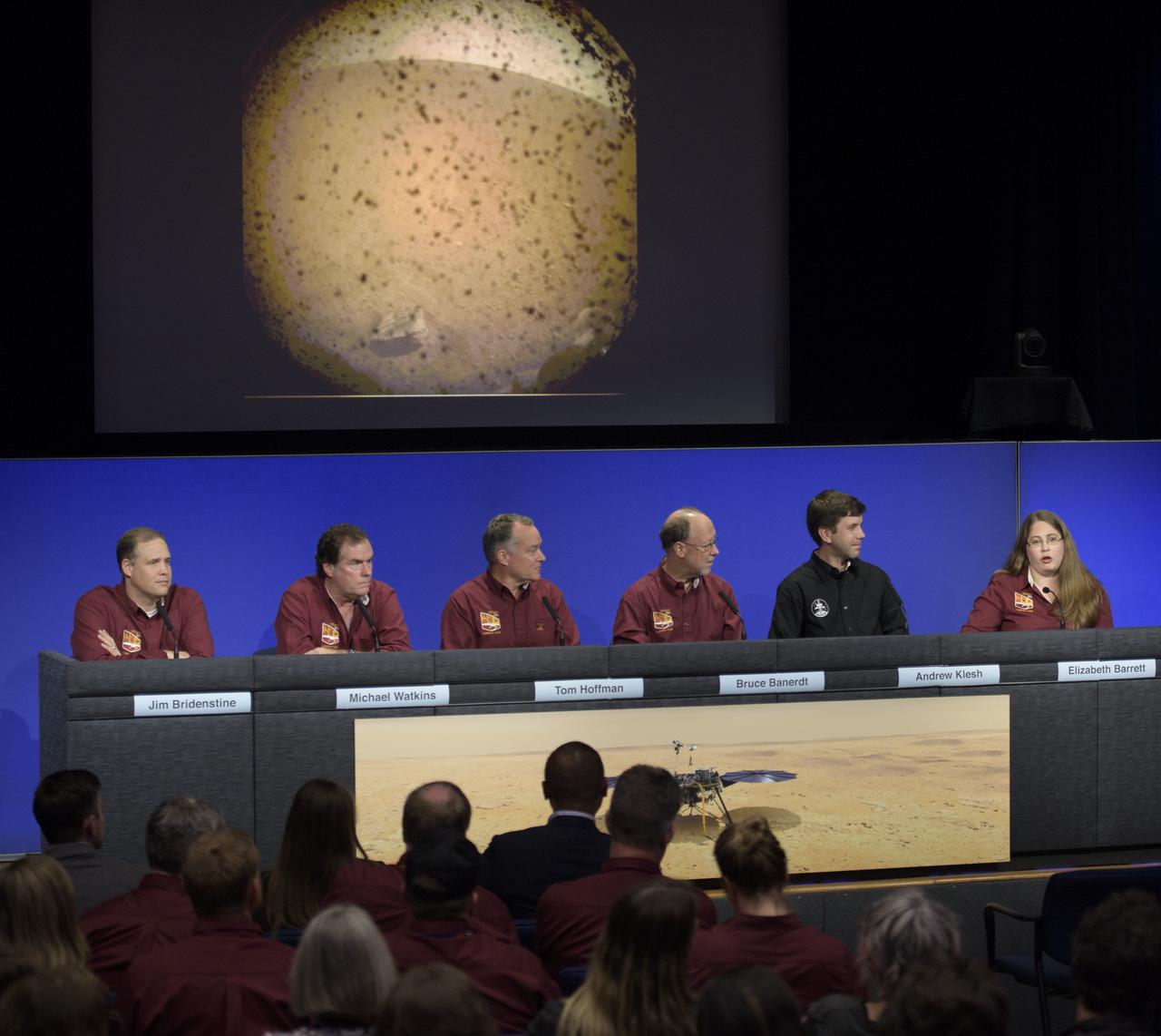
NASA Administrator Jim Bridenstine, left, JPL Director Michael Watkins, InSight Project Manager Tom Hoffman, InSight Principal Investigator Bruce Banerdt, MarCO chief engineer Andy Klesh, and InSight Instrument Operations Lead Elizabeth Barrett, answer questions during a Mars InSight post-landing press conference, Monday, Nov. 26, 2018 at NASA's Jet Propulsion Laboratory in Pasadena, California. InSight, short for Interior Exploration using Seismic Investigations, Geodesy and Heat Transport, is a Mars lander designed to study the "inner space" of Mars: its crust, mantle, and core. Photo Credit: (NASA/Bill Ingalls)
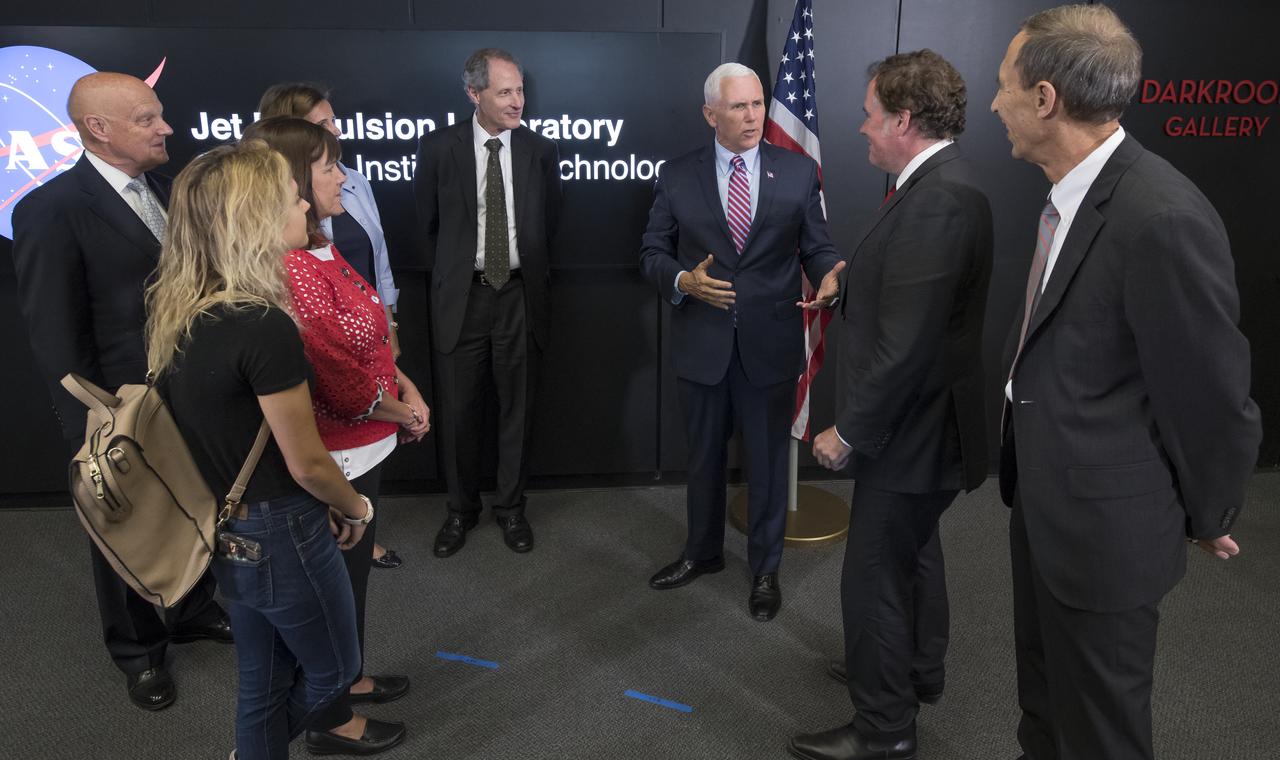
U.S. Vice President Mike Pence, 3rd from right, tours NASA's Jet Propulsion Laboratory along with his wife Karen, and daughter Charlotte, Saturday, April 28, 2018 in Pasadena, California. Joining the Vice President t and his family on the tour are: UAG Chairman, Admiral (Ret) James Ellis , left, JPL Distinguished Visiting Scientist and Spouse of UAG Chairman James Ellis, Elisabeth Pate-Cornell, behind Mrs. Pence, California Institute of Technology President Thomas Rosenbaum, JPL Director Michael Watkins, and JPL Deputy Director Lt. Gen. (Ret) Larry James, right. Photo Credit: (NASA/Bill Ingalls)
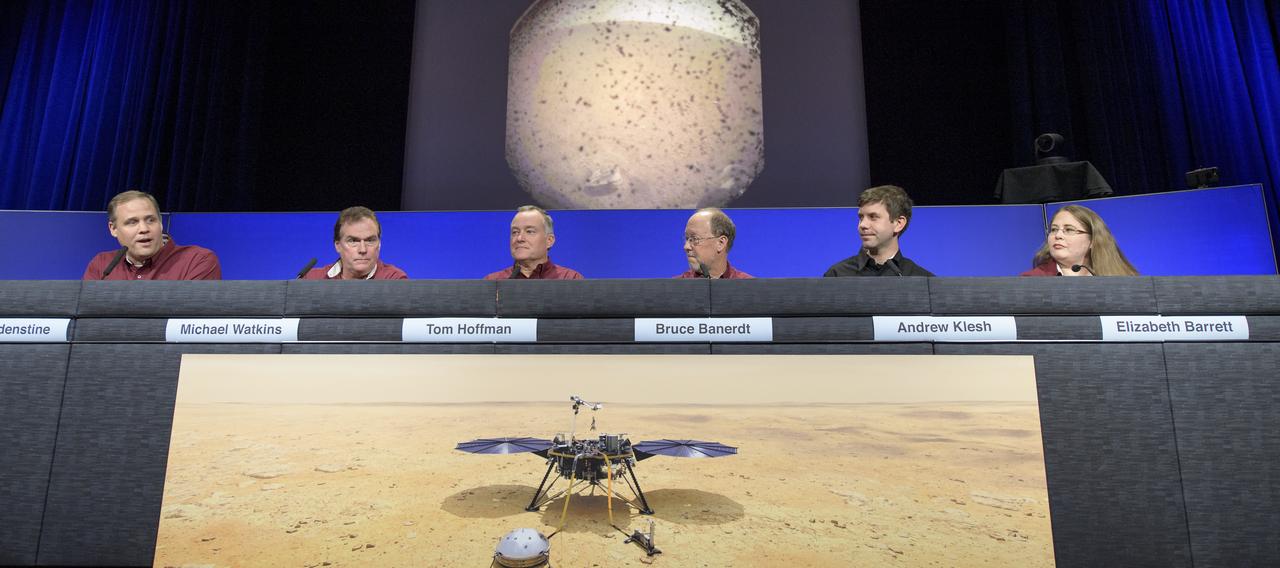
NASA Administrator Jim Bridenstine, left, JPL Director Michael Watkins, InSight Project Manager Tom Hoffman, InSight Principal Investigator Bruce Banerdt, MarCO chief engineer Andy Klesh, and InSight Instrument Operations Lead Elizabeth Barrett, give a Mars InSight post-landing press conference, Monday, Nov. 26, 2018 at NASA's Jet Propulsion Laboratory in Pasadena, California. InSight, short for Interior Exploration using Seismic Investigations, Geodesy and Heat Transport, is a Mars lander designed to study the "inner space" of Mars: its crust, mantle, and core. Photo Credit: (NASA/Bill Ingalls)
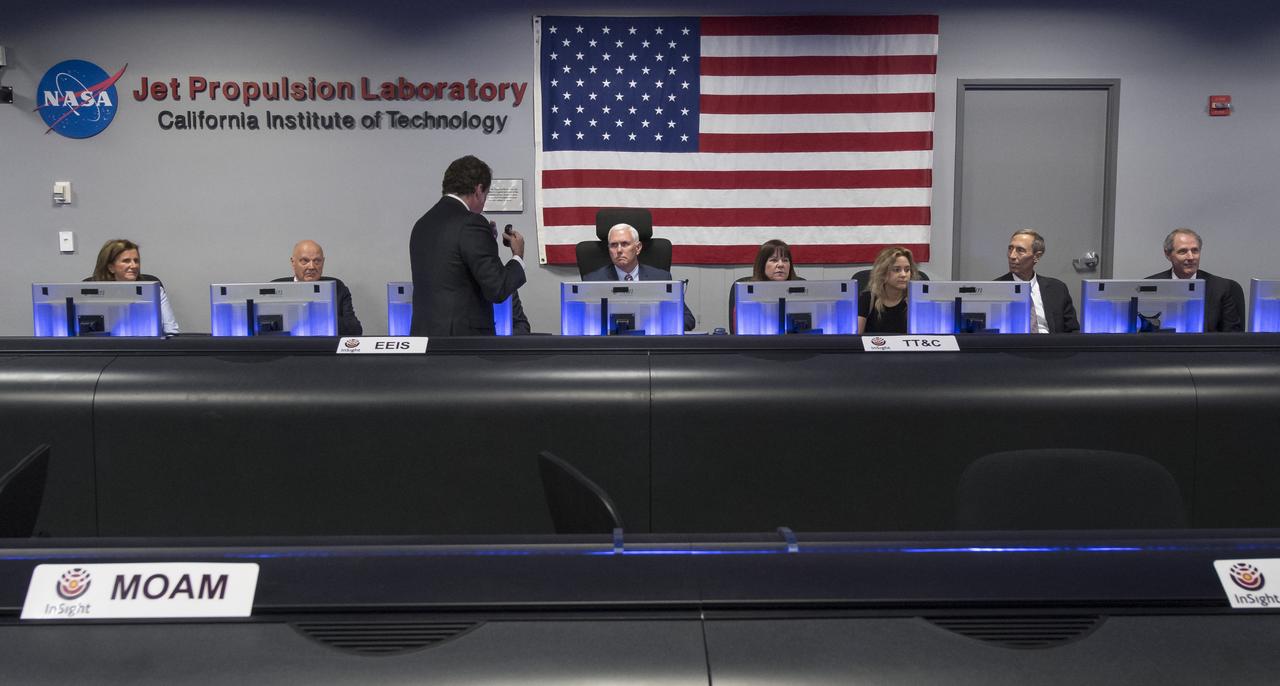
JPL Director Michael Watkins, standing, explains the history of NASA's Jet Propulsion Laboratory and the use of the Mission Support Area to Vice President Mike Pence, seated next to his wife Karen and daughter Charlotte Pence, during a tour of JPL, Saturday, April 28, 2018 in Pasadena, California. Joining the Vice President was, JPL Distinguished Visiting Scientist and Spouse of UAG Chairman James Ellis, Elisabeth Pate-Cornell, left, UAG Chairman, Admiral (Ret) James Ellis, JPL Deputy Director Lt. Gen. (Ret) Larry James, and California Institute of Technology President Thomas Rosenbaum. Photo Credit: (NASA/Bill Ingalls)
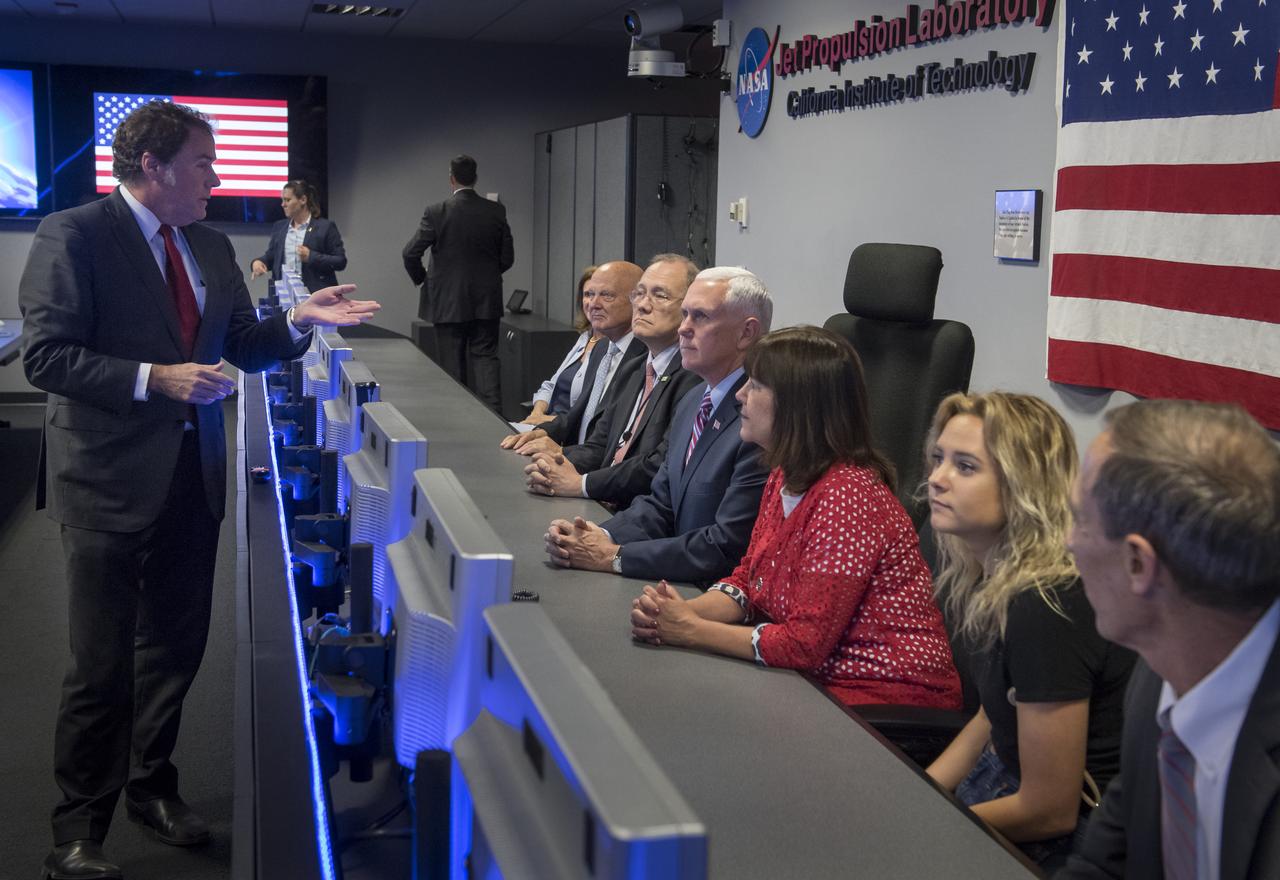
JPL Director Michael Watkins, left, explains the history of NASA's Jet Propulsion Laboratory and the use of the Mission Support Area to Vice President Mike Pence, seated 4th from left, during a tour of JPL, Saturday, April 28, 2018 in Pasadena, California. Joining the Vice President was, JPL Distinguished Visiting Scientist and Spouse of UAG Chairman James Ellis, Elisabeth Pate-Cornell, left, UAG Chairman, Admiral (Ret) James Ellis, Executive Director of the National Space Council Scott Pace, wife of Mike Pence, Karen Pence, daughter of Mike Pence, Charlotte Pence, and JPL Deputy Director Lt. Gen. (Ret) Larry James. Photo Credit: (NASA/Bill Ingalls)
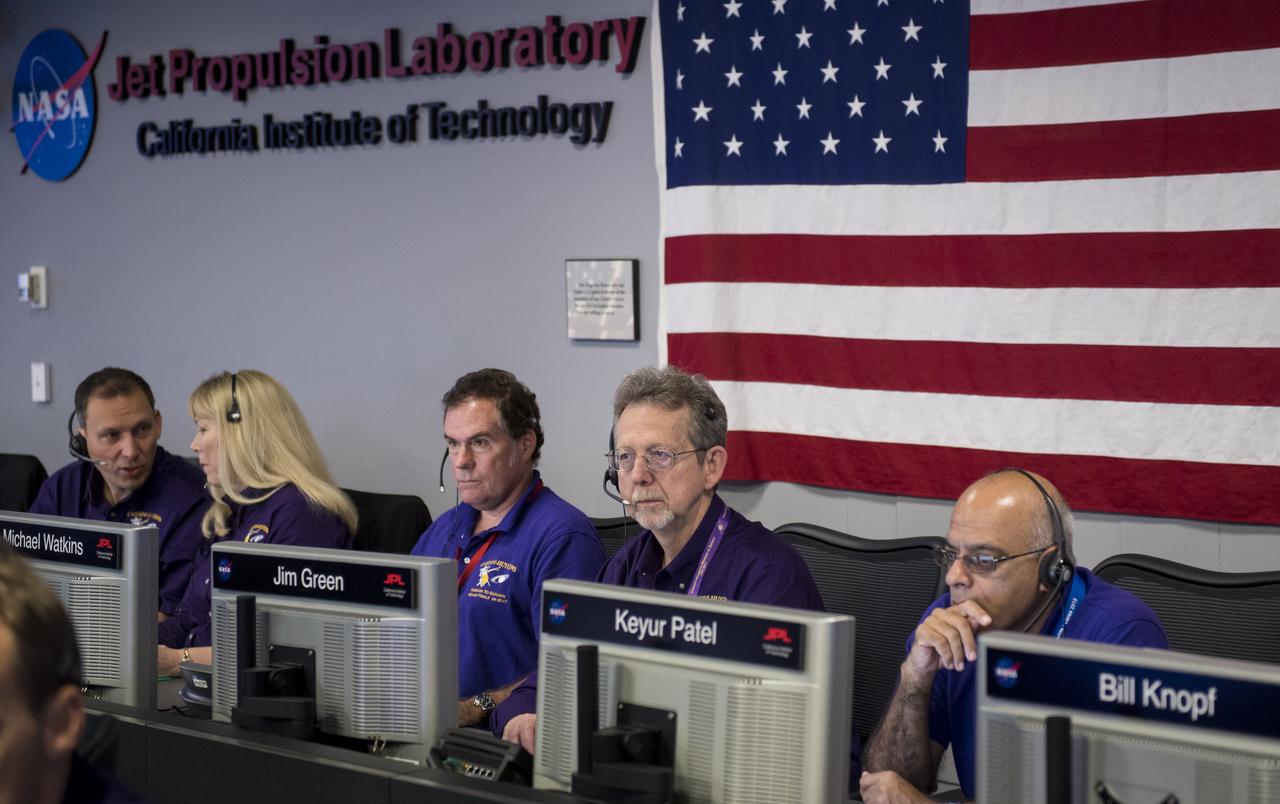
Associate administrator for NASA's Science Mission Directorate Thomas Zurbuchen, left, Cassini project scientist at JPL, Linda Spilker, second from left, director of NASA's Jet Propulsion Laboratory, Michael Watkins, center, director of NASA's Planetary Science Division, Jim Green, second from right, and director of the interplanetary network directorate at NASA's Jet Propulsion Laboratory, Keyur Patel, left, are seen in mission control, Friday, Sept. 15, 2017 at NASA's Jet Propulsion Laboratory in Pasadena, California. Since its arrival in 2004, the Cassini-Huygens mission has been a discovery machine, revolutionizing our knowledge of the Saturn system and captivating us with data and images never before obtained with such detail and clarity. On Sept. 15, 2017, operators deliberately plunged the spacecraft into Saturn, as Cassini gathered science until the end. Loss of contact with the Cassini spacecraft occurred at 7:55 a.m. EDT (4:55 a.m. PDT). The “plunge” ensures Saturn’s moons will remain pristine for future exploration. During Cassini’s final days, mission team members from all around the world gathered at NASA’s Jet Propulsion Laboratory, Pasadena, California, to celebrate the achievements of this historic mission. Photo Credit: (NASA/Joel Kowsky)
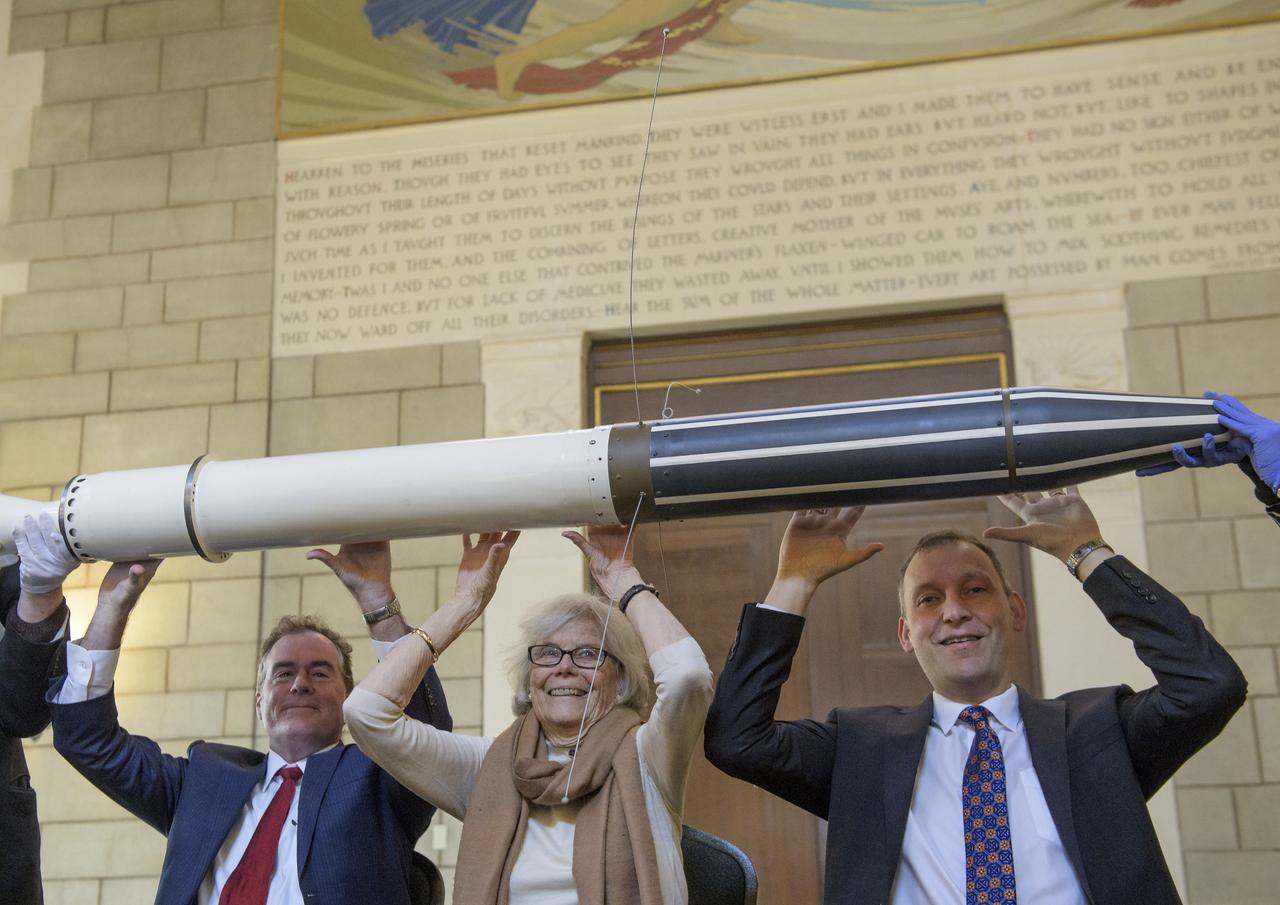
Michael Watkins, Director of NASA's Jet Propulsion Laboratory, left, Susan Finley, who began working at NASA's Jet Propulsion Laboratory in January 1958 as a "human computer", center, and Thomas Zurbuchen, Associate Administrator for NASA's Science Mission Directorate, right, reenact the famous picture of Dr. William H. Pickering, Dr. James A. van Allen, and Dr. Wernher von Braun, hoisting a model of Explorer 1 above their heads at a press conference announcing the satellite's success with a replica of the Explorer 1 satellite during an event celebrating the 60th Anniversary of the Explorer 1 mission and the discovery of Earth's radiation belts, Wednesday, Jan. 31, 2018, at the National Academy of Sciences in Washington. The first U.S. satellite, Explorer 1, was launched from Cape Canaveral on January 31, 1958. The 30-pound satellite would yield a major scientific discovery, the Van Allen radiation belts circling our planet, and begin six decades of groundbreaking space science and human exploration. (NASA/Joel Kowsky)
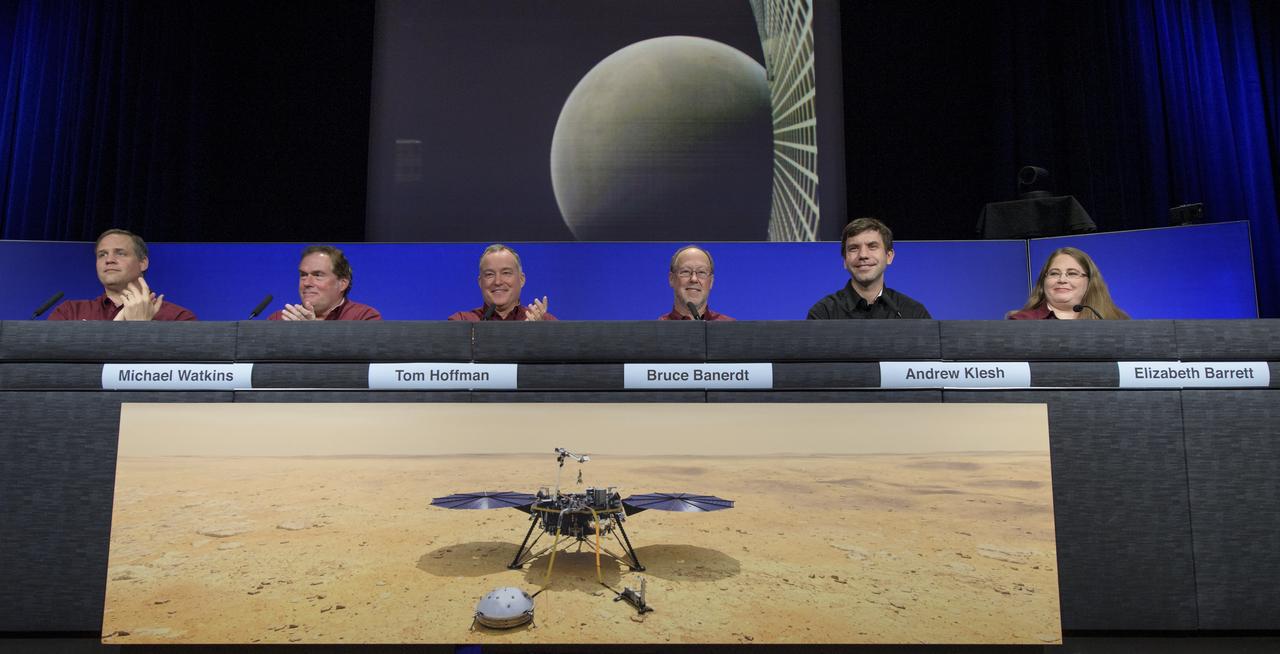
NASA Administrator Jim Bridenstine, left, JPL Director Michael Watkins, InSight Project Manager Tom Hoffman, InSight Principal Investigator Bruce Banerdt, MarCO chief engineer Andy Klesh, and InSight Instrument Operations Lead Elizabeth Barrett, show an image of Mars made by one of the Mars Cube One CubeSats during a Mars InSight post-landing press conference, Monday, Nov. 26, 2018 at NASA's Jet Propulsion Laboratory in Pasadena, California. InSight, short for Interior Exploration using Seismic Investigations, Geodesy and Heat Transport, is a Mars lander designed to study the "inner space" of Mars: its crust, mantle, and core. Photo Credit: (NASA/Bill Ingalls)
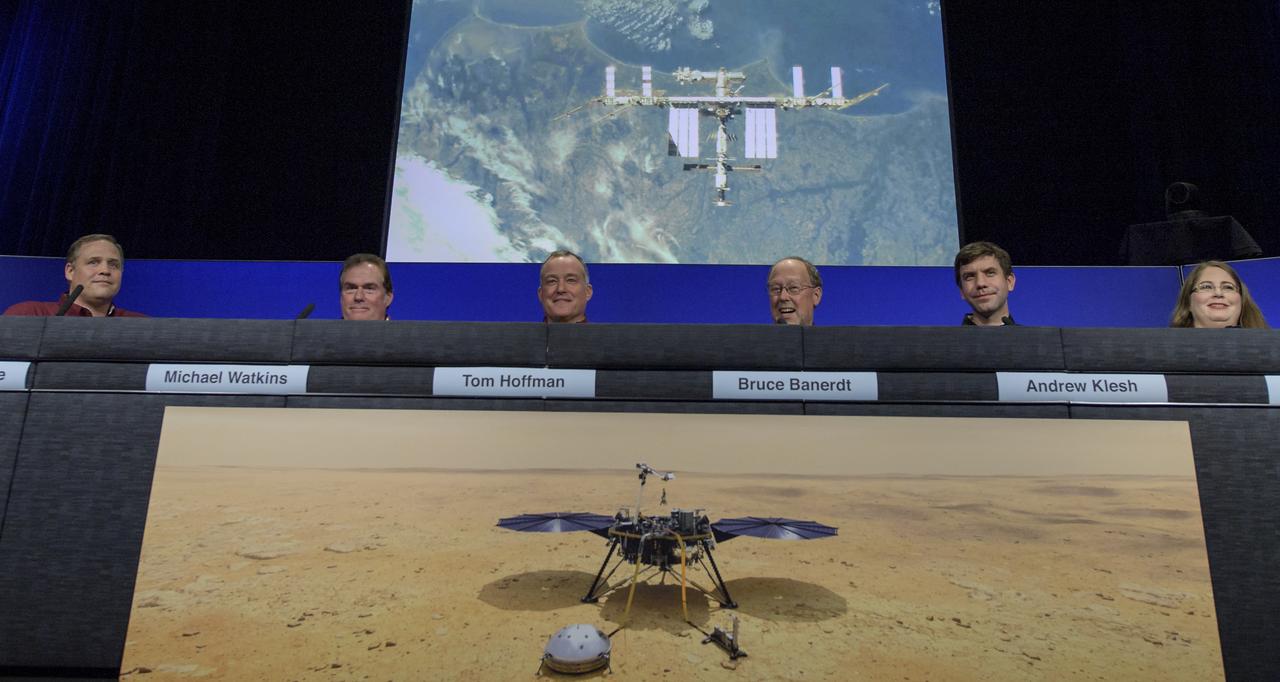
NASA Administrator Jim Bridenstine, left, JPL Director Michael Watkins, InSight Project Manager Tom Hoffman, InSight Principal Investigator Bruce Banerdt, MarCO chief engineer Andy Klesh, and InSight Instrument Operations Lead Elizabeth Barrett, listen to comments given by the International Space Station crew during a Mars InSight post-landing press conference, Monday, Nov. 26, 2018 at NASA's Jet Propulsion Laboratory in Pasadena, California. InSight, short for Interior Exploration using Seismic Investigations, Geodesy and Heat Transport, is a Mars lander designed to study the "inner space" of Mars: its crust, mantle, and core. Photo Credit: (NASA/Bill Ingalls)
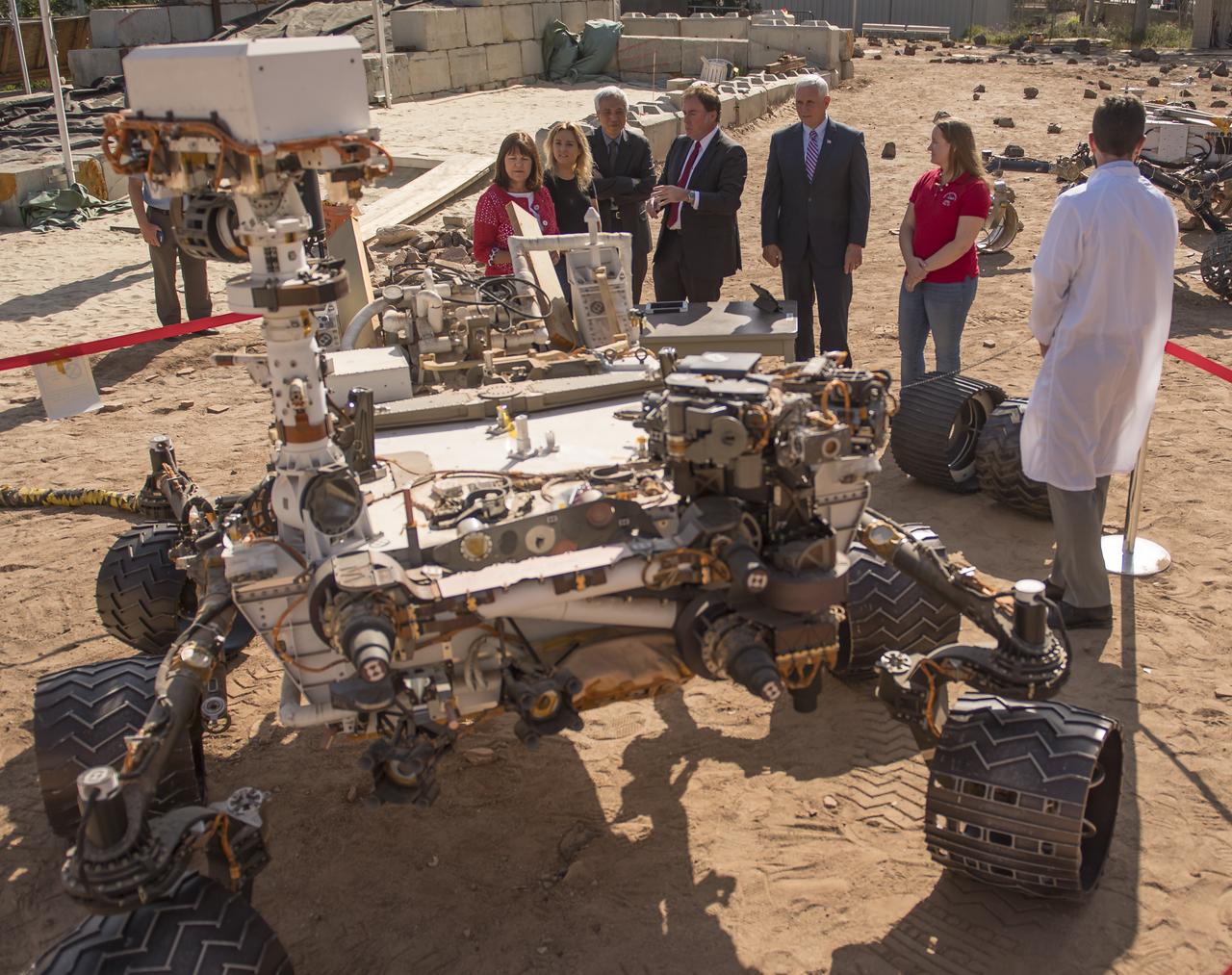
U.S. Vice President Mike Pence, 5th from left, joined by his wife Karen Pence, left, and daughter Charlotte Pence. 2nd from left, view the Vehicle System Test Bed (VSTB) rover in the Mars Yard during a tour of NASA's Jet Propulsion Laboratory, Saturday, April 28, 2018 in Pasadena, California. NASA Mars Exploration Manager Li Fuk, 2nd from left, JPL Director Michael Watkins, Mars Curiosity Engineering Operations Team Chief Megan Lin, and MSL Engineer Sean McGill, right, helped explain to the Vice President and his family how they use these test rovers. Photo Credit: (NASA/Bill Ingalls)
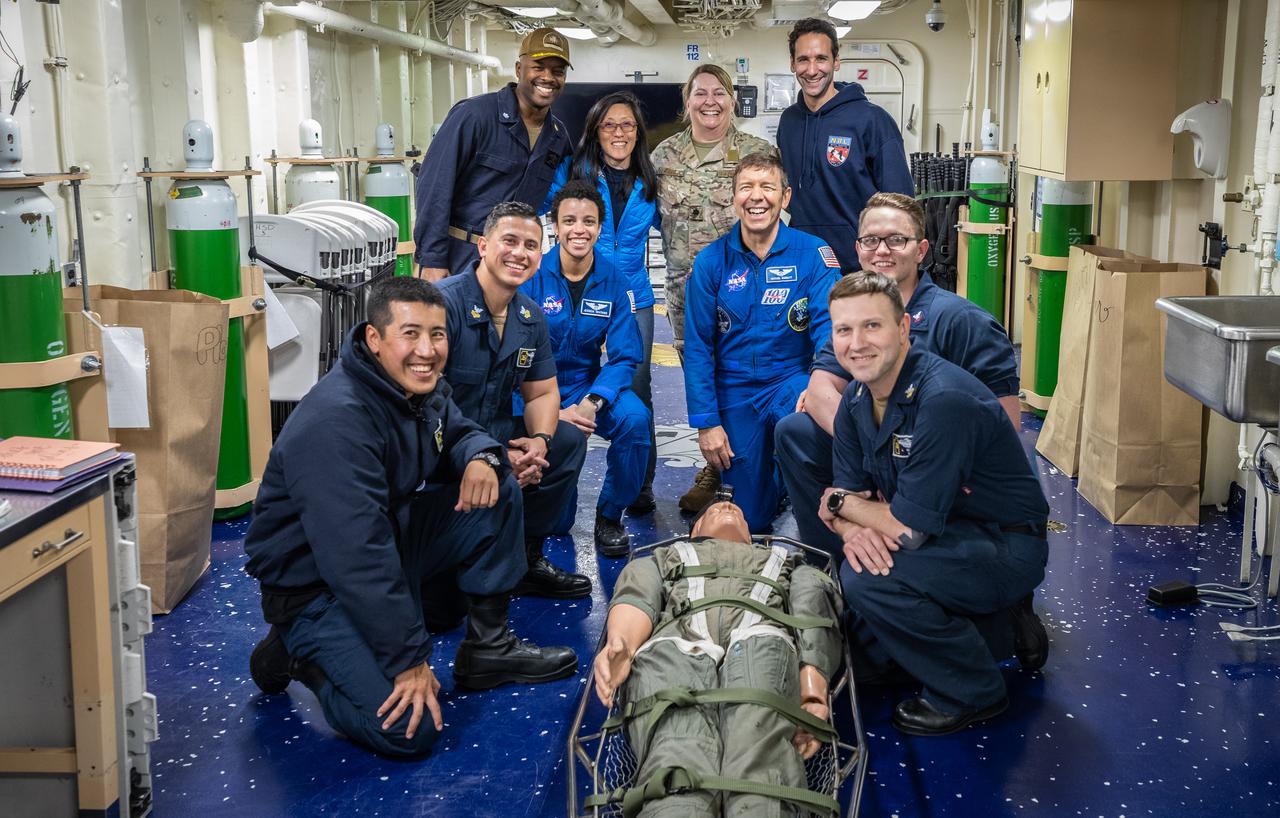
Astronauts Jessica Watkins and Michael Barratt observe Underway Recovery Test-8 aboard the USS John P. Murtha. During the test, NASA’s Landing and Recovery Team practiced bringing Orion into the well deck of the ship to ensure recovery procedure timelines are validated as NASA plans to send Artemis I around the Moon and splashdown in the Pacific Ocean.
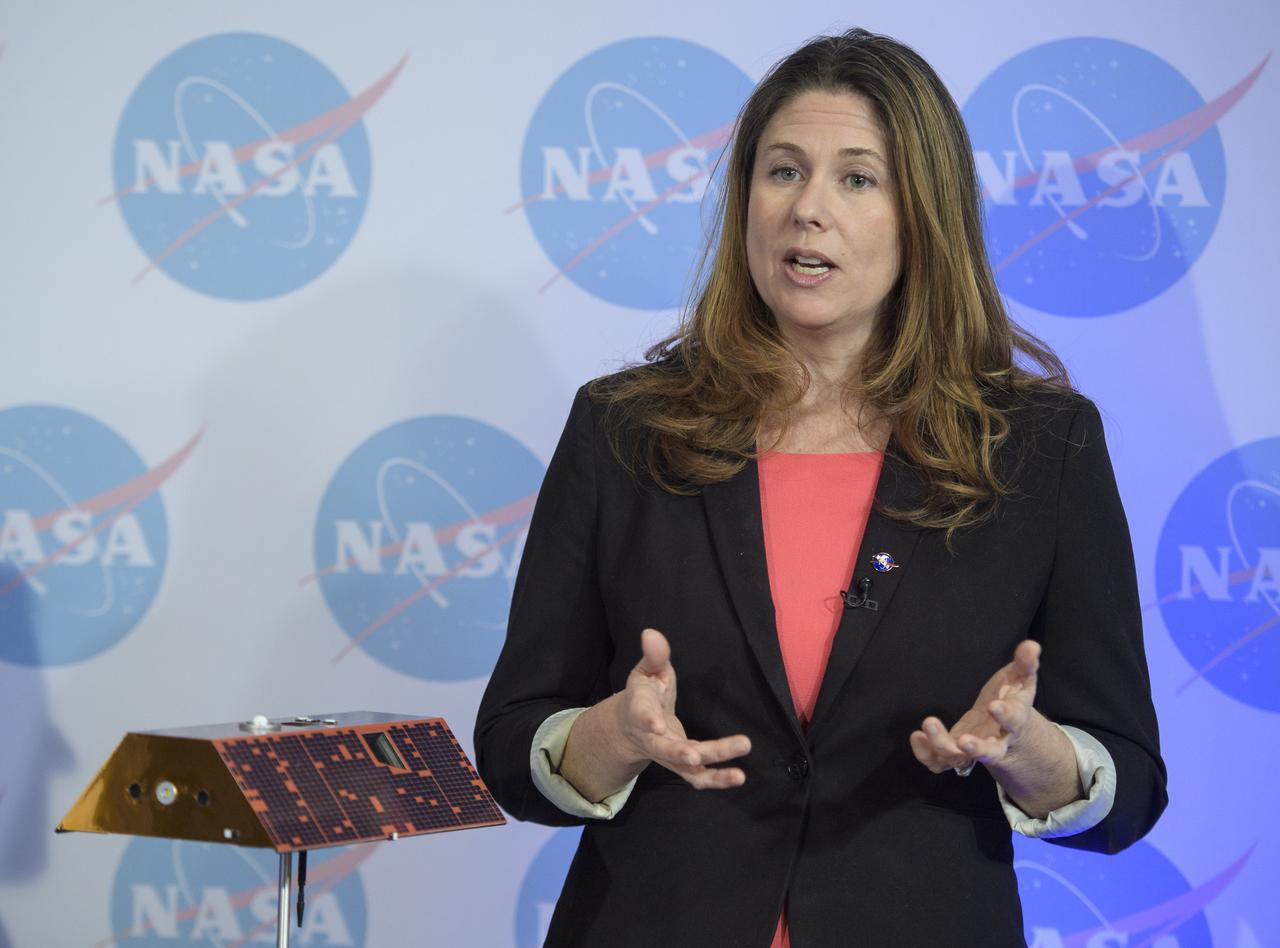
Karen Fox, of NASA's Office of Communications, introduces Michael Watkins, GRACE-FO science lead and director of NASA's Jet Propulsion Laboratory and Frank Webb, GRACE-FO project scientist at JPL, during a briefing on the upcoming launch of the Gravity Recovery and Climate Experiment Follow-On (GRACE-FO) mission, Monday, April 30, 2018 at NASA Headquarters in Washington. The twin GRACE-FO spacecraft will measure and monitor monthly changes in how mass is redistributed within and among Earth's atmosphere, oceans, land and ice sheets, as well as within Earth itself. Photo Credit: (NASA/Joel Kowsky)

Frank Webb, GRACE-FO project scientist at JPL, discusses the upcoming launch of the Gravity Recovery and Climate Experiment Follow-On (GRACE-FO) mission, Monday, April 30, 2018 at NASA Headquarters in Washington. The twin GRACE-FO spacecraft will measure and monitor monthly changes in how mass is redistributed within and among Earth's atmosphere, oceans, land and ice sheets, as well as within Earth itself. Photo Credit: (NASA/Joel Kowsky)
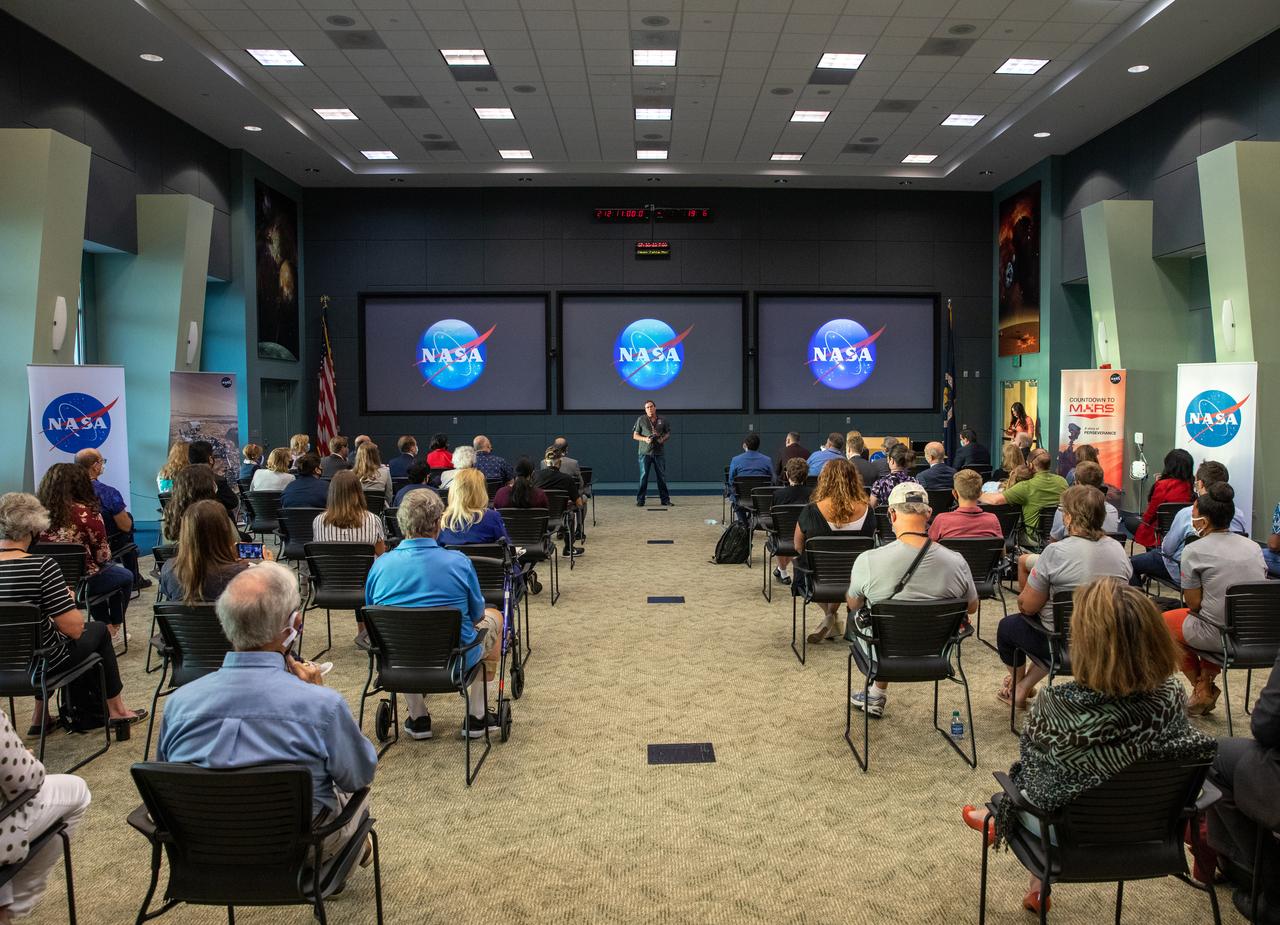
Michael Watkins, director of NASA’s Jet Propulsion Laboratory in Pasadena, California, participates in a Mars 2020 VIP briefing at the Operations and Support Building II at NASA’s Kennedy Space Center in Florida on July 30, 2020, before launch of the Mars Perseverance rover and Ingenuity helicopter on a United Launch Alliance Atlas V 541 rocket from Space Launch Complex 41 at nearby Cape Canaveral Air Force Station. Liftoff occurred at 7:50 a.m. The rover is part of NASA’s Mars Exploration Program, a long-term effort of robotic exploration of the Red Planet. The rover will search for habitable conditions in the ancient past and signs of past microbial life on Mars. The Launch Services Program at Kennedy is responsible for launch management.
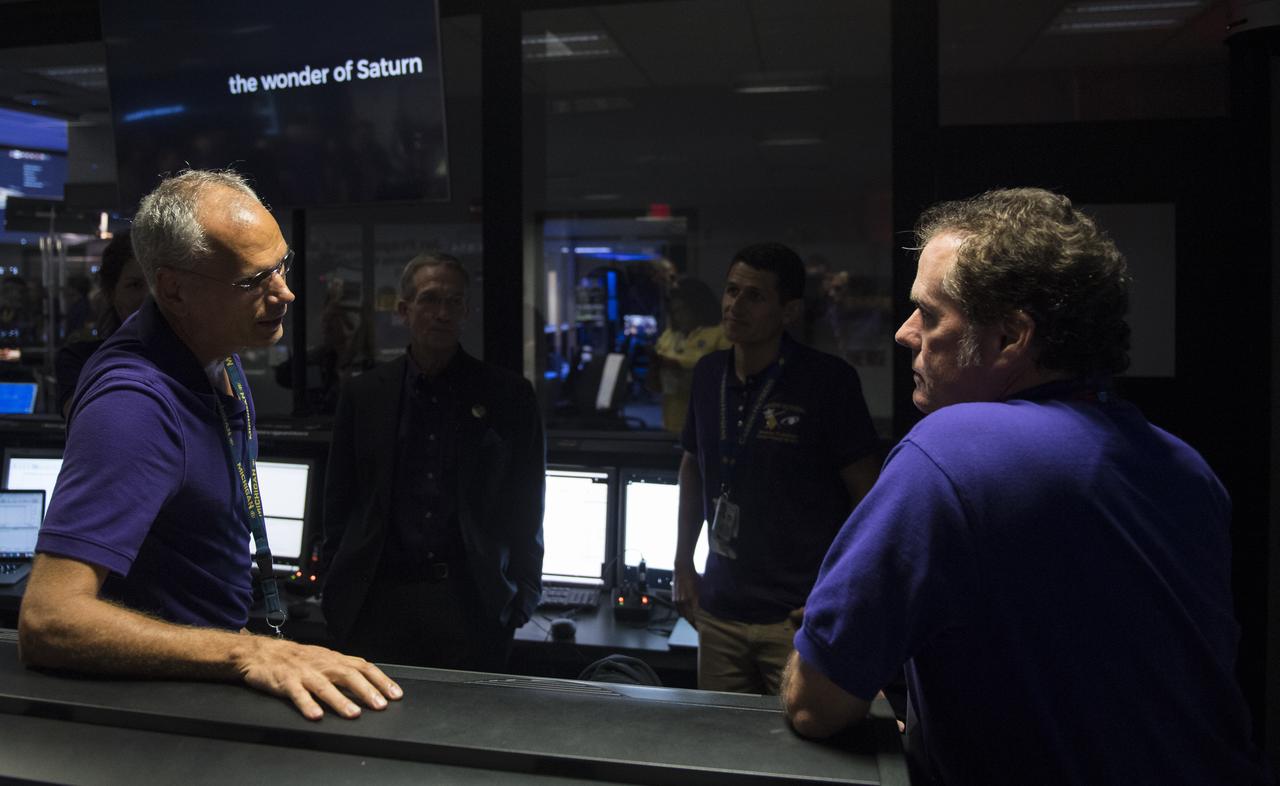
Duane Roth, of Cassini's navigation team, left, speaks with director of NASA's Jet Propulsion Laboratory, Michael Watkins, right, after Cassini's mission was declared over, Friday, Sept. 15, 2017 in mission control at NASA's Jet Propulsion Laboratory in Pasadena, California. Since its arrival in 2004, the Cassini-Huygens mission has been a discovery machine, revolutionizing our knowledge of the Saturn system and captivating us with data and images never before obtained with such detail and clarity. On Sept. 15, 2017, operators deliberately plunged the spacecraft into Saturn, as Cassini gathered science until the end. Loss of contact with the Cassini spacecraft occurred at 7:55 a.m. EDT (4:55 a.m. PDT). The “plunge” ensures Saturn’s moons will remain pristine for future exploration. During Cassini’s final days, mission team members from all around the world gathered at NASA’s Jet Propulsion Laboratory, Pasadena, California, to celebrate the achievements of this historic mission. Photo Credit: (NASA/Joel Kowsky)
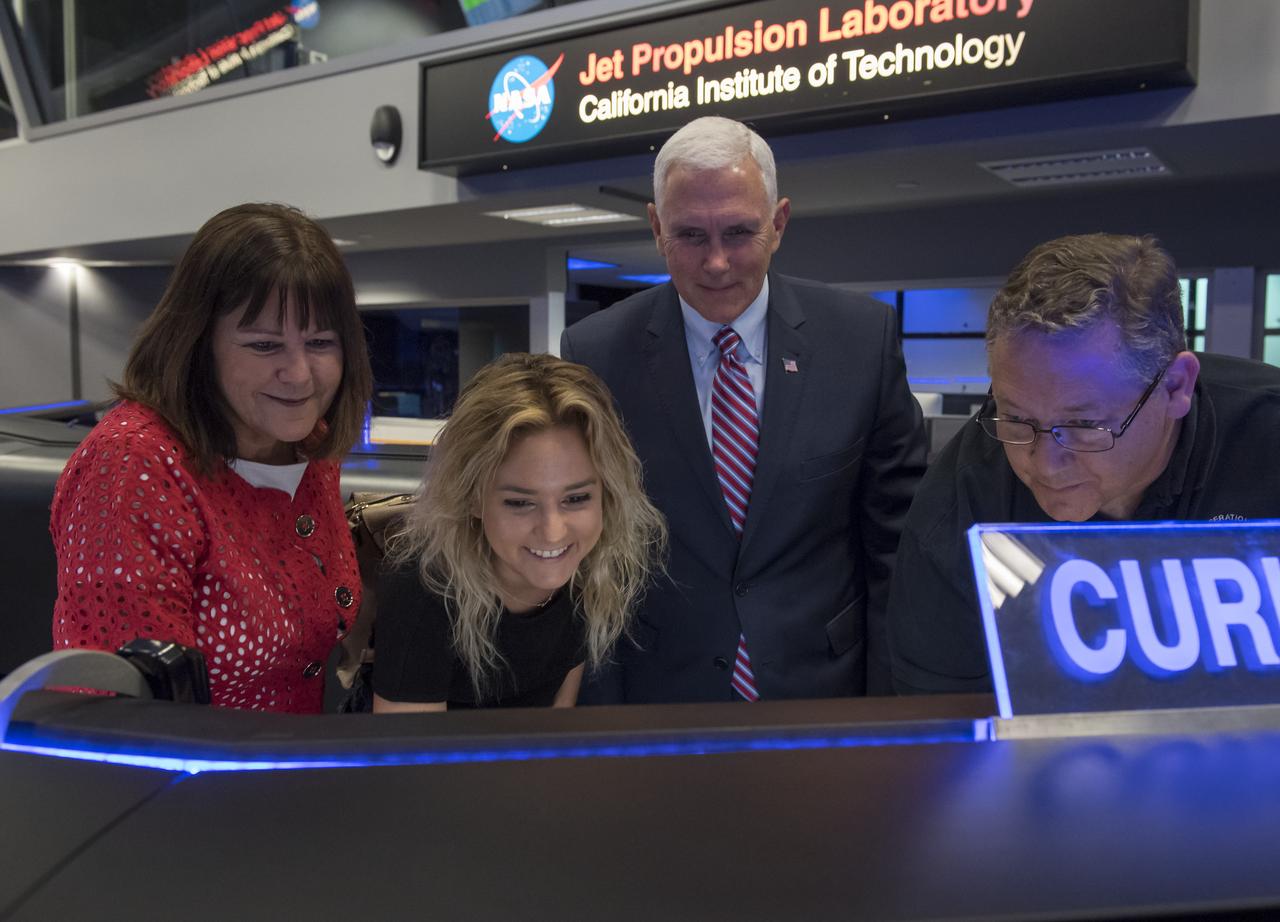
U.S. Vice President Mike Pence, his wife Karen, and their daughter Charlotte are shown how to send a command to the Curiosity rover on Mars by Mars Curiosity Mission ACE Walt Hoffman during a tour of NASA's Jet Propulsion Laboratory, Saturday, April 28, 2018 in Pasadena, California. Hoffman asked Charlotte Pence if she would do the honors of sending the command to the rover. Photo Credit: (NASA/Bill Ingalls)
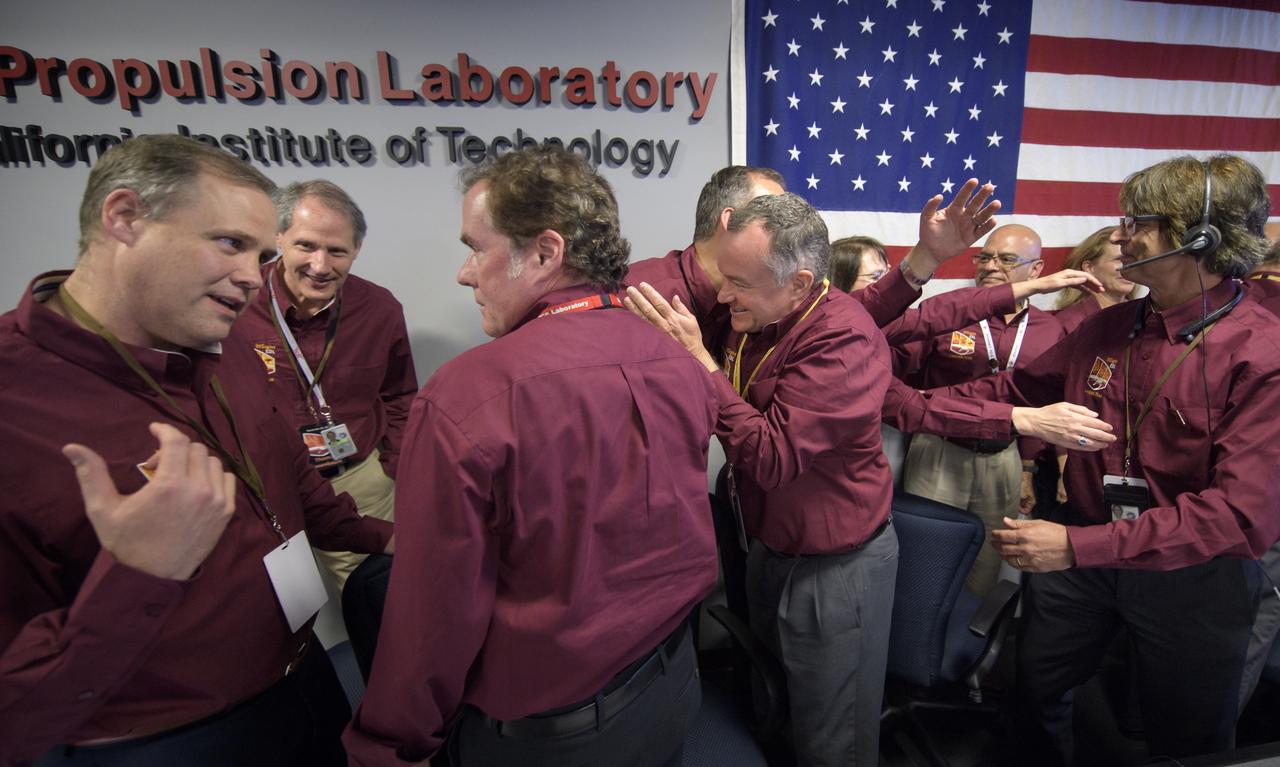
NASA Administrator Jim Bridenstine, left, celebrates with other managers after receiving confirmation that the Mars InSight lander successfully touched down on the surface of Mars, Monday, Nov. 26, 2018 inside the Mission Support Area at NASA's Jet Propulsion Laboratory in Pasadena, California. InSight, short for Interior Exploration using Seismic Investigations, Geodesy and Heat Transport, is a Mars lander designed to study the "inner space" of Mars: its crust, mantle, and core. Photo Credit: (NASA/Bill Ingalls)
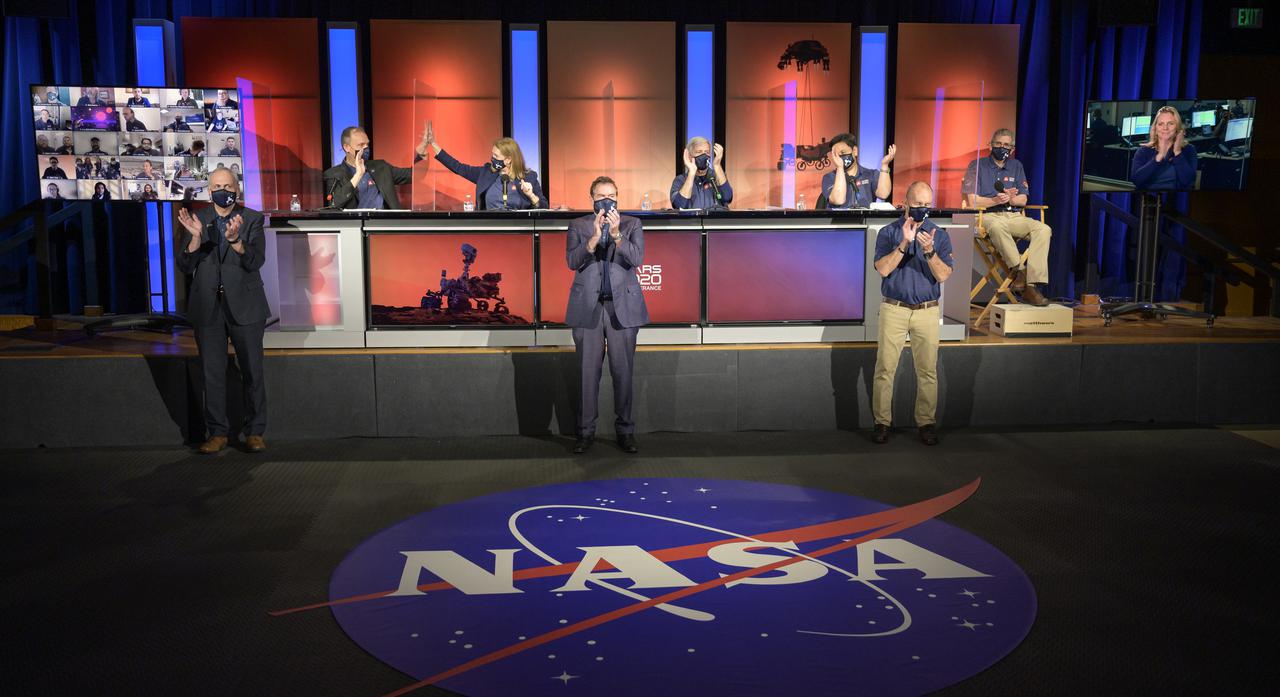
NASA Perseverance rover mission management and scientist celebrate a successful landing on Mars at the start of a post-landing update, Thursday, Feb. 18, 2021, at NASA's Jet Propulsion Laboratory in Pasadena, California. A key objective for Perseverance’s mission on Mars is astrobiology, including the search for signs of ancient microbial life. The rover will characterize the planet’s geology and past climate, pave the way for human exploration of the Red Planet, and be the first mission to collect and cache Martian rock and regolith. Photo Credit: (NASA/Bill Ingalls)