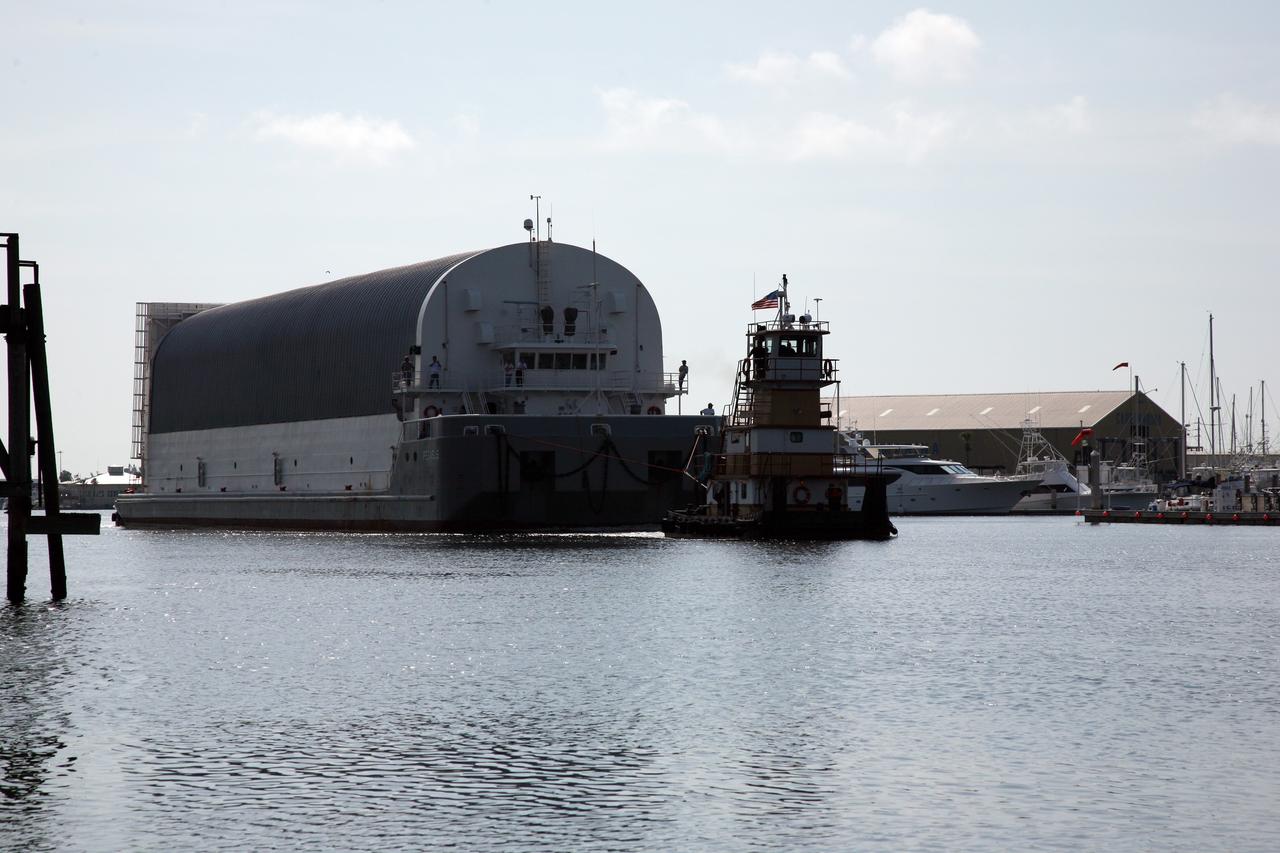
CAPE CANAVERAL, Fla. – NASA's Pegasus barge moves through the locks at Port Canaveral, Fla. The barge contains the external fuel tank designated ET-133 that will be used for space shuttle Atlantis' STS-129 mission. The barge is delivering the external tank to the Turn Basin dock at NASA's Kennedy Space Center in Florida where it will be offloaded and moved into the Vehicle Assembly Building. The tank was shipped aboard the Pegasus from NASA's Michould Assembly Facility near New Orleans. Pegasus was towed to Port Canaveral by the Freedom Star Retrieval Ship. Photo credit: NASA/Troy Cryder
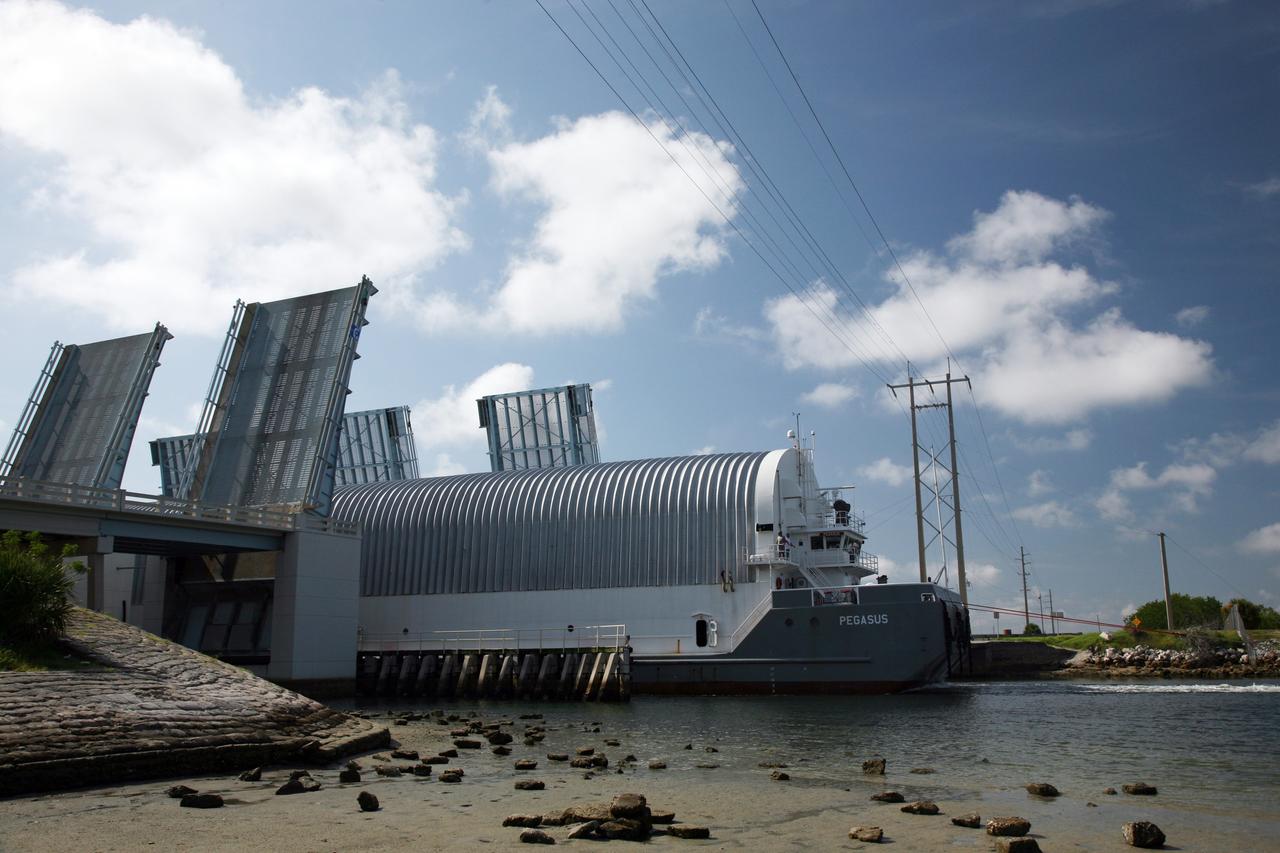
CAPE CANAVERAL, Fla. – NASA's Pegasus barge moves through the bridge at Port Canaveral, Fla. The barge contains the external fuel tank designated ET-133 that will be used for space shuttle Atlantis' STS-129 mission. The barge is delivering the external tank to the Turn Basin dock at NASA's Kennedy Space Center in Florida where it will be offloaded and moved into the Vehicle Assembly Building. The tank was shipped aboard the Pegasus from NASA's Michould Assembly Facility near New Orleans. Pegasus was towed to Port Canaveral by the Freedom Star Retrieval Ship. Photo credit: NASA/Troy Cryder
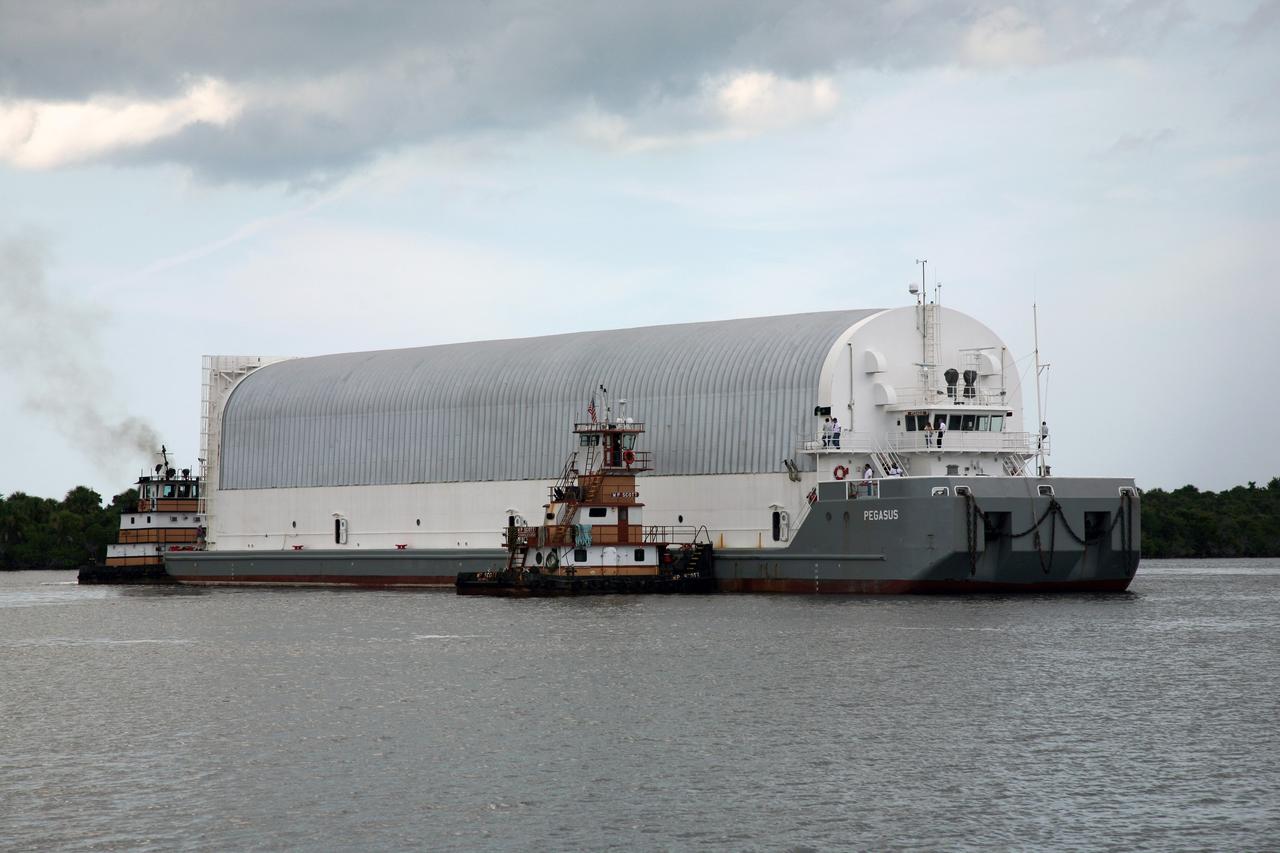
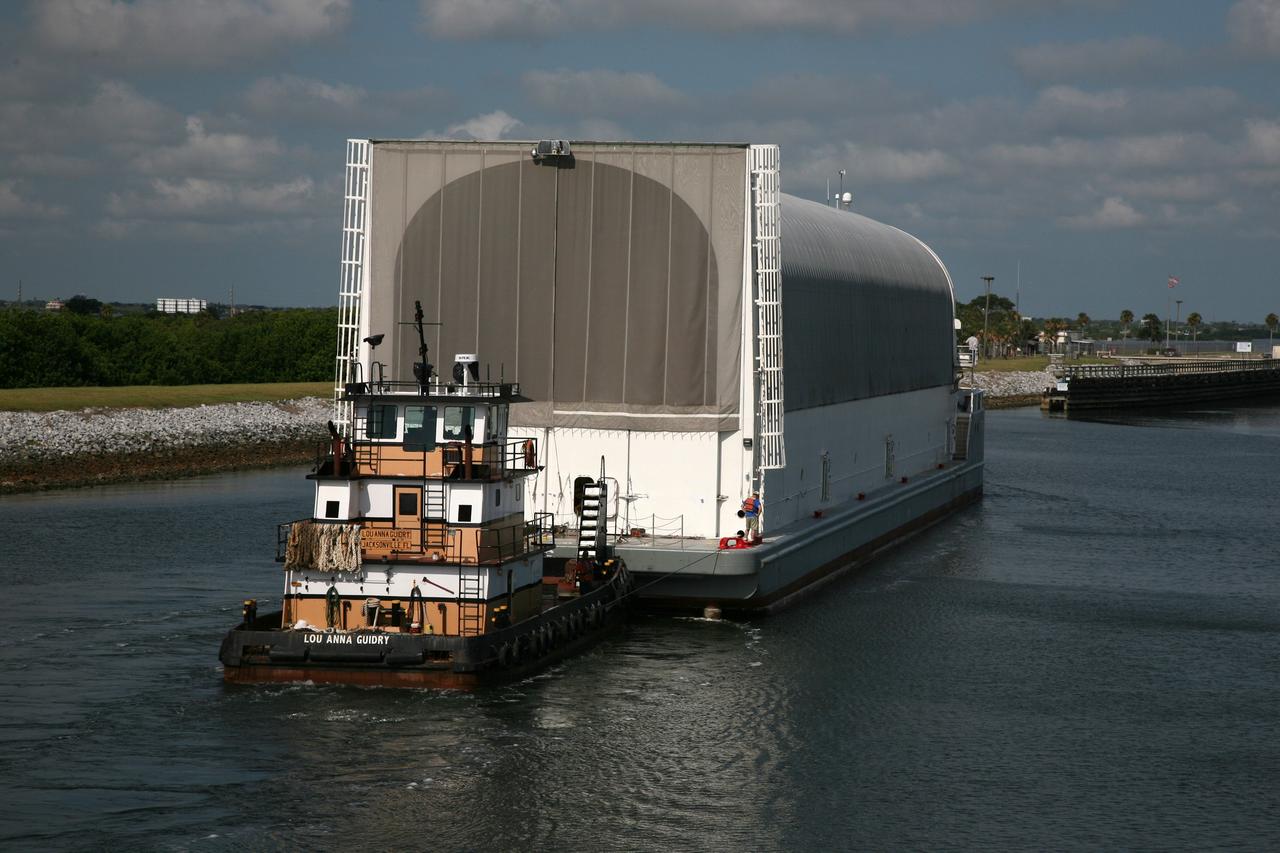
CAPE CANAVERAL, Fla. – Tugboats maneuver NASA's Pegasus barge toward the Turn Basin dock at NASA's Kennedy Space Center in Florida. The barge contains the external fuel tank, designated ET-133, that will be used for space shuttle Atlantis' STS-129 mission. After Pegasus is docked, the tank will be offloaded and moved into a high bay in the Vehicle Assembly Building for checkout. The tank was shipped aboard the Pegasus from NASA's Michould Assembly Facility near New Orleans. Pegasus was towed to Port Canaveral by the Freedom Star Retrieval Ship. Photo credit: NASA/Dimitri Gerondidakis
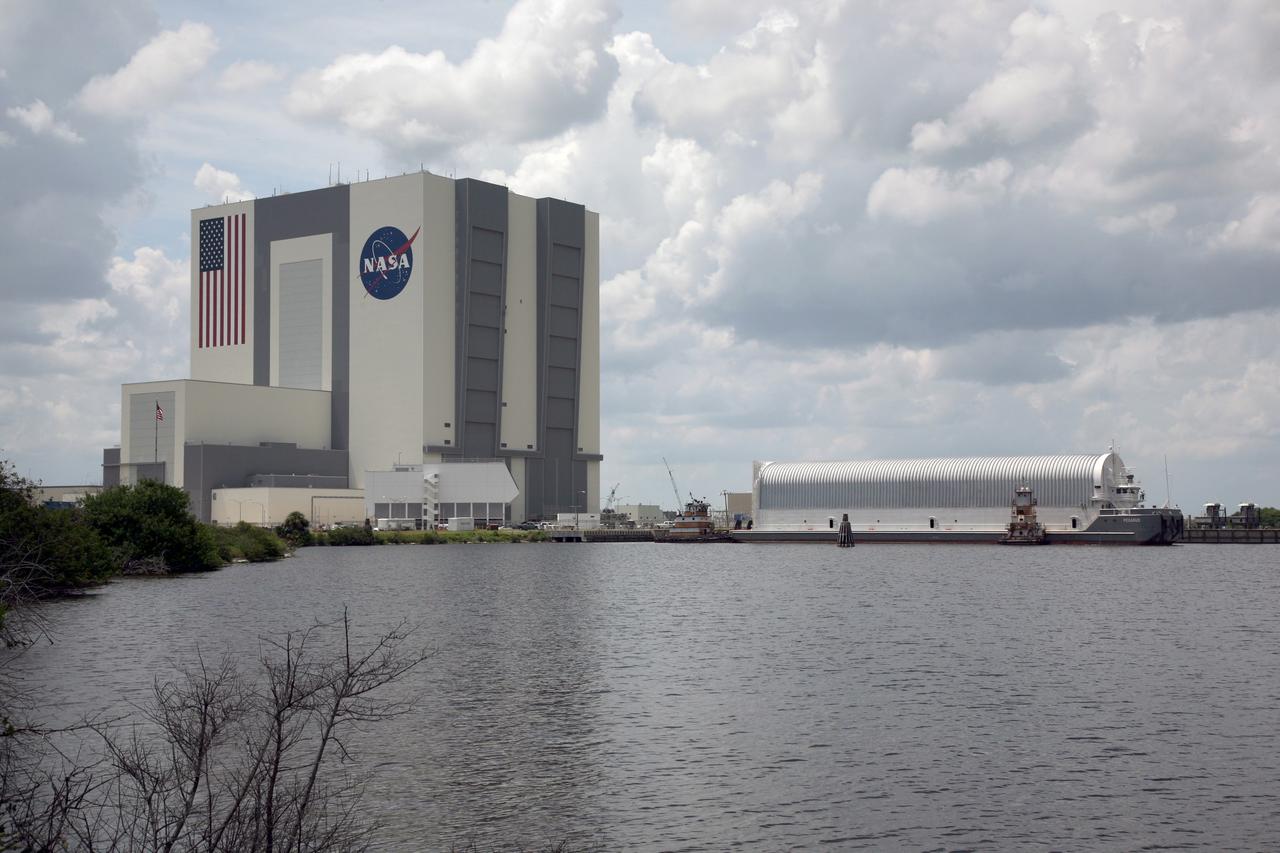
CAPE CANAVERAL, Fla. – Tugboats maneuver NASA's Pegasus barge next to the Turn Basin dock at NASA's Kennedy Space Center in Florida. The barge contains the external fuel tank, designated ET-133, that will be used for space shuttle Atlantis' STS-129 mission. The tank will be offloaded and moved into a high bay in the Vehicle Assembly Building, at left, for checkout. The tank was shipped aboard the Pegasus from NASA's Michould Assembly Facility near New Orleans. Pegasus was towed to Port Canaveral by the Freedom Star Retrieval Ship. Photo credit: NASA/Dimitri Gerondidakis
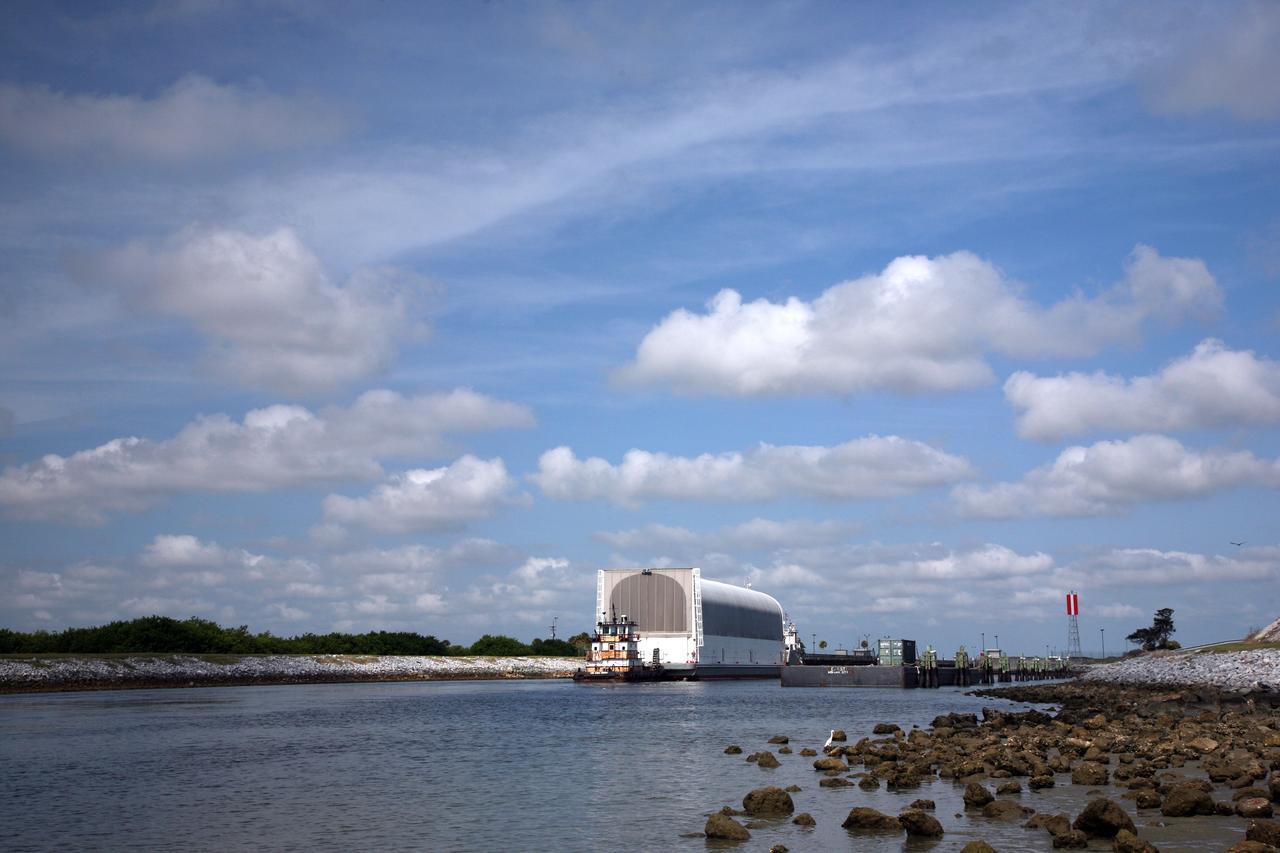
CAPE CANAVERAL, Fla. – NASA's Pegasus barge is towed on the Banana River toward the Launch Complex 39 Area at NASA's Kennedy Space Center in Florida. The barge contains the external fuel tank designated ET-133 that will be used for space shuttle Atlantis' STS-129 mission. After arrival at the Turn Basin dock, the tank will be offloaded and moved into the Vehicle Assembly Building. The tank was shipped aboard the Pegasus from NASA's Michould Assembly Facility near New Orleans. Pegasus was towed to Port Canaveral by the Freedom Star Retrieval Ship. Photo credit: NASA/Troy Cryder
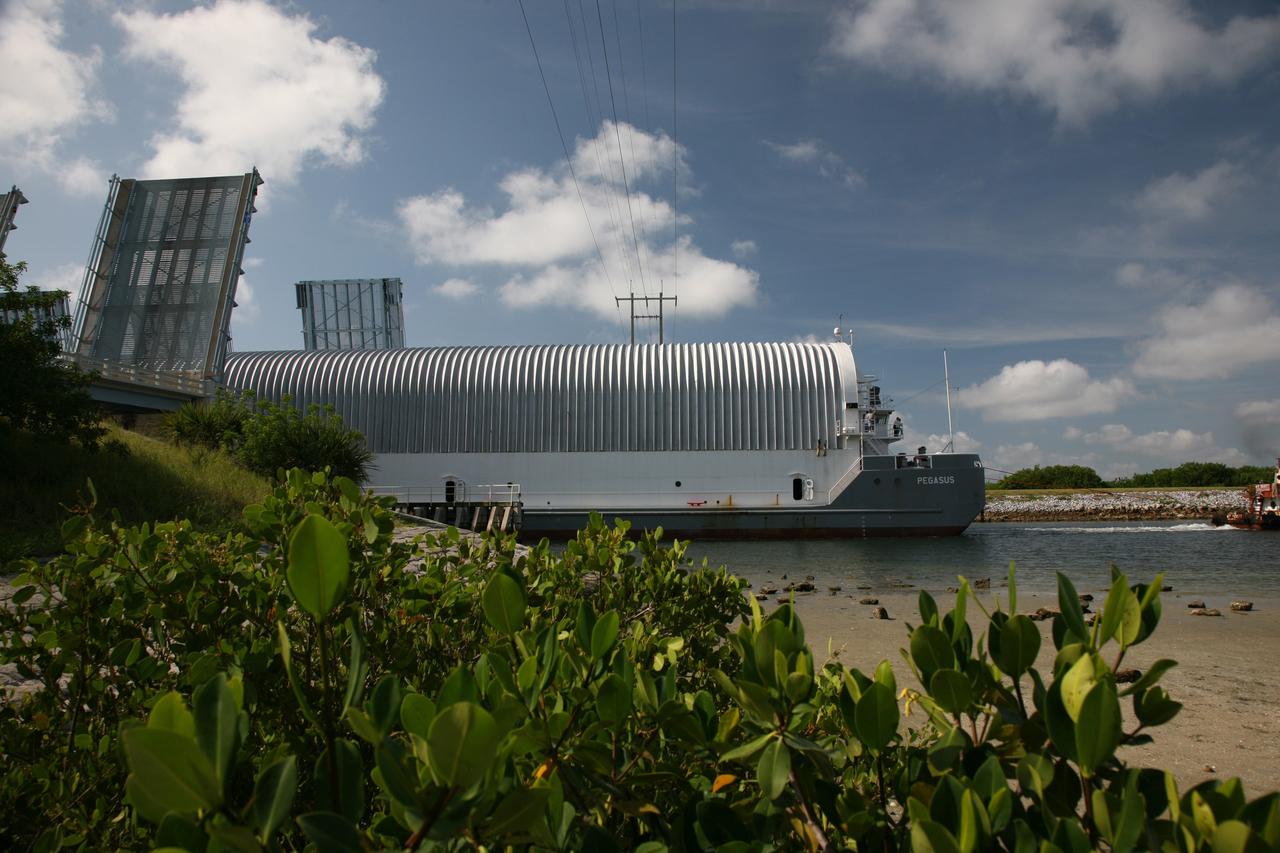
CAPE CANAVERAL, Fla. – NASA's Pegasus barge moves through the bridge at Port Canaveral, Fla. The barge contains the external fuel tank designated ET-133 that will be used for space shuttle Atlantis' STS-129 mission. The barge is delivering the external tank to the Turn Basin dock at NASA's Kennedy Space Center in Florida where it will be offloaded and moved into the Vehicle Assembly Building. The tank was shipped aboard the Pegasus from NASA's Michould Assembly Facility near New Orleans. Pegasus was towed to Port Canaveral by the Freedom Star Retrieval Ship. Photo credit: NASA/Troy Cryder
CAPE CANAVERAL, Fla. – NASA's Pegasus barge is towed on the Banana River toward the Launch Complex 39 Area at NASA's Kennedy Space Center in Florida. The barge contains the external fuel tank designated ET-133 that will be used for space shuttle Atlantis' STS-129 mission. After arrival at the Turn Basin dock, the tank will be offloaded and moved into the Vehicle Assembly Building. The tank was shipped aboard the Pegasus from NASA's Michould Assembly Facility near New Orleans. Pegasus was towed to Port Canaveral by the Freedom Star Retrieval Ship. Photo credit: NASA/Troy Cryder
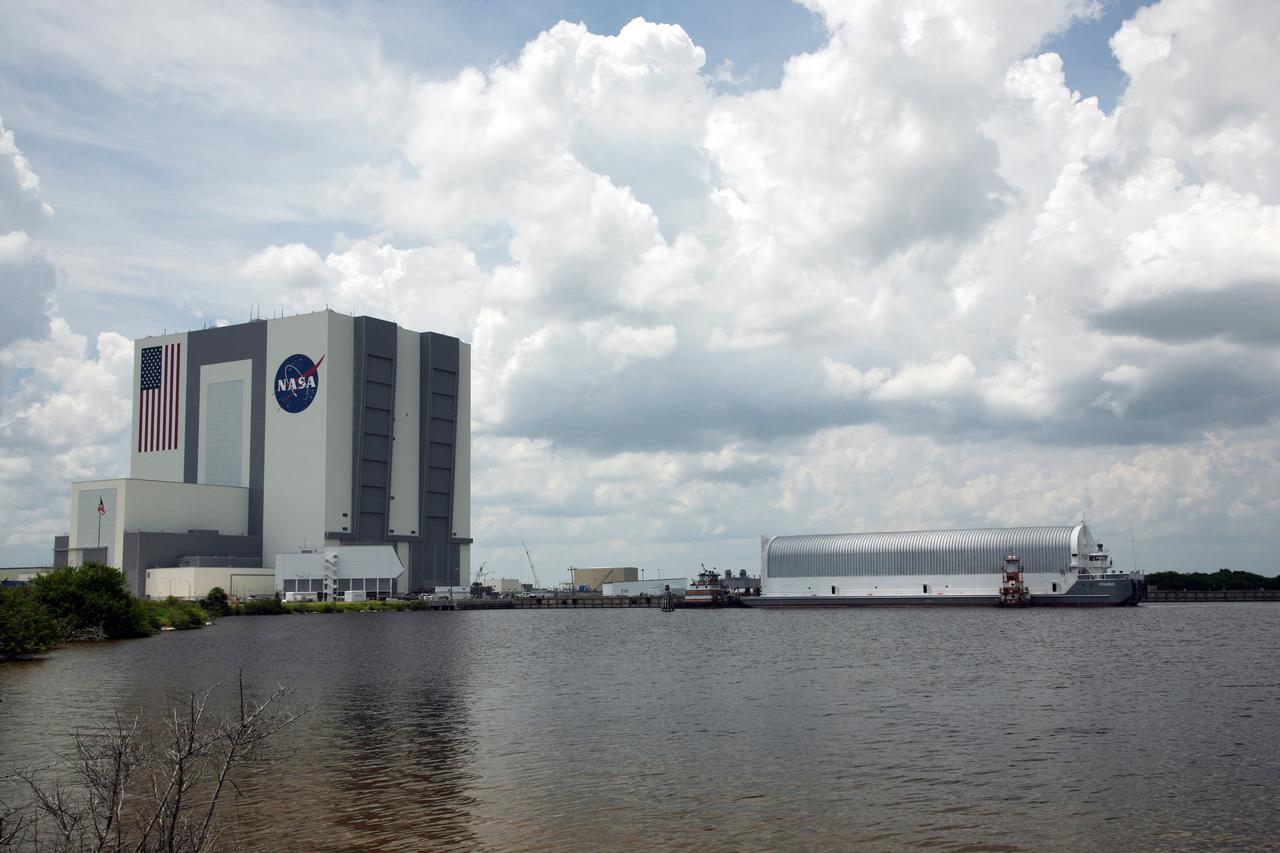
CAPE CANAVERAL, Fla. – Tugboats maneuver NASA's Pegasus barge toward the Turn Basin dock at NASA's Kennedy Space Center in Florida. The barge contains the external fuel tank, designated ET-133, that will be used for space shuttle Atlantis' STS-129 mission. After Pegasus is docked, the tank will be offloaded and moved into a high bay in the Vehicle Assembly Building, at left, for checkout. The tank was shipped aboard the Pegasus from NASA's Michould Assembly Facility near New Orleans. Pegasus was towed to Port Canaveral by the Freedom Star Retrieval Ship. Photo credit: NASA/Dimitri Gerondidakis
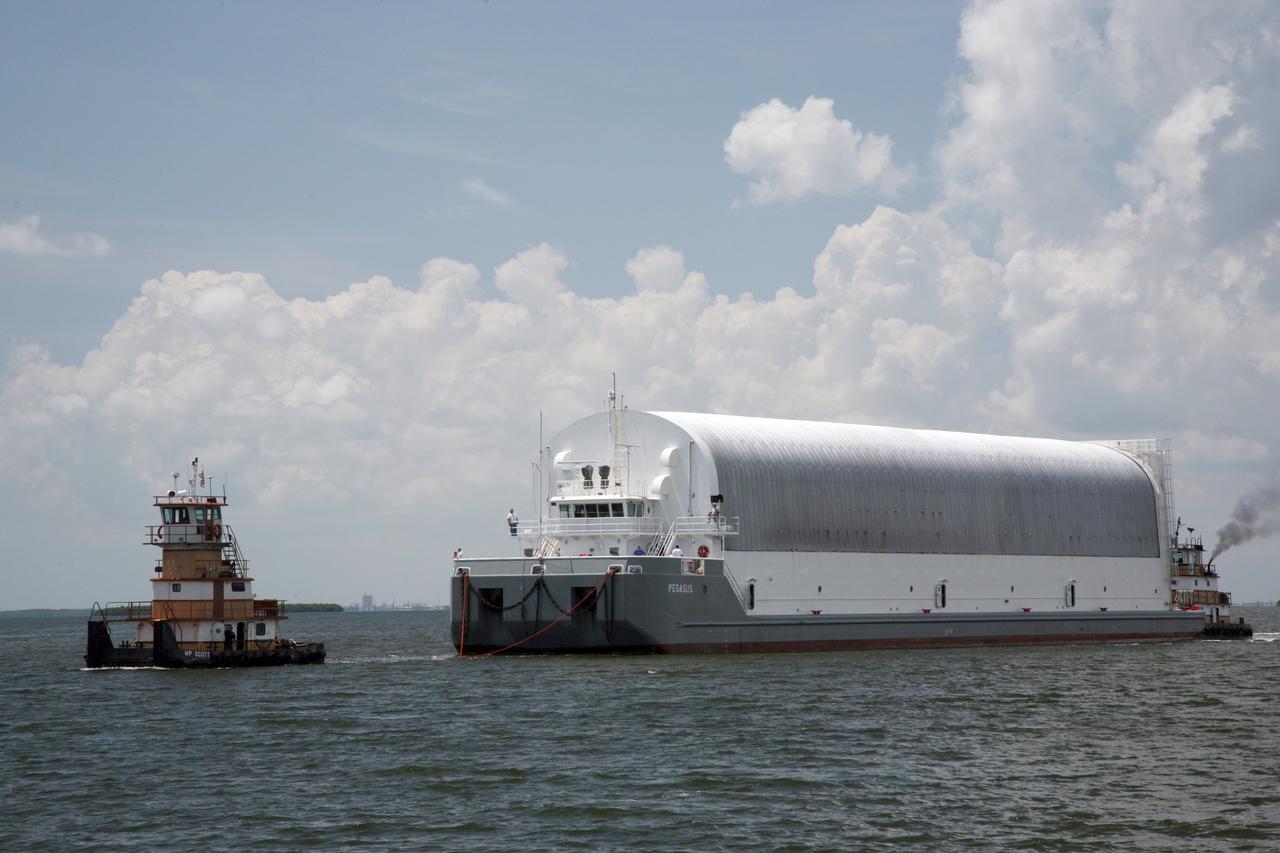
CAPE CANAVERAL, Fla. – NASA's Pegasus barge is towed on the Banana River to the Launch Complex 39 area at NASA's Kennedy Space Center in Florida. The barge contains the external fuel tank, designated ET-133, that will be used for space shuttle Atlantis' STS-129 mission. After arrival at the Turn Basin dock, the tank will be offloaded and moved into a high bay in the Vehicle Assembly Building for checkout. The tank was shipped aboard the Pegasus from NASA's Michould Assembly Facility near New Orleans. Pegasus was towed to Port Canaveral by the Freedom Star Retrieval Ship. Photo credit: NASA/Dimitri Gerondidakis
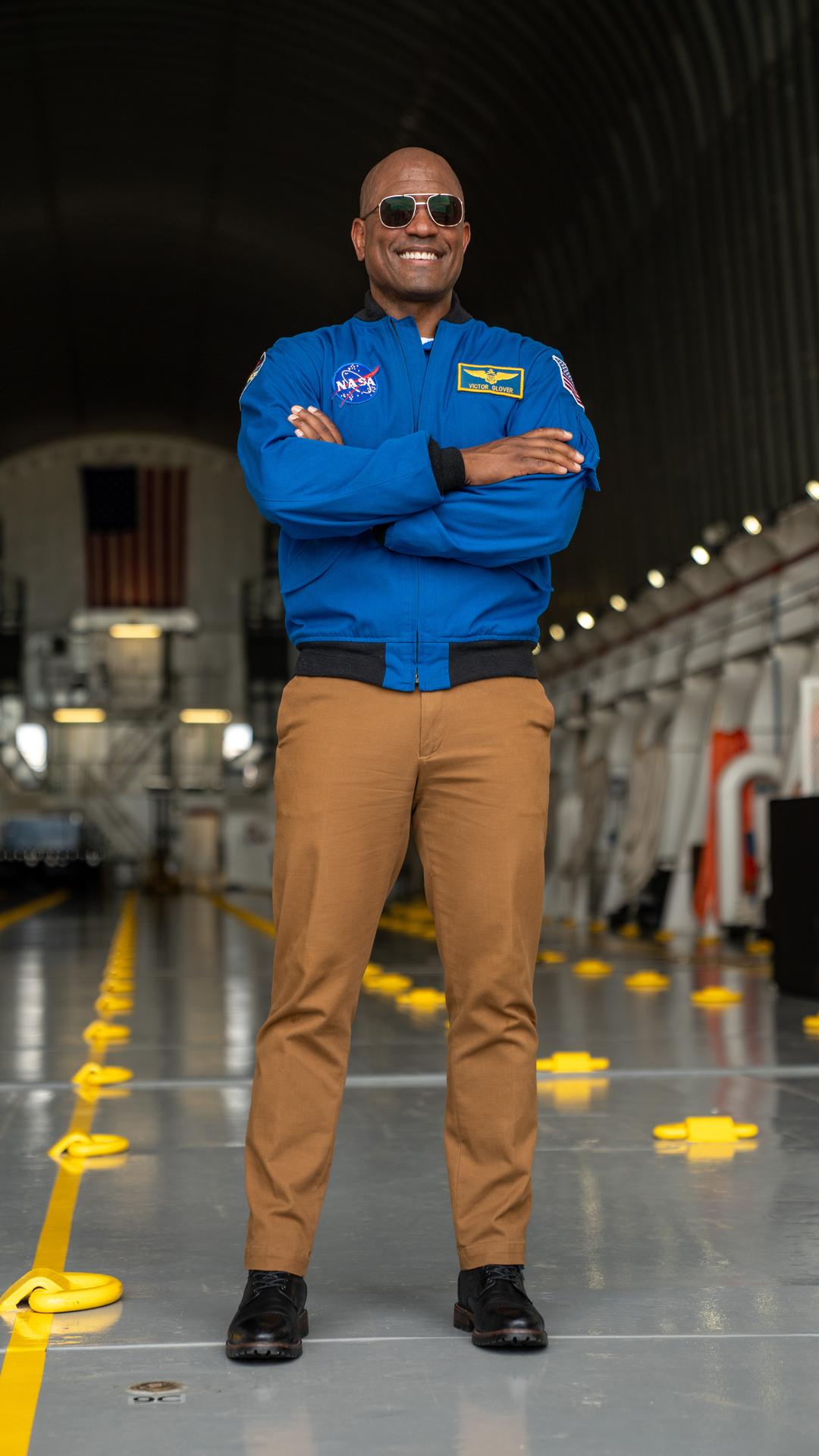
NASA astronaut Victor Glover views the core stage of the SLS (Space Launch System) rocket that will help power Artemis II at NASA’s Michoud Assembly Facility in New Orleans July 15. Glover will pilot Artemis II, the first crewed mission of NASA’s Artemis campaign. Crews moved the 212-foot-tall core stage with its four RS-25 engines to Building 110 at NASA Michoud prior to rolling it out to NASA’s Pegasus barge July 16 for delivery to NASA’s Kennedy Space Center in Florida. The core stage has two giant propellant tanks that collectively hold more than 733,000 gallons of super cold liquid propellant to feed the stage’s four RS-25 engines. Together, the engines produce more than 2 million pounds of thrust to help send astronauts inside NASA’s Orion spacecraft to venture around the Moon for Artemis II. NASA is working to land the first woman, first person of color, and its first international partner astronaut on the Moon under Artemis. SLS is part of NASA’s backbone for deep space exploration, along with the Orion spacecraft, supporting ground systems, advanced spacesuits and rovers, the Gateway in orbit around the Moon, and commercial human landing systems. SLS is the only rocket that can send Orion, astronauts, and supplies to the Moon in a single launch.
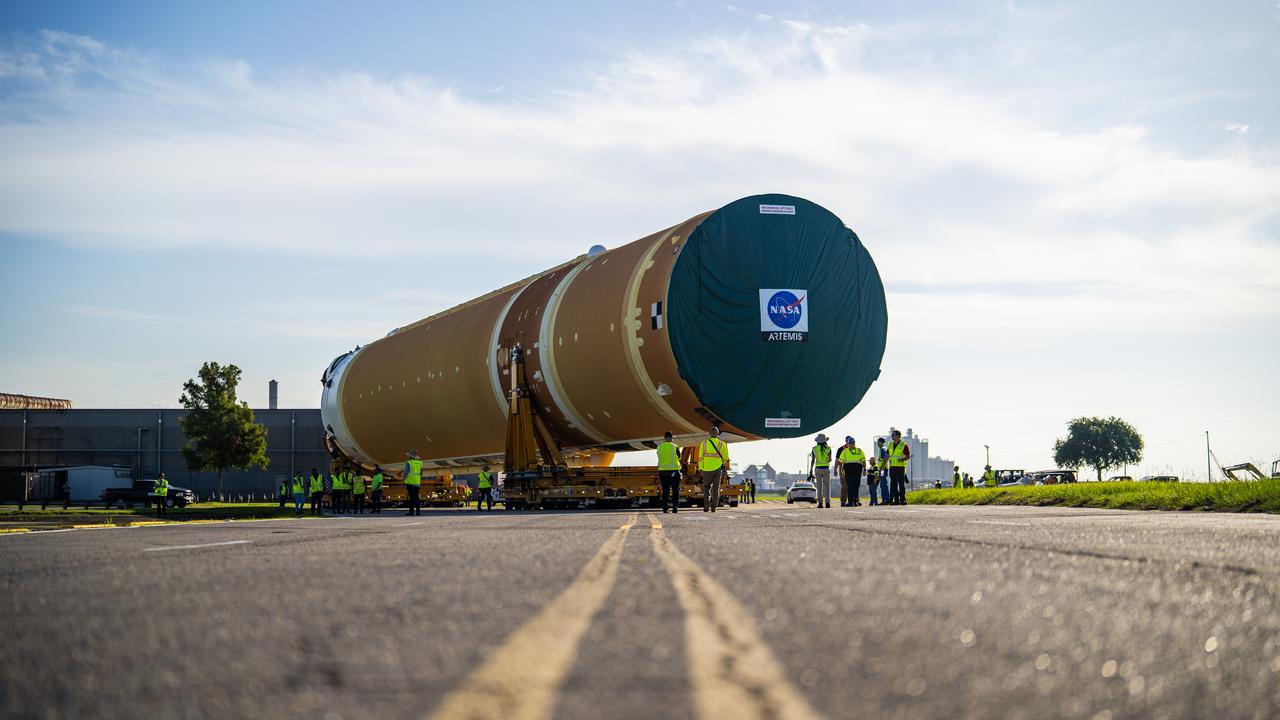
These images and videos show team members moving the first core stage that will help launch the first crewed flight of NASA’s SLS (Space Launch System) rocket for the agency’s Artemis II mission. The move marked the first time a fully assembled Moon rocket stage for a crewed mission has rolled out from NASA’s Michoud Assembly Facility in New Orleans since the Apollo Program, The core stage was moved onto the agency’s Pegasus barge, where it will be ferried to NASA’s Kennedy Space Center in Florida. The core stage for the SLS mega rocket is the largest stage NASA has ever produced. At 212 feet tall, the stage consists of five major elements, including two huge propellant tanks that collectively hold more than 733,000 gallons of super chilled liquid propellant to feed four RS-25 engines at its base. During launch and flight, the stage will operate for just over eight minutes, producing more than 2 million pounds of thrust to help send a crew of four astronauts inside NASA’s Orion spacecraft onward to the Moon. NASA is working to land the first woman, first person of color, and its first international partner astronaut on the Moon under Artemis. SLS is part of NASA’s backbone for deep space exploration, along with the Orion spacecraft and Gateway in orbit around the Moon and commercial human landing systems, next-generation space, next-generational spacesuits, and rovers on the lunar surface. SLS is the only rocket that can send Orion, astronauts, and supplies to the Moon in a single launch.