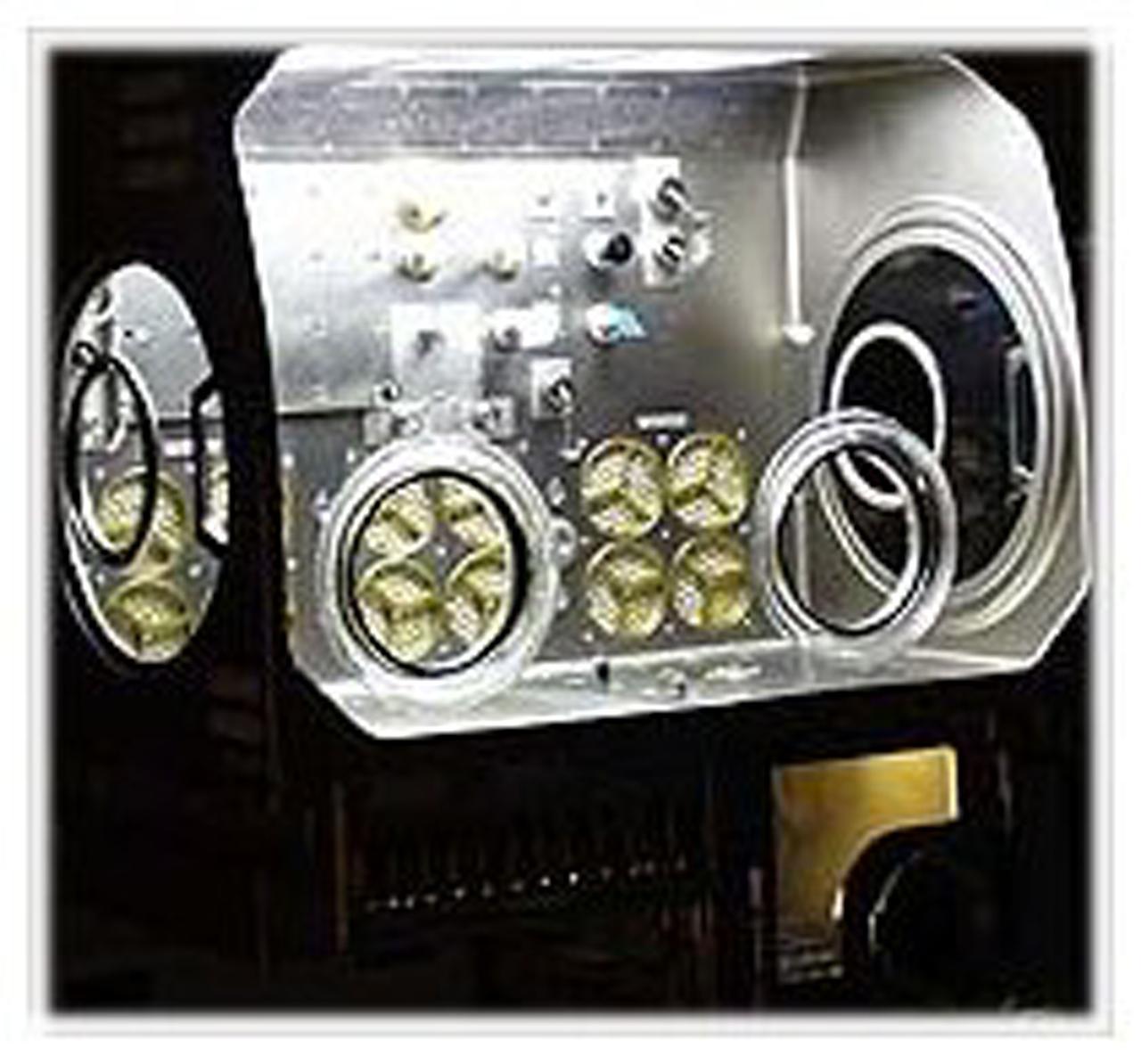
A versatile experiment facility for the International Space Station moved closer to flight recently with delivery of the ground-test model to NASA's Marshall Flight Center. The Microgravity Science Glovebox Ground Unit was delivered to the Microgravity Development Laboratory will be used to test hardware and procedures for the flight model of the glovebox aboard the ISS's Laboratory Module, Destiny.
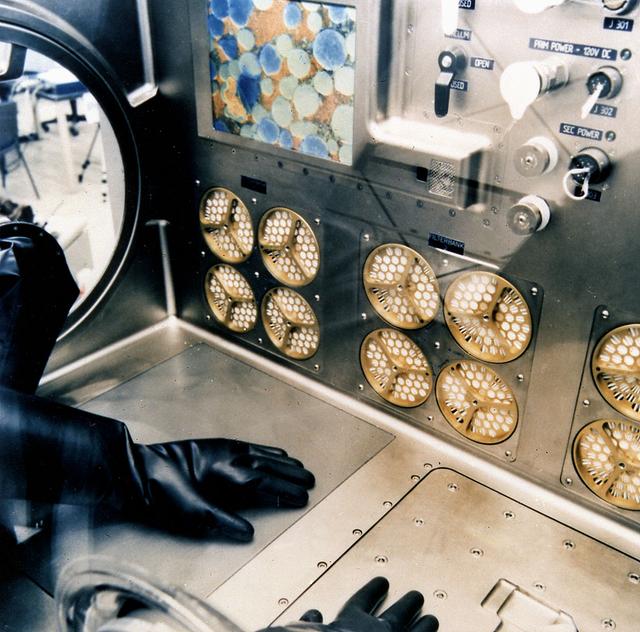
The Microgravity Science Glovebox is a facility for performing microgravity research in the areas of materials, combustion, fluids and biotechnology science. The facility occupies a full ISPR, consisting of: the ISPR rack and infrastructure for the rack, the glovebox core facility, data handling, rack stowage, outfitting equipment, and a video subsystem. MSG core facility provides the experiment developers a chamber with air filtering and recycling, up to two levels of containment, an airlock for transfer of payload equipment to/from the main volume, interface resources for the payload inside the core facility, resources inside the airlock, and storage drawers for MSG support equipment and consumables.
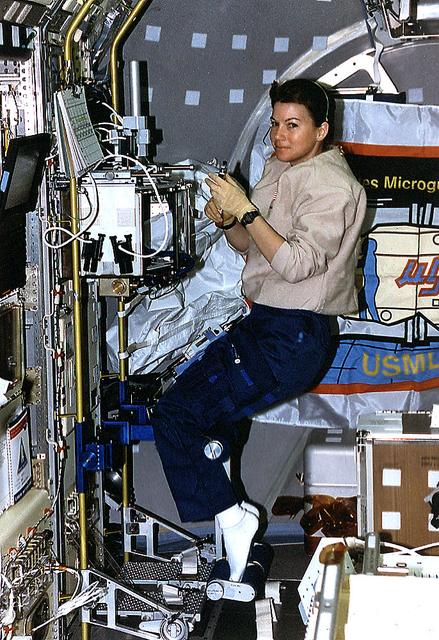
Onboard Space Shuttle Columbia (STS-73) Mission Specialists Catherine Cady Coleman works at the glovebox facility in support of the Protein Crystal Growth Glovebox (PCG-GBX) experiment in the United States Microgravity Laboratory 2 (USML-2) Spacelab science module.
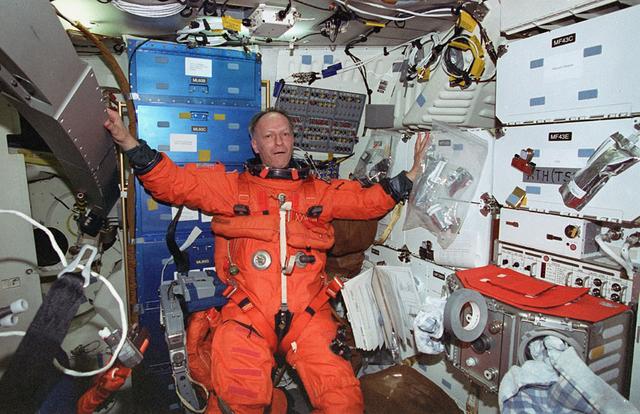
Onboard photo of space shuttle Columbia (STS-75) Swiss crewmember Claude Nicollier with a view of Middeck Glovebox (MGBX) which provides a general-purpose enclosed workspace to carry out small-scale microgravity science experiments.
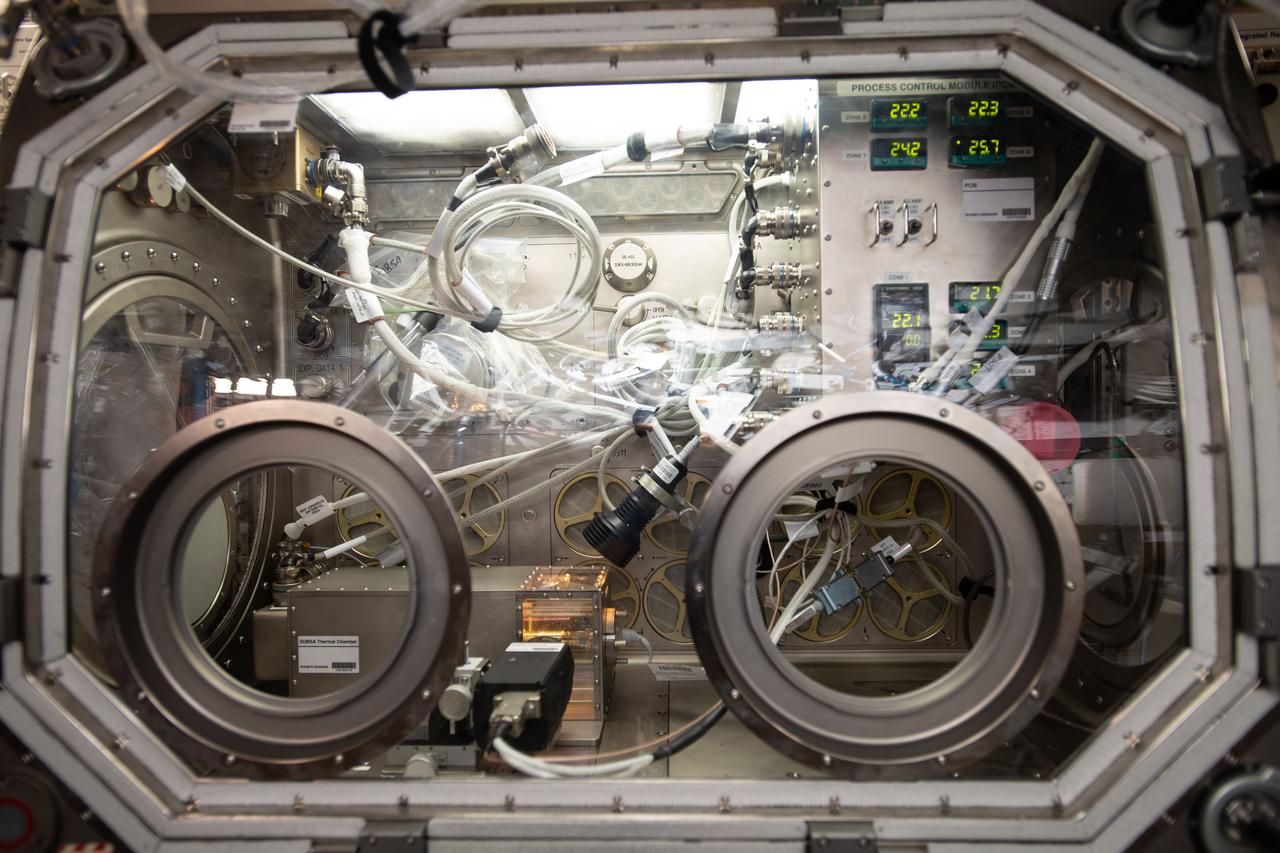
iss058e028142 (3/7/2019) --- View of the Microgravity Sciences Glovebox (MSG) during configuration of the SUBSA (Solidification Using Baffles in Sealed Ampoules) hardware in the MSG Work Volume in the Destiny Laboratory aboard the International Space Staion(ISS). SUBSA is a high-temperature furnace that can be used to study how microgravity affects the synthesis of semiconductor and scintillator crystals.
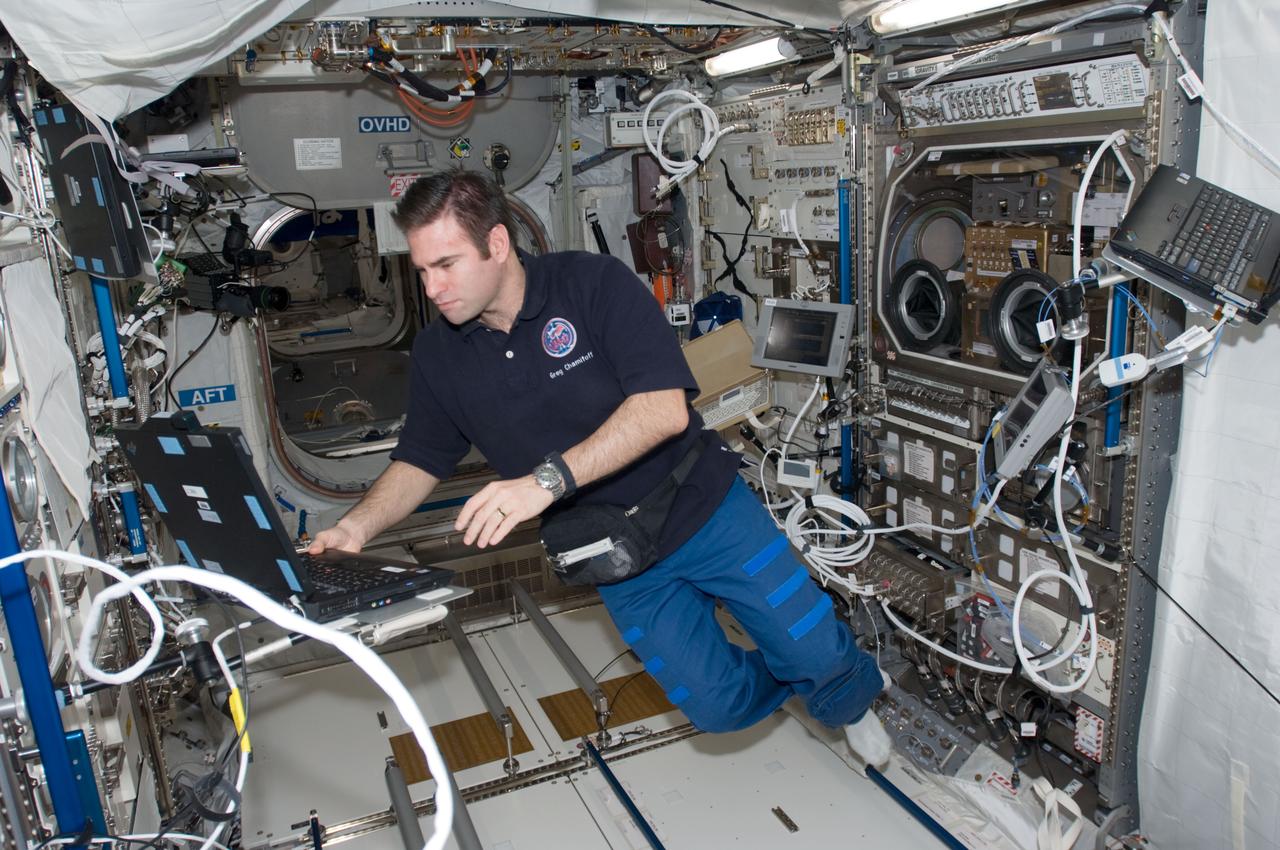
ISS017-E-014001 (23 Aug. 2008) --- Astronaut Greg Chamitoff, Expedition 17 flight engineer, works with the Microgravity Sciences Glovebox and the Commercial Generic Bioprocessing Apparatus in the Columbus laboratory on the International Space Station.
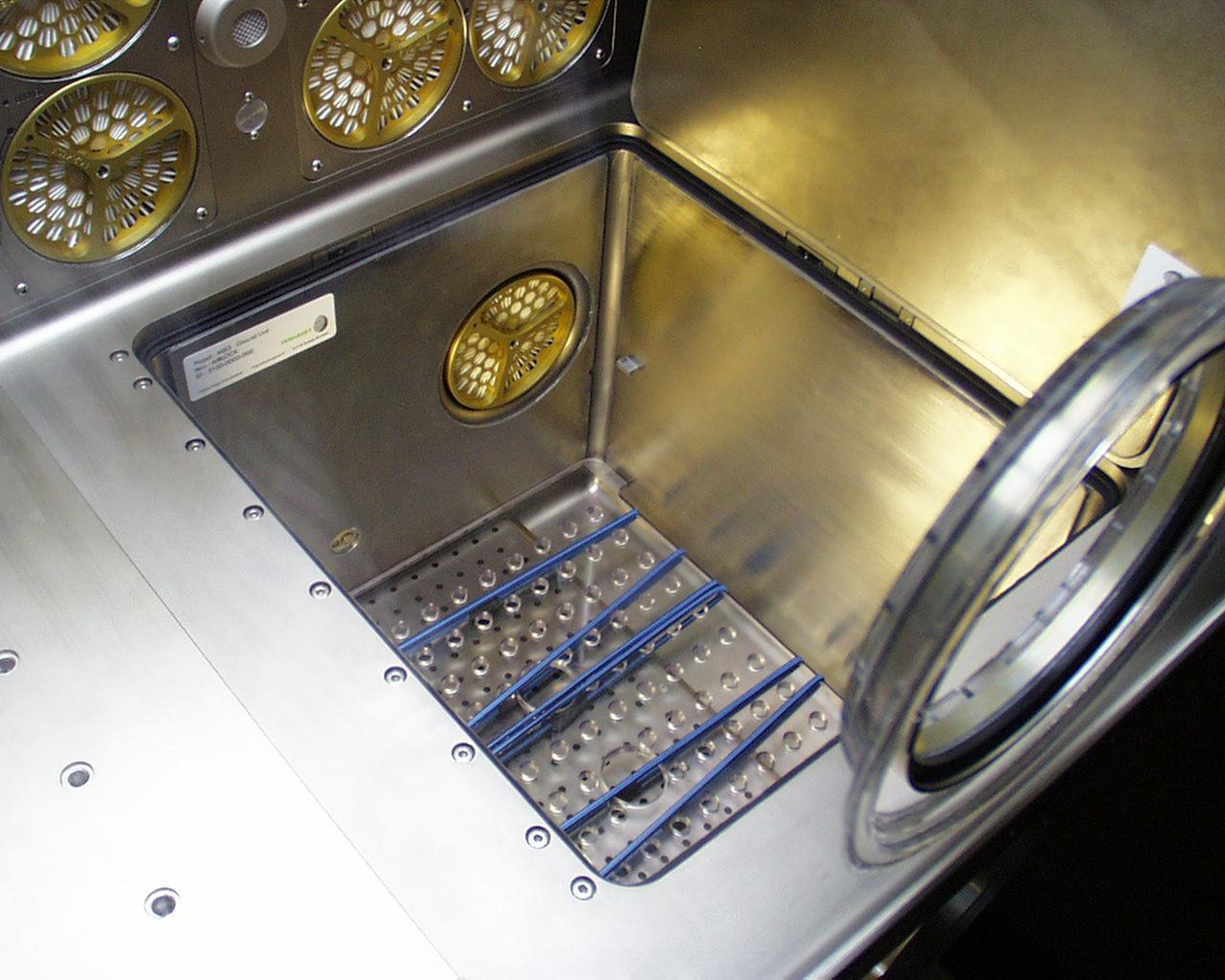
This photo shows the access through the internal airlock (bottom right) on the Microgravity Science Glovebox (MSG) being developed by the European Space Agency (ESA) and NASA for use aboard the International Space Station (ISS). The airlock will allow the insertion or removal of equipment and samples without opening the working volume of the glovebox. Scientists will use the MSG to carry out multidisciplinary studies in combustion science, fluid physics and materials science. The MSG is managed by NASA's Marshall Space Flight Center (MSFC). Photo Credit: NASA/MSFC
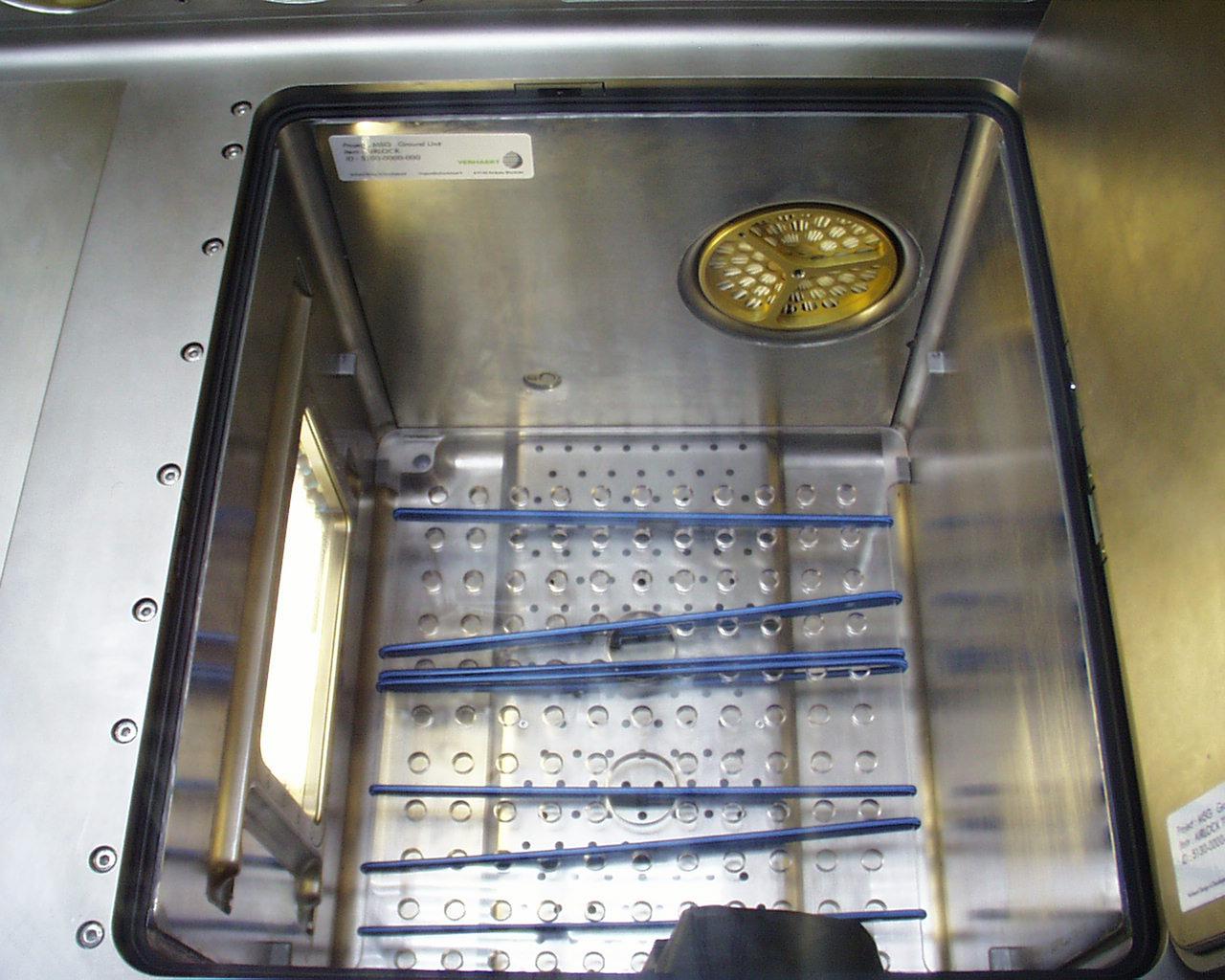
This photo shows the access through the internal airlock on the Microgravity Science Glovebox (MSG) being developed by the European Space Agency (ESA) and NASA for use aboard the International Space Station (ISS). The airlock will allow the insertion or removal of equipment and samples without opening the working volume of the glovebox. Scientists will use the MSG to carry out multidisciplinary studies in combustion science, fluid physics and materials science. The MSG is managed by NASA's Marshall Space Flight Center (MSFC). Photo Credit: NASA/MSFC
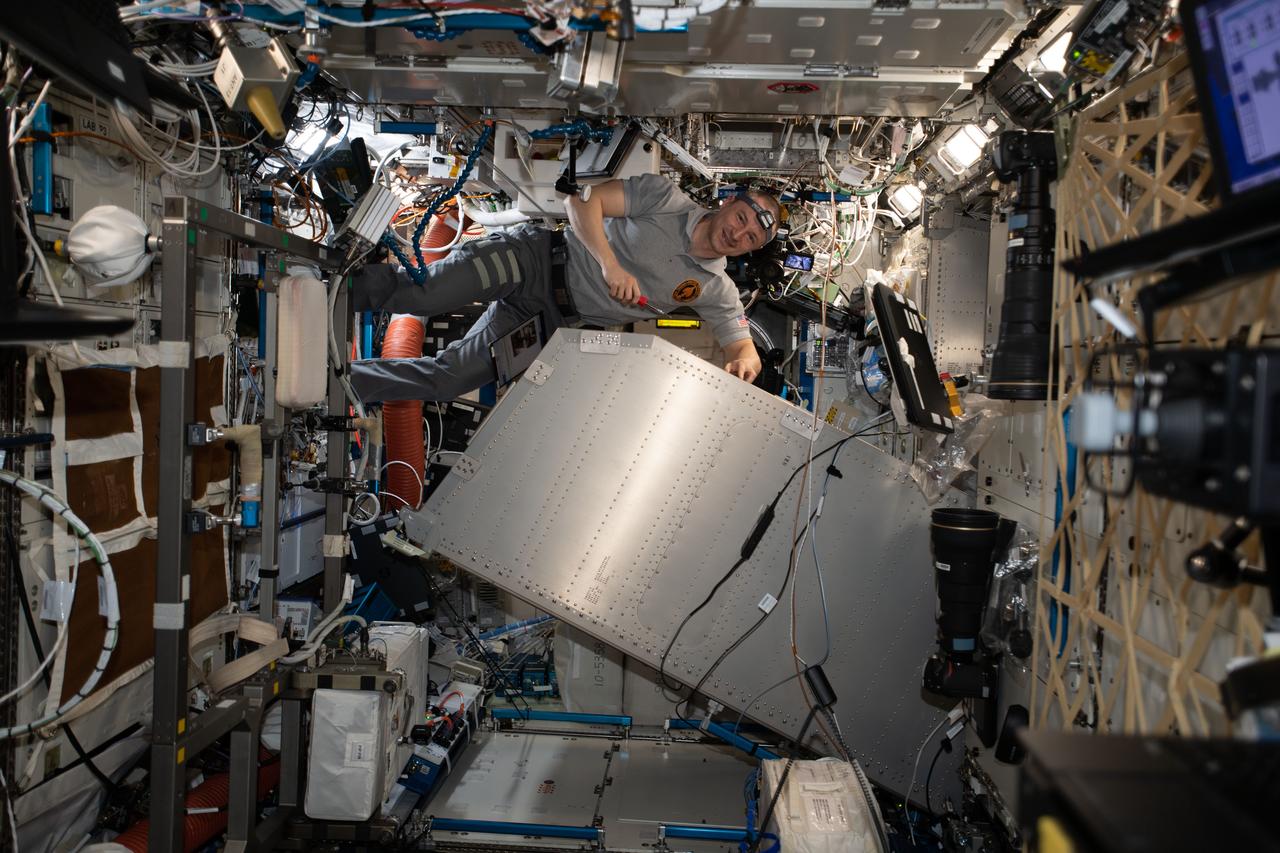
iss062e014085 (Feb. 22, 2020) --- NASA astronaut and Expedition 62 Flight Engineer Andrew Morgan services the Microgravity Science Glovebox (MSG) inside the U.S. Destiny laboratory module. Morgan was cleaning and lubricating the MSG components and photographing the maintenance work for inspection.
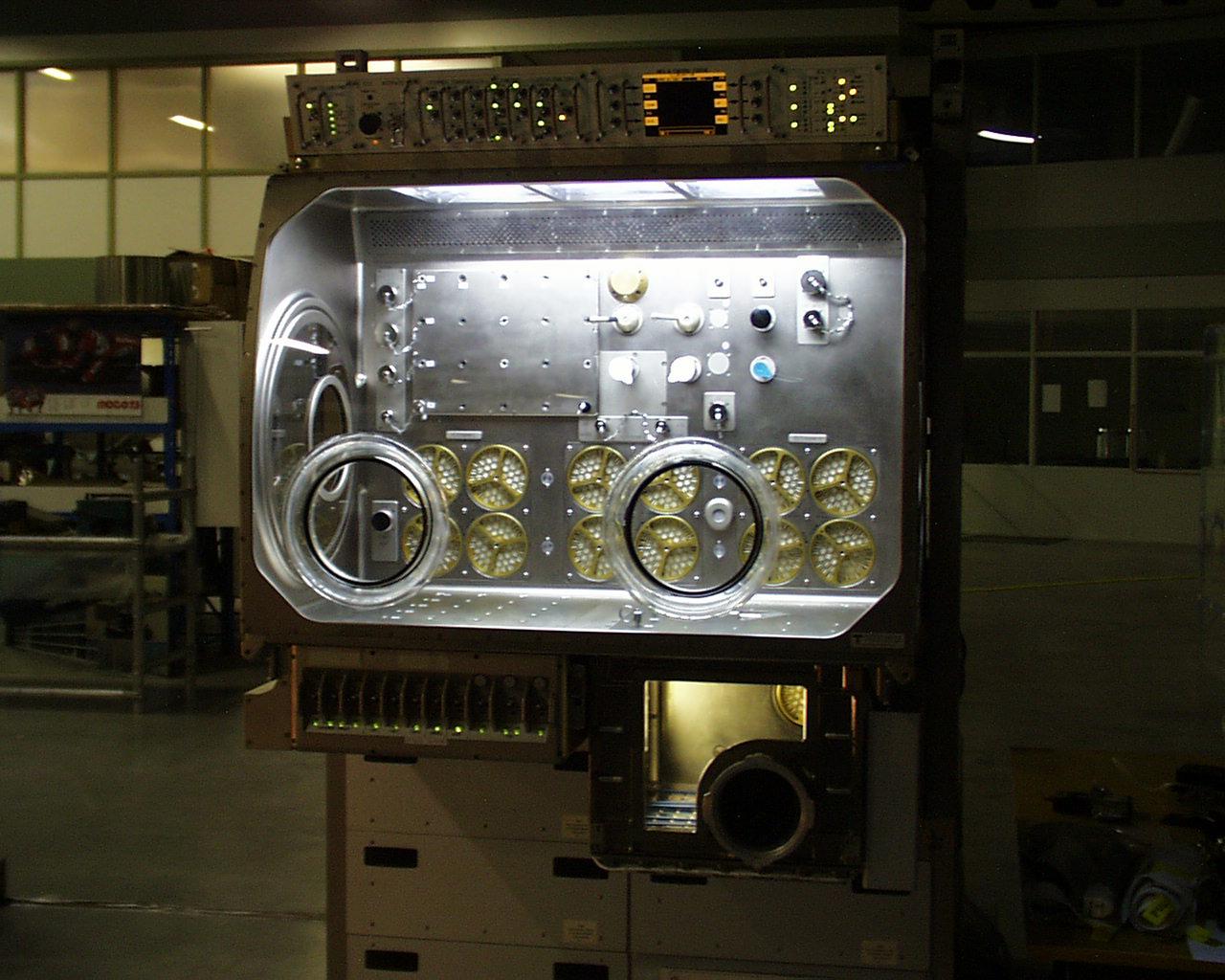
Interior lights give the Microgravity Science Glovebox (MSG) the appearance of a high-tech juke box. The European Space Agency (ESA) and NASA are developing the MSG for use aboard the International Space Station (ISS). Scientists will use the MSG to carry out multidisciplinary studies in combustion science, fluid physics and materials science. The MSG is managed by NASA's Marshall Space Flight Center (MSFC). Photo Credit: NASA/MSFC

The Microgravity Science Glovebox (MSG) is being developed by the European Space Agency (ESA) and NASA for use aboard the International Space Station (ISS). Scientists will use the MSG to carry out multidisciplinary studies in combustion science, fluid physics and materials science. The MSG is managed by NASA's Marshall Space Flight Center (MSFC). Photo Credit: NASA/MSFC
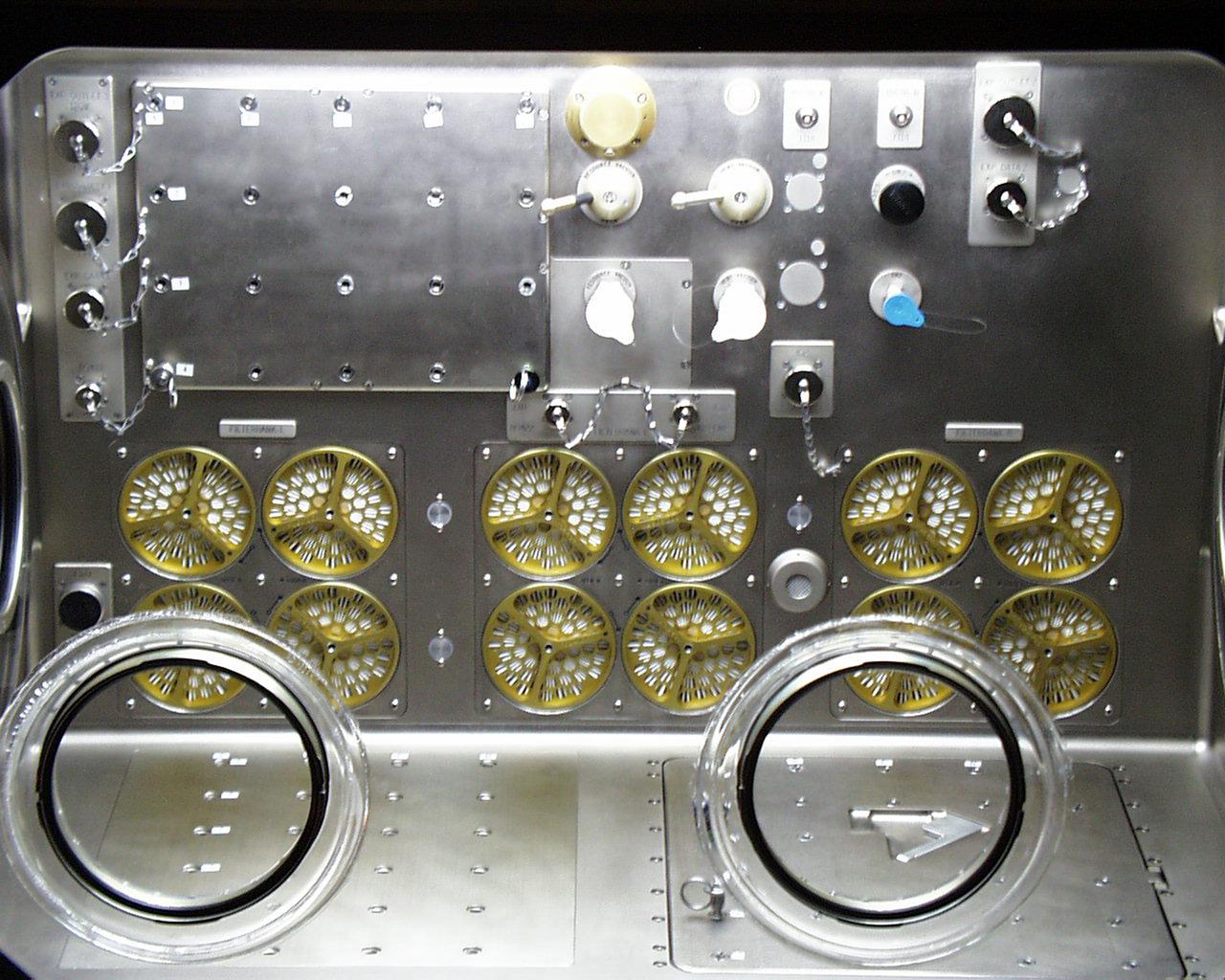
Interior lights give the Microgravity Science Glovebox (MSG) the appearance of a high-tech juke box. The European Space Agency (ESA) and NASA are developing the MSG for use aboard the International Space Station (ISS). Scientists will use the MSG to carry out multidisciplinary studies in combustion science, fluid physics and materials science. The MSG is managed by NASA's Marshall Space Flight Center (MSFC). Photo Credit: NASA/MSFC
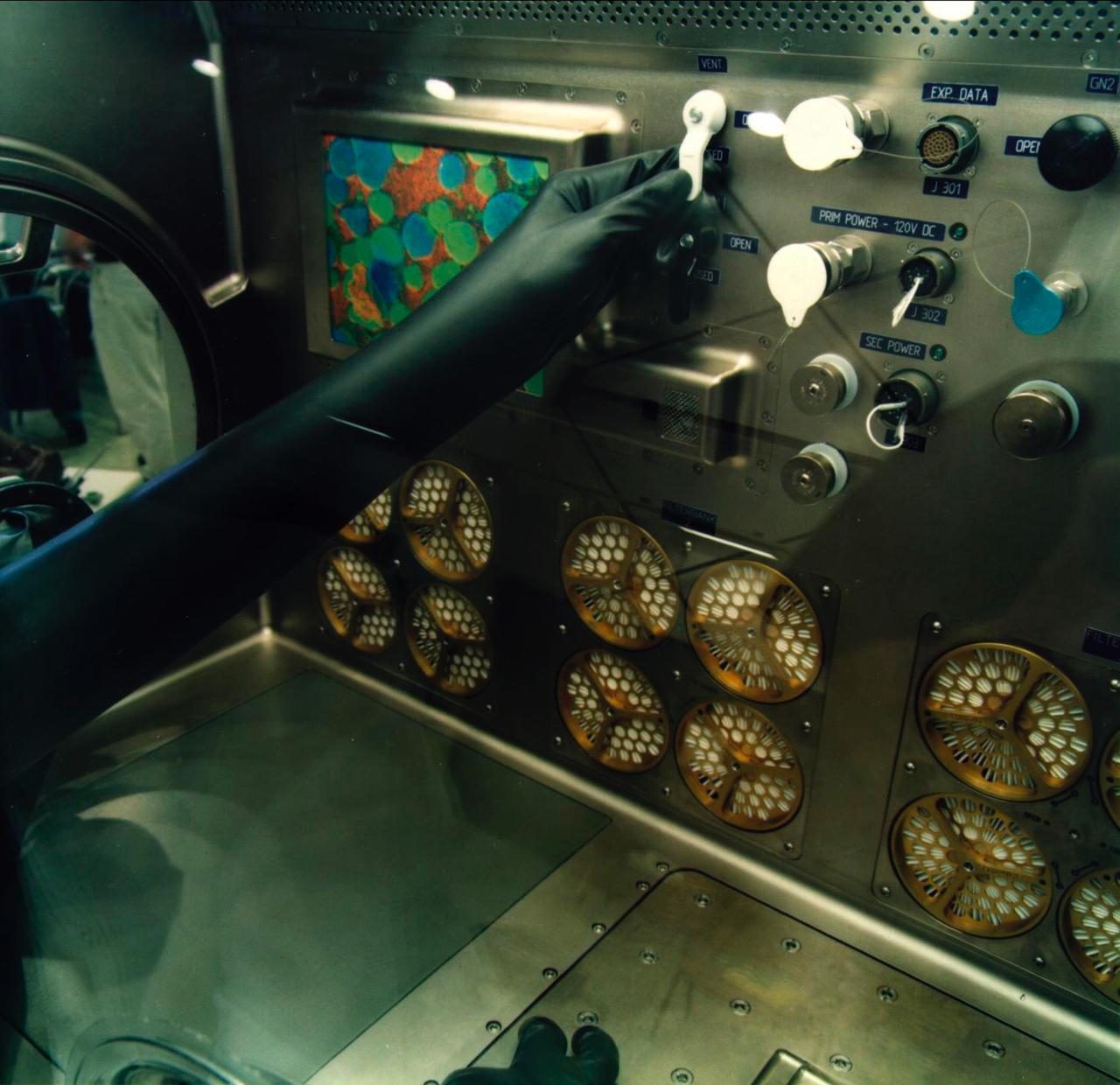
This photo shows the interior reach in the Microgravity Science Glovebox (MSG) being developed by the European Space Agency (ESA) and NASA for use aboard the International Space Station (ISS). Scientists will use the MSG to carry out multidisciplinary studies in combustion science, fluid physics and materials science. The MSG is managed by NASA's Marshall Space Flight Center (MSFC). Photo Credit: NASA/MSFC
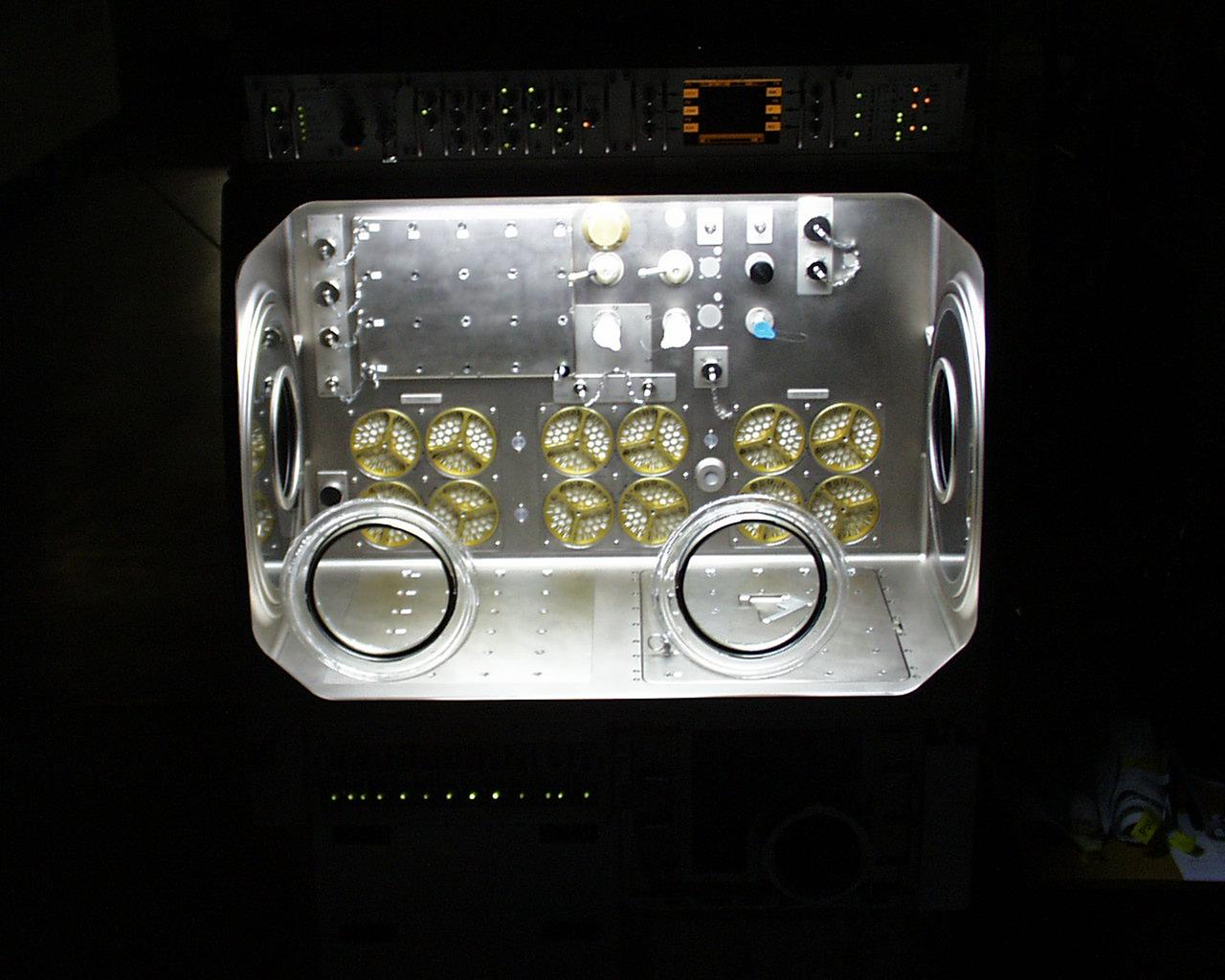
Interior lights give the Microgravity Science Glovebox (MSG) the appearance of a high-tech juke box. The European Space Agency (ESA) and NASA are developing the MSG for use aboard the International Space Station (ISS). Scientists will use the MSG to carry out multidisciplinary studies in combustion science, fluid physics and materials science. The MSG is managed by NASA's Marshall Space Flight Center (MSFC). Photo Credit: NASA/MSFC
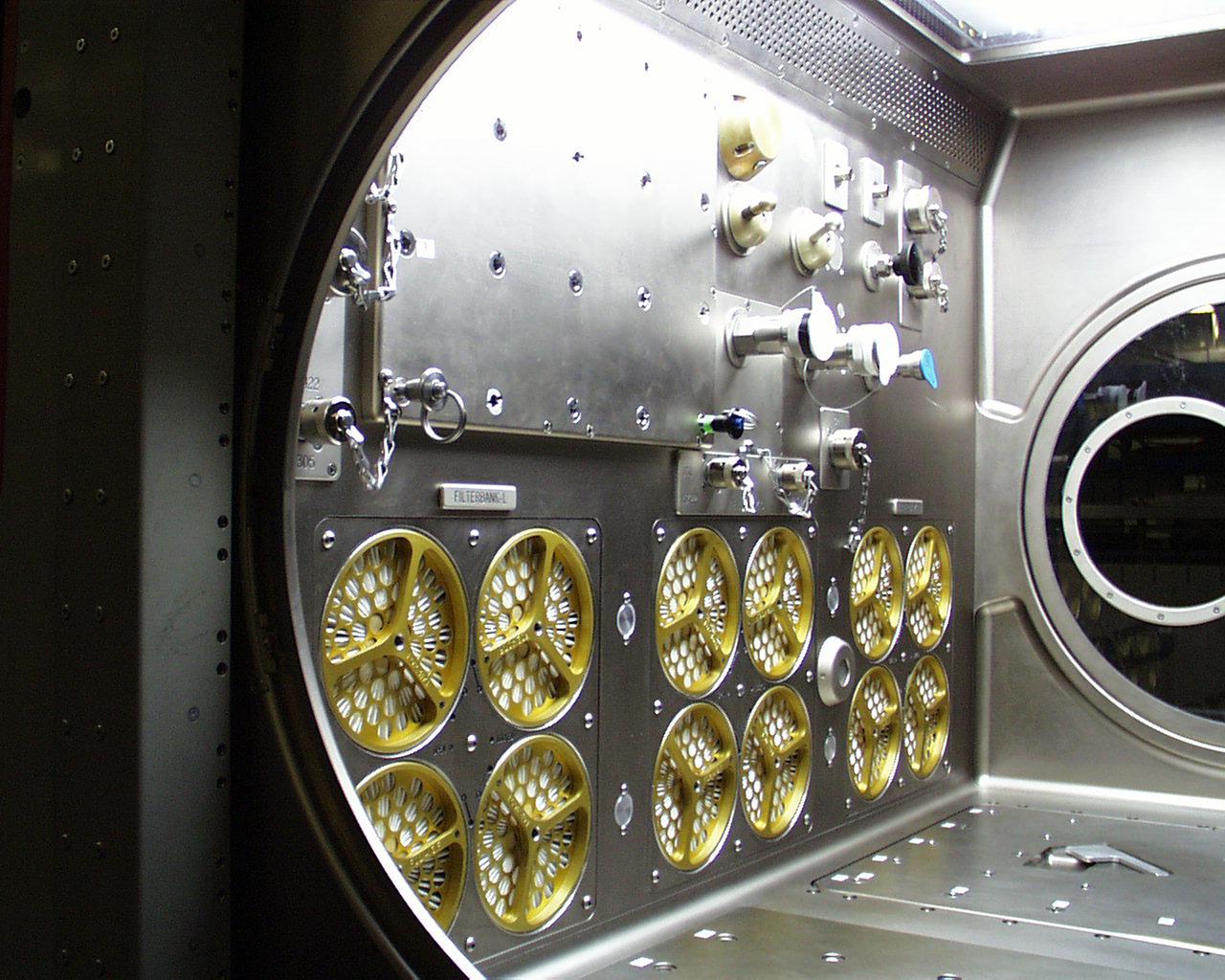
Interior lights give the Microgravity Science Glovebox (MSG) the appearance of a high-tech juke box. The European Space Agency (ESA) and NASA are developing the MSG for use aboard the International Space Station (ISS). Scientists will use the MSG to carry out multidisciplinary studies in combustion science, fluid physics and materials science. The MSG is managed by NASA's Marshall Space Flight Center (MSFC). Photo Credit: NASA/MSFC
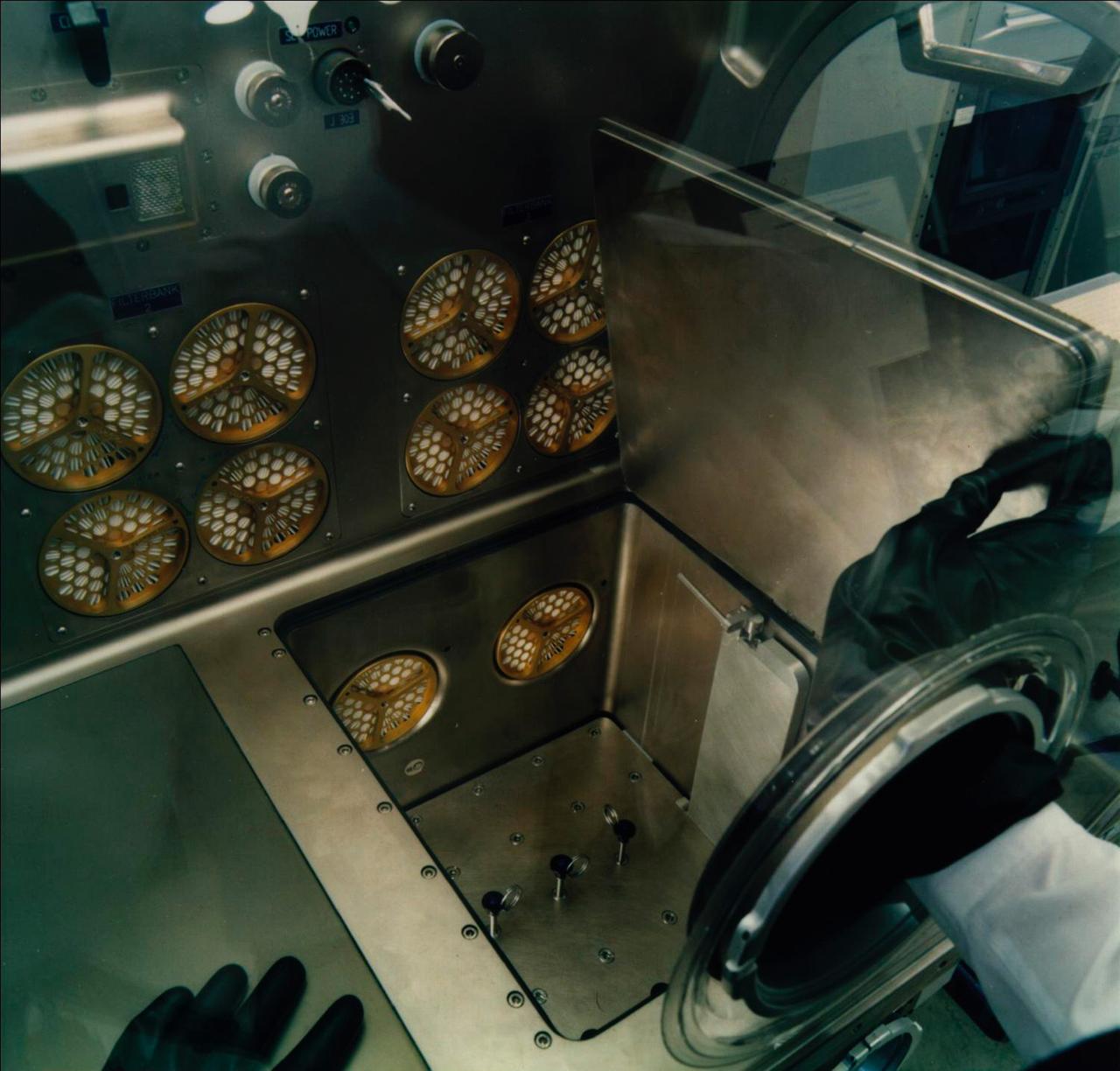
This photo shows the access through the internal airlock (bottom right) on the Microgravity Science Glovebox (MSG) being developed by the European Space Agency (ESA) and NASA for use aboard the International Space Station (ISS). Scientists will use the MSG to carry out multidisciplinary studies in combustion science, fluid physics and materials science. The MSG is managed by NASA's Marshall Space Flight Center (MSFC). Photo Credit: NASA/MSFC
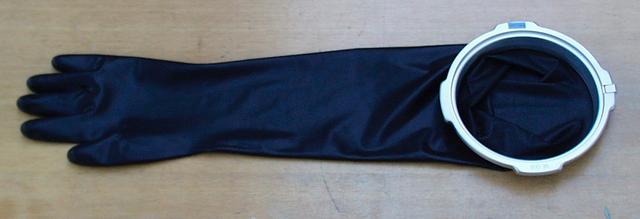
This photo shows a rubber glove and its attachment ring for the Microgravity Science Glovebox (MSG) being developed by the European Space Agency (ESA) and NASA for use aboard the International Space Station (ISS). Scientists will use the MSG to carry out multidisciplinary studies in combustion science, fluid physics and materials science. The MSG is managed by NASA's Marshall Space Flight Center (MSFC). Photo Credit: NASA/MSFC
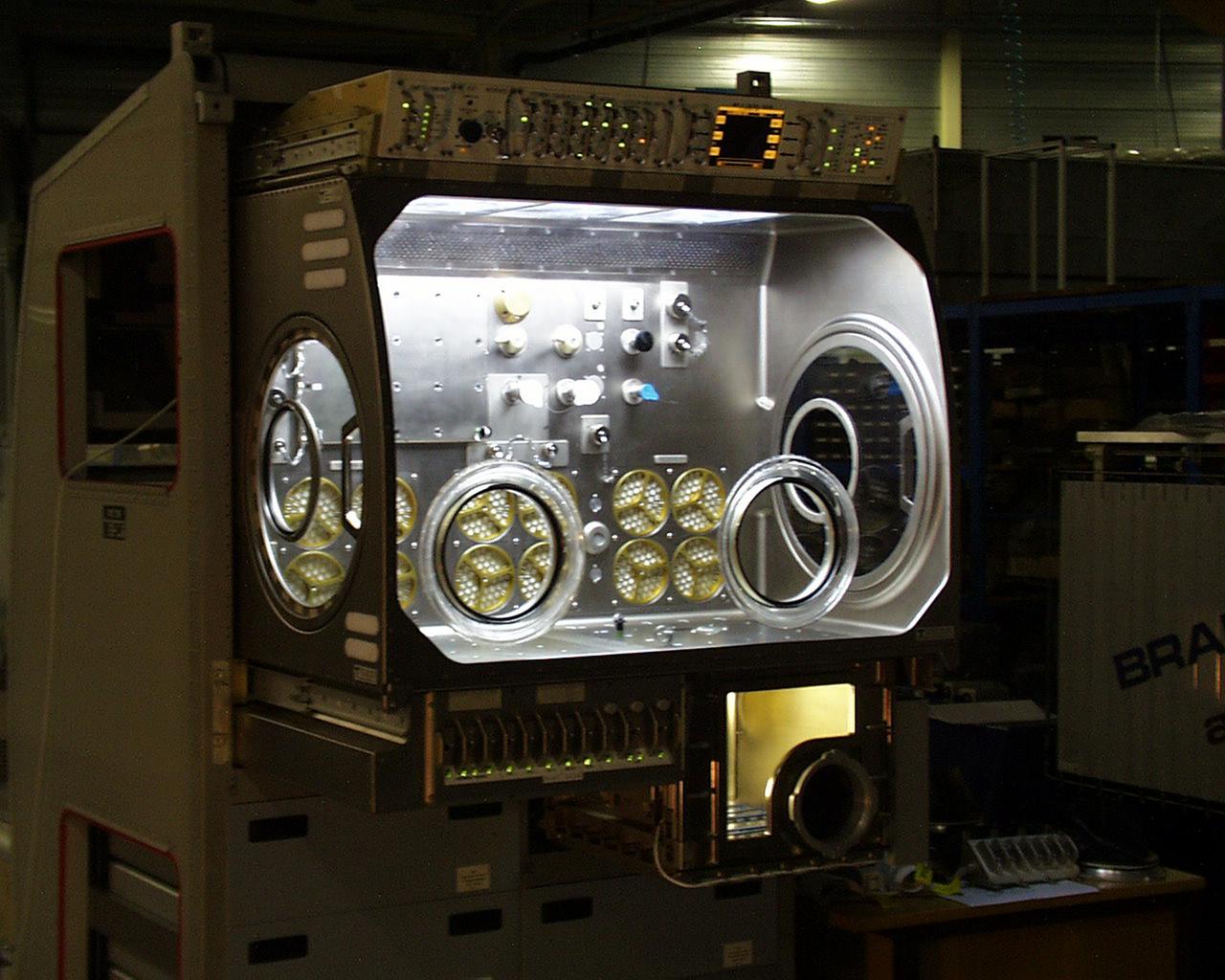
Interior lights give the Microgravity Science Glovebox (MSG) the appearance of a high-tech juke box. The European Space Agency (ESA) and NASA are developing the MSG for use aboard the International Space Station (ISS). Scientists will use the MSG to carry out multidisciplinary studies in combustion science, fluid physics and materials science. The MSG is managed by NASA's Marshall Space Flight Center (MSFC). Photo Credit: NASA/MSFC
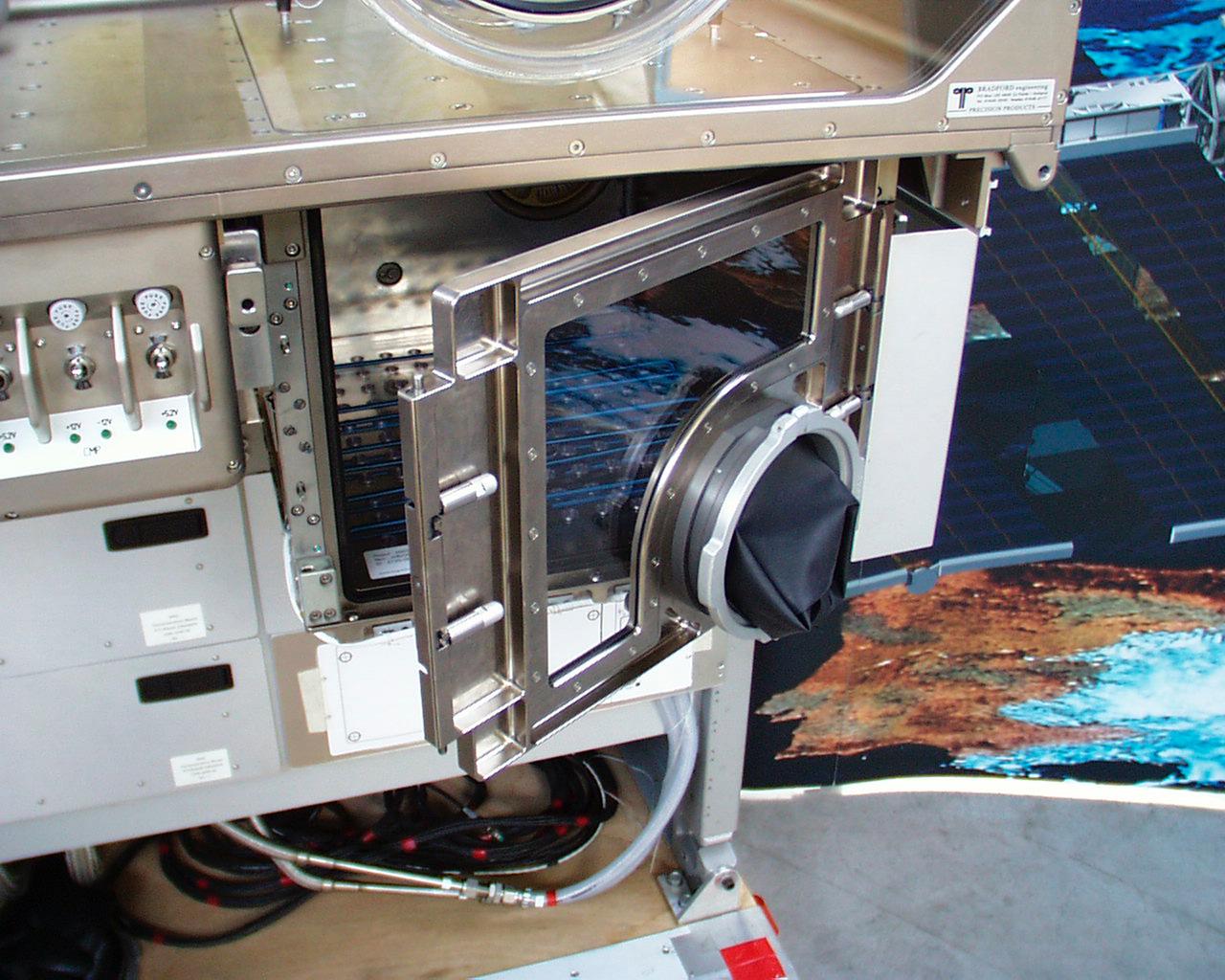
Once the Microgravity Science Glovebox (MSG) is sealed, additional experiment items can be inserted through a small airlock at the bottom right of the work volume. It is shown here with the door open. The European Space Agency (ESA) and NASA are developing the MSG for use aboard the International Space Station (ISS). Scientists will use the MSG to carry out multidisciplinary studies in combustion science, fluid physics and materials science. The MSG is managed by NASA's Marshall Space Flight Center (MSFC). Photo Credit: NASA/MSFC
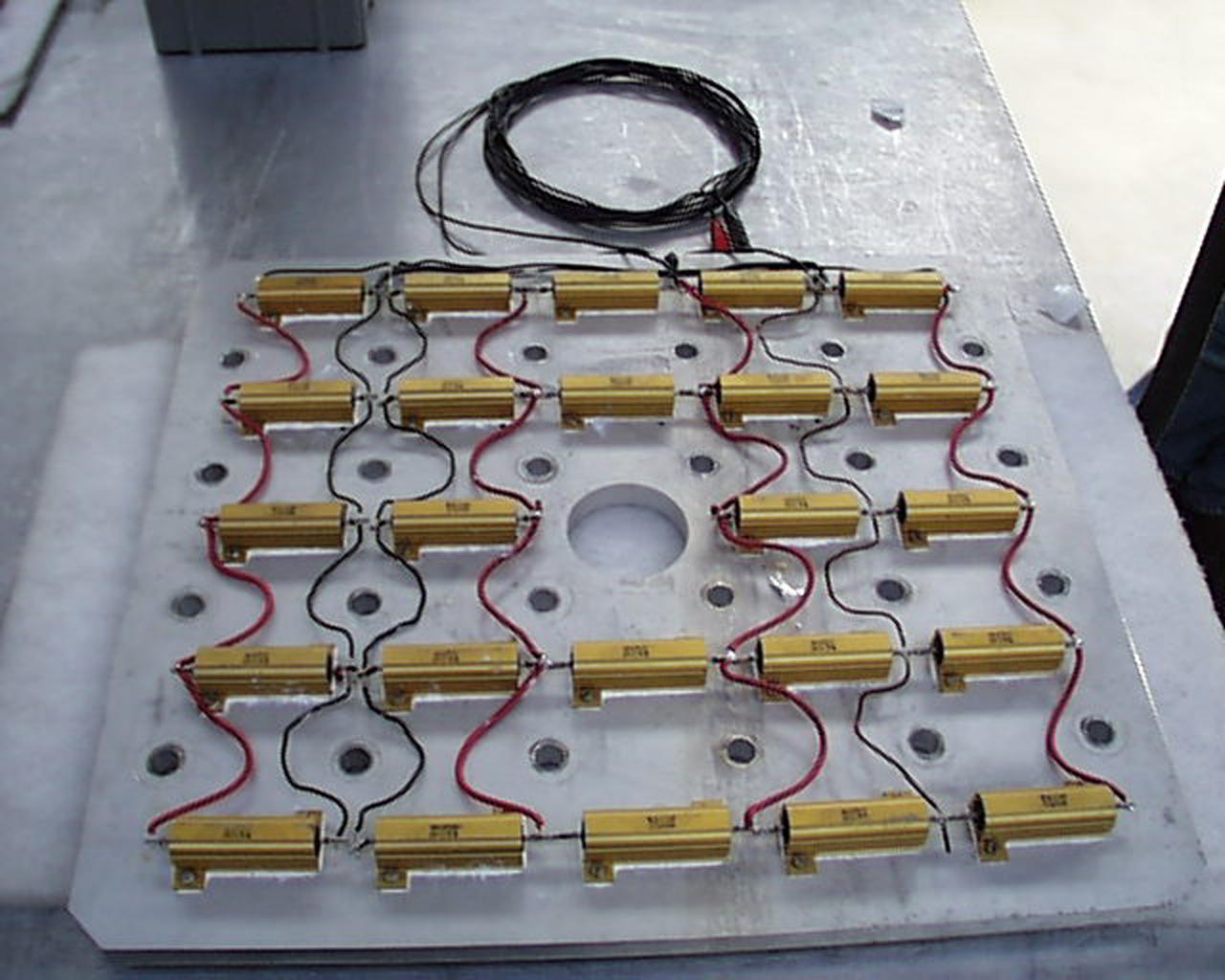
An array of miniature lamps will provide illumination to help scientists as they conduct experiments inside the Microgravity Science Glovebox (MSG). The European Space Agency (ESA) and NASA are developing the MSG for use aboard the International Space Station (ISS). Scientists will use the MSG to carry out multidisciplinary studies in combustion science, fluid physics and materials science. The MSG is managed by NASA's Marshall Space Flight Center (MSFC). Photo Credit: NASA/MSFC
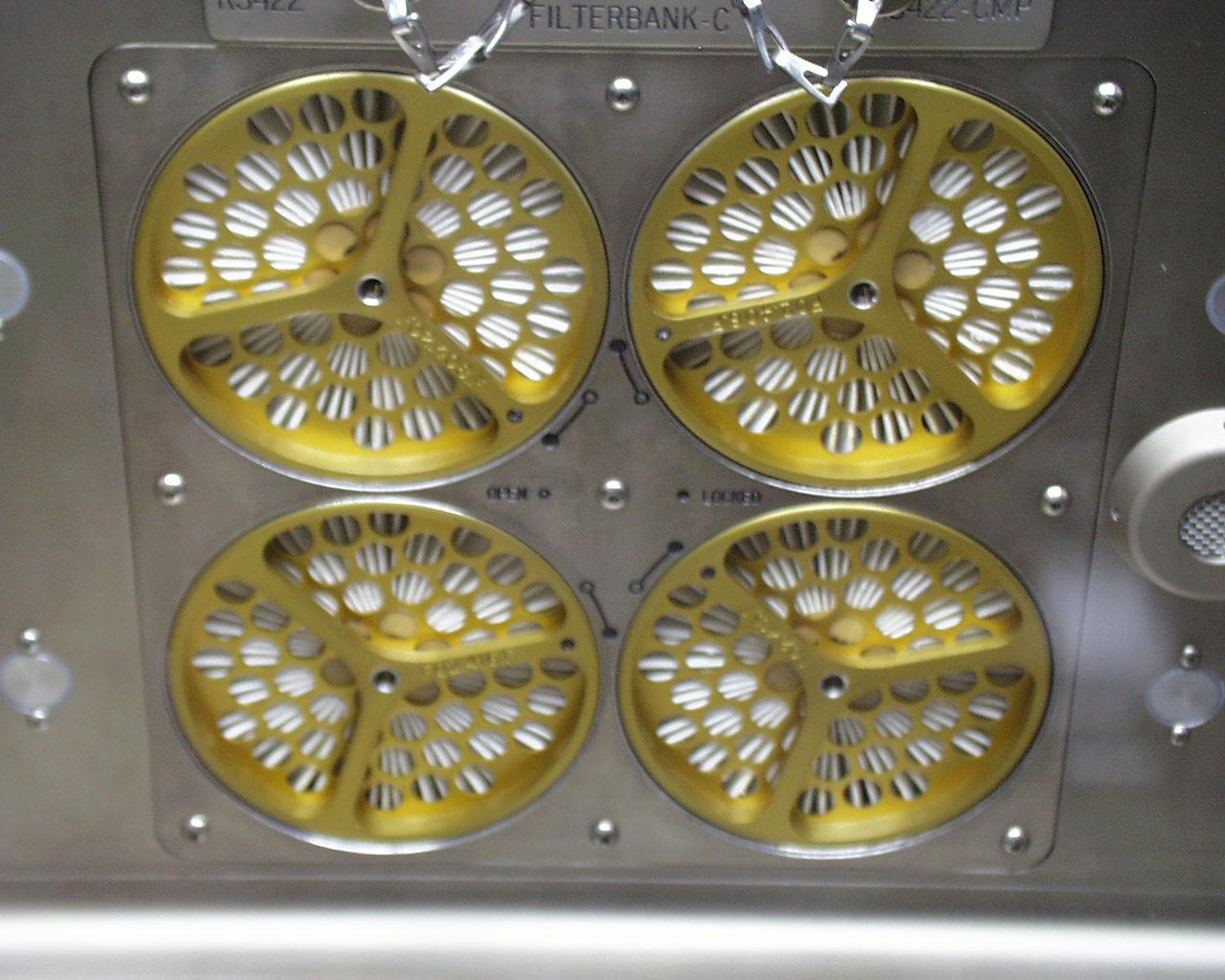
This photo shows one of three arrays of air filters inside the Microgravity Science Glovebox (MSG) being developed by the European Space Agency (ESA) and NASA for use aboard the International Space Station (ISS). Scientists will use the MSG to carry out multidisciplinary studies in combustion science, fluid physics and materials science. The MSG is managed by NASA's Marshall Space Flight Center (MSFC). Photo Credit: NASA/MSFC
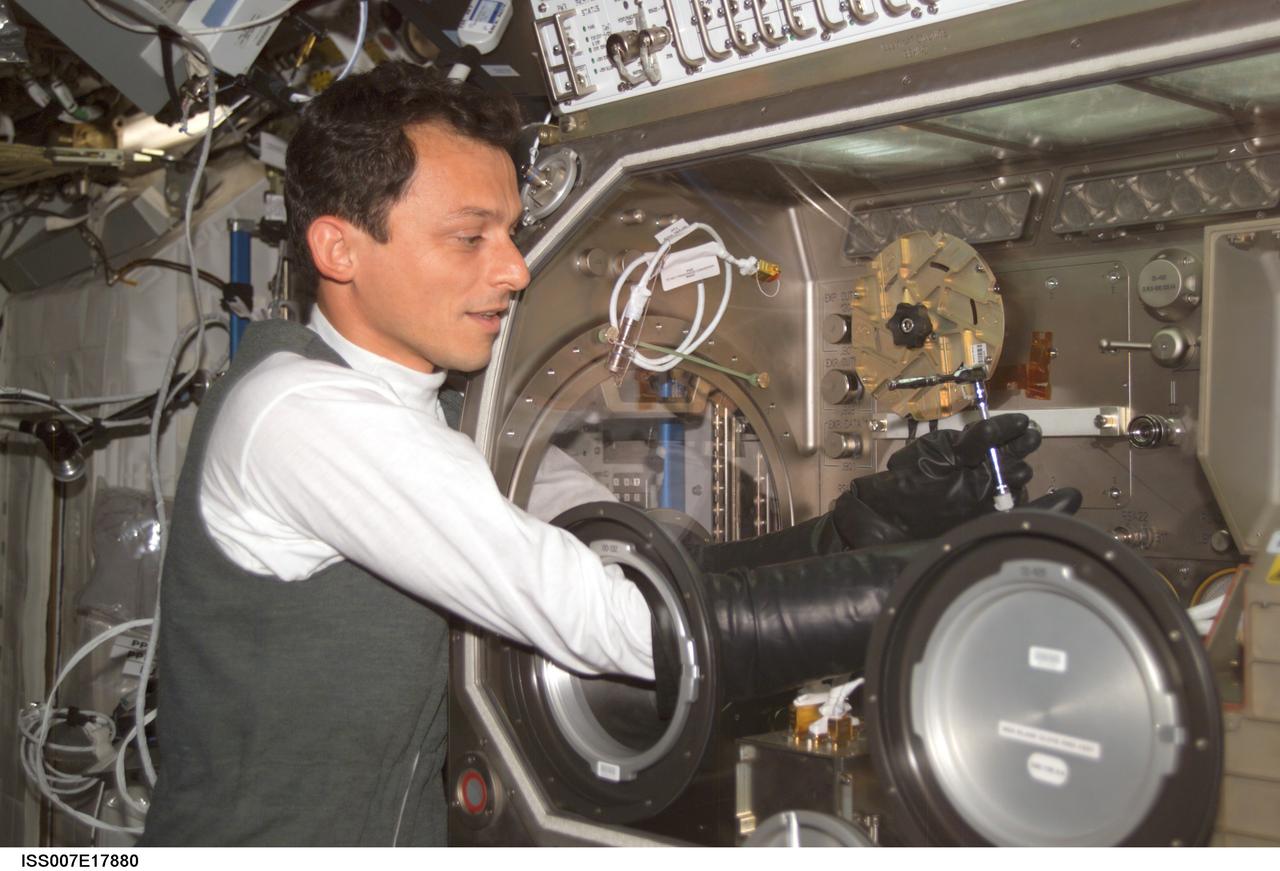
In the Destiny laboratory aboard the International Space Station (ISS), European Space Agency (ESA) astronaut Pedro Duque of Spain is seen working at the Microgravity Science Glovebox (MSG). He is working with the PROMISS experiment, which will investigate the growth processes of proteins during weightless conditions. The PROMISS is one of the Cervantes program of tests (consisting of 20 commercial experiments). The MSG is managed by NASA's Marshall Space Flight Center (MSFC).
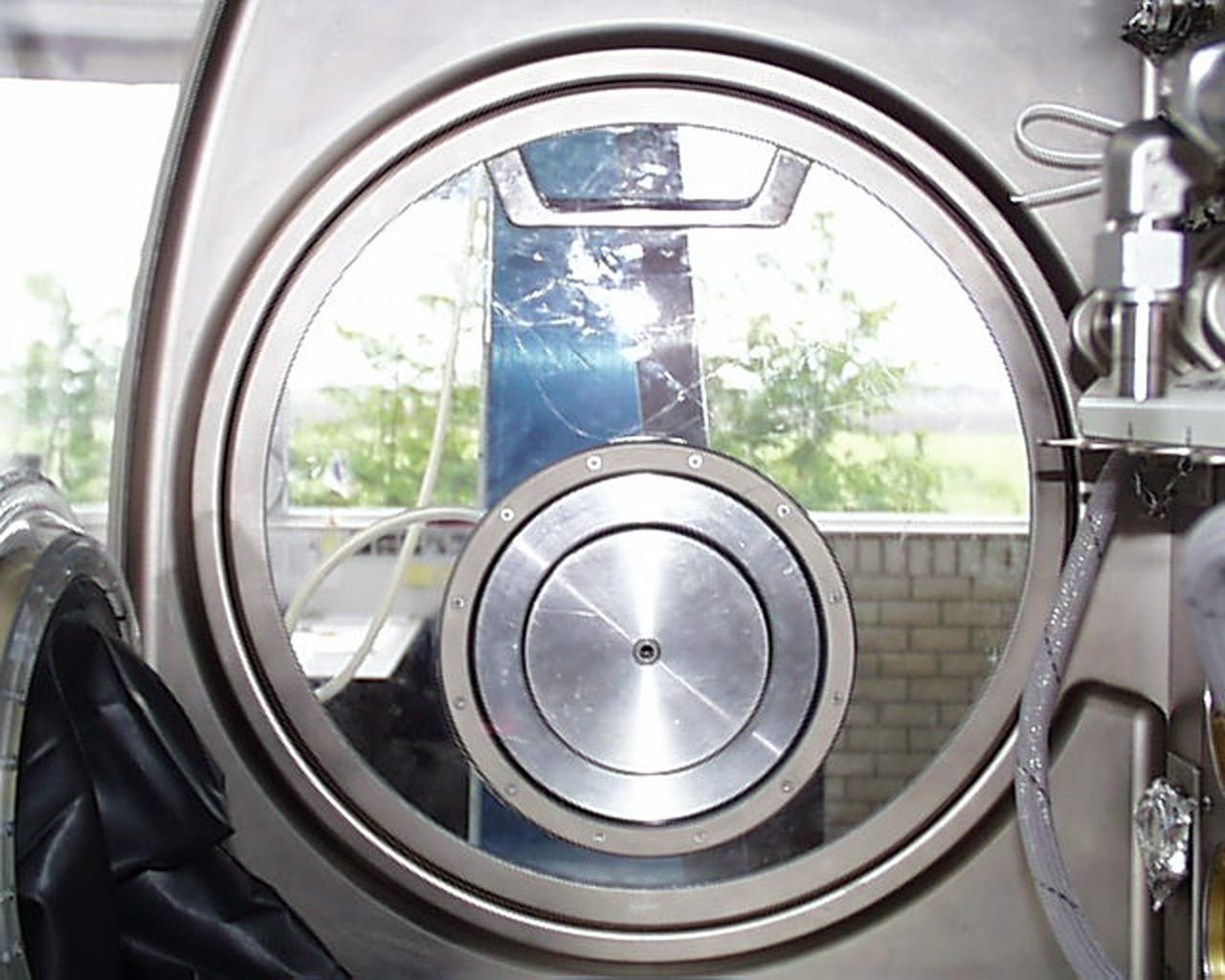
Access ports, one on each side of the Microgravity Science Glovebox (MSG), will allow scientists to place large experiment items inside the MSG. The ports also provide additional glove ports (silver disk) for greater access to the interior. The European Space Agency (ESA) and NASA are developing the MSG for use aboard the International Space Station (ISS). Scientists will use the MSG to carry out multidisciplinary studies in combustion science, fluid physics and materials science. The MSG is managed by NASA's Marshall Space Flight Center (MSFC). Photo Credit: NASA/MSFC
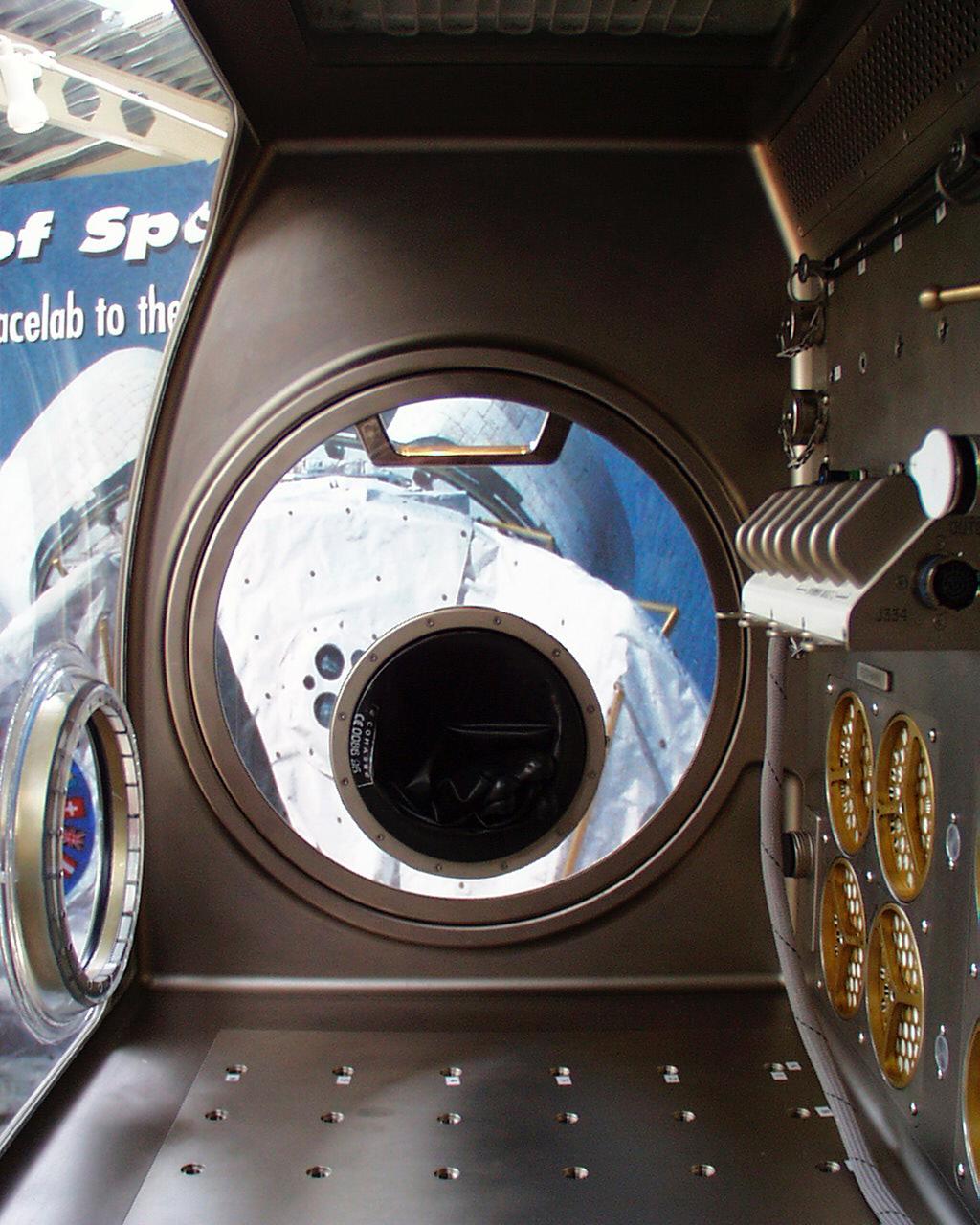
Access ports, one on each side of the Microgravity Science Glovebox (MSG), will allow scientists to place large experiment items inside the MSG. The ports also provide additional glove ports (dark circle) for greater access to the interior. The European Space Agency (ESA) and NASA are developing the MSG for use aboard the International Space Station (ISS). Scientists will use the MSG to carry out multidisciplinary studies in combustion science, fluid physics and materials science. The MSG is managed by NASA's Marshall Space Flight Center (MSFC). Photo Credit: NASA/MSFC
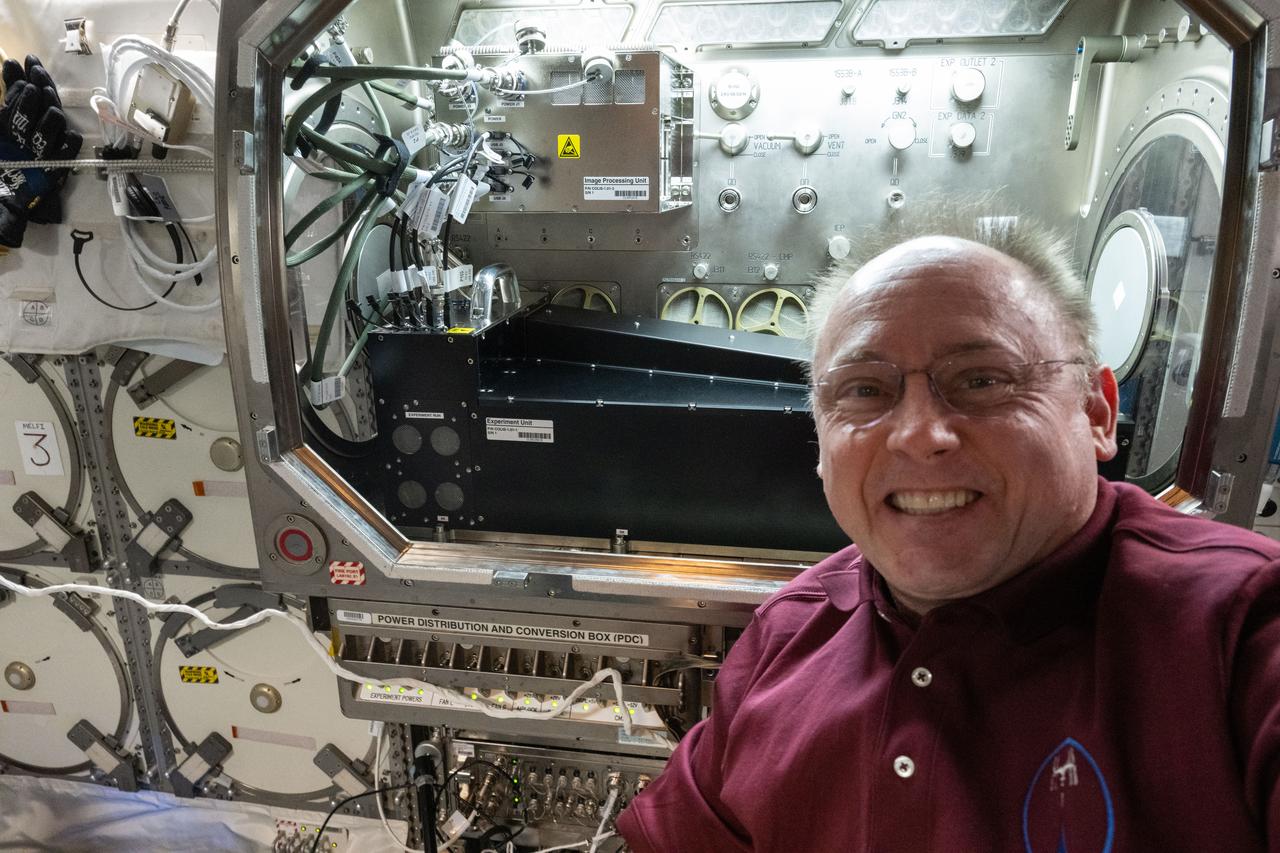
iss073e0606547 (Sept. 4, 2025) --- NASA astronaut and Expedition 73 Flight Engineer Mike Fincke poses for a portrait in front of the Microgravity Science Glovebox (MSG) inside the International Space Station’s Destiny laboratory. Fincke installed the Colloidal Solids research hardware in the MSG to explore pharmaceutical manufacturing and 3D printing techniques in microgravity—research that could advance human health both in space and on Earth.
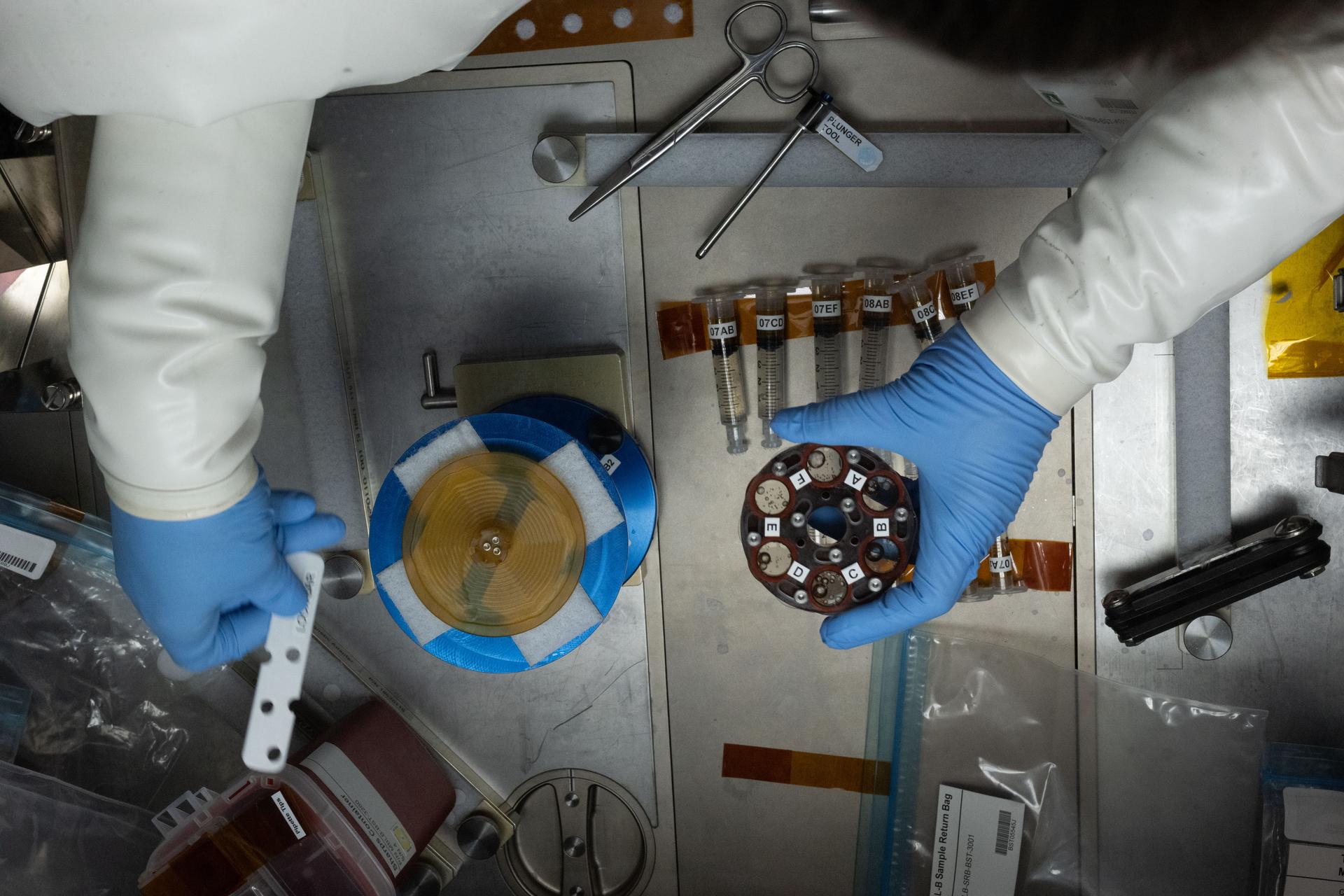
iss073e0759779 (Sept. 2, 2025) --- A top-down view inside the Destiny laboratory module’s Microgravity Science Glovebox shows the gloved arms and hands of NASA astronaut and Expedition 73 Flight Engineer Zena Cardman. She was processing bone marrow stem cell samples for the Microgravity Associated Bone Loss-B (MABL-B) experiment. The space biology investigation could help scientists better understand the molecular mechanisms behind space-caused bone loss and the natural aging process on Earth.
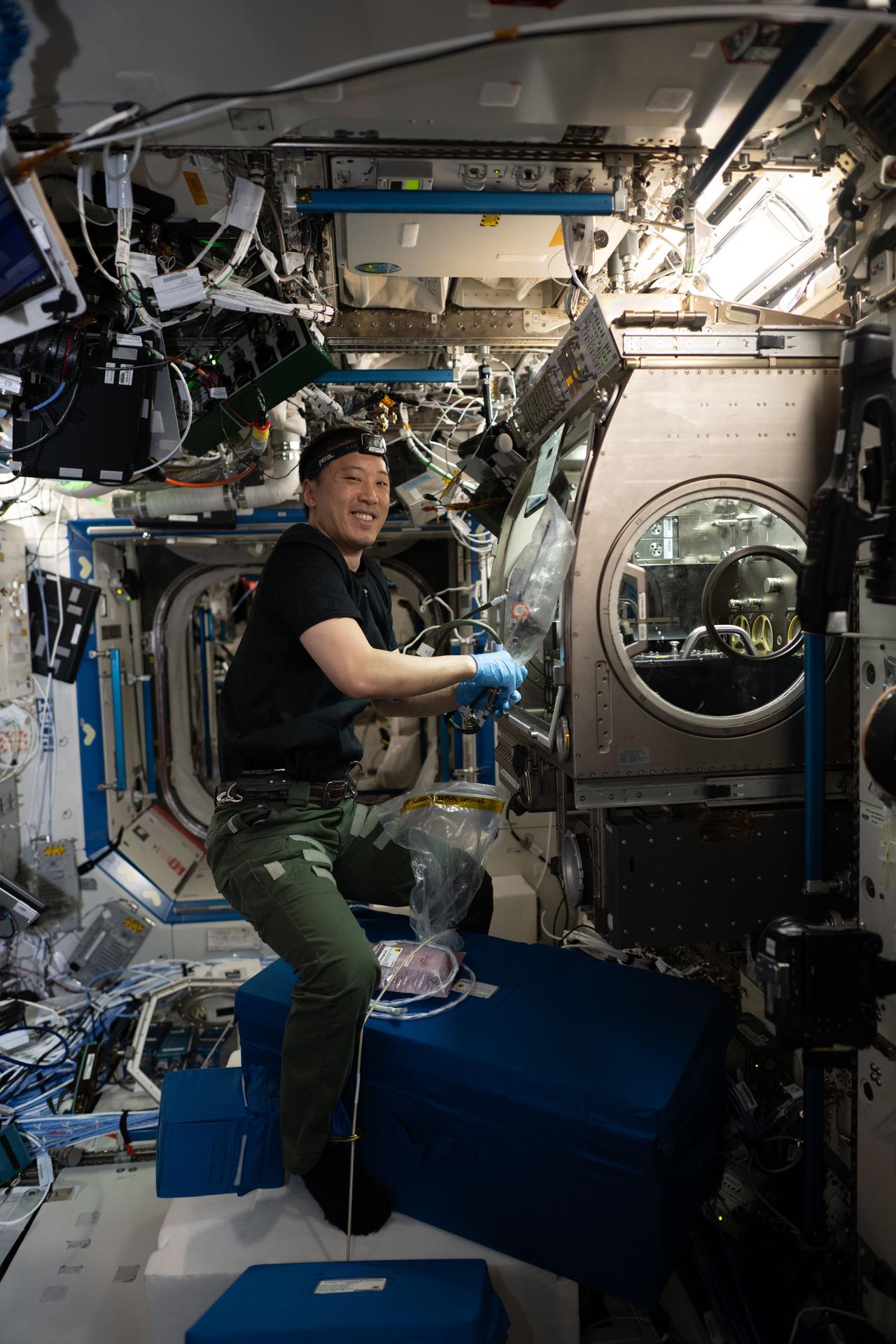
iss073e0886402 (Oct. 17) --- NASA astronaut and Expedition 73 Flight Engineer Jonny Kim works inside the Microgravity Science Glovebox (MSG) aboard the International Space Station’s Destiny laboratory module. Kim is seen stowing research hardware used in the Colloidal Solids physics experiment, which investigates how tiny particles—colloids—and proteins suspended in water behave in microgravity. The results may inform plant growth techniques, 3D printing technologies, and pharmaceutical manufacturing in space. On Earth, the findings could benefit the food, personal care, and healthcare industries.
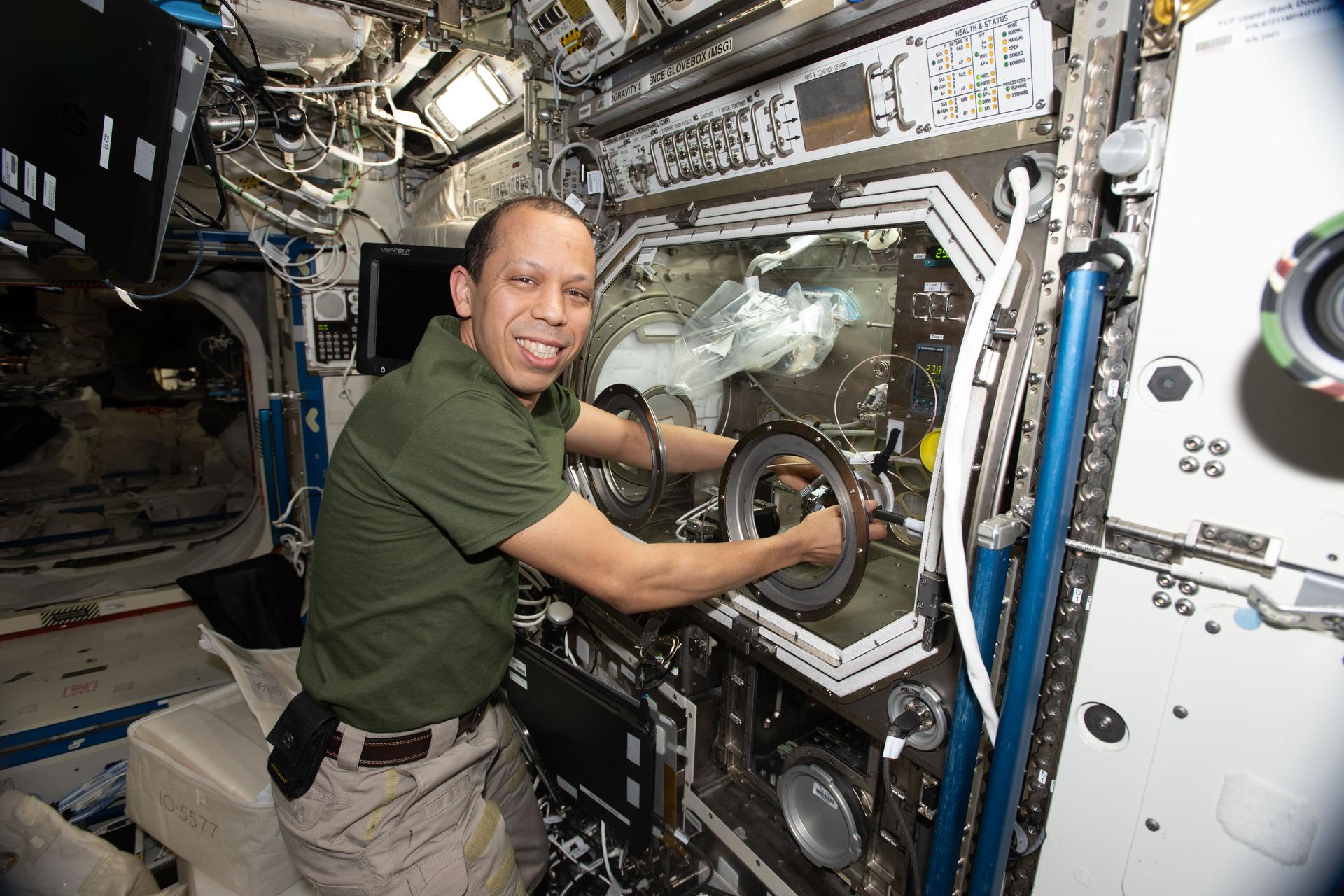
iss074e0620142 (May 28, 2026) --- NASA astronaut and Expedition 74 Flight Engineer Chris Williams replaces sample hardware inside the Destiny laboratory module’s Microgravity Science Glovebox aboard the International Space Station to support semiconductor crystal research. Growing crystals in weightlessness may enable future large-scale semiconductor manufacturing, advancing the commercial space economy and supporting Earth-based industries. Credit: NASA/Jack Hathaway
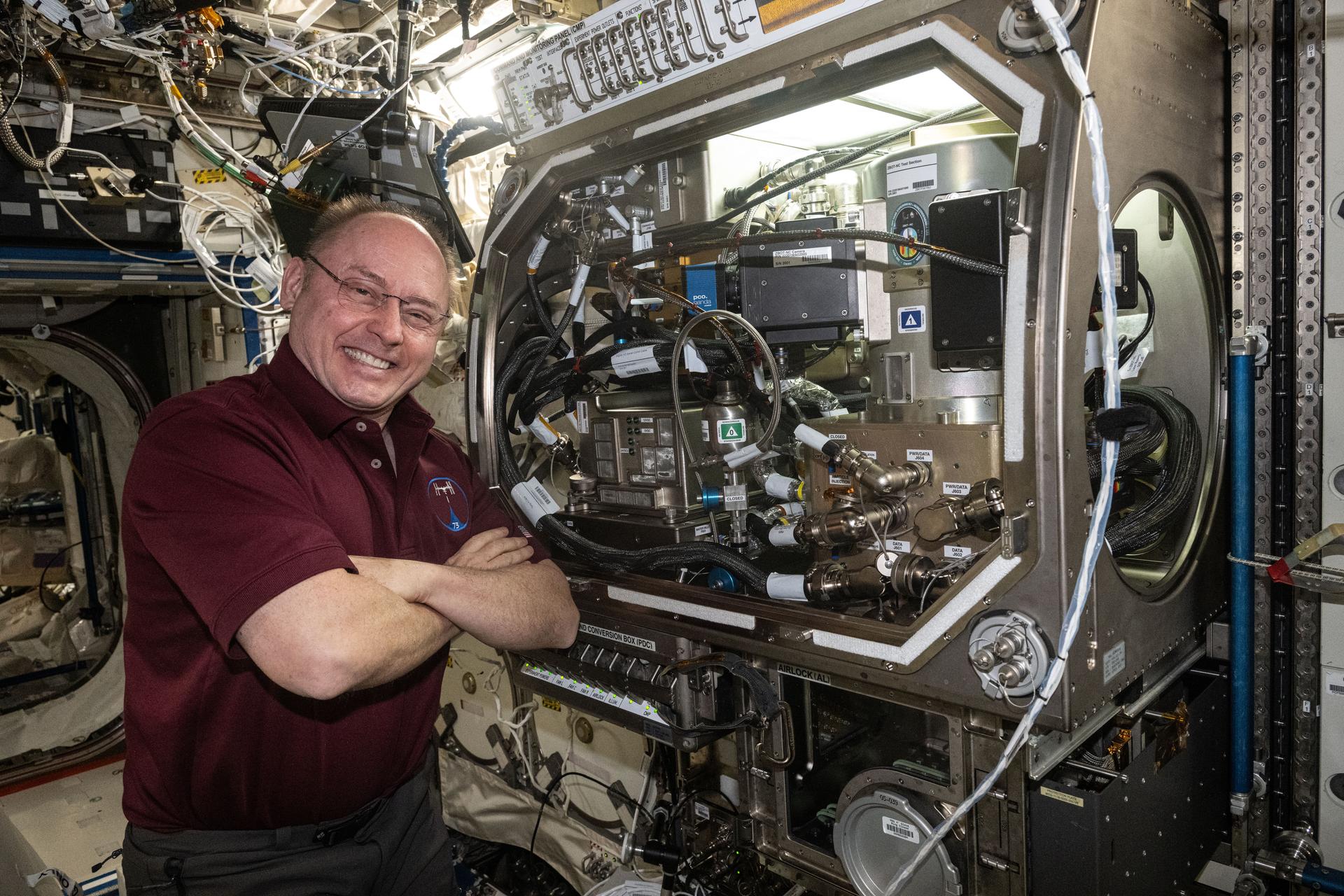
iss073e0982894 (Oct. 28, 2025) --- NASA astronaut and Expedition 73 Flight Engineer Mike Fincke poses for a portrait next to the Microgravity Science Glovebox aboard the International Space Station’s Destiny laboratory module. Fincke had just completed configuring research hardware for the Zero Boil-Off Tank physics investigation, which explores methods for storing cryogenic fluids. The experiment supports advancements in spacecraft propulsion and life support systems, as well as biotechnological, medical, and industrial applications on Earth.
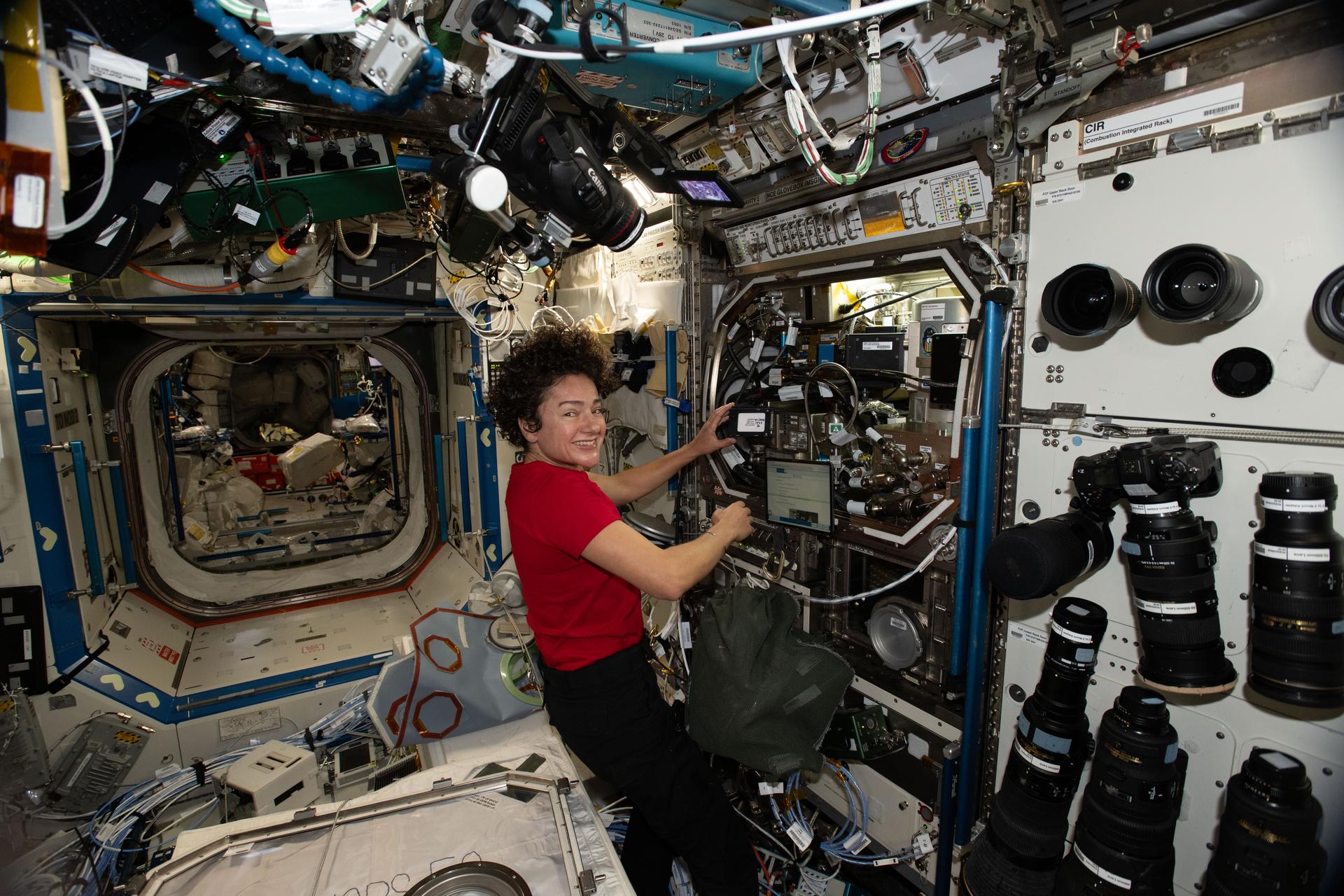
iss074e0314172 (Feb. 16, 2026) --- NASA astronaut and Expedition 74 Flight Engineer Jessica Meir configures the Microgravity Science Glovebox and swaps hard drives to support operations for the Zero Boil-Off Tank physics investigation. The experiment is testing ways to control a spacecraft’s fuel tank pressure due to cryogenic fuel propellants evaporating from the surrounding heat. Credit: NASA/Chris Williams
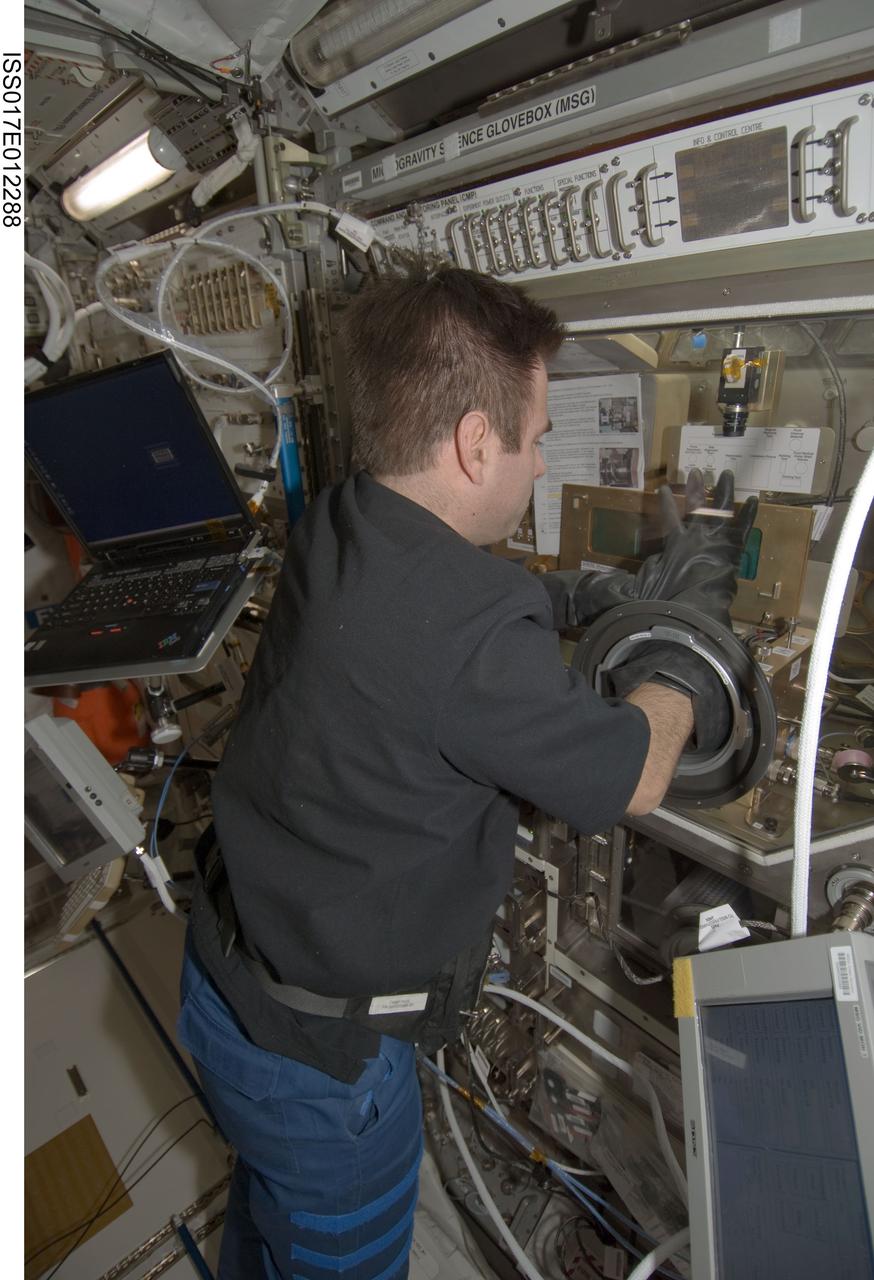
ISS017-E-012288 (31 July 2008) --- NASA astronaut Greg Chamitoff, Expedition 17 flight engineer, works with the Shear History Extensional Rheology Experiment (SHERE) rheometer inside the Microgravity Science Glovebox (MSG) in the Columbus laboratory of the International Space Station.
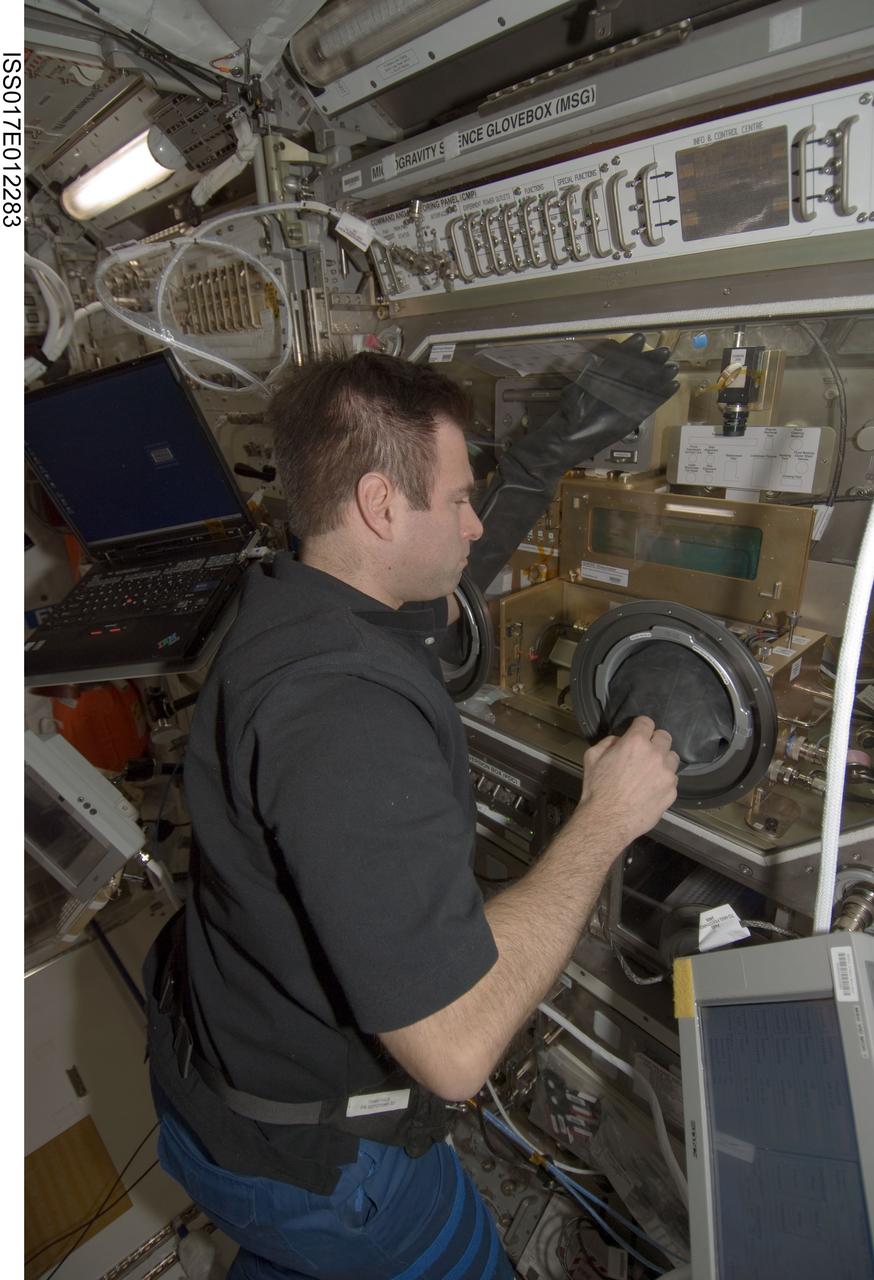
ISS017-E-012283 (31 July 2008) --- NASA astronaut Greg Chamitoff, Expedition 17 flight engineer, works with the Shear History Extensional Rheology Experiment (SHERE) rheometer inside the Microgravity Science Glovebox (MSG) in the Columbus laboratory of the International Space Station.

iss073e0178587 (June 16, 2025) --- NASA astronaut and Expedition 73 Flight Engineer Nichole Ayers conducts research operations inside the Destiny laboratory module's Microgravity Science Glovebox aboard the International Space Station. Ayers swapped syringes containing protein samples and installed test cells inside the glovebox for the Ring-Sheared Drop Interfacial Bioprocessing of Pharmaceuticals investigation that explores using surface tension to contain liquids and study proteins without contacting solid walls. Results may benefit pharmaceutical manufacturing and 3D printing techniques on and off the Earth.
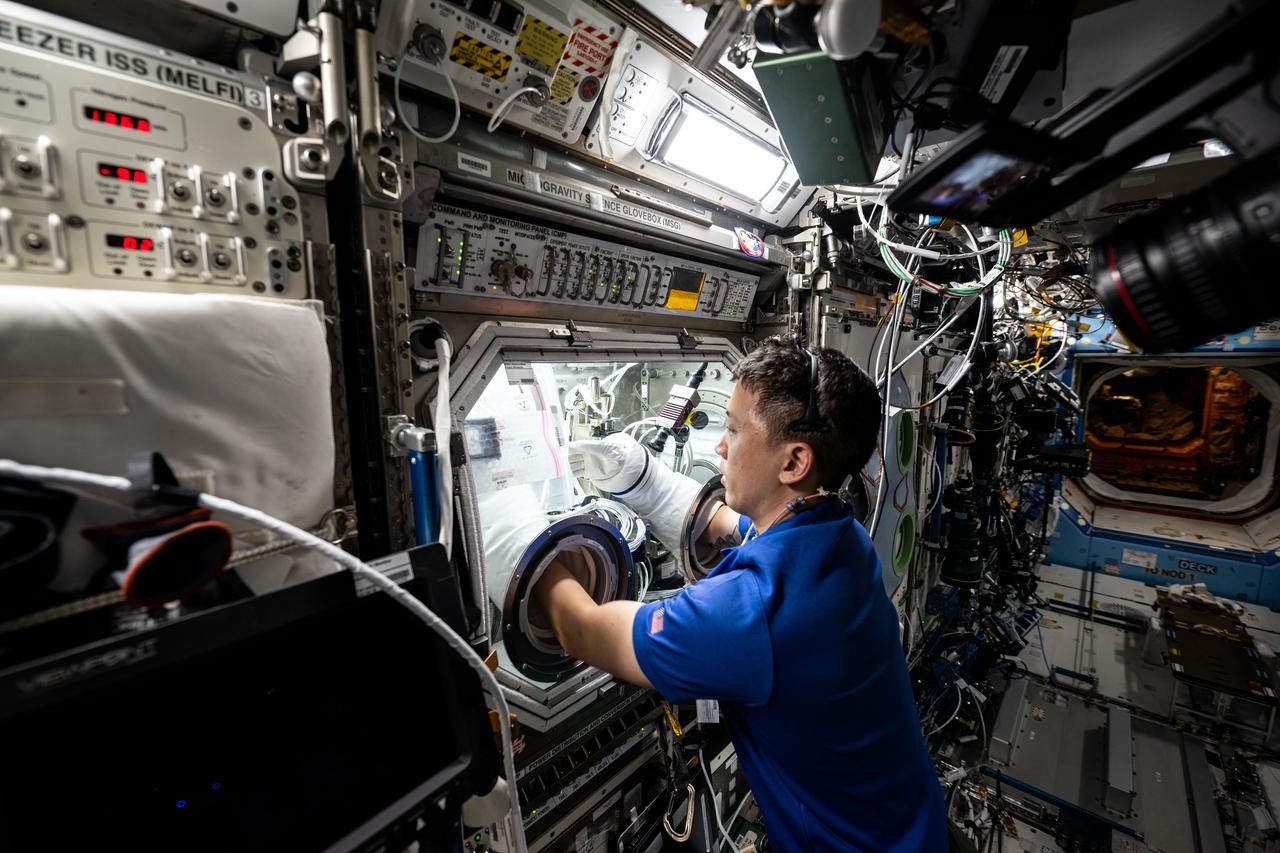
iss073e0177791 (June 12, 2025) --- NASA astronaut and Expedition 73 Flight Engineer Jonny Kim conducts research operations inside the Destiny laboratory module's Microgravity Science Glovebox aboard the International Space Station. Kim swapped syringes containing protein samples and installed test cells inside the glovebox for the Ring-Sheared Drop Interfacial Bioprocessing of Pharmaceuticals investigation that explores using surface tension to contain liquids and study proteins without contacting solid walls. Results may benefit pharmaceutical manufacturing and 3D printing techniques on and off the Earth.
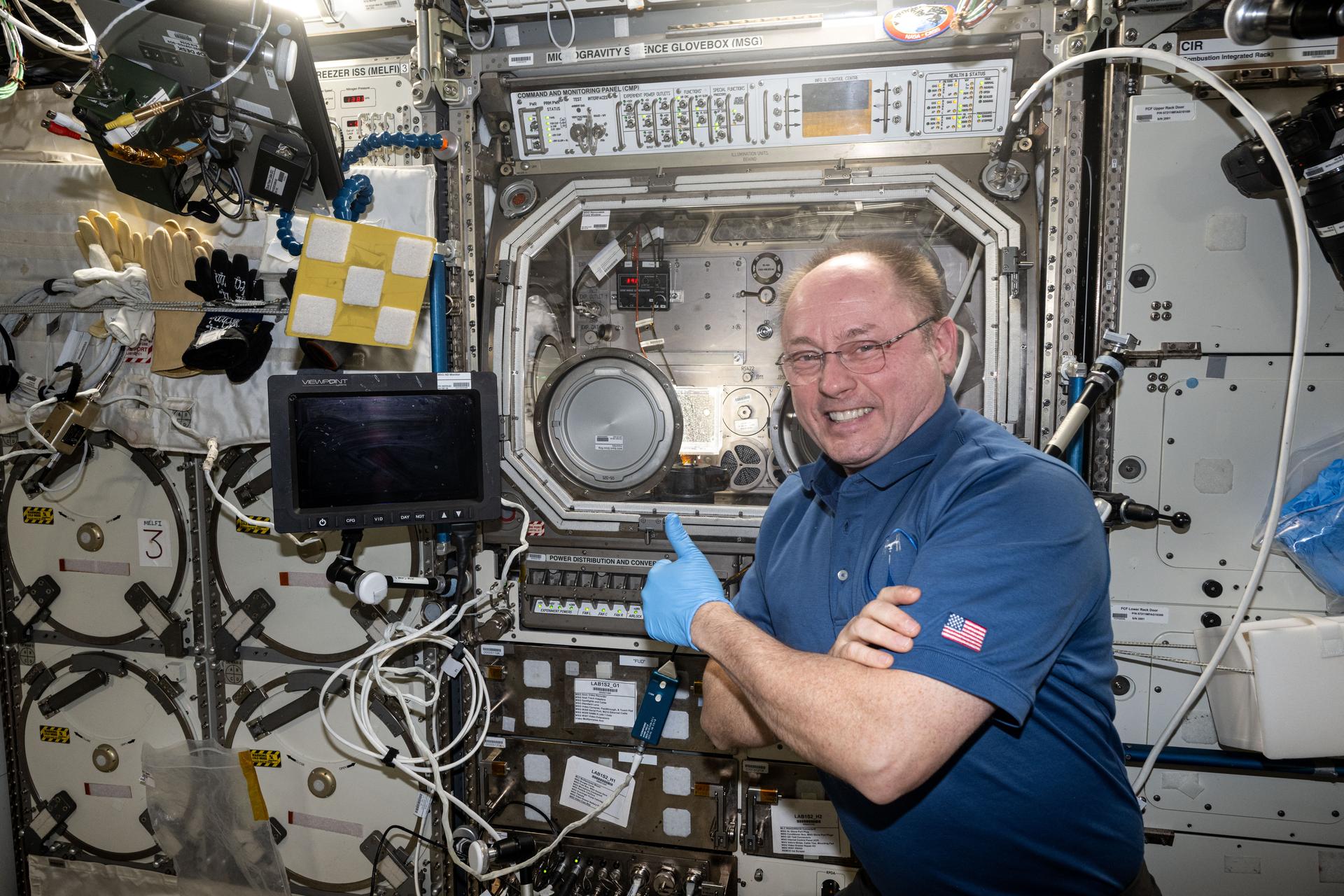
iss073e0917010 (Oct. 21, 2025) --- NASA astronaut and Expedition 73 Flight Engineer Mike Fincke gives a thumbs-up in front of the Microgravity Science Glovebox (MSG) inside the International Space Station's Destiny laboratory module. Fincke had just completed research operations for the Fluid Particles experiment, which helps researchers understand how particles in a liquid interface come together to form larger structures or clusters in microgravity. Results could advance fire suppression, lunar dust control, and plant growth in space. Earth benefits may include insights into pollen behavior, algae blooms, plastic pollution, and sea salt transfer during storms.
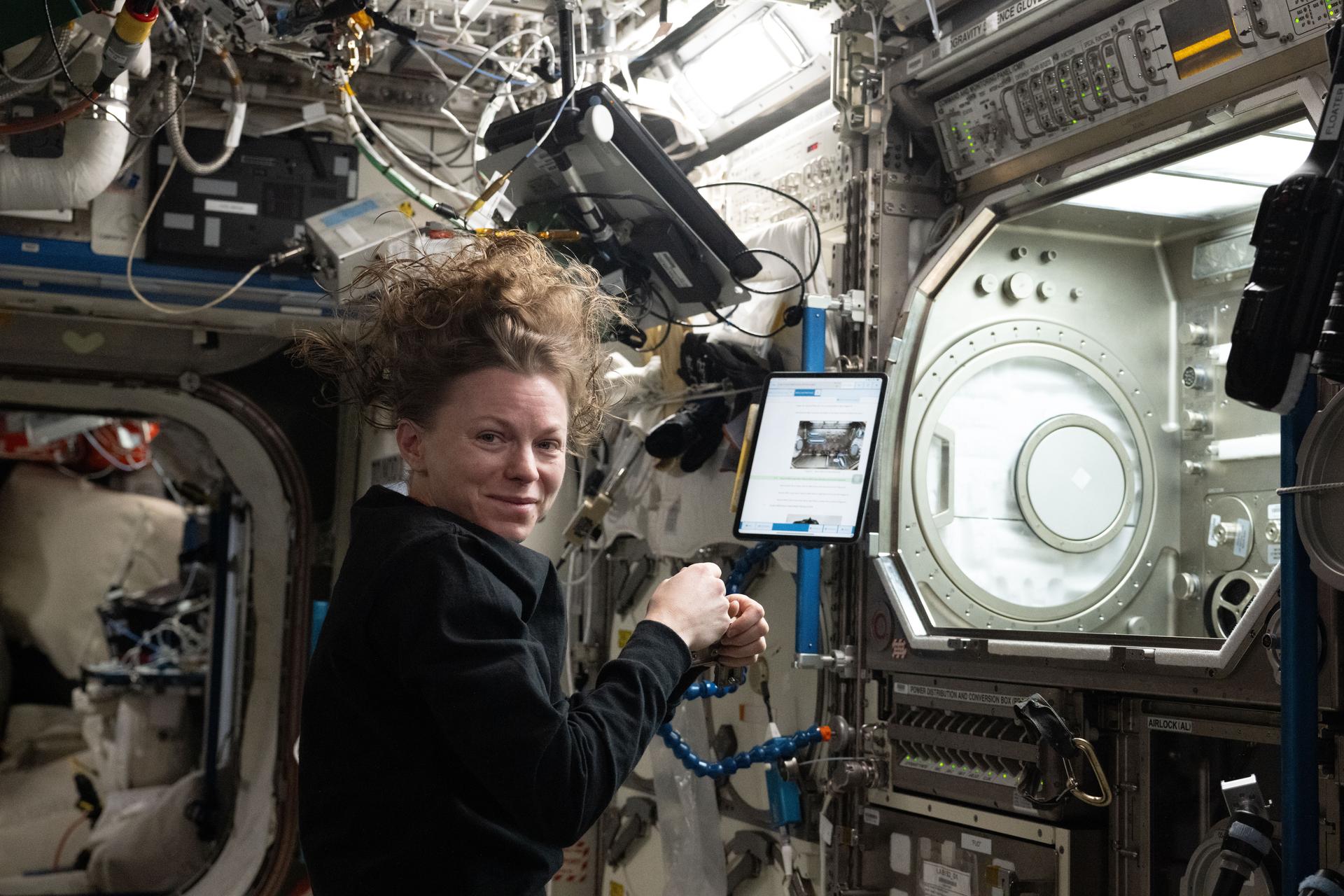
iss073e0886460 (Oct. 20, 2025) --- NASA astronaut and Expedition 73 Flight Engineer Zena Cardman installs research hardware inside the Destiny laboratory module’s Microgravity Science Glovebox. The equipment supports the Fluid Particles experiment, which helps researchers understand how particles in a liquid interface come together to form larger structures or clusters in microgravity. Results could advance fire suppression, lunar dust control, and plant growth in space. Earth benefits may include insights into pollen behavior, algae blooms, plastic pollution, and sea salt transfer during storms.
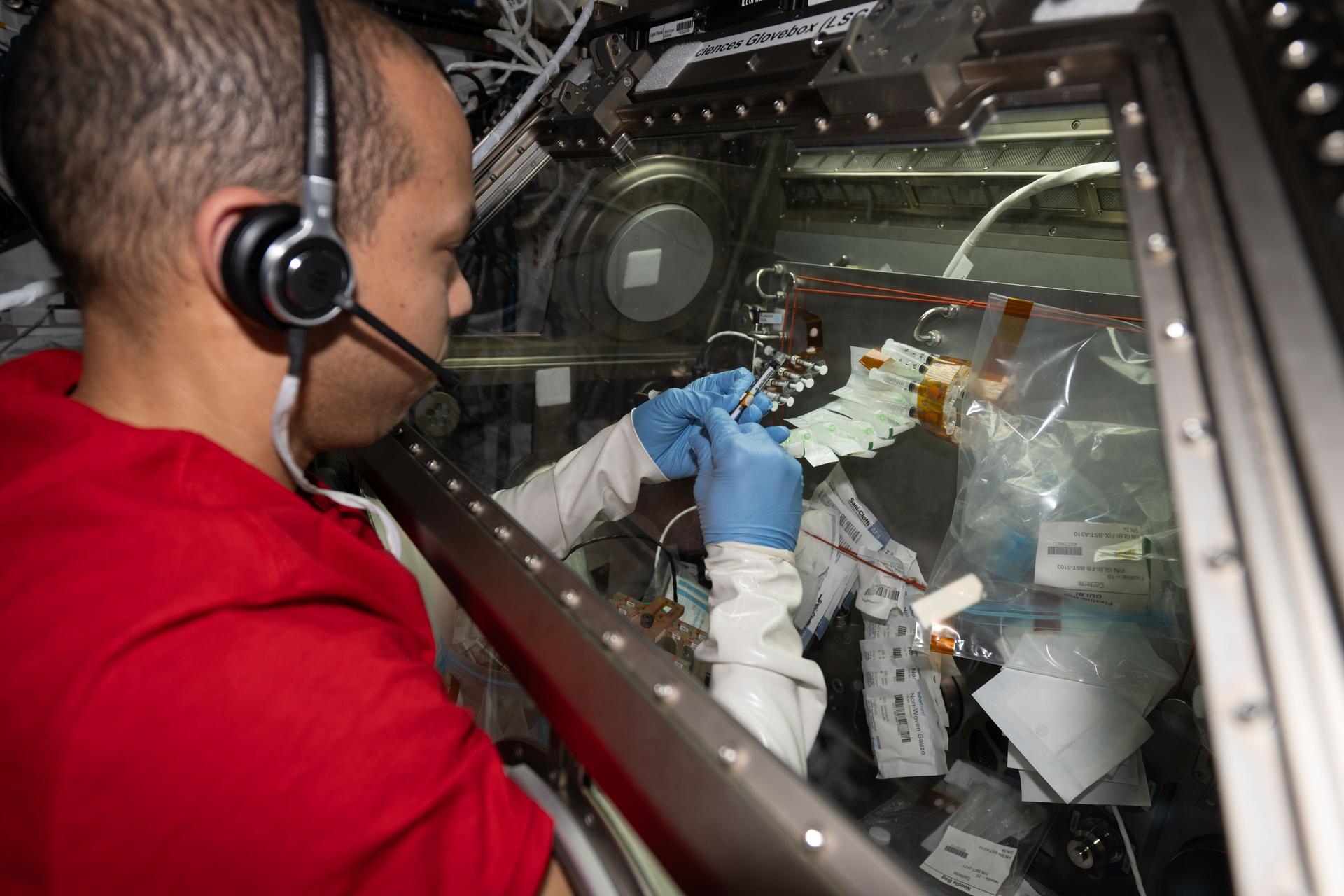
iss074e0319944 (Feb. 21, 2026) --- NASA astronaut and Expedition 74 Flight Engineer Chris Williams processes microbe samples inside the Destiny laboratory module’s Microgravity Science Glovebox aboard the International Space Station. Williams was investigating the use of ultraviolet light as a method to disinfect spacecraft surfaces, inhibit microbial growth, and protect both crew health and space hardware. Credit: ESA/Sophie Adenot

iss074e0608854 (May 27, 2026) --- NASA astronaut and Expedition 74 flight engineer Chris Williams shows off the Destiny laboratory module’s Microgravity Science Glovebox aboard the International Space Station. WIlliams was supporting semiconductor crystal research to help advance the commercial space economy and promoting Earth-based industries. Credit: NASA/Chris Williams
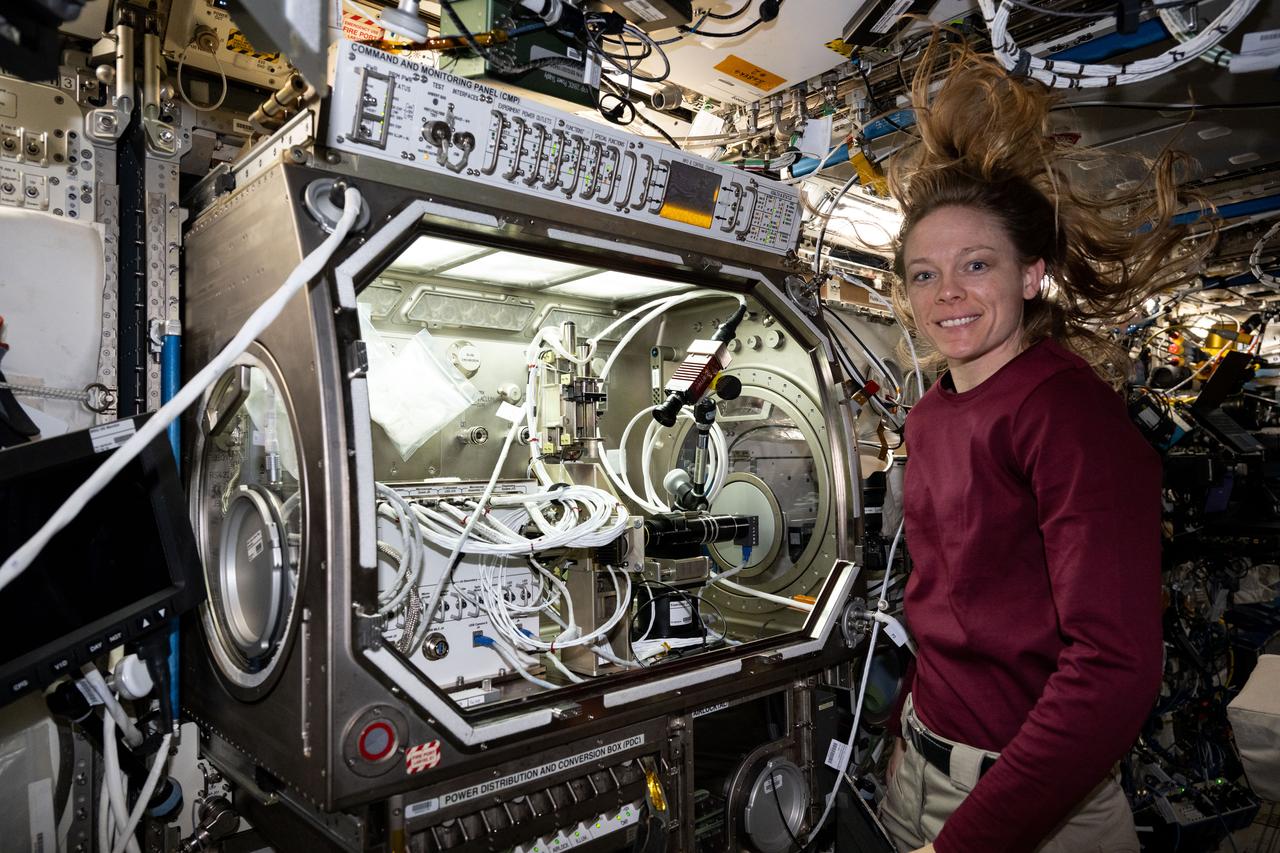
iss073e0253837 (July 1, 2025) --- NASA astronaut and Expedition 73 Flight Engineer Nichole Ayers poses for a portrait as she removes physics research hardware from inside the Microgravity Science Glovebox located inside the International Space Station's Destiny laboratory module. Ayers was completing operations with the Ring Sheared Drop investigation that may benefit pharmaceutical manufacturing techniques and 3D printing in space.
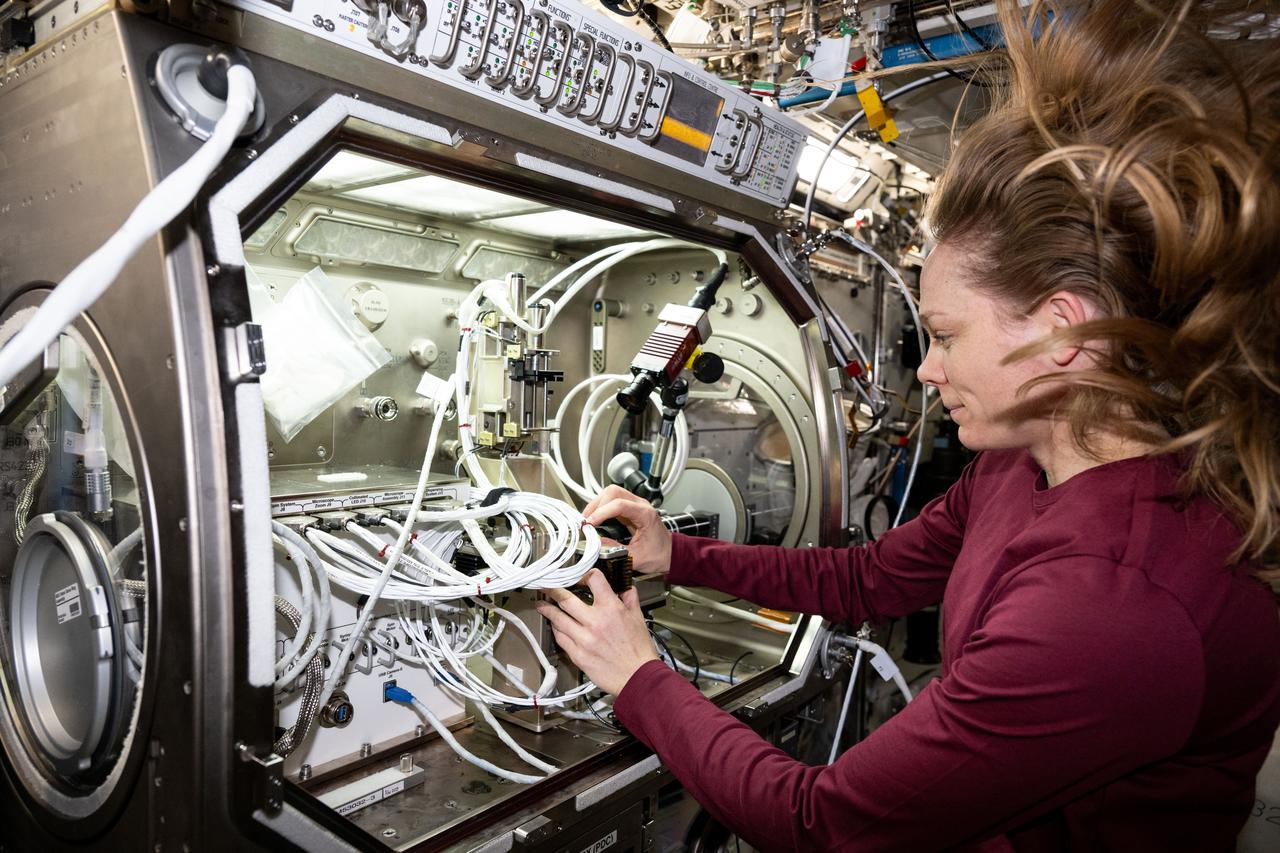
iss073e0253839 (July 1, 2025) --- NASA astronaut and Expedition 73 Flight Engineer Nichole Ayers removes physics research hardware from inside the Microgravity Science Glovebox located inside the International Space Station's Destiny laboratory module. Ayers was completing operations with the Ring Sheared Drop investigation that may benefit pharmaceutical manufacturing techniques and 3D printing in space.
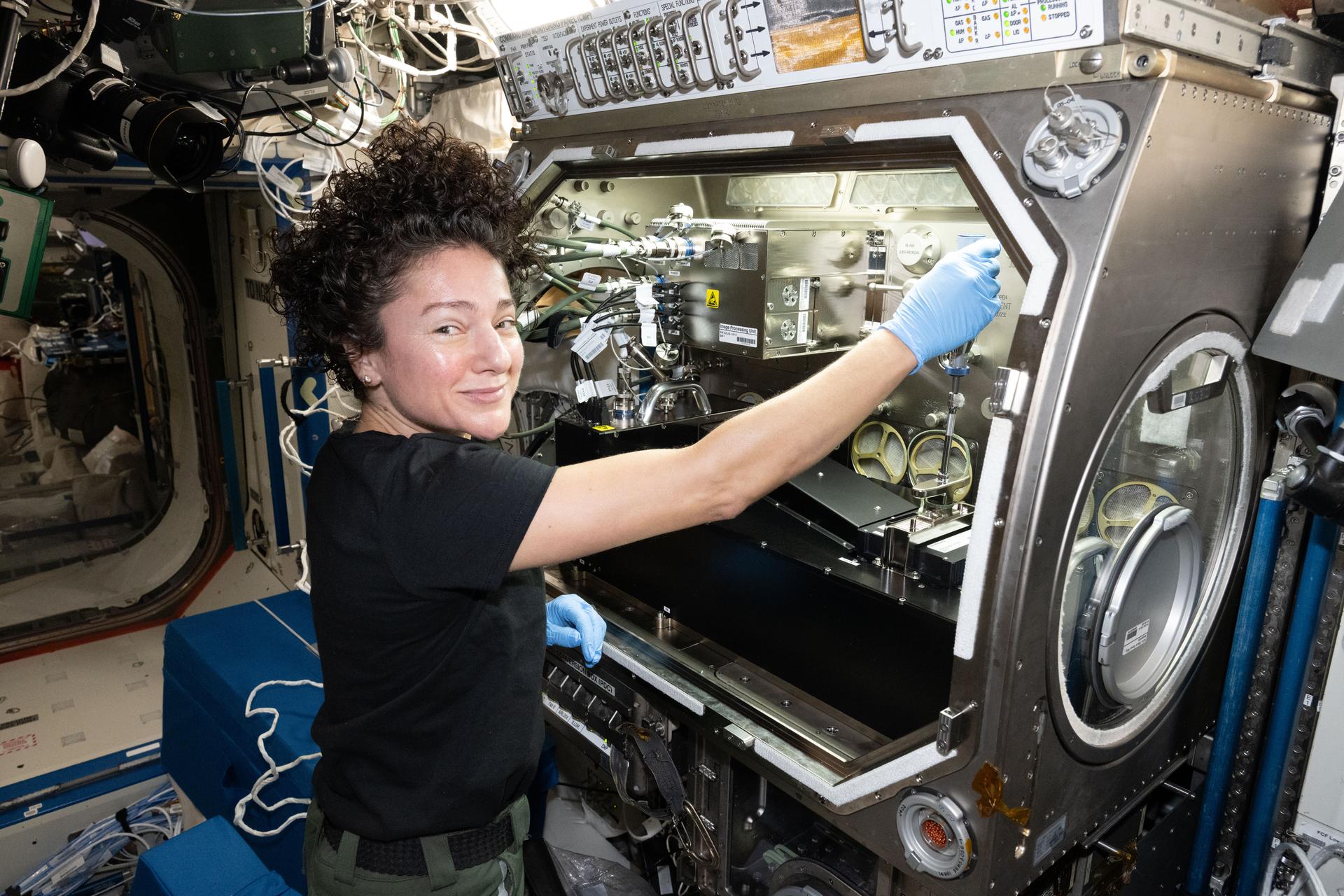
iss074e0541212 (April 29, 2026) --- NASA astronaut and Expedition 74 flight engineer Jessica Meir configures research gear inside the Destiny laboratory module's Microgravity Science Glovebox aboard the International Space Station. Meir was exploring how weightlessness affects tiny particles floating in a gelatin-like substance, known as a colloidal solid. Results may lead to advanced manufacturing techniques leading to new medicines, better food textures, and improved personal care products on Earth and in space. Credit: NASA/Jessica Meir
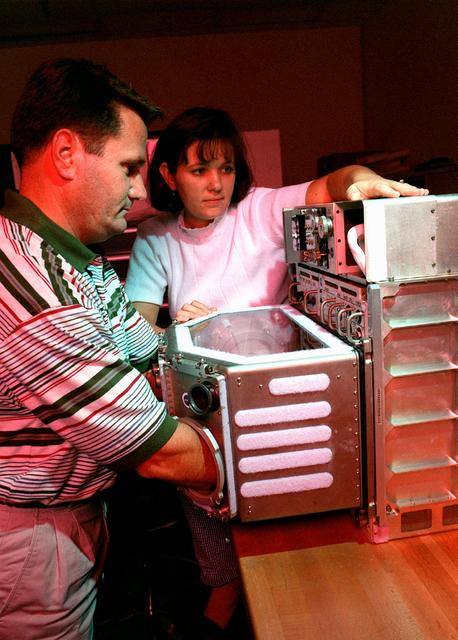
Mary-Etta Wright and Dornie McCaghren with Russia's Mir Flight Glovebox.
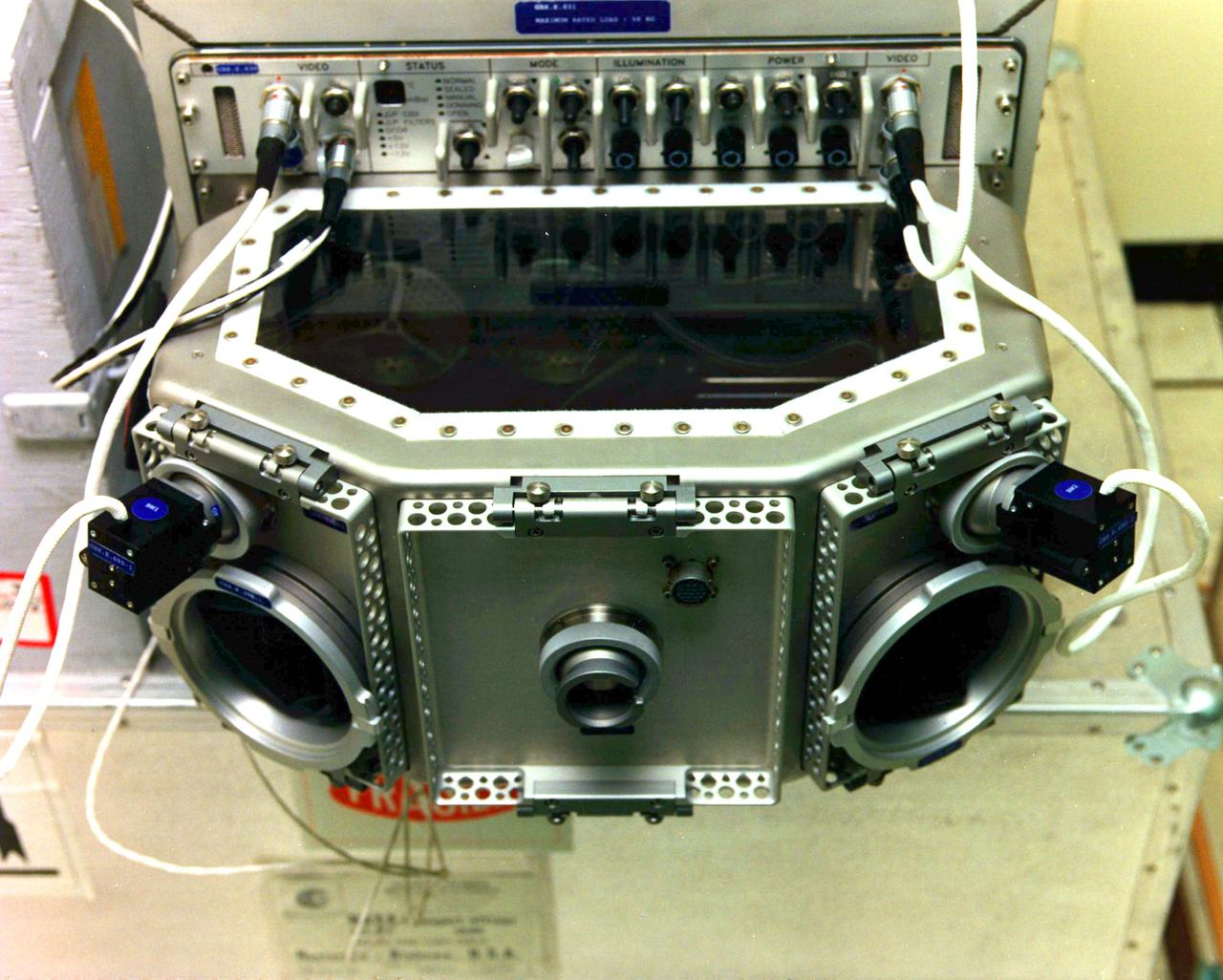
The USML-1 Glovebox (GBX) is a multi-user facility supporting 16 experiments in fluid dynamics, combustion sciences, crystal growth, and technology demonstration. The GBX has an enclosed working space which minimizes the contamination risks to both Spacelab and experiment samples. The GBX supports four charge-coupled device (CCD) cameras (two of which may be operated simultaneously) with three black-and-white and three color camera CCD heads available. The GBX also has a backlight panel, a 35 mm camera, and a stereomicroscope that offers high-magnification viewing of experiment samples. Video data can also be downlinked in real-time. The GBX also provides electrical power for experiment hardware, a time-temperature display, and cleaning supplies.
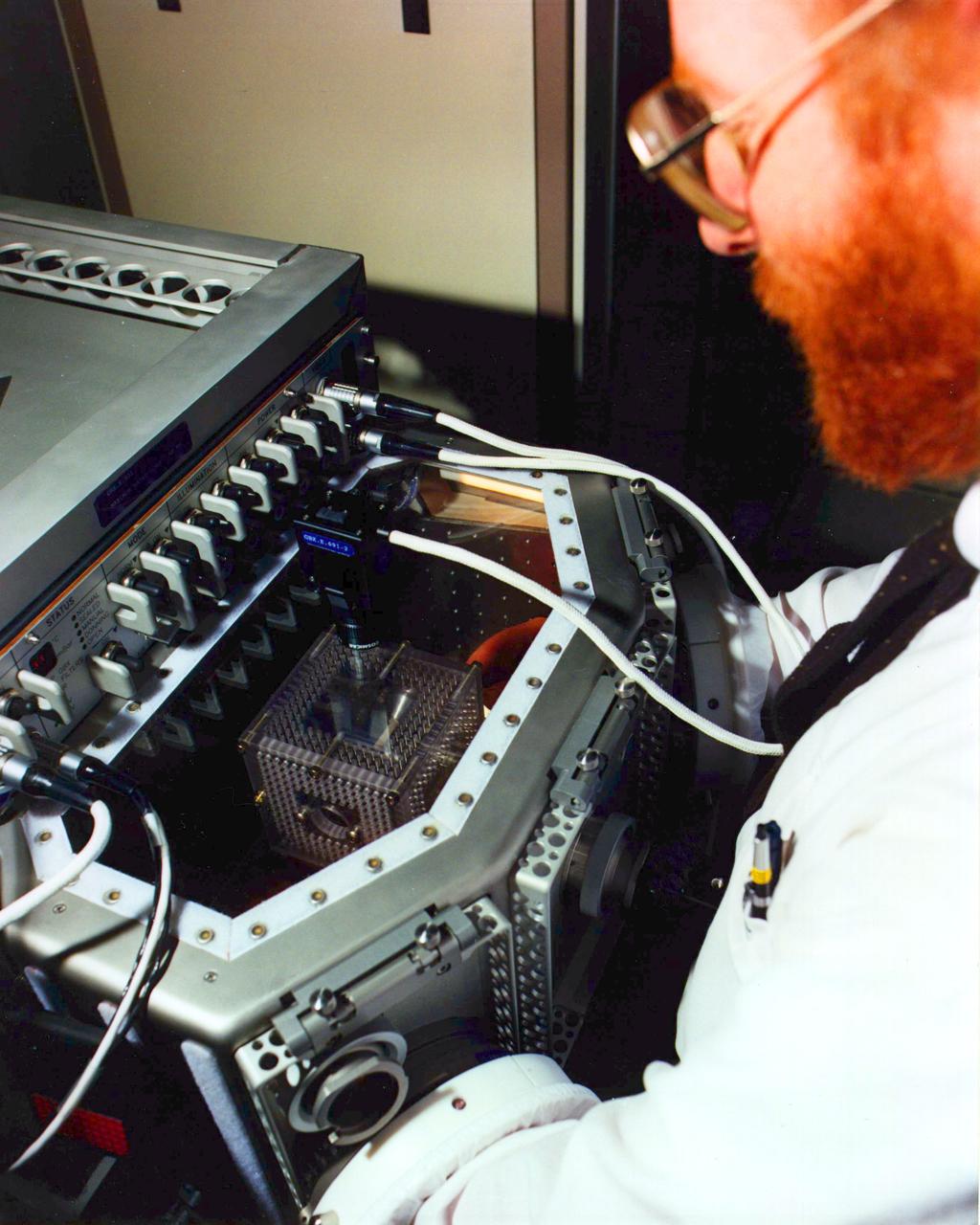
USML-1, Howard Ross working with the Glovebox Module
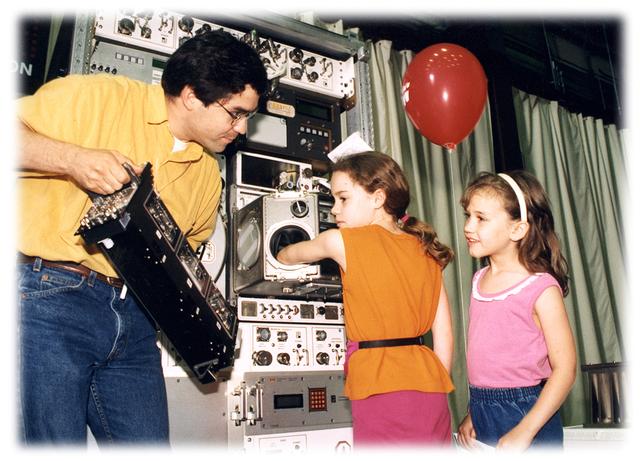
Glovebox Systems Engineer, Sam Ortega, explains how the microgravity glovebox works to 2 young MSFC Open House visitors.
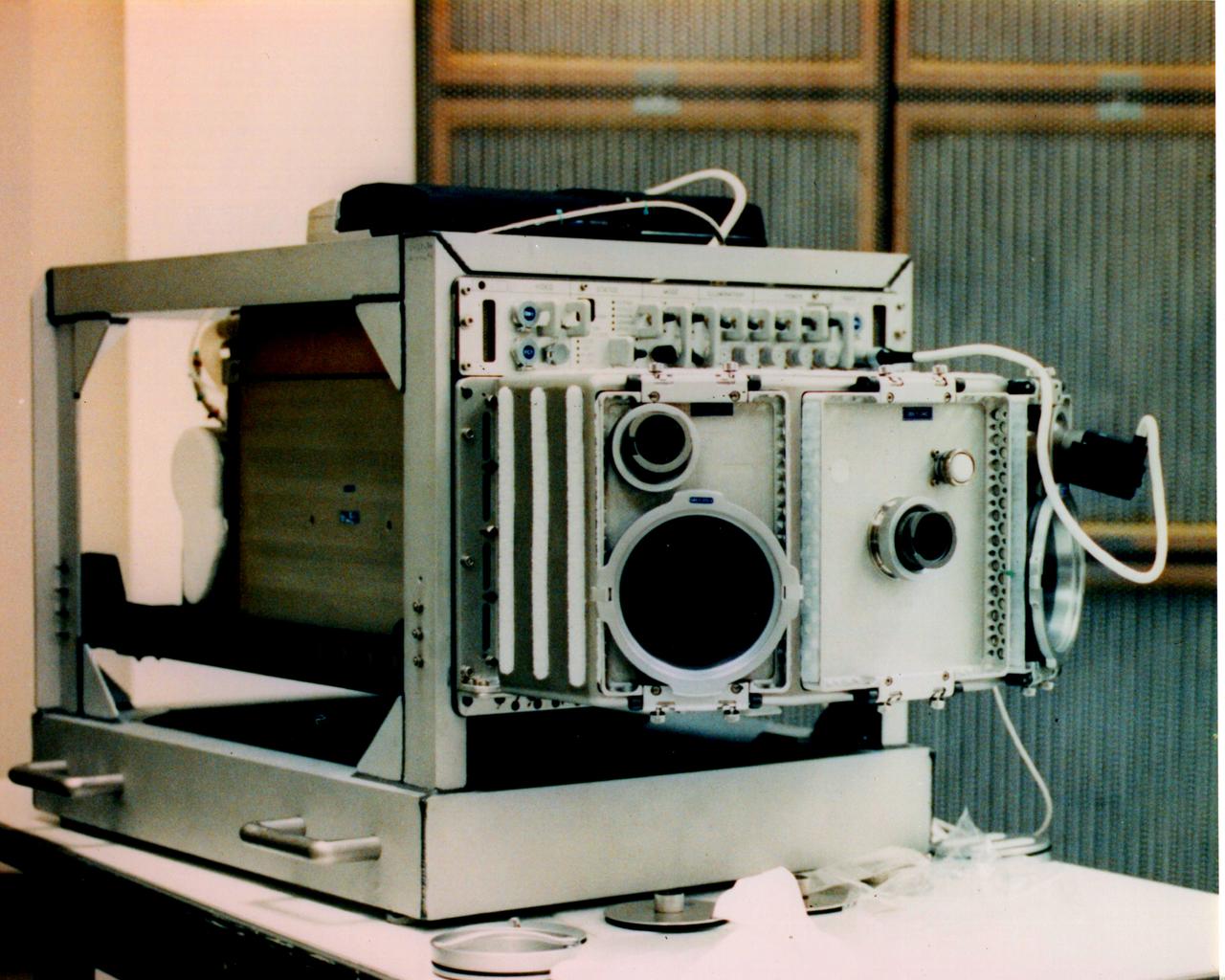
The USML-1 Glovebox (GBX) is a multi-user facility supporting 16 experiments in fluid dynamics, combustion sciences, crystal growth, and technology demonstration. The GBX has an enclosed working space which minimizes the contamination risks to both Spacelab and experiment samples. The GBX supports four charge-coupled device (CCD) cameras (two of which may be operated simultaneously) with three black-and-white and three color camera CCD heads available. The GBX also has a backlight panel, a 35 mm camera, and a stereomicroscope that offers high-magnification viewing of experiment samples. Video data can also be downlinked in real-time. The GBX also provides electrical power for experiment hardware, a time-temperature display, and cleaning supplies.

Larry DeLucas operating USML-1 Glovebox
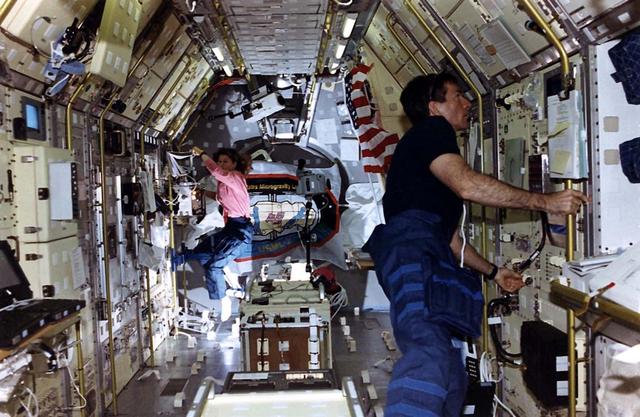
This wide view gives an overall perspective of the working environment of five astronauts and two guest researchers for 16 days in Earth-orbit. At work in support of the U.S. Microgravity Laboratory (USML-2) mission in this particular scene are astronaut Catherine G. Coleman, who busies herself at the glovebox, and payload specialist Fred. W. Leslie, monitoring the Surface-Tension-Driven Convection Experiment (STDCE).
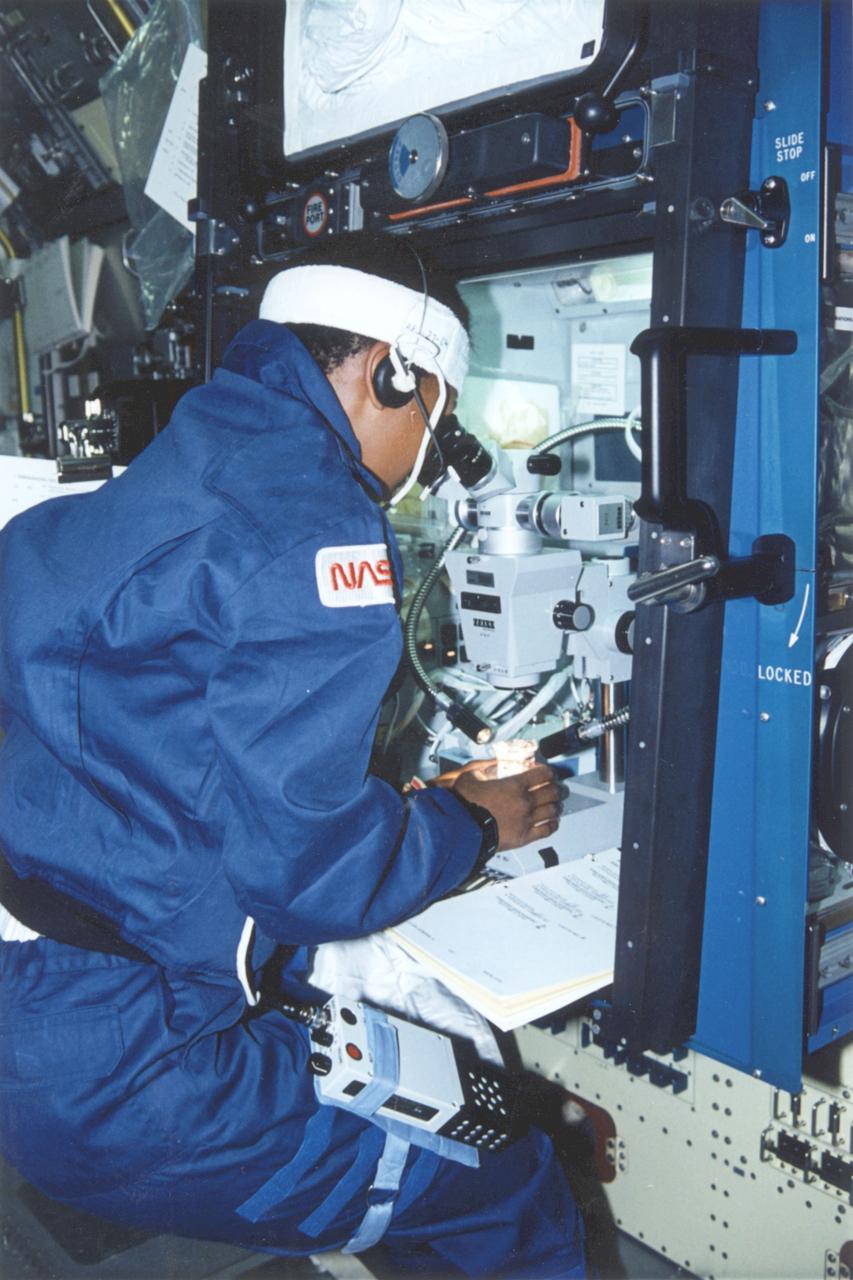
Astronaut Mae Jemison using the Glovebox microscope onboard STS-47.
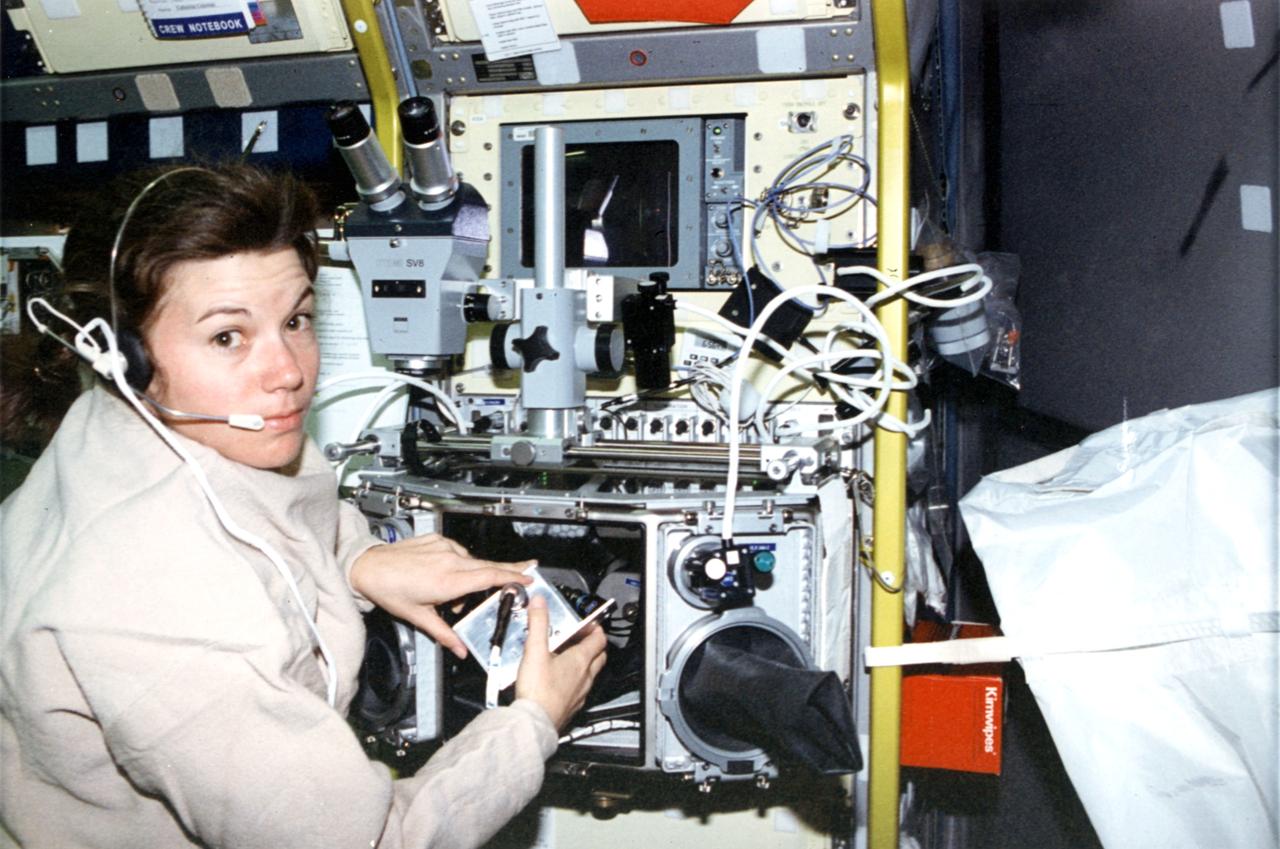
STS-73 crewmember with the Glovebox
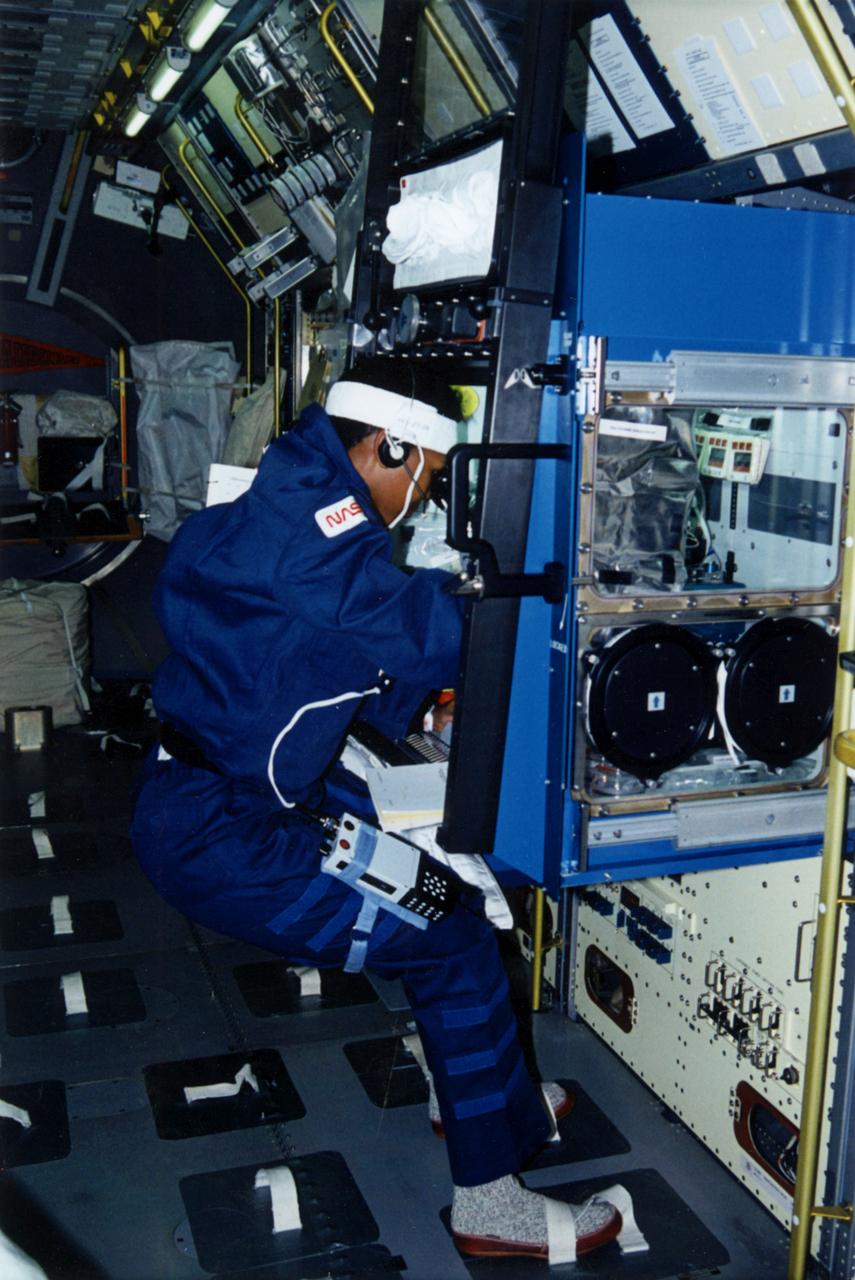
Astronaut Mae Jemison working on Glovebox experiment.
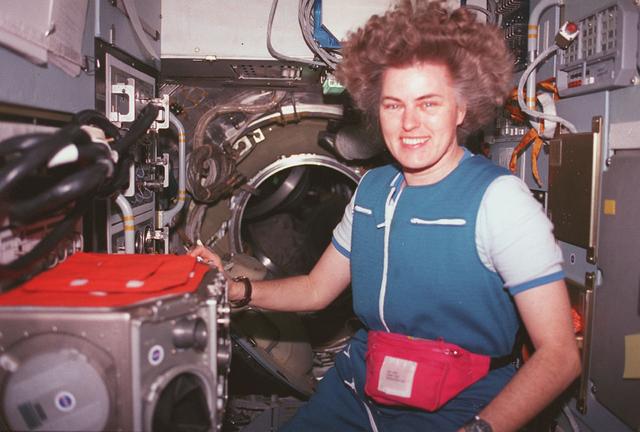
Sharnon Lucid aboard STS-79, with the Glovebox in MIR Priroda module. Priroda is the Russian word for nature.
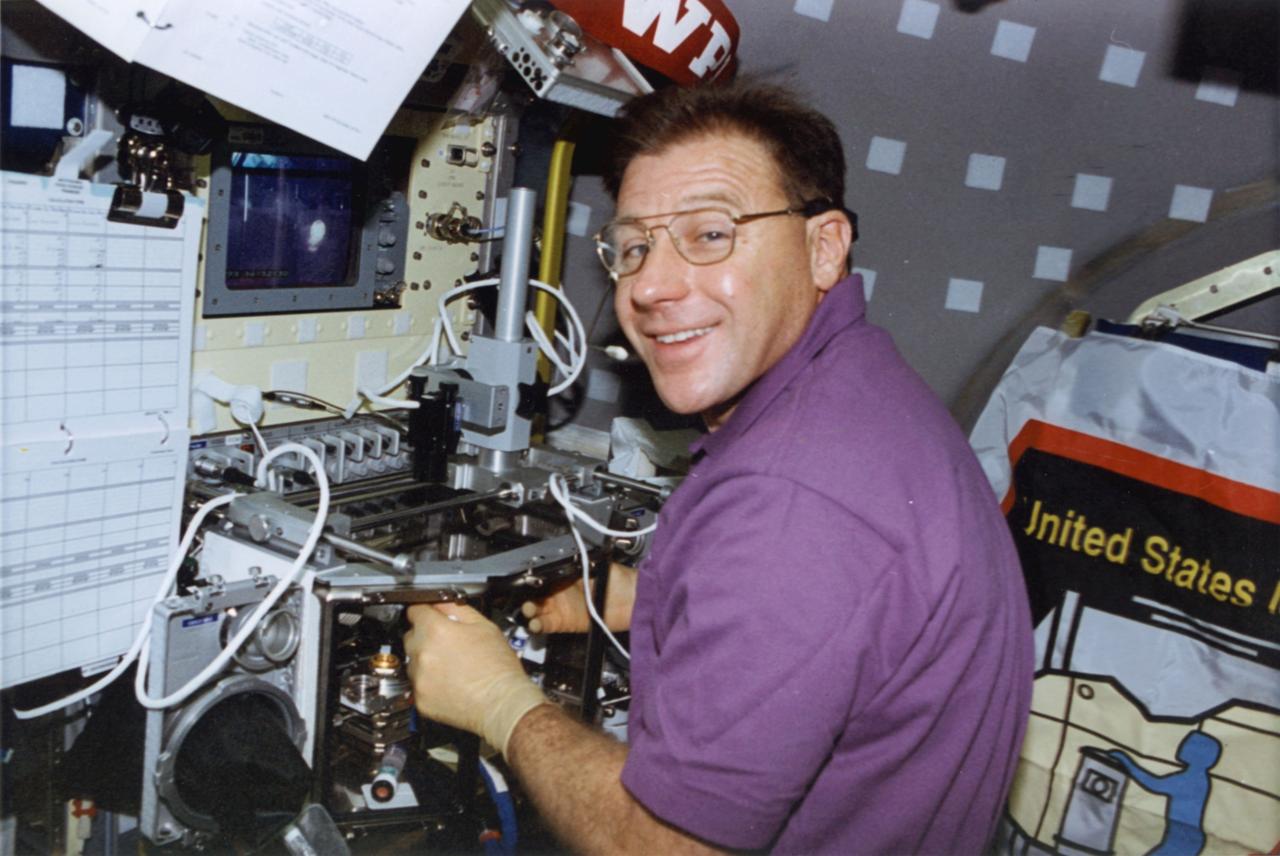
Dr. Albert Sacco with Glovebox
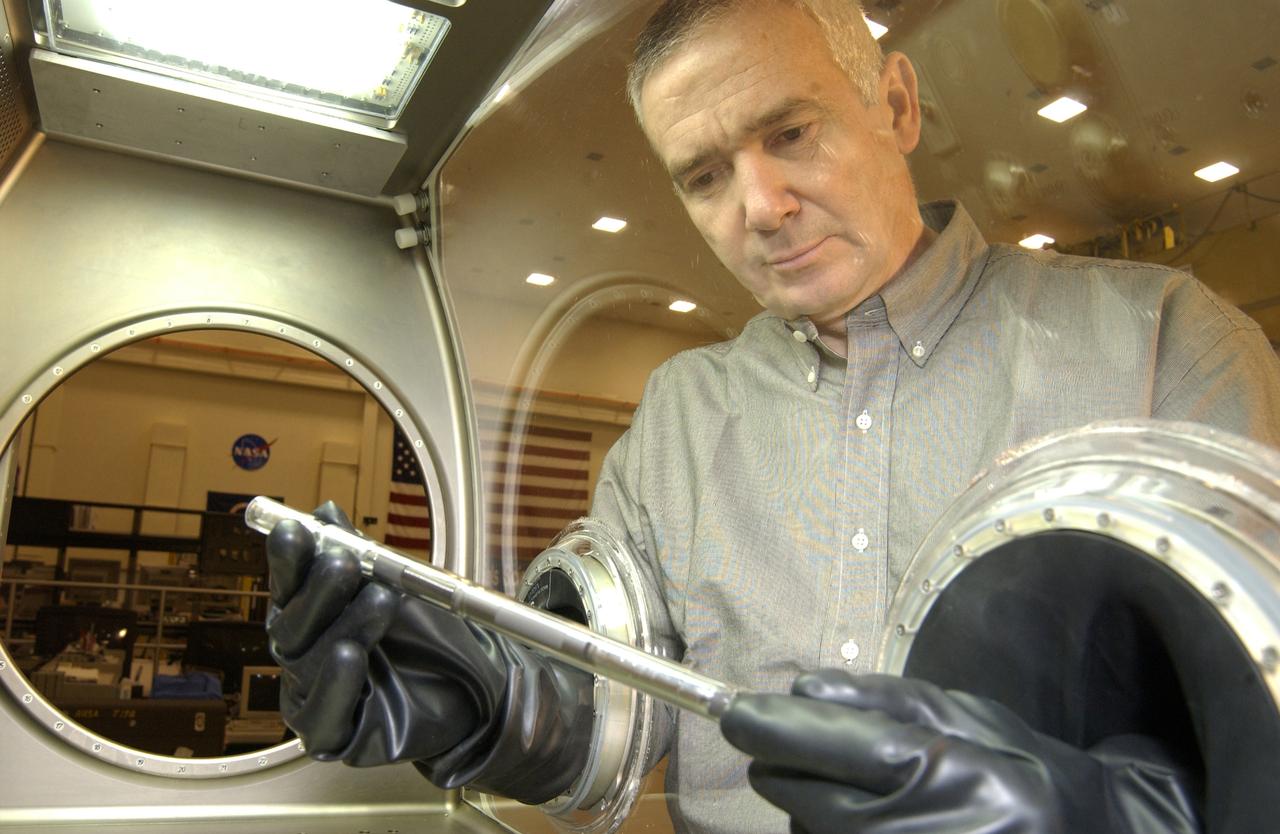
One of the first materials science experiments on the International Space Station -- the Solidification Using a Baffle in Sealed Ampoules (SUBSA) -- will be conducted during Expedition Five inside the Microgravity Science Glovebox. The glovebox is the first dedicated facility delivered to the Station for microgravity physical science research, and this experiment will be the first one operated inside the glovebox. The glovebox's sealed work environment makes it an ideal place for the furnace that will be used to melt semiconductor crystals. Astronauts can change out samples and manipulate the experiment by inserting their hands into a pair of gloves that reach inside the sealed box. Dr. Aleksandar Ostrogorsky, a materials scientist from the Rensselaer Polytechnic Institute, Troy, N.Y., and the principal investigator for the SUBSA experiment, uses the gloves to examine an ampoule like the ones used for his experiment inside the glovebox's work area. The Microgravity Science Glovebox and the SUBSA experiment are managed by NASA's Marshall Space Flight Center in Huntsville, Ala.
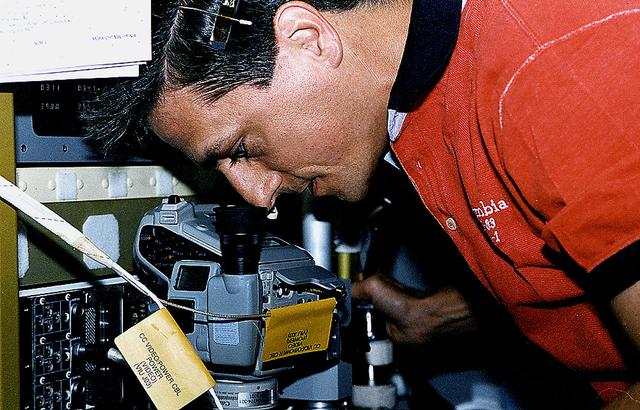
Onboard Space Shuttle Columbia (STS-94) Mission Specialist Donald A. Thomas observes an experiment in the glovebox aboard the Spacelab Science Module. Thomas is looking through an eye-piece of a camcorder and recording his observations on tape for post-flight analysis. Other cameras inside the glovebox are also recording other angles of the experiment or downlinking video to the experiment teams on the ground. The glovebox is thought of as a safety cabinet with closed front and negative pressure differential to prevent spillage and contamination and allow for manipulation of the experiment sample when its containment has to be opened for observation, microscopy and photography. Although not visible in this view, the glovebox is equipped with windows on the top and each side for these observations.
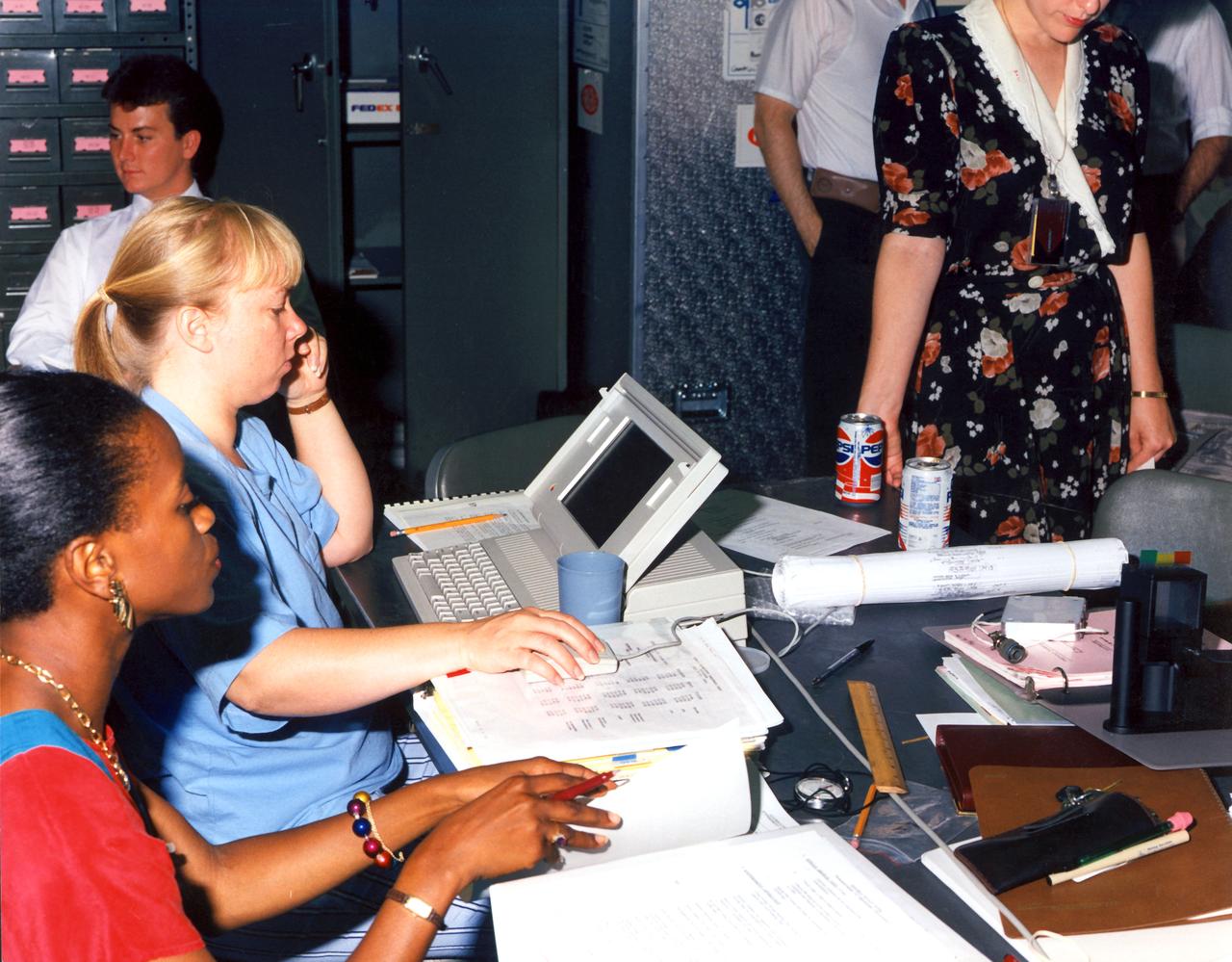
Experiment sequence test on USML-1 Glovebox equipment and test investigator group.

STS-76, Mir Glovebox and NASA-2 (Mir-21) increment. Astronaut Sharnon Lucid, Cosmonaut Yuriy-V Usachov and Flight Engineer/Cosmonaut Yuriy-I Onuufriyenko.
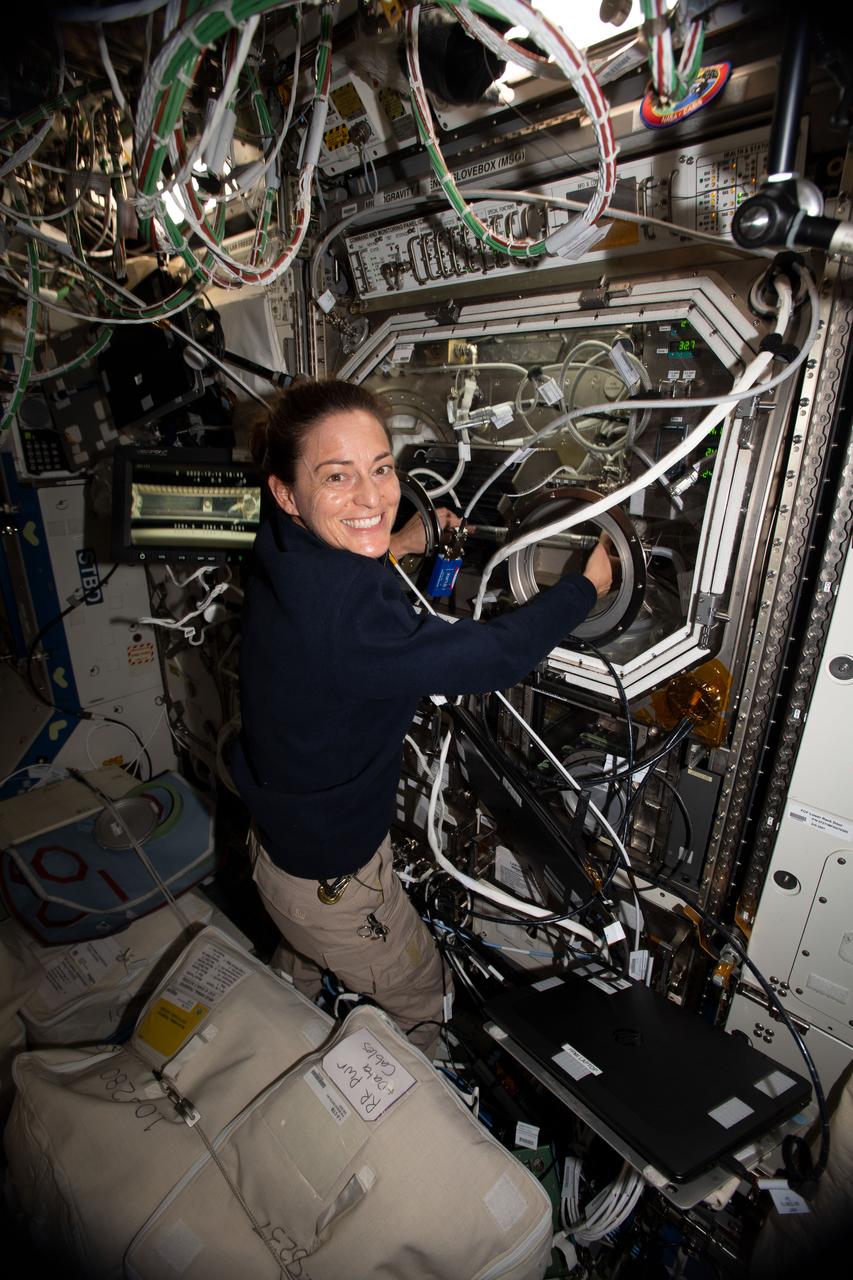
iss068e029618 (Dec. 14, 2022) --- NASA astronaut and Expedition 68 Flight Engineer Nicole Mann swaps samples inside the Microgravity Science Glovebox for a space physics study demonstrating a passive cooling system for electronic devices in microgravity.
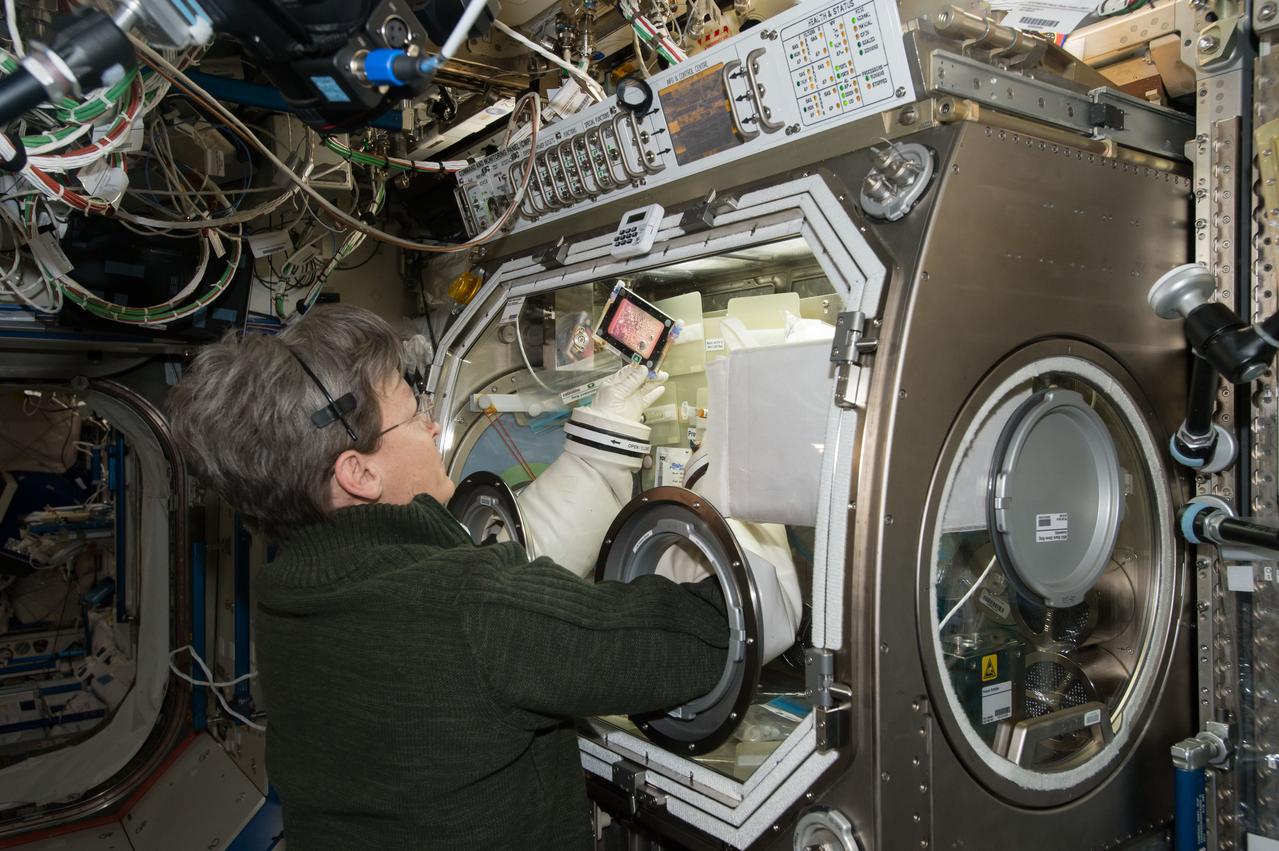
iss050e054453 (3/4/2017) --- NASA astronaut Peggy Whitson during Microgravity Expanded Stem Cells (MESC) clean up, in the Microgravity Science Glovebox (MSG). Microgravity Expanded Stem Cells observes cell growth and morphological characteristics in microgravity and analyzes gene expression profiles of cells grown in microgravity.
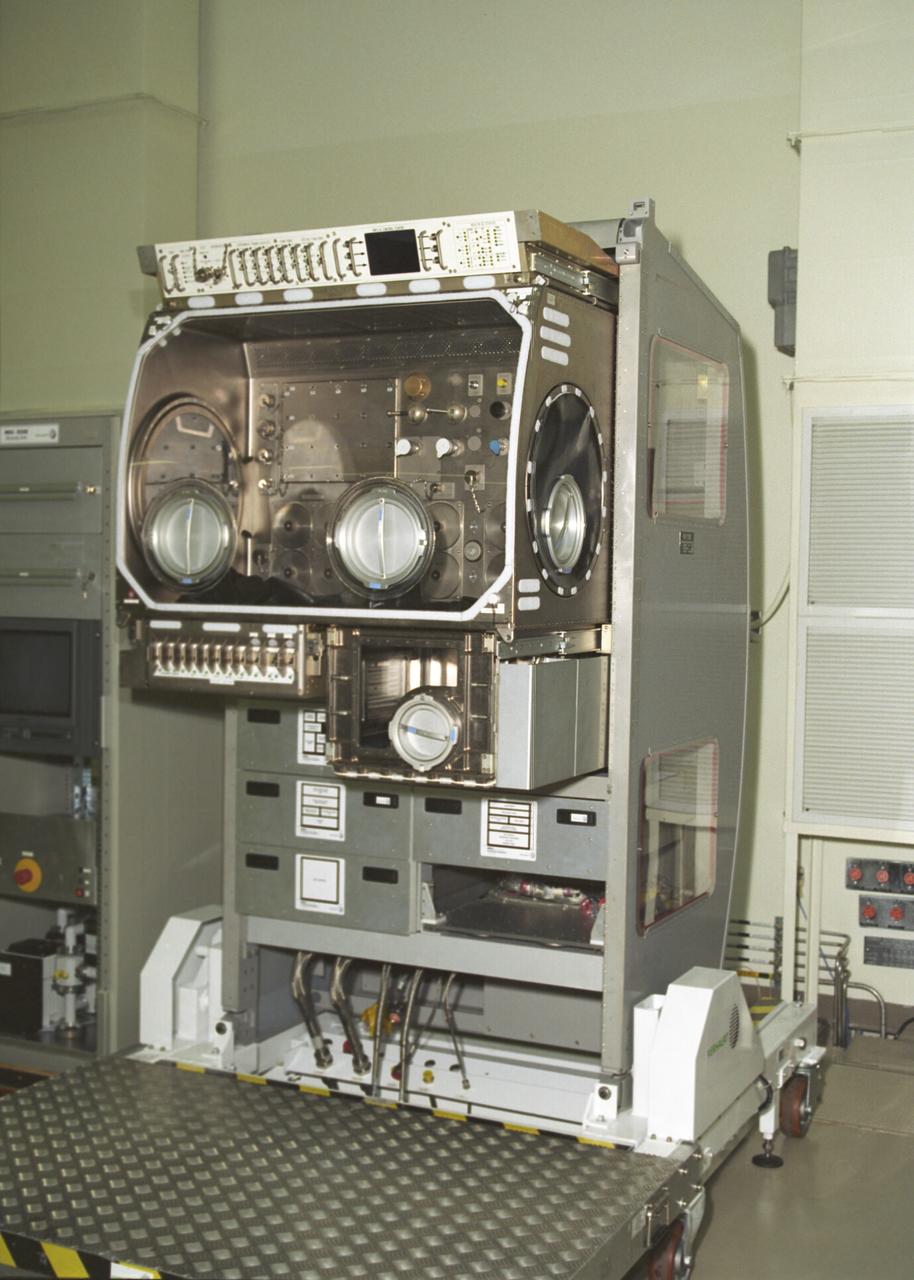
The Microgravity Science Glovebox Ground Unit, delivered to the Marshall Space Flight Center on August 30, 2002, will be used at Marshall's Microgravity Development Laboratory to test experiment hardware before it is installed in the flight glovebox aboard the International Space Station (ISS) U.S. Laboratory Module, Destiny. The glovebox is a sealed container with built in gloves on its sides and fronts that enables astronauts to work safely with experiments that involve fluids, flames, particles, and fumes that need to be safely contained.
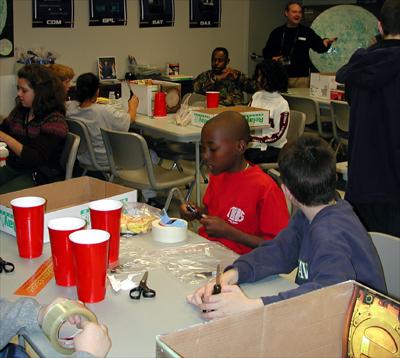
Students in the Young Astronaut Program at the Coca-Cola Space Science Center in Columbus, GA, constructed gloveboxes using the new NASA Student Glovebox Education Guide. The young astronauts used cardboard copier paper boxes as the heart of the glovebox. The paper boxes transformed into gloveboxes when the students pasted poster-pictures of an actual NASA microgravity science glovebox inside and outside of the paper boxes. The young astronauts then added holes for gloves and removable transparent top covers, which completed the construction of the gloveboxes. This image is from a digital still camera; higher resolution is not available.
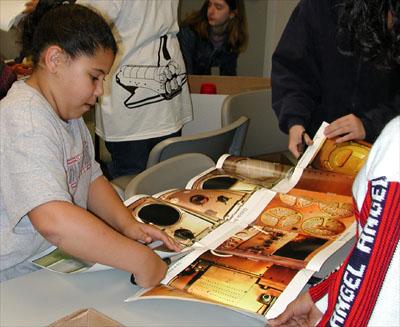
Students in the Young Astronaut Program at the Coca-Cola Space Science Center in Columbus, GA, constructed gloveboxes using the new NASA Student Glovebox Education Guide. The young astronauts used cardboard copier paper boxes as the heart of the glovebox. The paper boxes transformed into gloveboxes when the students pasted poster-pictures of an actual NASA microgravity science glovebox inside and outside of the paper boxes. The young astronauts then added holes for gloves and removable transparent top covers, which completed the construction of the gloveboxes. This image is from a digital still camera; higher resolution is not available.
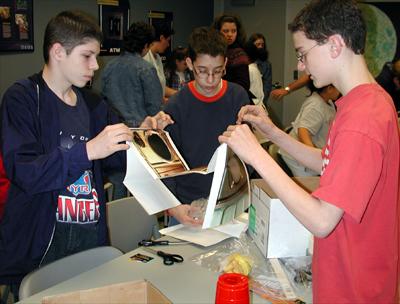
Students in the Young Astronaut Program at the Coca-Cola Space Science Center in Columbus, GA, constructed gloveboxes using the new NASA Student Glovebox Education Guide. The young astronauts used cardboard copier paper boxes as the heart of the glovebox. The paper boxes transformed into gloveboxes when the students pasted poster-pictures of an actual NASA microgravity science glovebox inside and outside of the paper boxes. The young astronauts then added holes for gloves and removable transparent top covers, which completed the construction of the gloveboxes. This image is from a digital still camera; higher resolution is not available.
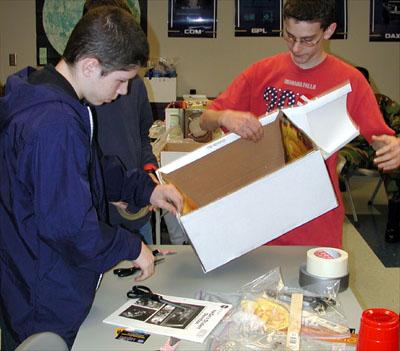
Students in the Young Astronaut Program at the Coca-Cola Space Science Center in Columbus, GA, constructed gloveboxes using the new NASA Student Glovebox Education Guide. The young astronauts used cardboard copier paper boxes as the heart of the glovebox. The paper boxes transformed into gloveboxes when the students pasted poster-pictures of an actual NASA microgravity science glovebox inside and outside of the paper boxes. The young astronauts then added holes for gloves and removable transparent top covers, which completed the construction of the gloveboxes. This image is from a digital still camera; higher resolution is not available.
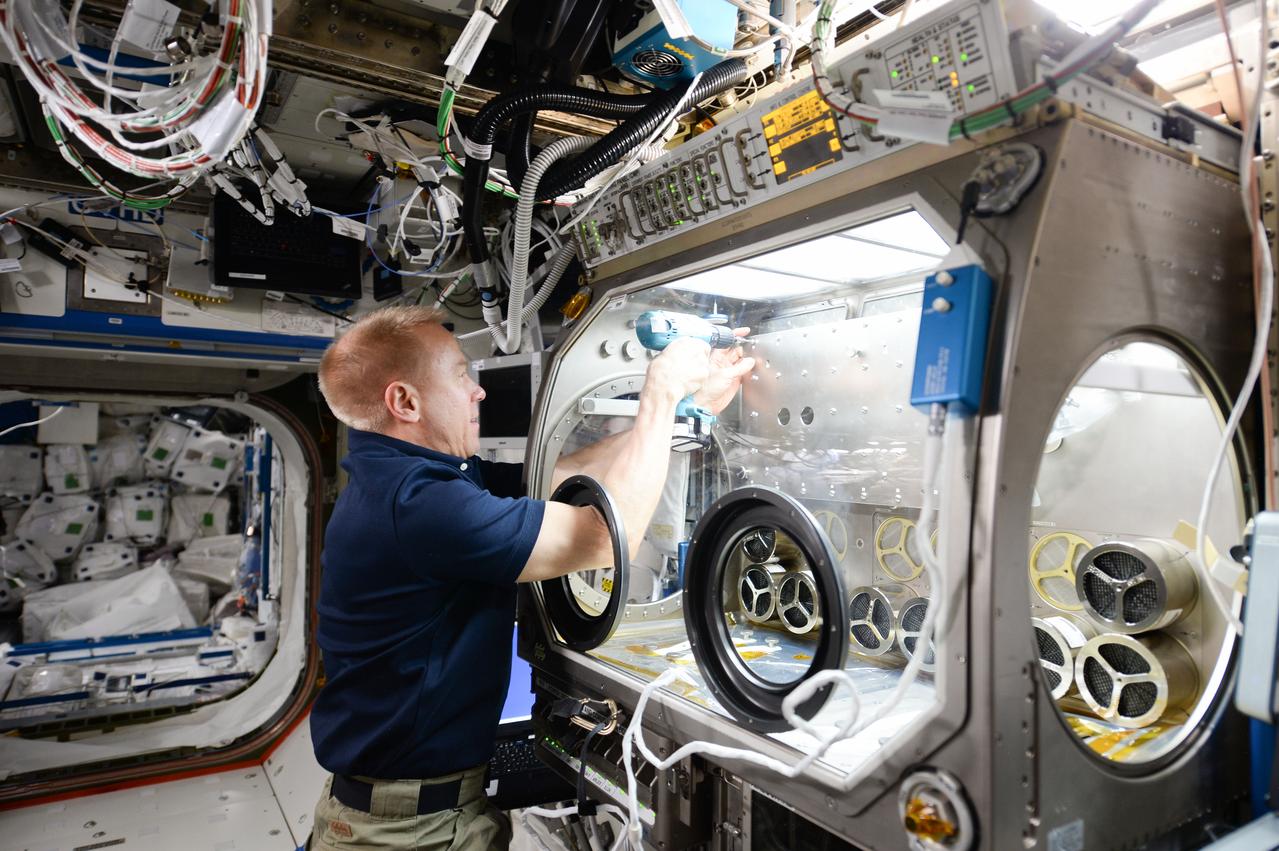
ISS047e050514 (04/07/2016) --- Expedition 47 Commander Tim Kopra configures the station’s Microgravity Science Glovebox for upcoming research operations. The glovebox is one of the major dedicated science facilities inside Destiny. It has a large front window and built-in gloves to provide a sealed environment for conducting science and technology experiments. The Glovebox is particularly suited for handling hazardous materials when the crew is present.
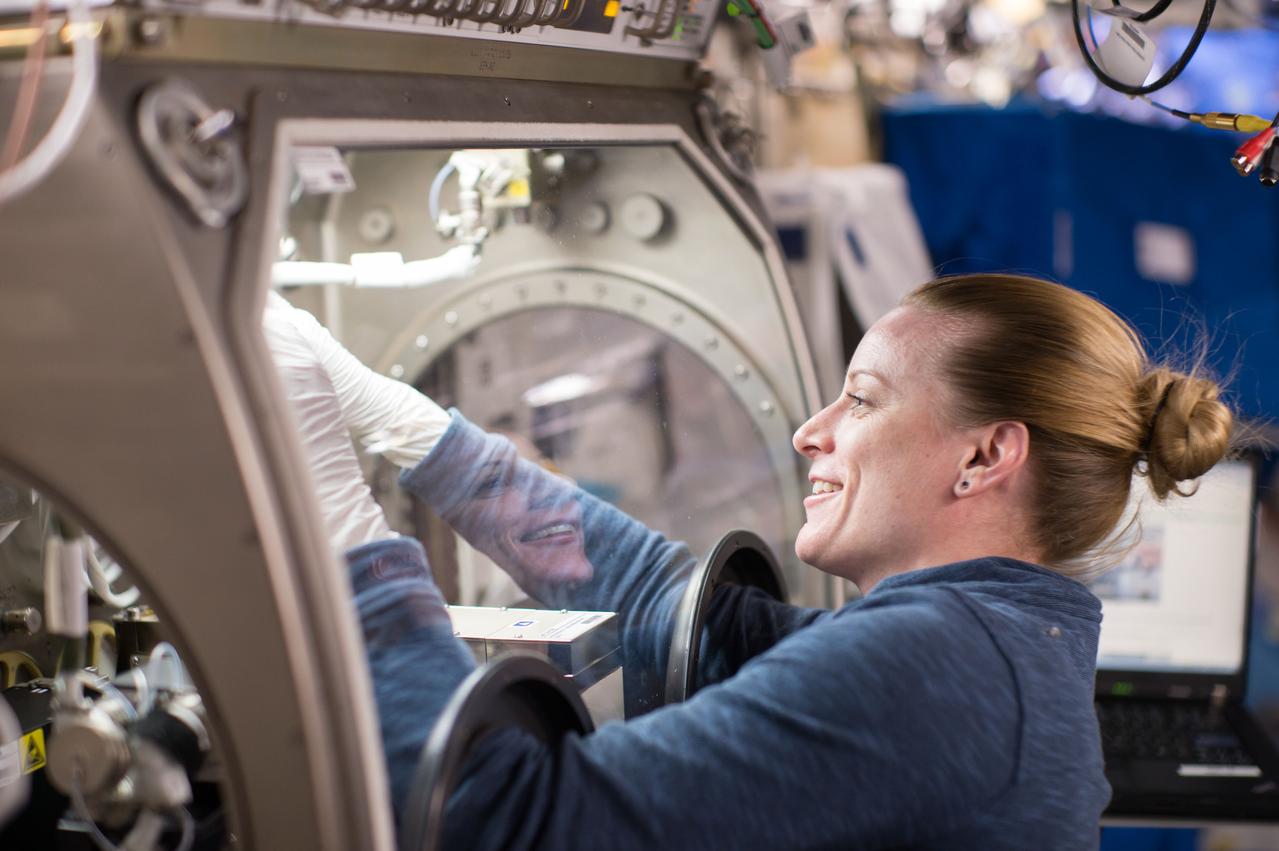
iss049e002655 (09/13/2016) --- NASA astronaut Kate Rubins, a crew member of Expedition 49 aboard the International Space Station, works on an experiment inside the station’s Microgravity Science Glovebox. The glovebox is one of the major dedicated science facilities inside the Destiny laboratory and provides a sealed environment for conducting science and technology experiments. The glovebox is particularly suited for handling hazardous materials when the crew is present.
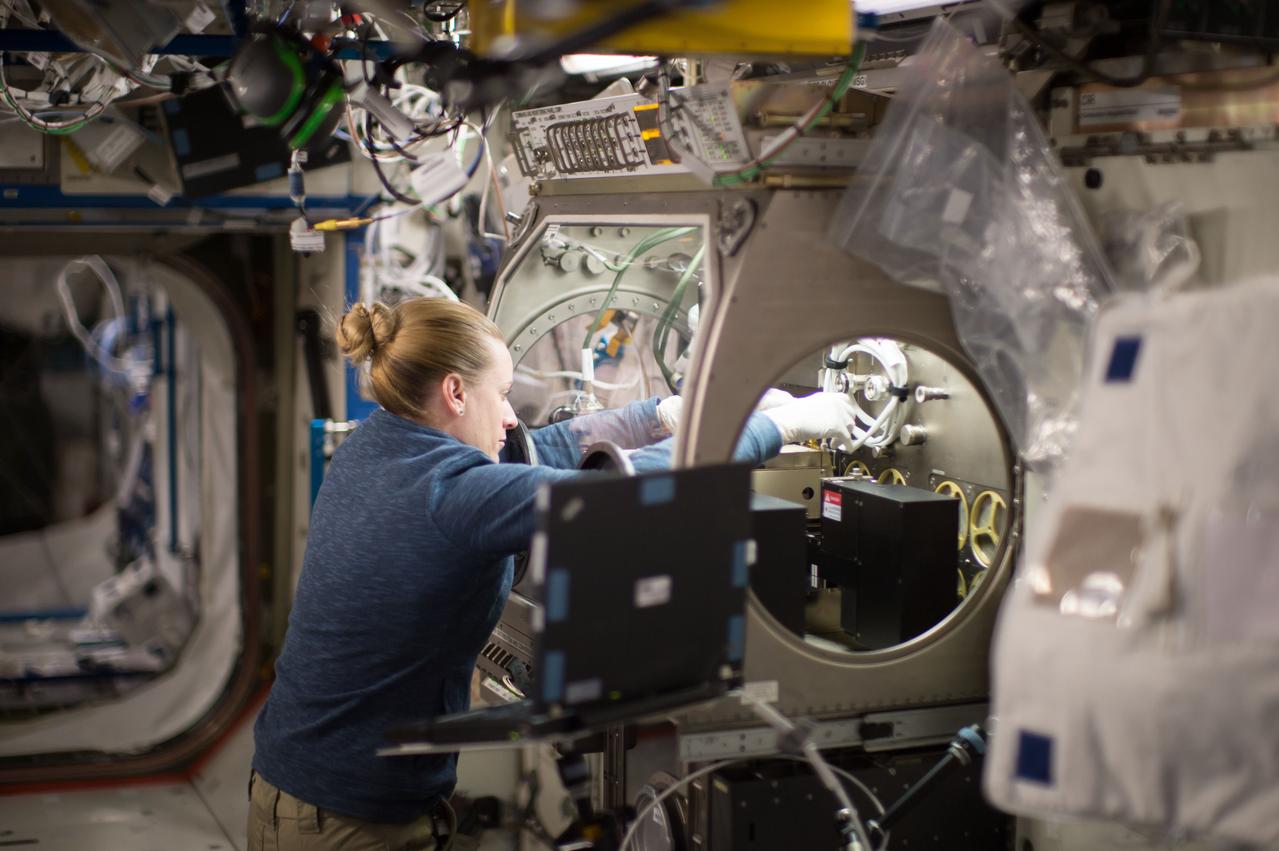
NASA astronaut Kate Rubins works on Selectable Optical Diagnostics Instrument Experiment Diffusion Coefficient Mixture-3 (SODI) DCMix-3 Installation inside the station’s Microgravity Science Glovebox. The glovebox is one of the major dedicated science facilities inside the Destiny laboratory and provides a sealed environment for conducting science and technology experiments. The glovebox is particularly suited for handling hazardous materials when the crew is present.
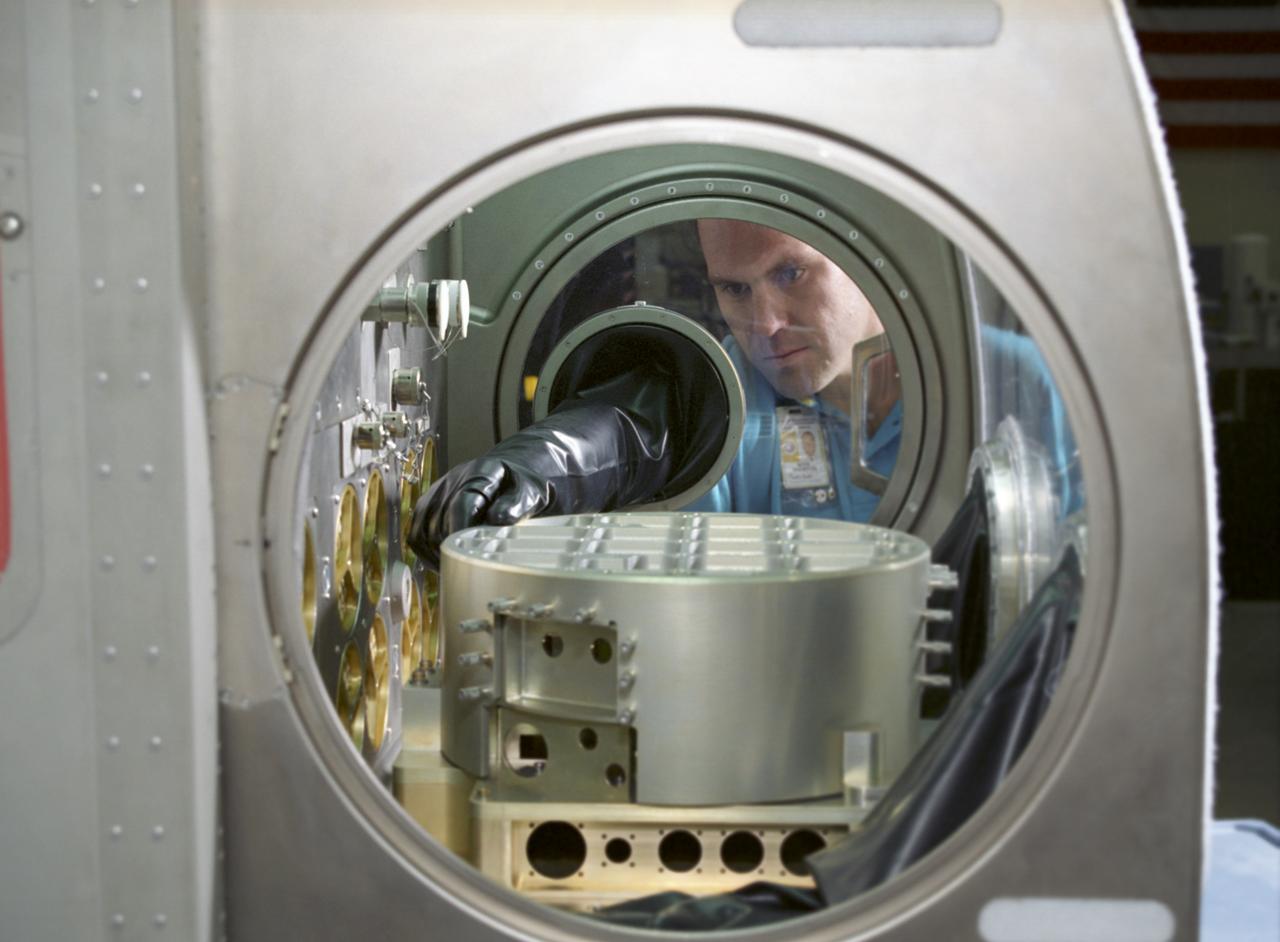
This excellent shot of Marshall Space Flight Center's (MSFC's) Mark Whorton, testing experiment hardware in the Microgravity Science Glovebox Ground Unit delivered to MSFC on August 30, 2002, reveals a close look at the components inside of the Glovebox. The unit is being used at Marshall's Microgravity Development Laboratory to test experiment hardware before it is installed in the flight Glovebox aboard the International Space Station (ISS) U.S. Laboratory Module, Destiny. The glovebox is a sealed container with built in gloves on its sides and fronts that enables astronauts to work safely with experiments that involve fluids, flames, particles, and fumes that need to be safely contained.
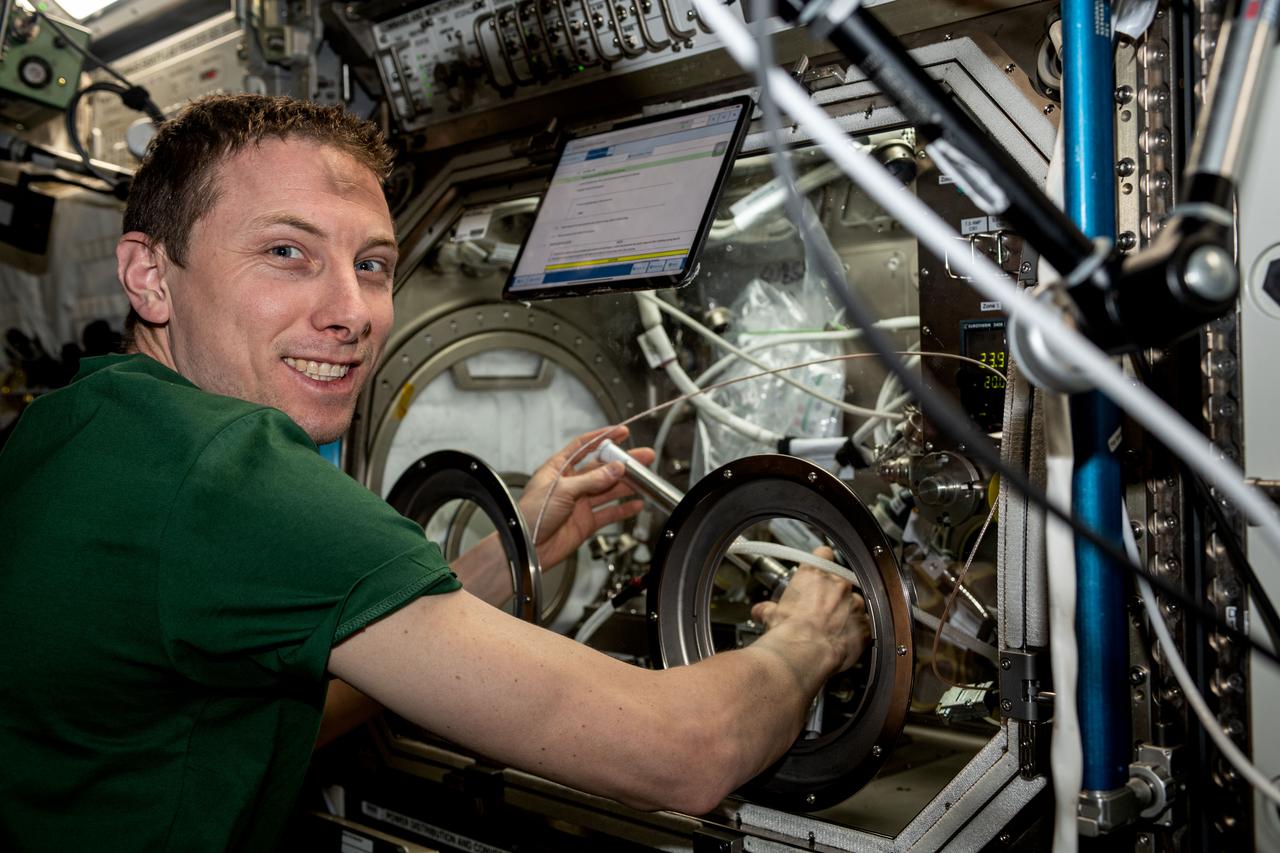
iss069e060322 (August 15, 2023) -- NASA astronaut Woody Hoburg swaps samples for a space manufacturing study inside the Microgravity Science Glovebox (MSG) in the International Space Station's U.S. Destiny Laboratory Module. MSG allows crews to investigate physical science and biological research in a safe, contained environment in microgravity.
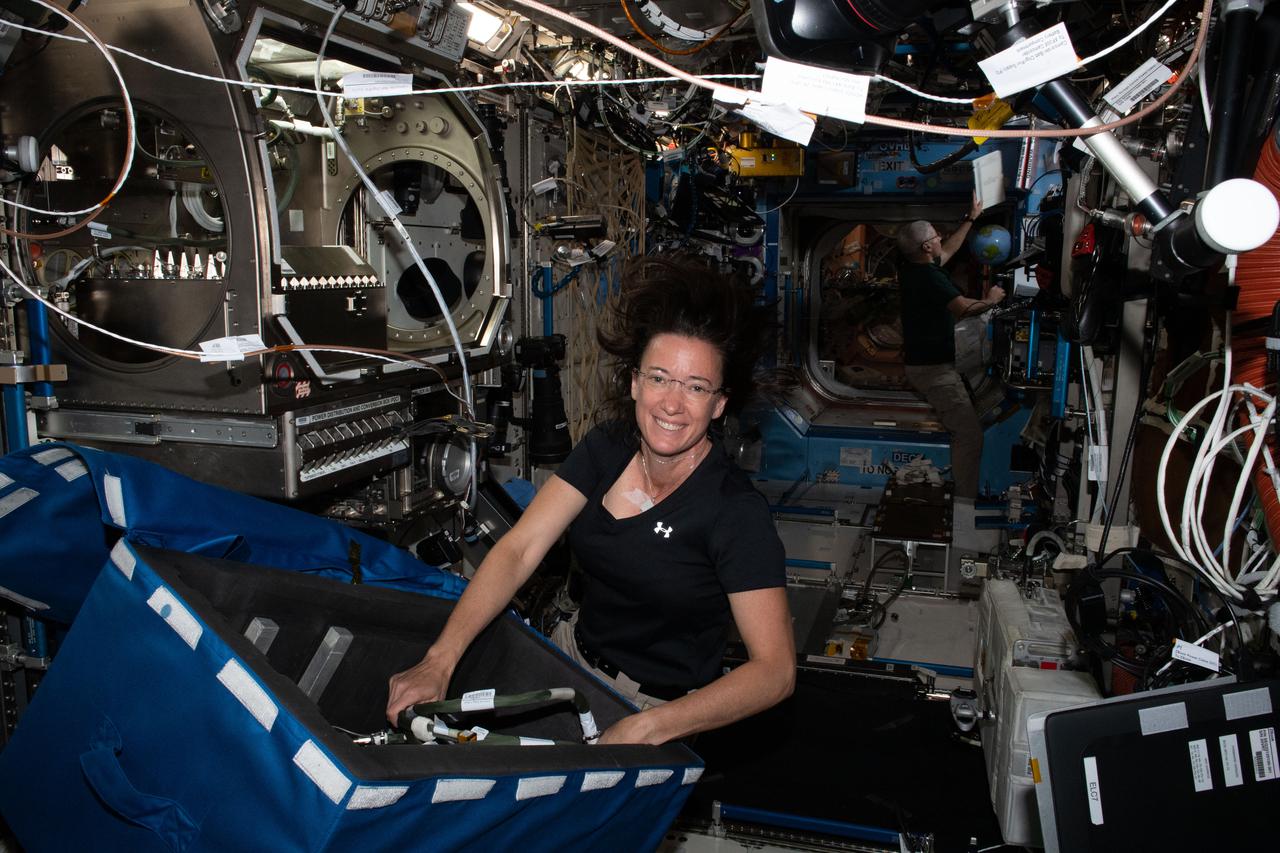
iss065e012827 (May 3, 2021) --- NASA astronaut and Expedition 65 Flight Engineer Megan McArthur stows science hardware and reconfigures the Microgravity Science Glovebox inside the International Space Station's U.S. Destiny laboratory module.
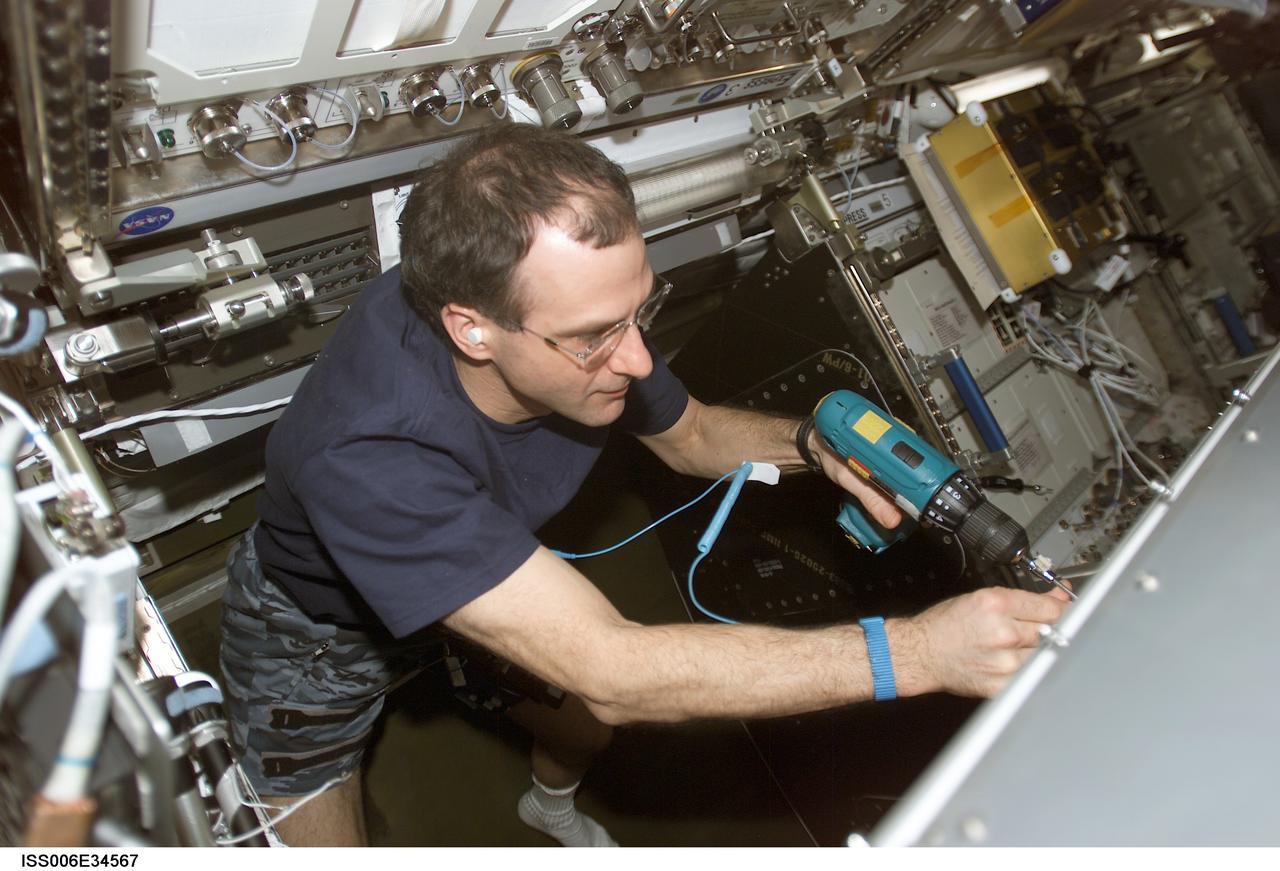
ISS006-E-34567 (27 February 2003) --- Astronaut Donald R. Pettit, Expedition Six NASA ISS science officer, works on the Microgravity Science Glovebox (MSG) in the Destiny laboratory on the International Space Station (ISS).
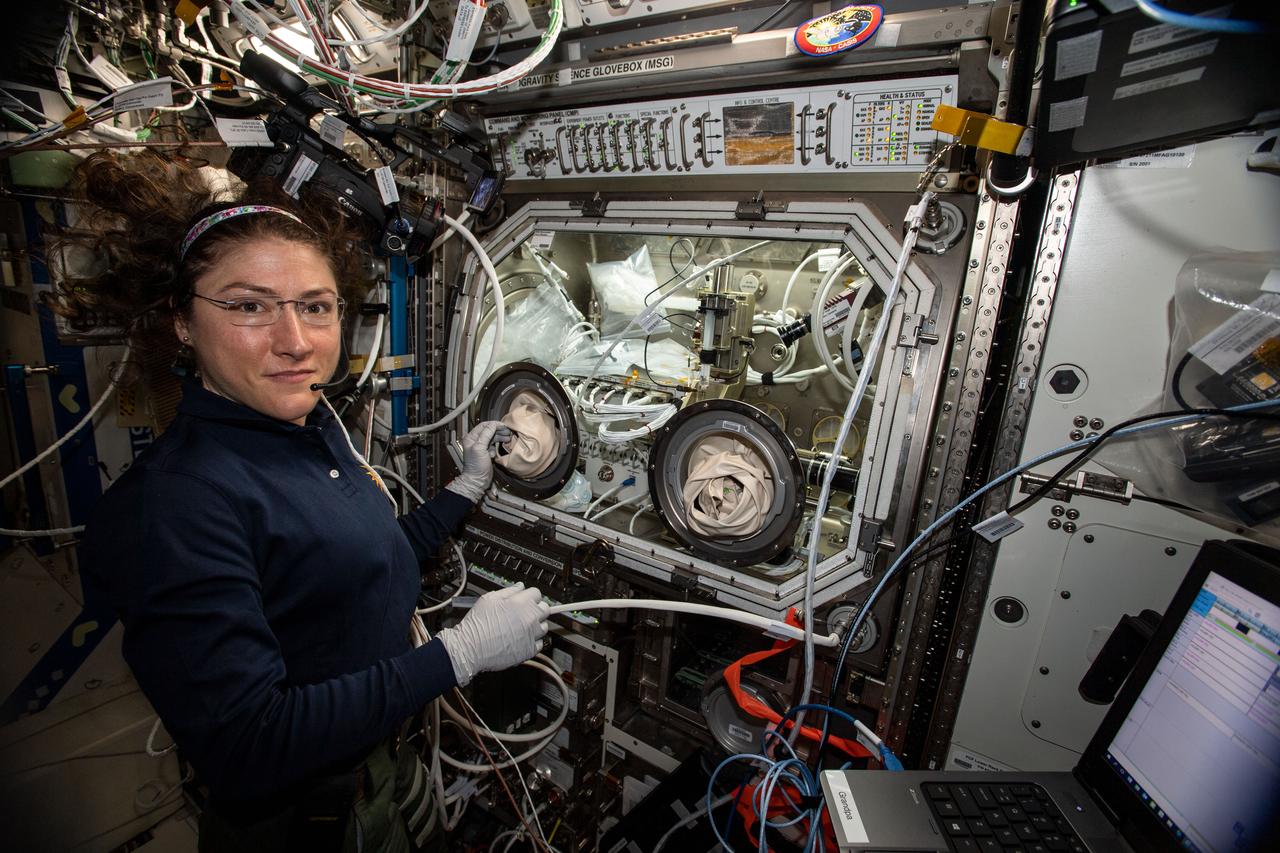
iss061e012803 (Oct. 22, 2019) --- NASA astronaut Christina Koch performs science operations in the Microgravity Science Glovebox for the Ring Sheared Drop human health and advanced materials investigation.
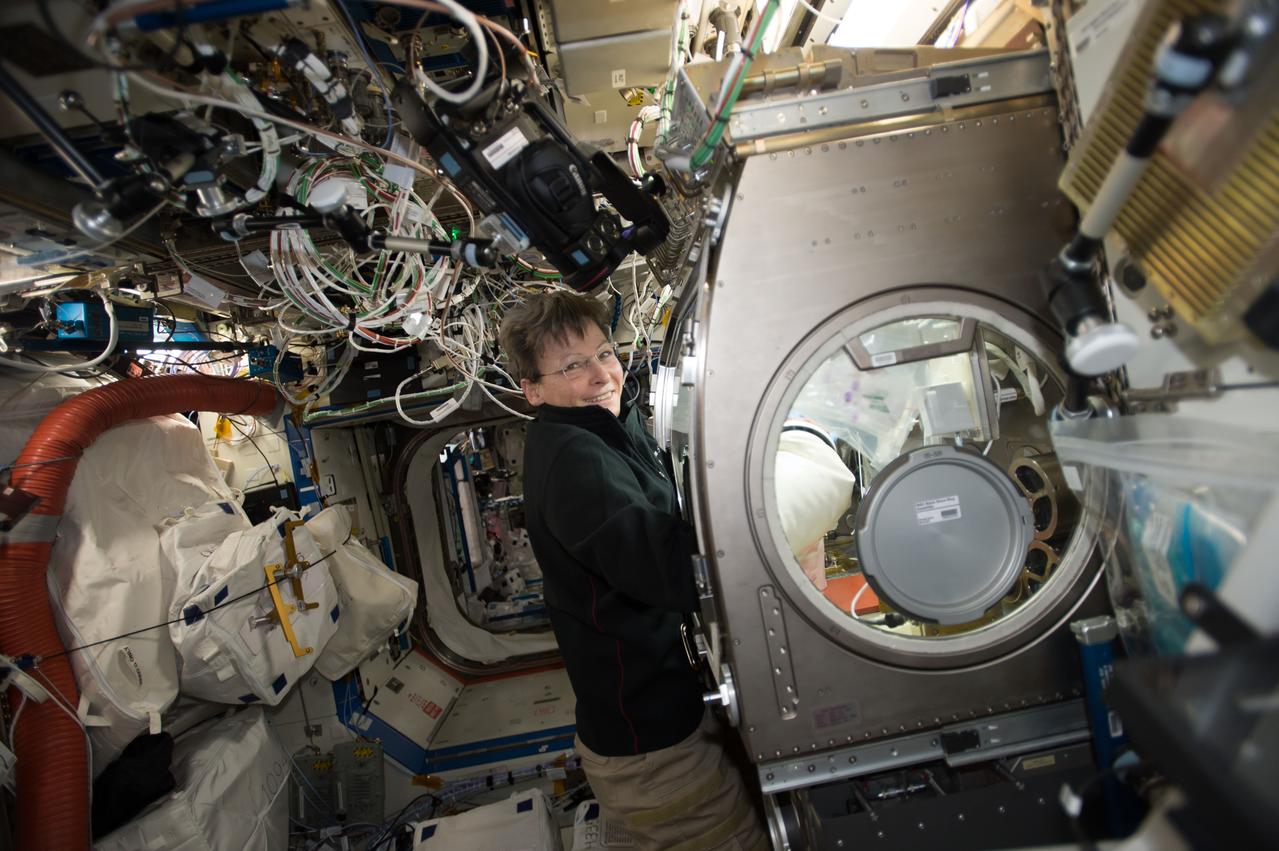
iss050e053302 (Feb. 28, 2017) --- Peggy Whitson, Expedition 50 Flight Engineer, works on an experiment inside the Microgravity Science Glovebox inside the U.S. Destiny laboratory module.
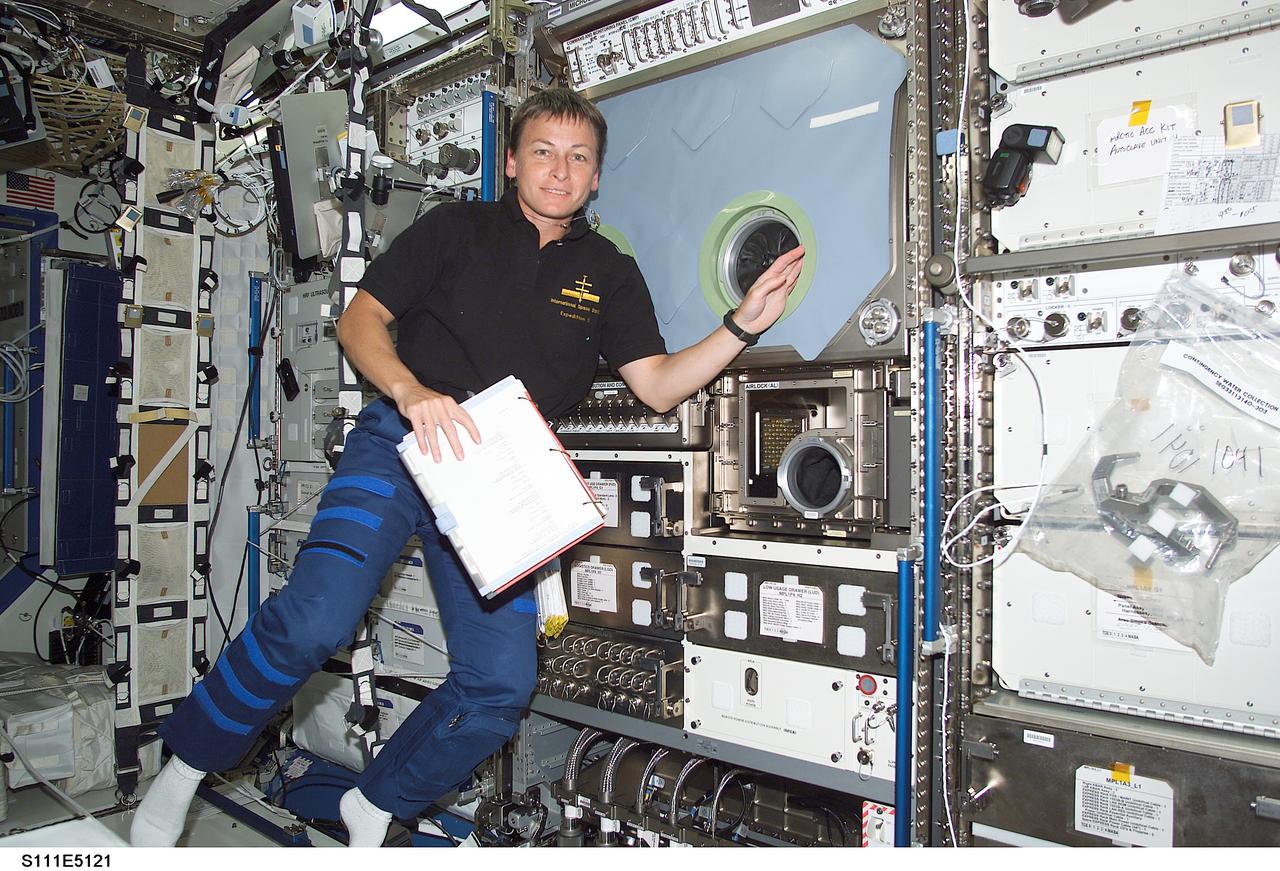
STS111-E-5121 (9 June 2002) --- Astronaut Peggy A. Whitson, Expedition Five flight engineer, floats near the Microgravity Science Glovebox (MSG) in the Destiny laboratory on the International Space Station (ISS).
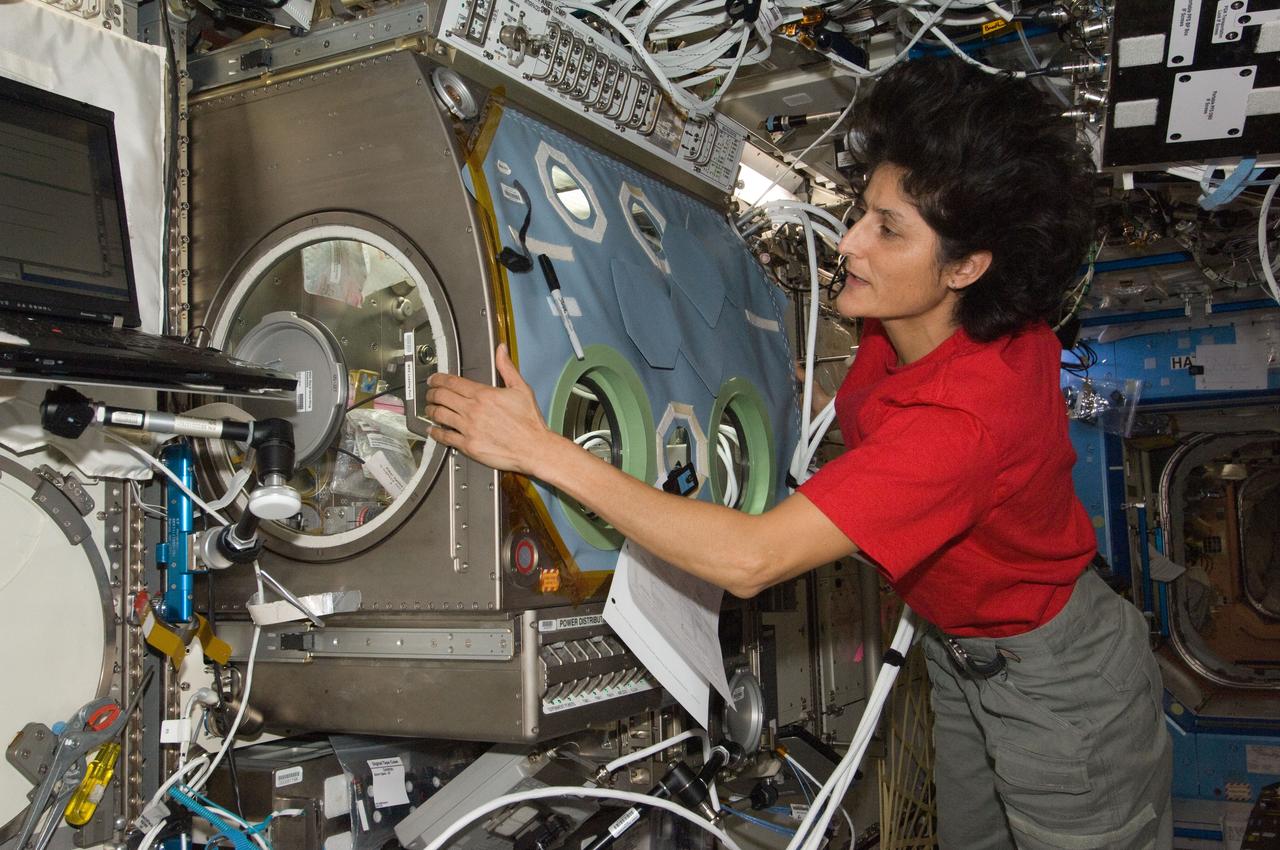
ISS032-E-022628 (23 Aug. 2012) --- NASA astronaut Sunita Williams, Expedition 32 flight engineer, works at the Microgravity Science Glovebox (MSG) in the Destiny laboratory of the International Space Station.
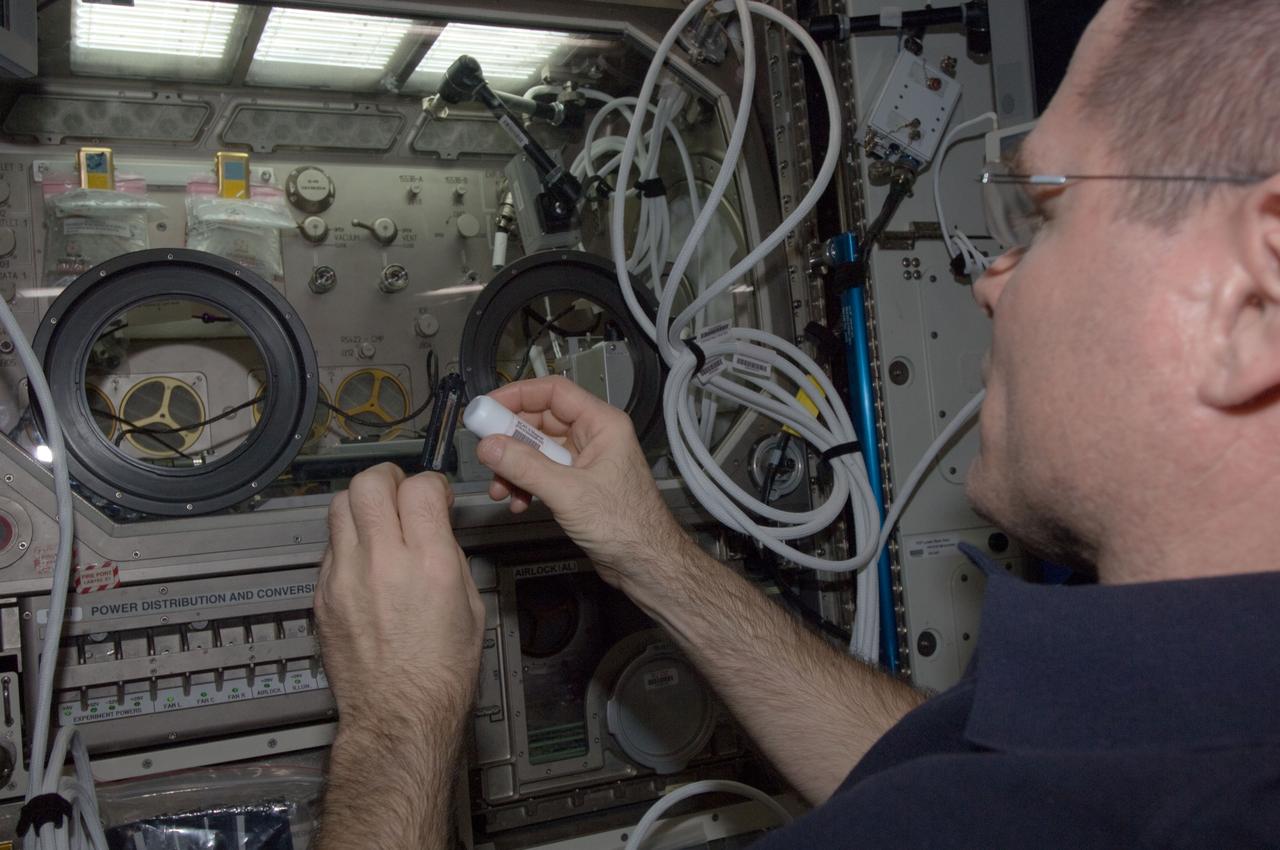
ISS034-E-010876 (28 Dec. 2012) --- NASA astronaut Kevin Ford, Expedition 34 commander, works near the Microgravity Science Glovebox (MSG) in the Destiny laboratory of the International Space Station.
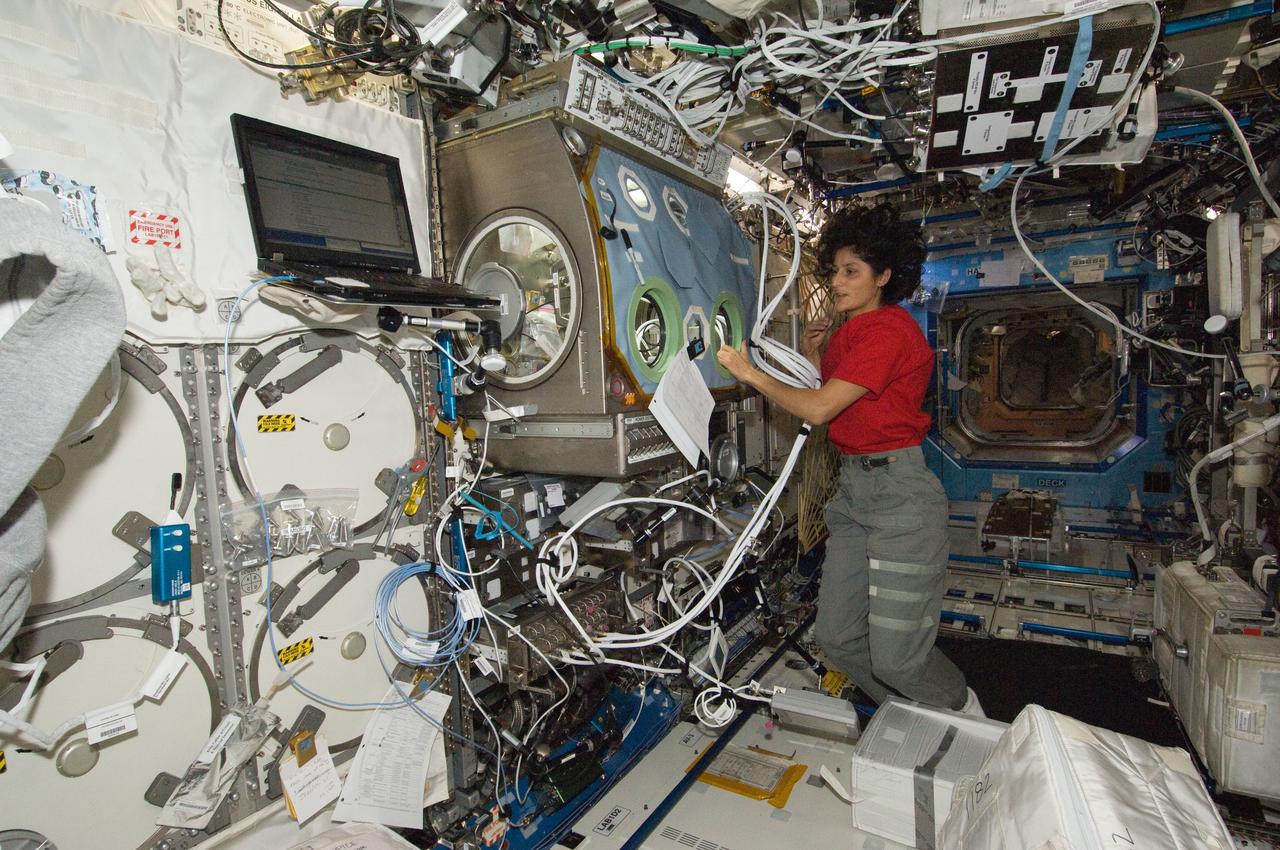
ISS032-E-022630 (23 Aug. 2012) --- NASA astronaut Sunita Williams, Expedition 32 flight engineer, works at the Microgravity Science Glovebox (MSG) in the Destiny laboratory of the International Space Station.
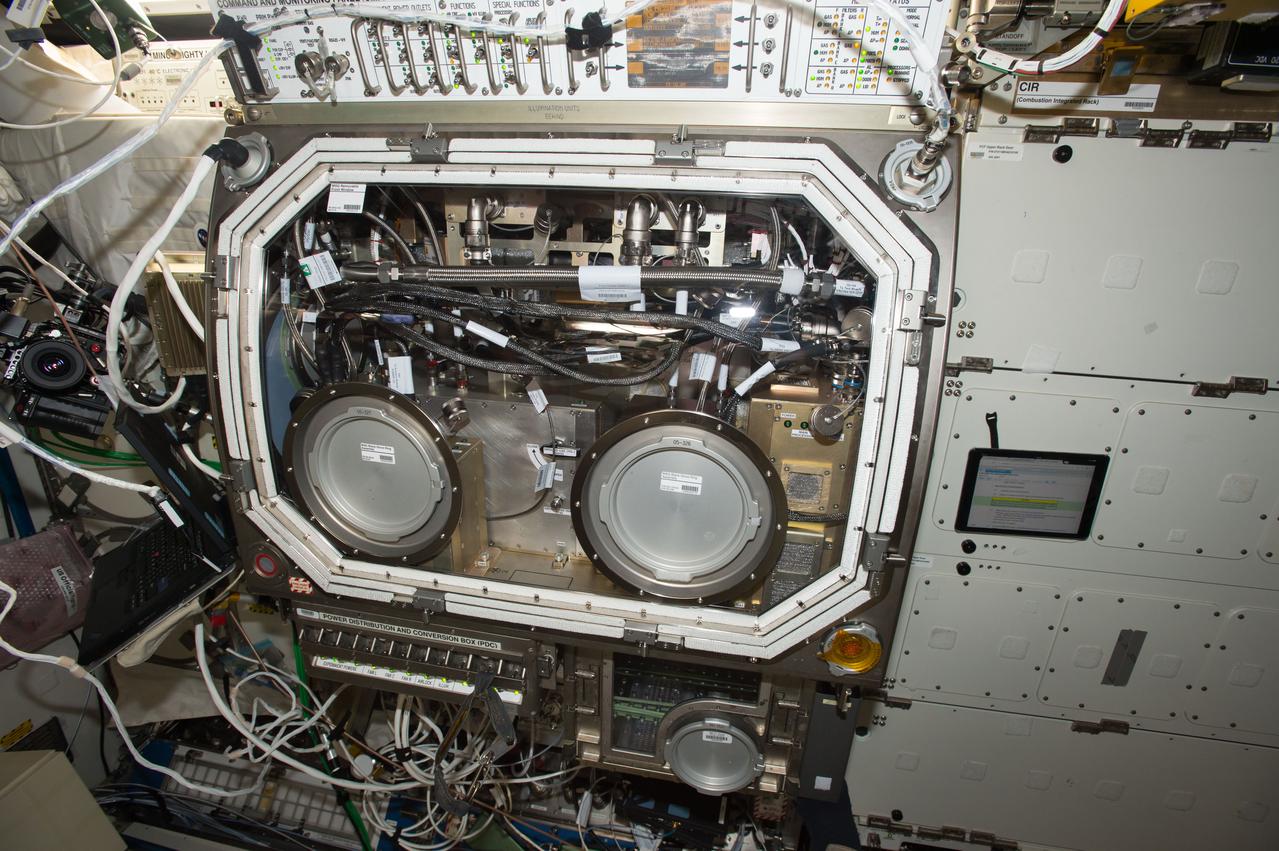
iss050e040296 (2/10/2017) --- View during the Packed Bed Reactor Experiment (PBRE) removal from the Microgravity Science Glovebox (MSG), in the U.S. Laboratory. Photo was taken during Expedition 50.
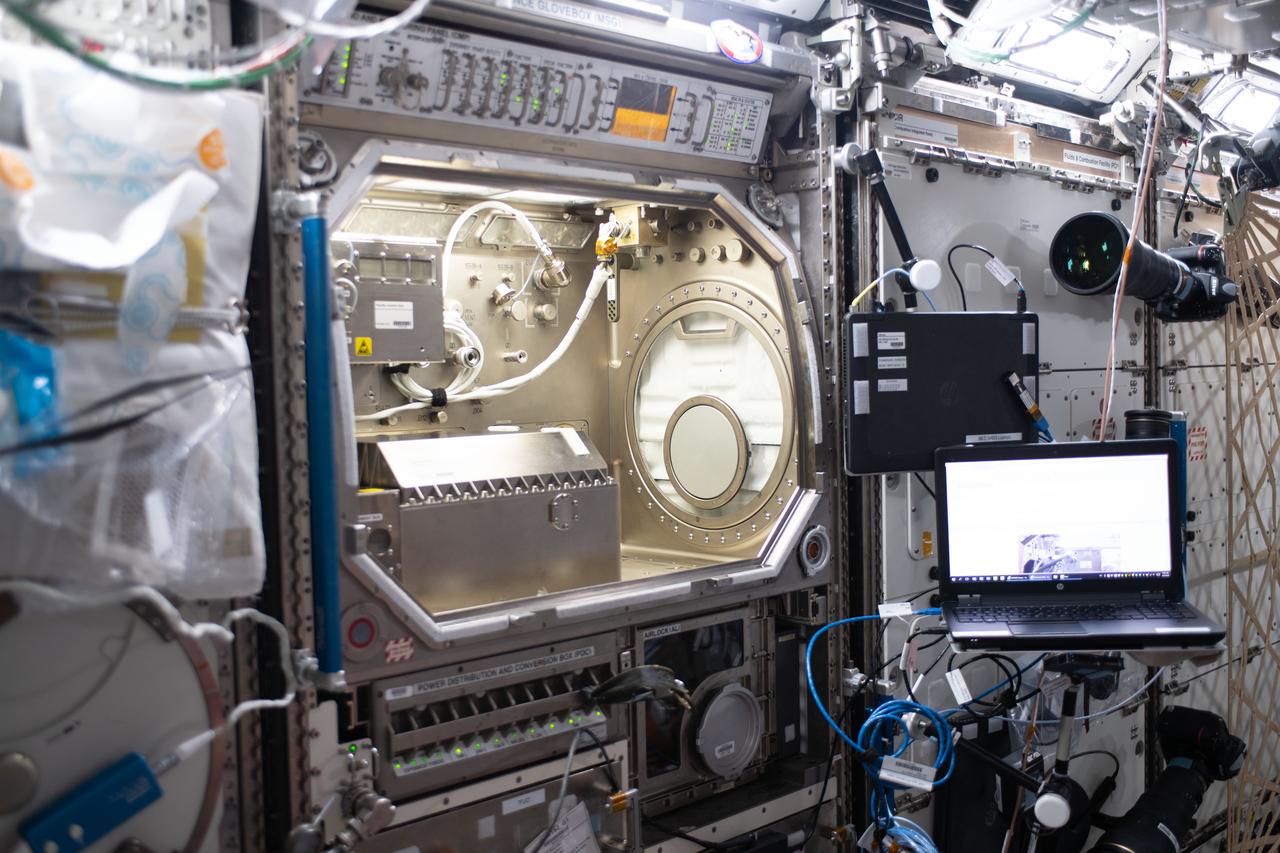
iss062e080867 (3/5/2020) --- A view of the Transparent Alloys Hardware Setup in the Microgravity Sciences Glovebox (MSG) Work Volume (WV) in the U.S. Destiny Laboratory aboard the International Space Station (ISS).
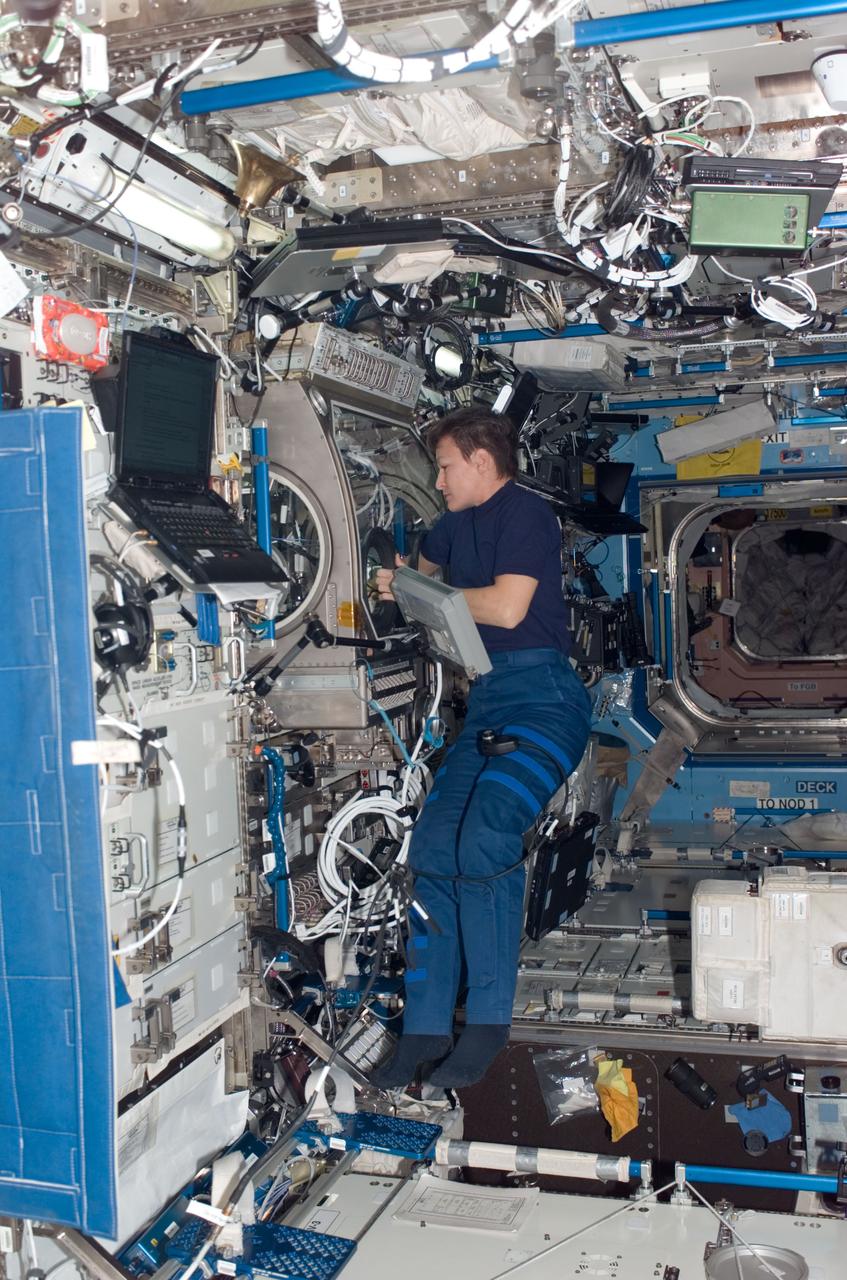
ISS016-E-021064 (5 Jan. 2008) --- Astronaut Peggy A. Whitson, Expedition 16 commander, works at the Microgravity Science Glovebox (MSG) in the Destiny laboratory of the International Space Station.
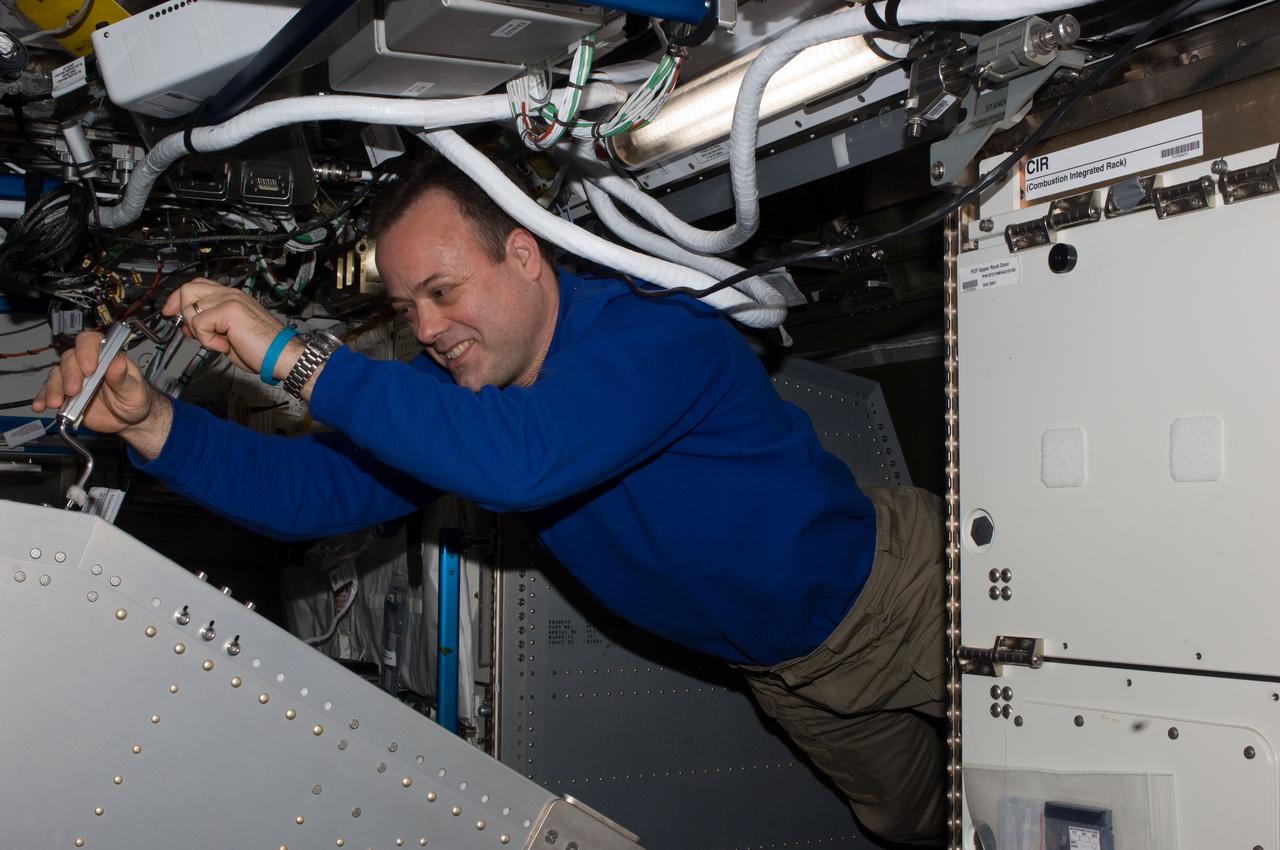
ISS028-E-047468 (12 Sept. 2011) --- NASA astronaut Ron Garan, Expedition 28 flight engineer, works behind the Microgravity Science Glovebox (MSG) rack located in the Destiny laboratory of the International Space Station.
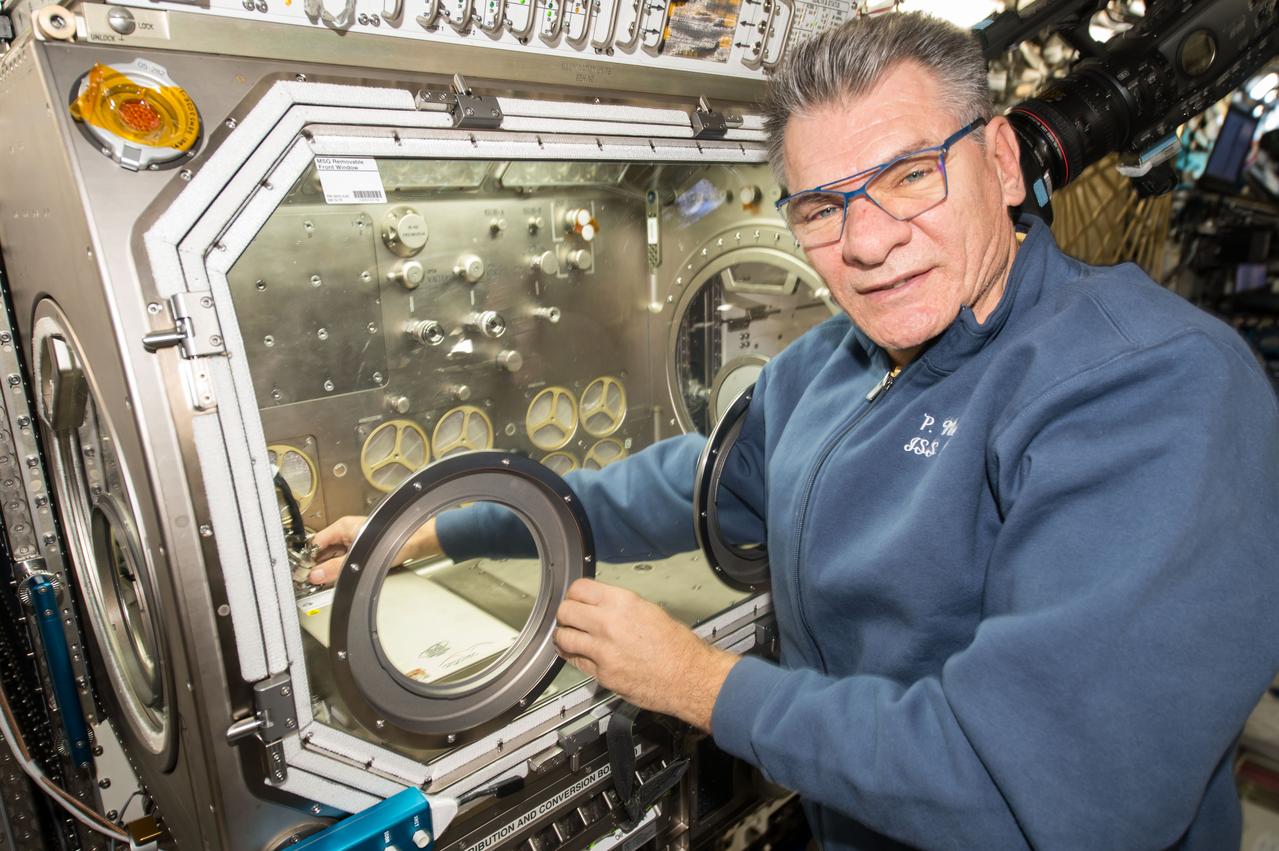
iss053e020149 (Sept. 14, 2017) --- Flight Engineer Paolo Nespoli sets up thermal exchange hardware inside the Microgravity Science Glovebox located in the U.S. Destiny laboratory module.

ISS029-E-040013 (7 Nov. 2011) --- Japan Aerospace Exploration Agency astronaut Satoshi Furukawa, Expedition 29 flight engineer, works at the Microgravity Science Glovebox (MSG) in the Destiny laboratory of the International Space Station.
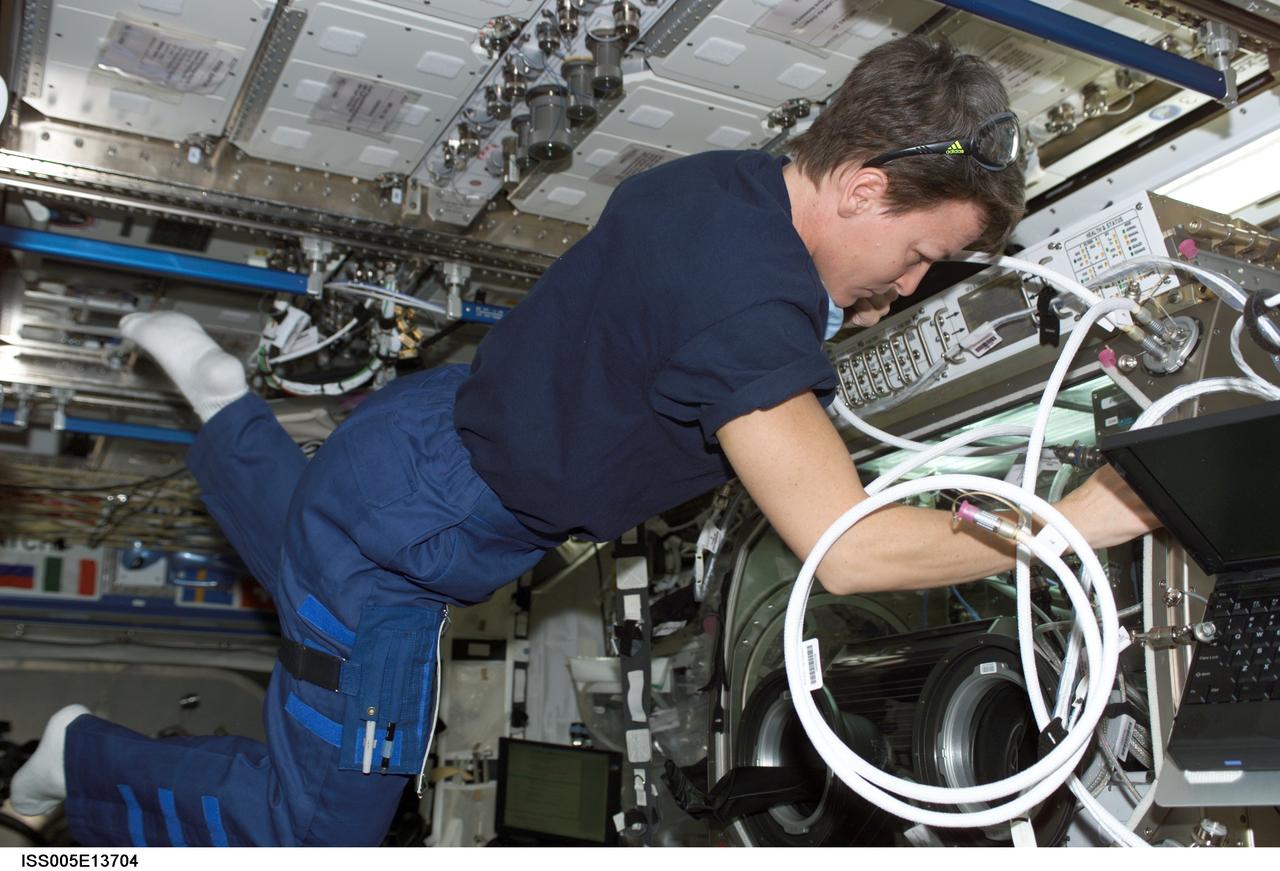
ISS005-E-13704 (11 September 2002) --- Astronaut Peggy A. Whitson, Expedition Five flight engineer, works with the Microgravity Science Glovebox (MSG) in the Destiny laboratory on the International Space Station (ISS).

iss065e021207 (May 6, 2021) --- Expedition 65 Flight Engineers (from left) Shane Kimbrough of NASA and Oleg Novitskiy of Roscosmos unpack hardware for installation inside the U.S. Destiny laboratory module's Microgravity Science Glovebox.
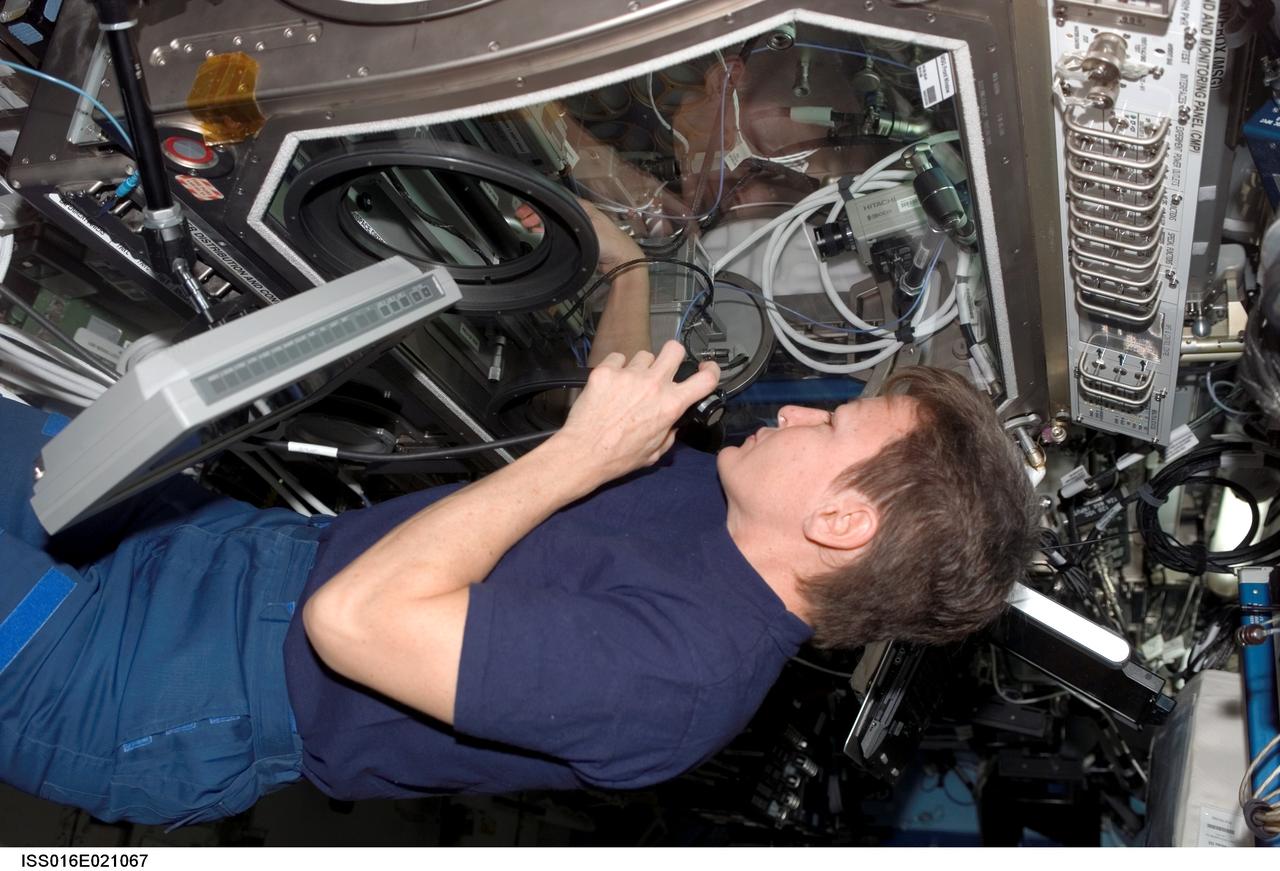
ISS016-E-021067 (5 Jan. 2008) --- Astronaut Peggy A. Whitson, Expedition 16 commander, works at the Microgravity Science Glovebox (MSG) in the Destiny laboratory of the International Space Station.
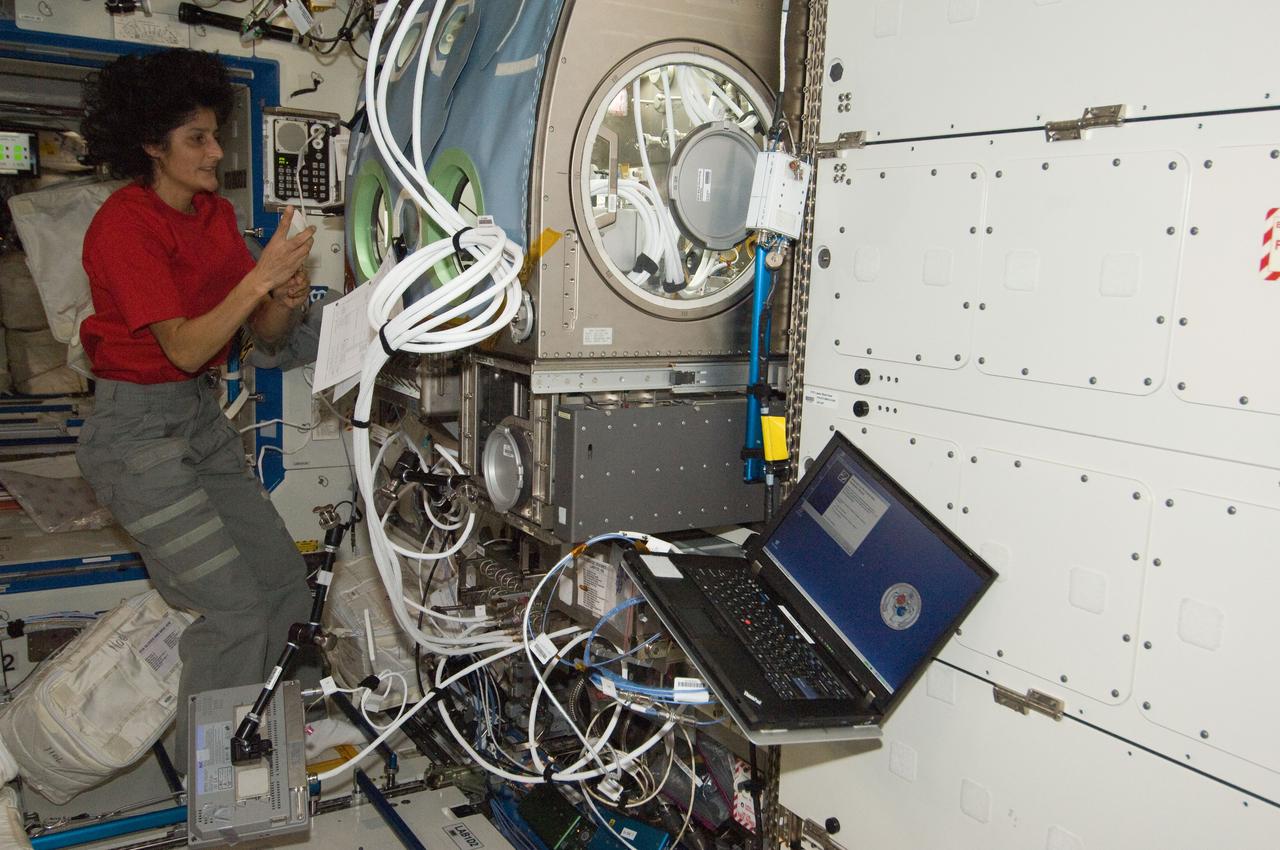
ISS032-E-022637 (23 Aug. 2012) --- NASA astronaut Sunita Williams, Expedition 32 flight engineer, works at the Microgravity Science Glovebox (MSG) in the Destiny laboratory of the International Space Station.
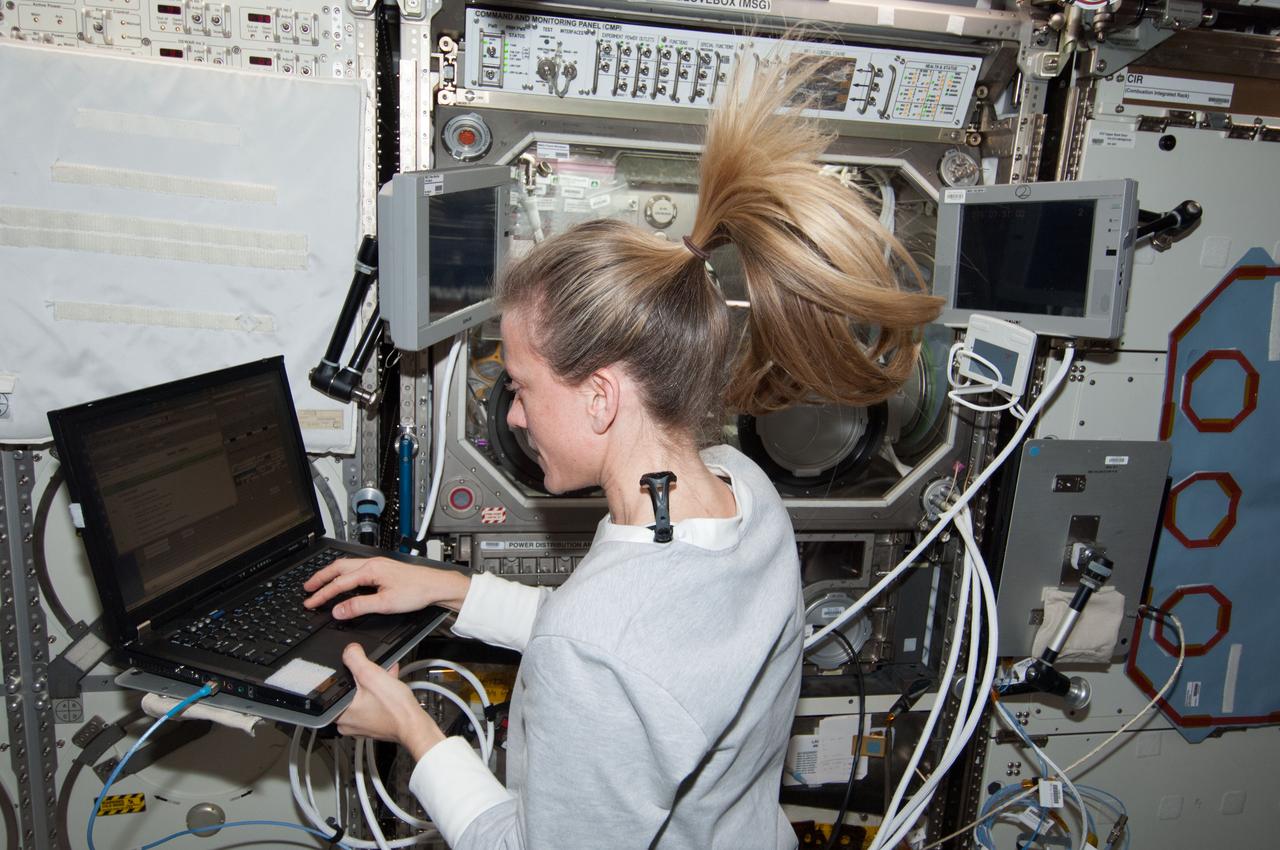
ISS037-E-006456 (3 Oct. 2013) --- NASA astronaut Karen Nyberg, Expedition 37 flight engineer, enters data into a computer near the Microgravity Science Glovebox (MSG) in the Destiny laboratory of the International Space Station.
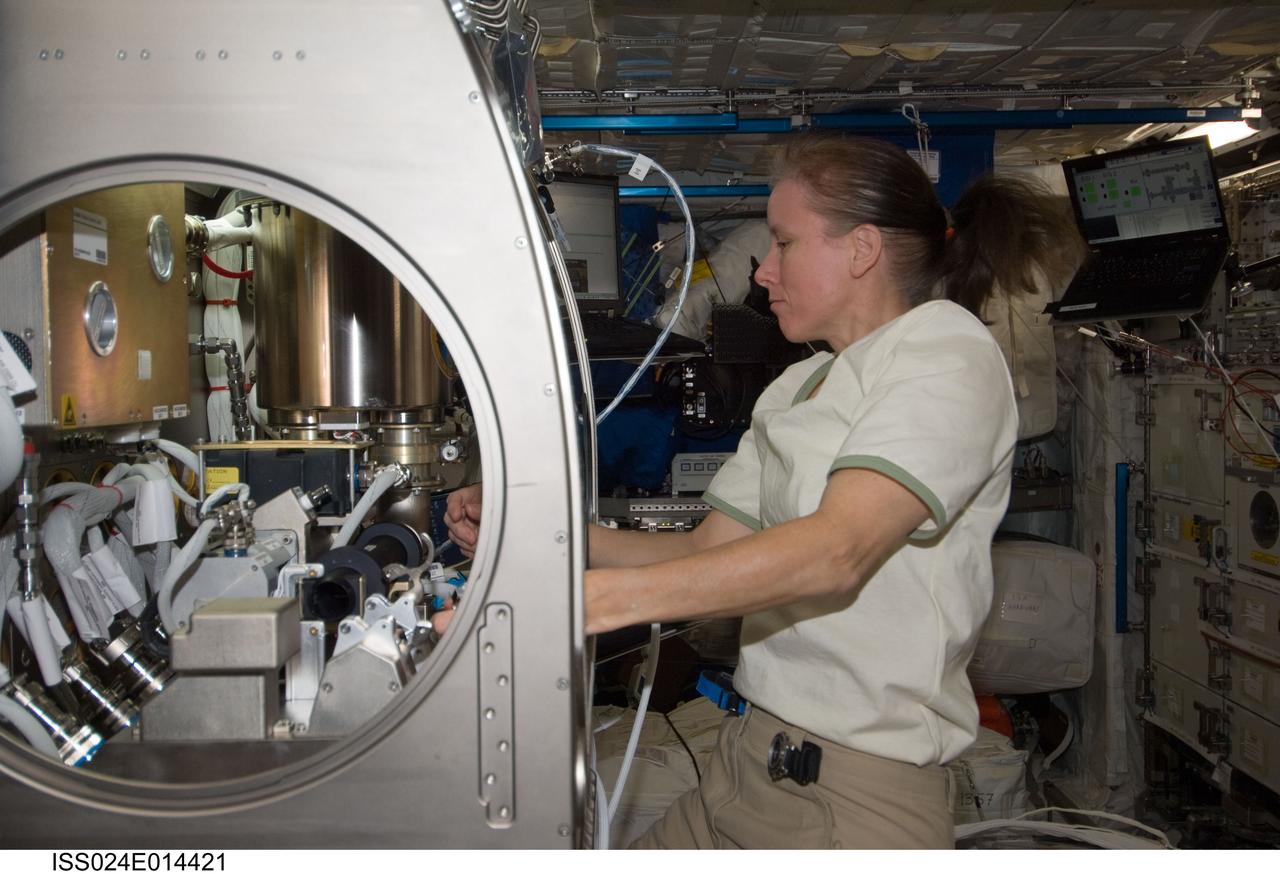
ISS024-E-014421 (13 Sept. 2010) --- NASA astronaut Shannon Walker, Expedition 24 flight engineer, works on the COLLOID experiment inside the Microgravity Science Glovebox (MSG) in the Columbus laboratory of the International Space Station.
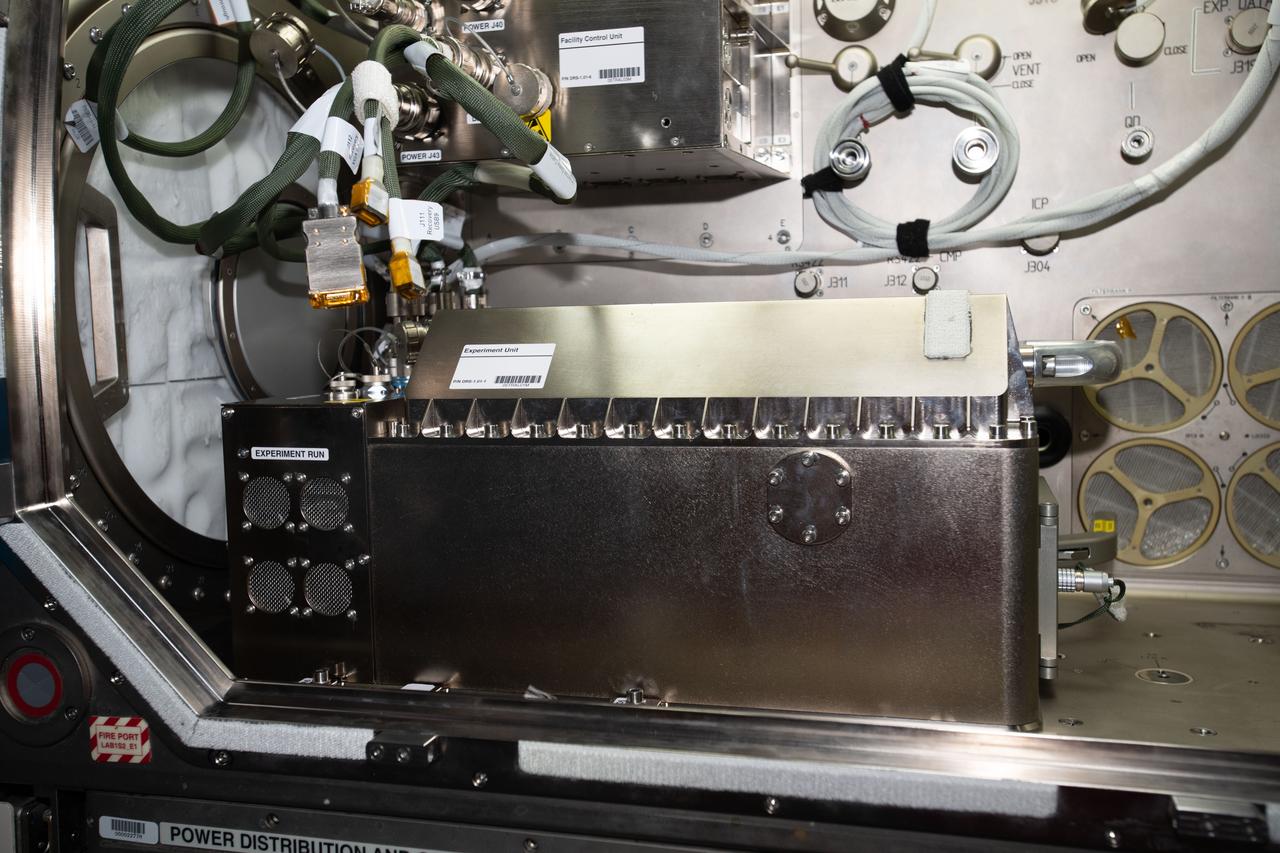
iss062e081047 (3/5/2020) --- A view of the Transparent Alloys Hardware Setup in the Microgravity Sciences Glovebox (MSG) Work Volume (WV) in the U.S. Destiny Laboratory aboard the International Space Station (ISS).
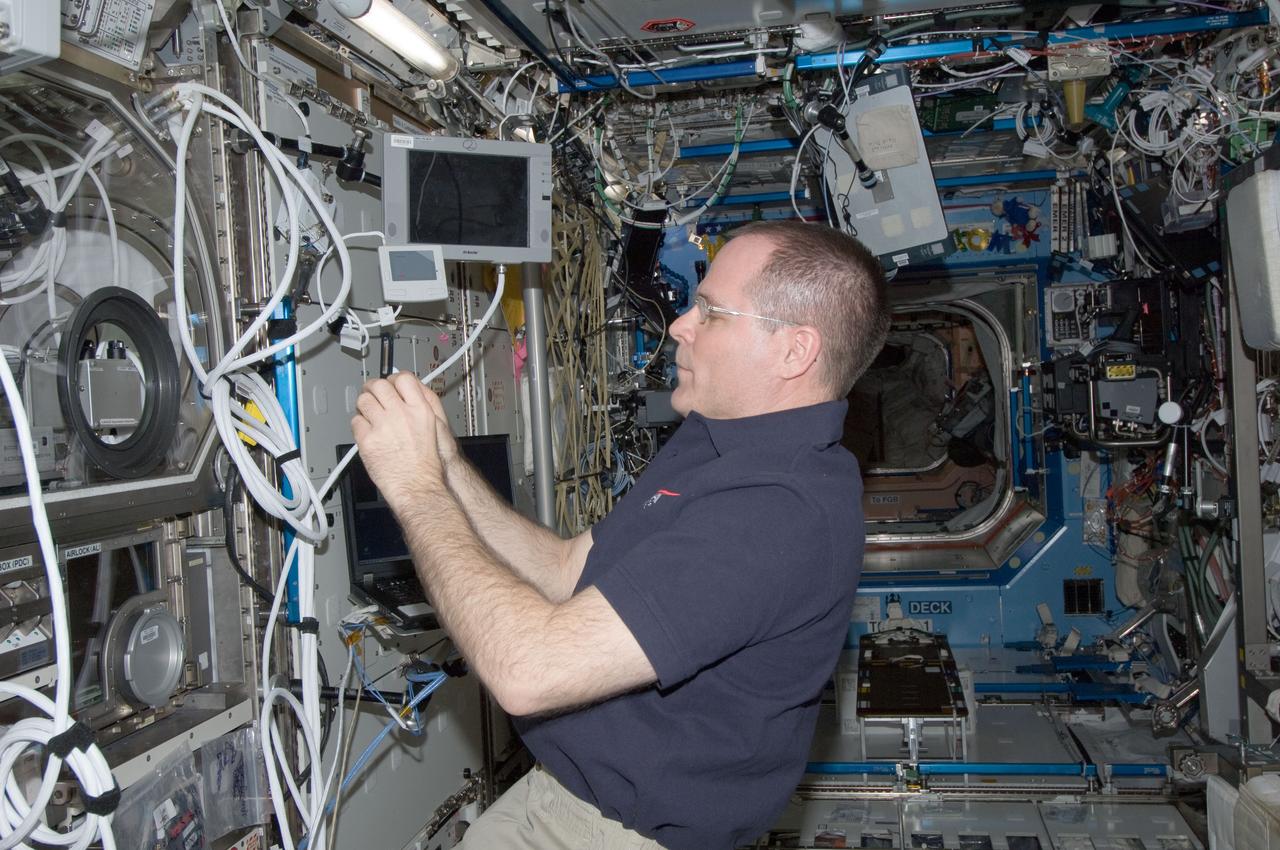
ISS034-E-010875 (28 Dec. 2012) --- NASA astronaut Kevin Ford, Expedition 34 commander, works near the Microgravity Science Glovebox (MSG) in the Destiny laboratory of the International Space Station.
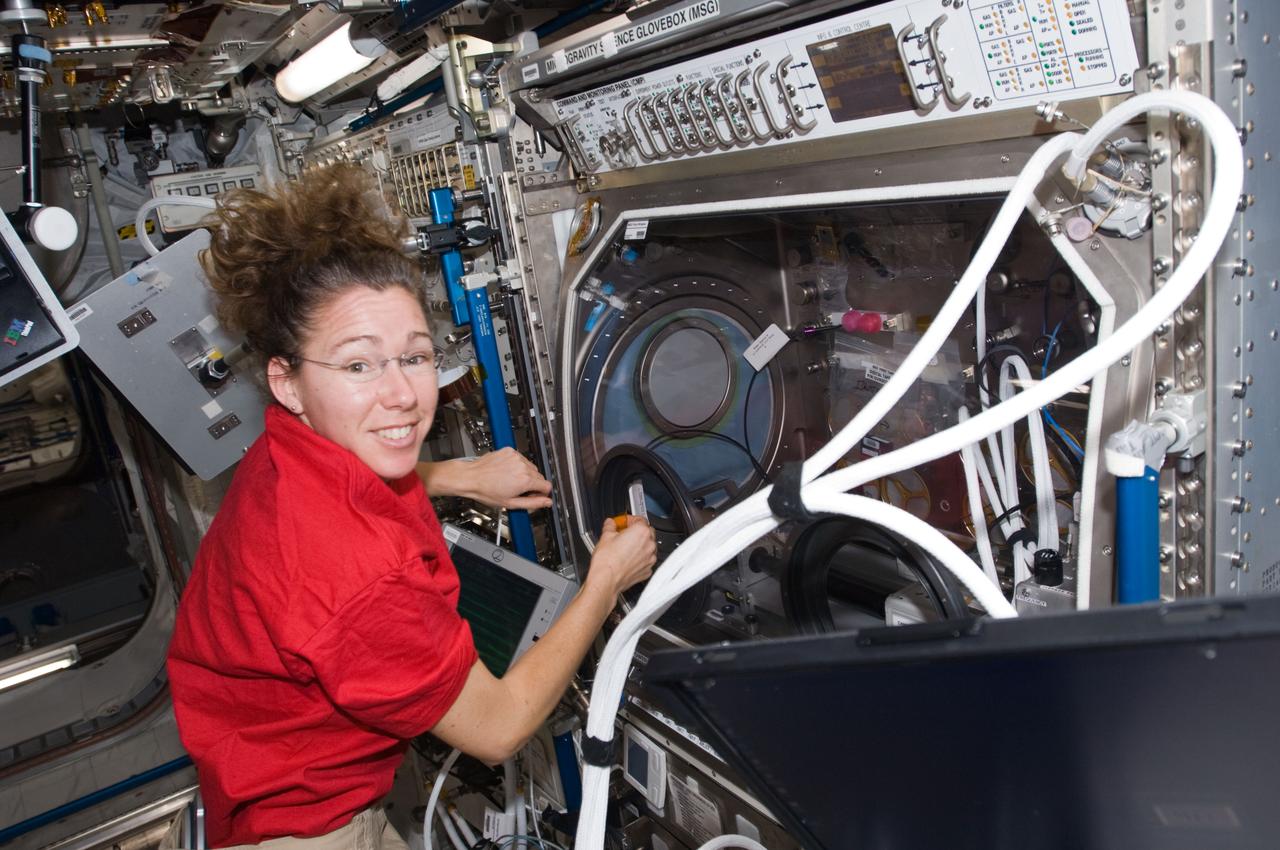
ISS018-E-024515 (30 Jan. 2009) --- Astronaut Sandra Magnus, Expedition 18 flight engineer, works with the Microgravity Science Glovebox (MSG) in the Columbus laboratory of the International Space Station.
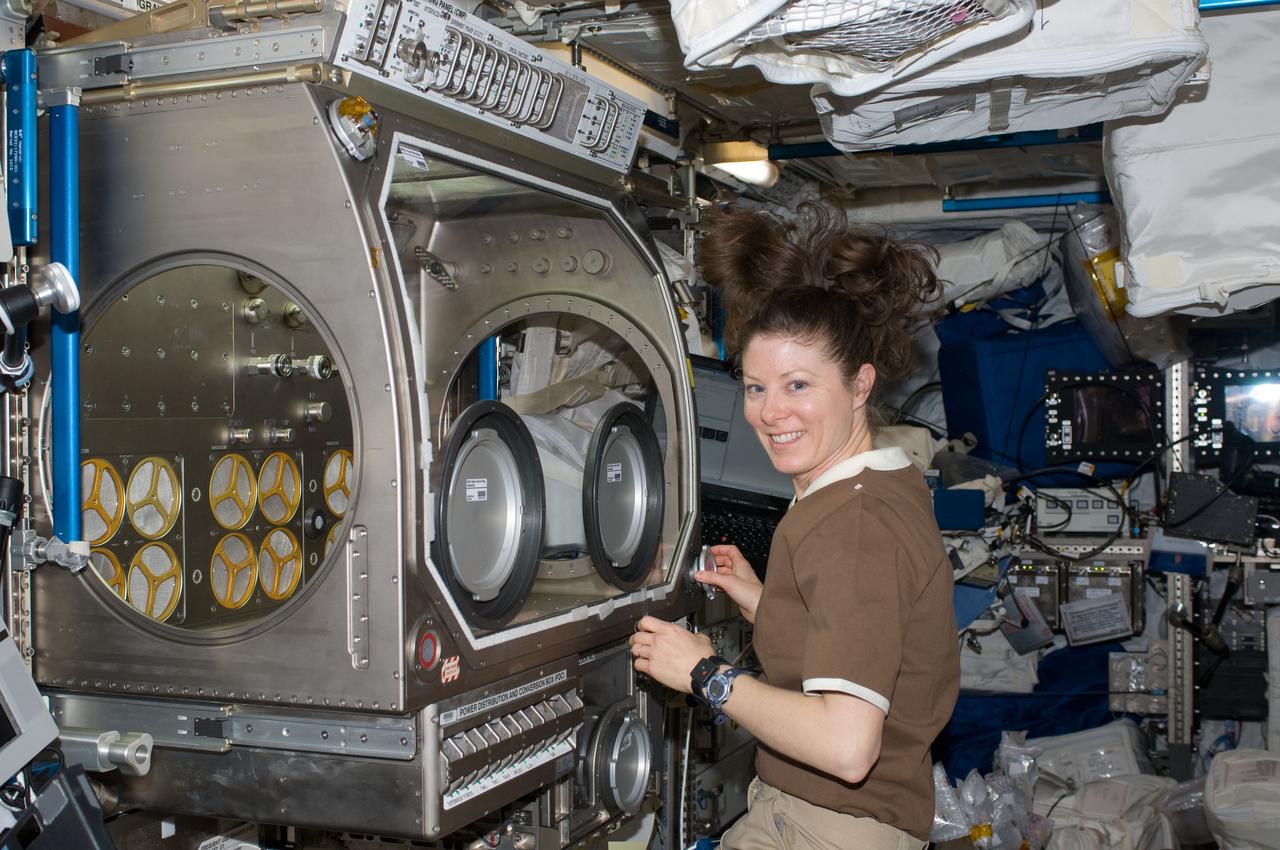
ISS023-E-030740 (3 May 2010) --- NASA astronaut Tracy Caldwell Dyson, Expedition 23 flight engineer, works with experiment hardware in the Microgravity Science Glovebox (MSG) located in the Columbus laboratory of the International Space Station.
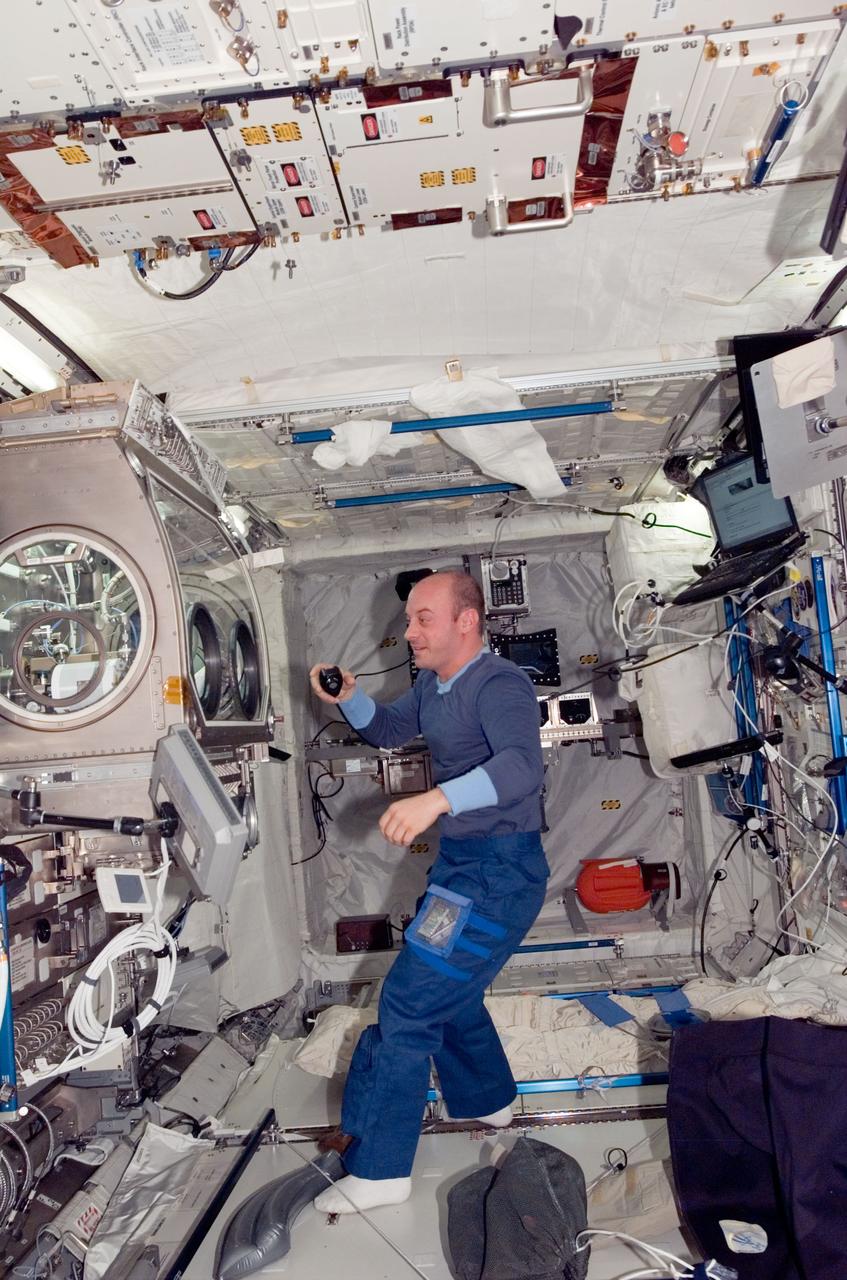
ISS016-E-036417 (14 April 2008) --- NASA astronaut Garrett Reisman, Expedition 16/17 flight engineer, is pictured near the Microgravity Science Glovebox (MSG) located in the Columbus laboratory of the International Space Station.
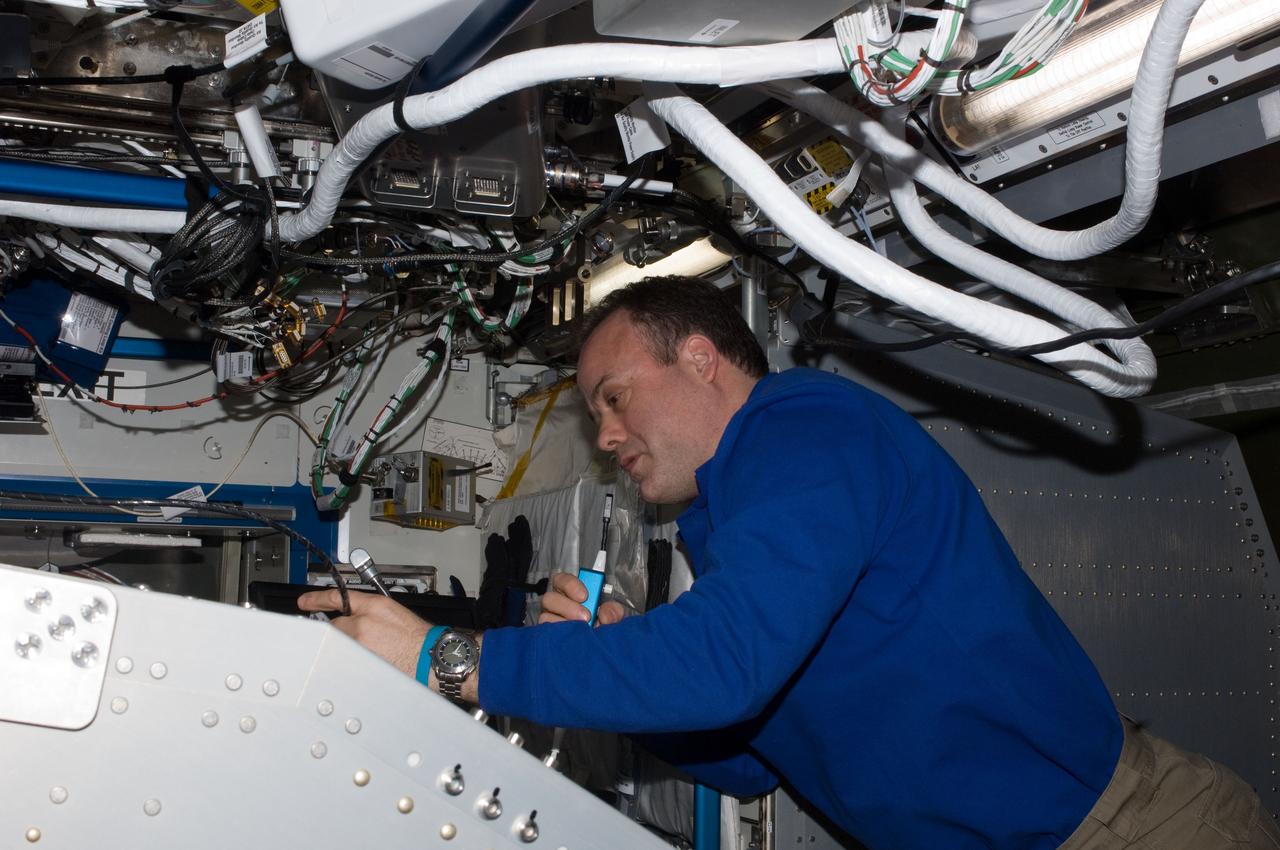
ISS028-E-047464 (12 Sept. 2011) --- NASA astronaut Ron Garan, Expedition 28 flight engineer, works behind the Microgravity Science Glovebox (MSG) rack located in the Destiny laboratory of the International Space Station.
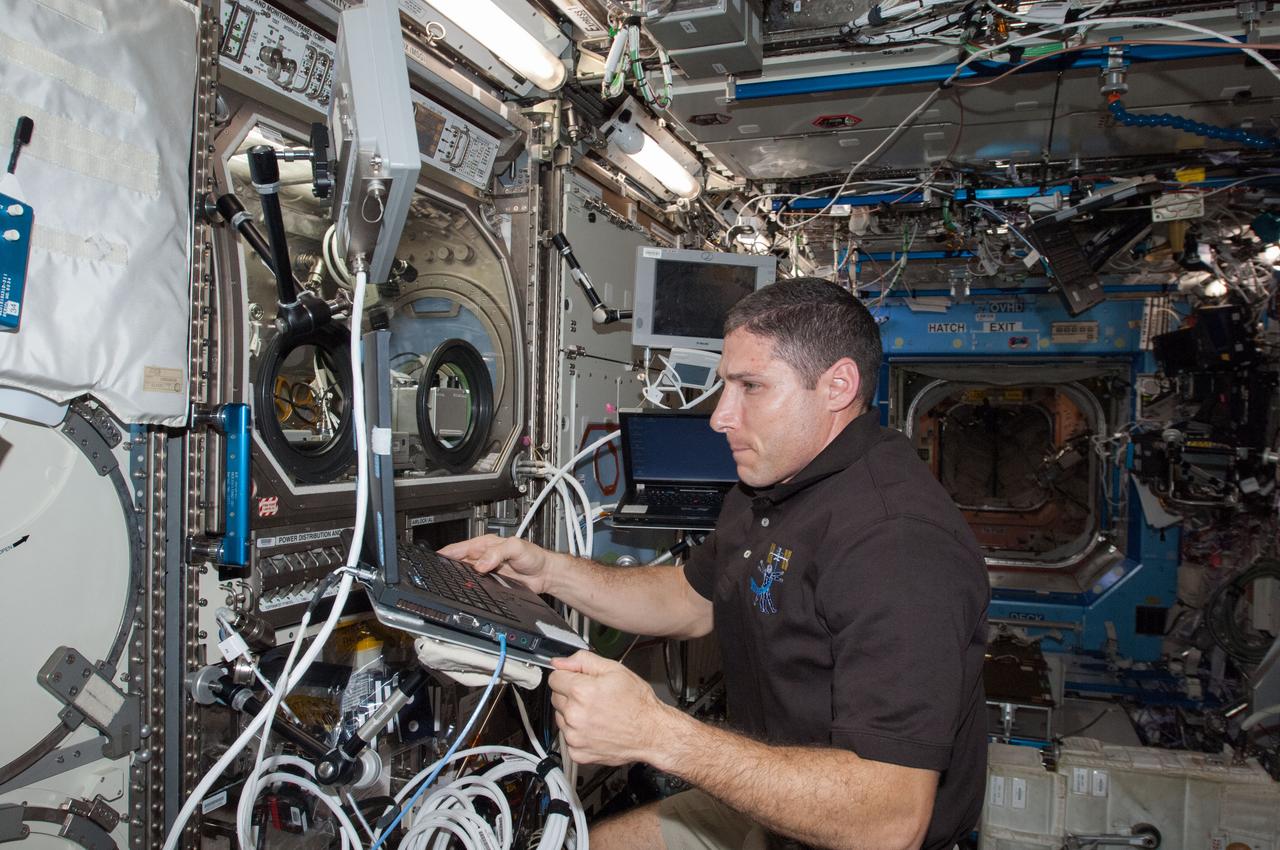
ISS037-E-028590 (10 Nov. 2013) --- NASA astronaut Michael Hopkins, Expedition 37/38 flight engineer, enters data into a computer near the Microgravity Science Glovebox (MSG) in the Destiny laboratory of the International Space Station.
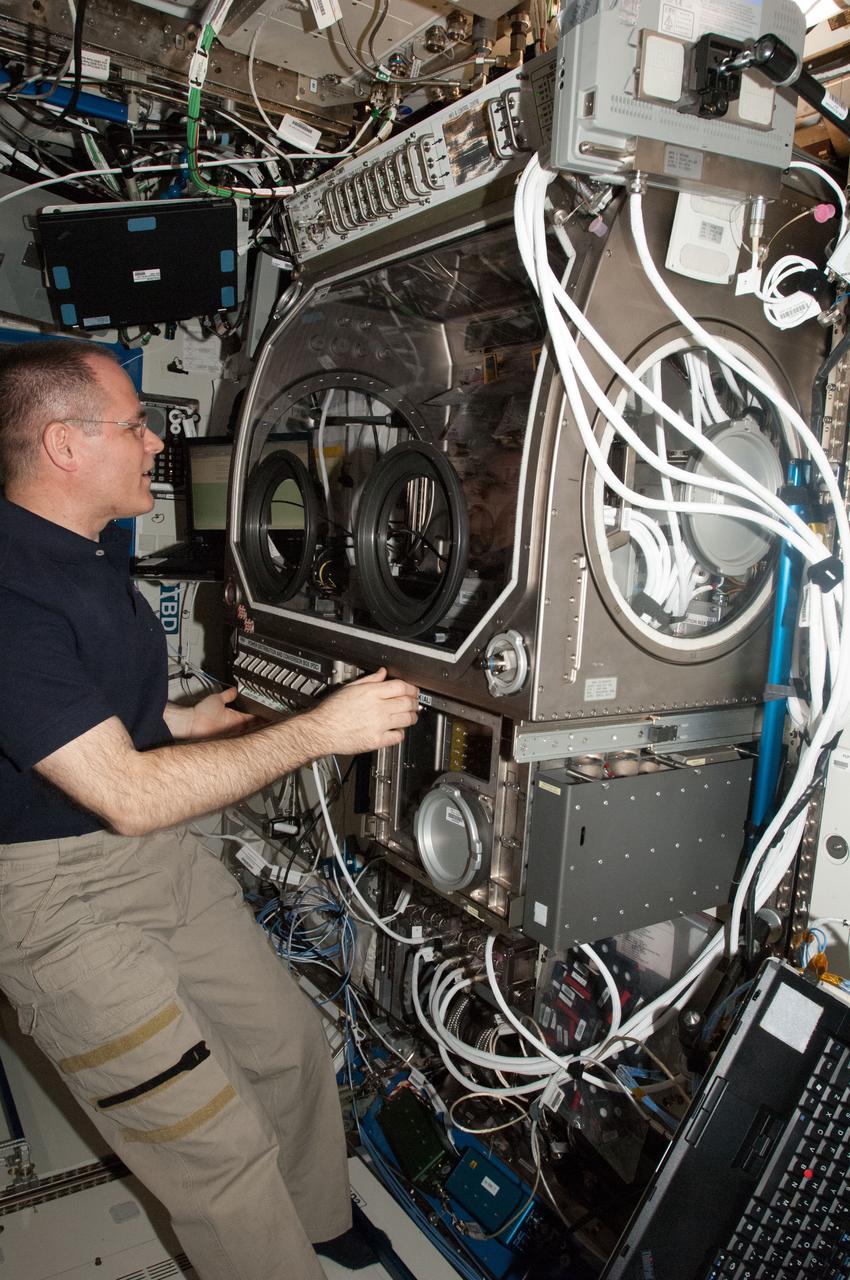
ISS034-E-036867 (29 Jan. 2013) --- NASA astronaut Kevin Ford, Expedition 34 commander, works near the Microgravity Science Glovebox (MSG) in the Destiny laboratory of the International Space Station.
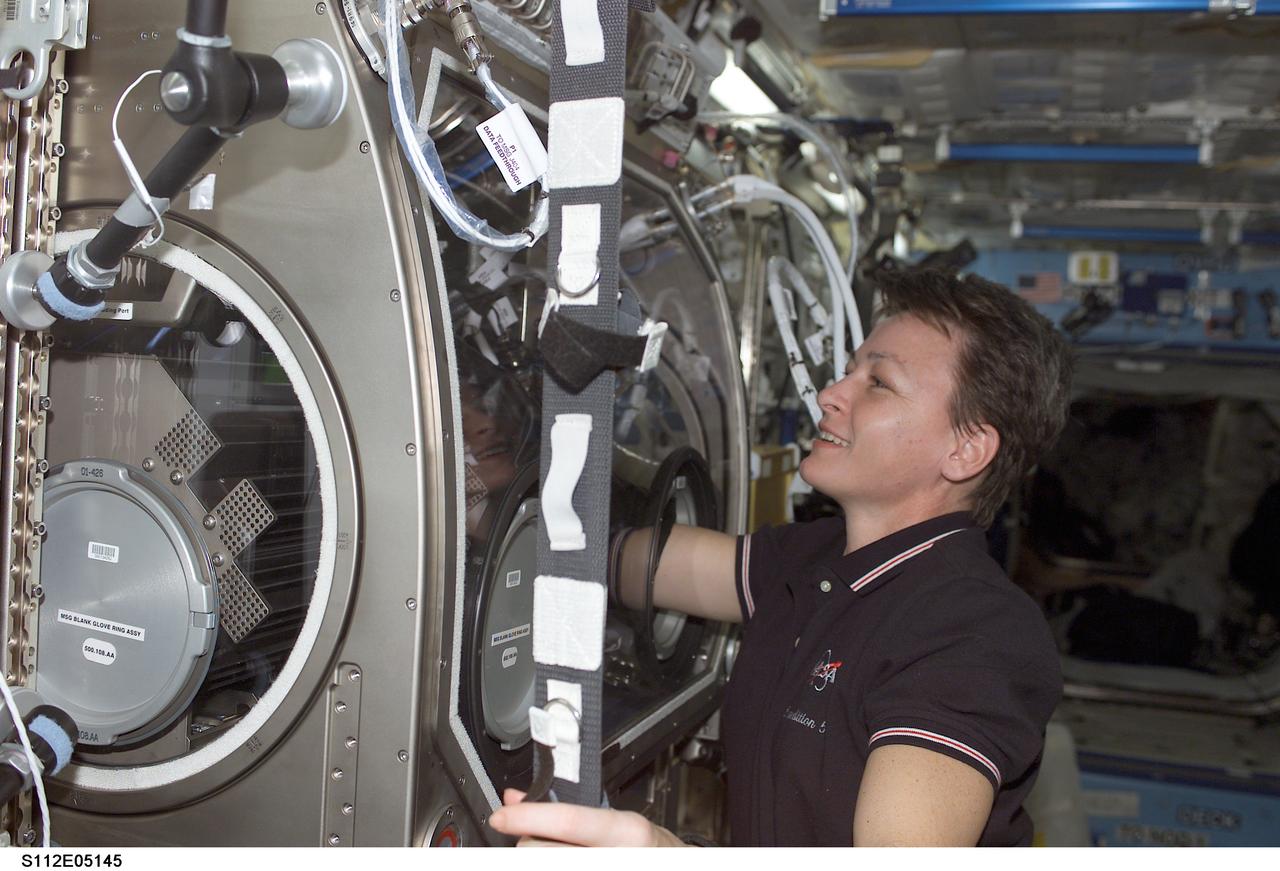
STS112-E-05145 (11 October 2002) --- Astronaut Peggy A. Whitson, Expedition Five flight engineer, works with the Microgravity Science Glovebox (MSG) in the Destiny laboratory on the International Space Station (ISS).
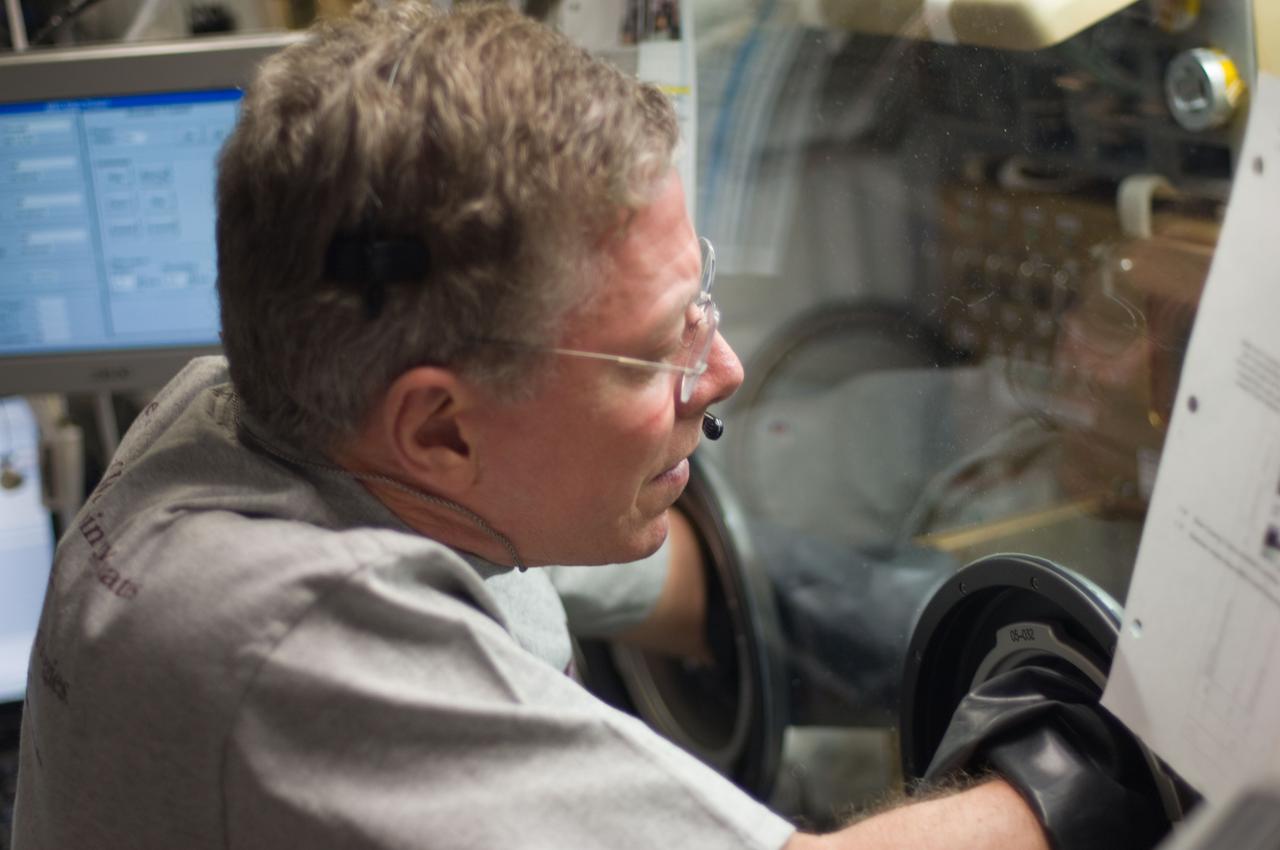
ISS028-E-031895 (20 Aug. 2011) --- NASA astronaut Mike Fossum, Expedition 28 flight engineer, works with hardware in the Microgravity Science Glovebox (MSG) located in the Destiny laboratory of the International Space Station.
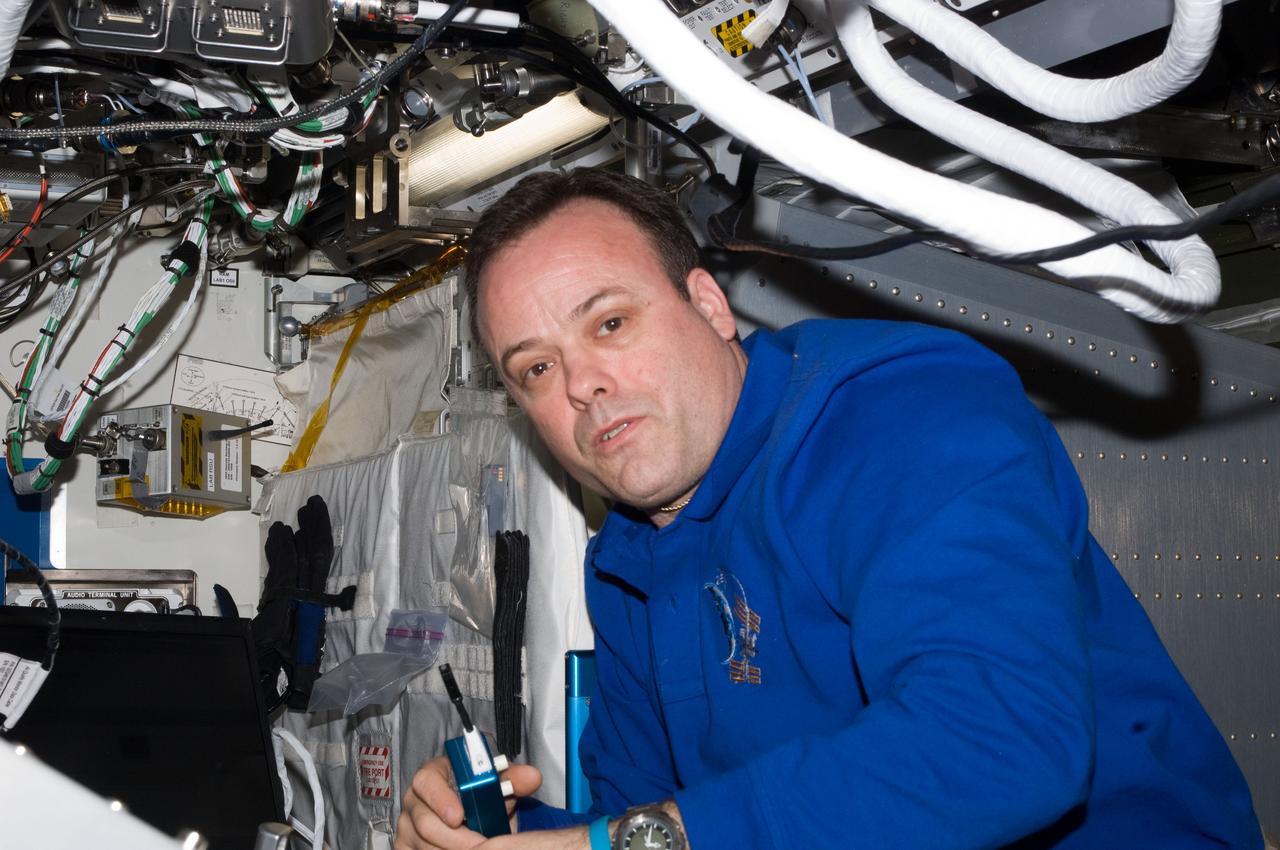
ISS028-E-047462 (12 Sept. 2011) --- NASA astronaut Ron Garan, Expedition 28 flight engineer, works behind the Microgravity Science Glovebox (MSG) rack located in the Destiny laboratory of the International Space Station.