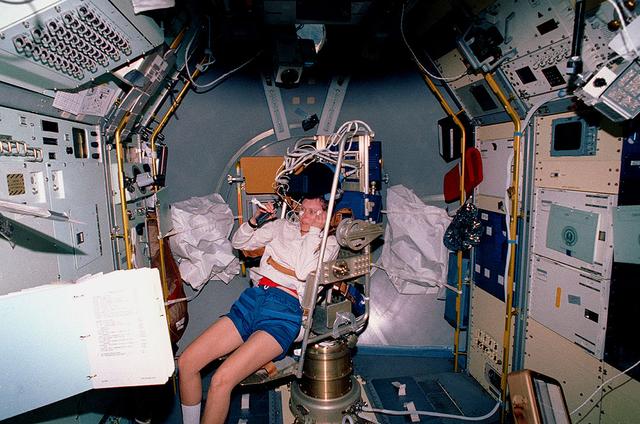
This Space Shuttle Orbiter Discovery (STS-42) onboard photo shows Canadian Payload Specialist Roberta Bondar getting into the Microgravity Vestibular Investigation (MVI) chair to begin an experiment in the International Microgravity Lab-1 (IML-1) Science Module. The (MVI) chair was designed to test the crew member's visual and vestibular responses to head and body movements.
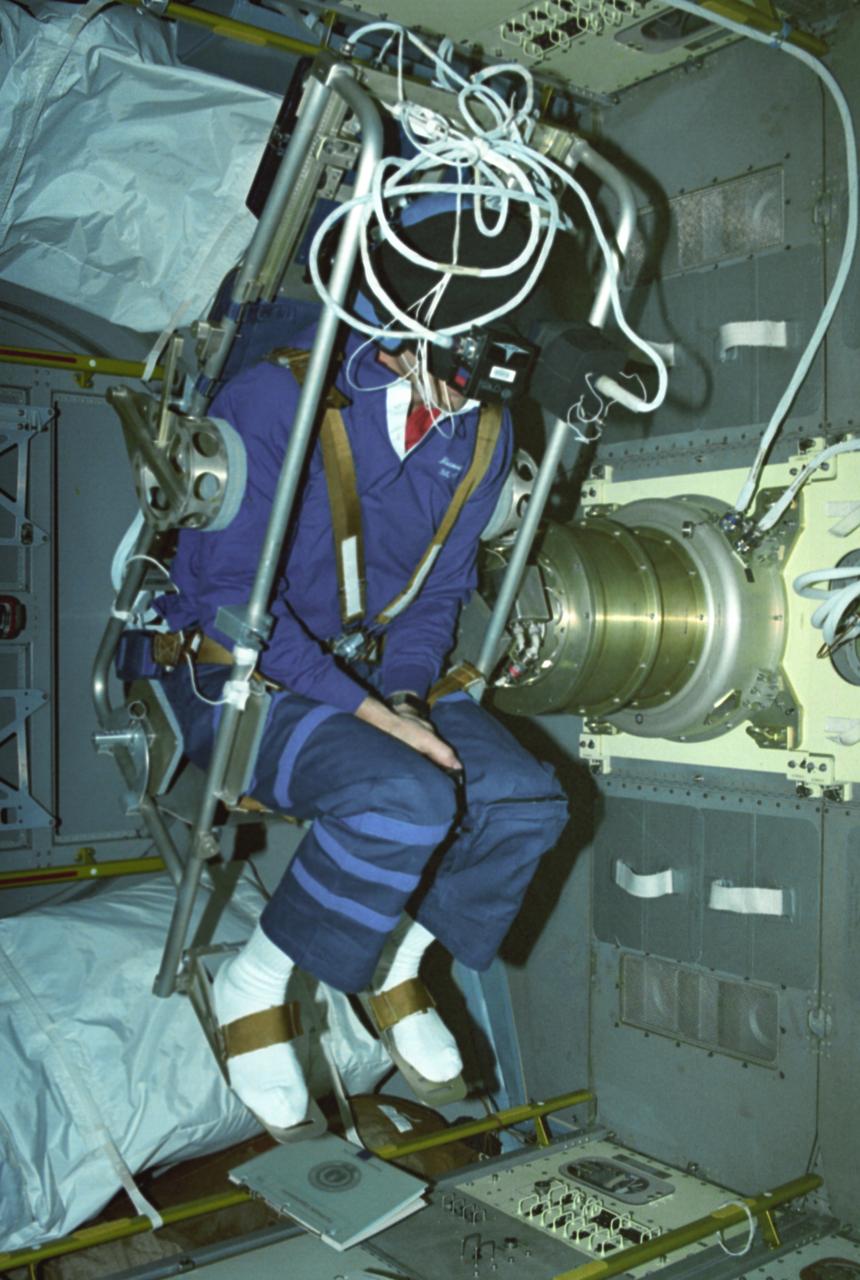
Astronaut David C. Hilmers conducts the Microgravity Vestibular Investigations (MVI) sitting in its rotator chair inside the IML-1 science module. When environmental conditions change so that the body receives new stimuli, the nervous system responds by interpreting the incoming sensory information differently. In space, the free-fall environment of an orbiting spacecraft requires that the body adapts to the virtual absence of gravity. Early in flights, crewmembers may feel disoriented or experience space motion sickness. MVI examined the effects of orbital flight on the human orientation system to obtain a better understanding of the mechanisms of adaptation to weightlessness. By provoking interactions among the vestibular, visual, and proprioceptive systems and then measuring the perceptual and sensorimotor reactions, scientists can study changes that are integral to the adaptive process. The IML-1 mission was the first in a series of Shuttle flights dedicated to fundamental materials and life sciences research with the international partners. The participating space agencies included: NASA, the 14-nation European Space Agency (ESA), the Canadian Space Agency (CSA), the French National Center of Space Studies (CNES), the German Space Agency and the German Aerospace Research Establishment (DAR/DLR), and the National Space Development Agency of Japan (NASDA). Both life and materials sciences benefited from the extended periods of microgravity available inside the Spacelab science module in the cargo bay of the Space Shuttle Orbiter. Managed by the Marshall Space Flight Center, IML-1 was launched on January 22, 1992 aboard the Space Shuttle Orbiter Discovery (STS-42 mission).
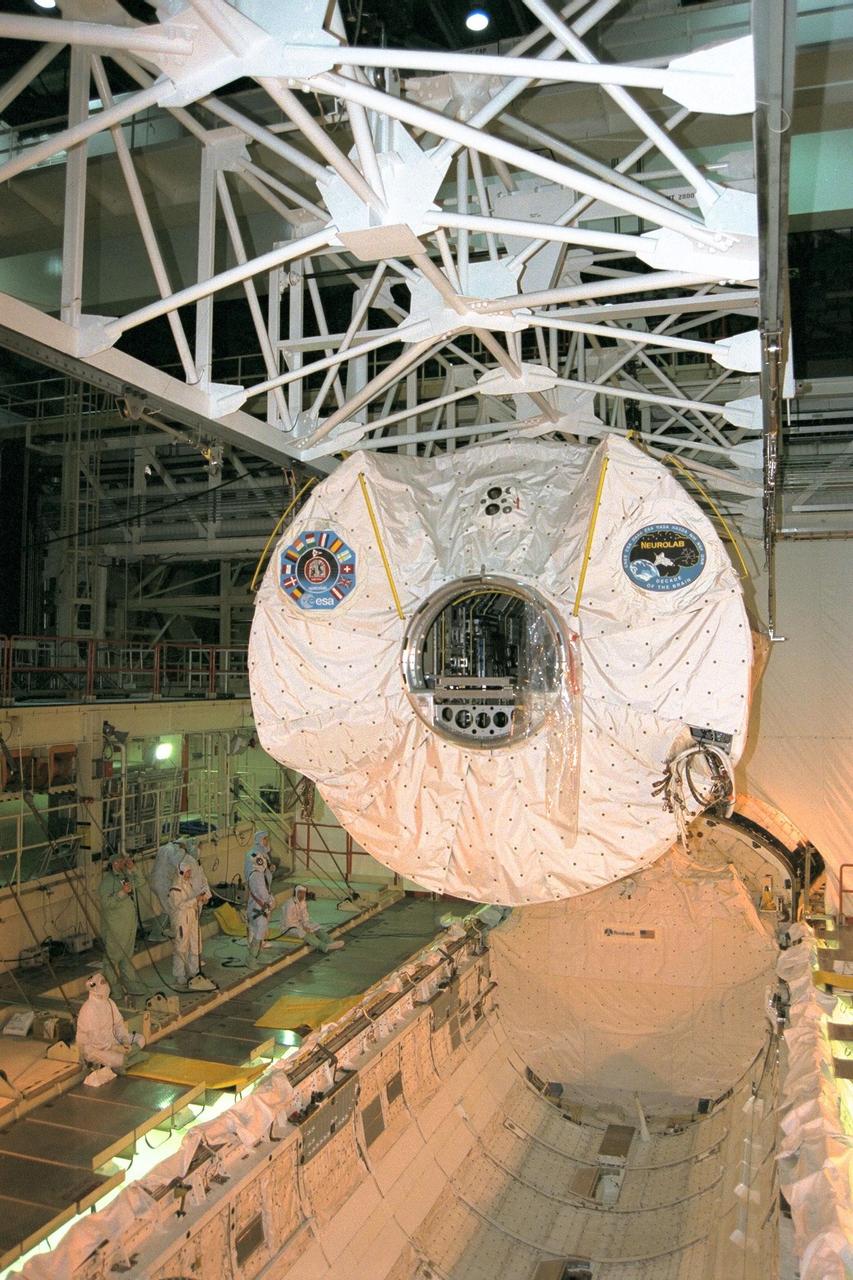
The STS-90 Neurolab payload is lowered into position into the cargo bay of Space Shuttle Columbia today in Orbiter Processing Facility bay 3. Investigations during the Neurolab mission will focus on the effects of microgravity on the nervous system. Specifically, experiments will study the adaptation of the vestibular system, the central nervous system, and the pathways that control the ability to sense location in the absence of gravity, as well as the effect of microgravity on a developing nervous system. The crew of STS-90, slated for launch in April, will include Commander Richard Searfoss, Pilot Scott Altman, Mission Specialists Richard Linnehan, Dafydd (Dave) Williams, M.D., and Kathryn (Kay) Hire, and Payload Specialists Jay Buckey, M.D., and James Pawelczyk, Ph.D
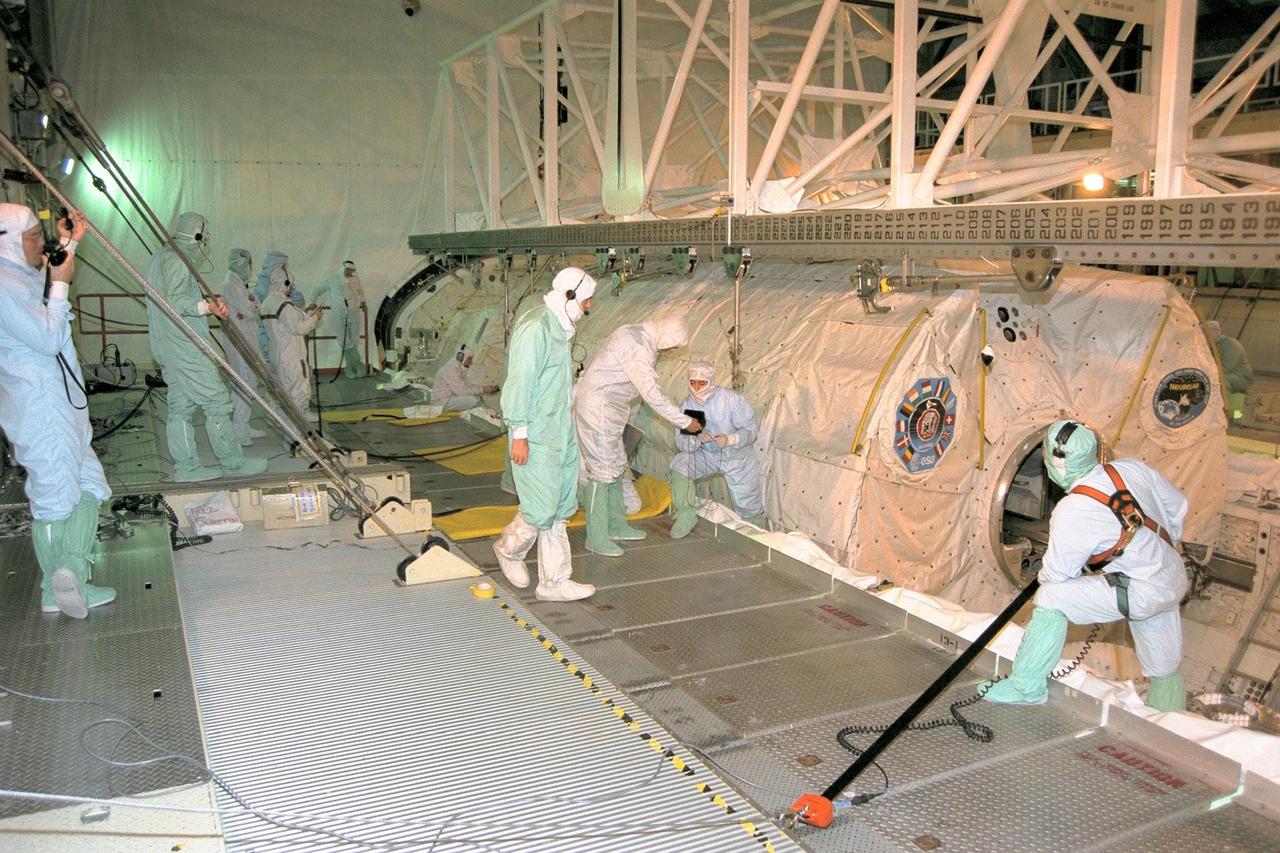
The STS-90 Neurolab payload is positioned into the cargo bay of Space Shuttle Columbia today in Orbiter Processing Facility bay 3. Investigations during the Neurolab mission will focus on the effects of microgravity on the nervous system. Specifically, experiments will study the adaptation of the vestibular system, the central nervous system, and the pathways that control the ability to sense location in the absence of gravity, as well as the effect of microgravity on a developing nervous system. The crew of STS-90, slated for launch in April, will include Commander Richard Searfoss, Pilot Scott Altman, Mission Specialists Richard Linnehan, Dafydd (Dave) Williams, M.D., and Kathryn (Kay) Hire, and Payload Specialists Jay Buckey, M.D., and James Pawelczyk, Ph.D
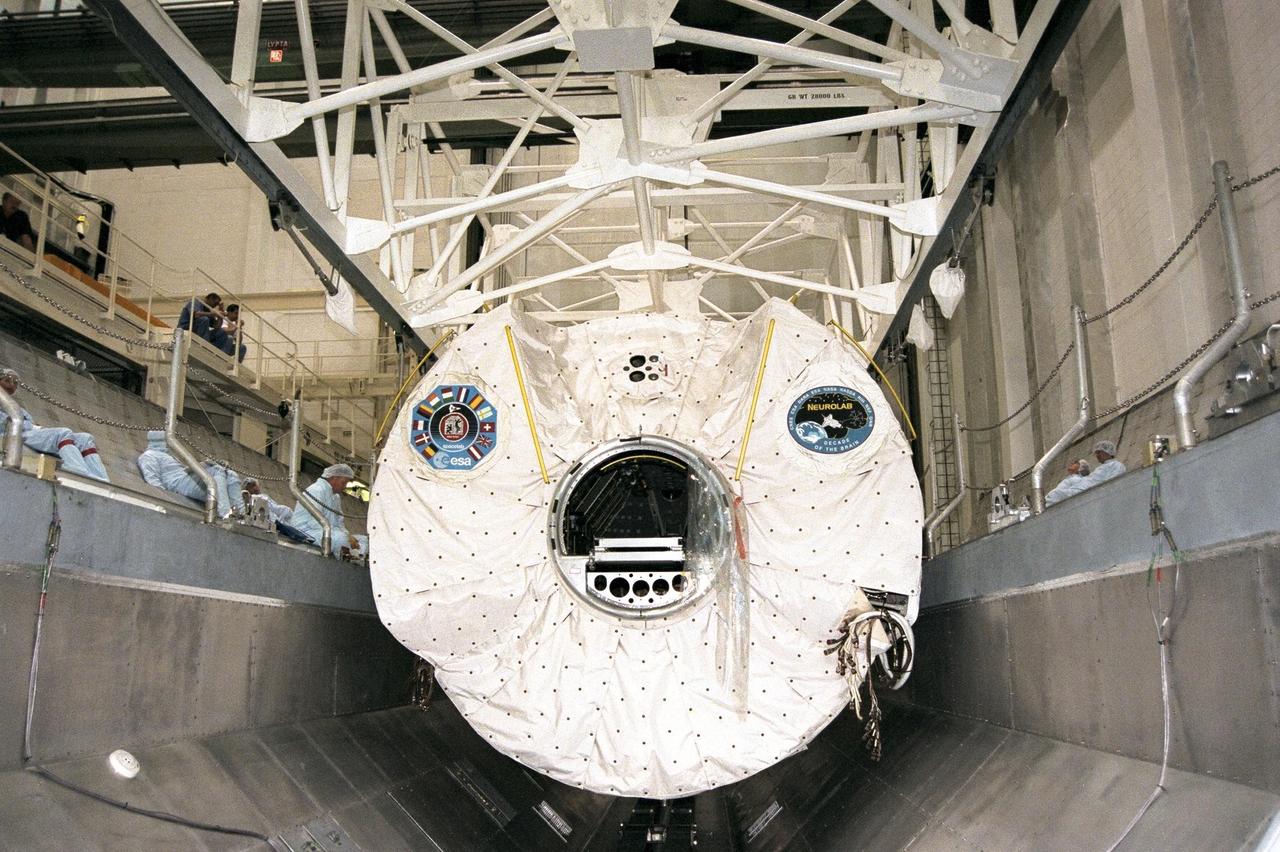
KENNEDY SPACE CENTER, FLA. -- The STS-90 Neurolab payload is lowered into its payload canister in KSC's Operations and Checkout Building. Investigations during the Neurolab mission will focus on the effects of microgravity on the nervous system. Specifically, experiments will study the adaptation of the vestibular system, the central nervous system, and the pathways that control the ability to sense location in the absence of gravity, as well as the effect of microgravity on a developing nervous system. The crew of STS-90, slated for launch in April, will include Commander Richard Searfoss, Pilot Scott Altman, Mission Specialists Richard Linnehan, Dafydd (Dave) Williams, M.D., and Kathryn (Kay) Hire, and Payload Specialists Jay Buckey, M.D., and James Pawelczyk, Ph.D
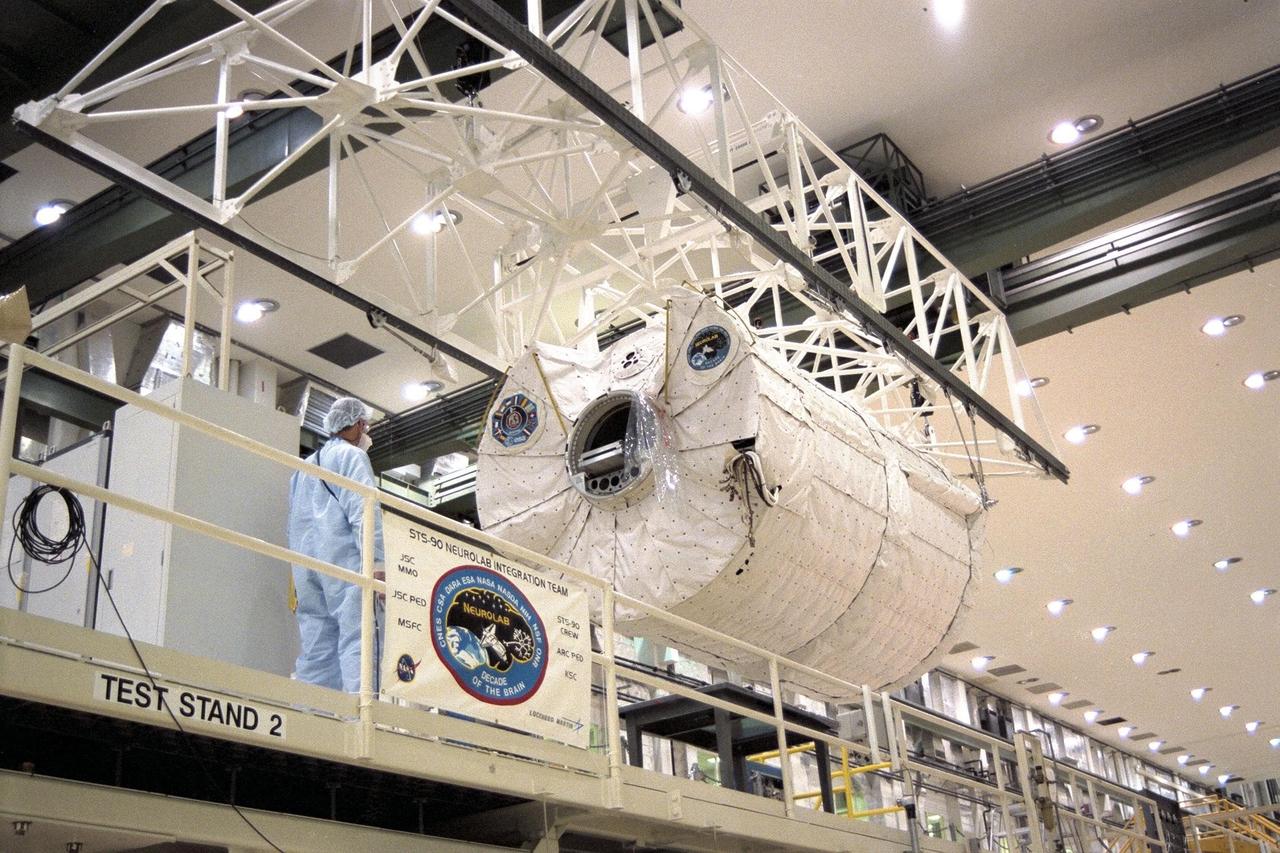
KENNEDY SPACE CENTER, FLA. -- A technician looks at the STS-90 Neurolab payload as it is moved from its test stand in KSC's Operations and Checkout Building. Investigations during the Neurolab mission will focus on the effects of microgravity on the nervous system. Specifically, experiments will study the adaptation of the vestibular system, the central nervous system, and the pathways that control the ability to sense location in the absence of gravity, as well as the effect of microgravity on a developing nervous system. The crew of STS-90, slated for launch in April, will include Commander Richard Searfoss, Pilot Scott Altman, Mission Specialists Richard Linnehan, Dafydd (Dave) Williams, M.D., and Kathryn (Kay) Hire, and Payload Specialists Jay Buckey, M.D., and James Pawelczyk, Ph.D

KENNEDY SPACE CENTER, FLA. -- Technicians gather around the STS-90 Neurolab payload during weight and center-of-gravity measurements in KSC's Operations and Checkout Building. Investigations during the Neurolab mission will focus on the effects of microgravity on the nervous system. Specifically, experiments will study the adaptation of the vestibular system, the central nervous system, and the pathways that control the ability to sense location in the absence of gravity, as well as the effect of microgravity on a developing nervous system. The crew of STS-90, slated for launch in April, will include Commander Richard Searfoss, Pilot Scott Altman, Mission Specialists Richard Linnehan, Dafydd (Dave) Williams, M.D., and Kathryn (Kay) Hire, and Payload Specialists Jay Buckey, M.D., and James Pawelczyk, Ph.D
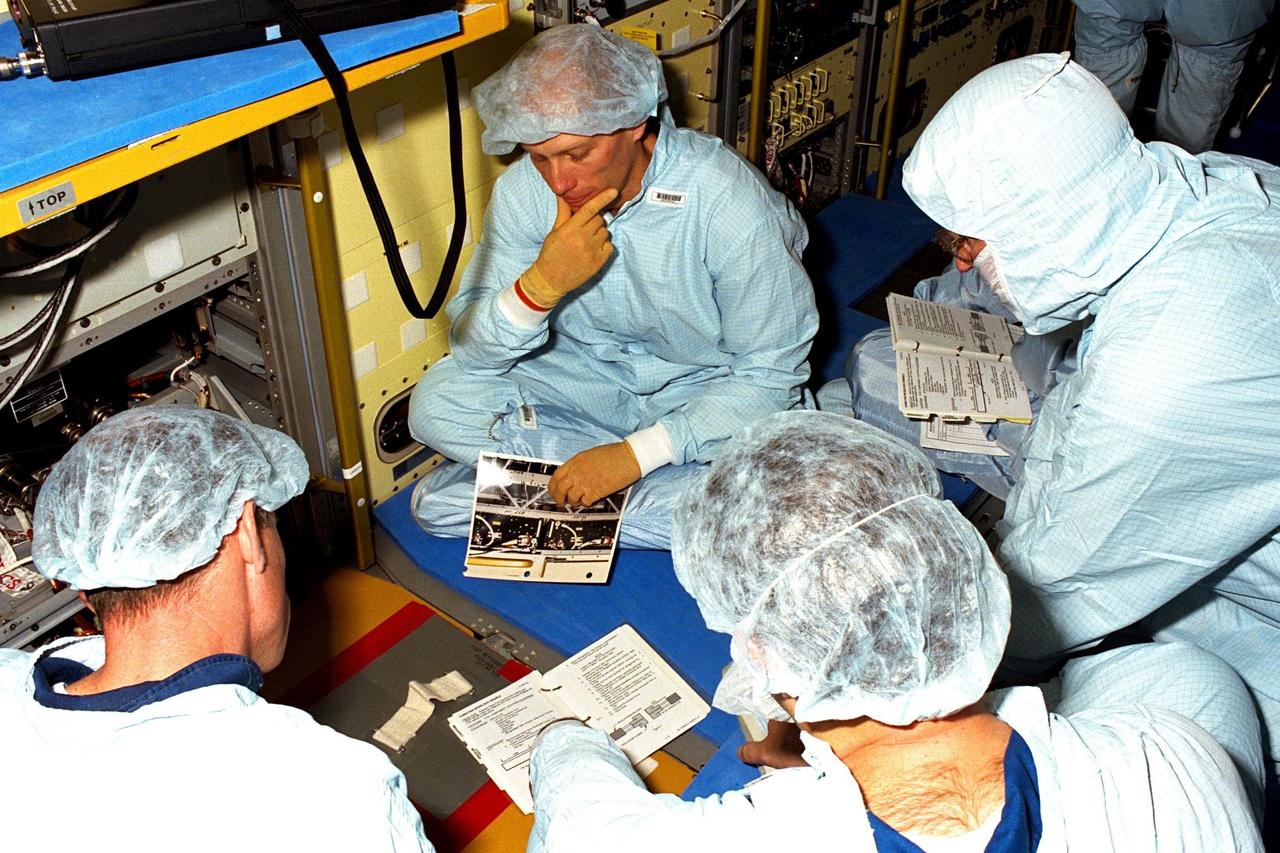
STS-90 crew members study manuals and drawings for the mission's Neurolab payload during the Crew Equipment Interface Test (CEIT) in Kennedy Space Center's (KSC's) Operations and Checkout Building, where the payload is undergoing processing. The CEIT gives astronauts an opportunity to get a hands-on look at the payloads with which they will be working on-orbit. STS-90 is scheduled to launch aboard the Shuttle Columbia from KSC on April 2. Investigations during the Neurolab mission will focus on the effects of microgravity on the nervous system. Specifically, experiments will study the adaptation of the vestibular system, the central nervous system, and the pathways that control the ability to sense location in the absence of gravity, as well as the effect of microgravity on a developing nervous system
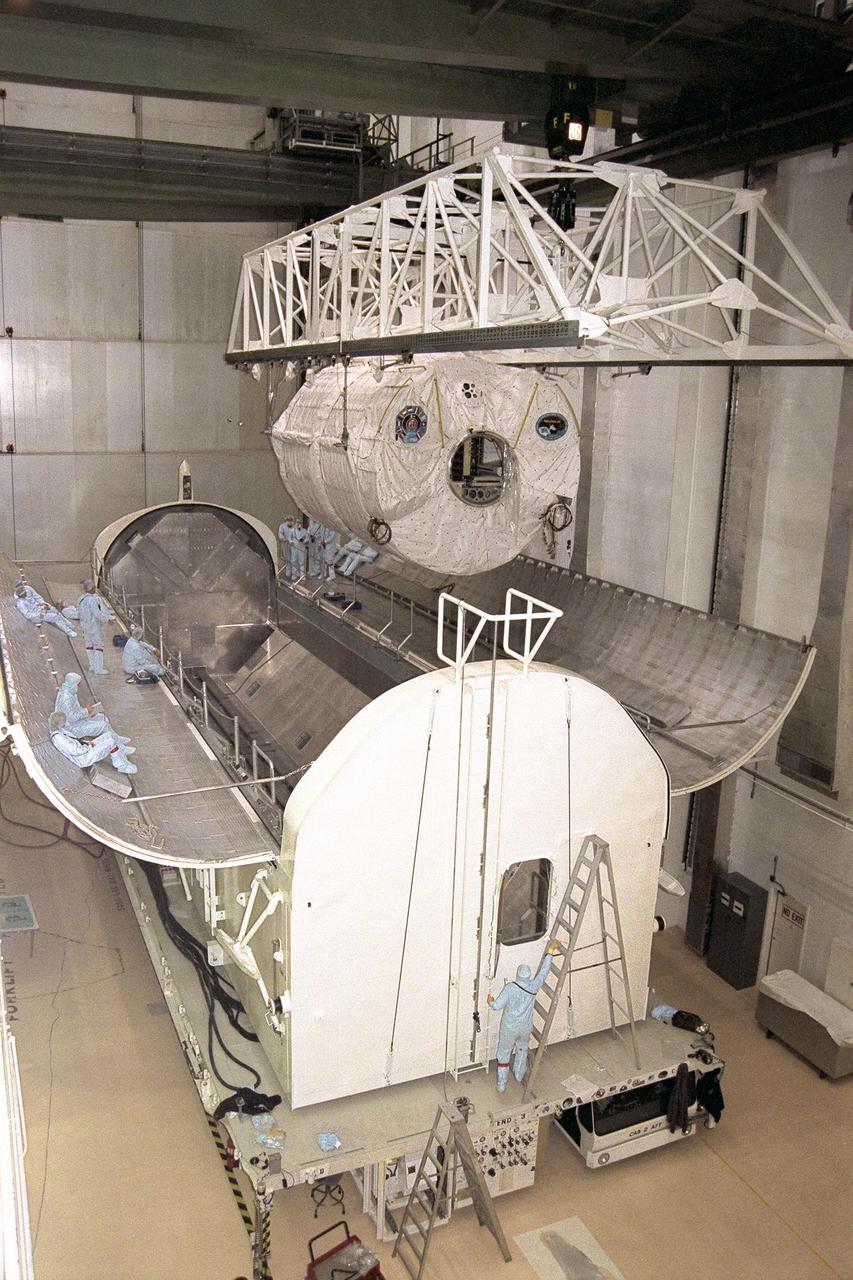
KENNEDY SPACE CENTER, FLA. -- The STS-90 Neurolab payload is lowered into its payload canister in KSC's Operations and Checkout Building. Investigations during the Neurolab mission will focus on the effects of microgravity on the nervous system. Specifically, experiments will study the adaptation of the vestibular system, the central nervous system, and the pathways that control the ability to sense location in the absence of gravity, as well as the effect of microgravity on a developing nervous system. The crew of STS-90, slated for launch in April, will include Commander Richard Searfoss, Pilot Scott Altman, Mission Specialists Richard Linnehan, Dafydd (Dave) Williams, M.D., and Kathryn (Kay) Hire, and Payload Specialists Jay Buckey, M.D., and James Pawelczyk, Ph.D
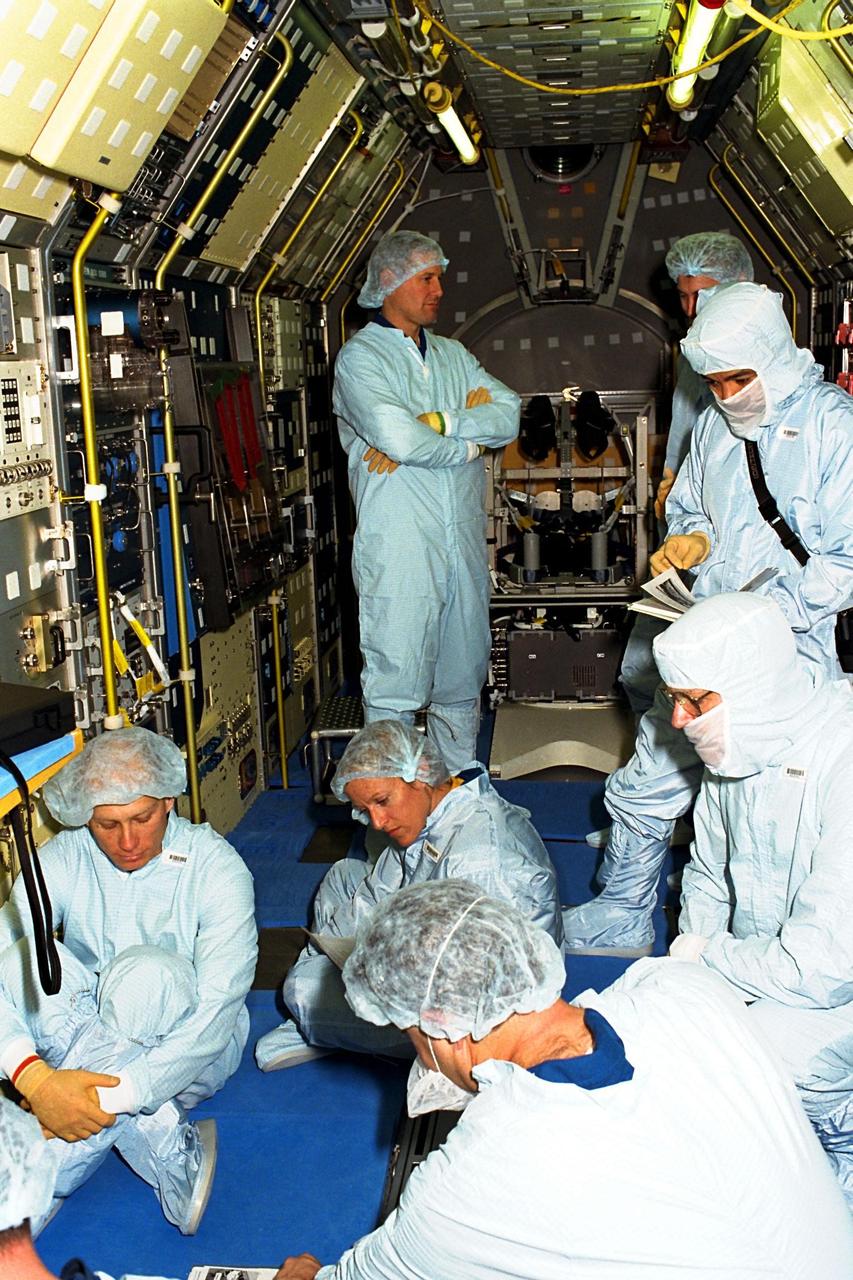
STS-90 crew members check out the inside of the module for the mission's Neurolab payload during the Crew Equipment Interface Test (CEIT) in Kennedy Space Center's (KSC's) Operations and Checkout Building, where the payload is undergoing processing. The CEIT gives astronauts an opportunity to get a hands-on look at the payloads with which they will be working on-orbit. STS-90 is scheduled to launch aboard the Shuttle Columbia from KSC on April 2. Investigations during the Neurolab mission will focus on the effects of microgravity on the nervous system. Specifically, experiments will study the adaptation of the vestibular system, the central nervous system, and the pathways that control the ability to sense location in the absence of gravity, as well as the effect of microgravity on a developing nervous system

The STS-90 Neurolab payload is lowered into position into the cargo bay of Space Shuttle Columbia today in Orbiter Processing Facility bay 3. Investigations during the Neurolab mission will focus on the effects of microgravity on the nervous system. Specifically, experiments will study the adaptation of the vestibular system, the central nervous system, and the pathways that control the ability to sense location in the absence of gravity, as well as the effect of microgravity on a developing nervous system. The crew of STS-90, slated for launch in April, will include Commander Richard Searfoss, Pilot Scott Altman, Mission Specialists Richard Linnehan, Dafydd (Dave) Williams, M.D., and Kathryn (Kay) Hire, and Payload Specialists Jay Buckey, M.D., and James Pawelczyk, Ph.D
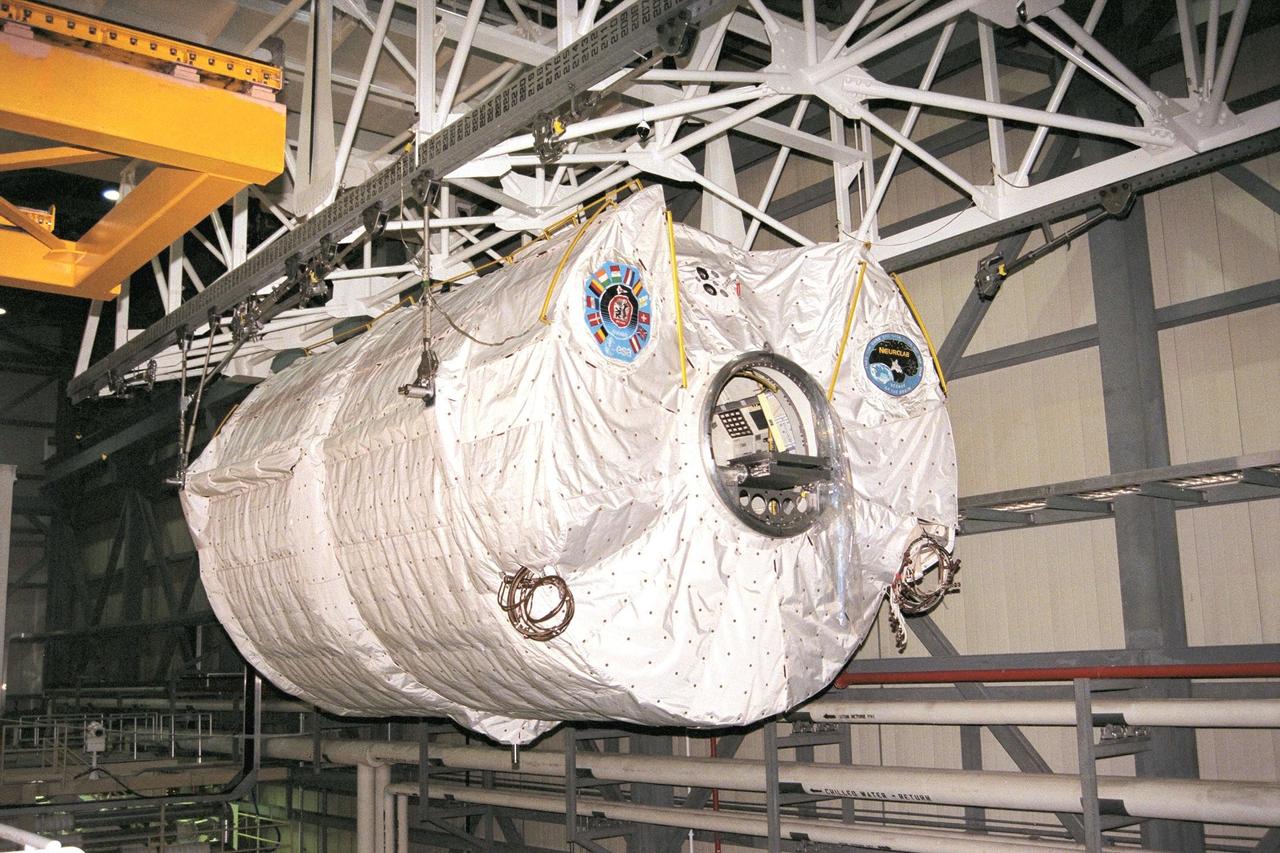
The STS-90 Neurolab payload is prepared to be positioned into the cargo bay of Space Shuttle Columbia today in Orbiter Processing Facility bay 3. Investigations during the Neurolab mission will focus on the effects of microgravity on the nervous system. Specifically, experiments will study the adaptation of the vestibular system, the central nervous system, and the pathways that control the ability to sense location in the absence of gravity, as well as the effect of microgravity on a developing nervous system. The crew of STS-90, slated for launch in April, will include Commander Richard Searfoss, Pilot Scott Altman, Mission Specialists Richard Linnehan, Dafydd (Dave) Williams, M.D., and Kathryn (Kay) Hire, and Payload Specialists Jay Buckey, M.D., and James Pawelczyk, Ph.D
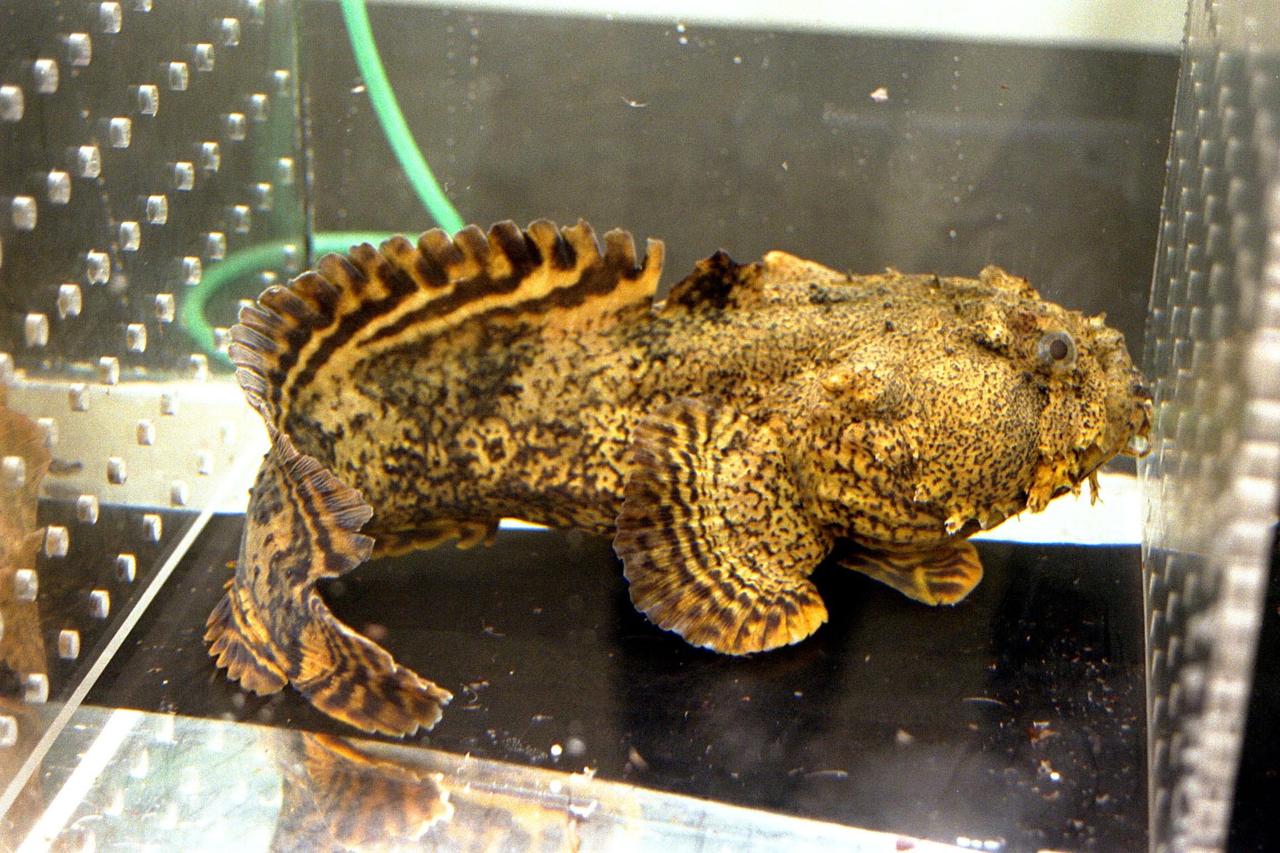
KENNEDY SPACE CENTER, FLA. -- An oyster toadfish (Opsanus tau), like those that are part of the Neurolab payload on Space Shuttle Mission STS-90, is shown in its holding tank in the Space Station Processing Facility. Each fish is between eight and 14 inches long. Toadfish live in an estuarine environment and are native to areas along the Northeast coast of the United States. Investigations during the Neurolab mission will focus on the effects of microgravity on the nervous system. This fish is an excellent model for looking at vestibular function because the architecture of its inner and middle ear are similar to those of mammals with respect to the vestibular apparatus. The crew of STS-90, slated for launch April 16 at 2:19 p.m. EDT, includes Commander Richard Searfoss, Pilot Scott Altman, Mission Specialists Richard Linnehan, Dafydd (Dave) Williams, M.D., and Kathryn (Kay) Hire, and Payload Specialists Jay Buckey, M.D., and James Pawelczyk, Ph.D
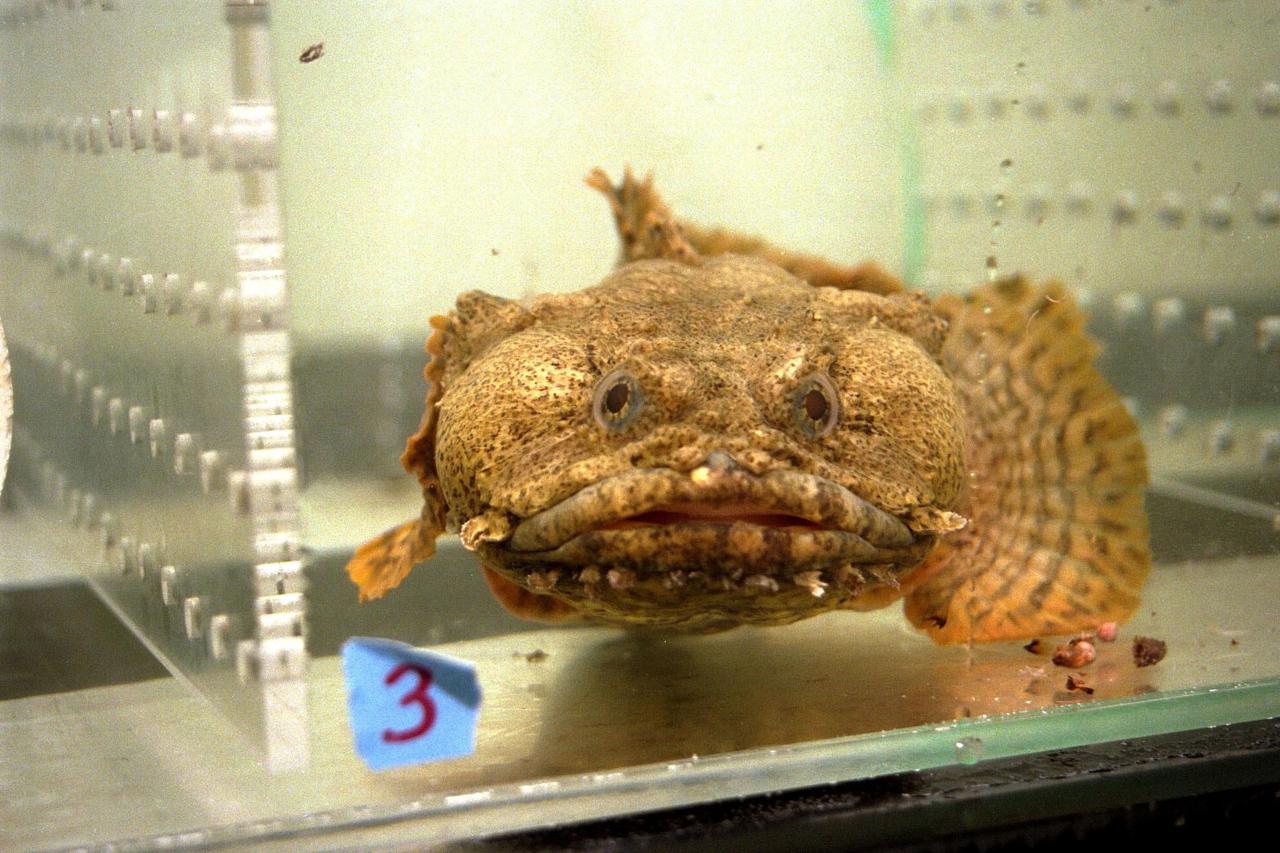
KENNEDY SPACE CENTER, FLA. -- An oyster toadfish (Opsanus tau), like those that are part of the Neurolab payload on Space Shuttle Mission STS-90, is shown in its holding tank in the Space Station Processing Facility. Each fish is between eight and 14 inches long. Toadfish live in an estuarine environment and are native to areas along the Northeast coast of the United States. Investigations during the Neurolab mission will focus on the effects of microgravity on the nervous system. This fish is an excellent model for looking at vestibular function because the architecture of its inner and middle ear are similar to those of mammals with respect to the vestibular apparatus. The crew of STS-90, slated for launch April 16 at 2:19 p.m. EDT, includes Commander Richard Searfoss, Pilot Scott Altman, Mission Specialists Richard Linnehan, Dafydd (Dave) Williams, M.D., and Kathryn (Kay) Hire, and Payload Specialists Jay Buckey, M.D., and James Pawelczyk, Ph.D
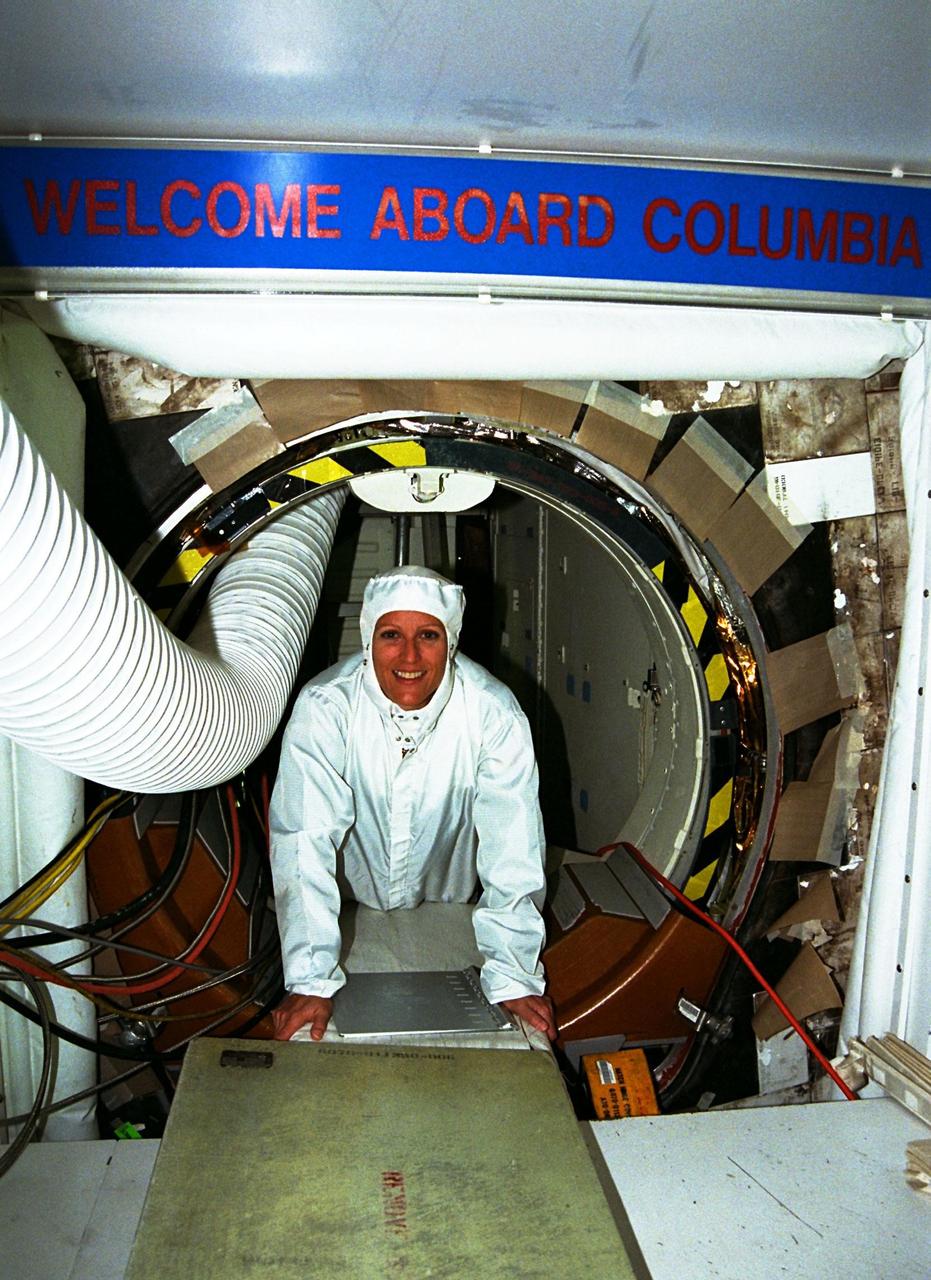
STS-90 Mission Specialist Kathryn (Kay) Hire enjoys the crawl between Columbia and the white room that allows access to the orbiter. The crew of STS-90 recently participated in the Crew Equipment Interface Test (CEIT) in Kennedy Space Center's Orbiter Processing Facility Bay 3. The CEIT gives astronauts an opportunity to get a hands-on look at the payloads with which they will be working on-orbit. Investigations during the STS-90 Neurolab mission will focus on the effects of microgravity on the nervous system. Specifically, experiments will study the adaptation of the vestibular system, the central nervous system, and the pathways that control the ability to sense location in the absence of gravity, as well as the effect of microgravity on a developing nervous system. STS-90, which will be Hire's first Shuttle flight, is scheduled for launch on April 16 at 2:19 p.m. EDT

KENNEDY SPACE CENTER, FLA. -- The Space Shuttle Columbia begins its rollout from the Vehicle Assembly Building to Launch Pad 39B in preparation for the STS-90 mission. The Neurolab experiments are the primary payload on this nearly 17-day space flight. Investigations during the Neurolab mission will focus on the effects of microgravity on the nervous system. Specifically, experiments will study the adaptation of the vestibular system, the central nervous system, and the pathways that control the ability to sense location in the absence of gravity, as well as the effect of microgravity on a developing nervous system. The crew of STS-90, slated for launch April 16 at 2:19 p.m. EDT, includes Commander Richard Searfoss, Pilot Scott Altman, Mission Specialists Richard Linnehan, Dafydd (Dave) Williams, M.D., and Kathryn (Kay) Hire, and Payload Specialists Jay Buckey, M.D., and James Pawelczyk, Ph.D
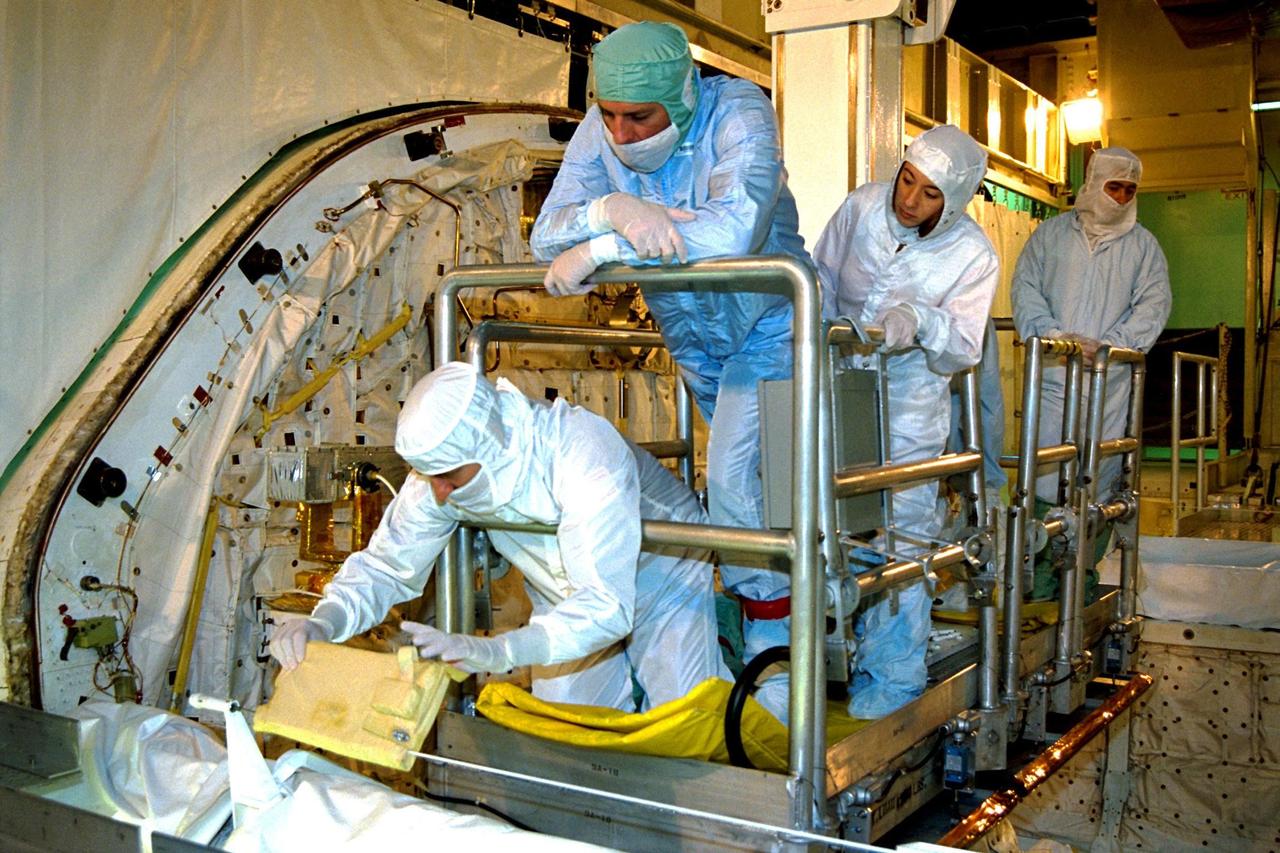
Members of the STS-90 crew participate in the Crew Equipment Interface Test (CEIT) in Kennedy Space Center's Orbiter Processing Facility Bay 3. The CEIT gives astronauts an opportunity to get a hands-on look at the payloads with which they will be working on-orbit. Investigations during the STS-90 Neurolab mission will focus on the effects of microgravity on the nervous system. Specifically, experiments will study the adaptation of the vestibular system, the central nervous system, and the pathways that control the ability to sense location in the absence of gravity, as well as the effect of microgravity on a developing nervous system. The crew of STS-90, slated for launch in April, will include Commander Richard Searfoss, Pilot Scott Altman, Mission Specialists Richard Linnehan, Dafydd (Dave) Williams, M.D., and Kathryn (Kay) Hire, and Payload Specialists Jay Buckey, M.D., and James Pawelczyk, Ph.D
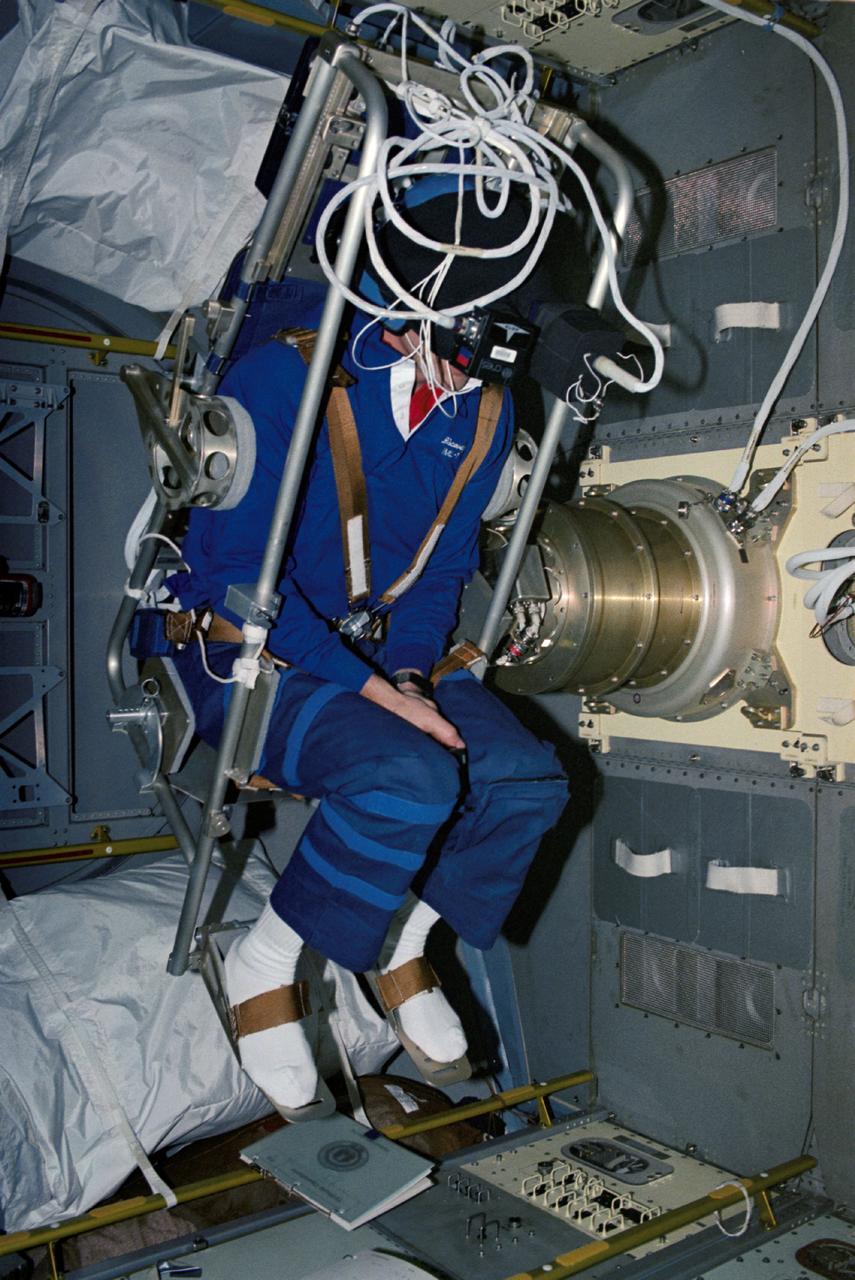
STS042-27-037 (22-30 Jan. 1992) --- Astronaut David C. Hilmers, STS-42 mission specialist, wearing a helmet assembly, sits in the Microgravity Vestibular Investigation (MVI) rotating chair. The scene is in the International Microgravity Laboratory (IML-1) science module aboard Discovery. Hilmers, a mission specialist, and six other crewmembers spent more than eight days in Earth-orbit conducting experiments. Hilmer's helmet assembly is outfitted with accelerometers to measure head movements and visors that fit over each eye independently to provide visual stimuli. The chair system has three movement patterns: "sinusoidal" or traveling predictably back and forth over the same distance at a constant speed; "pseudorandom" or moving back and forth over the varying distances; and "stepped" or varying speeds beginning and stopping suddenly.

The Neurolab payload for STS-90, scheduled to launch aboard the Shuttle Columbia from Kennedy Space Center (KSC) on April 2, 1998, is moved to its workstand in the Operations and Checkout Building at KSC. Investigations during the Neurolab mission will focus on the effects of microgravity on the nervous system. Specifically, experiments will study the adaptation of the vestibular system, the central nervous system, and the pathways that control the ability to sense location in the absence of gravity, as well as the effect of microgravity on a developing nervous system. The crew of STS-90 will include Commander Richard Searfoss, Pilot Scott Altman, Mission Specialists Richard Linnehan, Dafydd (Dave) Williams, M.D., and Kathryn (Kay) Hire, and Payload Specialists Jay Buckey, M.D., and James Pawelczyk, Ph.D
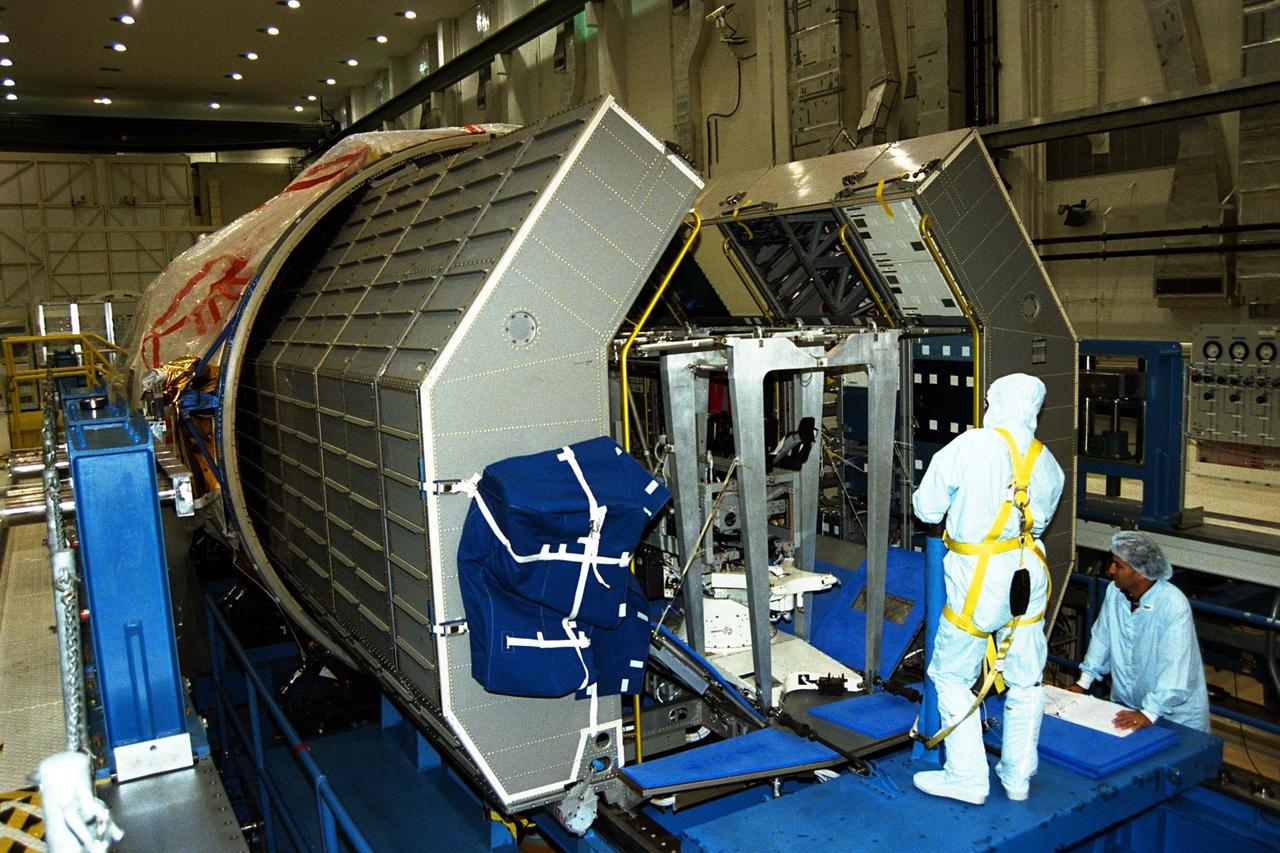
The Neurolab payload for STS-90, scheduled to launch aboard the Shuttle Columbia from Kennedy Space Center (KSC) on April 2, 1998, is installed in the Spacelab module by Boeing technicians in the Operations and Checkout Building at KSC. Investigations during the Neurolab mission will focus on the effects of microgravity on the nervous system. Specifically, experiments will study the adaptation of the vestibular system, the central nervous system, and the pathways that control the ability to sense location in the absence of gravity, as well as the effect of microgravity on a developing nervous system. The crew of STS-90 will include Commander Richard Searfoss, Pilot Scott Altman, Mission Specialists Richard Linnehan, Dafydd (Dave) Williams, M.D., and Kathryn (Kay) Hire, and Payload Specialists Jay Buckey, M.D., and James Pawelczyk, Ph.D
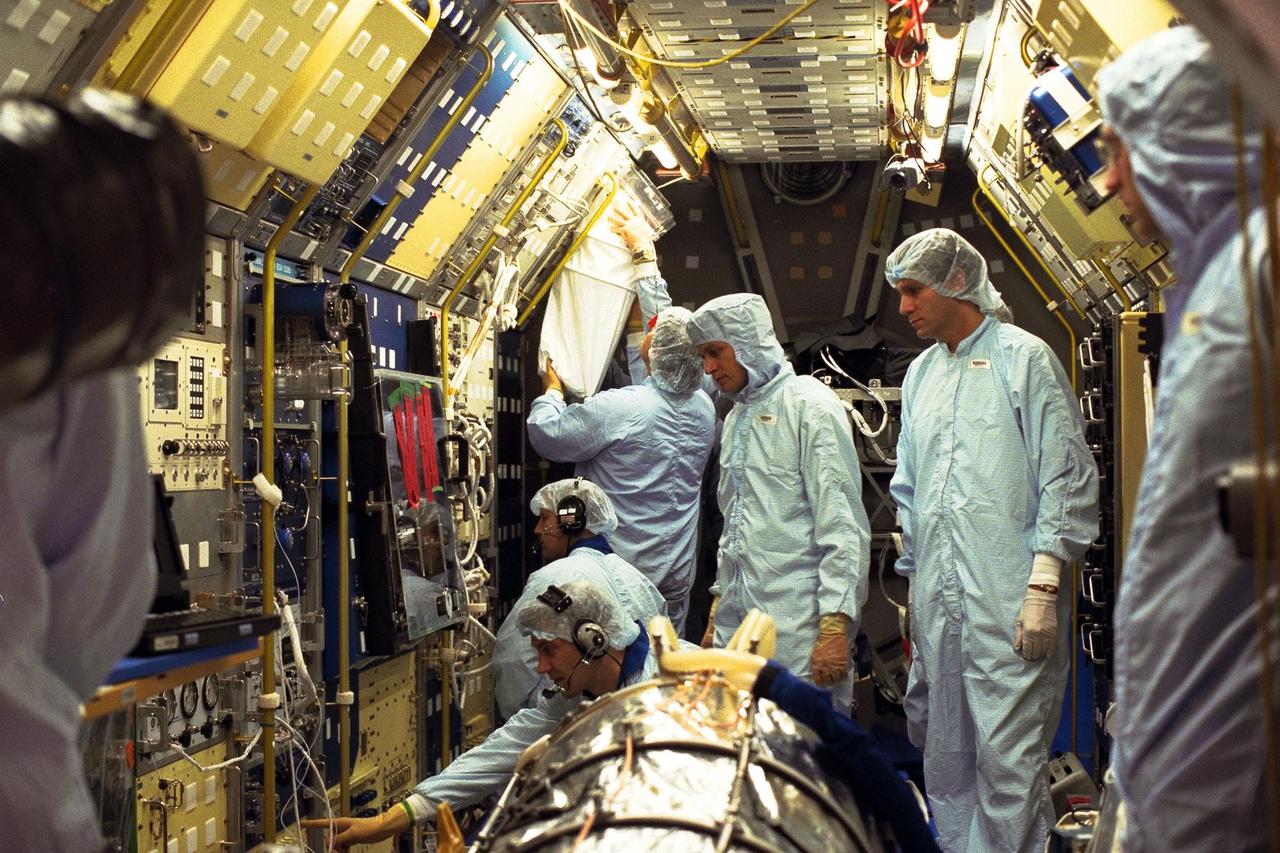
The Neurolab payload for STS-90, scheduled to launch aboard the Shuttle Columbia from Kennedy Space Center (KSC) on April 2, 1998, undergoes further processing in the Operations and Checkout Building at KSC. Investigations during the Neurolab mission will focus on the effects of microgravity on the nervous system. Specifically, experiments will study the adaptation of the vestibular system, the central nervous system, and the pathways that control the ability to sense location in the absence of gravity, as well as the effect of microgravity on a developing nervous system. The crew of STS-90 will include Commander Richard Searfoss, Pilot Scott Altman, Mission Specialists Richard Linnehan, Dafydd (Dave) Williams, M.D., and Kathryn (Kay) Hire, and Payload Specialists Jay Buckey, M.D., and James Pawelczyk, Ph.D

The Neurolab payload for STS-90, scheduled to launch aboard the Shuttle Columbia from Kennedy Space Center (KSC) on April 2, 1998, is ready for processing after being placed in its workstand in the Operations and Checkout Building at KSC. Investigations during the Neurolab mission will focus on the effects of microgravity on the nervous system. Specifically, experiments will study the adaptation of the vestibular system, the central nervous system, and the pathways that control the ability to sense location in the absence of gravity, as well as the effect of microgravity on a developing nervous system. The crew of STS-90 will include Commander Richard Searfoss, Pilot Scott Altman, Mission Specialists Richard Linnehan, Dafydd (Dave) Williams, M.D., and Kathryn (Kay) Hire, and Payload Specialists Jay Buckey, M.D., and James Pawelczyk, Ph.D
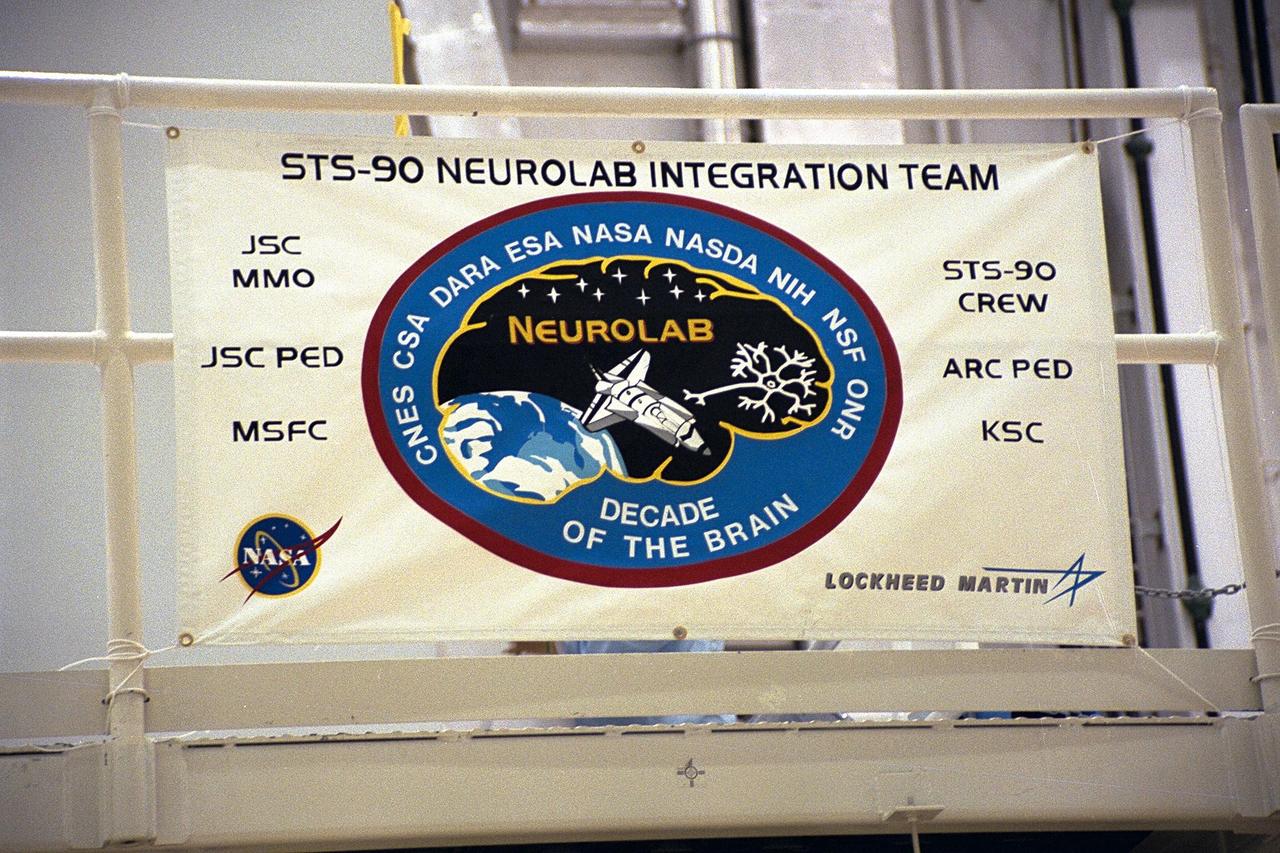
The Neurolab payload for STS-90, scheduled to launch aboard the Shuttle Columbia from Kennedy Space Center (KSC) on April 2, 1998, undergoes further processing in the Operations and Checkout Building at KSC. Investigations during the Neurolab mission will focus on the effects of microgravity on the nervous system. Specifically, experiments will study the adaptation of the vestibular system, the central nervous system, and the pathways that control the ability to sense location in the absence of gravity, as well as the effect of microgravity on a developing nervous system. The crew of STS-90 will include Commander Richard Searfoss, Pilot Scott Altman, Mission Specialists Richard Linnehan, Dafydd (Dave) Williams, M.D., and Kathryn (Kay) Hire, and Payload Specialists Jay Buckey, M.D., and James Pawelczyk, Ph.D
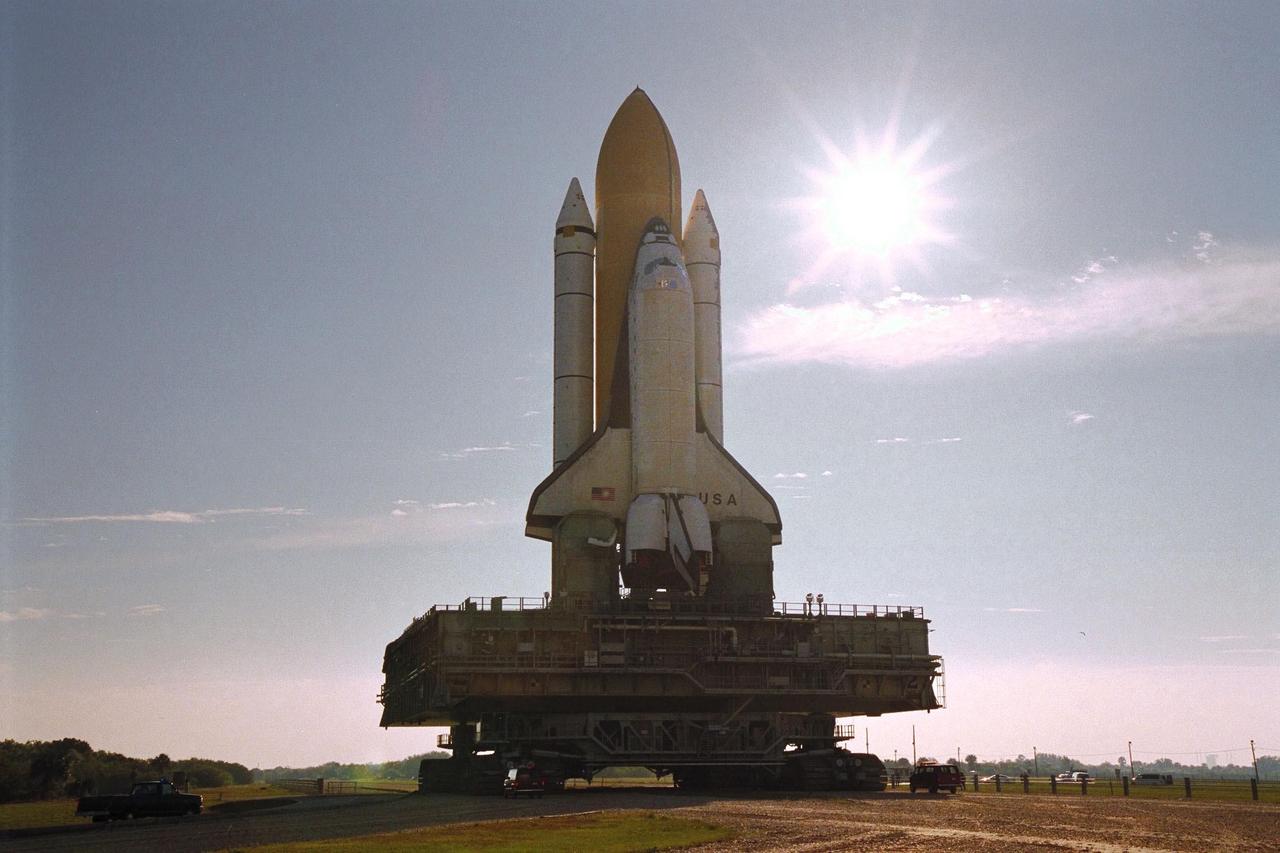
KENNEDY SPACE CENTER, Fla. -- The Space Shuttle Columbia continues its morning rollout from the Vehicle Assembly Building to Launch Pad 39B in preparation for the STS-90 mission. The Neurolab experiments are primary payload on this nearly 17-day space flight. Investigations during the Neurolab mission will focus on the effects of microgravity on the nervous system. Specifically, experiments will study the adaptation of the vestibular system, the central nervous system, and the pathways that control the ability to sense location in the absence of gravity, as well as the effect of microgravity on a developing nervous system. The crew of STS-90, slated for launch April 16 at 2:19 p.m. EDT, includes Commander Richard Searfoss, Pilot Scott Altman, Mission Specialists Richard Linnehan, Dafydd (Dave) Williams, M.D., and Kathryn (Kay) Hire, and Payload Specialists Jay Buckey, M.D., and James Pawelczyk, Ph.D

The Neurolab payload for STS-90, scheduled to launch aboard the Shuttle Columbia from Kennedy Space Center (KSC) on April 2, 1998, is installed in the Spacelab module by Boeing technicians in the Operations and Checkout Building at KSC. Investigations during the Neurolab mission will focus on the effects of microgravity on the nervous system. Specifically, experiments will study the adaptation of the vestibular system, the central nervous system, and the pathways that control the ability to sense location in the absence of gravity, as well as the effect of microgravity on a developing nervous system. The crew of STS-90 will include Commander Richard Searfoss, Pilot Scott Altman, Mission Specialists Richard Linnehan, Dafydd (Dave) Williams, M.D., and Kathryn (Kay) Hire, and Payload Specialists Jay Buckey, M.D., and James Pawelczyk, Ph.D
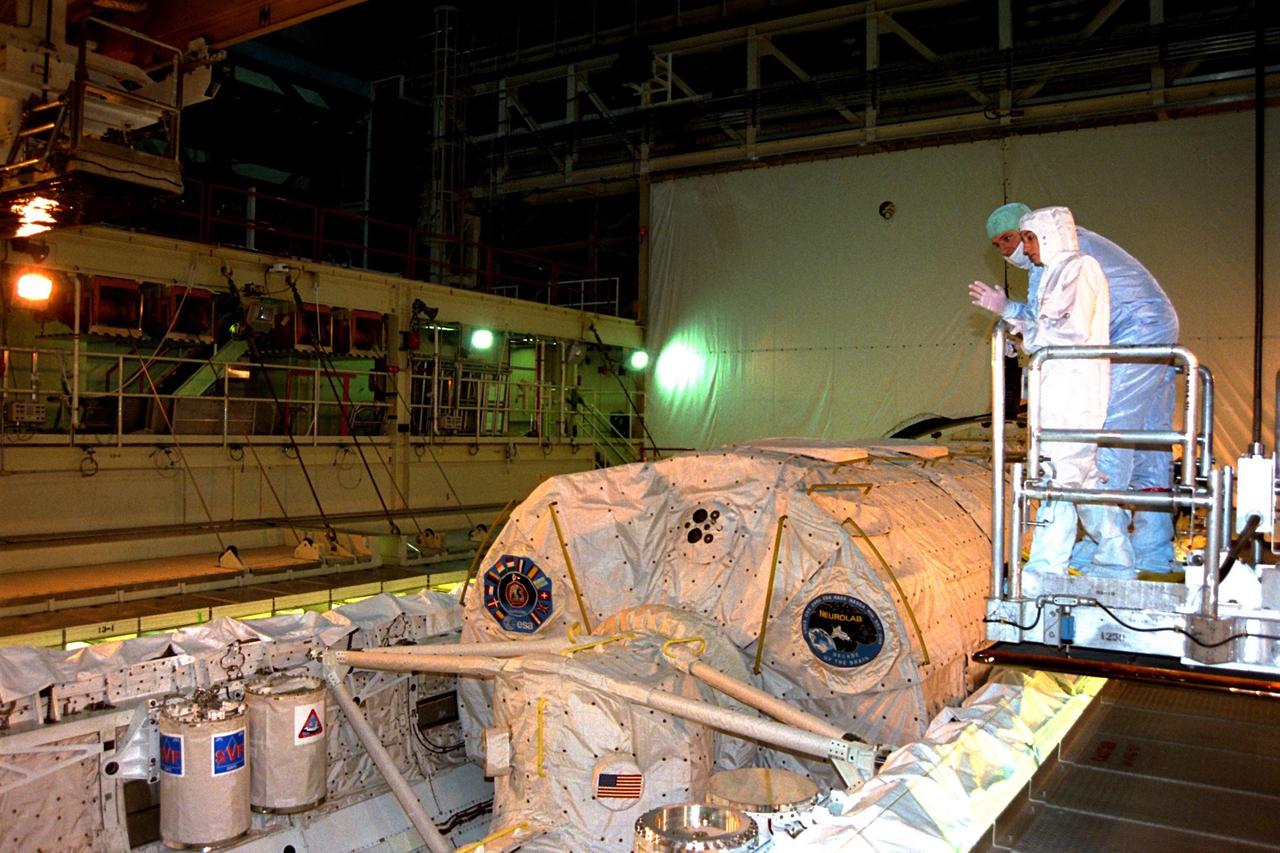
Stacie Greene, an extravehicular activity trainer from Johnson Space Center, discusses the STS-90 Neurolab mission with Mission Specialist Richard Linnehan overlooking Columbia's payload bay. The crew of STS-90 participated in the Crew Equipment Interface Test (CEIT) in Kennedy Space Center's Orbiter Processing Facility Bay 3. The CEIT gives astronauts an opportunity to get a hands-on look at the payloads with which they will be working on-orbit. Investigations during the STS-90 Neurolab mission will focus on the effects of microgravity on the nervous system. Specifically, experiments will study the adaptation of the vestibular system, the central nervous system, and the pathways that control the ability to sense location in the absence of gravity, as well as the effect of microgravity on a developing nervous system. STS-90 is scheduled for launch on April 16 at 2:19 p.m. EDT
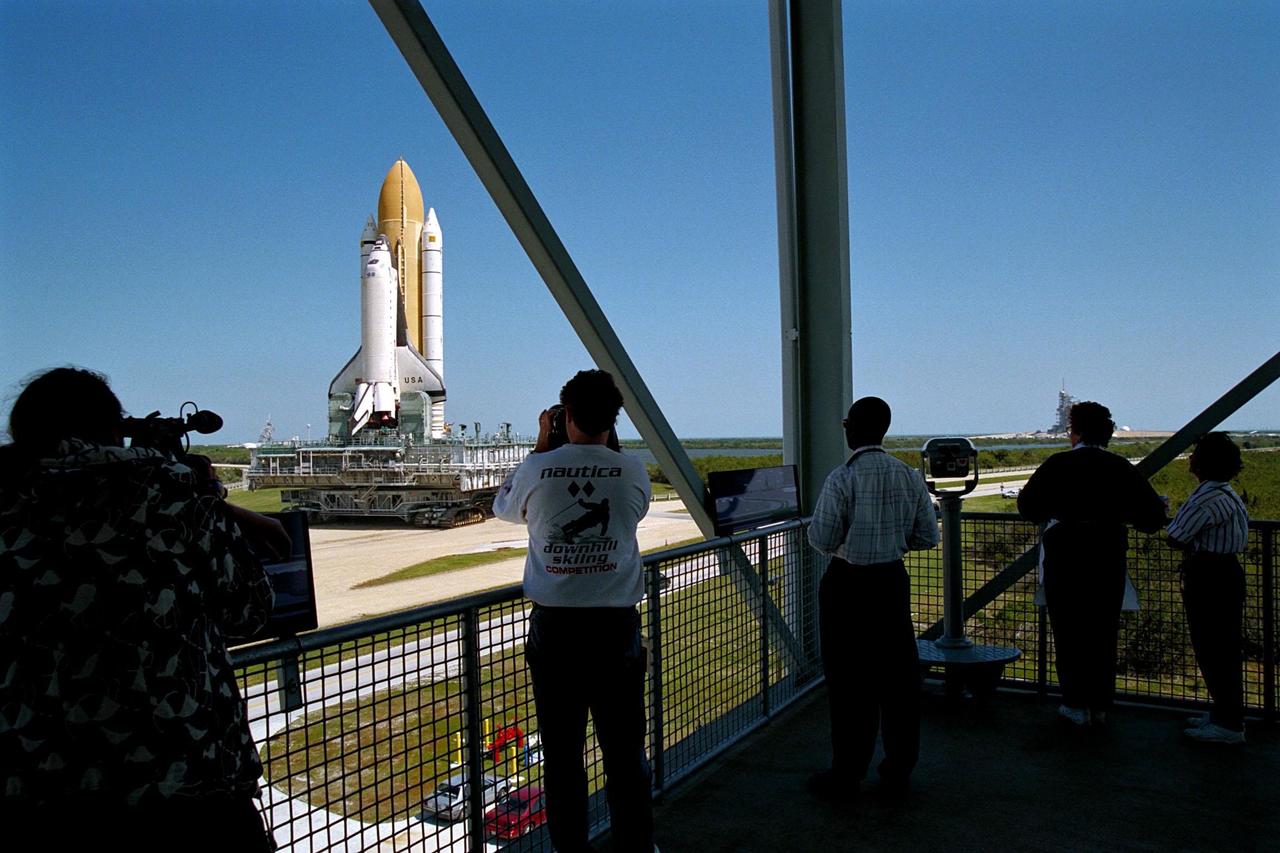
KENNEDY SPACE CENTER, FLA. -- The Space Shuttle Columbia continues its morning rollout past the newly opened tour stop, the Launch Complex 39 Observation Gantry, to Launch Pad 39B in preparation for the STS-90 mission. The Neurolab experiments are the primary payload on this nearly 17-day space flight. Investigations during the Neurolab mission will focus on the effects of microgravity on the nervous system. Specifically, experiments will study the adaptation of the vestibular system, the central nervous system, and the pathways that control the ability to sense location in the absence of gravity, as well as the effect of microgravity on a developing nervous system. The crew of STS-90, slated for launch April 16 at 2:19 p.m. EDT, includes Commander Richard Searfoss, Pilot Scott Altman, Mission Specialists Richard Linnehan, Dafydd (Dave) Williams, M.D., and Kathryn (Kay) Hire, and Payload Specialists Jay Buckey, M.D., and James Pawelczyk, Ph.D
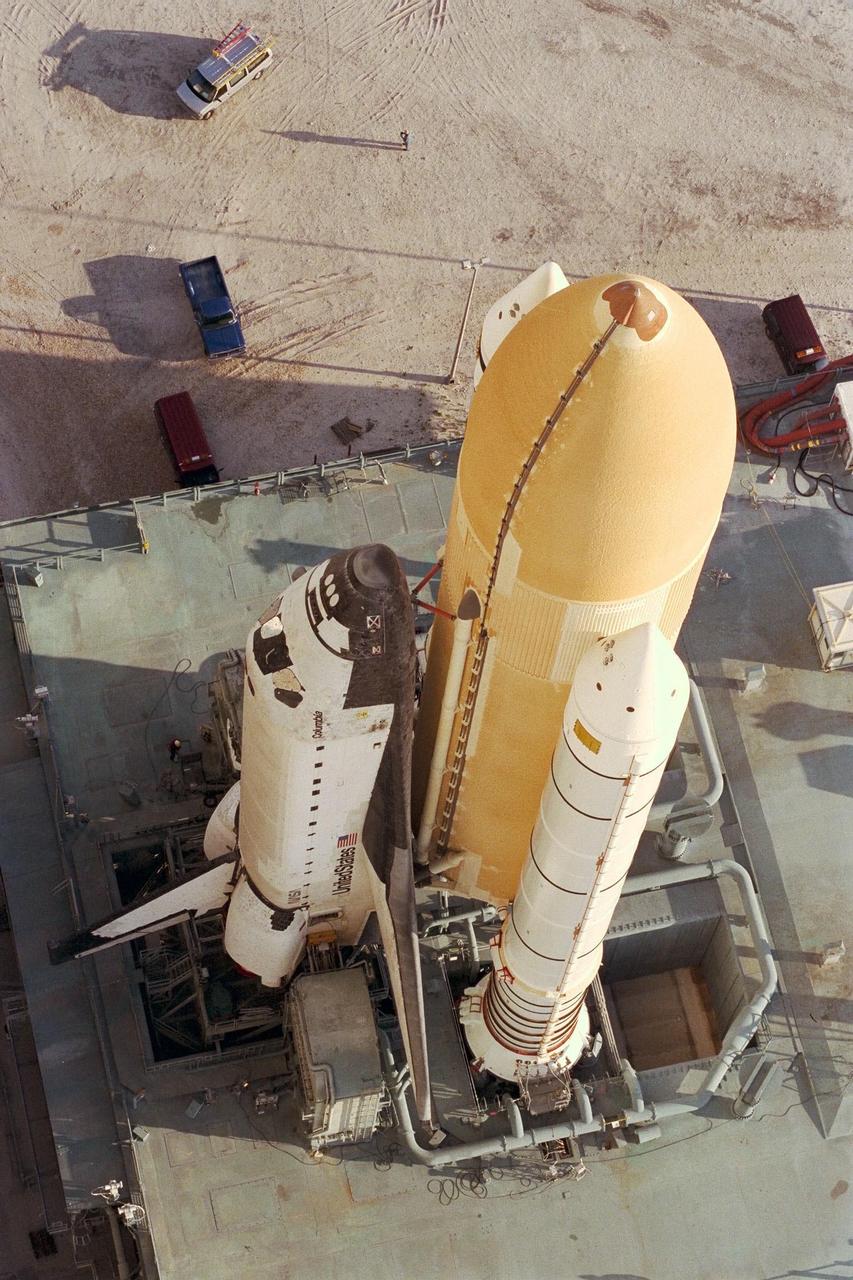
KENNEDY SPACE CENTER, FLA. -- The Space Shuttle Columbia continues its rollout from the Vehicle Assembly Building to Launch Pad 39B in preparation for the STS-90 mission. The Neurolab experiments are the primary payload on this nearly 17-day space flight. Investigations during the Neurolab mission will focus on the effects of microgravity on the nervous system. Specifically, experiments will study the adaptation of the vestibular system, the central nervous system, and the pathways that control the ability to sense location in the absence of gravity, as well as the effect of microgravity on a developing nervous system. The crew of STS-90, slated for launch April 16 at 2:19 p.m. EDT, includes Commander Richard Searfoss, Pilot Scott Altman, Mission Specialists Richard Linnehan, Dafydd (Dave) Williams, M.D., and Kathryn (Kay) Hire, and Payload Specialists Jay Buckey, M.D., and James Pawelczyk, Ph.D
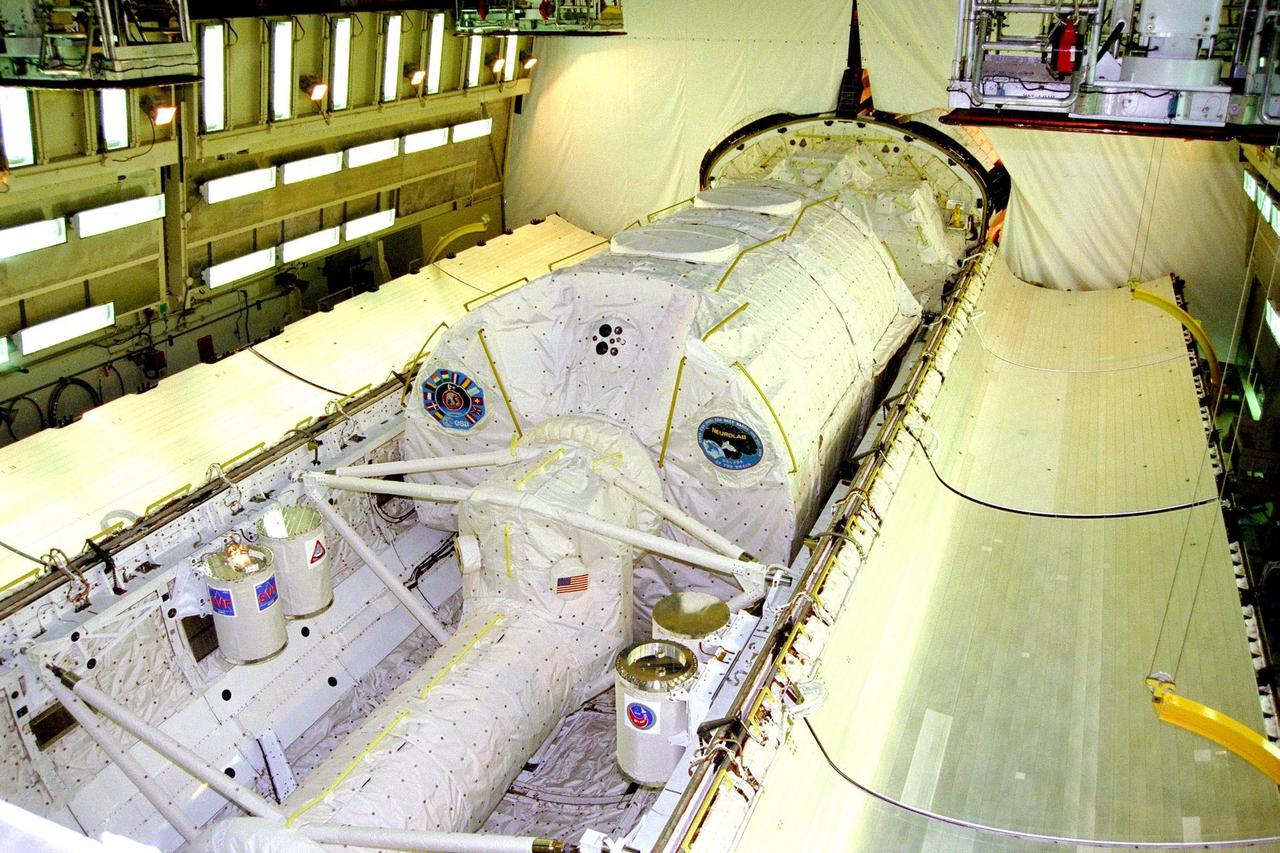
KENNEDY SPACE CENTER, FLA. -- The STS-90 Neurolab payload and four Getaway Specials (GAS) await payload bay door closure in the orbiter Columbia today in Orbiter Processing Facility bay 3. Investigations during the Neurolab mission will focus on the effects of microgravity on the nervous system. Specifically, experiments will study the adaptation of the vestibular system, the central nervous system, and the pathways that control the ability to sense location in the absence of gravity, as well as the effect of microgravity on a developing nervous system. The crew of STS-90, slated for launch in April, will include Commander Richard Searfoss, Pilot Scott Altman, Mission Specialists Richard Linnehan, Dafydd (Dave) Williams, M.D., and Kathryn (Kay) Hire, and Payload Specialists Jay Buckey, M.D., and James Pawelczyk, Ph.D
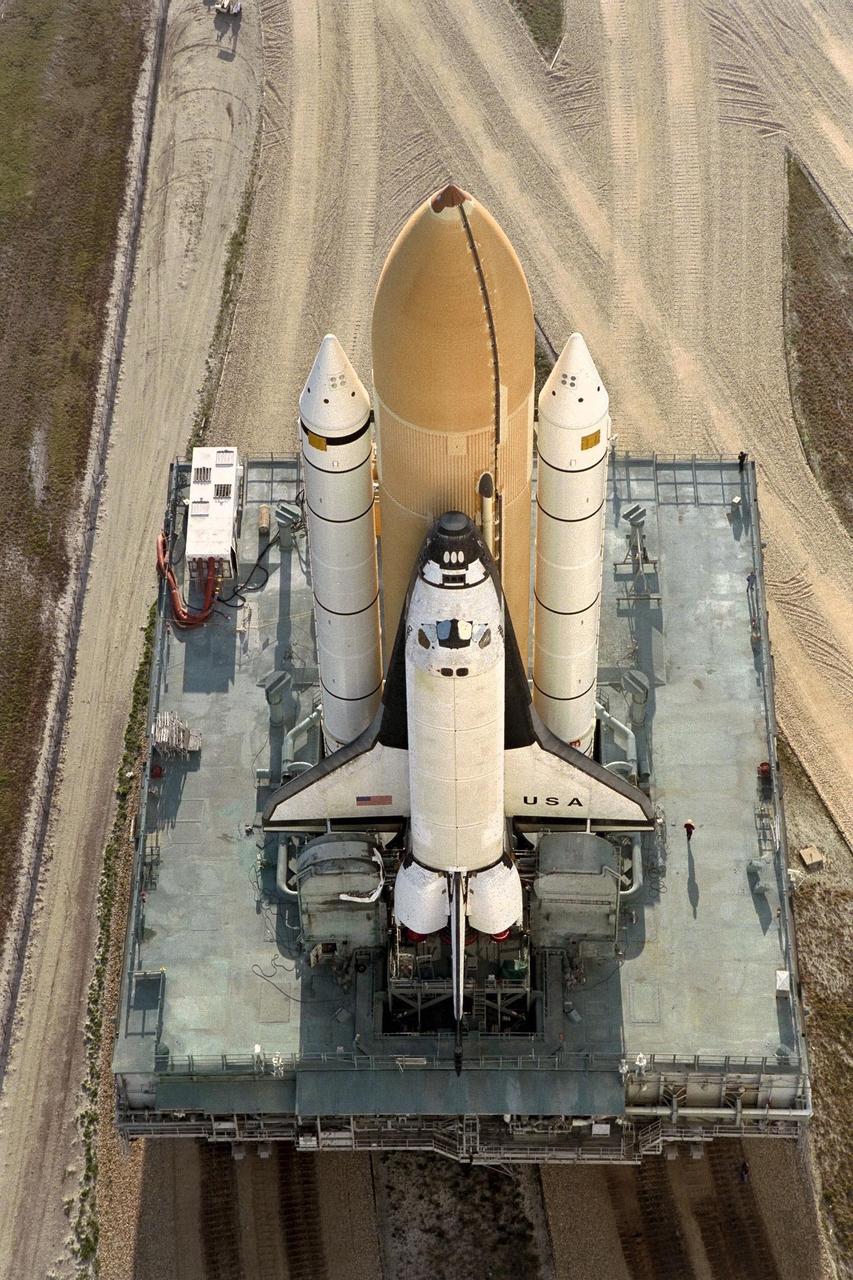
KENNEDY SPACE CENTER, FLA. -- The Space Shuttle Columbia continues its morning rollout from the Vehicle Assembly Building to Launch Pad 39B in preparation for the STS-90 mission. The Neurolab experiments are the primary payload on this nearly 17-day space flight. Investigations during the Neurolab mission will focus on the effects of microgravity on the nervous system. Specifically, experiments will study the adaptation of the vestibular system, the central nervous system, and the pathways that control the ability to sense location in the absence of gravity, as well as the effect of microgravity on a developing nervous system. The crew of STS-90, slated for launch April 16 at 2:19 p.m. EDT, includes Commander Richard Searfoss, Pilot Scott Altman, Mission Specialists Richard Linnehan, Dafydd (Dave) Williams, M.D., and Kathryn (Kay) Hire, and Payload Specialists Jay Buckey, M.D., and James Pawelczyk, Ph.D
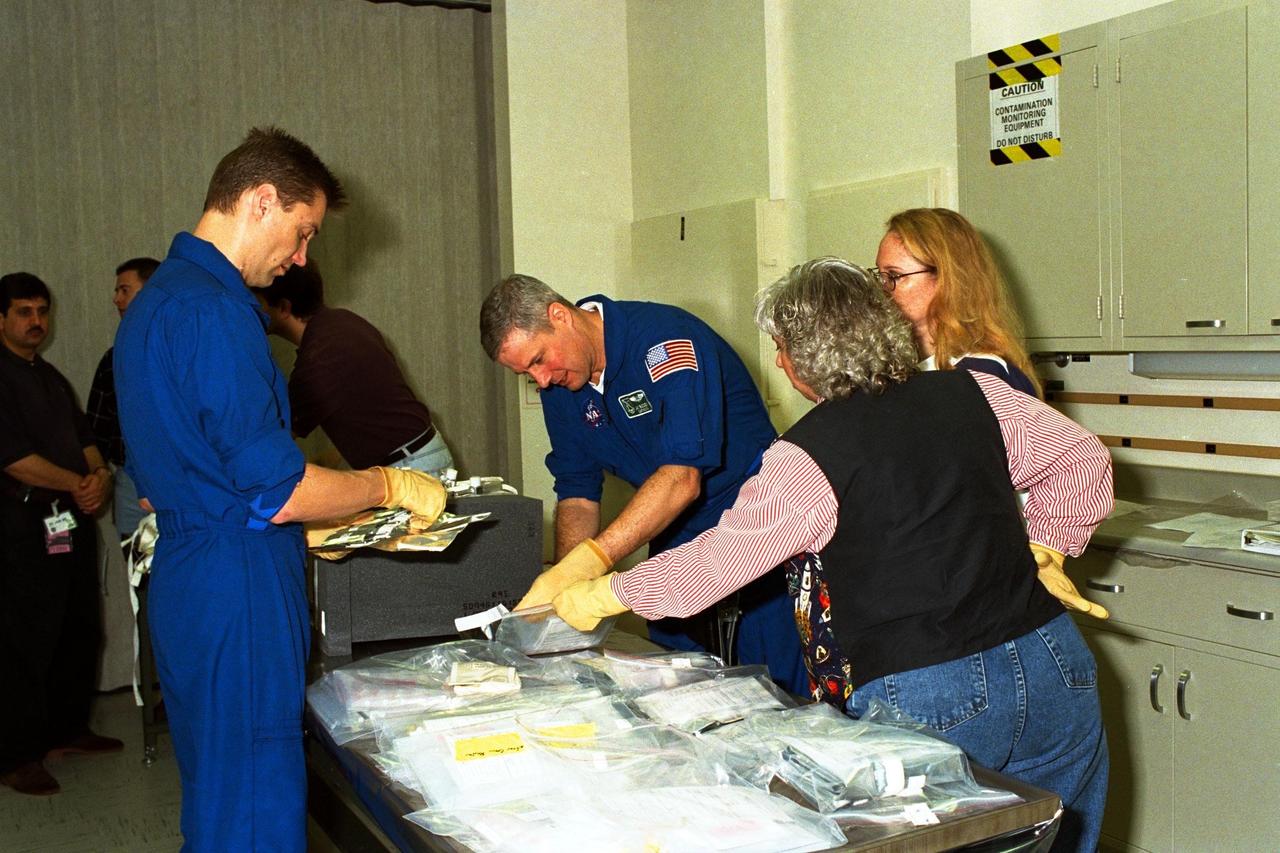
STS-90 Payload Specialists James Pawelczyk, Ph.D. (at left), and Jay Buckey Jr., M.D., examine items to be used during the Crew Equipment Interface Test (CEIT) in Kennedy Space Center's (KSC's) Operations and Checkout Building, where the Neurolab payload is undergoing processing. The CEIT gives astronauts an opportunity to get a hands-on look at the payloads with which they will be working on-orbit. STS-90 is scheduled to launch aboard the Shuttle Columbia from KSC on April 2. Investigations during the Neurolab mission will focus on the effects of microgravity on the nervous system. Specifically, experiments will study the adaptation of the vestibular system, the central nervous system, and the pathways that control the ability to sense location in the absence of gravity, as well as the effect of microgravity on a developing nervous system
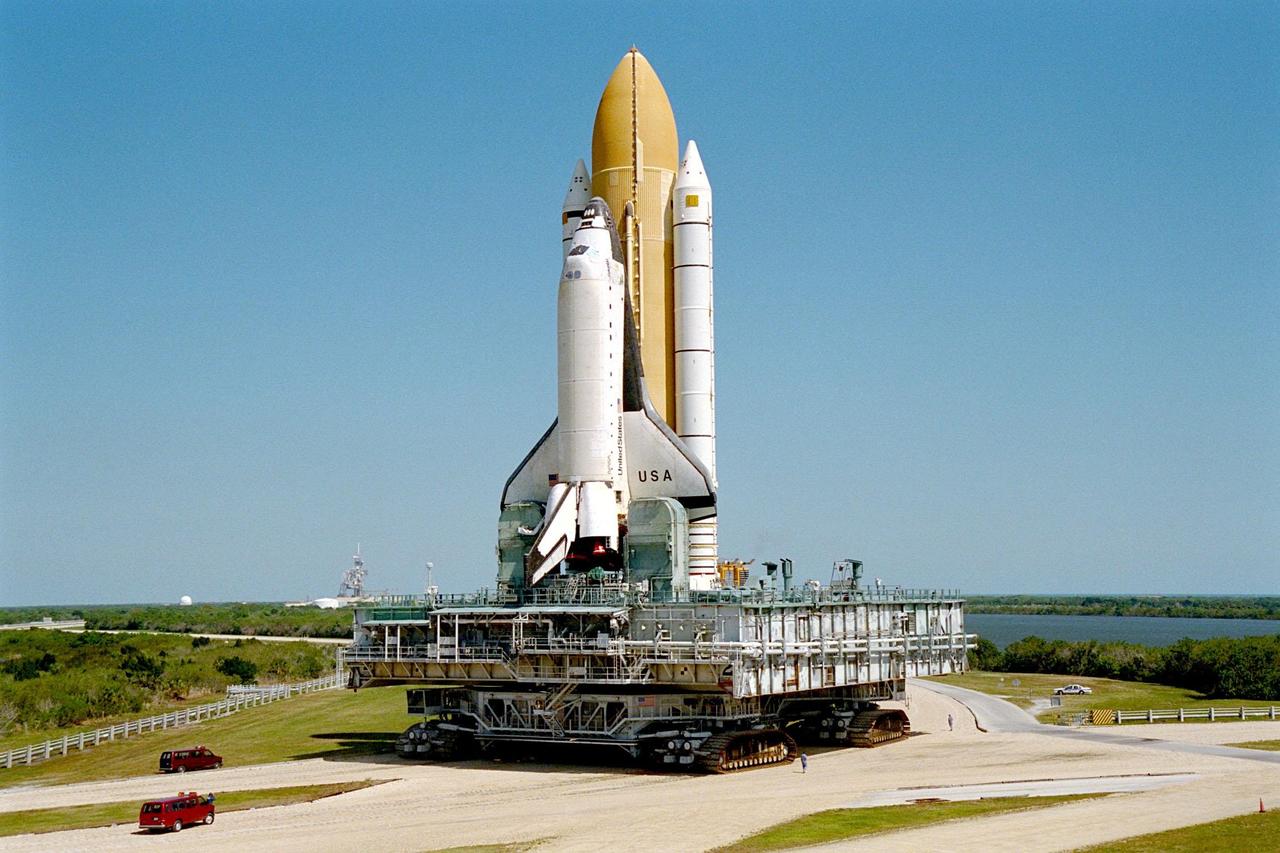
KENNEDY SPACE CENTER, FLA. -- The Space Shuttle Columbia continues its morning rollout from the Vehicle Assembly Building to Launch Pad 39B in preparation for the STS-90 mission. The Neurolab experiments are the primary payload on this nearly 17-day space flight. Investigations during the Neurolab mission will focus on the effects of microgravity on the nervous system. Specifically, experiments will study the adaptation of the vestibular system, the central nervous system, and the pathways that control the ability to sense location in the absence of gravity, as well as the effect of microgravity on a developing nervous system. The crew of STS-90, slated for launch April 16 at 2:19 p.m. EDT, includes Commander Richard Searfoss, Pilot Scott Altman, Mission Specialists Richard Linnehan, Dafydd (Dave) Williams, M.D., and Kathryn (Kay) Hire, and Payload Specialists Jay Buckey, M.D., and James Pawelczyk, Ph.D
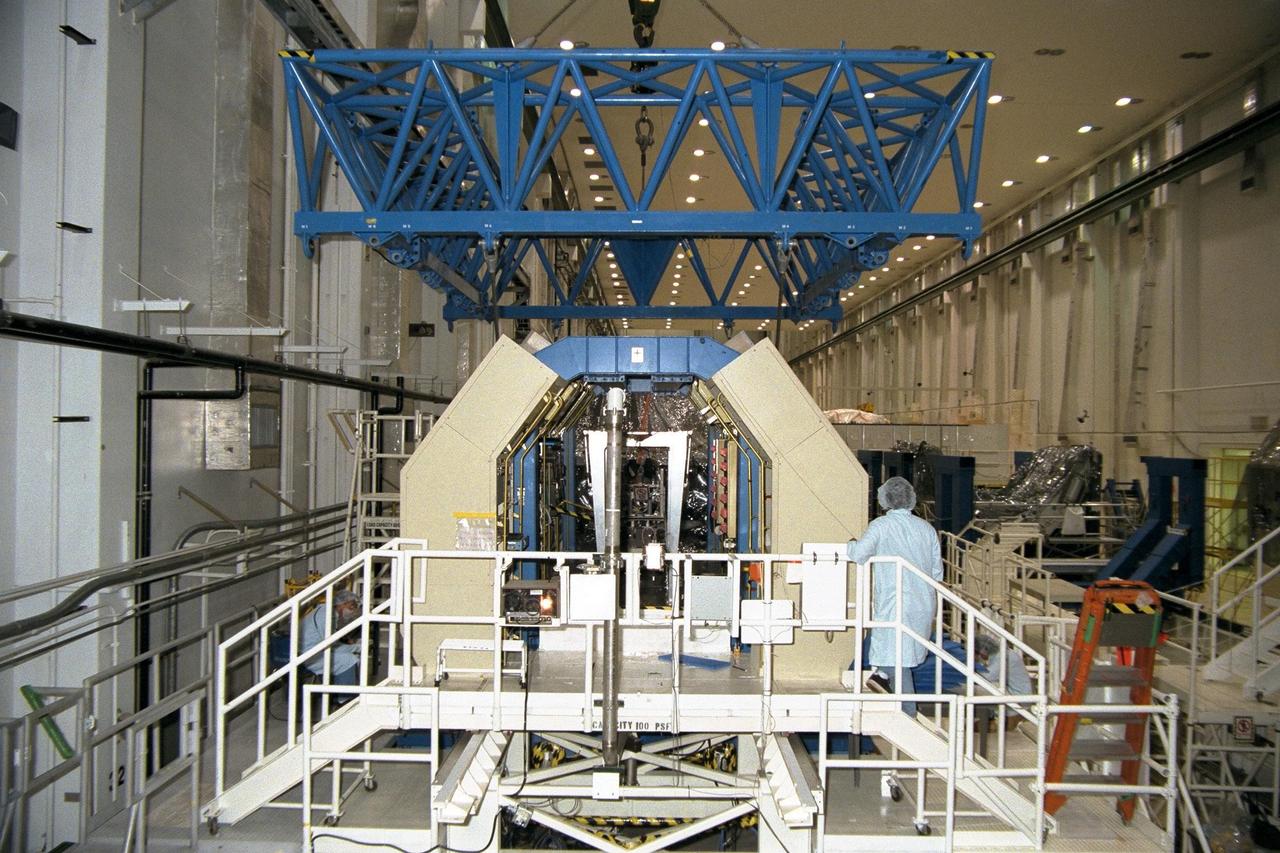
The Neurolab payload for STS-90, scheduled to launch aboard the Shuttle Columbia from Kennedy Space Center (KSC) on April 2, 1998, is ready for processing after being placed in its workstand in the Operations and Checkout Building at KSC. Investigations during the Neurolab mission will focus on the effects of microgravity on the nervous system. Specifically, experiments will study the adaptation of the vestibular system, the central nervous system, and the pathways that control the ability to sense location in the absence of gravity, as well as the effect of microgravity on a developing nervous system. The crew of STS-90 will include Commander Richard Searfoss, Pilot Scott Altman, Mission Specialists Richard Linnehan, Dafydd (Dave) Williams, M.D., and Kathryn (Kay) Hire, and Payload Specialists Jay Buckey, M.D., and James Pawelczyk, Ph.D
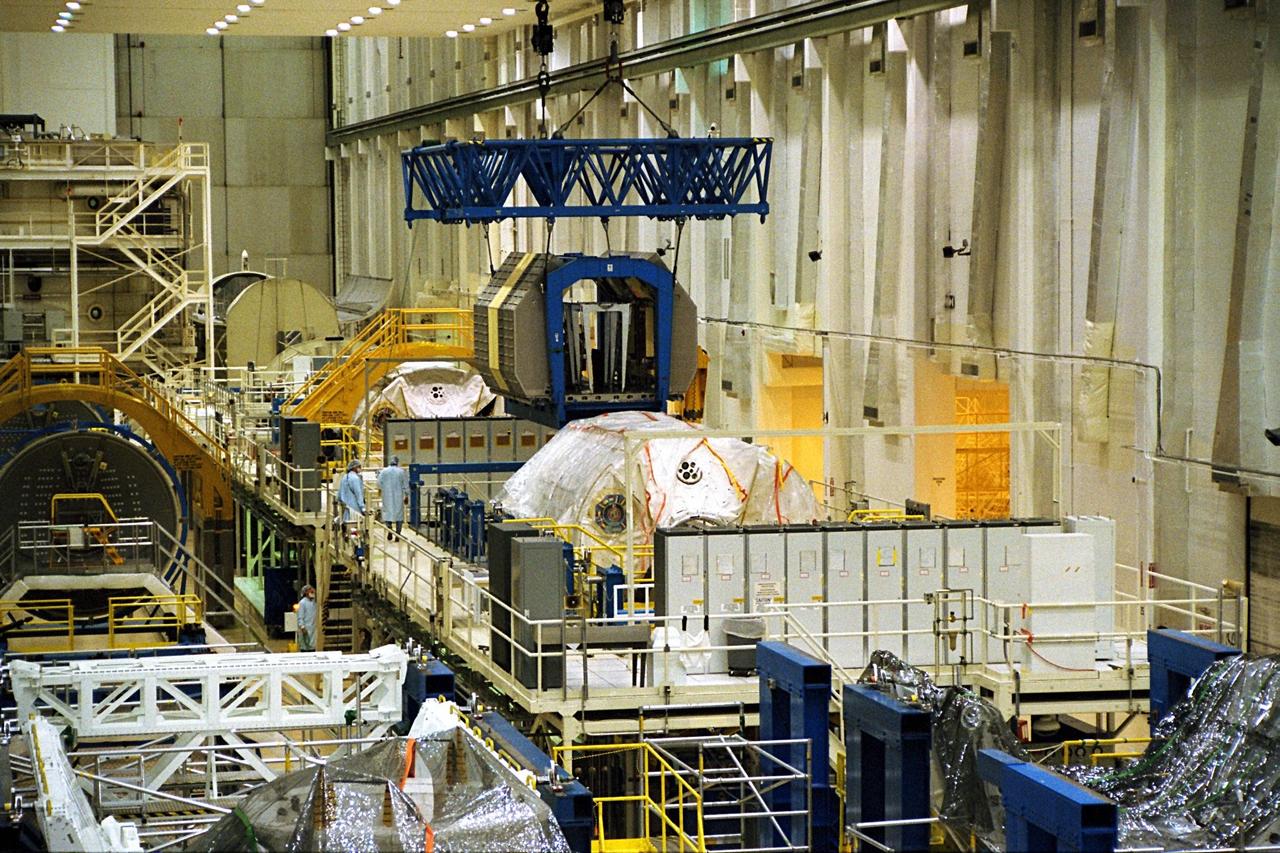
The Neurolab payload for STS-90, scheduled to launch aboard the Shuttle Columbia from Kennedy Space Center (KSC) on April 2, 1998, is moved to its workstand in the Operations and Checkout Building at KSC. Investigations during the Neurolab mission will focus on the effects of microgravity on the nervous system. Specifically, experiments will study the adaptation of the vestibular system, the central nervous system, and the pathways that control the ability to sense location in the absence of gravity, as well as the effect of microgravity on a developing nervous system. The crew of STS-90 will include Commander Richard Searfoss, Pilot Scott Altman, Mission Specialists Richard Linnehan, Dafydd (Dave) Williams, M.D., and Kathryn (Kay) Hire, and Payload Specialists Jay Buckey, M.D., and James Pawelczyk, Ph.D
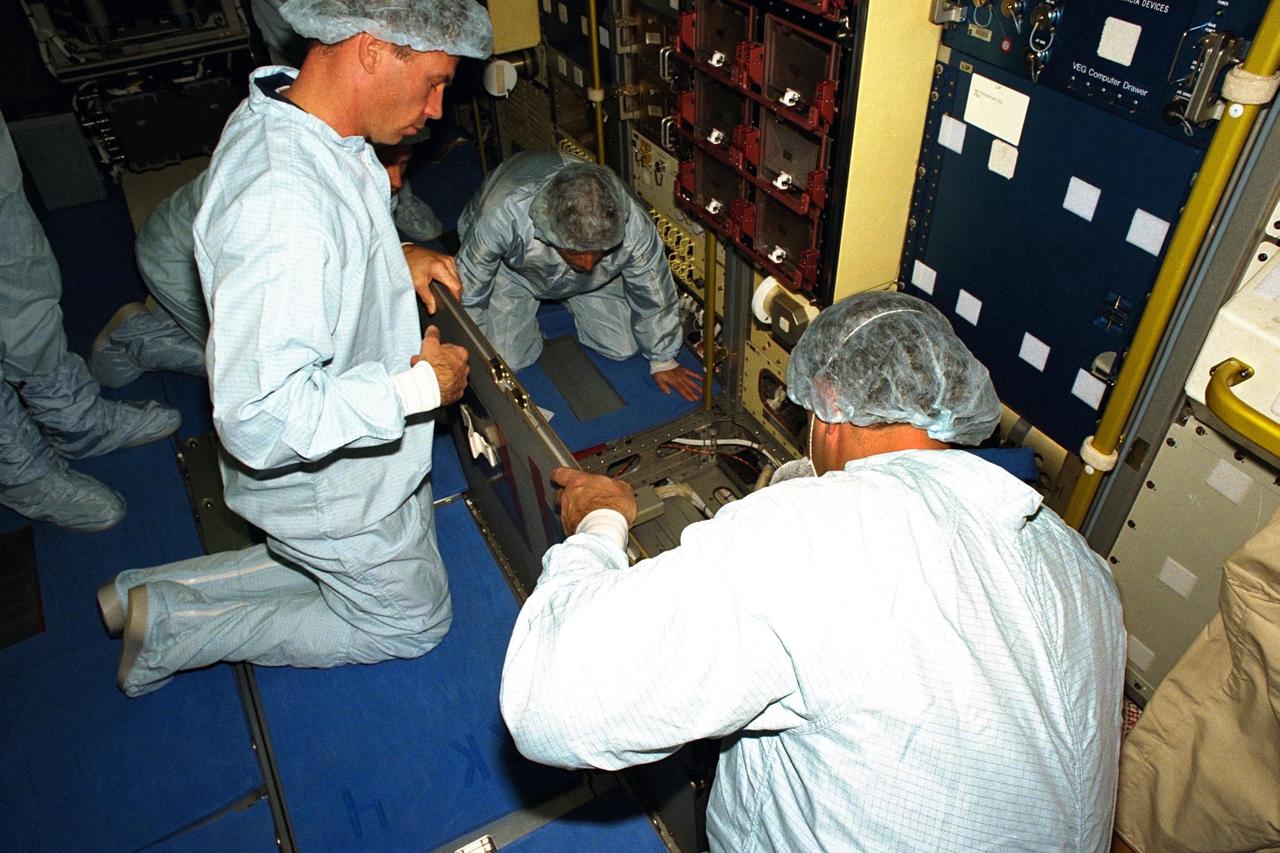
STS-90 Payload Specialist James Pawelczyk, Ph.D., holds up a panel as one of the items used during the Crew Equipment Interface Test (CEIT) in Kennedy Space Center's (KSC's) Operations and Checkout Building, where the Neurolab payload is undergoing processing. The CEIT gives astronauts an opportunity to get a hands-on look at the payloads with which they will be working on-orbit. STS-90 is scheduled to launch aboard the Shuttle Columbia from KSC on April 2. Investigations during the Neurolab mission will focus on the effects of microgravity on the nervous system. Specifically, experiments will study the adaptation of the vestibular system, the central nervous system, and the pathways that control the ability to sense location in the absence of gravity, as well as the effect of microgravity on a developing nervous system
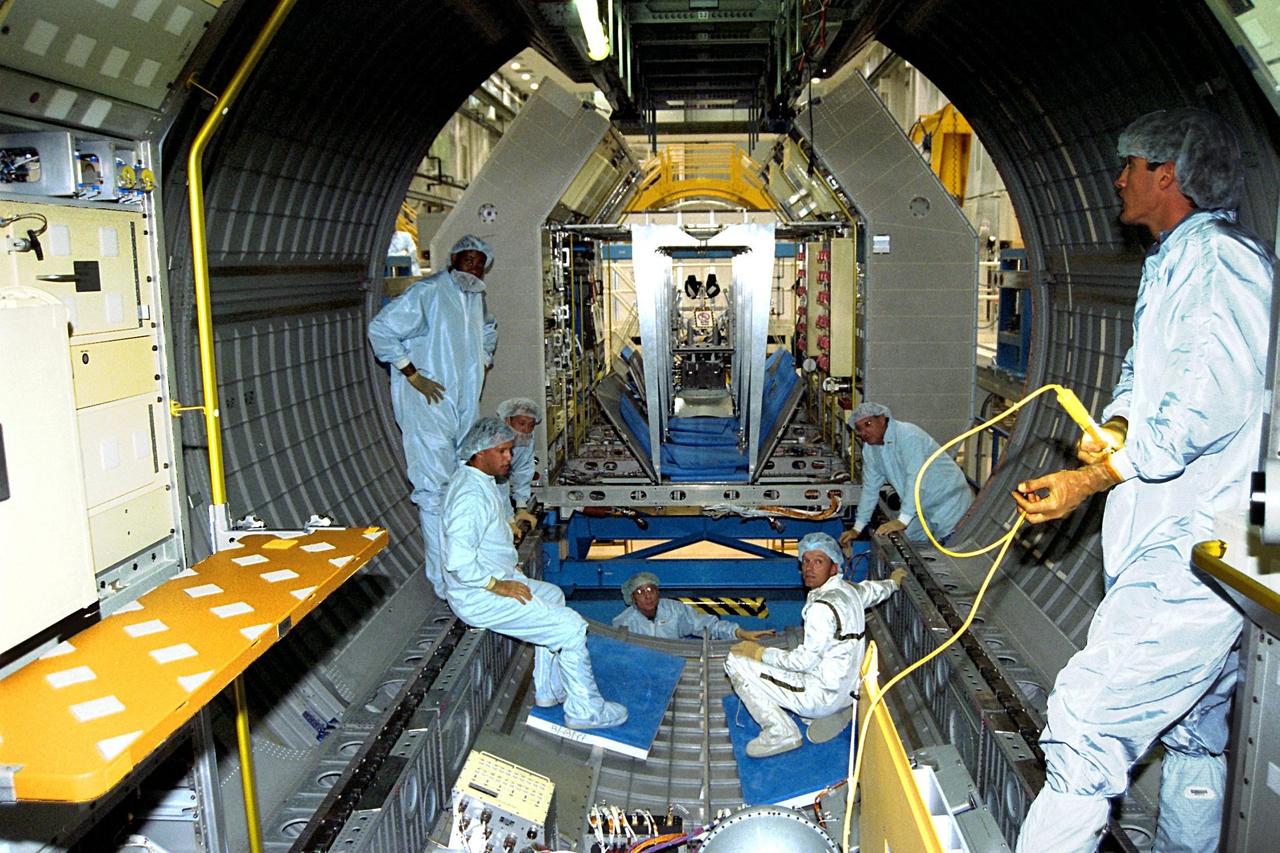
The Neurolab payload for STS-90, scheduled to launch aboard the Shuttle Columbia from Kennedy Space Center (KSC) on April 2, 1998, is installed in the Spacelab module by Boeing technicians in the Operations and Checkout Building at KSC. Investigations during the Neurolab mission will focus on the effects of microgravity on the nervous system. Specifically, experiments will study the adaptation of the vestibular system, the central nervous system, and the pathways that control the ability to sense location in the absence of gravity, as well as the effect of microgravity on a developing nervous system. The crew of STS-90 will include Commander Richard Searfoss, Pilot Scott Altman, Mission Specialists Richard Linnehan, Dafydd (Dave) Williams, M.D., and Kathryn (Kay) Hire, and Payload Specialists Jay Buckey, M.D., and James Pawelczyk, Ph.D
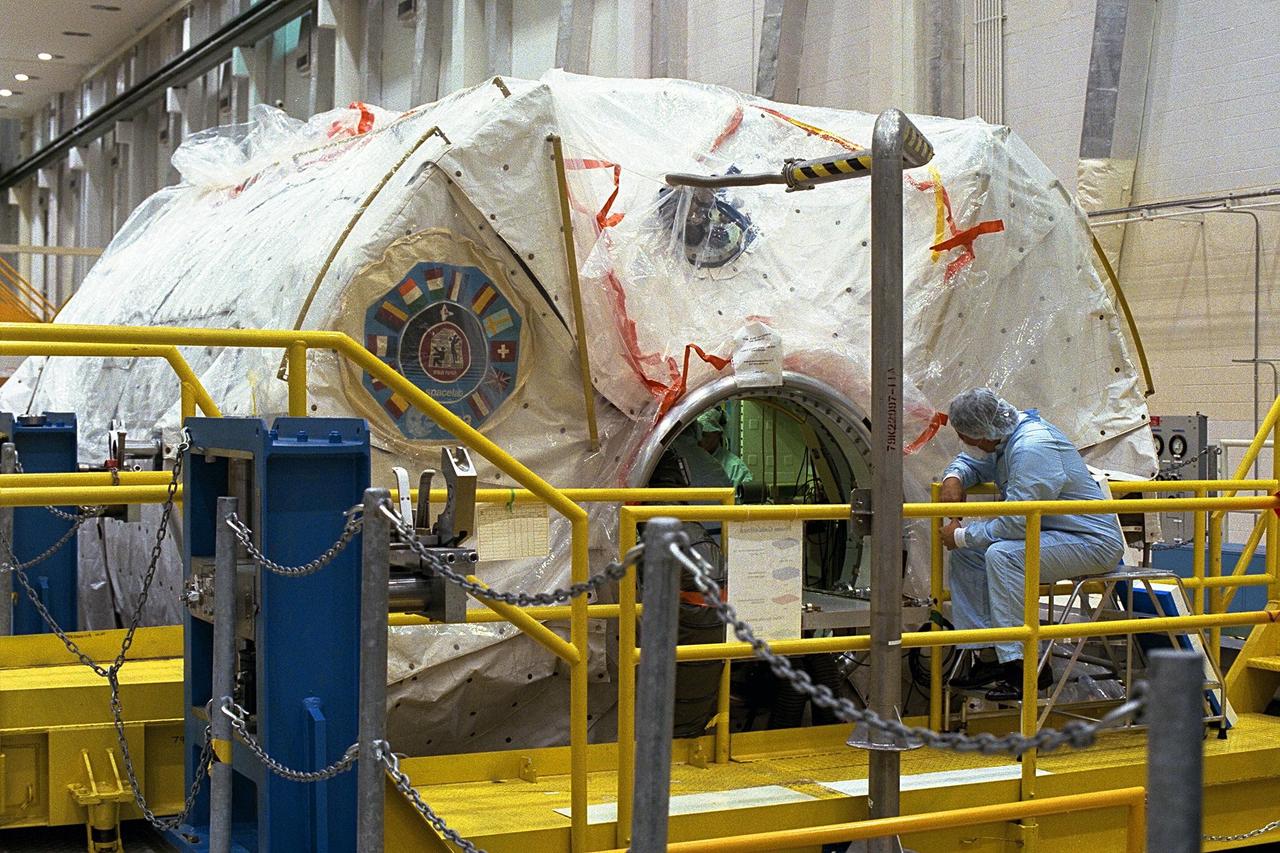
The Neurolab payload for STS-90, scheduled to launch aboard the Shuttle Columbia from Kennedy Space Center (KSC) on April 2, 1998, undergoes further processing in the Operations and Checkout Building at KSC. Investigations during the Neurolab mission will focus on the effects of microgravity on the nervous system. Specifically, experiments will study the adaptation of the vestibular system, the central nervous system, and the pathways that control the ability to sense location in the absence of gravity, as well as the effect of microgravity on a developing nervous system. The crew of STS-90 will include Commander Richard Searfoss, Pilot Scott Altman, Mission Specialists Richard Linnehan, Dafydd (Dave) Williams, M.D., and Kathryn (Kay) Hire, and Payload Specialists Jay Buckey, M.D., and James Pawelczyk, Ph.D
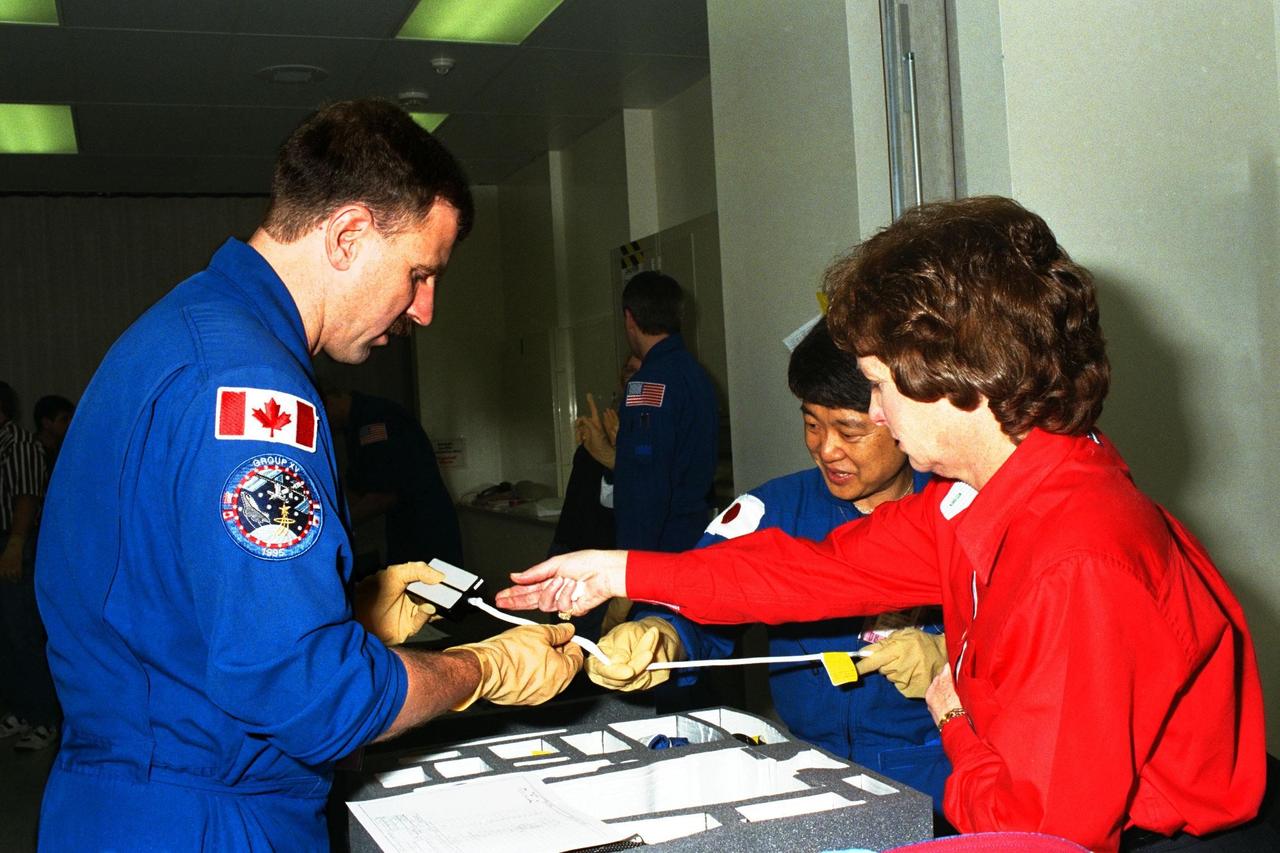
STS-90 Mission Specialist Dafydd "Dave" Rhys Williams, M.D., with the Canadian Space Agency, and back-up Payload Specialist Chiaki Mukai, M.D., Ph.D., with the National Space Development Agency of Japan, examine items to be used during the Crew Equipment Interface Test (CEIT) in Kennedy Space Center's (KSC's) Operations and Checkout Building, where the Neurolab payload is undergoing processing. The CEIT gives astronauts an opportunity to get a hands-on look at the payloads with which they will be working on-orbit. STS-90 is scheduled to launch aboard the Shuttle Columbia from KSC on April 2. Investigations during the Neurolab mission will focus on the effects of microgravity on the nervous system. Specifically, experiments will study the adaptation of the vestibular system, the central nervous system, and the pathways that control the ability to sense location in the absence of gravity, as well as the effect of microgravity on a developing nervous system
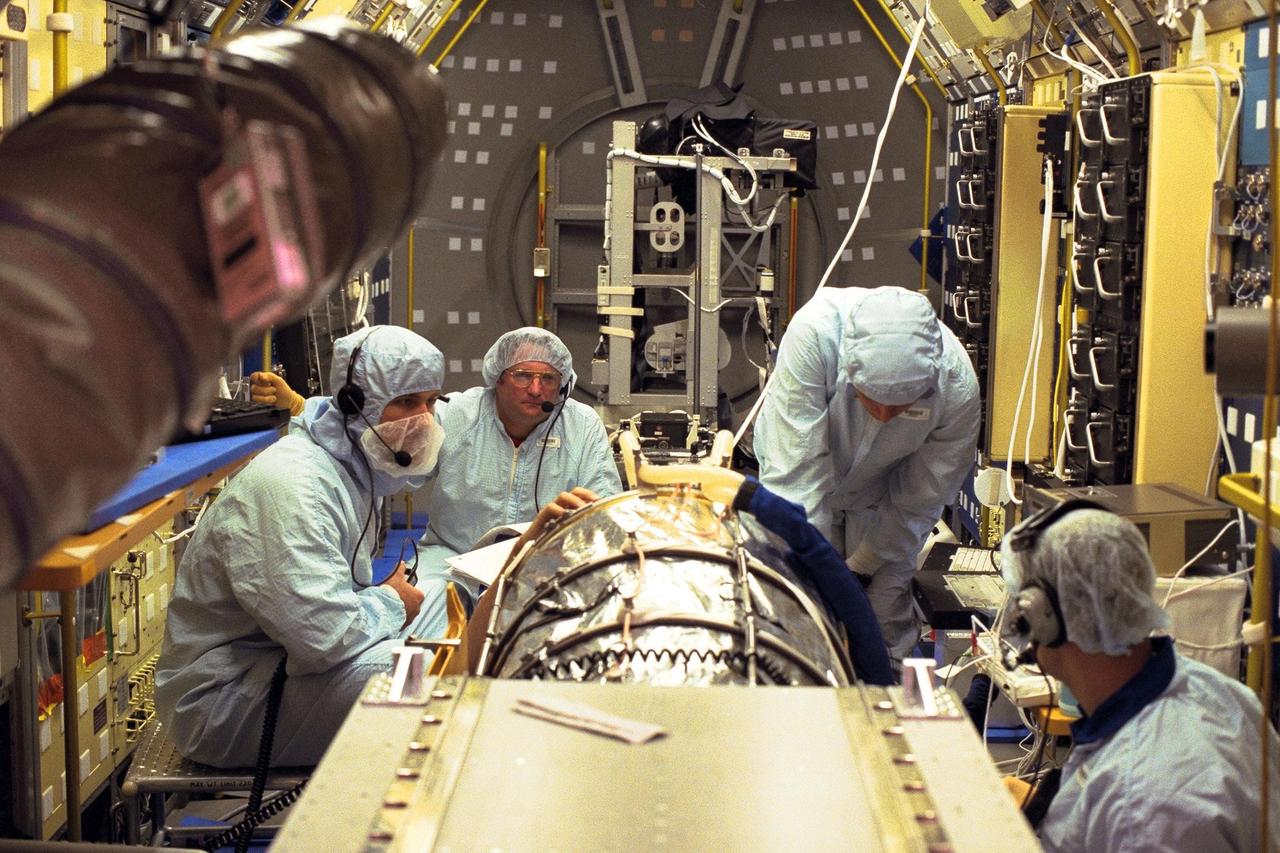
The Neurolab payload for STS-90, scheduled to launch aboard the Shuttle Columbia from Kennedy Space Center (KSC) on April 2, 1998, undergoes further processing in the Operations and Checkout Building at KSC. Investigations during the Neurolab mission will focus on the effects of microgravity on the nervous system. Specifically, experiments will study the adaptation of the vestibular system, the central nervous system, and the pathways that control the ability to sense location in the absence of gravity, as well as the effect of microgravity on a developing nervous system. The crew of STS-90 will include Commander Richard Searfoss, Pilot Scott Altman, Mission Specialists Richard Linnehan, Dafydd (Dave) Williams, M.D., and Kathryn (Kay) Hire, and Payload Specialists Jay Buckey, M.D., and James Pawelczyk, Ph.D
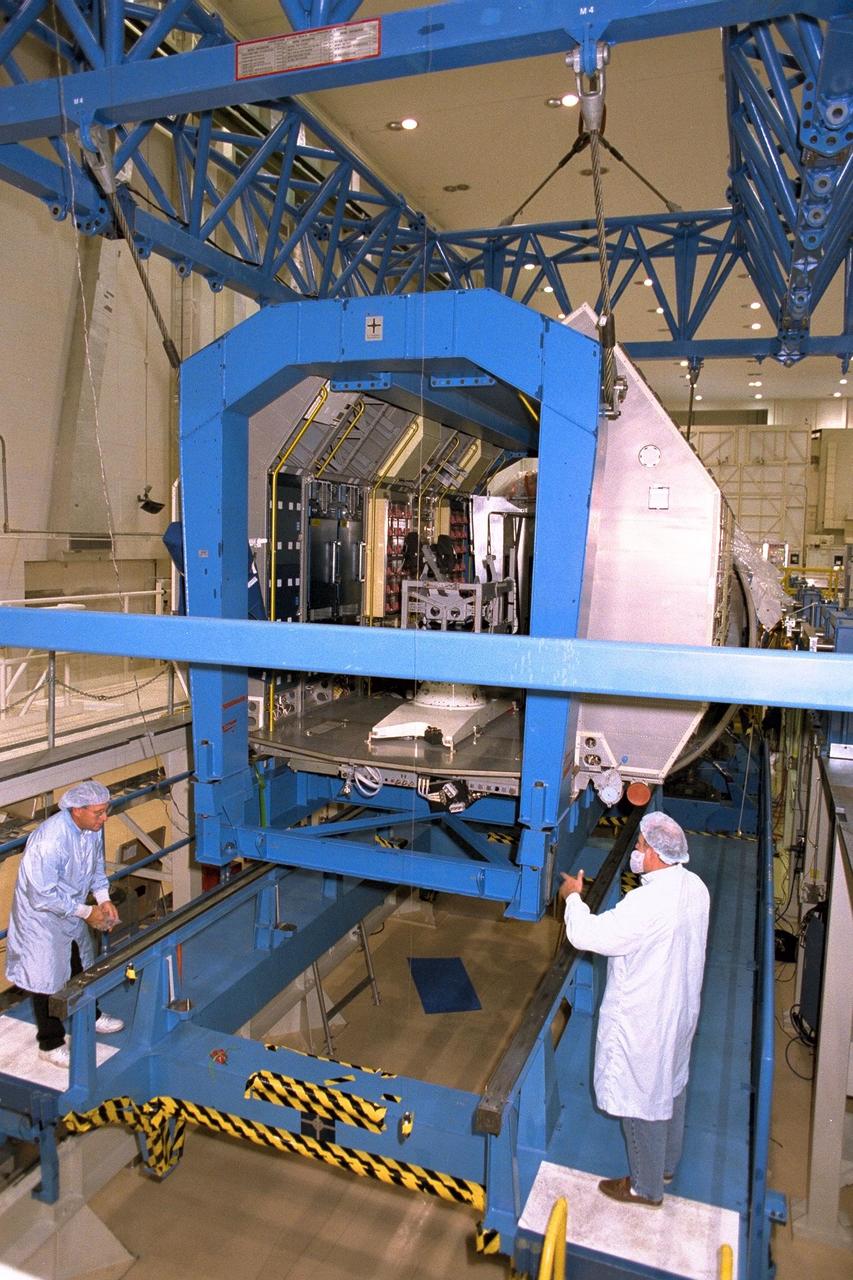
The Neurolab payload for STS-90, scheduled to launch aboard the Shuttle Columbia from Kennedy Space Center (KSC) on April 2, 1998, is moved to its workstand in the Operations and Checkout Building at KSC. Investigations during the Neurolab mission will focus on the effects of microgravity on the nervous system. Specifically, experiments will study the adaptation of the vestibular system, the central nervous system, and the pathways that control the ability to sense location in the absence of gravity, as well as the effect of microgravity on a developing nervous system. The crew of STS-90 will include Commander Richard Searfoss, Pilot Scott Altman, Mission Specialists Richard Linnehan, Dafydd (Dave) Williams, M.D., and Kathryn (Kay) Hire, and Payload Specialists Jay Buckey, M.D., and James Pawelczyk, Ph.D
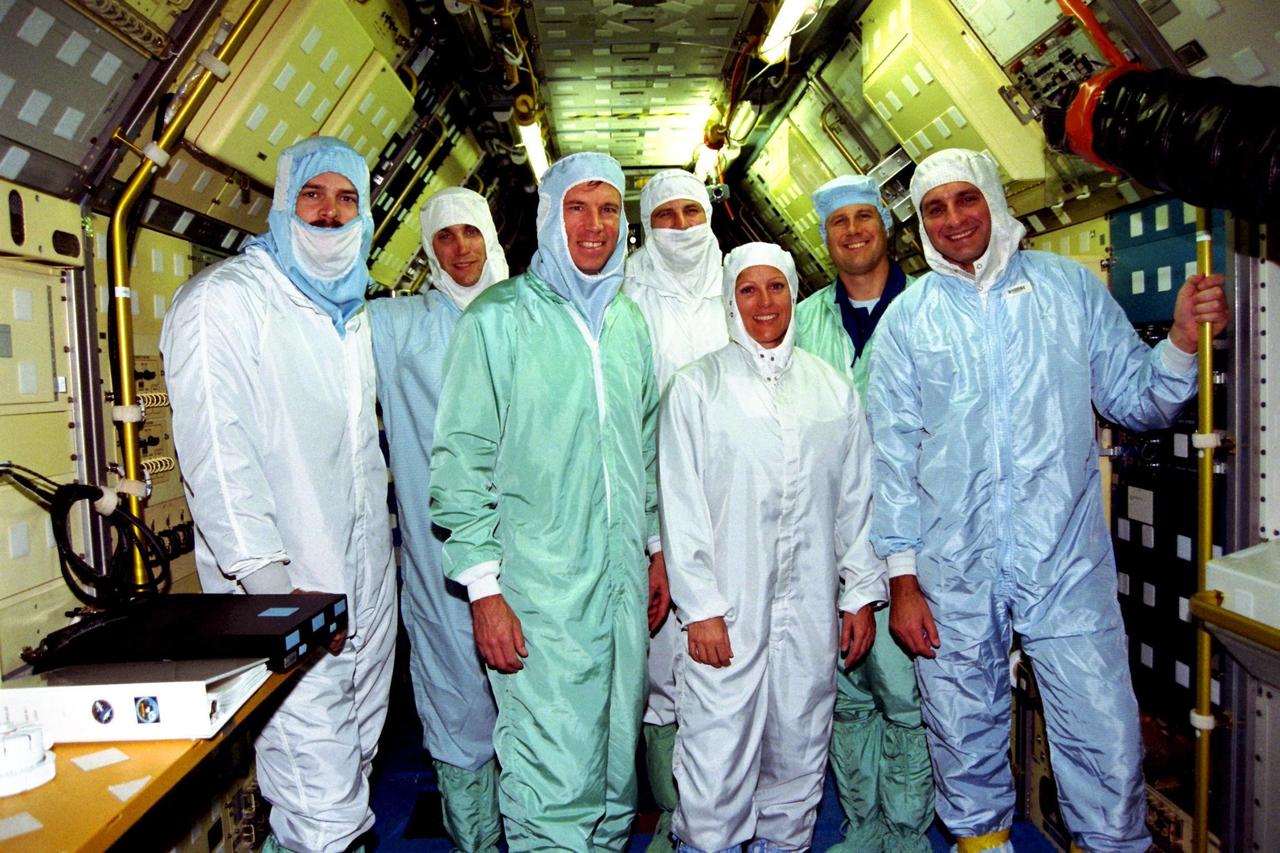
Members of the STS-90 crew participate in the Crew Equipment Interface Test (CEIT) in Kennedy Space Center's Orbiter Processing Facility Bay 3. The CEIT gives astronauts an opportunity to get a hands-on look at the payloads with which they will be working on-orbit. Investigations during the STS-90 Neurolab mission will focus on the effects of microgravity on the nervous system. Specifically, experiments will study the adaptation of the vestibular system, the central nervous system, and the pathways that control the ability to sense location in the absence of gravity, as well as the effect of microgravity on a developing nervous system. The crew of STS-90, slated for launch in April, are, left to right, Pilot Scott Altman; Payload Specialist James Pawelczyk, Ph.D.; Commander Richard Searfoss; Mission Specialists Dafydd (Dave) Williams, M.D., and Kathryn (Kay) Hire; Payload Specialist Jay Buckey, M.D.; and Mission Specialist Richard Linnehan
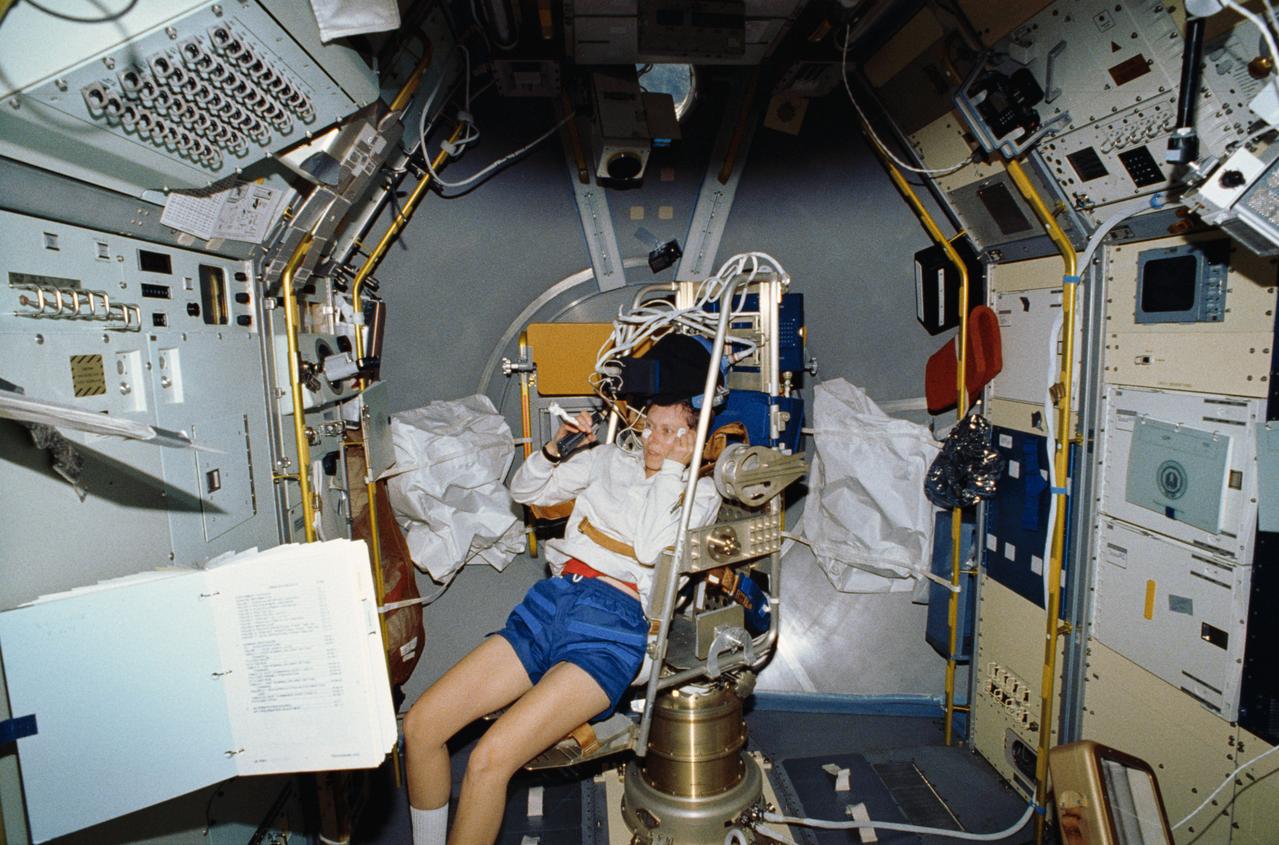
STS042-06-031 (30 Jan 1992) - - - STS-42 Payload Specialist Roberta L. Bondar gets into the Microgravity Vestibular Investigations (MVI) rotator chair to begin an experiment. The chair is mounted in the center aisle of the International Microgravity Laboratory 1 (IML-1) Spacelab (SL) module. Just above Bondar's head is the helmet assembly which is outfitted with accelerometers to measure head movements and visors that fit over each eye independently to provide visual stimuli. The chair system has three movement patterns: "sinusoidal" or traveling predictably back and forth over the same distance at a constant speed; "pseudorandom" or moving back and forth over varying distances; and "stepped" or varying speeds beginning and stopping suddenly.
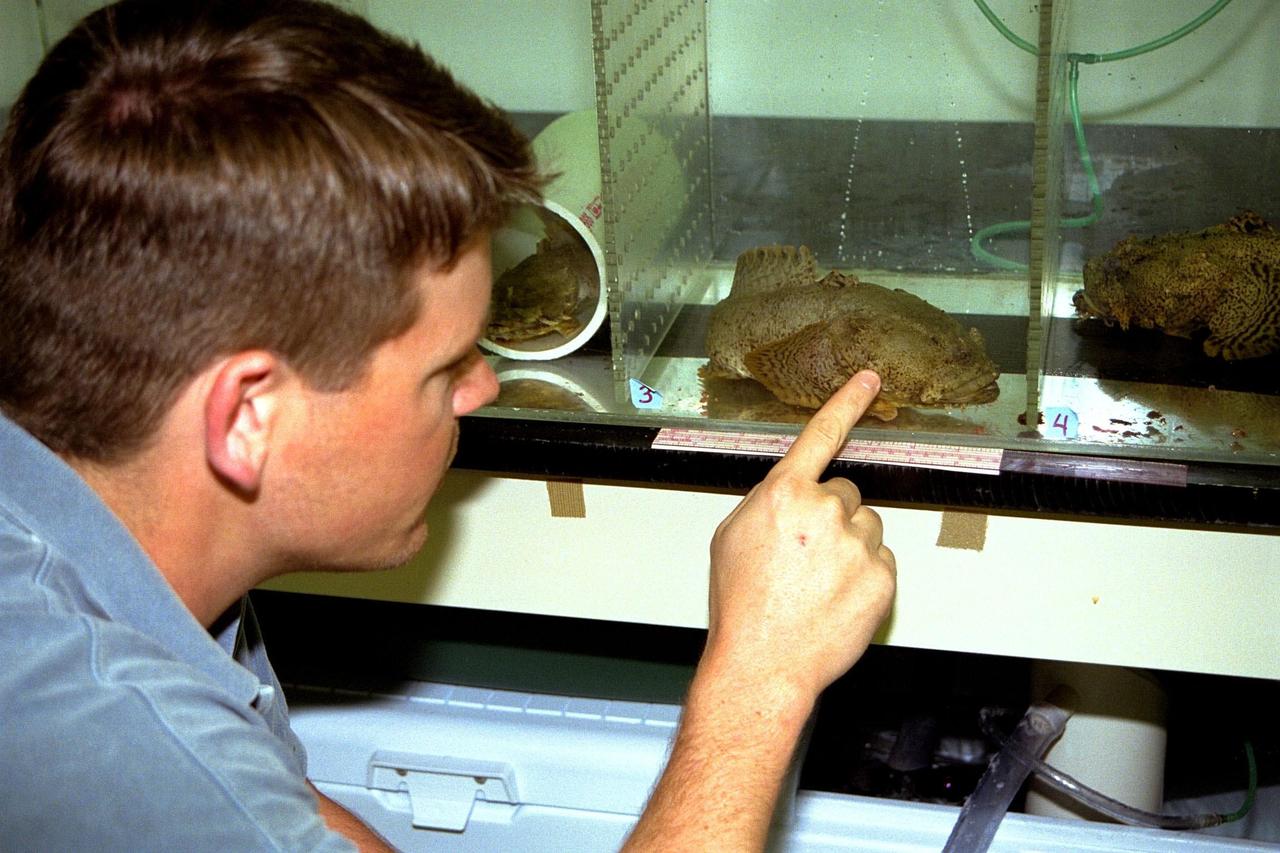
KENNEDY SPACE CENTER, FLA. -- Bill Kroeger, an aquatic technician for the Bionetics Corporation, examines an oyster toadfish (Opsanus tau), like those that are part of the Neurolab payload on Space Shuttle Mission STS-90, in its holding tank in the Space Station Processing Facility. Each fish is between eight and 14 inches long. Toadfish live in an estuarine environment and are native to areas along the Northeast coast of the United States. Investigations during the Neurolab mission will focus on the effects of microgravity on the nervous system. This fish is an excellent model for looking at vestibular function because the architecture of its inner and middle ear are similar to those of mammals with respect to the vestibular apparatus. The crew of STS-90, slated for launch April 16 at 2:19 p.m. EDT, includes Commander Richard Searfoss, Pilot Scott Altman, Mission Specialists Richard Linnehan, Dafydd (Dave) Williams, M.D., and Kathryn (Kay) Hire, and Payload Specialists Jay Buckey, M.D., and James Pawelczyk, Ph.D
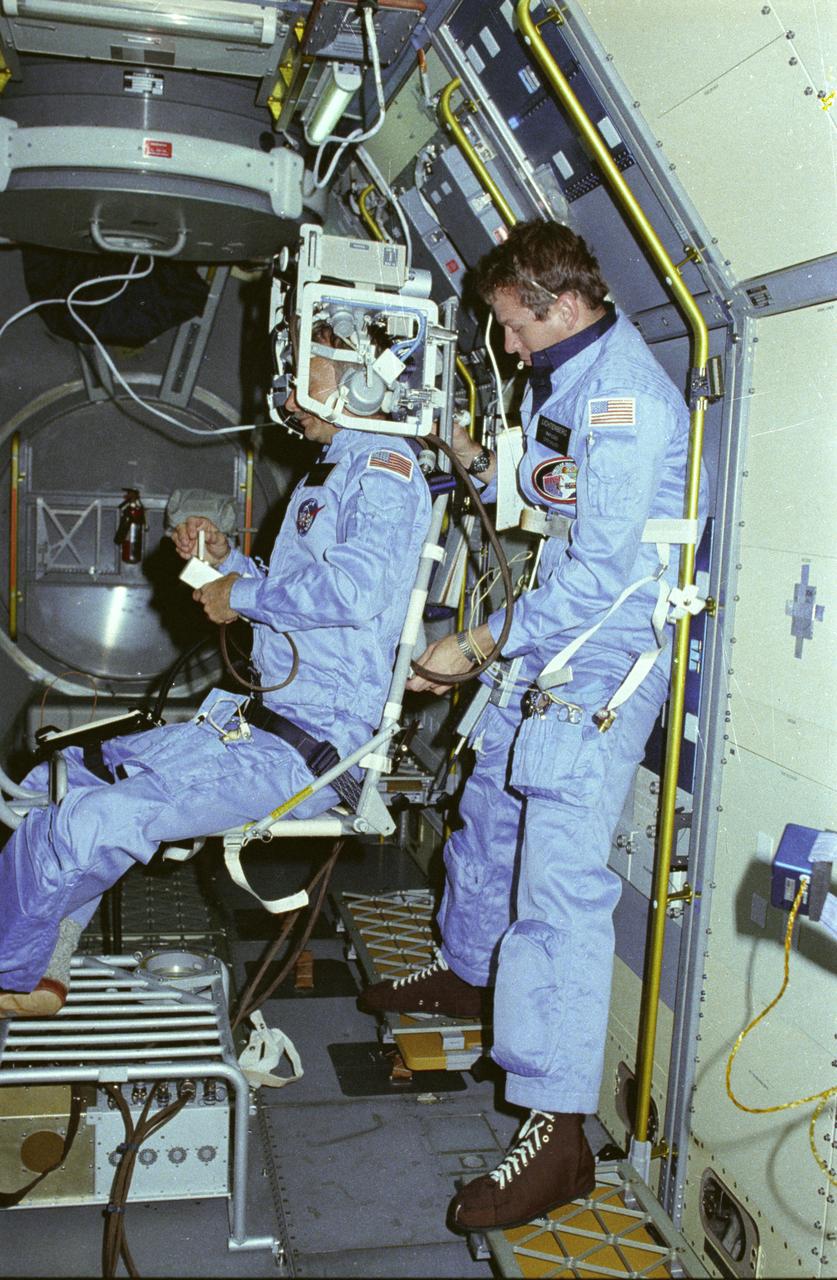
In this photograph, astronauts Owen Garriott on the body restriant system and Byron Lichtenberg prepare for a Vestibular Experiment during the Spacelab-1 mission. The Vestibular Experiments in Space were the study of the interaction among the otoliths, semicircular canals, vision, and spinal reflexes in humans. The main objective was to determine how the body, which receives redundant information for several sensory sources, interprets this information in microgravity. Another objective was to record and characterize the symptoms of space sickness experienced by crewmembers. The body restraint system was a rotating chair with a harness to hold the test subject in place. The crewmember wore an accelerometer and electrodes to record head motion and horizontal and vertical eye movement as the body rotated. The first Spacelab mission, Spacelab-1, sponsored jointly and shared equally by NASA and the European Space Agency, was a multidisciplinary mission; that is, investigations were performed in several different fields of scientific research. The overall goal of the mission was to verify Spacelab performance through a variety of scientific experiments. The Spacelab-1 was launched aboard the Space Shuttle Orbiter Columbia for the STS-9 mission on November 28, 1983. The Marshall Space Flight Center had management responsibilities for the mission.
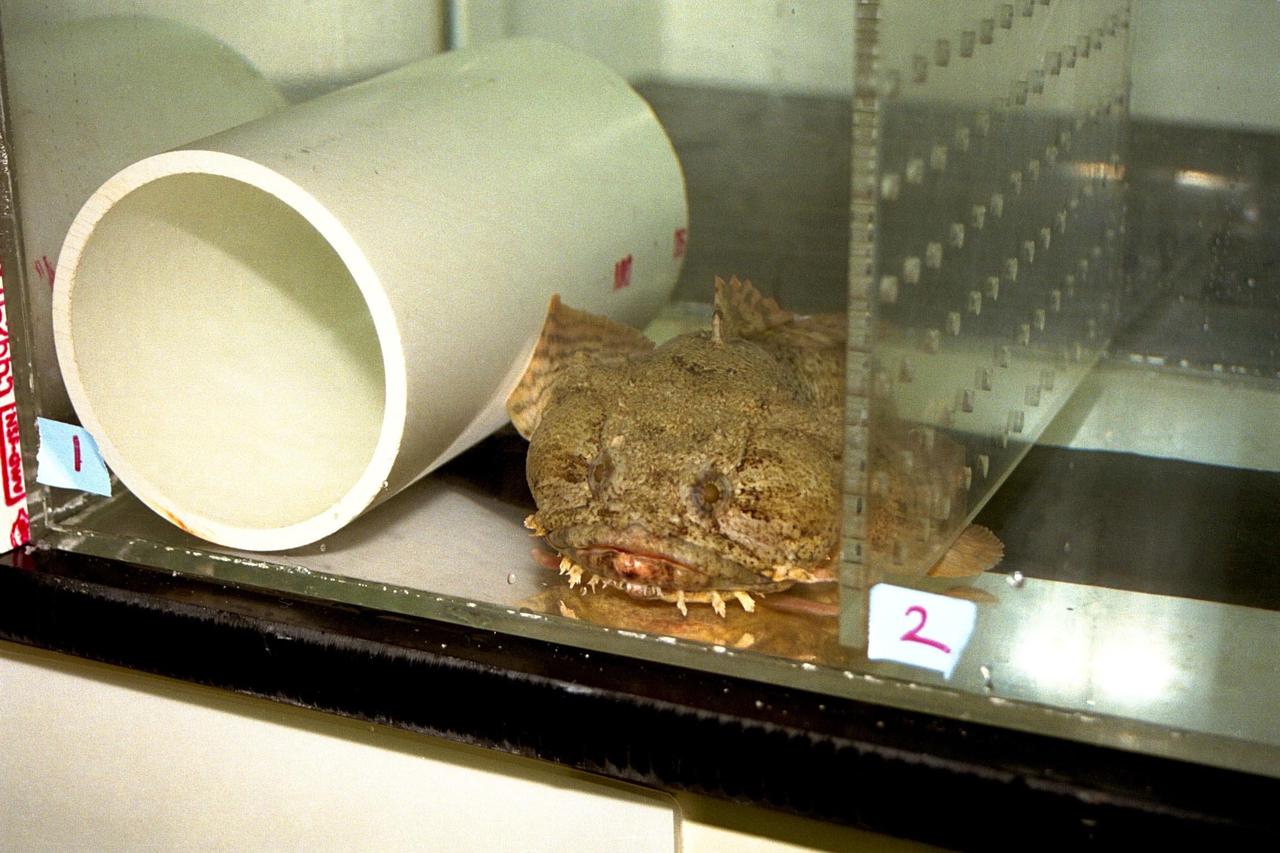
KENNEDY SPACE CENTER, FLA. -- An oyster toadfish (Opsanus tau), like those that are part of the Neurolab payload on Space Shuttle Mission STS-90, is shown in its holding tank in the Space Station Processing Facility. Each fish is between eight and 14 inches long. Toadfish live in an estuarine environment and are native to areas along the Northeast coast of the United States. Since they are bottom dwellers that live in cracks and crevices, a tube is provided in its tank to give it a place to retreat and hide. Investigations during the Neurolab mission will focus on the effects of microgravity on the nervous system. This fish is an excellent model for looking at vestibular function because the architecture of its inner and middle ear are similar to those of mammals with respect to the vestibular apparatus. The crew of STS-90, slated for launch April 16 at 2:19 p.m. EDT, includes Commander Richard Searfoss, Pilot Scott Altman, Mission Specialists Richard Linnehan, Dafydd (Dave) Williams, M.D., and Kathryn (Kay) Hire, and Payload Specialists Jay Buckey, M.D., and James Pawelczyk, Ph.D
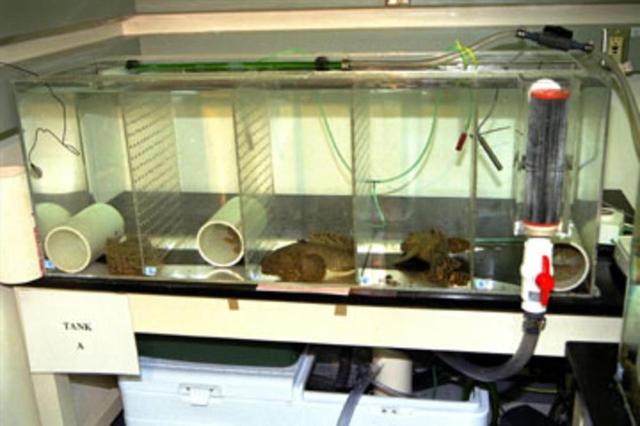
KENNEDY SPACE CENTER, FLA. -- Oyster toadfish (Opsanus tau), like those that are part of the Neurolab payload on Space Shuttle Mission STS-90, are shown in their holding tank in the Space Station Processing Facility. Each fish is between 8 and 14 inches long. Toadfish live in an estuarine environment and are native to areas along the Northeast coast of the United States. Since they are bottom dwellers that live in cracks and crevices, tubes are provided in their tank to give them a place to retreat and hide. Investigations during the Neurolab mission will focus on the effects of microgravity on the nervous system. The toadfish fish is an excellent model for looking at vestibular function because the architecture of its inner and middle ear are similar to those of mammals with respect to the vestibular apparatus. The crew of STS-90, slated for launch April 16 at 2:19 p.m. EDT, includes Commander Richard Searfoss, Pilot Scott Altman, Mission Specialists Richard Linnehan, Dafydd (Dave) Williams, M.D., and Kathryn (Kay) Hire, and Payload Specialists Jay Buckey, M.D., and James Pawelczyk, Ph.D
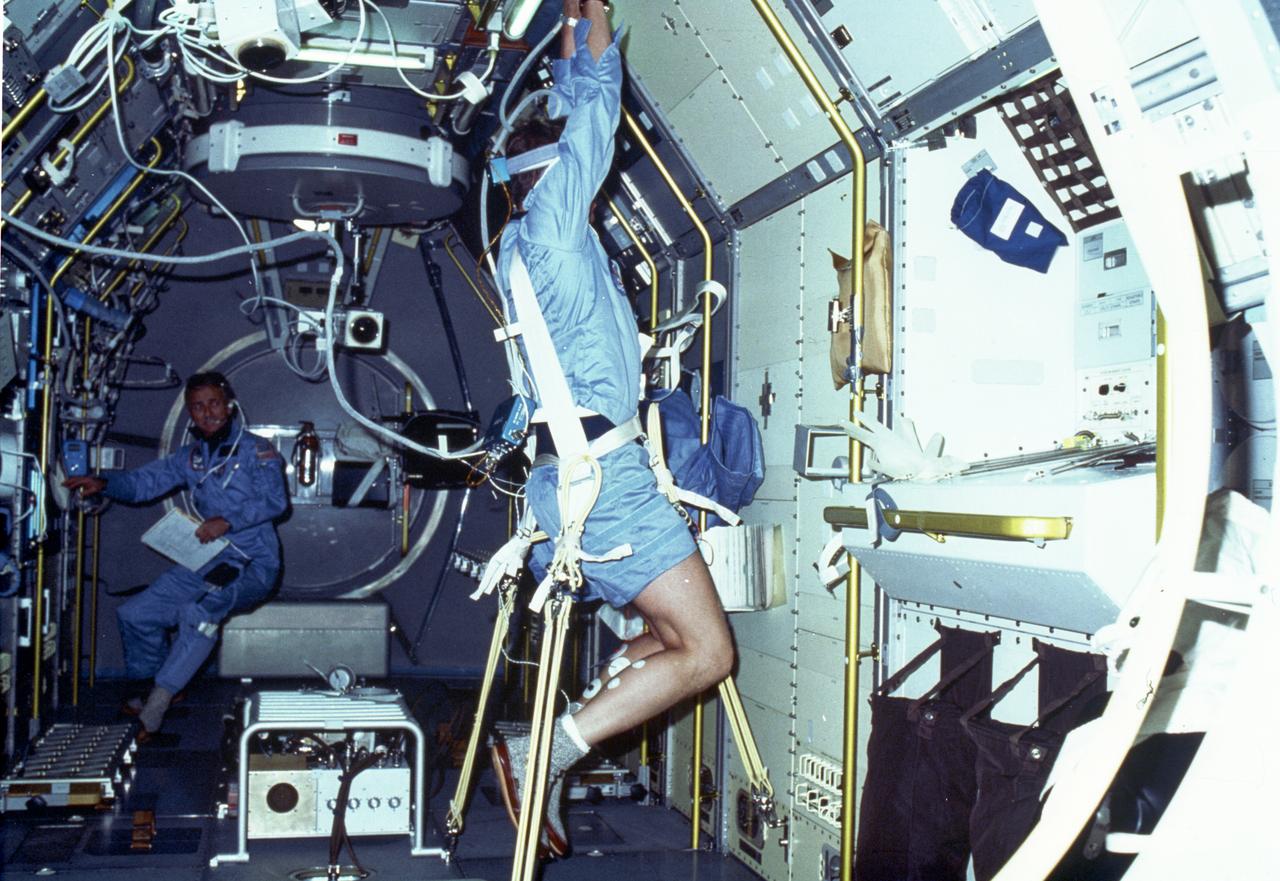
In this Spacelab-1 mission onboard photograph, astronaut Byron Lichtenberg performs a drop experiment, one of the Vestibular Experiments in Space investigations. The experiment examined spinal reflexes to determine whether they changed in microgravity. In Earth's environment, the otoliths signal the muscles to prepare for jolts associated with falling. During the flight, the normal reflex between the otoliths and the muscles was partially inhibited early in flight, declined further as the flight progressed, and returned to normal immediately after landing, suggesting that the brain ignored or reinterpreted otolith signals during space flight. Crewmembers reported a lack of awareness of position and location of feet, difficulty in maintaining balance, and a perception that falls were more sudden, faster, and harder than similar drops experienced in preflight. Crewmembers experienced illusions as they performed prescribed movement tests. When crew members viewed various targets and then pointed at them while blindfolded, their perception of target location and position of their own limbs was inaccurate in flight compared with similar tests on the ground. The Spacelab-1 was a multidisciplinary mission; that is, investigations were performed in several different fields of scientific research. The overall goal of the mission was to verify Spacelab performance through a variety of scientific experiments. The Spacelab-1 was launched aboard the Space Shuttle Orbiter Columbia for the STS-9 mission on November 28, 1983. The Marshall Space Flight Center had management responsibilities for the mission.