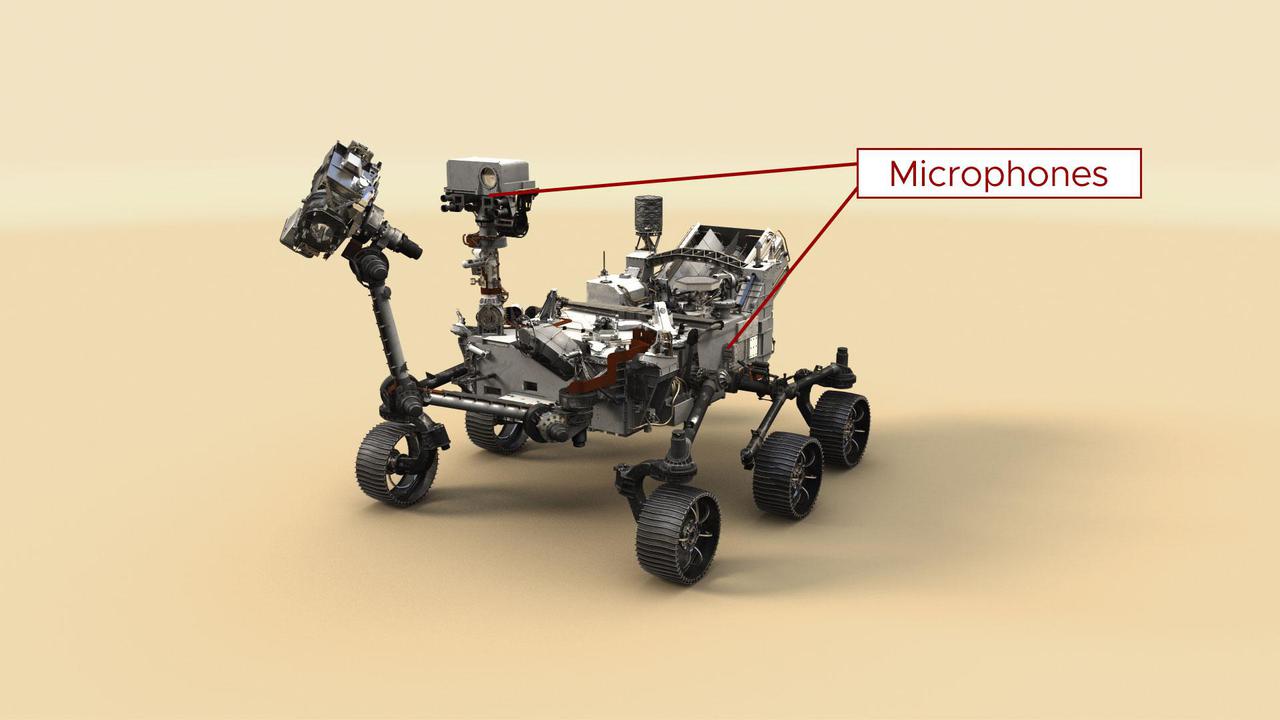
This illustration of NASA's Perseverance Mars rover indicates the placement of the spacecraft's two microphones. The microphone on the mast is part of the SuperCam science instrument. The microphone on the side of the rover was intended to capture the sounds of entry, descent, and landing for public engagement. A key objective for Perseverance's mission on Mars is astrobiology, including the search for signs of ancient microbial life. The rover will characterize the planet's geology and past climate, pave the way for human exploration of the Red Planet, and be the first mission to collect and cache Martian rock and regolith (broken rock and dust). Subsequent NASA missions, in cooperation with ESA (European Space Agency), would send spacecraft to Mars to collect these sealed samples from the surface and return them to Earth for in-depth analysis. The Mars 2020 Perseverance mission is part of NASA's Moon to Mars exploration approach, which includes Artemis missions to the Moon that will help prepare for human exploration of the Red Planet. https://photojournal.jpl.nasa.gov/catalog/PIA24931
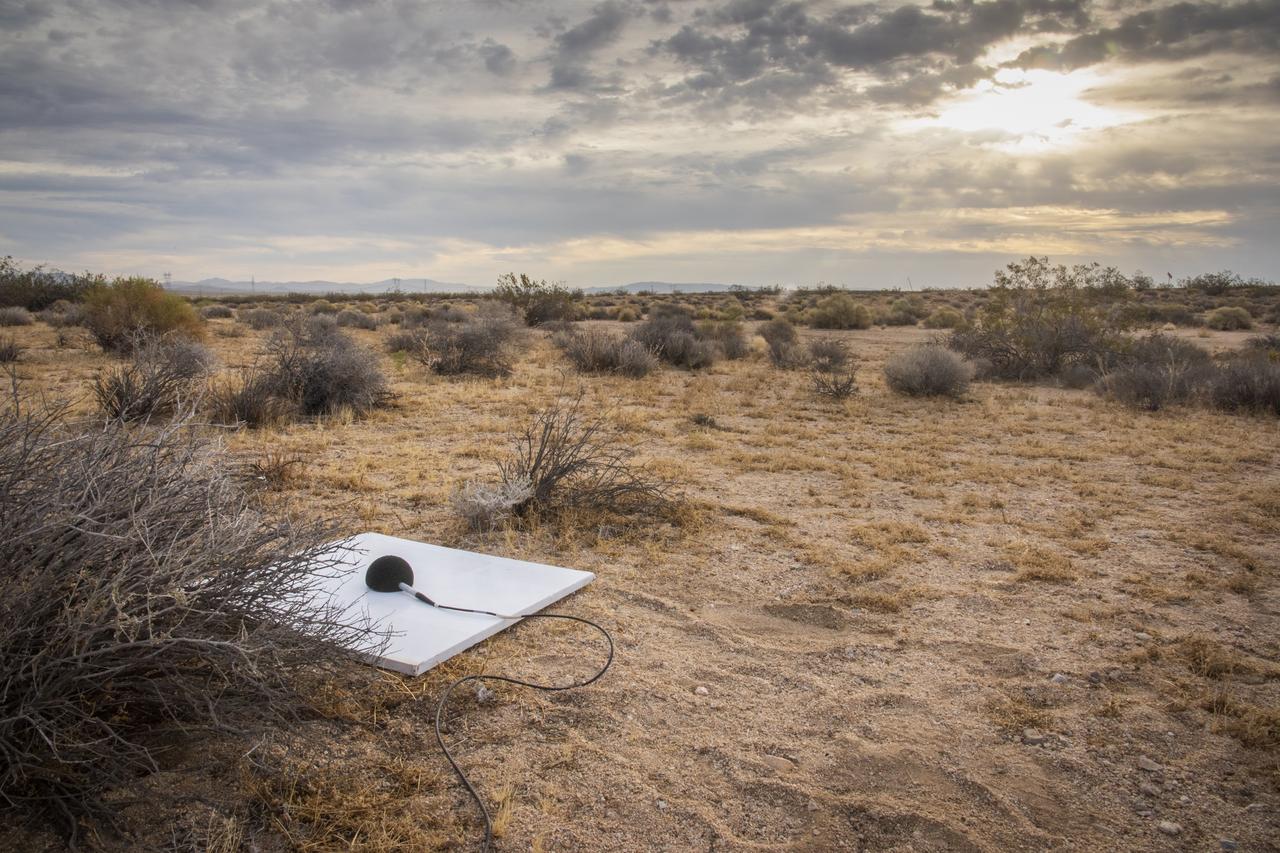
One of multiple microphone stations used in the CarpetDIEM flight series, which gave researchers valuable lessons learned in preparations to deploy a similar array for the quiet supersonic X-59. Prior to community overflights, X-59 will undergo an acoustic validation phase, during which NASA will deploy the array of specially-configured microphones to measure the X-59’s thumps, in order to verify that they are as quiet as predicted.
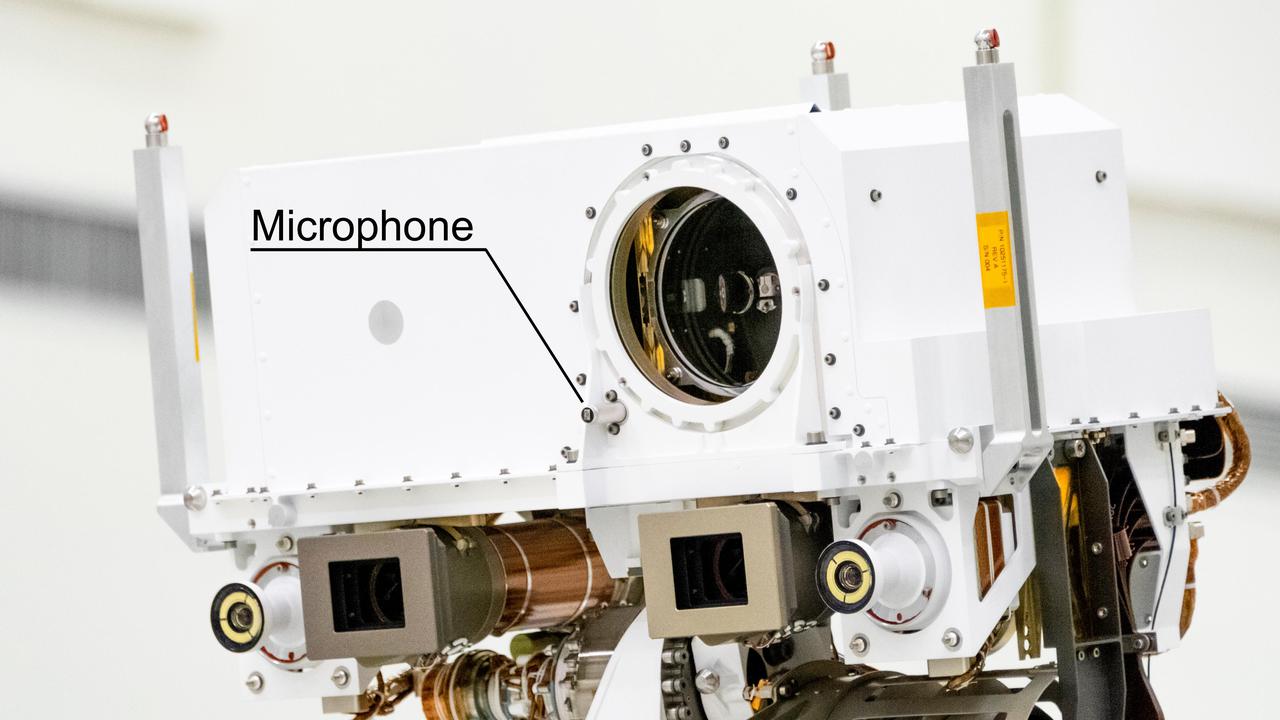
NASA's Perseverance Mars rover carries two commercial-grade microphones, including this one on its mast. The mast microphone is part of the SuperCam instrument. A key objective for Perseverance's mission on Mars is astrobiology, including the search for signs of ancient microbial life. The rover will characterize the planet's geology and past climate, pave the way for human exploration of the Red Planet, and be the first mission to collect and cache Martian rock and regolith (broken rock and dust). Subsequent NASA missions, in cooperation with ESA (European Space Agency), would send spacecraft to Mars to collect these sealed samples from the surface and return them to Earth for in-depth analysis. The Mars 2020 Perseverance mission is part of NASA's Moon to Mars exploration approach, which includes Artemis missions to the Moon that will help prepare for human exploration of the Red Planet. https://photojournal.jpl.nasa.gov/catalog/PIA24932
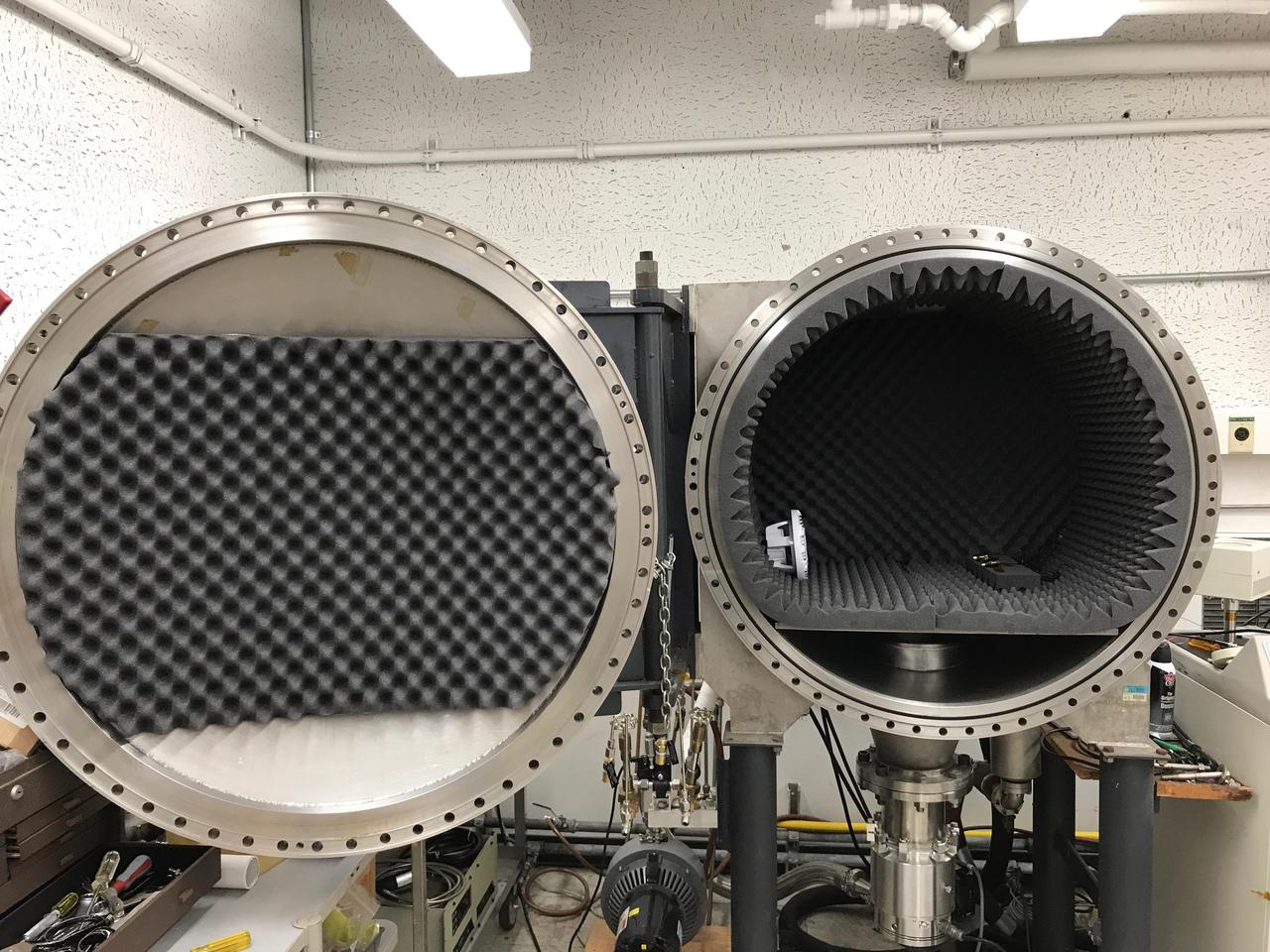
NASA's Mars 2020 Perseverance rover is equipped with two microphones that, if all goes as planned, will capture the sounds during entry, descent, and landing, and sounds on the Martian surface — from listening to the gusts of Mars' winds, to the "zap" of SuperCam's laser. This image depicts microphones under consideration the mission being tested at NASA's Jet Propulsion Laboratory in 2017. The microphones were placed inside a chamber with a playback speaker to record sounds within a simulated Martian environment. https://photojournal.jpl.nasa.gov/catalog/PIA24166
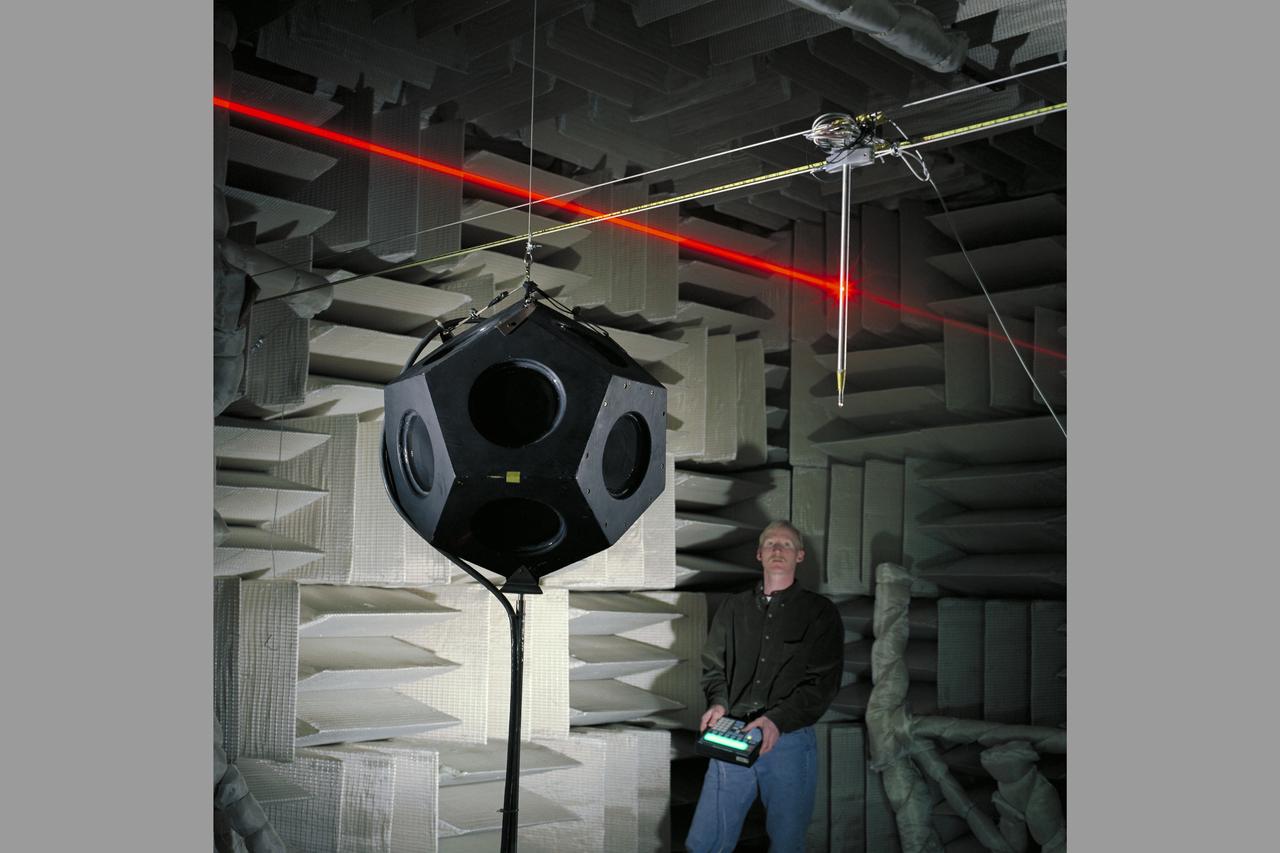
Traversing Microphone & Dodecahedron Loudspeaker (with pen lights - laser beams) in Anechoic Chamber with Chris Allen) Dedechedron meaning 12 sided polyhedron - polygon)
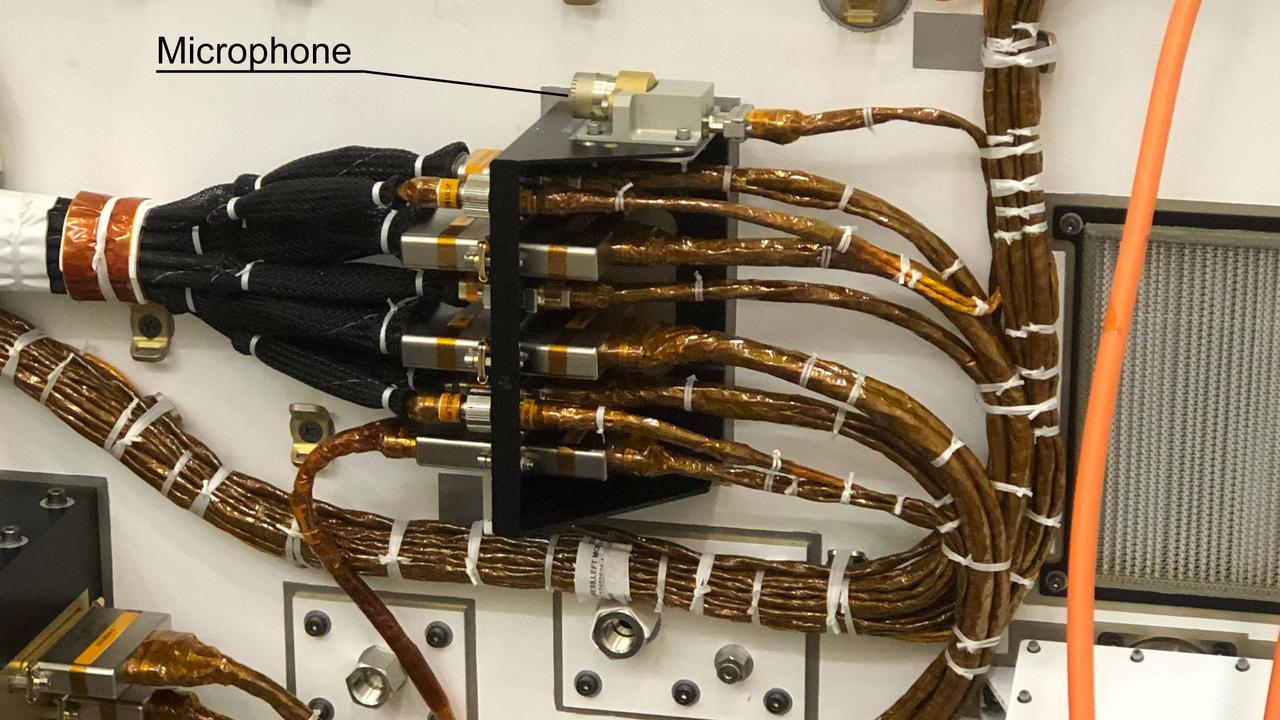
NASA's Perseverance Mars rover carries two commercial-grade microphones, including this one on its chassis. It was provided to record the sound of entry, descent and landing, though a software glitch prevented it from doing so. A second microphone, part of the SuperCam instrument, is included on the rover's mast. The mast microphone was included for specific science objectives. A key objective for Perseverance's mission on Mars is astrobiology, including the search for signs of ancient microbial life. The rover will characterize the planet's geology and past climate, pave the way for human exploration of the Red Planet, and be the first mission to collect and cache Martian rock and regolith (broken rock and dust). Subsequent NASA missions, in cooperation with ESA (European Space Agency), would send spacecraft to Mars to collect these sealed samples from the surface and return them to Earth for in-depth analysis. The Mars 2020 Perseverance mission is part of NASA's Moon to Mars exploration approach, which includes Artemis missions to the Moon that will help prepare for human exploration of the Red Planet. https://photojournal.jpl.nasa.gov/catalog/PIA24933
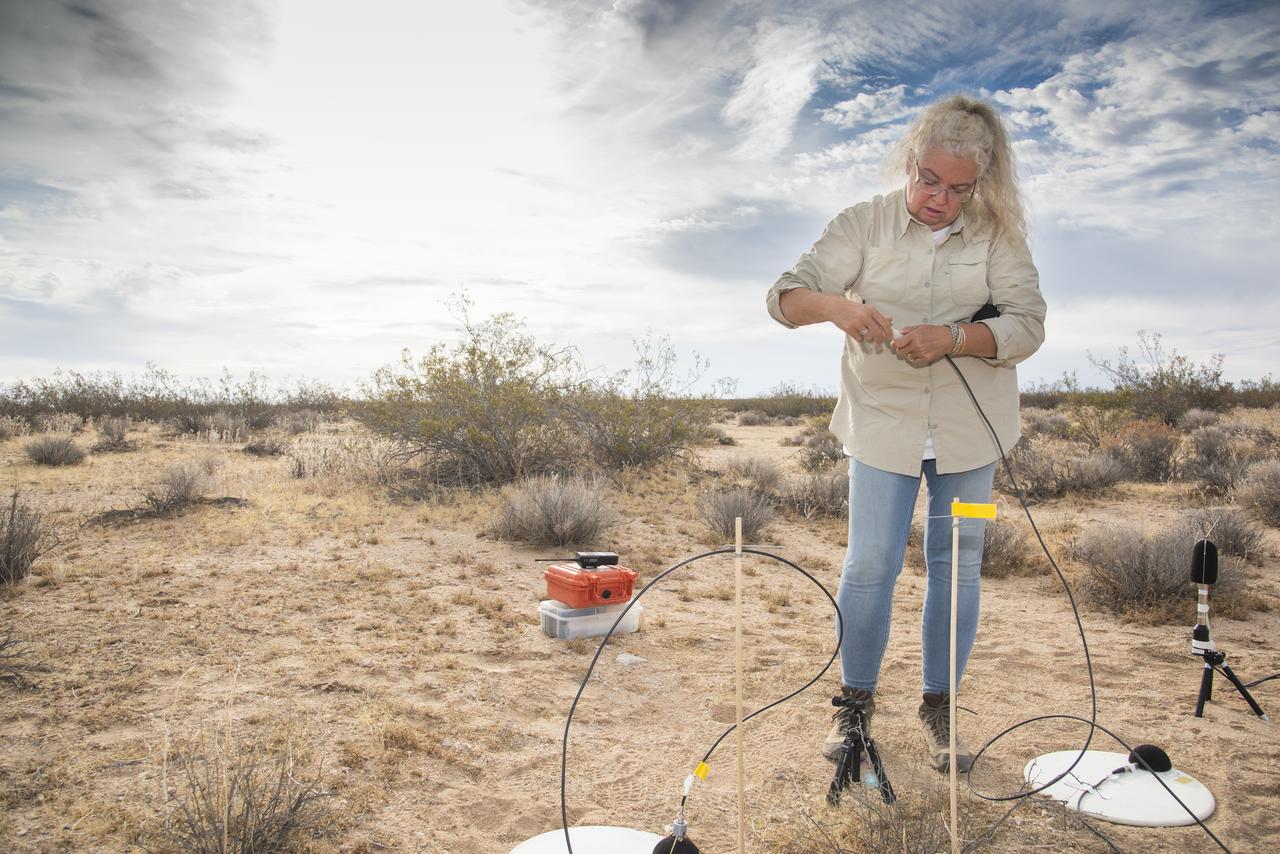
Juliet Page, a physical scientist with the Volpe National Transportation Systems Center, calibrates a microphone station during the CarpetDIEM flight series. The array featured high-fidelity microphones arranged in several configurations, giving researchers the ability to obtain accurate sound data and assess the loudness of the sonic booms, just as they will measure the quiet sonic thumps from the X-59.
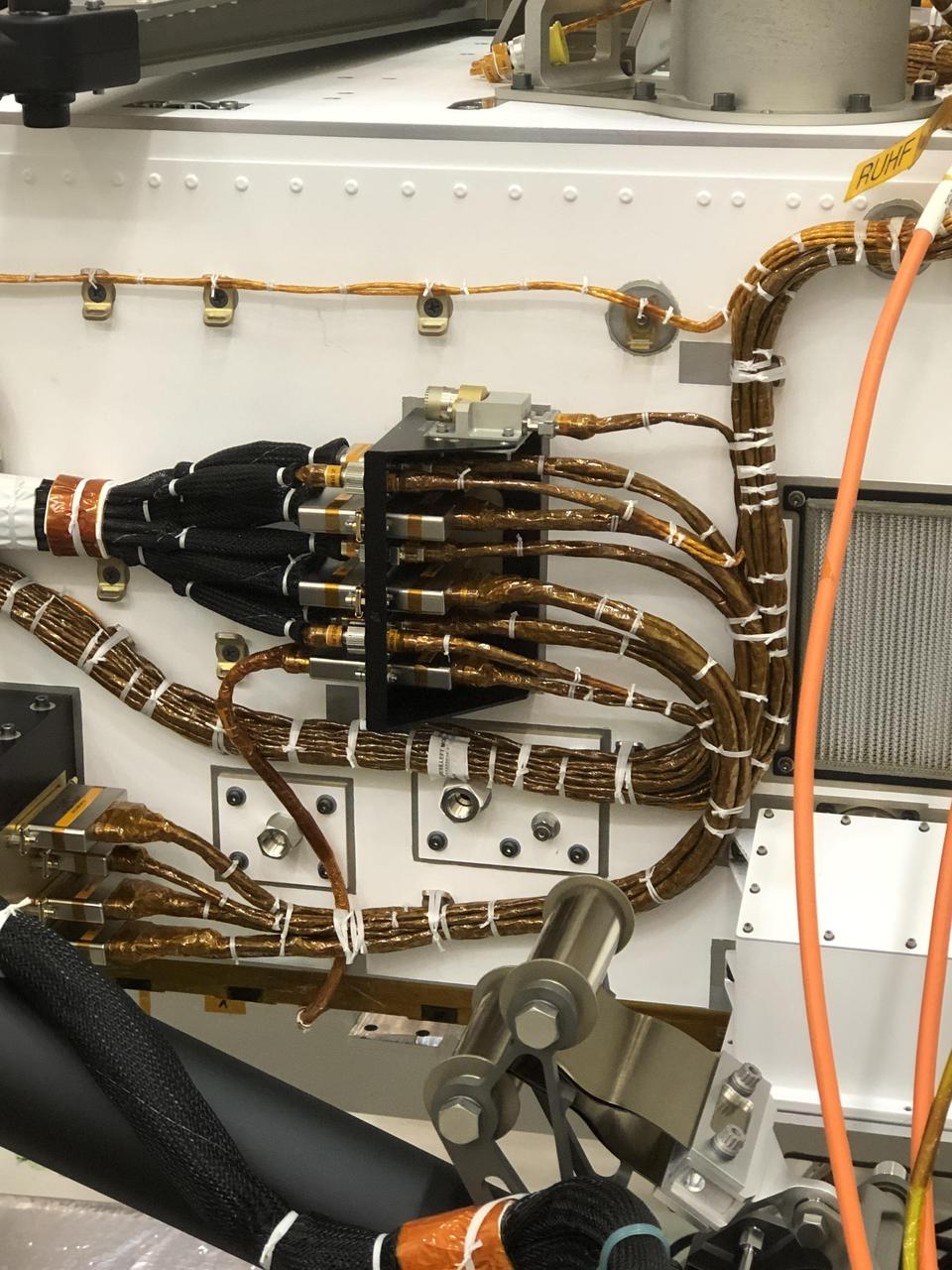
Components are visible on the port side of the Perseverance rover in this close-up image taken on Nov. 16, 2019, in High Bay 1 of the Spacecraft Assembly Facility at NASA's Jet Propulsion Laboratory in Southern California. At center of the image, attached to the side of the rover, is a black cable bracket (with gold cabling running through it). Attached to the top of this black bracket — and gray in color — is the Entry Descent and Landing (EDL) microphone. Below the cable bracket are the Mars Oxygen In-Situ Resource Utilization Experiment (MOXIE) wall ports. The orange cable passing over it is part of ground support equipment. https://photojournal.jpl.nasa.gov/catalog/PIA24046

This graphic shows the location of four cameras and a microphone on the spacecraft for NASA's Mars 2020 Perseverance mission. These cameras will capture the entry, descent, and landing phase of the mission. https://photojournal.jpl.nasa.gov/catalog/PIA24378
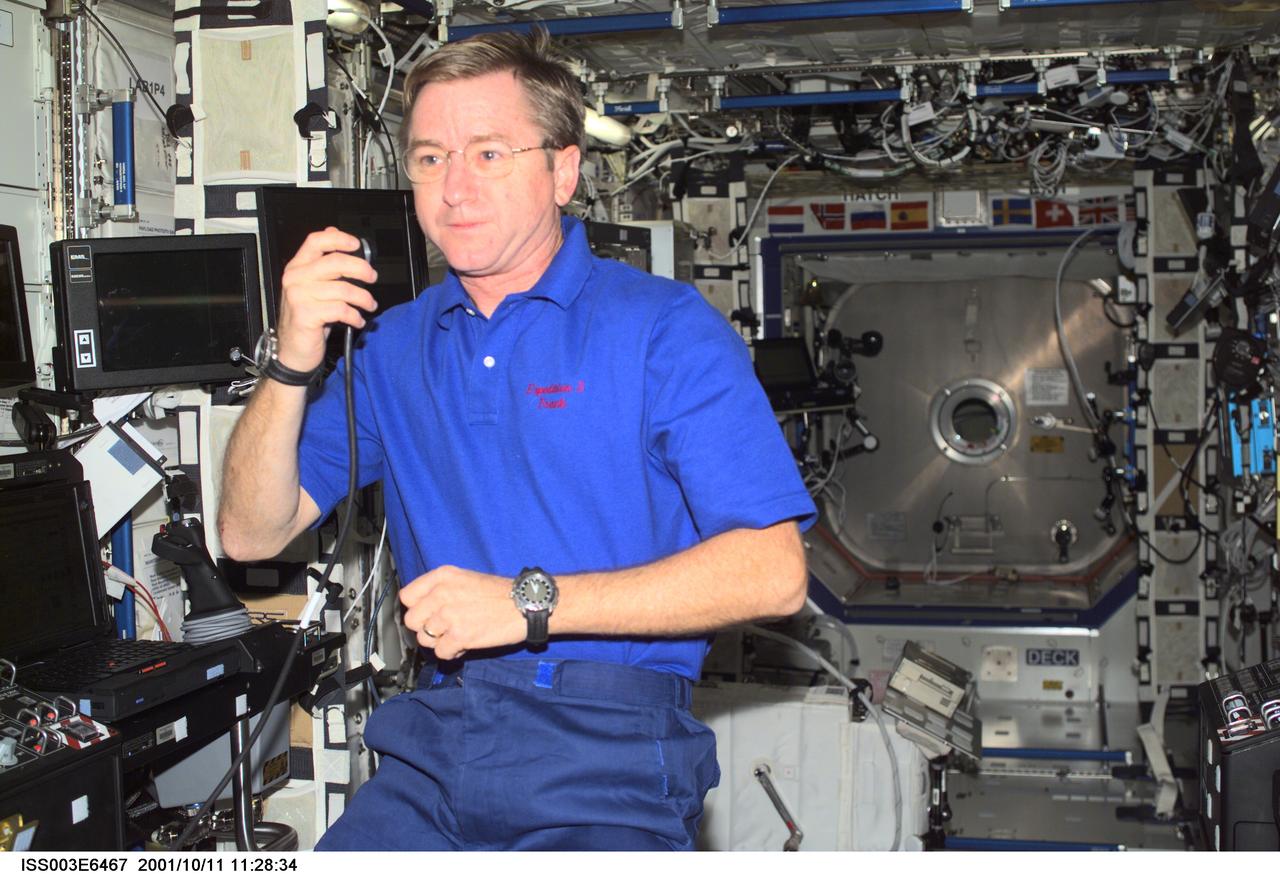
ISS003-E-6467 (11 October 2001) --- Astronaut Frank L. Culbertson, Jr., Expedition Three mission commander, talks on a microphone in the Destiny laboratory on the International Space Station (ISS). This image was taken with a digital still camera.
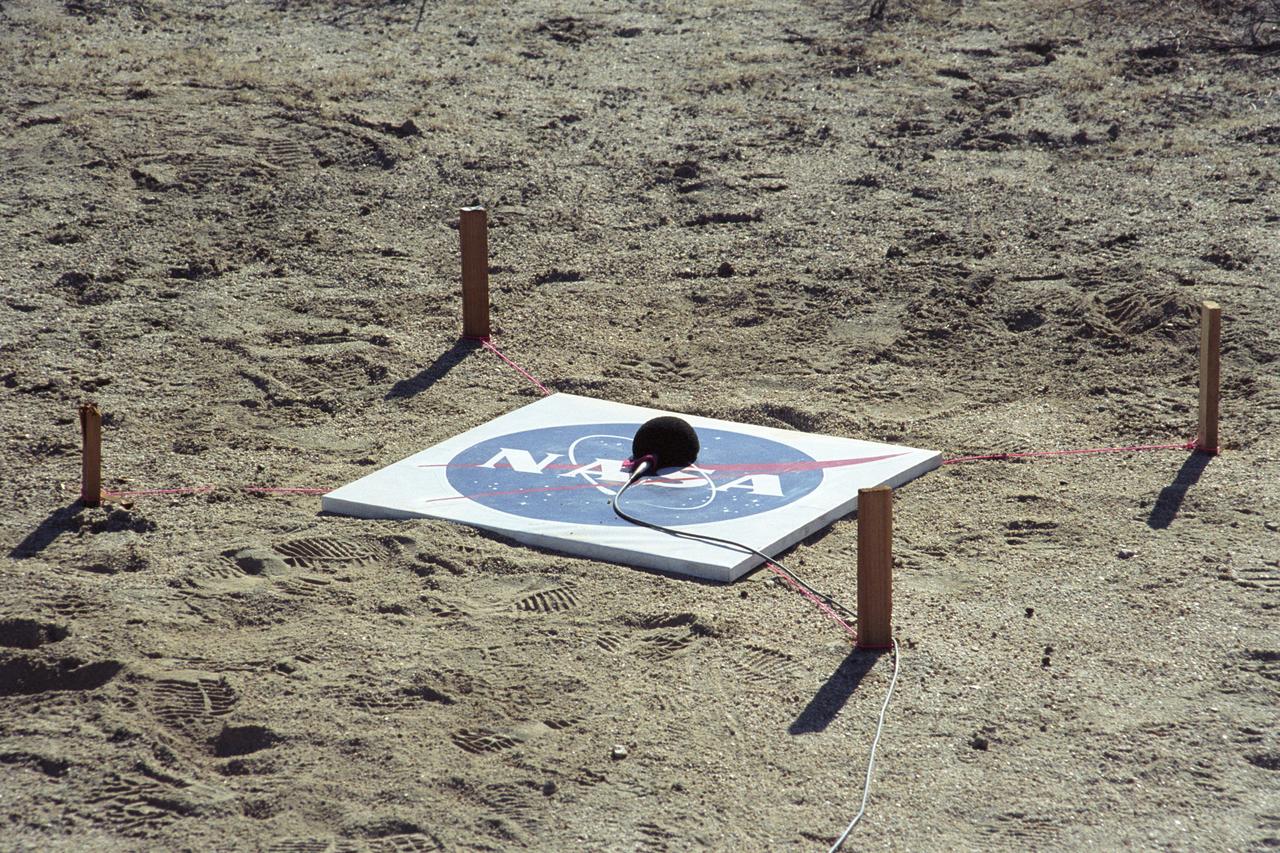
One of many microphones arrayed under the path of the F-5E SSBE (Shaped Sonic Boom Experiment) aircraft to record sonic booms. The SSBE (Shaped Sonic Boom Experiment) was formerly known as the Shaped Sonic Boom Demonstration, or SSBD, and is part of DARPA's Quiet Supersonic Platform (QSP) program. On August 27, 2003, the F-5E SSBD aircraft demonstrated a method to reduce the intensity of sonic booms.
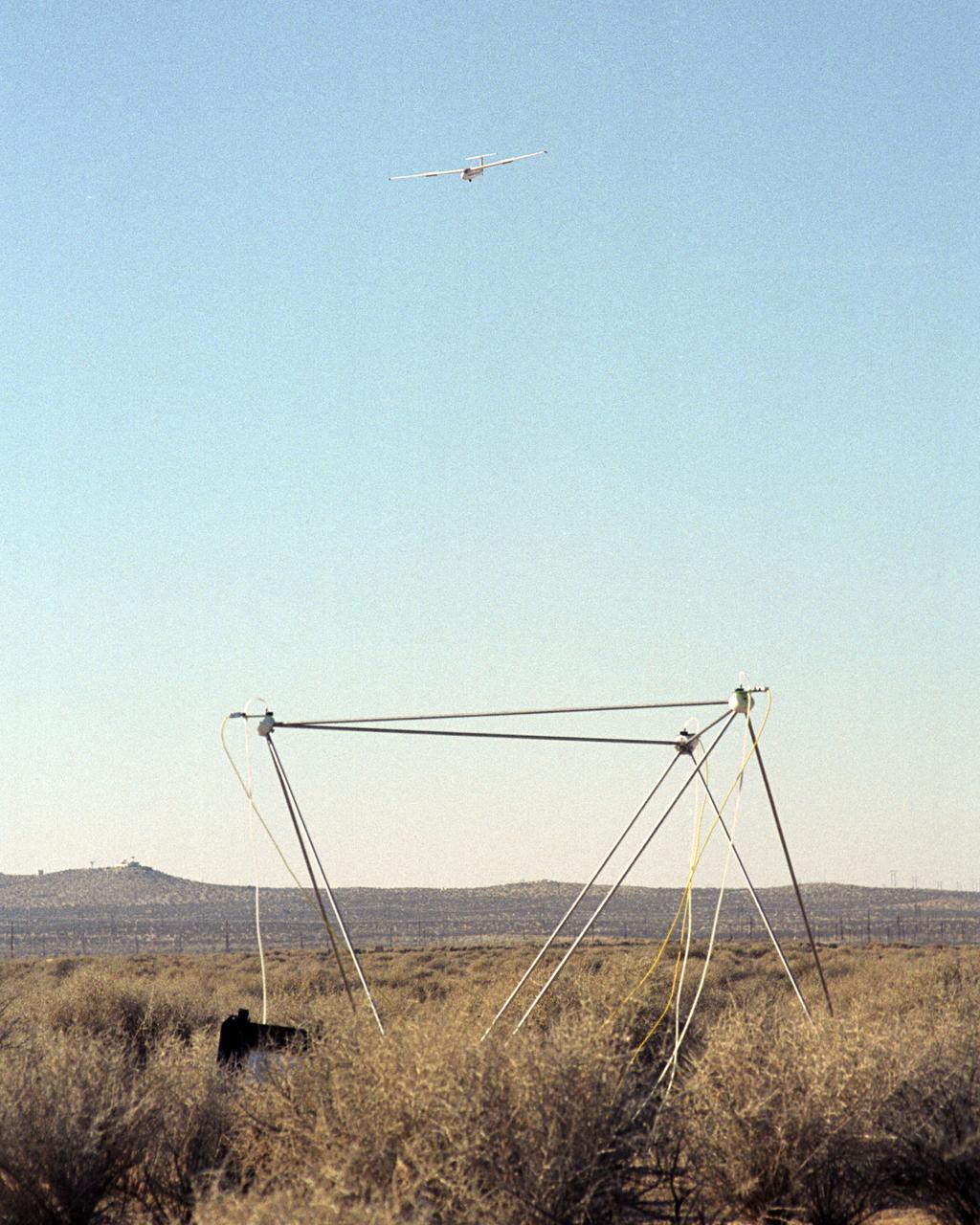
A United States Air Force Test Pilot School Blanik L-23 glider carrying a microphone and a pressure transducer flies near a BADS (Boom Amplitudes Direction System) sensor following flight at an altitude of 10 thousand feet under the path of the F-5E SSBE aircraft. The SSBE (Shaped Sonic Boom Experiment) was formerly known as the Shaped Sonic Boom Demonstration, or SSBD, and is part of DARPA's Quiet Supersonic Platform (QSP) program. On August 27, 2003, the F-5E SSBD aircraft demonstrated a method to reduce the intensity of sonic booms.
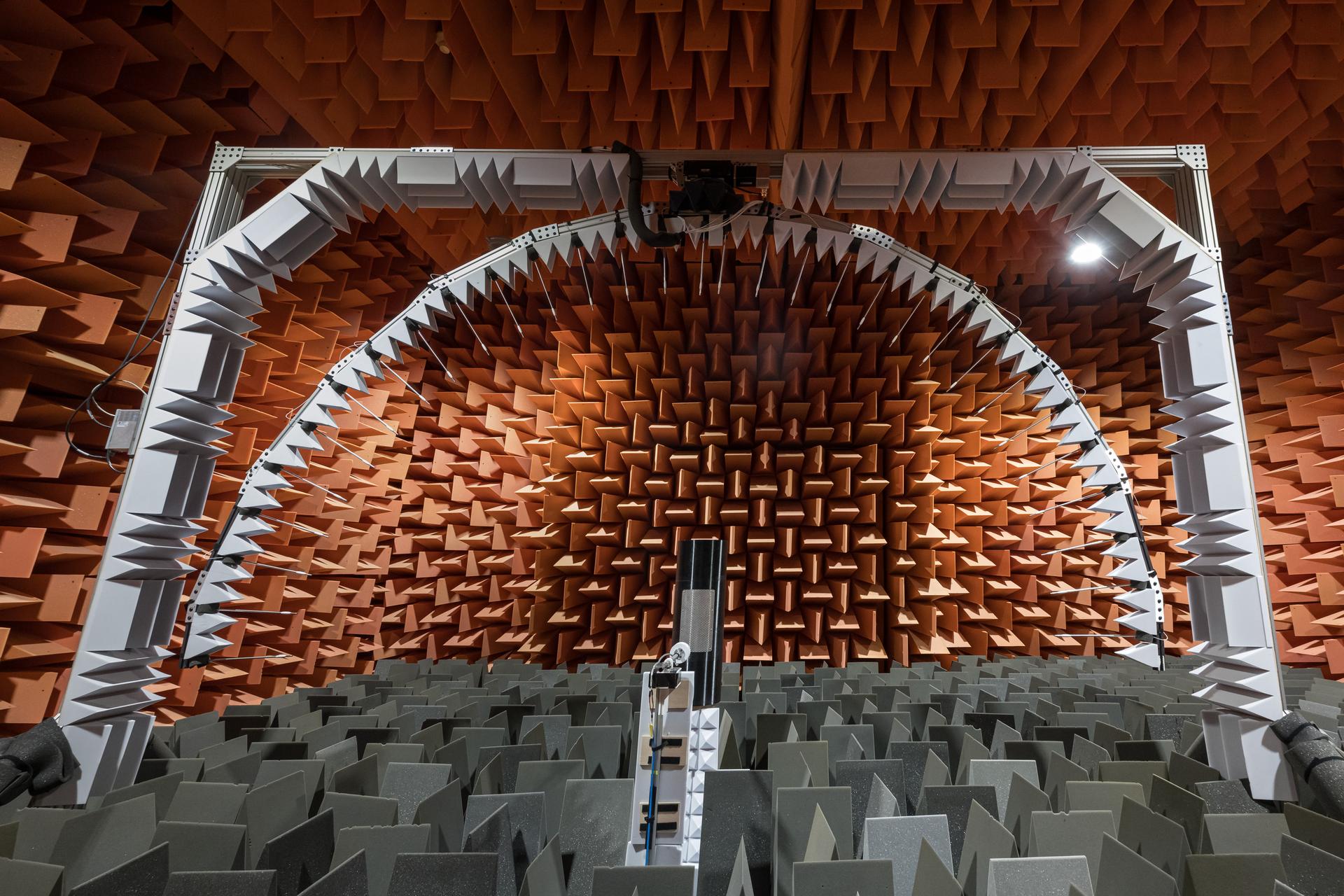
Scattering of Acoustically Lined Simplified Airframes (SALSA) Test with High Resolution Traversing Microphone Array (HiRTMA) in Structural Acoustics Loads and Transmission Facility (SALT) in Building 1208.
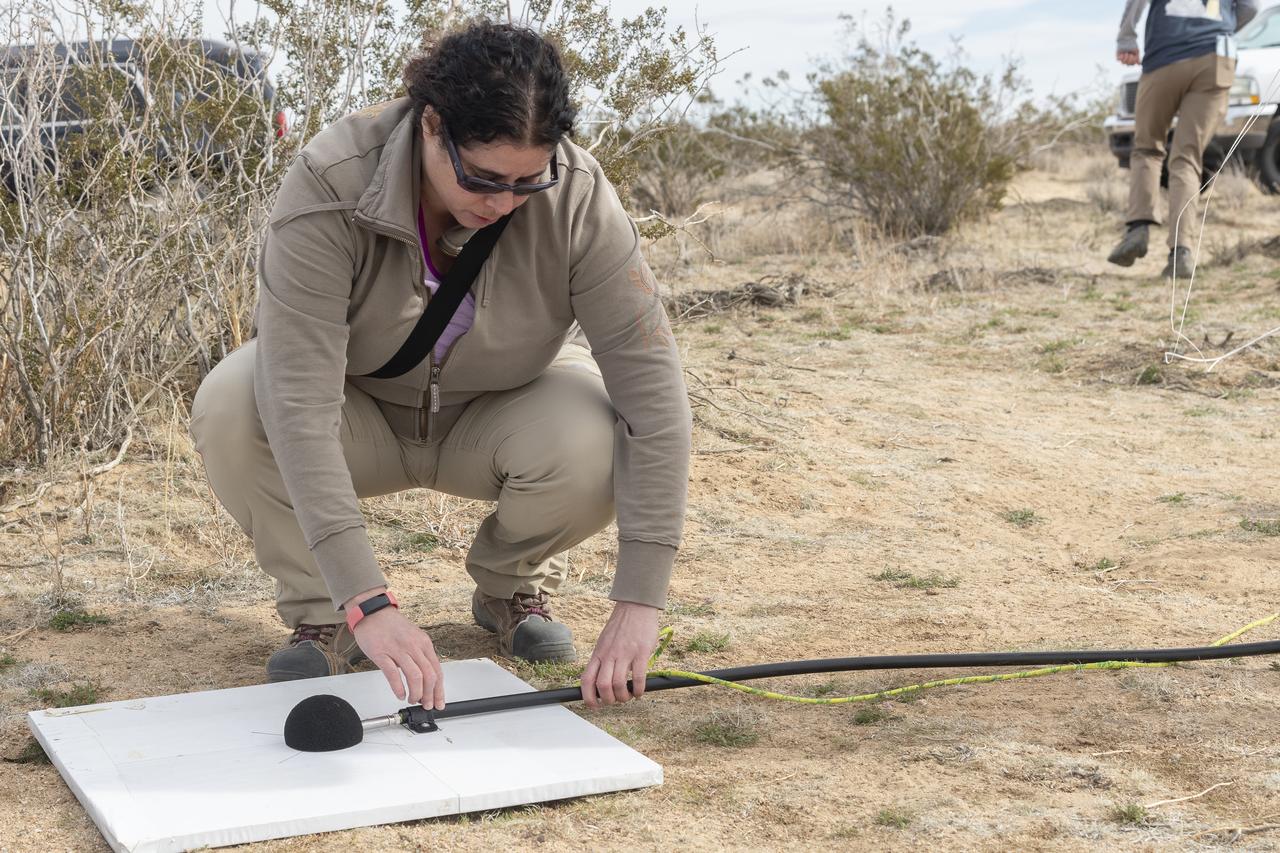
Dr. Alexandra Loubeau, one of the technical co-leads for sonic boom community testing for the Quesst mission, sets out a microphone in the California desert. . The Quesst mission recently completed testing of operations and equipment to be used in recording the sonic thumps of the X-59. The testing was the third phase of Carpet Determination in Entirety Measurements flights, called CarpetDIEM for short. An F-15 and an F-18 from NASA’s Armstrong Flight Research Center created sonic booms, both loud and soft, to verify the operations of ground recording systems spread out across 30 miles of open desert.
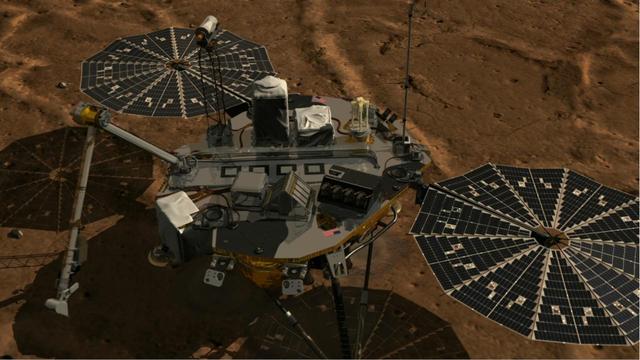
This frame from an animation shows a zoom into the Mars Descent Imager MARDI instrument onboard NASA Phoenix Mars Lander. The Phoenix team will soon attempt to use a microphone on the MARDI instrument to capture sounds of Mars.
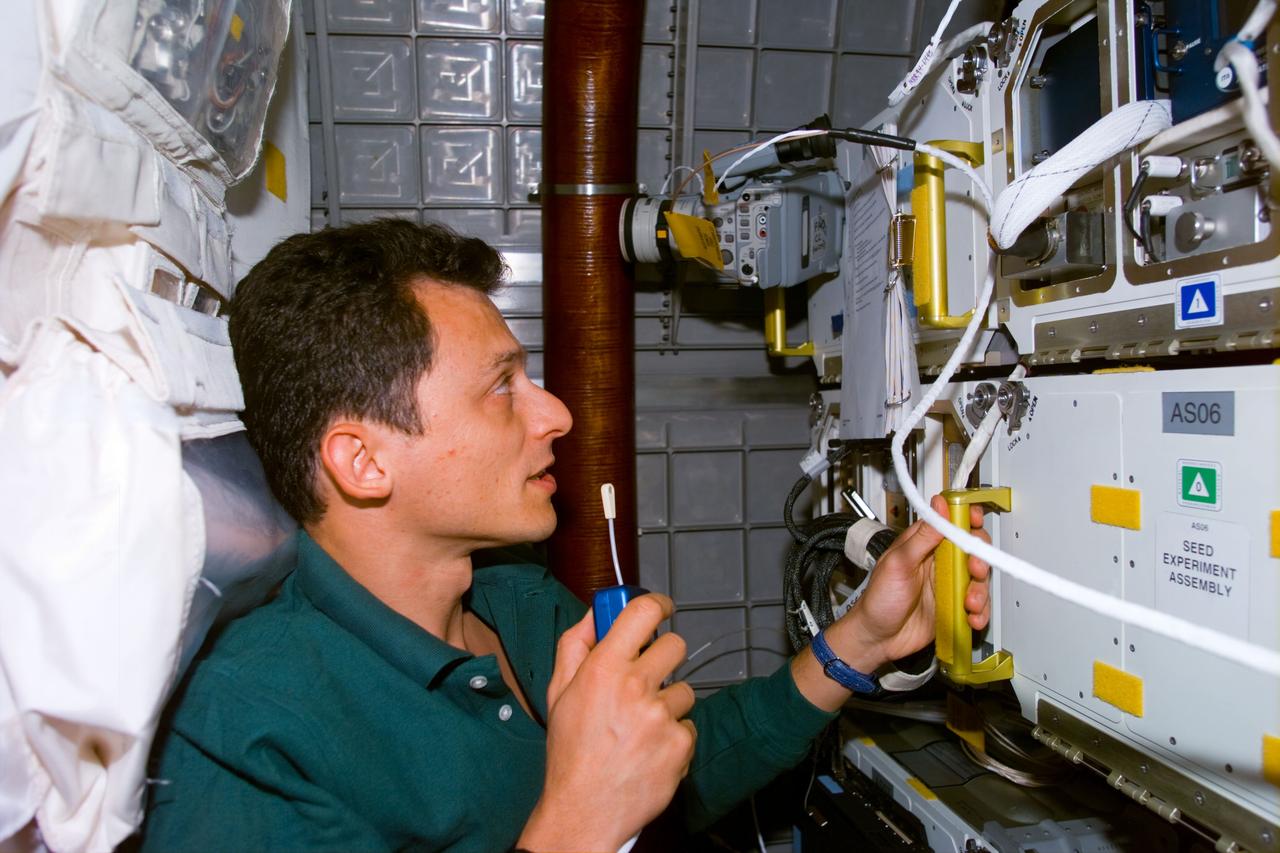
STS095-E-5226 (4 Nov. 1998) --- Astronaut Pedro Duque, STS-95 mission specialist representing the European Space Agency (ESA), talks with ground controllers while checking on an experiment in the Spacehab facility aboard the Space Shuttle Discovery. The picture was taken with an electronic still camera (ESC) at 03:01:28 GMT, Nov. 4.
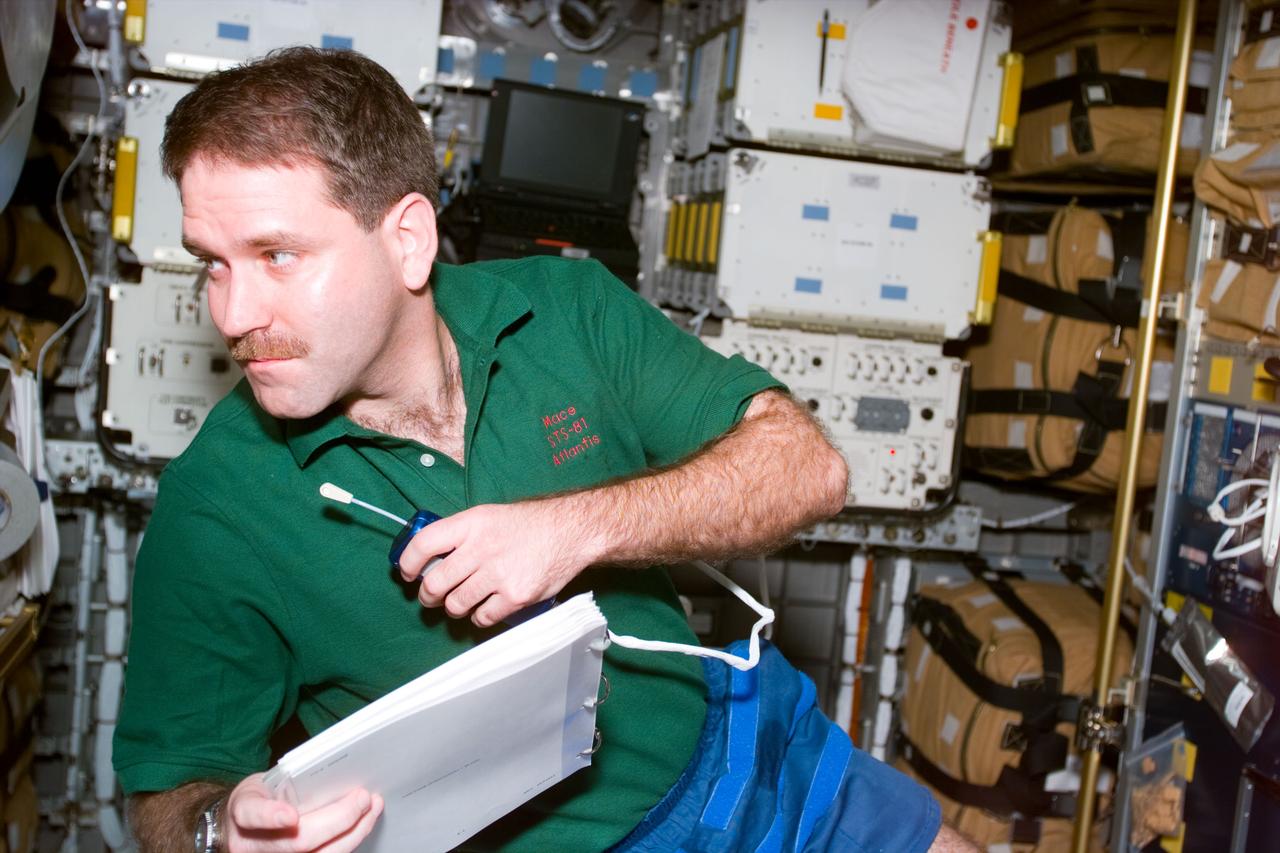
STS081-E-05144 (13 Jan. 1997) --- Making sure everything is in its place is no easy task as witnessed by the serious countenance of astronaut John M. Grunsfeld, mission specialist. Grunsfeld communicates with ground controllers as he checks progress of item transfers in the Spacehab Double Module (DM). This image was recorded with an Electronic Still Camera (ESC) and was later downlinked to flight controllers in Houston, Texas. Grunsfeld and five astronaut crew mates are preparing for a scheduled mid-week docking with Russia's Mir Space Station.
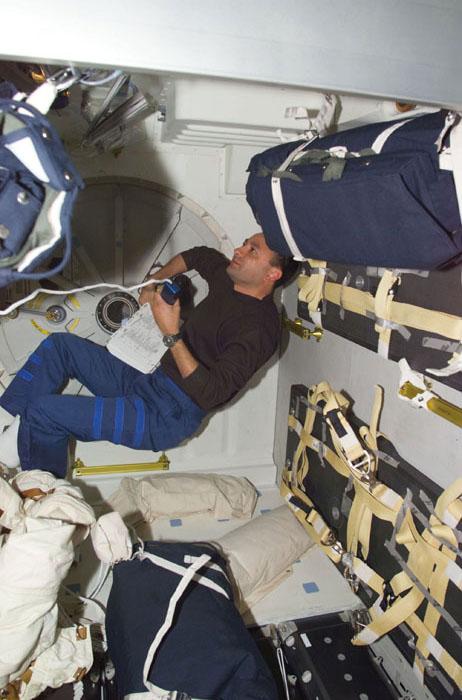
STS98-E-5088 (10 February 2001) --- Astronaut Mark L. Polansky, SS-98 pilot, communicates with ground controllers from the mid deck of the Space Shuttle Atlantis. Parts of at least two sleep stations are visible in the digital still camera's scene.
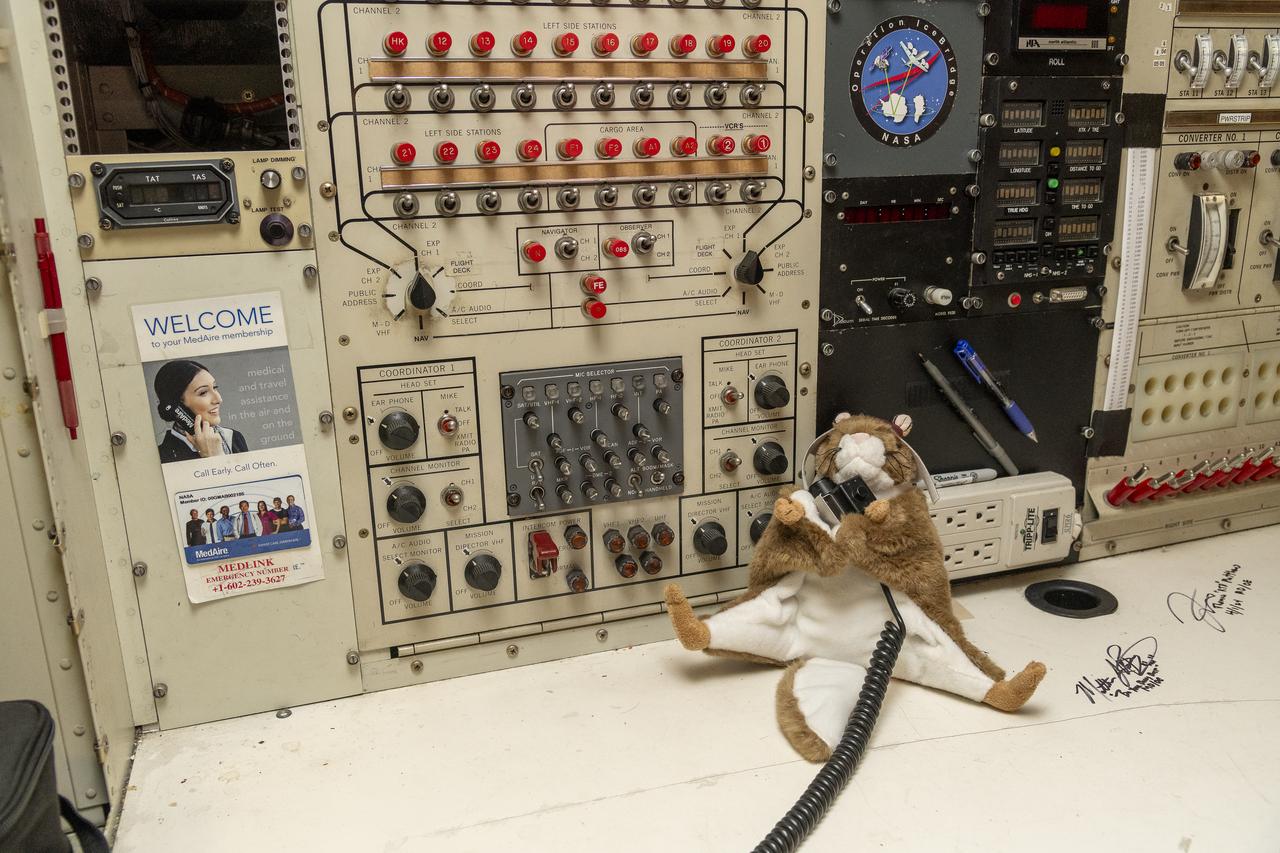
Orville, NASA’s high-flying squirrel, uses the microphone at the mission director station onboard the DC-8 aircraft at NASA’s Armstrong Flight Research Center Building 703 in Palmdale, California. On May 2, 2024, NASA personnel, friends, and family celebrated the DC-8 staff, aircraft, and science campaigns.
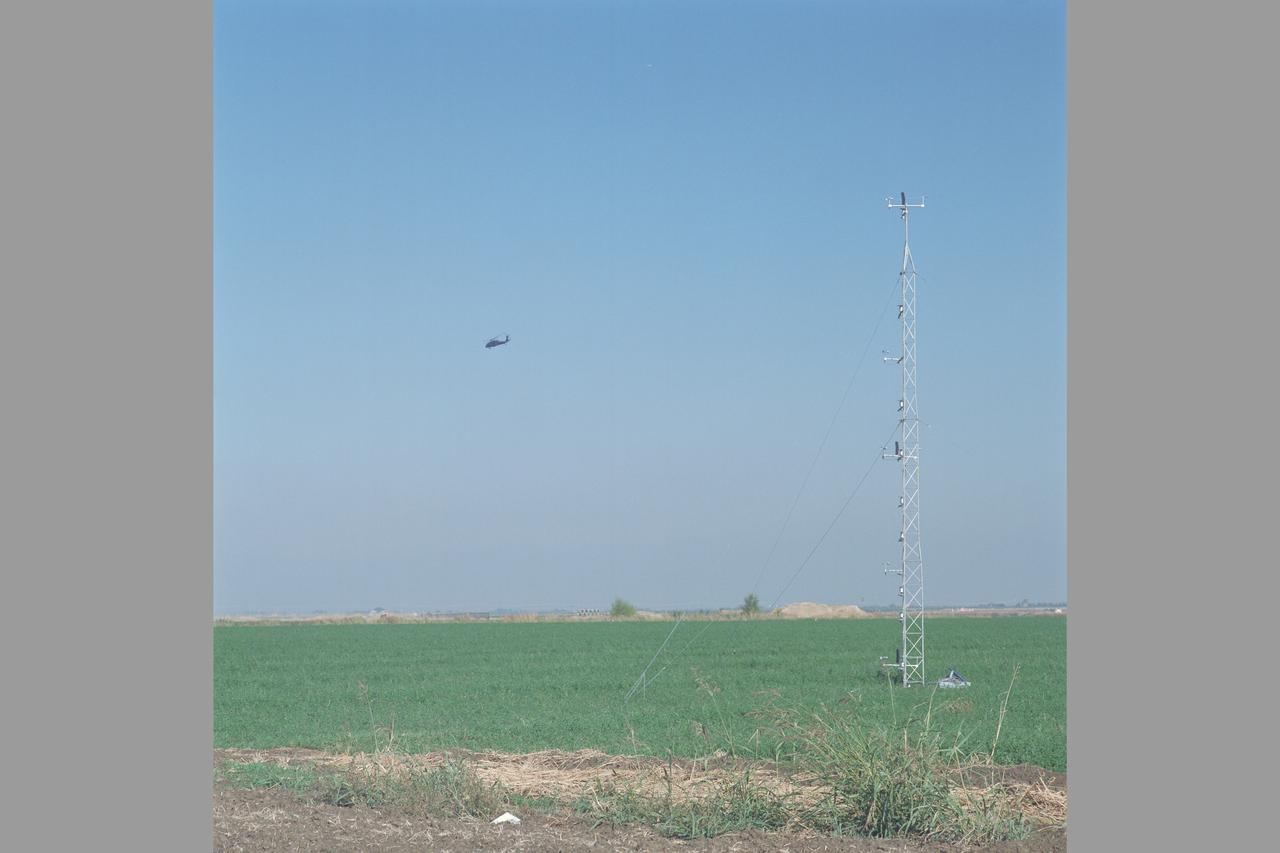
MD-900 (N900MH) Helicopter Noise Abatement Test - Crows Landing, Microphones
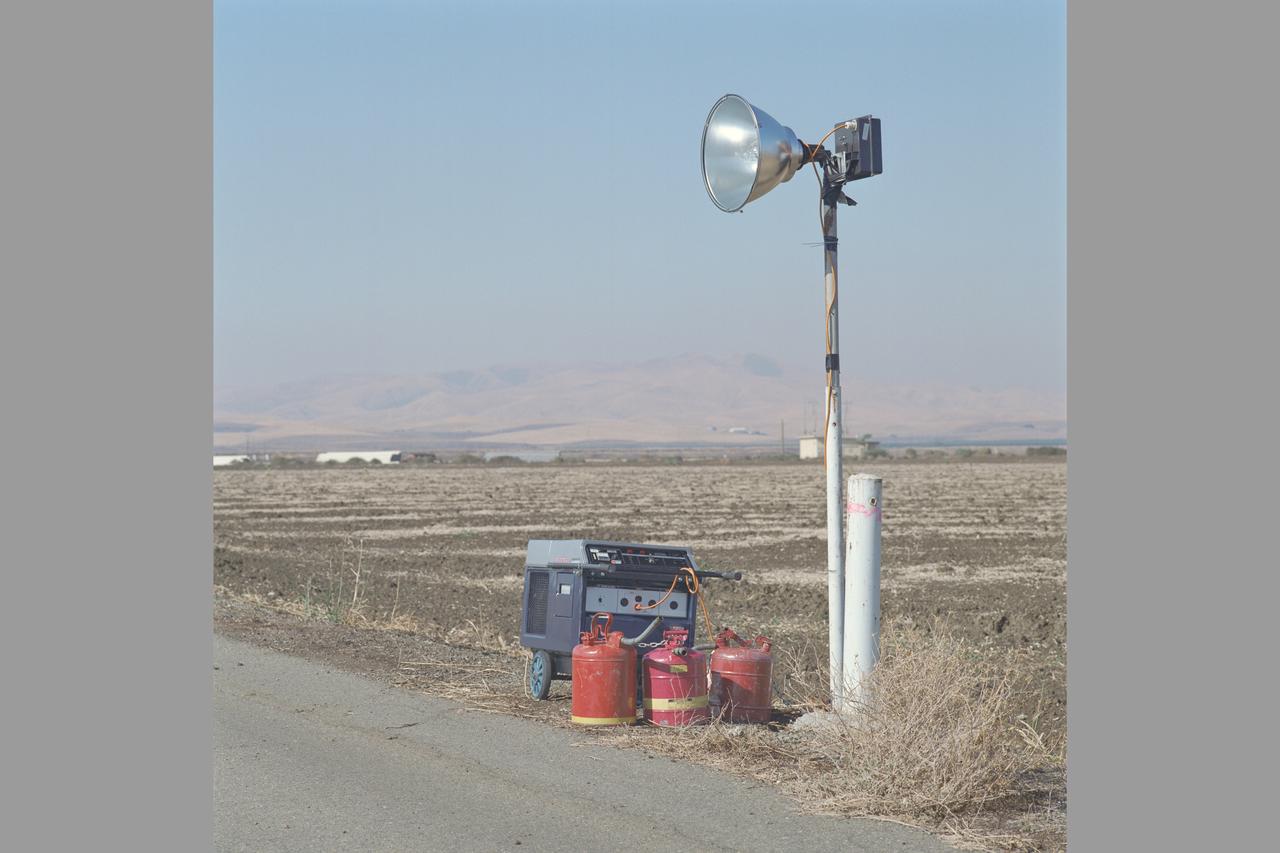
MD-900 (N900MH) Helicopter Noise Abatement Test - Crows Landing, Microphones,
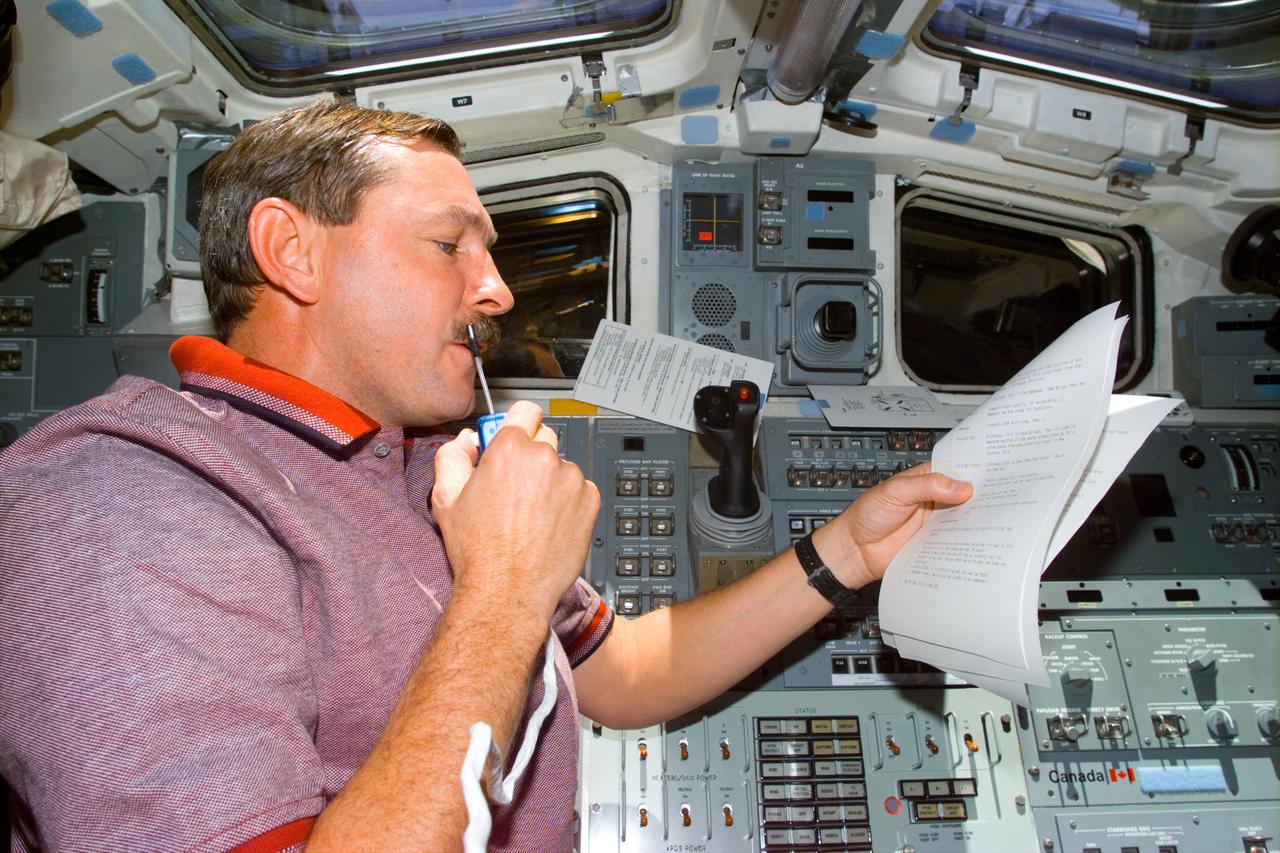
STS095-E-5177 (31 Oct. 1998) --- On Discovery's aft flight deck, astronaut Curtis L. Brown Jr., STS-95 commander, checks over notes with ground controllers in Houston. The photo was taken with an electronic still camera (ESC) at 00:41:51 GMT, Oct. 31.
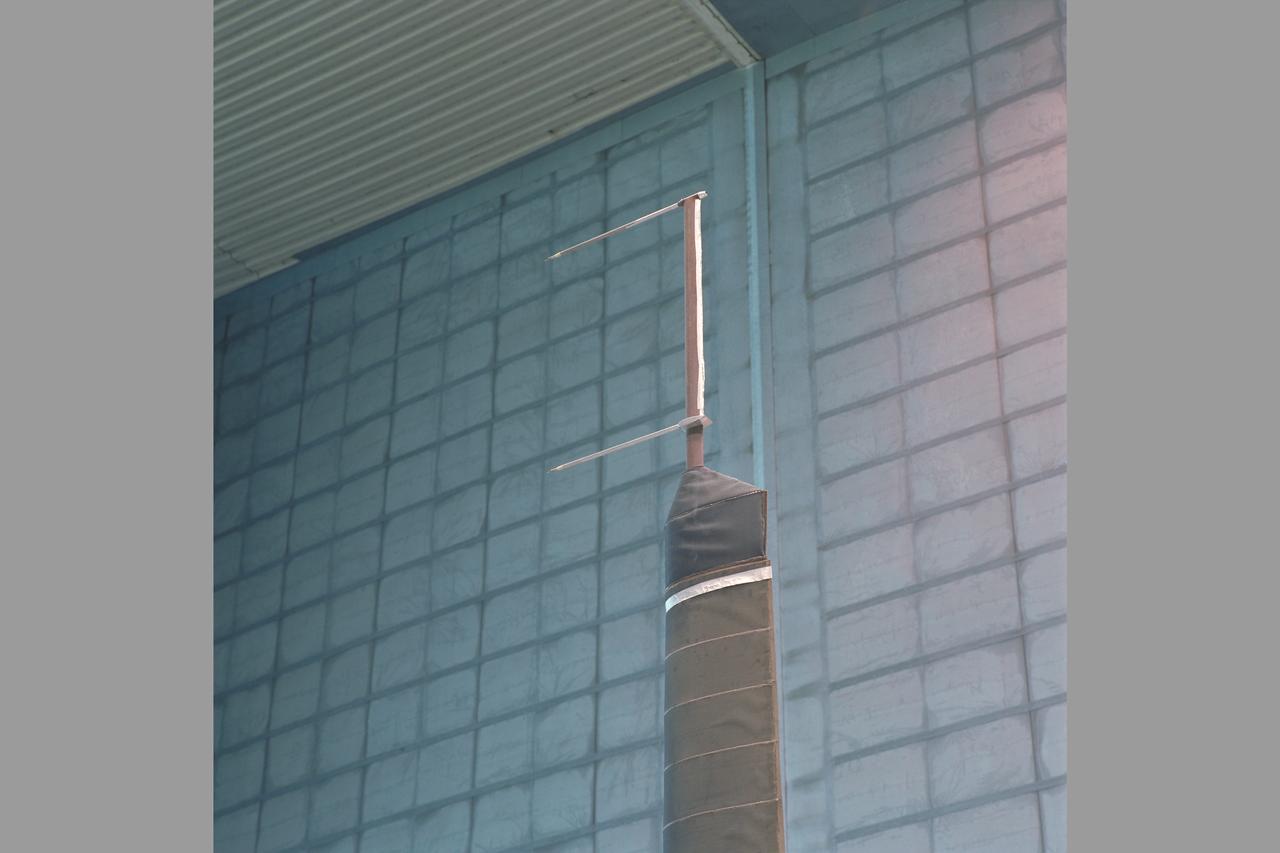
XV-15 Rotor Installation in 80X120 ft. Wind Tunnel Test-0048. (microphone set up) Noise Reduction
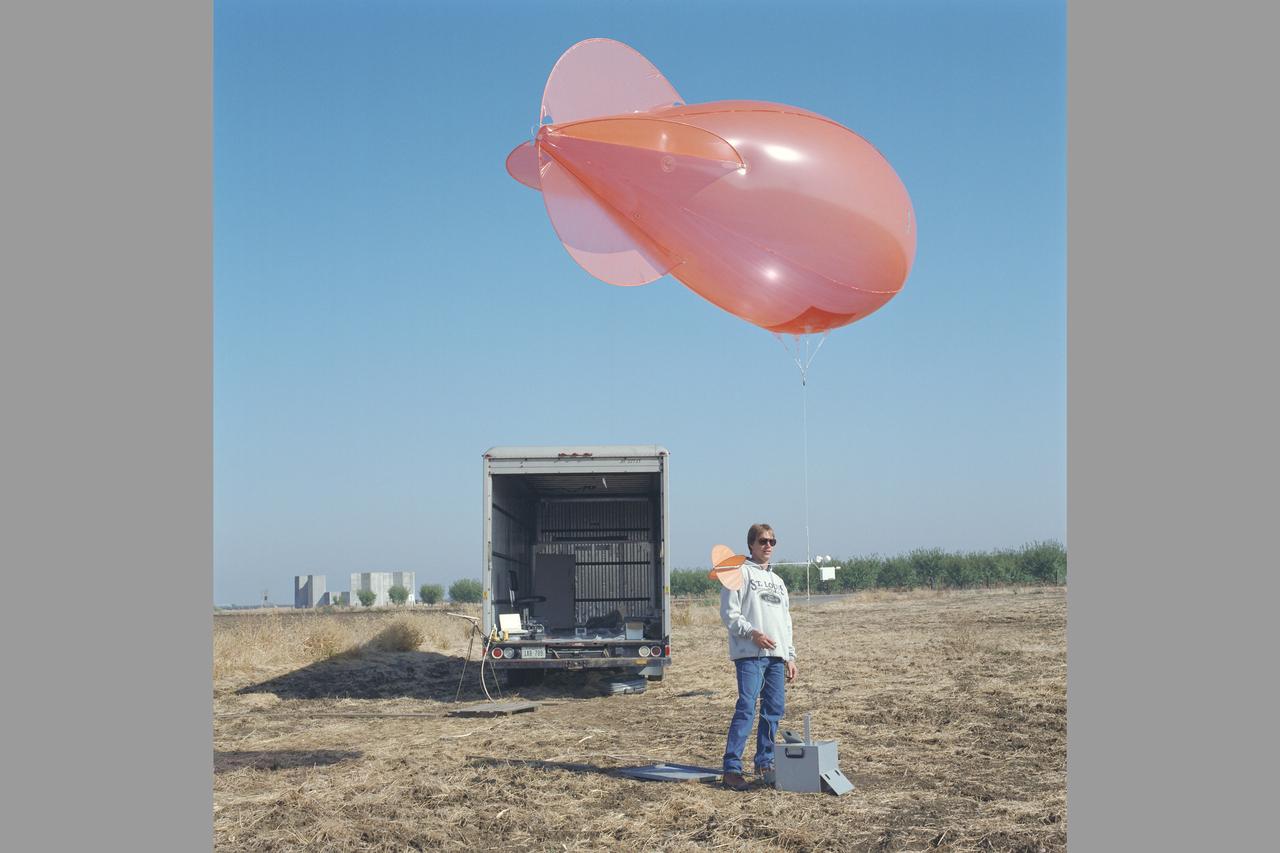
MD-900 (N900MH) Helicopter Noise Abatement Test - Crows Landing, Microphones, Van and balloon blimp (wind indicator)
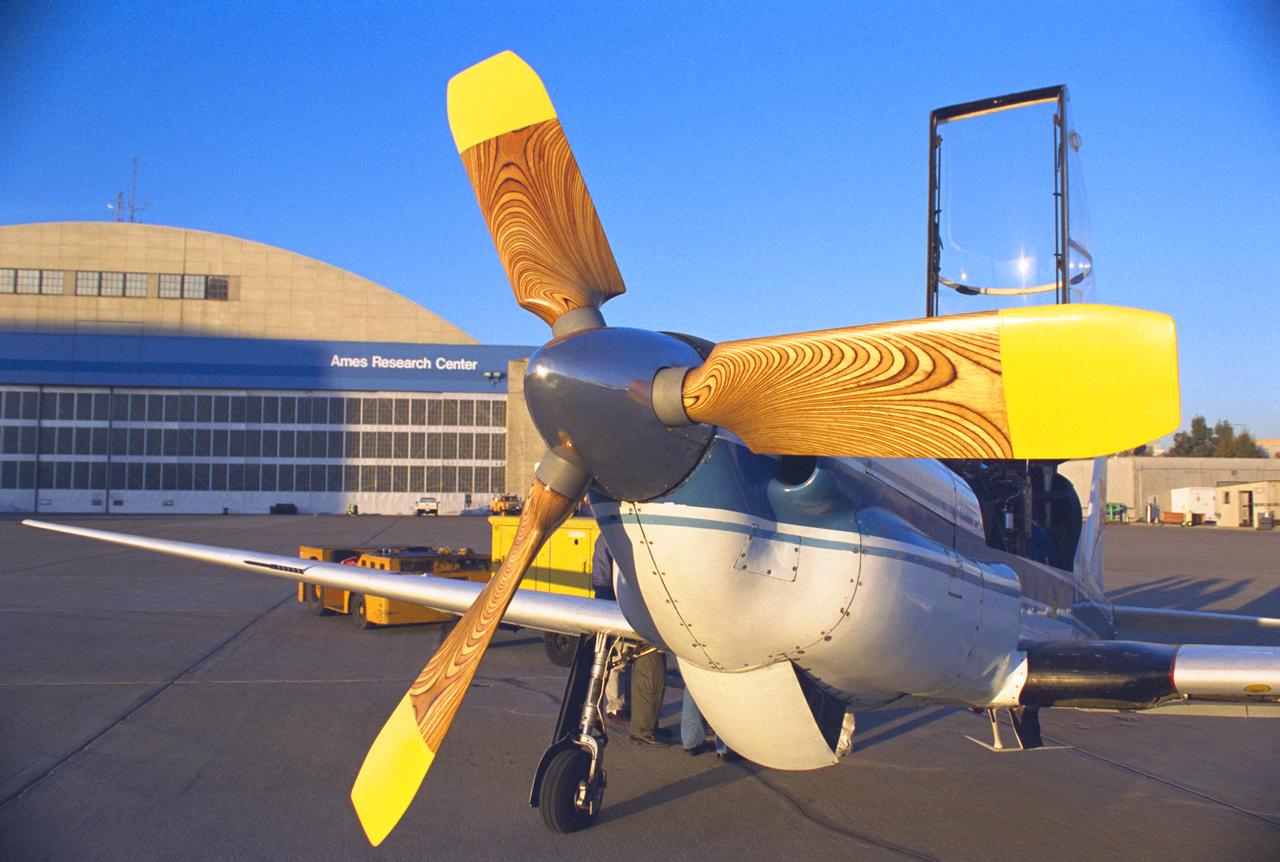
YO-3A (NASA-718) Flying Acoustic Platform: The Quiet Plane is used as a flying microphone platform to study aircraft noise, especially helicopter noise.
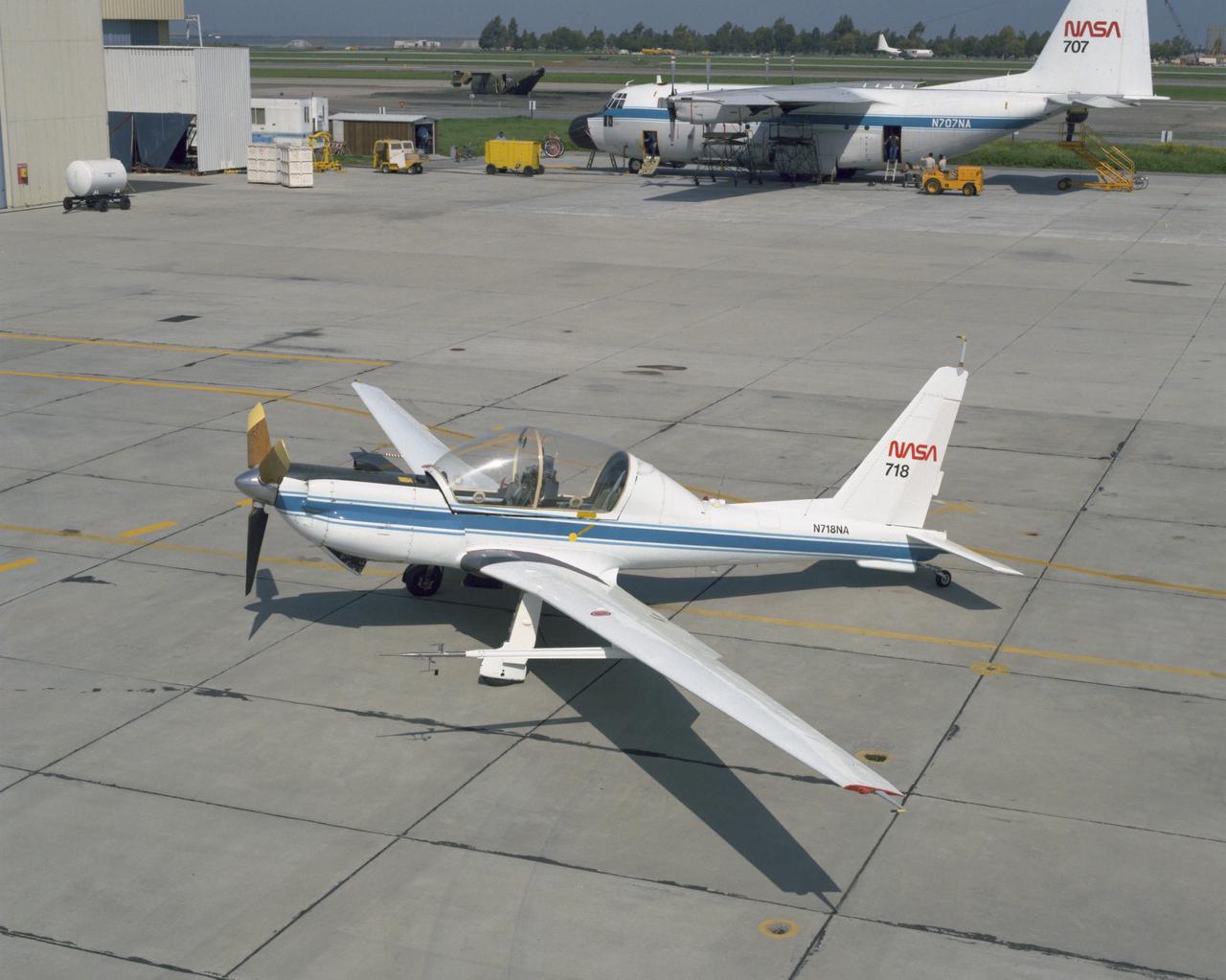
YO-3A Quiet Plane (NASA-718) parked on ramp This aircraft is a flying acoustic platform used as a microphone to study aircraft noise, especially helicopter noise.
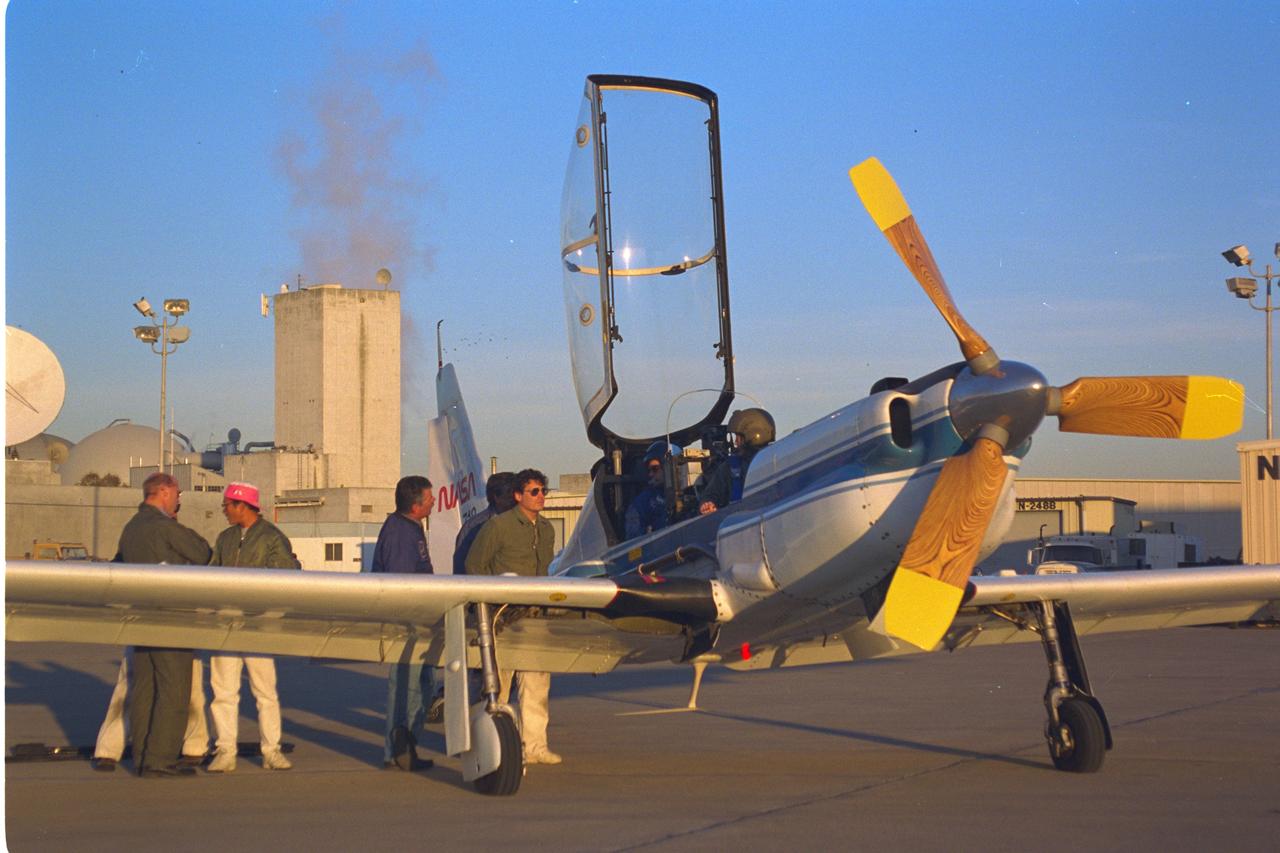
YO-3A (NASA-718) Flying Acoustic Platform: The Quiet Plane is used as a flying microphone platform to study aircraft noise, especially helicopter noise.
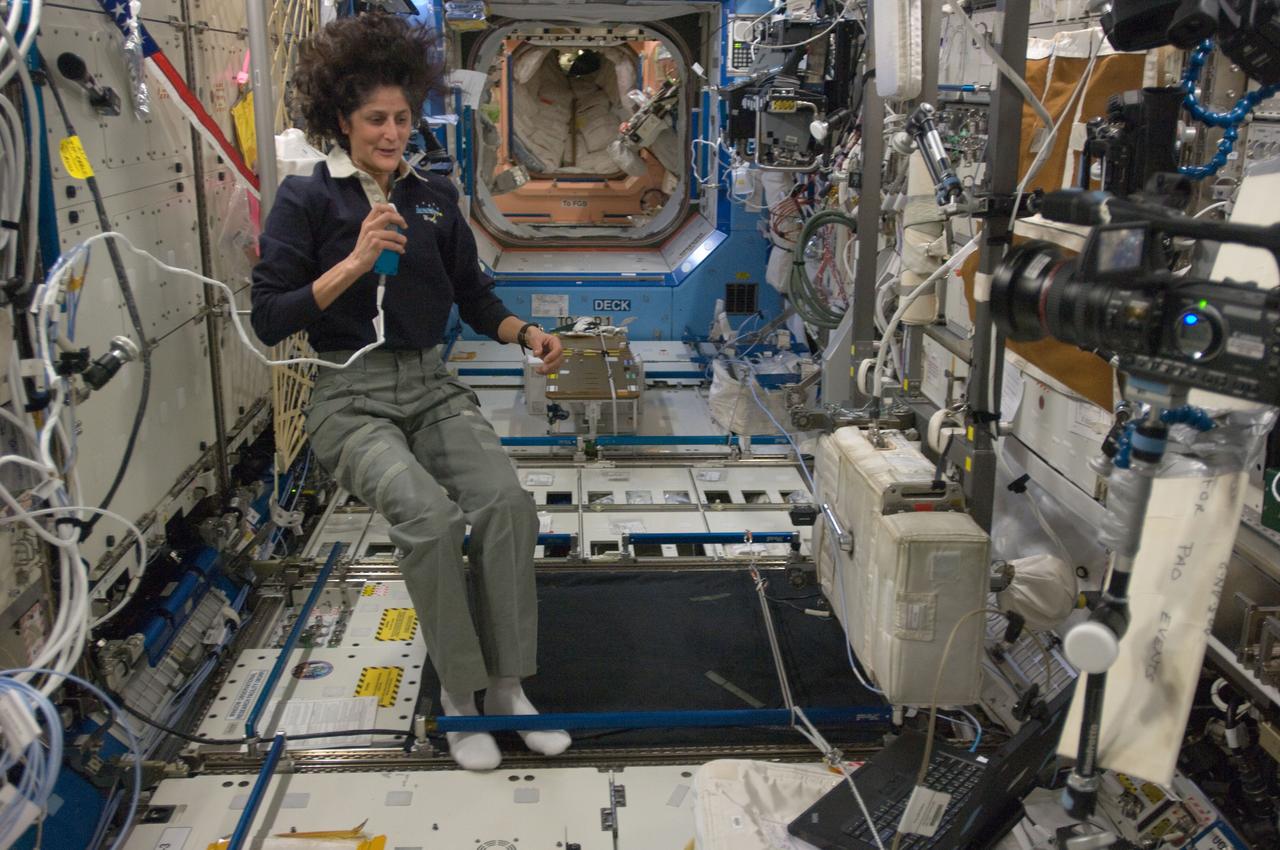
ISS033-E-013382 (19 Oct. 2012) --- NASA astronaut Sunita Williams, Expedition 33 commander, talks on a microphone in the Destiny laboratory of the International Space Station.
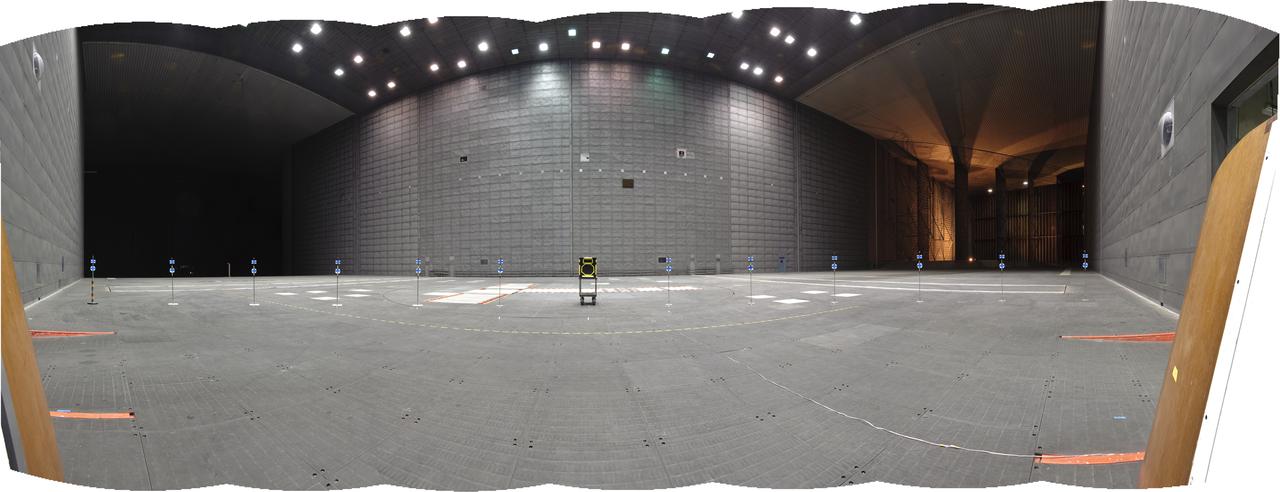
National Full Scale Aerodynamic Complex (NFAC) located at the NASA Ames Research Center 80x20ft. wind tunnel microphone array background noise test
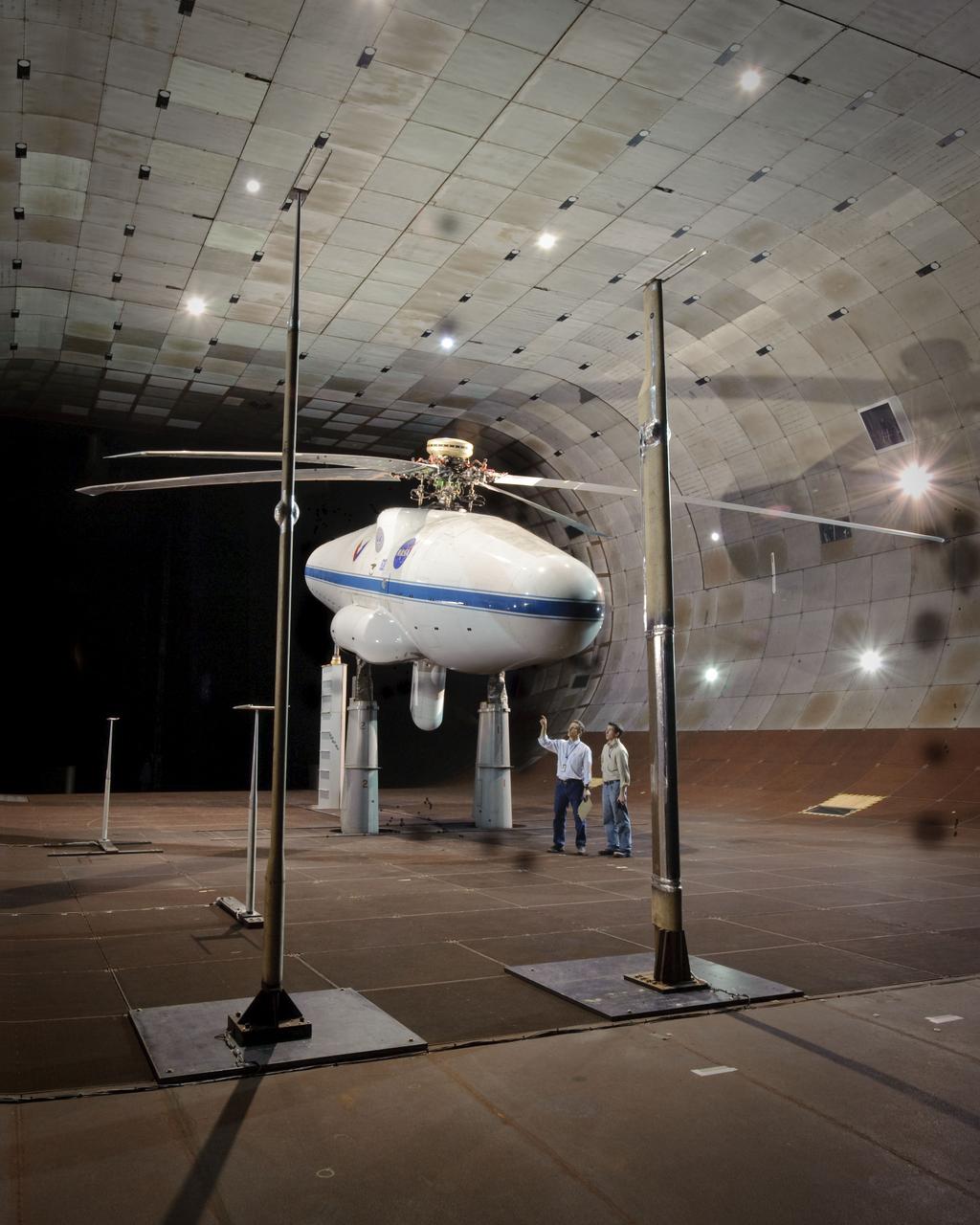
NASA Army UH-60 individual Blade Control (IBC) test-006 in the Ames 40x80Ft Subsonic Wind Tunnel (model configuration and microphone stands) Jeff Johnson (L) and Justin McLellan (R)
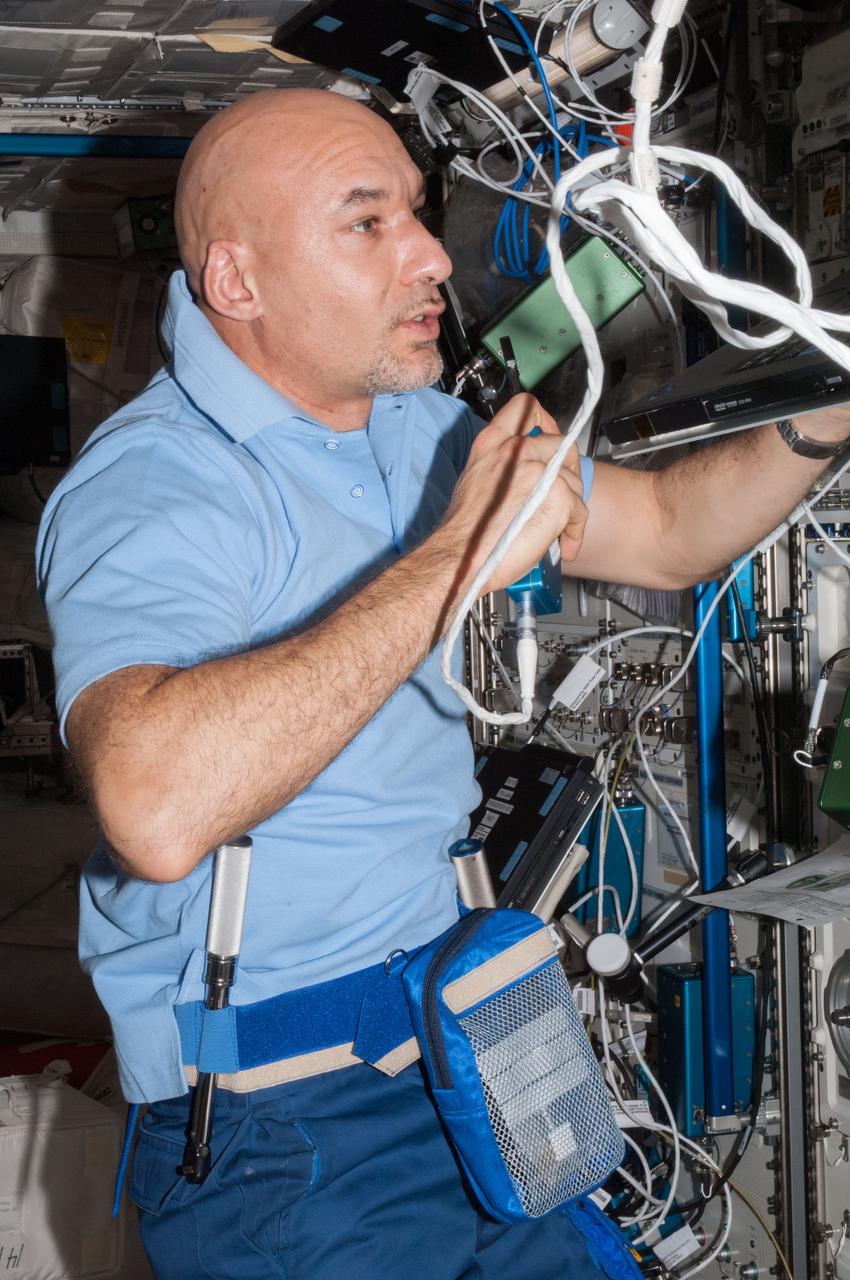
ISS036-E-023749 (21 July 2013) --- European Space Agency astronaut Luca Parmitano, Expedition 36 flight engineer, speaks in a microphone while working in the Columbus laboratory of the International Space Station.
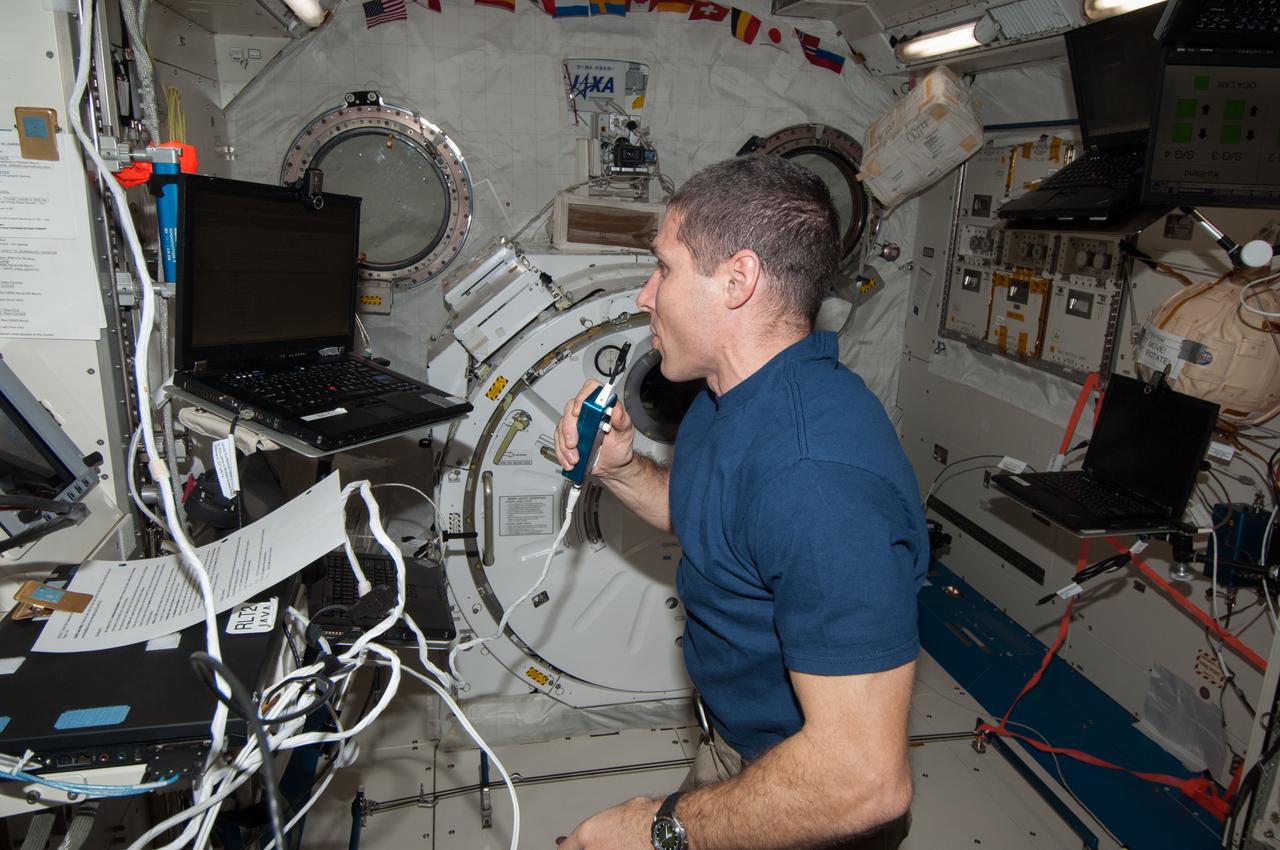
ISS038-E-013670 (8 Dec. 2013) --- NASA astronaut Michael Hopkins, Expedition 38 flight engineer, speaks in a microphone while working in the Kibo laboratory of the International Space Station.
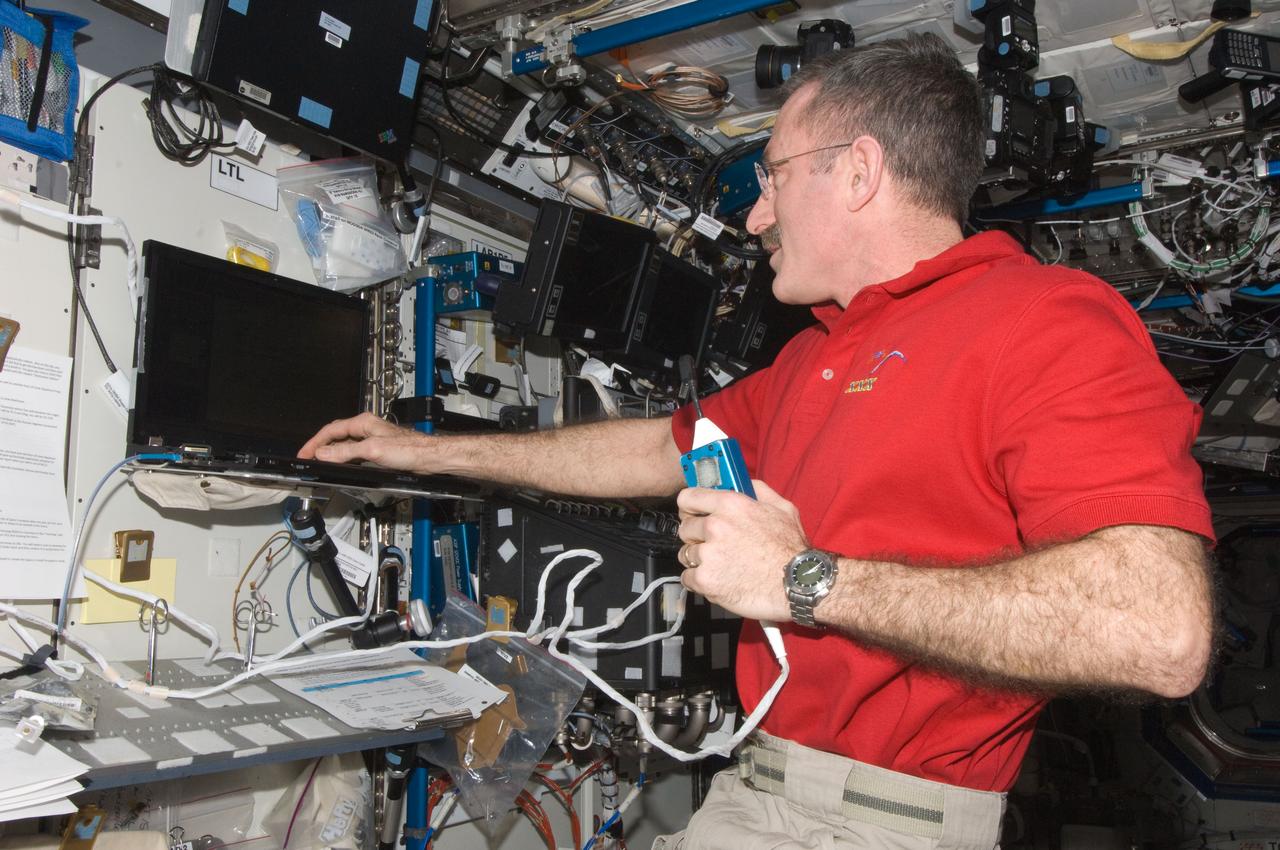
ISS030-E-267797 (25 April 2012) --- NASA astronaut Dan Burbank, Expedition 30 commander, holds a microphone while using a computer in the Destiny laboratory of the International Space Station.
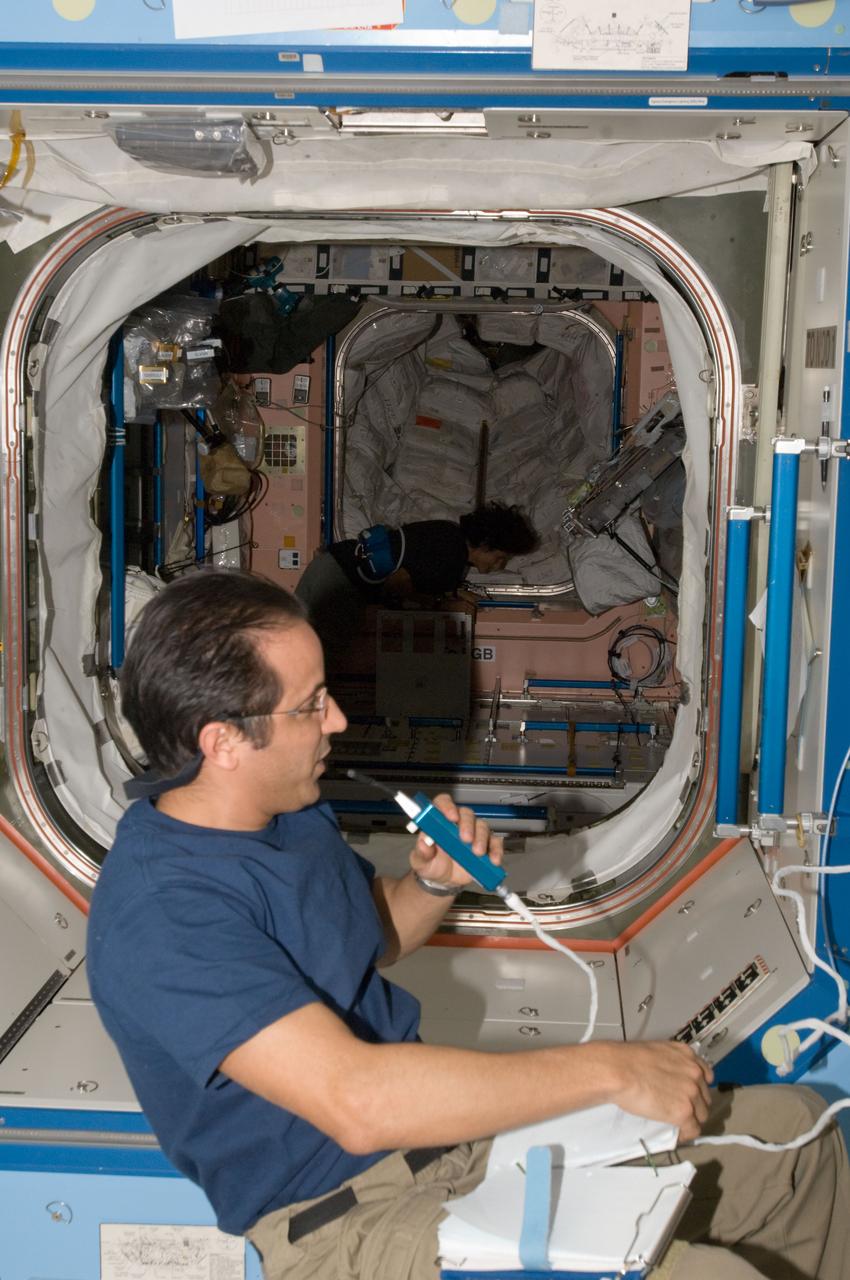
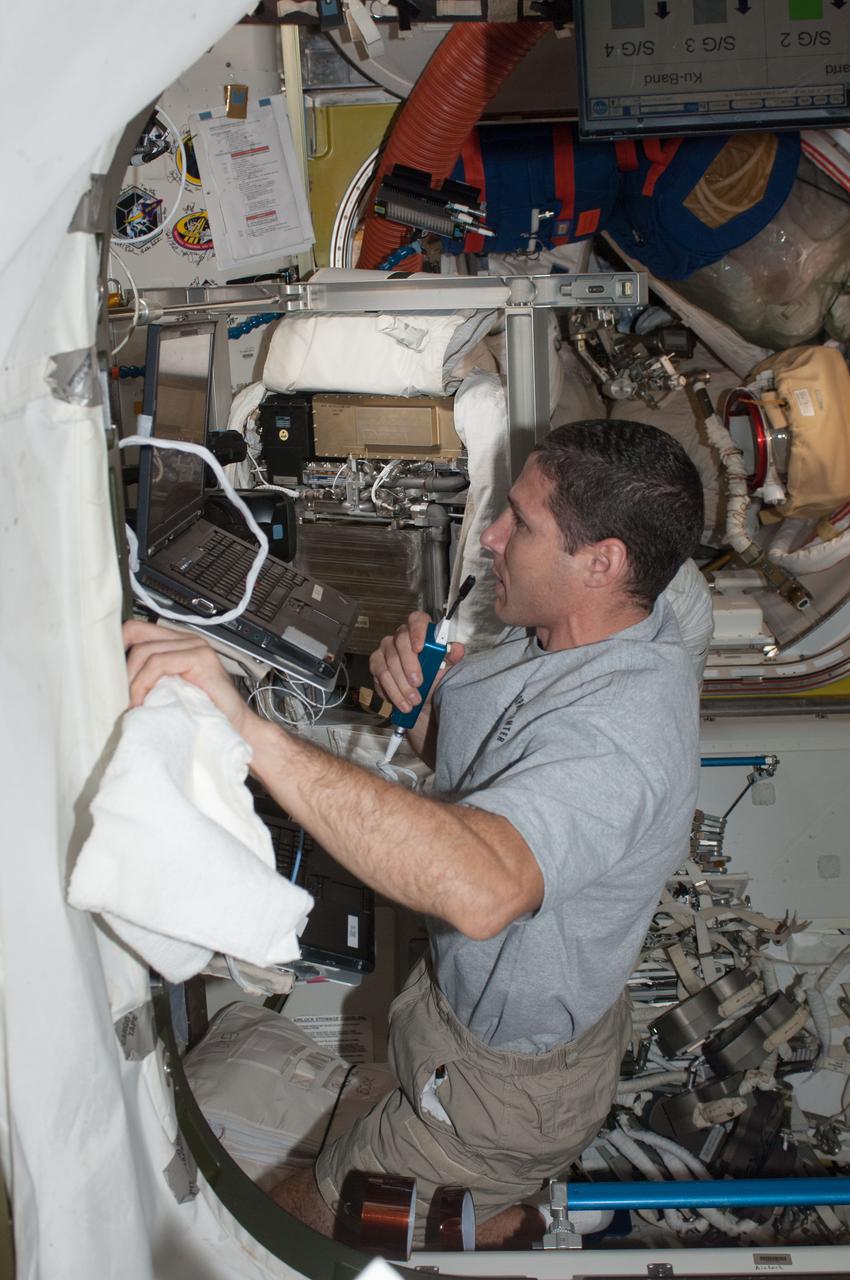
ISS032-E-008696 (20 July 2012) --- NASA astronaut Joe Acaba, Expedition 32 flight engineer, talks on a microphone in the Destiny laboratory of the International Space Station.
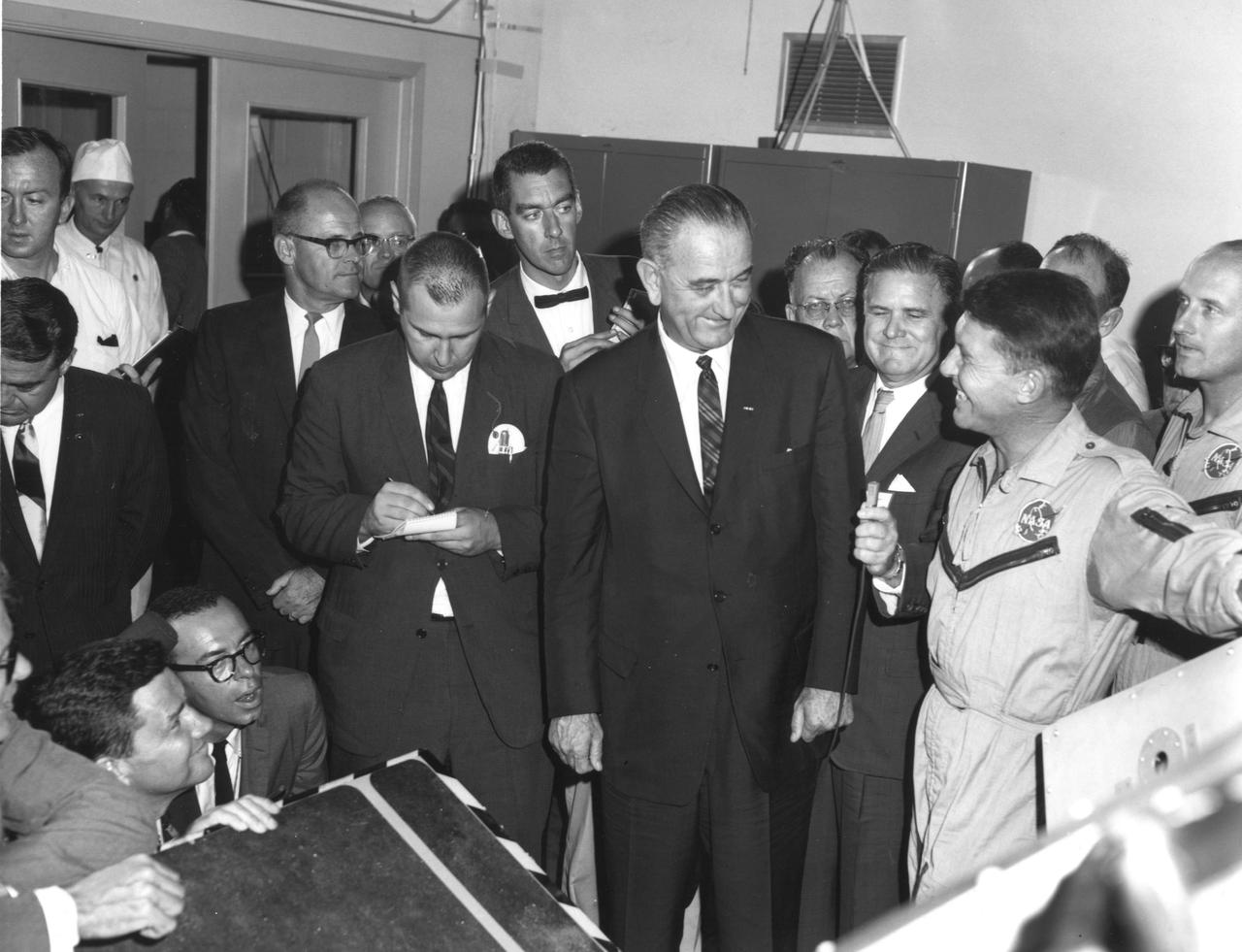
KENNEDY SPACE CENTER, FLA. -- NASA Administrator James T. Webb holds the microphone as President Lyndon B. Johnson (center) and astronaut Walter Schirra (right) converse during the President's visit to the Kennedy Space Center.
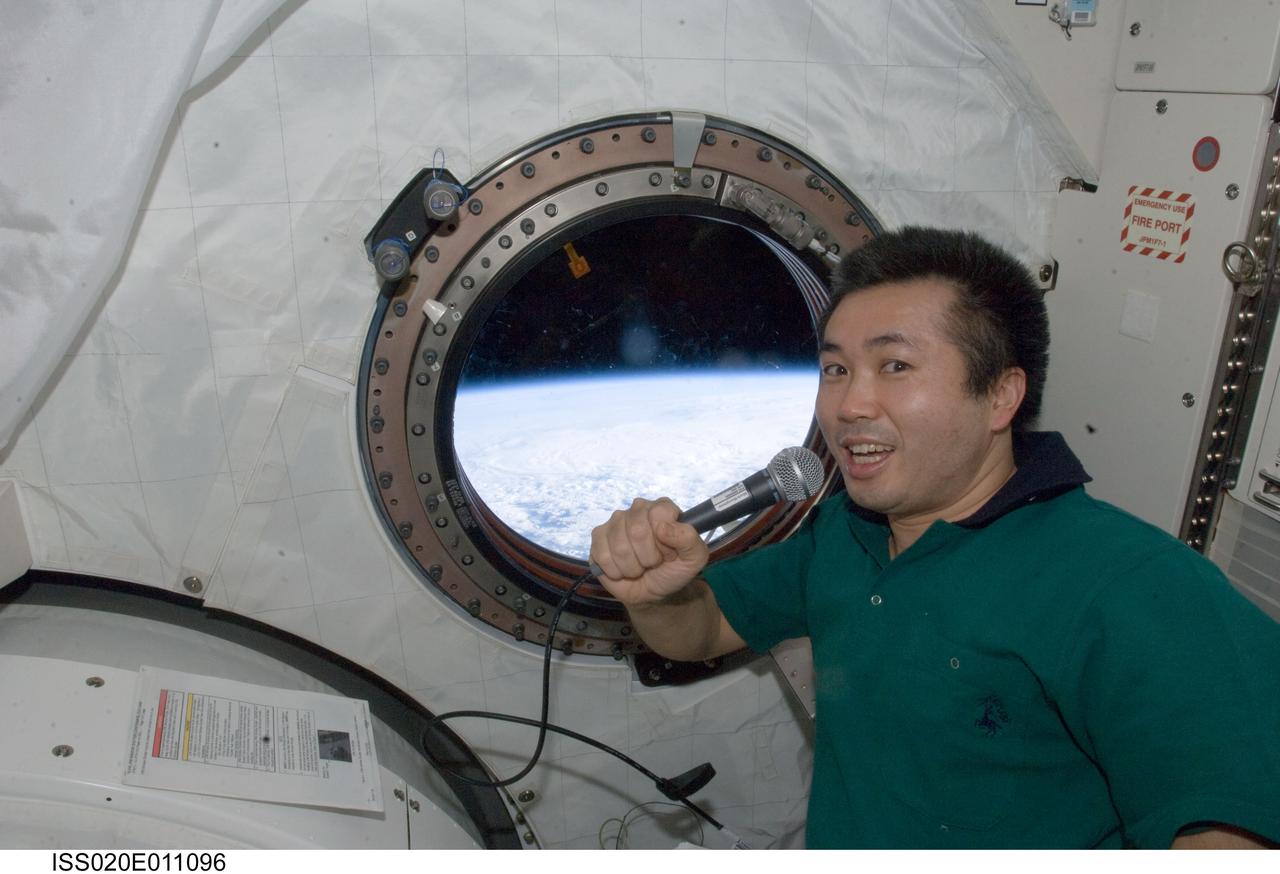
ISS020-E-011096 (16 June 2009) --- Japan Aerospace Exploration Agency (JAXA) astronaut Koichi Wakata, Expedition 20 flight engineer, uses a microphone near a window in the Kibo laboratory of the International Space Station.
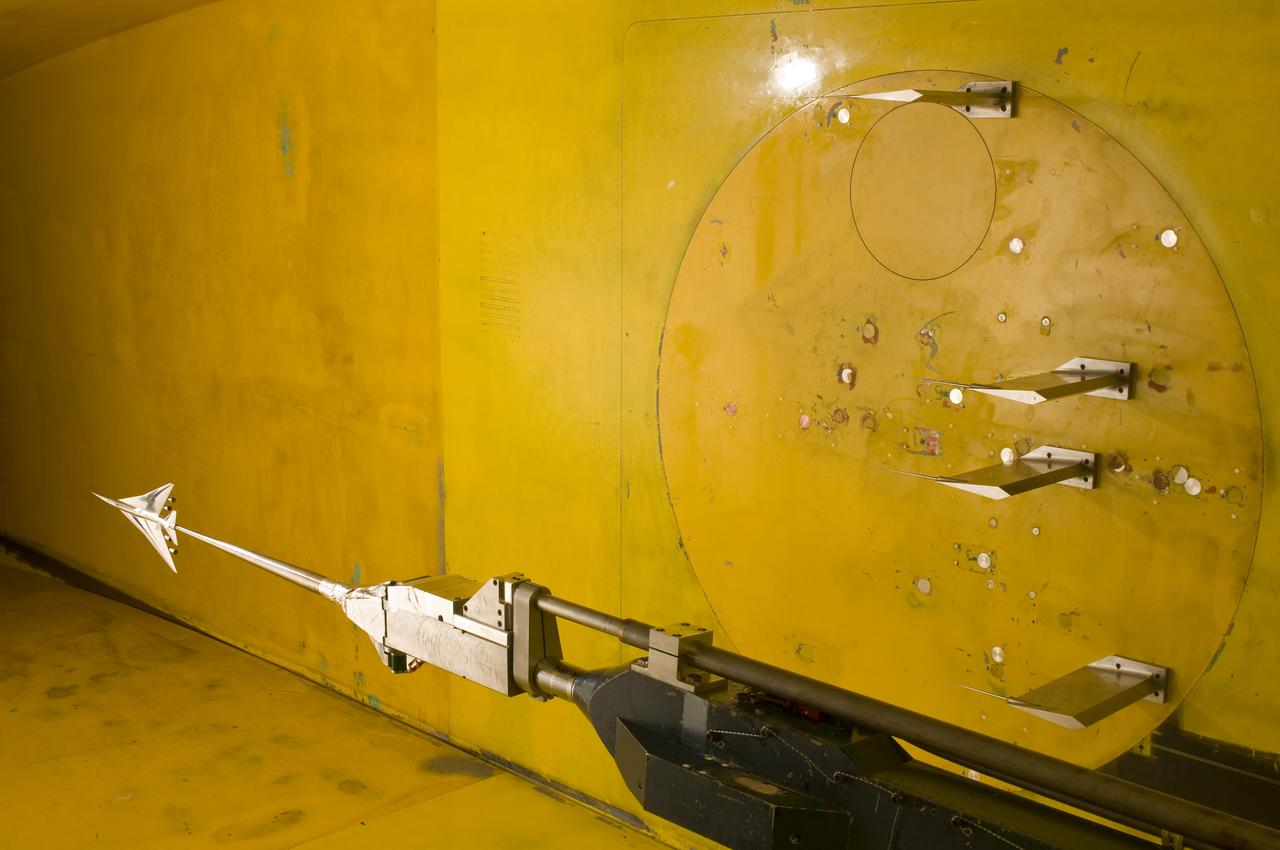
Sonic Boom Test using Ames HSR-Low Boom Wing Tail in the 9x7ft transonic wind tunnel (Test-97-0190) with Don Durston and Steve Buchholz (re-set microphones)

ISS031-E-084762 (15 May 2012) --- European Space Agency astronaut Andre Kuipers, Expedition 31 flight engineer, talks on a microphone in the Destiny laboratory on the International Space Station.
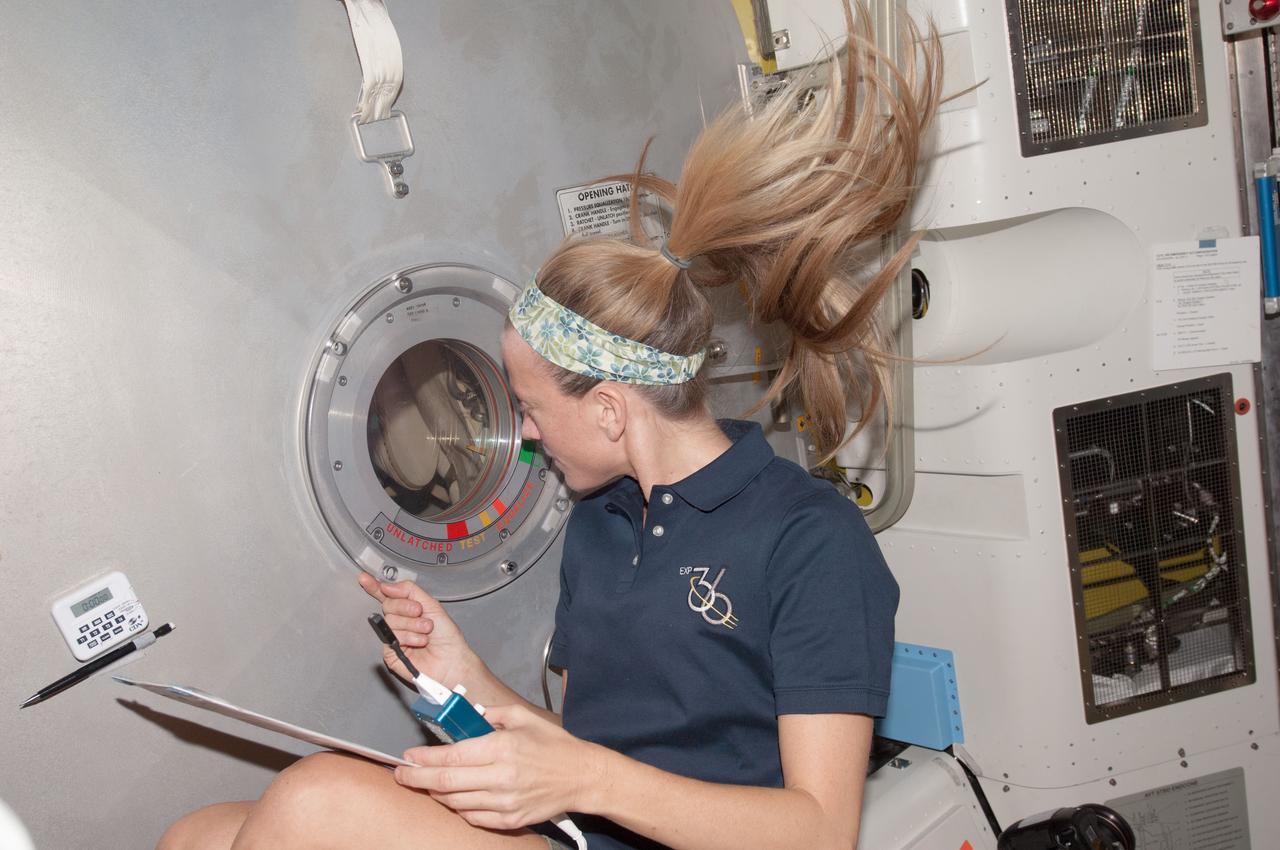
Photographic documentation of Extravehicular Activity (EVA) 23 Prep in the Quest airlock. Astronaut Karen Nyberg, Expedition 36 flight engineer, holds a microphone and a checklist as she sits in front of the Airlock hatch.
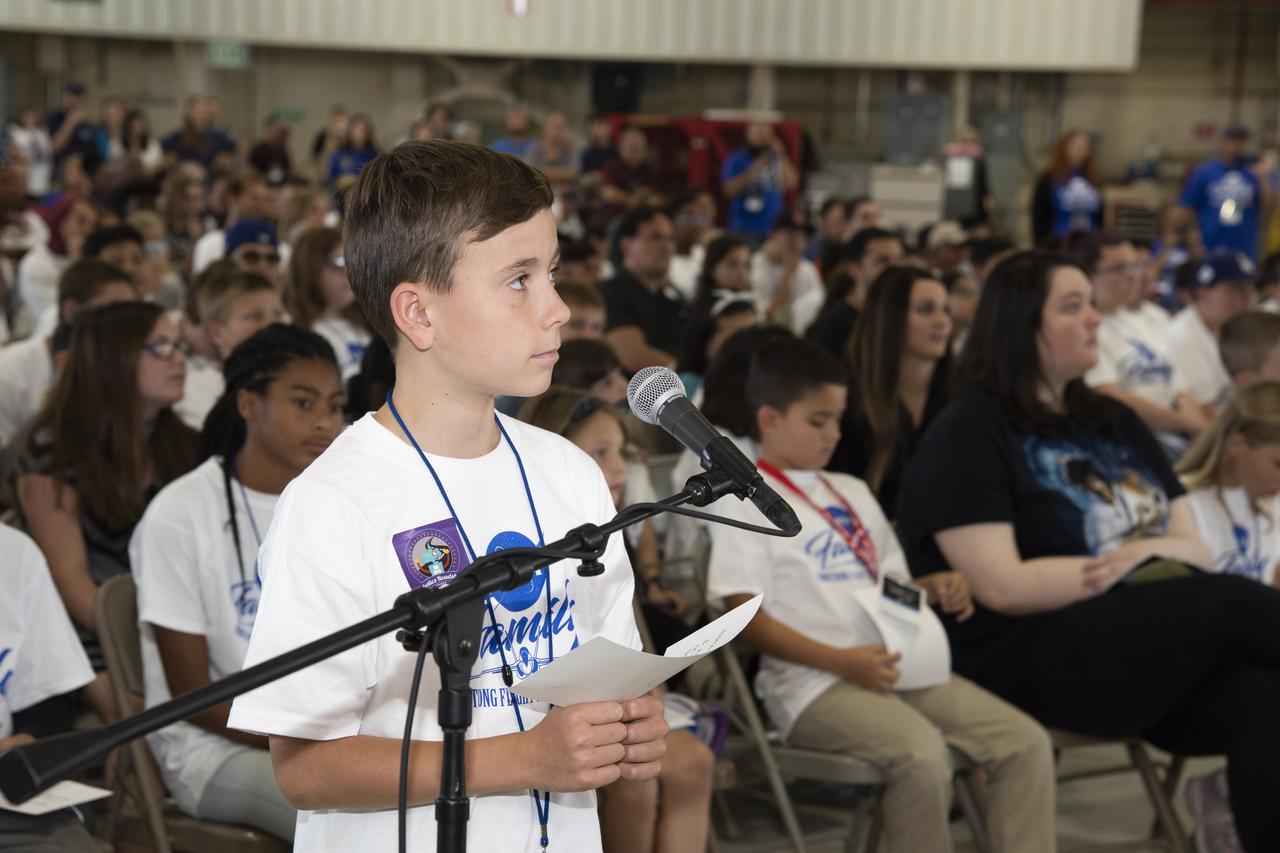
Eric Swanson stands at the microphone as he asks Serena M. Auñón-Chancel, a NASA astronaut, a question during the downlink event with NASA's Armstrong Flight Research Center.
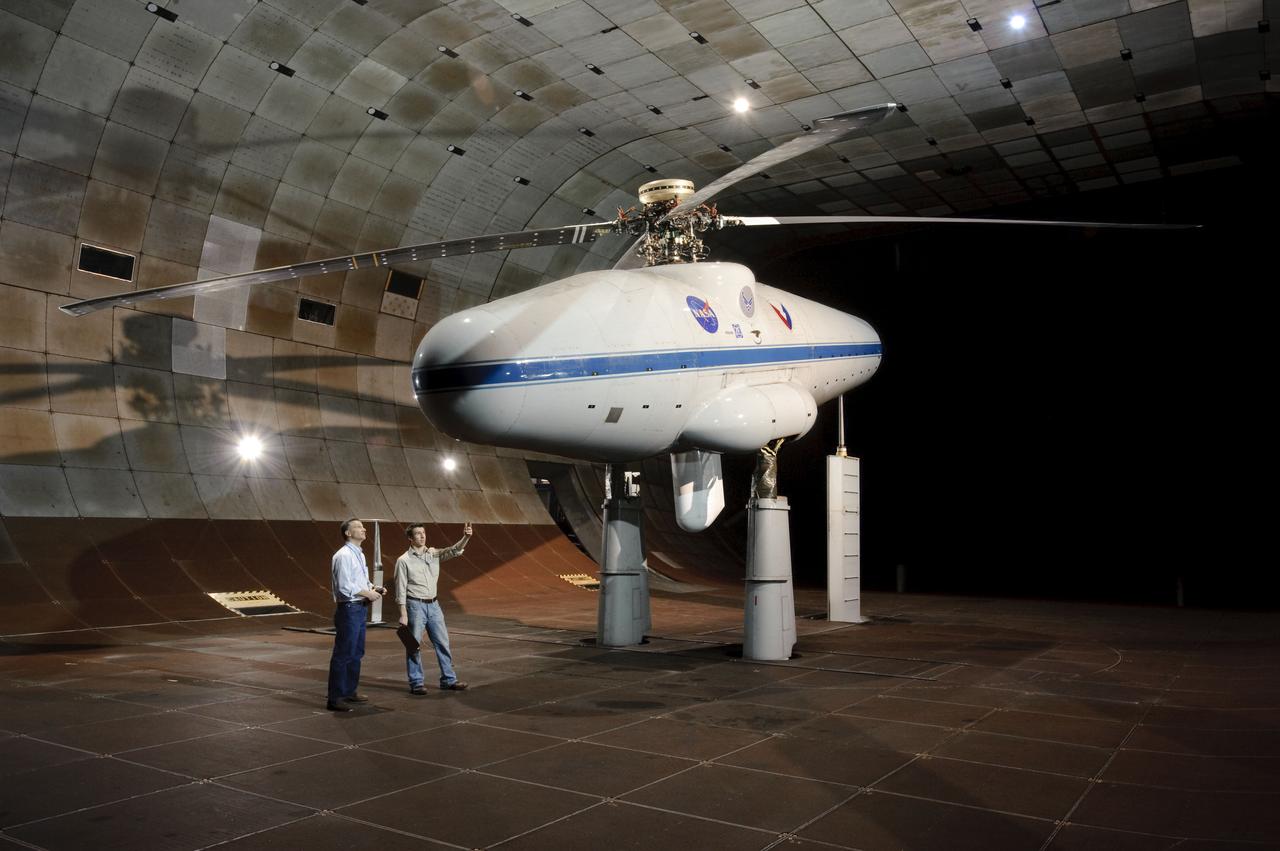
NASA Army UH-60 individual Blade Control (IBC) test-006 in the Ames 40x80Ft Subsonic Wind Tunnel (model configuration and microphone stands) Jeff Johnson (L) and Justin McLellan (R)
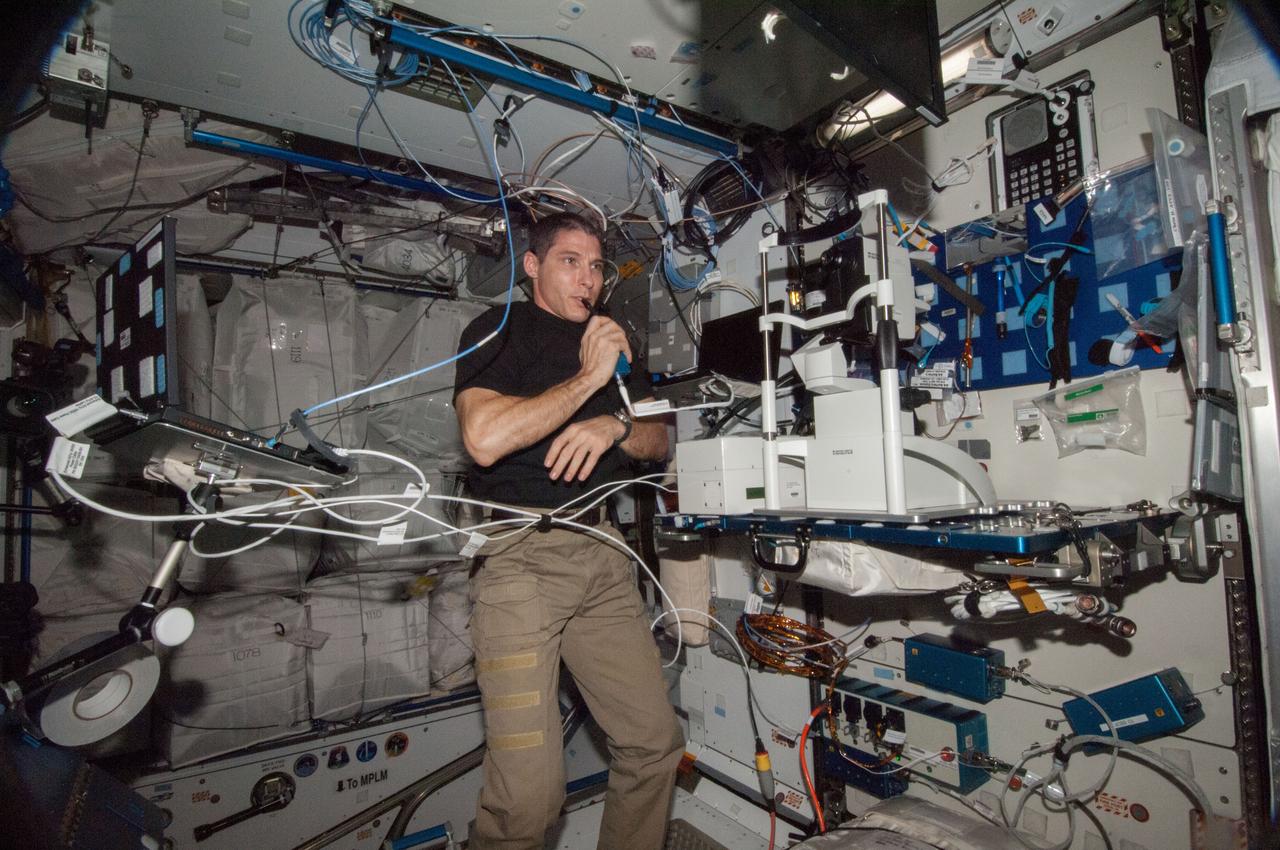
ISS038-E-011804 (4 Dec. 2013) --- NASA astronaut Michael Hopkins, Expedition 38 flight engineer, speaks in a microphone while working in the Harmony node of the International Space Station.
ISS037-E-020099 (24 Oct. 2013) --- NASA astronaut Michael Hopkins, Expedition 37 flight engineer, speaks in a microphone while working in the Quest airlock of the International Space Station.

STS98-E-5035 (9 February 2001) --- Astronaut Thomas D. Jones, mission specialist, communicates on a radio during rendezvous operations between the Space Shuttle Atlantis and the International Space Station (ISS). Atlantis went on to dock with the station on schedule at 10:51 a.m. (CST), Feb. 9. A digital still camera was used to record the scene.

NASA Chief Technologist Douglas Terrier meets with members of the media at “NASA Day in Arkansas” at Harding University in Searcy, Arkansas, on Jan. 27, 2020.
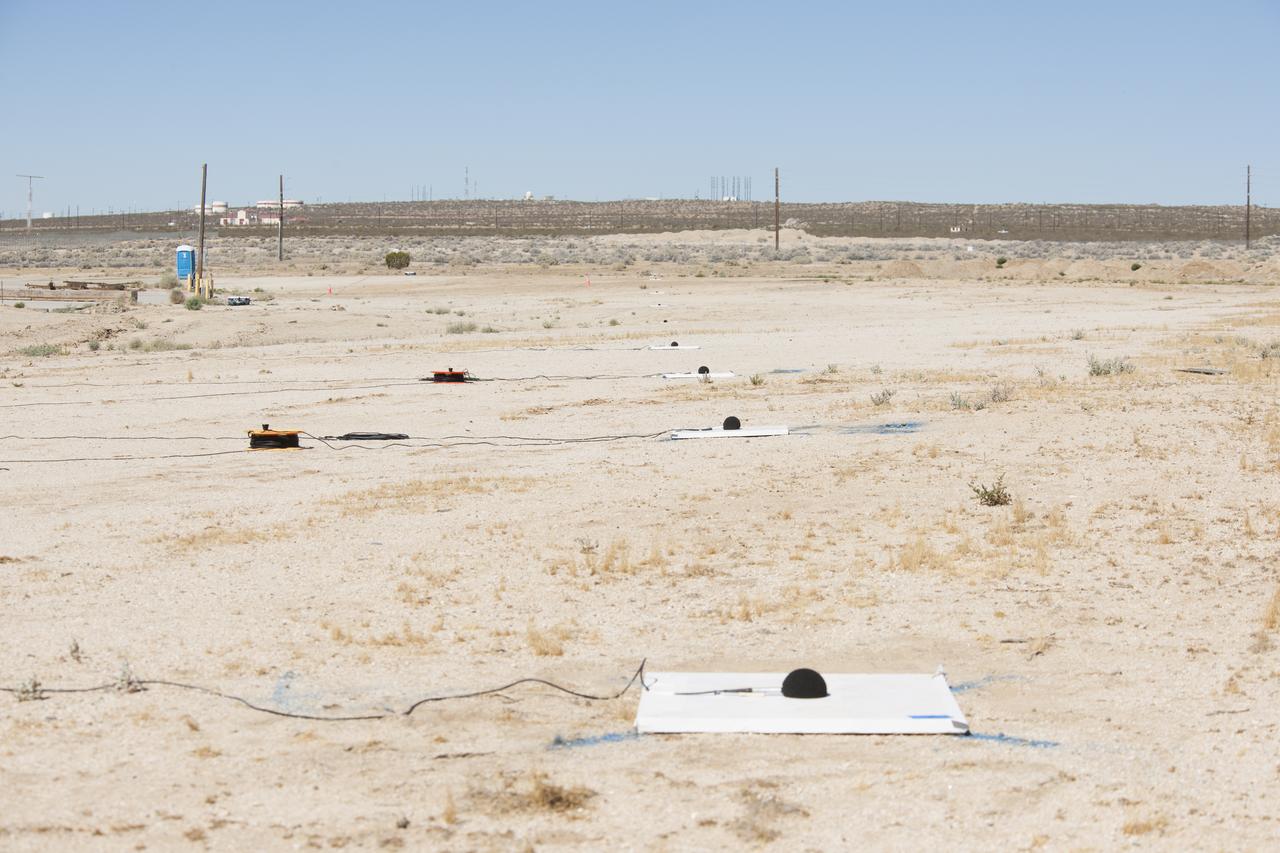
One of three microphone arrays positioned strategically along the ground at Edwards Air Force Base, California, sits ready to collect sound signatures from sonic booms created by a NASA F/A-18 during the SonicBAT flight series. The arrays collected the sound signatures of booms that had traveled through atmospheric turbulence before reaching the ground.
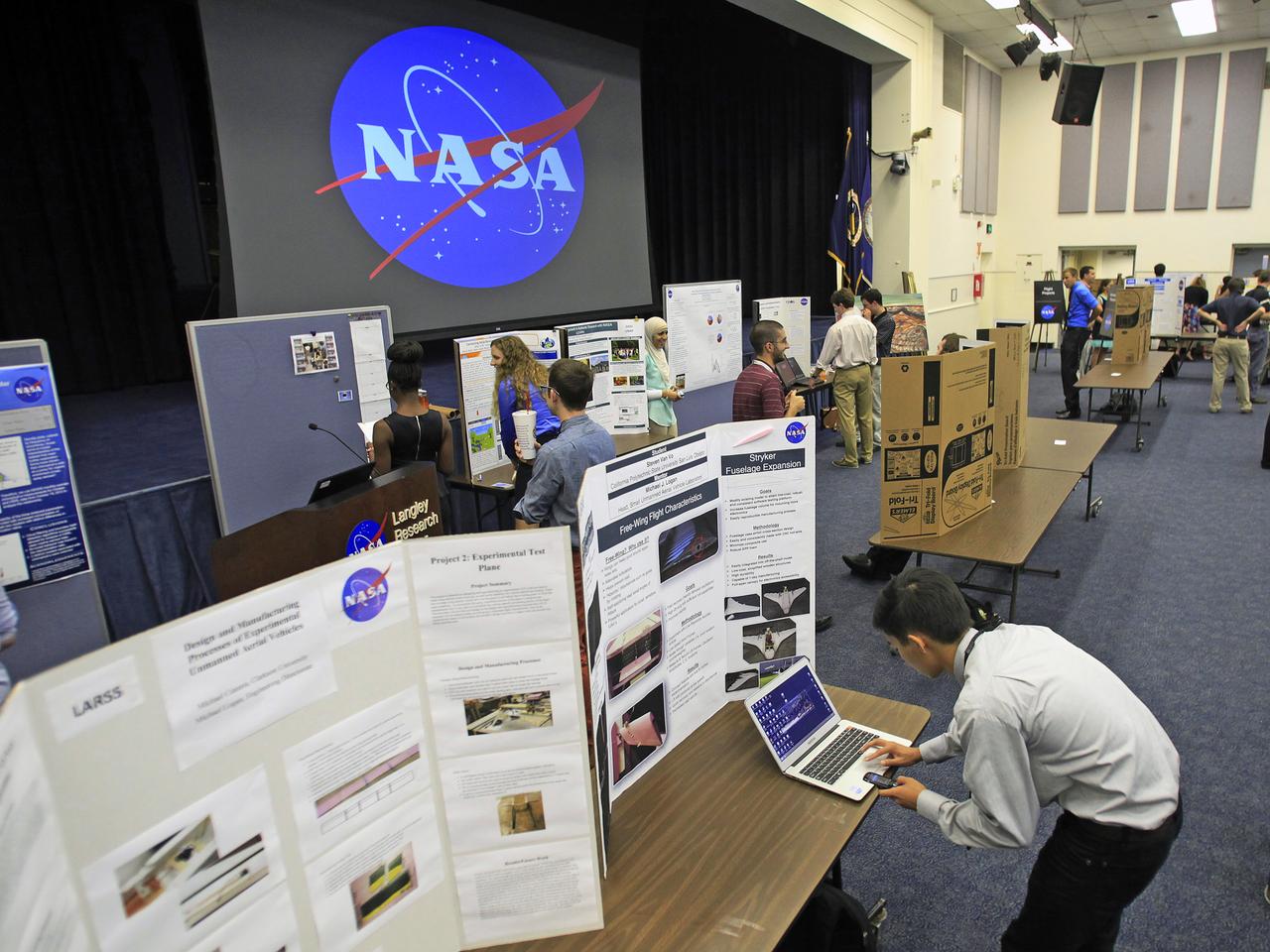
250 students participated in the Langley Aerospace Research Summer Scholars (LARSS) Presentations focused on 3D modeling of STARBUKS calibration components in the National Transonic Facility, hypersonic aerodynamic inflatable decelerator, and optimization of a microphone-based array for flight testing. Reid Center LaRC Hampton, VA
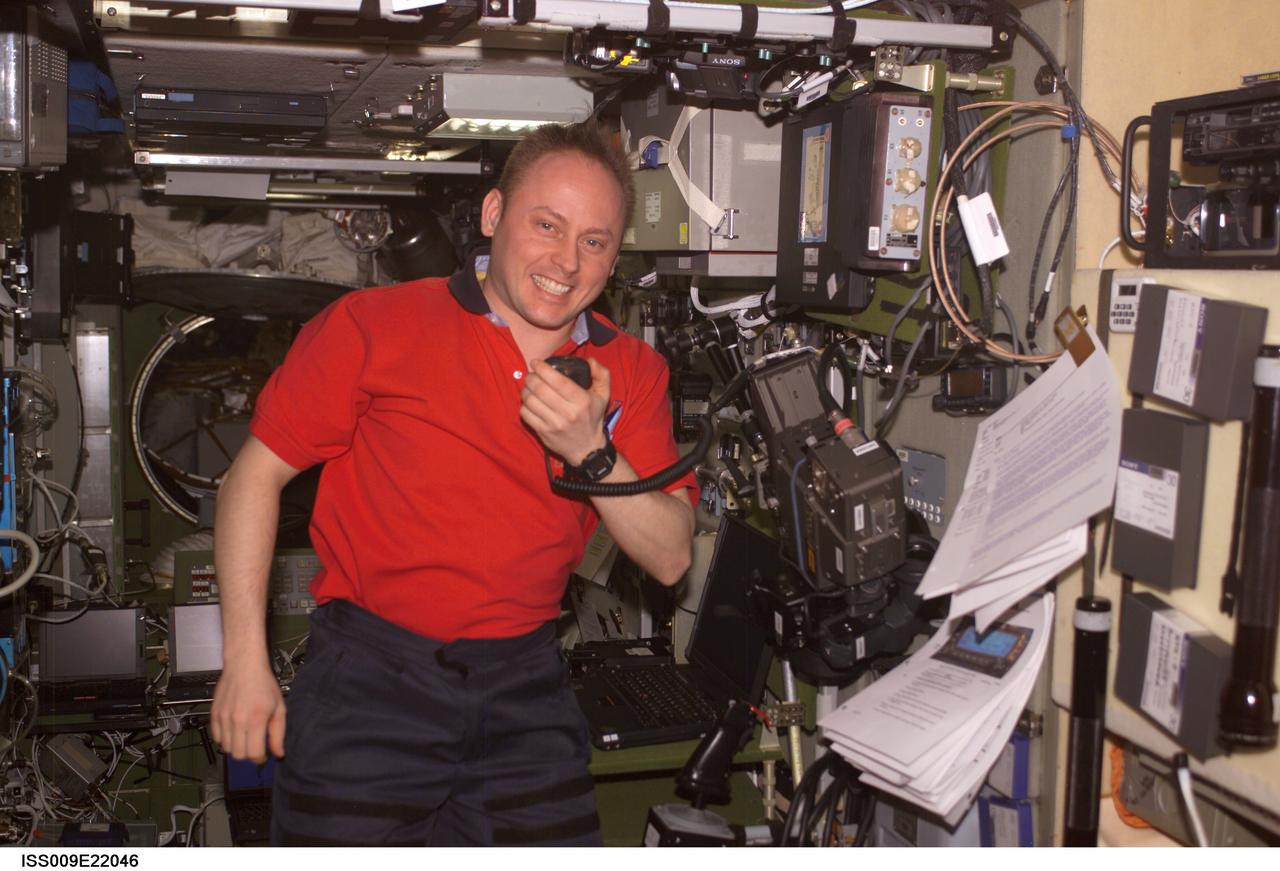
ISS009-E-22046 (11 September 2004) --- Astronaut Edward M. (Mike) Fincke, Expedition 9 NASA ISS science officer and flight engineer, uses a microphone/keypad for the ARISS ham radio in the Zvezda Service Module of the International Space Station (ISS) during his contact with the Palmer Research Station in Antarctica.
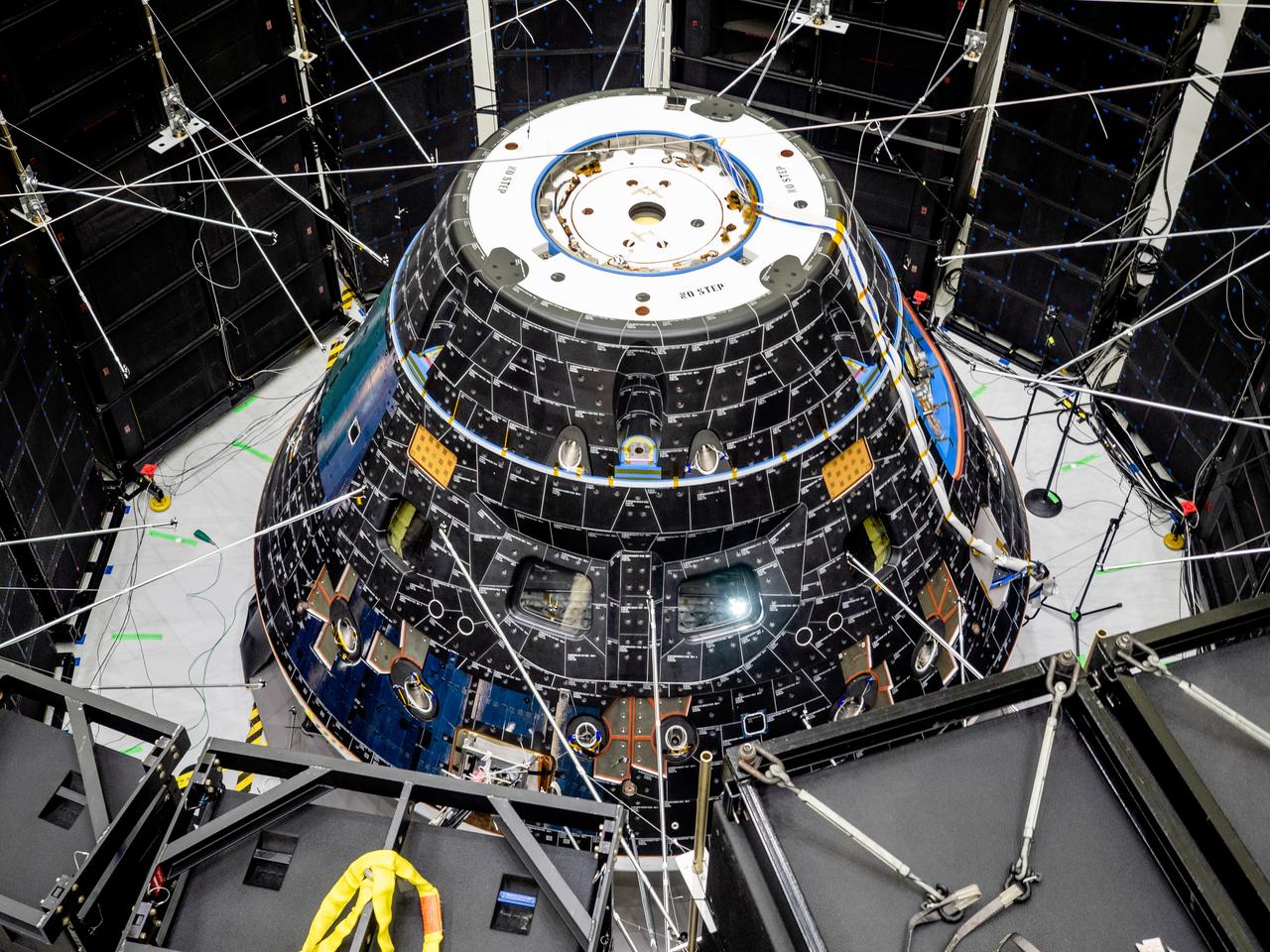
The Orion crew module for Artemis I, shown here on May 2, 2019, recently underwent Direct Field Acoustics Test (DFAT) where it was exposed to maximum acoustics levels that the vehicle will experience in space. Spacecraft response and sound pressure data were collected with microphones, strain gauges and accelerometers. The max decibel level was -12dB.
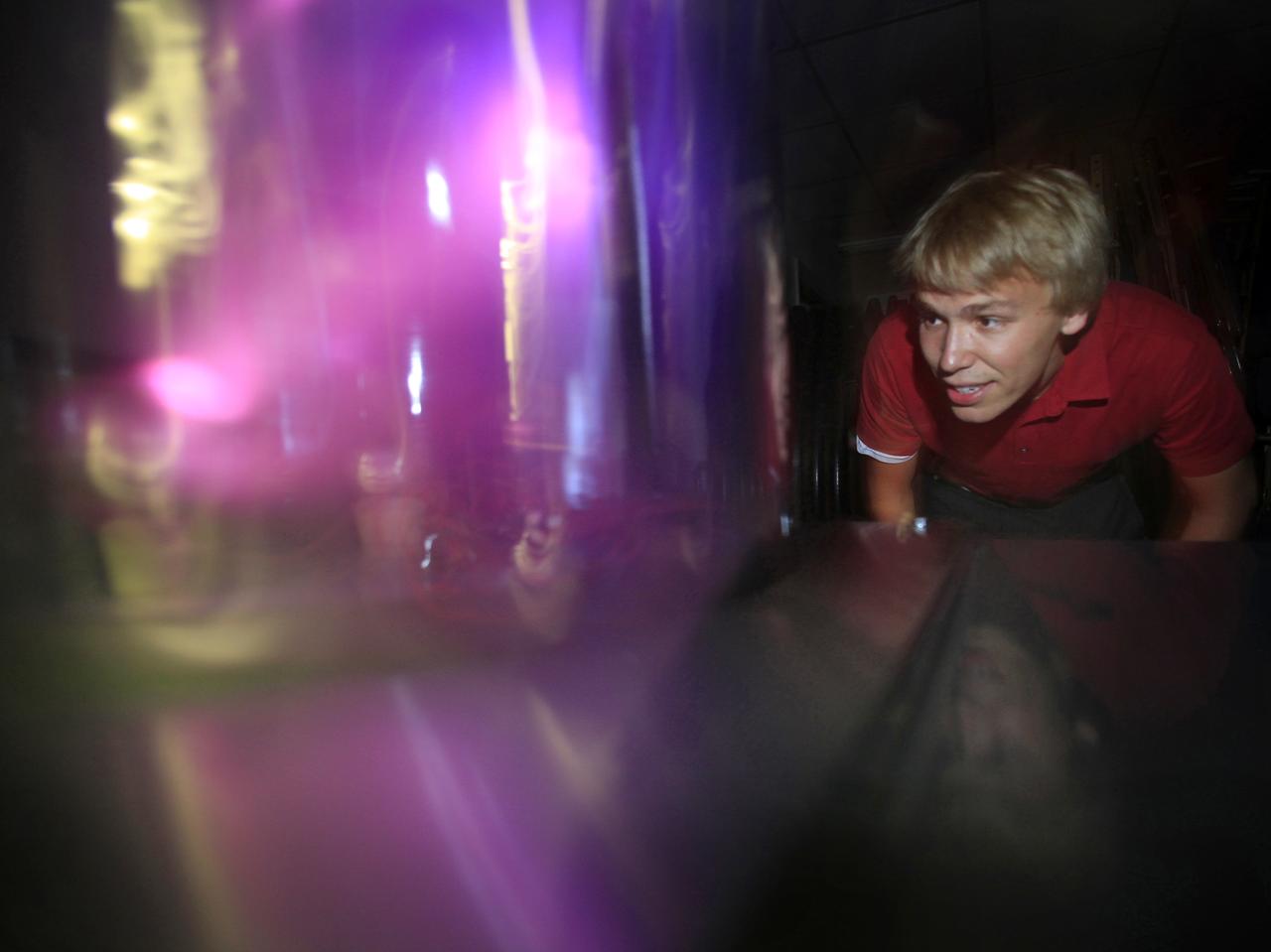
250 students participated in the Langley Aerospace Research Summer Scholars (LARSS) Presentations focused on 3D modeling of STARBUKS calibration components in the National Transonic Facility, hypersonic aerodynamic inflatable decelerator, and optimization of a microphone-based array for flight testing. Reid Center LaRC Hampton, VA
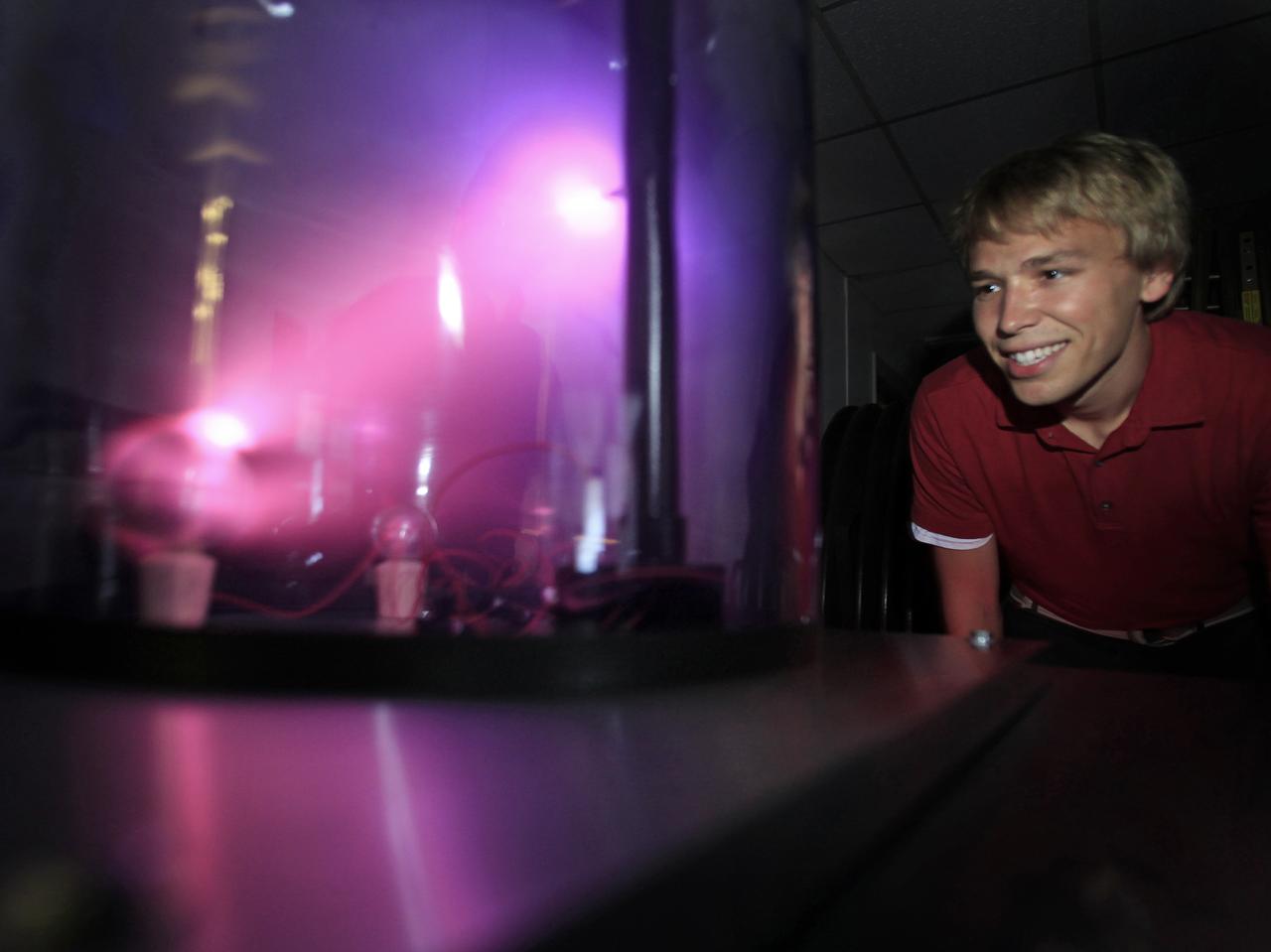
250 students participated in the Langley Aerospace Research Summer Scholars (LARSS) Presentations focused on 3D modeling of STARBUKS calibration components in the National Transonic Facility, hypersonic aerodynamic inflatable decelerator, and optimization of a microphone-based array for flight testing. Reid Center LaRC Hampton, VA
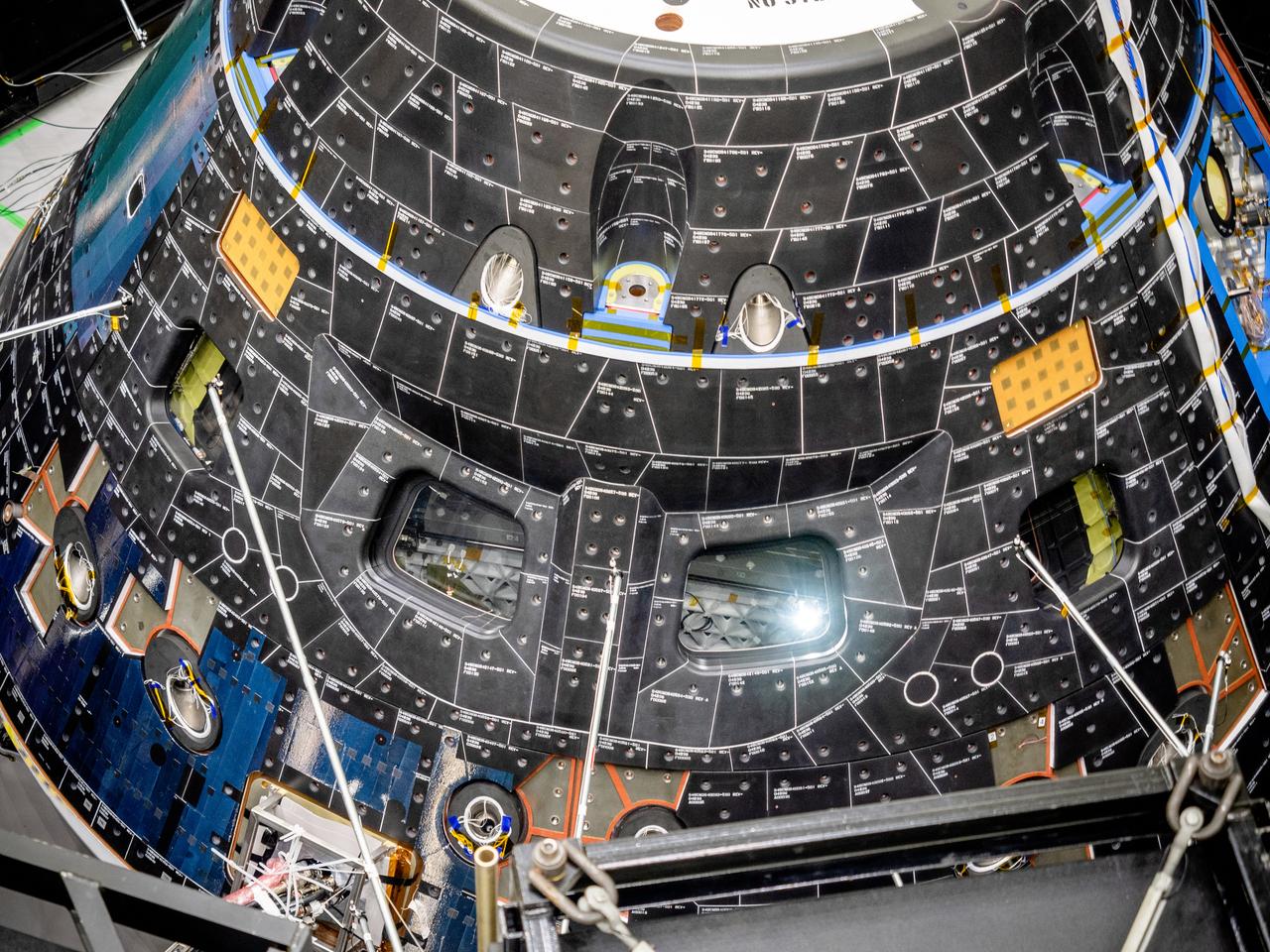
The Orion crew module for Artemis I, shown here on May 2, 2019, recently underwent Direct Field Acoustics Test (DFAT) where it was exposed to maximum acoustics levels that the vehicle will experience in space. Spacecraft response and sound pressure data were collected with microphones, strain gauges and accelerometers. The max decibel level was -12dB.
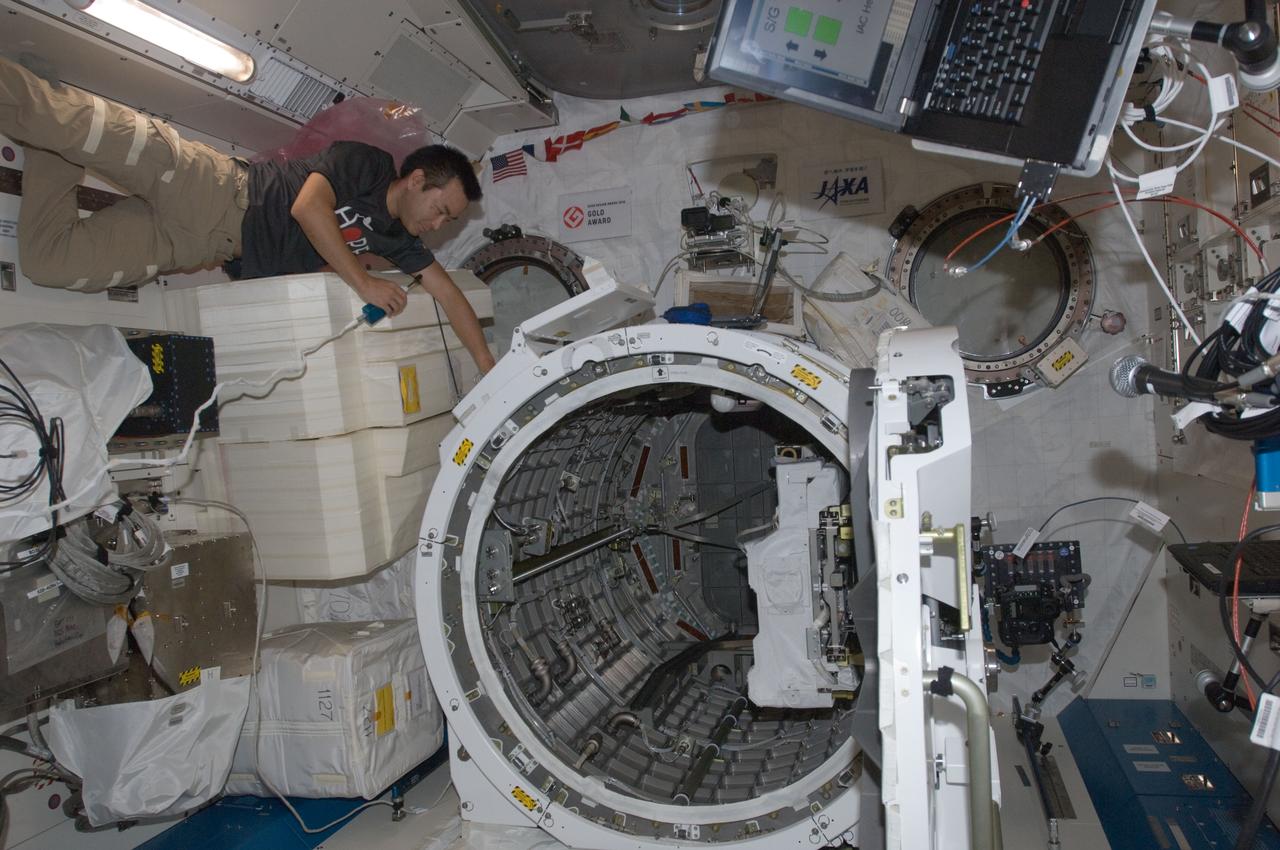
ISS032-E-022200 (21 Aug. 2012) --- Japan Aerospace Exploration Agency astronaut Aki Hoshide, Expedition 32 flight engineer, talks on a microphone while working near the airlock in the Kibo laboratory of the International Space Station. The JEM Robotic Maneuvering System Multi-Purpose Experiment Platform (JEMRMS MPEP) is visible in the airlock.
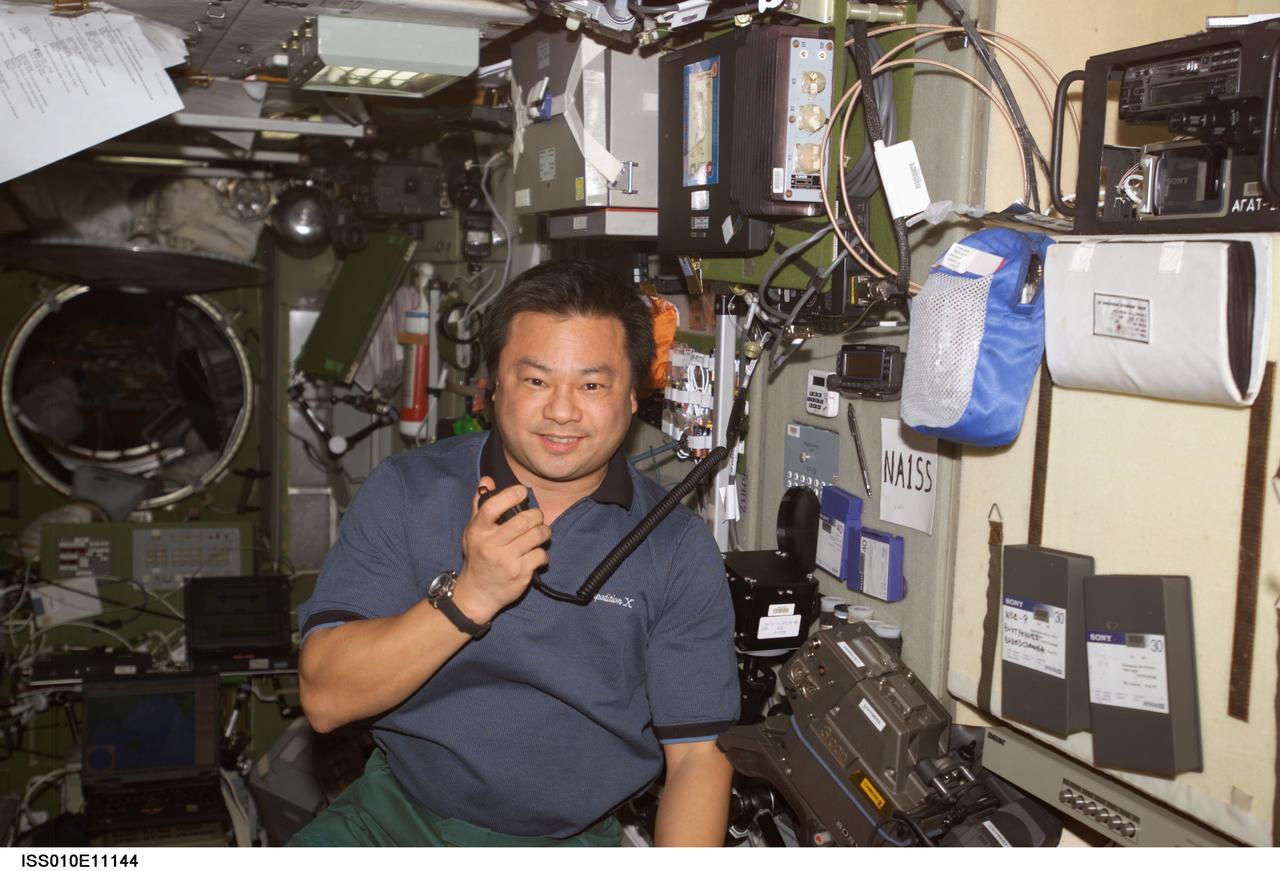
ISS010-E-11144 (16 December 2004) --- Astronaut Leroy Chiao, Expedition 10 commander and NASA ISS science officer, uses a microphone/keypad for the ARISS ham radio in the Zvezda Service Module of the International Space Station (ISS).
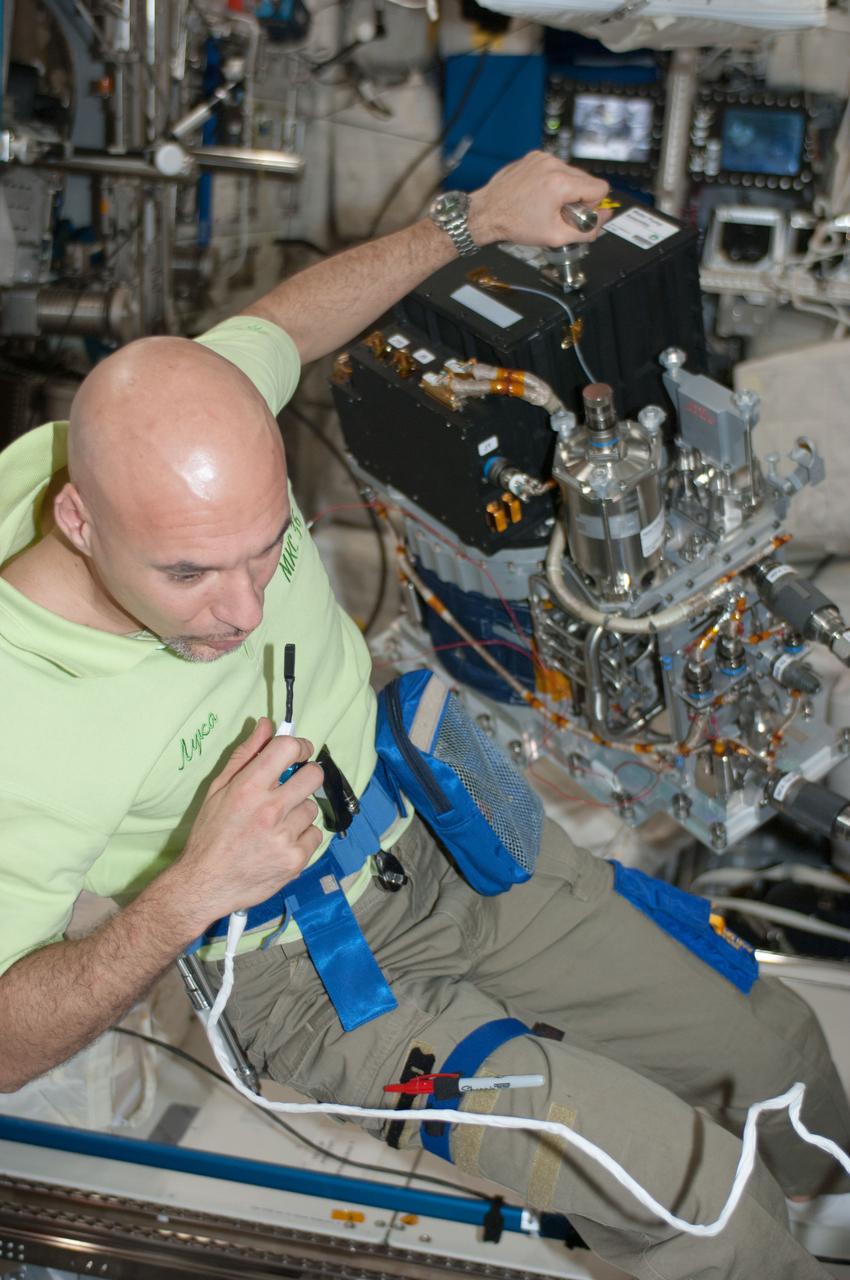
ISS036-E-015512 (5 July 2013) --- European Space Agency astronaut Luca Parmitano, Expedition 36 flight engineer, speaks into a microphone while performing routine servicing of the Water Pump Assembly 2 (WPA2) in the Columbus laboratory of the International Space Station.
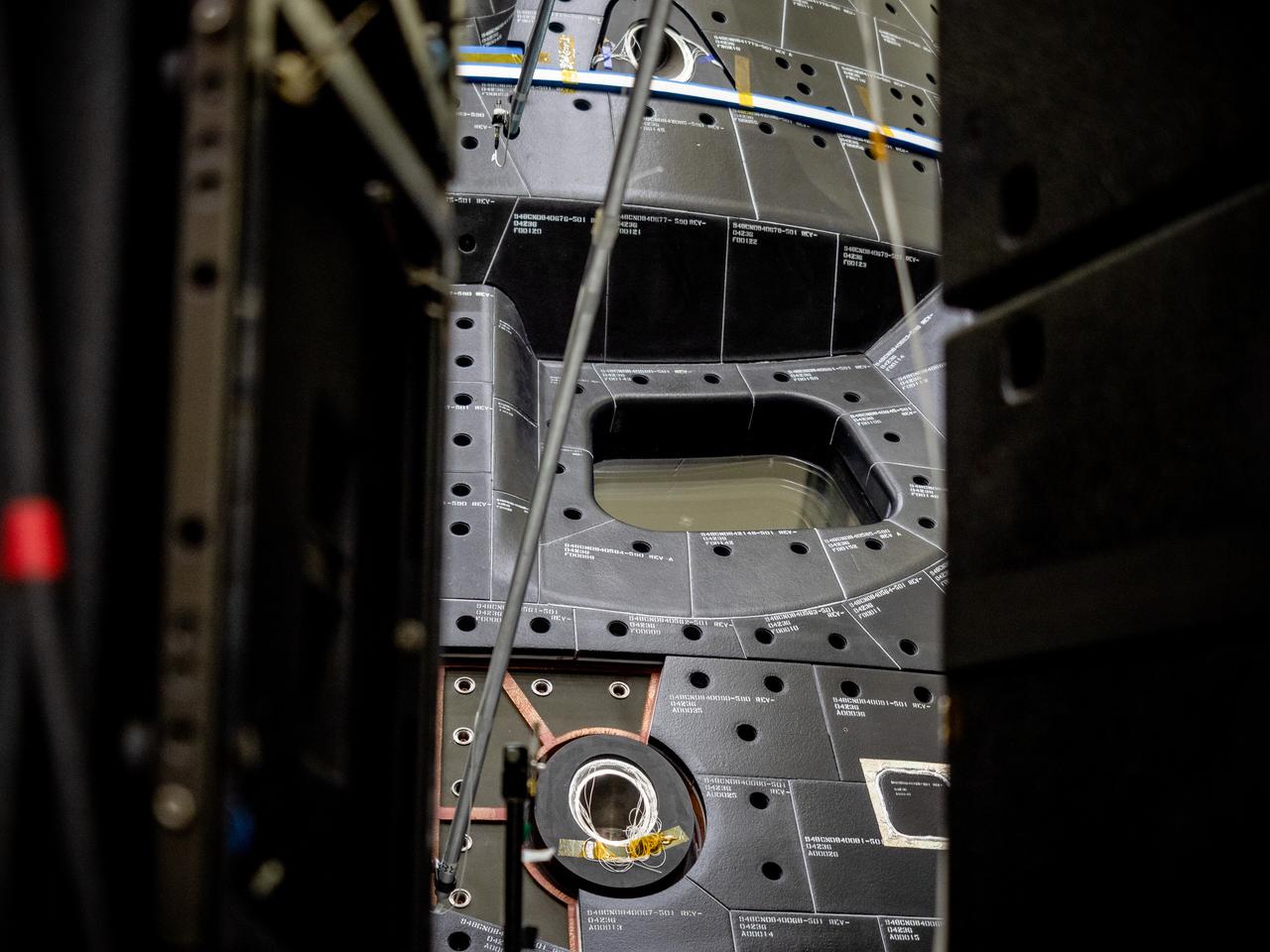
The Orion crew module for Artemis I, shown here on May 2, 2019, recently underwent Direct Field Acoustics Test (DFAT) where it was exposed to maximum acoustics levels that the vehicle will experience in space. Spacecraft response and sound pressure data were collected with microphones, strain gauges and accelerometers. The max decibel level was -12dB.
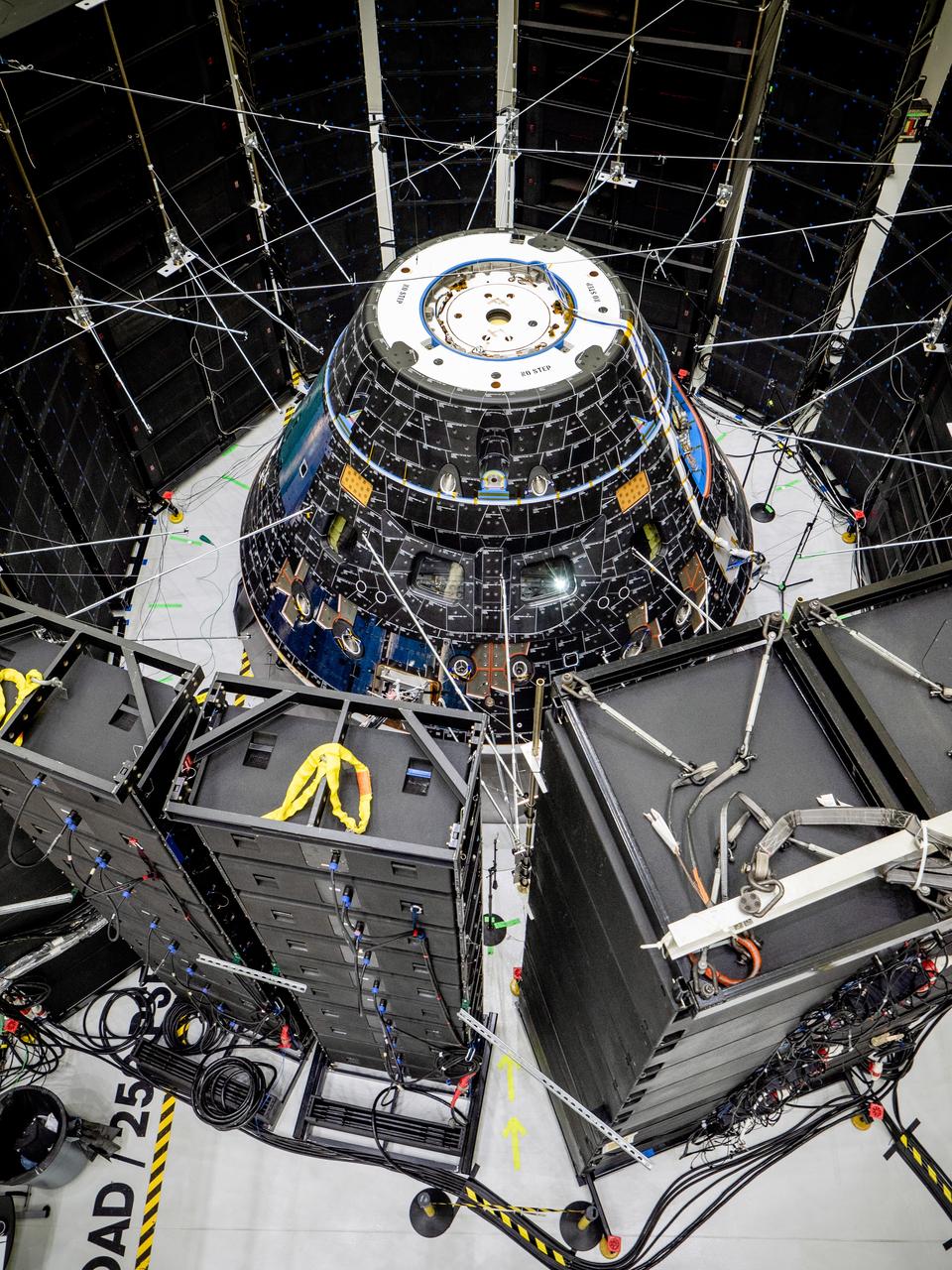
The Orion crew module for Artemis I, shown here on May 2, 2019, recently underwent Direct Field Acoustics Test (DFAT) where it was exposed to maximum acoustics levels that the vehicle will experience in space. Spacecraft response and sound pressure data were collected with microphones, strain gauges and accelerometers. The max decibel level was -12dB.
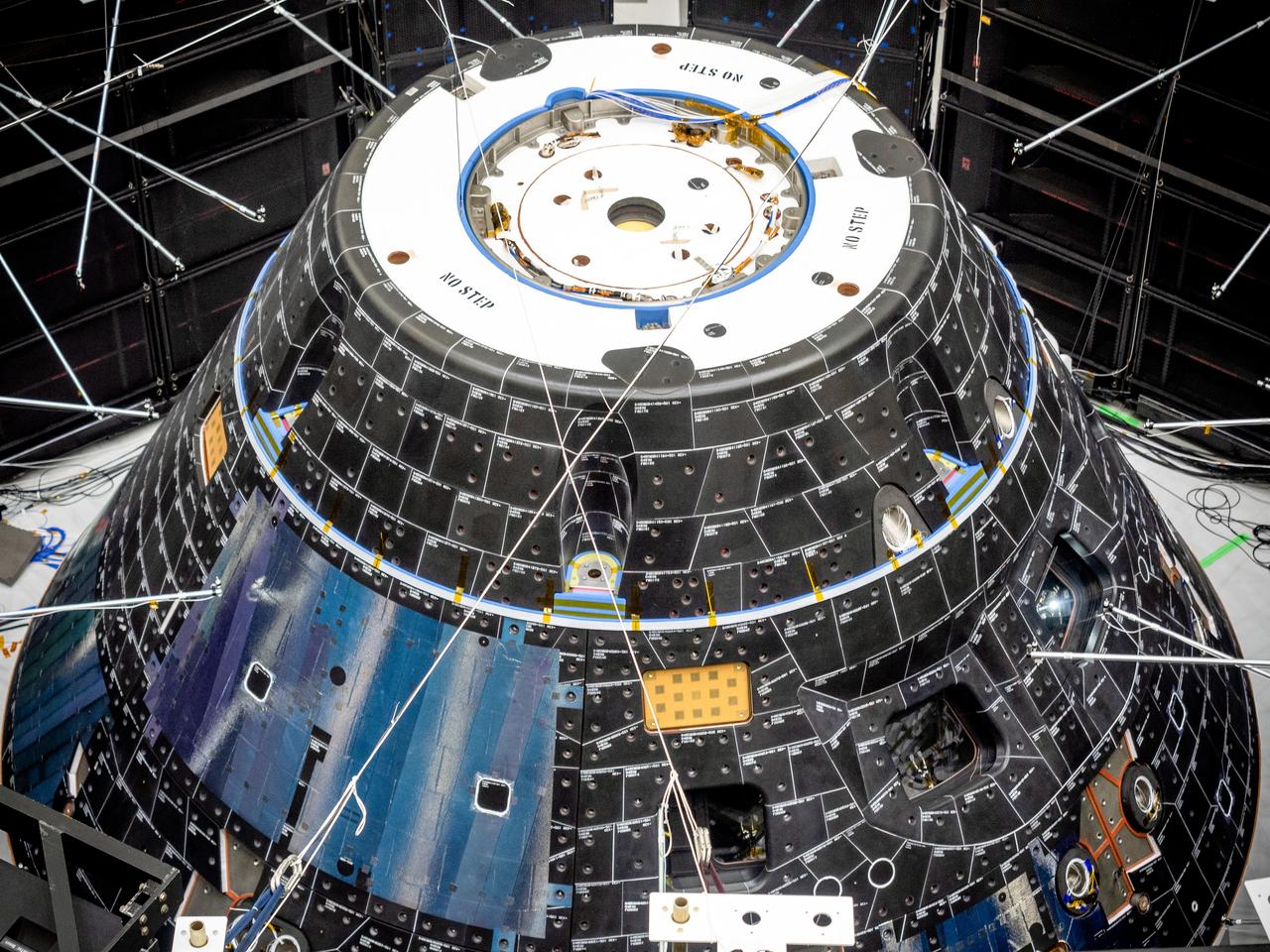
The Orion crew module for Artemis I, shown here on May 2, 2019, recently underwent Direct Field Acoustics Test (DFAT) where it was exposed to maximum acoustics levels that the vehicle will experience in space. Spacecraft response and sound pressure data were collected with microphones, strain gauges and accelerometers. The max decibel level was -12dB.
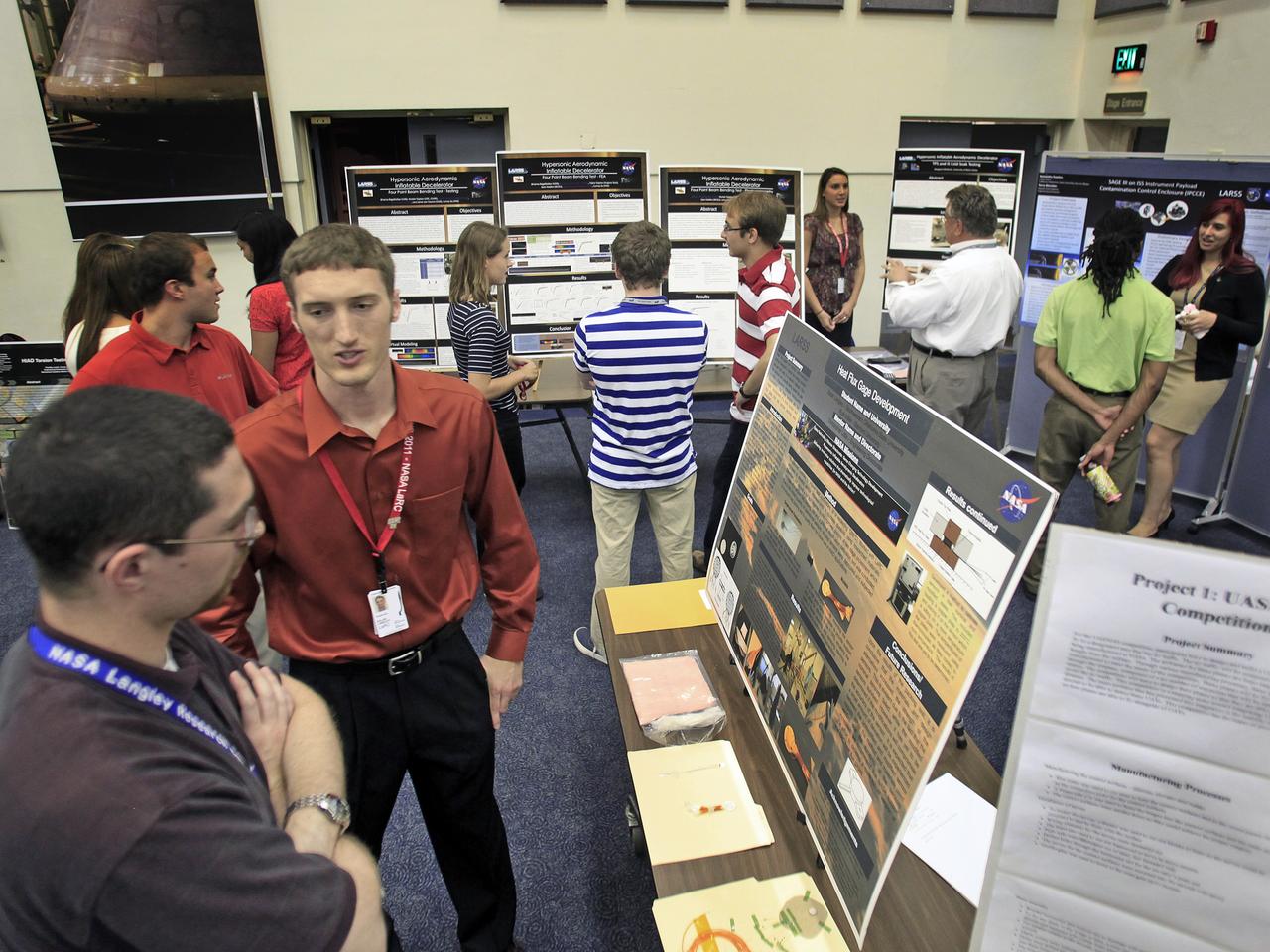
250 students participated in the Langley Aerospace Research Summer Scholars (LARSS) Presentations focused on 3D modeling of STARBUKS calibration components in the National Transonic Facility, hypersonic aerodynamic inflatable decelerator, and optimization of a microphone-based array for flight testing. Reid Center LaRC Hampton, VA
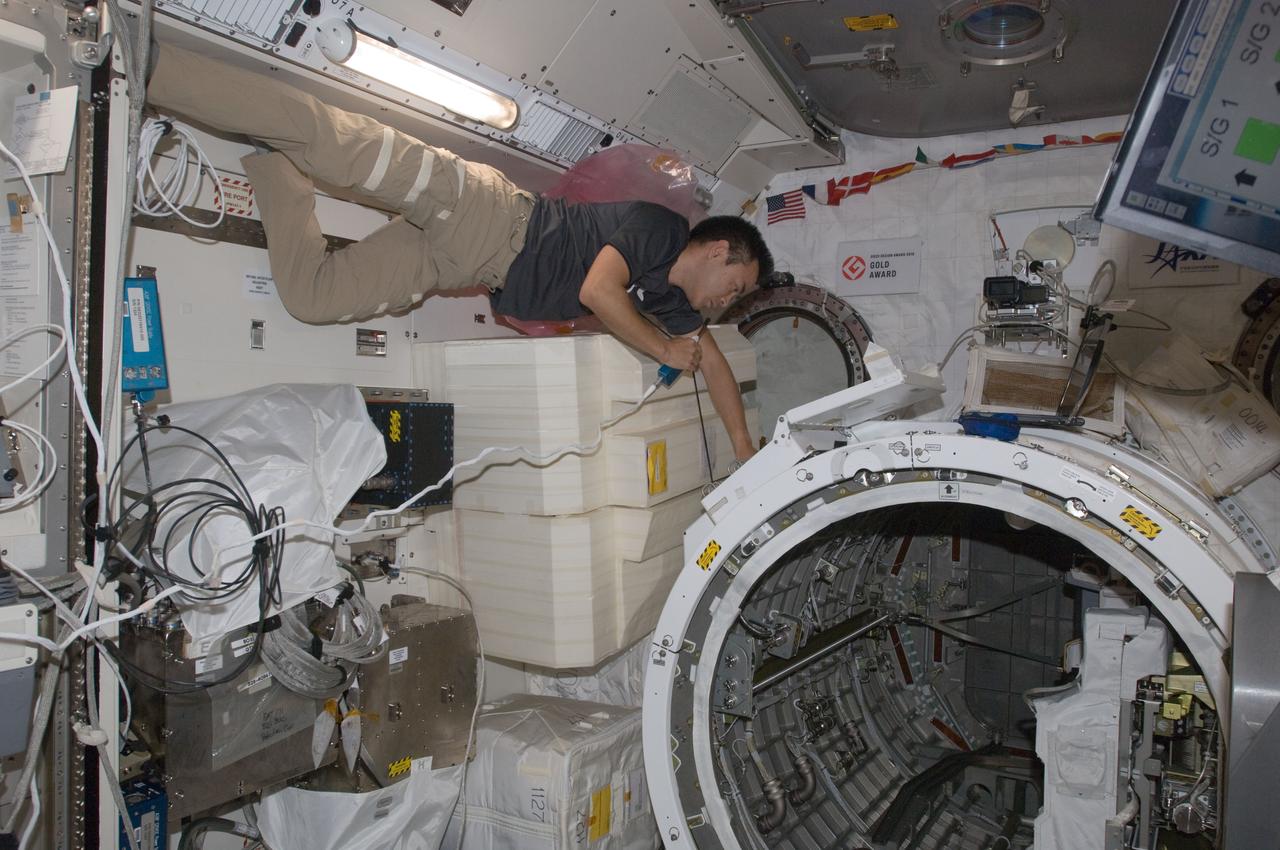
ISS032-E-022196 (21 Aug. 2012) --- Japan Aerospace Exploration Agency astronaut Aki Hoshide, Expedition 32 flight engineer, talks on a microphone while working near the airlock in the Kibo laboratory of the International Space Station. The JEM Robotic Maneuvering System Multi-Purpose Experiment Platform (JEMRMS MPEP) is visible in the airlock.
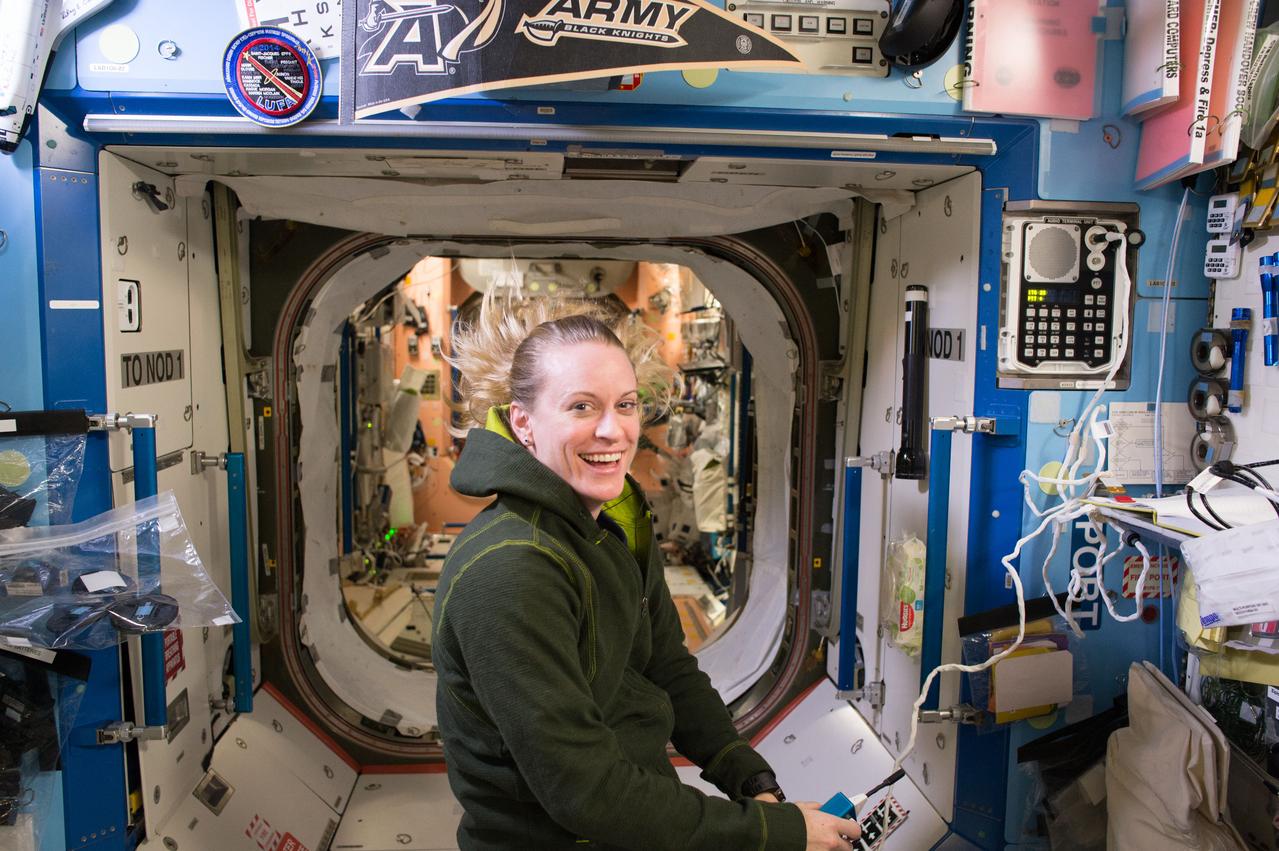
ISS049e038794 (10/14/2016 --- NASA astronaut Kate Rubins holds a communication microphone while floating in the U.S. Destiny Laboratory aboard the International Space Station. Rubins, a first time flier with a degree in molecular biology, is scheduled to return to Earth on Oct. 29, 2016, U.S. time

The Orion crew module for Artemis I, shown here on May 2, 2019, recently underwent Direct Field Acoustics Test (DFAT) where it was exposed to maximum acoustics levels that the vehicle will experience in space. Spacecraft response and sound pressure data were collected with microphones, strain gauges and accelerometers. The max decibel level was -12dB.
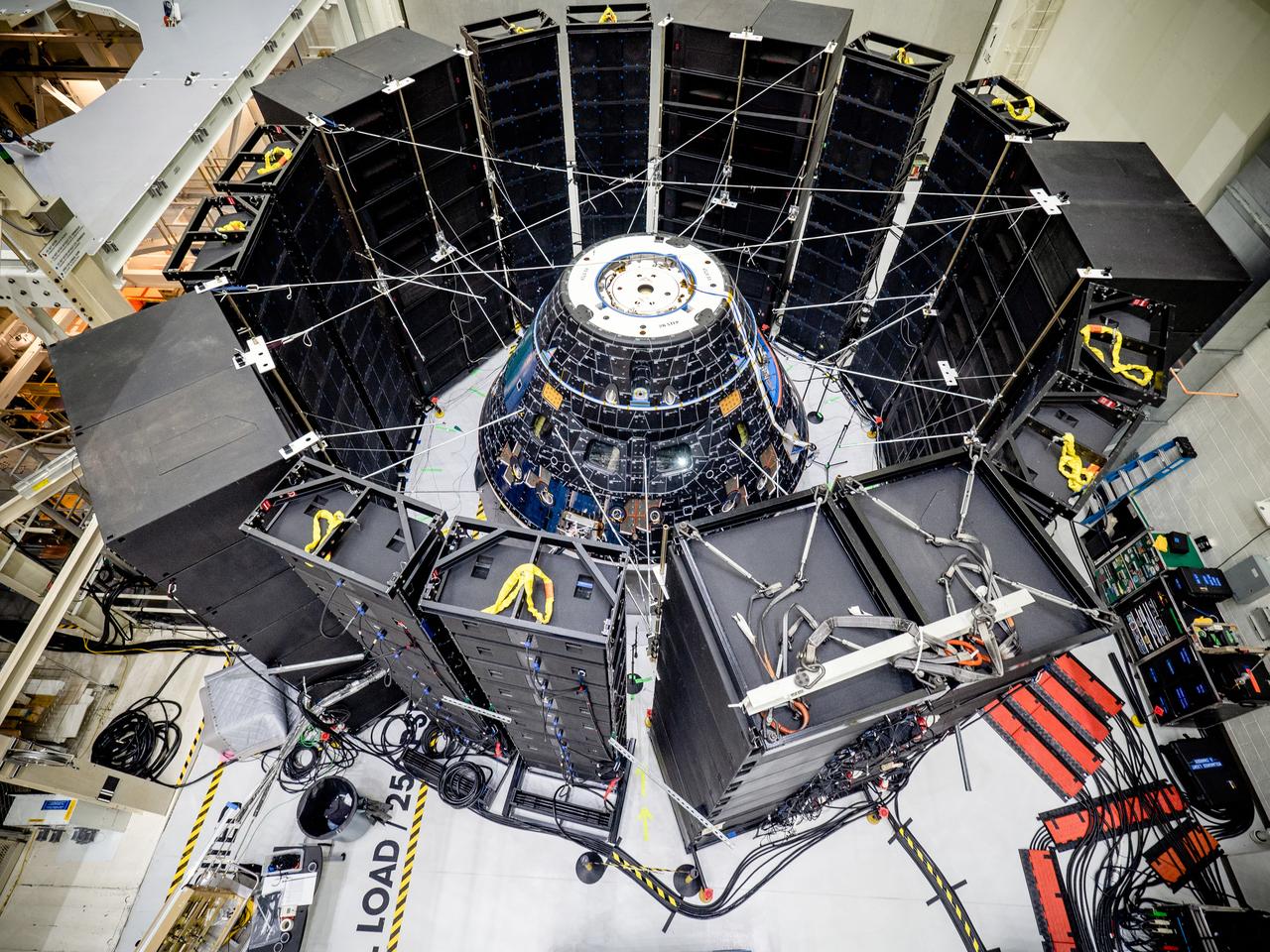
The Orion crew module for Artemis I, shown here on May 2, 2019, recently underwent Direct Field Acoustics Test (DFAT) where it was exposed to maximum acoustics levels that the vehicle will experience in space. Spacecraft response and sound pressure data were collected with microphones, strain gauges and accelerometers. The max decibel level was -12dB.
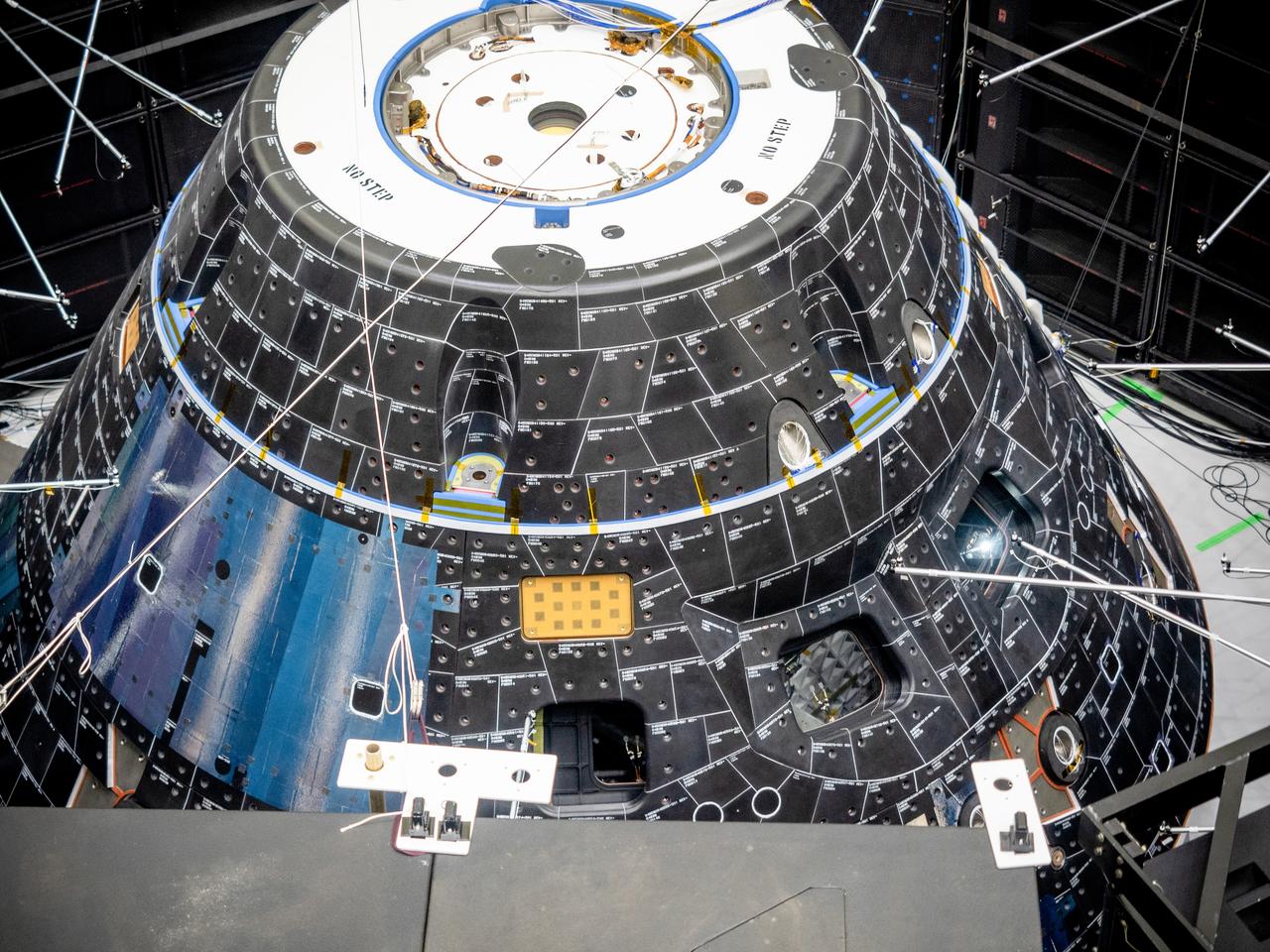
The Orion crew module for Artemis I, shown here on May 2, 2019, recently underwent Direct Field Acoustics Test (DFAT) where it was exposed to maximum acoustics levels that the vehicle will experience in space. Spacecraft response and sound pressure data were collected with microphones, strain gauges and accelerometers. The max decibel level was -12dB.

The Orion crew module for Artemis I, shown here on May 2, 2019, recently underwent Direct Field Acoustics Test (DFAT) where it was exposed to maximum acoustics levels that the vehicle will experience in space. Spacecraft response and sound pressure data were collected with microphones, strain gauges and accelerometers. The max decibel level was -12dB.
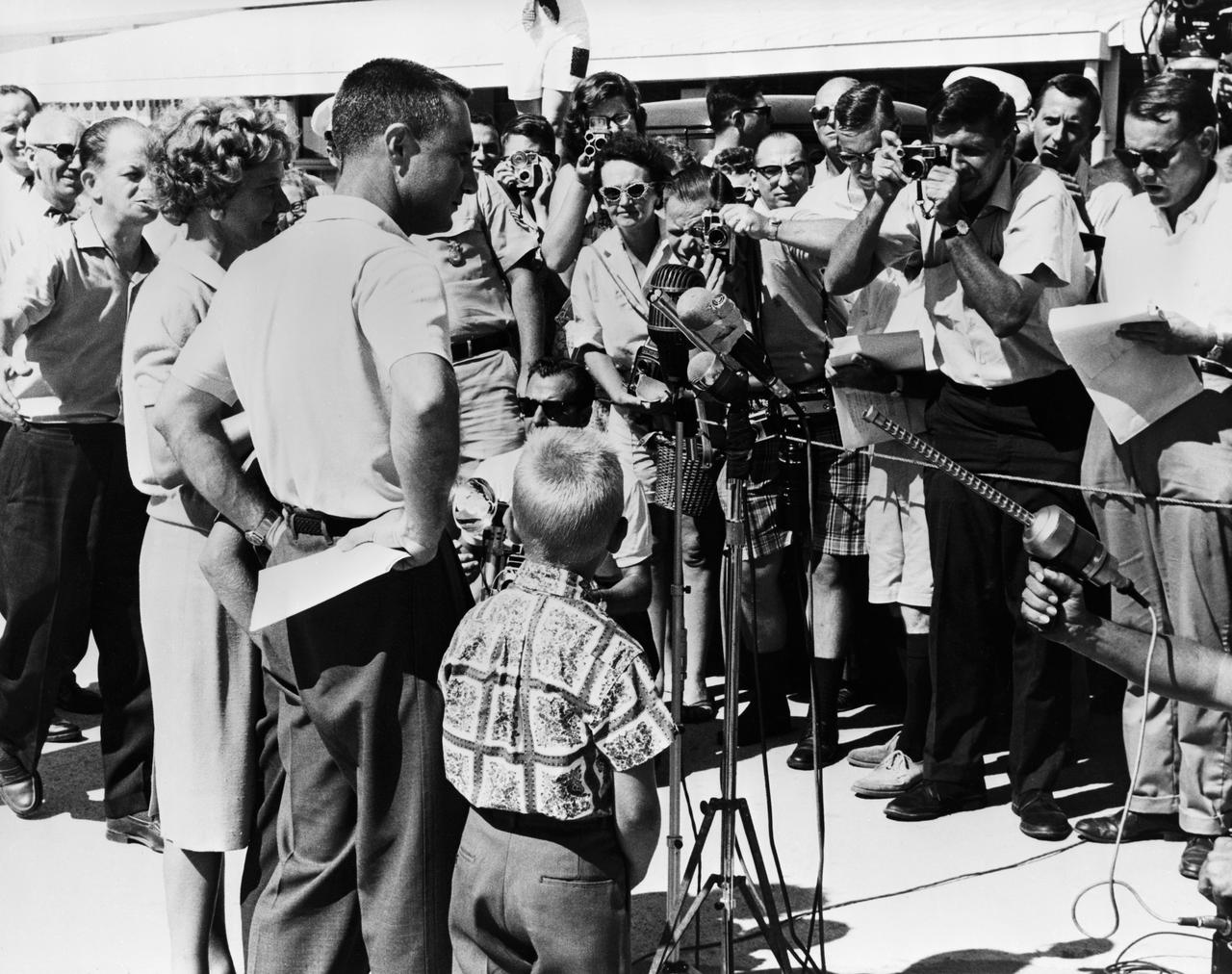
S61-03687 (21 July 1961) --- Astronaut Virgil I. (Gus) Grissom and his family are shown at the airport at Patrick Air Force Base facing a crowd of news media representatives. Grissom is speaking into microphones for the news media. Photo credit: NASA
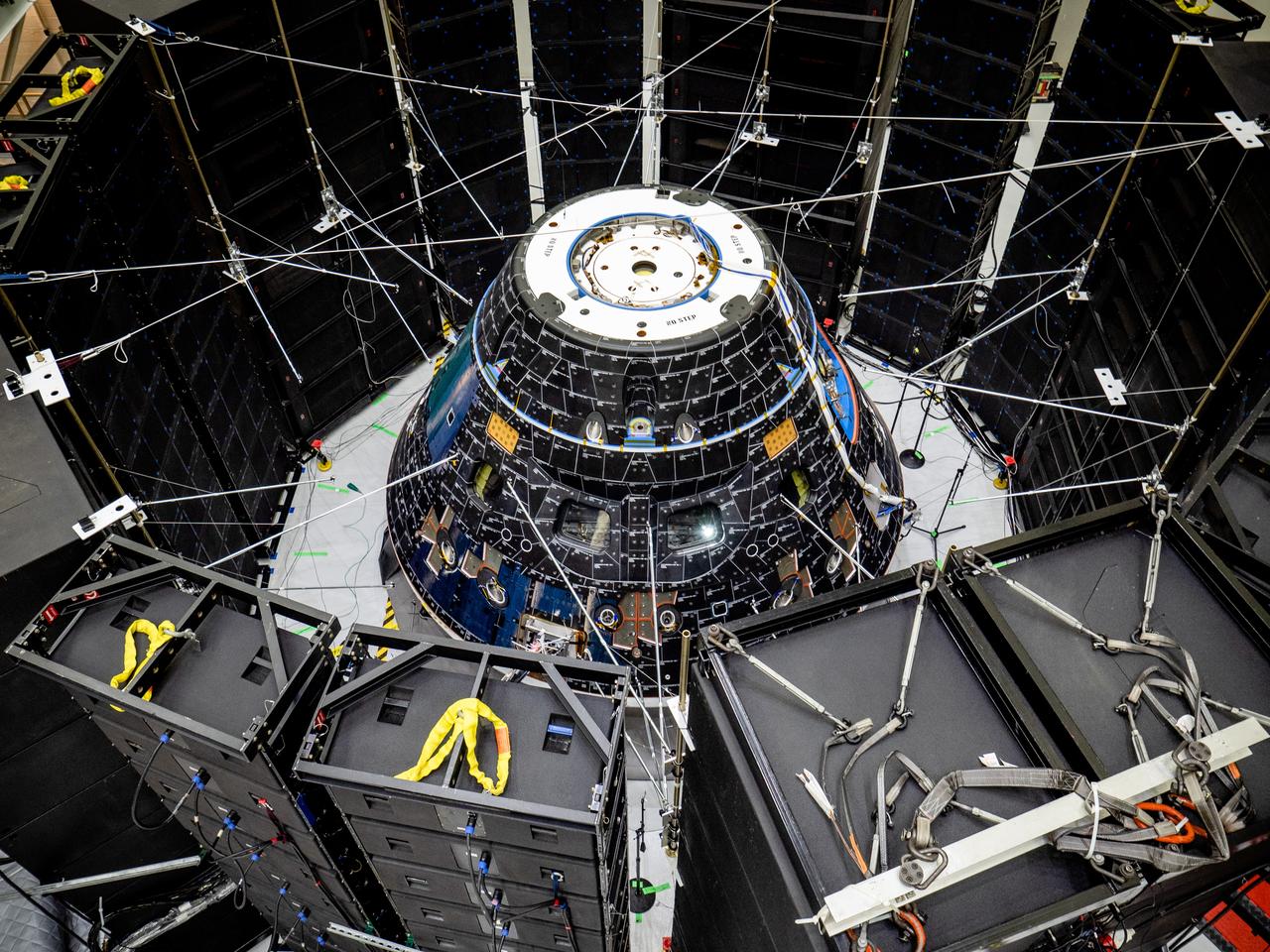
The Orion crew module for Artemis I, shown here on May 2, 2019, recently underwent Direct Field Acoustics Test (DFAT) where it was exposed to maximum acoustics levels that the vehicle will experience in space. Spacecraft response and sound pressure data were collected with microphones, strain gauges and accelerometers. The max decibel level was -12dB.
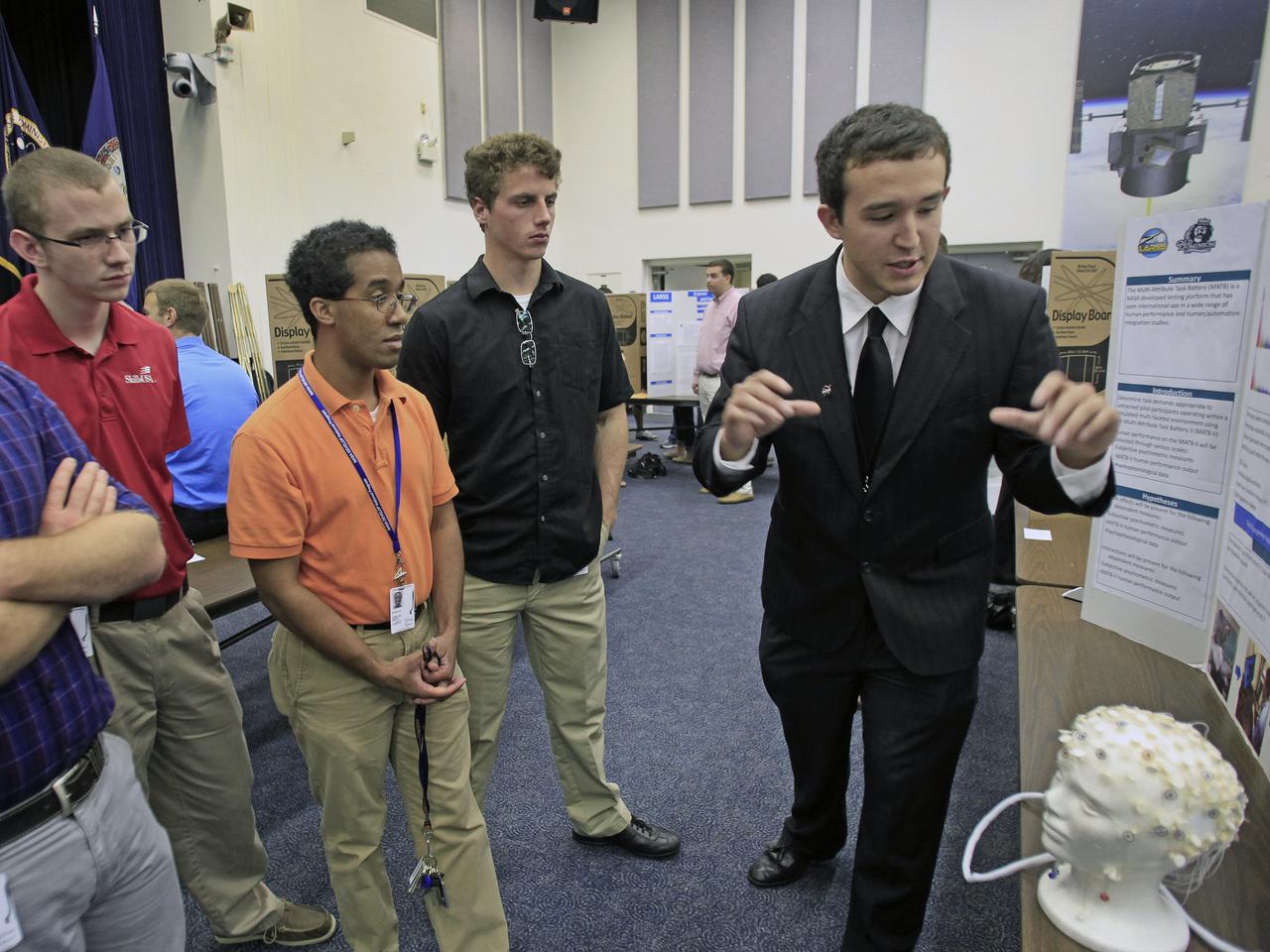
250 students participated in the Langley Aerospace Research Summer Scholars (LARSS) Presentations focused on 3D modeling of STARBUKS calibration components in the National Transonic Facility, hypersonic aerodynamic inflatable decelerator, and optimization of a microphone-based array for flight testing. Reid Center LaRC Hampton, VA
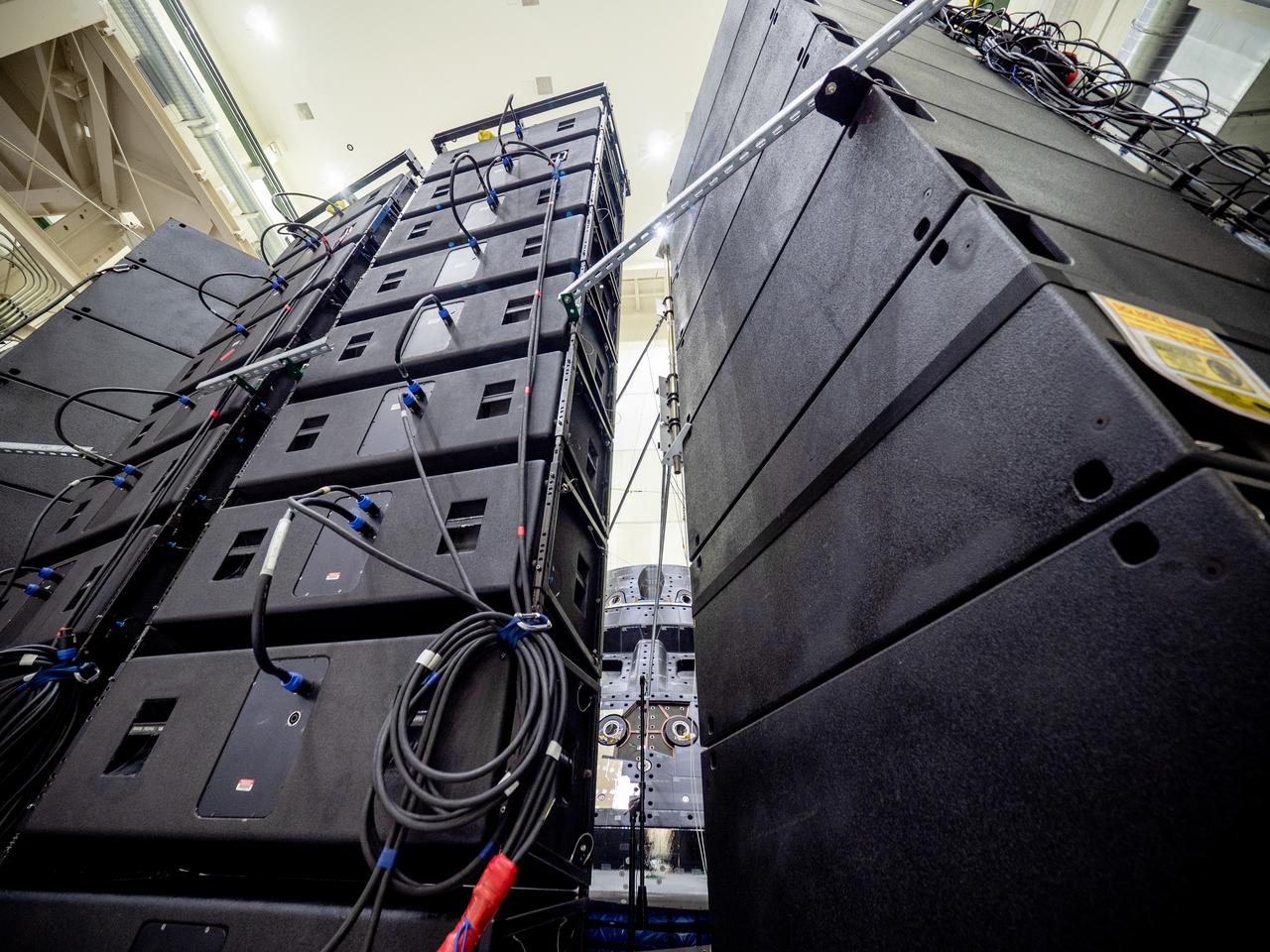
The Orion crew module for Artemis I, shown here on May 2, 2019, recently underwent Direct Field Acoustics Test (DFAT) where it was exposed to maximum acoustics levels that the vehicle will experience in space. Spacecraft response and sound pressure data were collected with microphones, strain gauges and accelerometers. The max decibel level was -12dB.
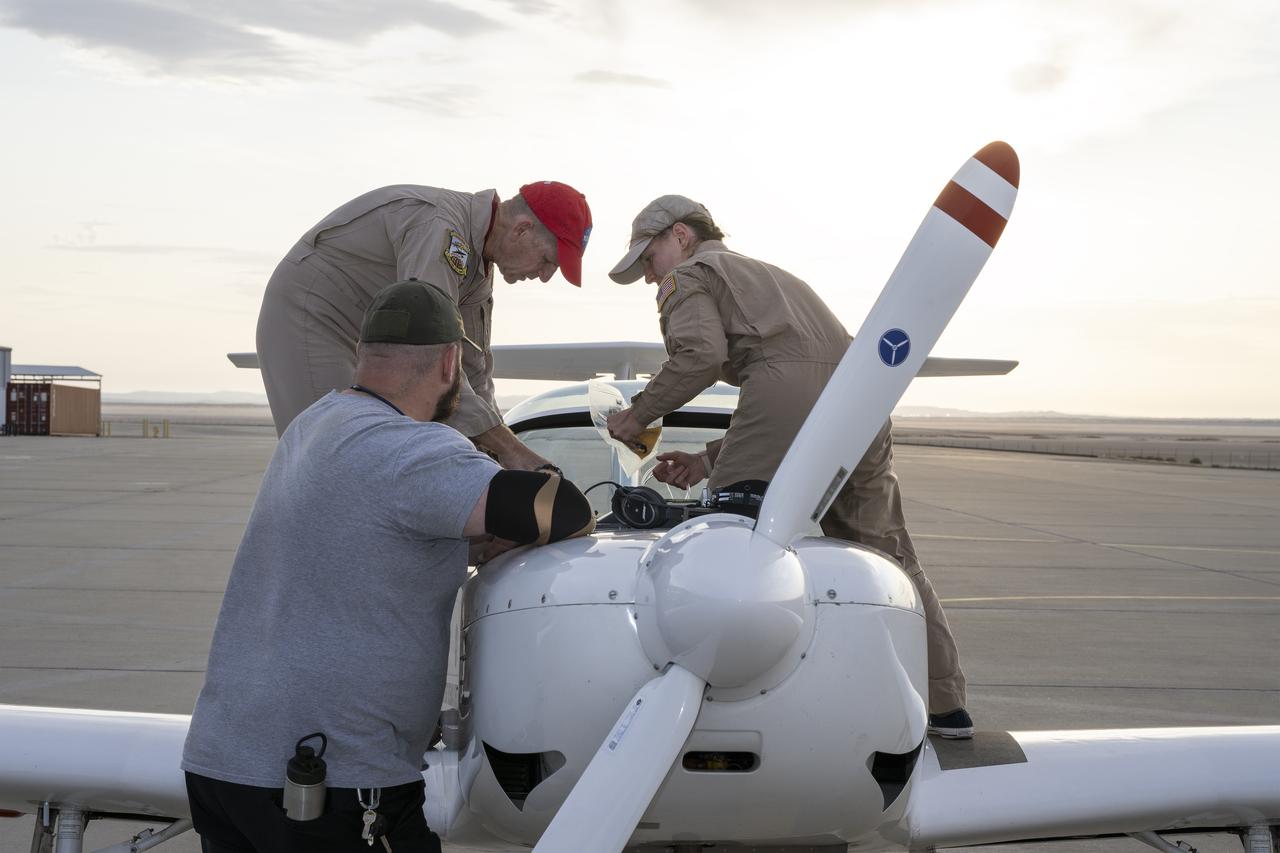
A NASA TG-14 glider aircraft is prepared for flight at NASA’s Armstrong Flight Research Center in Edwards, California, in support of the agency’s Quesst mission. The aircraft is equipped with onboard microphones to capture sonic boom noise generated during rehearsal flights, helping researchers measure the acoustic signature of supersonic aircraft closer to the ground.

The Orion crew module for Artemis I, shown here on May 2, 2019, recently underwent Direct Field Acoustics Test (DFAT) where it was exposed to maximum acoustics levels that the vehicle will experience in space. Spacecraft response and sound pressure data were collected with microphones, strain gauges and accelerometers. The max decibel level was -12dB.
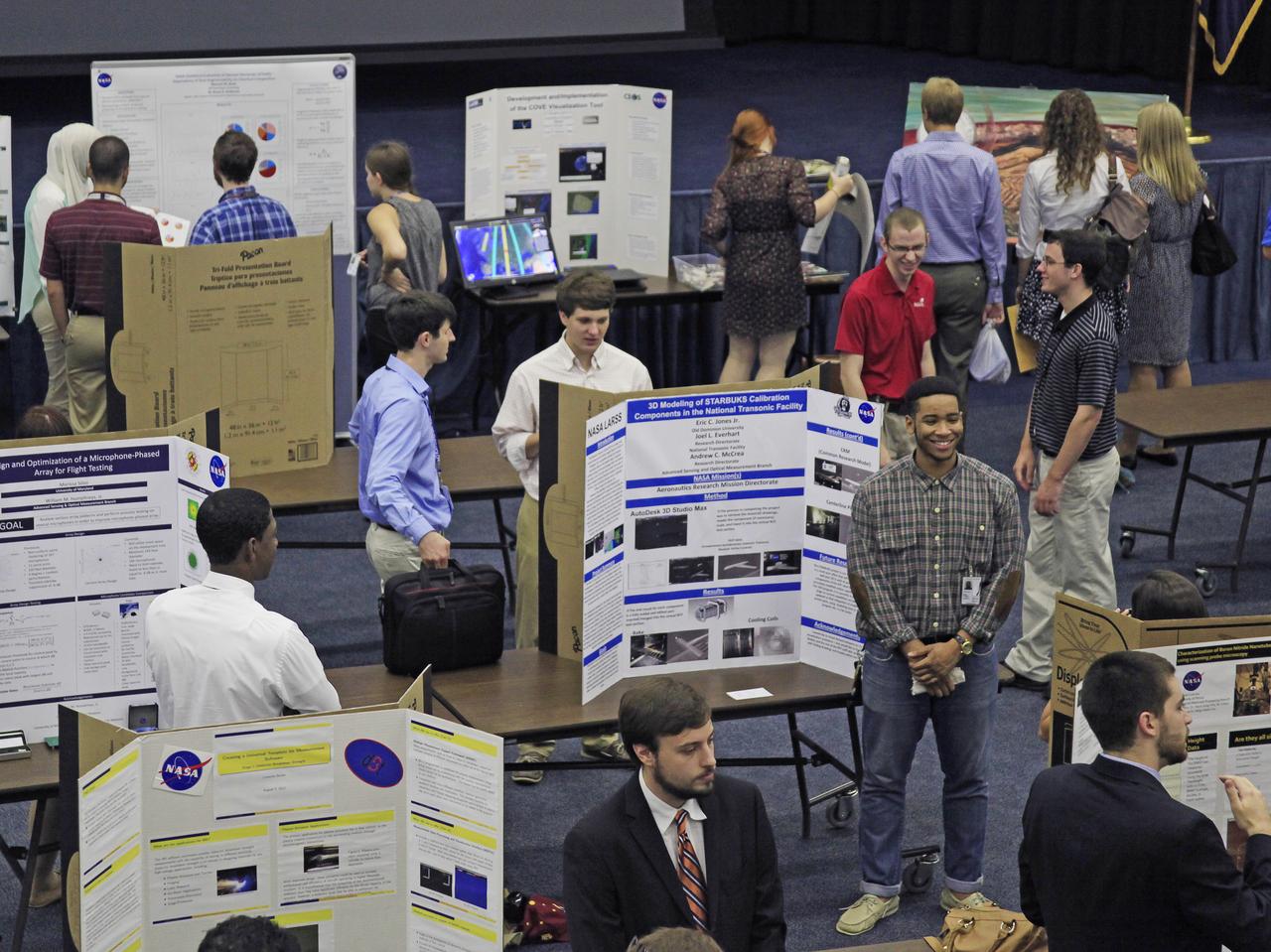
250 students participated in the Langley Aerospace Research Summer Scholars (LARSS) Presentations focused on 3D modeling of STARBUKS calibration components in the National Transonic Facility, hypersonic aerodynamic inflatable decelerator, and optimization of a microphone-based array for flight testing. Reid Center LaRC Hampton, VA
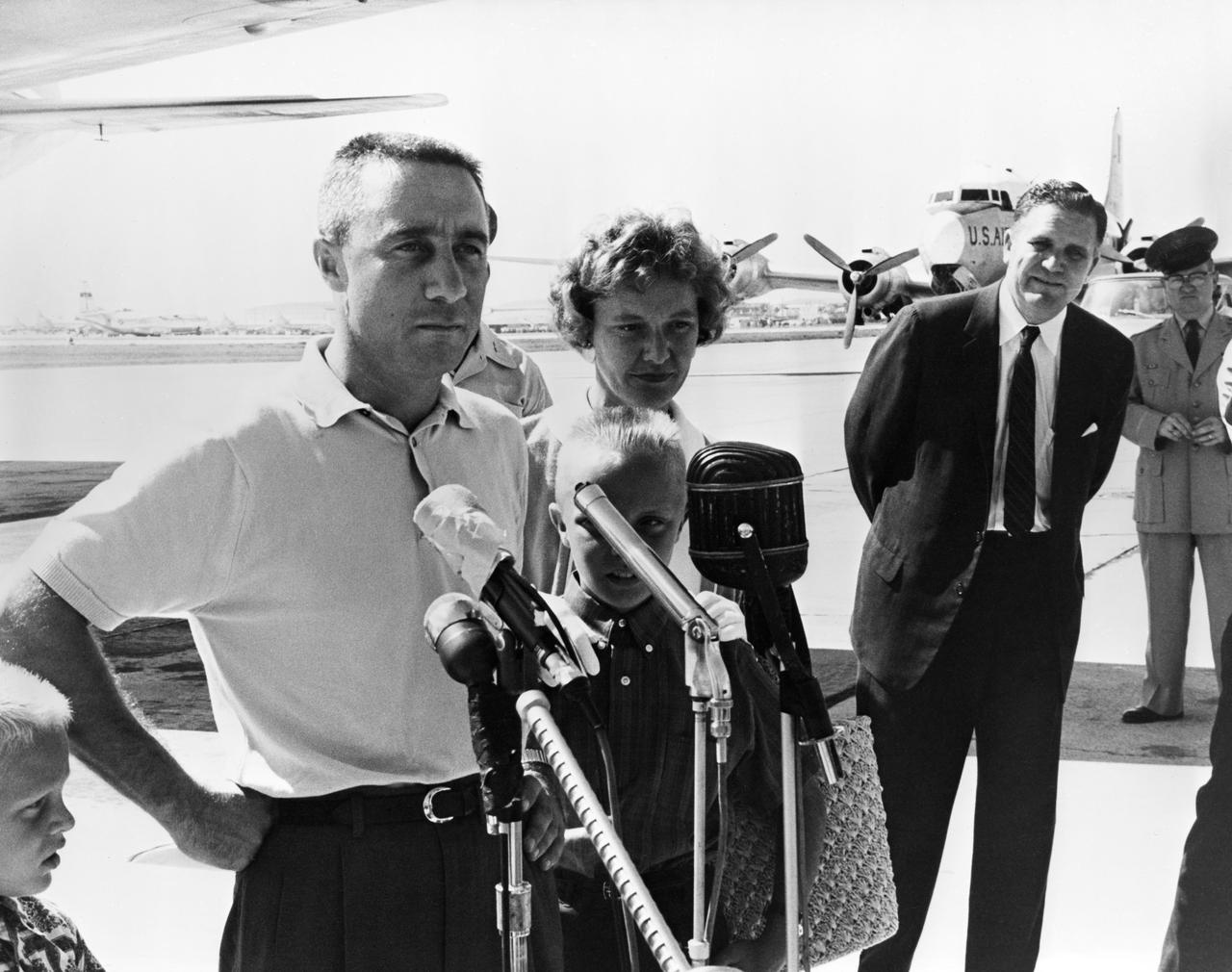
S61-03684 (21 July 1961) --- Astronaut Virgil I. (Gus) Grissom and his family are shown at the airport at Patrick Air Force Base with NASA Administrator James E. Webb (right). Grissom is speaking into microphones for the news media. Photo credit: NASA
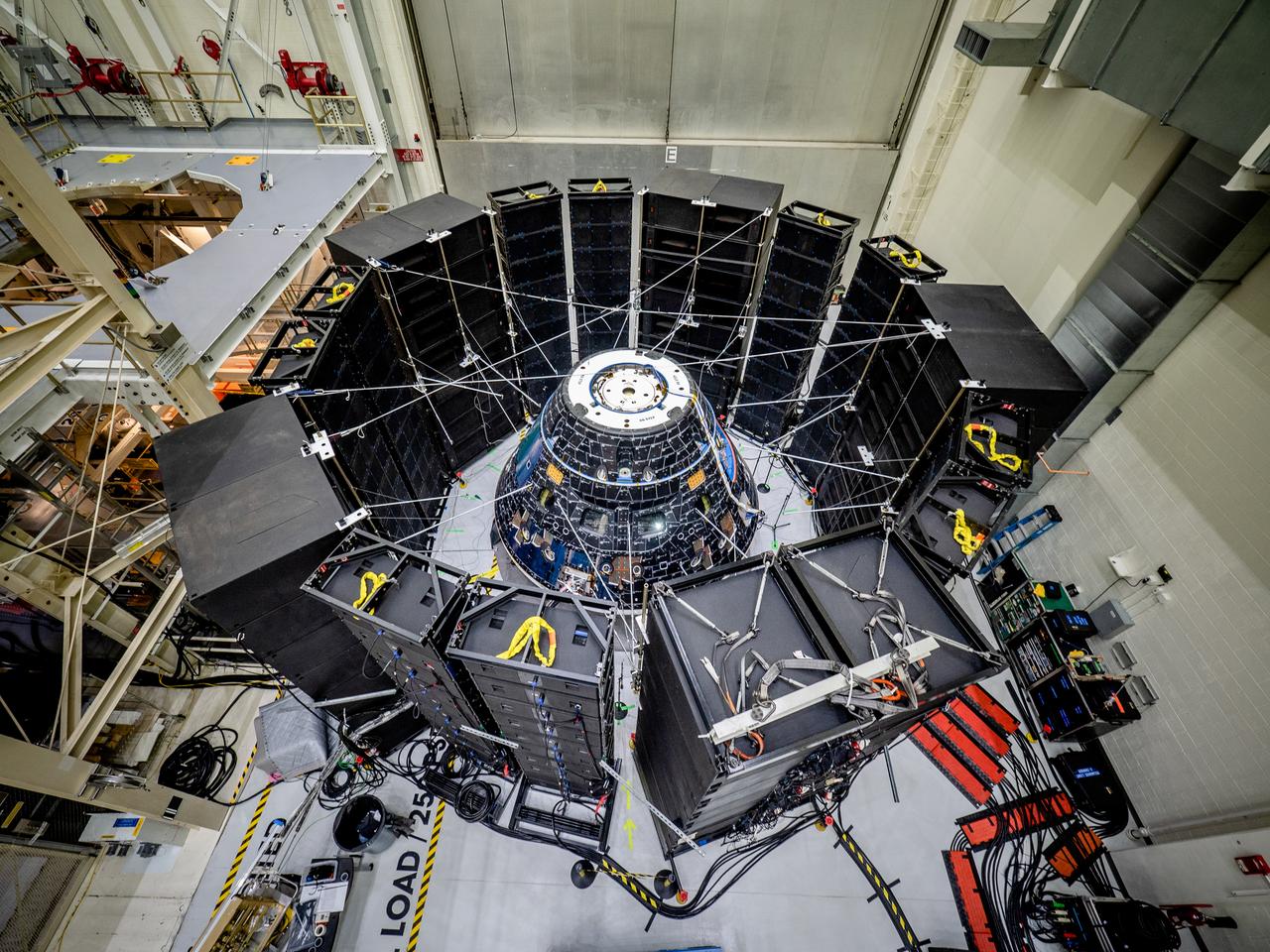
The Orion crew module for Artemis I, shown here on May 2, 2019, recently underwent Direct Field Acoustics Test (DFAT) where it was exposed to maximum acoustics levels that the vehicle will experience in space. Spacecraft response and sound pressure data were collected with microphones, strain gauges and accelerometers. The max decibel level was -12dB.
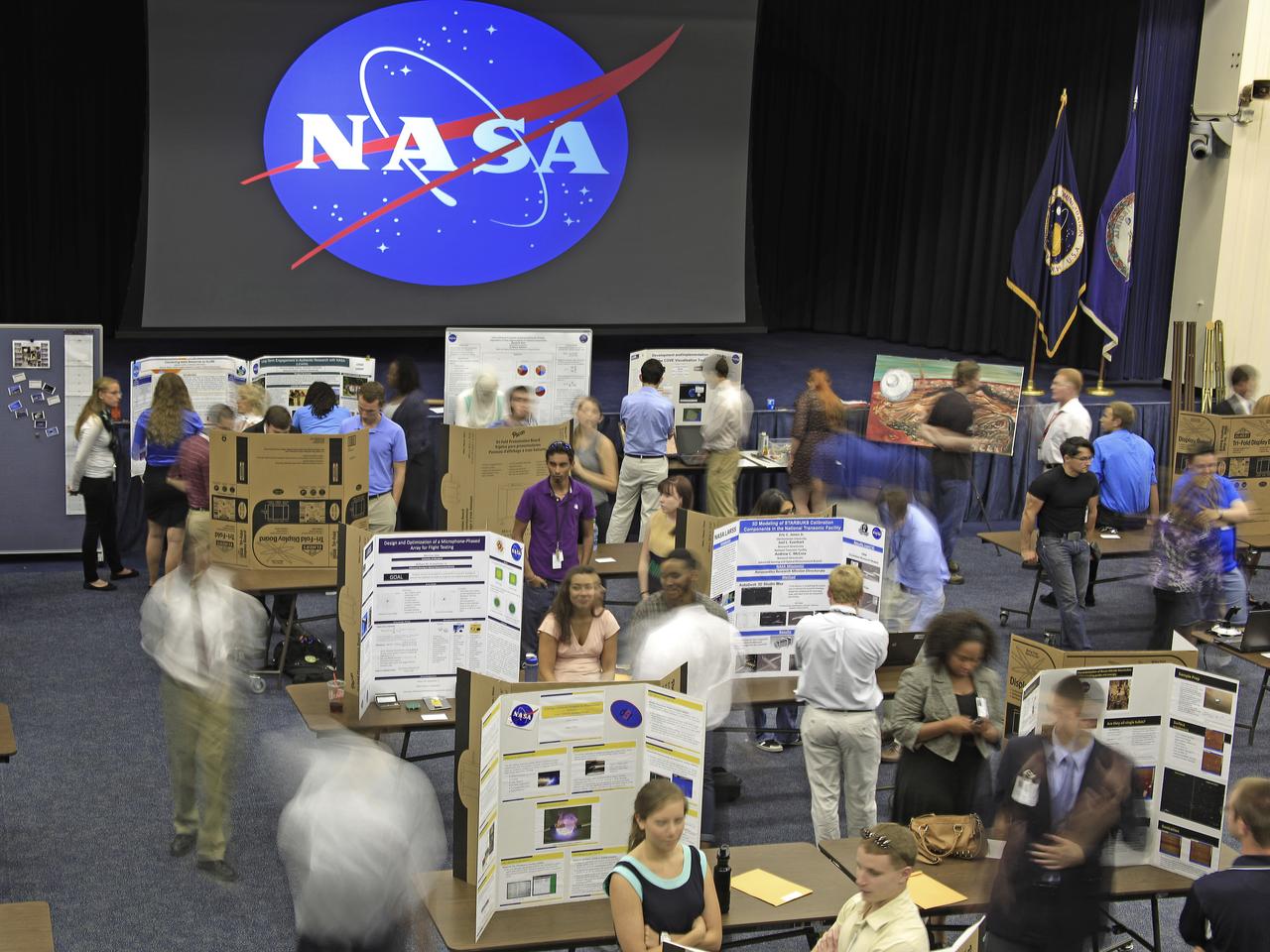
250 students participated in the Langley Aerospace Research Summer Scholars (LARSS) Presentations focused on 3D modeling of STARBUKS calibration components in the National Transonic Facility, hypersonic aerodynamic inflatable decelerator, and optimization of a microphone-based array for flight testing. Reid Center LaRC Hampton, VA
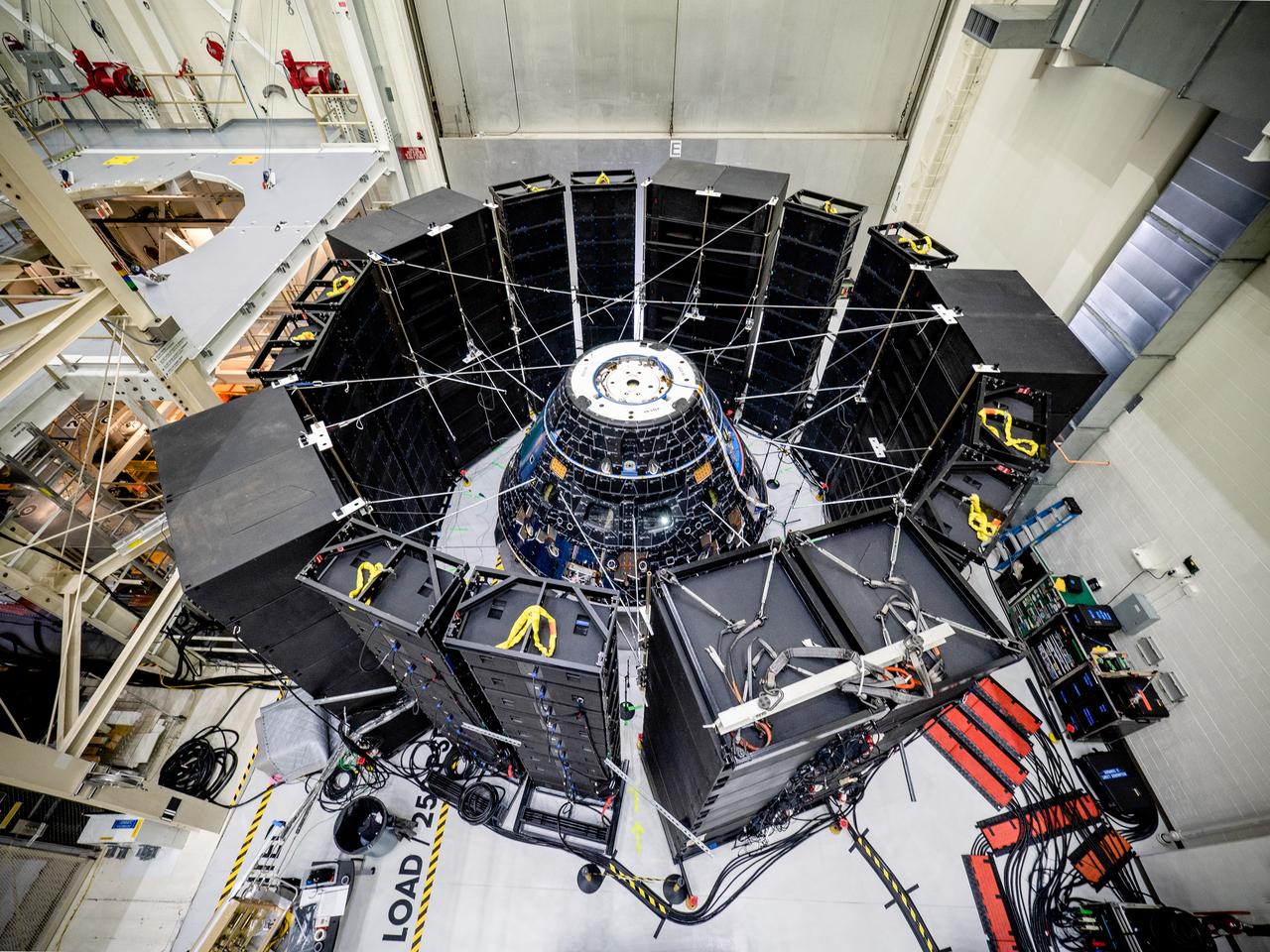
The Orion crew module for Artemis I, shown here on May 2, 2019, recently underwent Direct Field Acoustics Test (DFAT) where it was exposed to maximum acoustics levels that the vehicle will experience in space. Spacecraft response and sound pressure data were collected with microphones, strain gauges and accelerometers. The max decibel level was -12dB.
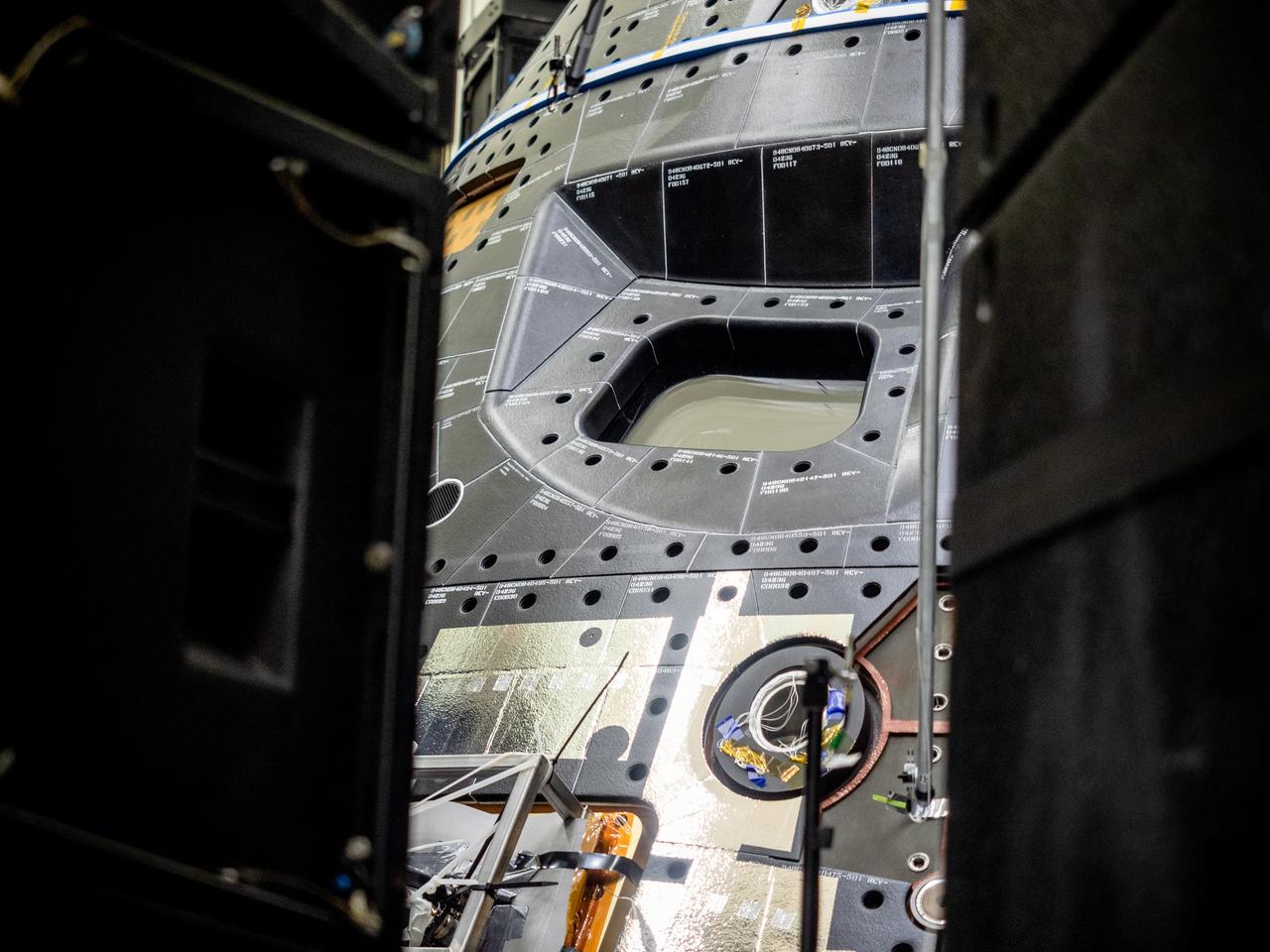
The Orion crew module for Artemis I, shown here on May 2, 2019, recently underwent Direct Field Acoustics Test (DFAT) where it was exposed to maximum acoustics levels that the vehicle will experience in space. Spacecraft response and sound pressure data were collected with microphones, strain gauges and accelerometers. The max decibel level was -12dB.
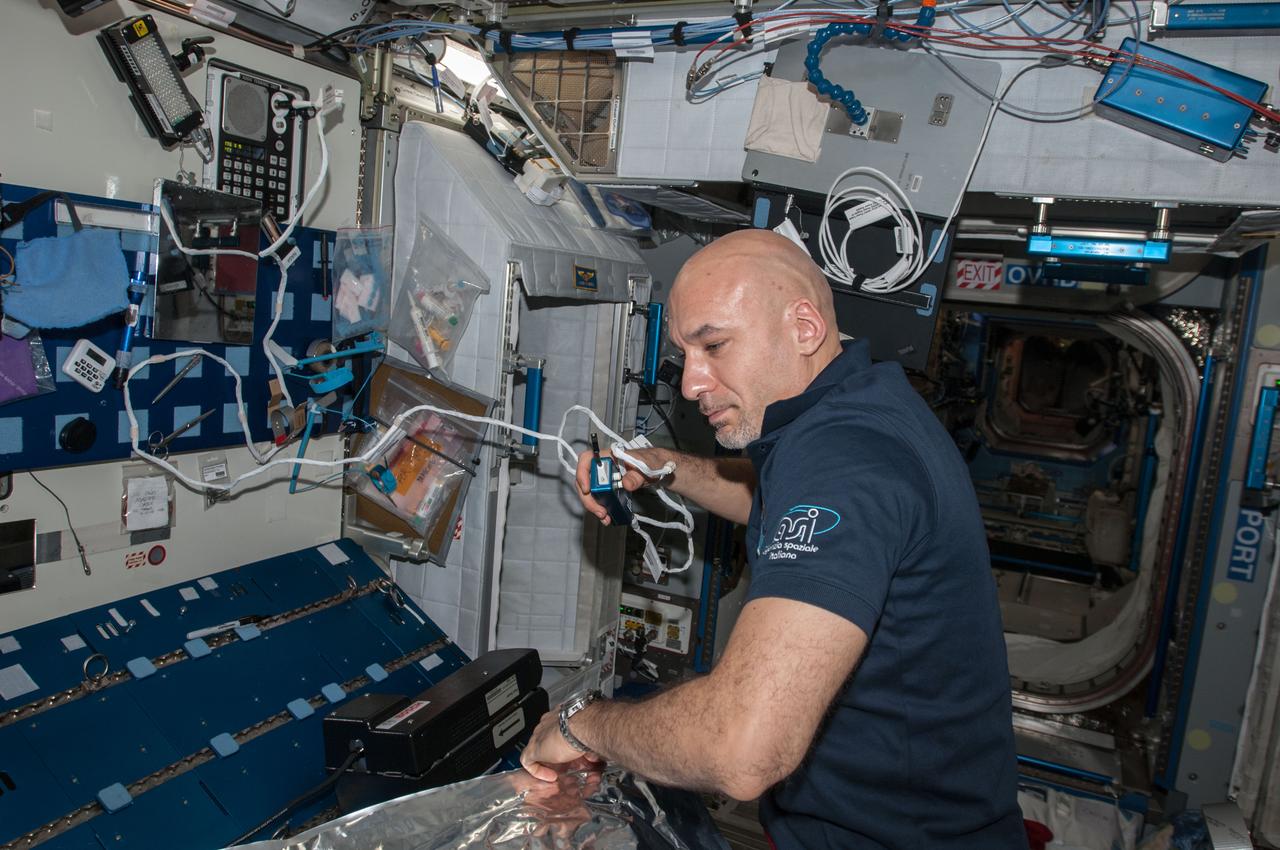
ISS036-E-028059 (1 Aug. 2013) --- In the International Space Station?s Harmony node, European Space Agency astronaut Luca Parmitano, Expedition 36 flight engineer, speaks in a microphone while preparing the MISSE and ORMatE-III experiments for their return to Earth. The experiments were retrieved during the July 9 spacewalk.
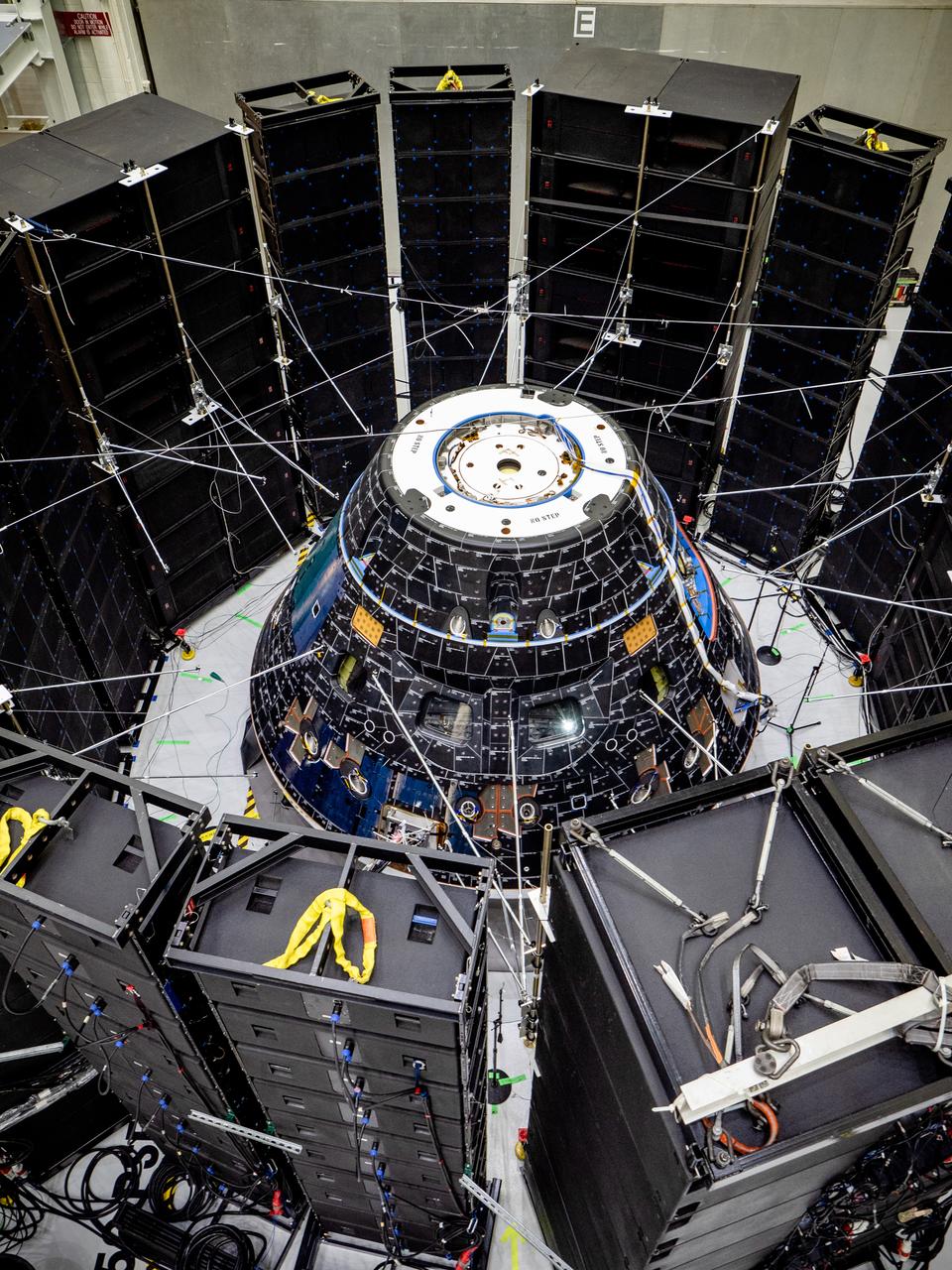
The Orion crew module for Artemis I, shown here on May 2, 2019, recently underwent Direct Field Acoustics Test (DFAT) where it was exposed to maximum acoustics levels that the vehicle will experience in space. Spacecraft response and sound pressure data were collected with microphones, strain gauges and accelerometers. The max decibel level was -12dB.
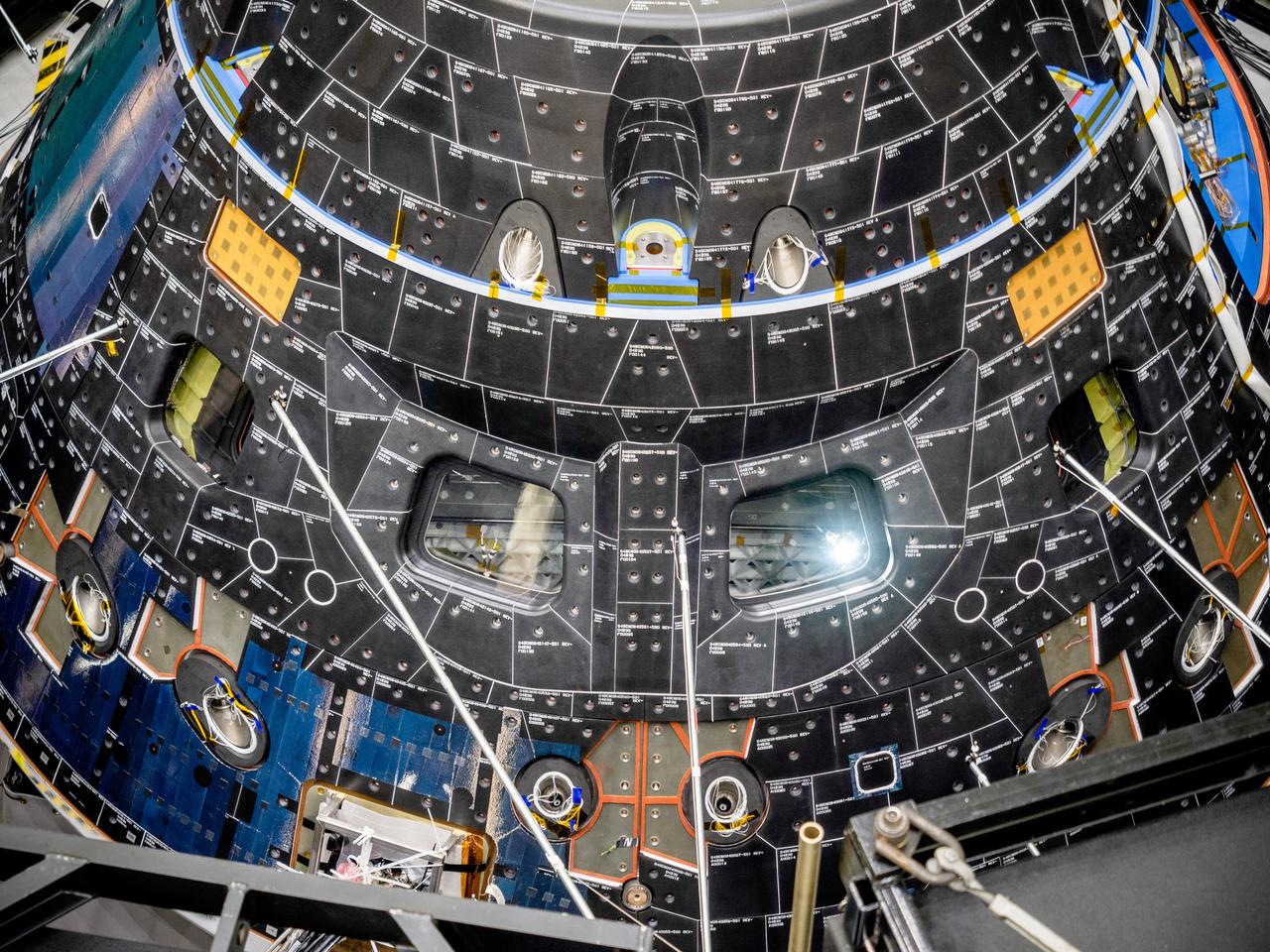
The Orion crew module for Artemis I, shown here on May 2, 2019, recently underwent Direct Field Acoustics Test (DFAT) where it was exposed to maximum acoustics levels that the vehicle will experience in space. Spacecraft response and sound pressure data were collected with microphones, strain gauges and accelerometers. The max decibel level was -12dB.
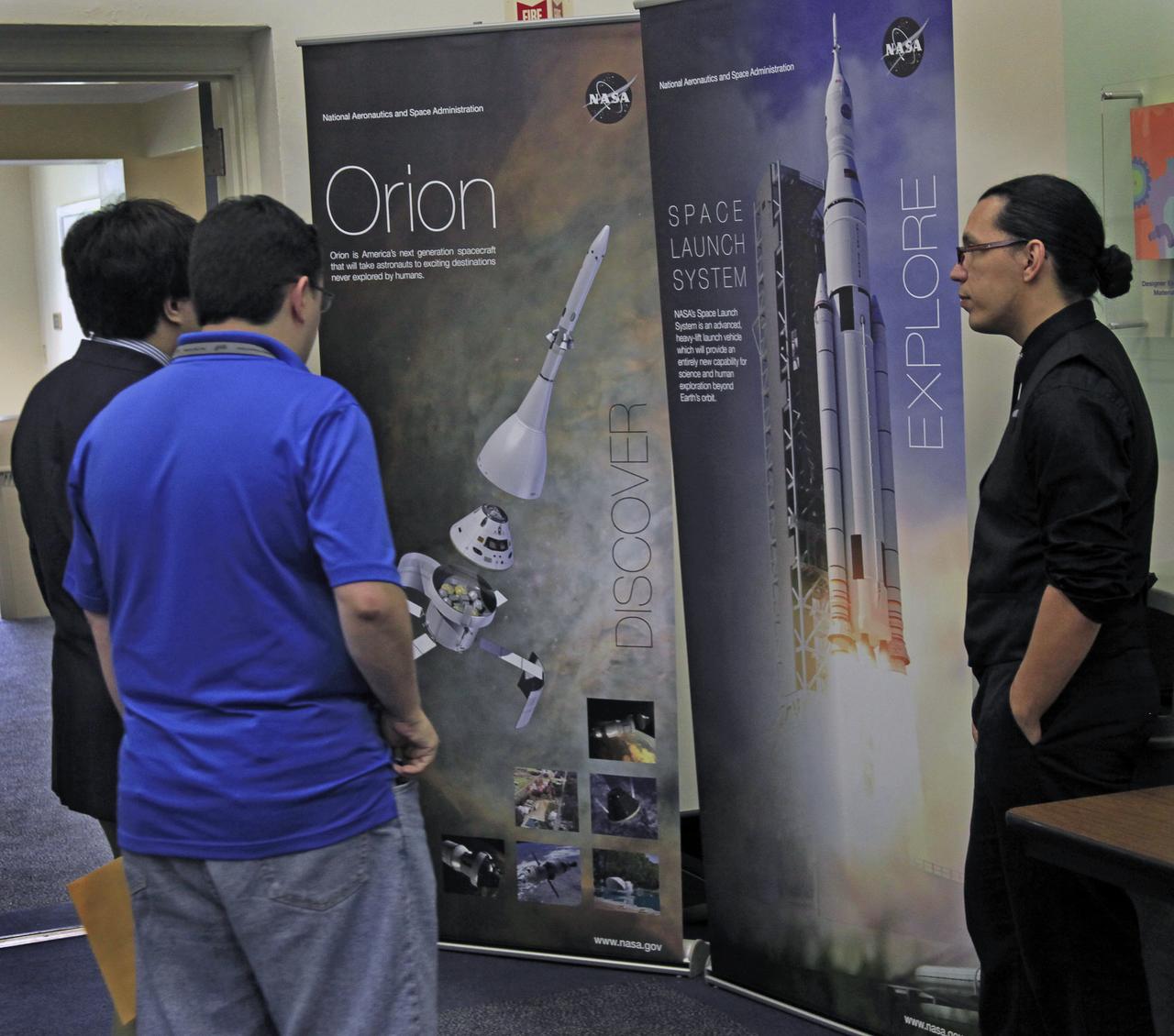
250 students participated in the Langley Aerospace Research Summer Scholars (LARSS) Presentations focused on 3D modeling of STARBUKS calibration components in the National Transonic Facility, hypersonic aerodynamic inflatable decelerator, and optimization of a microphone-based array for flight testing. Reid Center LaRC Hampton, VA
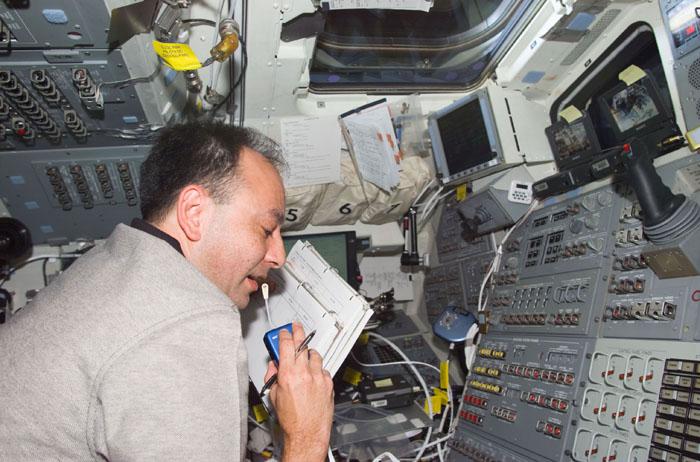
STS98-E-5086 (10 February 2001) --- Astronaut Mark L. Polansky, STS-98 pilot, communicates with ground controllers from his post at the aft flight deck controls on the Space Shuttle Atlantis. The scene was recorded with a digital still camera.

This video and audio show the results of NASA's Perseverance Mars rover using its SuperCam microphone to record the sounds of a Martian dust devil – the first time any such recording has been made. The dust devil passed directly over Perseverance on Sept. 27, 2021, the 215th Martian day, or sol, of the mission. At the same time that SuperCam's microphone recorded the dust devil, Perseverance's weather sensors (measuring wind, pressure, temperature, and dust) and the rover's left navigation camera were on. This allowed scientists to combine sound, image, and atmospheric data. The unique combination of this data, along with atmospheric modeling, allowed the researchers to estimate the dust devil's dimensions: 82 feet (25 meters) wide, at least 387 feet (118 meters) tall, and moving at about 12 mph (19 kph). Capturing a passing dust devil takes some luck. Scientists can't predict when they'll pass by, so rovers like Perseverance and Curiosity routinely monitor in all directions for them. When scientists see them occur more frequently at a certain time of day, or approach from a certain direction, they use that information to focus their monitoring to try to catch a dust devil. The video included here has four rows based on different data sources: The top row is a raw image taken by the left navigation camera's view of the Martian surface. While the camera is capable of color, it takes black-and-white images when searching for dust devils to reduce the amount of data sent back to Earth (since most of the images come back without a dust devil detected). The second row shows the same image processed with change-detection software to indicate where movement occurred over the course of the recording. The color indicates the density of dust, going from blue (lower density) through purple to yellow (highest density). The third row is a graph showing a sudden drop in air pressure recorded by Perseverance's weather sensor suite, called Mars Environmental Dynamics Analyzer, provided by Centro de Astrobiología (CAB) at the Instituto Nacional de Tecnica Aeroespacial in Madrid. The fourth row indicates sound amplitude from SuperCam's microphone. A key objective for Perseverance's mission on Mars is astrobiology, including the search for signs of ancient microbial life. The rover will characterize the planet's geology and past climate, pave the way for human exploration of the Red Planet, and be the first mission to collect and cache Martian rock and regolith (broken rock and dust). Subsequent NASA missions, in cooperation with ESA (European Space Agency), would send spacecraft to Mars to collect these sealed samples from the surface and return them to Earth for in-depth analysis. The Mars 2020 Perseverance mission is part of NASA's Moon to Mars exploration approach, which includes Artemis missions to the Moon that will help prepare for human exploration of the Red Planet. Movie available at https://photojournal.jpl.nasa.gov/catalog/PIA25657
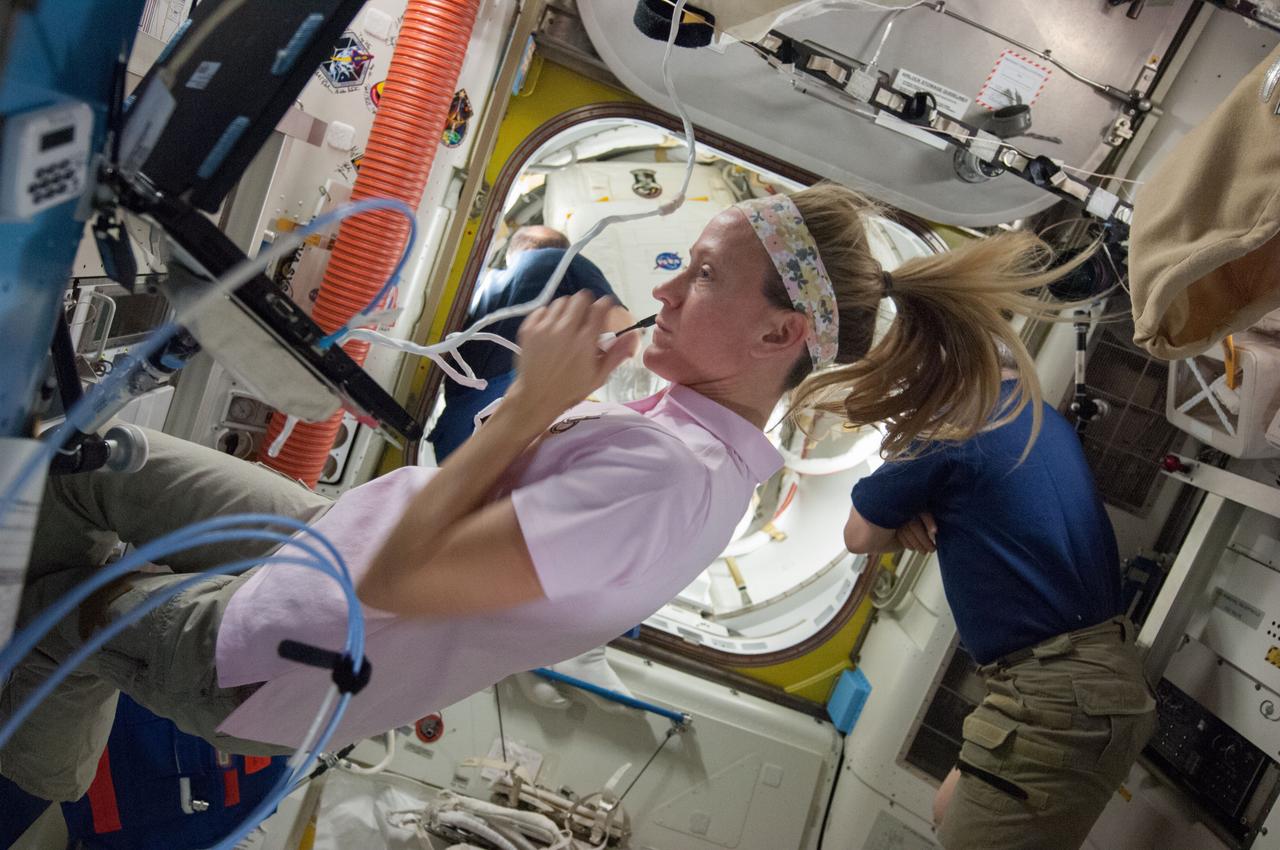
ISS036-E-017438 (8 July 2013) --- NASA astronaut Karen Nyberg, Expedition 36 flight engineer, speaks into a microphone in the International Space Station’s Quest airlock while the crew prepares for a July 9 session of extravehicular activity (EVA) with NASA astronaut Chris Cassidy and European Space Agency astronaut Luca Parmitano, both flight engineers.
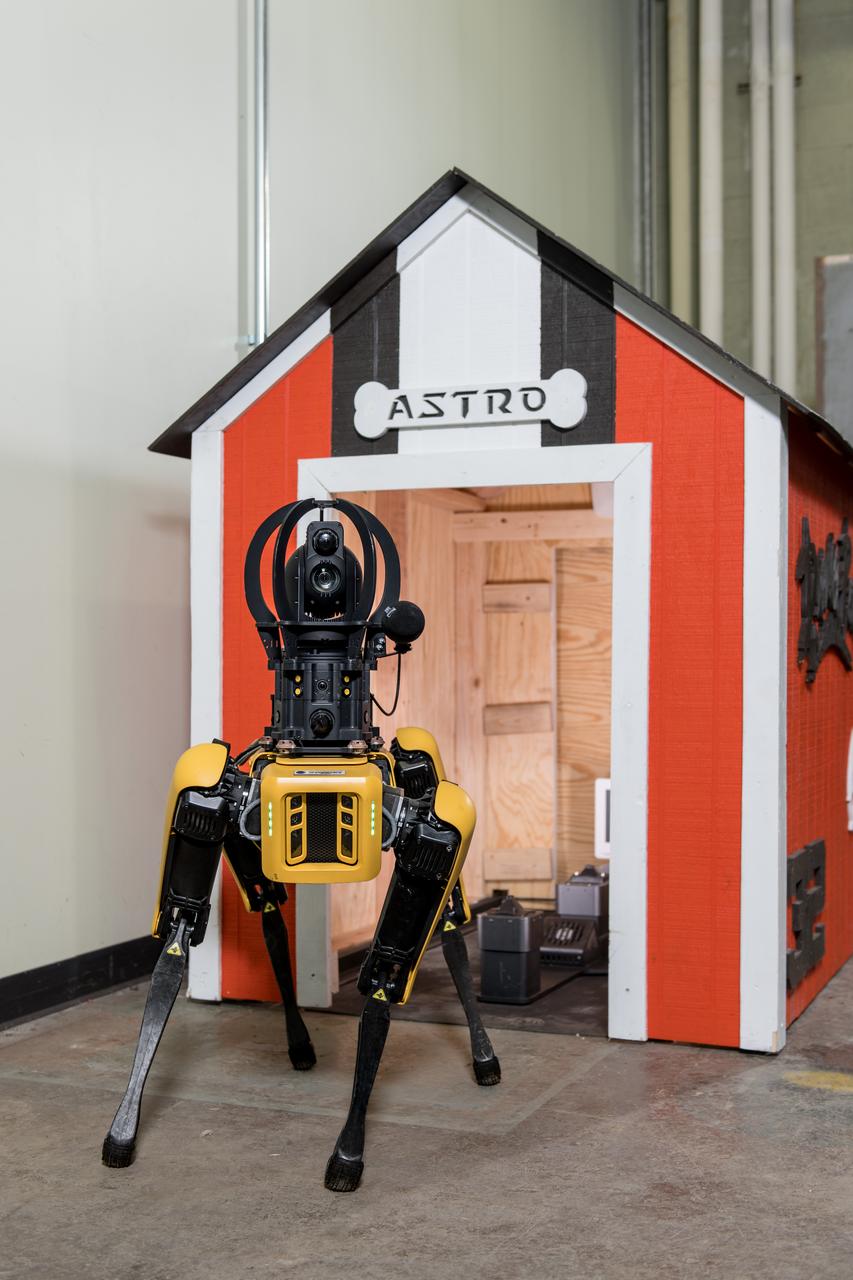
Astro is a robot dog operated by staff via remote control, is fitted with an infrared camera with 40 times zoom, utilizes thermography and a microphone and can navigate all three levels of the facility. The beloved robot conducts inspections to spare the employees ears in extremely loud environments. When not used, Astro lives in his doghouse in the facility and recharges. Photo Credit: (NASA/Sara Lowthian-Hanna)
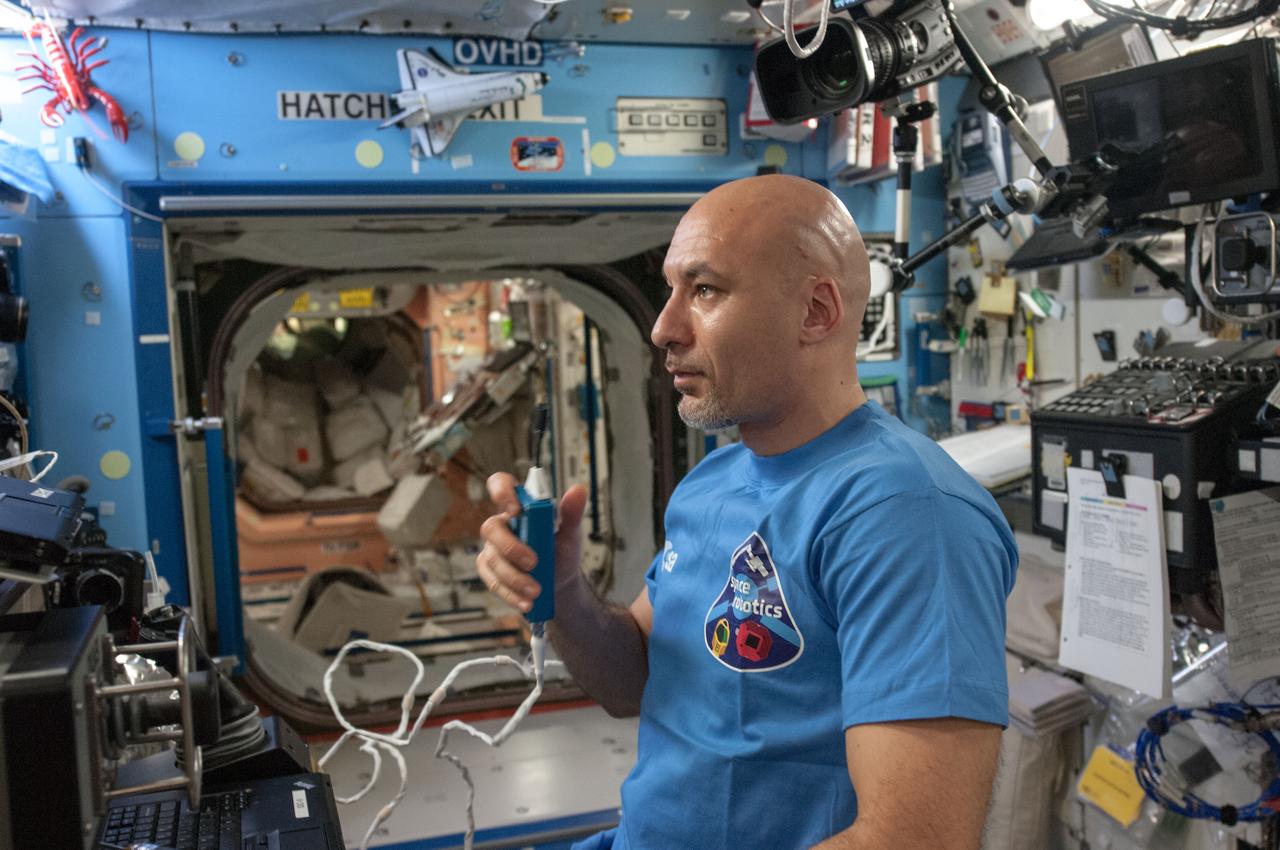
ISS036-E-025017 (26 July 2013) --- In the International Space Station?s Destiny laboratory, European Space Agency astronaut Luca Parmitano, Expedition 36 flight engineer, speaks in a microphone as he partners with Ames Research Center to remotely control a surface rover in California. The experiment, called Surface Telerobotics, will help scientists plan future missions where a robotic rover could prepare a site on a moon or a planet for a crew.

KENNEDY SPACE CENTER, FLA. -- Astronaut Donn F. Eisele adjusts communications carrier prior to the start of an 11-day Earth orbital mission in the Apollo 7 spacecraft. The communications carrier contains microphones and earphones. Flying with Eisele aboard Apollo 7 are astronauts Walter M. Schirra Jr. and Walter Cunningham. Purpose of the flight, conducted by the National Aeronautics and Space Administration, is to qualify the Apollo spacecraft for a future flight to the moon.
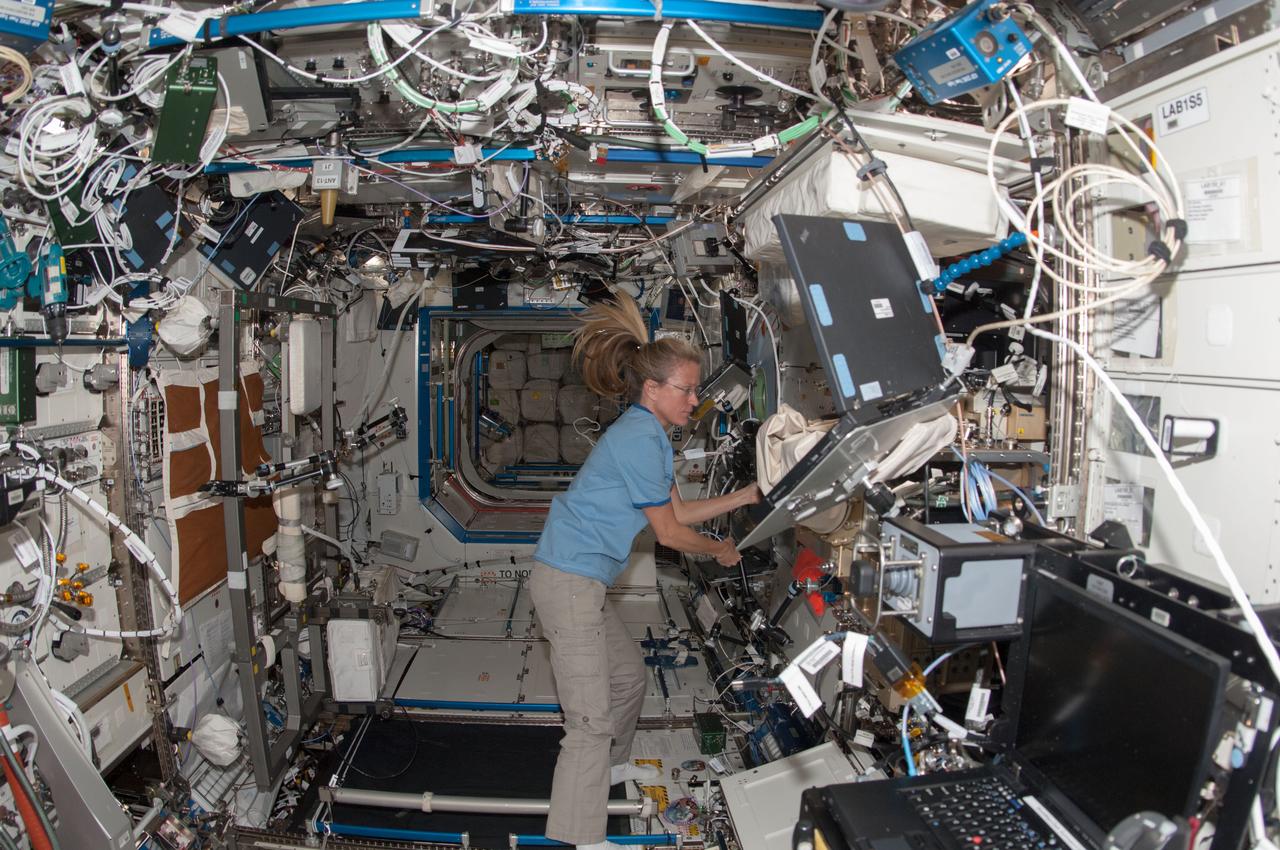
In the International Space Stations Destiny laboratory,NASA astronaut Karen Nyberg,Expedition 36 flight engineer,speaks into a microphone while conducting a session with the Advanced Colloids Experiment (ACE)-1 sample preparation at the Light Microscopy Module (LMM) in the Fluids Integrated Rack / Fluids Combustion Facility (FIR/FCF). ACE-1 is a series of microscopic imaging investigations that uses the microgravity environment to examine flow characteristics and the evolution and ordering effects within a group of colloidal materials.
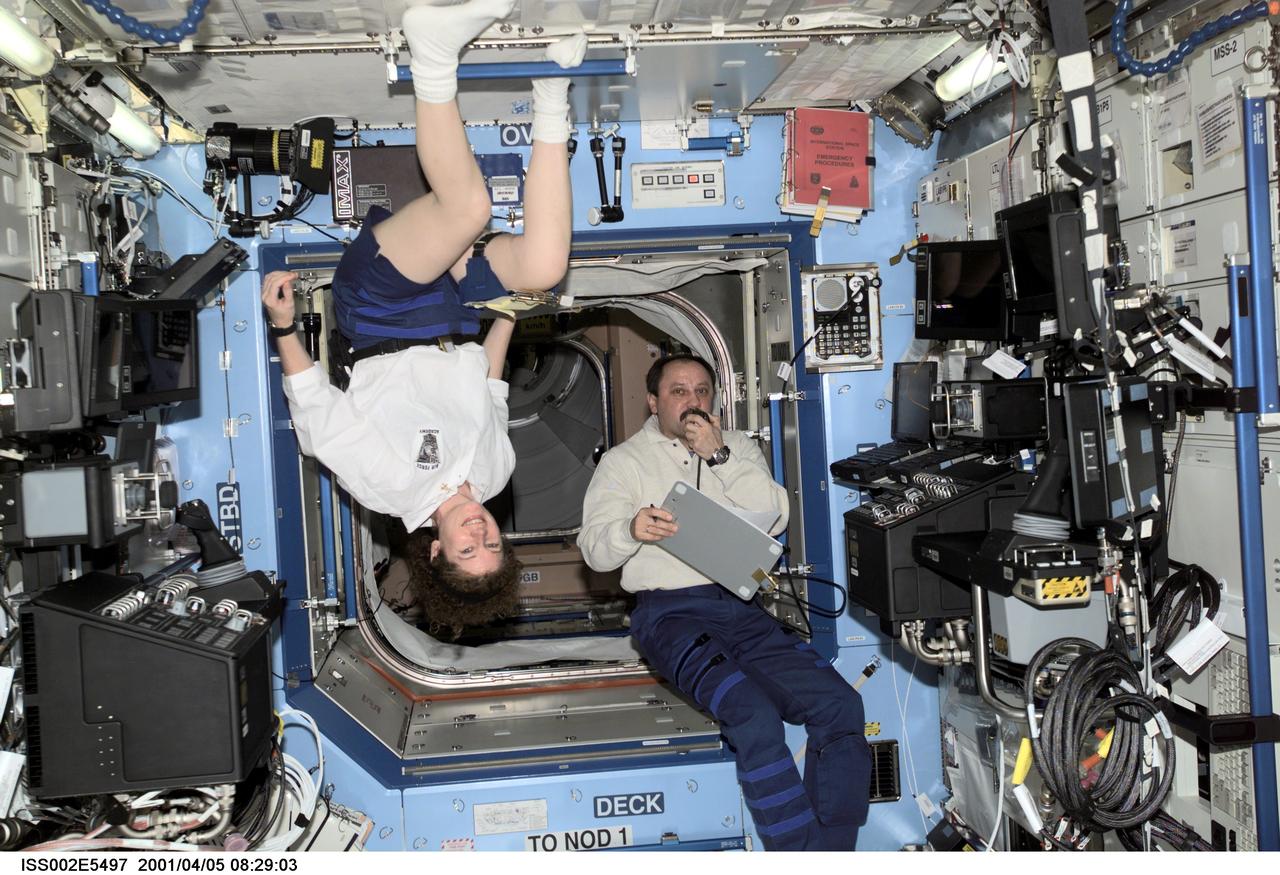
ISS002-E-5497 (05 April 2001) --- Astronaut Susan J. Helms (left), Expedition Two flight engineer, pauses from her work to pose for a photograph while Expedition Two mission commander, cosmonaut Yury V. Usachev, speaks into a microphone aboard the U.S. Laboratory / Destiny module of the International Space Station (ISS). This image was recorded with a digital still camera.

ISS034-E-040247 (5 Feb. 2013) --- In the International Space Station’s Kibo laboratory, NASA astronaut Tom Marshburn, Expedition 34 flight engineer, uses a microphone to talk with students from his native home state. Speaking from the North Carolina Museum of Natural Sciences in Raleigh, the kids asked questions such as what it’s like to eat in space and work in stiff spacesuits.
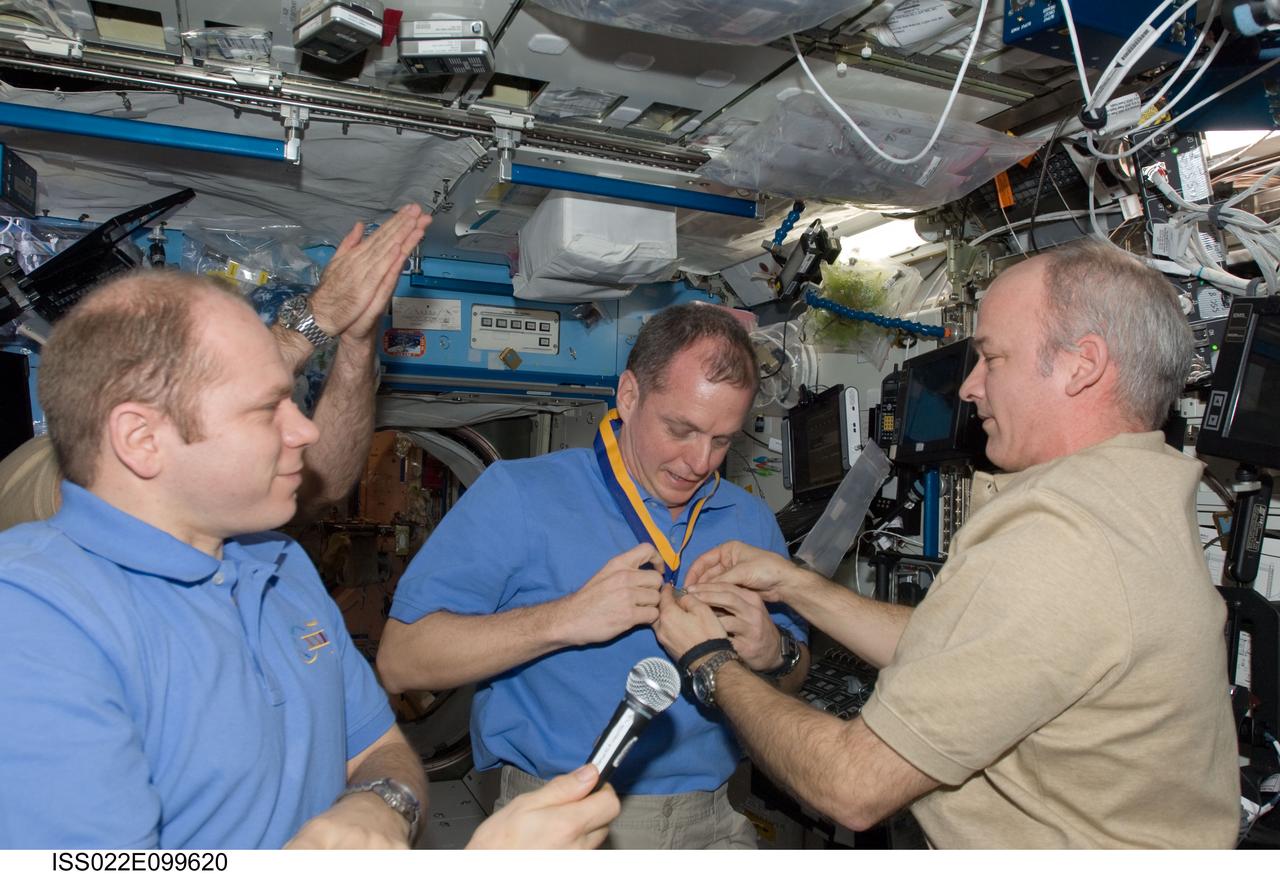
ISS022-E-099620 (17 March 2010) --- NASA astronaut Jeffrey Williams (right), Expedition 22 commander, presents the Army aviator award of St. Michael to fellow Army officer T.J. Creamer (center), Expedition 22/23 flight engineer, prior to the start of the ceremony of Changing-of-Command from Expedition 22 to Expedition 23. Russian cosmonaut Oleg Kotov, Expedition 22 flight engineer and Expedition 23 commander, holds a microphone at left.
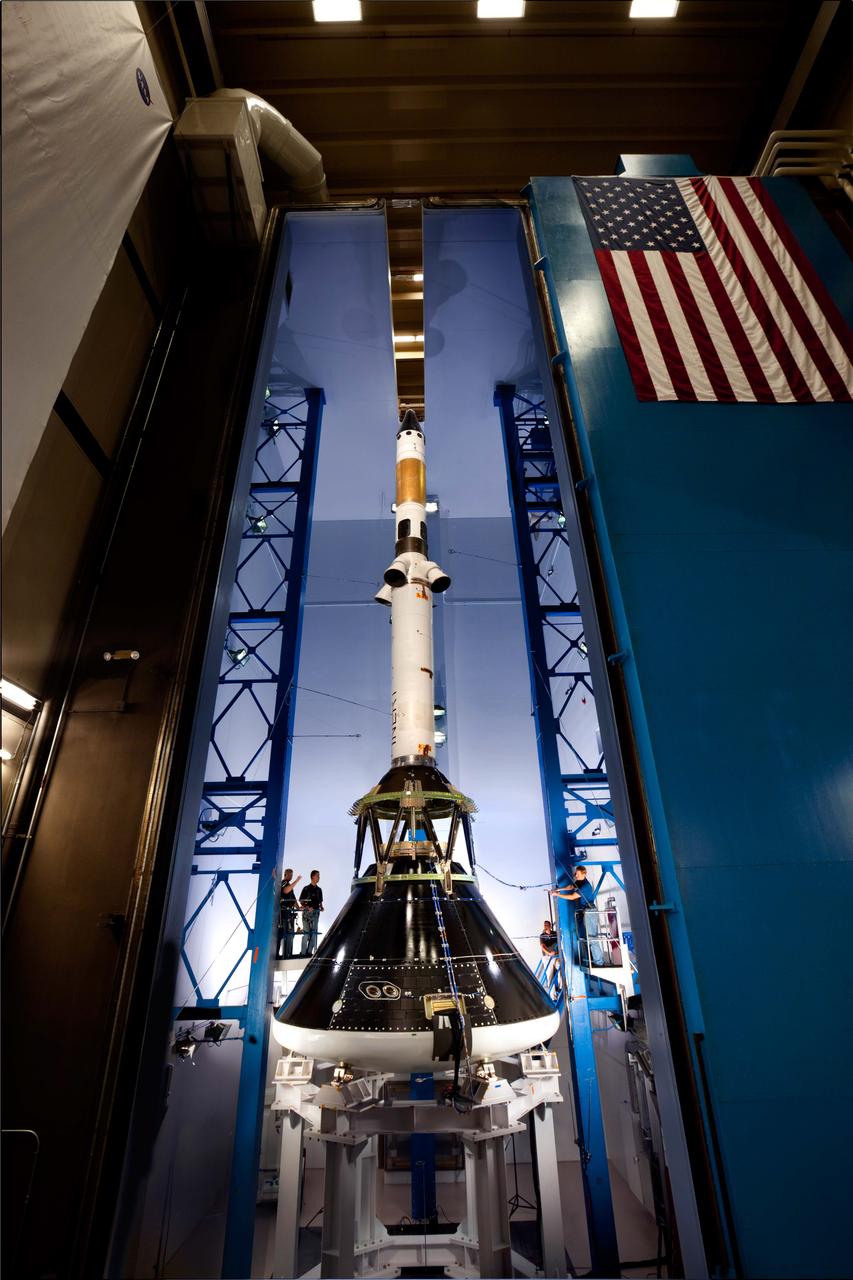
Technicians position microphones around the Orion launch abort system and crew module test articles in preparation for the second round of testing in the acoustic chamber at Lockheed Martin’s facilities near Denver on Aug. 16, 2011. The vehicle was bombarded by acoustic levels of 150 decibels to simulate conditions during launch and abort if necessary. Part of Batch image transfer from Flickr.
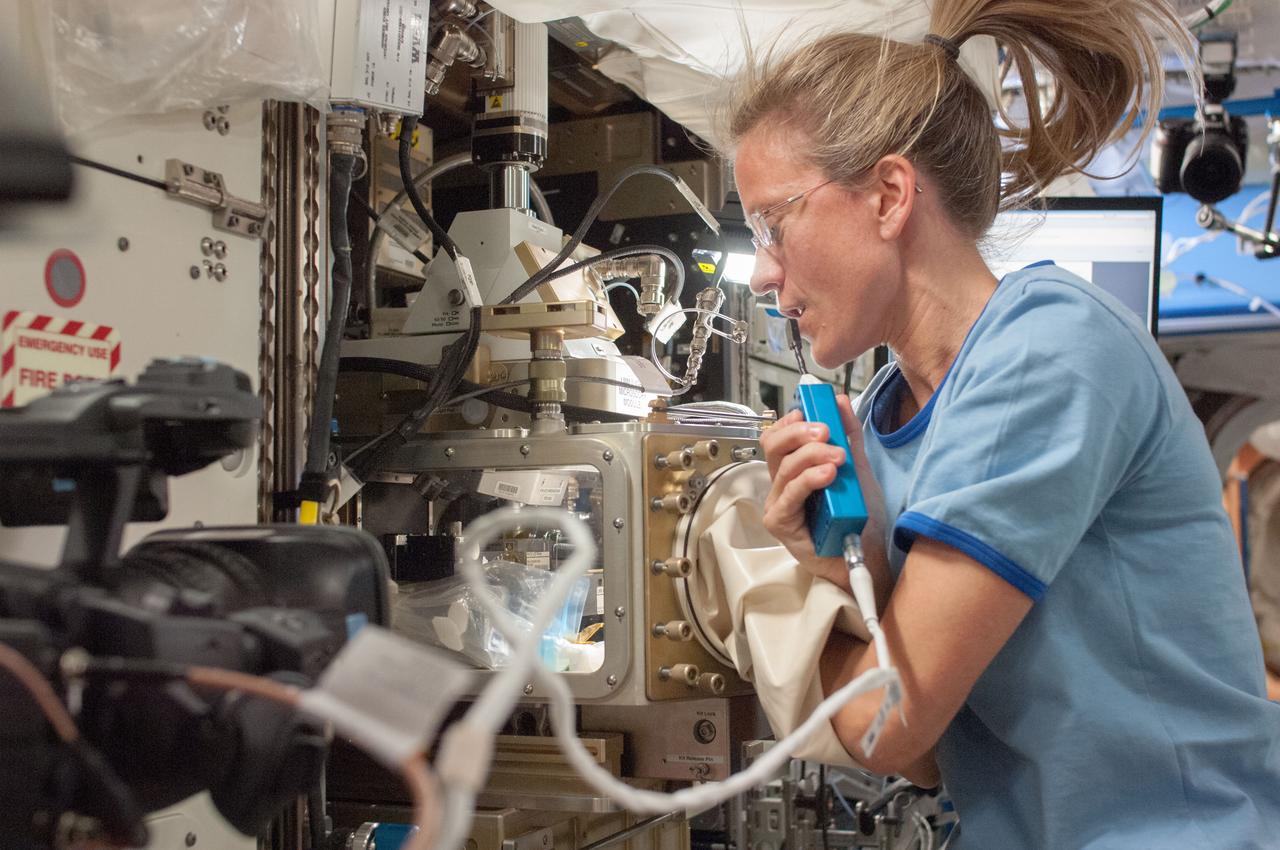
ISS036-E-019830 (24 June 2013) --- In the International Space Station’s Destiny laboratory, NASA astronaut Karen Nyberg, Expedition 36 flight engineer, speaks into a microphone while conducting a session with the Advanced Colloids Experiment (ACE)-1 sample preparation at the Light Microscopy Module (LMM) in the Fluids Integrated Rack / Fluids Combustion Facility (FIR/FCF). ACE-1 is a series of microscopic imaging investigations that uses the microgravity environment to examine flow characteristics and the evolution and ordering effects within a group of colloidal materials.
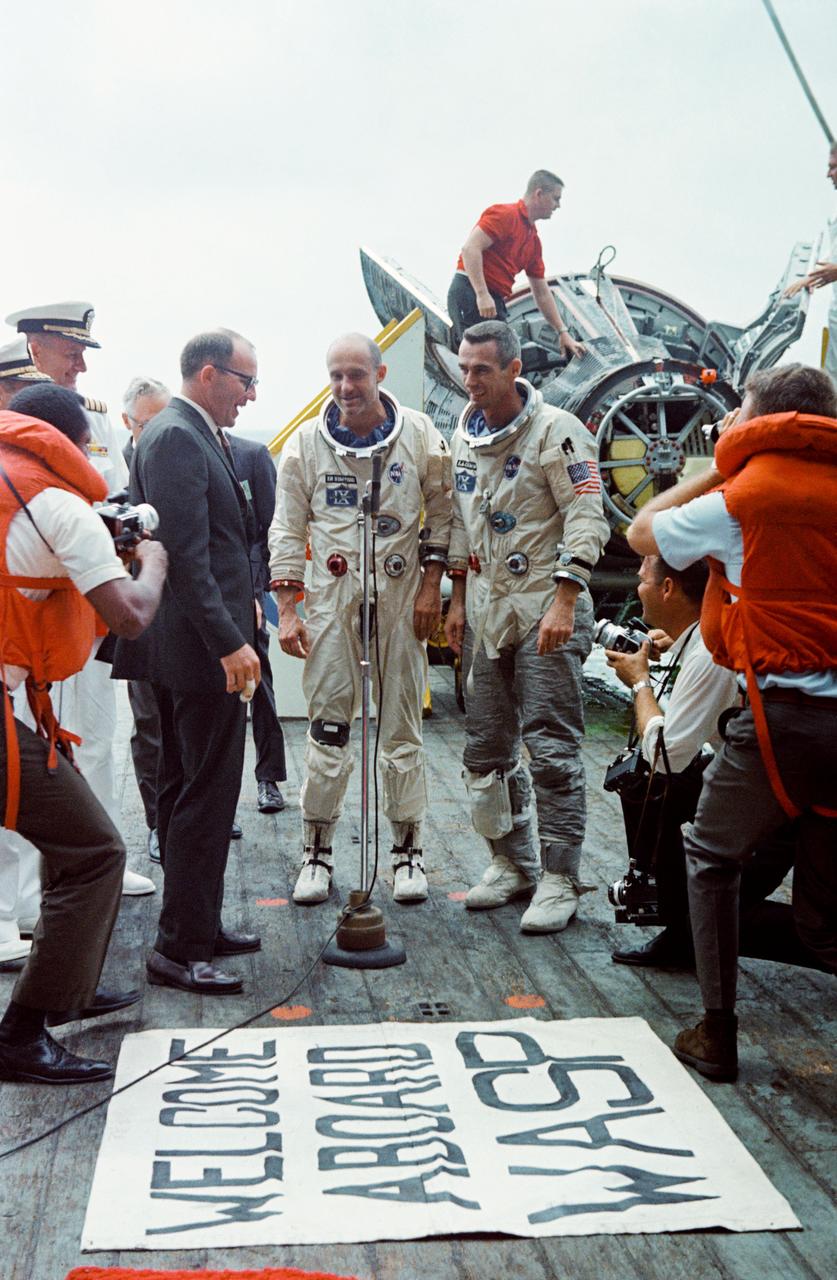
S66-34109 (6 June 1966) --- Astronauts Thomas Stafford and Eugene Cernan (right) receive a warm welcome as they arrive aboard the prime recovery ship, the aircraft carrier USS Wasp. John C. Stonesifer, with the Manned Spacecraft Center's Landing and Recovery Division, stands next to microphone at left. The Gemini-9 spacecraft can be seen in the right background of the view. Photo credit: NASA
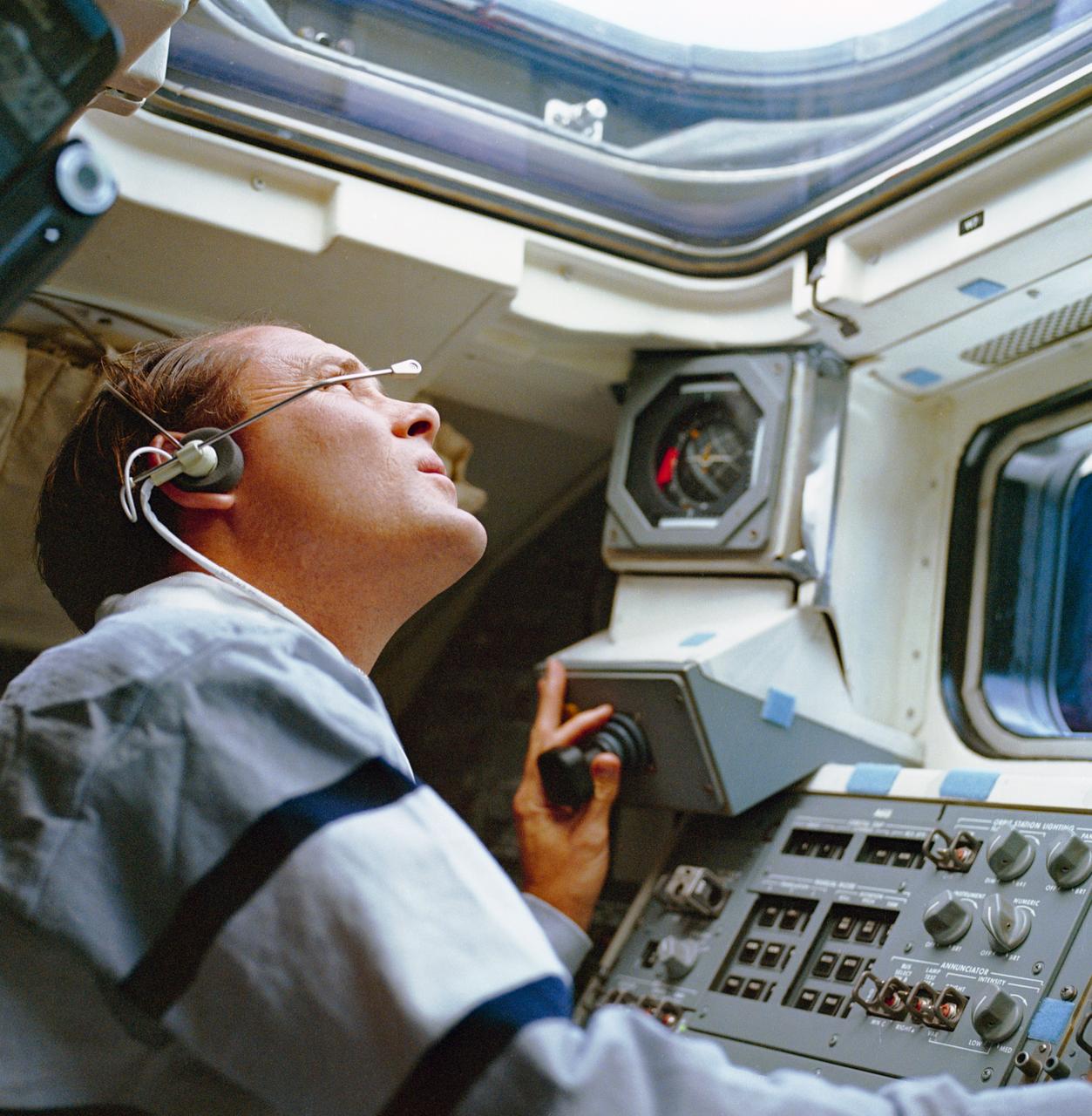
STS033-93-011 (27 Nov 1989) --- Astronaut Manley L. Carter, Jr., STS-33 mission specialist, operates translation hand control (THC) at the aft flight deck on orbit station while peering out overhead window W7. Carter's communications kit assembly headset microphone extends across his face.
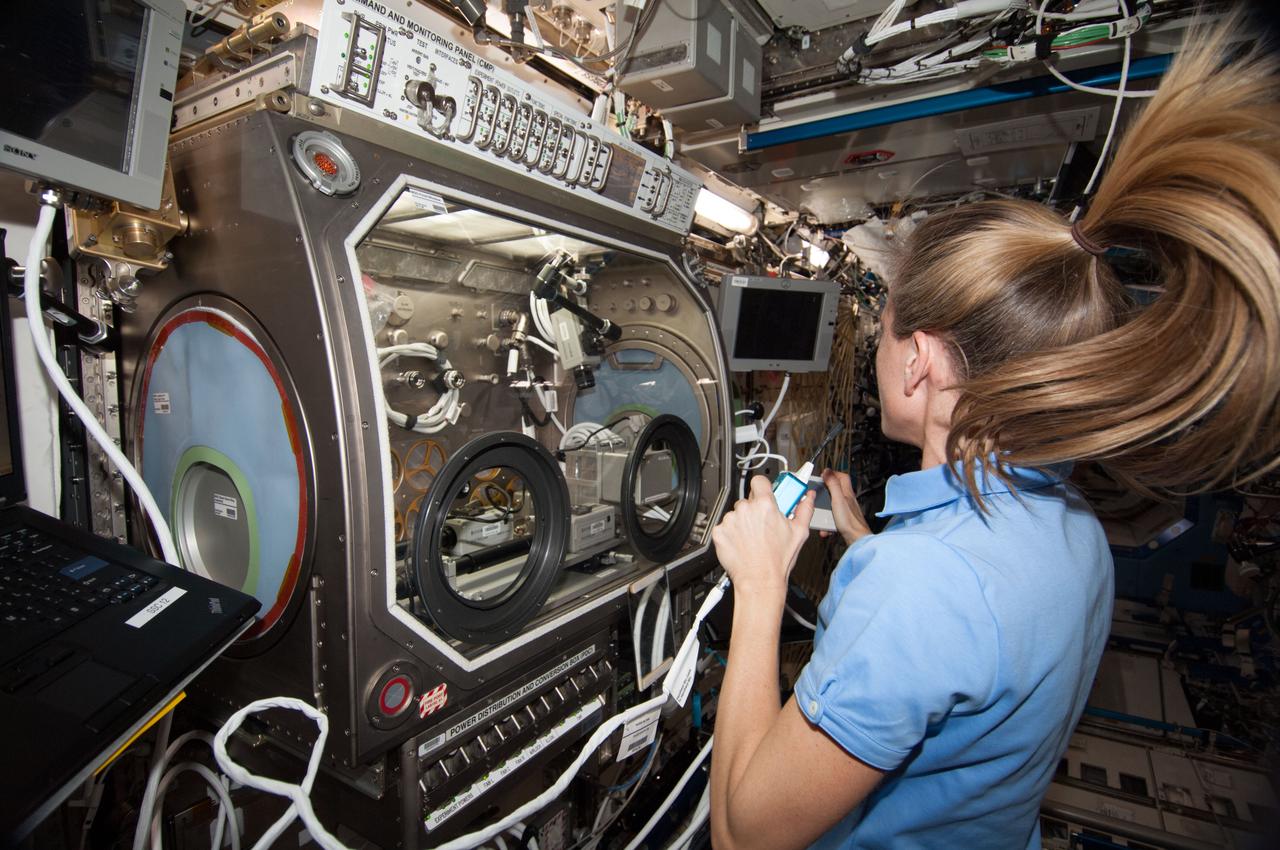
ISS036-E-027145 (1 Aug. 2013) --- NASA astronaut Karen Nyberg, Expedition 36 flight engineer, speaks in a microphone while working with the InSPACE-3 experiment in the Microgravity Science Glovebox (MSG) in the Destiny laboratory of the International Space Station. InSPACE-3 applies different magnetic fields to vials of colloids, or liquids with microscopic particles, and observes how fluids can behave like a solid. Results may improve the strength and design of materials for stronger buildings and bridges.
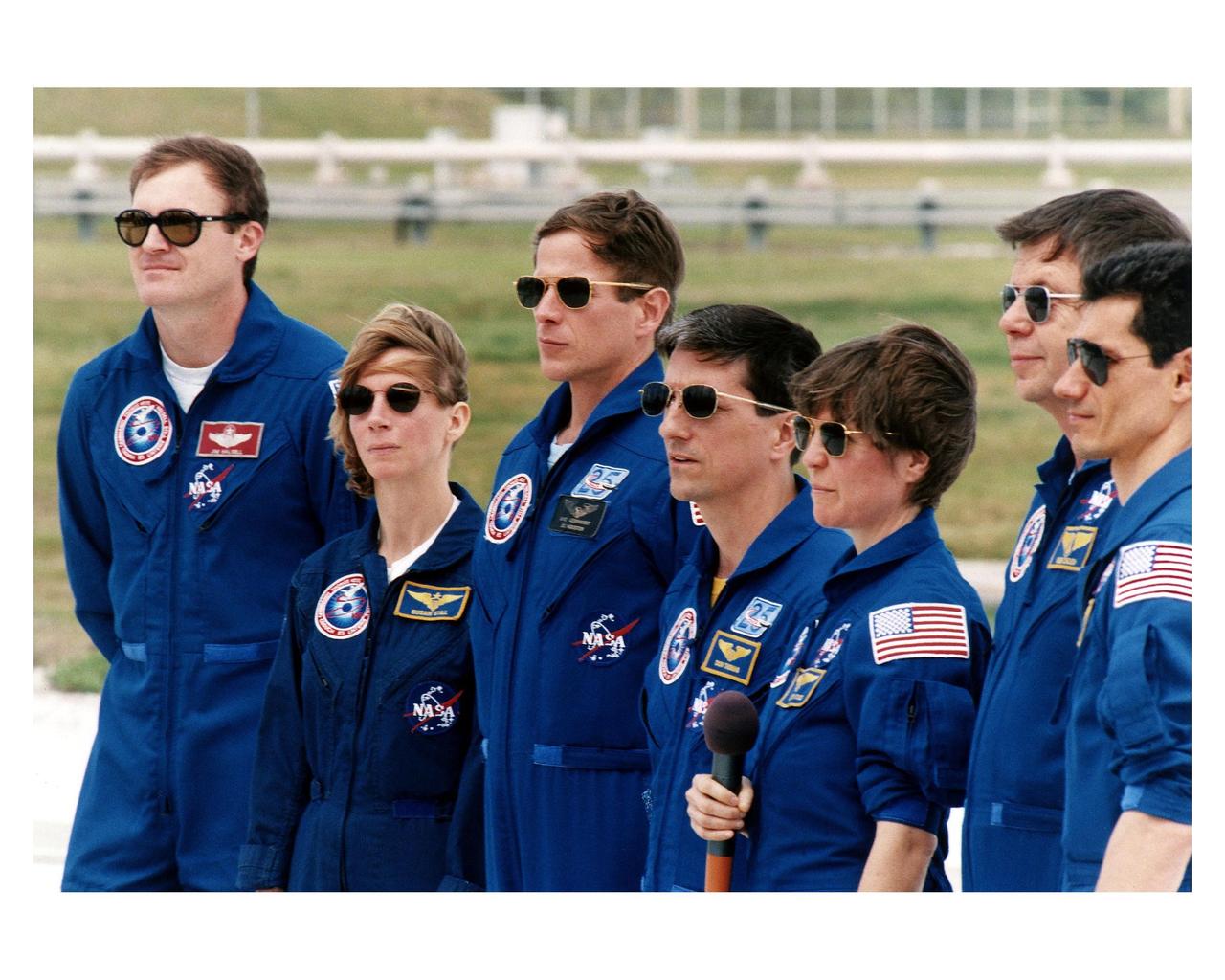
The Space Shuttle Mission STS-83 crew talks to the media at Launch Complex 39A during the crew's <a href="http://www-pao.ksc.nasa.gov/kscpao/release/1997/40-97.htm">Terminal Countdown Demonstration Test (TCDT).</a> From left to right, they are Mission Commander James D. Halsell; Pilot Susan L. Still; Mission Specialists Michael L. Gernhardt, Donald Thomas, and Janice E. Voss (holding microphone); and Payload Specialists Roger K. Crouch and Gregory T. Linteris

CAPE CANAVERAL, Fla. -- The STS-122 crew returns to NASA's Kennedy Space Center for a presentation in the Training Auditorium. At center, Mission Specialist Rex Walheim (with microphone) shares a personal story about his experiences. The other crew members are (from left) Commander Steven Frick, Pilot Alan Poindexter, Mission Specialists Leland Melvin, Hans Schlegel and Stanley Love. Photo credit: NASA/Cory Huston
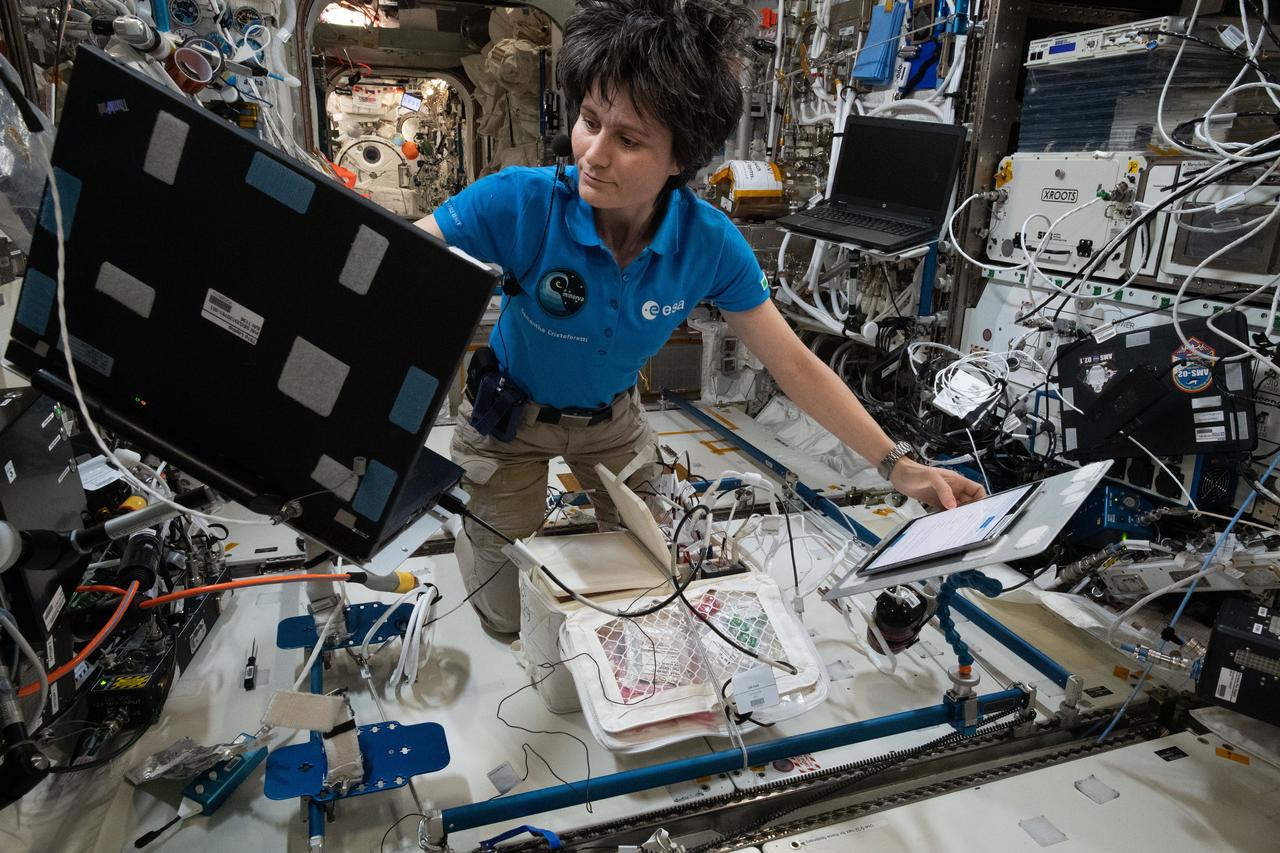
iss067e183618_alt (July 8, 2022) --- Expedition 67 Flight Engineer and ESA (European Space Agency) astronaut Samantha Cristoforetti wears a microphone on her right shoulder for the Acoustic Diagnostics study. The investigation explores whether equipment noise levels and the microgravity environment may create possible adverse effects on astronaut hearing. The acoustic data will help researchers understand the International Space Station’s sound environment and may inform countermeasures to protect crew hearing.
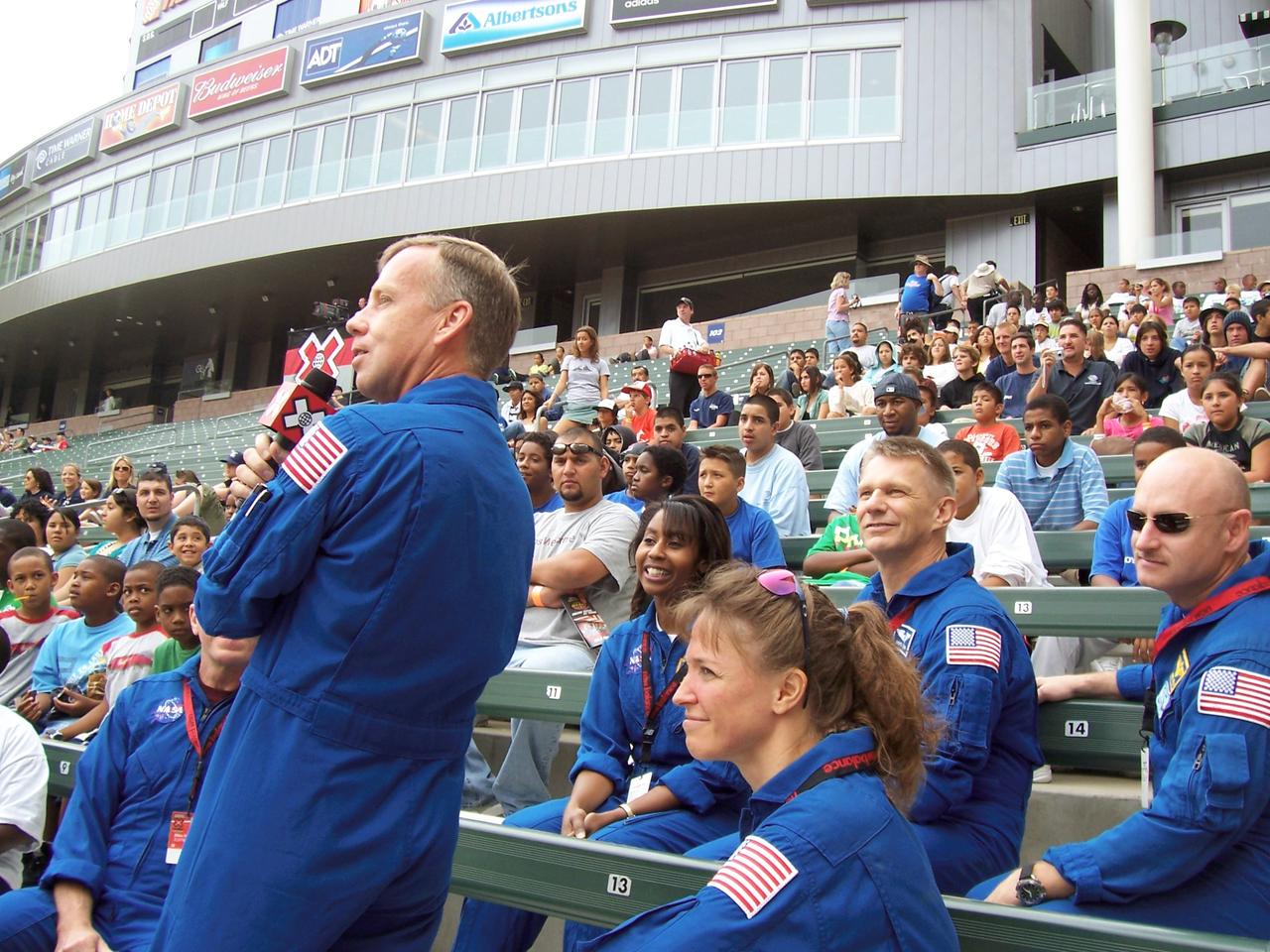
JSC2006-E-32816 (3 August 2006) --- The crew of STS-121 attended opening day of the 12th "X Games" in Los Angeles Aug. 3, discussing their recent mission to the International Space Station with students and athletes. Astronaut Steven W. Lindsey (with microphone), commander, and his crew take time out of the question and answer session to watch "Rally Car" practice. The crew's visit also included presentations at the Jet Propulsion Laboratory and the California Science Center.