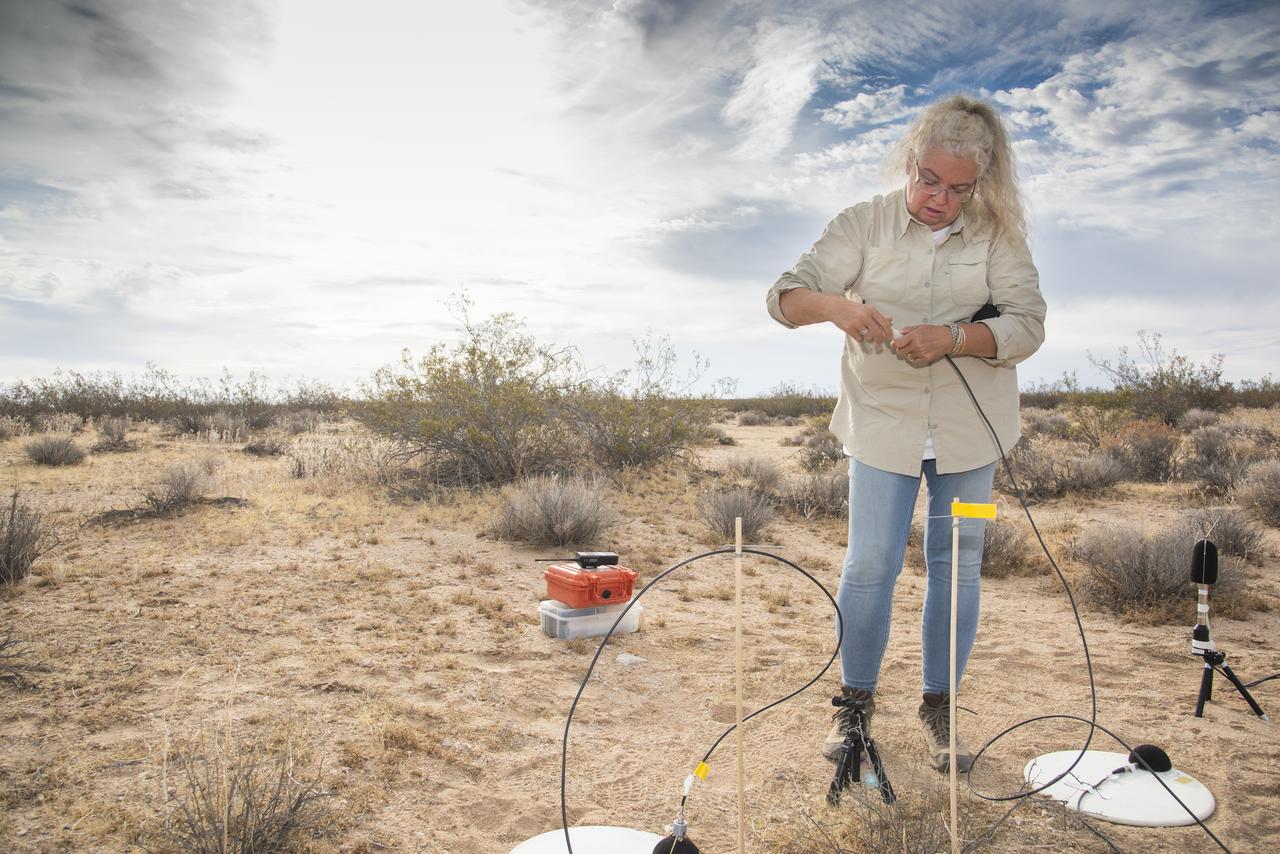
Juliet Page, a physical scientist with the Volpe National Transportation Systems Center, calibrates a microphone station during the CarpetDIEM flight series. The array featured high-fidelity microphones arranged in several configurations, giving researchers the ability to obtain accurate sound data and assess the loudness of the sonic booms, just as they will measure the quiet sonic thumps from the X-59.
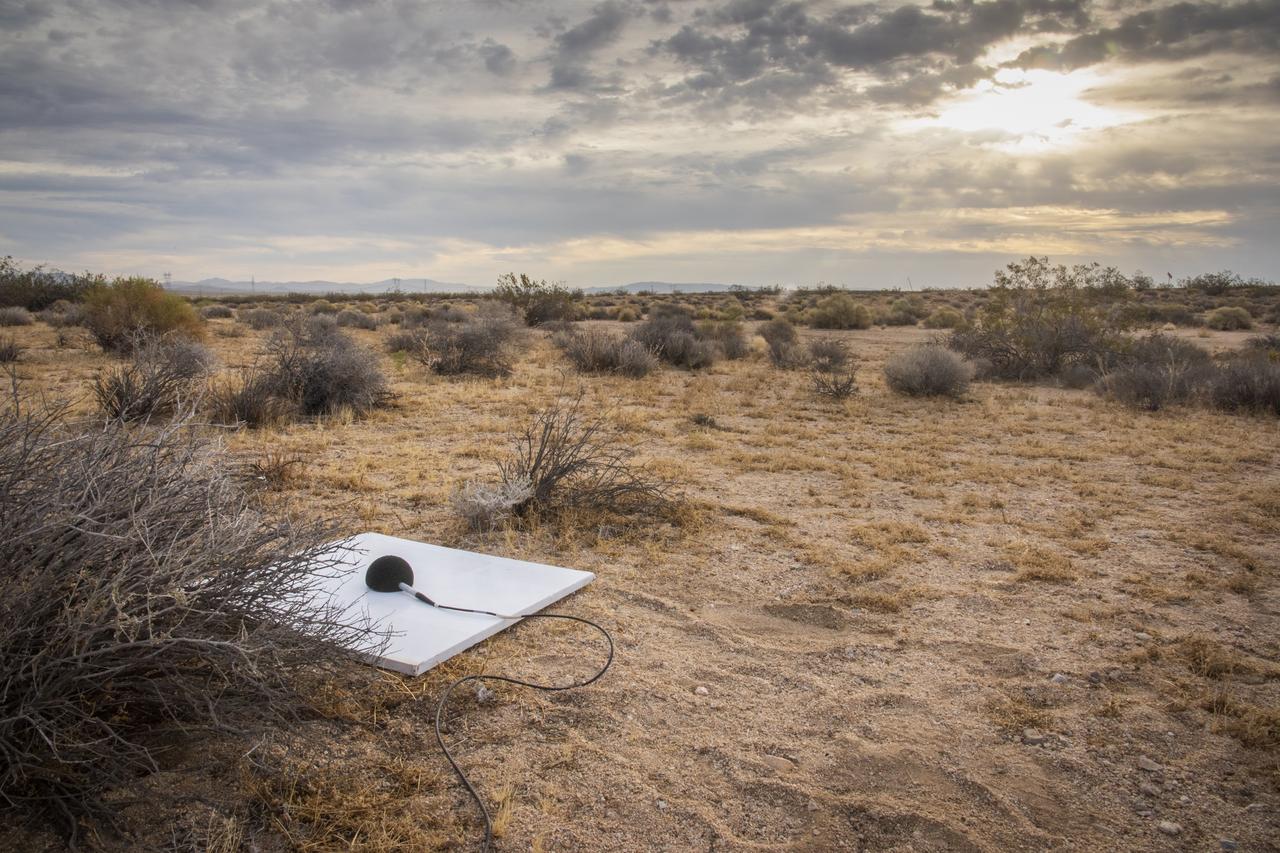
One of multiple microphone stations used in the CarpetDIEM flight series, which gave researchers valuable lessons learned in preparations to deploy a similar array for the quiet supersonic X-59. Prior to community overflights, X-59 will undergo an acoustic validation phase, during which NASA will deploy the array of specially-configured microphones to measure the X-59’s thumps, in order to verify that they are as quiet as predicted.
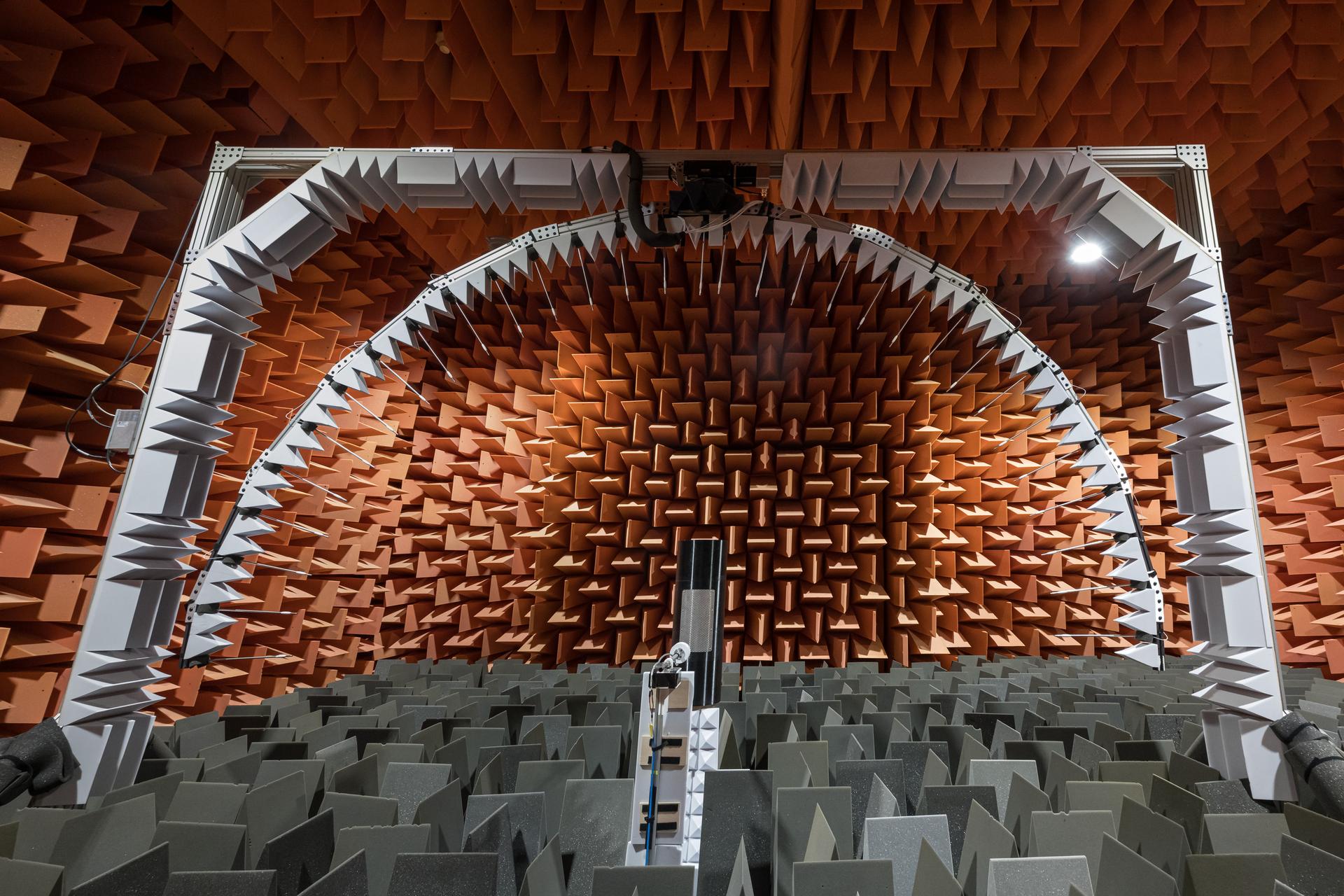
Scattering of Acoustically Lined Simplified Airframes (SALSA) Test with High Resolution Traversing Microphone Array (HiRTMA) in Structural Acoustics Loads and Transmission Facility (SALT) in Building 1208.
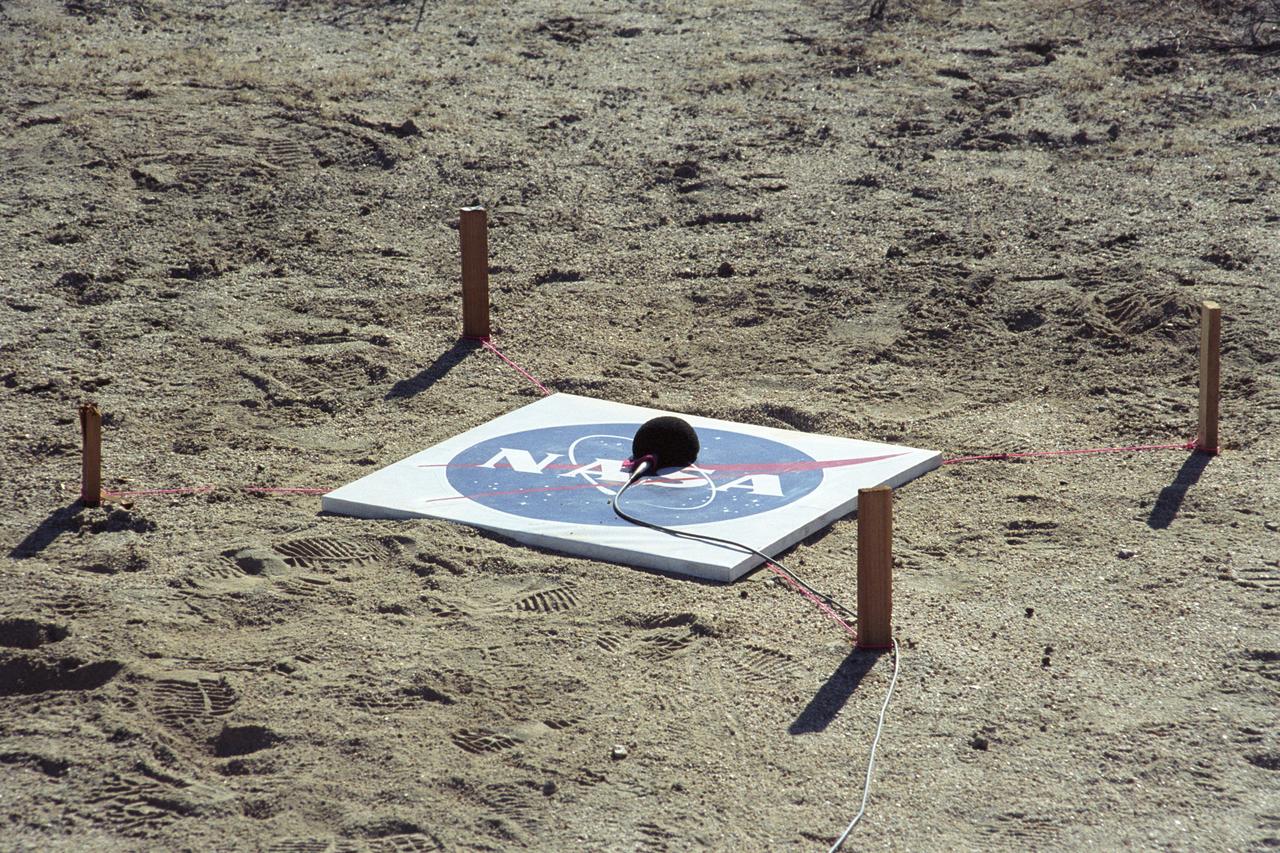
One of many microphones arrayed under the path of the F-5E SSBE (Shaped Sonic Boom Experiment) aircraft to record sonic booms. The SSBE (Shaped Sonic Boom Experiment) was formerly known as the Shaped Sonic Boom Demonstration, or SSBD, and is part of DARPA's Quiet Supersonic Platform (QSP) program. On August 27, 2003, the F-5E SSBD aircraft demonstrated a method to reduce the intensity of sonic booms.
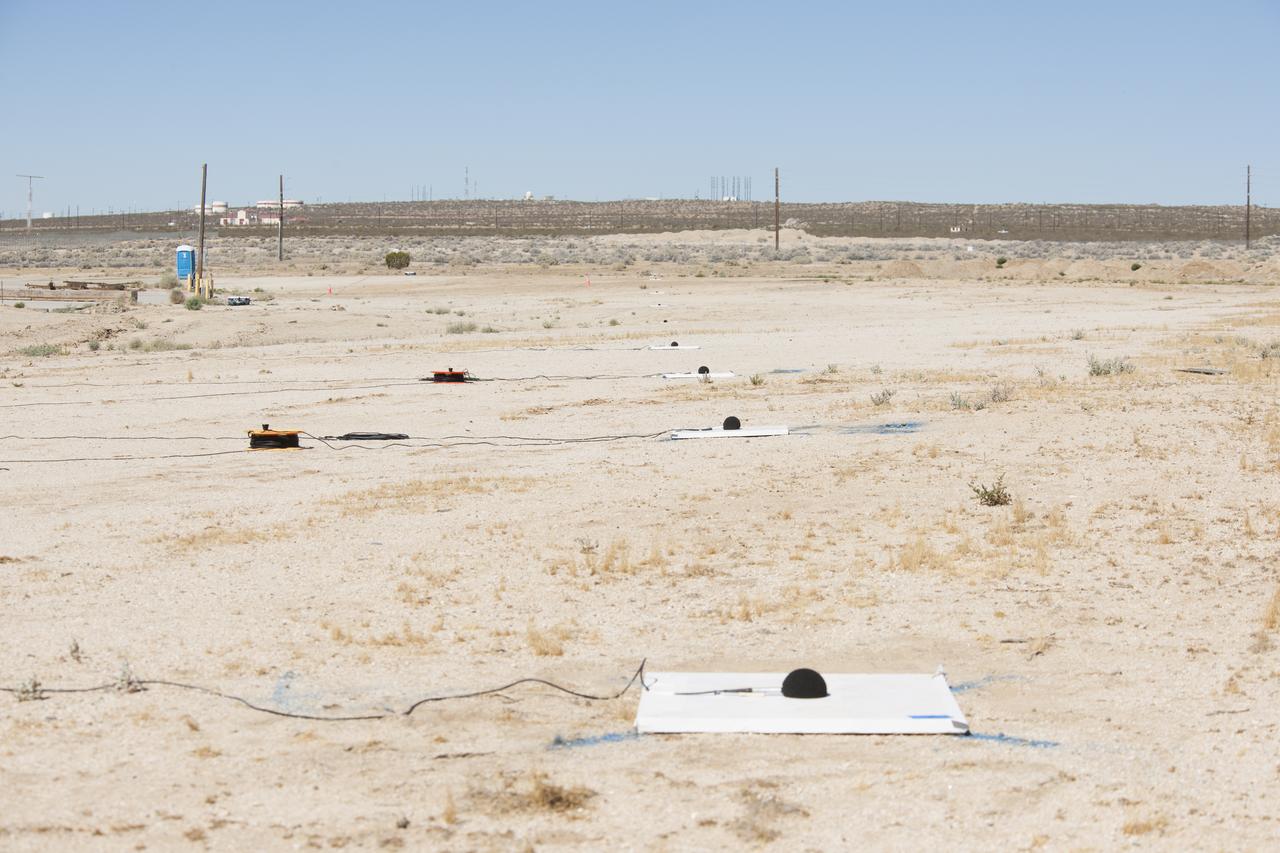
One of three microphone arrays positioned strategically along the ground at Edwards Air Force Base, California, sits ready to collect sound signatures from sonic booms created by a NASA F/A-18 during the SonicBAT flight series. The arrays collected the sound signatures of booms that had traveled through atmospheric turbulence before reaching the ground.
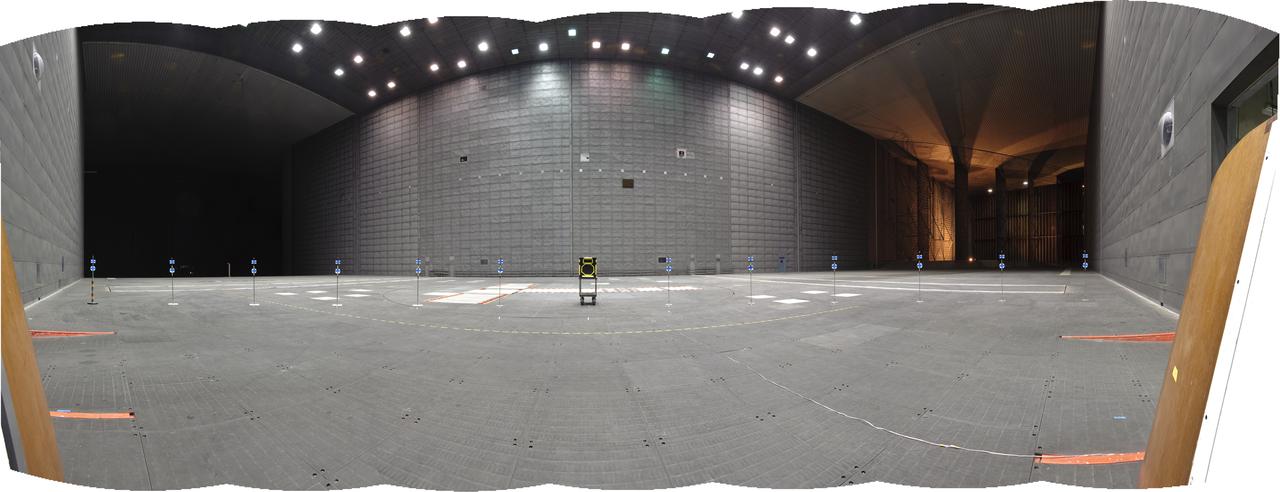
National Full Scale Aerodynamic Complex (NFAC) located at the NASA Ames Research Center 80x20ft. wind tunnel microphone array background noise test
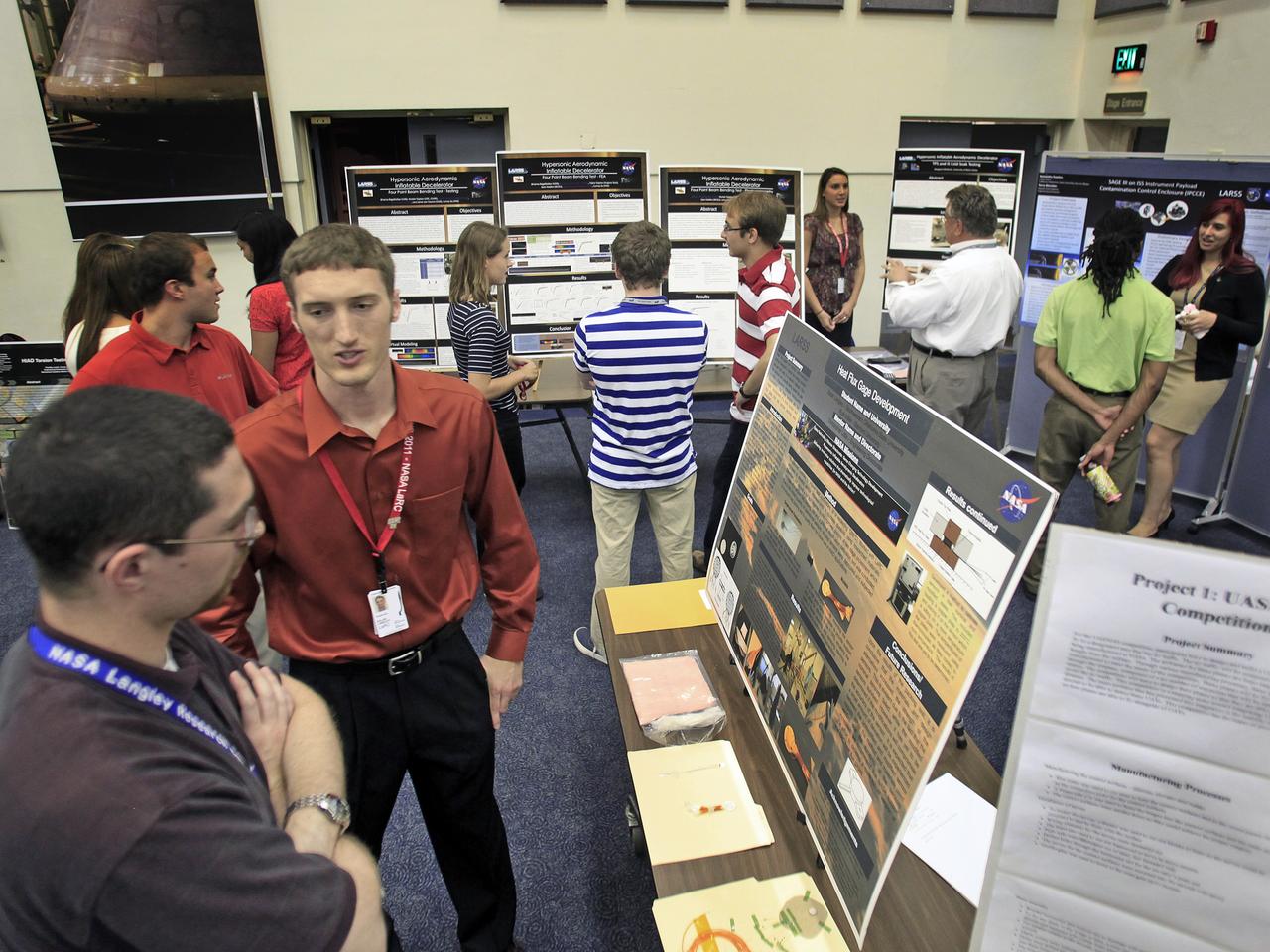
250 students participated in the Langley Aerospace Research Summer Scholars (LARSS) Presentations focused on 3D modeling of STARBUKS calibration components in the National Transonic Facility, hypersonic aerodynamic inflatable decelerator, and optimization of a microphone-based array for flight testing. Reid Center LaRC Hampton, VA
250 students participated in the Langley Aerospace Research Summer Scholars (LARSS) Presentations focused on 3D modeling of STARBUKS calibration components in the National Transonic Facility, hypersonic aerodynamic inflatable decelerator, and optimization of a microphone-based array for flight testing. Reid Center LaRC Hampton, VA
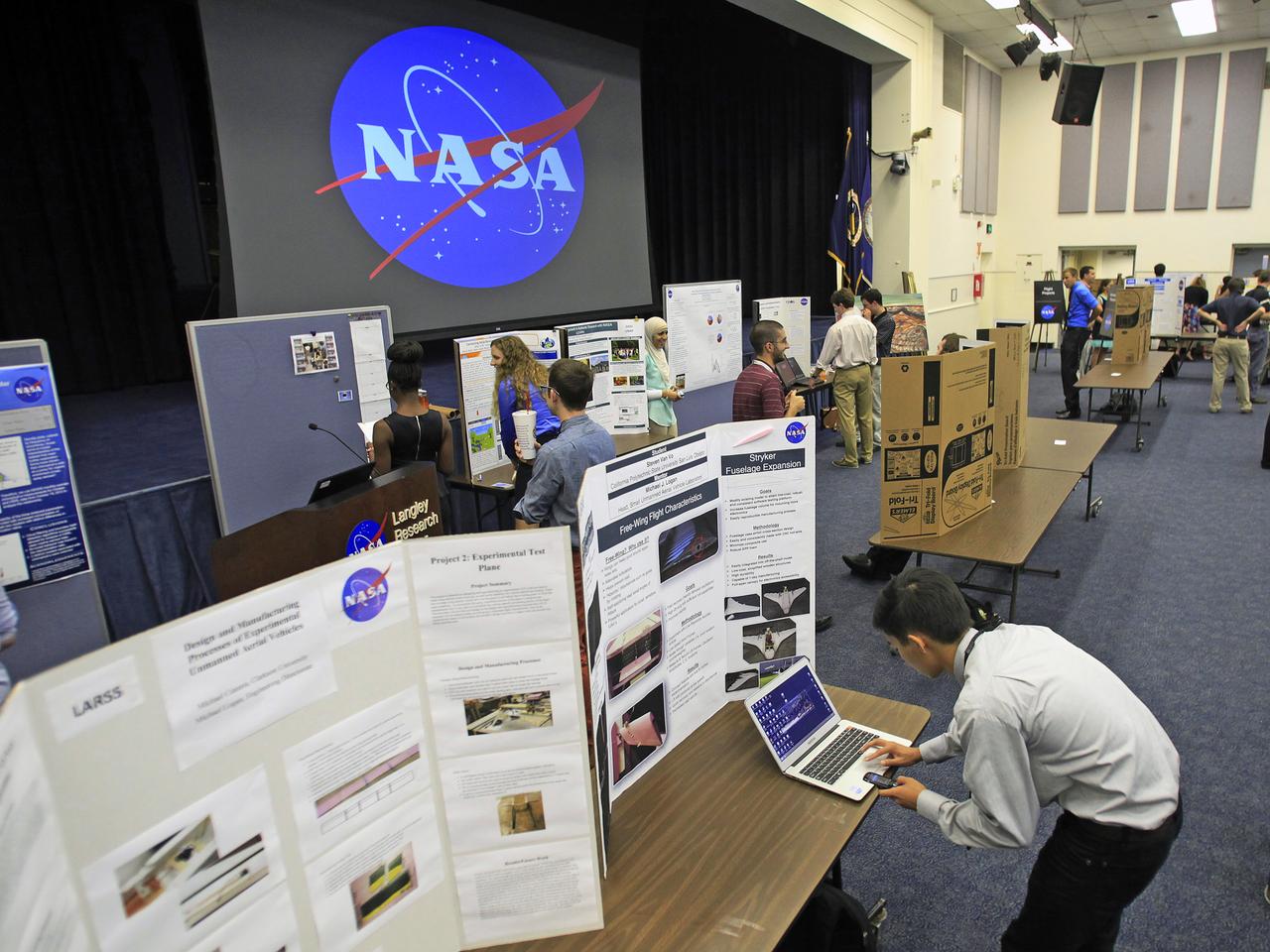
250 students participated in the Langley Aerospace Research Summer Scholars (LARSS) Presentations focused on 3D modeling of STARBUKS calibration components in the National Transonic Facility, hypersonic aerodynamic inflatable decelerator, and optimization of a microphone-based array for flight testing. Reid Center LaRC Hampton, VA
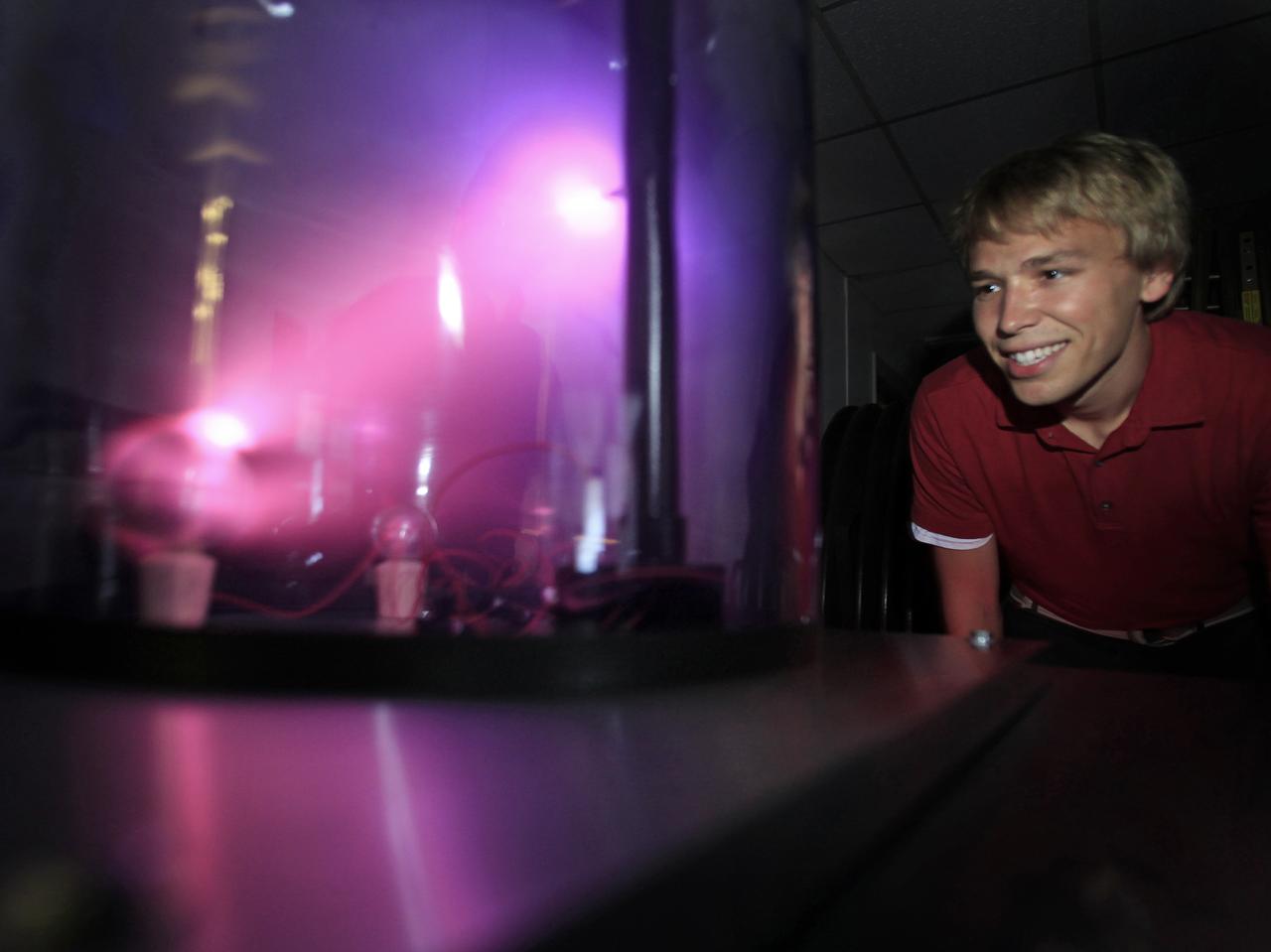
250 students participated in the Langley Aerospace Research Summer Scholars (LARSS) Presentations focused on 3D modeling of STARBUKS calibration components in the National Transonic Facility, hypersonic aerodynamic inflatable decelerator, and optimization of a microphone-based array for flight testing. Reid Center LaRC Hampton, VA
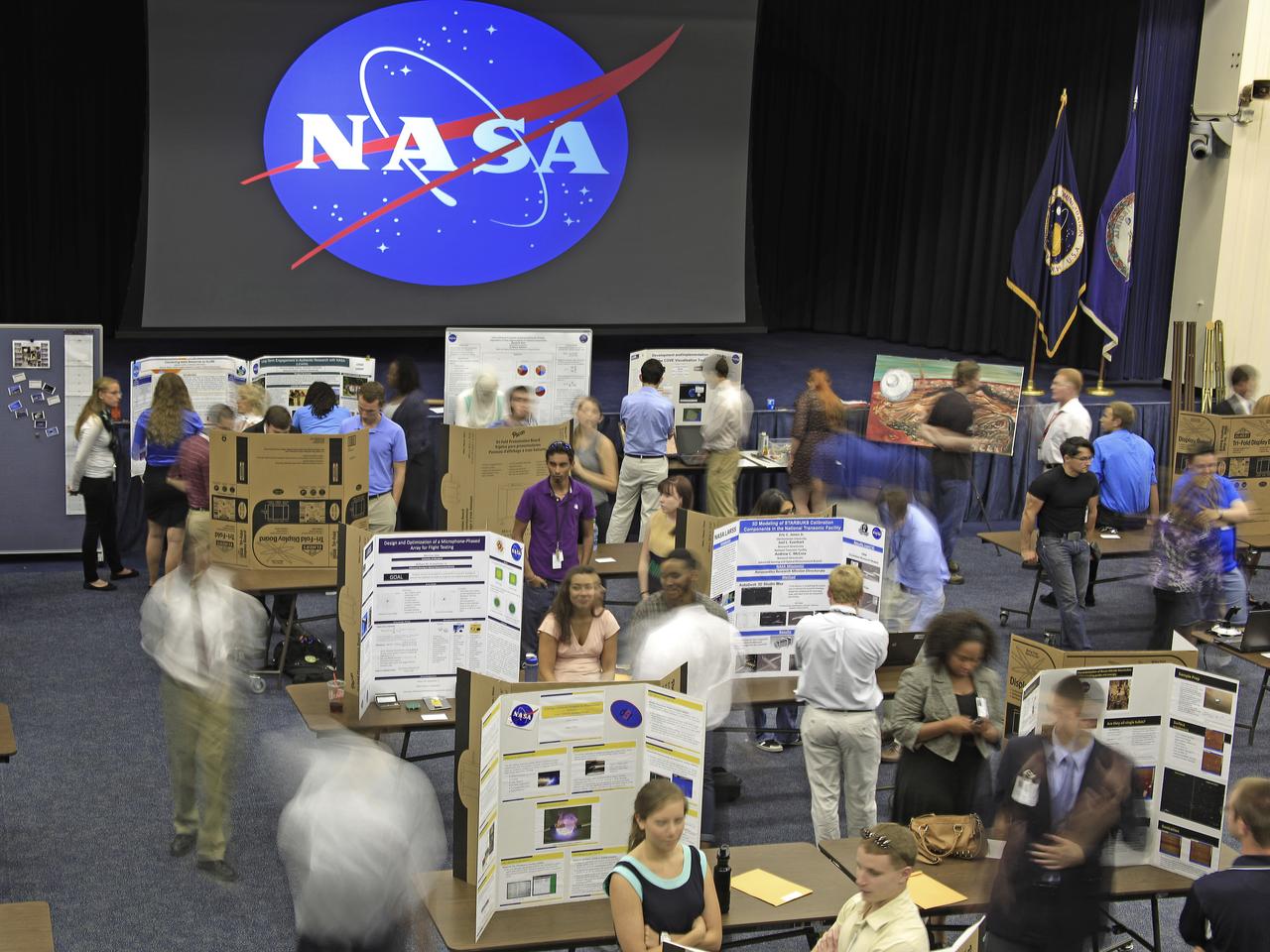
250 students participated in the Langley Aerospace Research Summer Scholars (LARSS) Presentations focused on 3D modeling of STARBUKS calibration components in the National Transonic Facility, hypersonic aerodynamic inflatable decelerator, and optimization of a microphone-based array for flight testing. Reid Center LaRC Hampton, VA
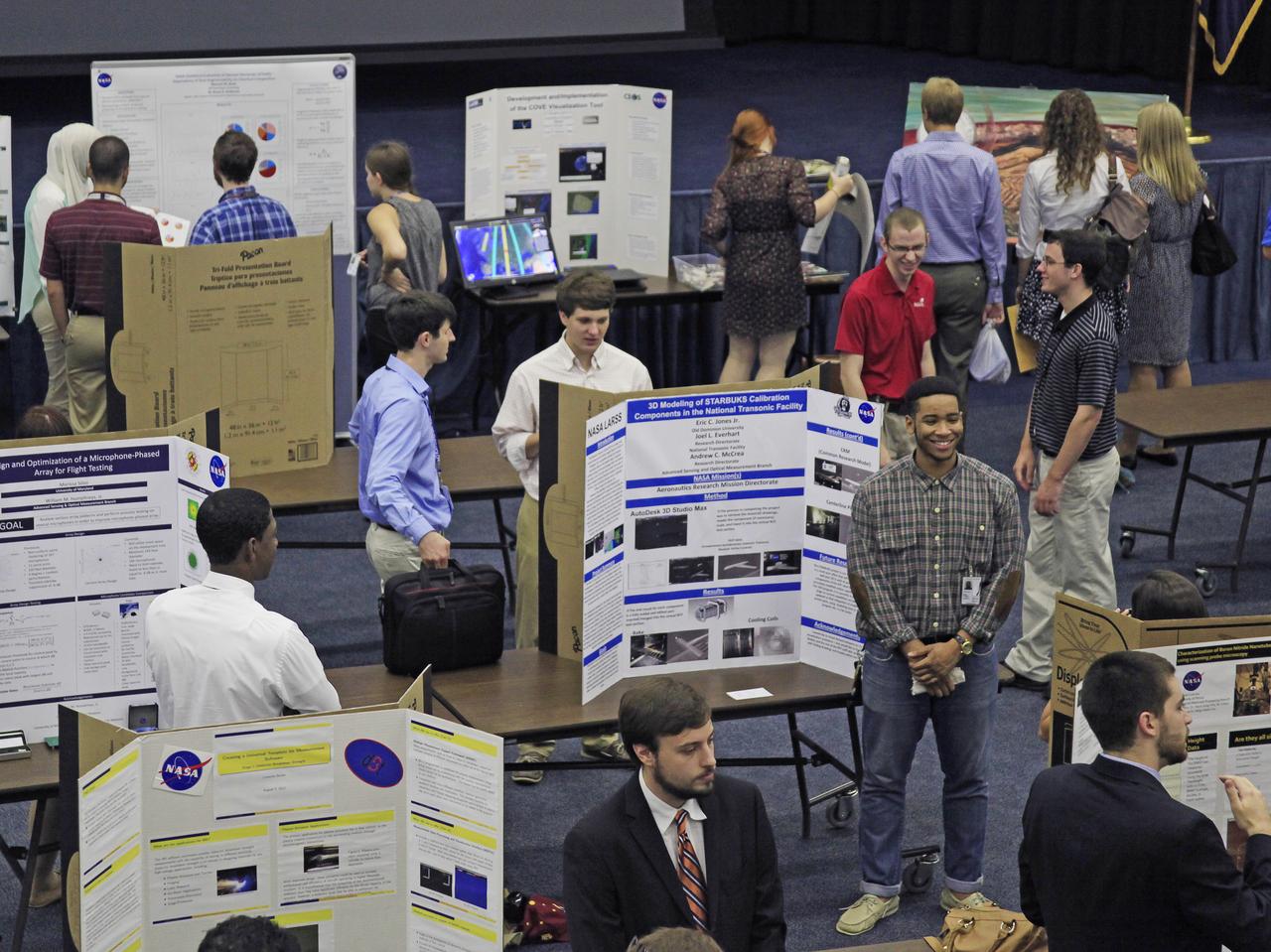
250 students participated in the Langley Aerospace Research Summer Scholars (LARSS) Presentations focused on 3D modeling of STARBUKS calibration components in the National Transonic Facility, hypersonic aerodynamic inflatable decelerator, and optimization of a microphone-based array for flight testing. Reid Center LaRC Hampton, VA
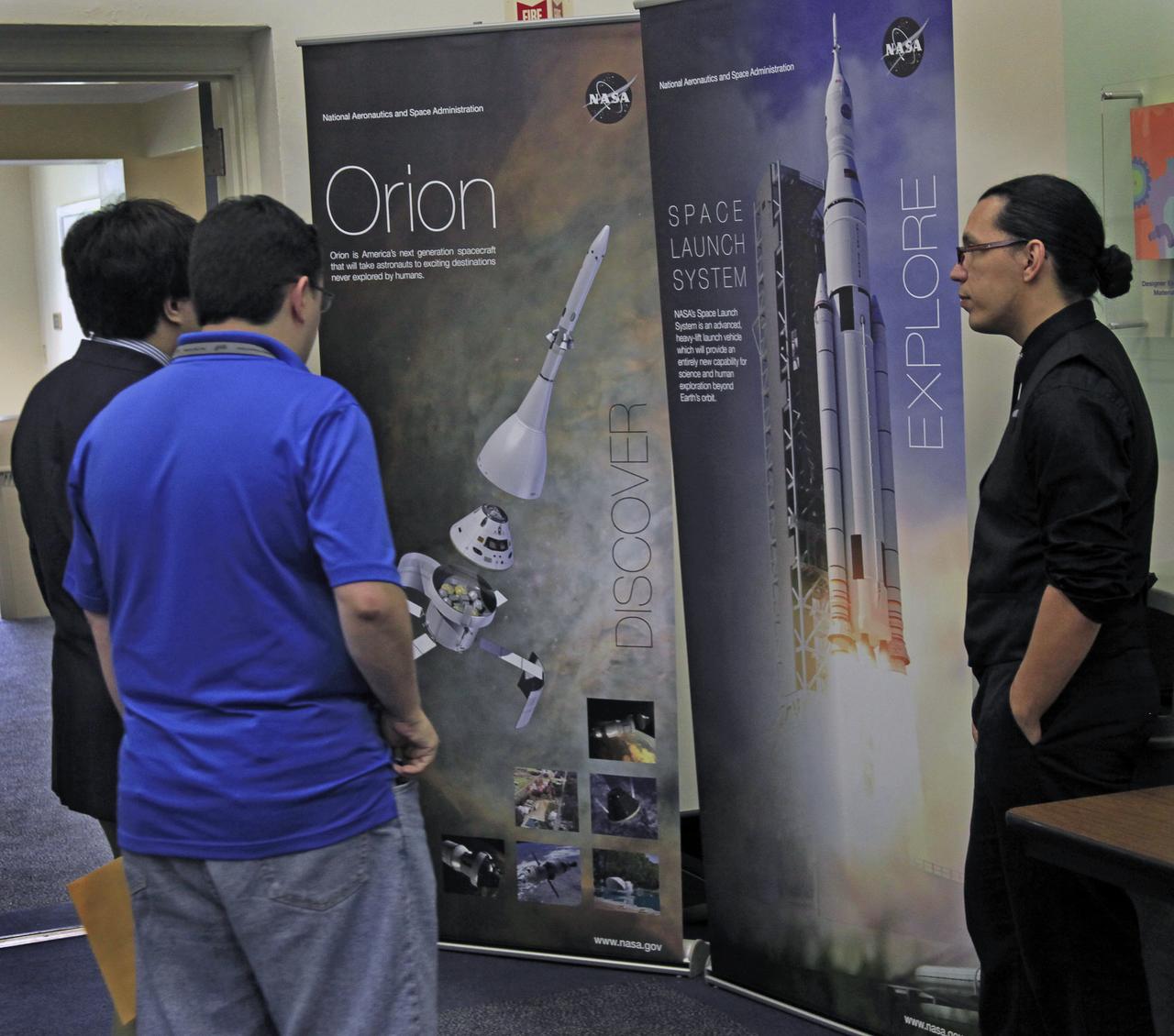
250 students participated in the Langley Aerospace Research Summer Scholars (LARSS) Presentations focused on 3D modeling of STARBUKS calibration components in the National Transonic Facility, hypersonic aerodynamic inflatable decelerator, and optimization of a microphone-based array for flight testing. Reid Center LaRC Hampton, VA
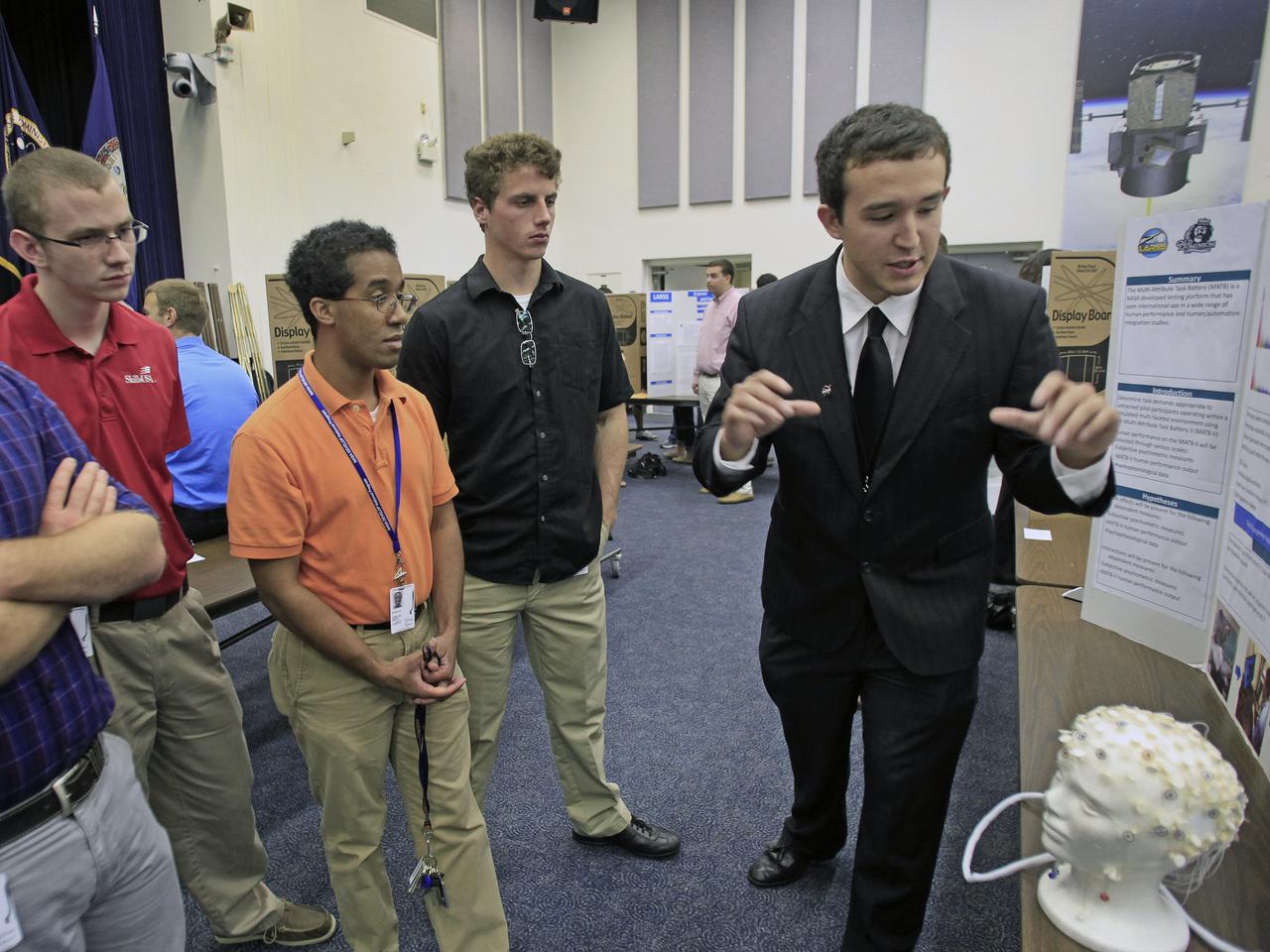
250 students participated in the Langley Aerospace Research Summer Scholars (LARSS) Presentations focused on 3D modeling of STARBUKS calibration components in the National Transonic Facility, hypersonic aerodynamic inflatable decelerator, and optimization of a microphone-based array for flight testing. Reid Center LaRC Hampton, VA
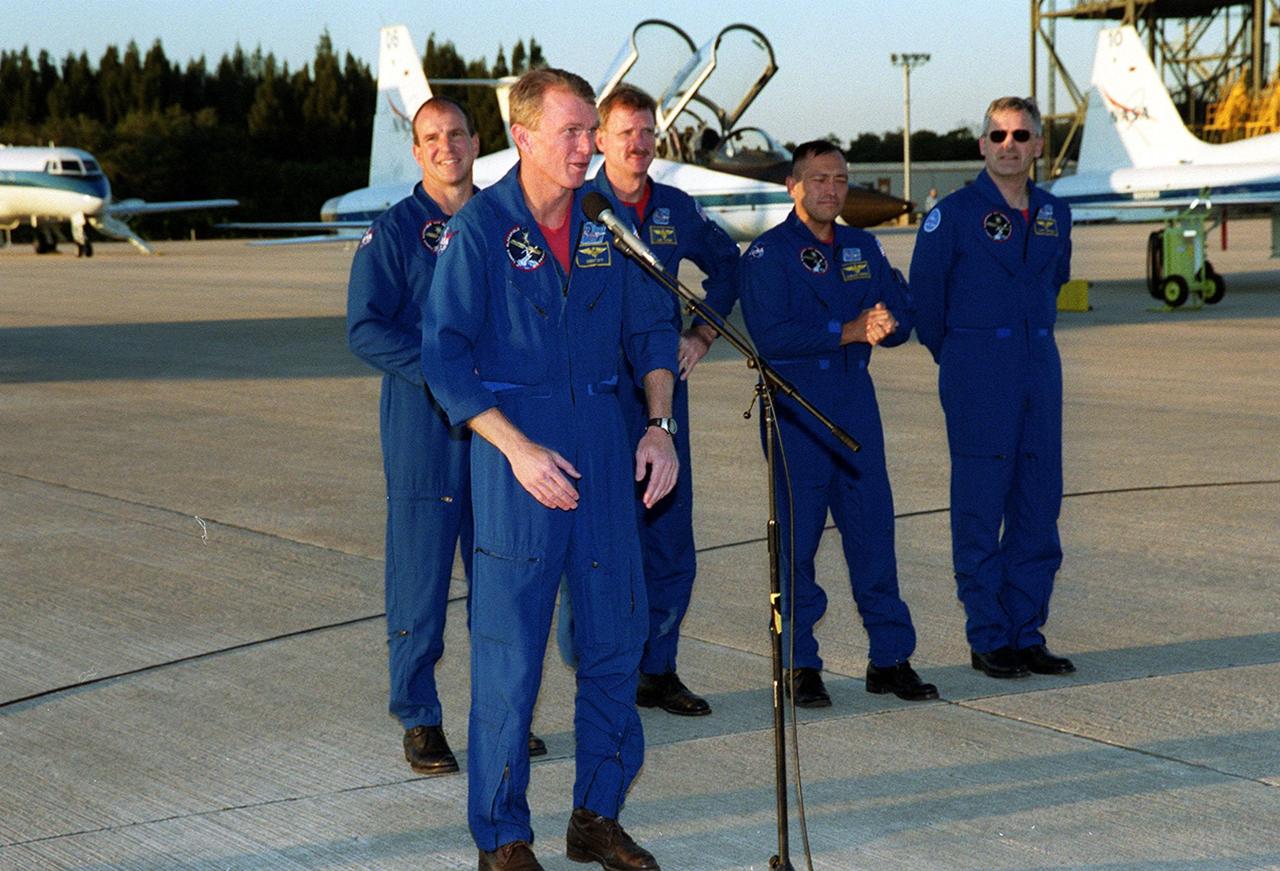
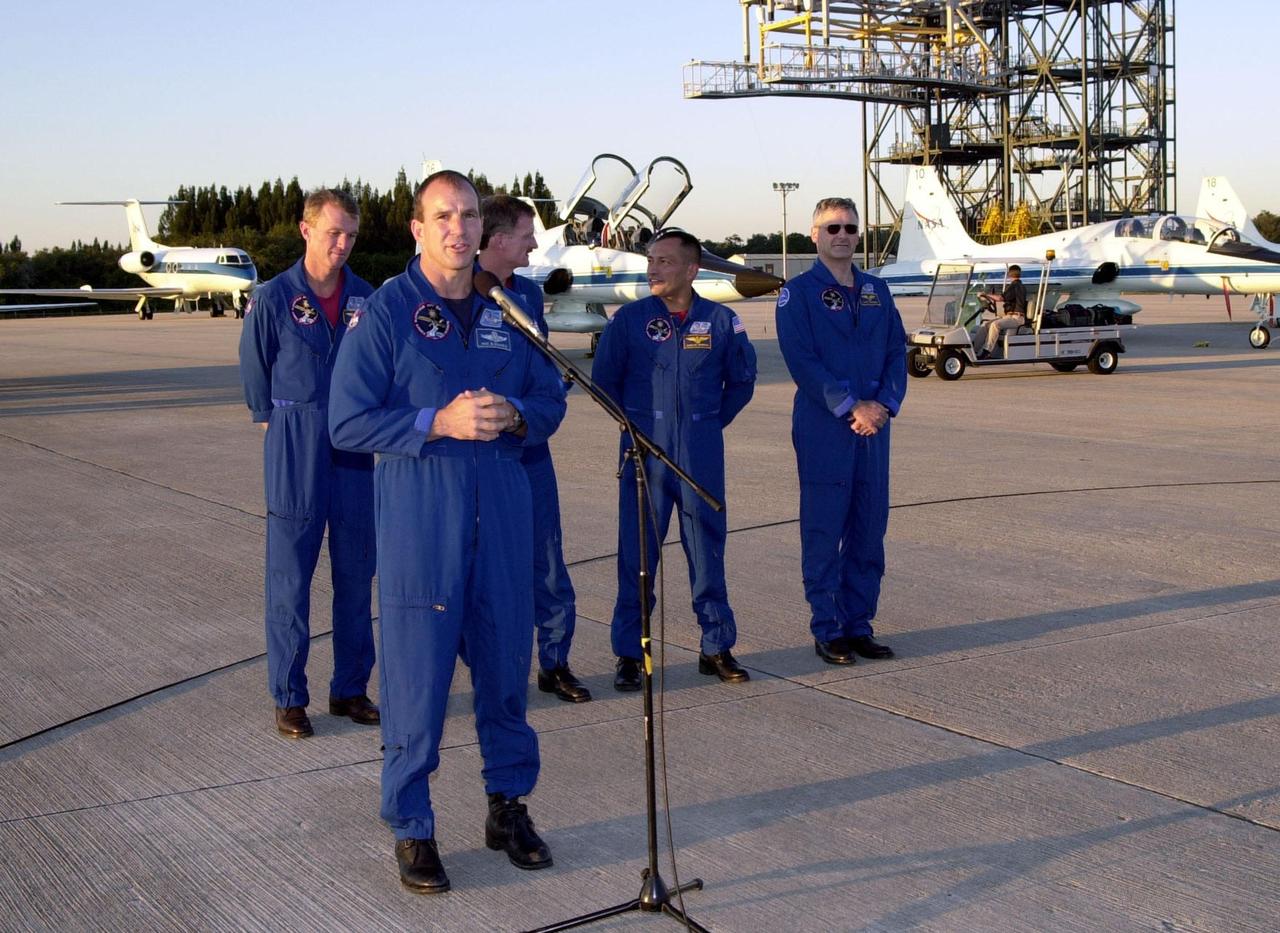
After arriving at the Shuttle Landing Facility, the STS-97 crew gather to address the media. At the microphone, Commander Brent Jett praises the efforts of the KSC workers to get ready for the launch. Behind Jett are Pilot Michael Bloomfield and Mission Specialists Joseph Tanner, Carlos Noriega and Marc Garneau, who is with the Canadian Space Agency. Mission STS-97 is the sixth construction flight to the International Space Station. Its payload includes the P6 Integrated Truss Structure and a photovoltaic (PV) module, with giant solar arrays that will provide power to the Station. The mission includes two spacewalks to complete the solar array connections. STS-97 is scheduled to launch Nov. 30 at about 10:06 p.m. EST
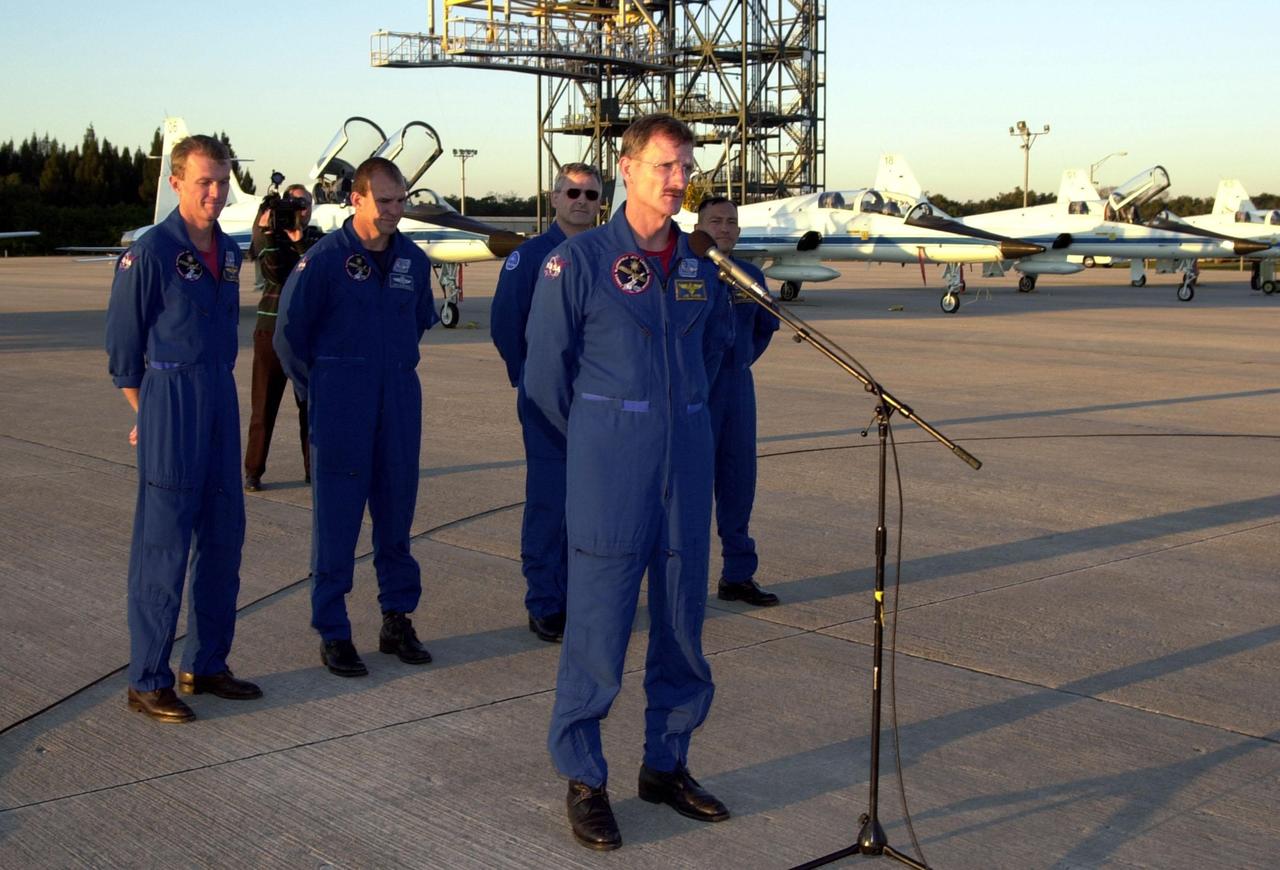
After their arrival at the Shuttle Landing Facility, the STS-97 crew gather to address the media. At the microphone is Mission Specialist Joseph Tanner. Behind him stand Commander Brent Jett, Pilot Michael Bloomfield and Mission Specialists Marc Garneau, who is with the Canadian Space Agency, and Carlos Noriega. Mission STS-97is the sixth construction flight to the International Space Station. Its payload includes the P6 Integrated Truss Structure and a photovoltaic (PV) module, with giant solar arrays that will provide power to the Station. The mission includes two spacewalks to complete the solar array connections. STS-97 is scheduled to launch Nov. 30 at about 10:06 p.m. EST
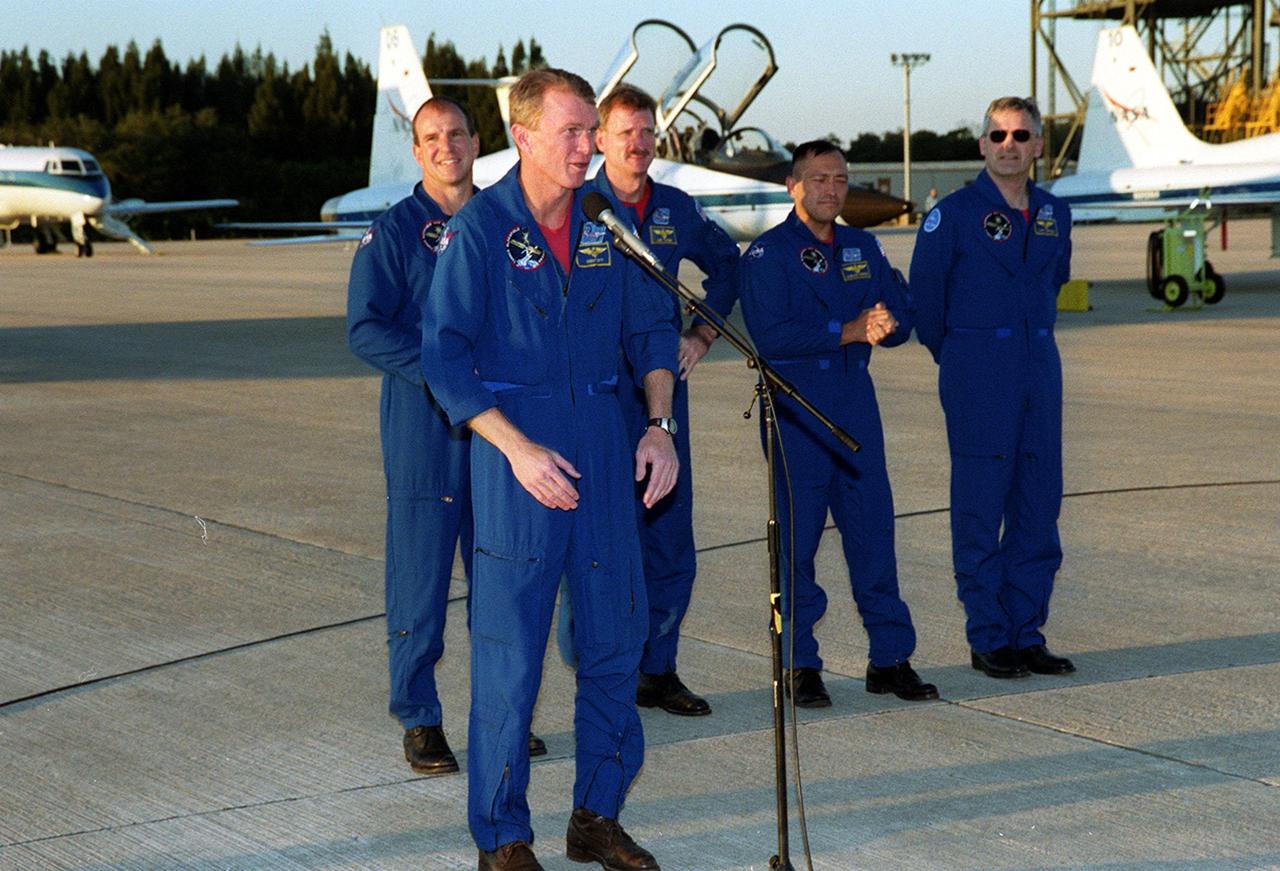
After their arrival at the Shuttle Landing Facility, the STS-97 crew gather to address the media. At the microphone is Pilot Michael Bloomfield. Behind him stand Commander Brent Jett and Mission Specialists Joseph Tanner, Carolos Noriega and Marc Garneau, who is with the Canadian Space Agency. Mission STS-97is the sixth construction flight to the International Space Station. Its payload includes the P6 Integrated Truss Structure and a photovoltaic (PV) module, with giant solar arrays that will provide power to the Station. The mission includes two spacewalks to complete the solar array connections. STS-97 is scheduled to launch Nov. 30 at about 10:06 p.m. EST
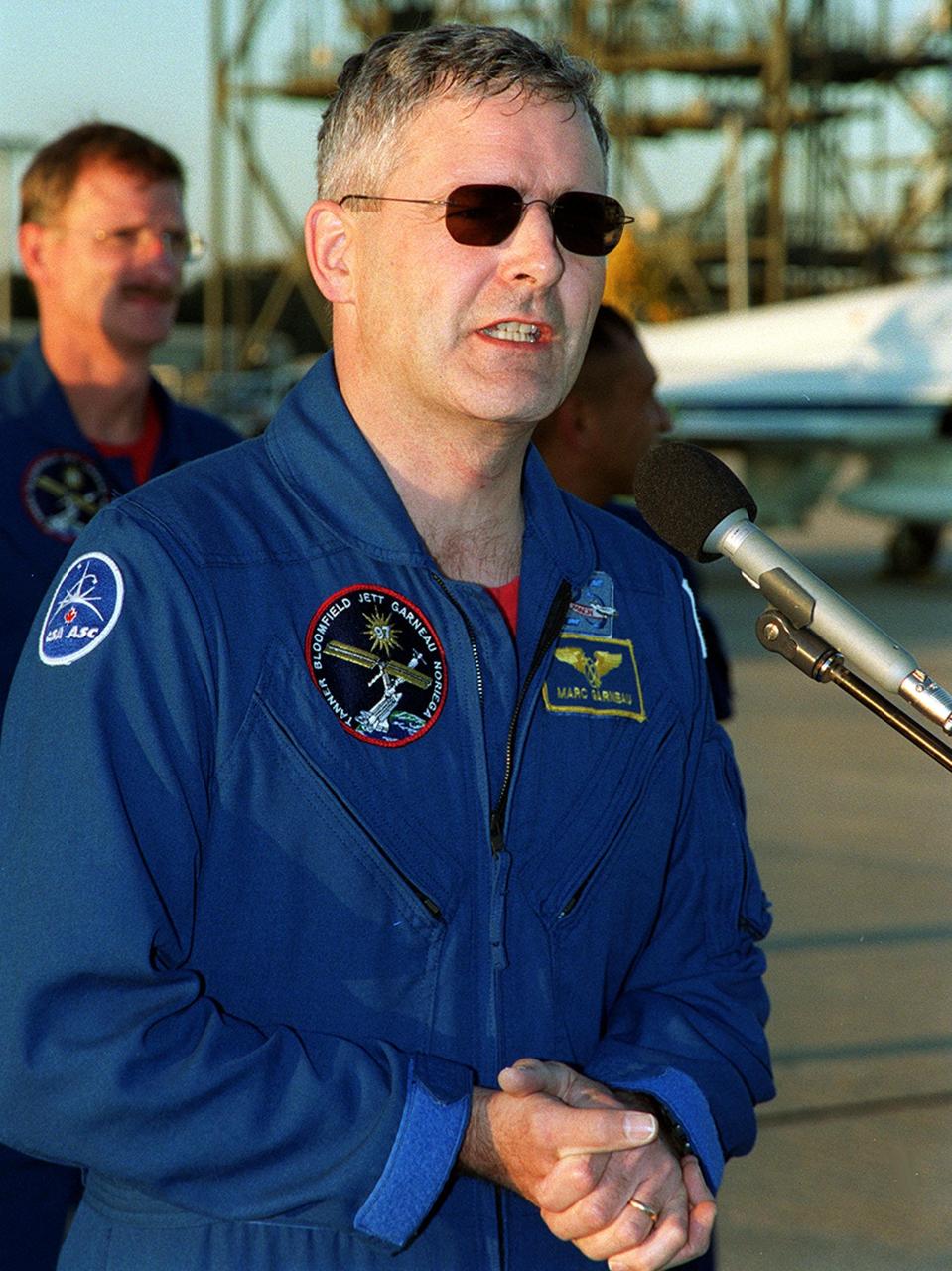
After arriving at the Shuttle Landing Facility, the STS-97 crew gather to address the media. At the microphone is Mission Specialist Marc Garneau, who is with the Canadian Space Agency. Behind him can be seen Mission Specialists Joseph Tanner (left) and Carlos Noriega. Mission STS-97 is the sixth construction flight to the International Space Station. Its payload includes the P6 Integrated Truss Structure and a photovoltaic (PV) module, with giant solar arrays that will provide power to the Station. The mission includes two spacewalks to complete the solar array connections. STS-97 is scheduled to launch Nov. 30 at about 10:06 p.m. EST
After arriving at the Shuttle Landing Facility, the STS-97 crew gather to address the media. At the microphone, Commander Brent Jett praises the efforts of the KSC workers to get ready for the launch. Behind Jett are Pilot Michael Bloomfield and Mission Specialists Joseph Tanner, Carlos Noriega and Marc Garneau, who is with the Canadian Space Agency. Mission STS-97 is the sixth construction flight to the International Space Station. Its payload includes the P6 Integrated Truss Structure and a photovoltaic (PV) module, with giant solar arrays that will provide power to the Station. The mission includes two spacewalks to complete the solar array connections. STS-97 is scheduled to launch Nov. 30 at about 10:06 p.m. EST
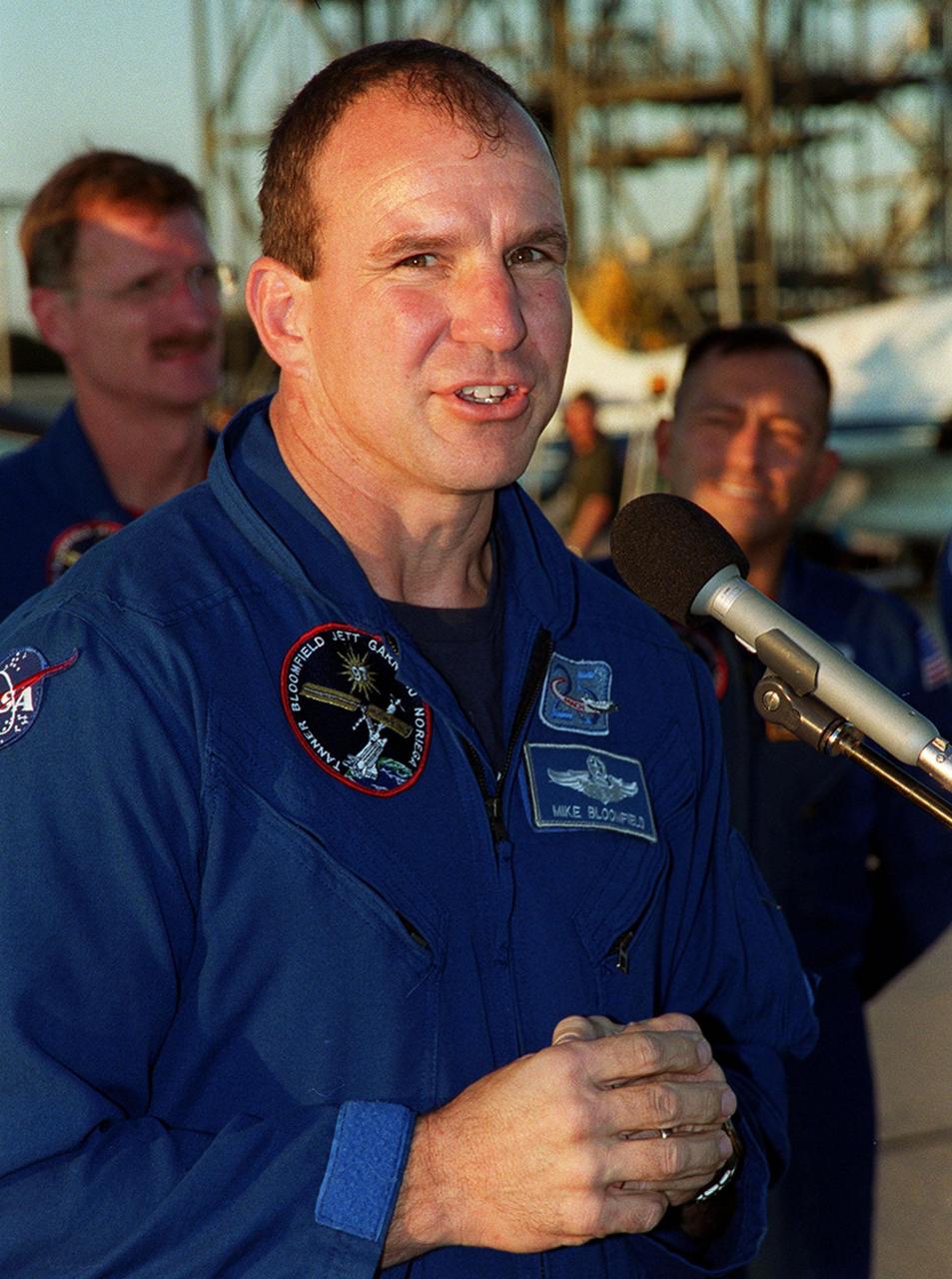
After arriving at the Shuttle Landing Facility, the STS-97 crew gather to address the media. At the microphone is Pilot Michael Bloomfield. Behind him can be seen Mission Specialists Joseph Tanner and Carlos Noriega. Mission STS-97 is the sixth construction flight to the International Space Station. Its payload includes the P6 Integrated Truss Structure and a photovoltaic (PV) module, with giant solar arrays that will provide power to the Station. The mission includes two spacewalks to complete the solar array connections. STS-97 is scheduled to launch Nov. 30 at about 10:06 p.m. EST
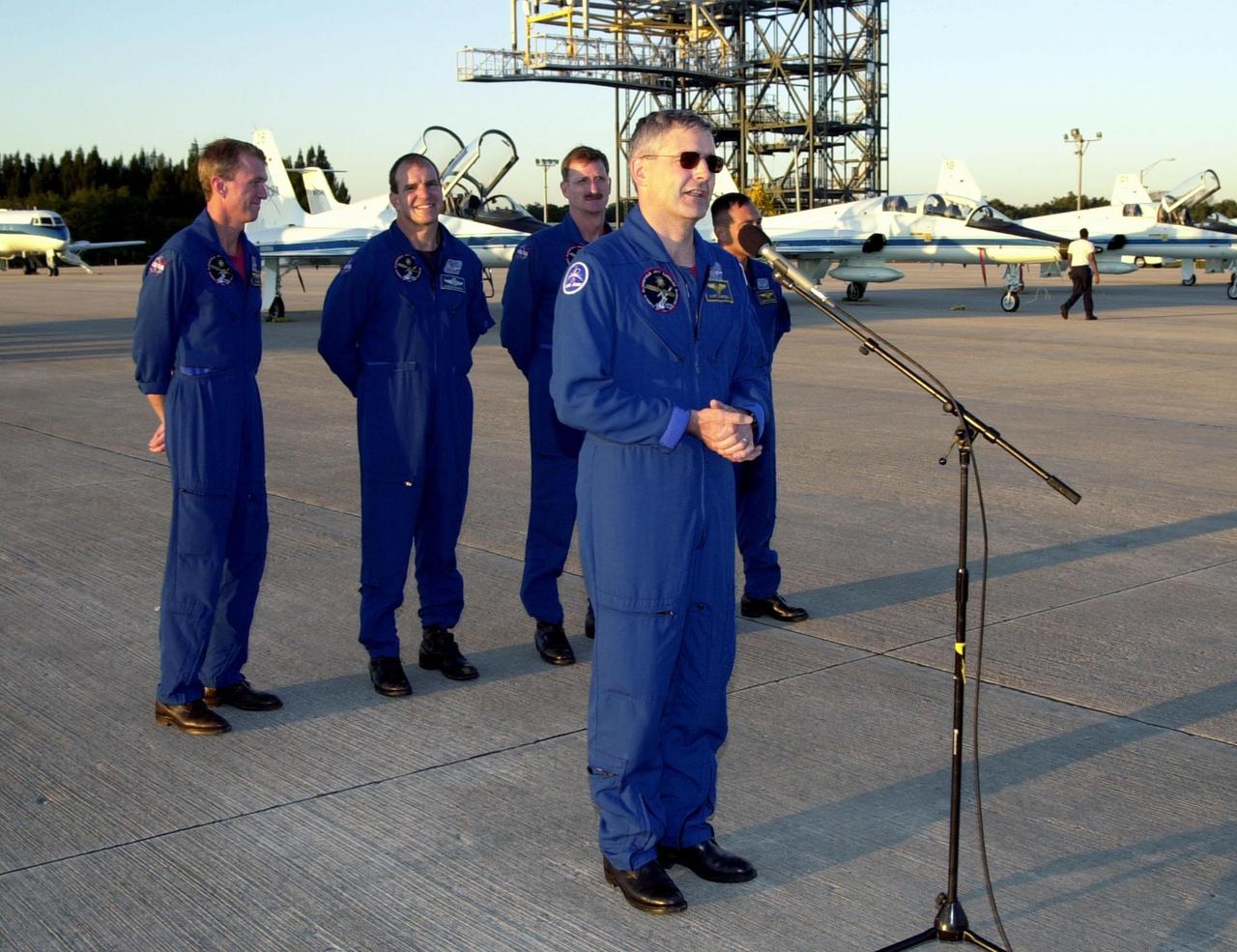
After their arrival at the Shuttle Landing Facility, the STS-97 crew gather to address the media. At the microphone is Mission Specialist Marc Garneau, who is with the Canadian Space Agency. Behind him stand Commander Brent Jett, Pilot Michael Bloomfield and Mission Specialists Joseph Tanner and Carlos Noriega. Mission STS-97is the sixth construction flight to the International Space Station. Its payload includes the P6 Integrated Truss Structure and a photovoltaic (PV) module, with giant solar arrays that will provide power to the Station. The mission includes two spacewalks to complete the solar array connections. STS-97 is scheduled to launch Nov. 30 at about 10:06 p.m. EST

After their arrival at the Shuttle Landing Facility, the STS-97 crew gather to address the media. At the microphone is Mission Specialist Carlos Noriega. Behind him stand Commander Brent Jett, Pilot Michael Bloomfield and Mission Specialists Joseph Tanner and Marc Garneau, who is with the Canadian Space Agency. Mission STS-97is the sixth construction flight to the International Space Station. Its payload includes the P6 Integrated Truss Structure and a photovoltaic (PV) module, with giant solar arrays that will provide power to the Station. The mission includes two spacewalks to complete the solar array connections. STS-97 is scheduled to launch Nov. 30 at about 10:06 p.m. EST
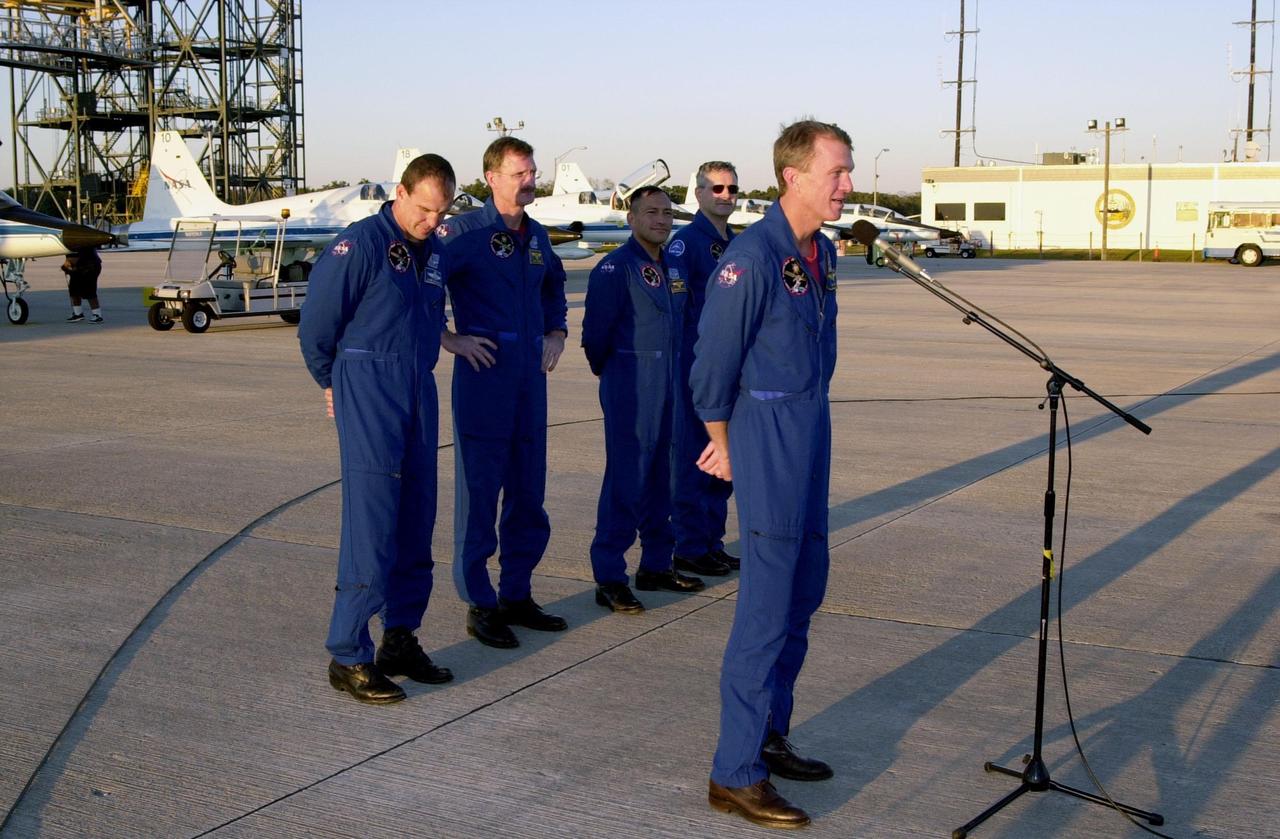
After their arrival at the Shuttle Landing Facility, the STS-97 crew gather to address the media. At the microphone, Commander Brent Jett praises the efforts of the KSC workers to get ready for the launch. Behind Jett are Pilot Michael Bloomfield and Mission Specialists Joseph Tanner, Carolos Noriega and Marc Garneau, who is with the Canadian Space Agency. Mission STS-97is the sixth construction flight to the International Space Station. Its payload includes the P6 Integrated Truss Structure and a photovoltaic (PV) module, with giant solar arrays that will provide power to the Station. The mission includes two spacewalks to complete the solar array connections. STS-97 is scheduled to launch Nov. 30 at about 10:06 p.m. EST
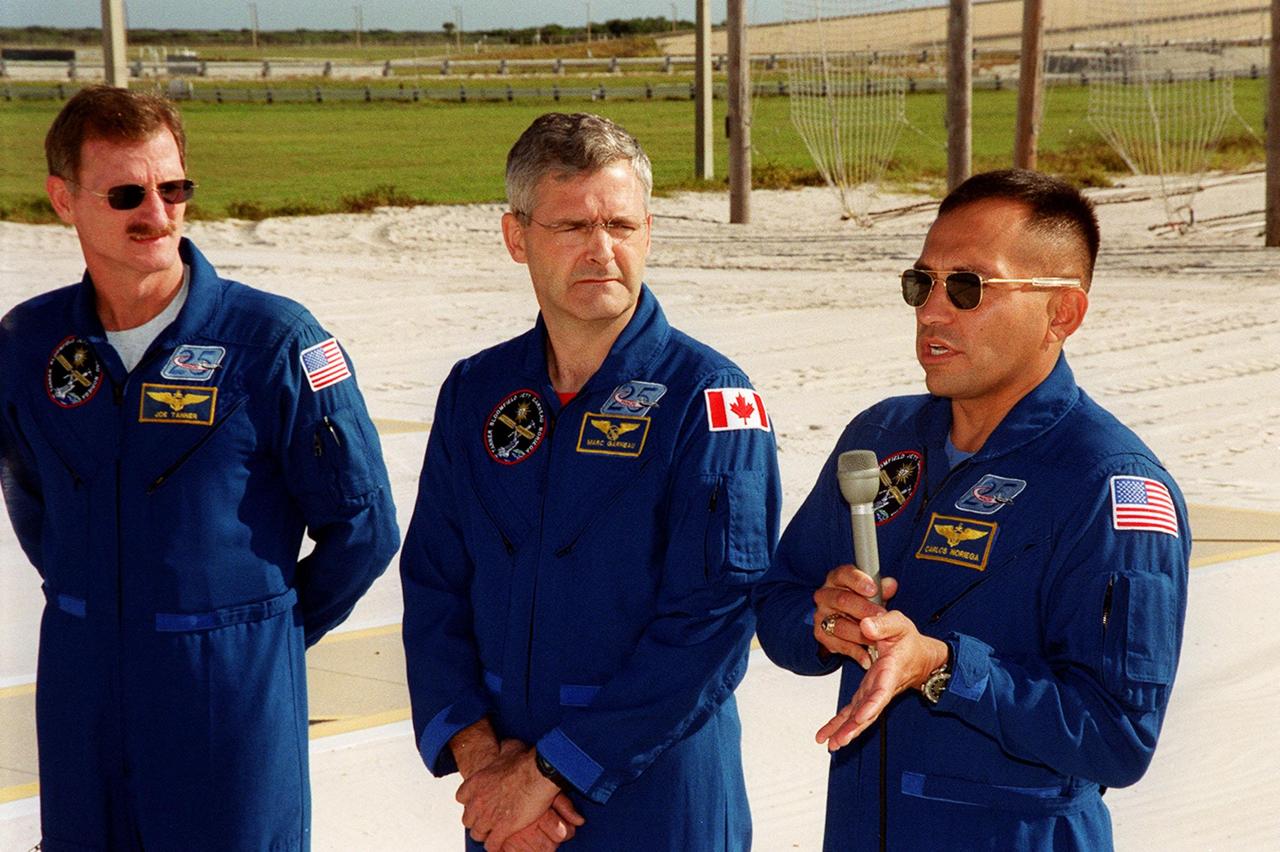
KENNEDY SPACE CENTER, Fla. -- From the slidewire landing zone at Launch Pad 39B, STS-97 Mission Specialist Carlos Noriega (at right, with microphone) describes the mission for the media. Next to him are Mission Specialists Joe Tanner (left) and Marc Garneau (center). The crew is at KSC to take part in Terminal Countdown Demonstration Test activities that include emergency egress training, familiarization with the payload, and a simulated launch countdown. The other crew members are Commander Brent Jett and Pilot Mike Bloomfield. Mission STS-97is the sixth construction flight to the International Space Station. Its payload includes the P6 Integrated Truss Structure and a photovoltaic (PV) module, with giant solar arrays that will provide power to the Station. The mission includes two spacewalks to complete the solar array connections. STS-97 is scheduled to launch Nov. 30 at about 10:05 p.m. EST
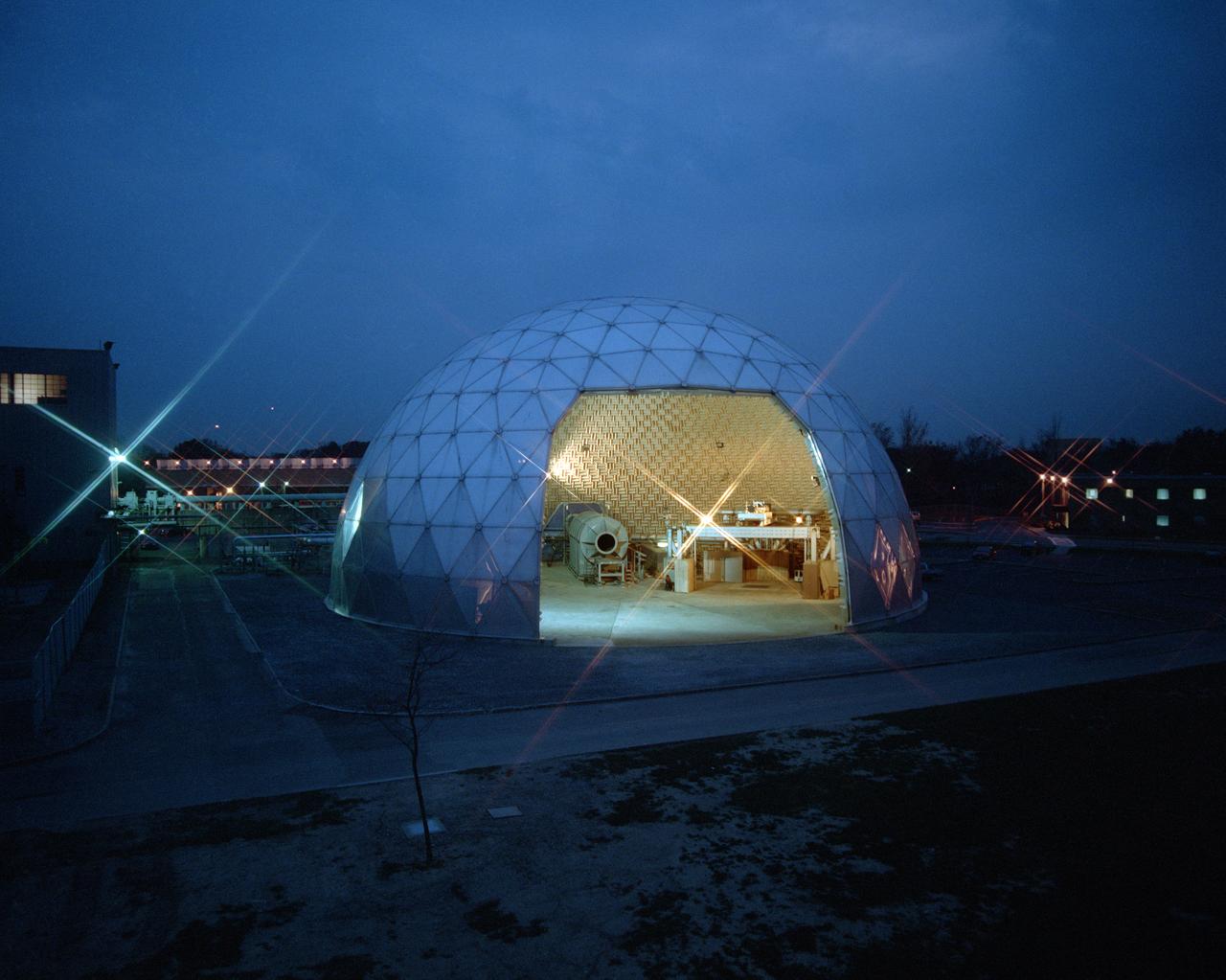
Modern jet engines are loud, but they used to be much louder. NASA’s Glenn Research Center has been at the forefront of the nation’s efforts to reduce aircraft engine noise for over 70 years. During this time, the center has built an array of test facilities to carry out this work, culminating in the Aero-Acoustic Propulsion Laboratory (AAPL), a world-class noise-reduction research facility. The AAPL, referred to as “the dome,” contains multiple test rigs enclosed in a large, echo-free chamber. The unique 130-foot diameter and 65-foot-high hemispherical structure stands out on Glenn’s campus. Its triangular sections make it appear like a golf ball rising from the ground. The interior is covered in spiky, fiberglass sound-dampening wedges and an overhead array of microphones that capture engine noise data.
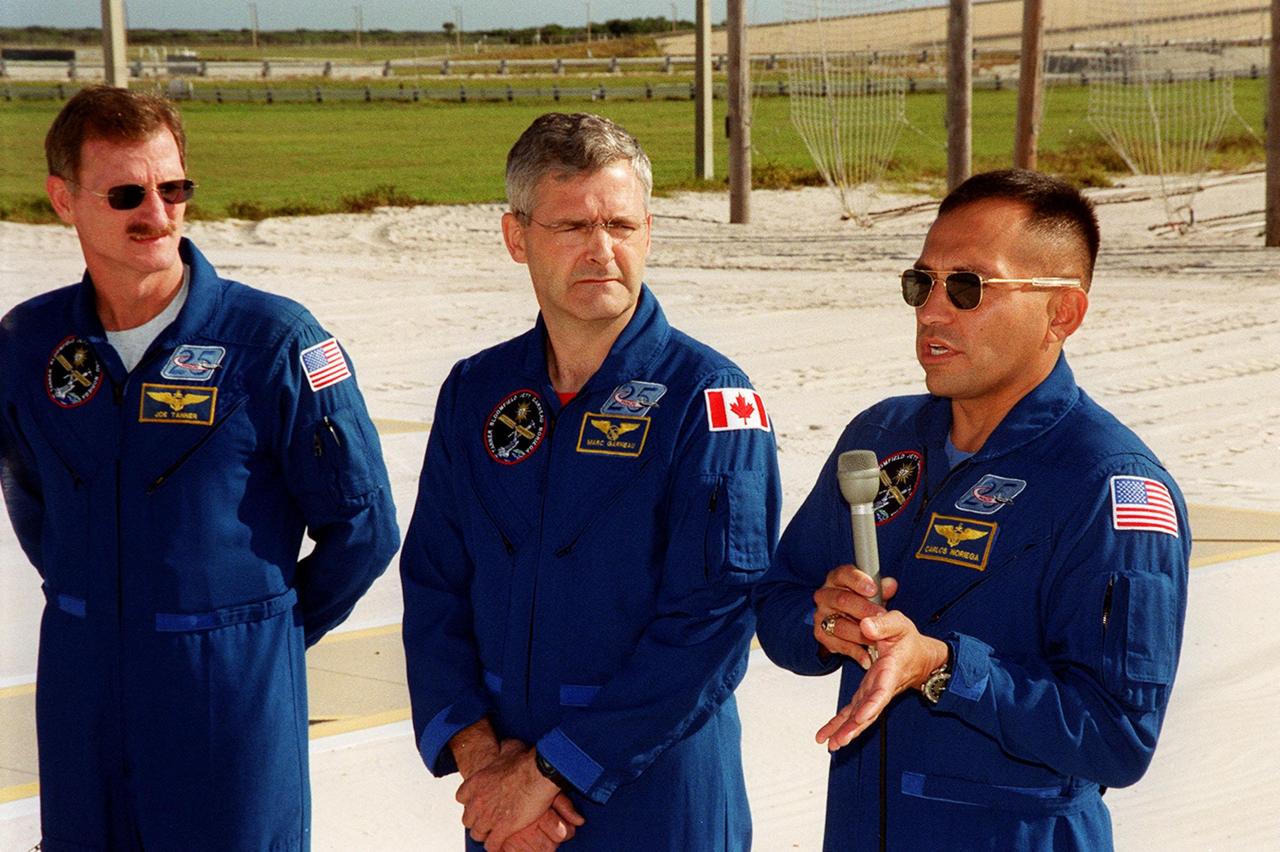
KENNEDY SPACE CENTER, Fla. -- From the slidewire landing zone at Launch Pad 39B, STS-97 Mission Specialist Carlos Noriega (at right, with microphone) describes the mission for the media. Next to him are Mission Specialists Joe Tanner (left) and Marc Garneau (center). The crew is at KSC to take part in Terminal Countdown Demonstration Test activities that include emergency egress training, familiarization with the payload, and a simulated launch countdown. The other crew members are Commander Brent Jett and Pilot Mike Bloomfield. Mission STS-97is the sixth construction flight to the International Space Station. Its payload includes the P6 Integrated Truss Structure and a photovoltaic (PV) module, with giant solar arrays that will provide power to the Station. The mission includes two spacewalks to complete the solar array connections. STS-97 is scheduled to launch Nov. 30 at about 10:05 p.m. EST
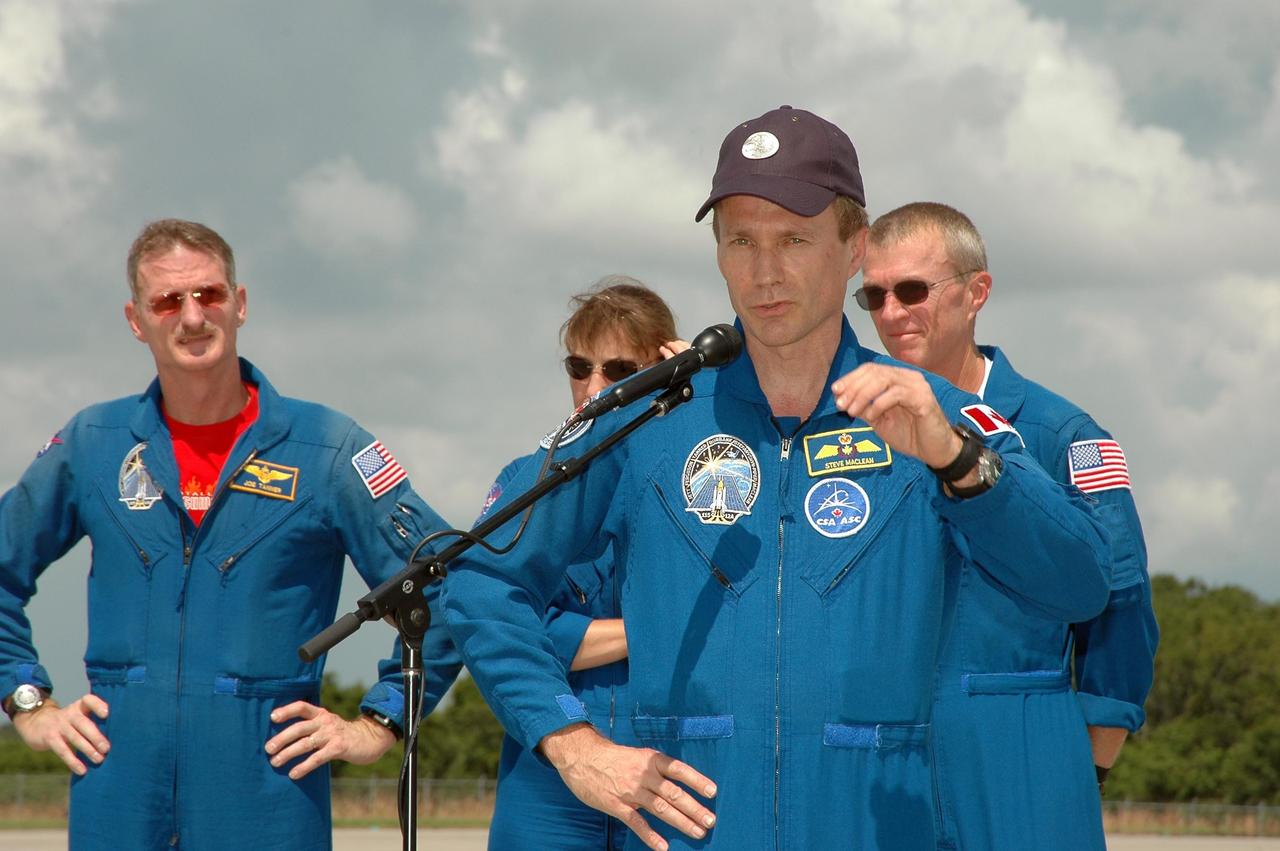
KENNEDY SPACE CENTER, FLA. - The crew of mission STS-115 stop to talk to the media after arriving at NASA Kennedy Space Center's Shuttle Landing Facility to prepare for launch on Aug. 27 to the International Space Station. Seen here, left to right, are Mission Specialists Joseph Tanner, Heidemarie Stefanyshyn-Piper and Steven MacLean (at the microphone), and Commander Brent Jett. The mission will deliver and install the 17-and-a-half-ton P3/P4 truss segment to the port side of the integrated truss system on the orbital outpost. The truss includes a new set of photovoltaic solar arrays. When unfurled to their full length of 240 feet, the arrays will provide additional power for the station in preparation for the delivery of international science modules over the next two years. STS-115 is expected to last 11 days and includes three scheduled spacewalks. Photo credit: NASA/Kim Shiflett

KENNEDY SPACE CENTER, FLA. - The crew of mission STS-115 has arrived at NASA Kennedy Space Center's Shuttle Landing Facility to prepare for launch on Aug. 27 to the International Space Station. They talk to the media before heading to crew quarters in the Operations and Checkout Building. At the microphone is Mission Specialist Joseph Tanner. On the left is Commander Brent Jett; on the right is Pilot Christopher Ferguson. The mission will deliver and install the 17-and-a-half-ton P3/P4 truss segment to the port side of the integrated truss system on the orbital outpost. The truss includes a new set of photovoltaic solar arrays. When unfurled to their full length of 240 feet, the arrays will provide additional power for the station in preparation for the delivery of international science modules over the next two years. STS-115 is expected to last 11 days and includes three scheduled spacewalks. Photo credit: NASA/Kim Shiflett
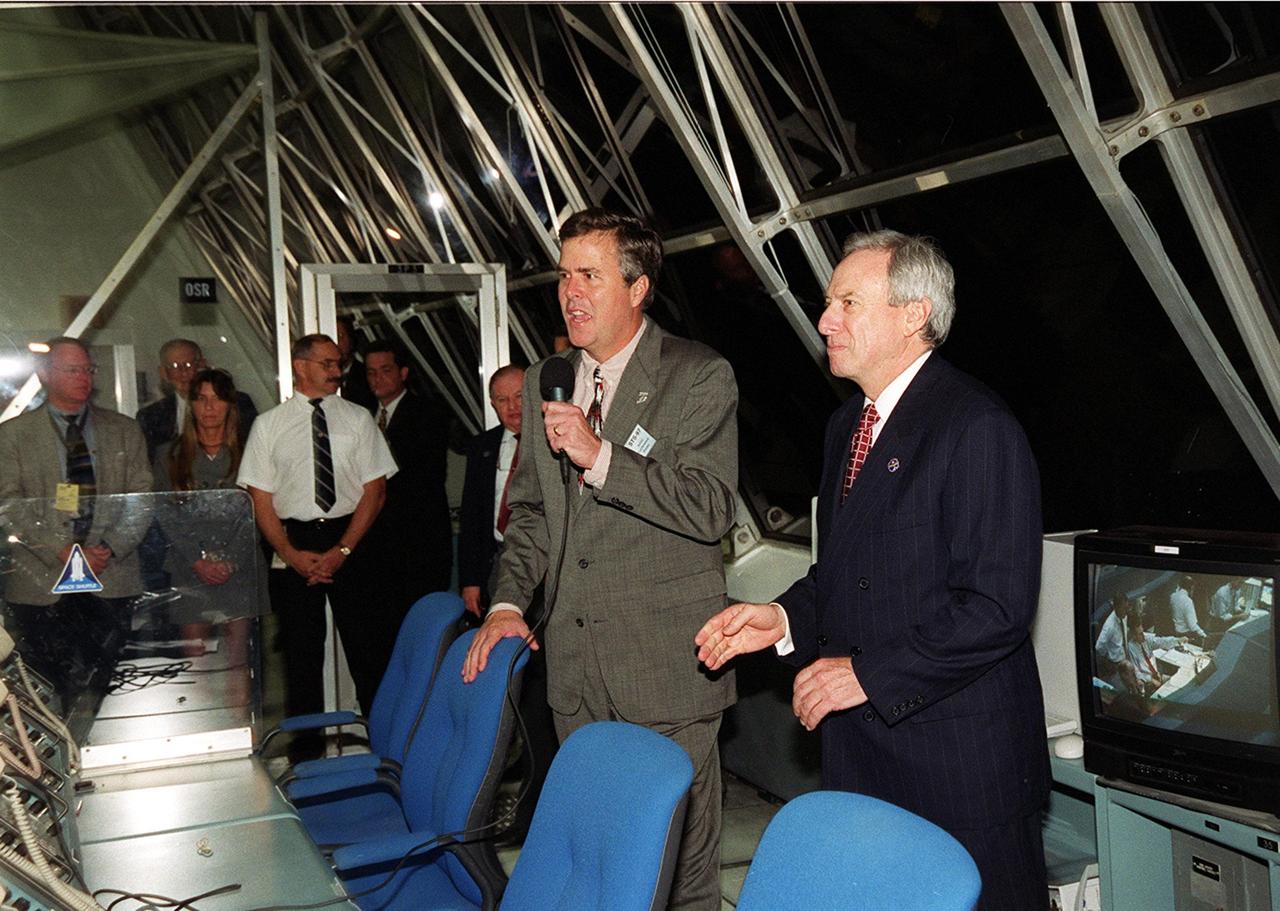
KENNEDY SPACE CENTER, FLA. -- Florida Governor Jeb Bush (with microphone) addresses the launch team in the Firing Room, Launch Control Center, after a successful launch of STS-97. At right is NASA Administrator Daniel Goldin. Liftoff of Space Shuttle Endeavour occurred at 10:06:01 p.m. Endeavour and its five-member crew will deliver U.S. solar arrays to the International Space Station and be the first Shuttle crew to visit the Station’s first resident crew. The 11-day mission includes three spacewalks. This marks the 101st mission in Space Shuttle history and the 25th night launch. Endeavour is expected to land at KSC Dec. 11 at 6:19 p.m. EST
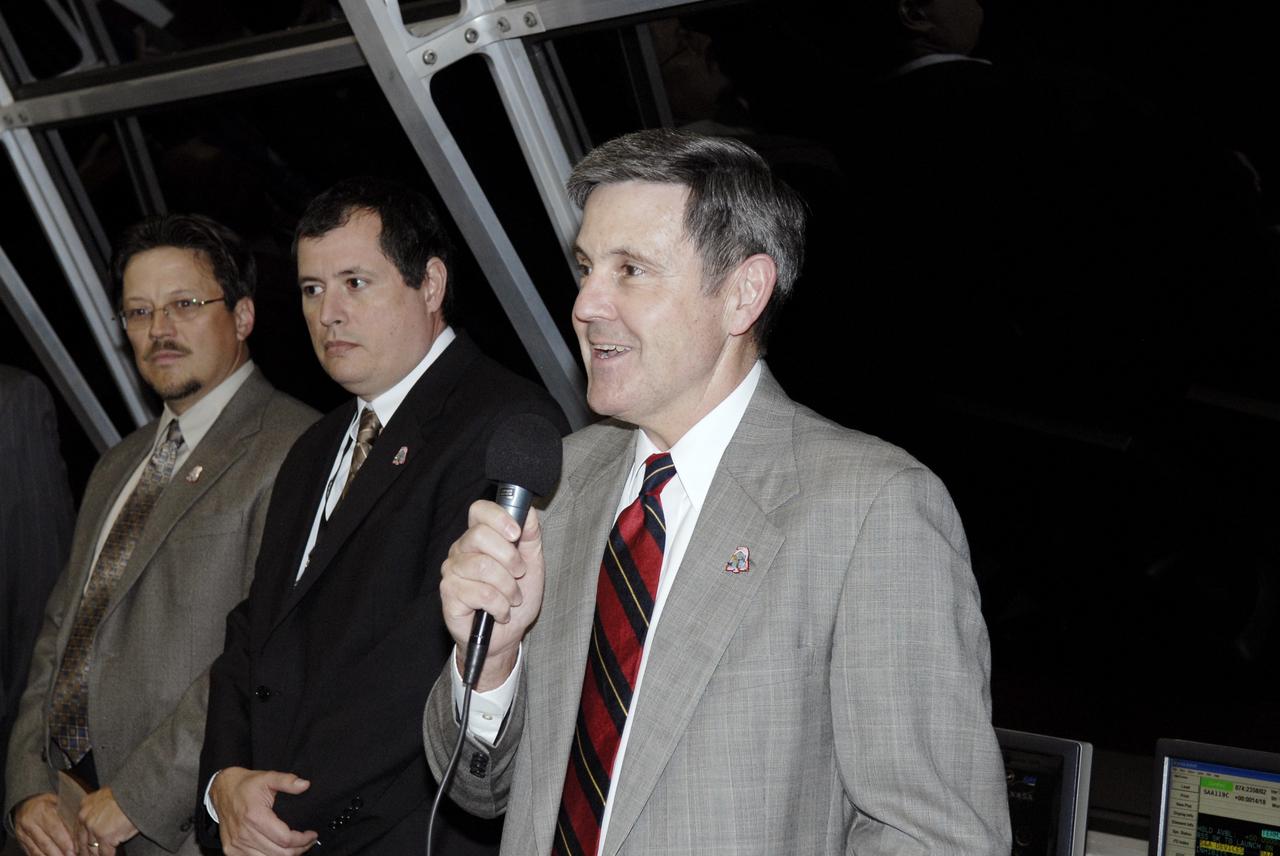
CAPE CANAVERAL, Fla. – In Firing Room 4 of the Launch Control Center at NASA's Kennedy Space Center in Florida, Center Director Bob Cabana (with microphone) congratulates the mission management team after the successful launch of space shuttle Discovery on the STS-119 mission. Launch was on time at 7:43 p.m. EDT. The STS-119 mission is the 28th to the space station and Discovery's 36th flight. Discovery will deliver the final pair of power-generating solar array wings and the S6 truss segment. Installation of S6 will signal the station's readiness to house a six-member crew for conducting increased science. Photo credit: NASA/Kim Shiflett
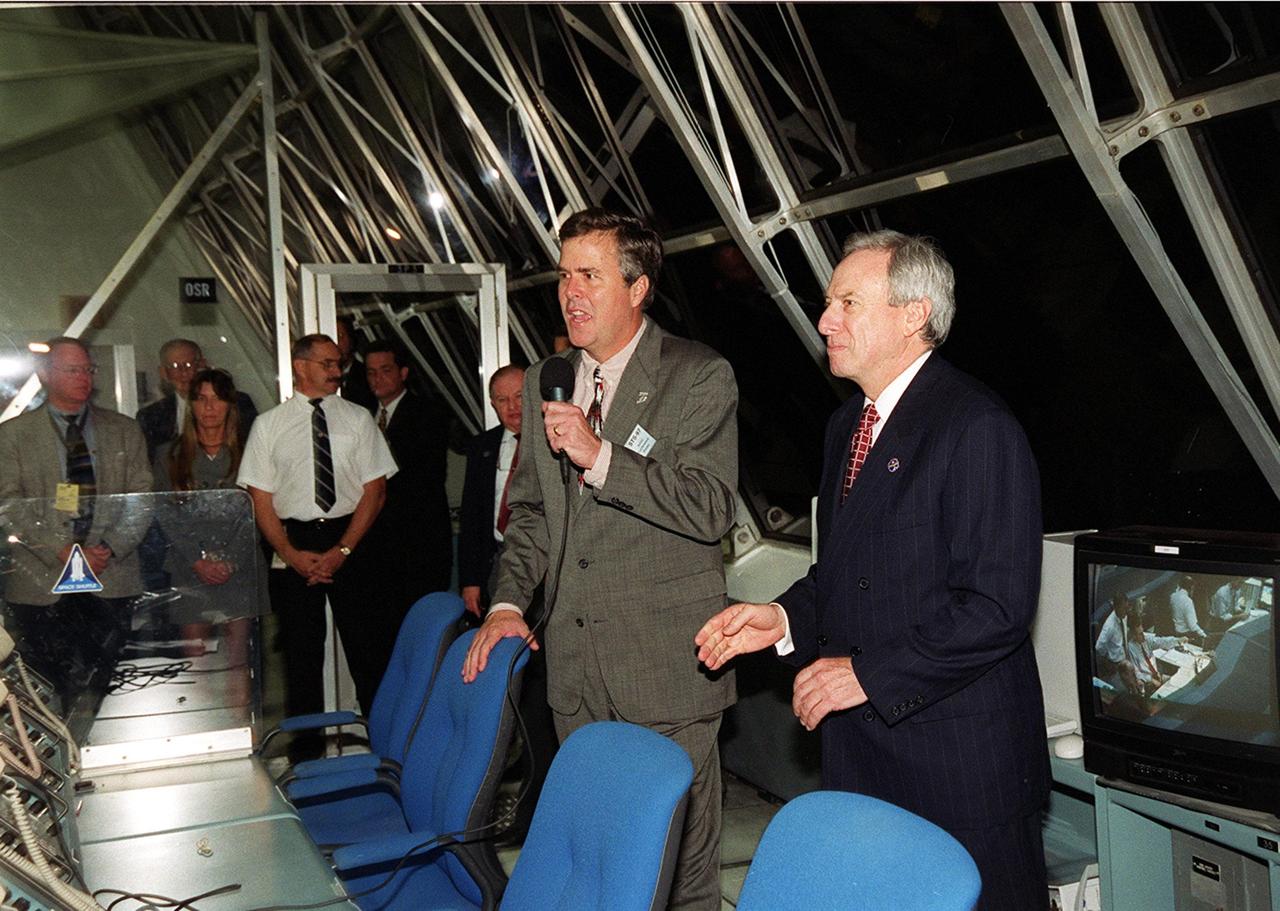
KENNEDY SPACE CENTER, FLA. -- Florida Governor Jeb Bush (with microphone) addresses the launch team in the Firing Room, Launch Control Center, after a successful launch of STS-97. At right is NASA Administrator Daniel Goldin. Liftoff of Space Shuttle Endeavour occurred at 10:06:01 p.m. Endeavour and its five-member crew will deliver U.S. solar arrays to the International Space Station and be the first Shuttle crew to visit the Station’s first resident crew. The 11-day mission includes three spacewalks. This marks the 101st mission in Space Shuttle history and the 25th night launch. Endeavour is expected to land at KSC Dec. 11 at 6:19 p.m. EST
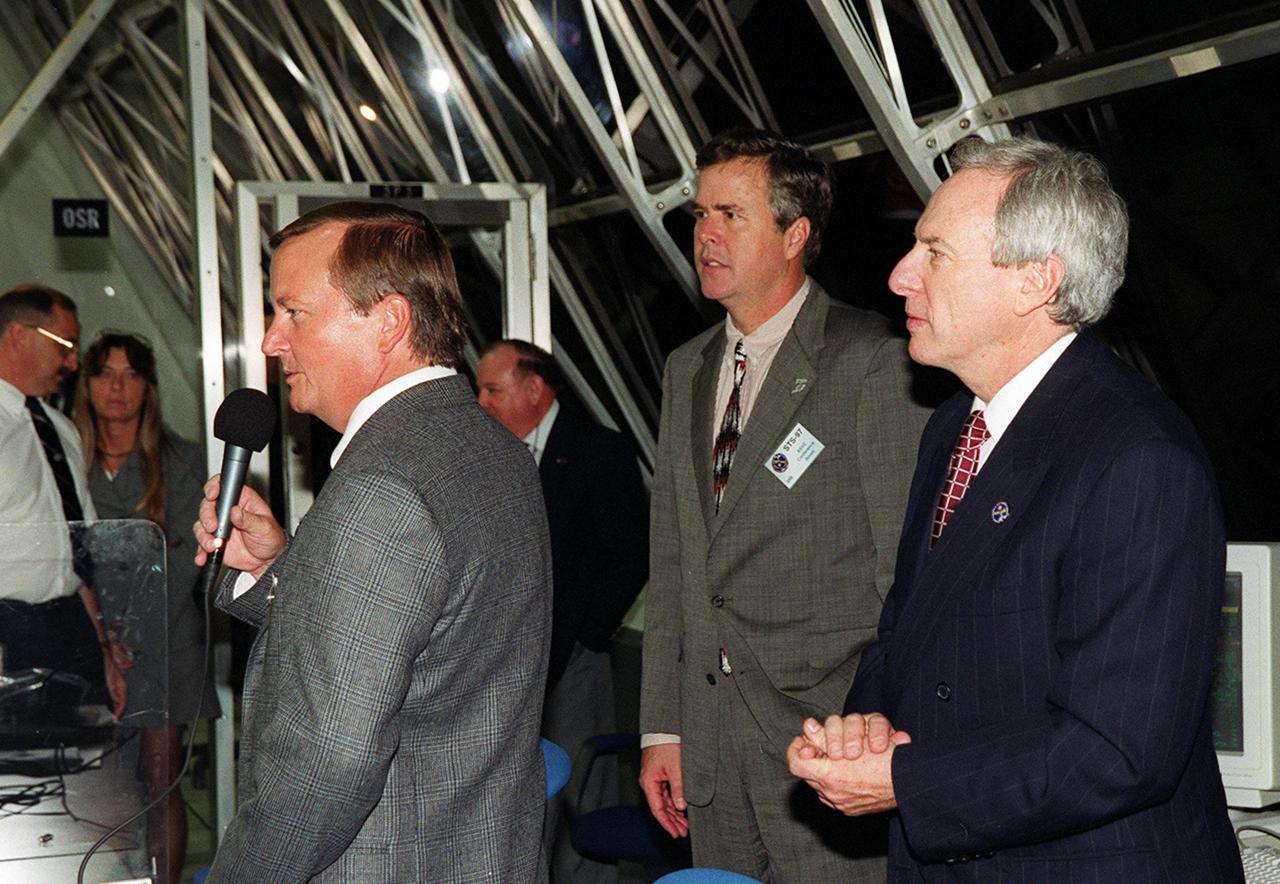
KENNEDY SPACE CENTER, FLA. -- In the Firing Room, Launch Control Center, after a successful launch of Space Shuttle Endeavour on mission STS-97, Launch Director Michael Leinbach (with microphone) addresses the launch team. Behind him at right are Florida Governor Jeb Bush and NASA Administrator Daniel Goldin. Liftoff of Endeavour occurred at 10:06:01 p.m. EST. Endeavour and its five-member crew will deliver U.S. solar arrays to the International Space Station and be the first Shuttle crew to visit the Station’s first resident crew. The 11-day mission includes three spacewalks. This marks the 101st mission in Space Shuttle history and the 25th night launch. Endeavour is expected to land at KSC Dec. 11 at 6:19 p.m. EST
KENNEDY SPACE CENTER, FLA. -- The STS-117 crew arrives at NASA's Kennedy Space Center to take part in the Terminal Countdown Demonstration Test (TCDT), a preparation for the launch March 15 to the International Space Station. Commander Rick Sturckow, at the microphone, speaks to the media. With him, from the left, are Mission Specialists James Reilly, Danny Olivas, Steven Swanson and Patrick Forrester, and Pilot Lee Archambault. The TCDT includes emergency egress training and a simulated launch countdown. The mission payload aboard Space Shuttle Atlantis is the S3/S4 integrated truss structure, along with a third set of solar arrays and batteries. The crew of six astronauts will install the truss to continue assembly of the station. Photo credit: NASA/Kim Shiflett
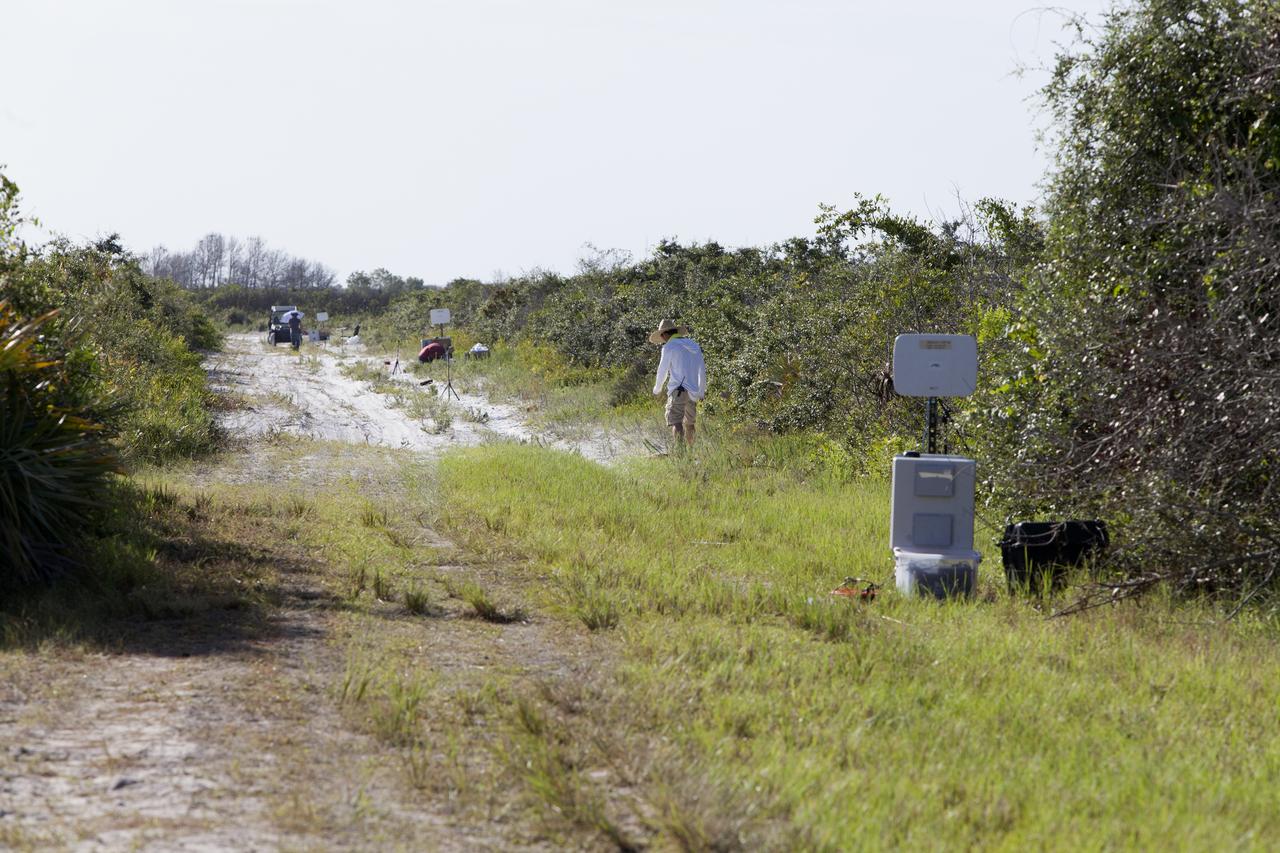
Microphone arrays are strategically positioned along the ground at NASA's Kennedy Space Center in Florida to collect sound signatures from sonic booms created by agency F-18 jets flying faster than the speed of sound. Several flights a day have been taking place the week of Aug. 21, 2017 as part of NASA's Sonic Booms in Atmospheric Turbulence, or SonicBAT II Program. NASA at Kennedy is partnering with the agency's Armstrong Flight Research Center in California, Langley Research Center in Virginia, and Space Florida for a program in which F-18 jets will take off from the Shuttle Landing Facility and fly at supersonic speeds while agency researchers measure the effects of low-altitude turbulence caused by sonic booms.
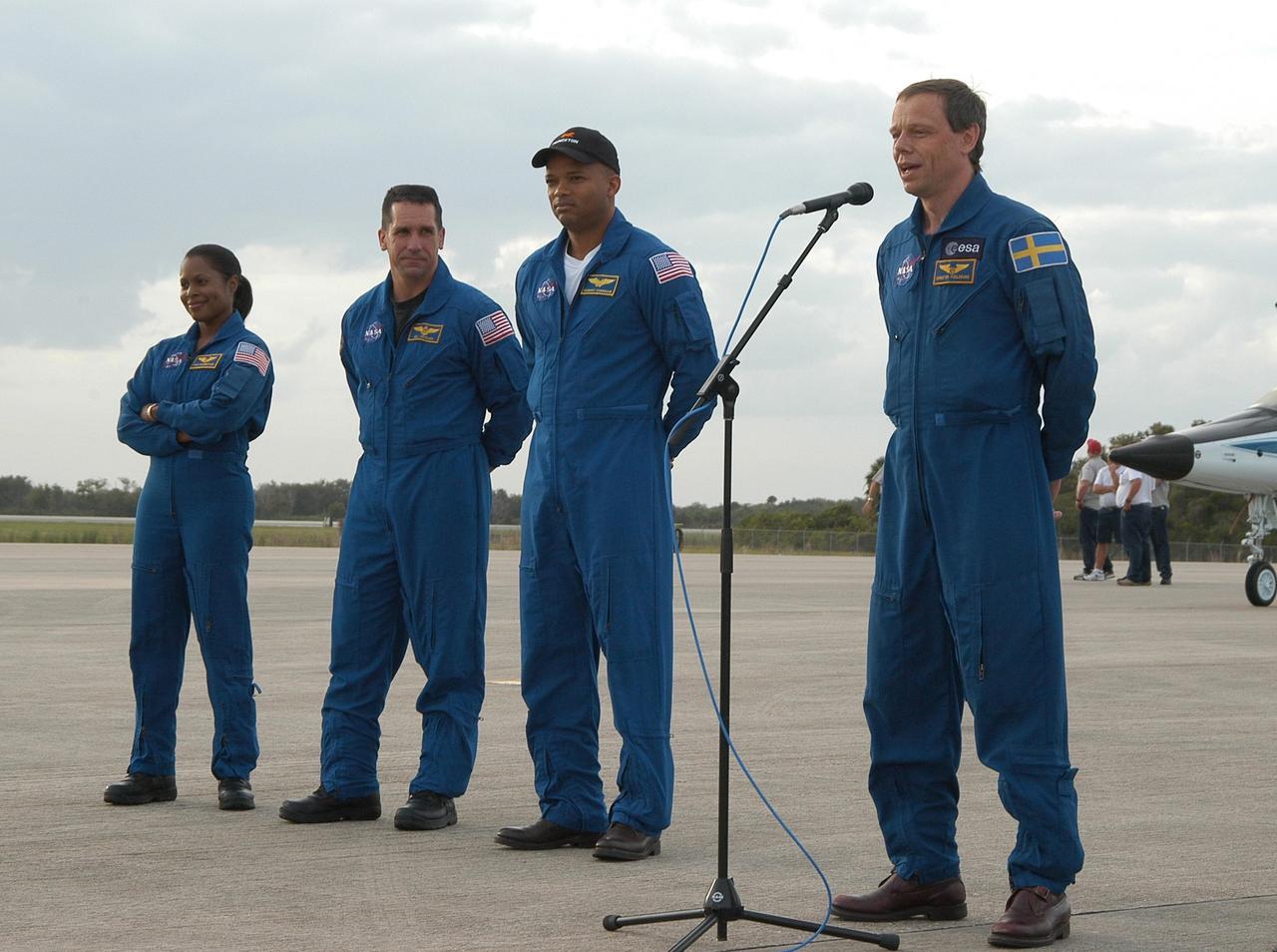
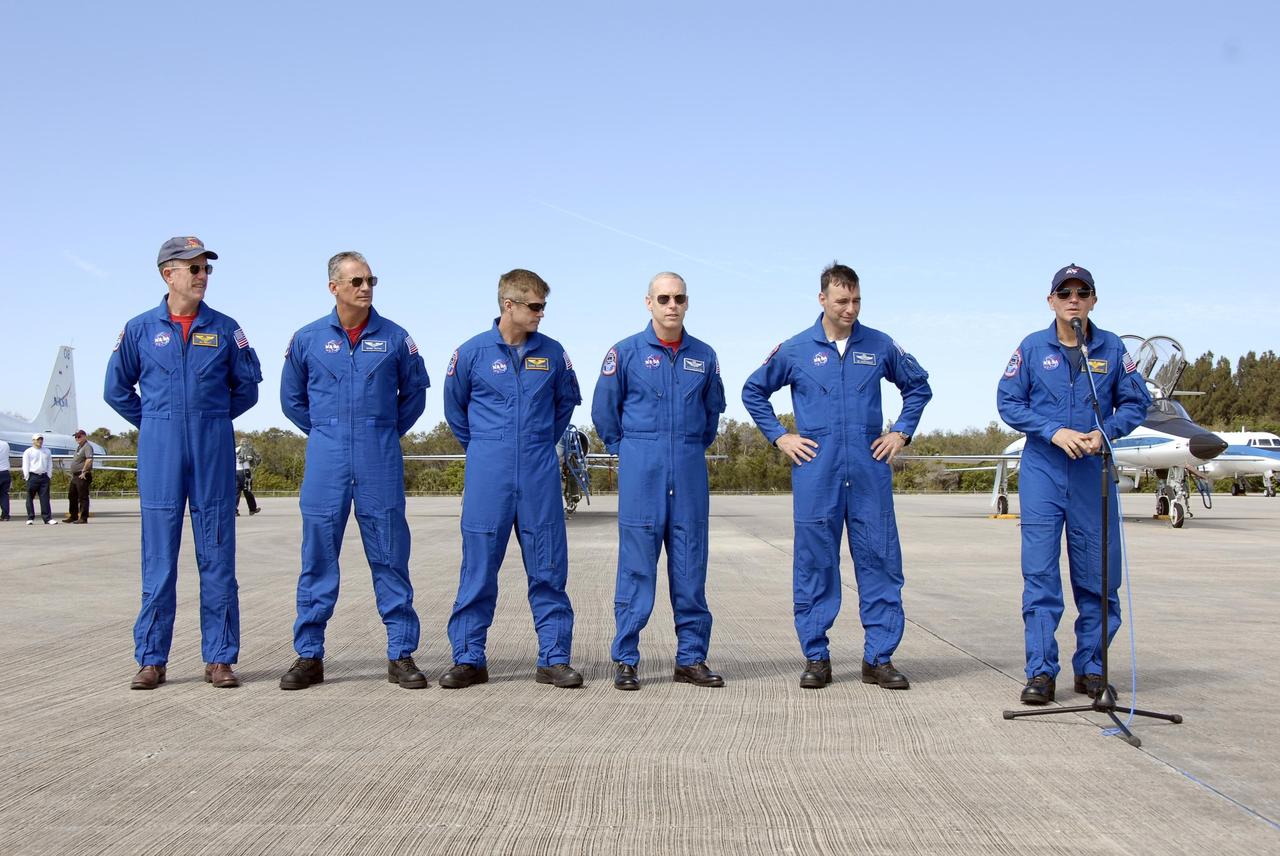
KENNEDY SPACE CENTER, FLA. -- At the Shuttle Landing Facility, members of the STS-116 crew address media representatives on hand for their arrival at KSC aboard T-38 jet aircraft for the launch of Space Shuttle Discovery on Dec. 7. From left are Mission Specialist Joan Higginbotham; Pilot William Oefelein; Mission Specialist Robert Curbeam; and Mission Specialist Christer Fuglesang, a Swedish astronaut representing the European Space Agency (at the microphone). On the mission, the STS-116 crew will deliver truss segment, P5, to the International Space Station and begin the intricate process of reconfiguring and redistributing the power generated by two pairs of U.S. solar arrays. The P5 will be mated to the P4 truss that was delivered and attached during the STS-115 mission in September. Photo credit: NASA/Kim Shiflett
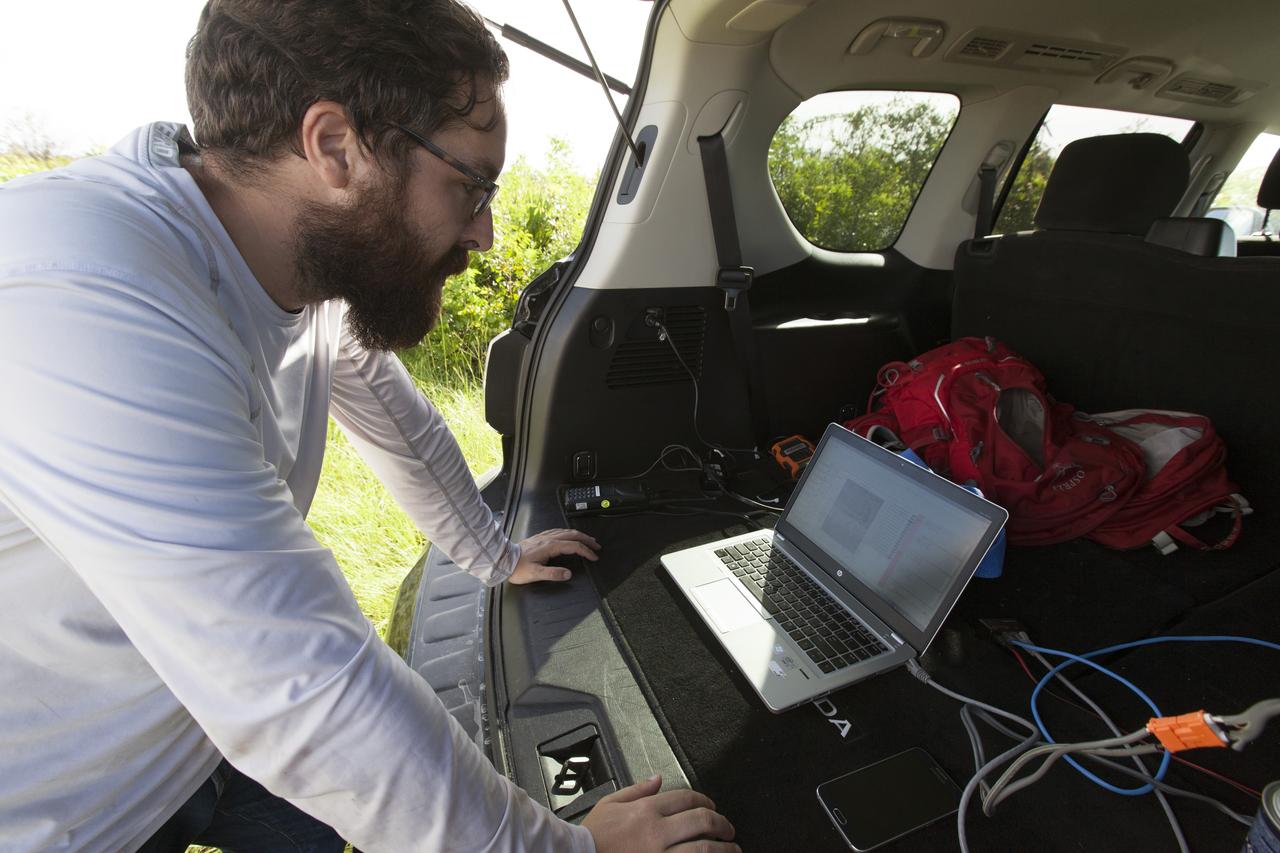
An engineer checks readings from microphone arrays that were strategically positioned along the ground at NASA's Kennedy Space Center in Florida to collect sound signatures from sonic booms created by agency F-18 jets flying faster than the speed of sound. Several flights a day have been taking place the week of Aug. 21, 2017 as part of NASA's Sonic Booms in Atmospheric Turbulence, or SonicBAT II Program. NASA at Kennedy is partnering with the agency's Armstrong Flight Research Center in California, Langley Research Center in Virginia, and Space Florida for a program in which F-18 jets will take off from the Shuttle Landing Facility and fly at supersonic speeds while agency researchers measure the effects of low-altitude turbulence caused by sonic booms.
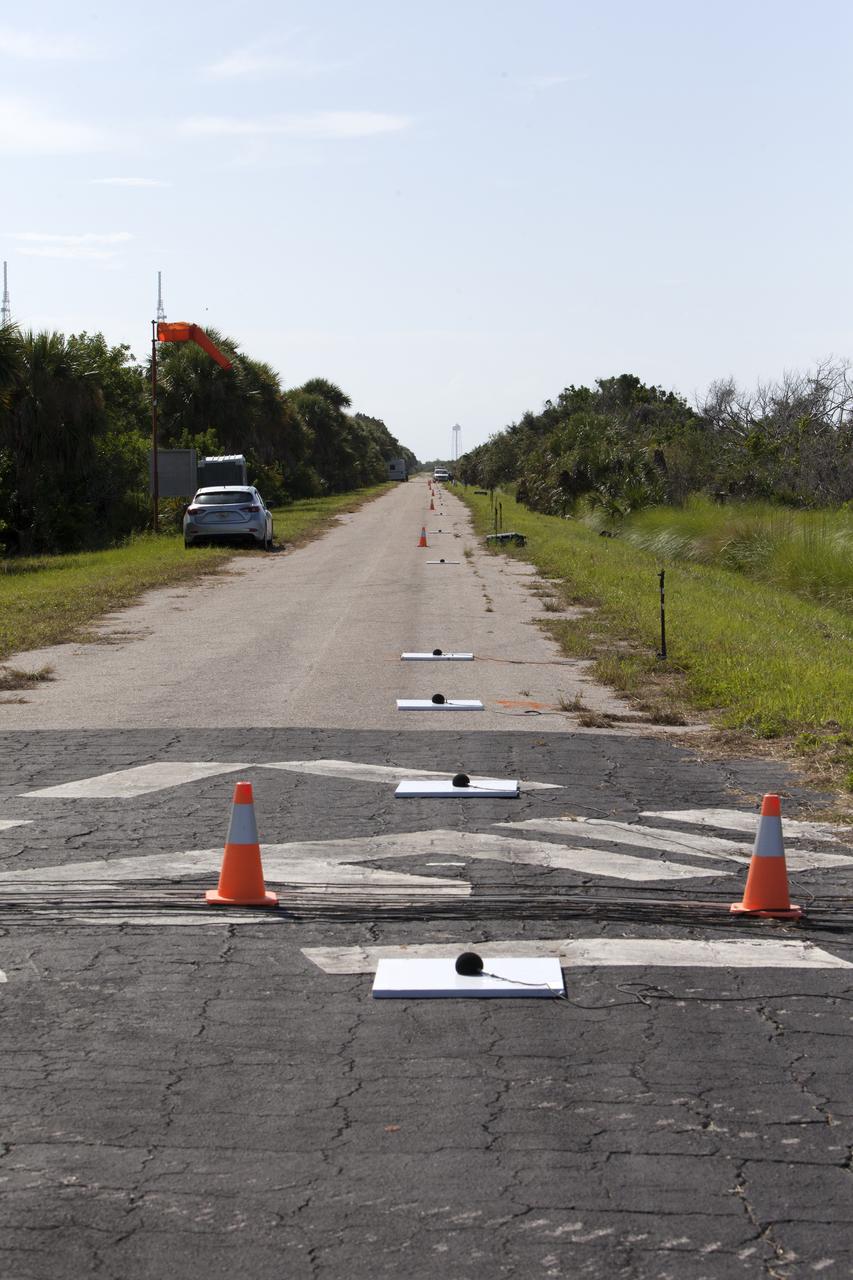
Microphone arrays and other instrumentation are strategically positioned along the ground at NASA's Kennedy Space Center in Florida. They have been set up to collect sound signatures from sonic booms created by agency F-18 jets flying faster than the speed of sound. Several flights a day have been taking place the week of Aug. 21, 2017 as part of NASA's Sonic Booms in Atmospheric Turbulence, or SonicBAT II Program. NASA at Kennedy is partnering with the agency's Armstrong Flight Research Center in California, Langley Research Center in Virginia, and Space Florida for a program in which F-18 jets will take off from the Shuttle Landing Facility and fly at supersonic speeds while agency researchers measure the effects of low-altitude turbulence caused by sonic booms.
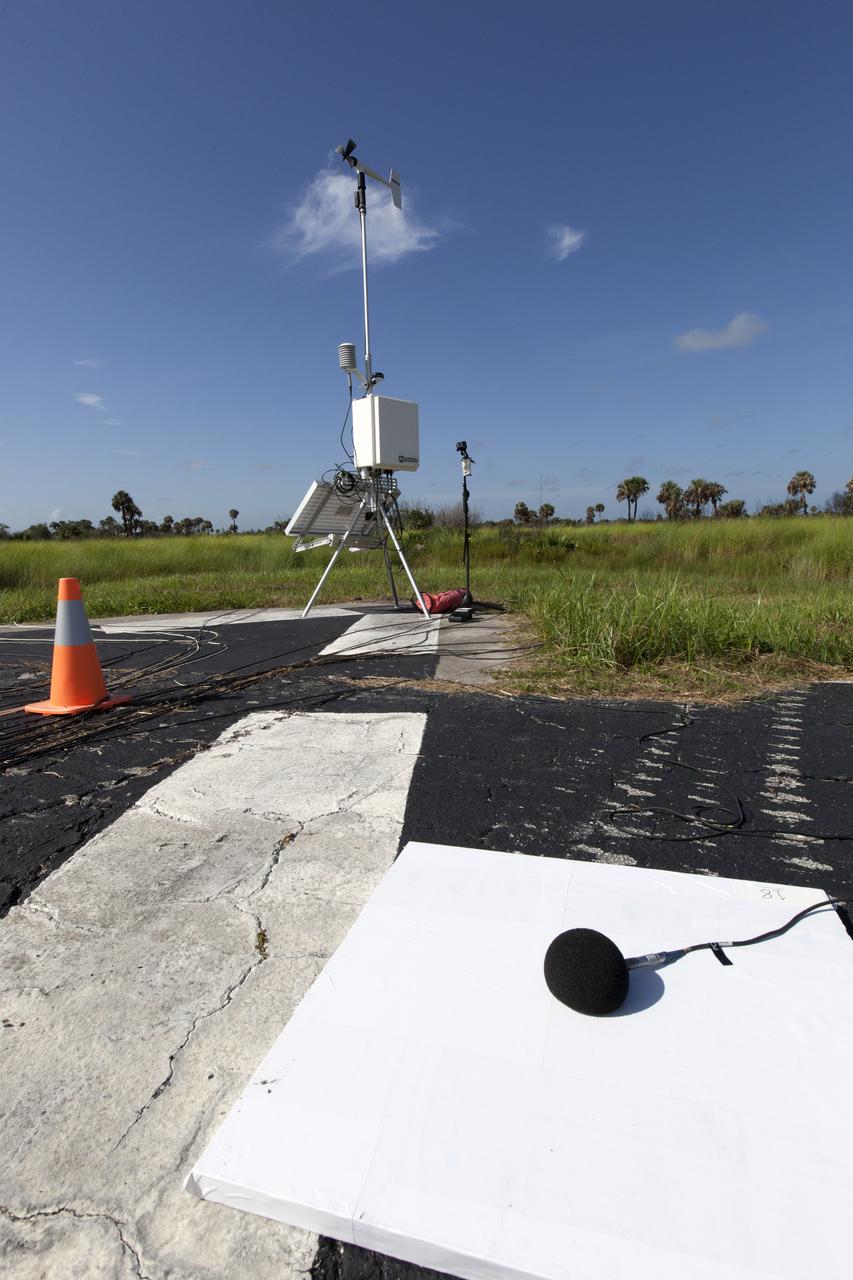
Microphone arrays and other instrumentation are strategically positioned along the ground at NASA's Kennedy Space Center in Florida. They have been set up to collect sound signatures from sonic booms created by agency F-18 jets flying faster than the speed of sound. Several flights a day have been taking place the week of Aug. 21, 2017 as part of NASA's Sonic Booms in Atmospheric Turbulence, or SonicBAT II Program. NASA at Kennedy is partnering with the agency's Armstrong Flight Research Center in California, Langley Research Center in Virginia, and Space Florida for a program in which F-18 jets will take off from the Shuttle Landing Facility and fly at supersonic speeds while agency researchers measure the effects of low-altitude turbulence caused by sonic booms.
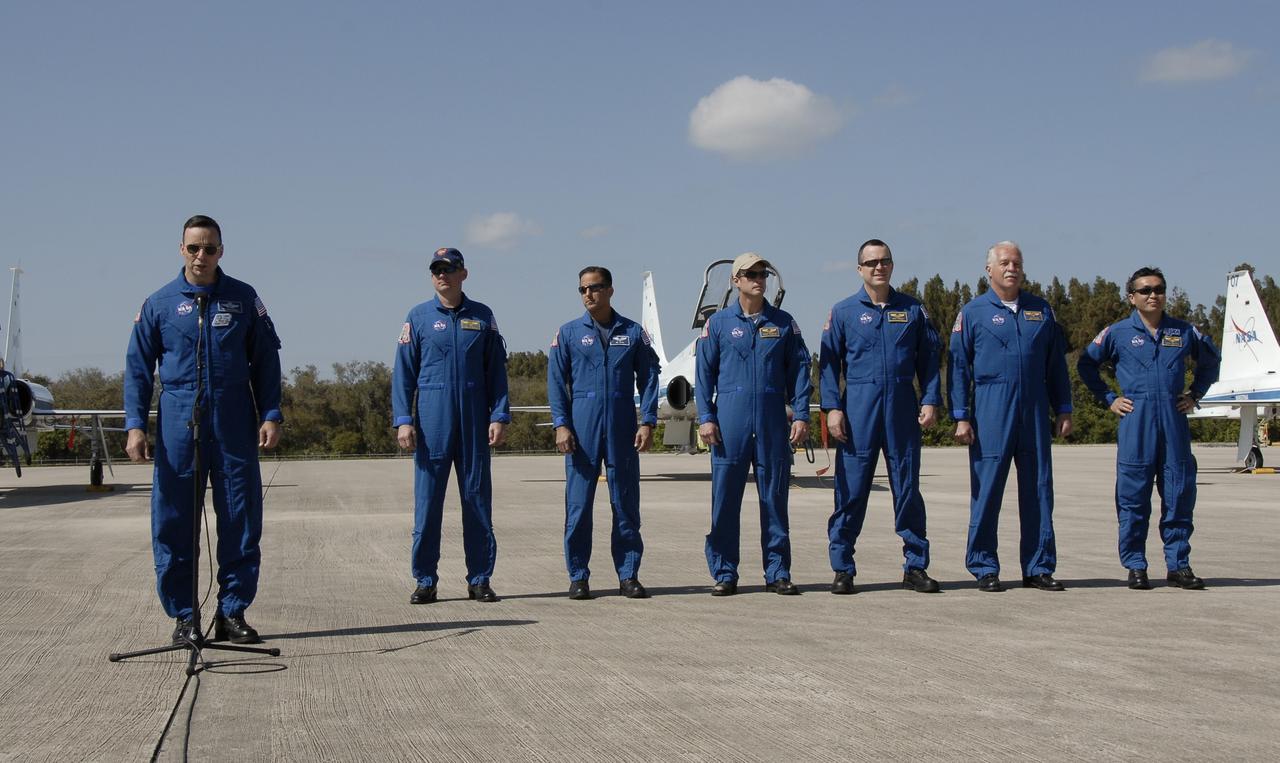
CAPE CANAVERAL, Fla. – The crew members for space shuttle Discovery's STS-119 mission address the news media on hand to welcome them upon their arrival at NASA's Kennedy Space Center in Florida to prepare for launch. From left are Commander Lee Archambault, at the microphone; Pilot Tony Antonelli; and Mission Specialists Joseph Acaba, Steve Swanson, Richard Arnold, John Phillips and Koichi Wakata of the Japan Aerospace Exploration Agency. STS-119 is the 125th space shuttle flight and the 28th flight to the International Space Station. Discovery and its crew will deliver the final set of large power-generating solar array wings and integrated truss structure, S6, to the space station. The mission includes four spacewalks. Launch is scheduled for March 11 at 9:20 p.m. EDT. Photo credit: NASA/Kim Shiflett
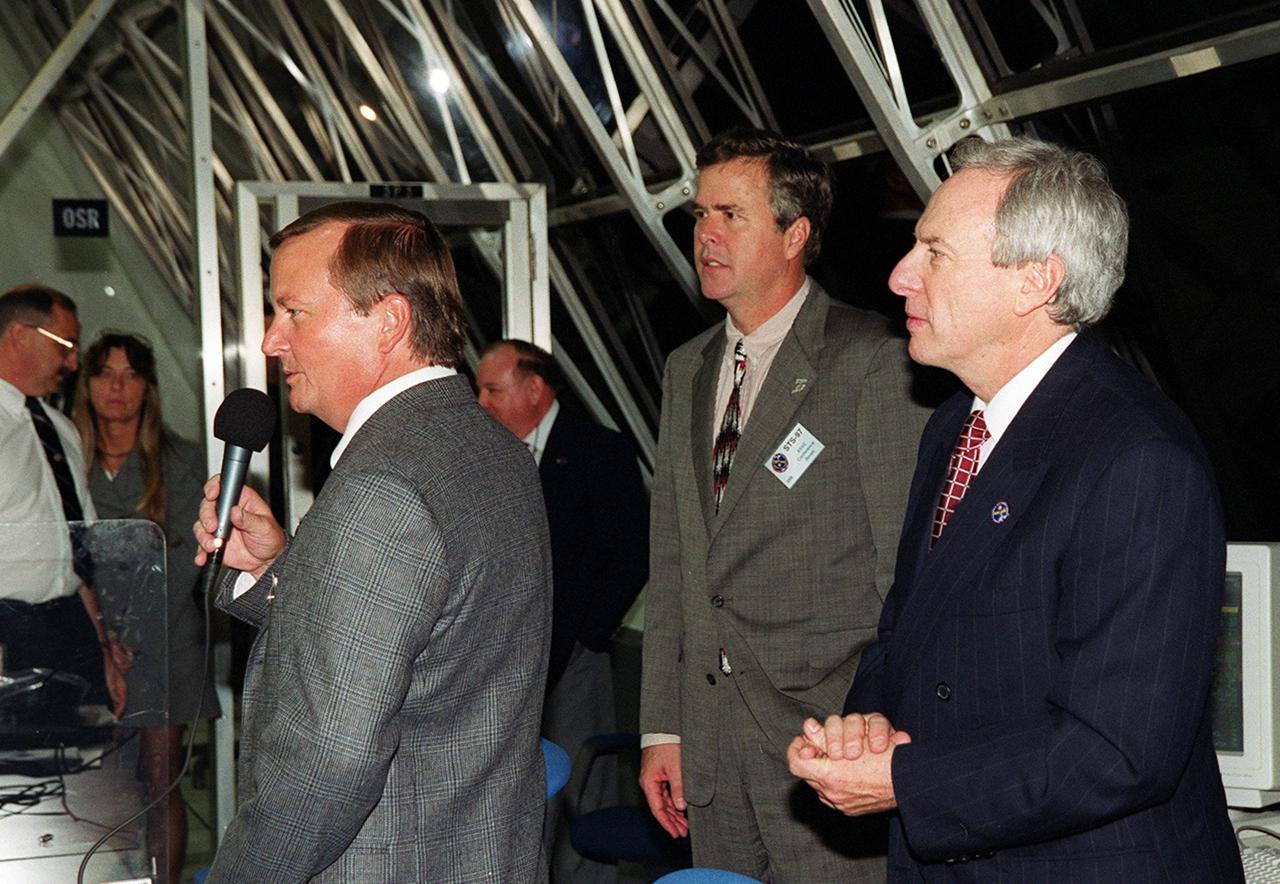
KENNEDY SPACE CENTER, FLA. -- In the Firing Room, Launch Control Center, after a successful launch of Space Shuttle Endeavour on mission STS-97, Launch Director Michael Leinbach (with microphone) addresses the launch team. Behind him at right are Florida Governor Jeb Bush and NASA Administrator Daniel Goldin. Liftoff of Endeavour occurred at 10:06:01 p.m. EST. Endeavour and its five-member crew will deliver U.S. solar arrays to the International Space Station and be the first Shuttle crew to visit the Station’s first resident crew. The 11-day mission includes three spacewalks. This marks the 101st mission in Space Shuttle history and the 25th night launch. Endeavour is expected to land at KSC Dec. 11 at 6:19 p.m. EST

KENNEDY SPACE CENTER, FLA. -- At the Shuttle Landing Facility, members of the STS-116 crew address media representatives on hand for their arrival at KSC aboard T-38 jet aircraft for the launch of Space Shuttle Discovery on Dec. 7. From left are Mission Specialist Joan Higginbotham; Pilot William Oefelein; Mission Specialists Robert Curbeam, Christer Fuglesang representing the European Space Agency, Nicholas Patrick, and Sunita Williams joining Expedition 14 in progress on the International Space Station; and Commander Mark Polansky (at the microphone). On the mission, the STS-116 crew will deliver truss segment, P5, to the International Space Station and begin the intricate process of reconfiguring and redistributing the power generated by two pairs of U.S. solar arrays. The P5 will be mated to the P4 truss that was delivered and attached during the STS-115 mission in September. Photo credit: NASA/Kim Shiflett
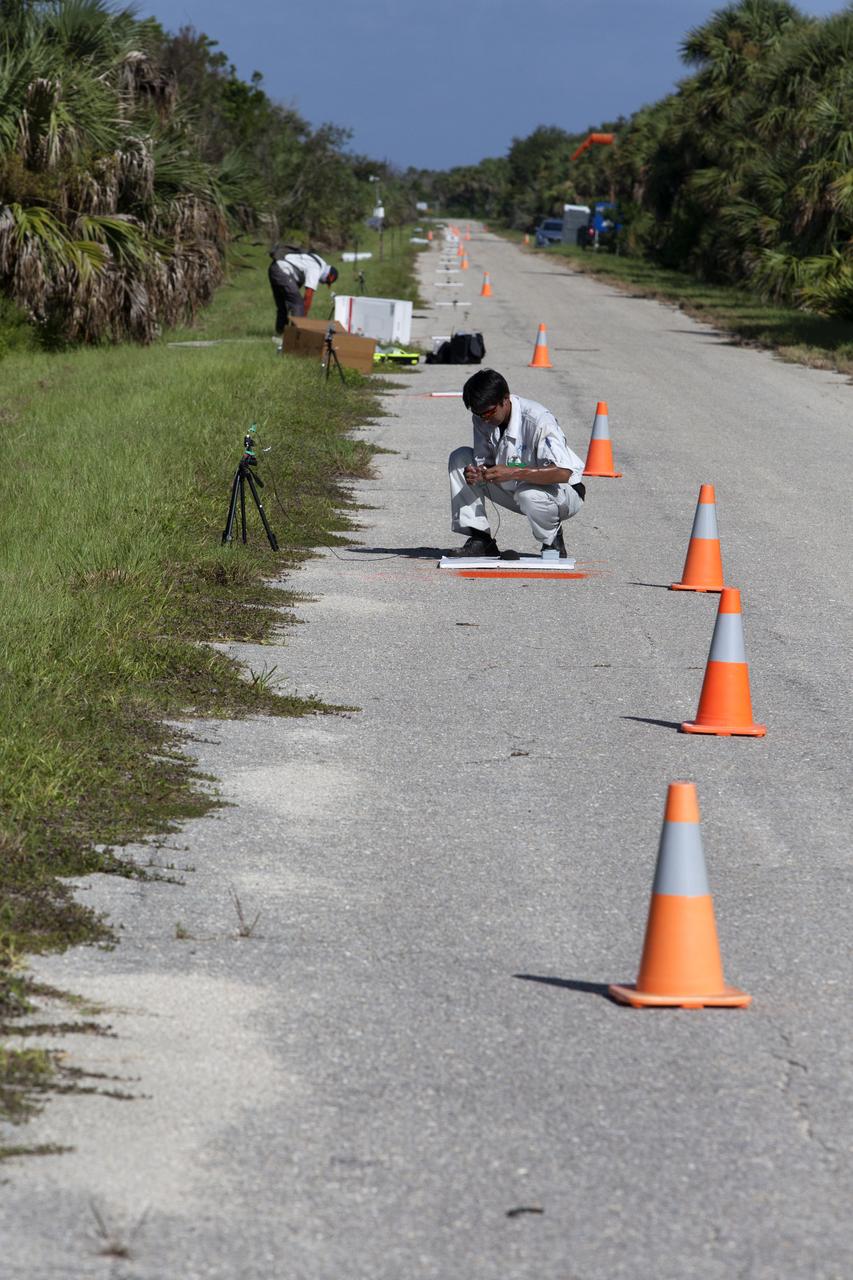
Microphone arrays are strategically positioned along the ground at NASA's Kennedy Space Center in Florida to collect sound signatures from sonic booms created by agency F-18 jets flying faster than the speed of sound. Several flights a day have been taking place the week of Aug. 21, 2017 as part of NASA's Sonic Booms in Atmospheric Turbulence, or SonicBAT II Program. NASA at Kennedy is partnering with the agency's Armstrong Flight Research Center in California, Langley Research Center in Virginia, and Space Florida for a program in which F-18 jets will take off from the Shuttle Landing Facility and fly at supersonic speeds while agency researchers measure the effects of low-altitude turbulence caused by sonic booms.
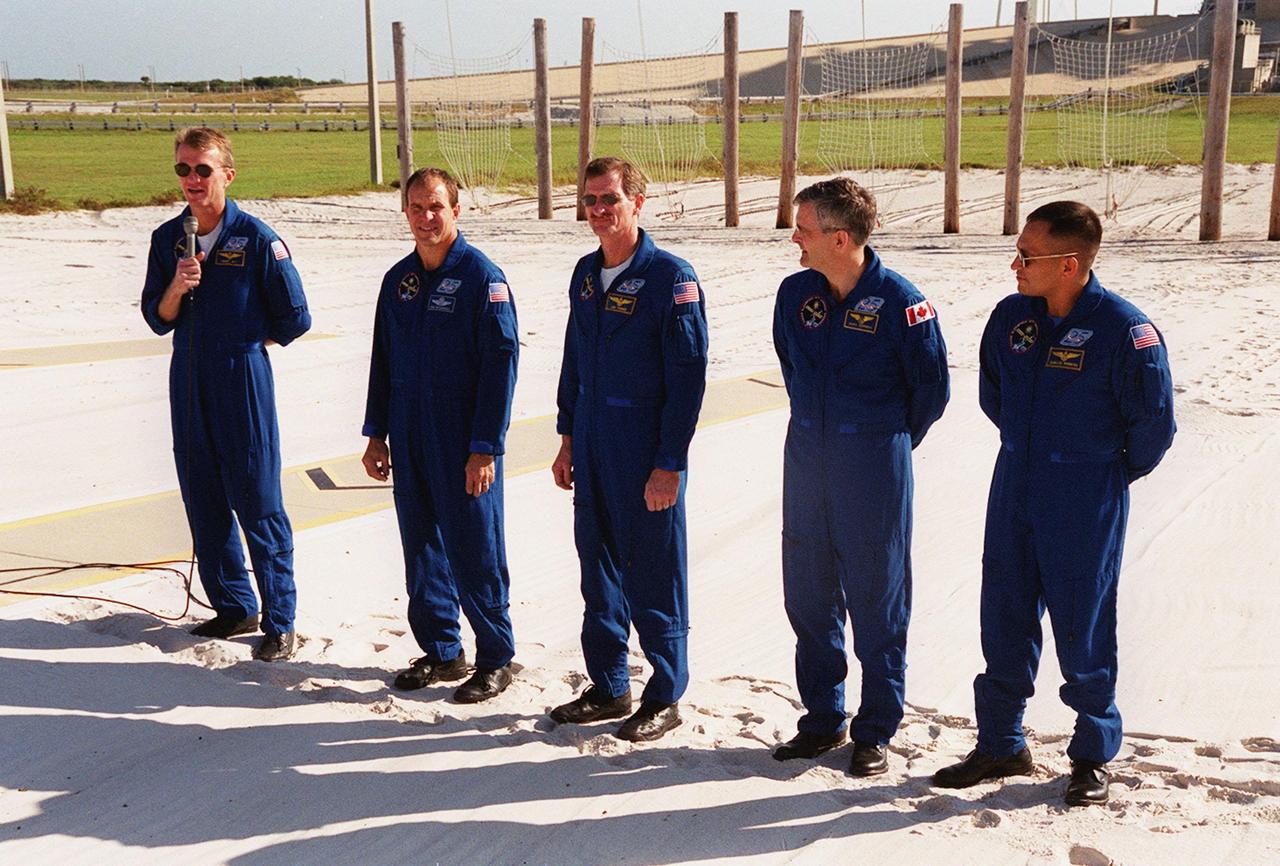
KENNEDY SPACE CENTER, Fla. -- Standing in the slidewire landing zone at Launch Pad 39B, the STS-97 crew respond to questions from the media. Commander Brent Jett (on left, with microphone) introduces the rest of the crew (left to right) Pilot Mike Bloomfield and Mission Specialists Joe Tanner, Marc Garneau and Carlos Noriega. Garneau is with the Canadian Space Agency. The nets suspended behind them are a braking system catch net for the slidewire baskets that provide emergency exit from the orbiter and Fixed Service Structure. The crew is at KSC to take part in Terminal Countdown Demonstration Test activities that include emergency egress training, familiarization with the payload, and a simulated launch countdown. Mission STS-97is the sixth construction flight to the International Space Station. Its payload includes the P6 Integrated Truss Structure and a photovoltaic (PV) module, with giant solar arrays that will provide power to the Station. The mission includes two spacewalks to complete the solar array connections. STS-97 is scheduled to launch Nov. 30 at about 10:05 p.m. EST

The STS-92 crew spends a few minutes on the tarmac at the KSC Shuttle Landing Facility to address the media. At the microphone, Commander Brian Duffy introduces the crew: (from left) Mission Specialists Koichi Wakata, Michael Lopez-Alegria, Jeff Wisoff, Bill McArthur and Leroy Chiao; and Pilot Pam Melroy. The crew is at KSC to take part in Terminal Countdown Demonstration Test (TCDT) activities. The TCDT includes emergency egress training from the orbiter and pad, plus a simulated countdown. The fifth mission to the International Space Station, STS-92 will carry the Integrated Truss Structure Z1, the first of the planned 10 trusses on the Space Station, and the third Pressurized Mating Adapter. The Z1 will allow the first U.S. solar arrays on a future flight to be temporarily installed on Unity for early power. PMA-3 will provide a Shuttle docking port for the solar array installation on the sixth ISS flight and Lab installation on the seventh ISS flight. STS-92 is scheduled to launch Oct. 5 from launch Pad 39A. It will be the 100th flight in the Shuttle program
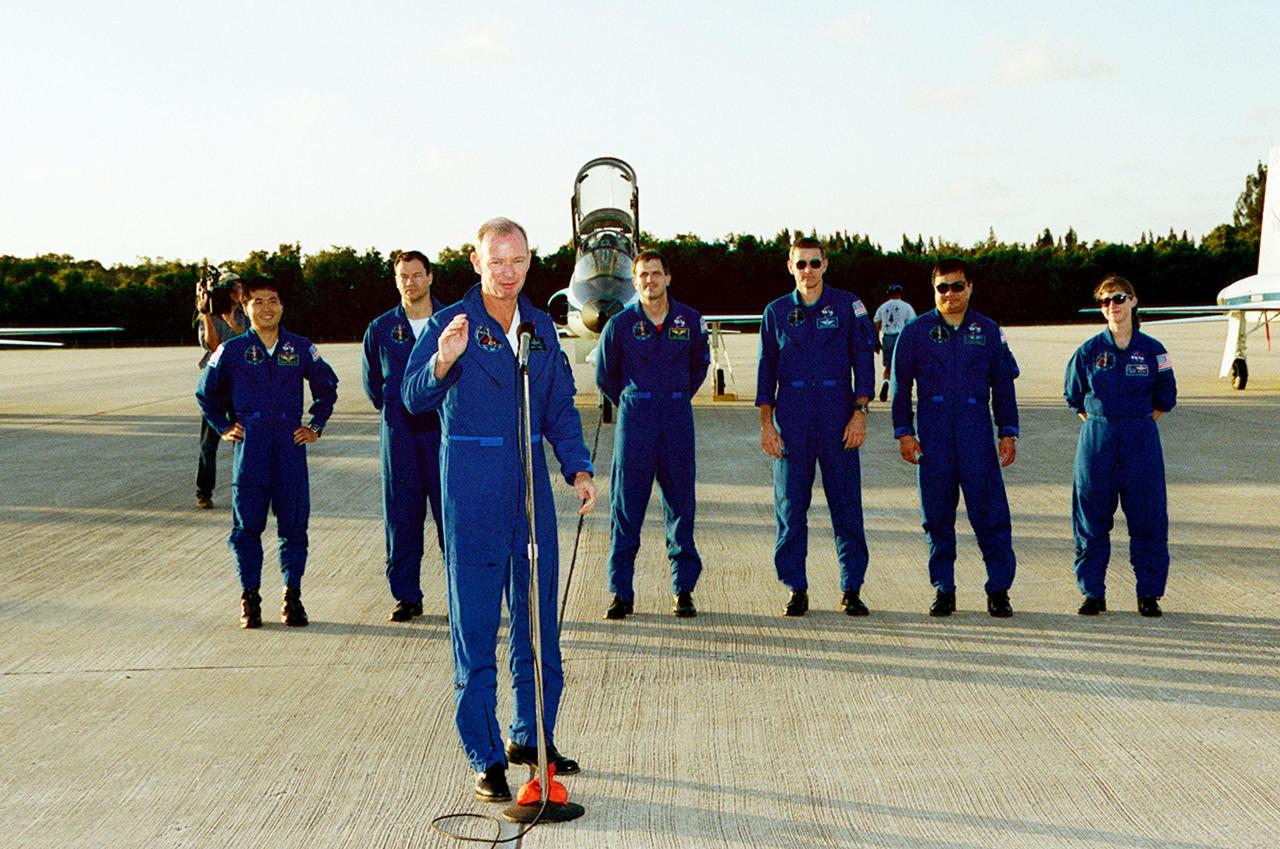
STS-92 Commander Brian Duffy, at the microphone, waves to the media after introducing the crew. Standing behind him are Mission Specialists Koichi Wakata, Michael Lopez-Alegria, Jeff Wisoff, Bill McArthur and Leroy Chiao; and Pilot Pam Melroy. The crew is at KSC to take part in Terminal Countdown Demonstration Test (TCDT) activities. The TCDT includes emergency egress training from the orbiter and pad, plus a simulated countdown. The fifth mission to the International Space Station, STS-92 will carry the Integrated Truss Structure Z1, the first of the planned 10 trusses on the Space Station, and the third Pressurized Mating Adapter. The Z1 will allow the first U.S. solar arrays on a future flight to be temporarily installed on Unity for early power. PMA-3 will provide a Shuttle docking port for the solar array installation on the sixth ISS flight and Lab installation on the seventh ISS flight. STS-92 is scheduled to launch Oct. 5 from launch Pad 39A. It will be the 100th flight in the Shuttle program
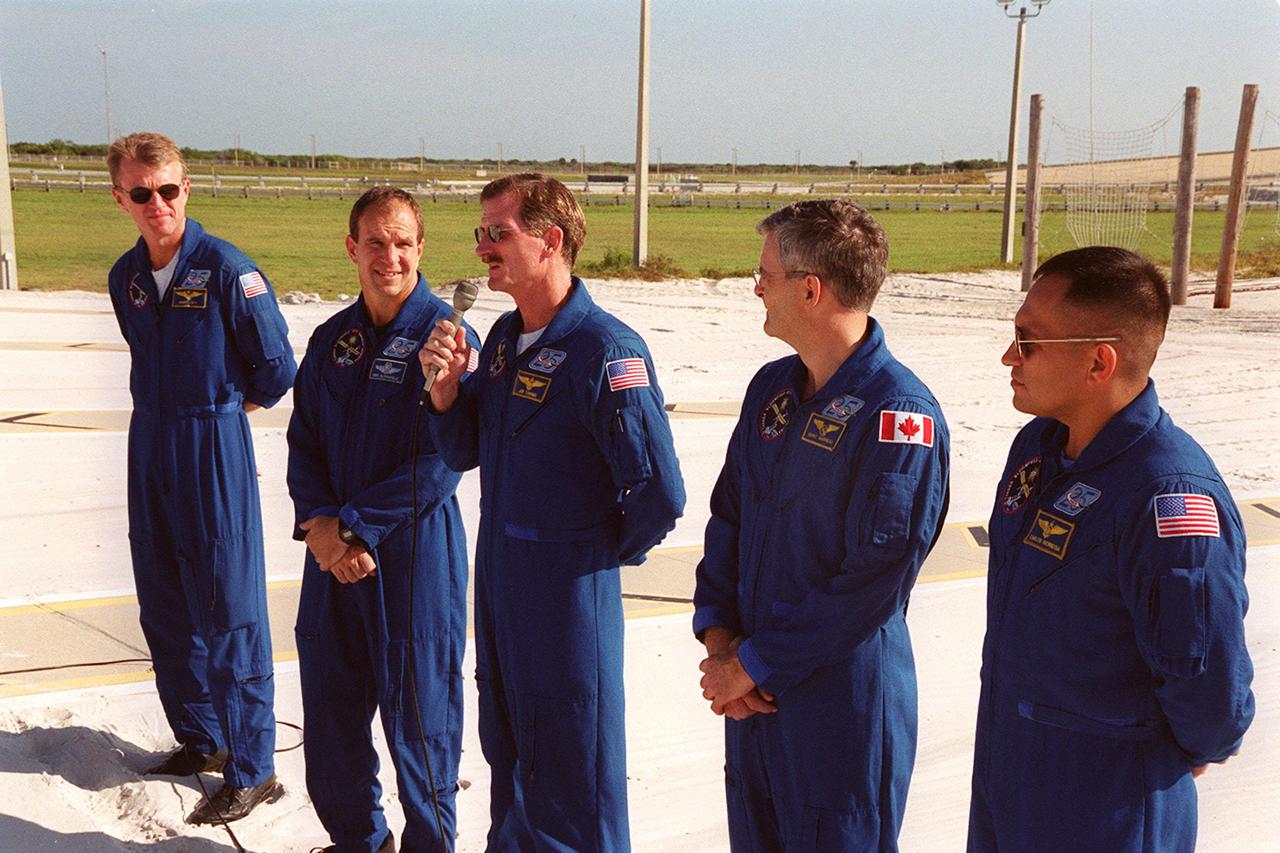
KENNEDY SPACE CENTER, Fla. -- From the slidewire landing zone at Launch Pad 39B, STS-97 Mission Specialist Joe Tanner (center, with microphone) speaks to the press about his extravehicular activity (EVA) during the mission. With him are the rest of the crew, Commander Brent Jett and Pilot Mike Bloomfield on the left and Mission Specialists Marc Garneau and Carlos Noriega on the right. The crew is at KSC to take part in Terminal Countdown Demonstration Test activities that include emergency egress training, familiarization with the payload, and a simulated launch countdown. Visible in the background are the solid rocket booster and external tank on Space Shuttle Endeavour. Mission STS-97is the sixth construction flight to the International Space Station. Its payload includes the P6 Integrated Truss Structure and a photovoltaic (PV) module, with giant solar arrays that will provide power to the Station. The mission includes two spacewalks to complete the solar array connections. STS-97 is scheduled to launch Nov. 30 at about 10:05 p.m. EST

The STS-92 crew spends a few minutes on the tarmac at the KSC Shuttle Landing Facility to address the media. At the microphone, Commander Brian Duffy introduces the crew: (from left) Mission Specialists Koichi Wakata, Michael Lopez-Alegria, Jeff Wisoff, Bill McArthur and Leroy Chiao; and Pilot Pam Melroy. The crew is at KSC to take part in Terminal Countdown Demonstration Test (TCDT) activities. The TCDT includes emergency egress training from the orbiter and pad, plus a simulated countdown. The fifth mission to the International Space Station, STS-92 will carry the Integrated Truss Structure Z1, the first of the planned 10 trusses on the Space Station, and the third Pressurized Mating Adapter. The Z1 will allow the first U.S. solar arrays on a future flight to be temporarily installed on Unity for early power. PMA-3 will provide a Shuttle docking port for the solar array installation on the sixth ISS flight and Lab installation on the seventh ISS flight. STS-92 is scheduled to launch Oct. 5 from launch Pad 39A. It will be the 100th flight in the Shuttle program
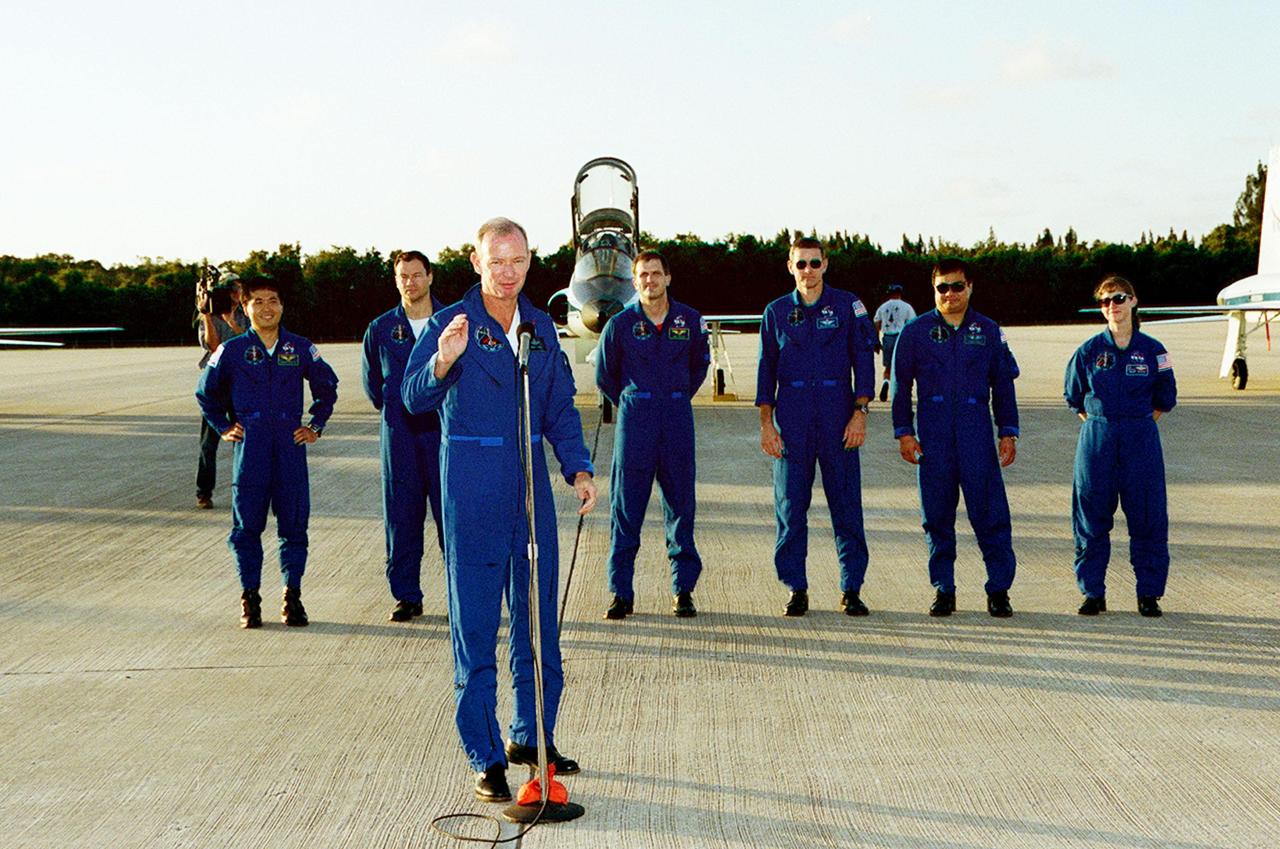
STS-92 Commander Brian Duffy, at the microphone, waves to the media after introducing the crew. Standing behind him are Mission Specialists Koichi Wakata, Michael Lopez-Alegria, Jeff Wisoff, Bill McArthur and Leroy Chiao; and Pilot Pam Melroy. The crew is at KSC to take part in Terminal Countdown Demonstration Test (TCDT) activities. The TCDT includes emergency egress training from the orbiter and pad, plus a simulated countdown. The fifth mission to the International Space Station, STS-92 will carry the Integrated Truss Structure Z1, the first of the planned 10 trusses on the Space Station, and the third Pressurized Mating Adapter. The Z1 will allow the first U.S. solar arrays on a future flight to be temporarily installed on Unity for early power. PMA-3 will provide a Shuttle docking port for the solar array installation on the sixth ISS flight and Lab installation on the seventh ISS flight. STS-92 is scheduled to launch Oct. 5 from launch Pad 39A. It will be the 100th flight in the Shuttle program
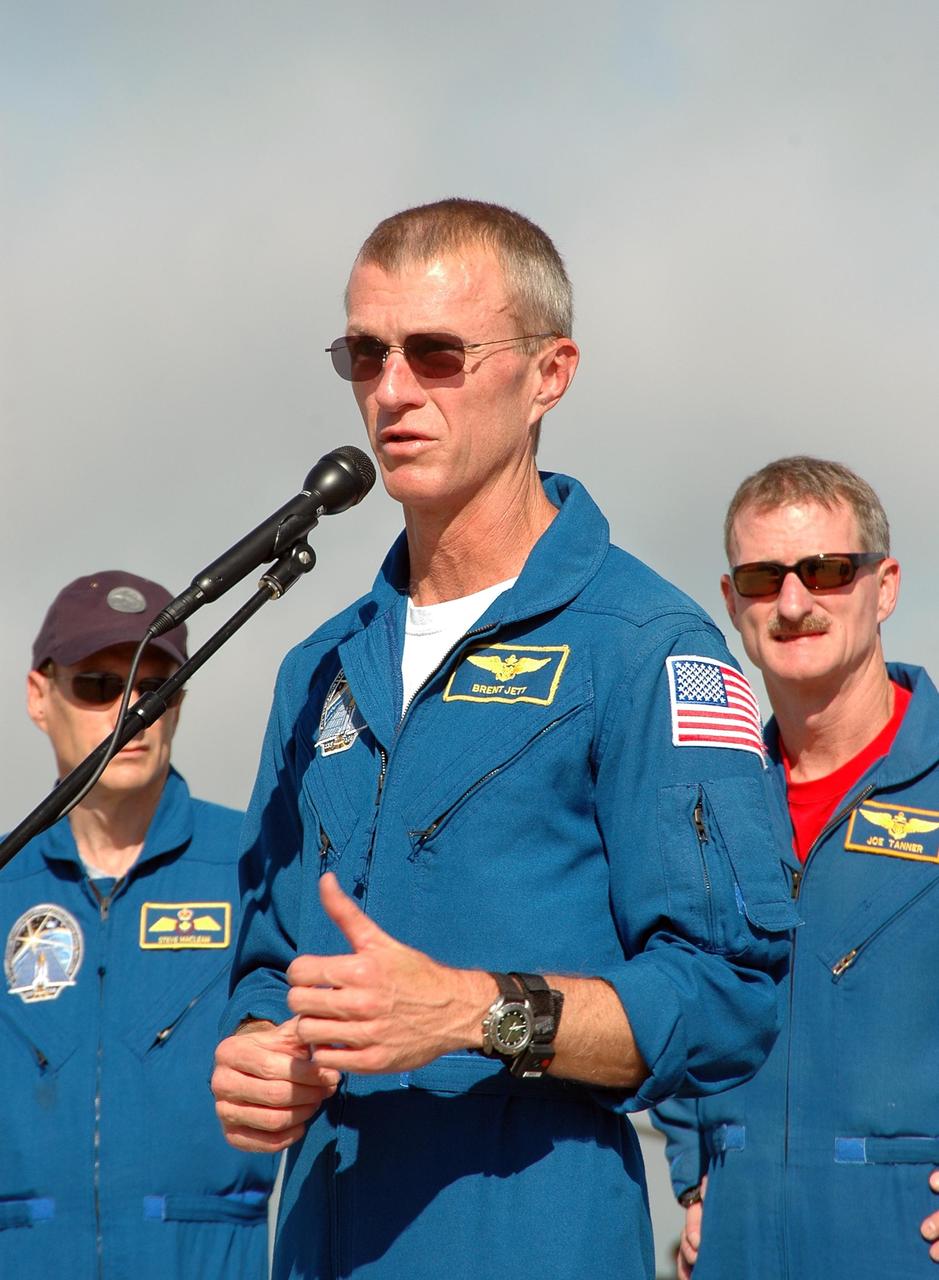
KENNEDY SPACE CENTER, FLA. - The crew of mission STS-115 stop to talk to the media after arriving at NASA Kennedy Space Center's Shuttle Landing Facility to prepare for a second launch attempt on Sept. 6 to the International Space Station. Seen here, left to right, are Mission Specialist Steven MacLean of the Canadian Space Agency, Commander Brent Jett (at microphone) and Mission Specialist Joseph Tanner. Mission managers cancelled Atlantis' first launch campaign due to a lightning strike at the pad and the passage of Tropical Storm Ernesto along Florida's east coast. The mission will deliver and install the 17-and-a-half-ton P3/P4 truss segment to the port side of the integrated truss system on the orbital outpost. The truss includes a new set of photovoltaic solar arrays. When unfurled to their full length of 240 feet, the arrays will provide additional power for the station in preparation for the delivery of international science modules over the next two years. STS-115 is expected to last 11 days and includes three scheduled spacewalks. Photo credit: NASA/Kim Shiflett
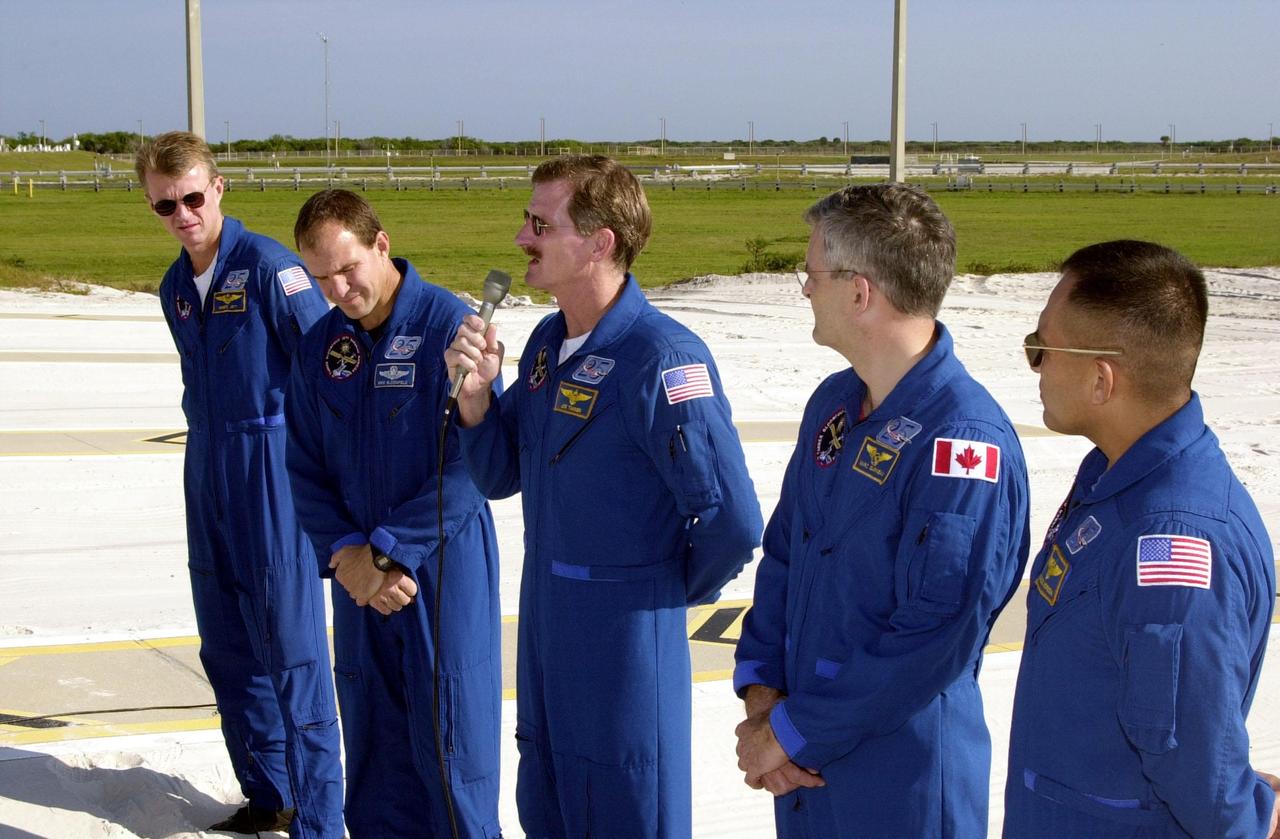
KENNEDY SPACE CENTER, Fla. -- From the slidewire landing zone at Launch Pad 39B, STS-97 Mission Specialist Joe Tanner (center, with microphone) speaks to the press about his extravehicular activity (EVA) during the mission. With him are the rest of the crew, Commander Brent Jett and Pilot Mike Bloomfield on the left and Mission Specialists Marc Garneau and Carlos Noriega on the right. The crew is at KSC to take part in Terminal Countdown Demonstration Test activities that include emergency egress training, familiarization with the payload, and a simulated launch countdown. Visible in the background are the solid rocket booster and external tank on Space Shuttle Endeavour. Mission STS-97is the sixth construction flight to the International Space Station. Its payload includes the P6 Integrated Truss Structure and a photovoltaic (PV) module, with giant solar arrays that will provide power to the Station. The mission includes two spacewalks to complete the solar array connections. STS-97 is scheduled to launch Nov. 30 at about 10:05 p.m. EST
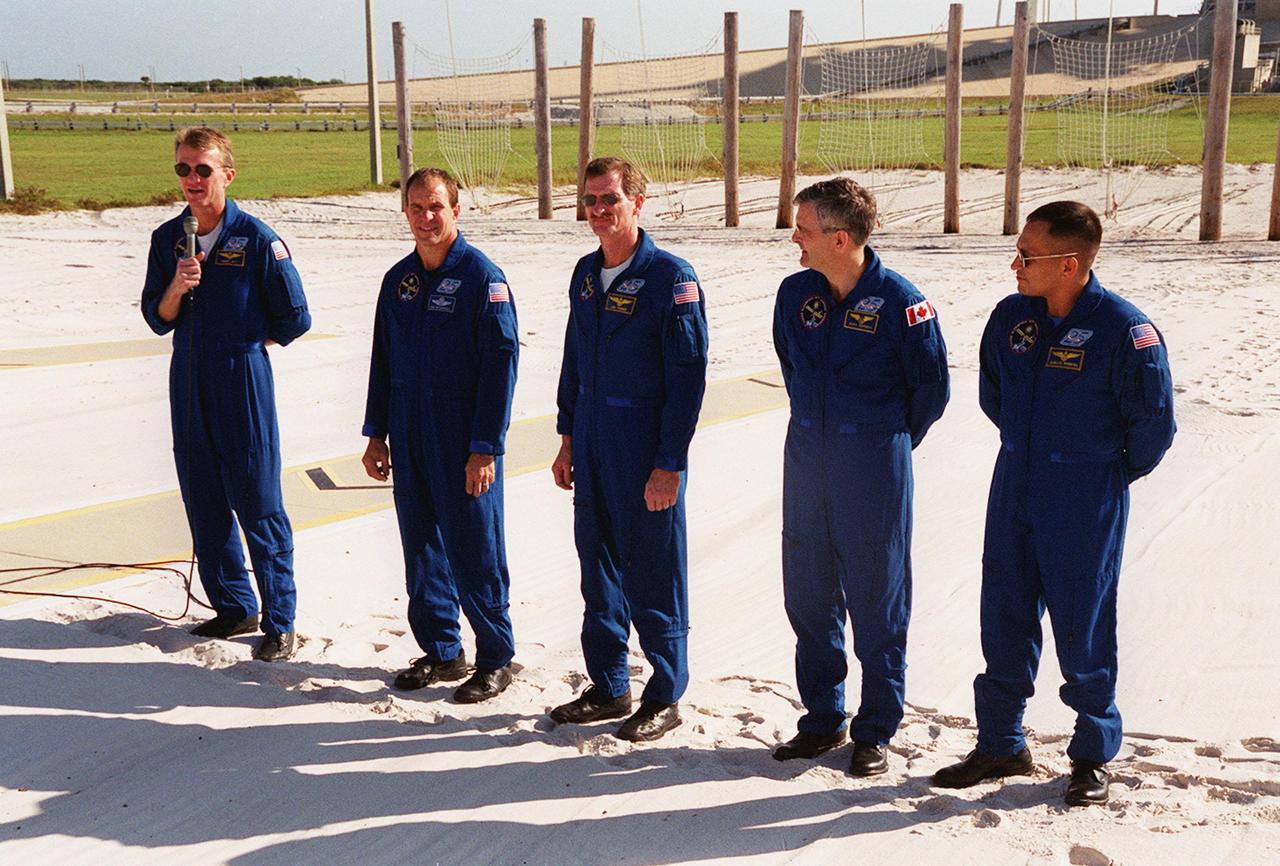
KENNEDY SPACE CENTER, Fla. -- Standing in the slidewire landing zone at Launch Pad 39B, the STS-97 crew respond to questions from the media. Commander Brent Jett (on left, with microphone) introduces the rest of the crew (left to right) Pilot Mike Bloomfield and Mission Specialists Joe Tanner, Marc Garneau and Carlos Noriega. Garneau is with the Canadian Space Agency. The nets suspended behind them are a braking system catch net for the slidewire baskets that provide emergency exit from the orbiter and Fixed Service Structure. The crew is at KSC to take part in Terminal Countdown Demonstration Test activities that include emergency egress training, familiarization with the payload, and a simulated launch countdown. Mission STS-97is the sixth construction flight to the International Space Station. Its payload includes the P6 Integrated Truss Structure and a photovoltaic (PV) module, with giant solar arrays that will provide power to the Station. The mission includes two spacewalks to complete the solar array connections. STS-97 is scheduled to launch Nov. 30 at about 10:05 p.m. EST
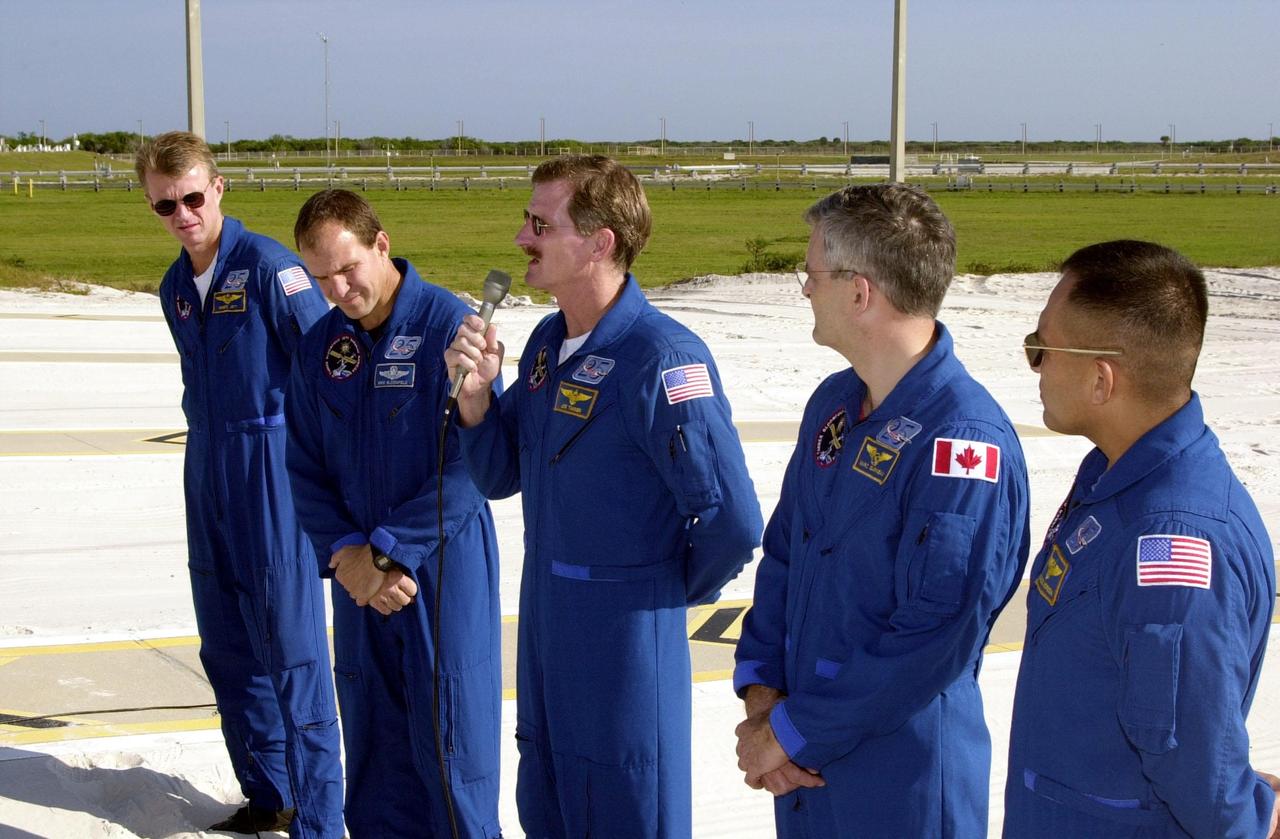
KENNEDY SPACE CENTER, Fla. -- From the slidewire landing zone at Launch Pad 39B, STS-97 Mission Specialist Joe Tanner (center, with microphone) speaks to the press about his extravehicular activity (EVA) during the mission. With him are the rest of the crew, Commander Brent Jett and Pilot Mike Bloomfield on the left and Mission Specialists Marc Garneau and Carlos Noriega on the right. The crew is at KSC to take part in Terminal Countdown Demonstration Test activities that include emergency egress training, familiarization with the payload, and a simulated launch countdown. Visible in the background are the solid rocket booster and external tank on Space Shuttle Endeavour. Mission STS-97is the sixth construction flight to the International Space Station. Its payload includes the P6 Integrated Truss Structure and a photovoltaic (PV) module, with giant solar arrays that will provide power to the Station. The mission includes two spacewalks to complete the solar array connections. STS-97 is scheduled to launch Nov. 30 at about 10:05 p.m. EST
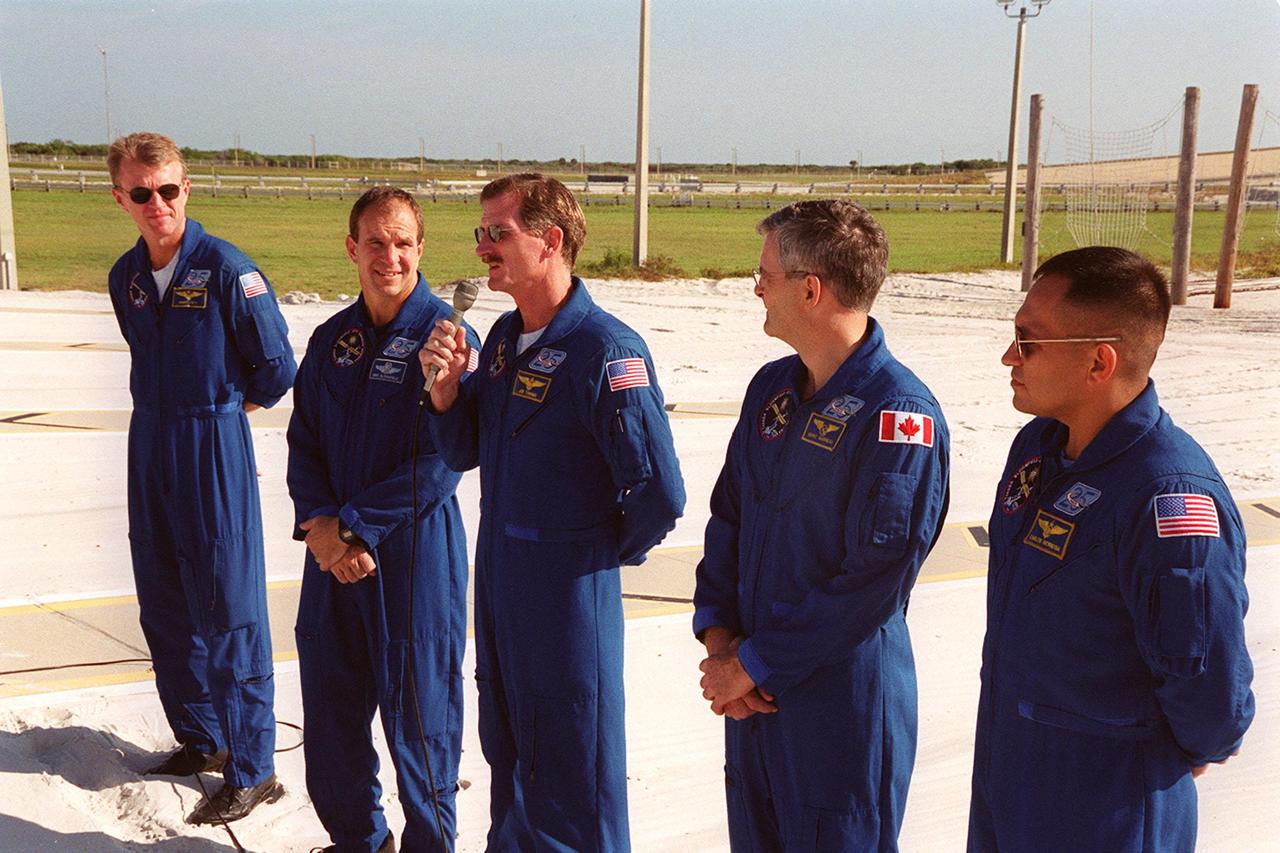
KENNEDY SPACE CENTER, Fla. -- From the slidewire landing zone at Launch Pad 39B, STS-97 Mission Specialist Joe Tanner (center, with microphone) speaks to the press about his extravehicular activity (EVA) during the mission. With him are the rest of the crew, Commander Brent Jett and Pilot Mike Bloomfield on the left and Mission Specialists Marc Garneau and Carlos Noriega on the right. The crew is at KSC to take part in Terminal Countdown Demonstration Test activities that include emergency egress training, familiarization with the payload, and a simulated launch countdown. Visible in the background are the solid rocket booster and external tank on Space Shuttle Endeavour. Mission STS-97is the sixth construction flight to the International Space Station. Its payload includes the P6 Integrated Truss Structure and a photovoltaic (PV) module, with giant solar arrays that will provide power to the Station. The mission includes two spacewalks to complete the solar array connections. STS-97 is scheduled to launch Nov. 30 at about 10:05 p.m. EST
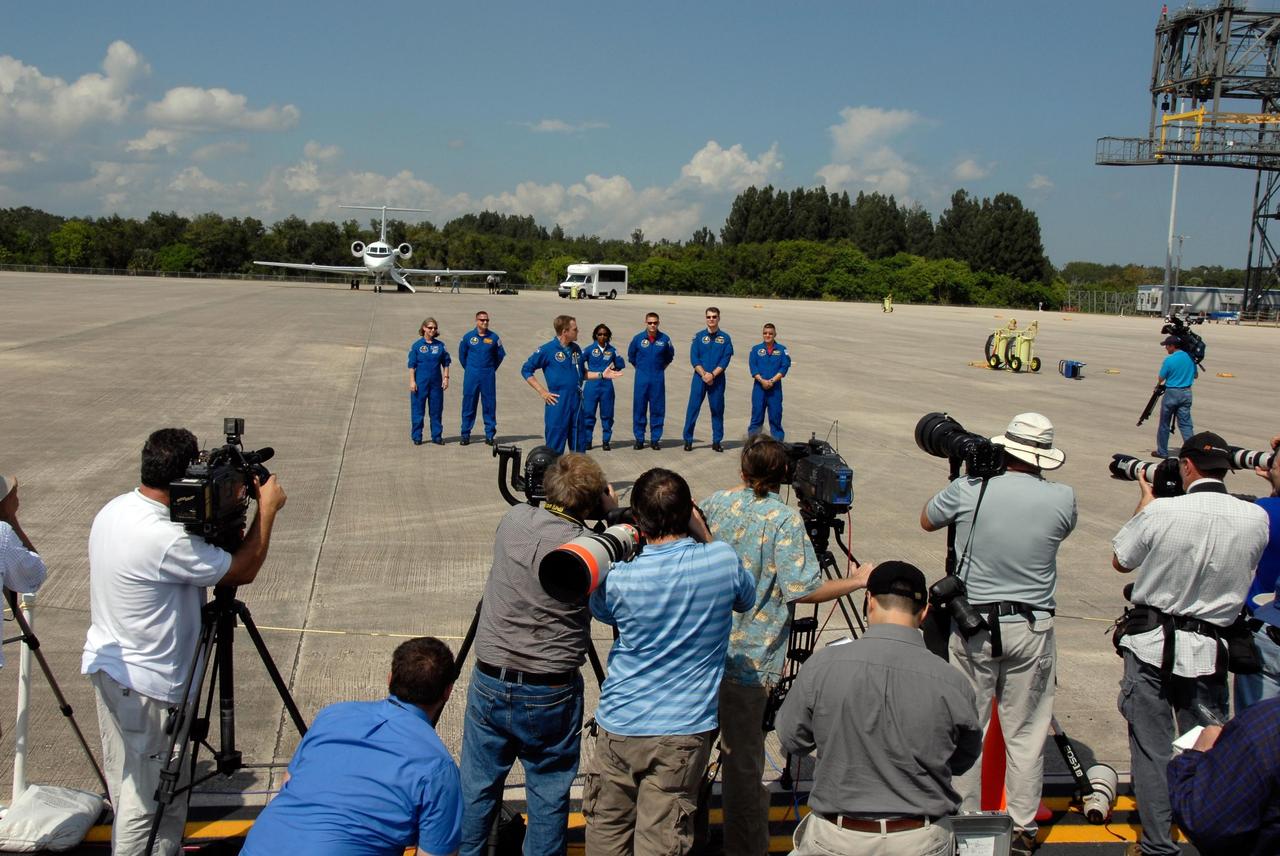
KENNEDY SPACE CENTER, FLA. -- At the Shuttle Landing Facility of NASA's Kennedy Space Center, STS-120 crew members talk to the media and other spectators who greeted their arrival. From left are Commander Pamela Melroy, Pilot George Zamka and Mission Specialists Scott Parazynski (at microphone), Stephanie Wilson, Doug Wheelock, Paolo Nespoli and Daniel Tani. Nespoli represents the European Space Agency. Tani will be remaining on the International Space Station to join the Expedition 16 crew after the mission is complete. The crew has returned to Kennedy to prepare for launch aboard space shuttle Discovery at 11:38 a.m. EDT on Oct. 23. The mission will be the 23rd shuttle flight to the International Space Station, delivering the Italian-built U.S. Node 2, called Harmony. The 14-day mission includes five spacewalks -- four by shuttle crew members and one by the station’s Expedition 16 crew -- to install Harmony and move the P6 solar arrays to their permanent position and deploy them. Discovery is expected to complete its mission and return home at 4:47 a.m. EST on Nov. 6. Photo credit: NASA/Kim Shiflett
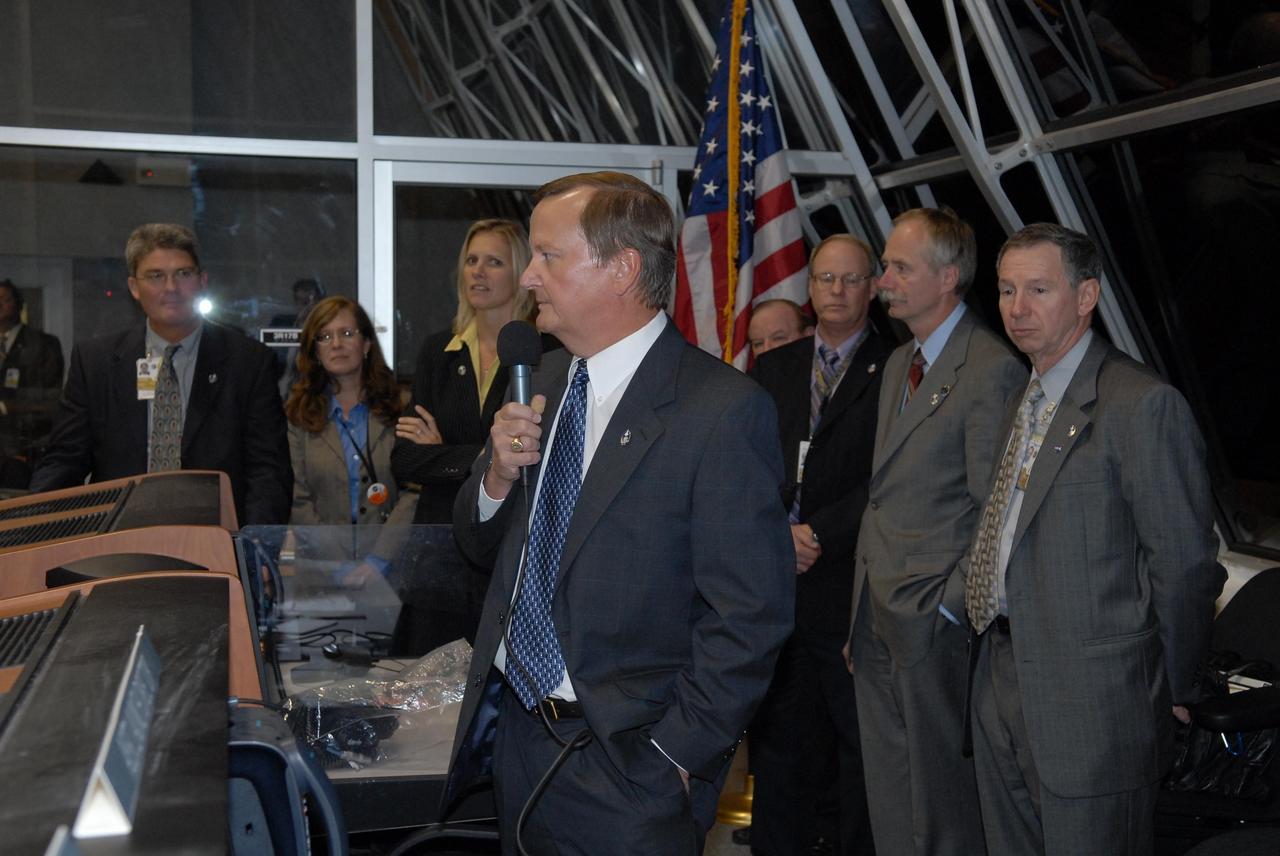
KENNEDY SPACE CENTER, FLA. -- In the firing room at the Launch Control Center, Shuttle Launch Director Mike Leinbach (center, with microphone) commends the mission management team for the successful second launch attempt of Space Shuttle Discovery on mission STS-116. Liftoff occurred on time at 8:47 p.m. EST. Others in the room are (left to right), Deputy Director Bill Parsons, External Relations Director Lisa Malone, NASA Flow Director for Discovery Stephanie Stilson, NASA KSC News Chief Bruce Buckingham, Associate Administrator for Space Operations Mission William Gerstenmaier and NASA Administrator Mike Griffin. This was the second launch attempt for mission STS-116. The first launch attempt on Dec. 7 was postponed due a low cloud ceiling over Kennedy Space Center. This is Discovery's 33rd mission and the first night launch since 2002. The 20th shuttle mission to the International Space Station, STS-116 carries another truss segment, P5. It will serve as a spacer, mated to the P4 truss that was attached in September. After installing the P5, the crew will reconfigure and redistribute the power generated by two pairs of U.S. solar arrays. Landing is expected Dec. 21 at KSC. Photo credit: NASA/Kim Shiflett
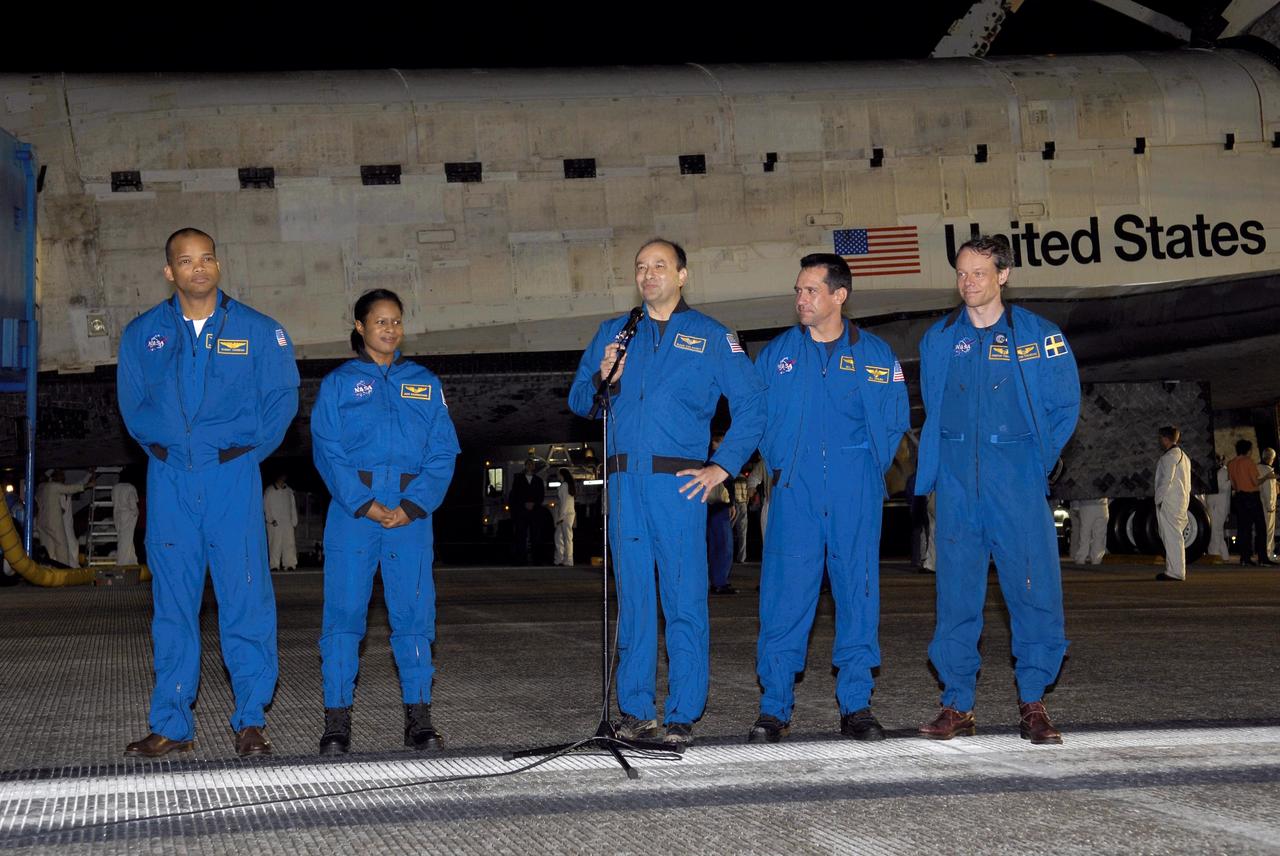
STS116-S-073 (22 Dec. 2006) --- Following the successful completion of a 13-day mission on Runway 15 at NASA Kennedy Space Center's Shuttle Landing Facility, crewmembers address those on hand to greet them. Mark L. Polansky, commander, stands at the microphone. William A. Oefelein, pilot, is at second right. Others, from the left, are astronauts Robert L. Curbeam Jr., Joan E. Higginbotham and European Space Agency astronaut Christer Fuglesang--all mission specialists. ESA astronaut Thomas Reiter, who is returning from a six-month stay on the International Space Station, and astronaut Nicholas J.M. Patrick, a mission specialist, are not pictured. During the mission, three spacewalks attached the P5 integrated truss structure to the station, and completed the rewiring of the orbiting laboratory's power system. A contingency spacewalk was added to retract a stubborn solar array. Main gear touchdown was at 5:32 p.m. (EST). Nose gear touchdown was at 5:32:12 p.m. and wheel stop was at 5:32:52 p.m. At touchdown -- nominally about 2,500 ft. beyond the runway threshold -- the orbiter is traveling at a speed ranging from 213 to 226 mph. Discovery traveled 5,330,000 miles, landing on orbit 204. Mission elapsed time was 12 days, 20 hours, 44 minutes and 16 seconds. This is the 64th landing at KSC.
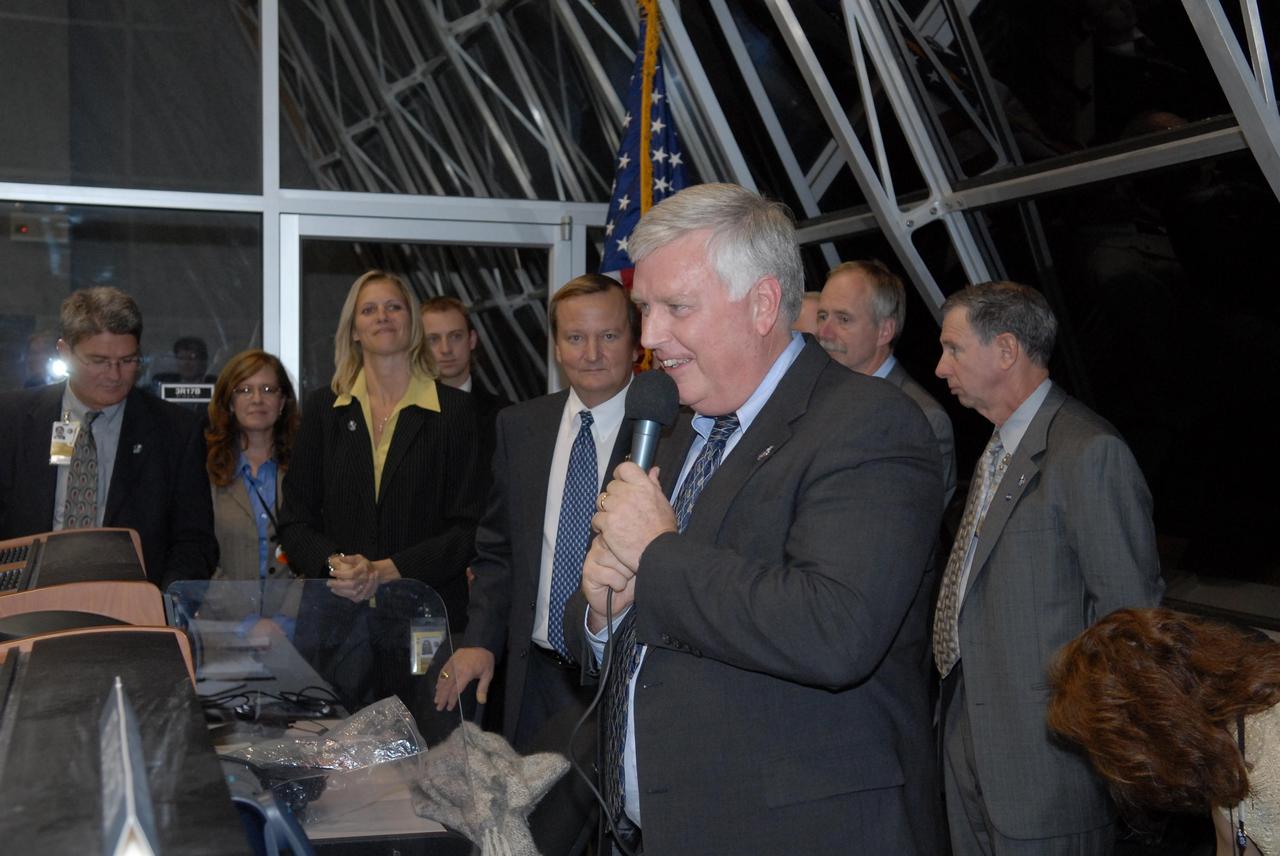
KENNEDY SPACE CENTER, FLA. -- In the firing room at the Launch Control Center, Kennedy Space Center Director Jim Kennedy (with microphone) congratulates the team for successful second launch attempt of Space Shuttle Discovery on mission STS-116. Liftoff occurred on time at 8:47 p.m. EST. Others in the room are (left to right), Deputy Director Bill Parsons, External Relations Director Lisa Malone, NASA Flow Director for Discovery Stephanie Stilson, Shuttle Launch Director Mike Leinbach, Associate Administrator for Space Operations Mission William Gerstenmaier and NASA Administrator Mike Griffin. The first launch attempt on Dec. 7 was postponed due a low cloud ceiling over Kennedy Space Center. This is Discovery's 33rd mission and the first night launch since 2002. The 20th shuttle mission to the International Space Station, STS-116 carries another truss segment, P5. It will serve as a spacer, mated to the P4 truss that was attached in September. After installing the P5, the crew will reconfigure and redistribute the power generated by two pairs of U.S. solar arrays. Landing is expected Dec. 21 at KSC. Photo credit: NASA/Kim Shiflett