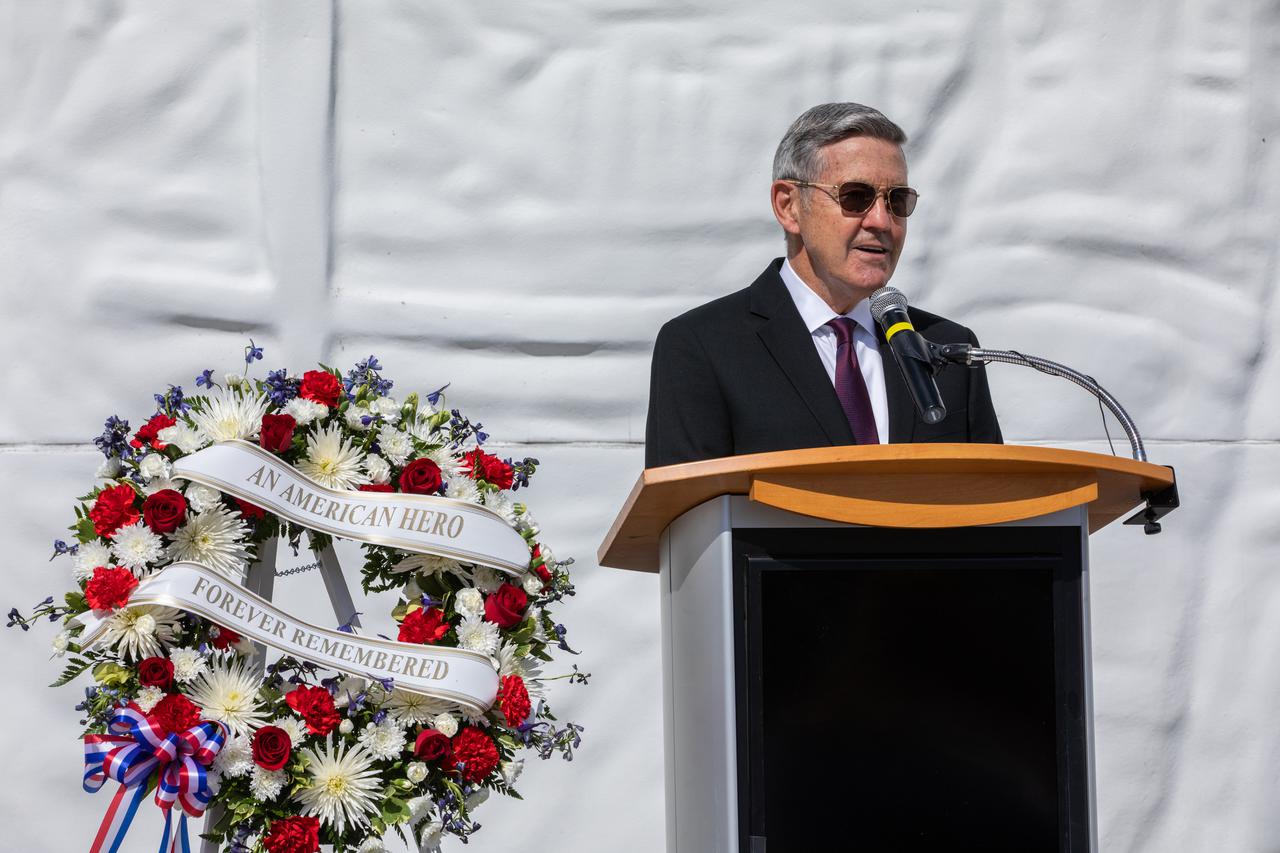
Kennedy Space Center Director Bob Cabana provides remarks during a wreath-laying ceremony in Florida, honoring the memory of former Apollo 11 astronaut Michael Collins on April 30, 2021. Therrin Protze, chief operating officer of Delaware North at Kennedy’s visitor complex, also spoke during the ceremony, held just outside of the Heroes and Legends exhibit at the visitor complex. Collins served as pilot on the three-day Gemini X mission in 1966, and he was the command module pilot for the historic Apollo 11 mission in 1969, where he remained in lunar orbit while Neil Armstrong and Buzz Aldrin become the first people to walk on the Moon. Collins passed away on April 28, 2021, at the age of 90.

A wreath-laying ceremony honoring the memory of former Apollo 11 astronaut Michael Collins is held outside of the Heroes and Legends exhibit at the Kennedy Space Center Visitor Complex in Florida on April 30, 2021. Kennedy Director Bob Cabana and Therrin Protze, chief operating officer of Delaware North at the visitor complex, provided remarks during the ceremony. Collins served as pilot on the three-day Gemini X mission in 1966, and he was the command module pilot for the historic Apollo 11 mission in 1969, where he remained in lunar orbit while Neil Armstrong and Buzz Aldrin become the first people to walk on the Moon. Collins passed away on April 28, 2021, at the age of 90.
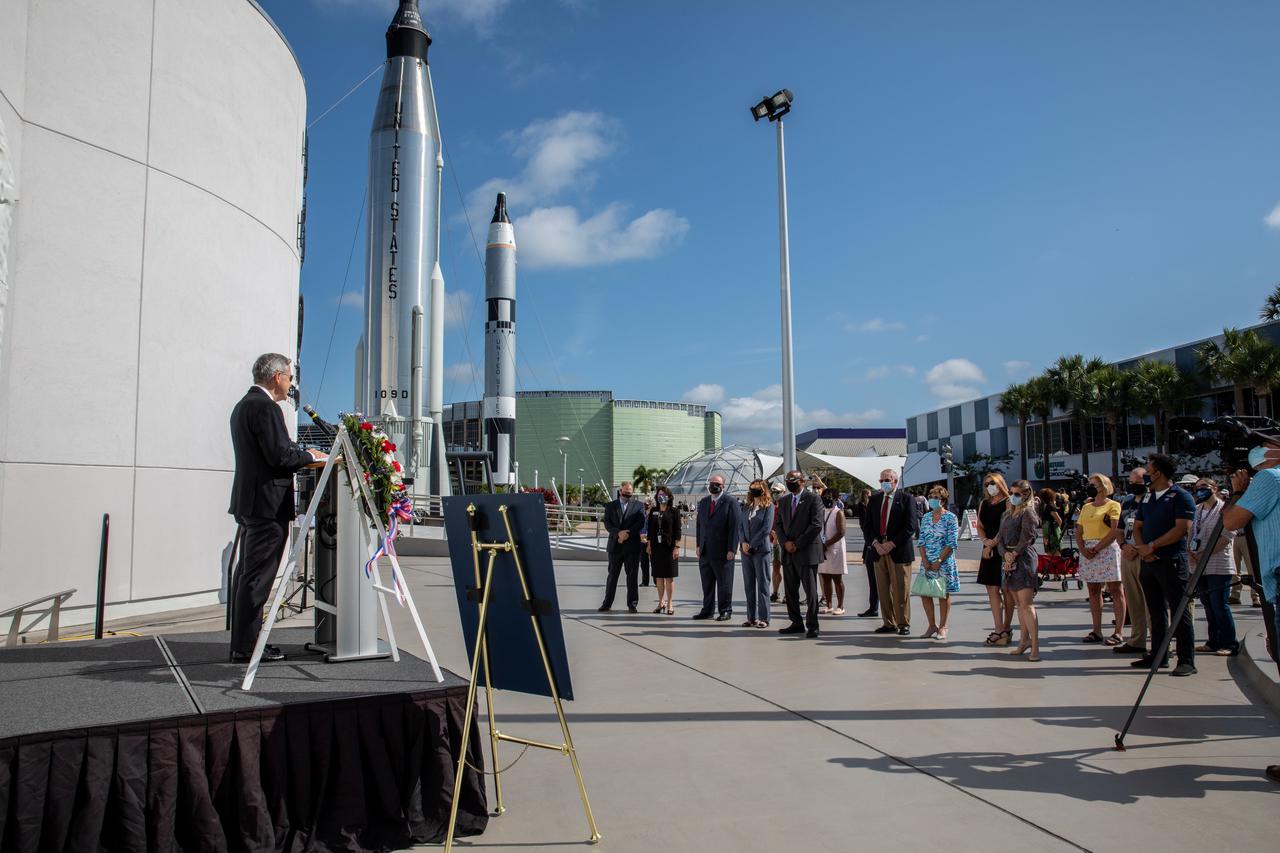
Kennedy Space Center Director Bob Cabana provides remarks during a wreath-laying ceremony in Florida, honoring the memory of former Apollo 11 astronaut Michael Collins on April 30, 2021. Therrin Protze, chief operating officer of Delaware North at Kennedy’s visitor complex, also spoke during the ceremony, held just outside of the Heroes and Legends exhibit at the visitor complex. Collins served as pilot on the three-day Gemini X mission in 1966, and he was the command module pilot for the historic Apollo 11 mission in 1969, where he remained in lunar orbit while Neil Armstrong and Buzz Aldrin become the first people to walk on the Moon. Collins passed away on April 28, 2021, at the age of 90.
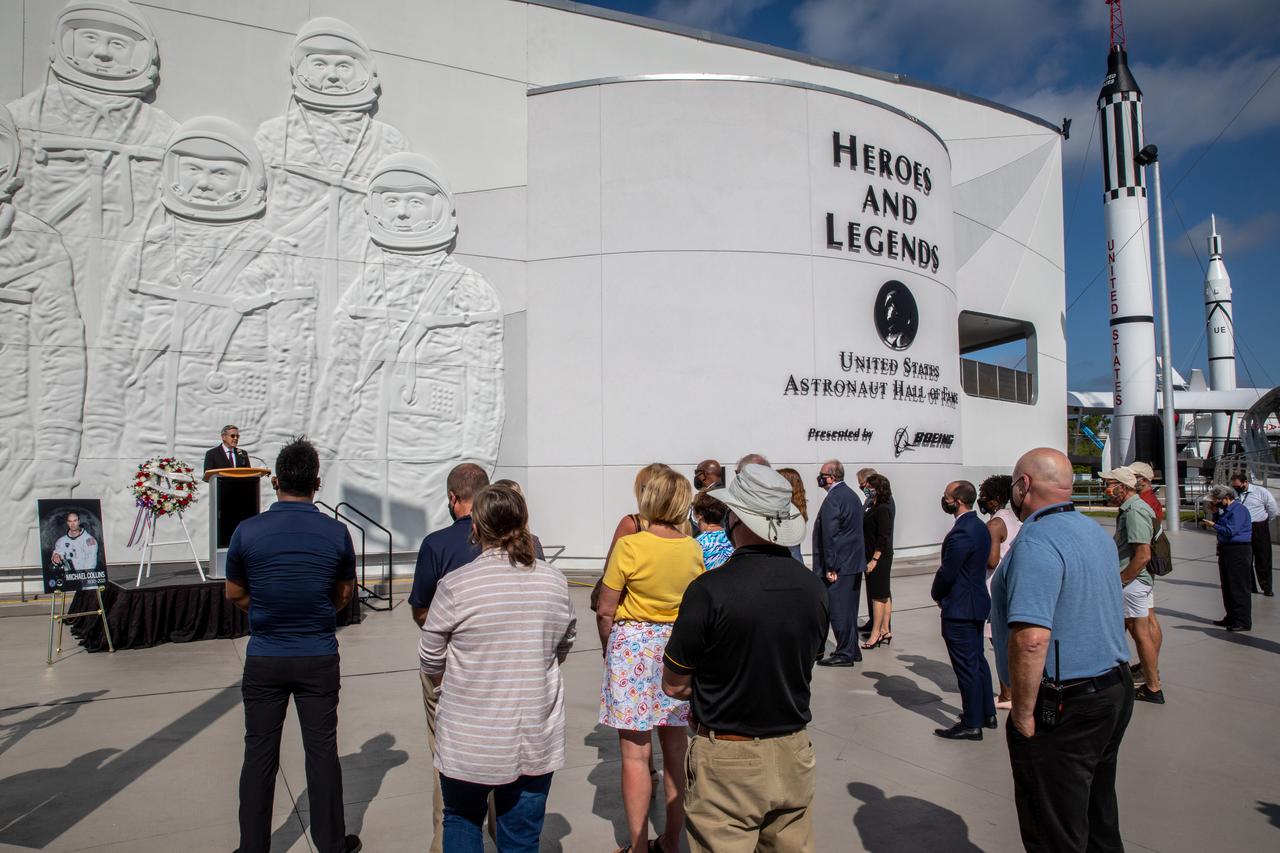
Kennedy Space Center Director Bob Cabana provides remarks during a wreath-laying ceremony in Florida, honoring the memory of former Apollo 11 astronaut Michael Collins on April 30, 2021. Therrin Protze, chief operating officer of Delaware North at Kennedy’s visitor complex, also spoke during the ceremony, held just outside of the Heroes and Legends exhibit at the visitor complex. Collins served as pilot on the three-day Gemini X mission in 1966, and he was the command module pilot for the historic Apollo 11 mission in 1969, where he remained in lunar orbit while Neil Armstrong and Buzz Aldrin become the first people to walk on the Moon. Collins passed away on April 28, 2021, at the age of 90.

The Astronaut Hall of Fame display for astronaut Michael Collins is shown following a wreath-laying ceremony honoring his memory on April 30, 2021, at NASA’s Kennedy Space Center in Florida. Collins served as pilot on the three-day Gemini X mission in 1966, and he was the command module pilot for the historic Apollo 11 mission in 1969, where he remained in lunar orbit while Neil Armstrong and Buzz Aldrin become the first people to walk on the Moon. Collins passed away on April 28, 2021, at the age of 90.
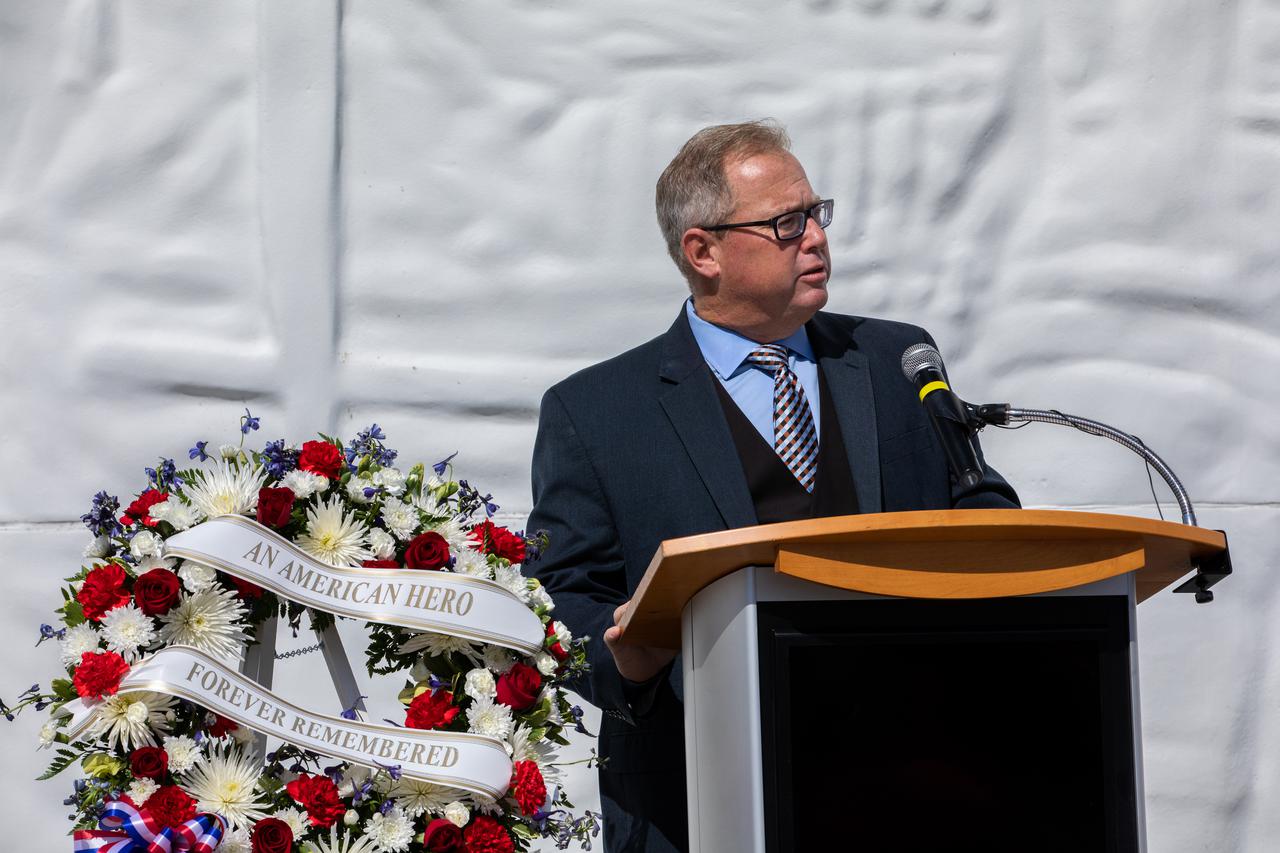
Therrin Protze, chief operating officer of Delaware North at the Kennedy Space Center Visitor Complex, provides remarks during a wreath-laying ceremony honoring the memory of former Apollo 11 astronaut Michael Collins on April 30, 2021. Kennedy Director Bob Cabana also spoke during the ceremony, held just outside of the Heroes and Legends exhibit at the Florida spaceport’s visitor complex. Collins served as pilot on the three-day Gemini X mission in 1966, and he was the command module pilot for the historic Apollo 11 mission in 1969, where he remained in lunar orbit while Neil Armstrong and Buzz Aldrin become the first people to walk on the Moon. Collins passed away on April 28, 2021, at the age of 90.
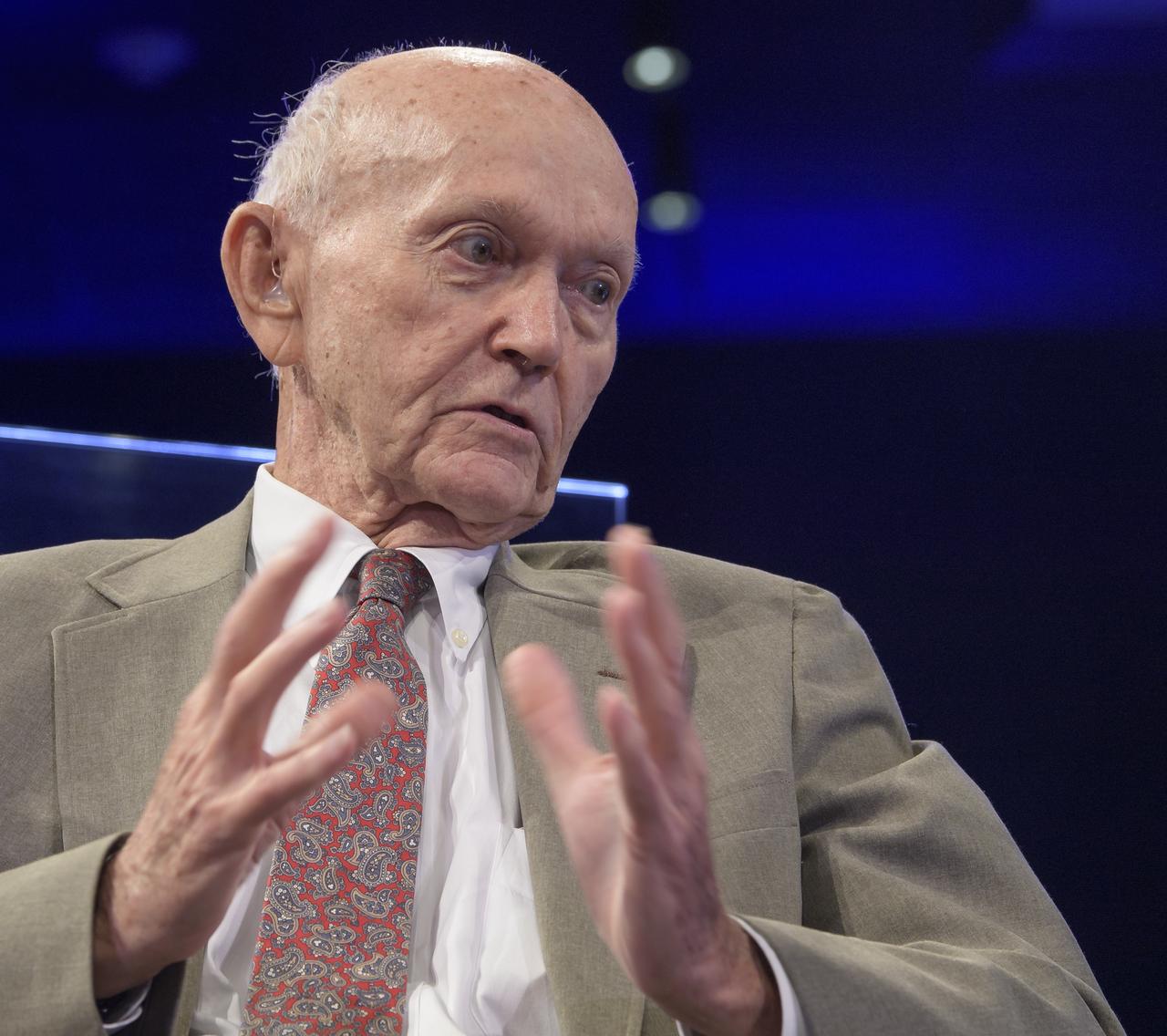
Apollo 11 astronaut Mike Collins talks about his mission during “NASA’s Giant Leaps: Past and Future," a live television program on Friday, July 19, 2019 from the Smithsonian National Air and Space Museum in Washington. NASA and the world are recognizing the 50th anniversary of Apollo 11, in which astronauts Neil Armstrong, Michael Collins, and Buzz Aldrin crewed the first mission to land astronauts on the Moon. Photo Credit: (NASA/Bill Ingalls)
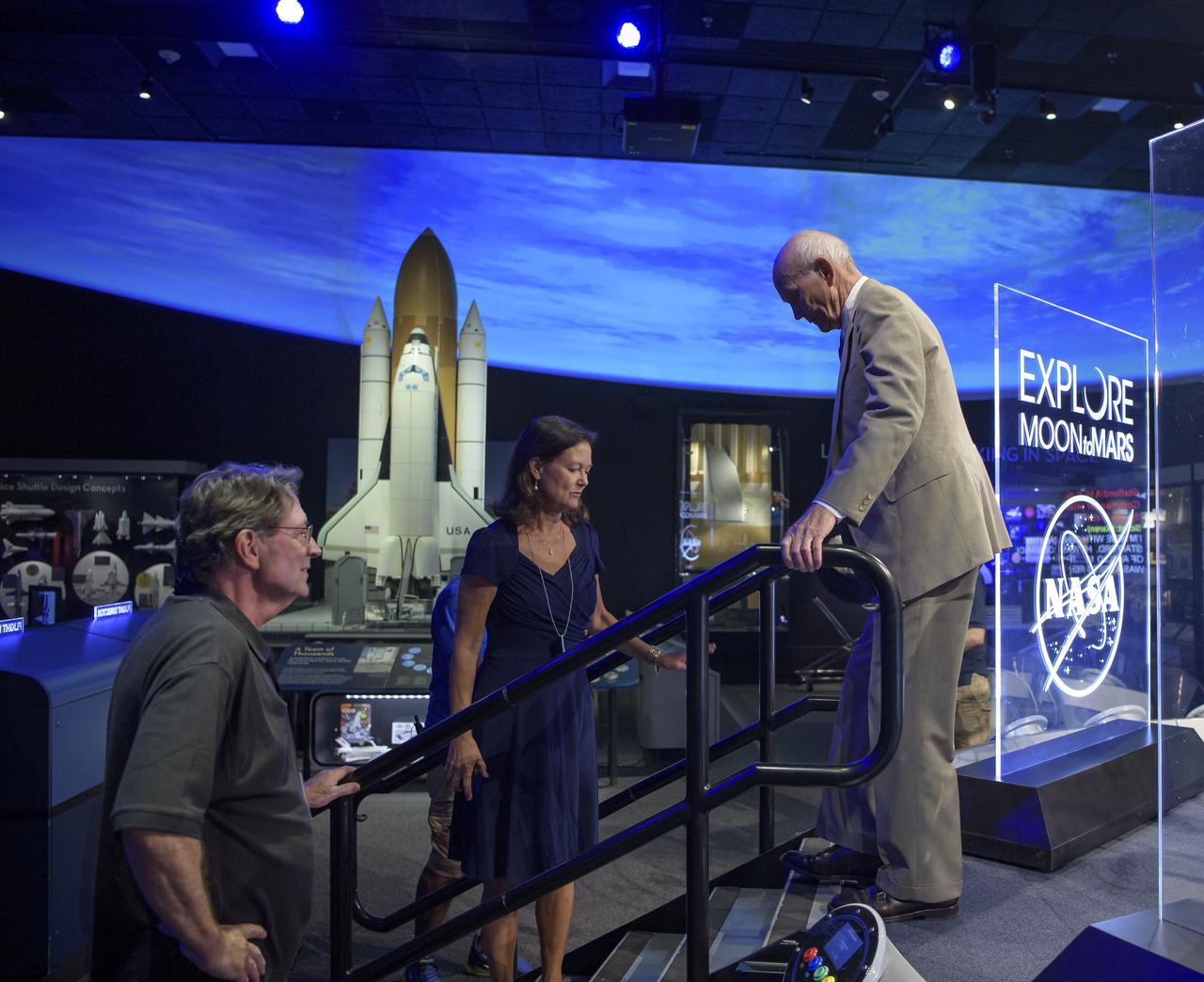
Apollo 11 astronaut Mike Collins leaves the stage after appearing on a live television program titled “NASA’s Giant Leaps: Past and Future," Friday, July 19, 2019 at the Smithsonian National Air and Space Museum in Washington. NASA and the world are recognizing the 50th anniversary of Apollo 11, in which astronauts Neil Armstrong, Michael Collins, and Buzz Aldrin crewed the first mission to land astronauts on the Moon. Photo Credit: (NASA/Bill Ingalls)

Apollo 11 astronaut Mike Collins talks about his mission during “NASA’s Giant Leaps: Past and Future," a live television program on Friday, July 19, 2019 from the Smithsonian National Air and Space Museum in Washington. NASA and the world are recognizing the 50th anniversary of Apollo 11, in which astronauts Neil Armstrong, Michael Collins, and Buzz Aldrin crewed the first mission to land astronauts on the Moon. Photo Credit: (NASA/Bill Ingalls)
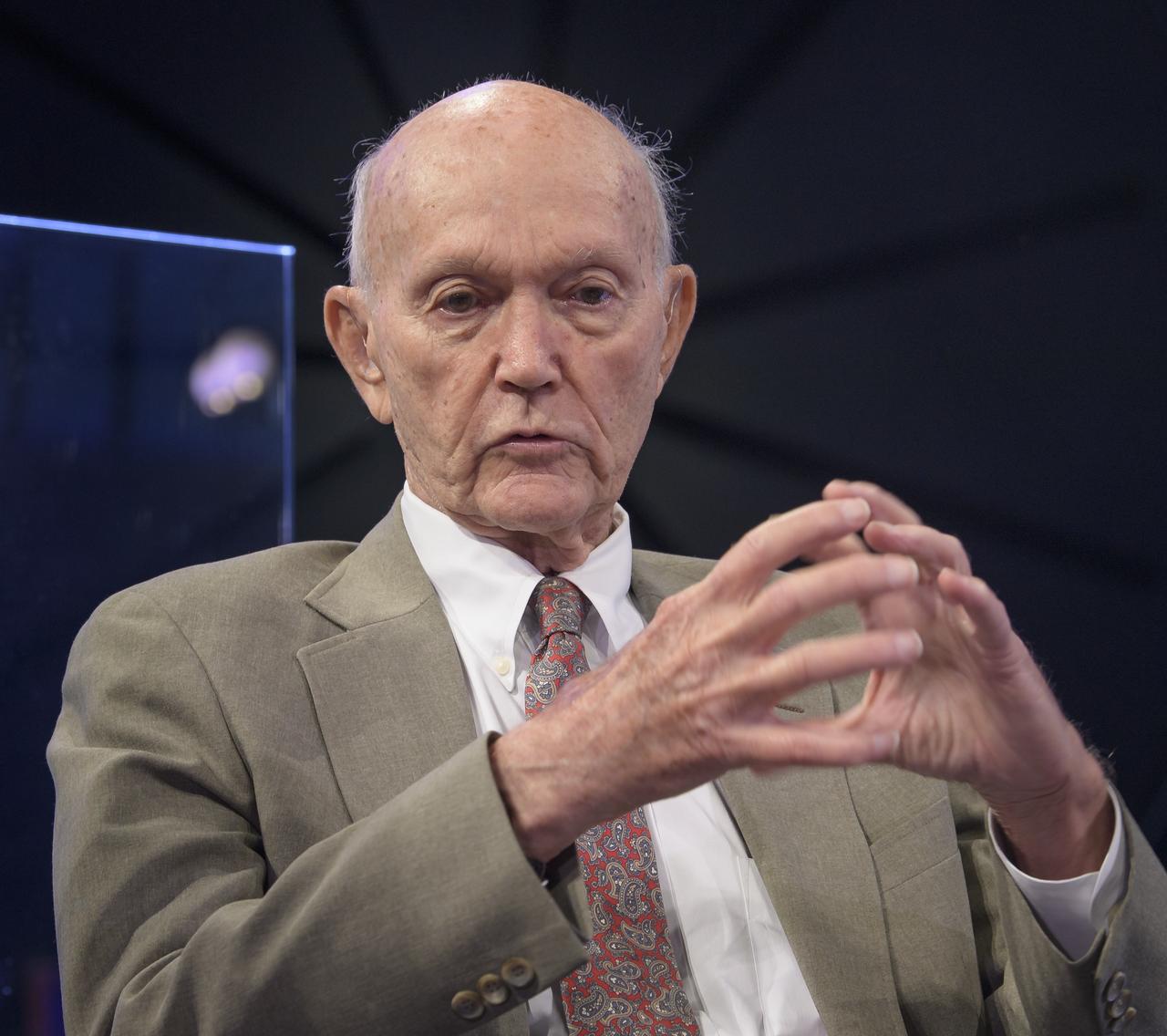
Apollo 11 astronaut Mike Collins talks about his mission during “NASA’s Giant Leaps: Past and Future," a live television program on Friday, July 19, 2019 from the Smithsonian National Air and Space Museum in Washington. NASA and the world are recognizing the 50th anniversary of Apollo 11, in which astronauts Neil Armstrong, Michael Collins, and Buzz Aldrin crewed the first mission to land astronauts on the Moon. Photo Credit: (NASA/Bill Ingalls)
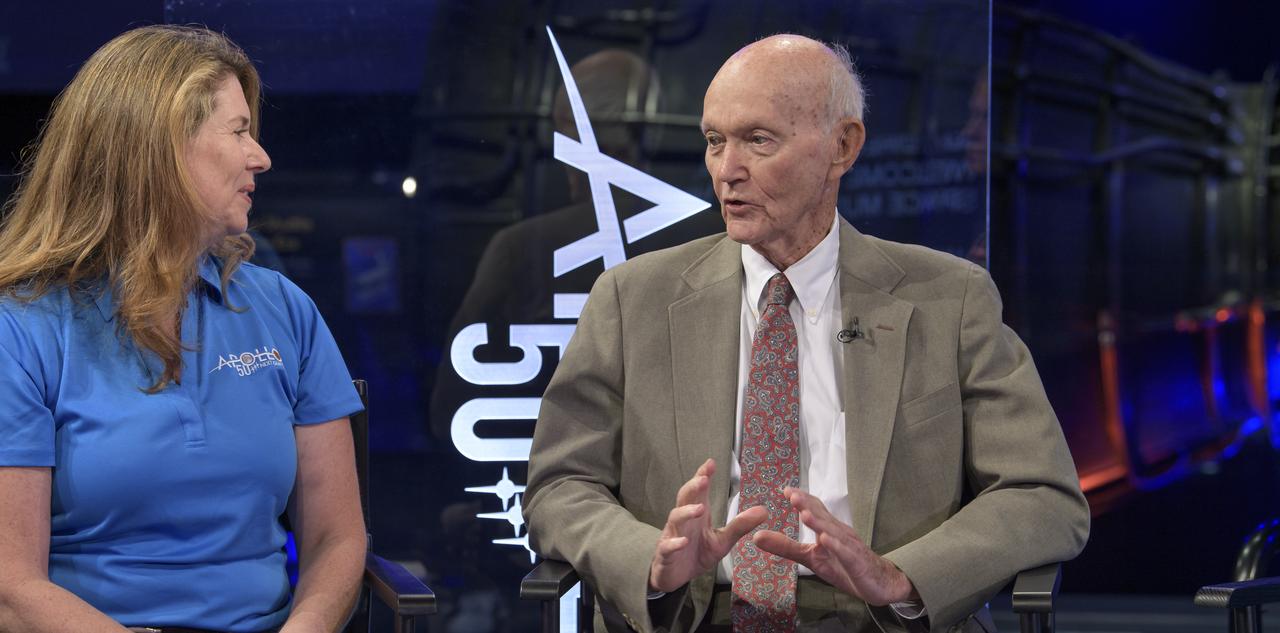
NASA Public Affairs Officer for Heliophysics Karen Fox, interviews, Apollo 11 astronaut Mike Collins during “NASA’s Giant Leaps: Past and Future," a live television program on Friday, July 19, 2019 from the Smithsonian National Air and Space Museum in Washington. NASA and the world are recognizing the 50th anniversary of Apollo 11, in which astronauts Neil Armstrong, Michael Collins, and Buzz Aldrin crewed the first mission to land astronauts on the Moon. Photo Credit: (NASA/Bill Ingalls)
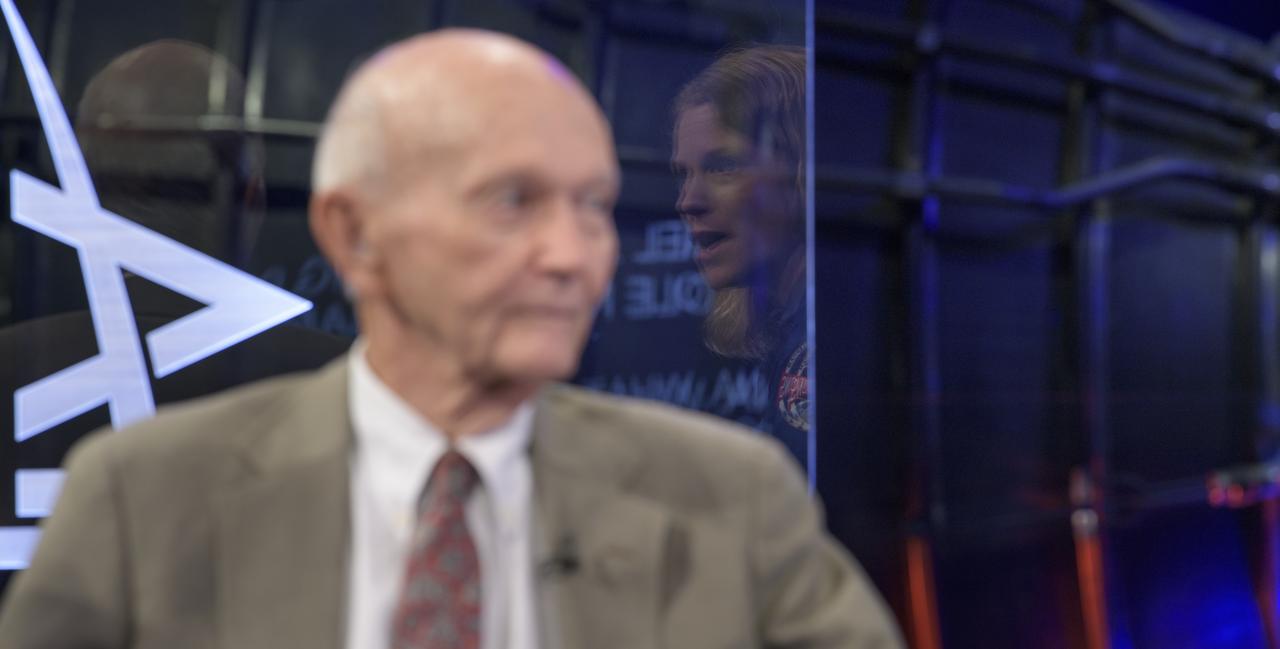
NASA astronaut candidate Zena Cardman is reflected in the glass as she talks with Apollo 11 astronaut Mike Collins during “NASA’s Giant Leaps: Past and Future," a live television program on Friday, July 19, 2019 from the Smithsonian National Air and Space Museum in Washington. NASA and the world are recognizing the 50th anniversary of Apollo 11, in which astronauts Neil Armstrong, Michael Collins, and Buzz Aldrin crewed the first mission to land astronauts on the Moon. Photo Credit: (NASA/Bill Ingalls)
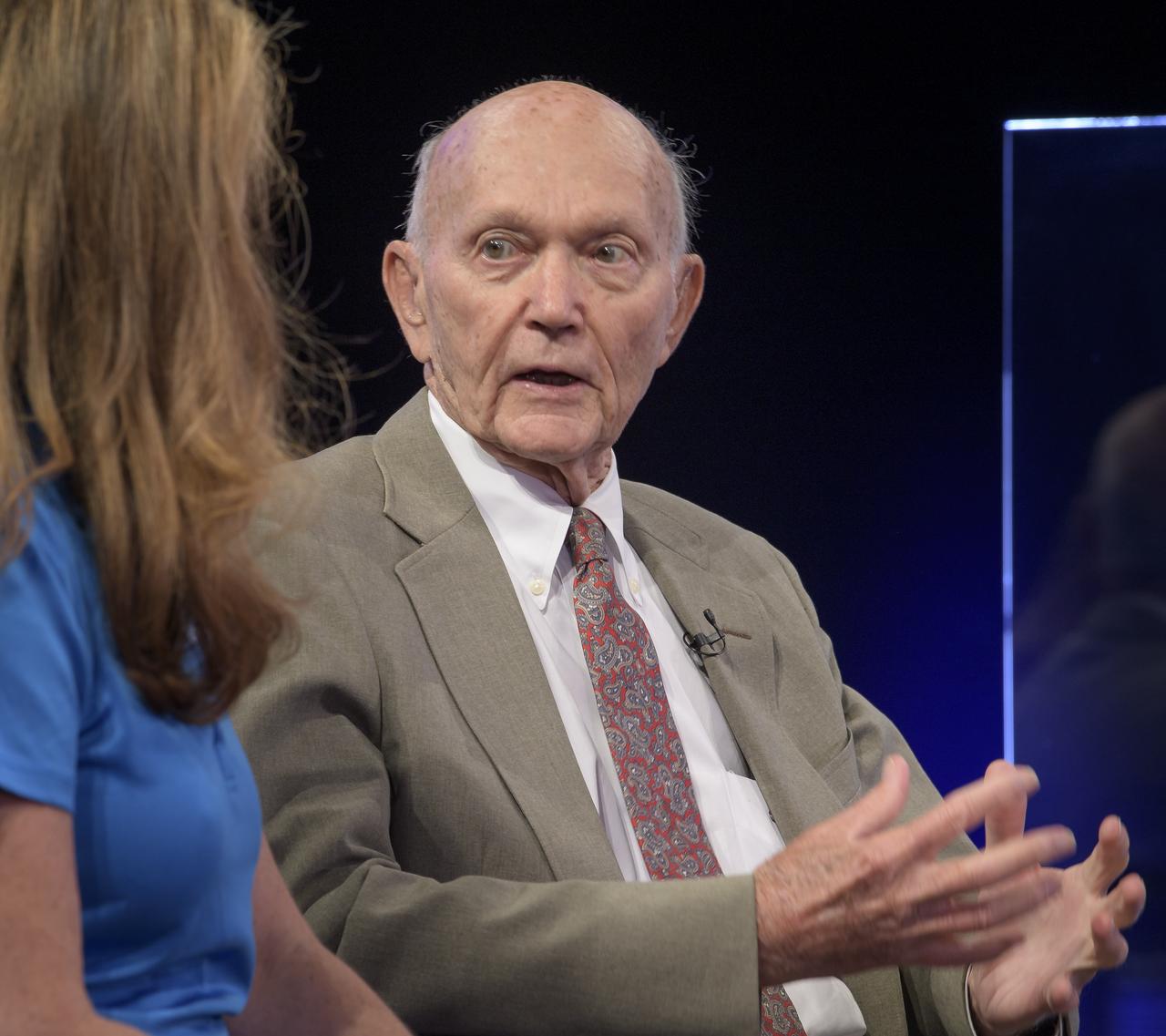
NASA Public Affairs Officer for Heliophysics Karen Fox, interviews, Apollo 11 astronaut Mike Collins during “NASA’s Giant Leaps: Past and Future," a live television program on Friday, July 19, 2019 from the Smithsonian National Air and Space Museum in Washington. NASA and the world are recognizing the 50th anniversary of Apollo 11, in which astronauts Neil Armstrong, Michael Collins, and Buzz Aldrin crewed the first mission to land astronauts on the Moon. Photo Credit: (NASA/Bill Ingalls)
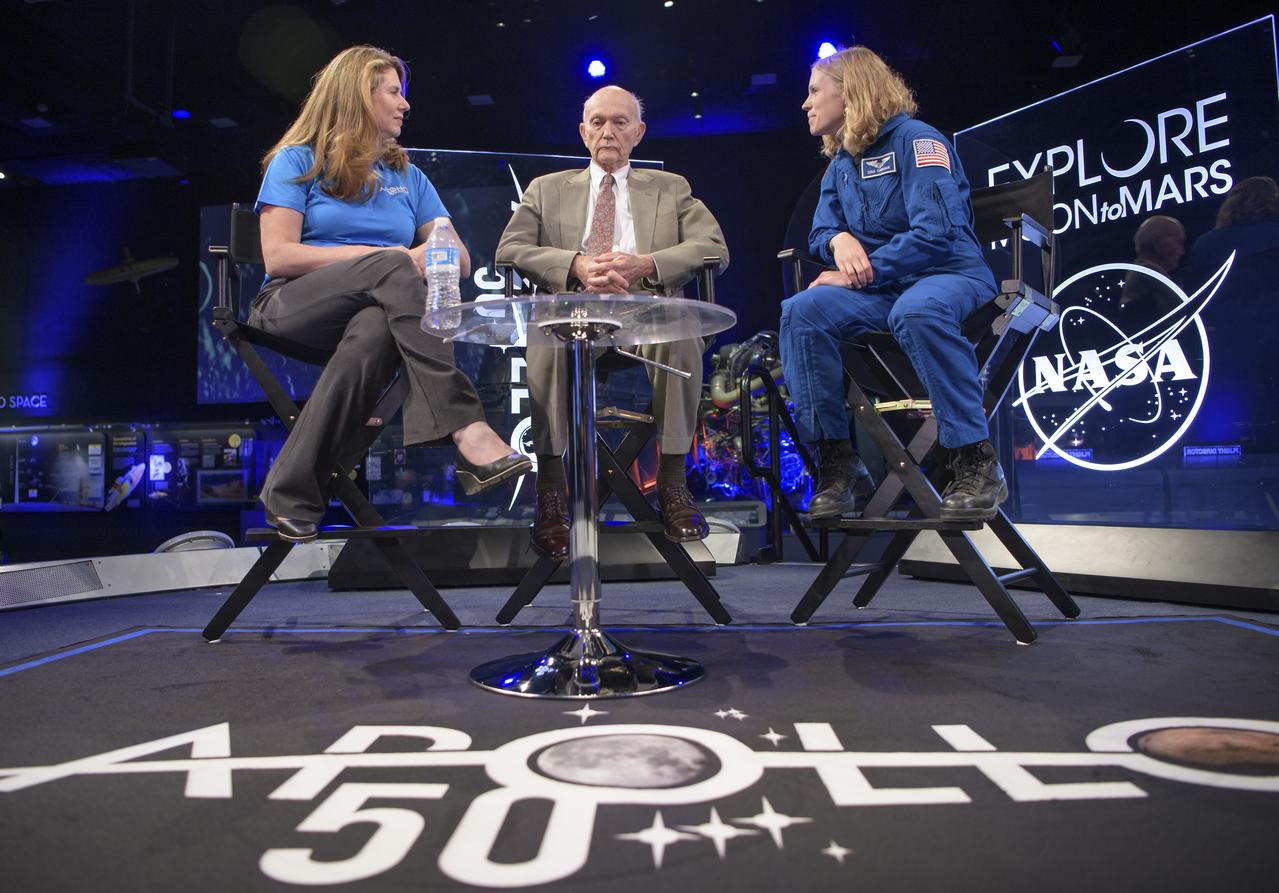
NASA Public Affairs Officer for Heliophysics Karen Fox, left, interviews, Apollo 11 astronaut Mike Collins, and NASA astronaut candidate Zena Cardman during “NASA’s Giant Leaps: Past and Future," a live television program on Friday, July 19, 2019 from the Smithsonian National Air and Space Museum in Washington. NASA and the world are recognizing the 50th anniversary of Apollo 11, in which astronauts Neil Armstrong, Michael Collins, and Buzz Aldrin crewed the first mission to land astronauts on the Moon. Photo Credit: (NASA/Bill Ingalls)
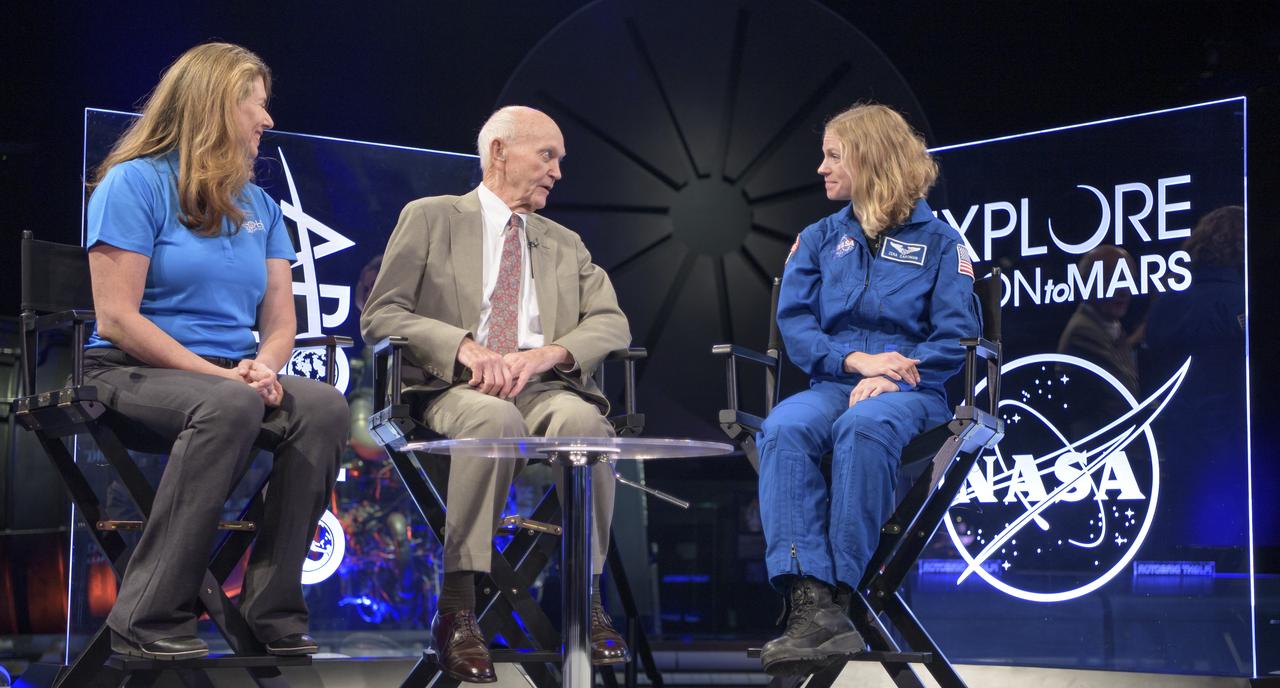
NASA Public Affairs Officer for Heliophysics Karen Fox, left, interviews, Apollo 11 astronaut Mike Collins, and NASA astronaut candidate Zena Cardman during “NASA’s Giant Leaps: Past and Future," a live television program on Friday, July 19, 2019 from the Smithsonian National Air and Space Museum in Washington. NASA and the world are recognizing the 50th anniversary of Apollo 11, in which astronauts Neil Armstrong, Michael Collins, and Buzz Aldrin crewed the first mission to land astronauts on the Moon. Photo Credit: (NASA/Bill Ingalls)
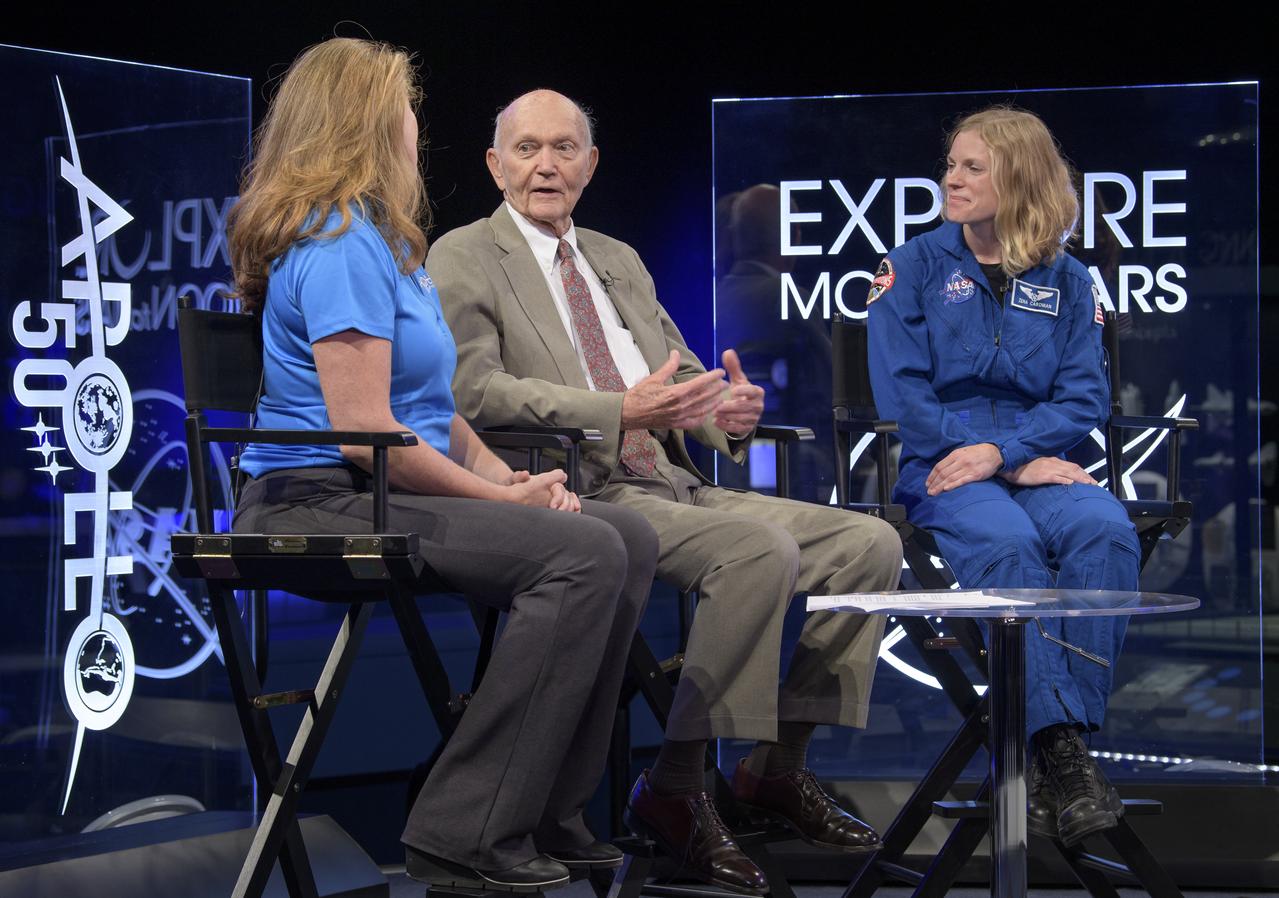
NASA Public Affairs Officer for Heliophysics Karen Fox, left, interviews, Apollo 11 astronaut Mike Collins, and NASA astronaut candidate Zena Cardman during “NASA’s Giant Leaps: Past and Future," a live television program on Friday, July 19, 2019 from the Smithsonian National Air and Space Museum in Washington. NASA and the world are recognizing the 50th anniversary of Apollo 11, in which astronauts Neil Armstrong, Michael Collins, and Buzz Aldrin crewed the first mission to land astronauts on the Moon. Photo Credit: (NASA/Bill Ingalls)
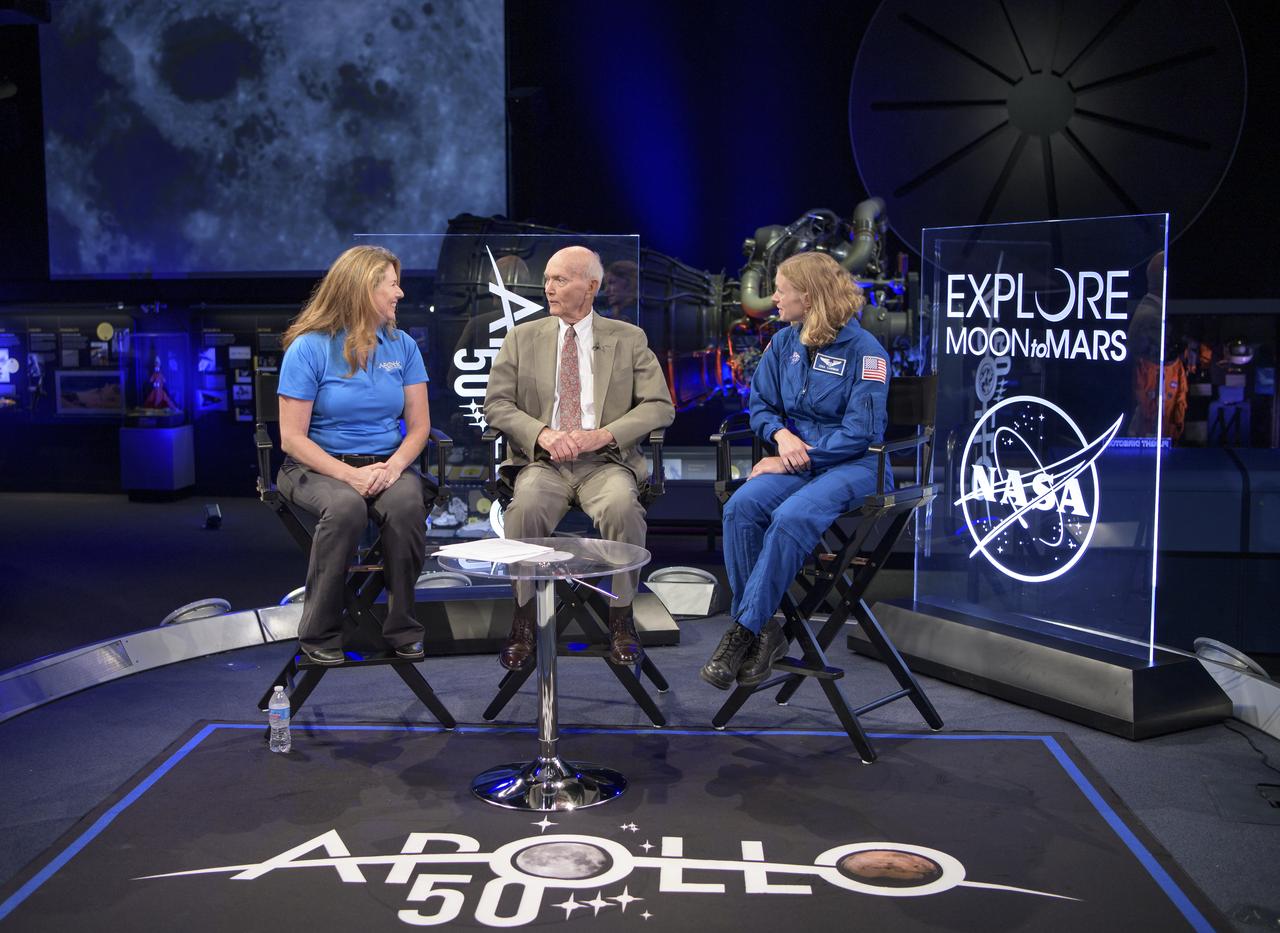
NASA Public Affairs Officer for Heliophysics Karen Fox, left, interviews, Apollo 11 astronaut Mike Collins, and NASA astronaut candidate Zena Cardman during “NASA’s Giant Leaps: Past and Future," a live television program on Friday, July 19, 2019 from the Smithsonian National Air and Space Museum in Washington. NASA and the world are recognizing the 50th anniversary of Apollo 11, in which astronauts Neil Armstrong, Michael Collins, and Buzz Aldrin crewed the first mission to land astronauts on the Moon. Photo Credit: (NASA/Bill Ingalls)
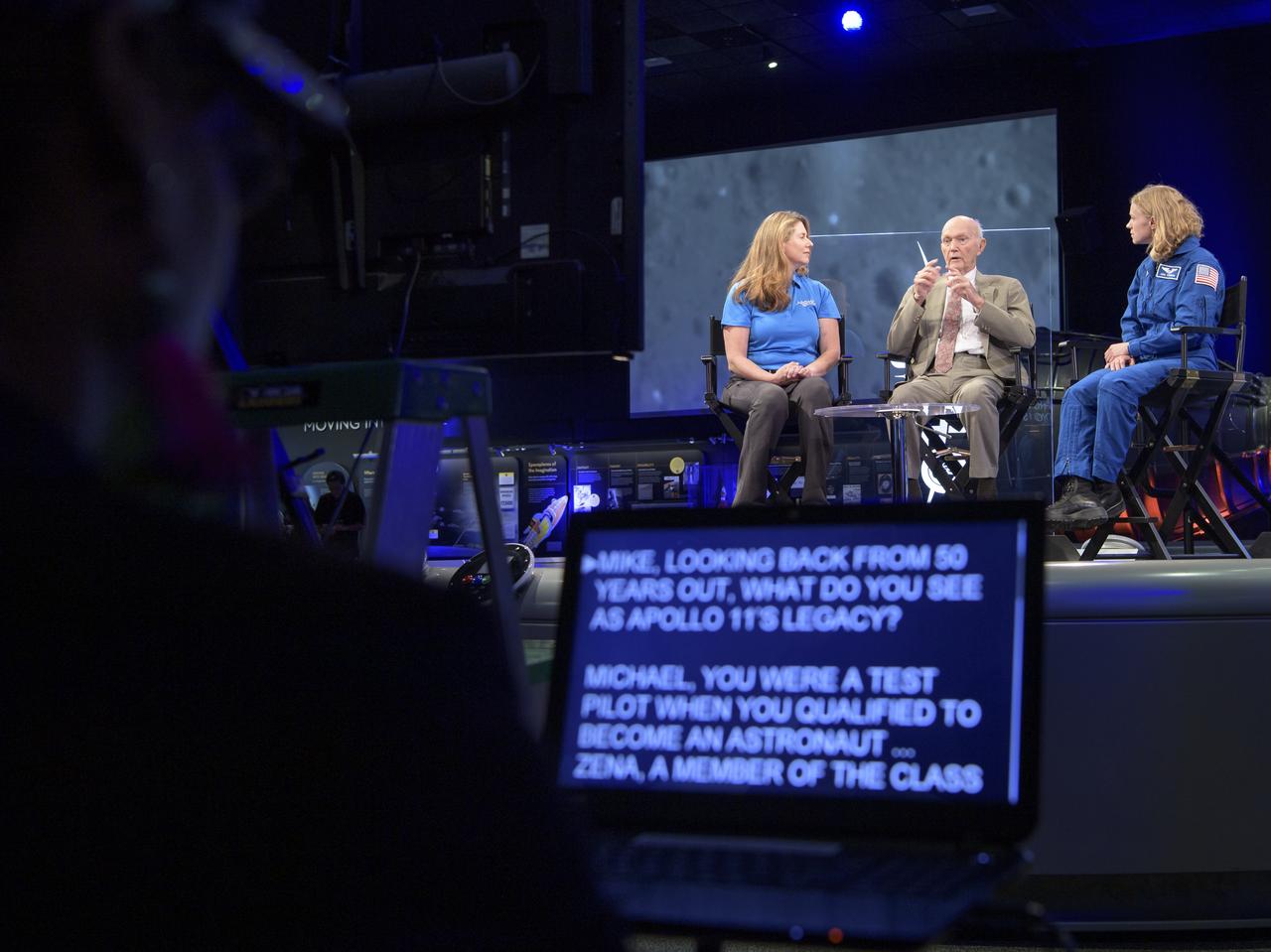
NASA Public Affairs Officer for Heliophysics Karen Fox, left, interviews, Apollo 11 astronaut Mike Collins, and NASA astronaut candidate Zena Cardman during “NASA’s Giant Leaps: Past and Future," a live television program on Friday, July 19, 2019 from the Smithsonian National Air and Space Museum in Washington. NASA and the world are recognizing the 50th anniversary of Apollo 11, in which astronauts Neil Armstrong, Michael Collins, and Buzz Aldrin crewed the first mission to land astronauts on the Moon. Photo Credit: (NASA/Bill Ingalls)
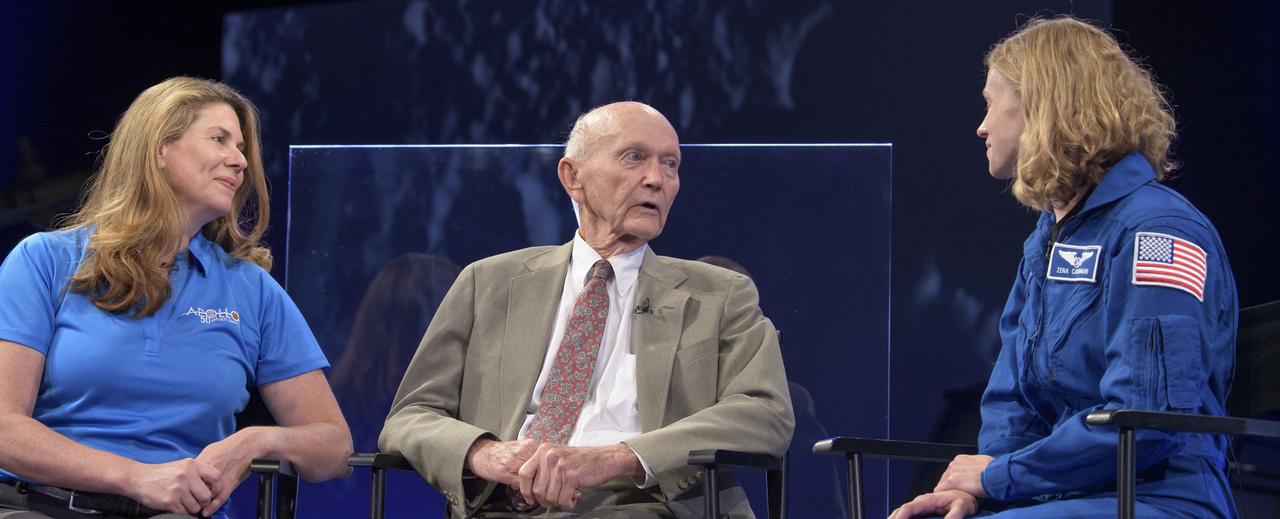
NASA Public Affairs Officer for Heliophysics Karen Fox, left, interviews, Apollo 11 astronaut Mike Collins, and NASA astronaut candidate Zena Cardman during “NASA’s Giant Leaps: Past and Future," a live television program on Friday, July 19, 2019 from the Smithsonian National Air and Space Museum in Washington. NASA and the world are recognizing the 50th anniversary of Apollo 11, in which astronauts Neil Armstrong, Michael Collins, and Buzz Aldrin crewed the first mission to land astronauts on the Moon. Photo Credit: (NASA/Bill Ingalls)
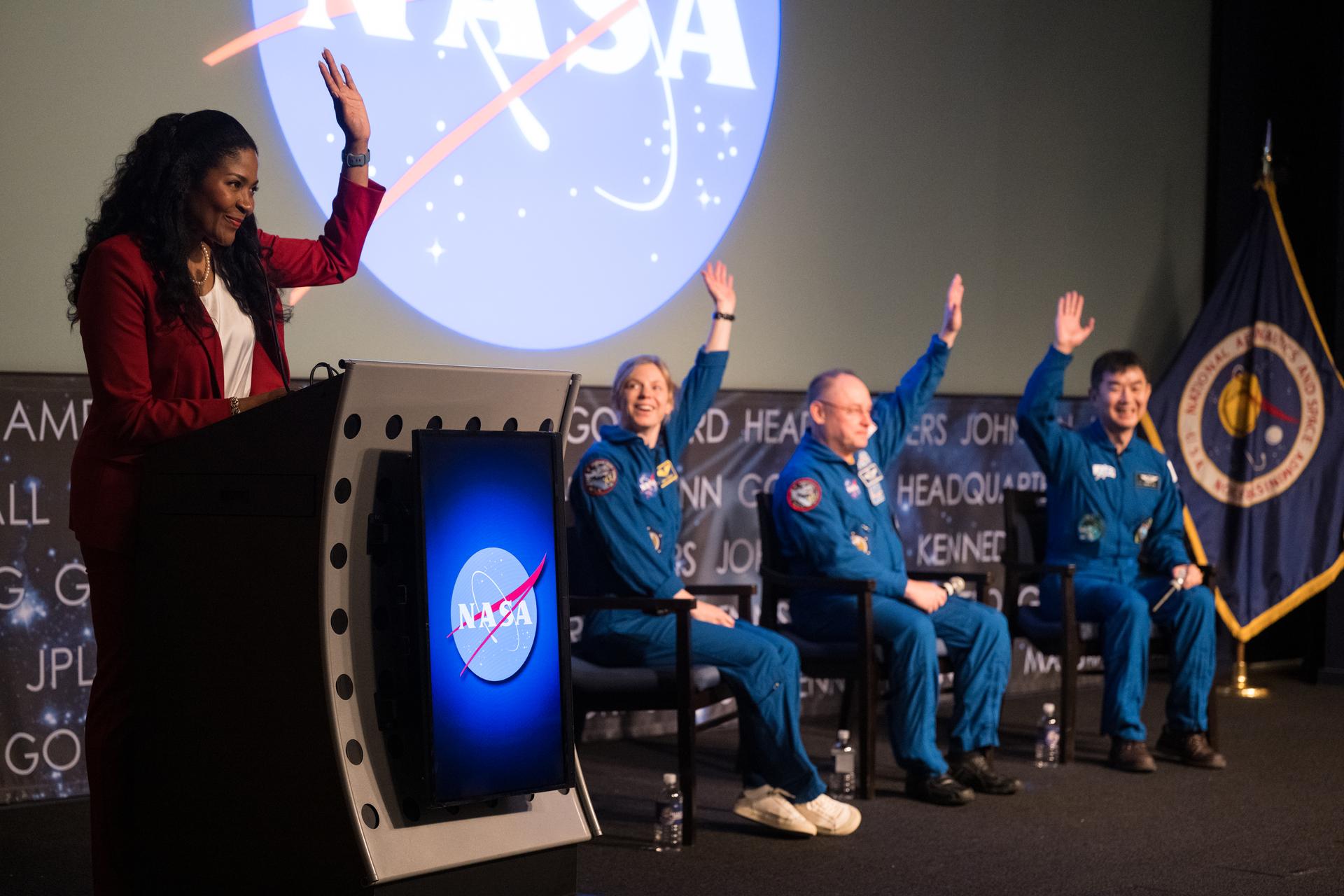
Aya Collins, director of the engagement division of NASA’s Office of Communications, moderates a discussion with NASA astronauts Mike Fincke and Zena Cardman and JAXA (Japan Aerospace Exploration Agency) astronaut Kimiya Yui, Monday, June 1, 2026 at the Mary W. Jackson NASA Headquarters building in Washington. Fincke, Cardman, and Yui served as part of Expeditions 73 and 74 onboard the International Space Station. Photo Credit: (NASA/Aubrey Gemignani)

Aya Collins, director of the engagement division of NASA’s Office of Communications, moderates a discussion with, from left to right, NASA astronauts Zena Cardman, Mike Fincke, and JAXA (Japan Aerospace Exploration Agency) astronaut Kimiya Yui, Monday, June 1, 2026 at the Mary W. Jackson NASA Headquarters building in Washington. Fincke, Cardman, and Yui served as part of Expeditions 73 and 74 onboard the International Space Station. Photo Credit: (NASA/Aubrey Gemignani)
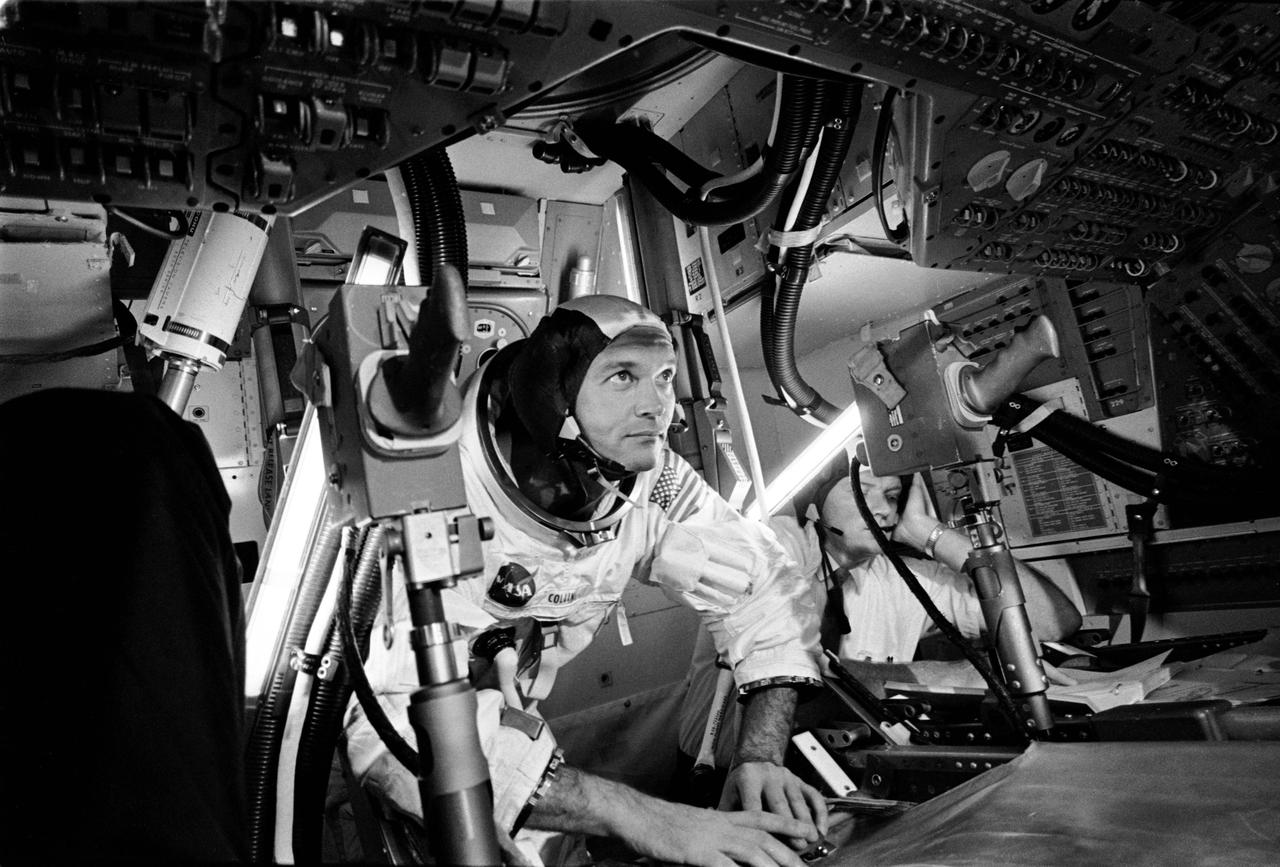
Apollo 11 Command Module (CM) pilot Mike Collins practicing docking hatch removal from CM turned in simulator.
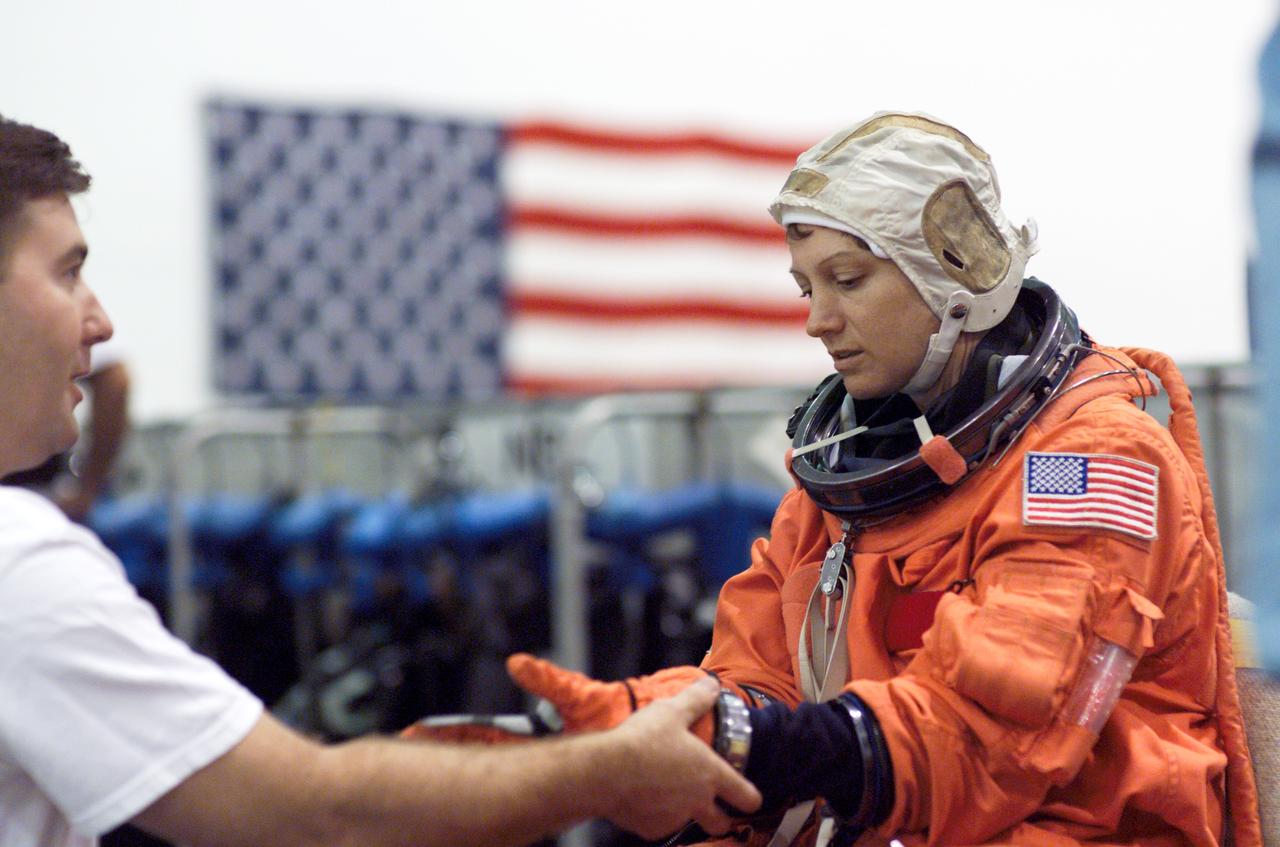
JSC2004-E-41381 (17 September 2004) --- Astronaut Eileen M. Collins, STS-114 commander, dons a training version of the shuttle launch and entry suit, prior to the start of a mission training session in the Neutral Buoyancy Laboratory (NBL) near Johnson Space Center (JSC). United Space Alliance (USA) suit technician Mike Thompson assisted Collins.
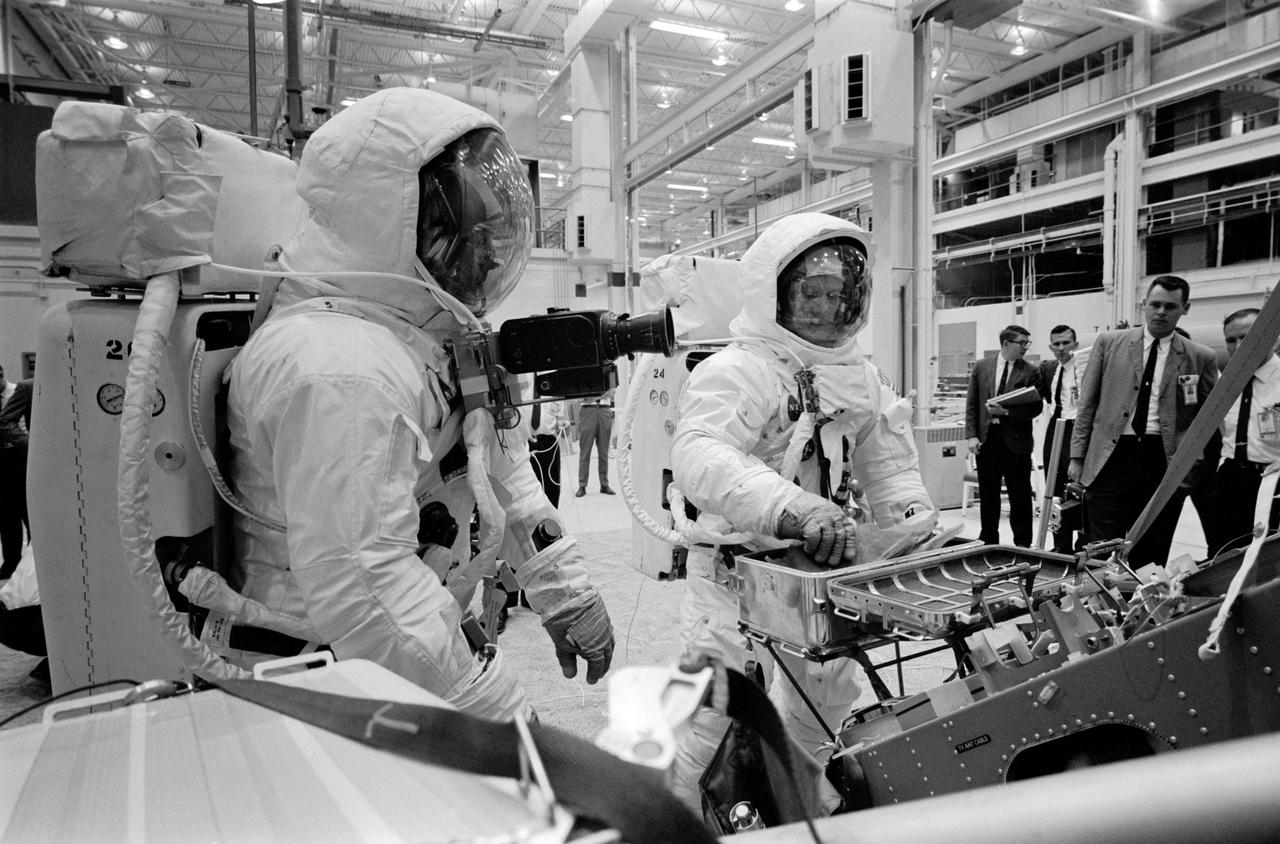
Suited Apollo XI Crewmen Armstrong and Aldrin training in Apollo Lunar Surface Experiments Package (ALSEP) deployment in Building 5, as Astronaut Mike Collins trains in the Building 20 Centrifuge. S-Band Antenna (31148 thru 31165, 31178 thru 31179) MSC, HOUSTON, TX
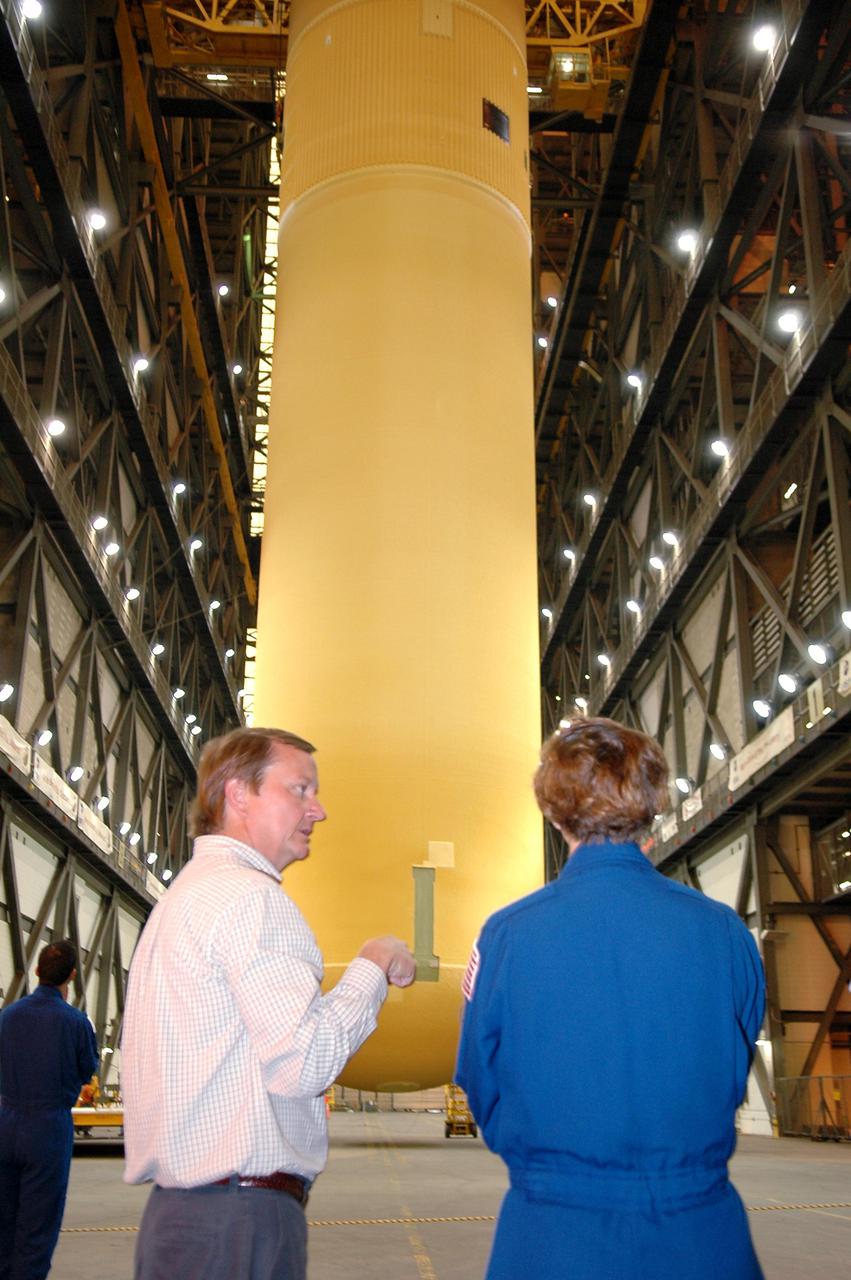
KENNEDY SPACE CENTER, FLA. - Shuttle Launch Director Mike Leinbach talks to STS-114 Mission Commander Eileen Collins as they watch the newly redesigned External Tank being lifted in the Vehicle Assembly Building to a “checkout cell” where the tank’s mechanical, electrical and thermal protection systems are inspected. Collins and the rest of the crew are at Kennedy to observe tank activities. The tank will also undergo new processes resulting from its redesign, including inspection of the bipod heater and External Tank separation camera. The tank is designated to fly on Shuttle Discovery on Return to Flight mission STS-114. The launch window is May 12 to June 3, 2005.

Aya Collins, director of the engagement division of NASA’s Office of Communications, moderates a discussion with NASA astronauts Mike Fincke and Zena Cardman and JAXA (Japan Aerospace Exploration Agency) astronaut Kimiya Yui, Monday, June 1, 2026 at the Mary W. Jackson NASA Headquarters building in Washington. Fincke, Cardman, and Yui served as part of Expeditions 73 and 74 onboard the International Space Station. Photo Credit: (NASA/Aubrey Gemignani)

Aya Collins, director of the engagement division of NASA’s Office of Communications, moderates a discussion with NASA astronauts Mike Fincke and Zena Cardman and JAXA (Japan Aerospace Exploration Agency) astronaut Kimiya Yui, Monday, June 1, 2026 at the Mary W. Jackson NASA Headquarters building in Washington. Fincke, Cardman, and Yui served as part of Expeditions 73 and 74 onboard the International Space Station. Photo Credit: (NASA/Aubrey Gemignani)

Vice President Mike Pence ask questions of former NASA astronauts Eileen Collins, Terry Virts and Scott Parazynski during a meeting of the National Space Council in the East Room of the White House, Monday, June 18, 2018, in Washington. Chaired by the Vice President, the council's role is to advise the President regarding national space policy and strategy, and review the nation's long-range goals for space activities. Photo Credit: (NASA/Bill Ingalls)
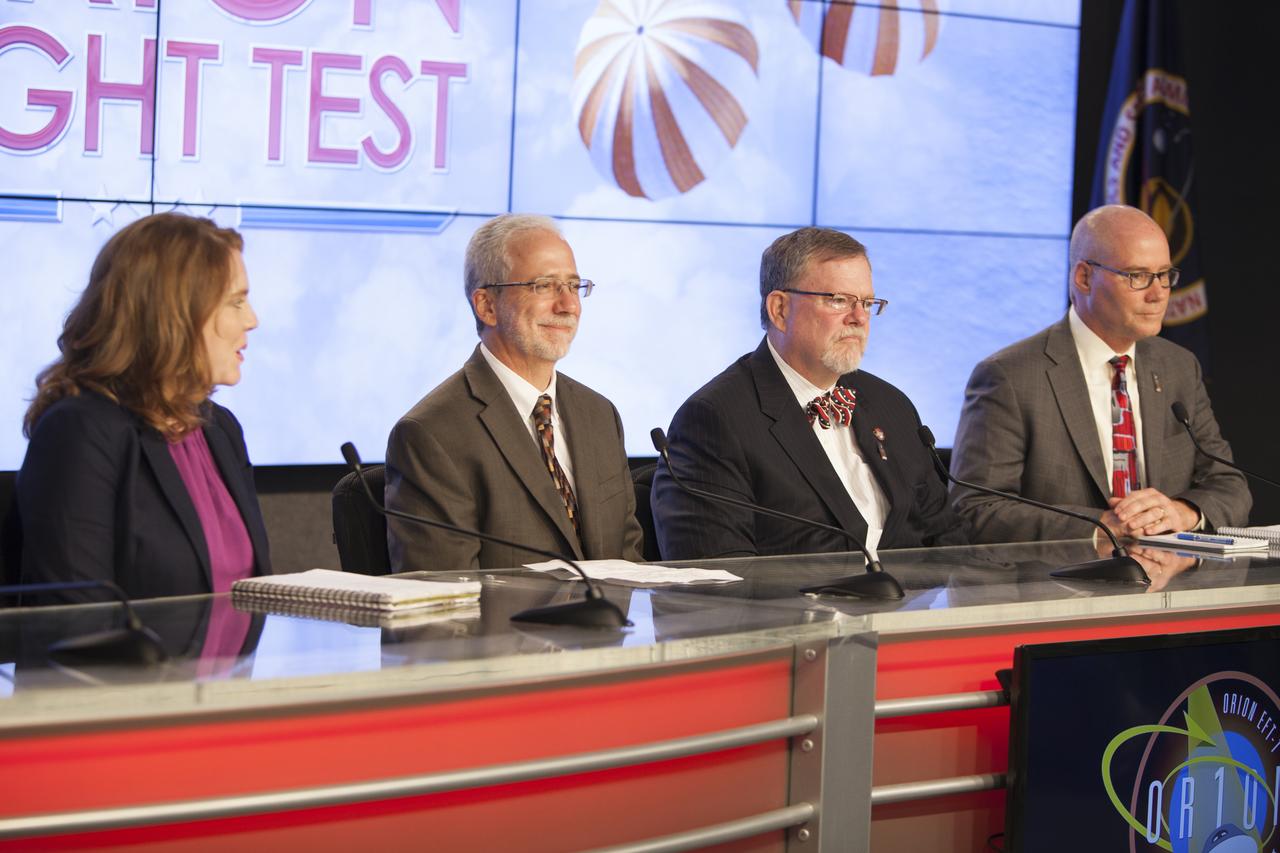
In the Kennedy Space Center’s Press Site auditorium, agency and industry leaders spoke to members of the news media about the postponement of the Orion Flight Test launch due to an issue related to fill and drain valves on the Delta IV Heavy rocket. From left are: Brandi Dean of NASA Public Affairs, Mark Geyer, NASA's Orion program manager, Mike Hawes, Lockheed Martin Orion Program manager, and Dan Collins, United Launch Alliance chief operating officer.

NASA Strategic Events & Engagements Lead, Lisa Frazier introduces NASA Director of the Engagement Division, Aya Collins, during a discussion with NASA astronauts Mike Fincke and Zena Cardman and JAXA (Japan Aerospace Exploration Agency) astronaut Kimiya Yui, Monday, June 1, 2026 at the Mary W. Jackson NASA Headquarters building in Washington. Fincke, Cardman, and Yui served as part of Expeditions 73 and 74 onboard the International Space Station. Photo Credit: (NASA/Aubrey Gemignani)

Aya Collins, director of the engagement division of NASA’s Office of Communications, moderates a discussion with NASA astronauts Mike Fincke and Zena Cardman and JAXA (Japan Aerospace Exploration Agency) astronaut Kimiya Yui, Monday, June 1, 2026 at the Mary W. Jackson NASA Headquarters building in Washington. Fincke, Cardman, and Yui served as part of Expeditions 73 and 74 onboard the International Space Station. Photo Credit: (NASA/Aubrey Gemignani)

Aya Collins, director of the engagement division of NASA’s Office of Communications, moderates a discussion with NASA astronauts Mike Fincke and Zena Cardman and JAXA (Japan Aerospace Exploration Agency) astronaut Kimiya Yui, Monday, June 1, 2026 at the Mary W. Jackson NASA Headquarters building in Washington. Fincke, Cardman, and Yui served as part of Expeditions 73 and 74 onboard the International Space Station. Photo Credit: (NASA/Aubrey Gemignani)
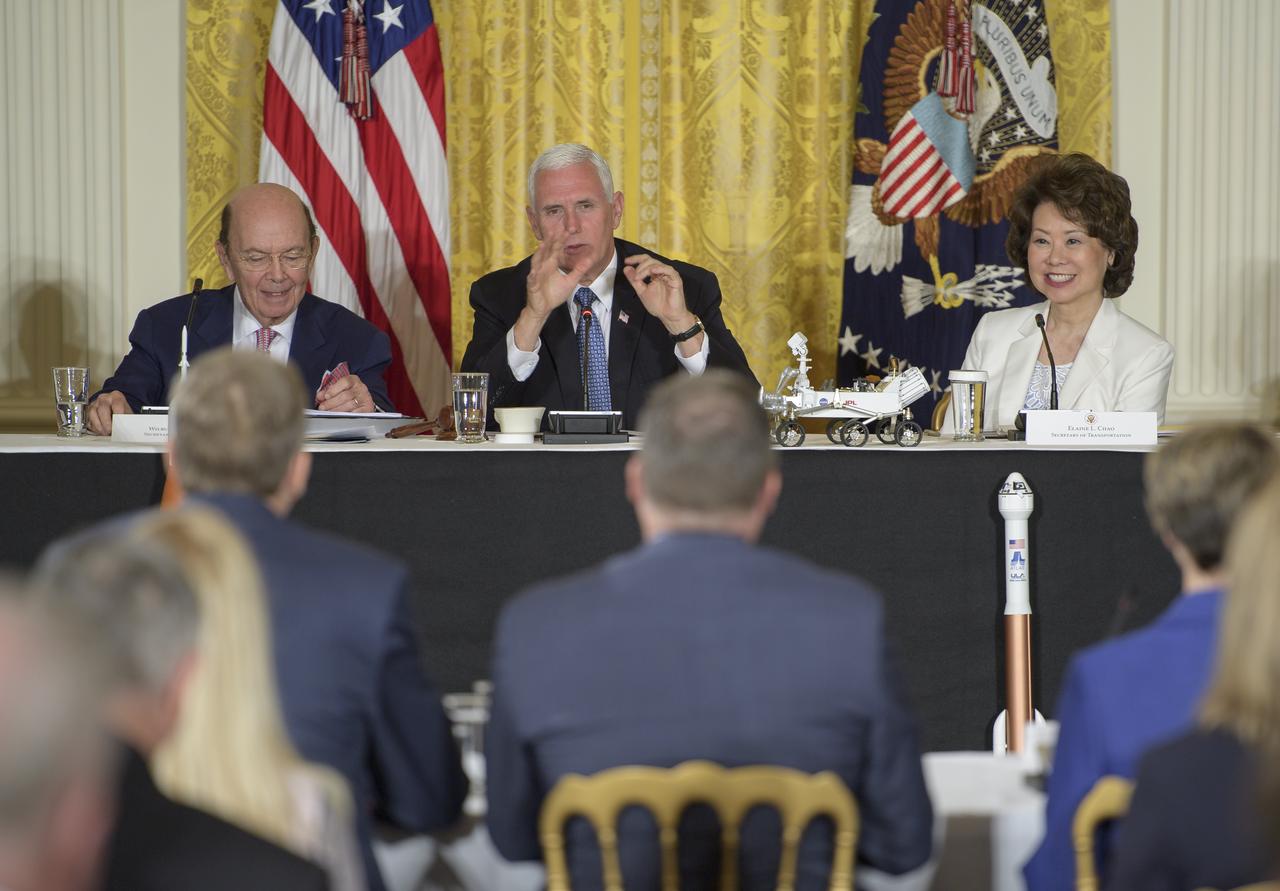
Vice President Mike Pence ask questions of former NASA astronauts Eileen Collins, Terry Virts and Scott Parazynski during a meeting of the National Space Council in the East Room of the White House, Monday, June 18, 2018, in Washington. Chaired by the Vice President, the council's role is to advise the President regarding national space policy and strategy, and review the nation's long-range goals for space activities. Photo Credit: (NASA/Bill Ingalls)
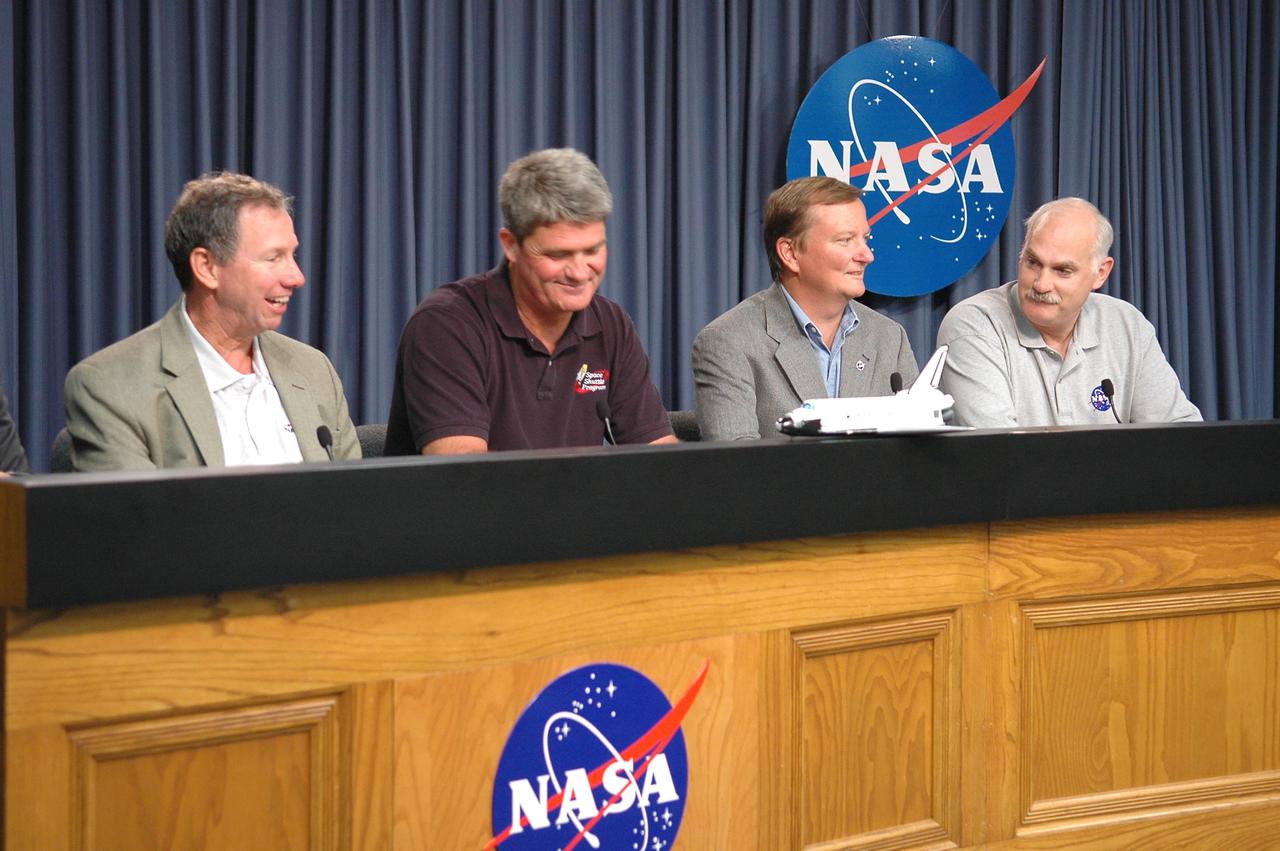
KENNEDY SPACE CENTER, FLA. - At a post-landing briefing, mission management cannot help smiling over the good news that Space Shuttle Discovery safely landed at Edwards Air Force Base in California. From left are NASA Administrator Mike Griffin, Space Shuttle Program Manager Bill Parsons, Shuttle Launch Director Mike Leinbach and Associate Administrator of NASA’s Space Operations Mission Directorate Bill Readdy. A landing at Kennedy Space Center was deferred due to weather concerns. The California landing occurred at 8:11 a.m. EDT, guided by Mission Commander Eileen Collins. Discovery spent two weeks in space on Return to Flight mission STS-114, where the crew demonstrated new methods to inspect and repair the Shuttle in orbit. The crew also delivered supplies, outfitted and performed maintenance on the International Space Station. A number of these tasks were conducted during three spacewalks.
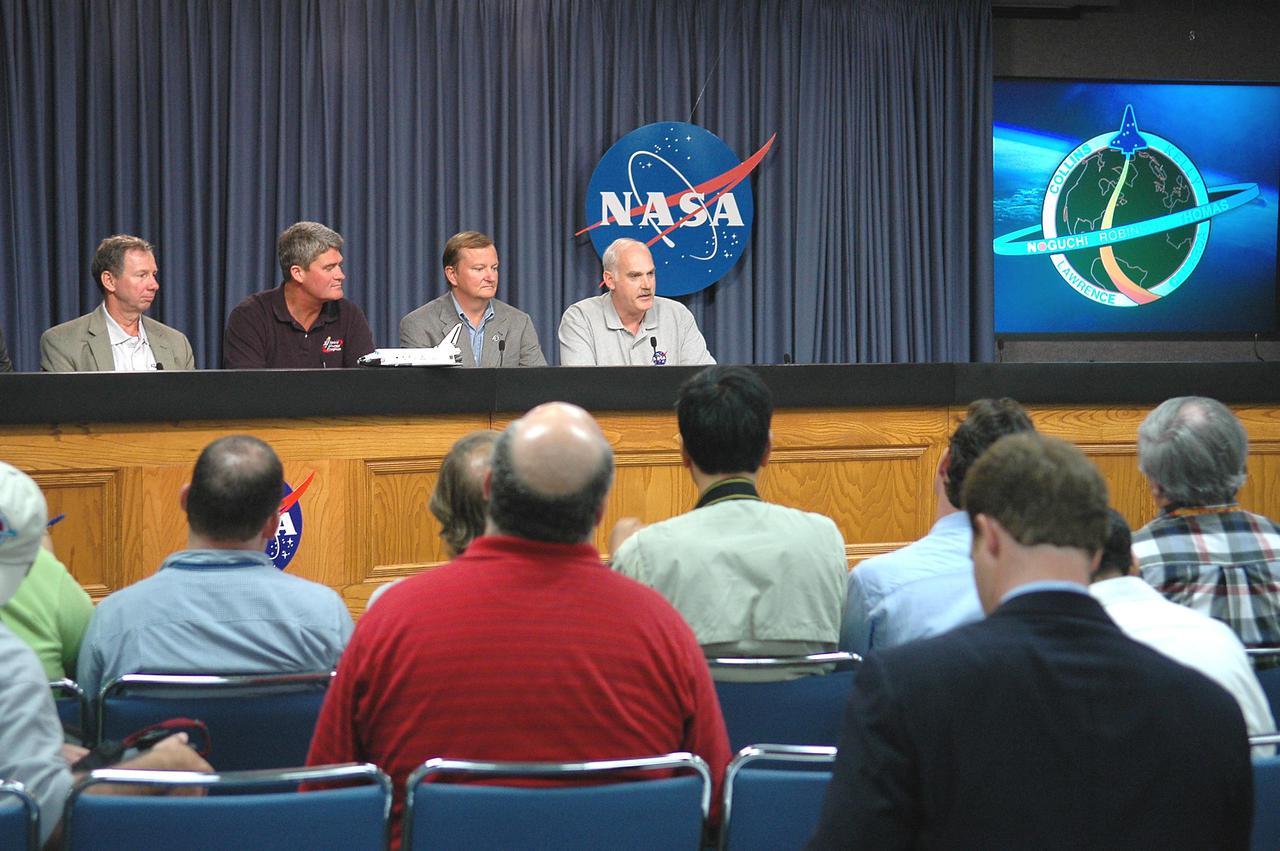
KENNEDY SPACE CENTER, FLA. - At a post-landing briefing, NASA Administrator Mike Griffin, Space Shuttle Program Manager Bill Parsons, Shuttle Launch Director Mike Leinbach and Associate Administrator of NASA’s Space Operations Mission Directorate Bill Readdy respond to questions from the media. Space Shuttle Discovery safely landed at Edwards Air Force Base in California at 8:11 a.m. EDT, guided by Mission Commander Eileen Collins. Discovery spent two weeks in space on Return to Flight mission STS-114, where the crew demonstrated new methods to inspect and repair the Shuttle in orbit. The crew also delivered supplies, outfitted and performed maintenance on the International Space Station. A number of these tasks were conducted during three spacewalks.
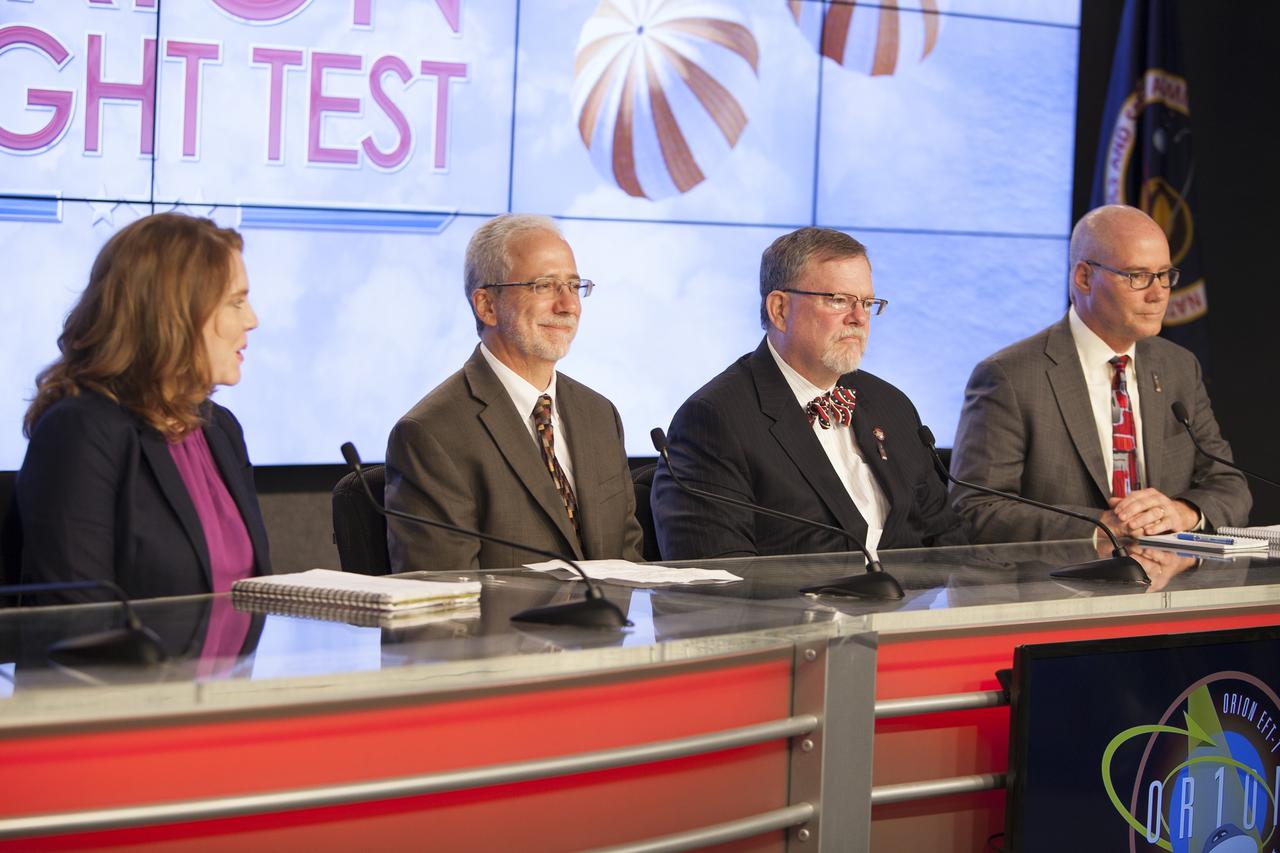
CAPE CANAVERAL, Fla. -- In the Kennedy Space Center’s Press Site auditorium, agency and industry leaders spoke to members of the news media about the postponement of the Orion Flight Test launch due to an issue related to fill and drain valves on the Delta IV Heavy rocket. From left are: Brandi Dean of NASA Public Affairs, Mark Geyer, NASA's Orion program manager, Mike Hawes, Lockheed Martin Orion Program manager, and Dan Collins, United Launch Alliance chief operating officer. For more information, visit www.nasa.gov/orion Photo credit: NASA/Frankie Martin
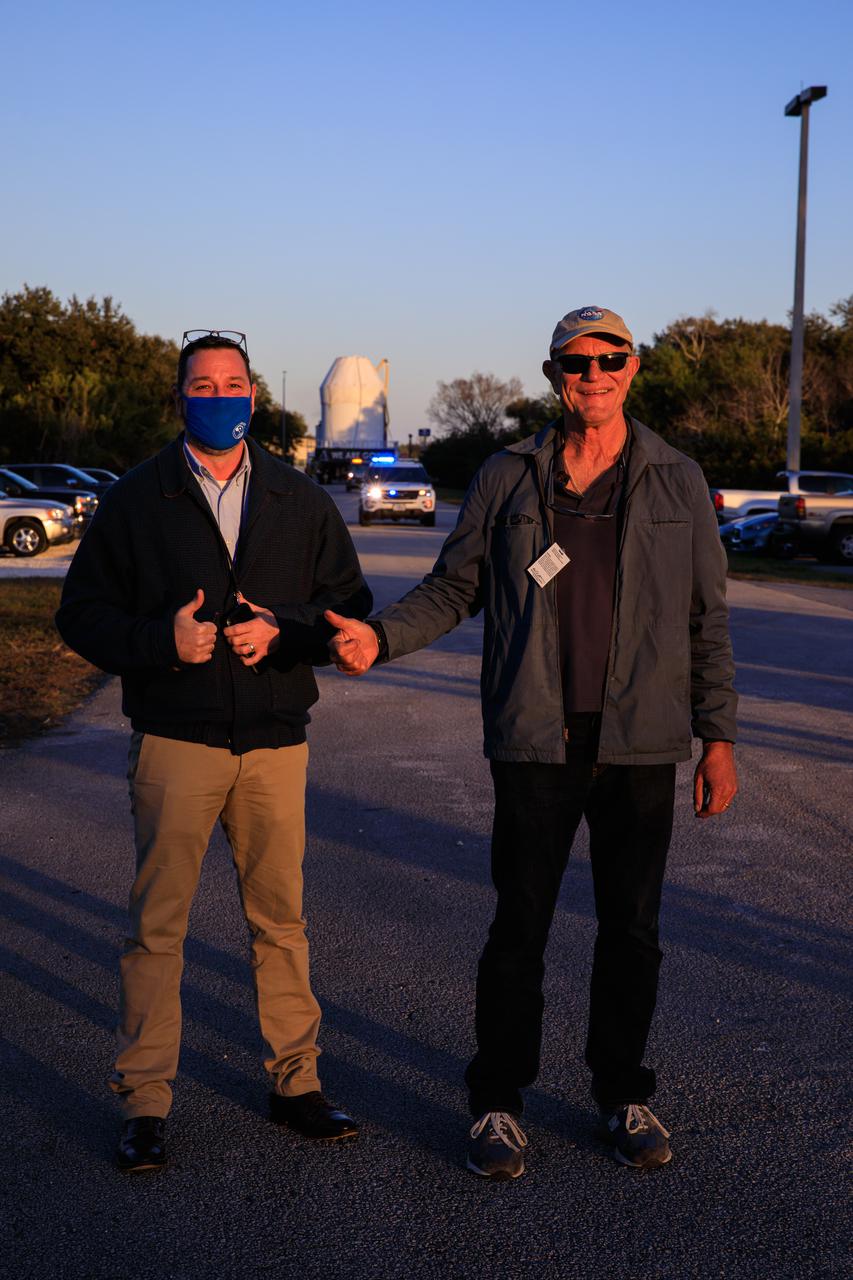
Secured atop a transport vehicle, Orion moves along the route to the Multi-Payload Processing Facility (MPPF) on Jan. 16, 2021, after departing from the Neil Armstrong Operations and Checkout Building at NASA’s Kennedy Space Center in Florida. Watching Orion move, from left are Mike Collins, NASA Operations manager for Spacecraft Offline Operations at Kennedy, and Skip Williams, operations manager for the MPPF spacecraft offline element integration team. In the MPPF, Orion will undergo processing with the Exploration Ground Systems team taking over ground processing ahead of the Artemis I launch.
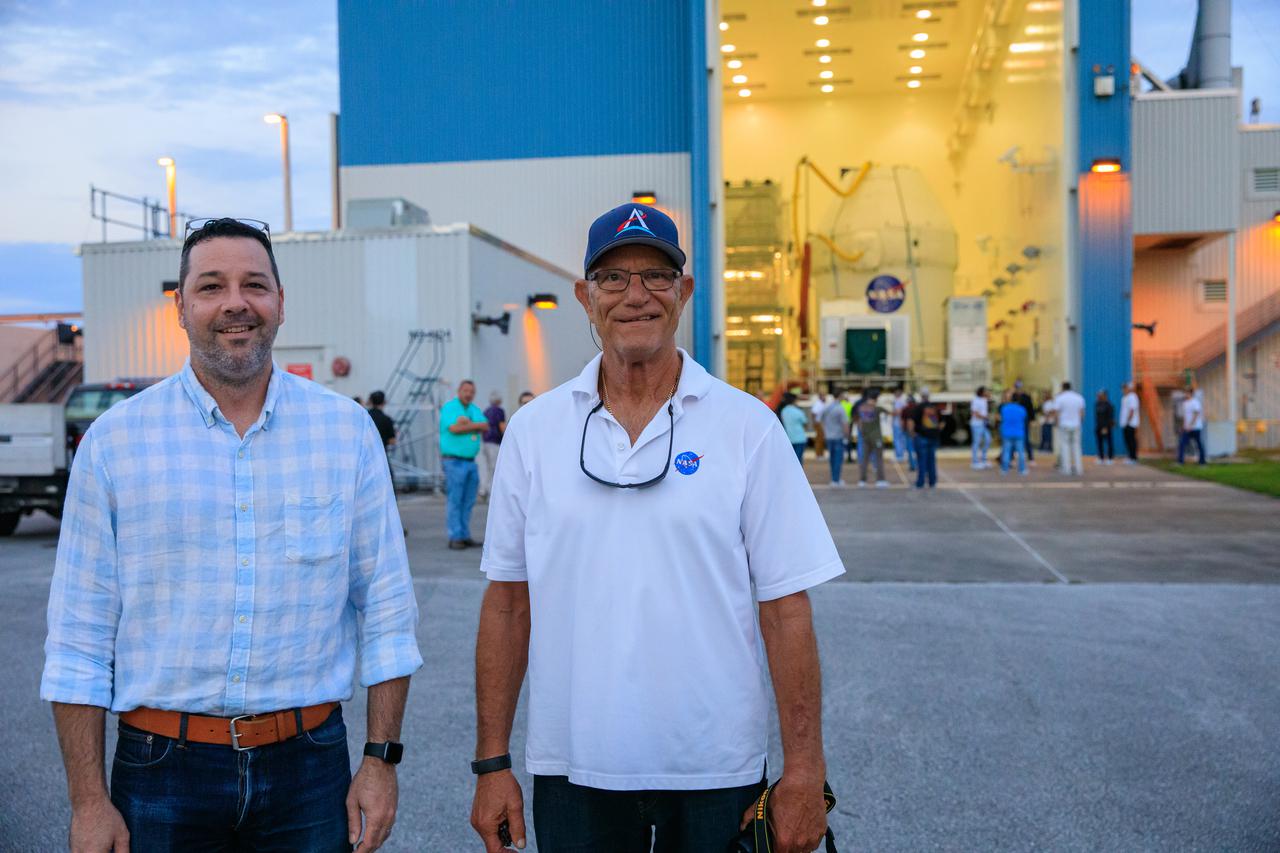
Mike Collins, NASA Operations manager for Spacecraft Offline Operations, left, and Skip Williams, operations manager for the Multi-Payload Processing Facility (MPPF) spacecraft offline element integration team, stand in front of the Orion spacecraft for the Artemis I mission, as the capsule moves out from Kennedy Space Center’s MFFP on July 10, 2021. Orion is being transported to the Florida spaceport’s Launch Abort System Facility, where teams with Exploration Ground Systems and contractor Jacobs will integrate components of the launch abort system onto the spacecraft. Launching later this year, Artemis I will be a test of the Orion spacecraft and SLS rocket as an integrated system ahead of crewed flights to the Moon.
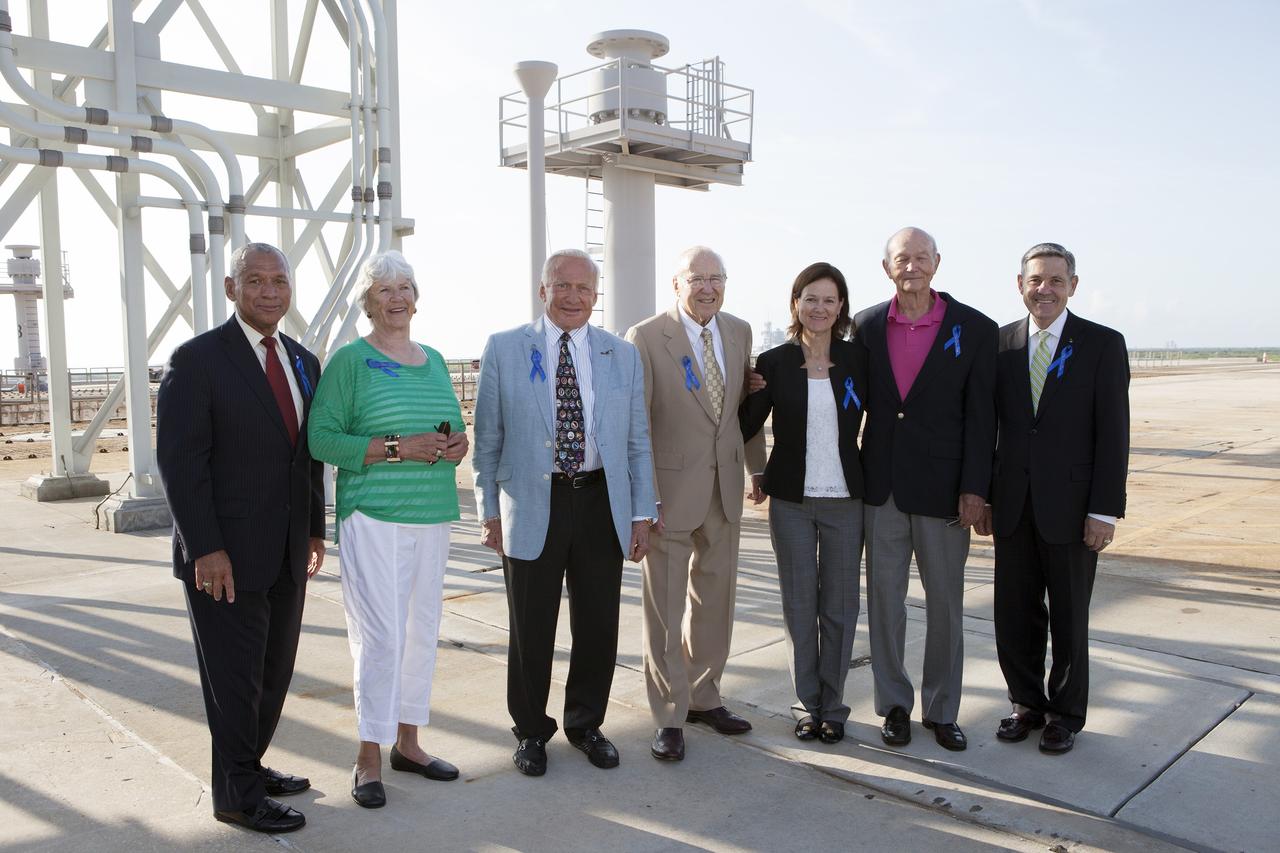
CAPE CANAVERAL, Fla. -- At NASA's Kennedy Space Center in Florida, NASA officials and Apollo astronauts visiting Launch Pad 39B with their families and friends preserve the moment with a group portrait. The group was at Kennedy for a ceremony renaming the Operations and Checkout Building for Apollo 11 astronaut Neil Armstrong, the first person to set foot on the moon. From left are NASA Administrator Charles Bolden, Neil's former wife Janet Armstrong, Apollo 11 moonwalker Buzz Aldrin, Apollo astronaut Jim Lovell, Mike Collins' daughter Ann Starr, Apollo 11 command module pilot Mike Collins, and Center Director Bob Cabana. The pad is being modified to support the agency's new Orion spacecraft which will lift off atop the Space Launch System rocket. Orion is designed to take humans farther than they’ve ever gone before, serving as the exploration vehicle that will carry astronauts to deep space and sustain the crew during travel to destinations such as an asteroid or Mars. The visit of the former astronauts was part of NASA's 45th anniversary celebration of the Apollo 11 moon landing. As the world watched, Neil Armstrong and Neil Aldrin landed in the moon's Sea of Tranquility aboard the lunar module Eagle on July 20, 1969. Meanwhile, crewmate Michael Collins orbited above in the command module Columbia. For more, visit http://www.nasa.gov/press/2014/july/nasa-honors-historic-first-moon-landing-eyes-first-mars-mission. Photo credit: NASA/Kim Shiflett
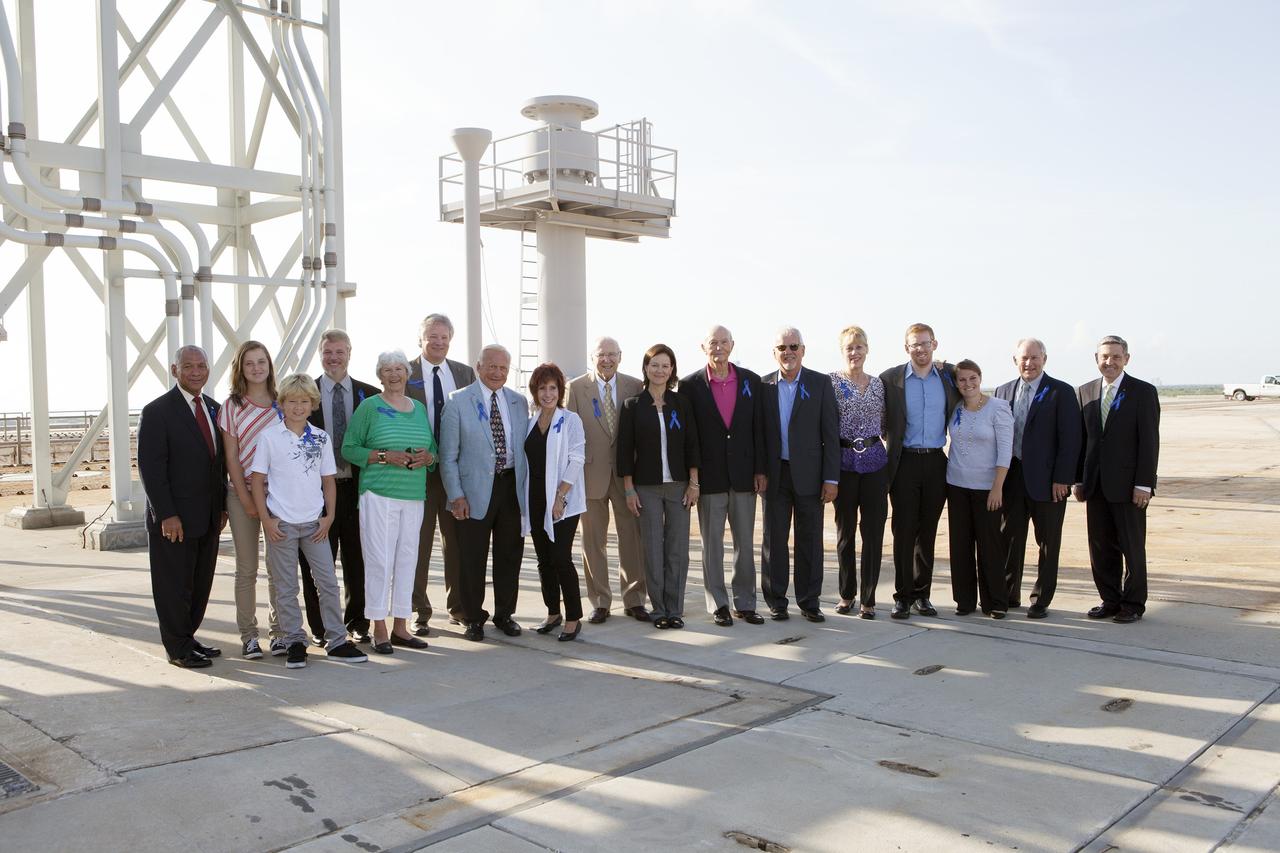
CAPE CANAVERAL, Fla. -- At NASA's Kennedy Space Center in Florida, NASA officials and Apollo astronauts visiting Launch Pad 39B with their families and friends preserve the moment with a group portrait. The group was at Kennedy for a ceremony renaming the Operations and Checkout Building for Apollo 11 astronaut Neil Armstrong, the first person to set foot on the moon. From left are NASA Administrator Charles Bolden, Neil's granddaughter Lily Armstrong, Neil's grandson Bryce Armstrong, Neil's son Mark Armstrong, Neil's former wife Janet Armstrong, Neil's son Rick Armstrong, Apollo 11 moonwalker Buzz Aldrin, Buzz's friend Judy Rice, Apollo astronaut Jim Lovell, Mike Collins' daughter Ann Starr, Apollo 11 command module pilot Mike Collins, Buzz's grandson Jeffrey Schuss, Jeffrey's wife April Schuss, Buzz's son-in-law Bruce Hanifan, Buzz's daughter Jan Aldrin, Buzz's son Andy Aldrin, and Center Director Bob Cabana. The pad is being modified to support the agency's new Orion spacecraft which will lift off atop the Space Launch System rocket. Orion is designed to take humans farther than they’ve ever gone before, serving as the exploration vehicle that will carry astronauts to deep space and sustain the crew during travel to destinations such as an asteroid or Mars. The visit of the former astronauts was part of NASA's 45th anniversary celebration of the Apollo 11 moon landing. As the world watched, Neil Armstrong and Neil Aldrin landed in the moon's Sea of Tranquility aboard the lunar module Eagle on July 20, 1969. Meanwhile, crewmate Michael Collins orbited above in the command module Columbia. For more, visit http://www.nasa.gov/press/2014/july/nasa-honors-historic-first-moon-landing-eyes-first-mars-mission. Photo credit: NASA/Kim Shiflett

CAPE CANAVERAL, Fla. -- At the Kennedy Space Center in Florida, Apollo astronauts, from left, Jim Lovell, Buzz Aldrin and Mike Collins pause during their tour of Launch Pad 39B for a group portrait. The pad is being modified to support the agency's new Orion spacecraft which will lift off atop the Space Launch System rocket. Orion is designed to take humans farther than they’ve ever gone before, serving as the exploration vehicle that will carry astronauts to deep space and sustain the crew during travel to destinations such as an asteroid or Mars. The visit of the former astronauts was part of NASA's 45th anniversary celebration of the Apollo 11 moon landing. As the world watched, Neil Armstrong and Aldrin landed in the moon's Sea of Tranquility aboard the lunar module Eagle on July 20, 1969. Meanwhile, crewmate Collins orbited above in the command module Columbia. For more, visit http://www.nasa.gov/press/2014/july/nasa-honors-historic-first-moon-landing-eyes-first-mars-mission. Photo credit: NASA/Kim Shiflett
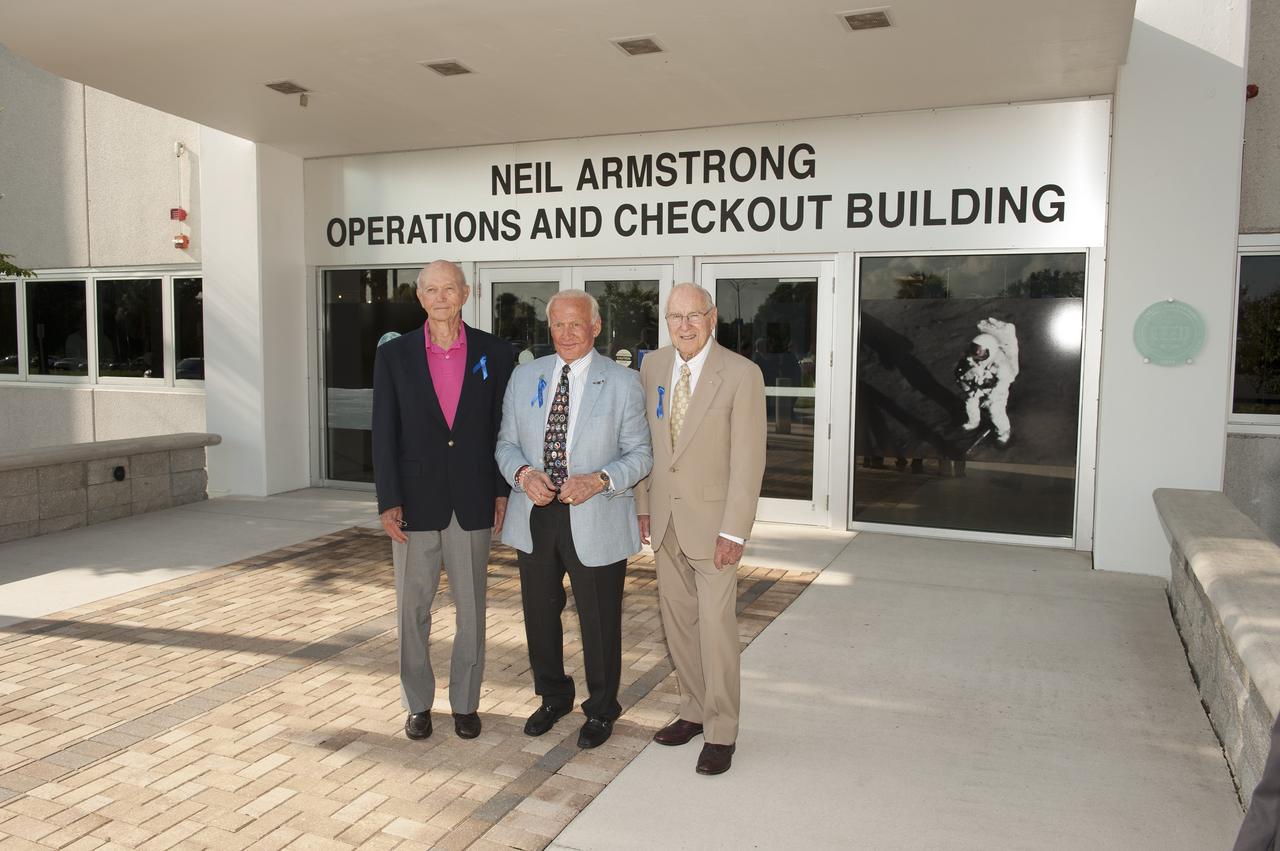
CAPE CANAVERAL, Fla. -- At the Kennedy Space Center in Florida, visiting Apollo astronauts have a group portrait taken in front of the refurbished Operations and Checkout Building, newly named for Apollo 11 astronaut Neil Armstrong, the first person to set foot on the moon. From left are Mike Collins, Buzz Aldrin and Jim Lovell. The building's high bay is being used to support the agency's new Orion spacecraft, which will lift off atop the Space Launch System rocket. Orion is designed to take humans farther than they’ve ever gone before, serving as the exploration vehicle that will carry astronauts to deep space and sustain the crew during travel to destinations such as an asteroid or Mars. The visit of the former astronauts was part of NASA's 45th anniversary celebration of the Apollo 11 moon landing. As the world watched, Neil Armstrong and Aldrin landed in the moon's Sea of Tranquility aboard the lunar module Eagle on July 20, 1969. Meanwhile, crewmate Collins orbited above in the command module Columbia. For more, visit http://www.nasa.gov/press/2014/july/nasa-honors-historic-first-moon-landing-eyes-first-mars-mission. Photo credit: NASA/Kevin O'Connell

CAPE CANAVERAL, Fla. -- At the Kennedy Space Center in Florida, NASA officials showcase the modifications underway at Launch Pad 39 B to Apollo astronauts visiting the center. From left are NASA Administrator Charles Bolden, Apollos 8 and 13 astronaut Jim Lovell, Apollo 11 astronauts Buzz Aldrin and Mike Collins, and Center Director Bob Cabana. The pad is being modified to support the agency's new Orion spacecraft which will lift off atop the Space Launch System rocket. Orion is designed to take humans farther than they’ve ever gone before, serving as the exploration vehicle that will carry astronauts to deep space and sustain the crew during travel to destinations such as an asteroid or Mars. The visit of the former astronauts was part of NASA's 45th anniversary celebration of the Apollo 11 moon landing. As the world watched, Neil Armstrong and Aldrin landed in the moon's Sea of Tranquility aboard the lunar module Eagle on July 20, 1969. Meanwhile, crewmate Collins orbited above in the command module Columbia. For more, visit http://www.nasa.gov/press/2014/july/nasa-honors-historic-first-moon-landing-eyes-first-mars-mission. Photo credit: NASA/Kim Shiflett
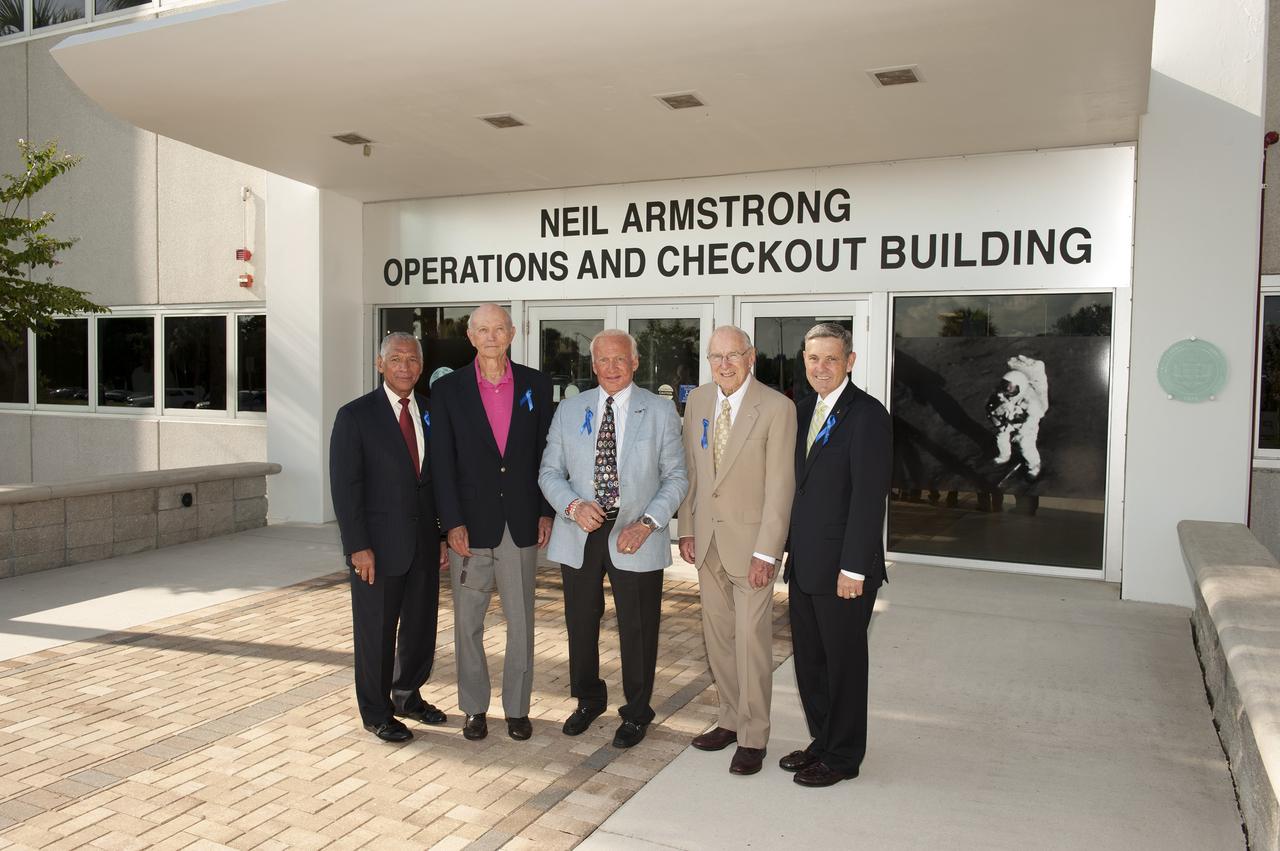
CAPE CANAVERAL, Fla. -- At the Kennedy Space Center in Florida, NASA officials and Apollo astronauts have a group portrait taken in front of the refurbished Operations and Checkout Building, newly named for Apollo 11 astronaut Neil Armstrong, the first person to set foot on the moon. From left are NASA Administrator Charles Bolden, Apollo astronauts Mike Collins, Buzz Aldrin and Jim Lovell, and Center Director Robert Cabana. The building's high bay is being used to support the agency's new Orion spacecraft, which will lift off atop the Space Launch System rocket. Orion is designed to take humans farther than they’ve ever gone before, serving as the exploration vehicle that will carry astronauts to deep space and sustain the crew during travel to destinations such as an asteroid or Mars. The visit of the former astronauts was part of NASA's 45th anniversary celebration of the Apollo 11 moon landing. As the world watched, Neil Armstrong and Aldrin landed in the moon's Sea of Tranquility aboard the lunar module Eagle on July 20, 1969. Meanwhile, crewmate Collins orbited above in the command module Columbia. For more, visit http://www.nasa.gov/press/2014/july/nasa-honors-historic-first-moon-landing-eyes-first-mars-mission. Photo credit: NASA/Kevin O'Connell

KENNEDY SPACE CENTER, FLA. - After arrival at NASA’s Kennedy Space Center, the STS-114 crew members are greeted by KSC officials. Seen from left are Deputy Director Woodrow Whitlow Jr., Commander Eileen Collins, Mission Specialists Charles Camarda (behind Collins) and Andrew Thomas, astronaut Jerry Ross, who is chief of the Vehicle Integration Test (VIT) office, VIT Lead for STS-114 Robert Hanley, Shuttle Launch Director Mike Leinbach and Center Director Jim Kennedy. Crew members are taking part in the Terminal Countdown Demonstration Test (TCDT) over the next three days. The TCDT is held at KSC prior to each Space Shuttle flight. It provides the crew of each mission an opportunity to participate in simulated countdown activities. The test ends with a mock launch countdown culminating in a simulated main engine cutoff. The crew also spends time undergoing emergency egress training exercises at the launch pad. STS-114 is the first Return to Flight mission to the International Space Station. The launch window extends July 13 through July 31.
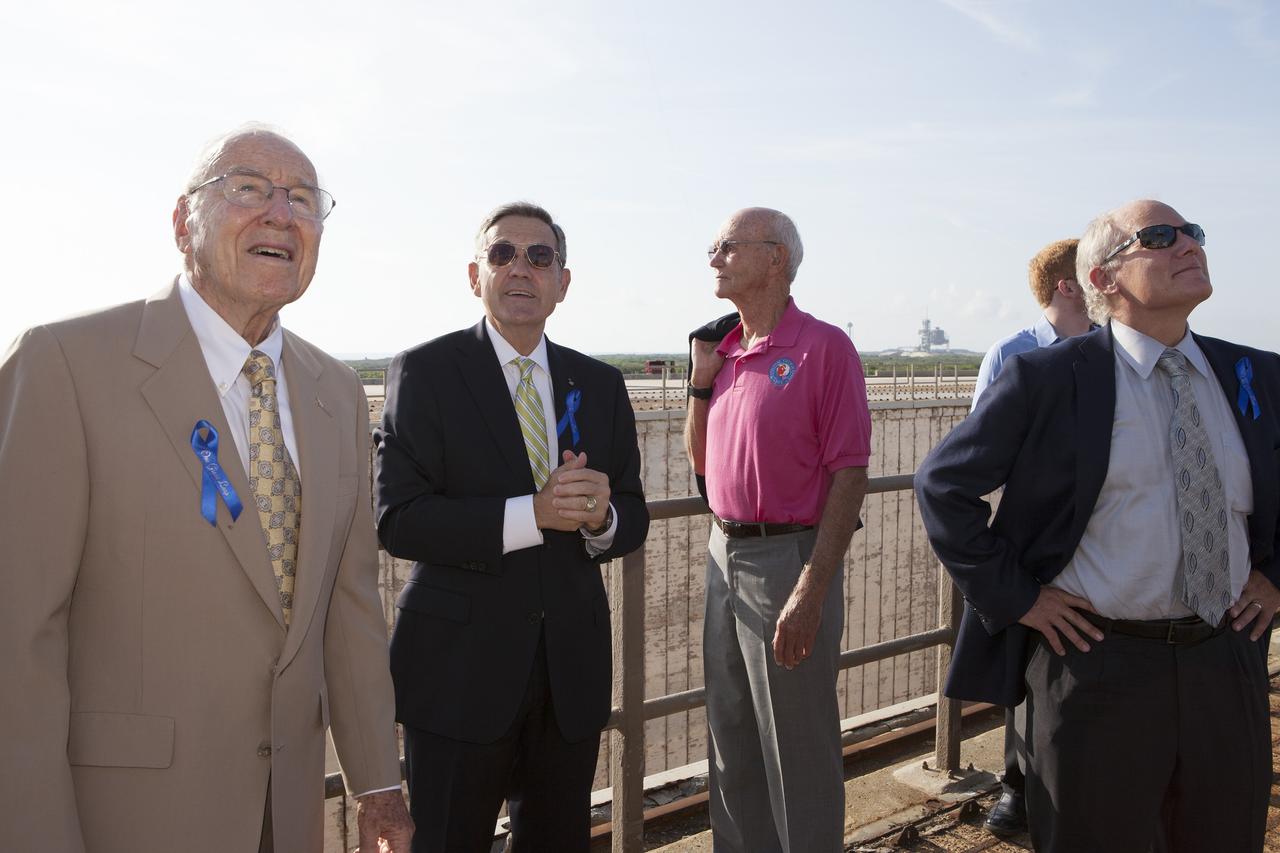
CAPE CANAVERAL, Fla. -- At the Kennedy Space Center in Florida, NASA officials and Apollo astronauts visiting Launch Pad 39B with their families and friends take a moment to enjoy the view. From left are Apollo astronaut Jim Lovell, Center Director Bob Cabana, Apollo 11 command module pilot Mike Collins, and Apollo 11 moonwalker Buzz Aldrin's son Andy Aldrin. The group is at Kennedy for a ceremony renaming the Operations and Checkout Building for Apollo 11 astronaut Neil Armstrong, the first person to set foot on the moon. The pad is being modified to support the agency's new Orion spacecraft which will lift off atop the Space Launch System rocket. Orion is designed to take humans farther than they’ve ever gone before, serving as the exploration vehicle that will carry astronauts to deep space and sustain the crew during travel to destinations such as an asteroid or Mars. The visit of the former astronauts was part of NASA's 45th anniversary celebration of the Apollo 11 moon landing. As the world watched, Neil Armstrong and Neil Aldrin landed in the moon's Sea of Tranquility aboard the lunar module Eagle on July 20, 1969. Meanwhile, crewmate Michael Collins orbited above in the command module Columbia. For more, visit http://www.nasa.gov/press/2014/july/nasa-honors-historic-first-moon-landing-eyes-first-mars-mission. Photo credit: NASA/Kim Shiflett
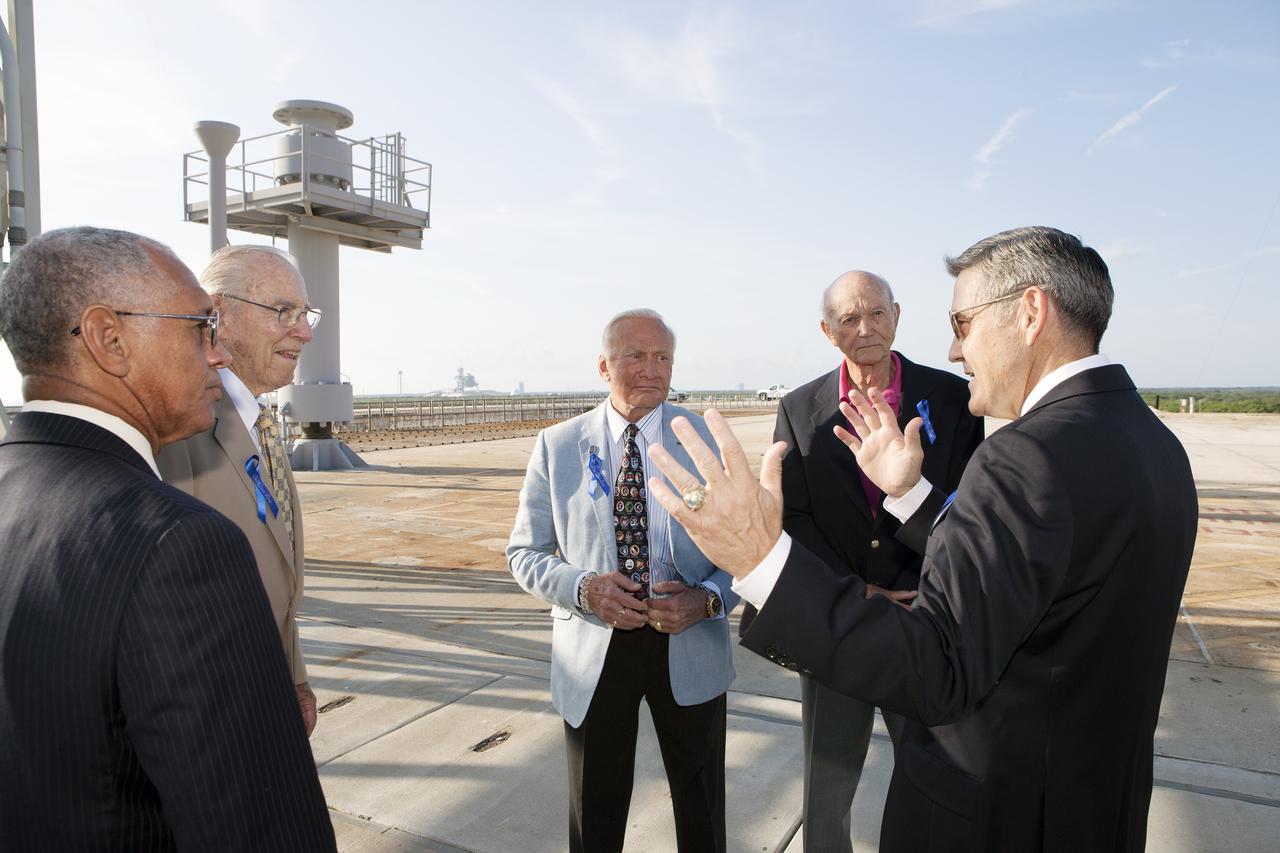
CAPE CANAVERAL, Fla. -- At the Kennedy Space Center in Florida, Center Director Bob Cabana, at right, briefs Apollo astronauts on the changes underway to Launch Pad 39B. From left are NASA administrator Charles Bolden, Apollo astronauts Jim Lovell, Buzz Aldrin and Mike Collins, and Cabana. The pad is being modified to support the agency's new Orion spacecraft which will lift off atop the Space Launch System rocket. Orion is designed to take humans farther than they’ve ever gone before, serving as the exploration vehicle that will carry astronauts to deep space and sustain the crew during travel to destinations such as an asteroid or Mars. The visit of the former astronauts was part of NASA's 45th anniversary celebration of the Apollo 11 moon landing. As the world watched, Neil Armstrong and Aldrin landed in the moon's Sea of Tranquility aboard the lunar module Eagle on July 20, 1969. Meanwhile, crewmate Collins orbited above in the command module Columbia. For more, visit http://www.nasa.gov/press/2014/july/nasa-honors-historic-first-moon-landing-eyes-first-mars-mission. Photo credit: NASA/Kim Shiflett
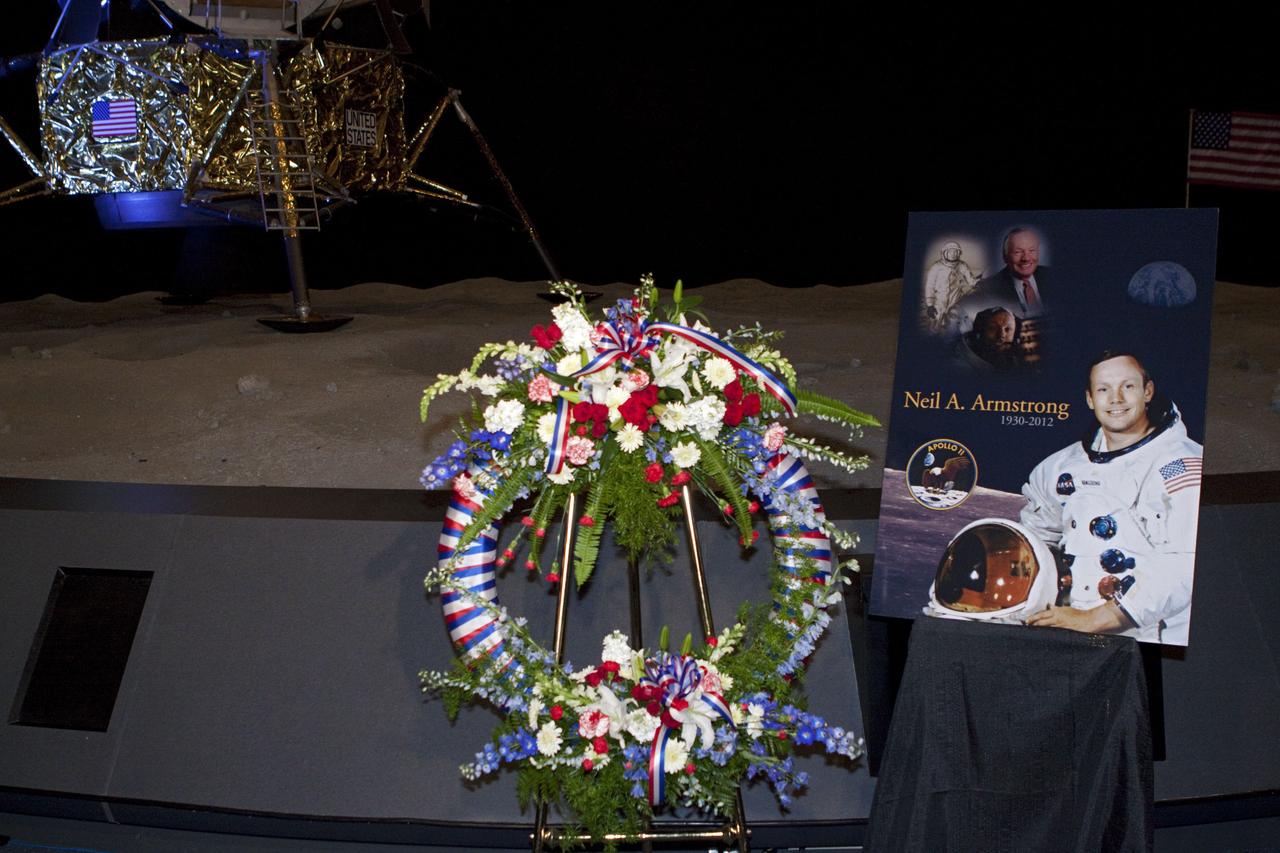
CAPE CANAVERAL, Fla. - Kennedy Space Center employees and guests gathered for a brief ceremony on Aug. 31, 2012 honoring Neil Armstrong, who died Aug. 25, 2012 at the age of 82. Armstrong was hailed by Center Director Bob Cabana as one of our heroes and a truly a great American. Cabana placed a wreath near a replica lunar module at the spaceport's Apollo-Saturn V Center. Selected as an astronaut in 1962, Neil Armstrong flew on NASA's Gemini 8 with David Scott in March 1966 and the first lunar landing mission, Apollo 11, with Mike Collins and Buzz Aldine in July 1969. On July 20, 1969, he became the first human to walk on the moon. For more information, visit: http://www.nasa.gov/centers/kennedy/news/neil_armstrong.html Photo credit: NASA/Kim Shiflett
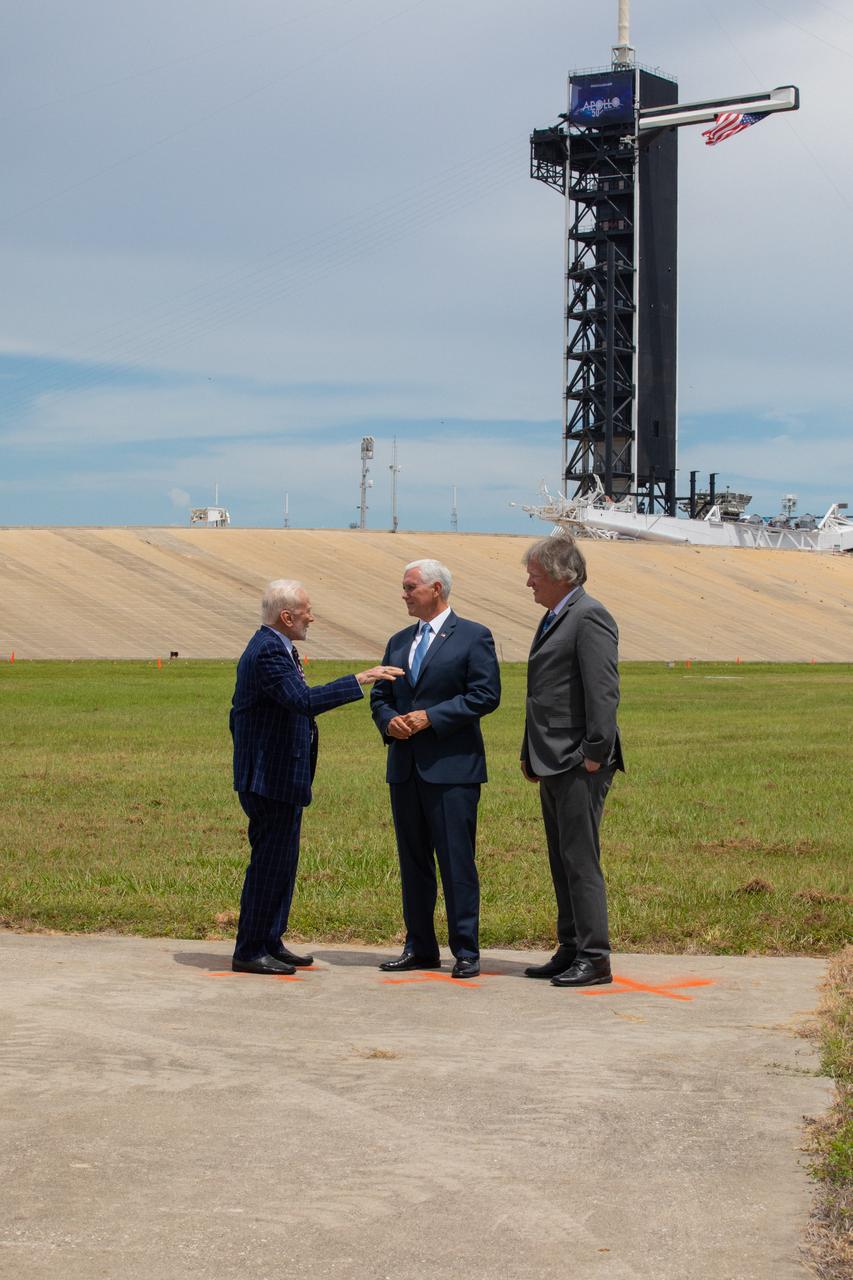
Vice President Mike Pence, center, celebrates the 50th anniversary of the Apollo 11 Moon landing during a visit to Kennedy Space Center’s Launch Complex 39A on July 20, 2019. Neil Armstrong, Buzz Aldrin and Michael Collins launched from Pad 39A aboard a Saturn V rocket on July 16, 1969. Four days later, Armstrong and Aldrin landed the Apollo Lunar Module Eagle on the Moon, becoming the first two humans to walk on the lunar surface. Pence recognized the extraordinary achievements of the Apollo 11 team, while looking forward to NASA’s plans to return to the Moon and on to Mars. At left is Apollo 11 Lunar Module Pilot Buzz Aldrin. At right is Rick Armstrong, Apollo 11 Commander Neil Armstrong's son.
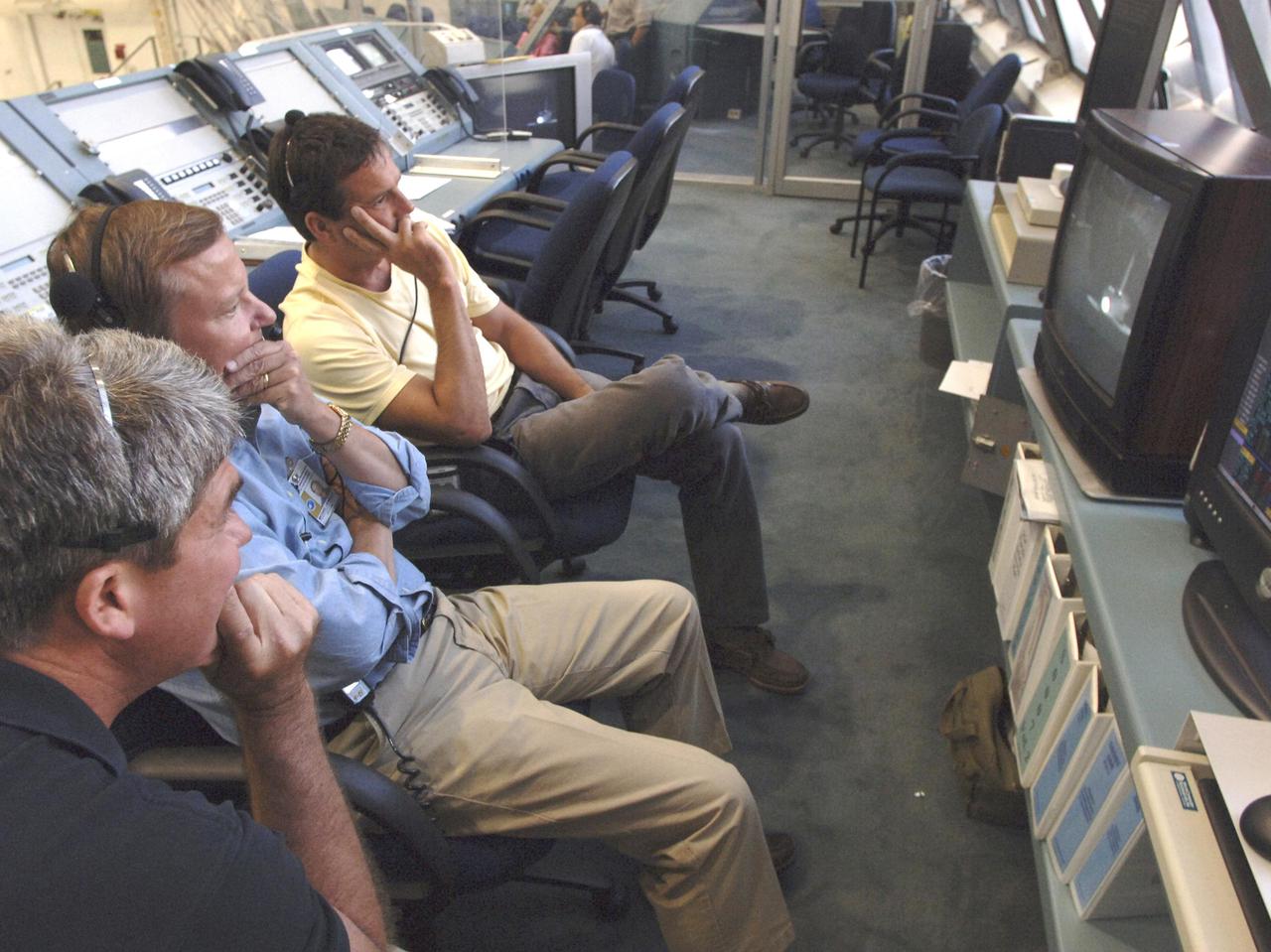
KENNEDY SPACE CENTER, FLA. - In the Firing Room of the Launch Control Center at NASA Kennedy Space Center, Space Shuttle Program Manager Bill Parsons, Shuttle Launch Director Mike Leinbach and Assistant Launch Director Doug Lyons applaud the successful landing of Space Shuttle Discovery on Runway 22 at Edwards Air Force Base in California. The landing was deferred to Edwards due to weather concerns at KSC. Landing time was 8:11:22 a.m. EDT, guided by Mission Commander Eileen Collins. Discovery spent two weeks in space on Return to Flight mission STS-114, where the crew demonstrated new methods to inspect and repair the Shuttle in orbit. The crew also delivered supplies, outfitted and performed maintenance on the International Space Station. A number of these tasks were conducted during three spacewalks. (Photo Credit: NASA_Bill Ingalls)
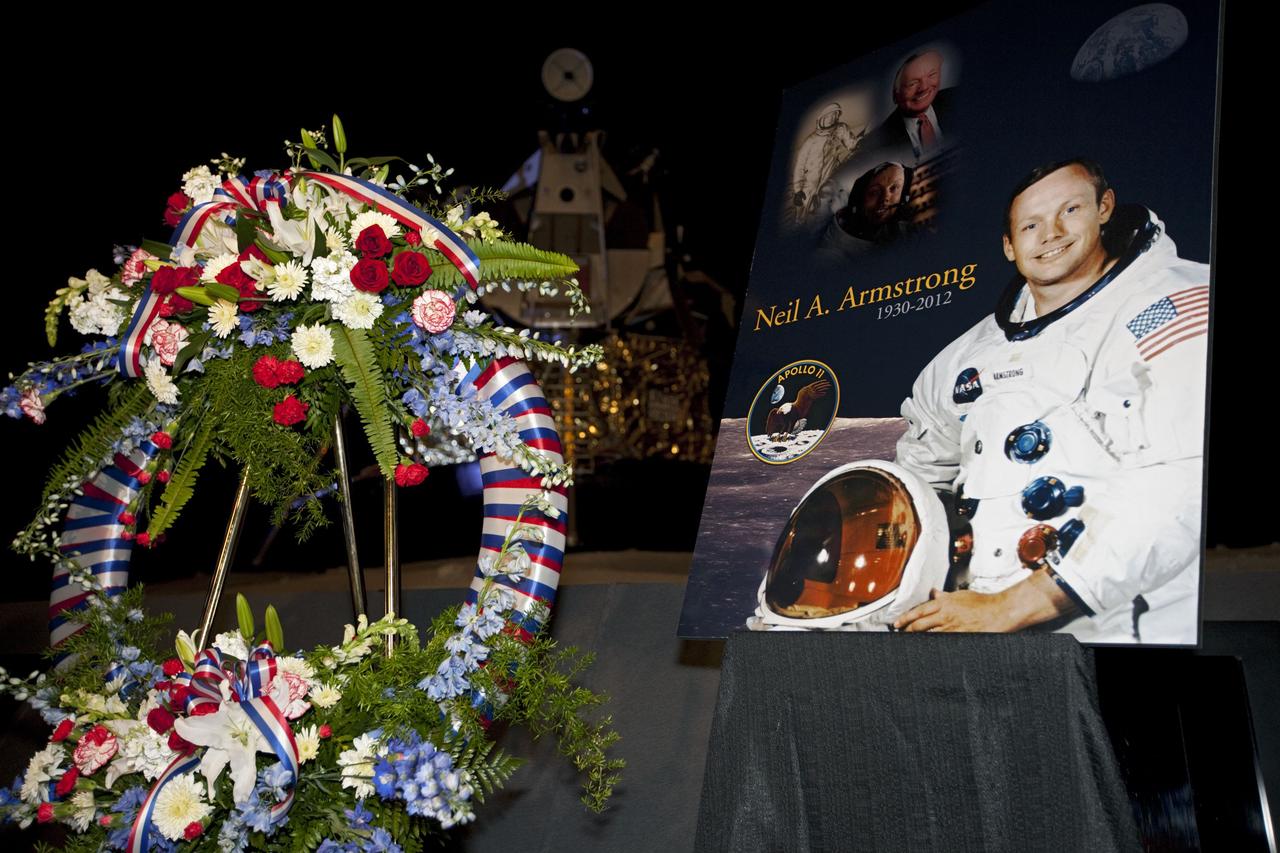
CAPE CANAVERAL, Fla. - Kennedy Space Center employees and guests gathered for a brief ceremony on Aug. 31, 2012 honoring Neil Armstrong, who died Aug. 25, 2012 at the age of 82. Armstrong was hailed by Center Director Bob Cabana as one of our heroes and a truly a great American. Cabana placed a wreath in the spaceport's Apollo-Saturn V Center. Selected as an astronaut in 1962, Neil Armstrong flew on NASA's Gemini 8 with David Scott in March 1966 and the first lunar landing mission, Apollo 11, with Mike Collins and Buzz Aldine in July 1969. On July 20, 1969, he became the first human to walk on the moon. For more information, visit: http://www.nasa.gov/centers/kennedy/news/neil_armstrong.html Photo credit: NASA/Kim Shiflett
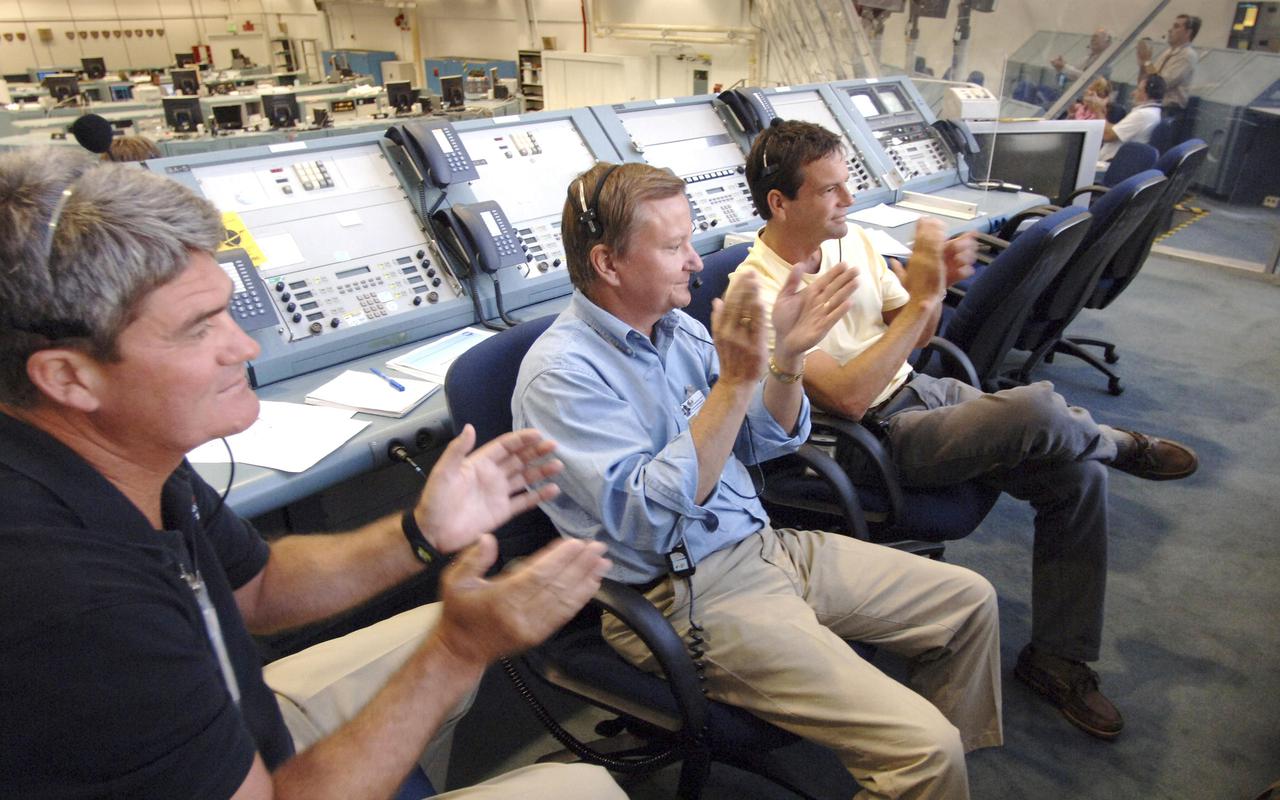
KENNEDY SPACE CENTER, FLA. - In the Firing Room of the Launch Control Center at NASA Kennedy Space Center, Space Shuttle Program Manager Bill Parsons, Shuttle Launch Director Mike Leinbach and Assistant Launch Director Doug Lyons applaud the successful landing of Space Shuttle Discovery on Runway 22 at Edwards Air Force Base in California. The landing was deferred to Edwards due to weather concerns at KSC. Landing time was 8:11:22 a.m. EDT, guided by Mission Commander Eileen Collins. Discovery spent two weeks in space on Return to Flight mission STS-114, where the crew demonstrated new methods to inspect and repair the Shuttle in orbit. The crew also delivered supplies, outfitted and performed maintenance on the International Space Station. A number of these tasks were conducted during three spacewalks. (Photo Credit: NASA_Bill Ingalls)
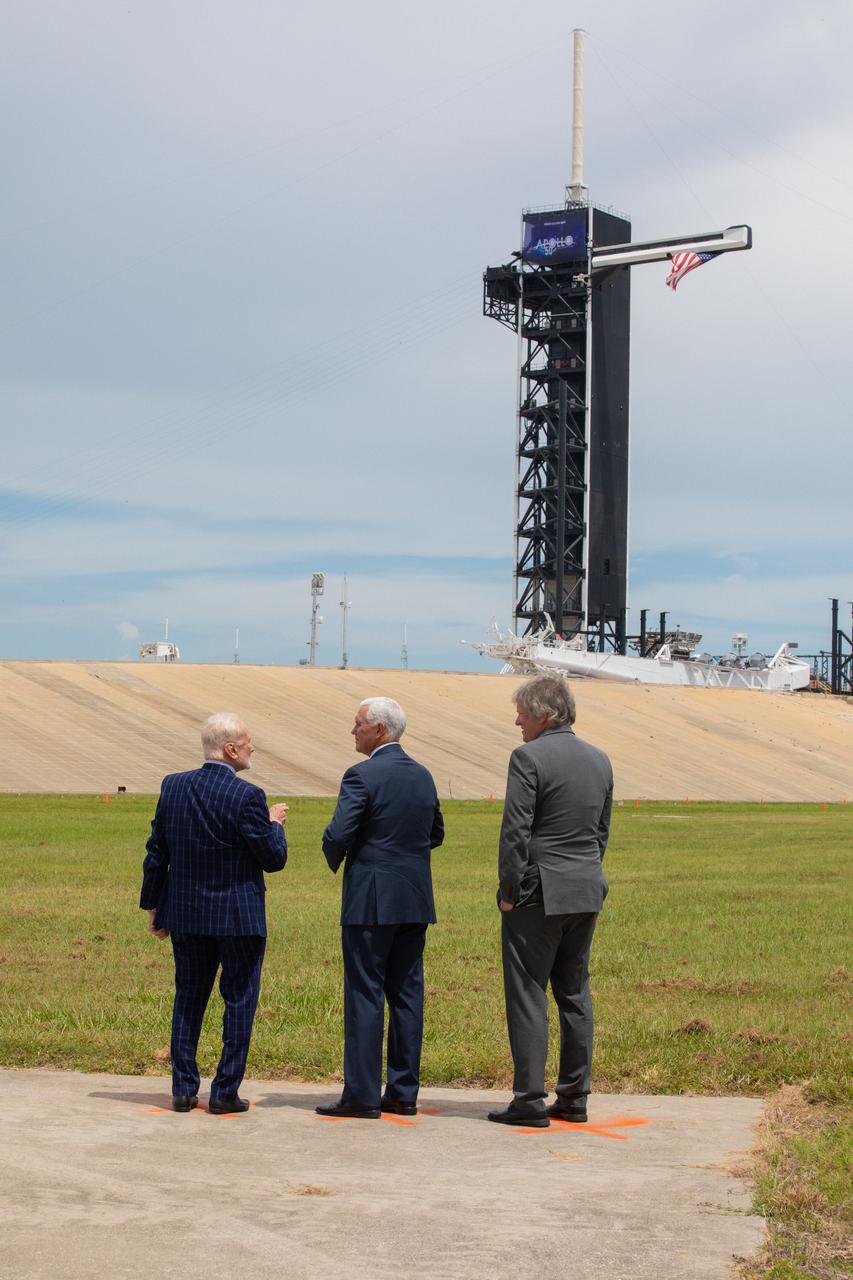
Vice President Mike Pence, center, celebrates the 50th anniversary of the Apollo 11 Moon landing during a visit to Kennedy Space Center’s Launch Complex 39A on July 20, 2019. Neil Armstrong, Buzz Aldrin and Michael Collins launched from Pad 39A aboard a Saturn V rocket on July 16, 1969. Four days later, Armstrong and Aldrin landed the Apollo Lunar Module Eagle on the Moon, becoming the first two humans to walk on the lunar surface. Pence recognized the extraordinary achievements of the Apollo 11 team, while looking forward to NASA’s plans to return to the Moon and on to Mars. At left is Apollo 11 Lunar Module Pilot Buzz Aldrin. At right is Rick Armstrong, son of Apollo 11 Commander Neil Armstrong.
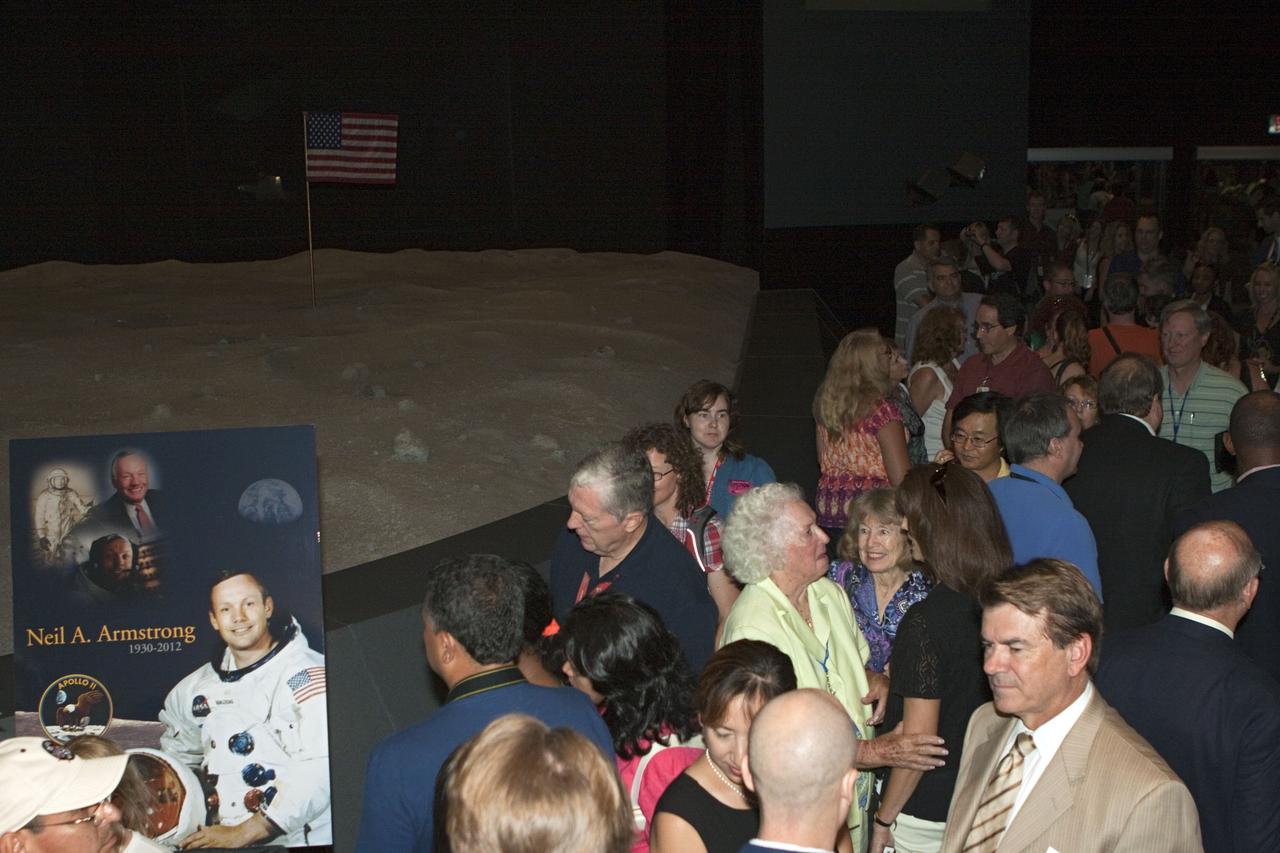
CAPE CANAVERAL, Fla. - Kennedy Space Center employees and guests gathered for a brief ceremony on Aug. 31, 2012 honoring Neil Armstrong, who died Aug. 25, 2012 at the age of 82. Armstrong was hailed by Center Director Bob Cabana as one of our heroes and a truly a great American. Cabana placed a wreath in the spaceport's Apollo-Saturn V Center. Selected as an astronaut in 1962, Neil Armstrong flew on NASA's Gemini 8 with David Scott in March 1966 and the first lunar landing mission, Apollo 11, with Mike Collins and Buzz Aldine in July 1969. On July 20, 1969, he became the first human to walk on the moon. For more information, visit: http://www.nasa.gov/centers/kennedy/news/neil_armstrong.html Photo credit: NASA/Kim Shiflett
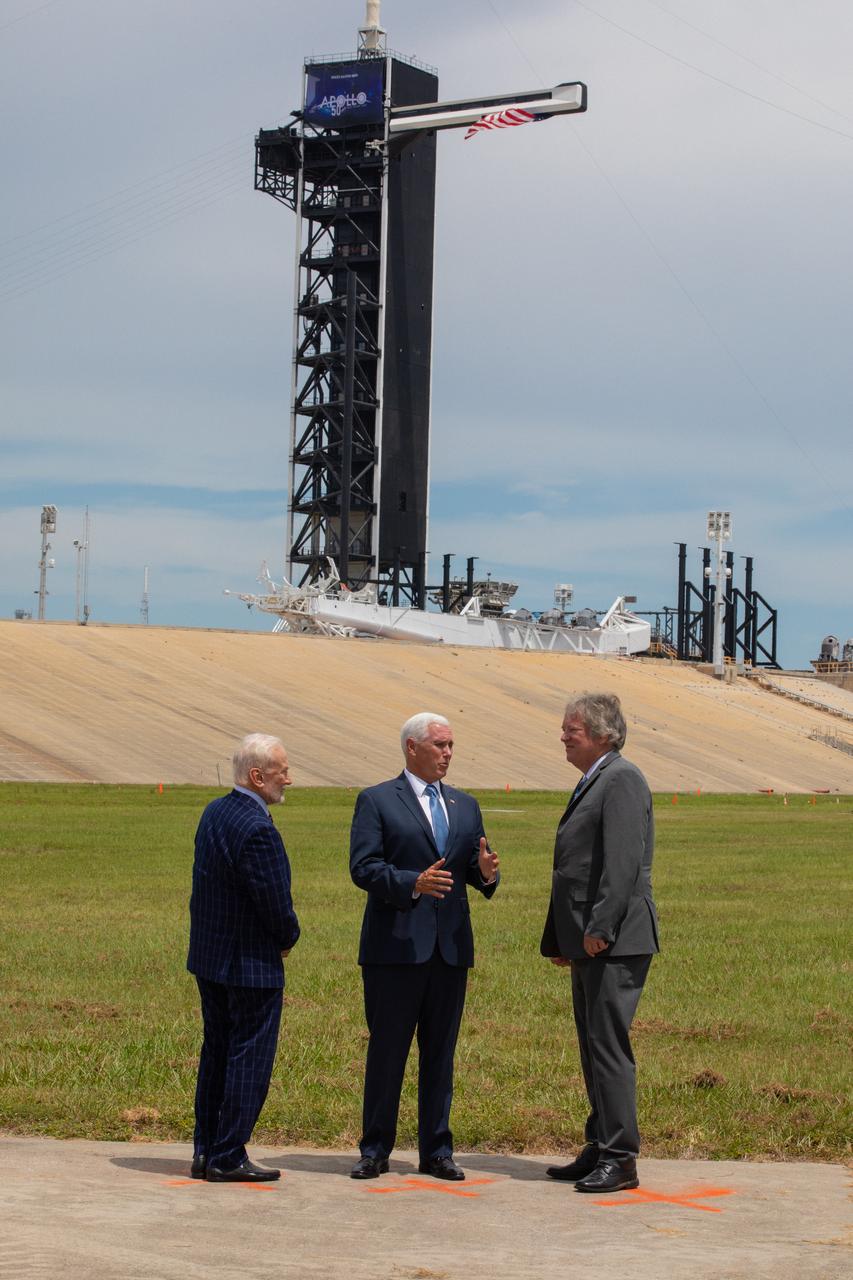
Vice President Mike Pence, center, celebrates the 50th anniversary of the Apollo 11 Moon landing during a visit to Kennedy Space Center’s Launch Complex 39A on July 20, 2019. Neil Armstrong, Buzz Aldrin and Michael Collins launched from Pad 39A aboard a Saturn V rocket on July 16, 1969. Four days later, Armstrong and Aldrin landed the Apollo Lunar Module Eagle on the Moon, becoming the first two humans to walk on the lunar surface. Pence recognized the extraordinary achievements of the Apollo 11 team, while looking forward to NASA’s plans to return to the Moon and on to Mars. At left is Apollo 11 Lunar Module Pilot Buzz Aldrin. At right is Rick Armstrong, Apollo 11 Commander Neil Armstrong's son.
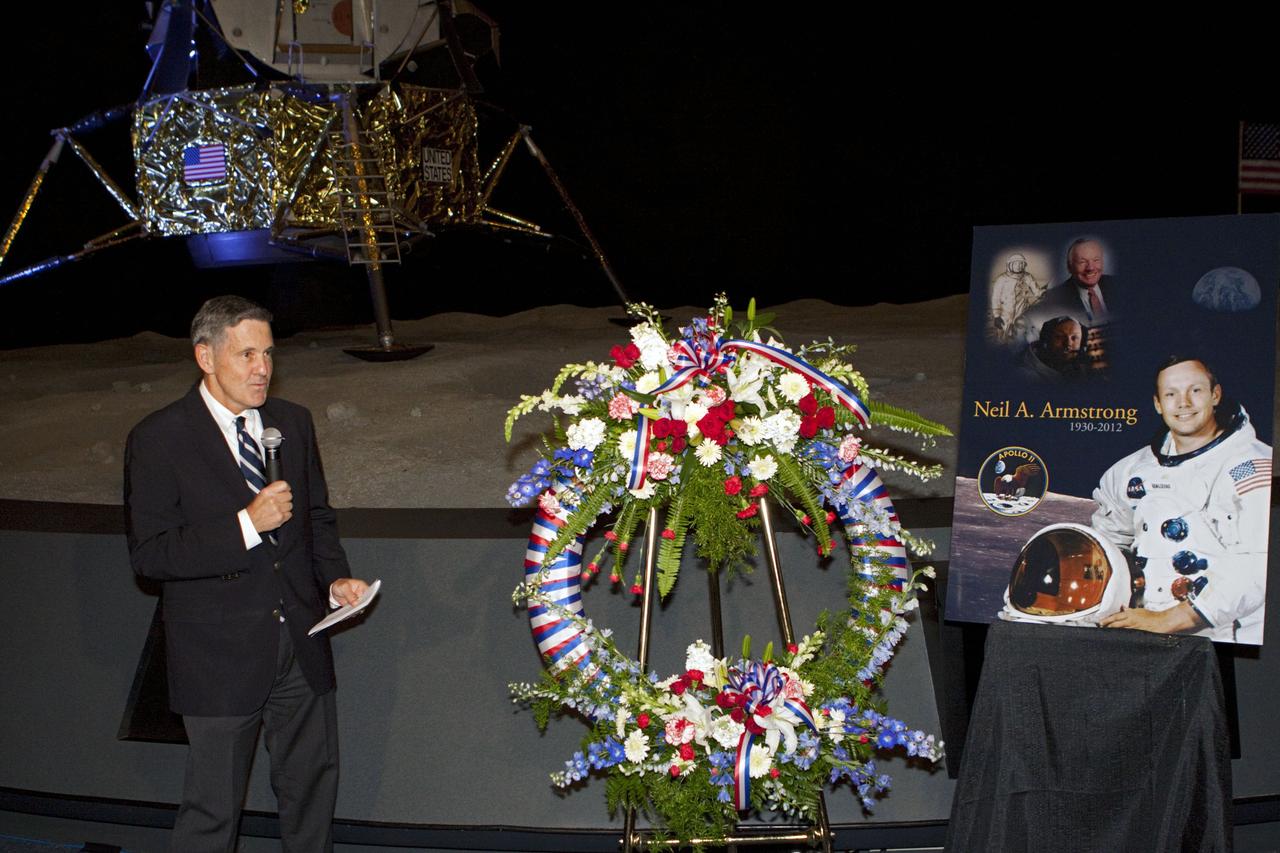
CAPE CANAVERAL, Fla. - Kennedy Space Center Director Bob Cabana spoke to spaceport employees and guests at a brief ceremony on Aug. 31, 2012 honoring Neil Armstrong, who died Aug. 25, 2012 at the age of 82. Armstrong was hailed by Cabana as one of our heroes and a truly a great American. Cabana, also a former astronaut, placed a wreath near a replica lunar module at the spaceport's Apollo-Saturn V Center. Selected as an astronaut in 1962, Neil Armstrong flew on NASA's Gemini 8 with David Scott in March 1966 and the first lunar landing mission, Apollo 11, with Mike Collins and Buzz Aldine in July 1969. On July 20, 1969, he became the first human to walk on the moon. For more information, visit: http://www.nasa.gov/centers/kennedy/news/neil_armstrong.html Photo credit: NASA/Kim Shiflett
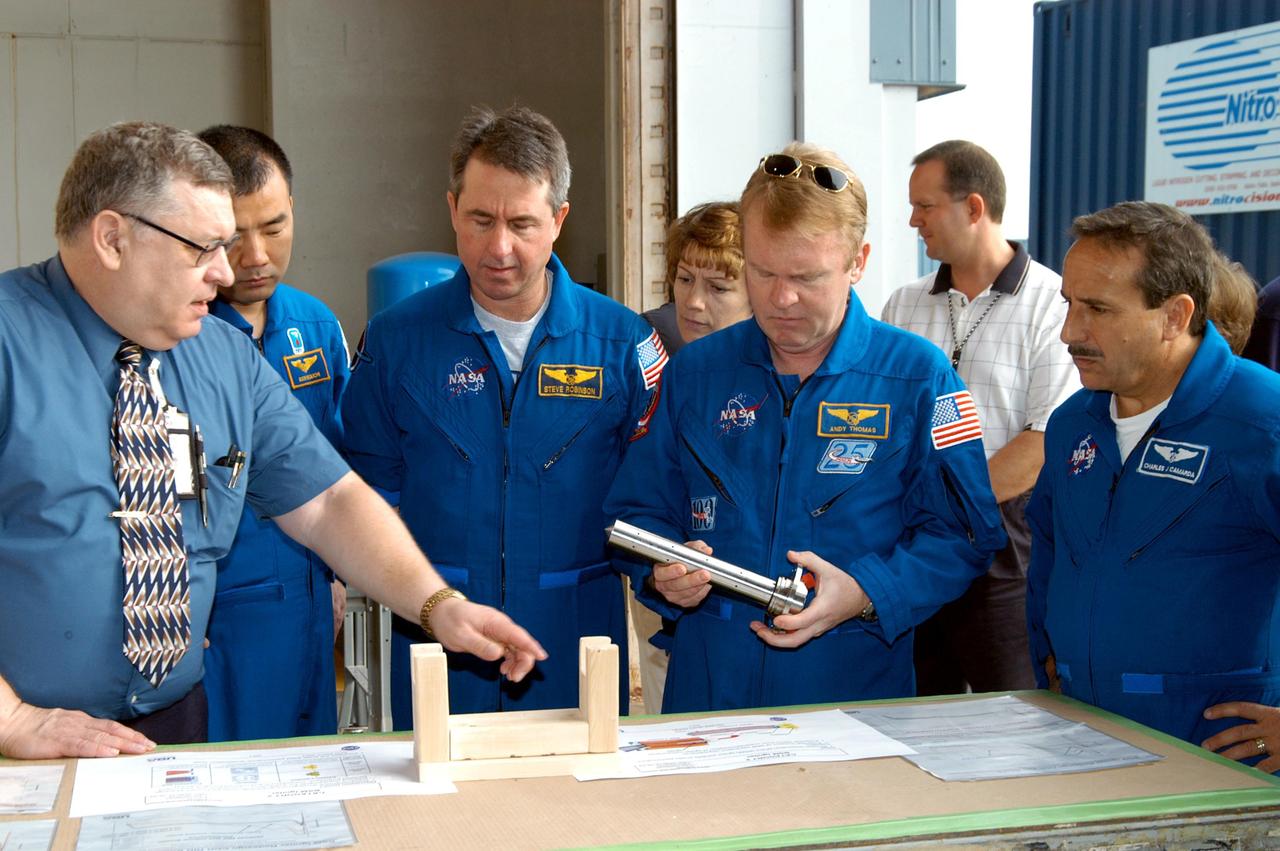
KENNEDY SPACE CENTER, FLA. - - In the SRB Assembly and Refurbishment Facility, some of the STS-114 crew listen to Mike Leppert, Manufacturing Operations project lead with United Space Alliance, talk about a booster separation motor (BSM) igniter. Pictures on the table give expanded views of the BSM and igniter. Next to Leppart, from left, are Mission Specialists Soichi Noguchi and Stephen Robinson; Commander Eileen Collins; and Mission Specialists Andrew Thomas (holding a mockup of an igniter) and Charles Camarda. Noguchi is with the Japanese Aerospace and Exploration Agency. The crew is at KSC for familiarization with Shuttle and mission equipment. The STS-114 mission is Logistics Flight 1, which is scheduled to deliver supplies and equipment, plus the external stowage platform, to the International Space Station.
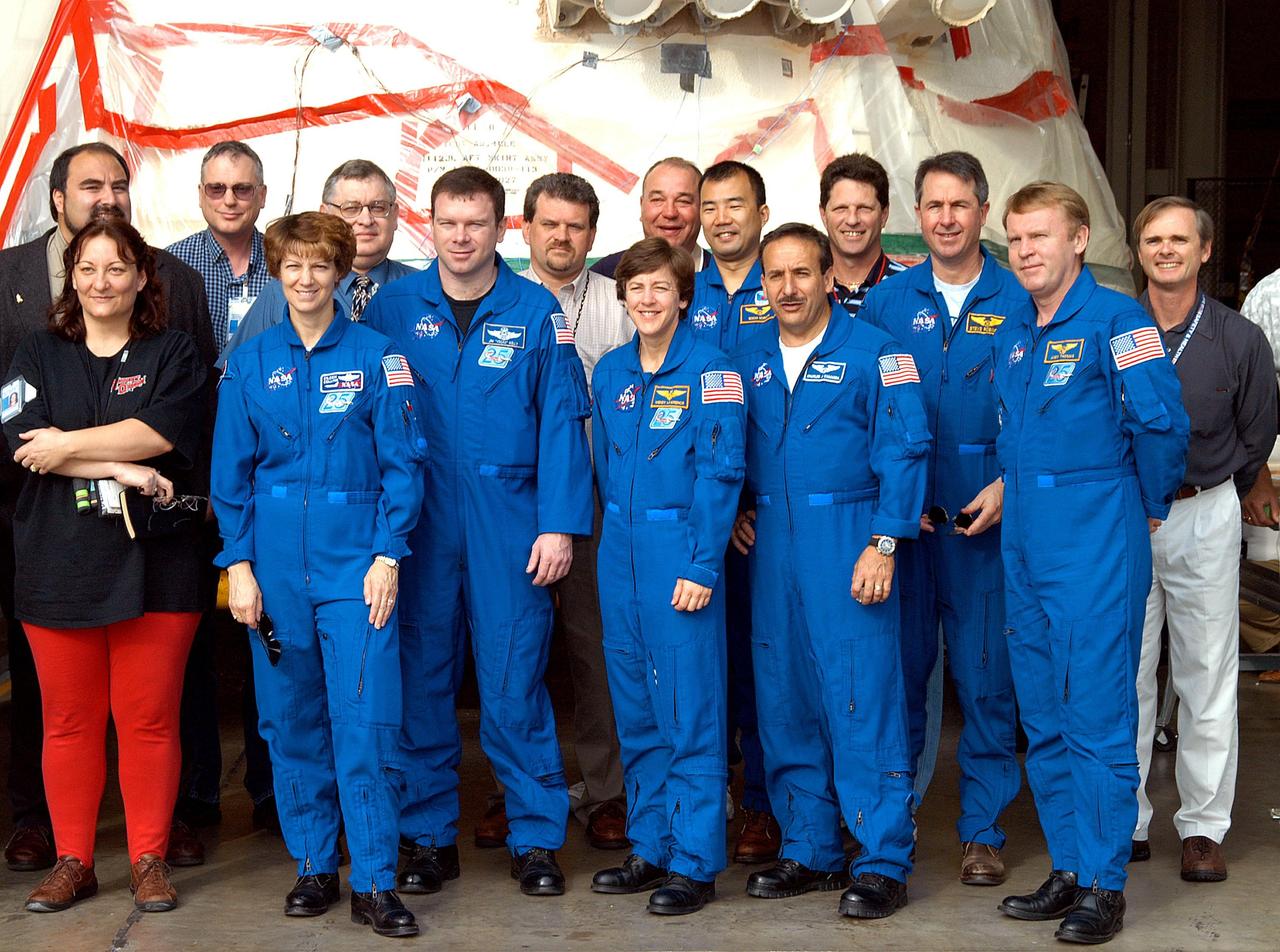
KENNEDY SPACE CENTER, FLA. - The STS-114 crew pose for a photo in front of a solid rocket booster aft skirt in the SRB Assembly and Refurbishment Facility. In front, from left, are Cynthia Perrons, electrical technician with United Space Alliance; Commander Eileen Collins, Pilot James Kelly, and Mission Specialists Charles Camarda and Andrew Thomas. In back are Paul Gutierrez, associate program manager in SRB Element, USA; John Cleary Jr., electrical engineer with USA; Mike Leppert, project lead, Manufacturing Operations, USA; Don Noah, Materials and Processes engineer, USA; Bob Herman, deputy associate program manager, SRB Element, USA; Mission Specialist Soichi Noguchi; Dale Marlow, thermal protection system engineer with USA; Mission Specialist Stephen Robinson; Greg Henry, director, Manufacturing Operations, USA.
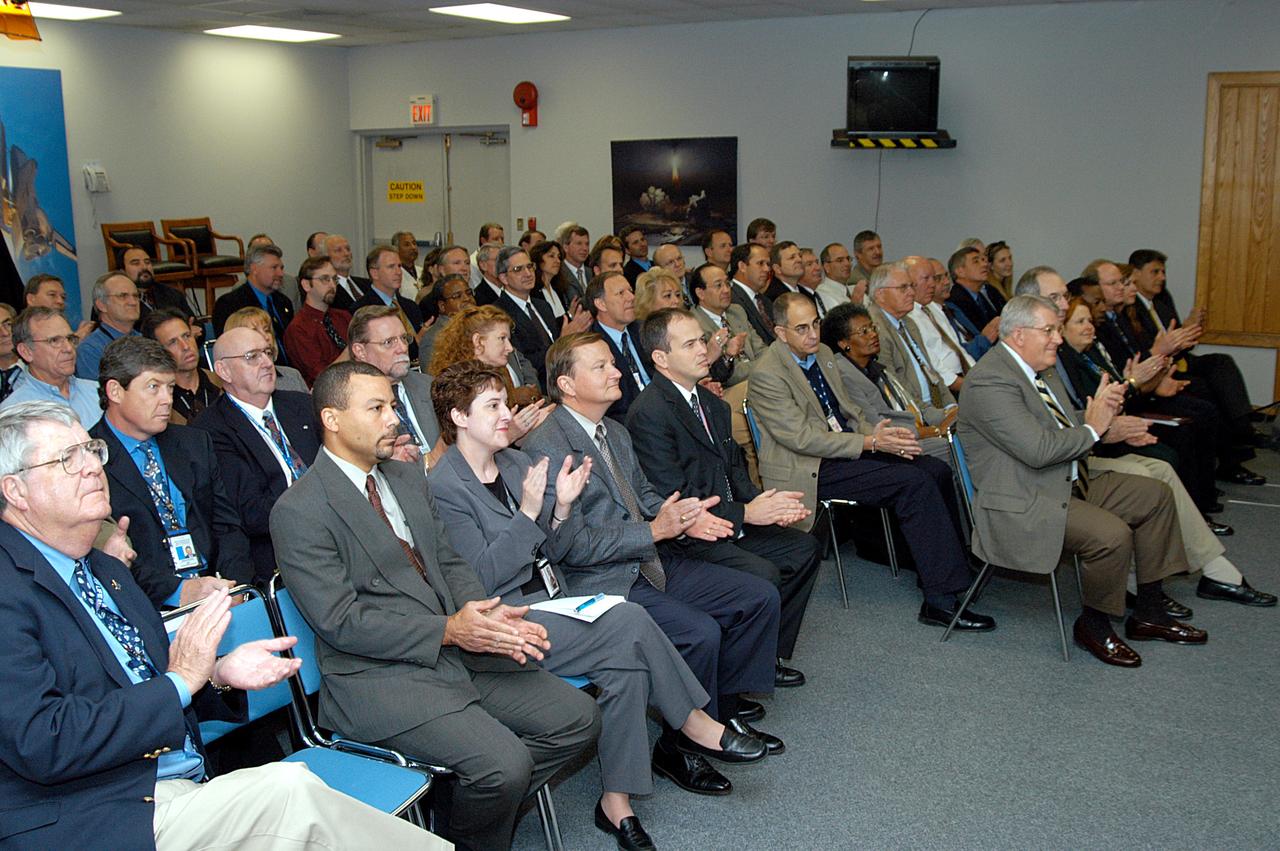
KENNEDY SPACE CENTER, FLA. -- From the KSC television studio, KSC management and other employees applaud President George W. Bush, who addressed the public and an assembly of government officials at NASA Headquarters, outlining a new focus and vision for the space agency. Fourth from left is Mike Leinbach, Shuttle launch director; at right, front row, are Bill Pickavance vice president and associate program manager of Florida Operations, United Space Alliance (USA) and Howard DeCastro, USA vice president and Space Shuttle program manager. The President stated his goals for NASA’s new mission: Completing the International Space Station, retiring the Space Shuttle orbiters, developing a new crew exploration vehicle, and returning to the moon and beyond within the next two decades. Pres. Bush was welcomed by NASA Administrator Sean O’Keefe and Expedition 8 Commander Michael Foale, who greeted him from the International Space Station. Members of the Washington, D.C., audience included astronauts Eileen Collins, Ed Lu and Michael Lopez-Alegria, and former astronaut Gene Cernan.
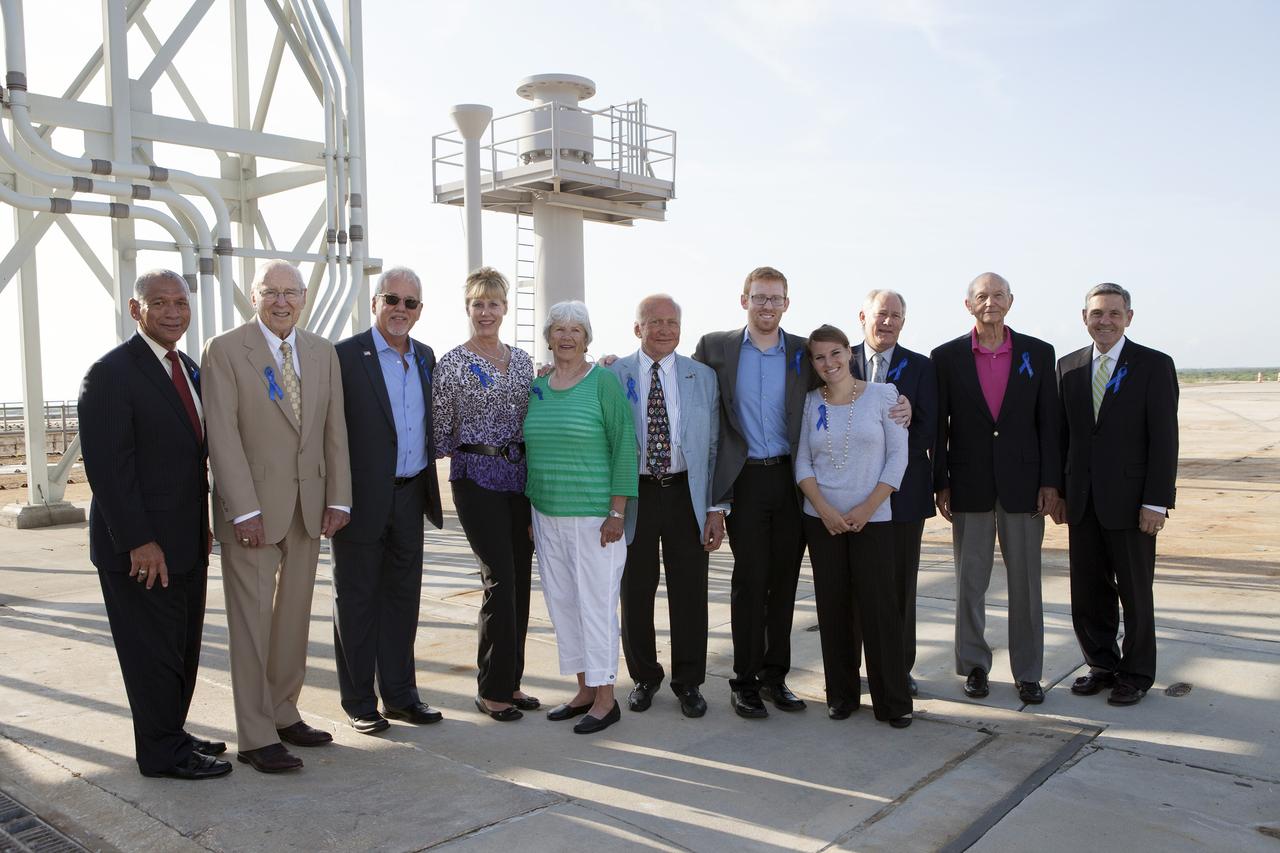
CAPE CANAVERAL, Fla. -- At NASA's Kennedy Space Center in Florida, NASA officials and Apollo astronauts visiting Launch Pad 39B with their families and friends preserve the moment with a group portrait. The group was at Kennedy for a ceremony renaming the Operations and Checkout Building for Apollo 11 astronaut Neil Armstrong, the first person to set foot on the moon. From left are NASA Administrator Charles Bolden, Apollo astronaut Jim Lovell, Buzz Aldrin's grandson Jeffrey Schuss, Jeffrey's wife April Schuss, Neil's former wife Janet Armstrong, Apollo 11 moonwalker Buzz Aldrin, Buzz's son-in-law Bruce Hanifan, Buzz's daughter Jan Aldrin, Buzz's son Andy Aldrin, Apollo 11 command module pilot Mike Collins, and Center Director Bob Cabana. The pad is being modified to support the agency's new Orion spacecraft which will lift off atop the Space Launch System rocket. Orion is designed to take humans farther than they’ve ever gone before, serving as the exploration vehicle that will carry astronauts to deep space and sustain the crew during travel to destinations such as an asteroid or Mars. The visit of the former astronauts was part of NASA's 45th anniversary celebration of the Apollo 11 moon landing. As the world watched, Neil Armstrong and Neil Aldrin landed in the moon's Sea of Tranquility aboard the lunar module Eagle on July 20, 1969. Meanwhile, crewmate Michael Collins orbited above in the command module Columbia. For more, visit http://www.nasa.gov/press/2014/july/nasa-honors-historic-first-moon-landing-eyes-first-mars-mission. Photo credit: NASA/Kim Shiflett
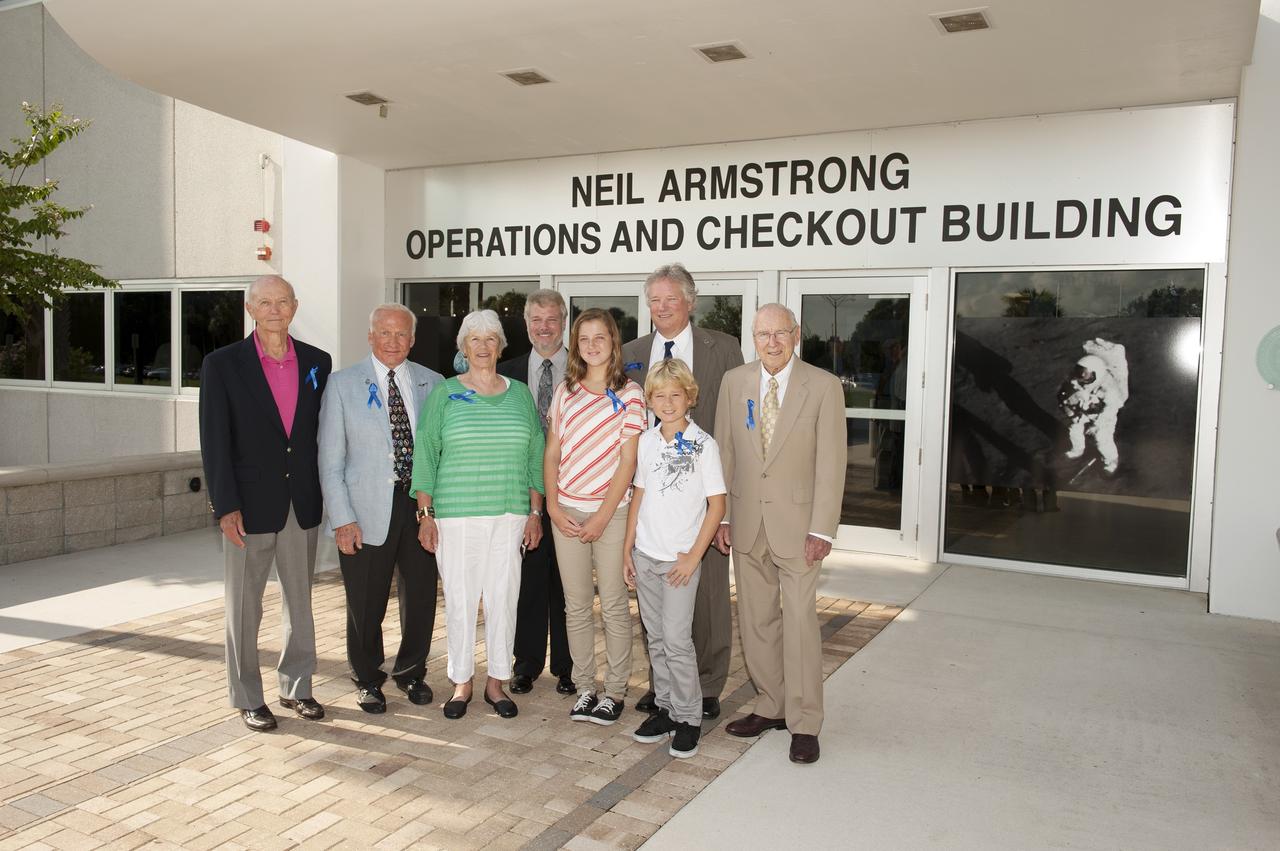
CAPE CANAVERAL, Fla. -- At the Kennedy Space Center in Florida, visiting Apollo astronauts have a group portrait taken in front of the refurbished Operations and Checkout Building, with the family of Neil Armstrong, the Apollo 11 astronaut who was the first person to set foot on the moon and for whom the facility is newly named. From left are Apollo 11 astronauts Mike Collins and Buzz Aldrin, Armstrong's former wife Janet, his son Rick, his granddaughter Lily, his son Rick, his grandson Bryce, and Apollo 8 and 13 astronaut Jim Lovell. The building's high bay is being used to support the agency's new Orion spacecraft, which will lift off atop the Space Launch System rocket. Orion is designed to take humans farther than they’ve ever gone before, serving as the exploration vehicle that will carry astronauts to deep space and sustain the crew during travel to destinations such as an asteroid or Mars. The visit of the former astronauts was part of NASA's 45th anniversary celebration of the Apollo 11 moon landing. As the world watched, Neil Armstrong and Aldrin landed in the moon's Sea of Tranquility aboard the lunar module Eagle on July 20, 1969. Meanwhile, crewmate Collins orbited above in the command module Columbia. For more, visit http://www.nasa.gov/press/2014/july/nasa-honors-historic-first-moon-landing-eyes-first-mars-mission. Photo credit: NASA/Kevin O'Connell
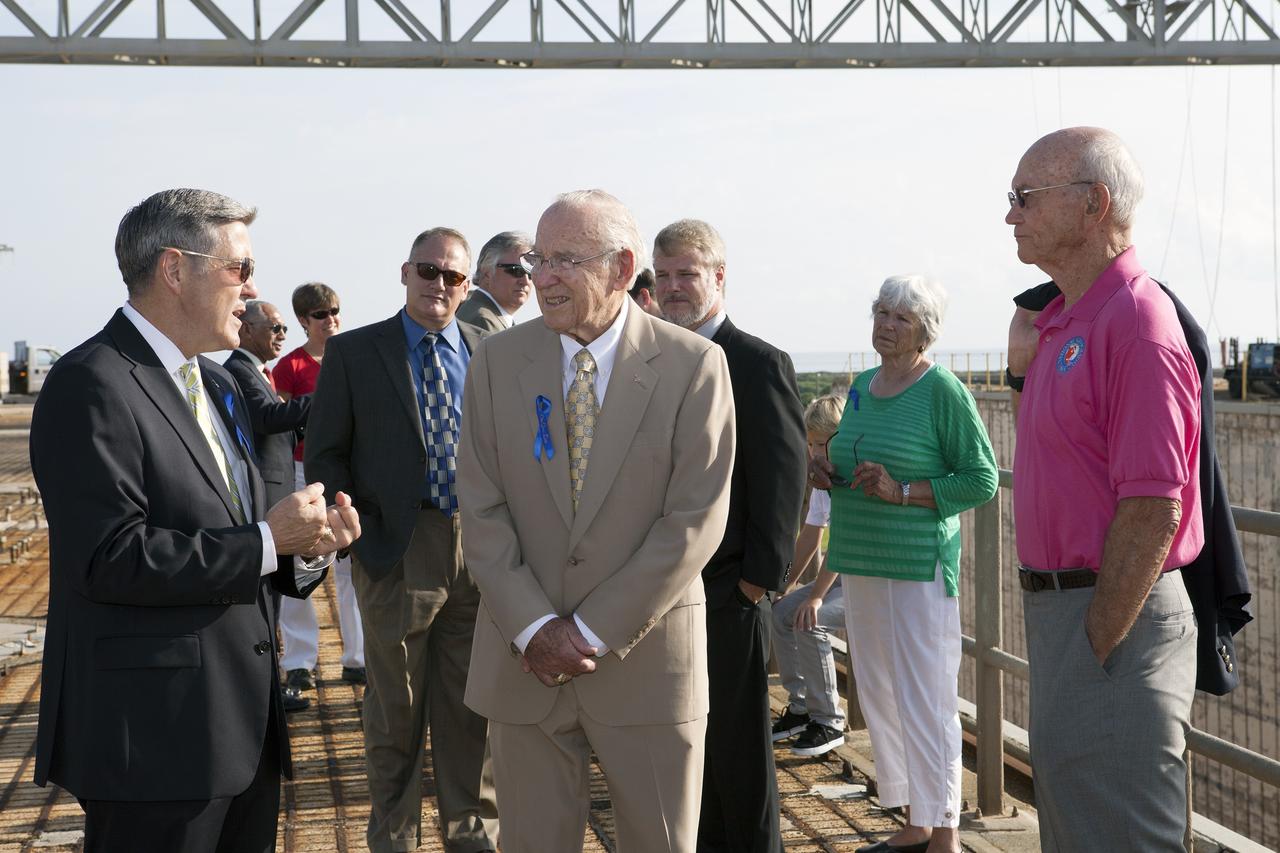
CAPE CANAVERAL, Fla. -- At the Kennedy Space Center in Florida, Center Director Robert Cabana, left, briefs Apollo astronauts Jim Lovell, center, and Mike Collins, right, on the changes underway to Launch Pad 39B. Behind them are the astronauts' families and friends. The pad is being modified to support the agency's new Orion spacecraft which will lift off atop the Space Launch System rocket. Orion is designed to take humans farther than they’ve ever gone before, serving as the exploration vehicle that will carry astronauts to deep space and sustain the crew during travel to destinations such as an asteroid or Mars. The visit of the former astronauts was part of NASA's 45th anniversary celebration of the Apollo 11 moon landing. As the world watched, the Apollo 11 astronauts landed in the moon's Sea of Tranquility aboard the lunar module Eagle on July 20, 1969. For more, visit http://www.nasa.gov/press/2014/july/nasa-honors-historic-first-moon-landing-eyes-first-mars-mission. Photo credit: NASA/Kim Shiflett
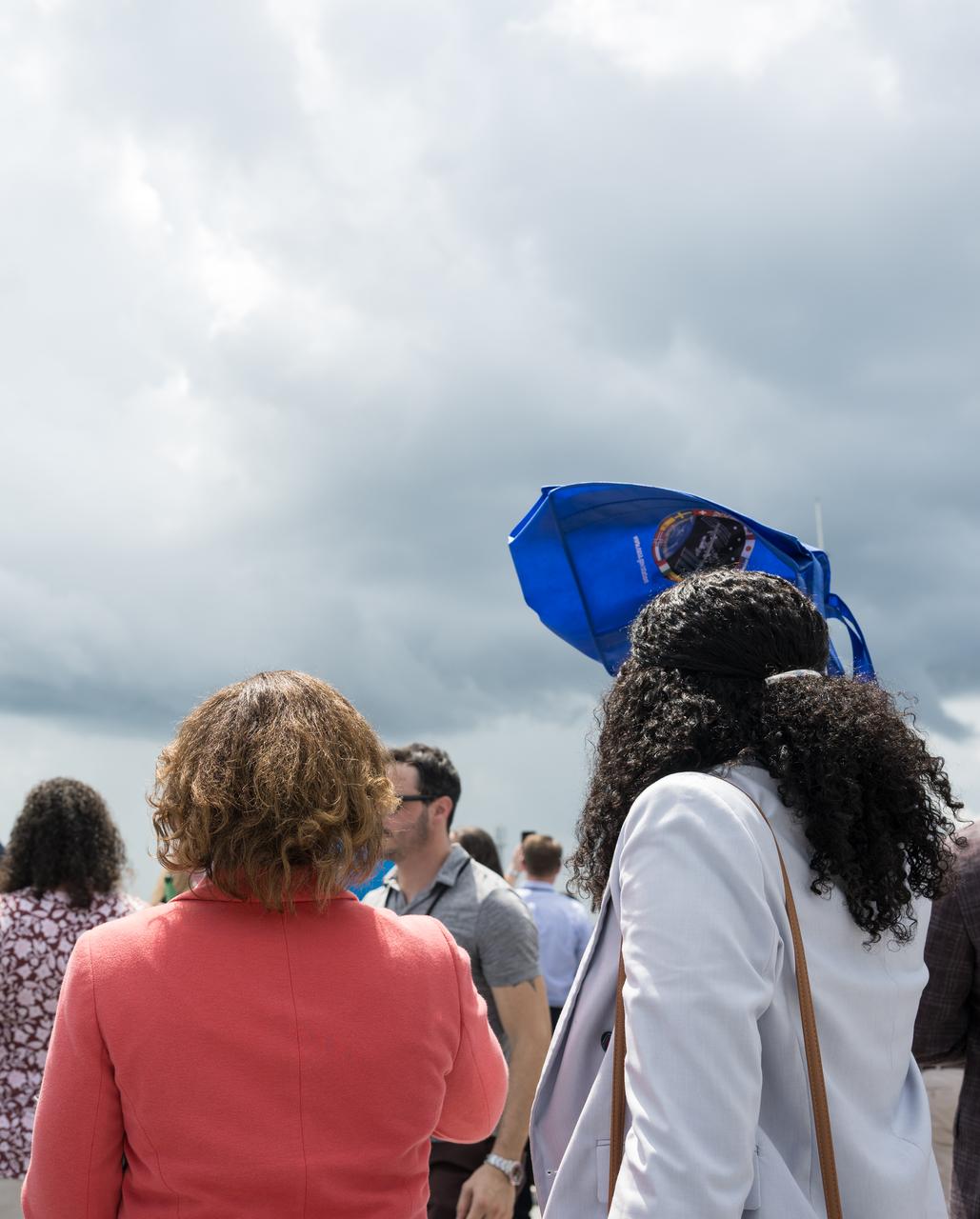
Acting NASA Associate Administrator, Vanessa Wyche, left, and NASA Director of Public Engagement, Aya Collins Williams, watch the first stage of a SpaceX Falcon 9 land at Landing Zone 1 after launching the company’s Dragon spacecraft on NASA’s SpaceX Crew-11 mission to the International Space Station with NASA astronauts Zena Cardman, Mike Fincke, JAXA (Japan Aerospace Exploration Agency) astronaut Kimiya Yui, and Roscosmos cosmonaut Oleg Platonov onboard, Friday, Aug. 1, 2025, from NASA's Kennedy Space Center in Florida. NASA’s SpaceX Crew-11 mission is the eleventh crew rotation mission of the SpaceX Dragon spacecraft and Falcon 9 rocket to the International Space Station as part of the agency’s Commercial Crew Program. Cardman, Fincke, Yui, Platonov launched at 11:43 a.m. EDT from Launch Complex 39A at the NASA's Kennedy Space Center to begin a six month mission aboard the orbital outpost. Photo Credit: (NASA/Aubrey Gemignani)
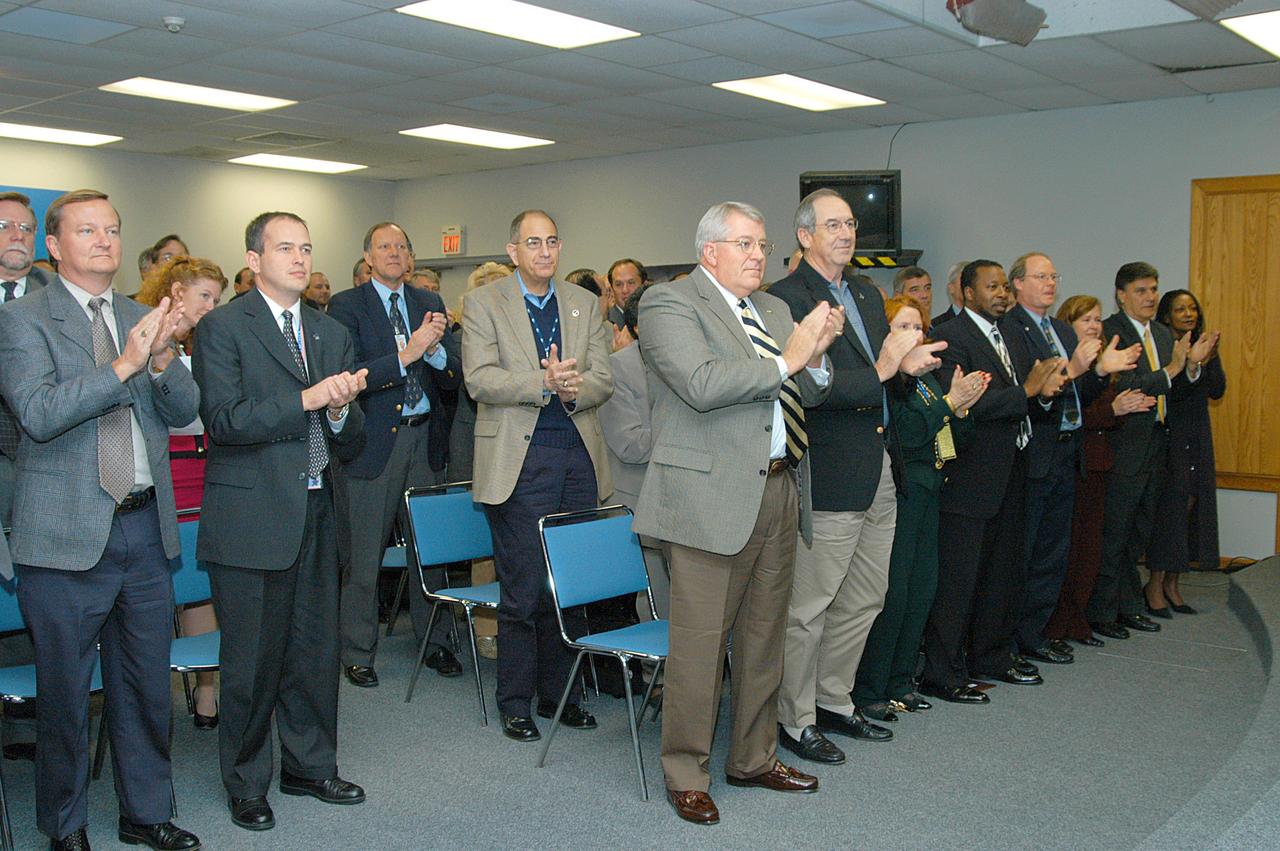
KENNEDY SPACE CENTER, FLA. -- From the KSC television studio, KSC management and other employees applaud President George W. Bush, who addressed the public and an assembly of government officials at NASA Headquarters as he outlined a new focus and vision for the space agency. Shown from left are Mike Leinbach, Shuttle launch director; David Culp, with NASA; Steve Francois, director, Launch Services Program; Richard Cota, deputy chief financial officer, KSC; Bill Pickavance vice president and associate program manager of Florida Operations, United Space Alliance (USA) ; Howard DeCastro, vice president and Space Shuttle program manager, USA; Shannon Roberts, with External Affairs; Woodrow Whitlow, KSC deputy director; Bruce Buckingham, assistant to Dr. Whitlow; Lisa Malone, director of External Affairs; Ken Aguilar, chief, Equal Opportunity office; and Cheryl Cox, External Affairs. The President stated his goals for NASA’s new mission: Completing the International Space Station, retiring the Space Shuttle orbiters, developing a new crew exploration vehicle, and returning to the moon and beyond within the next two decades. Pres. Bush was welcomed by NASA Administrator Sean O’Keefe and Expedition 8 Commander Michael Foale, who greeted him from the International Space Station. Members of the Washington, D.C., audience included astronauts Eileen Collins, Ed Lu and Michael Lopez-Alegria, and former astronaut Gene Cernan