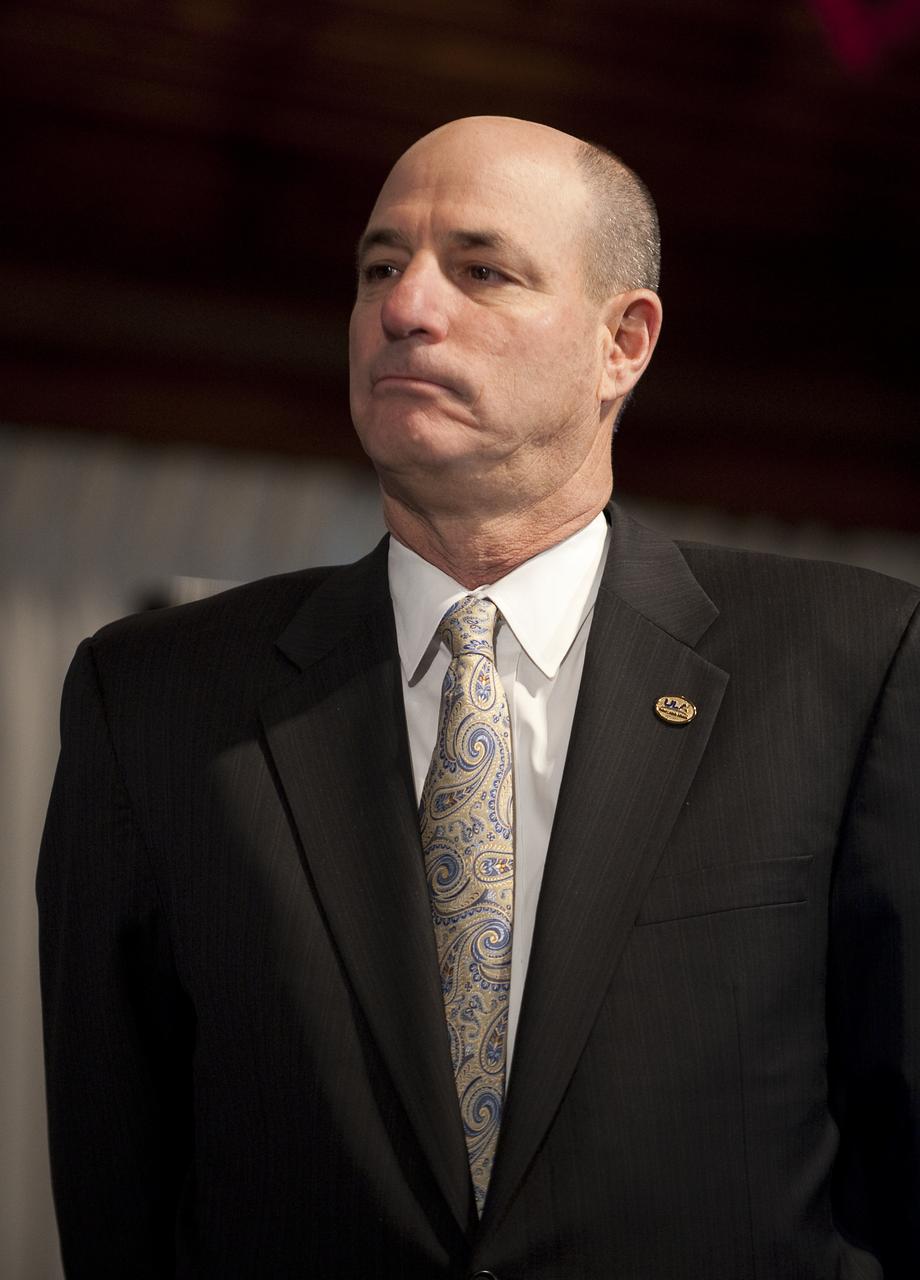
Mike Gass, President and Chief Executive, United Launch Alliance is seen during a press conference, Tuesday, Feb. 2, 2010, at the National Press Club in Washington, where it was announced that NASA has awarded $50 million through funded agreements to further the commercial sector's capability to support transport of crew to and from low Earth orbit. Photo Credit: (NASA/Bill Ingalls)
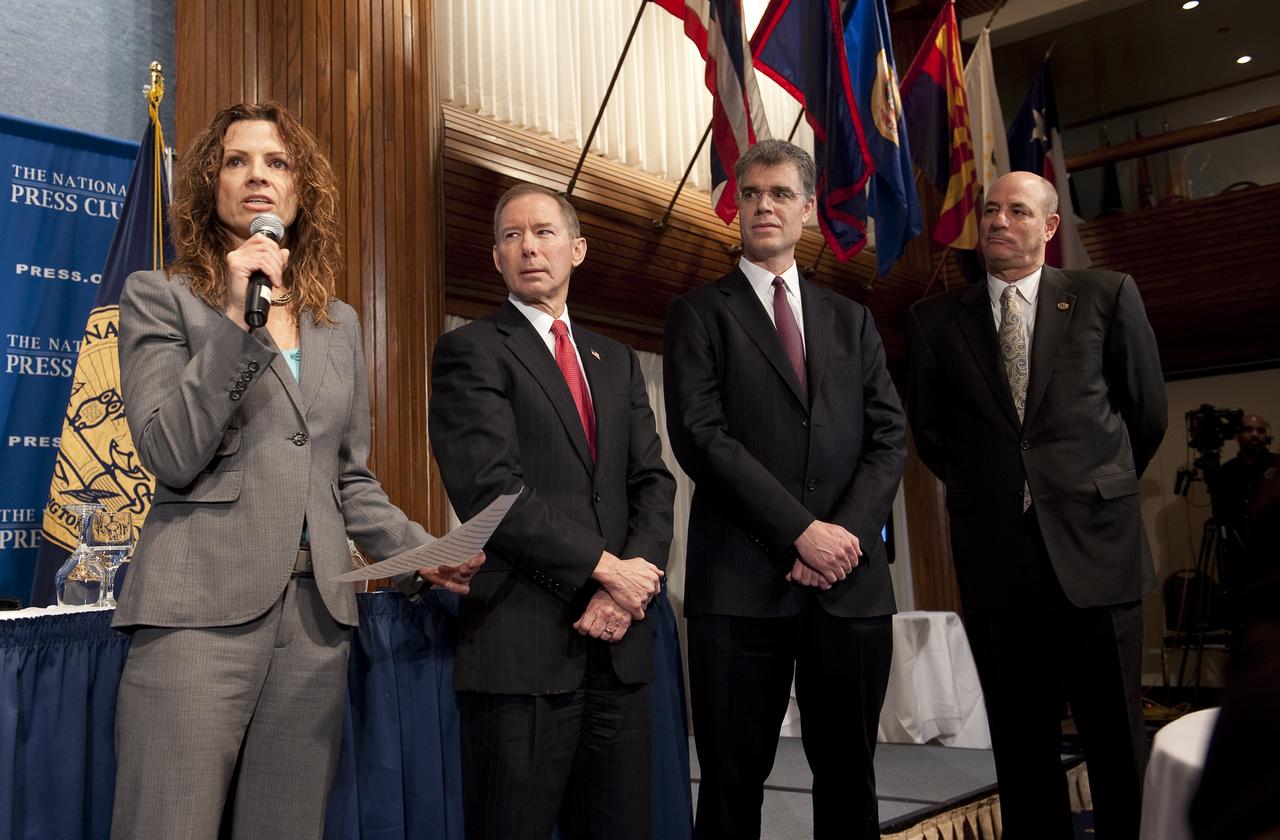
From left, Jane Poynter, President and Chair, Paragon Space Development Corp., Brewster Shaw, VP and General Manager, NASA Systems, Boeing, Robert Millman of Blue Origin and Mike Gass, President and Chief Executive, United Launch Alliance are seen during a press conference, Tuesday, Feb. 2, 2010, at the National Press Club in Washington, where it was announced that NASA has awarded $50 million through funded agreements to further the commercial sector's capability to support transport of crew to and from low Earth orbit. Photo Credit: (NASA/Bill Ingalls)
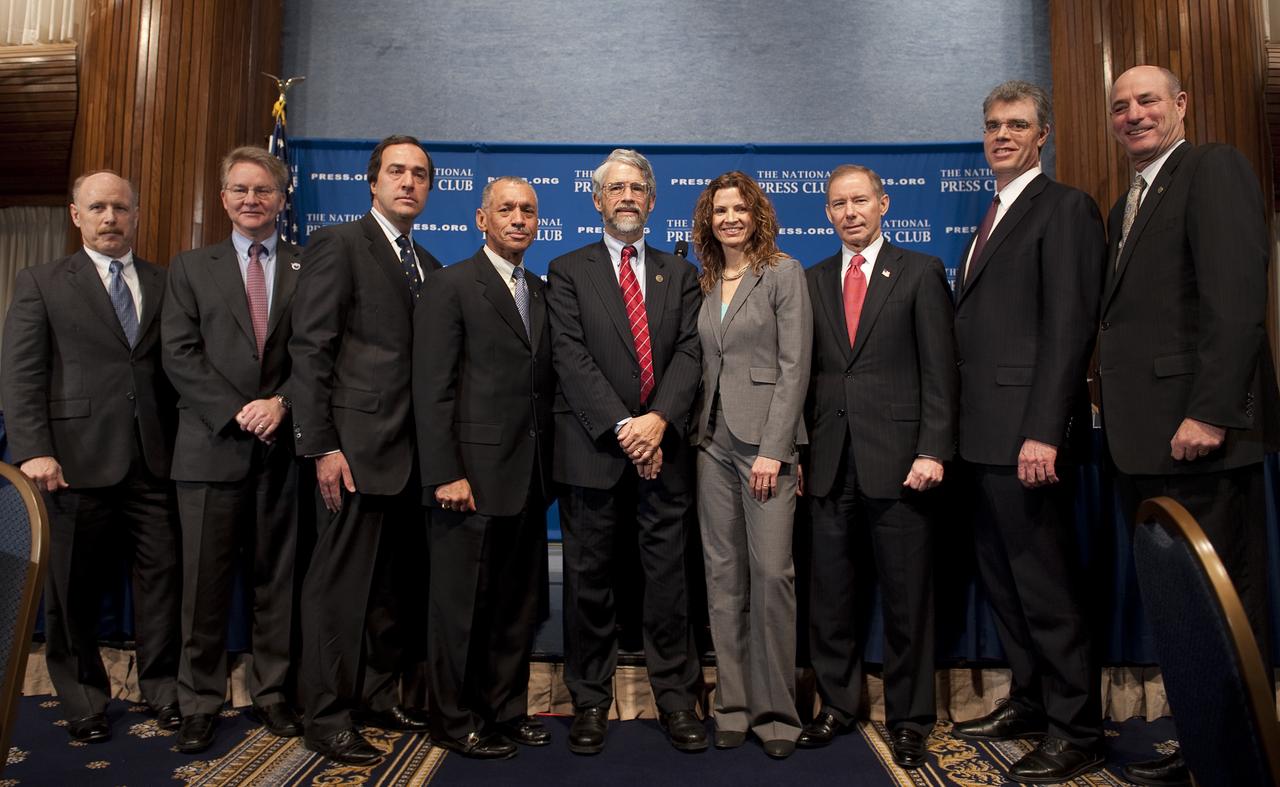
From left, Ken Bowersox, VP Astronaut Safety, SpaceX, David Thompson, CEO, Orbital Science Corporation, Mark Sirangelo, VP and Chair, SNC Space Systems Board, Sierra Nevada Corp., NASA Administrator Charles Bolden, Assistant to the President for Science and Technology and Director of the White House Office of Science and Technology Policy Dr. John P. Holdren, Jane Poynter, President and Chair, Paragon Space Development Corp., Brewster Shaw, VP and General Manager, NASA Systems, Boeing, Robert Millman of Blue Origin, and, Mike Gass, President and Chief Executive, United Launch Alliance, pose for a group photo during a press conference, Tuesday, Feb. 2, 2010, at the National Press Club in Washington, where it was announced that NASA has awarded $50 million through funded agreements to further the commercial sector's capability to support transport of crew to and from low Earth orbit. Photo Credit: (NASA/Bill Ingalls)
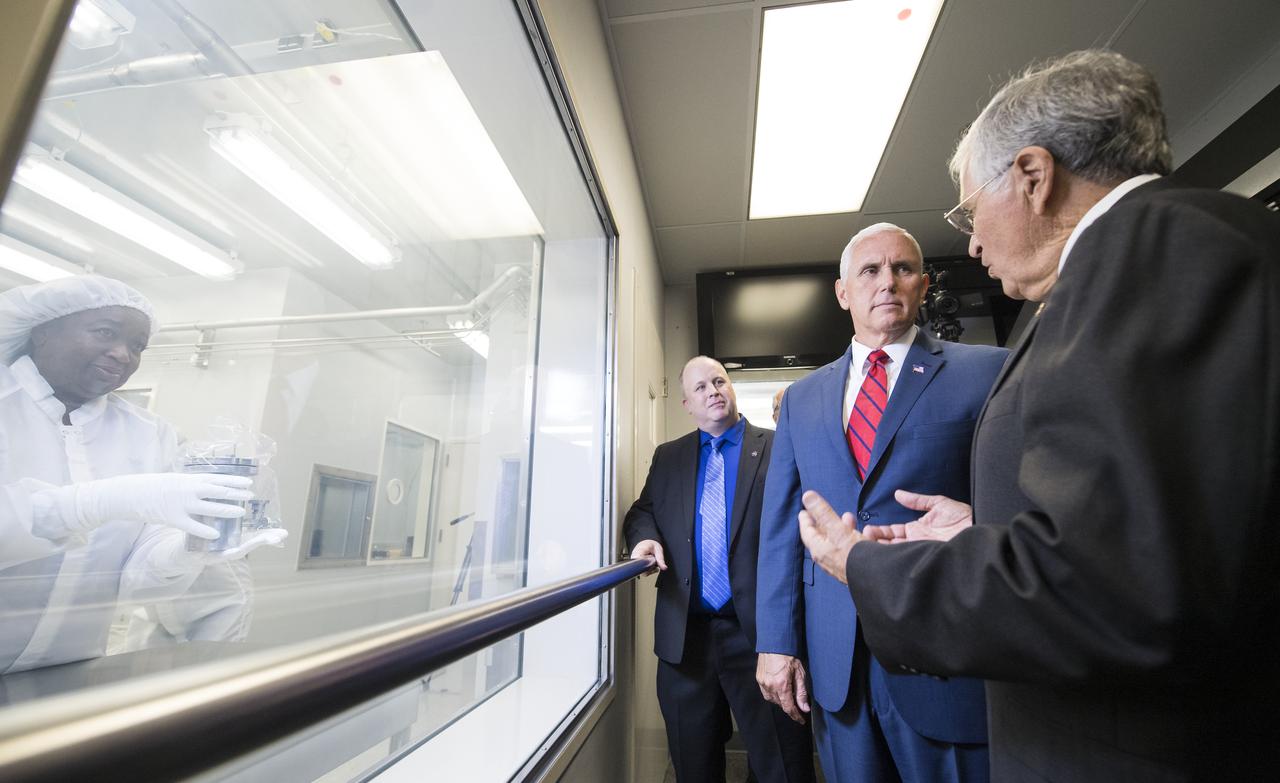
Vice President Mike Pence, center, views Sample 15014, which was collected during Apollo 15 with NASA's Apollo Sample Curator Ryan Zeigler, left, and Apollo 17 astronaut and geologist Dr. Harrison Schmitt, right, in Lunar Curation Laboratory at NASA's Johnson Space Center, Thursday, Aug. 23, 2018 in Houston, Texas. Sample 15014 is one of nine samples out of the 2,196 collected during the Apollo missions that was sealed inside its container on the Moon and still containes gasses from the Moon. Photo Credit: (NASA/Joel Kowsky)
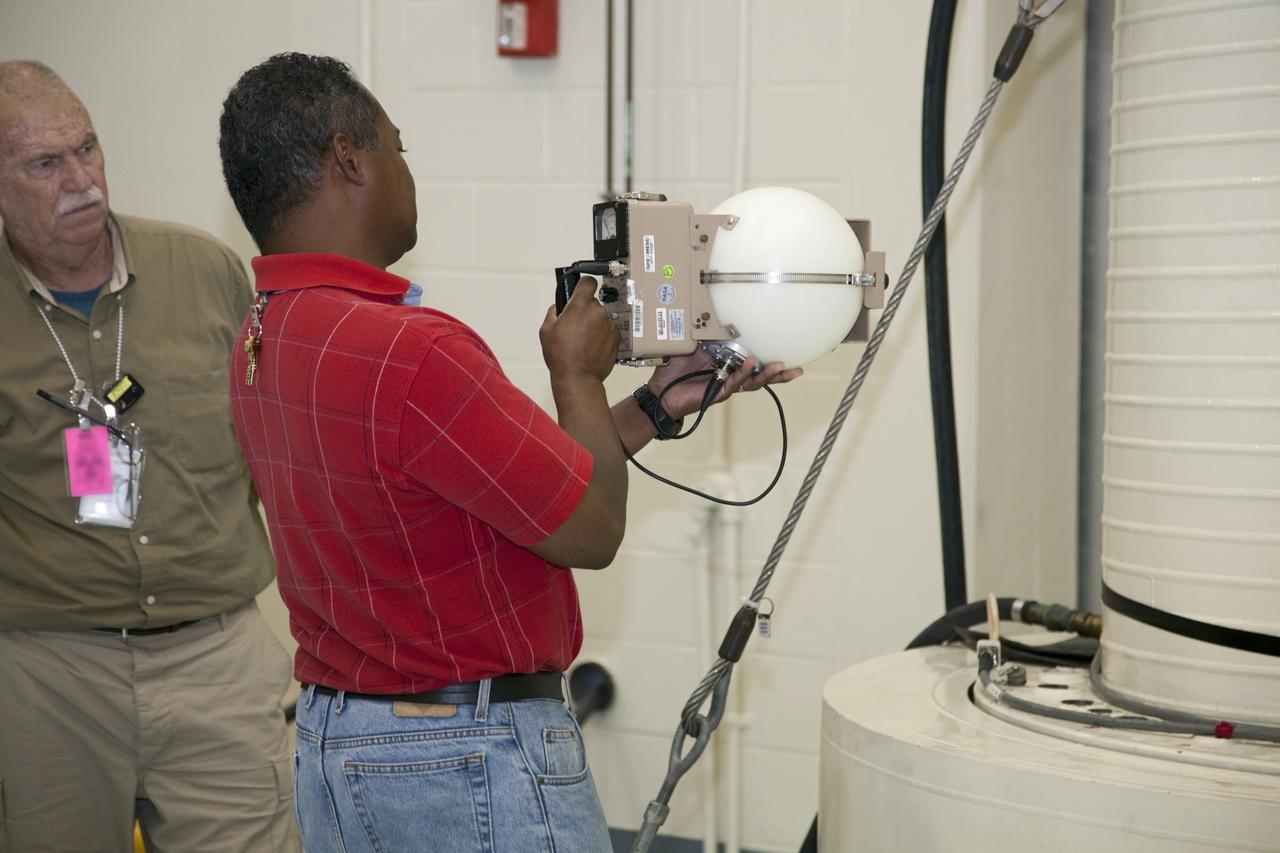
CAPE CANAVERAL, Fla. -- In the high bay of the RTG storage facility at NASA's Kennedy Space Center in Florida, Innovative Health Applications employee Mike McPherson measures the level of radioactivity emitted from the multi-mission radioisotope thermoelectric generator (MMRTG) for NASA's Mars Science Laboratory mission, enclosed in a shipping cask at right. The MMRTG will generate the power needed for the mission from the natural decay of plutonium-238, a non-weapons-grade form of the radioisotope. Heat given off by this natural decay will provide constant power through the day and night during all seasons. Waste heat from the MMRTG will be circulated throughout the rover system to keep instruments, computers, mechanical devices and communications systems within their operating temperature ranges. MSL's components include a compact car-sized rover, Curiosity, which has 10 science instruments designed to search for evidence on whether Mars has had environments favorable to microbial life, including chemical ingredients for life. The unique rover will use a laser to look inside rocks and release its gasses so that the rover’s spectrometer can analyze and send the data back to Earth. Launch of MSL aboard a United Launch Alliance Atlas V rocket is scheduled for Nov. 25 from Space Launch Complex 41 on Cape Canaveral Air Force Station in Florida. For more information, visit http://www.nasa.gov/msl. Photo credit: NASA/Frankie Martin