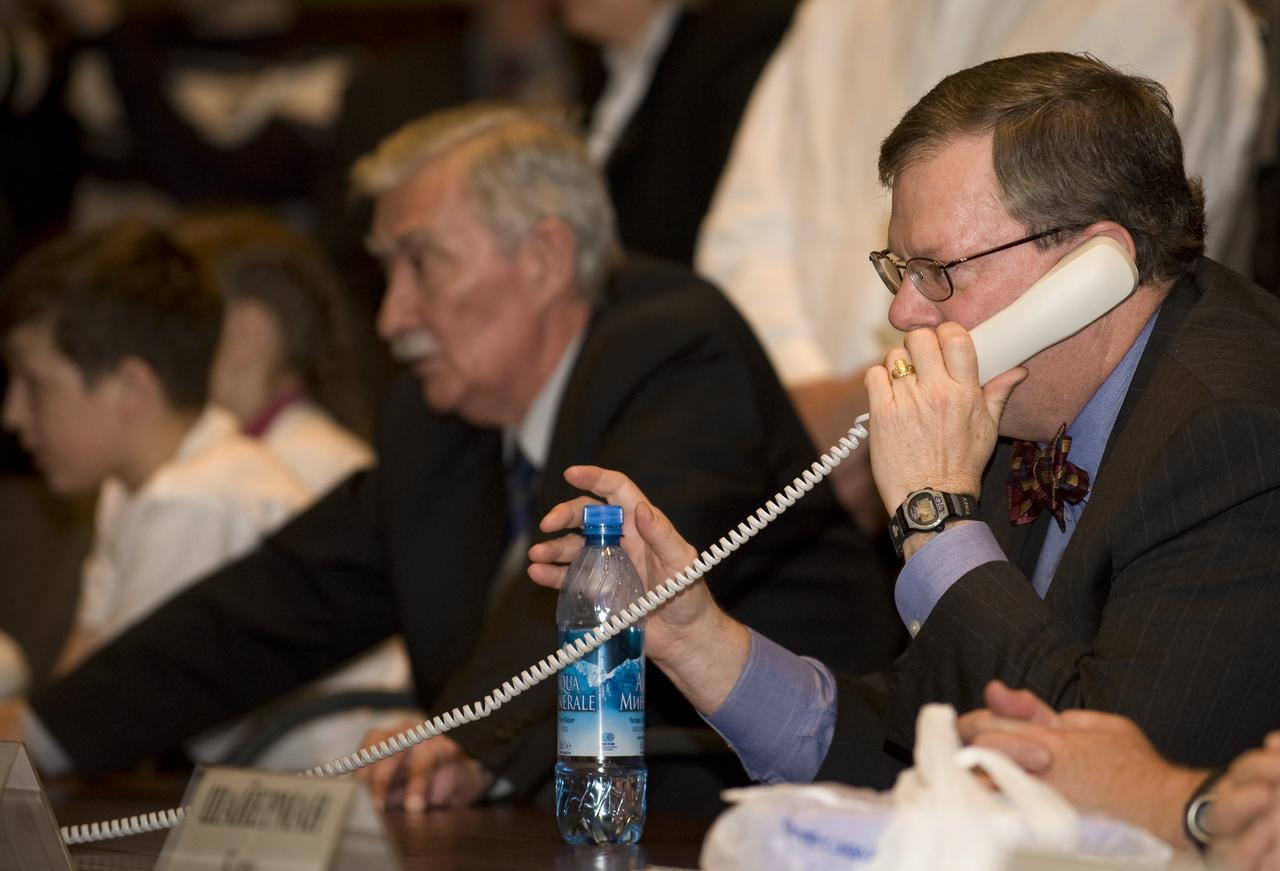
Mike Hawes, NASA's Acting Associate Administrator, talks on the phone to the six crew members onboard the International Space Station from the Russian Mission Control Center, Korolev, Russia, Saturday, March 28, 2009. The Soyuz TMA-14 spacecraft docked to the International Space Station and delivered Expedition 19 Commander Gennady I. Padalka, Flight Engineer Michael R. Barratt and Spaceflight Participant Charles Simonyi. Photo Credit: (NASA/Bill Ingalls)

Mike Hawes, NASA's Acting Associate Administrator, left, looks on as Kirk Shireman, NASA's deputy ISS program manager, answers reporters questions during a Soyuz post-docking press conference at the Russian Mission Control Center in Korolev, Russia on Saturday March 28, 2009. The Soyuz TMA-14 docked to the International Space Station carrying Expedition 19 Commander Gennady I. Padalka, Flight Engineer Michael R. Barratt and Spaceflight Participant Charles Simonyi. Photo Credit: (NASA/Bill Ingalls)
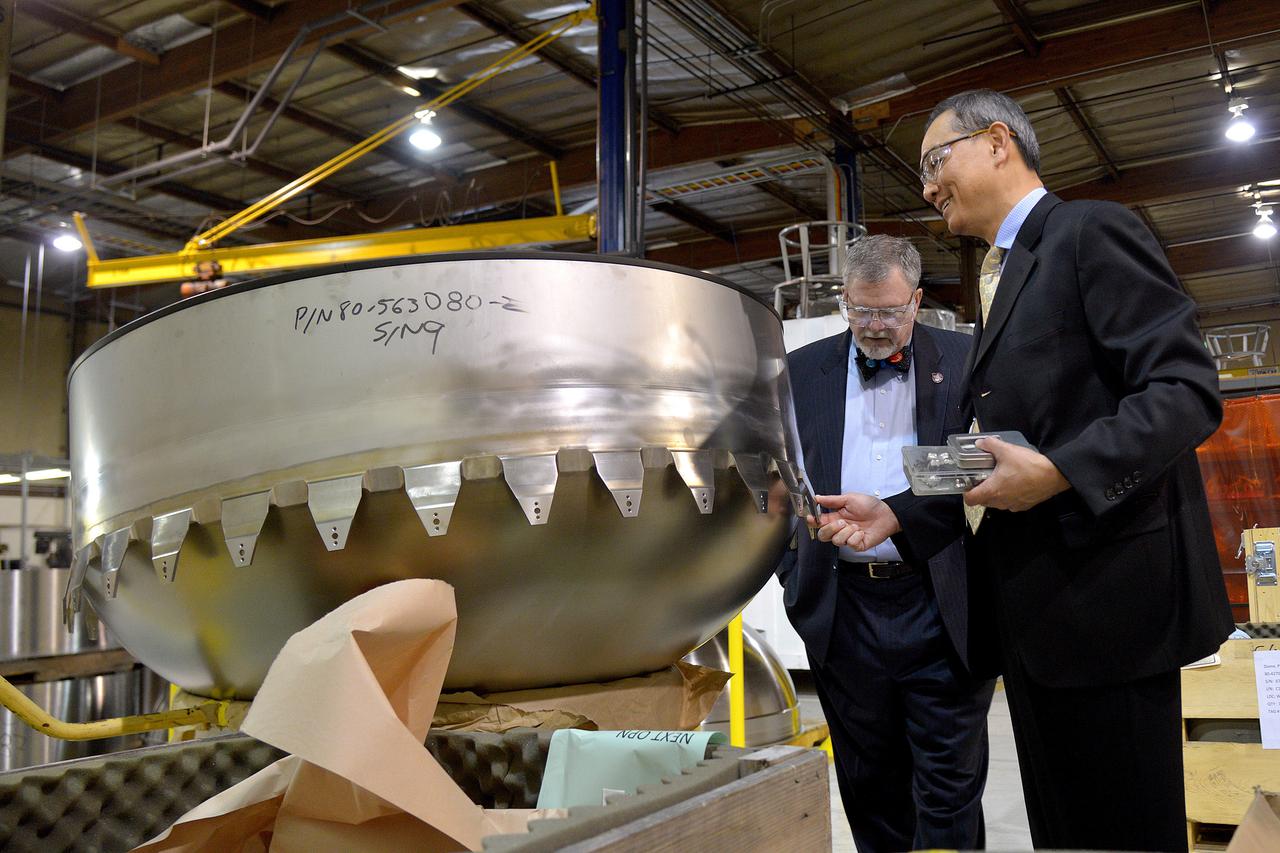
The team at Orbital ATK shows Lockheed Martin Orion Program Manager Mike Hawes the propellant tank manufacturing workshop in California on March 4, 2015. Part of Batch image transfer from Flickr.
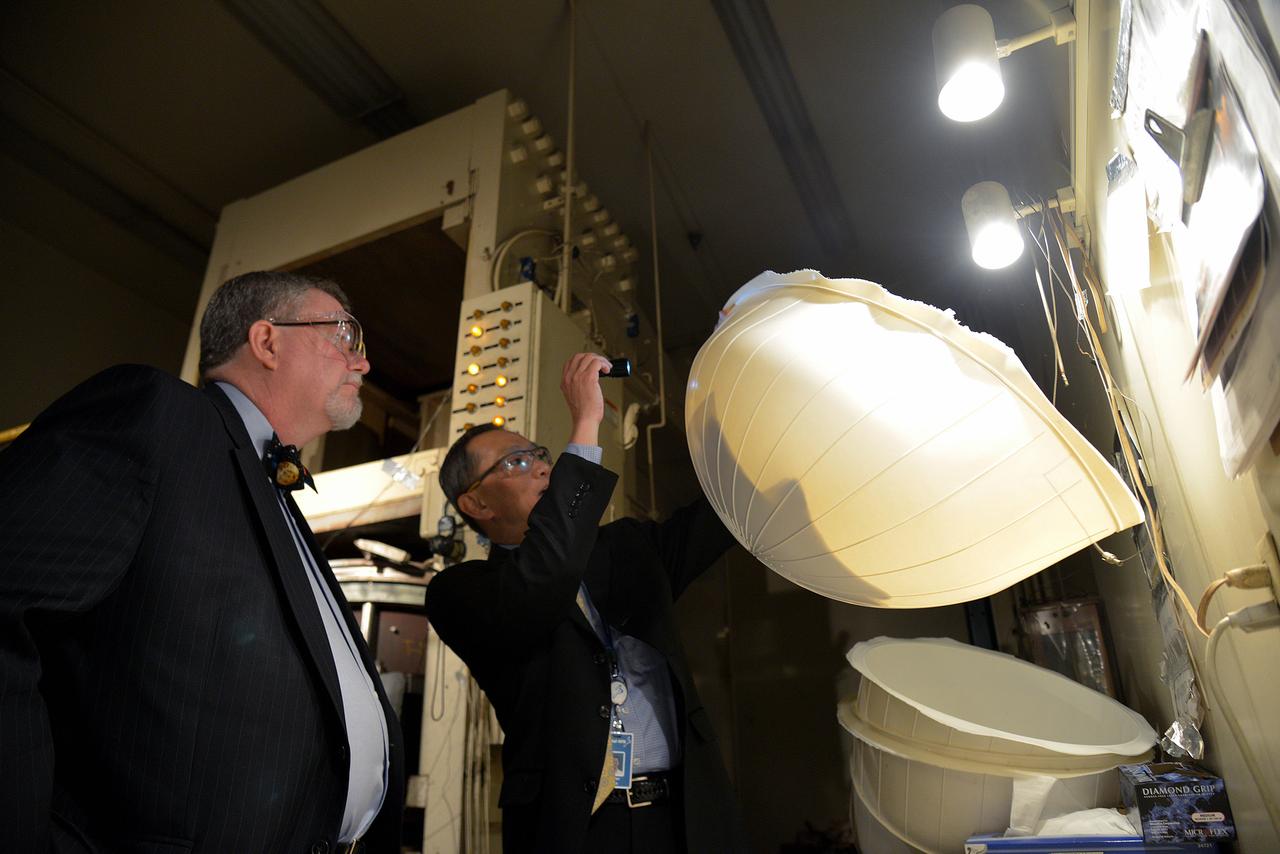
The team at Orbital ATK shows Lockheed Martin Orion Program Manager Mike Hawes the propellant tank manufacturing workshop in California on March 4, 2015. Part of Batch image transfer from Flickr.
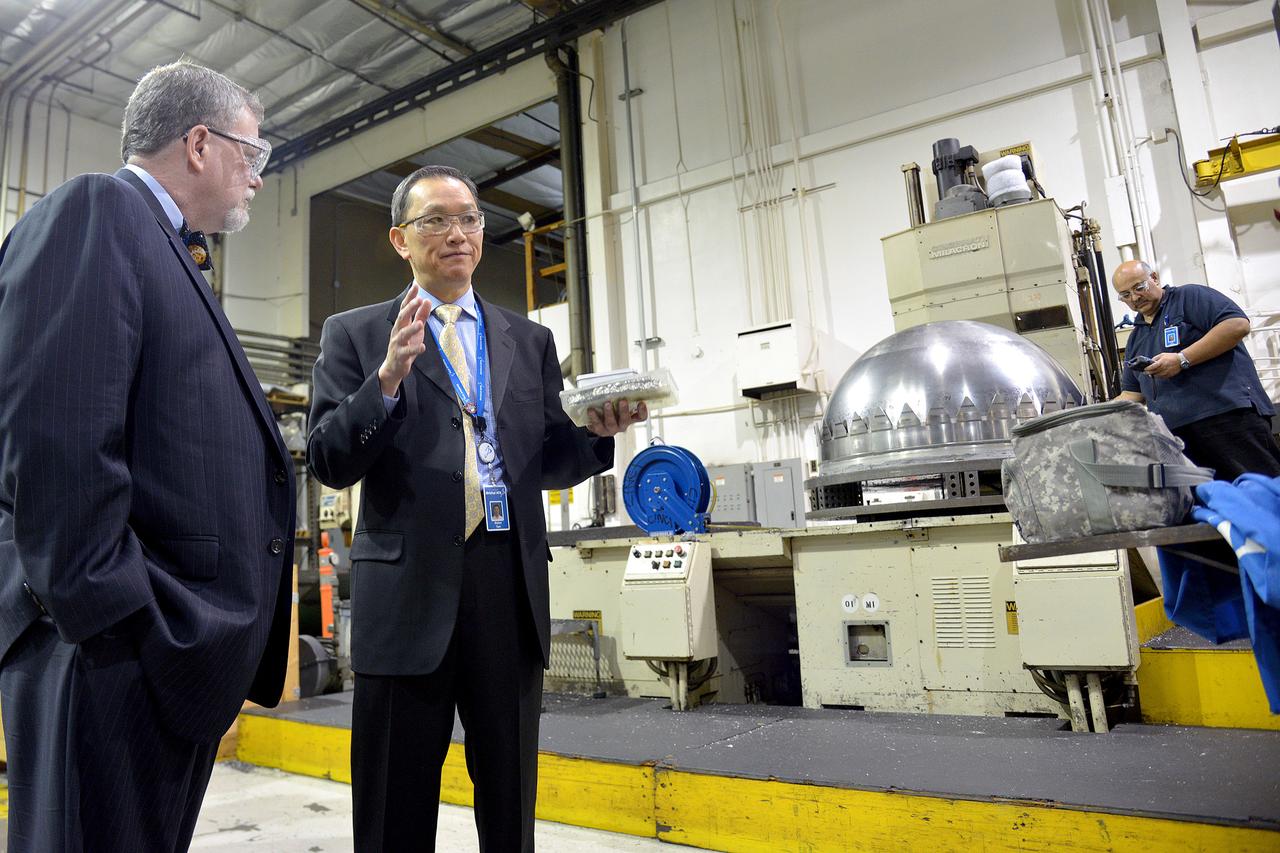
The team at Orbital ATK shows Lockheed Martin Orion Program Manager Mike Hawes the propellant tank manufacturing workshop in California on March 4, 2015. Part of Batch image transfer from Flickr.
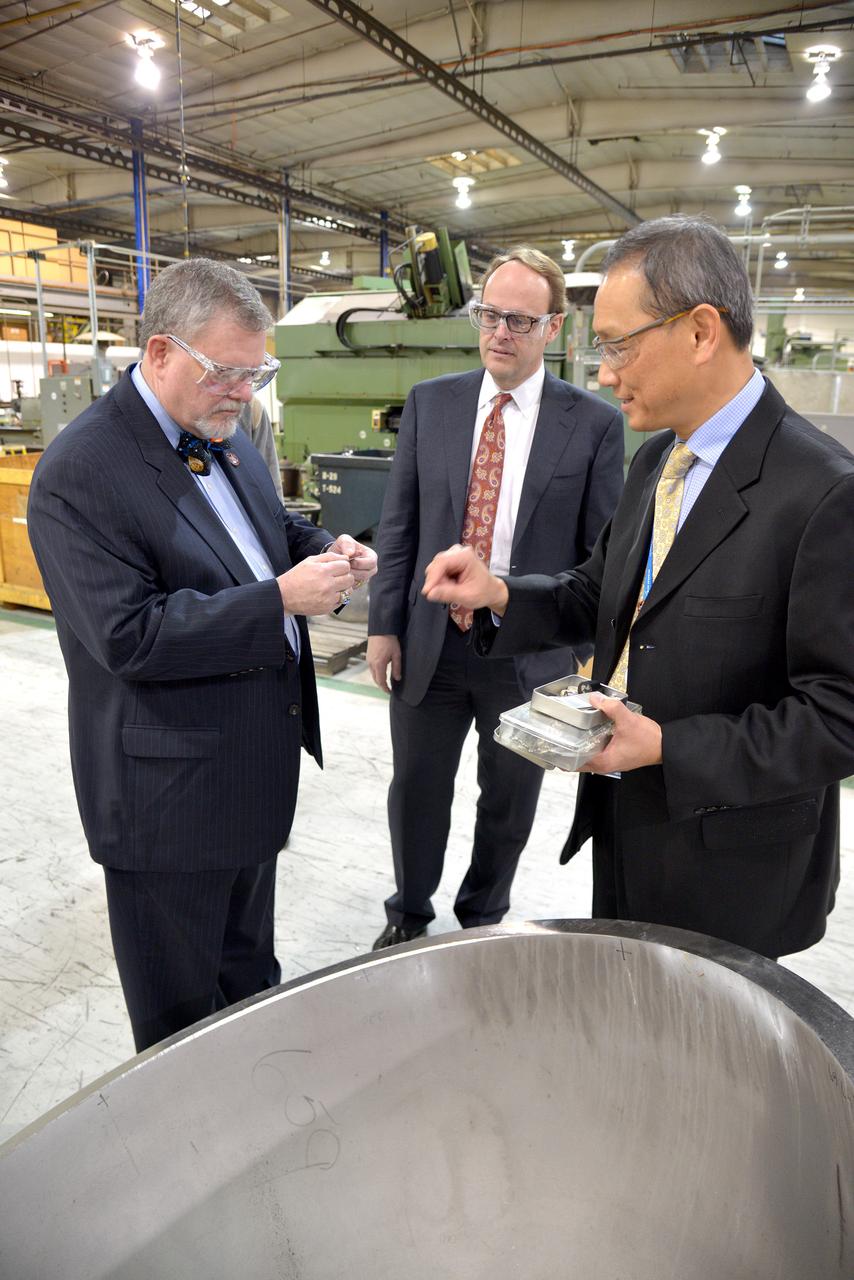
The team at Orbital ATK shows Lockheed Martin Orion Program Manager Mike Hawes the propellant tank manufacturing workshop in California on March 4, 2015. Part of Batch image transfer from Flickr.
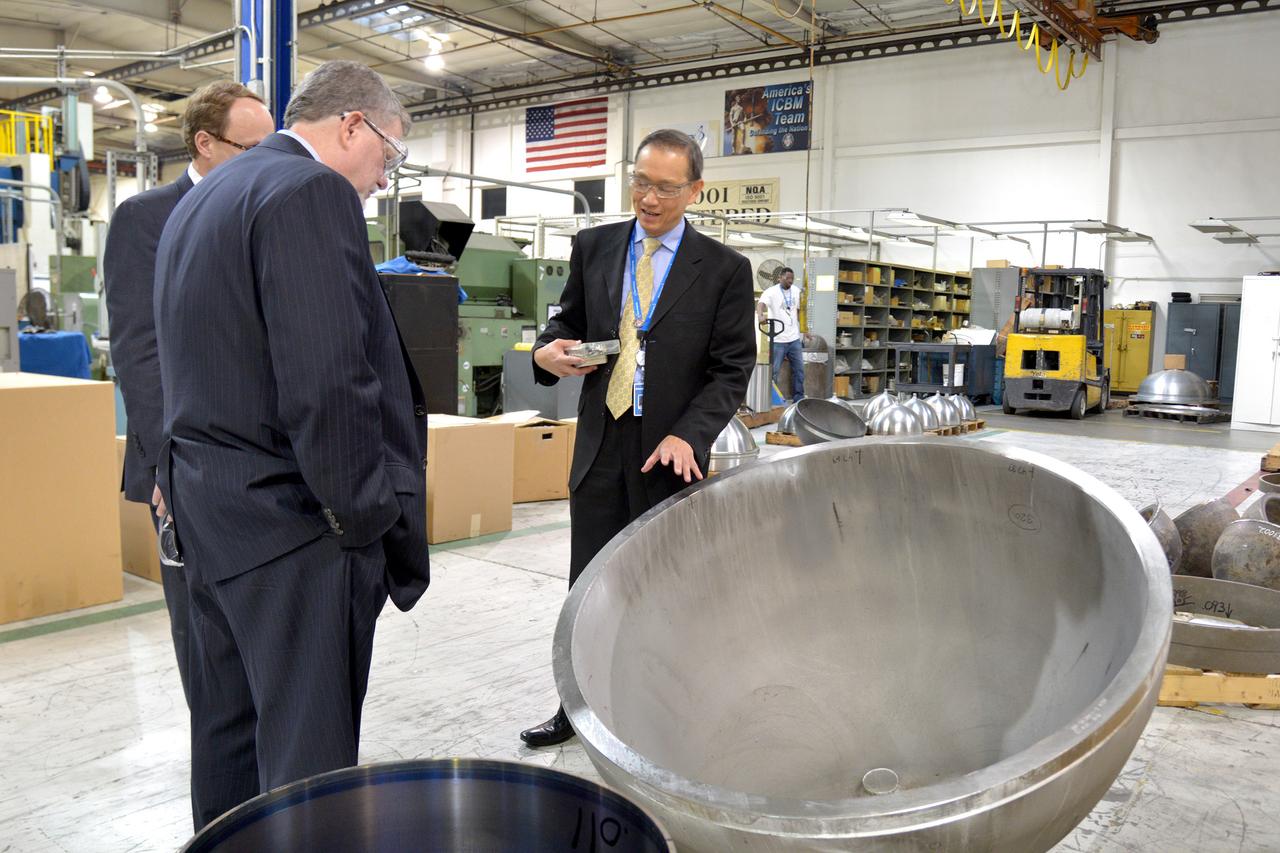
The team at Orbital ATK shows Lockheed Martin Orion Program Manager Mike Hawes the propellant tank manufacturing workshop in California on March 4, 2015. Part of Batch image transfer from Flickr.
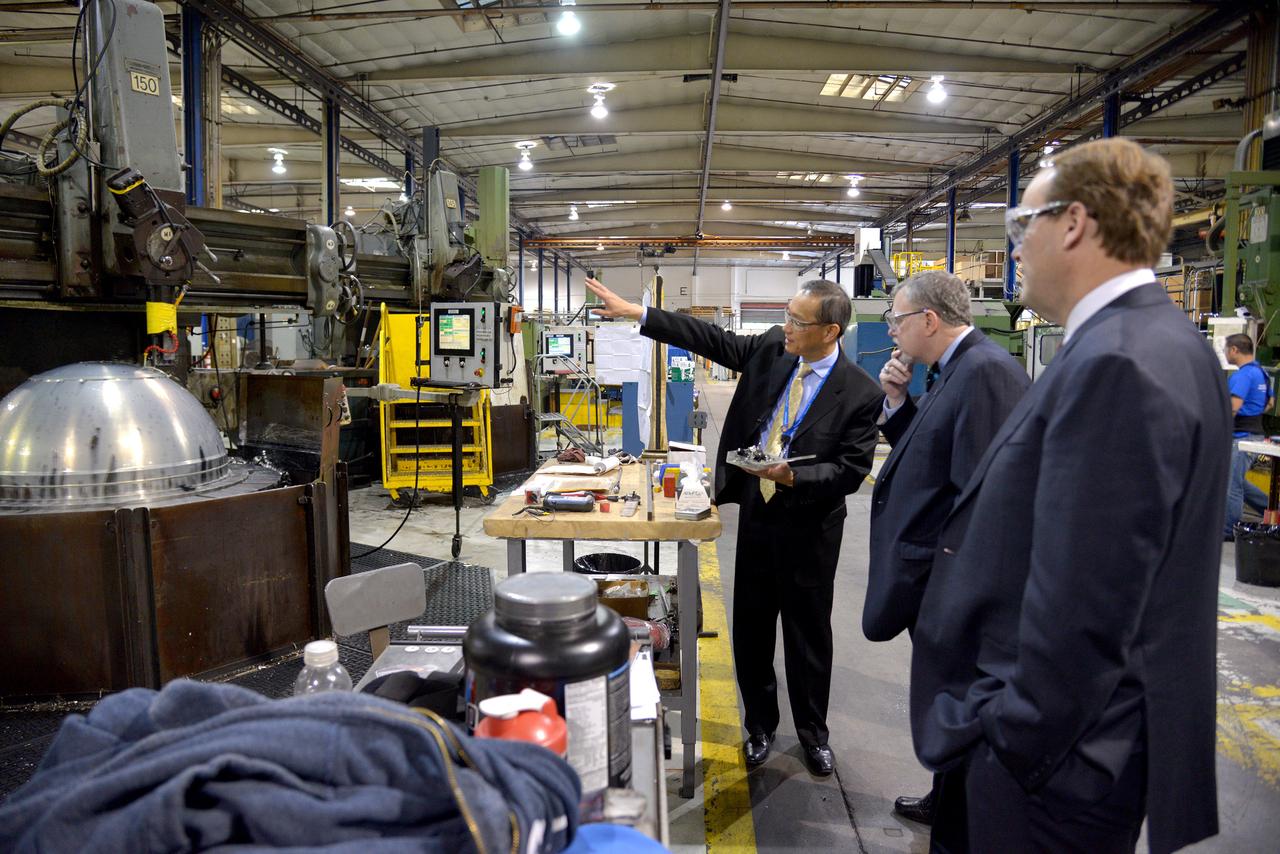
The team at Orbital ATK shows Lockheed Martin Orion Program Manager Mike Hawes the propellant tank manufacturing workshop in California on March 4, 2015. Part of Batch image transfer from Flickr.
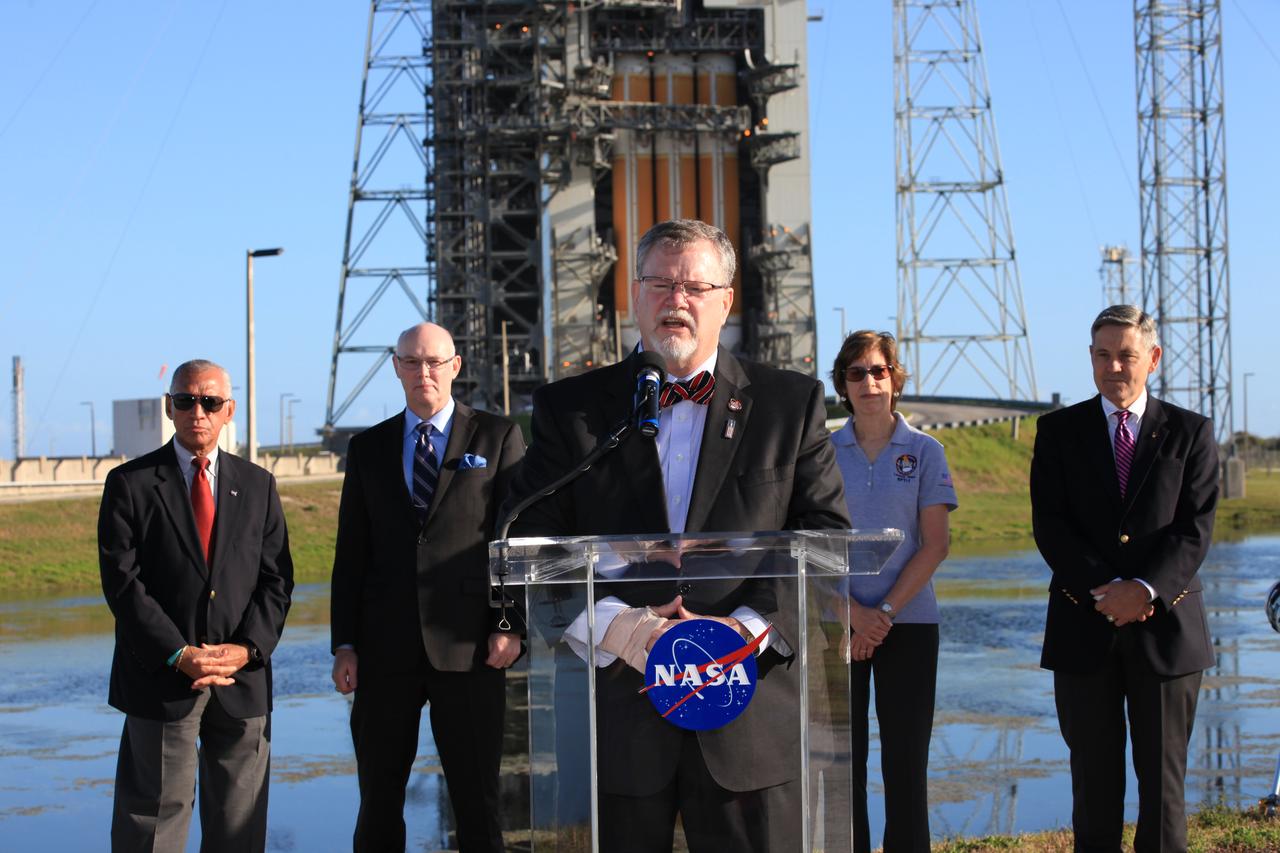
At Cape Canaveral Air Force Station's Launch Complex 37, Lockheed Martin Orion Program manager Mike Hawes speaks to members of the news media as the Orion spacecraft and its United Launch Alliance Delta IV Heavy rocket were being prepared for launch. Behind Hawes, from the left, are NASA Administrator Charlie Bolden, United Launch Alliance CEO Tory Bruno, Johnson Space Center Director Ellen Ochoa and Kennedy Space Center Director Bob Cabana.
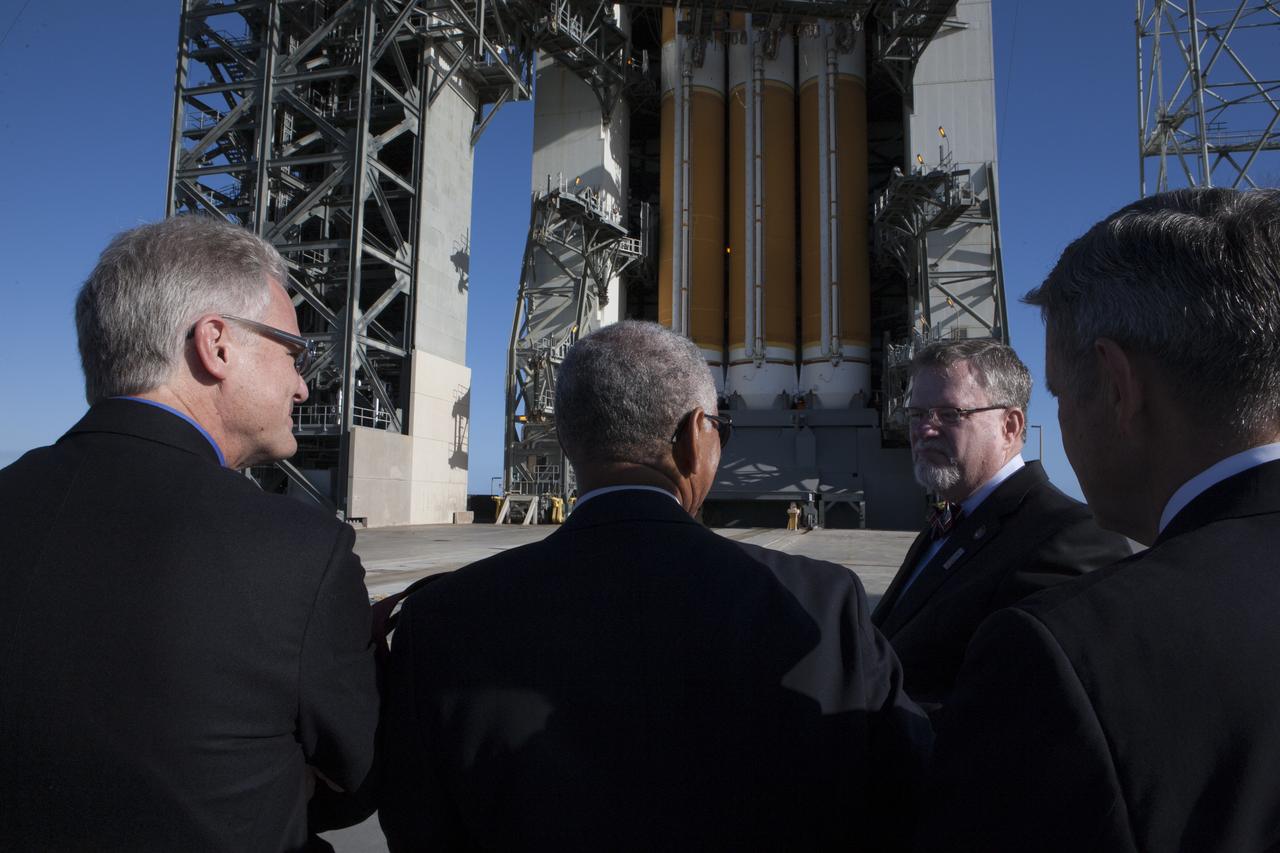
At Cape Canaveral Air Force Station's Launch Complex 37, Lockheed Martin Orion Program Manager Mike Hawes facing the camera briefs United Launch Alliance Vice President of Atlas and Delta Programs Jim Sponnick, NASA Administrator Charlie Bolden and Kennedy Space Center Director Bob Cabana backs to camera.
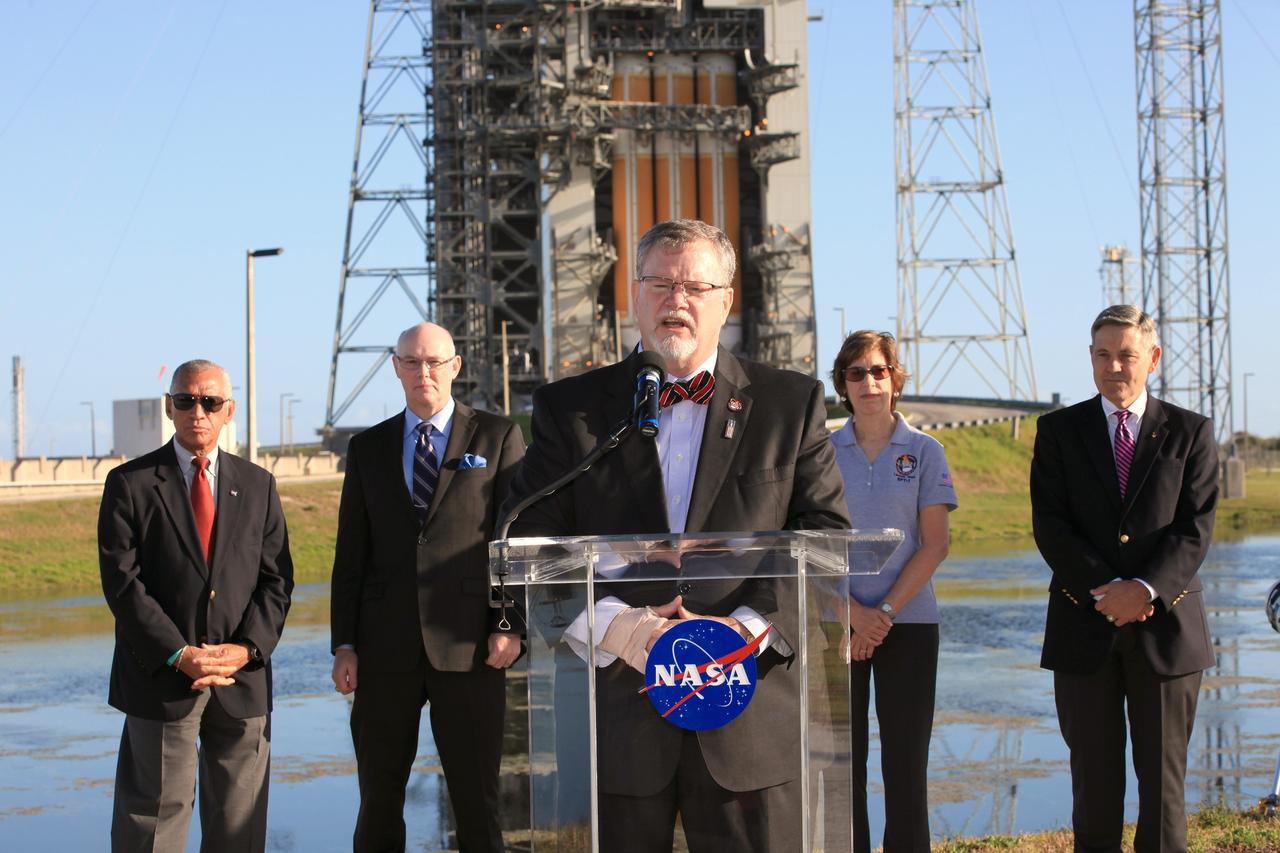
CAPE CANAVERAL, Fla. – At Cape Canaveral Air Force Station's Launch Complex 37, Lockheed Martin Orion Program manager Mike Hawes speaks to members of the news media as the Orion spacecraft and its United Launch Alliance Delta IV Heavy rocket were being prepared for launch. Behind Hawes, from the left, are NASA Administrator Charlie Bolden, United Launch Alliance CEO Tory Bruno, Johnson Space Center Director Ellen Ochoa and Kennedy Space Center Director Bob Cabana. For more information, visit www.nasa.gov/orion. Photo credit: NASA/Kim Shiflett
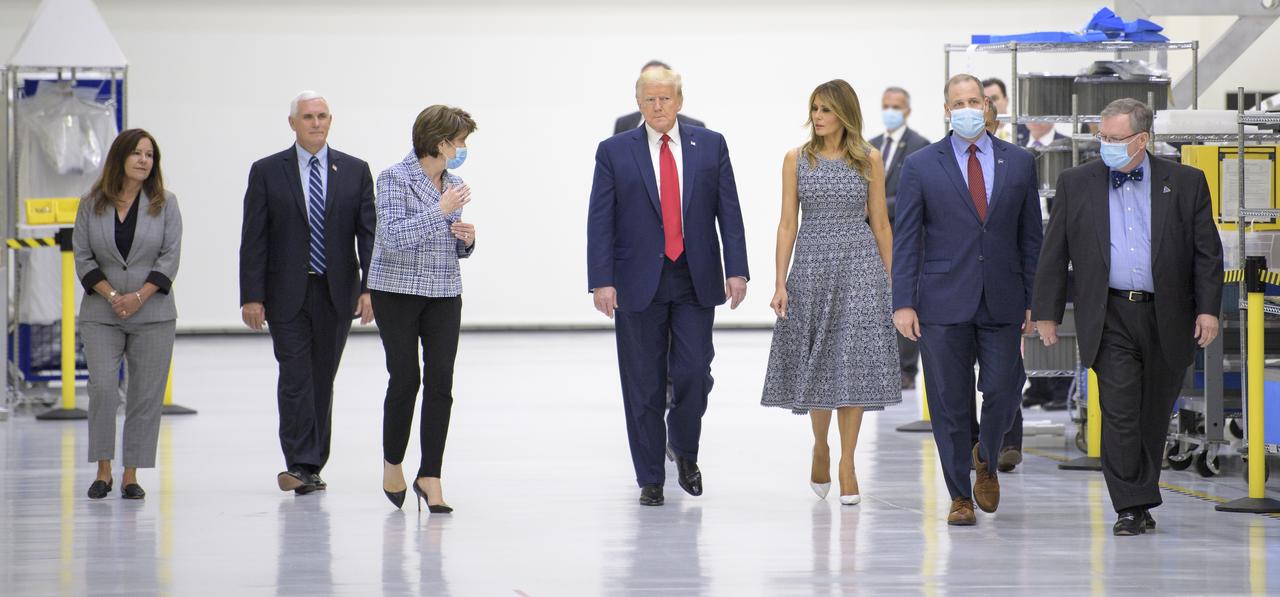
President Donald Trump, First Lady Melania Trump, Vice President Mike Pence, Second Lady Karen Pence, Marillyn Hewson, Chief Executive Officer, Lockheed Martin, NASA Administrator Jim Bridenstine, Kennedy Space Center Director Bob Cabana and Mike Hawes, VP and Orion Program Manager, Lockheed Martin, are seen during a tour of the Neil A. Armstrong Operations and Checkout Building following the departure of NASA astronauts Robert Behnken and Douglas Hurley for Launch Complex 39A to board a SpaceX Crew Dragon spacecraft for launch, Wednesday, May 27, 2020, at NASA’s Kennedy Space Center in Florida. NASA’s SpaceX Demo-2 mission is the first launch with astronauts of the SpaceX Crew Dragon spacecraft and Falcon 9 rocket to the International Space Station as part of the agency’s Commercial Crew Program. The flight test will serve as an end-to-end demonstration of SpaceX’s crew transportation system. Today’s launch of Behnken and Hurley was scrubbed due to weather and is now scheduled for 3:22 p.m. EDT on Saturday, May 30, from Launch Complex 39A at the Kennedy Space Center. A new era of human spaceflight is set to begin as American astronauts once again launch on an American rocket from American soil to low-Earth orbit for the first time since the conclusion of the Space Shuttle Program in 2011. Photo Credit: (NASA/Bill Ingalls)
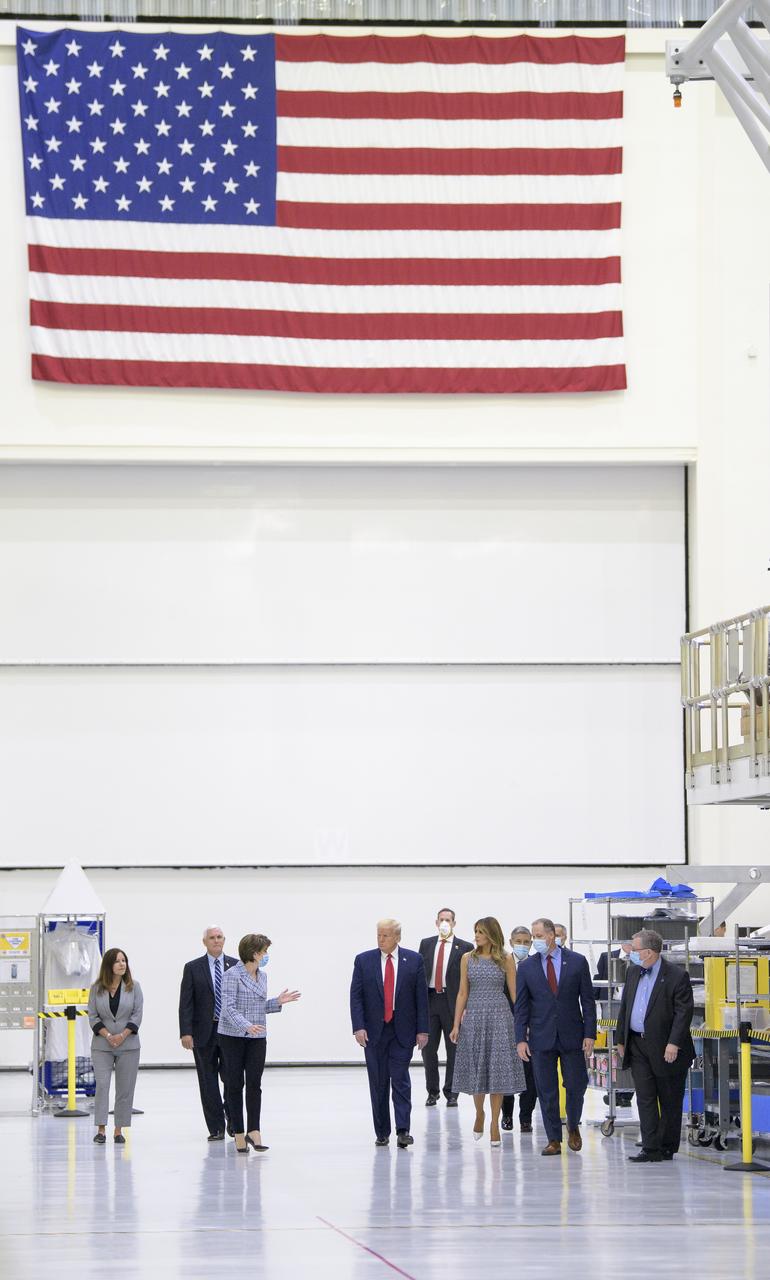
President Donald Trump, First Lady Melania Trump, Vice President Mike Pence, Second Lady Karen Pence, Marillyn Hewson, Chief Executive Officer, Lockheed Martin, NASA Administrator Jim Bridenstine, Kennedy Space Center Director Bob Cabana and Mike Hawes, VP and Orion Program Manager, Lockheed Martin, are seen during a tour of the Neil A. Armstrong Operations and Checkout Building following the departure of NASA astronauts Robert Behnken and Douglas Hurley for Launch Complex 39A to board a SpaceX Crew Dragon spacecraft for launch, Wednesday, May 27, 2020, at NASA’s Kennedy Space Center in Florida. NASA’s SpaceX Demo-2 mission is the first launch with astronauts of the SpaceX Crew Dragon spacecraft and Falcon 9 rocket to the International Space Station as part of the agency’s Commercial Crew Program. The flight test will serve as an end-to-end demonstration of SpaceX’s crew transportation system. Today’s launch of Behnken and Hurley was scrubbed due to weather and is now scheduled for 3:22 p.m. EDT on Saturday, May 30, from Launch Complex 39A at the Kennedy Space Center. A new era of human spaceflight is set to begin as American astronauts once again launch on an American rocket from American soil to low-Earth orbit for the first time since the conclusion of the Space Shuttle Program in 2011. Photo Credit: (NASA/Bill Ingalls)
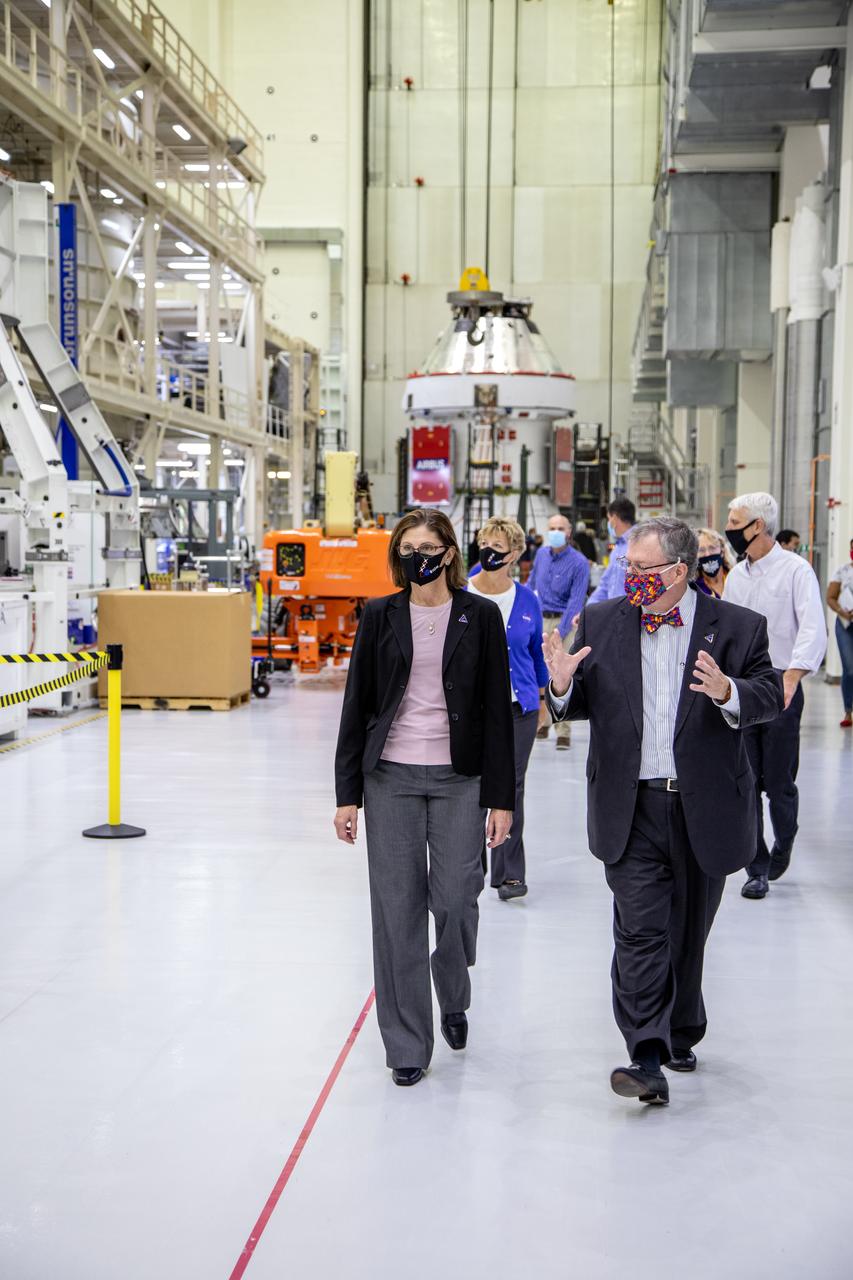
Catherine Koerner, in front at left, NASA Orion Program manager, along with senior managers from Orion and Lockheed Martin, tour the Neil Armstrong Operations and Checkout Building at NASA’s Kennedy Space Center in Florida on Oct. 6, 2020. Accompanying her, in front at right is Mike Hawes, Lockheed Martin vice president and Orion Program manager. In view behind Koerner is Annette Hasbrook, Orion Program assistant manager. In view behind Hawes is Scott Wilson, NASA Kennedy Orion Production Operations manager. Koerner viewed Orion spacecraft for the Artemis I, shown in the background, and II missions. The first in a series of increasingly complex missions, Artemis I will test the Orion spacecraft and Space Launch System as an integrated system ahead of crewed flights to the Moon. Under the Artemis program, NASA will land the first woman and the next man on the Moon in 2024.
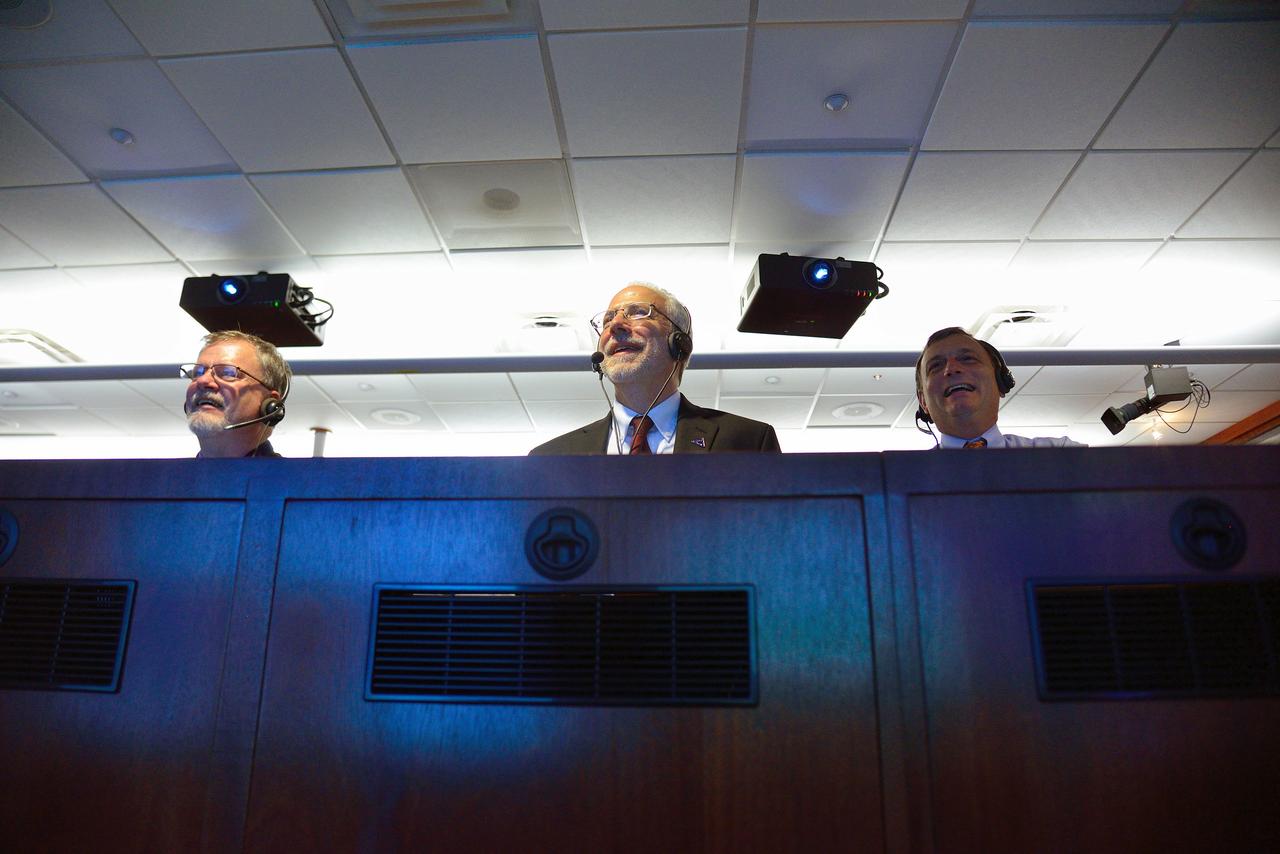
Lockheed Martin Program Manager Mike Hawes, Orion Program Manager Mark Geyer, and Orion Deputy Program Manager Mike Kirasich watch Orion's Exploration Flight Test-1 (EFT-1) reentry sequence in Building AE at Cape Canaveral Air Force Station on a live stream from the Ikhana aircraft on Dec. 5, 2014. The Orion spacecraft orbited Earth twice, reaching an altitude of approximately 3,600 miles above Earth before landing. No one was aboard Orion for this flight test, but the spacecraft is designed to allow us to journey to destinations never before visited by humans, including an asteroid and Mars. Part of Batch image transfer from Flickr.
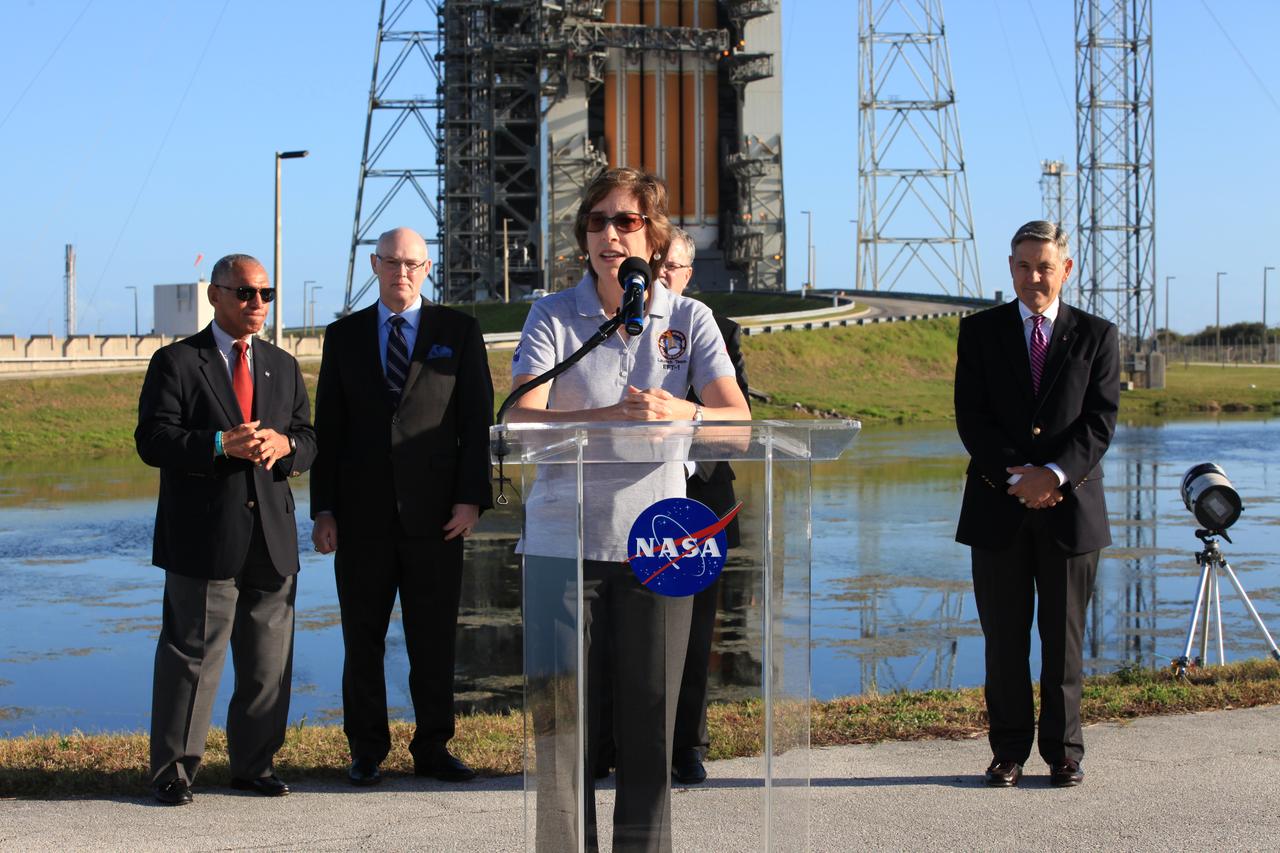
At Cape Canaveral Air Force Station's Launch Complex 37, Johnson Space Center Director Ellen Ochoa speaks to members of the news media as the Orion spacecraft and its United Launch Alliance Delta IV Heavy rocket were being prepared for launch. Behind Ochoa, from the left, are NASA Administrator Charlie Bolden, United Launch Alliance CEO Tory Bruno, Lockheed Martin Orion Program Manager Mike Hawes and Kennedy Space Center Director Bob Cabana.
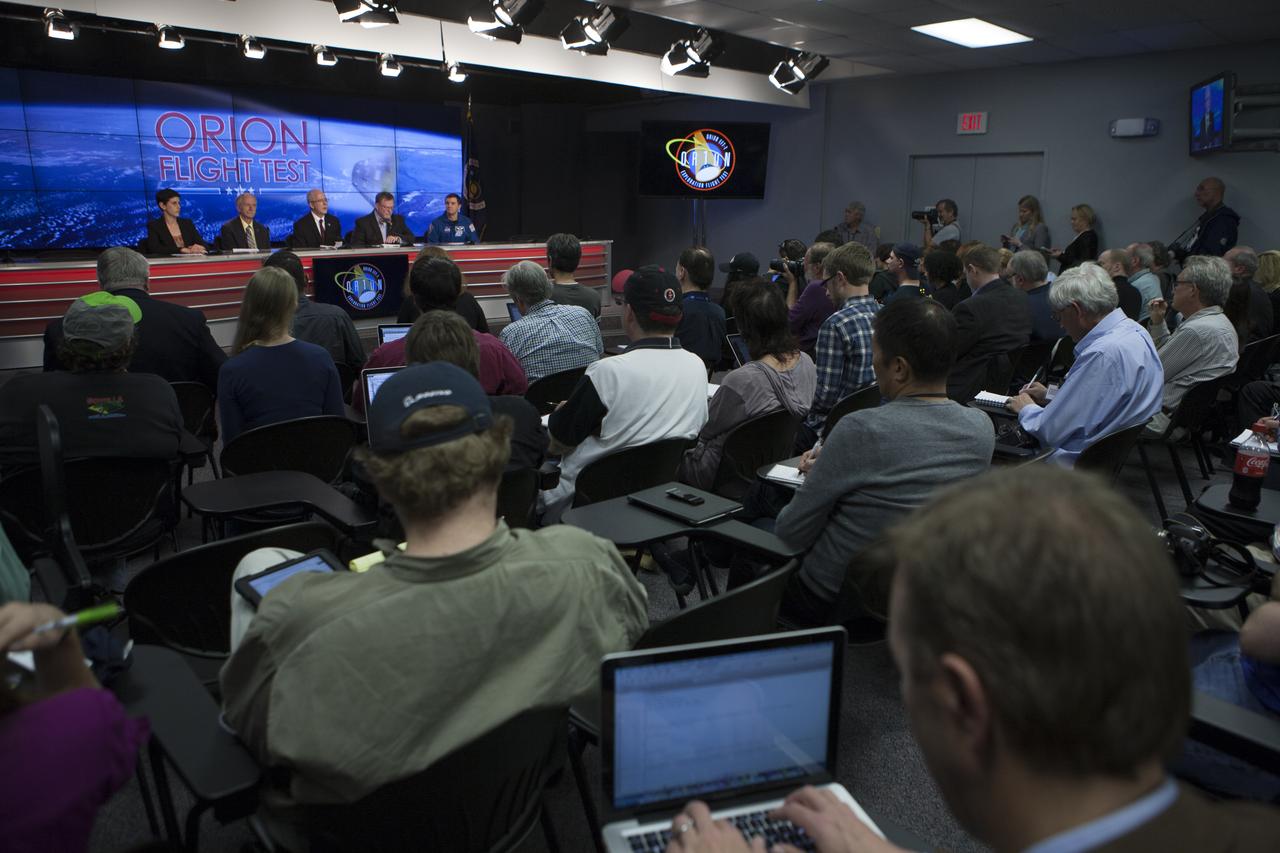
In the Kennedy Space Center’s Press Site auditorium, agency leaders spoke to members of the news media about the successful Orion Flight Test. From left are: Rachel Kraft, of NASA Public Affairs, Bill Gerstenmaier, NASA associate administrator for Human Exploration and Operations, Mark Geyer, Orion program manager, Mike Hawes, Lockheed Martin Orion Program manager, and NASA astronaut Rex Walheim.
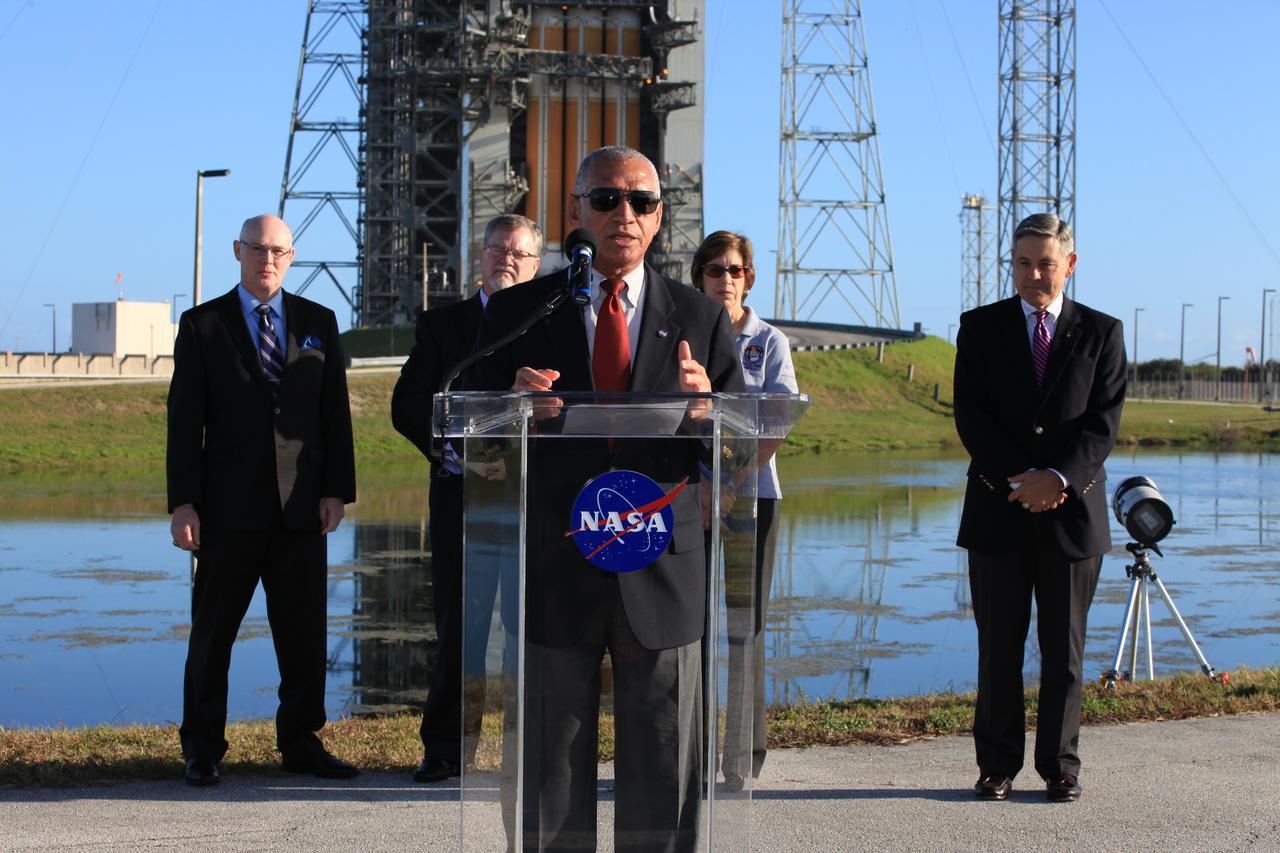
At Cape Canaveral Air Force Station's Launch Complex 37, NASA Administrator Charlie Bolden speaks to members of the news media as the Orion spacecraft and its United Launch Alliance Delta IV Heavy rocket were being prepared for launch. Behind Bolden, from the left, are United Launch Alliance CEO Tory Bruno, Lockheed Martin Orion Program Manager Mike Hawes, Johnson Space Center Director Ellen Ochoa and Kennedy Space Center Director Bob Cabana.
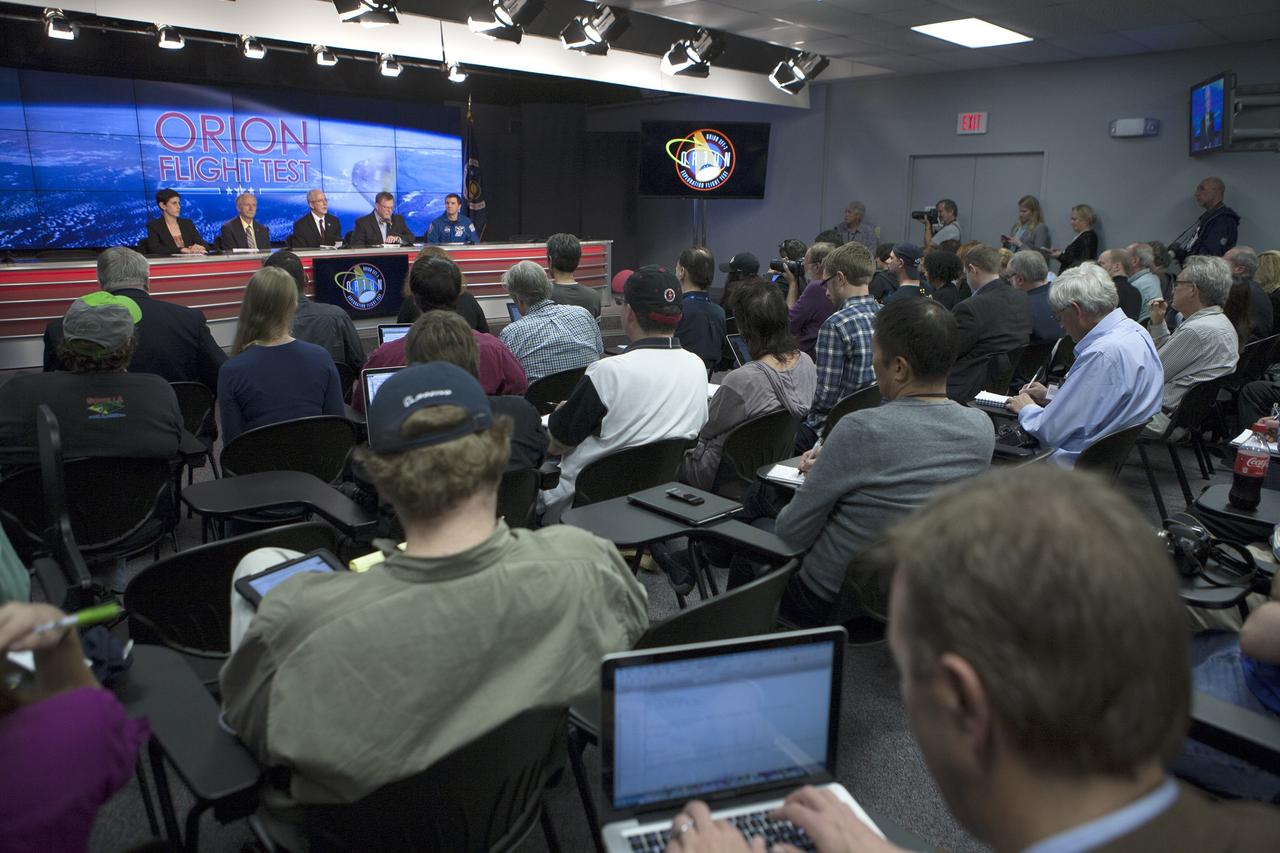
CAPE CANAVERAL, Fla. -- In the Kennedy Space Center’s Press Site auditorium, agency leaders spoke to members of the news media about the successful Orion Flight Test. From left are: Rachel Kraft, of NASA Public Affairs, Bill Gerstenmaier, NASA associate administrator for Human Exploration and Operations, Mark Geyer, Orion program manager, Mike Hawes, Lockheed Martin Orion Program manager, and NASA astronaut Rex Walheim. For more information, visit www.nasa.gov/orion Photo credit: NASA/Kim Shiflett
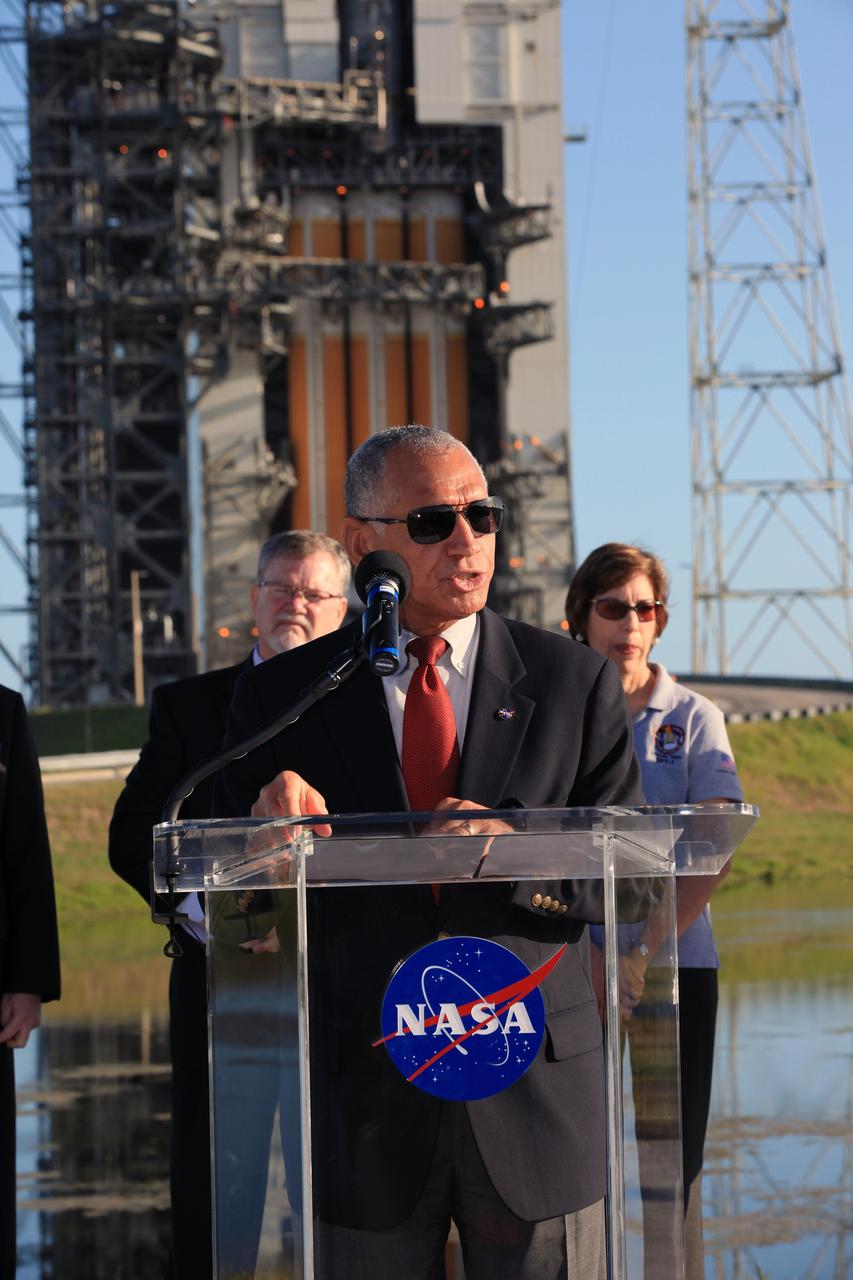
CAPE CANAVERAL, Fla. – At Cape Canaveral Air Force Station's Launch Complex 37, NASA Administrator Charlie Bolden speaks to members of the news media as the Orion spacecraft and its United Launch Alliance Delta IV Heavy rocket were being prepared for launch. Behind Bolden, from the left, are Lockheed Martin Orion Program Manager Mike Hawes and Johnson Space Center Director Ellen Ochoa. For more information, visit www.nasa.gov/orion. Photo credit: NASA/Kim Shiflett
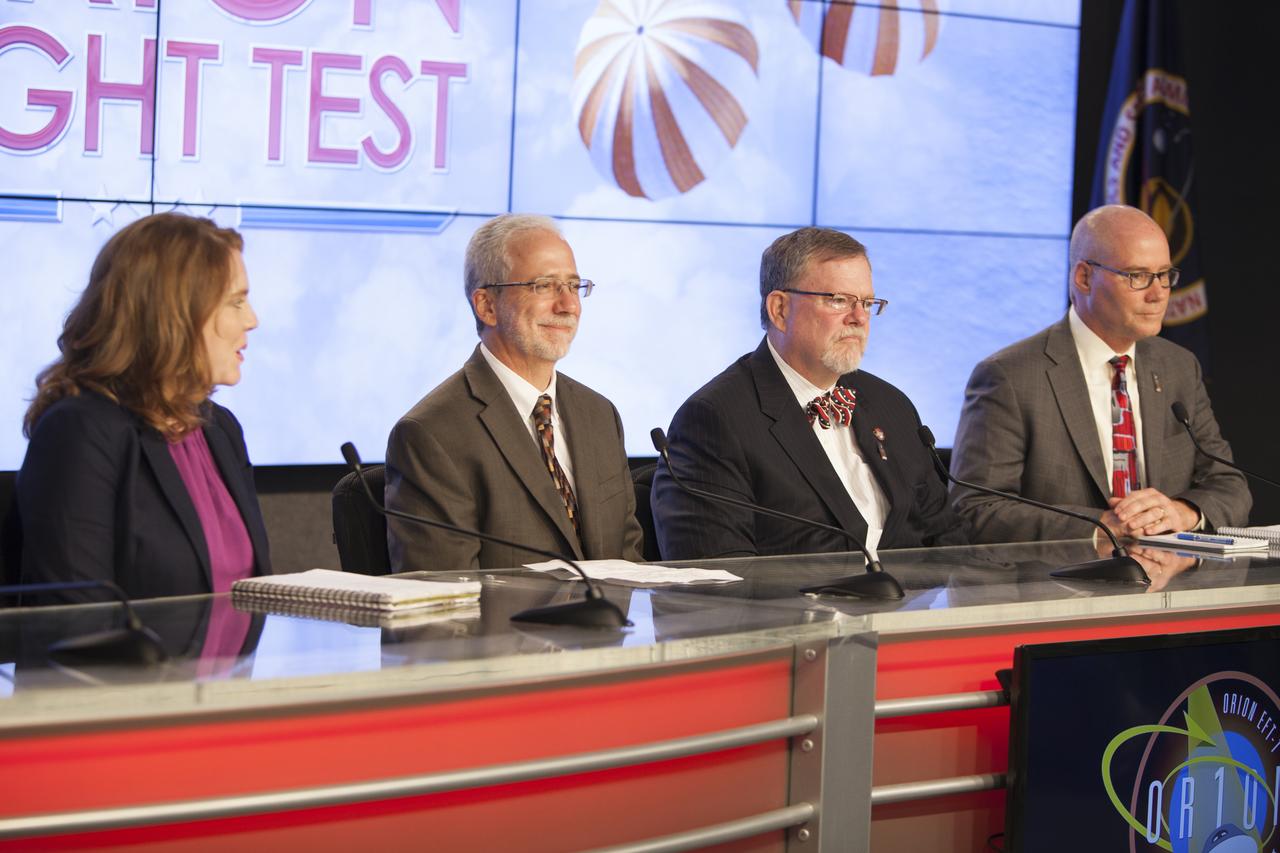
In the Kennedy Space Center’s Press Site auditorium, agency and industry leaders spoke to members of the news media about the postponement of the Orion Flight Test launch due to an issue related to fill and drain valves on the Delta IV Heavy rocket. From left are: Brandi Dean of NASA Public Affairs, Mark Geyer, NASA's Orion program manager, Mike Hawes, Lockheed Martin Orion Program manager, and Dan Collins, United Launch Alliance chief operating officer.
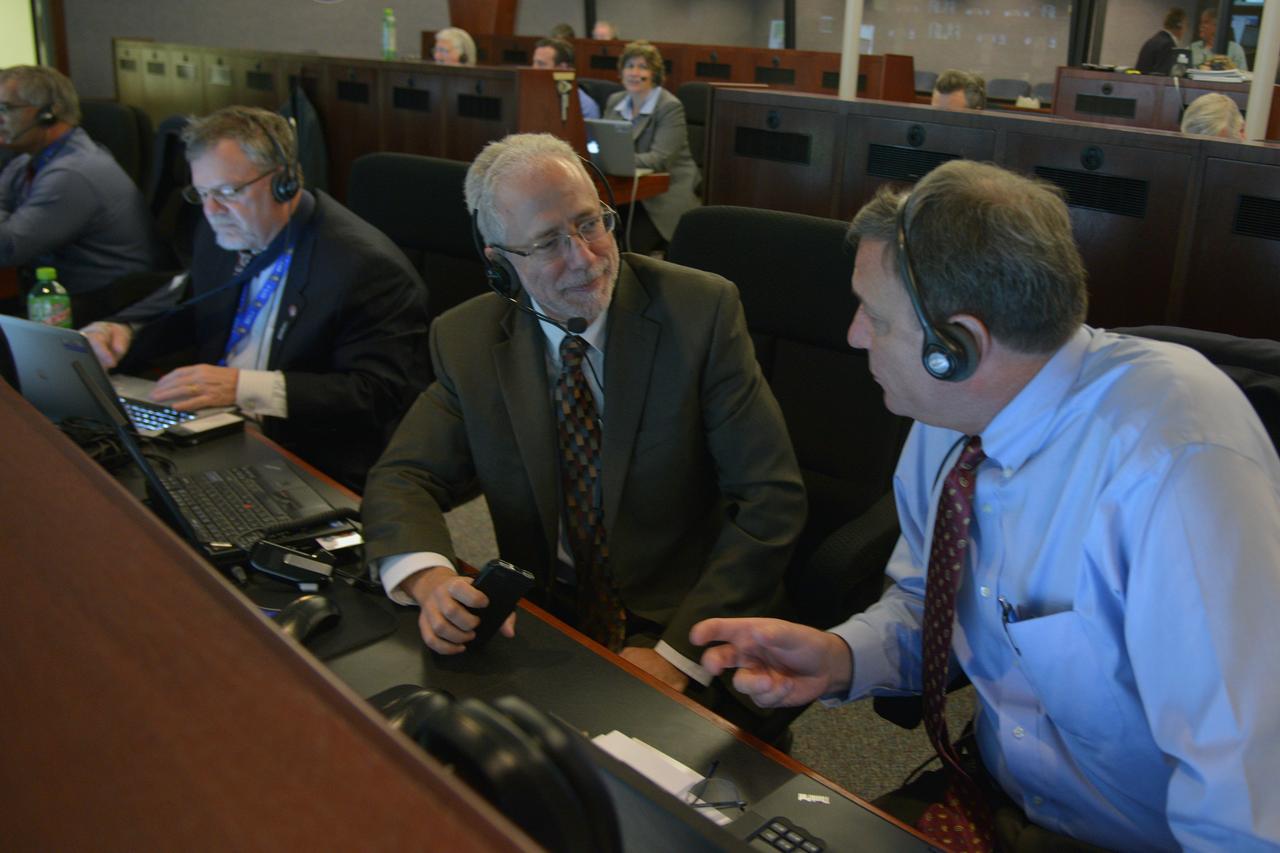
The Orion program management team reviews the launch procedure in Building AE at Cape Canaveral Air Force Station ahead of the launch of Orion on Exploration Flight Test-1 (EFT-1) on Dec. 4, 2014. Pictured from left to right: Mike Hawes, Lockheed Martin Orion program manager, Mark Geyer, NASA Orion program manager, and Mark Kirasich, NASA Orion deputy program manager. Part of Batch image transfer from Flickr.
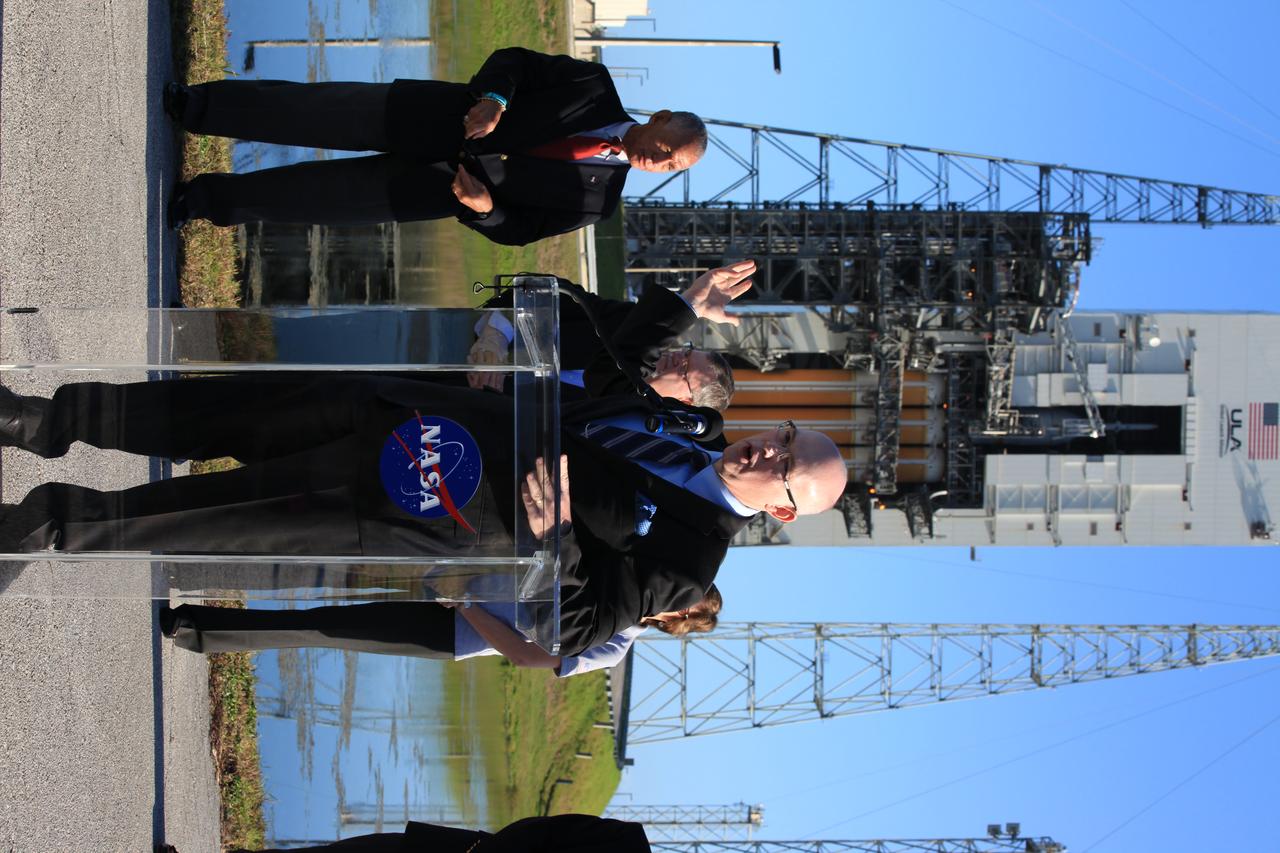
At Cape Canaveral Air Force Station's Launch Complex 37, United Launch Alliance CEO Tory Bruno speaks to members of the news media as the Orion spacecraft and its United Launch Alliance Delta IV Heavy rocket were being prepared for launch. Behind Bruno, from the left, are NASA Administrator Charlie Bolden, Lockheed Martin Orion Program Manager Mike Hawes and Johnson Space Center Director Ellen Ochoa.
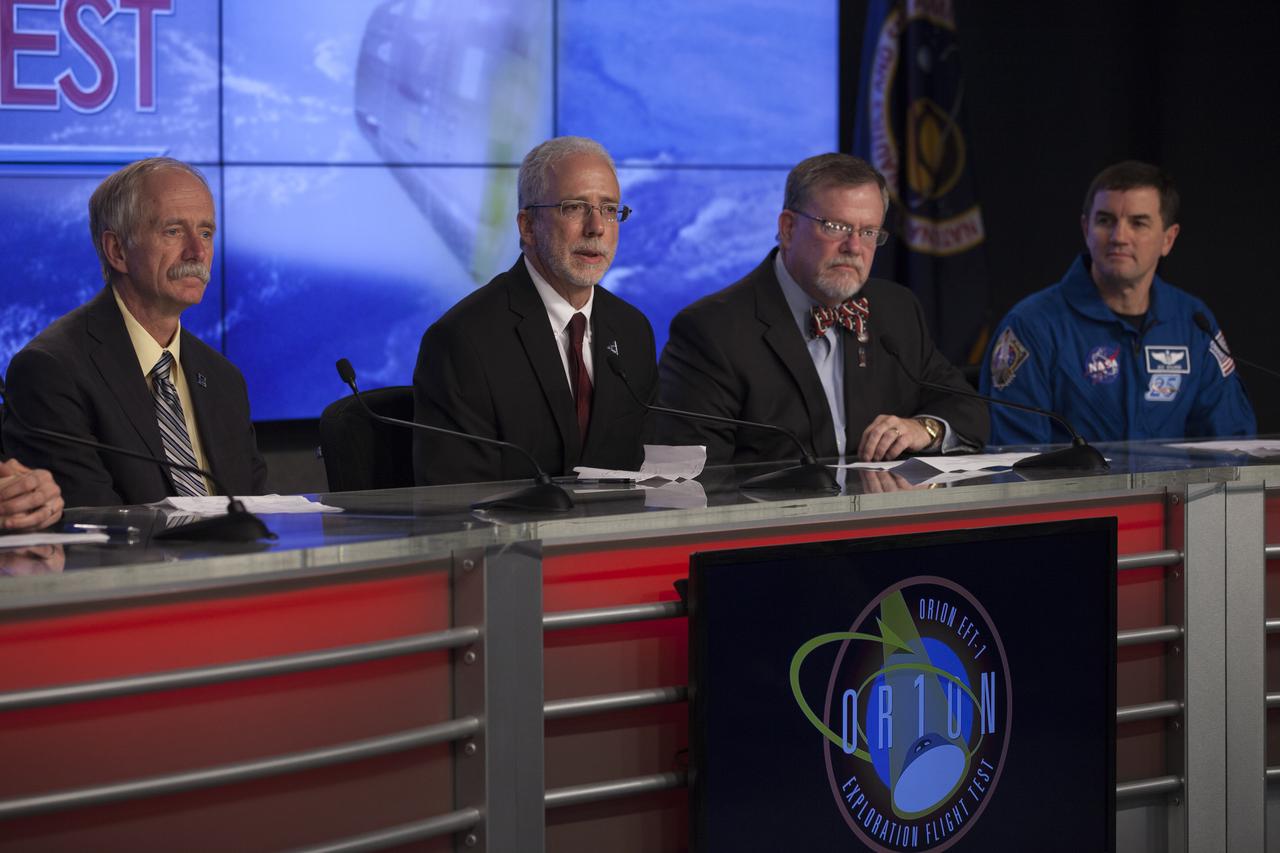
In the Kennedy Space Center’s Press Site auditorium, agency leaders spoke to members of the news media about the successful Orion Flight Test. From left are: Bill Gerstenmaier, NASA associate administrator for Human Exploration and Operations, Mark Geyer, Orion program manager, Mike Hawes, Lockheed Martin Orion Program manager, and NASA astronaut Rex Walheim.
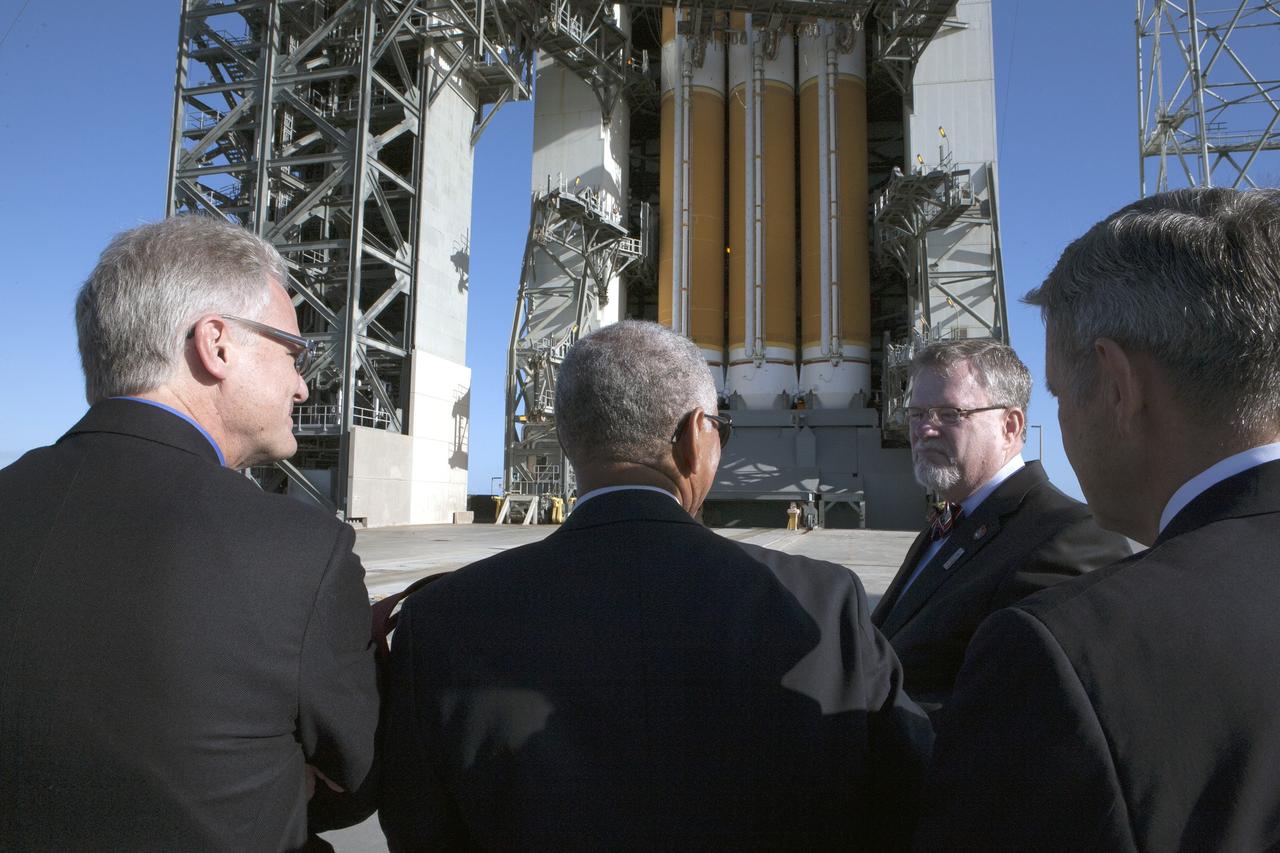
CAPE CANAVERAL, Fla. – At Cape Canaveral Air Force Station's Launch Complex 37, Lockheed Martin Orion Program Manager Mike Hawes facing the camera briefs United Launch Alliance Vice President of Atlas and Delta Programs Jim Sponnick, NASA Administrator Charlie Bolden and Kennedy Space Center Director Bob Cabana backs to camera. For more information, visit www.nasa.gov/orion. Photo credit: NASA/Kim Shiflett
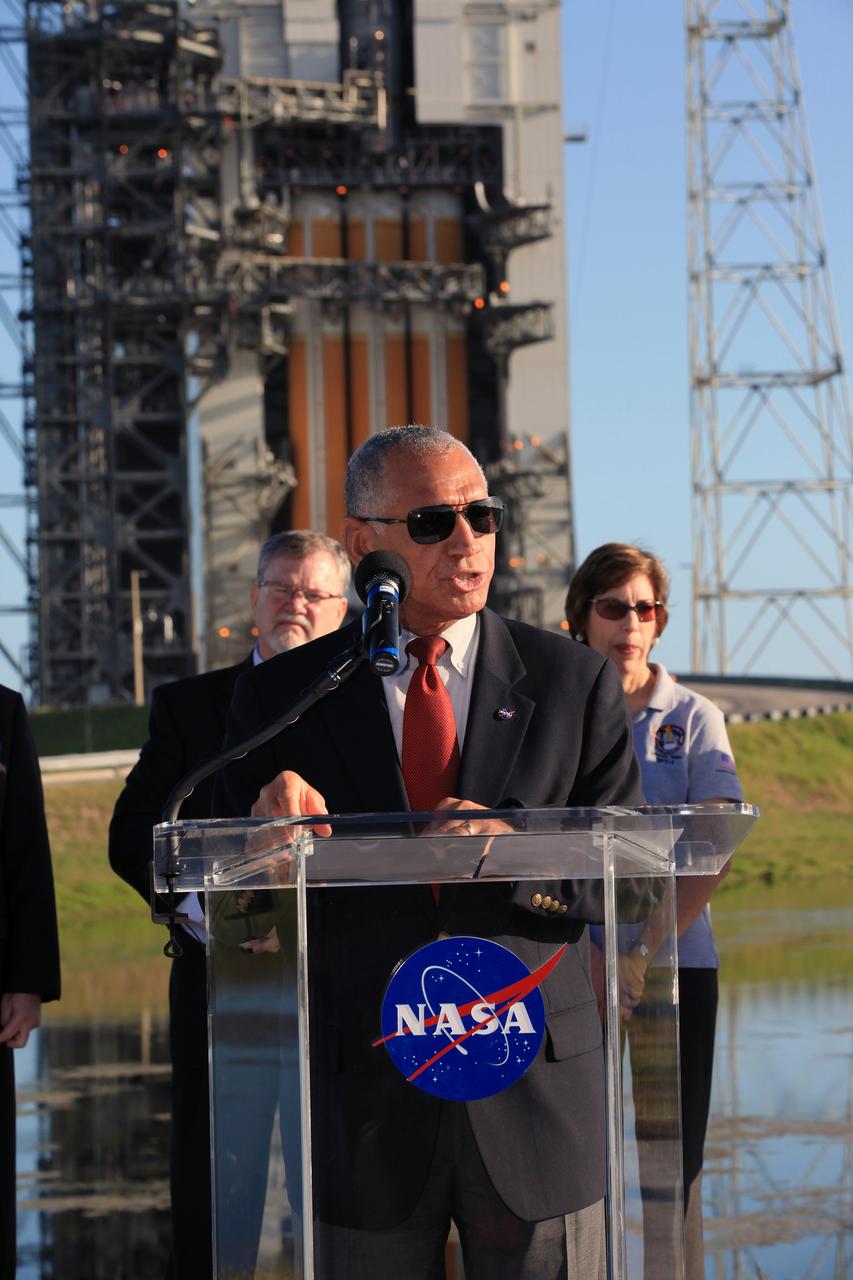
At Cape Canaveral Air Force Station's Launch Complex 37, NASA Administrator Charlie Bolden speaks to members of the news media as the Orion spacecraft and its United Launch Alliance Delta IV Heavy rocket were being prepared for launch on Exploration Flight Test-1 (EFT-1) on Dec. 3, 2014. Behind Bolden, from the left, are Lockheed Martin Orion Program Manager Mike Hawes and Johnson Space Center Director Ellen Ochoa. Part of Batch image transfer from Flickr.
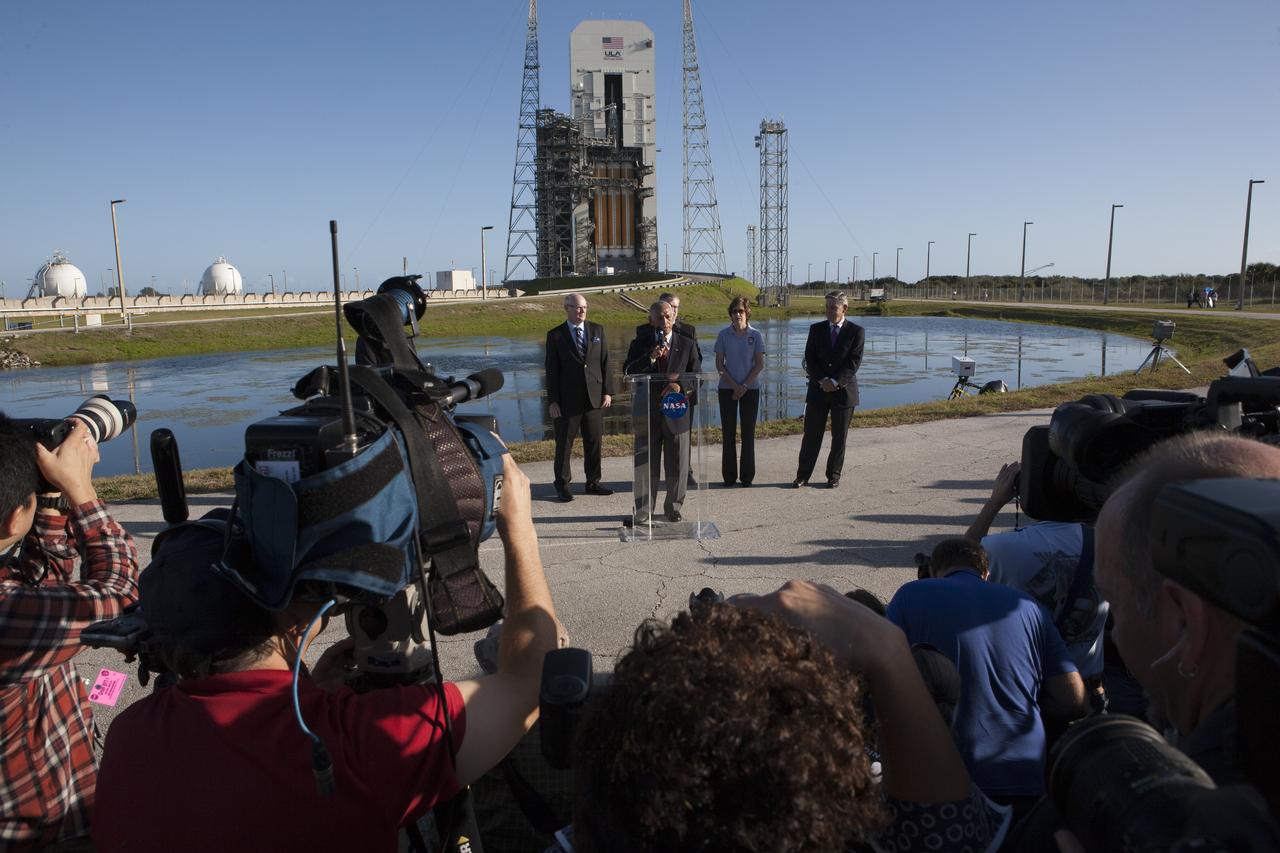
At Cape Canaveral Air Force Station's Launch Complex 37, NASA Administrator Charlie Bolden speaks to members of the news media as the Orion spacecraft and its United Launch Alliance Delta IV Heavy rocket are being prepared for launch. Behind Bolden, from the left, are United Launch Alliance CEO Tory Bruno, Lockheed Martin Orion Program Manager Mike Hawes partially hidden behind Bolden, Johnson Space Center Director Ellen Ochoa and Kennedy Space Center Director Bob Cabana.
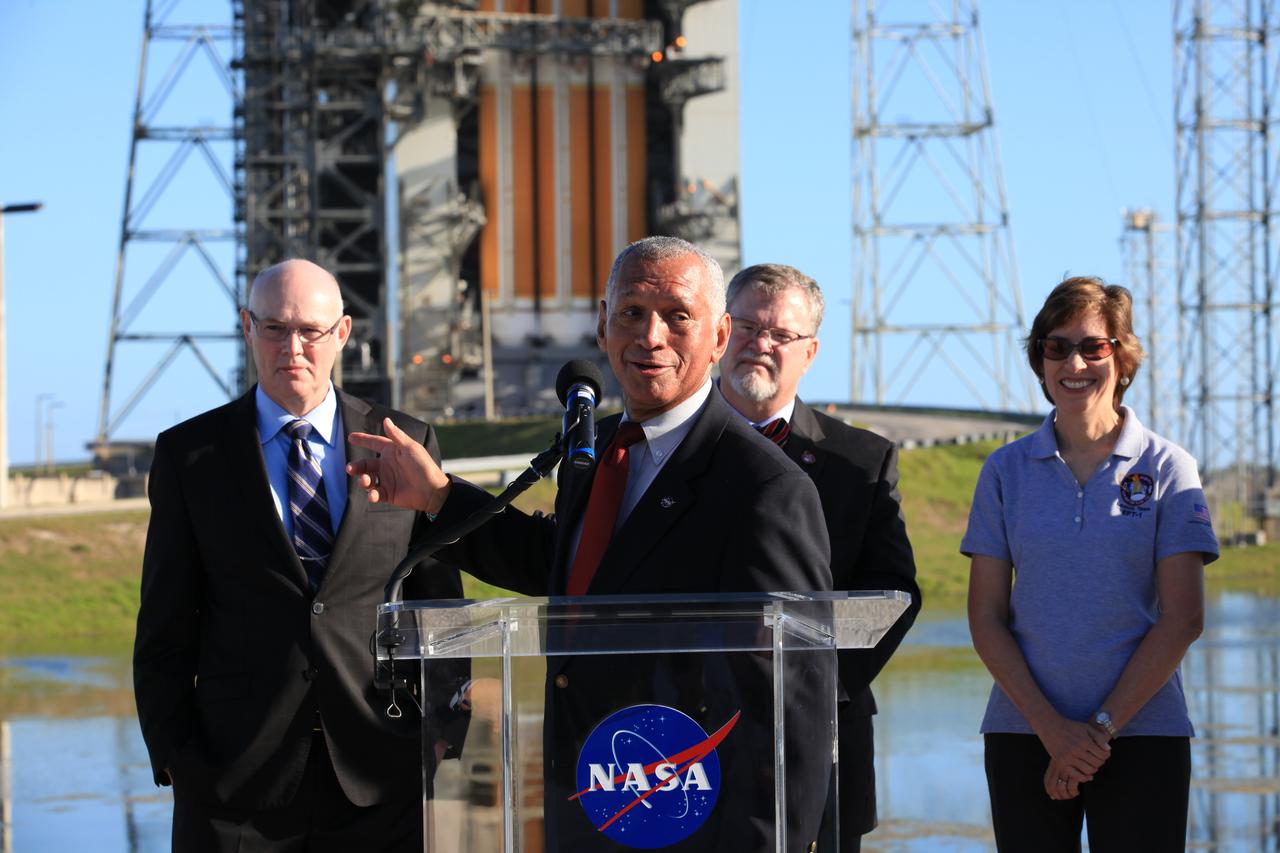
At Cape Canaveral Air Force Station's Launch Complex 37, NASA Administrator Charlie Bolden speaks to members of the news media as the Orion spacecraft and its United Launch Alliance Delta IV Heavy rocket were being prepared for launch. Behind Bolden, from the left, are United Launch Alliance CEO Tory Bruno, Lockheed Martin Orion Program manager Mike Hawes and Johnson Space Center Director Ellen Ochoa.
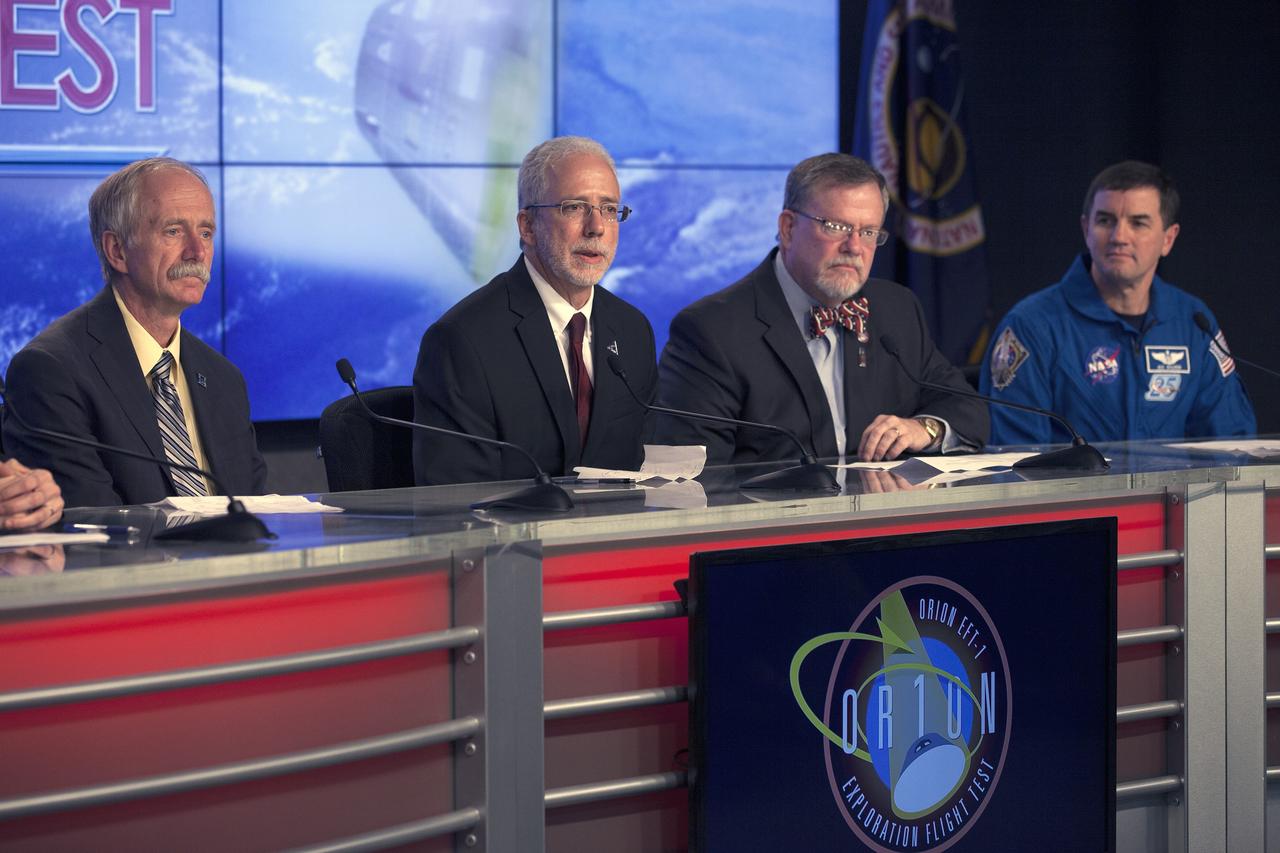
CAPE CANAVERAL, Fla. -- In the Kennedy Space Center’s Press Site auditorium, agency leaders spoke to members of the news media about the successful Orion Flight Test. From left are: Bill Gerstenmaier, NASA associate administrator for Human Exploration and Operations, Mark Geyer, Orion program manager, Mike Hawes, Lockheed Martin Orion Program manager, and NASA astronaut Rex Walheim. For more information, visit www.nasa.gov/orion Photo credit: NASA/Kim Shiflett
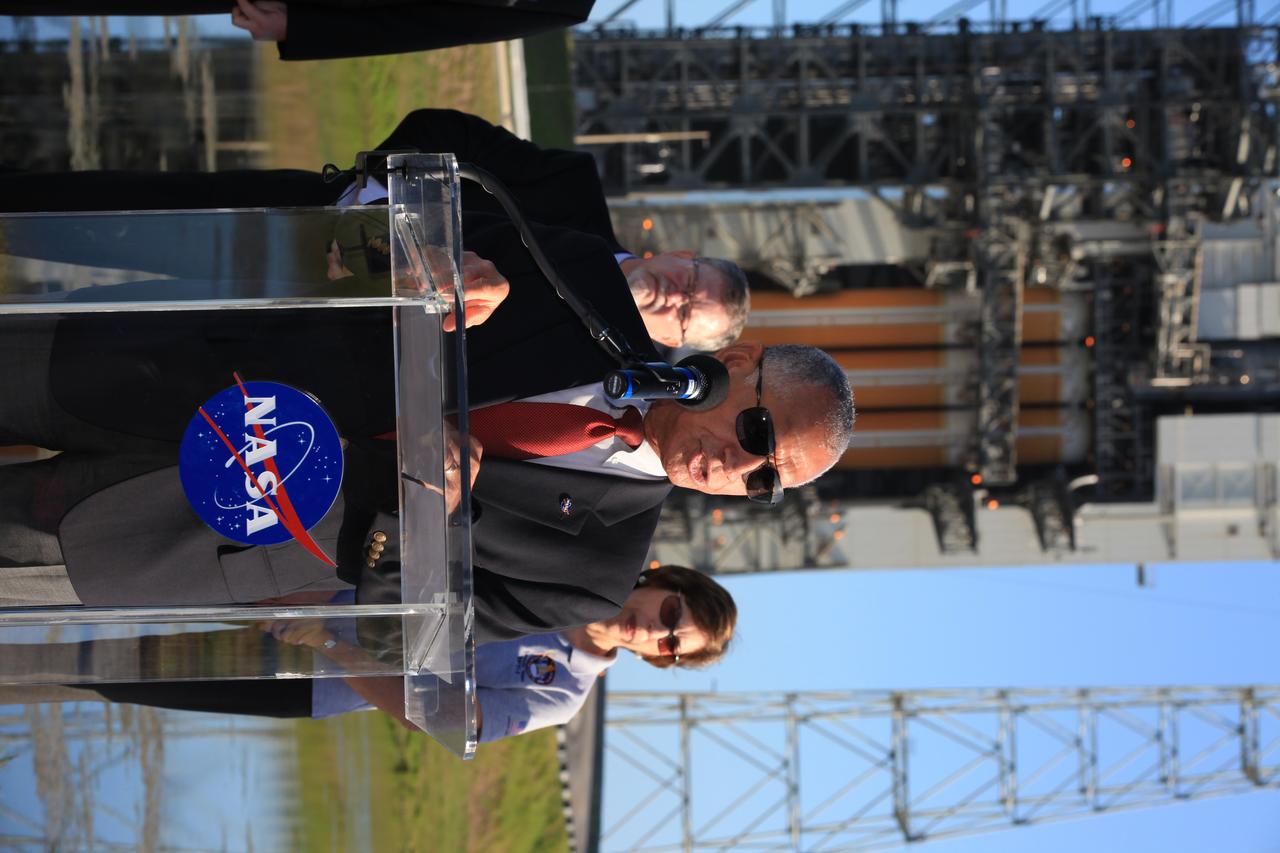
At Cape Canaveral Air Force Station's Launch Complex 37, NASA Administrator Charlie Bolden speaks to members of the news media as the Orion spacecraft and its United Launch Alliance Delta IV Heavy rocket were being prepared for launch. Behind Bolden, from the left, are Lockheed Martin Orion Program Manager Mike Hawes and Johnson Space Center Director Ellen Ochoa.
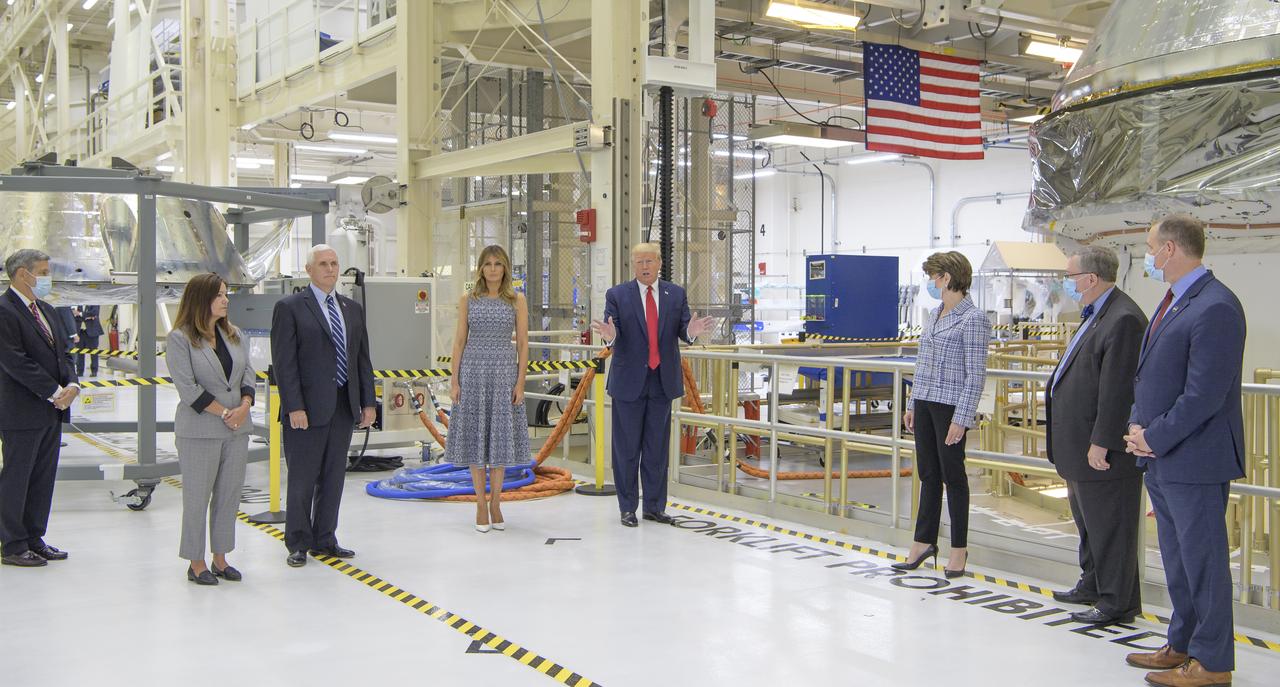
President Donald Trump, First Lady Melania Trump, Vice President Mike Pence, Second Lady Karen Pence, along with Kennedy Space Center Director Bob Cabana, left, Marillyn Hewson, Chief Executive Officer, Lockheed Martin, Mike Hawes, VP of Human Space Exploration and Orion Program Manager at Lockheed Martin Space, Vande NASA Administrator Jim Bridenstine, right, are seen by the Artemis I capsule during a tour of the Neil A. Armstrong Operations and Checkout Building following the departure of NASA astronauts Robert Behnken and Douglas Hurley for Launch Complex 39A to board a SpaceX Crew Dragon spacecraft for launch, Wednesday, May 27, 2020, at NASA’s Kennedy Space Center in Florida. NASA’s SpaceX Demo-2 mission is the first launch with astronauts of the SpaceX Crew Dragon spacecraft and Falcon 9 rocket to the International Space Station as part of the agency’s Commercial Crew Program. The test flight serves as an end-to-end demonstration of SpaceX’s crew transportation system. Today’s launch of Behnken and Hurley was scrubbed due to weather and is now scheduled for 3:22 p.m. EDT on Saturday, May 30, from Launch Complex 39A at the Kennedy Space Center. A new era of human spaceflight is set to begin as American astronauts once again launch on an American rocket from American soil to low-Earth orbit for the first time since the conclusion of the Space Shuttle Program in 2011. Photo Credit: (NASA/Bill Ingalls)

President Donald Trump, First Lady Melania Trump, Marillyn Hewson, Chief Executive Officer, Lockheed Martin, Mike Hawes, VP of Human Space Exploration and Orion Program Manager at Lockheed Martin Space, and NASA Administrator Jim Bridenstine, right, are seen looking at an Orion capsule hatch that will be used for the Artemis II mission during a tour of the Neil A. Armstrong Operations and Checkout Building following the departure of NASA astronauts Robert Behnken and Douglas Hurley for Launch Complex 39A to board a SpaceX Crew Dragon spacecraft for launch, Wednesday, May 27, 2020, at NASA’s Kennedy Space Center in Florida. NASA’s SpaceX Demo-2 mission is the first launch with astronauts of the SpaceX Crew Dragon spacecraft and Falcon 9 rocket to the International Space Station as part of the agency’s Commercial Crew Program. The flight test will serve as an end-to-end demonstration of SpaceX’s crew transportation system. Today’s launch of Behnken and Hurley was scrubbed due to weather and is now scheduled for 3:22 p.m. EDT on Saturday, May 30, from Launch Complex 39A at the Kennedy Space Center. A new era of human spaceflight is set to begin as American astronauts once again launch on an American rocket from American soil to low-Earth orbit for the first time since the conclusion of the Space Shuttle Program in 2011. Photo Credit: (NASA/Bill Ingalls)
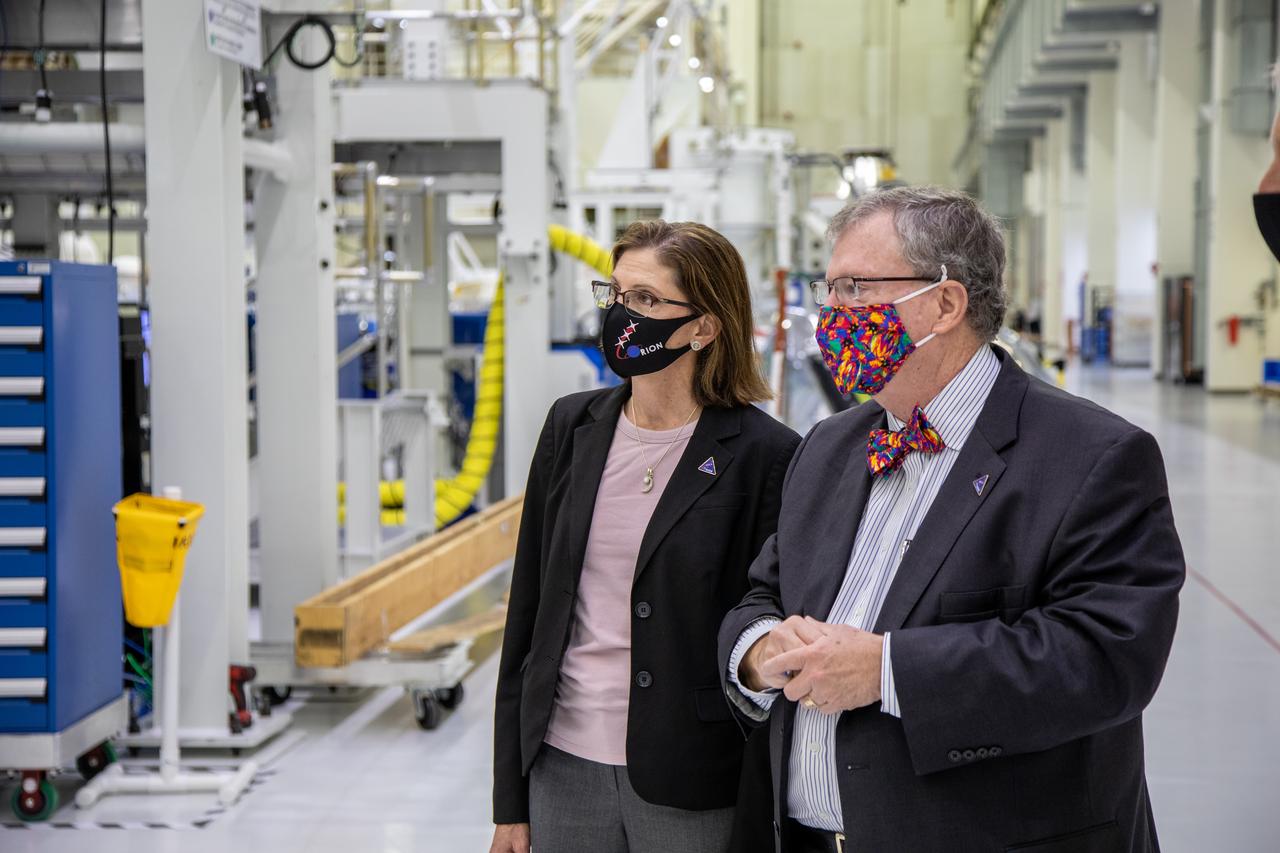
Catherine Koerner, at left, NASA Orion Program manager, along with senior managers from Orion and Lockheed Martin, tours the Neil Armstrong Operations and Checkout Building at NASA’s Kennedy Space Center in Florida on Oct. 6, 2020. Accompanying her, at right is Mike Hawes, Lockheed Martin vice president and Orion Program manager. Koerner viewed Orion spacecraft for the Artemis I and II missions. The first in a series of increasingly complex missions, Artemis I will test the Orion spacecraft and Space Launch System as an integrated system ahead of crewed flights to the Moon. Under the Artemis program, NASA will land the first woman and the next man on the Moon in 2024.
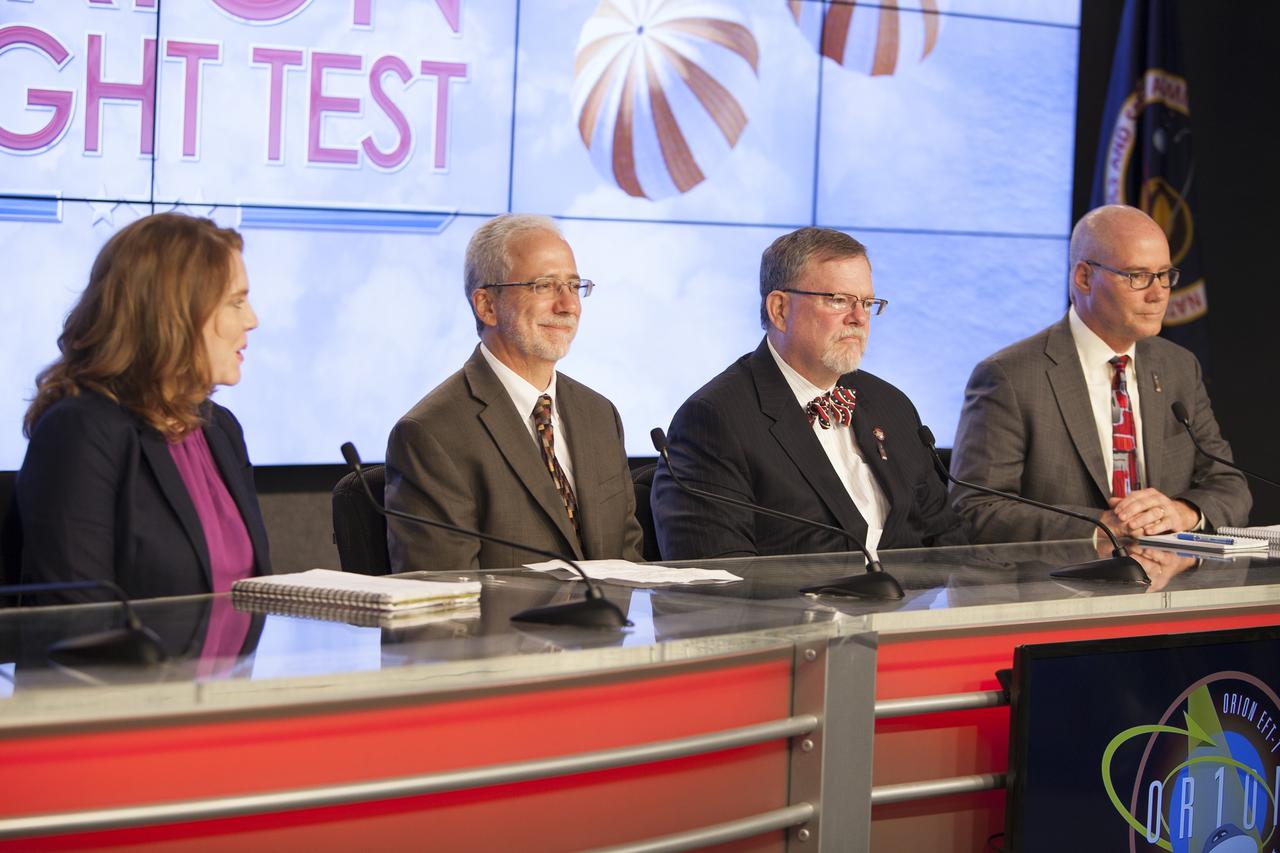
CAPE CANAVERAL, Fla. -- In the Kennedy Space Center’s Press Site auditorium, agency and industry leaders spoke to members of the news media about the postponement of the Orion Flight Test launch due to an issue related to fill and drain valves on the Delta IV Heavy rocket. From left are: Brandi Dean of NASA Public Affairs, Mark Geyer, NASA's Orion program manager, Mike Hawes, Lockheed Martin Orion Program manager, and Dan Collins, United Launch Alliance chief operating officer. For more information, visit www.nasa.gov/orion Photo credit: NASA/Frankie Martin
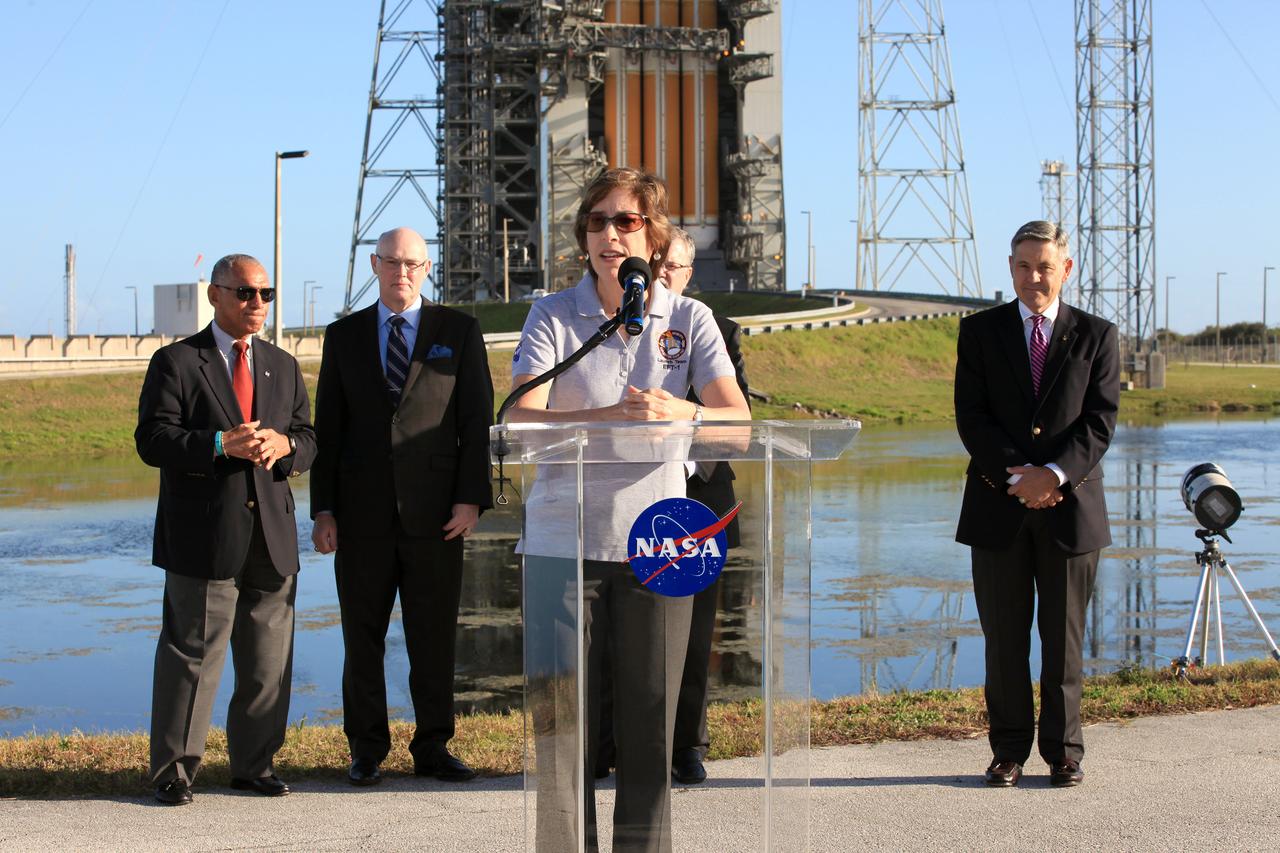
At Cape Canaveral Air Force Station's Launch Complex 37, Johnson Space Center Director Ellen Ochoa speaks to members of the news media as the Orion spacecraft and its United Launch Alliance Delta IV Heavy rocket were being prepared for launch on Exploration Flight Test-1 (EFT-1) on Dec. 3, 2014. Behind Ochoa, from the left, are NASA Administrator Charlie Bolden, United Launch Alliance CEO Tory Bruno, Lockheed Martin Orion Program Manager Mike Hawes and Kennedy Space Center Director Bob Cabana. Part of Batch image transfer from Flickr.
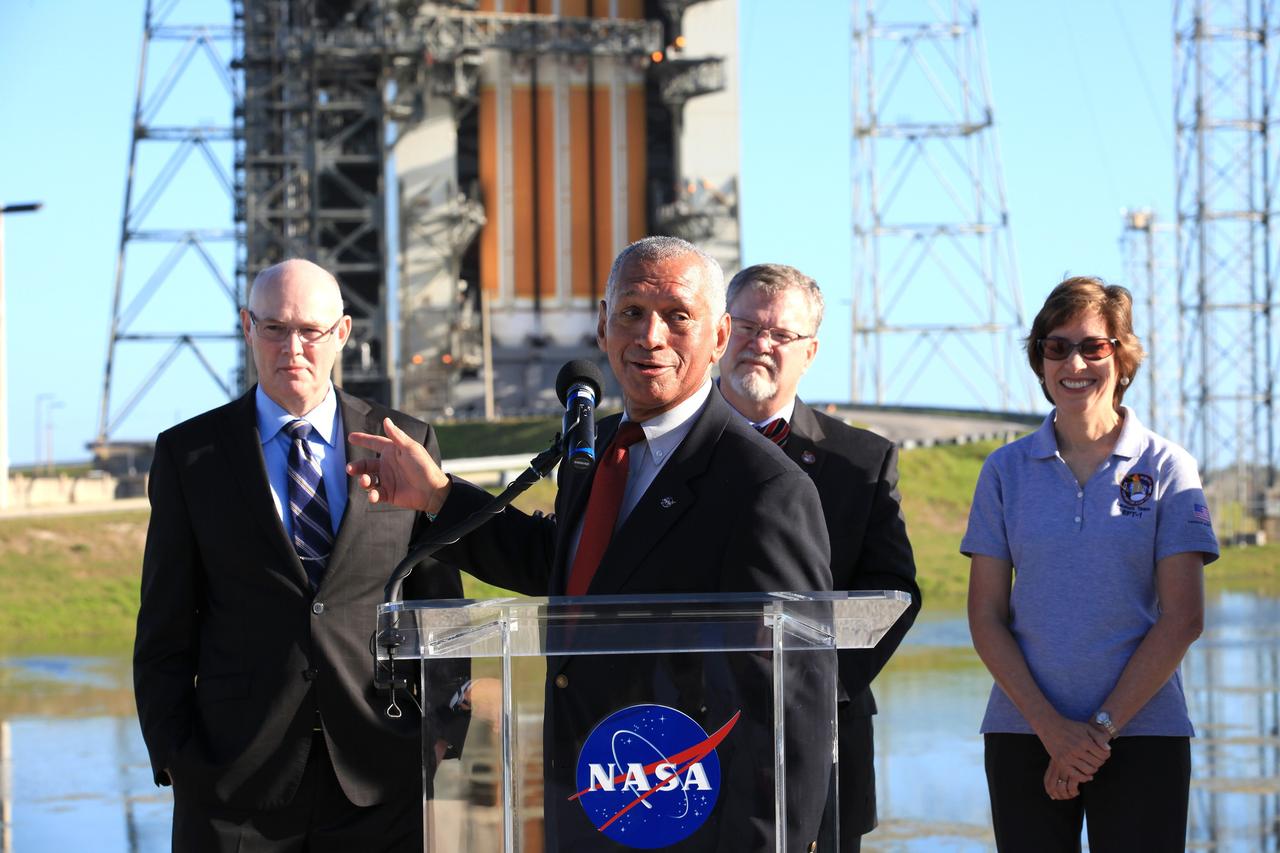
CAPE CANAVERAL, Fla. – At Cape Canaveral Air Force Station's Launch Complex 37, NASA Administrator Charlie Bolden speaks to members of the news media as the Orion spacecraft and its United Launch Alliance Delta IV Heavy rocket were being prepared for launch. Behind Bolden, from the left, are United Launch Alliance CEO Tory Bruno, Lockheed Martin Orion Program manager Mike Hawes and Johnson Space Center Director Ellen Ochoa. For more information, visit www.nasa.gov/orion. Photo credit: NASA/Kim Shiflett
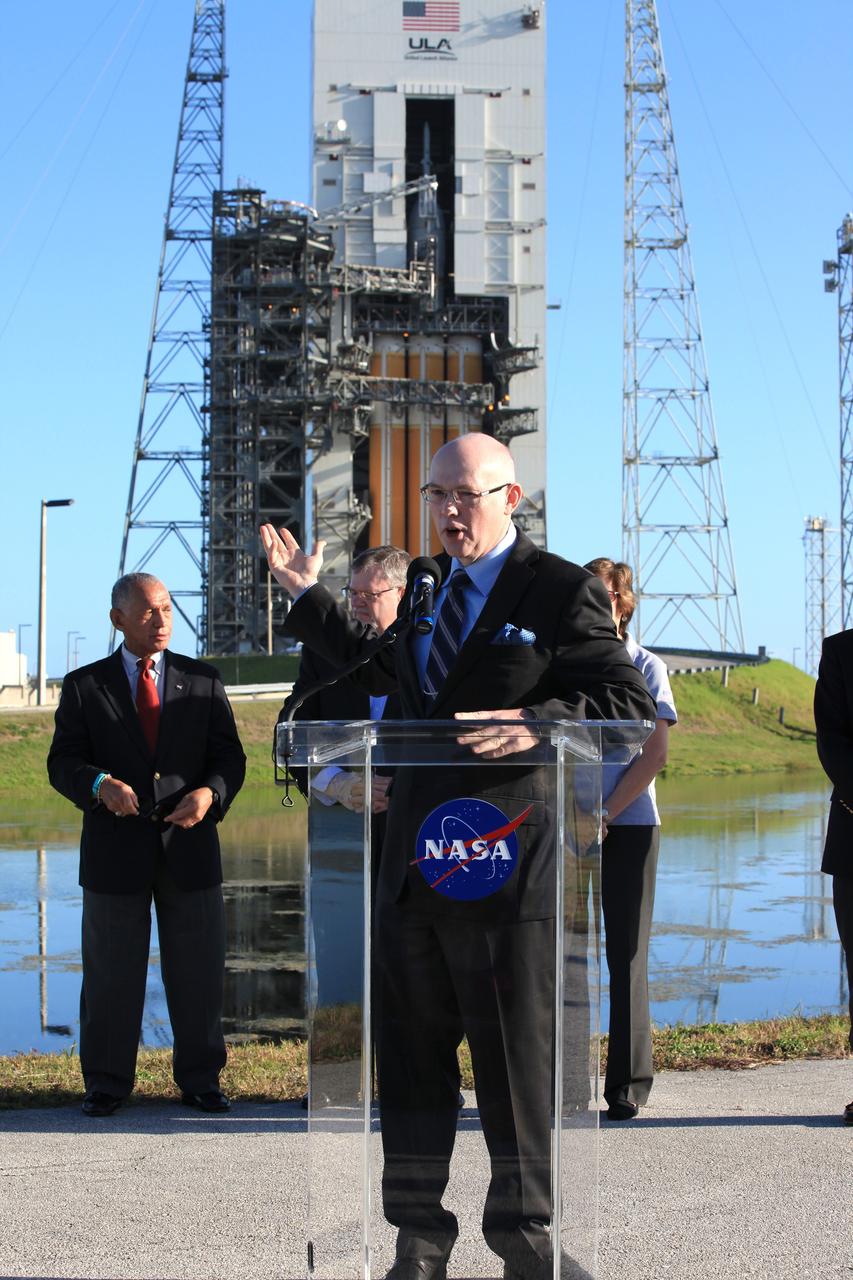
CAPE CANAVERAL, Fla. – At Cape Canaveral Air Force Station's Launch Complex 37, United Launch Alliance CEO Tory Bruno speaks to members of the news media as the Orion spacecraft and its United Launch Alliance Delta IV Heavy rocket were being prepared for launch. Behind Bruno, from the left, are NASA Administrator Charlie Bolden, Lockheed Martin Orion Program Manager Mike Hawes and Johnson Space Center Director Ellen Ochoa. For more information, visit www.nasa.gov/orion. Photo credit: NASA/Kim Shiflett
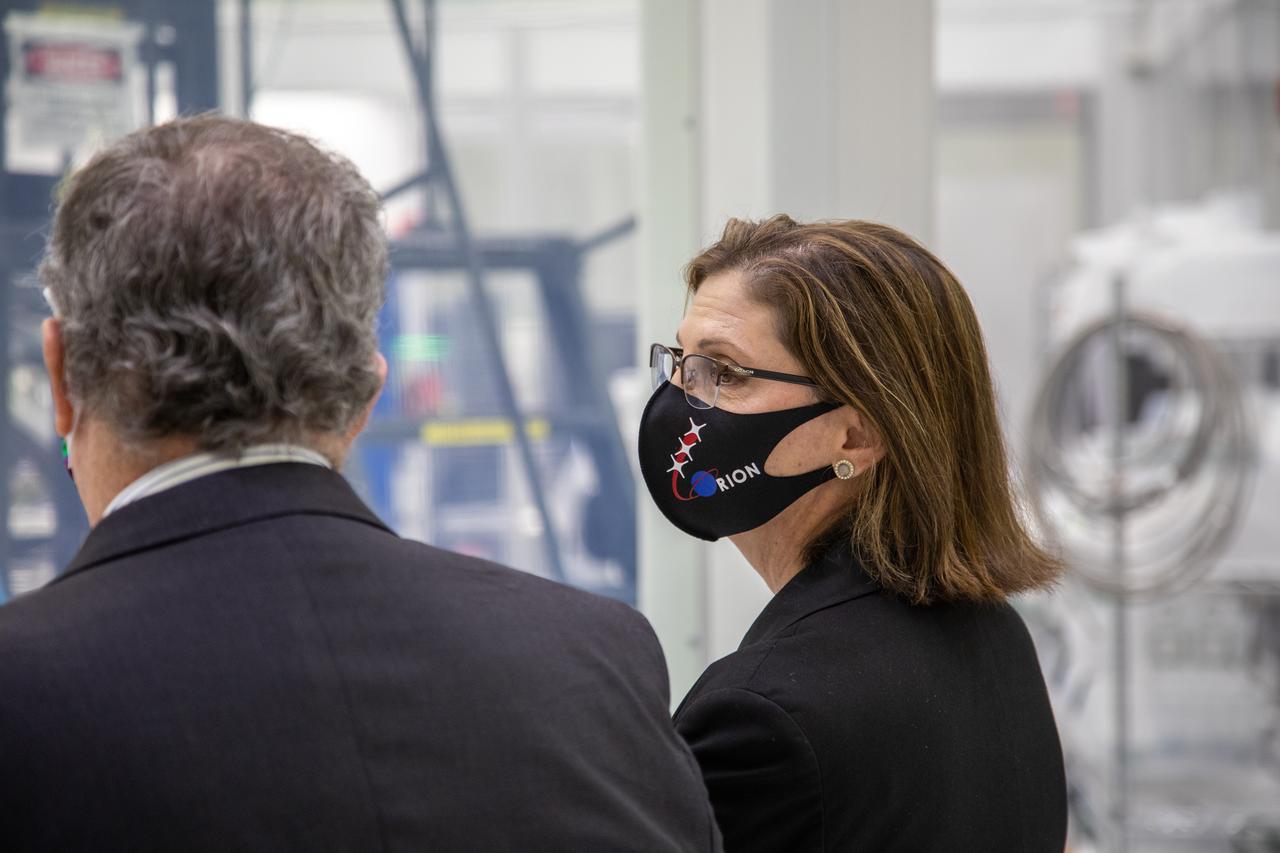
Catherine Koerner, at right, NASA Orion Program manager, along with senior managers from Orion and Lockheed Martin, tours the Neil Armstrong Operations and Checkout Building at NASA’s Kennedy Space Center in Florida on Oct. 6, 2020. Accompanying her, at left is Mike Hawes, Lockheed Martin vice president and Orion Program manager. Koerner viewed Orion spacecraft for the Artemis I and II missions. The first in a series of increasingly complex missions, Artemis I will test the Orion spacecraft and Space Launch System as an integrated system ahead of crewed flights to the Moon. Under the Artemis program, NASA will land the first woman and the next man on the Moon in 2024.
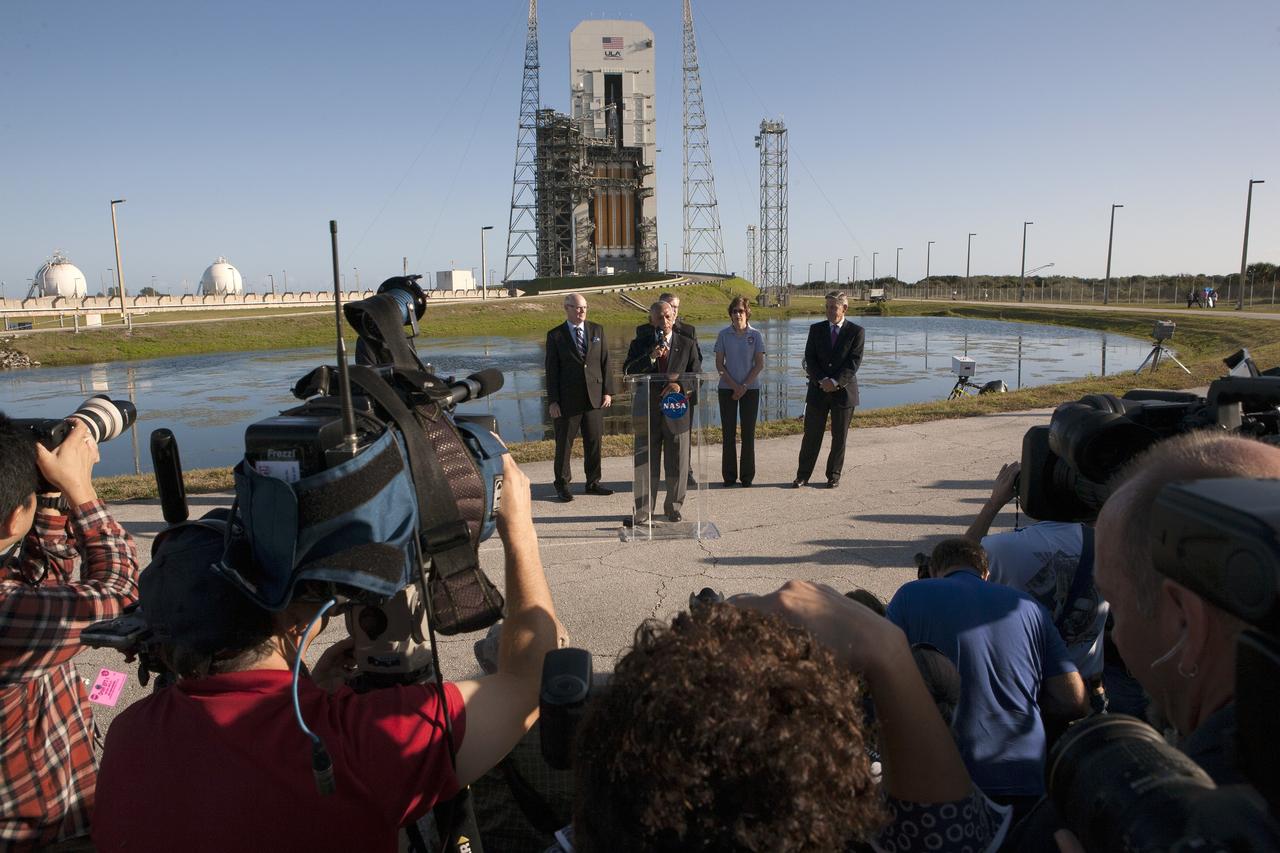
CAPE CANAVERAL, Fla. – At Cape Canaveral Air Force Station's Launch Complex 37, NASA Administrator Charlie Bolden speaks to members of the news media as the Orion spacecraft and its United Launch Alliance Delta IV Heavy rocket are being prepared for launch. Behind Bolden, from the left, are United Launch Alliance CEO Tory Bruno, Lockheed Martin Orion Program Manager Mike Hawes partially hidden behind Bolden, Johnson Space Center Director Ellen Ochoa and Kennedy Space Center Director Bob Cabana. For more information, visit www.nasa.gov/orion. Photo credit: NASA/Kim Shiflett
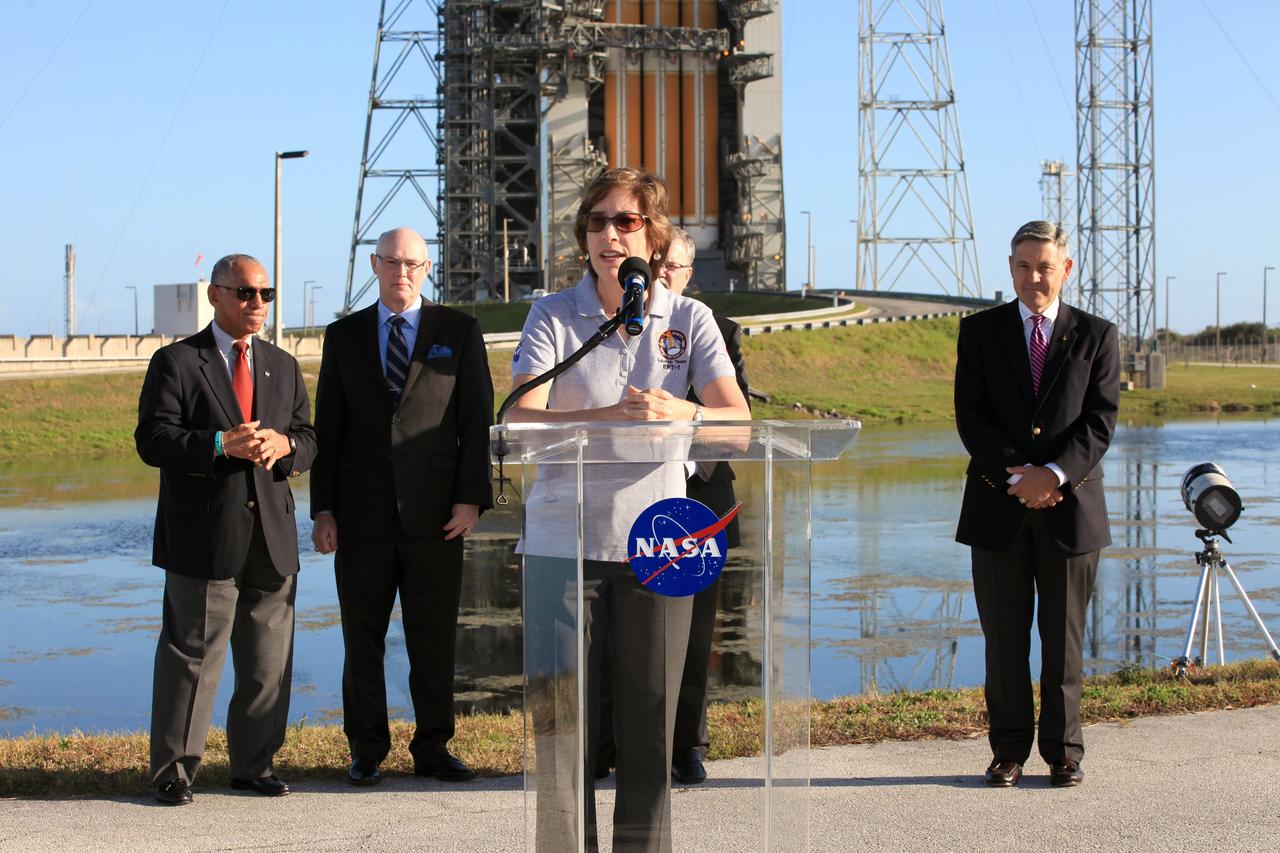
CAPE CANAVERAL, Fla. – At Cape Canaveral Air Force Station's Launch Complex 37, Johnson Space Center Director Ellen Ochoa speaks to members of the news media as the Orion spacecraft and its United Launch Alliance Delta IV Heavy rocket were being prepared for launch. Behind Ochoa, from the left, are NASA Administrator Charlie Bolden, United Launch Alliance CEO Tory Bruno, Lockheed Martin Orion Program Manager Mike Hawes and Kennedy Space Center Director Bob Cabana. For more information, visit www.nasa.gov/orion. Photo credit: NASA/Kim Shiflett
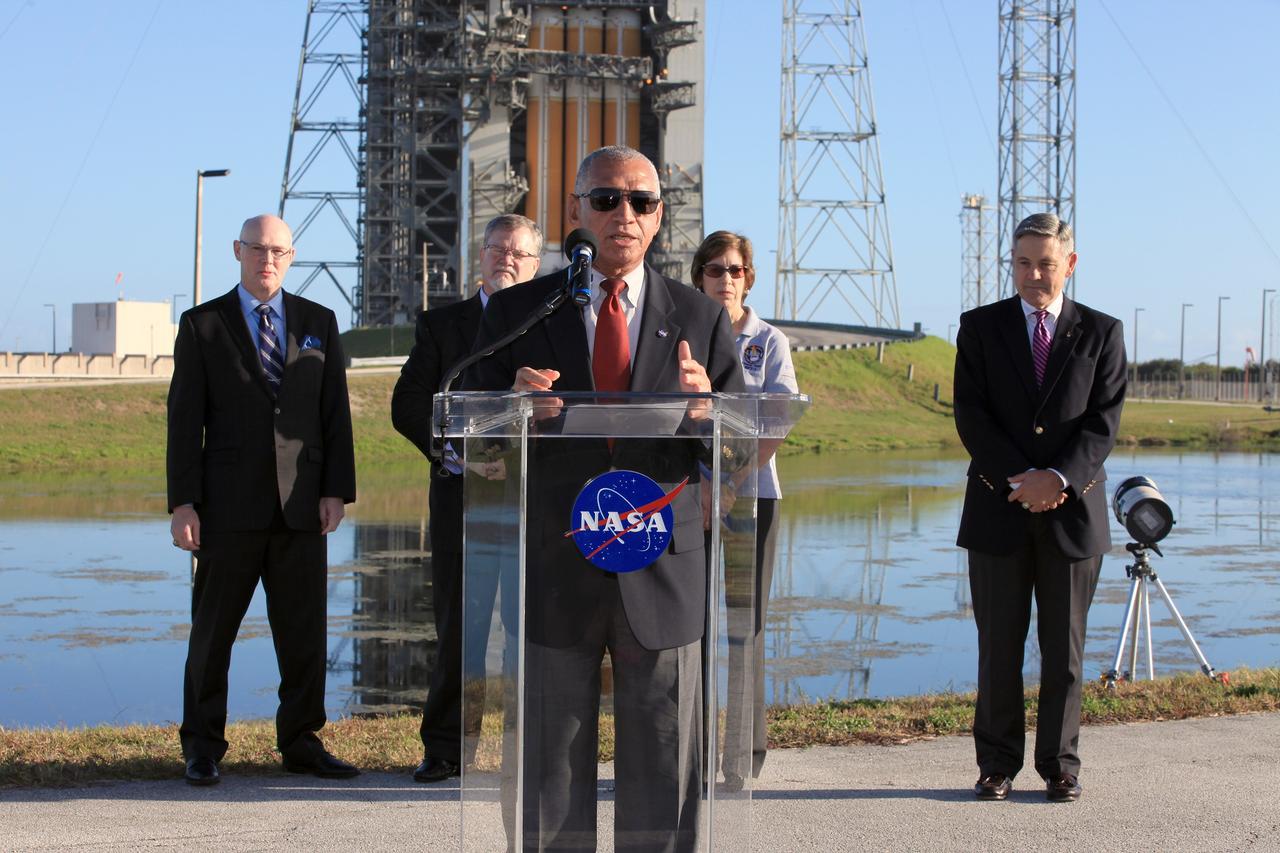
CAPE CANAVERAL, Fla. – At Cape Canaveral Air Force Station's Launch Complex 37, NASA Administrator Charlie Bolden speaks to members of the news media as the Orion spacecraft and its United Launch Alliance Delta IV Heavy rocket were being prepared for launch. Behind Bolden, from the left, are United Launch Alliance CEO Tory Bruno, Lockheed Martin Orion Program Manager Mike Hawes, Johnson Space Center Director Ellen Ochoa and Kennedy Space Center Director Bob Cabana. For more information, visit www.nasa.gov/orion. Photo credit: NASA/Kim Shiflett
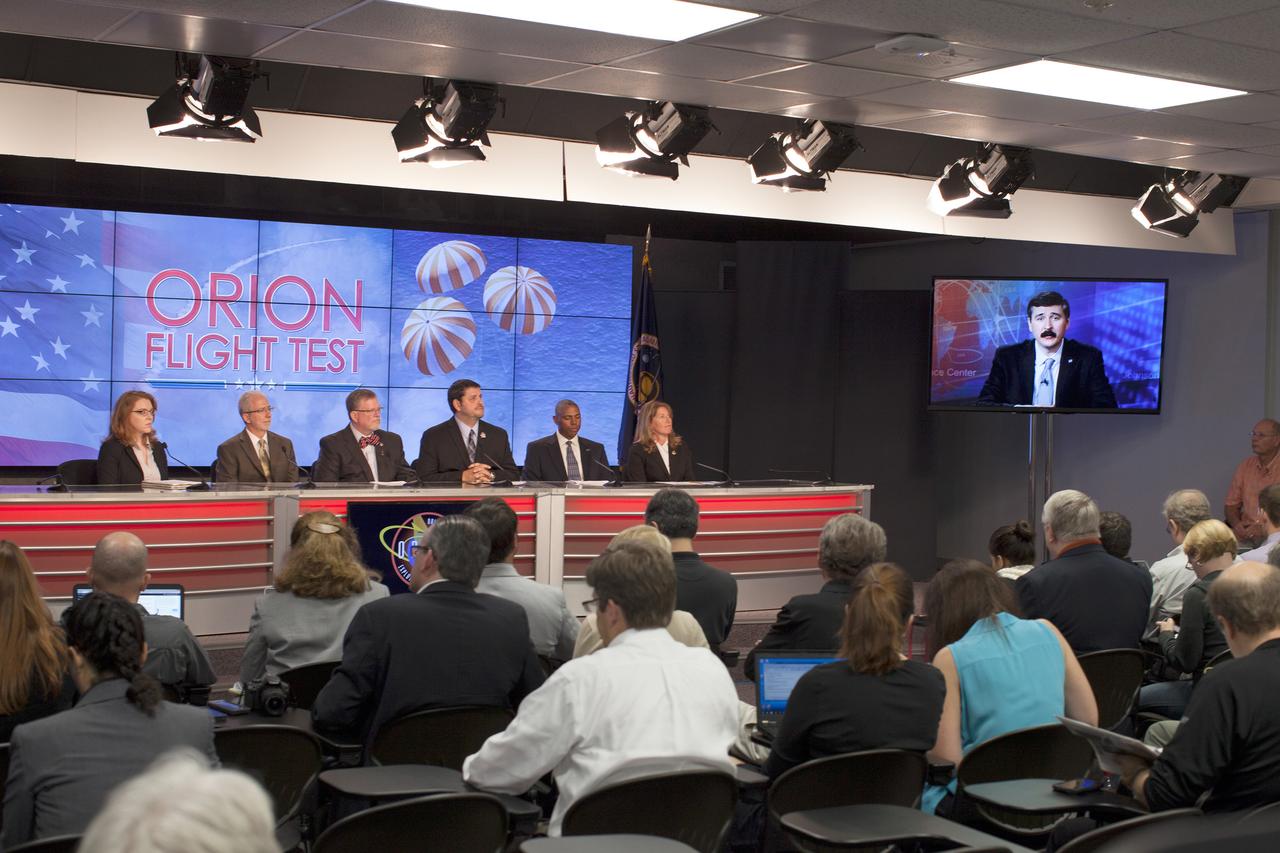
In the Kennedy Space Center’s Press Site auditorium, agency and industry leaders spoke to members of the news media as the Orion spacecraft and its Delta IV Heavy rocket were being prepared for launch on Dec. 3, 2014. From left are: Brandi Dean of NASA Public Affairs, Mark Geyer, Orion program manager, Mike Hawes, Lockheed Martin Orion Program manager, Jeff Angermeier, Exploration Flight Test-1 Ground Systems Development and Operations mission manager, Ron Fortson, United Launch Alliance director of mission management, and Kathy Winters, U.S. Air Force 45th Space Wing Launch Weather officer. On the right, Mike Sarafin, Orion flight director, participated via video from the Johnson Space Center. Part of Batch image transfer from Flickr.
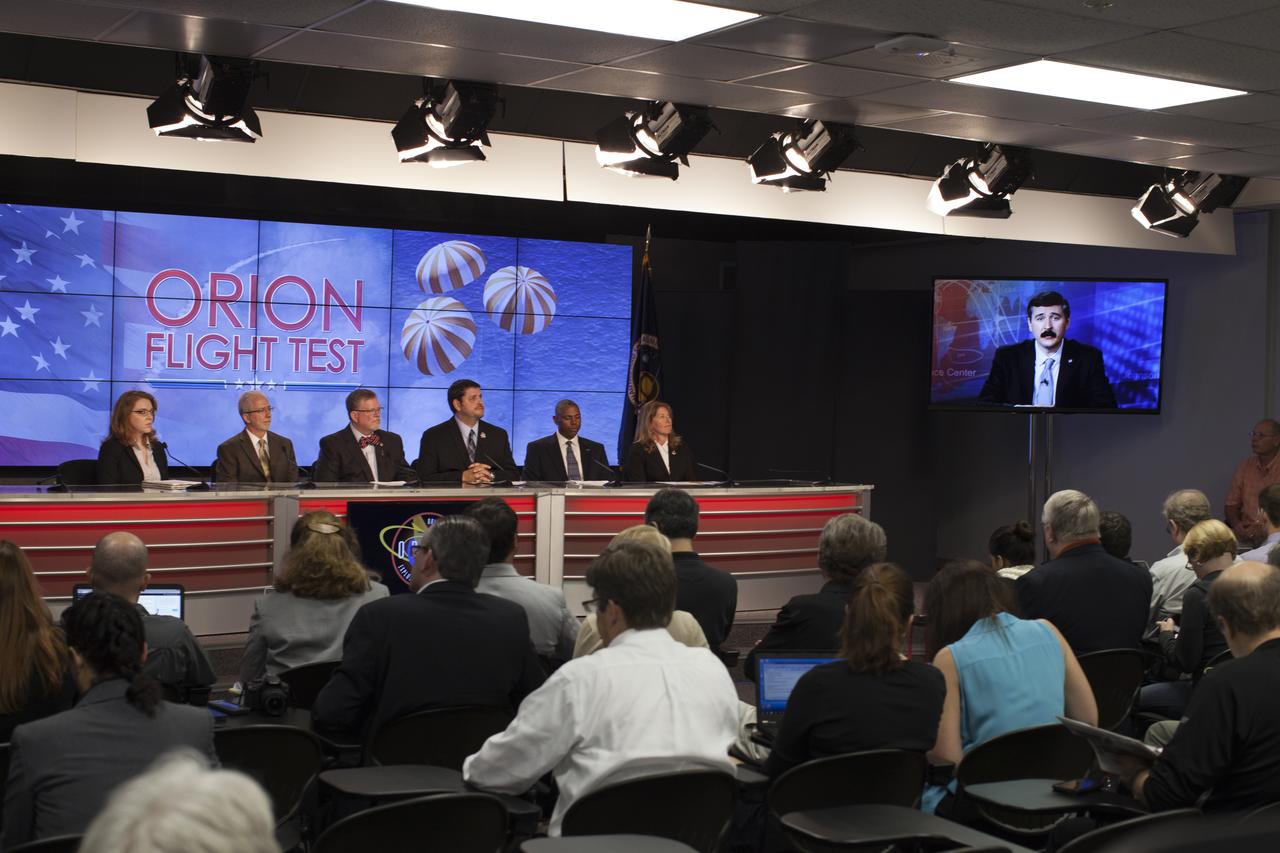
In the Kennedy Space Center’s Press Site auditorium, agency and industry leaders spoke to members of the news media as the Orion spacecraft and its Delta IV Heavy rocket were being prepared for launch. From left are: Brandi Dean of NASA Public Affairs, Mark Geyer, Orion program manager, Mike Hawes, Lockheed Martin Orion Program manager, Jeff Angermeier, Exploration Flight Test-1 Ground Systems Development and Operations mission manager, Ron Fortson, United Launch Alliance director of mission management, and Kathy Winters, U.S. Air Force 45th Space Wing Launch Weather officer. On the right, Mike Sarafin, Orion flight director, participated via video from the Johnson Space Center.
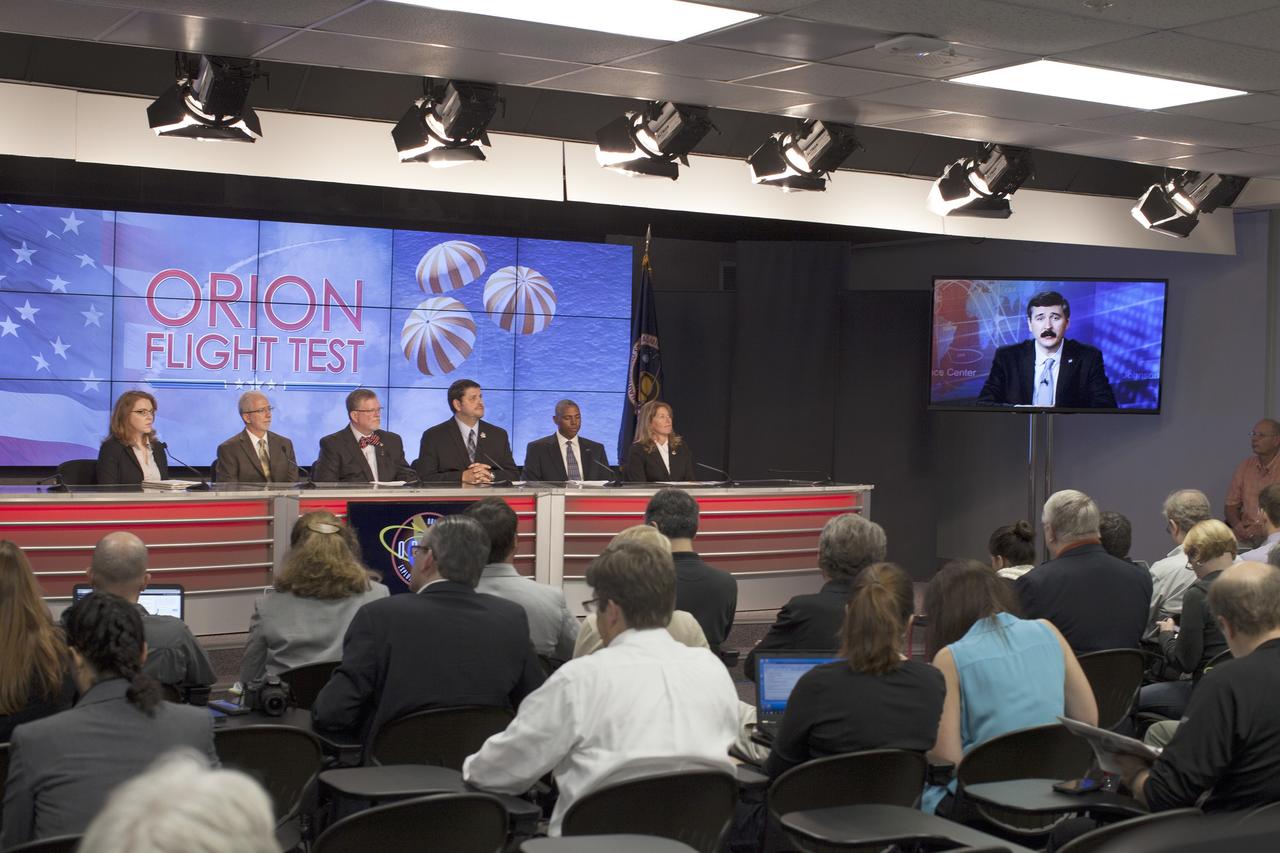
CAPE CANAVERAL, Fla. -- In the Kennedy Space Center’s Press Site auditorium, agency and industry leaders spoke to members of the news media as the Orion spacecraft and its Delta IV Heavy rocket were being prepared for launch. From left are: Brandi Dean of NASA Public Affairs, Mark Geyer, Orion program manager, Mike Hawes, Lockheed Martin Orion Program manager, Jeff Angermeier, Exploration Flight Test-1 Ground Systems Development and Operations mission manager, Ron Fortson, United Launch Alliance director of mission management, and Kathy Winters, U.S. Air Force 45th Space Wing Launch Weather officer. On the right, Mike Sarafin, Orion flight director, participated via video from the Johnson Space Center. For more information, visit www.nasa.gov/orion. Photo credit: NASA/Frankie Martin
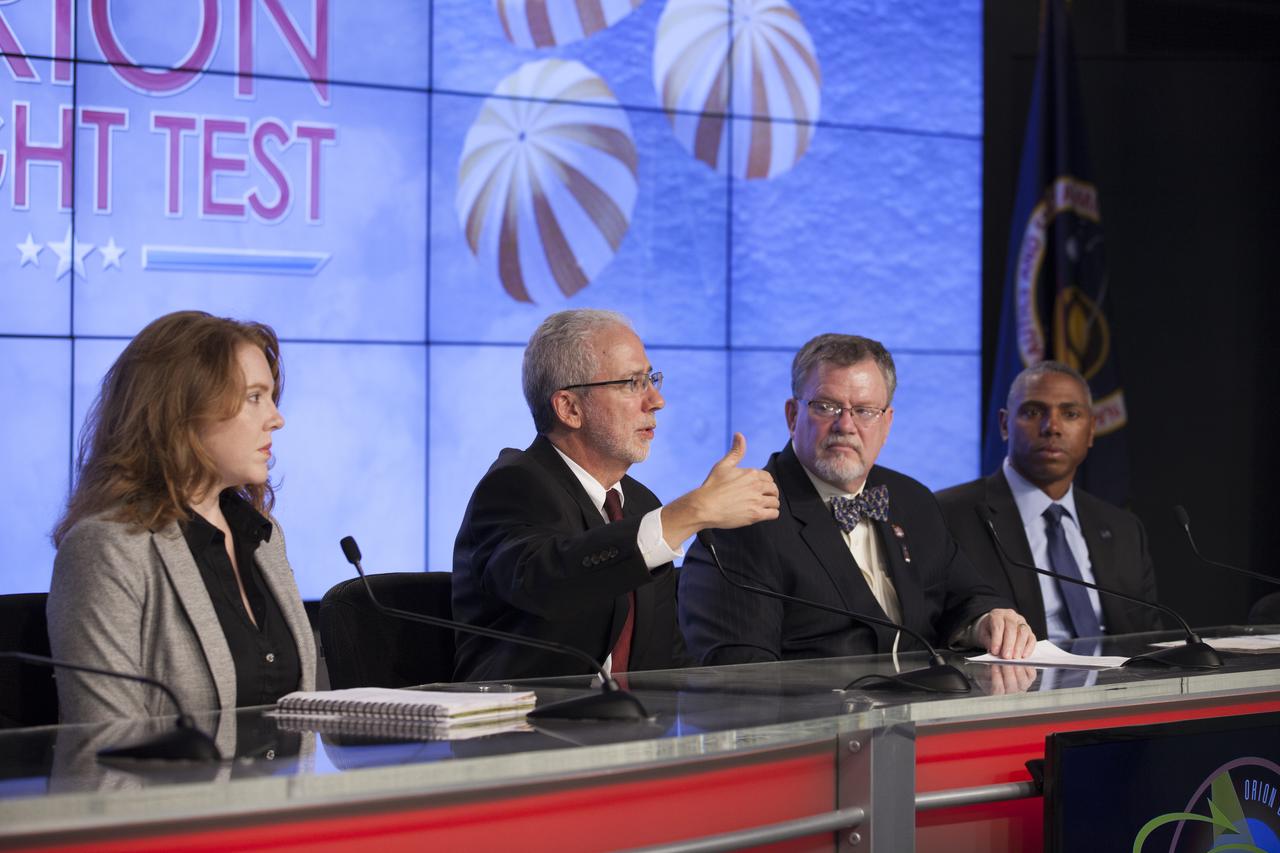
In the Kennedy Space Center’s Press Site auditorium, agency and industry leaders spoke to members of the news media as the Orion spacecraft and its Delta IV Heavy rocket were being prepared for launch. From left are: Brandi Dean of NASA Public Affairs, Mark Geyer, Orion program manager, Mike Hawes, Lockheed Martin Orion Program manager, and Ron Fortson, United Launch Alliance director of mission management. Orion is the exploration spacecraft designed to carry astronauts to destinations not yet explored by humans, including an asteroid and Mars. It will have emergency abort capability, sustain the crew during space travel and provide safe re-entry from deep space return velocities. The first unpiloted flight test of Orion is scheduled to launch Dec. 4, 2014 atop a United Launch Alliance Delta IV Heavy rocket, and in 2018 on NASA’s Space Launch System rocket.
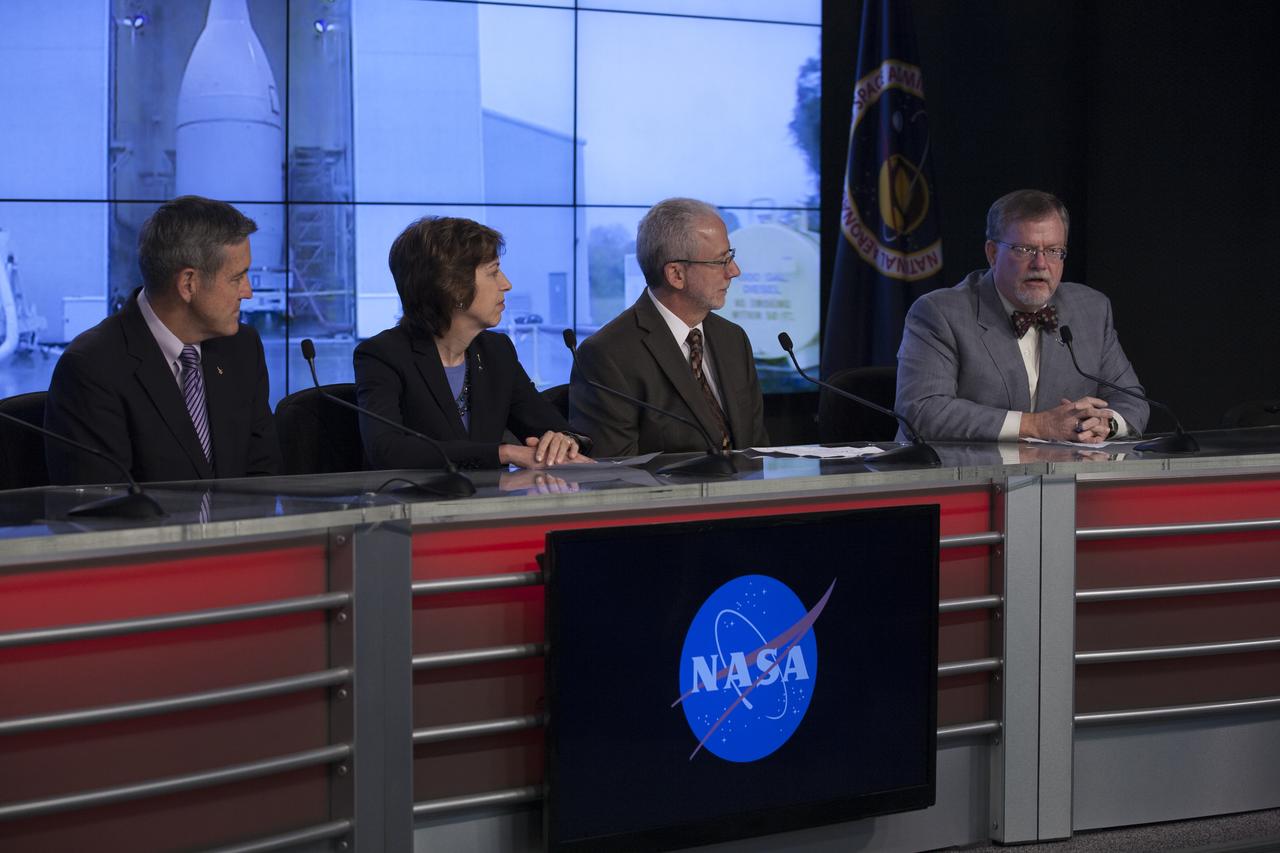
In the Kennedy Space Center’s Press Site auditorium, agency leaders spoke to members of the news media as the completed Orion spacecraft was being prepared for its trip from the Launch Abort System Facility to Launch Complex 37 at Cape Canaveral Air Force Station. From left are: Kennedy Director Bob Cabana, Johnson Space Center Director Ellen Ochoa, NASA Orion Program manager Mark Geyer, and Lockheed Martin Orion Program manager Mike Hawes. Orion is the exploration spacecraft designed to carry astronauts to destinations not yet explored by humans, including an asteroid and Mars. It will have emergency abort capability, sustain the crew during space travel and provide safe re-entry from deep space return velocities. The first unpiloted flight test of Orion is scheduled to launch Dec. 4, 2014 atop a United Launch Alliance Delta IV Heavy rocket, and in 2018 on NASA’s Space Launch System rocket.
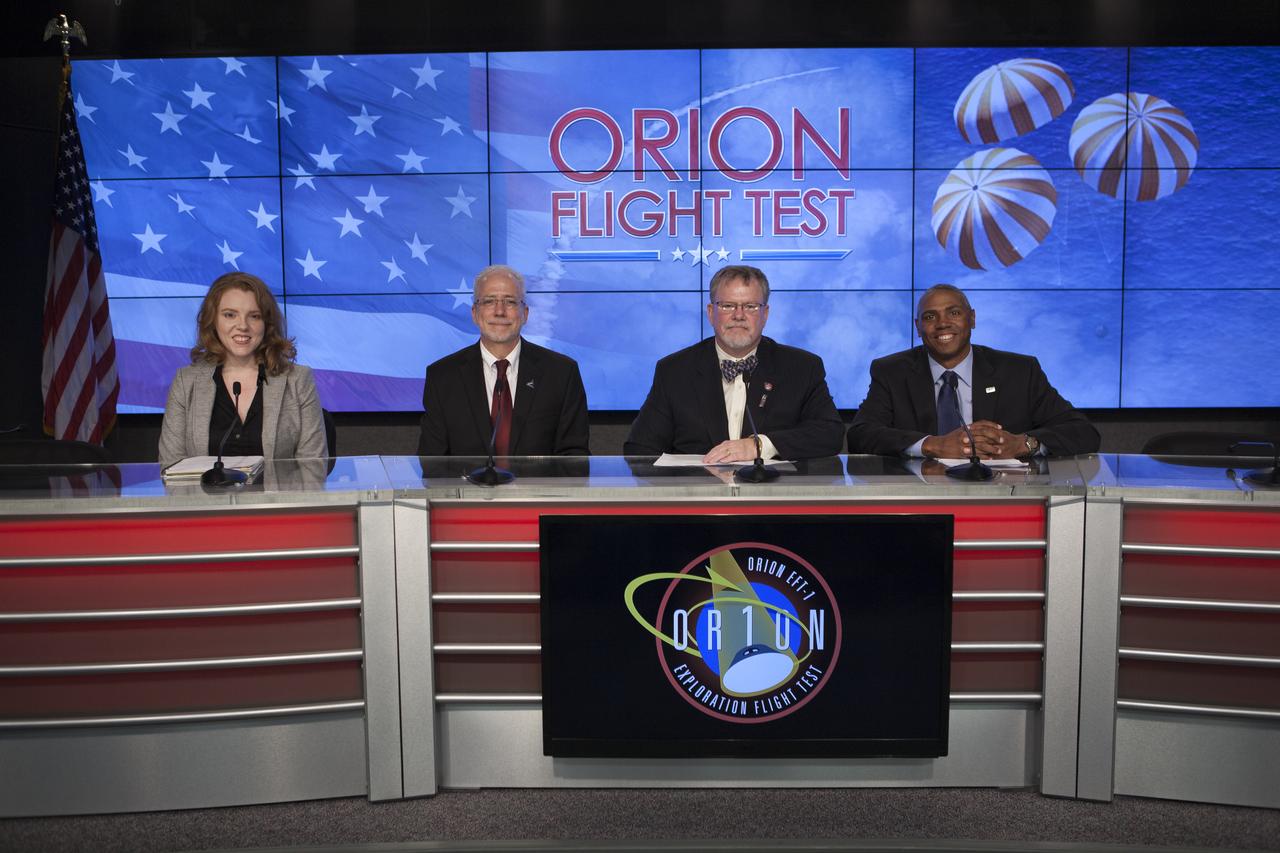
In the Kennedy Space Center’s Press Site auditorium, agency and industry leaders spoke to members of the news media as the Orion spacecraft and its Delta IV Heavy rocket were being prepared for launch. From left are: Brandi Dean of NASA Public Affairs, Mark Geyer, Orion program manager, Mike Hawes, Lockheed Martin Orion Program manager, and Ron Fortson, United Launch Alliance director of mission management. Orion is the exploration spacecraft designed to carry astronauts to destinations not yet explored by humans, including an asteroid and Mars. It will have emergency abort capability, sustain the crew during space travel and provide safe re-entry from deep space return velocities. The first unpiloted flight test of Orion is scheduled to launch Dec. 4, 2014 atop a United Launch Alliance Delta IV Heavy rocket, and in 2018 on NASA’s Space Launch System rocket.
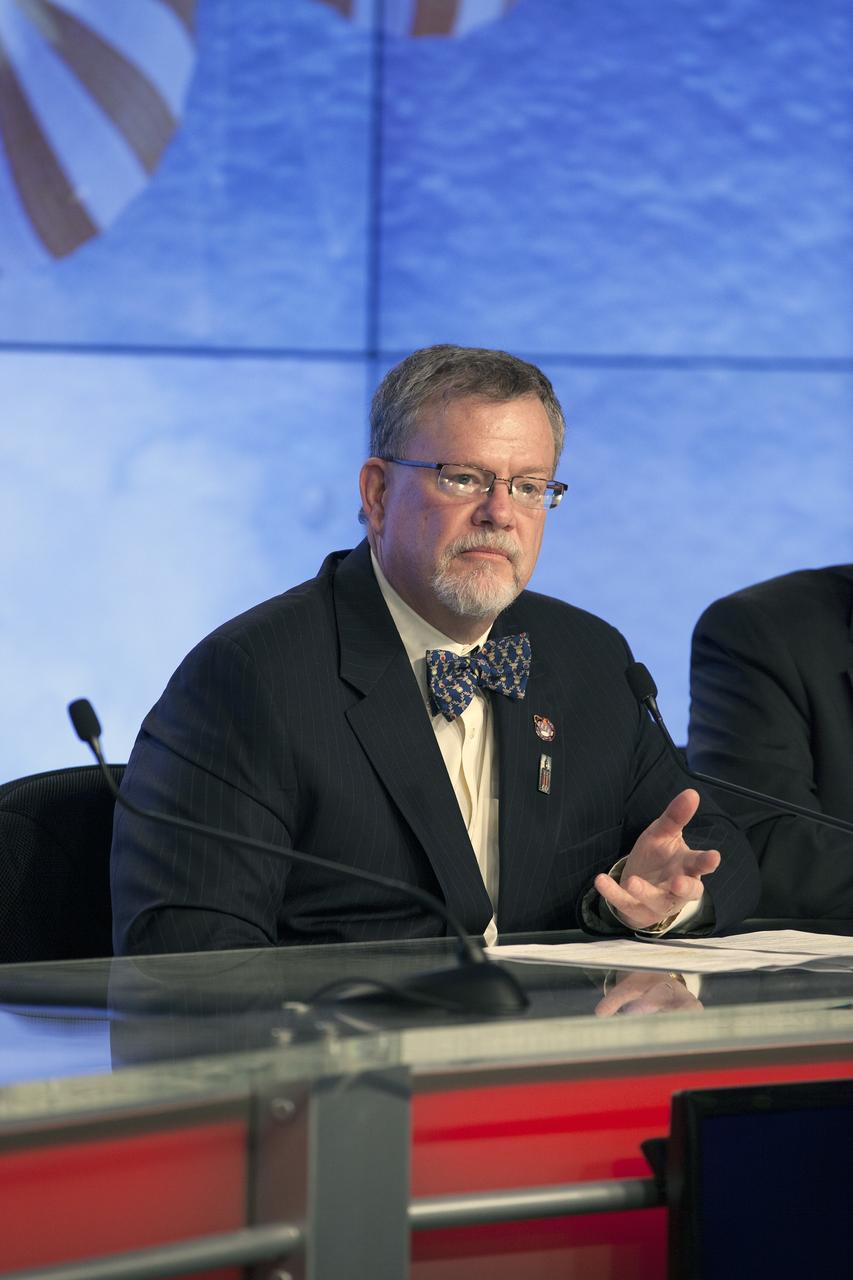
CAPE CANAVERAL, Fla. – In the Kennedy Space Center’s Press Site auditorium, Mike Hawes, Lockheed Martin Orion Program manager, was among agency and industry leaders who spoke to members of the news media as the Orion spacecraft and its Delta IV Heavy rocket were being prepared for launch. Orion is the exploration spacecraft designed to carry astronauts to destinations not yet explored by humans, including an asteroid and Mars. It will have emergency abort capability, sustain the crew during space travel and provide safe re-entry from deep space return velocities. The first unpiloted flight test of Orion is scheduled to launch Dec. 4, 2014 atop a United Launch Alliance Delta IV Heavy rocket, and in 2018 on NASA’s Space Launch System rocket. For more information, visit www.nasa.gov/orion Photo credit: NASA/Kim Shiflett
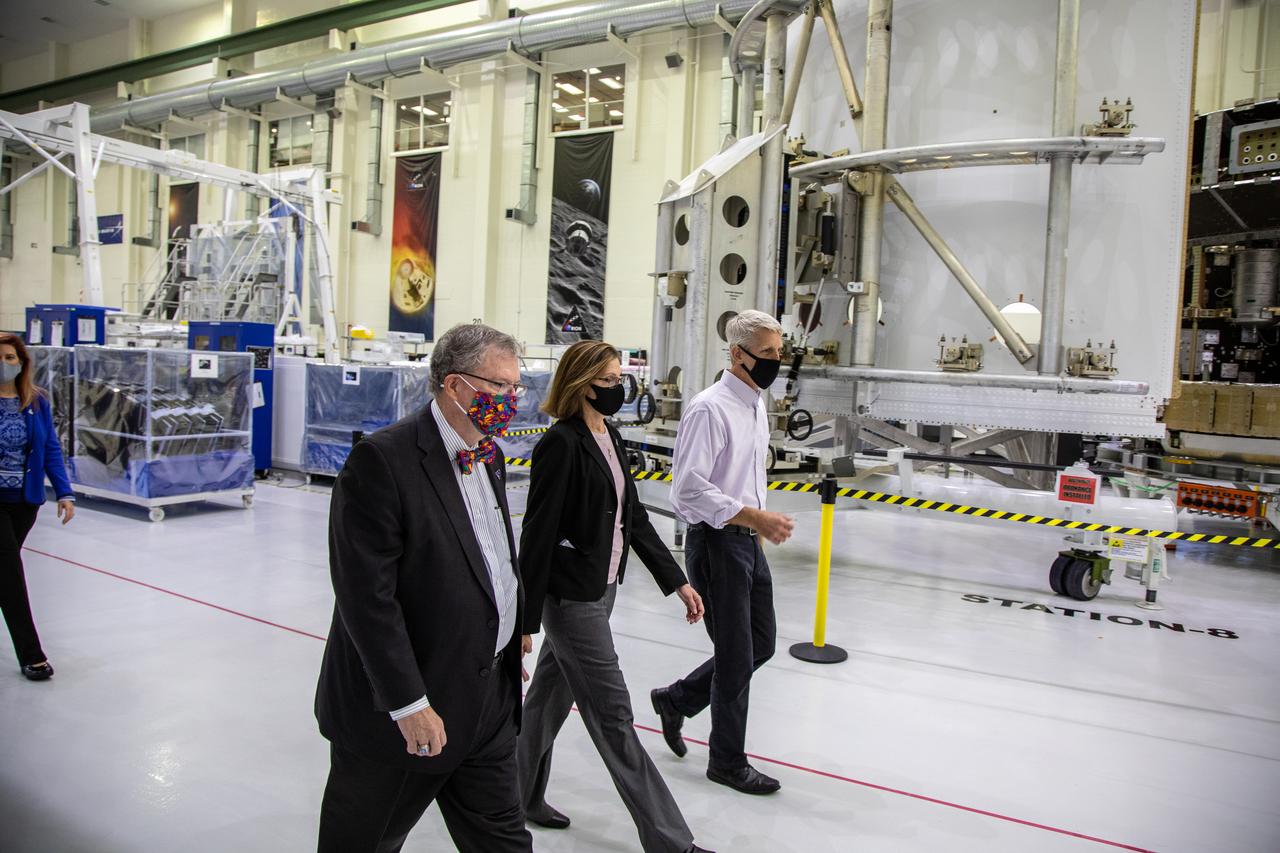
Catherine Koerner, in the center, NASA Orion Program manager, along with senior managers from Orion and Lockheed Martin, tours the Neil Armstrong Operations and Checkout Building at NASA’s Kennedy Space Center in Florida on Oct. 6, 2020. Accompanying her, at left is Mike Hawes, Lockheed Martin vice president and Orion Program manager; and at right is Scott Wilson, NASA Kennedy Orion Production Operations manager. Koerner viewed the Orion spacecraft for the Artemis I and II missions. They are shown with one of the space adapter jettison fairing panels that will be installed on Orion for the Artemis I mission. The first in a series of increasingly complex missions, Artemis I will test the Orion spacecraft and Space Launch System as an integrated system ahead of crewed flights to the Moon. Under the Artemis program, NASA will land the first woman and the next man on the Moon in 2024.
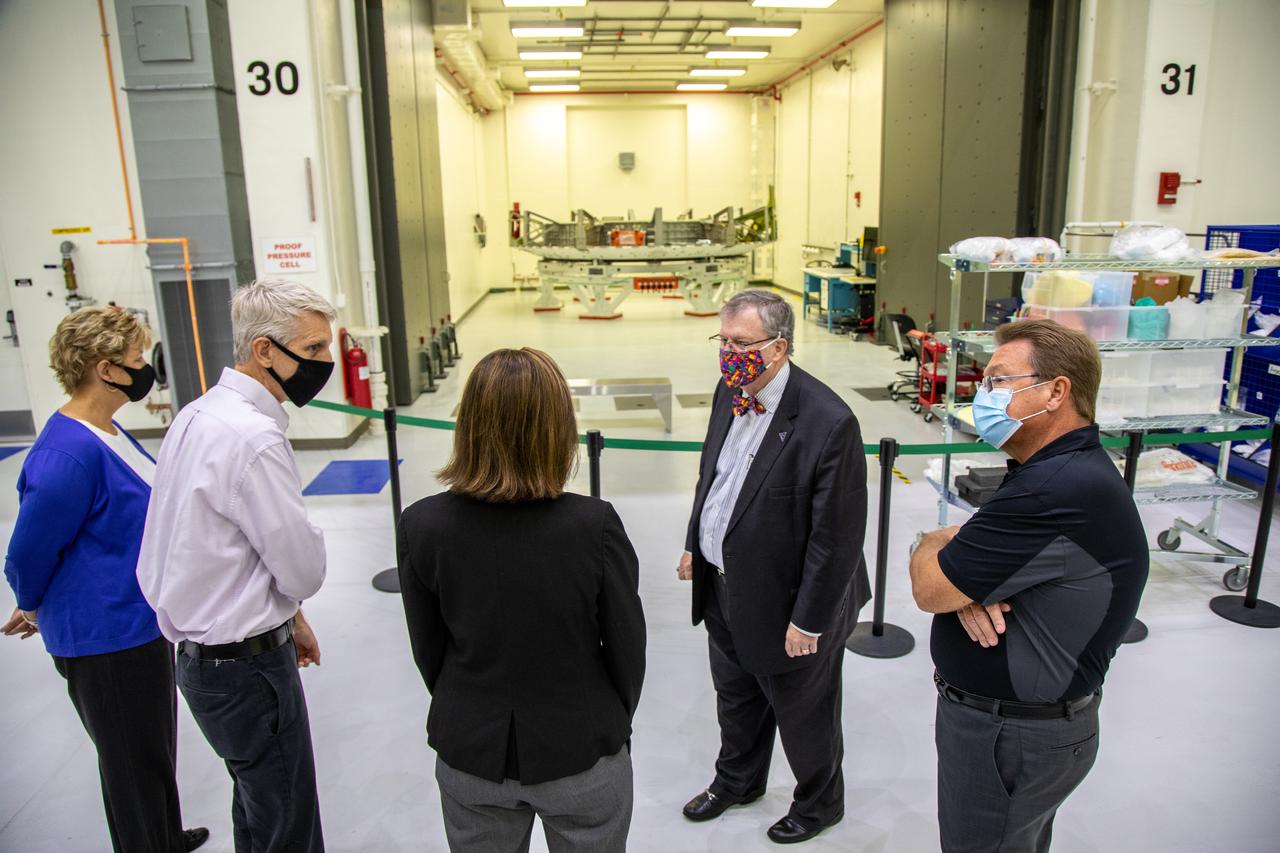
Catherine Koerner, in the center, NASA Orion Program manager, along with senior managers from Orion and Lockheed Martin, tours the Neil Armstrong Operations and Checkout Building at NASA’s Kennedy Space Center in Florida on Oct. 6, 2020. Accompanying her, from left are Annette Hasbrook, Orion Program assistant manager; Scott Wilson, NASA Kennedy Orion Production Operations manager, Mike Hawes, Lockheed Martin vice president and Orion Program manager; and Jules Schneider, Lockheed Martin Assembly, Test and Launch Operations director with Lockheed Martin. Koerner viewed the Orion spacecraft for the Artemis I and II missions. They are shown with the crew module adapter for the Orion Artemis II mission. The first in a series of increasingly complex missions, Artemis I will test the Orion spacecraft and Space Launch System as an integrated system ahead of crewed flights to the Moon. Under the Artemis program, NASA will land the first woman and the next man on the Moon in 2024.
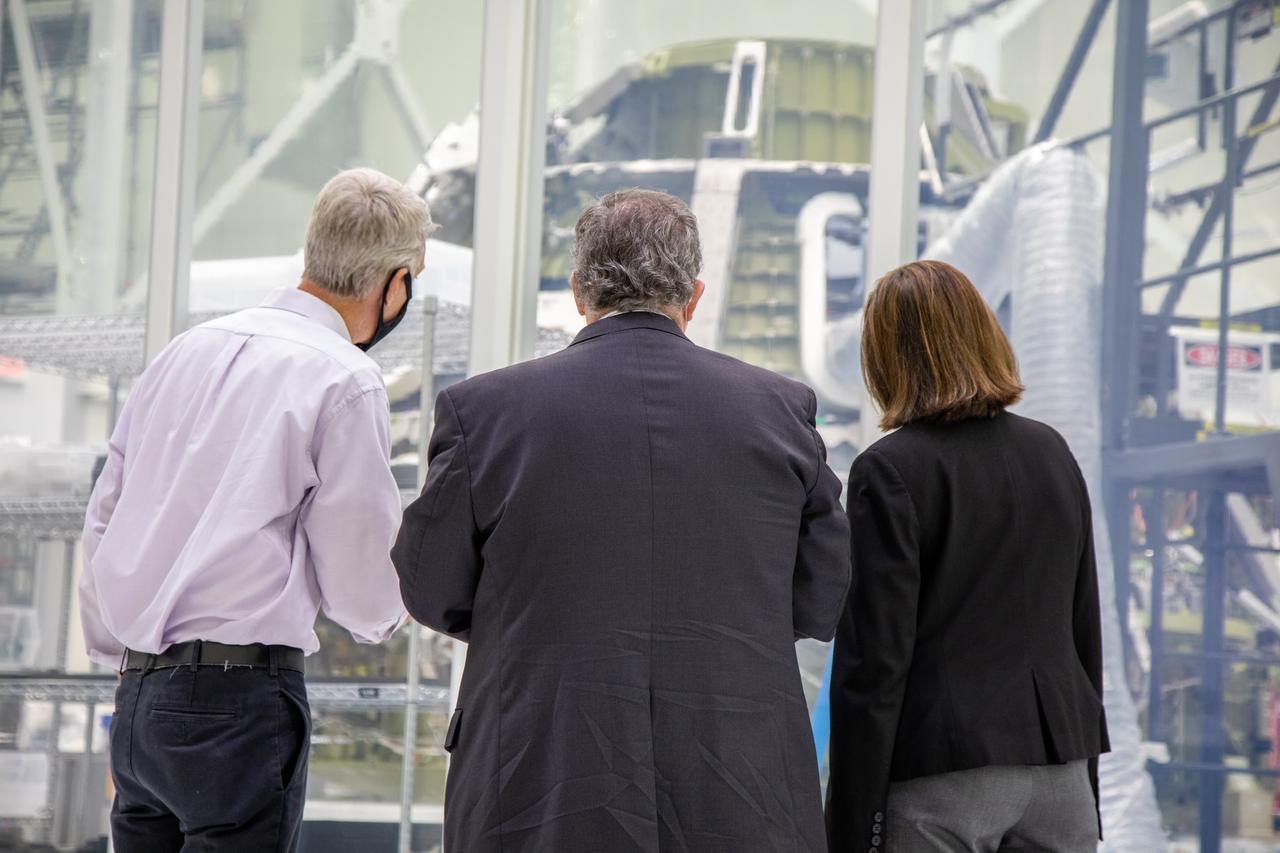
Catherine Koerner, at far right, NASA Orion Program manager, along with senior managers from Orion and Lockheed Martin, tours the Neil Armstrong Operations and Checkout Building at NASA’s Kennedy Space Center in Florida on Oct. 6, 2020. Accompanying her, from left are Scott Wilson, NASA Kennedy Orion Production Operations manager, and Mike Hawes, Lockheed Martin vice president and Orion Program manager. They are pictured viewing the Orion crew module for the Artemis II mission, and also viewed the Orion spacecraft with its solar array wings installed for Artemis I. The first in a series of increasingly complex missions, Artemis I will test the Orion spacecraft and Space Launch System as an integrated system ahead of crewed flights to the Moon. Under the Artemis program, NASA will land the first woman and the next man on the Moon in 2024.
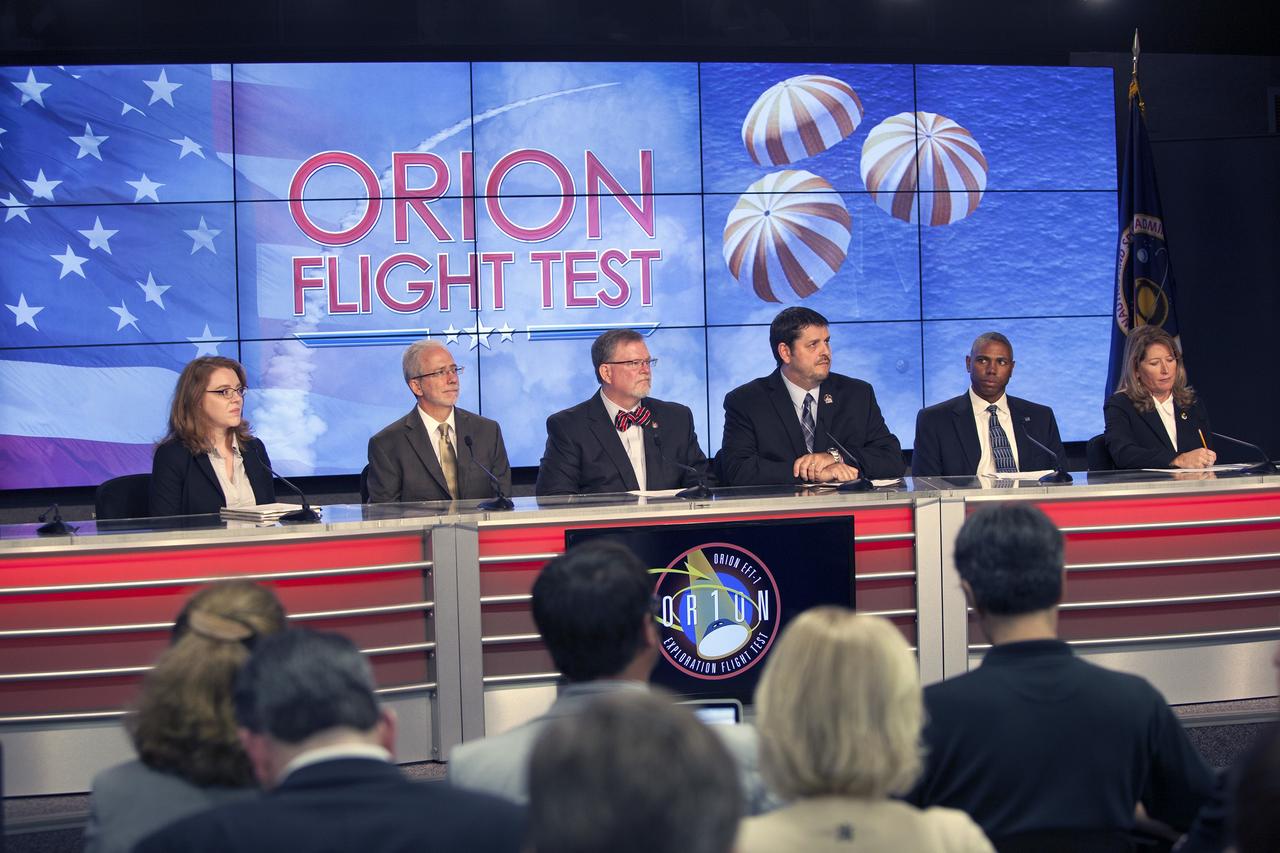
CAPE CANAVERAL, Fla. -- In the Kennedy Space Center’s Press Site auditorium, agency and industry leaders spoke to members of the news media as the Orion spacecraft and its Delta IV Heavy rocket were being prepared for launch. From left are: Brandi Dean of NASA Public Affairs, Mark Geyer, Orion program manager, Mike Hawes, Lockheed Martin Orion Program manager, Jeff Angermeier, Exploration Flight Test-1 Ground Systems Development and Operations mission manager, Ron Fortson, United Launch Alliance director of mission management, and Kathy Winters, U.S. Air Force 45th Space Wing Launch Weather officer. For more information, visit www.nasa.gov/orion. Photo credit: NASA/Frankie Martin
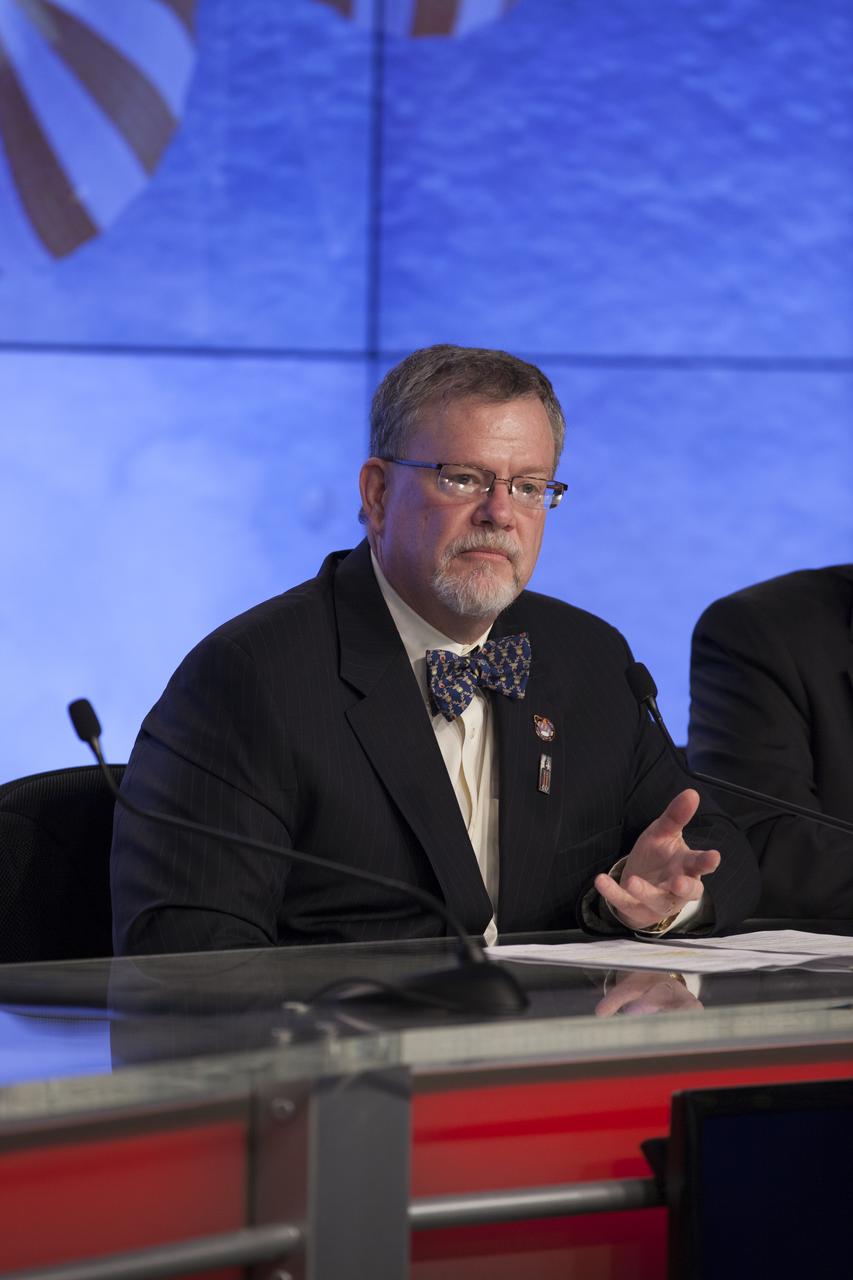
In the Kennedy Space Center’s Press Site auditorium, Mike Hawes, Lockheed Martin Orion Program manager, was among agency and industry leaders who spoke to members of the news media as the Orion spacecraft and its Delta IV Heavy rocket were being prepared for launch. Orion is the exploration spacecraft designed to carry astronauts to destinations not yet explored by humans, including an asteroid and Mars. It will have emergency abort capability, sustain the crew during space travel and provide safe re-entry from deep space return velocities. The first unpiloted flight test of Orion is scheduled to launch Dec. 4, 2014 atop a United Launch Alliance Delta IV Heavy rocket, and in 2018 on NASA’s Space Launch System rocket.
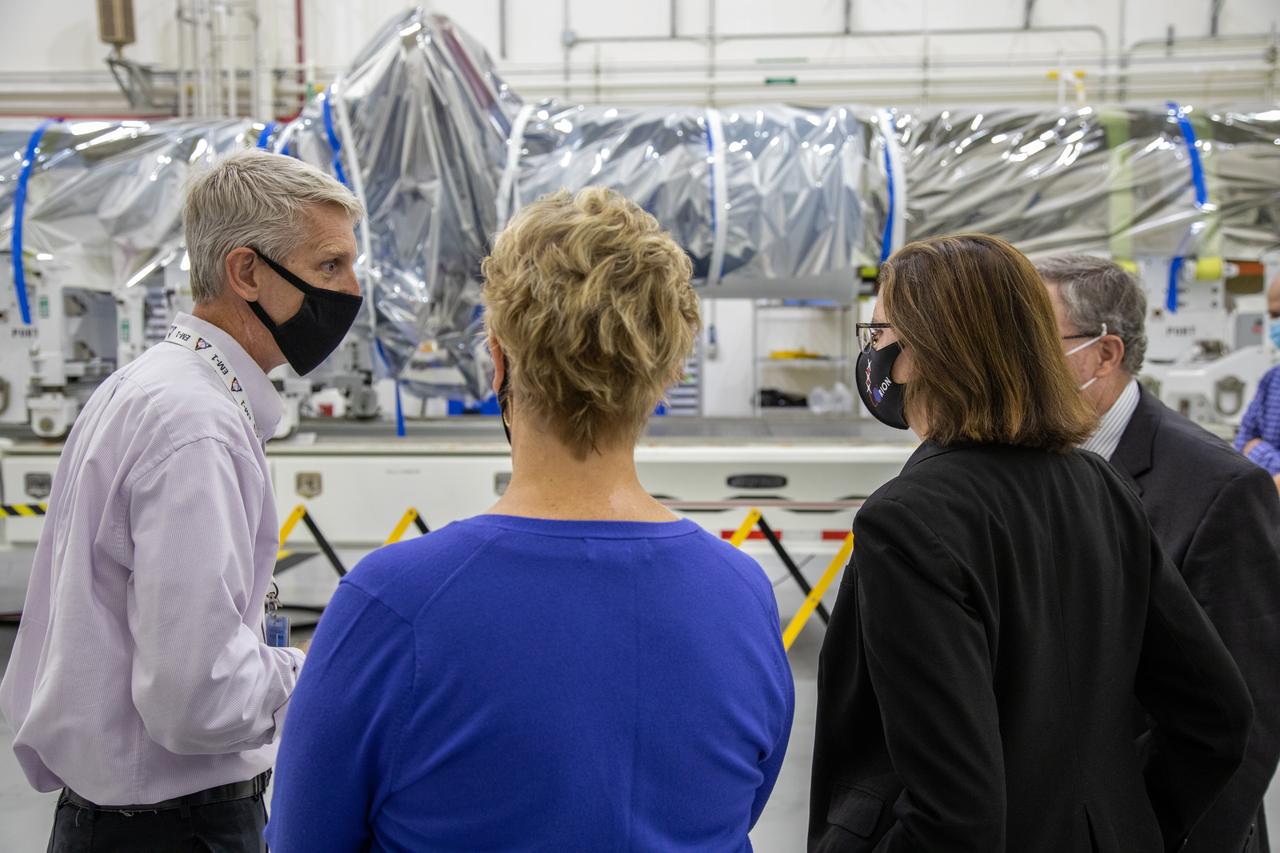
Catherine Koerner, second from right, NASA Orion Program manager, along with senior managers from Orion and Lockheed Martin, tour the Launch Abort System Facility at NASA’s Kennedy Space Center in Florida on Oct. 6, 2020. Accompanying her from left, are Scott Wilson, NASA Kennedy Orion Production Operations manager; Annette Hasbrook, Orion Program assistant manager; and Mike Hawes, Lockheed Martin vice president and Orion Program manager. They are viewing the launch abort system for the Artemis II mission. Koerner also viewed the Orion spacecraft for the Artemis I and II missions in the Neil Armstrong Operations and Checkout Building. The first in a series of increasingly complex missions, Artemis I will test the Orion spacecraft and Space Launch System as an integrated system ahead of crewed flights to the Moon. Under the Artemis program, NASA will land the first woman and the next man on the Moon in 2024.
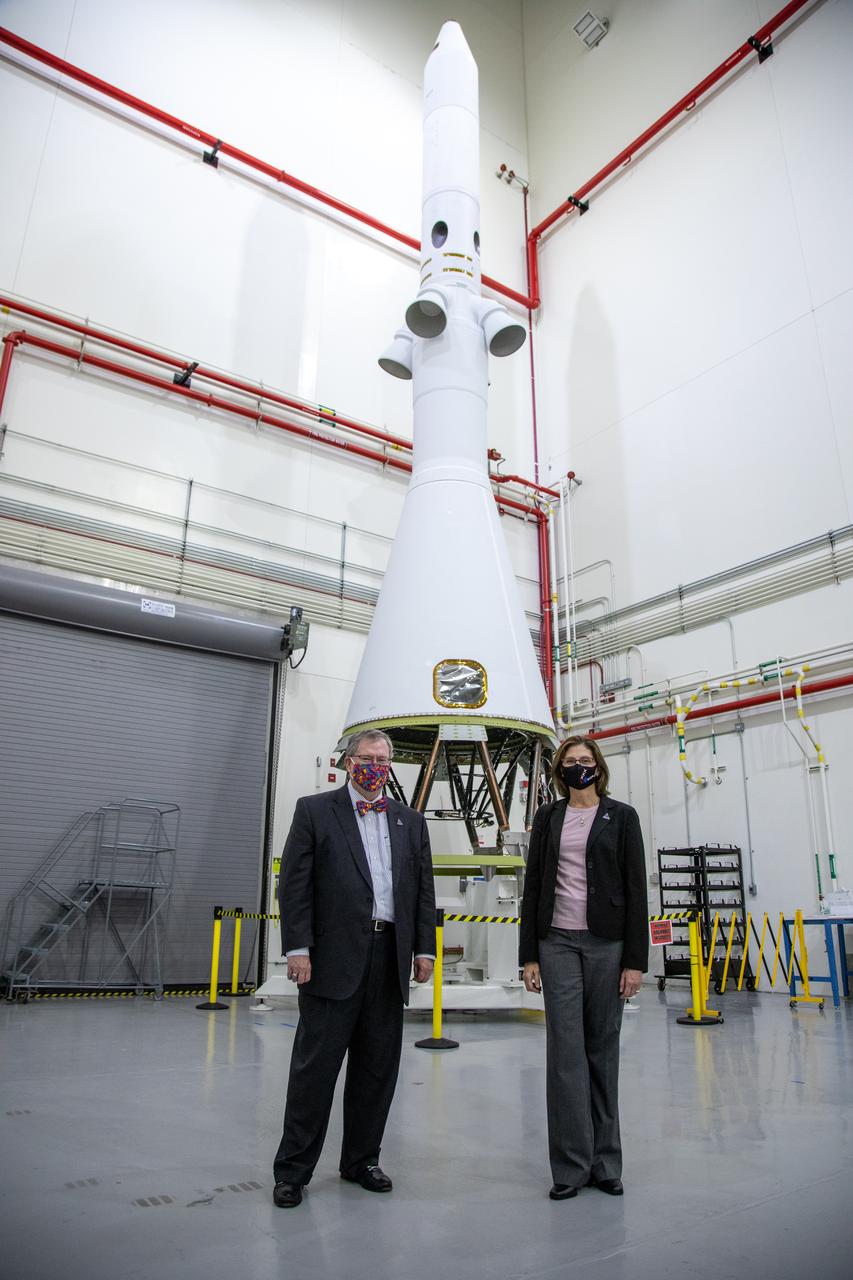
Catherine Koerner, NASA Orion Program manager, along with senior managers from Orion and Lockheed Martin, tour the Launch Abort System Facility at NASA’s Kennedy Space Center in Florida on Oct. 6, 2020. Pictured with Mike Hawes, Lockheed Martin vice president and Orion Program manager, they are viewing the launch abort system for the Artemis I mission. Koerner also viewed the Orion spacecraft for the Artemis I and II missions in the Neil Armstrong Operations and Checkout Building. The first in a series of increasingly complex missions, Artemis I will test the Orion spacecraft and Space Launch System as an integrated system ahead of crewed flights to the Moon. Under the Artemis program, NASA will land the first woman and the next man on the Moon in 2024.
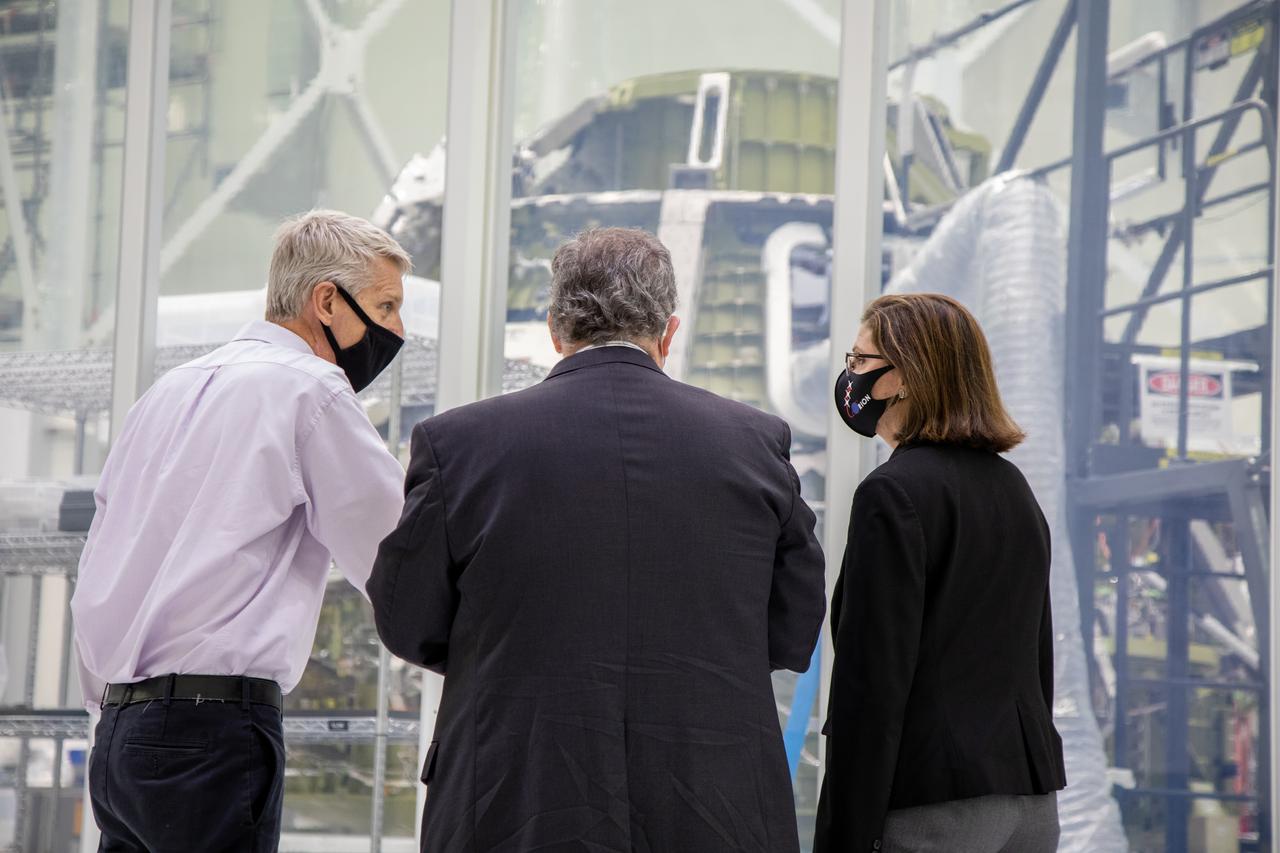
Catherine Koerner, at far right, NASA Orion Program manager, along with senior managers from Orion and Lockheed Martin, tours the Neil Armstrong Operations and Checkout Building at NASA’s Kennedy Space Center in Florida on Oct. 6, 2020. Accompanying her, from left are Scott Wilson, NASA Kennedy Orion Production Operations manager, and Mike Hawes, Lockheed Martin vice president and Orion Program manager. They are pictured viewing the Orion crew module for the Artemis II mission, and also viewed the Orion spacecraft with its solar array wings installed for Artemis I. The first in a series of increasingly complex missions, Artemis I will test the Orion spacecraft and Space Launch System as an integrated system ahead of crewed flights to the Moon. Under the Artemis program, NASA will land the first woman and the next man on the Moon in 2024.
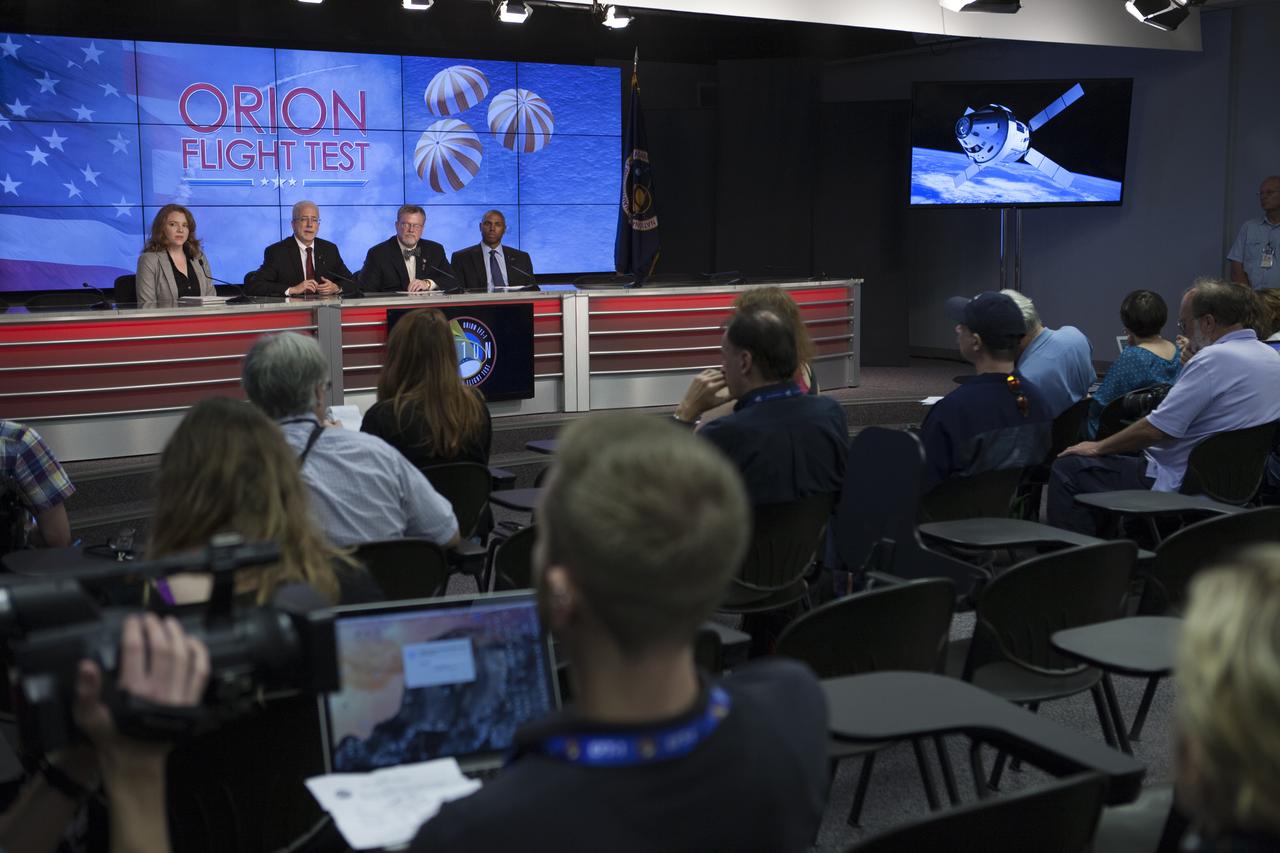
In the Kennedy Space Center’s Press Site auditorium, news media members listen as agency and industry leaders the status of preparations for launch of the Orion spacecraft atop a Delta IV Heavy rocket. From left are: Brandi Dean of NASA Public Affairs, Mark Geyer, Orion program manager, Mike Hawes, Lockheed Martin Orion Program manager, and Ron Fortson, United Launch Alliance director of mission management. Orion is the exploration spacecraft designed to carry astronauts to destinations not yet explored by humans, including an asteroid and Mars. It will have emergency abort capability, sustain the crew during space travel and provide safe re-entry from deep space return velocities. The first unpiloted flight test of Orion is scheduled to launch Dec. 4, 2014 atop a United Launch Alliance Delta IV Heavy rocket, and in 2018 on NASA’s Space Launch System rocket.
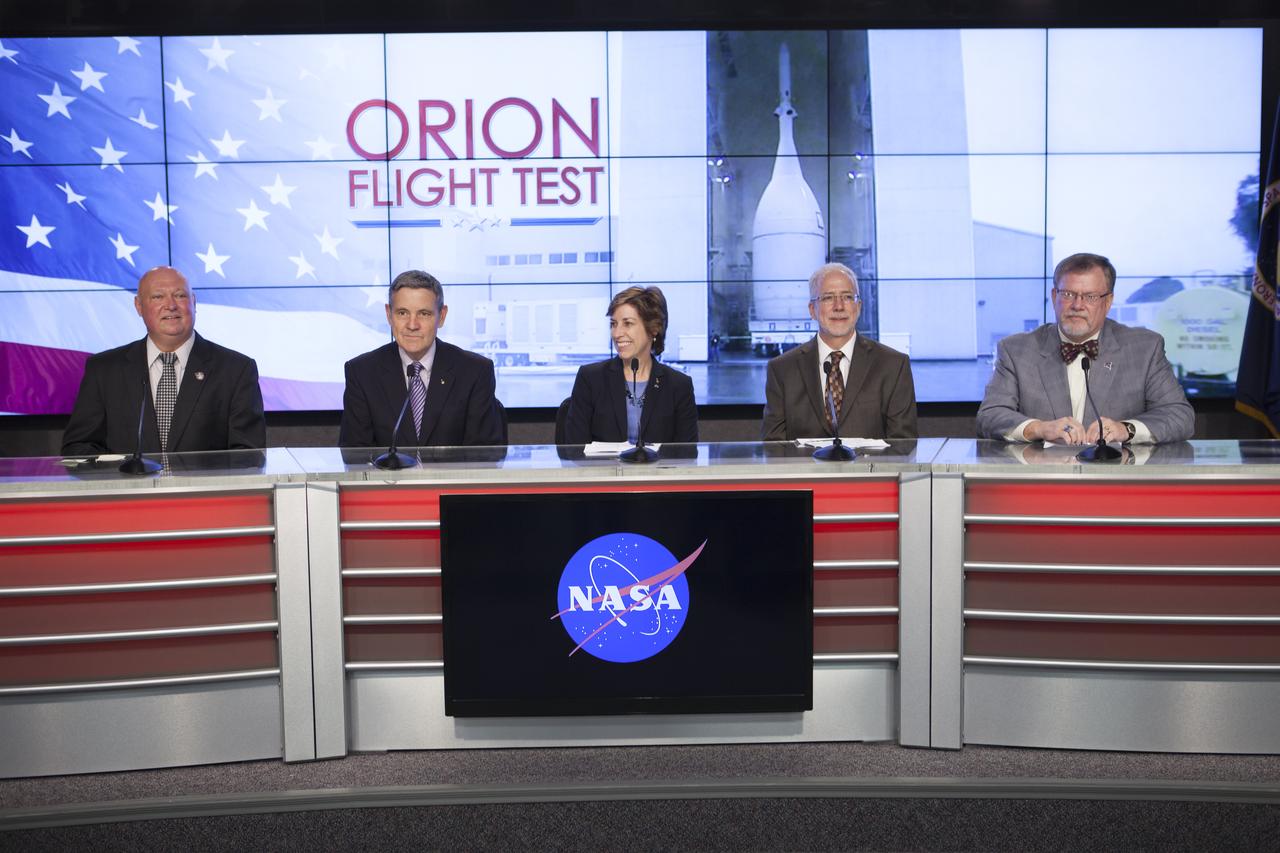
In the Kennedy Space Center’s Press Site auditorium, agency leaders spoke to members of the news media as the completed Orion spacecraft was being prepared for its trip from the Launch Abort System Facility to Launch Complex 37 at Cape Canaveral Air Force Station. From left are: Mike Curie of NASA Public Affairs, Kennedy Director Bob Cabana, Johnson Space Center Director Ellen Ochoa, NASA Orion Program manager Mark Geyer, and Lockheed Martin Orion Program manager Mike Hawes. Orion is the exploration spacecraft designed to carry astronauts to destinations not yet explored by humans, including an asteroid and Mars. It will have emergency abort capability, sustain the crew during space travel and provide safe re-entry from deep space return velocities. The first unpiloted flight test of Orion is scheduled to launch Dec. 4, 2014 atop a United Launch Alliance Delta IV Heavy rocket, and in 2018 on NASA’s Space Launch System rocket.
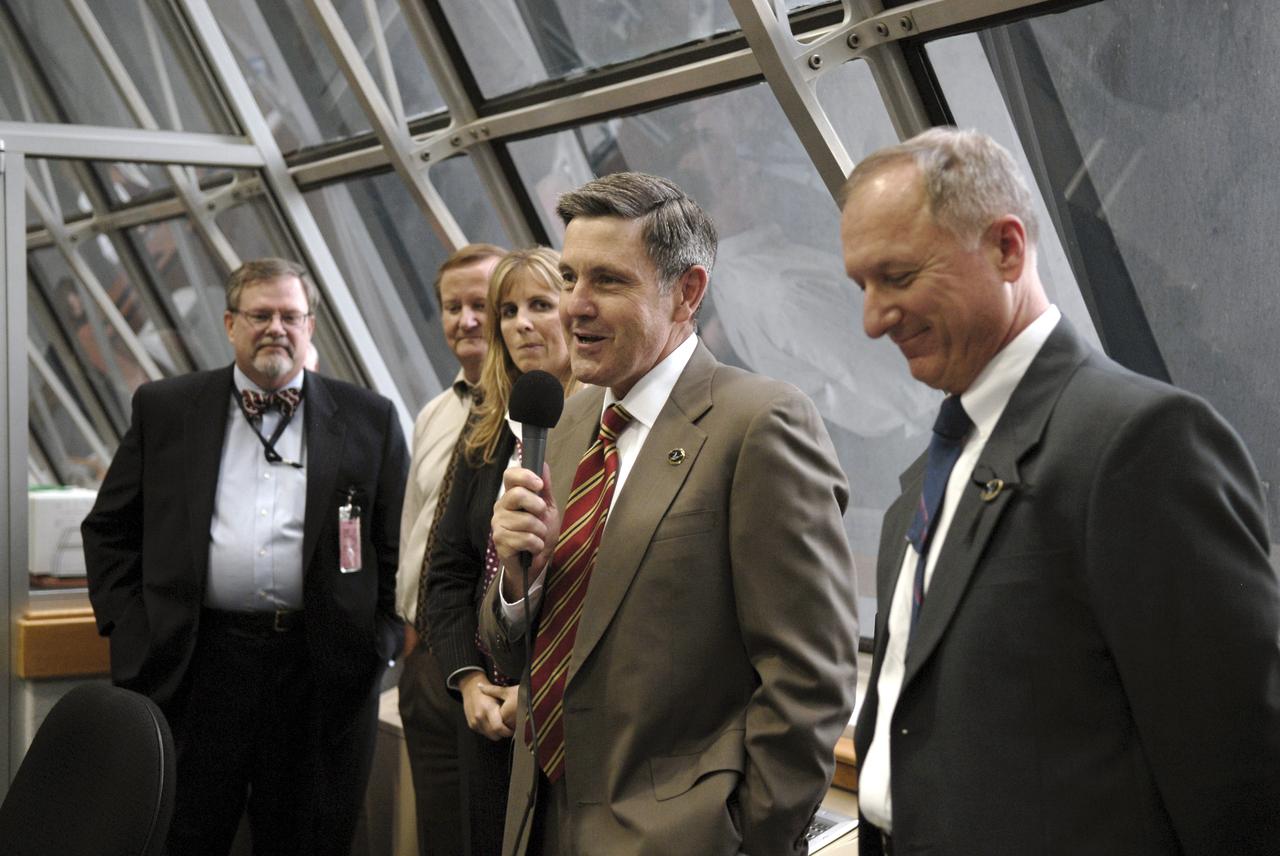
CAPE CANAVERAL, Fla. – In the Firing Room at NASA's Kennedy Space Center in Florida, Center Director Bob Cabana congratulates the mission team for the successful launch of space shuttle Endeavour on the STS-127 mission. Liftoff was on-time at 6:03 p.m. EDT. Looking on at left are Associate Administrator of Program Analysis & Evaluation at NASA Dr. Michael Hawes, Shuttle Launch Director Mike Leinbach and Endeavour Flow Director Dana Hutcherson , and at right, STS-127 Shuttle Launch Director Pete Nickolenko. Today was the sixth launch attempt for the STS-127 mission. The launch was scrubbed on June 13 and June 17 when a hydrogen gas leak occurred during tanking due to a misaligned Ground Umbilical Carrier Plate. The mission was postponed July 11, 12 and 13 due to weather conditions near the Shuttle Landing Facility at Kennedy that violated rules for launching, and lightning issues. Endeavour will deliver the Japanese Experiment Module's Exposed Facility and the Experiment Logistics Module-Exposed Section in the final of three flights dedicated to the assembly of the Japan Aerospace Exploration Agency's Kibo laboratory complex on the International Space Station. Photo credit: NASA/Kim Shiflett
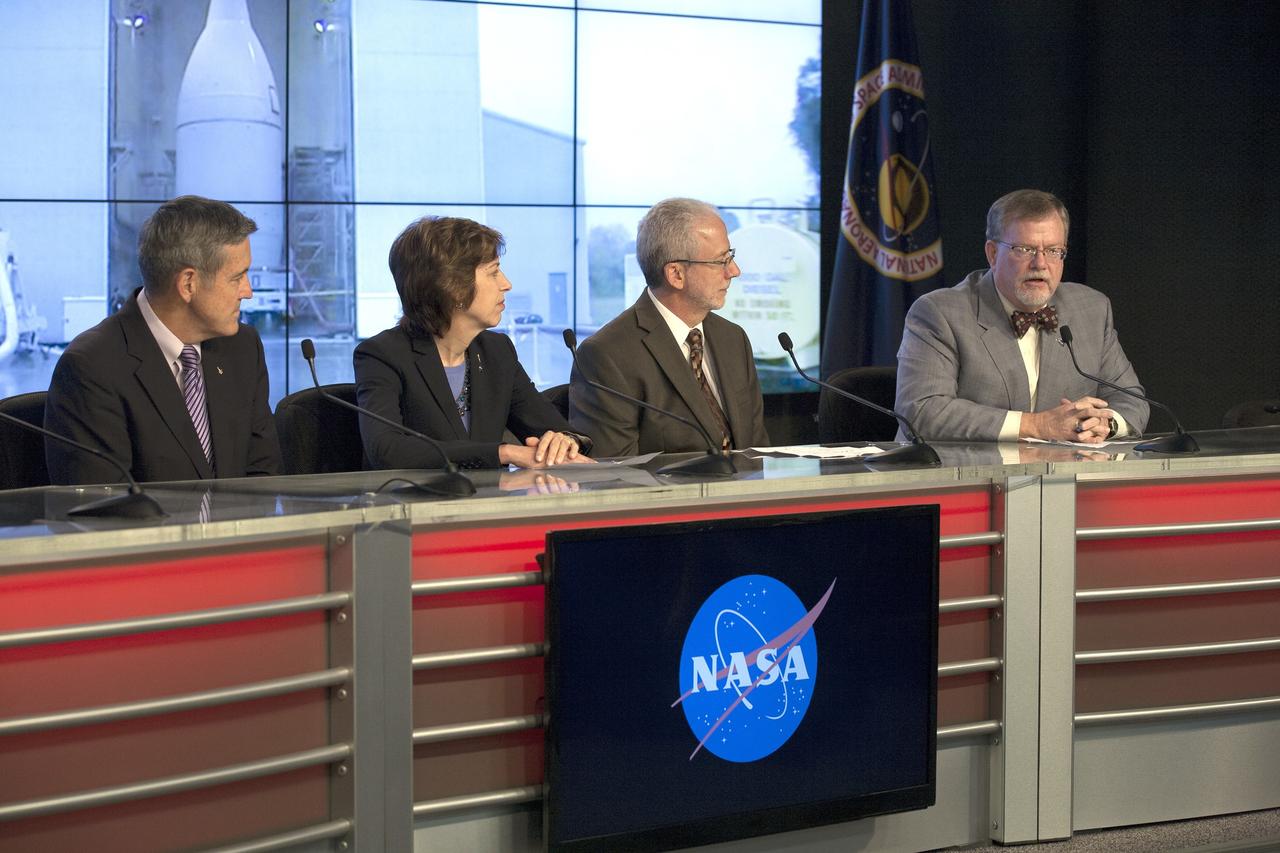
CAPE CANAVERAL, Fla. – In the Kennedy Space Center’s Press Site auditorium, agency leaders spoke to members of the news media as the completed Orion spacecraft was being prepared for its trip from the Launch Abort System Facility to Launch Complex 37 at Cape Canaveral Air Force Station. From left are: Kennedy Director Bob Cabana, Johnson Space Center Director Ellen Ochoa, NASA Orion Program manager Mark Geyer, and Lockheed Martin Orion Program manager Mike Hawes. Orion is the exploration spacecraft designed to carry astronauts to destinations not yet explored by humans, including an asteroid and Mars. It will have emergency abort capability, sustain the crew during space travel and provide safe re-entry from deep space return velocities. The first unpiloted flight test of Orion is scheduled to launch Dec. 4, 2014 atop a United Launch Alliance Delta IV Heavy rocket, and in 2018 on NASA’s Space Launch System rocket. For more information, visit www.nasa.gov/orion Photo credit: NASA/Kim Shiflett
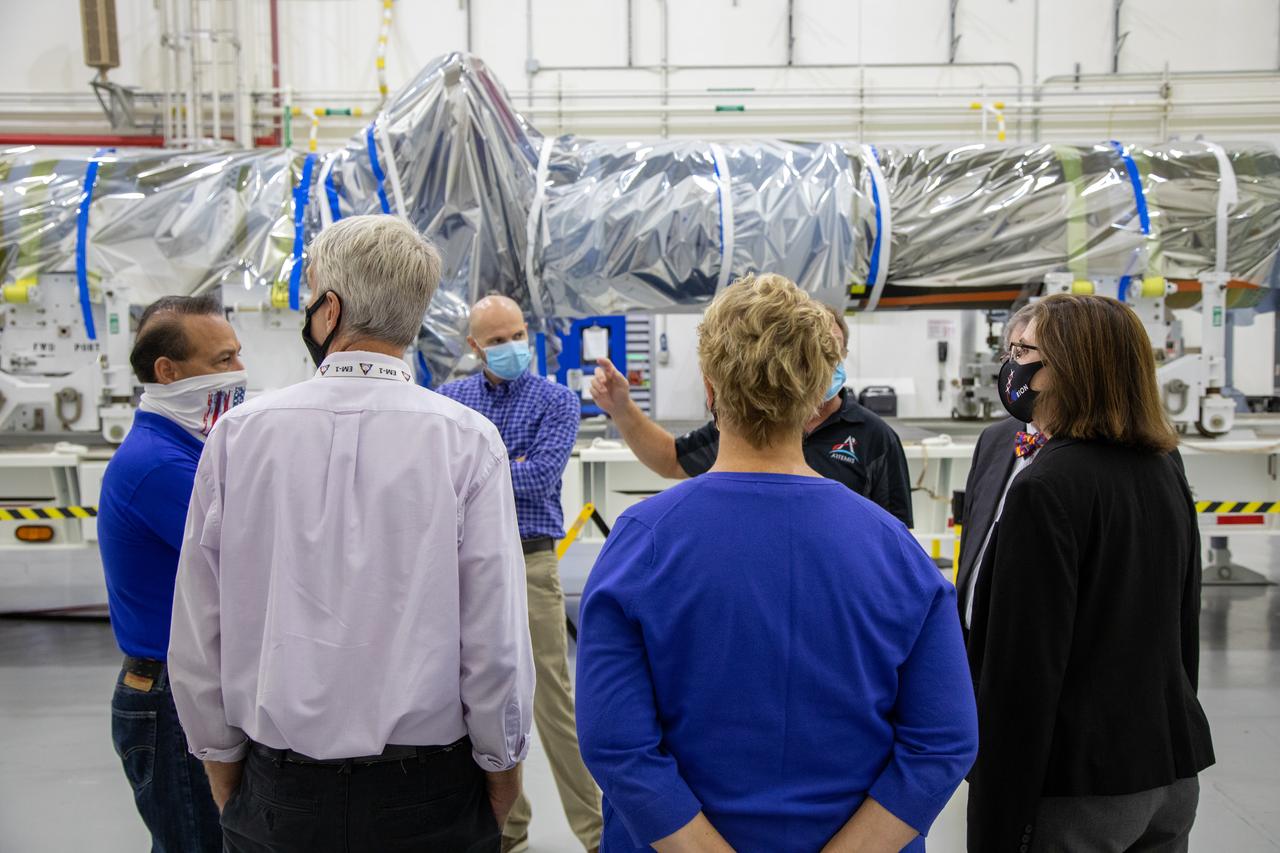
Catherine Koerner, far right, NASA Orion Program manager, along with senior managers from Orion and Lockheed Martin, tour the Launch Abort System Facility at NASA’s Kennedy Space Center in Florida on Oct. 6, 2020. Accompanying her from left, are Carlos Garcia, NASA Kennedy Launch Abort System Assembly, Integration and Test lead and Resident office manager; Scott Wilson, NASA Kennedy Orion Production Operations manager; Jim Skaggs, Kennedy Operations senior manager with Lockheed Martin; Jules Schneider, Kennedy Assembly, Test and Launch Operations director with Lockheed Martin; Mike Hawes, Lockheed Martin vice president and Orion Program manager; and Annette Hasbrook, Orion Program assistant manager. They are viewing the launch abort system for the Artemis II mission. Koerner also viewed the Orion spacecraft for the Artemis I and II missions in the Neil Armstrong Operations and Checkout Building. The first in a series of increasingly complex missions, Artemis I will test the Orion spacecraft and Space Launch System as an integrated system ahead of crewed flights to the Moon. Under the Artemis program, NASA will land the first woman and the next man on the Moon in 2024.
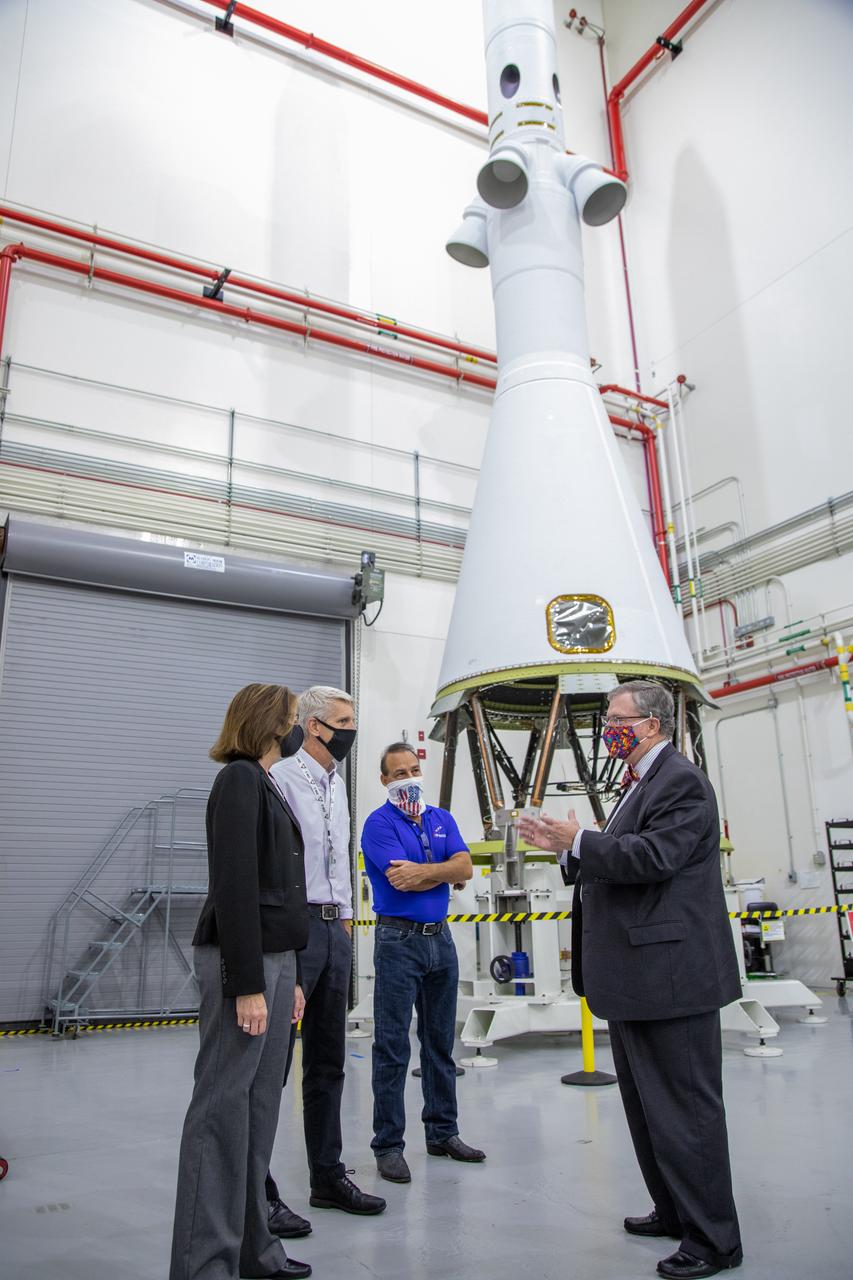
Catherine Koerner, far left, NASA Orion Program manager, along with senior managers from Orion and Lockheed Martin, tour the Launch Abort System Facility at NASA’s Kennedy Space Center in Florida on Oct. 6, 2020. Accompanying her from left, are Scott Wilson, NASA Kennedy Orion Production Operations manager; Carlos Garcia, NASA Kennedy Launch Abort System Assembly, Integration and Test lead and Resident office manager; and Mike Hawes, Lockheed Martin vice president and Orion Program manager. They are viewing the launch abort system for the Artemis I mission. Koerner also viewed the Orion spacecraft for the Artemis I and II missions in the Neil Armstrong Operations and Checkout Building. The first in a series of increasingly complex missions, Artemis I will test the Orion spacecraft and Space Launch System as an integrated system ahead of crewed flights to the Moon. Under the Artemis program, NASA will land the first woman and the next man on the Moon in 2024.
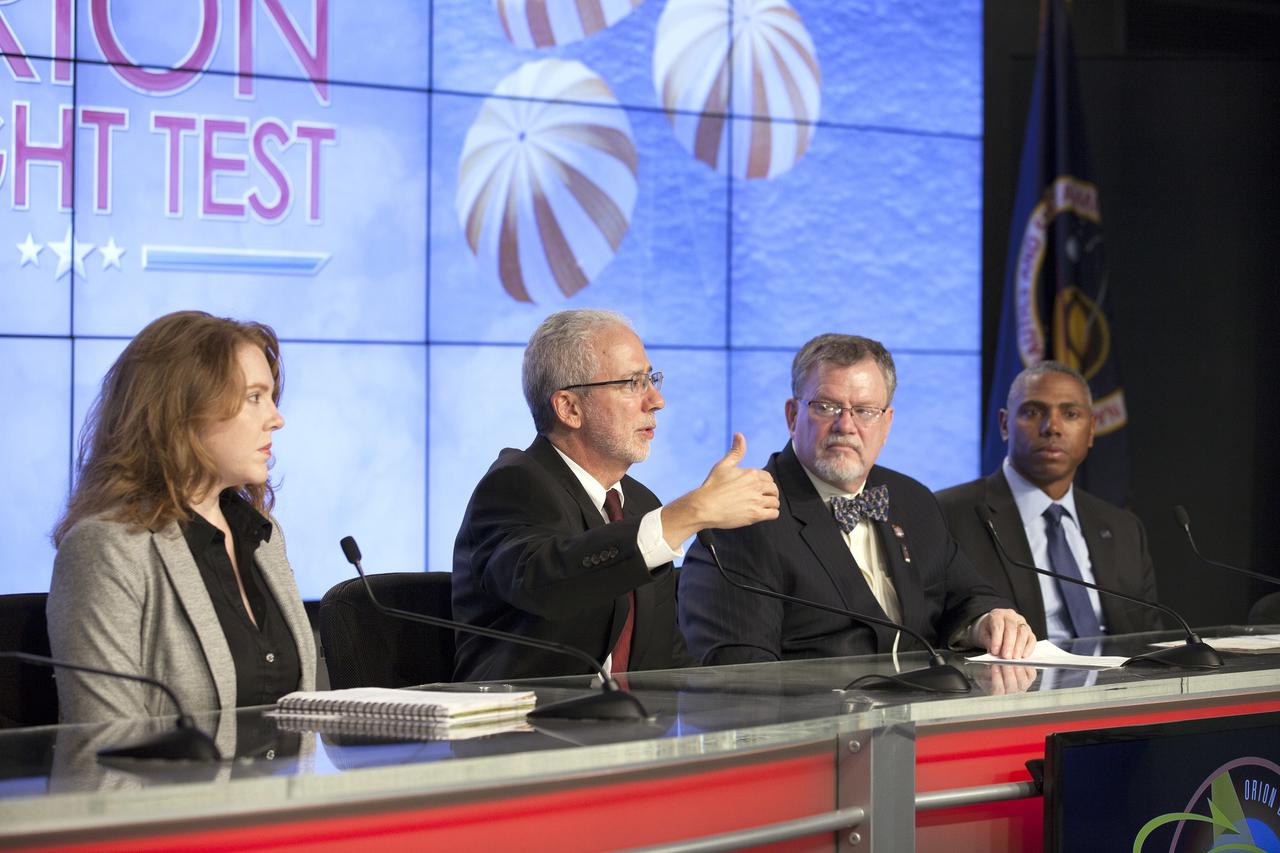
CAPE CANAVERAL, Fla. – In the Kennedy Space Center’s Press Site auditorium, agency and industry leaders spoke to members of the news media as the Orion spacecraft and its Delta IV Heavy rocket were being prepared for launch. From left are: Brandi Dean of NASA Public Affairs, Mark Geyer, Orion program manager, Mike Hawes, Lockheed Martin Orion Program manager, and Ron Fortson, United Launch Alliance director of mission management. Orion is the exploration spacecraft designed to carry astronauts to destinations not yet explored by humans, including an asteroid and Mars. It will have emergency abort capability, sustain the crew during space travel and provide safe re-entry from deep space return velocities. The first unpiloted flight test of Orion is scheduled to launch Dec. 4, 2014 atop a United Launch Alliance Delta IV Heavy rocket, and in 2018 on NASA’s Space Launch System rocket. For more information, visit www.nasa.gov/orion Photo credit: NASA/Kim Shiflett
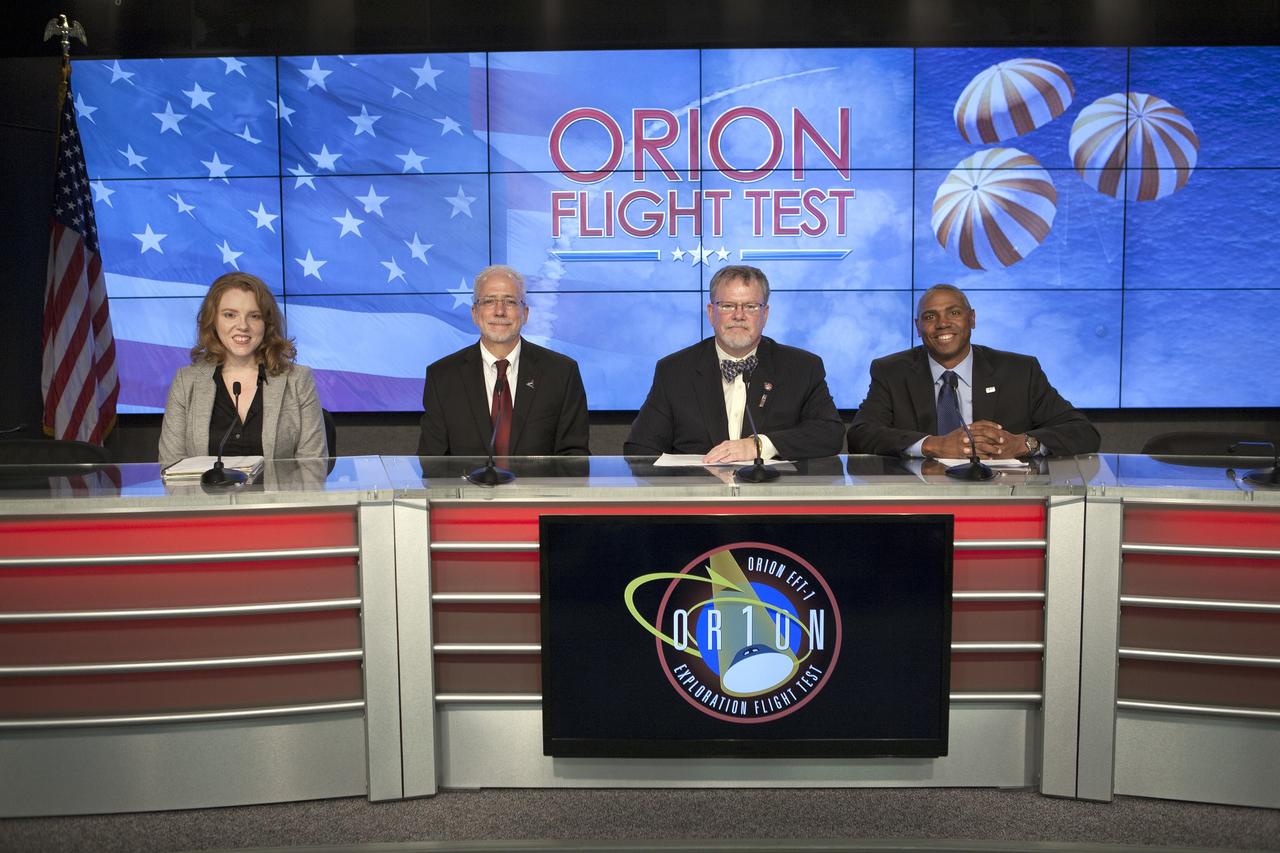
CAPE CANAVERAL, Fla. – In the Kennedy Space Center’s Press Site auditorium, agency and industry leaders spoke to members of the news media as the Orion spacecraft and its Delta IV Heavy rocket were being prepared for launch. From left are: Brandi Dean of NASA Public Affairs, Mark Geyer, Orion program manager, Mike Hawes, Lockheed Martin Orion Program manager, and Ron Fortson, United Launch Alliance director of mission management. Orion is the exploration spacecraft designed to carry astronauts to destinations not yet explored by humans, including an asteroid and Mars. It will have emergency abort capability, sustain the crew during space travel and provide safe re-entry from deep space return velocities. The first unpiloted flight test of Orion is scheduled to launch Dec. 4, 2014 atop a United Launch Alliance Delta IV Heavy rocket, and in 2018 on NASA’s Space Launch System rocket. For more information, visit www.nasa.gov/orion Photo credit: NASA/Kim Shiflett
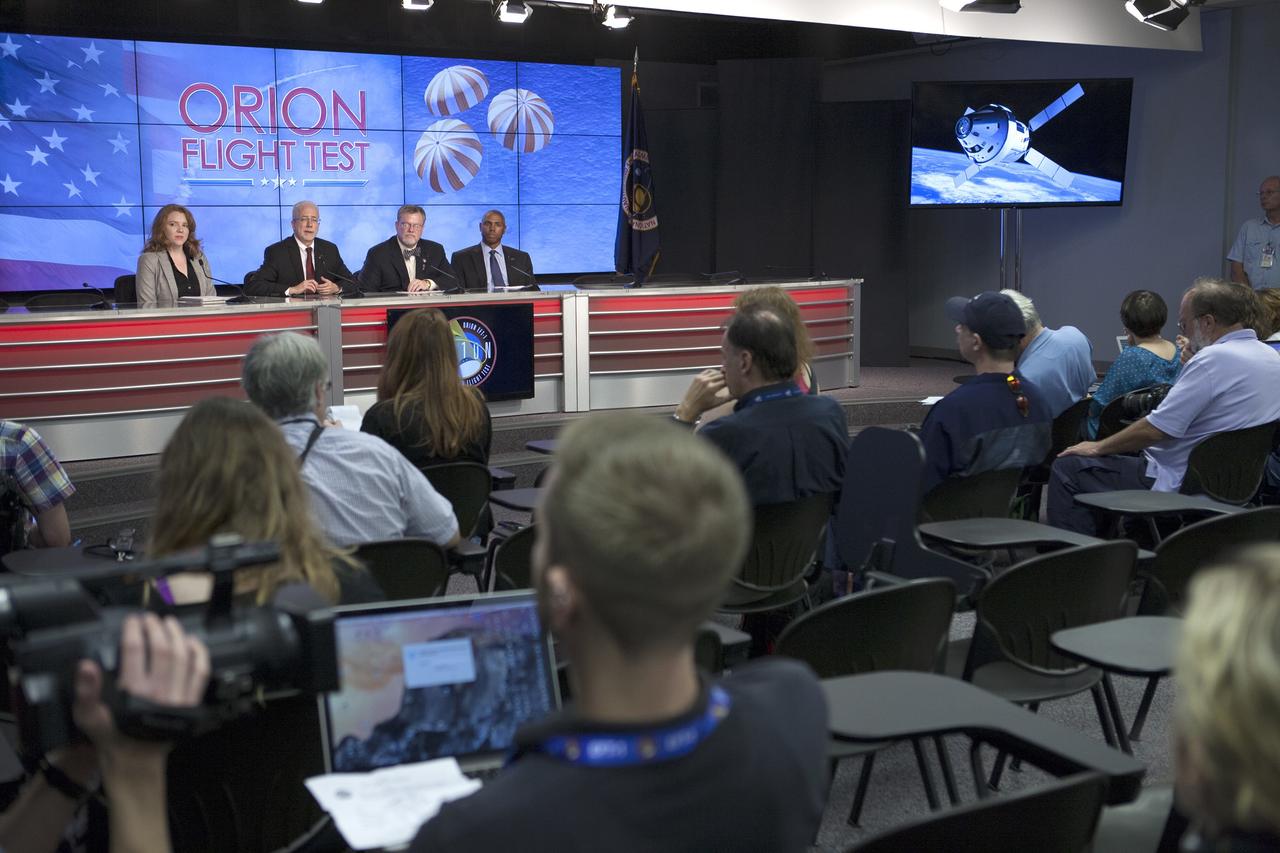
CAPE CANAVERAL, Fla. – In the Kennedy Space Center’s Press Site auditorium, news media members listen as agency and industry leaders the status of preparations for launch of the Orion spacecraft atop a Delta IV Heavy rocket. From left are: Brandi Dean of NASA Public Affairs, Mark Geyer, Orion program manager, Mike Hawes, Lockheed Martin Orion Program manager, and Ron Fortson, United Launch Alliance director of mission management. Orion is the exploration spacecraft designed to carry astronauts to destinations not yet explored by humans, including an asteroid and Mars. It will have emergency abort capability, sustain the crew during space travel and provide safe re-entry from deep space return velocities. The first unpiloted flight test of Orion is scheduled to launch Dec. 4, 2014 atop a United Launch Alliance Delta IV Heavy rocket, and in 2018 on NASA’s Space Launch System rocket. For more information, visit www.nasa.gov/orion Photo credit: NASA/Kim Shiflett
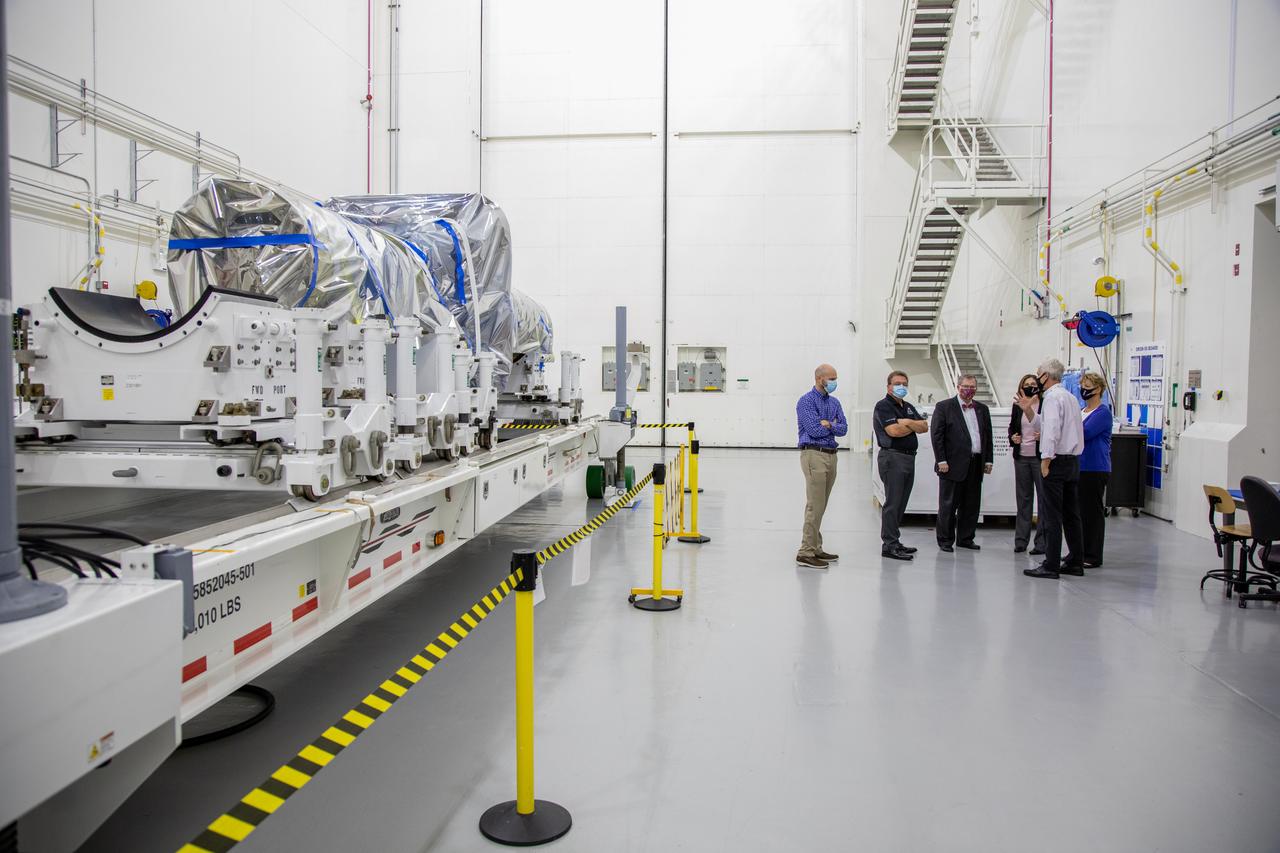
Catherine Koerner, third from right, NASA Orion Program manager, along with senior managers from Orion and Lockheed Martin, tour the Launch Abort System Facility at NASA’s Kennedy Space Center in Florida on Oct. 6, 2020. Accompanying her from left, are Jim Skaggs, Kennedy Operations senior manager with Lockheed Martin; Jules Schneider, Kennedy Assembly, Test and Launch Operations director with Lockheed Martin; Mike Hawes, Lockheed Martin vice president and Orion Program manager; Scott Wilson, NASA Kennedy Orion Production Operations manager; and Annette Hasbrook, Orion Program assistant manager. They are viewing the launch abort system for the Artemis II mission. Koerner also viewed the Orion spacecraft for the Artemis I and II missions in the Neil Armstrong Operations and Checkout Building. The first in a series of increasingly complex missions, Artemis I will test the Orion spacecraft and Space Launch System as an integrated system ahead of crewed flights to the Moon. Under the Artemis program, NASA will land the first woman and the next man on the Moon in 2024.
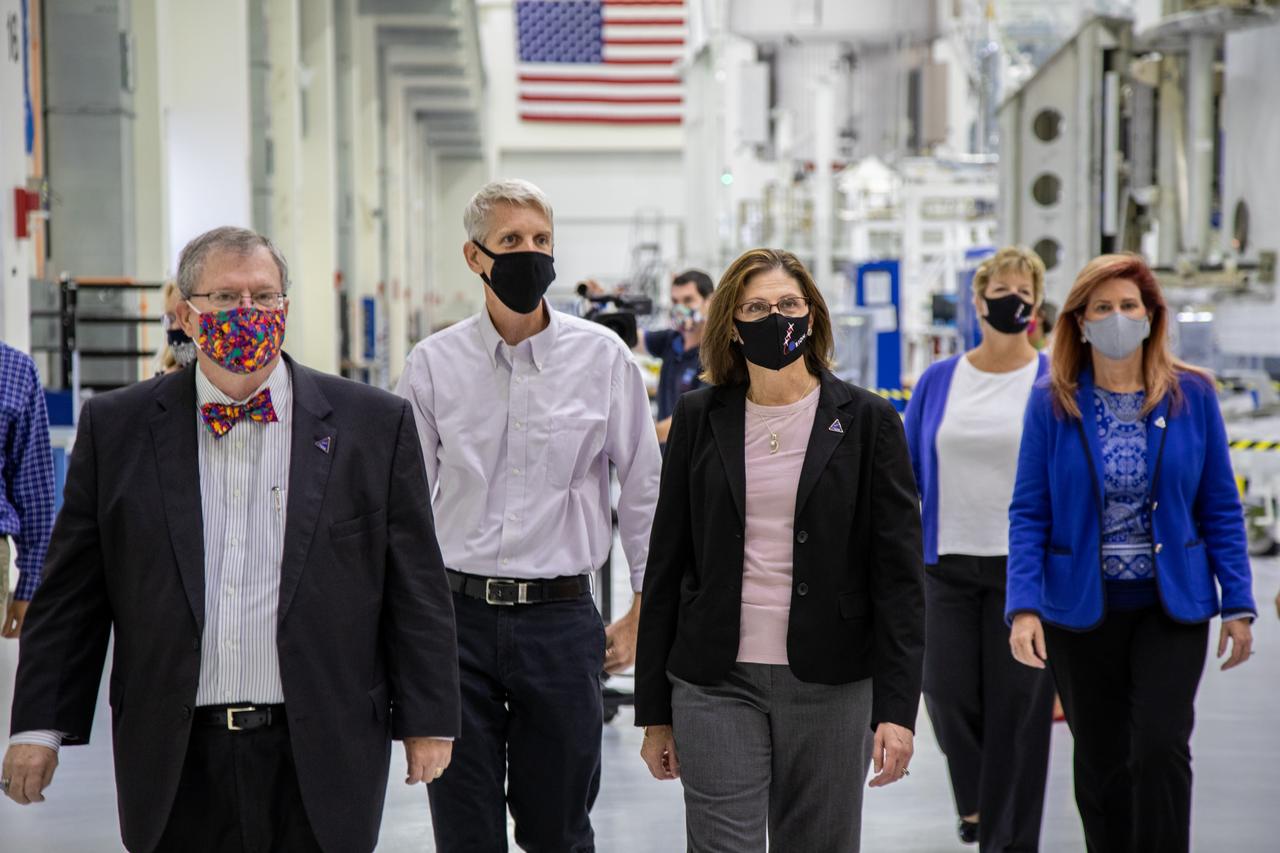
Catherine Koerner, in the center, NASA Orion Program manager, along with senior managers from Orion and Lockheed Martin, tour the Neil Armstrong Operations and Checkout Building at NASA’s Kennedy Space Center in Florida on Oct. 6, 2020. Accompanying her, from left are Mike Hawes, Lockheed Martin vice president and Orion Program manager; Scott Wilson, NASA Kennedy Orion Production Operations manager; Annette Hasbrook, Orion Program assistant manager; and Kelly DeFazio, Lockheed Martin vehicle production director on the Orion Production Operations Contract. Koerner viewed Orion spacecraft for the Artemis I and II missions. In view in the background, at right, is one of three Spacecraft Adapter Jettison fairing panels to be installed on the spacecraft. The first in a series of increasingly complex missions, Artemis I will test the Orion spacecraft and Space Launch System as an integrated system ahead of crewed flights to the Moon. Under the Artemis program, NASA will land the first woman and the next man on the Moon in 2024.
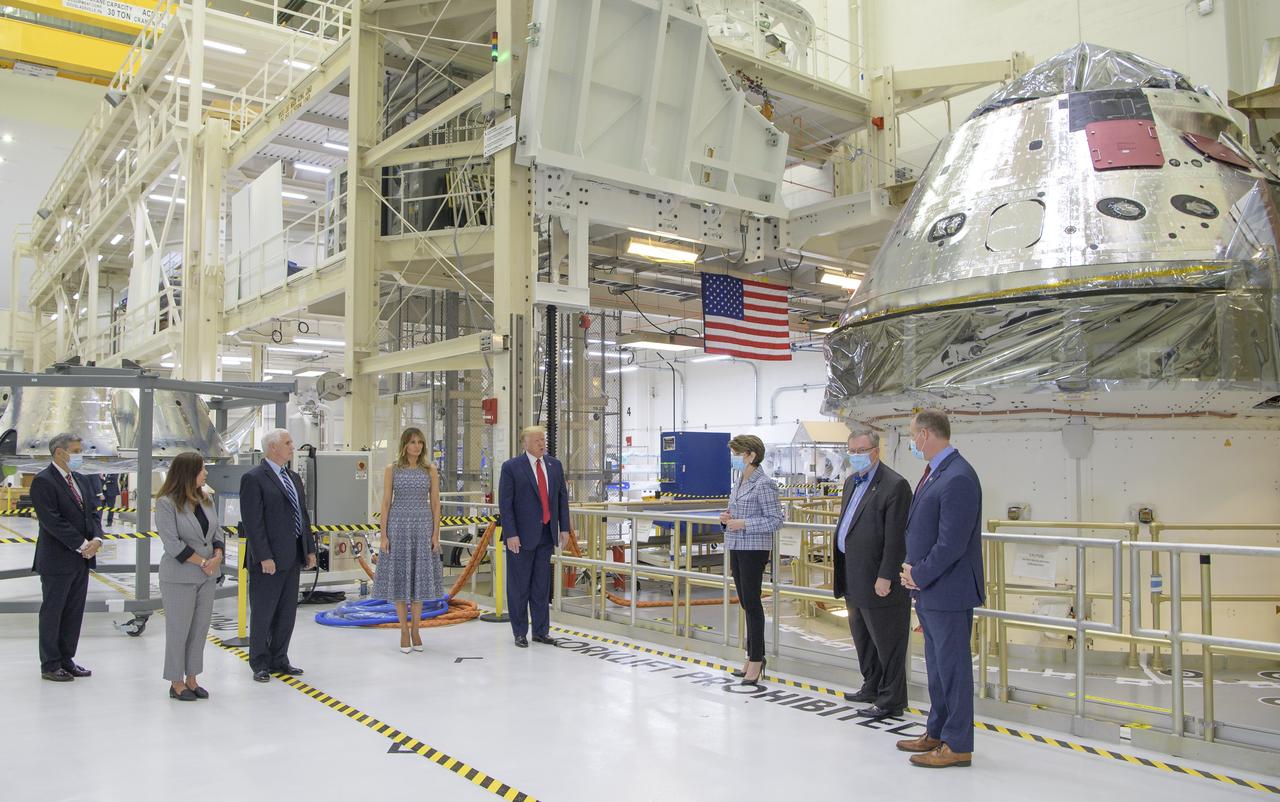
President Donald Trump, First Lady Melania Trump, Vice President Mike Pence, Second Lady Karen Pence, along with Kennedy Space Center Director Bob Cabana, left, Marillyn Hewson, Chief Executive Officer, Lockheed Martin, Mike Hawes, VP of Human Space Exploration and Orion Program Manager at Lockheed Martin Space, and NASA Administrator Jim Bridenstine, right, are seen by the Artemis I capsule during a tour of the Neil A. Armstrong Operations and Checkout Building following the departure of NASA astronauts Robert Behnken and Douglas Hurley for Launch Complex 39A to board a SpaceX Crew Dragon spacecraft for launch, Wednesday, May 27, 2020, at NASA’s Kennedy Space Center in Florida. NASA’s SpaceX Demo-2 mission is the first launch with astronauts of the SpaceX Crew Dragon spacecraft and Falcon 9 rocket to the International Space Station as part of the agency’s Commercial Crew Program. The test flight serves as an end-to-end demonstration of SpaceX’s crew transportation system. Today’s launch of Behnken and Hurley was scrubbed due to weather and is now scheduled for 3:22 p.m. EDT on Saturday, May 30, from Launch Complex 39A at the Kennedy Space Center. A new era of human spaceflight is set to begin as American astronauts once again launch on an American rocket from American soil to low-Earth orbit for the first time since the conclusion of the Space Shuttle Program in 2011. Photo Credit: (NASA/Bill Ingalls)

SpaceX Demo-2 Preflight

SpaceX Demo-2 Preflight

President Donald Trump signs an Orion capsule hatch that will be used for the Artemis II mission as Vice President Mike Pence, First Lady Melania Trump, and NASA Administrator Jim Bridenstine look on during a tour of the Neil A. Armstrong Operations and Checkout Building following the departure of NASA astronauts Robert Behnken and Douglas Hurley for Launch Complex 39A to board a SpaceX Crew Dragon spacecraft for launch, Wednesday, May 27, 2020, at NASA’s Kennedy Space Center in Florida. NASA’s SpaceX Demo-2 mission is the first launch with astronauts of the SpaceX Crew Dragon spacecraft and Falcon 9 rocket to the International Space Station as part of the agency’s Commercial Crew Program. The flight test will serve as an end-to-end demonstration of SpaceX’s crew transportation system. Today’s launch of Behnken and Hurley was scrubbed due to weather and is now scheduled for 3:22 p.m. EDT on Saturday, May 30, from Launch Complex 39A at the Kennedy Space Center. A new era of human spaceflight is set to begin as American astronauts once again launch on an American rocket from American soil to low-Earth orbit for the first time since the conclusion of the Space Shuttle Program in 2011. Photo Credit: (NASA/Bill Ingalls)