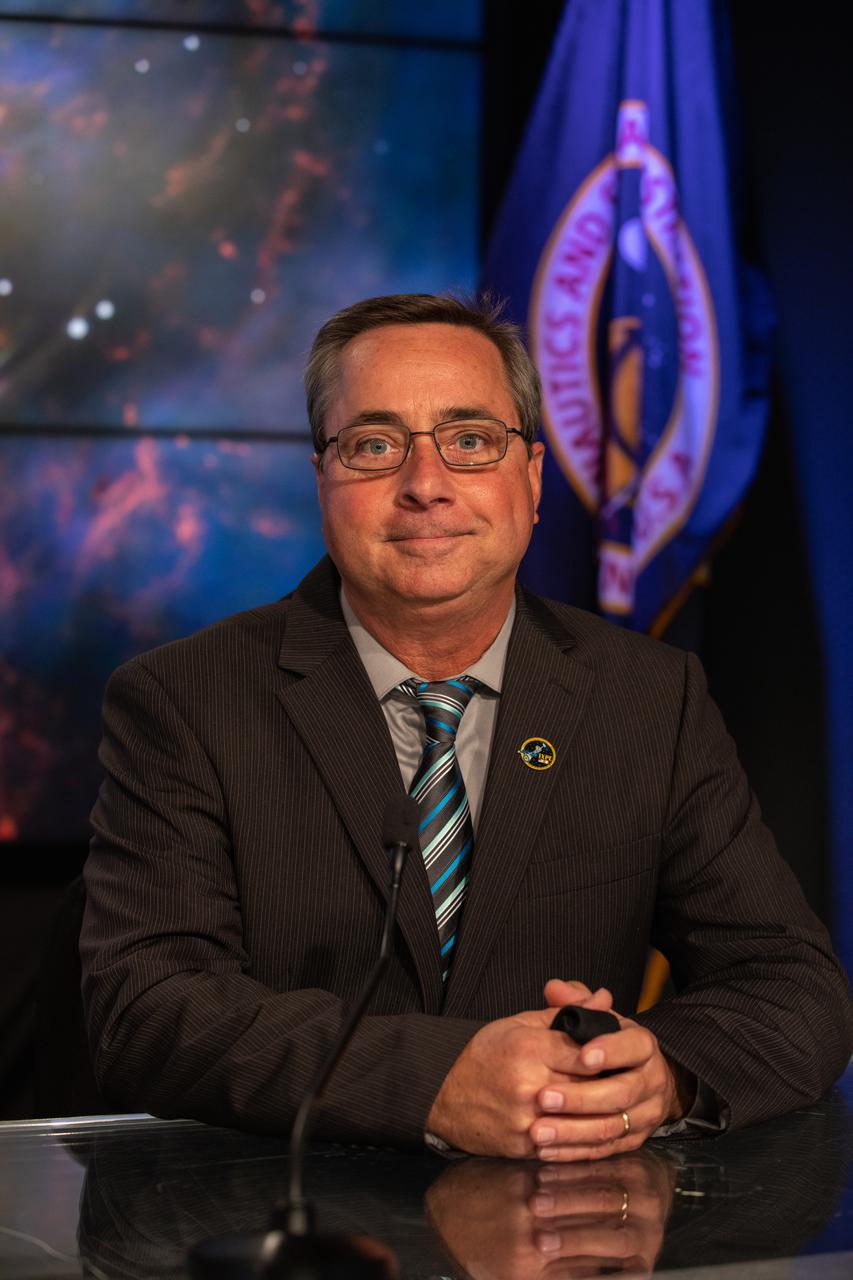
Mike McAleenan, 45th Weather Squadron, Space Launch Delta 45, participates in a prelaunch news conference for NASA’s Imaging X-ray Polarimetry Explorer (IXPE) spacecraft on Dec. 7, 2021 at NASA’s Kennedy Space Center in Florida. IXPE is scheduled to launch no earlier than 1 a.m. EST Thursday, Dec. 9, on a SpaceX Falcon 9 rocket from Kennedy’s Launch Complex 39A. NASA’s Launch Services Program is managing this launch. NASA’s Marshall Space Flight Center in Huntsville, Alabama, manages the IXPE mission. Ball Aerospace, headquartered in Broomfield, Colorado, manages spacecraft operations with support from the University of Colorado at Boulder. NASA’s Goddard Space Flight Center in Greenbelt, Maryland, manages the Explorers Program for the agency’s Science Mission Directorate in Washington. The U.S. Space Force’s Space Launch Delta 45 provides range support for this launch. SpaceX is providing the launch vehicle for this mission.
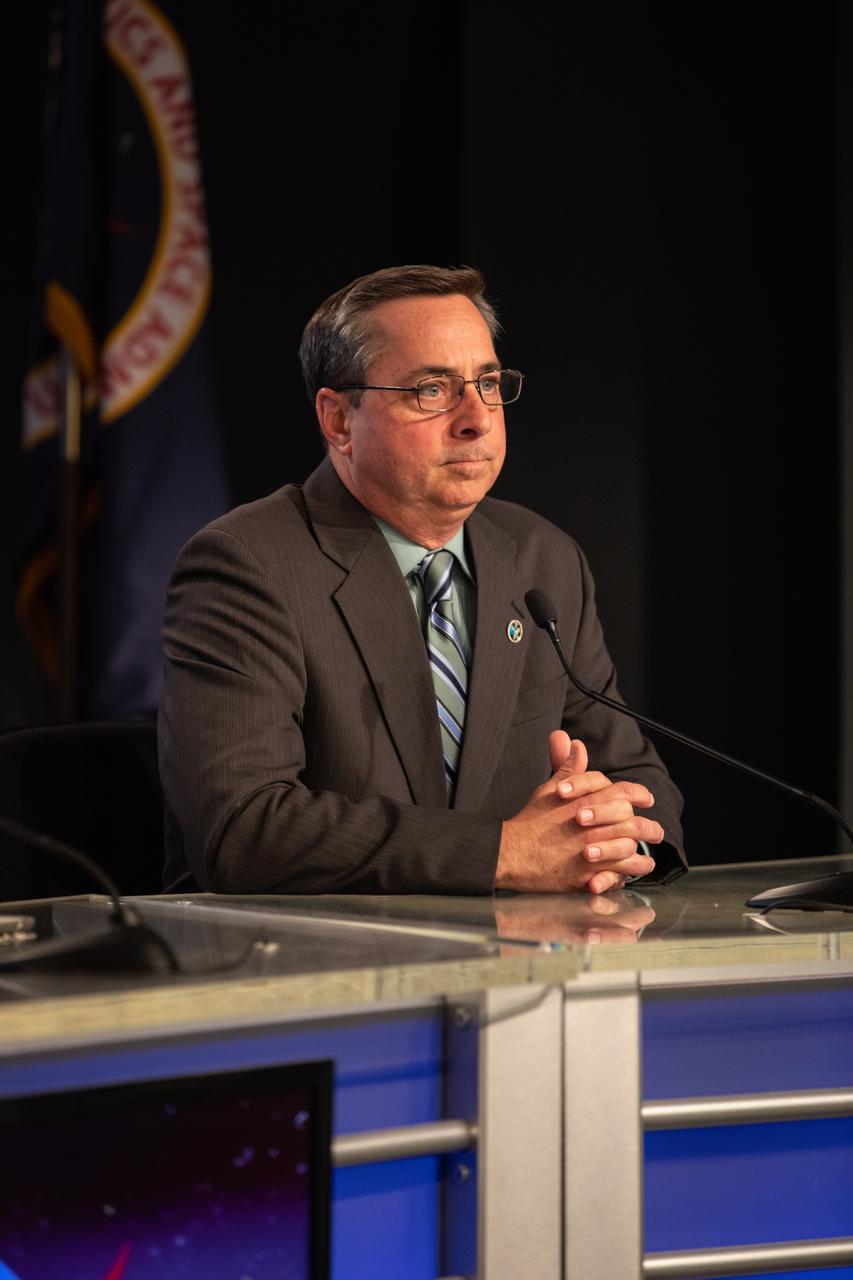
Mike McAleenan, launch weather officer with the U.S. Air Force 45th Weather Squadron, participates in a briefing at NASA’s Kennedy Space Center in Florida on Jan. 17, 2020, prior to launch of SpaceX’s uncrewed In-Flight Abort Test. A SpaceX Falcon 9 rocket topped by the company’s Crew Dragon spacecraft will lift off from Kennedy’s Launch Complex 39A, then begin the launch-abort sequence. The spacecraft will demonstrate its escape capabilities in preparation for crewed flights to the International Space Station as part of the agency’s Commercial Crew Program.

In the Kennedy Space Center’s Press Site auditorium, Mike McAleenan, launch weather officer for the U.S. Air Force 45th Weather Squadron, speaks to members of the media during a prelaunch news conference for the SpaceX CRS-11 commercial resupply services mission to the International Space Station. A Dragon spacecraft is scheduled to be launched from Kennedy’s Launch Complex 39A on June 1 atop a SpaceX Falcon 9 rocket on the company's 11th Commercial Resupply Services mission to the space station.
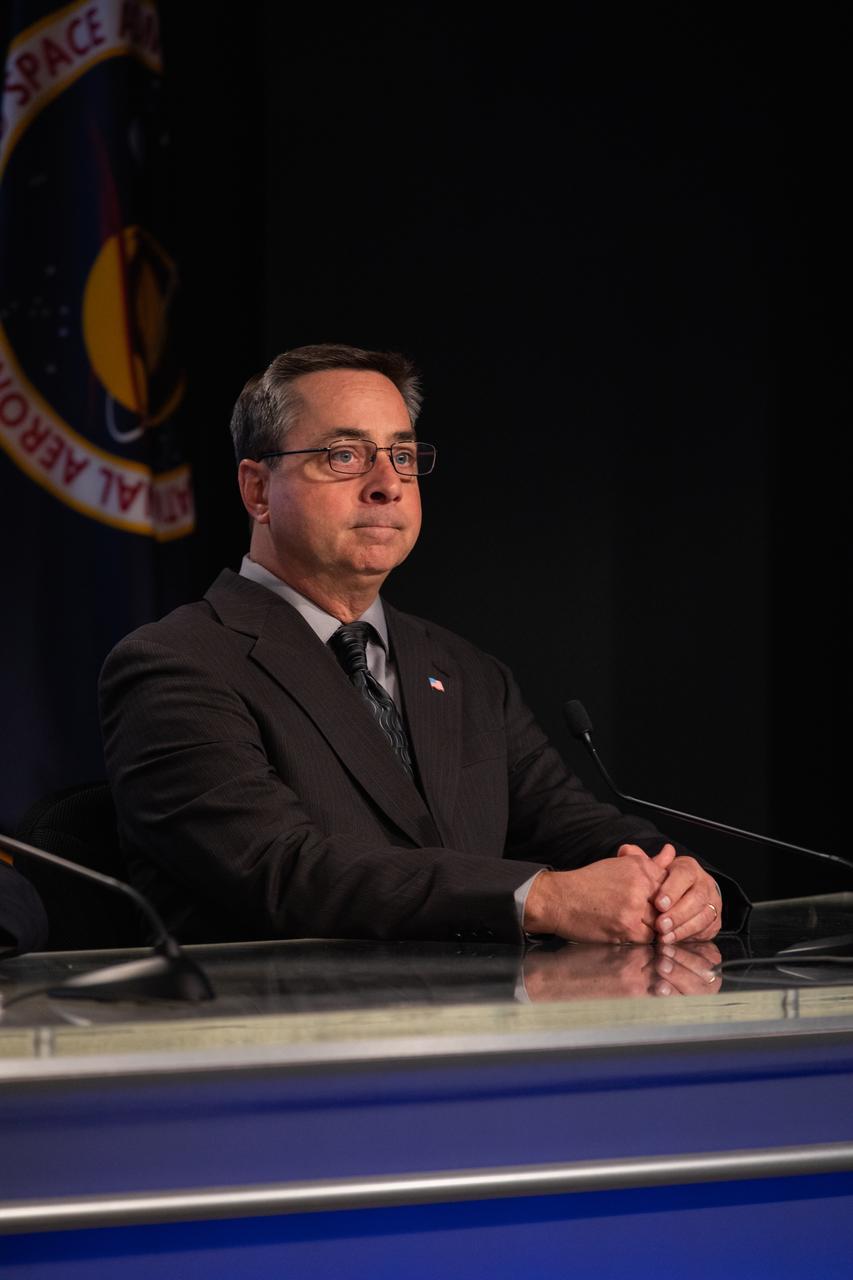
Mike McAleenan, launch weather officer with the U.S. Air Force 45th Space Wing, participates in a prelaunch news conference for SpaceX’s 20th Commercial Resupply Services (CRS-20) mission to the International Space Station at NASA’s Kennedy Space Center in Florida on March 6, 2020. The company’s Falcon 9 rocket and cargo Dragon spacecraft are scheduled to lift off from Cape Canaveral Air Force Station’s Space Launch Complex 40 at 11:50 p.m. EST on March 6, 2020.
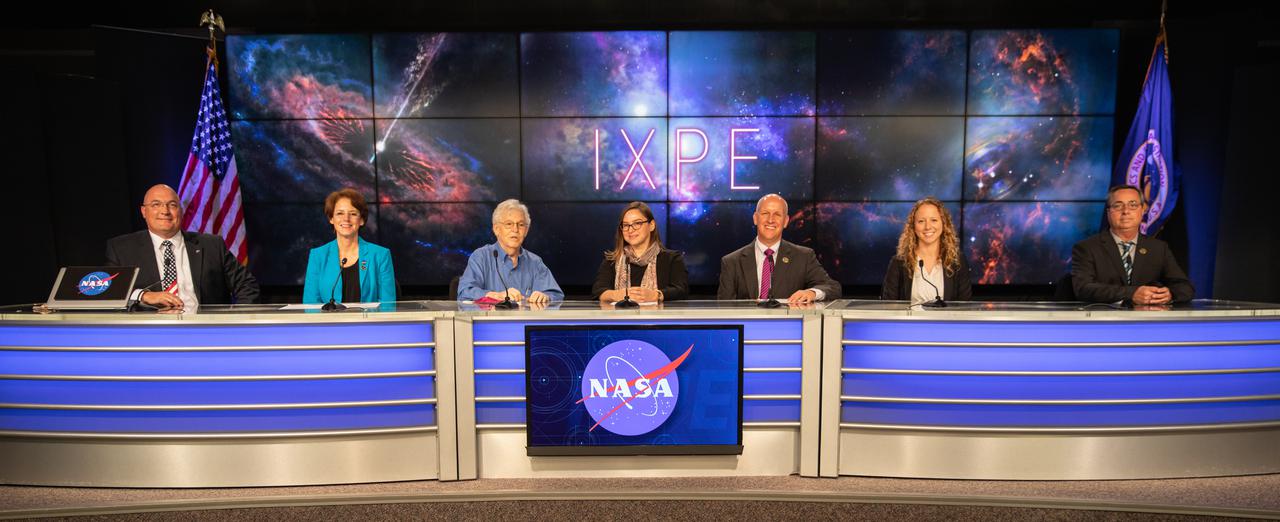
A prelaunch news conference for NASA’s Imaging X-ray Polarimetry Explorer (IXPE) spacecraft is held on Dec. 7, 2021 at NASA’s Kennedy Space Center in Florida. Participants from left are Greg Harland, moderator, NASA communications; Martin Weisskopf, IXPE principal investigator, NASA’s Marshall Space Flight Center; Makenzie Lystrup, vice president and general manager, civil space, Ball Aerospace; Tim Dunn, launch director, NASA’s Launch Services Program; Julianna Scheiman, director, civil satellite missions, SpaceX; Julianna Scheiman, director, civil satellite missions, SpaceX; and Mike McAleenan, 45th Weather Squadron, Space Launch Delta 45. IXPE is scheduled to launch no earlier than 1 a.m. EST Thursday, Dec. 9, on a SpaceX Falcon 9 rocket from Kennedy’s Launch Complex 39A. NASA’s Launch Services Program is managing this launch. NASA’s Marshall Space Flight Center in Huntsville, Alabama, manages the IXPE mission. Ball Aerospace, headquartered in Broomfield, Colorado, manages spacecraft operations with support from the University of Colorado at Boulder. NASA’s Goddard Space Flight Center in Greenbelt, Maryland, manages the Explorers Program for the agency’s Science Mission Directorate in Washington. The U.S. Space Force’s Space Launch Delta 45 provides range support for this launch. SpaceX is providing the launch vehicle for this mission.

Hans Koenigsmann, vice president of Build and Flight Reliability at SpaceX, addresses members of the news media during a prelaunch news conference for SpaceX’s 20th Commercial Resupply Services (CRS-20) mission to the International Space Station at NASA’s Kennedy Space Center in Florida on March 6, 2020. Beside Koenigsmann is Mike McAleenan, launch weather officer with the U.S. Air Force 45th Space Wing. The company’s Falcon 9 rocket and cargo Dragon spacecraft are scheduled to lift off from Cape Canaveral Air Force Station’s Space Launch Complex 40 at 11:50 p.m. EST on March 6, 2020.
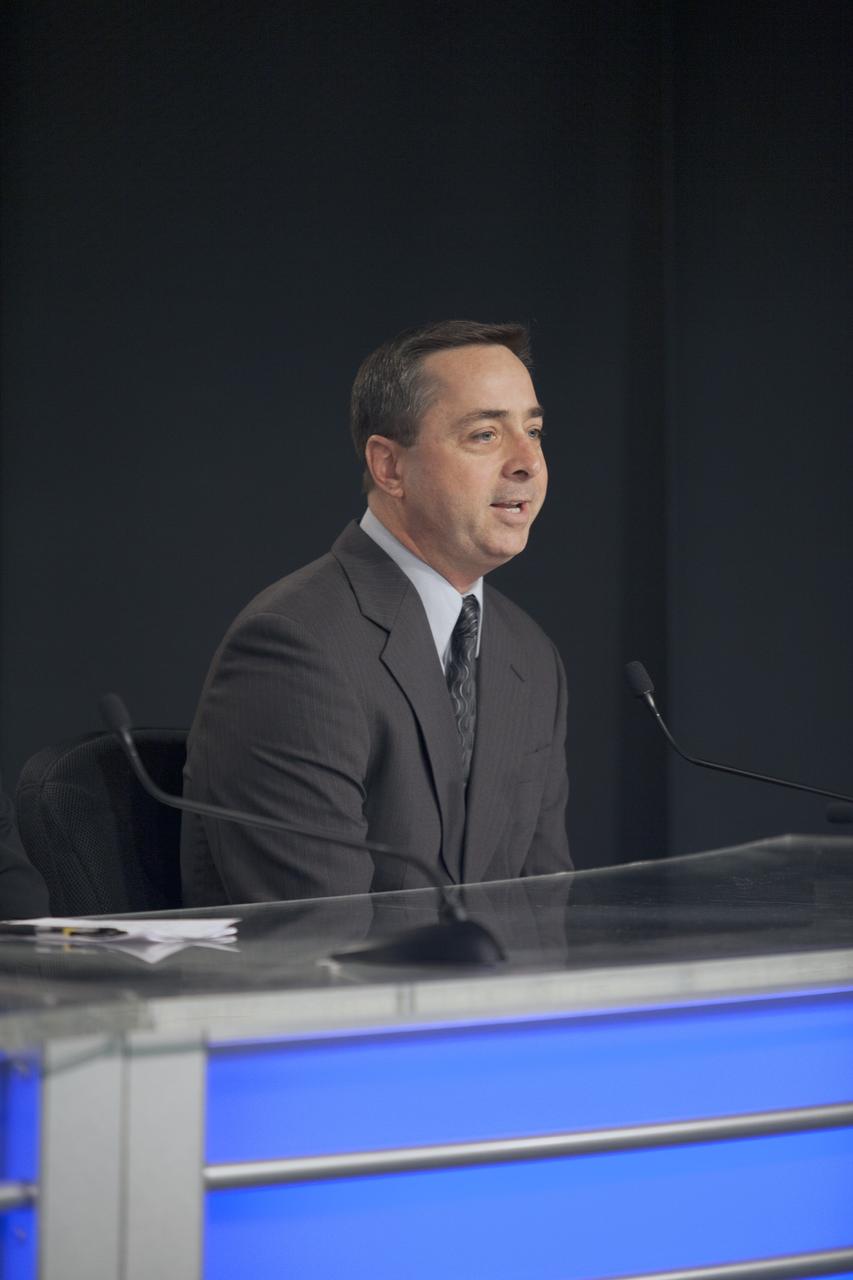
CAPE CANAVERAL, Fla. – Mike McAleenan, launch weather officer with the U.S. Air Force 45th Weather Squadron, provides an on the launch-day forecast during a briefing regarding NOAA’s Deep Space Climate Observatory spacecraft, or DSCOVR. DSCOVR will launch aboard a SpaceX Falcon 9 rocket. The mission is a partnership between NOAA, NASA and the U.S. Air Force. DSCOVR will maintain the nation's real-time solar wind monitoring capabilities which are critical to the accuracy and lead time of NOAA's space weather alerts and forecasts. To learn more about DSCOVR, visit http://www.nesdis.noaa.gov/DSCOVR. Photo credit: NASA/Kim Shiflett
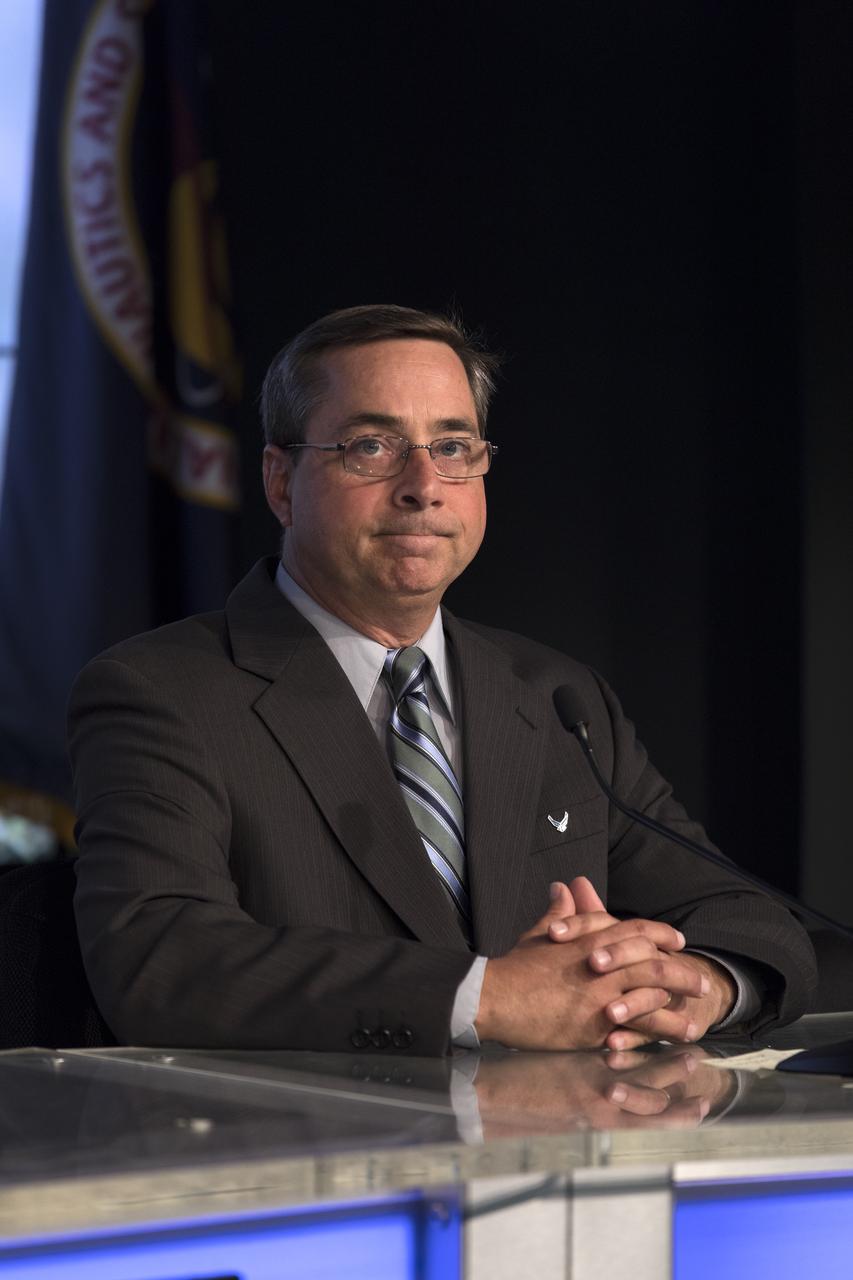
In the Kennedy Space Center’s Press Site auditorium, NASA and industry leaders speak to members of the media during a prelaunch news conference for the SpaceX CRS-14 commercial resupply services mission to the International Space Station. Mike McAleenan, weather officer, 45th Weather Squadron, participates in the news conference. A Dragon spacecraft is scheduled to be launched from Space Launch Complex 40 at Cape Canaveral Air Force Station at 4:30 p.m. EST, on April 2, 2018. The SpaceX Falcon 9 rocket will lift off on the company's 14th Commercial Resupply Services mission to the space station.
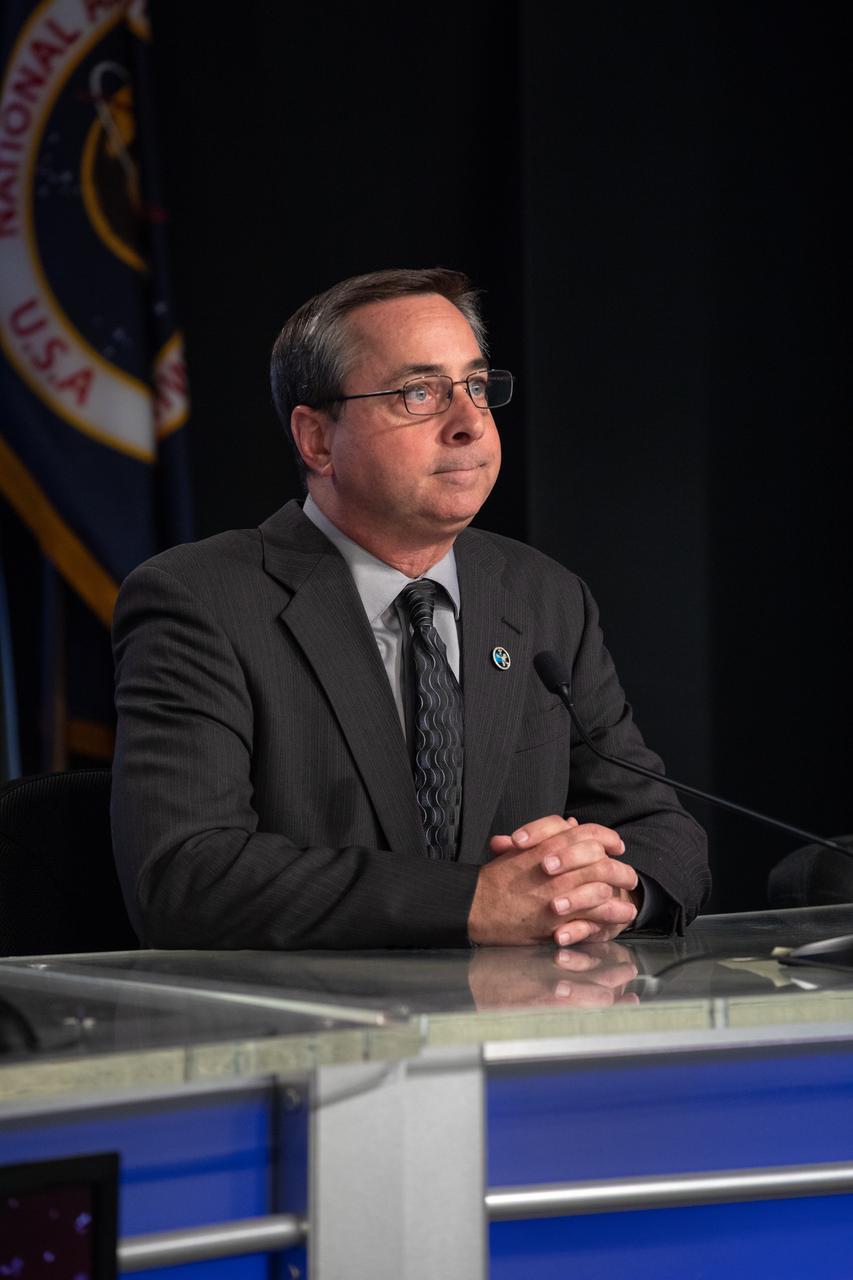
Mike McAleenan, launch weather officer, U.S. Air Force 45th Space Wing, gives a weather update to members of the news media during a prelaunch news conference on Dec. 3, 2019, for SpaceX’s 19th Commercial Resupply Services (CRS-19) mission for NASA to the International Space Station, at the agency’s Kennedy Space Center in Florida. NASA and industry leaders speak to members of the news media during the news conference. The SpaceX Falcon 9 rocket and Dragon cargo module are scheduled to launch on Dec. 4, 2019, from Space Launch Complex 40 on Cape Canaveral Air Force Station in Florida.
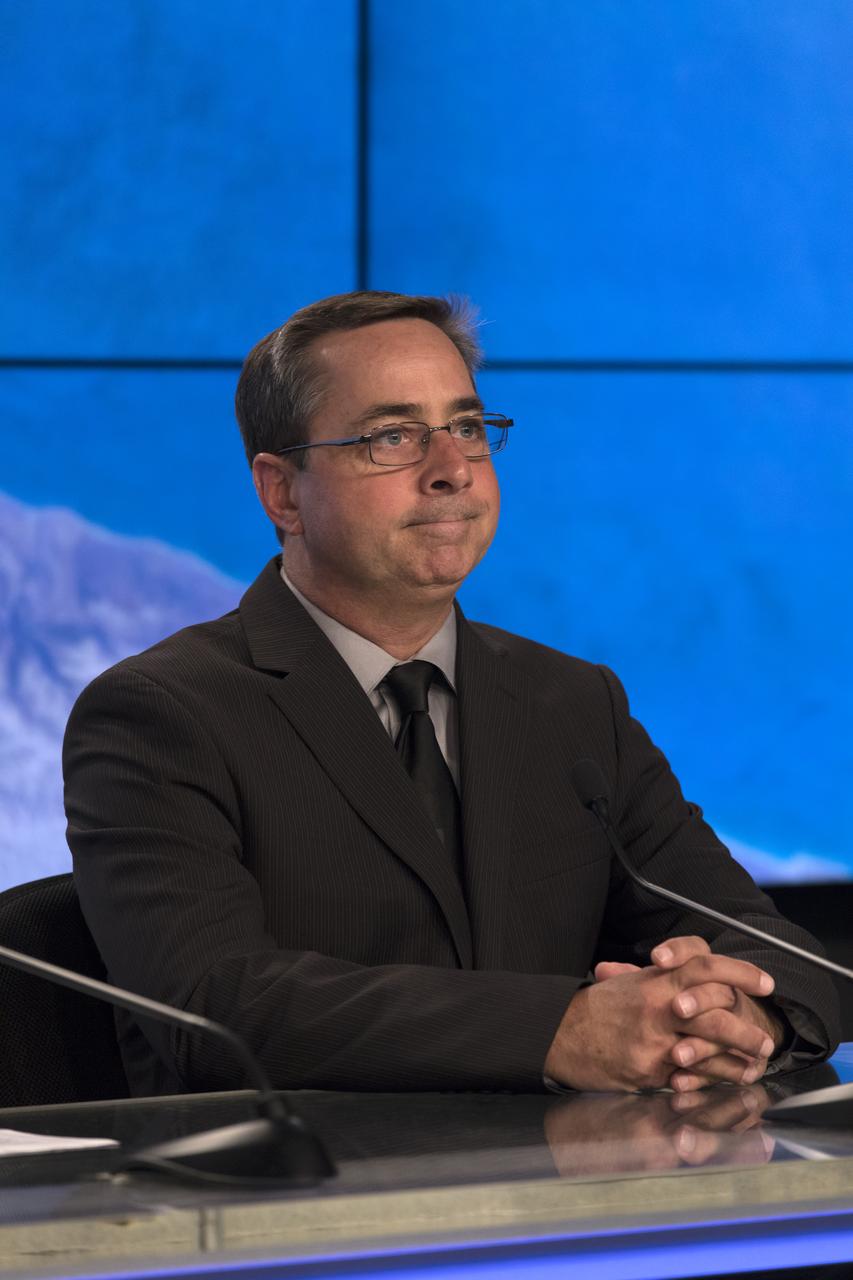
In the Kennedy Space Center’s Press Site auditorium, Mike McAleenan, launch weather officer for the U.S. Air Force 45th Weather Squadron at Cape Canaveral Air Force Station, speaks to members of the media during a prelaunch news conference for the SpaceX CRS-15 Commercial Resupply Services mission to the International Space Station. A SpaceX Dragon spacecraft is scheduled to be launched from Space Launch Complex 40 at Cape Canaveral Air Force Station. The SpaceX Falcon 9 rocket will lift off on the company's 15th Commercial Resupply Services mission to the space station.
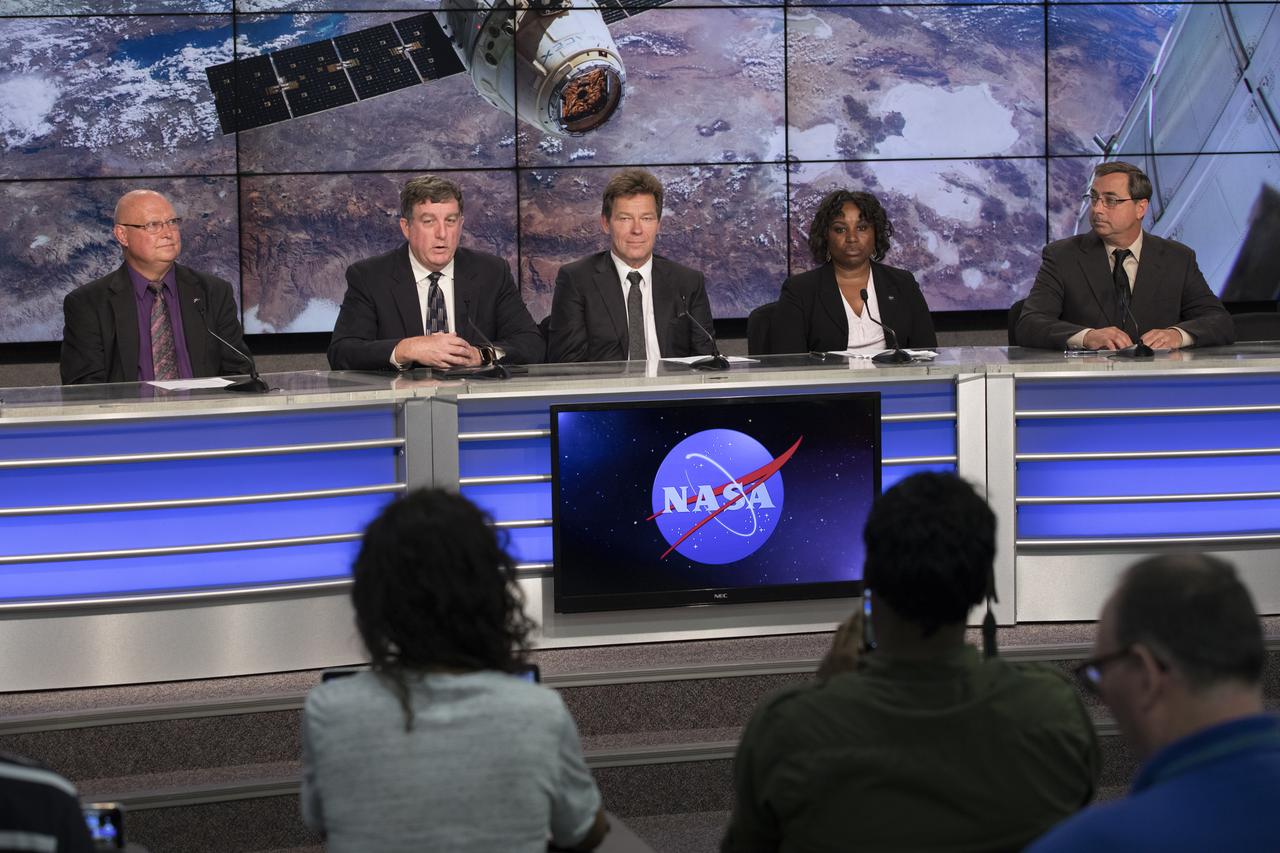
In the Kennedy Space Center’s Press Site auditorium, agency and industry leaders speak to members of the media during a prelaunch news conference for the SpaceX CRS-11 commercial resupply services mission to the International Space Station. From left are: Mike Curie of NASA Communications, Kirk Shireman, NASA's International Space Station Program manager, Hans Koenigsmann, vice president of Flight Reliability for SpaceX, Camille Alleyne, associate program scientist for the International Space Station at NASA’s Johnson Space Center, and Mike McAleenan, launch weather officer for the U.S. Air Force 45th Weather Squadron. A Dragon spacecraft is scheduled to be launched from Kennedy’s Launch Complex 39A on June 1 atop a SpaceX Falcon 9 rocket on the company's 11th Commercial Resupply Services mission to the space station.
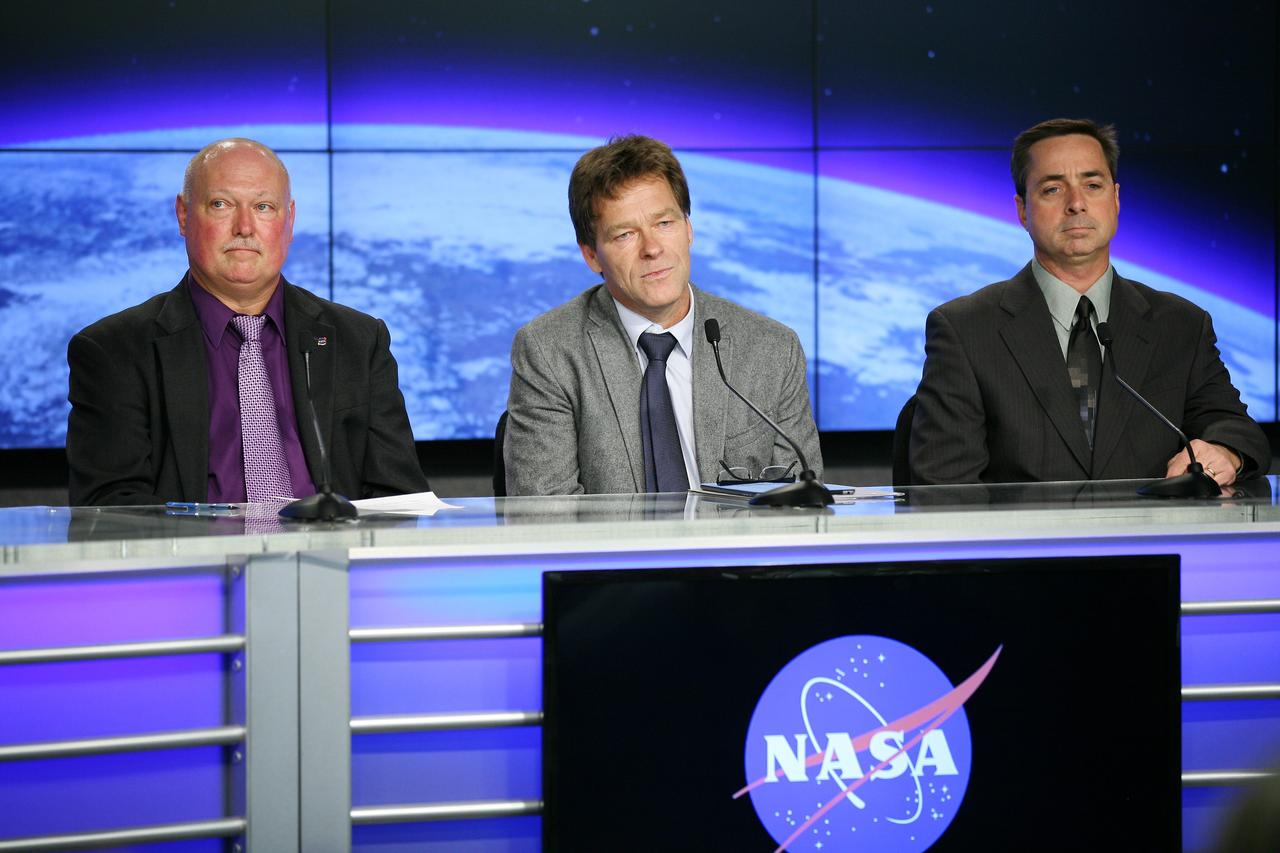
CAPE CANAVERAL, Fla. – During a news conference at NASA's Kennedy Space Center in Florida, agency and contractor officials discussed preparations for the launch of the SpaceX-3 Commercial Resupply Services mission to the International Space Station. Participating in the briefing, from the left, are Mike Curie of NASA Public Affairs, Hans Koenigsmann, SpaceX vice president of Mission Assurance, and Mike McAleenan, launch weather officer, 45th Weather Squadron. Scheduled for launch on April 14, 2014 atop a Falcon 9 rocket, Dragon spacecraft will be marking its fourth trip to the space station. The SpaceX-3 mission carrying almost 2.5 tons of supplies, technology and science experiments is the third of 12 flights contracted by NASA to resupply the orbiting laboratory. For more information, visit http://www.nasa.gov/mission_pages/station/structure/launch/index.html Photo credit: NASA/Kim Shiflett
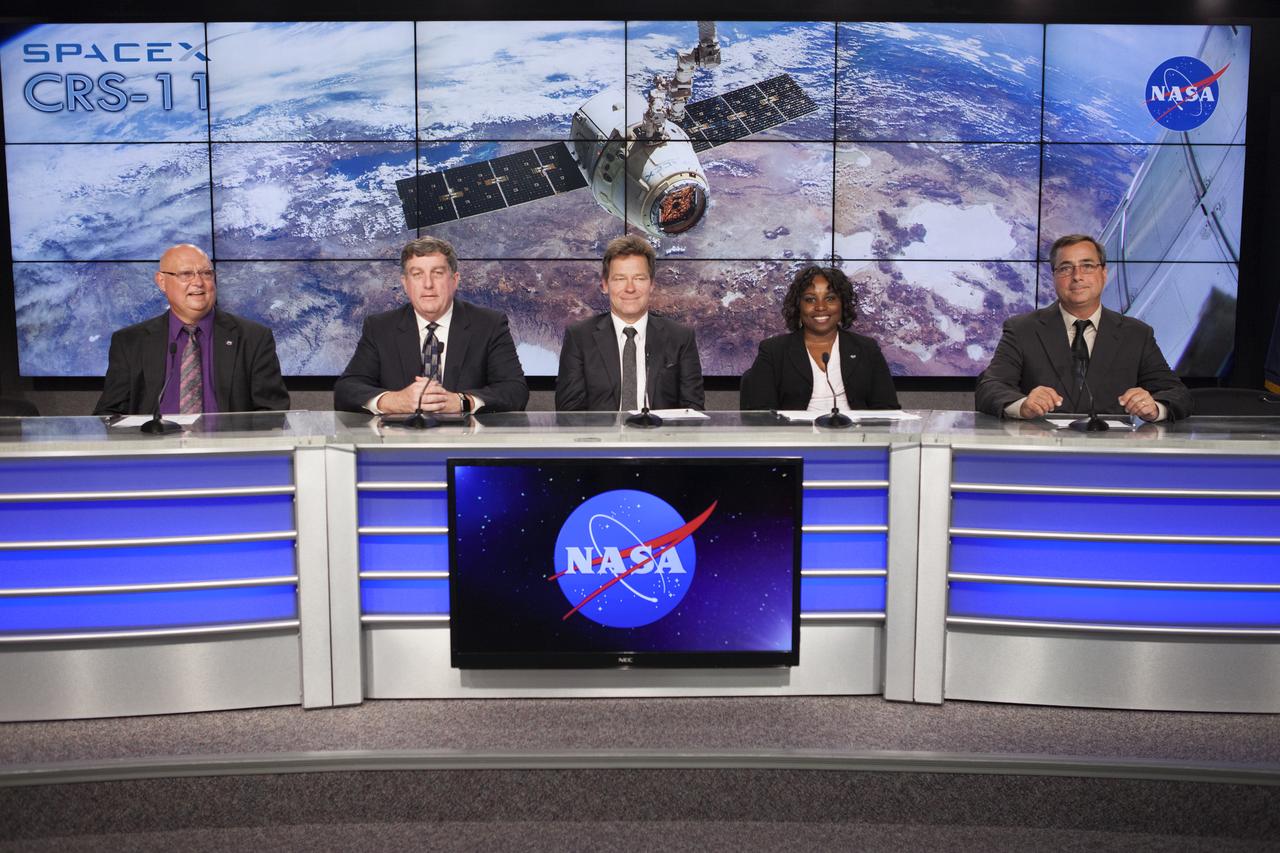
In the Kennedy Space Center’s Press Site auditorium, agency and industry leaders speak to members of the media during a prelaunch news conference for the SpaceX CRS-11 commercial resupply services mission to the International Space Station. From left are: Mike Curie of NASA Communications, Kirk Shireman, NASA's International Space Station Program manager, Hans Koenigsmann, vice president of Flight Reliability for SpaceX, Camille Alleyne, associate program scientist for the International Space Station at NASA’s Johnson Space Center, and Mike McAleenan, launch weather officer for the U.S. Air Force 45th Weather Squadron. A Dragon spacecraft is scheduled to be launched from Kennedy’s Launch Complex 39A on June 1 atop a SpaceX Falcon 9 rocket on the company's 11th Commercial Resupply Services mission to the space station.
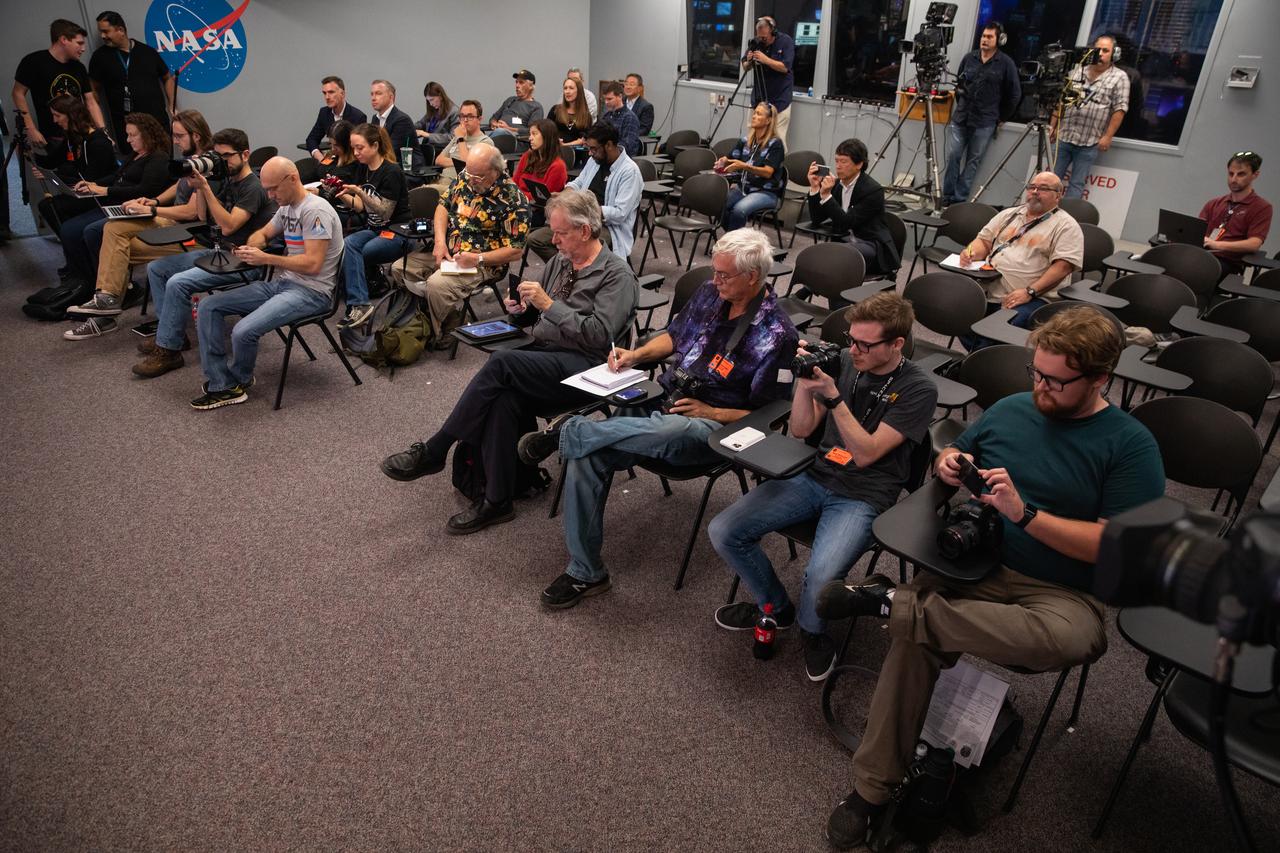
Members of the media attend a prelaunch news conference for SpaceX’s 20th Commercial Resupply Services (CRS-20) mission to the International Space Station at NASA’s Kennedy Space Center in Florida on March 6, 2020. Participants included conference moderator Heather Scott of NASA Communications; Joel Montalbano, manager of the agency’s International Space Station Program; Jennifer Buchli, deputy chief scientist for the International Space Station Program; Hans Koenigsmann, vice president of Build and Flight Reliability at SpaceX; and Mike McAleenan, launch weather officer with the U.S. Air Force 45th Space Wing. SpaceX’s Falcon 9 rocket and cargo Dragon spacecraft are scheduled to lift off from Cape Canaveral Air Force Station’s Space Launch Complex 40 at 11:50 p.m. EST on March 6, 2020.
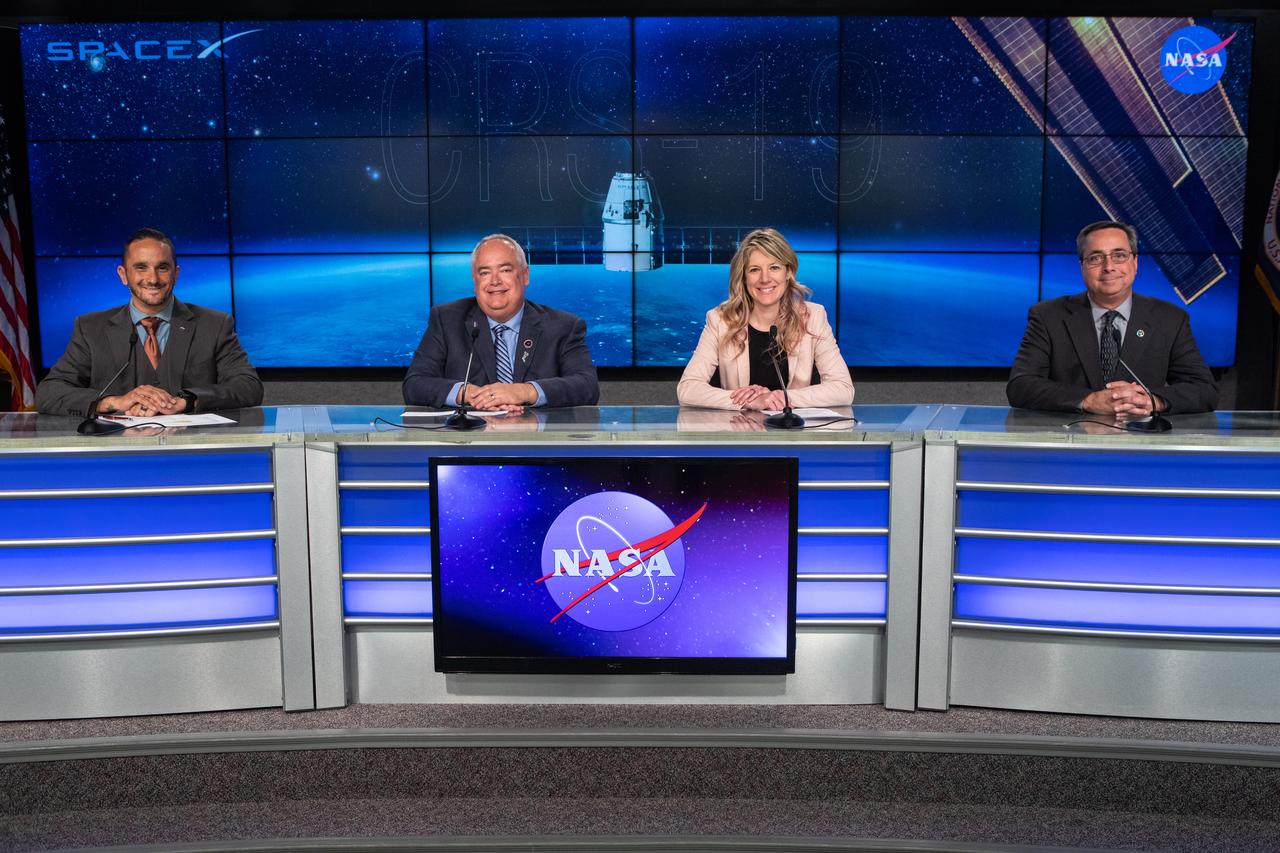
Dustin Cammack, NASA Communications, far left, moderates a prelaunch news conference on Dec. 3, 2019, for SpaceX's 19th Commercial Resupply Services (CRS-19) mission for NASA to the International Space Station, at the agency’s Kennedy Space Center in Florida. From left, are Bryan Dansberry, assistant program scientist, International Space Station Program Science Office at NASA; Jessica Jensen, director, Dragon Mission Management at SpaceX; and Mike McAleenan, launch weather officer, U.S. Air Force 45th Space Wing. The SpaceX Flacon 9 rocket and Dragon cargo module are scheduled to launch on Dec. 4, 2019, from Space Launch Complex 40 on Cape Canaveral Air Force Station in Florida.
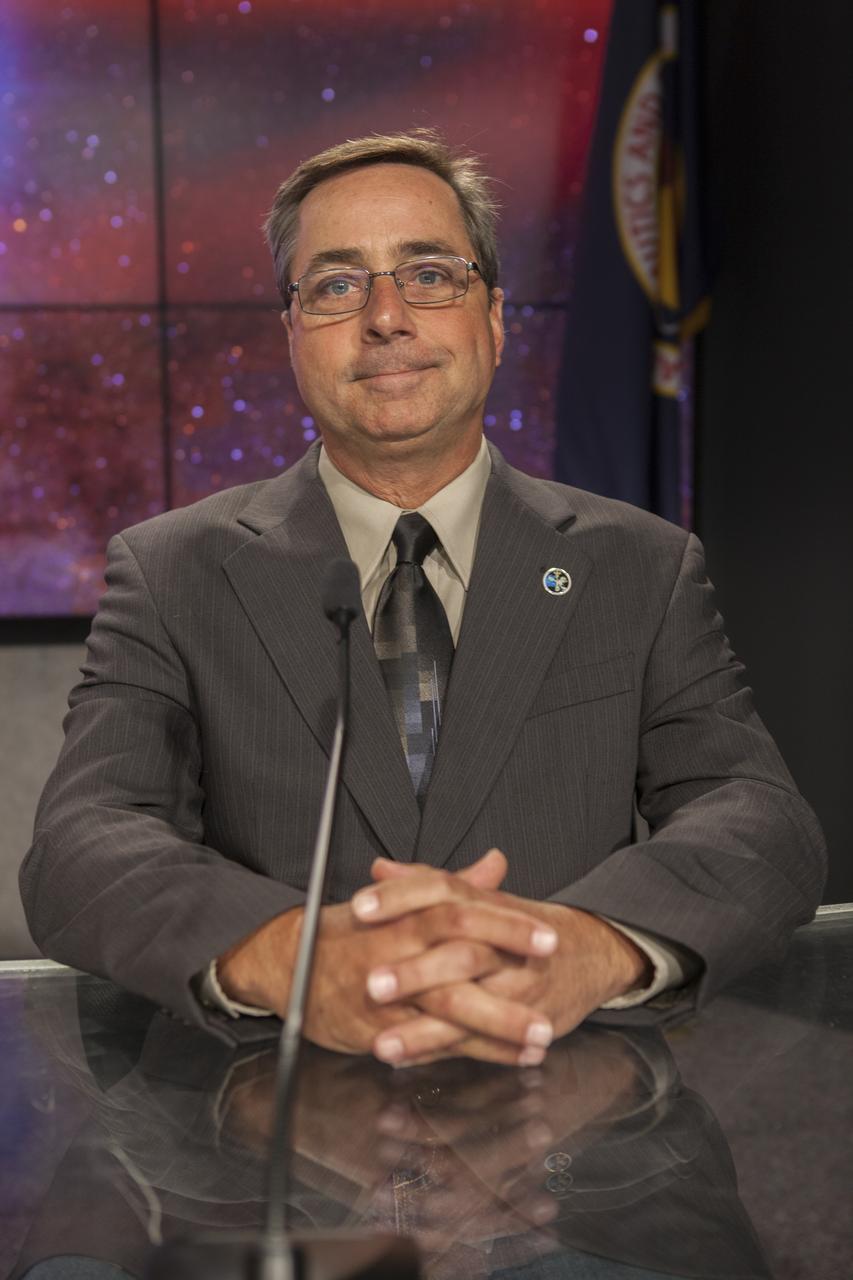
In Kennedy Space Center's Press Site auditorium, members of the media participate in a mission briefing on NASA's Transiting Exoplanet Survey Satellite (TESS). Mike McAleenan, weather officer, 45th Weather Squadron, gives a weather update and answers questions during the briefing. TESS is the next step in the search for planets outside of our solar system. The mission will find exoplanets that periodically block part of the light from their host stars, events called transits. The satellite will survey the nearest and brightest stars for two years to search for transiting exoplanets. TESS will launch on a SpaceX Falcon 9 rocket from Space Launch Complex 40 at Cape Canaveral Air Force Station no earlier than 6:32 p.m. EDT on Monday, April 16.
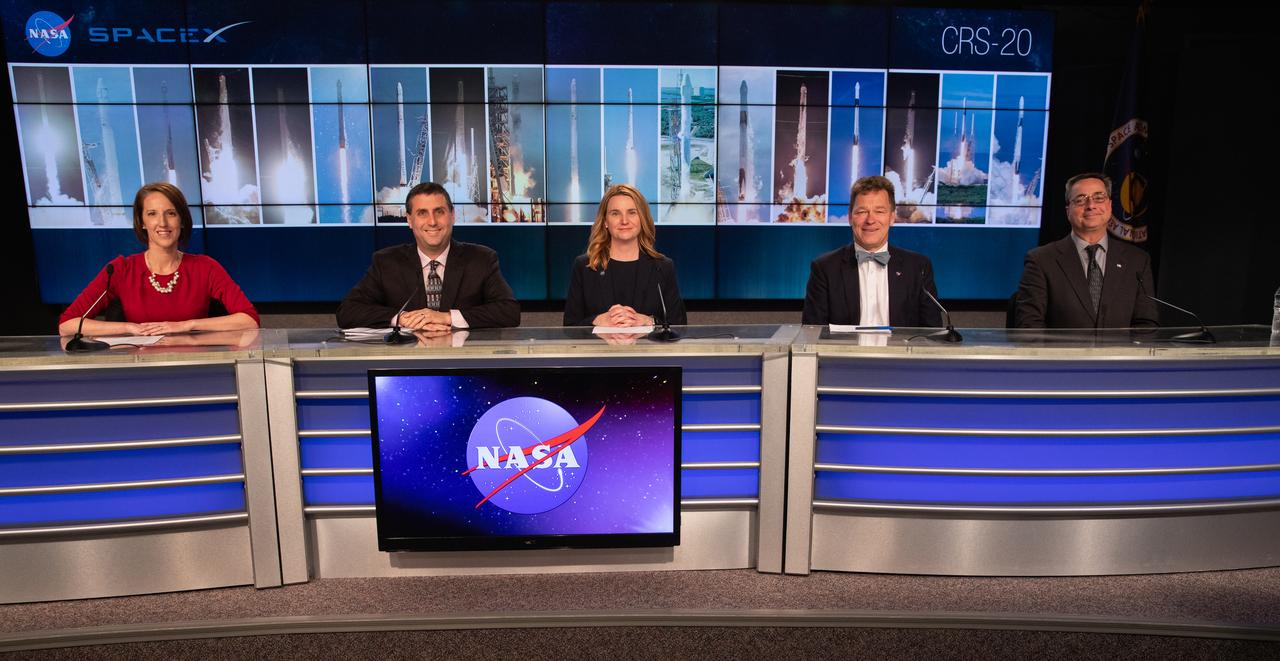
A prelaunch news conference for SpaceX’s 20th Commercial Resupply Services (CRS-20) mission to the International Space Station is held at NASA’s Kennedy Space Center in Florida on March 6, 2020. From left are conference moderator Heather Scott of NASA Communications; Joel Montalbano, manager of the agency’s International Space Station Program; Jennifer Buchli, deputy chief scientist for the International Space Station Program; Hans Koenigsmann, vice president of Build and Flight Reliability at SpaceX; and Mike McAleenan, launch weather officer with the U.S. Air Force 45th Space Wing. SpaceX’s Falcon 9 rocket and cargo Dragon spacecraft are scheduled to lift off from Cape Canaveral Air Force Station’s Space Launch Complex 40 at 11:50 p.m. EST on March 6, 2020.
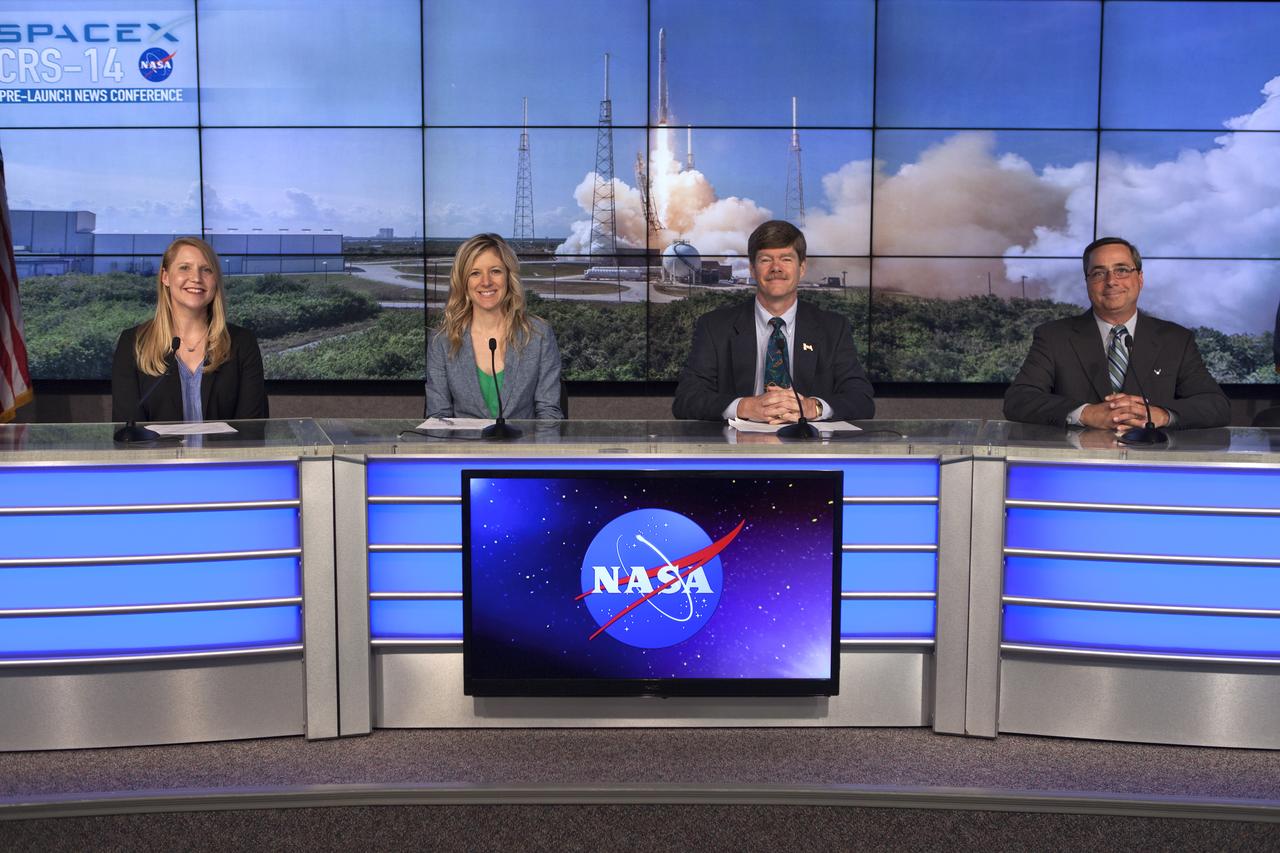
In the Kennedy Space Center’s Press Site auditorium, NASA and industry leaders speak to members of the media during a prelaunch news conference for the SpaceX CRS-14 commercial resupply services mission to the International Space Station. From left, are Stephanie Schierholz, of NASA Communications; Jessica Jensen, director, Dragon Mission Management, SpaceX; Pete Hasbrook, associate program scientist, ISS Program Science Office at NASA's Johnson Space Center in Houston; and Mike McAleenan, weather officer, 45th Weather Squadron. Joining on the phone is Joel Montalbano, deputy manager, ISS Program at Johnson. A Dragon spacecraft is scheduled to be launched from Space Launch Complex 40 at Cape Canaveral Air Force Station at 4:30 p.m. EST, on April 2, 2018. The SpaceX Falcon 9 rocket will lift off on the company's 14th Commercial Resupply Services mission to the space station.
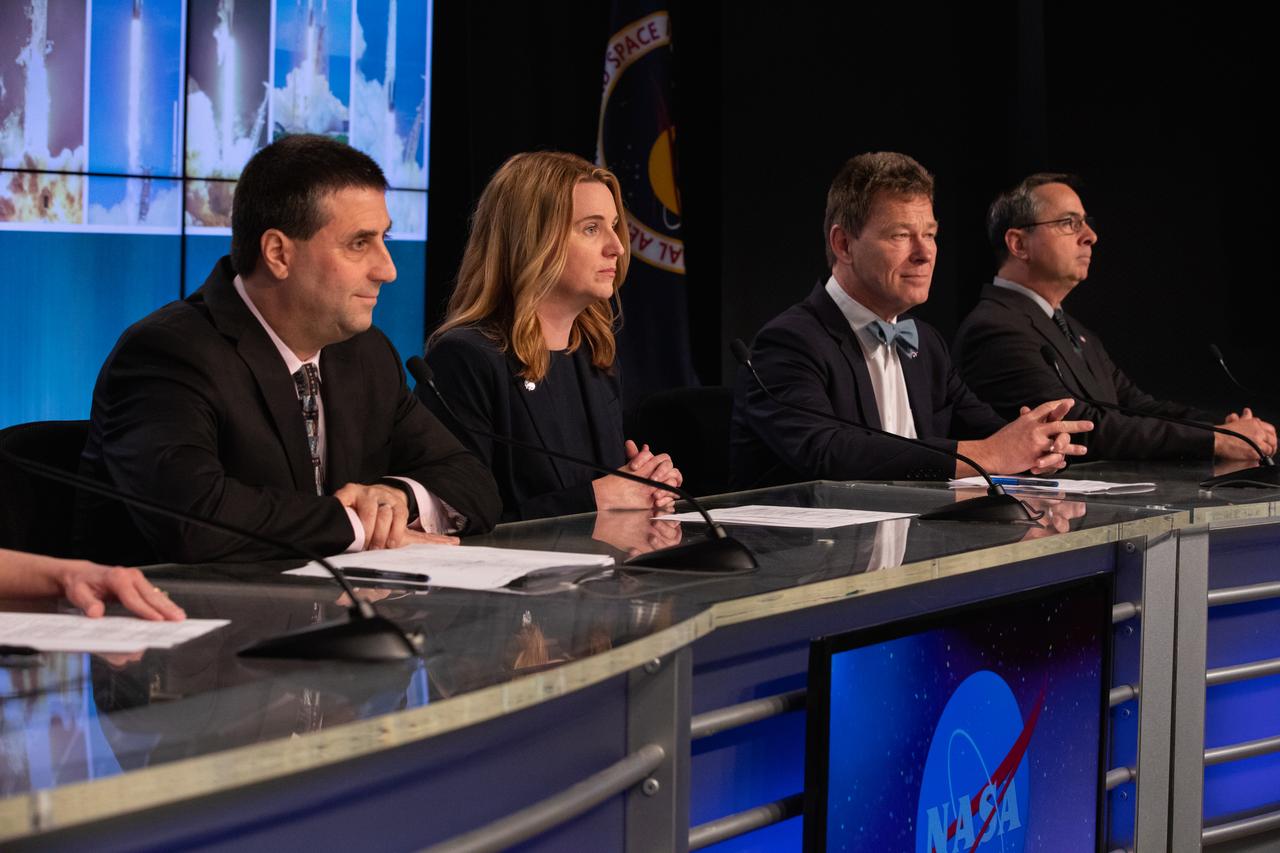
A prelaunch news conference for SpaceX’s 20th Commercial Resupply Services (CRS-20) mission to the International Space Station is held at NASA’s Kennedy Space Center in Florida on March 6, 2020. From left are Joel Montalbano, manager of the agency’s International Space Station Program; Jennifer Buchli, deputy chief scientist for the International Space Station Program; Hans Koenigsmann, vice president of Build and Flight Reliability at SpaceX; and Mike McAleenan, launch weather officer with the U.S. Air Force 45th Space Wing. SpaceX’s Falcon 9 rocket and cargo Dragon spacecraft are scheduled to lift off from Cape Canaveral Air Force Station’s Space Launch Complex 40 at 11:50 p.m. EST on March 6, 2020.
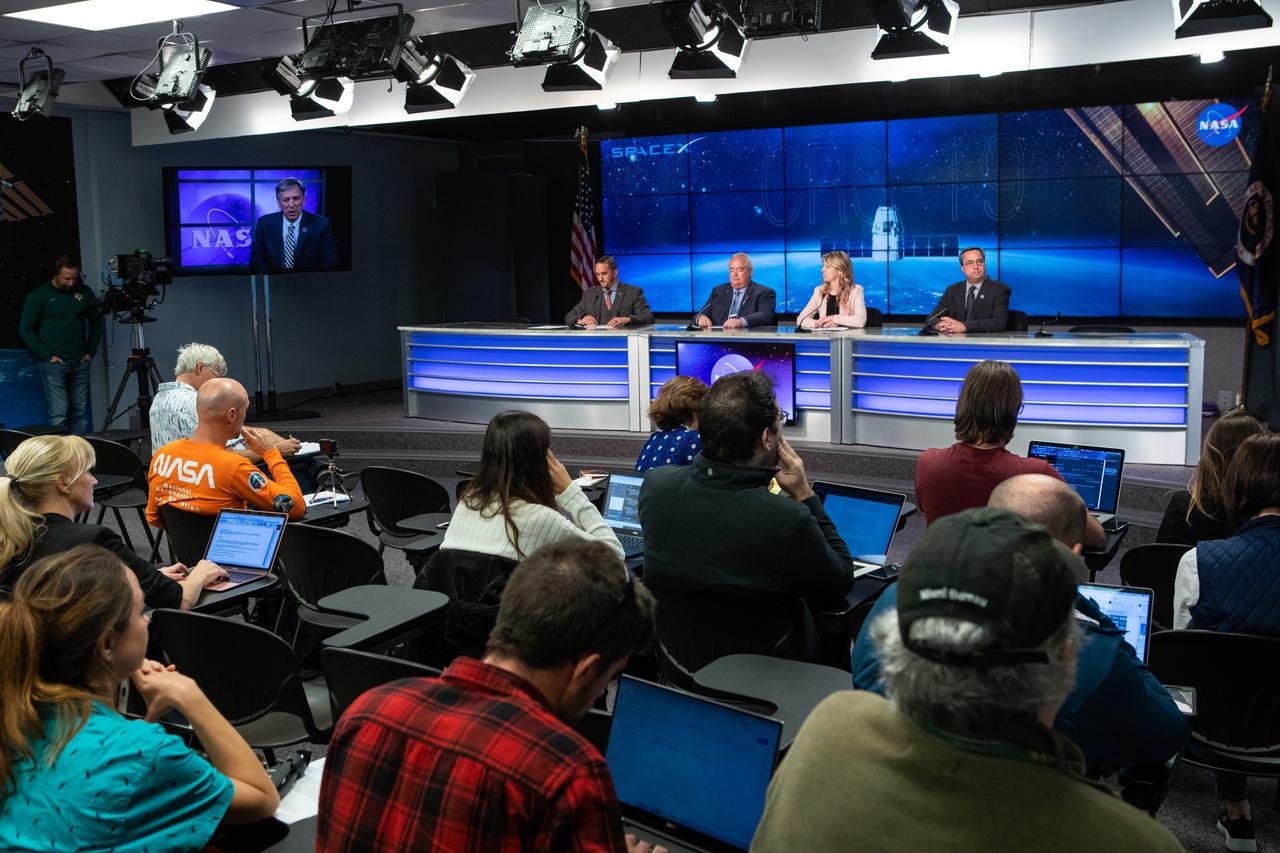
Dustin Cammack, NASA Communications, far left, moderates a prelaunch news conference on Dec. 3, 2019, for SpaceX's 19th Commercial Resupply Services (CRS-19) mission for NASA to the International Space Station, at the agency’s Kennedy Space Center in Florida. Speaking to members of the news media are, from left, Bryan Dansbury, assistant program scientist, International Space Station Program Science Office at NASA; Jessica Jensen, director, Dragon Mission Management at SpaceX; and Mike McAleenan, launch weather officer, U.S. Air Force 45th Space Wing. The SpaceX Flacon 9 rocket and Dragon cargo module are scheduled to launch on Dec. 4, 2019, from Space Launch Complex 40 on Cape Canaveral Air Force Station in Florida.
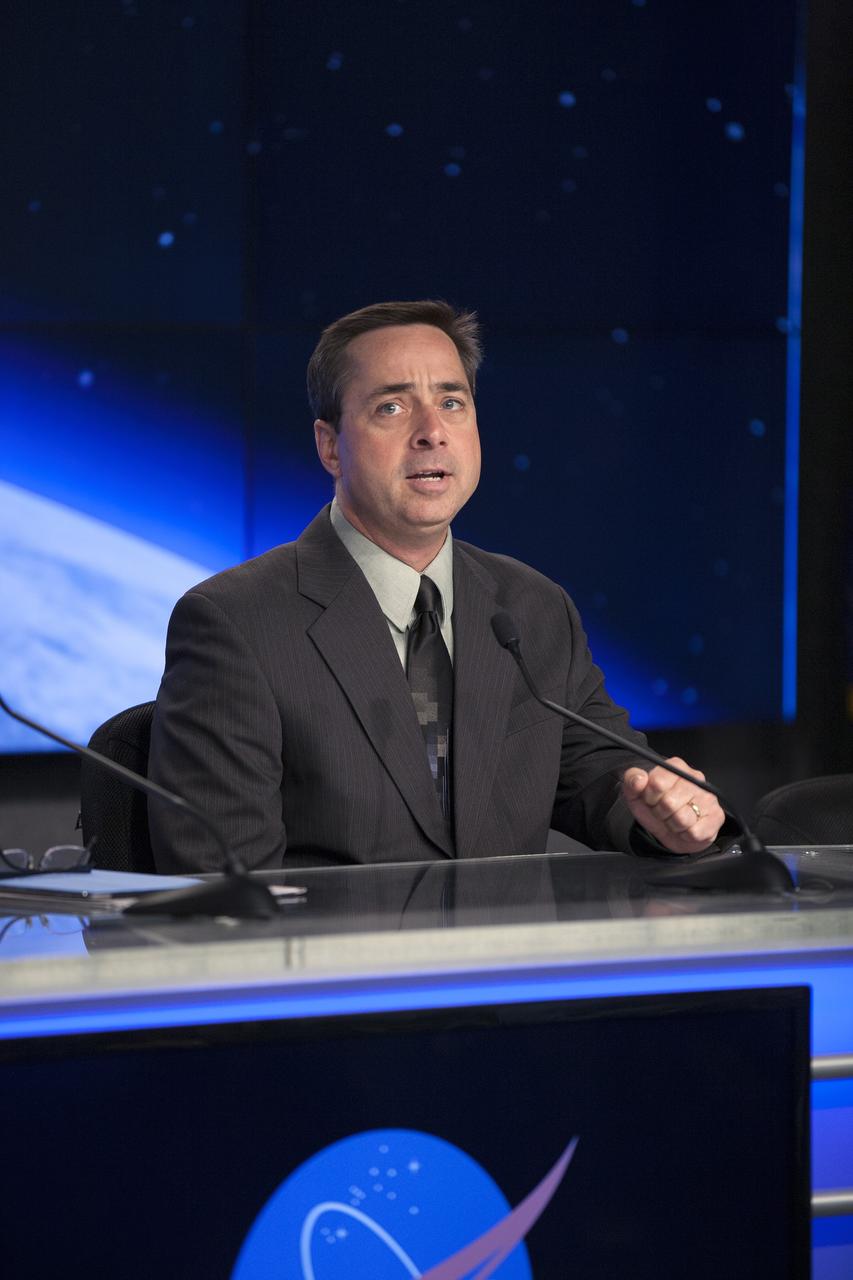
CAPE CANAVERAL, Fla. – During a news conference at NASA's Kennedy Space Center in Florida, agency and contractor officials discussed preparations for the launch of the SpaceX-3 Commercial Resupply Services mission to the International Space Station. Participating in the briefing is Mike McAleenan, launch weather officer, 45th Weather Squadron. Scheduled for launch on April 14, 2014 atop a Falcon 9 rocket, Dragon spacecraft will be marking its fourth trip to the space station. The SpaceX-3 mission carrying almost 2.5 tons of supplies, technology and science experiments is the third of 12 flights contracted by NASA to resupply the orbiting laboratory. For more information, visit http://www.nasa.gov/mission_pages/station/structure/launch/index.html Photo credit: NASA/Kim Shiflett
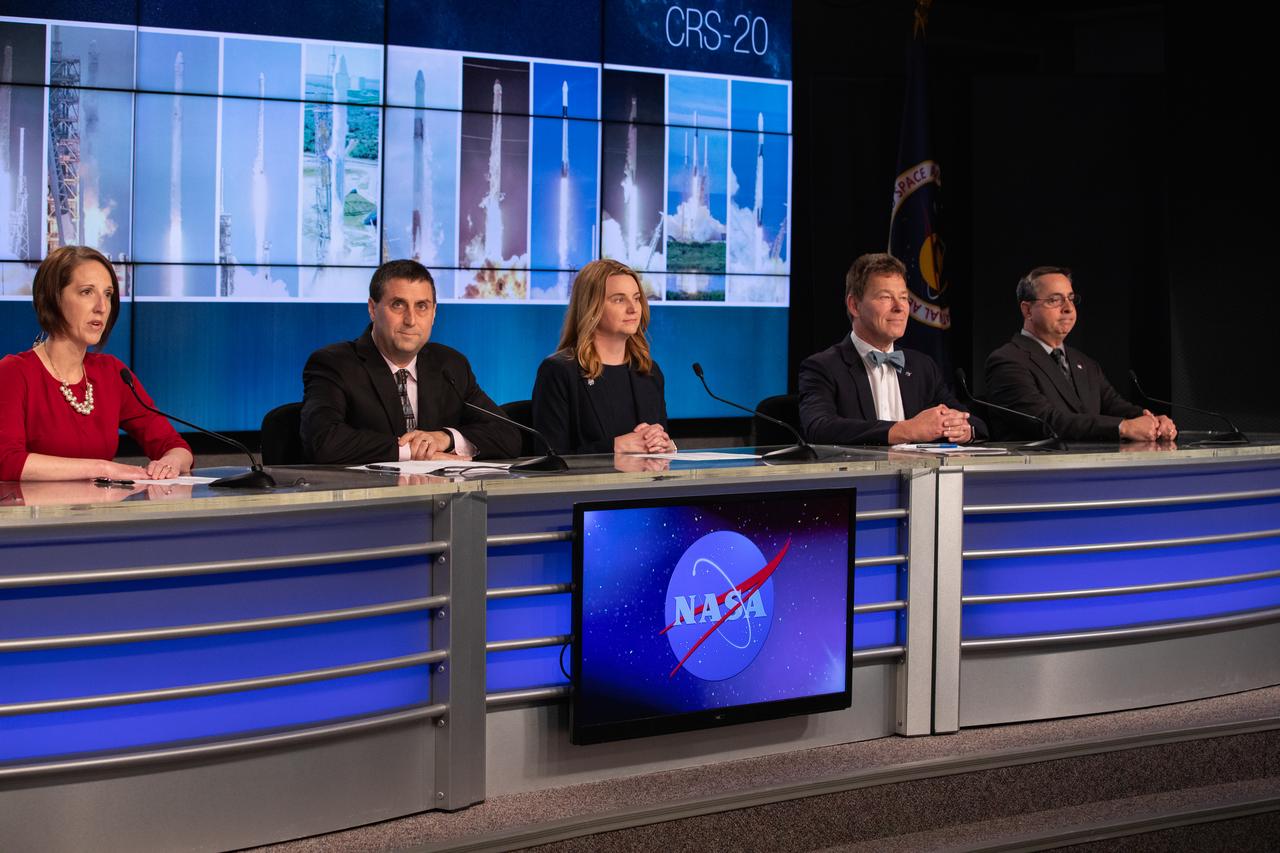
A prelaunch news conference for SpaceX’s 20th Commercial Resupply Services (CRS-20) mission to the International Space Station is held at NASA’s Kennedy Space Center in Florida on March 6, 2020. From left are conference moderator Heather Scott of NASA Communications; Joel Montalbano, manager of the agency’s International Space Station Program; Jennifer Buchli, deputy chief scientist for the International Space Station Program; Hans Koenigsmann, vice president of Build and Flight Reliability at SpaceX; and Mike McAleenan, launch weather officer with the U.S. Air Force 45th Space Wing. SpaceX’s Falcon 9 rocket and cargo Dragon spacecraft are scheduled to lift off from Cape Canaveral Air Force Station’s Space Launch Complex 40 at 11:50 p.m. EST on March 6, 2020.
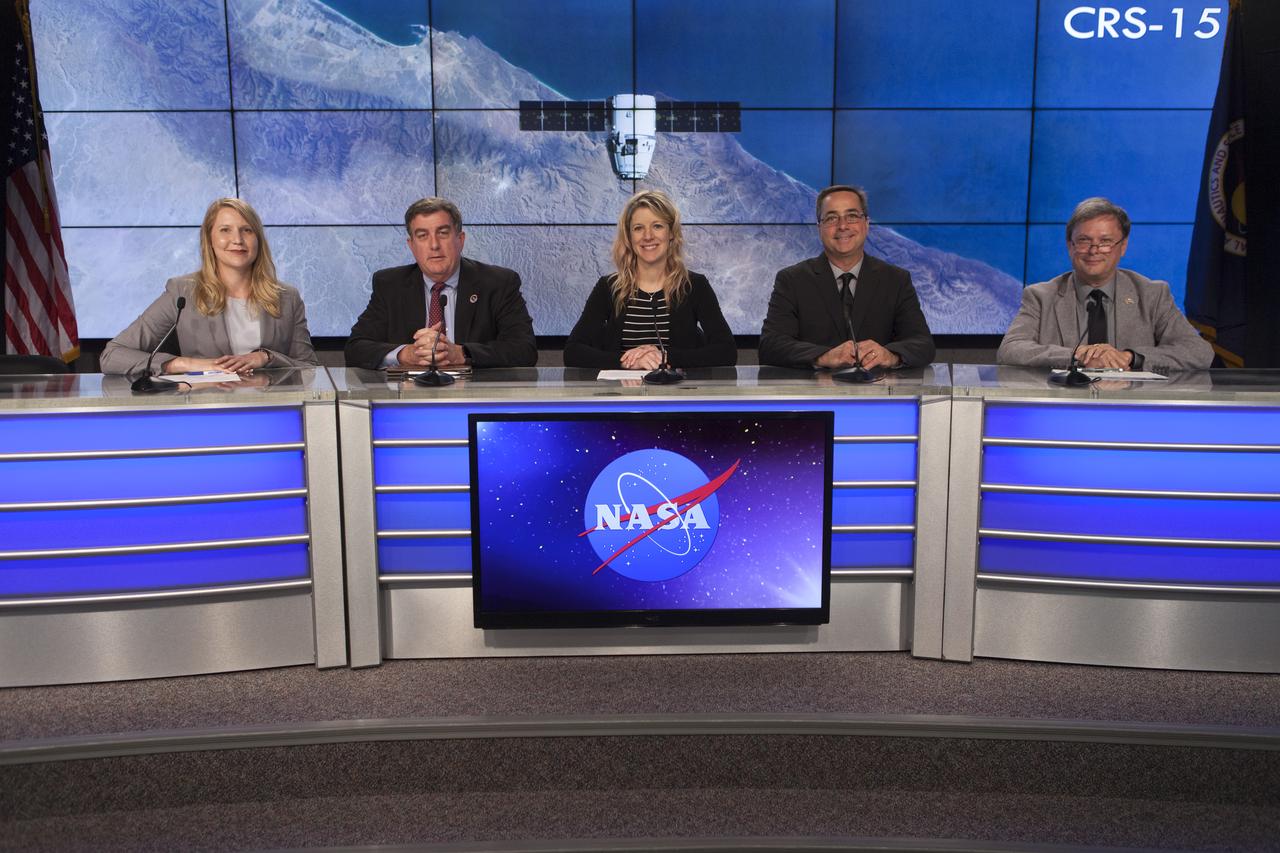
In the Kennedy Space Center’s Press Site auditorium, agency and industry leaders speak to members of the media during a prelaunch news conference for the SpaceX CRS-15 Commercial Resupply Services mission to the International Space Station. From left are: Stephanie Schierholz of NASA Communications,Kirk Shireman, NASA manager of the International Space Station Program, Jessica Jensen, director of Dragon Mission Management for SpaceX, Mike McAleenan, launch weather officer for the U.S. Air Force 45th Weather Squadron at Cape Canaveral Air Force Station, and David Brady, assistant program scientist for the International Space Station Program. A SpaceX Dragon spacecraft is scheduled to be launched from Space Launch Complex 40 at Cape Canaveral Air Force Station. The SpaceX Falcon 9 rocket will lift off on the company's 15th Commercial Resupply Services mission to the space station.
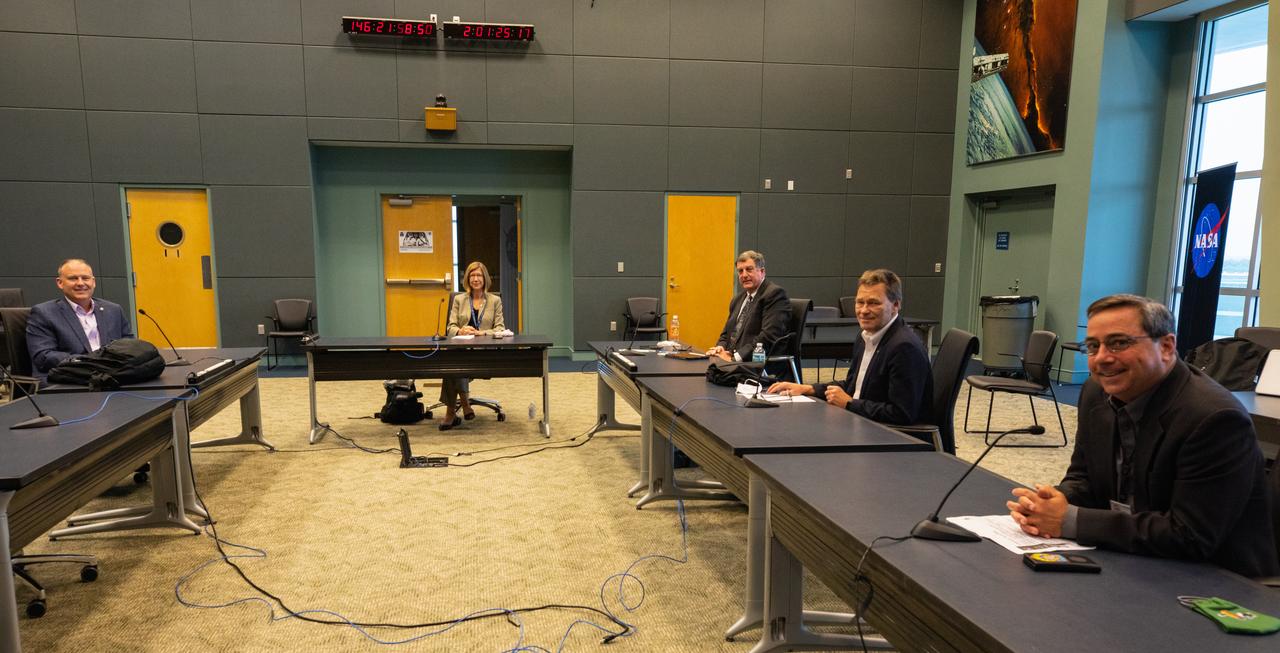
Representatives from NASA, SpaceX and the U.S. Space Force 45th Weather Squadron participate in a news conference following the Launch Readiness Review at the agency’s Kennedy Space Center in Florida on Monday, May 25, 2020, in advance of NASA’s SpaceX Demo-2 Flight Test to the International Space Station as part of NASA’s Commercial Crew Program. From the left are: Norm Knight, deputy director, NASA Johnson Space Center Flight Operations Kathy Lueders, manager, NASA Commercial Crew Program; Kirk Shireman, manager, International Space Station Program; Hans Koenigsmann, vice president, Build and Flight Reliability, SpaceX; and Mike McAleenan, launch weather officer, 45th Weather Squadron. Launch is currently targeted for 4:33 p.m. EDT Wednesday, May 27. The SpaceX Crew Dragon spacecraft will launch on a Falcon 9 rocket from historic Launch Complex 39A at NASA’s Kennedy Space Center in Florida.
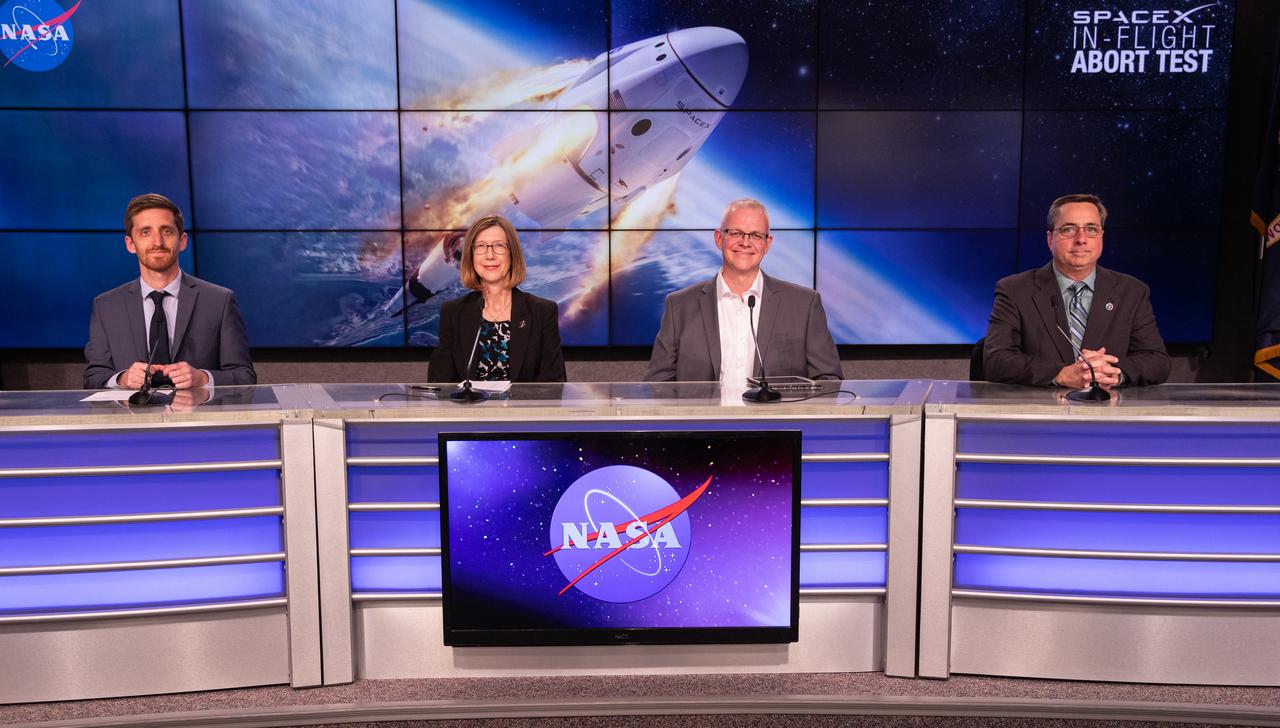
Officials from NASA, SpaceX and the U.S. Air Force participate in a briefing at the agency’s Kennedy Space Center in Florida on Jan. 17, 2020, prior to launch of SpaceX’s uncrewed In-Flight Abort Test. From left to right are Josh Finch, NASA Communications; Kathy Lueders, program manager, NASA’s Commercial Crew Program; Benji Reed, director of Crew Mission Management, SpaceX; and Mike McAleenan, launch weather officer with the Air Force’s 45th Weather Squadron. A SpaceX Falcon 9 rocket topped by the company’s Crew Dragon spacecraft will lift off from Kennedy’s Launch Complex 39A, then begin the launch-abort sequence. The spacecraft will demonstrate its escape capabilities in preparation for crewed flights to the International Space Station as part of the agency’s Commercial Crew Program.
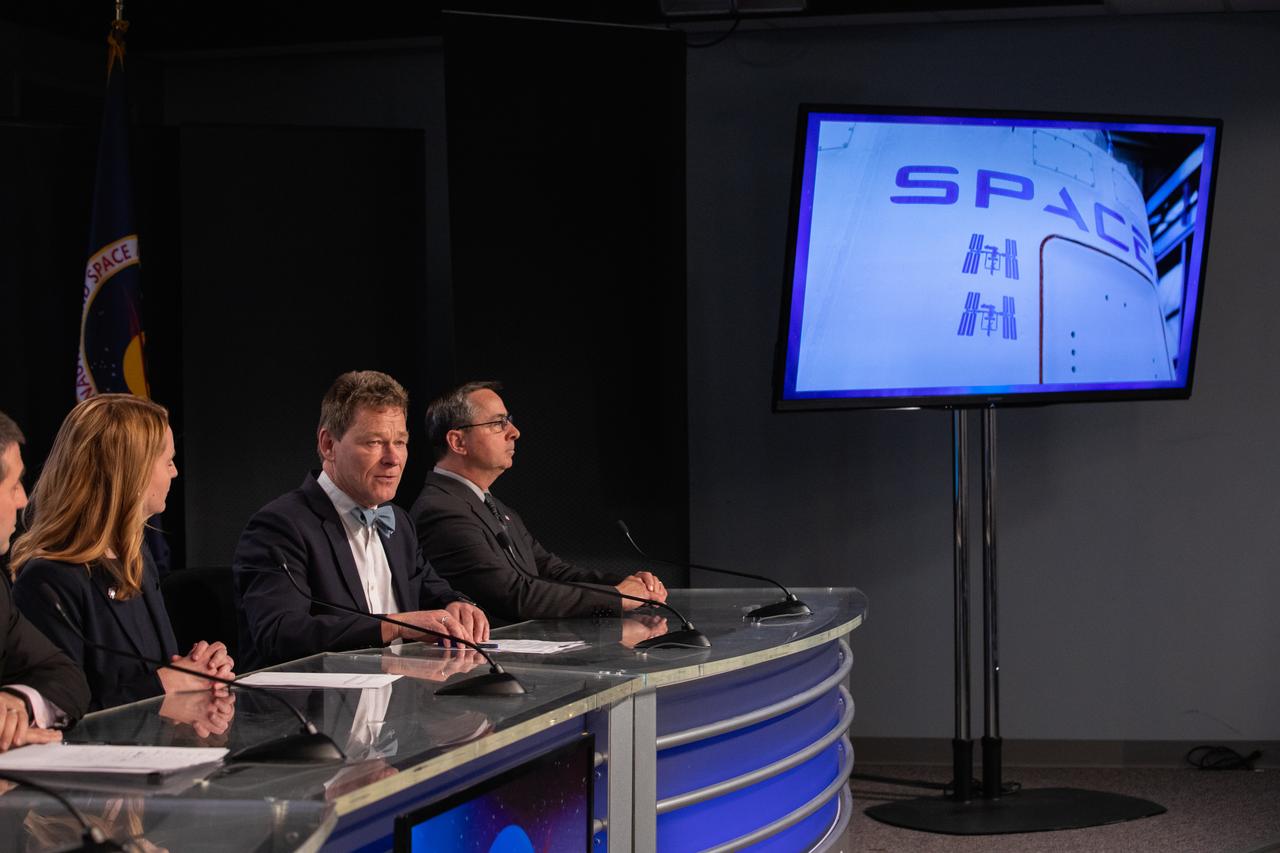
A prelaunch news conference for SpaceX’s 20th Commercial Resupply Services (CRS-20) mission to the International Space Station is held at NASA’s Kennedy Space Center in Florida on March 6, 2020. From left are Joel Montalbano, manager of the agency’s International Space Station Program; Jennifer Buchli, deputy chief scientist for the International Space Station Program; Hans Koenigsmann, vice president of Build and Flight Reliability at SpaceX; and Mike McAleenan, launch weather officer with the U.S. Air Force 45th Space Wing. SpaceX’s Falcon 9 rocket and cargo Dragon spacecraft are scheduled to lift off from Cape Canaveral Air Force Station’s Space Launch Complex 40 at 11:50 p.m. EST on March 6, 2020.
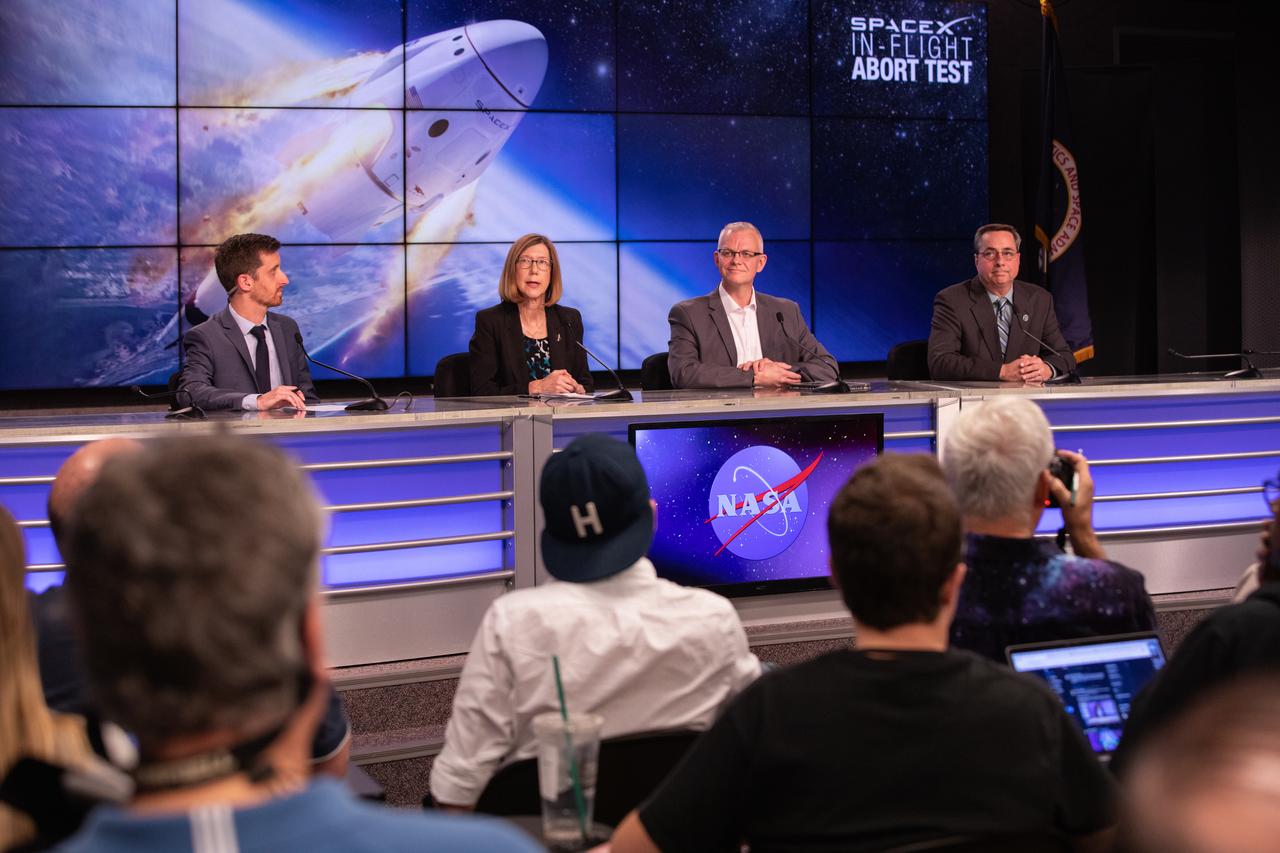
Officials from NASA, SpaceX and the U.S. Air Force participate in a briefing at the agency’s Kennedy Space Center in Florida on Jan. 17, 2020, prior to launch of SpaceX’s uncrewed In-Flight Abort Test. From left to right are Josh Finch, NASA Communications; Kathy Lueders, program manager, NASA’s Commercial Crew Program; Benji Reed, director of Crew Mission Management, SpaceX; and Mike McAleenan, launch weather officer with the Air Force’s 45th Weather Squadron. A SpaceX Falcon 9 rocket topped by the company’s Crew Dragon spacecraft will lift off from Kennedy’s Launch Complex 39A, then begin the launch-abort sequence. The spacecraft will demonstrate its escape capabilities in preparation for crewed flights to the International Space Station as part of the agency’s Commercial Crew Program.
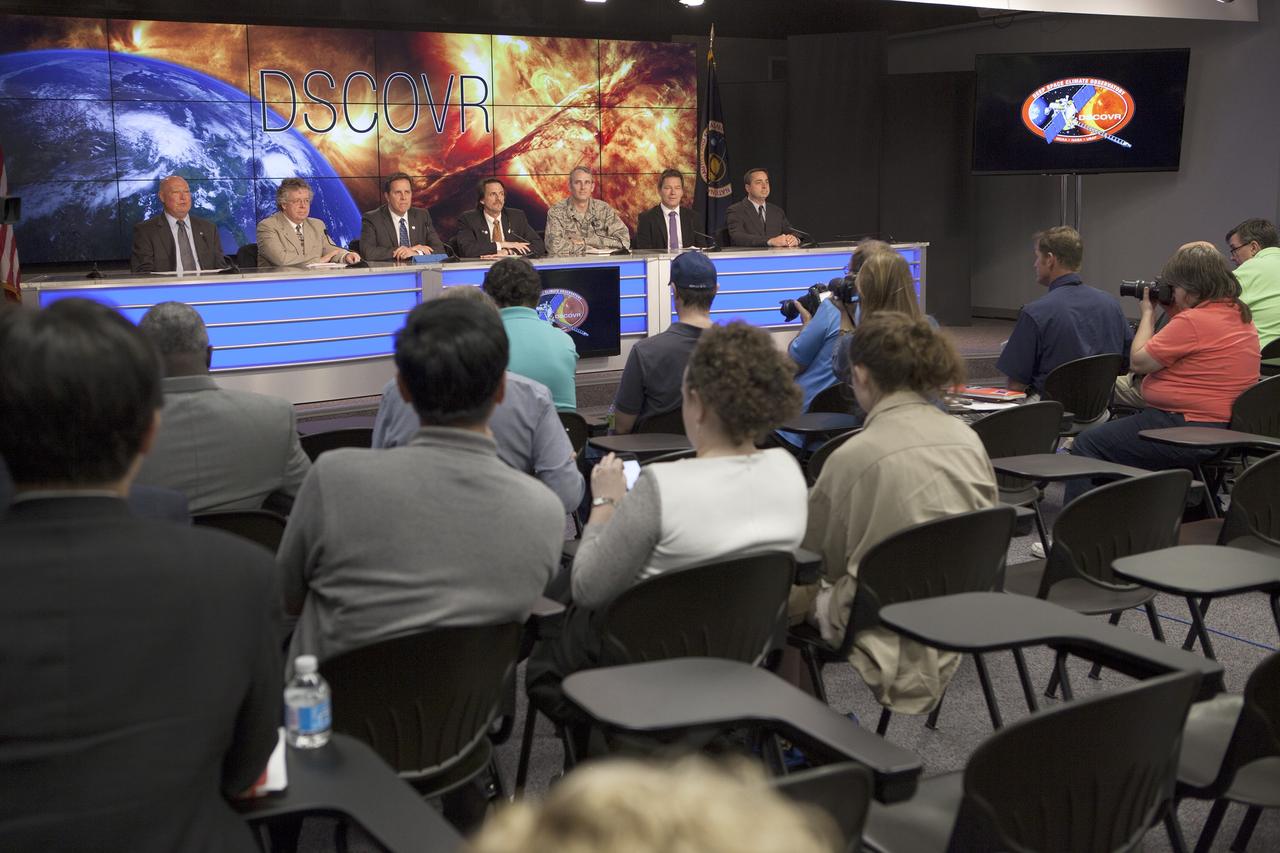
CAPE CANAVERAL, Fla. – A prelaunch briefing at NASA’s Kennedy Space Center in Florida brings media up to date on preparations for the liftoff of NOAA’s Deep Space Climate Observatory spacecraft, or DSCOVR. From left are Michael Curie, moderator, NASA Public Affairs, Stephen Volz, assistant administrator of the NOAA Satellite and Information Service, Tom Berger, director of the NOAA Space Weather Prediction Center, Steven Clarke, NASA Joint Agency Satellite Division director for the agency’s Science Mission Directorate, Col. D. Jason Cothern, Space Demonstrations Division chief at Kirtland Air Force Base in Albuquerque, New Mexico, and Hans Koenigsmann, vice president of mission assurance at SpaceX, and Mike McAleenan, launch weather officer with the U.S. Air Force 45th Weather Squadron. DSCOVR will launch aboard a SpaceX Falcon 9 rocket. The mission is a partnership between NOAA, NASA and the U.S. Air Force. DSCOVR will maintain the nation's real-time solar wind monitoring capabilities which are critical to the accuracy and lead time of NOAA's space weather alerts and forecasts. To learn more about DSCOVR, visit http://www.nesdis.noaa.gov/DSCOVR. Photo credit: NASA/Kim Shiflett
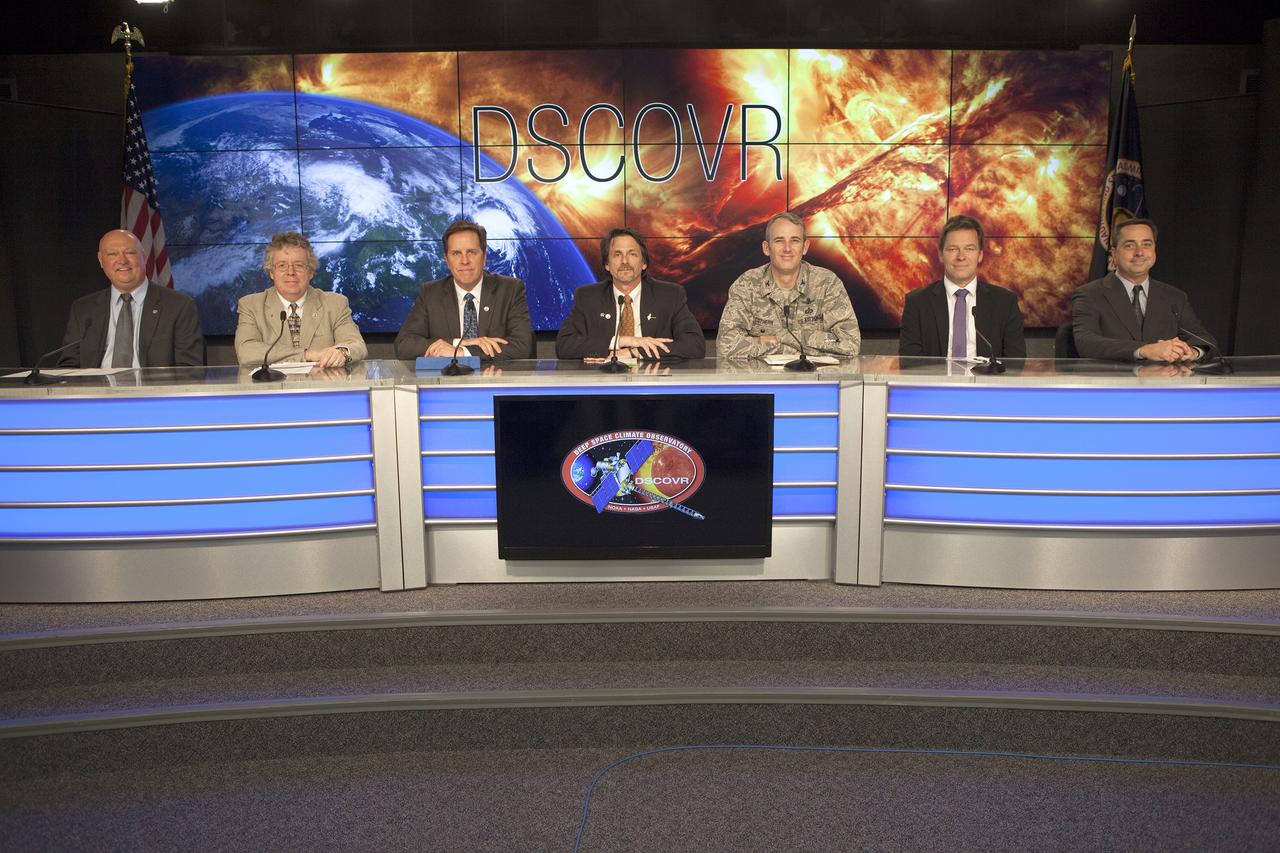
CAPE CANAVERAL, Fla. – Launch and mission officials prepare for the start of a prelaunch briefing at NASA’s Kennedy Space Center in Florida regarding NOAA’s Deep Space Climate Observatory mission, or DSCOVR. From left are Michael Curie, moderator, NASA Public Affairs, Stephen Volz, assistant administrator of the NOAA Satellite and Information Service, Tom Berger, director of the NOAA Space Weather Prediction Center, Steven Clarke, NASA Joint Agency Satellite Division director for the agency’s Science Mission Directorate, Col. D. Jason Cothern, Space Demonstrations Division chief at Kirtland Air Force Base in Albuquerque, New Mexico, and Hans Koenigsmann, vice president of mission assurance at SpaceX, and Mike McAleenan, launch weather officer with the U.S. Air Force 45th Weather Squadron. DSCOVR will launch aboard a SpaceX Falcon 9 rocket. The mission is a partnership between NOAA, NASA and the U.S. Air Force. DSCOVR will maintain the nation's real-time solar wind monitoring capabilities which are critical to the accuracy and lead time of NOAA's space weather alerts and forecasts. To learn more about DSCOVR, visit http://www.nesdis.noaa.gov/DSCOVR. Photo credit: NASA/Kim Shiflett
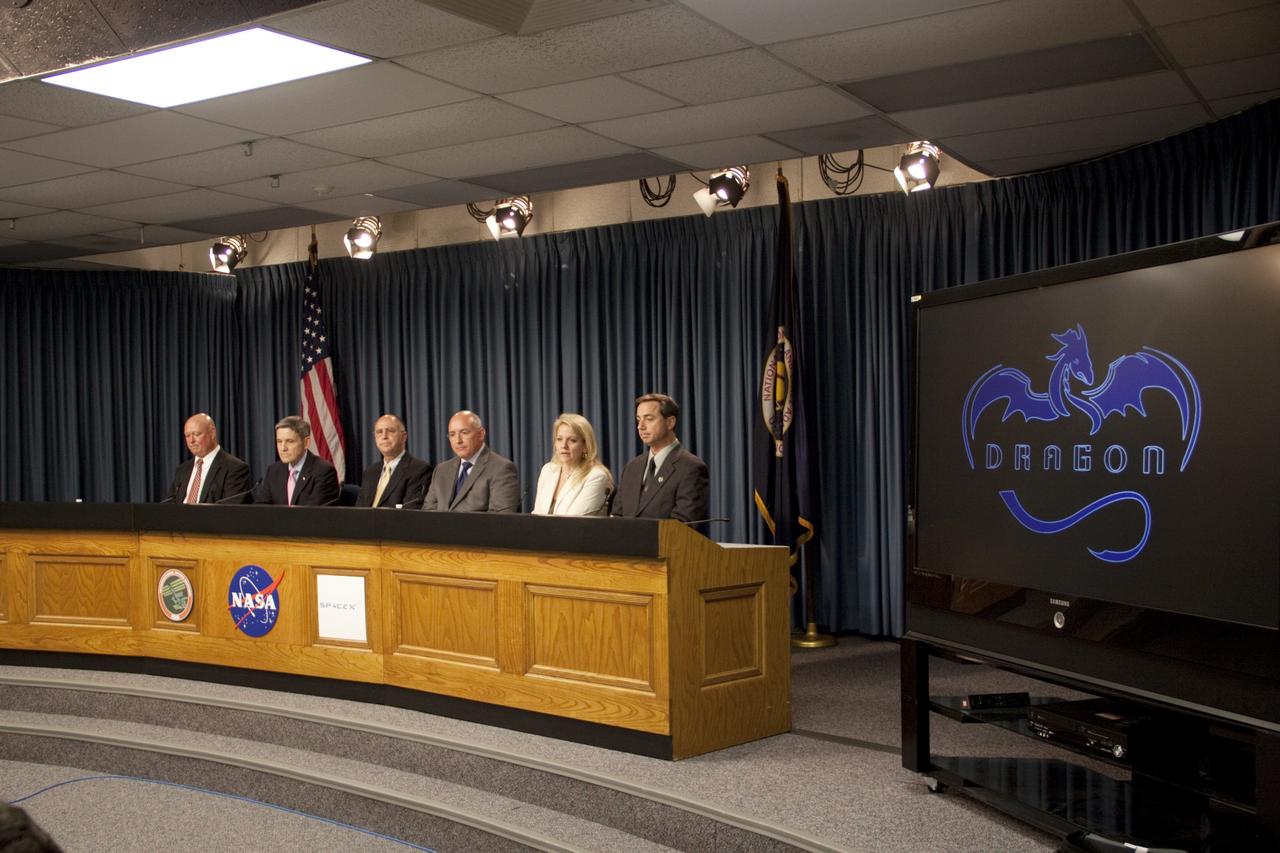
CAPE CANAVERAL, Fla. -- A prelaunch news conference is held in NASA Kennedy Space Center's Press Site auditorium in Florida. From left are Michael Curie, NASA Public Affairs, Bob Cabana, director of NASA Kennedy Space Center, Sam Scimemi, director of International Space Station at NASA Headquarters, Mike Suffredini, program manager of International Space Station at NASA Johnson Space Center, Gwynne Shotwell, president of Space Exploration Technologies Corp., or SpaceX, and Mike McAleenan, launch weather officer from the 45th Weather Squadron at Cape Canaveral Air Force Station. The news conference provided the media with a status on the readiness to launch NASA's first Commercial Resupply Services, or CRS-1, mission to the International Space Station. Space Exploration Technologies Corp., or SpaceX, built both the mission's Falcon 9 rocket and Dragon capsule. Launch is scheduled for 8:35 p.m. EDT on Oct. 7 from Space Launch Complex 40 on Cape Canaveral Air Force Station. SpaceX CRS-1 is an important step toward making America’s microgravity research program self-sufficient by providing a way to deliver and return significant amounts of cargo, including science experiments, to and from the orbiting laboratory. NASA has contracted for 12 commercial resupply flights from SpaceX and eight from the Orbital Sciences Corp. For more information, visit http://www.nasa.gov/mission_pages/station/living/launch/index.html. Photo credit: NASA/Jim Grossmann
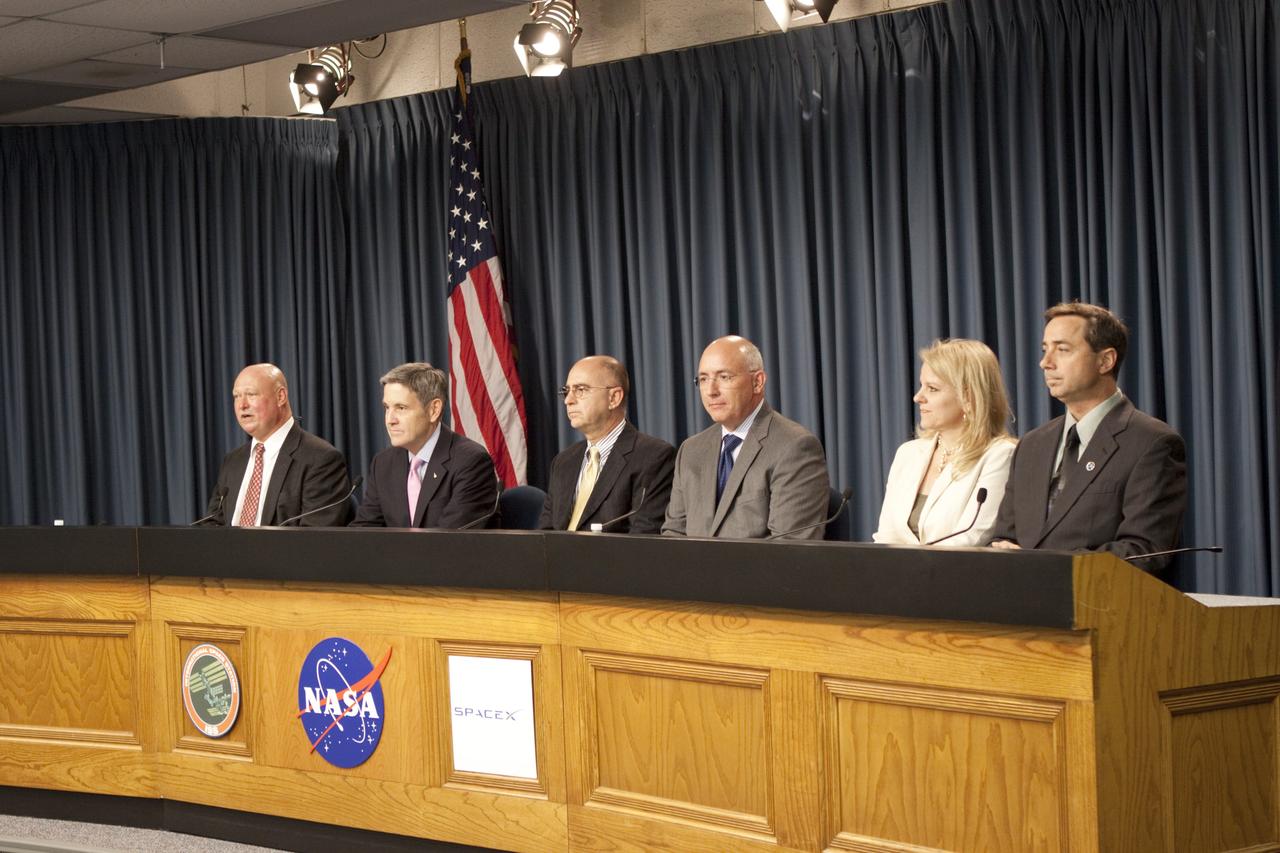
CAPE CANAVERAL, Fla. -- A prelaunch news conference is held in NASA Kennedy Space Center's Press Site auditorium in Florida. From left are Michael Curie, NASA Public Affairs, Bob Cabana, director of NASA Kennedy Space Center, Sam Scimemi, director of International Space Station at NASA Headquarters, Mike Suffredini, program manager of International Space Station at NASA Johnson Space Center, Gwynne Shotwell, president of Space Exploration Technologies Corp., or SpaceX, and Mike McAleenan, launch weather officer from the 45th Weather Squadron at Cape Canaveral Air Force Station. The news conference provided the media with a status on the readiness to launch NASA's first Commercial Resupply Services, or CRS-1, mission to the International Space Station. Space Exploration Technologies Corp., or SpaceX, built both the mission's Falcon 9 rocket and Dragon capsule. Launch is scheduled for 8:35 p.m. EDT on Oct. 7 from Space Launch Complex 40 on Cape Canaveral Air Force Station. SpaceX CRS-1 is an important step toward making America’s microgravity research program self-sufficient by providing a way to deliver and return significant amounts of cargo, including science experiments, to and from the orbiting laboratory. NASA has contracted for 12 commercial resupply flights from SpaceX and eight from the Orbital Sciences Corp. For more information, visit http://www.nasa.gov/mission_pages/station/living/launch/index.html. Photo credit: NASA/Jim Grossmann
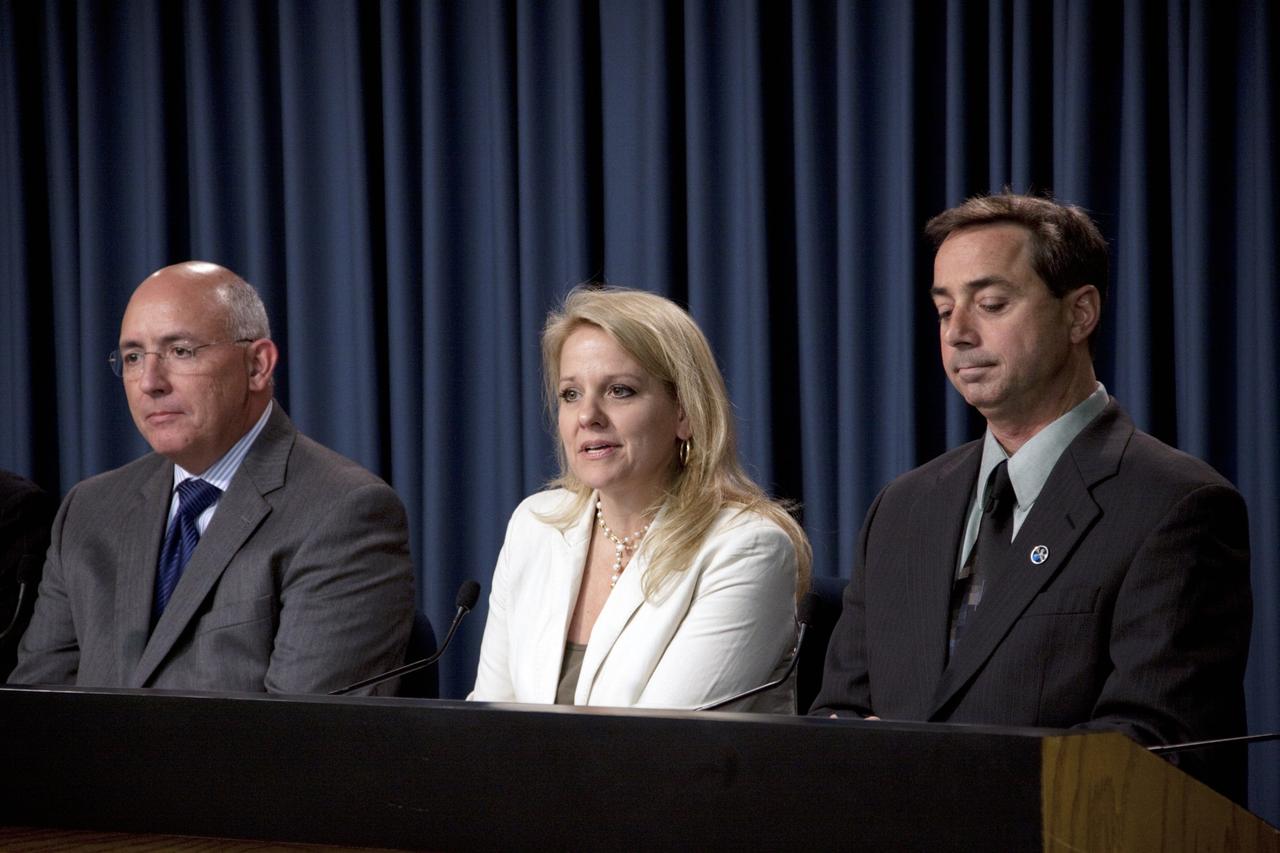
CAPE CANAVERAL, Fla. -- Gwynne Shotwell, president of Space Exploration Technologies Corp. or SpaceX, participates in a prelaunch news conference in Kennedy Space Center's Press Site auditorium in Florida. To her left is Mike Suffredini, program manager, International Space Station, Johnson Space Center and to her right is Mike McAleenan, launch weather officer, 45th Weather Squadron, Cape Canaveral Air Force Station The news conference provided the media with a status on the readiness to launch NASA's first Commercial Resupply Services, or CRS-1, mission to the International Space Station. Space Exploration Technologies Corp., or SpaceX, built both the mission's Falcon 9 rocket and Dragon capsule. Launch is scheduled for 8:35 p.m. EDT on Oct. 7 from Space Launch Complex 40 on Cape Canaveral Air Force Station. SpaceX CRS-1 is an important step toward making America’s microgravity research program self-sufficient by providing a way to deliver and return significant amounts of cargo, including science experiments, to and from the orbiting laboratory. NASA has contracted for 12 commercial resupply flights from SpaceX and eight from the Orbital Sciences Corp. For more information, visit http://www.nasa.gov/mission_pages/station/living/launch/index.html. Photo credit: NASA/Jim Grossmann The news conference provided the media with a status on the readiness to launch NASA's first Commercial Resupply Services, or CRS-1, mission to the International Space Station. Space Exploration Technologies Corp., or SpaceX, built both the mission's Falcon 9 rocket and Dragon capsule. Launch is scheduled for 8:35 p.m. EDT on Oct. 7 from Space Launch Complex 40 on Cape Canaveral Air Force Station. SpaceX CRS-1 is an important step toward making America’s microgravity research program self-sufficient by providing a way to deliver and return significant amounts of cargo, including science experiments, to and from the orbiting laboratory. NASA has contracted for 12 commercial resupply flights from SpaceX and eight from the Orbital Sciences Corp. For more information, visit http://www.nasa.gov/mission_pages/station/living/launch/index.html. Photo credit: NASA/Jim Grossmann
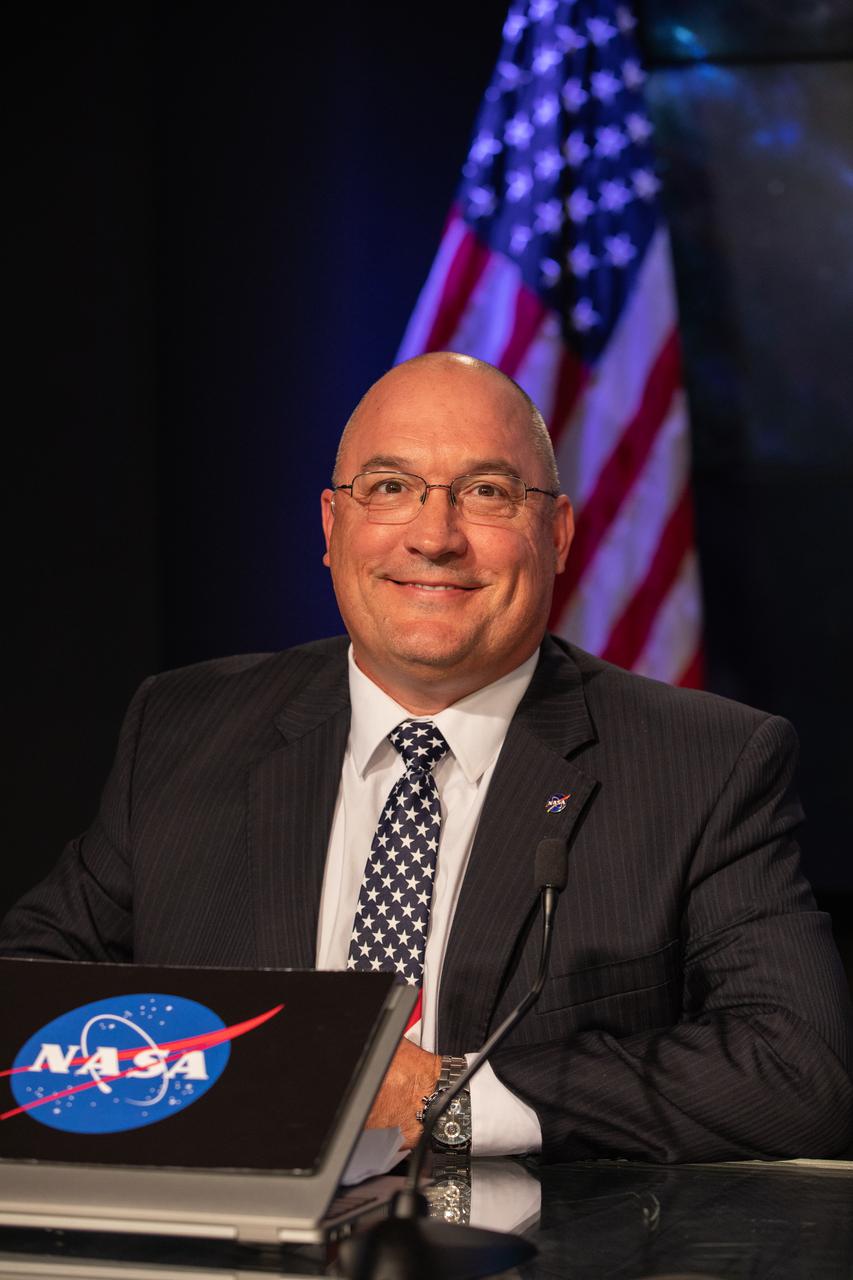
Greg Harland, NASA Communications, moderates a prelaunch news conference for NASA’s Imaging X-ray Polarimetry Explorer (IXPE) spacecraft on Dec. 7, 2021 at NASA’s Kennedy Space Center in Florida. IXPE is scheduled to launch no earlier than 1 a.m. EST Thursday, Dec. 9, on a SpaceX Falcon 9 rocket from Kennedy’s Launch Complex 39A. NASA’s Launch Services Program is managing this launch. NASA’s Marshall Space Flight Center in Huntsville, Alabama, manages the IXPE mission. Ball Aerospace, headquartered in Broomfield, Colorado, manages spacecraft operations with support from the University of Colorado at Boulder. NASA’s Goddard Space Flight Center in Greenbelt, Maryland, manages the Explorers Program for the agency’s Science Mission Directorate in Washington. The U.S. Space Force’s Space Launch Delta 45 provides range support for this launch. SpaceX is providing the launch vehicle for this mission.
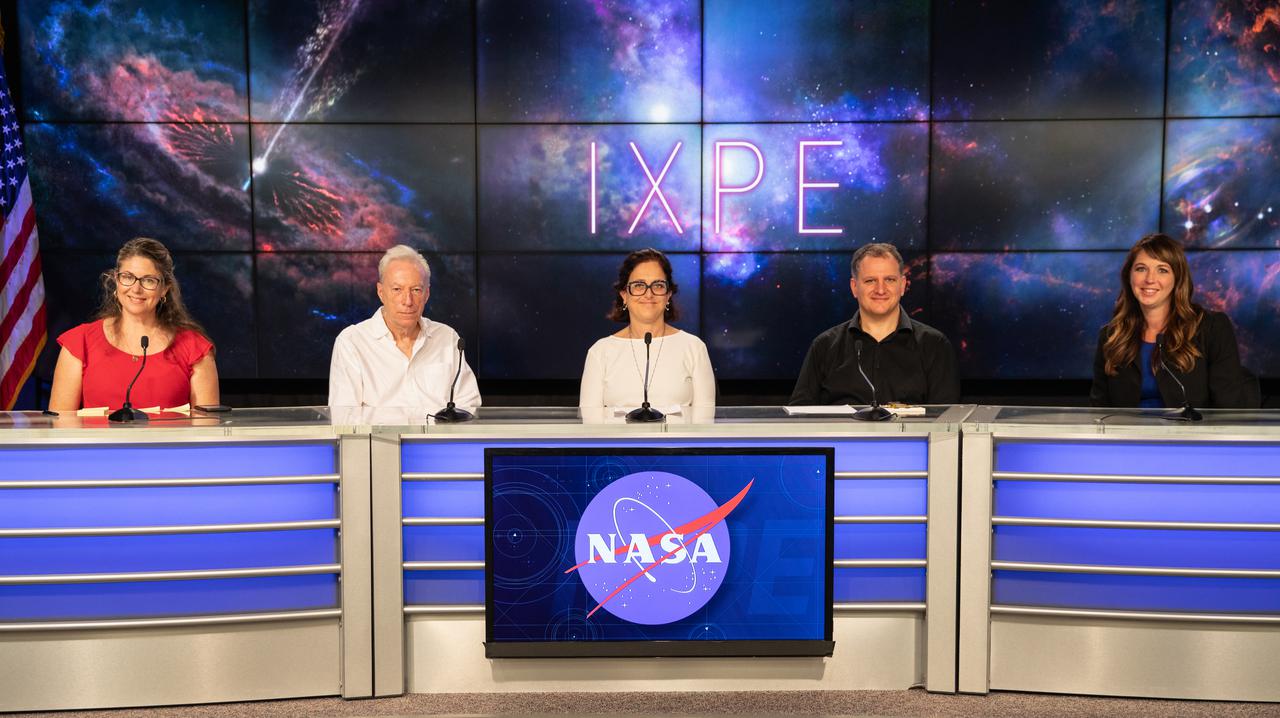
A payload briefing for NASA’s Imaging X-ray Polarimetry Explorer (IXPE) spacecraft is held on Dec.7, 2021 at NASA’s Kennedy Space Center in Florida. Participants from left are Karen Fox, moderator, NASA Communications; Brian Ramsey, deputy principal investigator, NASA’s Marshall Space Flight Center; Elisabetta Cavazzuti, ASI IXPE program manager, Italian Space Agency; Luca Baldini, Italian co-principal investigator, NASA’s Marshall Space Flight Center; and MacKenzie Ferrie, IXPE program manager, Ball Aerospace. IXPE is scheduled to launch no earlier than 1 a.m. EST Thursday, Dec. 9, on a SpaceX Falcon 9 rocket from Kennedy’s Launch Complex 39A. NASA’s Launch Services Program is managing this launch. NASA’s Marshall Space Flight Center in Huntsville, Alabama, manages the IXPE mission. Ball Aerospace, headquartered in Broomfield, Colorado, manages spacecraft operations with support from the University of Colorado at Boulder. NASA’s Goddard Space Flight Center in Greenbelt, Maryland, manages the Explorers Program for the agency’s Science Mission Directorate in Washington. The U.S. Space Force’s Space Launch Delta 45 provides range support for this launch. SpaceX is providing the launch vehicle for this mission.

Elisabetta Cavazzuti, ASI IXPE program manager, Italian Space Agency, participates in a payload briefing for NASA’s Imaging X-ray Polarimetry Explorer (IXPE) spacecraft on Dec.7, 2021 at NASA’s Kennedy Space Center in Florida. IXPE is scheduled to launch no earlier than 1 a.m. EST Thursday, Dec. 9, on a SpaceX Falcon 9 rocket from Kennedy’s Launch Complex 39A. NASA’s Launch Services Program is managing this launch. NASA’s Marshall Space Flight Center in Huntsville, Alabama, manages the IXPE mission. Ball Aerospace, headquartered in Broomfield, Colorado, manages spacecraft operations with support from the University of Colorado at Boulder. NASA’s Goddard Space Flight Center in Greenbelt, Maryland, manages the Explorers Program for the agency’s Science Mission Directorate in Washington. The U.S. Space Force’s Space Launch Delta 45 provides range support for this launch. SpaceX is providing the launch vehicle for this mission.

Karen Fox, NASA Communications, moderates a payload briefing for NASA’s Imaging X-ray Polarimetry Explorer (IXPE) spacecraft on Dec.7, 2021 at NASA’s Kennedy Space Center in Florida. IXPE is scheduled to launch no earlier than 1 a.m. EST Thursday, Dec. 9, on a SpaceX Falcon 9 rocket from Kennedy’s Launch Complex 39A. NASA’s Launch Services Program is managing this launch. NASA’s Marshall Space Flight Center in Huntsville, Alabama, manages the IXPE mission. Ball Aerospace, headquartered in Broomfield, Colorado, manages spacecraft operations with support from the University of Colorado at Boulder. NASA’s Goddard Space Flight Center in Greenbelt, Maryland, manages the Explorers Program for the agency’s Science Mission Directorate in Washington. The U.S. Space Force’s Space Launch Delta 45 provides range support for this launch. SpaceX is providing the launch vehicle for this mission.

Makenzie Lystrup, vice president and general manager, civil space, Ball Aerospace, participates in a prelaunch news conference for NASA’s Imaging X-ray Polarimetry Explorer (IXPE) spacecraft on Dec. 7, 2021 at NASA’s Kennedy Space Center in Florida. IXPE is scheduled to launch no earlier than 1 a.m. EST Thursday, Dec. 9, on a SpaceX Falcon 9 rocket from Kennedy’s Launch Complex 39A. NASA’s Launch Services Program is managing this launch. NASA’s Marshall Space Flight Center in Huntsville, Alabama, manages the IXPE mission. Ball Aerospace, headquartered in Broomfield, Colorado, manages spacecraft operations with support from the University of Colorado at Boulder. NASA’s Goddard Space Flight Center in Greenbelt, Maryland, manages the Explorers Program for the agency’s Science Mission Directorate in Washington. The U.S. Space Force’s Space Launch Delta 45 provides range support for this launch. SpaceX is providing the launch vehicle for this mission.

Martin Weisskopf, IXPE principal investigator, NASA’s Marshall Space Flight Center, participates in a prelaunch news conference for NASA’s Imaging X-ray Polarimetry Explorer (IXPE) spacecraft on Dec. 7, 2021 at NASA’s Kennedy Space Center in Florida. IXPE is scheduled to launch no earlier than 1 a.m. EST Thursday, Dec. 9, on a SpaceX Falcon 9 rocket from Kennedy’s Launch Complex 39A. NASA’s Launch Services Program is managing this launch. NASA’s Marshall Space Flight Center in Huntsville, Alabama, manages the IXPE mission. Ball Aerospace, headquartered in Broomfield, Colorado, manages spacecraft operations with support from the University of Colorado at Boulder. NASA’s Goddard Space Flight Center in Greenbelt, Maryland, manages the Explorers Program for the agency’s Science Mission Directorate in Washington. The U.S. Space Force’s Space Launch Delta 45 provides range support for this launch. SpaceX is providing the launch vehicle for this mission.
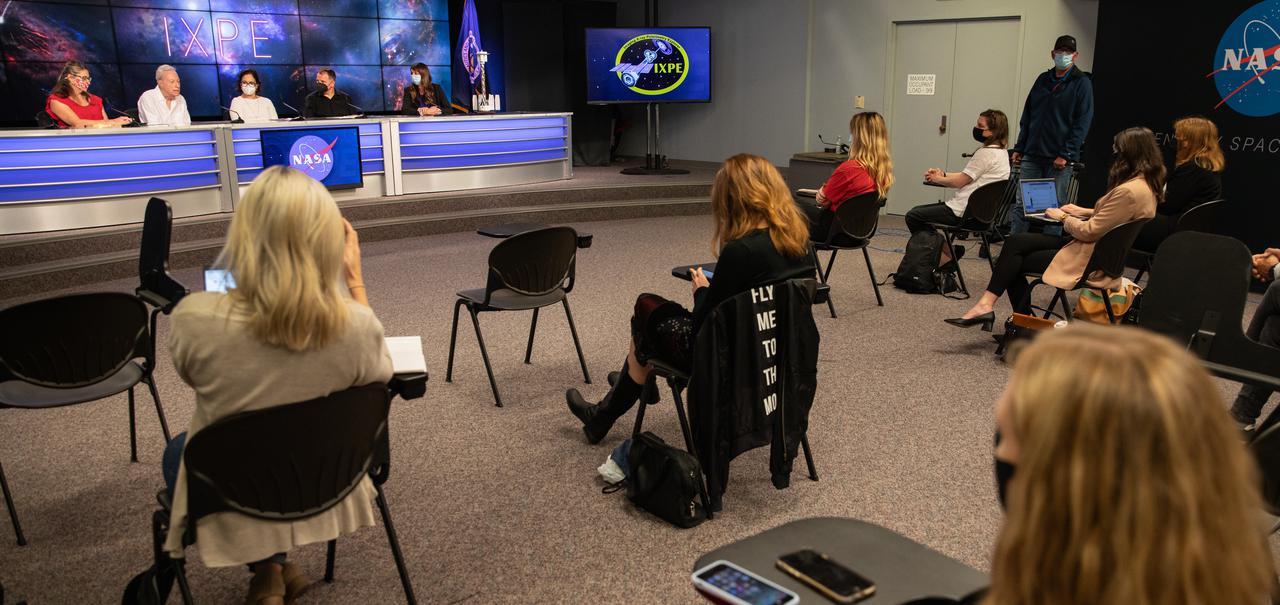
A payload briefing for NASA’s Imaging X-ray Polarimetry Explorer (IXPE) spacecraft is held on Dec.7, 2021 at NASA’s Kennedy Space Center in Florida. Participants from left are Karen Fox, moderator, NASA Communications; Brian Ramsey, deputy principal investigator, NASA’s Marshall Space Flight Center; Elisabetta Cavazzuti, ASI IXPE program manager, Italian Space Agency; Luca Baldini, Italian co-principal investigator, NASA’s Marshall Space Flight Center; and MacKenzie Ferrie, IXPE program manager, Ball Aerospace. IXPE is scheduled to launch no earlier than 1 a.m. EST Thursday, Dec. 9, on a SpaceX Falcon 9 rocket from Kennedy’s Launch Complex 39A. NASA’s Launch Services Program is managing this launch. NASA’s Marshall Space Flight Center in Huntsville, Alabama, manages the IXPE mission. Ball Aerospace, headquartered in Broomfield, Colorado, manages spacecraft operations with support from the University of Colorado at Boulder. NASA’s Goddard Space Flight Center in Greenbelt, Maryland, manages the Explorers Program for the agency’s Science Mission Directorate in Washington. The U.S. Space Force’s Space Launch Delta 45 provides range support for this launch. SpaceX is providing the launch vehicle for this mission.
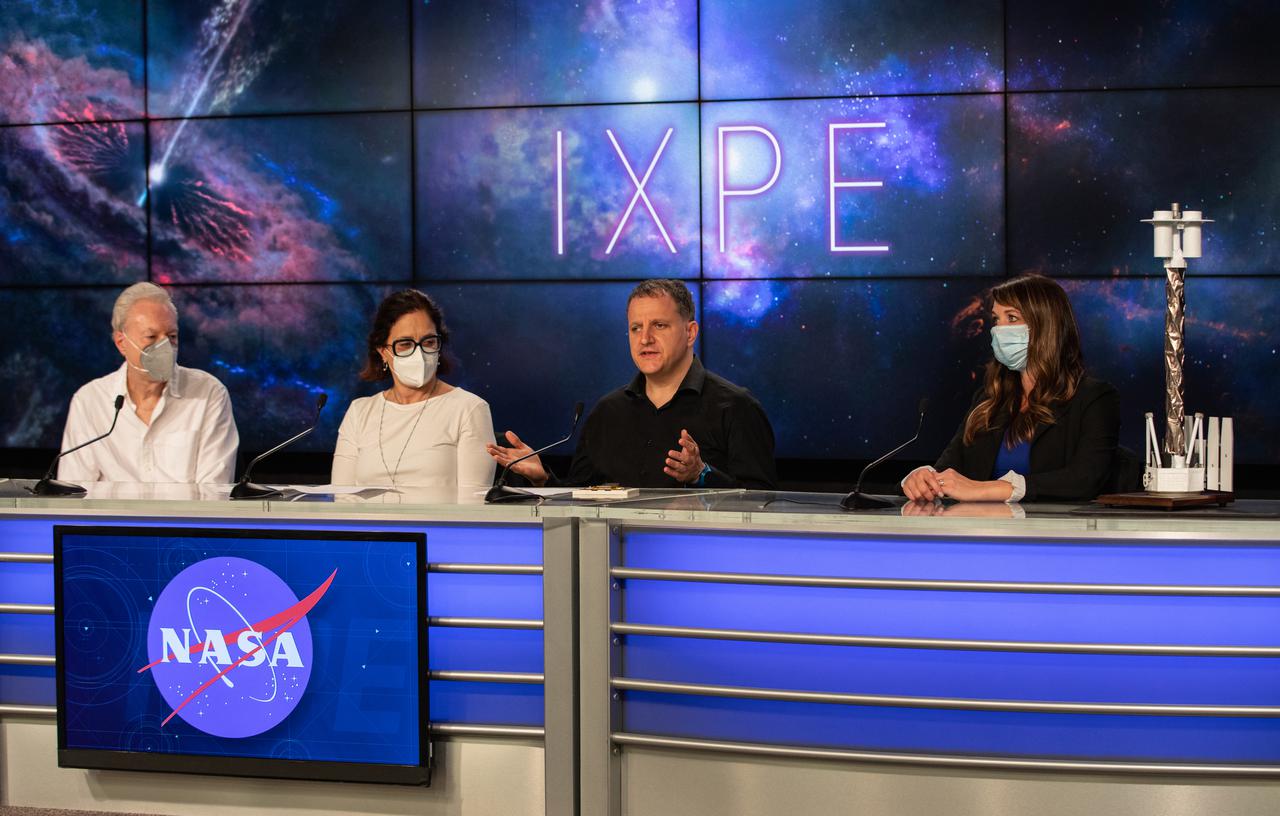
A payload briefing for NASA’s Imaging X-ray Polarimetry Explorer (IXPE) spacecraft is held on Dec.7, 2021 at NASA’s Kennedy Space Center in Florida. Participants from left are Brian Ramsey, deputy principal investigator, NASA’s Marshall Space Flight Center; Elisabetta Cavazzuti, ASI IXPE program manager, Italian Space Agency; Luca Baldini, Italian co-principal investigator, NASA’s Marshall Space Flight Center; and MacKenzie Ferrie, IXPE program manager, Ball Aerospace. IXPE is scheduled to launch no earlier than 1 a.m. EST Thursday, Dec. 9, on a SpaceX Falcon 9 rocket from Kennedy’s Launch Complex 39A. NASA’s Launch Services Program is managing this launch. NASA’s Marshall Space Flight Center in Huntsville, Alabama, manages the IXPE mission. Ball Aerospace, headquartered in Broomfield, Colorado, manages spacecraft operations with support from the University of Colorado at Boulder. NASA’s Goddard Space Flight Center in Greenbelt, Maryland, manages the Explorers Program for the agency’s Science Mission Directorate in Washington. The U.S. Space Force’s Space Launch Delta 45 provides range support for this launch. SpaceX is providing the launch vehicle for this mission.
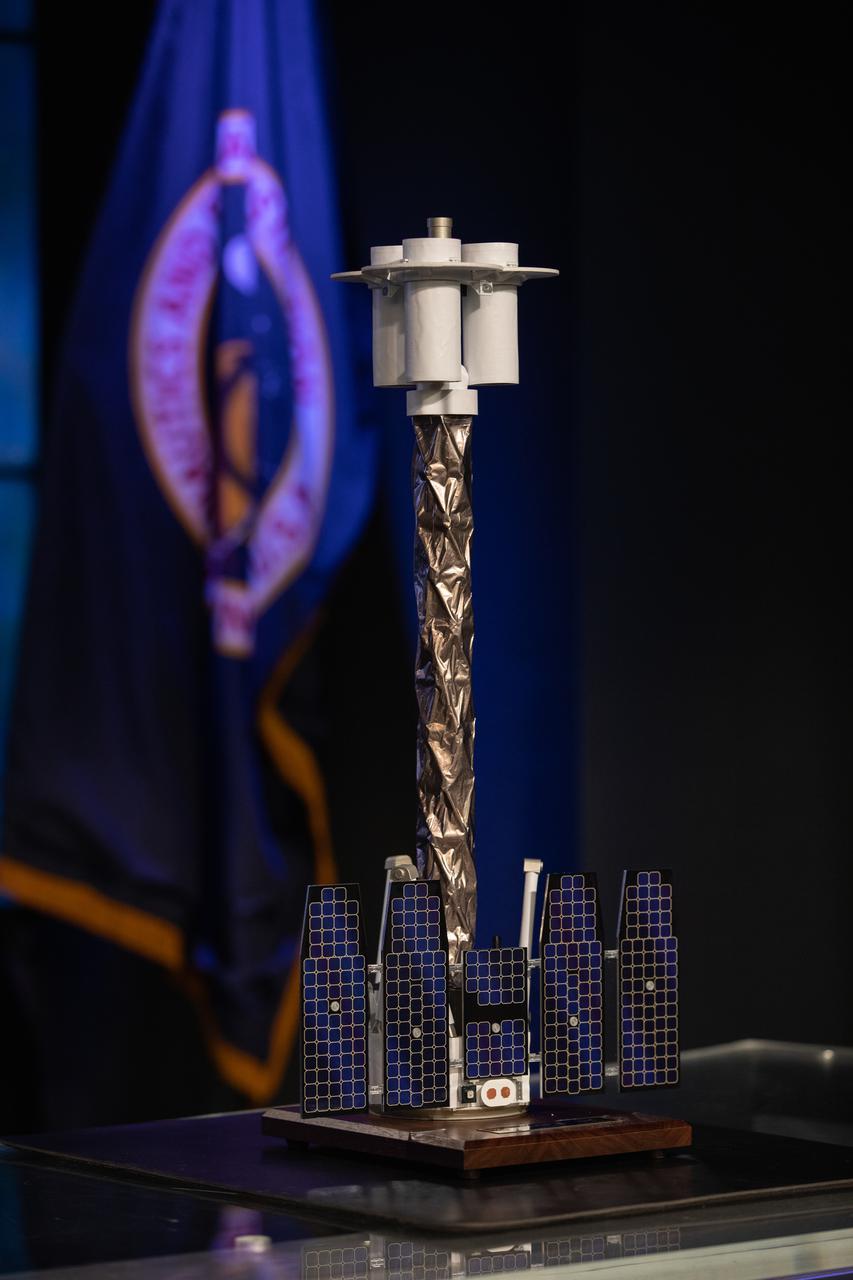
A scale model of NASA’s Imaging X-ray Polarimetry Explorer (IXPE) spacecraft is on display during a payload briefing for IXPE on Dec.7, 2021 at NASA’s Kennedy Space Center in Florida. IXPE is scheduled to launch no earlier than 1 a.m. EST Thursday, Dec. 9, on a SpaceX Falcon 9 rocket from Kennedy’s Launch Complex 39A. NASA’s Launch Services Program is managing this launch. NASA’s Marshall Space Flight Center in Huntsville, Alabama, manages the IXPE mission. Ball Aerospace, headquartered in Broomfield, Colorado, manages spacecraft operations with support from the University of Colorado at Boulder. NASA’s Goddard Space Flight Center in Greenbelt, Maryland, manages the Explorers Program for the agency’s Science Mission Directorate in Washington. The U.S. Space Force’s Space Launch Delta 45 provides range support for this launch. SpaceX is providing the launch vehicle for this mission.
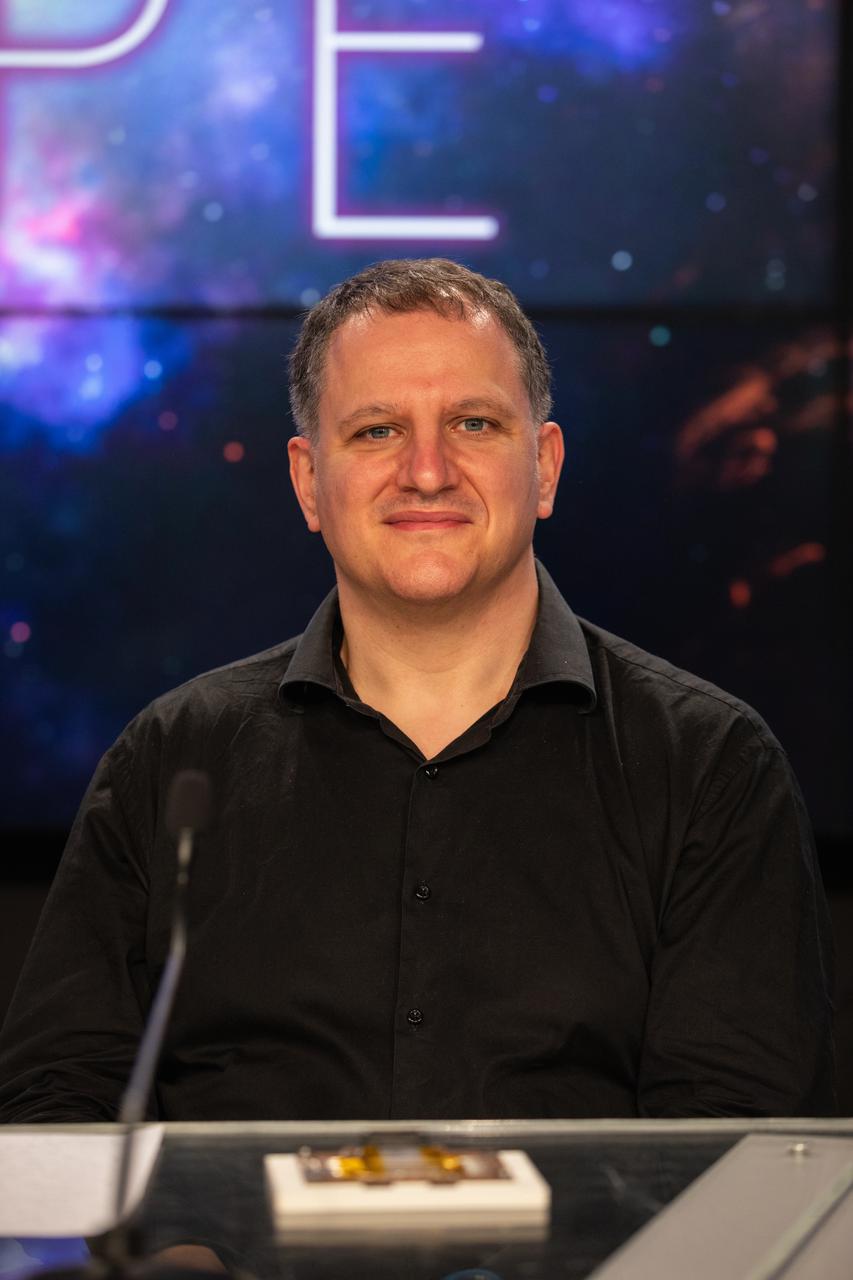
Luca Baldini, Italian co-principal investigator, National Institute for Nuclear Physics, participates in a payload briefing for NASA’s Imaging X-ray Polarimetry Explorer (IXPE) spacecraft on Dec.7, 2021 at NASA’s Kennedy Space Center in Florida. IXPE is scheduled to launch no earlier than 1 a.m. EST Thursday, Dec. 9, on a SpaceX Falcon 9 rocket from Kennedy’s Launch Complex 39A. NASA’s Launch Services Program is managing this launch. NASA’s Marshall Space Flight Center in Huntsville, Alabama, manages the IXPE mission. Ball Aerospace, headquartered in Broomfield, Colorado, manages spacecraft operations with support from the University of Colorado at Boulder. NASA’s Goddard Space Flight Center in Greenbelt, Maryland, manages the Explorers Program for the agency’s Science Mission Directorate in Washington. The U.S. Space Force’s Space Launch Delta 45 provides range support for this launch. SpaceX is providing the launch vehicle for this mission.
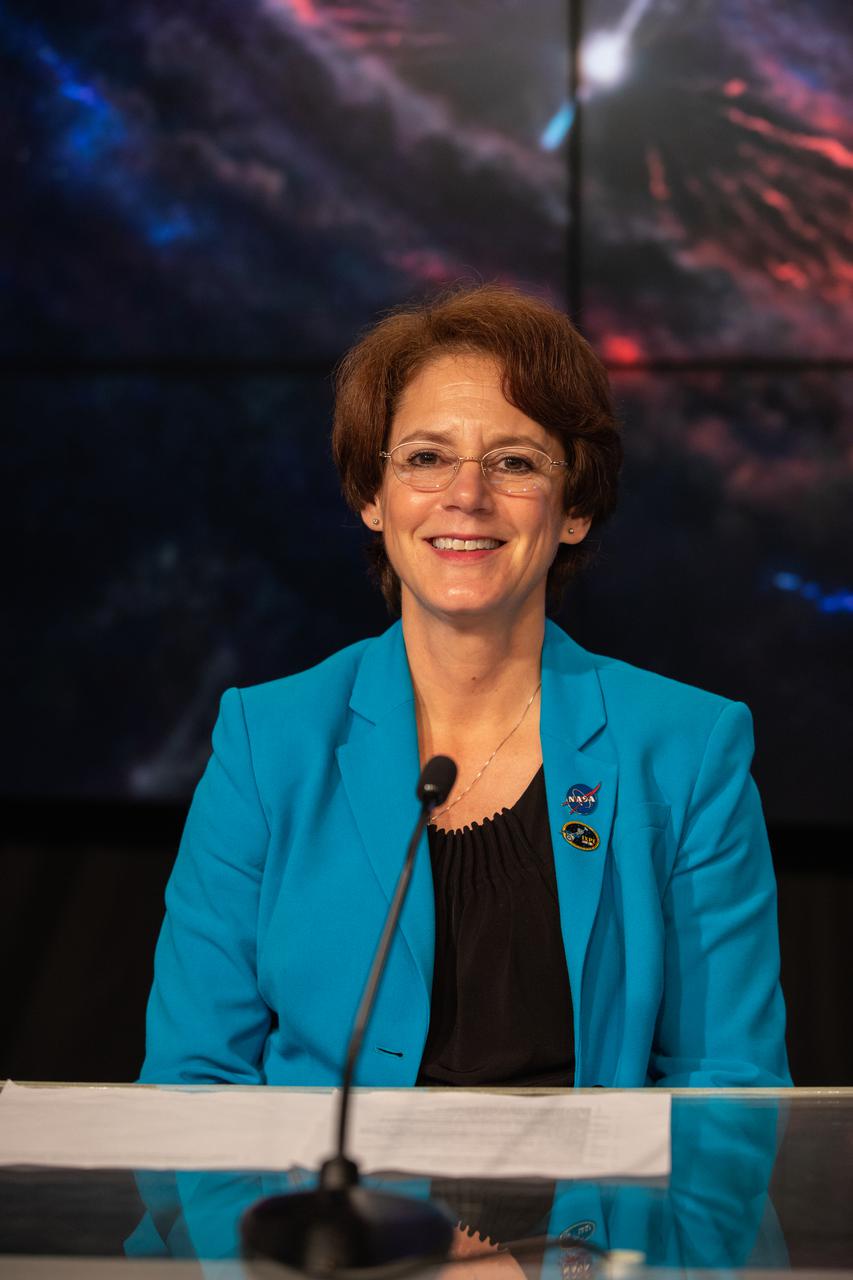
Sandra Connelly, deputy associate administrator for science, NASA Headquarters, participates in a prelaunch news conference for NASA’s Imaging X-ray Polarimetry Explorer (IXPE) spacecraft on Dec. 7, 2021 at NASA’s Kennedy Space Center in Florida. IXPE is scheduled to launch no earlier than 1 a.m. EST Thursday, Dec. 9, on a SpaceX Falcon 9 rocket from Kennedy’s Launch Complex 39A. NASA’s Launch Services Program is managing this launch. NASA’s Marshall Space Flight Center in Huntsville, Alabama, manages the IXPE mission. Ball Aerospace, headquartered in Broomfield, Colorado, manages spacecraft operations with support from the University of Colorado at Boulder. NASA’s Goddard Space Flight Center in Greenbelt, Maryland, manages the Explorers Program for the agency’s Science Mission Directorate in Washington. The U.S. Space Force’s Space Launch Delta 45 provides range support for this launch. SpaceX is providing the launch vehicle for this mission.

Brian Ramsey, deputy principal investigator, NASA’s Marshall Space Flight Center, participates in a payload briefing for NASA’s Imaging X-ray Polarimetry Explorer (IXPE) spacecraft on Dec.7, 2021 at NASA’s Kennedy Space Center in Florida. IXPE is scheduled to launch no earlier than 1 a.m. EST Thursday, Dec. 9, on a SpaceX Falcon 9 rocket from Kennedy’s Launch Complex 39A. NASA’s Launch Services Program is managing this launch. NASA’s Marshall Space Flight Center in Huntsville, Alabama, manages the IXPE mission. Ball Aerospace, headquartered in Broomfield, Colorado, manages spacecraft operations with support from the University of Colorado at Boulder. NASA’s Goddard Space Flight Center in Greenbelt, Maryland, manages the Explorers Program for the agency’s Science Mission Directorate in Washington. The U.S. Space Force’s Space Launch Delta 45 provides range support for this launch. SpaceX is providing the launch vehicle for this mission.
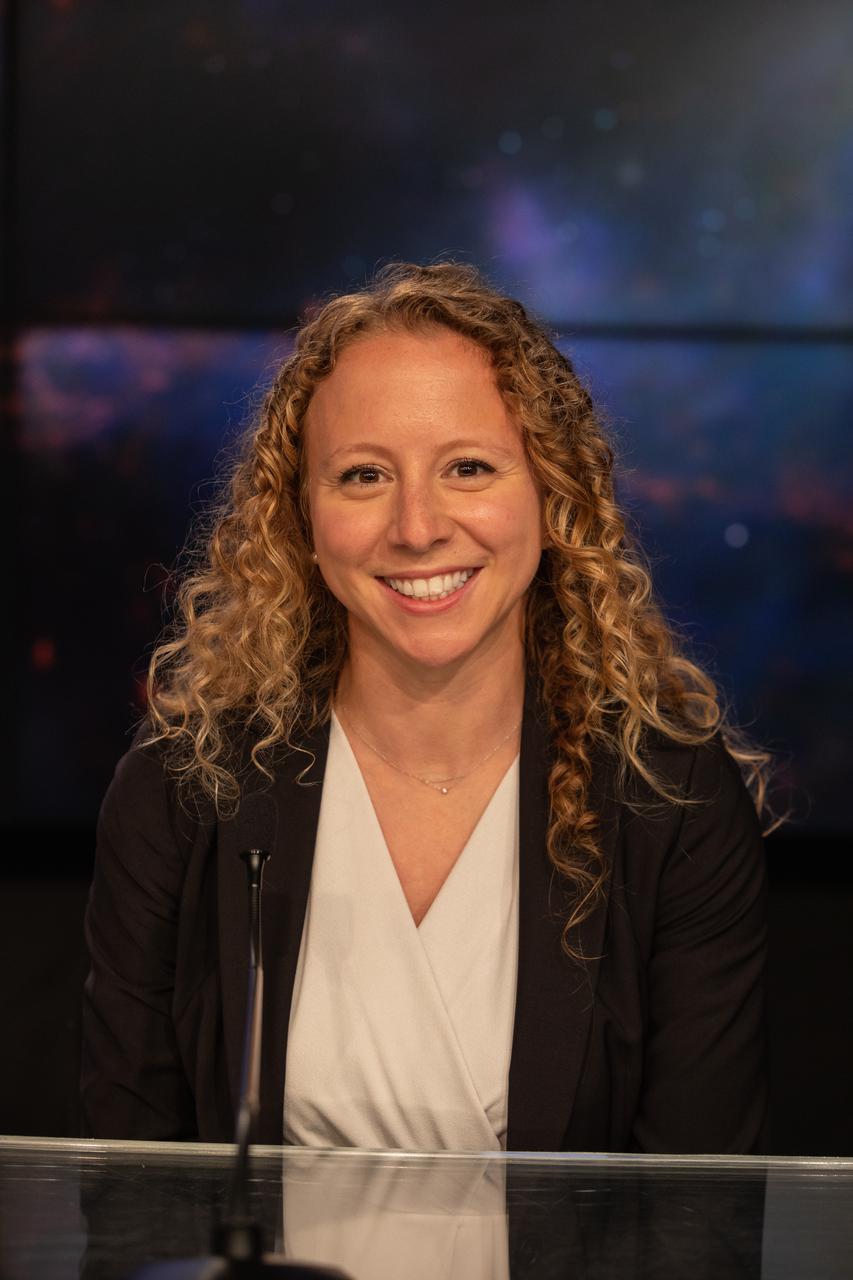
Julianna Scheiman, director, civil satellite missions, SpaceX, participates in a prelaunch news conference for NASA’s Imaging X-ray Polarimetry Explorer (IXPE) spacecraft on Dec. 7, 2021 at NASA’s Kennedy Space Center in Florida. IXPE is scheduled to launch no earlier than 1 a.m. EST Thursday, Dec. 9, on a SpaceX Falcon 9 rocket from Kennedy’s Launch Complex 39A. NASA’s Launch Services Program is managing this launch. NASA’s Marshall Space Flight Center in Huntsville, Alabama, manages the IXPE mission. Ball Aerospace, headquartered in Broomfield, Colorado, manages spacecraft operations with support from the University of Colorado at Boulder. NASA’s Goddard Space Flight Center in Greenbelt, Maryland, manages the Explorers Program for the agency’s Science Mission Directorate in Washington. The U.S. Space Force’s Space Launch Delta 45 provides range support for this launch. SpaceX is providing the launch vehicle for this mission.

MacKenzie Ferrie, IXPE program manager, Ball Aerospace, participates in a payload briefing for NASA’s Imaging X-ray Polarimetry Explorer (IXPE) spacecraft on Dec.7, 2021 at NASA’s Kennedy Space Center in Florida. IXPE is scheduled to launch no earlier than 1 a.m. EST Thursday, Dec. 9, on a SpaceX Falcon 9 rocket from Kennedy’s Launch Complex 39A. NASA’s Launch Services Program is managing this launch. NASA’s Marshall Space Flight Center in Huntsville, Alabama, manages the IXPE mission. Ball Aerospace, headquartered in Broomfield, Colorado, manages spacecraft operations with support from the University of Colorado at Boulder. NASA’s Goddard Space Flight Center in Greenbelt, Maryland, manages the Explorers Program for the agency’s Science Mission Directorate in Washington. The U.S. Space Force’s Space Launch Delta 45 provides range support for this launch. SpaceX is providing the launch vehicle for this mission.
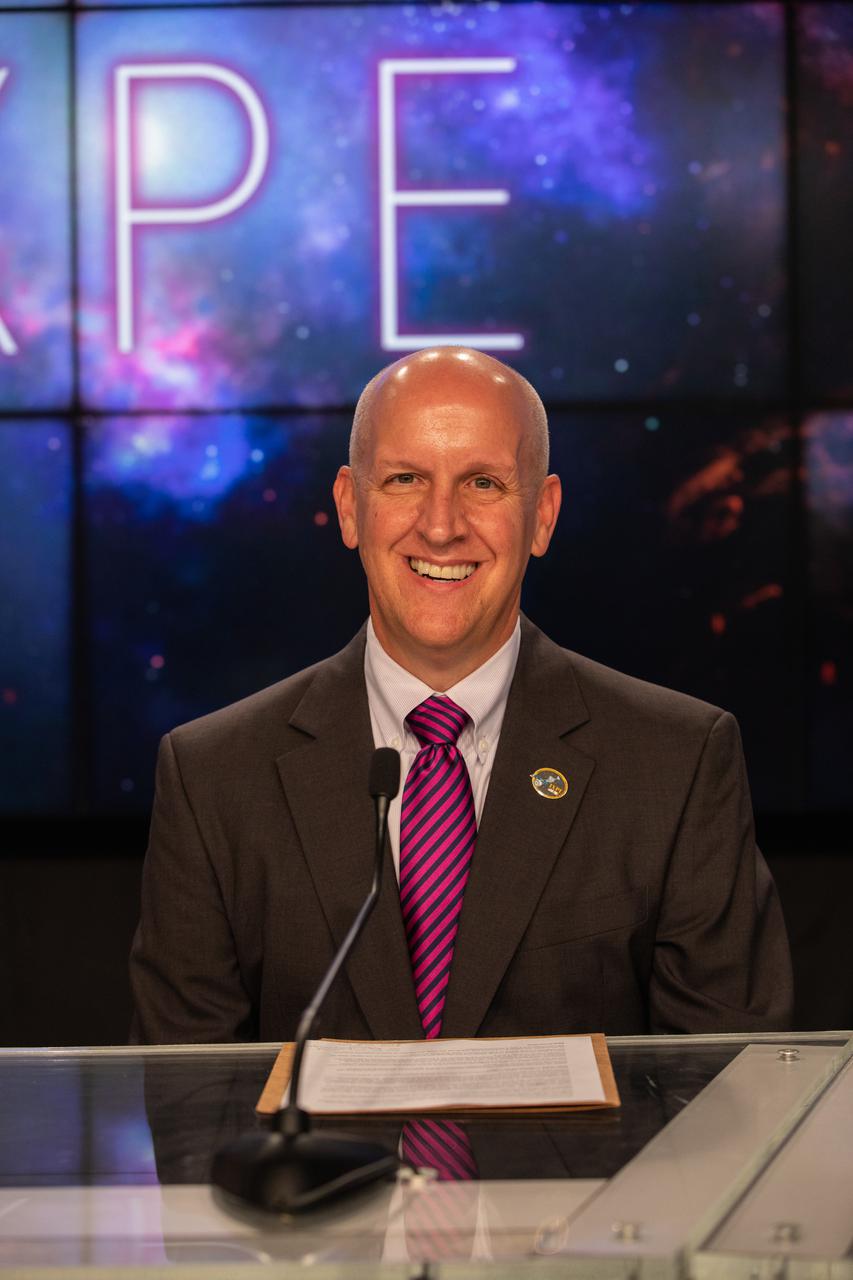
Tim Dunn, launch director, NASA’s Launch Services Program, based at Kennedy Space Center, participates in a prelaunch news conference for NASA’s Imaging X-ray Polarimetry Explorer (IXPE) spacecraft on Dec. 7, 2021 at NASA’s Kennedy Space Center in Florida. IXPE is scheduled to launch no earlier than 1 a.m. EST Thursday, Dec. 9, on a SpaceX Falcon 9 rocket from Kennedy’s Launch Complex 39A. NASA’s Launch Services Program is managing this launch. NASA’s Marshall Space Flight Center in Huntsville, Alabama, manages the IXPE mission. Ball Aerospace, headquartered in Broomfield, Colorado, manages spacecraft operations with support from the University of Colorado at Boulder. NASA’s Goddard Space Flight Center in Greenbelt, Maryland, manages the Explorers Program for the agency’s Science Mission Directorate in Washington. The U.S. Space Force’s Space Launch Delta 45 provides range support for this launch. SpaceX is providing the launch vehicle for this mission.
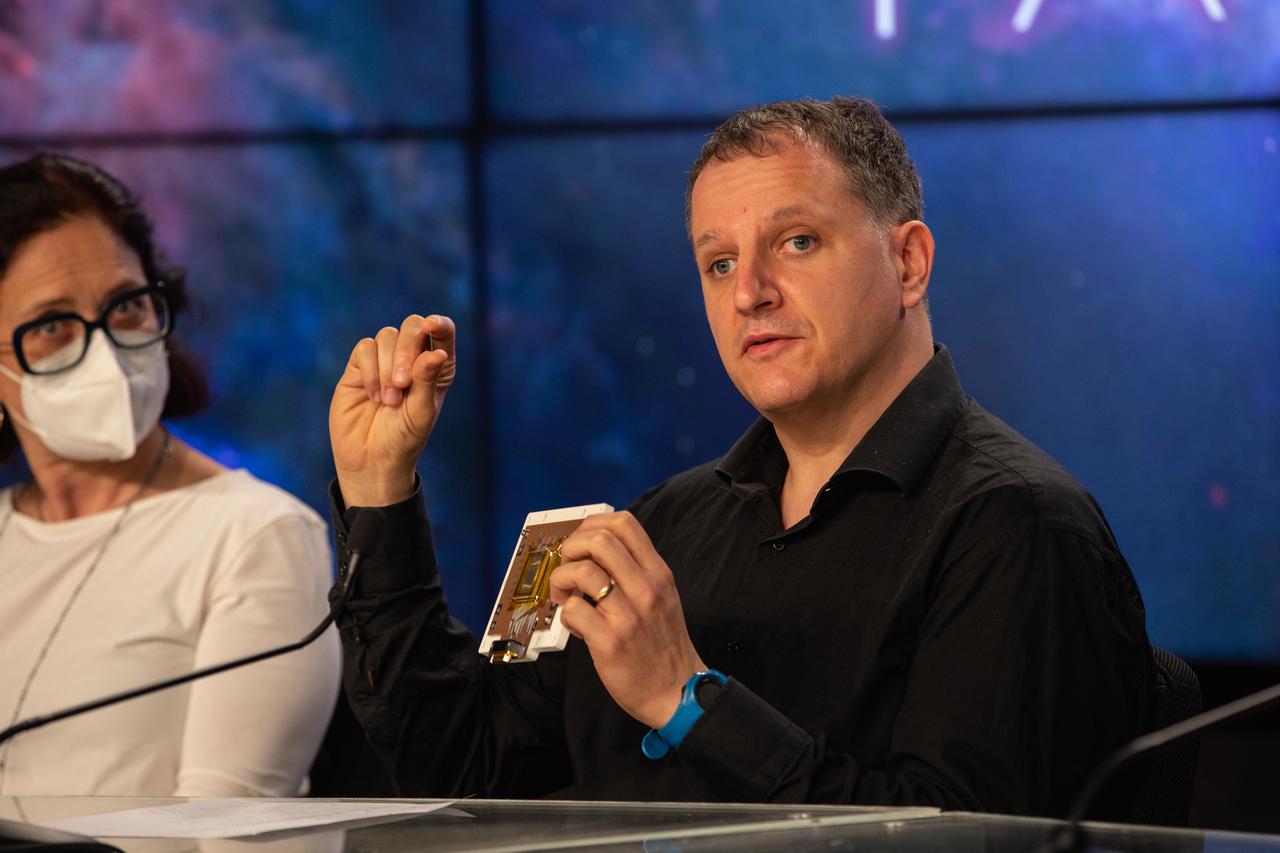
A payload briefing for NASA’s Imaging X-ray Polarimetry Explorer (IXPE) spacecraft is held on Dec.7, 2021 at NASA’s Kennedy Space Center in Florida. Participants from left are Elisabetta Cavazzuti, ASI IXPE program manager, Italian Space Agency; and Luca Baldini, Italian co-principal investigator, NASA’s Marshall Space Flight Center. IXPE is scheduled to launch no earlier than 1 a.m. EST Thursday, Dec. 9, on a SpaceX Falcon 9 rocket from Kennedy’s Launch Complex 39A. NASA’s Launch Services Program is managing this launch. NASA’s Marshall Space Flight Center in Huntsville, Alabama, manages the IXPE mission. Ball Aerospace, headquartered in Broomfield, Colorado, manages spacecraft operations with support from the University of Colorado at Boulder. NASA’s Goddard Space Flight Center in Greenbelt, Maryland, manages the Explorers Program for the agency’s Science Mission Directorate in Washington. The U.S. Space Force’s Space Launch Delta 45 provides range support for this launch. SpaceX is providing the launch vehicle for this mission.