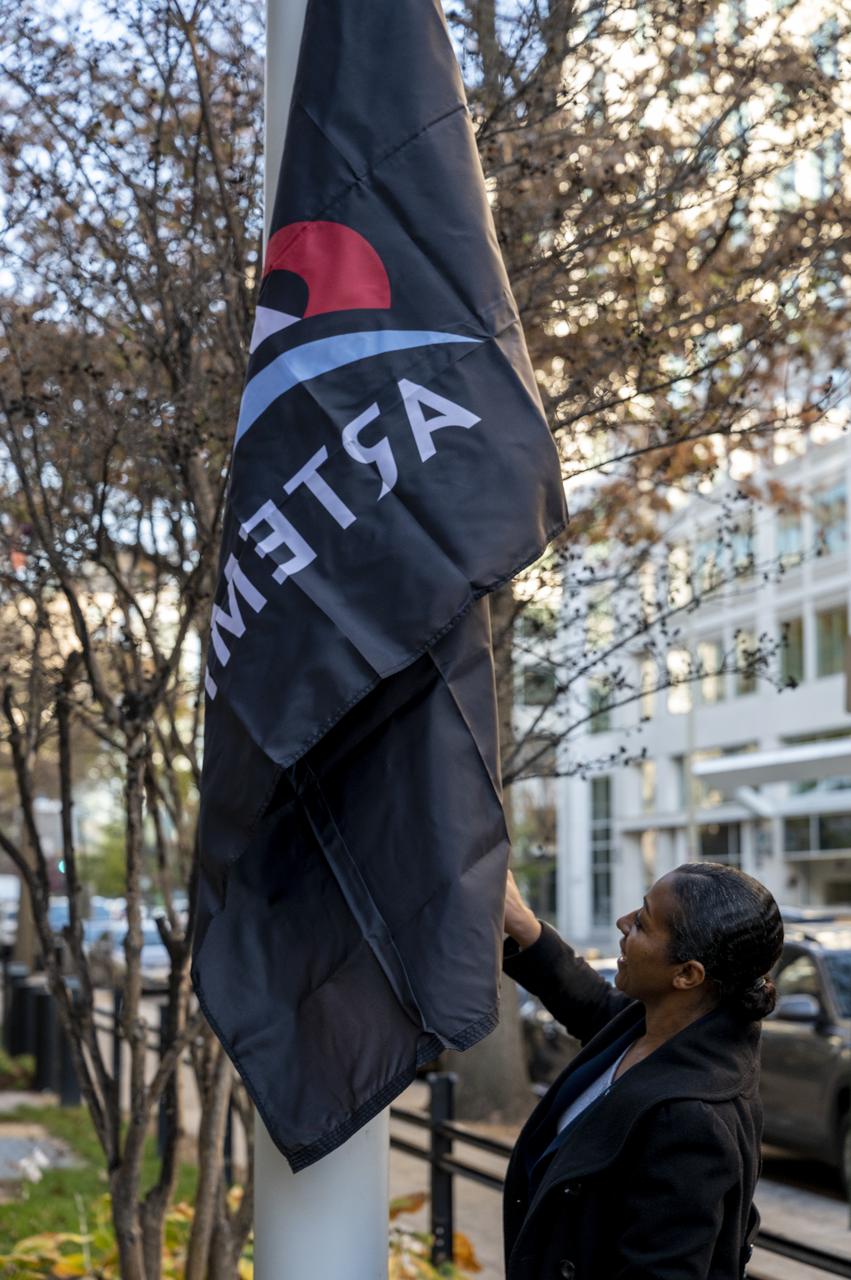
Artemis Mission Development Manager Mike Sarafin, Artemis Mission Integration Manager Sheela Logan, and Assistant Deputy Associate Administrator for Exploration Systems Development Tom Whitmeyer raise Artemis flags Wednesday, Nov. 23, 2022, at the Mary W. Jackson NASA Headquarters building in Washington. Photo Credit: (NASA/Keegan Barber)
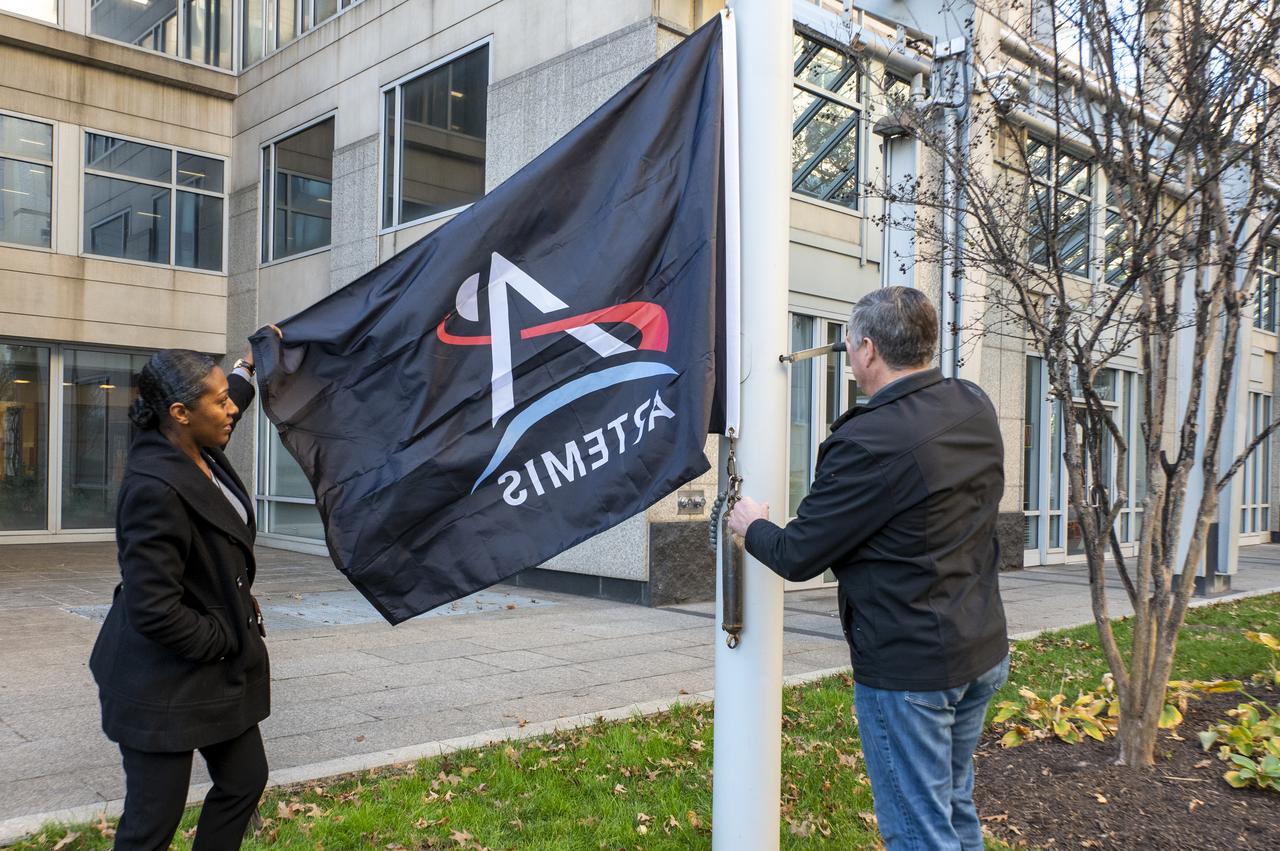
Artemis Mission Development Manager Mike Sarafin, Artemis Mission Integration Manager Sheela Logan, and Assistant Deputy Associate Administrator for Exploration Systems Development Tom Whitmeyer raise Artemis flags Wednesday, Nov. 23, 2022, at the Mary W. Jackson NASA Headquarters building in Washington. Photo Credit: (NASA/Keegan Barber)
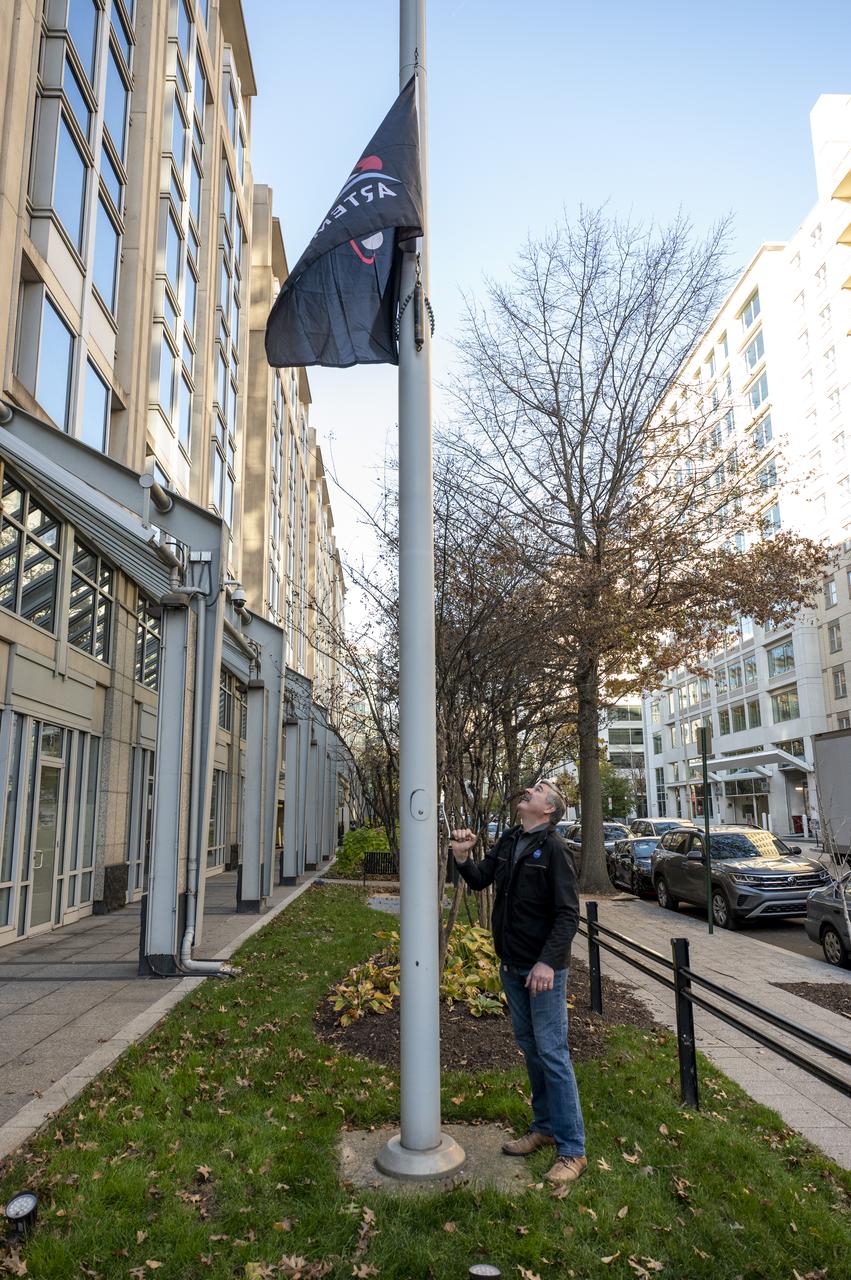
Artemis Mission Development Manager Mike Sarafin, Artemis Mission Integration Manager Sheela Logan, and Assistant Deputy Associate Administrator for Exploration Systems Development Tom Whitmeyer raise Artemis flags Wednesday, Nov. 23, 2022, at the Mary W. Jackson NASA Headquarters building in Washington. Photo Credit: (NASA/Keegan Barber)
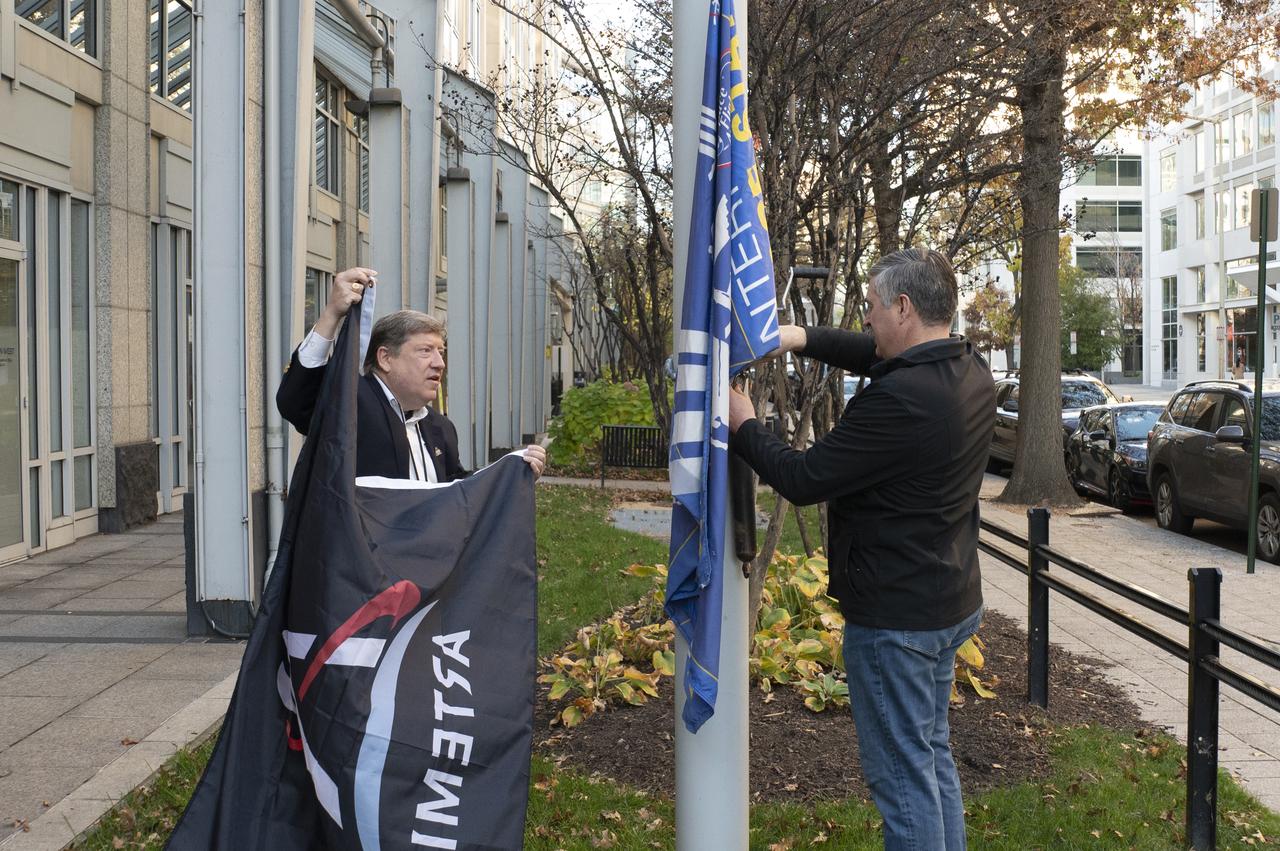
Artemis Mission Development Manager Mike Sarafin, Artemis Mission Integration Manager Sheela Logan, and Assistant Deputy Associate Administrator for Exploration Systems Development Tom Whitmeyer raise Artemis flags Wednesday, Nov. 23, 2022, at the Mary W. Jackson NASA Headquarters building in Washington. Photo Credit: (NASA/Keegan Barber)
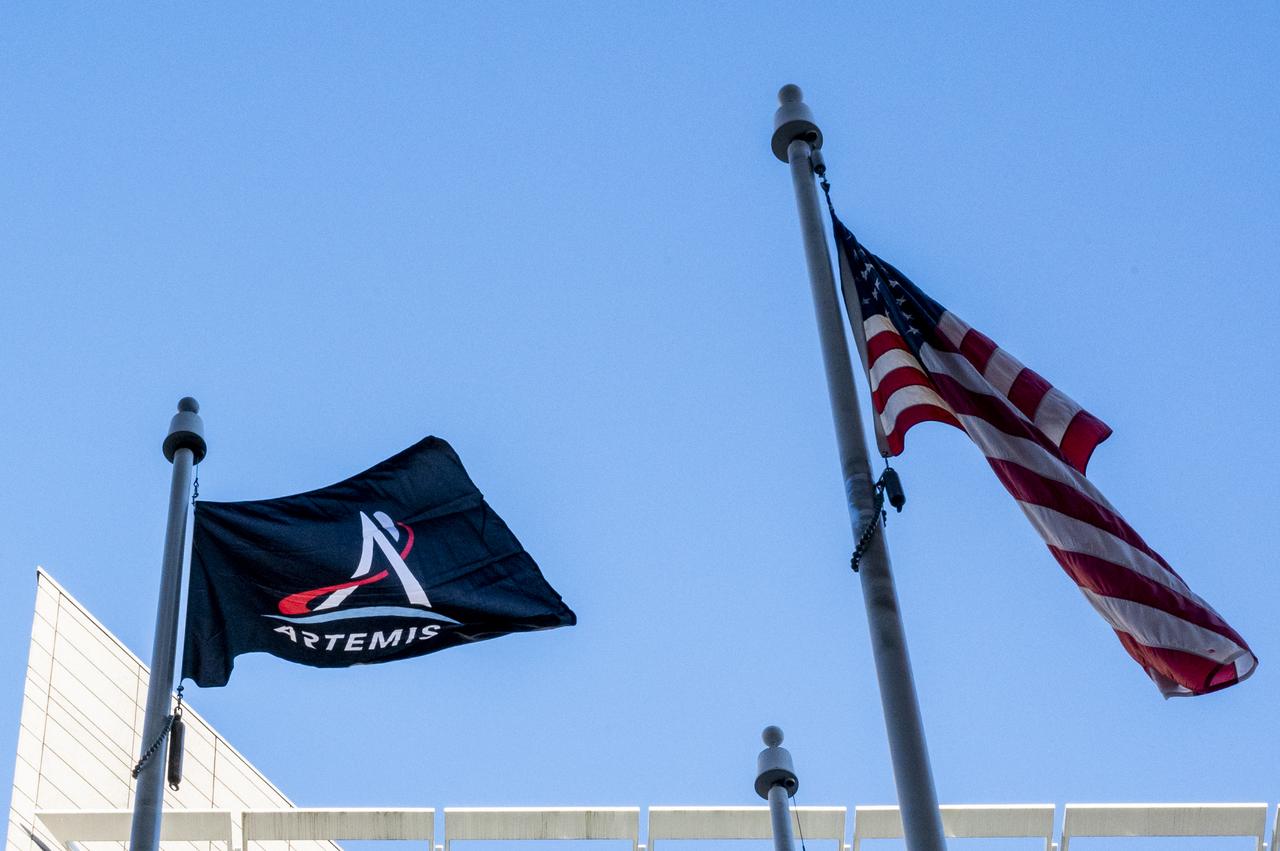
Artemis Mission Development Manager Mike Sarafin, Artemis Mission Integration Manager Sheela Logan, and Assistant Deputy Associate Administrator for Exploration Systems Development Tom Whitmeyer raise Artemis flags Wednesday, Nov. 23, 2022, at the Mary W. Jackson NASA Headquarters building in Washington. Photo Credit: (NASA/Keegan Barber)
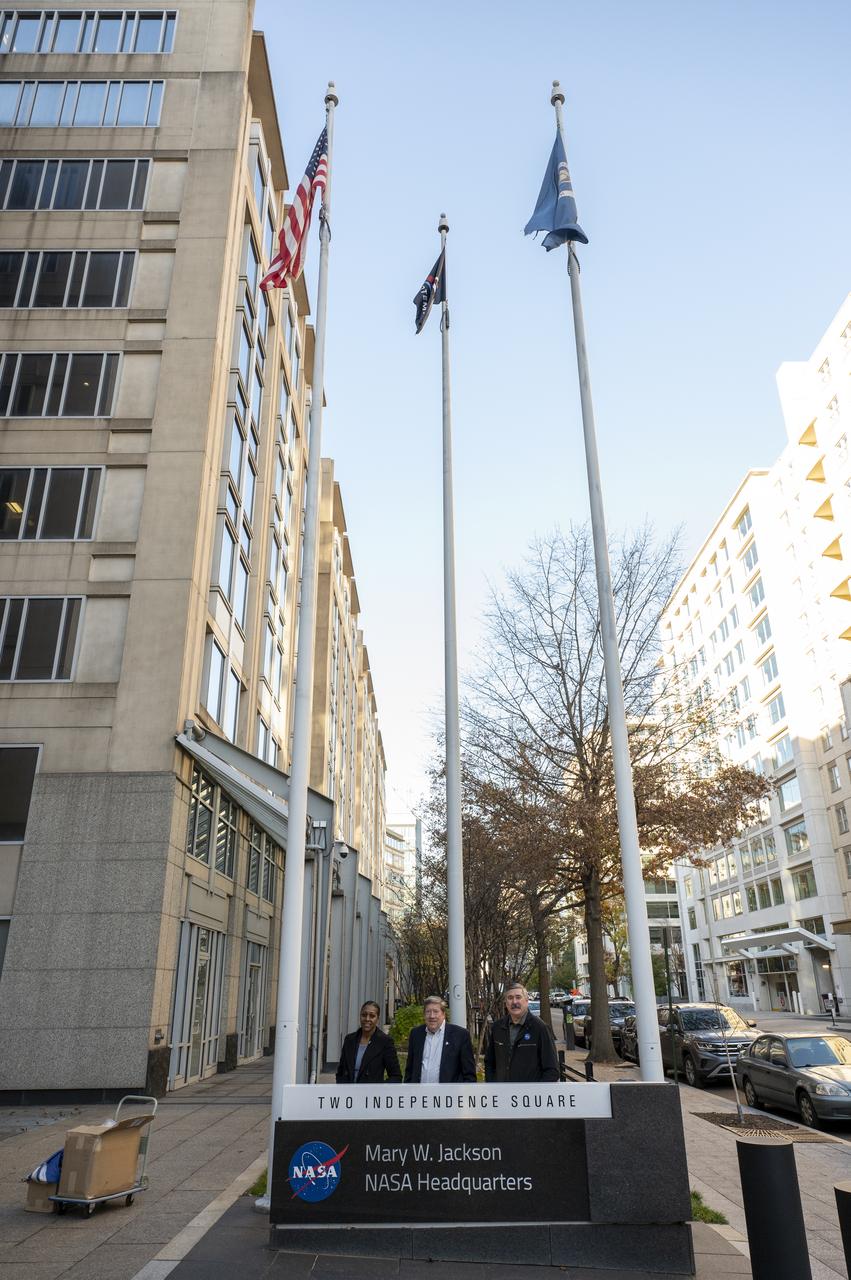
Artemis Mission Development Manager Mike Sarafin, Artemis Mission Integration Manager Sheela Logan, and Assistant Deputy Associate Administrator for Exploration Systems Development Tom Whitmeyer raise Artemis flags Wednesday, Nov. 23, 2022, at the Mary W. Jackson NASA Headquarters building in Washington. Photo Credit: (NASA/Keegan Barber)
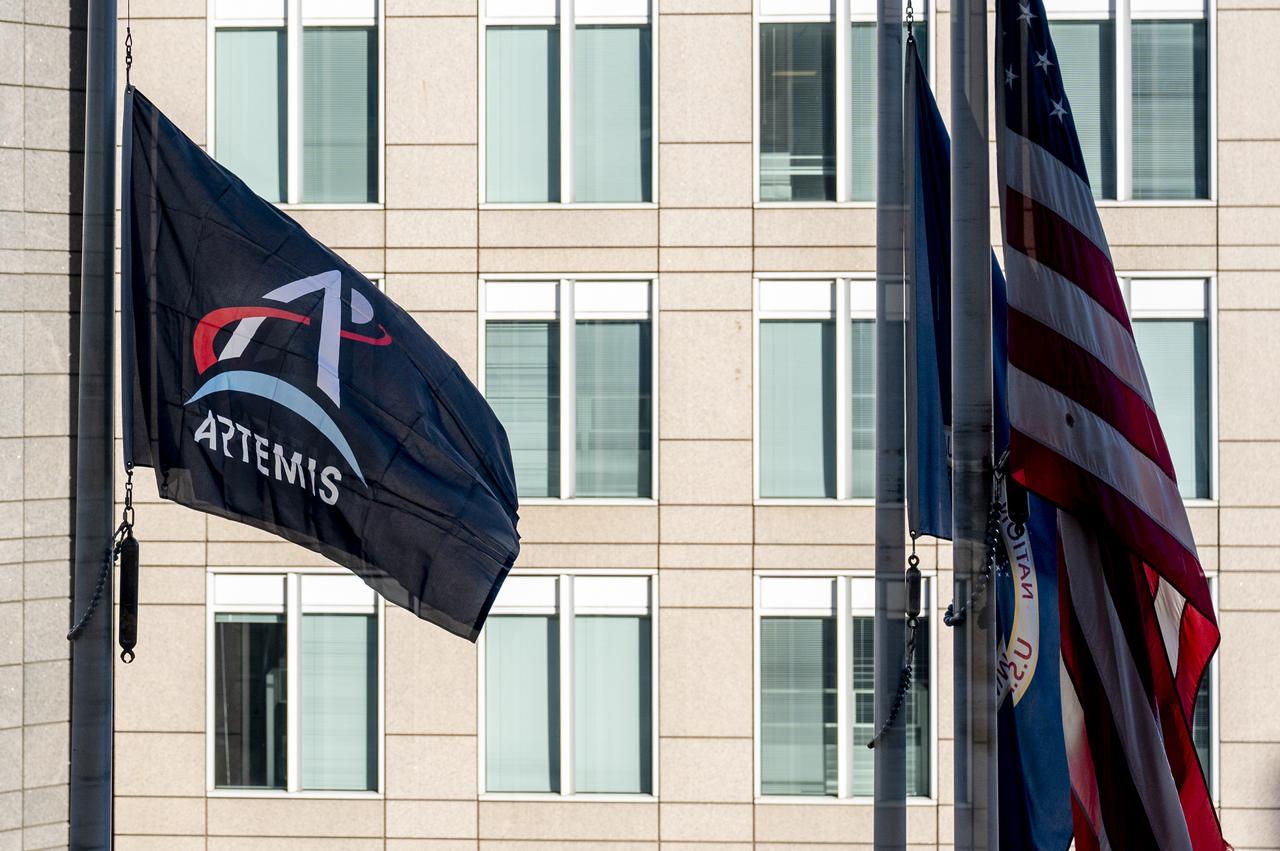
Artemis Mission Development Manager Mike Sarafin, Artemis Mission Integration Manager Sheela Logan, and Assistant Deputy Associate Administrator for Exploration Systems Development Tom Whitmeyer raise Artemis flags Wednesday, Nov. 23, 2022, at the Mary W. Jackson NASA Headquarters building in Washington. Photo Credit: (NASA/Keegan Barber)
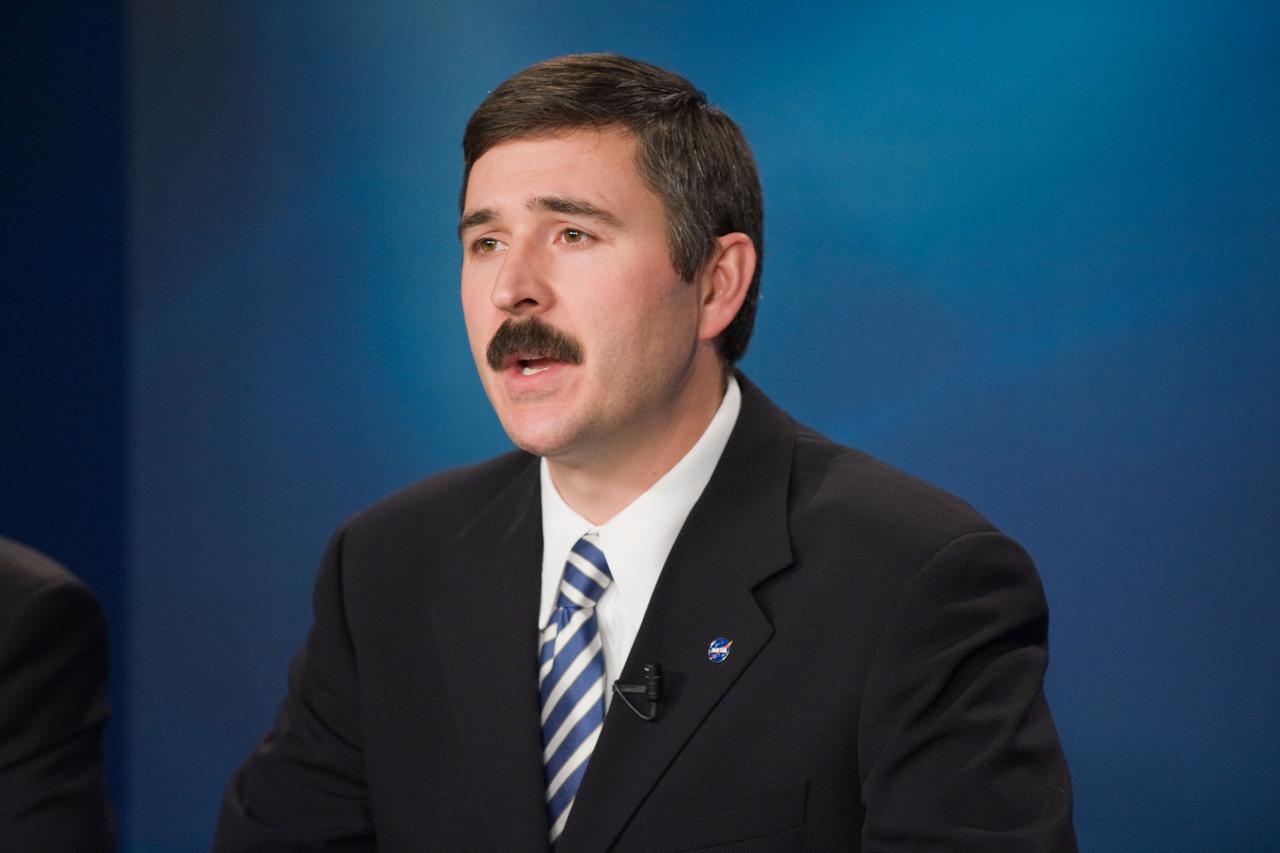
Date: 11-25-09 Location: Bldg. 2S - Rm 122 Press Conference Subject: STS-129 Flight Day 10 Mission Status Briefing with Orbit 1 Flight Director Mike Sarafin. Photographer: Lauren Harnett
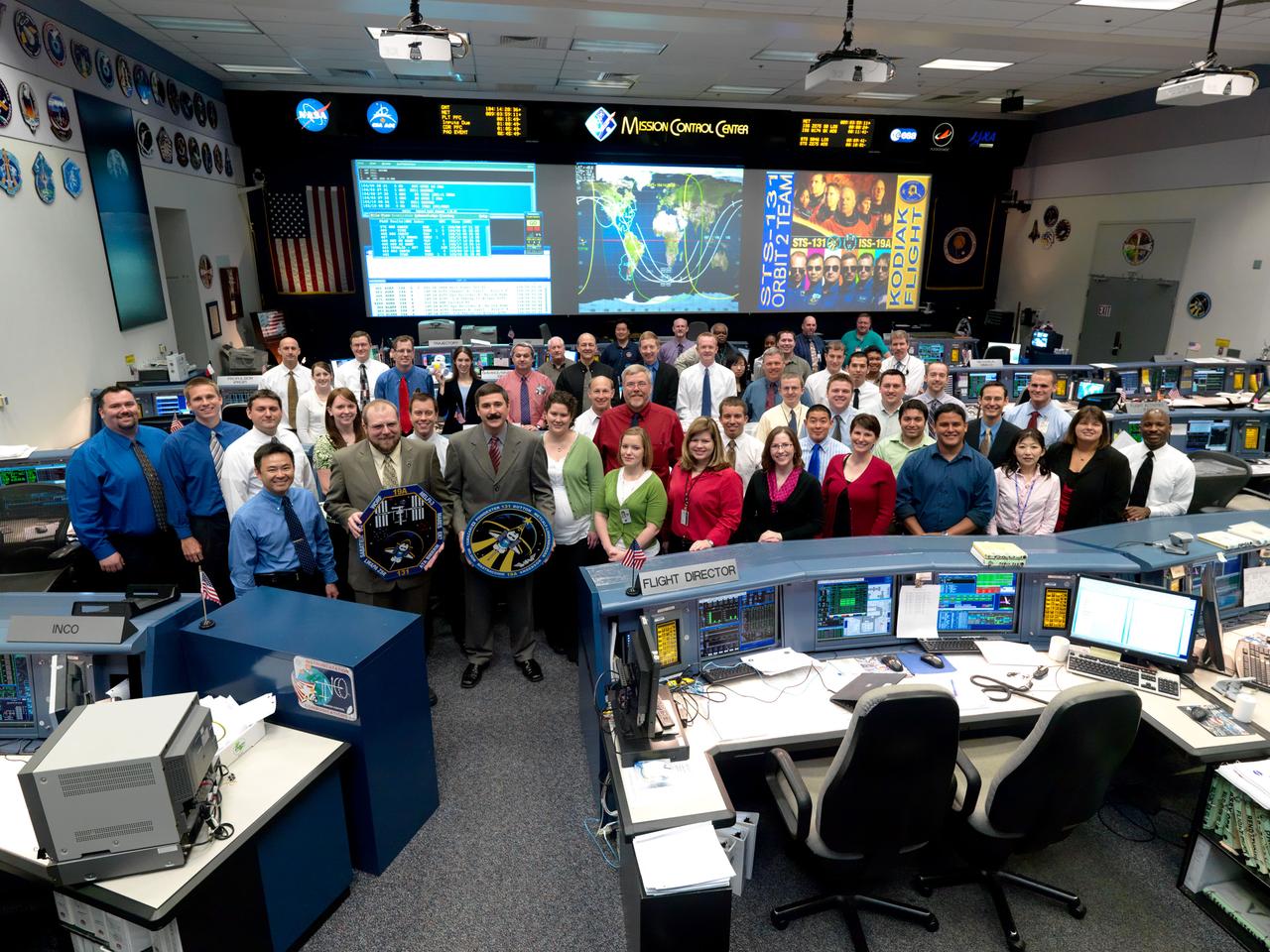
JSC2010-E-051978 (14 April 2010) --- The members of the STS-131 Orbit 2 flight control team pose for a group portrait in the space shuttle flight control room in the Mission Control Center at NASA's Johnson Space Center. Flight director Mike Sarafin holds the STS-131 mission logo.
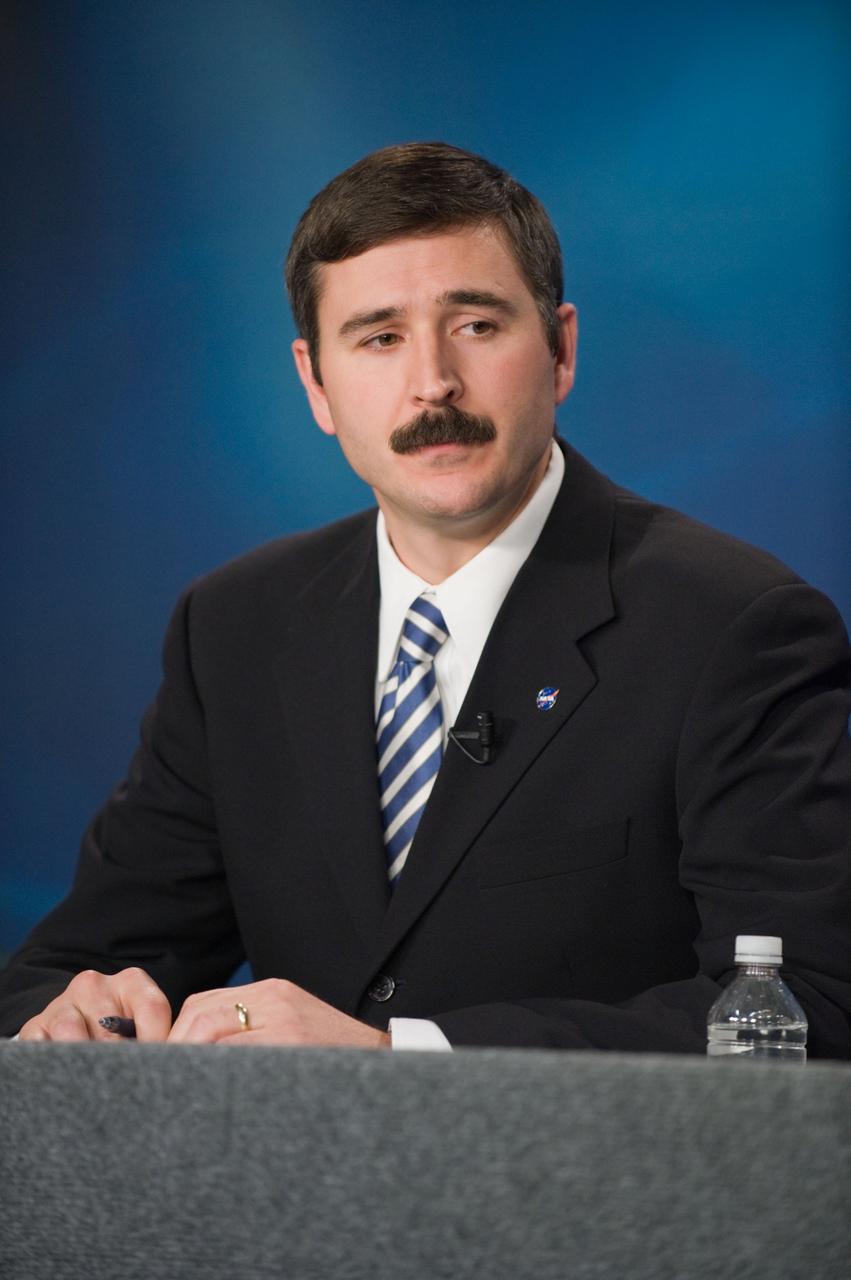
Date: 11-25-09 Location: Bldg. 2S - Rm 122 Press Conference Subject: STS-129 Flight Day 10 Mission Status Briefing with Orbit 1 Flight Director Mike Sarafin. Photographer: Lauren Harnett
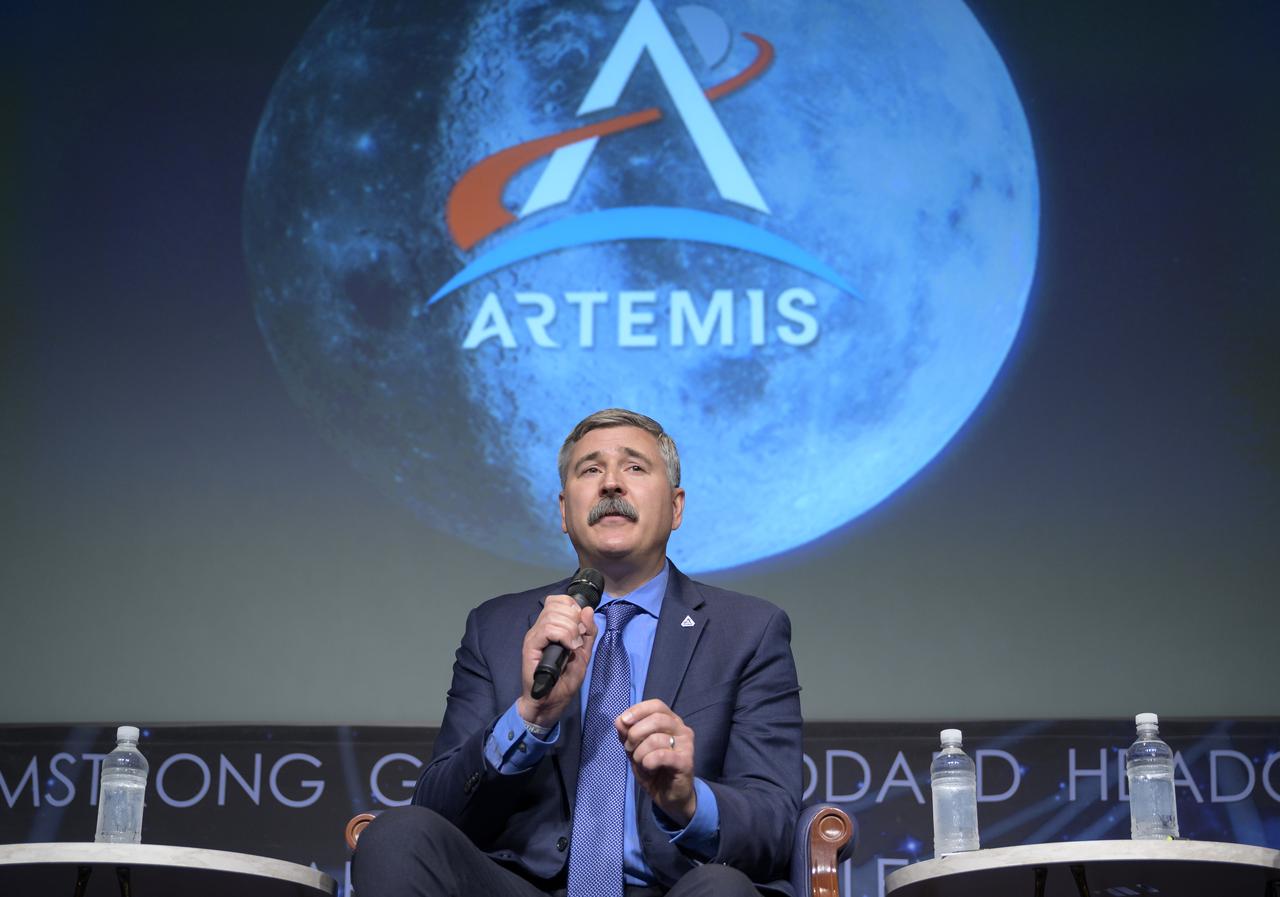
Mike Sarafin, Artemis I mission manager at NASA Headquarters speaks during a NASA briefing on the Artemis I Moon mission, Wednesday, Aug. 3, 2022, at the Mary W. Jackson NASA Headquarters building in Washington. NASA’s Artemis I mission is the first integrated test of the agency’s deep space exploration systems: the Orion spacecraft, Space Launch System rocket, and supporting ground systems. Launch of the uncrewed flight test is targeted for no earlier than Monday, Aug. 29. Photo Credit: (NASA/Bill Ingalls)

Mike Sarafin, Artemis I mission manager at NASA Headquarters speaks during a NASA briefing on the Artemis I Moon mission, Wednesday, Aug. 3, 2022, at the Mary W. Jackson NASA Headquarters building in Washington. NASA’s Artemis I mission is the first integrated test of the agency’s deep space exploration systems: the Orion spacecraft, Space Launch System rocket, and supporting ground systems. Launch of the uncrewed flight test is targeted for no earlier than Monday, Aug. 29. Photo Credit: (NASA/Bill Ingalls)
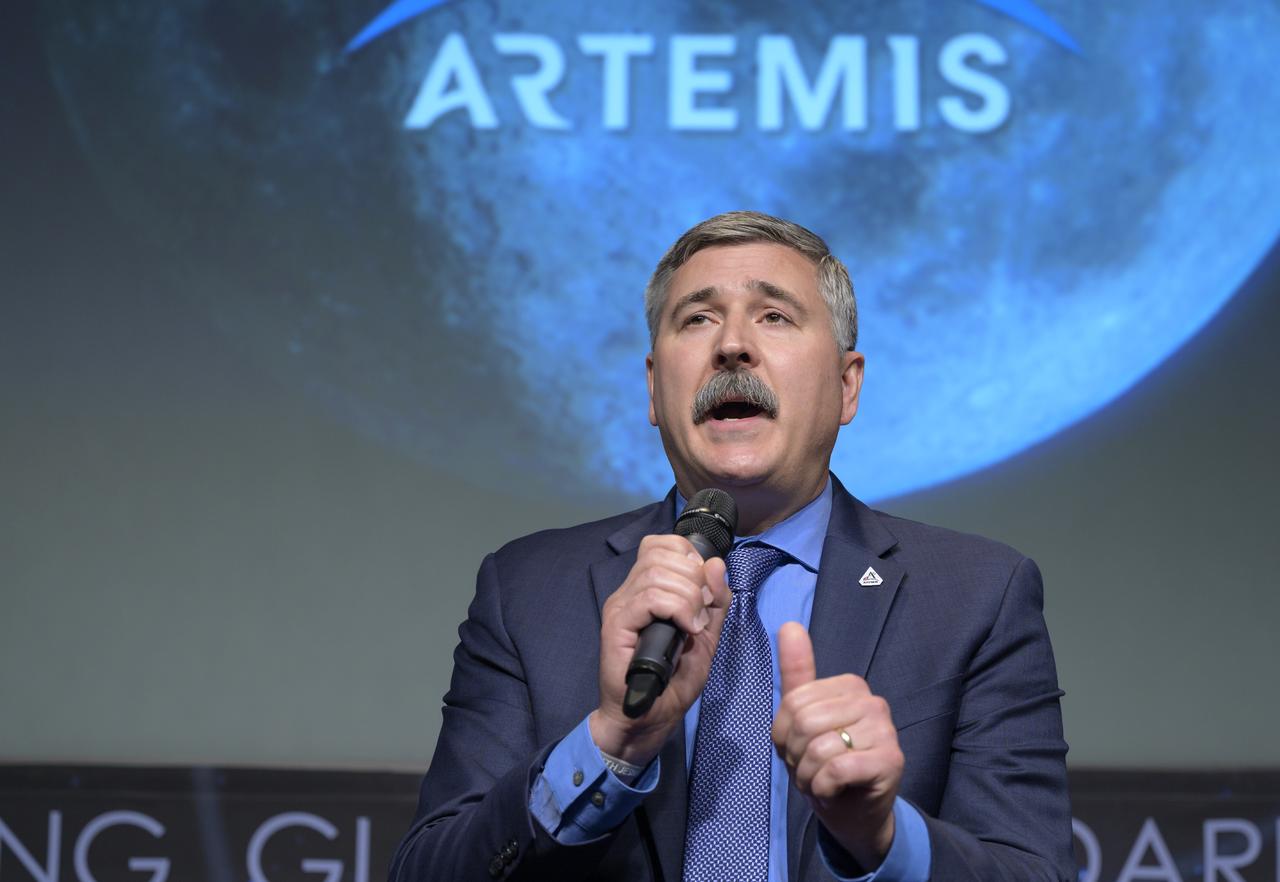
Mike Sarafin, Artemis I mission manager at NASA Headquarters speaks during a NASA briefing on the Artemis I Moon mission, Wednesday, Aug. 3, 2022, at the Mary W. Jackson NASA Headquarters building in Washington. NASA’s Artemis I mission is the first integrated test of the agency’s deep space exploration systems: the Orion spacecraft, Space Launch System rocket, and supporting ground systems. Launch of the uncrewed flight test is targeted for no earlier than Monday, Aug. 29. Photo Credit: (NASA/Bill Ingalls)
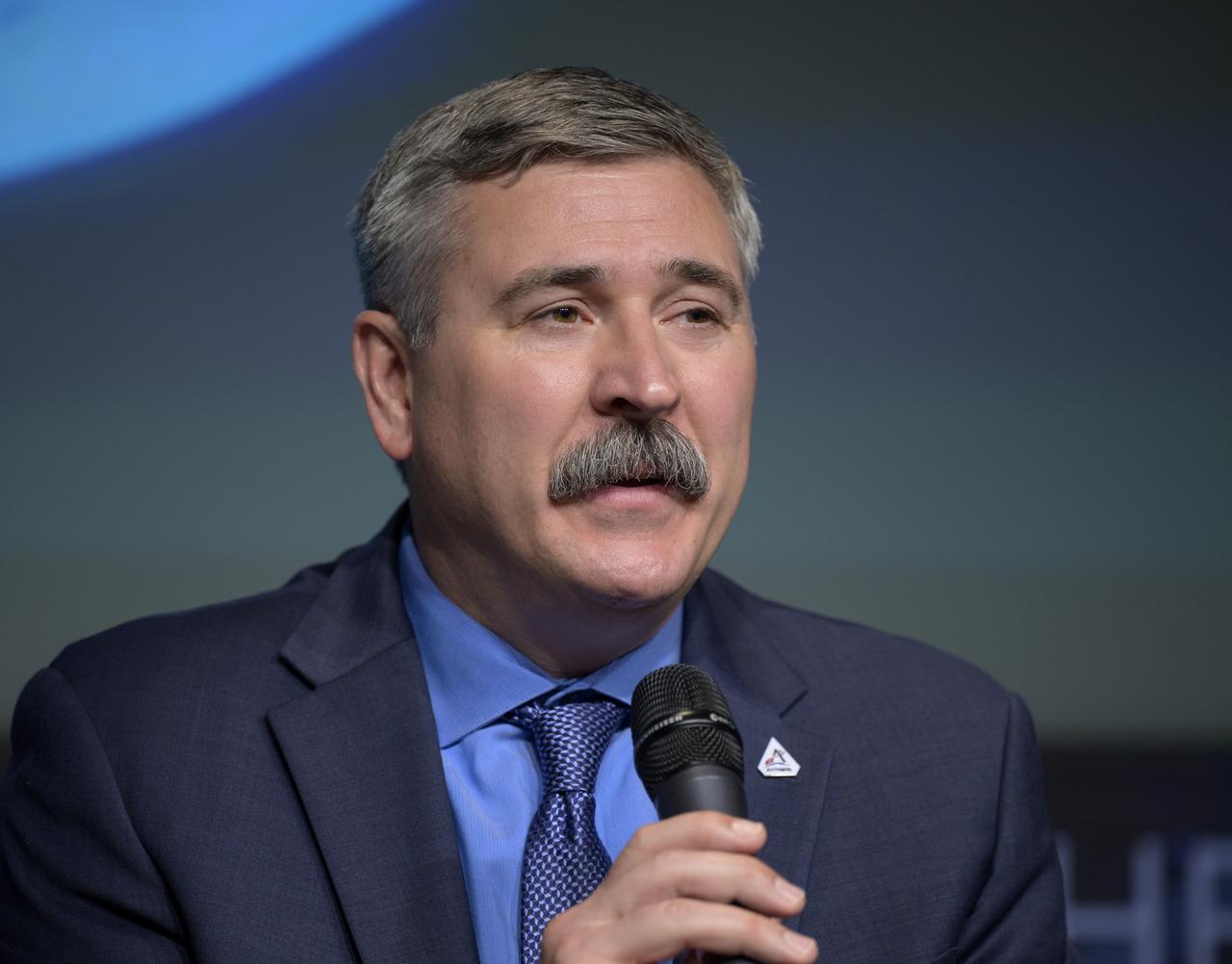
Mike Sarafin, Artemis I mission manager at NASA Headquarters speaks during a NASA briefing on the Artemis I Moon mission, Wednesday, Aug. 3, 2022, at the Mary W. Jackson NASA Headquarters building in Washington. NASA’s Artemis I mission is the first integrated test of the agency’s deep space exploration systems: the Orion spacecraft, Space Launch System rocket, and supporting ground systems. Launch of the uncrewed flight test is targeted for no earlier than Monday, Aug. 29. Photo Credit: (NASA/Bill Ingalls)
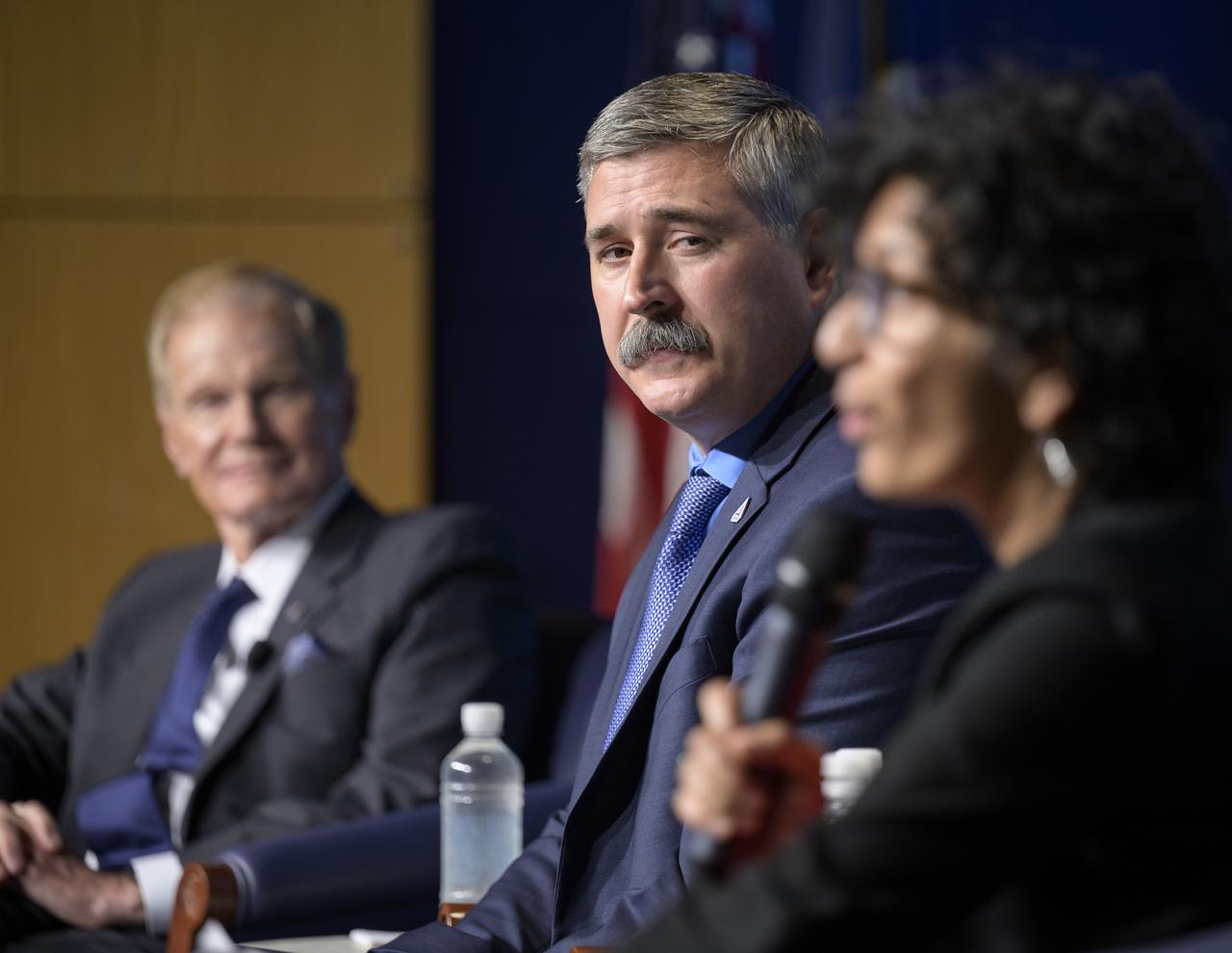
Mike Sarafin, Artemis I mission manager at NASA Headquarters listens as Bhavya Lal, associate administrator for technology, policy, and strategy at NASA Headquarters speaks during a NASA briefing on the Artemis I Moon mission, Wednesday, Aug. 3, 2022, at the Mary W. Jackson NASA Headquarters building in Washington. NASA’s Artemis I mission is the first integrated test of the agency’s deep space exploration systems: the Orion spacecraft, Space Launch System rocket, and supporting ground systems. Launch of the uncrewed flight test is targeted for no earlier than Monday, Aug. 29. Photo Credit: (NASA/Bill Ingalls)
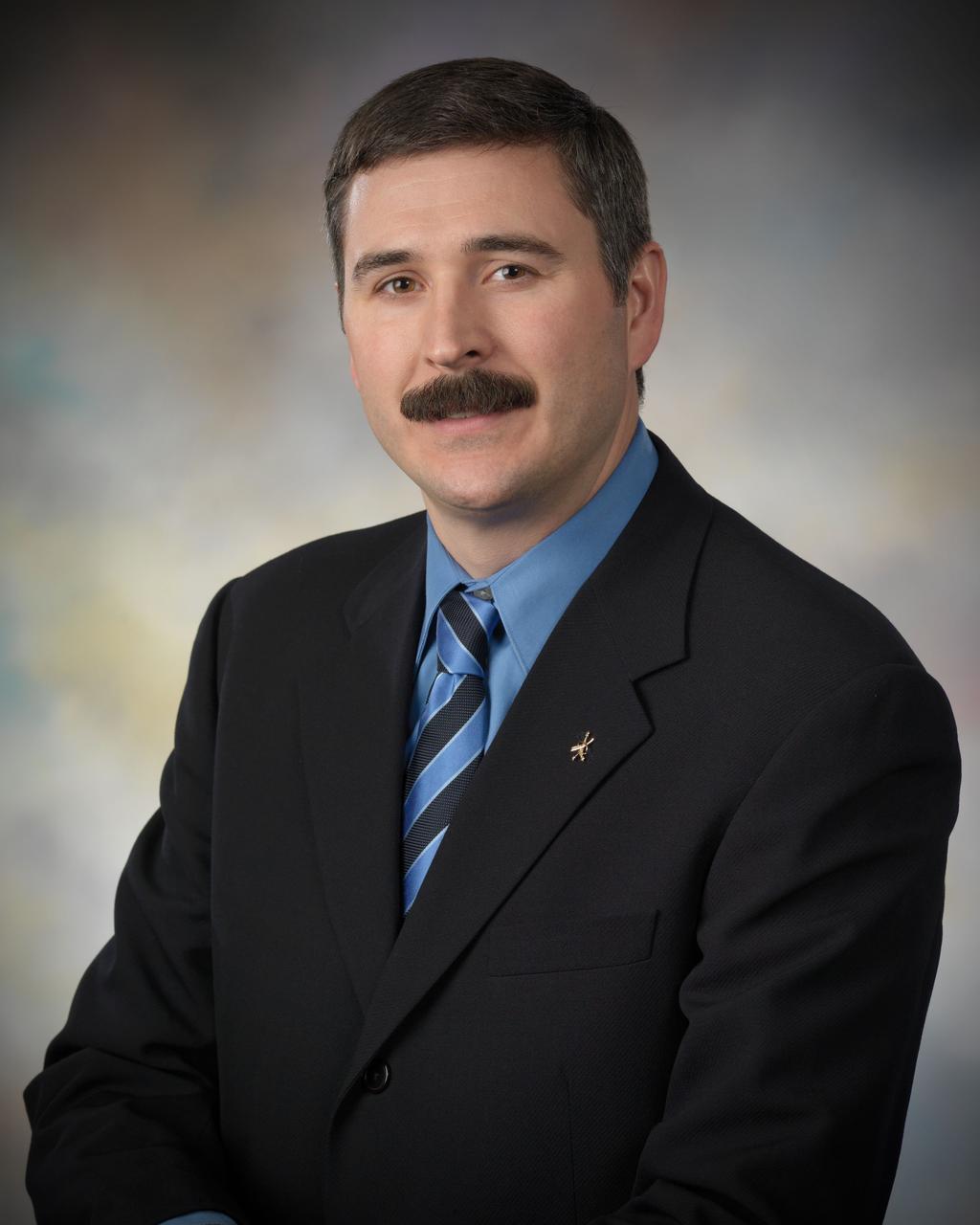
JSC2010-E-045165 (30 March 2010) --- Flight director Michael L. (Mike) Sarafin
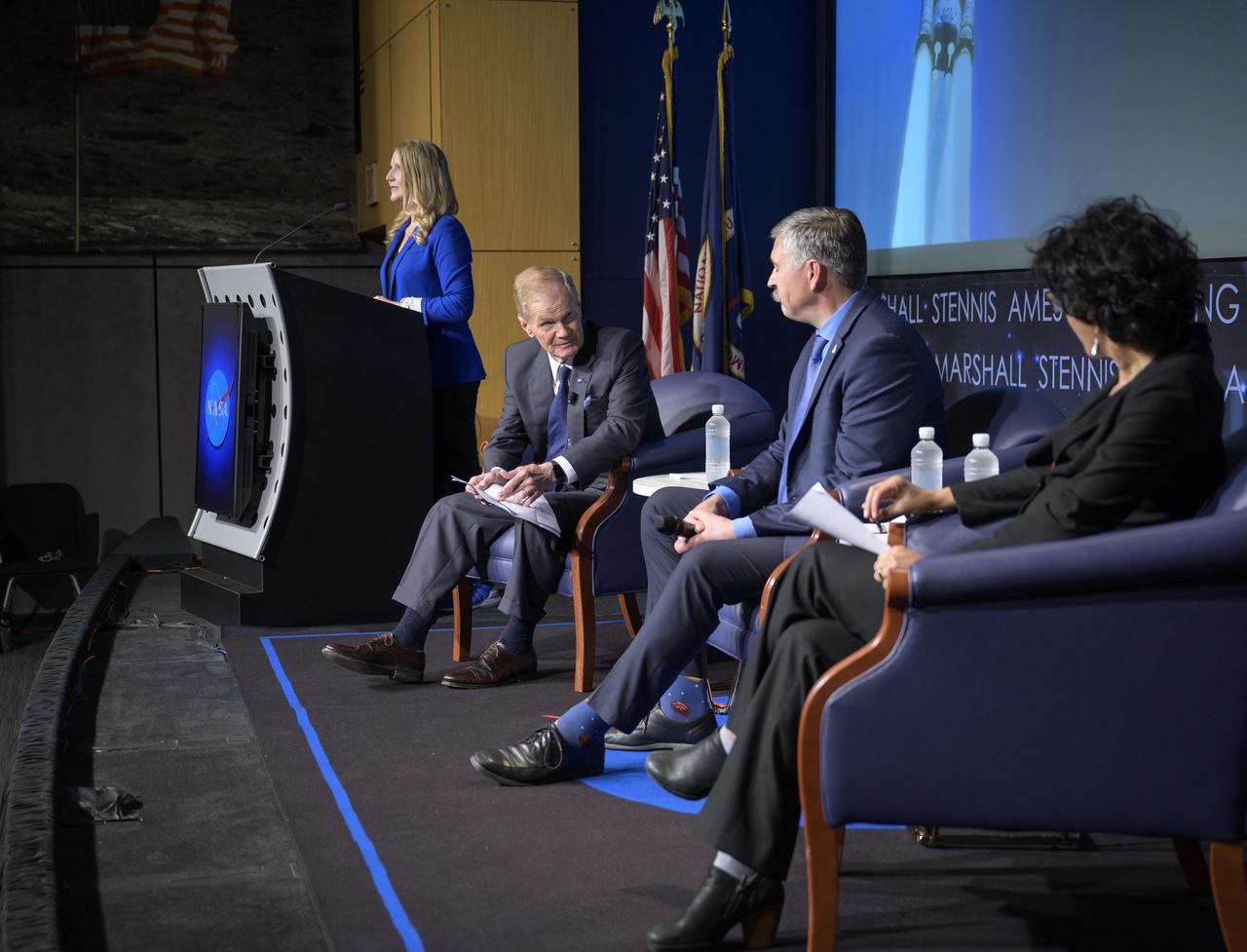
Stephanie Schierholz, a press secretary at NASA Headquarters, left, moderates a NASA briefing on the Artemis I Moon mission, with NASA Administrator Bill Nelson, Mike Sarafin, Artemis I mission manager at NASA Headquarters, and Bhavya Lal, associate administrator for technology, policy, and strategy at NASA Headquarters, right, Wednesday, Aug. 3, 2022, at the Mary W. Jackson NASA Headquarters building in Washington. Also participating remotely were Charlie Blackwell-Thompson, Artemis I launch director at NASA's Kennedy Space Center, John Honeycutt, Space Launch System (SLS) program manager at NASA's Marshall Space Flight Center, and Howard Hu, Orion program manager at NASA's Johnson Space Center. NASA’s Artemis I mission is the first integrated test of the agency’s deep space exploration systems: the Orion spacecraft, Space Launch System rocket, and supporting ground systems. Launch of the uncrewed flight test is targeted for no earlier than Monday, Aug. 29. Photo Credit: (NASA/Bill Ingalls)
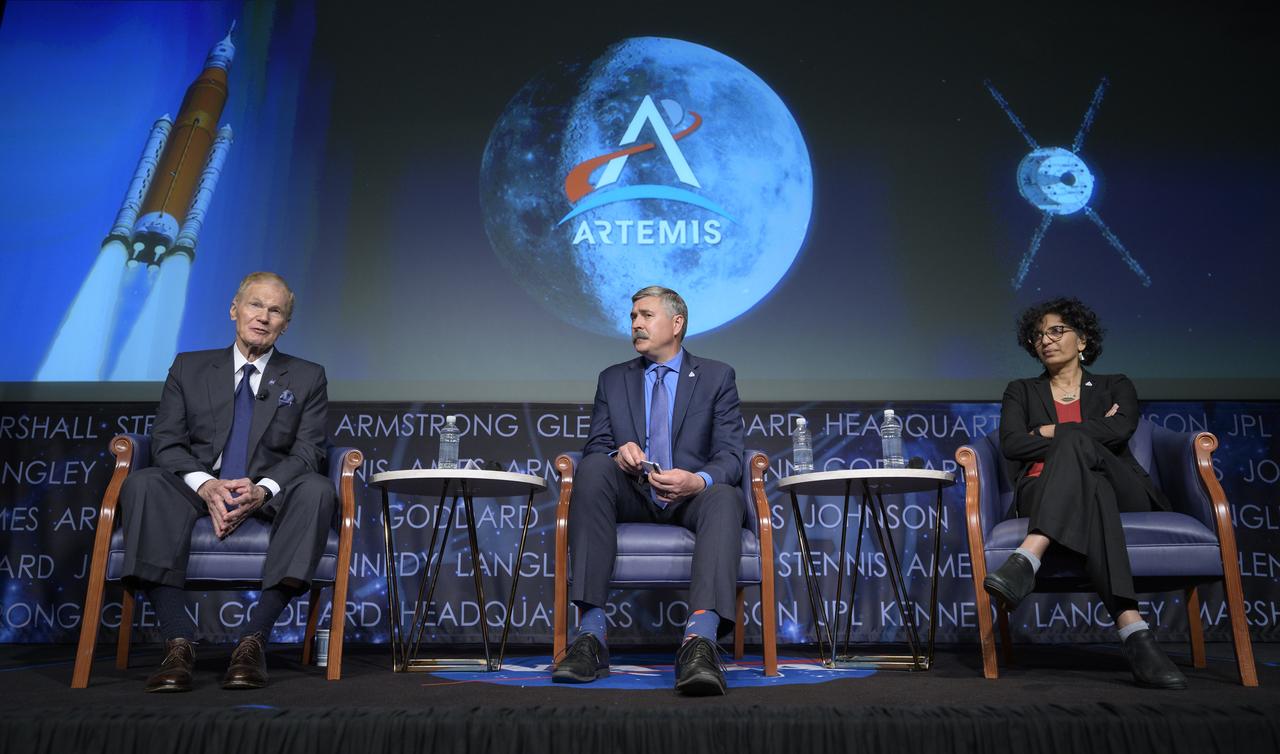
NASA Administrator Bill Nelson, left, Mike Sarafin, Artemis I mission manager at NASA Headquarters, and Bhavya Lal, associate administrator for technology, policy, and strategy at NASA Headquarters, right, are seen during a NASA briefing on the Artemis I Moon mission, Wednesday, Aug. 3, 2022, at the Mary W. Jackson NASA Headquarters building in Washington. Also participating remotely were Charlie Blackwell-Thompson, Artemis I launch director at NASA's Kennedy Space Center, John Honeycutt, Space Launch System (SLS) program manager at NASA's Marshall Space Flight Center, and Howard Hu, Orion program manager at NASA's Johnson Space Center. NASA’s Artemis I mission is the first integrated test of the agency’s deep space exploration systems: the Orion spacecraft, Space Launch System rocket, and supporting ground systems. Launch of the uncrewed flight test is targeted for no earlier than Monday, Aug. 29. Photo Credit: (NASA/Bill Ingalls)
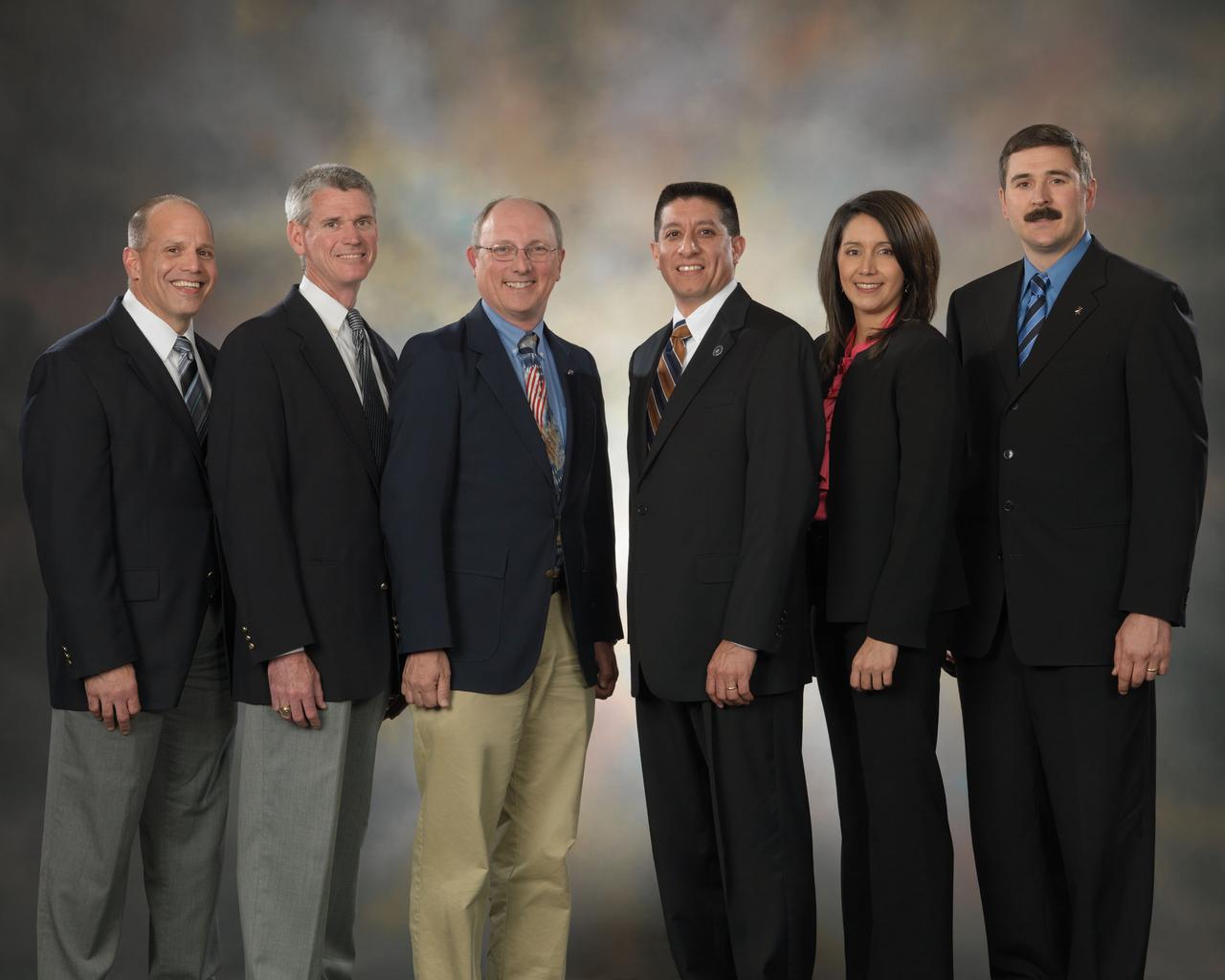
JSC2010-E-045167 (30 March 2010) --- Flight directors for the STS-131/19A mission pose for a preflight group portrait at NASA's Johnson Space Center. Pictured from the left are Tony Ceccacci, Bryan Lunney, Paul Dye, Richard Jones, Ginger Kerrick and Mike Sarafin.
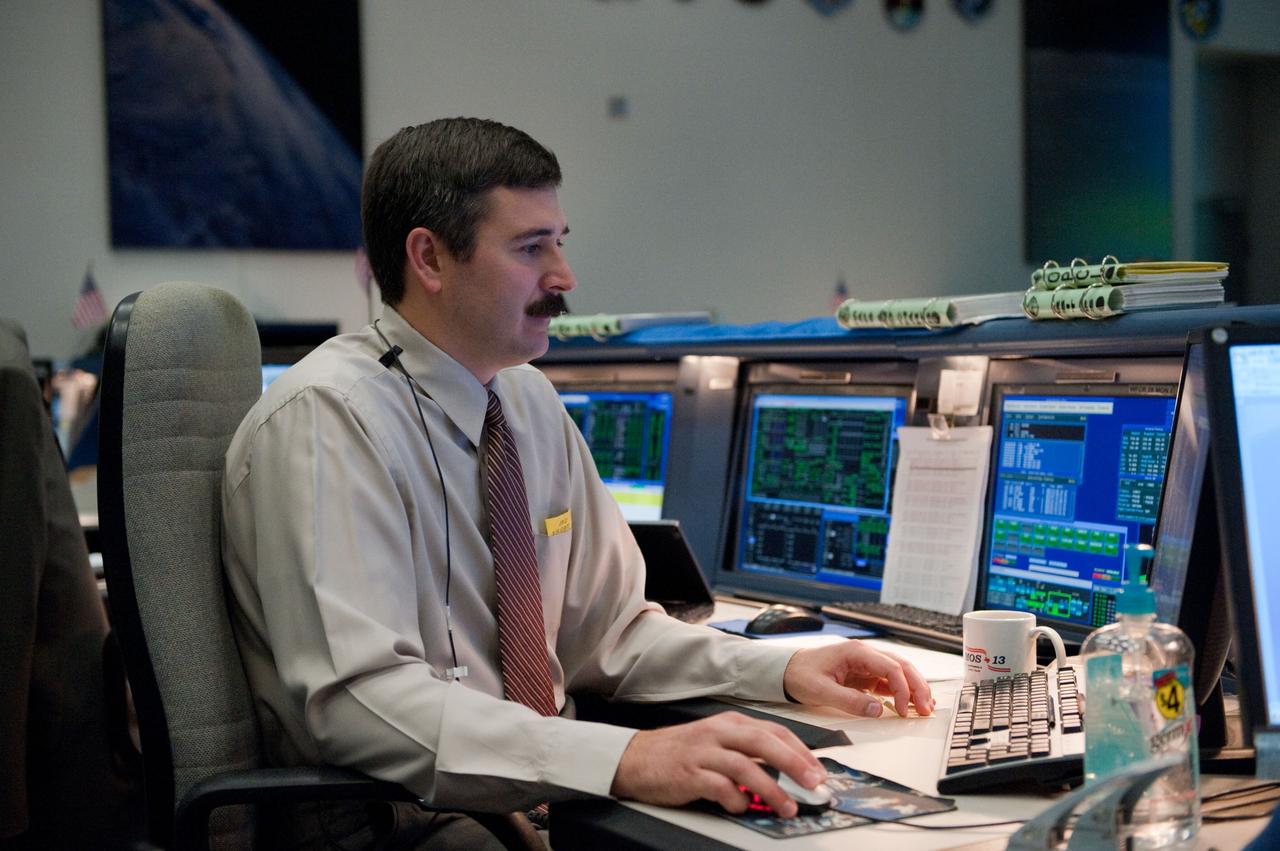
JSC2010-E-086375 (20 May 2010) --- Flight director Mike Sarafin monitors data at his console in the space shuttle flight control room in the Mission Control Center at NASA's Johnson Space Center during STS-132 mission flight day seven activities.
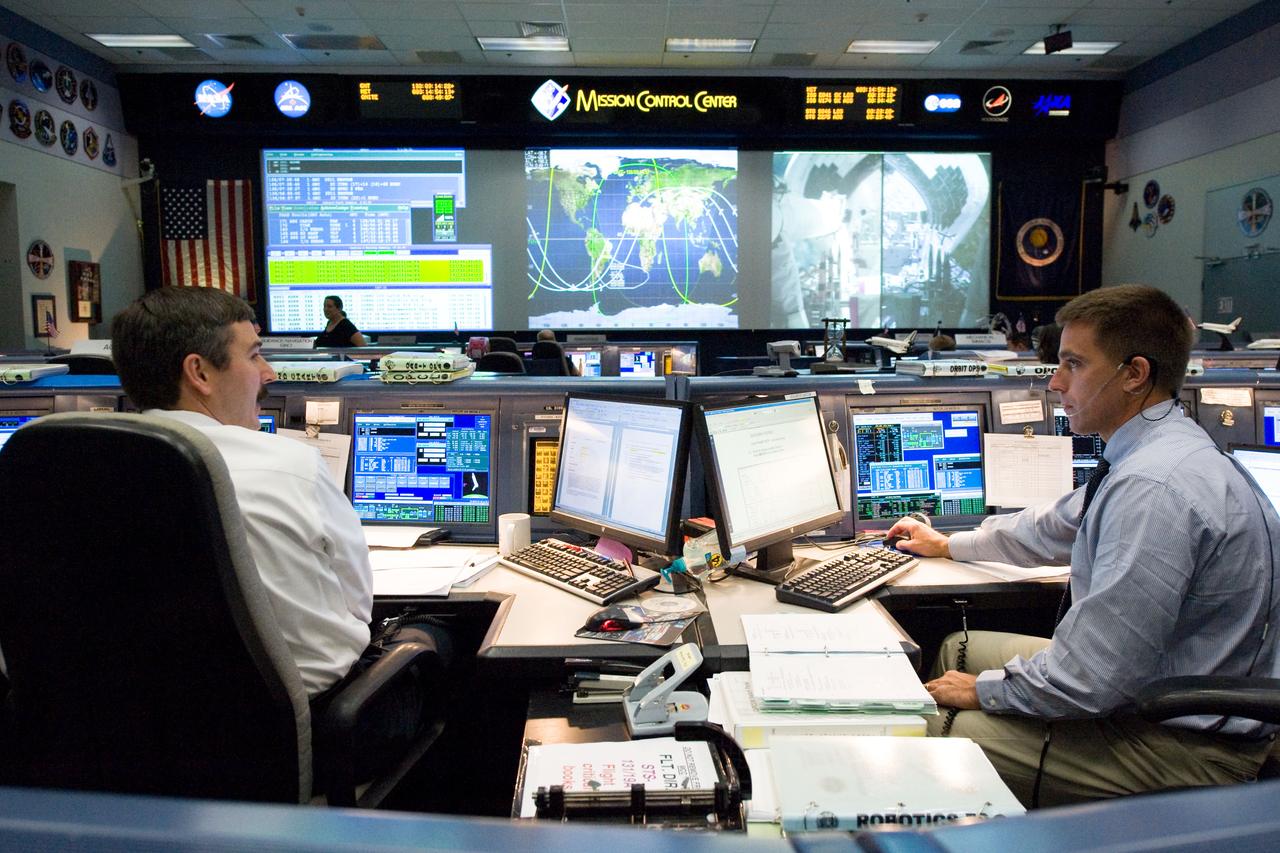
JSC2010-E-081909 (18 May 2010) --- Flight director Mike Sarafin (left) and NASA astronaut Chris Cassidy, spacecraft communicator (CAPCOM) for the STS-132 mission, are pictured at their consoles in the space shuttle flight control room in the Mission Control Center at NASA's Johnson Space Center during flight day five activities.
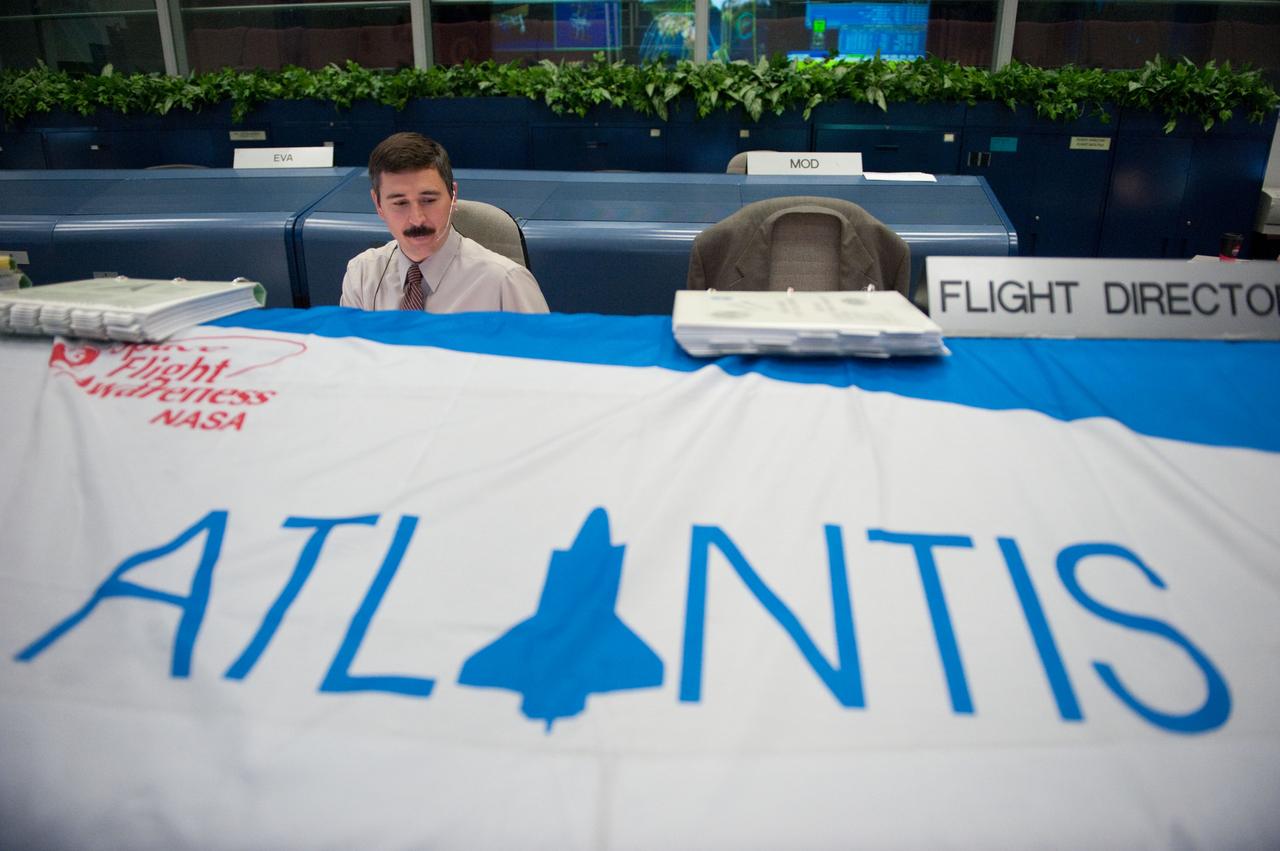
JSC2010-E-086399 (20 May 2010) --- Flight director Mike Sarafin monitors data at his console in the space shuttle flight control room in the Mission Control Center at NASA's Johnson Space Center during STS-132 mission flight day seven activities.
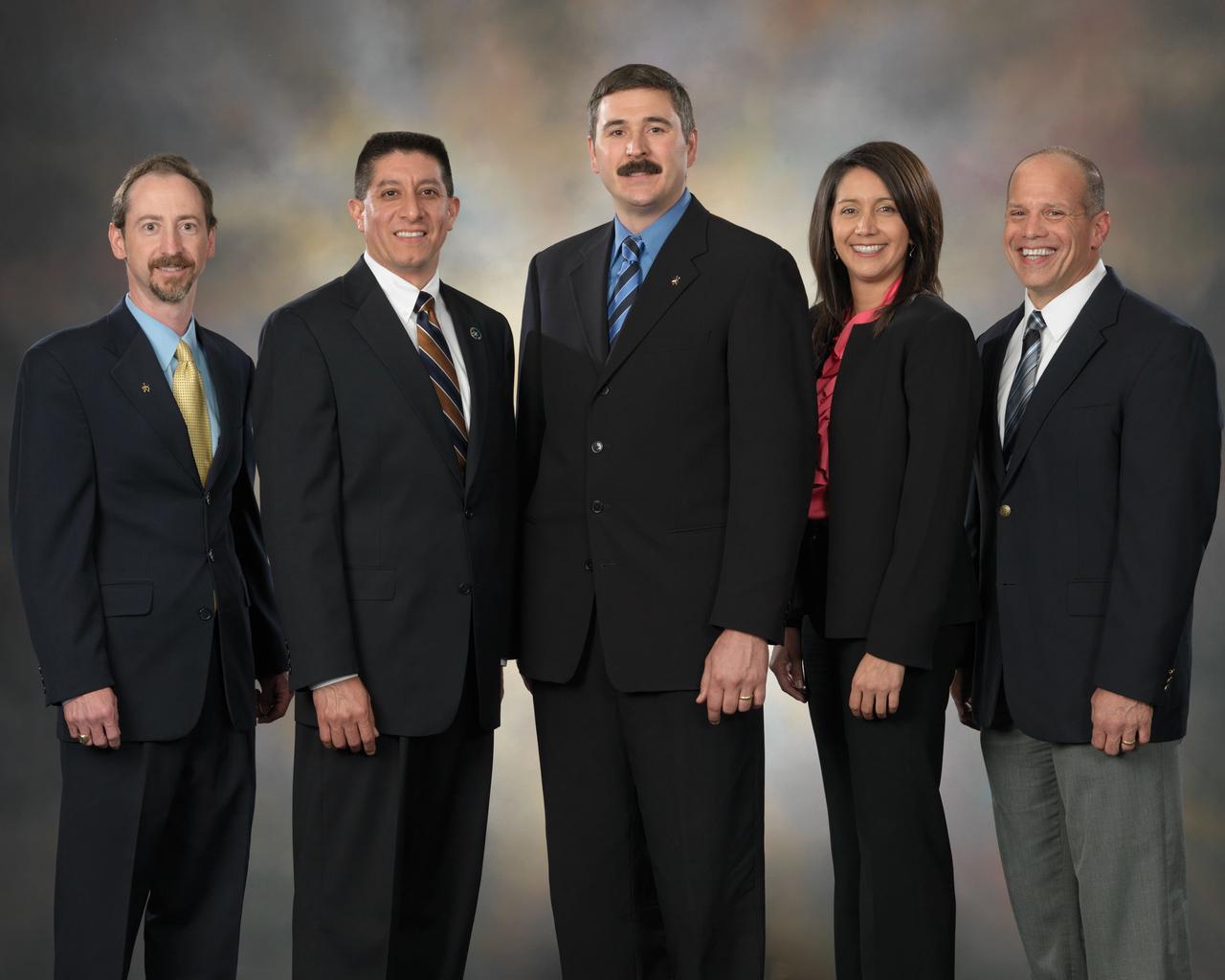
JSC2010-E-045162 (30 March 2010) --- Flight directors for the STS-132/ULF-4 mission pose for a preflight group portrait at NASA's Johnson Space Center. Pictured from the left are Chris Edelen, Richard Jones, Mike Sarafin, Ginger Kerrick and Tony Ceccacci.
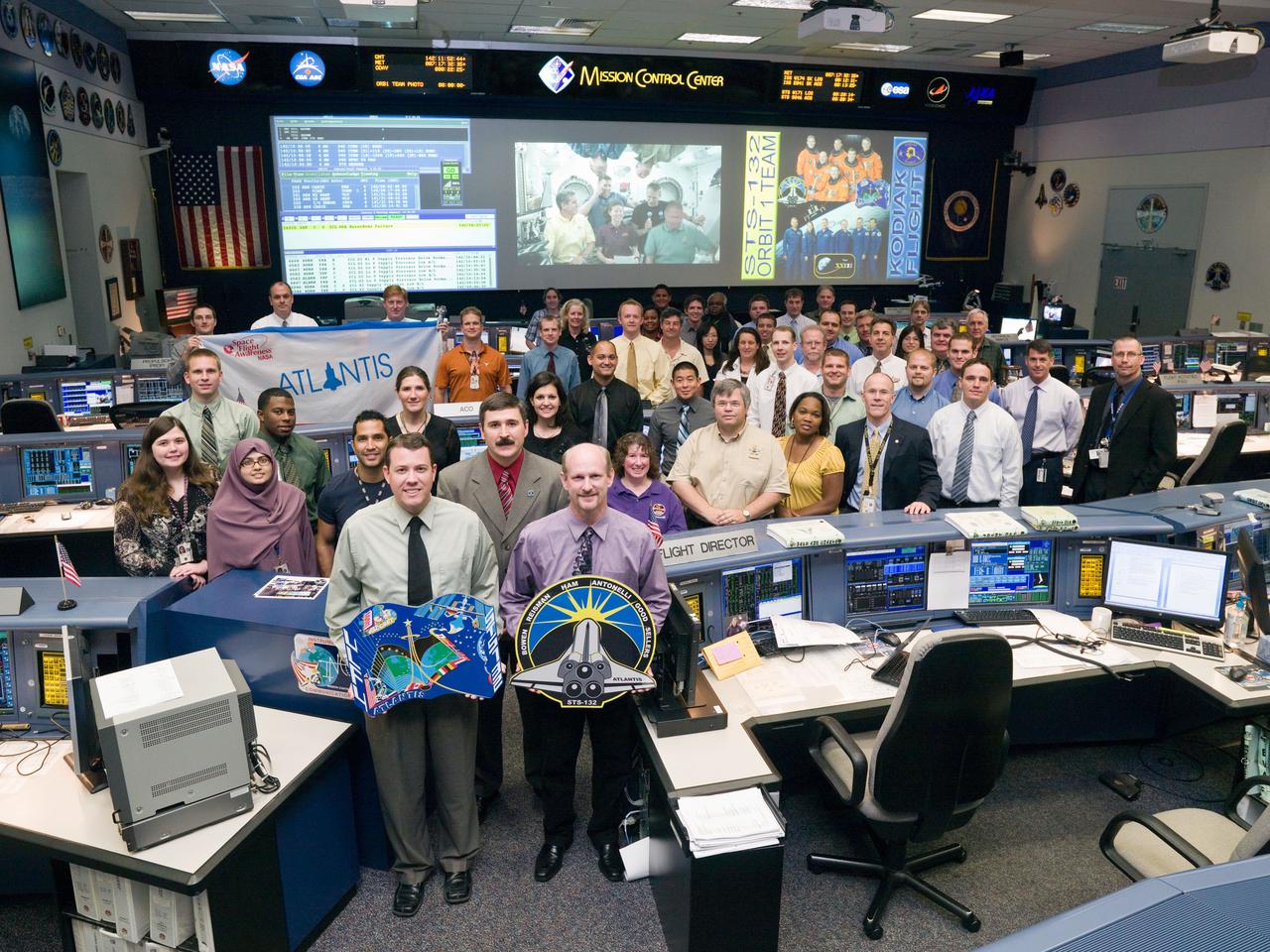
JSC2010-E-086698 (22 May 2010) --- The members of the STS-132 Orbit 1 flight control team pose for a group portrait in the space shuttle flight control room in the Mission Control Center at NASA's Johnson Space Center. Flight director Mike Sarafin (center) is visible on the front row.
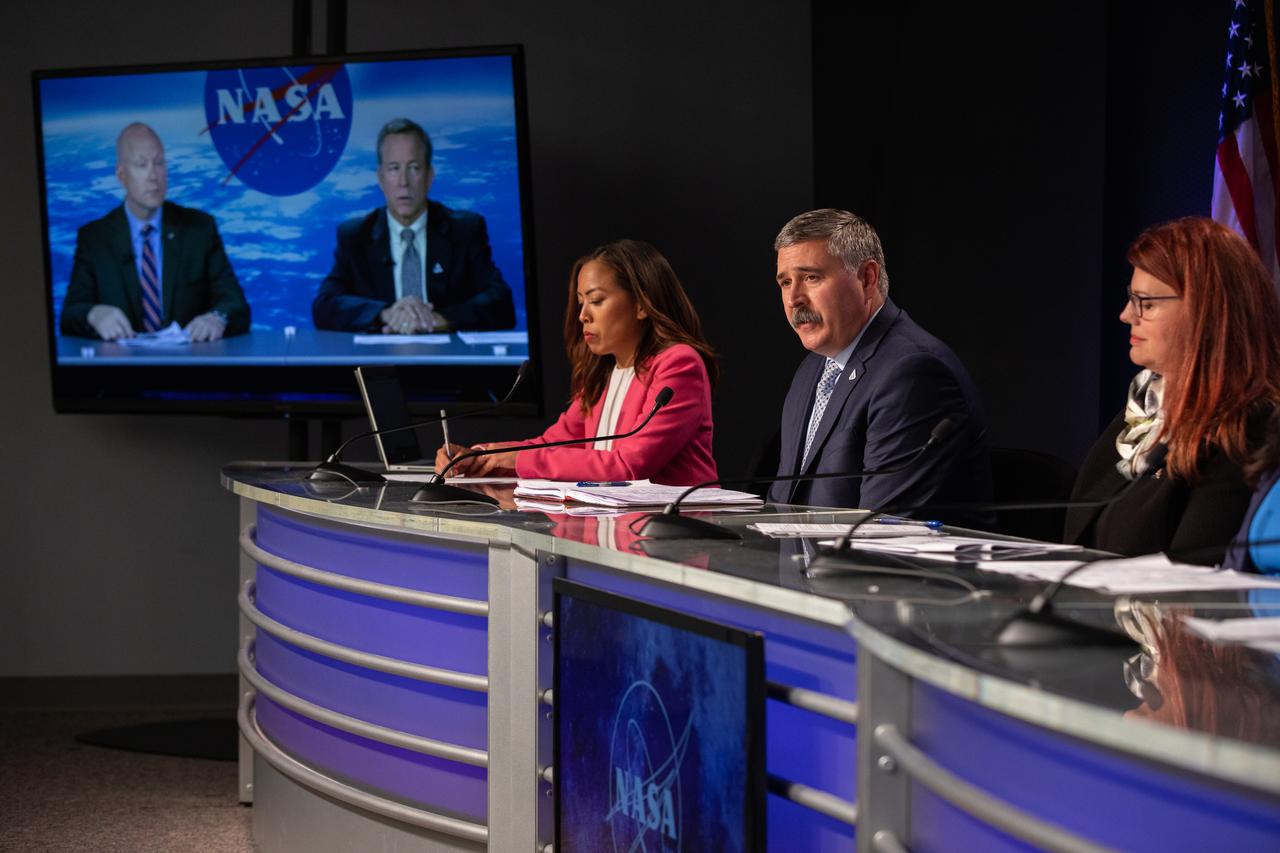
From left, Megan Cruz, NASA Communications; Mike Sarafin, Artemis mission manager, NASA Headquarters; and Charlie Blackwell-Thompson, Artemis launch director, Kennedy Space Center, participate in an Artemis I mission status press briefing at Kennedy on Aug. 27, 2022. NASA’s Space Launch System rocket and Orion spacecraft are targeted to lift off from Kennedy’s Launch Complex 39B no earlier than Aug. 29, 2022, at 8:33 a.m. EDT.

Mike Sarafin, Artemis mission manager, NASA Headquarters, participates in an Artemis I mission status press briefing at the agency’s Kennedy Space Center in Florida on Aug. 27, 2022. NASA’s Space Launch System rocket and Orion spacecraft are targeted to lift off from Kennedy’s Launch Complex 39B no earlier than Aug. 29, 2022, at 8:33 a.m. EDT.
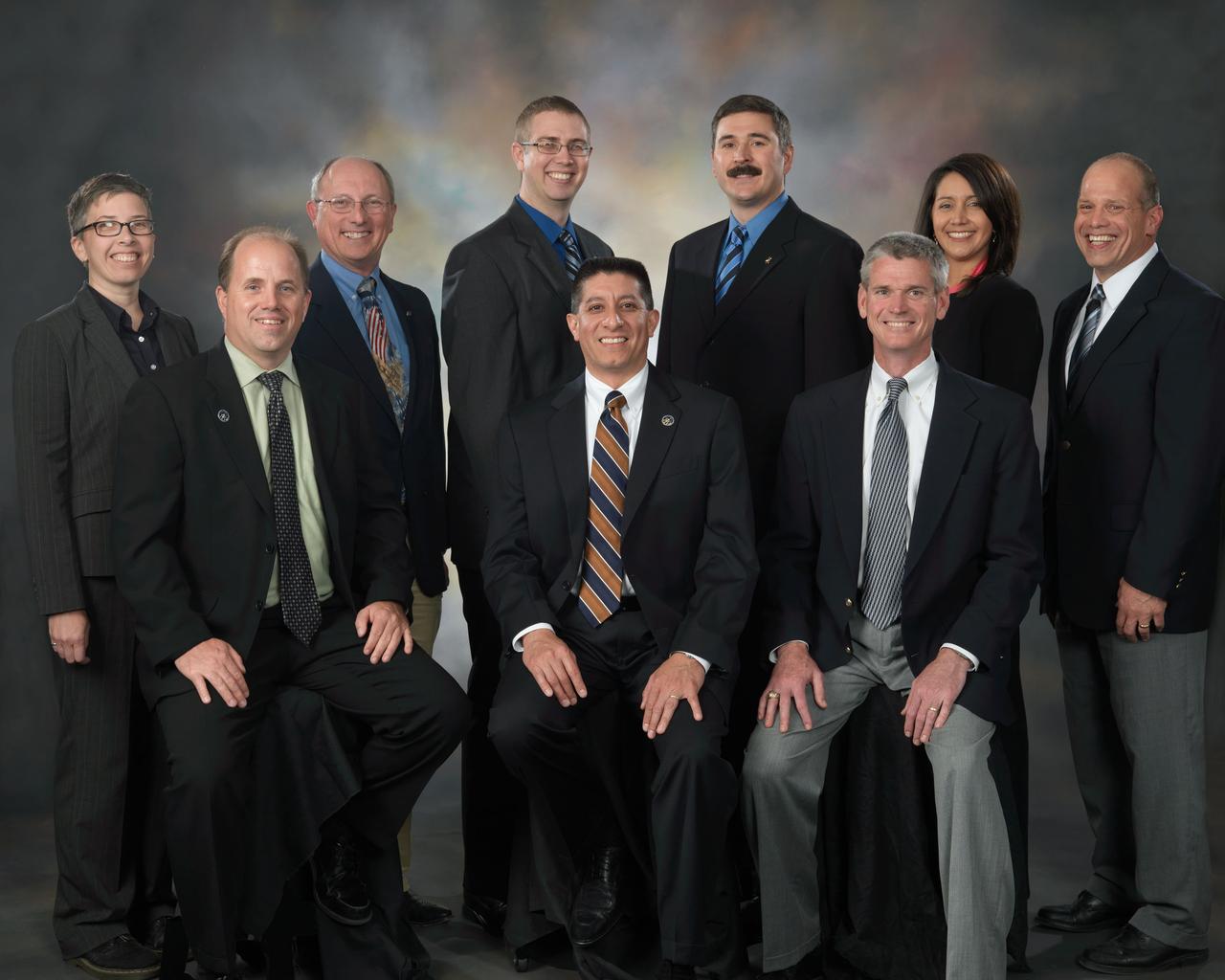
JSC2010-E-045163 (30 March 2010) --- Flight directors for the STS-131/19A mission pose for a preflight group portrait at NASA's Johnson Space Center. Pictured from the left (front row) are Ron Spencer, Richard Jones and Bryan Lunney. Picture from the left (back row) are Courtenay McMillan, Paul Dye, Ed Van Cise, Mike Sarafin, Ginger Kerrick and Tony Ceccacci.
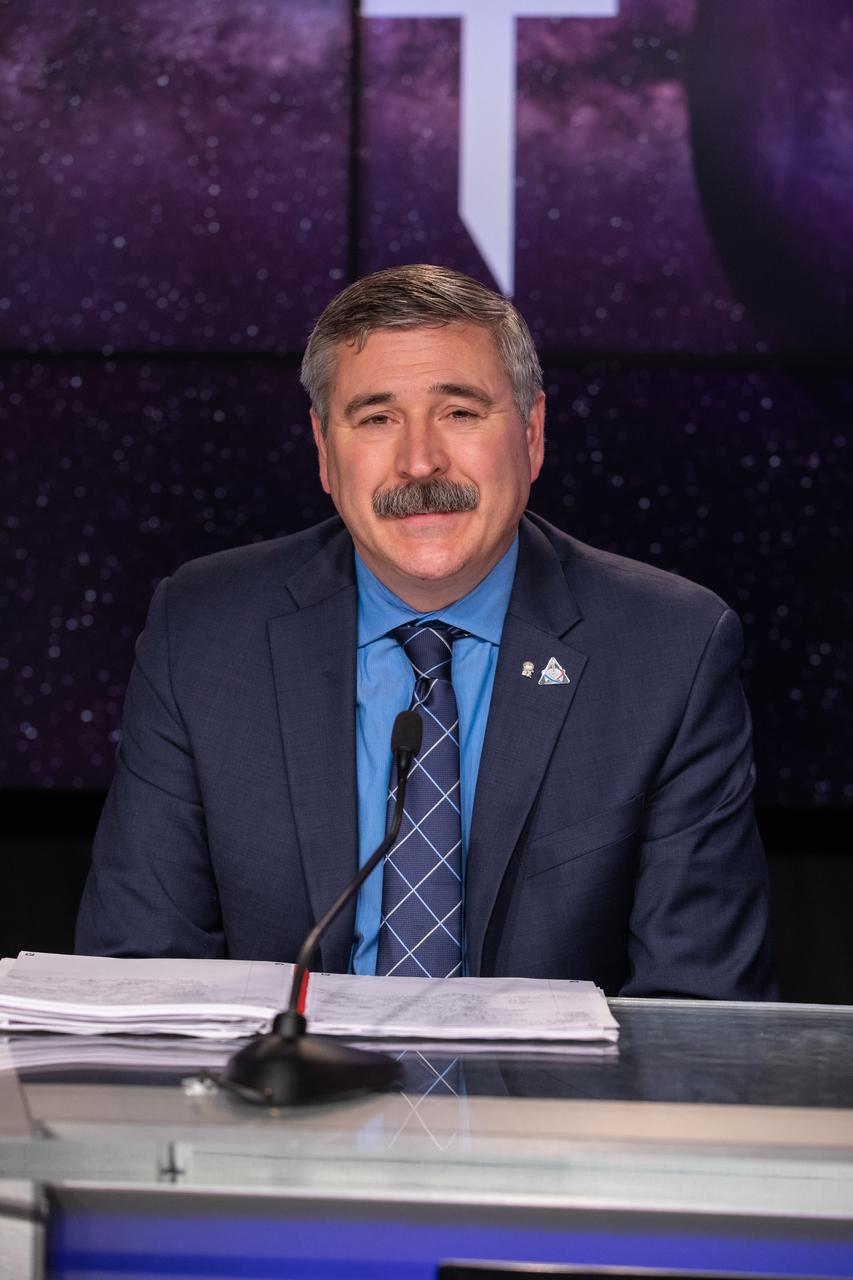
Mike Sarafin, Artemis mission manager, NASA Headquarters, participates in a postlaunch news conference on Nov. 16, 2022, at NASA’s Kennedy Space Center in Florida, after launch of Artemis I at 1:47 a.m. EST from Kennedy’s Launch Complex 39B. The first in a series of increasingly complex missions, Artemis I will provide a foundation for human deep space exploration and demonstrate our commitment and capability to extend human presence to the Moon and beyond. The primary goal of Artemis I is to thoroughly test the integrated systems before crewed missions by operating the spacecraft in a deep space environment, testing Orion’s heat shield, and recovering the crew module after reentry, descent, and splashdown.

Mike Sarafin, Artemis mission manager, NASA Headquarters, participates in a press conference on Aug. 29, 2022, at NASA’s Kennedy Space Center in Florida, after waving-off of the launch of the agency’s Artemis I mission. The first in a series of increasingly complex missions, Artemis I will provide a foundation for human deep space exploration and demonstrate our commitment and capability to extend human presence to the Moon and beyond. The primary goal of Artemis I is to thoroughly test the integrated systems before crewed missions by operating the spacecraft in a deep space environment, testing Orion’s heat shield, and recovering the crew module after reentry, descent, and splashdown
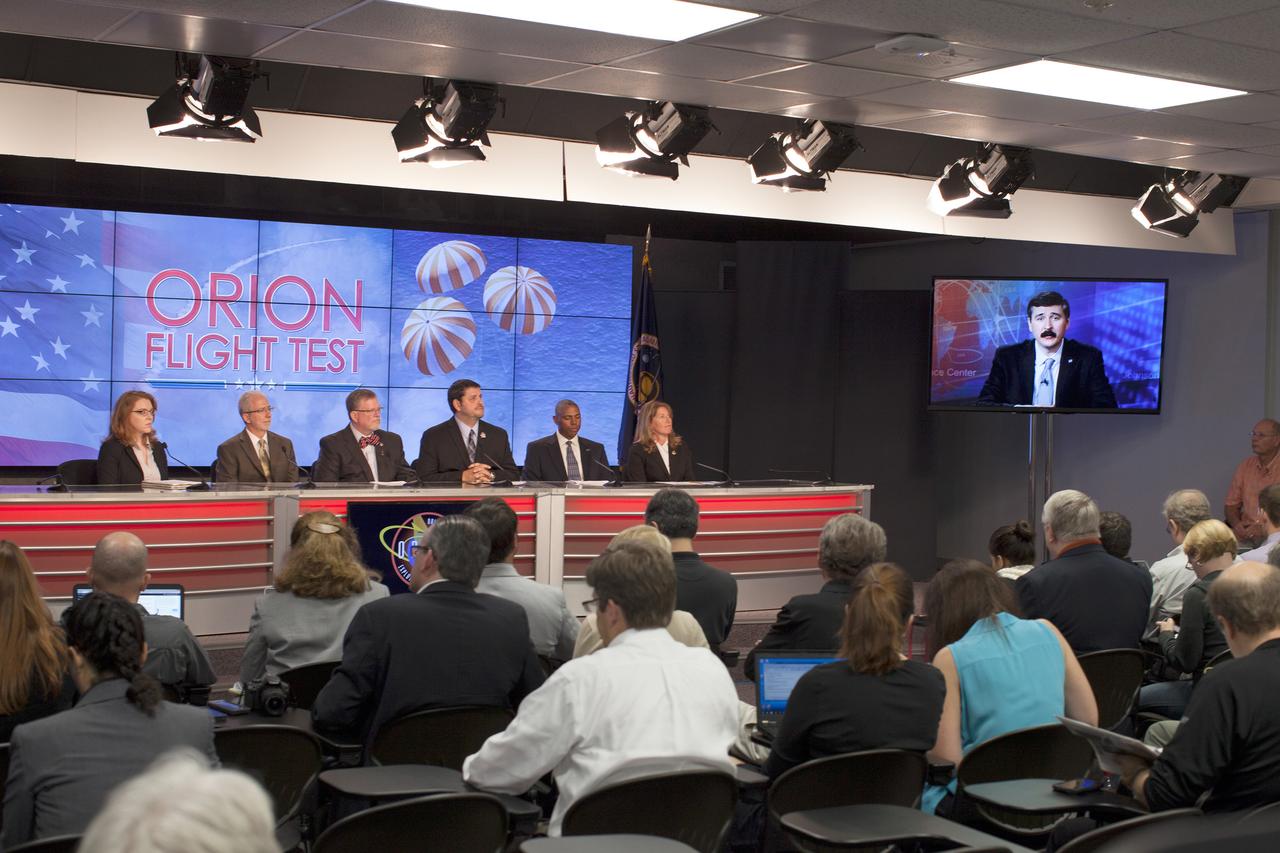
In the Kennedy Space Center’s Press Site auditorium, agency and industry leaders spoke to members of the news media as the Orion spacecraft and its Delta IV Heavy rocket were being prepared for launch on Dec. 3, 2014. From left are: Brandi Dean of NASA Public Affairs, Mark Geyer, Orion program manager, Mike Hawes, Lockheed Martin Orion Program manager, Jeff Angermeier, Exploration Flight Test-1 Ground Systems Development and Operations mission manager, Ron Fortson, United Launch Alliance director of mission management, and Kathy Winters, U.S. Air Force 45th Space Wing Launch Weather officer. On the right, Mike Sarafin, Orion flight director, participated via video from the Johnson Space Center. Part of Batch image transfer from Flickr.
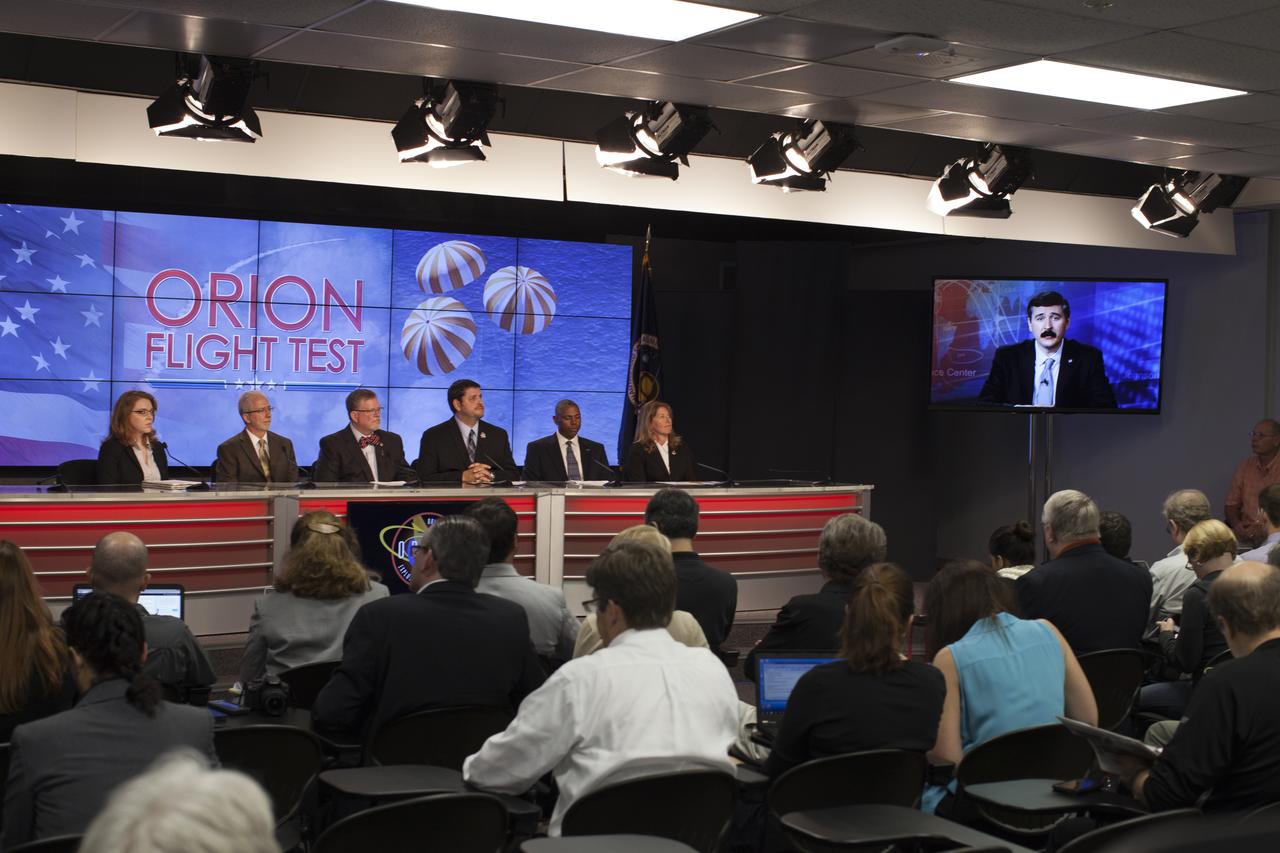
In the Kennedy Space Center’s Press Site auditorium, agency and industry leaders spoke to members of the news media as the Orion spacecraft and its Delta IV Heavy rocket were being prepared for launch. From left are: Brandi Dean of NASA Public Affairs, Mark Geyer, Orion program manager, Mike Hawes, Lockheed Martin Orion Program manager, Jeff Angermeier, Exploration Flight Test-1 Ground Systems Development and Operations mission manager, Ron Fortson, United Launch Alliance director of mission management, and Kathy Winters, U.S. Air Force 45th Space Wing Launch Weather officer. On the right, Mike Sarafin, Orion flight director, participated via video from the Johnson Space Center.
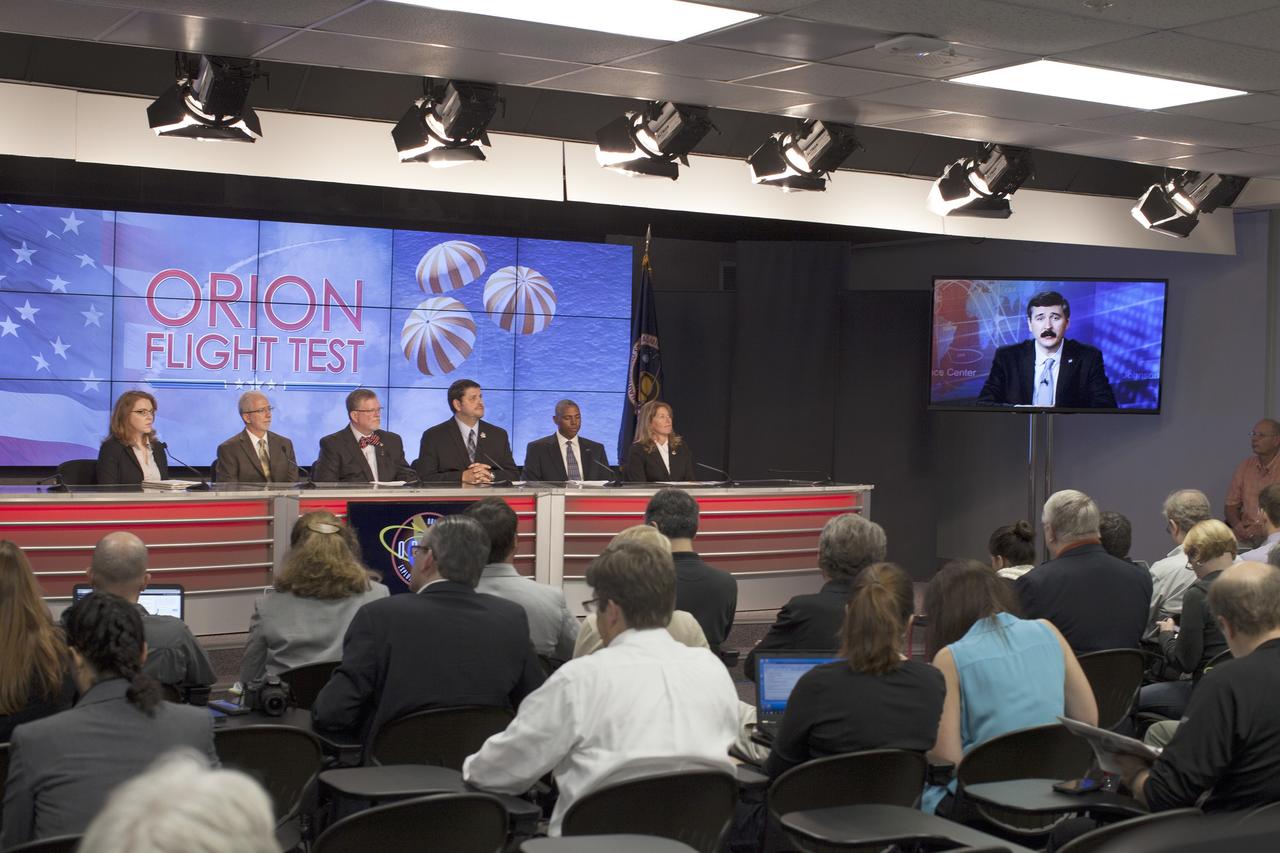
CAPE CANAVERAL, Fla. -- In the Kennedy Space Center’s Press Site auditorium, agency and industry leaders spoke to members of the news media as the Orion spacecraft and its Delta IV Heavy rocket were being prepared for launch. From left are: Brandi Dean of NASA Public Affairs, Mark Geyer, Orion program manager, Mike Hawes, Lockheed Martin Orion Program manager, Jeff Angermeier, Exploration Flight Test-1 Ground Systems Development and Operations mission manager, Ron Fortson, United Launch Alliance director of mission management, and Kathy Winters, U.S. Air Force 45th Space Wing Launch Weather officer. On the right, Mike Sarafin, Orion flight director, participated via video from the Johnson Space Center. For more information, visit www.nasa.gov/orion. Photo credit: NASA/Frankie Martin
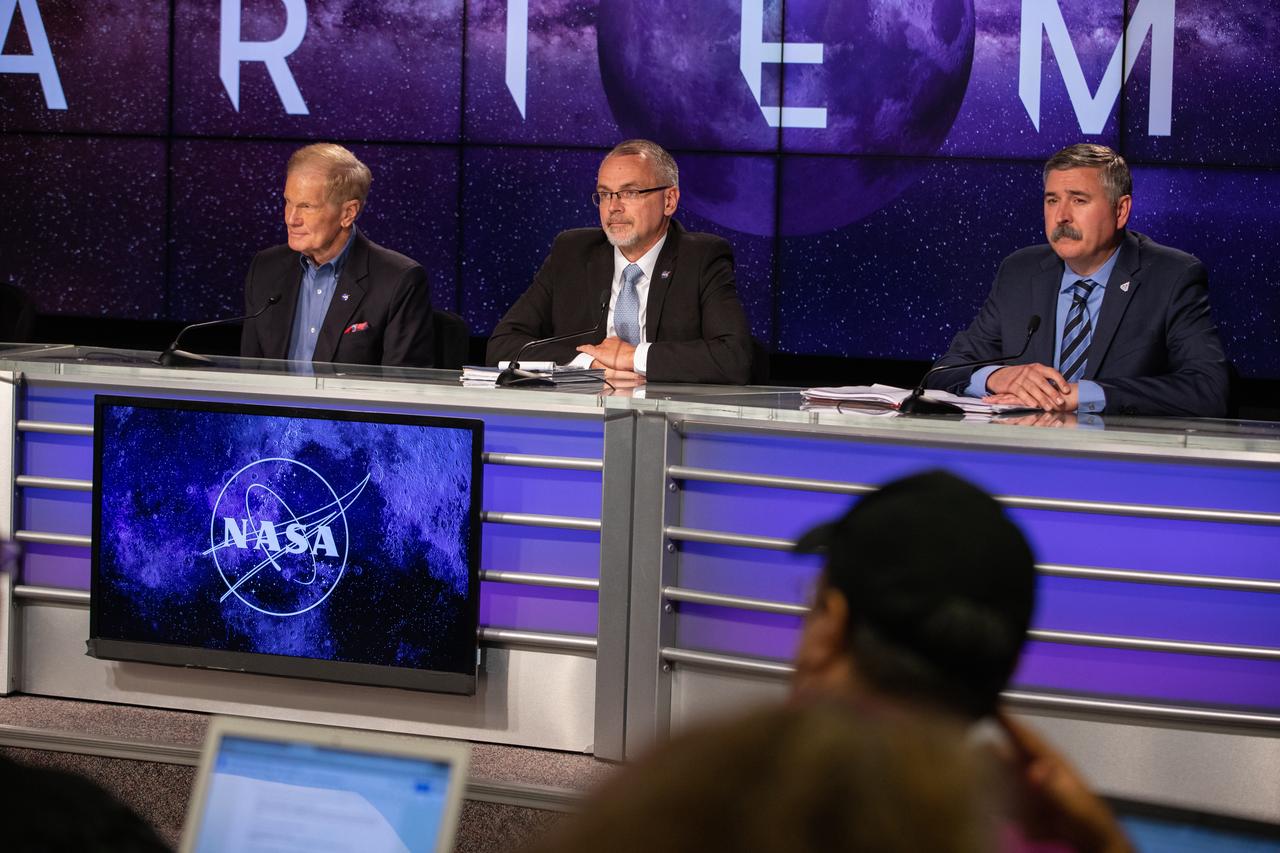
A news conference is held Sept. 3, 2022, at NASA’s Kennedy Space Center in Florida, after launch of Artemis I was waived off from Kennedy’s Launch Complex 39B. Teams encountered a liquid hydrogen leak while loading propellant into the core stage of the Space Launch System rocket. Participants are, from left, Bill Nelson, NASA administrator; Jim Free, associate administrator for NASA’s Exploration Systems Development Mission Directorate; and Mike Sarafin, Artemis mission manager. The first in a series of increasingly complex missions, Artemis I will provide a foundation for human deep space exploration and demonstrate our commitment and capability to extend human presence to the Moon and beyond. The primary goal of Artemis I is to thoroughly test the integrated systems before crewed missions by operating the spacecraft in a deep space environment, testing Orion’s heat shield, and recovering the crew module after reentry, descent, and splashdown.
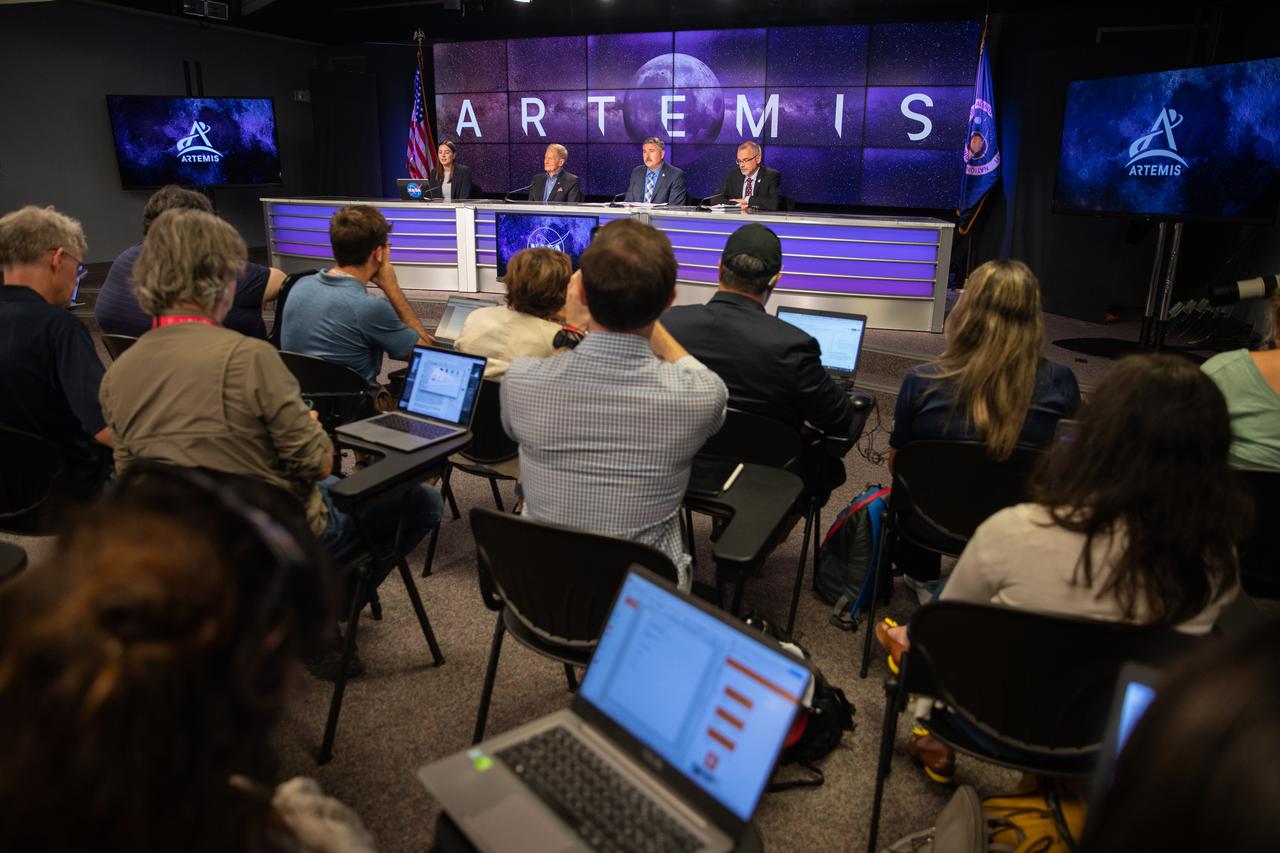
A press conference is held on Aug. 29, 2022, at NASA’s Kennedy Space Center in Florida, after waving-off of the launch of the agency’s Artemis I mission. Participants from left, are NASA Press Secretary Jackie McGuiness; Bill Nelson, NASA administrator; Mike Sarafin, Artemis mission manager, NASA Headquarters; and Jim Free, associate administrator for Exploration Systems Development Mission Directorate, NASA Headquarters. The first in a series of increasingly complex missions, Artemis I will provide a foundation for human deep space exploration and demonstrate our commitment and capability to extend human presence to the Moon and beyond. The primary goal of Artemis I is to thoroughly test the integrated systems before crewed missions by operating the spacecraft in a deep space environment, testing Orion’s heat shield, and recovering the crew module after reentry, descent, and splashdown.
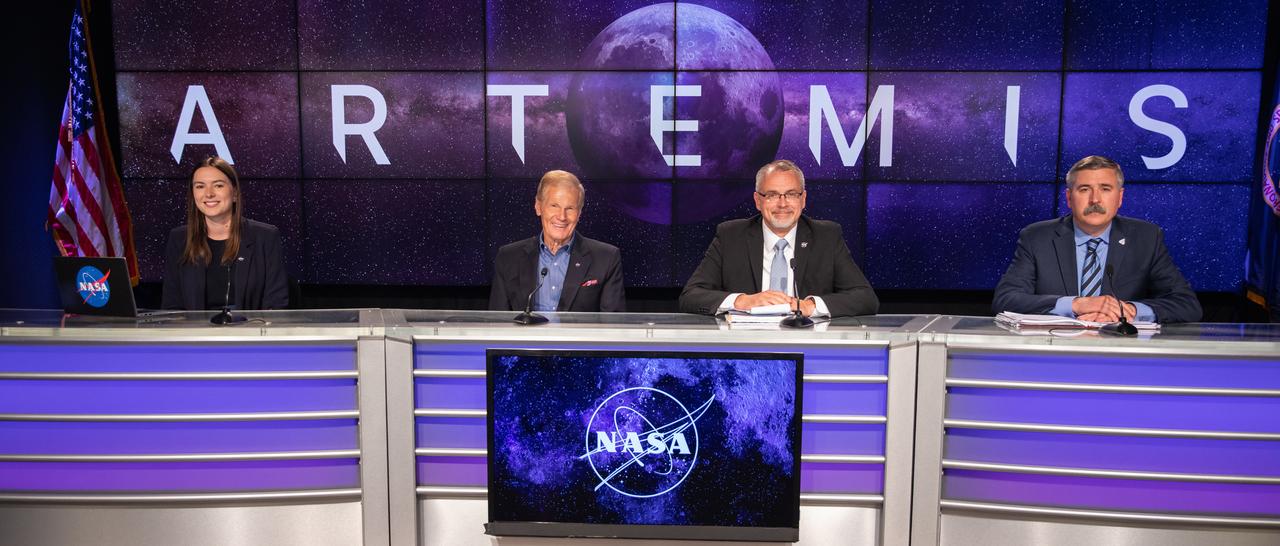
A news conference is held Sept. 3, 2022, at NASA’s Kennedy Space Center in Florida, after launch of Artemis I was waived off from Kennedy’s Launch Complex 39B. Teams encountered a liquid hydrogen leak while loading propellant into the core stage of the Space Launch System rocket. Participants are, from left, Jackie McGuinness, NASA press secretary; Bill Nelson, NASA administrator; Jim Free, associate administrator for NASA’s Exploration Systems Development Mission Directorate; and Mike Sarafin, Artemis mission manager. The first in a series of increasingly complex missions, Artemis I will provide a foundation for human deep space exploration and demonstrate our commitment and capability to extend human presence to the Moon and beyond. The primary goal of Artemis I is to thoroughly test the integrated systems before crewed missions by operating the spacecraft in a deep space environment, testing Orion’s heat shield, and recovering the crew module after reentry, descent, and splashdown.
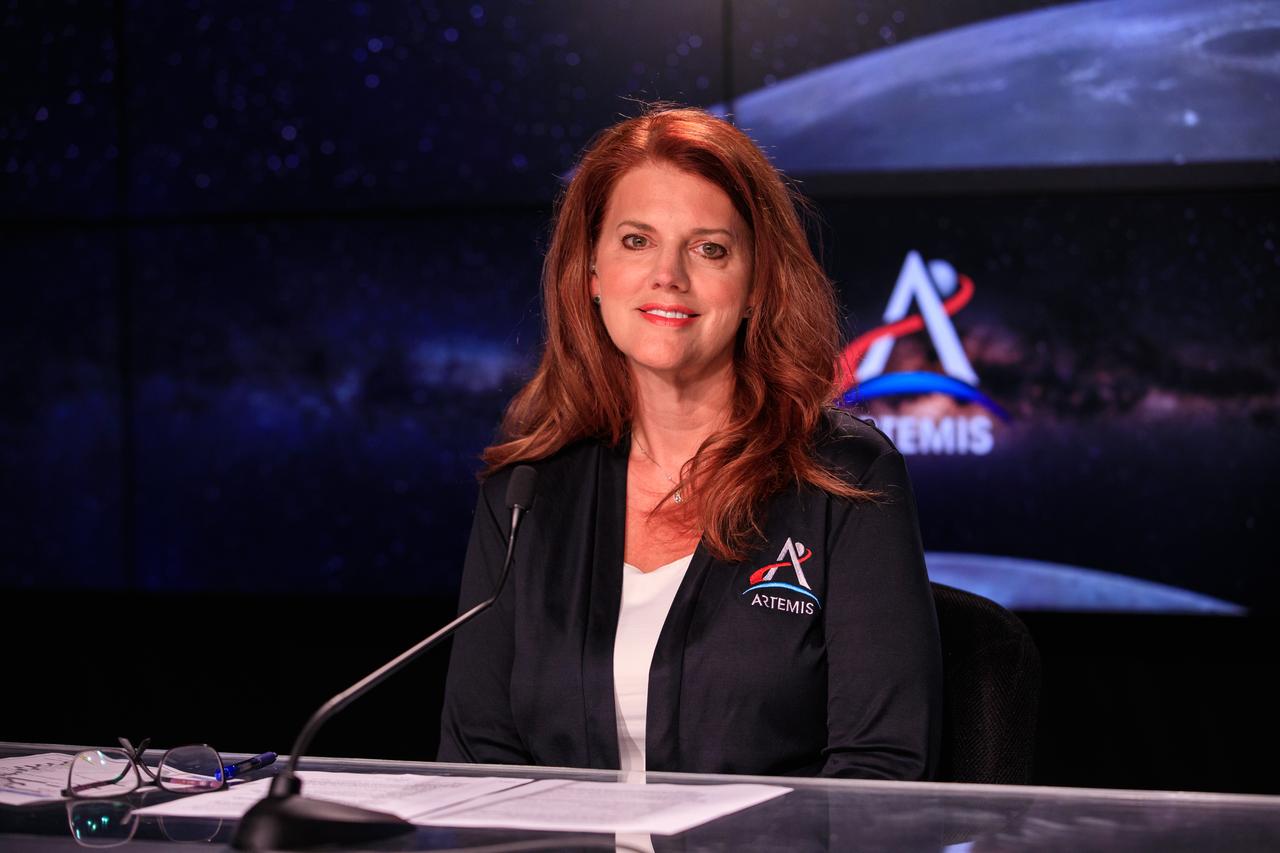
Launch Director Charlie Blackwell-Thompson participates in an Artemis I mission overview briefing inside the Press Site auditorium at NASA’s Kennedy Space Center in Florida on Aug. 3, 2022. Also participating in the briefing from various locations were NASA Administrator Bill Nelson; Associate Administrator for Technology, Policy, and Strategy Bhavya Lal; Mission Manager Mike Sarafin; Space Launch System (SLS) Program Manager John Honeycutt; and Orion Program Manager Howard Hu. The first in an increasingly complex series of missions, Artemis I will test the SLS rocket and Orion spacecraft as an integrated system prior to crewed flights to the Moon. Through Artemis, NASA will land the first woman and first person of color on the lunar surface, paving the way for long-term lunar presence and serving as a steppingstone before venturing to Mars.
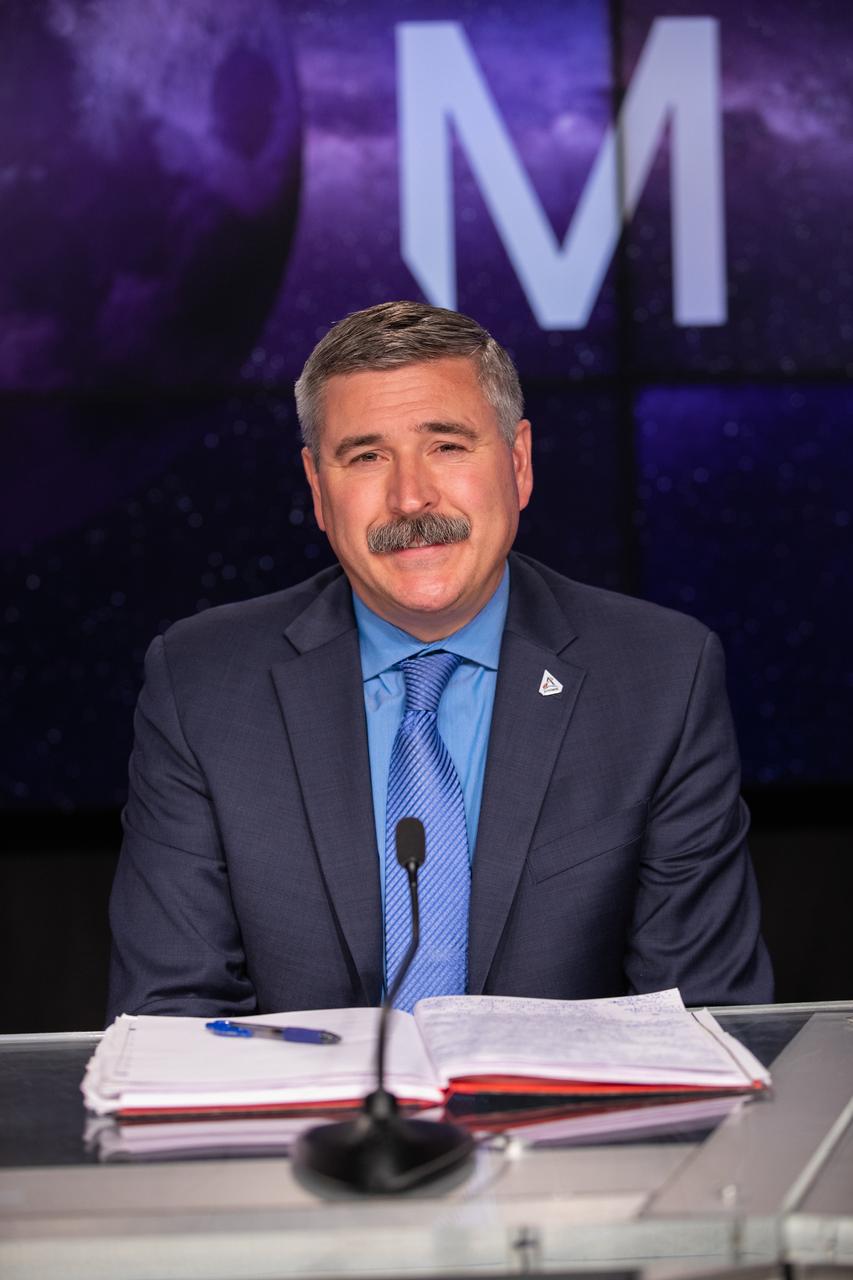
Mike Sarafin, Artemis Mission Manager, NASA Headquarters, participates in a prelaunch media briefing following completion of NASA’s Flight Readiness Review for Artemis I on Aug. 22, 2022, at the agency’s Kennedy Space Center in Florida. Artemis I is scheduled to launch at 8:33 a.m. EDT on Aug. 29, 2022, from Kennedy’s Launch Complex 39B. The first in a series of increasingly complex missions, Artemis I will provide a foundation for human deep space exploration and demonstrate our commitment and capability to extend human presence to the Moon and beyond. The primary goal of Artemis I is to thoroughly test the integrated systems before crewed missions by operating the spacecraft in a deep space environment, testing Orion’s heat shield, and recovering the crew module after reentry, descent, and splashdown.
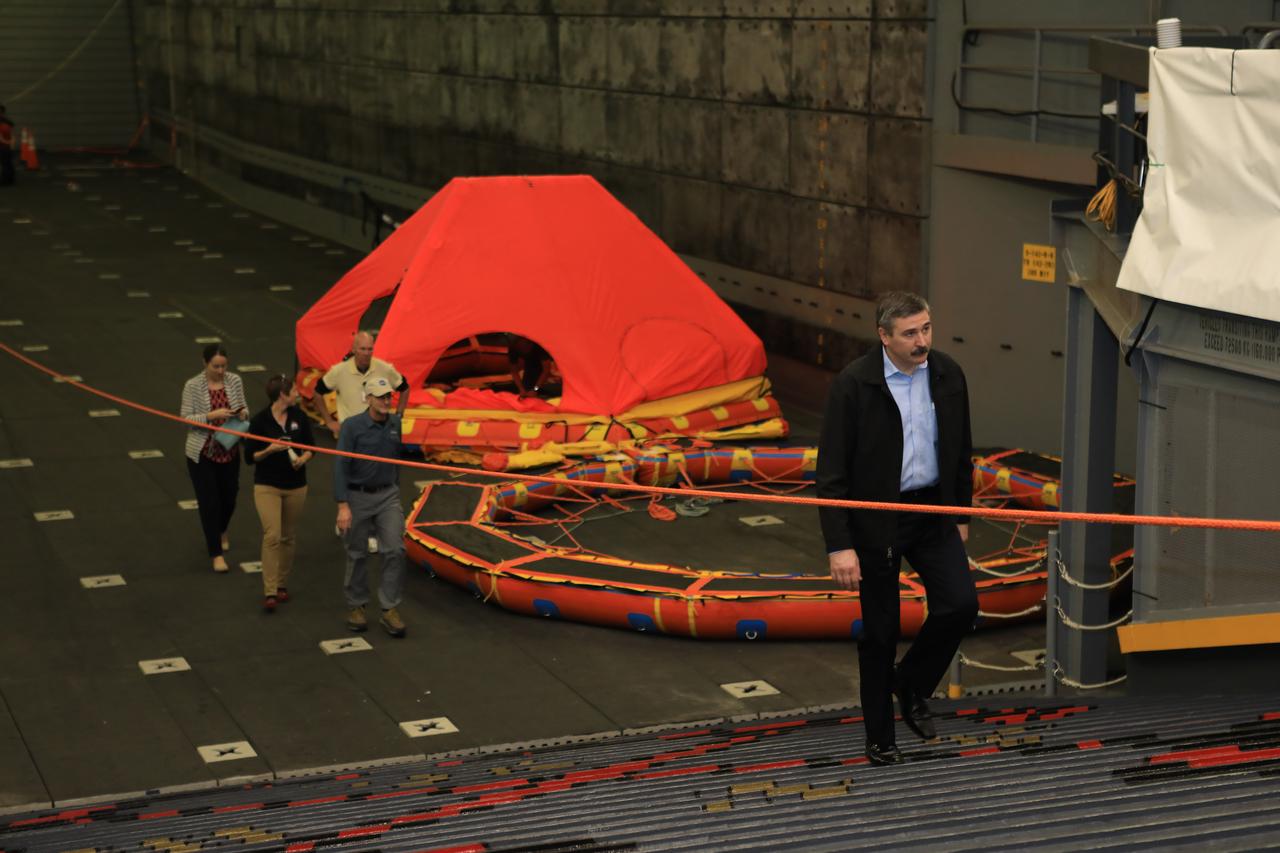
Exploration Mission-1 Mission Manager Mike Sarafin and other senior leaders from around NASA received a familiarization tour by the Exploration Ground Systems (EGS) recovery team on Oct. 29, 2018, as they prepare for Underway Recovery Test-7 (URT-7) on a U.S. Navy ship. EGS and the U.S. Navy will use a test version of the Orion crew module, several rigid hull inflatable boats and support equipment to verify and validate processes, procedures, hardware and personnel during recovery of Orion in open waters. URTs are a series of tests to ensure all systems are go when recovering the Orion crew capsule and astronauts onboard in the future. Orion will have emergency abort capability, sustain the crew during space travel and provide safe re-entry from deep space return velocities.
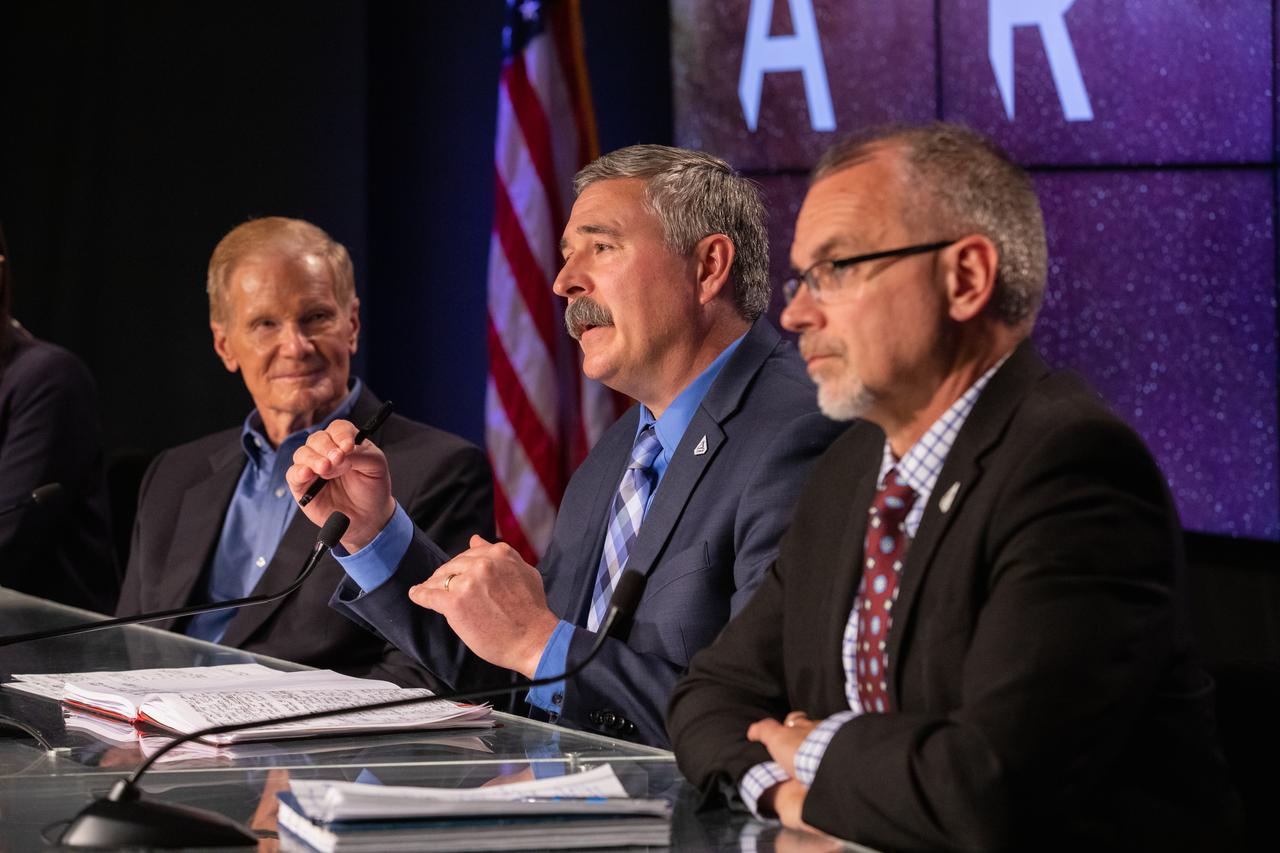
A press conference is held on Aug. 29, 2022, at NASA’s Kennedy Space Center in Florida, after waving-off of the launch of the agency’s Artemis I mission. Participants from left, are NASA Administrator Bill Nelson; Mike Sarafin, Artemis mission manager, NASA Headquarters; and Jim Free, associate administrator for Exploration Systems Development Mission Directorate, NASA Headquarters. The first in a series of increasingly complex missions, Artemis I will provide a foundation for human deep space exploration and demonstrate our commitment and capability to extend human presence to the Moon and beyond. The primary goal of Artemis I is to thoroughly test the integrated systems before crewed missions by operating the spacecraft in a deep space environment, testing Orion’s heat shield, and recovering the crew module after reentry, descent, and splashdown.
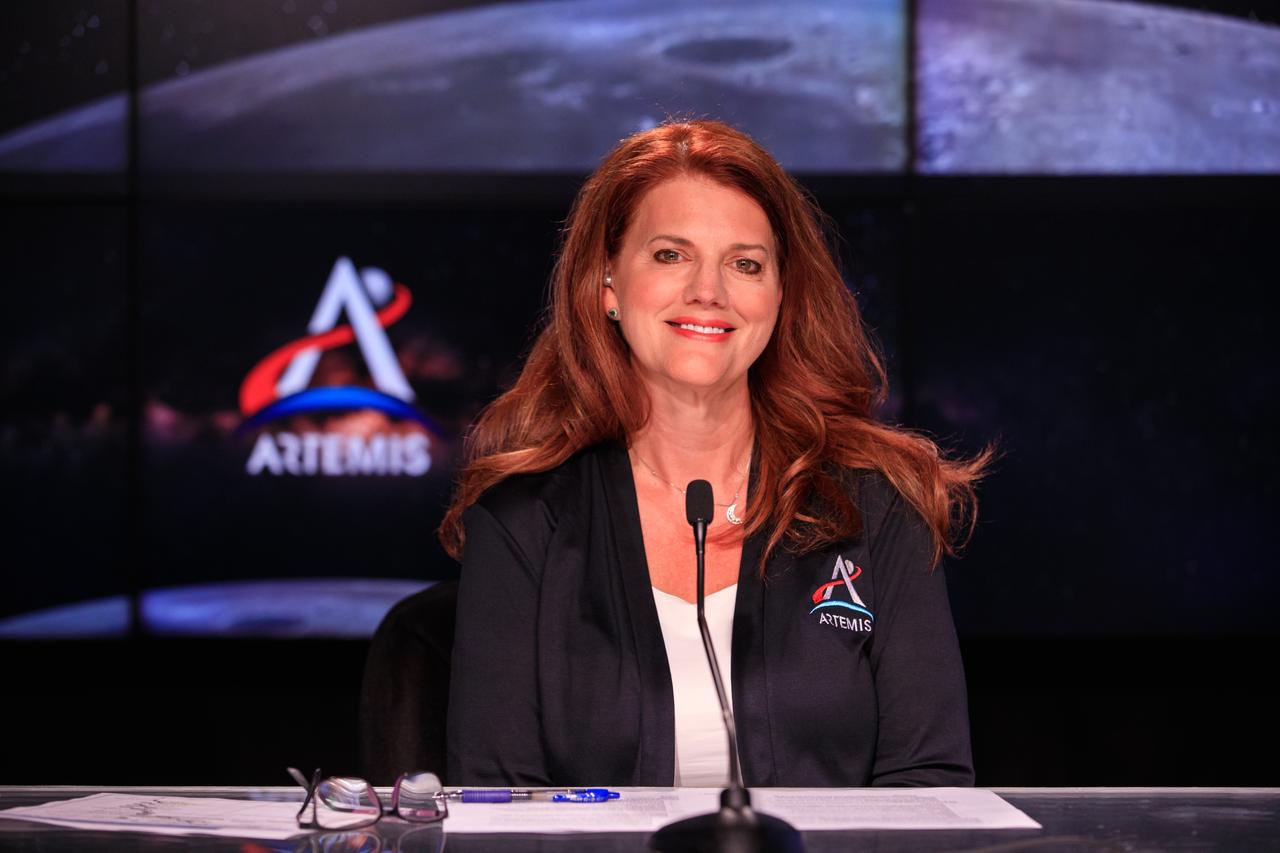
Launch Director Charlie Blackwell-Thompson participates in an Artemis I mission overview briefing inside the Press Site auditorium at NASA’s Kennedy Space Center in Florida on Aug. 3, 2022. Also participating in the briefing from various locations were NASA Administrator Bill Nelson; Associate Administrator for Technology, Policy, and Strategy Bhavya Lal; Mission Manager Mike Sarafin; Space Launch System (SLS) Program Manager John Honeycutt; and Orion Program Manager Howard Hu. The first in an increasingly complex series of missions, Artemis I will test the SLS rocket and Orion spacecraft as an integrated system prior to crewed flights to the Moon. Through Artemis, NASA will land the first woman and first person of color on the lunar surface, paving the way for long-term lunar presence and serving as a steppingstone before venturing to Mars.
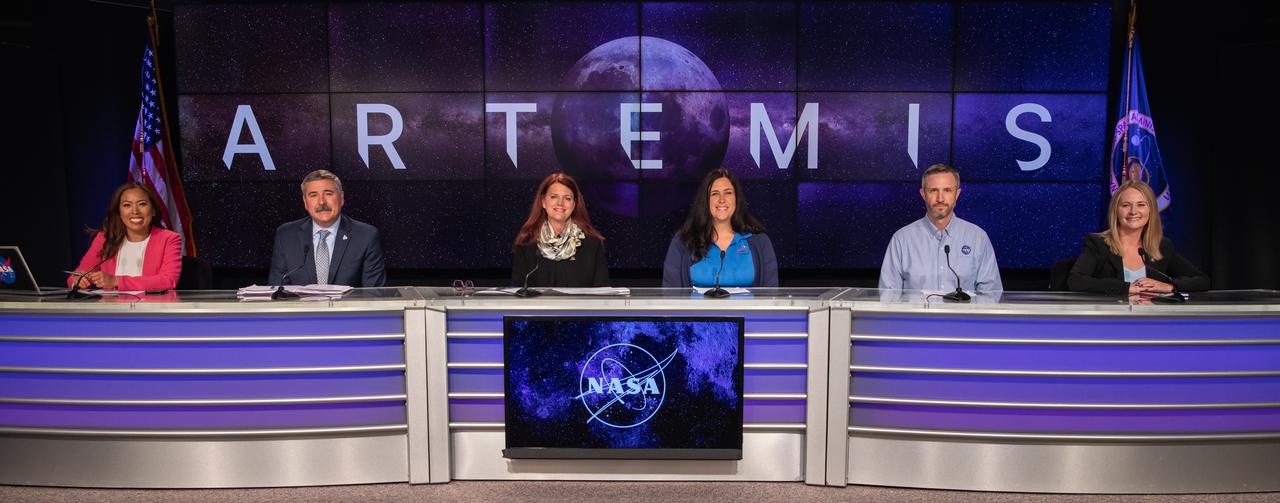
From left, Megan Cruz, NASA Communications; Mike Sarafin, Artemis mission manager, NASA Headquarters; Charlie Blackwell-Thompson, Artemis launch director, Kennedy Space Center; Melissa Jones, recovery director, Exploration Ground Systems Program, Kennedy; Jacob Bleacher, chief exploration scientist, Exploration Systems Development Mission Directorate, NASA Headquarters; and Melody Lovin, weather officer, Space Launch Delta 45, participate in an Artemis I mission status press briefing at Kennedy on Aug. 27, 2022. NASA’s Space Launch System rocket and Orion spacecraft are targeted to lift off from Kennedy’s Launch Complex 39B no earlier than Aug. 29, 2022, at 8:33 a.m. EDT.
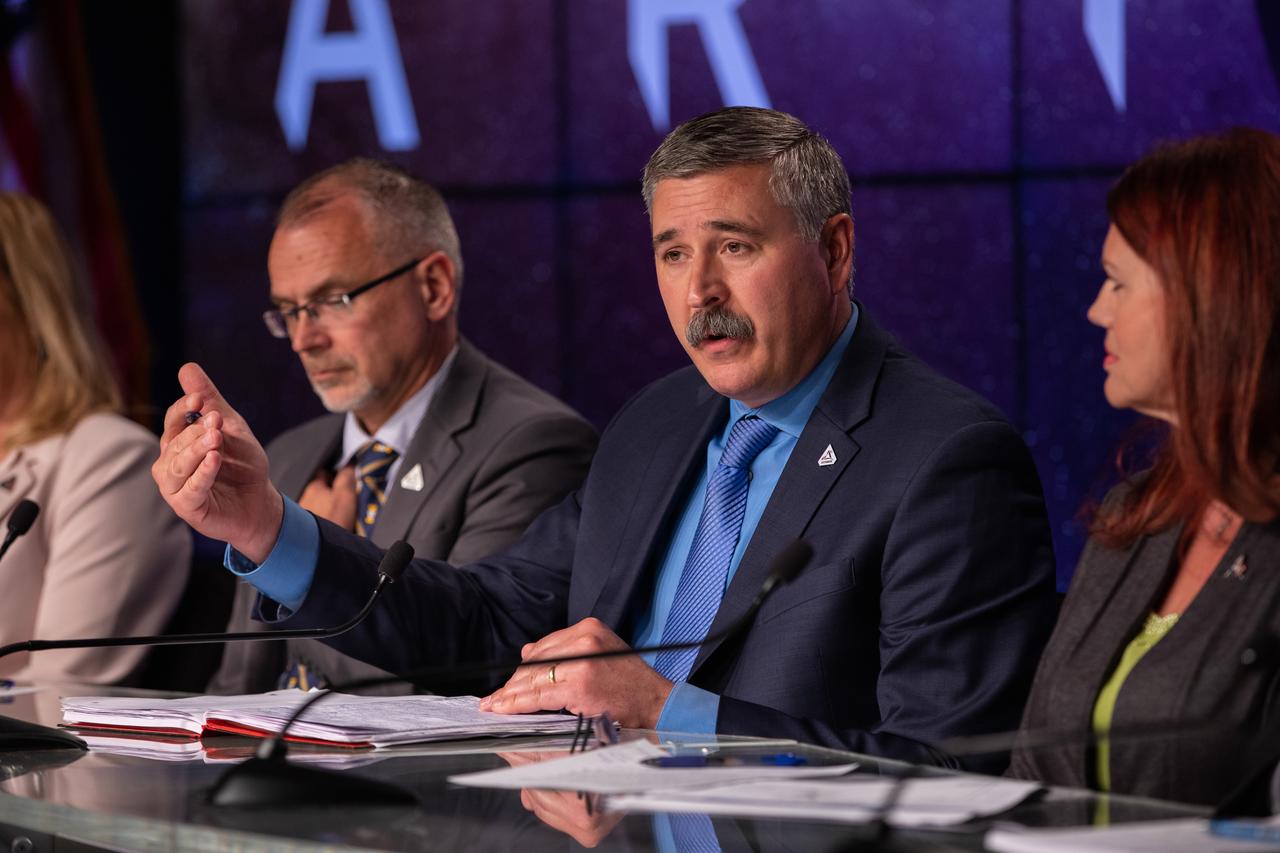
Mike Sarafin, Artemis Mission Manager, NASA Headquarters, participates in a prelaunch media briefing following completion of NASA’s Flight Readiness Review for Artemis I on Aug. 22, 2022, at the agency’s Kennedy Space Center in Florida. Artemis I is scheduled to launch at 8:33 a.m. EDT on Aug. 29, 2022, from Kennedy’s Launch Complex 39B. The first in a series of increasingly complex missions, Artemis I will provide a foundation for human deep space exploration and demonstrate our commitment and capability to extend human presence to the Moon and beyond. The primary goal of Artemis I is to thoroughly test the integrated systems before crewed missions by operating the spacecraft in a deep space environment, testing Orion’s heat shield, and recovering the crew module after reentry, descent, and splashdown.
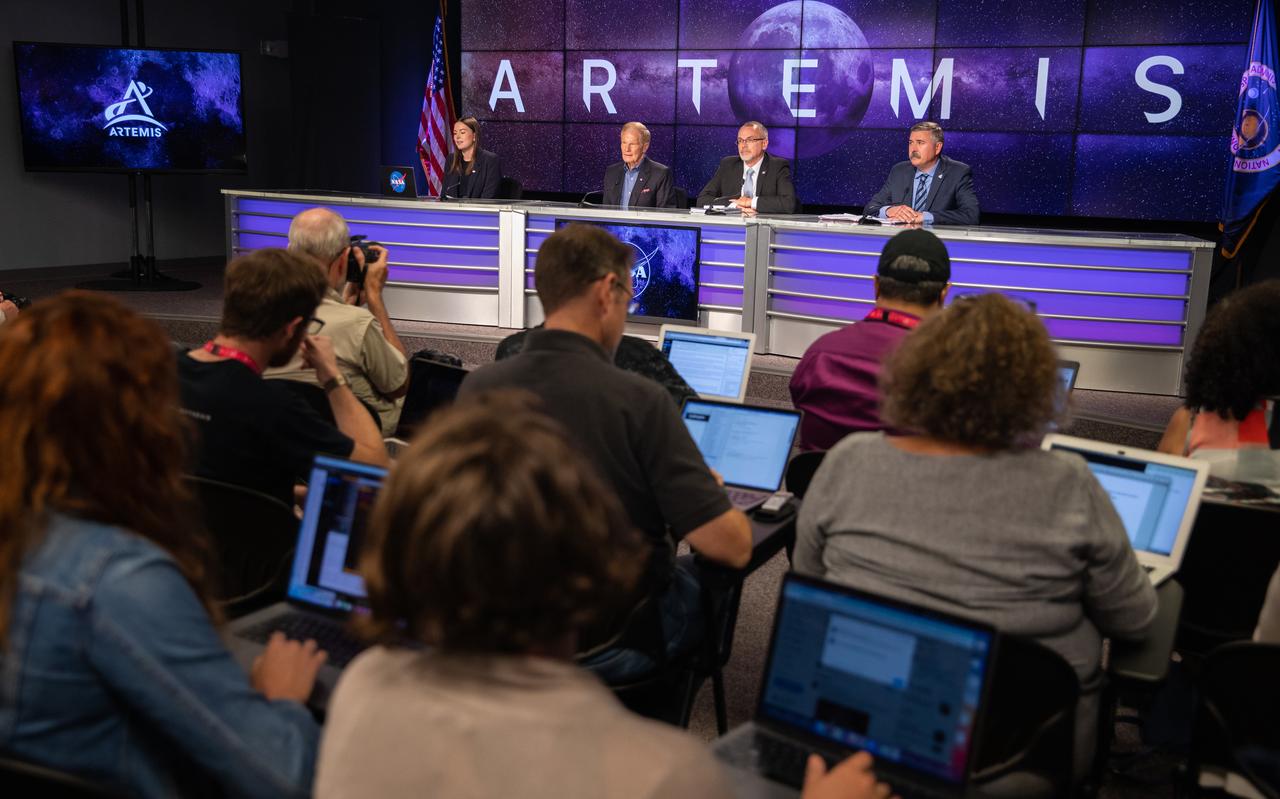
A news conference is held Sept. 3, 2022, at NASA’s Kennedy Space Center in Florida, after launch of Artemis I was waived off from Kennedy’s Launch Complex 39B. Teams encountered a liquid hydrogen leak while loading propellant into the core stage of the Space Launch System rocket. Participants are, from left, Jackie McGuinness, NASA press secretary; Bill Nelson, NASA administrator; Jim Free, associate administrator for NASA’s Exploration Systems Development Mission Directorate; and Mike Sarafin, Artemis mission manager. The first in a series of increasingly complex missions, Artemis I will provide a foundation for human deep space exploration and demonstrate our commitment and capability to extend human presence to the Moon and beyond. The primary goal of Artemis I is to thoroughly test the integrated systems before crewed missions by operating the spacecraft in a deep space environment, testing Orion’s heat shield, and recovering the crew module after reentry, descent, and splashdown.

Mike Sarafin, Artemis mission manager, participates in a prelaunch media briefing following a mission management team meeting for Artemis I on Sept. 1, 2022, at NASA’s Kennedy Space Center in Florida. Artemis I is scheduled to launch at 2:17 p.m. EDT on Sept. 3, from Kennedy’s Launch Complex 39B. Launch was waved off on Aug. 29 due to an issue during tanking. The first in a series of increasingly complex missions, Artemis I will provide a foundation for human deep space exploration and demonstrate NASA’s capability to extend human presence to the Moon and beyond. The primary goal of Artemis I is to thoroughly test the integrated systems before crewed missions by operating the spacecraft in a deep space environment, testing Orion’s heat shield, and recovering the crew module after reentry, descent, and splashdown.
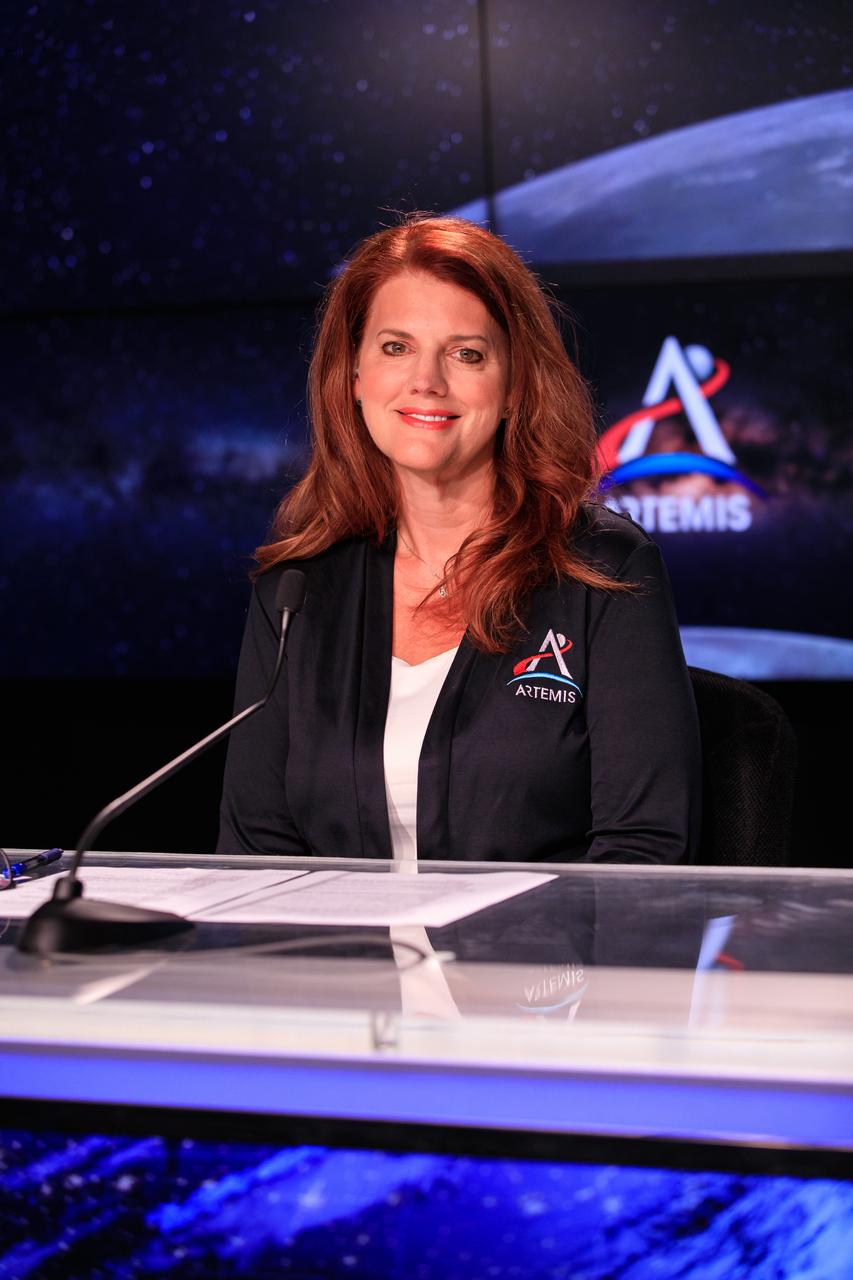
Launch Director Charlie Blackwell-Thompson participates in an Artemis I mission overview briefing inside the Press Site auditorium at NASA’s Kennedy Space Center in Florida on Aug. 3, 2022. Also participating in the briefing from various locations were NASA Administrator Bill Nelson; Associate Administrator for Technology, Policy, and Strategy Bhavya Lal; Mission Manager Mike Sarafin; Space Launch System (SLS) Program Manager John Honeycutt; and Orion Program Manager Howard Hu. The first in an increasingly complex series of missions, Artemis I will test the SLS rocket and Orion spacecraft as an integrated system prior to crewed flights to the Moon. Through Artemis, NASA will land the first woman and first person of color on the lunar surface, paving the way for long-term lunar presence and serving as a steppingstone before venturing to Mars.
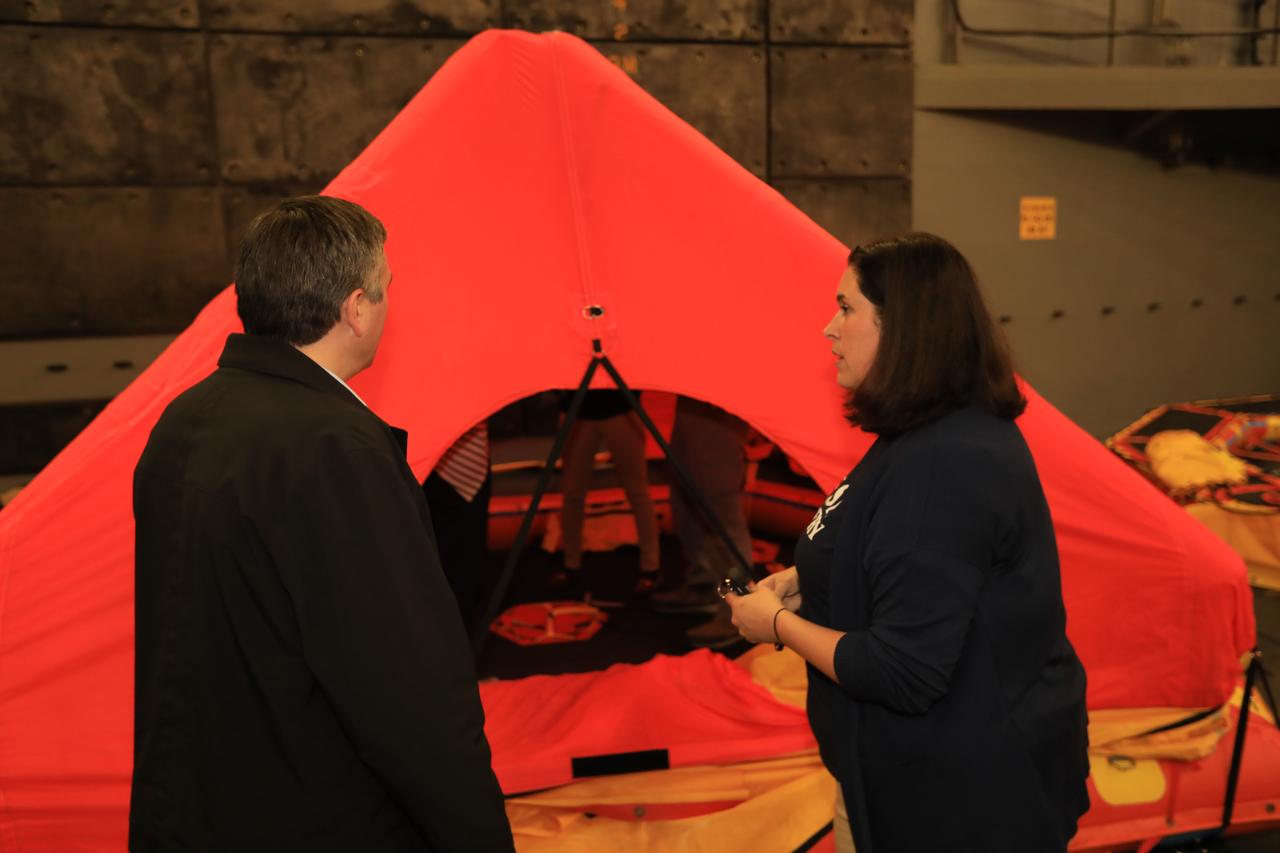
NASA Landing and Recovery Director Melissa Jones, at right, and Exploration Mission-1 Mission Manager Mike Sarafin discuss the benefits that the front porch will provide to astronauts after splashing down in the Orion crew capsule on future missions. Senior leaders from around NASA receive a familiarization tour by the Exploration Ground Systems (EGS) recovery team on Oct. 29, 2018, as they prepare for Underway Recovery Test-7 (URT-7). EGS and the U.S. Navy will use a test version of the Orion crew module, several rigid hull inflatable boats and support equipment to verify and validate processes, procedures, hardware and personnel during recovery of Orion in open waters. URTs are a series of tests to ensure all systems are go when recovering the Orion crew capsule and astronauts onboard in the future. Orion will have emergency abort capability, sustain the crew during space travel and provide safe re-entry from deep space return velocities.
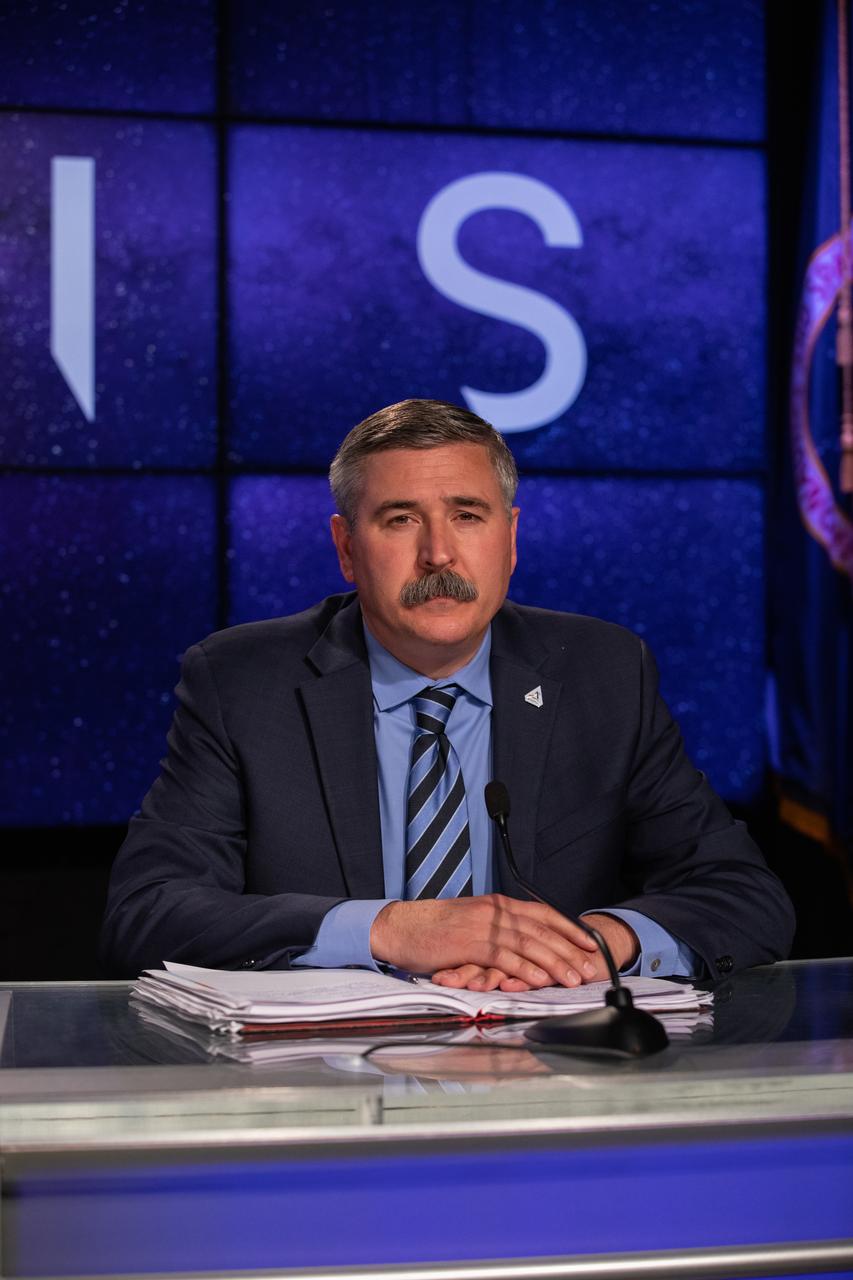
Artemis Mission Manager Mike Sarafin participates in a news conference Sept. 3, 2022, at NASA’s Kennedy Space Center in Florida, after launch of Artemis I was waived off from Kennedy’s Launch Complex 39B. Teams encountered a liquid hydrogen leak while loading propellant into the core stage of the Space Launch System rocket. The first in a series of increasingly complex missions, Artemis I will provide a foundation for human deep space exploration and demonstrate our commitment and capability to extend human presence to the Moon and beyond. The primary goal of Artemis I is to thoroughly test the integrated systems before crewed missions by operating the spacecraft in a deep space environment, testing Orion’s heat shield, and recovering the crew module after reentry, descent, and splashdown.

A press conference is held on Aug. 29, 2022, at NASA’s Kennedy Space Center in Florida, after waving-off of the launch of the agency’s Artemis I mission. Participants from left, are NASA Press Secretary Jackie McGuiness; Bill Nelson, NASA administrator; Mike Sarafin, Artemis mission manager, NASA Headquarters; and Jim Free, associate administrator for Exploration Systems Development Mission Directorate, NASA Headquarters. The first in a series of increasingly complex missions, Artemis I will provide a foundation for human deep space exploration and demonstrate our commitment and capability to extend human presence to the Moon and beyond. The primary goal of Artemis I is to thoroughly test the integrated systems before crewed missions by operating the spacecraft in a deep space environment, testing Orion’s heat shield, and recovering the crew module after reentry, descent, and splashdown.

STS-119 flight controllers during undocking. Photo Date: 3/25/09. Bldg. 30s - WFCR. Photographer: Robert Markowitz
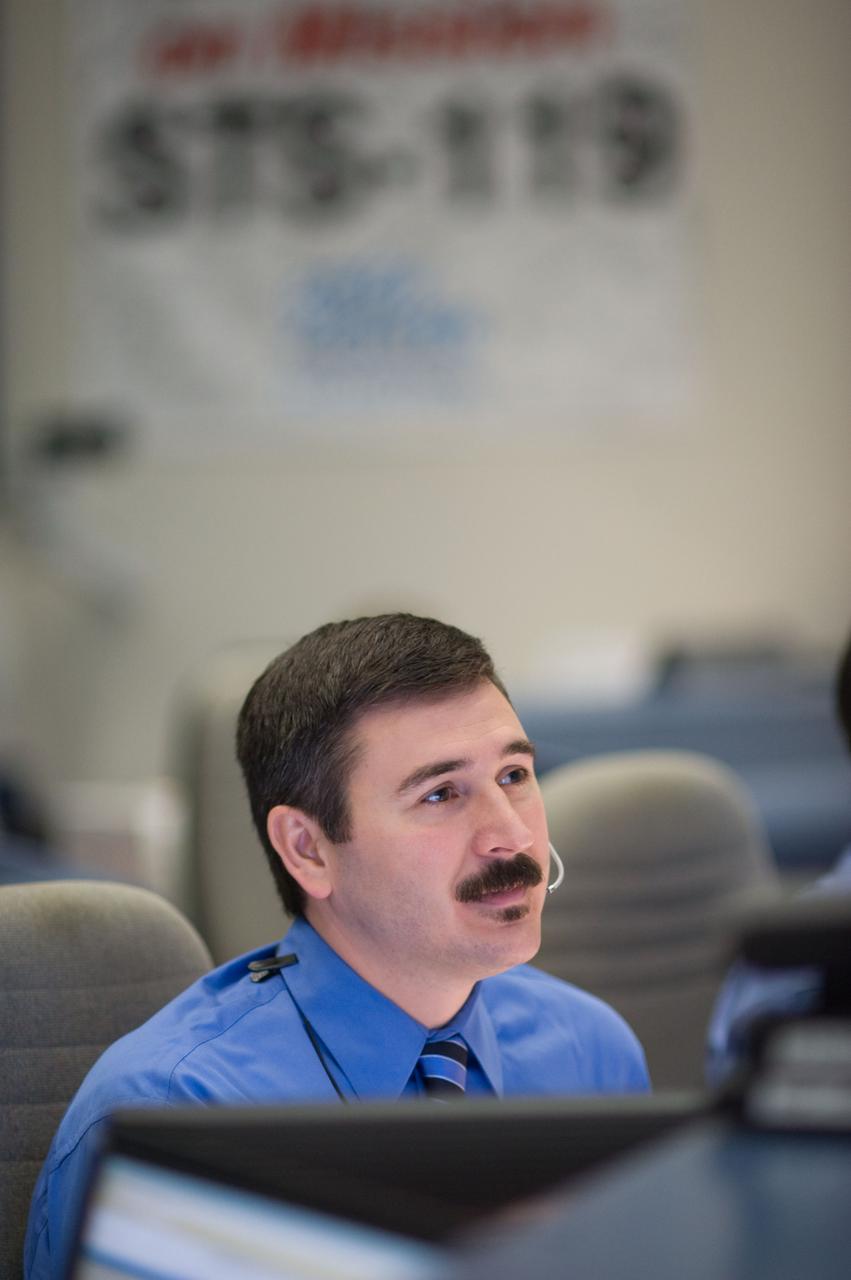
STS-119 flight controllers during undocking. Photo Date: 3/25/09. Bldg. 30s - WFCR. Photographer: Robert Markowitz
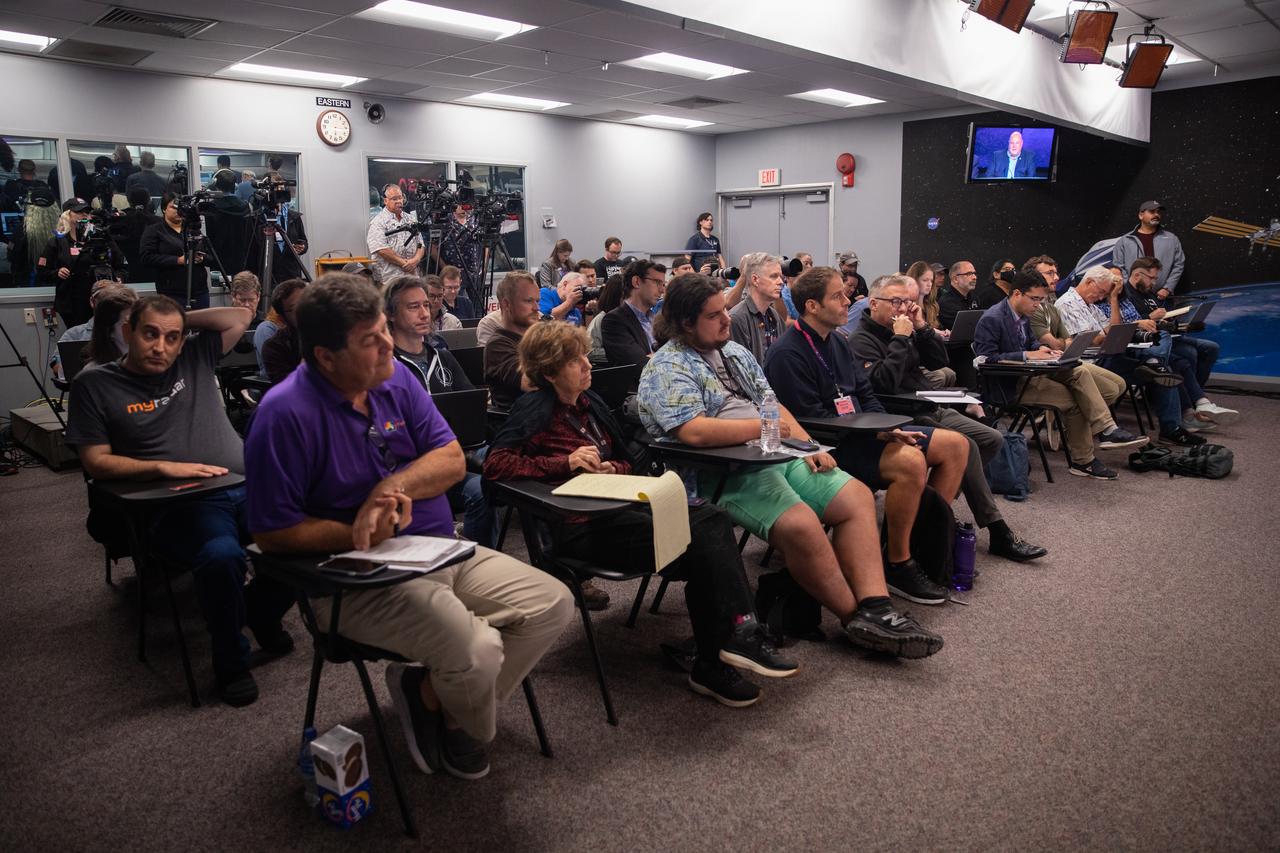
Members of the media attend a postlaunch news conference on Nov. 16, 2022, at NASA’s Kennedy Space Center in Florida, after launch of Artemis I at 1:47 a.m. EST from Kennedy’s Launch Complex 39B. Participants were Jackie McGuiness, NASA Communications; Bill Nelson, NASA administrator; Mike Sarafin, Artemis mission manager, NASA Headquarters; Mike Bolger, Exploration Ground Systems Program manager, Kennedy; John Honeycutt, Space Launch System Program manager, Marshall; Howard Hu, Orion Program manager, NASA’s Johnson Space Center; and Emily Nelson, chief flight director, Johnson. The first in a series of increasingly complex missions, Artemis I will provide a foundation for human deep space exploration and demonstrate our commitment and capability to extend human presence to the Moon and beyond. The primary goal of Artemis I is to thoroughly test the integrated systems before crewed missions by operating the spacecraft in a deep space environment, testing Orion’s heat shield, and recovering the crew module after reentry, descent, and splashdown.
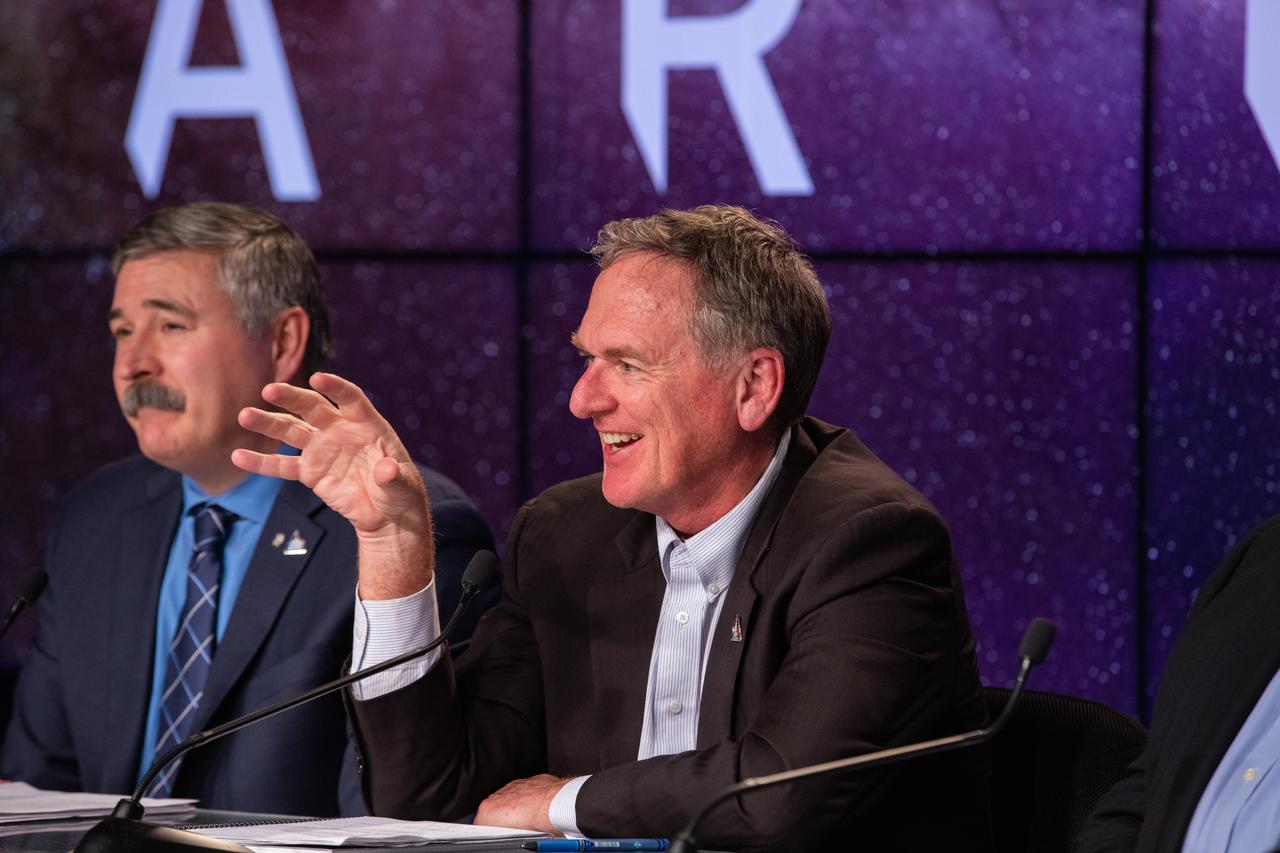
A postlaunch news conference is held on Nov. 16, 2022, at NASA’s Kennedy Space Center in Florida, after launch of Artemis I at 1:47 a.m. EST from Kennedy’s Launch Complex 39B. Participants were, from left, Mike Sarafin, Artemis mission manager, NASA Headquarters; and Mike Bolger, Exploration Ground Systems Program manager, Kennedy. Also participating were NASA Administrator Bill Nelson; John Honeycutt, Space Launch System Program manager, Marshall; Howard Hu, Orion Program manager, NASA’s Johnson Space Center; and Emily Nelson, chief flight director, Johnson. The first in a series of increasingly complex missions, Artemis I will provide a foundation for human deep space exploration and demonstrate our commitment and capability to extend human presence to the Moon and beyond. The primary goal of Artemis I is to thoroughly test the integrated systems before crewed missions by operating the spacecraft in a deep space environment, testing Orion’s heat shield, and recovering the crew module after reentry, descent, and splashdown.
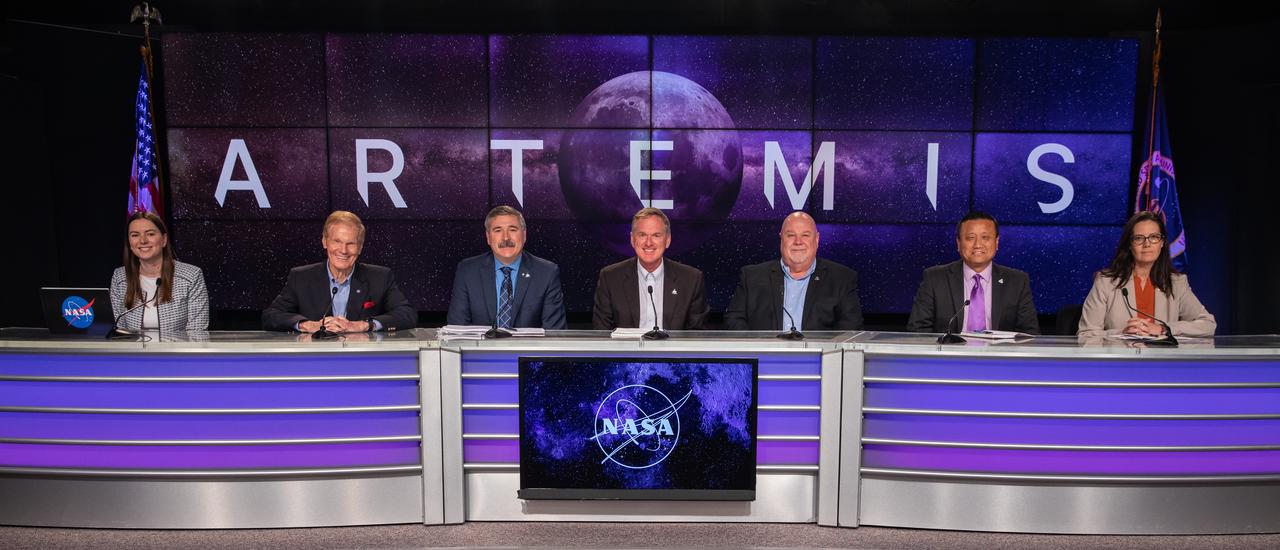
A postlaunch news conference is held on Nov. 16, 2022, at NASA’s Kennedy Space Center in Florida, after launch of Artemis I at 1:47 a.m. EST from Kennedy’s Launch Complex 39B. Participants are, from left, Jackie McGuiness, NASA Communications; Bill Nelson, NASA administrator; Mike Sarafin, Artemis mission manager, NASA Headquarters; Mike Bolger, Exploration Ground Systems Program manager, Kennedy; John Honeycutt, Space Launch System Program manager, Marshall; Howard Hu, Orion Program manager, NASA’s Johnson Space Center; and Emily Nelson, chief flight director, Johnson. The first in a series of increasingly complex missions, Artemis I will provide a foundation for human deep space exploration and demonstrate our commitment and capability to extend human presence to the Moon and beyond. The primary goal of Artemis I is to thoroughly test the integrated systems before crewed missions by operating the spacecraft in a deep space environment, testing Orion’s heat shield, and recovering the crew module after reentry, descent, and splashdown.
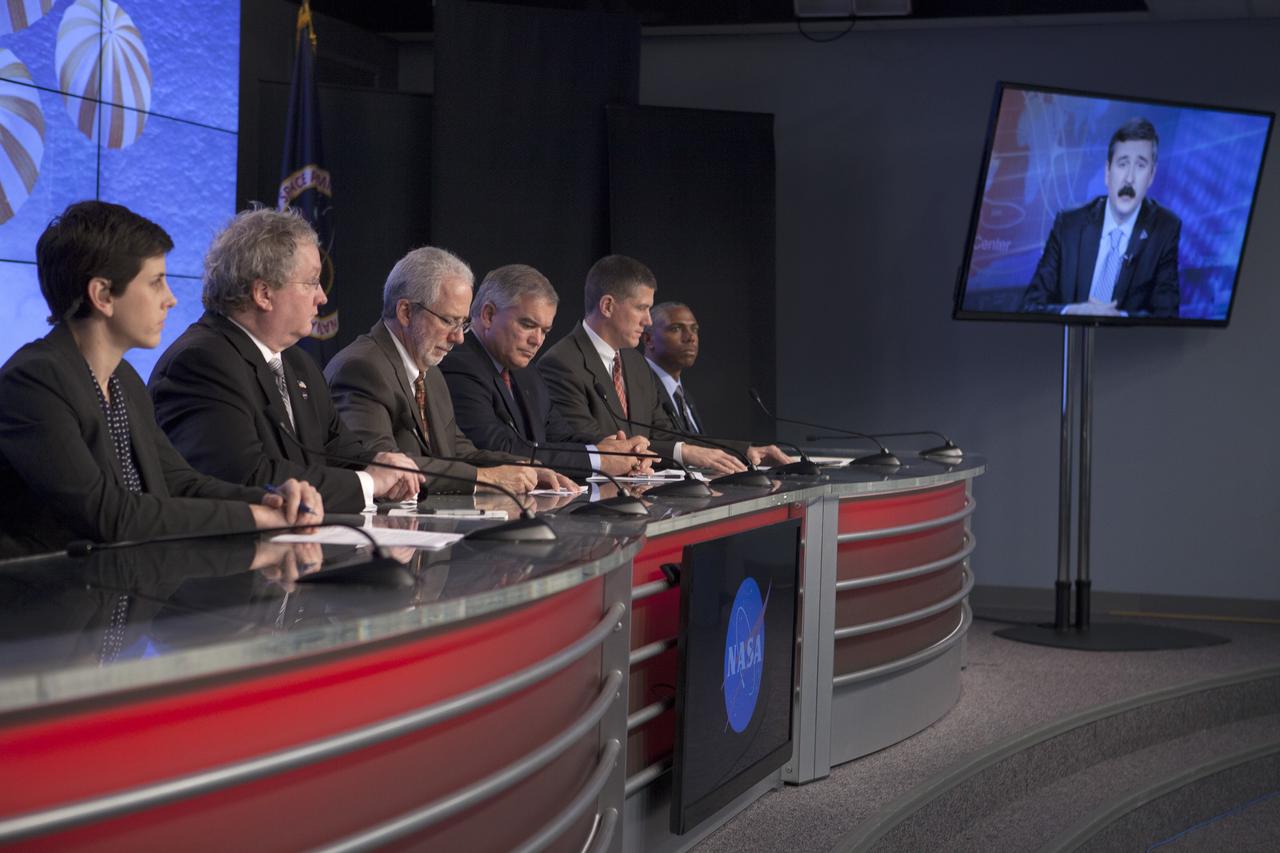
CAPE CANAVERAL, Fla. – In the Kennedy Space Center’s Press Site auditorium, members of the news media are briefed on the upcoming Orion flight test. From left are: Rachel Kraft, NASA Public Affairs, Bill Hill, NASA deputy associate administrator for Exploration Systems Development, Mark Geyer, NASA Orion Program manager, Bryan Austin, Lockheed Martin mission manager, Jeremy Graeber, Operations Integration Branch of Ground Systems Development and Operations at Kennedy, and Ron Fortson, United Launch Alliance director of Mission Management. Mike Sarafin, NASA's lead flight director, participated by video from the Johnson Space Center. Orion is the exploration spacecraft designed to carry astronauts to destinations not yet explored by humans, including an asteroid and Mars. It will have emergency abort capability, sustain the crew during space travel and provide safe re-entry from deep space return velocities. The first unpiloted flight test of Orion is scheduled to launch Dec. 4, 2014 atop a United Launch Alliance Delta IV Heavy rocket, and in 2018 on NASA’s Space Launch System rocket. For more information, visit www.nasa.gov/orion Photo credit: NASA/Kim Shiflett
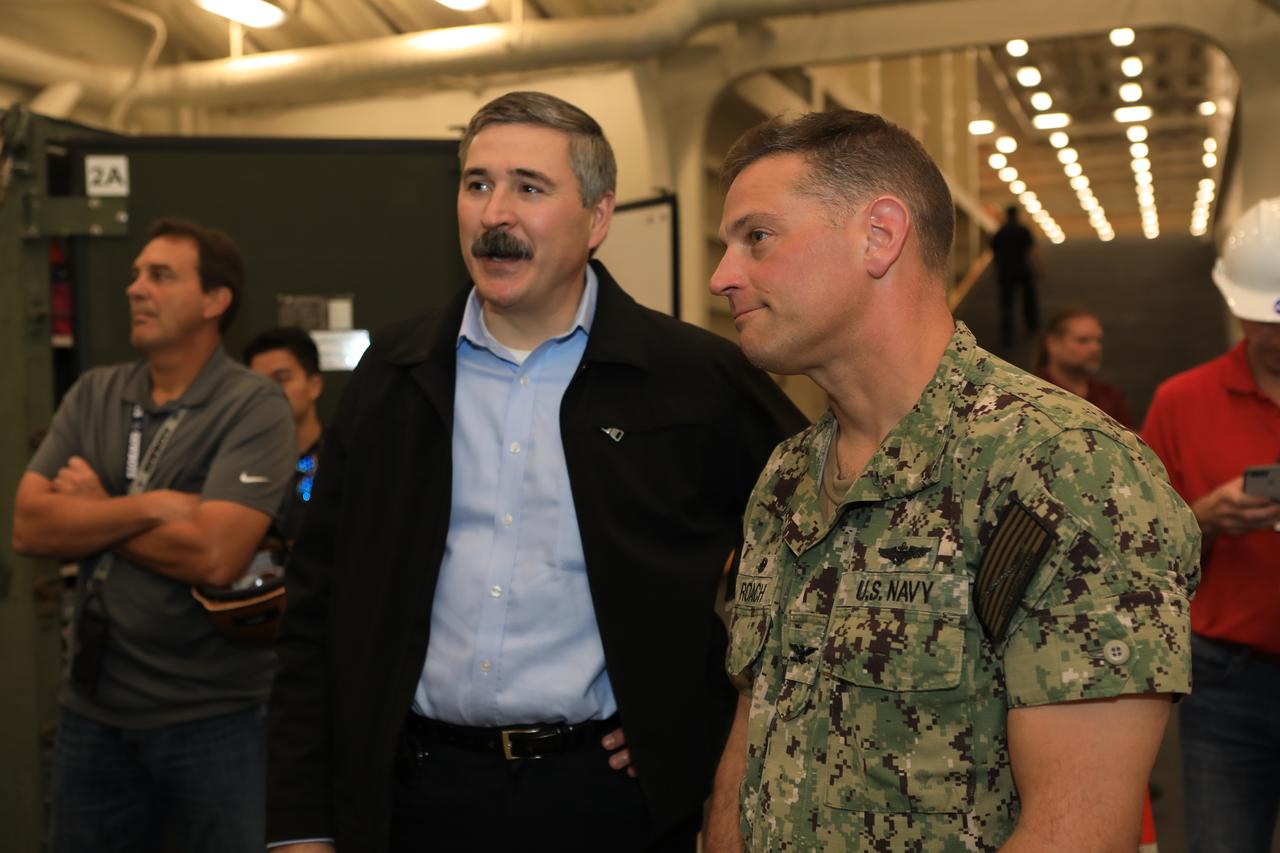
Captain Anthony Roach, at right, commanding officer in the U.S. Navy, speaks with NASA's Exploration Mission-1 (EM-1) Mission Manager Mike Sarafin during a familiarization tour with the Exploration Ground Systems (EGS) recovery team on Oct. 29, 2018, as they prepare for Underway Recovery Test-7 (URT-7) onboard a U.S. Navy ship. The team is responsible for recovering the Orion crew capsule after it flies farther than any human-rated spacecraft has flown, with EM-1. EGS and the U.S. Navy will use a test version of the Orion crew module, several rigid hull inflatable boats and support equipment to verify and validate processes, procedures, hardware and personnel during recovery of Orion in open waters. URTs are a series of tests to ensure all systems are go when recovering the Orion crew capsule and astronauts onboard in the future. Orion will have emergency abort capability, sustain the crew during space travel and provide safe re-entry from deep space return velocities.
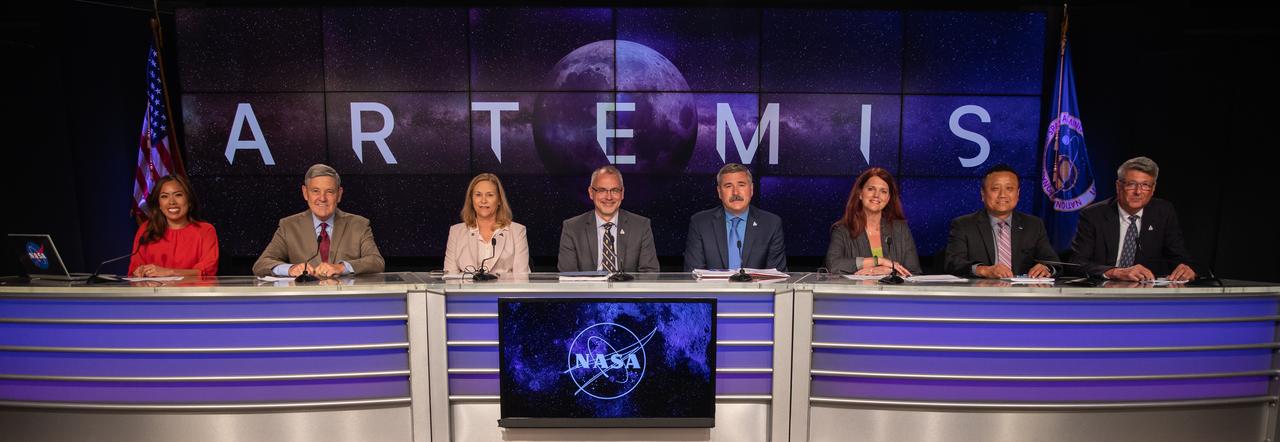
A prelaunch media briefing is held following completion of NASA’s Flight Readiness Review for Artemis I on Aug. 22, 2022, at the agency’s Kennedy Space Center in Florida. Participants are, from left, Megan Cruz, NASA Communications; Bob Cabana, NASA Associate Administrator; Janet Petro, Director, Kennedy Space Center; Jim Free, Associate Administrator, Exploration Systems Development; Mike Sarafin, Mission Manager, Artemis I; Charlie Blackwell-Thompson, Launch Director, Artemis I; Howard Hu, Manager, Orion Program; Chris Cianciola, Deputy Manager, SLS Program. Artemis I is scheduled to launch at 8:33 a.m. EDT on Aug. 29, 2022, from Kennedy’s Launch Complex 39B. The first in a series of increasingly complex missions, Artemis I will provide a foundation for human deep space exploration and demonstrate our commitment and capability to extend human presence to the Moon and beyond. The primary goal of Artemis I is to thoroughly test the integrated systems before crewed missions by operating the spacecraft in a deep space environment, testing Orion’s heat shield, and recovering the crew module after reentry, descent, and splashdown.
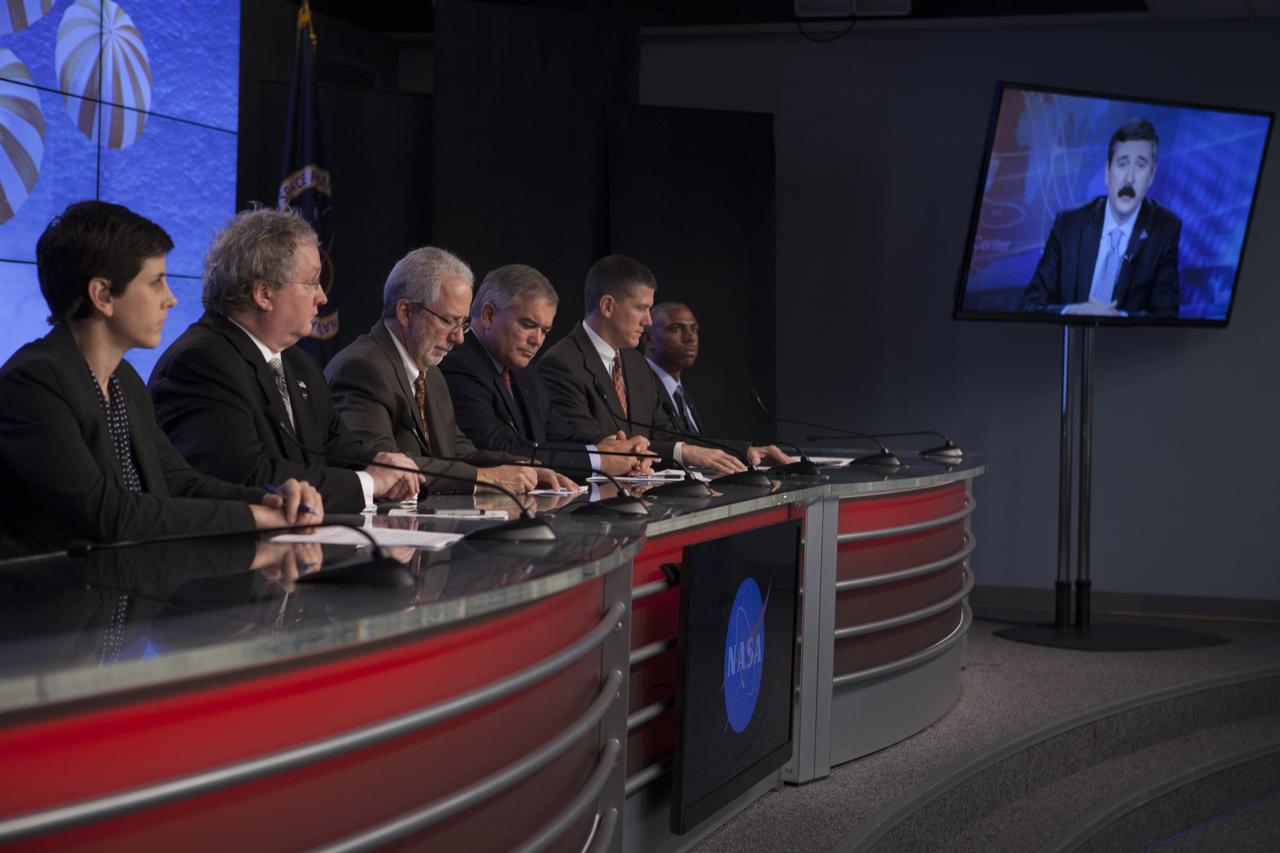
In the Kennedy Space Center’s Press Site auditorium, members of the news media are briefed on the upcoming Orion flight test. From left are: Rachel Kraft, NASA Public Affairs, Bill Hill, NASA deputy associate administrator for Exploration Systems Development, Mark Geyer, NASA Orion Program manager, Bryan Austin, Lockheed Martin mission manager, Jeremy Graeber, Operations Integration Branch of Ground Systems Development and Operations at Kennedy, and Ron Fortson, United Launch Alliance director of Mission Management. Mike Sarafin, NASA's lead flight director, participated by video from the Johnson Space Center. Orion is the exploration spacecraft designed to carry astronauts to destinations not yet explored by humans, including an asteroid and Mars. It will have emergency abort capability, sustain the crew during space travel and provide safe re-entry from deep space return velocities. The first unpiloted flight test of Orion is scheduled to launch Dec. 4, 2014 atop a United Launch Alliance Delta IV Heavy rocket, and in 2018 on NASA’s Space Launch System rocket.
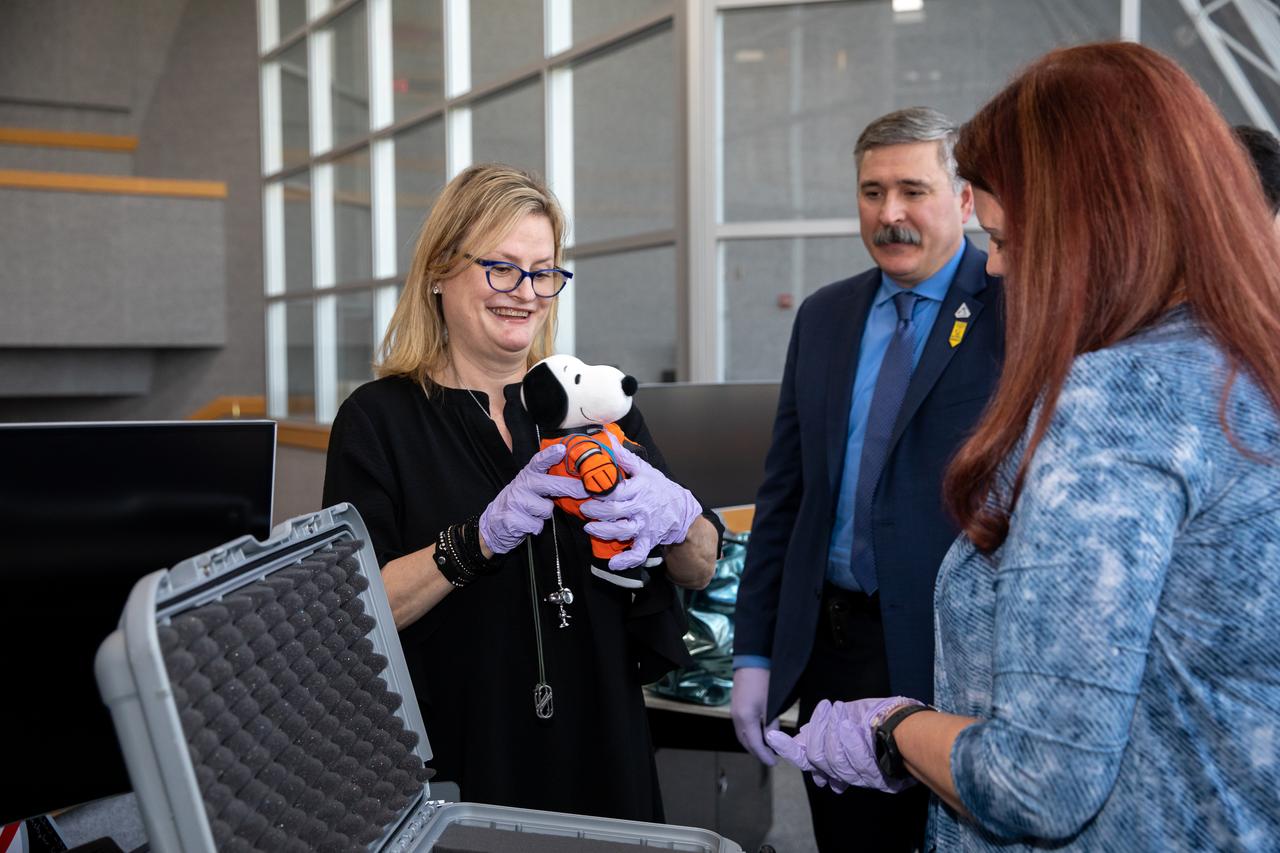
Melissa Menta, at left, senior vice president with Peanuts Worldwide LLC, accepts Snoopy during an official handover from Artemis Launch Director Charlie Blackwell-Thompson inside Launch Control Center Firing Room 1 at NASA’s Kennedy Space Center in Florida on Jan. 18, 2023. To the left of Charlie is Mike Sarafin, Artemis I mission manager. Snoopy served as the zero-gravity indicator during the Artemis I mission. Snoopy was secured inside Orion during the mission, a journey beyond the Moon and back to prepare for crewed missions to the Moon. Artemis I launched atop the Space Launch System rocket on Nov. 16, 2022 from Kennedy’s Launch Complex 39B. Orion returned to Earth for a splashdown in the Pacific Ocean on Dec. 11, 2022 after traveling more than 1.4 million miles. NASA has held an association with Snoopy since the Apollo Era – the character has contributed to the excitement for NASA human spaceflight missions, helping inspire generations to dream big, and is a symbol of NASA’s safety culture and mission success.
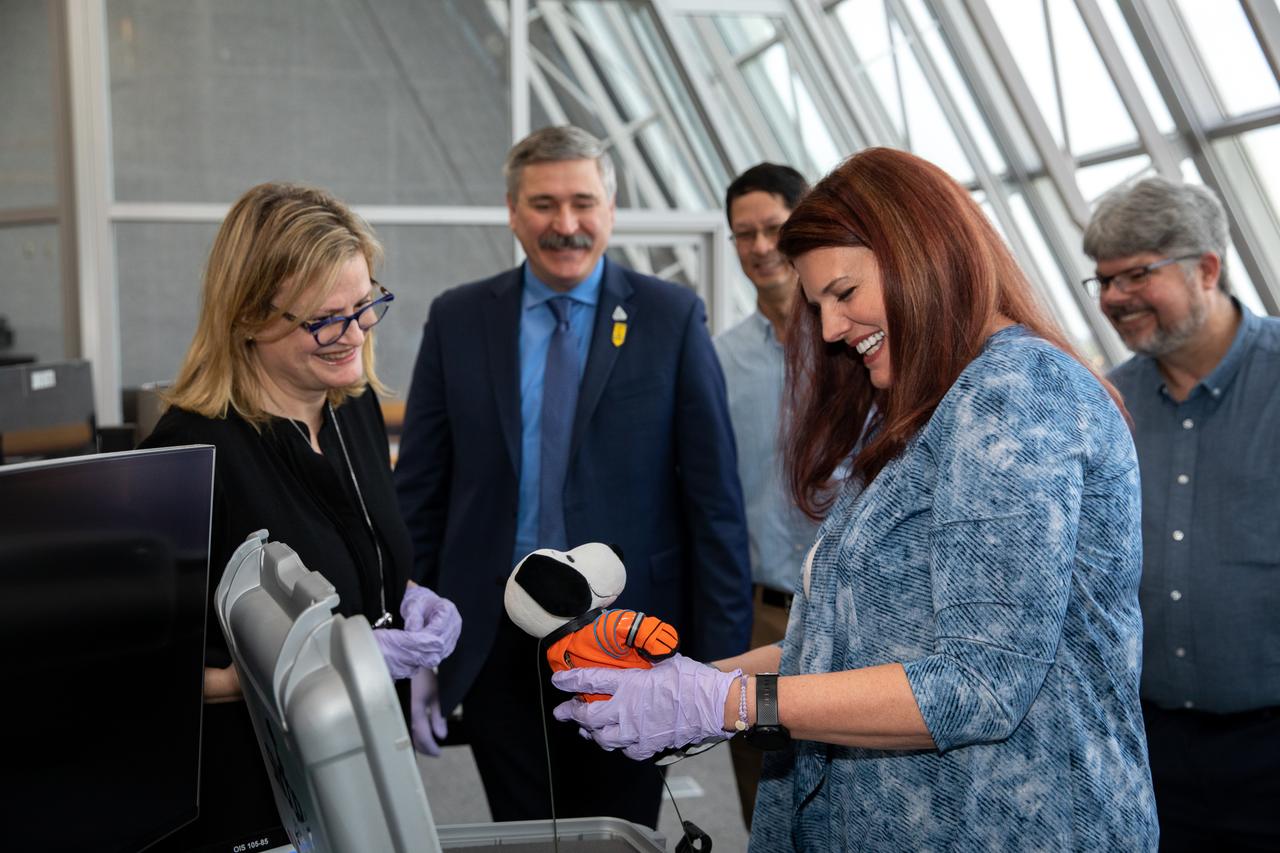
Artemis Launch Director Charlie Blackwell-Thompson, in the center, performs the official turnover of Snoopy to Melissa Menta, far left, senior vice president with Peanuts Worldwide LLC, inside Launch Control Center Firing Room 1 at NASA’s Kennedy Space Center in Florida on Jan. 18, 2023. From left, behind Charlie are Mike Sarafin, Artemis I mission manager; Glenn Chin, deputy manager, Orion Production Operations Office, Exploration Ground Systems; and Kevin Ash, payload and flight crew equipment project lead with Jacobs. Snoopy served as the zero-gravity indicator during the Artemis I mission. Snoopy was secured inside Orion during the mission, a journey beyond the Moon and back to prepare for crewed missions to the Moon. Artemis I launched atop the Space Launch System rocket on Nov. 16, 2022 from Kennedy’s Launch Complex 39B. Orion returned to Earth for a splashdown in the Pacific Ocean on Dec. 11, 2022 after traveling more than 1.4 million miles. NASA has held an association with Snoopy since the Apollo Era – the character has contributed to the excitement for NASA human spaceflight missions, helping inspire generations to dream big, and is a symbol of NASA’s safety culture and mission success.
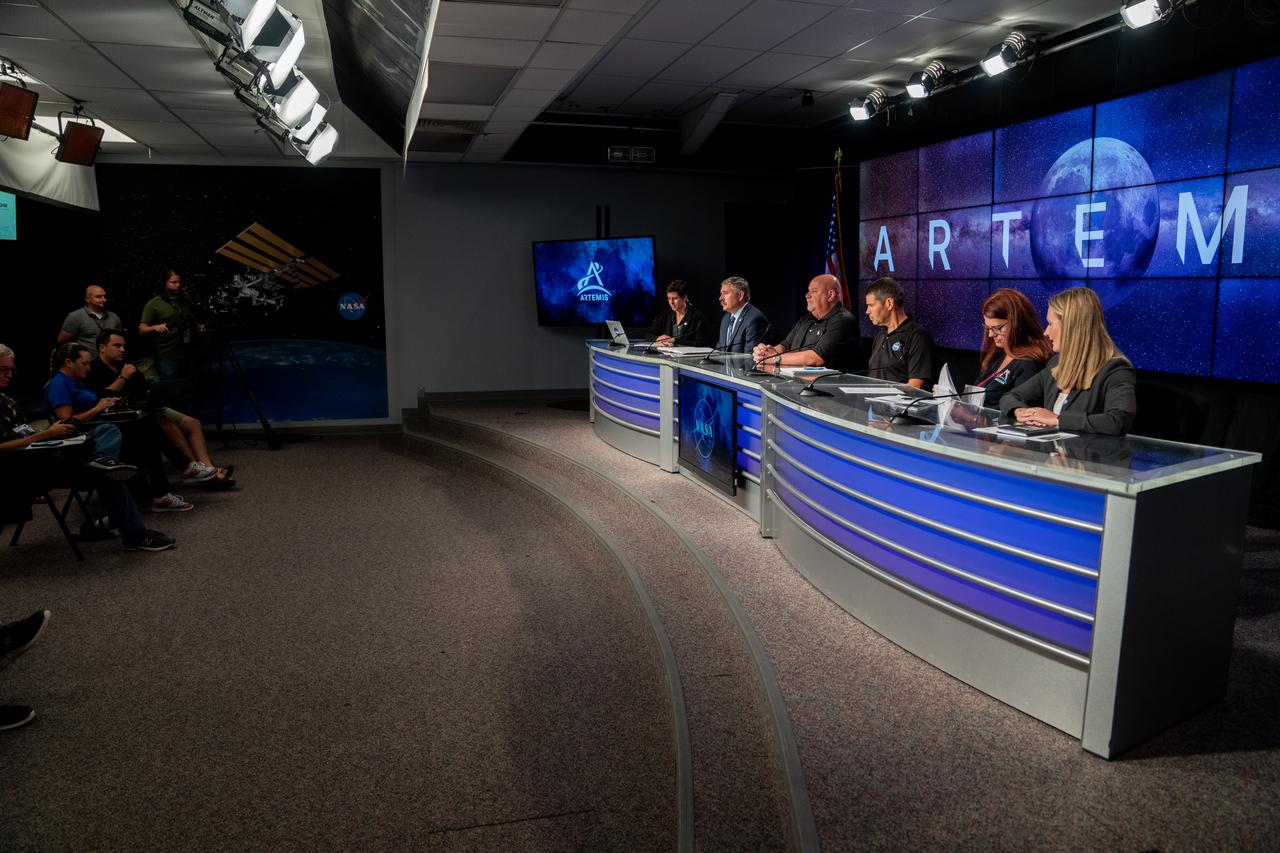
A prelaunch media briefing is held following a mission management team meeting for Artemis I on Sept. 1, 2022, at NASA’s Kennedy Space Center in Florida. Participants are, from left, Rachel Kraft, NASA Communications; Mike Sarafin, Artemis mission manager; John Honeycutt, Space Launch System (SLS) program manager; John Blevins, SLS chief engineer; Charlie Blackwell-Thompson, Artemis launch director; and Melody Lovin, Space Launch Delta 45 weather officer. Artemis I is scheduled to launch at 2:17 p.m. EDT on Sept. 3, from Kennedy’s Launch Complex 39B. Launch was waved off on Aug. 29 due to an issue during tanking. The first in a series of increasingly complex missions, Artemis I will provide a foundation for human deep space exploration and demonstrate NASA’s capability to extend human presence to the Moon and beyond. The primary goal of Artemis I is to thoroughly test the integrated systems before crewed missions by operating the spacecraft in a deep space environment, testing Orion’s heat shield, and recovering the crew module after reentry, descent, and splashdown.
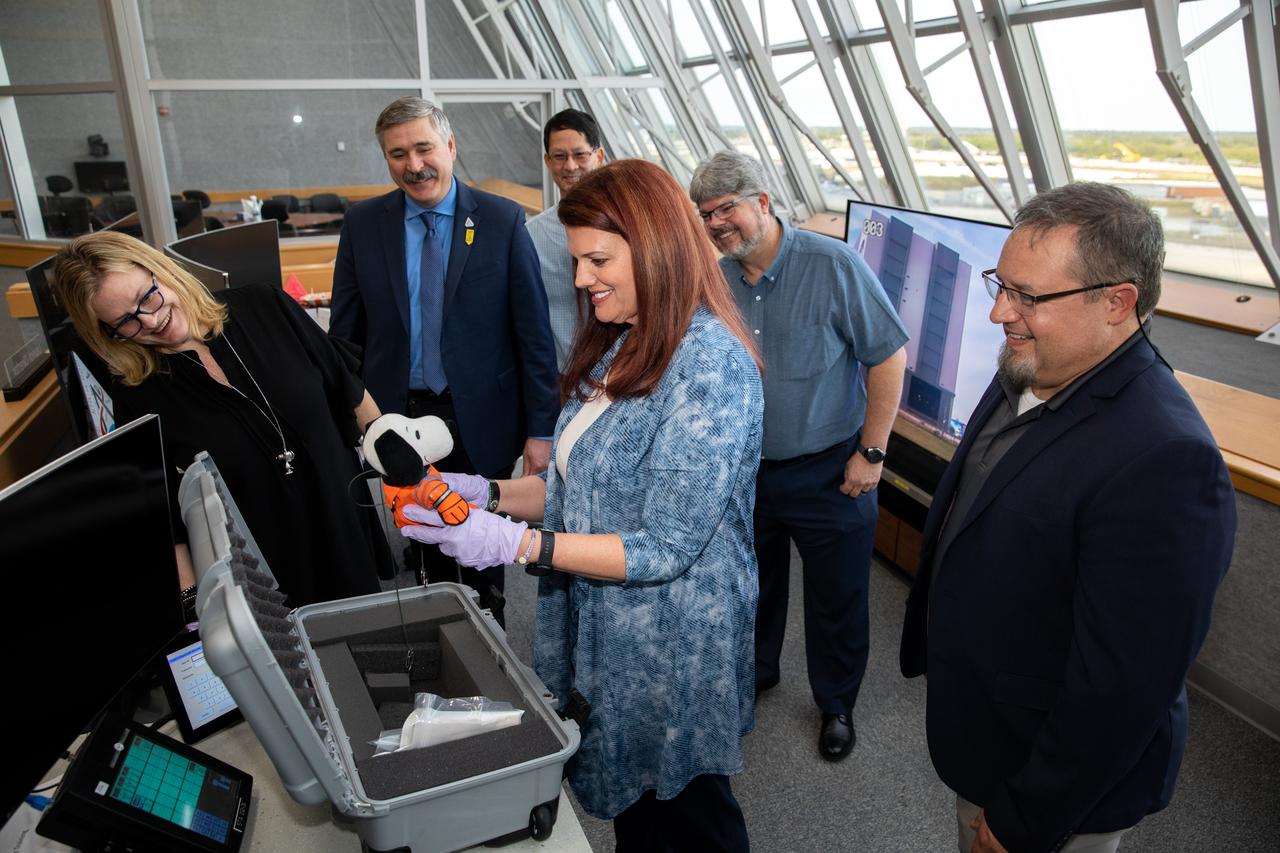
Artemis Launch Director Charlie Blackwell-Thompson, in the center, performs the official turnover of Snoopy to Melissa Menta, far left, senior vice president with Peanuts Worldwide LLC, inside Launch Control Center Firing Room 1 at NASA’s Kennedy Space Center in Florida on Jan. 18, 2023. From left, behind Charlie are Mike Sarafin, Artemis I mission manager; Glenn Chin, deputy manager, Orion Production Operations Office, Exploration Ground Systems; Kevin Ash, payload and flight crew equipment project lead with Jacobs; and Joe LeBlanc, Orion payload and cargo manager with Lockheed Martin. Snoopy served as the zero-gravity indicator during the Artemis I mission. Snoopy was secured inside Orion during the mission, a journey beyond the Moon and back to prepare for crewed missions to the Moon. Artemis I launched atop the Space Launch System rocket on Nov. 16, 2022 from Kennedy’s Launch Complex 39B. Orion returned to Earth for a splashdown in the Pacific Ocean on Dec. 11, 2022 after traveling more than 1.4 million miles. NASA has held an association with Snoopy since the Apollo Era – the character has contributed to the excitement for NASA human spaceflight missions, helping inspire generations to dream big, and is a symbol of NASA’s safety culture and mission success.
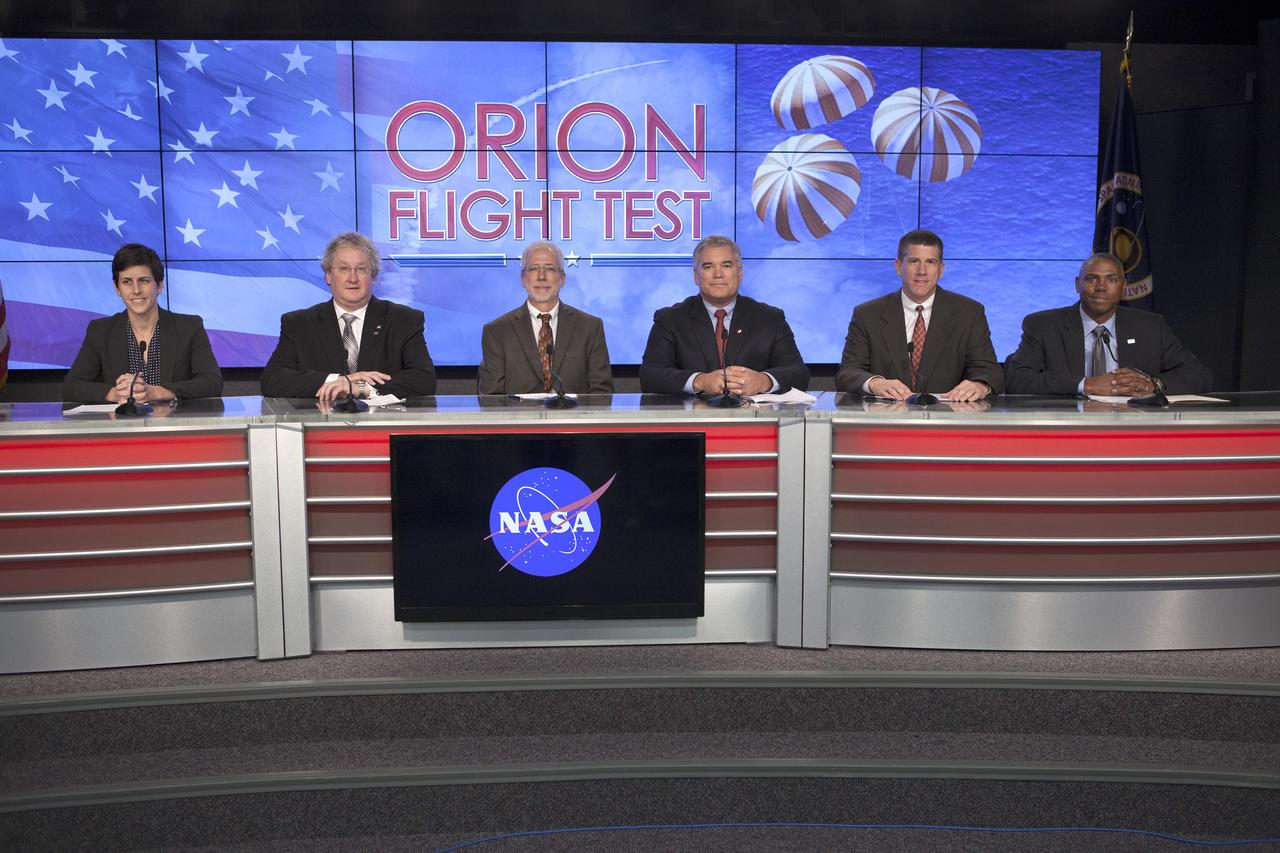
CAPE CANAVERAL, Fla. – In the Kennedy Space Center’s Press Site auditorium, members of the news media are briefed on the upcoming Orion flight test. From left are: Rachel Kraft, NASA Public Affairs, Bill Hill, NASA deputy associate administrator for Exploration Systems Development, Mark Geyer, NASA Orion Program manager, Bryan Austin, Lockheed Martin mission manager, Jeremy Graeber, Operations Integration Branch of Ground Systems Development and Operations at Kennedy, and Ron Fortson, United Launch Alliance director of Mission Management. Mike Sarafin, NASA's lead flight director, participated by video from the Johnson Space Center. Orion is the exploration spacecraft designed to carry astronauts to destinations not yet explored by humans, including an asteroid and Mars. It will have emergency abort capability, sustain the crew during space travel and provide safe re-entry from deep space return velocities. The first unpiloted flight test of Orion is scheduled to launch Dec. 4, 2014 atop a United Launch Alliance Delta IV Heavy rocket, and in 2018 on NASA’s Space Launch System rocket. For more information, visit www.nasa.gov/orion Photo credit: NASA/Kim Shiflett
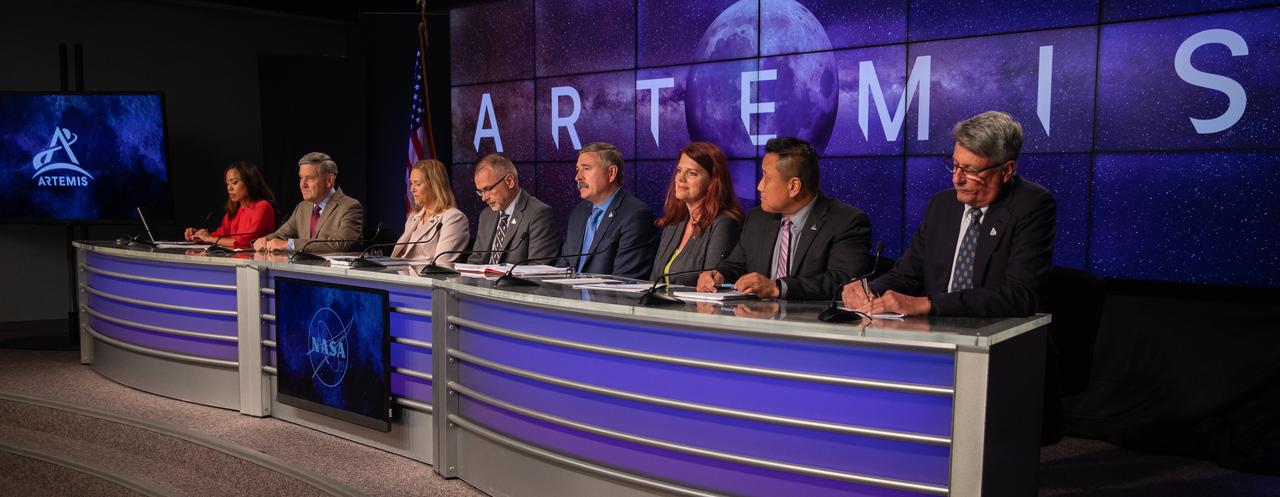
A prelaunch media briefing is held following completion of NASA’s Flight Readiness Review for Artemis I on Aug. 22, 2022, at the agency’s Kennedy Space Center in Florida. Participants are, from left, Megan Cruz, NASA Communications; Bob Cabana, NASA Associate Administrator; Janet Petro, Director, Kennedy Space Center; Jim Free, Associate Administrator, Exploration Systems Development; Mike Sarafin, Mission Manager, Artemis I; Charlie Blackwell-Thompson, Launch Director, Artemis I; Howard Hu, Manager, Orion Program; Chris Cianciola, Deputy Manager, SLS Program. Artemis I is scheduled to launch at 8:33 a.m. EDT on Aug. 29, 2022, from Kennedy’s Launch Complex 39B. The first in a series of increasingly complex missions, Artemis I will provide a foundation for human deep space exploration and demonstrate our commitment and capability to extend human presence to the Moon and beyond. The primary goal of Artemis I is to thoroughly test the integrated systems before crewed missions by operating the spacecraft in a deep space environment, testing Orion’s heat shield, and recovering the crew module after reentry, descent, and splashdown.
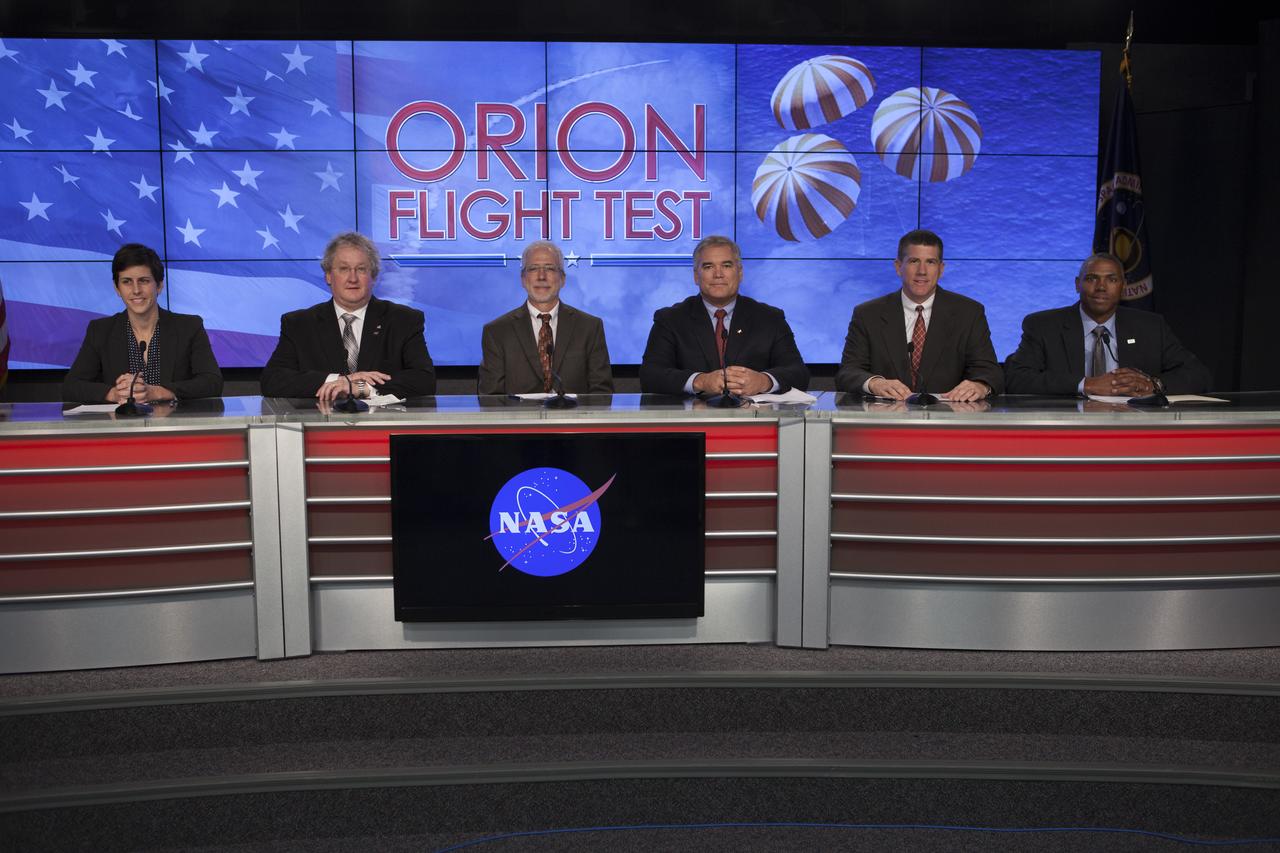
In the Kennedy Space Center’s Press Site auditorium, members of the news media are briefed on the upcoming Orion flight test. From left are: Rachel Kraft, NASA Public Affairs, Bill Hill, NASA deputy associate administrator for Exploration Systems Development, Mark Geyer, NASA Orion Program manager, Bryan Austin, Lockheed Martin mission manager, Jeremy Graeber, Operations Integration Branch of Ground Systems Development and Operations at Kennedy, and Ron Fortson, United Launch Alliance director of Mission Management. Mike Sarafin, NASA's lead flight director, participated by video from the Johnson Space Center. Orion is the exploration spacecraft designed to carry astronauts to destinations not yet explored by humans, including an asteroid and Mars. It will have emergency abort capability, sustain the crew during space travel and provide safe re-entry from deep space return velocities. The first unpiloted flight test of Orion is scheduled to launch Dec. 4, 2014 atop a United Launch Alliance Delta IV Heavy rocket, and in 2018 on NASA’s Space Launch System rocket.