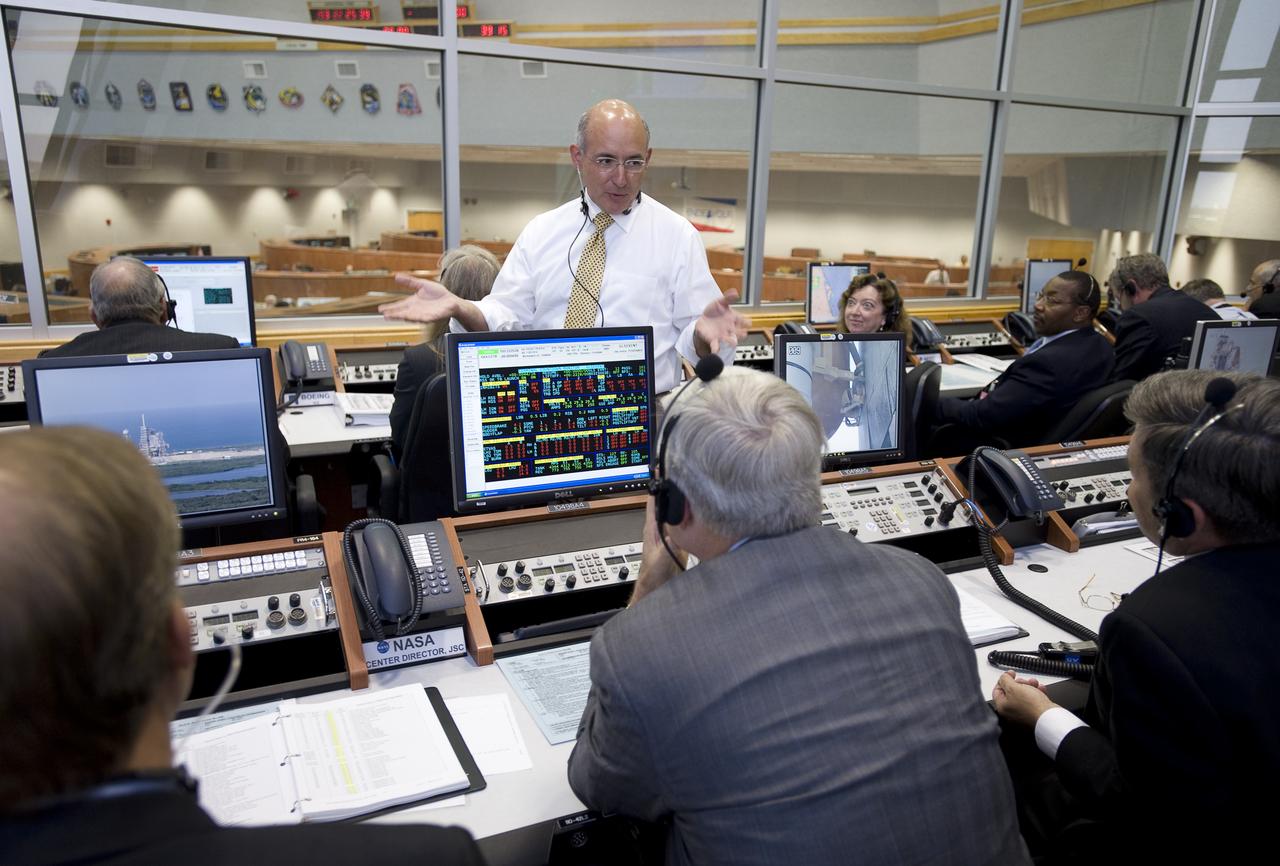
Mike Suffredini, NASA Manager, International Space Station (ISS) Program, talks with other NASA mission managers in from Firing Room Four of the Launch Control Center at NASA's Kennedy Space Center in Cape Canaveral, Florida, Sunday, July 12, 2009. The space shuttle Endeavour is set to launch at 7:13p.m. EDT with the crew of STS-127 and start a 16-day mission that will feature five spacewalks and complete construction of the Japan Aerospace Exploration Agency's Kibo laboratory. Photo Credit: (NASA/Bill Ingalls)
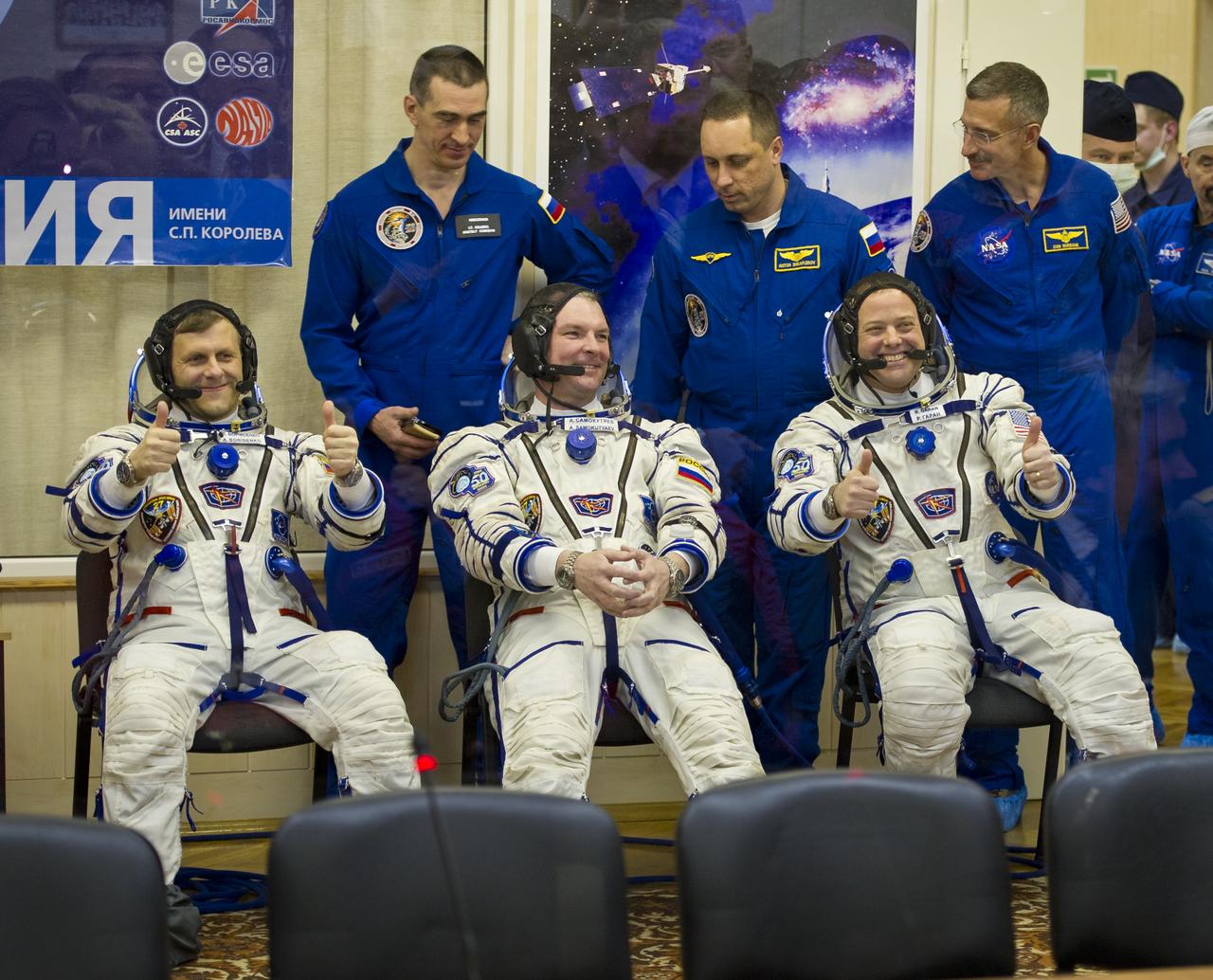
Expedition 27 Russian Flight Engineer Andrey Borisenko, far right, Expedition 27 Soyuz Commander Alexander Samokutyaev and Expedition 27 NASA Flight Engineer Ron Garan, third from right, talk to Mike Suffredini, Manager, International Space Station (ISS) Program, far left, prior to their launch on board the Soyuz TMA-21 spacecraft to the International Space Station, Tuesday, April 5, 2011 at the Baikonur Cosmodrome in Kazakhstan. The Soyuz, which has been dubbed “Gagarin”, is launching one week shy of the 50th anniversary of the launch of Yuri Gagarin from the same launch pad in Baikonur on April 12, 1961 to become the first human to fly in space. Photo Credit: (NASA/Victor Zelentsov)
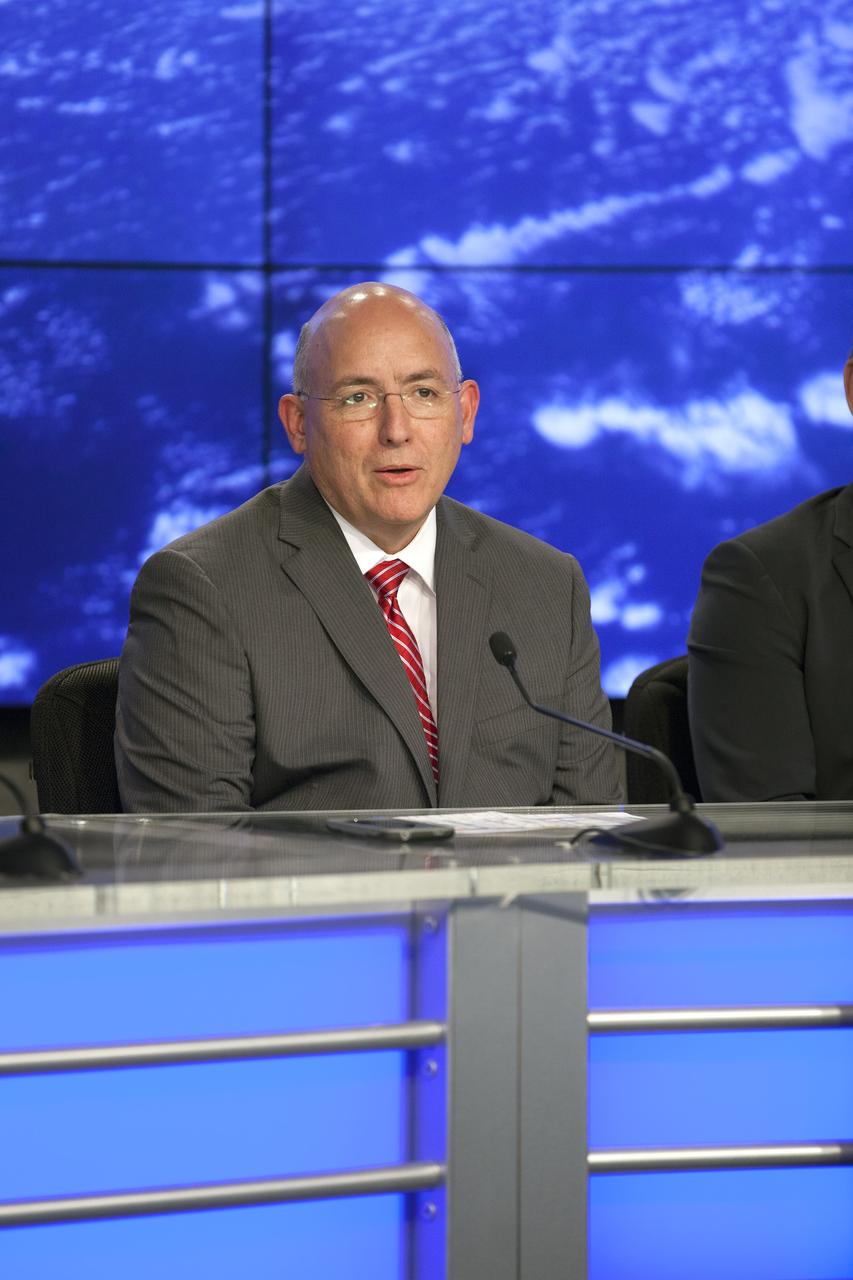
In the Kennedy Space Center’s Press Site auditorium, agency and industry leaders spoke to members of the news media on International Space Station research and technology developments. Participants included Mike Suffredini, NASA International Space Station program manager. Photo credit: NASA/Kim Shiflett
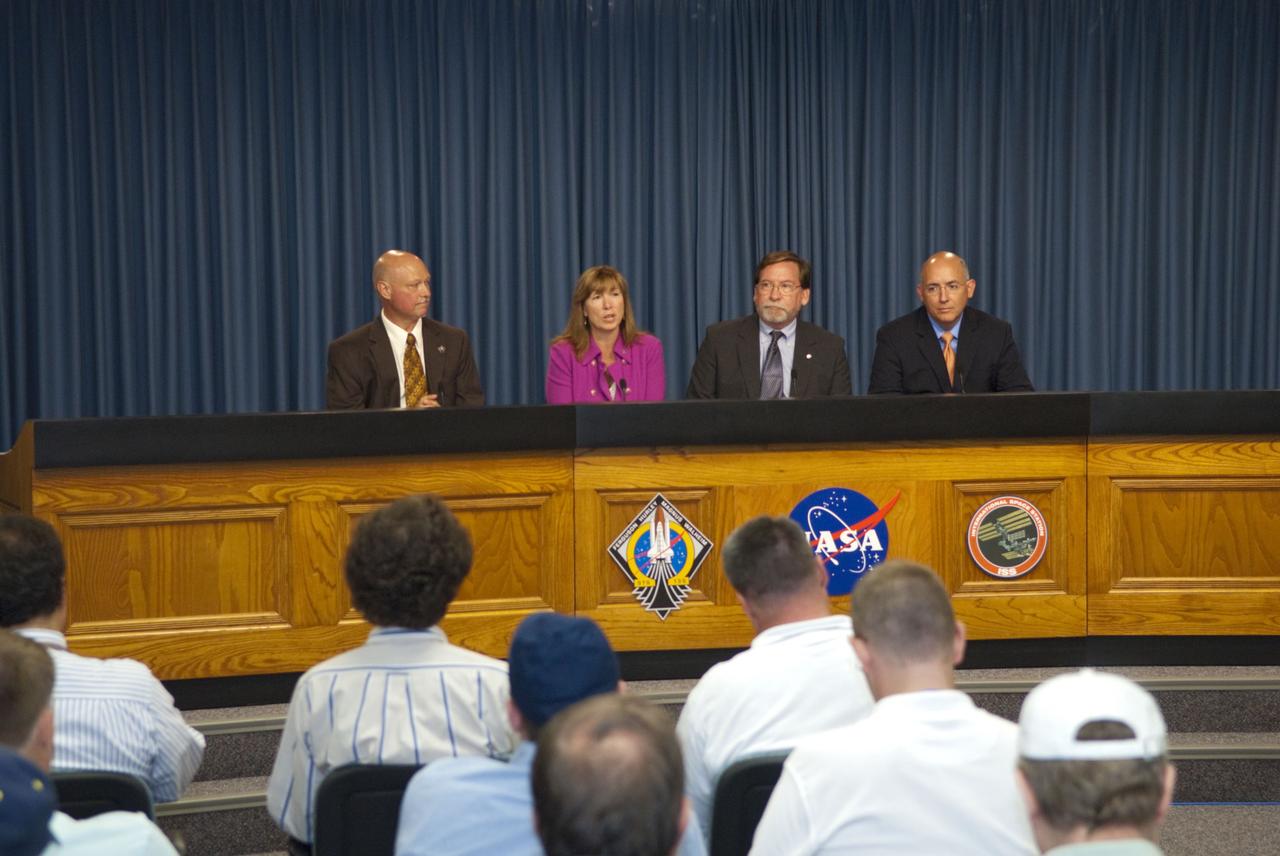
CAPE CANAVERAL, Fla. -- In the Press Site auditorium at NASA's Kennedy Space Center in Florida, media were briefed about the agency's next step for Human Space Flight. Seen here are NASA Public Affairs Officer Mike Curie (left); Lori Garver, NASA deputy administrator; Doug Cooke, Exploration Systems Mission Directorate associate administrator and Mike Suffredini, NASA International Space Station Program manager. Photo credit: NASA/Jim Grossmann
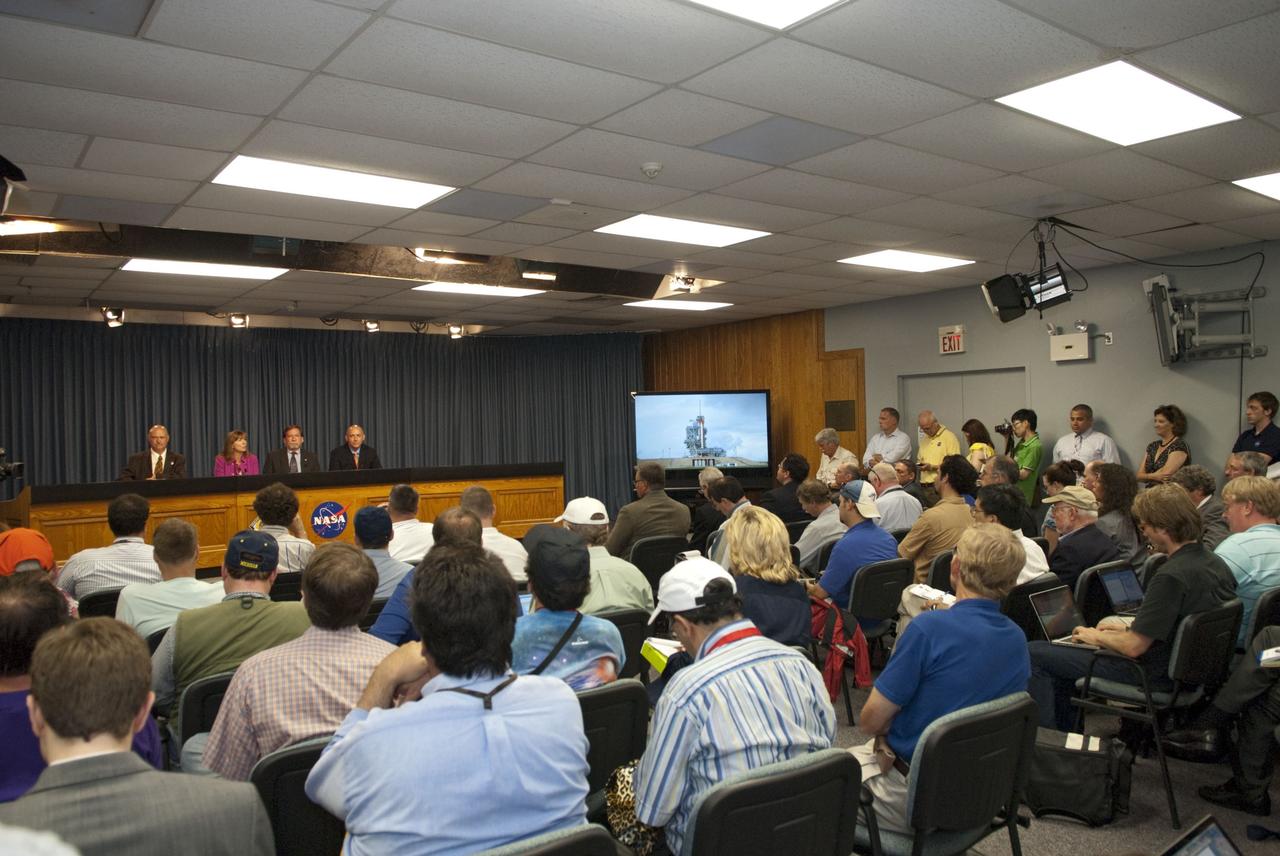
CAPE CANAVERAL, Fla. -- In the Press Site auditorium at NASA's Kennedy Space Center in Florida, media were briefed about the agency's next step for Human Space Flight. Seen here are NASA Public Affairs Officer Mike Curie (left); Lori Garver, NASA deputy administrator; Doug Cooke, Exploration Systems Mission Directorate associate administrator and Mike Suffredini, NASA International Space Station Program manager. Photo credit: NASA/Jim Grossmann
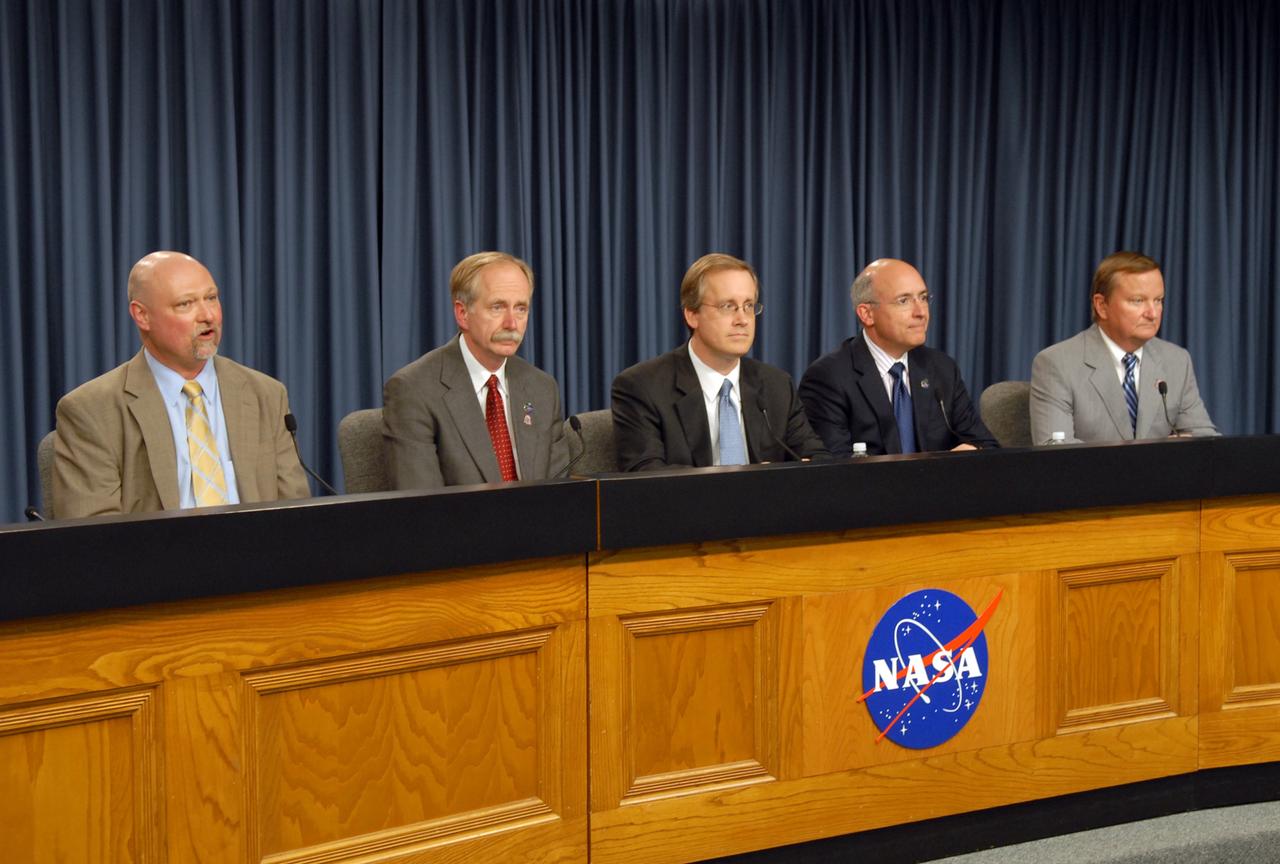
CAPE CANAVERAL, Fla. – Mike Curie (left), with NASA Public Affairs, introduces NASA managers following their day-long Flight Readiness Review of space shuttle Discovery for the STS-119 mission. Next to Curie are (from left) William H. Gerstenmaier, associate administrator for Space Operations, John Shannon, Shuttle Program manager, Mike Suffredini, program manager for the International Space Station, and Mike Leinbach, shuttle launch director. NASA managers decided to plan a launch no earlier than Feb. 19, pending additional analysis and particle impact testing associated with a flow control valve in the shuttle's main engine system. Photo credit: NASA/Cory Huston
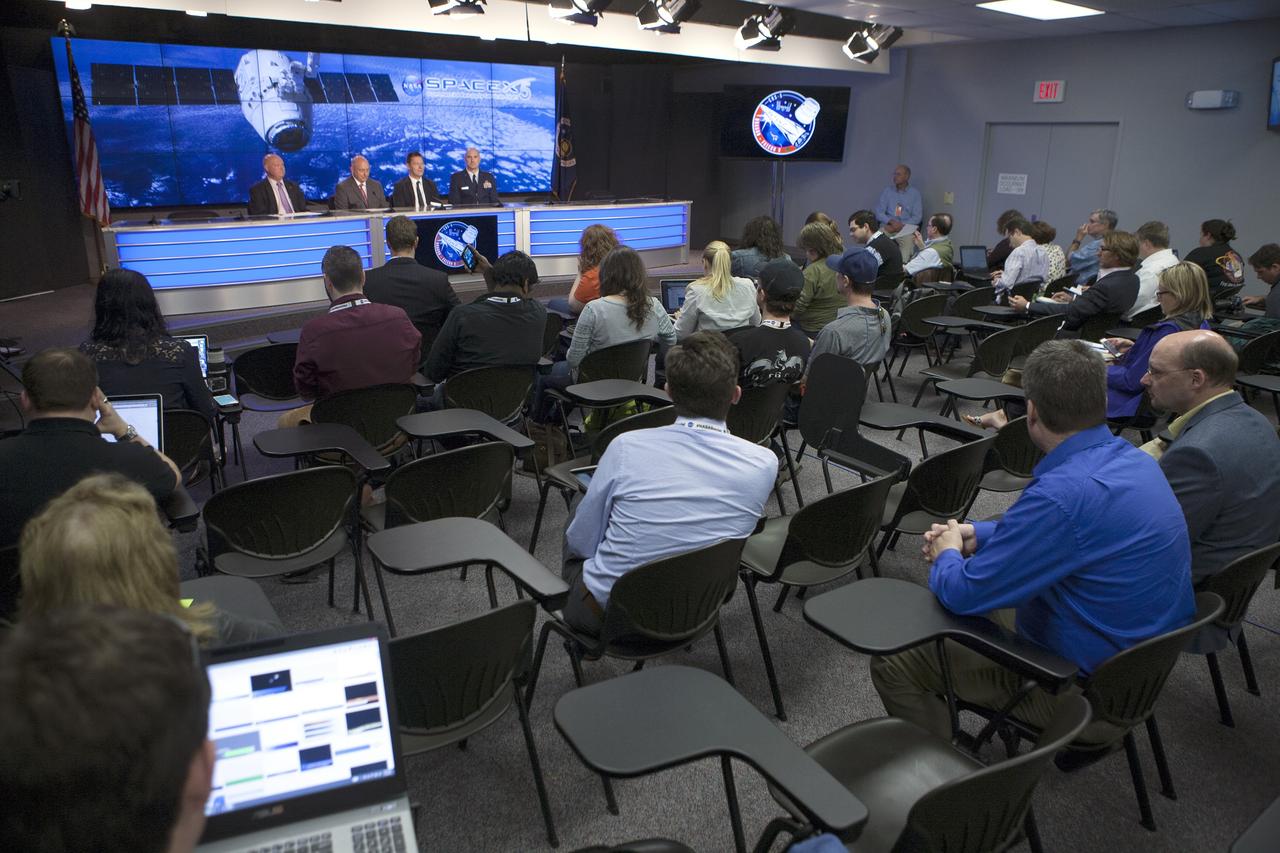
In the Kennedy Space Center’s Press Site auditorium, agency and industry leaders spoke to members of the news media as the SpaceX Dragon spacecraft and its Falcon 9 rocket were being prepared for launch. From left are: Mike Curie of NASA Public Affairs, Mike Suffredini, NASA International Space Station program manager, Hans Koenigsmann, SpaceX vice president of Mission Assurance, and Maj. Perry Sweat, U.S. Air Force’s 45th Weather Squadron at Cape Canaveral Air Force Station. Photo credit: NASA/Kim Shiflett
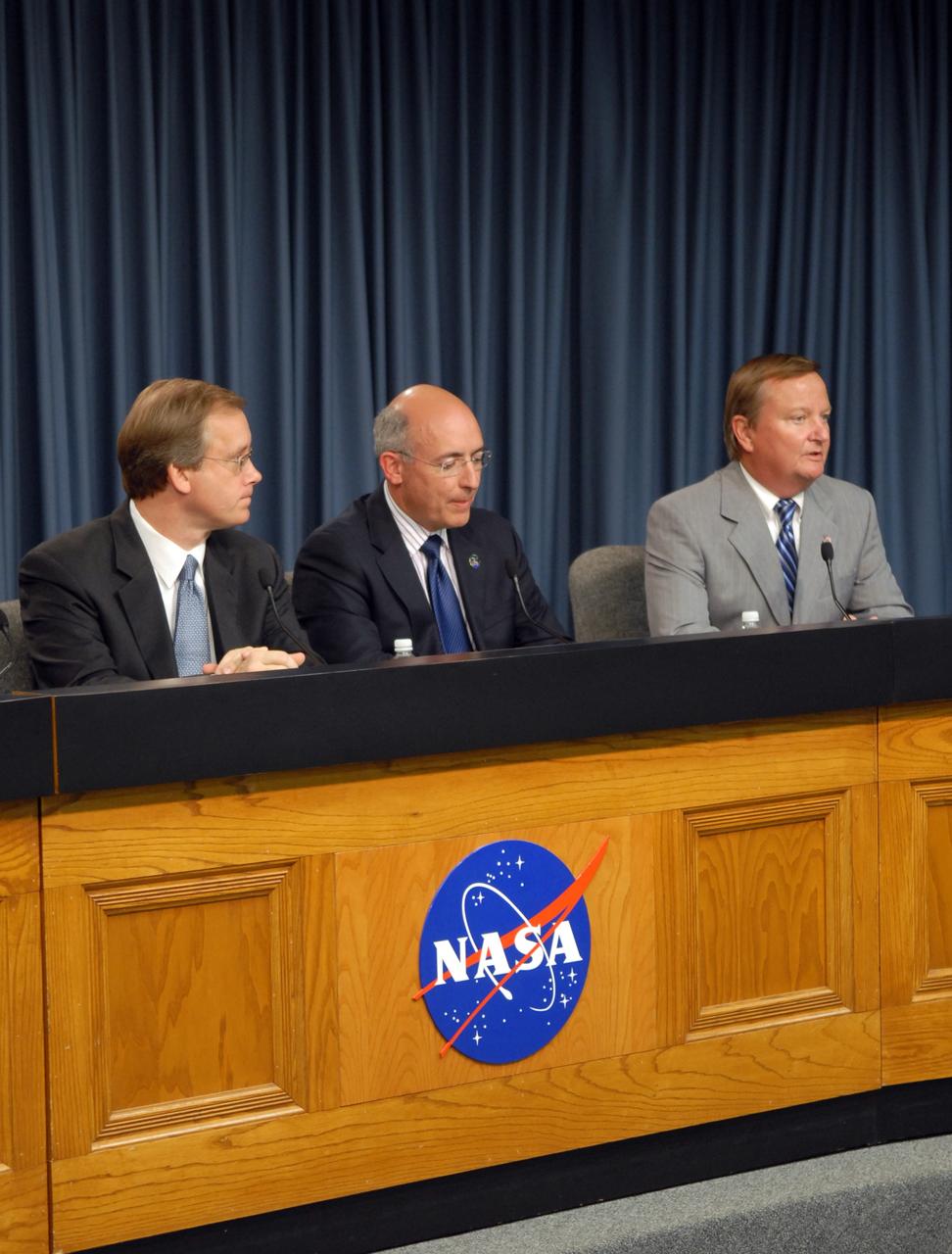
CAPE CANAVERAL, Fla. – At a media conference following the day-long Flight Readiness Review of space shuttle Discovery for the STS-119 mission, NASA managers respond to questions. From left are John Shannon, Shuttle Program manager, Mike Suffredini, program manager for the International Space Station, and Mike Leinbach, shuttle launch director. NASA managers decided to plan a launch no earlier than Feb. 19, pending additional analysis and particle impact testing associated with a flow control valve in the shuttle's main engine system. Photo credit: NASA/Cory Huston
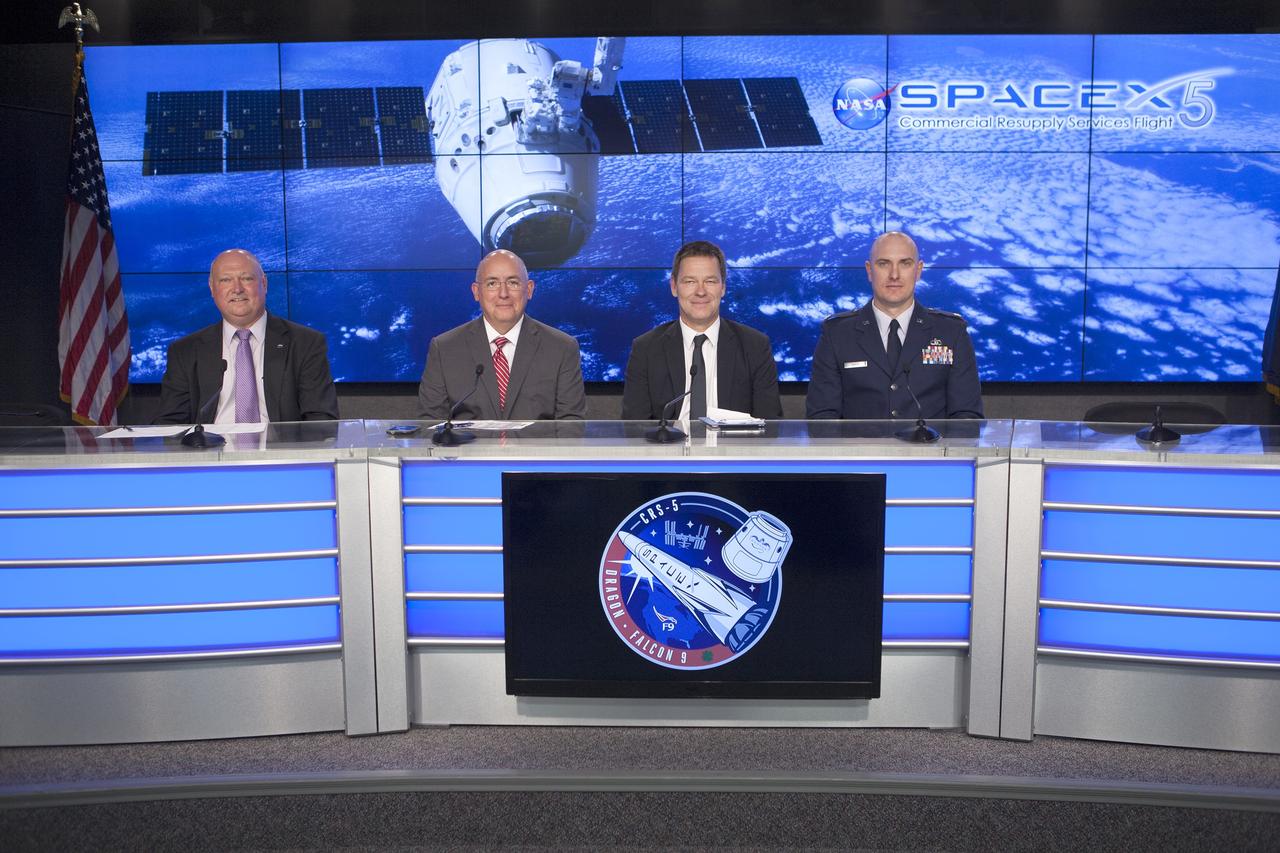
In the Kennedy Space Center’s Press Site auditorium, agency and industry leaders spoke to members of the news media as the SpaceX Dragon spacecraft and its Falcon 9 rocket were being prepared for launch. From left are: Mike Curie of NASA Public Affairs, Mike Suffredini, NASA International Space Station program manager, Hans Koenigsmann, SpaceX vice president of Mission Assurance, and Maj. Perry Sweat, U.S. Air Force’s 45th Weather Squadron at Cape Canaveral Air Force Station. Photo credit: NASA/Kim Shiflett
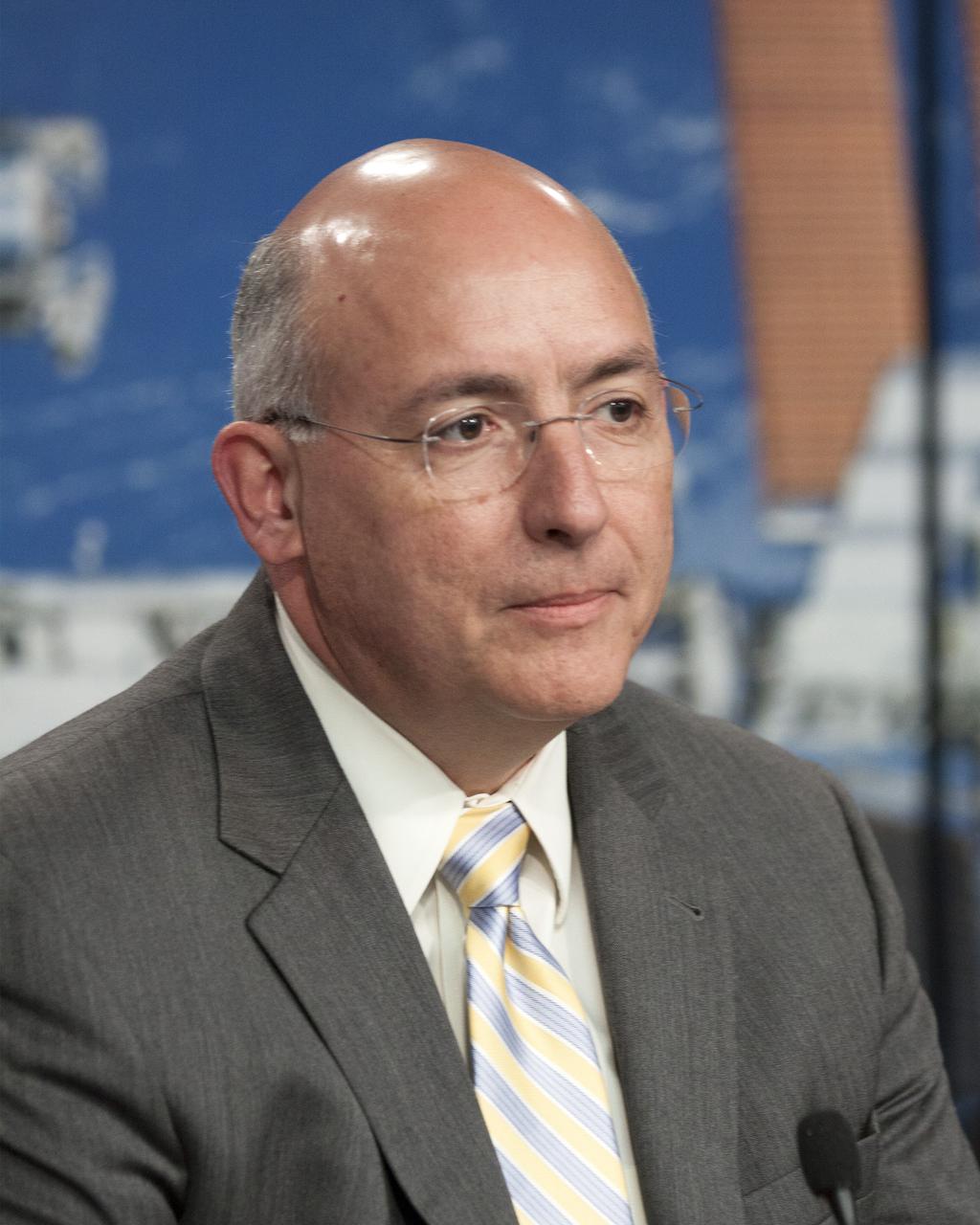
CAPE CANAVERAL, Fla. - Media attending a pre-launch news conference at the Kennedy Space Center, Fla. heard from Mike Suffredini, NASA program manager for the International Space Station at the Johnson Space Center. Scheduled for launch March 1 atop a Falcon 9 rocket, the SpaceX Dragon capsule will be making its third trip to the space station. The mission is the second of 12 SpaceX flights contracted by NASA to resupply the orbiting laboratory. For more information, visit http:__www.nasa.gov_mission_pages_station_structure_launch_spacex2-feature.html Photo credit: NASA_Kim Shiflett
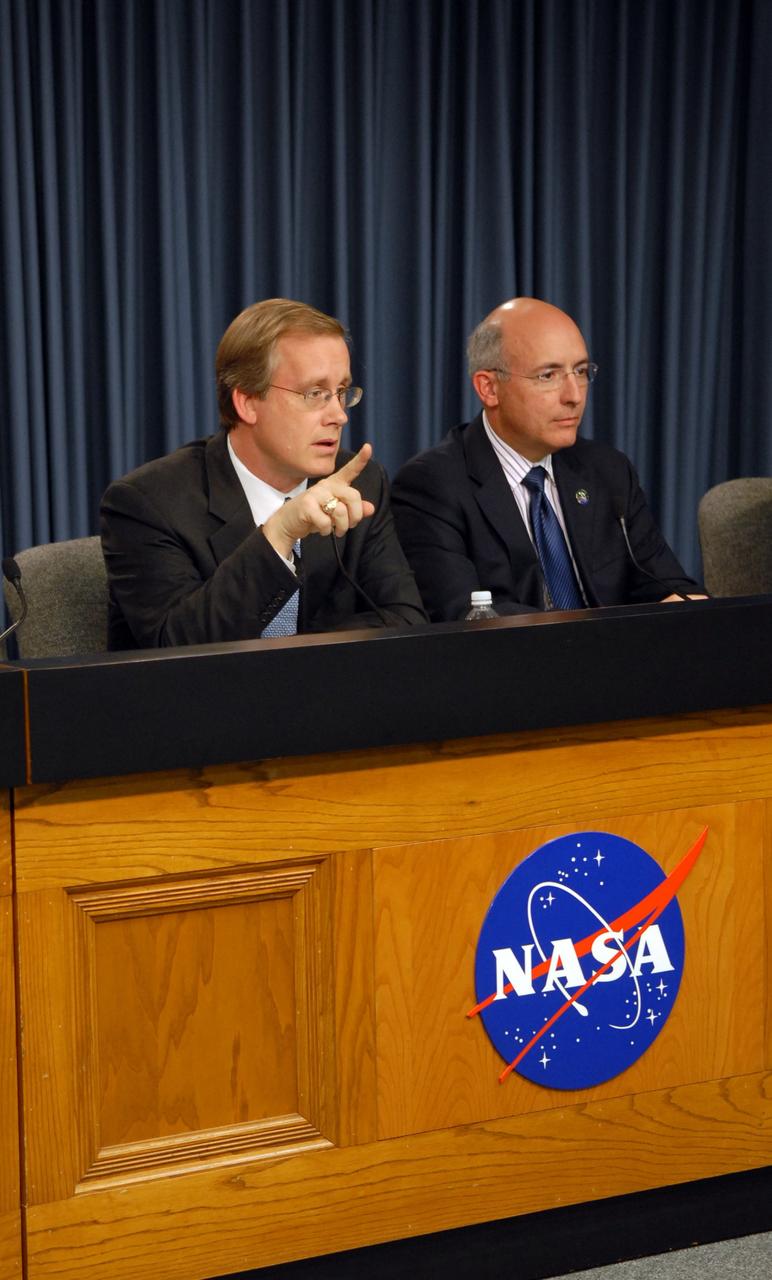
CAPE CANAVERAL, Fla. – At a media conference following the day-long Flight Readiness Review of space shuttle Discovery for the STS-119 mission, NASA's Space Shuttle Program Manager John Shannon responds to a question. On the right is Mike Suffredini, program manager for the International Space Station. NASA managers decided to plan a launch no earlier than Feb. 19, pending additional analysis and particle impact testing associated with a flow control valve in the shuttle's main engine system. Photo credit: NASA/Cory Huston
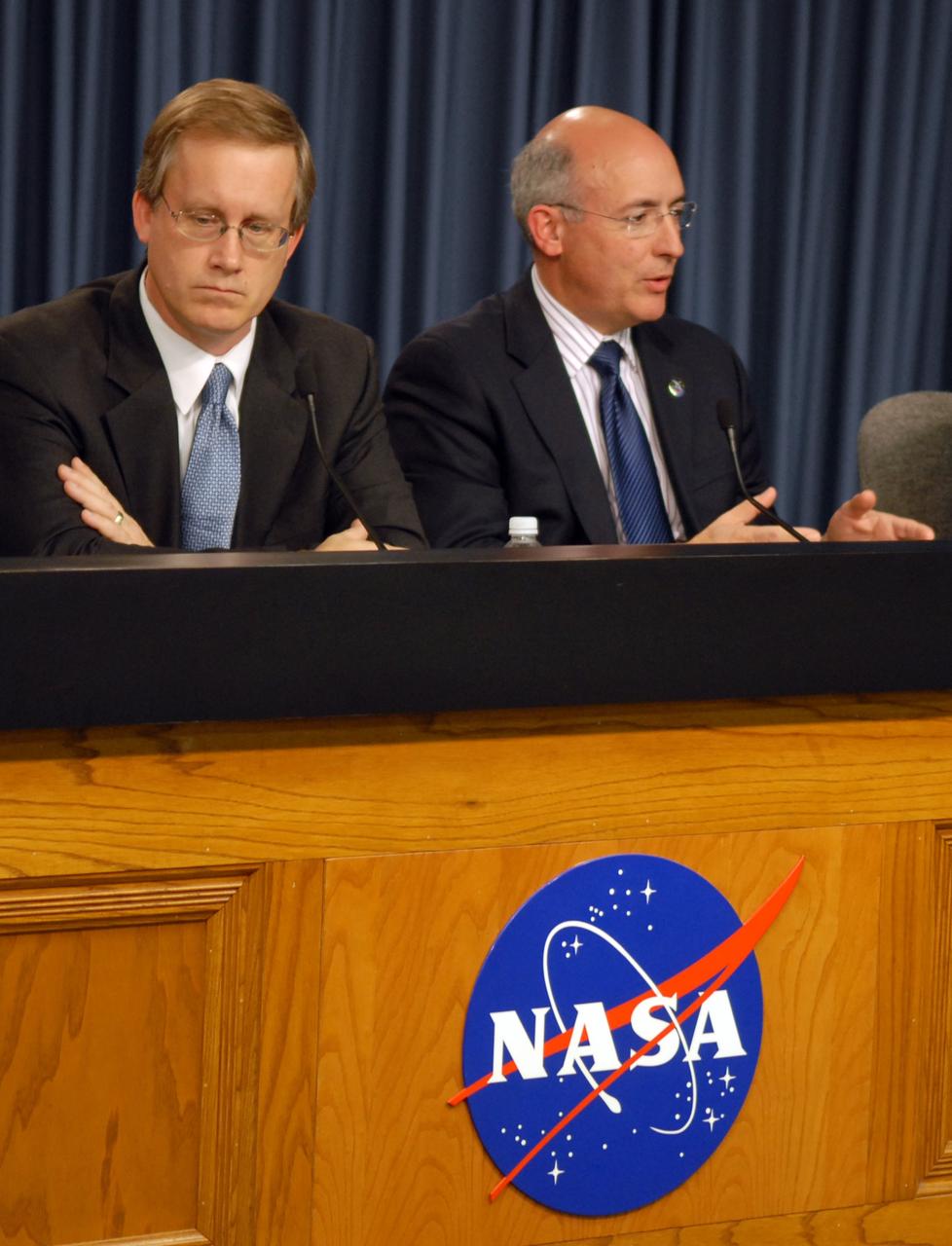
CAPE CANAVERAL, Fla. – At a media conference following the day-long Flight Readiness Review of space shuttle Discovery for the STS-119 mission, Program Manager for the International Space Station Mike Suffredini (right) responds to a question. At left is NASA's Space Shuttle Program Manager John Shannon. NASA managers decided to plan a launch no earlier than Feb. 19, pending additional analysis and particle impact testing associated with a flow control valve in the shuttle's main engine system. Photo credit: NASA/Cory Huston
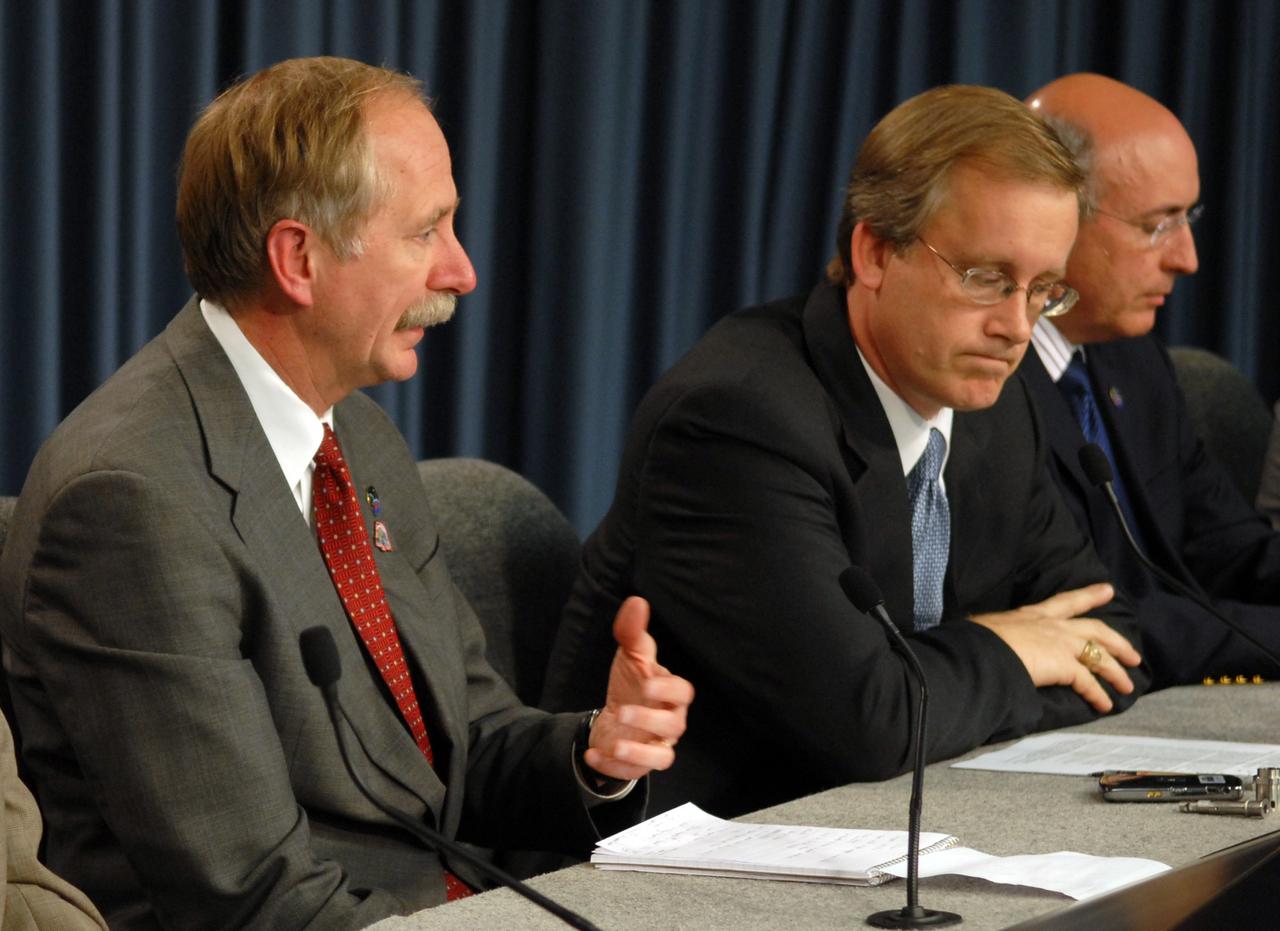
CAPE CANAVERAL, Fla. – At a media conference following the day-long Flight Readiness Review of space shuttle Discovery for the STS-119 mission, NASA's Associate Administrator for Space Operations William H. Gerstenmaier (left) responds to a question. At right are NASA's Space Shuttle Program Manager John Shannon and Program Manager for the International Space Station Mike Suffredini. NASA managers decided to plan a launch no earlier than Feb. 19, pending additional analysis and particle impact testing associated with a flow control valve in the shuttle's main engine system. Photo credit: NASA/Cory Huston
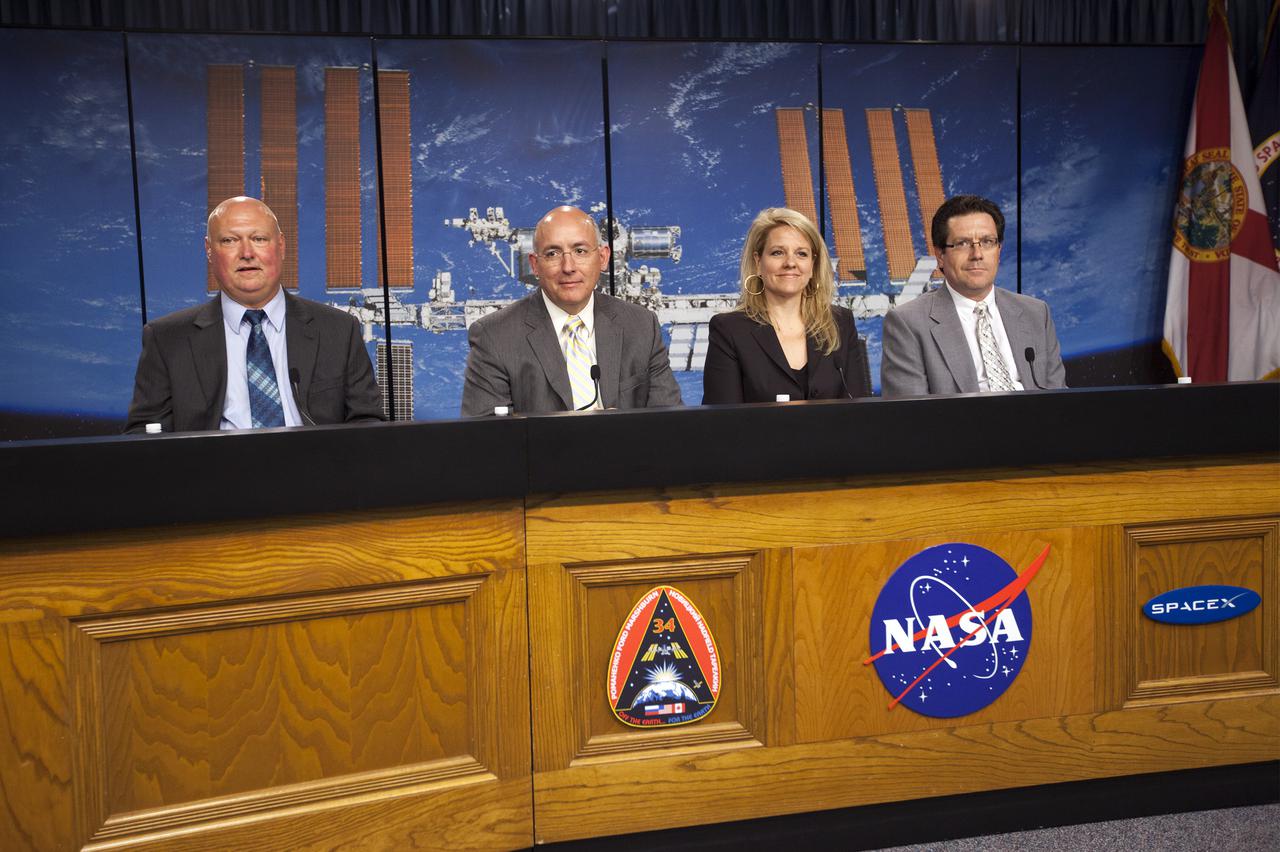
CAPE CANAVERAL, Fla. - Media attending a pre-launch news conference at the Kennedy Space Center, Fla. heard from officials who discussed payloads to be launched aboard a SpaceX Dragon capsule. From the left are: Mike Curie of NASA Public Affairs at the Kennedy Space Center, Mike Suffredini, NASA program manager for the International Space Station at the Johnson Space Center, Gwynne Shotwell, president of SpaceX, and Joel Tumbiolo, launch weather officer for the 45th Weather Squadron at Cape Canaveral Air Force Station. Scheduled for launch March 1 atop a Falcon 9 rocket, the SpaceX Dragon capsule will be making its third trip to the space station. The mission is the second of 12 SpaceX flights contracted by NASA to resupply the orbiting laboratory. For more information, visit http:__www.nasa.gov_mission_pages_station_structure_launch_spacex2-feature.html Photo credit: NASA_Kim Shiflett
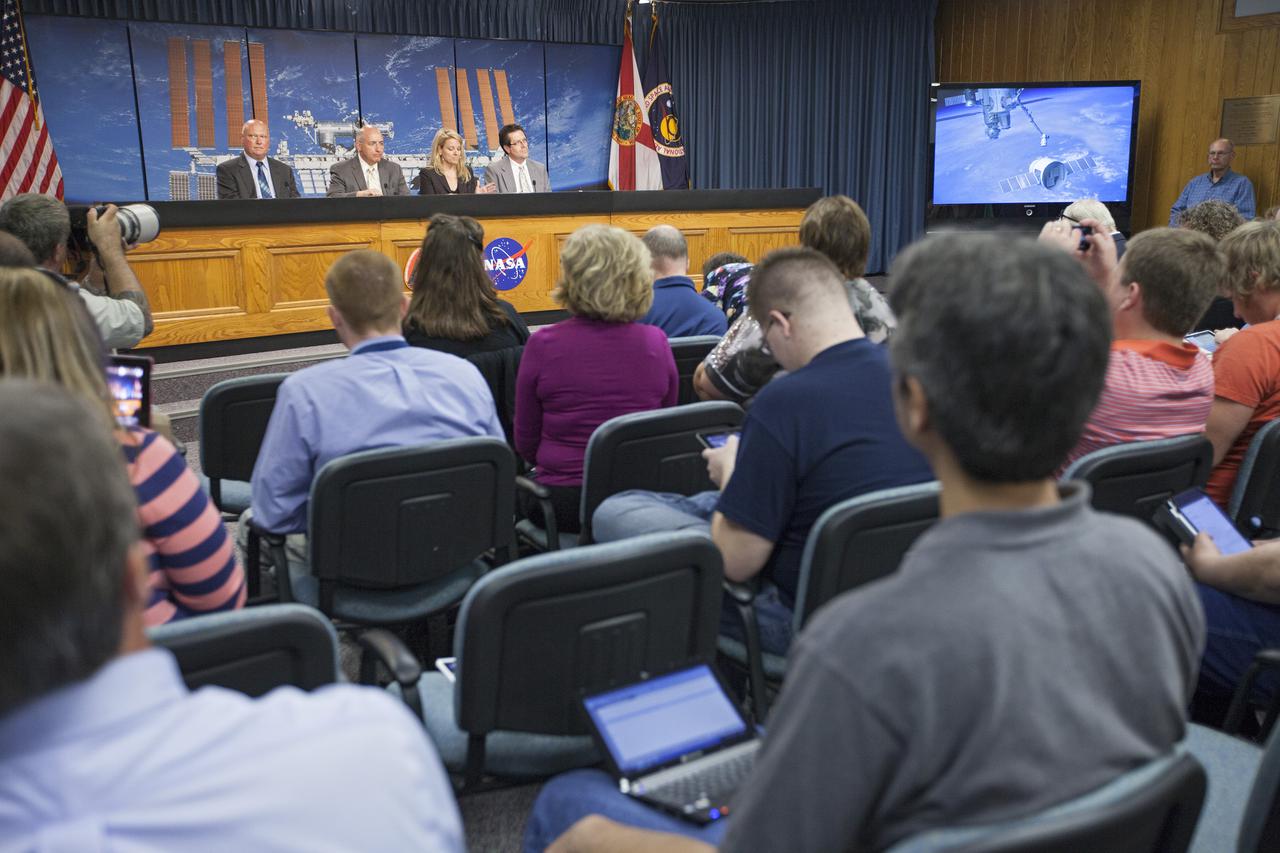
CAPE CANAVERAL, Fla. - Media attending a pre-launch news conference at the Kennedy Space Center, Fla. heard from officials who discussed payloads to be launched aboard a SpaceX Dragon capsule. From the left are: Mike Curie of NASA Public Affairs at the Kennedy Space Center, Mike Suffredini, NASA program manager for the International Space Station at the Johnson Space Center, Gwynne Shotwell, president of SpaceX, and Joel Tumbiolo, launch weather officer for the 45th Weather Squadron at Cape Canaveral Air Force Station. Scheduled for launch March 1 atop a Falcon 9 rocket, the SpaceX Dragon capsule will be making its third trip to the space station. The mission is the second of 12 SpaceX flights contracted by NASA to resupply the orbiting laboratory. For more information, visit http:__www.nasa.gov_mission_pages_station_structure_launch_spacex2-feature.html Photo credit: NASA_Kim Shiflett
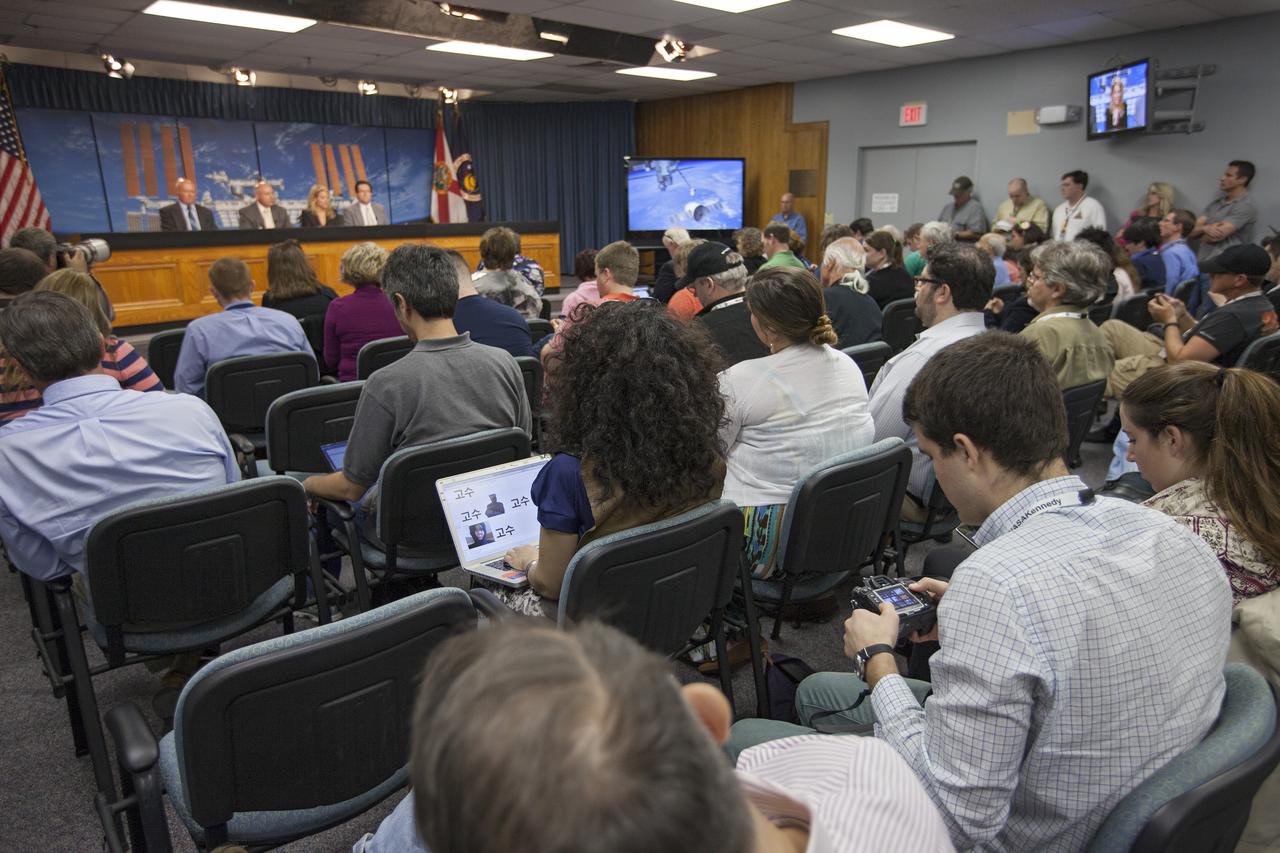
CAPE CANAVERAL, Fla. - Media attending a pre-launch news conference at the Kennedy Space Center, Fla. heard from officials who discussed payloads to be launched aboard a SpaceX Dragon capsule. From the left are: Mike Curie of NASA Public Affairs at the Kennedy Space Center, Mike Suffredini, NASA program manager for the International Space Station at the Johnson Space Center, Gwynne Shotwell, president of SpaceX, and Joel Tumbiolo, launch weather officer for the 45th Weather Squadron at Cape Canaveral Air Force Station. Scheduled for launch March 1 atop a Falcon 9 rocket, the SpaceX Dragon capsule will be making its third trip to the space station. The mission is the second of 12 SpaceX flights contracted by NASA to resupply the orbiting laboratory. For more information, visit http:__www.nasa.gov_mission_pages_station_structure_launch_spacex2-feature.html Photo credit: NASA_Kim Shiflett
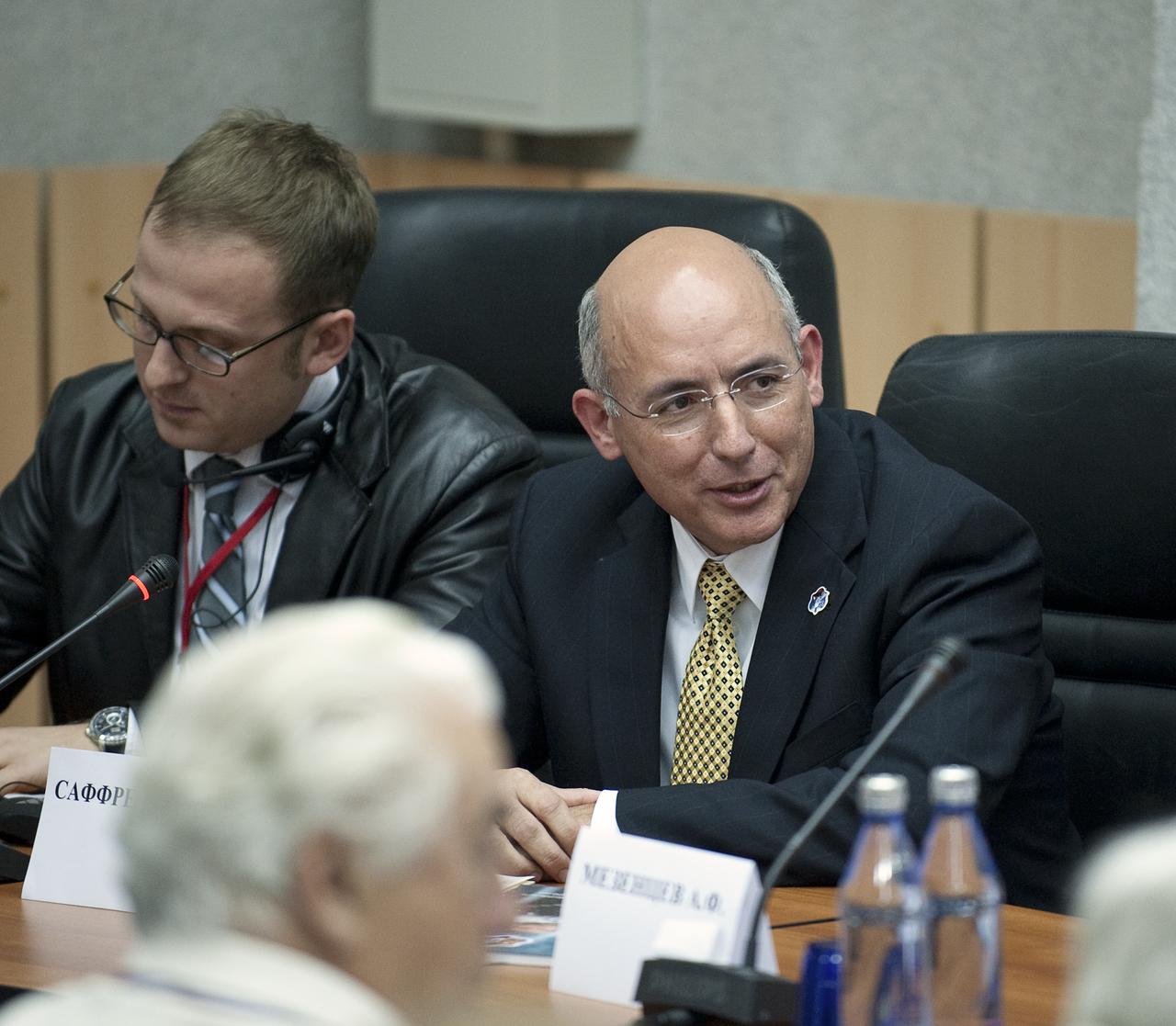
Manager, International Space Station (ISS) Program, Michael Suffredini, speaks during the State Commission meeting to approve the Soyuz launch of Expedition 21 Flight Engineer Jeffrey N. Williams, Flight Engineer Maxim Suraev and Spaceflight Participant Guy Laliberté on Tuesday, Sept. 29, 2009 in Baikonur, Kazakhstan. Photo Credit: (NASA/Bill Ingalls)
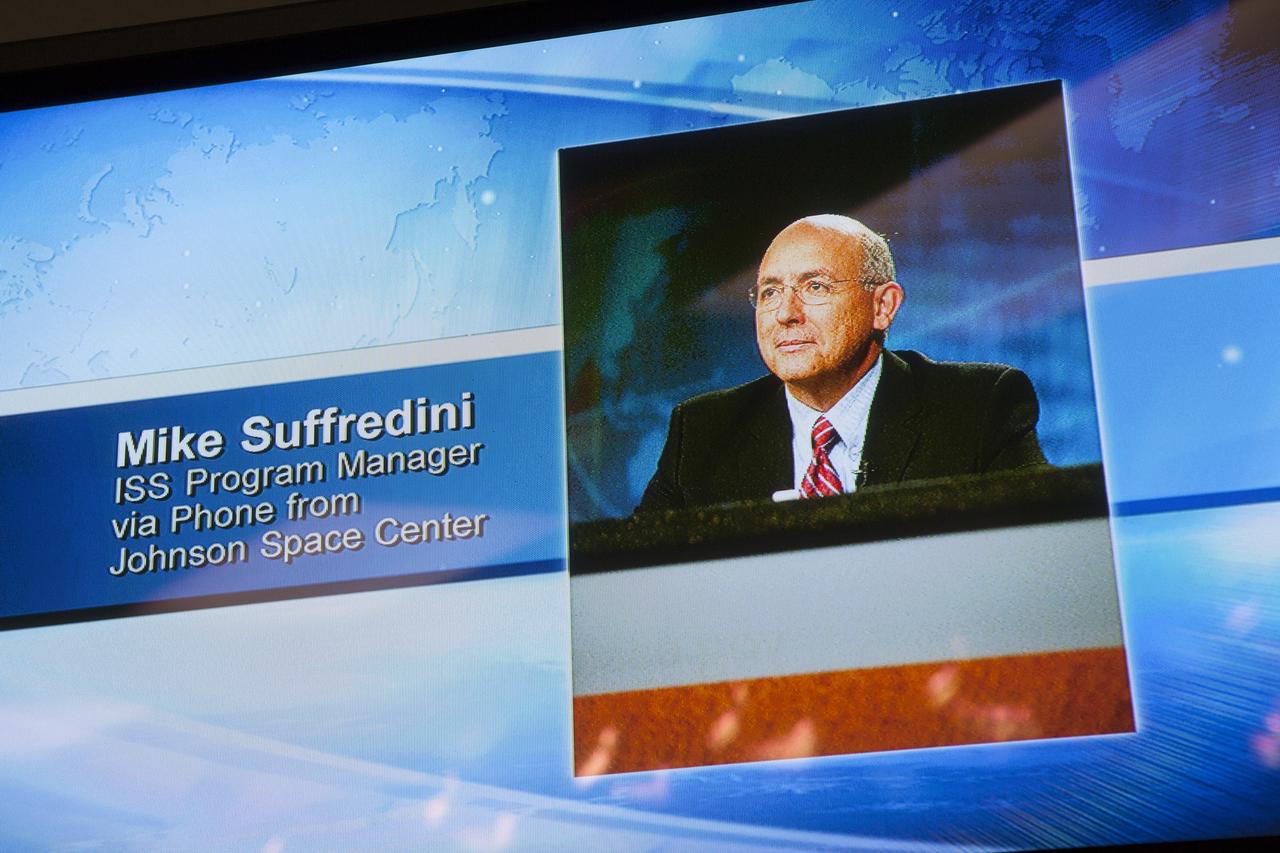
CAPE CANAVERAL, Fla. – During a news conference at NASA's Kennedy Space Center in Florida, agency and contractor officials discussed preparations for the launch of the SpaceX-3 Commercial Resupply Services mission to the International Space Station. Mike Suffredini, NASA's ISS program manager, participated in the briefing by telephone from the agency's Johnson Space Center. Scheduled for launch on April 14, 2014 atop a Falcon 9 rocket, Dragon spacecraft will be marking its fourth trip to the space station. The SpaceX-3 mission carrying almost 2.5 tons of supplies, technology and science experiments is the third of 12 flights contracted by NASA to resupply the orbiting laboratory. For more information, visit http://www.nasa.gov/mission_pages/station/structure/launch/index.html Photo credit: NASA/Kim Shiflett
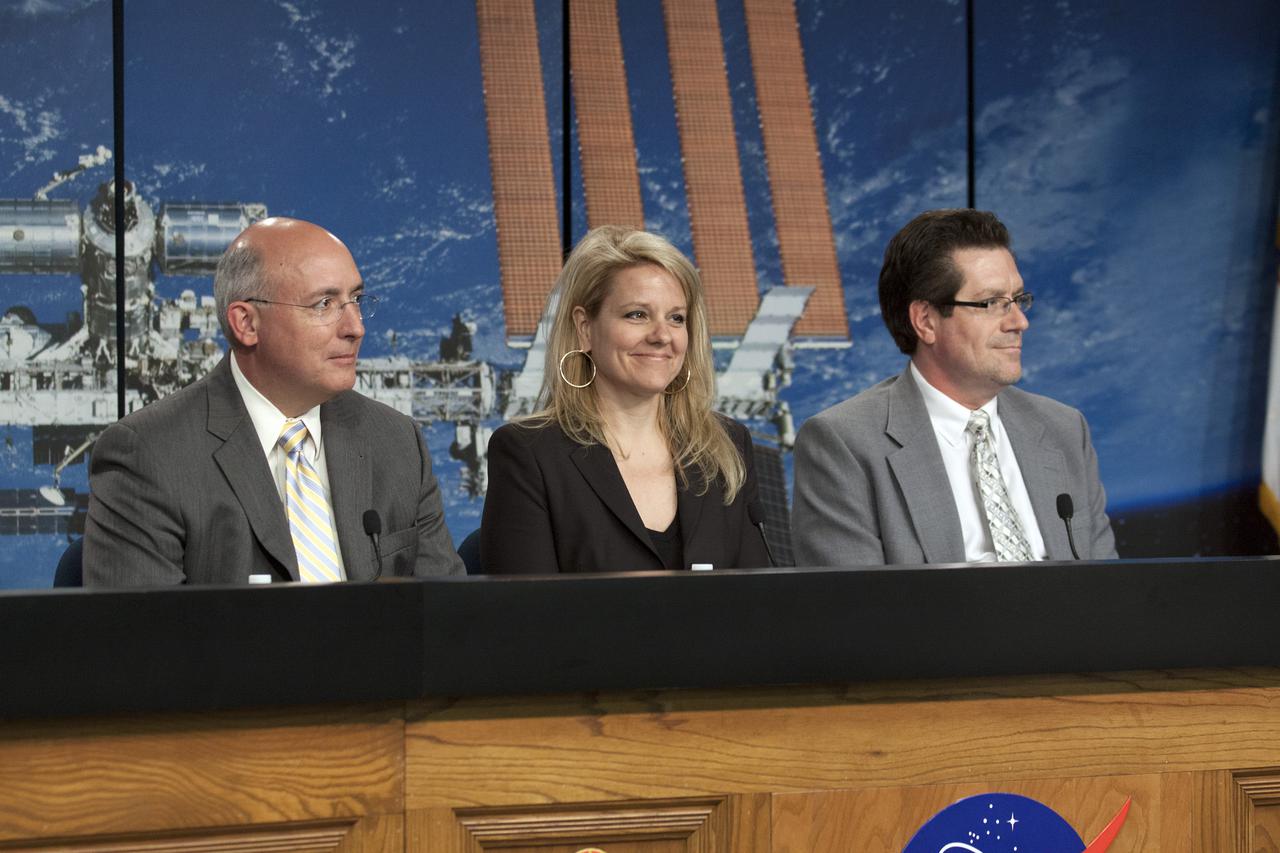
CAPE CANAVERAL, Fla. - Media attending a pre-launch news conference at the Kennedy Space Center, Fla. heard from officials who discussed payloads to be launched aboard a SpaceX Dragon capsule. From the left are: Mike Suffredini, NASA program manager for the International Space Station at the Johnson Space Center, Gwynne Shotwell, president of SpaceX, and Joel Tumbiolo, launch weather officer for the 45th Weather Squadron at Cape Canaveral Air Force Station. Scheduled for launch March 1 atop a Falcon 9 rocket, the SpaceX Dragon capsule will be making its third trip to the space station. The mission is the second of 12 SpaceX flights contracted by NASA to resupply the orbiting laboratory. For more information, visit http:__www.nasa.gov_mission_pages_station_structure_launch_spacex2-feature.html Photo credit: NASA_Kim Shiflett
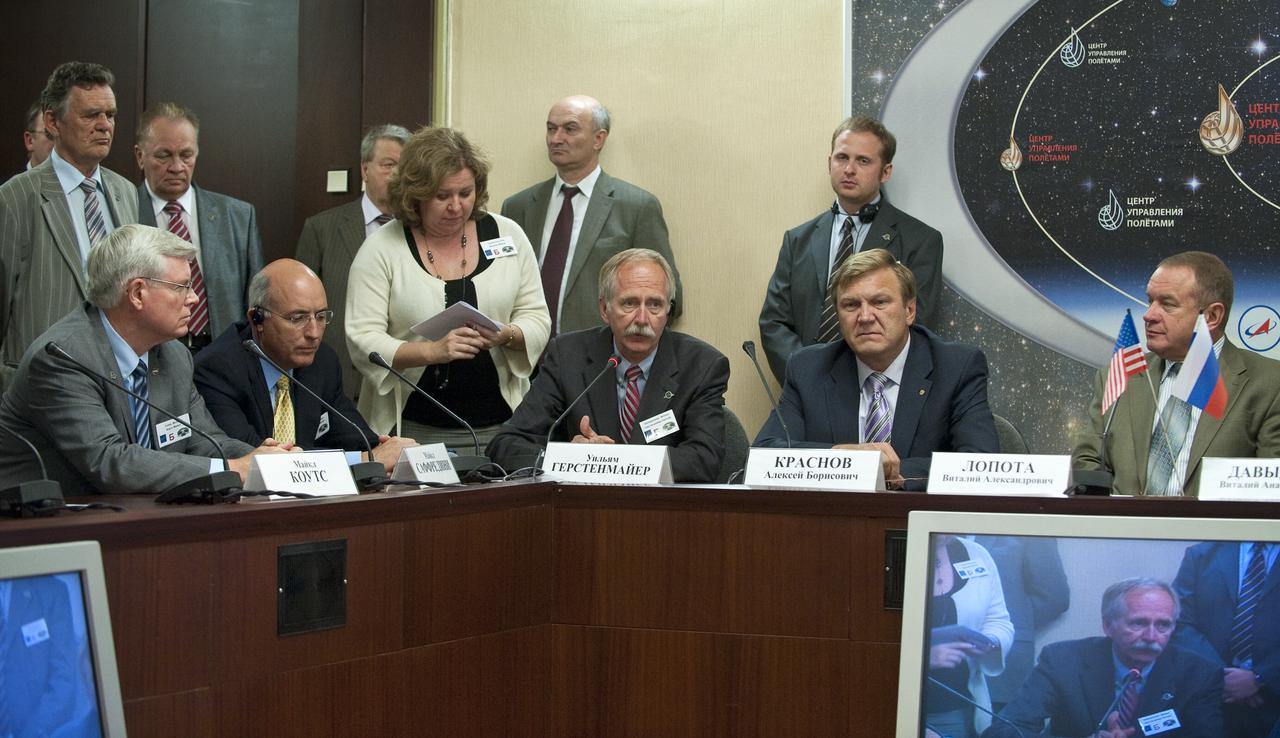
William Gerstenmaier, seated center, NASA Associate Administrator for Space Operations, speaks at a post Soyuz docking press conference at Russian Mission Control on Friday, June 18, 2010 in Korolev, Russia. Gerstenmaier is seen with NASA and ROSCOSMOS senior management members. Photo Credit: (NASA/Carla Cioffi)
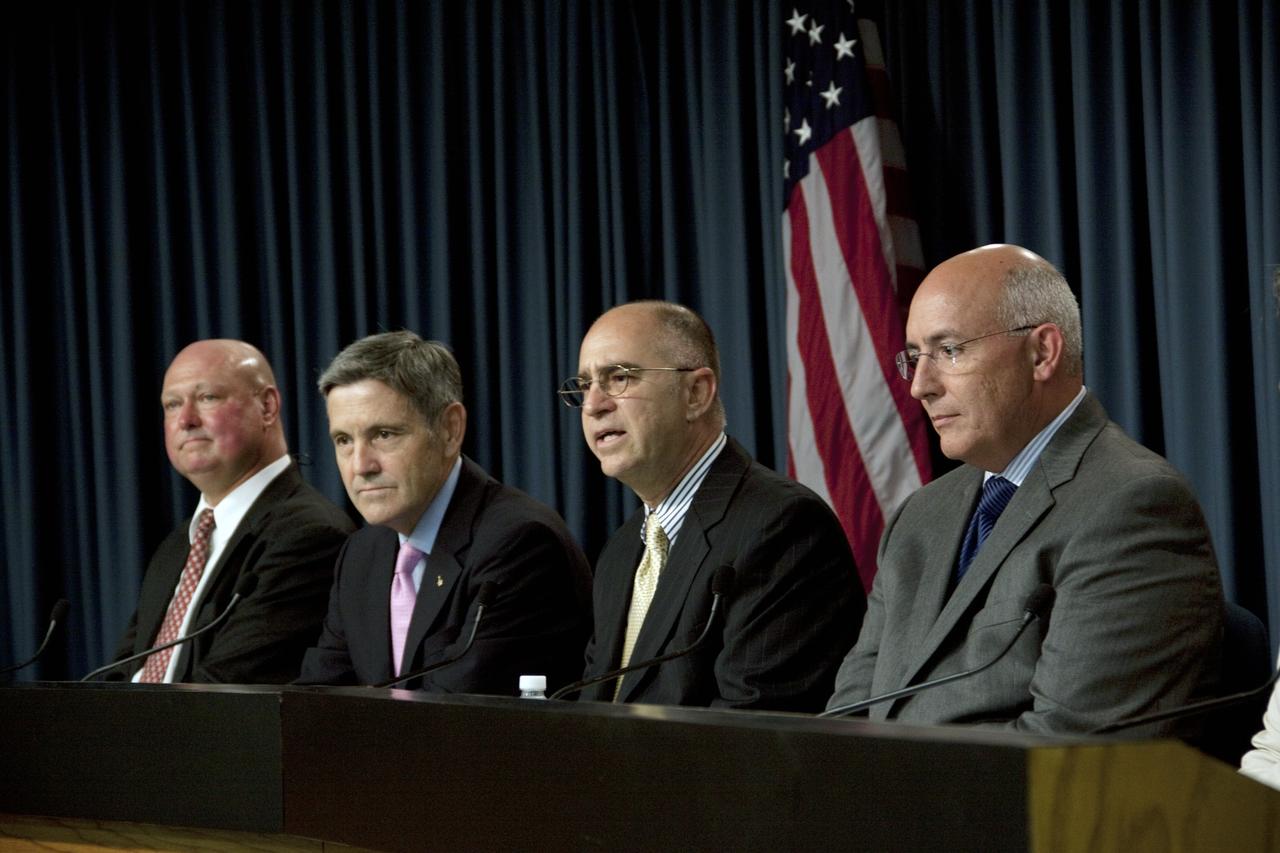
CAPE CANAVERAL, Fla. -- Sam Scimemi, director of International Space Station at NASA Headquarters, participates in a prelaunch news conference in Kennedy Space Center's Press Site auditorium in Florida. Also pictured are, from left, Michael Curie, NASA Public Affairs, Bob Cabana, director of NASA Kennedy Space Center, and to Scimemi's right, Mike Suffredini, program manager of International Space Station at NASA Johnson Space Center. The news conference provided the media with a status on the readiness to launch NASA's first Commercial Resupply Services, or CRS-1, mission to the International Space Station. Space Exploration Technologies Corp., or SpaceX, built both the mission's Falcon 9 rocket and Dragon capsule. Launch is scheduled for 8:35 p.m. EDT on Oct. 7 from Space Launch Complex 40 on Cape Canaveral Air Force Station. SpaceX CRS-1 is an important step toward making America’s microgravity research program self-sufficient by providing a way to deliver and return significant amounts of cargo, including science experiments, to and from the orbiting laboratory. NASA has contracted for 12 commercial resupply flights from SpaceX and eight from the Orbital Sciences Corp. For more information, visit http://www.nasa.gov/mission_pages/station/living/launch/index.html. Photo credit: NASA/Jim Grossmann
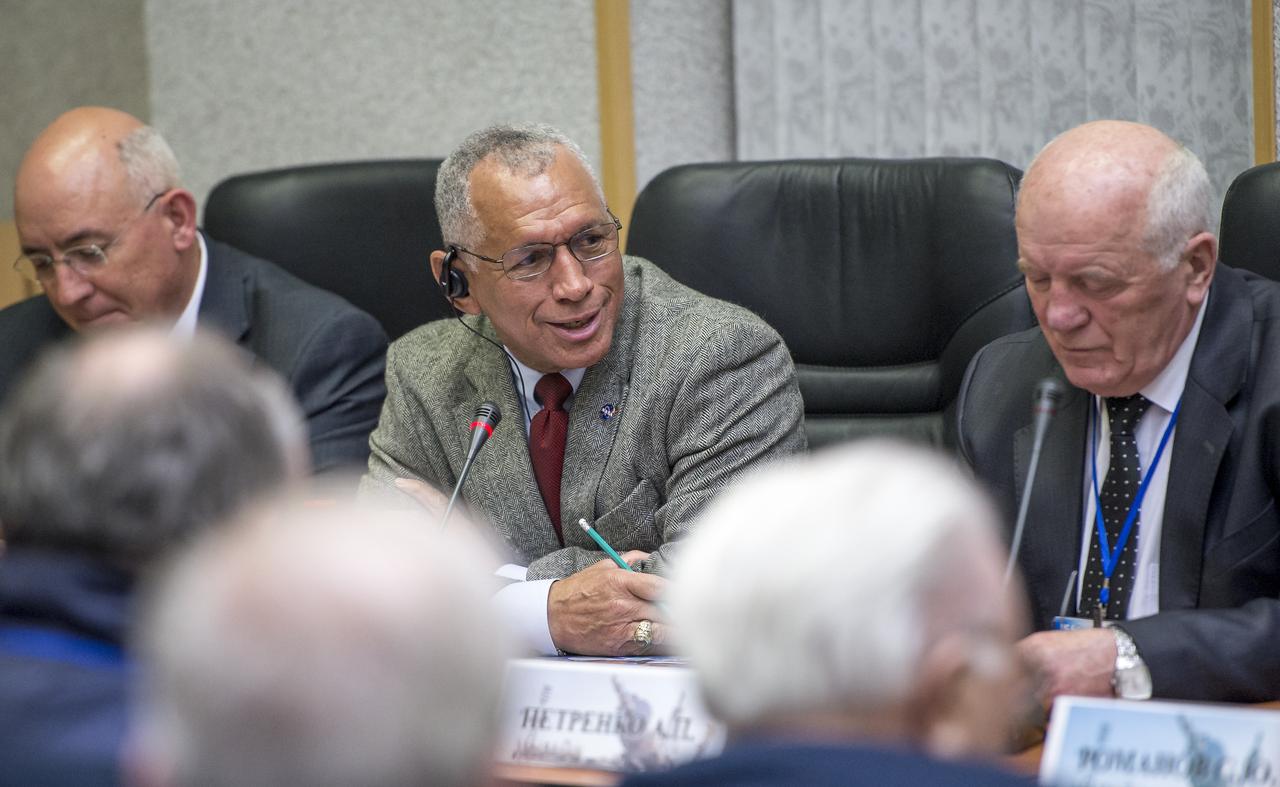
NASA Administrator Charles Bolden is seen during the State Commission meeting to approve the Soyuz launch of Expedition 43 to the International Space Station, Thursday, March 26, 2015, at the Cosmonaut Hotel in Baikonur, Kazakhstan. NASA Astronaut Scott Kelly, and Russian Cosmonauts Mikhail Kornienko, and Gennady Padalka of the Russian Federal Space Agency (Roscosmos) launched to the International Space Station in the Soyuz TMA-16M spacecraft from the Baikonur Cosmodrome in Kazakhstan March 28, Kazakh time (March 27 Eastern time.) As the one-year crew, Kelly and Kornienko will return to Earth on Soyuz TMA-18M in March 2016. Photo Credit (NASA/Bill Ingalls)
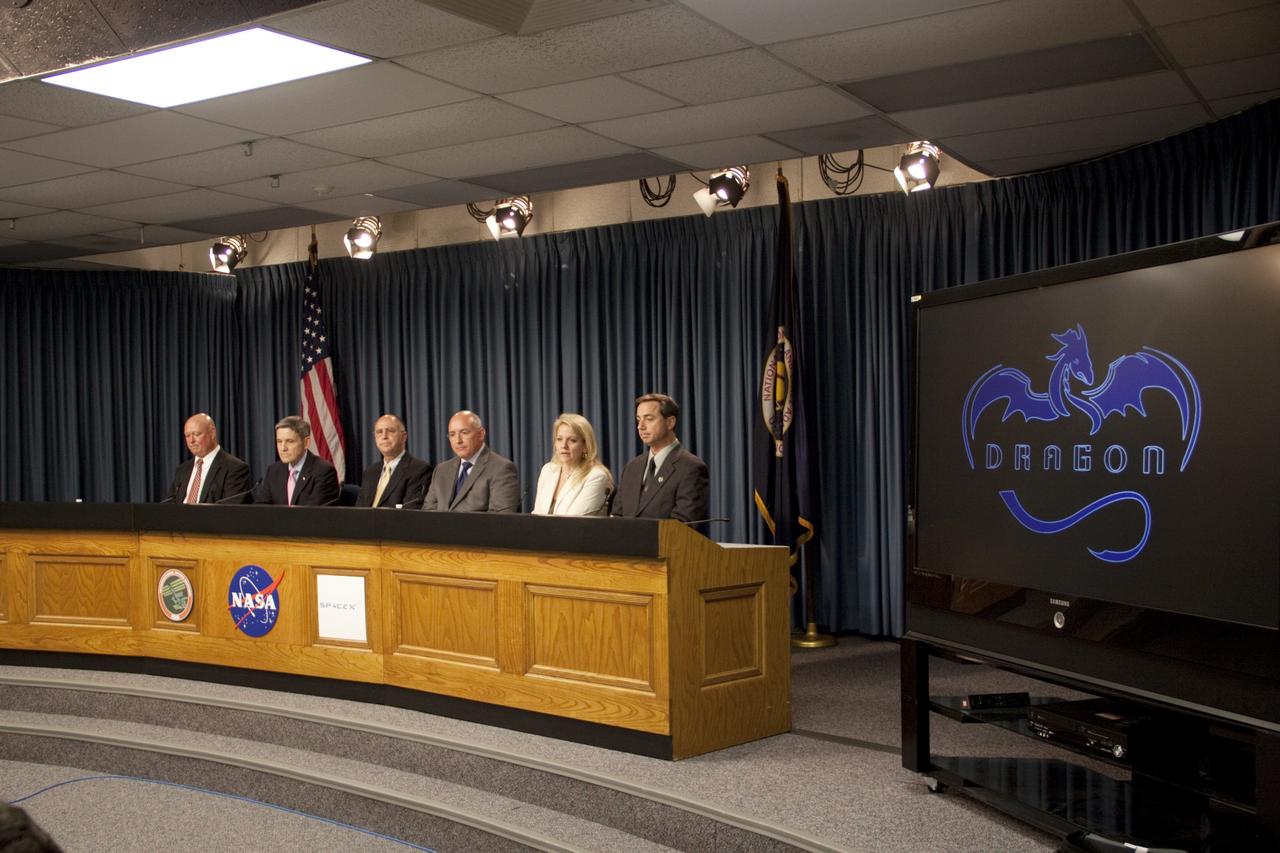
CAPE CANAVERAL, Fla. -- A prelaunch news conference is held in NASA Kennedy Space Center's Press Site auditorium in Florida. From left are Michael Curie, NASA Public Affairs, Bob Cabana, director of NASA Kennedy Space Center, Sam Scimemi, director of International Space Station at NASA Headquarters, Mike Suffredini, program manager of International Space Station at NASA Johnson Space Center, Gwynne Shotwell, president of Space Exploration Technologies Corp., or SpaceX, and Mike McAleenan, launch weather officer from the 45th Weather Squadron at Cape Canaveral Air Force Station. The news conference provided the media with a status on the readiness to launch NASA's first Commercial Resupply Services, or CRS-1, mission to the International Space Station. Space Exploration Technologies Corp., or SpaceX, built both the mission's Falcon 9 rocket and Dragon capsule. Launch is scheduled for 8:35 p.m. EDT on Oct. 7 from Space Launch Complex 40 on Cape Canaveral Air Force Station. SpaceX CRS-1 is an important step toward making America’s microgravity research program self-sufficient by providing a way to deliver and return significant amounts of cargo, including science experiments, to and from the orbiting laboratory. NASA has contracted for 12 commercial resupply flights from SpaceX and eight from the Orbital Sciences Corp. For more information, visit http://www.nasa.gov/mission_pages/station/living/launch/index.html. Photo credit: NASA/Jim Grossmann
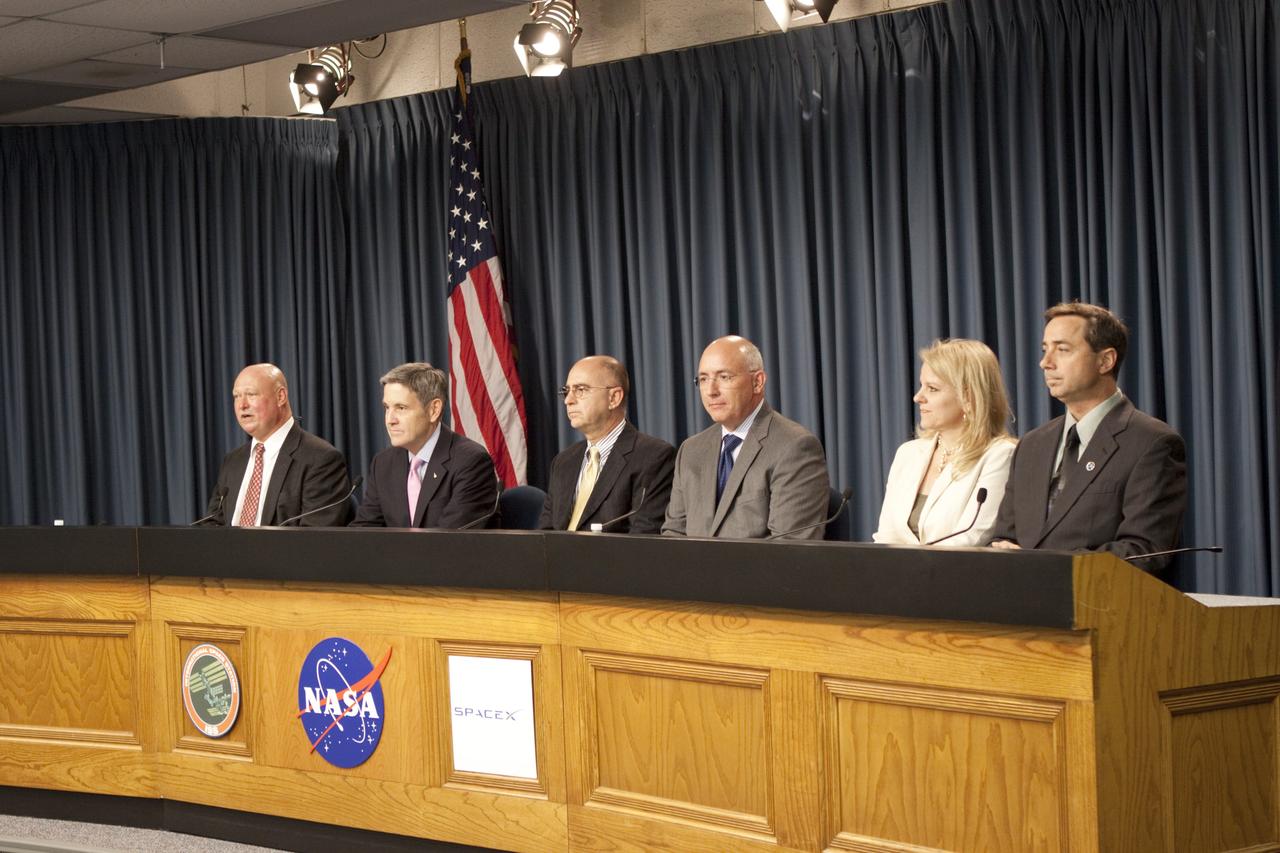
CAPE CANAVERAL, Fla. -- A prelaunch news conference is held in NASA Kennedy Space Center's Press Site auditorium in Florida. From left are Michael Curie, NASA Public Affairs, Bob Cabana, director of NASA Kennedy Space Center, Sam Scimemi, director of International Space Station at NASA Headquarters, Mike Suffredini, program manager of International Space Station at NASA Johnson Space Center, Gwynne Shotwell, president of Space Exploration Technologies Corp., or SpaceX, and Mike McAleenan, launch weather officer from the 45th Weather Squadron at Cape Canaveral Air Force Station. The news conference provided the media with a status on the readiness to launch NASA's first Commercial Resupply Services, or CRS-1, mission to the International Space Station. Space Exploration Technologies Corp., or SpaceX, built both the mission's Falcon 9 rocket and Dragon capsule. Launch is scheduled for 8:35 p.m. EDT on Oct. 7 from Space Launch Complex 40 on Cape Canaveral Air Force Station. SpaceX CRS-1 is an important step toward making America’s microgravity research program self-sufficient by providing a way to deliver and return significant amounts of cargo, including science experiments, to and from the orbiting laboratory. NASA has contracted for 12 commercial resupply flights from SpaceX and eight from the Orbital Sciences Corp. For more information, visit http://www.nasa.gov/mission_pages/station/living/launch/index.html. Photo credit: NASA/Jim Grossmann
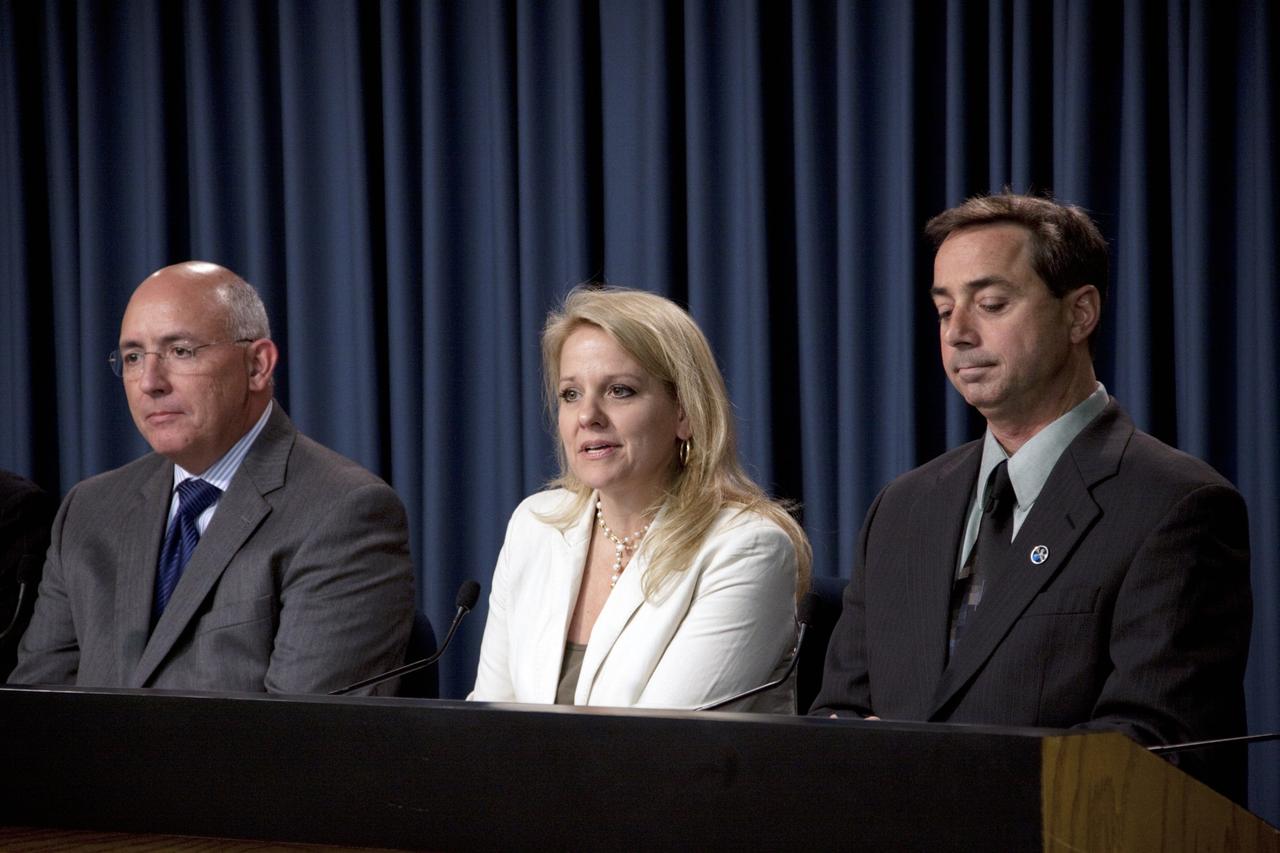
CAPE CANAVERAL, Fla. -- Gwynne Shotwell, president of Space Exploration Technologies Corp. or SpaceX, participates in a prelaunch news conference in Kennedy Space Center's Press Site auditorium in Florida. To her left is Mike Suffredini, program manager, International Space Station, Johnson Space Center and to her right is Mike McAleenan, launch weather officer, 45th Weather Squadron, Cape Canaveral Air Force Station The news conference provided the media with a status on the readiness to launch NASA's first Commercial Resupply Services, or CRS-1, mission to the International Space Station. Space Exploration Technologies Corp., or SpaceX, built both the mission's Falcon 9 rocket and Dragon capsule. Launch is scheduled for 8:35 p.m. EDT on Oct. 7 from Space Launch Complex 40 on Cape Canaveral Air Force Station. SpaceX CRS-1 is an important step toward making America’s microgravity research program self-sufficient by providing a way to deliver and return significant amounts of cargo, including science experiments, to and from the orbiting laboratory. NASA has contracted for 12 commercial resupply flights from SpaceX and eight from the Orbital Sciences Corp. For more information, visit http://www.nasa.gov/mission_pages/station/living/launch/index.html. Photo credit: NASA/Jim Grossmann The news conference provided the media with a status on the readiness to launch NASA's first Commercial Resupply Services, or CRS-1, mission to the International Space Station. Space Exploration Technologies Corp., or SpaceX, built both the mission's Falcon 9 rocket and Dragon capsule. Launch is scheduled for 8:35 p.m. EDT on Oct. 7 from Space Launch Complex 40 on Cape Canaveral Air Force Station. SpaceX CRS-1 is an important step toward making America’s microgravity research program self-sufficient by providing a way to deliver and return significant amounts of cargo, including science experiments, to and from the orbiting laboratory. NASA has contracted for 12 commercial resupply flights from SpaceX and eight from the Orbital Sciences Corp. For more information, visit http://www.nasa.gov/mission_pages/station/living/launch/index.html. Photo credit: NASA/Jim Grossmann