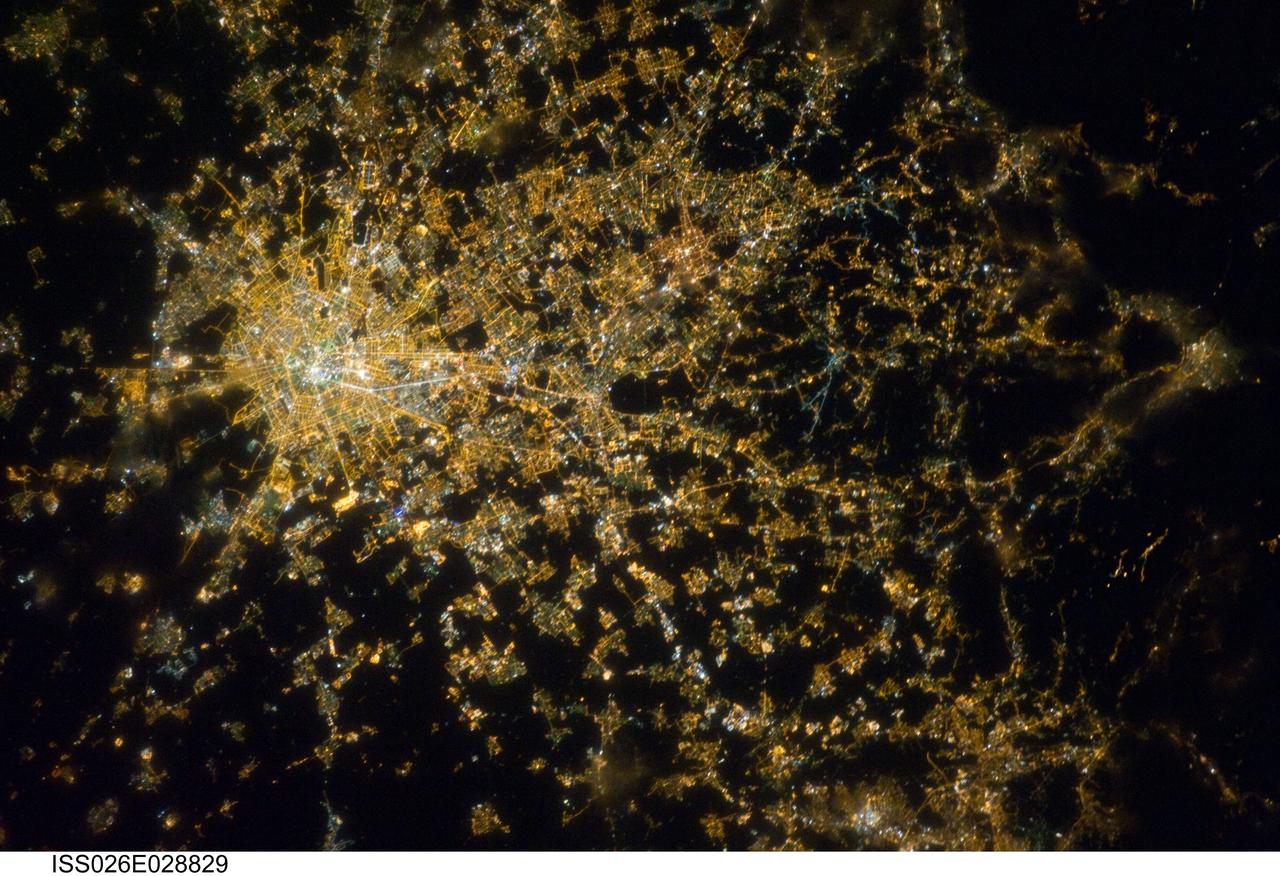
ISS026-E-028829 (22 Feb. 2011) --- Milan, Italy metropolitan area is featured in this night time view photographed by an Expedition 26 crew member on the International Space Station. The metropolitan area of Milan (or Milano) illuminates the Italian region of Lombardy, in a pattern evocative of a patchwork quilt, in this photograph. The city of Milan proper forms a dense cluster of lights at center left; brilliant white lights indicate the historic center of the city where the Duomo di Milano (Milan Cathedral) is located. Large dark regions to the south of Milan contain mostly agricultural fields. To the north, numerous smaller cities are interspersed with agricultural fields giving way to forested areas as one approaches the Italian Alps (not shown). Low patchy clouds diffuse the city lights, producing isolated regions in the image that appear blurred. The Milan urban area is located within the Po Valley, a large plain bordered by the Adriatic Sea to the south and the Italian Alps to the north. Milan has the largest metropolitan area in Italy, and the fifth largest in the European Union.
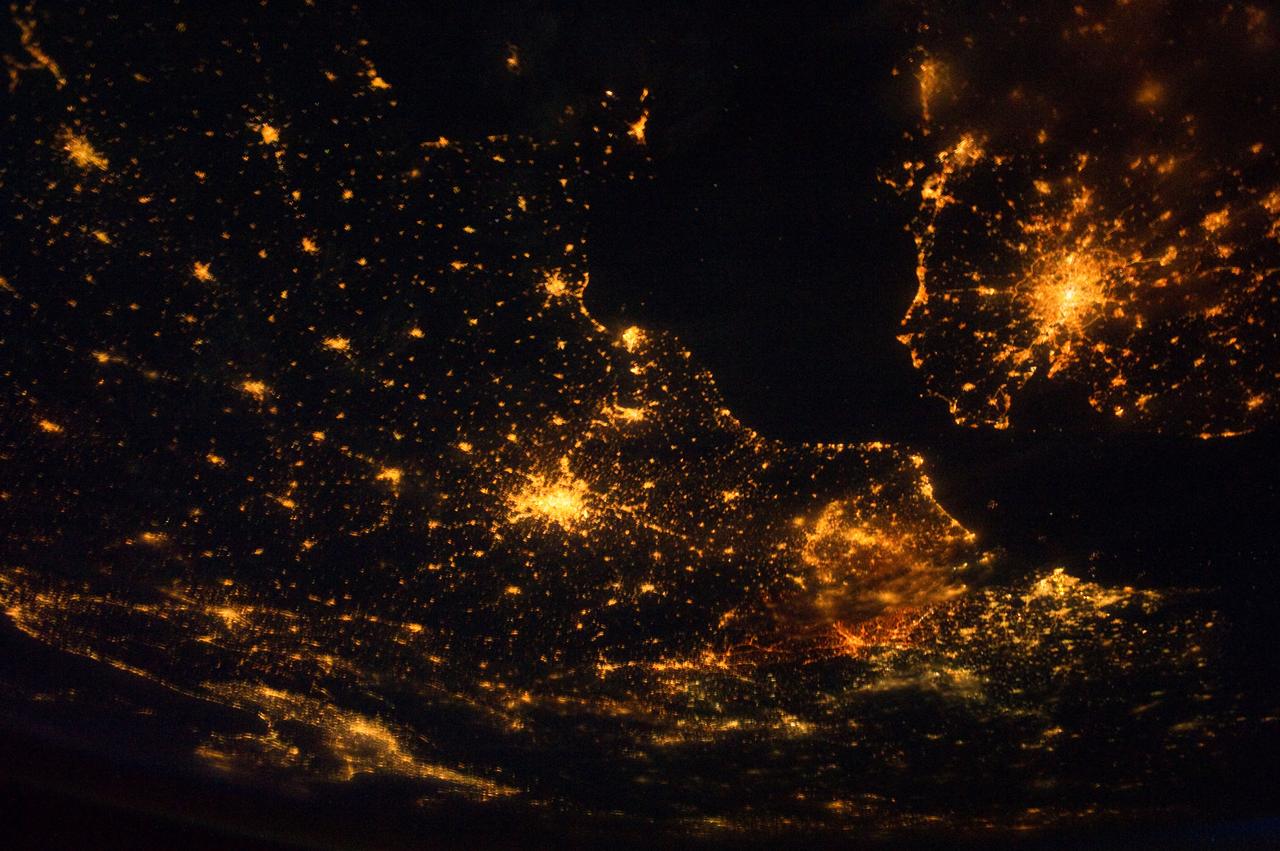
ISS028-E-024360 (10 Aug. 2011) --- This night time view of northwestern Europe is featured in this image photographed by an Expedition 28 crew member on the International Space Station. Several of the oldest cities of northwestern Europe are highlighted in this photograph taken at 00:25:26 Greenwich Mean Time (GMT). While the landscape is dotted with numerous clusters of lights from individual urban areas, the metropolitan areas of London (United Kingdom), Paris (France), Brussels (Belgium) and Amsterdam (Netherlands) stand out due to their large light ?footprints?. The metropolitan area of Milan, Italy is also visible at lower left. This photograph was taken with a short camera lens, providing the large field of view recorded in the image. To give a sense of scale, the centers of the London and Paris metropolitan areas are approximately 340 kilometers distant from each other. The image is also oblique, or taken while looking outward at an angle from the station; this tends to foreshorten the image, making the distance between Paris and Milan (approximately 640 kilometers) appear less than that of Paris to London. In contrast to the land surface defined by the city lights, the English Channel at right presents a uniform dark appearance. Similarly, the Alps (bottom center) to the north of Milan are also largely devoid of lights. While much of the atmosphere was clear at the time the image was taken, the lights of the Brussels metropolitan area are dimmed by thin cloud cover.
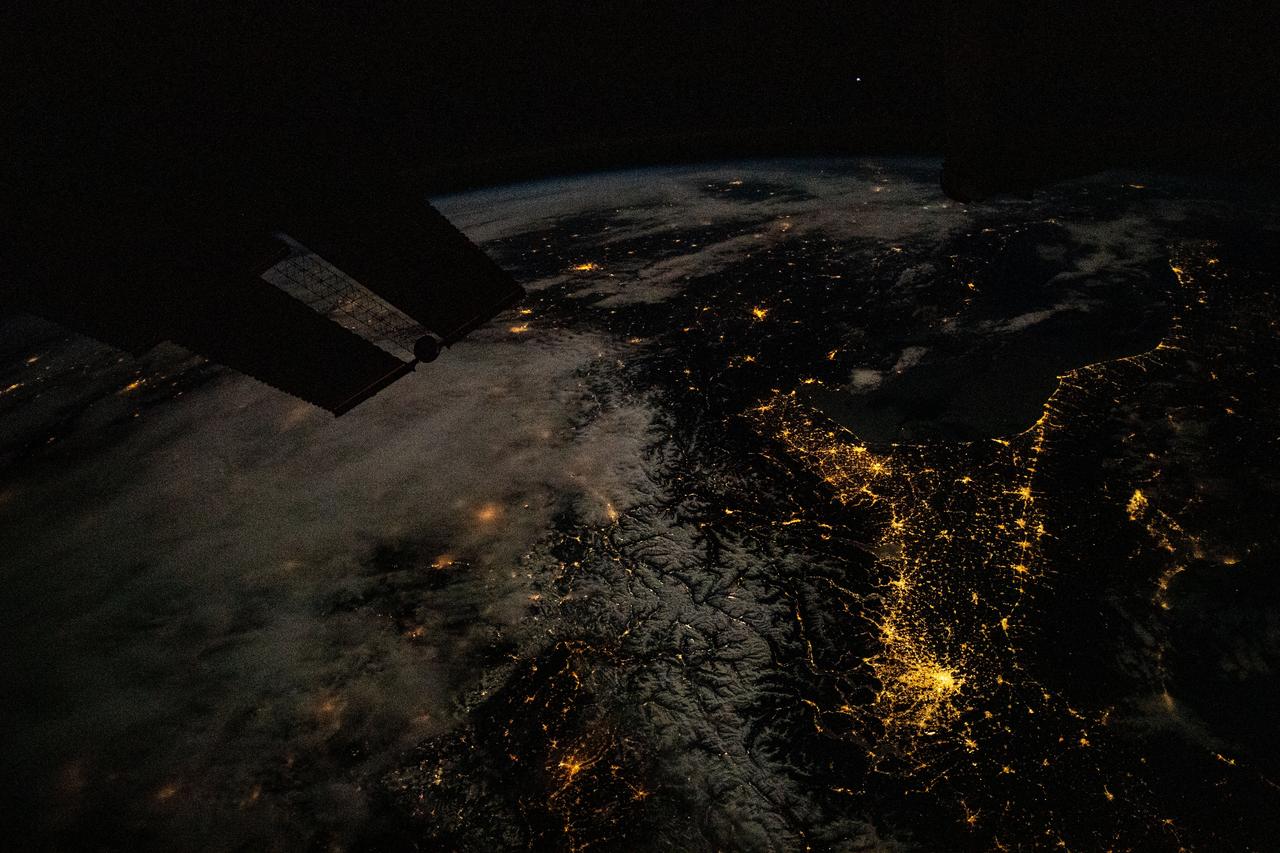
iss070e030942 (Nov. 26, 2023) --- This nighttime view of southern Europe looks northwest to southeast from Milan, Italy (bottom right), and across the Adriatic Sea to Split, Croatia. The International Space Station was orbiting 263 miles above eastern France at the time of this photograph.
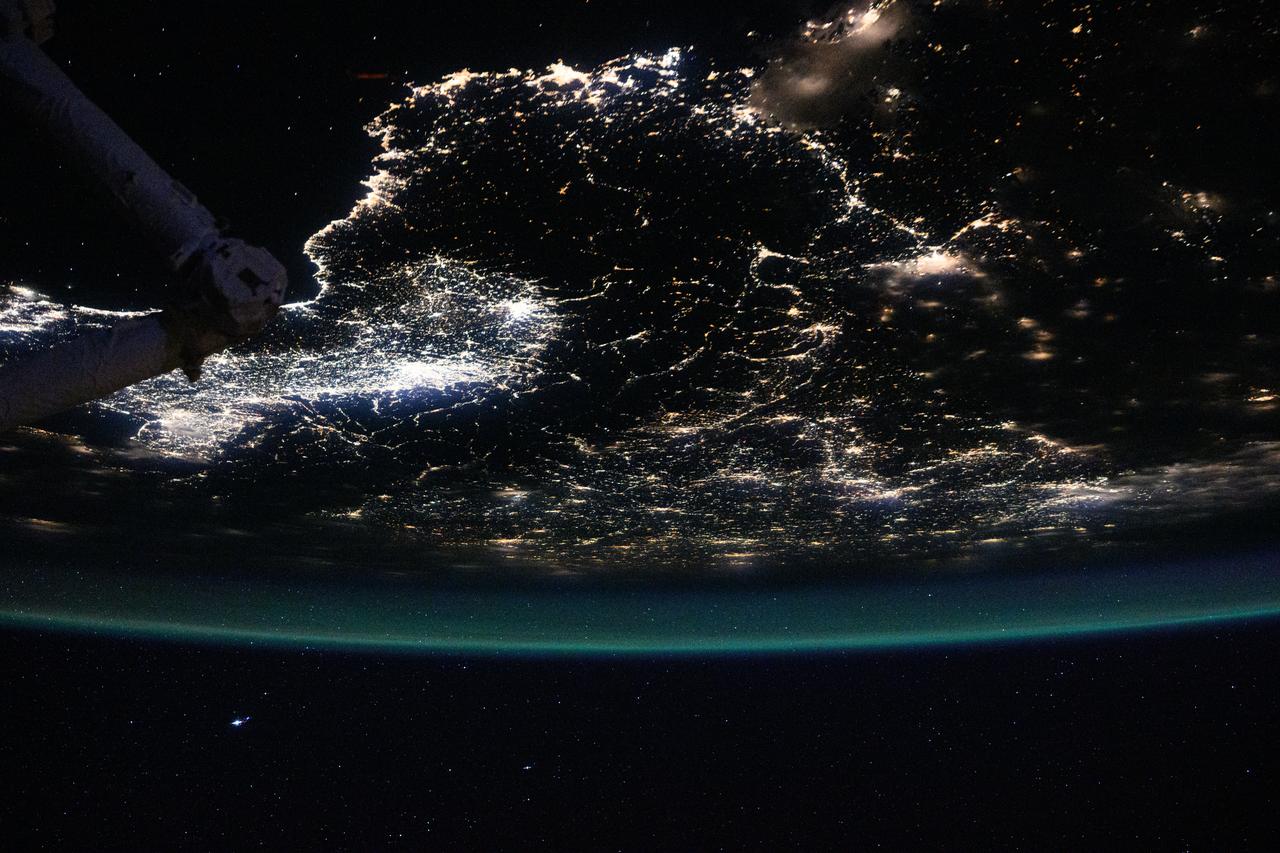
iss073e0686732 (Aug. 30, 2025) --- The atmospheric glow blankets southern Europe and the northwestern Mediterranean coast, outlined by city lights. At left, the Po Valley urban corridor in Italy shines with the metropolitan areas of Milan and Turin and their surrounding suburbs. This photograph was taken at approximately 1:39 a.m. local time from the International Space Station as it orbited 261 miles above Earth.
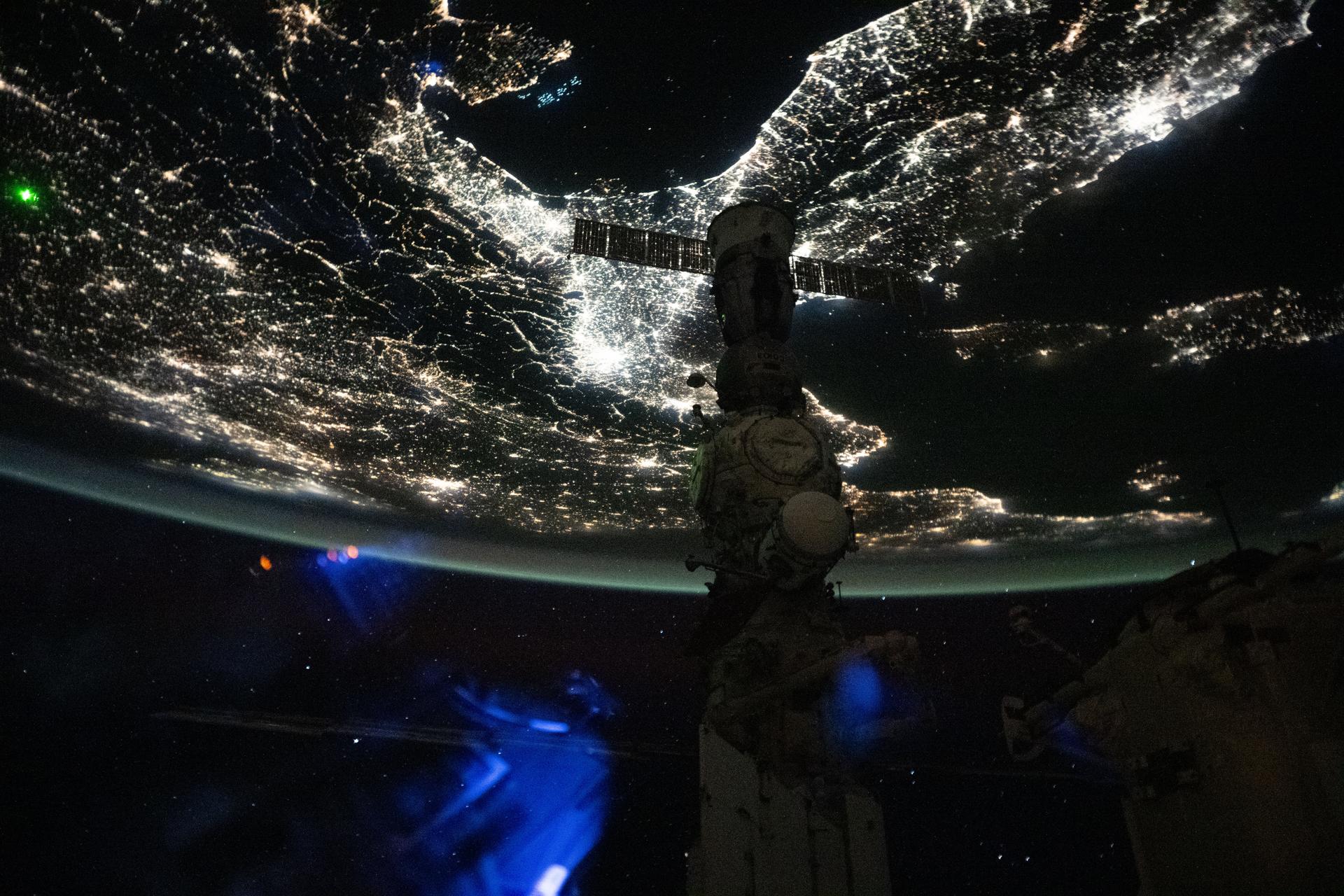
iss073e0705168 (Sept. 18, 2025) --- A faint blue-green airglow blankets Earth’s horizon as city lights define northern Italy's luminous urban corridor (center) from Turin, to Milan, and Venice. At upper right, Rome is visible along the Tyrrhenian coastline. The International Space Station was orbiting 262 miles above Southern Europe when this image was captured at approximately 11:14 p.m. local time.
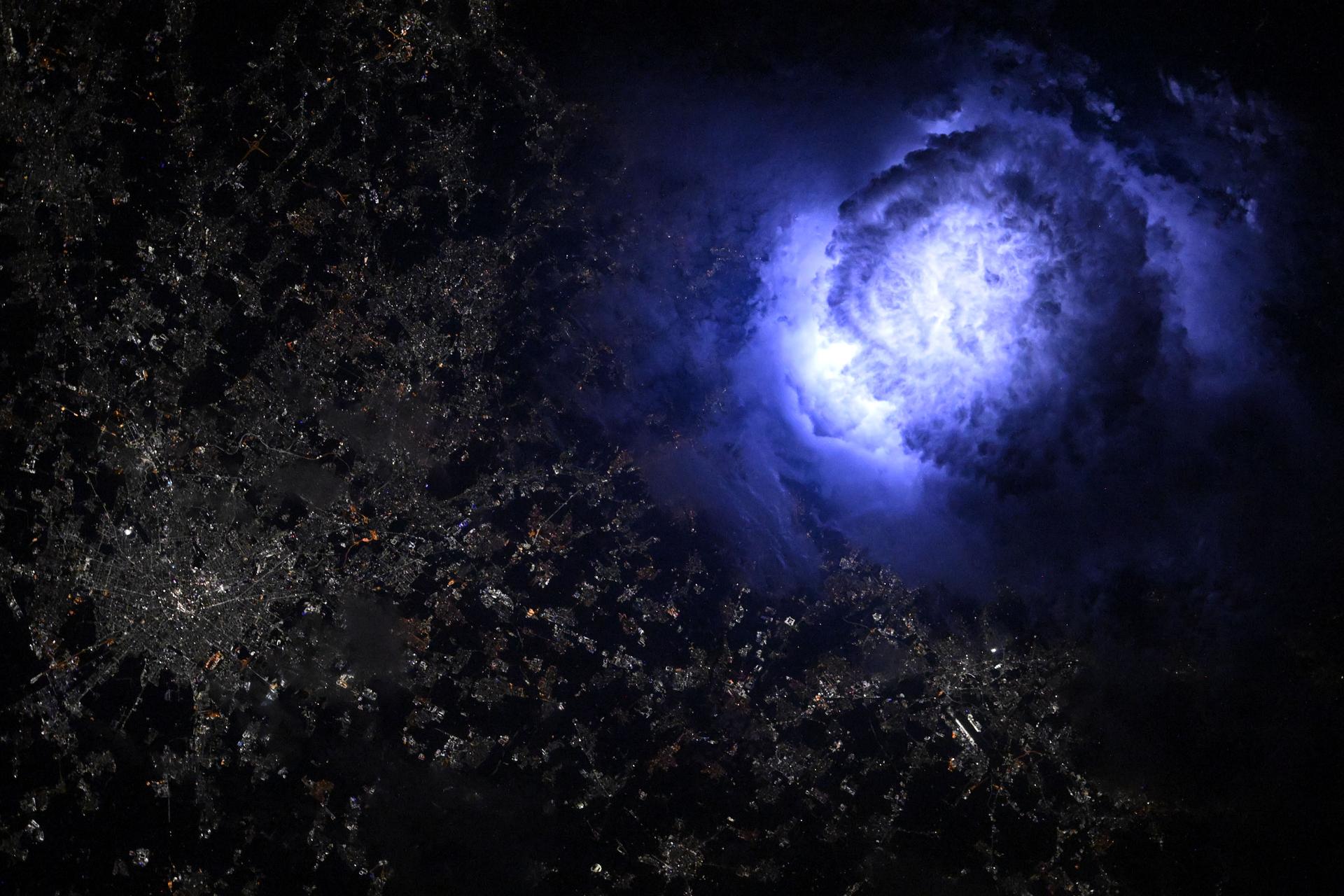
iss073e0532039 (July 1, 2025) --- NASA astronaut Nichole Ayers captured this image of lightning orbiting aboard the International Space Station more than 250 miles above Milan, Italy. Storm observations from space station help scientists study Earth’s upper atmosphere, which can improve weather models and protect communication systems and aircraft.

Orion Spaceraft transport to Plum Brook Station for testing in the SEC facility
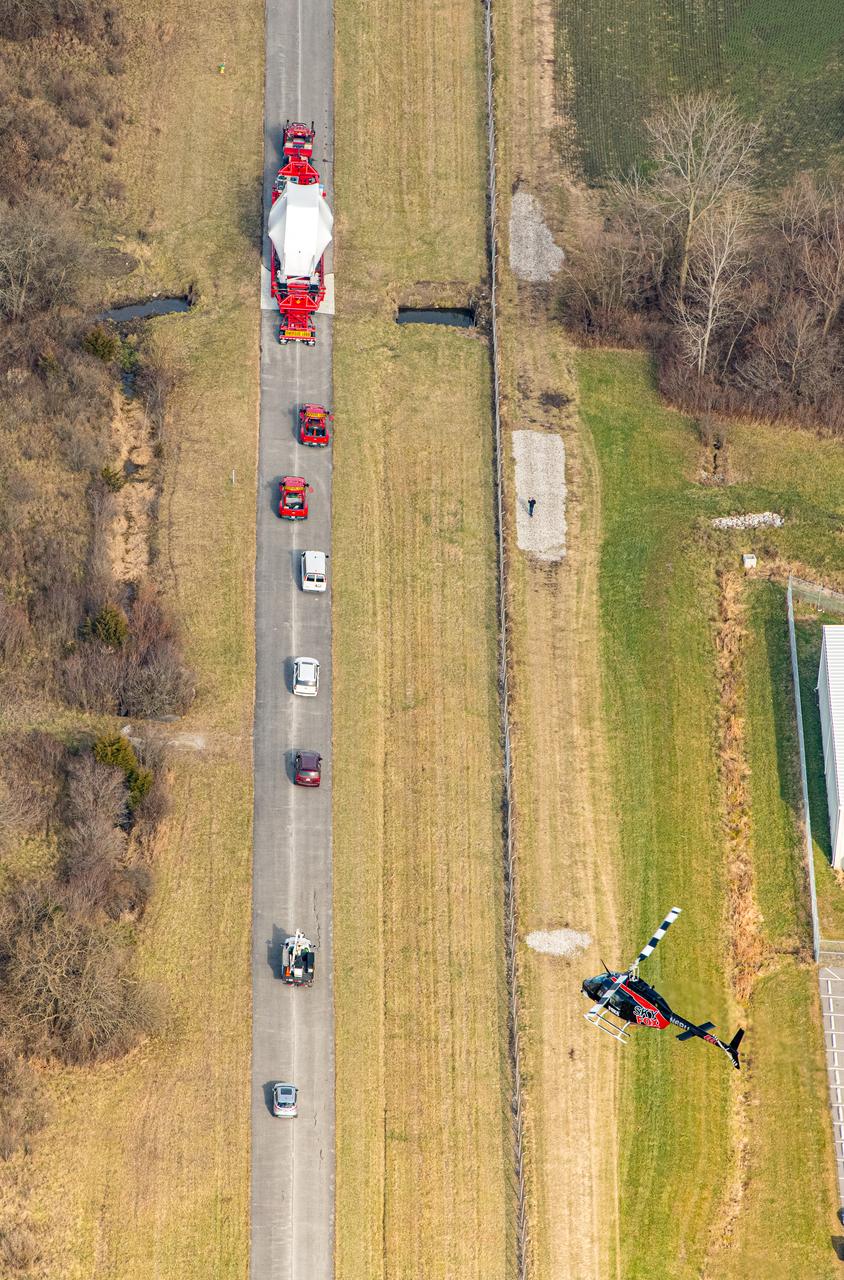
Orion Spaceraft transport to Plum Brook Station for testing in the SEC facility
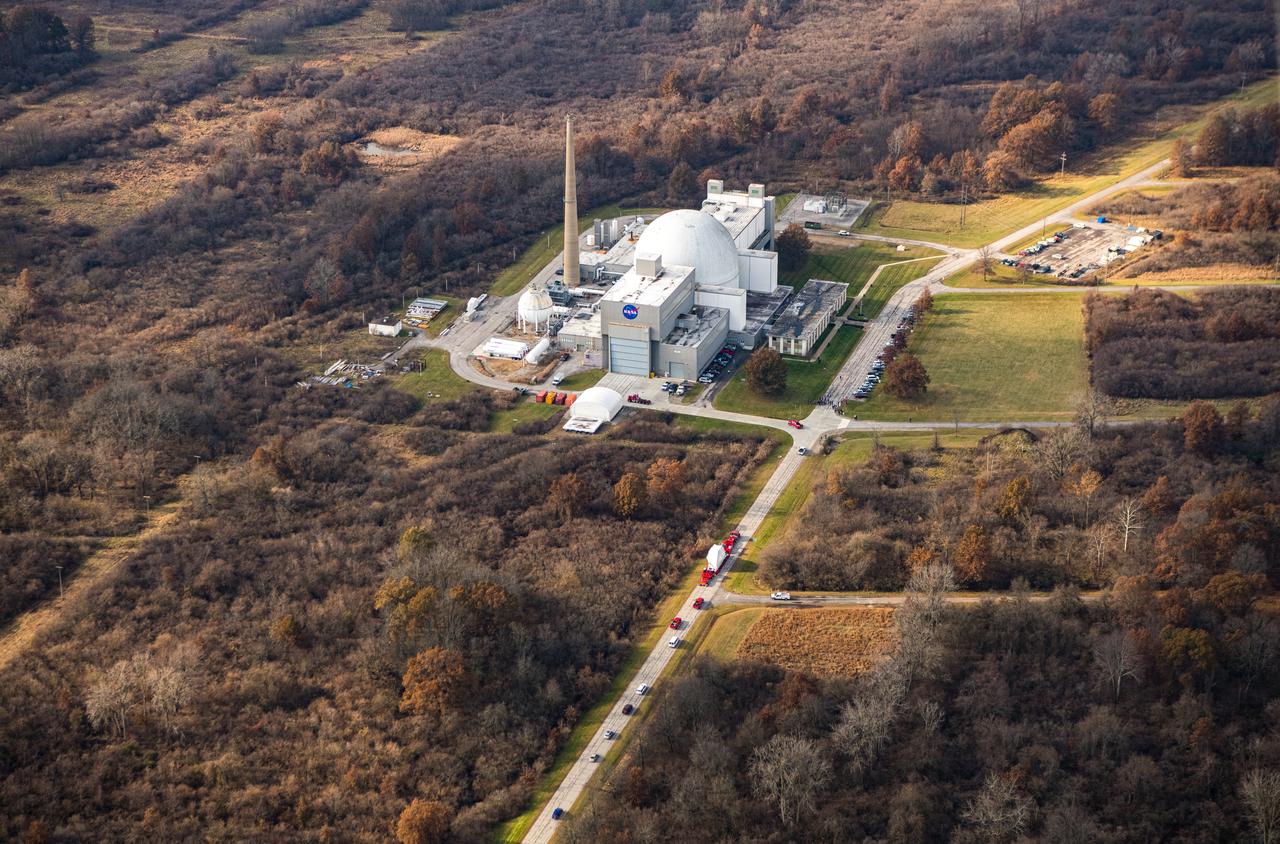
Orion Spaceraft transport to Plum Brook Station for testing in the SEC facility

CAPE CANAVERAL, Fla. -- In Orbiter Processing Facility Bay 3 at NASA’s Kennedy Space Center, Jerry McKlin (left) and Milan Vasic, with United Space Alliance, check the placement under space shuttle Discovery of the struts from the Orbiter Transport System, or OTS. The OTS will help move the orbiter on its rollover to the Vehicle Assembly Building. Discovery is targeted to launch May 31 on the STS-124 mission to the International Space Station. On the mission, Discovery will transport the Kibo Japanese Experiment Module - Pressurized Module (JEM-PM) and the Japanese Remote Manipulator System (JEM-RMS) to the space station to add to the Kibo laboratory. Photo credit: NASA/Troy Cryder
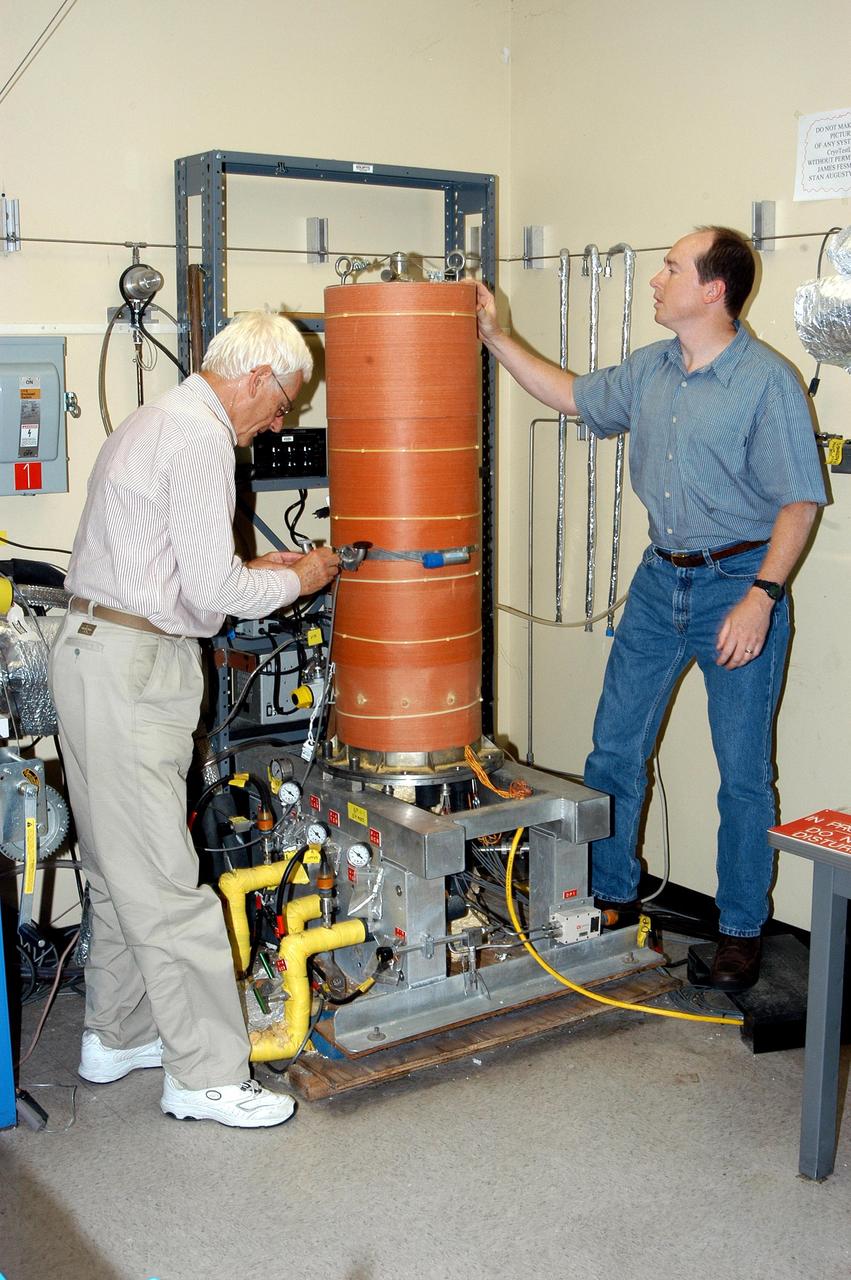
KENNEDY SPACE CENTER, FLA. - James E. Fesmire (right), NASA lead engineer for the KSC Cryogenics Testbed, works on Cryostat-1, the Methods of Testing Thermal Insulation and Association Test Apparatus, which he developed. At left is co-inventor Dr. Stan Augustynowicz, chief scientist with Sierra Lobo Inc. in Milan, Ohio. Cryostat-1 provides absolute thermal performance values of cryogenic insulation systems under real-world conditions. Cryogenic liquid is supplied to a test chamber and two guard chambers, and temperatures are sensed within the vacuum chamber to test aerogels, foams or other materials. The Cryostat-1 machine can detect the absolute heat leakage rates through materials under the full range of vacuum conditions. Fesmire recently acquired three patents for testing thermal insulation materials for cryogenic systems. The research team of the Cryogenics Testbed offers testing and support for a number of programs and initiatives for NASA and commercial customers.
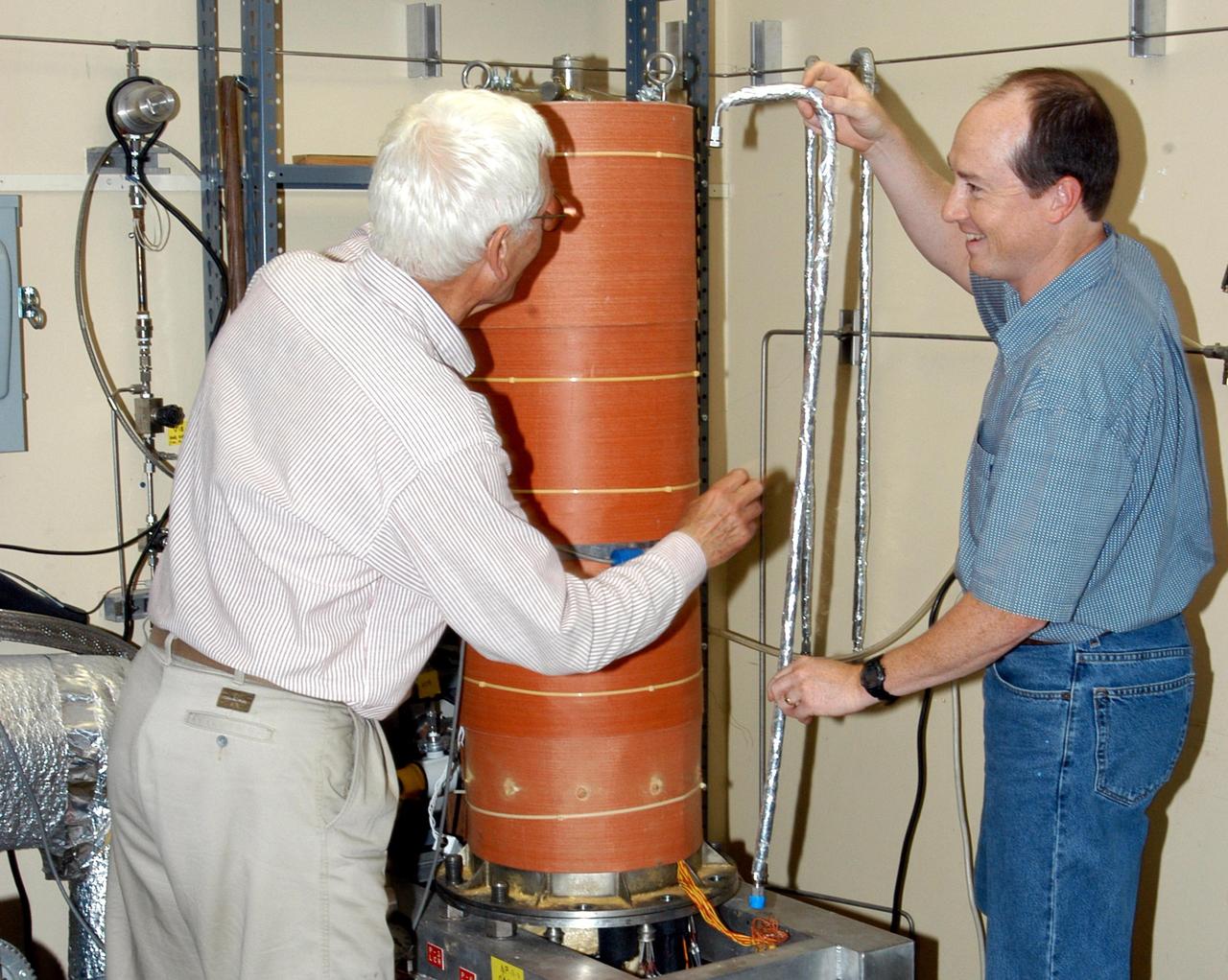
KENNEDY SPACE CENTER, FLA. - James E. Fesmire (right), NASA lead engineer for the KSC Cryogenics Testbed, works on Cryostat-1, the Methods of Testing Thermal Insulation and Association Test Apparatus, which he developed. At left is co-inventor Dr. Stan Augustynowicz, chief scientist with Sierra Lobo Inc. in Milan, Ohio. Cryostat-1 provides absolute thermal performance values of cryogenic insulation systems under real-world conditions. Cryogenic liquid is supplied to a test chamber and two guard chambers, and temperatures are sensed within the vacuum chamber to test aerogels, foams or other materials. The Cryostat-1 machine can detect the absolute heat leakage rates through materials under the full range of vacuum conditions. Fesmire recently acquired three patents for testing thermal insulation materials for cryogenic systems. The research team of the Cryogenics Testbed offers testing and support for a number of programs and initiatives for NASA and commercial customers.