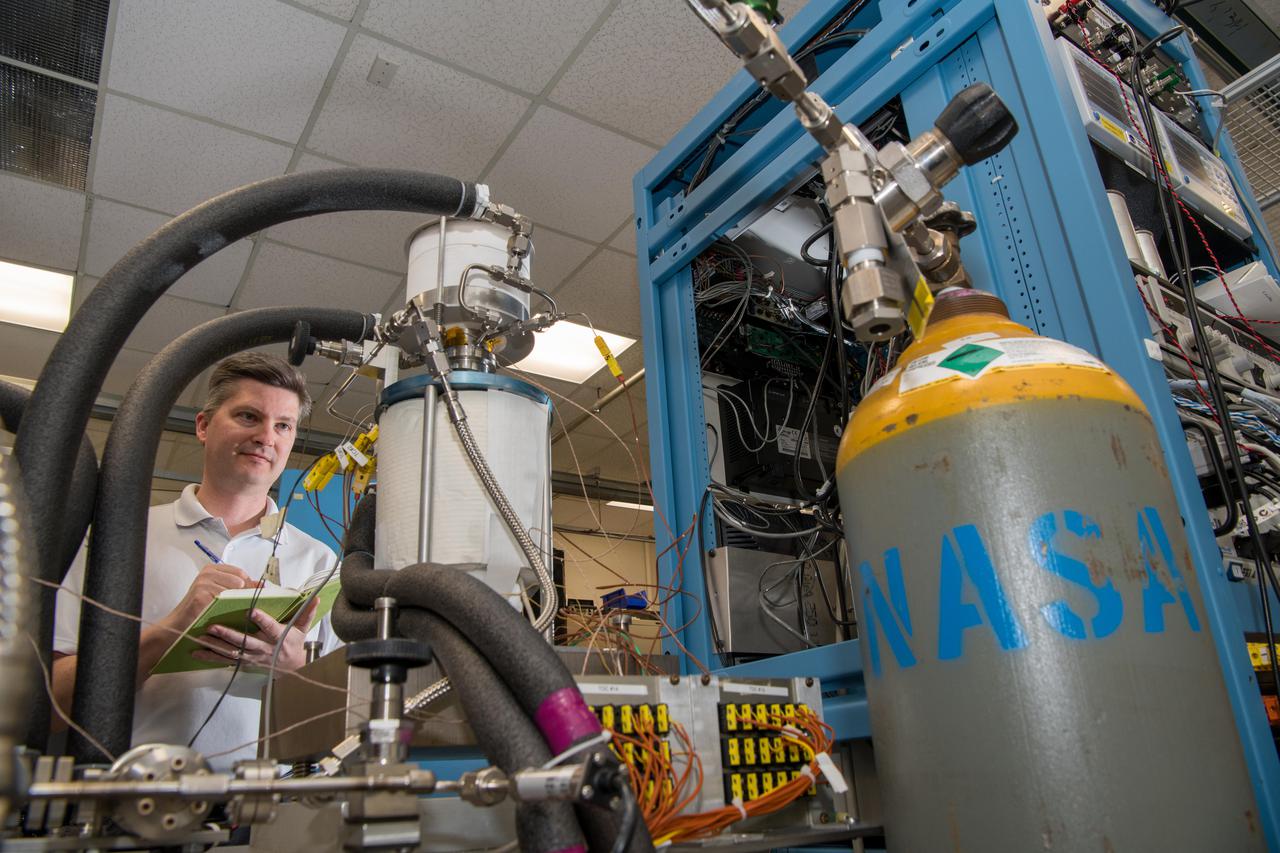
Glenn’s Technology Demonstration Convertor (TDC) #13, a free-piston Stirling power convertor, achieved a milestone of 14 years of maintenance-free operation in the Stirling Research Laboratory in building 301. This technology is proving our capability to power spacecraft on longer-duration future scientific missions.
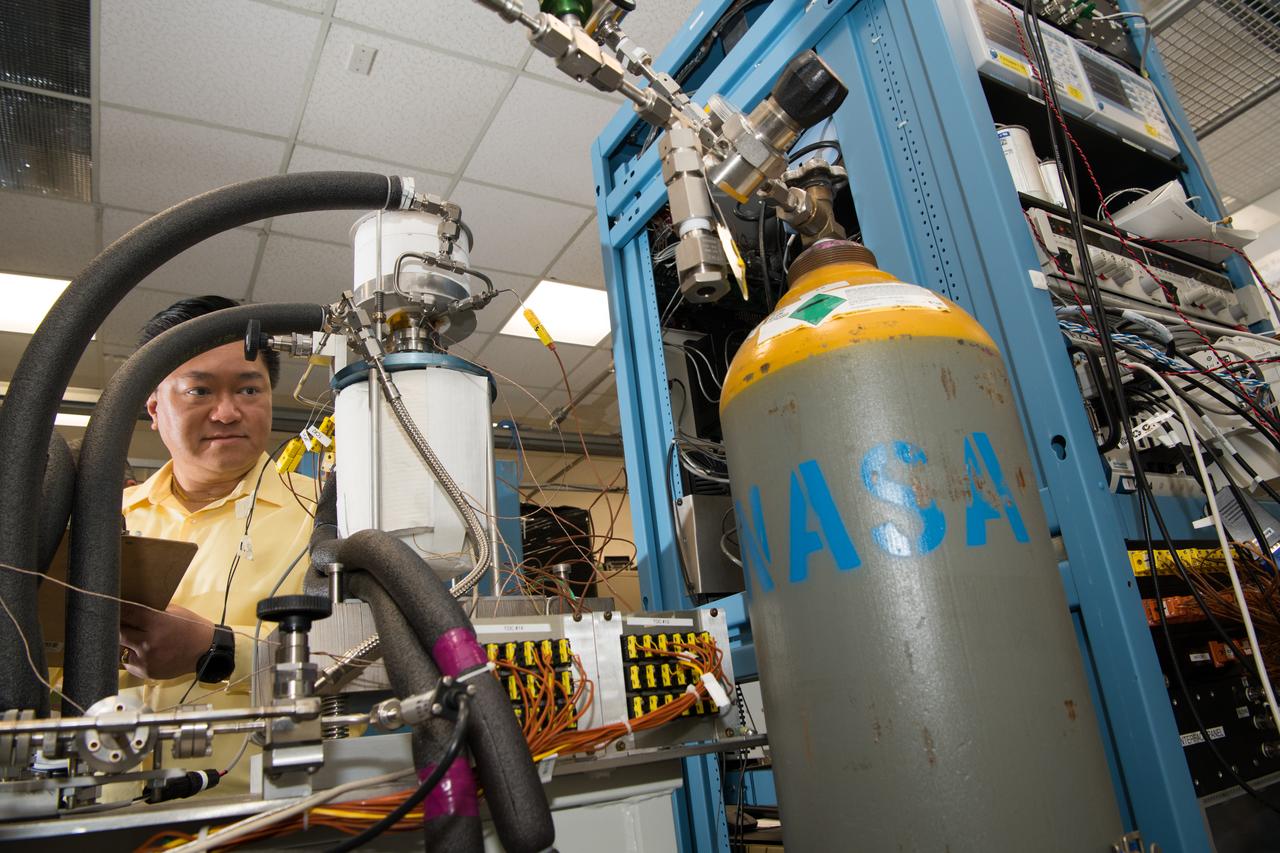
Glenn’s Technology Demonstration Convertor (TDC) #13, a free-piston Stirling power convertor, achieved a milestone of 14 years of maintenance-free operation in the Stirling Research Laboratory in building 301. This technology is proving our capability to power spacecraft on longer-duration future scientific missions.
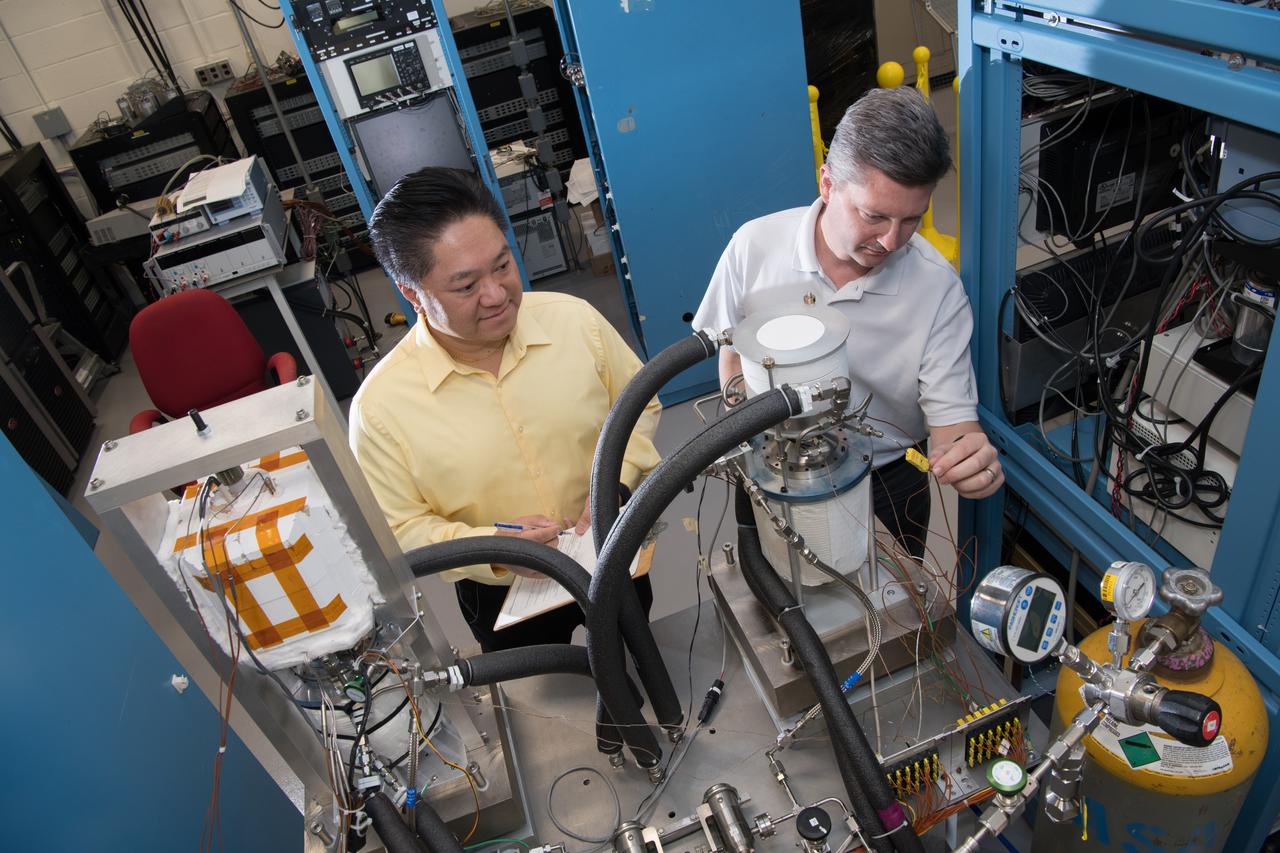
Glenn’s Technology Demonstration Convertor (TDC) #13, a free-piston Stirling power convertor, achieved a milestone of 14 years of maintenance-free operation in the Stirling Research Laboratory in building 301. This technology is proving our capability to power spacecraft on longer-duration future scientific missions.
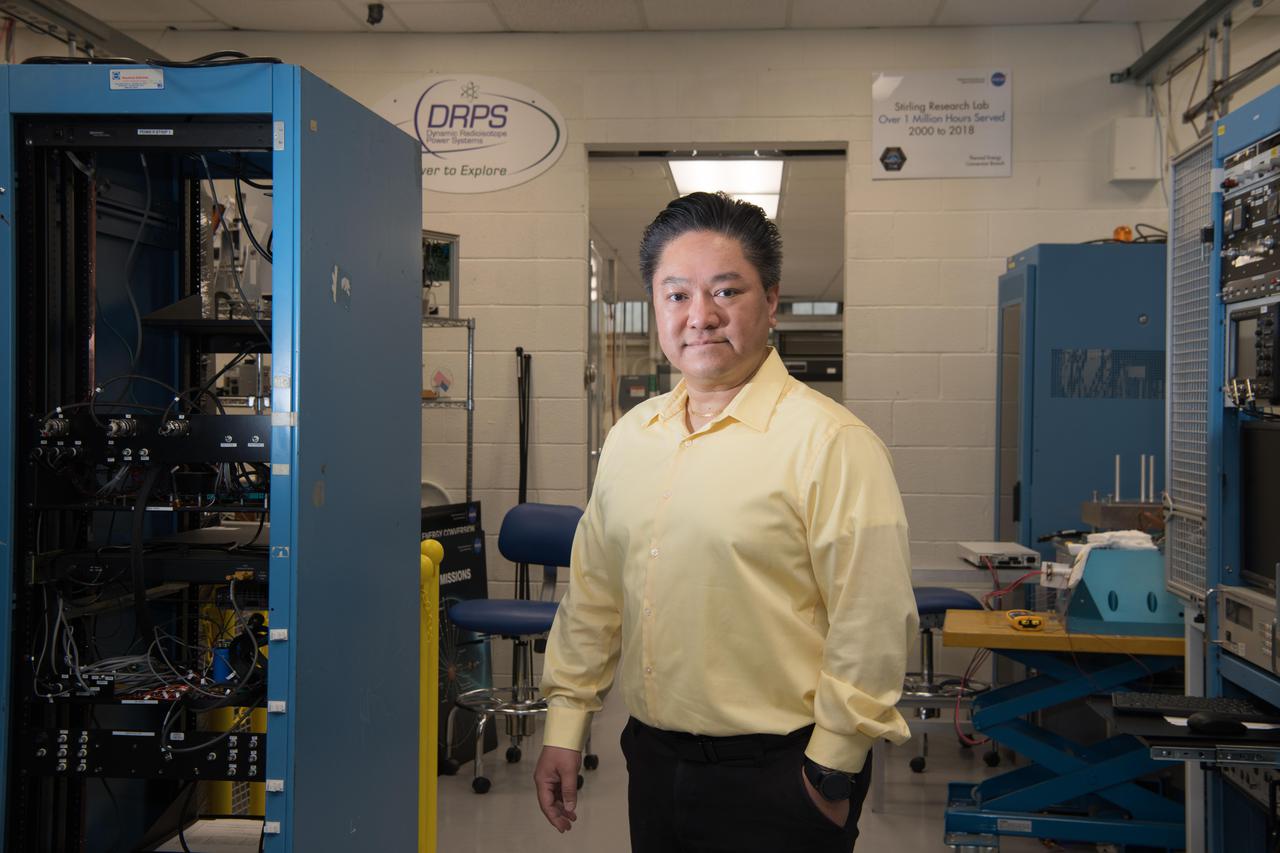
Glenn’s Technology Demonstration Convertor (TDC) #13, a free-piston Stirling power convertor, achieved a milestone of 14 years of maintenance-free operation in the Stirling Research Laboratory in building 301. This technology is proving our capability to power spacecraft on longer-duration future scientific missions.
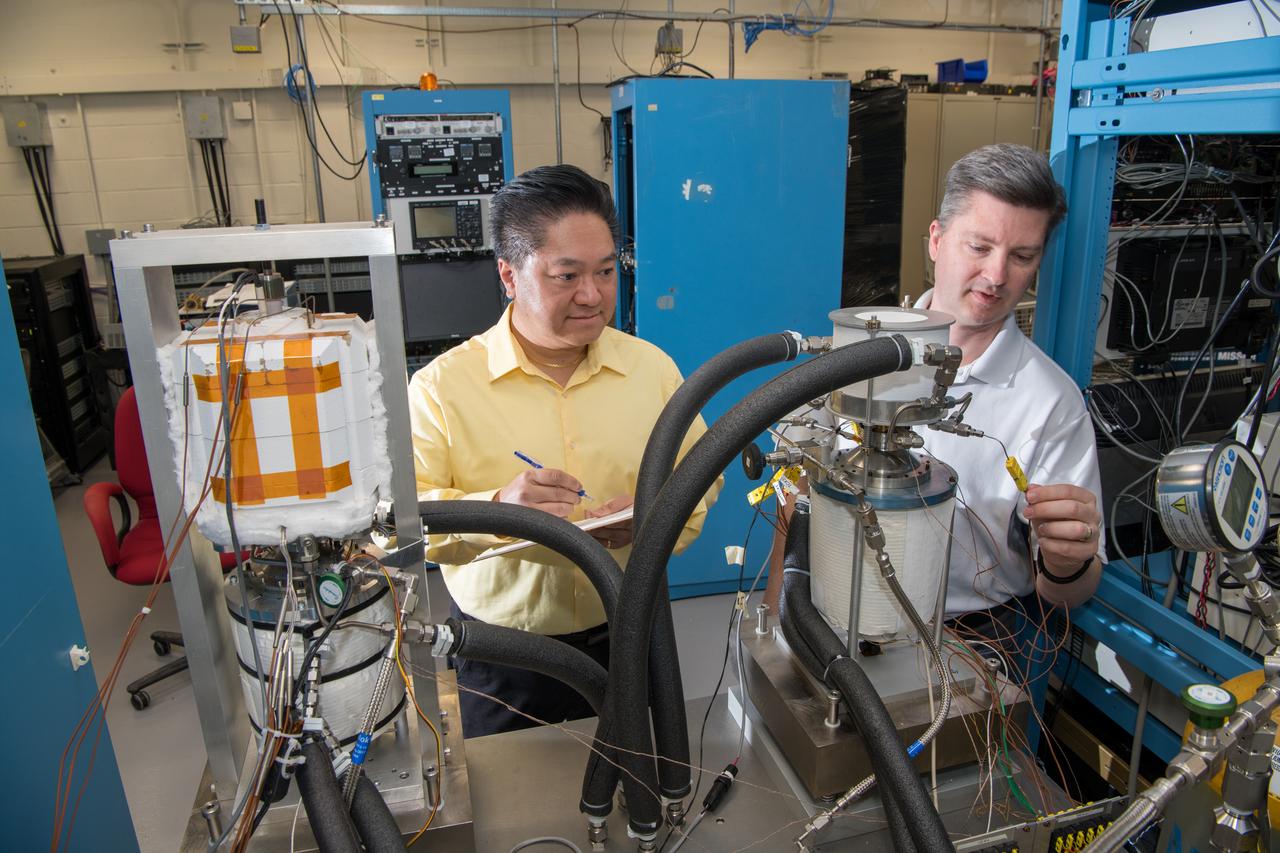
Glenn’s Technology Demonstration Convertor (TDC) #13, a free-piston Stirling power convertor, achieved a milestone of 14 years of maintenance-free operation in the Stirling Research Laboratory in building 301. This technology is proving our capability to power spacecraft on longer-duration future scientific missions.
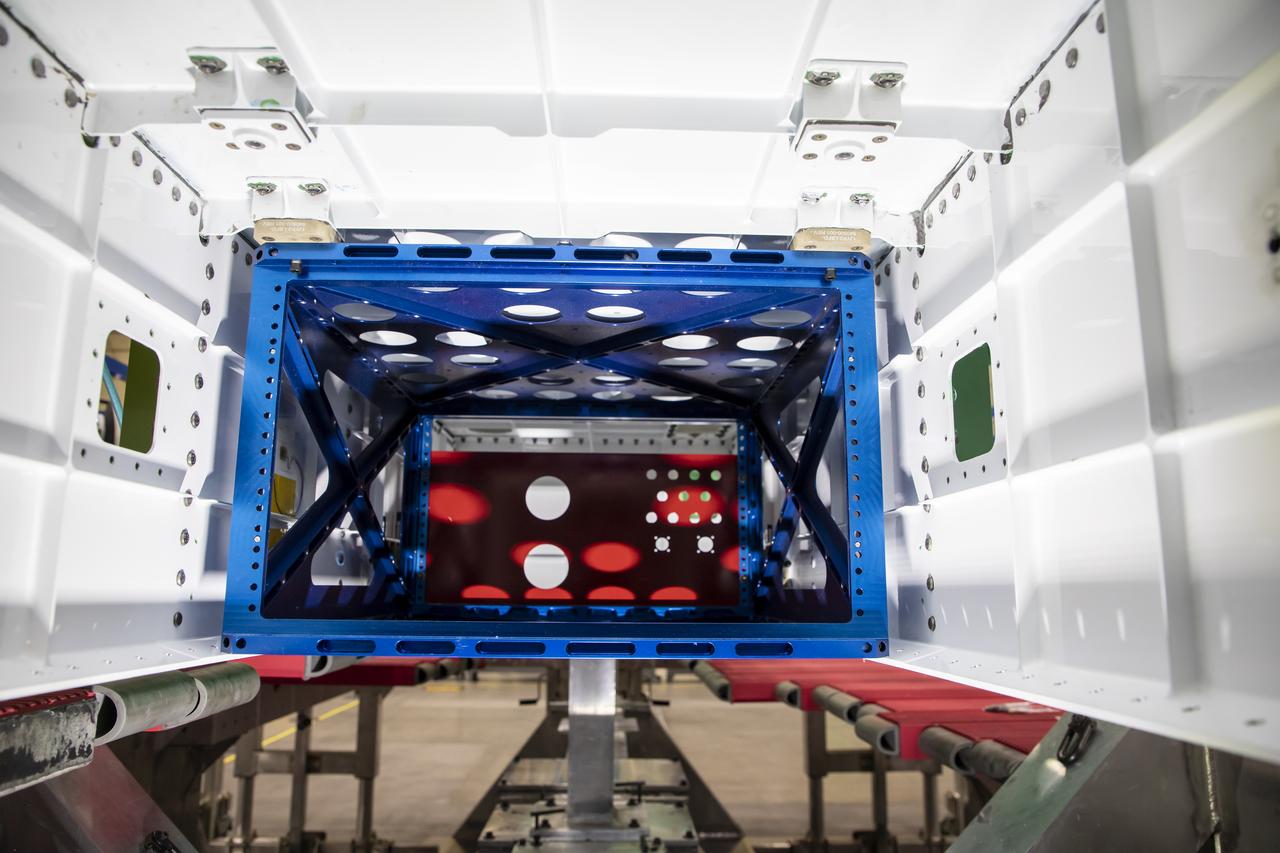
Following the successful installation of mounting brackets, technicians successfully installed the pallet for the eXternal Visibility System, or XVS, onto the X-59 Quiet SuperSonic Technology X-plane, also known as X-59 QueSST. The pallet installation marks an assembly milestone as the first NASA flight systems hardware to be installed onto the vehicle. X-59 will fly to demonstrate the ability to produce quiet thumps at supersonic speeds, instead of the typical, loud sonic booms associated with supersonic flight.
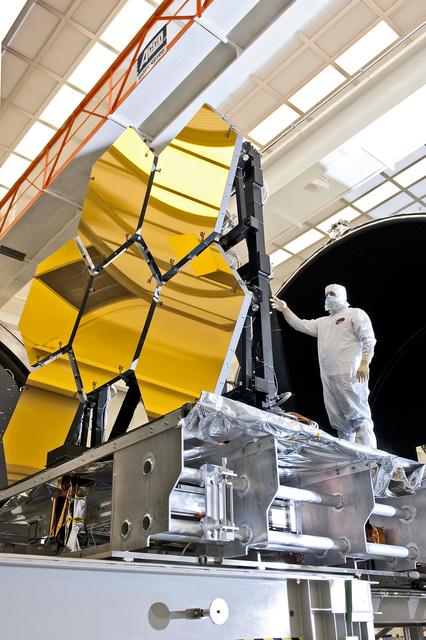
The first six flight ready James Webb Space Telescope's primary mirror segments are prepped to begin final cryogenic testing at NASA's Marshall Space Flight Center in Huntsville, Ala. To read more go to: <a href="http://www.nasa.gov/topics/technology/features/webb-mirror-coating.html" rel="nofollow">www.nasa.gov/topics/technology/features/webb-mirror-coati...</a> Credit: NASA/GSFC/Chris Gunn <b><a href="http://www.nasa.gov/centers/goddard/home/index.html" rel="nofollow">NASA Goddard Space Flight Center</a></b> enables NASA’s mission through four scientific endeavors: Earth Science, Heliophysics, Solar System Exploration, and Astrophysics. Goddard plays a leading role in NASA’s accomplishments by contributing compelling scientific knowledge to advance the Agency’s mission. <b>Follow us on <a href="http://twitter.com/NASA_GoddardPix" rel="nofollow">Twitter</a></b> <b>Like us on <a href="http://www.facebook.com/pages/Greenbelt-MD/NASA-Goddard/395013845897?ref=tsd" rel="nofollow">Facebook</a></b> <b>Find us on <a href="http://instagrid.me/nasagoddard/?vm=grid" rel="nofollow">Instagram</a></b>

NASA's Dryden Flight Research Center marked its 60th anniversary as the aerospace agency's lead center for atmospheric flight research and operations in 2006. In connection with that milestone, hundreds of the center's staff and retirees gathered in nearby Lancaster, Calif., in November 2006 to reflect on the center's challenges and celebrate its accomplishments over its six decades of advancing the state-of-the-art in aerospace technology. The center had its beginning in 1946 when a few engineers from the National Advisory Committee for Aeronautics' Langley Memorial Aeronautical Laboratory were detailed to Muroc Army Air Base (now Edwards Air Force Base) in Southern California's high desert to support the joint Army Air Force / NACA / Bell Aircraft XS-1 research airplane program. Since that inauspicious beginning, the center has been at the forefront of many of the advances in aerospace technology by validating advanced concepts through actual in-flight research and testing. Dryden is uniquely situated to take advantage of the excellent year-round flying weather, remote area, and visibility to test some of the nation�s most exciting aerospace vehicles. Today, NASA Dryden is NASA's premier flight research and test organization, continuing to push the envelope in the validation of high-risk aerospace technology and space exploration concepts, and in conducting airborne environmental and space science missions in the 21st century.

NASA image release April 14, 2011 NASA engineer Ernie Wright looks on as the first six flight ready James Webb Space Telescope's primary mirror segments are prepped to begin final cryogenic testing at NASA's Marshall Space Flight Center in Huntsville, Ala. Credit: NASA/MSFC/David Higginbotham To read more go to: <a href="http://www.nasa.gov/centers/marshall/news/jwst/11-111.html" rel="nofollow">www.nasa.gov/centers/marshall/news/jwst/11-111.html</a> <b><a href="http://www.nasa.gov/centers/goddard/home/index.html" rel="nofollow">NASA Goddard Space Flight Center</a></b> enables NASA’s mission through four scientific endeavors: Earth Science, Heliophysics, Solar System Exploration, and Astrophysics. Goddard plays a leading role in NASA’s accomplishments by contributing compelling scientific knowledge to advance the Agency’s mission. <b>Follow us on <a href="http://twitter.com/NASA_GoddardPix" rel="nofollow">Twitter</a></b> <b>Join us on <a href="http://www.facebook.com/pages/Greenbelt-MD/NASA-Goddard/395013845897?ref=tsd" rel="nofollow">Facebook</a></b>
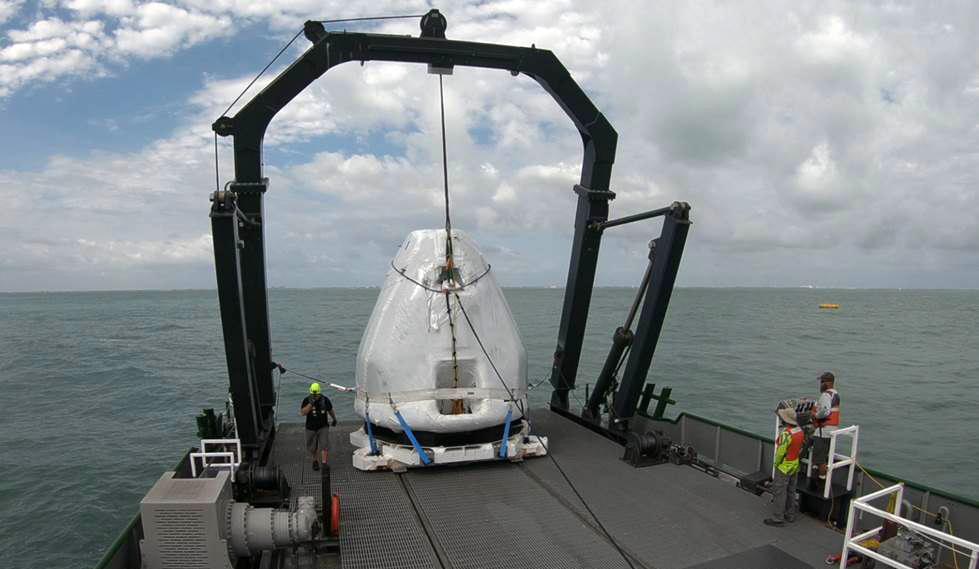
On February 28, SpaceX completed a demonstration of their ability to recover the crew and capsule after a nominal water splashdown. This marks an important recovery milestone and joint test. The timeline requirement from splashdown to crew egress onboard the ship is one hour, and the recovery team demonstrated that they can accomplish this operation under worst-case conditions in under 45 minutes. Further improvements are planned to shorten the recovery time even more as the team works to build a process that is safe, repeatable, and efficient.
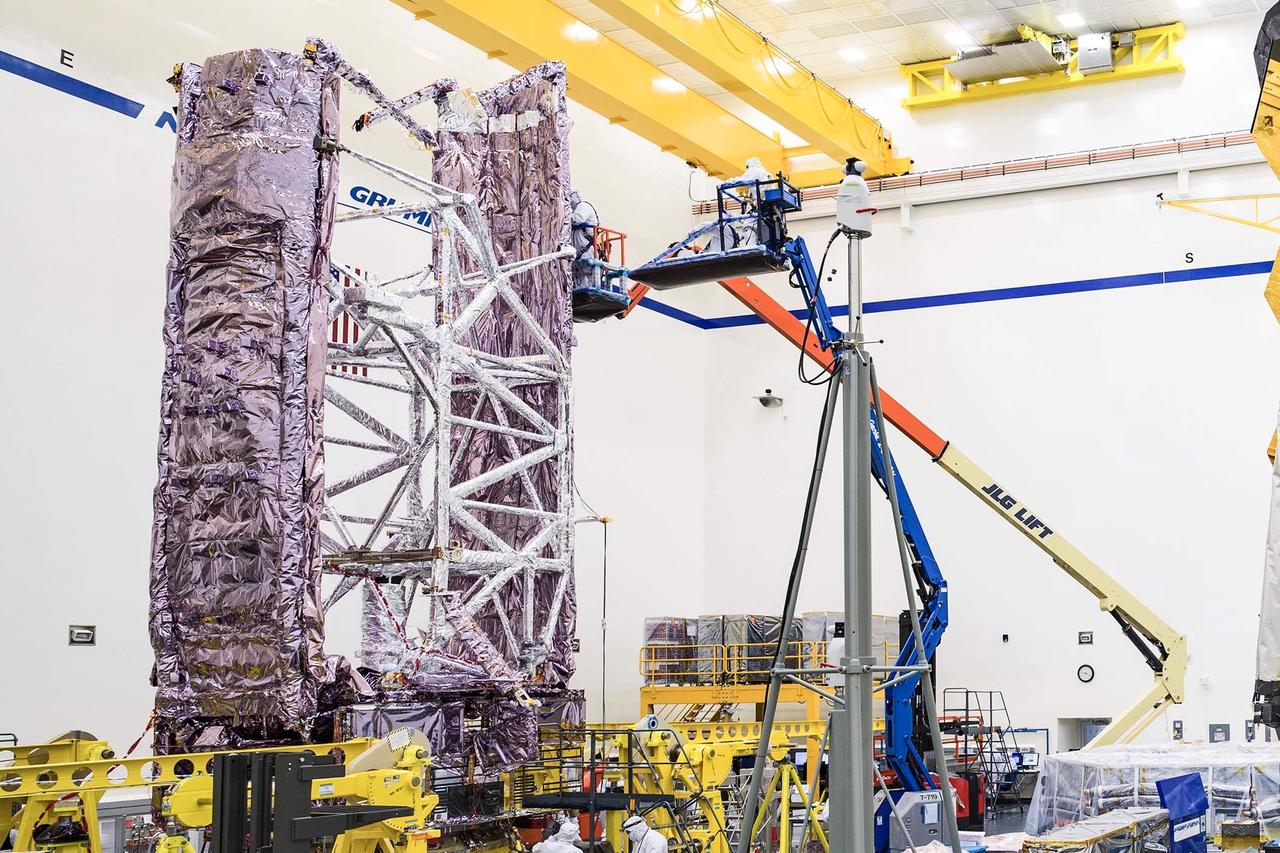
The James Webb Space Telescope’s spacecraft element just prior to being transported to nearby acoustic, and vibration test facilities at Northrop Grumman in Redondo Beach, California. Credits: NASA's Goddard Space Flight Center/Chris Gunn more info: https://www.nasa.gov/feature/goddard/2019/nasa-s-webb-is-sound-after-completing-critical-milestones
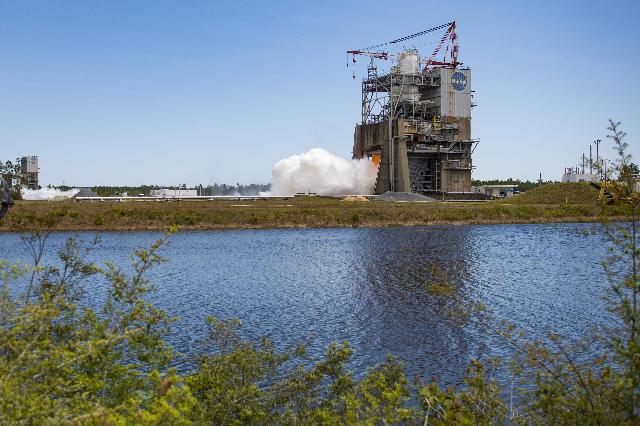
NASA closes in on a milestone for production of new RS-25 engines to help power future Artemis missions to the Moon and beyond following a successful full duration test on March 27 at NASA’s Stennis Space Center. It marks the 11th test of the 12-test series.
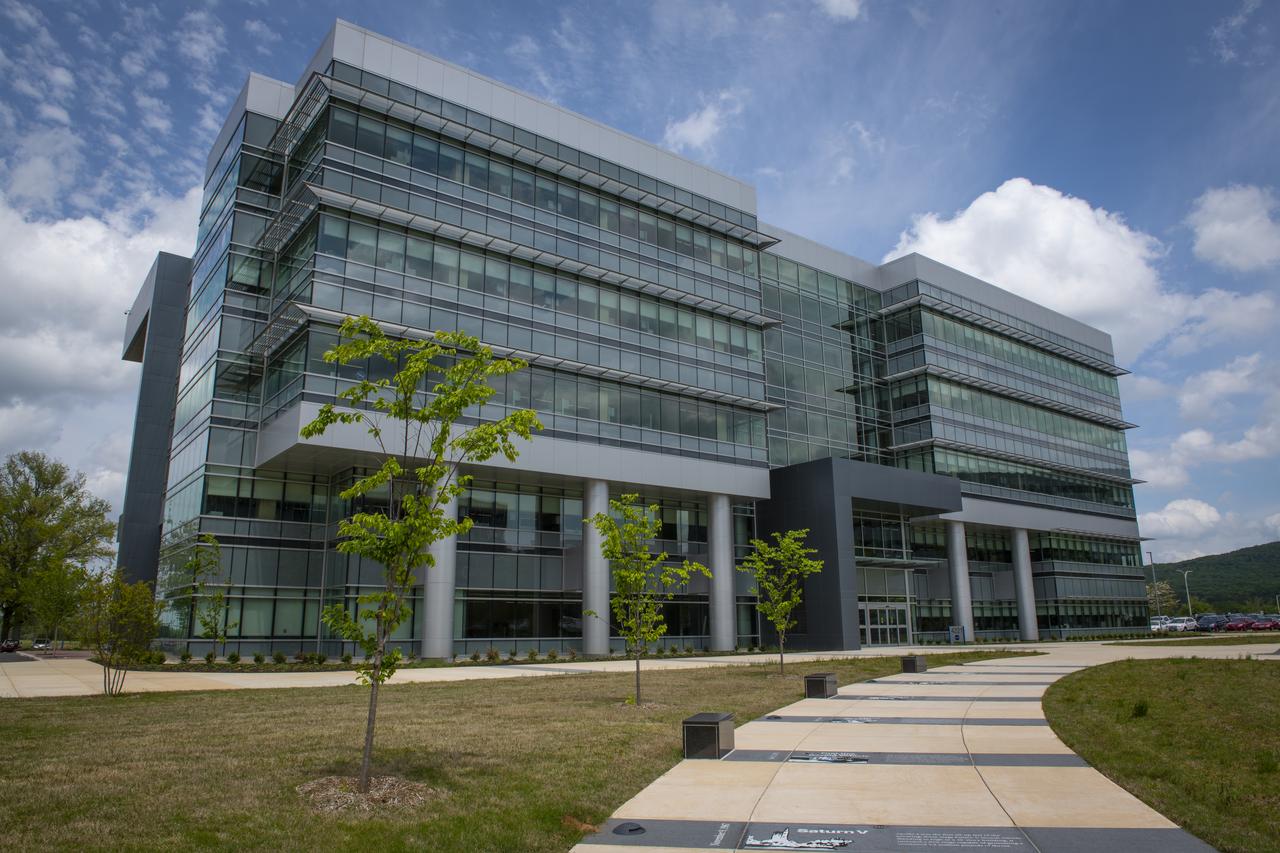
Pictured is Building 4221 on the Marshall Space Flight Center campus.
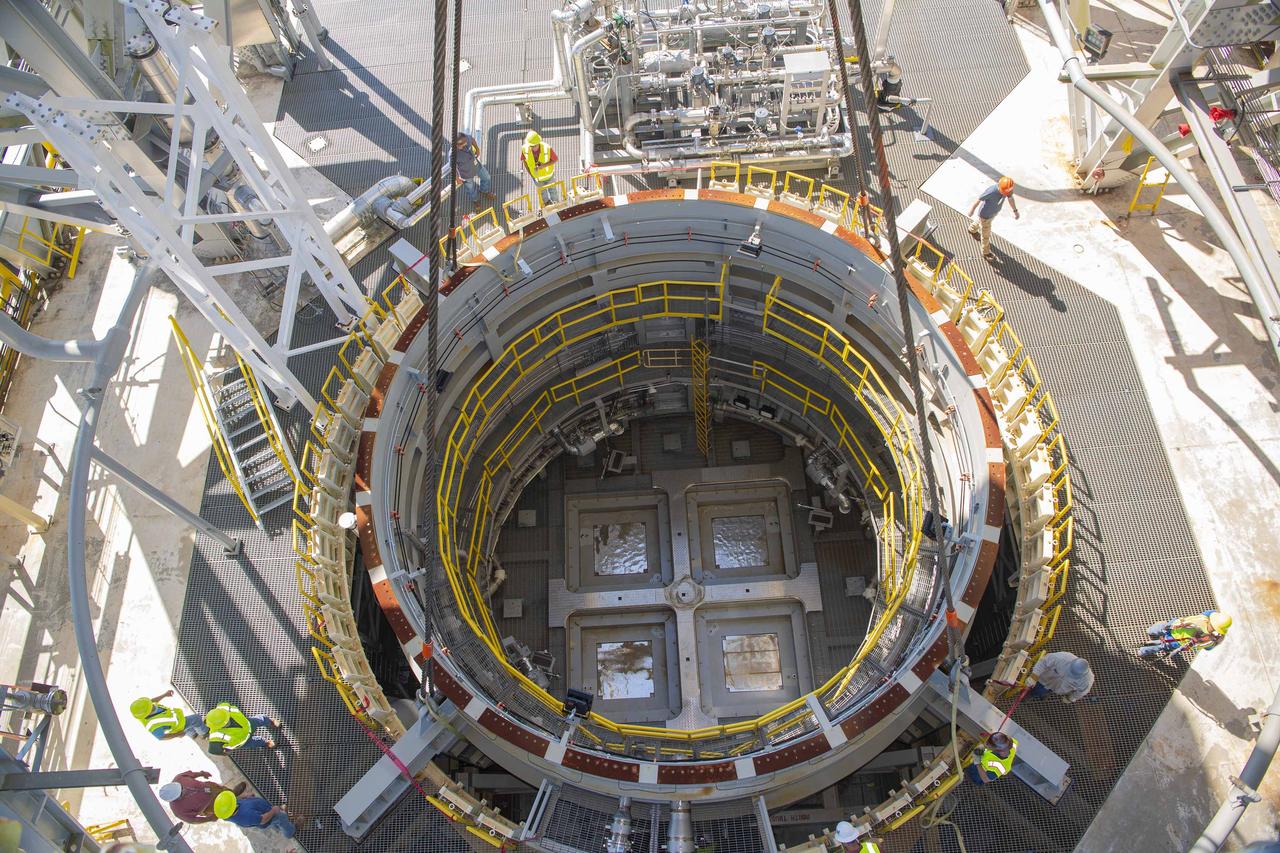
Teams at NASA’s Stennis Space Center complete a safe lift and install of an interstage simulator unit needed for future testing of NASA’s exploration upper stage (EUS) in the B-2 position of the Thad Cochran Test Stand. The lift and install, completed over a two-week period that began Oct. 10, marks a milestone for testing the new SLS (Space Launch System) rocket stage that will fly on future Artemis missions to the Moon and beyond. The EUS will undergo a series of Green Run tests of its integrated systems prior to its first flight. During testing, the interstage simulator component will function like the SLS interstage section that helps protect the upper stage during Artemis launches.
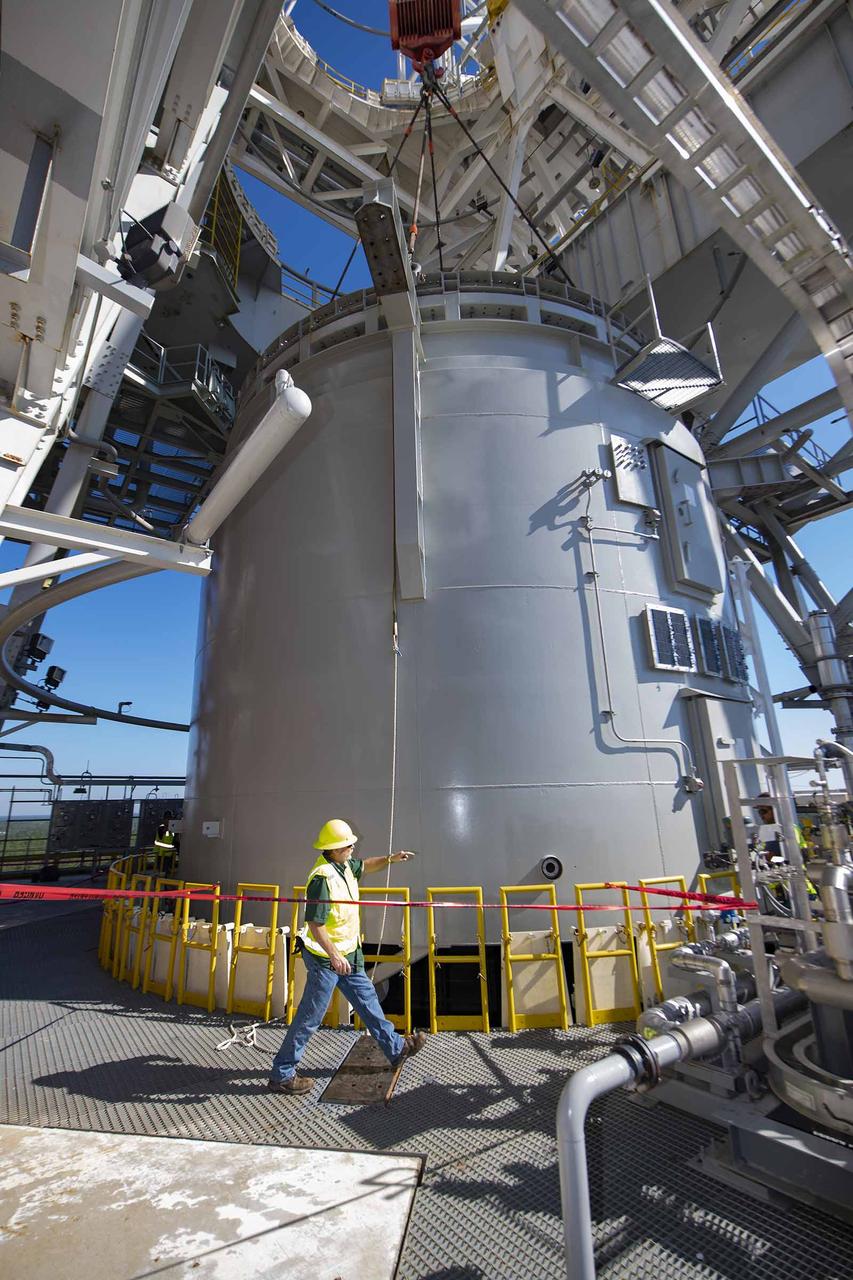
Teams at NASA’s Stennis Space Center complete a safe lift and install of an interstage simulator unit needed for future testing of NASA’s exploration upper stage (EUS) in the B-2 position of the Thad Cochran Test Stand. The lift and install, completed over a two-week period that began Oct. 10, marks a milestone for testing the new SLS (Space Launch System) rocket stage that will fly on future Artemis missions to the Moon and beyond. The EUS will undergo a series of Green Run tests of its integrated systems prior to its first flight. During testing, the interstage simulator component will function like the SLS interstage section that helps protect the upper stage during Artemis launches.
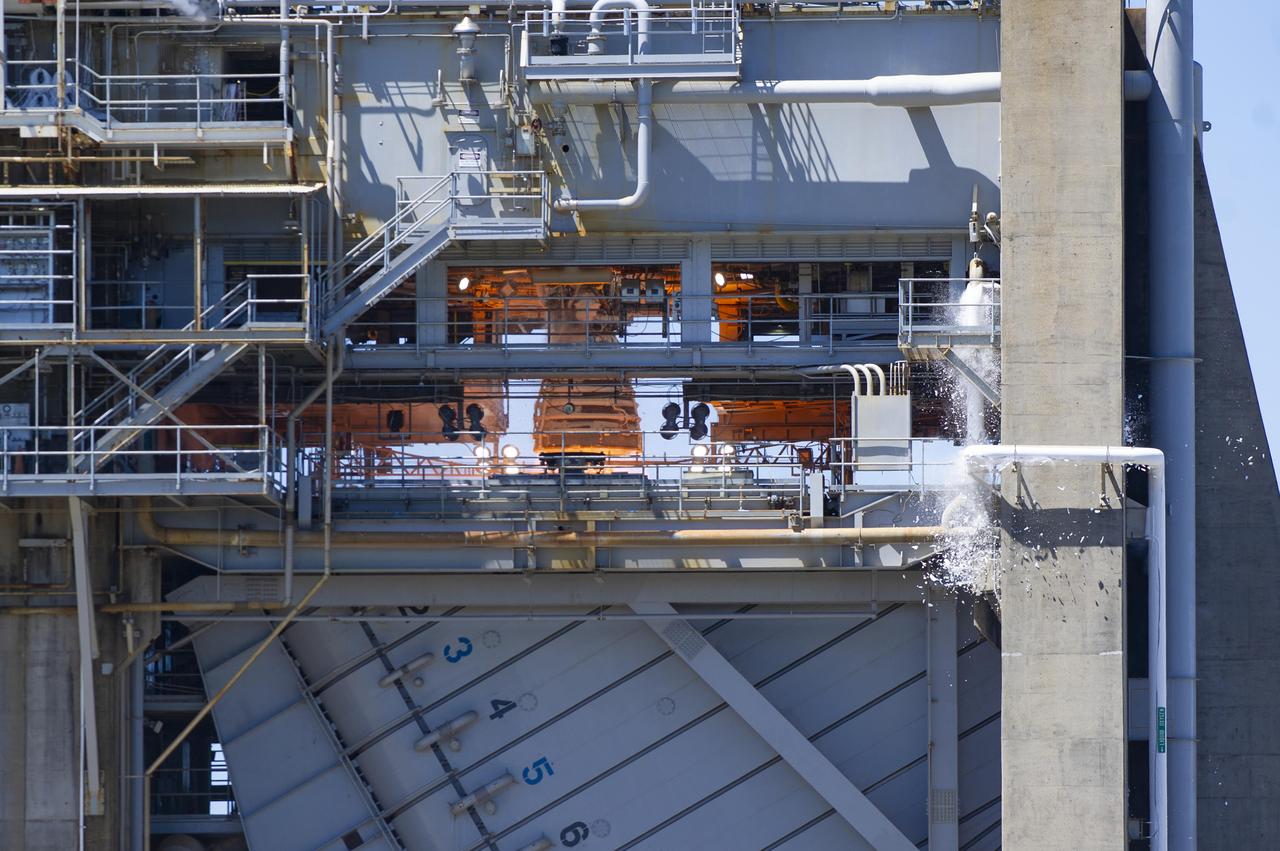
NASA conducted a full-duration RS-25 hot fire April 3 on the Fred Haise Test Stand at NASA’s Stennis Space Center near Bay St. Louis, Mississippi, achieving a major milestone for future Artemis flights of NASA’s SLS (Space Launch System) rocket. It marked the final test of a 12-test series to certify production of new RS-25 engines by lead contractor Aerojet Rocketdyne, an L3Harris Technologies company, to help power NASA’s SLS rocket on Artemis missions to the Moon and beyond, beginning with Artemis V.
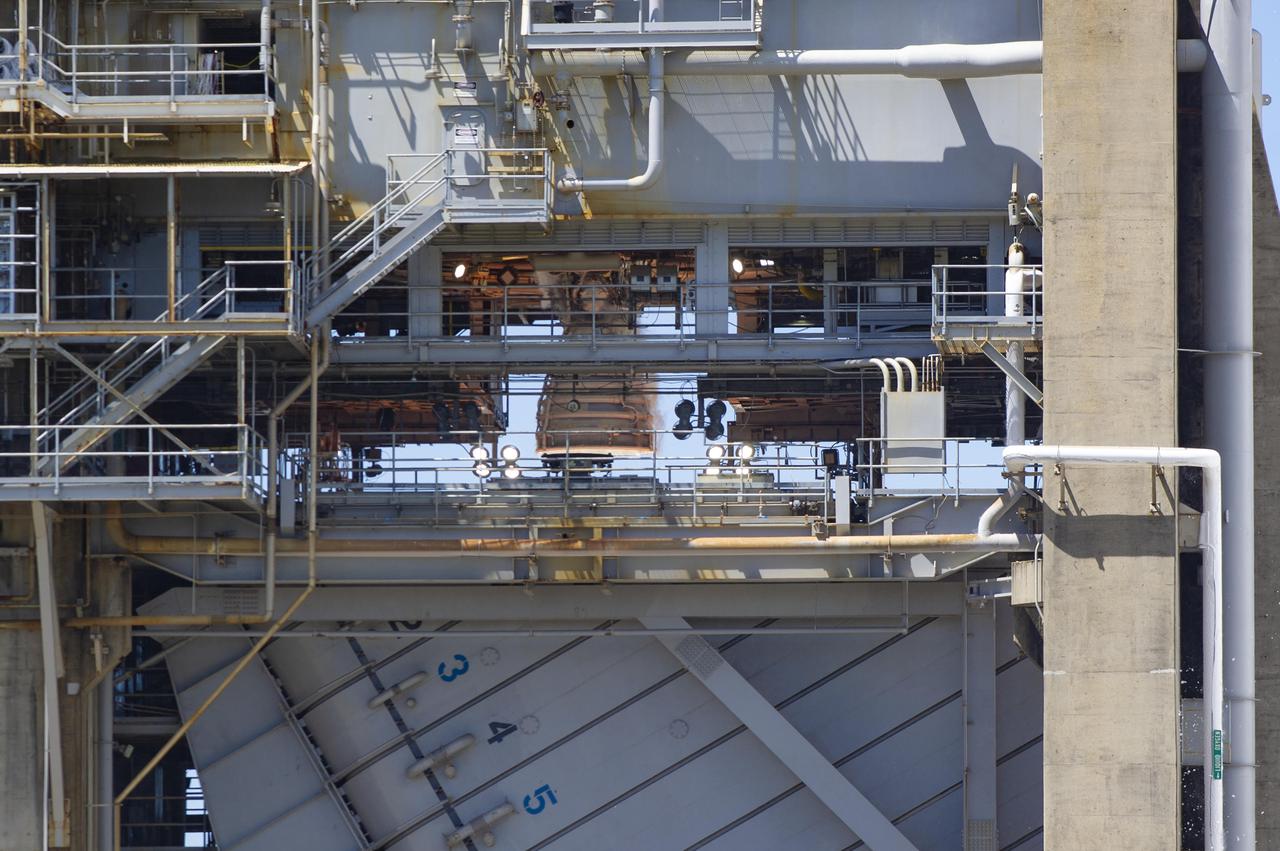
NASA conducted a full-duration RS-25 hot fire April 3 on the Fred Haise Test Stand at NASA’s Stennis Space Center near Bay St. Louis, Mississippi, achieving a major milestone for future Artemis flights of NASA’s SLS (Space Launch System) rocket. It marked the final test of a 12-test series to certify production of new RS-25 engines by lead contractor Aerojet Rocketdyne, an L3Harris Technologies company, to help power NASA’s SLS rocket on Artemis missions to the Moon and beyond, beginning with Artemis V.
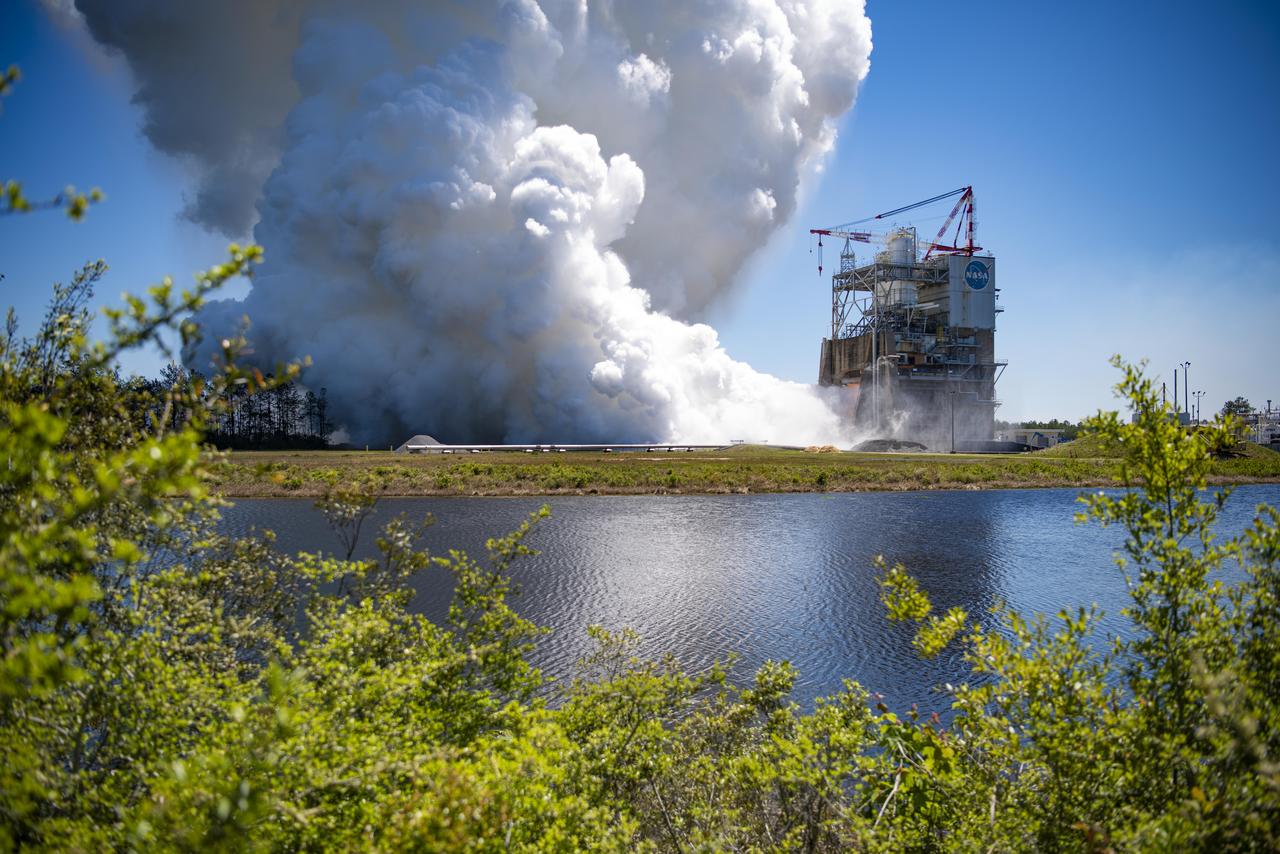
NASA conducted a full-duration RS-25 hot fire April 3 on the Fred Haise Test Stand at NASA’s Stennis Space Center near Bay St. Louis, Mississippi, achieving a major milestone for future Artemis flights of NASA’s SLS (Space Launch System) rocket. It marked the final test of a 12-test series to certify production of new RS-25 engines by lead contractor Aerojet Rocketdyne, an L3Harris Technologies company, to help power NASA’s SLS rocket on Artemis missions to the Moon and beyond, beginning with Artemis V.
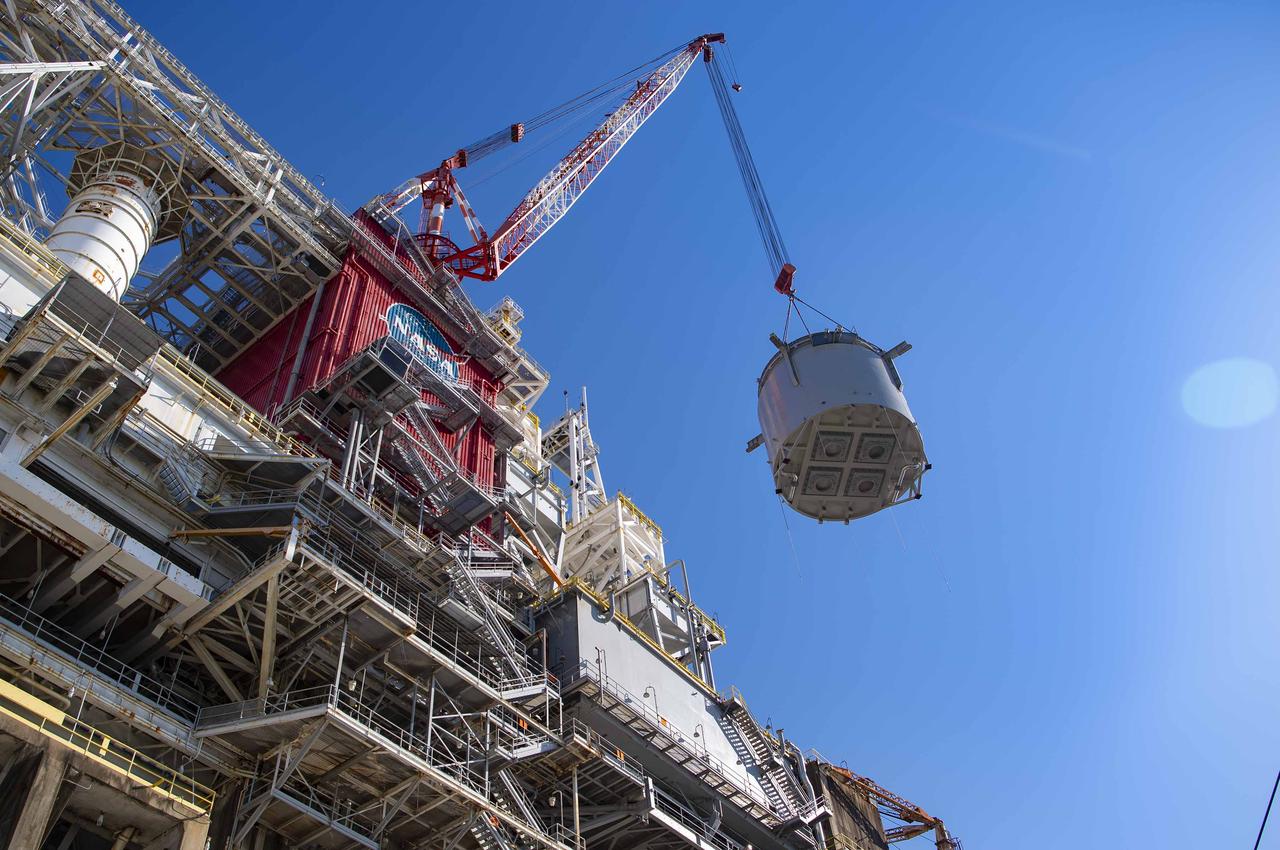
Teams at NASA’s Stennis Space Center complete a safe lift and install of an interstage simulator unit needed for future testing of NASA’s exploration upper stage (EUS) in the B-2 position of the Thad Cochran Test Stand. The lift and install, completed over a two-week period that began Oct. 10, marks a milestone for testing the new SLS (Space Launch System) rocket stage that will fly on future Artemis missions to the Moon and beyond. The EUS will undergo a series of Green Run tests of its integrated systems prior to its first flight. During testing, the interstage simulator component will function like the SLS interstage section that helps protect the upper stage during Artemis launches.
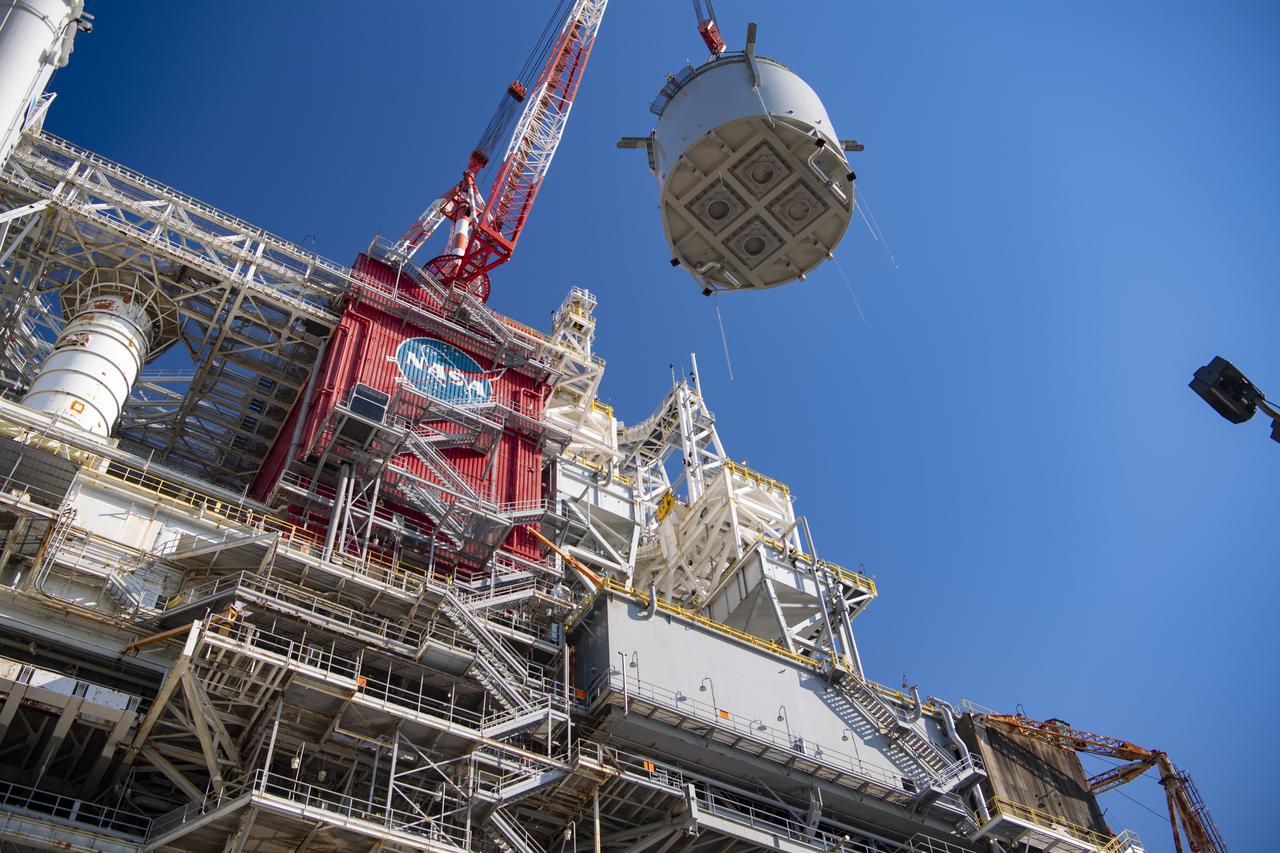
Teams at NASA’s Stennis Space Center complete a safe lift and install of an interstage simulator unit needed for future testing of NASA’s exploration upper stage (EUS) in the B-2 position of the Thad Cochran Test Stand. The lift and install, completed over a two-week period that began Oct. 10, marks a milestone for testing the new SLS (Space Launch System) rocket stage that will fly on future Artemis missions to the Moon and beyond. The EUS will undergo a series of Green Run tests of its integrated systems prior to its first flight. During testing, the interstage simulator component will function like the SLS interstage section that helps protect the upper stage during Artemis launches.
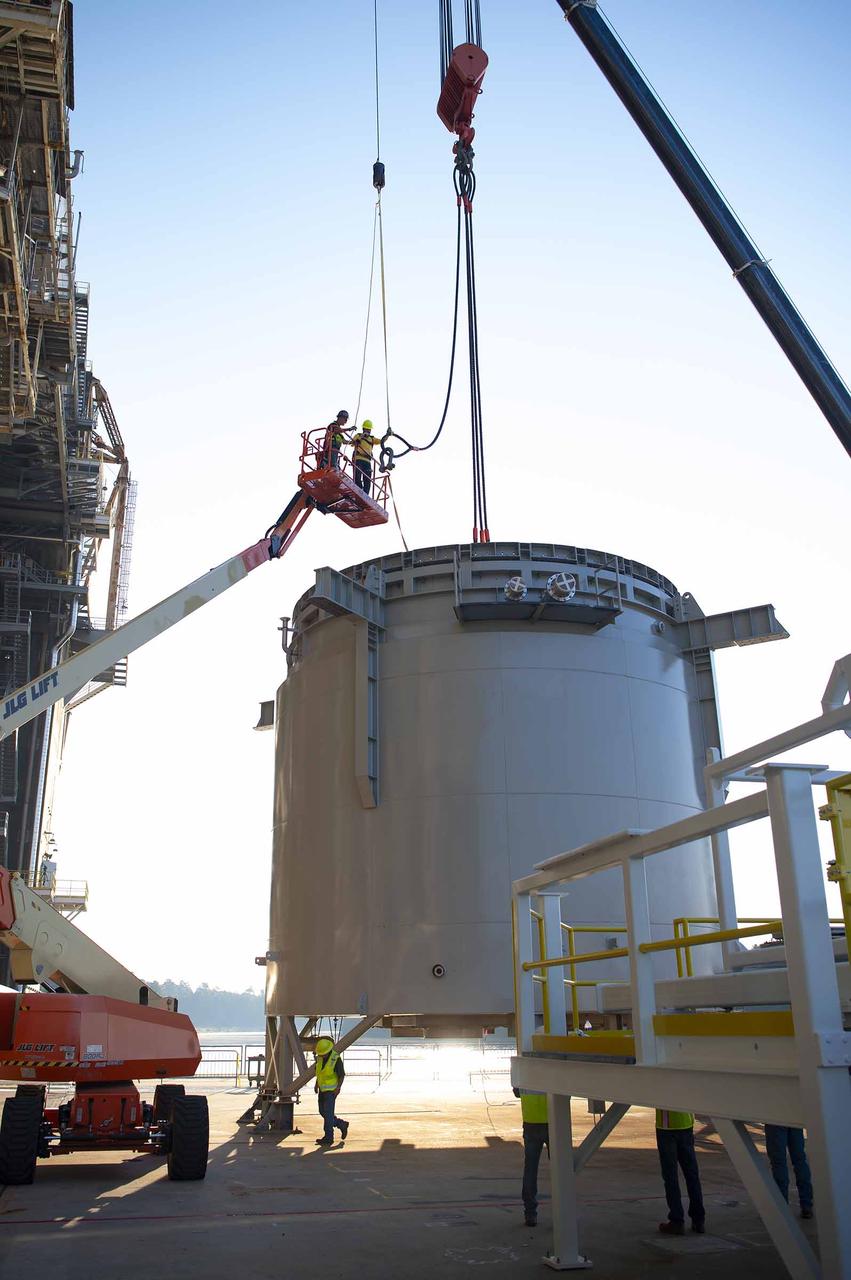
Teams at NASA’s Stennis Space Center complete a safe lift and install of an interstage simulator unit needed for future testing of NASA’s exploration upper stage (EUS) in the B-2 position of the Thad Cochran Test Stand. The lift and install, completed over a two-week period that began Oct. 10, marks a milestone for testing the new SLS (Space Launch System) rocket stage that will fly on future Artemis missions to the Moon and beyond. The EUS will undergo a series of Green Run tests of its integrated systems prior to its first flight. During testing, the interstage simulator component will function like the SLS interstage section that helps protect the upper stage during Artemis launches.
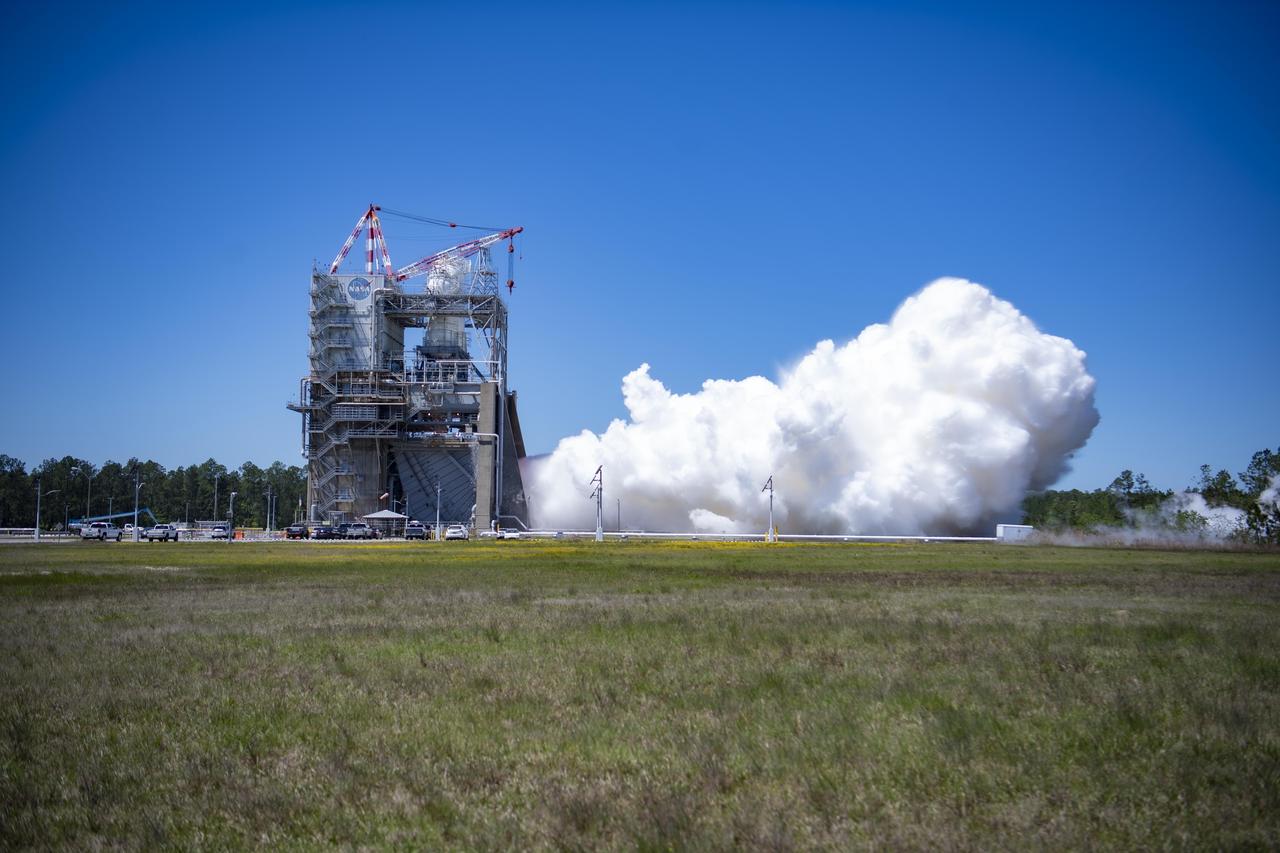
NASA conducted a full-duration RS-25 hot fire April 3 on the Fred Haise Test Stand at NASA’s Stennis Space Center near Bay St. Louis, Mississippi, achieving a major milestone for future Artemis flights of NASA’s SLS (Space Launch System) rocket. It marked the final test of a 12-test series to certify production of new RS-25 engines by lead contractor Aerojet Rocketdyne, an L3Harris Technologies company, to help power NASA’s SLS rocket on Artemis missions to the Moon and beyond, beginning with Artemis V.
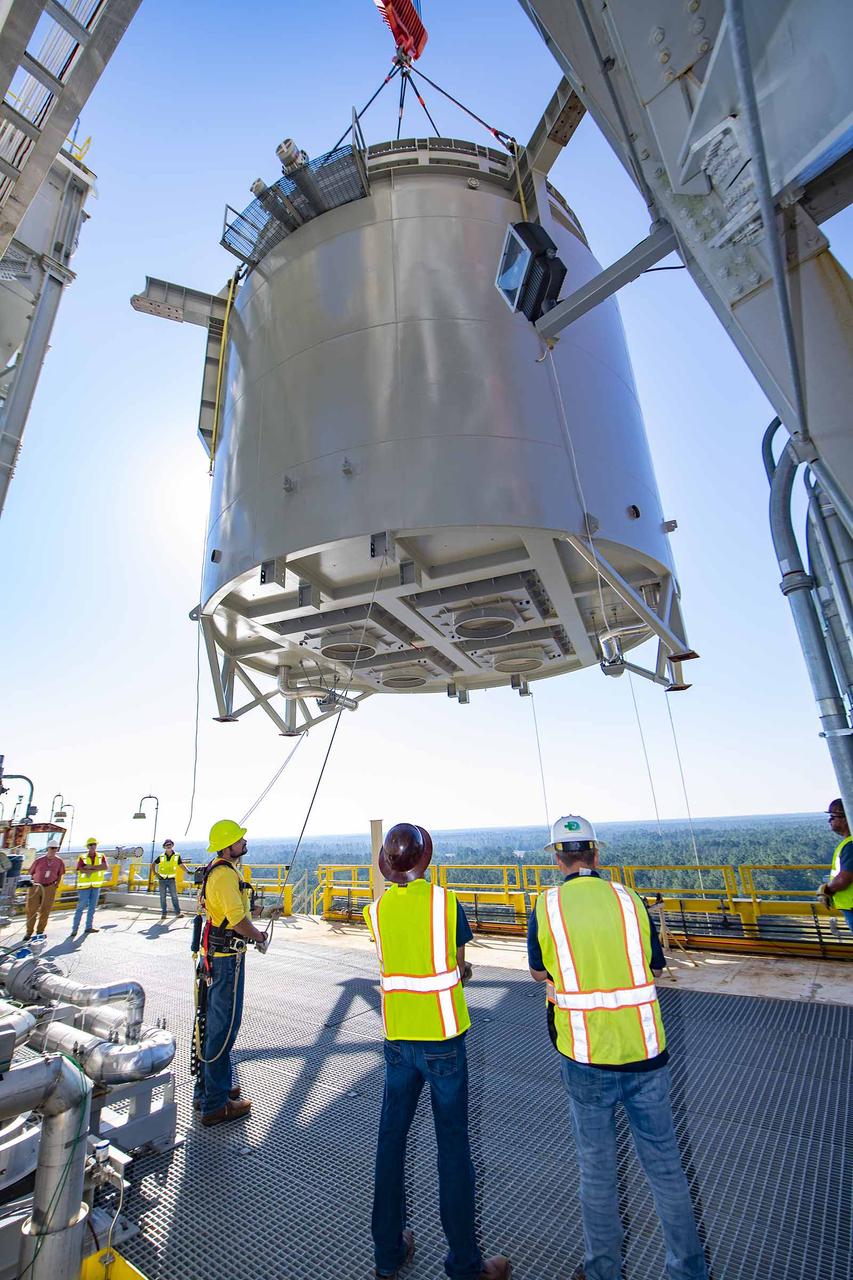
Teams at NASA’s Stennis Space Center complete a safe lift and install of an interstage simulator unit needed for future testing of NASA’s exploration upper stage (EUS) in the B-2 position of the Thad Cochran Test Stand. The lift and install, completed over a two-week period that began Oct. 10, marks a milestone for testing the new SLS (Space Launch System) rocket stage that will fly on future Artemis missions to the Moon and beyond. The EUS will undergo a series of Green Run tests of its integrated systems prior to its first flight. During testing, the interstage simulator component will function like the SLS interstage section that helps protect the upper stage during Artemis launches.
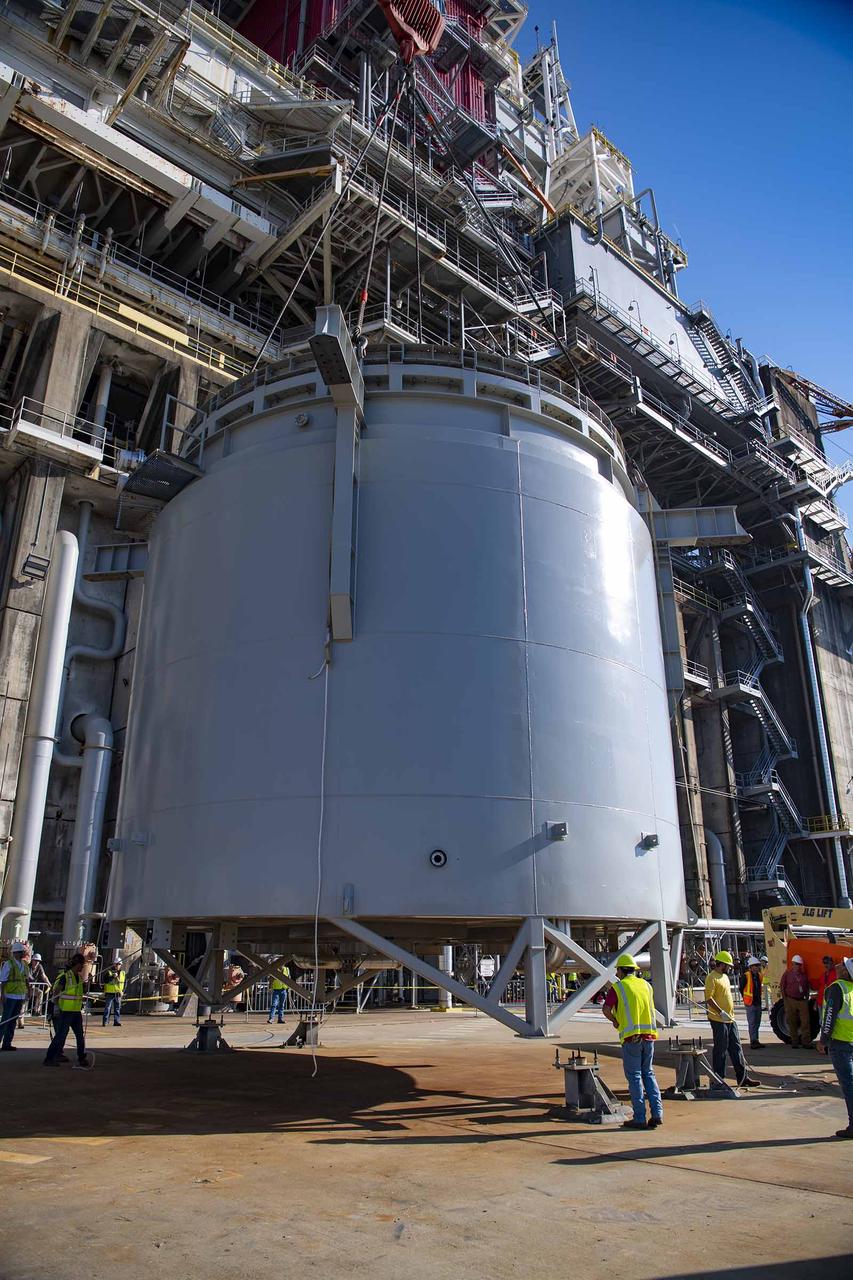
Teams at NASA’s Stennis Space Center complete a safe lift and install of an interstage simulator unit needed for future testing of NASA’s exploration upper stage (EUS) in the B-2 position of the Thad Cochran Test Stand. The lift and install, completed over a two-week period that began Oct. 10, marks a milestone for testing the new SLS (Space Launch System) rocket stage that will fly on future Artemis missions to the Moon and beyond. The EUS will undergo a series of Green Run tests of its integrated systems prior to its first flight. During testing, the interstage simulator component will function like the SLS interstage section that helps protect the upper stage during Artemis launches.
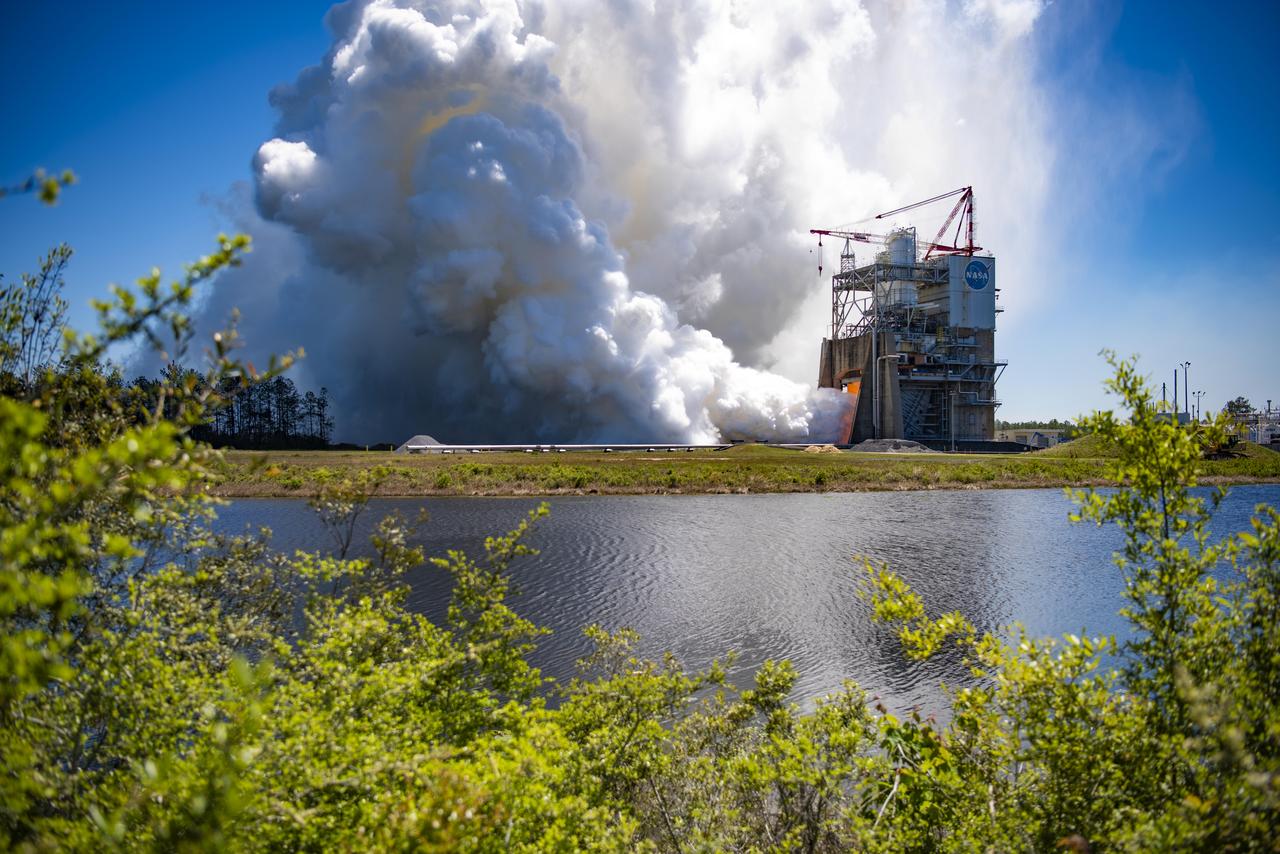
NASA conducted a full-duration RS-25 hot fire April 3 on the Fred Haise Test Stand at NASA’s Stennis Space Center near Bay St. Louis, Mississippi, achieving a major milestone for future Artemis flights of NASA’s SLS (Space Launch System) rocket. It marked the final test of a 12-test series to certify production of new RS-25 engines by lead contractor Aerojet Rocketdyne, an L3Harris Technologies company, to help power NASA’s SLS rocket on Artemis missions to the Moon and beyond, beginning with Artemis V.
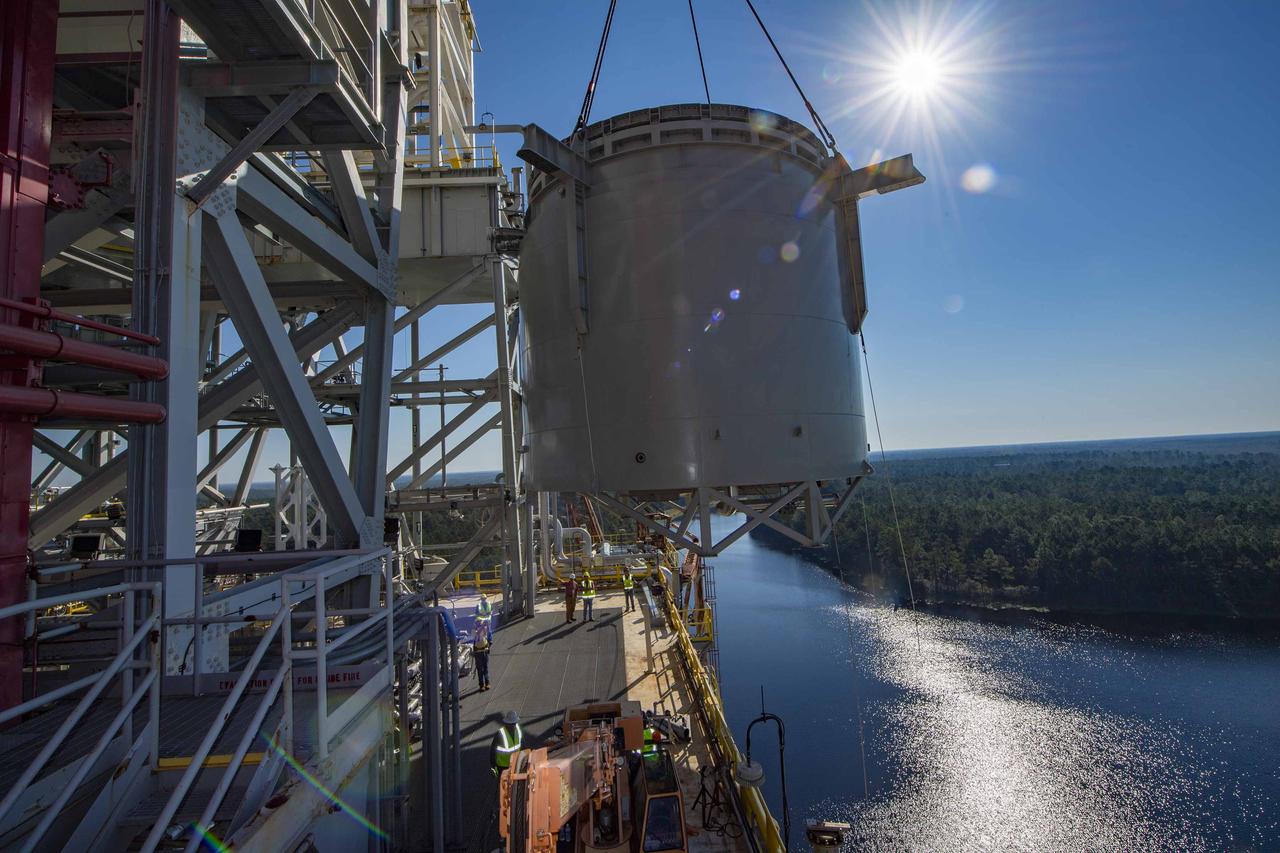
Teams at NASA’s Stennis Space Center complete a safe lift and install of an interstage simulator unit needed for future testing of NASA’s exploration upper stage (EUS) in the B-2 position of the Thad Cochran Test Stand. The lift and install, completed over a two-week period that began Oct. 10, marks a milestone for testing the new SLS (Space Launch System) rocket stage that will fly on future Artemis missions to the Moon and beyond. The EUS will undergo a series of Green Run tests of its integrated systems prior to its first flight. During testing, the interstage simulator component will function like the SLS interstage section that helps protect the upper stage during Artemis launches.
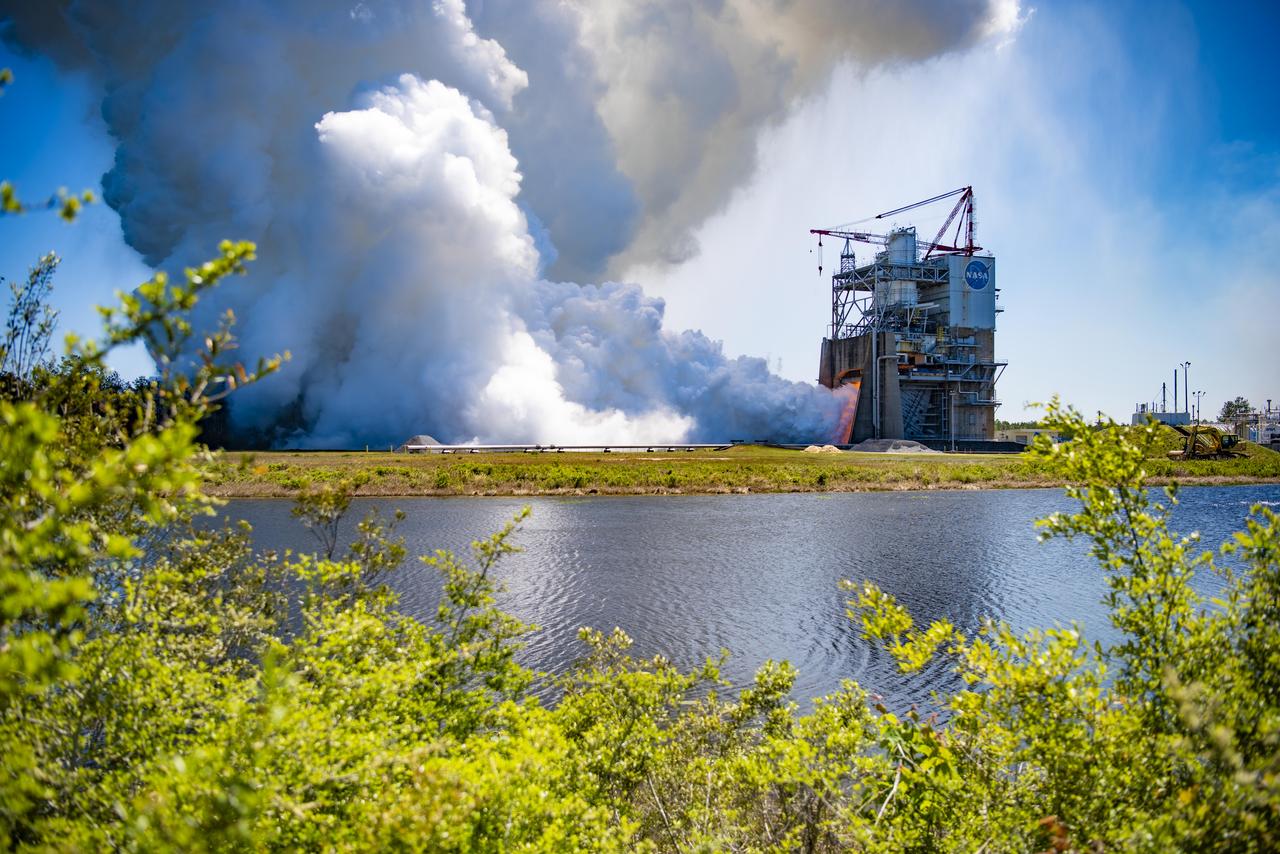
NASA conducted a full-duration RS-25 hot fire April 3 on the Fred Haise Test Stand at NASA’s Stennis Space Center near Bay St. Louis, Mississippi, achieving a major milestone for future Artemis flights of NASA’s SLS (Space Launch System) rocket. It marked the final test of a 12-test series to certify production of new RS-25 engines by lead contractor Aerojet Rocketdyne, an L3Harris Technologies company, to help power NASA’s SLS rocket on Artemis missions to the Moon and beyond, beginning with Artemis V.
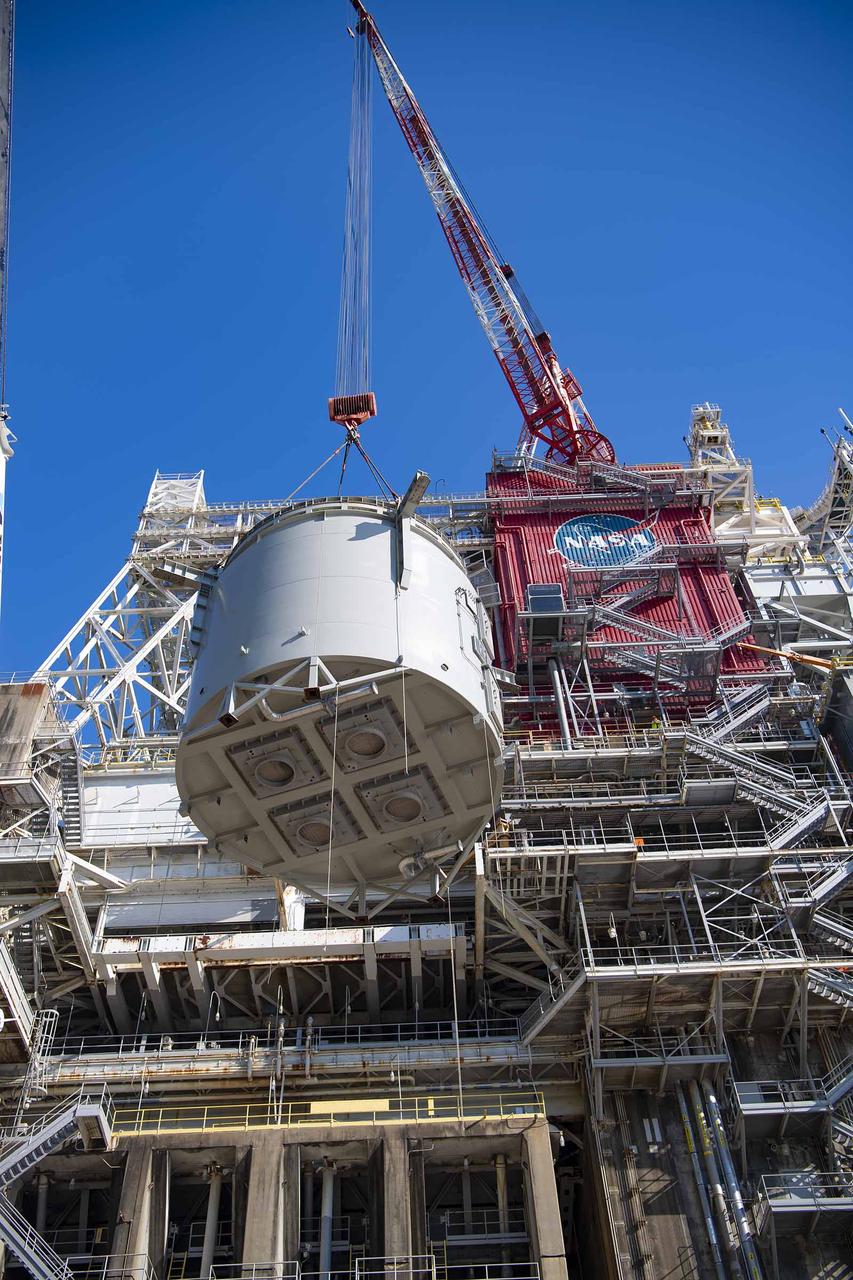
Teams at NASA’s Stennis Space Center complete a safe lift and install of an interstage simulator unit needed for future testing of NASA’s exploration upper stage (EUS) in the B-2 position of the Thad Cochran Test Stand. The lift and install, completed over a two-week period that began Oct. 10, marks a milestone for testing the new SLS (Space Launch System) rocket stage that will fly on future Artemis missions to the Moon and beyond. The EUS will undergo a series of Green Run tests of its integrated systems prior to its first flight. During testing, the interstage simulator component will function like the SLS interstage section that helps protect the upper stage during Artemis launches.
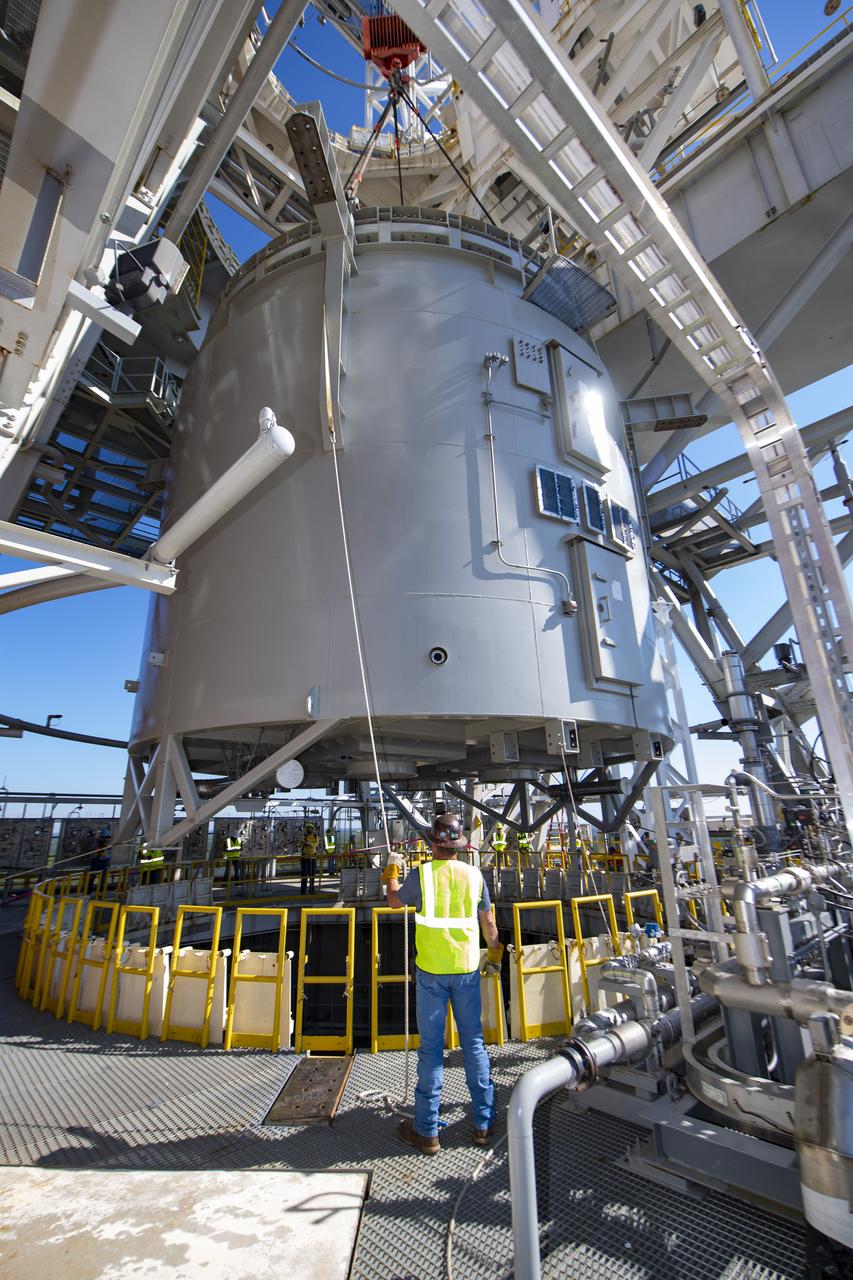
Teams at NASA’s Stennis Space Center complete a safe lift and install of an interstage simulator unit needed for future testing of NASA’s exploration upper stage (EUS) in the B-2 position of the Thad Cochran Test Stand. The lift and install, completed over a two-week period that began Oct. 10, marks a milestone for testing the new SLS (Space Launch System) rocket stage that will fly on future Artemis missions to the Moon and beyond. The EUS will undergo a series of Green Run tests of its integrated systems prior to its first flight. During testing, the interstage simulator component will function like the SLS interstage section that helps protect the upper stage during Artemis launches.
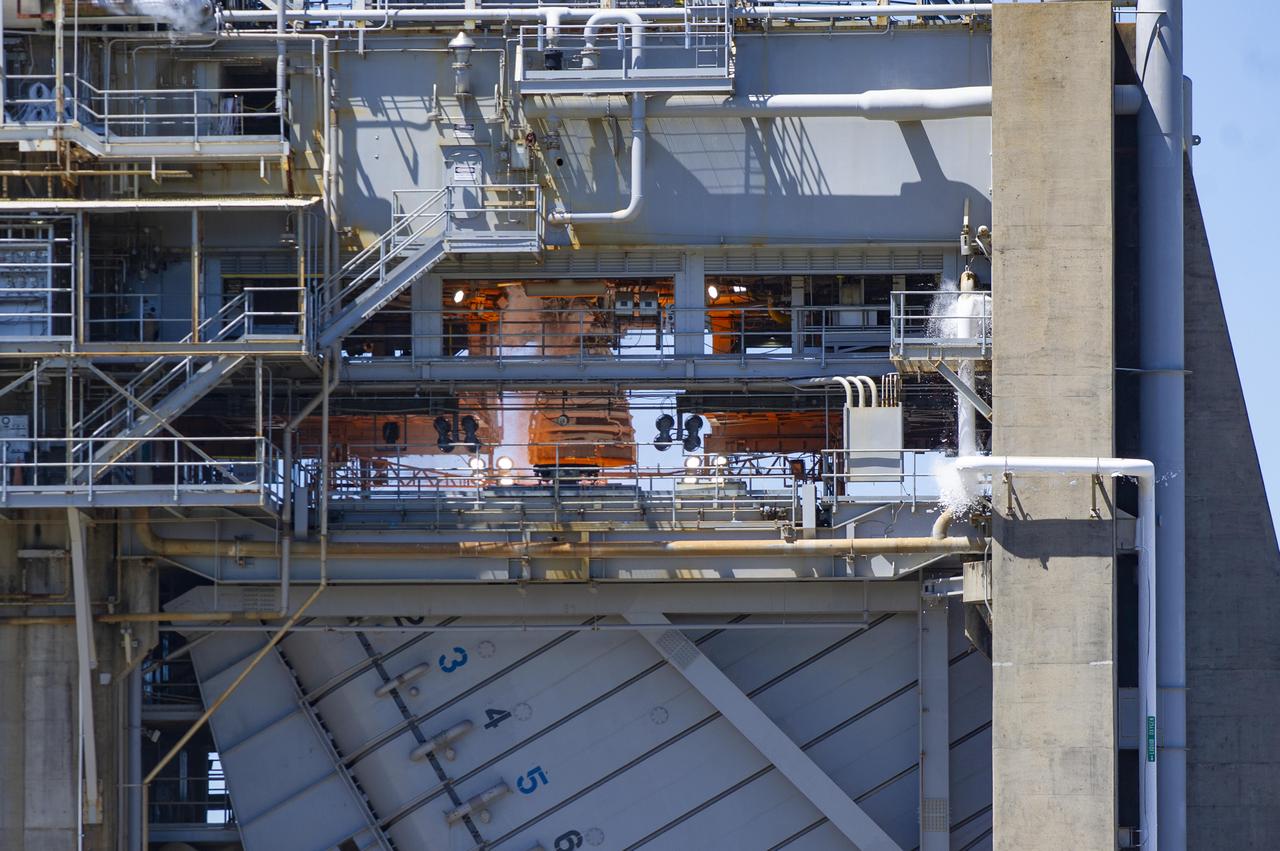
NASA conducted a full-duration RS-25 hot fire April 3 on the Fred Haise Test Stand at NASA’s Stennis Space Center near Bay St. Louis, Mississippi, achieving a major milestone for future Artemis flights of NASA’s SLS (Space Launch System) rocket. It marked the final test of a 12-test series to certify production of new RS-25 engines by lead contractor Aerojet Rocketdyne, an L3Harris Technologies company, to help power NASA’s SLS rocket on Artemis missions to the Moon and beyond, beginning with Artemis V.
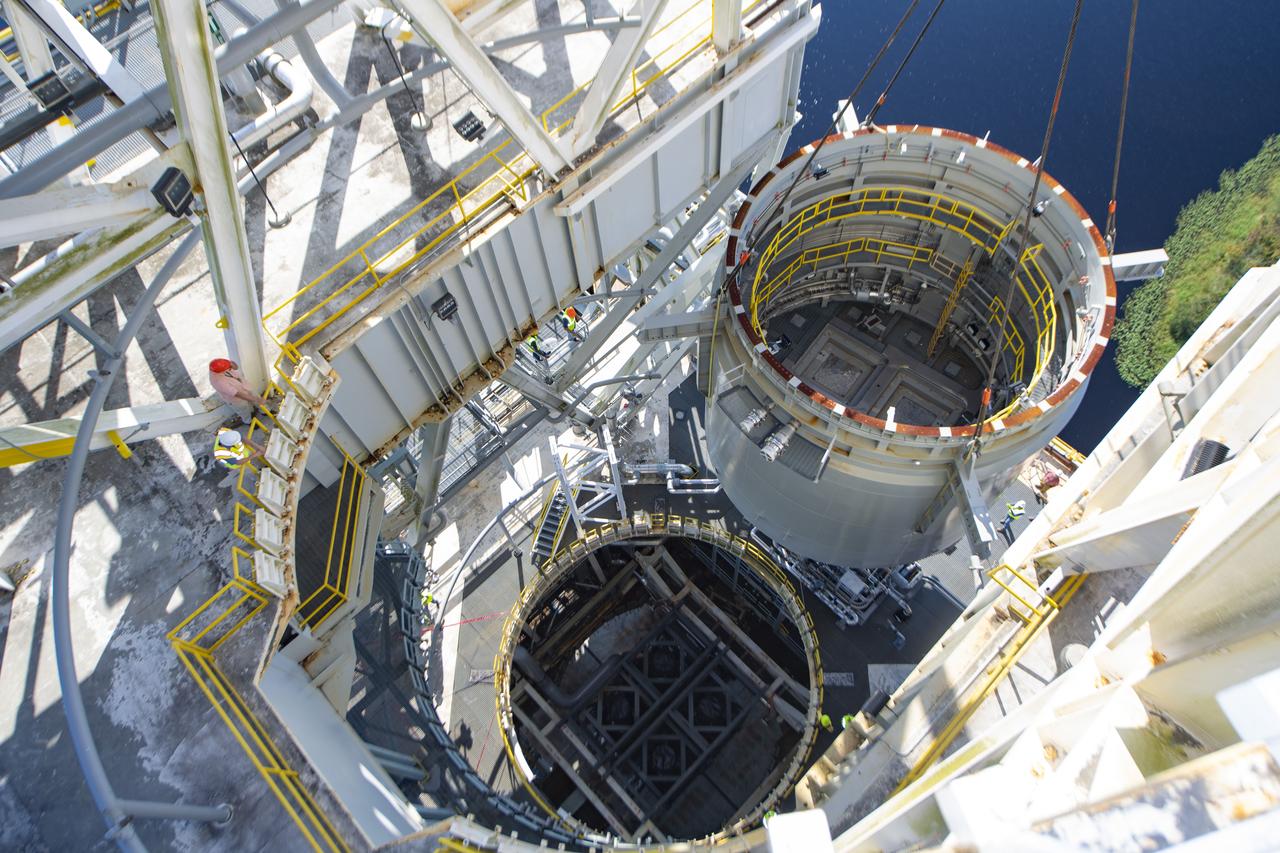
Teams at NASA’s Stennis Space Center complete a safe lift and install of an interstage simulator unit needed for future testing of NASA’s exploration upper stage (EUS) in the B-2 position of the Thad Cochran Test Stand. The lift and install, completed over a two-week period that began Oct. 10, marks a milestone for testing the new SLS (Space Launch System) rocket stage that will fly on future Artemis missions to the Moon and beyond. The EUS will undergo a series of Green Run tests of its integrated systems prior to its first flight. During testing, the interstage simulator component will function like the SLS interstage section that helps protect the upper stage during Artemis launches.
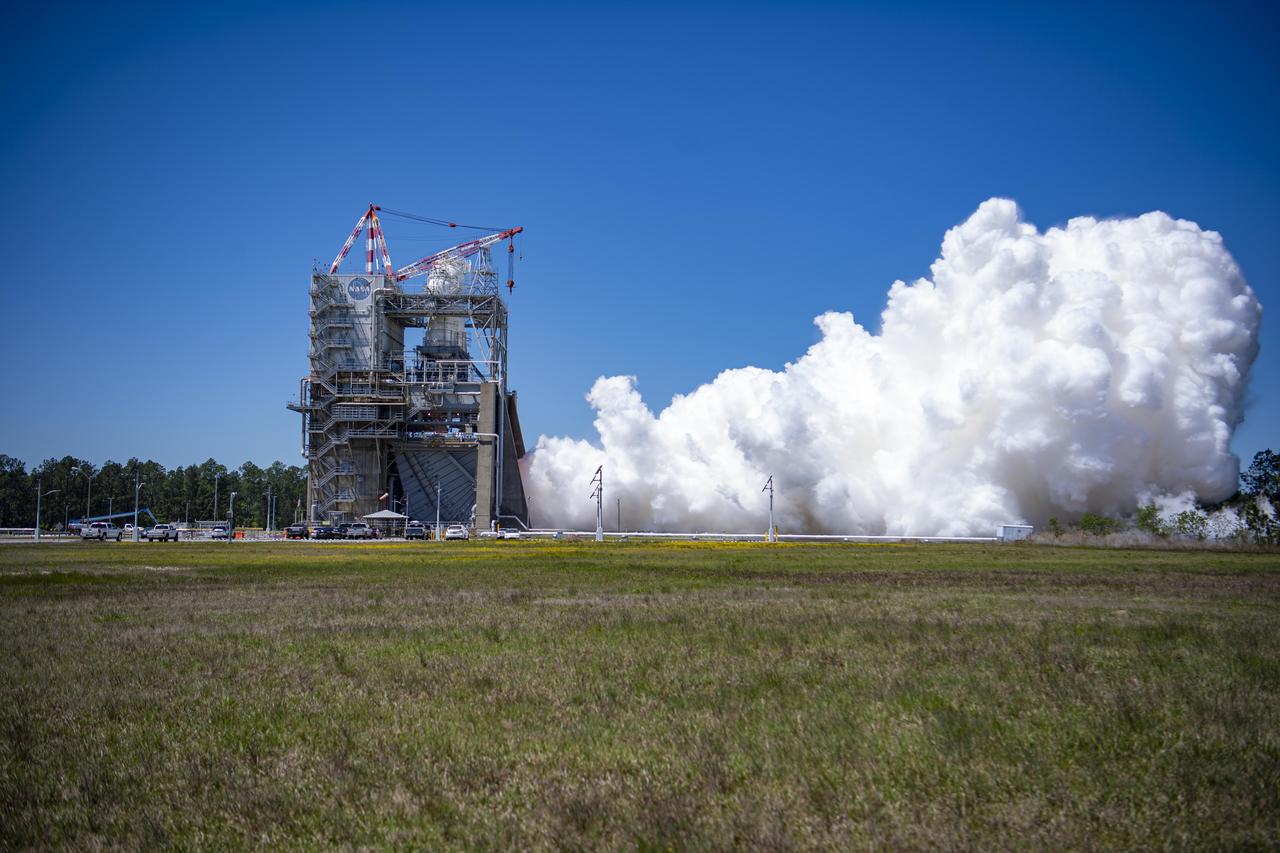
NASA conducted a full-duration RS-25 hot fire April 3 on the Fred Haise Test Stand at NASA’s Stennis Space Center near Bay St. Louis, Mississippi, achieving a major milestone for future Artemis flights of NASA’s SLS (Space Launch System) rocket. It marked the final test of a 12-test series to certify production of new RS-25 engines by lead contractor Aerojet Rocketdyne, an L3Harris Technologies company, to help power NASA’s SLS rocket on Artemis missions to the Moon and beyond, beginning with Artemis V.

NASA conducted a full-duration RS-25 hot fire April 3 on the Fred Haise Test Stand at NASA’s Stennis Space Center near Bay St. Louis, Mississippi, achieving a major milestone for future Artemis flights of NASA’s SLS (Space Launch System) rocket. It marked the final test of a 12-test series to certify production of new RS-25 engines by lead contractor Aerojet Rocketdyne, an L3Harris Technologies company, to help power NASA’s SLS rocket on Artemis missions to the Moon and beyond, beginning with Artemis V
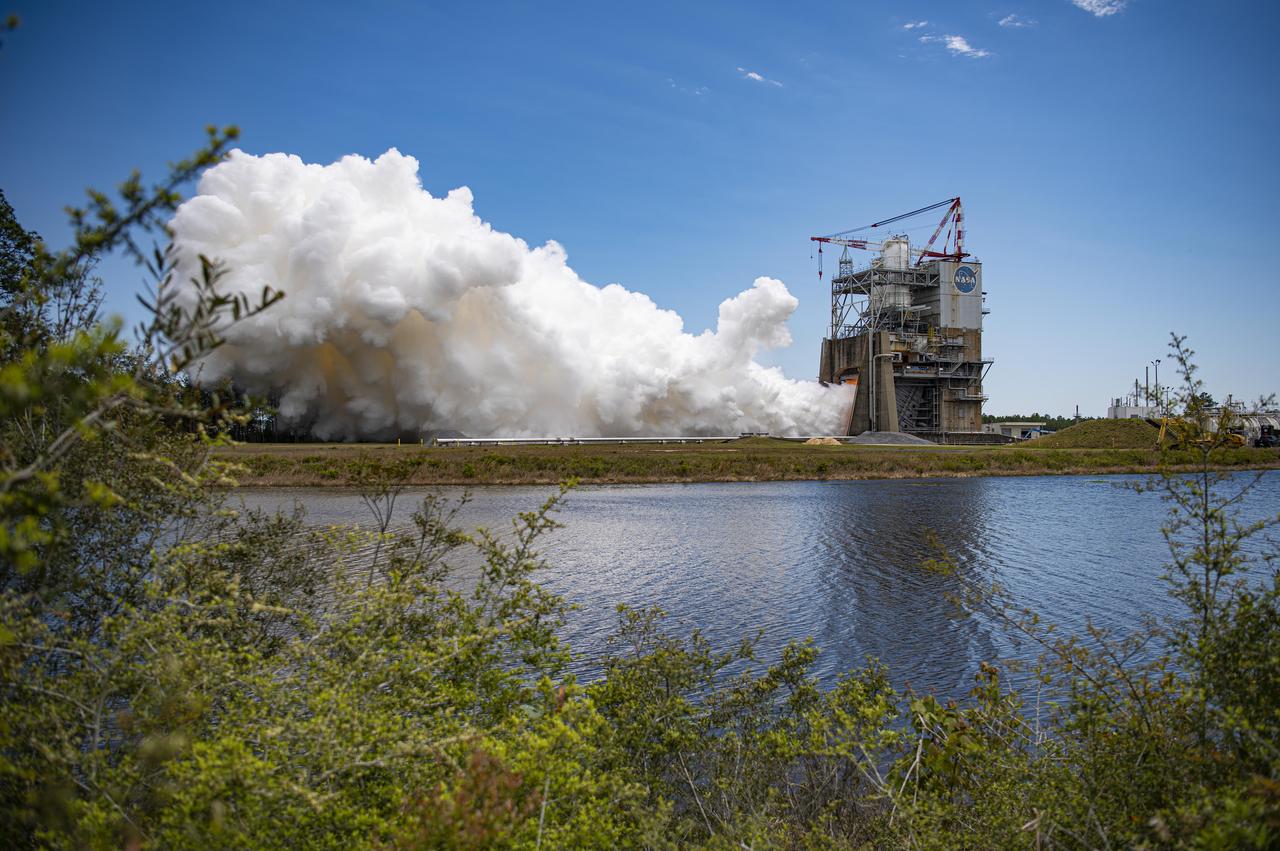
NASA conducted a full-duration RS-25 hot fire April 3 on the Fred Haise Test Stand at NASA’s Stennis Space Center near Bay St. Louis, Mississippi, achieving a major milestone for future Artemis flights of NASA’s SLS (Space Launch System) rocket. It marked the final test of a 12-test series to certify production of new RS-25 engines by lead contractor Aerojet Rocketdyne, an L3Harris Technologies company, to help power NASA’s SLS rocket on Artemis missions to the Moon and beyond, beginning with Artemis V.
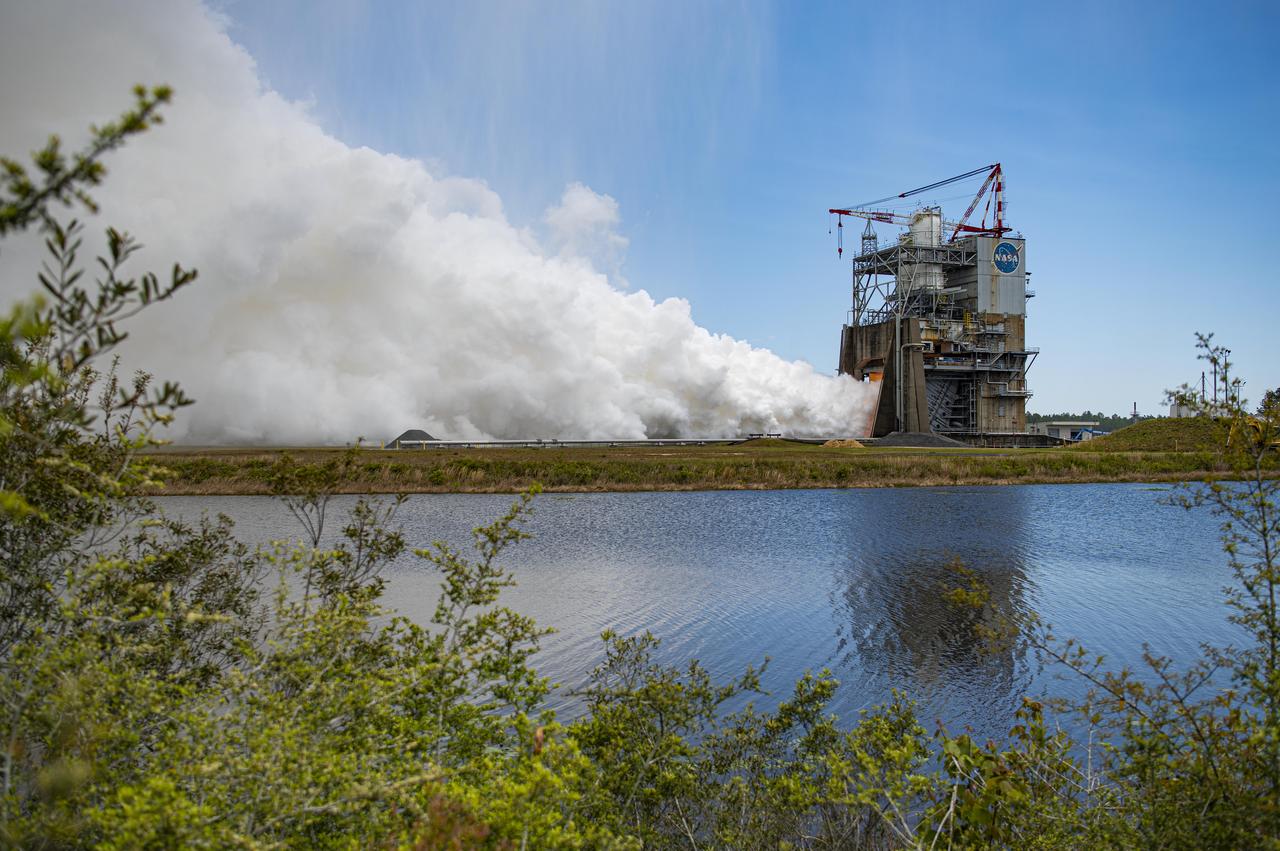
NASA conducted a full-duration RS-25 hot fire April 3 on the Fred Haise Test Stand at NASA’s Stennis Space Center near Bay St. Louis, Mississippi, achieving a major milestone for future Artemis flights of NASA’s SLS (Space Launch System) rocket. It marked the final test of a 12-test series to certify production of new RS-25 engines by lead contractor Aerojet Rocketdyne, an L3Harris Technologies company, to help power NASA’s SLS rocket on Artemis missions to the Moon and beyond, beginning with Artemis V.
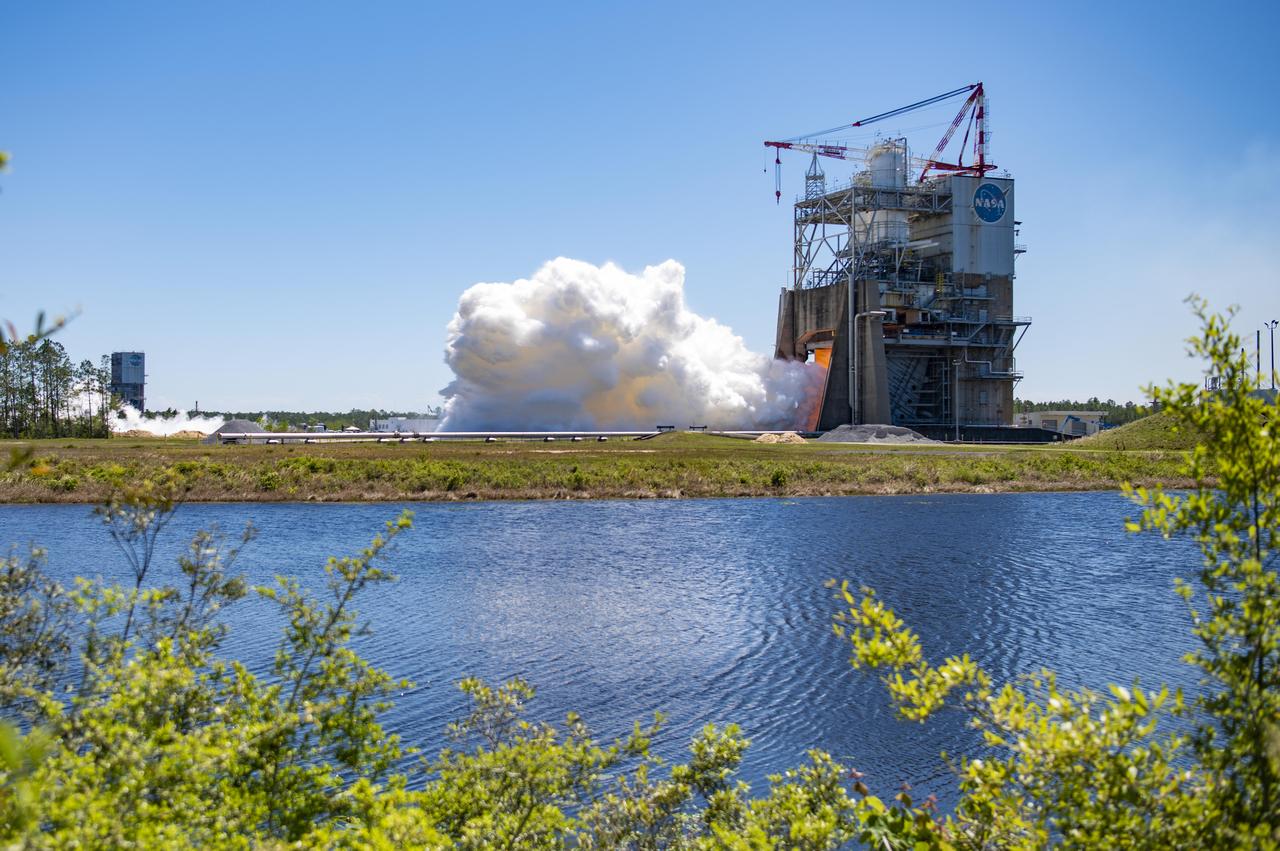
NASA conducted a full-duration RS-25 hot fire April 3 on the Fred Haise Test Stand at NASA’s Stennis Space Center near Bay St. Louis, Mississippi, achieving a major milestone for future Artemis flights of NASA’s SLS (Space Launch System) rocket. It marked the final test of a 12-test series to certify production of new RS-25 engines by lead contractor Aerojet Rocketdyne, an L3Harris Technologies company, to help power NASA’s SLS rocket on Artemis missions to the Moon and beyond, beginning with Artemis V.
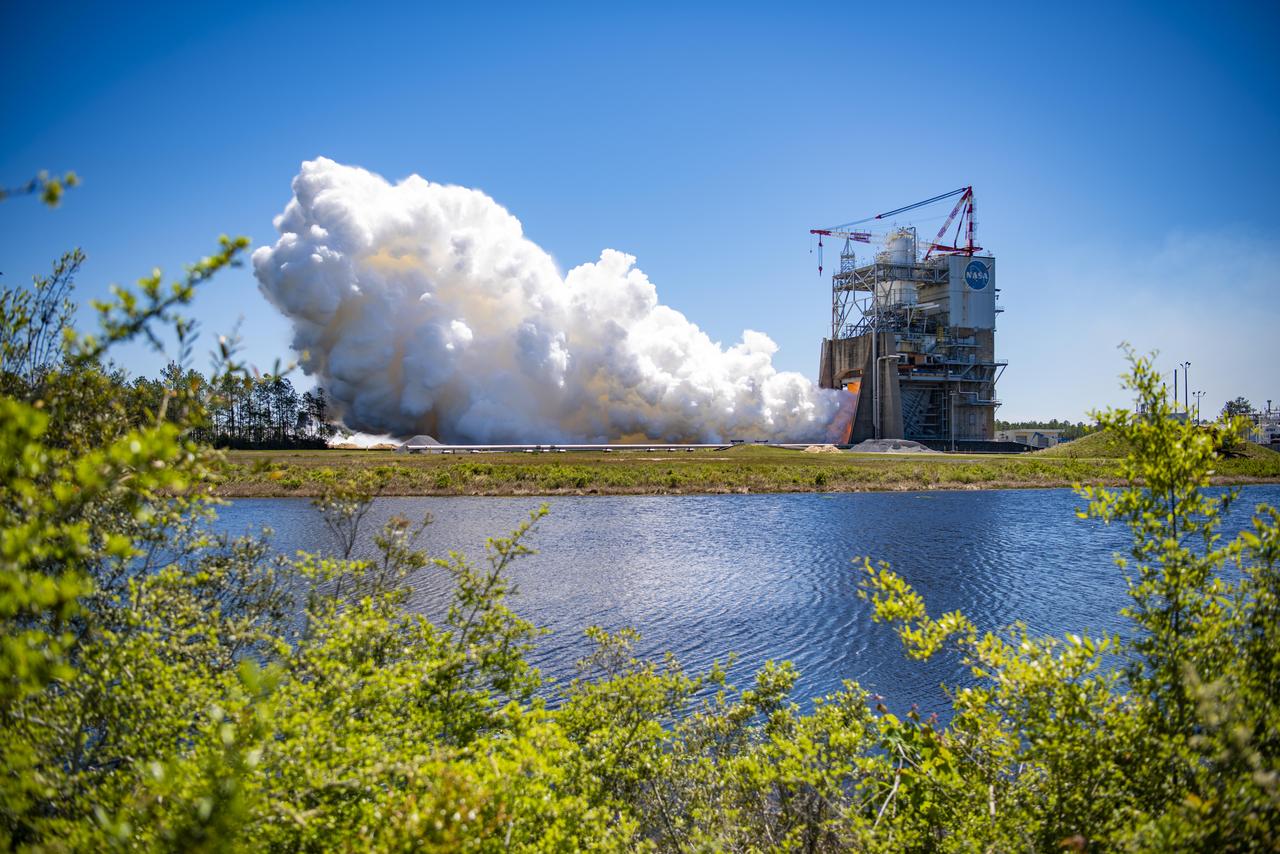
NASA conducted a full-duration RS-25 hot fire April 3 on the Fred Haise Test Stand at NASA’s Stennis Space Center near Bay St. Louis, Mississippi, achieving a major milestone for future Artemis flights of NASA’s SLS (Space Launch System) rocket. It marked the final test of a 12-test series to certify production of new RS-25 engines by lead contractor Aerojet Rocketdyne, an L3Harris Technologies company, to help power NASA’s SLS rocket on Artemis missions to the Moon and beyond, beginning with Artemis V.
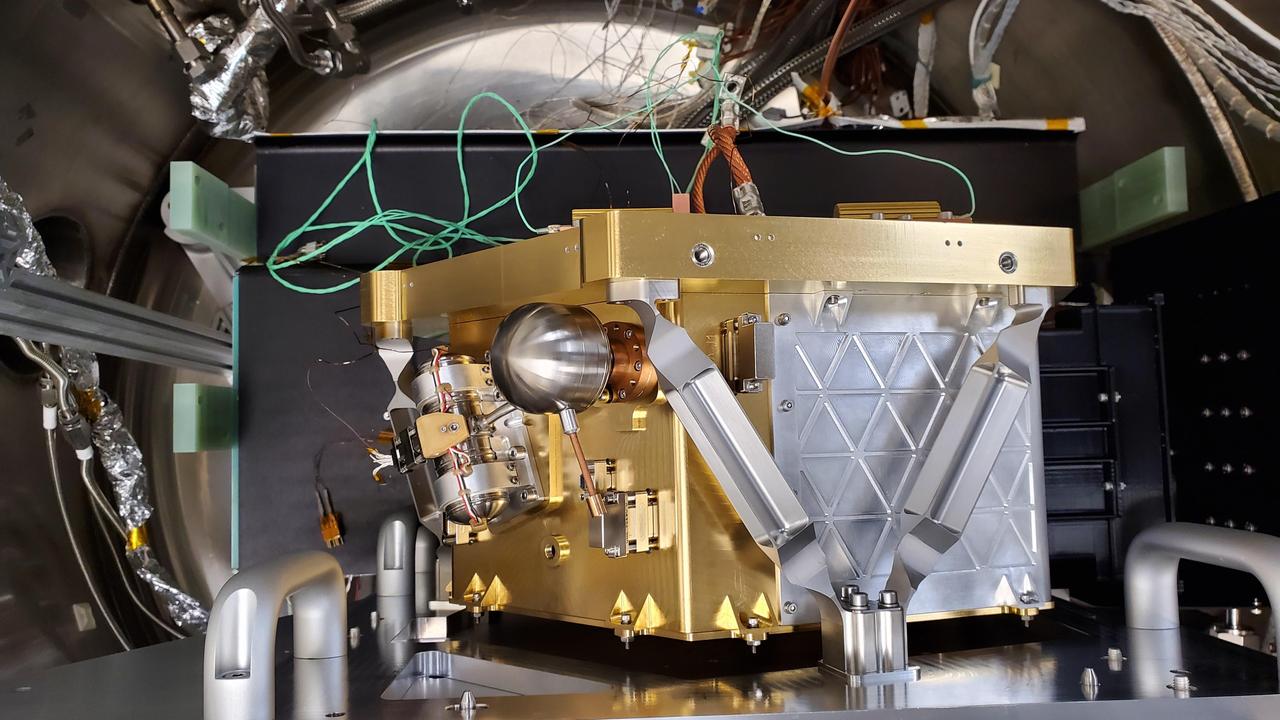
The High-resolution Volatiles and Minerals Moon Mapper (HVM³), seen here, is one of two instruments that will be carried aboard NASA's Lunar Trailblazer. Launching in 2023, the small spacecraft – measuring only 11.5 feet (3.5 meters) wide with its solar panels fully deployed – will detect and map water on the Moon's surface to determine its abundance, location, form, and how it changes over time. HVM³ recently completed a significant milestone in a clean room at NASA's Jet Propulsion Laboratory in Southern California. The high-resolution spectrometer measures the infrared light (with wavelengths from 0.6 to 3.6 microns in size) that is absorbed by water. To make sure the instrument is properly aligned, the Trailblazer team cooled HVM3 down to temperatures it will experience in space and made tiny physical adjustments to make sure all the wavelengths of incoming light arrive at the correct locations on the instrument's detector. Figure A shows several members of the Trailblazer team surrounding the instrument – minus its radiator and electronics – mounted on HVM³'s optical bench assembly while undergoing cold alignment. The assembly was placed inside a thermal vacuum chamber and brought to a cold focal plane operating temperature of about minus 240 degrees Fahrenheit (minus 155 degrees Celsius). The team then measured light of different wavelengths across all of the detector's pixels. Based on the data recorded, the team calculated the small adjustments that needed to be made, took the instrument out of the chamber and made those changes, placed it back into the chamber, and then repeated the steps iteratively until HVM³ was in perfect alignment. With this important step complete, a radiator will next be installed to ensure the instrument maintains optimal operating temperatures while Trailblazer is in orbit around the Moon. Then, vibration tests will be carried out to make sure the spectrometer will stay in alignment after the extreme shaking of launch. Lunar Trailblazer was selected to be part of NASA's SIMPLEx (Small Innovative Missions for Planetary Exploration) program in 2019. The mission is led by Caltech in Pasadena, California, and managed by JPL. https://photojournal.jpl.nasa.gov/catalog/PIA25252

This compilation shows the constellation Hercules, as imaged on May 21 and 22, 2003, by NASA Galaxy Evolution Explorer. The images were captured by the two channels of the spacecraft camera during the mission first light milestone.
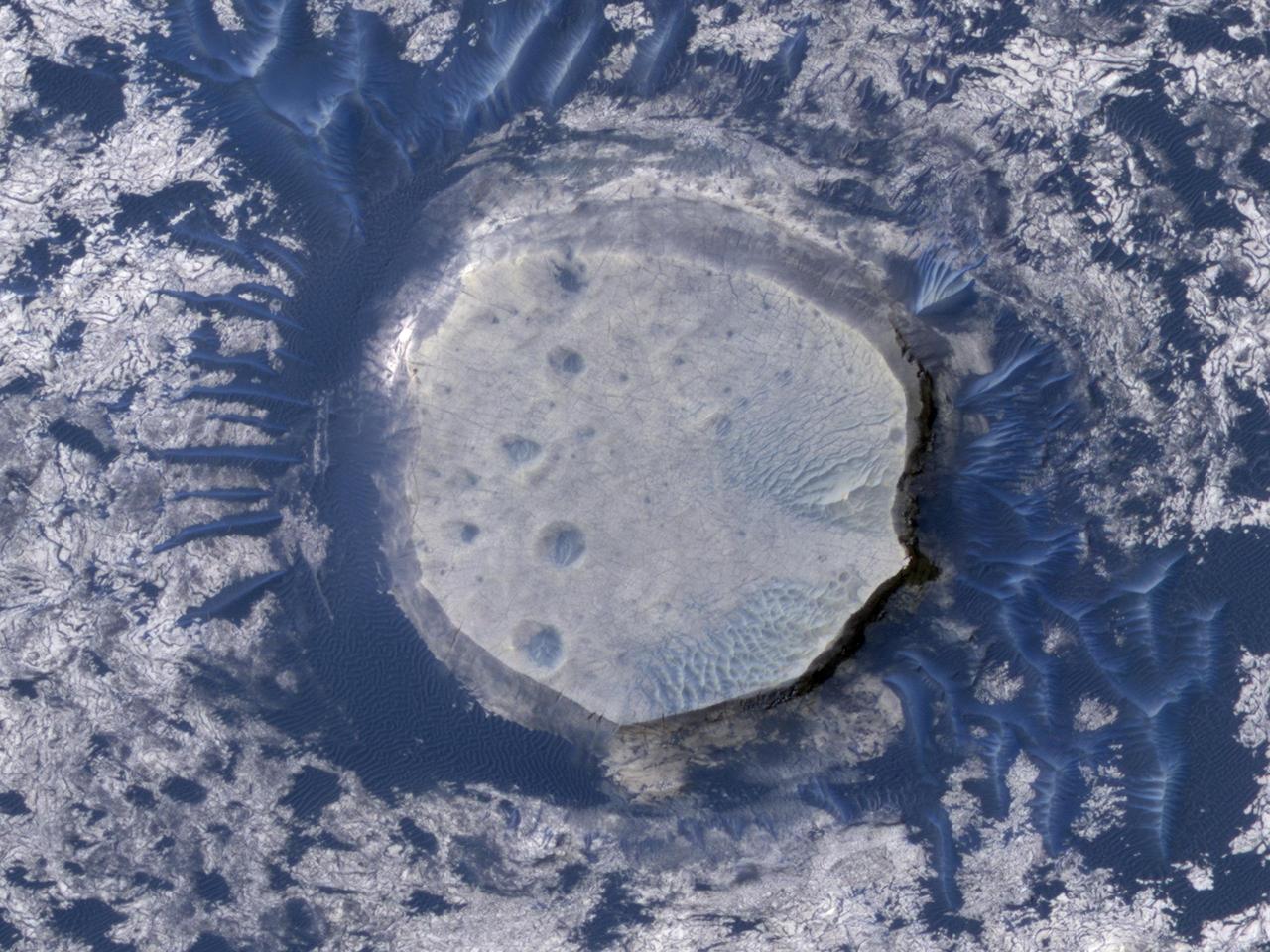
This view of an inverted crater in the Arabia Terra region of Mars is among the images taken by NASA Mars Reconnaissance Orbiter in early 2010 as the spacecraft approached the 100-terabit milestone in total data returned.
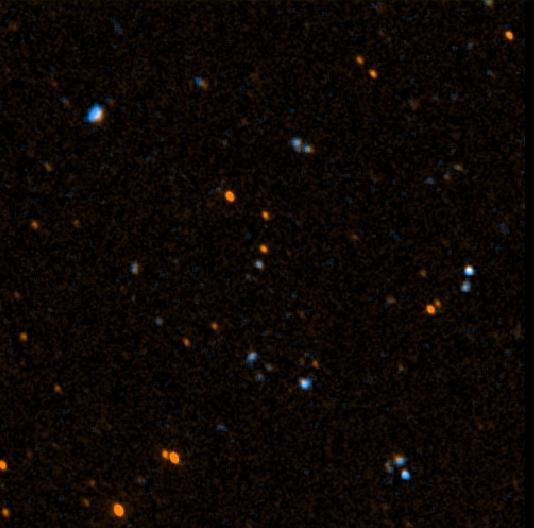
This image was taken May 21 and 22, 2003, by NASA Galaxy Evolution Explorer. The image was made from data gathered by the two channels of the spacecraft camera during the mission first light milestone.
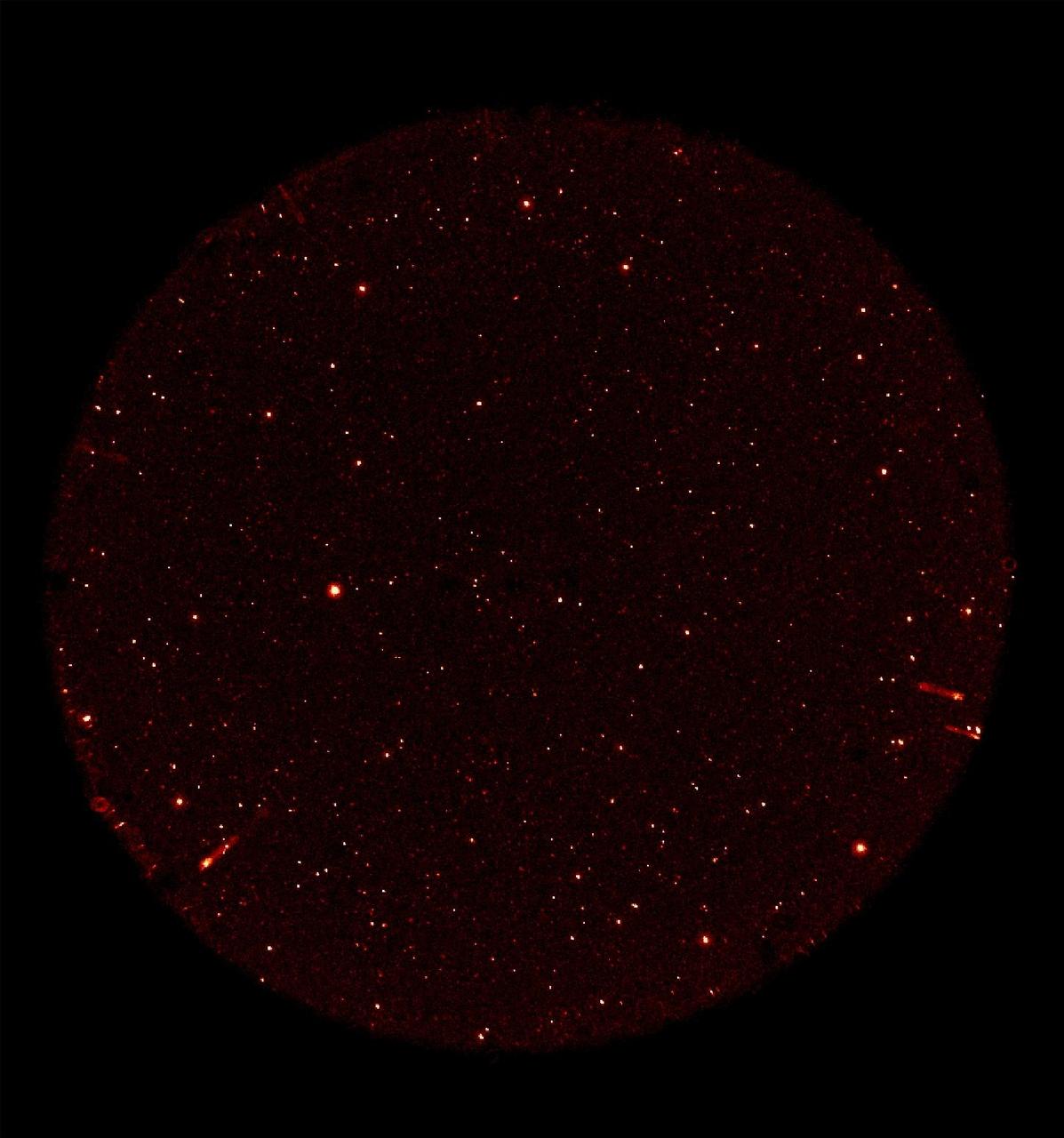
This image was taken on May 21 and 22, 2003, by NASA Galaxy Evolution Explorer. The image was made from data gathered during the missions first light milestone, and shows celestial objects in the constellation Hercules.
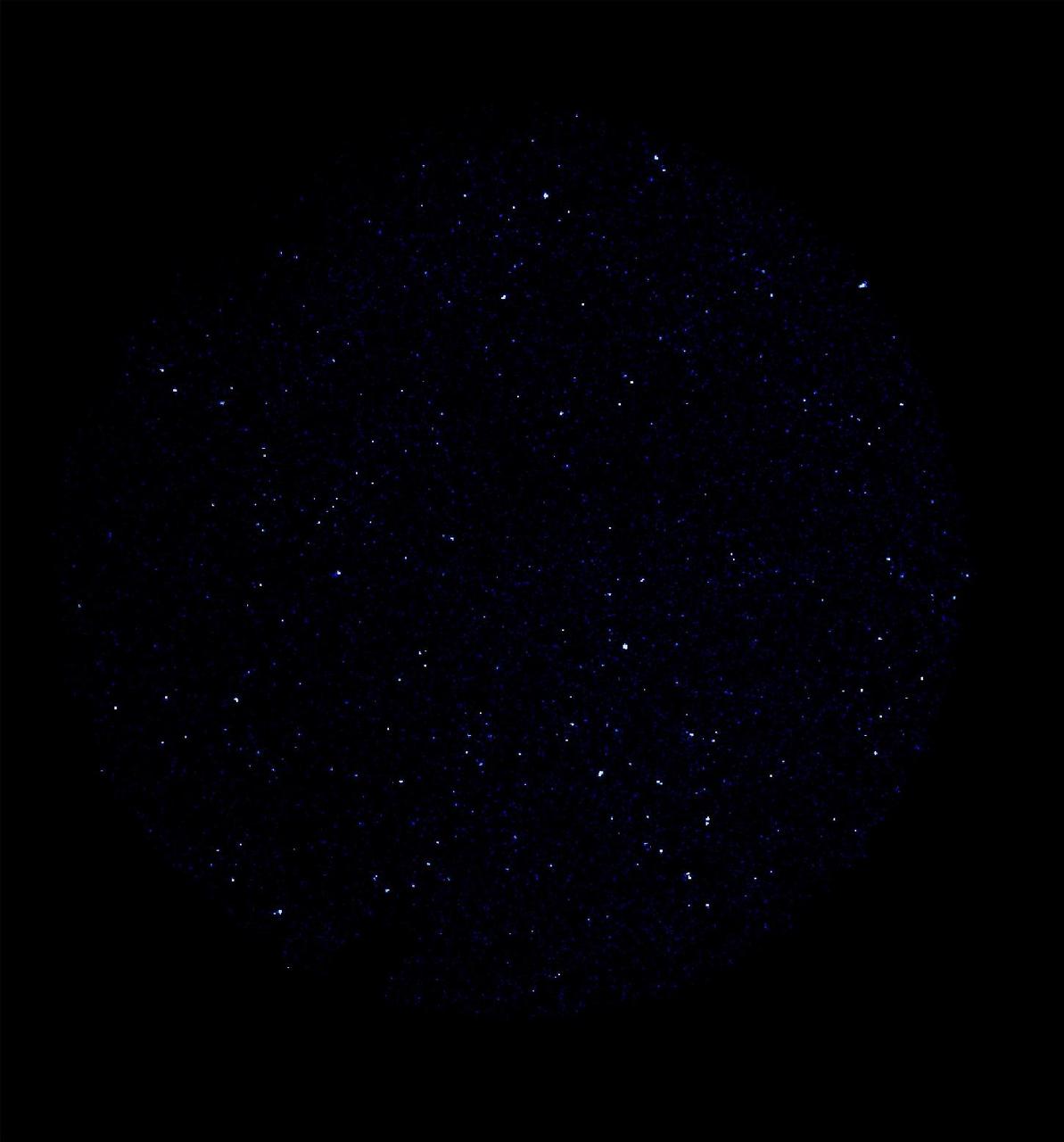
This image was taken May 21 and 22, 2003 by NASA Galaxy Evolution Explorer. The image was made from data gathered by the far ultraviolet channel of the spacecraft camera during the mission first light milestone. It shows about 400 celestial objects
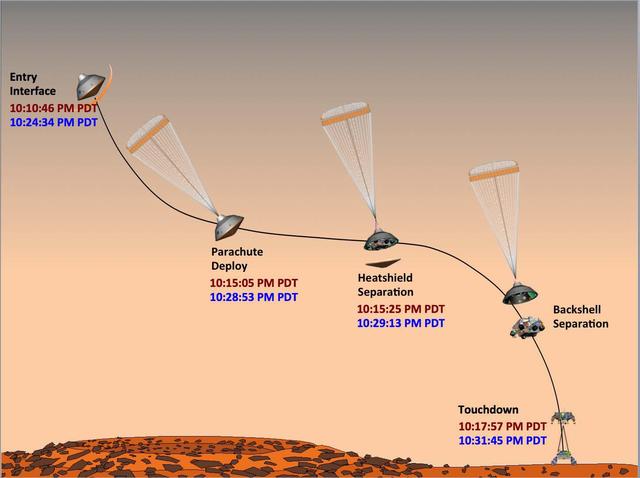
This graphic shows the times at which NASA Curiosity rover hit its milestones during its entry, descent and landing on Mars. Times the events actually occurred are in red; times that Earth received confirmation that events occurred appear in blue.
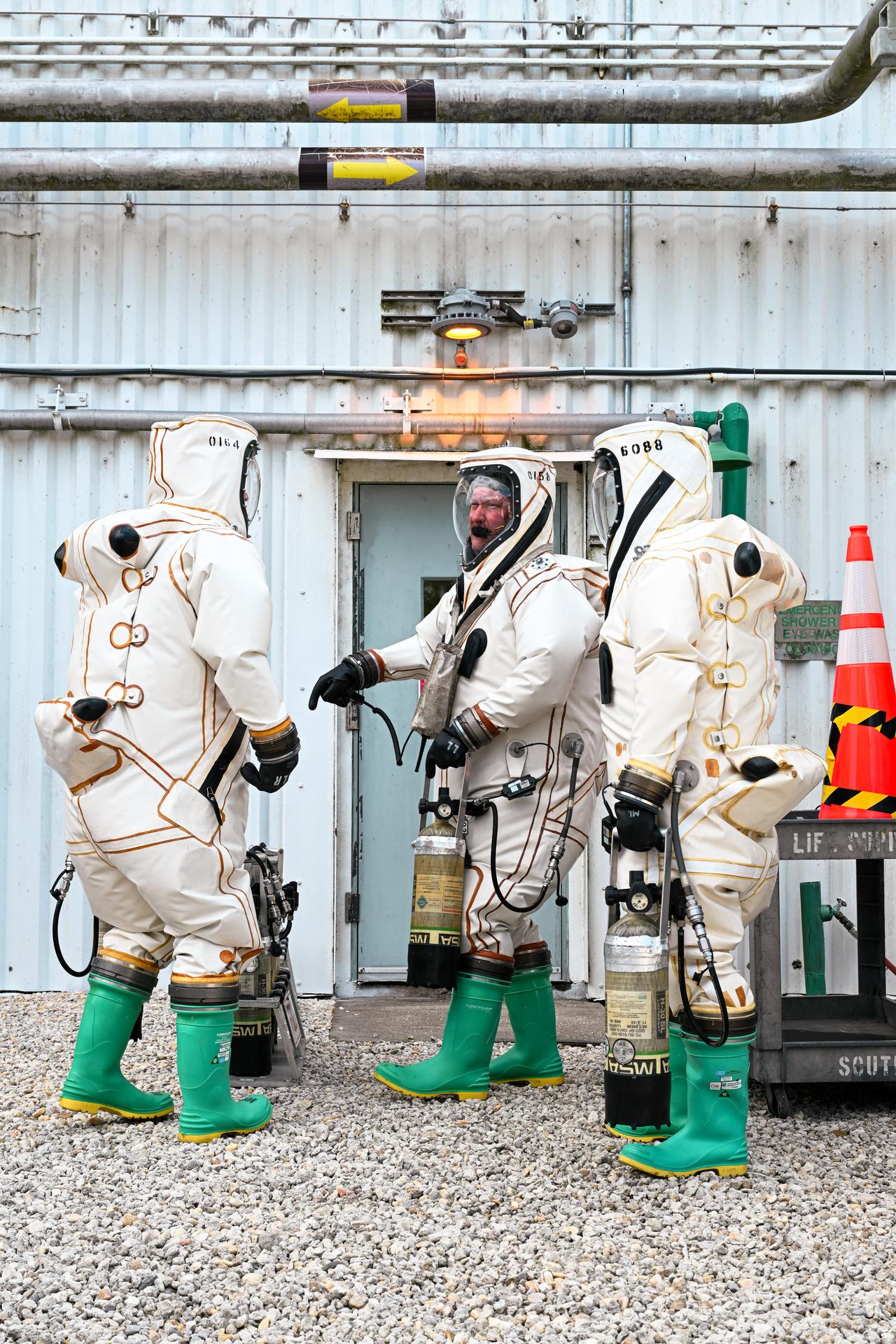
Technicians wear Self-Contained Atmospheric Protective Ensemble (SCAPE) suits as they prepare to perform propellant loading operations inside the Payload Hazardous Servicing Facility at NASA’s Kennedy Space Center in Florida Friday, July 24, 2026. With fuel tanks capable of carrying about 290 gallons (roughly 1,100 liters) of hydrazine – a monopropellant not requiring a second chemical to combust – Roman’s primary mission is to settle essential questions about dark energy, exoplanets, and infrared astrophysics by conducting wide-field surveys that explore the universe’s structure, evolution, and composition. Liftoff atop a SpaceX Falcon Heavy rocket from NASA Kennedy’s Launch Complex 39A is targeted no earlier than Sunday, Aug. 30, 2026.
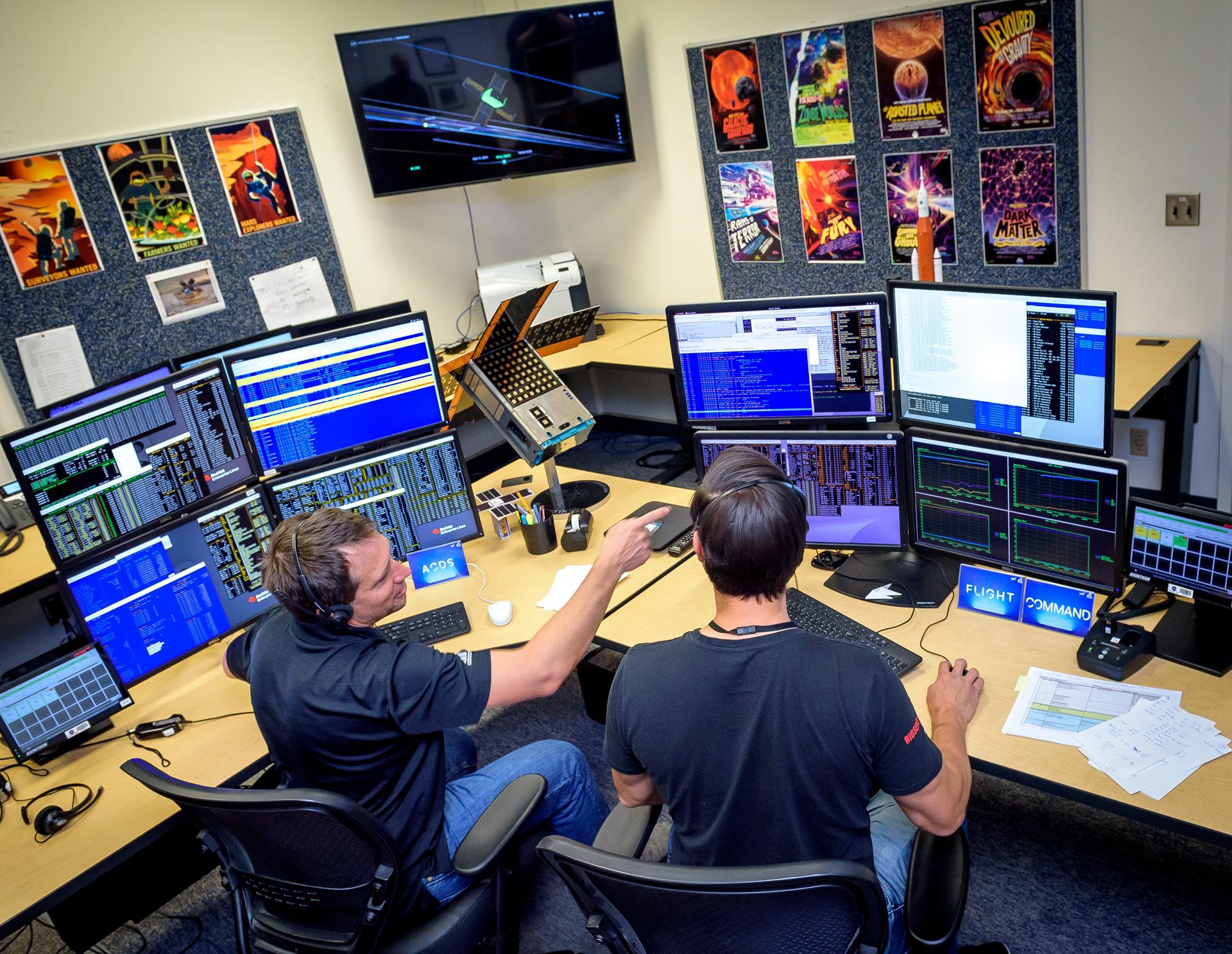
Jesse Fusco, left, and James Milsk at the BioSentinel command console in the Ames Multi-Mission Operations Center (MMOC), N240 Annex, Ceres control room 172, receiving spacecraft telemetry at the 3-year anniversary since launch on Artemis I.
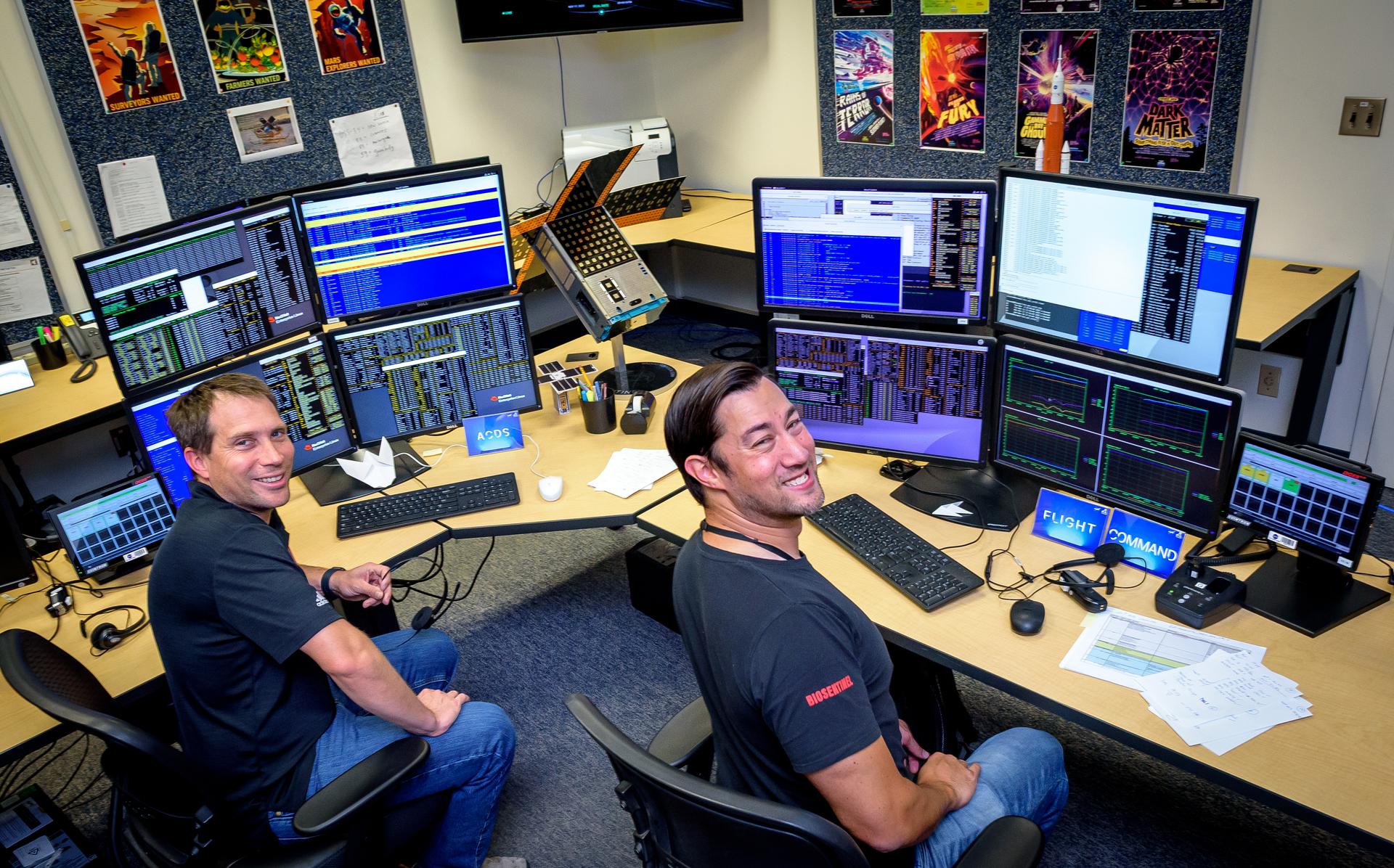
Jesse Fusco, left, and James Milsk at the BioSentinel command console in the Ames Multi-Mission Operations Center (MMOC), N240 Annex, Ceres control room 172, receiving spacecraft telemetry at the 3-year anniversary since launch on Artemis I.
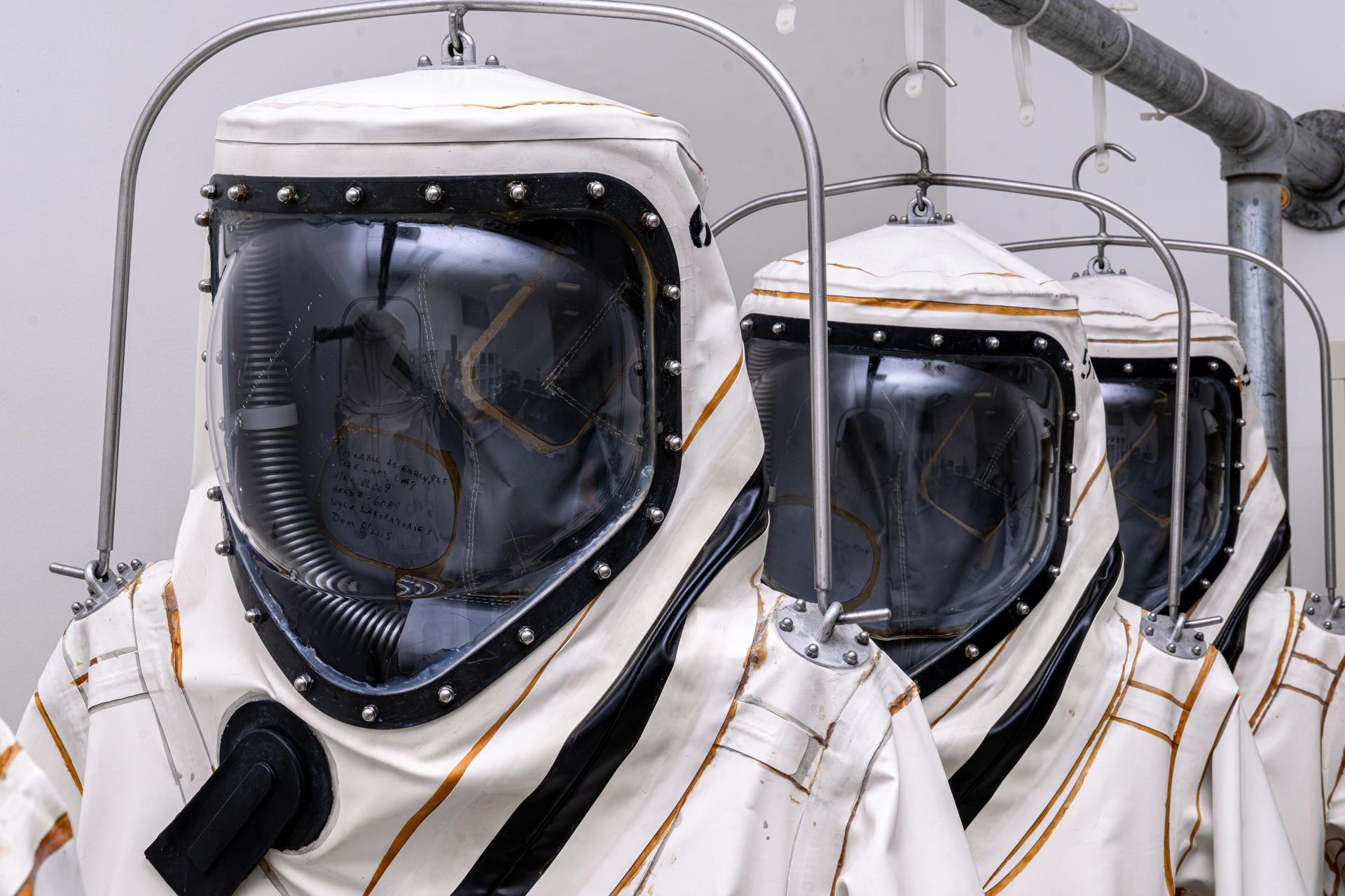
Self-Contained Atmospheric Protective Ensemble (SCAPE) suits hang on a rack the Multi Operations Support Building on Thursday, July 23, 2026, before technicians began operations to load propellant into NASA's Nancy Grace Roman Space Telescope. Once suited up technicians fueled Roman inside the Payload Hazardous Servicing Facility at NASA’s Kennedy Space Center in Florida with about 290 gallons (roughly 1,100 liters) of hydrazine. Roman’s primary mission is to settle essential questions about dark energy, exoplanets, and infrared astrophysics by conducting wide-field surveys that explore the universe’s structure, evolution, and composition. Liftoff atop a SpaceX Falcon Heavy rocket from NASA Kennedy’s Launch Complex 39A is targeted no earlier than Sunday, Aug. 30, 2026.
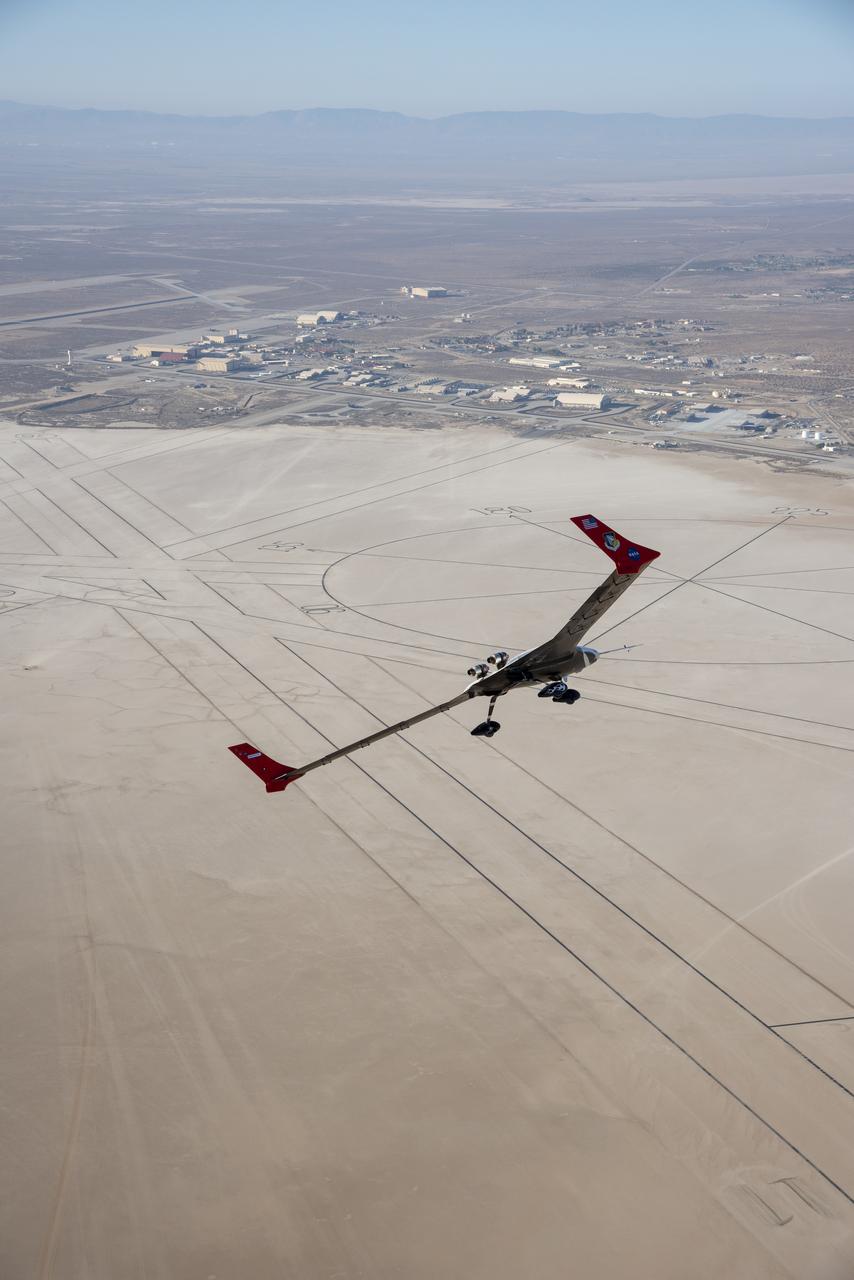
The X-56A flies a mission Oct. 23, 2018.
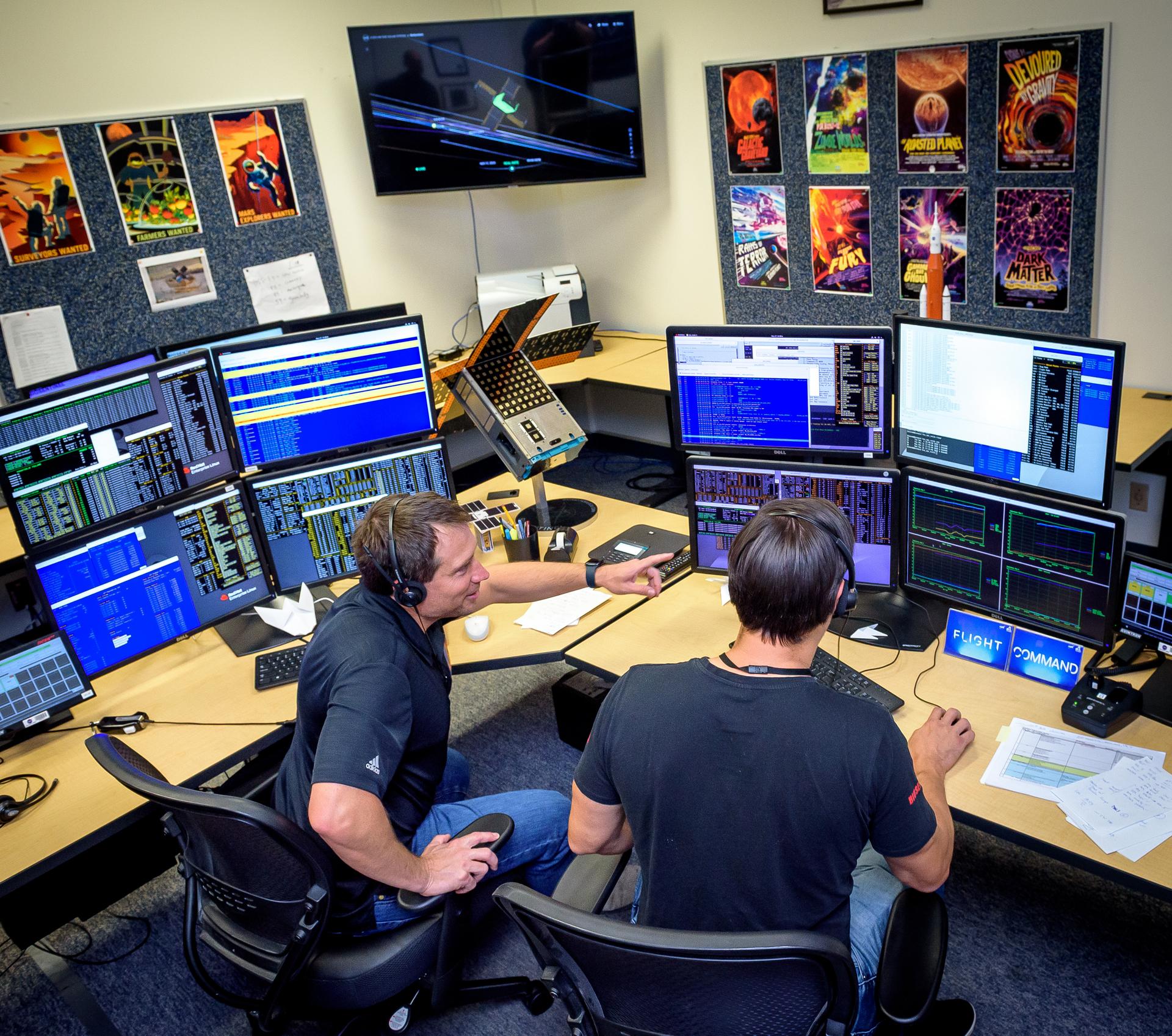
Jesse Fusco, left, and James Milsk at the BioSentinel command console in the Ames Multi-Mission Operations Center (MMOC), N240 Annex, Ceres control room 172, receiving spacecraft telemetry at the 3-year anniversary since launch on Artemis I.
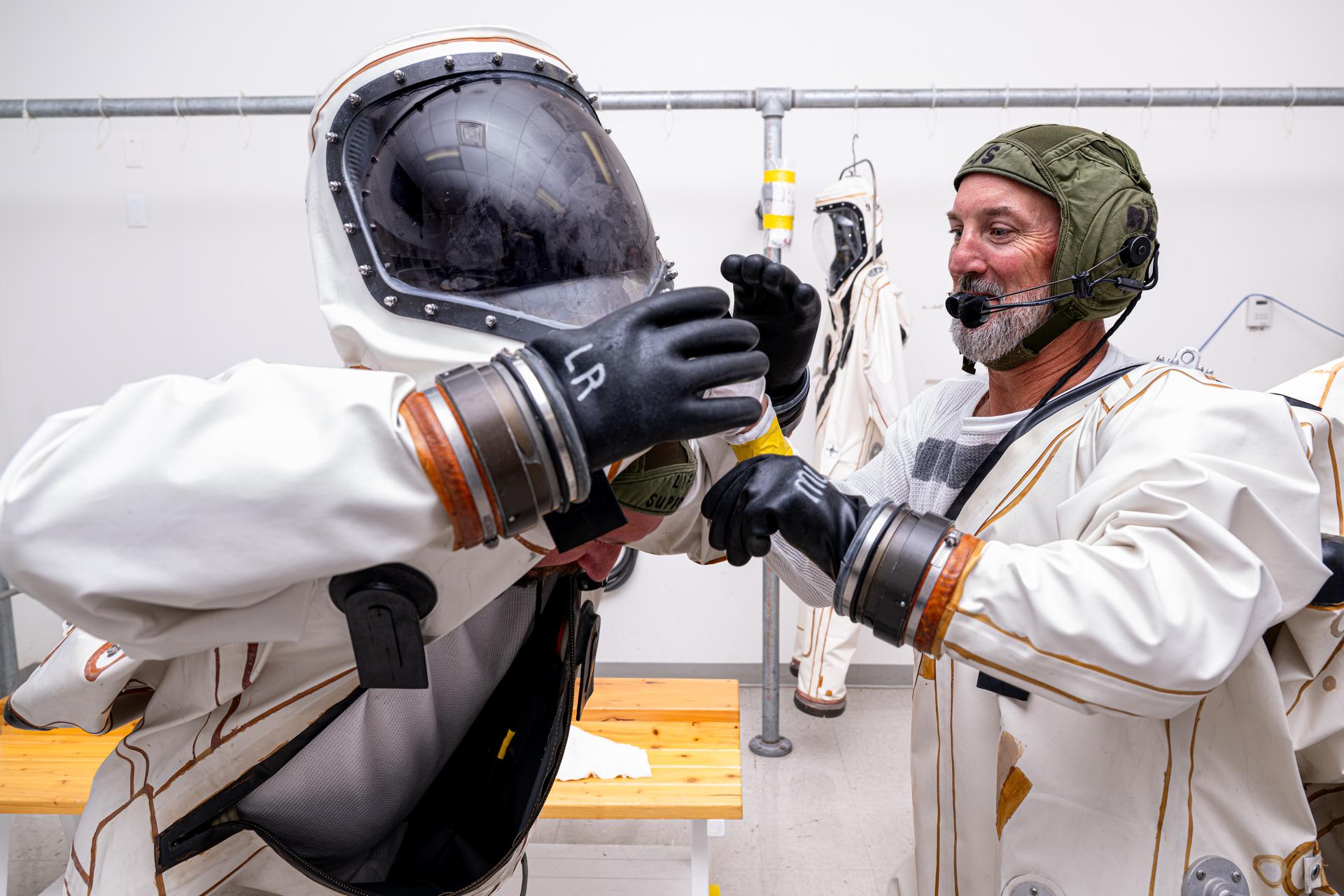
From left, technicians Jacob Stahl and Ryan Renehan don Self-Contained Atmospheric Protective Ensemble (SCAPE) suits as they prepare to perform propellant loading operations inside the Payload Hazardous Servicing Facility at NASA’s Kennedy Space Center in Florida for the agency’s Nancy Grace Roman Space Telescope on Thursday, July 23, 2026. With fuel tanks capable of carrying about 290 gallons (roughly 1,100 liters) of hydrazine – Roman’s primary mission is to settle essential questions about dark energy, exoplanets, and infrared astrophysics by conducting wide-field surveys that explore the universe’s structure, evolution, and composition. Liftoff atop a SpaceX Falcon Heavy rocket from NASA Kennedy’s Launch Complex 39A is targeted no earlier than Sunday, Aug. 30, 2026.
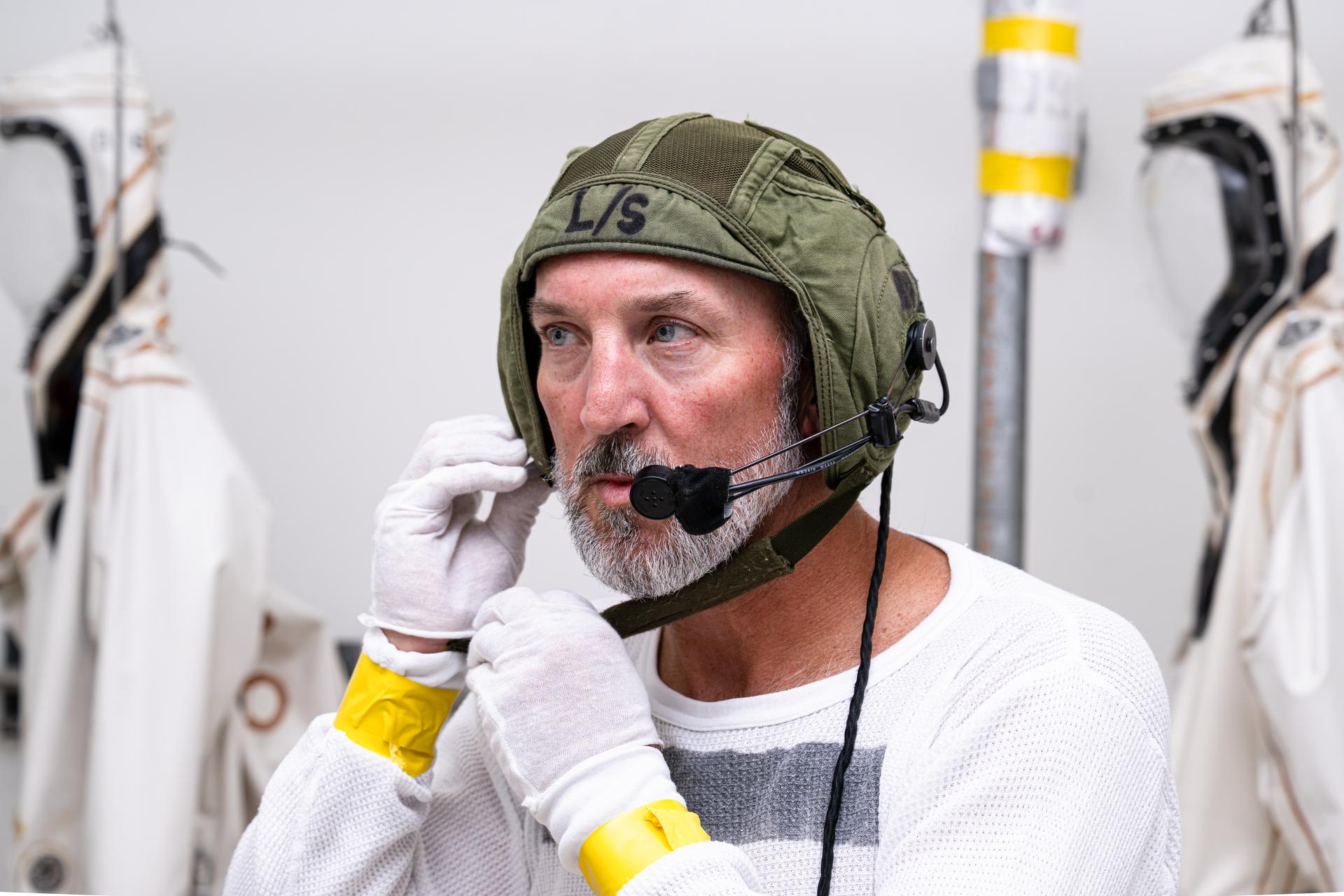
Ryan Renehan, technician, wears a Self-Contained Atmospheric Protective Ensemble (SCAPE) suit as he prepares to perform propellant loading operations inside the Payload Hazardous Servicing Facility at NASA’s Kennedy Space Center in Florida Thursday, July 23, 2026. With fuel tanks capable of carrying about 290 gallons (roughly 1,100 liters) of hydrazine – a monopropellant not requiring a second chemical to combust – Roman’s primary mission is to settle essential questions about dark energy, exoplanets, and infrared astrophysics by conducting wide-field surveys that explore the universe’s structure, evolution, and composition. Liftoff atop a SpaceX Falcon Heavy rocket from NASA Kennedy’s Launch Complex 39A is targeted no earlier than Sunday, Aug. 30, 2026.
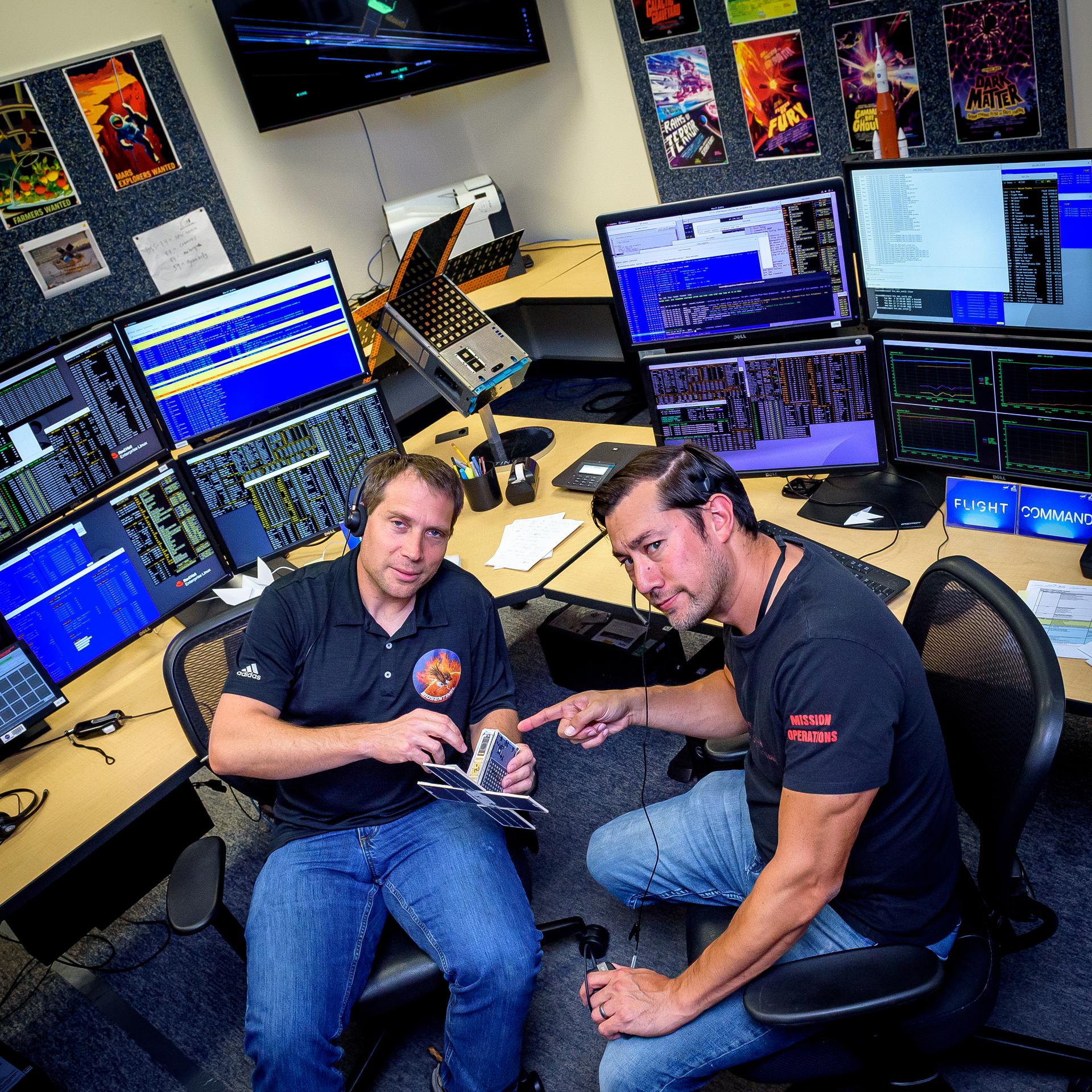
Jesse Fusco, left, and James Milsk at the BioSentinel command console in the Ames Multi-Mission Operations Center (MMOC), N240 Annex, Ceres control room 172, receiving spacecraft telemetry at the 3-year anniversary since launch on Artemis I.
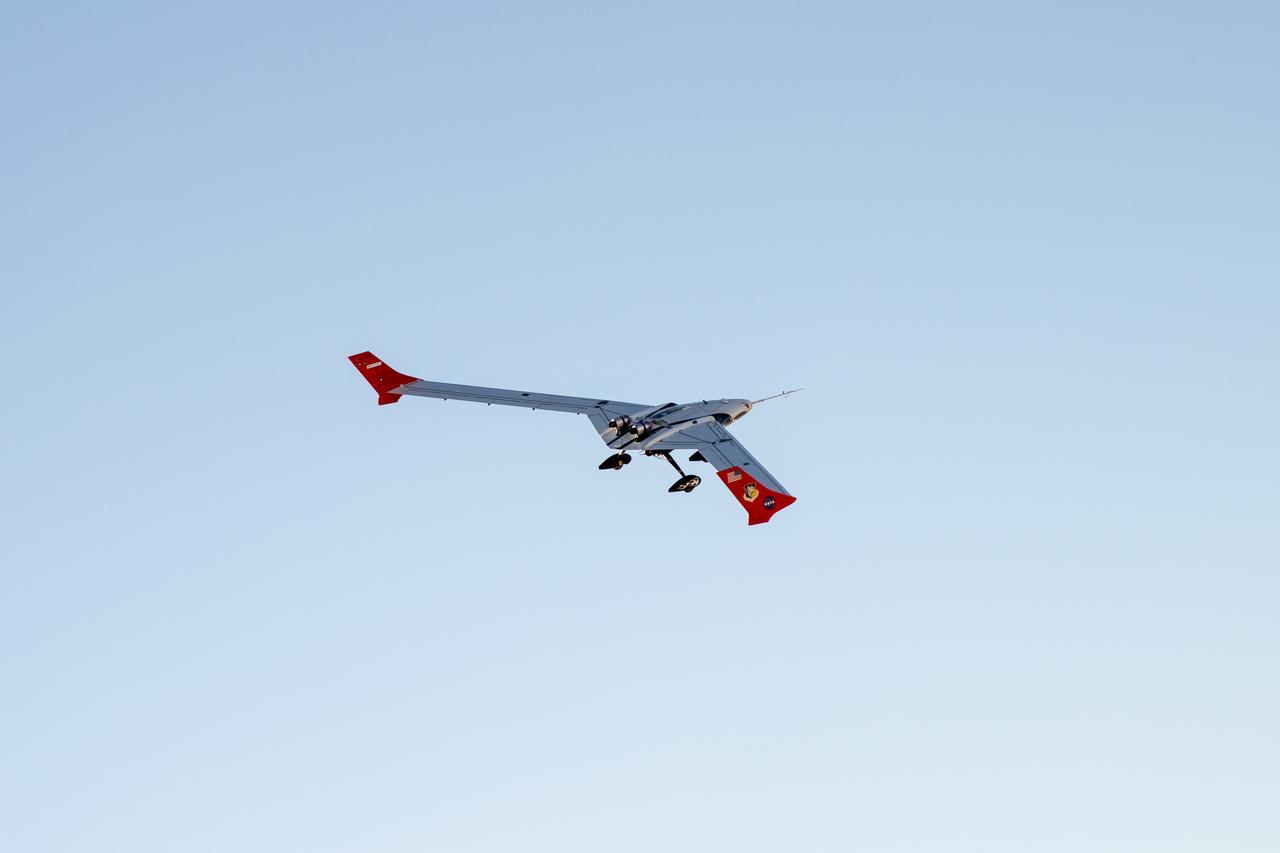
The X-56A flies a mission Oct. 23, 2018.
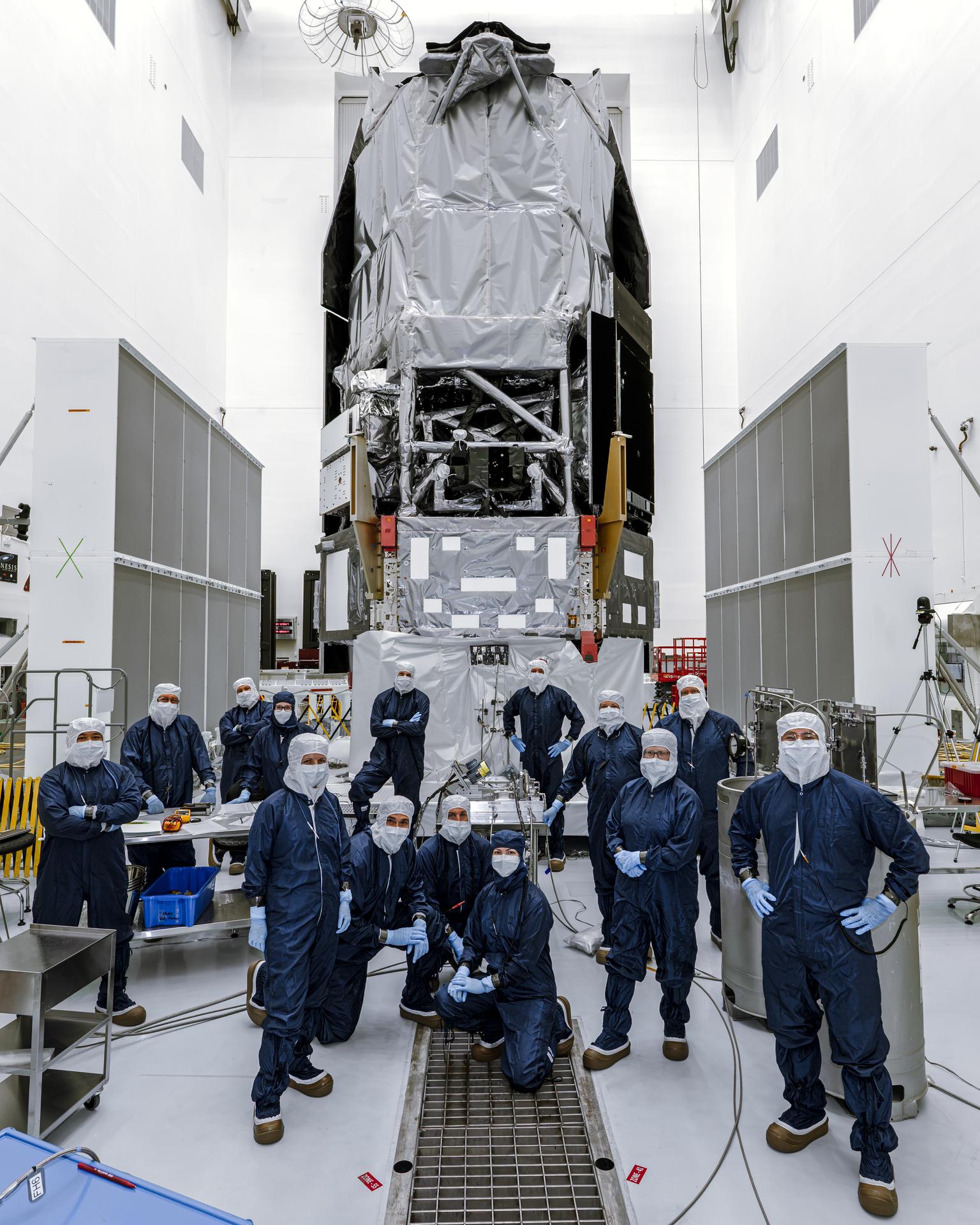
Members of NASA's Nancy Grace Roman Space Telescope propellant, safety, and quality assurance team pose for a photo on Monday July 20, 2026, inside the Payload Hazardous Servicing Facility at NASA’s Kennedy Space Center in Florida, prior to technicians loading propellant into the observatory. With fuel tanks capable of carrying about 290 gallons (roughly 1,100 liters) of hydrazine – a monopropellant not requiring a second chemical to combust – Roman’s primary mission is to settle essential questions about dark energy, exoplanets, and infrared astrophysics by conducting wide-field surveys that explore the universe’s structure, evolution, and composition. Liftoff atop a SpaceX Falcon Heavy rocket from NASA Kennedy’s Launch Complex 39A is targeted no earlier than Sunday, Aug. 30, 2026.
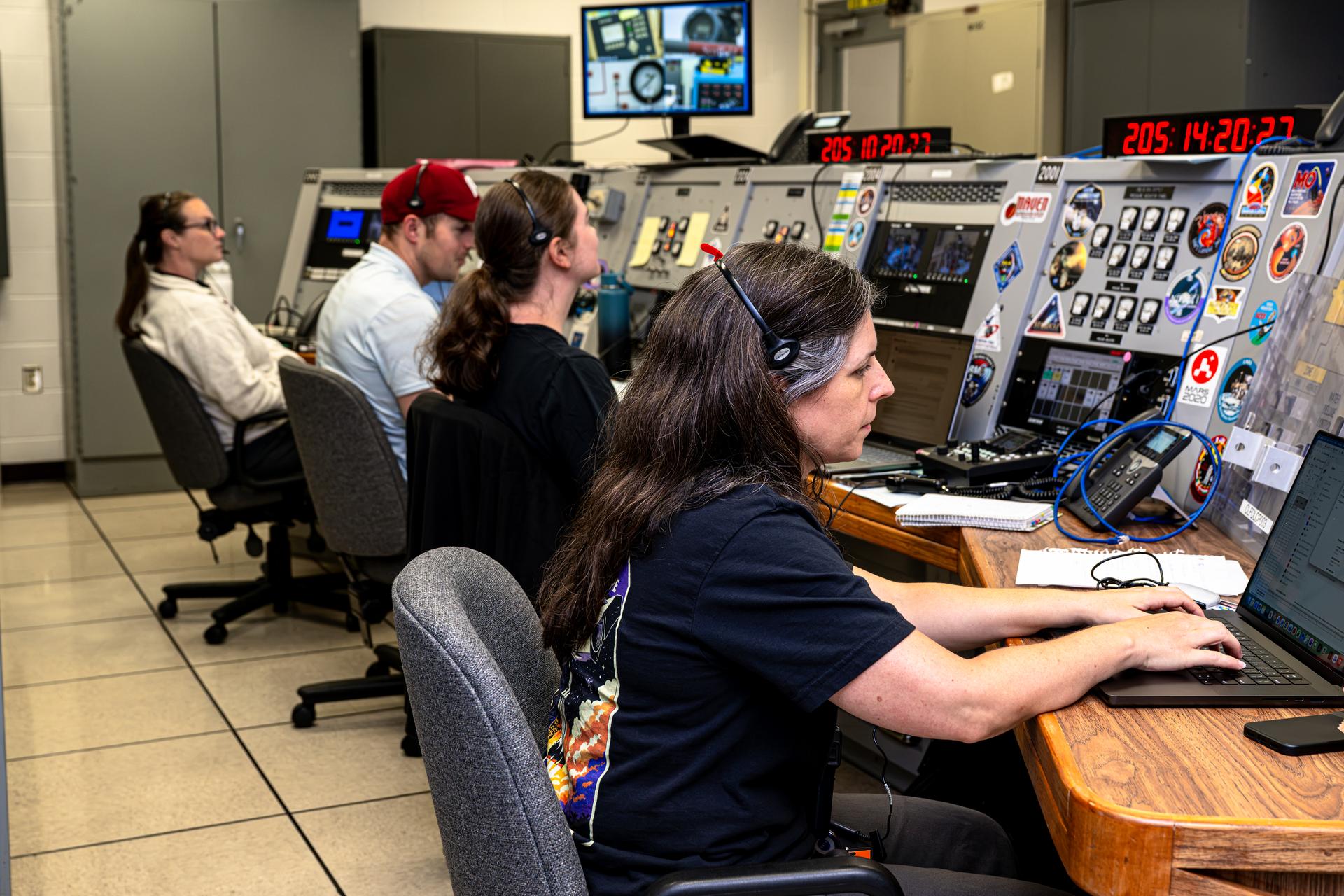
Technicians monitor propellant loading from a control room in the Multi Operations Support Building at NASA’s Kennedy Space Center in Florida Friday, July 24, 2026. With fuel tanks capable of carrying about 290 gallons (roughly 1,100 liters) of hydrazine – a monopropellant not requiring a second chemical to combust – Roman’s primary mission is to settle essential questions about dark energy, exoplanets, and infrared astrophysics by conducting wide-field surveys that explore the universe’s structure, evolution, and composition. Liftoff atop a SpaceX Falcon Heavy rocket from NASA Kennedy’s Launch Complex 39A is targeted no earlier than Sunday, Aug. 30, 2026.
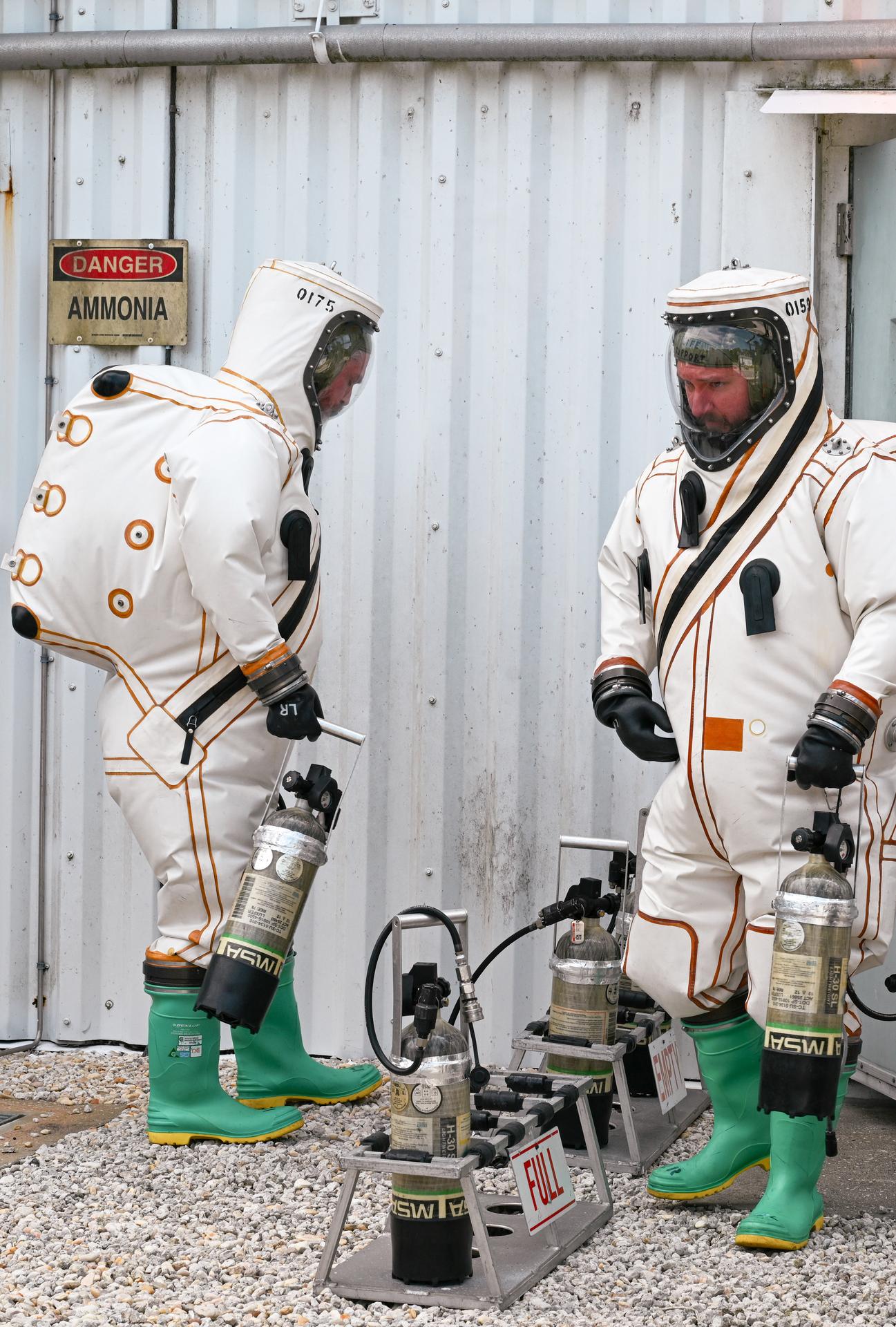
Technicians wear Self-Contained Atmospheric Protective Ensemble (SCAPE) suits as they prepare to perform propellant loading operations inside the Payload Hazardous Servicing Facility at NASA’s Kennedy Space Center in Florida Friday, July 24, 2026. With fuel tanks capable of carrying about 290 gallons (roughly 1,100 liters) of hydrazine – a monopropellant not requiring a second chemical to combust – Roman’s primary mission is to settle essential questions about dark energy, exoplanets, and infrared astrophysics by conducting wide-field surveys that explore the universe’s structure, evolution, and composition. Liftoff atop a SpaceX Falcon Heavy rocket from NASA Kennedy’s Launch Complex 39A is targeted no earlier than Sunday, Aug. 30, 2026.
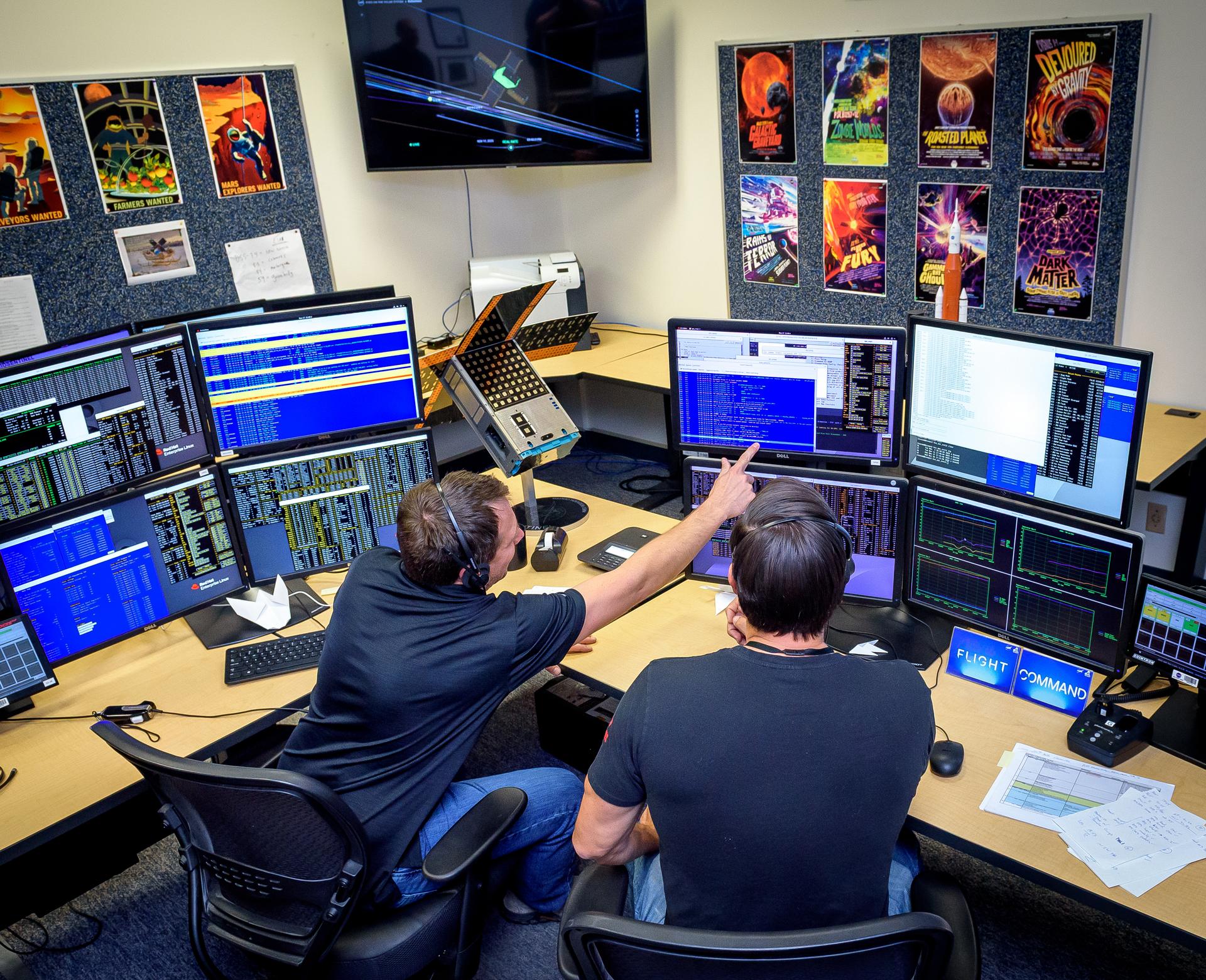
Jesse Fusco, left, and James Milsk at the BioSentinel command console in the Ames Multi-Mission Operations Center (MMOC), N240 Annex, Ceres control room 172, receiving spacecraft telemetry at the 3-year anniversary since launch on Artemis I.
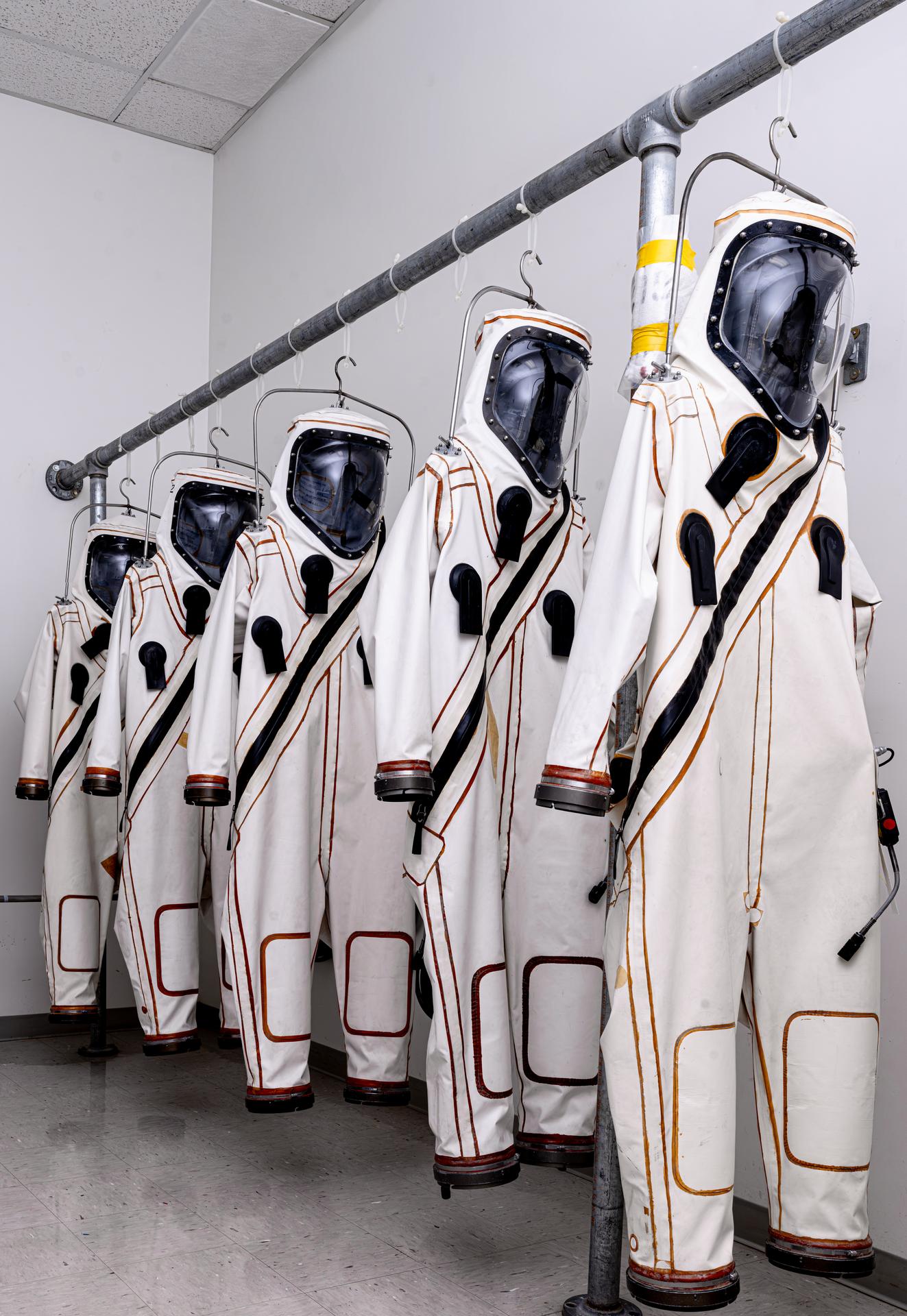
Self-Contained Atmospheric Protective Ensemble (SCAPE) suits hang on a rack the Multi Operations Support Building on Thursday, July 23, 2026, before technicians began operations to load propellant into NASA's Nancy Grace Roman Space Telescope. Once suited up technicians fueled Roman inside the Payload Hazardous Servicing Facility at NASA’s Kennedy Space Center in Florida with about 290 gallons (roughly 1,100 liters) of hydrazine. Roman’s primary mission is to settle essential questions about dark energy, exoplanets, and infrared astrophysics by conducting wide-field surveys that explore the universe’s structure, evolution, and composition. Liftoff atop a SpaceX Falcon Heavy rocket from NASA Kennedy’s Launch Complex 39A is targeted no earlier than Sunday, Aug. 30, 2026.
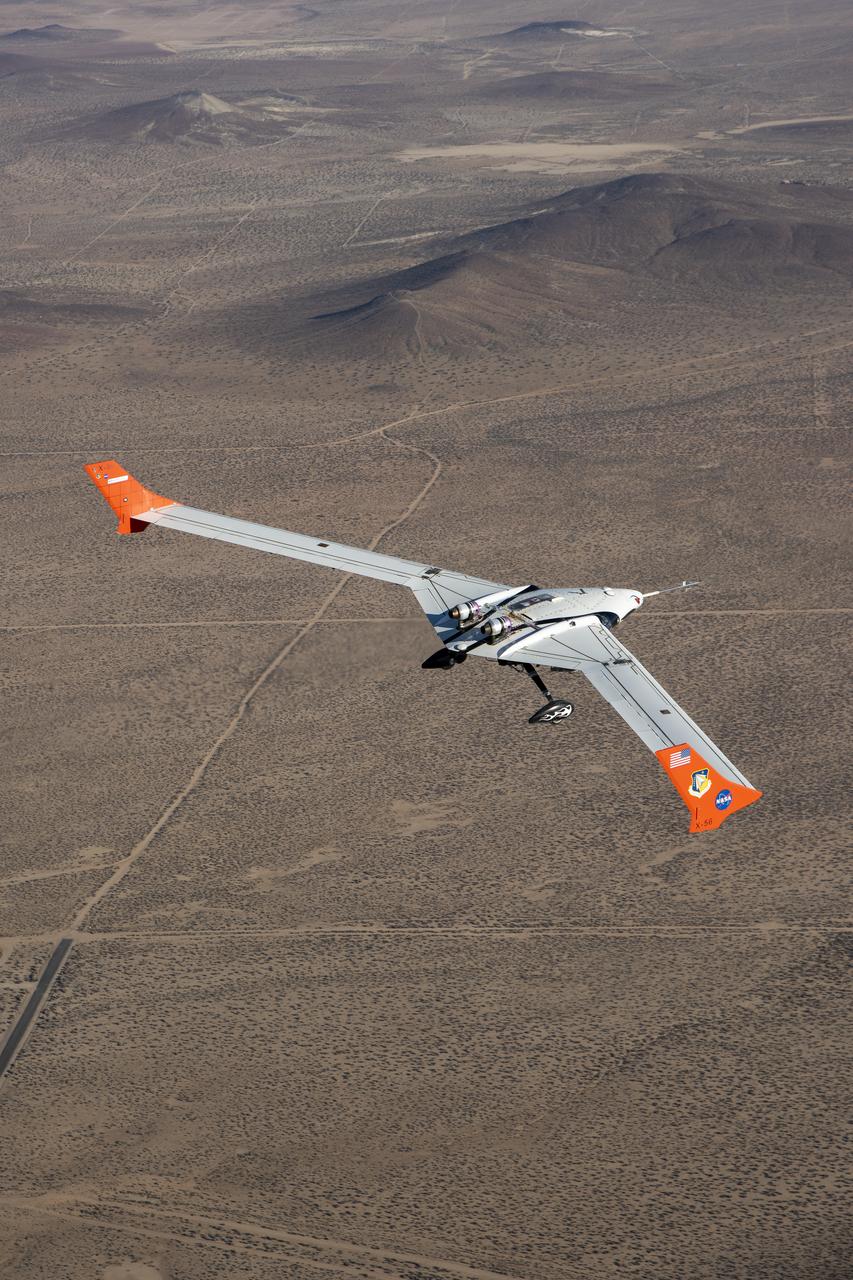
The X-56A flies a mission Oct. 23, 2018.
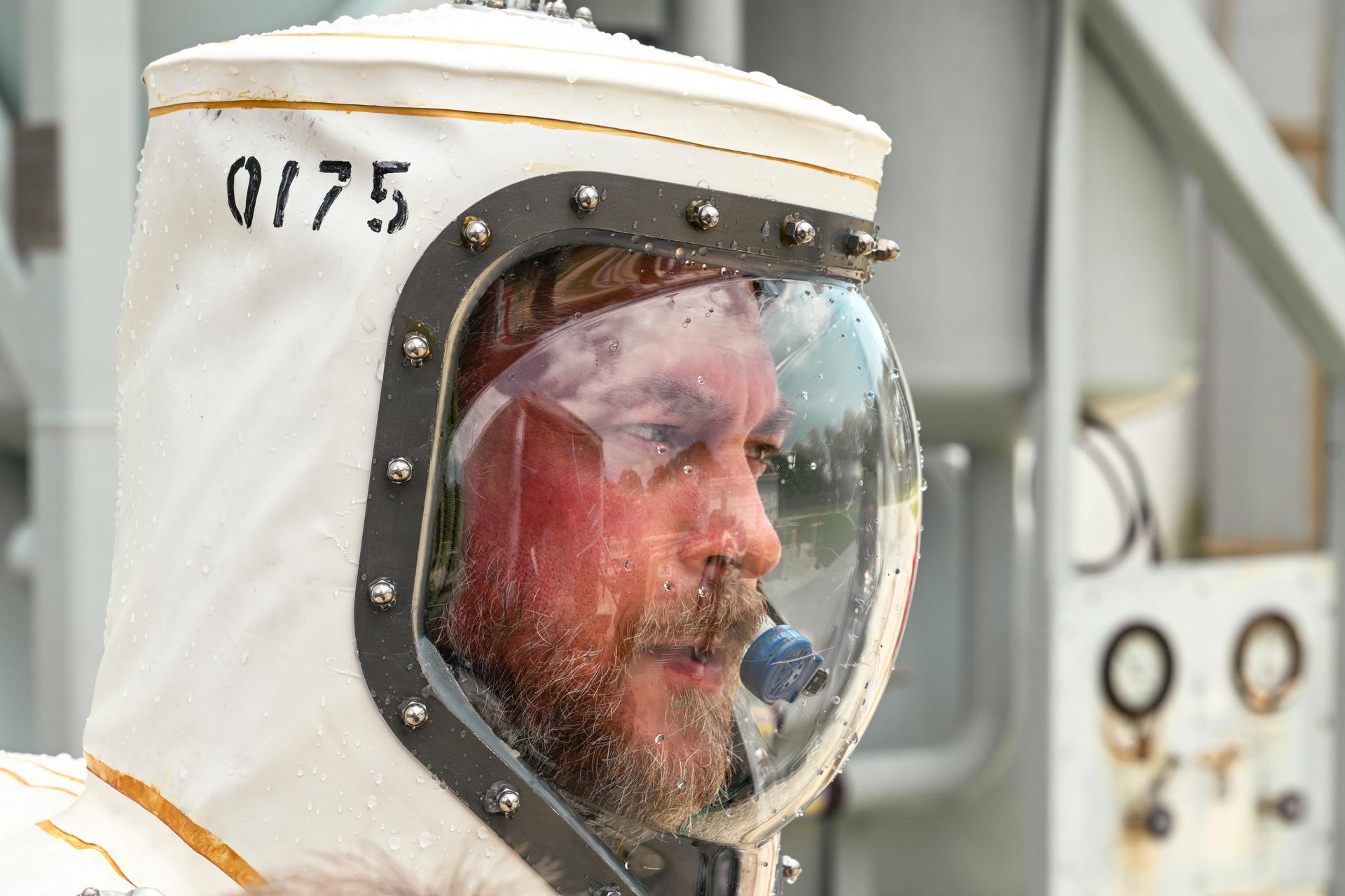
Billy Keim, a senior integration technician for NASA's Nancy Grace Roman Space Telescope wears a Self-Contained Atmospheric Protective Ensemble (SCAPE) suit as he prepares to perform propellant loading operations inside the Payload Hazardous Servicing Facility at NASA’s Kennedy Space Center in Florida Friday, July 24, 2026. With fuel tanks capable of carrying about 290 gallons (roughly 1,100 liters) of hydrazine – a monopropellant not requiring a second chemical to combust – Roman’s primary mission is to settle essential questions about dark energy, exoplanets, and infrared astrophysics by conducting wide-field surveys that explore the universe’s structure, evolution, and composition. Liftoff atop a SpaceX Falcon Heavy rocket from NASA Kennedy’s Launch Complex 39A is targeted no earlier than Sunday, Aug. 30, 2026.
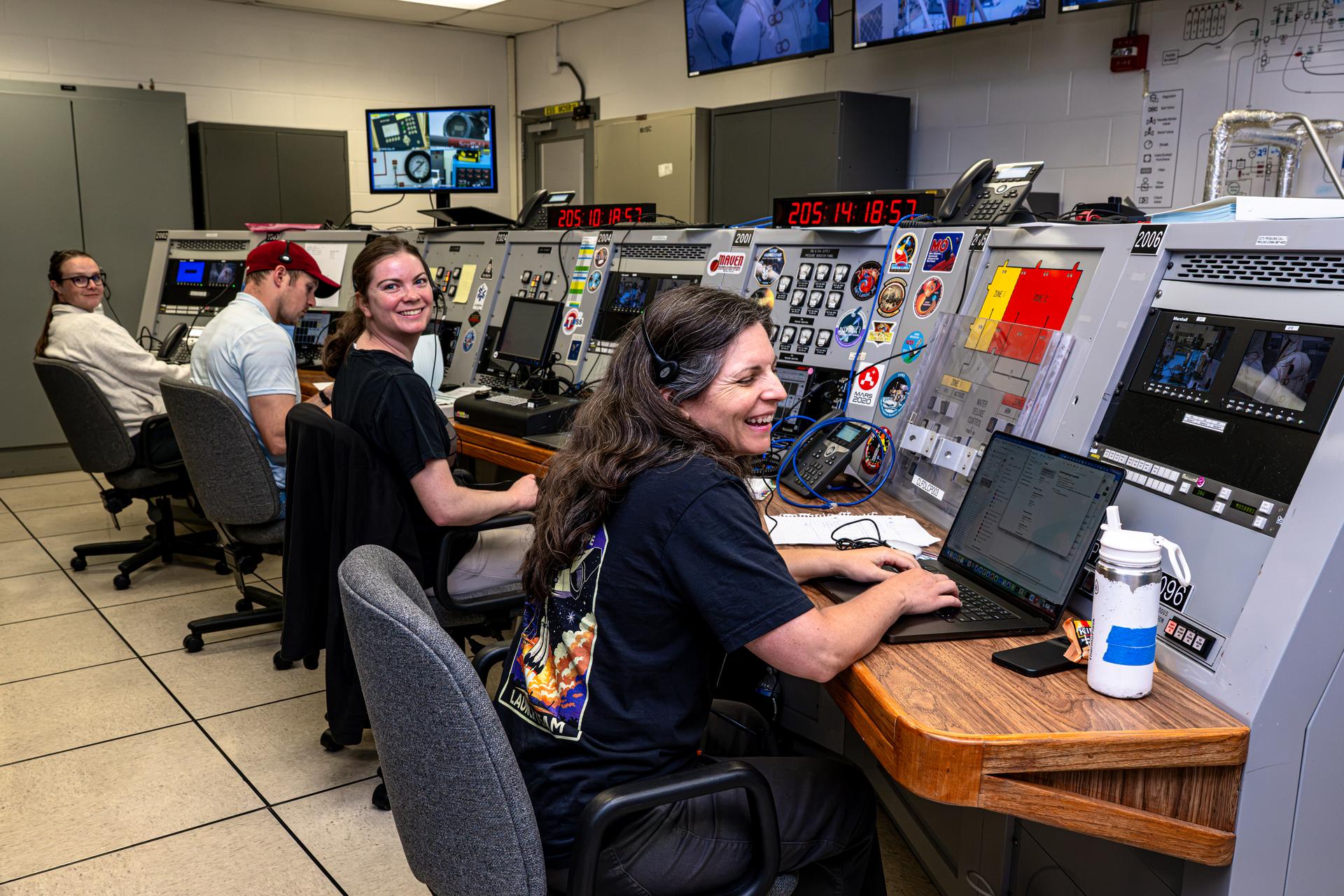
Technicians monitor propellant loading from a control room in the Multi Operations Support Building at NASA’s Kennedy Space Center in Florida Friday, July 24, 2026. With fuel tanks capable of carrying about 290 gallons (roughly 1,100 liters) of hydrazine – a monopropellant not requiring a second chemical to combust – Roman’s primary mission is to settle essential questions about dark energy, exoplanets, and infrared astrophysics by conducting wide-field surveys that explore the universe’s structure, evolution, and composition. Liftoff atop a SpaceX Falcon Heavy rocket from NASA Kennedy’s Launch Complex 39A is targeted no earlier than Sunday, Aug. 30, 2026.
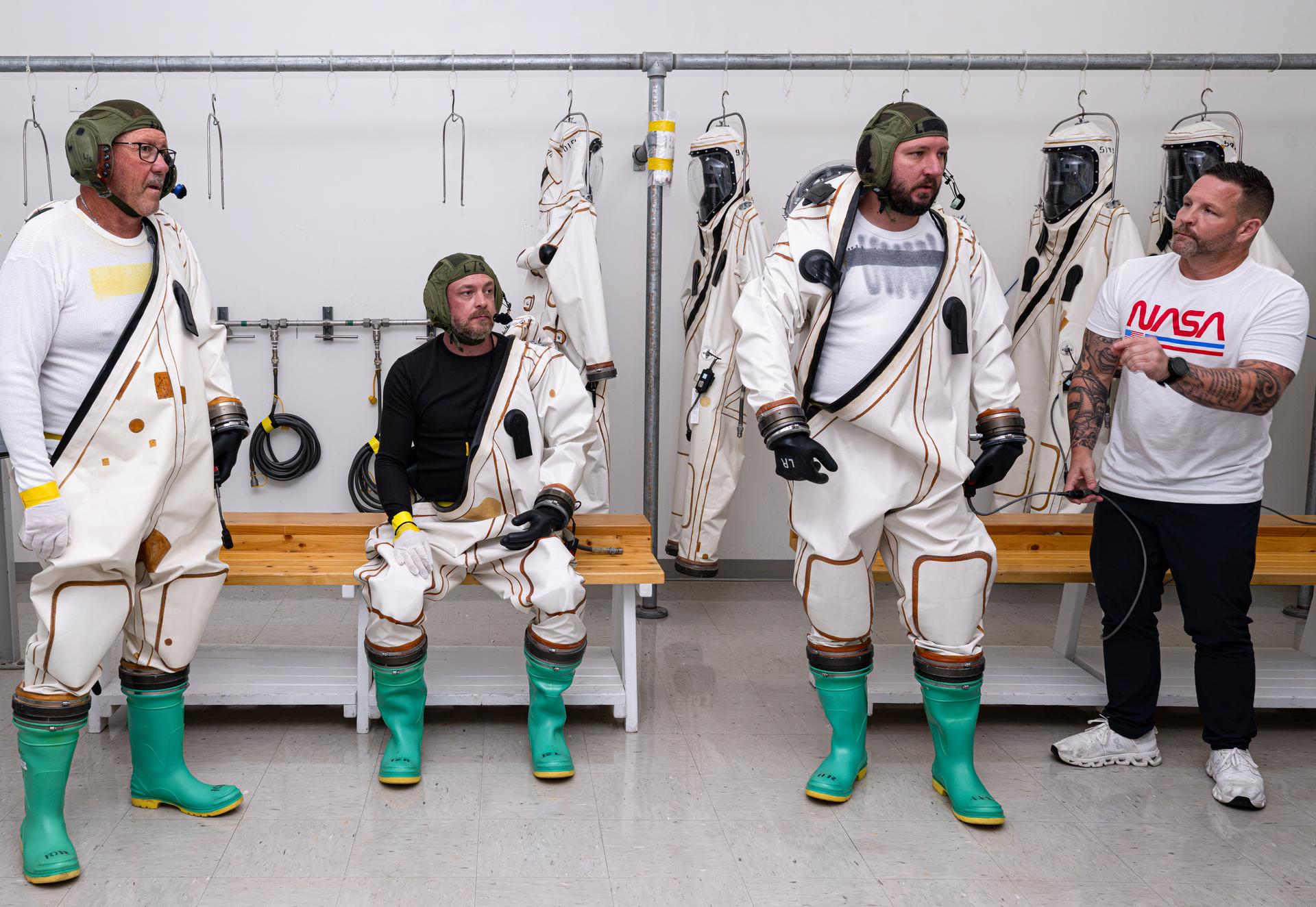
Technicians don Self-Contained Atmospheric Protective Ensemble (SCAPE) suits as they prepare to perform propellant loading operations inside the Payload Hazardous Servicing Facility at NASA’s Kennedy Space Center in Florida for the agency’s Nancy Grace Roman Space Telescope on Thursday, July 23, 2026. With fuel tanks capable of carrying about 290 gallons (roughly 1,100 liters) of hydrazine, Roman’s primary mission is to settle essential questions about dark energy, exoplanets, and infrared astrophysics by conducting wide-field surveys that explore the universe’s structure, evolution, and composition. Liftoff atop a SpaceX Falcon Heavy rocket from NASA Kennedy’s Launch Complex 39A is targeted no earlier than Sunday, Aug. 30, 2026.
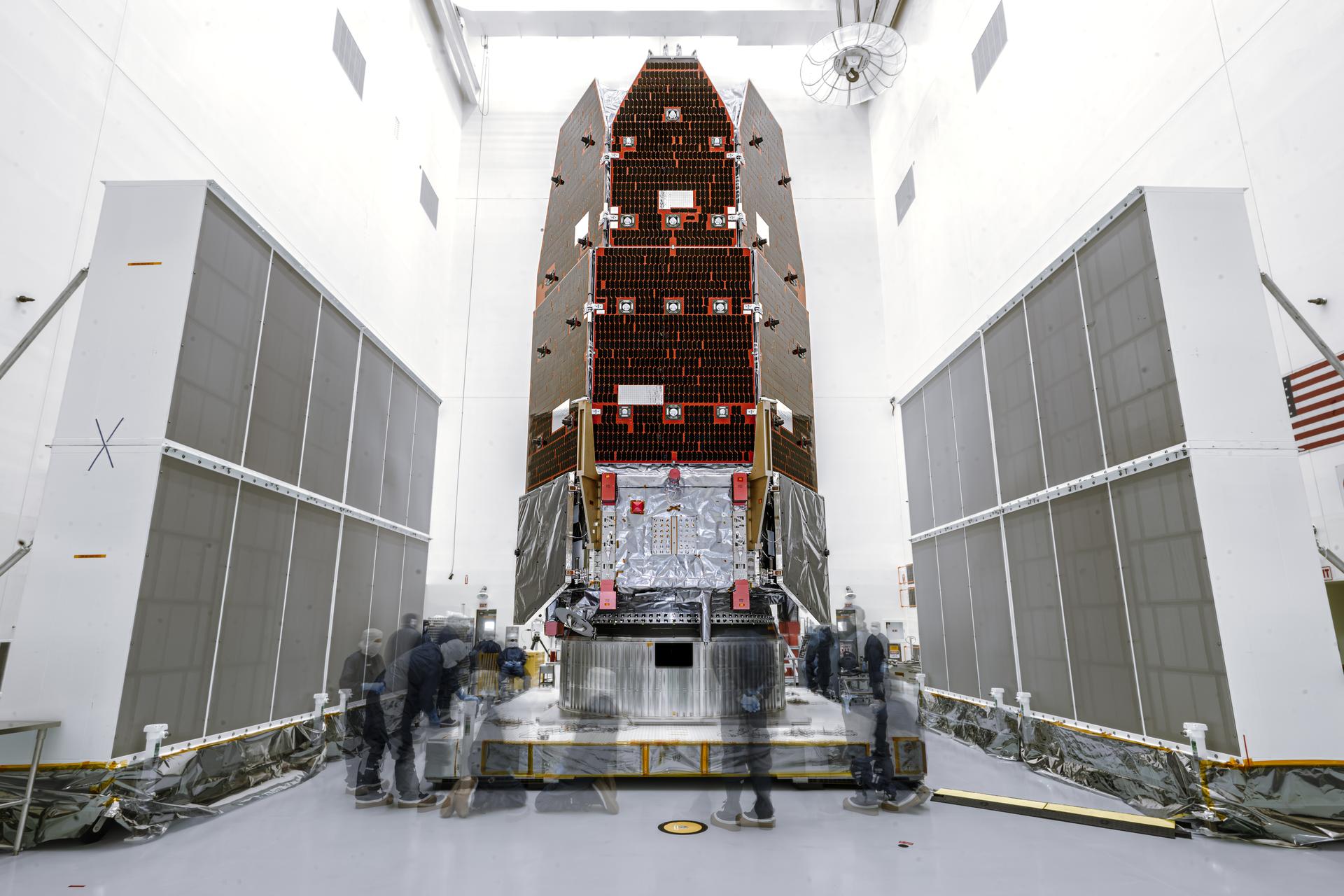
In this long exposure image, members of NASA's Nancy Grace Roman Space Telescope process the observatory on Thursday, July 16, 2026, inside the Payload Hazardous Servicing Facility at NASA’s Kennedy Space Center in Florida. Roman’s primary mission is to settle essential questions about dark energy, exoplanets, and infrared astrophysics by conducting wide-field surveys that explore the universe’s structure, evolution, and composition. Liftoff atop a SpaceX Falcon Heavy rocket from NASA Kennedy’s Launch Complex 39A is targeted no earlier than Sunday, Aug. 30, 2026.
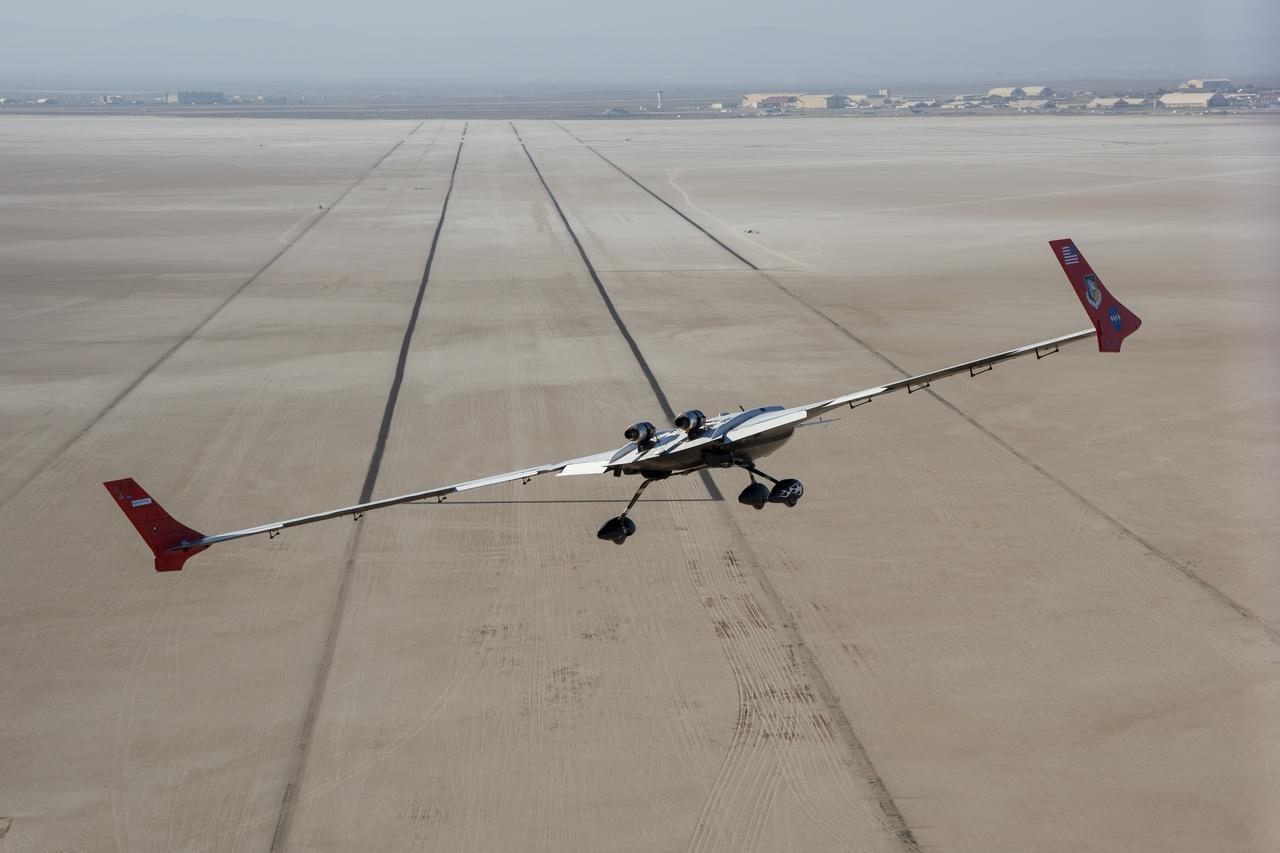
The X-56A flies a mission Oct. 23, 2018.
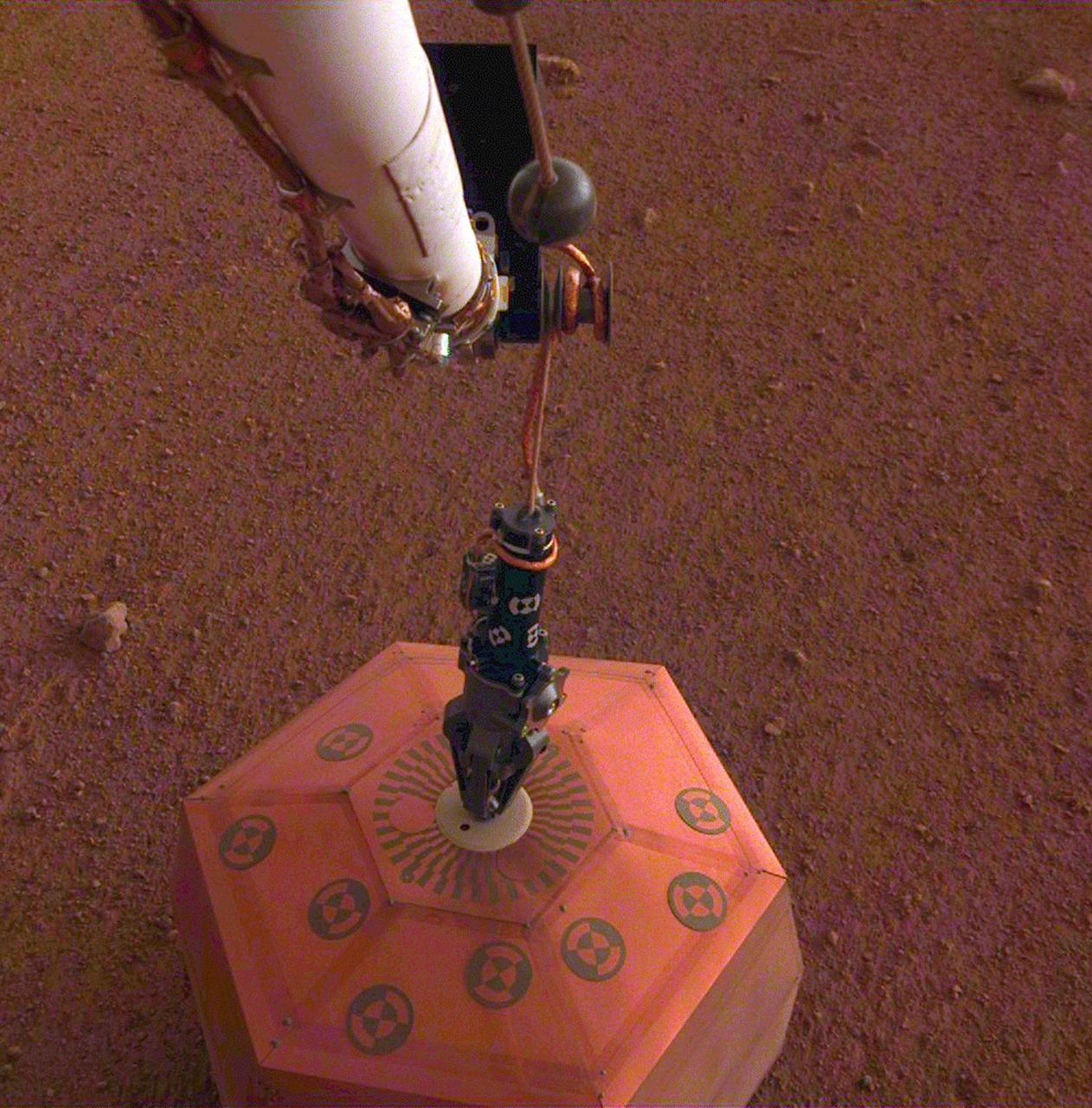
This set of images shows NASA's InSight lander deploying its first instrument onto the surface of Mars, completing a major mission milestone. InSight's robotic arm is white, with a black, handlike grapple at the end. The grapple is holding onto the copper-colored seismometer. The color-calibrated image was taken on Dec. 19, 2018, around dusk on Mars, with InSight's Instrument Deployment Camera (IDC), which is on the lander's robotic arm. Animation available at https://photojournal.jpl.nasa.gov/catalog/PIA22977
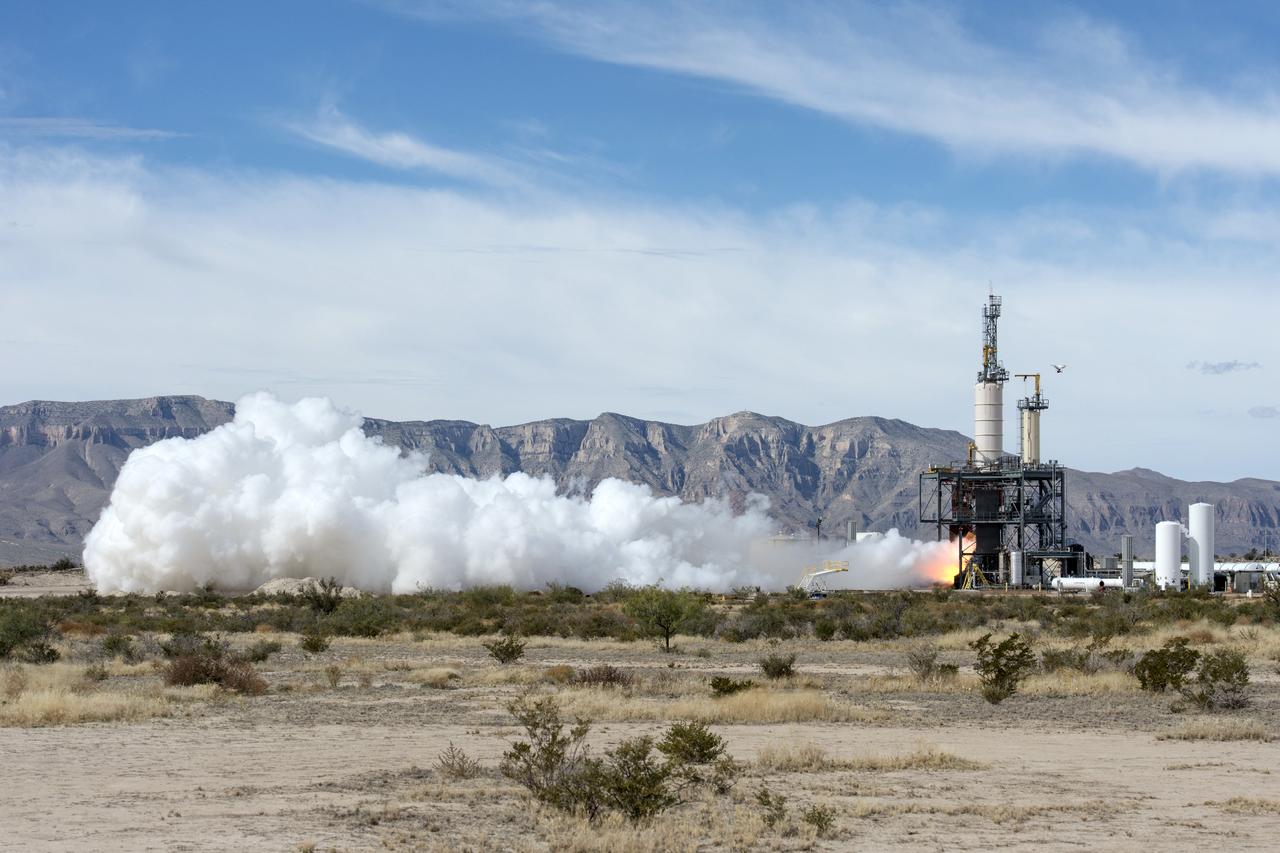
DATE: 11-20-13 LOCATION: Van Horn, Tx SUBJECT: Blue Origin Milestone 3.6 BE-3 Engine Test Fire PHOTOGRAPHER: Lauren Harnett
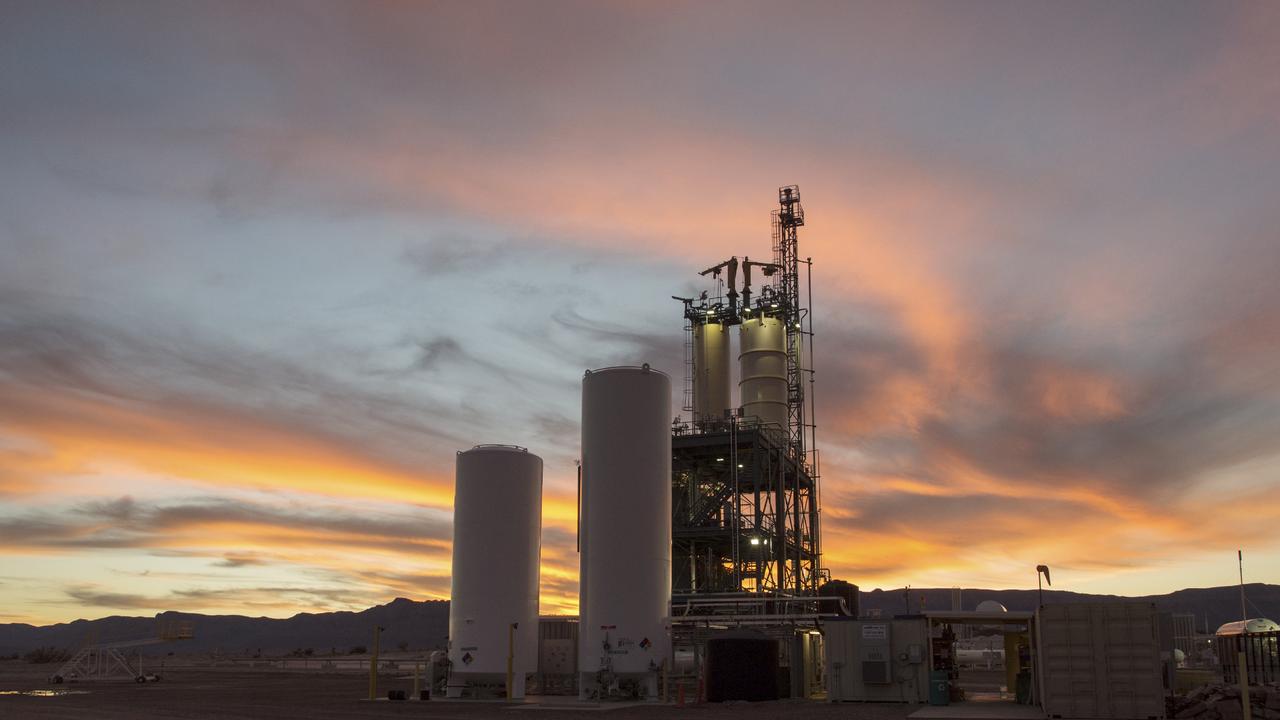
DATE: 11-20-13 LOCATION: Van Horn, Tx SUBJECT: Blue Origin Milestone 3.6 BE-3 Engine Test Fire PHOTOGRAPHER: Lauren Harnett
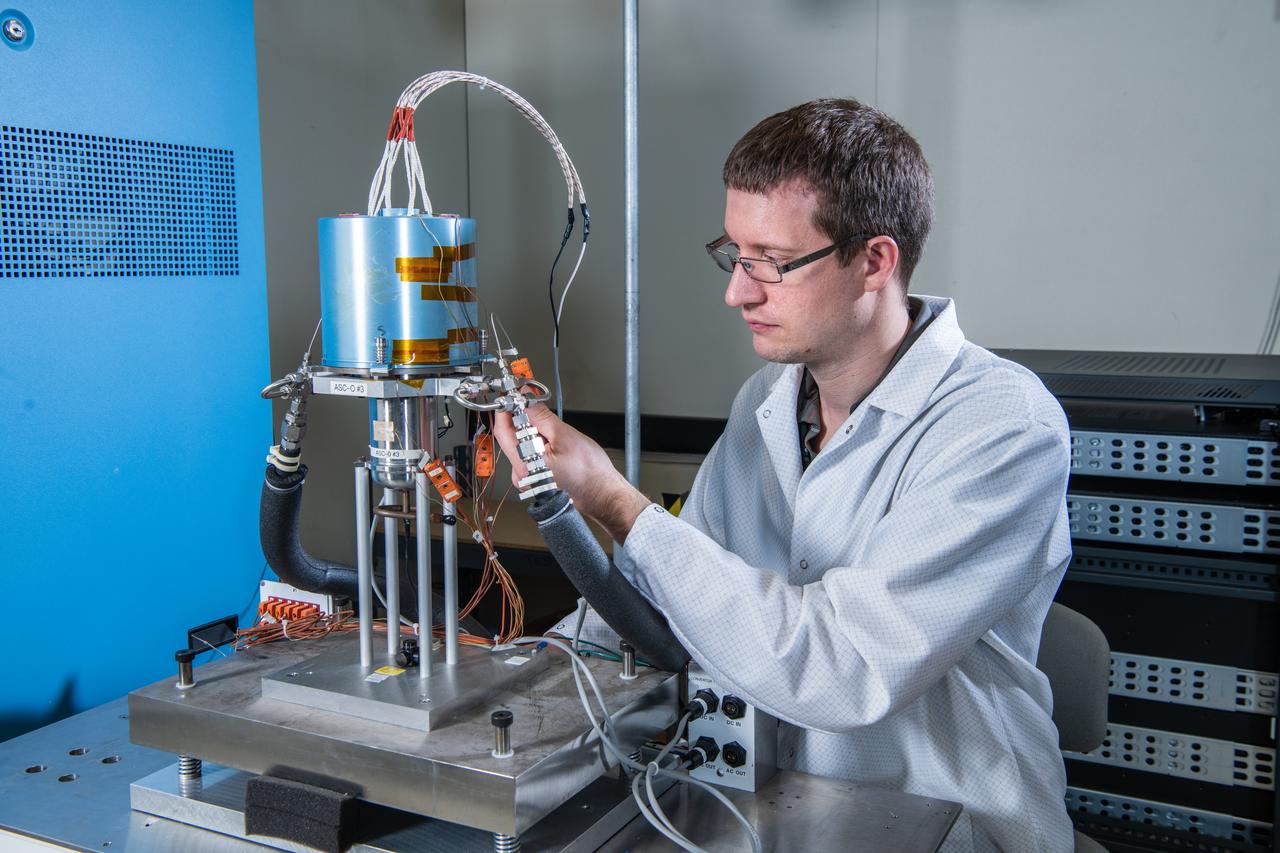
Advanced Stirling Radioisotope Lab
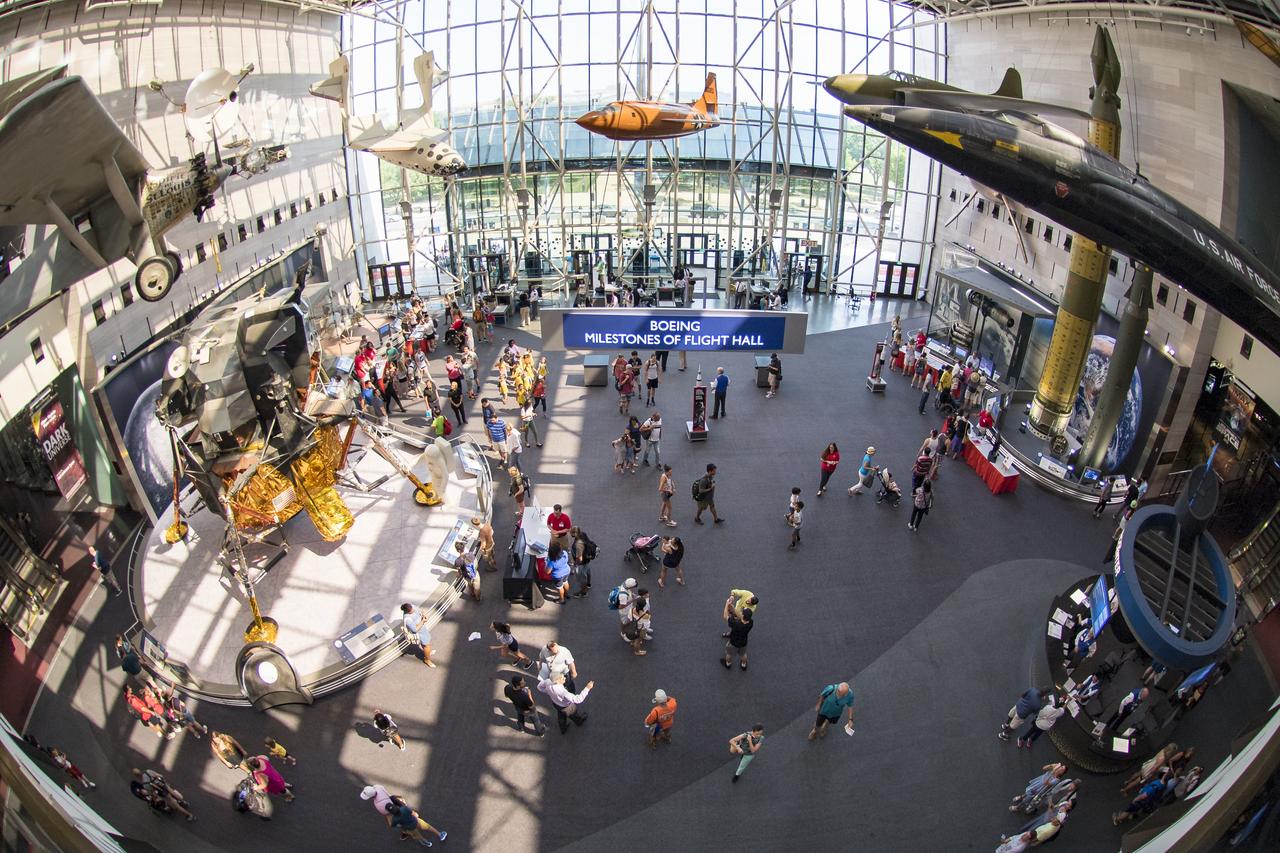
Visitors explore Smithsonian Institution’s National Air and Space Museum’s Mars Day, an annual event celebrating the Red Planet with exhibits, speakers, and educational activities, Friday, July 21, 2017 in Washington. Photo Credit: (NASA/Aubrey Gemignani)
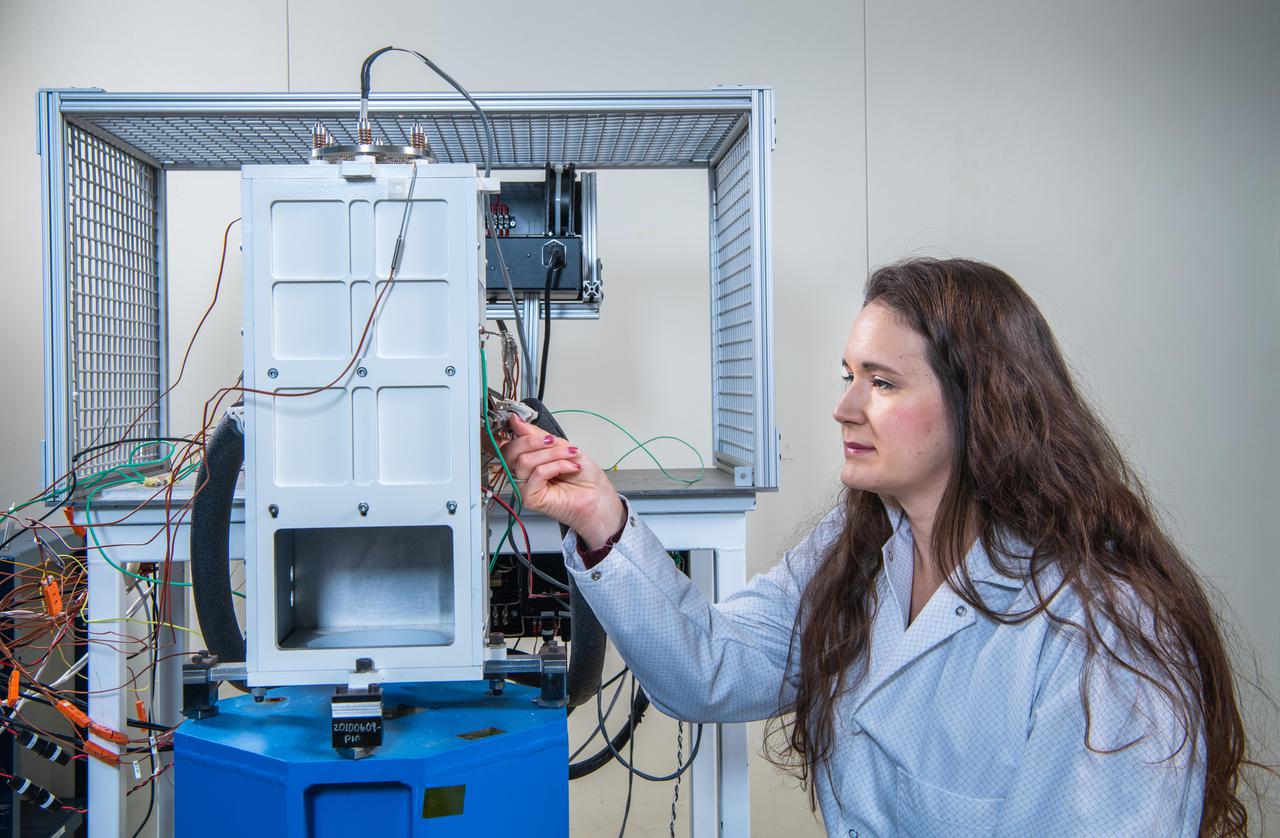
Advanced Stirling Radioisotope Lab
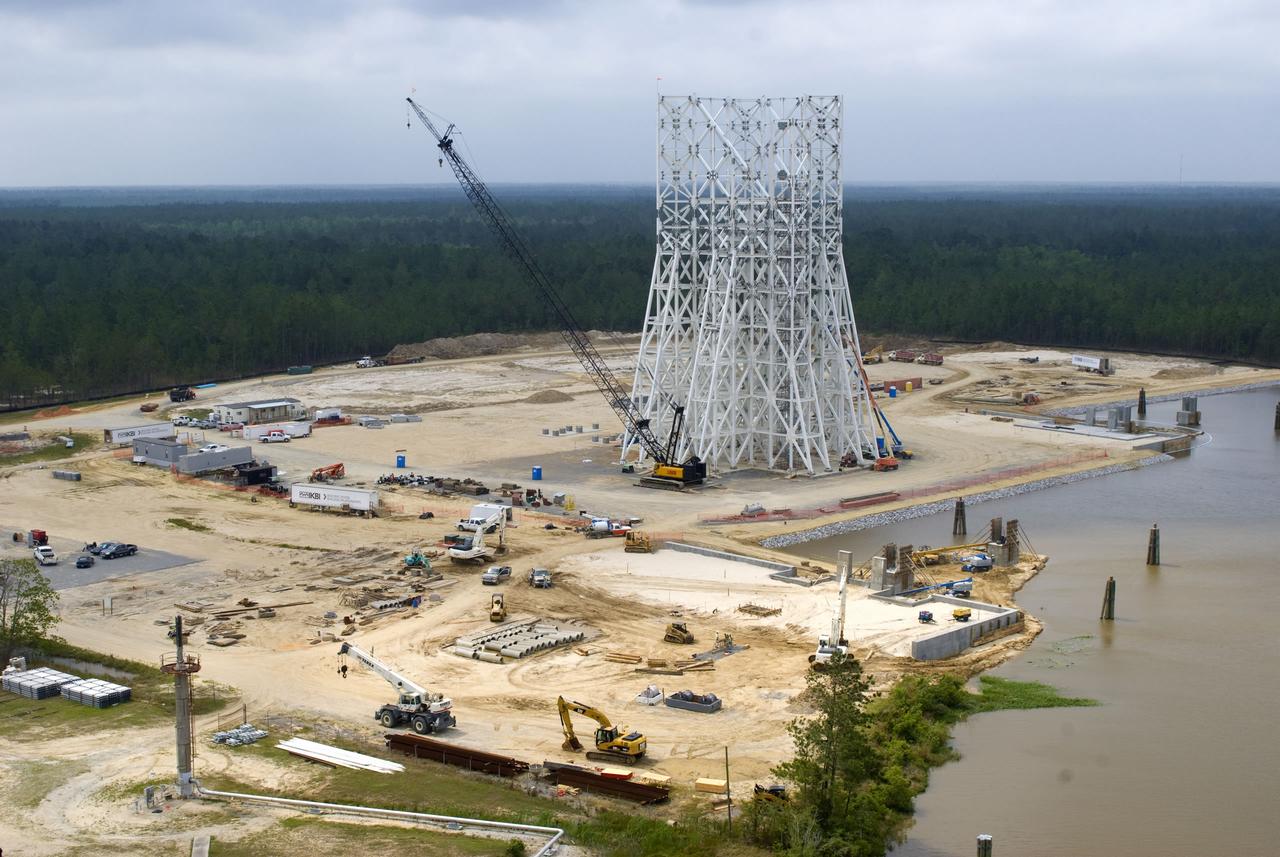
Structural steel work is completed on the 235-foot A-3 Test Stand at NASA's John C. Stennis Space Center. Stennis engineers celebrated this key milestone in construction April 9.
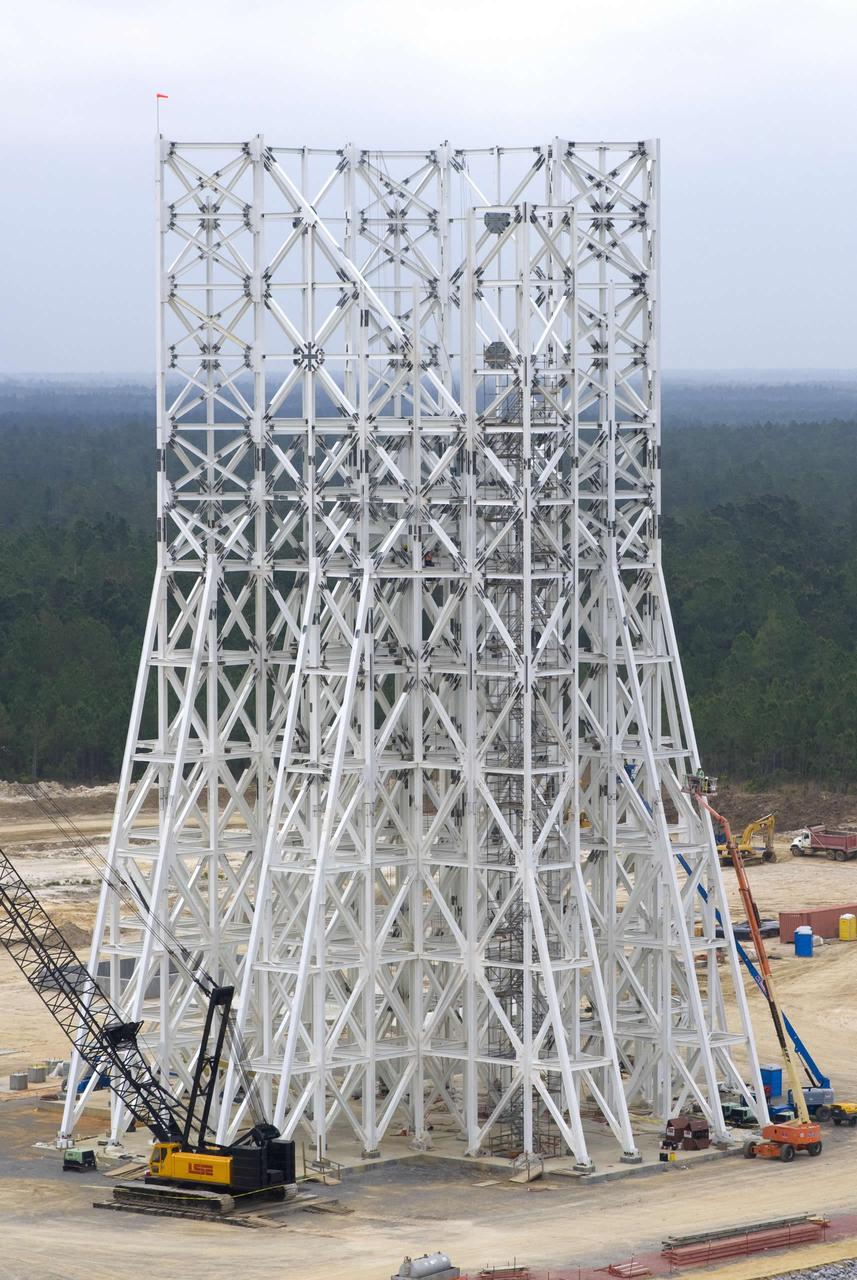
Structural steel work is completed on the 235-foot A-3 Test Stand at NASA's John C. Stennis Space Center. Stennis engineers celebrated this key milestone in construction April 9.
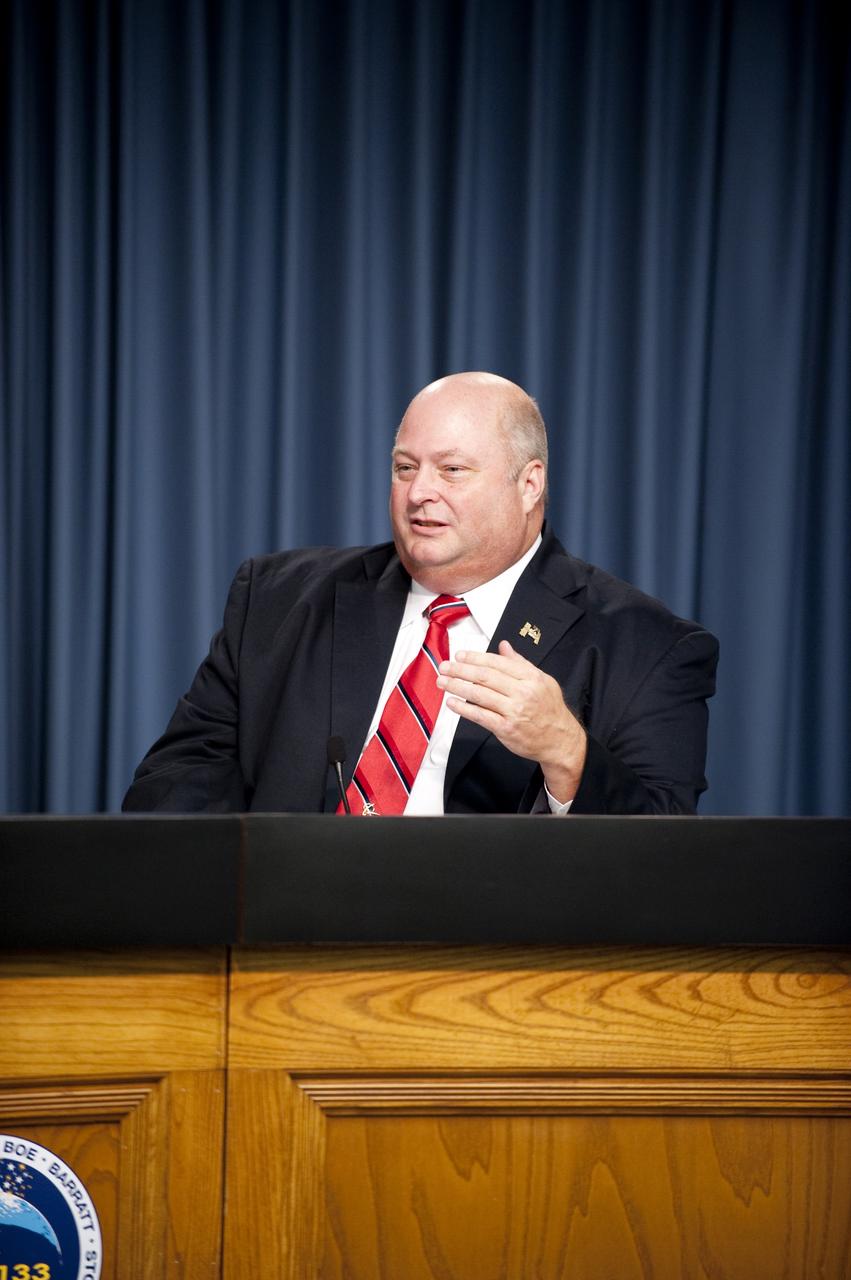
CAPE CANAVERAL, Fla. -- At NASA's Kennedy Space Center in Florida, Director of The Boeing Company's Program Management Development David Bethay helps mark the 10-year milestone of human life, work and research aboard the International Space Station with a panel discussion that aired on NASA TV. Panelists not pictured are Center Director Bob Cabana International Space Station and Spacecraft Processing Director Josie Burnett and International Space Station and Spacecraft Processing Deputy Director Bill Dowdell. Johnson Space Center in Houston, Marshall Space Flight Center in Huntsville, Ala., and NASA Headquarters in Washington also hosted panel discussions for the milestone celebration.
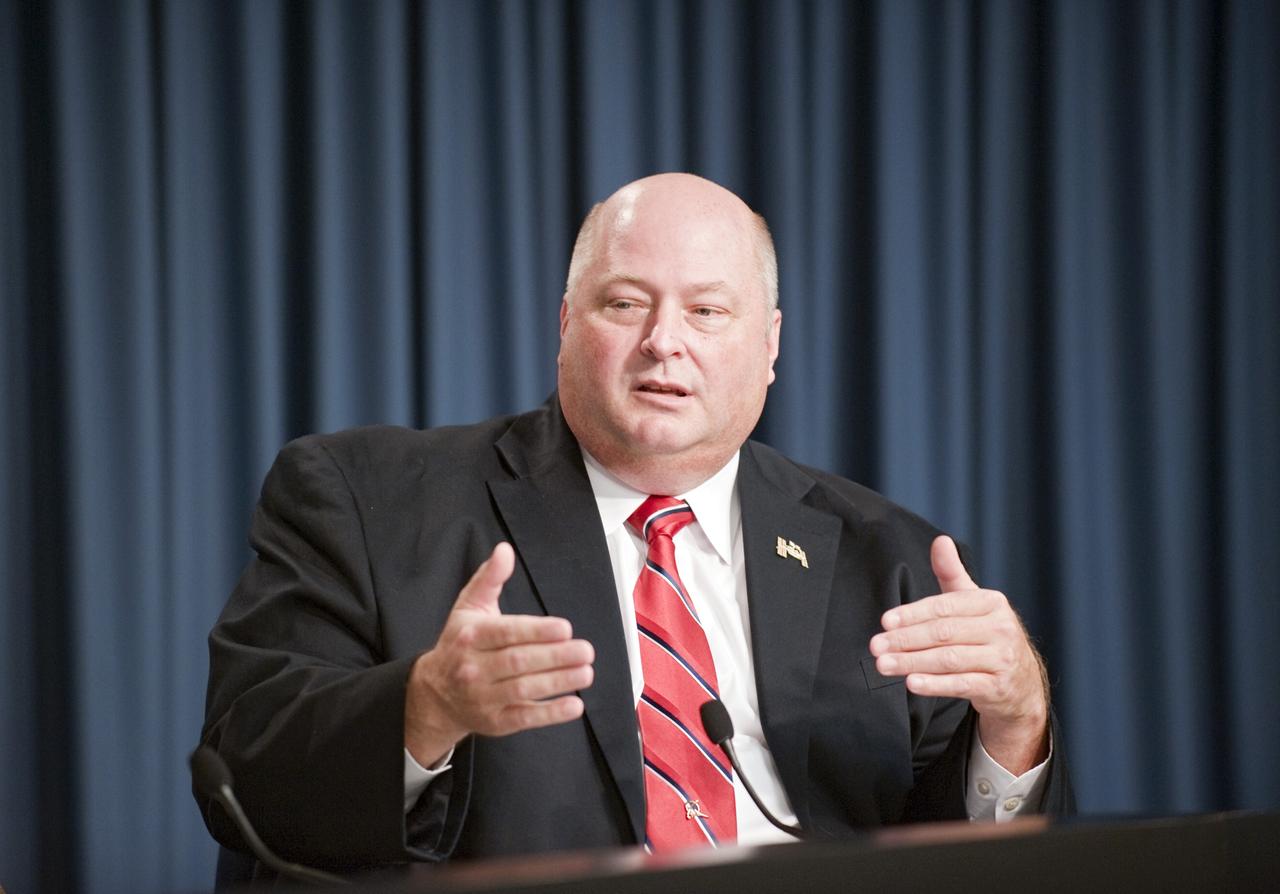
CAPE CANAVERAL, Fla. -- At NASA's Kennedy Space Center in Florida, Director of The Boeing Company's Program Management Development David Bethay helps mark the 10-year milestone of human life, work and research aboard the International Space Station with a panel discussion that aired on NASA TV. Panelists not pictured are Center Director Bob Cabana, International Space Station and Spacecraft Processing Director Josie Burnett and International Space Station and Spacecraft Processing Deputy Director Bill Dowdell. Johnson Space Center in Houston, Marshall Space Flight Center in Huntsville, Ala., and NASA Headquarters in Washington also hosted panel discussions for the milestone celebration.
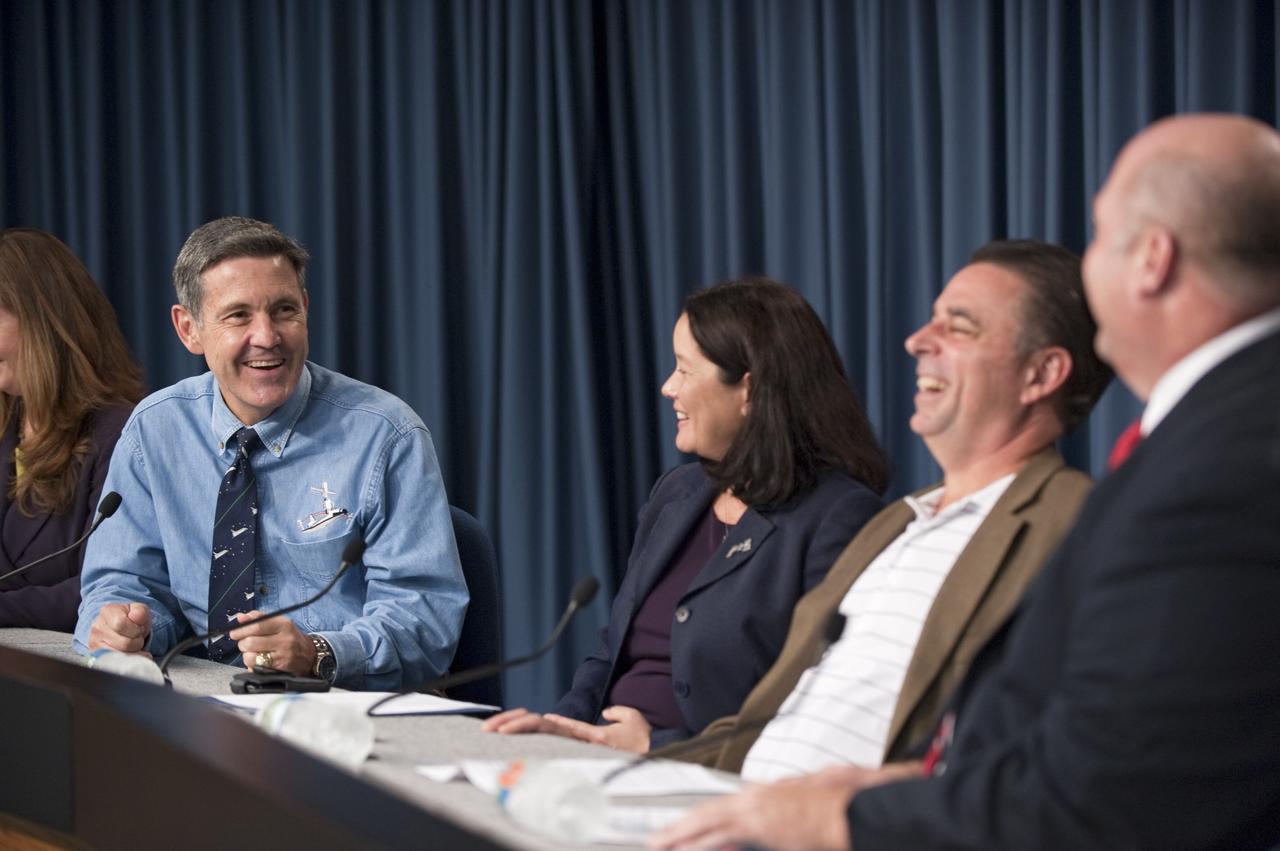
CAPE CANAVERAL, Fla. -- At NASA's Kennedy Space Center in Florida, Center Director Bob Cabana, left, International Space Station and Spacecraft Processing Director Josie Burnett, International Space Station and Spacecraft Processing Deputy Director Bill Dowdell and Director of The Boeing Company's Program Management Development David Bethay help mark the 10-year milestone of human life, work and research aboard the International Space Station with a panel discussion that aired on NASA TV. Johnson Space Center in Houston, Marshall Space Flight Center in Huntsville, Ala., and NASA Headquarters in Washington also hosted panel discussions for the milestone celebration.
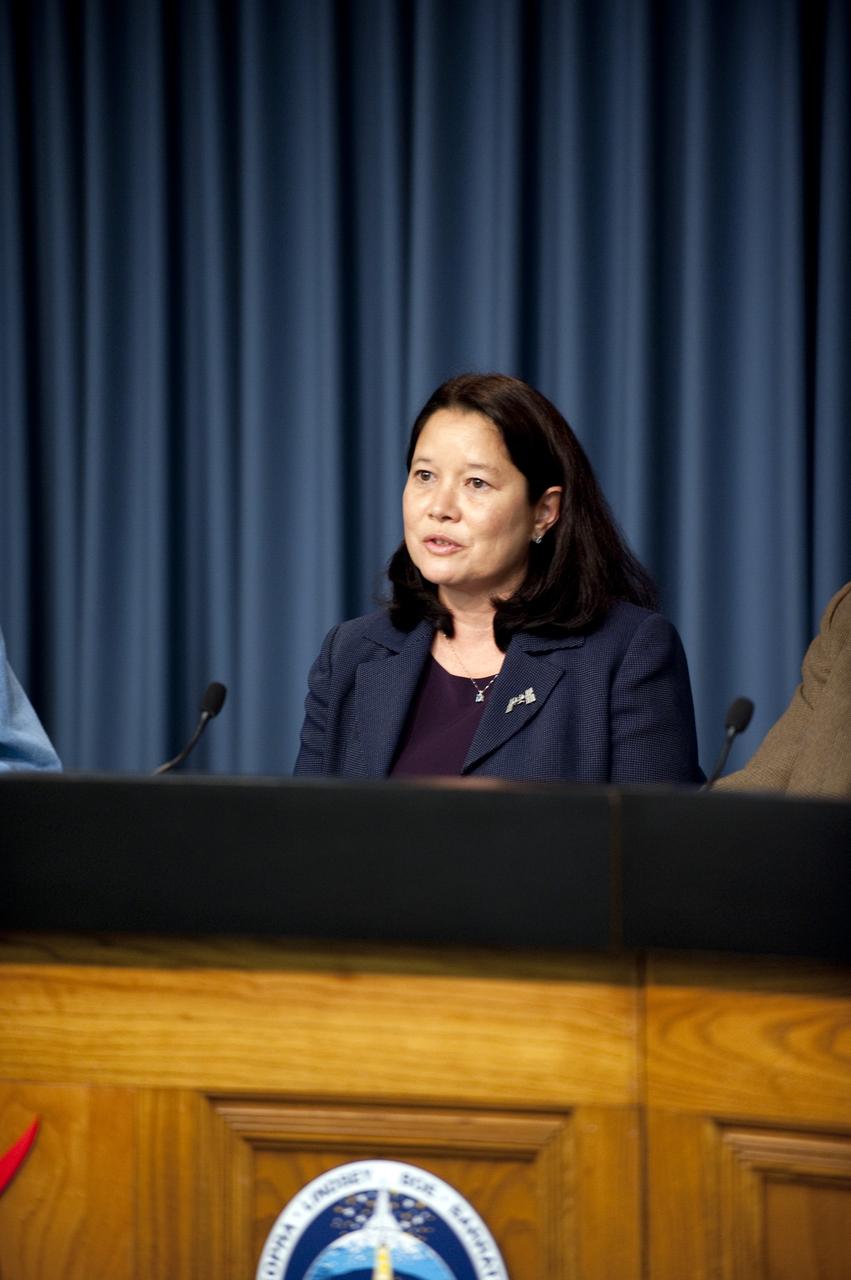
CAPE CANAVERAL, Fla. -- At NASA's Kennedy Space Center in Florida, International Space Station and Spacecraft Processing Director Josie Burnett helps mark the 10-year milestone of human life, work and research aboard the International Space Station with a panel discussion that aired on NASA TV. Panelists not pictured are Center Director Bob Cabana, International Space Station and Spacecraft Processing Deputy Director Bill Dowdell and Director of The Boeing Company's Program Management Development David Bethay. Johnson Space Center in Houston, Marshall Space Flight Center in Huntsville, Ala., and NASA Headquarters in Washington also hosted panel discussions for the milestone celebration.
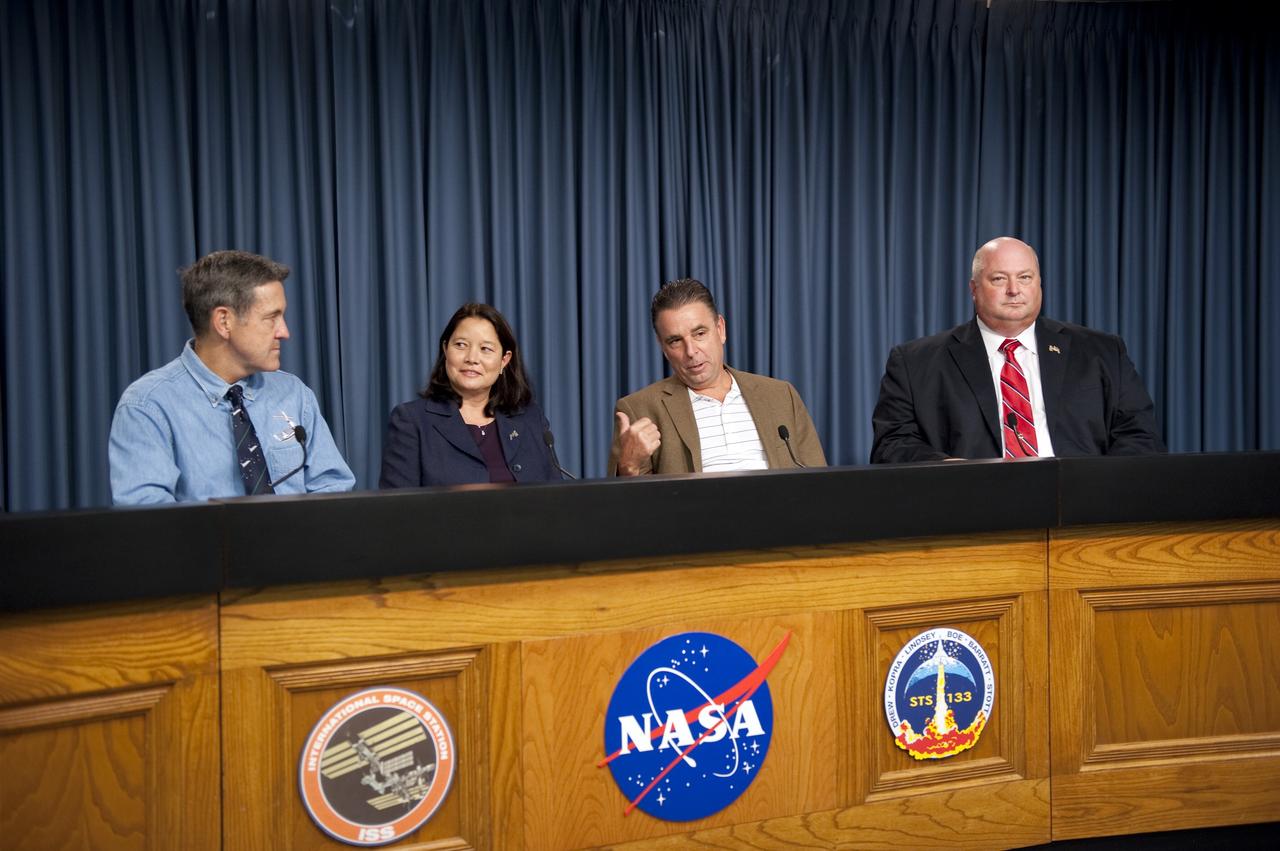
CAPE CANAVERAL, Fla. -- At NASA's Kennedy Space Center in Florida, Center Director Bob Cabana, left, International Space Station and Spacecraft Processing Director Josie Burnett, International Space Station and Spacecraft Processing Deputy Director Bill Dowdell and Director of The Boeing Company's Program Management Development David Bethay help mark the 10-year milestone of human life, work and research aboard the International Space Station during a panel discussion that aired on NASA TV. Johnson Space Center in Houston, Marshall Space Flight Center in Huntsville, Ala., and NASA Headquarters in Washington also hosted panel discussions for the milestone celebration.
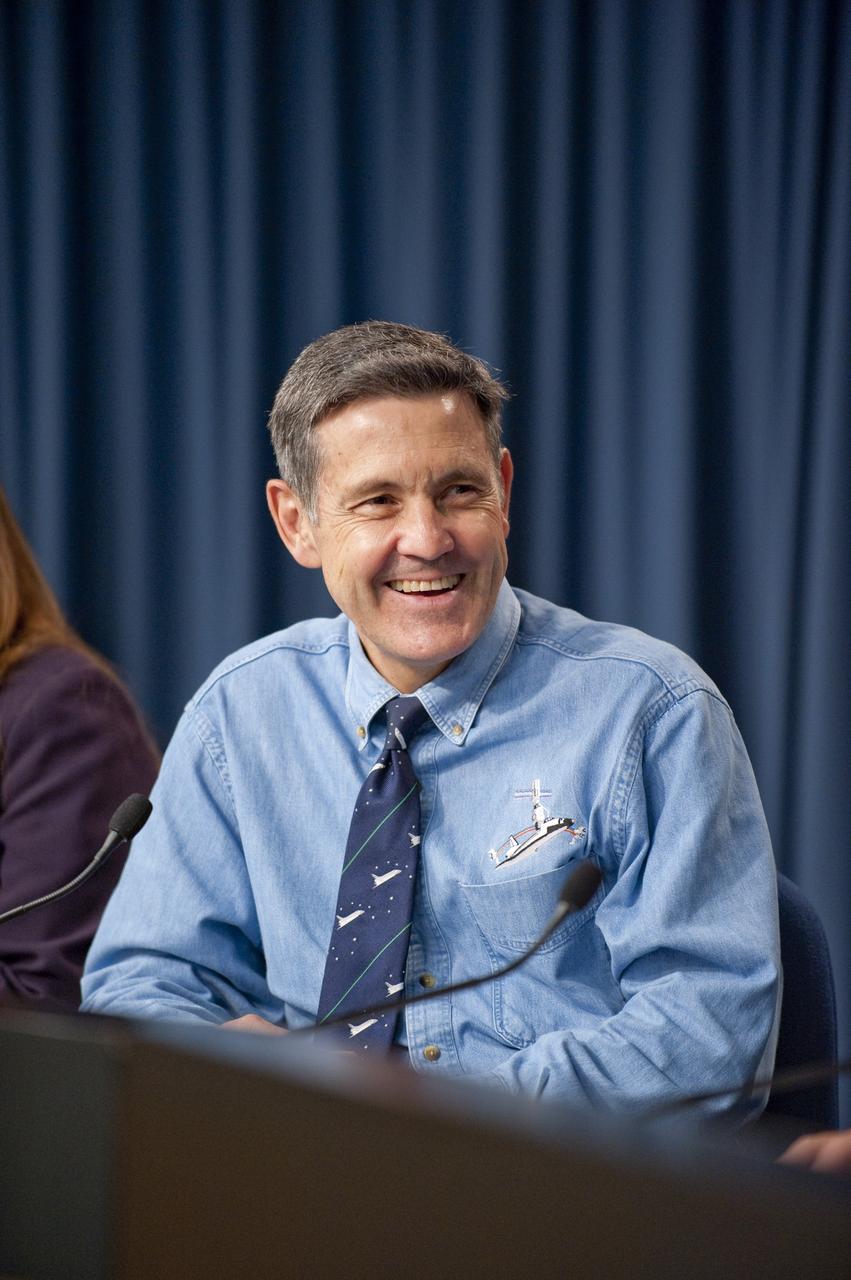
CAPE CANAVERAL, Fla. -- At NASA's Kennedy Space Center in Florida, Center Director Bob Cabana helps mark the 10-year milestone of human life, work and research aboard the International Space Station with a panel discussion that aired on NASA TV. Panelists not pictured are International Space Station and Spacecraft Processing Director Josie Burnett, International Space Station and Spacecraft Processing Deputy Director Bill Dowdell and Director of The Boeing Company's Program Management Development David Bethay. Johnson Space Center in Houston, Marshall Space Flight Center in Huntsville, Ala., and NASA Headquarters in Washington also hosted panel discussions for the milestone celebration.
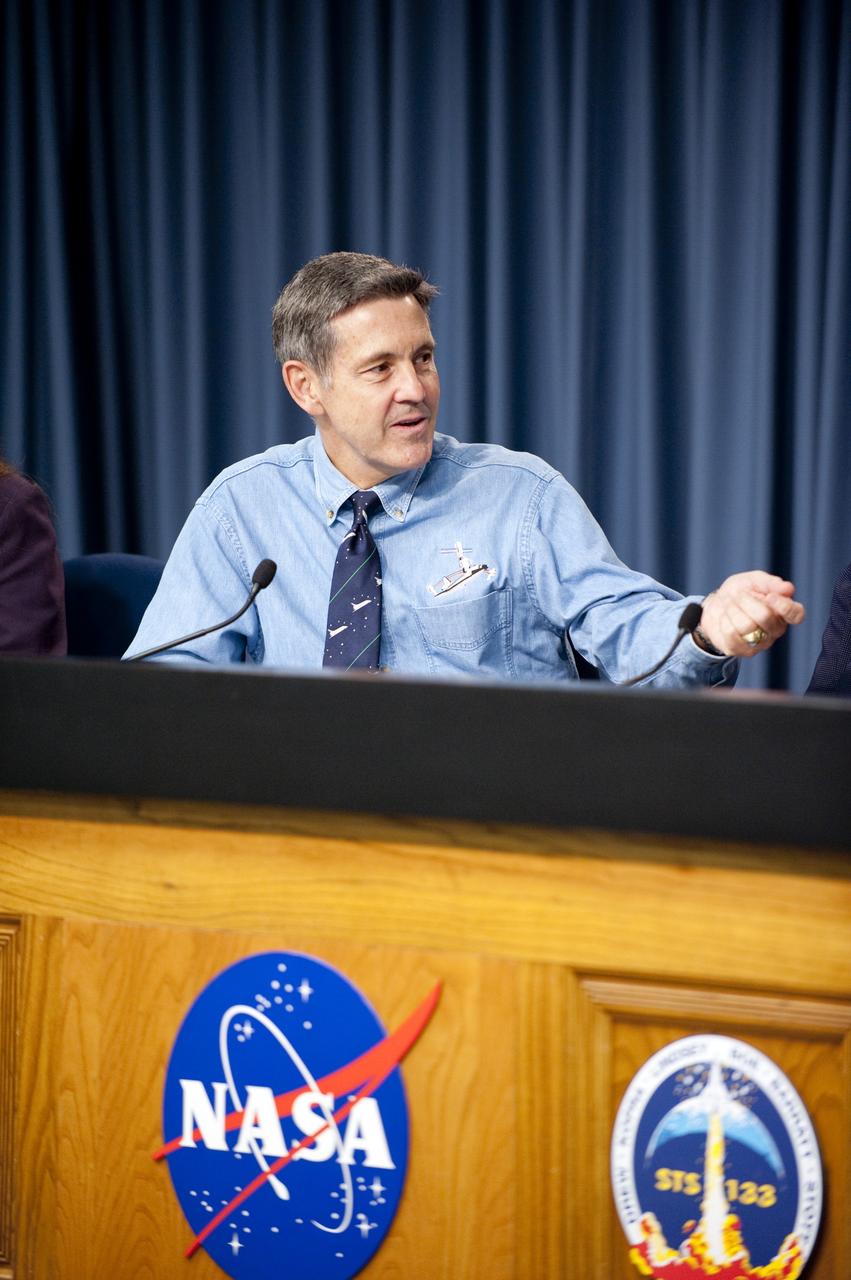
CAPE CANAVERAL, Fla. -- At NASA's Kennedy Space Center in Florida, Center Director Bob Cabana helps mark the 10-year milestone of human life, work and research aboard the International Space Station with a panel discussion that aired on NASA TV. Panelists not pictured are International Space Station and Spacecraft Processing Director Josie Burnett, International Space Station and Spacecraft Processing Deputy Director Bill Dowdell and Director of The Boeing Company's Program Management Development David Bethay. Johnson Space Center in Houston, Marshall Space Flight Center in Huntsville, Ala., and NASA Headquarters in Washington also hosted panel discussions for the milestone celebration.
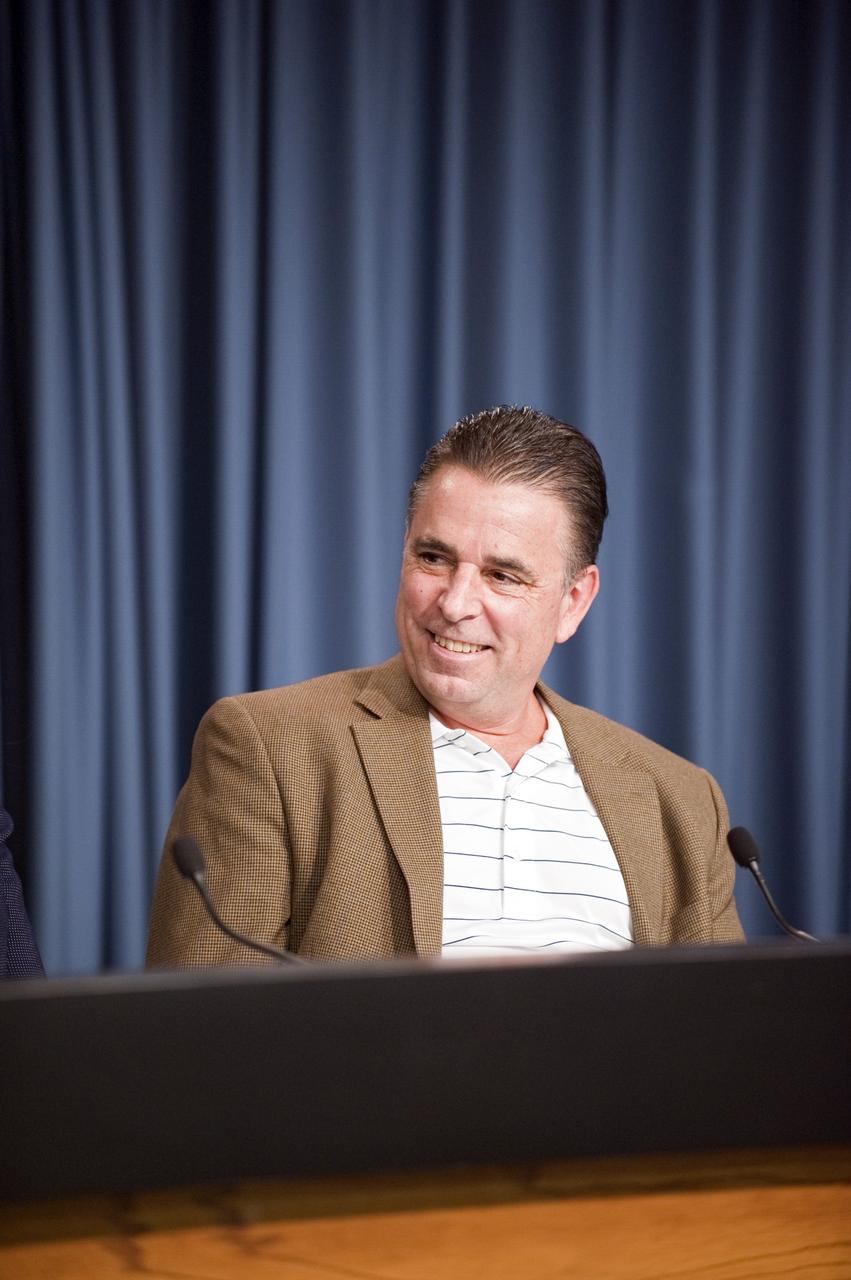
CAPE CANAVERAL, Fla. -- At NASA's Kennedy Space Center in Florida, International Space Station and Spacecraft Processing Deputy Director Bill Dowdell helps mark the 10-year milestone of human life, work and research aboard the International Space Station with a panel discussion that aired on NASA TV. Panelists not pictured are Center Director Bob Cabana, International Space Station and Spacecraft Processing Director Josie Burnett and Director of The Boeing Company's Program Management Development David Bethay. Johnson Space Center in Houston, Marshall Space Flight Center in Huntsville, Ala., and NASA Headquarters in Washington also hosted panel discussions for the milestone celebration.
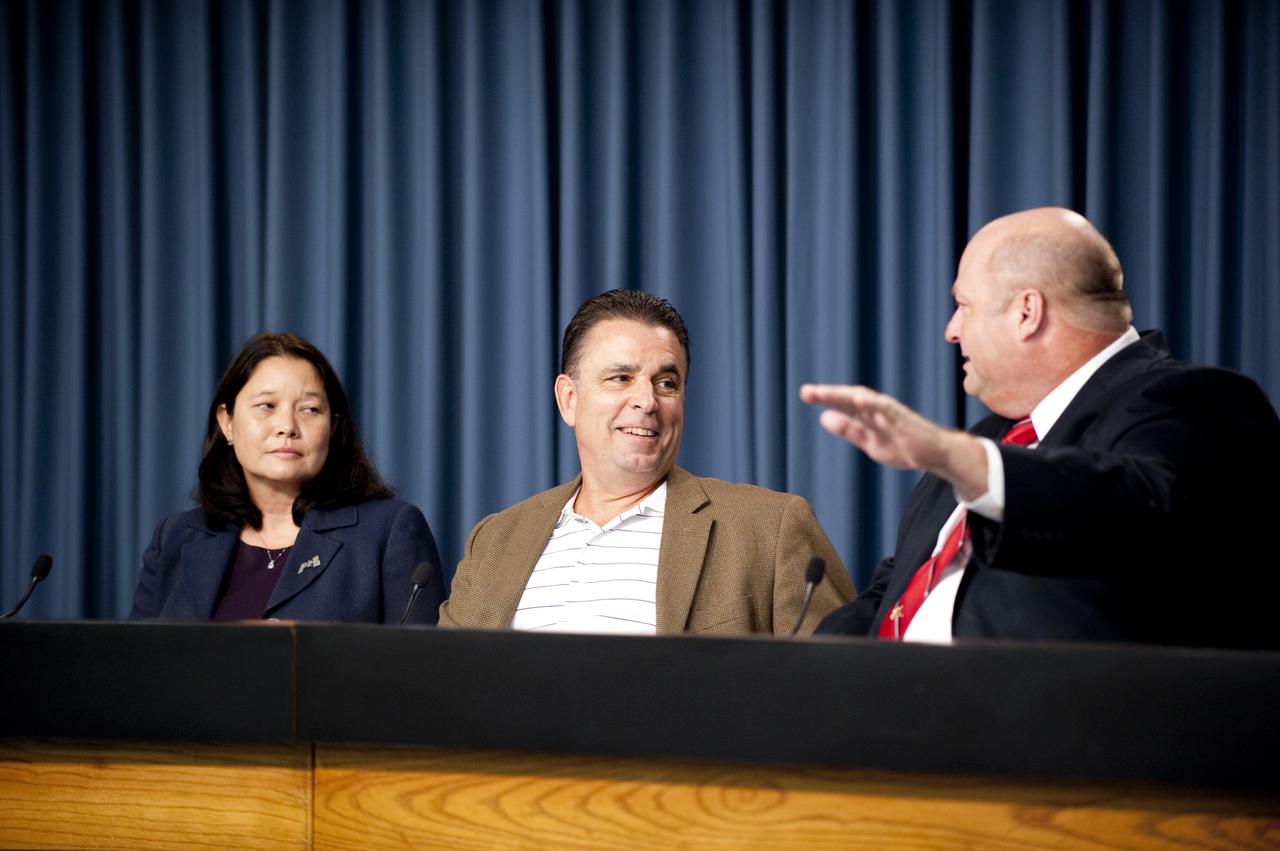
CAPE CANAVERAL, Fla. -- At NASA's Kennedy Space Center in Florida, International Space Station and Spacecraft Processing Director Josie Burnett, left, International Space Station and Spacecraft Processing Deputy Director Bill Dowdell and Director of The Boeing Company's Program Management Development David Bethay help mark the 10-year milestone of human life, work and research aboard the International Space Station with a panel discussion that aired on NASA TV. Center Director Bob Cabana, not pictured, also was a panelist. Johnson Space Center in Houston, Marshall Space Flight Center in Huntsville, Ala., and NASA Headquarters in Washington also hosted panel discussions for the milestone celebration.
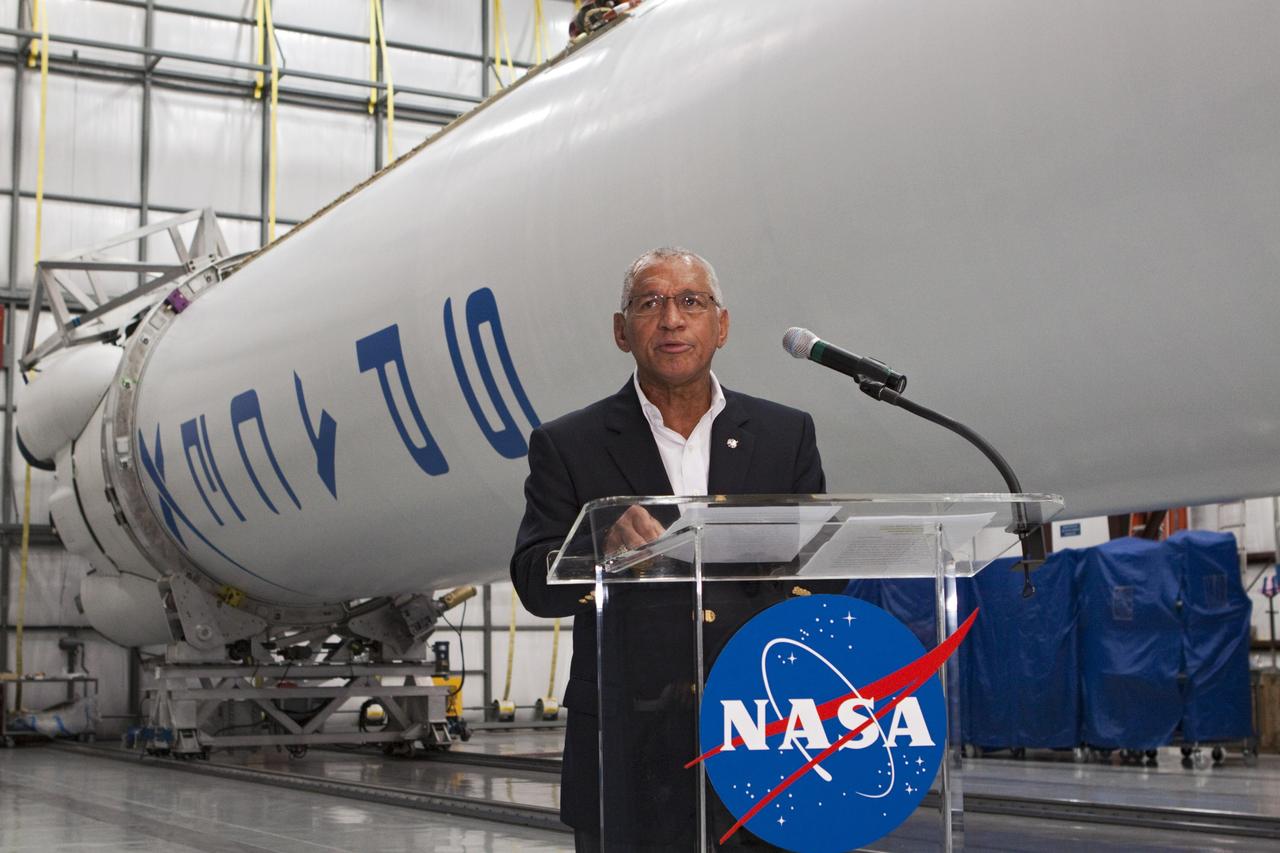
CAPE CANAVERAL, Fla. -- Inside the Space Exploration Technologies, or SpaceX, processing facility near NASA’s Kennedy Space Center in Florida, NASA Administrator Charlie Bolden announced new milestones in the nation’s commercial space initiatives. Bolden announced that SpaceX has completed its Space Act Agreement with NASA for Commercial Orbital Transportation Services. SpaceX is scheduled to launch the first of its 12 contracted cargo flights to the space station from Cape Canaveral this October, under NASA’s Commercial Resupply Services Program. Bolden also announced NASA partner Sierra Nevada Corp. has conducted its first milestone under the agency’s recently announced Commercial Crew Integrated Capability initiative. The milestone, a program implementation plan review, marks an important first step in Sierra Nevada’s efforts to develop a crew transportation system with its Dream Chaser spacecraft. Through NASA’s commercial space initiatives and programs, the agency is providing investments to stimulate the American commercial space industry. Photo credit: NASA/Kim Shiflett
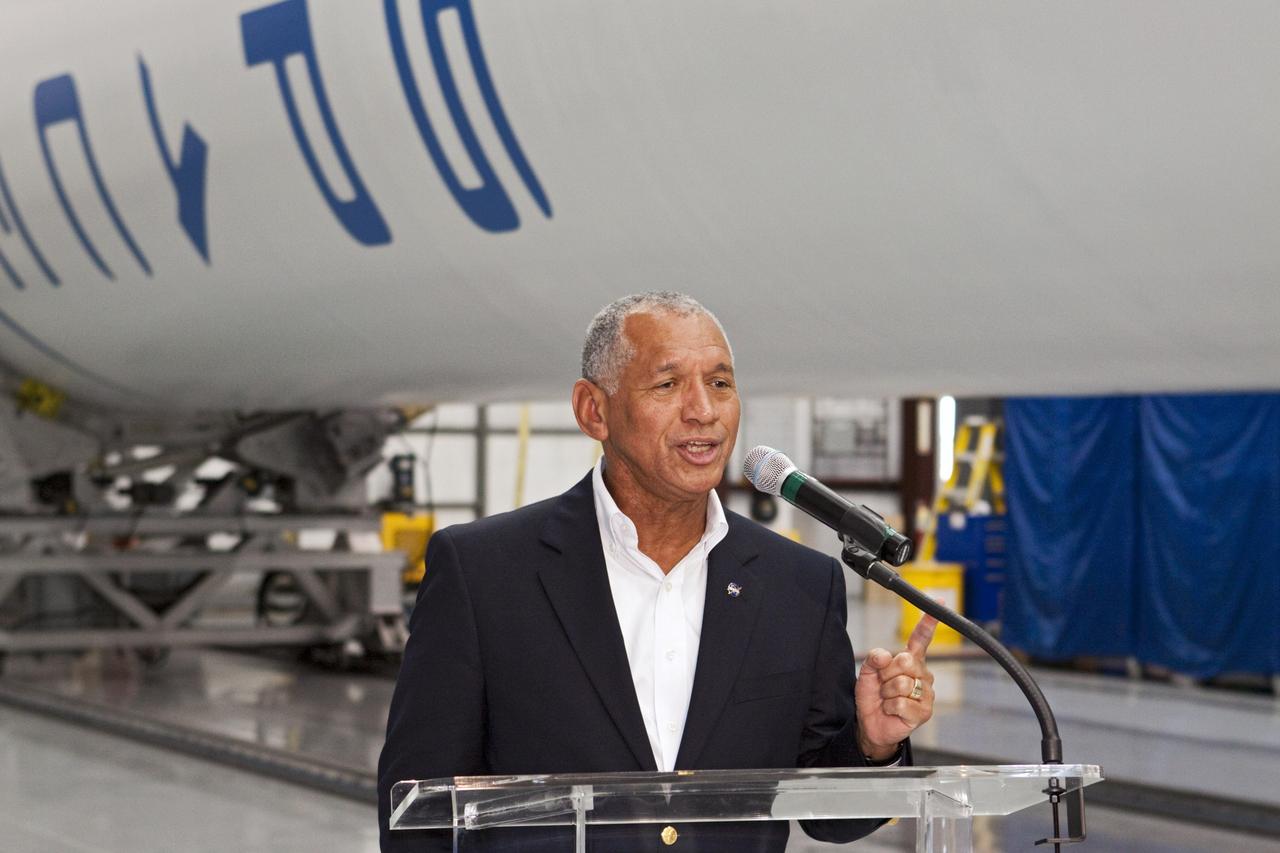
CAPE CANAVERAL, Fla. -- Inside the Space Exploration Technologies, or SpaceX, processing facility near NASA’s Kennedy Space Center in Florida, NASA Administrator Charlie Bolden announced new milestones in the nation’s commercial space initiatives. Bolden announced that SpaceX has completed its Space Act Agreement with NASA for Commercial Orbital Transportation Services. SpaceX is scheduled to launch the first of its 12 contracted cargo flights to the space station from Cape Canaveral this October, under NASA’s Commercial Resupply Services Program. Bolden also announced NASA partner Sierra Nevada Corp. has conducted its first milestone under the agency’s recently announced Commercial Crew Integrated Capability initiative. The milestone, a program implementation plan review, marks an important first step in Sierra Nevada’s efforts to develop a crew transportation system with its Dream Chaser spacecraft. Through NASA’s commercial space initiatives and programs, the agency is providing investments to stimulate the American commercial space industry. Photo credit: NASA/Kim Shiflett
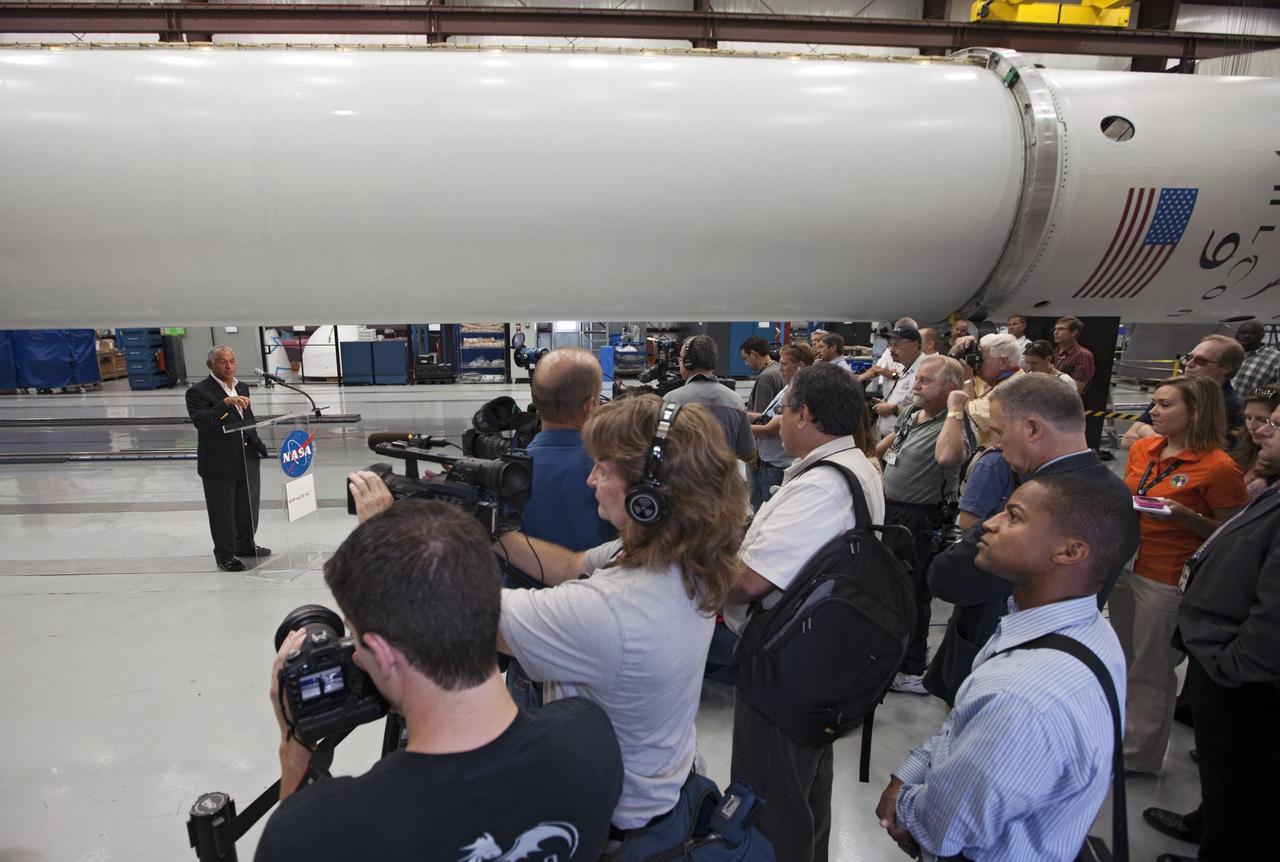
CAPE CANAVERAL, Fla. -- Inside the Space Exploration Technologies, or SpaceX, processing facility near NASA’s Kennedy Space Center in Florida, NASA Administrator Charlie Bolden announced new milestones in the nation’s commercial space initiatives. Bolden announced that SpaceX has completed its Space Act Agreement with NASA for Commercial Orbital Transportation Services. SpaceX is scheduled to launch the first of its 12 contracted cargo flights to the space station from Cape Canaveral this October, under NASA’s Commercial Resupply Services Program. Bolden also announced NASA partner Sierra Nevada Corp. has conducted its first milestone under the agency’s recently announced Commercial Crew Integrated Capability initiative. The milestone, a program implementation plan review, marks an important first step in Sierra Nevada’s efforts to develop a crew transportation system with its Dream Chaser spacecraft. Through NASA’s commercial space initiatives and programs, the agency is providing investments to stimulate the American commercial space industry. Photo credit: NASA/Kim Shiflett
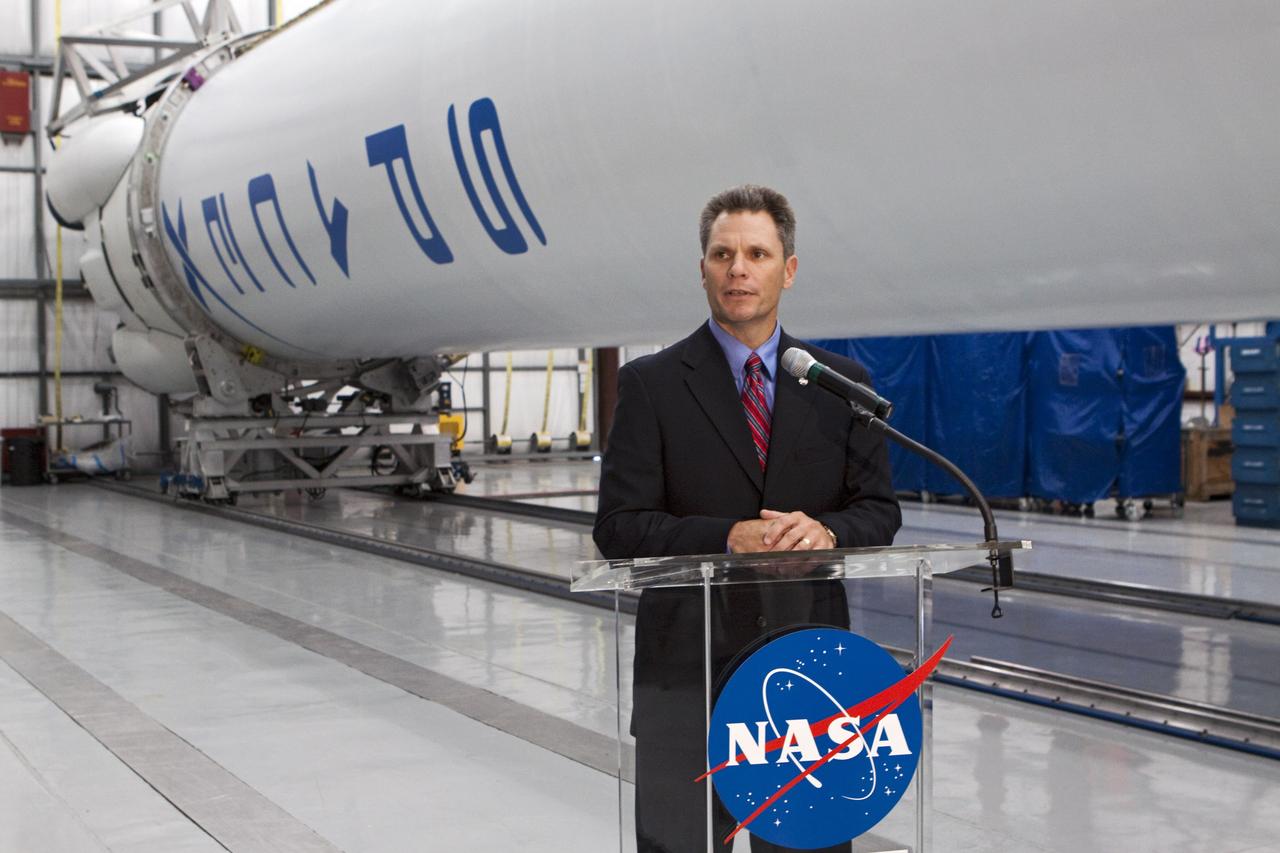
CAPE CANAVERAL, Fla. -- Inside the Space Exploration Technologies, or SpaceX, processing facility near NASA’s Kennedy Space Center in Florida, Scott Thurston, partner integration office manager with the Commercial Crew Program, talks to the media prior to an announcement from NASA Administrator Charles Bolden about new milestones in the nation’s commercial space initiatives. Bolden announced that SpaceX has completed its Space Act Agreement with NASA for Commercial Orbital Transportation Services. SpaceX is scheduled to launch the first of its 12 contracted cargo flights to the space station from Cape Canaveral this October, under NASA’s Commercial Resupply Services Program. Bolden also announced NASA partner Sierra Nevada Corp. has conducted its first milestone under the agency’s recently announced Commercial Crew Integrated Capability initiative. The milestone, a program implementation plan review, marks an important first step in Sierra Nevada’s efforts to develop a crew transportation system with its Dream Chaser spacecraft. Through NASA’s commercial space initiatives and programs, the agency is providing investments to stimulate the American commercial space industry. Photo credit: NASA/Kim Shiflett
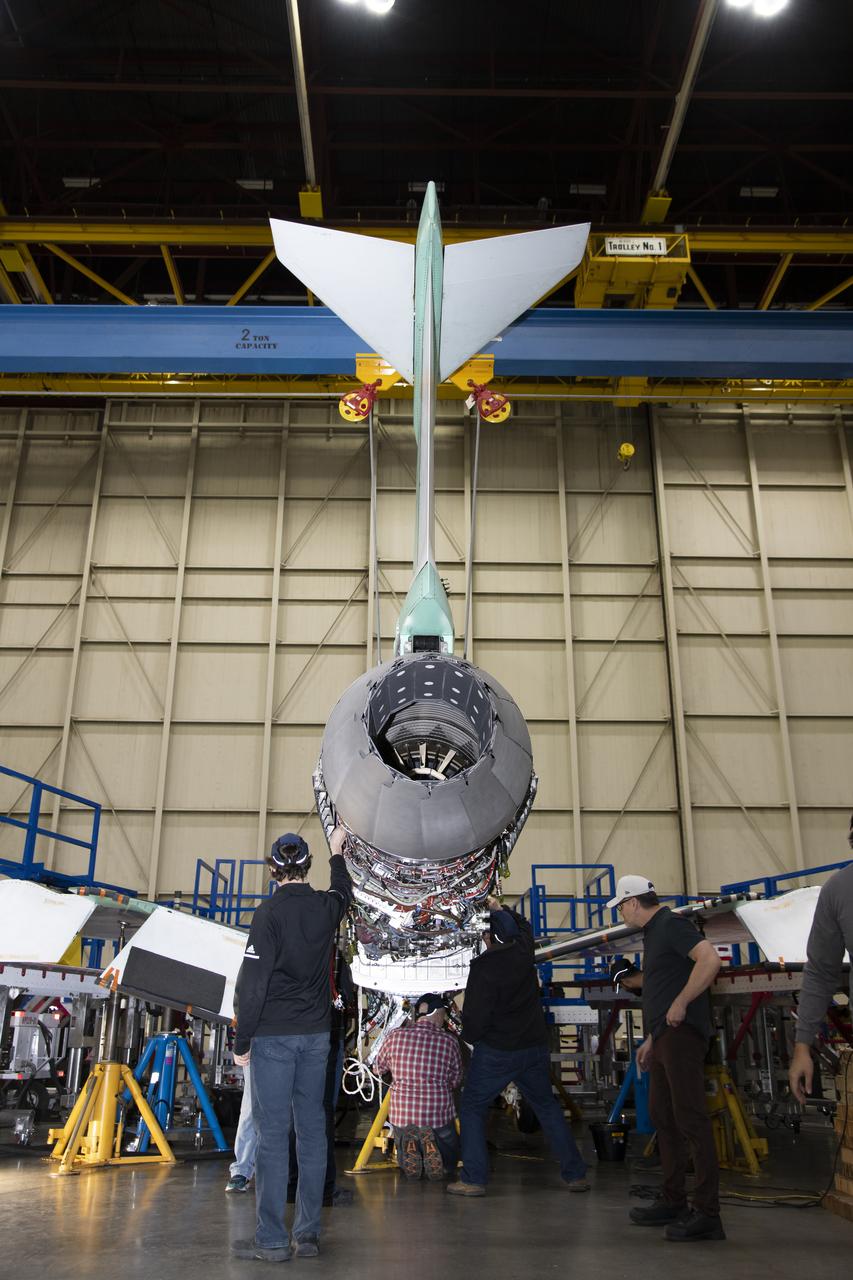
The engine that will power NASA's quiet supersonic X-59 in flight is installed, marking a major milestone in the experimental aircraft's journey toward first flight. The installation of the F414-GE-100 engine at Lockheed Martin's Skunk Works facility brings the vehicle close to the completion of its assembly.
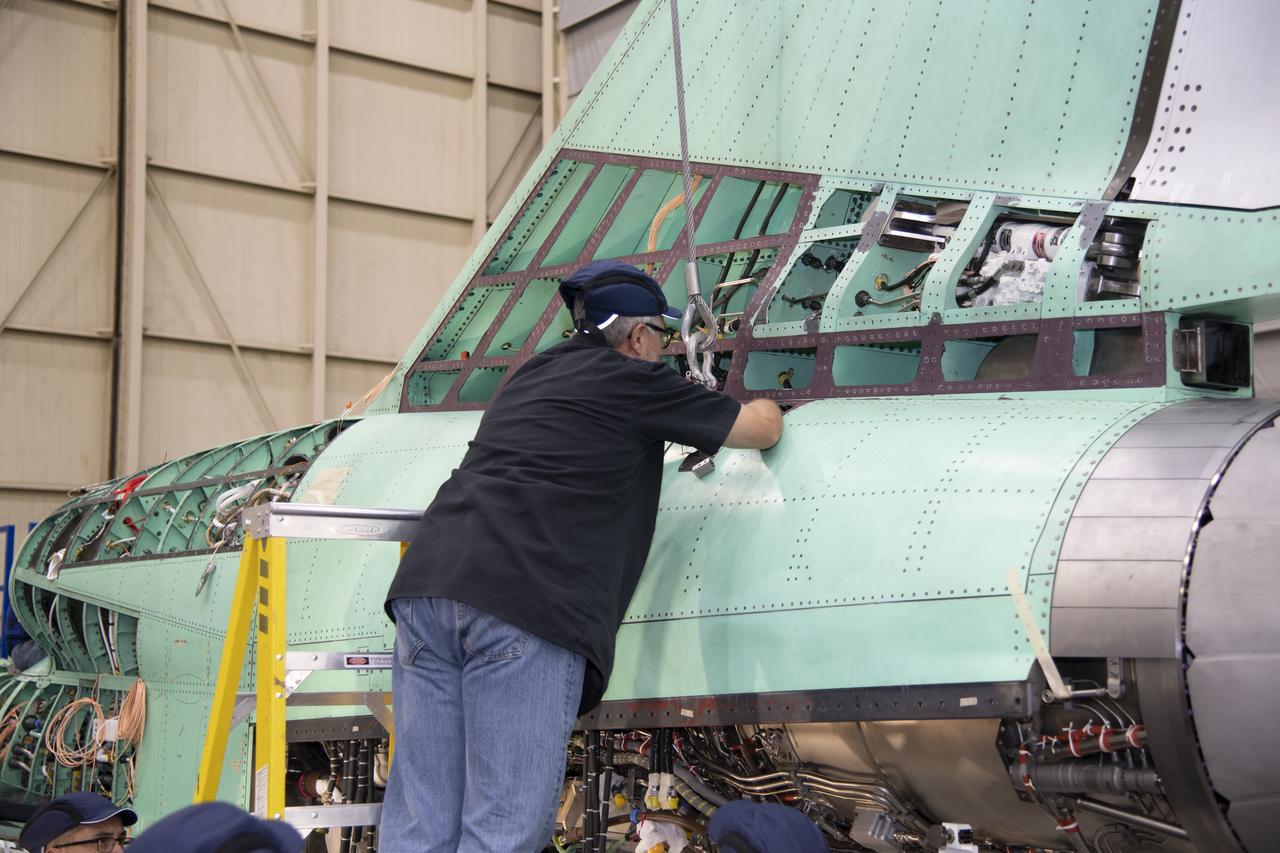
The engine that will power NASA's quiet supersonic X-59 in flight is installed, marking a major milestone in the experimental aircraft's journey toward first flight. The installation of the F414-GE-100 engine at Lockheed Martin's Skunk Works facility brings the vehicle close to the completion of its assembly.
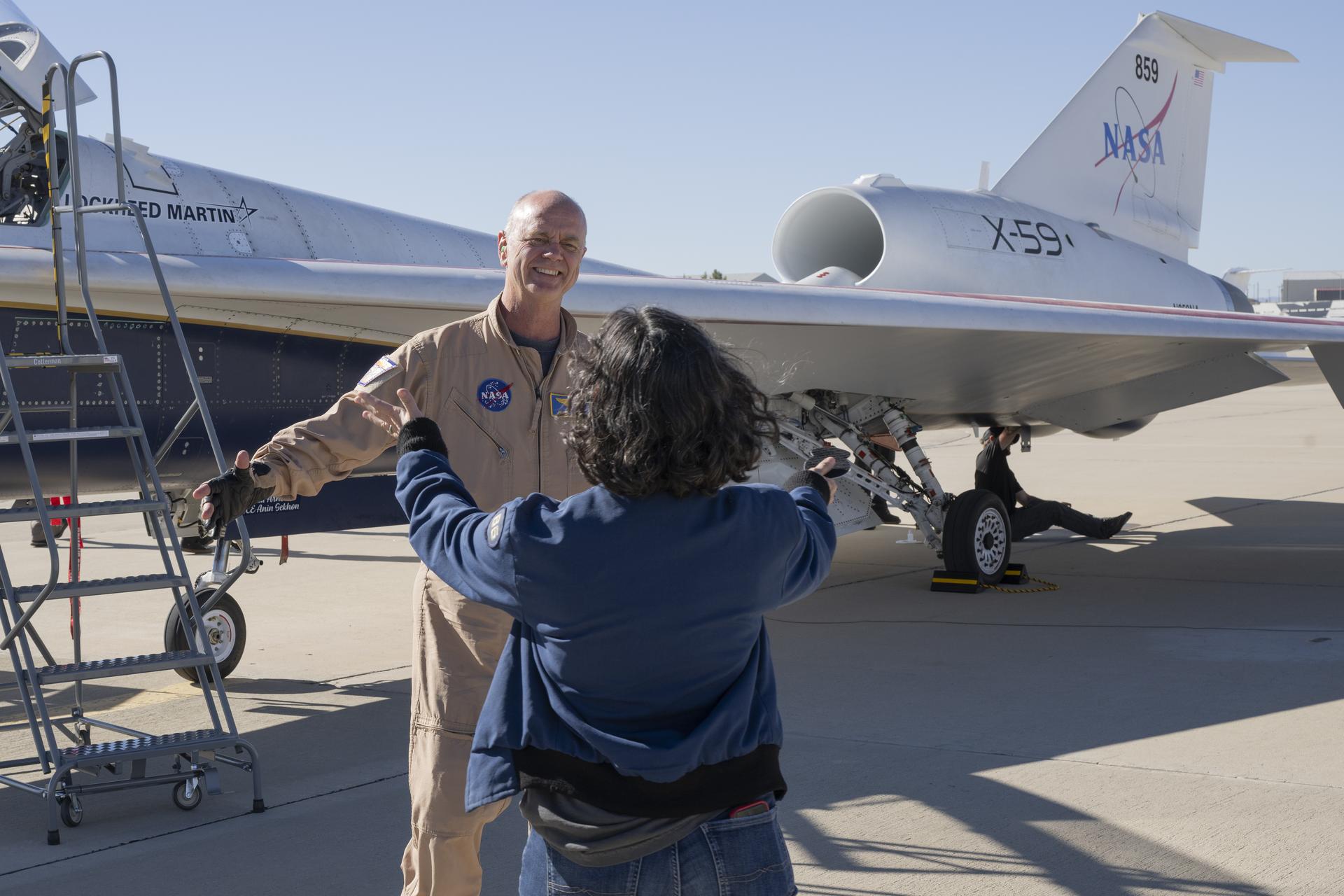
NASA test pilot Nils Larson reaches for a hug from his wife after completing the X-59’s first flight on Tuesday, Oct. 28, 2025. The mission marked a key milestone in advancing NASA’s Quesst effort to enable quiet supersonic flight over land.

NASA test pilot Nils Larson steps out of the X-59 cockpit after completing the aircraft’s first flight on Tuesday, Oct. 28, 2025. The mission marked a key milestone in advancing NASA’s Quesst mission to enable quiet supersonic flight over land.

The engine that will power NASA’s quiet supersonic X-59 in flight is installed, marking a major milestone in the experimental aircraft’s journey toward first flight. The installation of the F414-GE-100 engine at Lockheed Martin’s Skunk Works facility brings the vehicle close to the completion of its assembly.

The engine that will power NASA’s quiet supersonic X-59 in flight is installed, marking a major milestone in the experimental aircraft’s journey toward first flight. The installation of the F414-GE-100 engine at Lockheed Martin’s Skunk Works facility brings the vehicle close to the completion of its assembly.
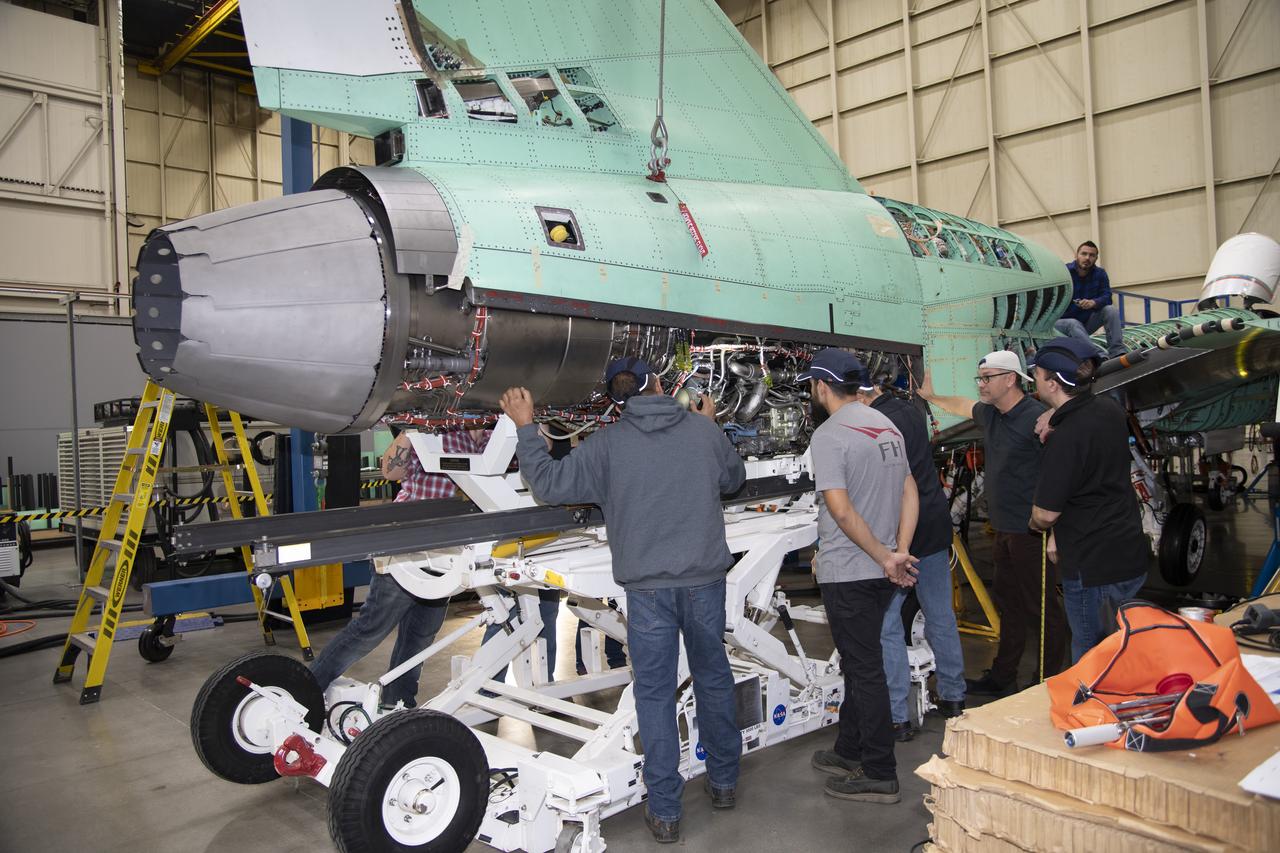
The engine that will power NASA’s quiet supersonic X-59 in flight is installed, marking a major milestone in the experimental aircraft’s journey toward first flight. The installation of the F414-GE-100 engine at Lockheed Martin’s Skunk Works facility brings the vehicle close to the completion of its assembly.
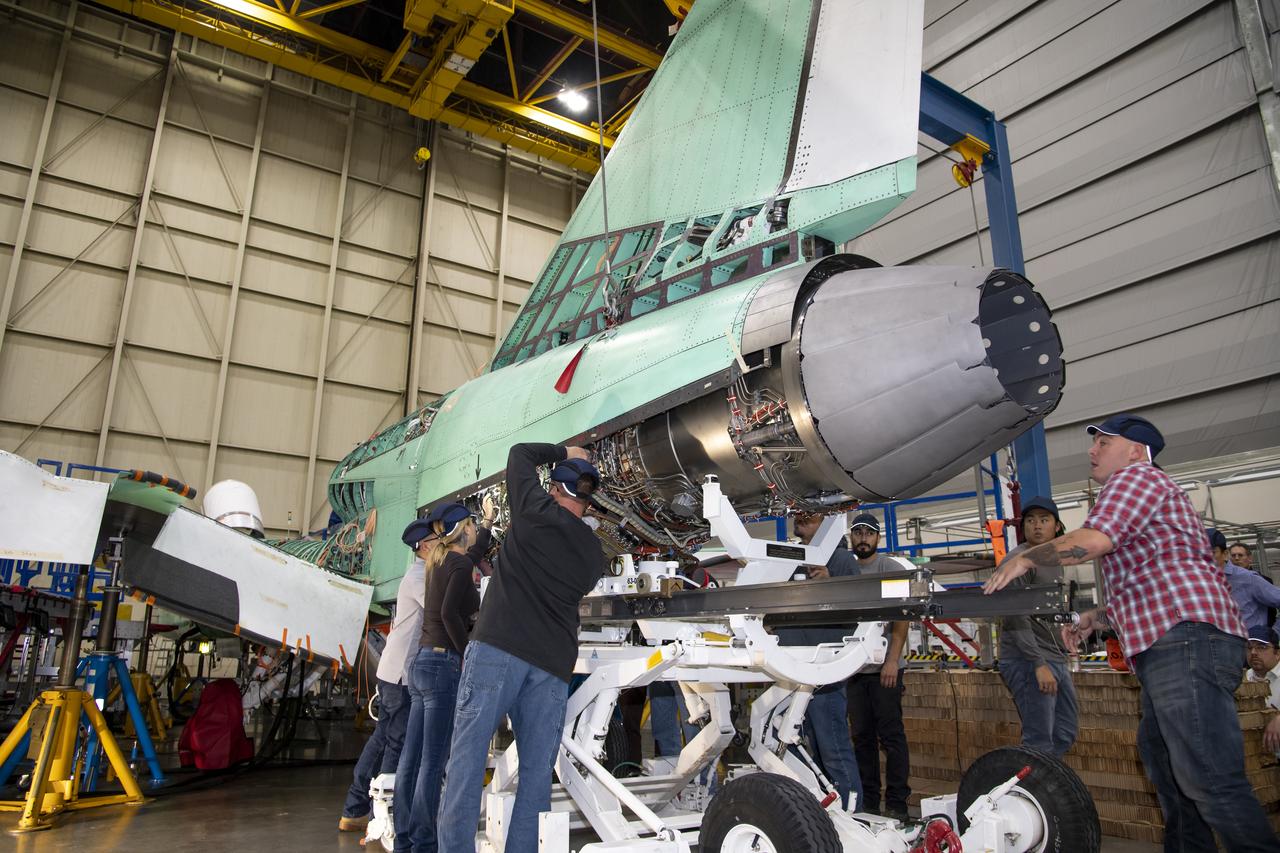
The engine that will power NASA's quiet supersonic X-59 in flight is installed, marking a major milestone in the experimental aircraft's journey toward first flight. The installation of the F414-GE-100 engine at Lockheed Martin's Skunk Works facility brings the vehicle close to the completion of its assembly.
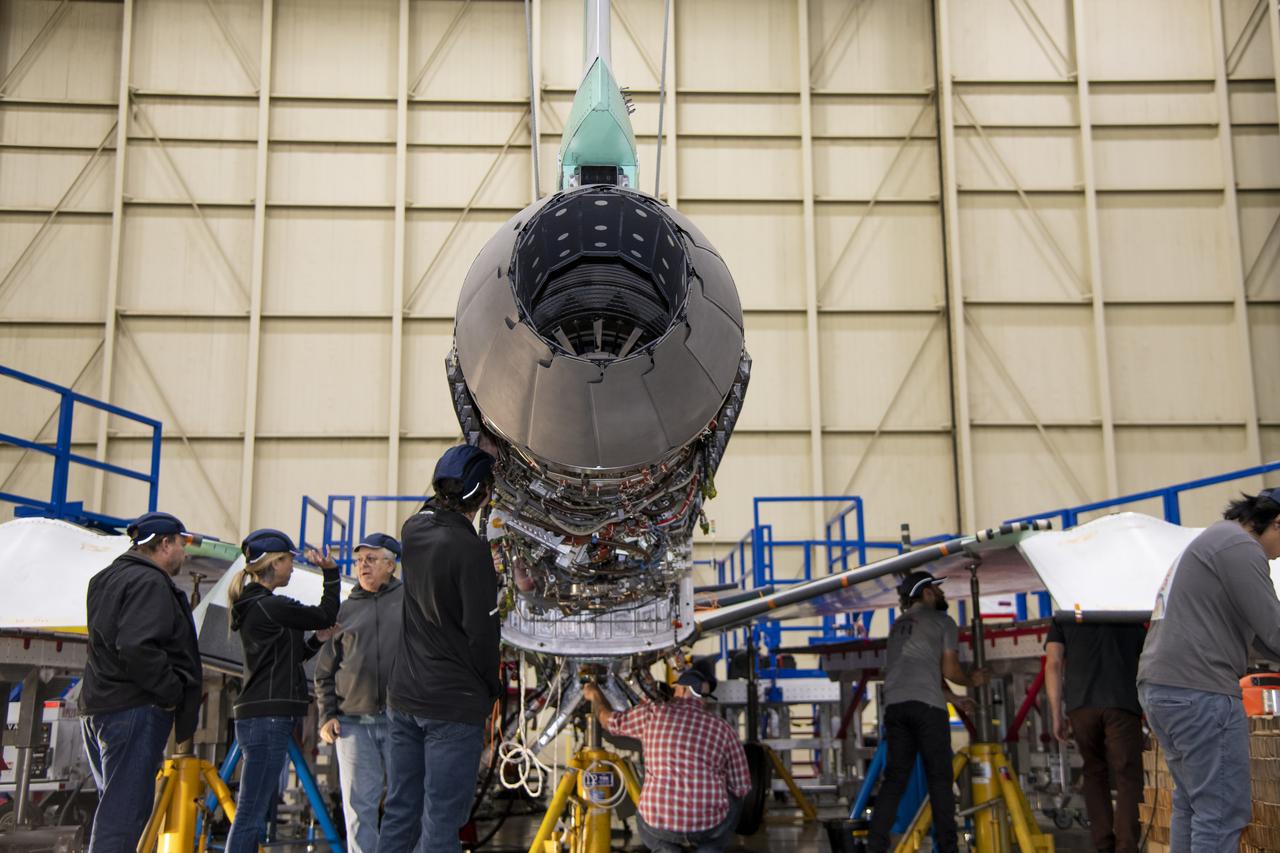
The engine that will power NASA’s quiet supersonic X-59 in flight is installed, marking a major milestone in the experimental aircraft’s journey toward first flight. The installation of the F414-GE-100 engine at Lockheed Martin’s Skunk Works facility brings the vehicle close to the completion of its assembly.
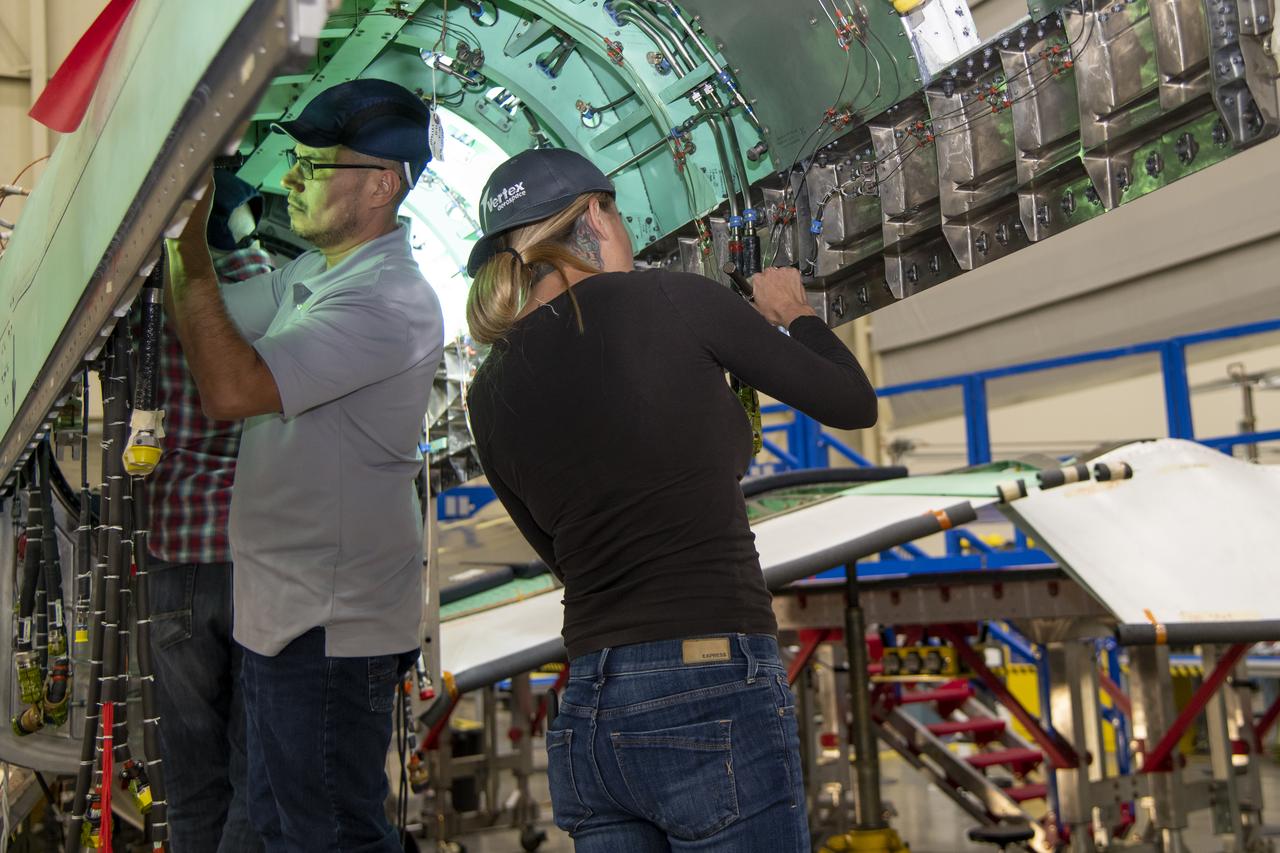
The engine that will power NASA’s quiet supersonic X-59 in flight is installed, marking a major milestone in the experimental aircraft’s journey toward first flight. The installation of the F414-GE-100 engine at Lockheed Martin’s Skunk Works facility brings the vehicle close to the completion of its assembly.
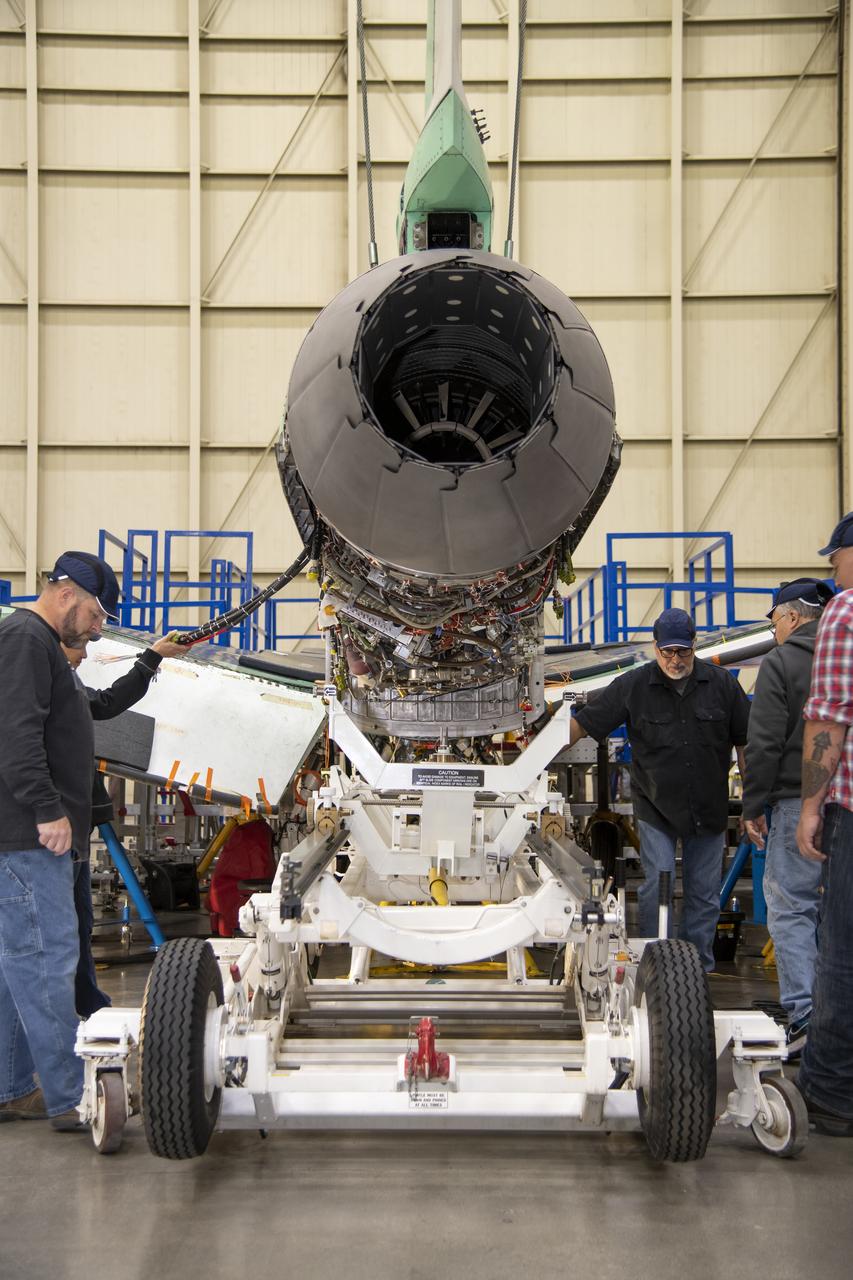
The engine that will power NASA’s quiet supersonic X-59 in flight is installed, marking a major milestone in the experimental aircraft’s journey toward first flight. The installation of the F414-GE-100 engine at Lockheed Martin’s Skunk Works facility brings the vehicle close to the completion of its assembly.
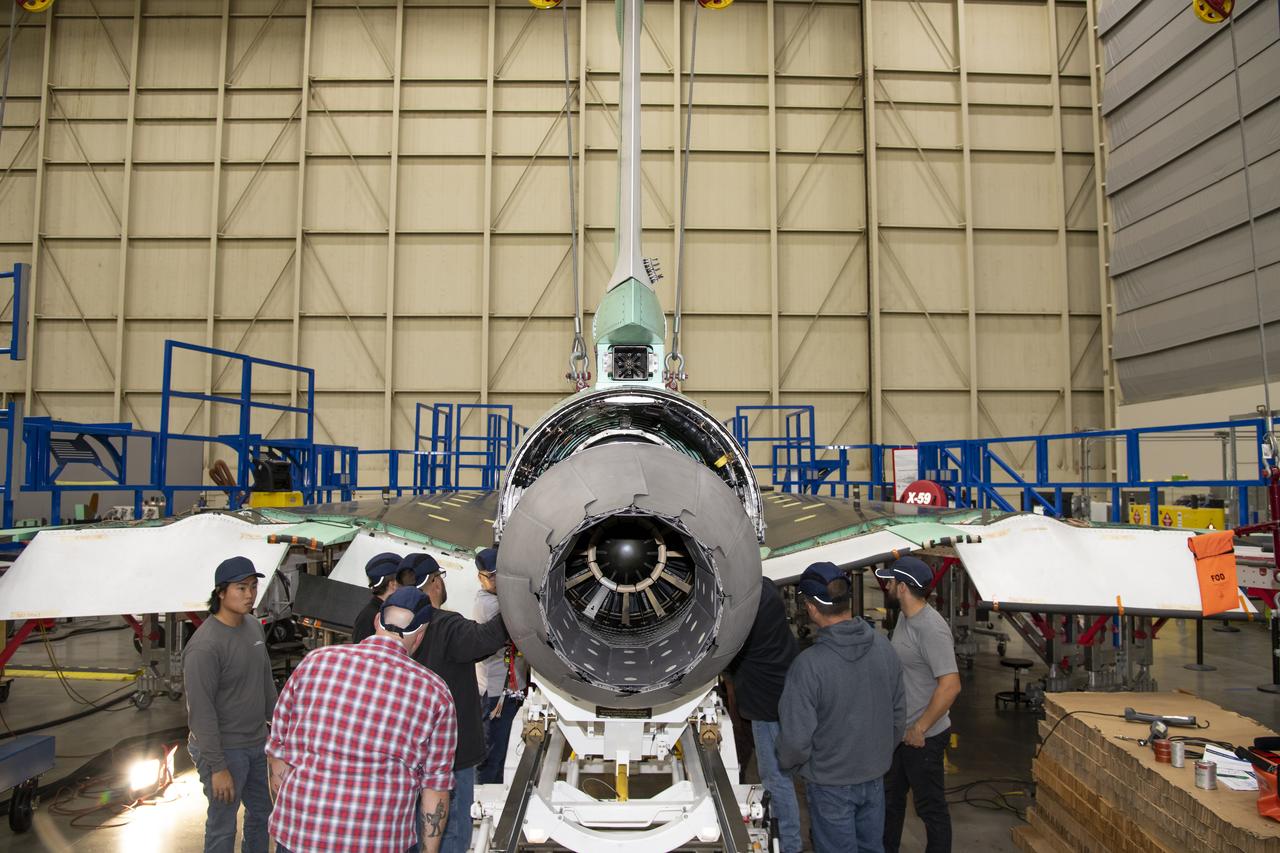
The engine that will power NASA’s quiet supersonic X-59 in flight is installed, marking a major milestone in the experimental aircraft’s journey toward first flight. The installation of the F414-GE-100 engine at Lockheed Martin’s Skunk Works facility brings the vehicle close to the completion of its assembly.
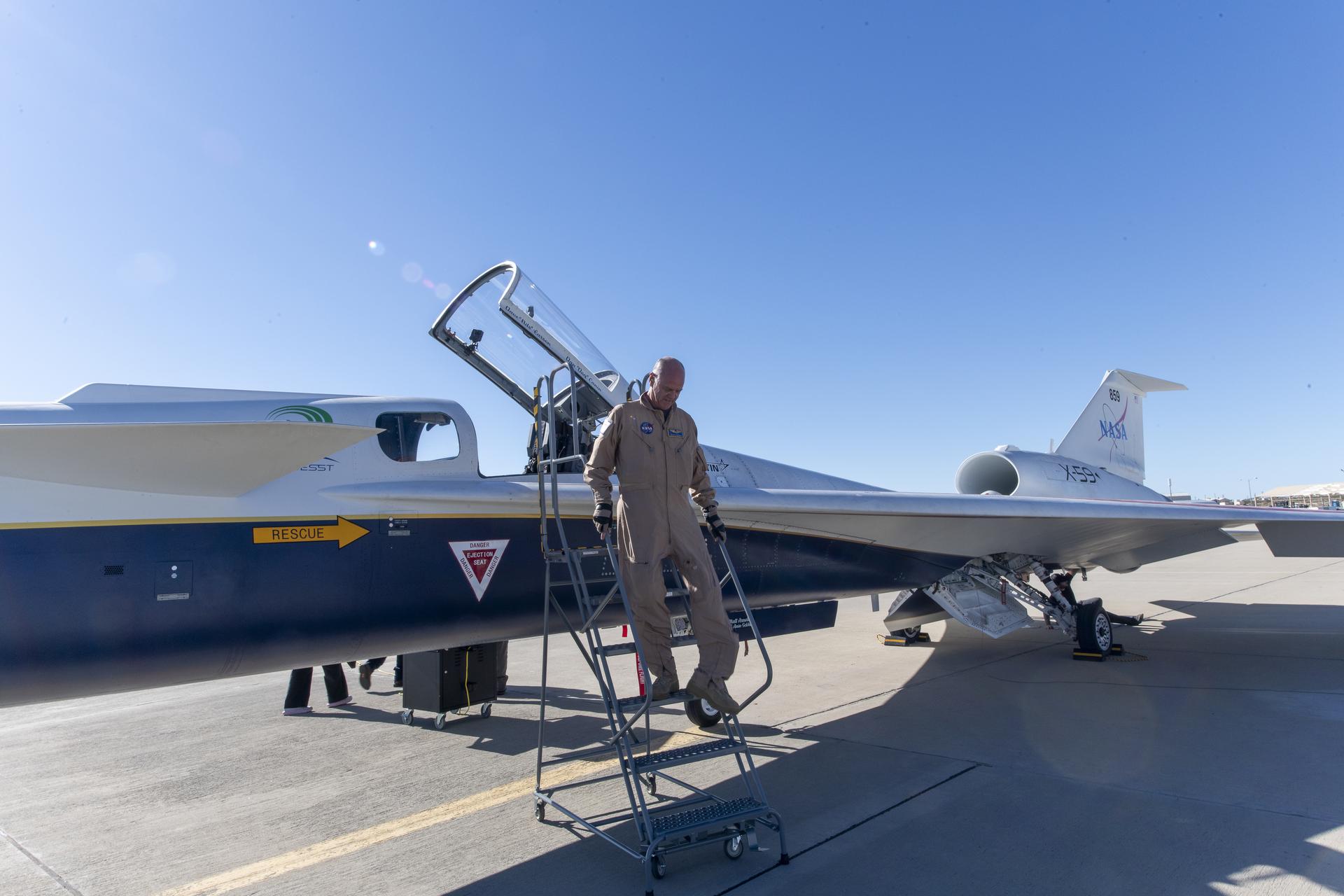
NASA test pilot Nils Larson steps out of the X-59 after successfully completing the aircraft’s first flight Tuesday, Oct. 28, 2025. The mission marked a key milestone in advancing NASA’s Quesst mission to enable quiet supersonic flight over land.

NASA test pilot Nils Larson opens the X-59 cockpit after completing the aircraft’s first flight on Tuesday, Oct. 28, 2025. The mission marked a key milestone in advancing NASA’s Quesst mission to enable quiet supersonic flight over land.