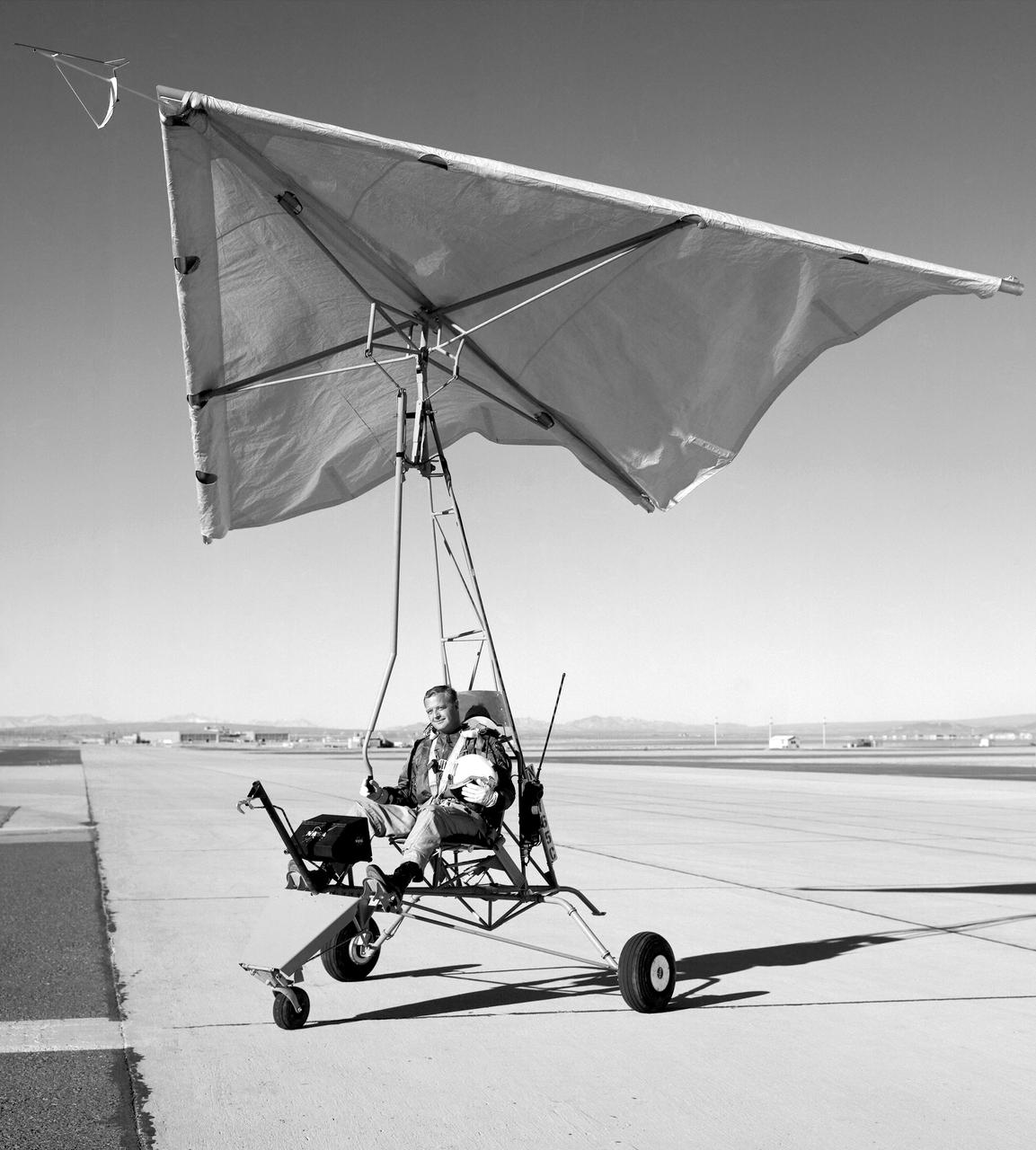
Test pilot Milton Thompson sitting in NASA Flight Research Center-built Paresev 1 (Paraglider Research Vehicle) on the taxi strip in front of the NASA Flight Research Center in 1962. In this photo the control stick can be seen coming from overhead and hanging in front of the pilot. The control system was a direct link with the wing membrane made of doped Irish linen. By maintaining simplicity during construction, it was possible to make control and configuration changes overnight and, in many instances, in minutes.
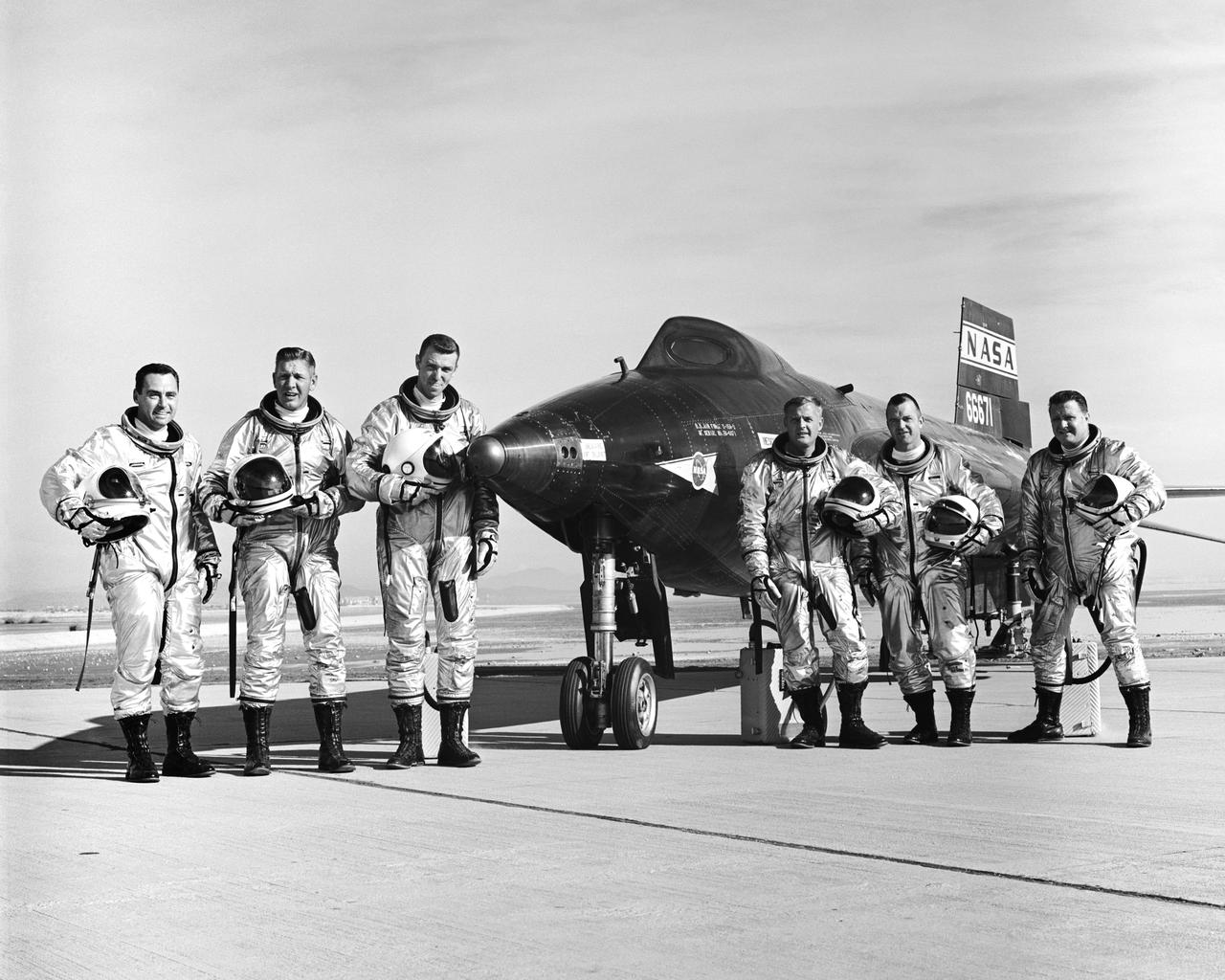
X-15 Pilots, Left to Right: Air Force pilot William J. "Pete" Knight, Air Force Major Robert A. Rushworth, Air Force Captain Joseph H. Engle, NASA pilot Milton O. Thompson, NASA pilot Bill Dana, and NASA pilot John B. "Jack" McKay.
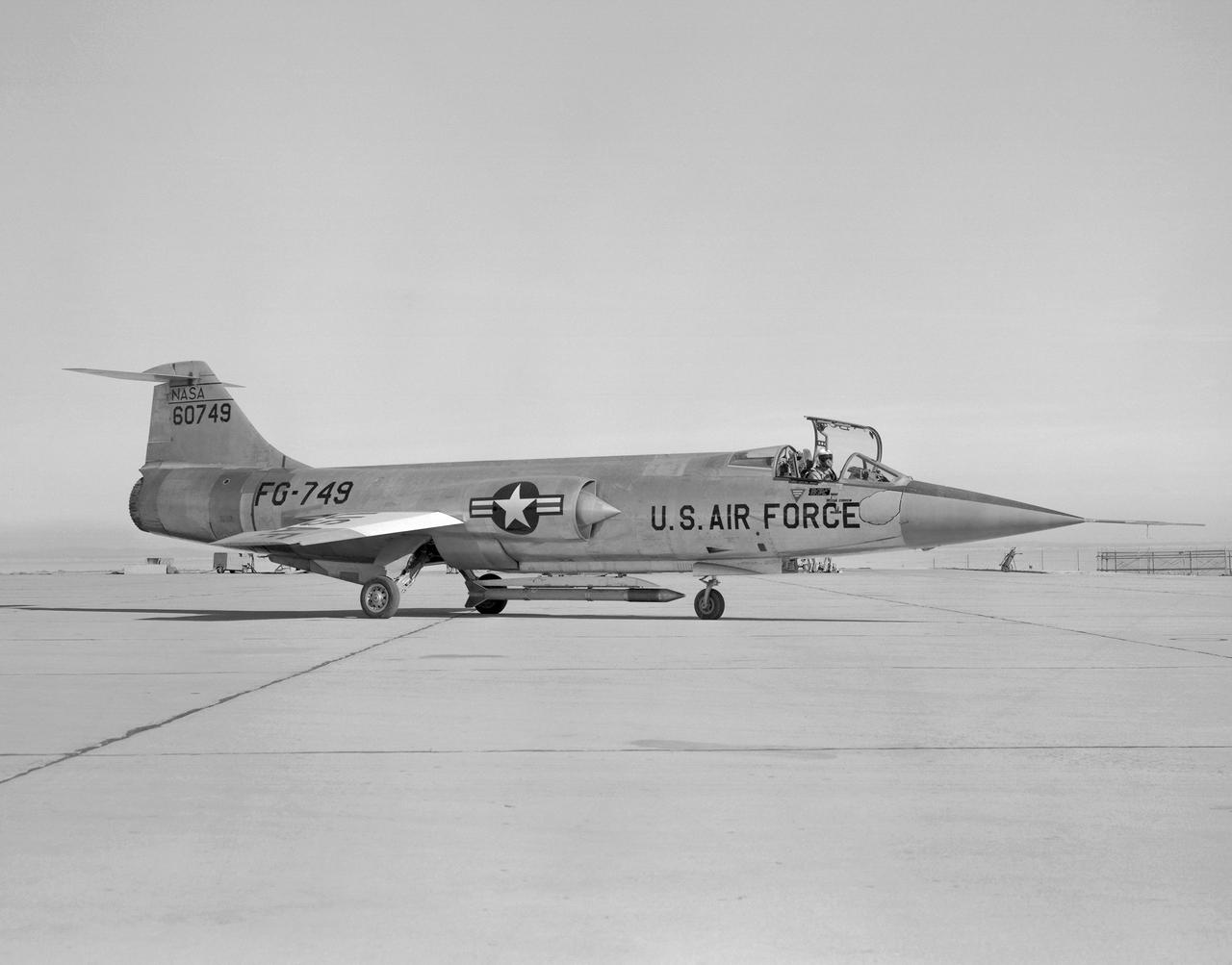
JF-104A (Serial #56-0749) on the ramp at the NASA Flight Research Center (now the Dryden Flight Research Center) at Edwards AFB. The aircraft is shown with the Air Launched Sounding Rocket (ALSOR) attached to the underside. NASA test pilot Milton O. Thompson ejected from this aircraft on 20 December 1962, after an asymmetrical flap condition made the jet uncontrollable.
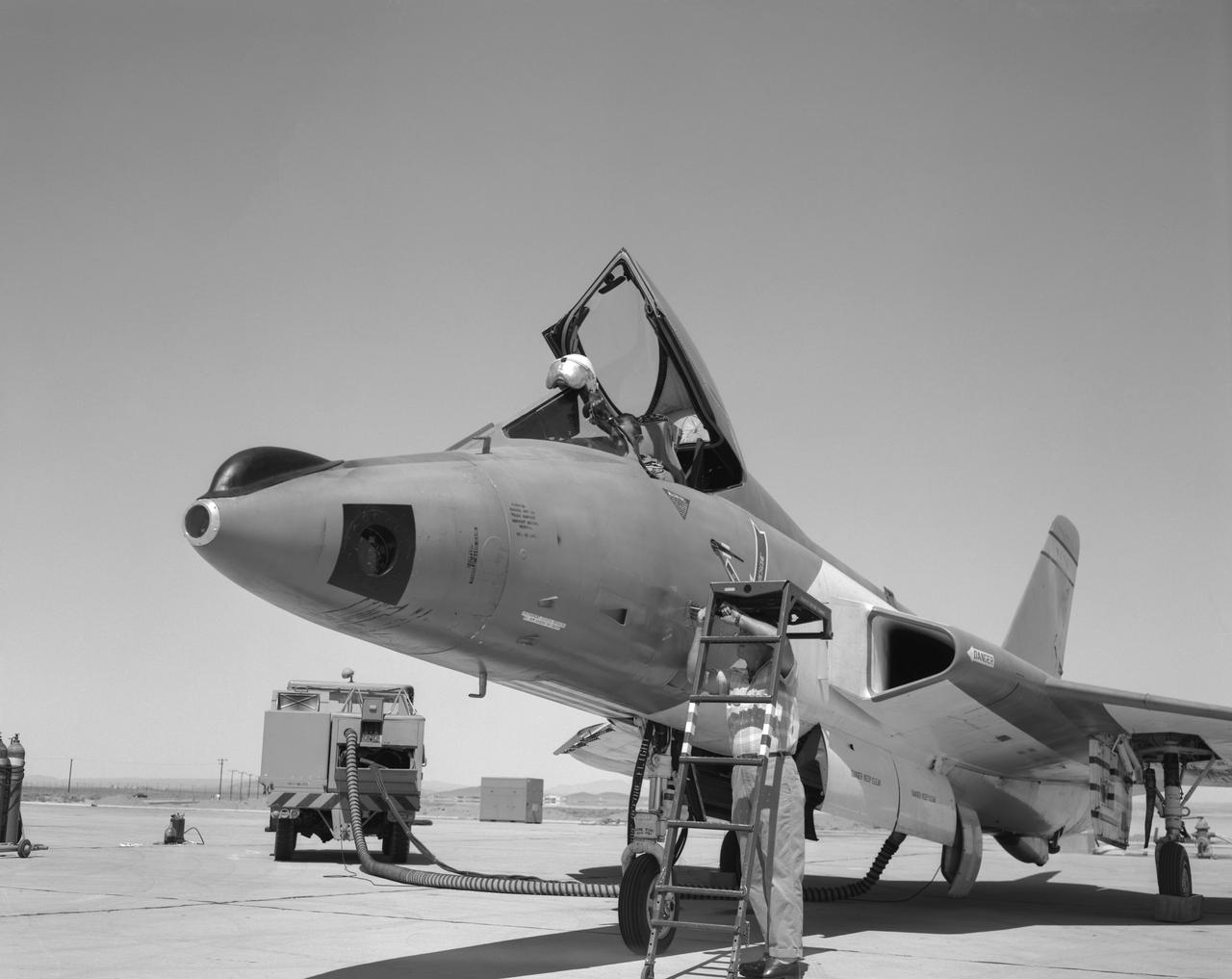
F5D Skylancer with camera installation in nose.
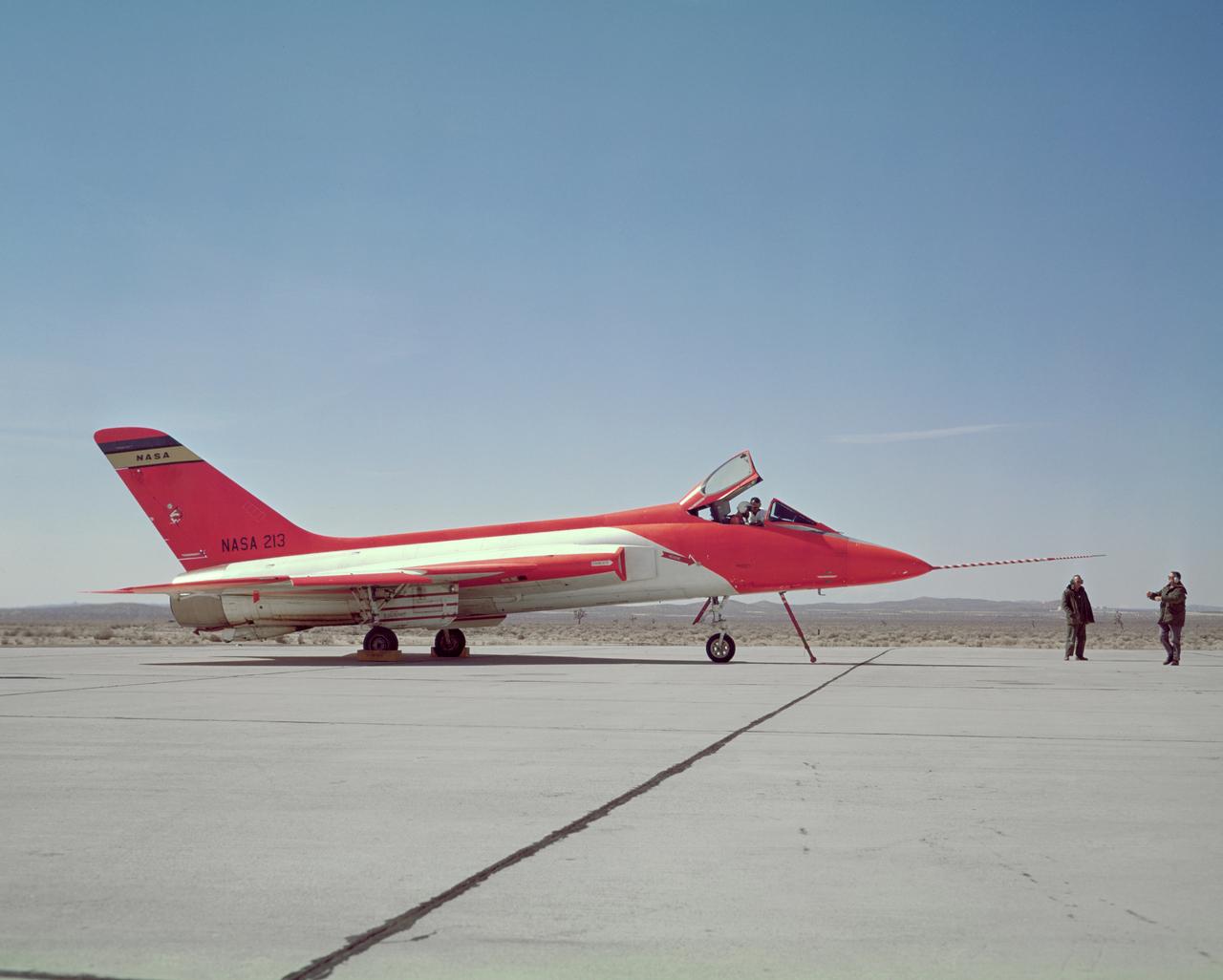
F5D Skylancer taxis in after a mission.
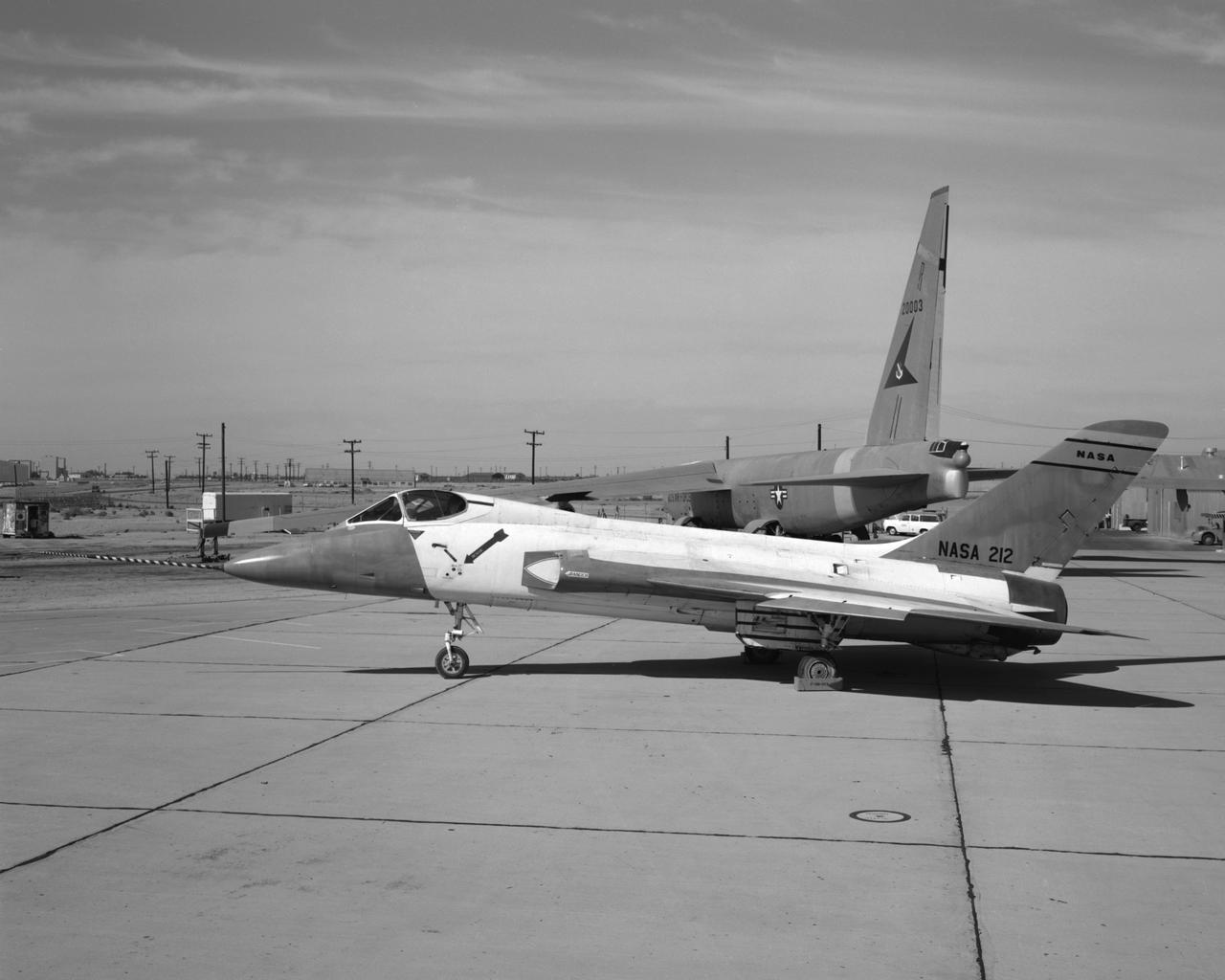
F5D Skylancer NASA 212 modified as the X-20 Dyna-Soar vision field simulator.
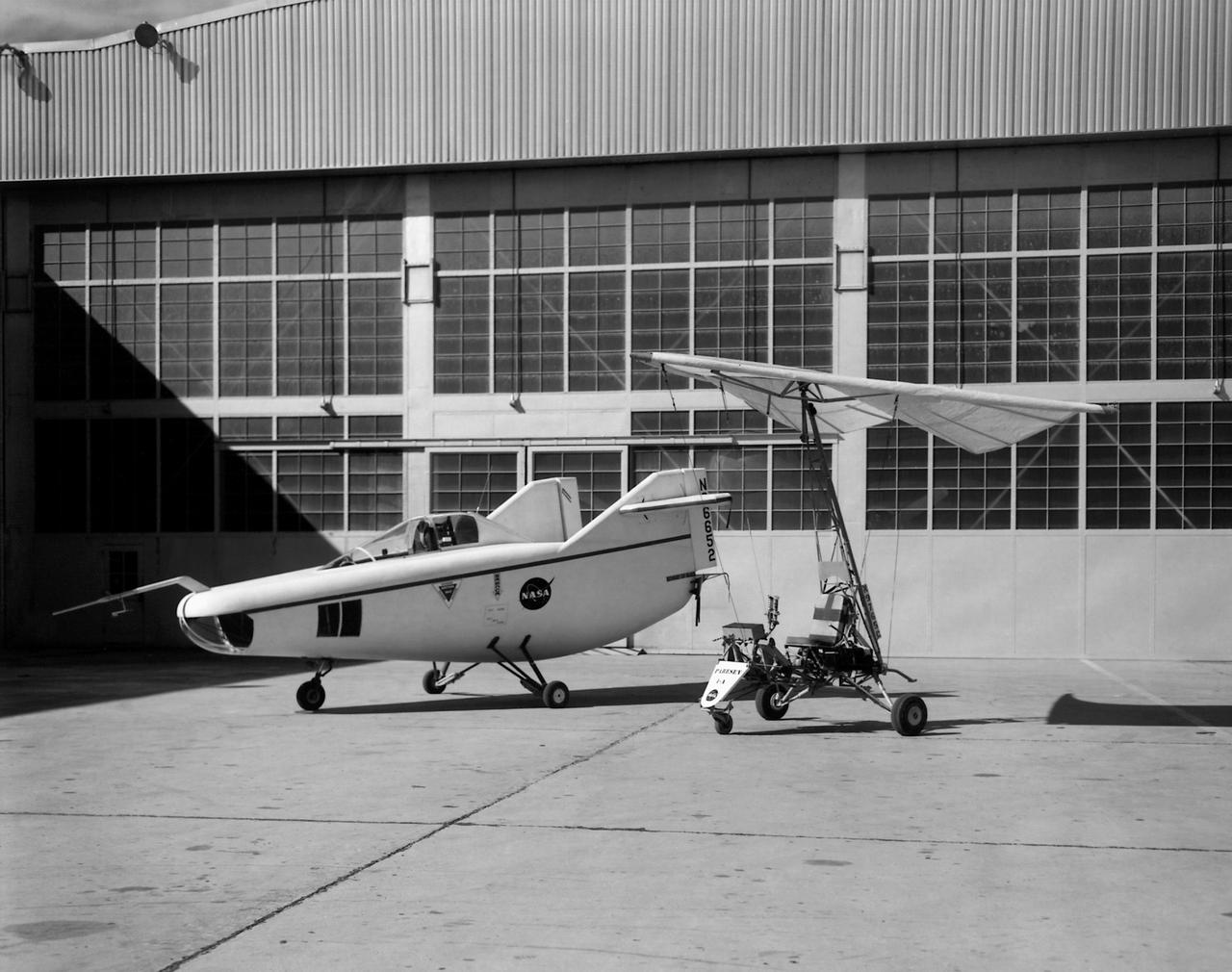
In this photo of the M2-F1 lifting body and the Paresev 1B on the ramp, the viewer sees two vehicles representing different approaches to building a research craft to simulate a spacecraft able to land on the ground instead of splashing down in the ocean as the Mercury capsules did. The M2-F1 was a lifting body, a shape able to re-enter from orbit and land. The Paresev (Paraglider Research Vehicle) used a Rogallo wing that could be (but never was) used to replace a conventional parachute for landing a capsule-type spacecraft, allowing it to make a controlled landing on the ground.