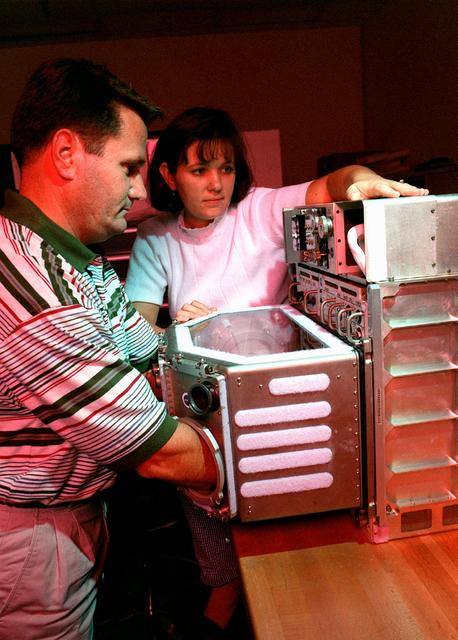
Mary-Etta Wright and Dornie McCaghren with Russia's Mir Flight Glovebox.

STS-76, Mir Glovebox and NASA-2 (Mir-21) increment. Astronaut Sharnon Lucid, Cosmonaut Yuriy-V Usachov and Flight Engineer/Cosmonaut Yuriy-I Onuufriyenko.
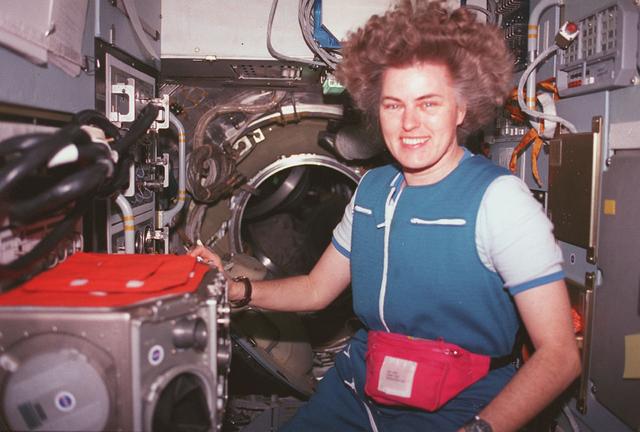
Sharnon Lucid aboard STS-79, with the Glovebox in MIR Priroda module. Priroda is the Russian word for nature.
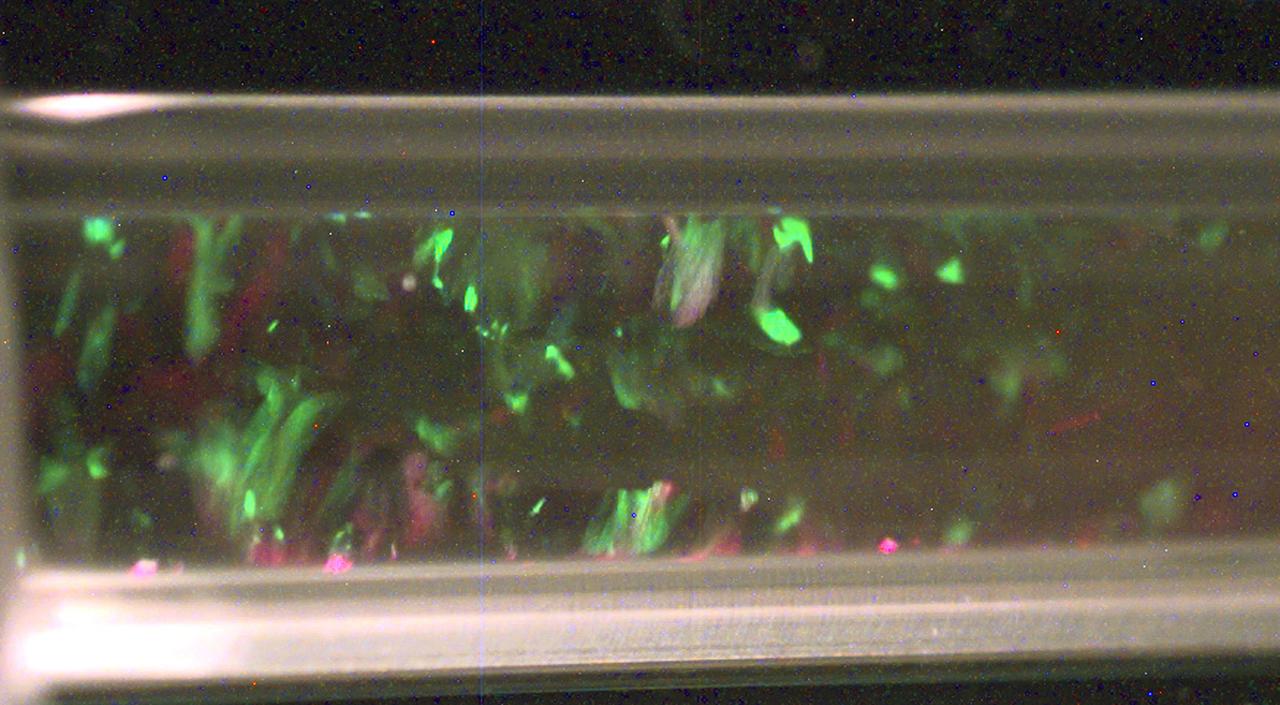
This is an image of a colloidal crystal from the CDOT-2 investigation flown on STS-95. There are so many colloidal particles in this sample that it behaves like a glass. In the laboratory on Earth, the sample remained in an amorphous state, showing no sign of crystal growth. In microgravity the sample crystallized in 3 days, as did the other glassy colloidal samples examined in the CDOT-2 experiment. During the investigation, crystallization occurred in samples that had a volume fraction (number of particles per total volume) larger than the formerly reported glass transition of 0.58. This has great implications for theories of the structural glass transition. These crystals were strong enough to survive space shuttle re-entry and landing.
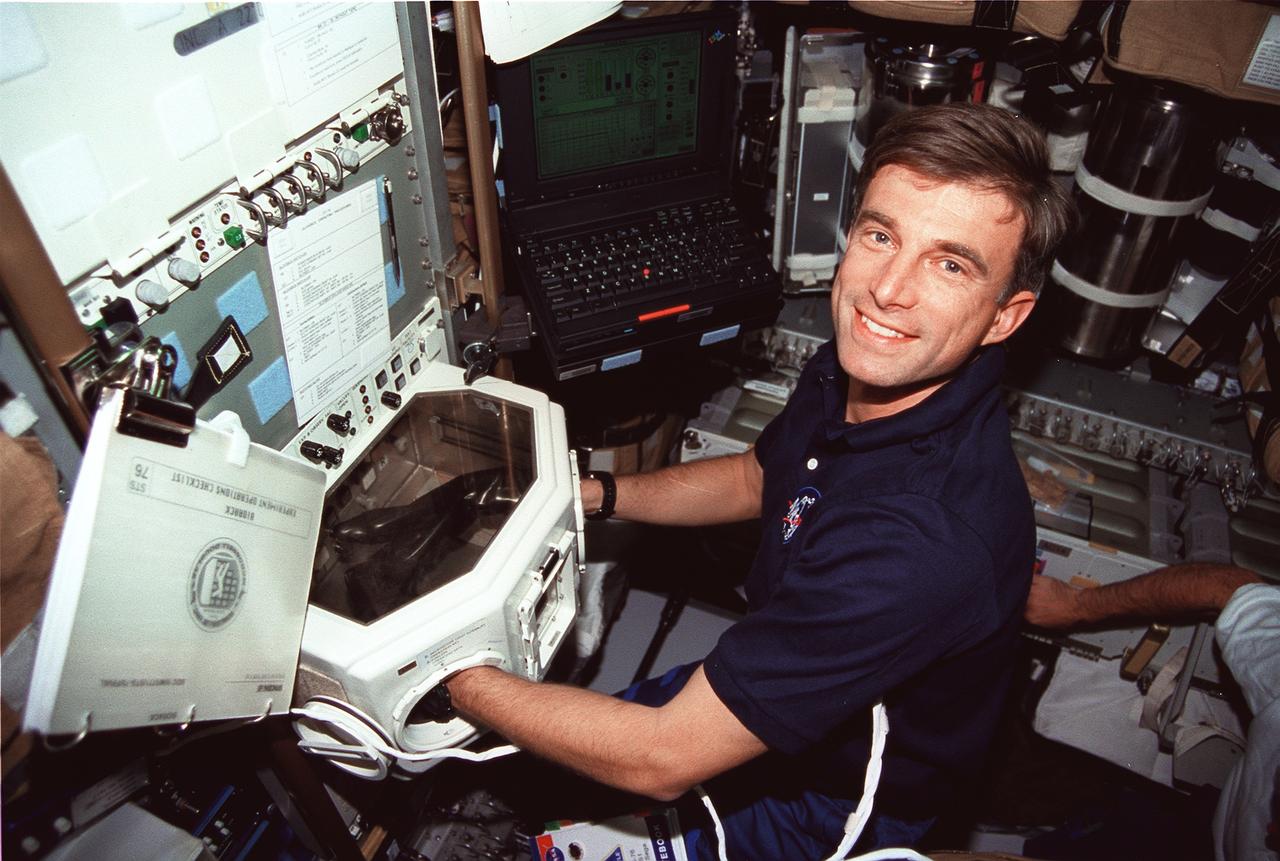
STS076-312-022 (22 - 31 March 1996) --- Astronaut Ronald M. Sega, payload commander, works in the glovebox facility in the Spacehab laboratory aboard the Earth-orbiting Space Shuttle Atlantis. The Spacehab facility was one of the busier research areas on Atlantis during the STS-76 mission. Also, some of the gear for transfer to Russia's Mir Space Station was stowed there prior to the March 23, 1996 docking of Atlantis and Mir.
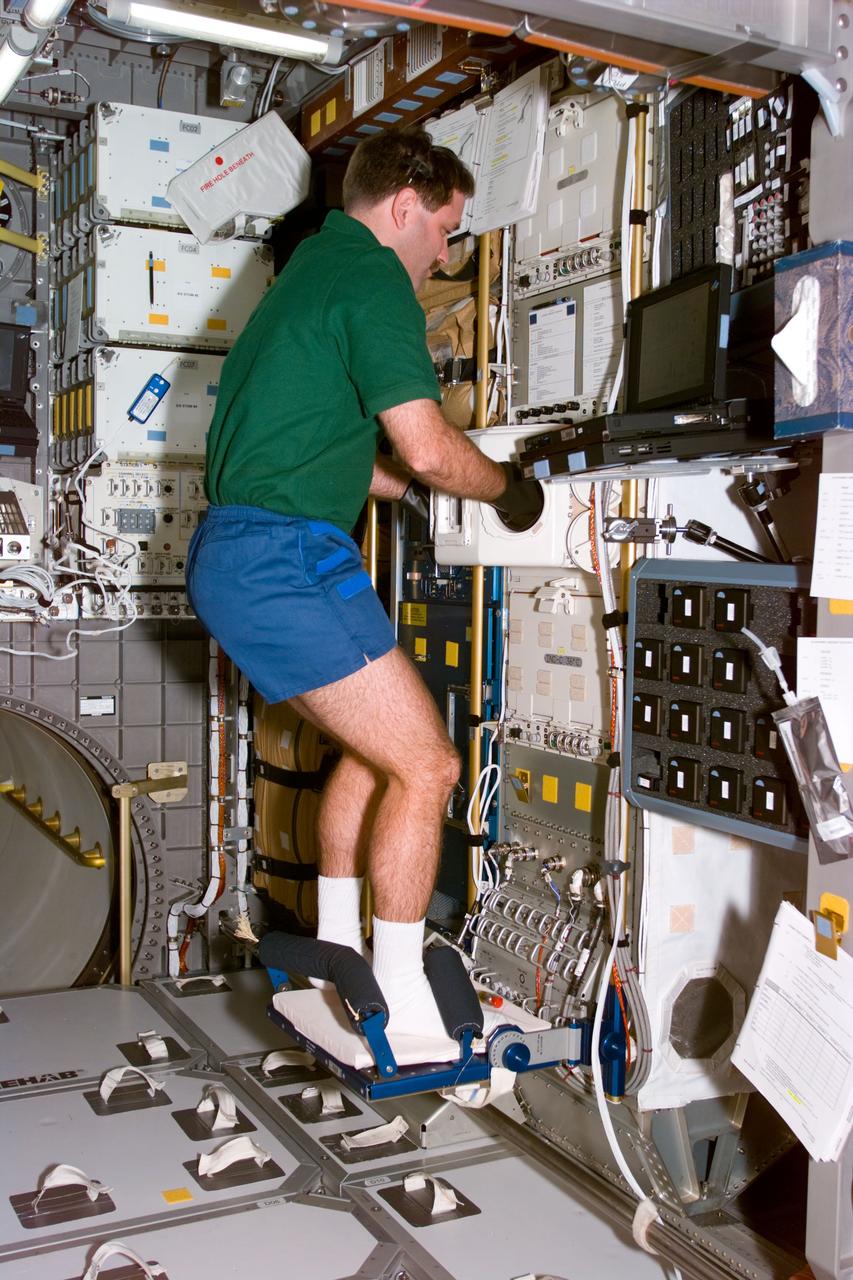
STS81-E-05107 (13 Jan. 1997) --- Astronaut John M. Grunsfeld, mission specialist, begins to activate a biorack glovebox aboard the Spacehab Double Module (DM) early on Day 2 of the mission. Grunsfeld is joined by five other NASA astronauts for the almost ten-day mission. The crew is scheduled to dock with Russia's Mir Space Station and pick up John E. Blaha, NASA astronaut who has been serving as a cosmonaut guest researcher since September 1996. Jerry M. Linenger (out of frame) will replace Blaha onboard Mir.
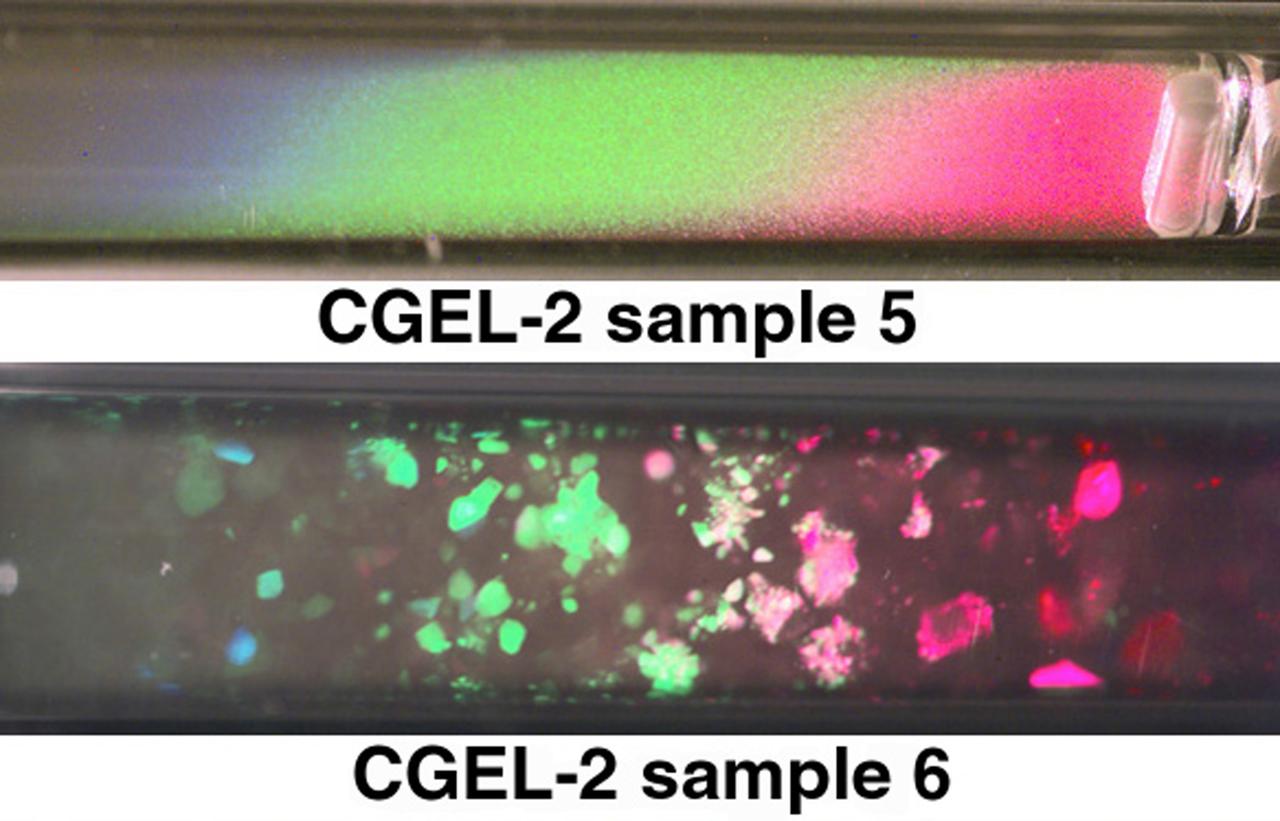
These are images of CGEL-2 samples taken during STS-95. They show binary colloidal suspensions that have formed ordered crystalline structures in microgravity. In sample 5, there are more particles therefore, many, many crystallites (small crystals) form. In sample 6, there are less particles therefore, the particles are far apart and few, much larger crystallites form. The white object in the right corner of sample 5 is the stir bar used to mix the sample at the begirning of the mission.
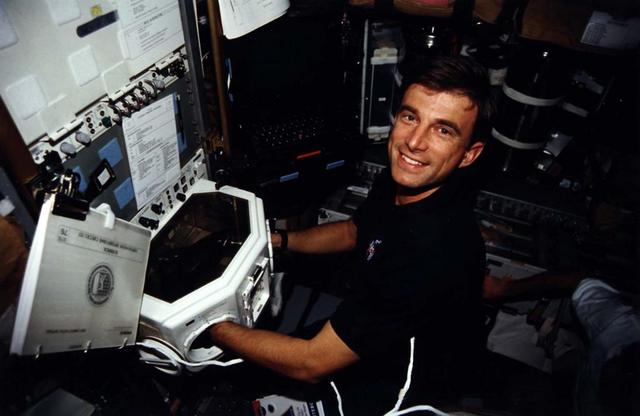
Astronaut Ronald M. Sega, payload commander, works in the glovebox facility in the Spacehab laboratory aboard the Earth-orbiting Space Shuttle Atlantis. The Spacehab facility was one f the busier research areas on Atlantis during the STS-76 mission. Also, some of the gear for transfer to Russia's Mir Space Station was stowed there prior to the March 23, 1996 docking of Atlantis.
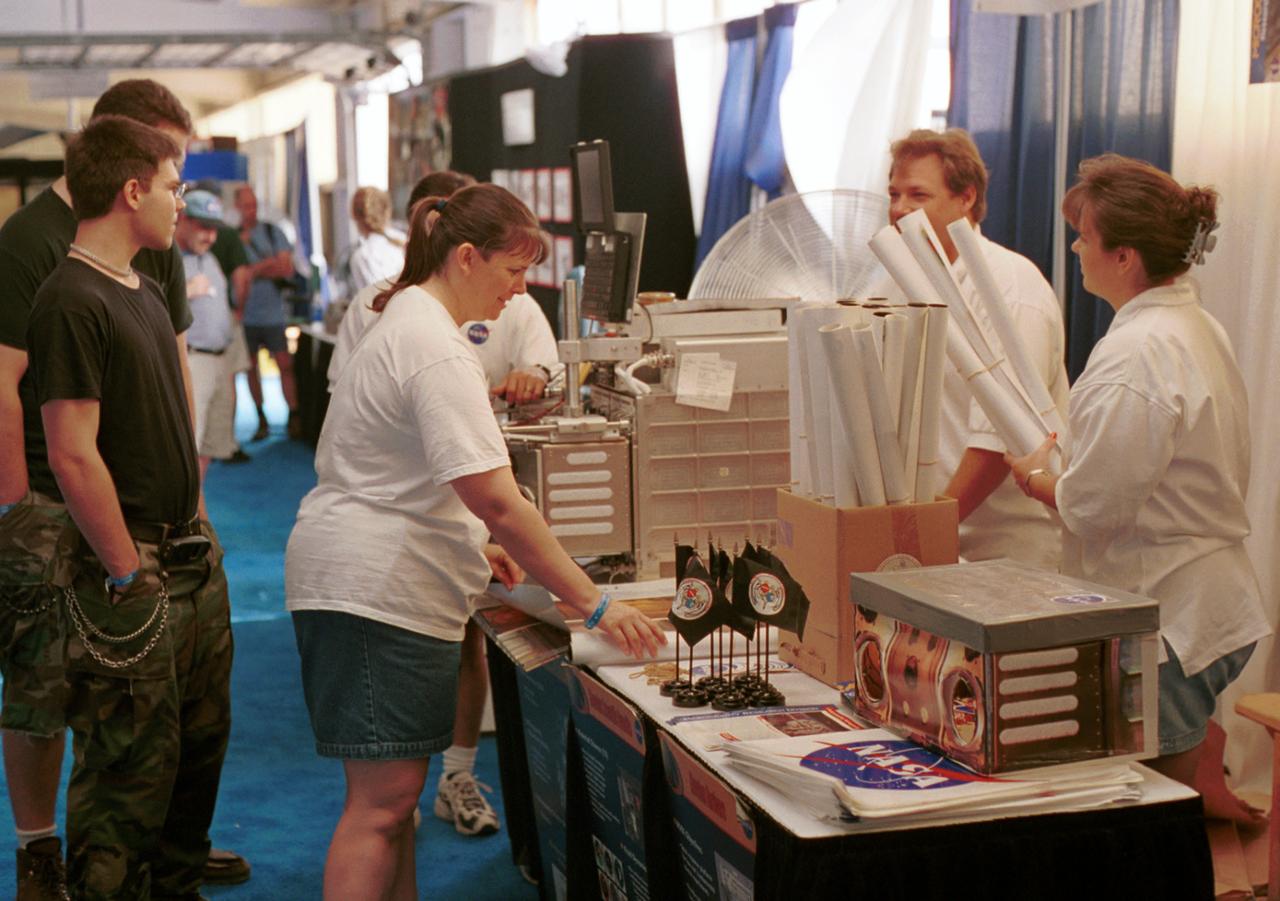
NASA representatives prepare for another day's work answering questions and handing out posters at AirVenture 2000. Part of their demonstrations included a training model of the Middeck Glovebox used aboard the Space Shuttle and Russian Mir Space Station. This and several other devices were used to explain to the public the kinds of research that have been conducted aboard the Space Shuttle and that will continue aboard the International Space Station (ISS). The exhibit was part of the NASA outreach activity at AirVenture 2000 sponsored by the Experimental Aircraft Association in Oshkosh, WI.
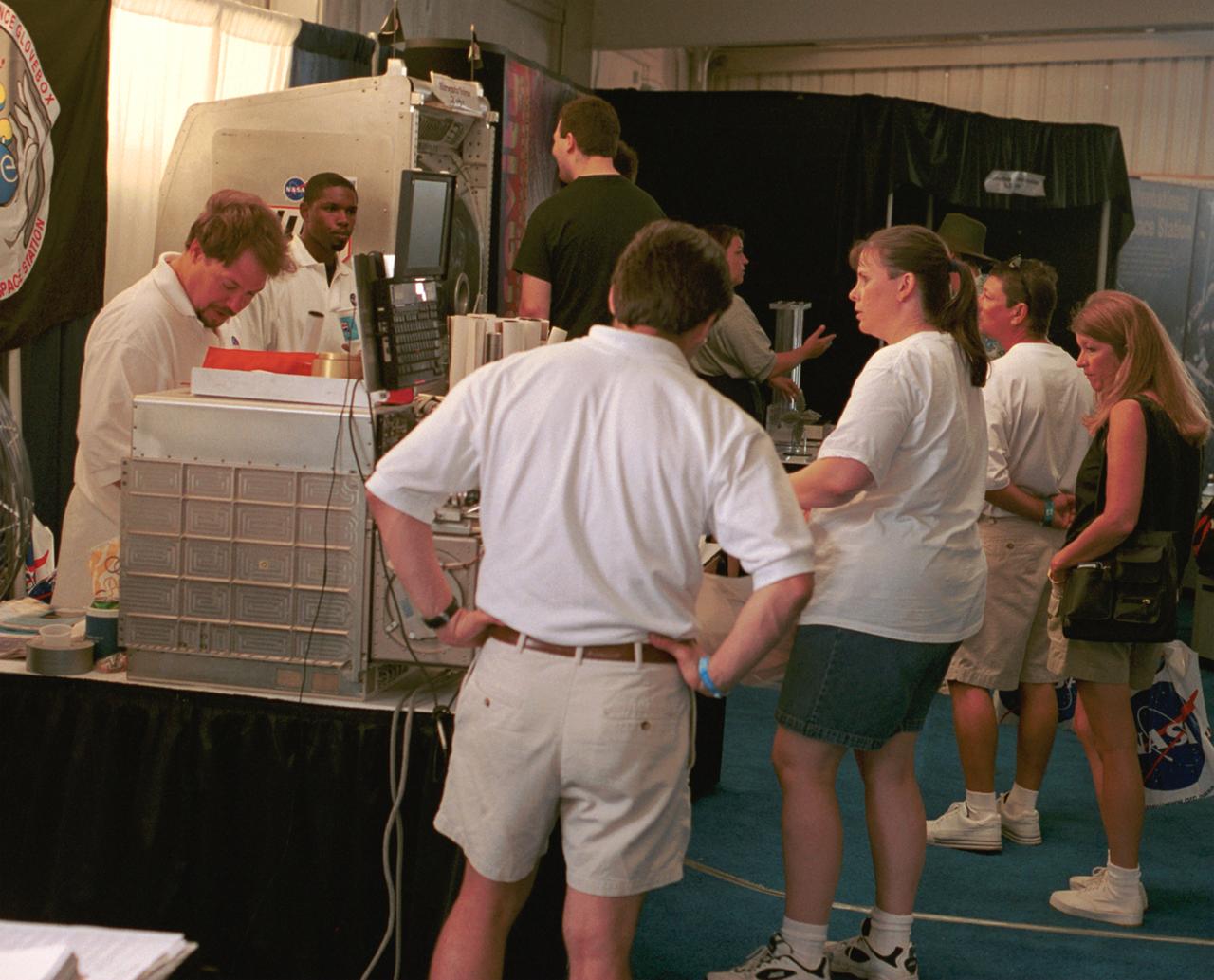
NASA representatives prepare for another day's work answering questions and handing out posters at AirVenture 2000. Part of their demonstrations included a training model of the Middeck Glovebox used aboard the Space Shuttle and Russian Mir Space Station. This and several other devices were used to explain to the public the kinds of research that have been conducted aboard the Space Shuttle and that will continue aboard the International Space Station (ISS). The exhibit was part of the NASA outreach activity at AirVenture 2000 sponsored by the Experimental Aircraft Association in Oshkosh, WI.
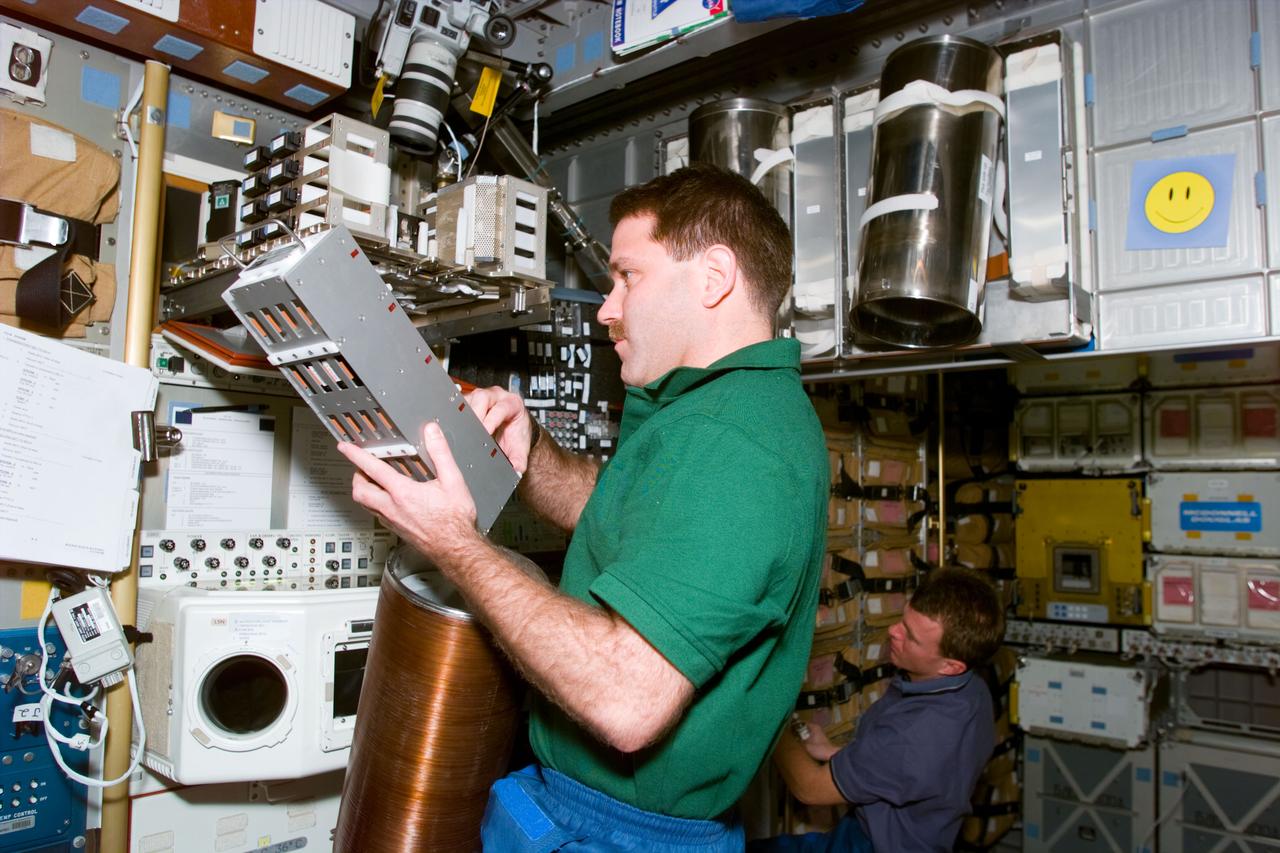
STS081-E-05145 (13 Jan. 1997) --- Astronaut John M. Grunsfeld, mission specialist, works with a Passive Thermal Conditioning Unit (PTCU), the cylindrical device suspended between the mission specialist and the nearby biorack glovebox onboard the Spacehab Double Module (DM). He holds a container of experiment samples in his left hand. This image was recorded with an Electronic Still Camera (ESC) and was later downlinked to flight controllers in Houston, Texas. Grunsfeld and five astronaut crew mates are preparing for a scheduled mid-week docking with Russia's Mir Space Station.