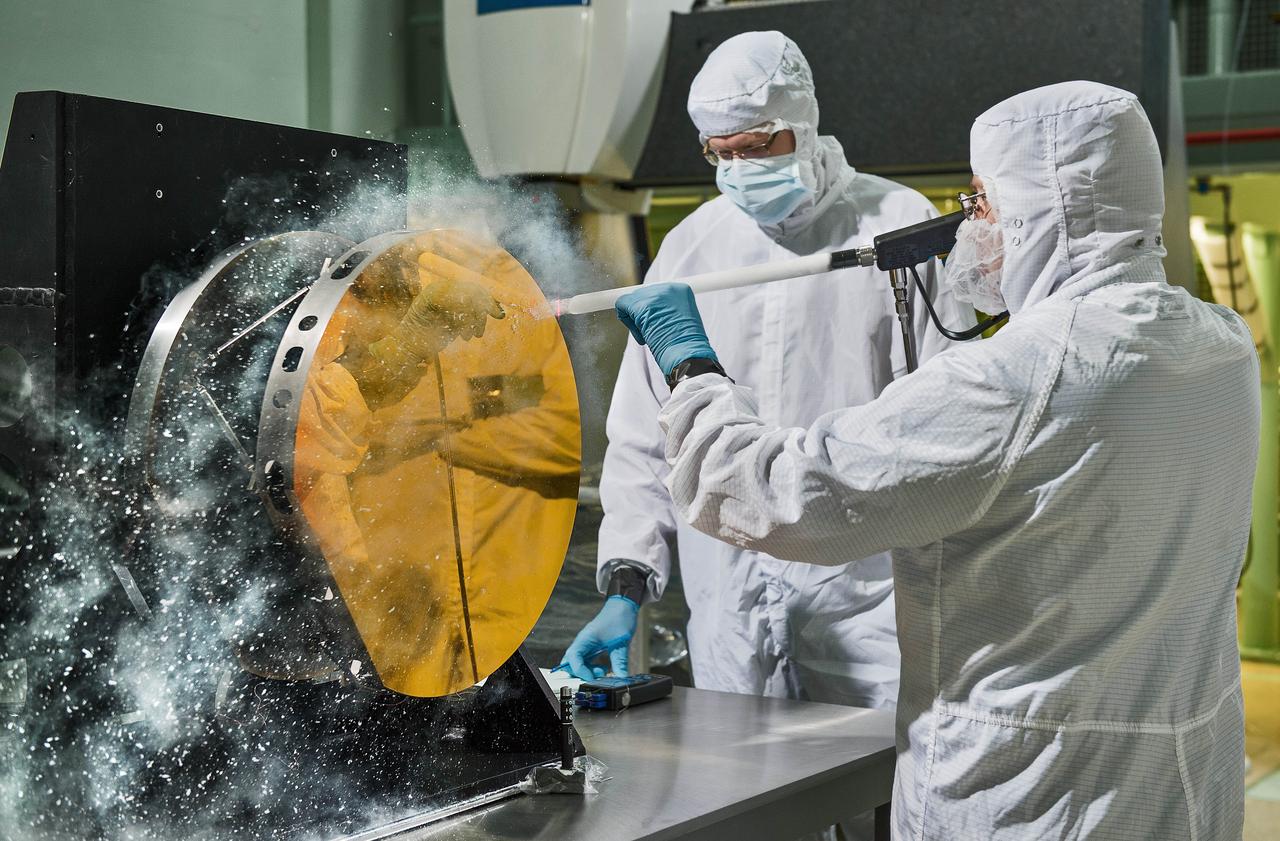
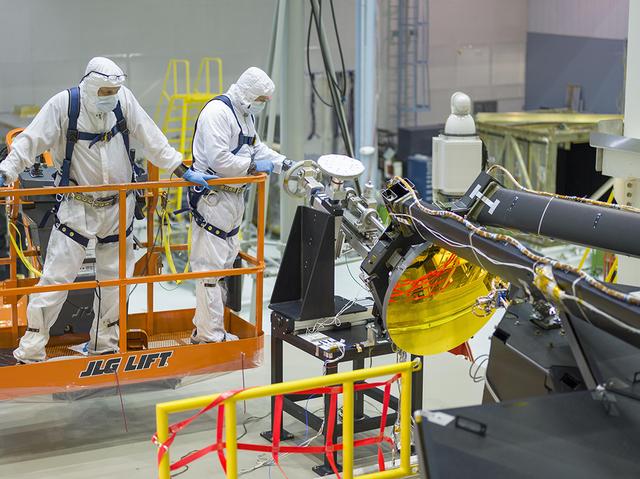
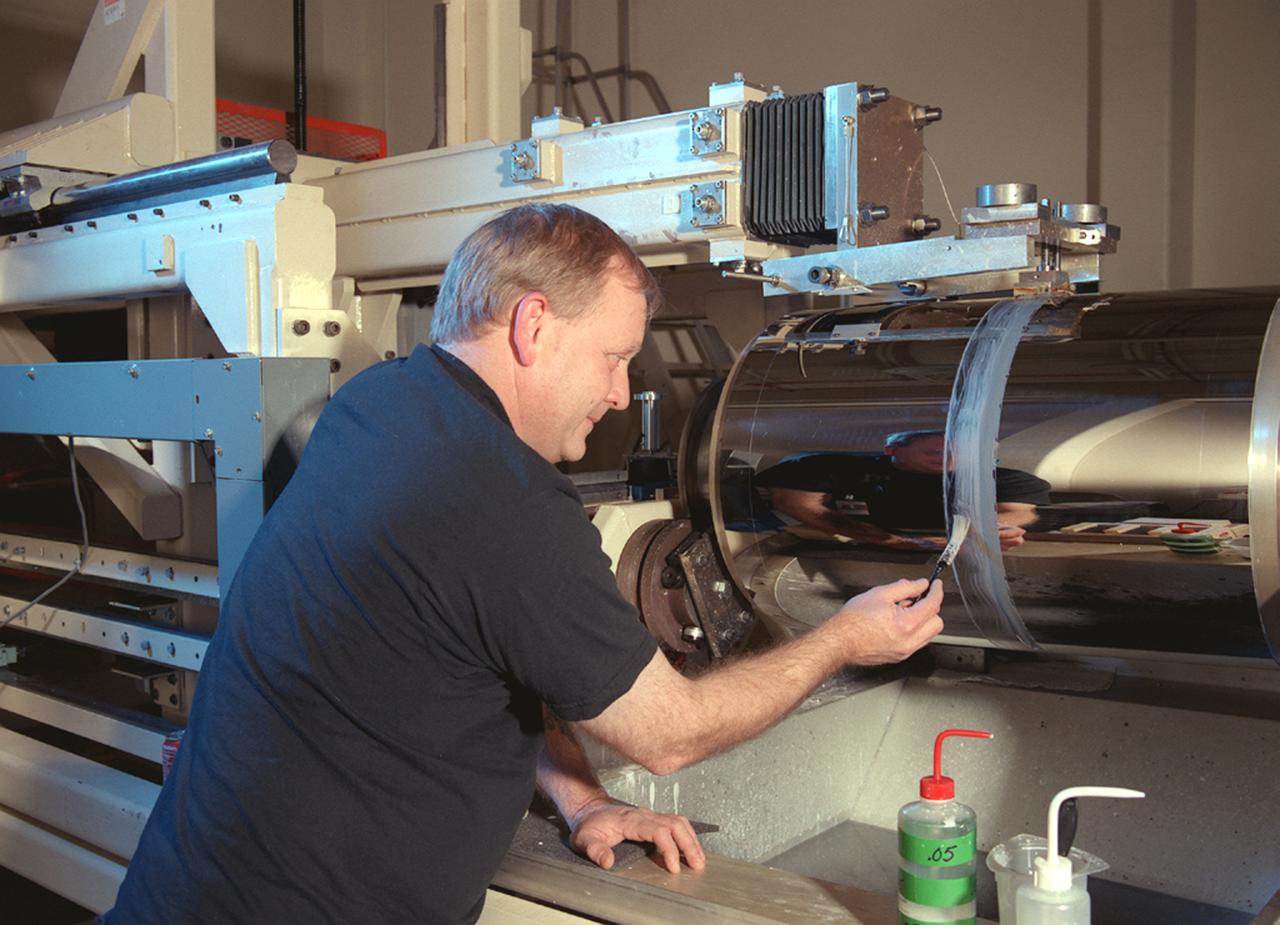
Just like drivers sometimes use snow to clean their car mirrors in winter, two Exelis Inc. engineers are practicing "snow cleaning'" on a test telescope mirror for the James Webb Space Telescope at NASA's Goddard Space Flight Center in Greenbelt, Maryland. By shooting carbon dioxide snow at the surface, engineers are able to clean large telescope mirrors without scratching them. "The snow-like crystals (carbon dioxide snow) knock contaminate particulates and molecules off the mirror," said Lee Feinberg, NASA optical telescope element manager. This technique will only be used if the James Webb Space Telescope's mirror is contaminated during integration and testing. The Webb telescope is the scientific successor to NASA's Hubble Space Telescope. It will be the most powerful space telescope ever built. With a mirror seven times as large as Hubble's and infrared capability, Webb will be capturing light from 13.5 billion light years away. To do this, its mirror must be kept super clean. "Small dust particles or molecules can impact the science that can be done with the Webb," said Feinberg. "So cleanliness especially on the mirrors is critical." Webb is an international project led by NASA with its partners, the European Space Agency and the Canadian Space Agency. Image credit: NASA/Goddard/Chris Gunn
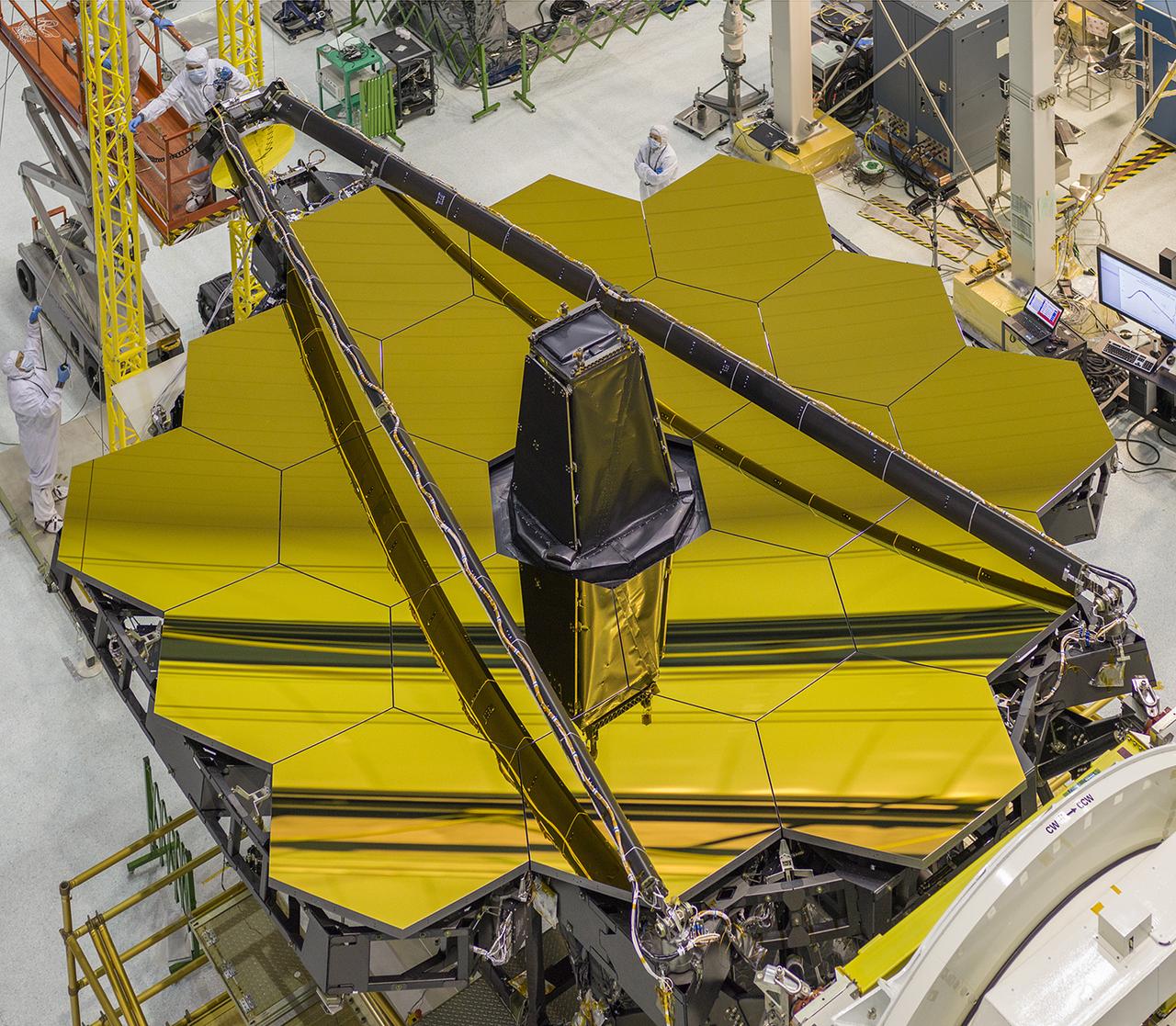
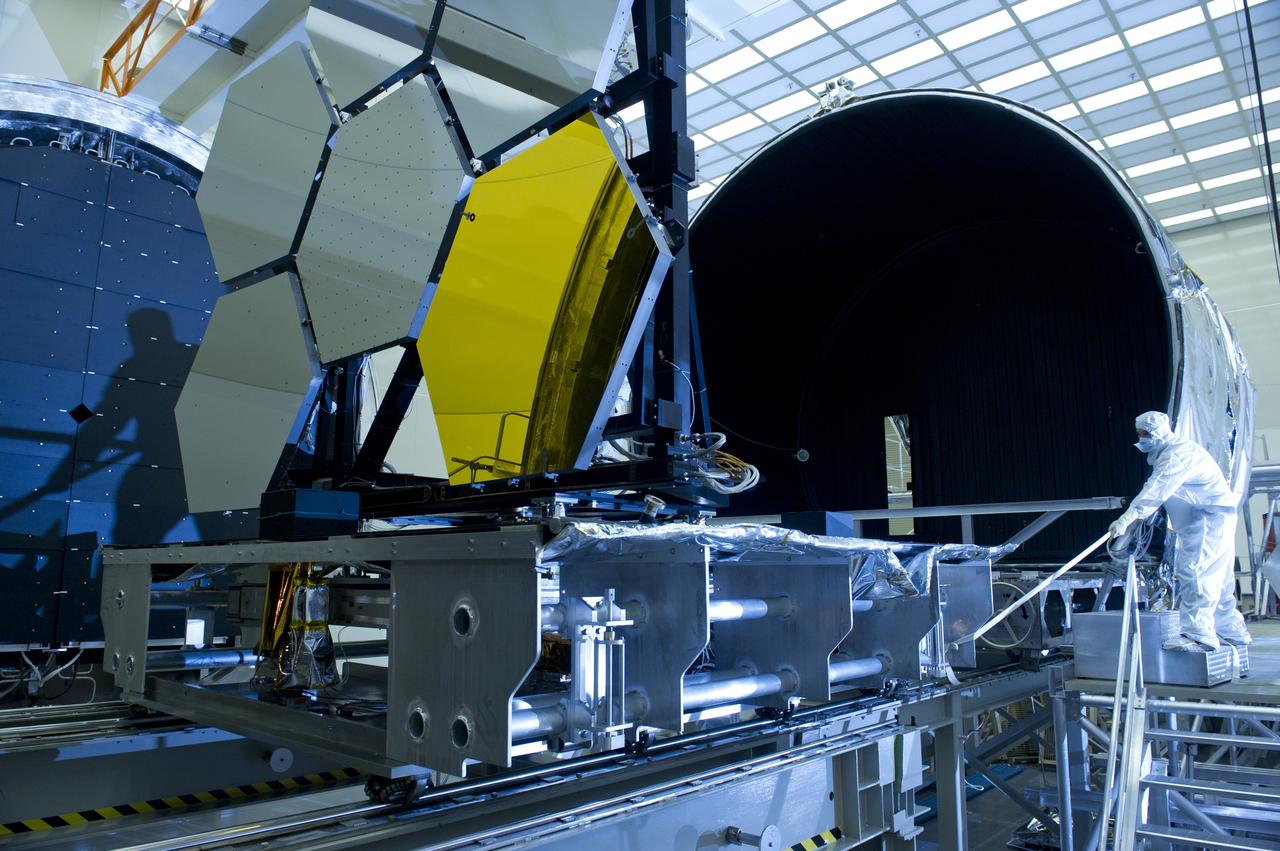
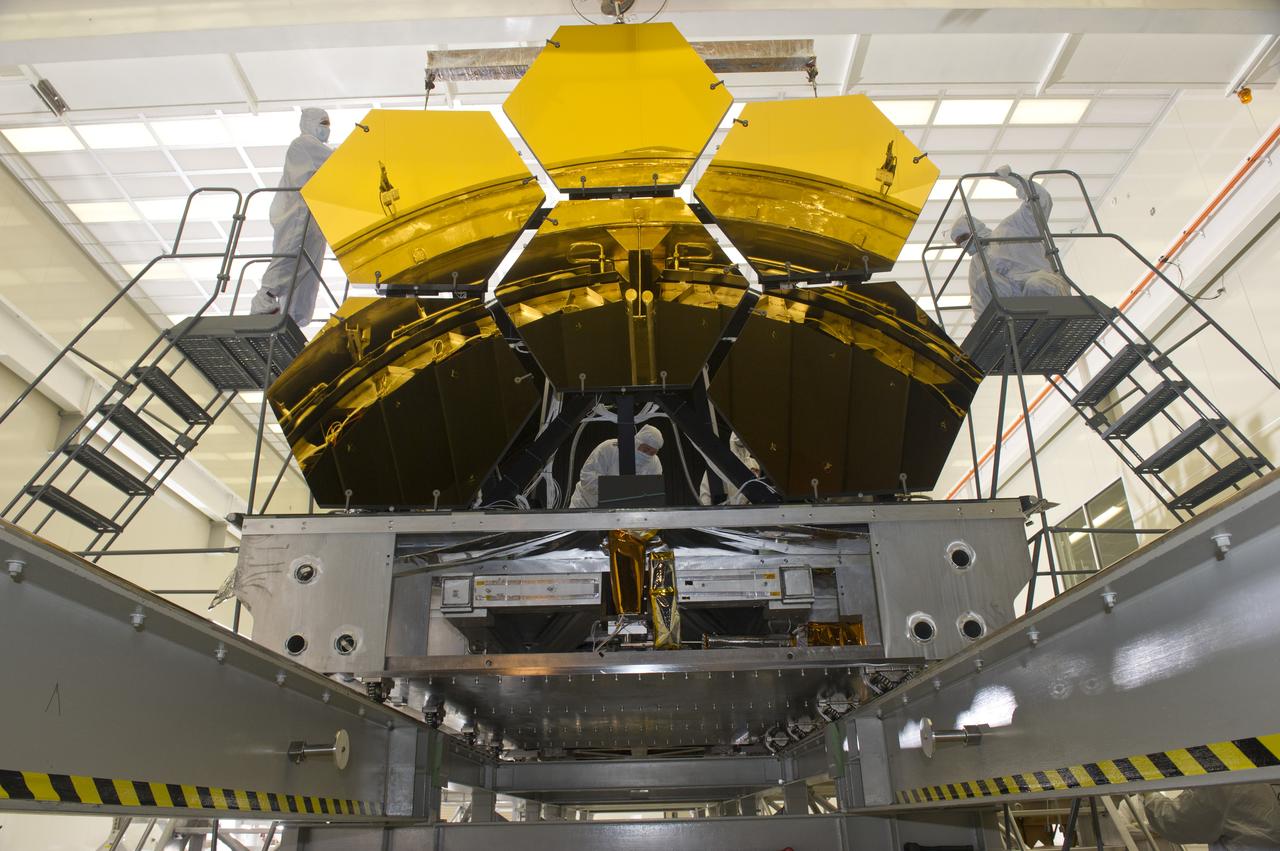
Here's a view from overhead of the golden James Webb Space Telescope, with its secondary mirror booms stowed. This is the position the secondary mirror will be in during launch. Preparations are being done to rotate the telescope in order to install the flight instrument module behind the primary mirror. JWST's mirrors are covered in a microscopically thin layer of gold, which optimizes them for reflecting infrared light, which is the primary wavelength of light this telescope will observe. Image credit: NASA/Goddard/Chris Gunn <b><a href="http://www.nasa.gov/audience/formedia/features/MP_Photo_Guidelines.html" rel="nofollow">NASA image use policy.</a></b> <b><a href="http://www.nasa.gov/centers/goddard/home/index.html" rel="nofollow">NASA Goddard Space Flight Center</a></b> enables NASA’s mission through four scientific endeavors: Earth Science, Heliophysics, Solar System Exploration, and Astrophysics. Goddard plays a leading role in NASA’s accomplishments by contributing compelling scientific knowledge to advance the Agency’s mission. <b>Follow us on <a href="http://twitter.com/NASAGoddardPix" rel="nofollow">Twitter</a></b> <b>Like us on <a href="http://www.facebook.com/pages/Greenbelt-MD/NASA-Goddard/395013845897?ref=tsd" rel="nofollow">Facebook</a></b> <b>Find us on <a href="http://instagrid.me/nasagoddard/?vm=grid" rel="nofollow">Instagram</a></b>
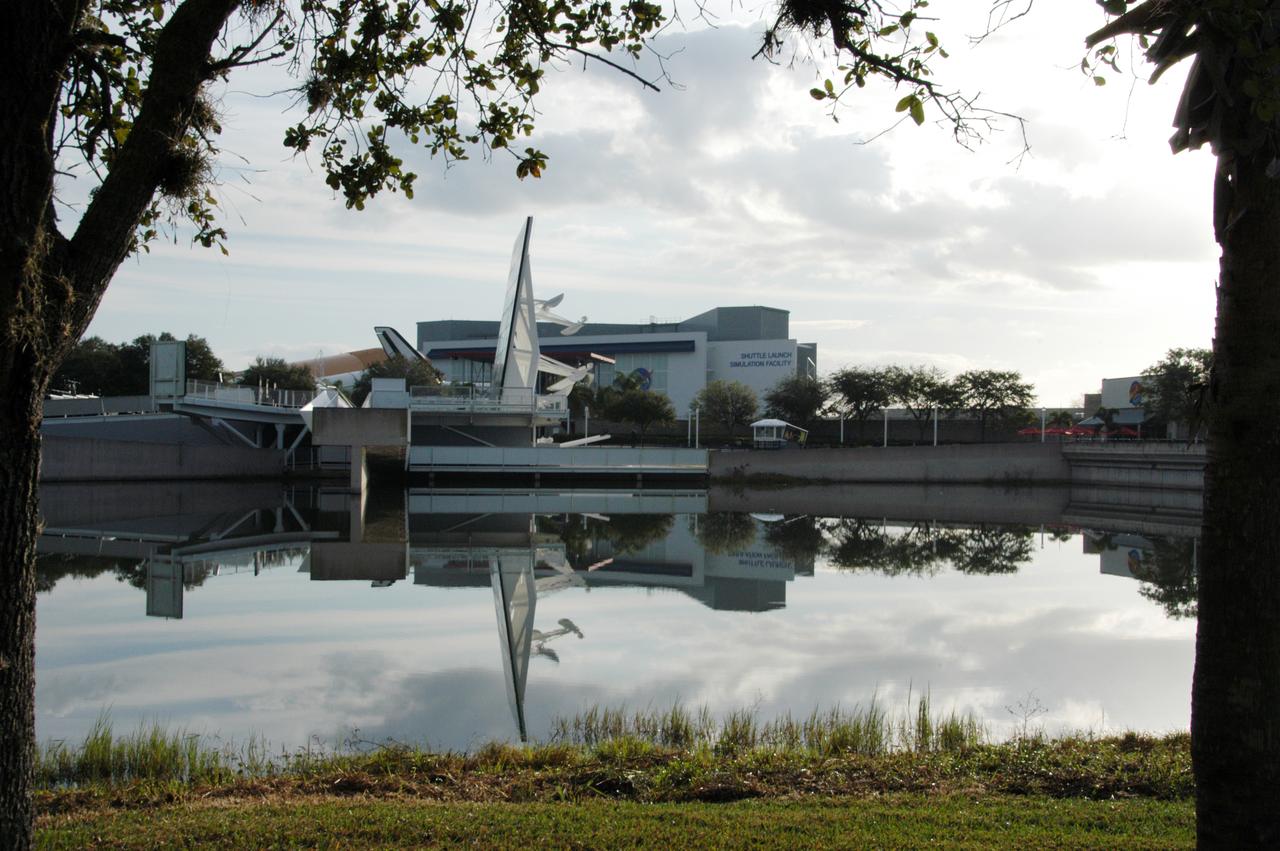
The Space Mirror Memorial, seen in profile, is reflected in the nearby lake at the KSC Visitor Complex. The memorial is the scene of a ceremony being held in remembrance of the astronauts lost in the Apollo 1 fire: Virgil "Gus" Grissom, Edward H. White II and Roger B. Chaffee. The mirror was designated as a national memorial by Congress and President George Bush in 1991 to honor fallen astronauts. Their names are emblazoned on the monument's 42-1/2-foot-high by 50-foot-wide black granite surface as if to be projected into the heavens.
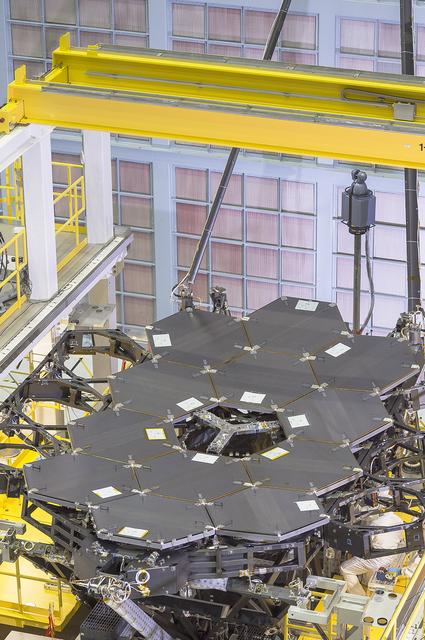
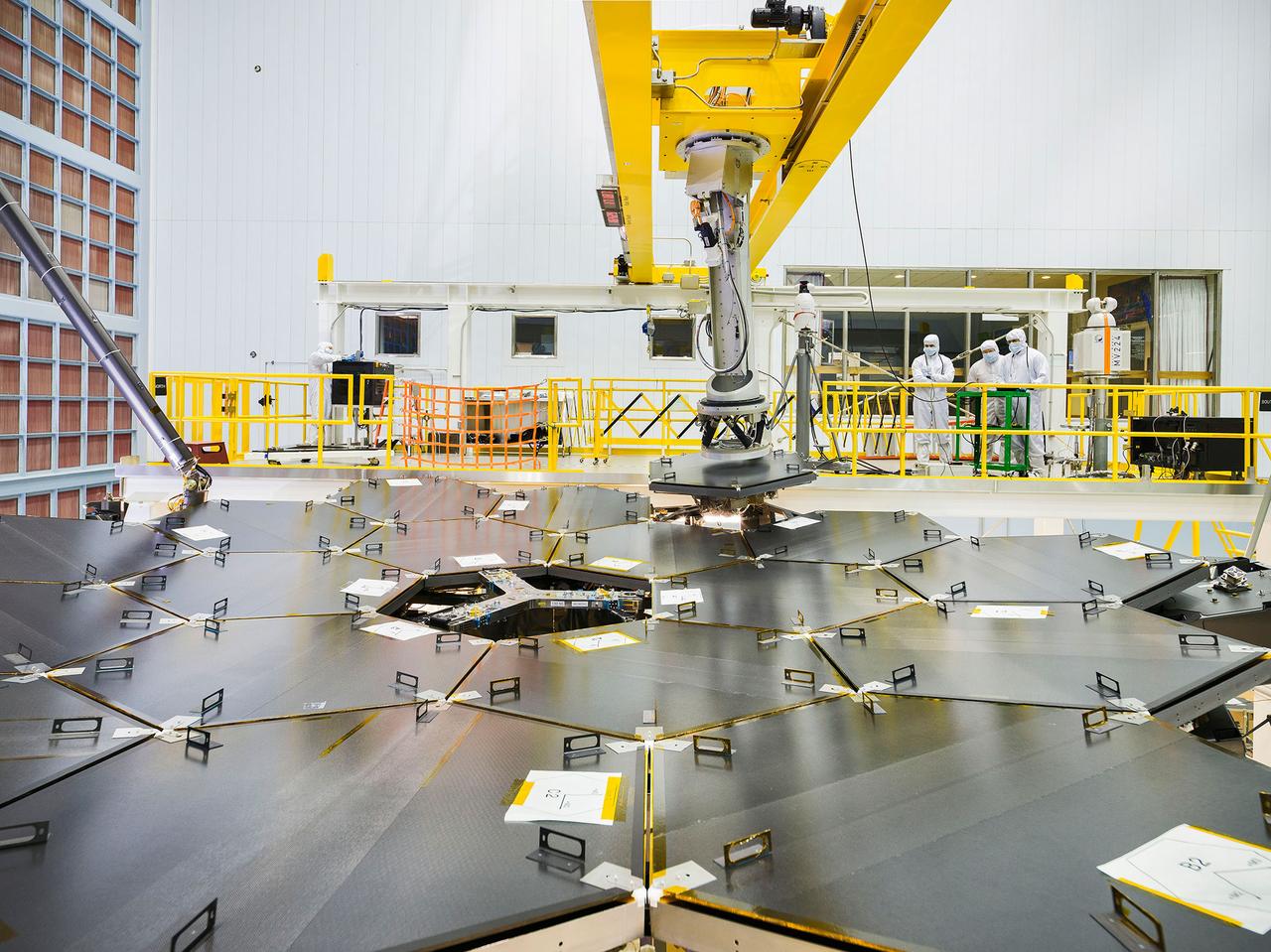
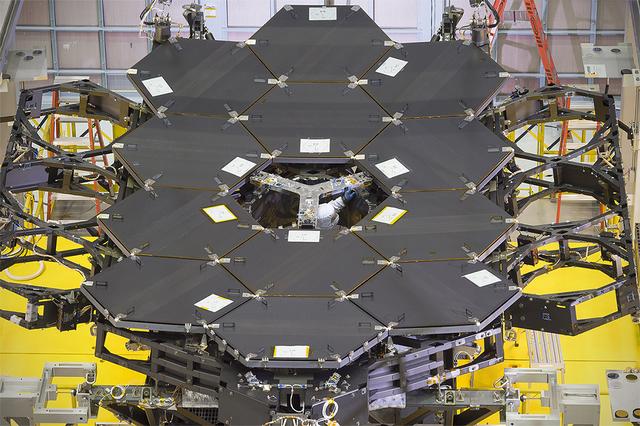
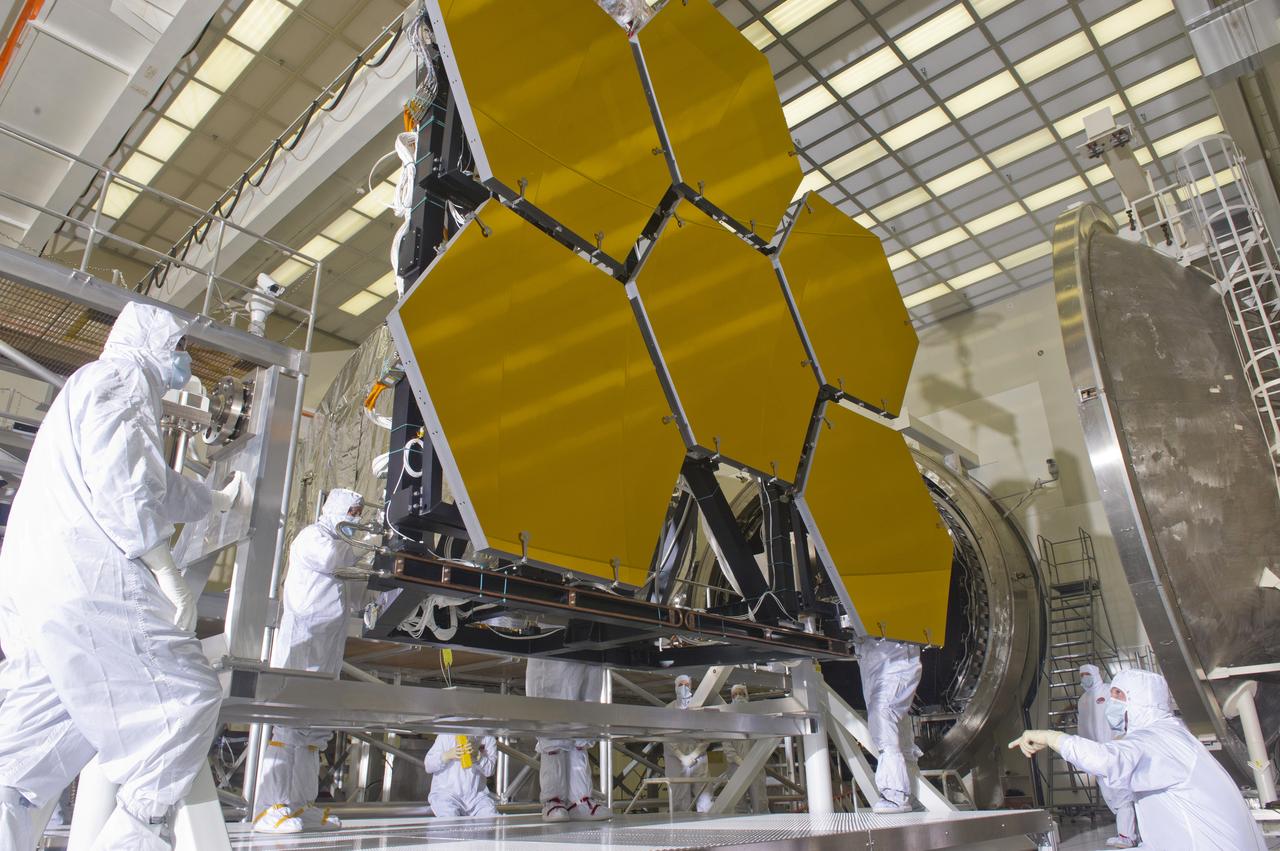
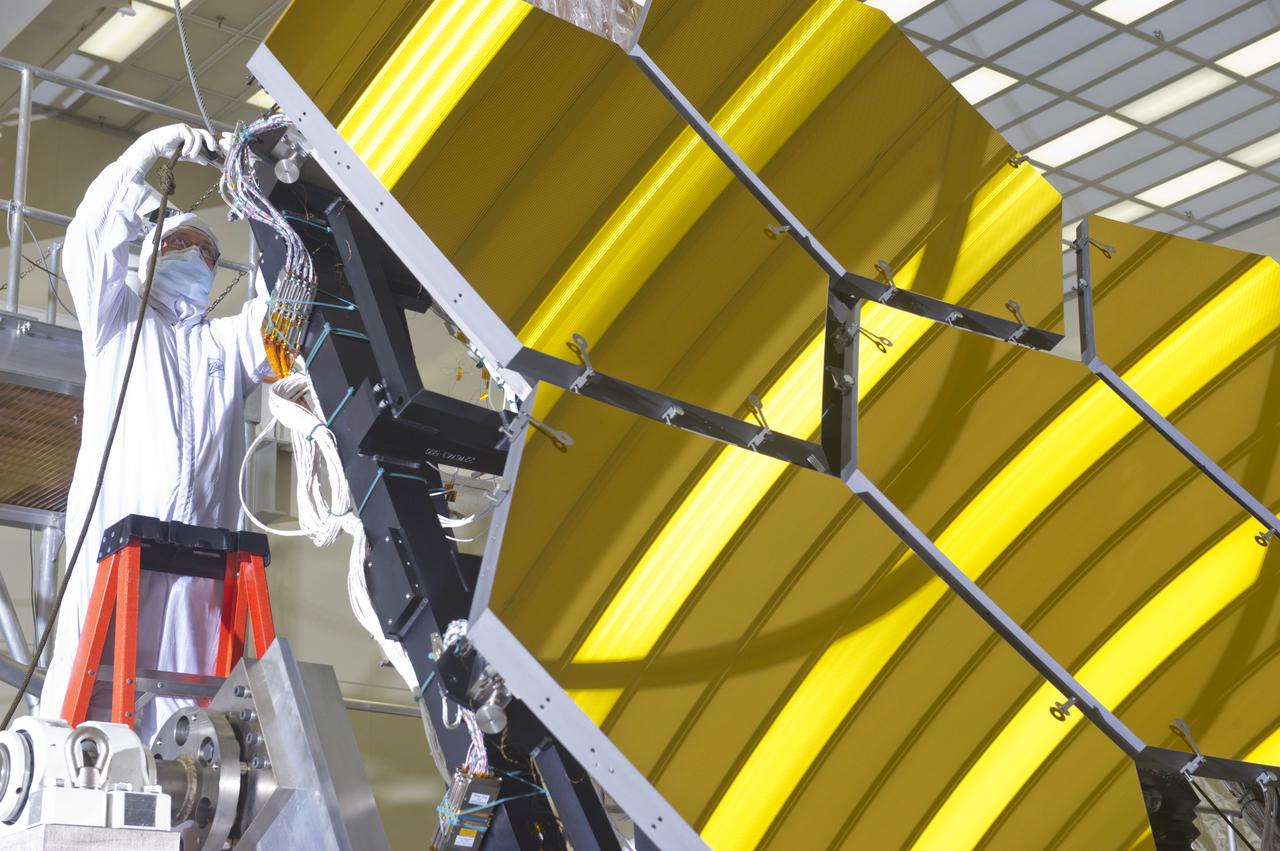
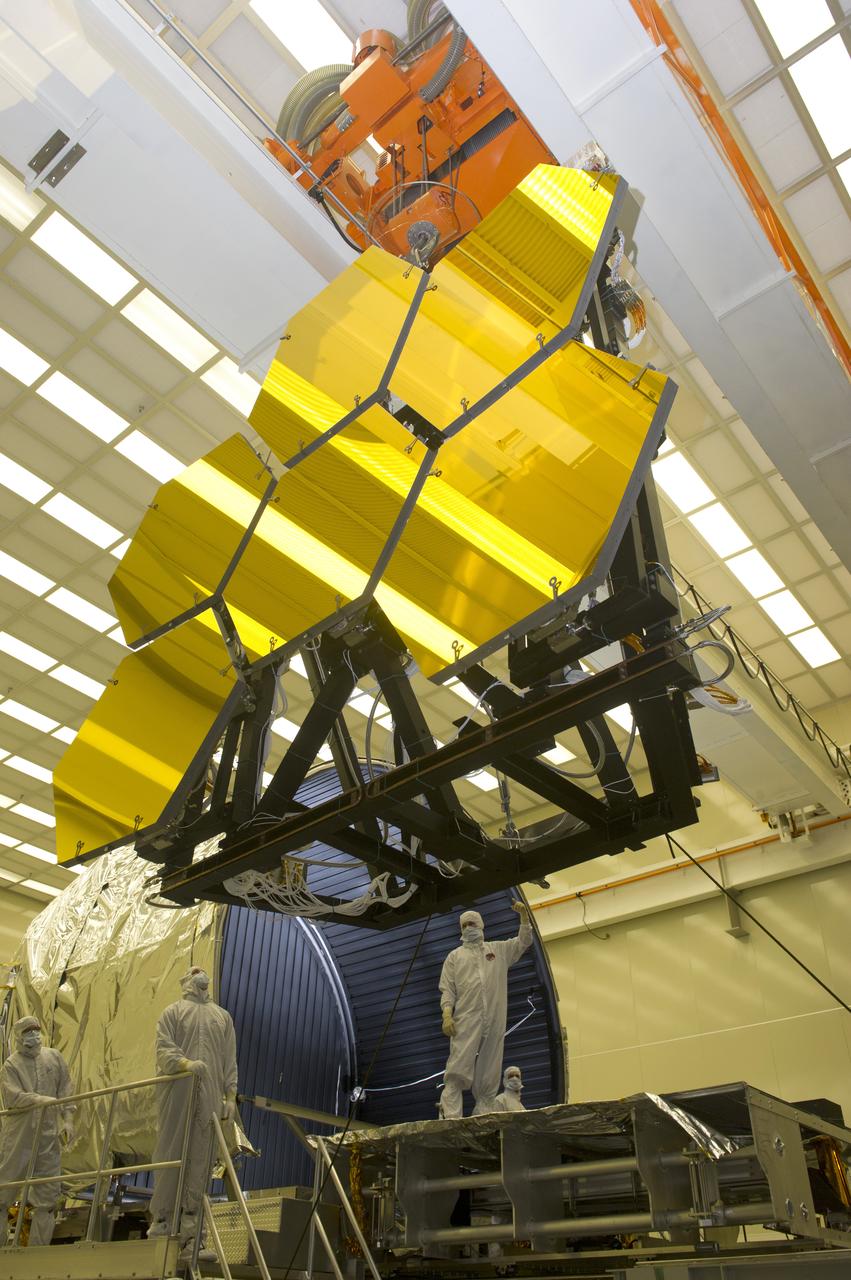
A view of the one dozen (out of 18) flight mirror segments that make up the primary mirror on NASA's James Webb Space Telescope have been installed at NASA's Goddard Space Flight Center. Credits: NASA/Chris Gunn More: Since December 2015, the team of scientists and engineers have been working tirelessly to install all the primary mirror segments onto the telescope structure in the large clean room at NASA's Goddard Space Flight Center in Greenbelt, Maryland. The twelfth mirror was installed on January 2, 2016. "This milestone signifies that all of the hexagonal shaped mirrors on the fixed central section of the telescope structure are installed and only the 3 mirrors on each wing are left for installation," said Lee Feinberg, NASA's Optical Telescope Element Manager at NASA Goddard. "The incredibly skilled and dedicated team assembling the telescope continues to find ways to do things faster and more efficiently." Each hexagonal-shaped segment measures just over 4.2 feet (1.3 meters) across and weighs approximately 88 pounds (40 kilograms). After being pieced together, the 18 primary mirror segments will work together as one large 21.3-foot (6.5-meter) mirror. The primary mirror will unfold and adjust to shape after launch. The mirrors are made of ultra-lightweight beryllium. The mirrors are placed on the telescope's backplane using a robotic arm, guided by engineers. The full installation is expected to be completed in a few months. The mirrors were built by Ball Aerospace & Technologies Corp., Boulder, Colorado. Ball is the principal subcontractor to Northrop Grumman for the optical technology and lightweight mirror system. The installation of the mirrors onto the telescope structure is performed by Harris Corporation of Rochester, New York. Harris Corporation leads integration and testing for the telescope. While the mirror assembly is a very significant milestone, there are many more steps involved in assembling the Webb telescope. The primary mirror and the tennis-court-sized sunshield are the largest and most visible components of the Webb telescope. However, there are four smaller components that are less visible, yet critical. The instruments that will fly aboard Webb - cameras and spectrographs with detectors able to record extremely faint signals — are part of the Integrated Science Instrument Module (ISIM), which is currently undergoing its final cryogenic vacuum test and will be integrated with the mirror later this year.
James Webb Space Telescope Mirror Reveal
James Webb Space Telescope Mirror Reveal
The 18th and final primary mirror segment is installed on what will be the biggest and most powerful space telescope ever launched. The final mirror installation Wednesday at NASA’s Goddard Space Flight Center in Greenbelt, Maryland marks an important milestone in the assembly of the agency’s James Webb Space Telescope. “Scientists and engineers have been working tirelessly to install these incredible, nearly perfect mirrors that will focus light from previously hidden realms of planetary atmospheres, star forming regions and the very beginnings of the Universe,” said John Grunsfeld, associate administrator for NASA’s Science Mission Directorate in Washington. “With the mirrors finally complete, we are one step closer to the audacious observations that will unravel the mysteries of the Universe.” Using a robotic arm reminiscent of a claw machine, the team meticulously installed all of Webb's primary mirror segments onto the telescope structure. Each of the hexagonal-shaped mirror segments measures just over 4.2 feet (1.3 meters) across -- about the size of a coffee table -- and weighs approximately 88 pounds (40 kilograms). Once in space and fully deployed, the 18 primary mirror segments will work together as one large 21.3-foot diameter (6.5-meter) mirror. Credit: NASA/Goddard/Chris Gunn Credits: NASA/Chris Gunn
Caption: One dozen (out of 18) flight mirror segments that make up the primary mirror on NASA's James Webb Space Telescope have been installed at NASA's Goddard Space Flight Center. Credits: NASA/Chris Gunn More: Since December 2015, the team of scientists and engineers have been working tirelessly to install all the primary mirror segments onto the telescope structure in the large clean room at NASA's Goddard Space Flight Center in Greenbelt, Maryland. The twelfth mirror was installed on January 2, 2016. "This milestone signifies that all of the hexagonal shaped mirrors on the fixed central section of the telescope structure are installed and only the 3 mirrors on each wing are left for installation," said Lee Feinberg, NASA's Optical Telescope Element Manager at NASA Goddard. "The incredibly skilled and dedicated team assembling the telescope continues to find ways to do things faster and more efficiently." Each hexagonal-shaped segment measures just over 4.2 feet (1.3 meters) across and weighs approximately 88 pounds (40 kilograms). After being pieced together, the 18 primary mirror segments will work together as one large 21.3-foot (6.5-meter) mirror. The primary mirror will unfold and adjust to shape after launch. The mirrors are made of ultra-lightweight beryllium. The mirrors are placed on the telescope's backplane using a robotic arm, guided by engineers. The full installation is expected to be completed in a few months. The mirrors were built by Ball Aerospace & Technologies Corp., Boulder, Colorado. Ball is the principal subcontractor to Northrop Grumman for the optical technology and lightweight mirror system. The installation of the mirrors onto the telescope structure is performed by Harris Corporation of Rochester, New York. Harris Corporation leads integration and testing for the telescope. While the mirror assembly is a very significant milestone, there are many more steps involved in assembling the Webb telescope. The primary mirror and the tennis-court-sized sunshield are the largest and most visible components of the Webb telescope. However, there are four smaller components that are less visible, yet critical. The instruments that will fly aboard Webb - cameras and spectrographs with detectors able to record extremely faint signals — are part of the Integrated Science Instrument Module (ISIM), which is currently undergoing its final cryogenic vacuum test and will be integrated with the mirror later this year. Read more: <a href="http://www.nasa.gov/feature/goddard/2016/by-the-dozen-nasas-james-webb-space-telescope-mirrors" rel="nofollow">www.nasa.gov/feature/goddard/2016/by-the-dozen-nasas-jame...</a> <b><a href="http://www.nasa.gov/audience/formedia/features/MP_Photo_Guidelines.html" rel="nofollow">NASA image use policy.</a></b> <b><a href="http://www.nasa.gov/centers/goddard/home/index.html" rel="nofollow">NASA Goddard Space Flight Center</a></b> enables NASA’s mission through four scientific endeavors: Earth Science, Heliophysics, Solar System Exploration, and Astrophysics. Goddard plays a leading role in NASA’s accomplishments by contributing compelling scientific knowledge to advance the Agency’s mission. <b>Follow us on <a href="http://twitter.com/NASAGoddardPix" rel="nofollow">Twitter</a></b> <b>Like us on <a href="http://www.facebook.com/pages/Greenbelt-MD/NASA-Goddard/395013845897?ref=tsd" rel="nofollow">Facebook</a></b> <b>Find us on <a href="http://instagrid.me/nasagoddard/?vm=grid" rel="nofollow">Instagram</a></b>
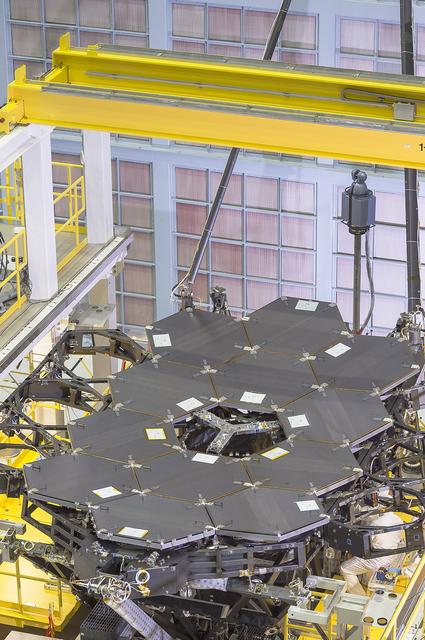
A view of the one dozen (out of 18) flight mirror segments that make up the primary mirror on NASA's James Webb Space Telescope have been installed at NASA's Goddard Space Flight Center. Credits: NASA/Chris Gunn More: Since December 2015, the team of scientists and engineers have been working tirelessly to install all the primary mirror segments onto the telescope structure in the large clean room at NASA's Goddard Space Flight Center in Greenbelt, Maryland. The twelfth mirror was installed on January 2, 2016. "This milestone signifies that all of the hexagonal shaped mirrors on the fixed central section of the telescope structure are installed and only the 3 mirrors on each wing are left for installation," said Lee Feinberg, NASA's Optical Telescope Element Manager at NASA Goddard. "The incredibly skilled and dedicated team assembling the telescope continues to find ways to do things faster and more efficiently." Each hexagonal-shaped segment measures just over 4.2 feet (1.3 meters) across and weighs approximately 88 pounds (40 kilograms). After being pieced together, the 18 primary mirror segments will work together as one large 21.3-foot (6.5-meter) mirror. The primary mirror will unfold and adjust to shape after launch. The mirrors are made of ultra-lightweight beryllium. The mirrors are placed on the telescope's backplane using a robotic arm, guided by engineers. The full installation is expected to be completed in a few months. The mirrors were built by Ball Aerospace & Technologies Corp., Boulder, Colorado. Ball is the principal subcontractor to Northrop Grumman for the optical technology and lightweight mirror system. The installation of the mirrors onto the telescope structure is performed by Harris Corporation of Rochester, New York. Harris Corporation leads integration and testing for the telescope. While the mirror assembly is a very significant milestone, there are many more steps involved in assembling the Webb telescope. The primary mirror and the tennis-court-sized sunshield are the largest and most visible components of the Webb telescope. However, there are four smaller components that are less visible, yet critical. The instruments that will fly aboard Webb - cameras and spectrographs with detectors able to record extremely faint signals — are part of the Integrated Science Instrument Module (ISIM), which is currently undergoing its final cryogenic vacuum test and will be integrated with the mirror later this year. Read more: <a href="http://www.nasa.gov/feature/goddard/2016/by-the-dozen-nasas-james-webb-space-telescope-mirrors" rel="nofollow">www.nasa.gov/feature/goddard/2016/by-the-dozen-nasas-jame...</a> <b><a href="http://www.nasa.gov/audience/formedia/features/MP_Photo_Guidelines.html" rel="nofollow">NASA image use policy.</a></b> <b><a href="http://www.nasa.gov/centers/goddard/home/index.html" rel="nofollow">NASA Goddard Space Flight Center</a></b> enables NASA’s mission through four scientific endeavors: Earth Science, Heliophysics, Solar System Exploration, and Astrophysics. Goddard plays a leading role in NASA’s accomplishments by contributing compelling scientific knowledge to advance the Agency’s mission. <b>Follow us on <a href="http://twitter.com/NASAGoddardPix" rel="nofollow">Twitter</a></b> <b>Like us on <a href="http://www.facebook.com/pages/Greenbelt-MD/NASA-Goddard/395013845897?ref=tsd" rel="nofollow">Facebook</a></b> <b>Find us on <a href="http://instagrid.me/nasagoddard/?vm=grid" rel="nofollow">Instagram</a></b>
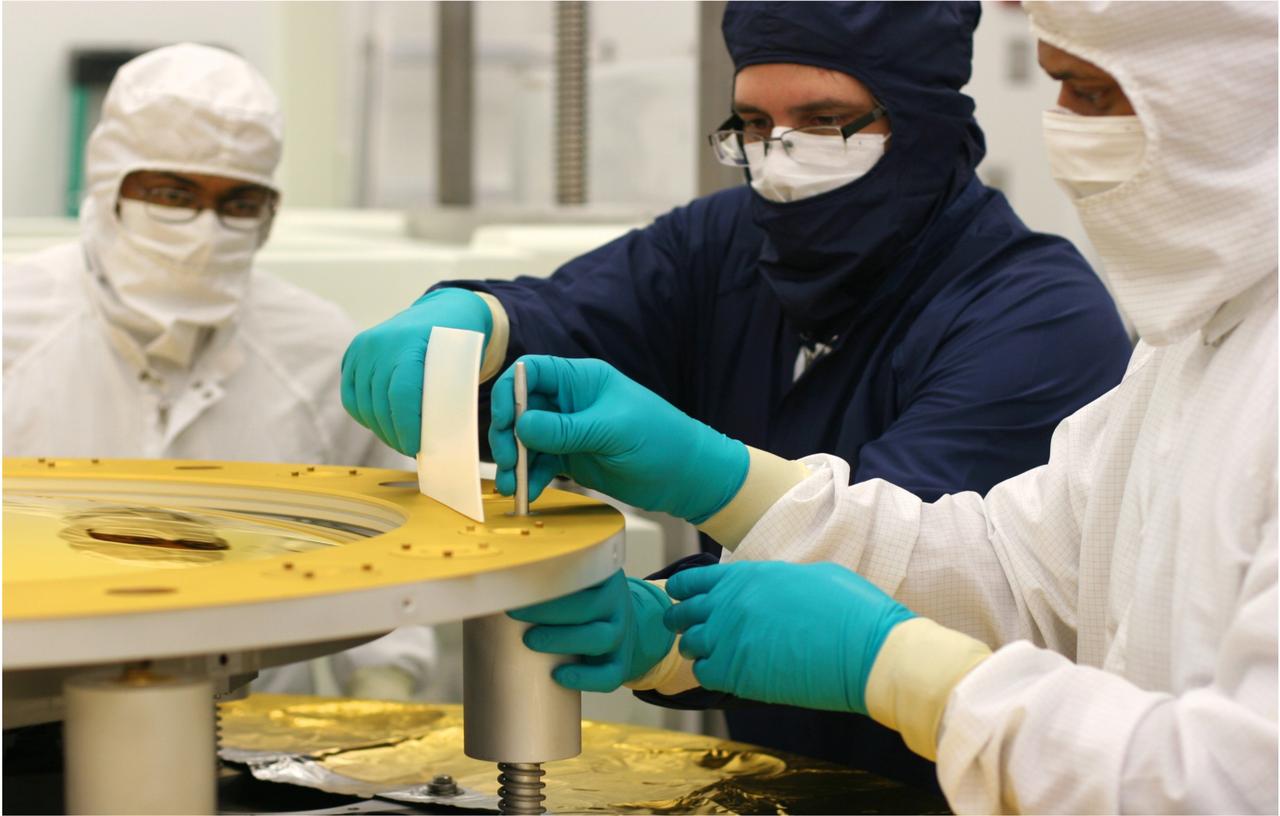
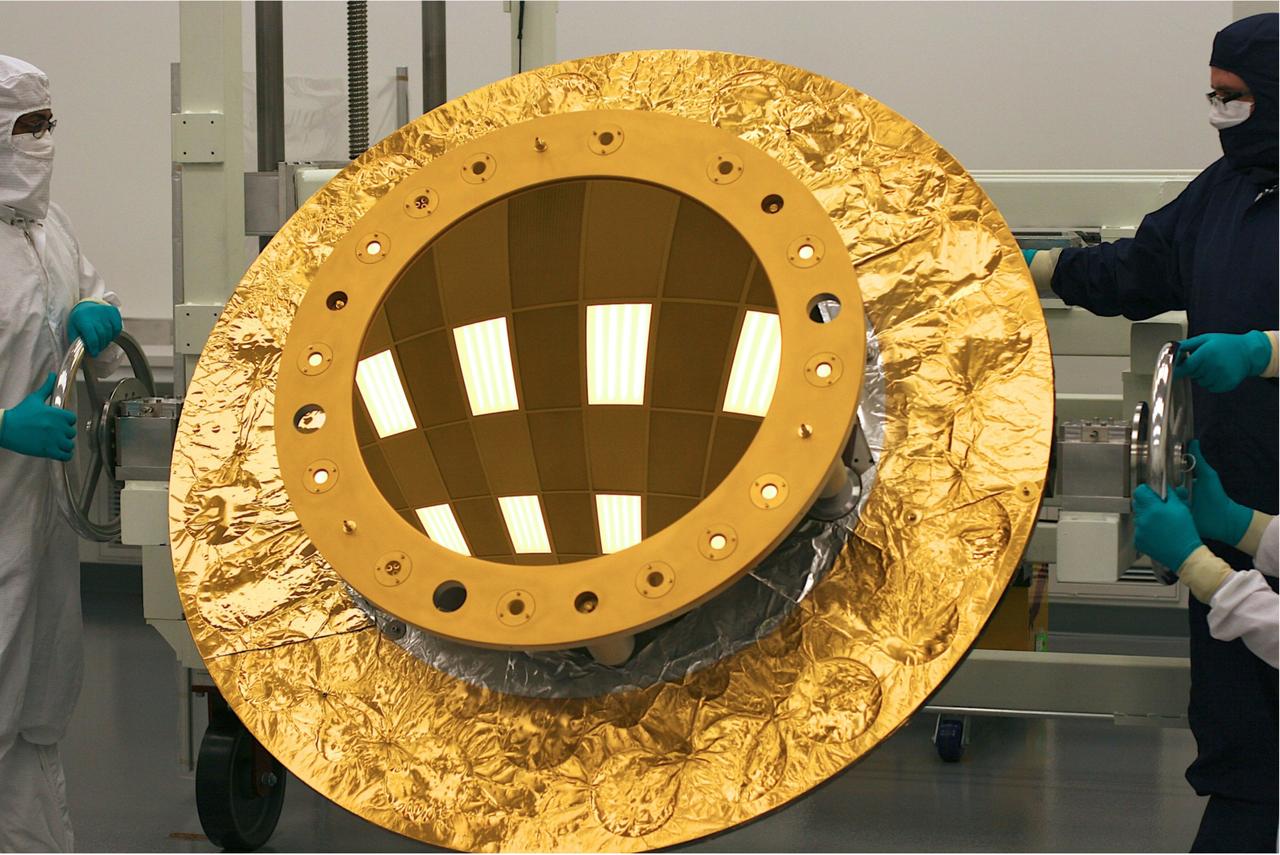
NASA image release December 9, 2010 Caption: The James Webb Space Telescope's Engineering Design Unit (EDU) primary mirror segment, coated with gold by Quantum Coating Incorporated. The actuator is located behind the mirror. Credit: Photo by Drew Noel NASA's James Webb Space Telescope is a wonder of modern engineering. As the planned successor to the Hubble Space telescope, even the smallest of parts on this giant observatory will play a critical role in its performance. A new video takes viewers behind the Webb's mirrors to investigate "actuators," one component that will help Webb focus on some of the earliest objects in the universe. The video called "Got Your Back" is part of an on-going video series about the Webb telescope called "Behind the Webb." It was produced at the Space Telescope Science Institute (STScI) in Baltimore, Md. and takes viewers behind the scenes with scientists and engineers who are creating the Webb telescope's components. During the 3 minute and 12 second video, STScI host Mary Estacion interviewed people involved in the project at Ball Aerospace in Boulder, Colo. and showed the actuators in action. The Webb telescope will study every phase in the history of our universe, ranging from the first luminous glows after the big bang, to the formation of solar systems capable of supporting life on planets like Earth, to the evolution of our own solar system. Measuring the light this distant light requires a primary mirror 6.5 meters (21 feet 4 inches) across – six times larger than the Hubble Space telescope’s mirror! Launching a mirror this large into space isn’t feasible. Instead, Webb engineers and scientists innovated a unique solution – building 18 mirrors that will act in unison as one large mirror. These mirrors are packaged together into three sections that fold up - much easier to fit inside a rocket. Each mirror is made from beryllium and weighs approximately 20 kilograms (46 pounds). Once in space, getting these mirrors to focus correctly on faraway galaxies is another challenge entirely. Actuators, or tiny mechanical motors, provide the answer to achieving a single perfect focus. The primary and secondary mirror segments are both moved by six actuators that are attached to the back of the mirrors. The primary segment has an additional actuator at the center of the mirror that adjusts its curvature. The third mirror segment remains stationary. Lee Feinberg, Webb Optical Telescope Element Manager at NASA's Goddard Space Flight Center in Greenbelt, Md. explained "Aligning the primary mirror segments as though they are a single large mirror means each mirror is aligned to 1/10,000th the thickness of a human hair. This alignment has to be done at 50 degrees above absolute zero! What's even more amazing is that the engineers and scientists working on the Webb telescope literally had to invent how to do this." With the actuators in place, Brad Shogrin, Webb Telescope Manager at Ball Aerospace, Boulder, Colo, details the next step: attaching the hexapod (meaning six-footed) assembly and radius of curvature subsystem (ROC). "Radius of curvature" refers to the distance to the center point of the curvature of the mirror. Feinberg added "To understand the concept in a more basic sense, if you change that radius of curvature, you change the mirror's focus." The "Behind the Webb" video series is available in HQ, large and small Quicktime formats, HD, Large and Small WMV formats, and HD, Large and Small Xvid formats. To see the actuators being attached to the back of a telescope mirror in this new "Behind the Webb" video, visit: <a href="http://webbtelescope.org/webb_telescope/behind_the_webb/7" rel="nofollow">webbtelescope.org/webb_telescope/behind_the_webb/7</a> For more information about Webb's mirrors, visit: <a href="http://www.jwst.nasa.gov/mirrors.html" rel="nofollow">www.jwst.nasa.gov/mirrors.html</a> For more information on the James Webb Space Telescope, visit: <a href="http://jwst.nasa.gov" rel="nofollow">jwst.nasa.gov</a> Rob Gutro NASA's Goddard Space Flight Center, Greenbelt, Md. <b><a href="http://www.nasa.gov/centers/goddard/home/index.html" rel="nofollow">NASA Goddard Space Flight Center</a></b> enables NASA’s mission through four scientific endeavors: Earth Science, Heliophysics, Solar System Exploration, and Astrophysics. Goddard plays a leading role in NASA’s accomplishments by contributing compelling scientific knowledge to advance the Agency’s mission. <b>Follow us on <a href="http://twitter.com/NASA_GoddardPix" rel="nofollow">Twitter</a></b> <b>Join us on <a href="http://www.facebook.com/pages/Greenbelt-MD/NASA-Goddard/395013845897?ref=tsd" rel="nofollow">Facebook</a></b>
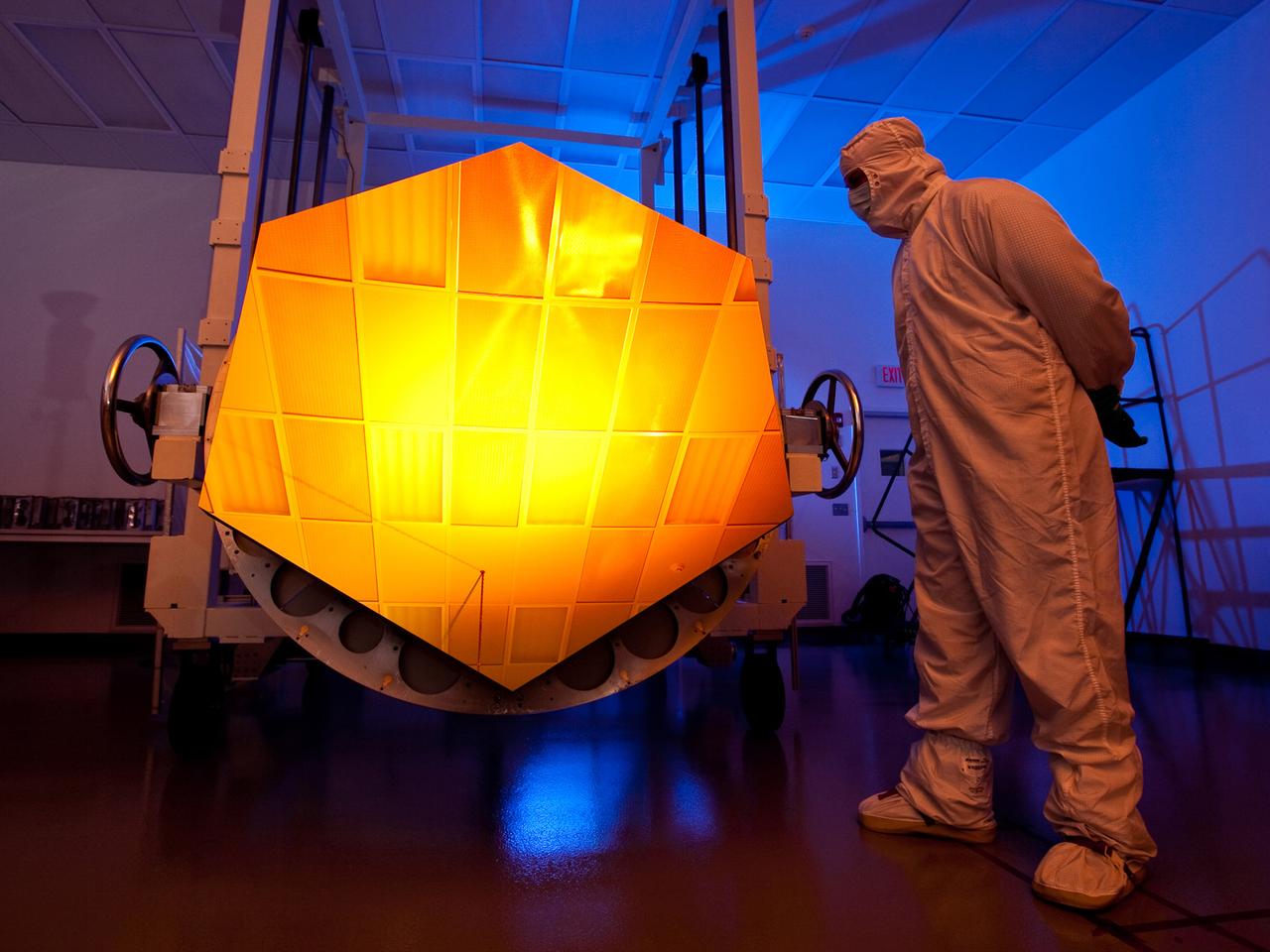
NASA release July 19, 2011 <b>Click here to learn about the <a href="http://www.jwst.nasa.gov/" rel="nofollow"> James Webb Space Telescope</a></b> The secondary mirror (shown here) was polished at the L3 Integrated Optical Systems - Tinsley in Richmond, Calif. to accuracies of less than one millionth of an inch. That accuracy is important for forming the sharpest images when the mirrors cool to -400°F (-240°C) in the cold of space. The Webb's secondary mirror was recently completed, following polishing and gold-coating. "Secondary" may not sound as important as "primary" but when it comes to the next-generation James Webb Space Telescope a secondary mirror plays a critical role in ensuring the telescope gathers information from the cosmos. The Webb's secondary mirror was recently completed, following polishing and gold-coating. There are four different types of mirrors that will fly on the James Webb Space Telescope, and all are made of a light metal called beryllium. It is very strong for its weight and holds its shape across a range of temperatures. There are primary mirror segments (18 total that combined make the large primary mirror providing a collecting area of 25 meters squared/269.1 square feet), the secondary mirror, tertiary mirror and the fine steering mirror. Unlike the primary mirror, which is molded into the shape of a hexagon, the secondary mirror is perfectly rounded. The mirror is also convex, so the reflective surface bulges toward a light source. It looks much like a curved mirror that you'll see on the wall near the exit of a parking garage that lets motorists see around a corner. This mirror is coated with a microscopic layer of gold to enable it to efficiently reflect infrared light (which is what the Webb telescope's cameras see). The quality of the secondary mirror surface is so good that the final convex surface at cold temperatures does not deviate from the design by more than a few millionths of a millimeter - or about one ten thousandth the diameter of a human hair. "As the only convex mirror on the Webb telescope, the secondary mirror has always been recognized to be the hardest of all of the mirrors to polish and test, so we are delighted that its performance meets all specifications," said Lee Feinberg, Webb Optical Telescope manager at NASA's Goddard Space Flight Center in Greenbelt, Md. Convex mirrors are particularly hard to test because light that strikes them diverges away from the mirror. Feinberg noted, "The Webb telescope convex secondary mirror is approximately the size of the Spitzer Space Telescope's primary mirror and is by far the largest convex cryogenic mirror ever built for a NASA program." It was data from the Spitzer's mirrors that helped make the decision to use beryllium for the Webb telescope mirrors. Spitzer's mirrors were also made of beryllium. So why is this mirror so critical? Because the secondary mirror captures light from the 18 primary mirror segments and relays those distant images of the cosmos to the telescope's science cameras. The secondary mirror is mounted on folding "arms" that position it in front of the 18 primary mirror segments. The secondary mirror will soon come to NASA's Goddard Space Flight Center in Greenbelt, Md. where it will be installed on the telescope structure. Then, as a complete unit, the telescope structure and mirrors will undergo acoustic and vibration testing. The secondary mirror was developed at Ball Aerospace & Technology Corp. of Boulder, Colo. and the mirror recently completed polishing at the L3–IOS-Tinsley facility in Richmond, Calif. Northrop Grumman space Systems is the prime contractor on the Webb telescope program. The James Webb Space Telescope is the world’s next-generation space observatory and successor to the Hubble Space Telescope. The most powerful space telescope ever built, Webb will observe the most distant objects in the universe, provide images of the very first galaxies ever formed and see unexplored planets around distant stars. The Webb Telescope is a joint project of NASA, the European Space Agency and the Canadian Space Agency. Credit:NASA/Ball Aerospace/Tinsley <b><a href="http://www.nasa.gov/centers/goddard/home/index.html" rel="nofollow">NASA Goddard Space Flight Center</a></b> enables NASA’s mission through four scientific endeavors: Earth Science, Heliophysics, Solar System Exploration, and Astrophysics. Goddard plays a leading role in NASA’s accomplishments by contributing compelling scientific knowledge to advance the Agency’s mission. <b>Follow us on <a href="http://twitter.com/NASA_GoddardPix" rel="nofollow">Twitter</a></b> <b>Like us on <a href="http://www.facebook.com/pages/Greenbelt-MD/NASA-Goddard/395013845897?ref=tsd" rel="nofollow">Facebook</a></b> <b>Find us on <a href="http://web.stagram.com/n/nasagoddard/?vm=grid" rel="nofollow">Instagram</a></b>
NASA release July 19, 2011 <b>Click here to learn about the <a href="http://www.jwst.nasa.gov/" rel="nofollow"> James Webb Space Telescope</a></b> The secondary mirror (shown here) was polished at the L3 Integrated Optical Systems - Tinsley in Richmond, Calif. to accuracies of less than one millionth of an inch. That accuracy is important for forming the sharpest images when the mirrors cool to -400°F (-240°C) in the cold of space. The Webb's secondary mirror was recently completed, following polishing and gold-coating. "Secondary" may not sound as important as "primary" but when it comes to the next-generation James Webb Space Telescope a secondary mirror plays a critical role in ensuring the telescope gathers information from the cosmos. The Webb's secondary mirror was recently completed, following polishing and gold-coating. There are four different types of mirrors that will fly on the James Webb Space Telescope, and all are made of a light metal called beryllium. It is very strong for its weight and holds its shape across a range of temperatures. There are primary mirror segments (18 total that combined make the large primary mirror providing a collecting area of 25 meters squared/269.1 square feet), the secondary mirror, tertiary mirror and the fine steering mirror. Unlike the primary mirror, which is molded into the shape of a hexagon, the secondary mirror is perfectly rounded. The mirror is also convex, so the reflective surface bulges toward a light source. It looks much like a curved mirror that you'll see on the wall near the exit of a parking garage that lets motorists see around a corner. This mirror is coated with a microscopic layer of gold to enable it to efficiently reflect infrared light (which is what the Webb telescope's cameras see). The quality of the secondary mirror surface is so good that the final convex surface at cold temperatures does not deviate from the design by more than a few millionths of a millimeter - or about one ten thousandth the diameter of a human hair. "As the only convex mirror on the Webb telescope, the secondary mirror has always been recognized to be the hardest of all of the mirrors to polish and test, so we are delighted that its performance meets all specifications," said Lee Feinberg, Webb Optical Telescope manager at NASA's Goddard Space Flight Center in Greenbelt, Md. Convex mirrors are particularly hard to test because light that strikes them diverges away from the mirror. Feinberg noted, "The Webb telescope convex secondary mirror is approximately the size of the Spitzer Space Telescope's primary mirror and is by far the largest convex cryogenic mirror ever built for a NASA program." It was data from the Spitzer's mirrors that helped make the decision to use beryllium for the Webb telescope mirrors. Spitzer's mirrors were also made of beryllium. So why is this mirror so critical? Because the secondary mirror captures light from the 18 primary mirror segments and relays those distant images of the cosmos to the telescope's science cameras. The secondary mirror is mounted on folding "arms" that position it in front of the 18 primary mirror segments. The secondary mirror will soon come to NASA's Goddard Space Flight Center in Greenbelt, Md. where it will be installed on the telescope structure. Then, as a complete unit, the telescope structure and mirrors will undergo acoustic and vibration testing. The secondary mirror was developed at Ball Aerospace & Technology Corp. of Boulder, Colo. and the mirror recently completed polishing at the L3–IOS-Tinsley facility in Richmond, Calif. Northrop Grumman space Systems is the prime contractor on the Webb telescope program. The James Webb Space Telescope is the world’s next-generation space observatory and successor to the Hubble Space Telescope. The most powerful space telescope ever built, Webb will observe the most distant objects in the universe, provide images of the very first galaxies ever formed and see unexplored planets around distant stars. The Webb Telescope is a joint project of NASA, the European Space Agency and the Canadian Space Agency. Credit:NASA/Ball Aerospace/Tinsley <b><a href="http://www.nasa.gov/centers/goddard/home/index.html" rel="nofollow">NASA Goddard Space Flight Center</a></b> enables NASA’s mission through four scientific endeavors: Earth Science, Heliophysics, Solar System Exploration, and Astrophysics. Goddard plays a leading role in NASA’s accomplishments by contributing compelling scientific knowledge to advance the Agency’s mission. <b>Follow us on <a href="http://twitter.com/NASA_GoddardPix" rel="nofollow">Twitter</a></b> <b>Like us on <a href="http://www.facebook.com/pages/Greenbelt-MD/NASA-Goddard/395013845897?ref=tsd" rel="nofollow">Facebook</a></b> <b>Find us on <a href="http://web.stagram.com/n/nasagoddard/?vm=grid" rel="nofollow">Instagram</a></b>
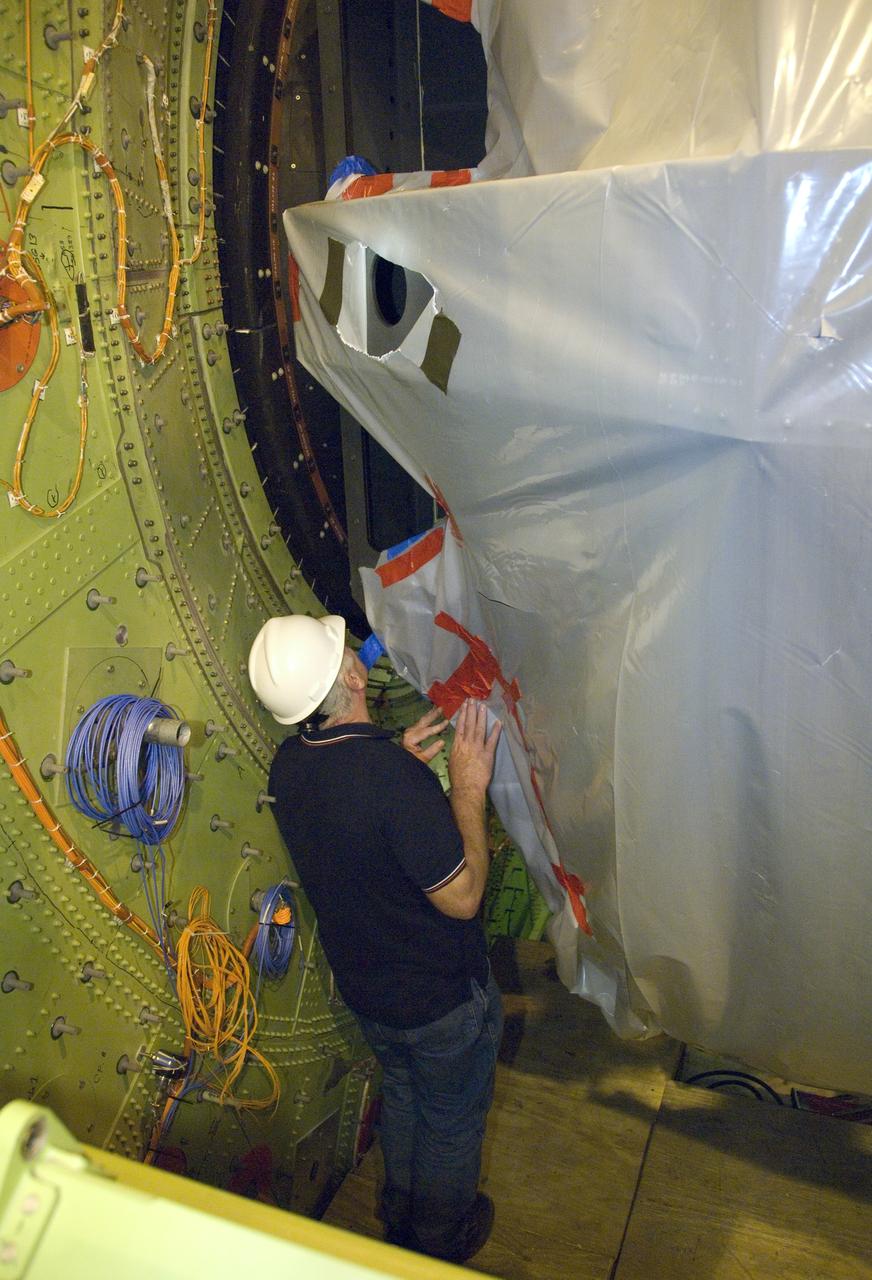
A technician guides SOFIA's primary mirror assembly into the aircraft's telescope cavity completing the mirror reinstallation following its initial coating.
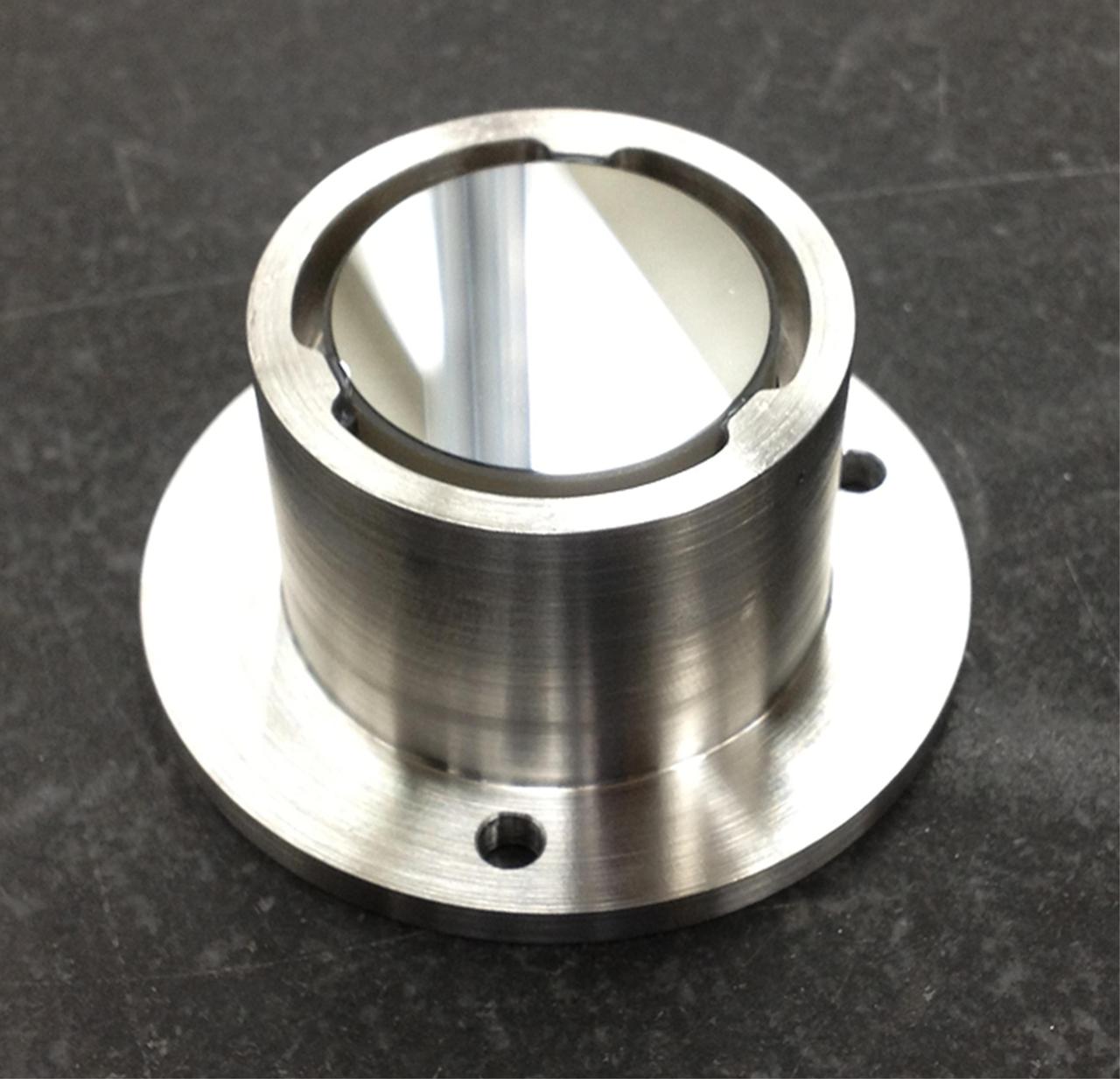
This is a prototype of a mirror mount that scientists made using a new 3-D printing technique at NASA Jet Propulsion Laboratory.
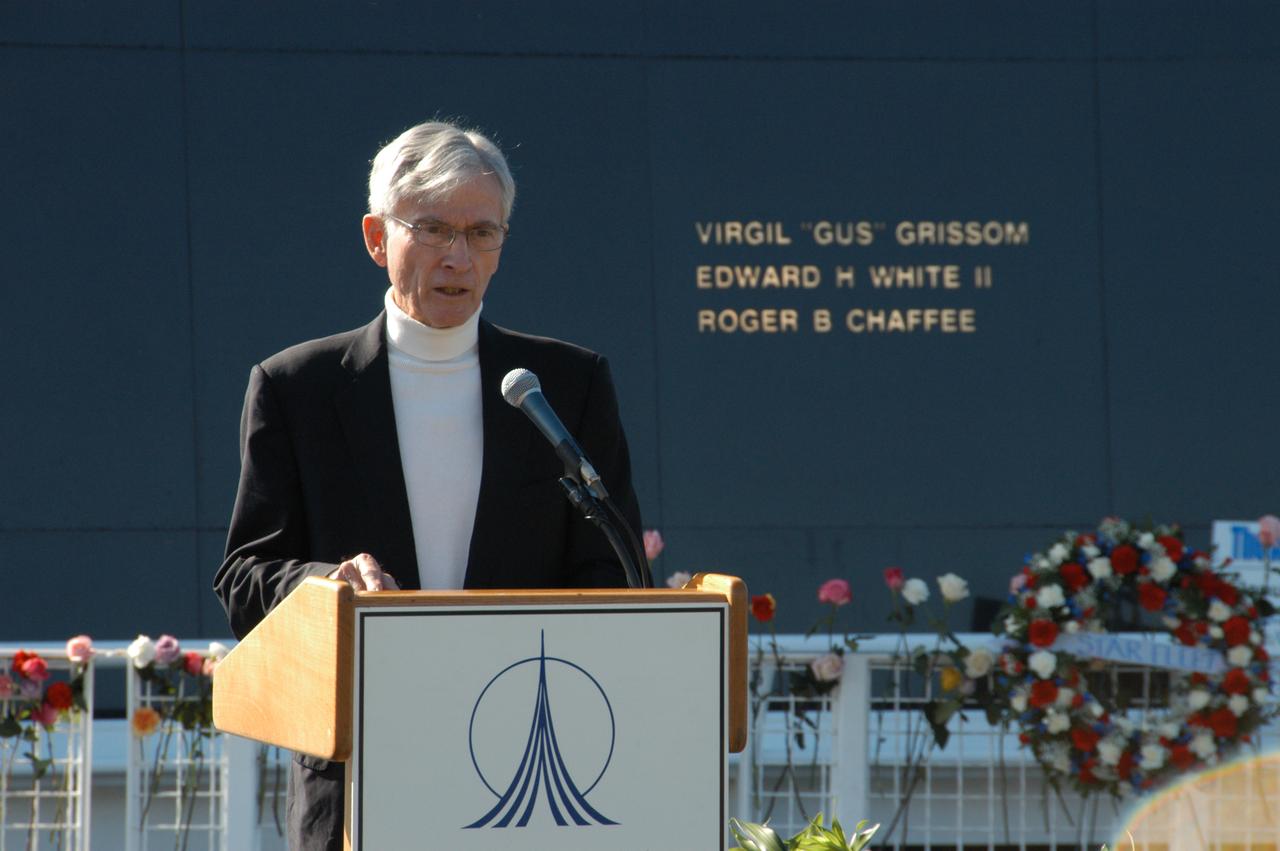
Former astronaut John Young addresses guests and attendees at a ceremony at the KSC Visitor Complex held in remembrance of the astronauts lost in the Apollo 1 fire: Virgil "Gus" Grissom, Edward H. White II and Roger B. Chaffee. Members of their families, along with Associate Administrator for Space Operations William Gerstenmaier, President of the Astronauts Memorial Foundation Stephen Feldman, Chairman of the Board of Directors of the Astronauts Memorial Foundation William Potter and former astronaut John Young, attended the ceremony. Behind the stage is the Space Mirror Memorial, designated as a national memorial by Congress and President George Bush in 1991 to honor fallen astronauts. Their names are emblazoned on the monument’s 42-1/2-foot-high by 50-foot-wide black granite surface as if to be projected into the heavens.
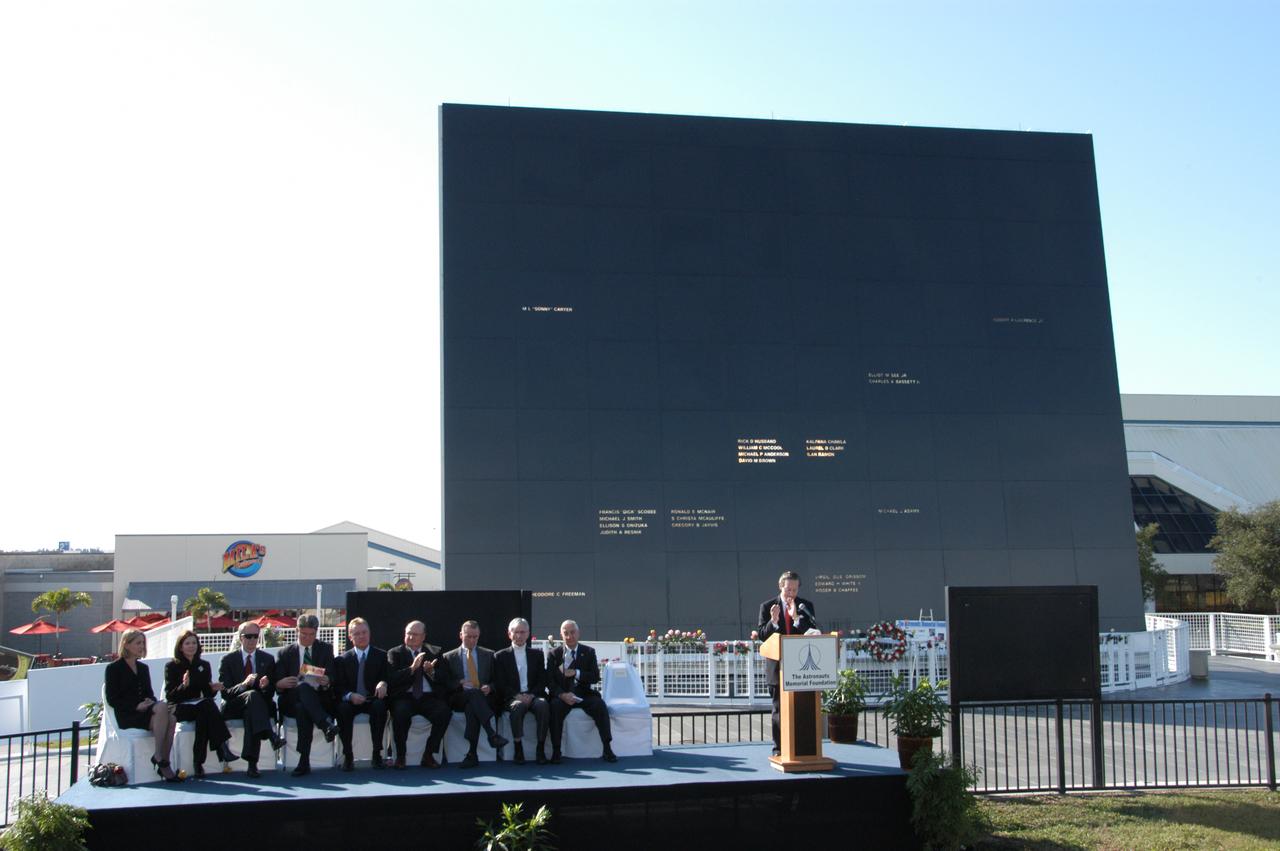
Guests are gathered on stage during a ceremony at the KSC Visitor Complex held in remembrance of the astronauts lost in the Apollo 1 fire: Virgil "Gus" Grissom, Edward H. White II and Roger B. Chaffee. Among those gathered on stage are (from left) Faith Johnson, daughter of Theodore Freeman and Martha Chaffee, daughter of Roger Chaffee, Associate Administrator for Space Operations William Gerstenmaier and KSC Director Bill Parsons, plus former astronaut John Young (second from right). Members of the astronauts' families were guests at the ceremony. At the podium is Stephen Feldman, president of the Astronauts Memorial Foundation. Behind the stage is the Space Mirror Memorial, designated as a national memorial by Congress and President George Bush in 1991 to honor fallen astronauts. Their names are emblazoned on the monument’s 42-1/2-foot-high by 50-foot-wide black granite surface as if to be projected into the heavens.
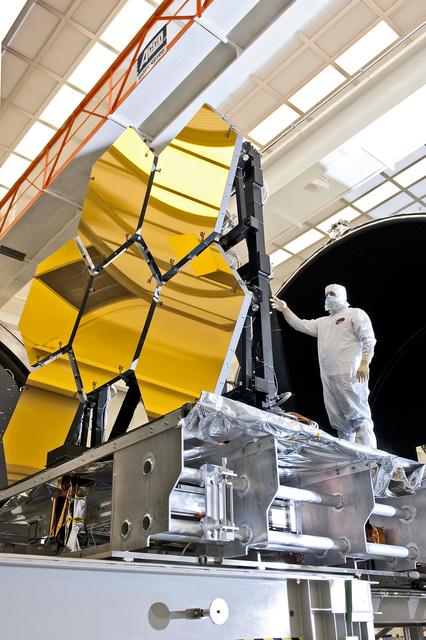
The first six flight ready James Webb Space Telescope's primary mirror segments are prepped to begin final cryogenic testing at NASA's Marshall Space Flight Center in Huntsville, Ala. To read more go to: <a href="http://www.nasa.gov/topics/technology/features/webb-mirror-coating.html" rel="nofollow">www.nasa.gov/topics/technology/features/webb-mirror-coati...</a> Credit: NASA/GSFC/Chris Gunn <b><a href="http://www.nasa.gov/centers/goddard/home/index.html" rel="nofollow">NASA Goddard Space Flight Center</a></b> enables NASA’s mission through four scientific endeavors: Earth Science, Heliophysics, Solar System Exploration, and Astrophysics. Goddard plays a leading role in NASA’s accomplishments by contributing compelling scientific knowledge to advance the Agency’s mission. <b>Follow us on <a href="http://twitter.com/NASA_GoddardPix" rel="nofollow">Twitter</a></b> <b>Like us on <a href="http://www.facebook.com/pages/Greenbelt-MD/NASA-Goddard/395013845897?ref=tsd" rel="nofollow">Facebook</a></b> <b>Find us on <a href="http://instagrid.me/nasagoddard/?vm=grid" rel="nofollow">Instagram</a></b>
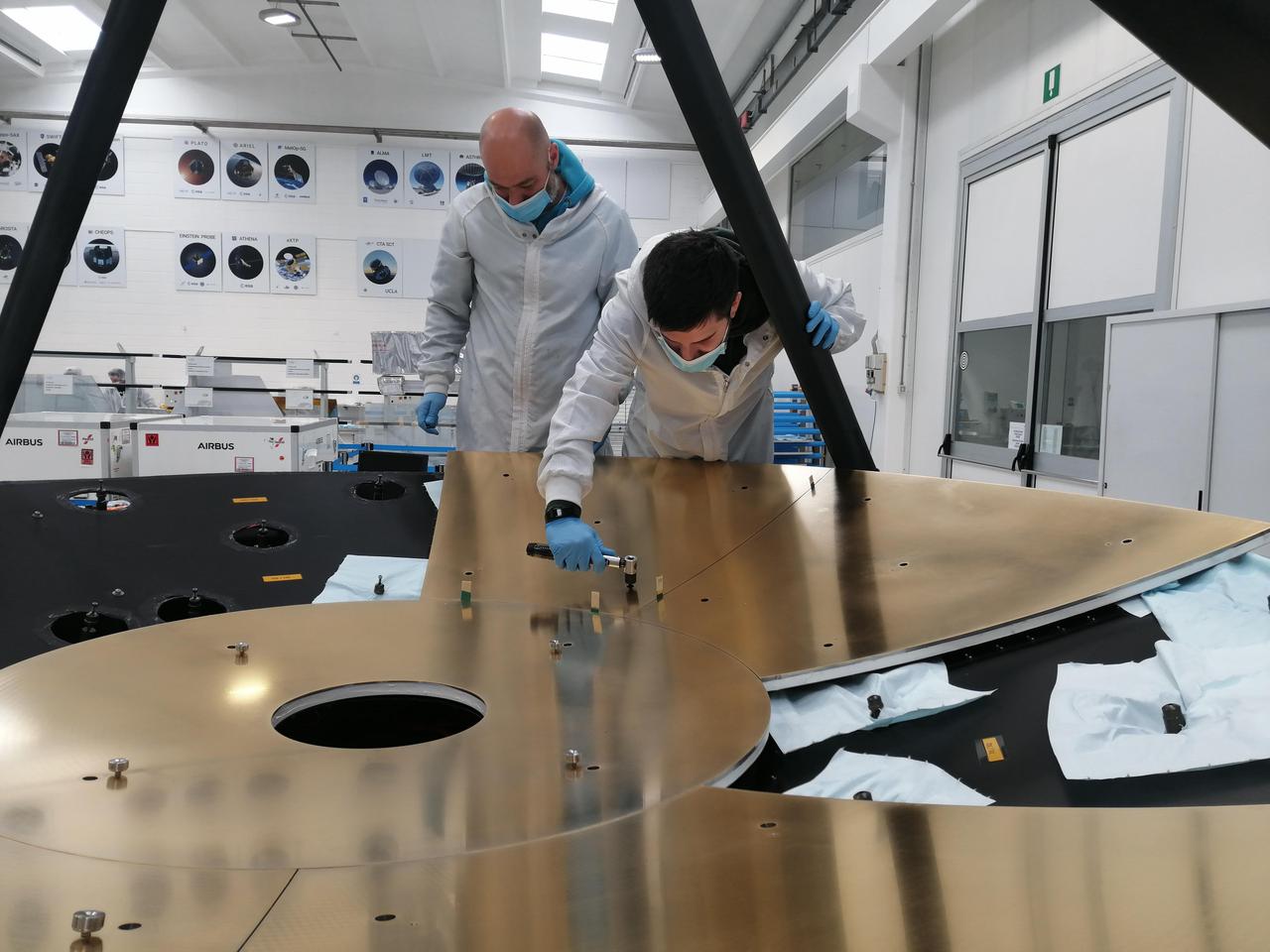
The mirror on NASA's Astrophysics Stratospheric Telescope for High Spectral Resolution Observations at Submillimeter-wavelengths mission, or ASTHROS, is composed of nine panels, coated in nickel and gold. Here, engineers attach panels to the mirror's support structure. The panels must be aligned to within 0.0001 inches (2.5 micrometers), or a fraction of the width of a human hair. Manufacturing multiple panels requires less time and expense than making the mirror as a single piece. NASA contracted Media Lario, an optics company in Bosisio Parini, Italy, to design and produce ASTHROS' full telescope unit, including the primary mirror, a secondary mirror, and supporting structure (called the cradle). The mirror is shown here at Media Lario. The mission's main science goal is to study stellar feedback, the process by which living stars disperse and reshape clouds of gas and dust that may eventually form new stars. Feedback regulates star formation in many galaxies, and too much can halt star formation entirely. ASTHROS will look at several star-forming regions in our galaxy where feedback takes place, and at distant galaxies containing millions of stars to see how feedback plays out at large scales and in different environments. https://photojournal.jpl.nasa.gov/catalog/PIA25167

A mirror set to be installed inside the telescope for NASA's Near-Earth Object Surveyor (NEO Surveyor) is seen during an inspection of the mirror's surface at NASA's Jet Propulsion Laboratory in Southern California on July 17, 2024. Being built in a JPL clean room, the infrared telescope is the spacecraft's only instrument and it will be used to seek out some of the hardest-to-find near-Earth objects that may pose a hazard to our planet. The reflection of principal optical engineer Brian Monacelli can be seen in the mirror. Known as a "three-mirror anastigmat telescope," the instrument will rely on a set of curved mirrors to focus light onto its infrared detectors in such a way that minimizes optical aberrations. Before being installed, the mirrors were examined for any debris or damage. Then, JPL's team of optomechanical technicians and engineers attached the mirrors to the telescope's "optical bench" in August. Next, they will measure the telescope's performance and align the telescope's mirrors. When complete, the telescope will be housed inside an instrument enclosure – being built at JPL in a different clean room – that is fabricated from dark composite material that allows heat to escape, helping to keep the telescope cool and prevent its own heat from obscuring observations. https://photojournal.jpl.nasa.gov/catalog/PIA26386
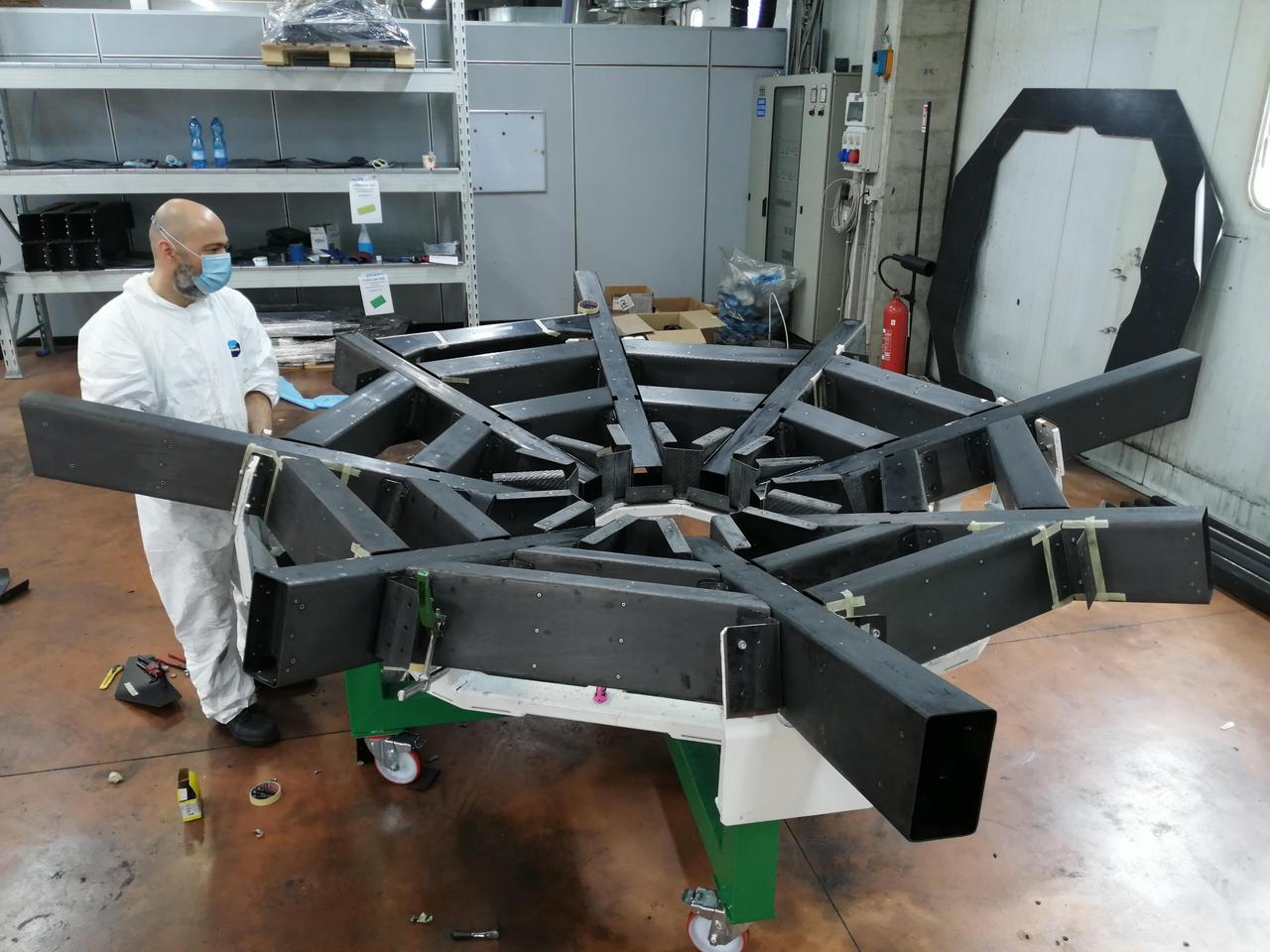
Known as the cradle, the structure that supports the primary mirror on NASA's Astrophysics Stratospheric Telescope for High Spectral Resolution Observations at Submillimeter-wavelengths mission, or ASTHROS, keeps the mirror panels aligned. Made from carbon fiber, it and must be both lightweight and extremely rigid. NASA contracted Media Lario, an optics company in Bosisio Parini, Italy, to design and produce ASTHROS' full telescope unit, including the primary mirror, a secondary mirror, and supporting structure (called the cradle). The cradle is shown here at Media Lario. The mission's main science goal is to study stellar feedback, the process by which living stars disperse and reshape clouds of gas and dust that may eventually form new stars. Feedback regulates star formation in many galaxies, and too much can halt star formation entirely. ASTHROS will look at several star-forming regions in our galaxy where feedback takes place, and at distant galaxies containing millions of stars to see how feedback plays out at large scales and in different environments. https://photojournal.jpl.nasa.gov/catalog/PIA25169
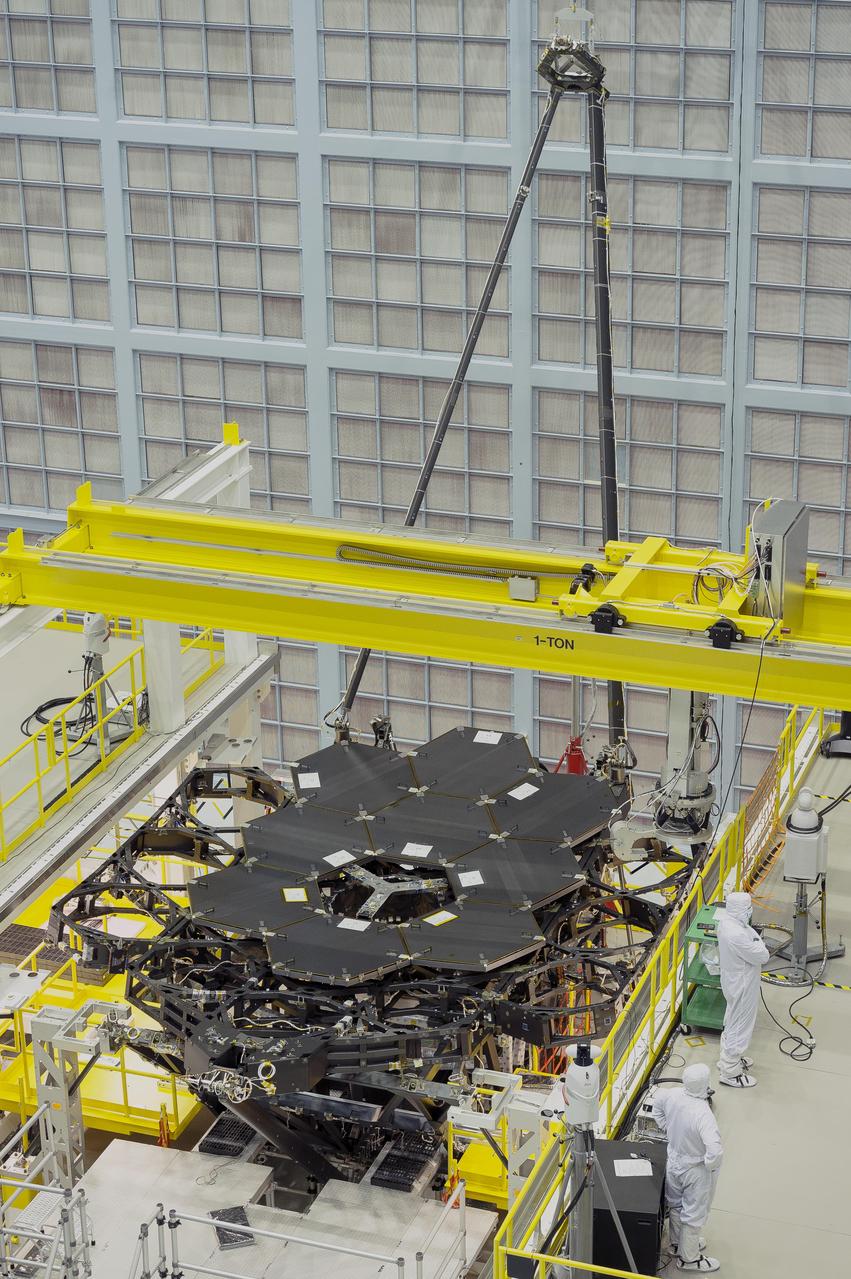
Inside NASA's Goddard Space Flight Center's massive clean room in Greenbelt, Maryland, the ninth flight mirror was installed onto the telescope structure with a robotic arm. This marks the halfway completion point for the James Webb Space Telescope's segmented primary mirror. Nine of the James Webb Space Telescope's 18 primary flight mirrors have been installed on the telescope structure. This marks the halfway point in the James Webb Space Telescope's primary mirror installation. Credit: NASA's Goddard Space Flight Center/Chris Gunn Read more: <a href="http://go.nasa.gov/1kqK6fW" rel="nofollow">go.nasa.gov/1kqK6fW</a>
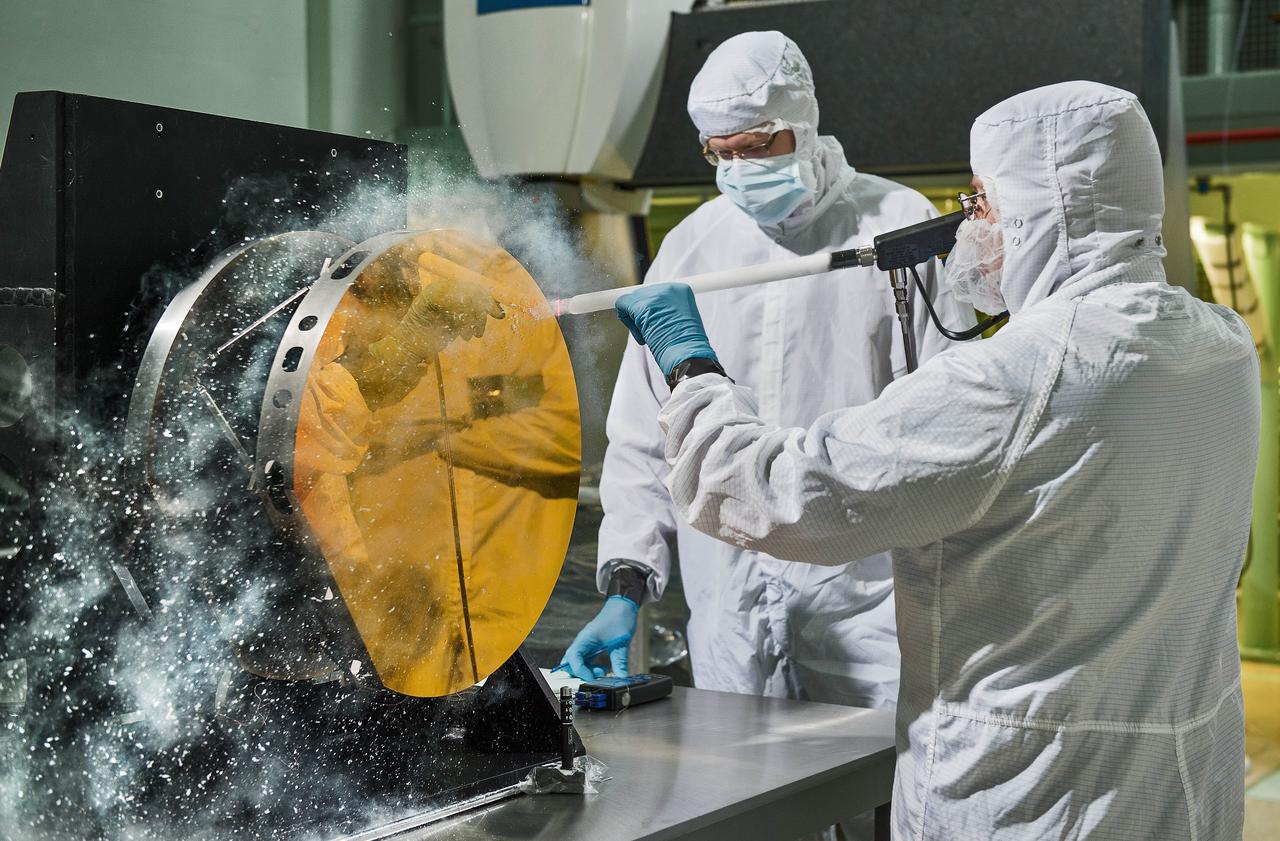
Just like drivers sometimes use snow to clean their car mirrors in winter, two Exelis Inc. engineers are practicing "snow cleaning'" on a test telescope mirror for the James Webb Space Telescope at NASA's Goddard Space Flight Center in Greenbelt, Maryland. By shooting carbon dioxide snow at the surface, engineers are able to clean large telescope mirrors without scratching them. "The snow-like crystals (carbon dioxide snow) knock contaminate particulates and molecules off the mirror," said Lee Feinberg, NASA optical telescope element manager. This technique will only be used if the James Webb Space Telescope's mirror is contaminated during integration and testing. The Webb telescope is the scientific successor to NASA's Hubble Space Telescope. It will be the most powerful space telescope ever built. With a mirror seven times as large as Hubble's and infrared capability, Webb will be capturing light from 13.5 billion light years away. To do this, its mirror must be kept super clean. "Small dust particles or molecules can impact the science that can be done with the Webb," said Feinberg. "So cleanliness especially on the mirrors is critical." Webb is an international project led by NASA with its partners, the European Space Agency and the Canadian Space Agency. Image credit: NASA/Goddard/Chris Gunn Text credit: Laura Betz, NASA's Goddard Space Flight Center, Greenbelt, Maryland <b><a href="http://www.nasa.gov/audience/formedia/features/MP_Photo_Guidelines.html" rel="nofollow">NASA image use policy.</a></b> <b><a href="http://www.nasa.gov/centers/goddard/home/index.html" rel="nofollow">NASA Goddard Space Flight Center</a></b> enables NASA’s mission through four scientific endeavors: Earth Science, Heliophysics, Solar System Exploration, and Astrophysics. Goddard plays a leading role in NASA’s accomplishments by contributing compelling scientific knowledge to advance the Agency’s mission. <b>Follow us on <a href="http://twitter.com/NASAGoddardPix" rel="nofollow">Twitter</a></b> <b>Like us on <a href="http://www.facebook.com/pages/Greenbelt-MD/NASA-Goddard/395013845897?ref=tsd" rel="nofollow">Facebook</a></b> <b>Find us on <a href="http://instagrid.me/nasagoddard/?vm=grid" rel="nofollow">Instagram</a></b>
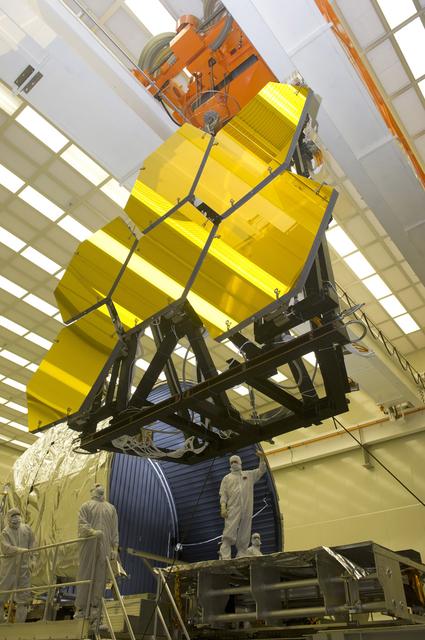
The James Webb Space Telescope mirrors have completed deep-freeze tests and are removed from the X-ray and Cryogenic test Facility at Marshall Space Flight Center. To read more go to: <a href="http://www.nasa.gov/topics/technology/features/webb-mirror-cryo.html" rel="nofollow">www.nasa.gov/topics/technology/features/webb-mirror-cryo....</a> Credit: Emmett Given, NASA Marshall <b><a href="http://www.nasa.gov/audience/formedia/features/MP_Photo_Guidelines.html" rel="nofollow">NASA image use policy.</a></b> <b><a href="http://www.nasa.gov/centers/goddard/home/index.html" rel="nofollow">NASA Goddard Space Flight Center</a></b> enables NASA’s mission through four scientific endeavors: Earth Science, Heliophysics, Solar System Exploration, and Astrophysics. Goddard plays a leading role in NASA’s accomplishments by contributing compelling scientific knowledge to advance the Agency’s mission. <b>Follow us on <a href="http://twitter.com/NASA_GoddardPix" rel="nofollow">Twitter</a></b> <b>Like us on <a href="http://www.facebook.com/pages/Greenbelt-MD/NASA-Goddard/395013845897?ref=tsd" rel="nofollow">Facebook</a></b> <b>Find us on <a href="http://instagrid.me/nasagoddard/?vm=grid" rel="nofollow">Instagram</a></b>
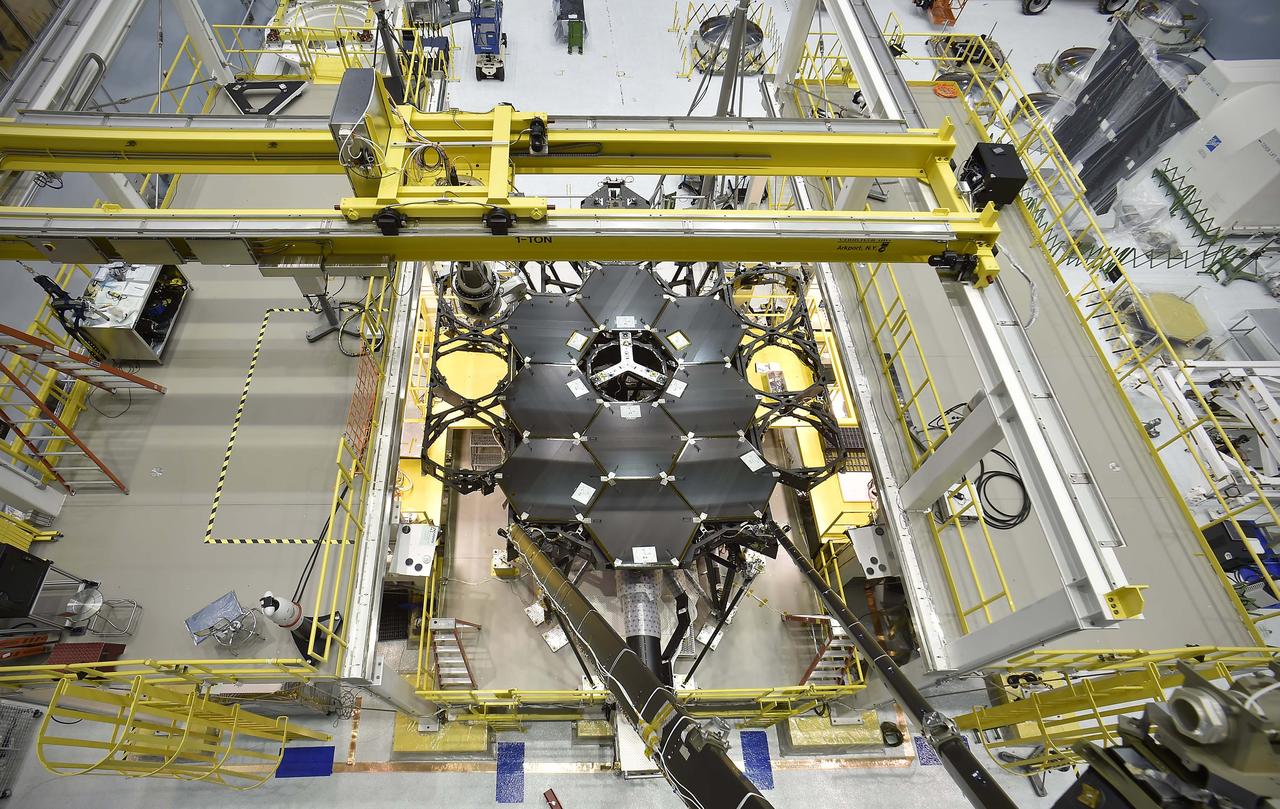
Inside NASA's Goddard Space Flight Center's massive clean room in Greenbelt, Maryland, the ninth flight mirror was installed onto the telescope structure with a robotic arm. This marks the halfway completion point for the James Webb Space Telescope's segmented primary mirror. Engineers worked tirelessly to install the ninth primary flight mirror onto the telescope structure. Credit: NASA's Goddard Space Flight Center/Chris Gunn Read more: <a href="http://go.nasa.gov/1kqK6fW" rel="nofollow">go.nasa.gov/1kqK6fW</a>
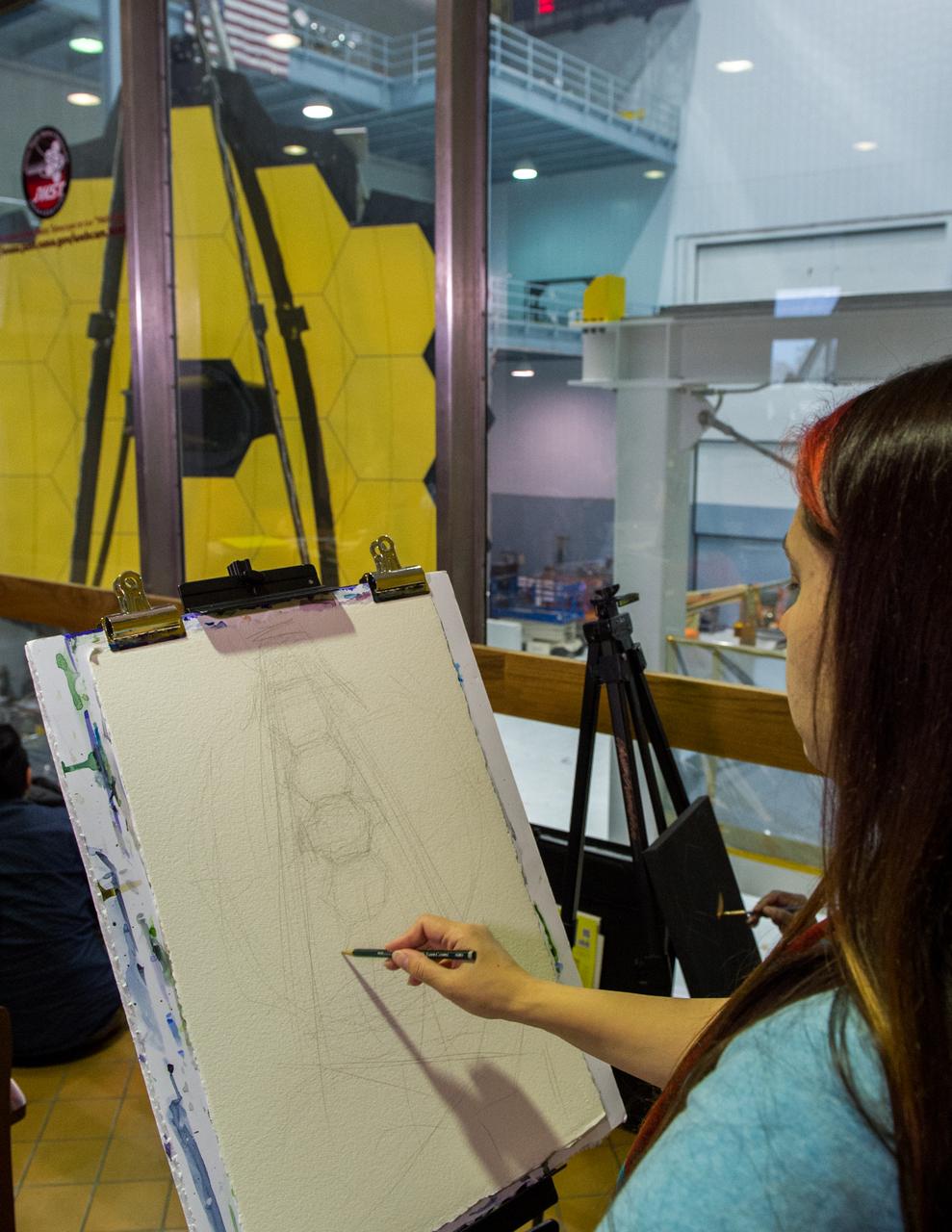
James Webb Space Telescope (JWST) Golden Mirrors artist event.
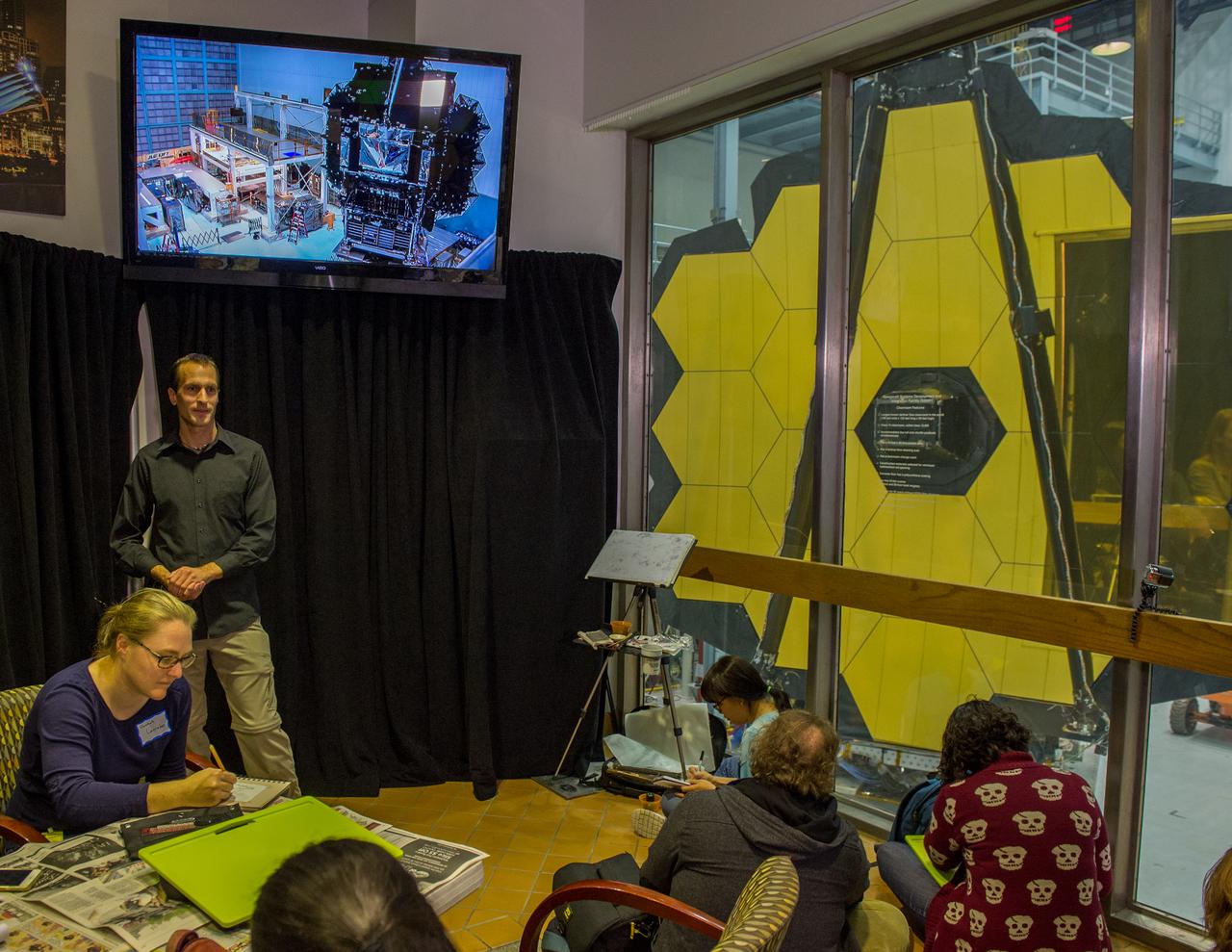
James Webb Space Telescope (JWST) Golden Mirrors artist event.
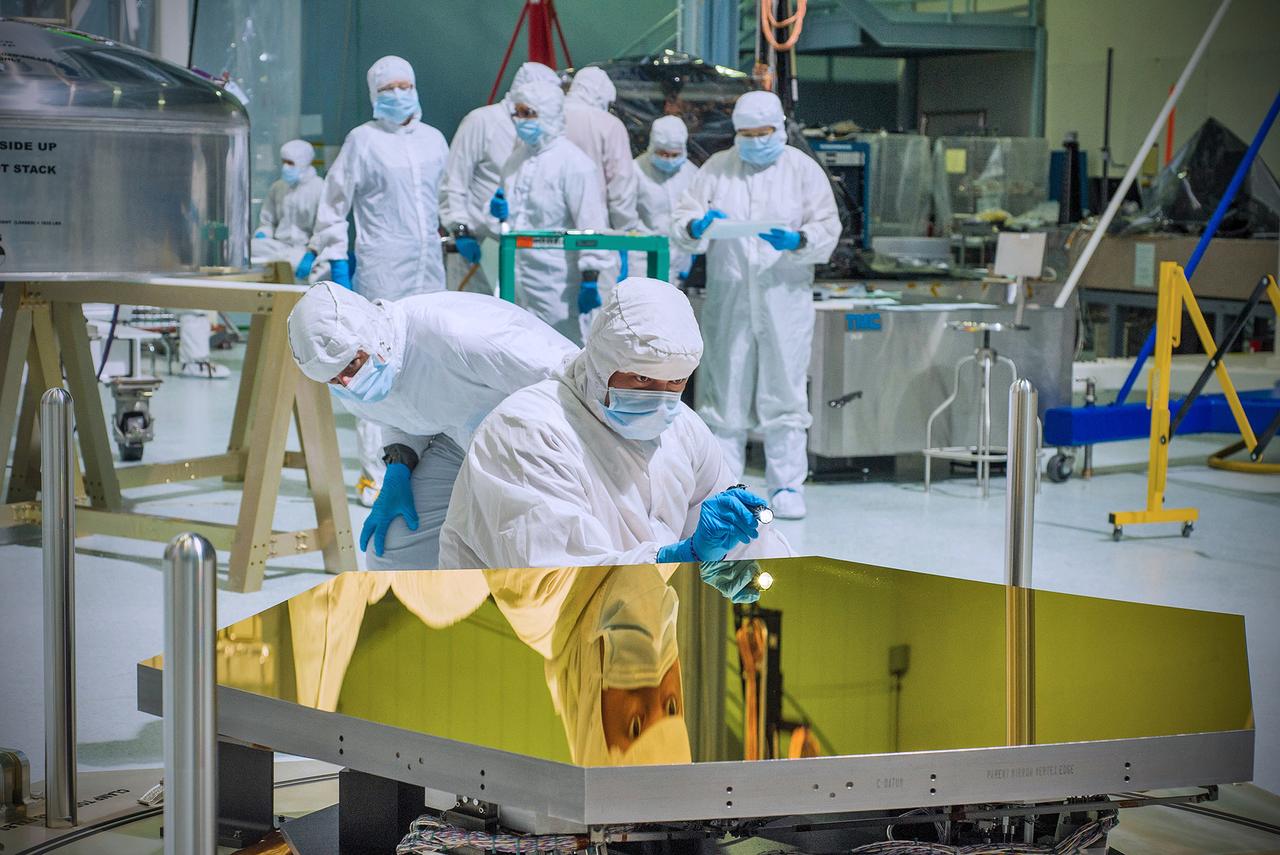
Technicians and scientists check out one of the Webb telescope's first two flight mirrors in the clean room at NASA's Goddard Space Flight Center in Greenbelt, Md. Credit: NASA/Chris Gunn ----- The first two of the 18 primary mirrors to fly aboard NASA’s James Webb Space Telescope arrived at NASA’s Goddard Space Flight Center in Greenbelt, Md. The mirrors are going through receiving and inspection and will then be stored in the Goddard cleanroom until engineers are ready to assemble them onto the telescope's backplane structure that will support them. Ball Aerospace, Boulder, Colo., under contract to Northrop Grumman, is responsible for the Webb’s optical technology and lightweight mirror system. On September 17, 2012, Ball Aerospace shipped the first two mirrors in custom containers designed specifically for the multiple trips the mirrors made through eight U.S. states while completing their manufacturing. The remaining 16 mirrors will make their way from Ball Aerospace to Goddard over the next 12 months as they await telescope integration in 2015. To read more go to: <a href="http://www.nasa.gov/topics/technology/features/webb-tech-mirrors-delivered.html" rel="nofollow">www.nasa.gov/topics/technology/features/webb-tech-mirrors...</a> <b><a href="http://www.nasa.gov/audience/formedia/features/MP_Photo_Guidelines.html" rel="nofollow">NASA image use policy.</a></b> <b><a href="http://www.nasa.gov/centers/goddard/home/index.html" rel="nofollow">NASA Goddard Space Flight Center</a></b> enables NASA’s mission through four scientific endeavors: Earth Science, Heliophysics, Solar System Exploration, and Astrophysics. Goddard plays a leading role in NASA’s accomplishments by contributing compelling scientific knowledge to advance the Agency’s mission. <b>Follow us on <a href="http://twitter.com/NASA_GoddardPix" rel="nofollow">Twitter</a></b> <b>Like us on <a href="http://www.facebook.com/pages/Greenbelt-MD/NASA-Goddard/395013845897?ref=tsd" rel="nofollow">Facebook</a></b> <b>Find us on <a href="http://instagrid.me/nasagoddard/?vm=grid" rel="nofollow">Instagram</a></b>
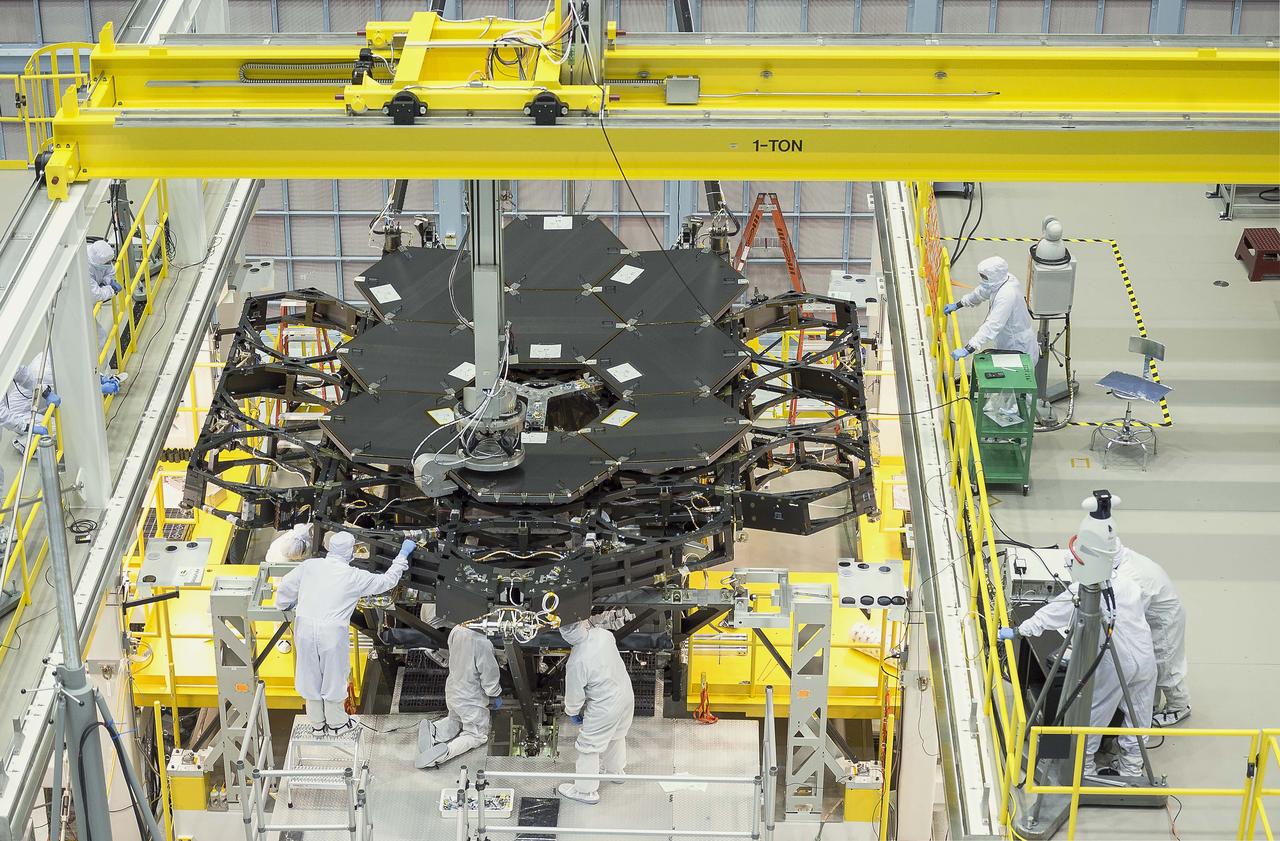
Inside NASA's Goddard Space Flight Center's massive clean room in Greenbelt, Maryland, the ninth flight mirror was installed onto the telescope structure with a robotic arm. This marks the halfway completion point for the James Webb Space Telescope's segmented primary mirror. This rare overhead shot of the James Webb Space Telescope shows the nine primary flight mirrors installed on the telescope structure in a clean room at NASA's Goddard Space Flight Center in Greenbelt, Maryland. Credits: NASA's Goddard Space Flight Center/Chris Gunn Read more: <a href="http://go.nasa.gov/1kqK6fW" rel="nofollow">go.nasa.gov/1kqK6fW</a>
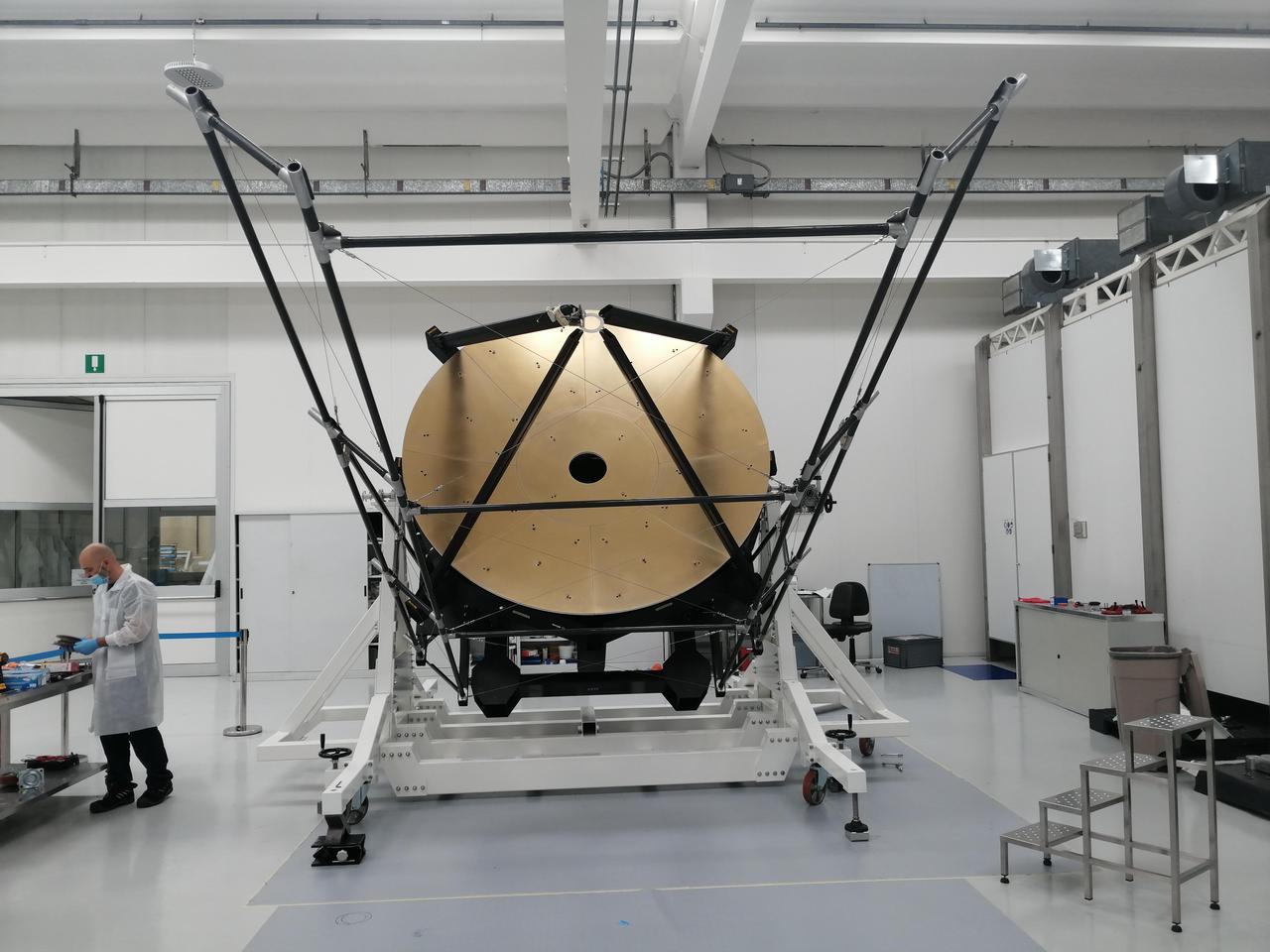
The 8.2-foot (2.5-meter) primary mirror on NASA's Astrophysics Stratospheric Telescope for High Spectral Resolution Observations at Submillimeter-wavelengths mission, or ASTHROS, is one of the largest to ever fly on a high-altitude balloon. The lightweight mirror, shown here, is coated in gold and nickel to make it more reflective in far-infrared wavelengths. NASA contracted Media Lario, an optics company in Bosisio Parini, Italy, to design and produce ASTHROS' full telescope unit, including the primary mirror, a secondary mirror, and supporting structure (called the cradle). The mirror is pictured at Media Lario. The mission's main science goal is to study stellar feedback, the process by which living stars disperse and reshape clouds of gas and dust that may eventually form new stars. Feedback regulates star formation in many galaxies, and too much can halt star formation entirely. ASTHROS will look at several star-forming regions in our galaxy where feedback takes place, and at distant galaxies containing millions of stars to see how feedback plays out at large scales and in different environments. https://photojournal.jpl.nasa.gov/catalog/PIA25166

An engineer at NASA's Jet Propulsion Laboratory is shown here with the fast steering mirror, a component of the Coronagraph Instrument on NASA's Nancy Grace Roman Space Telescope. The mirror can make small movements that correct for slight wobbling of the observatory. The incoming image needs to be perfectly sharp in order for the instrument to suppress light from a star while allowing the light from planets orbiting it to pass through. Although the technologies differ, it's analogous to image stabilization in digital cameras, in which the camera lens moves to counteract the shake of your hands and keep the image sharp. https://photojournal.jpl.nasa.gov/catalog/PIA25437
The sole secondary mirror that will fly aboard NASA's James Webb Space Telescope was installed onto the telescope at NASA's Goddard Space Flight Center in Greenbelt, Maryland, on March 3, 2016. The Webb telescope uses many mirrors to direct incoming light into the telescope's instruments. The secondary mirror is called the secondary mirror because it is the second surface the light from the cosmos hits on its route into the telescope. In this photo, engineers are seen installing the secondary mirror onto the telescope. Read more: <a href="http://www.nasa.gov/feature/goddard/2016/nasas-james-webb-space-telescope-secondary-mirror-installed" rel="nofollow">www.nasa.gov/feature/goddard/2016/nasas-james-webb-space-...</a> Credits: NASA/Goddard/Chris Gunn <b><a href="http://www.nasa.gov/audience/formedia/features/MP_Photo_Guidelines.html" rel="nofollow">NASA image use policy.</a></b> <b><a href="http://www.nasa.gov/centers/goddard/home/index.html" rel="nofollow">NASA Goddard Space Flight Center</a></b> enables NASA’s mission through four scientific endeavors: Earth Science, Heliophysics, Solar System Exploration, and Astrophysics. Goddard plays a leading role in NASA’s accomplishments by contributing compelling scientific knowledge to advance the Agency’s mission. <b>Follow us on <a href="http://twitter.com/NASAGoddardPix" rel="nofollow">Twitter</a></b> <b>Like us on <a href="http://www.facebook.com/pages/Greenbelt-MD/NASA-Goddard/395013845897?ref=tsd" rel="nofollow">Facebook</a></b> <b>Find us on <a href="http://instagrid.me/nasagoddard/?vm=grid" rel="nofollow">Instagram</a></b>
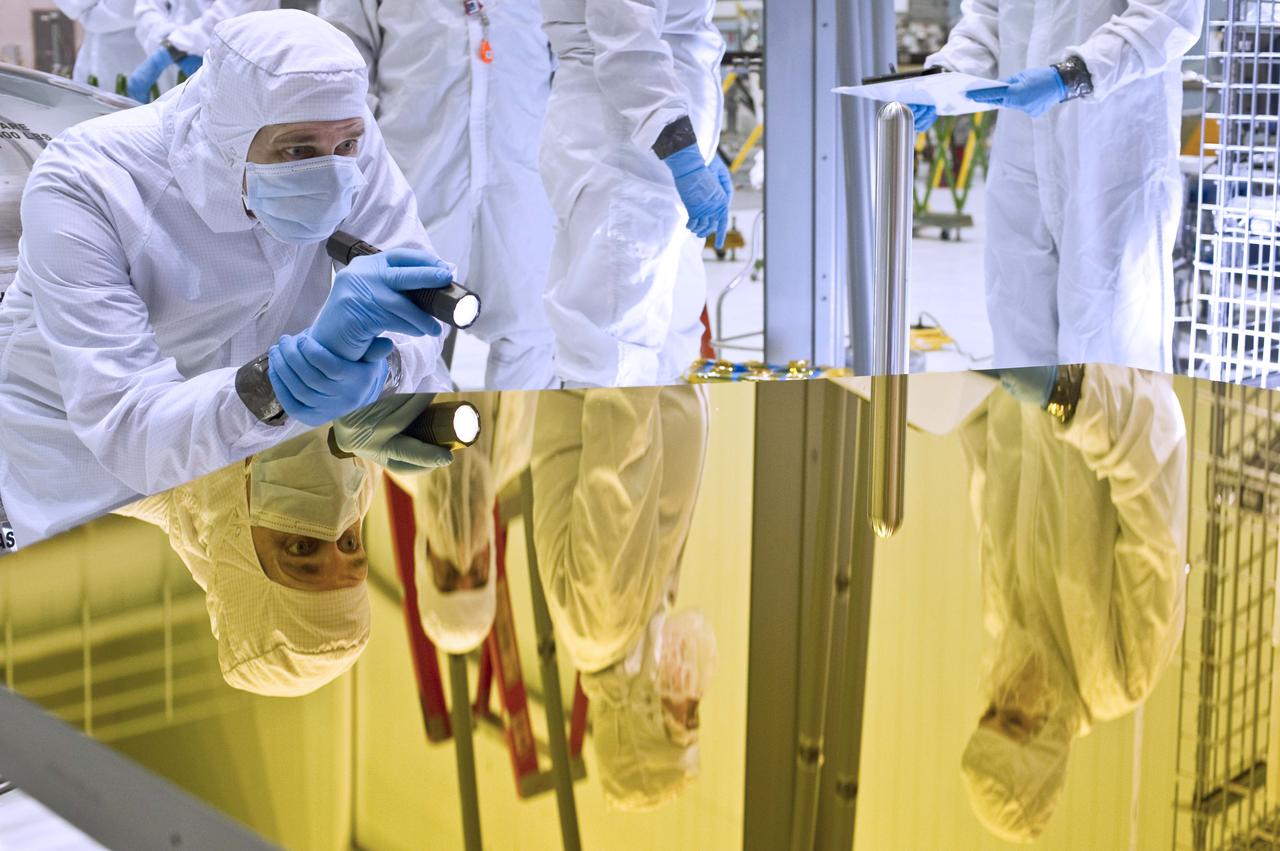
NASA image release April 13, 2011 An engineer examines the Webb telescope primary mirror Engineering Design Unit segment in the clean room at NASA's Goddard Space Flight Center, Greenbelt, Md. It takes two unique types of mirrors working together to see farther back in time and space than ever before, and engineers at NASA's Goddard Space Flight Center have just received one of each type. Primary and Secondary Mirror Engineering Design Units (EDUs) have recently arrived at NASA's Goddard Space Flight Center in Greenbelt, Md. from Northrop Grumman Aerospace Systems in Redondo Beach, Calif. and are undergoing examination and testing. When used on the James Webb Space Telescope those two types of mirrors will allow scientists to make those observations. "The Primary mirror EDU will be used next year to check out optical test equipment developed by Goddard and slated to be used to test the full Flight Primary mirror," said Lee Feinberg, the Optical Telescope Element Manager for the Webb telescope at NASA Goddard. "Following that, the primary and secondary EDU's will actually be assembled onto the Pathfinder telescope. The Pathfinder telescope includes two primary mirror segments (one being the Primary EDU) and the Secondary EDU and allows us to check out all of the assembly and test procedures (that occur both at Goddard and testing at Johnson Space Center, Houston, Texas) well in advance of the flight telescope assembly and test." To read more about this image go to: <a href="http://www.nasa.gov/topics/technology/features/two-webb-mirrors.html" rel="nofollow">www.nasa.gov/topics/technology/features/two-webb-mirrors....</a> Credit: NASA/GSFC/Chris Gunn <b><a href="http://www.nasa.gov/centers/goddard/home/index.html" rel="nofollow">NASA Goddard Space Flight Center</a></b> enables NASA’s mission through four scientific endeavors: Earth Science, Heliophysics, Solar System Exploration, and Astrophysics. Goddard plays a leading role in NASA’s accomplishments by contributing compelling scientific knowledge to advance the Agency’s mission. <b>Follow us on <a href="http://twitter.com/NASA_GoddardPix" rel="nofollow">Twitter</a></b> <b>Join us on <a href="http://www.facebook.com/pages/Greenbelt-MD/NASA-Goddard/395013845897?ref=tsd" rel="nofollow">Facebook</a></b>

The powerful primary mirrors of the James Webb Space Telescope will be able to detect the light from distant galaxies. The manufacturer of those mirrors, Ball Aerospace & Technologies Corp. of Boulder, Colo., recently celebrated their successful efforts as mirror segments were packed up in special shipping canisters (cans) for shipping to NASA. The Webb telescope has 21 mirrors, with 18 primary mirror segments working together as one large 21.3-foot (6.5-meter) primary mirror. The mirror segments are made of beryllium, which was selected for its stiffness, light weight and stability at cryogenic temperatures. Bare beryllium is not very reflective of near-infrared light, so each mirror is coated with about 0.12 ounce of gold. Northrop Grumman Corp. Aerospace Systems is the principal contractor on the telescope and commissioned Ball for the optics system's development, design, manufacturing, integration and testing. The Webb telescope is the world's next-generation space observatory and successor to the Hubble Space Telescope. The most powerful space telescope ever built, the Webb telescope will provide images of the first galaxies ever formed, and explore planets around distant stars. It is a joint project of NASA, the European Space Agency and the Canadian Space Agency. For more information about the James Webb Space Telescope, visit: <a href="http://www.jwst.nasa.gov" rel="nofollow">www.jwst.nasa.gov</a> Credit: Ball Aerospace <b><a href="http://www.nasa.gov/audience/formedia/features/MP_Photo_Guidelines.html" rel="nofollow">NASA image use policy.</a></b> <b><a href="http://www.nasa.gov/centers/goddard/home/index.html" rel="nofollow">NASA Goddard Space Flight Center</a></b> enables NASA’s mission through four scientific endeavors: Earth Science, Heliophysics, Solar System Exploration, and Astrophysics. Goddard plays a leading role in NASA’s accomplishments by contributing compelling scientific knowledge to advance the Agency’s mission. <b>Follow us on <a href="http://twitter.com/NASA_GoddardPix" rel="nofollow">Twitter</a></b> <b>Like us on <a href="http://www.facebook.com/pages/Greenbelt-MD/NASA-Goddard/395013845897?ref=tsd" rel="nofollow">Facebook</a></b> <b>Find us on <a href="http://instagrid.me/nasagoddard/?vm=grid" rel="nofollow">Instagram</a></b>
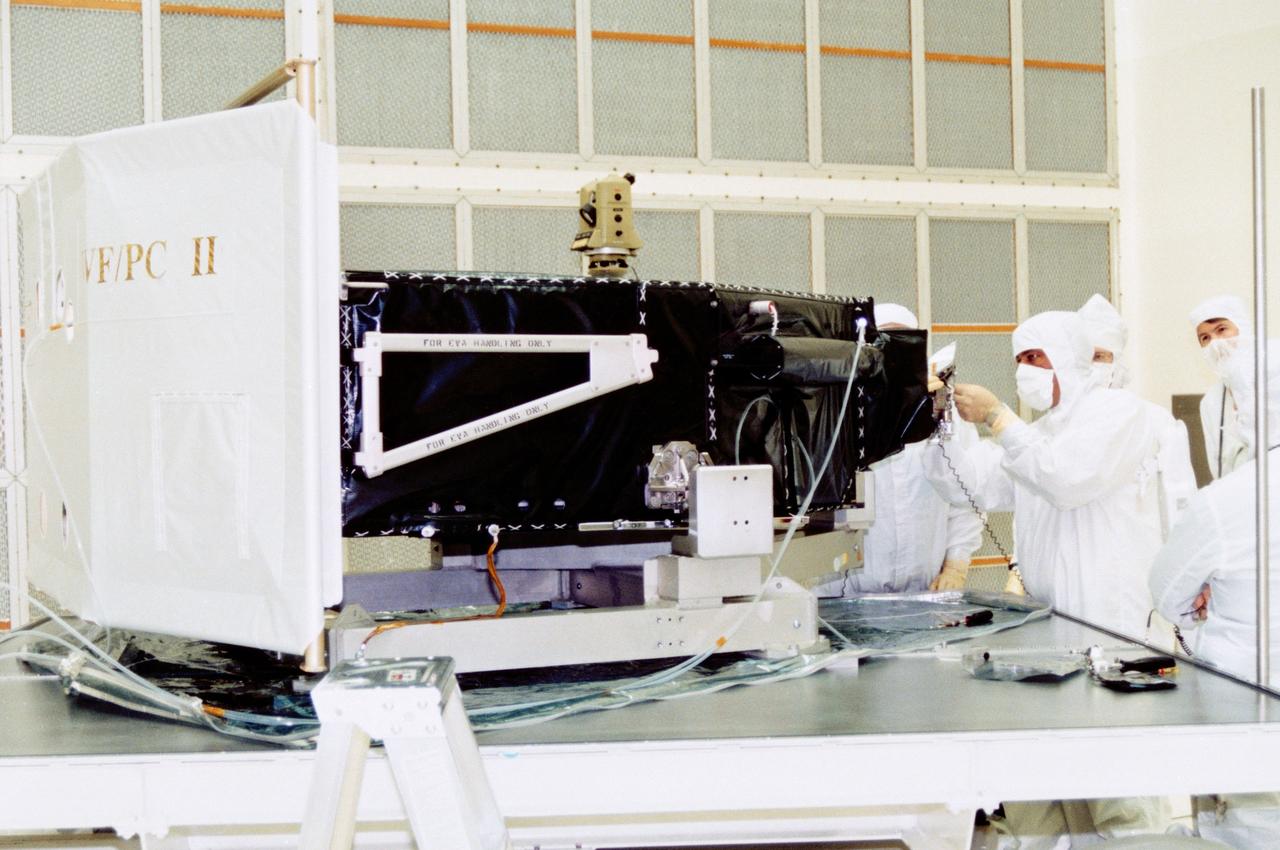
Workers in bldg AE, Cape Canaveral Air Force Station, install a mirror on the Wide Field/Planetary Camera II as part of the preparations for launch later this year on the first servicing mission of the Hubble Space Telescope (HST).
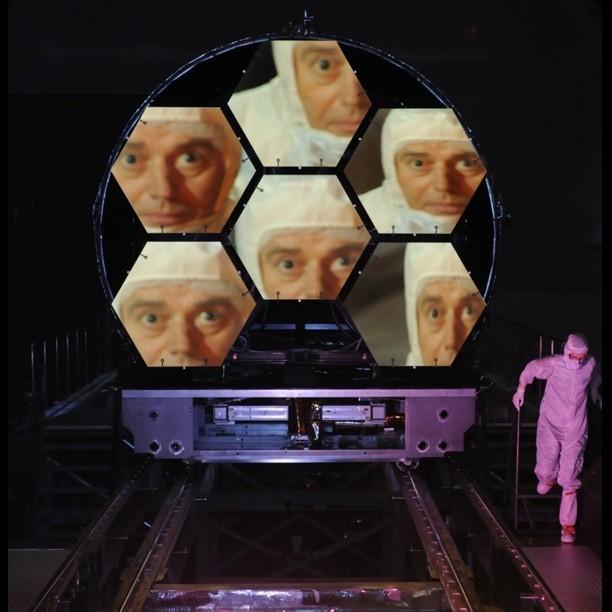
Project scientist Mark Clampin is reflected in the flight mirrors of the Webb Space Telescope at Marshall Space Flight Center. Portions of the Webb telescope are being built at NASA Goddard. Credit: Ball Aerospace/NASA <b><a href="http://www.nasa.gov/centers/goddard/home/index.html" rel="nofollow">NASA Goddard Space Flight Center</a></b> enables NASA’s mission through four scientific endeavors: Earth Science, Heliophysics, Solar System Exploration, and Astrophysics. Goddard plays a leading role in NASA’s accomplishments by contributing compelling scientific knowledge to advance the Agency’s mission. <b>Follow us on <a href="http://twitter.com/NASA_GoddardPix" rel="nofollow">Twitter</a></b> <b>Join us on <a href="http://www.facebook.com/pages/Greenbelt-MD/NASA-Goddard/395013845897?ref=tsd" rel="nofollow">Facebook</a></b> <b>Find us on <a href="http://instagr.am/p/E_05l/" rel="nofollow">Instagram</a></b>
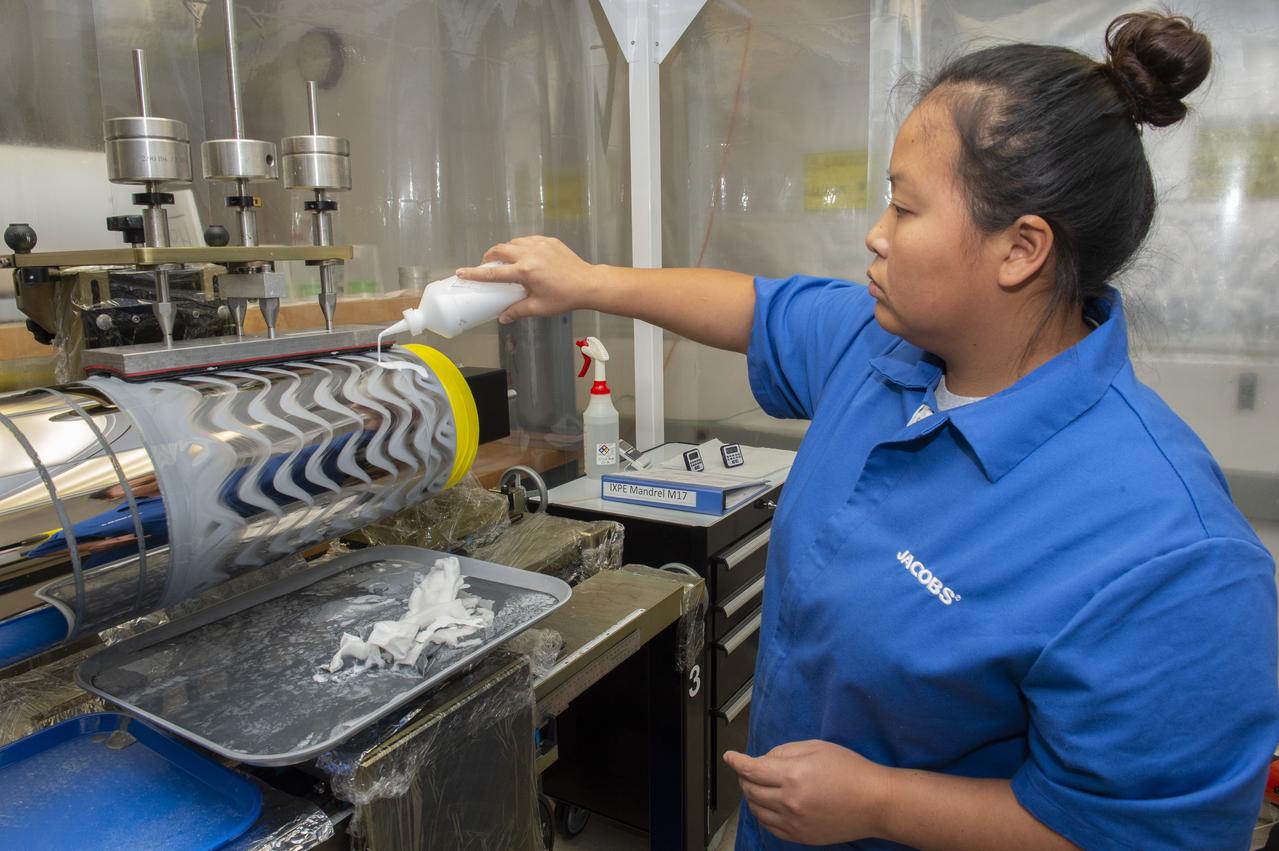
X-RAY MIRROR REPLICATION AND SHELL SEPARATION PROCESS: CHET SPEEGLE, JOHN HOOD, KEITH BOWEN, CARL WIDRIG, RATANA MEEKHAM, AMY MEEKHAM
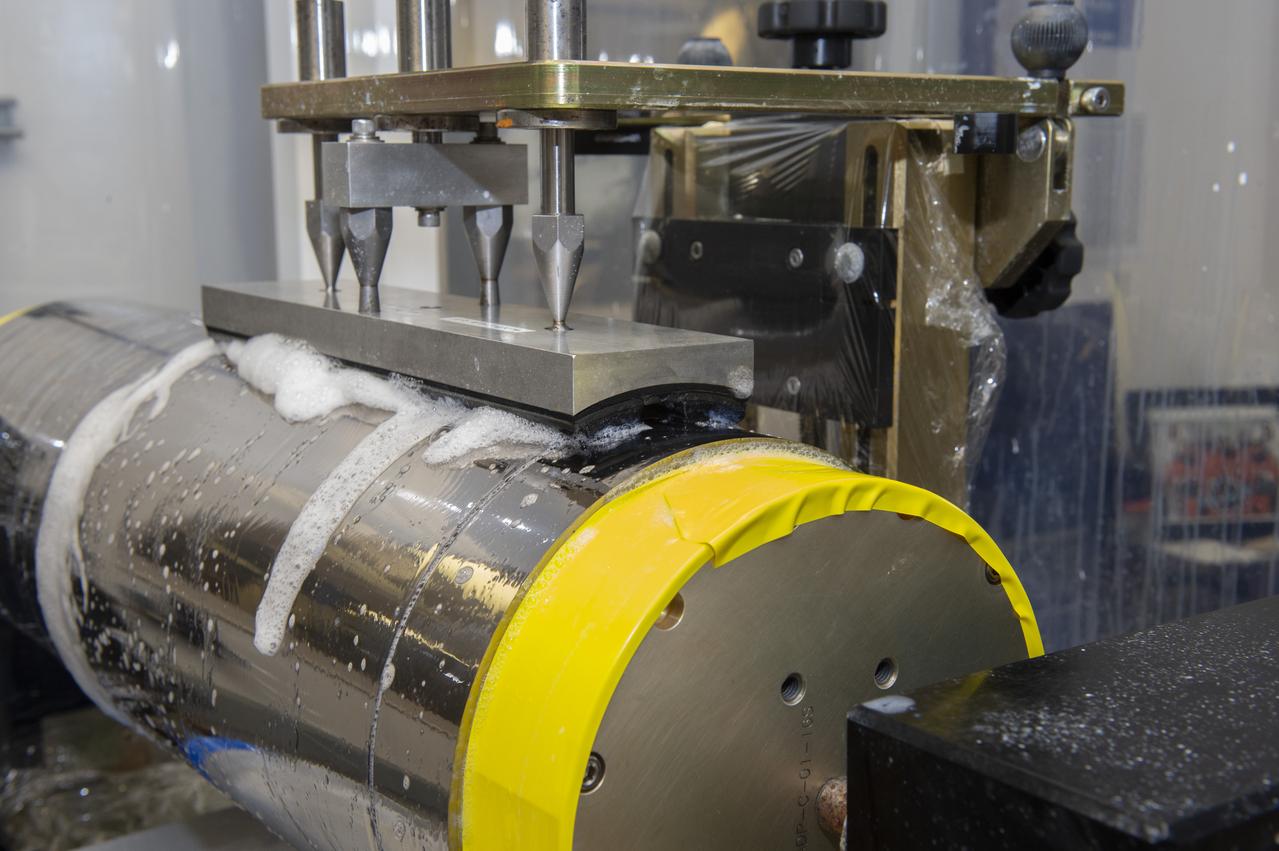
X-RAY MIRROR REPLICATION AND SHELL SEPARATION PROCESS: CHET SPEEGLE, JOHN HOOD, KEITH BOWEN, CARL WIDRIG, RATANA MEEKHAM, AMY MEEKHAM
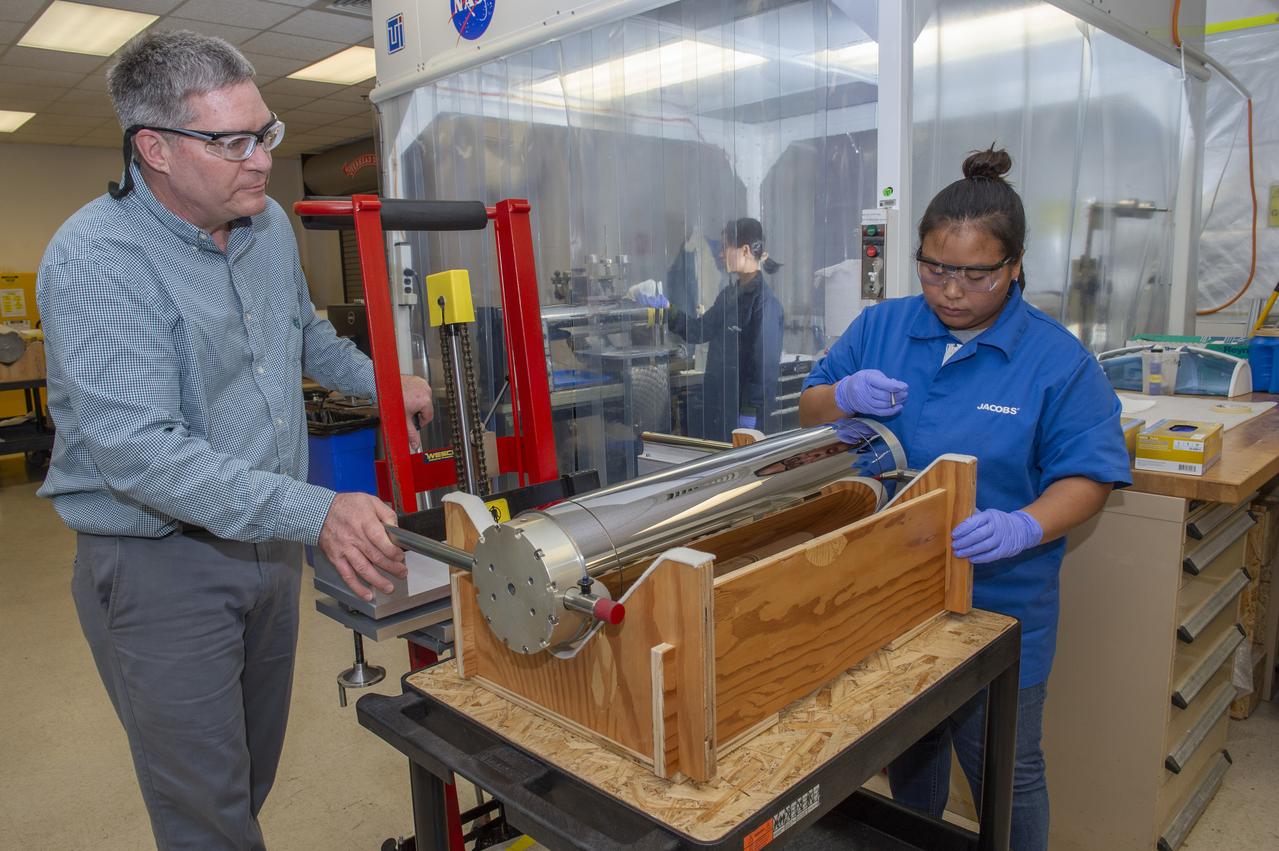
X-RAY MIRROR REPLICATION AND SHELL SEPARATION PROCESS: CHET SPEEGLE, JOHN HOOD, KEITH BOWEN, CARL WIDRIG, RATANA MEEKHAM, AMY MEEKHAM
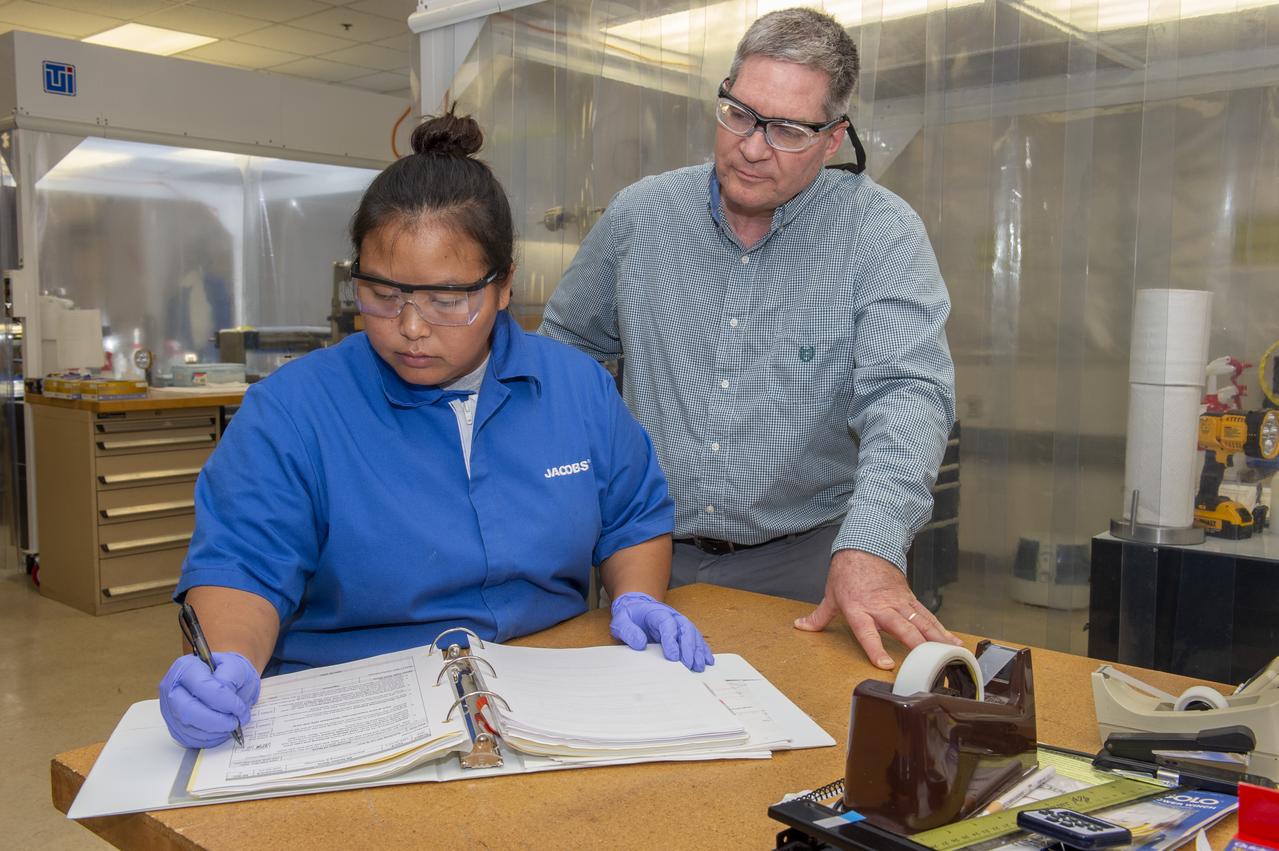
X-RAY MIRROR REPLICATION AND SHELL SEPARATION PROCESS: CHET SPEEGLE, JOHN HOOD, KEITH BOWEN, CARL WIDRIG, RATANA MEEKHAM, AMY MEEKHAM
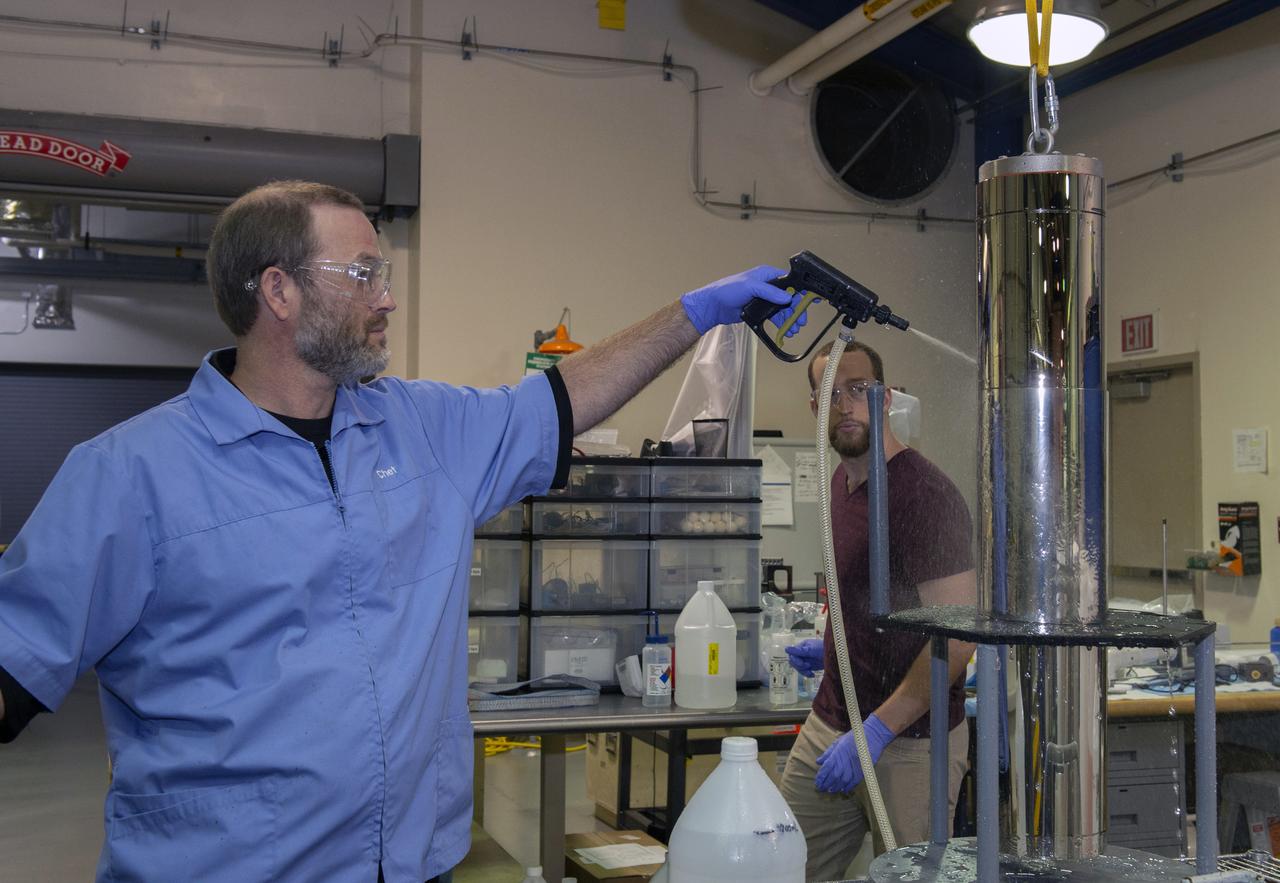
X-RAY MIRROR REPLICATION AND SHELL SEPARATION PROCESS: CHET SPEEGLE, JOHN HOOD, KEITH BOWEN, CARL WIDRIG, RATANA MEEKHAM, AMY MEEKHAM
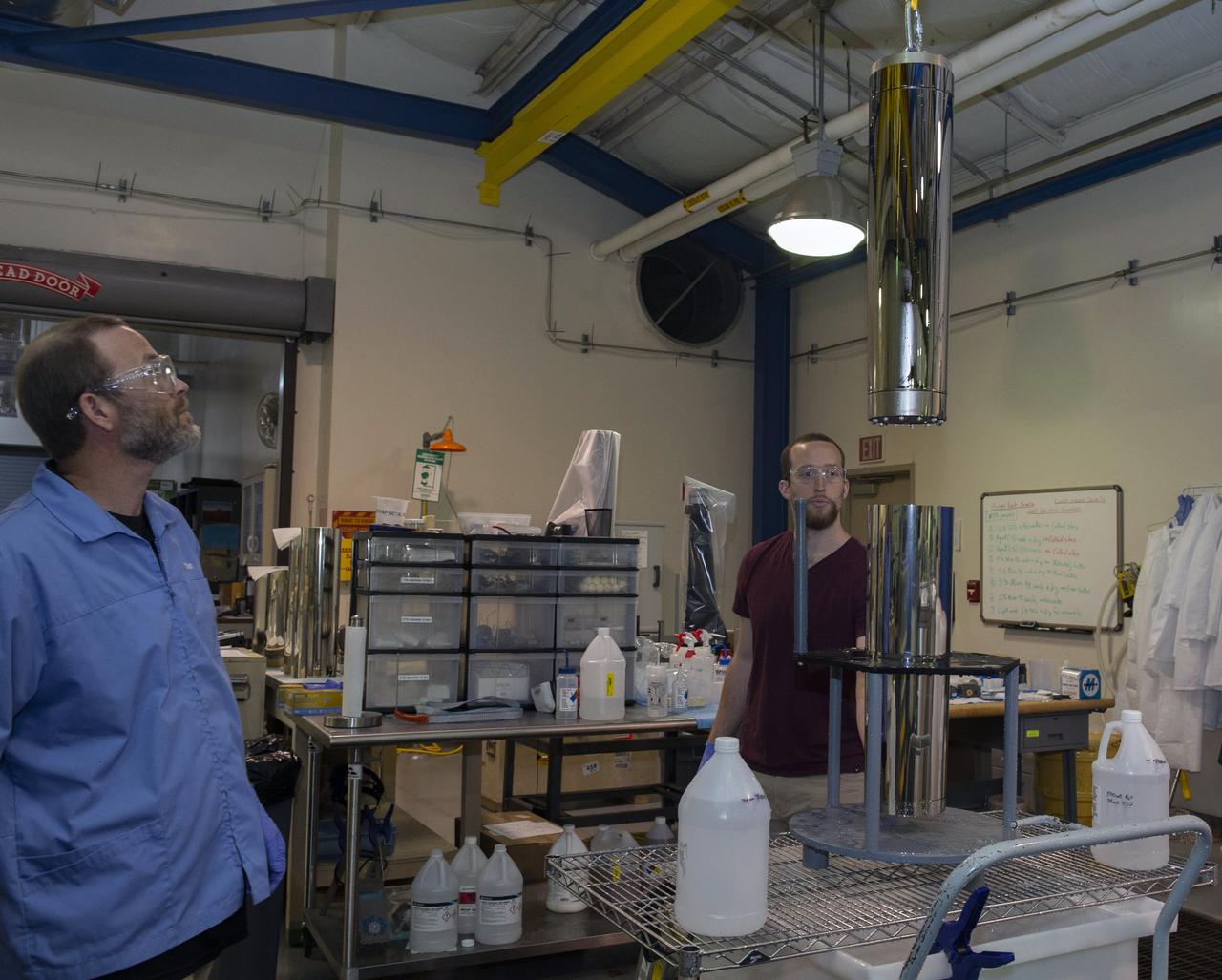
X-RAY MIRROR REPLICATION AND SHELL SEPARATION PROCESS: CHET SPEEGLE, JOHN HOOD, KEITH BOWEN, CARL WIDRIG, RATANA MEEKHAM, AMY MEEKHAM
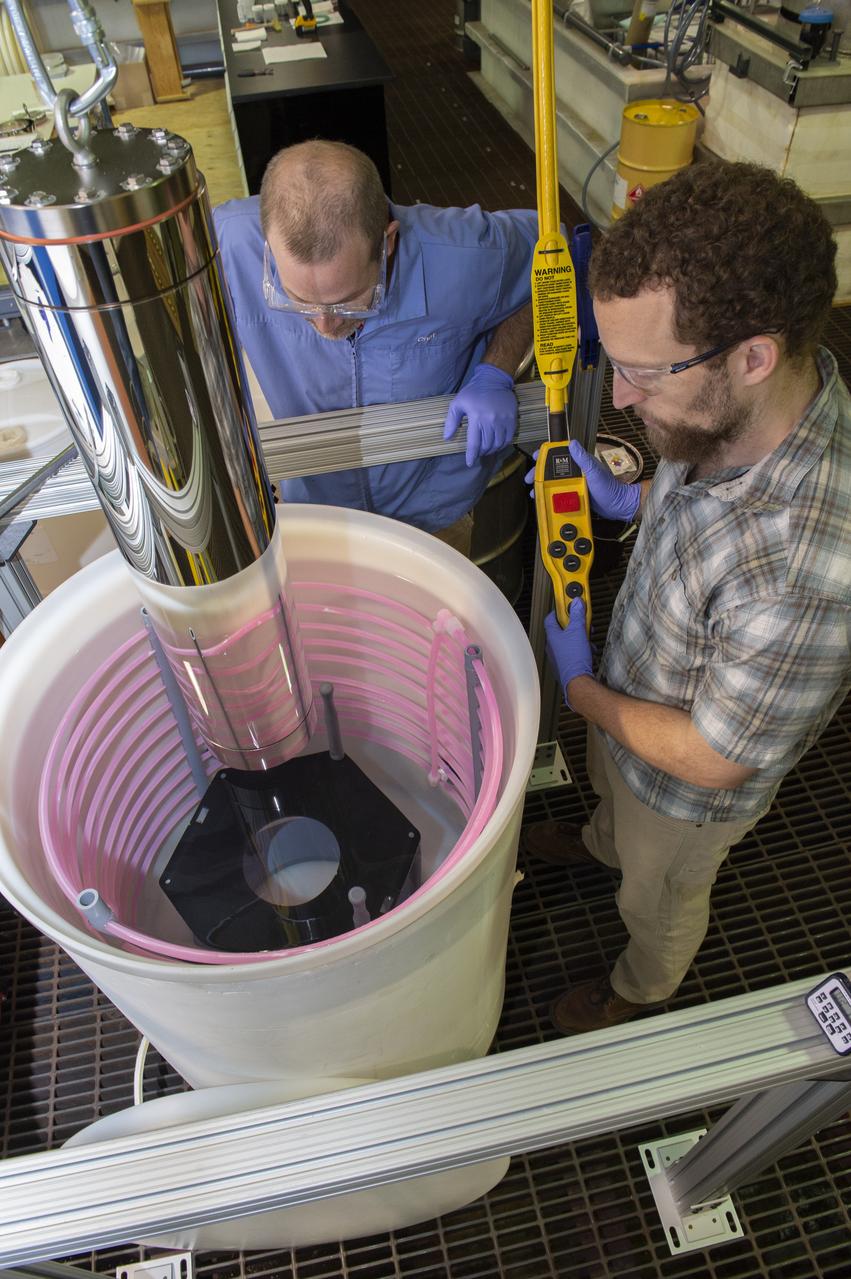
X-RAY MIRROR REPLICATION AND SHELL SEPARATION PROCESS: CHET SPEEGLE, JOHN HOOD, KEITH BOWEN, CARL WIDRIG, RATANA MEEKHAM, AMY MEEKHAM
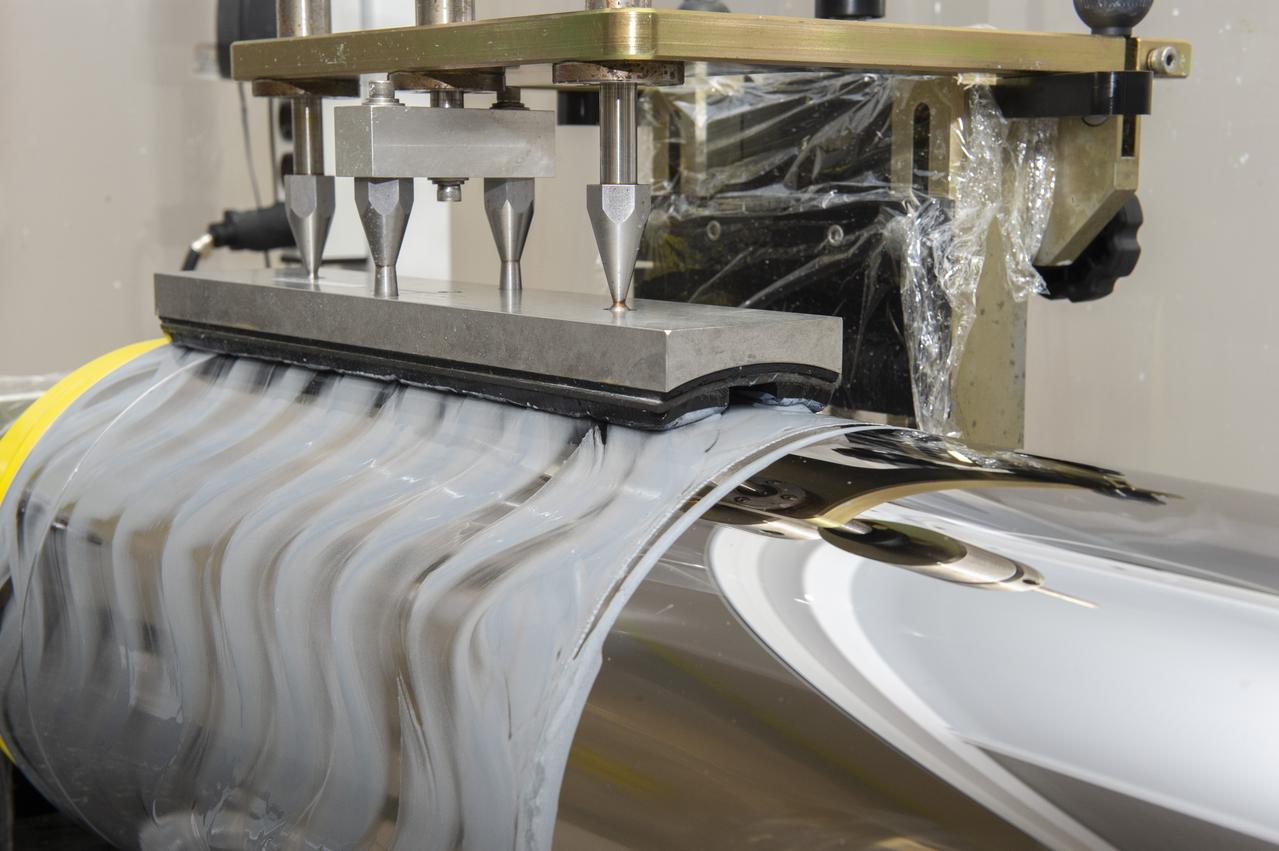
X-RAY MIRROR REPLICATION AND SHELL SEPARATION PROCESS: CHET SPEEGLE, JOHN HOOD, KEITH BOWEN, CARL WIDRIG, RATANA MEEKHAM, AMY MEEKHAM
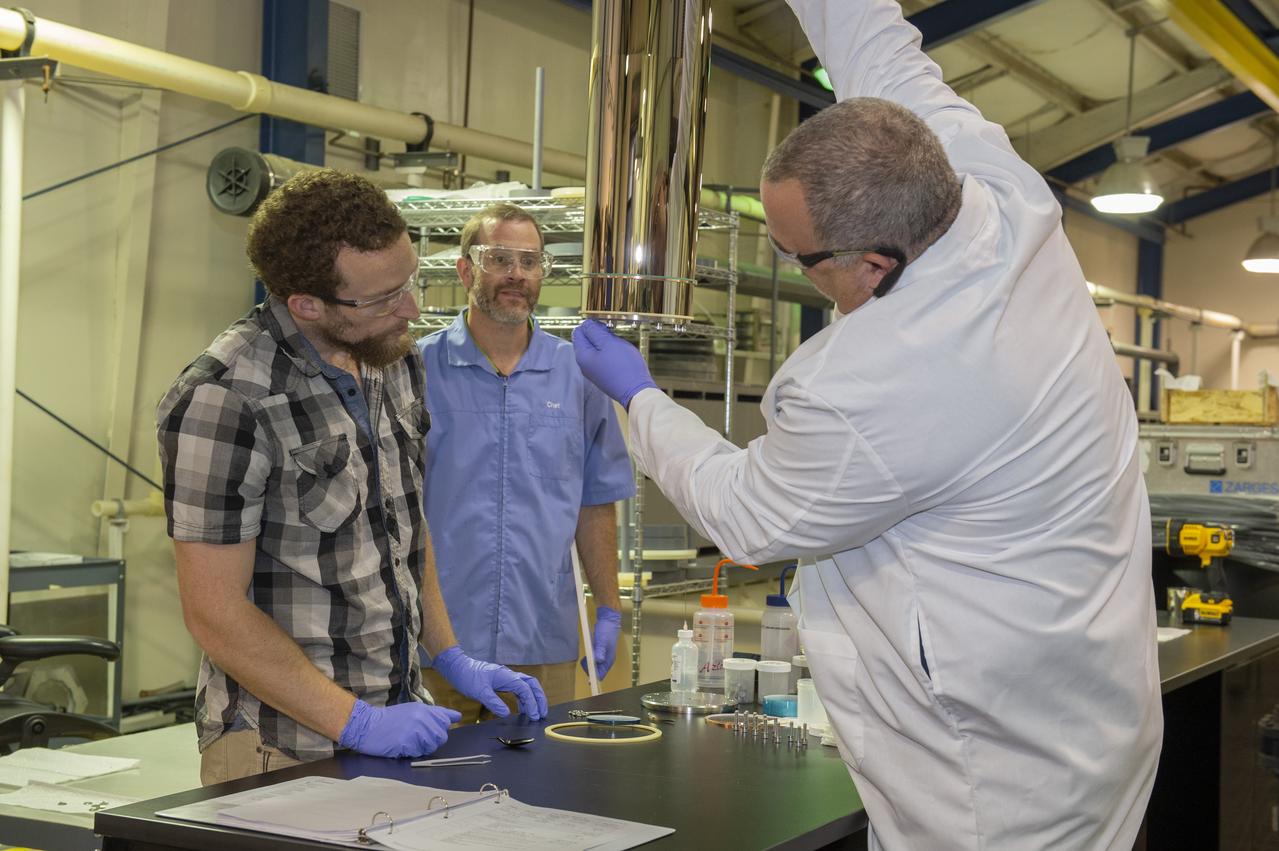
X-RAY MIRROR REPLICATION AND SHELL SEPARATION PROCESS: CHET SPEEGLE, JOHN HOOD, KEITH BOWEN, CARL WIDRIG, RATANA MEEKHAM, AMY MEEKHAM
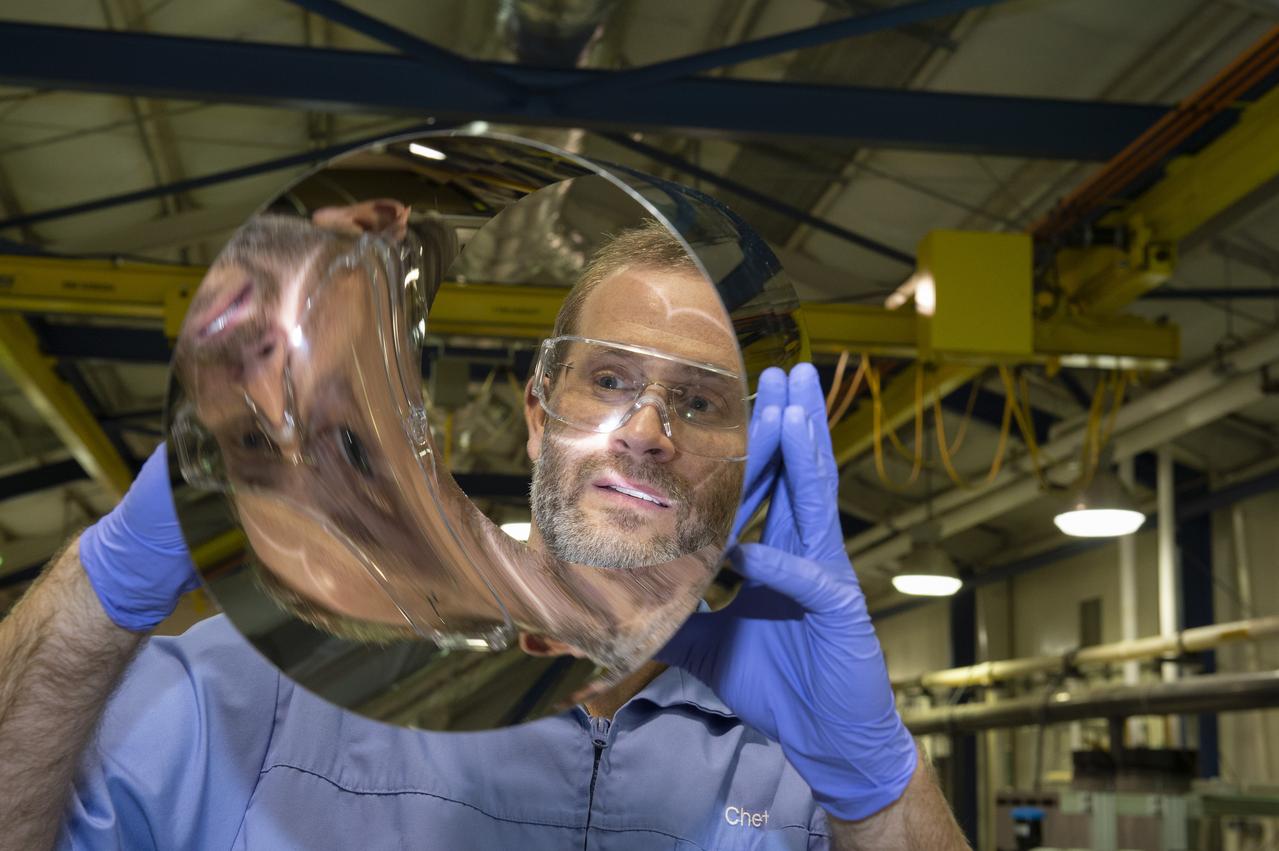
X-RAY MIRROR REPLICATION AND SHELL SEPARATION PROCESS: CHET SPEEGLE, JOHN HOOD, KEITH BOWEN, CARL WIDRIG, RATANA MEEKHAM, AMY MEEKHAM

The primary mirror of NASA's James Webb Space Telescope consisting of 18 hexagonal mirrors looks like a giant puzzle piece standing in the massive clean room of NASA's Goddard Space Flight Center in Greenbelt, Maryland. Appropriately, combined with the rest of the observatory, the mirrors will help piece together puzzles scientists have been trying to solve throughout the cosmos. Webb's primary mirror will collect light for the observatory in the scientific quest to better understand our solar system and beyond. Using these mirrors and Webb's infrared vision scientists will peer back over 13.5 billion years to see the first stars and galaxies forming out of the darkness of the early universe. Unprecedented infrared sensitivity will help astronomers to compare the faintest, earliest galaxies to today's grand spirals and ellipticals, helping us to understand how galaxies assemble over billions of years. Webb will see behind cosmic dust clouds to see where stars and planetary systems are being born. It will also help reveal information about atmospheres of planets outside our solar system, and perhaps even find signs of the building blocks of life elsewhere in the universe. The Webb telescope was mounted upright after a "center of curvature" test conducted at Goddard. This initial center of curvature test ensures the integrity and accuracy, and test will be repeated later to verify those same properties after the structure undergoes launch environment testing. In the photo, two technicians stand before the giant primary mirror. For information on the Webb's Center of Curvature test, visit: <a href="http://go.nasa.gov/2fidD9S" rel="nofollow">go.nasa.gov/2fidD9S</a> Credit: NASA/Goddard/Chris Gunn <b><a href="http://www.nasa.gov/audience/formedia/features/MP_Photo_Guidelines.html" rel="nofollow">NASA image use policy.</a></b> <b><a href="http://www.nasa.gov/centers/goddard/home/index.html" rel="nofollow">NASA Goddard Space Flight Center</a></b> enables NASA’s mission through four scientific endeavors: Earth Science, Heliophysics, Solar System Exploration, and Astrophysics. Goddard plays a leading role in NASA’s accomplishments by contributing compelling scientific knowledge to advance the Agency’s mission. <b>Follow us on <a href="http://twitter.com/NASAGoddardPix" rel="nofollow">Twitter</a></b> <b>Like us on <a href="http://www.facebook.com/pages/Greenbelt-MD/NASA-Goddard/395013845897?ref=tsd" rel="nofollow">Facebook</a></b> <b>Find us on <a href="http://instagrid.me/nasagoddard/?vm=grid" rel="nofollow">Instagram</a></b>
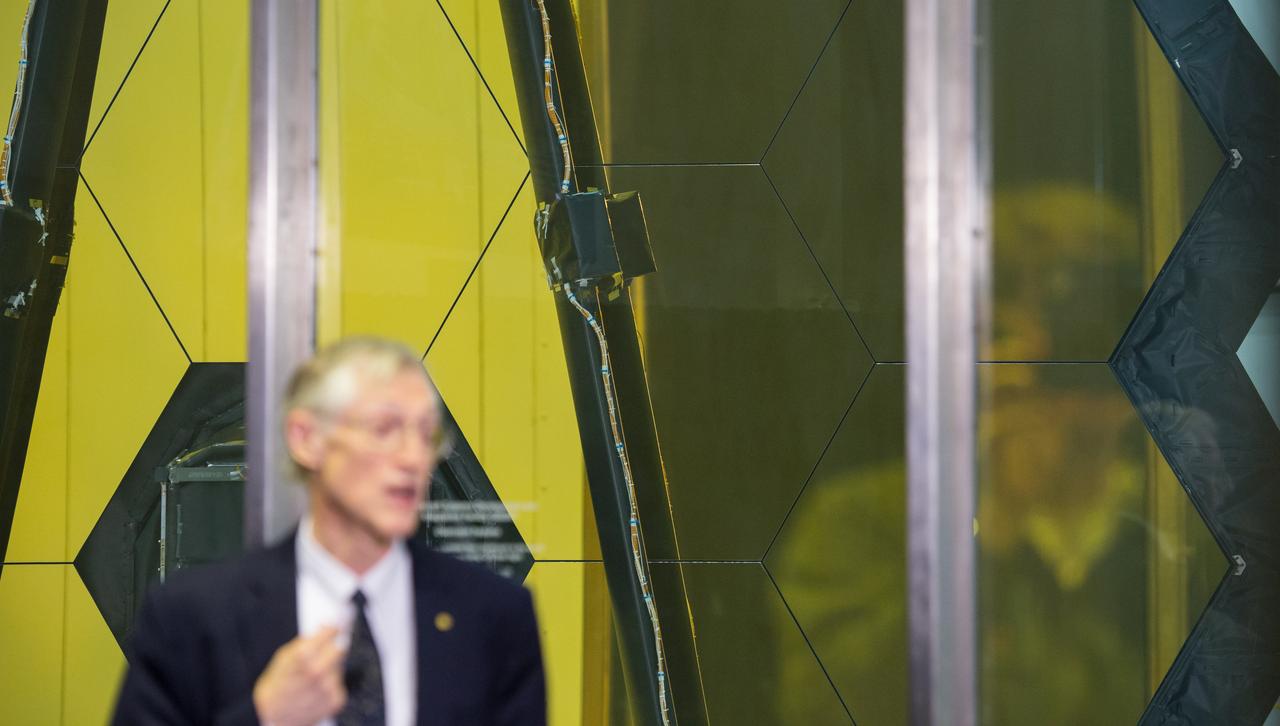
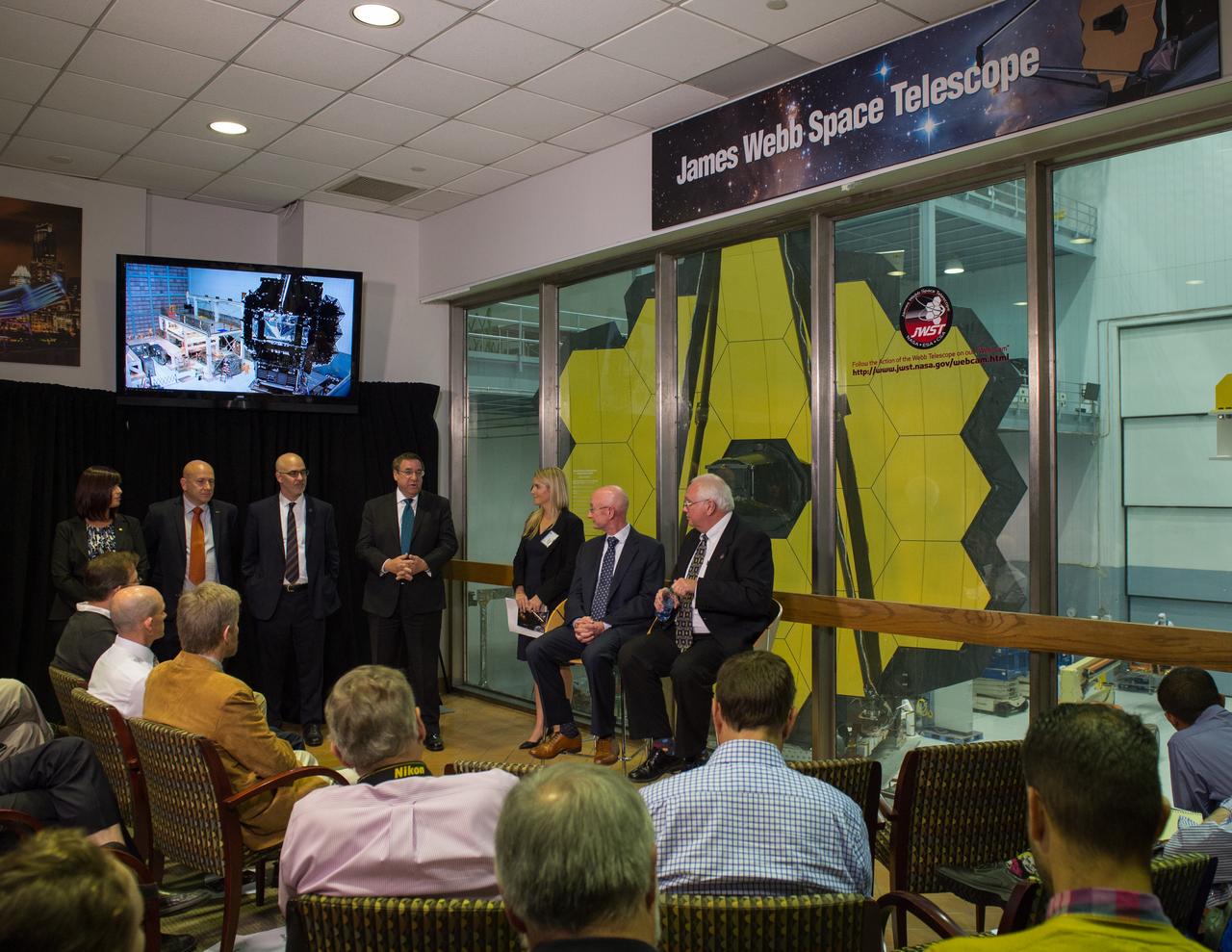
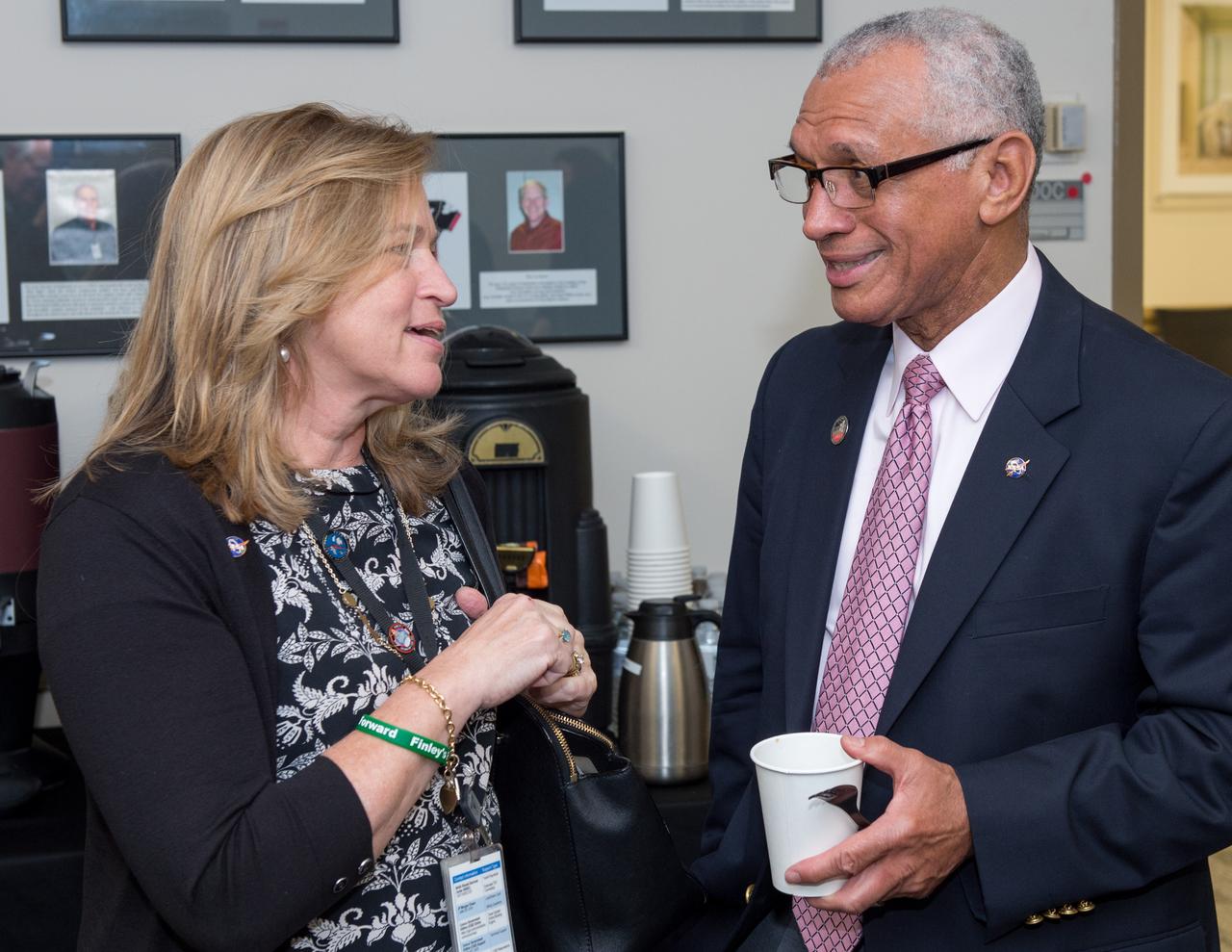
Media Invited to Rare View of NASA's James Webb Space Telescope Mirrors
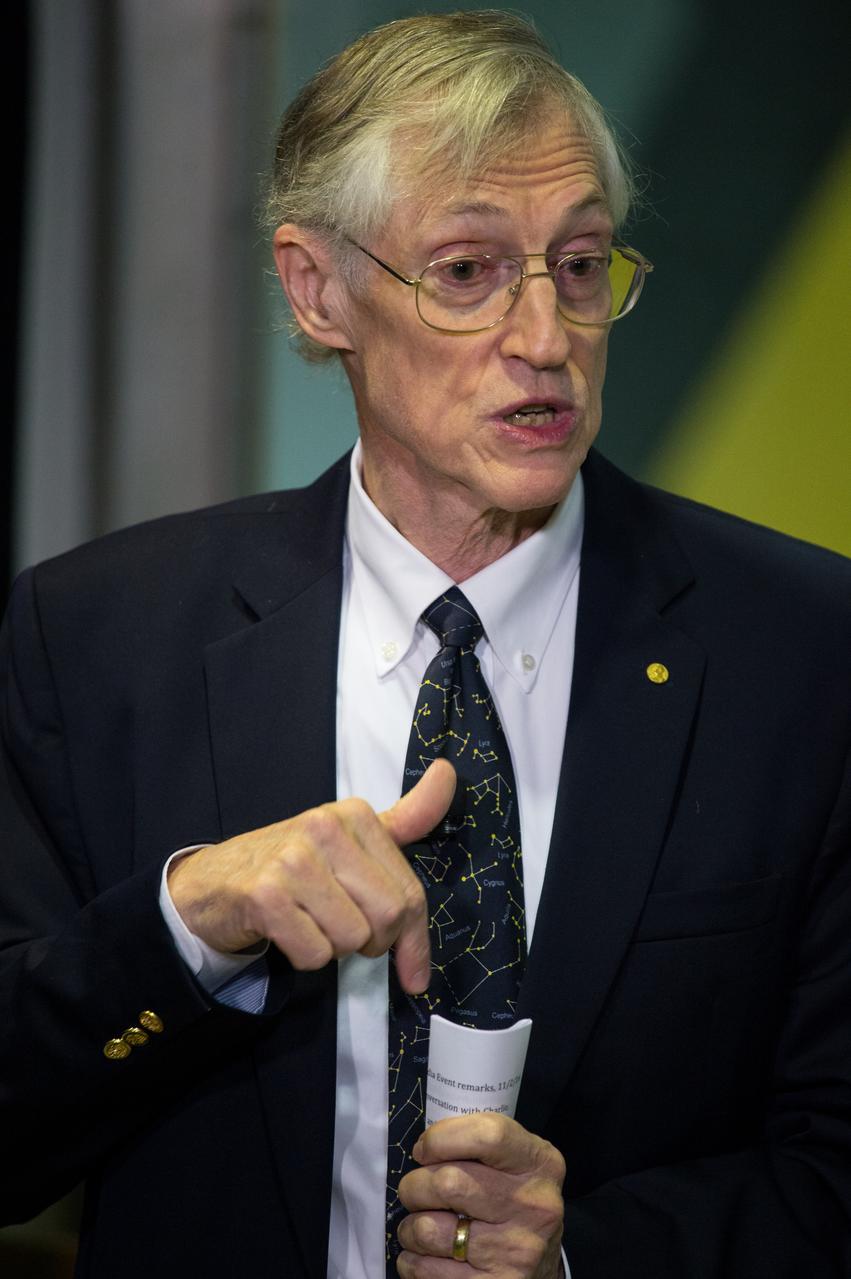
Media Invited to Rare View of NASA's James Webb Space Telescope Mirrors
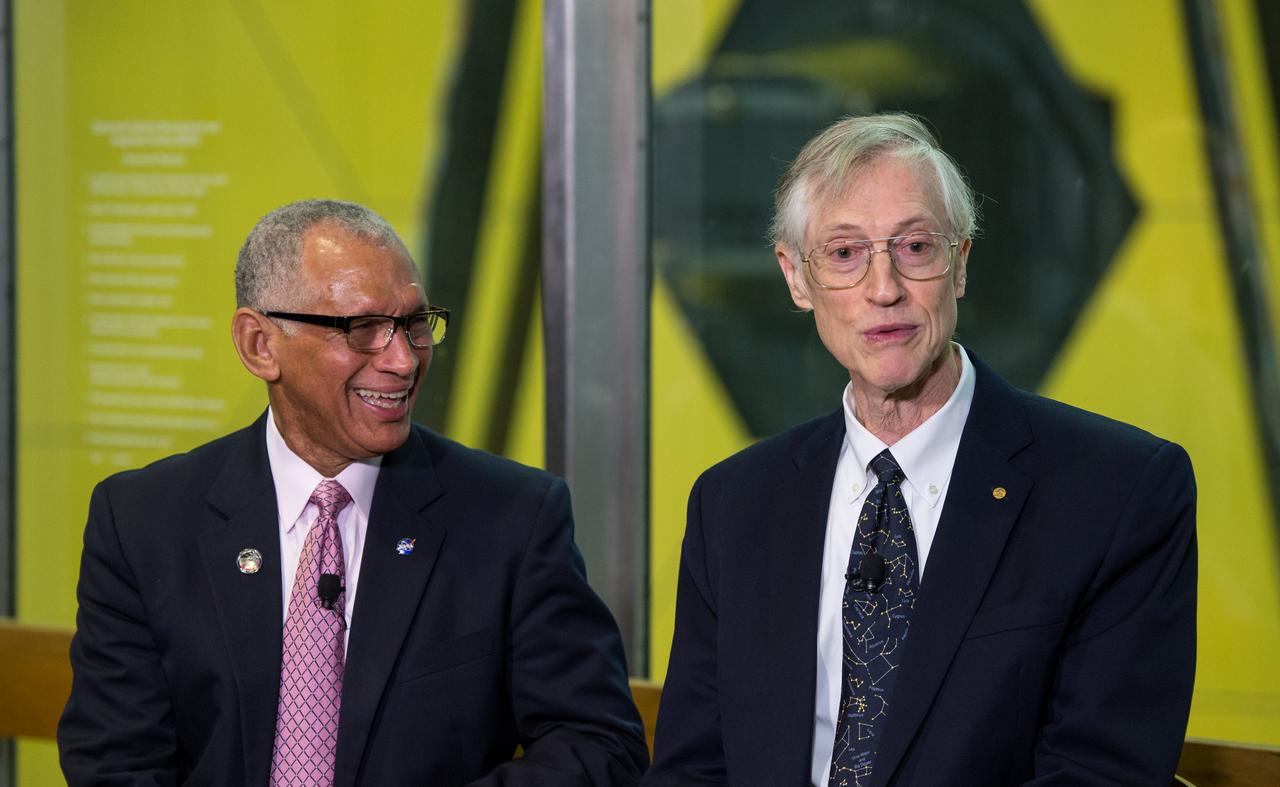
Media Invited to Rare View of NASA's James Webb Space Telescope Mirrors
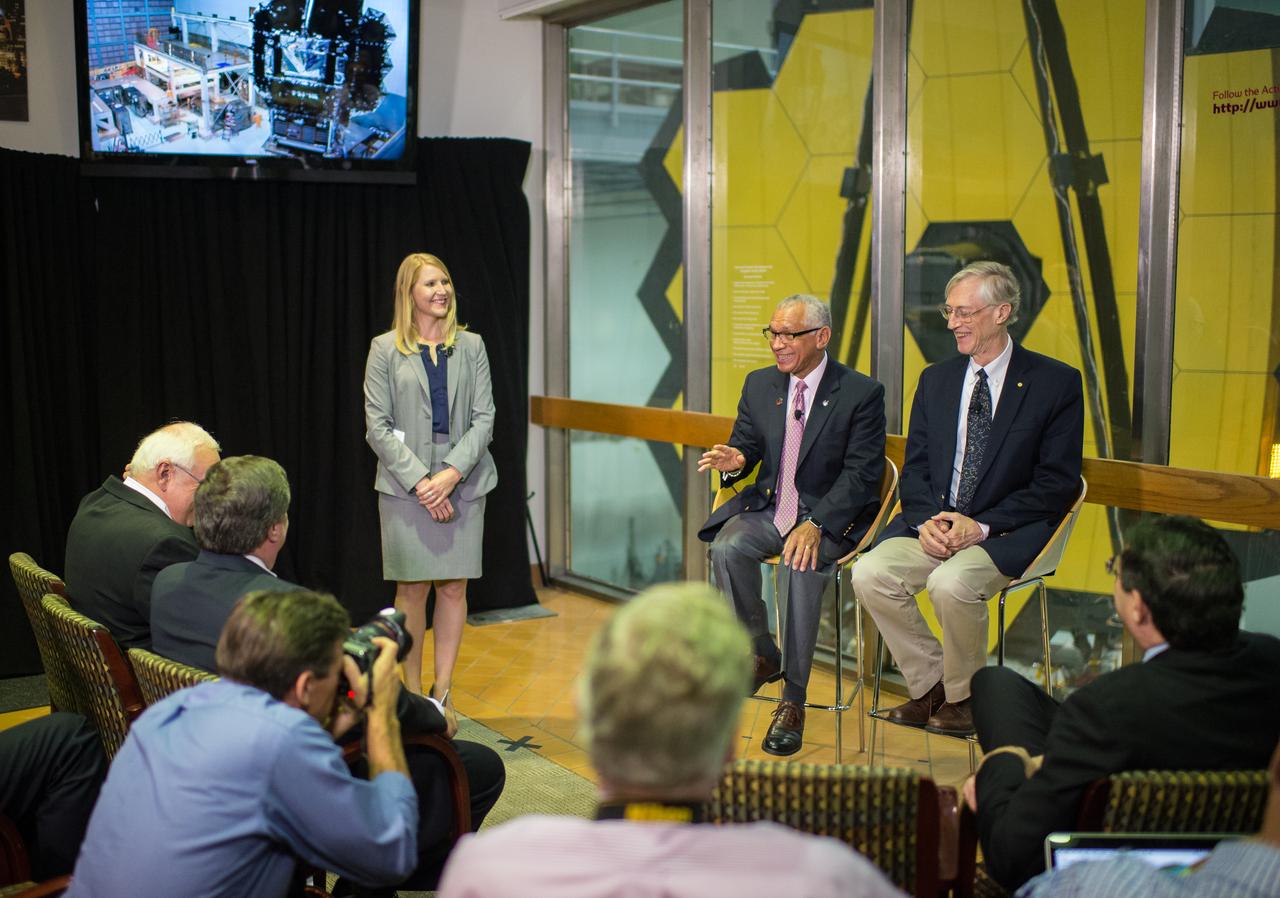
Media Invited to Rare View of NASA's James Webb Space Telescope Mirrors
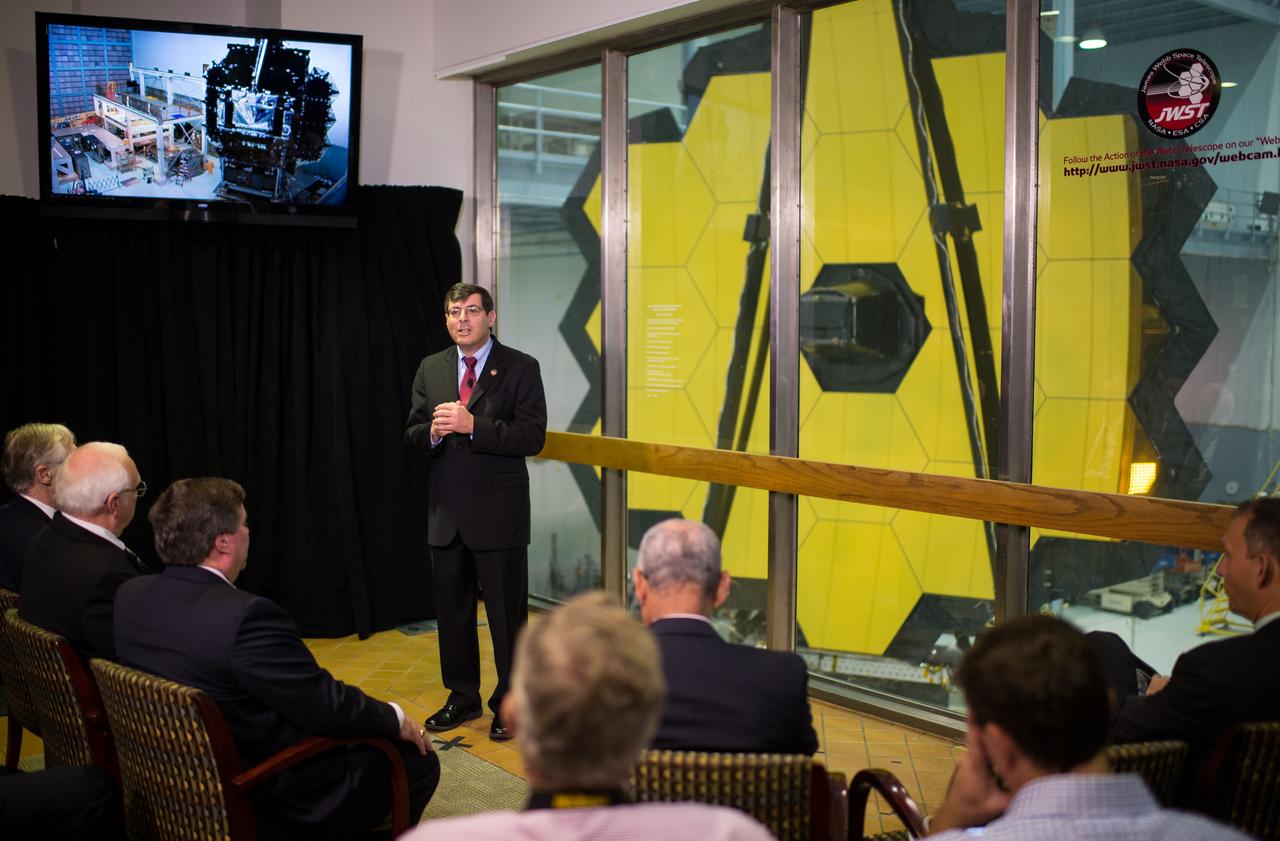
Media Invited to Rare View of NASA's James Webb Space Telescope Mirrors
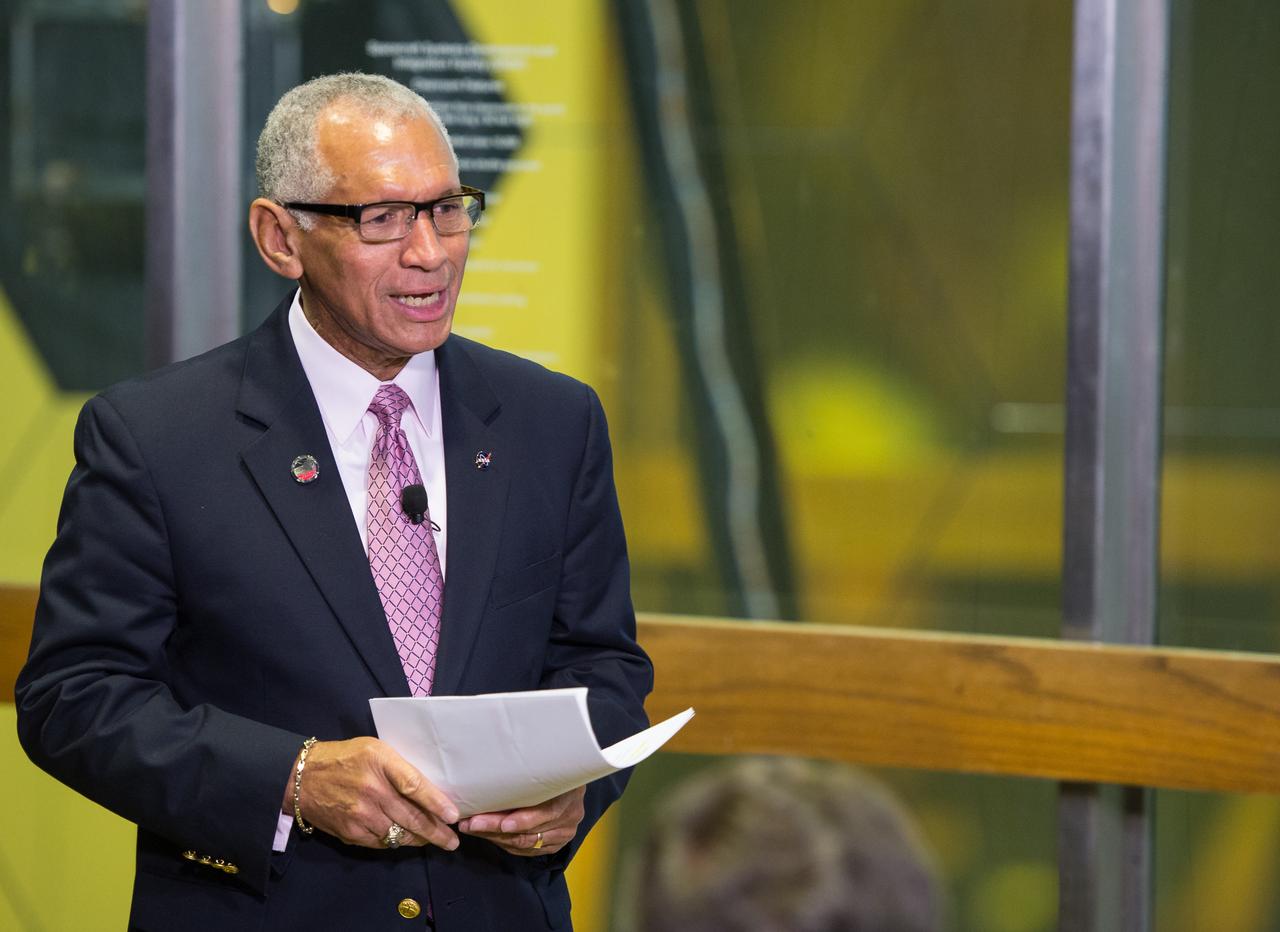
Media Invited to Rare View of NASA's James Webb Space Telescope Mirrors
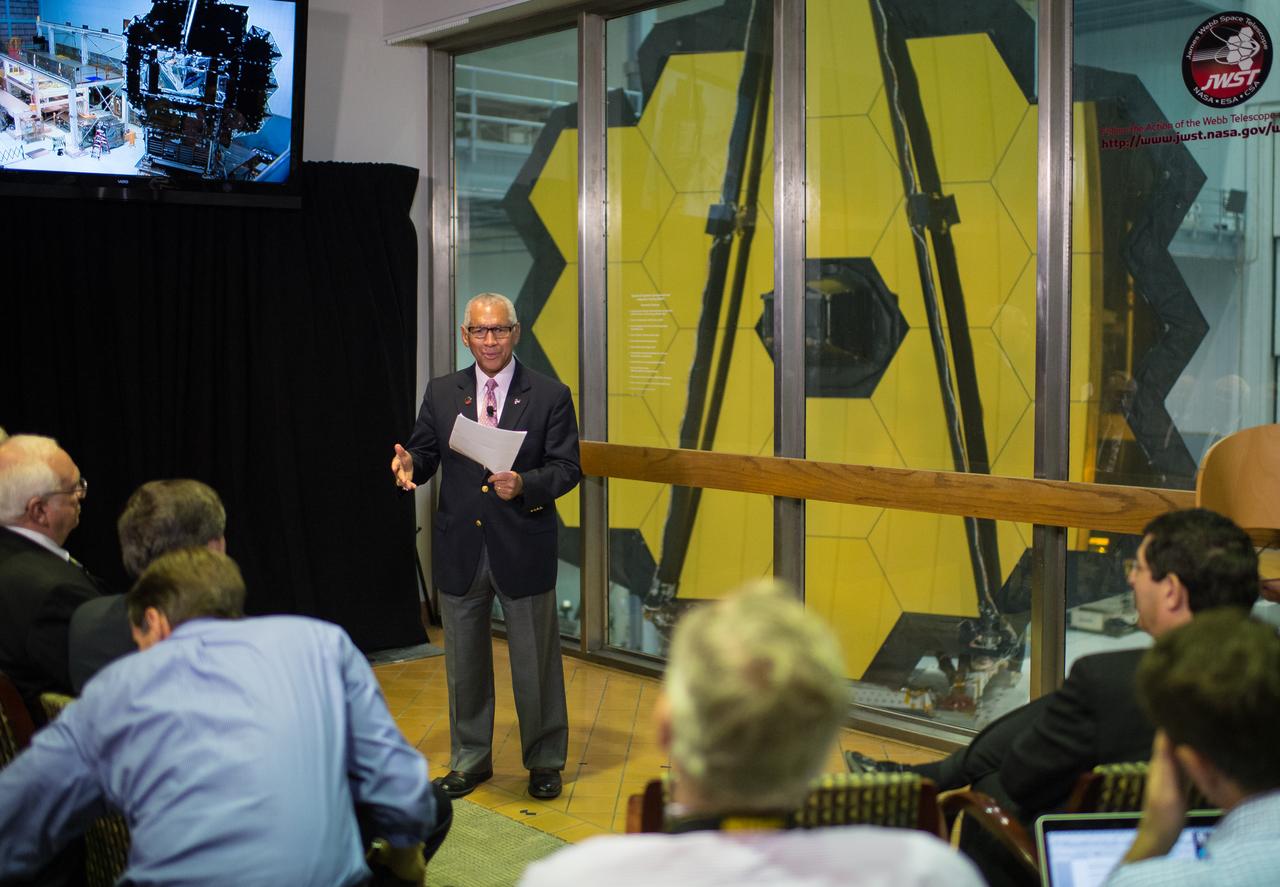
Media Invited to Rare View of NASA's James Webb Space Telescope Mirrors
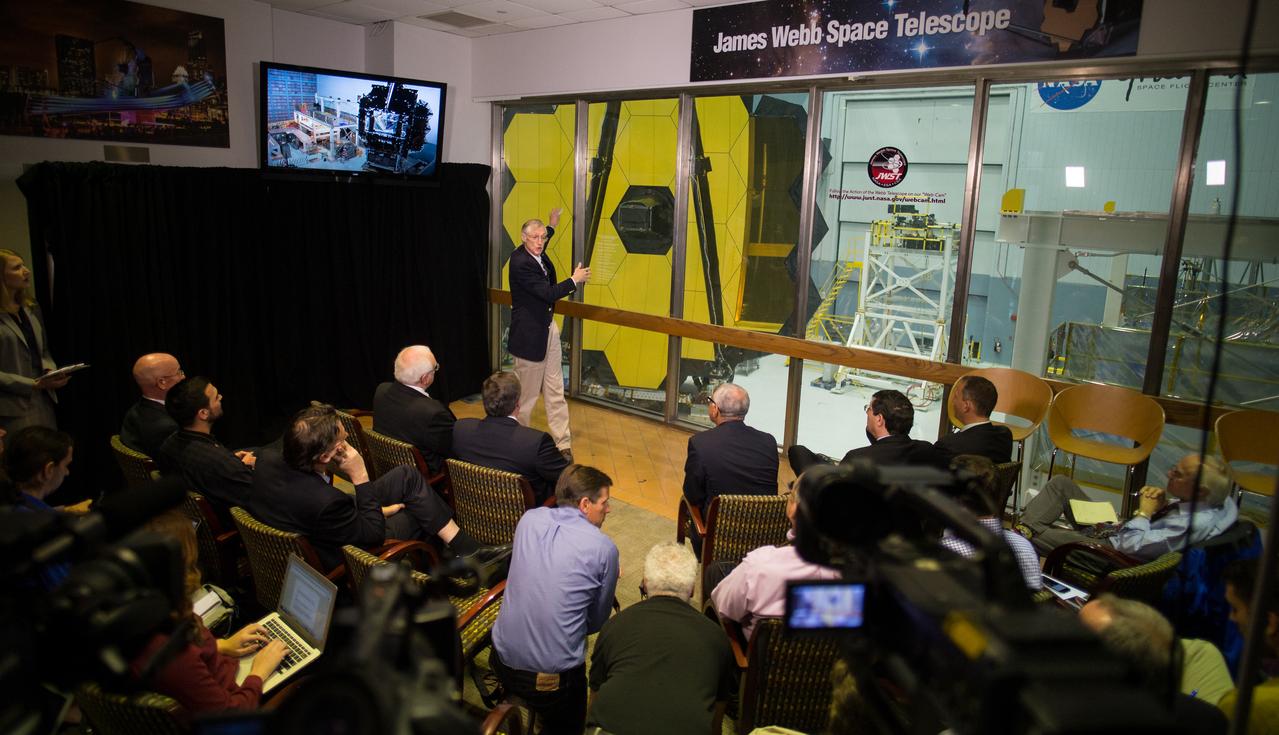
Media Invited to Rare View of NASA's James Webb Space Telescope Mirrors
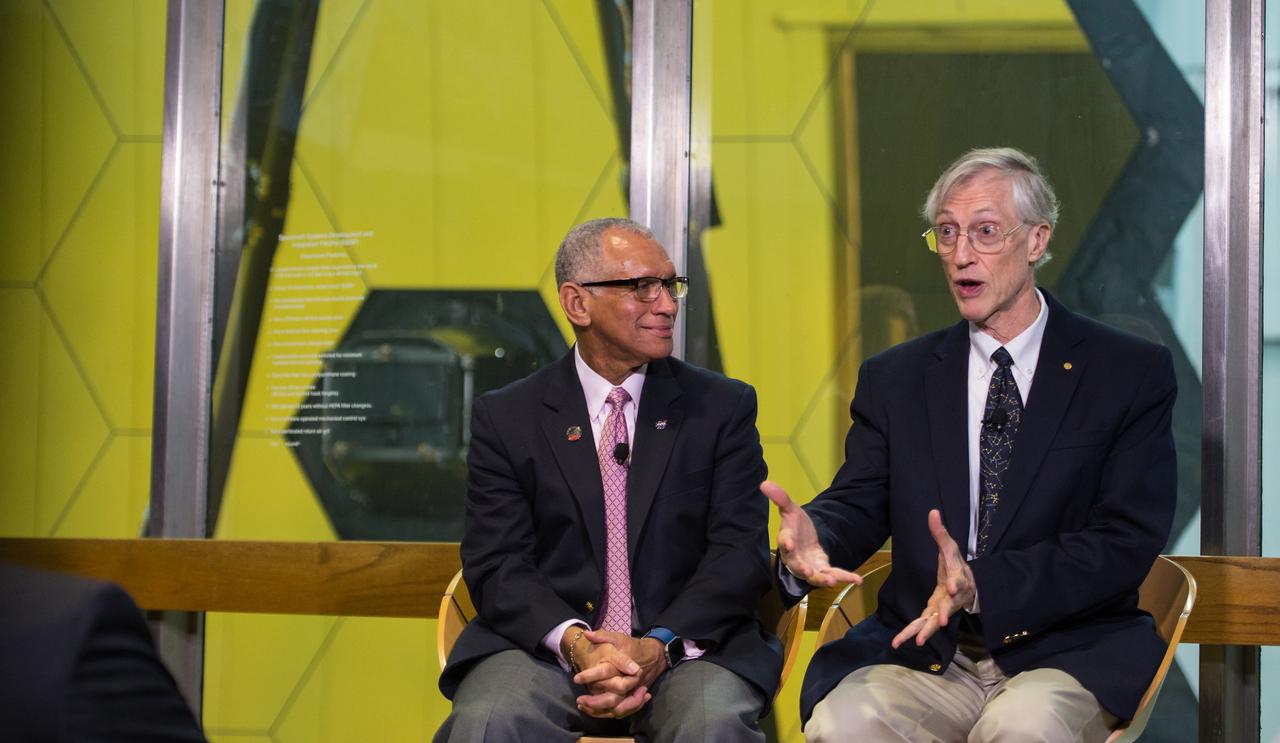
Media Invited to Rare View of NASA's James Webb Space Telescope Mirrors
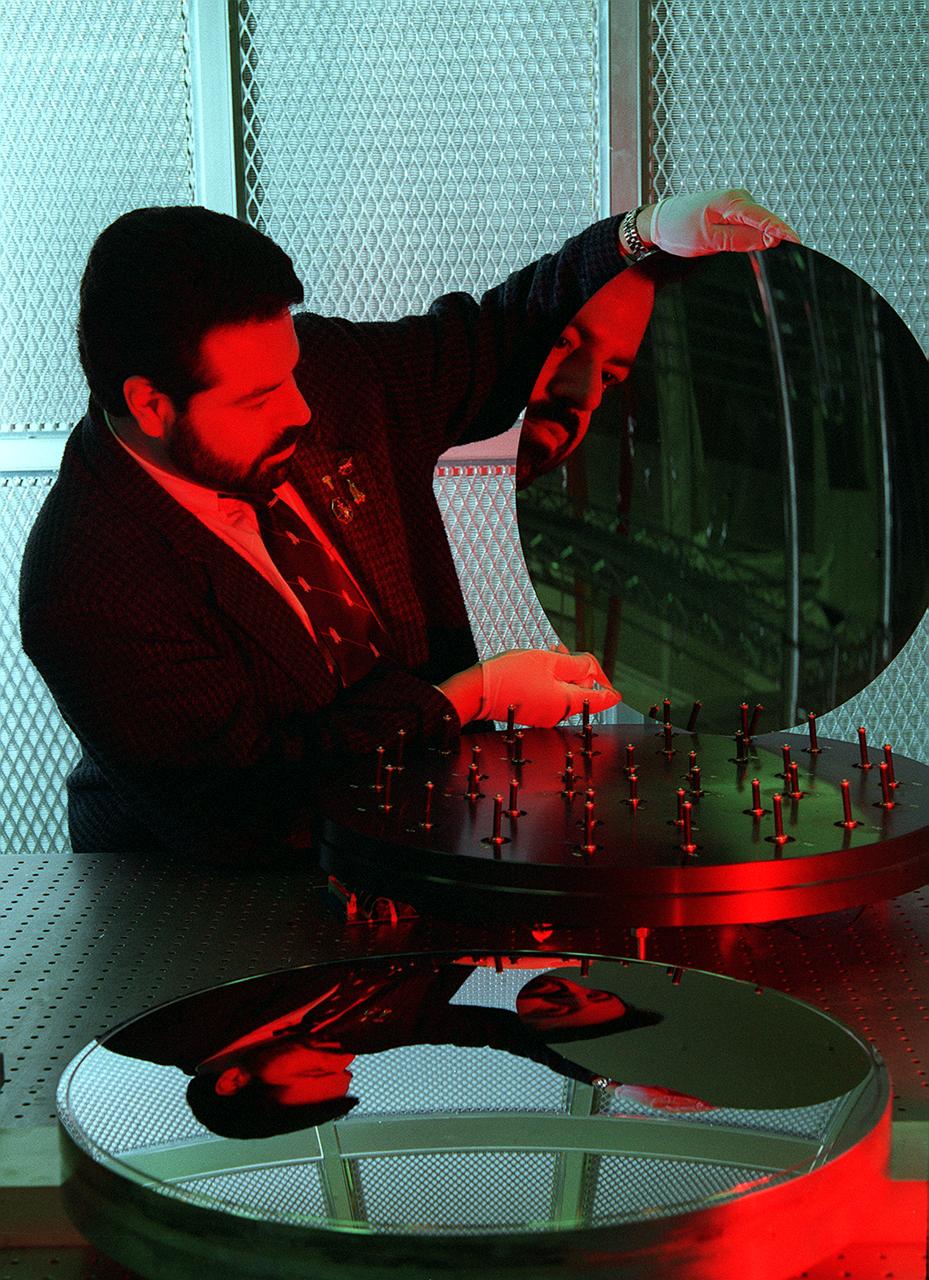
NASA's Space Optics Manufacturing Center has been working to expand our view of the universe via sophisticated new telescopes. The Optics Center's goal is to develop low-cost, advanced space optics technologies for the NASA program in the 21st century - including the long-term goal of imaging Earth-like planets in distant solar systems. To reduce the cost of mirror fabrication, Marshall Space Flight Center (MSFC) has developed replication techniques, the machinery, and materials to replicate electro-formed nickel mirrors. The process allows fabricating precisely shaped mandrels to be used and reused as masters for replicating high-quality mirrors. Dr. Joe Ritter examines a replicated electro-formed nickel-alloy mirror which exemplifies the improvements in mirror fabrication techniques, with benefits such as dramtic weight reduction that have been achieved at the Marshall Space Flight Center's Space Optics Manufacturing Technology Center (SOMTC).
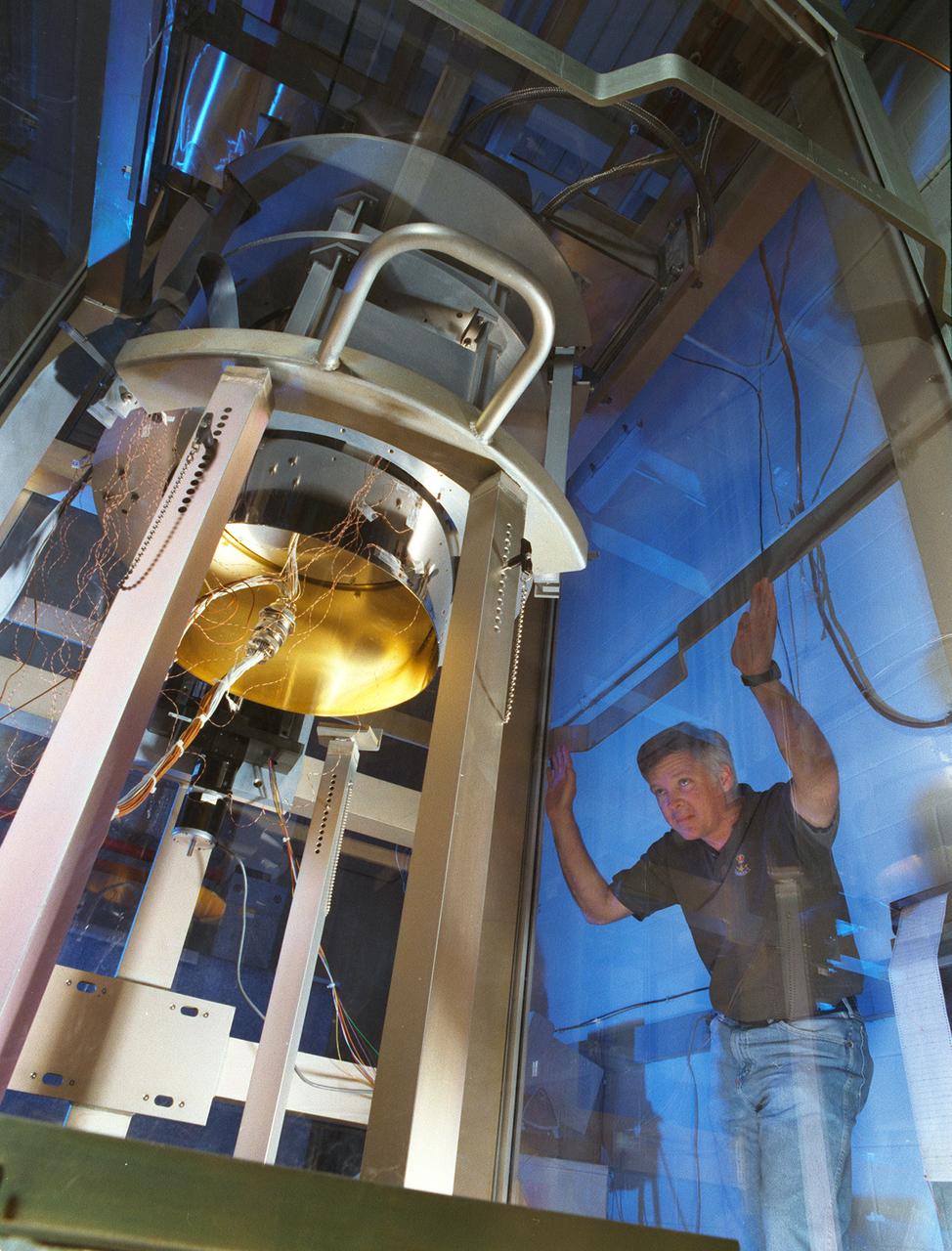
NASA's Space Optics Manufacturing Center has been working to expand our view of the universe via sophisticated new telescopes. The Optics Center's goal is to develop low-cost, advanced space optics technologies for the NASA program in the 21st century - including the long-term goal of imaging Earth-like planets in distant solar systems. To reduce the cost of mirror fabrication, Marshall Space Flight Center (MSFC) has developed replication techniques, the machinery, and materials to replicate electro-formed nickel mirrors. Optics replication uses reusable forms, called mandrels, to make telescope mirrors ready for final finishing. MSFC optical physicist Bill Jones monitors a device used to chill a mandrel, causing it to shrink and separate from the telescope mirror without deforming the mirror's precisely curved surface.
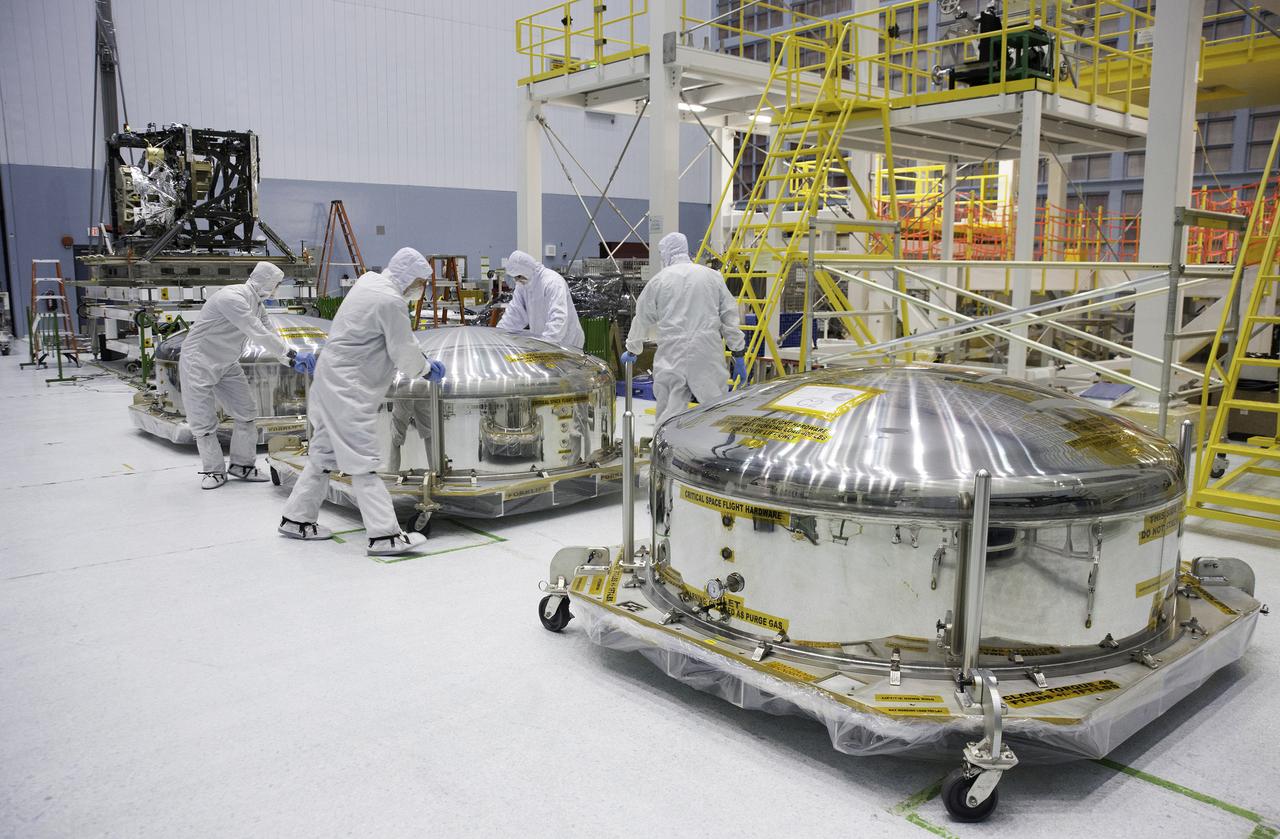
Three primary Webb telescope mirror segments sit in shipping cannisters and await opening. A mechanical integration engineer and technicians vent and prepare the mirror canisters for inspection. The mirrors have arrived at their new home at NASA, where they will be residing at the giant cleanroom at Goddard for a while as technicians check them out. Previously on Sept. 17, 2012, two other primary mirror segments arrived at Goddard and are currently being stored in the center's giant clean room. Credit: NASA/Desiree Stover <b><a href="http://www.nasa.gov/audience/formedia/features/MP_Photo_Guidelines.html" rel="nofollow">NASA image use policy.</a></b> <b><a href="http://www.nasa.gov/centers/goddard/home/index.html" rel="nofollow">NASA Goddard Space Flight Center</a></b> enables NASA’s mission through four scientific endeavors: Earth Science, Heliophysics, Solar System Exploration, and Astrophysics. Goddard plays a leading role in NASA’s accomplishments by contributing compelling scientific knowledge to advance the Agency’s mission. <b>Follow us on <a href="http://twitter.com/NASA_GoddardPix" rel="nofollow">Twitter</a></b> <b>Like us on <a href="http://www.facebook.com/pages/Greenbelt-MD/NASA-Goddard/395013845897?ref=tsd" rel="nofollow">Facebook</a></b> <b>Find us on <a href="http://instagram.com/nasagoddard?vm=grid" rel="nofollow">Instagram</a></b>
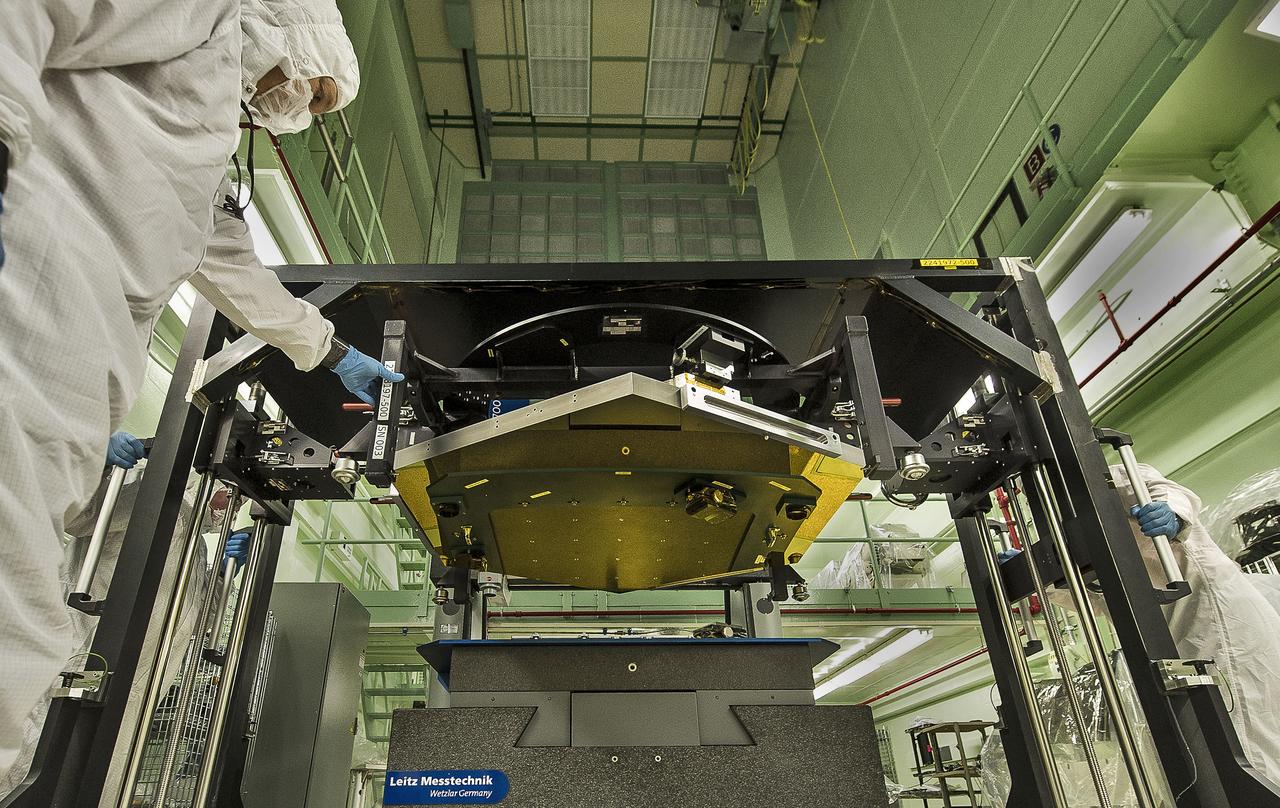
A James Webb Space Telescope flight spare primary mirror segment is loaded onto the CMM (Configuration Measurement Machine) at the CIAF (Calibration, Integration and Alignment Facility) at NASA's Goddard Space Flight Center in Greenbelt, Md. The CMM is used for precision measurements of the mirrors. These precision measurements must be accurate to 0.1 microns or 1/400th the thickness of a human hair. Image credit: NASA/Goddard/Chris Gunn <b><a href="http://www.nasa.gov/audience/formedia/features/MP_Photo_Guidelines.html" rel="nofollow">NASA image use policy.</a></b> <b><a href="http://www.nasa.gov/centers/goddard/home/index.html" rel="nofollow">NASA Goddard Space Flight Center</a></b> enables NASA’s mission through four scientific endeavors: Earth Science, Heliophysics, Solar System Exploration, and Astrophysics. Goddard plays a leading role in NASA’s accomplishments by contributing compelling scientific knowledge to advance the Agency’s mission. <b>Follow us on <a href="http://twitter.com/NASA_GoddardPix" rel="nofollow">Twitter</a></b> <b>Like us on <a href="http://www.facebook.com/pages/Greenbelt-MD/NASA-Goddard/395013845897?ref=tsd" rel="nofollow">Facebook</a></b> <b>Find us on <a href="http://instagram.com/nasagoddard?vm=grid" rel="nofollow">Instagram</a></b>
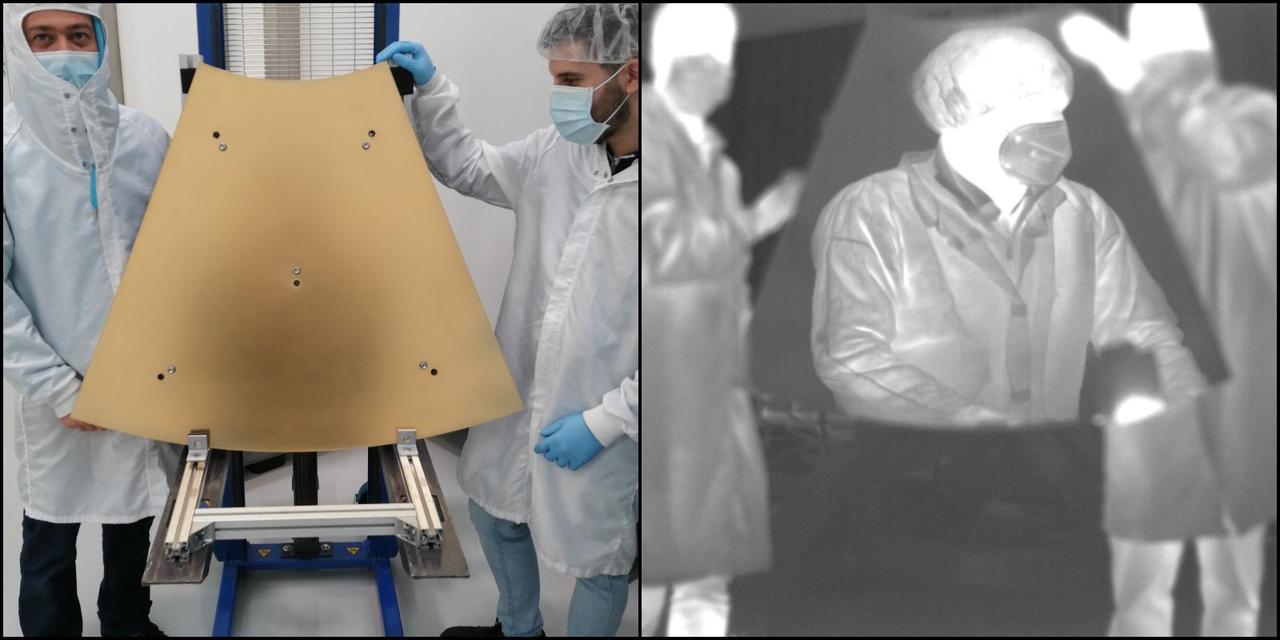
A gold-coated mirror panel on NASA's Astrophysics Stratospheric Telescope for High Spectral Resolution Observations at Submillimeter-wavelengths mission, or ASTHROS, appears blurry to the naked eye, as seen at left. But when photographed with an infrared camera, right, the panel reflects a technician's image as clearly as if the person were looking in a mirror. NASA contracted Media Lario, an optics company in Bosisio Parini, Italy, to design and produce ASTHROS' full telescope unit, including the primary mirror, a secondary mirror, and supporting structure (called the cradle). The cradle is shown here at Media Lario. The mission's main science goal is to study stellar feedback, the process by which living stars disperse and reshape clouds of gas and dust that may eventually form new stars. Feedback regulates star formation in many galaxies, and too much can halt star formation entirely. ASTHROS will look at several star-forming regions in our galaxy where feedback takes place, and at distant galaxies containing millions of stars to see how feedback plays out at large scales and in different environments. https://photojournal.jpl.nasa.gov/catalog/PIA25170
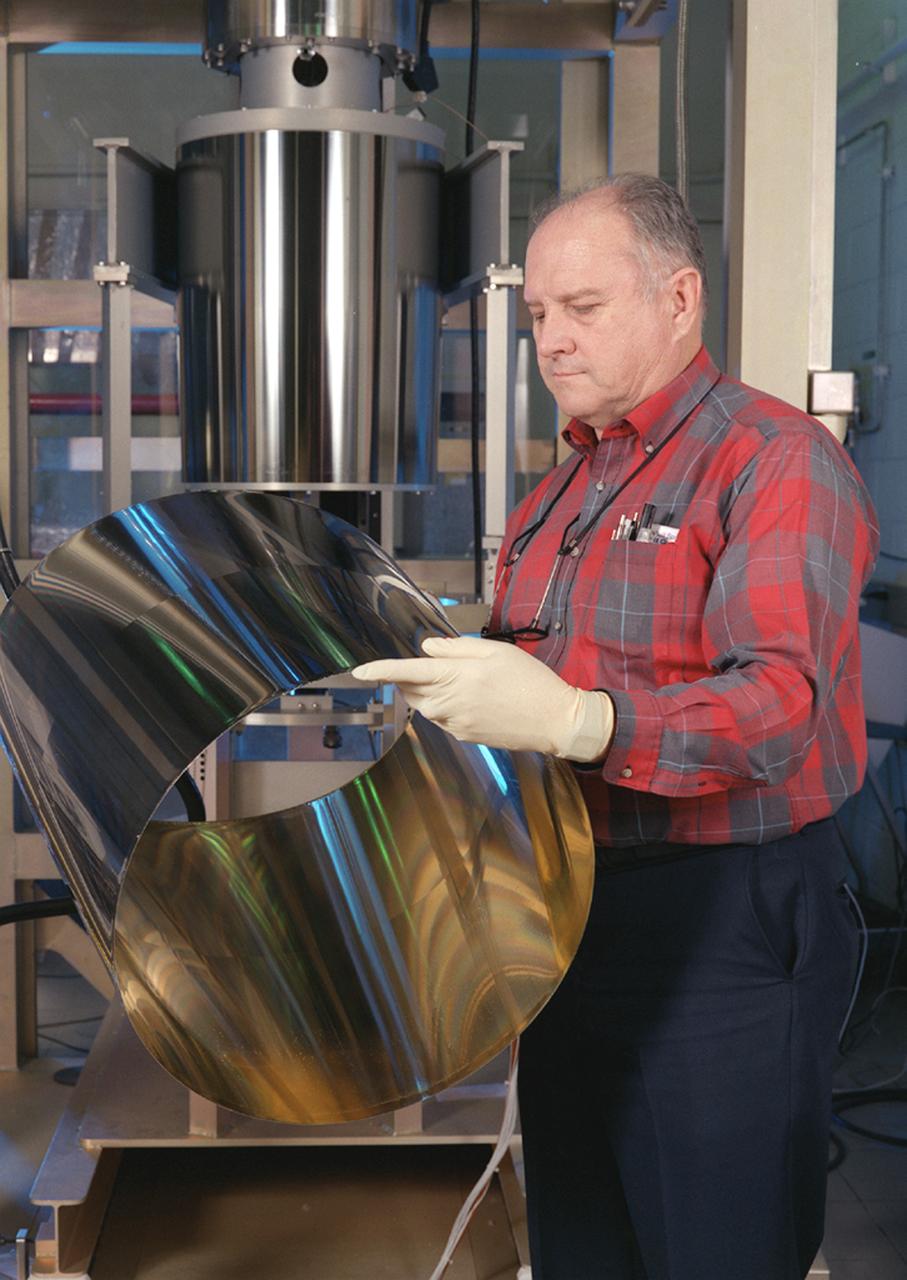
NASA's Space Optics Manufacturing Center has been working to expand our view of the universe via sophisticated new telescopes. The Optics Center's goal is to develop low-cost, advanced space optics technologies to the NASA program in the 21st century - including the long-term goal of imaging Earth-like planets in distant solar systems. To reduce the cost of mirror fabrication, Marshall Space Flight Center (MSFC) has developed replication techniques, the machinery, and materials to replicate electro-formed nickel mirrors. The process allows fabricating precisely shaped mandrels to be used and reused as masters for replicating high-quality mirrors. Photograph shows J.R. Griffith inspecting a replicated x-ray mirror mandrel.
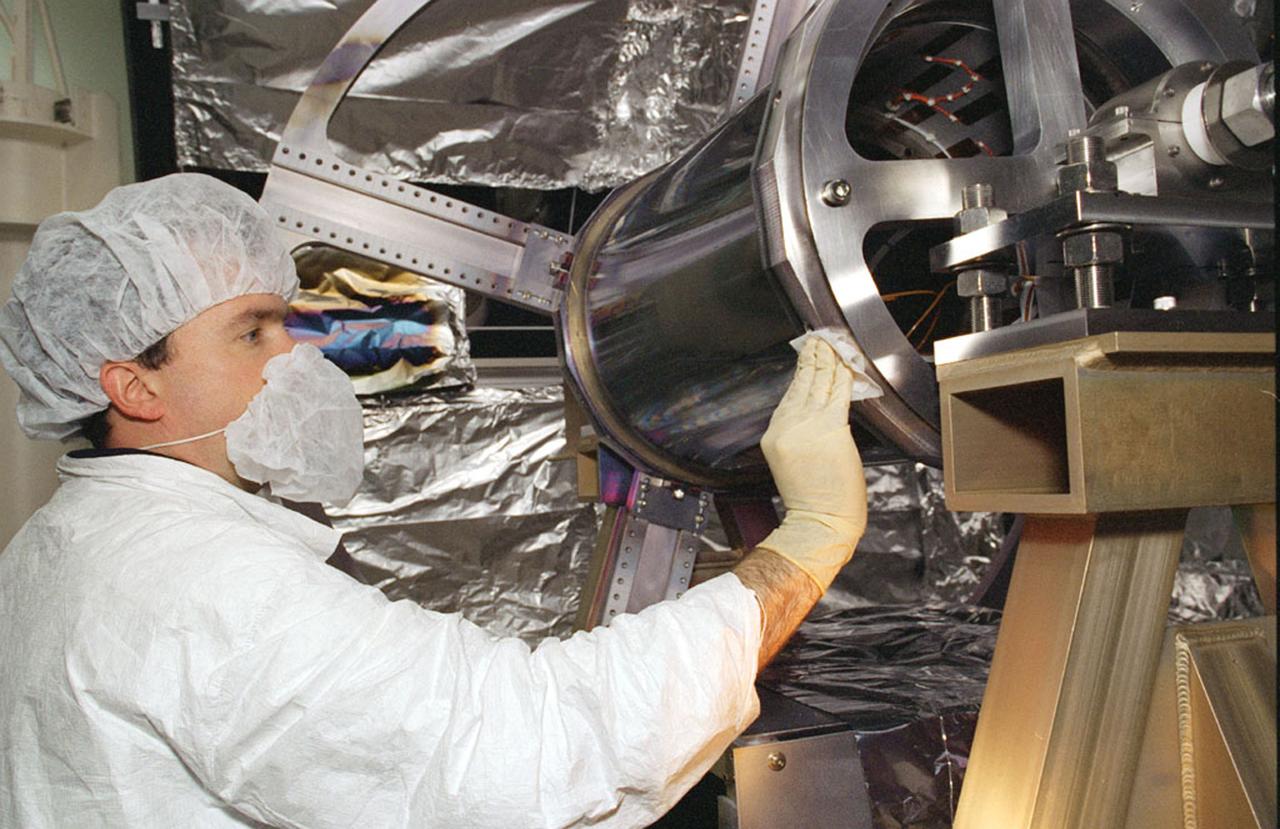
NASA's Space Optics Manufacturing Center has been working to expand our view of the universe via sophisticated new telescopes. The Optics Center's goal is to develop low-cost, advanced space optics technologies for the NASA program in the 21st century - including the long-term goal of imaging Earth-like planets in distant solar systems. To reduce the cost of mirror fabrication, Marshall Space Flight Center (MSFC) has developed replication techniques, the machinery, and materials to replicate electro-formed nickel mirrors. The process allows fabricating precisely shaped mandrels to be used and reused as masters for replicating high-quality mirrors. Image shows Dr. Alan Shapiro cleaning mirror mandrel to be applied with highly reflective and high-density coating in the Large Aperture Coating Chamber, MFSC Space Optics Manufacturing Technology Center (SOMTC).
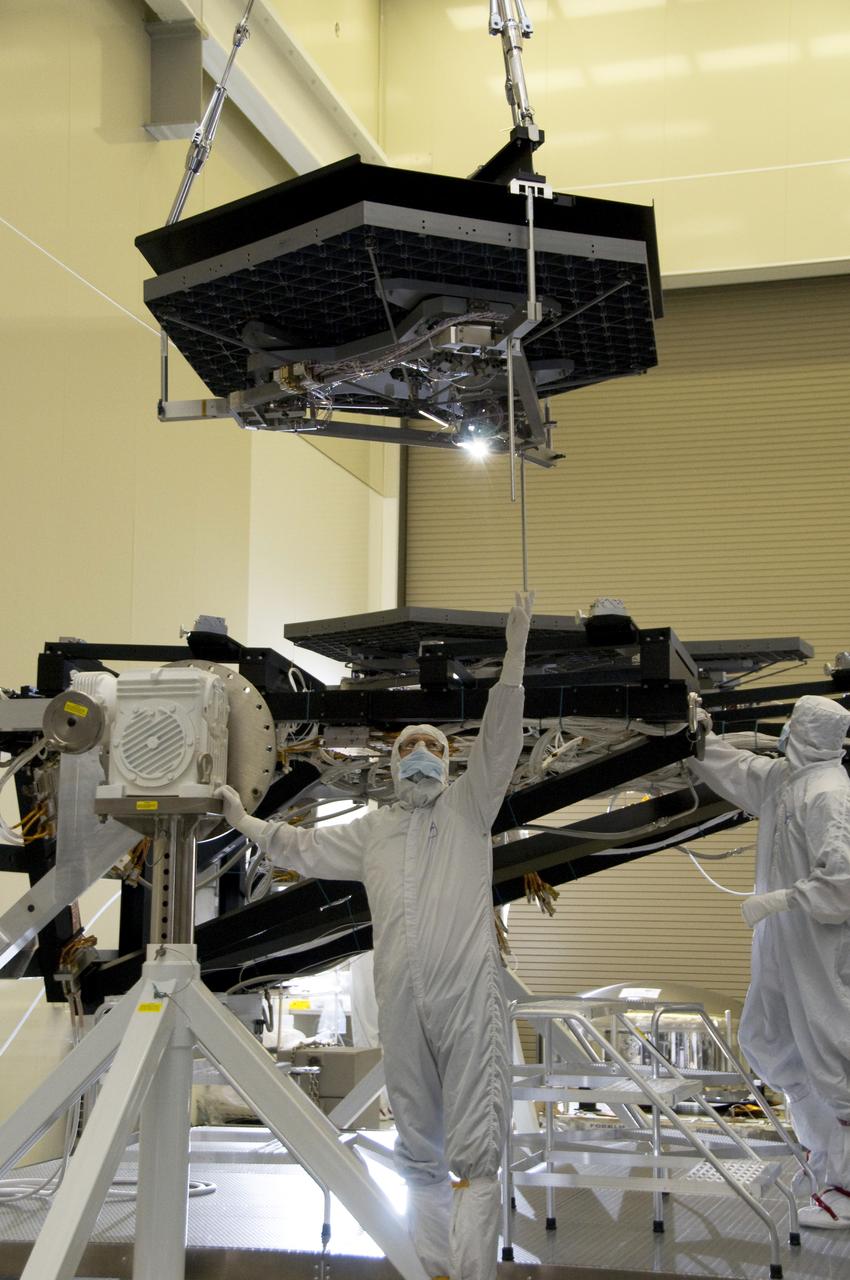
A PRIMARY MIRROR SEGMENT ASSEMBLY BEING CAREFULLY LOWERED TO ITS TEST STAND POSITION ALONGSIDE PREVIOUSLY INSTALLED MIRRORS
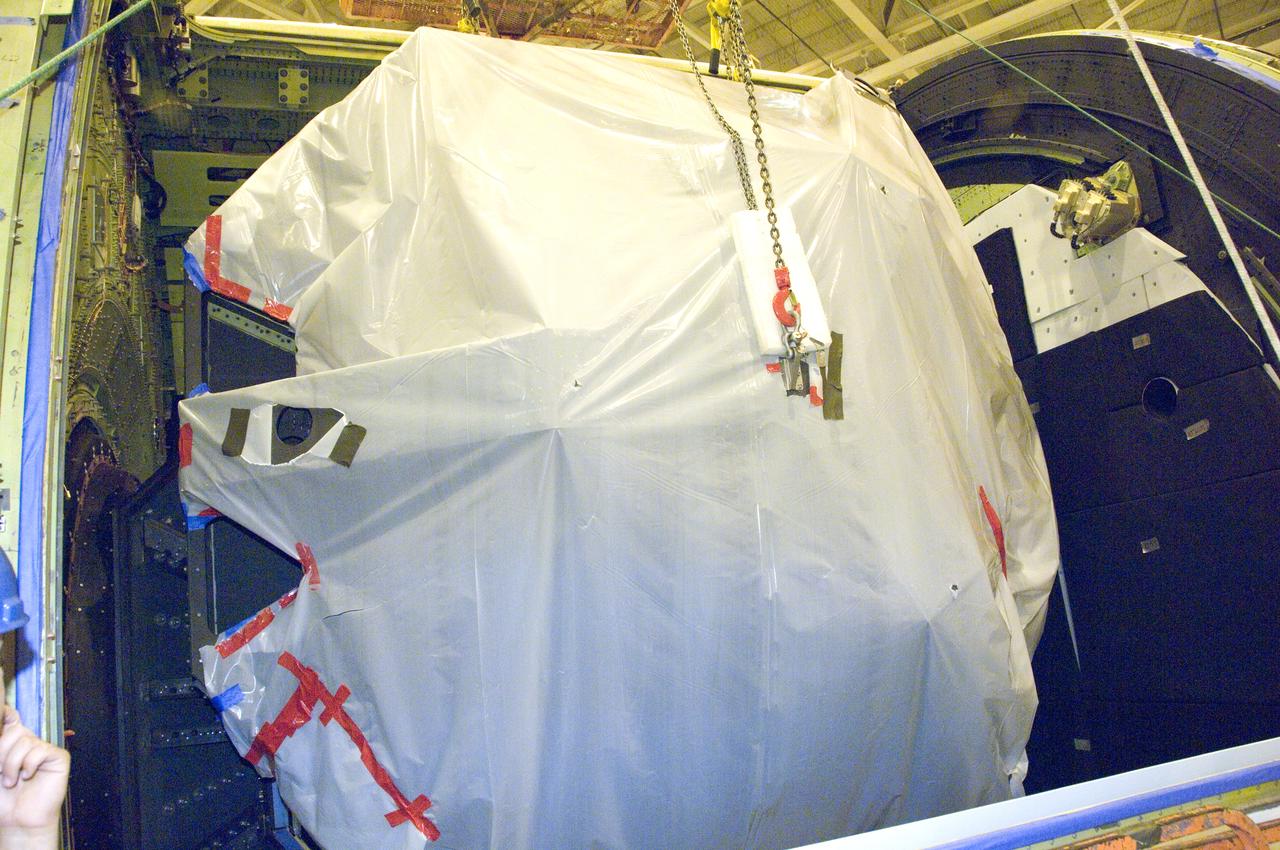
SOFIA's primary mirror is placed in the telescope cavity for reinstallation prior to telescope adjustments preparing SOFIA for first science.
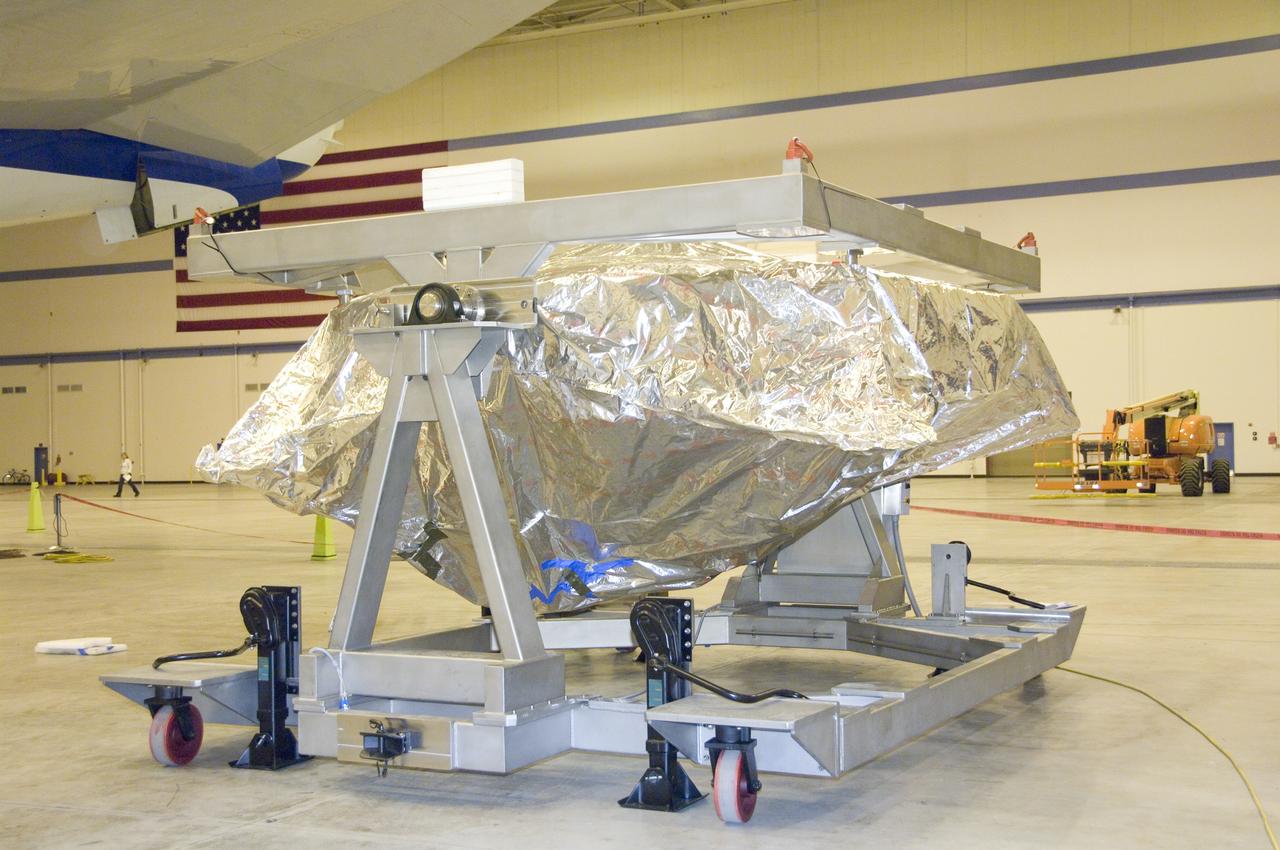
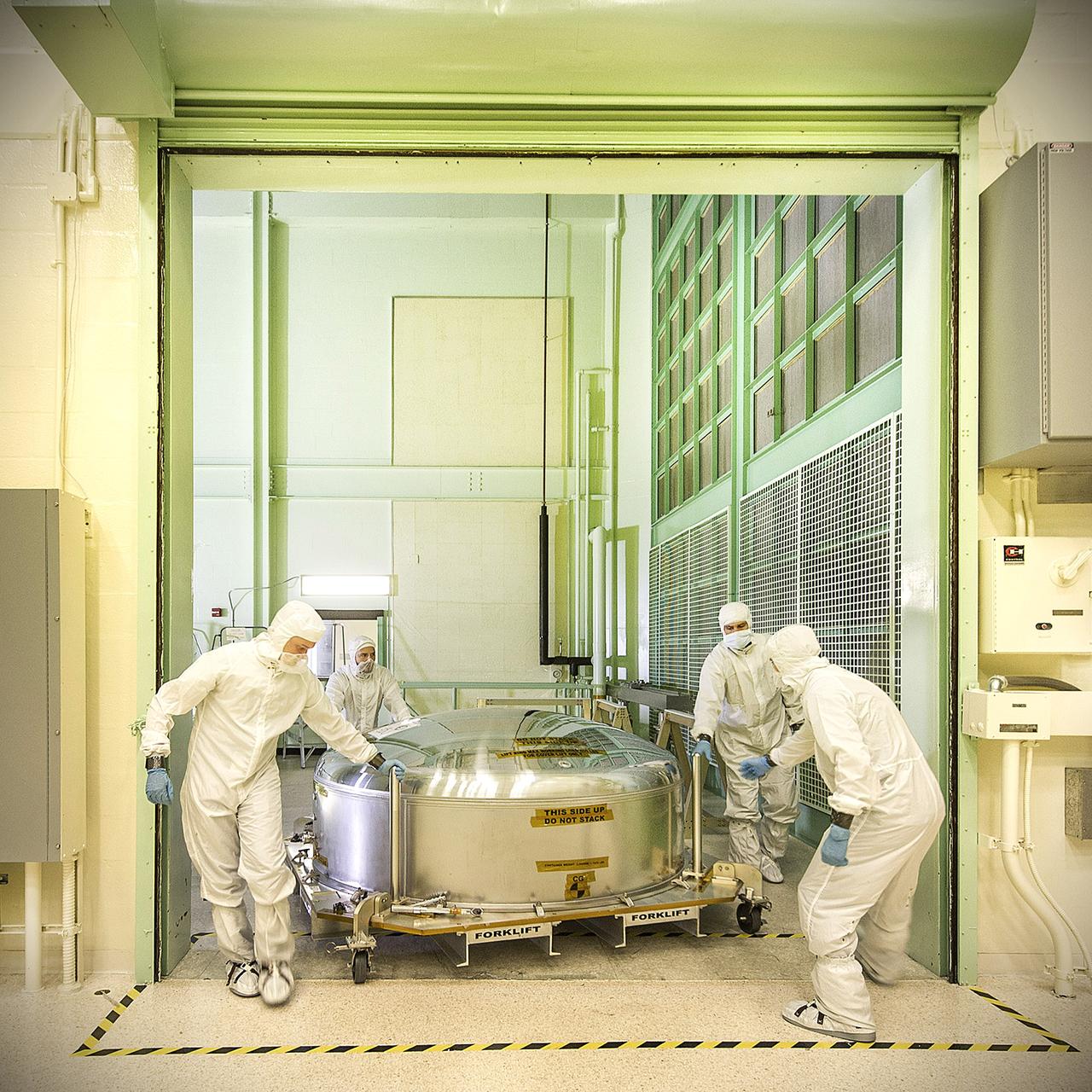
SOFIA's primary mirror assembly rests in its transportation cradle prior to reinstallation in NASA's airborne laboratory on Oct. 8, 2008.
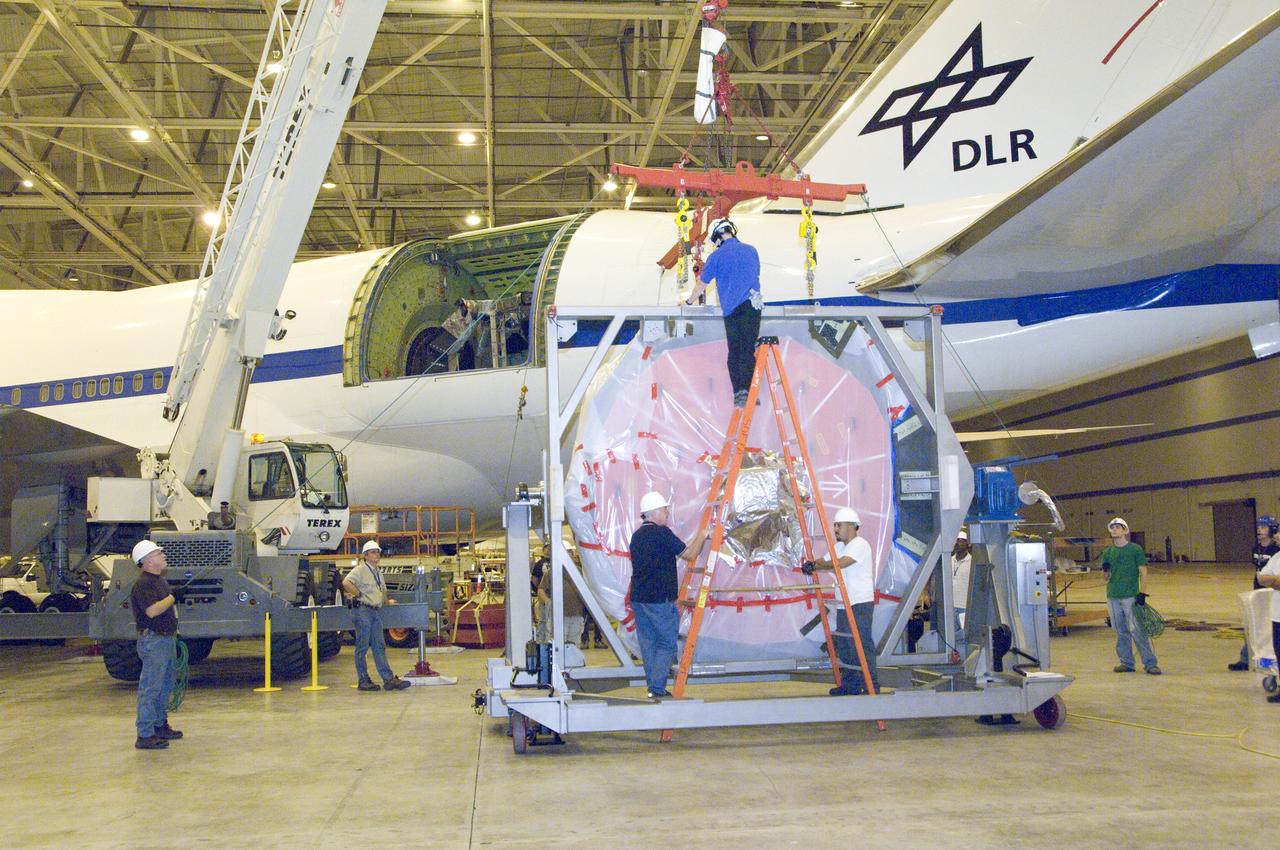
Engineers and technicians prepare SOFIA's German-built primary mirror assembly for reinstallation into NASA's 747SP airborne observatory.
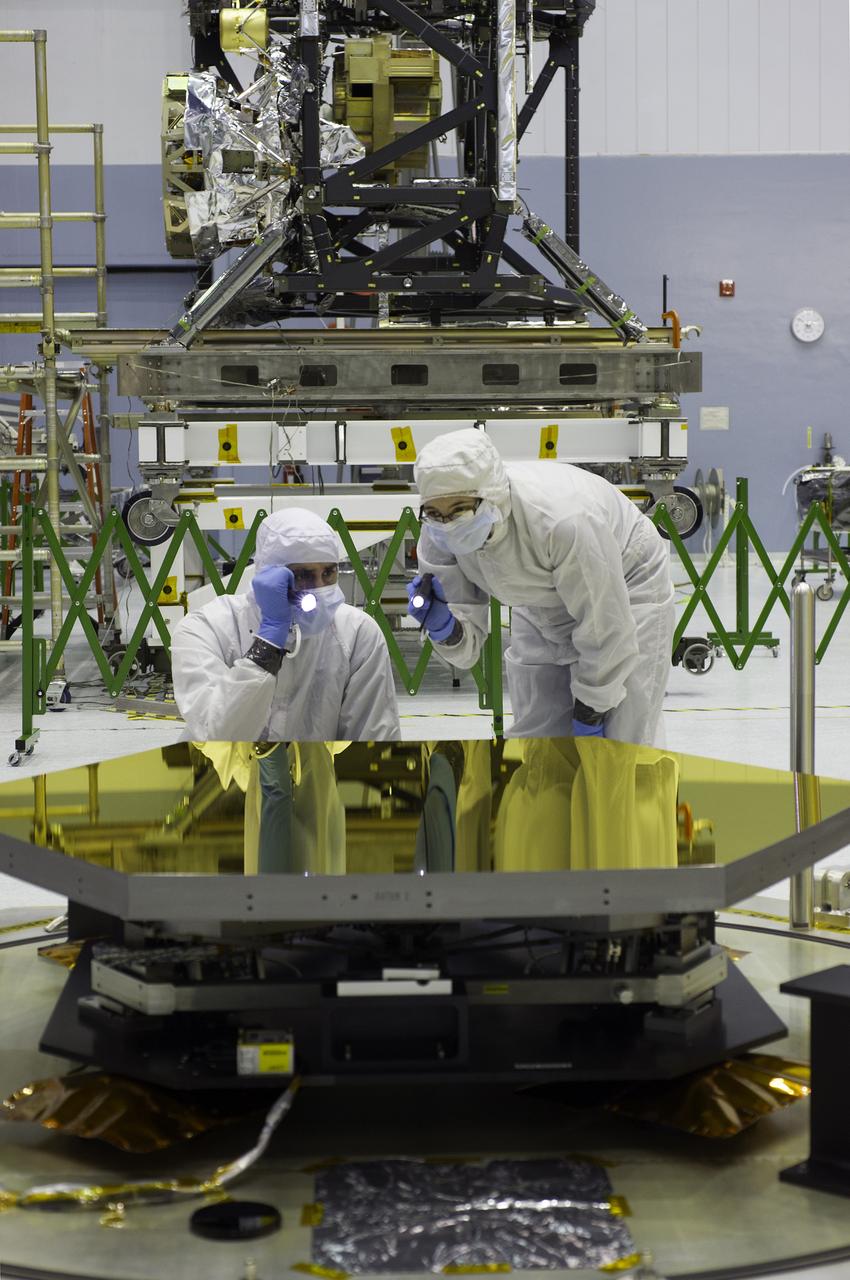
Webb telescope Quality Engineer Matt Magsamen and Product Assurance Engineer Jessica Lieberman inspect one of the primary mirror segments. The Webb telescope's third batch of flight mirrors now reside in the clean room at NASA's Goddard Space Flight Center in Greenbelt, Md. The latest arrivals included the seventh, eighth and ninth primary mirror segments. Credit: NASA/Chris Gunn <b><a href="http://www.nasa.gov/audience/formedia/features/MP_Photo_Guidelines.html" rel="nofollow">NASA image use policy.</a></b> <b><a href="http://www.nasa.gov/centers/goddard/home/index.html" rel="nofollow">NASA Goddard Space Flight Center</a></b> enables NASA’s mission through four scientific endeavors: Earth Science, Heliophysics, Solar System Exploration, and Astrophysics. Goddard plays a leading role in NASA’s accomplishments by contributing compelling scientific knowledge to advance the Agency’s mission. <b>Follow us on <a href="http://twitter.com/NASA_GoddardPix" rel="nofollow">Twitter</a></b> <b>Like us on <a href="http://www.facebook.com/pages/Greenbelt-MD/NASA-Goddard/395013845897?ref=tsd" rel="nofollow">Facebook</a></b> <b>Find us on <a href="http://instagram.com/nasagoddard?vm=grid" rel="nofollow">Instagram</a></b>
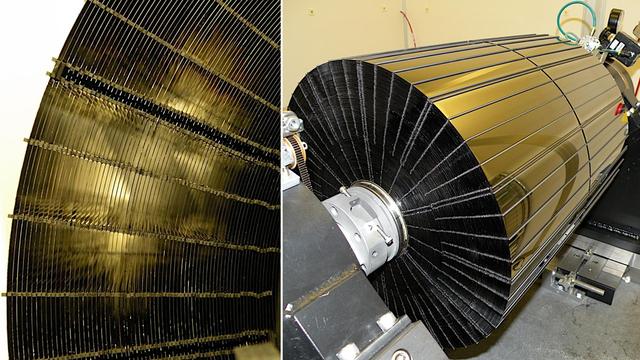
NASA Nuclear Spectroscopic Telescope Array, or NuSTAR, has a complex set of mirrors, or optics, that will help it see high-energy X-ray light in greater detail than ever before.
NASA's Space Optics Manufacturing Center has been working to expand our view of the universe via sophisticated new telescopes. The Optics Center's goal is to develop low-cost, advanced space optics technologies for the NASA program in the 21st century - including the long-term goal of imaging Earth-like planets in distant solar systems. To reduce the cost of mirror fabrication, Marshall Space Flight Center (MSFC) has developed replication techniques, the machinery, and materials to replicate electro-formed nickel mirrors. The process allows fabricating precisely shaped mandrels to be used and reused as masters for replicating high-quality mirrors. MSFC's Space Optics Manufacturing Technology Center (SOMTC) has grinding and polishing equipment ranging from conventional spindles to custom-designed polishers. These capabilities allow us to grind precisely and polish a variety of optical devices, including x-ray mirror mandrels. This image shows Charlie Griffith polishing the half-meter mandrel at SOMTC.
MARSHALL TEST ENGINEER HARLAN HAIGHT HELPS PULL JWST MIRROR ARRAY FROM CRYOGENICS CHAMBER.
This is the James Webb Space Telescope ETU (engineering test unit) primary mirror segment returning to the cleanroom at NASA Goddard after undergoing some tests at our new Calibration, Integration, and Alignment Facility (CIAF). Credit: NASA/Goddard/Chris Gunn <b><a href="http://www.nasa.gov/audience/formedia/features/MP_Photo_Guidelines.html" rel="nofollow">NASA image use policy.</a></b> <b><a href="http://www.nasa.gov/centers/goddard/home/index.html" rel="nofollow">NASA Goddard Space Flight Center</a></b> enables NASA’s mission through four scientific endeavors: Earth Science, Heliophysics, Solar System Exploration, and Astrophysics. Goddard plays a leading role in NASA’s accomplishments by contributing compelling scientific knowledge to advance the Agency’s mission. <b>Follow us on <a href="http://twitter.com/NASA_GoddardPix" rel="nofollow">Twitter</a></b> <b>Like us on <a href="http://www.facebook.com/pages/Greenbelt-MD/NASA-Goddard/395013845897?ref=tsd" rel="nofollow">Facebook</a></b> <b>Find us on <a href="http://instagram.com/nasagoddard?vm=grid" rel="nofollow">Instagram</a></b>
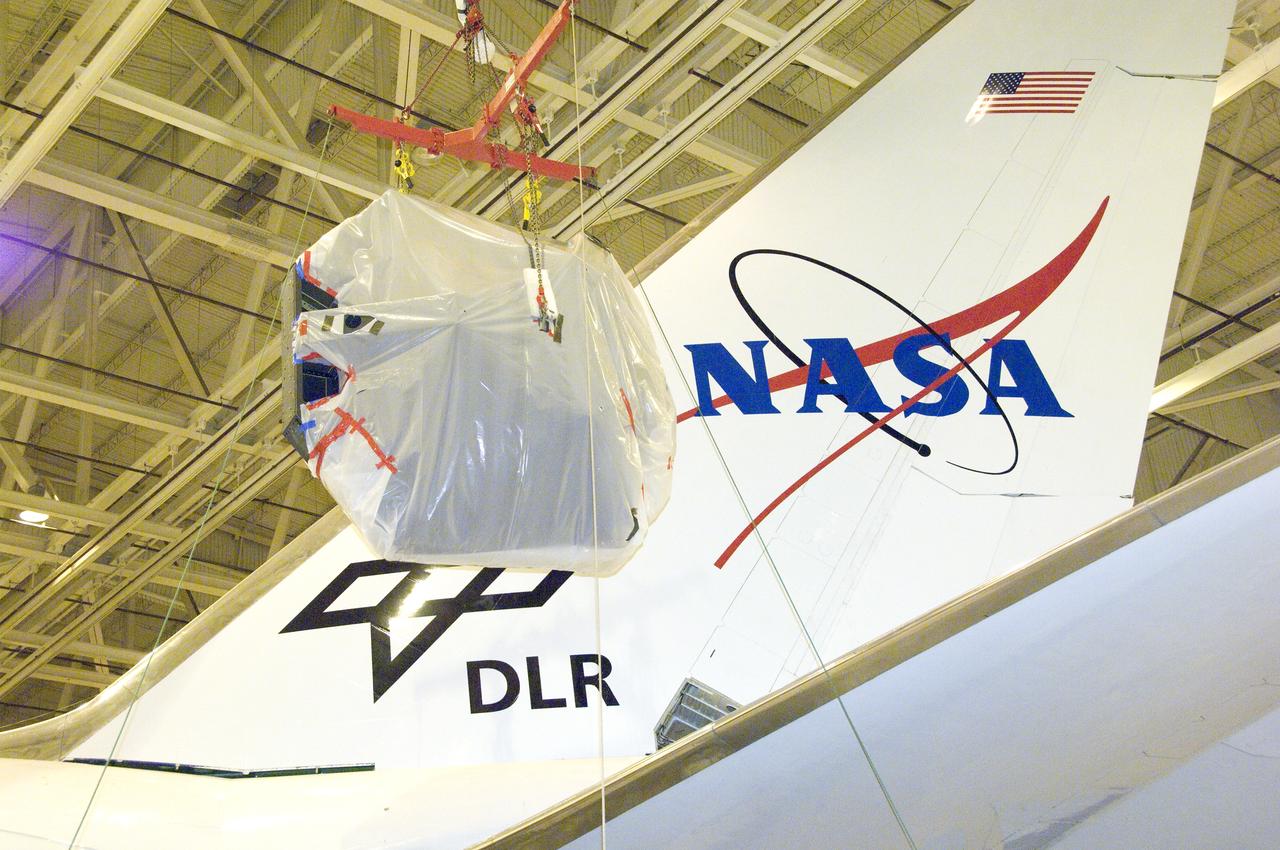
SOFIA's primary mirror assembly is lifted above wing level prior to its reinstallation in the telescope cavity of NASA's 747 airborne observatory Oct. 8, 2008.
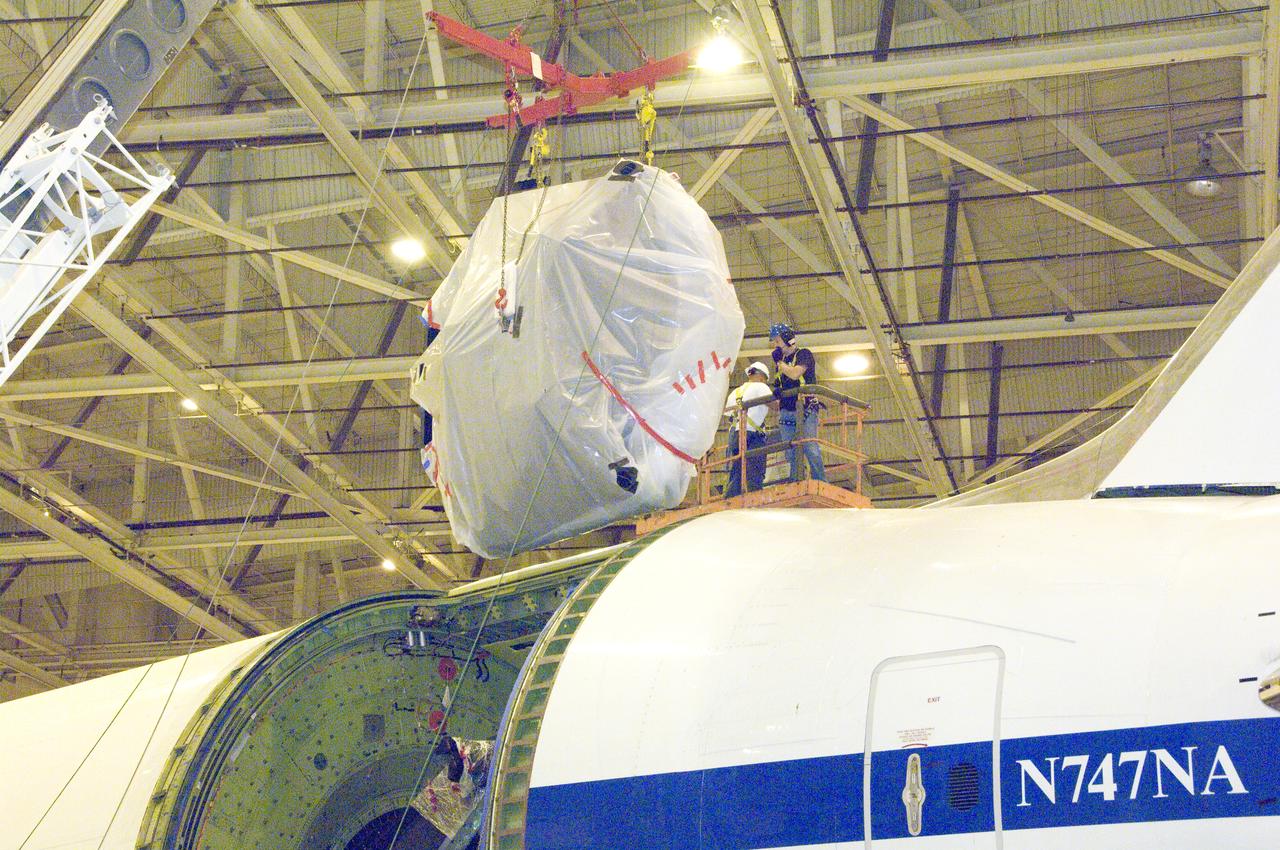
echnicians lift SOFIA's primary mirror assembly above NASA's 747SP airborne astronomy aircraft just prior to installation in the telescope cavity.
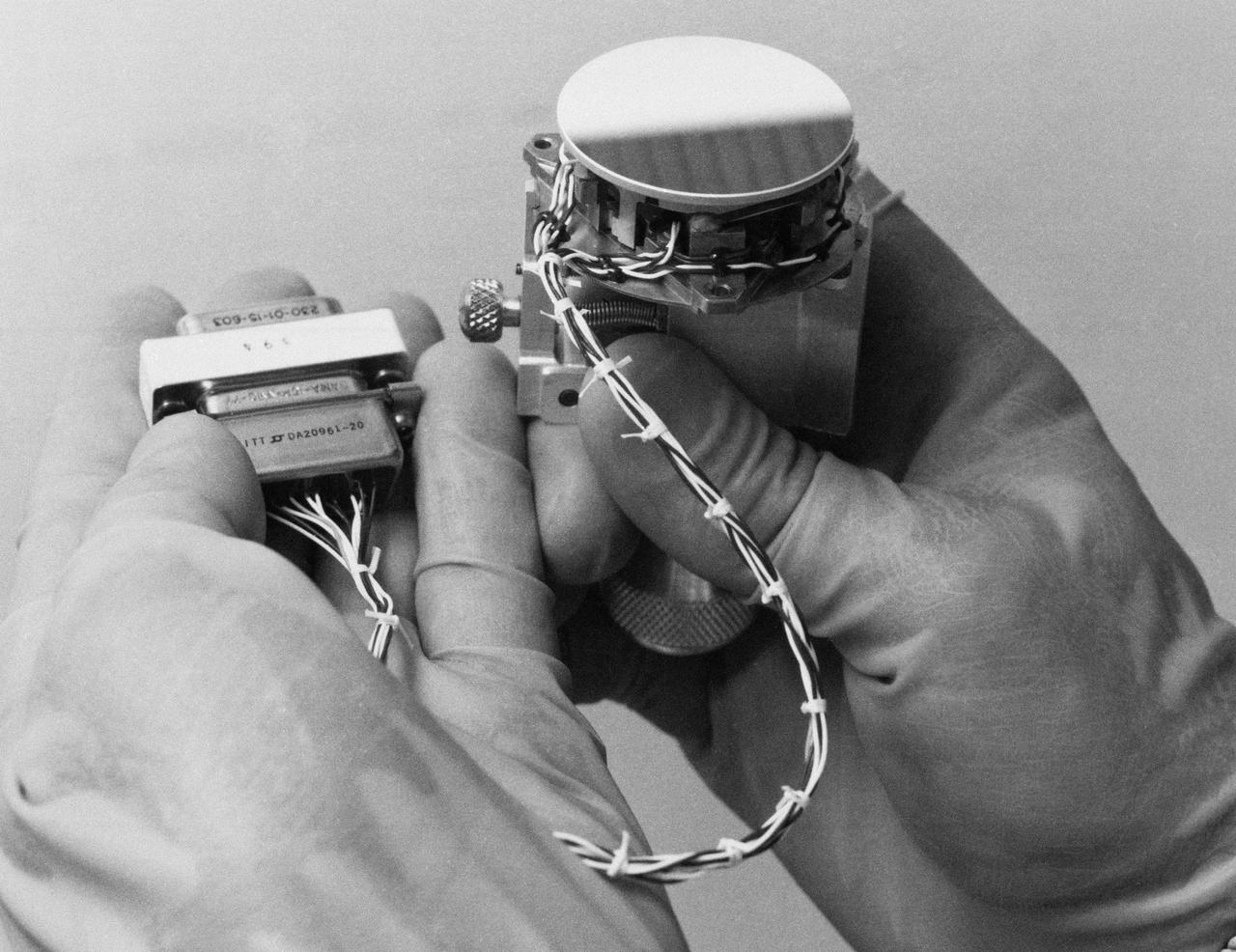
S93-33257 (15 Mar 1993) --- This close-up view features tiny articulating fold mirrors that will go into a replacement camera for the Wide Field\Planetary Camera (WF\PC-1) currently on the Hubble Space Telescope (HST). A team of NASA astronauts will pay a visit to the HST later this year, carrying with them the new WF/PC-2 to replace the one currently on the HST. The Jet Propulsion Laboratory (JPL) in Pasadena, California has been working on the replacement system for several months. See NASA photo S93-33258 for an optical schematic diagram of one of the four channels of the WF\PC-2 showing the path taken by beams from the HST before an image is formed at the camera's charge-coupled devices.
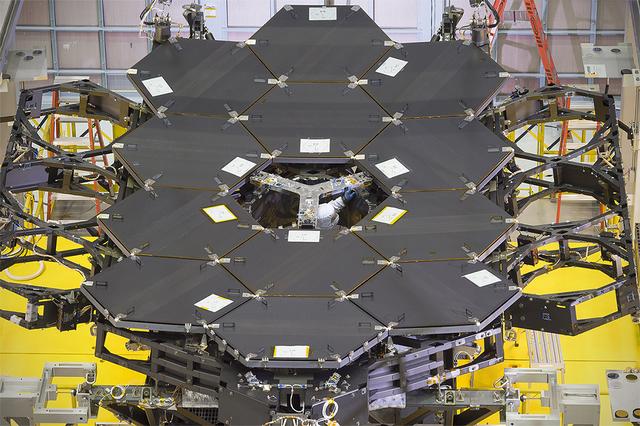
Caption: One dozen (out of 18) flight mirror segments that make up the primary mirror on NASA's James Webb Space Telescope have been installed at NASA's Goddard Space Flight Center. Credits: NASA/Chris Gunn More: Since December 2015, the team of scientists and engineers have been working tirelessly to install all the primary mirror segments onto the telescope structure in the large clean room at NASA's Goddard Space Flight Center in Greenbelt, Maryland. The twelfth mirror was installed on January 2, 2016. "This milestone signifies that all of the hexagonal shaped mirrors on the fixed central section of the telescope structure are installed and only the 3 mirrors on each wing are left for installation," said Lee Feinberg, NASA's Optical Telescope Element Manager at NASA Goddard. "The incredibly skilled and dedicated team assembling the telescope continues to find ways to do things faster and more efficiently." Each hexagonal-shaped segment measures just over 4.2 feet (1.3 meters) across and weighs approximately 88 pounds (40 kilograms). After being pieced together, the 18 primary mirror segments will work together as one large 21.3-foot (6.5-meter) mirror. The primary mirror will unfold and adjust to shape after launch. The mirrors are made of ultra-lightweight beryllium. The mirrors are placed on the telescope's backplane using a robotic arm, guided by engineers. The full installation is expected to be completed in a few months. The mirrors were built by Ball Aerospace & Technologies Corp., Boulder, Colorado. Ball is the principal subcontractor to Northrop Grumman for the optical technology and lightweight mirror system. The installation of the mirrors onto the telescope structure is performed by Harris Corporation of Rochester, New York. Harris Corporation leads integration and testing for the telescope. While the mirror assembly is a very significant milestone, there are many more steps involved in assembling the Webb telescope. The primary mirror and the tennis-court-sized sunshield are the largest and most visible components of the Webb telescope. However, there are four smaller components that are less visible, yet critical. The instruments that will fly aboard Webb - cameras and spectrographs with detectors able to record extremely faint signals — are part of the Integrated Science Instrument Module (ISIM), which is currently undergoing its final cryogenic vacuum test and will be integrated with the mirror later this year.
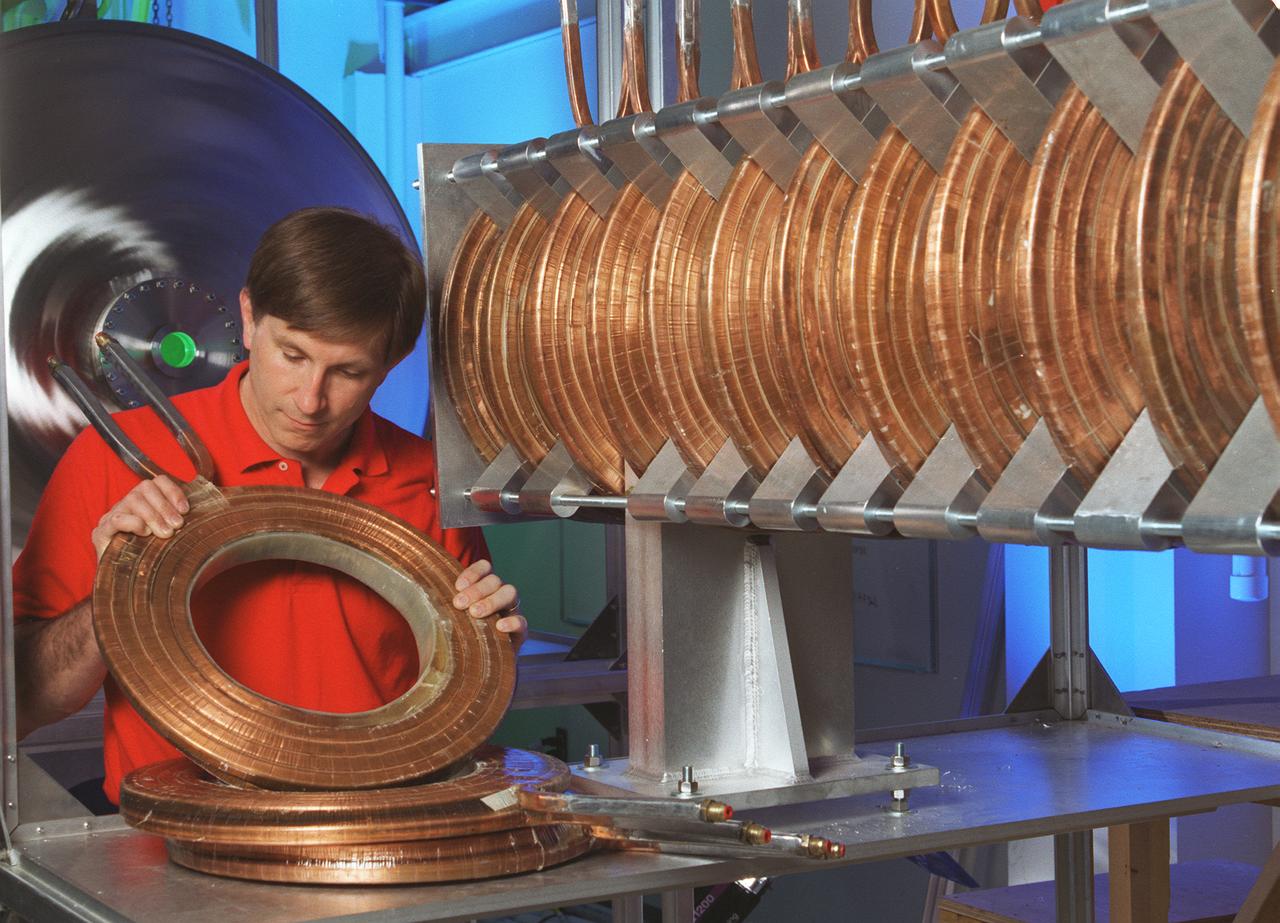
The Gasdynamic Mirror, or GDM, is an example of a magnetic mirror-based fusion propulsion system. Its design is primarily consisting of a long slender solenoid surrounding a vacuum chamber that contains plasma. The bulk of the fusion plasma is confined by magnetic field generated by a series of toroidal-shaped magnets in the center section of the device. the purpose of the GDM Fusion Propulsion Experiment is to confirm the feasibility of the concept and to demonstrate many of the operational characteristics of a full-size plasma can be confined within the desired physical configuration and still reman stable. This image shows an engineer from Propulsion Research Technologies Division at Marshall Space Flight Center inspecting solenoid magnets-A, an integrate part of the Gasdynamic Mirror Fusion Propulsion Engine Experiment.
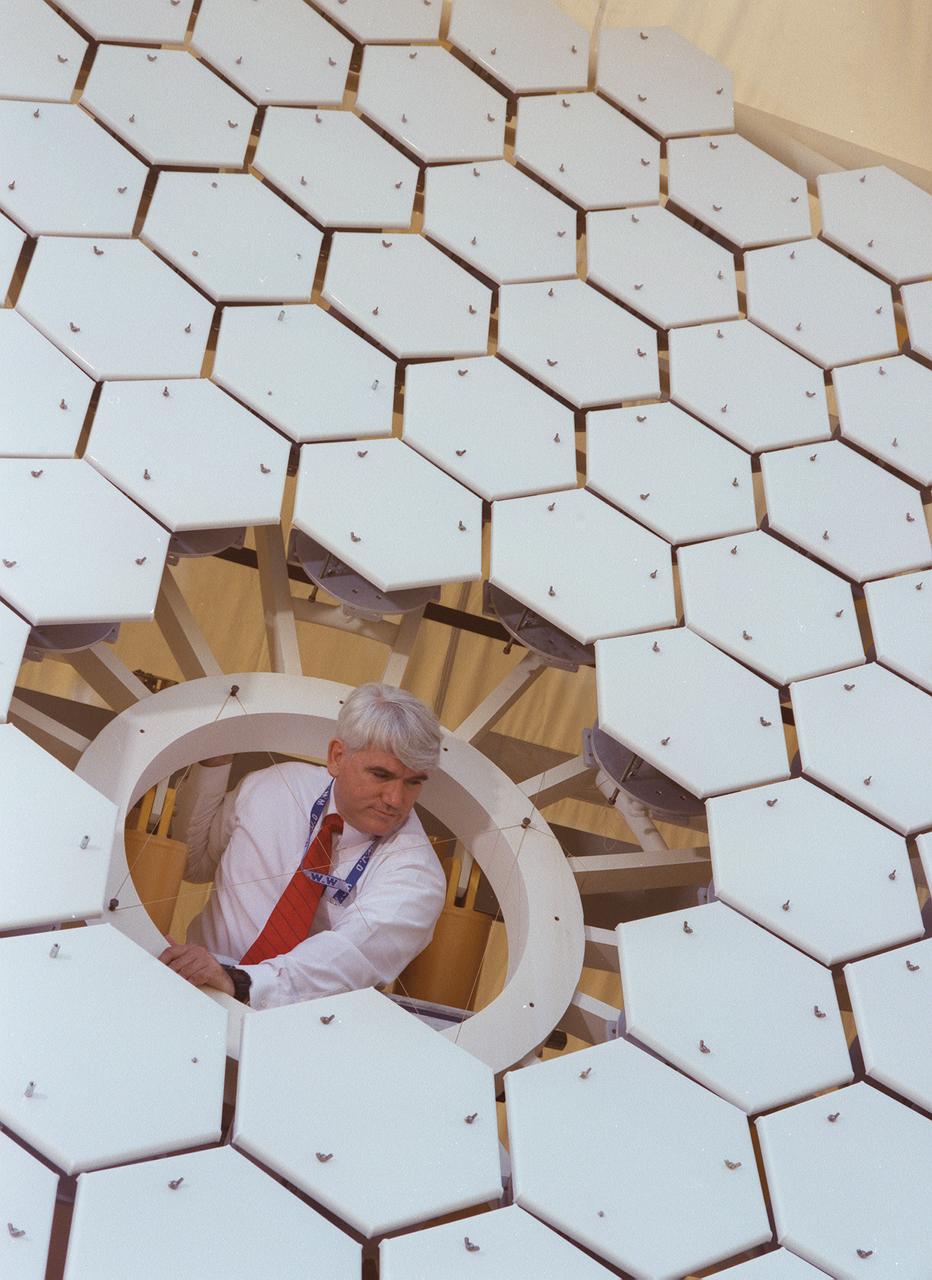
A team of engineers at Marshall Space Flight Center (MSFC) has designed, fabricated, and tested the first solar thermal engine, a non-chemical rocket that produces lower thrust but has better thrust efficiency than the chemical combustion engines. This segmented array of mirrors is the solar concentrator test stand at MSFC for firing the thermal propulsion engines. The 144 mirrors are combined to form an 18-foot diameter array concentrator. The mirror segments are aluminum hexagons that have the reflective surface cut into it by a diamond turning machine, which is developed by MSFC Space Optics Manufacturing Technology Center.
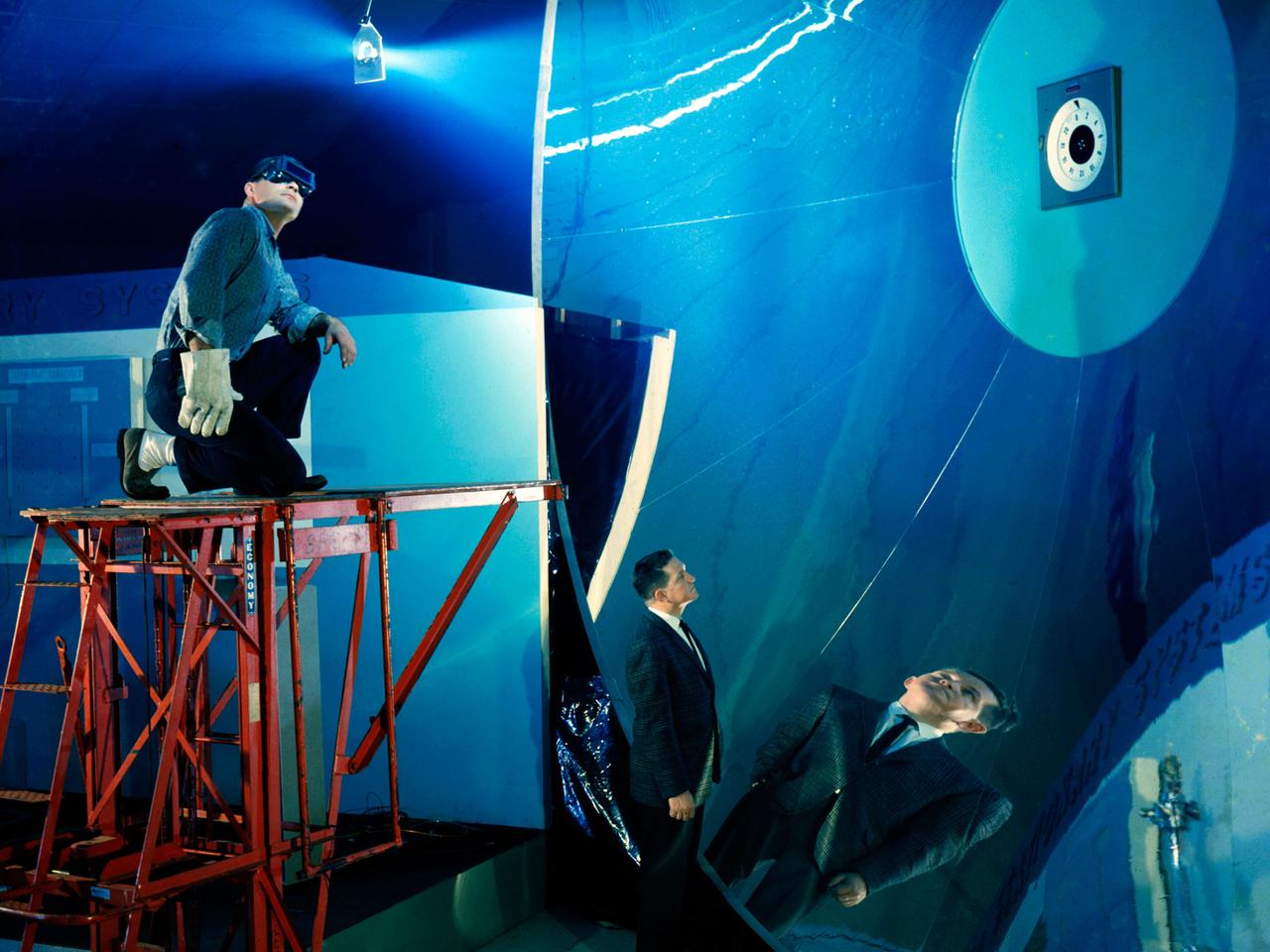
NASA’s Lewis Research Center conducted extensive research programs in the 1960s and 1970s to develop systems that provide electrical power in space. One system, the Brayton cycle engine, converted solar thermal energy into electrical power. This system operated on a closed-loop Brayton thermodynamic cycle. The Brayton system relied on this large mirror to collect radiation from the sun. The mirror concentrated the Sun's rays on a heat storage receiver which warmed the Brayton system’s working fluid, a helium-xenon gas mixture. The heated fluid powered the system’s generator which produced power. In the mid-1960s Lewis researchers constructed this 30-foot diameter prototype of a parabolic solar mirror for the Brayton cycle system. The mirror had to be rigid, impervious to micrometeorite strikes, and lightweight. This mirror was comprised of twelve 1-inch thick magnesium plate sections that were coated with aluminum. The mirror could be compactly broken into its sections for launch.
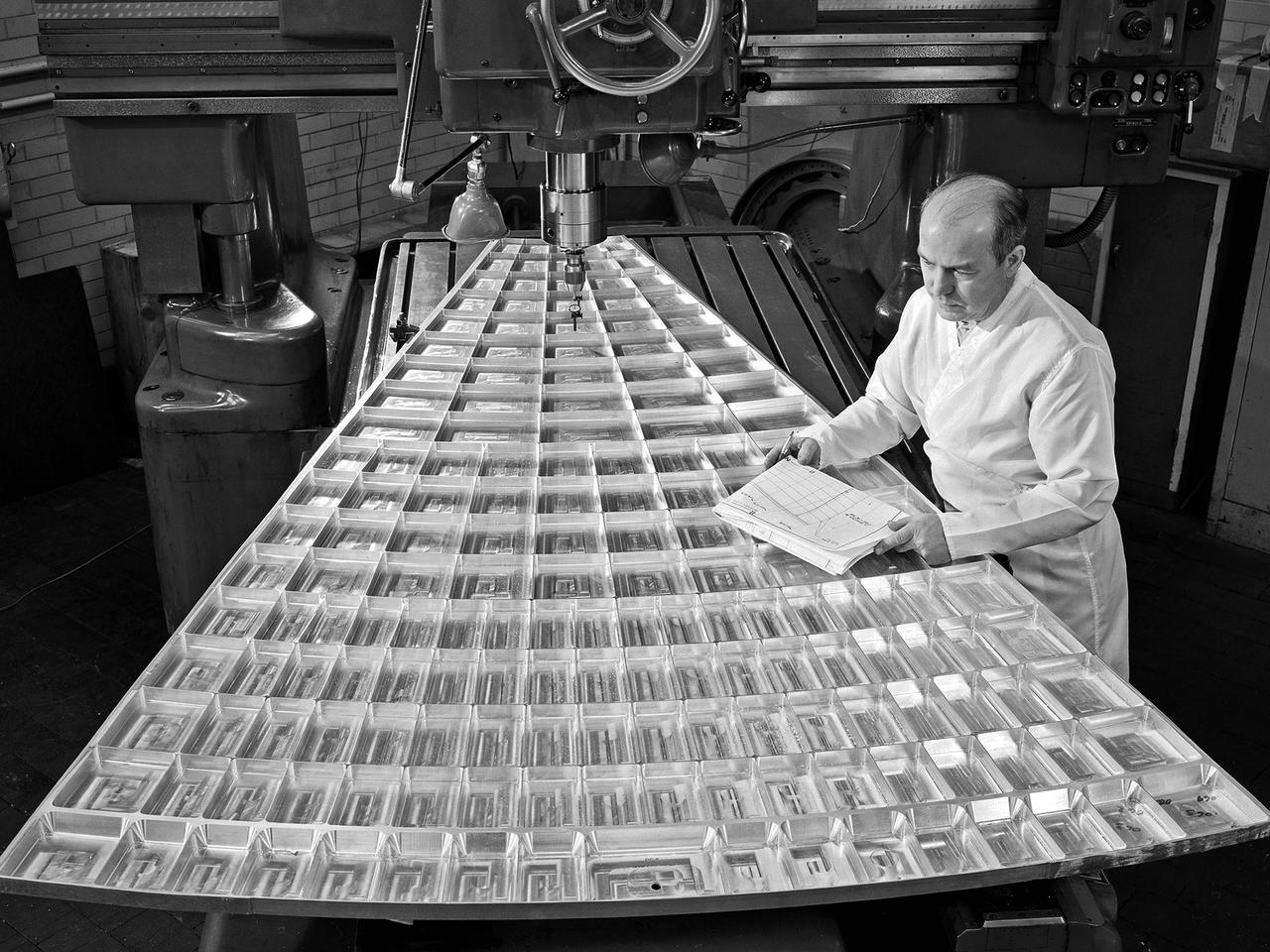
Daniel Bernatowicz, Chief of the Advanced Power Systems Branch at the National Aeronautics and Space Administration (NASA) Lewis Research Center, examines a 20-foot section of a solar mirror being fabricated in the Jig Bore Room of the Technical Services Building. NASA Lewis was conducting a wide-ranging effort to explore methods of generating electrical power for spacecraft. One method employed a large parabolic mirror to concentrate the sun’s energy. The mirror had to remain rigid and withstand micrometeoroids, but remain light and compact enough to be easily launched. In 1963 Bernatowicz and his researchers undertook a program to design a solar mirror to work with the Brayton cycle system on a space station. The mirror in this photograph was prepared for a conference on Advanced Technology in Space Power Systems held at Lewis in late August 1966. Lewis experts discussed advances with batteries, fuel cells, isotope and thermoelectric generators, and the SNAP-8 space power system. Lewis was developing several types of solar mirrors to work with a Brayton cycle electric generating system. The mirror’s 12 sections were shaped using a unique forming process developed at Lewis, coated with an epoxy, and plated with aluminum. The mirror concentrated the Sun's rays on a heat storage receiver containing lithium fluoride. This material was heated to produce power in a turbogenerator system, while additional heat was stored for use when the unit was in the Earth's shadow.
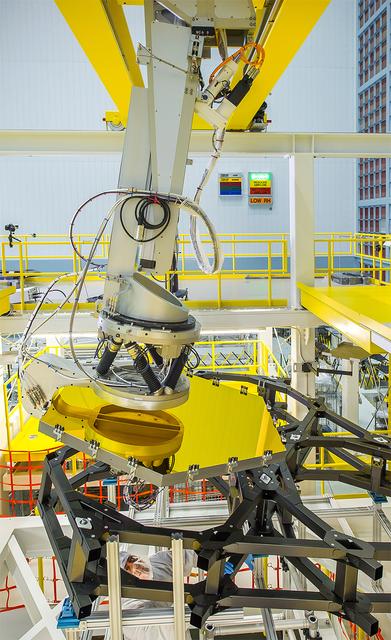
Inside a massive clean room at NASA's Goddard Space Flight Center in Greenbelt, Maryland the James Webb Space Telescope team is steadily installing the largest space telescope mirror ever. Unlike other space telescope mirrors, this one must be pieced together from segments using a high-precision robotic arm. Read more: <a href="http://go.nasa.gov/1ROaT4G" rel="nofollow">go.nasa.gov/1ROaT4G</a> Credit: NASA/Goddard/Chris Gunn <b><a href="http://www.nasa.gov/audience/formedia/features/MP_Photo_Guidelines.html" rel="nofollow">NASA image use policy.</a></b> <b><a href="http://www.nasa.gov/centers/goddard/home/index.html" rel="nofollow">NASA Goddard Space Flight Center</a></b> enables NASA’s mission through four scientific endeavors: Earth Science, Heliophysics, Solar System Exploration, and Astrophysics. Goddard plays a leading role in NASA’s accomplishments by contributing compelling scientific knowledge to advance the Agency’s mission. <b>Follow us on <a href="http://twitter.com/NASAGoddardPix" rel="nofollow">Twitter</a></b> <b>Like us on <a href="http://www.facebook.com/pages/Greenbelt-MD/NASA-Goddard/395013845897?ref=tsd" rel="nofollow">Facebook</a></b> <b>Find us on <a href="http://instagrid.me/nasagoddard/?vm=grid" rel="nofollow">Instagram</a></b>
BALL AEROSPACE TECHNICIANS REMOVE FINAL SIX JWST MIRRORS TESTED AT MSFC X-RAY AND CRYOGENIC FACILITY
BALL AEROSPACE TECHNICIANS REMOVE FINAL SIX JWST MIRRORS TESTED AT MSFC X-RAY AND CRYOGENIC FACILITY
BALL AEROSPACE TECHNICIANS REMOVE FINAL SIX JWST MIRRORS TESTED AT MSFC X-RAY AND CRYOGENIC FACILITY
BALL AEROSPACE TECHNICIANS REMOVE FINAL SIX JWST MIRRORS TESTED AT MSFC X-RAY AND CRYOGENIC FACILITY
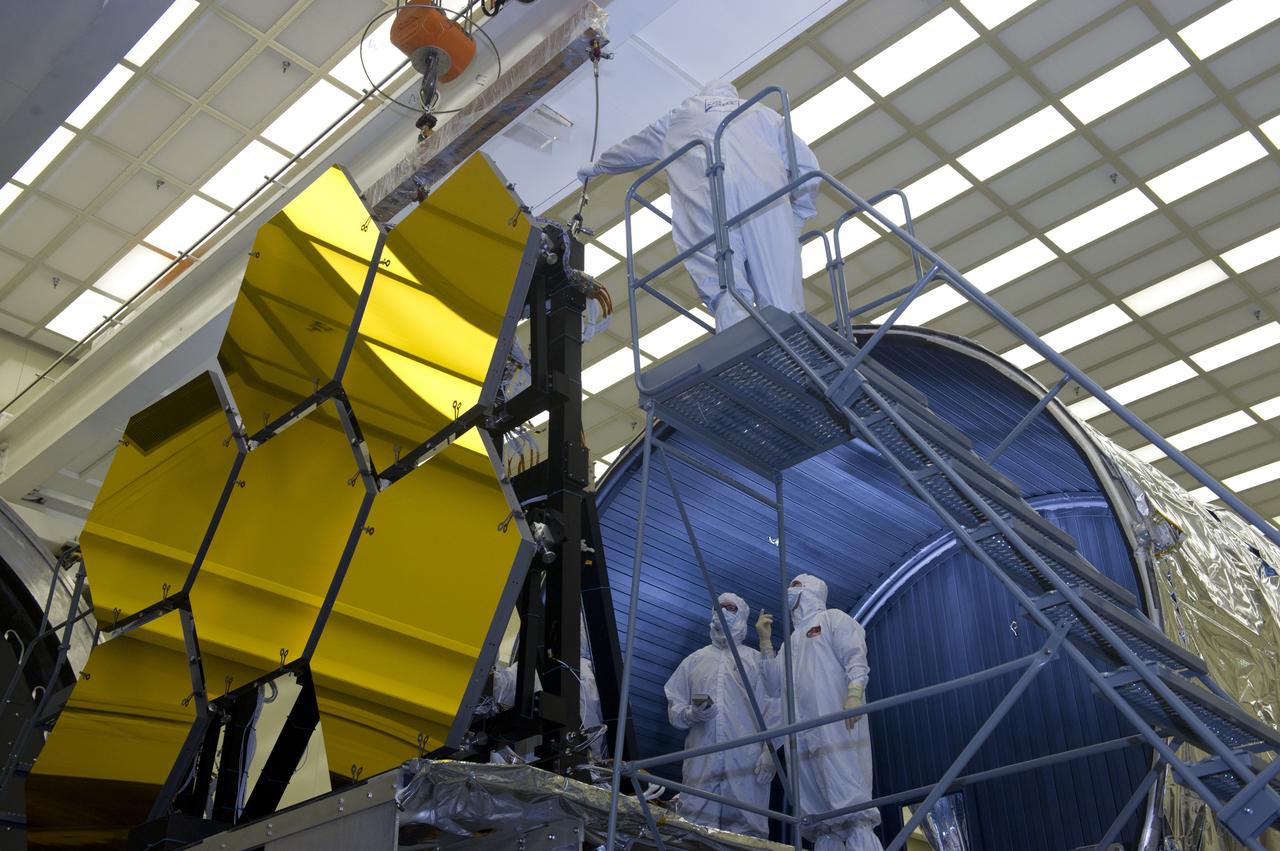
BALL AEROSPACE TECHNICIANS REMOVE FINAL SIX JWST MIRRORS TESTED AT MSFC X-RAY AND CRYOGENIC FACILITY
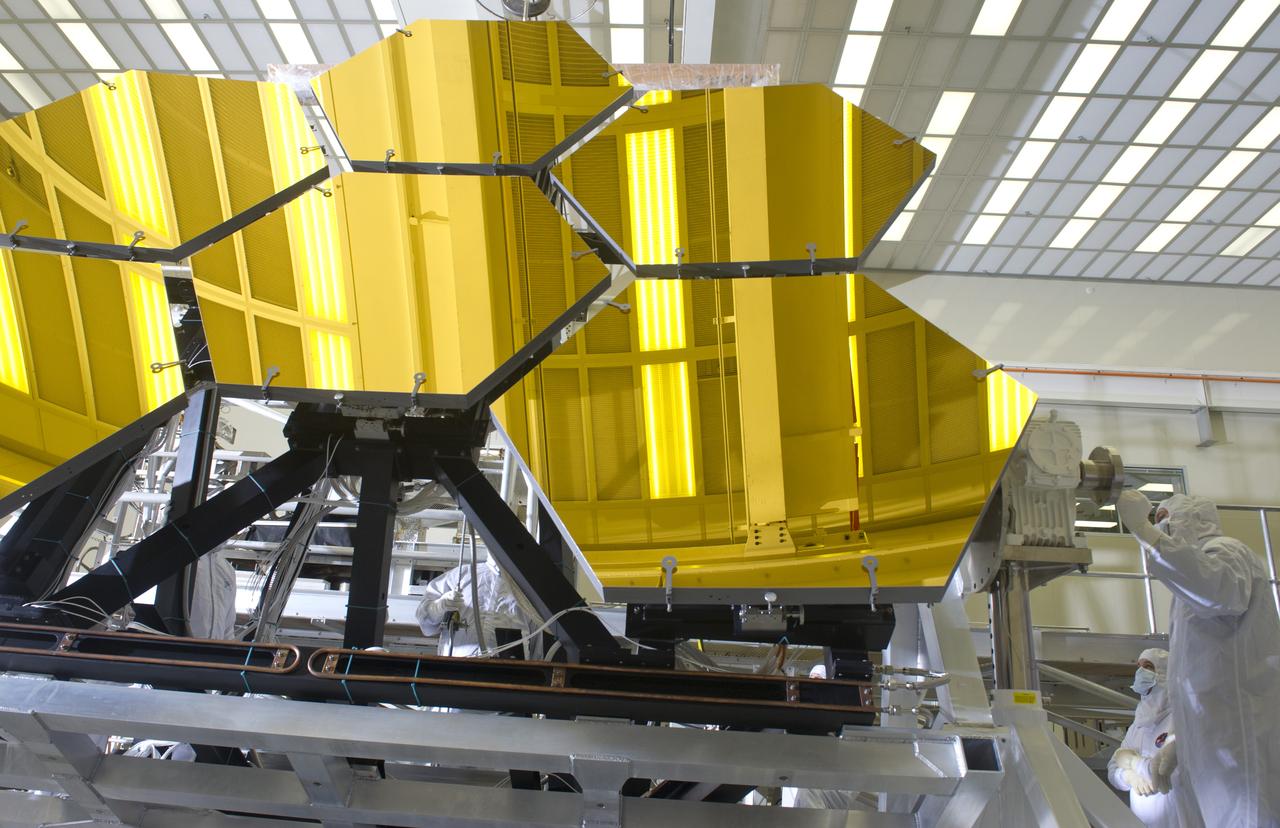
BALL AEROSPACE TECHNICIANS REMOVE FINAL SIX JWST MIRRORS TESTED AT MSFC X-RAY AND CRYOGENIC FACILITY
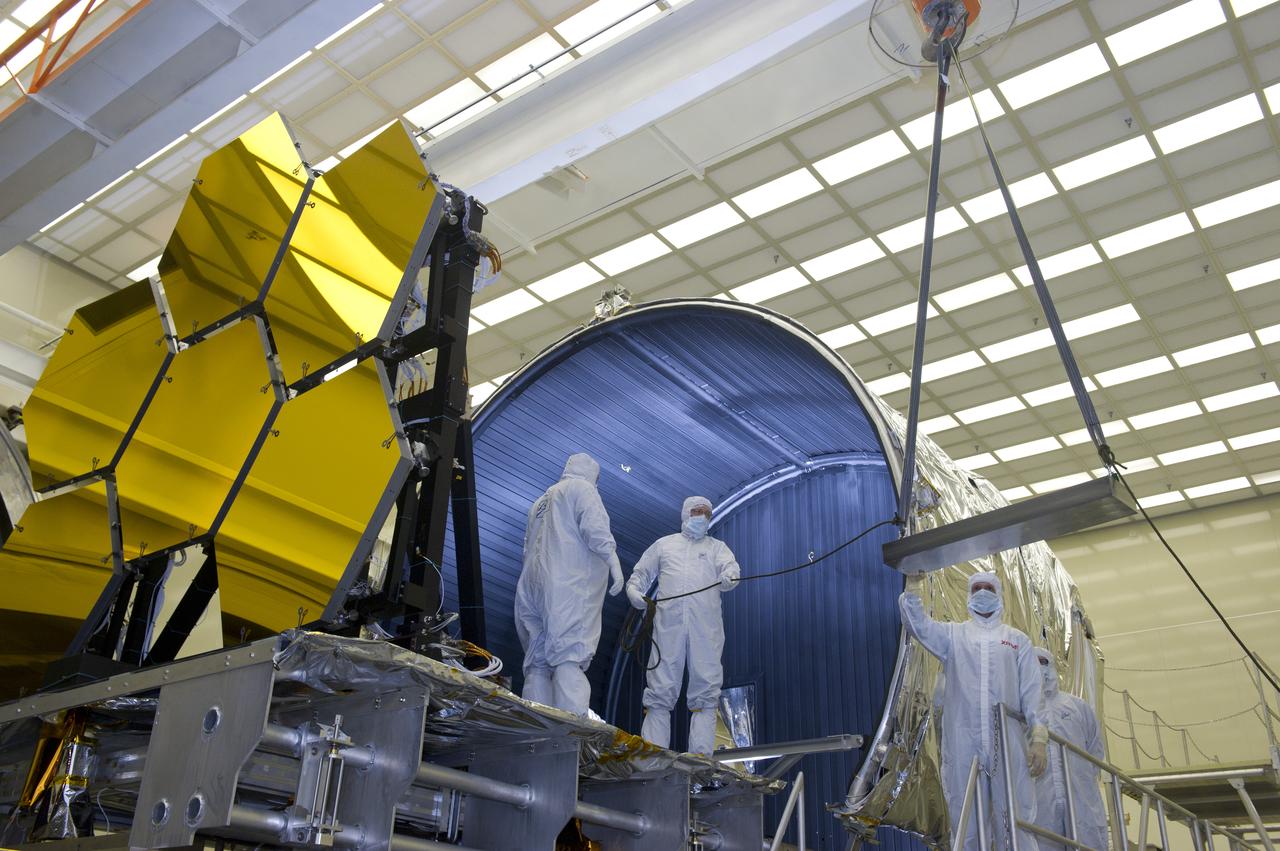
BALL AEROSPACE TECHNICIANS REMOVE FINAL SIX JWST MIRRORS TESTED AT MSFC X-RAY AND CRYOGENIC FACILITY
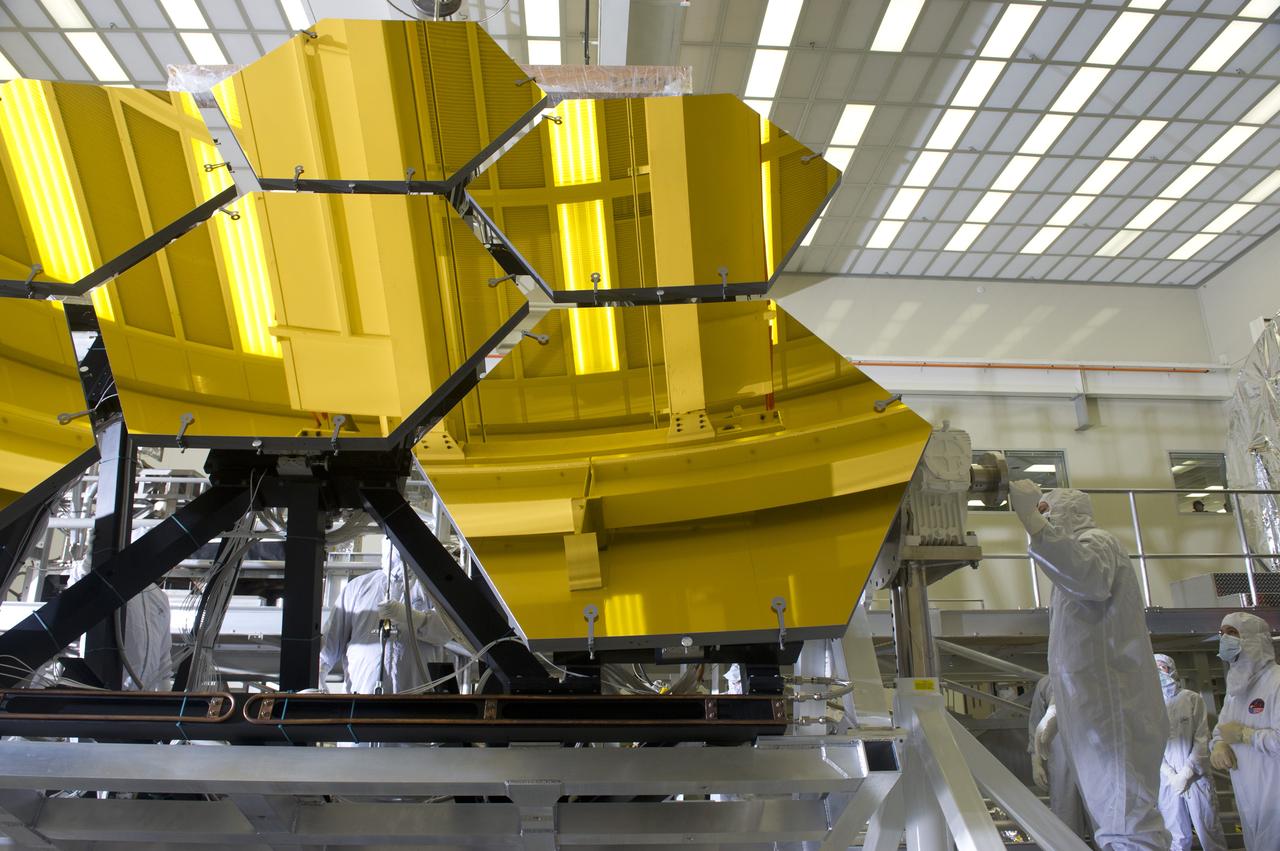
BALL AEROSPACE TECHNICIANS REMOVE FINAL SIX JWST MIRRORS TESTED AT MSFC X-RAY AND CRYOGENIC FACILITY

BALL AEROSPACE TECHNICIANS REMOVE FINAL SIX JWST MIRRORS TESTED AT MSFC X-RAY AND CRYOGENIC FACILITY
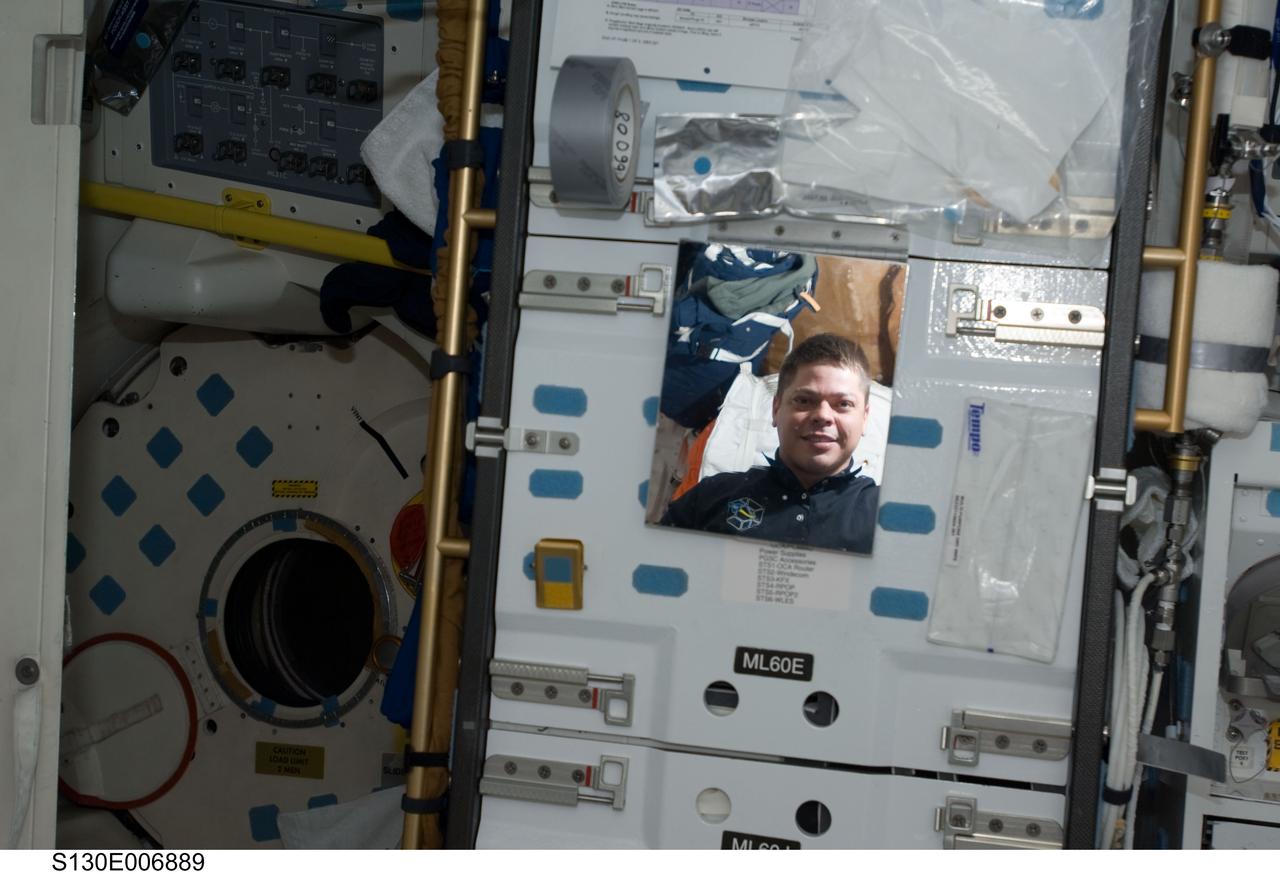
S130-E-006889 (10 Feb. 2010) --- NASA astronaut Robert Behnken, STS-130 mission specialist, is pictured in the reflection of a mirror on the middeck of space shuttle Endeavour while docked with the International Space Station.
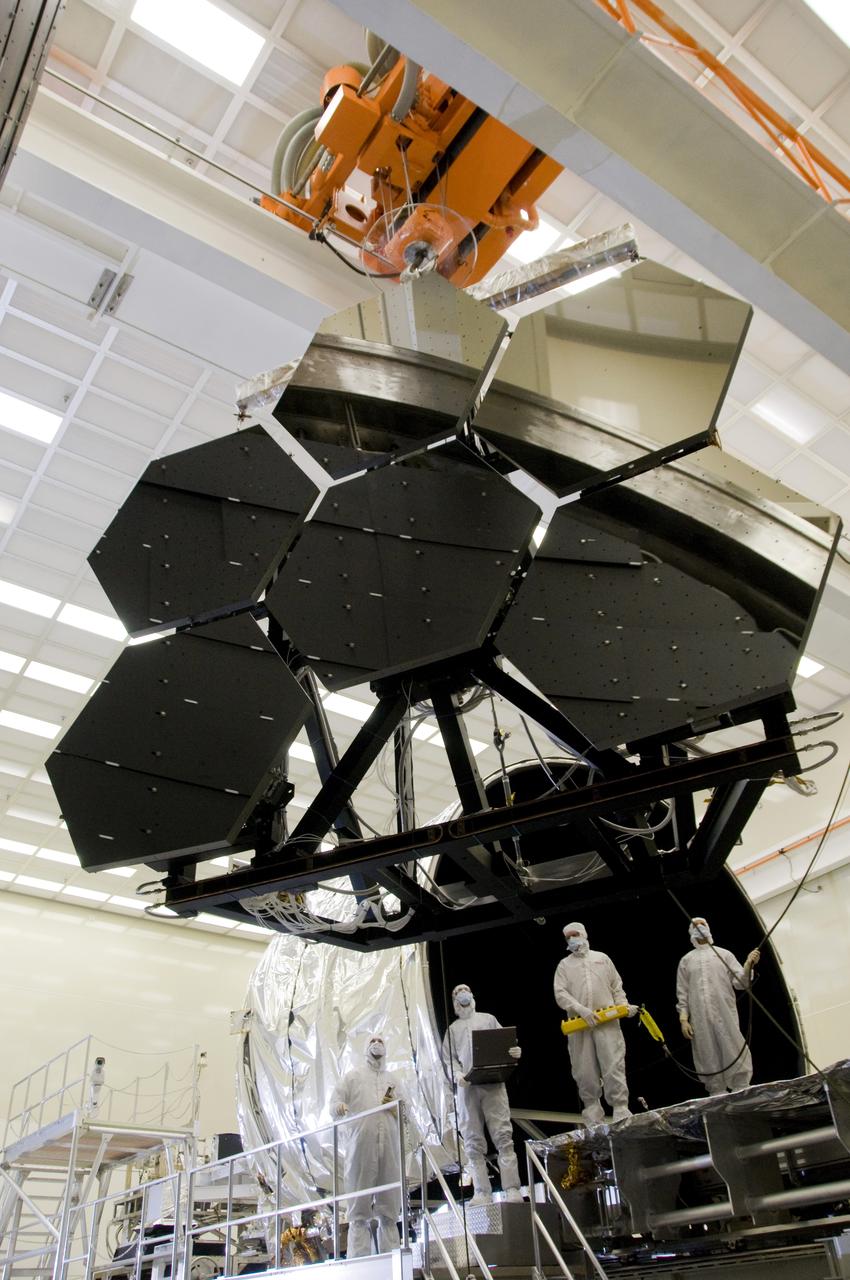
SIX OF THE EIGHTEEN JAMES WEBB SPACE TELESCOPE PRIMARY MIRROR SEGMENTS BEING LIFTED INTO POSITION FOR CRYOGENIC-OPTICAL EVALUATION AT NASA’S X-RAY & CRYOGENIC FACILITY
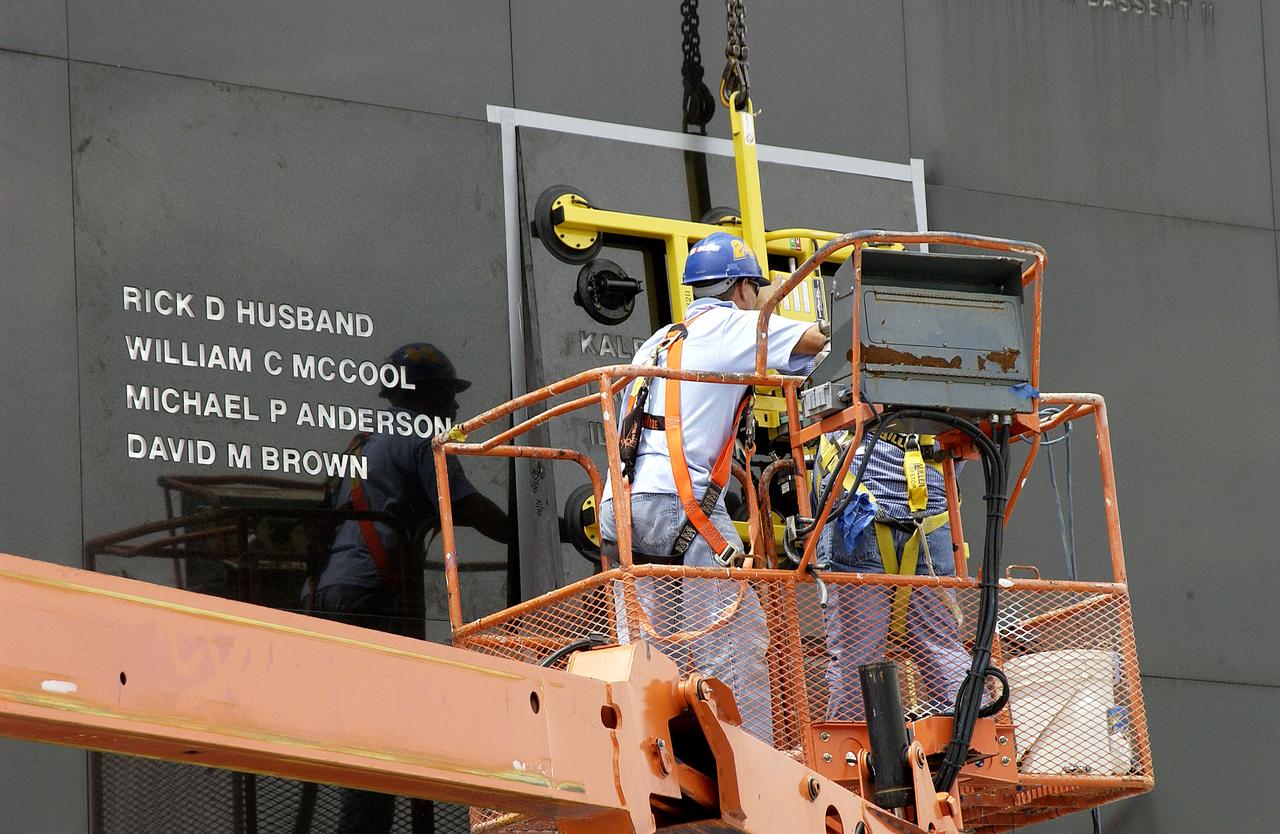
Workers add to the Astronaut Memorial Mirror the names of the Columbia crew who died in the STS-107 accident. Dedicated May 9, 1991, the Astronaut Memorial honors U.S. astronauts who gave their lives for space exploration. The "Space Mirror," 42 1/2 feet high by 50 feet wide, illuminates the names of the fallen astronauts cut through the monument's black granite surface. The Memorial Mirror is accessible through the KSC Visitor Complex.
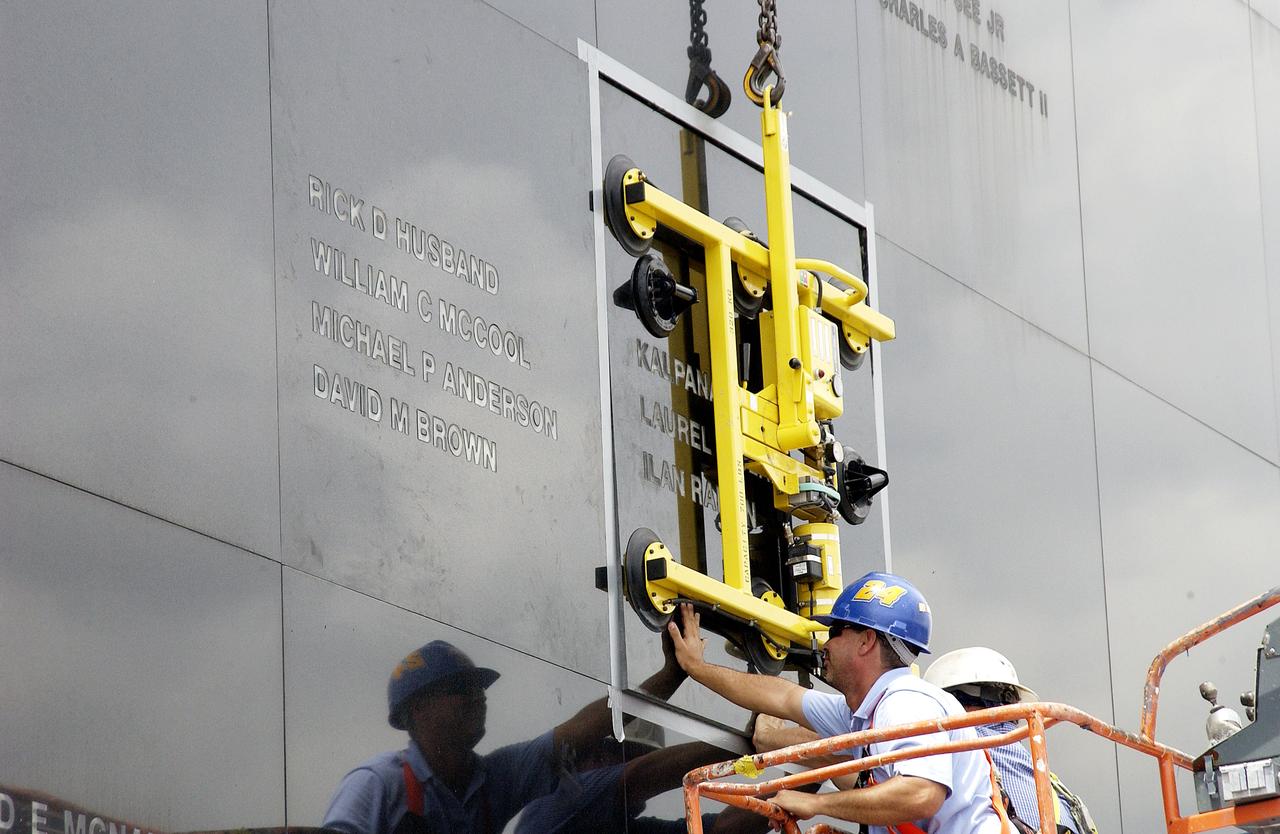
Workers add to the Astronaut Memorial Mirror the names of the Columbia crew who died in the STS-107 accident. Dedicated May 9, 1991, the Astronaut Memorial honors U.S. astronauts who gave their lives for space exploration. The "Space Mirror," 42 1/2 feet high by 50 feet wide, illuminates the names of the fallen astronauts cut through the monument's black granite surface. The Memorial Mirror is accessible through the KSC Visitor Complex.
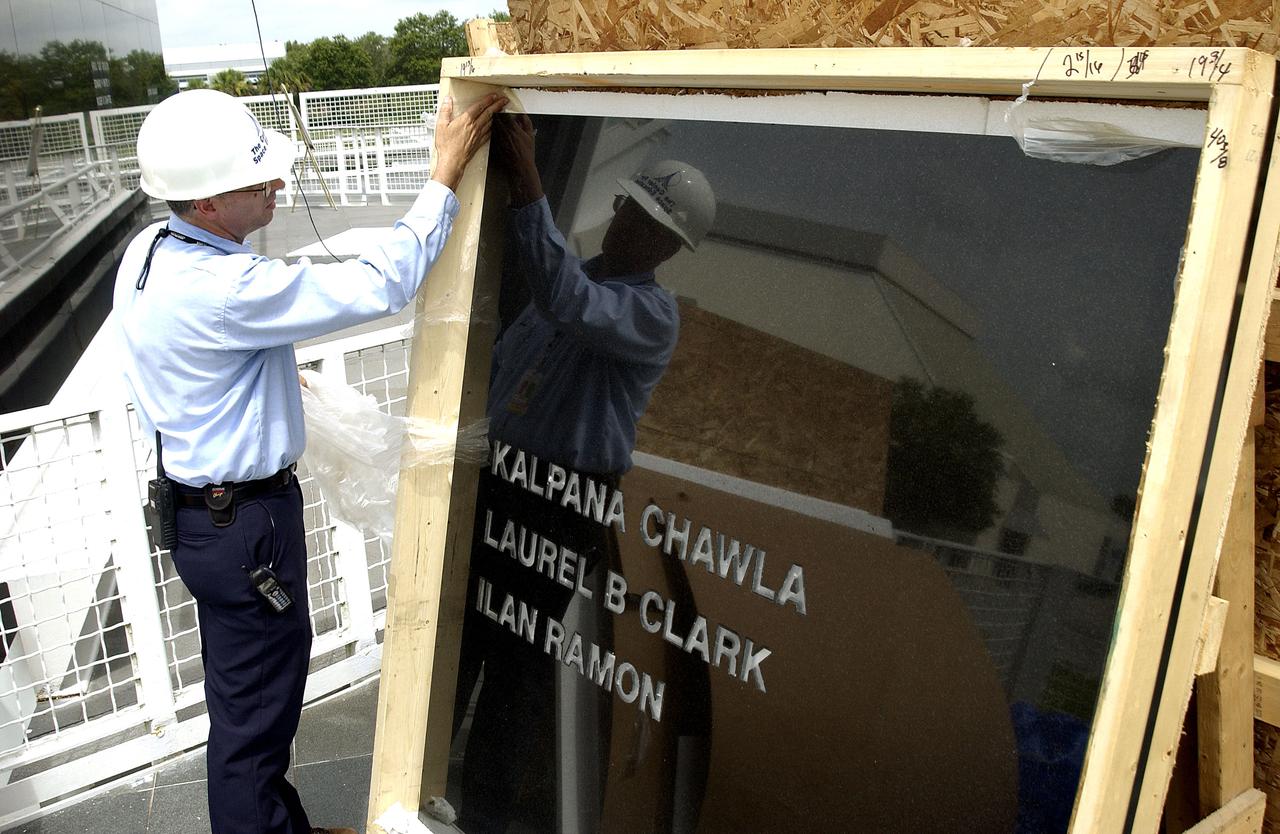
Workers add to the Astronaut Memorial Mirror the names of the Columbia crew who died in the STS-107 accident. Dedicated May 9, 1991, the Astronaut Memorial honors U.S. astronauts who gave their lives for space exploration. The "Space Mirror," 42 1/2 feet high by 50 feet wide, illuminates the names of the fallen astronauts cut through the monument's black granite surface. The Memorial Mirror is accessible through the KSC Visitor Complex.
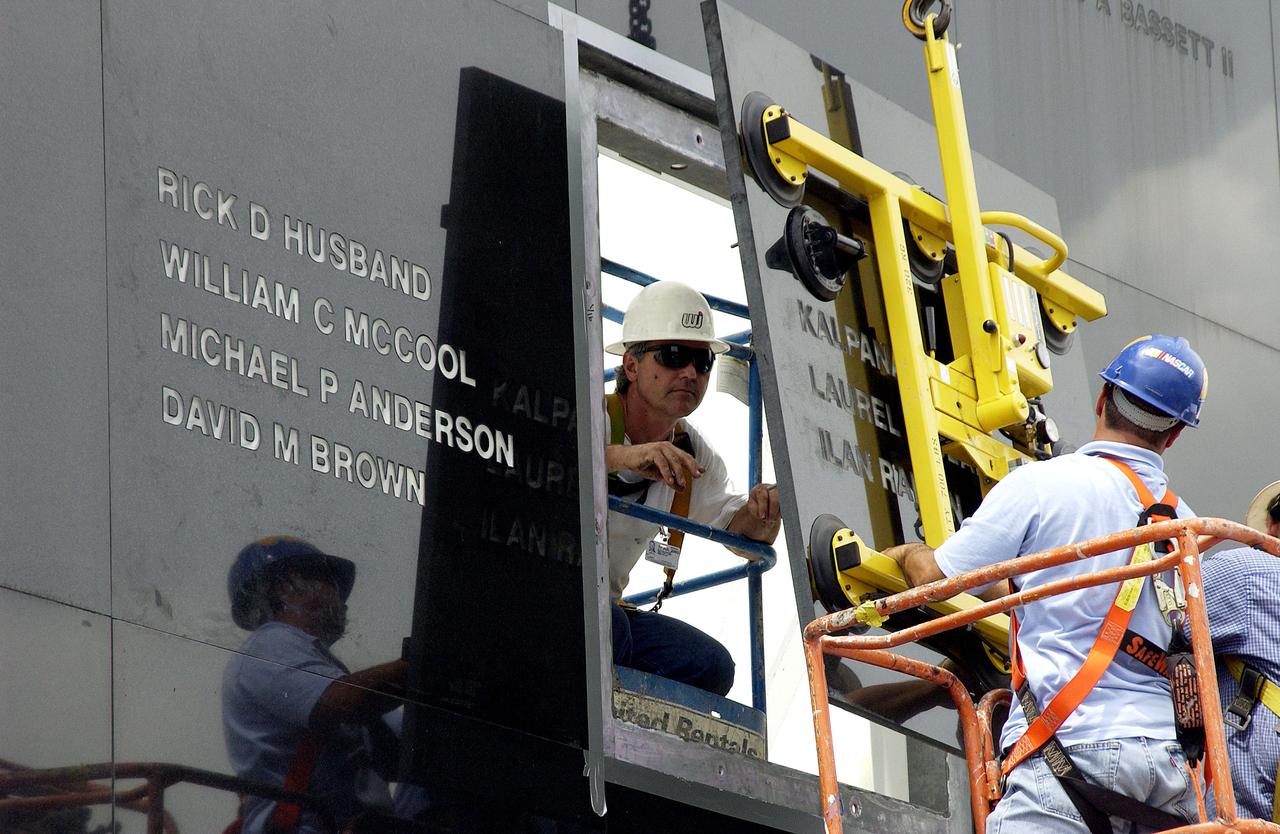
Workers add to the Astronaut Memorial Mirror the names of the Columbia crew who died in the STS-107 accident. Dedicated May 9, 1991, the Astronaut Memorial honors U.S. astronauts who gave their lives for space exploration. The "Space Mirror," 42 1/2 feet high by 50 feet wide, illuminates the names of the fallen astronauts cut through the monument's black granite surface. The Memorial Mirror is accessible through the KSC Visitor Complex.
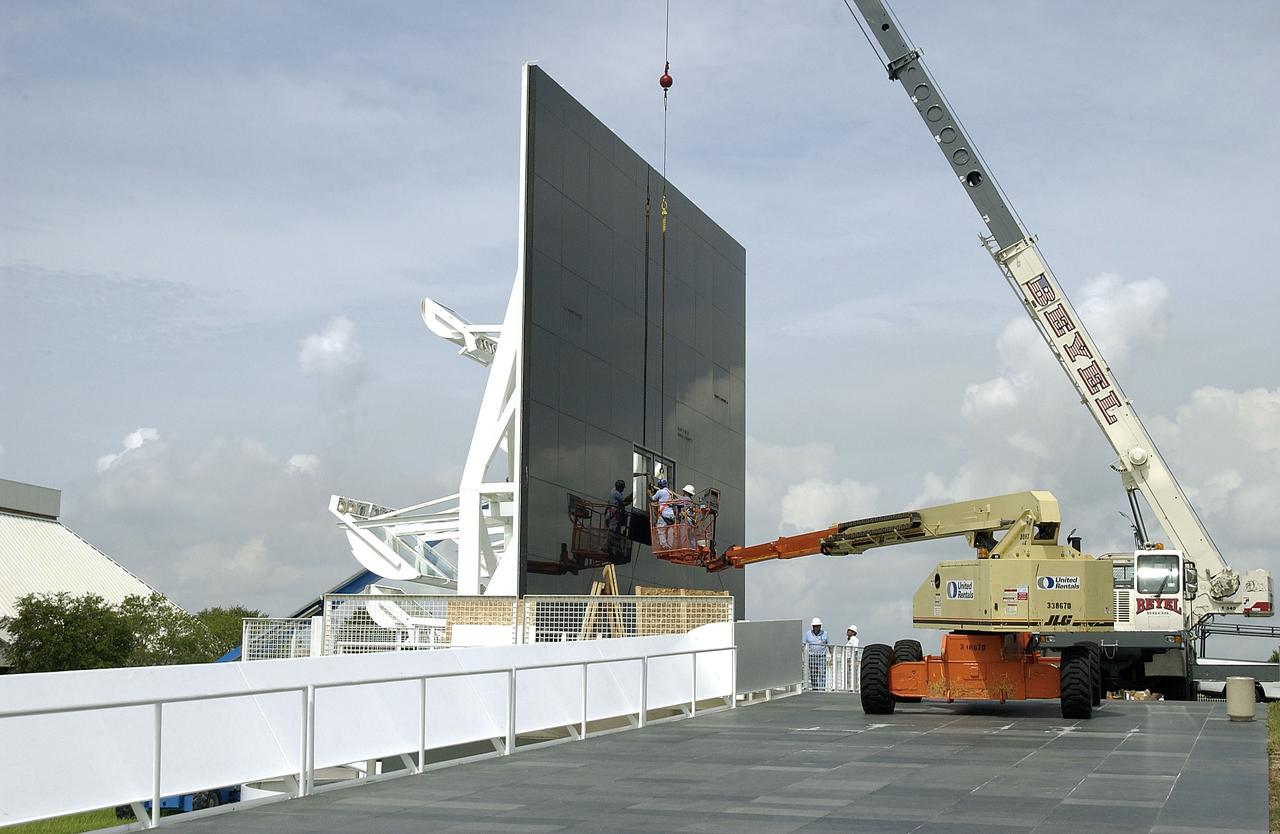
Workers add to the Astronaut Memorial Mirror the names of the Columbia crew who died in the STS-107 accident. Dedicated May 9, 1991, the Astronaut Memorial honors U.S. astronauts who gave their lives for space exploration. The "Space Mirror," 42 1/2 feet high by 50 feet wide, illuminates the names of the fallen astronauts cut through the monument's black granite surface. The Memorial Mirror is accessible through the KSC Visitor Complex.
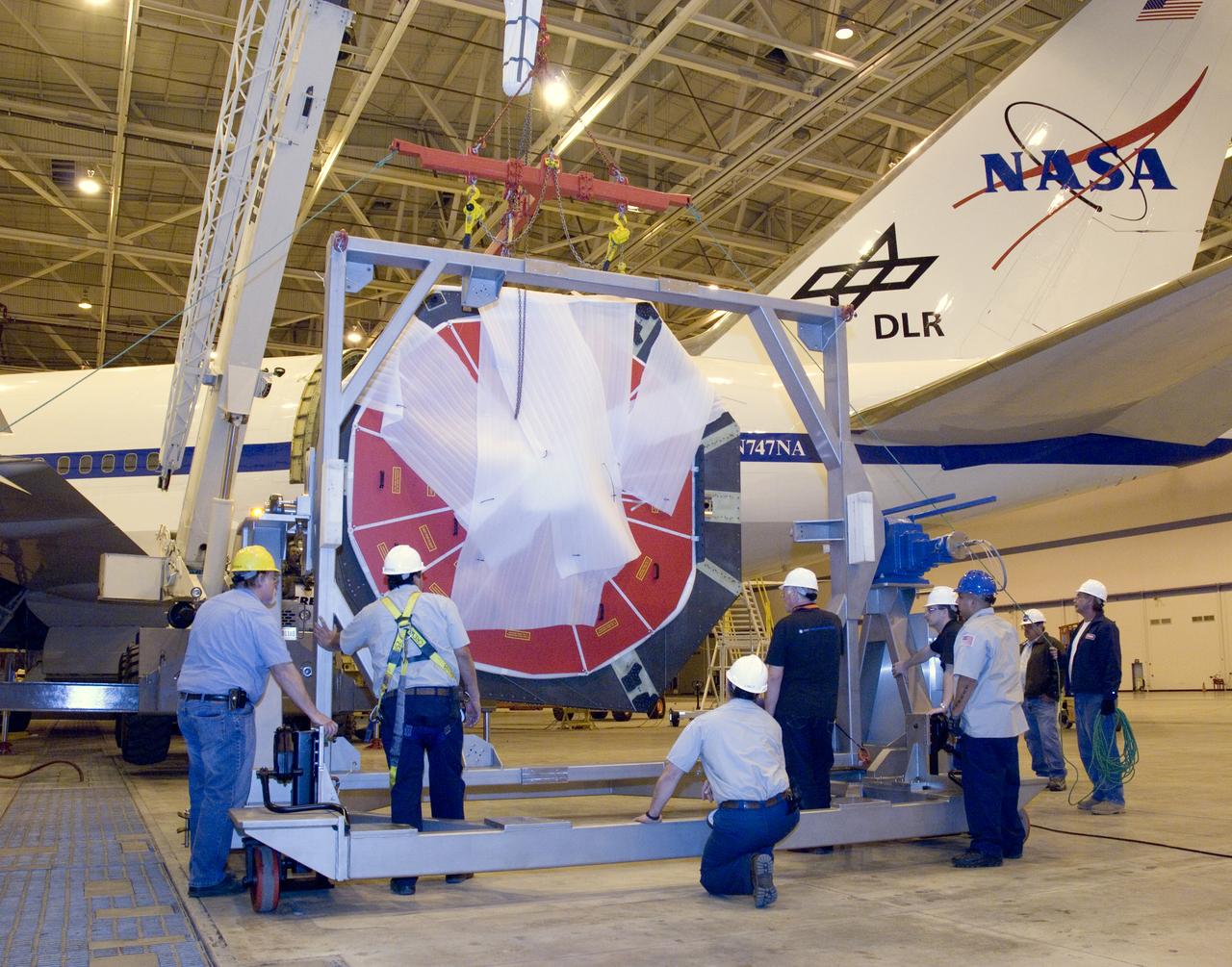
Technicians at the NASA Dryden Aircraft Operations Facility in Palmdale, Calif., removed the German-built primary mirror assembly from the Stratospheric Observatory for Infrared Astronomy, or SOFIA, April 18, 2008 in preparation for the final finish coating of the mirror. A precision crane lifted the more than two-ton mirror assembly from its cavity in the rear fuselage of the highly modified Boeing 747SP. The assembly was then secured in its transport dolly and moved to a clean room where it was prepared for shipment to NASA Ames Research Center at Moffett Field near Mountain View, Calif. where it would receive its aluminized finish coating before being re-installed in the SOFIA aircraft.
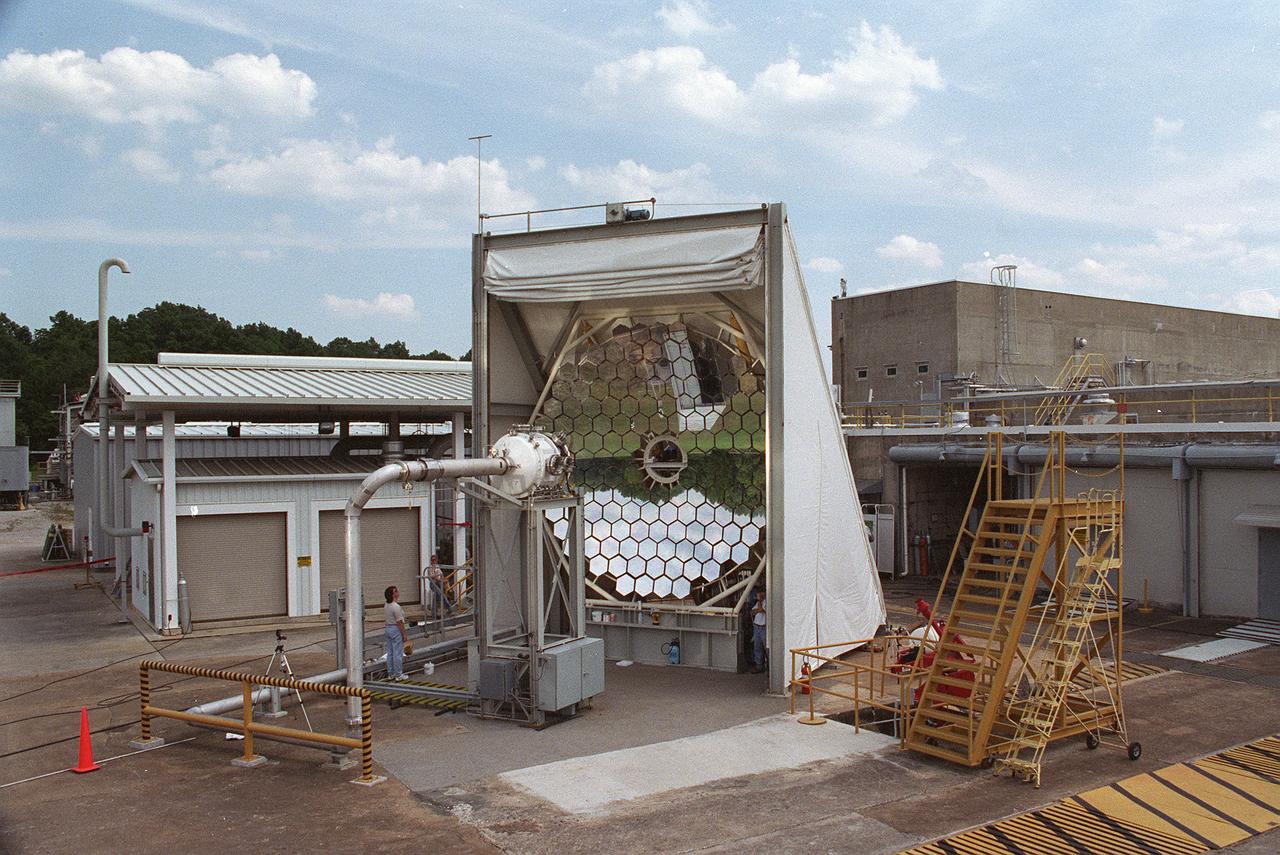
Researchers at the Marshall Space Flight Center (MSFC) have designed, fabricated and tested the first solar thermal engine, a non-chemical rocket engine that produces lower thrust but has better thrust efficiency than a chemical combustion engine. MSFC turned to solar thermal propulsion in the early 1990s due to its simplicity, safety, low cost, and commonality with other propulsion systems. Solar thermal propulsion works by acquiring and redirecting solar energy to heat a propellant. This photograph, taken at MSFC's Solar Thermal Propulsion Test Facility, shows a concentrator mirror, a combination of 144 mirrors forming this 18-ft diameter concentrator, and a vacuum chamber that houses the focal point. The 20- by 24-ft heliostat mirror (not shown in this photograph) has a dual-axis control that keeps a reflection of the sunlight on the 18-foot diameter concentrator mirror, which then focuses the sunlight to a 4-in focal point inside the vacuum chamber. The focal point has 10 kilowatts of intense solar power. As part of MSFC's Space Transportation Directorate, the Propulsion Research Center serves as a national resource for research of advanced, revolutionary propulsion technologies. The mission is to move the Nation's capabilities beyond the confines of conventional chemical propulsion into an era of aircraft-like access to Earth-orbit, rapid travel throughout the solar system, and exploration of interstellar space.
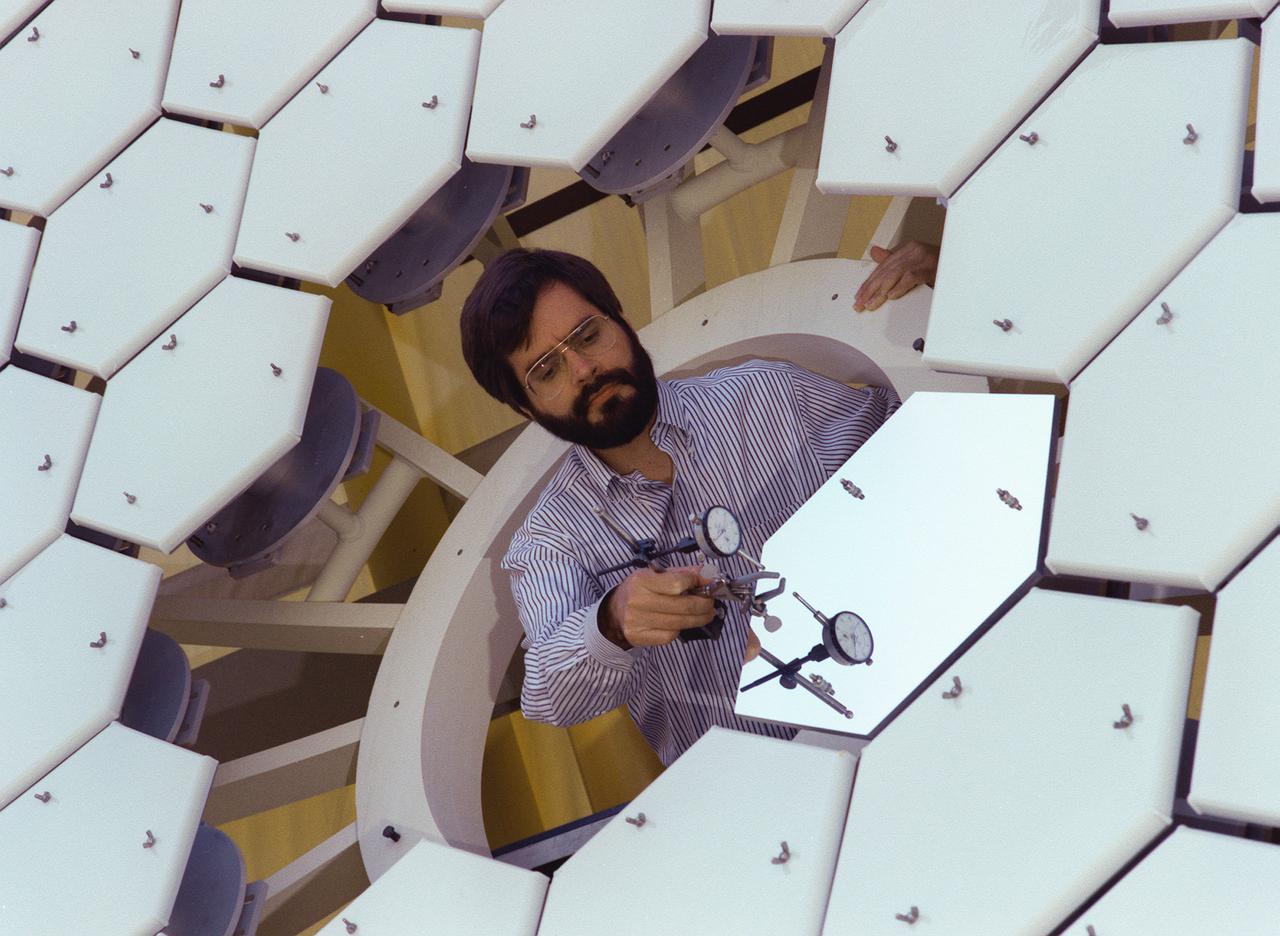
NASA's Space Optics Manufacturing Technology Center has been working to expand our view of the universe via sophisticated new telescopes. The Optics Center's goal is to develop low-cost, advanced space optics technologies for the NASA program in the 21st century, including the long-term goal of imaging Earth-like planets in distant solar systems. A segmented array of mirrors was designed by the Space Optics Manufacturing Technology Center for the solar concentrator test stand at the Marshall Space Flight Center (MSFC) for powering solar thermal propulsion engines. Each hexagon mirror has a spherical surface to approximate a parabolic concentrator when combined into the entire 18-foot diameter array. The aluminum mirrors were polished with a diamond turning machine that creates a glass-like reflective finish on metal. The precision fabrication machinery at the Space Optics Manufacturing Technology Center at MSFC can polish specialized optical elements to a world class quality of smoothness. This image shows optics physicist, Vince Huegele, examining one of the 144-segment hexagonal mirrors of the 18-foot diameter array at the MSFC solar concentrator test stand.

TESTING OF THE KODAK ADVANCE MIRROR SYSTEM DEMONSTRATOR IN THE X-RAY CALIBRATION FACILITY