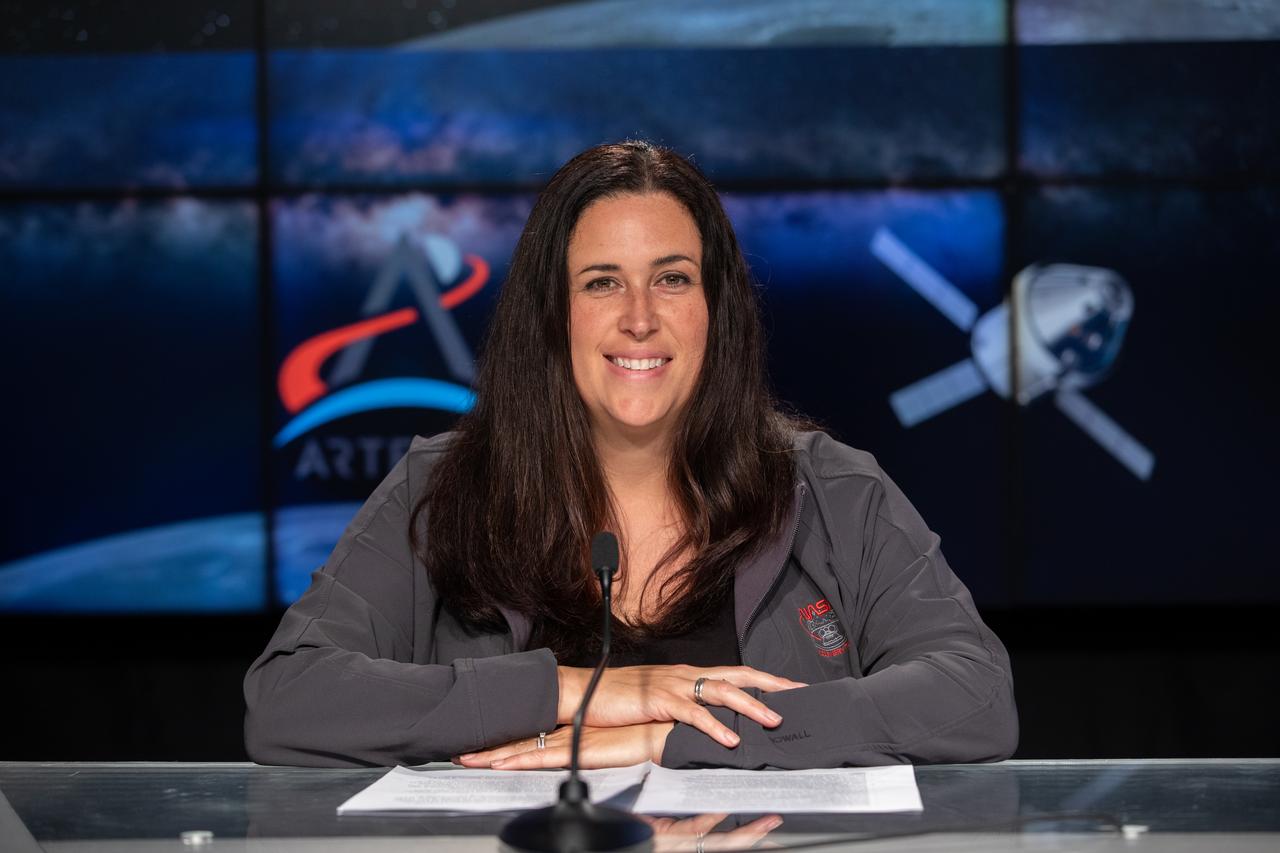
Melissa Jones, NASA Landing and Recovery Director for Exploration Ground Systems, participates in an Artemis I detailed mission briefing inside the Press Site auditorium at NASA’s Kennedy Space Center in Florida on Aug. 5, 2022. Jones leads the Artemis I Recovery Team partnered with the U.S. Navy that will recover the Artemis I Orion crew module from the Pacific Ocean after splashdown. Also participating in the briefing from NASA’s Johnson Space Center were Debbie Korth, Orion program deputy manager; Rick LaBrode, lead Artemis I flight director; Judd Frieling, Artemis I ascent/entry flight director; Reid Wiseman, chief astronaut; and Philippe Deloo, Orion European Service Module program manager, European Space Agency. The first in an increasingly complex series of missions, Artemis I is an uncrewed flight test to test the Space Launch System rocket and Orion spacecraft as an integrated system prior to crewed flights to the Moon. Through Artemis, NASA will land the first woman and first person of color on the lunar surface, paving the way for long-term lunar presence and serving as a steppingstone before venturing to Mars.
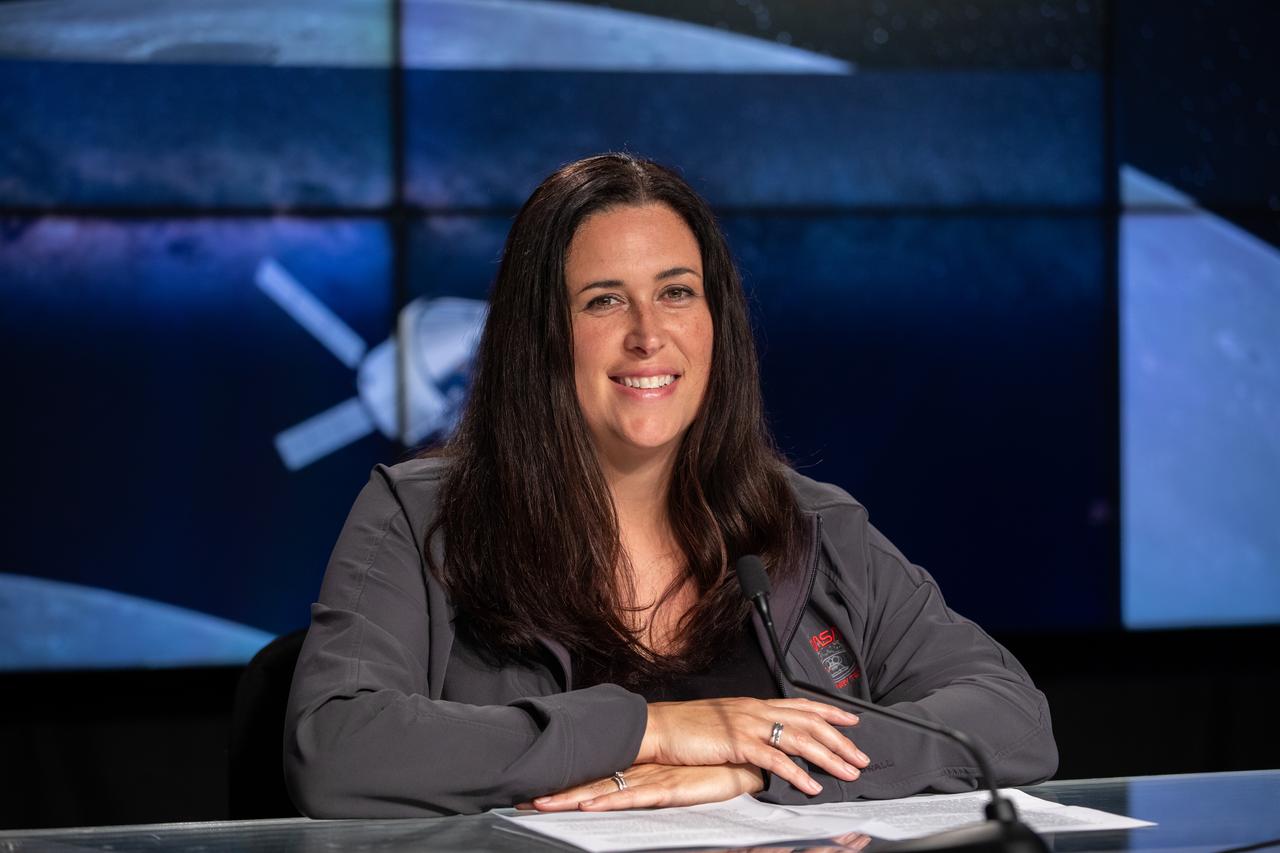
Melissa Jones, NASA Landing and Recovery Director for Exploration Ground Systems, participates in an Artemis I detailed mission briefing inside the Press Site auditorium at NASA’s Kennedy Space Center in Florida on Aug. 5, 2022. Jones leads the Artemis I Recovery Team partnered with the U.S. Navy that will recover the Artemis I Orion crew module from the Pacific Ocean after splashdown. Also participating in the briefing from NASA’s Johnson Space Center were Debbie Korth, Orion program deputy manager; Rick LaBrode, lead Artemis I flight director; Judd Frieling, Artemis I ascent/entry flight director; Reid Wiseman, chief astronaut; and Philippe Deloo, Orion European Service Module program manager, European Space Agency. The first in an increasingly complex series of missions, Artemis I is an uncrewed flight test to test the Space Launch System rocket and Orion spacecraft as an integrated system prior to crewed flights to the Moon. Through Artemis, NASA will land the first woman and first person of color on the lunar surface, paving the way for long-term lunar presence and serving as a steppingstone before venturing to Mars.
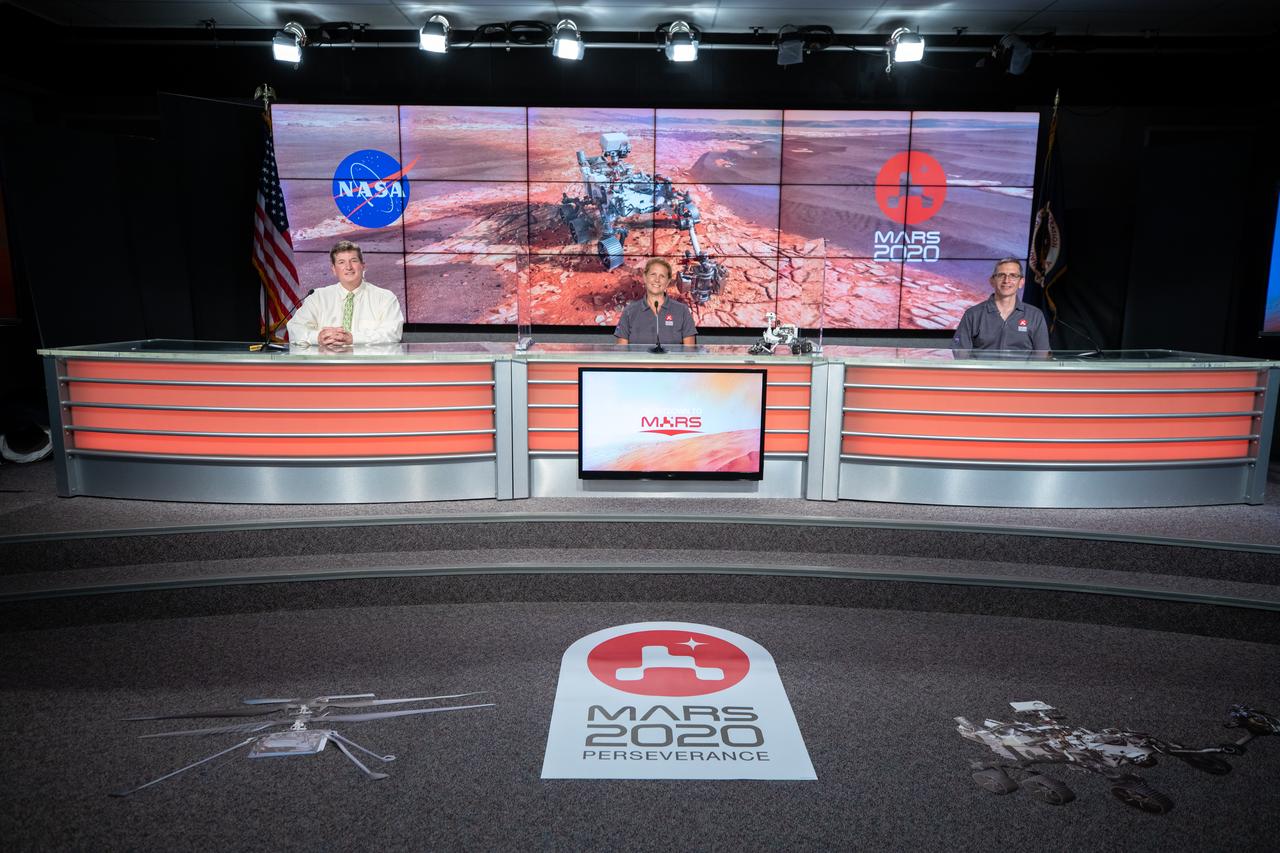
A Mars 2020 Mission Engineering and Science Briefing is held at NASA’s Kennedy Space Center in Florida on July 27, 2020. Participating in the briefing from left, are Moderator DC Agle, NASA’s Jet Propulsion Laboratory; Lori Glaze, Planetary Science Division director, NASA Headquarters; and Ken Farley, project scientist, California Institute of Technology. The Mars Perseverance rover is scheduled to launch July 30, on a United Launch Alliance Atlas V 541 rocket from Space Launch Complex 41 at nearby Cape Canaveral Air Force Station. The rover is part of NASA’s Mars Exploration Program, a long-term effort of robotic exploration of the Red Planet. The rover will search for habitable conditions in the ancient past and signs of past microbial life on Mars. The Launch Services Program at Kennedy is responsible for launch management.
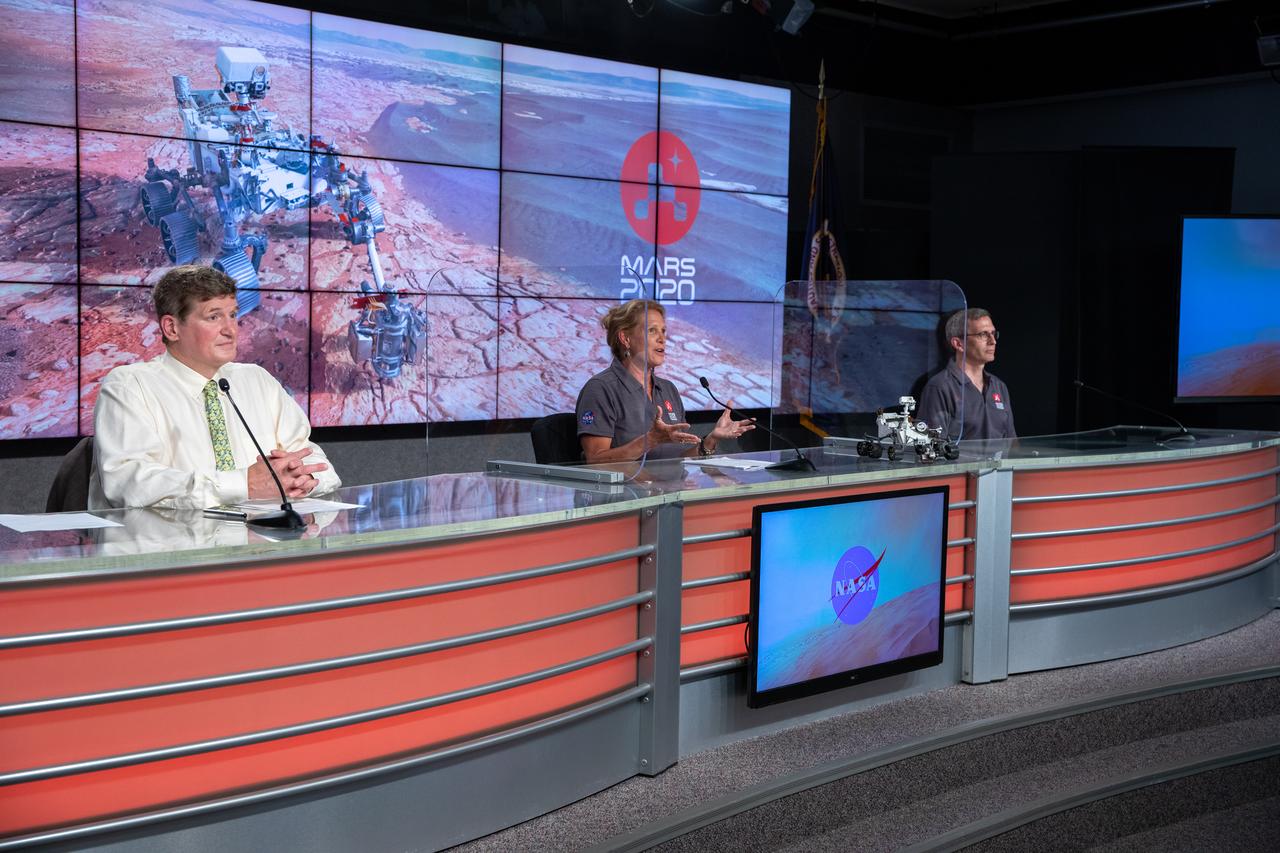
A Mars 2020 Mission Engineering and Science Briefing is held at NASA’s Kennedy Space Center in Florida on July 27, 2020. Participating in the briefing from left, are Moderator DC Agle, NASA’s Jet Propulsion Laboratory; Lori Glaze, Planetary Science Division director, NASA Headquarters; and Ken Farley, project scientist, California Institute of Technology. The Mars Perseverance rover is scheduled to launch July 30, on a United Launch Alliance Atlas V 541 rocket from Space Launch Complex 41 at nearby Cape Canaveral Air Force Station. The rover is part of NASA’s Mars Exploration Program, a long-term effort of robotic exploration of the Red Planet. The rover will search for habitable conditions in the ancient past and signs of past microbial life on Mars. The Launch Services Program at Kennedy is responsible for launch management.
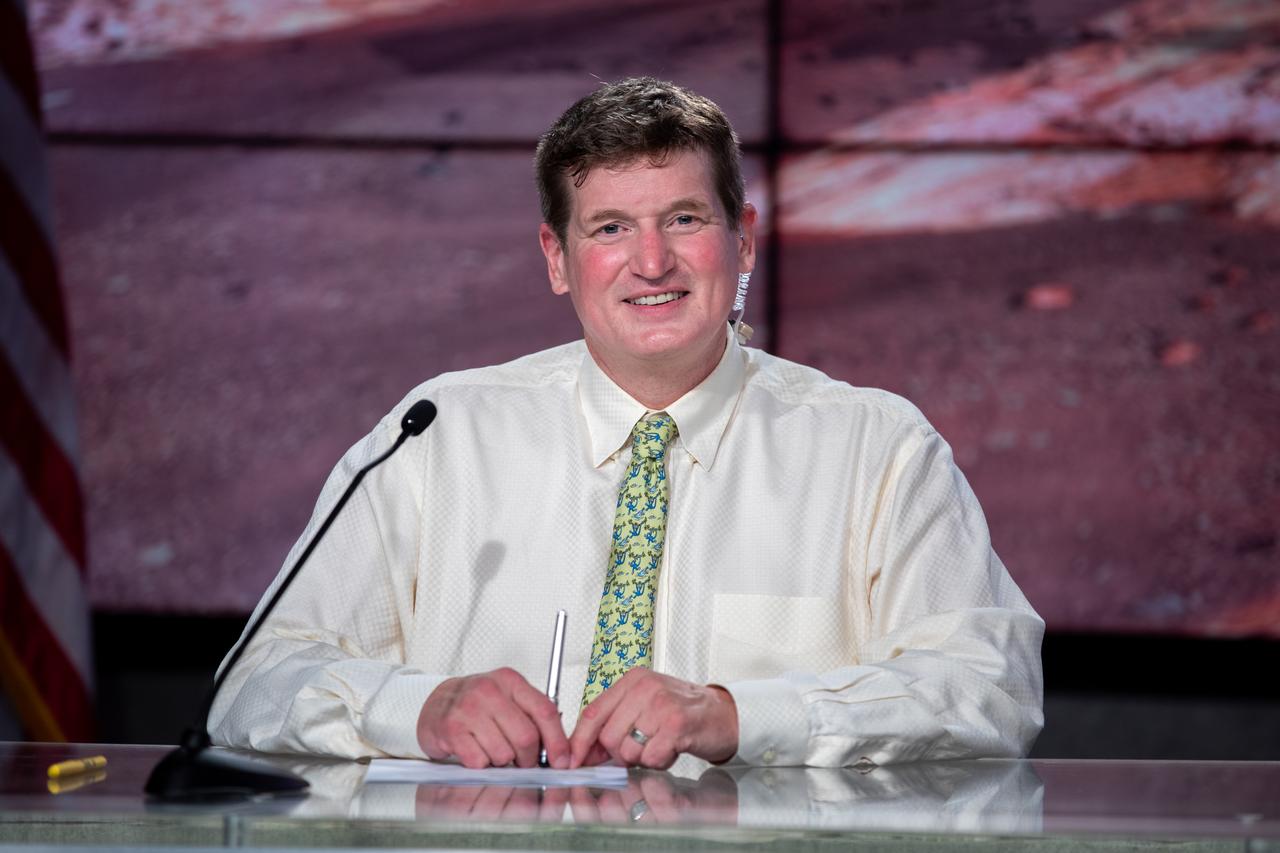
DC Agle, with NASA’s Jet Propulsion Laboratory, moderates a Mars 2020 Mission Engineering and Science Briefing at NASA’s Kennedy Space Center in Florida on July 27, 2020. The Mars Perseverance rover is scheduled to launch July 30, on a United Launch Alliance Atlas V 541 rocket from Space Launch Complex 41 at nearby Cape Canaveral Air Force Station. The rover is part of NASA’s Mars Exploration Program, a long-term effort of robotic exploration of the Red Planet. The rover will search for habitable conditions in the ancient past and signs of past microbial life on Mars. The Launch Services Program at Kennedy is responsible for launch management.
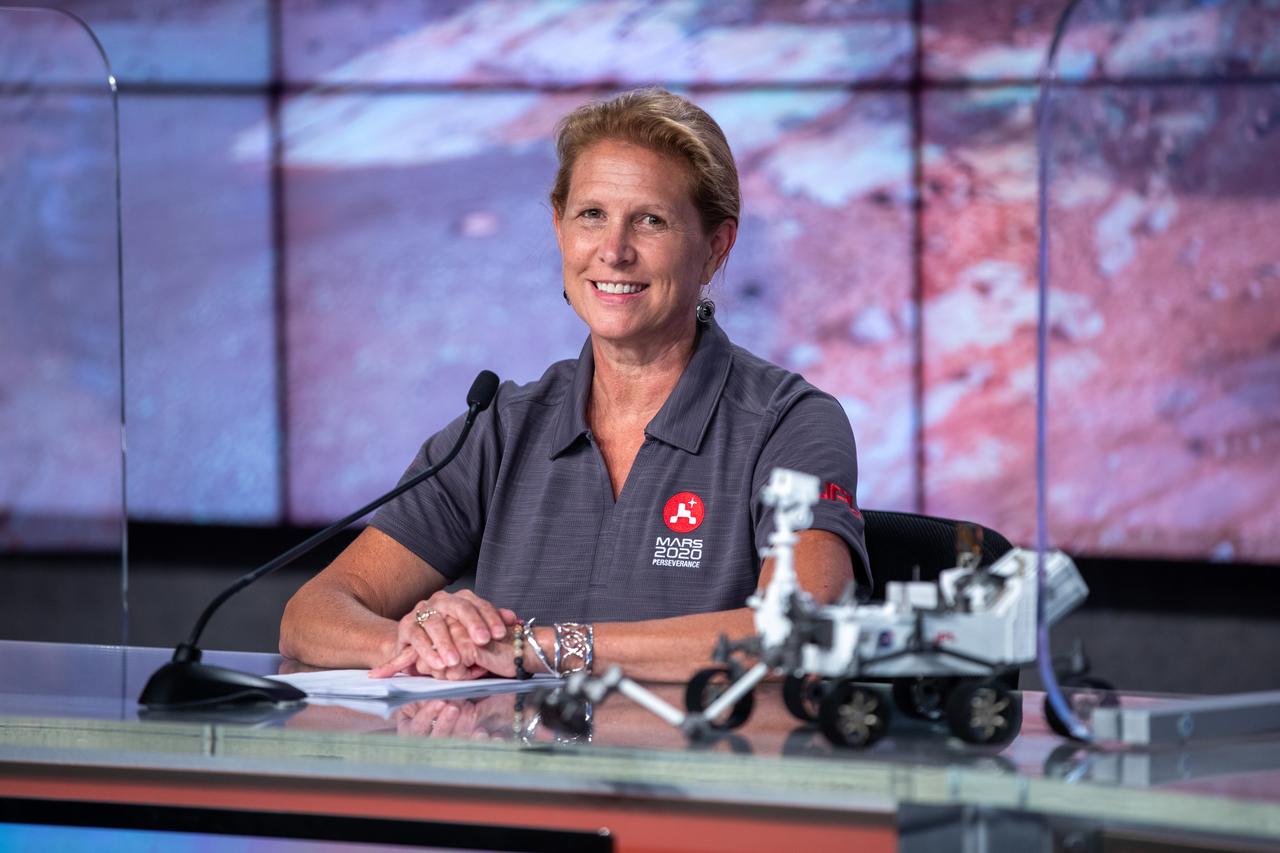
Lori Glaze, Planetary Science Division director, NASA Headquarters, participates in a Mars 2020 Mission Engineering and Science Briefing at NASA’s Kennedy Space Center in Florida on July 27, 2020. The Mars Perseverance rover is scheduled to launch July 30, on a United Launch Alliance Atlas V 541 rocket from Space Launch Complex 41 at nearby Cape Canaveral Air Force Station. The rover is part of NASA’s Mars Exploration Program, a long-term effort of robotic exploration of the Red Planet. The rover will search for habitable conditions in the ancient past and signs of past microbial life on Mars. The Launch Services Program at Kennedy is responsible for launch management.
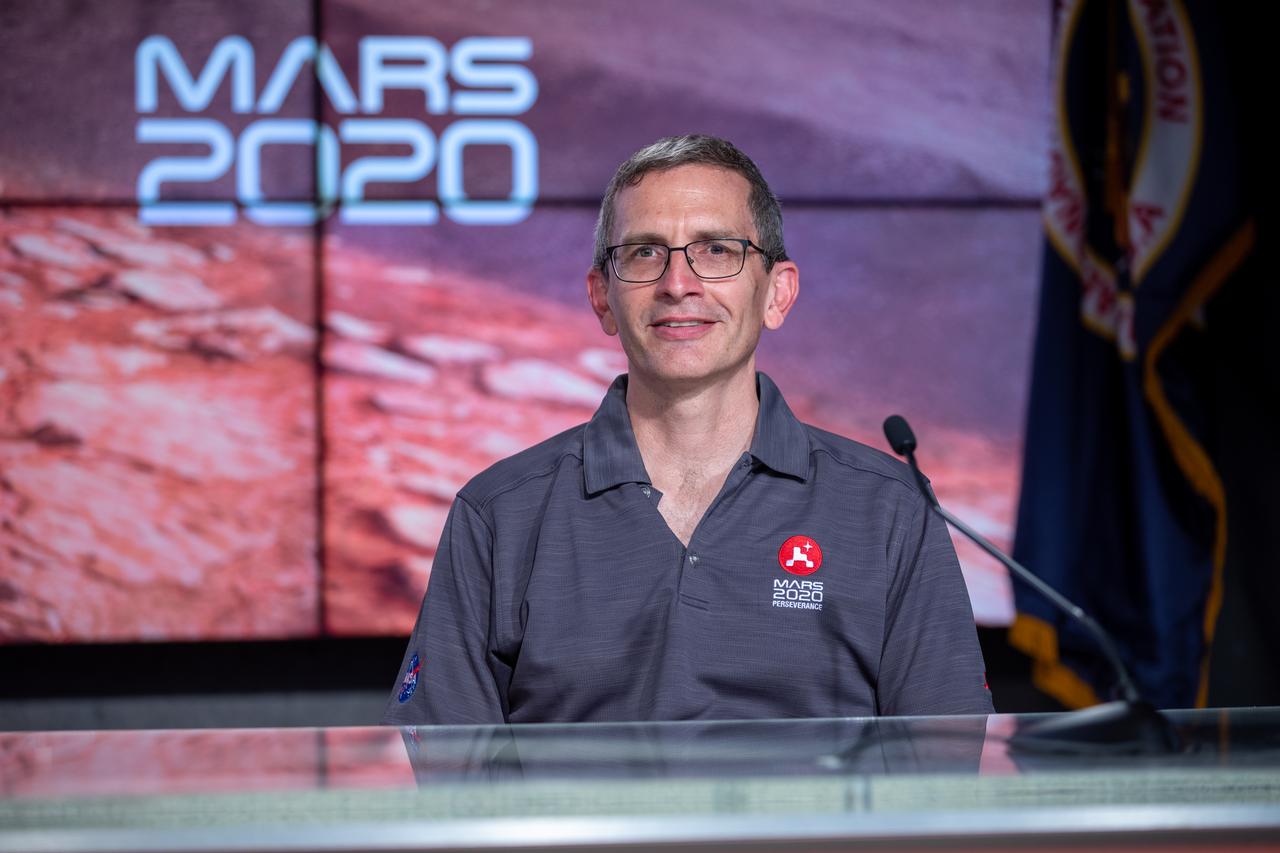
Ken Farley, project scientist, California Institute of Technology, participates in a Mars 2020 Mission Engineering and Science Briefing at NASA’s Kennedy Space Center in Florida on July 27, 2020. The Mars Perseverance rover is scheduled to launch July 30, on a United Launch Alliance Atlas V 541 rocket from Space Launch Complex 41 at nearby Cape Canaveral Air Force Station. The rover is part of NASA’s Mars Exploration Program, a long-term effort of robotic exploration of the Red Planet. The rover will search for habitable conditions in the ancient past and signs of past microbial life on Mars. The Launch Services Program at Kennedy is responsible for launch management.
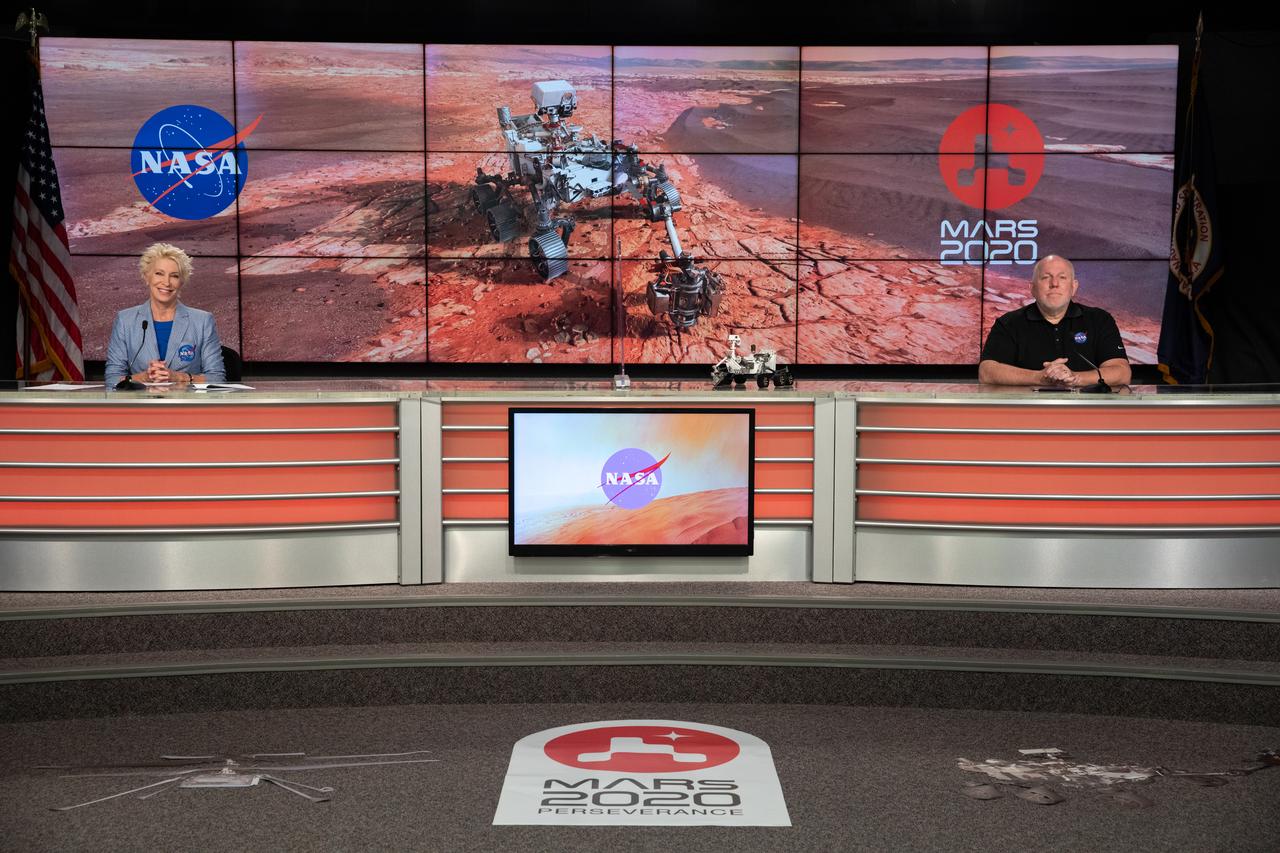
A Mars 2020 Mission Tech and Humans to Mars Briefing is held at NASA’s Kennedy Space Center in Florida on July 28, 2020. Participating in the briefing from left, are Tammy Long, moderator, NASA Communications, and Jeff Sheehy, Space Technology Mission Directorate, NASA Headquarters. The Mars Perseverance rover is scheduled to launch July 30, on a United Launch Alliance Atlas V 541 rocket from Space Launch Complex 41 at nearby Cape Canaveral Air Force Station. The rover is part of NASA’s Mars Exploration Program, a long-term effort of robotic exploration of the Red Planet. The rover will search for habitable conditions in the ancient past and signs of past microbial life on Mars. The Launch Services Program at Kennedy is responsible for launch management.
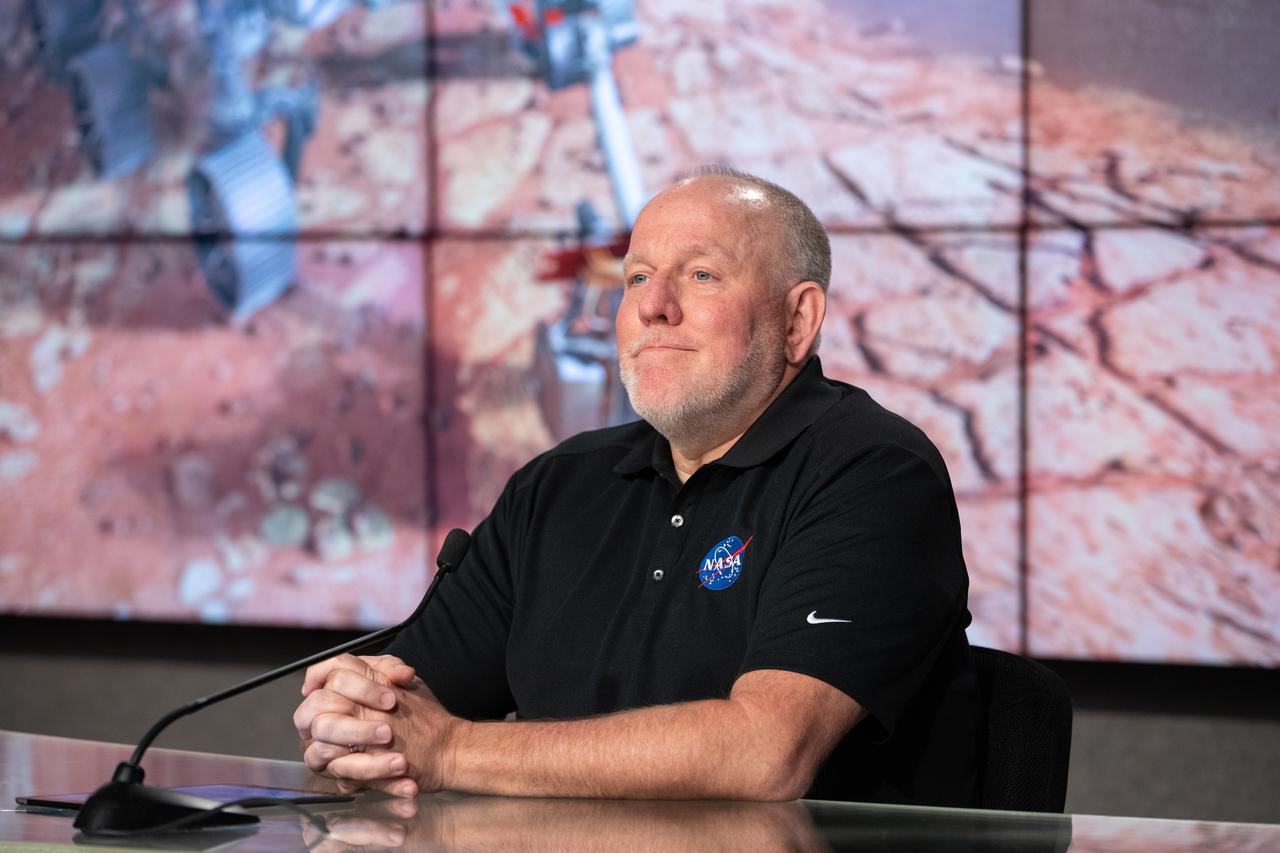
Jeff Sheehy, Space Technology Mission Directorate, NASA Headquarters, participates in a Mars 2020 Mission Tech and Humans to Mars Briefing at NASA’s Kennedy Space Center in Florida on July 28, 2020. The Mars Perseverance rover is scheduled to launch July 30, on a United Launch Alliance Atlas V 541 rocket from Space Launch Complex 41 at nearby Cape Canaveral Air Force Station. The rover is part of NASA’s Mars Exploration Program, a long-term effort of robotic exploration of the Red Planet. The rover will search for habitable conditions in the ancient past and signs of past microbial life on Mars. The Launch Services Program at Kennedy is responsible for launch management.

Nicola Fox, Heliophysics division director in NASA’s Science Mission Directorate, speaks to news media during a prelaunch mission briefing for NASA’s Ionospheric Connection Explorer (ICON), on Oct. 8, 2019, in the News Center auditorium at the agency’s Kennedy Space Center in Florida. ICON is targeted to launch from Cape Canaveral Air Force Station in Florida on Oct. 9, 2019, aboard a Northrop Grumman Pegasus XL rocket carried aloft by the company’s Stargazer L-1011 aircraft. The explorer will study the frontier of space - the dynamic zone high in Earth's atmosphere where terrestrial weather from below meets space weather above.
Benji Reed, director of Crew Mission Management, SpaceX, speaks to members of the media Thursday, Feb. 28, in the Kennedy Space Center’s Mission Briefing Room of the Neil Armstrong Operations and Checkout Building. The briefing focused on launch of the SpaceX Demo-1 Commercial Crew Program mission to the International Space Station. The inaugural flight of the Crew Dragon, known as Demo-1, will be uncrewed, lifting off atop a SpaceX Falcon 9 rocket from Launch Complex 39A at Kennedy Saturday, March 2, at 2:49 a.m. EST. The mission is designed to validate end-to-end systems and capabilities, leading to certification to fly crew. NASA has worked with SpaceX and Boeing in developing the CCP spacecraft to facilitate new human spaceflight systems launching from U.S. soil with the goal of safe, reliable and cost-effective access to low-Earth orbit destinations such as the space station.
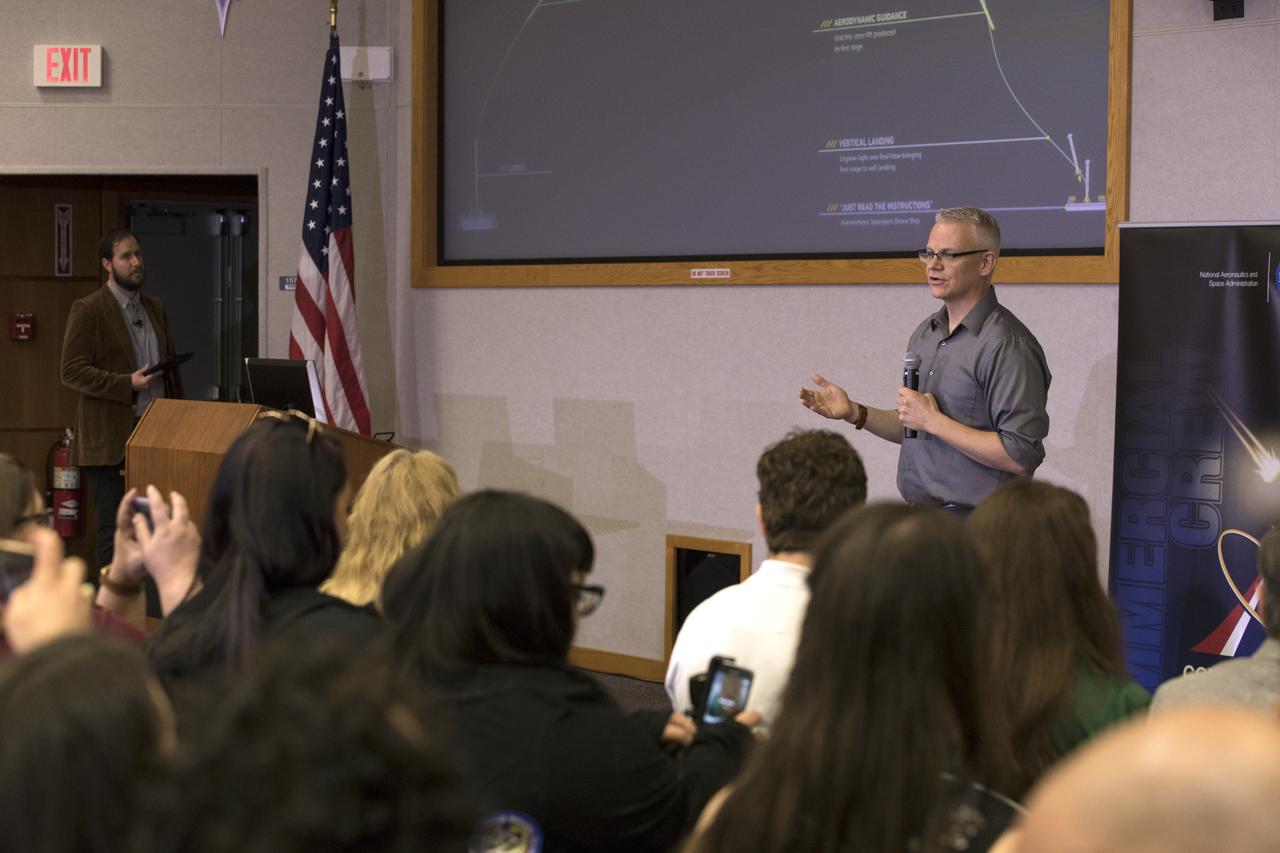
Benji Reed, director of Crew Mission Management, SpaceX, speaks to members of the media Thursday, Feb. 28, in the Kennedy Space Center’s Mission Briefing Room of the Neil Armstrong Operations and Checkout Building. The briefing focused on launch of the SpaceX Demo-1 Commercial Crew Program mission to the International Space Station. The inaugural flight of the Crew Dragon, known as Demo-1, will be uncrewed, lifting off atop a SpaceX Falcon 9 rocket from Launch Complex 39A at Kennedy Saturday, March 2, at 2:49 a.m. EST. The mission is designed to validate end-to-end systems and capabilities, leading to certification to fly crew. NASA has worked with SpaceX and Boeing in developing the CCP spacecraft to facilitate new human spaceflight systems launching from U.S. soil with the goal of safe, reliable and cost-effective access to low-Earth orbit destinations such as the space station.
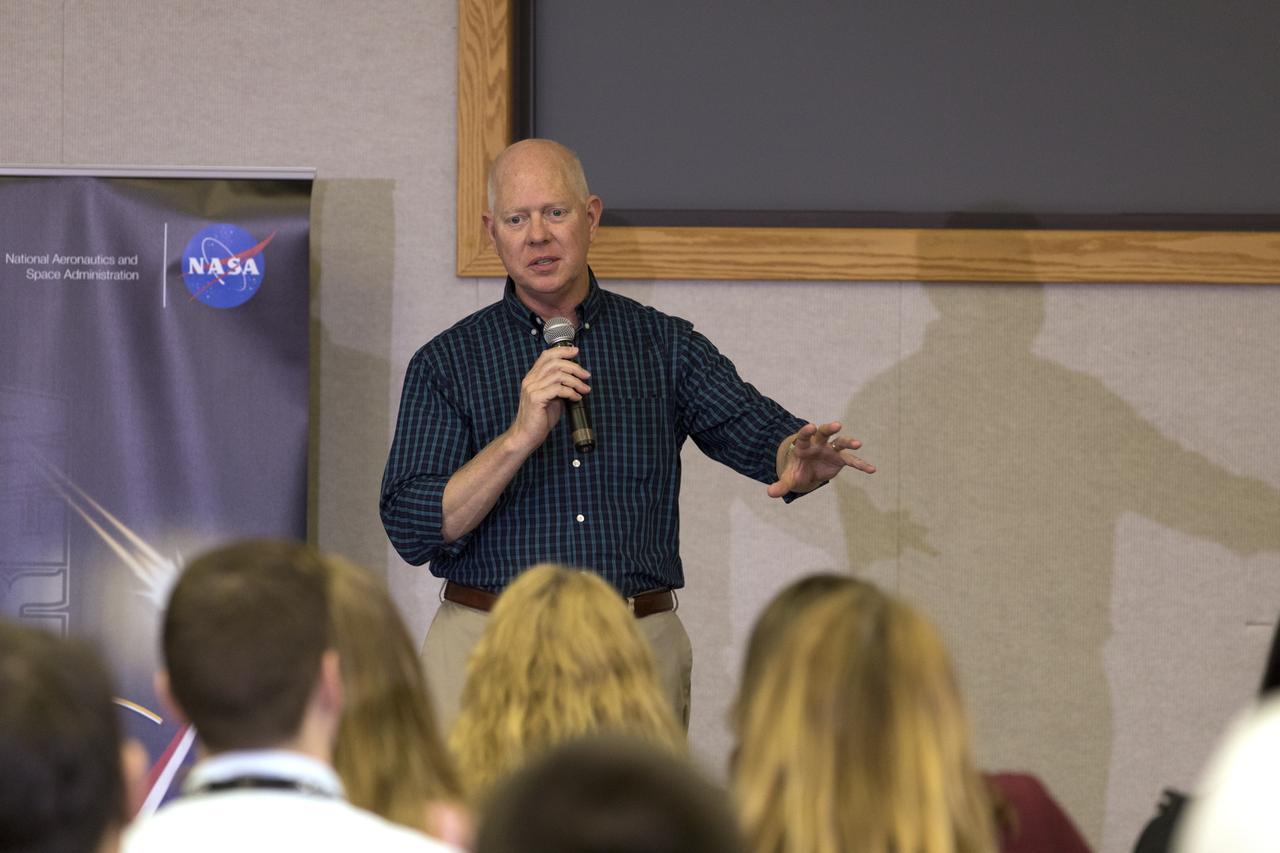
Steve Payne, launch integration manager, NASA’s Commercial Crew Program Ground and Mission Operations Office, speaks to members of the media Thursday, Feb. 28, in the Kennedy Space Center’s Mission Briefing Room of the Neil Armstrong Operations and Checkout Building. The briefing focused on launch of the SpaceX Demo-1 Commercial Crew Program mission to the International Space Station. The inaugural flight of the Crew Dragon, known as Demo-1, will be uncrewed, lifting off atop a SpaceX Falcon 9 rocket from Launch Complex 39A at Kennedy Saturday, March 2, at 2:49 a.m. EST. The mission is designed to validate end-to-end systems and capabilities, leading to certification to fly crew. NASA has worked with SpaceX and Boeing in developing the CCP spacecraft to facilitate new human spaceflight systems launching from U.S. soil with the goal of safe, reliable and cost-effective access to low-Earth orbit destinations such as the space station.

NASA Associate Administrator Robert Lightfoot briefs journalists on the Asteroid Redirect Mission during a roundtable discussion at the agency's Kennedy Space Center in Florida.
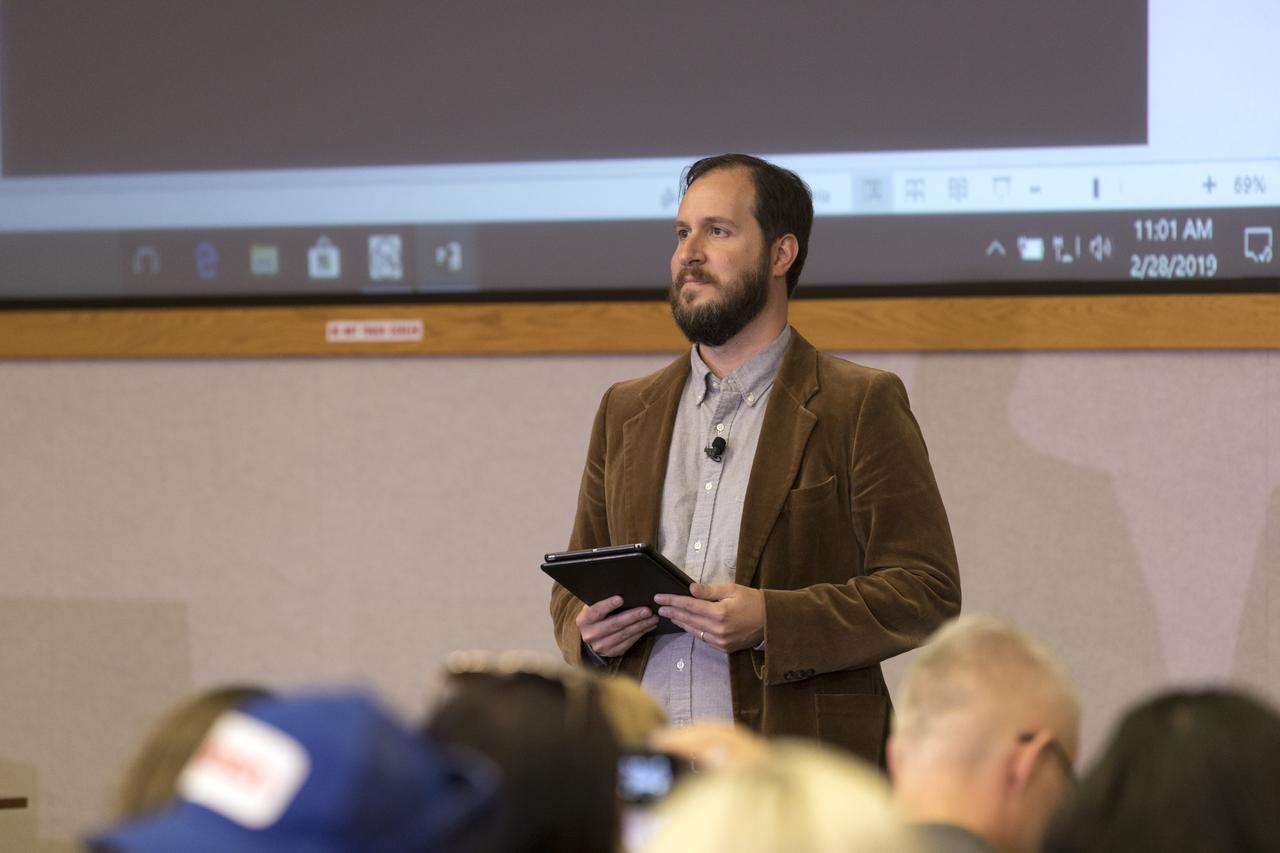
Moderator McManus Woodend, NASA Communications, speaks to members of the media Thursday, Feb. 28, in the Kennedy Space Center’s Mission Briefing Room of the Neil Armstrong Operations and Checkout Building. The briefing focused on launch of the SpaceX Demo-1 Commercial Crew Program mission to the International Space Station. The inaugural flight of the Crew Dragon, known as Demo-1, will be uncrewed, lifting off atop a SpaceX Falcon 9 rocket from Launch Complex 39A at Kennedy Saturday, March 2, at 2:49 a.m. EST. The mission is designed to validate end-to-end systems and capabilities, leading to certification to fly crew. NASA has worked with SpaceX and Boeing in developing the CCP spacecraft to facilitate new human spaceflight systems launching from U.S. soil with the goal of safe, reliable and cost-effective access to low-Earth orbit destinations such as the space station.
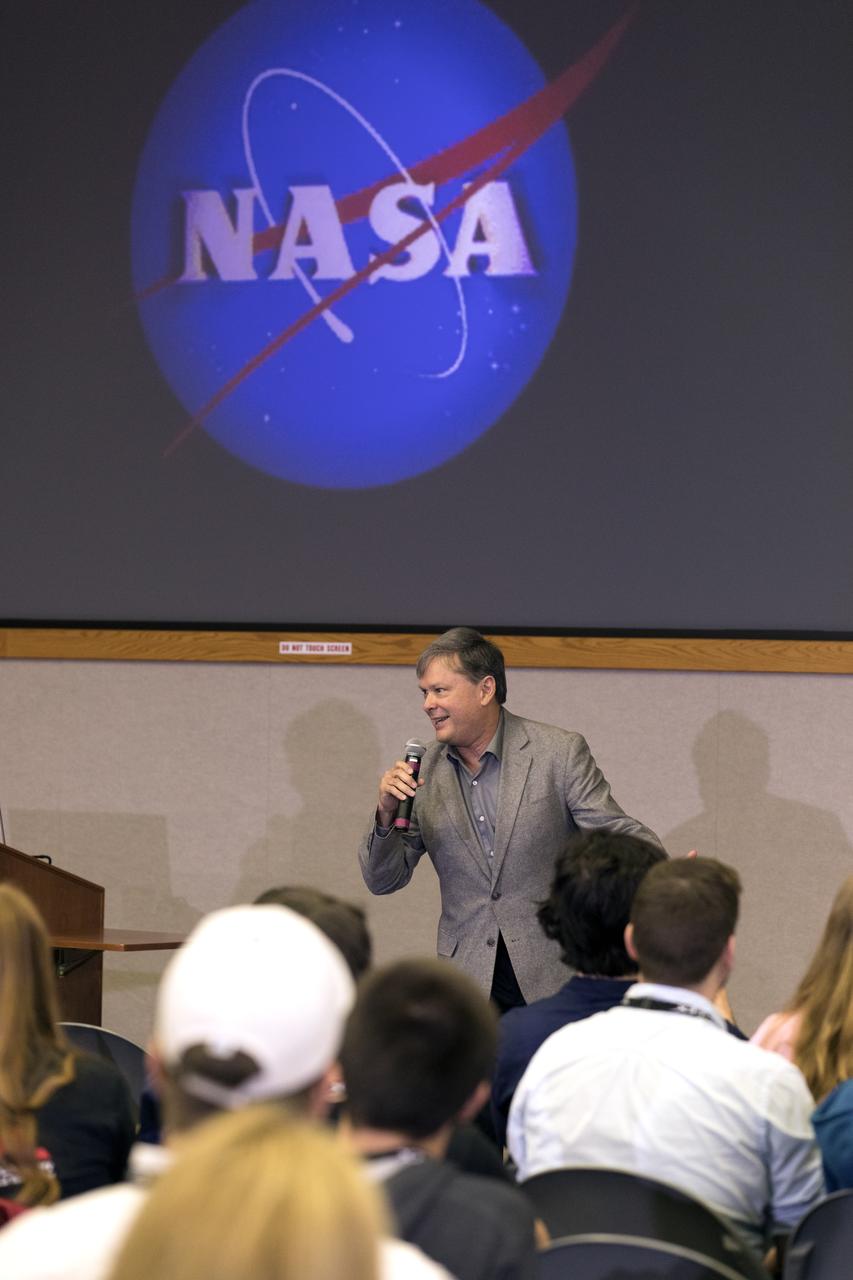
David Brady, ISS assistant program scientist, speaks to members of the media Thursday, Feb. 28, in the Kennedy Space Center’s Mission Briefing Room of the Neil Armstrong Operations and Checkout Building. The briefing focused on launch of the SpaceX Demo-1 Commercial Crew Program mission to the International Space Station. The inaugural flight of the Crew Dragon, known as Demo-1, will be uncrewed, lifting off atop a SpaceX Falcon 9 rocket from Launch Complex 39A at Kennedy Saturday, March 2, at 2:49 a.m. EST. The mission is designed to validate end-to-end systems and capabilities, leading to certification to fly crew. NASA has worked with SpaceX and Boeing in developing the CCP spacecraft to facilitate new human spaceflight systems launching from U.S. soil with the goal of safe, reliable and cost-effective access to low-Earth orbit destinations such as the space station.
James Beahn, Launch Vehicle lead engineer, speaks to members of the media Thursday, Feb. 28, in the Kennedy Space Center’s Mission Briefing Room of the Neil Armstrong Operations and Checkout Building. The briefing focused on launch of the SpaceX Demo-1 Commercial Crew Program mission to the International Space Station. The inaugural flight of the Crew Dragon, known as Demo-1, will be uncrewed, lifting off atop a SpaceX Falcon 9 rocket from Launch Complex 39A at Kennedy Saturday, March 2, at 2:49 a.m. EST. The mission is designed to validate end-to-end systems and capabilities, leading to certification to fly crew. NASA has worked with SpaceX and Boeing in developing the CCP spacecraft to facilitate new human spaceflight systems launching from U.S. soil with the goal of safe, reliable and cost-effective access to low-Earth orbit destinations such as the space station.
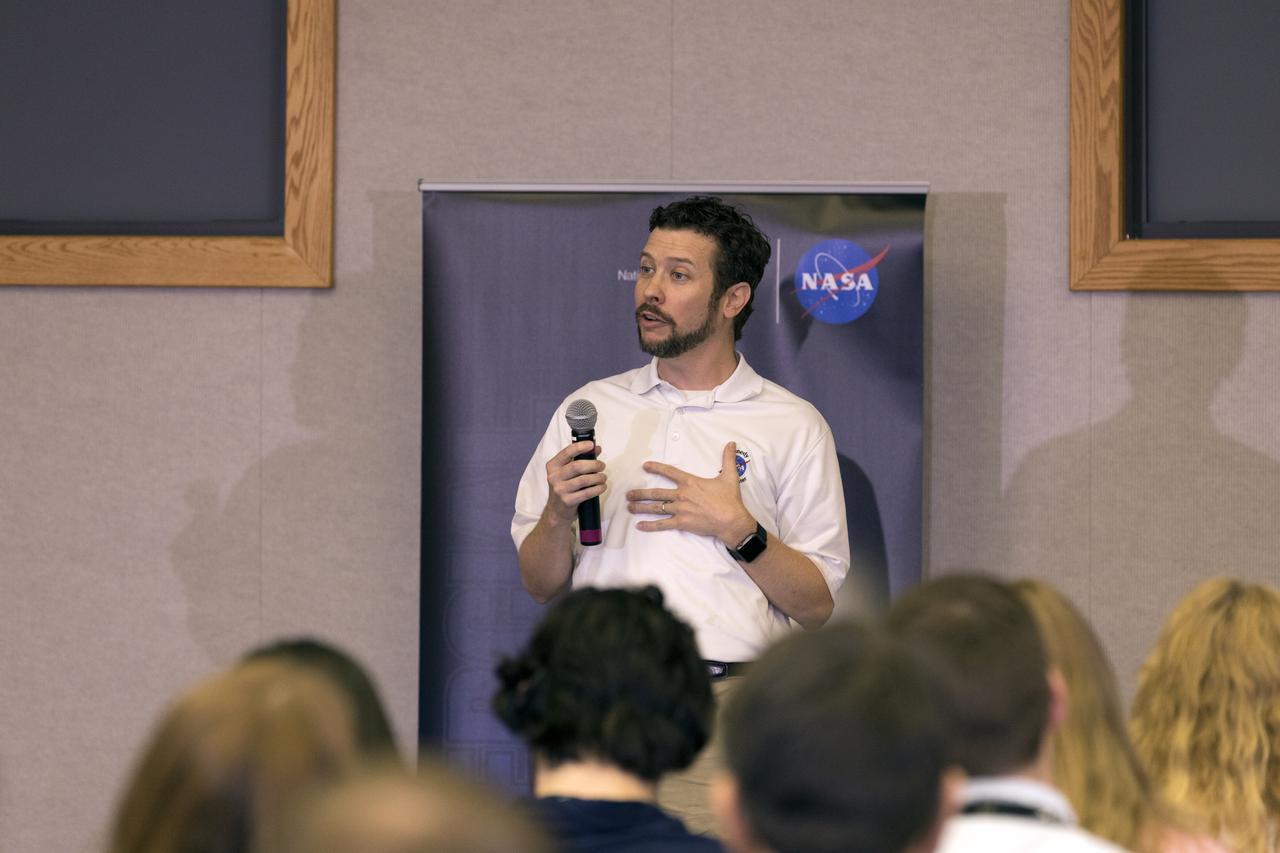
James Beahn, Launch Vehicle lead engineer, speaks to members of the media Thursday, Feb. 28, in the Kennedy Space Center’s Mission Briefing Room of the Neil Armstrong Operations and Checkout Building. The briefing focused on launch of the SpaceX Demo-1 Commercial Crew Program mission to the International Space Station. The inaugural flight of the Crew Dragon, known as Demo-1, will be uncrewed, lifting off atop a SpaceX Falcon 9 rocket from Launch Complex 39A at Kennedy Saturday, March 2, at 2:49 a.m. EST. The mission is designed to validate end-to-end systems and capabilities, leading to certification to fly crew. NASA has worked with SpaceX and Boeing in developing the CCP spacecraft to facilitate new human spaceflight systems launching from U.S. soil with the goal of safe, reliable and cost-effective access to low-Earth orbit destinations such as the space station.
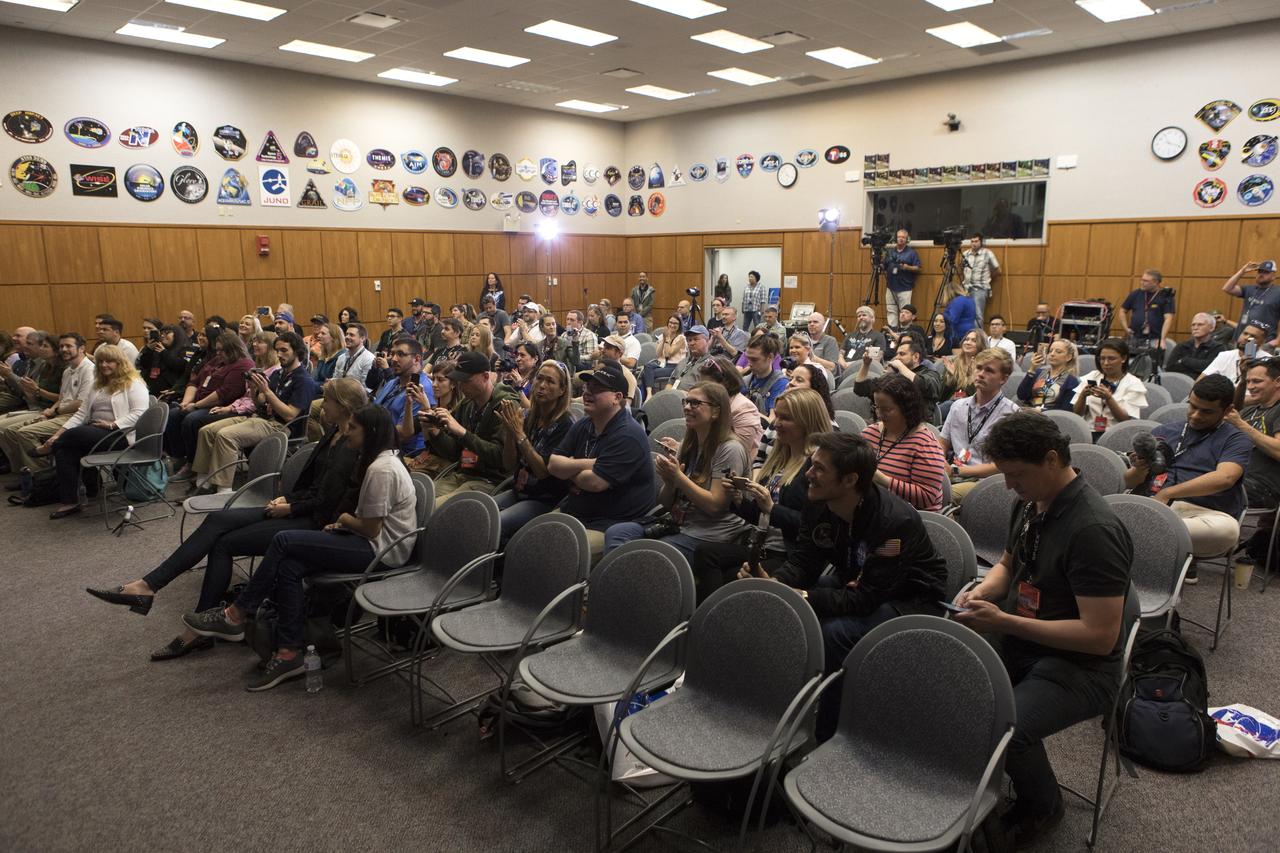
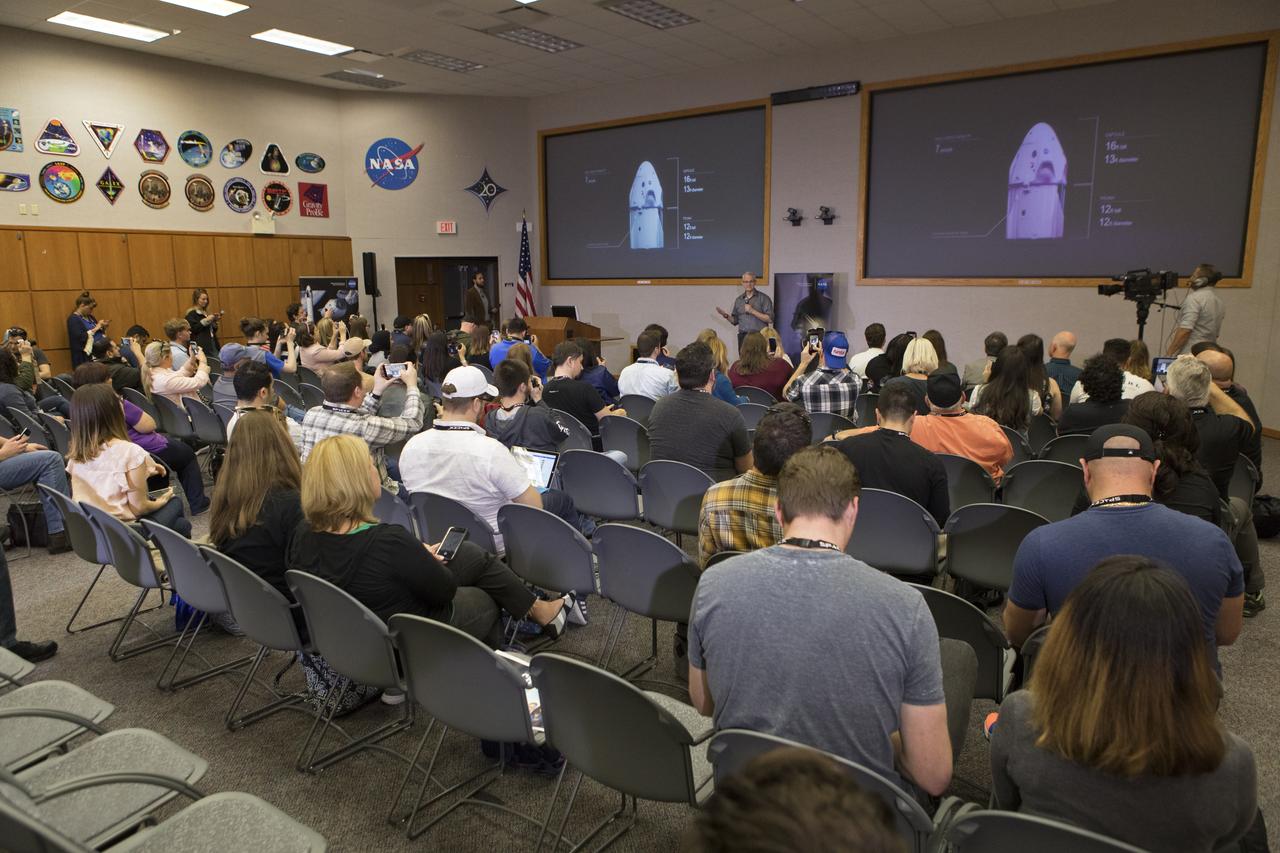
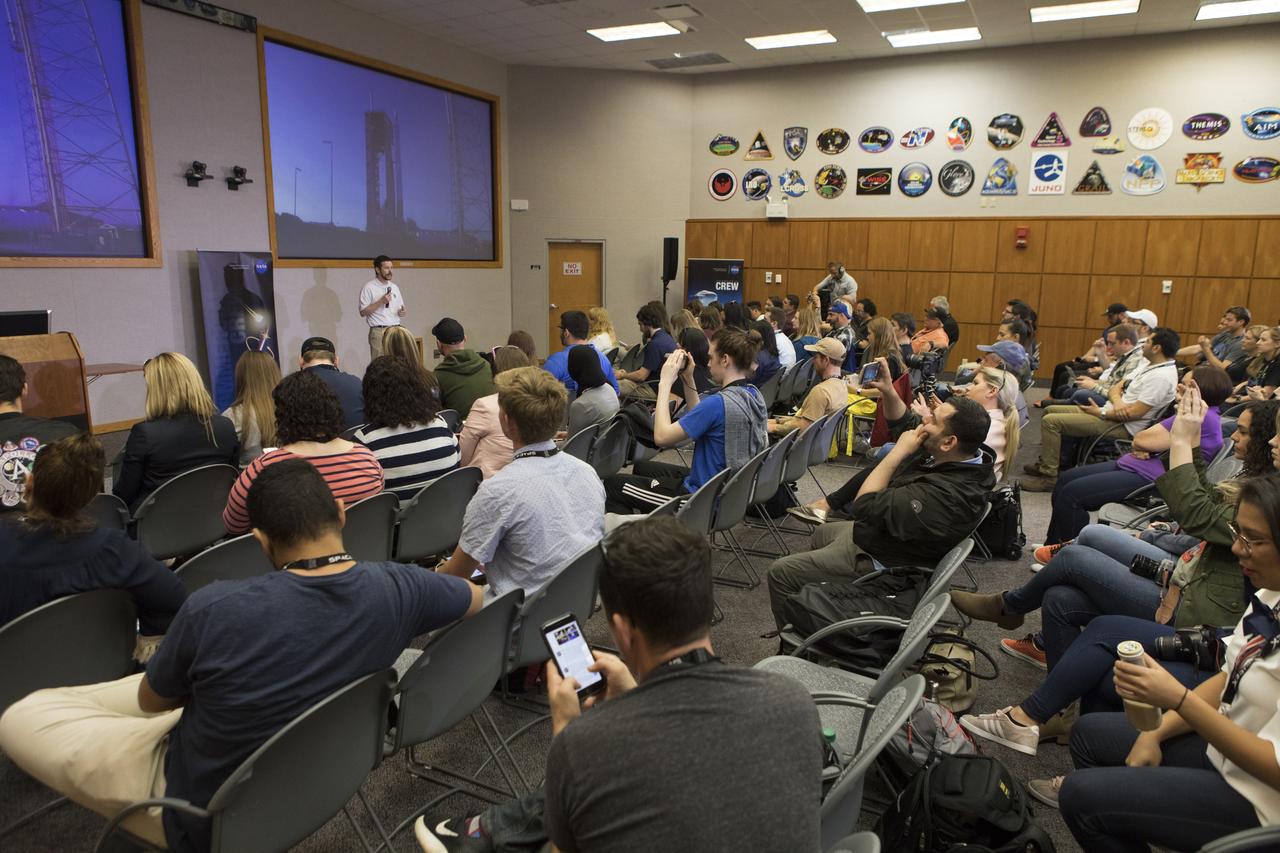
Members of the media, along with NASA and SpaceX officials, gather in the Kennedy Space Center’s Mission Briefing Room of the Neil Armstrong Operations and Checkout Building on Thursday, Feb. 28. The briefing focused on launch of the SpaceX Demo-1 Commercial Crew Program mission to the International Space Station. The inaugural flight of the Crew Dragon, known as Demo-1, will be uncrewed, lifting off atop a SpaceX Falcon 9 rocket from Launch Complex 39A at Kennedy Saturday, March 2, at 2:49 a.m. EST. The mission is designed to validate end-to-end systems and capabilities, leading to certification to fly crew. NASA has worked with SpaceX and Boeing in developing the CCP spacecraft to facilitate new human spaceflight systems launching from U.S. soil with the goal of safe, reliable and cost-effective access to low-Earth orbit destinations such as the space station.
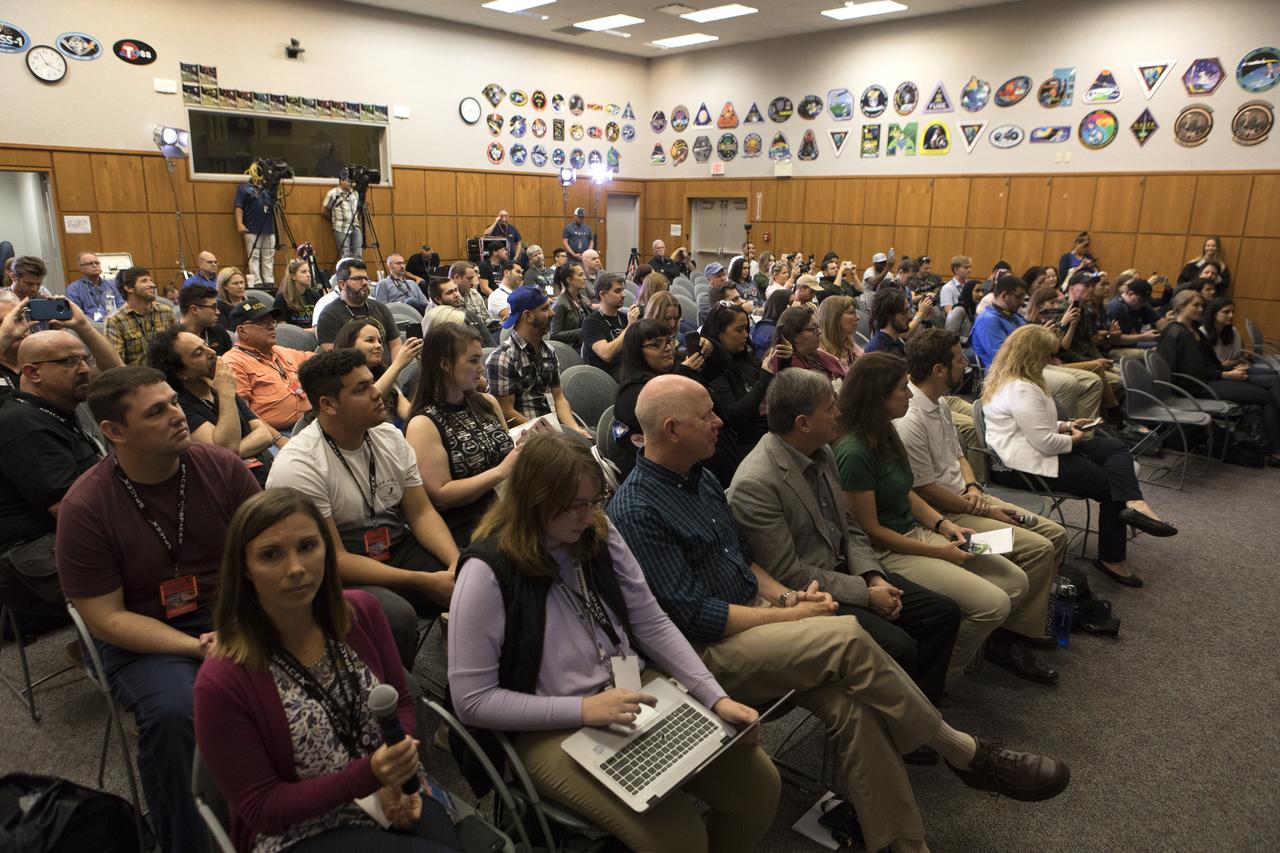
Members of the media, along with NASA and SpaceX officials, gather in the Kennedy Space Center’s Mission Briefing Room of the Neil Armstrong Operations and Checkout Building on Thursday, Feb. 28. The briefing focused on launch of the SpaceX Demo-1 Commercial Crew Program mission to the International Space Station. The inaugural flight of the Crew Dragon, known as Demo-1, will be uncrewed, lifting off atop a SpaceX Falcon 9 rocket from Launch Complex 39A at Kennedy Saturday, March 2, at 2:49 a.m. EST. The mission is designed to validate end-to-end systems and capabilities, leading to certification to fly crew. NASA has worked with SpaceX and Boeing in developing the CCP spacecraft to facilitate new human spaceflight systems launching from U.S. soil with the goal of safe, reliable and cost-effective access to low-Earth orbit destinations such as the space station.
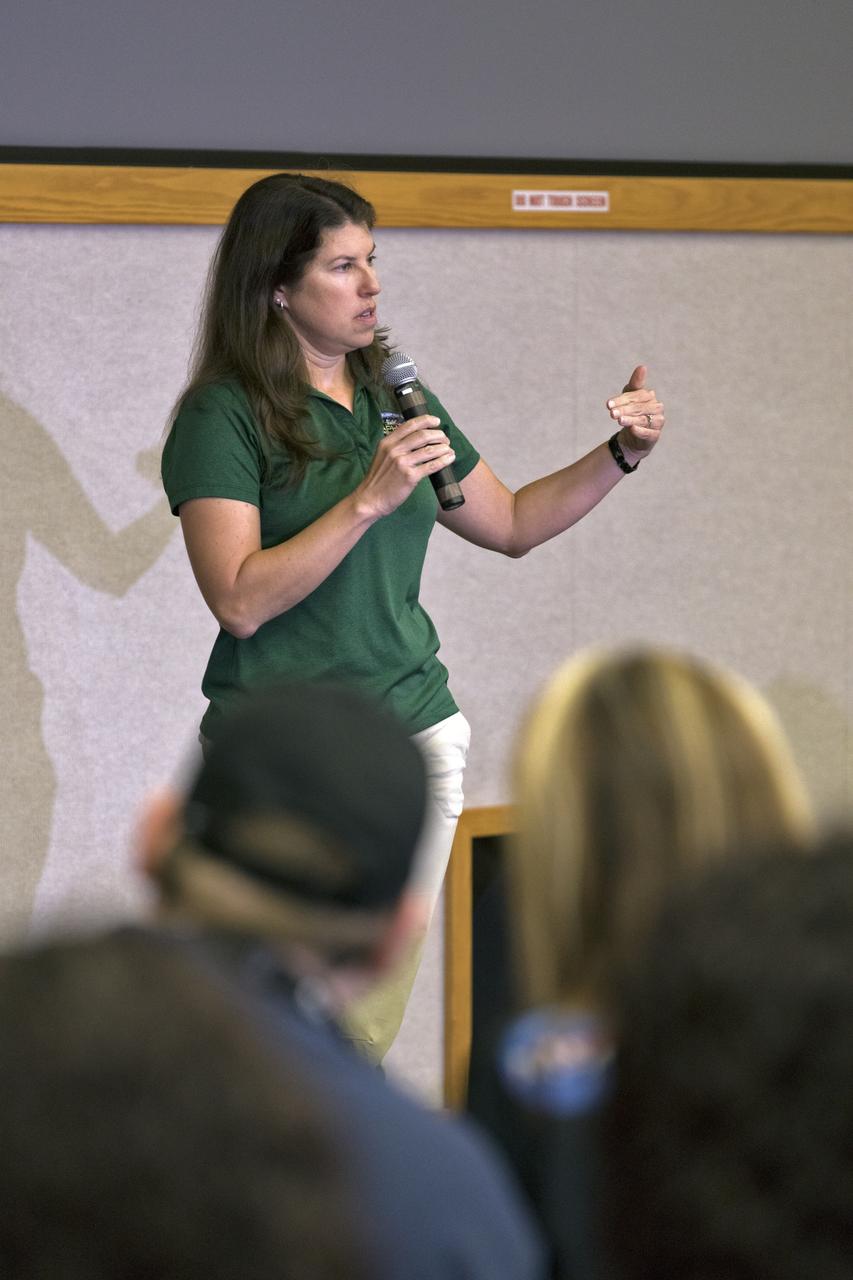
Kelli Maloney, NASA Ground Systems lead engineer, speaks to members of the media Thursday, Feb. 28, in the Kennedy Space Center’s Mission Briefing Room of the Neil Armstrong Operations and Checkout Building. The briefing focused on launch of the SpaceX Demo-1 Commercial Crew Program mission to the International Space Station. The inaugural flight of the Crew Dragon, known as Demo-1, will be uncrewed, lifting off atop a SpaceX Falcon 9 rocket from Launch Complex 39A at Kennedy Saturday, March 2, at 2:49 a.m. EST. The mission is designed to validate end-to-end systems and capabilities, leading to certification to fly crew. NASA has worked with SpaceX and Boeing in developing the CCP spacecraft to facilitate new human spaceflight systems launching from U.S. soil with the goal of safe, reliable and cost-effective access to low-Earth orbit destinations such as the space station.
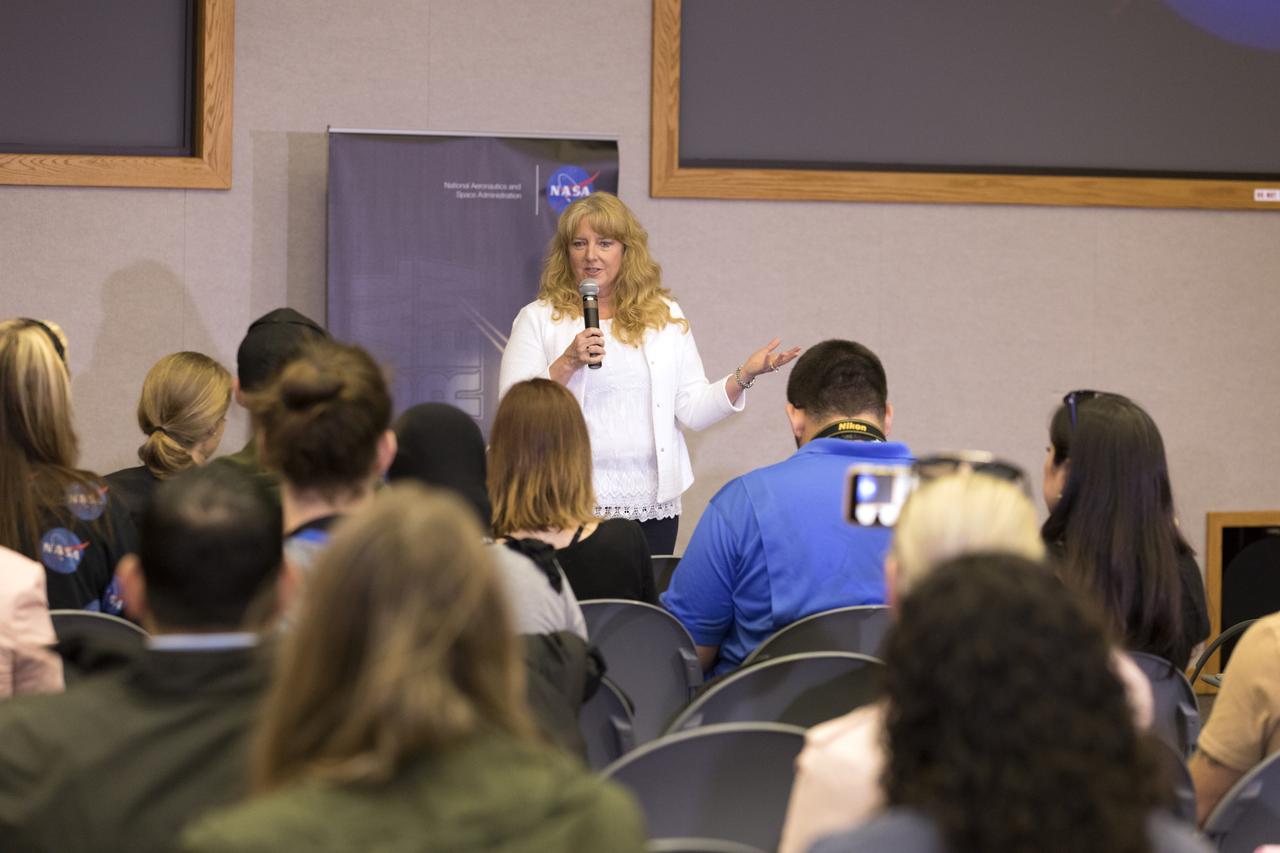
Carol Scott, deputy manager, NASA Commercial Crew Program Launch Vehicle Office, speaks to members of the media Thursday, Feb. 28, in the Kennedy Space Center’s Mission Briefing Room of the Neil Armstrong Operations and Checkout Building. The briefing focused on launch of the SpaceX Demo-1 Commercial Crew Program mission to the International Space Station. The inaugural flight of the Crew Dragon, known as Demo-1, will be uncrewed, lifting off atop a SpaceX Falcon 9 rocket from Launch Complex 39A at Kennedy Saturday, March 2, at 2:49 a.m. EST. The mission is designed to validate end-to-end systems and capabilities, leading to certification to fly crew. NASA has worked with SpaceX and Boeing in developing the CCP spacecraft to facilitate new human spaceflight systems launching from U.S. soil with the goal of safe, reliable and cost-effective access to low-Earth orbit destinations such as the space station.

Tammy Long, NASA Communicaions, moderates a Mars 2020 Mission Tech and Humans to Mars Briefing at NASA’s Kennedy Space Center in Florida on July 28, 2020. The Mars Perseverance rover is scheduled to launch July 30, on a United Launch Alliance Atlas V 541 rocket from Space Launch Complex 41 at nearby Cape Canaveral Air Force Station. The rover is part of NASA’s Mars Exploration Program, a long-term effort of robotic exploration of the Red Planet. The rover will search for habitable conditions in the ancient past and signs of past microbial life on Mars. The Launch Services Program at Kennedy is responsible for launch management.
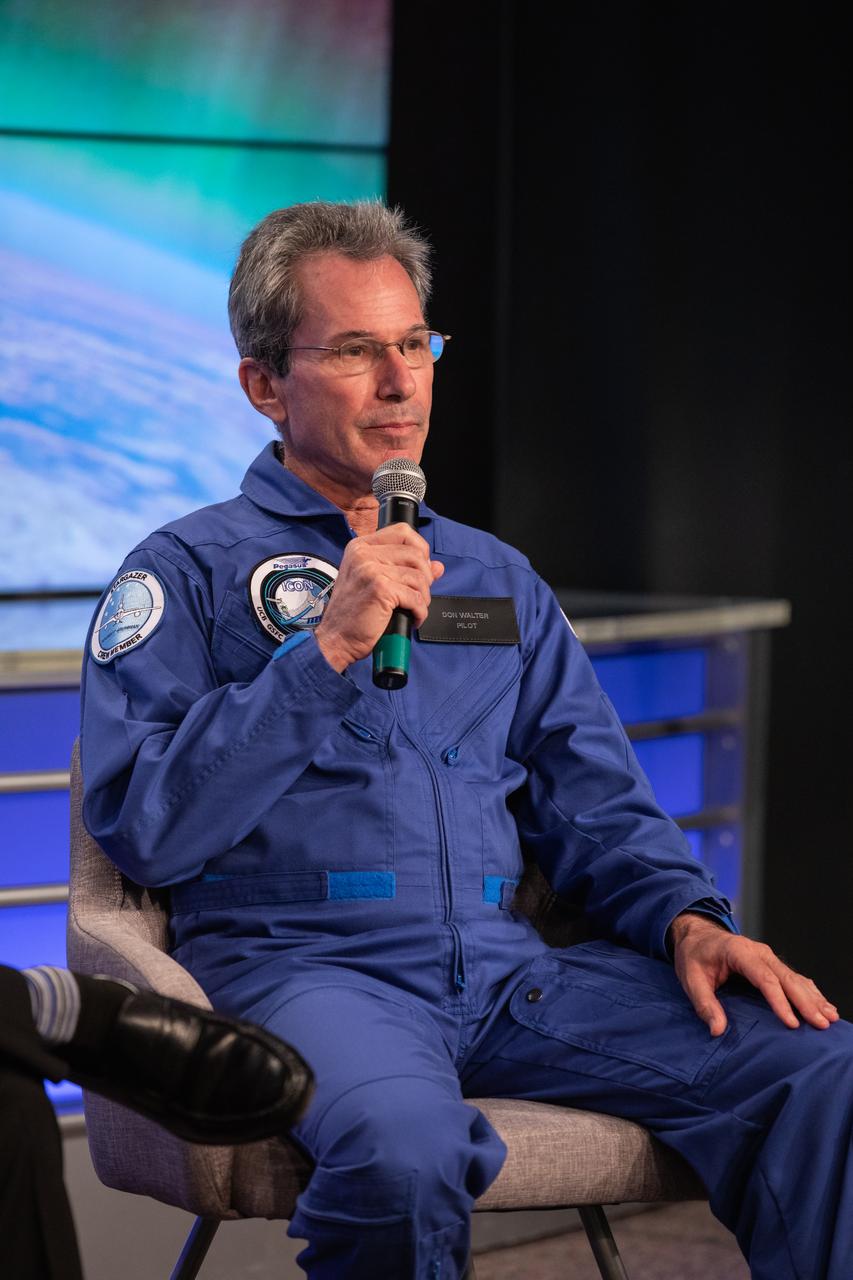
Don Walters, chief pilot of the L-1011 Stargazer aircraft for Northrop Grumman Innovation Systems, speaks to news media during a prelaunch mission briefing for NASA’s Ionospheric Connection Explorer (ICON), on Oct. 8, 2019, in the News Center auditorium at the agency’s Kennedy Space Center in Florida. ICON is targeted to launch from Cape Canaveral Air Force Station in Florida on Oct. 9, 2019, aboard a Northrop Grumman Pegasus XL rocket carried aloft by the company’s Stargazer L-1011 aircraft. The explorer will study the frontier of space - the dynamic zone high in Earth's atmosphere where terrestrial weather from below meets space weather above.
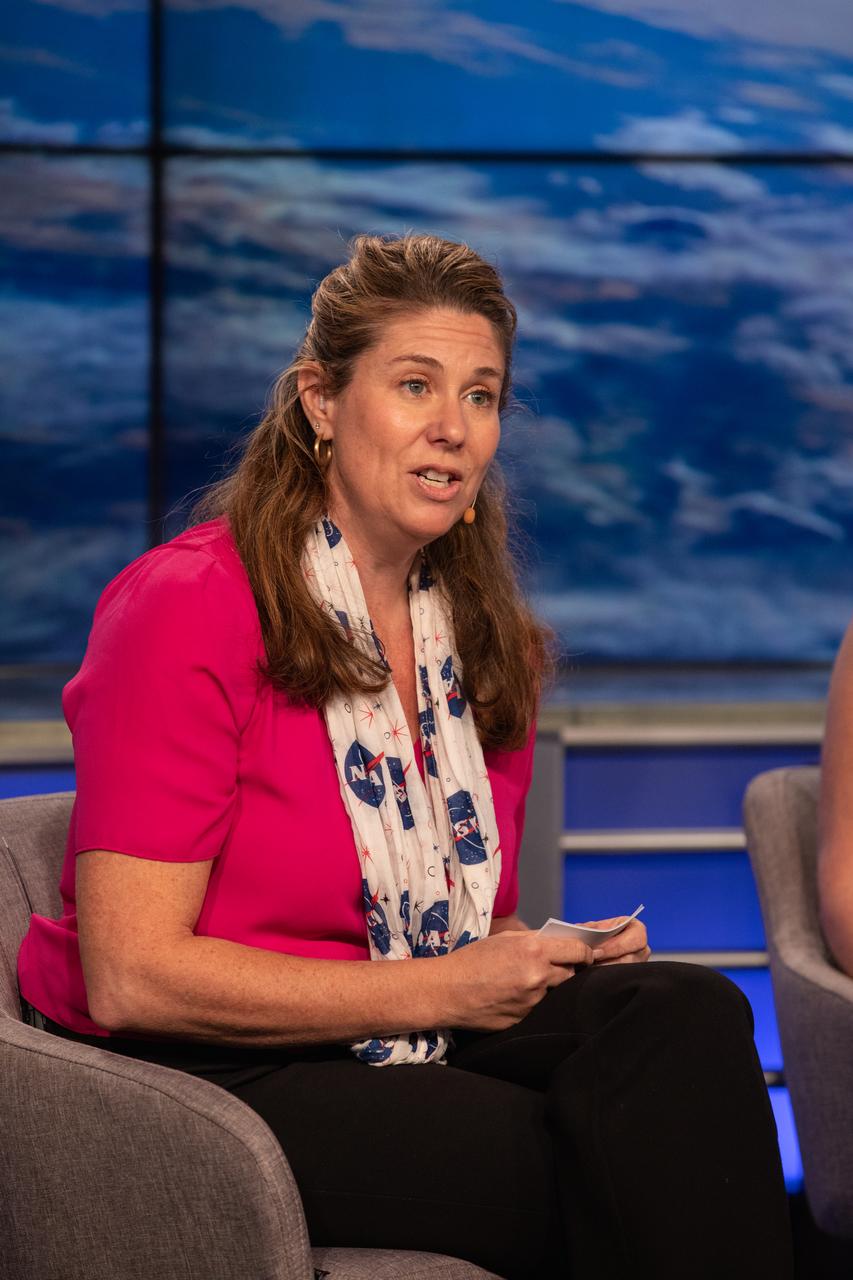
Karen Fox of NASA Communications moderates a prelaunch mission briefing for NASA’s Ionospheric Connection Explorer (ICON), on Oct. 8, 2019, in the News Center auditorium at the agency’s Kennedy Space Center in Florida. ICON is targeted to launch from Cape Canaveral Air Force Station in Florida on Oct. 9, 2019, aboard a Northrop Grumman Pegasus XL rocket carried aloft by the company’s Stargazer L-1011 aircraft. The explorer will study the frontier of space - the dynamic zone high in Earth's atmosphere where terrestrial weather from below meets space weather above.
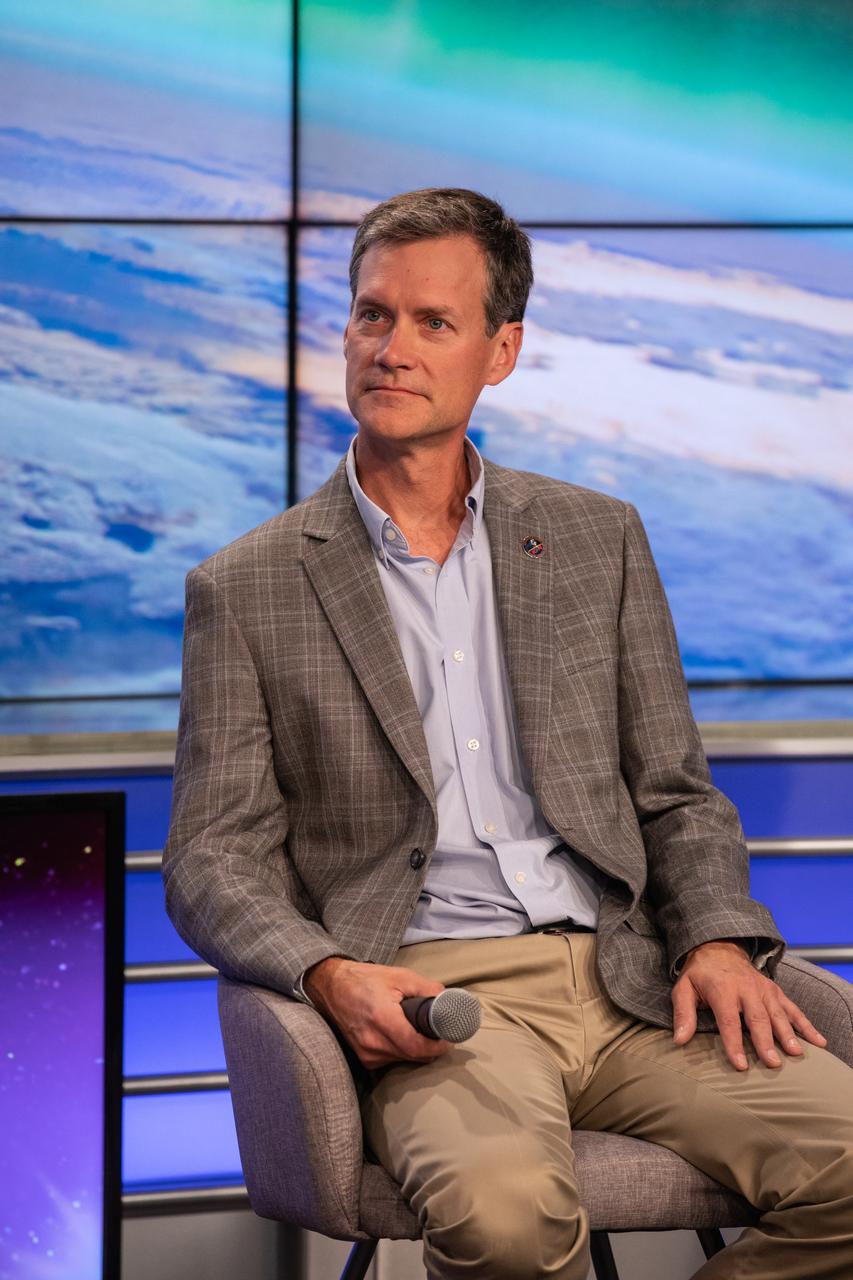
Thomas Immel of the Space Sciences Laboratory at the University of California Berkeley speaks to news media during a prelaunch mission briefing for NASA’s Ionospheric Connection Explorer (ICON), on Oct. 8, 2019, in the News Center auditorium at the agency’s Kennedy Space Center in Florida. Immel is ICON’s principal investigator. ICON is targeted to launch from Cape Canaveral Air Force Station in Florida on Oct. 9, 2019, aboard a Northrop Grumman Pegasus XL rocket carried aloft by the company’s Stargazer L-1011 aircraft. The explorer will study the frontier of space - the dynamic zone high in Earth's atmosphere where terrestrial weather from below meets space weather above.
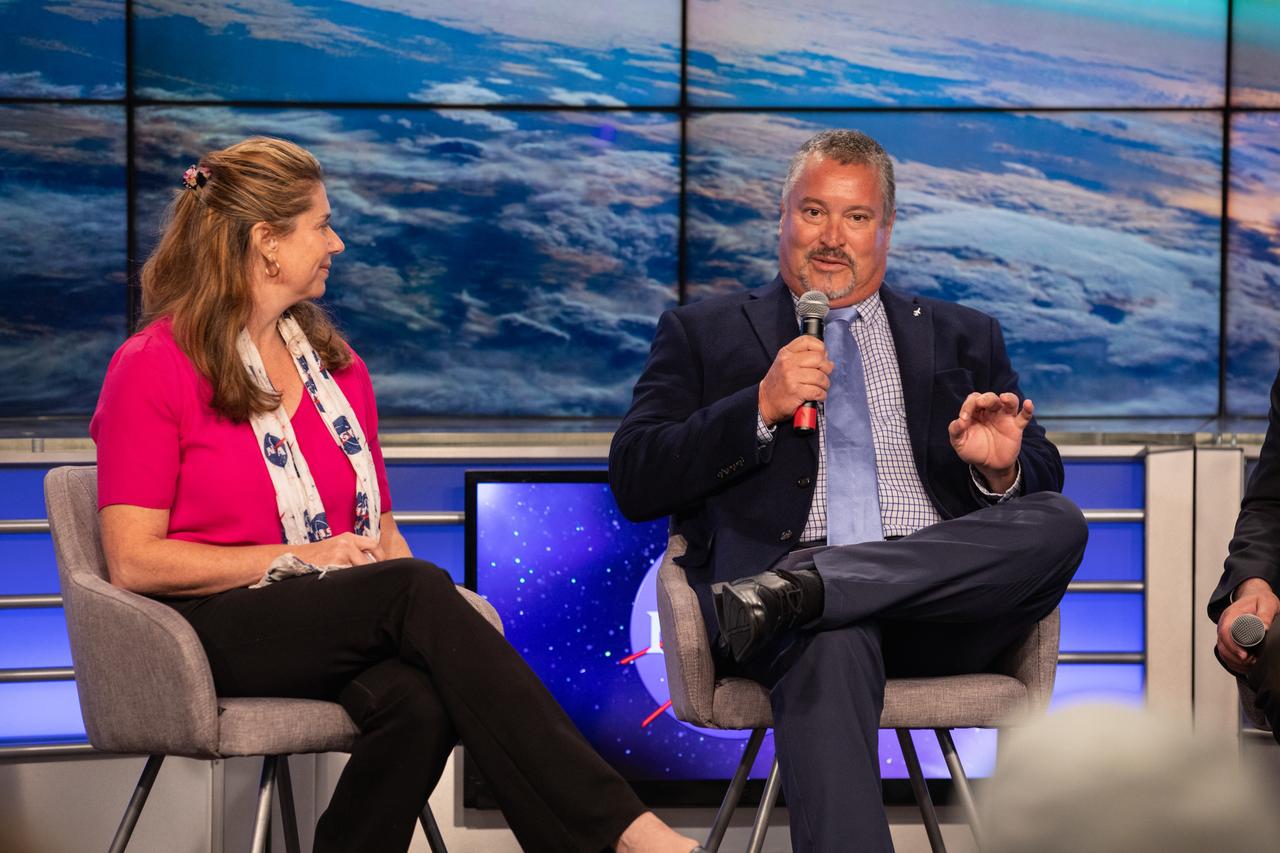
Omar Baez, launch director in NASA’s Launch Services Program, speaks to news media during a prelaunch mission briefing for NASA’s Ionospheric Connection Explorer (ICON), on Oct. 8, 2019, in the News Center auditorium at the agency’s Kennedy Space Center in Florida. At left is Karen Fox of NASA Communications. ICON is targeted to launch from Cape Canaveral Air Force Station in Florida on Oct. 9, 2019, aboard a Northrop Grumman Pegasus XL rocket carried aloft by the company’s Stargazer L-1011 aircraft. The explorer will study the frontier of space - the dynamic zone high in Earth's atmosphere where terrestrial weather from below meets space weather above.
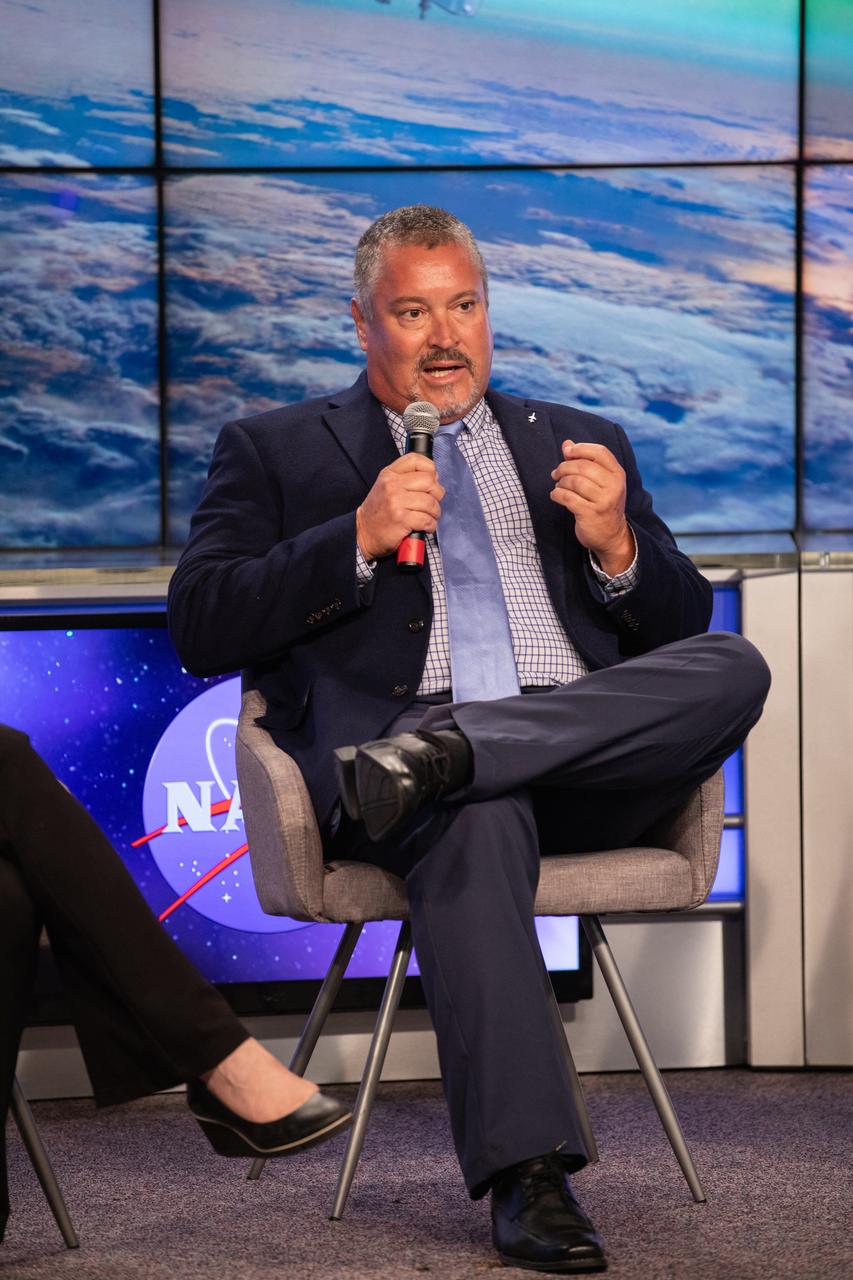
Omar Baez, launch director in NASA’s Launch Services Program, speaks to news media during a prelaunch mission briefing for NASA’s Ionospheric Connection Explorer (ICON), on Oct. 8, 2019, in the News Center auditorium at the agency’s Kennedy Space Center in Florida. ICON is targeted to launch from Cape Canaveral Air Force Station in Florida on Oct. 9, 2019, aboard a Northrop Grumman Pegasus XL rocket carried aloft by the company’s Stargazer L-1011 aircraft. The explorer will study the frontier of space - the dynamic zone high in Earth's atmosphere where terrestrial weather from below meets space weather above.

Will Ulrich, launch weather officer with the U.S. Air Force 45th Space Wing, speaks to news media during a prelaunch mission briefing for NASA’s Ionospheric Connection Explorer (ICON), on Oct. 8, 2019, in the News Center auditorium at the agency’s Kennedy Space Center in Florida. ICON is targeted to launch from Cape Canaveral Air Force Station in Florida on Oct. 9, 2019, aboard a Northrop Grumman Pegasus XL rocket carried aloft by the company’s Stargazer L-1011 aircraft. The explorer will study the frontier of space - the dynamic zone high in Earth's atmosphere where terrestrial weather from below meets space weather above.
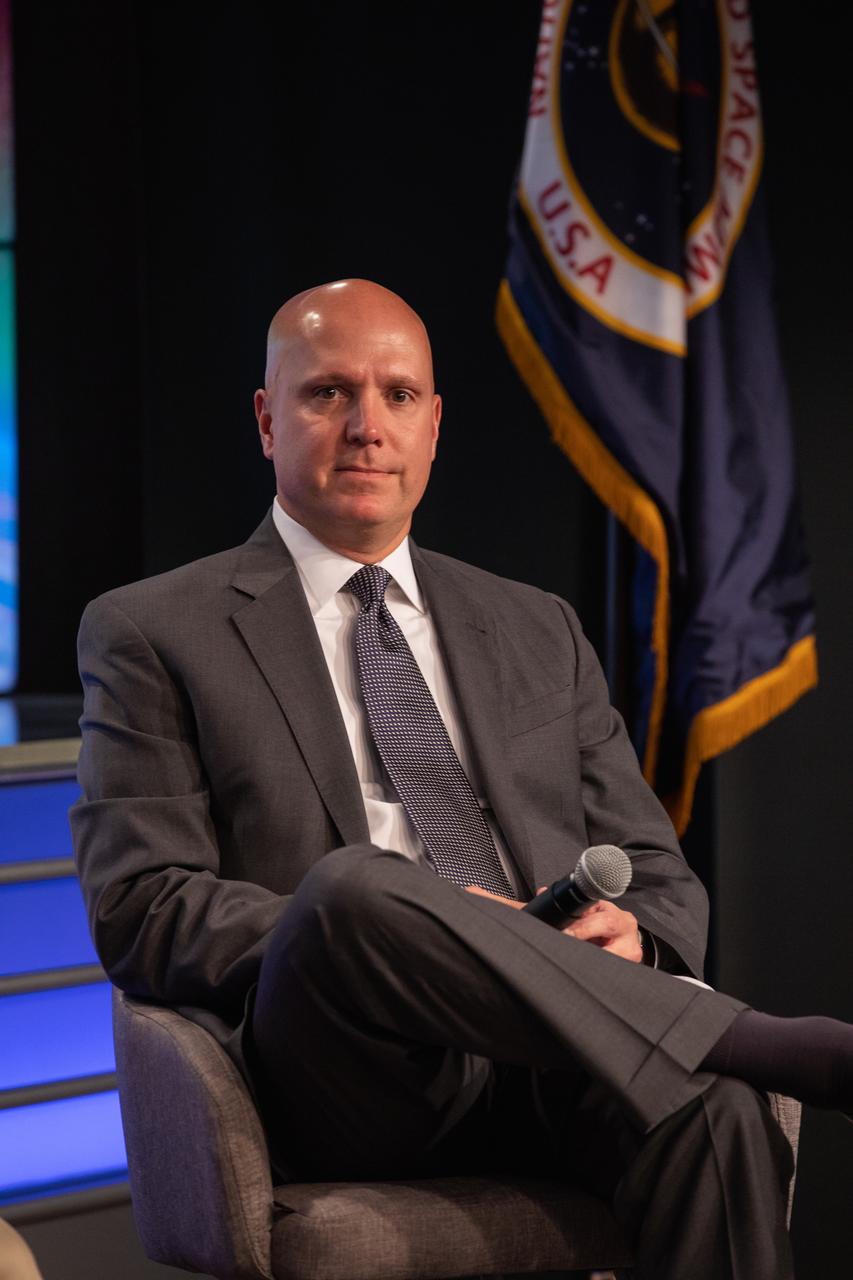
Steve Krein, vice president of civil and commercial space for Northrop Grumman Innovation Systems, speaks to news media during a prelaunch mission briefing for NASA’s Ionospheric Connection Explorer (ICON), on Oct. 8, 2019, in the News Center auditorium at the agency’s Kennedy Space Center in Florida. ICON is targeted to launch from Cape Canaveral Air Force Station in Florida on Oct. 9, 2019, aboard a Northrop Grumman Pegasus XL rocket carried aloft by the company’s Stargazer L-1011 aircraft. The explorer will study the frontier of space - the dynamic zone high in Earth's atmosphere where terrestrial weather from below meets space weather above.
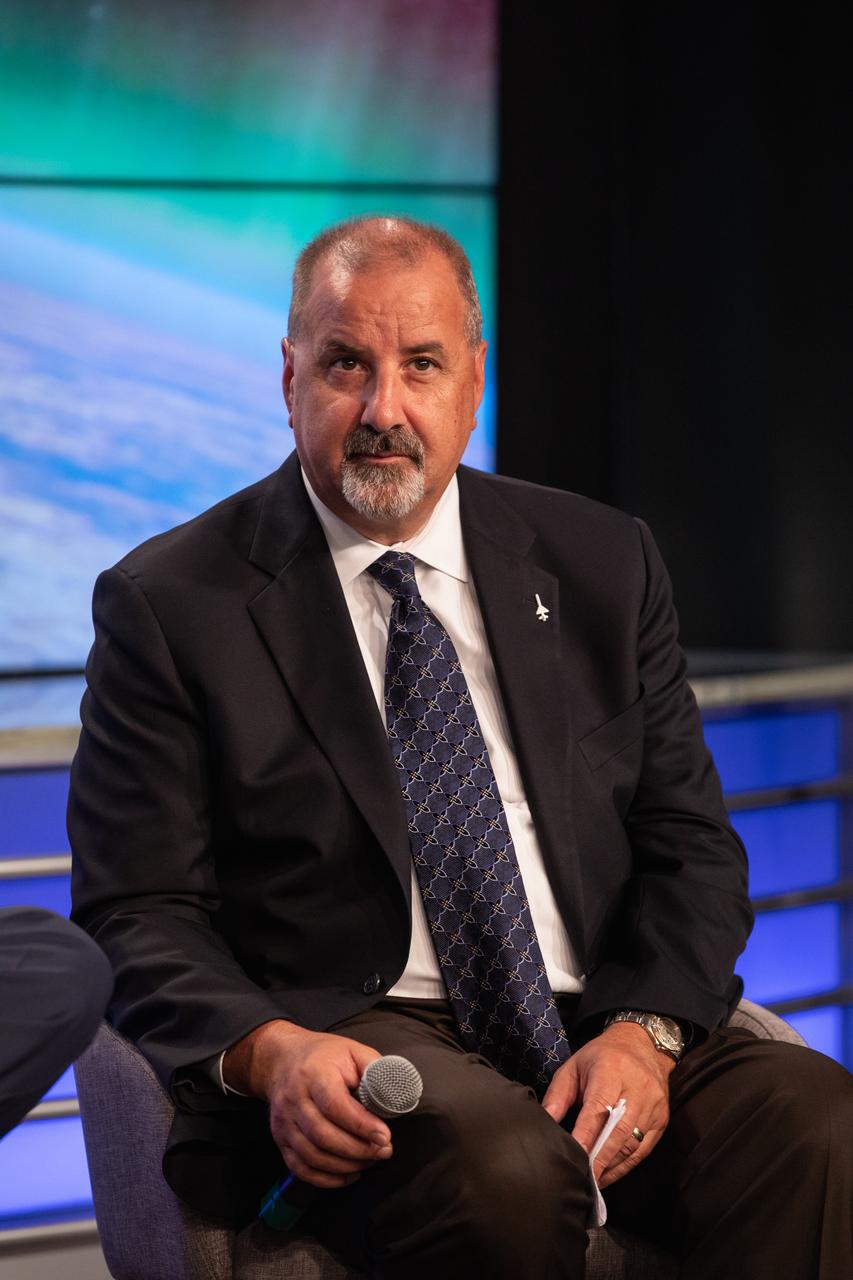
Phil Joyce, vice president of space launch programs for Northrop Grumman Innovation Systems, speaks to news media during a prelaunch mission briefing for NASA’s Ionospheric Connection Explorer (ICON), on Oct. 8, 2019, in the News Center auditorium at the agency’s Kennedy Space Center in Florida. ICON is targeted to launch from Cape Canaveral Air Force Station in Florida on Oct. 9, 2019, aboard a Northrop Grumman Pegasus XL rocket carried aloft by the company’s Stargazer L-1011 aircraft. The explorer will study the frontier of space - the dynamic zone high in Earth's atmosphere where terrestrial weather from below meets space weather above.
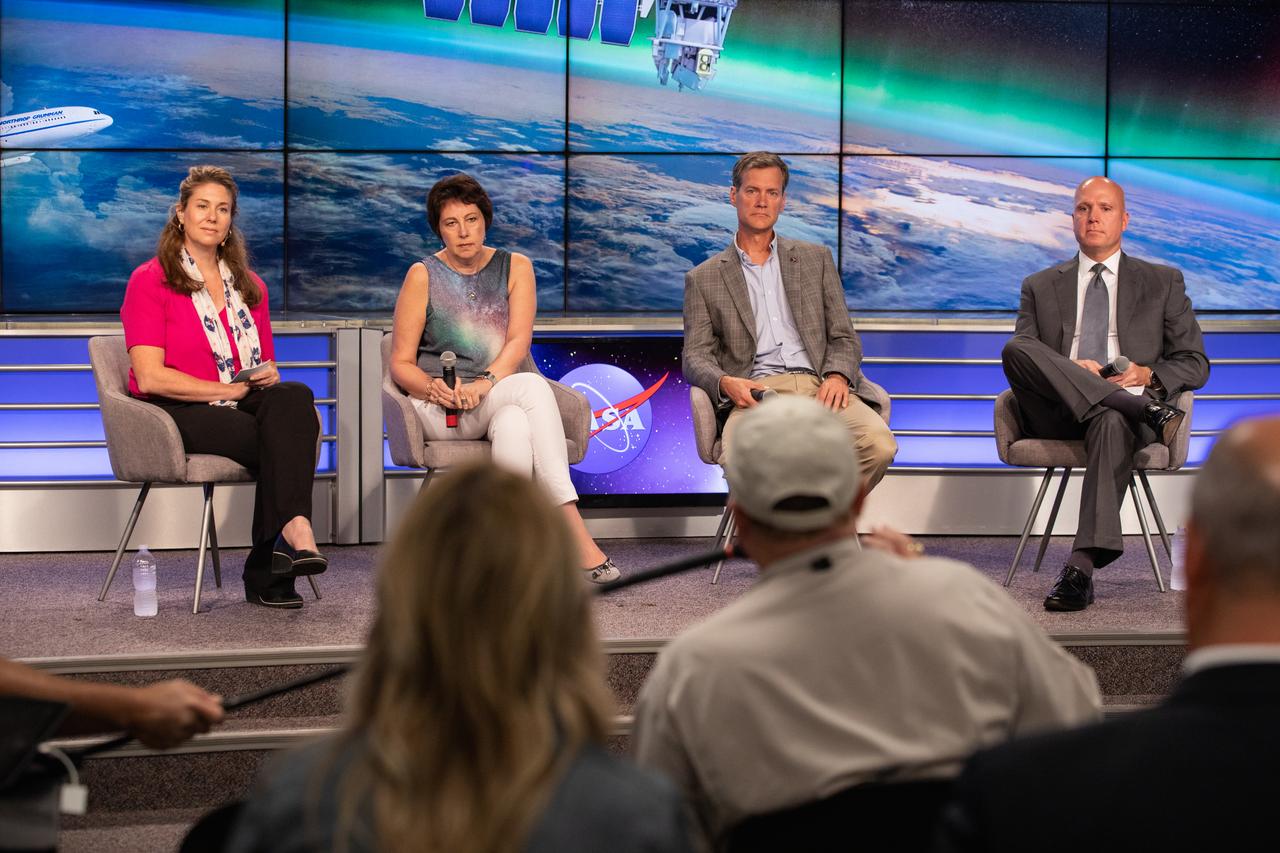
Launch and mission managers for NASA’s Ionospheric Connection Explorer (ICON) participate in a prelaunch mission briefing on Oct. 8, 2019, in the News Center auditorium at the agency’s Kennedy Space Center in Florida. From left to right are Karen Fox, NASA Communications; Nicola Fox, Heliophysics division director in NASA’s Science Mission Directorate; Thomas Immel, ICON principal investigator at the Space Sciences Laboratory at the University of California Berkeley; and Steve Krein, vice president of civil and commercial space for Northrop Grumman Innovation Systems. ICON is targeted to launch from Cape Canaveral Air Force Station in Florida on Oct. 9, 2019, aboard a Northrop Grumman Pegasus XL rocket carried aloft by the company’s Stargazer L-1011 aircraft. The explorer will study the frontier of space - the dynamic zone high in Earth's atmosphere where terrestrial weather from below meets space weather above.
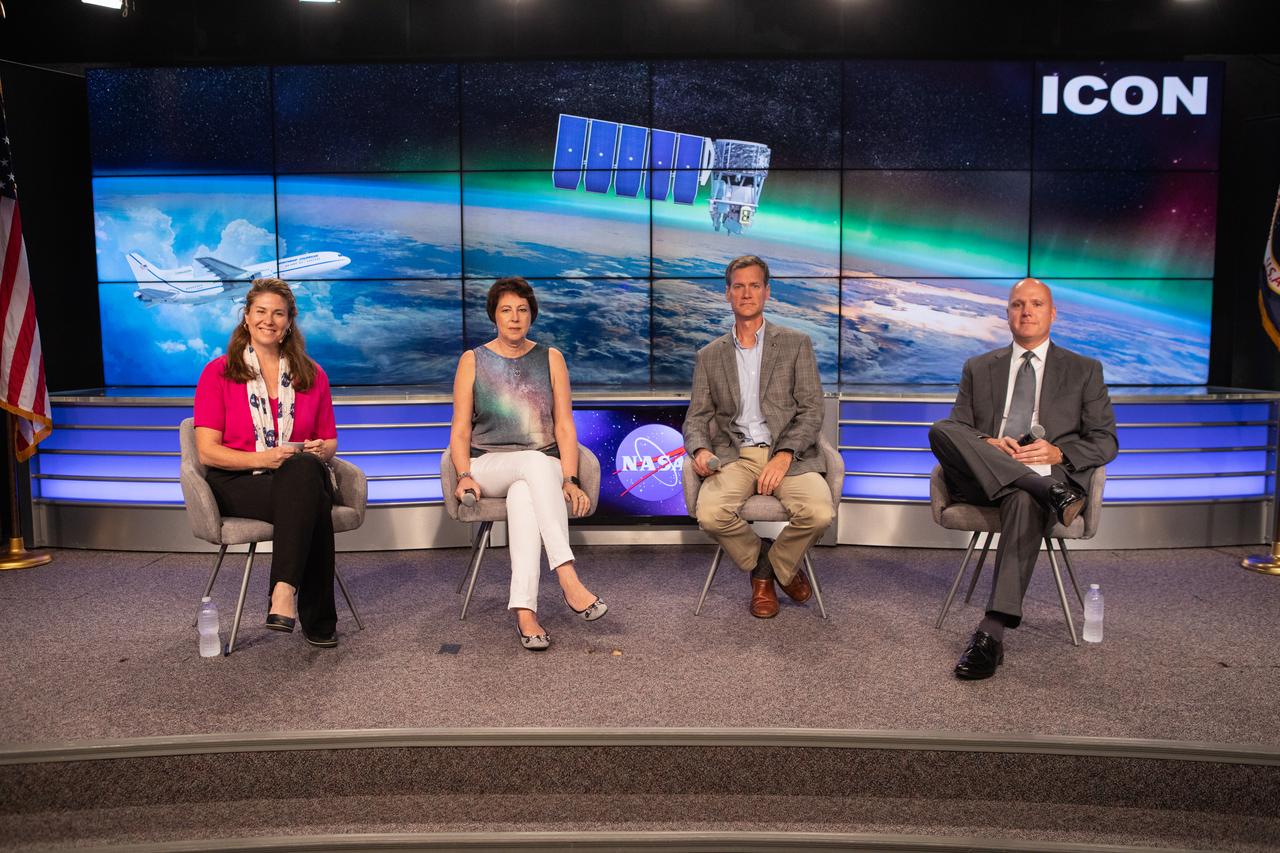
Launch and mission managers for NASA’s Ionospheric Connection Explorer (ICON) participate in a prelaunch mission briefing on Oct. 8, 2019, in the News Center auditorium at the agency’s Kennedy Space Center in Florida. From left to right are Karen Fox, NASA Communications; Nicola Fox, Heliophysics division director in NASA’s Science Mission Directorate; Thomas Immel, ICON principal investigator at the Space Sciences Laboratory at the University of California Berkeley; and Steve Krein, vice president of civil and commercial space for Northrop Grumman Innovation Systems. ICON is targeted to launch from Cape Canaveral Air Force Station in Florida on Oct. 9, 2019, aboard a Northrop Grumman Pegasus XL rocket carried aloft by the company’s Stargazer L-1011 aircraft. The explorer will study the frontier of space - the dynamic zone high in Earth's atmosphere where terrestrial weather from below meets space weather above.
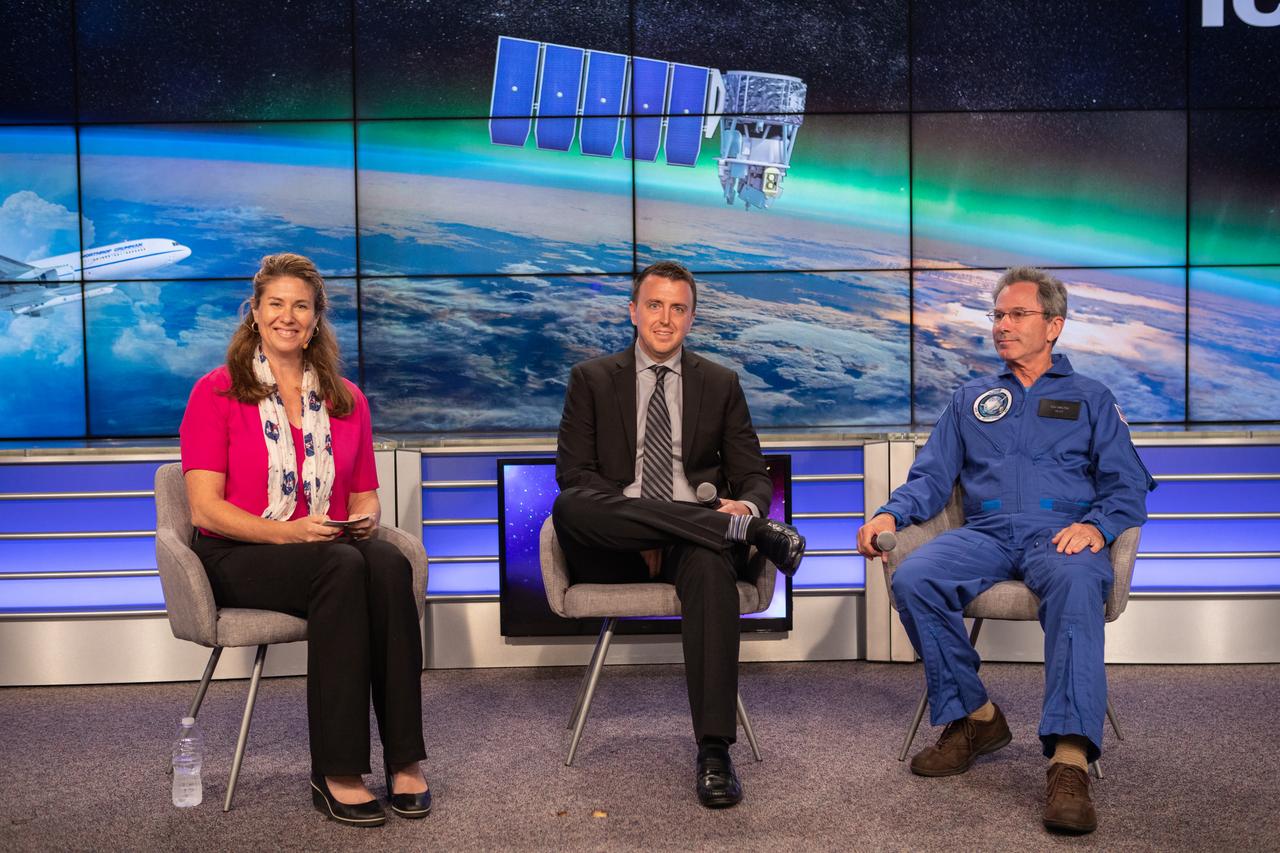
Launch and mission managers for NASA’s Ionospheric Connection Explorer (ICON) participate in a prelaunch mission briefing on Oct. 8, 2019, in the News Center auditorium at the agency’s Kennedy Space Center in Florida. From left to right are Karen Fox, NASA Communications; Will Ulrich, launch weather officer with the U.S. Air Force 45th Space Wing; and Don Walters, chief pilot of the L-1011 Stargazer aircraft. ICON is targeted to launch from Cape Canaveral Air Force Station in Florida on Oct. 9, 2019, aboard a Northrop Grumman Pegasus XL rocket carried aloft by the company’s Stargazer L-1011 aircraft. The explorer will study the frontier of space - the dynamic zone high in Earth's atmosphere where terrestrial weather from below meets space weather above.
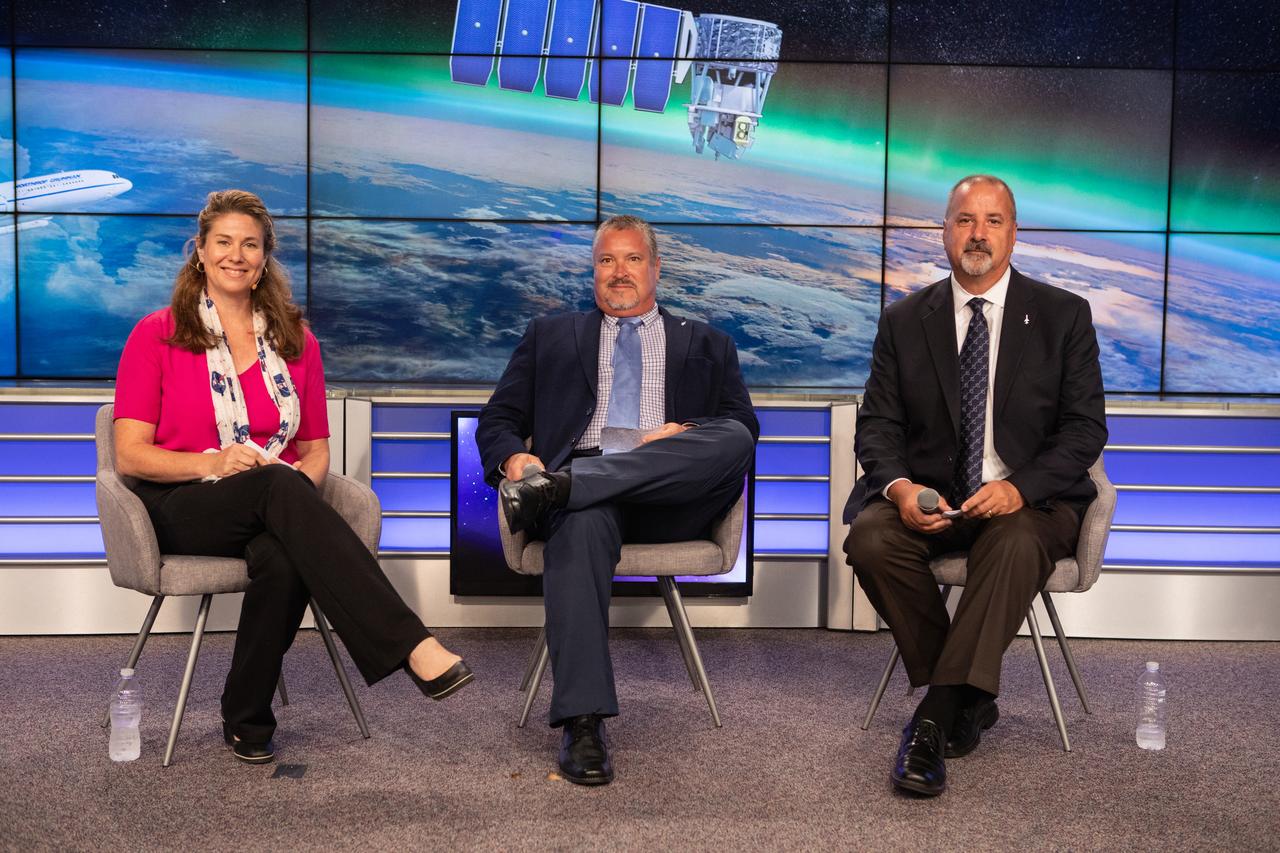
Launch and mission managers for NASA’s Ionospheric Connection Explorer (ICON) participate in a prelaunch mission briefing on Oct. 8, 2019, in the News Center auditorium at the agency’s Kennedy Space Center in Florida. From left to right are Karen Fox, NASA Communications; Omar Baez, launch director in NASA’s Launch Services Program; and Phil Joyce, vice president of space launch programs for Northrop Grumman Innovation Systems. ICON is targeted to launch from Cape Canaveral Air Force Station in Florida on Oct. 9, 2019, aboard a Northrop Grumman Pegasus XL rocket carried aloft by the company’s Stargazer L-1011 aircraft. The explorer will study the frontier of space - the dynamic zone high in Earth's atmosphere where terrestrial weather from below meets space weather above.
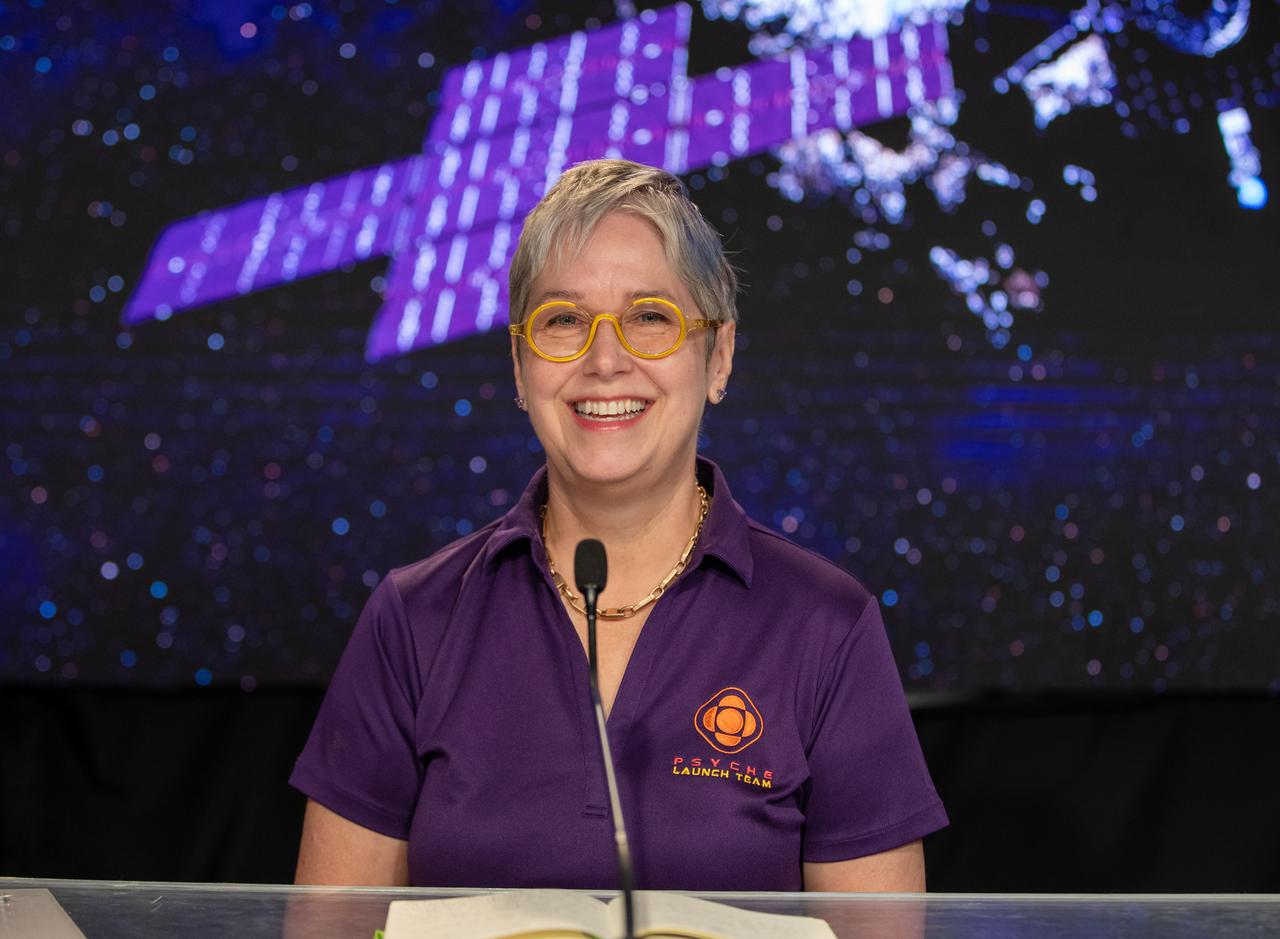
Lindy Elkins-Tanton, Psyche principal investigator, Arizona State University, participates in a Psyche mission and science briefing at NASA’s Kennedy Space Center in Florida on Tuesday, Oct. 10, 2023. Psyche is the first mission to explore an asteroid with a surface that likely contains substantial amounts of metal rather than rock or ice. Liftoff of NASA’s Psyche spacecraft, atop a SpaceX Falcon Heavy rocket, is targeted for 10:16 a.m. EDT Thursday, Oct. 12, from Kennedy’s Launch Complex 39A.

Lori Glaze, Planetary Science division director, NASA Headquarters, participates in a Psyche mission and science briefing at NASA’s Kennedy Space Center in Florida on Tuesday, Oct. 10, 2023. Psyche is the first mission to explore an asteroid with a surface that likely contains substantial amounts of metal rather than rock or ice. Liftoff of NASA’s Psyche spacecraft, atop a SpaceX Falcon Heavy rocket, is targeted for 10:16 a.m. EDT Thursday, Oct. 12, from Kennedy’s Launch Complex 39A.
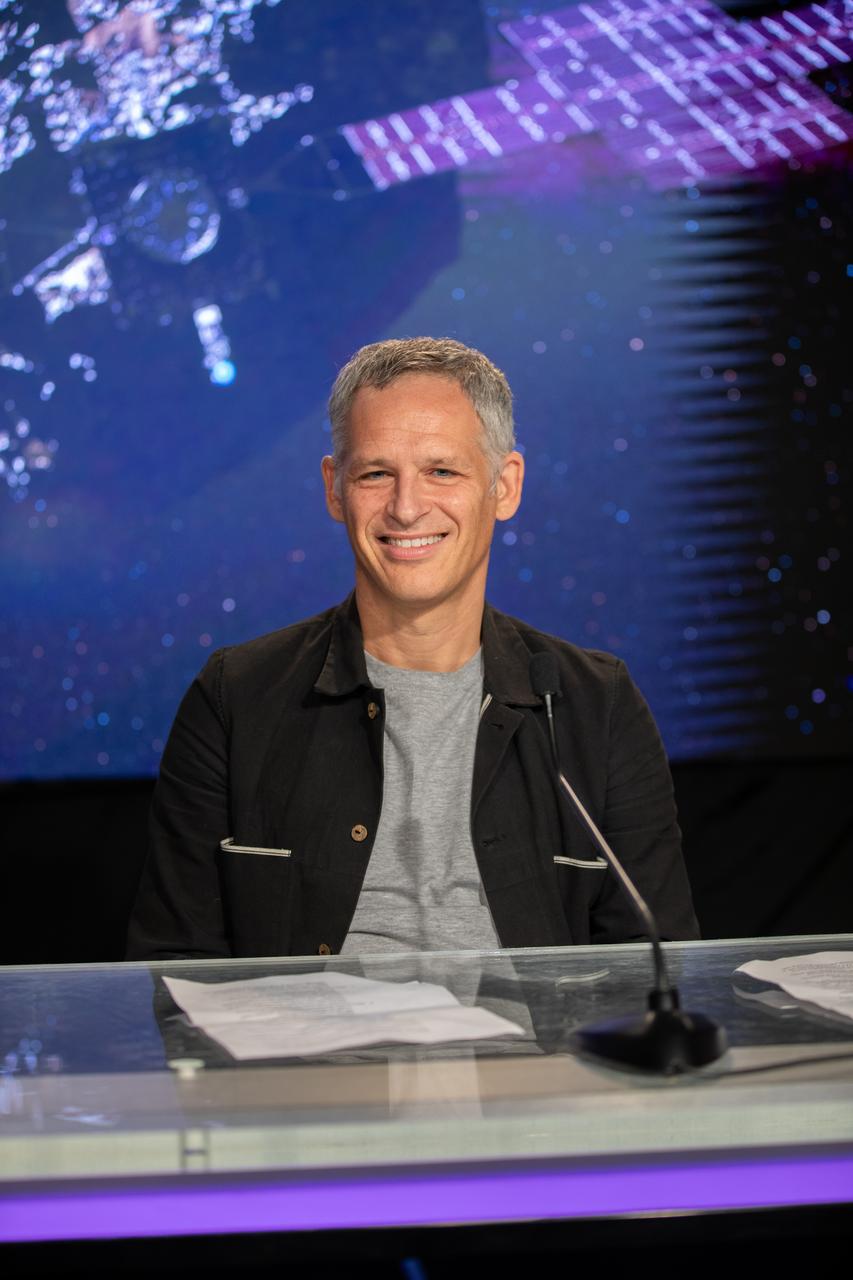
Ben Weiss, Psyche deputy principal investigator and magnetometer lead, Massachusetts Institute of Technology, participates in a Psyche mission and science briefing at NASA’s Kennedy Space Center in Florida on Tuesday, Oct. 10, 2023. Psyche is the first mission to explore an asteroid with a surface that likely contains substantial amounts of metal rather than rock or ice. Liftoff of NASA’s Psyche spacecraft, atop a SpaceX Falcon Heavy rocket, is targeted for 10:16 a.m. EDT Thursday, Oct. 12, from Kennedy’s Launch Complex 39A.
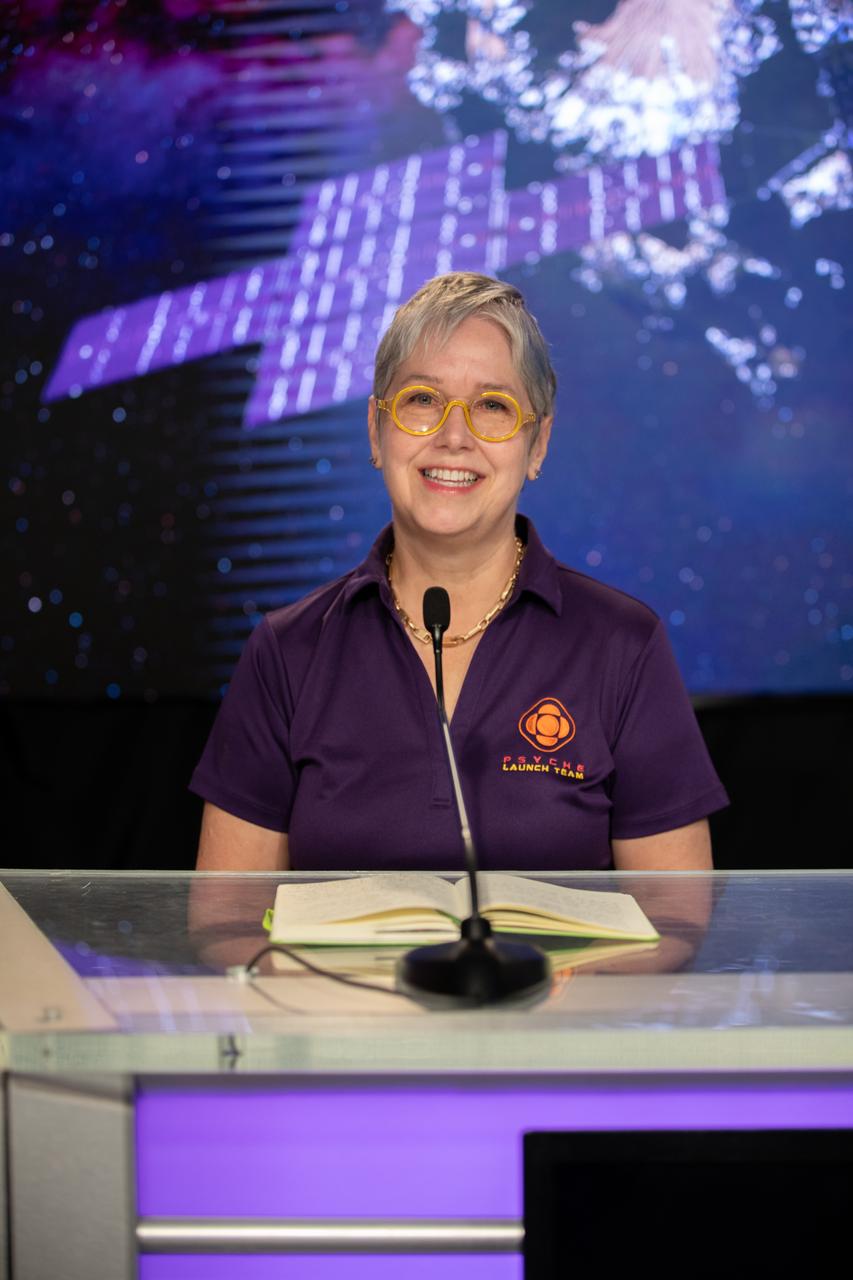
Lindy Elkins-Tanton, Psyche principal investigator, Arizona State University, participates in a Psyche mission and science briefing at NASA’s Kennedy Space Center in Florida on Tuesday, Oct. 10, 2023. Psyche is the first mission to explore an asteroid with a surface that likely contains substantial amounts of metal rather than rock or ice. Liftoff of NASA’s Psyche spacecraft, atop a SpaceX Falcon Heavy rocket, is targeted for 10:16 a.m. EDT Thursday, Oct. 12, from Kennedy’s Launch Complex 39A.
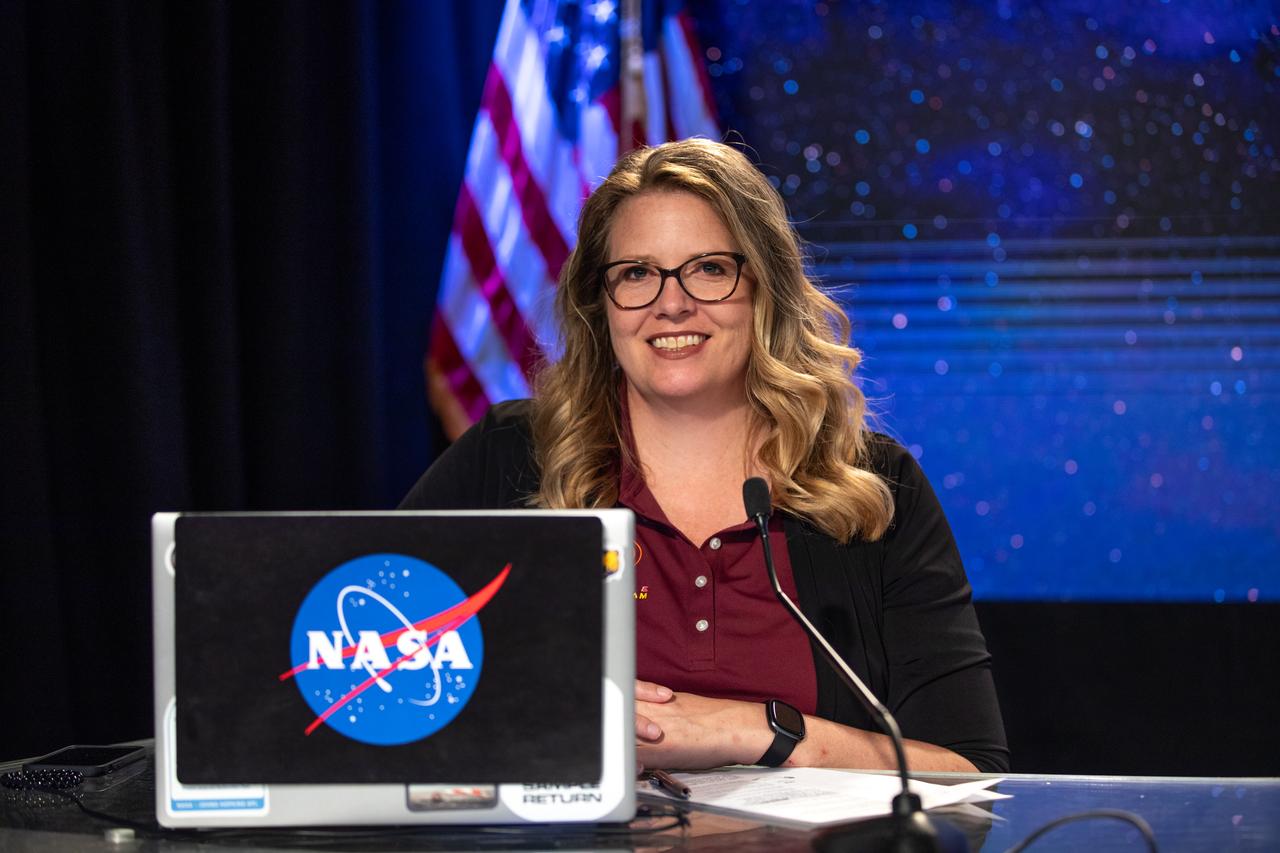
Alana Johnson, NASA Communications, moderates a Psyche mission and science briefing at NASA’s Kennedy Space Center in Florida on Tuesday, Oct. 10, 2023. Psyche is the first mission to explore an asteroid with a surface that likely contains substantial amounts of metal rather than rock or ice. Liftoff of NASA’s Psyche spacecraft, atop a SpaceX Falcon Heavy rocket, is targeted for 10:16 a.m. EDT Thursday, Oct. 12, from Kennedy’s Launch Complex 39A.
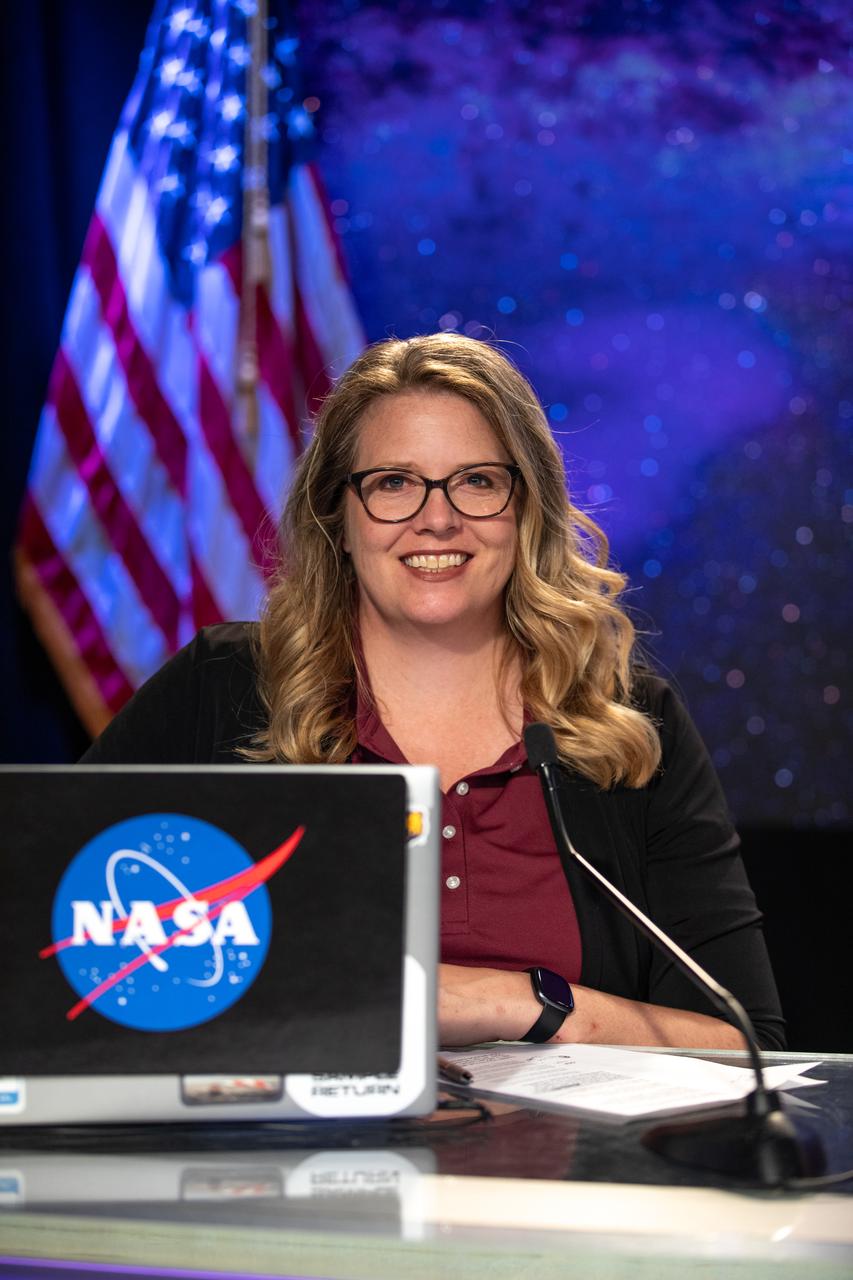
Alana Johnson, NASA Communications, moderates a Psyche mission and science briefing at NASA’s Kennedy Space Center in Florida on Tuesday, Oct. 10, 2023. Psyche is the first mission to explore an asteroid with a surface that likely contains substantial amounts of metal rather than rock or ice. Liftoff of NASA’s Psyche spacecraft, atop a SpaceX Falcon Heavy rocket, is targeted for 10:16 a.m. EDT Thursday, Oct. 12, from Kennedy’s Launch Complex 39A.

David Oh, Psyche chief engineer for operations, NASA’s Jet Propulsion Laboratory, participates in a Psyche mission and science briefing at NASA’s Kennedy Space Center in Florida on Tuesday, Oct. 10, 2023. Psyche is the first mission to explore an asteroid with a surface that likely contains substantial amounts of metal rather than rock or ice. Liftoff of NASA’s Psyche spacecraft, atop a SpaceX Falcon Heavy rocket, is targeted for 10:16 a.m. EDT Thursday, Oct. 12, from Kennedy’s Launch Complex 39A.
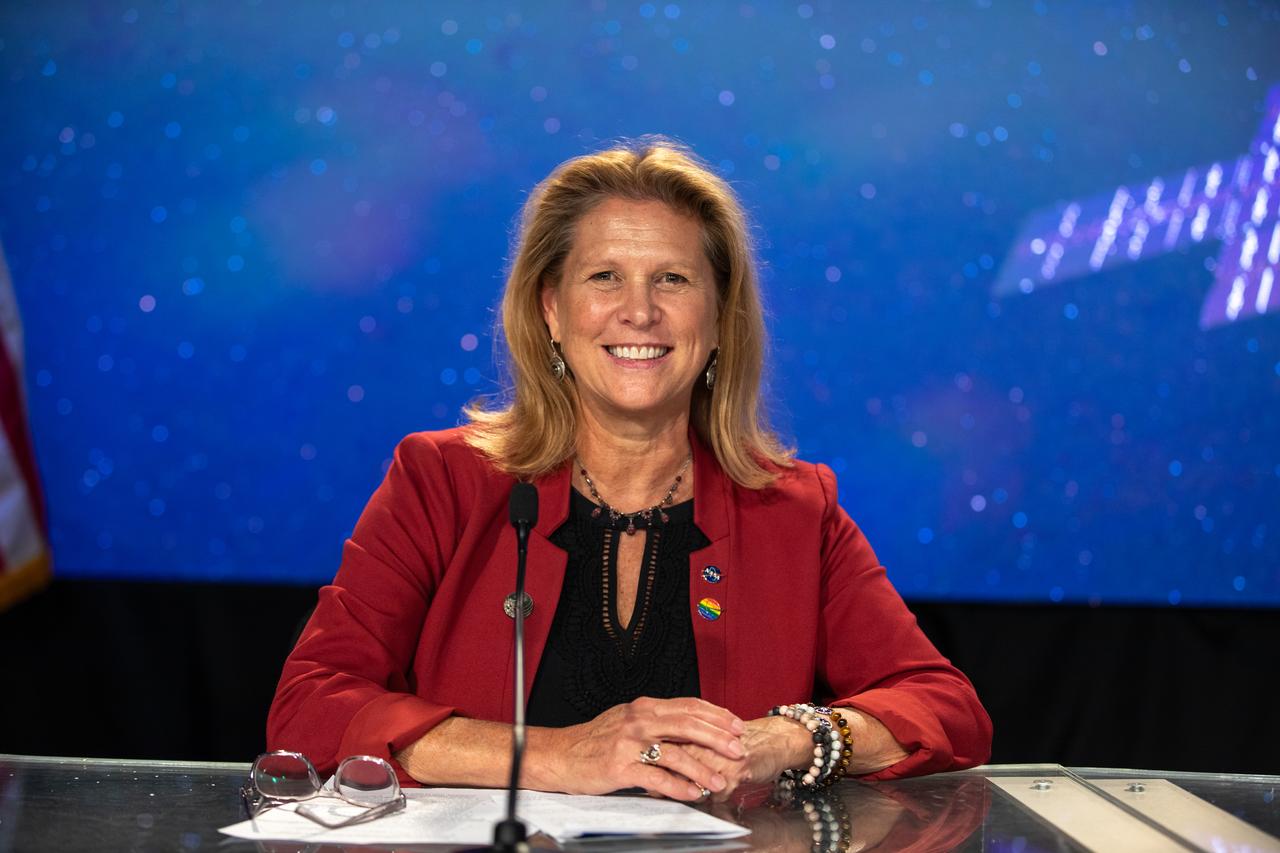
Lori Glaze, Planetary Science division director, NASA Headquarters, participates in a Psyche mission and science briefing at NASA’s Kennedy Space Center in Florida on Tuesday, Oct. 10, 2023. Psyche is the first mission to explore an asteroid with a surface that likely contains substantial amounts of metal rather than rock or ice. Liftoff of NASA’s Psyche spacecraft, atop a SpaceX Falcon Heavy rocket, is targeted for 10:16 a.m. EDT Thursday, Oct. 12, from Kennedy’s Launch Complex 39A.
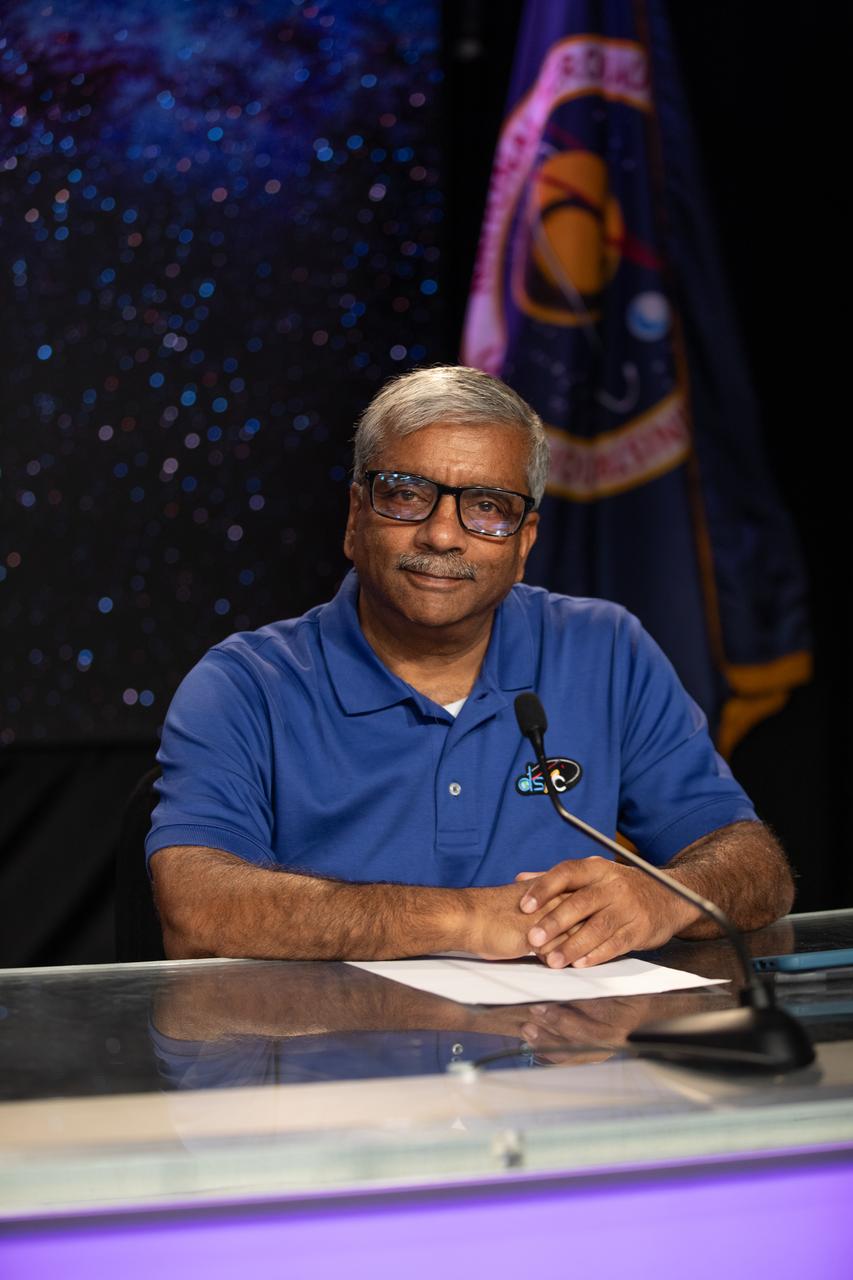
Abi Biswas, Deep Space Optical Communications project technologist, NASA’s Jet Propulsion Laboratory, participates in a Psyche mission and science briefing at NASA’s Kennedy Space Center in Florida on Tuesday, Oct. 10, 2023. Psyche is the first mission to explore an asteroid with a surface that likely contains substantial amounts of metal rather than rock or ice. Liftoff of NASA’s Psyche spacecraft, atop a SpaceX Falcon Heavy rocket, is targeted for 10:16 a.m. EDT Thursday, Oct. 12, from Kennedy’s Launch Complex 39A.

Lori Glaze, Planetary Science division director, NASA Headquarters, participates in a Psyche mission and science briefing at NASA’s Kennedy Space Center in Florida on Tuesday, Oct. 10, 2023. Psyche is the first mission to explore an asteroid with a surface that likely contains substantial amounts of metal rather than rock or ice. Liftoff of NASA’s Psyche spacecraft, atop a SpaceX Falcon Heavy rocket, is targeted for 10:16 a.m. EDT Thursday, Oct. 12, from Kennedy’s Launch Complex 39A.
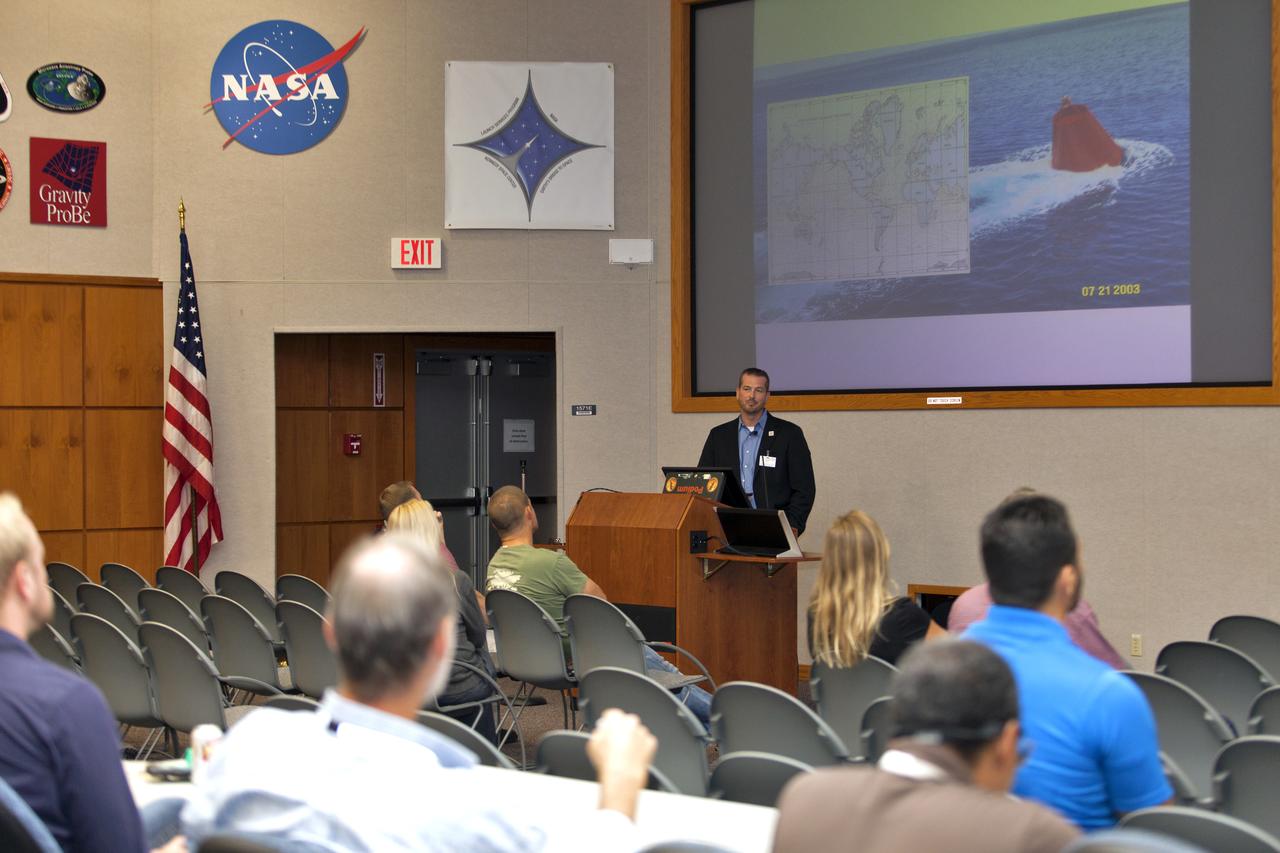
Guest speaker Gabriel Alsenas discusses ocean renewable energy sources with NASA Kennedy Space Center employees in the spaceport’s Mission Briefing Room on Thursday, Oct. 11, 2018. Alsenas is director of the Southeast National Marine Renewable Energy Center at Florida Atlantic University in Boca Raton. The “lunch and learn” event is one of two scheduled during October in conjunction with Energy Awareness Month, which aims to recognize the importance of energy management for our national prosperity, security and environmental sustainability.
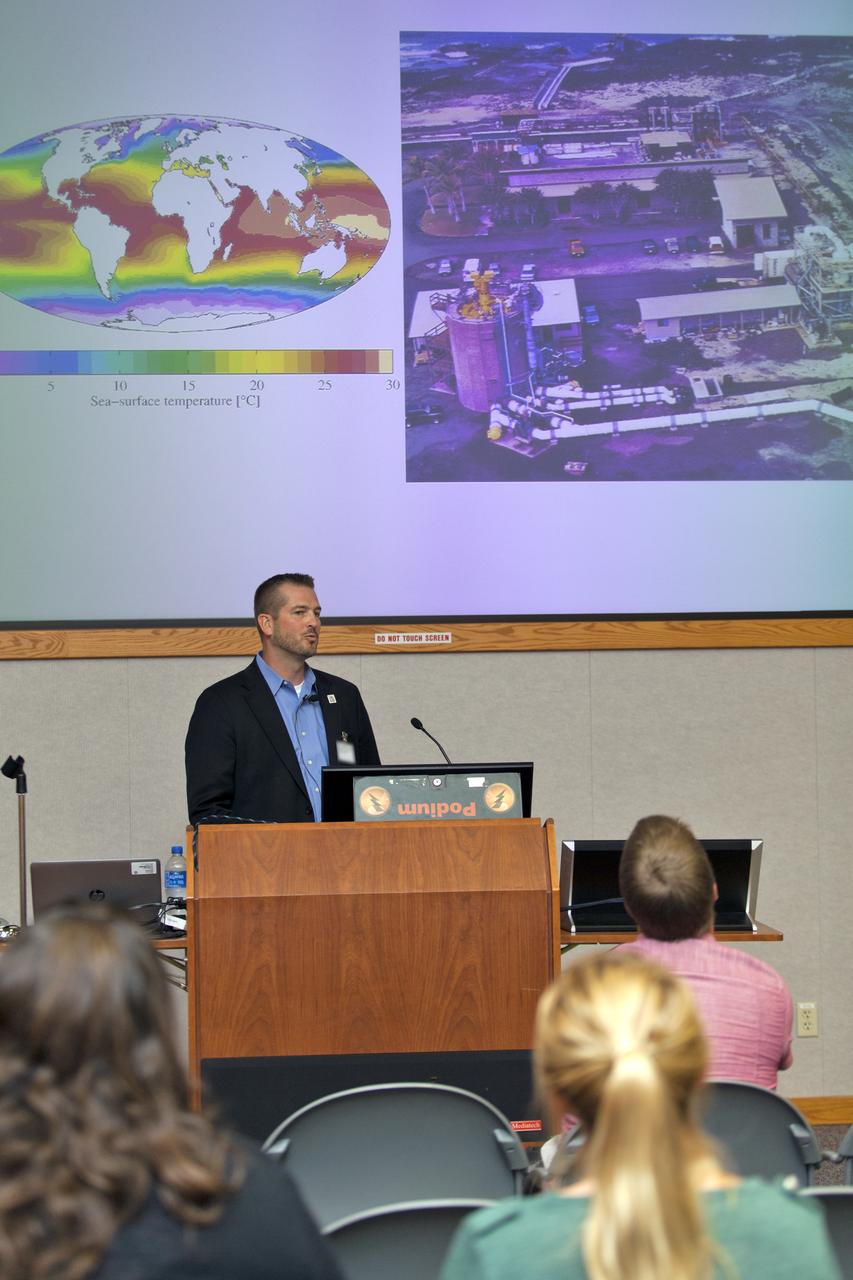
Guest speaker Gabriel Alsenas discusses ocean renewable energy sources with NASA Kennedy Space Center employees in the spaceport’s Mission Briefing Room on Thursday, Oct. 11, 2018. Alsenas is director of the Southeast National Marine Renewable Energy Center at Florida Atlantic University in Boca Raton. The “lunch and learn” event is one of two scheduled during October in conjunction with Energy Awareness Month, which aims to recognize the importance of energy management for our national prosperity, security and environmental sustainability.

Guest speaker Gabriel Alsenas discusses ocean renewable energy sources with NASA Kennedy Space Center employees in the spaceport’s Mission Briefing Room on Thursday, Oct. 11, 2018. Alsenas is director of the Southeast National Marine Renewable Energy Center at Florida Atlantic University in Boca Raton. The “lunch and learn” event is one of two scheduled during October in conjunction with Energy Awareness Month, which aims to recognize the importance of energy management for our national prosperity, security and environmental sustainability.
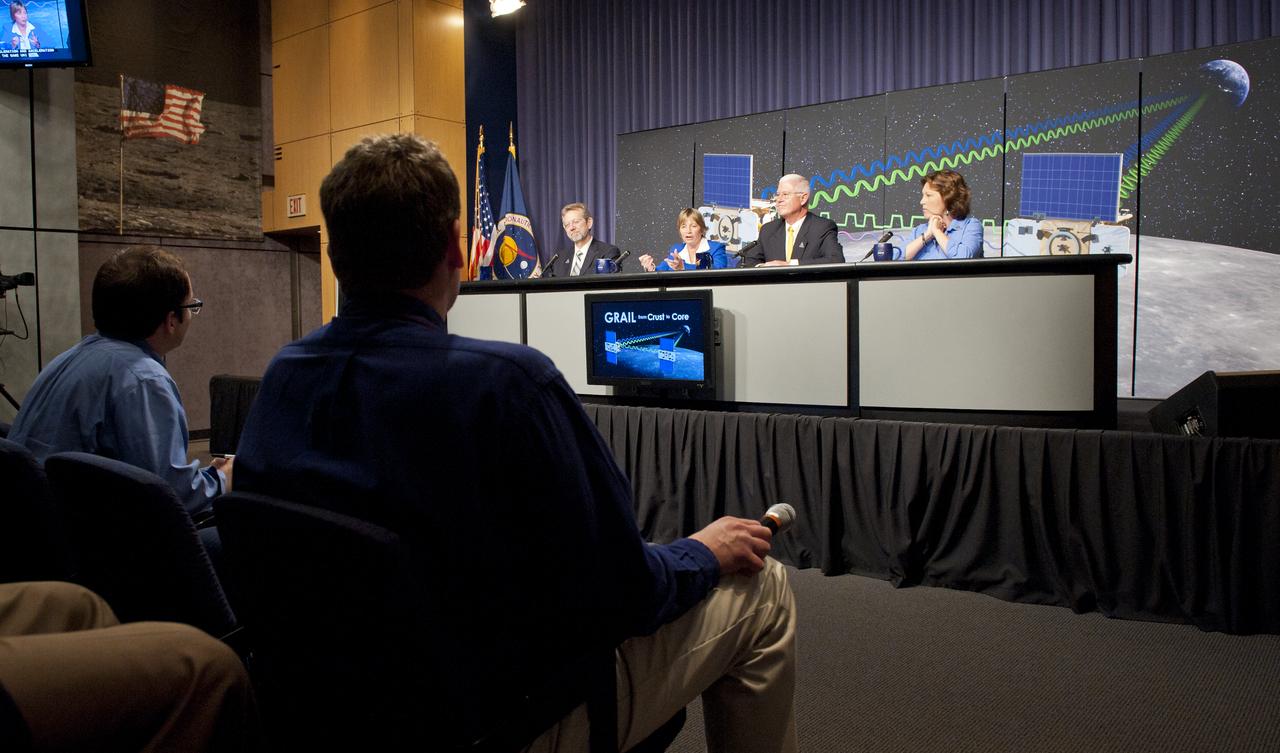
On the panel from right: Leesa Hubbard, teacher in residence, Sally Ride Science, San Diego; David Lehman, GRAIL project manager, NASA's Jet Propulsion Laboratory, Pasadena, Calif.; Maria Zuber, GRAIL principal investigator, Massachusetts Institute of Technology, Cambridge and Jim Green, director, Planetary Science Division, NASA Headquarters, Washington are seen at a press briefing to discuss the upcoming launch to the moon of the Gravity Recovery and Interior Laboratory (GRAIL) mission, Thursday, Aug. 25, 2011 in Washington. Photo Credit: (NASA/Carla Cioffi)

Maria Zuber, GRAIL principal investigator, Massachusetts Institute of Technology, Cambridge, answers a reporter's question at a press briefing about the upcoming launch to the moon of the Gravity Recovery and Interior Laboratory (GRAIL) mission, Thursday, Aug. 25, 2011 in Washington. GRAIL's primary science objectives are to determine the structure of the lunar interior, from crust to core, and to advance understanding of the thermal evolution of the moon. The mission will place two spacecraft into the same orbit around the moon which will gather information about the its gravitational field enabling scientists to create a high-resolution map. Photo Credit: (NASA/Carla Cioffi)

Mike Sarafin, Artemis I mission manager at NASA Headquarters speaks during a NASA briefing on the Artemis I Moon mission, Wednesday, Aug. 3, 2022, at the Mary W. Jackson NASA Headquarters building in Washington. NASA’s Artemis I mission is the first integrated test of the agency’s deep space exploration systems: the Orion spacecraft, Space Launch System rocket, and supporting ground systems. Launch of the uncrewed flight test is targeted for no earlier than Monday, Aug. 29. Photo Credit: (NASA/Bill Ingalls)
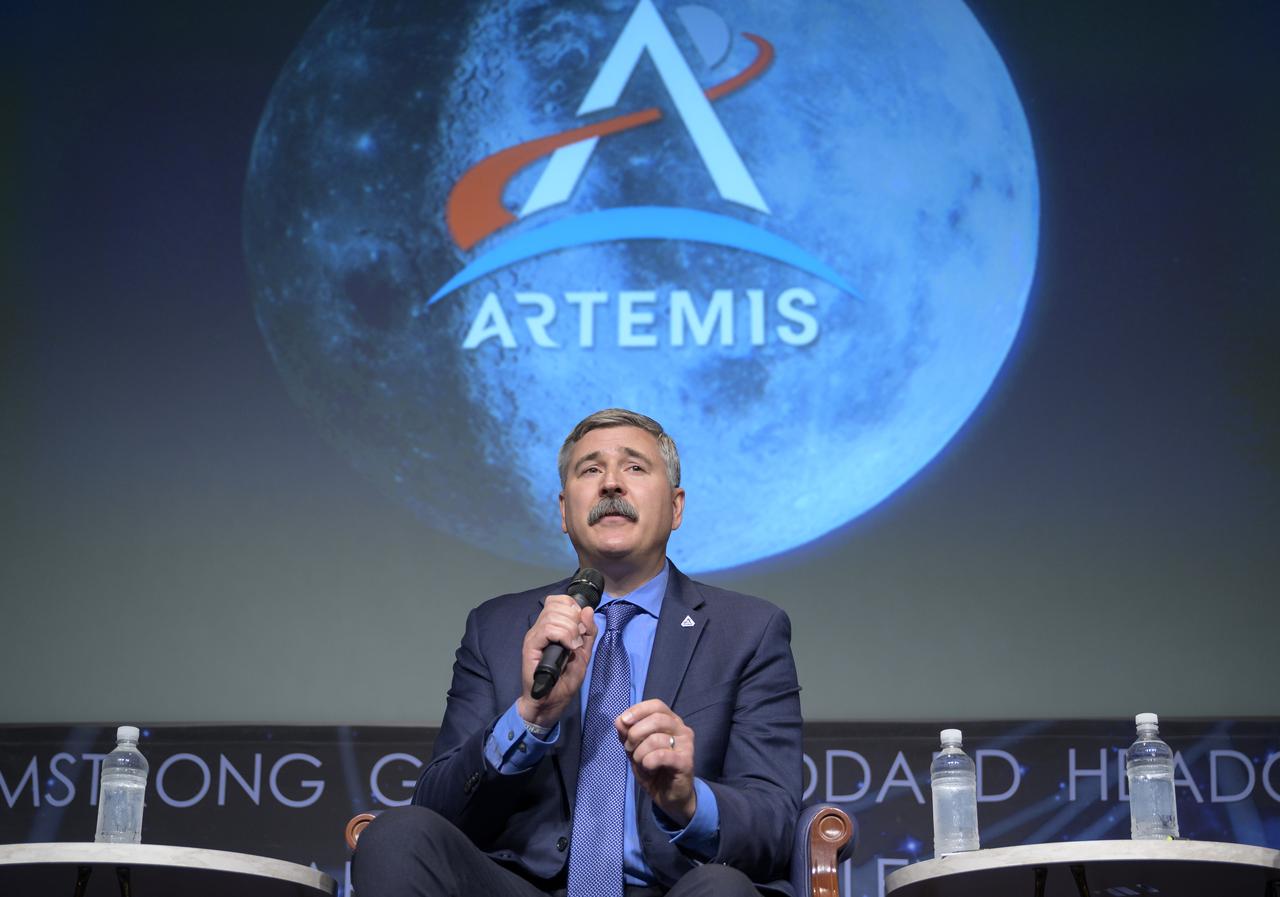
Mike Sarafin, Artemis I mission manager at NASA Headquarters speaks during a NASA briefing on the Artemis I Moon mission, Wednesday, Aug. 3, 2022, at the Mary W. Jackson NASA Headquarters building in Washington. NASA’s Artemis I mission is the first integrated test of the agency’s deep space exploration systems: the Orion spacecraft, Space Launch System rocket, and supporting ground systems. Launch of the uncrewed flight test is targeted for no earlier than Monday, Aug. 29. Photo Credit: (NASA/Bill Ingalls)
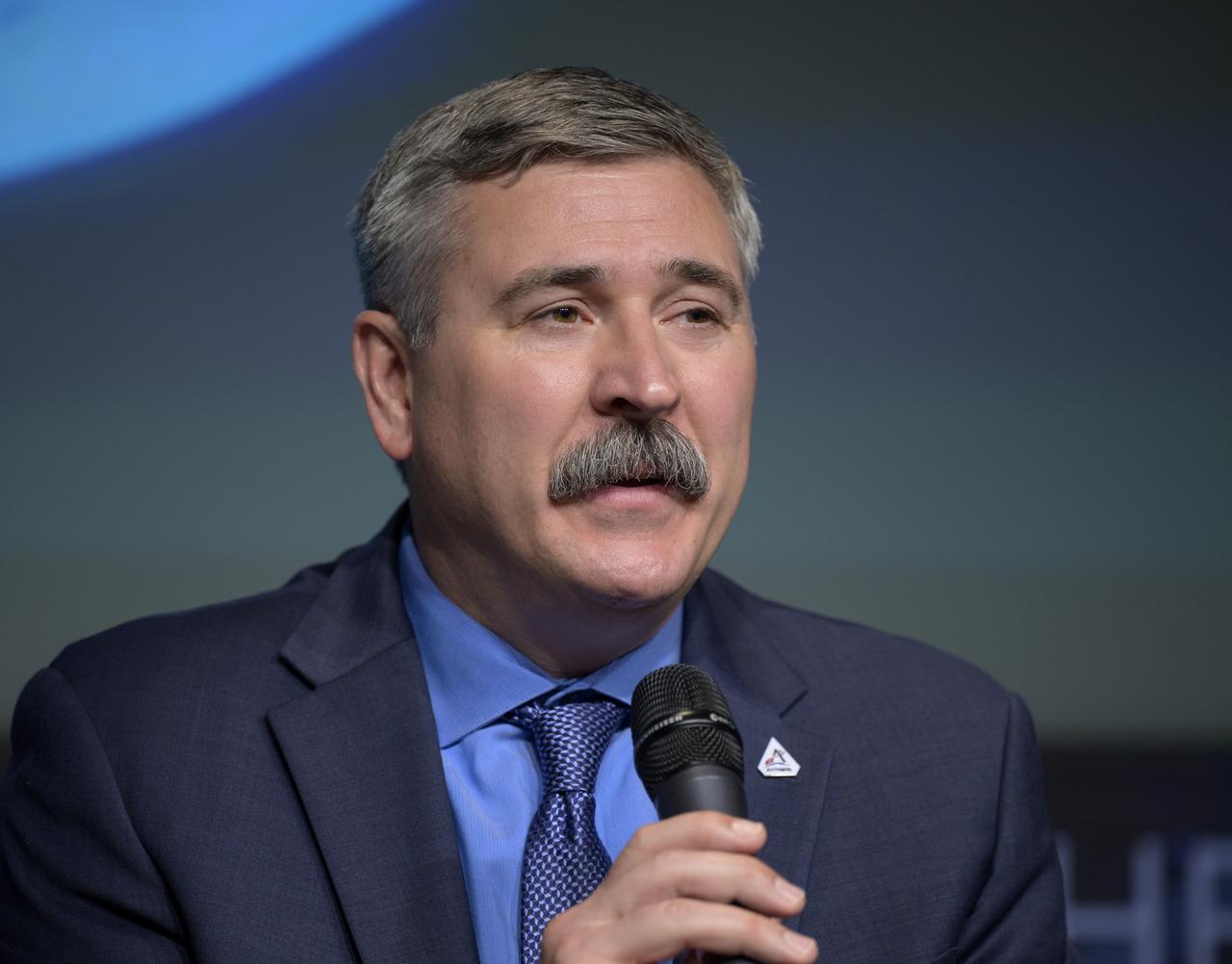
Mike Sarafin, Artemis I mission manager at NASA Headquarters speaks during a NASA briefing on the Artemis I Moon mission, Wednesday, Aug. 3, 2022, at the Mary W. Jackson NASA Headquarters building in Washington. NASA’s Artemis I mission is the first integrated test of the agency’s deep space exploration systems: the Orion spacecraft, Space Launch System rocket, and supporting ground systems. Launch of the uncrewed flight test is targeted for no earlier than Monday, Aug. 29. Photo Credit: (NASA/Bill Ingalls)
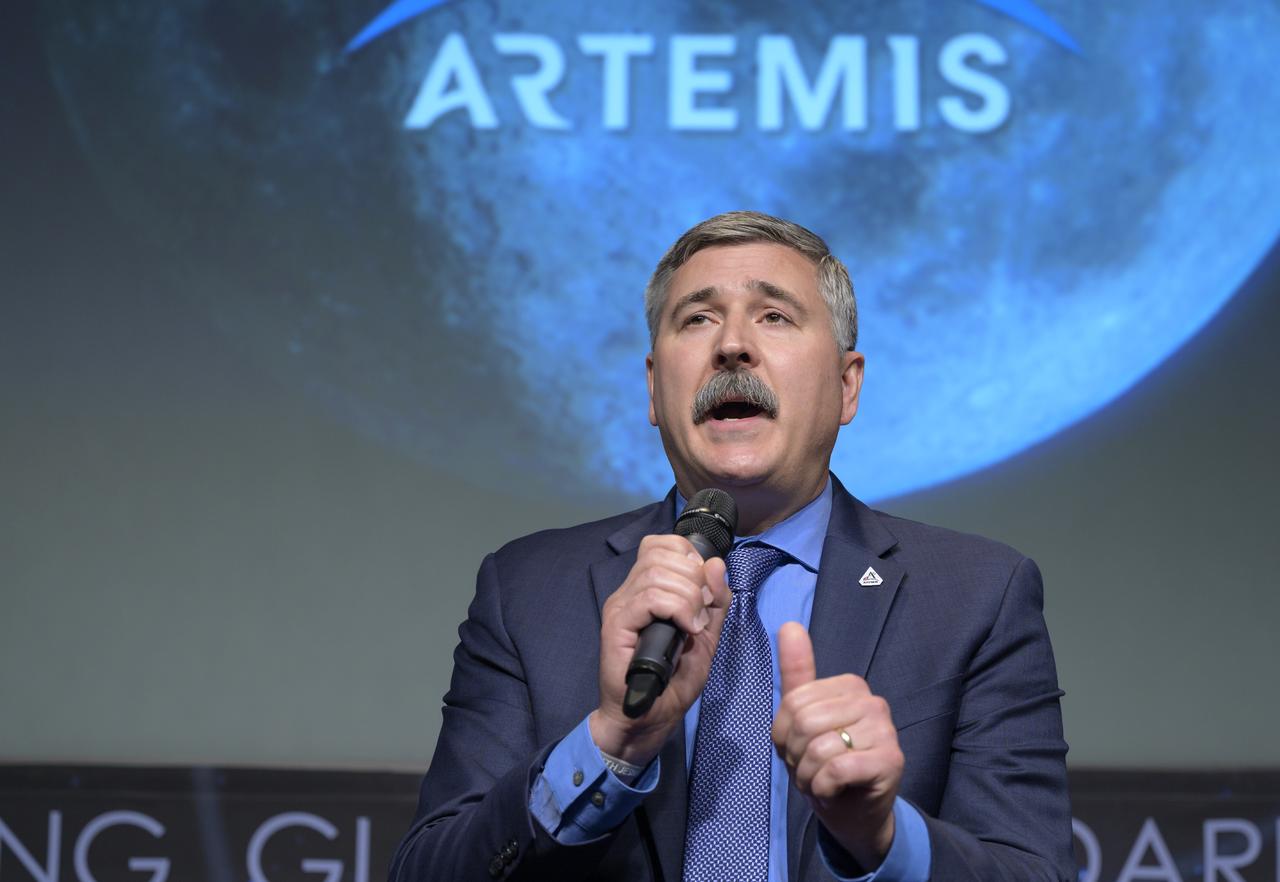
Mike Sarafin, Artemis I mission manager at NASA Headquarters speaks during a NASA briefing on the Artemis I Moon mission, Wednesday, Aug. 3, 2022, at the Mary W. Jackson NASA Headquarters building in Washington. NASA’s Artemis I mission is the first integrated test of the agency’s deep space exploration systems: the Orion spacecraft, Space Launch System rocket, and supporting ground systems. Launch of the uncrewed flight test is targeted for no earlier than Monday, Aug. 29. Photo Credit: (NASA/Bill Ingalls)
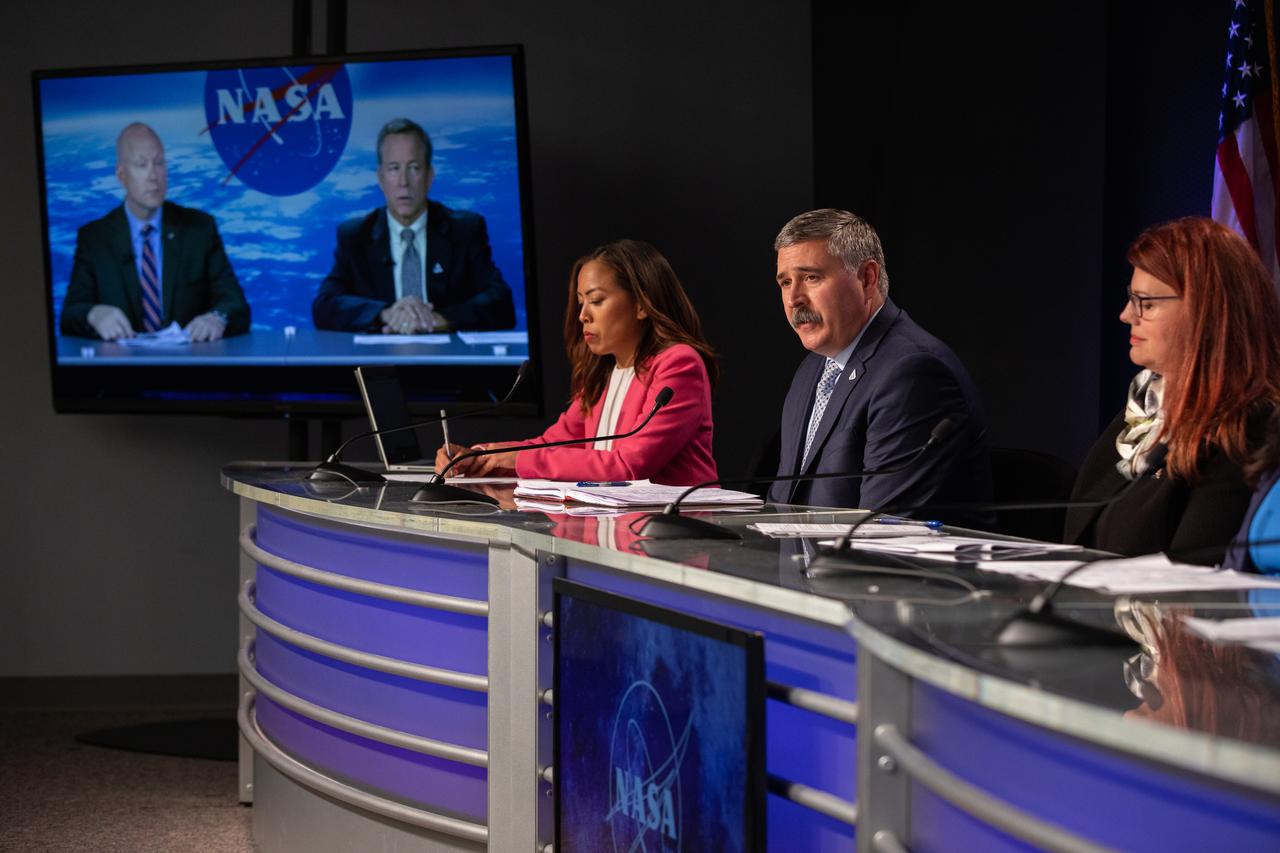
From left, Megan Cruz, NASA Communications; Mike Sarafin, Artemis mission manager, NASA Headquarters; and Charlie Blackwell-Thompson, Artemis launch director, Kennedy Space Center, participate in an Artemis I mission status press briefing at Kennedy on Aug. 27, 2022. NASA’s Space Launch System rocket and Orion spacecraft are targeted to lift off from Kennedy’s Launch Complex 39B no earlier than Aug. 29, 2022, at 8:33 a.m. EDT.

Stephanie Schierholz, a press secretary at NASA Headquarters, moderates a NASA briefing on the Artemis I Moon mission, Wednesday, Aug. 3, 2022, at the Mary W. Jackson NASA Headquarters building in Washington. NASA’s Artemis I mission is the first integrated test of the agency’s deep space exploration systems: the Orion spacecraft, Space Launch System rocket, and supporting ground systems. Launch of the uncrewed flight test is targeted for no earlier than Monday, Aug. 29. Photo Credit: (NASA/Bill Ingalls)
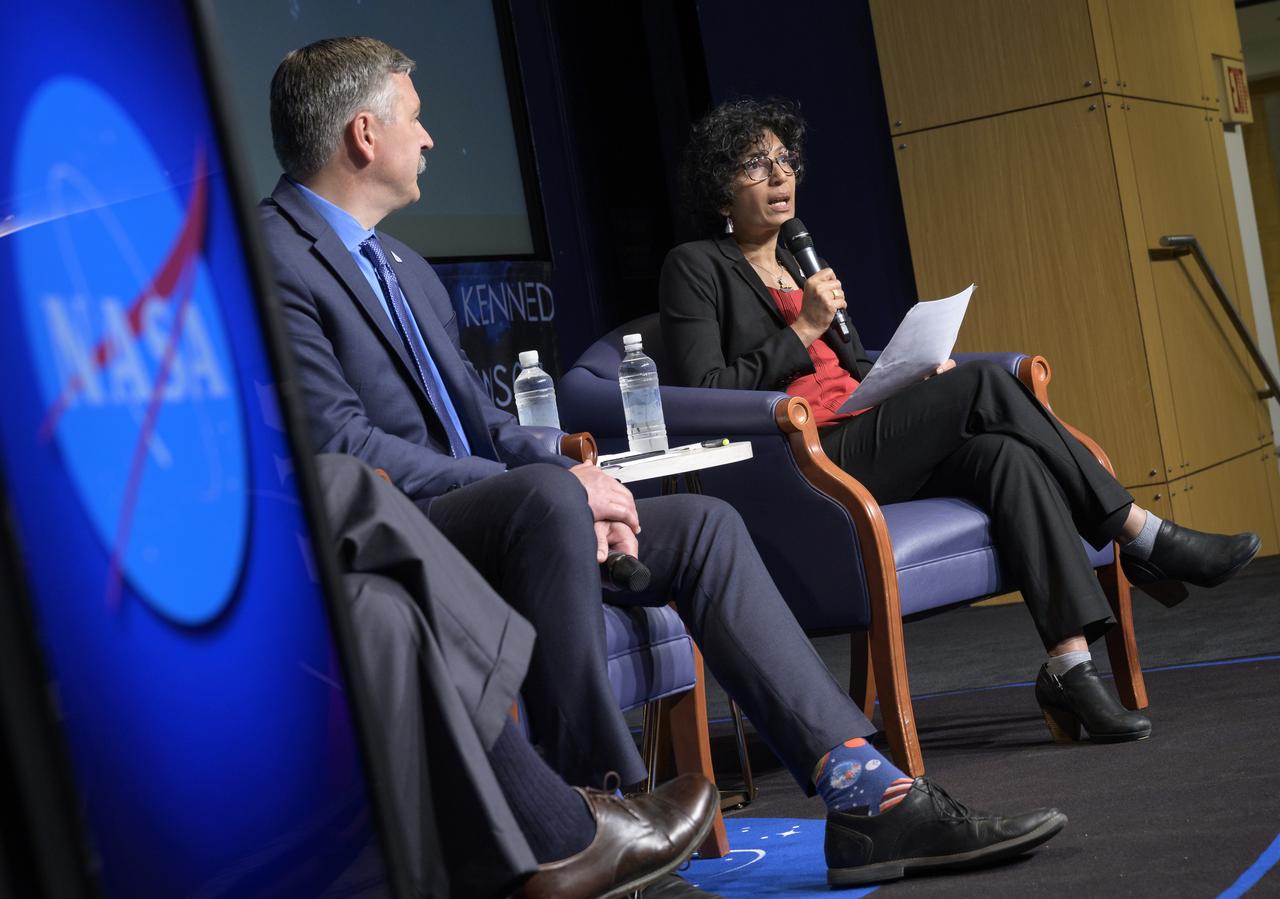
Bhavya Lal, associate administrator for technology, policy, and strategy at NASA Headquarters speaks during a NASA briefing on the Artemis I Moon mission, Wednesday, Aug. 3, 2022, at the Mary W. Jackson NASA Headquarters building in Washington. NASA’s Artemis I mission is the first integrated test of the agency’s deep space exploration systems: the Orion spacecraft, Space Launch System rocket, and supporting ground systems. Launch of the uncrewed flight test is targeted for no earlier than Monday, Aug. 29. Photo Credit: (NASA/Bill Ingalls)

NASA Administrator Bill Nelson speaks during a NASA briefing on the Artemis I Moon mission, Wednesday, Aug. 3, 2022, at the Mary W. Jackson NASA Headquarters building in Washington. NASA’s Artemis I mission is the first integrated test of the agency’s deep space exploration systems: the Orion spacecraft, Space Launch System rocket, and supporting ground systems. Launch of the uncrewed flight test is targeted for no earlier than Monday, Aug. 29. Photo Credit: (NASA/Bill Ingalls)

Bhavya Lal, associate administrator for technology, policy, and strategy at NASA Headquarters is seen during a NASA briefing on the Artemis I Moon mission, Wednesday, Aug. 3, 2022, at the Mary W. Jackson NASA Headquarters building in Washington. NASA’s Artemis I mission is the first integrated test of the agency’s deep space exploration systems: the Orion spacecraft, Space Launch System rocket, and supporting ground systems. Launch of the uncrewed flight test is targeted for no earlier than Monday, Aug. 29. Photo Credit: (NASA/Bill Ingalls)
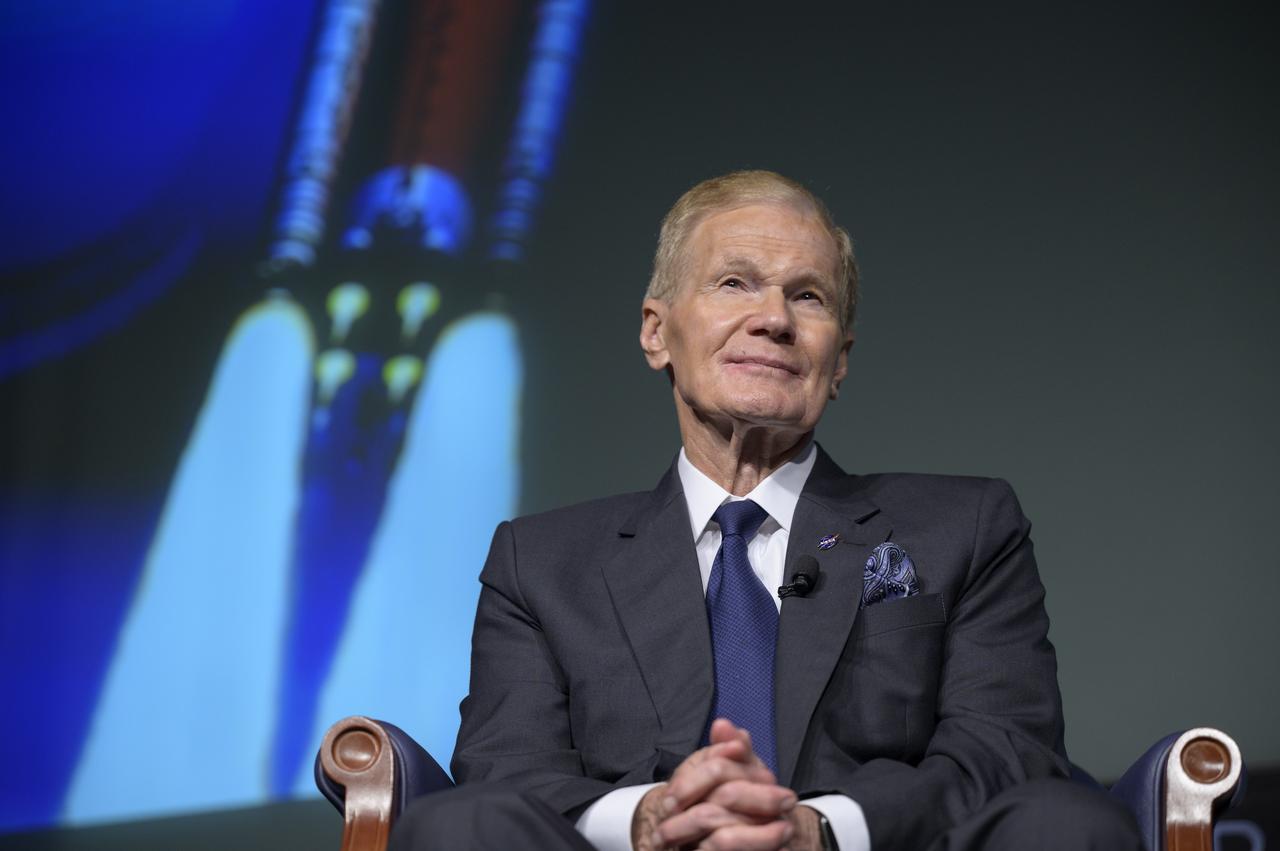
NASA Administrator Bill Nelson speaks during a NASA briefing on the Artemis I Moon mission, Wednesday, Aug. 3, 2022, at the Mary W. Jackson NASA Headquarters building in Washington. NASA’s Artemis I mission is the first integrated test of the agency’s deep space exploration systems: the Orion spacecraft, Space Launch System rocket, and supporting ground systems. Launch of the uncrewed flight test is targeted for no earlier than Monday, Aug. 29. Photo Credit: (NASA/Bill Ingalls)

NASA Administrator Bill Nelson speaks during a NASA briefing on the Artemis I Moon mission, Wednesday, Aug. 3, 2022, at the Mary W. Jackson NASA Headquarters building in Washington. NASA’s Artemis I mission is the first integrated test of the agency’s deep space exploration systems: the Orion spacecraft, Space Launch System rocket, and supporting ground systems. Launch of the uncrewed flight test is targeted for no earlier than Monday, Aug. 29. Photo Credit: (NASA/Bill Ingalls)

Bhavya Lal, associate administrator for technology, policy, and strategy at NASA Headquarters speaks during a NASA briefing on the Artemis I Moon mission, Wednesday, Aug. 3, 2022, at the Mary W. Jackson NASA Headquarters building in Washington. NASA’s Artemis I mission is the first integrated test of the agency’s deep space exploration systems: the Orion spacecraft, Space Launch System rocket, and supporting ground systems. Launch of the uncrewed flight test is targeted for no earlier than Monday, Aug. 29. Photo Credit: (NASA/Bill Ingalls)
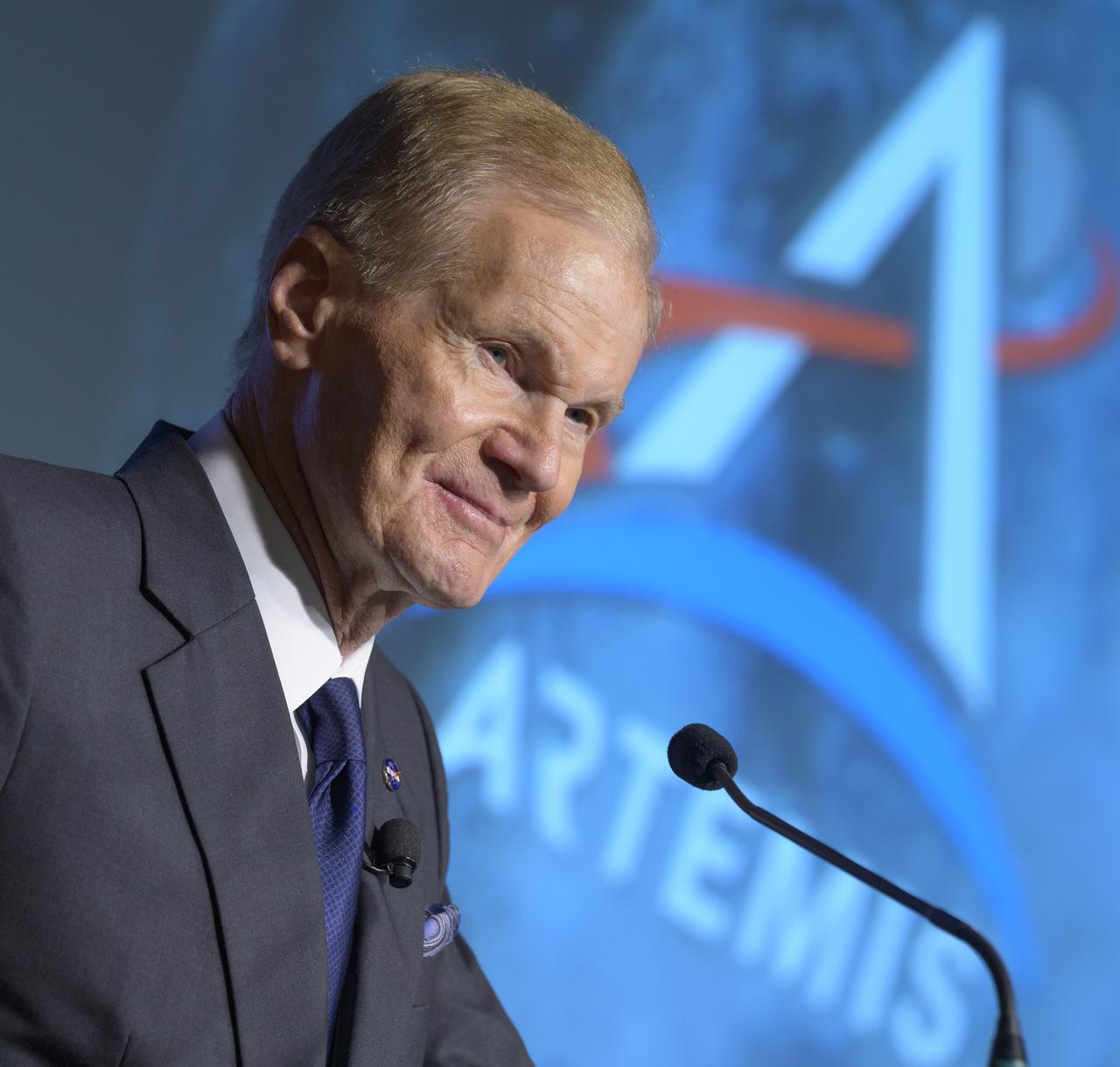
NASA Administrator Bill Nelson speaks during a NASA briefing on the Artemis I Moon mission, Wednesday, Aug. 3, 2022, at the Mary W. Jackson NASA Headquarters building in Washington. NASA’s Artemis I mission is the first integrated test of the agency’s deep space exploration systems: the Orion spacecraft, Space Launch System rocket, and supporting ground systems. Launch of the uncrewed flight test is targeted for no earlier than Monday, Aug. 29. Photo Credit: (NASA/Bill Ingalls)

NASA Administrator Bill Nelson speaks during a NASA briefing on the Artemis I Moon mission, Wednesday, Aug. 3, 2022, at the Mary W. Jackson NASA Headquarters building in Washington. NASA’s Artemis I mission is the first integrated test of the agency’s deep space exploration systems: the Orion spacecraft, Space Launch System rocket, and supporting ground systems. Launch of the uncrewed flight test is targeted for no earlier than Monday, Aug. 29. Photo Credit: (NASA/Bill Ingalls)
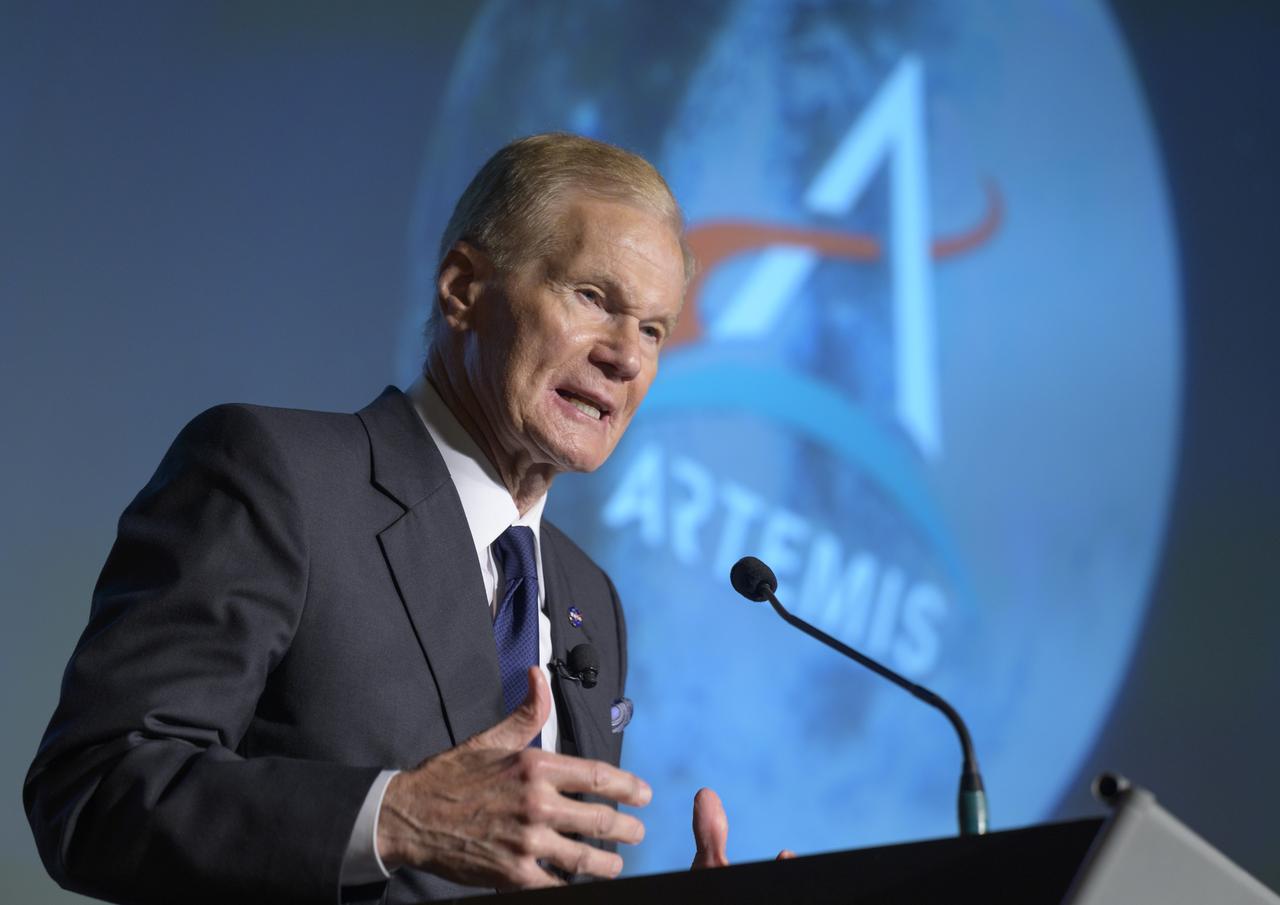
NASA Administrator Bill Nelson speaks during a NASA briefing on the Artemis I Moon mission, Wednesday, Aug. 3, 2022, at the Mary W. Jackson NASA Headquarters building in Washington. NASA’s Artemis I mission is the first integrated test of the agency’s deep space exploration systems: the Orion spacecraft, Space Launch System rocket, and supporting ground systems. Launch of the uncrewed flight test is targeted for no earlier than Monday, Aug. 29. Photo Credit: (NASA/Bill Ingalls)

Mike Sarafin, Artemis mission manager, NASA Headquarters, participates in an Artemis I mission status press briefing at the agency’s Kennedy Space Center in Florida on Aug. 27, 2022. NASA’s Space Launch System rocket and Orion spacecraft are targeted to lift off from Kennedy’s Launch Complex 39B no earlier than Aug. 29, 2022, at 8:33 a.m. EDT.
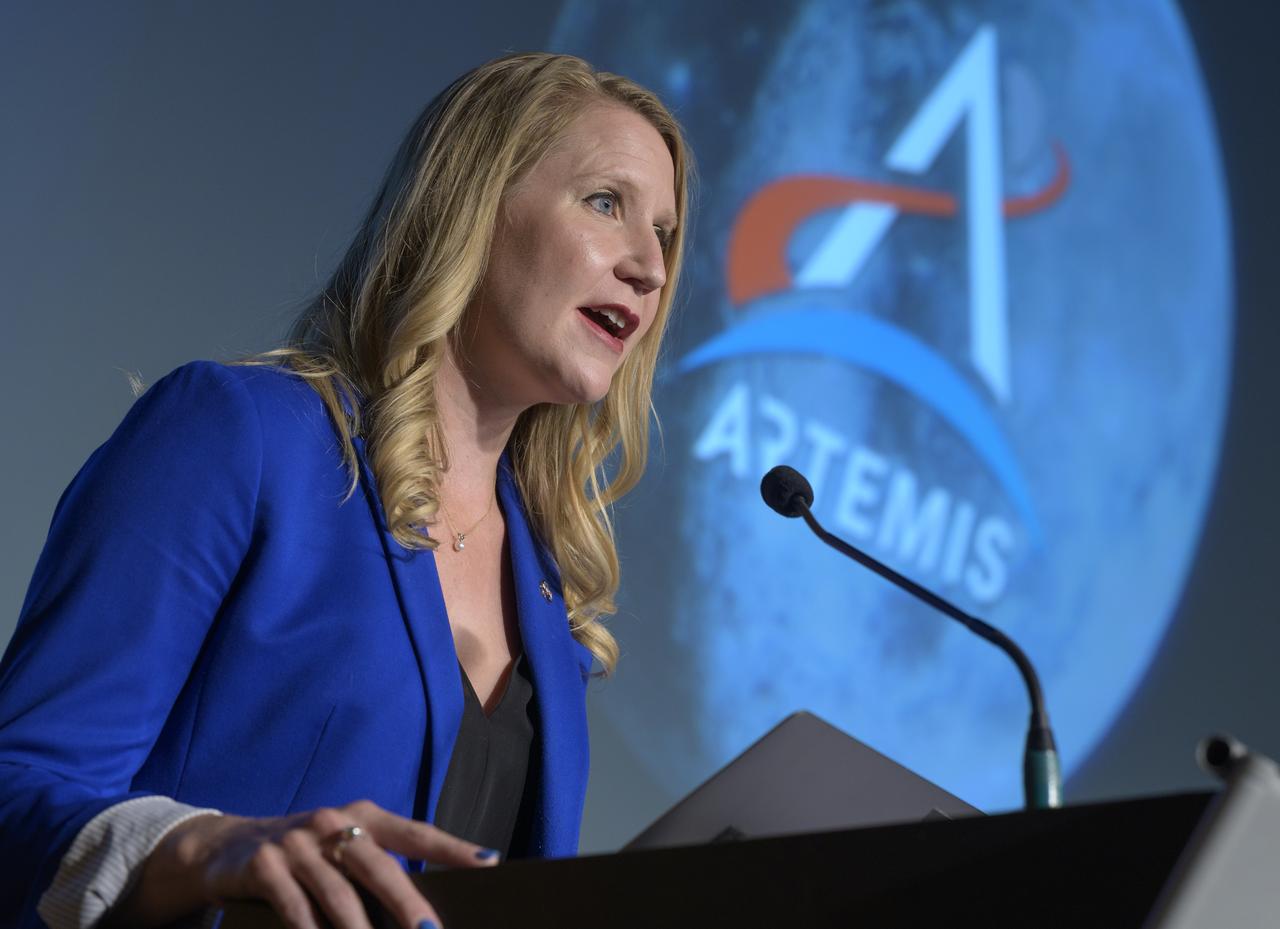
Stephanie Schierholz, a press secretary at NASA Headquarters, moderates a NASA briefing on the Artemis I Moon mission, Wednesday, Aug. 3, 2022, at the Mary W. Jackson NASA Headquarters building in Washington. NASA’s Artemis I mission is the first integrated test of the agency’s deep space exploration systems: the Orion spacecraft, Space Launch System rocket, and supporting ground systems. Launch of the uncrewed flight test is targeted for no earlier than Monday, Aug. 29. Photo Credit: (NASA/Bill Ingalls)

NASA Administrator Bill Nelson speaks during a NASA briefing on the Artemis I Moon mission, Wednesday, Aug. 3, 2022, at the Mary W. Jackson NASA Headquarters building in Washington. NASA’s Artemis I mission is the first integrated test of the agency’s deep space exploration systems: the Orion spacecraft, Space Launch System rocket, and supporting ground systems. Launch of the uncrewed flight test is targeted for no earlier than Monday, Aug. 29. Photo Credit: (NASA/Bill Ingalls)
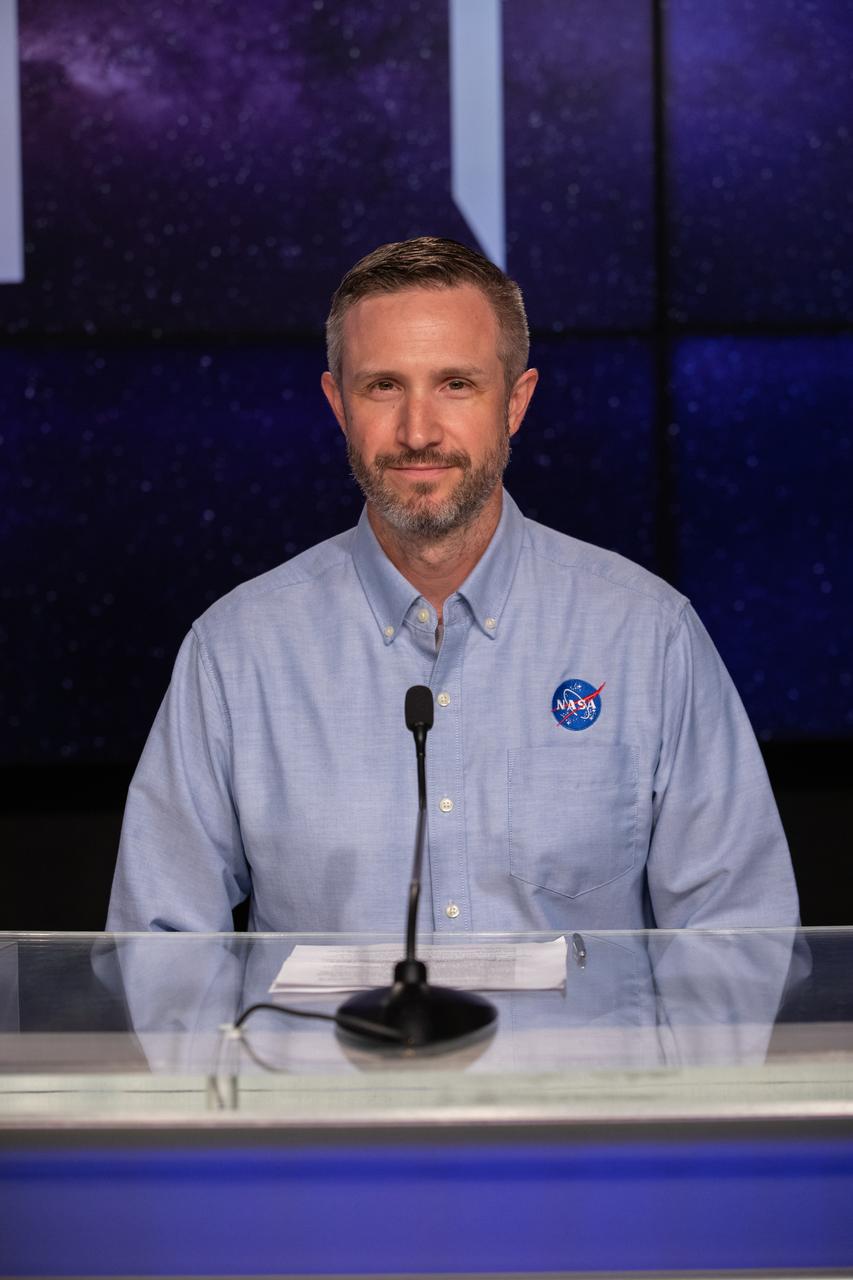
Jacob Bleacher, chief exploration scientist, Exploration Systems Development Mission Directorate, NASA Headquarters, participates in an Artemis I mission status press briefing at NASA’s Kennedy Space Center in Florida on Aug. 27, 2022. NASA’s Space Launch System rocket and Orion spacecraft are targeted to lift off from Kennedy’s Launch Complex 39B no earlier than Aug. 29, 2022, at 8:33 a.m. EDT.
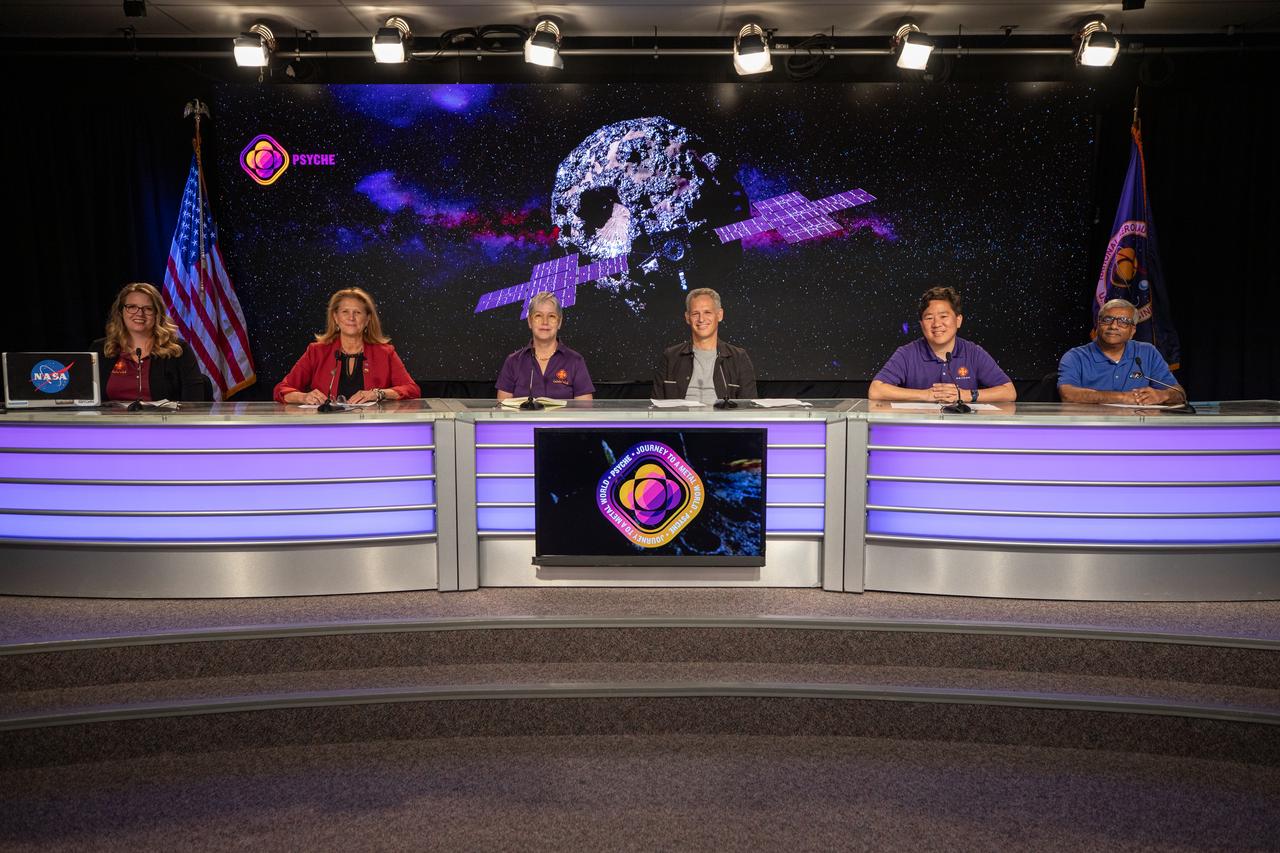
A Psyche mission and science briefing takes place at NASA’s Kennedy Space Center in Florida on Tuesday, Oct. 10, 2023. Participants, from left, are: Alana Johnson, NASA Communications; Lori Glaze, Planetary Science division director, NASA Headquarters; Lindy Elkins-Tanton, Psyche principal investigator, Arizona State University; Ben Weiss, Psyche deputy principal investigator and magnetometer lead, Massachusetts Institute of Technology; David Oh, Psyche chief engineer for operations, NASA’s Jet Propulsion Laboratory (JPL); and Abi Biswas, Deep Space Optical Communications project technologist, JPL. Psyche is the first mission to explore an asteroid with a surface that likely contains substantial amounts of metal rather than rock or ice. Liftoff of NASA’s Psyche spacecraft, atop a SpaceX Falcon Heavy rocket, is targeted for 10:16 a.m. EDT Thursday, Oct. 12, from Kennedy’s Launch Complex 39A.
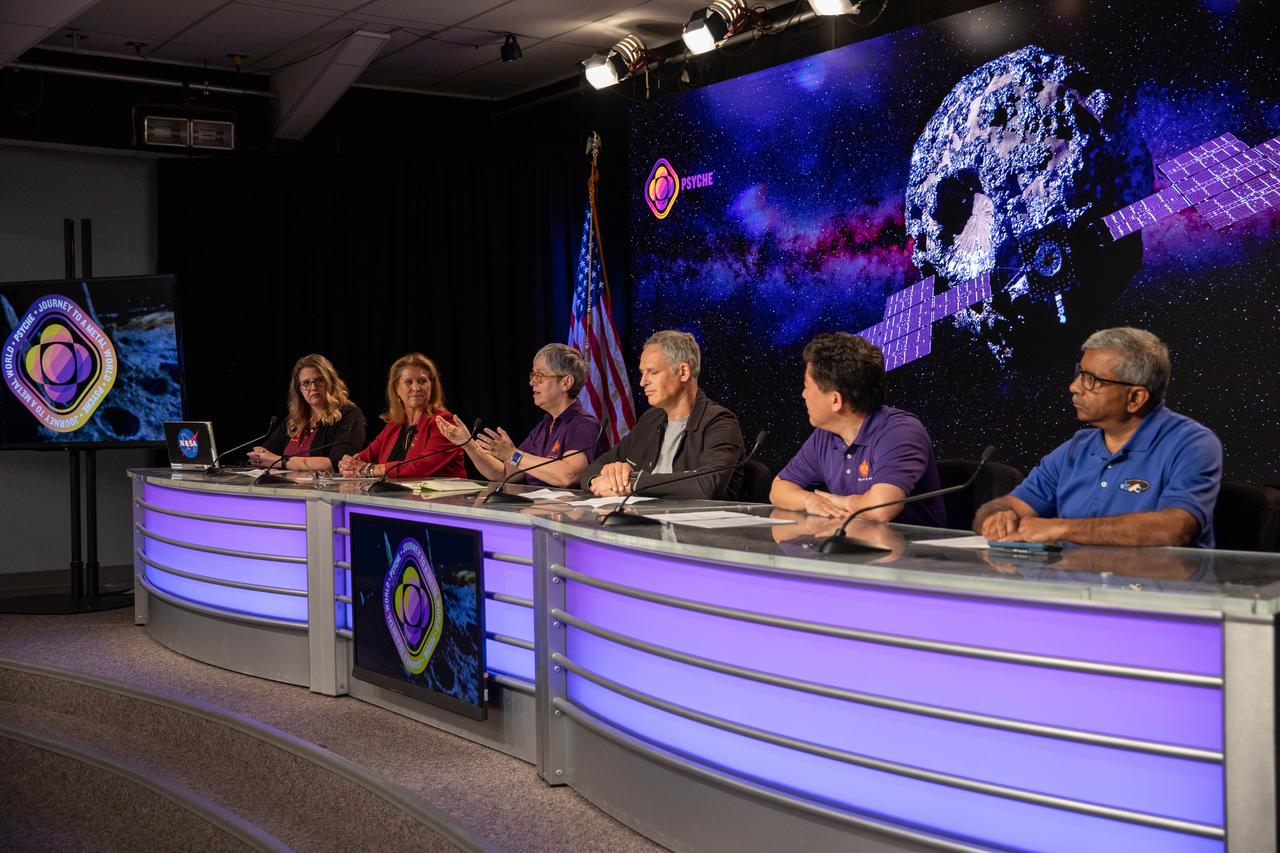
A Psyche mission and science briefing takes place at NASA’s Kennedy Space Center in Florida on Tuesday, Oct. 10, 2023. Participants, from left, are: Alana Johnson, NASA Communications; Lori Glaze, Planetary Science division director, NASA Headquarters; Lindy Elkins-Tanton, Psyche principal investigator, Arizona State University; Ben Weiss, Psyche deputy principal investigator and magnetometer lead, Massachusetts Institute of Technology; David Oh, Psyche chief engineer for operations, NASA’s Jet Propulsion Laboratory (JPL); and Abi Biswas, Deep Space Optical Communications project technologist, JPL. Psyche is the first mission to explore an asteroid with a surface that likely contains substantial amounts of metal rather than rock or ice. Liftoff of NASA’s Psyche spacecraft, atop a SpaceX Falcon Heavy rocket, is targeted for 10:16 a.m. EDT Thursday, Oct. 12, from Kennedy’s Launch Complex 39A.
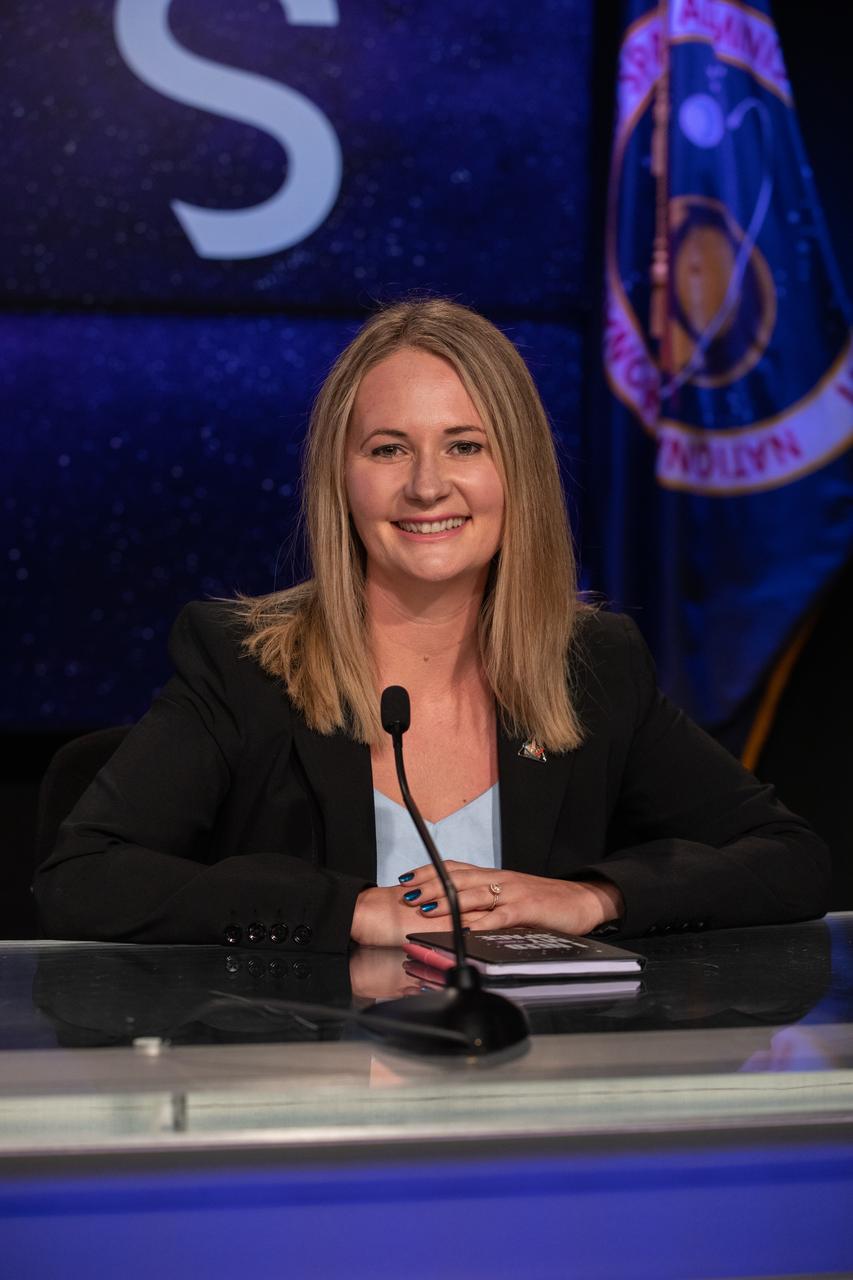
Melody Lovin, weather officer, Space Launch Delta 45, is introduced during an Artemis I mission status press briefing at NASA’s Kennedy Space Center in Florida on Aug. 27, 2022. NASA’s Space Launch System rocket and Orion spacecraft are targeted to lift off from Kennedy’s Launch Complex 39B no earlier than Aug. 29, 2022, at 8:33 a.m. EDT.

Megan Cruz, NASA Communications, leads an Artemis I mission status press briefing at Kennedy Space Center in Florida on Aug. 27, 2022. NASA’s Space Launch System rocket and Orion spacecraft are targeted to lift off from Kennedy’s Launch Complex 39B no earlier than Aug. 29, 2022, at 8:33 a.m. EDT.

Members of the media attend an Artemis I mission status press briefing at NASA’s Kennedy Space Center in Florida on Aug. 27, 2022. NASA’s Space Launch System rocket and Orion spacecraft are targeted to lift off from Kennedy’s Launch Complex 39B no earlier than Aug. 29, 2022, at 8:33 a.m. EDT.
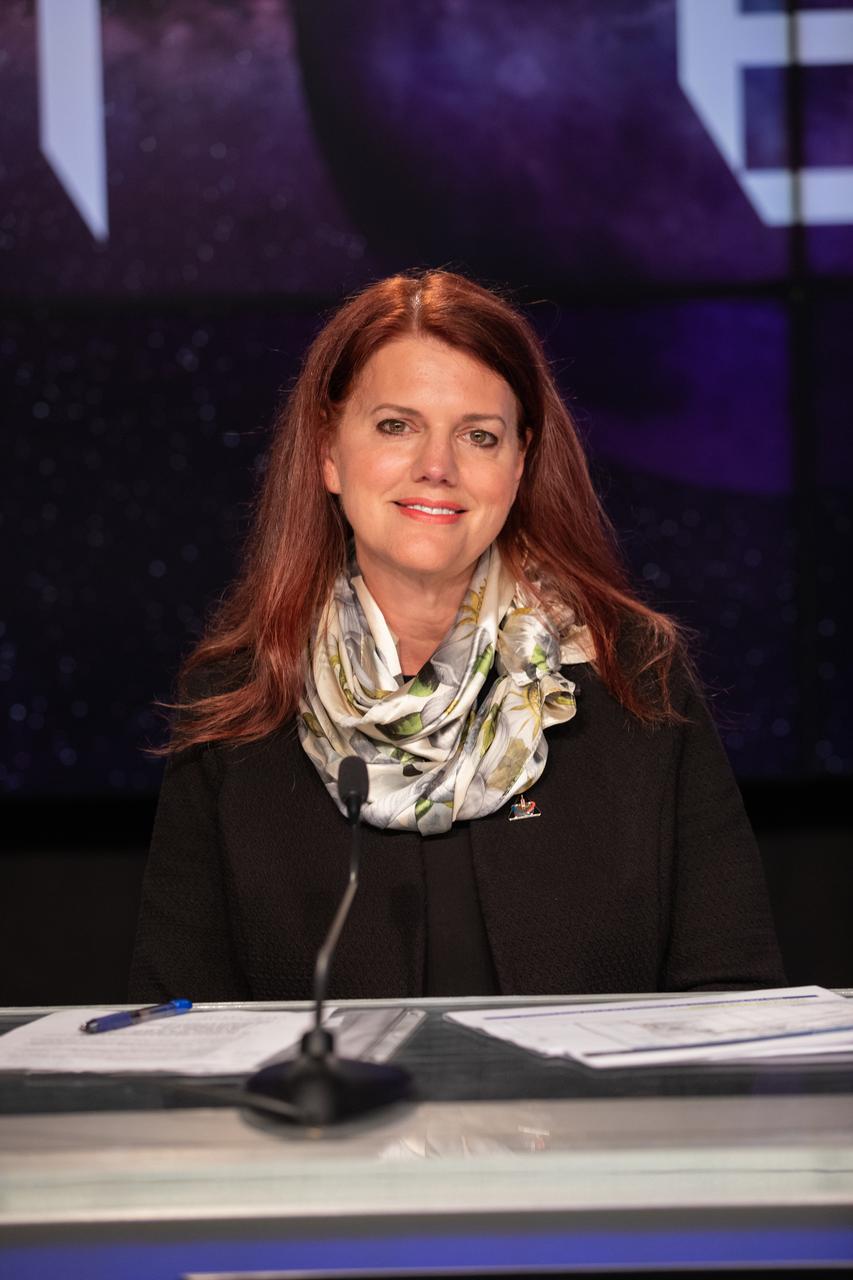
Charlie Blackwell-Thompson, Artemis launch director, Kennedy Space Center, is introduced during an Artemis I mission status press briefing at Kennedy on Aug. 27, 2022. NASA’s Space Launch System rocket and Orion spacecraft are targeted to lift off from Kennedy’s Launch Complex 39B no earlier than Aug. 29, 2022, at 8:33 a.m. EDT.
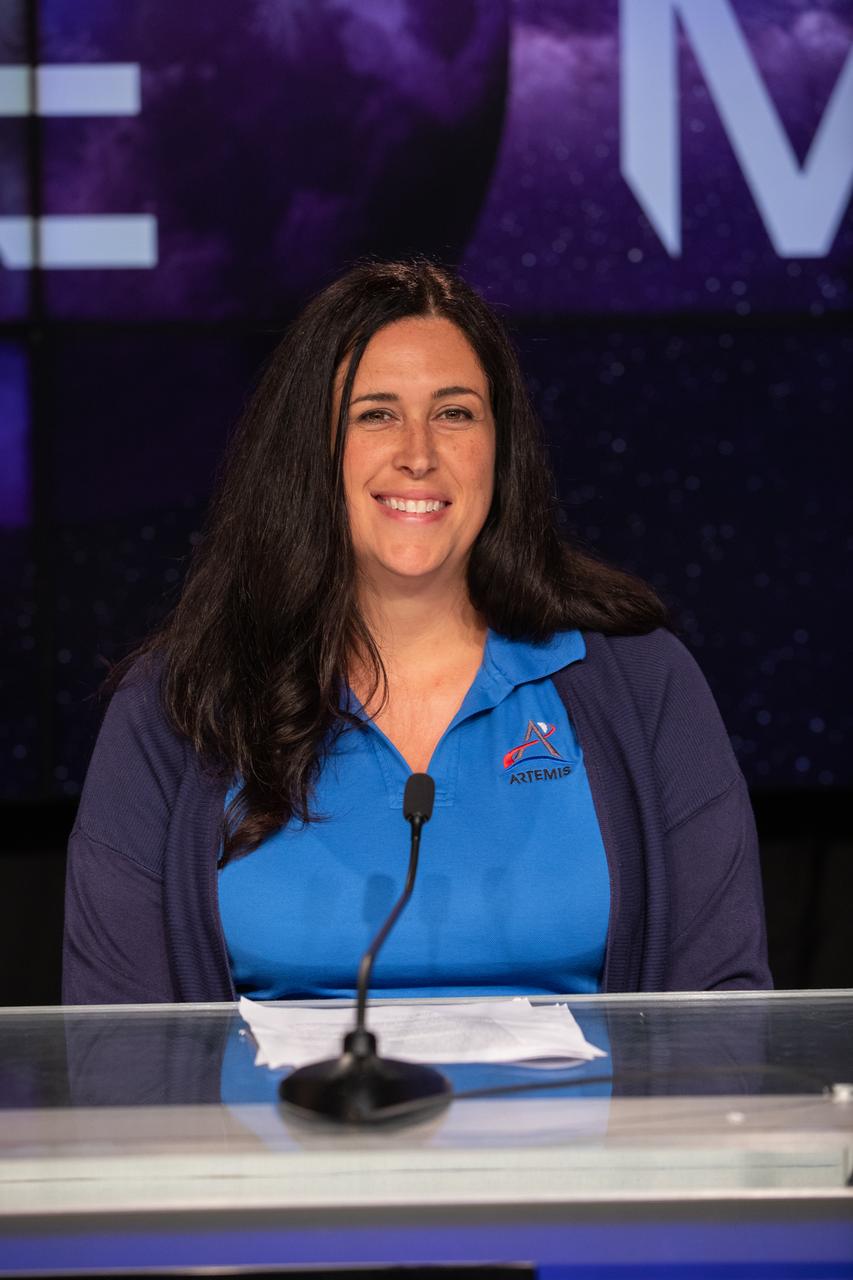
Melissa Jones, recovery director, NASA’s Exploration Ground Systems Program, is introduced during an Artemis I mission status press briefing at Kennedy Space Center in Florida on Aug. 27, 2022. NASA’s Space Launch System rocket and Orion spacecraft are targeted to lift off from Kennedy’s Launch Complex 39B no earlier than Aug. 29, 2022, at 8:33 a.m. EDT.
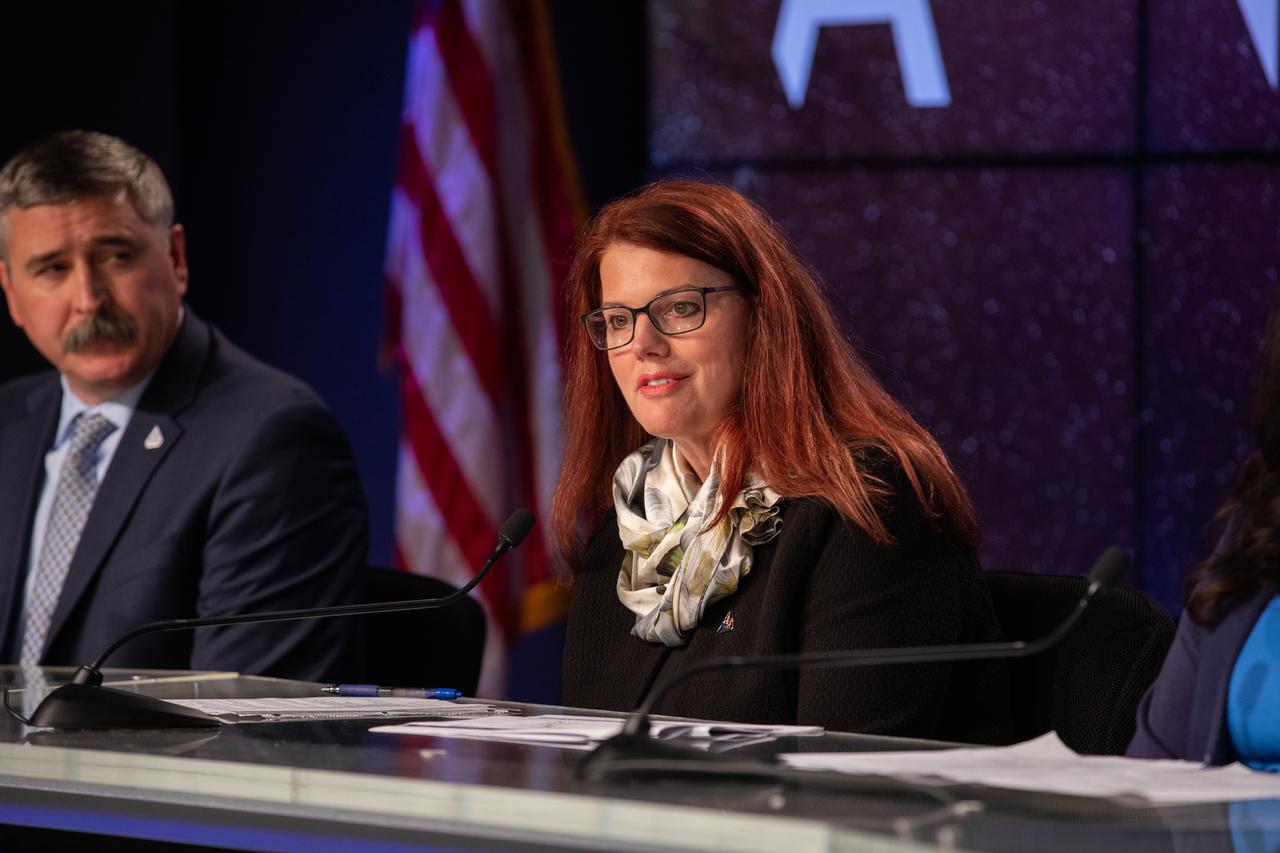
Charlie Blackwell-Thompson, Artemis launch director, Kennedy Space Center, listens to a question during an Artemis I mission status press briefing at Kennedy on Aug. 27, 2022. NASA’s Space Launch System rocket and Orion spacecraft are targeted to lift off from Kennedy’s Launch Complex 39B no earlier than Aug. 29, 2022, at 8:33 a.m. EDT.
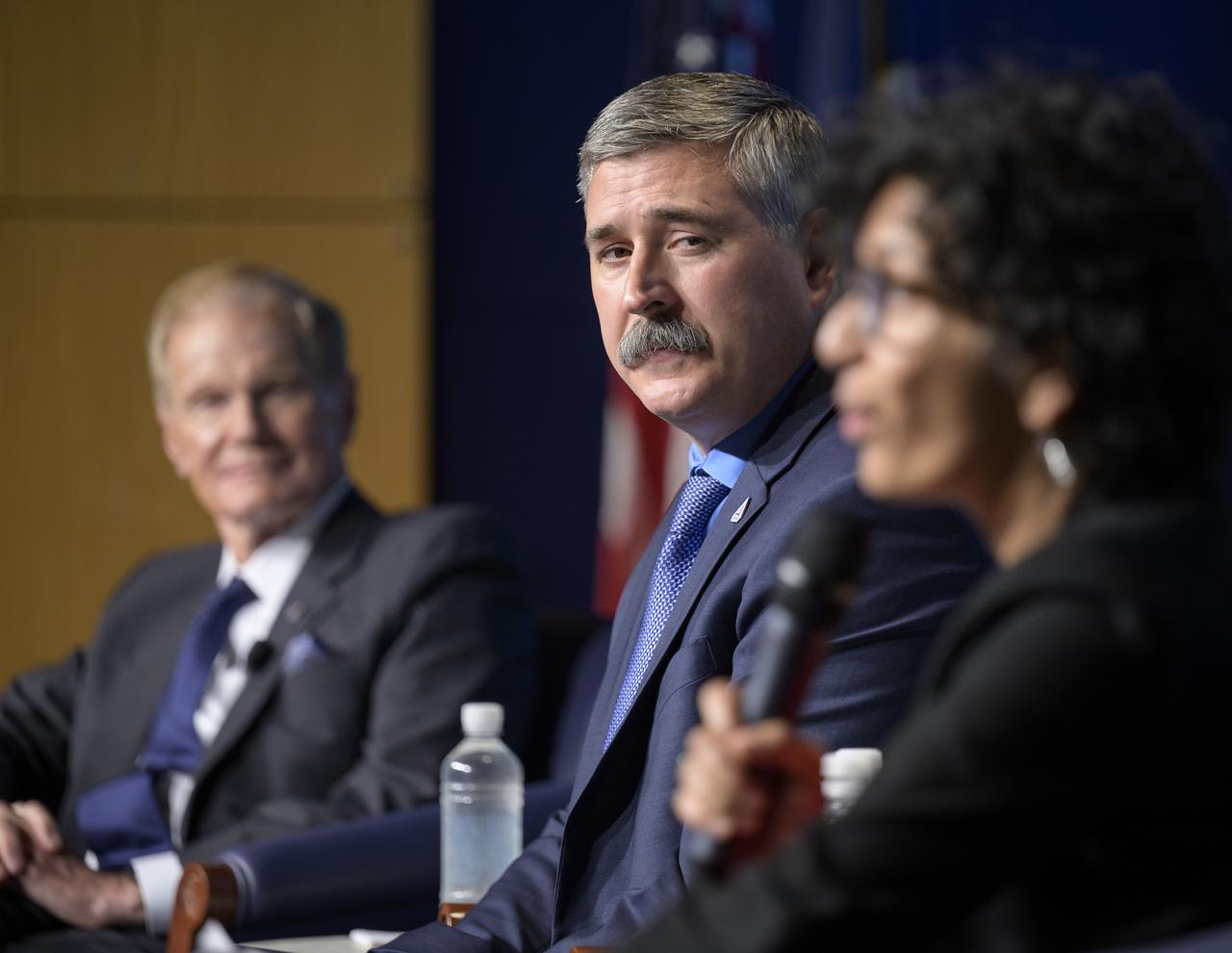
Mike Sarafin, Artemis I mission manager at NASA Headquarters listens as Bhavya Lal, associate administrator for technology, policy, and strategy at NASA Headquarters speaks during a NASA briefing on the Artemis I Moon mission, Wednesday, Aug. 3, 2022, at the Mary W. Jackson NASA Headquarters building in Washington. NASA’s Artemis I mission is the first integrated test of the agency’s deep space exploration systems: the Orion spacecraft, Space Launch System rocket, and supporting ground systems. Launch of the uncrewed flight test is targeted for no earlier than Monday, Aug. 29. Photo Credit: (NASA/Bill Ingalls)

PHOTO DATE: 7-10-2011 LOCATION: Bldg. 2N - Press Briefing Room SUBJECT: STS-135 Flight Day 3 Mission Status Briefing with Kwatsi Alibaruho. WORK ORDER: 00000-DCB_STS135_Day 3_Status Briefing_7-10-11 PHOTOGRAPHER: Devin Boldt
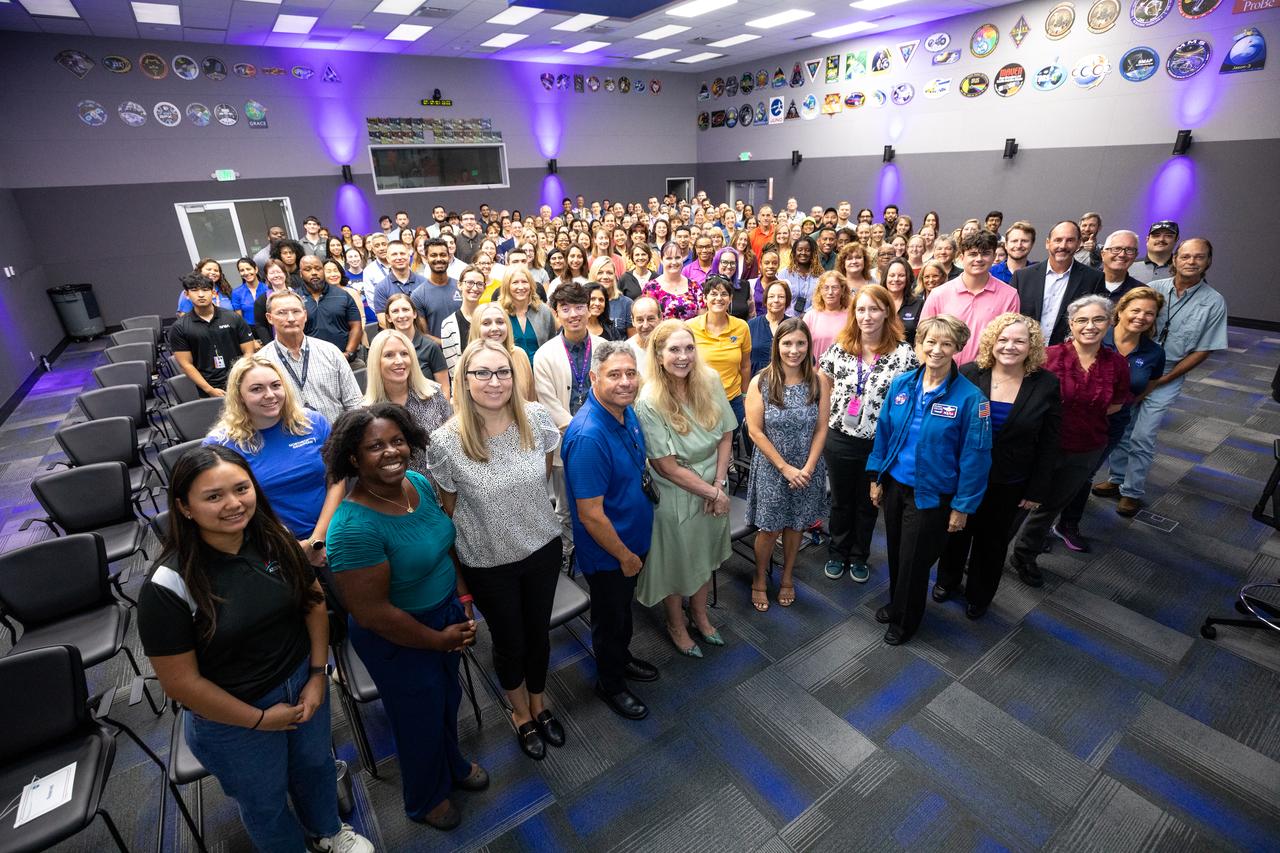
Retired NASA astronaut Eileen Collins poses with NASA employees and contractors after participating in a special presentation and question and answer session inside the Neil A. Armstrong Operations and Checkout Building’s Mission Briefing Room at the agency’s Kennedy Space Center in Florida on Wednesday, July 17, 2024. Collins visited NASA Kennedy in celebration of the 25th anniversary of becoming the first woman to command a space mission during STS-93, in which space shuttle Columbia lifted off from the spaceport’s Launch Complex 39B on July 23, 1999.
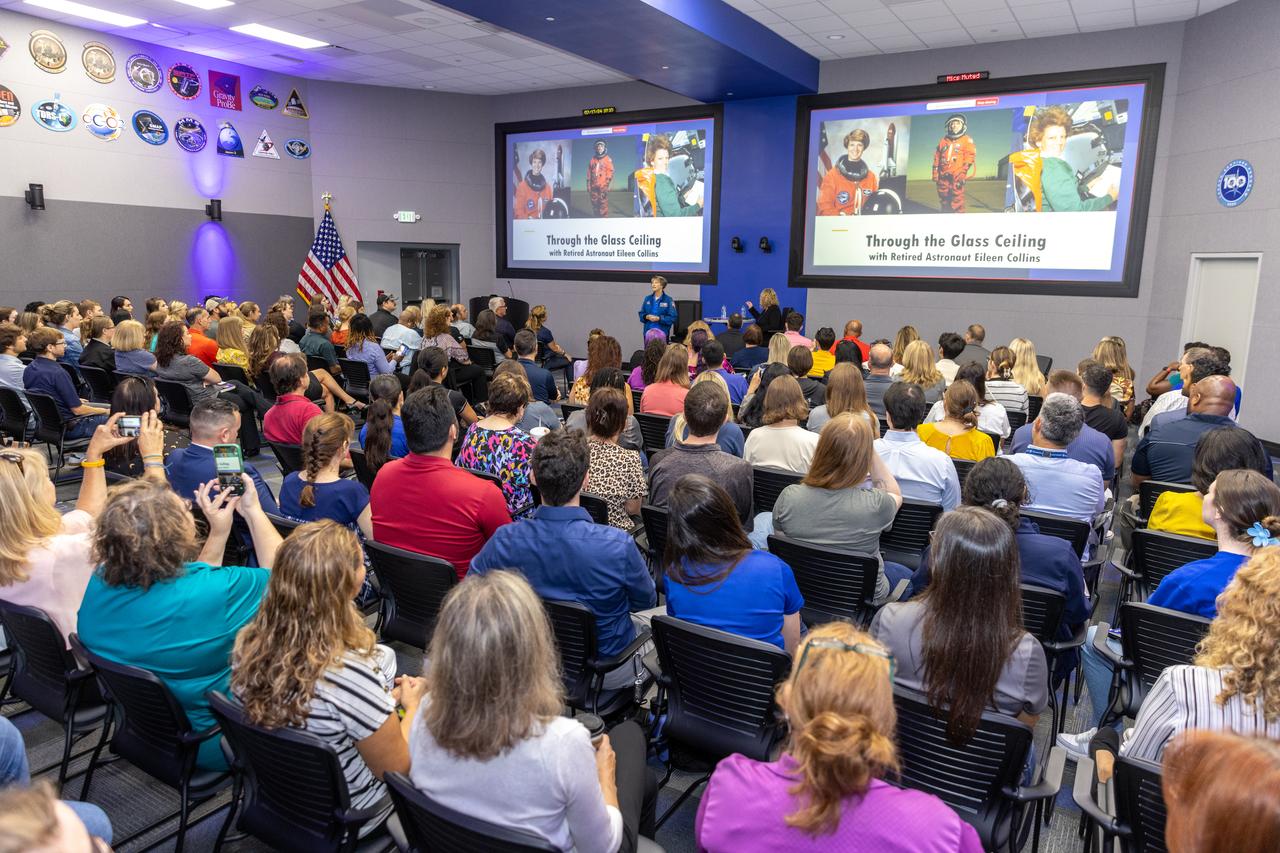
Retired NASA astronaut Eileen Collins participates in a special presentation and question and answer session inside the Neil A. Armstrong Operations and Checkout Building’s Mission Briefing Room at the agency’s Kennedy Space Center in Florida on Wednesday, July 17, 2024. Collins visited NASA Kennedy in celebration of the 25th anniversary of becoming the first woman to command a space mission during STS-93, in which space shuttle Columbia lifted off from the spaceport’s Launch Complex 39B on July 23, 1999.
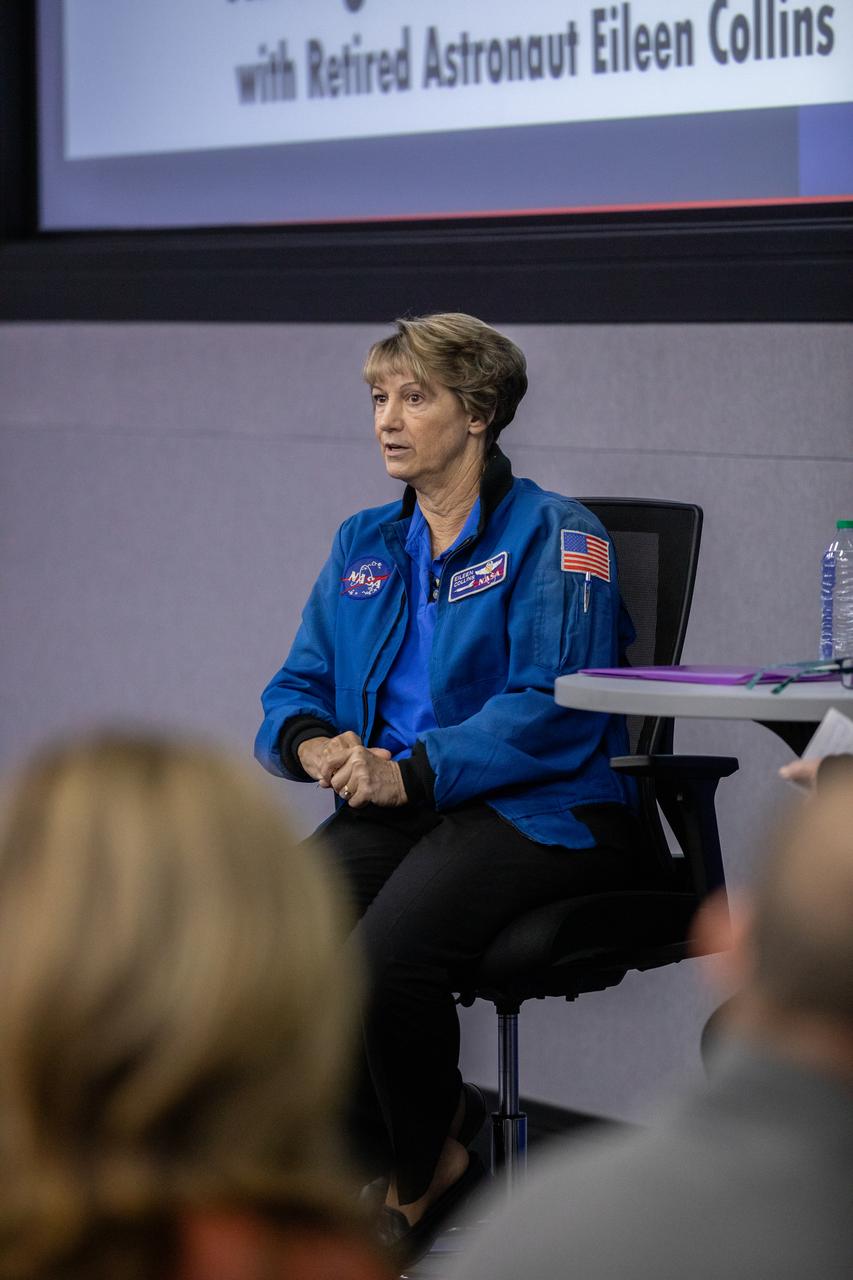
Retired NASA astronaut Eileen Collins participates in a special presentation and question and answer session inside the Neil A. Armstrong Operations and Checkout Building’s Mission Briefing Room at the agency’s Kennedy Space Center in Florida on Wednesday, July 17, 2024. Collins visited NASA Kennedy in celebration of the 25th anniversary of becoming the first woman to command a space mission during STS-93, in which space shuttle Columbia lifted off from the spaceport’s Launch Complex 39B on July 23, 1999.
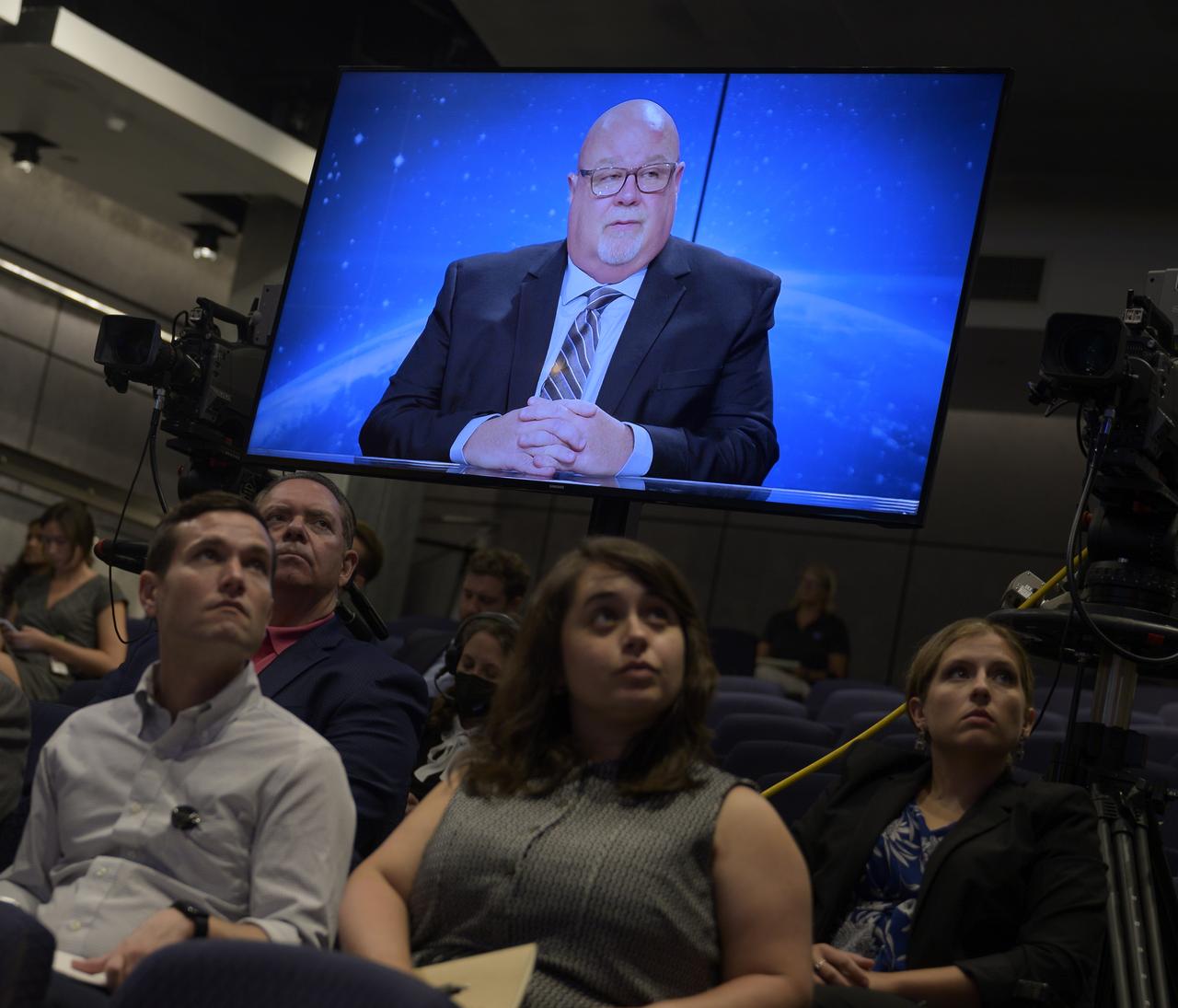
John Honeycutt, Space Launch System (SLS) program manager at NASA's Marshall Space Flight Center gives remarks remotely during a NASA briefing on the Artemis I Moon mission, Wednesday, Aug. 3, 2022, at the Mary W. Jackson NASA Headquarters building in Washington. NASA’s Artemis I mission is the first integrated test of the agency’s deep space exploration systems: the Orion spacecraft, Space Launch System rocket, and supporting ground systems. Launch of the uncrewed flight test is targeted for no earlier than Monday, Aug. 29. Photo Credit: (NASA/Bill Ingalls)

Howard Hu, Orion program manager at NASA's Johnson Space Center gives remarks remotely during a NASA briefing on the Artemis I Moon mission, Wednesday, Aug. 3, 2022, at the Mary W. Jackson NASA Headquarters building in Washington. NASA’s Artemis I mission is the first integrated test of the agency’s deep space exploration systems: the Orion spacecraft, Space Launch System rocket, and supporting ground systems. Launch of the uncrewed flight test is targeted for no earlier than Monday, Aug. 29. Photo Credit: (NASA/Bill Ingalls)
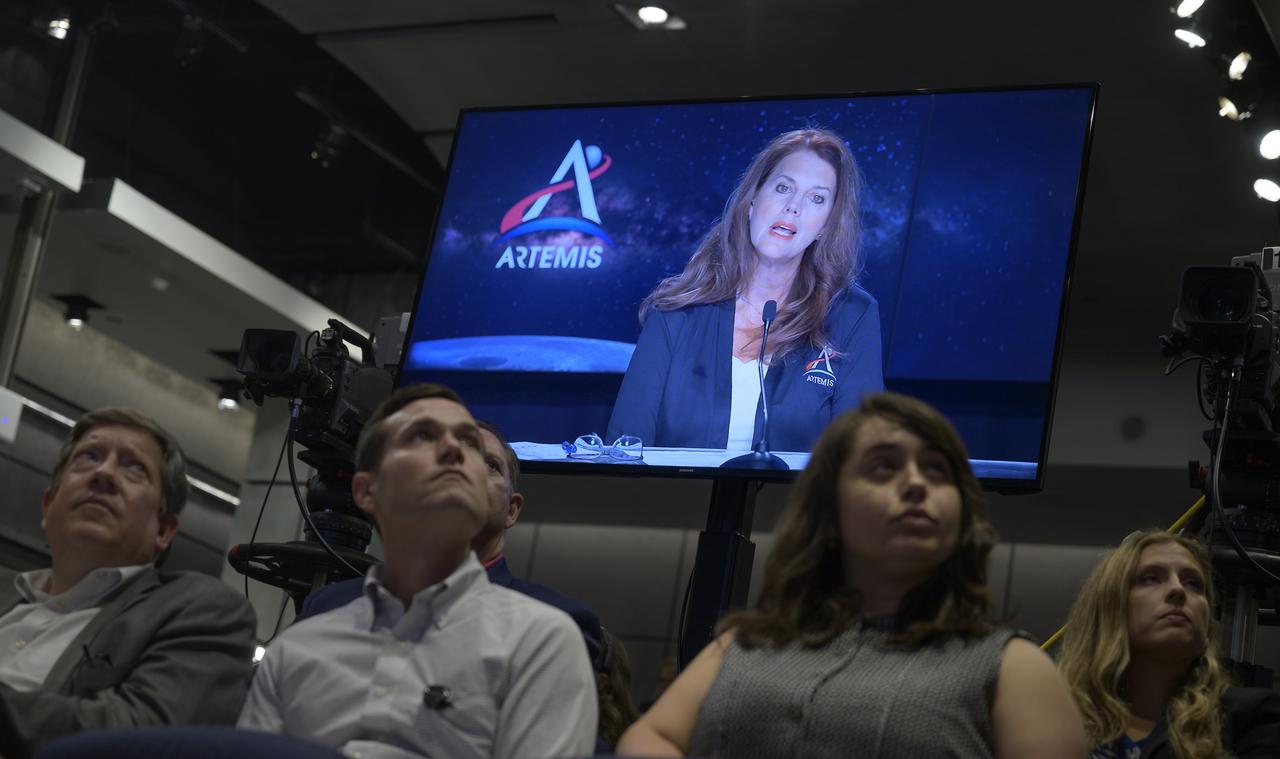
Charlie Blackwell-Thompson, Artemis I launch director at NASA's Kennedy Space Center gives remarks remotely during a NASA briefing on the Artemis I Moon mission, Wednesday, Aug. 3, 2022, at the Mary W. Jackson NASA Headquarters building in Washington. NASA’s Artemis I mission is the first integrated test of the agency’s deep space exploration systems: the Orion spacecraft, Space Launch System rocket, and supporting ground systems. Launch of the uncrewed flight test is targeted for no earlier than Monday, Aug. 29. Photo Credit: (NASA/Bill Ingalls)
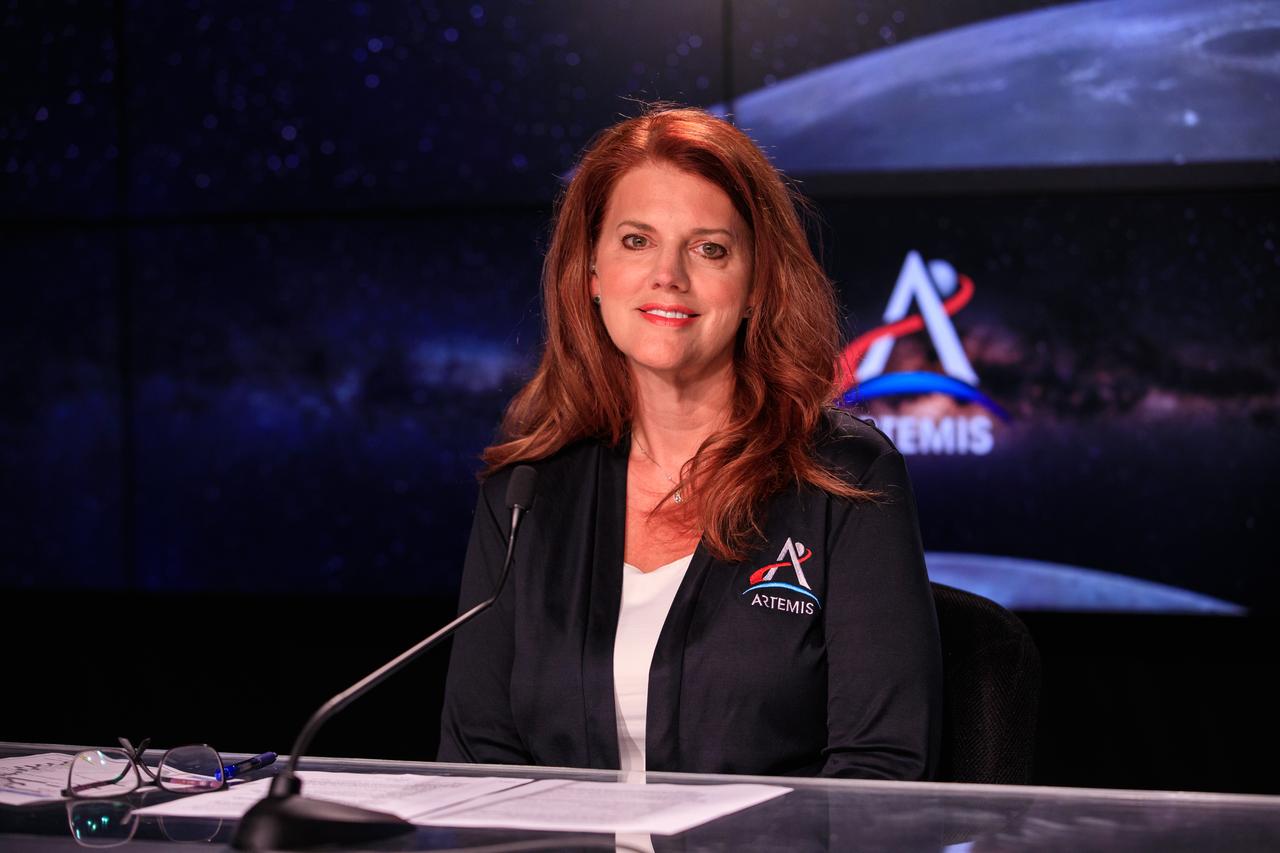
Launch Director Charlie Blackwell-Thompson participates in an Artemis I mission overview briefing inside the Press Site auditorium at NASA’s Kennedy Space Center in Florida on Aug. 3, 2022. Also participating in the briefing from various locations were NASA Administrator Bill Nelson; Associate Administrator for Technology, Policy, and Strategy Bhavya Lal; Mission Manager Mike Sarafin; Space Launch System (SLS) Program Manager John Honeycutt; and Orion Program Manager Howard Hu. The first in an increasingly complex series of missions, Artemis I will test the SLS rocket and Orion spacecraft as an integrated system prior to crewed flights to the Moon. Through Artemis, NASA will land the first woman and first person of color on the lunar surface, paving the way for long-term lunar presence and serving as a steppingstone before venturing to Mars.
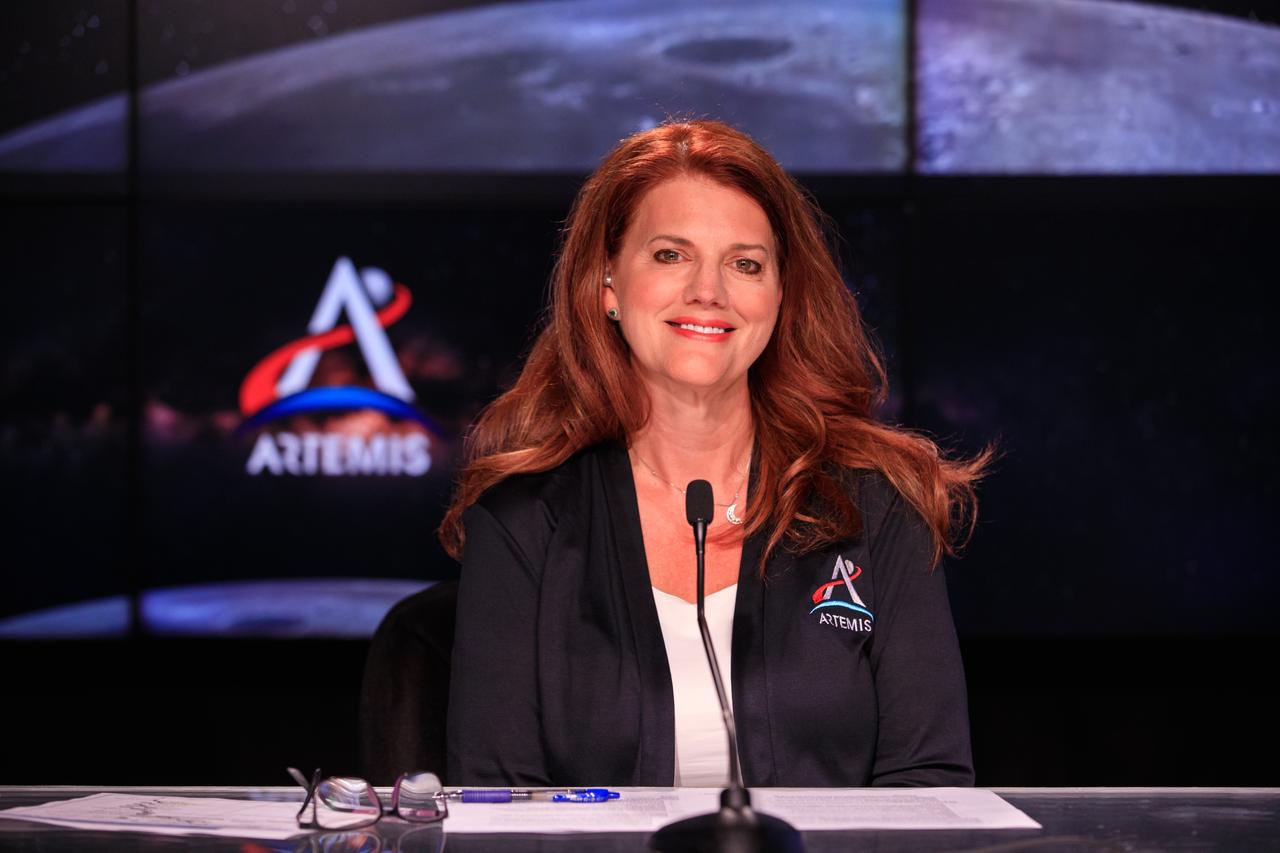
Launch Director Charlie Blackwell-Thompson participates in an Artemis I mission overview briefing inside the Press Site auditorium at NASA’s Kennedy Space Center in Florida on Aug. 3, 2022. Also participating in the briefing from various locations were NASA Administrator Bill Nelson; Associate Administrator for Technology, Policy, and Strategy Bhavya Lal; Mission Manager Mike Sarafin; Space Launch System (SLS) Program Manager John Honeycutt; and Orion Program Manager Howard Hu. The first in an increasingly complex series of missions, Artemis I will test the SLS rocket and Orion spacecraft as an integrated system prior to crewed flights to the Moon. Through Artemis, NASA will land the first woman and first person of color on the lunar surface, paving the way for long-term lunar presence and serving as a steppingstone before venturing to Mars.
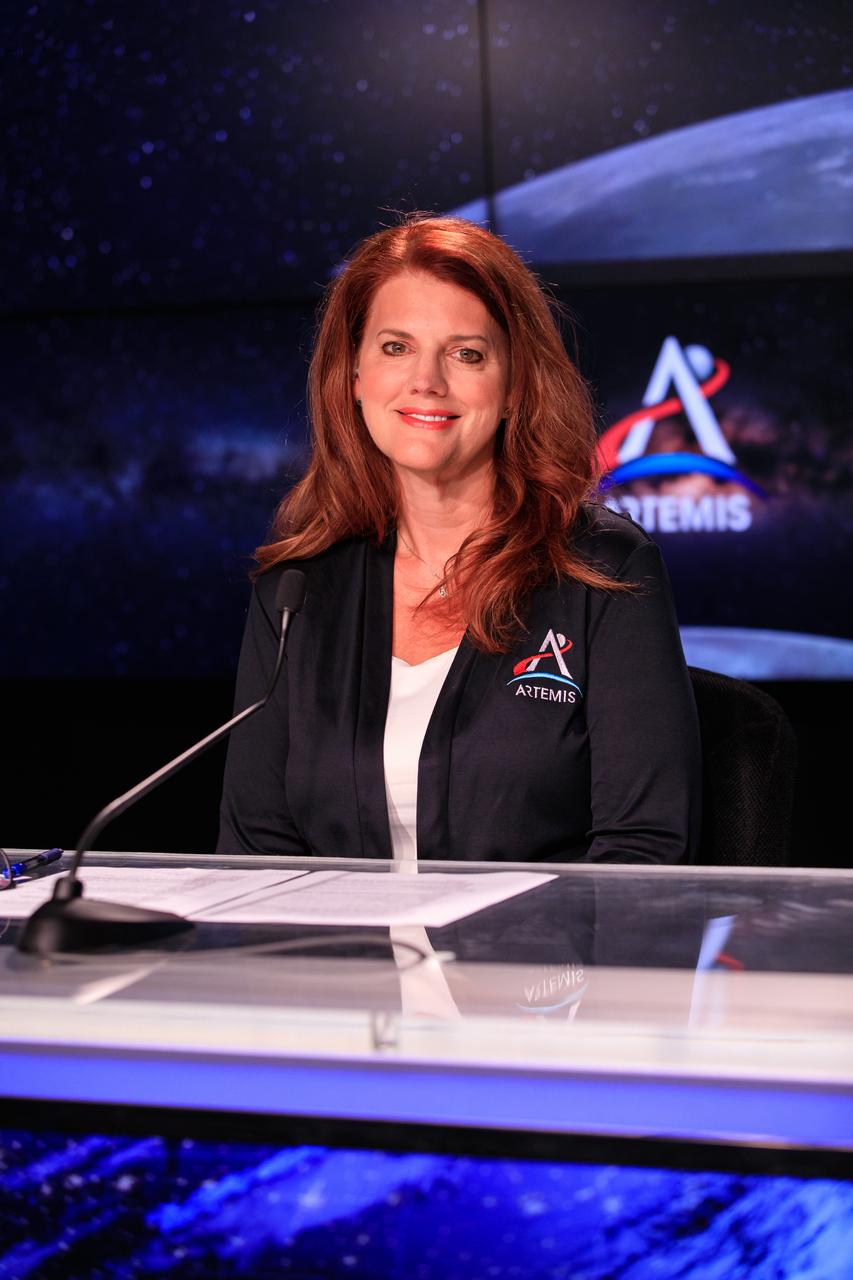
Launch Director Charlie Blackwell-Thompson participates in an Artemis I mission overview briefing inside the Press Site auditorium at NASA’s Kennedy Space Center in Florida on Aug. 3, 2022. Also participating in the briefing from various locations were NASA Administrator Bill Nelson; Associate Administrator for Technology, Policy, and Strategy Bhavya Lal; Mission Manager Mike Sarafin; Space Launch System (SLS) Program Manager John Honeycutt; and Orion Program Manager Howard Hu. The first in an increasingly complex series of missions, Artemis I will test the SLS rocket and Orion spacecraft as an integrated system prior to crewed flights to the Moon. Through Artemis, NASA will land the first woman and first person of color on the lunar surface, paving the way for long-term lunar presence and serving as a steppingstone before venturing to Mars.
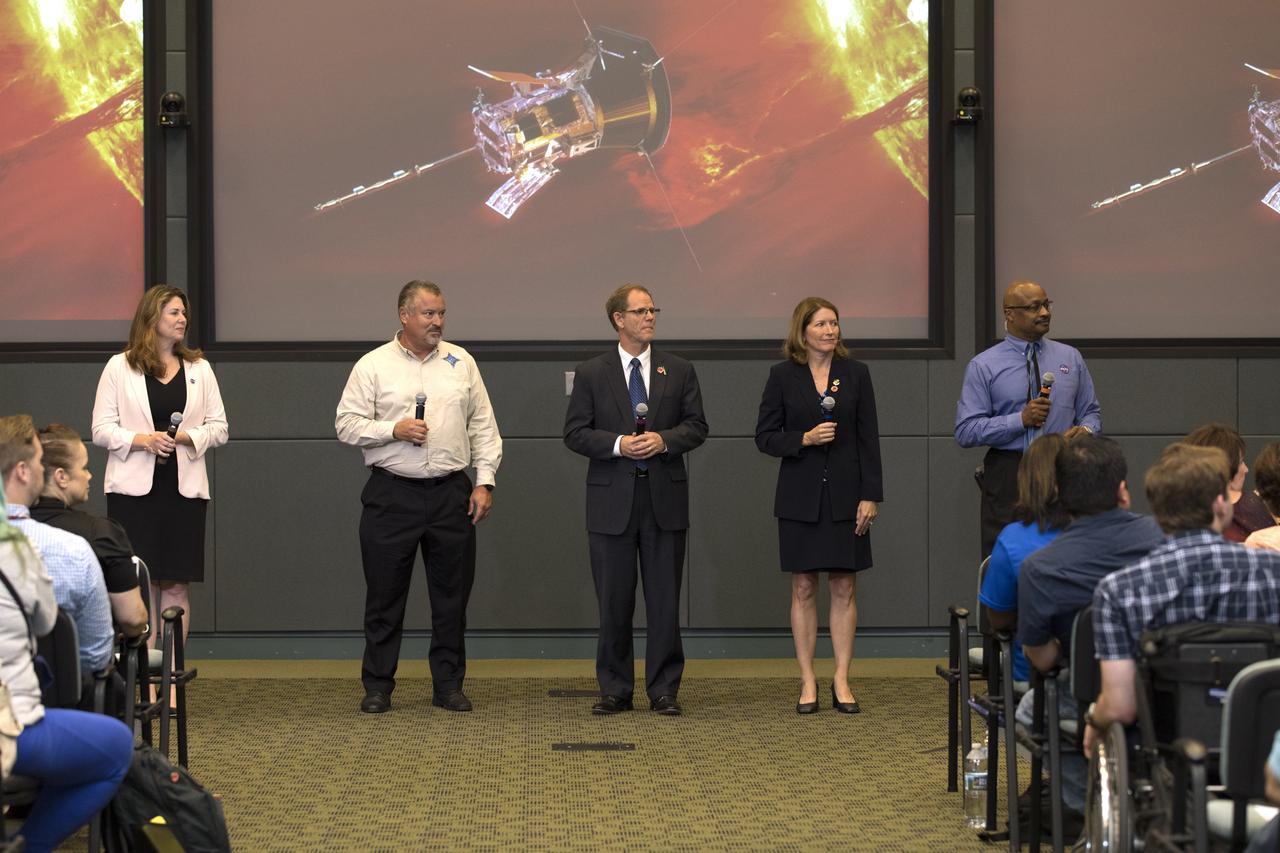
In the Kennedy Space Center's Operations and Support Building II, Thursday, Aug. 9, 2018, members of the media participate in a prelaunch mission briefing on NASA's Parker Solar Probe. Briefing moderators are Karen Fox, far left, Goddard Space Flight Center, and Dwayne Brown, far right, NASA Communications. Briefing participants are Omar Baez, launch director, NASA Kennedy Space Center; Scott Messer, program manager, NASA Programs, United Launch Alliance; and Kathy Rice, launch weather officer, 45th Weather Squadron, Cape Canaveral Air Force Station. The Parker Solar Probe will lift off on a United Launch Alliance Delta IV Heavy rocket from Space Launch Complex 37 at Cape Canaveral Air Force Station in Florida. The spacecraft was built by Applied Physics Laboratory of Johns Hopkins University in Laurel, Maryland. The mission will perform the closest-ever observations of a star when it travels through the Sun's atmosphere, called the corona. The probe will rely on measurements and imaging to revolutionize our understanding of the corona and the Sun-Earth connection.
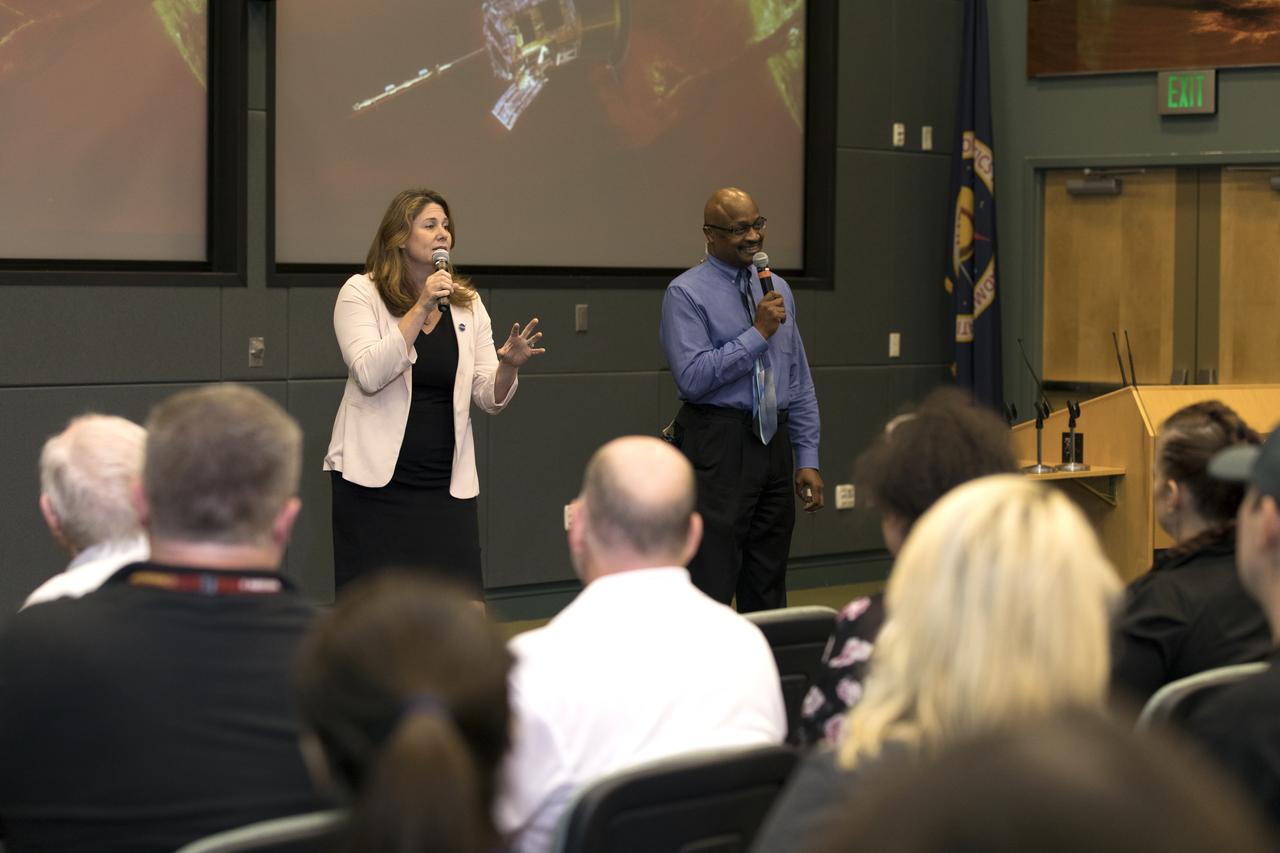
In the Kennedy Space Center's Operations and Support Building II, Thursday, Aug. 9, 2018, members of the media participate in a prelaunch mission briefing on NASA's Parker Solar Probe. Briefing moderators from left, are Karen Fox, Goddard Space Flight Center, and Dwayne Brown, NASA Communications. The Parker Solar Probe will lift off on a United Launch Alliance Delta IV Heavy rocket from Space Launch Complex 37 at Cape Canaveral Air Force Station in Florida. The spacecraft was built by Applied Physics Laboratory of Johns Hopkins University in Laurel, Maryland. The mission will perform the closest-ever observations of a star when it travels through the Sun's atmosphere, called the corona. The probe will rely on measurements and imaging to revolutionize our understanding of the corona and the Sun-Earth connection.
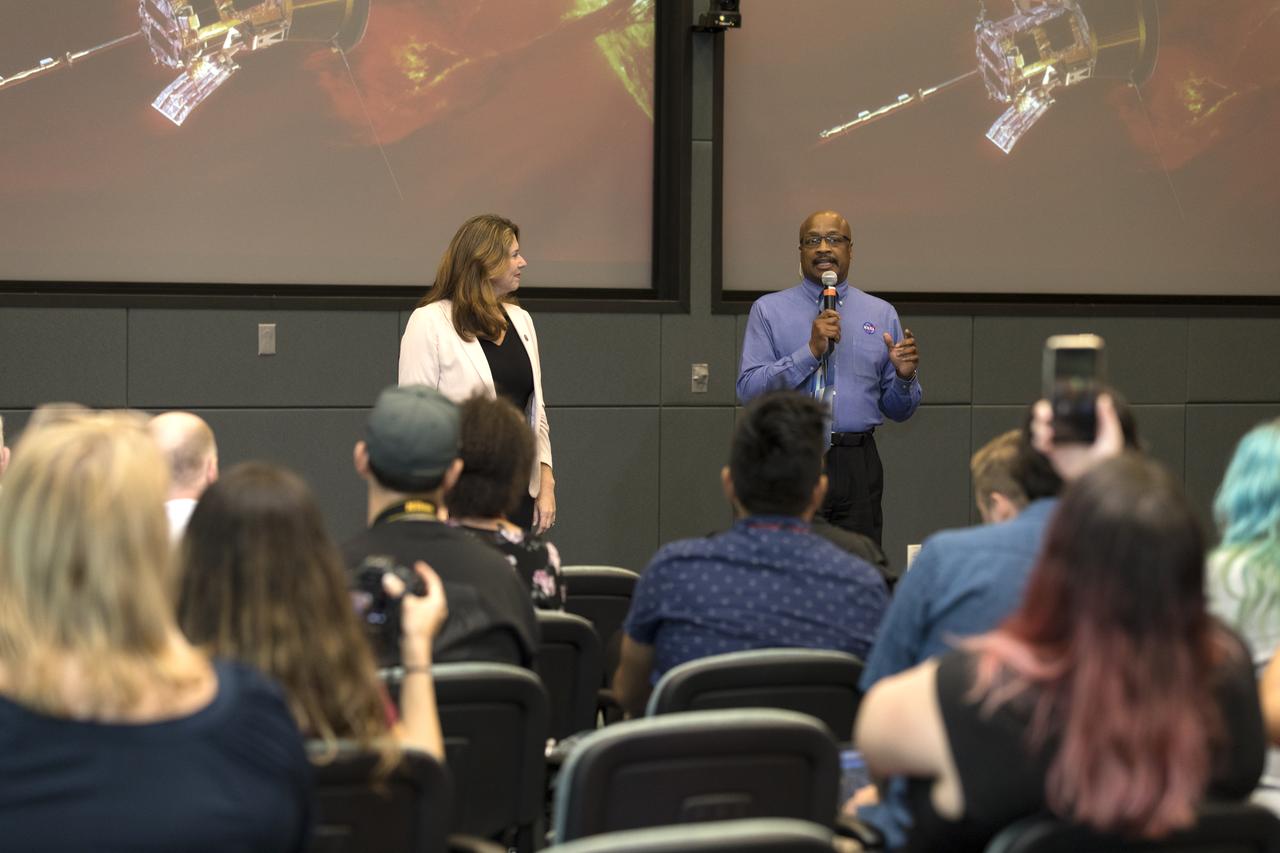
In the Kennedy Space Center's Operations and Support Building II, Thursday, Aug. 9, 2018, members of the media participate in a prelaunch mission briefing on NASA's Parker Solar Probe. Briefing moderators from left, are Karen Fox, Goddard Space Flight Center, and Dwayne Brown, NASA Communications. The Parker Solar Probe will lift off on a United Launch Alliance Delta IV Heavy rocket from Space Launch Complex 37 at Cape Canaveral Air Force Station in Florida. The spacecraft was built by Applied Physics Laboratory of Johns Hopkins University in Laurel, Maryland. The mission will perform the closest-ever observations of a star when it travels through the Sun's atmosphere, called the corona. The probe will rely on measurements and imaging to revolutionize our understanding of the corona and the Sun-Earth connection.
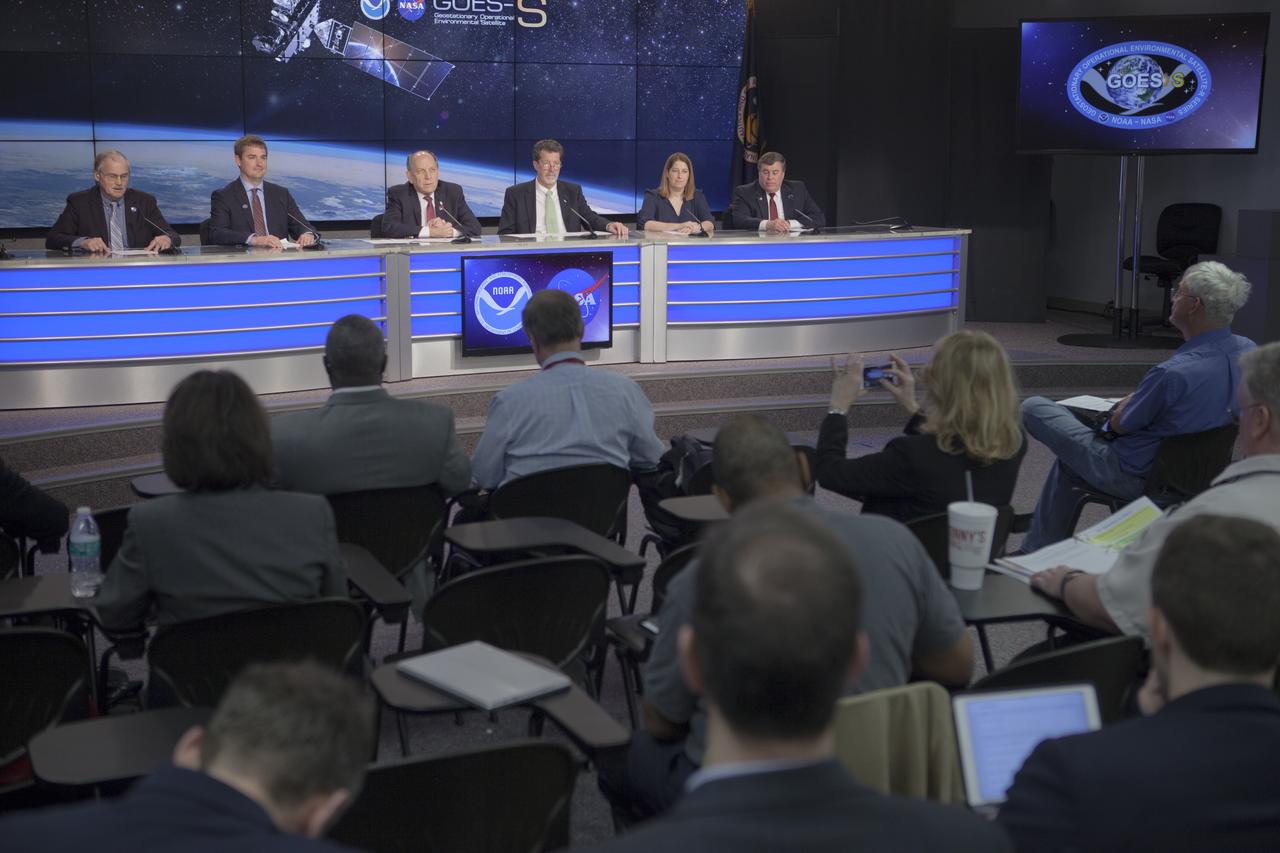
In the Kennedy Space Center's Press Site auditorium, members of the media participate in a mission briefing on National Oceanic and Atmospheric Administration's, or NOAA's, Geostationary Operational Environmental Satellite, or GOES-S. Briefing participants from left are: Steve Cole of NASA Communications; Dan Lindsey, GOES-R senior scientific advisor for NOAA; Louis Uccellini, director of the National Weather Service for NOAA; Jim Roberts, a scientist with the Earth System Research Laboratory's Office of Atmospheric Research for NOAA; Kristin Calhoun, a research scientist with NOAA's National Severe Storms Laboratory, and George Morrow, deputy director of NASA's Goddard Space Flight Center in Greenbelt, Maryland. GOES-S is the second satellite in a series of next-generation NOAA weather satellites. It will launch to a geostationary position over the U.S. to provide images of storms and help predict weather forecasts, severe weather outlooks, watches, warnings, lightning conditions and longer-term forecasting. GOES-S is slated to lift off at 5:02 p.m. EST on March 1, 2018 aboard a United Launch Alliance Atlas V rocket.

Mike Sarafin, Artemis mission manager, participates in a prelaunch media briefing following a mission management team meeting for Artemis I on Sept. 1, 2022, at NASA’s Kennedy Space Center in Florida. Artemis I is scheduled to launch at 2:17 p.m. EDT on Sept. 3, from Kennedy’s Launch Complex 39B. Launch was waved off on Aug. 29 due to an issue during tanking. The first in a series of increasingly complex missions, Artemis I will provide a foundation for human deep space exploration and demonstrate NASA’s capability to extend human presence to the Moon and beyond. The primary goal of Artemis I is to thoroughly test the integrated systems before crewed missions by operating the spacecraft in a deep space environment, testing Orion’s heat shield, and recovering the crew module after reentry, descent, and splashdown.
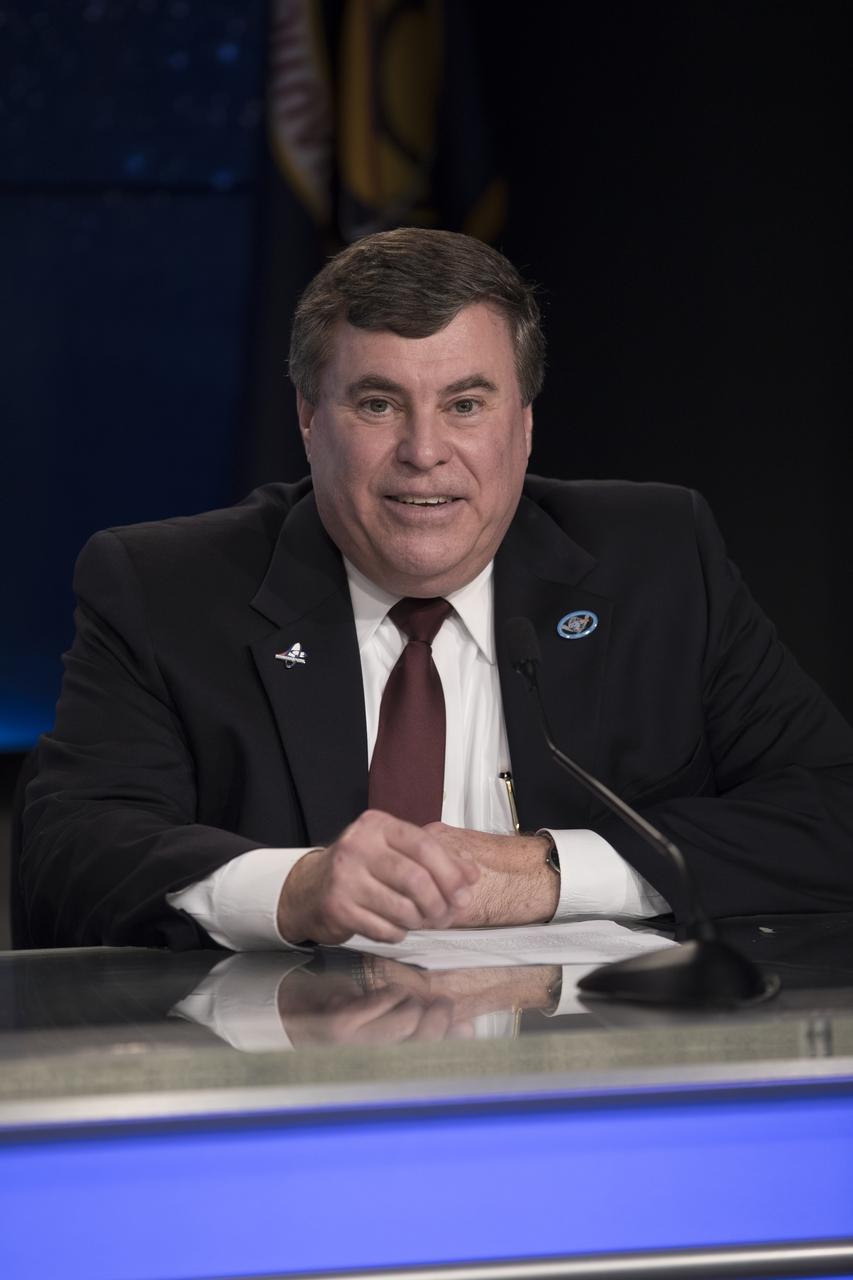
In the Kennedy Space Center's Press Site auditorium, George Morrow, deputy director of NASA's Goddard Space Flight Center in Greenbelt, Maryland, speaks to members of the media at a mission briefing on National Oceanic and Atmospheric Administration's, or NOAA's, Geostationary Operational Environmental Satellite, or GOES-S. The spacecraft is the second satellite in a series of next-generation NOAA weather satellites. It will launch to a geostationary position over the U.S. to provide images of storms and help predict weather forecasts, severe weather outlooks, watches, warnings, lightning conditions and longer-term forecasting. GOES-S is slated to lift off at 5:02 p.m. EST on March 1, 2018 aboard a United Launch Alliance Atlas V rocket.

In the Kennedy Space Center's Press Site auditorium, Kristin Calhoun, a research scientist with NOAA's National Severe Storms Laboratory, speaks to members of the media at a mission briefing on National Oceanic and Atmospheric Administration's, or NOAA's, Geostationary Operational Environmental Satellite, or GOES-S. The spacecraft is the second satellite in a series of next-generation NOAA weather satellites. It will launch to a geostationary position over the U.S. to provide images of storms and help predict weather forecasts, severe weather outlooks, watches, warnings, lightning conditions and longer-term forecasting. GOES-S is slated to lift off at 5:02 p.m. EST on March 1, 2018 aboard a United Launch Alliance Atlas V rocket.
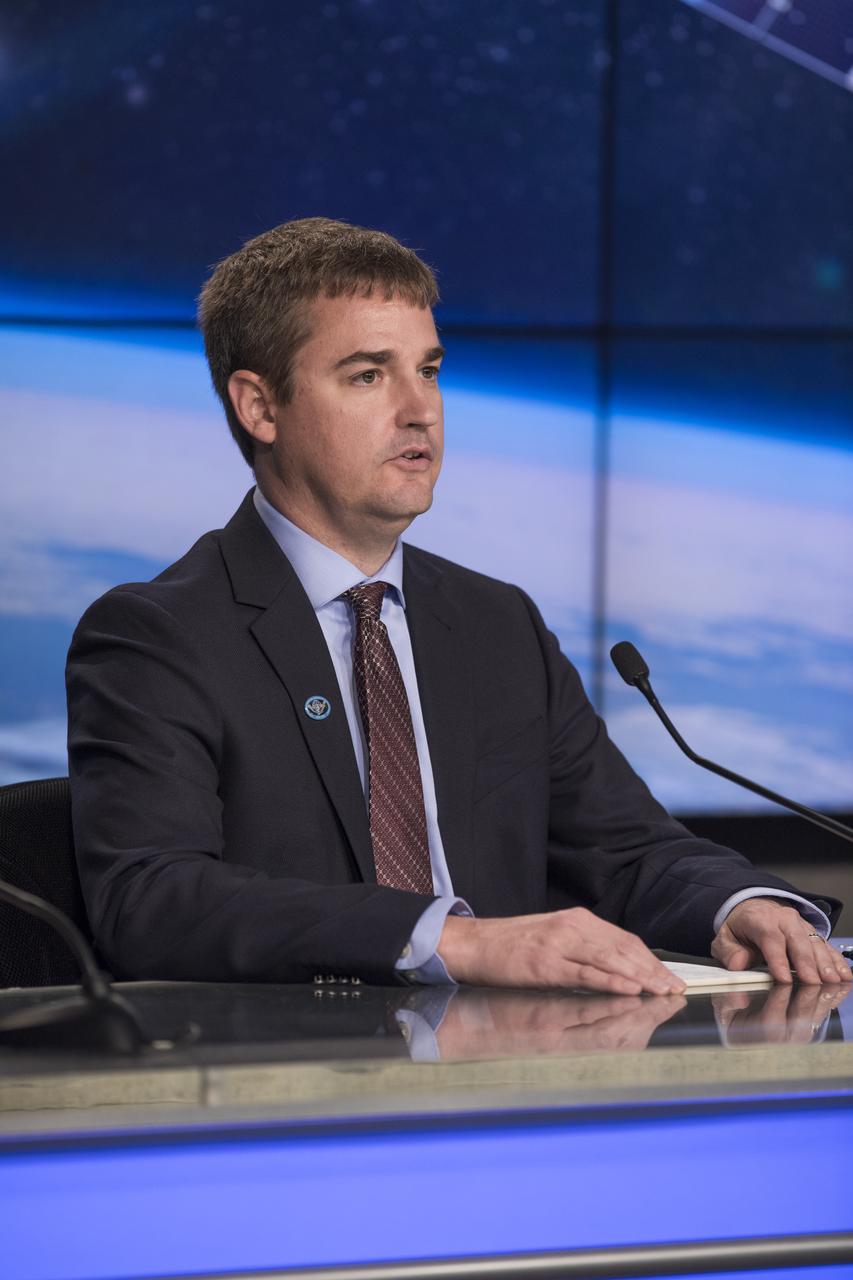
In the Kennedy Space Center's Press Site auditorium, Dan Lindsey, GOES-R senior scientific advisor for NOAA, speaks to members of the media at a mission briefing on National Oceanic and Atmospheric Administration's, or NOAA's, Geostationary Operational Environmental Satellite, or GOES-S. The spacecraft is the second satellite in a series of next-generation NOAA weather satellites. It will launch to a geostationary position over the U.S. to provide images of storms and help predict weather forecasts, severe weather outlooks, watches, warnings, lightning conditions and longer-term forecasting. GOES-S is slated to lift off at 5:02 p.m. EST on March 1, 2018 aboard a United Launch Alliance Atlas V rocket.
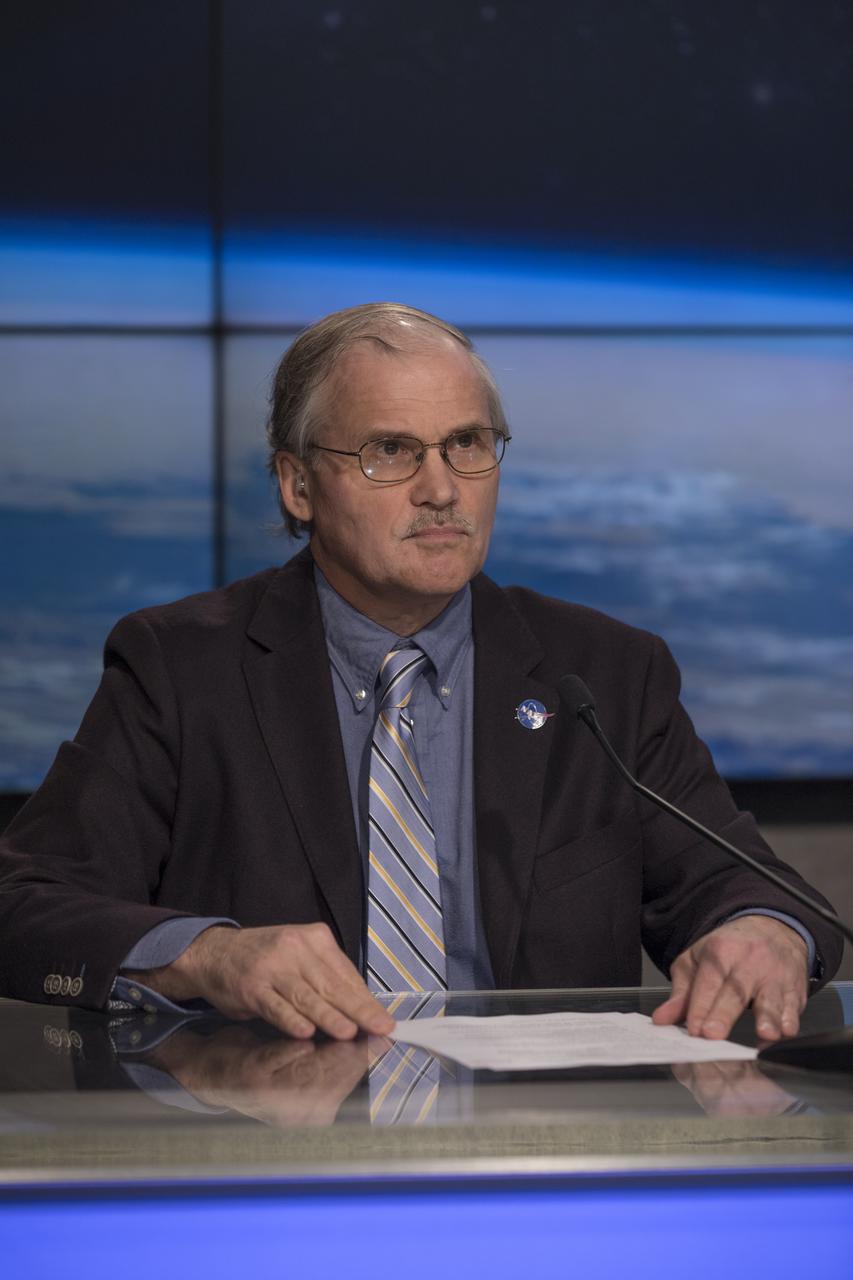
In the Kennedy Space Center's Press Site auditorium, Steve Cole of NASA Communications speaks to members of the media at a mission briefing on National Oceanic and Atmospheric Administration's, or NOAA's, Geostationary Operational Environmental Satellite, or GOES-S. The spacecraft is the second satellite in a series of next-generation NOAA weather satellites. It will launch to a geostationary position over the U.S. to provide images of storms and help predict weather forecasts, severe weather outlooks, watches, warnings, lightning conditions and longer-term forecasting. GOES-S is slated to lift off at 5:02 p.m. EST on March 1, 2018 aboard a United Launch Alliance Atlas V rocket.

In the Kennedy Space Center's Press Site auditorium, Louis Uccellini, director of the National Weather Service for NOAA, speaks to members of the media at a mission briefing on National Oceanic and Atmospheric Administration's, or NOAA's, Geostationary Operational Environmental Satellite, or GOES-S. The spacecraft is the second satellite in a series of next-generation NOAA weather satellites. It will launch to a geostationary position over the U.S. to provide images of storms and help predict weather forecasts, severe weather outlooks, watches, warnings, lightning conditions and longer-term forecasting. GOES-S is slated to lift off at 5:02 p.m. EST on March 1, 2018 aboard a United Launch Alliance Atlas V rocket
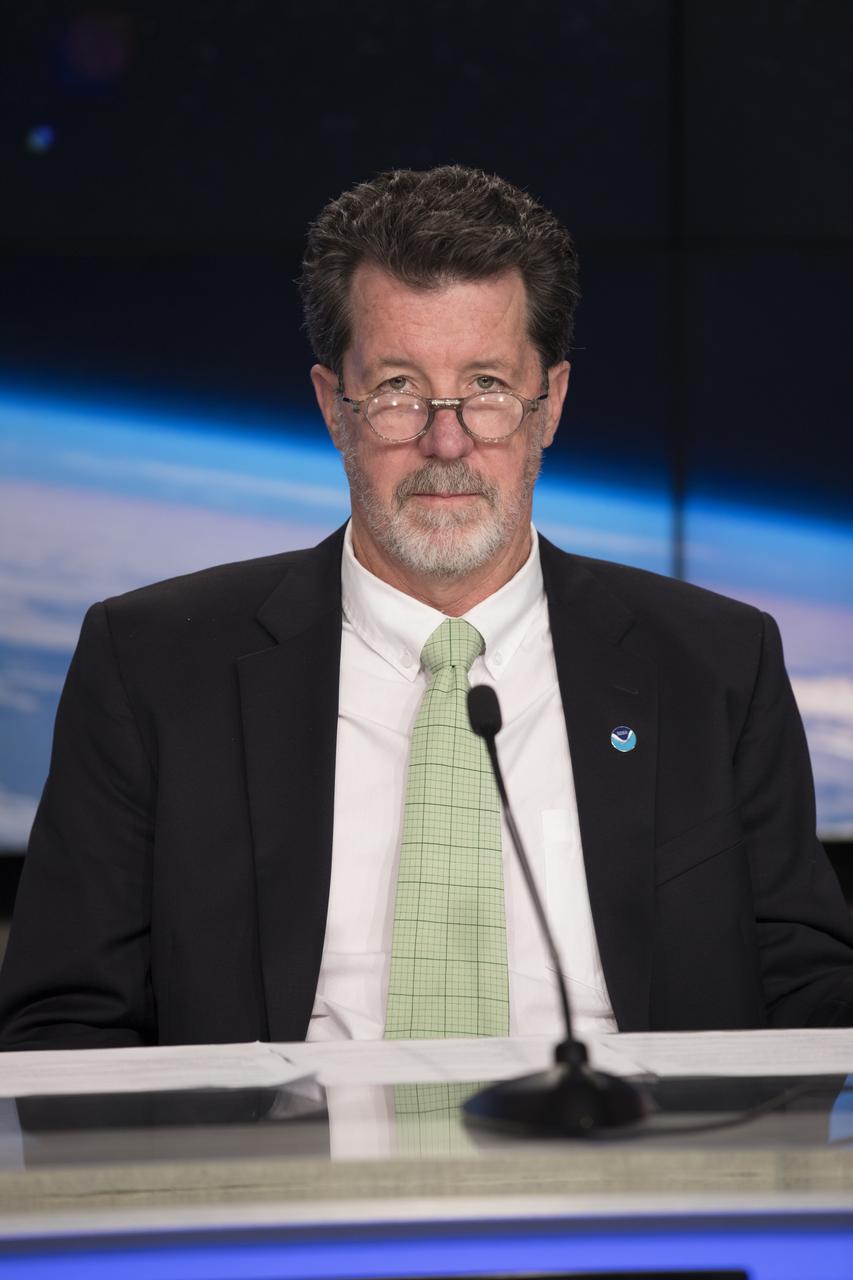
In the Kennedy Space Center's Press Site auditorium, Jim Roberts, a scientist with the Earth System Research Laboratory's Office of Atmospheric Research for NOAA, speaks to members of the media at a mission briefing on National Oceanic and Atmospheric Administration's, or NOAA's, Geostationary Operational Environmental Satellite, or GOES-S. The spacecraft is the second satellite in a series of next-generation NOAA weather satellites. It will launch to a geostationary position over the U.S. to provide images of storms and help predict weather forecasts, severe weather outlooks, watches, warnings, lightning conditions and longer-term forecasting. GOES-S is slated to lift off at 5:02 p.m. EST on March 1, 2018 aboard a United Launch Alliance Atlas V rocket.
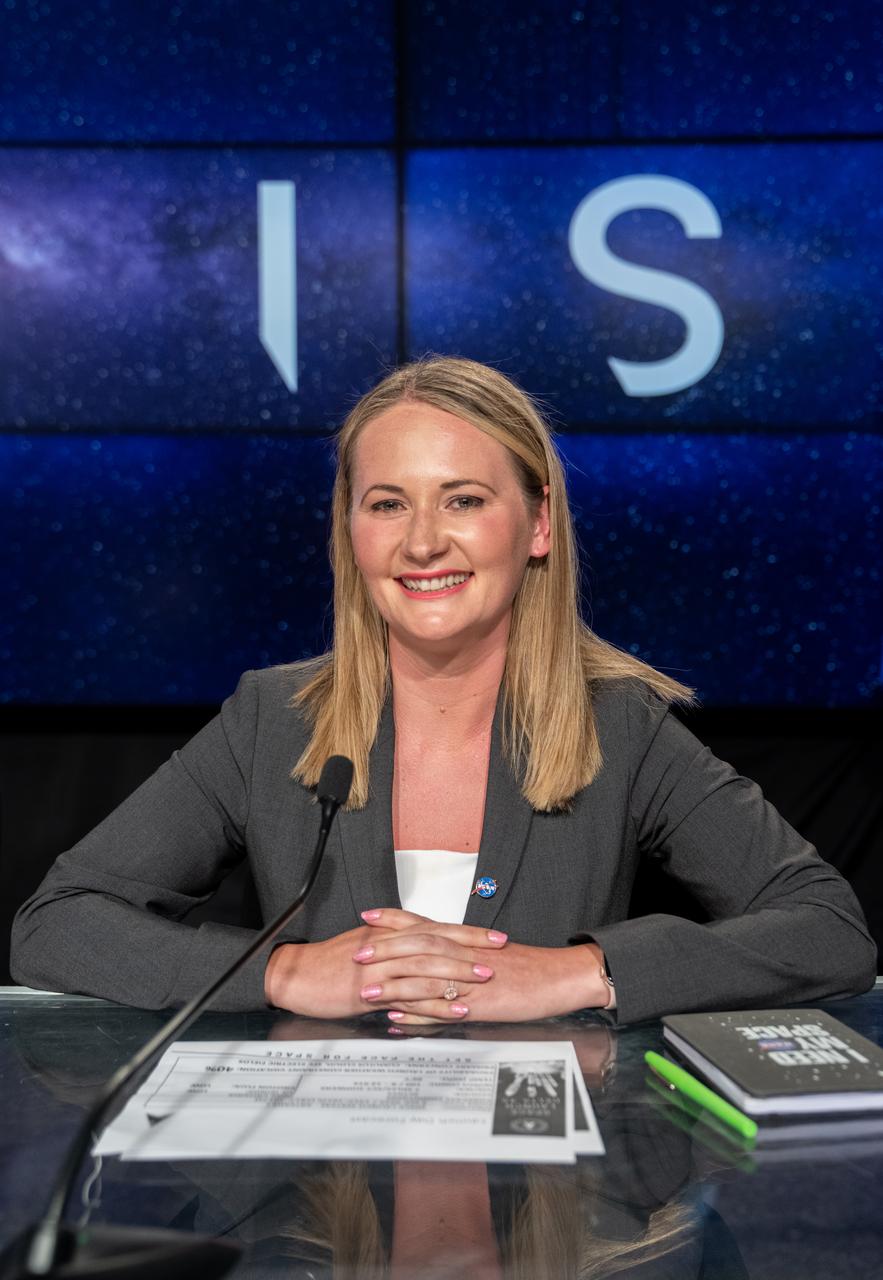
Melody Lovin, Space Launch Delta 45 weather officer, participates in a prelaunch media briefing following a mission management team meeting for Artemis I on Sept. 1, 2022, at NASA’s Kennedy Space Center in Florida. Artemis I is scheduled to launch at 2:17 p.m. EDT on Sept. 3, from Kennedy’s Launch Complex 39B. Launch was waved off on Aug. 29 due to an issue during tanking. The first in a series of increasingly complex missions, Artemis I will provide a foundation for human deep space exploration and demonstrate NASA’s capability to extend human presence to the Moon and beyond. The primary goal of Artemis I is to thoroughly test the integrated systems before crewed missions by operating the spacecraft in a deep space environment, testing Orion’s heat shield, and recovering the crew module after reentry, descent, and splashdown.