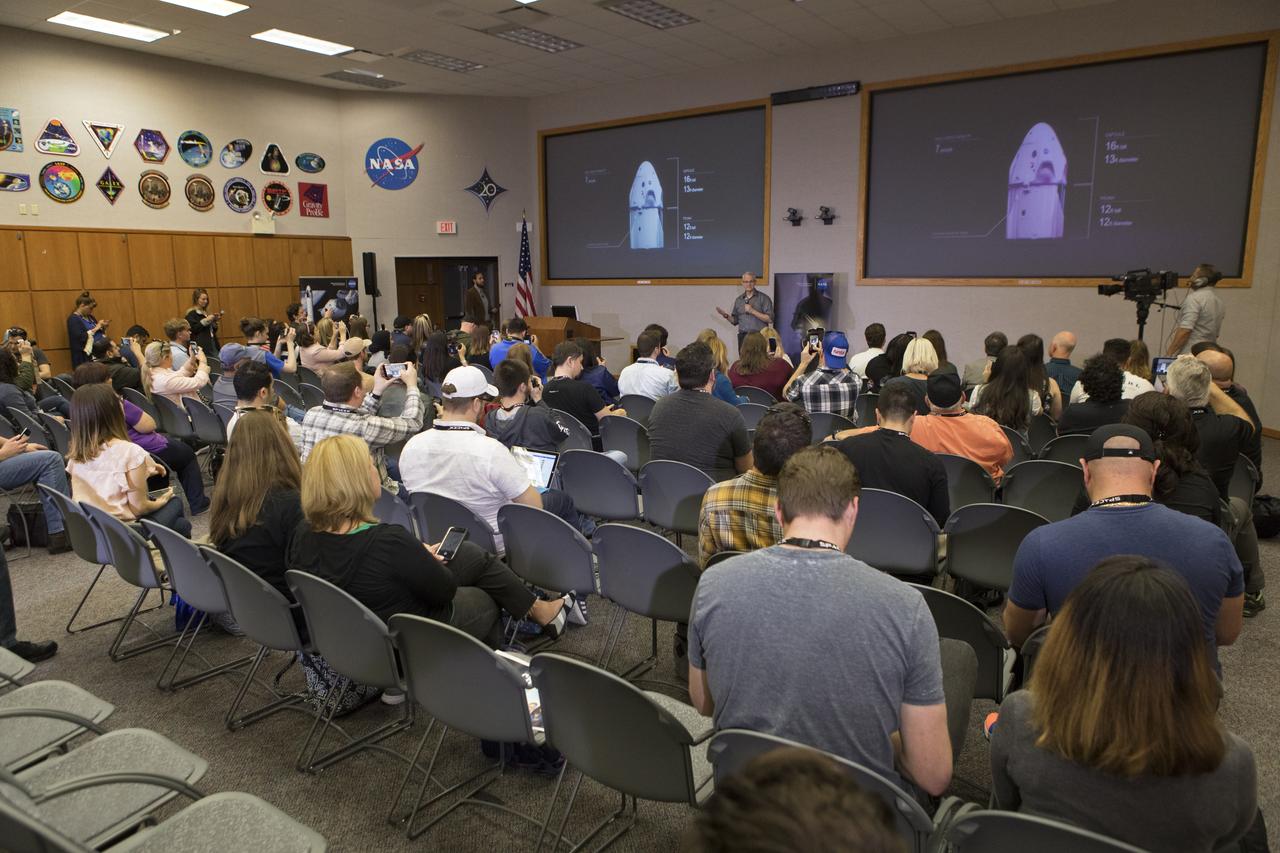
Benji Reed, director of Crew Mission Management, SpaceX, speaks to members of the media Thursday, Feb. 28, in the Kennedy Space Center’s Mission Briefing Room of the Neil Armstrong Operations and Checkout Building. The briefing focused on launch of the SpaceX Demo-1 Commercial Crew Program mission to the International Space Station. The inaugural flight of the Crew Dragon, known as Demo-1, will be uncrewed, lifting off atop a SpaceX Falcon 9 rocket from Launch Complex 39A at Kennedy Saturday, March 2, at 2:49 a.m. EST. The mission is designed to validate end-to-end systems and capabilities, leading to certification to fly crew. NASA has worked with SpaceX and Boeing in developing the CCP spacecraft to facilitate new human spaceflight systems launching from U.S. soil with the goal of safe, reliable and cost-effective access to low-Earth orbit destinations such as the space station.
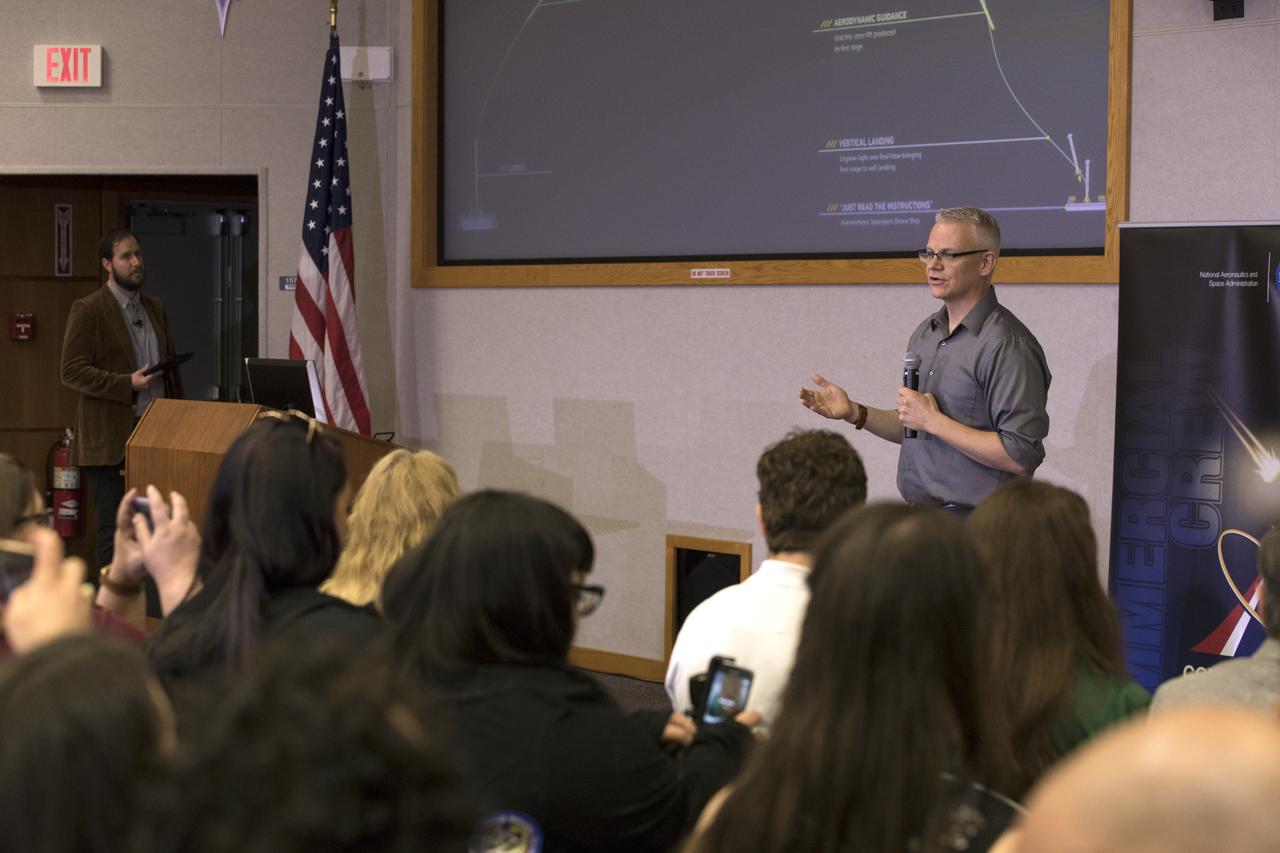
Benji Reed, director of Crew Mission Management, SpaceX, speaks to members of the media Thursday, Feb. 28, in the Kennedy Space Center’s Mission Briefing Room of the Neil Armstrong Operations and Checkout Building. The briefing focused on launch of the SpaceX Demo-1 Commercial Crew Program mission to the International Space Station. The inaugural flight of the Crew Dragon, known as Demo-1, will be uncrewed, lifting off atop a SpaceX Falcon 9 rocket from Launch Complex 39A at Kennedy Saturday, March 2, at 2:49 a.m. EST. The mission is designed to validate end-to-end systems and capabilities, leading to certification to fly crew. NASA has worked with SpaceX and Boeing in developing the CCP spacecraft to facilitate new human spaceflight systems launching from U.S. soil with the goal of safe, reliable and cost-effective access to low-Earth orbit destinations such as the space station.
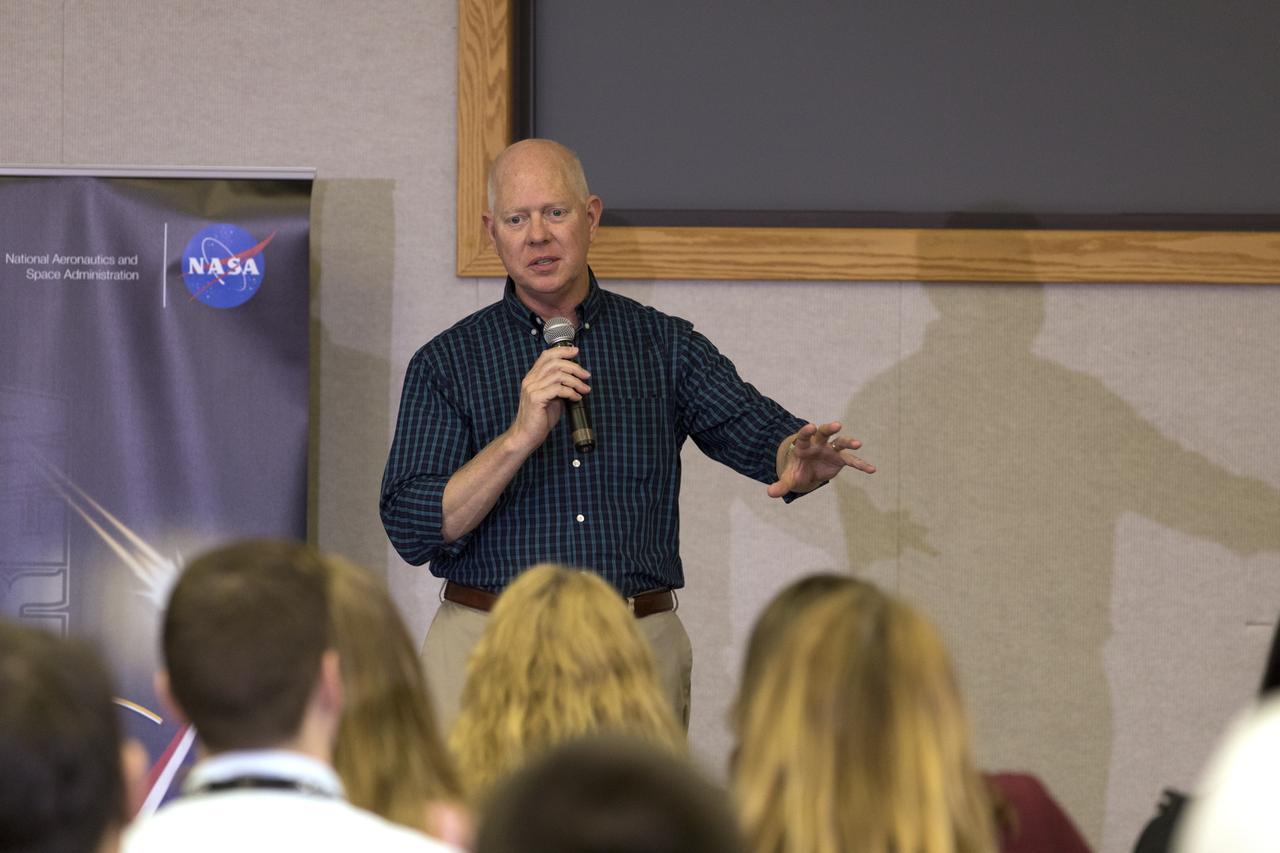
Steve Payne, launch integration manager, NASA’s Commercial Crew Program Ground and Mission Operations Office, speaks to members of the media Thursday, Feb. 28, in the Kennedy Space Center’s Mission Briefing Room of the Neil Armstrong Operations and Checkout Building. The briefing focused on launch of the SpaceX Demo-1 Commercial Crew Program mission to the International Space Station. The inaugural flight of the Crew Dragon, known as Demo-1, will be uncrewed, lifting off atop a SpaceX Falcon 9 rocket from Launch Complex 39A at Kennedy Saturday, March 2, at 2:49 a.m. EST. The mission is designed to validate end-to-end systems and capabilities, leading to certification to fly crew. NASA has worked with SpaceX and Boeing in developing the CCP spacecraft to facilitate new human spaceflight systems launching from U.S. soil with the goal of safe, reliable and cost-effective access to low-Earth orbit destinations such as the space station.
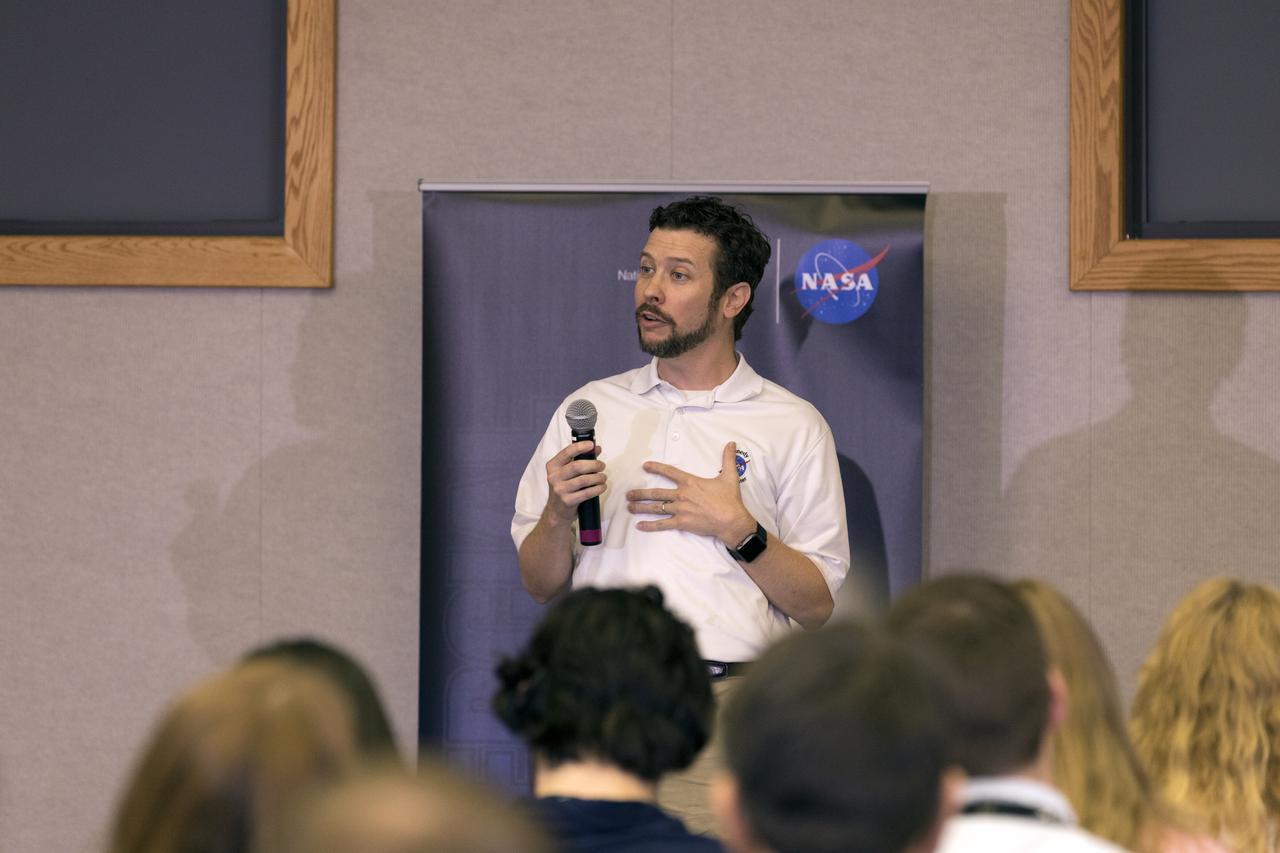
James Beahn, Launch Vehicle lead engineer, speaks to members of the media Thursday, Feb. 28, in the Kennedy Space Center’s Mission Briefing Room of the Neil Armstrong Operations and Checkout Building. The briefing focused on launch of the SpaceX Demo-1 Commercial Crew Program mission to the International Space Station. The inaugural flight of the Crew Dragon, known as Demo-1, will be uncrewed, lifting off atop a SpaceX Falcon 9 rocket from Launch Complex 39A at Kennedy Saturday, March 2, at 2:49 a.m. EST. The mission is designed to validate end-to-end systems and capabilities, leading to certification to fly crew. NASA has worked with SpaceX and Boeing in developing the CCP spacecraft to facilitate new human spaceflight systems launching from U.S. soil with the goal of safe, reliable and cost-effective access to low-Earth orbit destinations such as the space station.
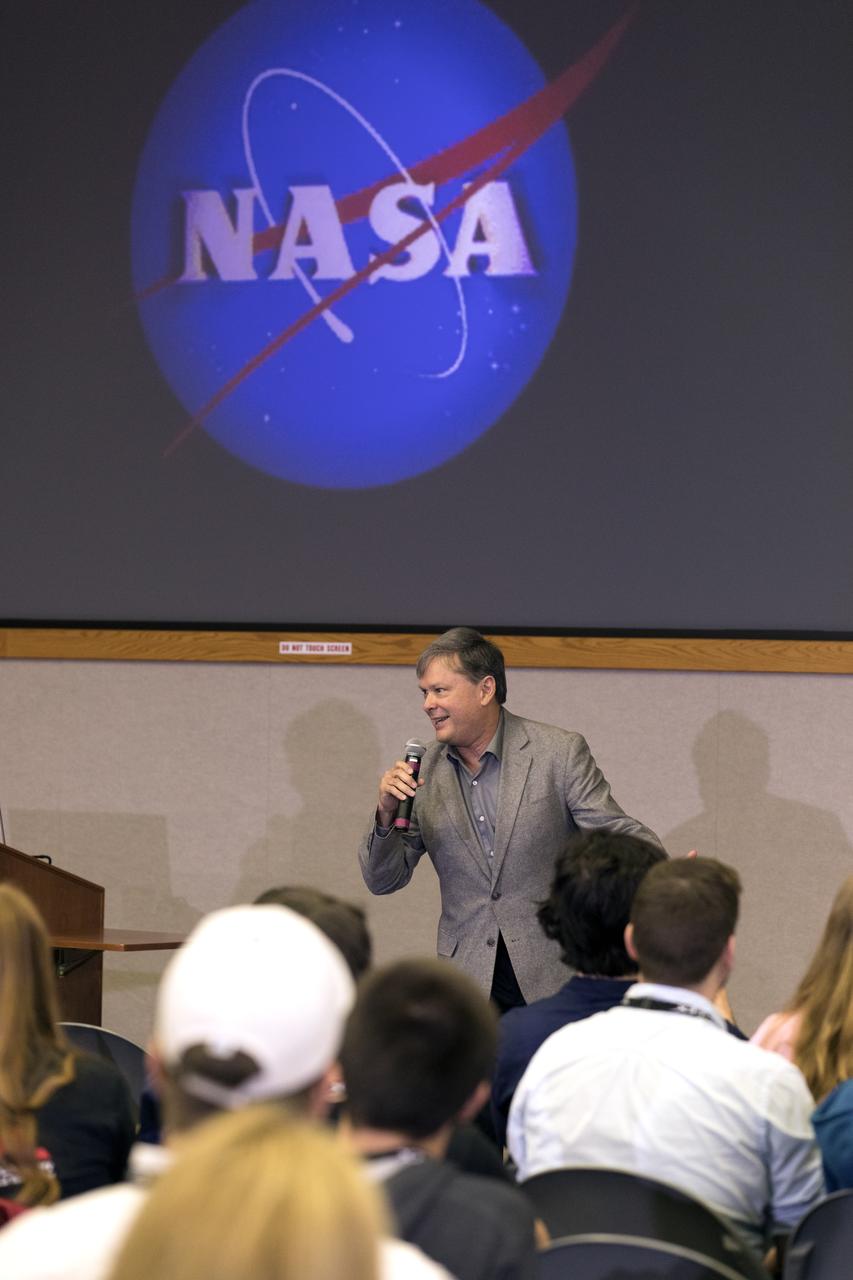
David Brady, ISS assistant program scientist, speaks to members of the media Thursday, Feb. 28, in the Kennedy Space Center’s Mission Briefing Room of the Neil Armstrong Operations and Checkout Building. The briefing focused on launch of the SpaceX Demo-1 Commercial Crew Program mission to the International Space Station. The inaugural flight of the Crew Dragon, known as Demo-1, will be uncrewed, lifting off atop a SpaceX Falcon 9 rocket from Launch Complex 39A at Kennedy Saturday, March 2, at 2:49 a.m. EST. The mission is designed to validate end-to-end systems and capabilities, leading to certification to fly crew. NASA has worked with SpaceX and Boeing in developing the CCP spacecraft to facilitate new human spaceflight systems launching from U.S. soil with the goal of safe, reliable and cost-effective access to low-Earth orbit destinations such as the space station.
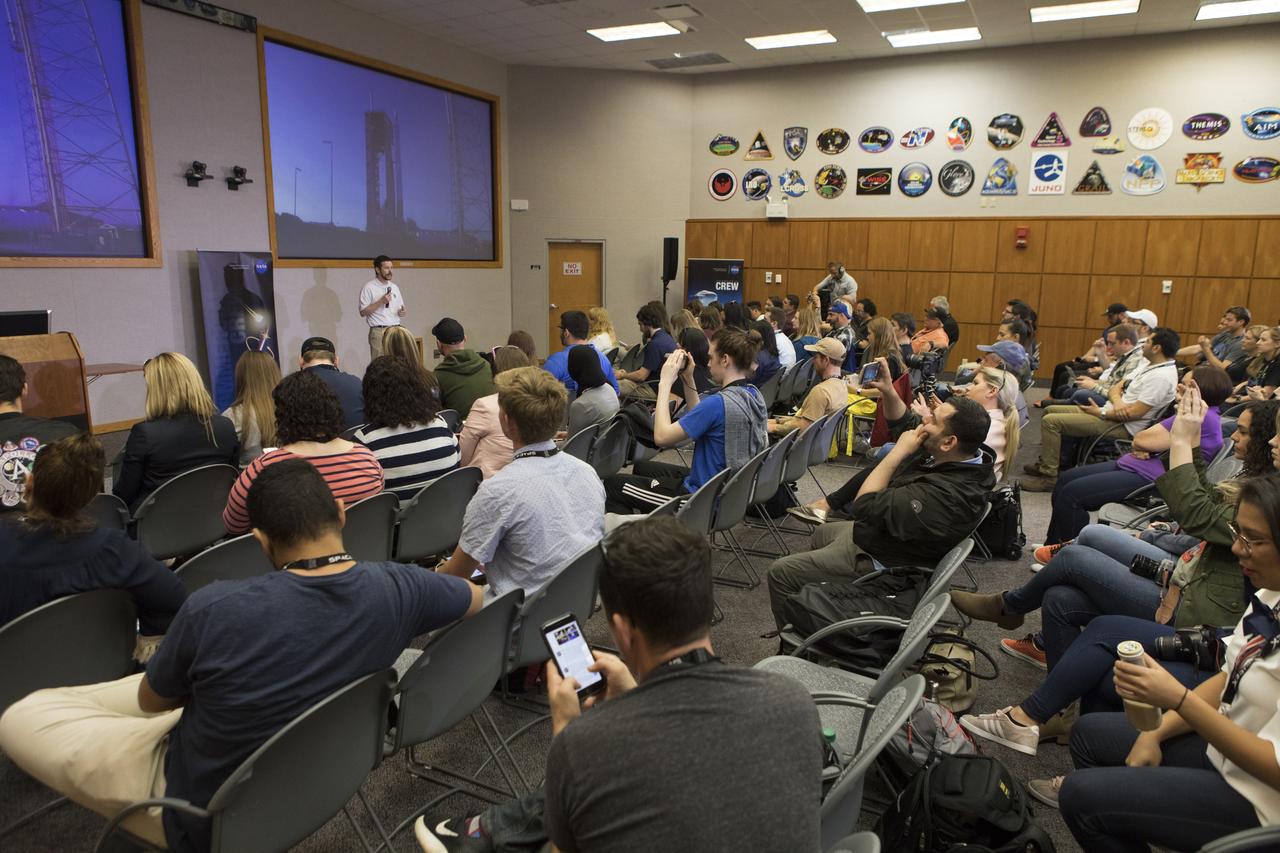
James Beahn, Launch Vehicle lead engineer, speaks to members of the media Thursday, Feb. 28, in the Kennedy Space Center’s Mission Briefing Room of the Neil Armstrong Operations and Checkout Building. The briefing focused on launch of the SpaceX Demo-1 Commercial Crew Program mission to the International Space Station. The inaugural flight of the Crew Dragon, known as Demo-1, will be uncrewed, lifting off atop a SpaceX Falcon 9 rocket from Launch Complex 39A at Kennedy Saturday, March 2, at 2:49 a.m. EST. The mission is designed to validate end-to-end systems and capabilities, leading to certification to fly crew. NASA has worked with SpaceX and Boeing in developing the CCP spacecraft to facilitate new human spaceflight systems launching from U.S. soil with the goal of safe, reliable and cost-effective access to low-Earth orbit destinations such as the space station.
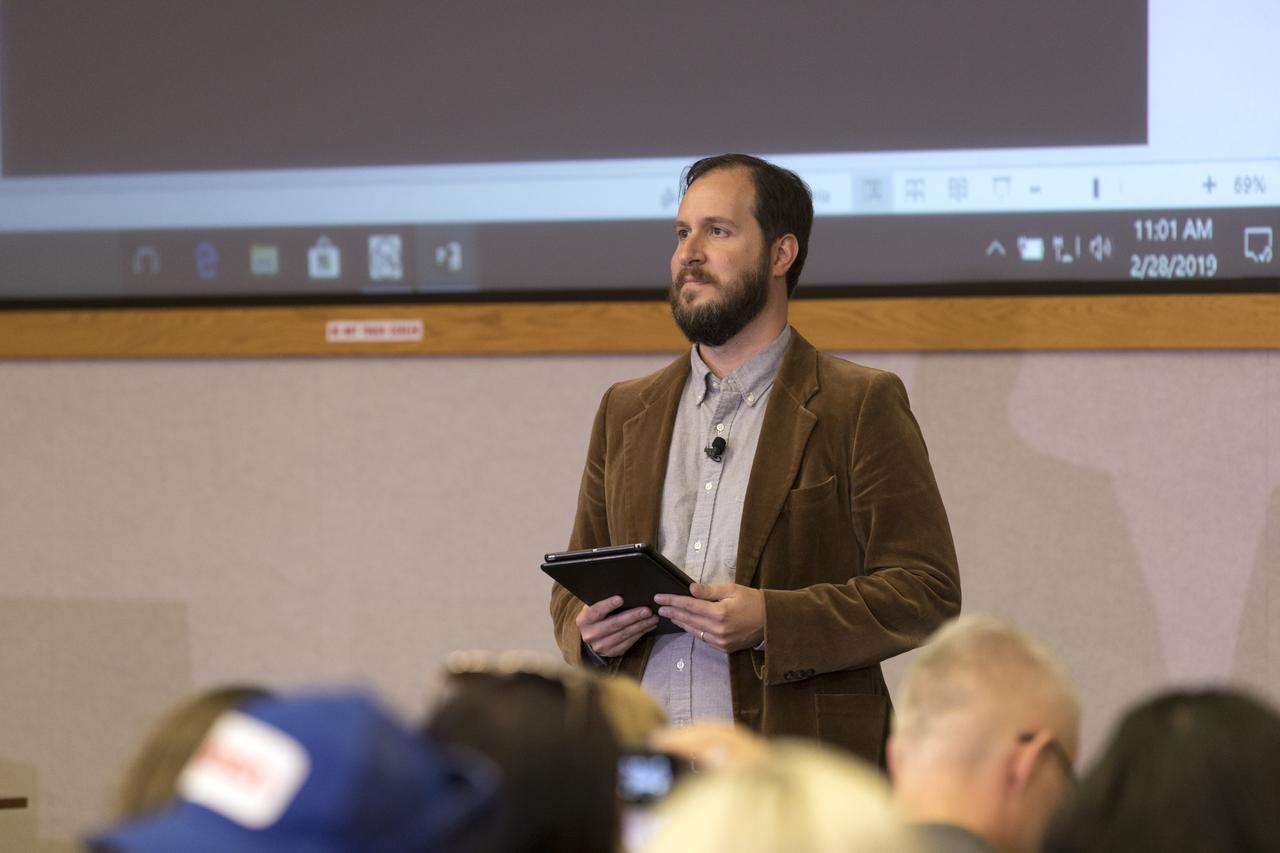
Moderator McManus Woodend, NASA Communications, speaks to members of the media Thursday, Feb. 28, in the Kennedy Space Center’s Mission Briefing Room of the Neil Armstrong Operations and Checkout Building. The briefing focused on launch of the SpaceX Demo-1 Commercial Crew Program mission to the International Space Station. The inaugural flight of the Crew Dragon, known as Demo-1, will be uncrewed, lifting off atop a SpaceX Falcon 9 rocket from Launch Complex 39A at Kennedy Saturday, March 2, at 2:49 a.m. EST. The mission is designed to validate end-to-end systems and capabilities, leading to certification to fly crew. NASA has worked with SpaceX and Boeing in developing the CCP spacecraft to facilitate new human spaceflight systems launching from U.S. soil with the goal of safe, reliable and cost-effective access to low-Earth orbit destinations such as the space station.
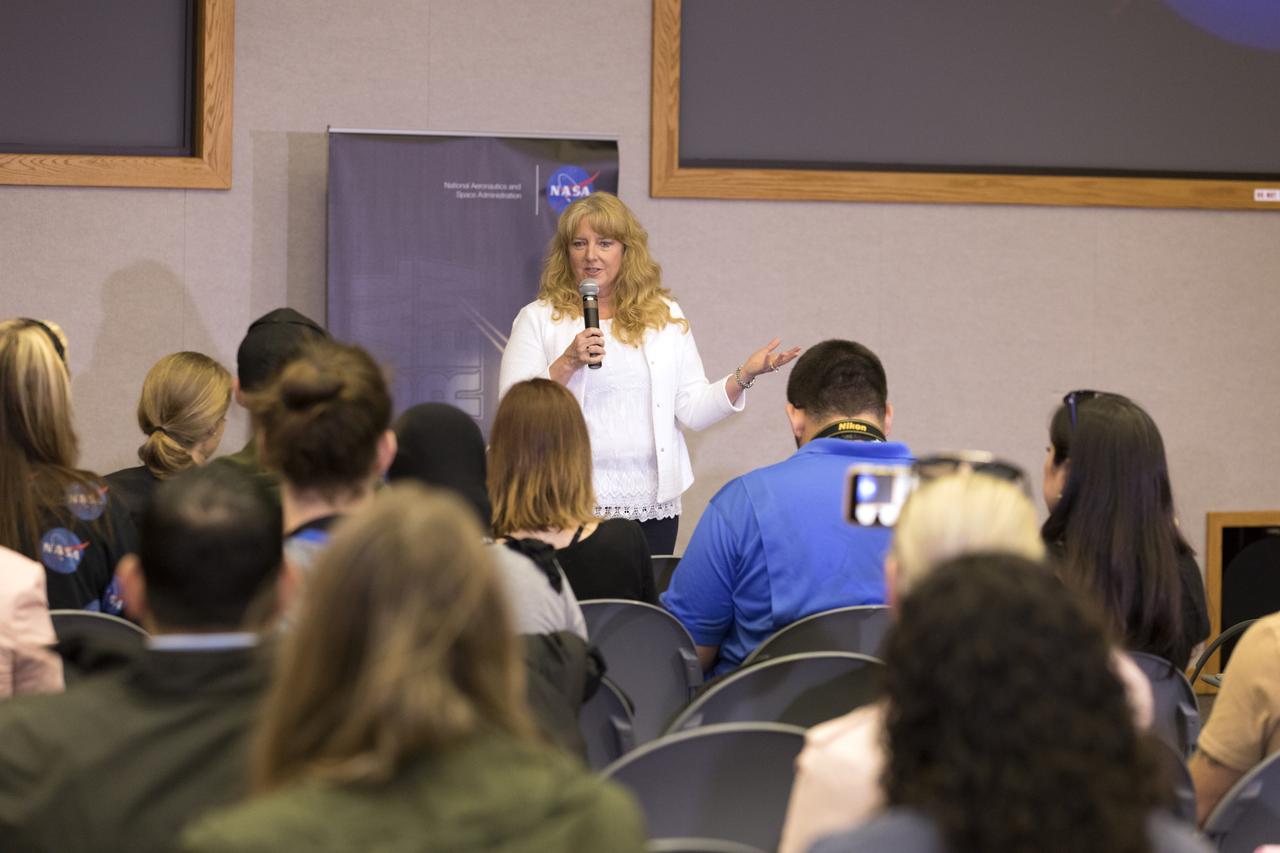
Carol Scott, deputy manager, NASA Commercial Crew Program Launch Vehicle Office, speaks to members of the media Thursday, Feb. 28, in the Kennedy Space Center’s Mission Briefing Room of the Neil Armstrong Operations and Checkout Building. The briefing focused on launch of the SpaceX Demo-1 Commercial Crew Program mission to the International Space Station. The inaugural flight of the Crew Dragon, known as Demo-1, will be uncrewed, lifting off atop a SpaceX Falcon 9 rocket from Launch Complex 39A at Kennedy Saturday, March 2, at 2:49 a.m. EST. The mission is designed to validate end-to-end systems and capabilities, leading to certification to fly crew. NASA has worked with SpaceX and Boeing in developing the CCP spacecraft to facilitate new human spaceflight systems launching from U.S. soil with the goal of safe, reliable and cost-effective access to low-Earth orbit destinations such as the space station.
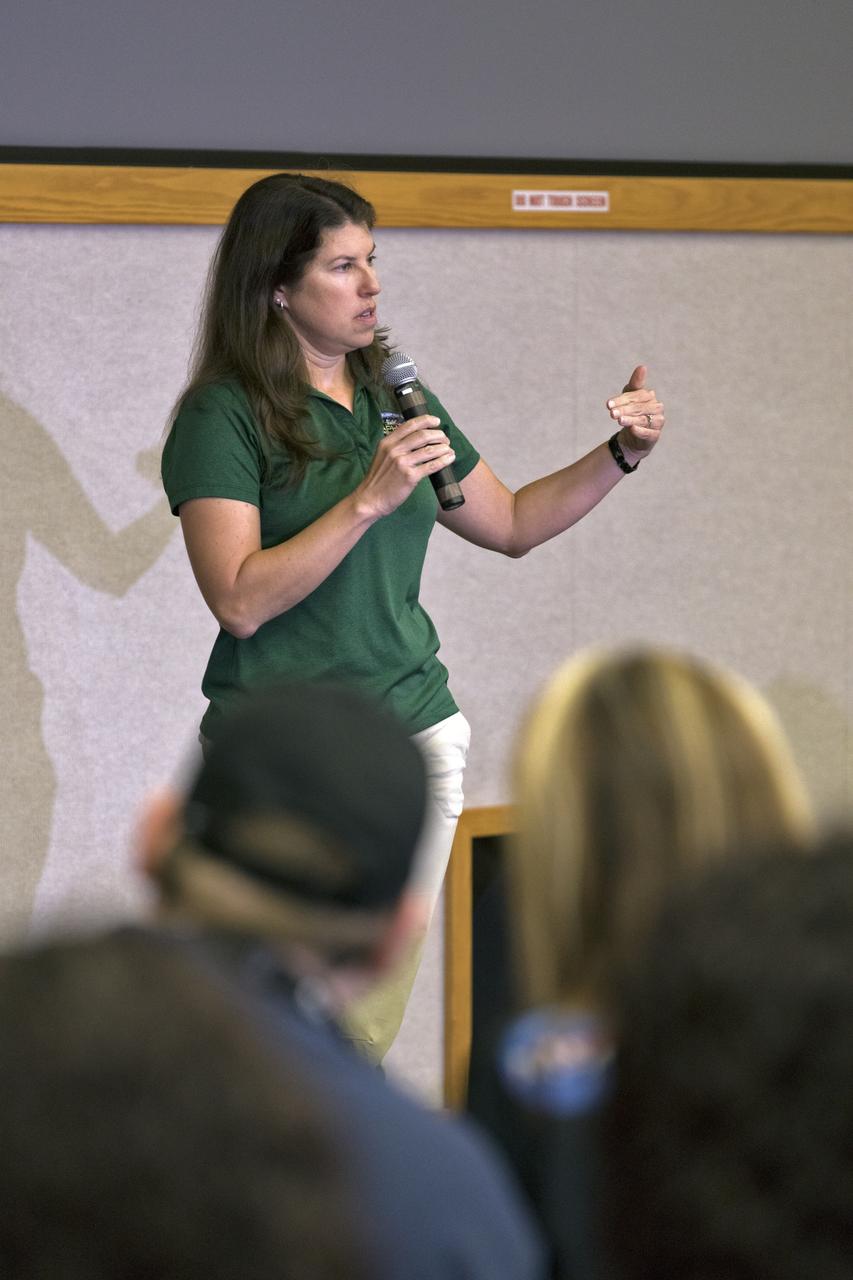
Kelli Maloney, NASA Ground Systems lead engineer, speaks to members of the media Thursday, Feb. 28, in the Kennedy Space Center’s Mission Briefing Room of the Neil Armstrong Operations and Checkout Building. The briefing focused on launch of the SpaceX Demo-1 Commercial Crew Program mission to the International Space Station. The inaugural flight of the Crew Dragon, known as Demo-1, will be uncrewed, lifting off atop a SpaceX Falcon 9 rocket from Launch Complex 39A at Kennedy Saturday, March 2, at 2:49 a.m. EST. The mission is designed to validate end-to-end systems and capabilities, leading to certification to fly crew. NASA has worked with SpaceX and Boeing in developing the CCP spacecraft to facilitate new human spaceflight systems launching from U.S. soil with the goal of safe, reliable and cost-effective access to low-Earth orbit destinations such as the space station.
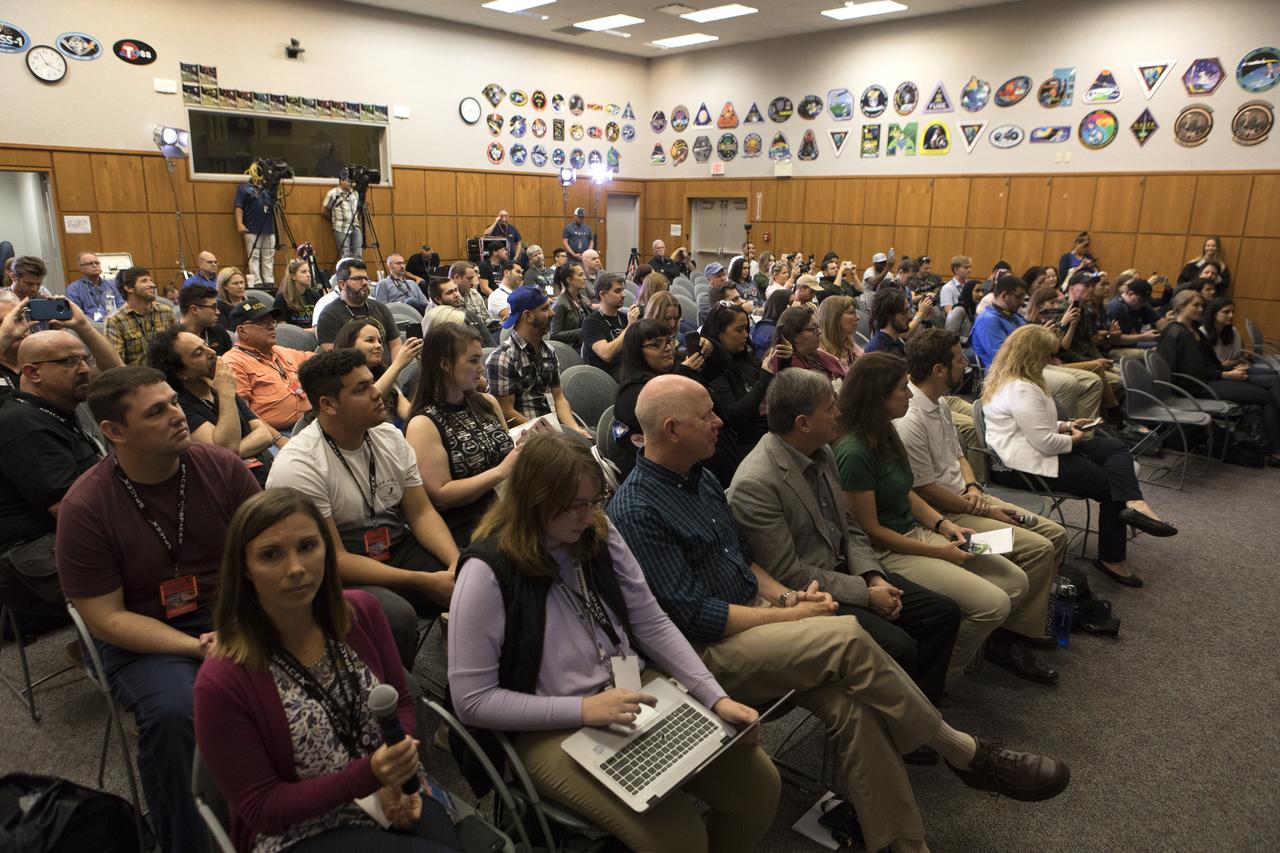
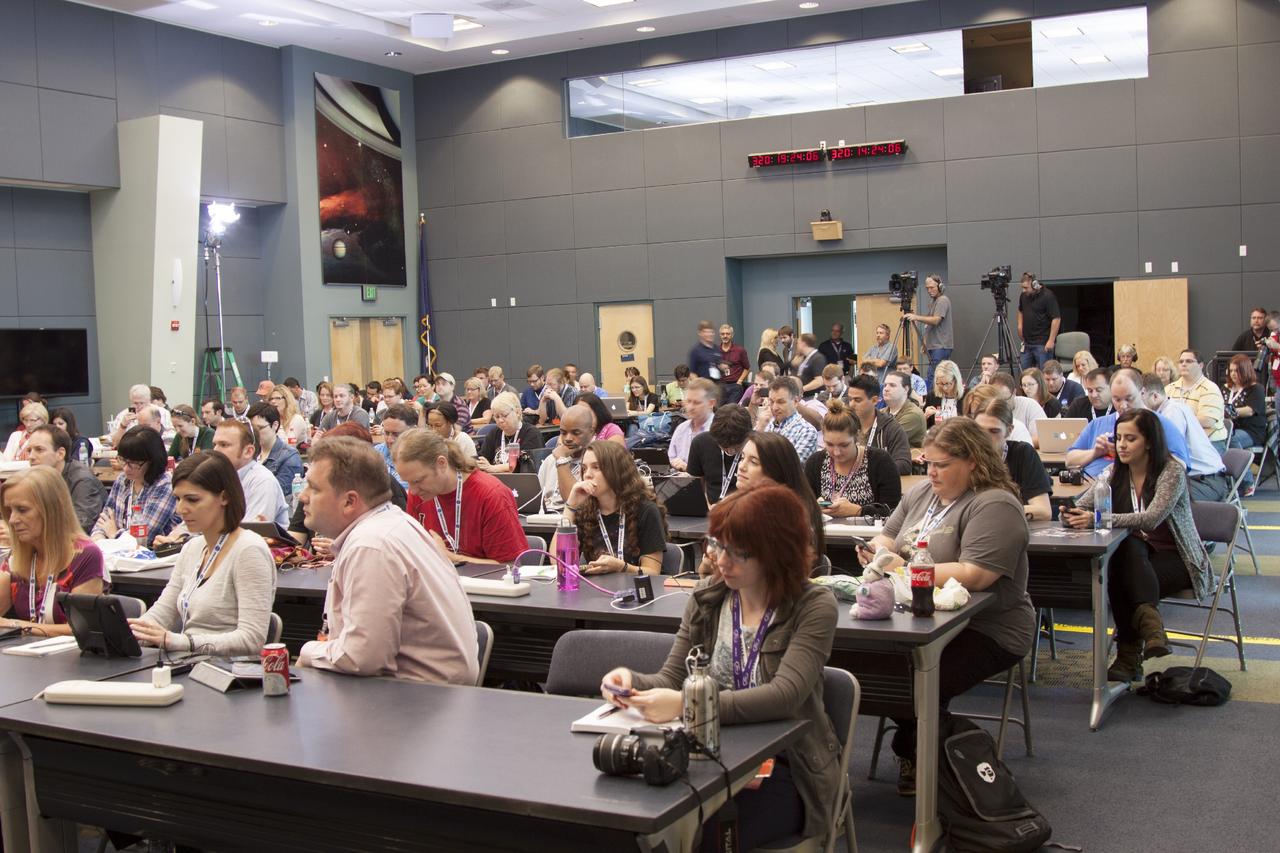
Members of the media, along with NASA and SpaceX officials, gather in the Kennedy Space Center’s Mission Briefing Room of the Neil Armstrong Operations and Checkout Building on Thursday, Feb. 28. The briefing focused on launch of the SpaceX Demo-1 Commercial Crew Program mission to the International Space Station. The inaugural flight of the Crew Dragon, known as Demo-1, will be uncrewed, lifting off atop a SpaceX Falcon 9 rocket from Launch Complex 39A at Kennedy Saturday, March 2, at 2:49 a.m. EST. The mission is designed to validate end-to-end systems and capabilities, leading to certification to fly crew. NASA has worked with SpaceX and Boeing in developing the CCP spacecraft to facilitate new human spaceflight systems launching from U.S. soil with the goal of safe, reliable and cost-effective access to low-Earth orbit destinations such as the space station.
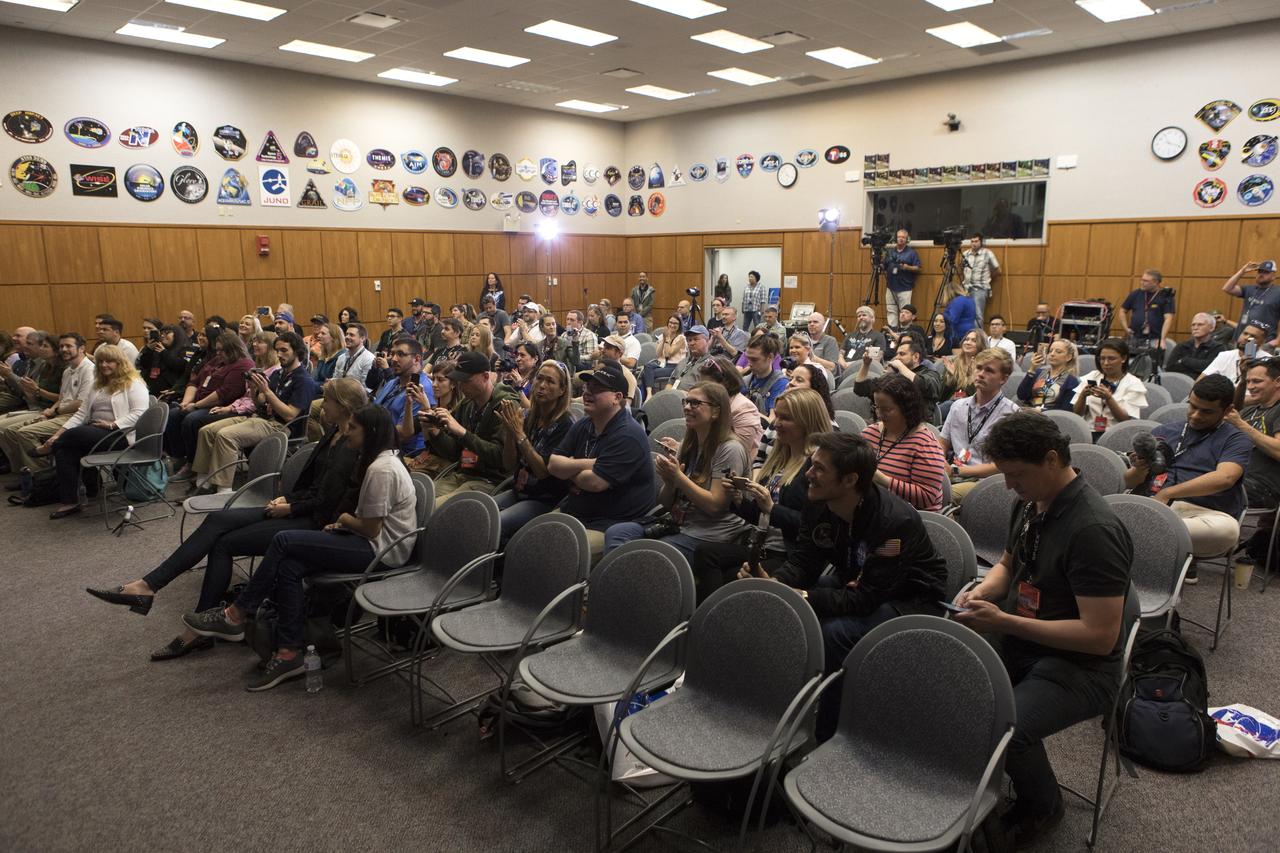
Members of the media, along with NASA and SpaceX officials, gather in the Kennedy Space Center’s Mission Briefing Room of the Neil Armstrong Operations and Checkout Building on Thursday, Feb. 28. The briefing focused on launch of the SpaceX Demo-1 Commercial Crew Program mission to the International Space Station. The inaugural flight of the Crew Dragon, known as Demo-1, will be uncrewed, lifting off atop a SpaceX Falcon 9 rocket from Launch Complex 39A at Kennedy Saturday, March 2, at 2:49 a.m. EST. The mission is designed to validate end-to-end systems and capabilities, leading to certification to fly crew. NASA has worked with SpaceX and Boeing in developing the CCP spacecraft to facilitate new human spaceflight systems launching from U.S. soil with the goal of safe, reliable and cost-effective access to low-Earth orbit destinations such as the space station.
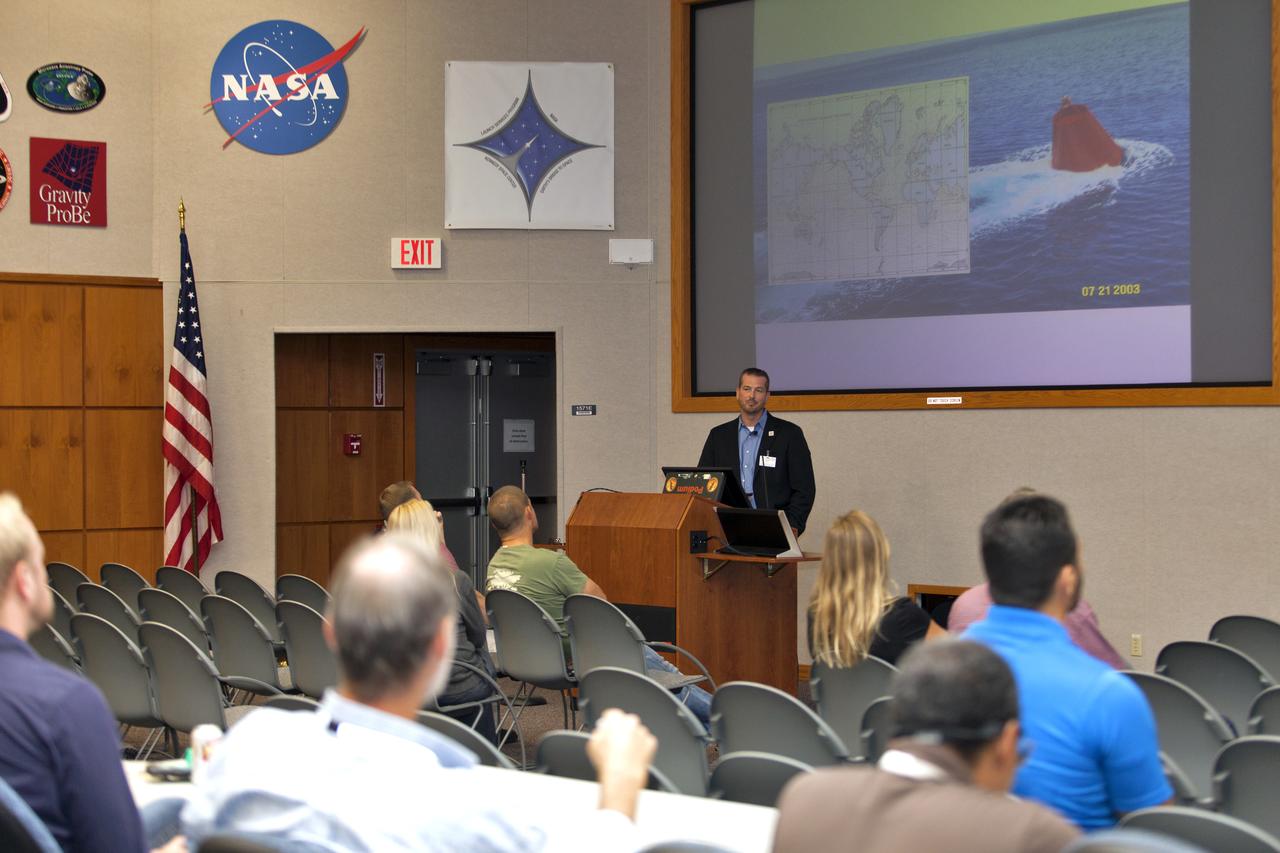
Guest speaker Gabriel Alsenas discusses ocean renewable energy sources with NASA Kennedy Space Center employees in the spaceport’s Mission Briefing Room on Thursday, Oct. 11, 2018. Alsenas is director of the Southeast National Marine Renewable Energy Center at Florida Atlantic University in Boca Raton. The “lunch and learn” event is one of two scheduled during October in conjunction with Energy Awareness Month, which aims to recognize the importance of energy management for our national prosperity, security and environmental sustainability.
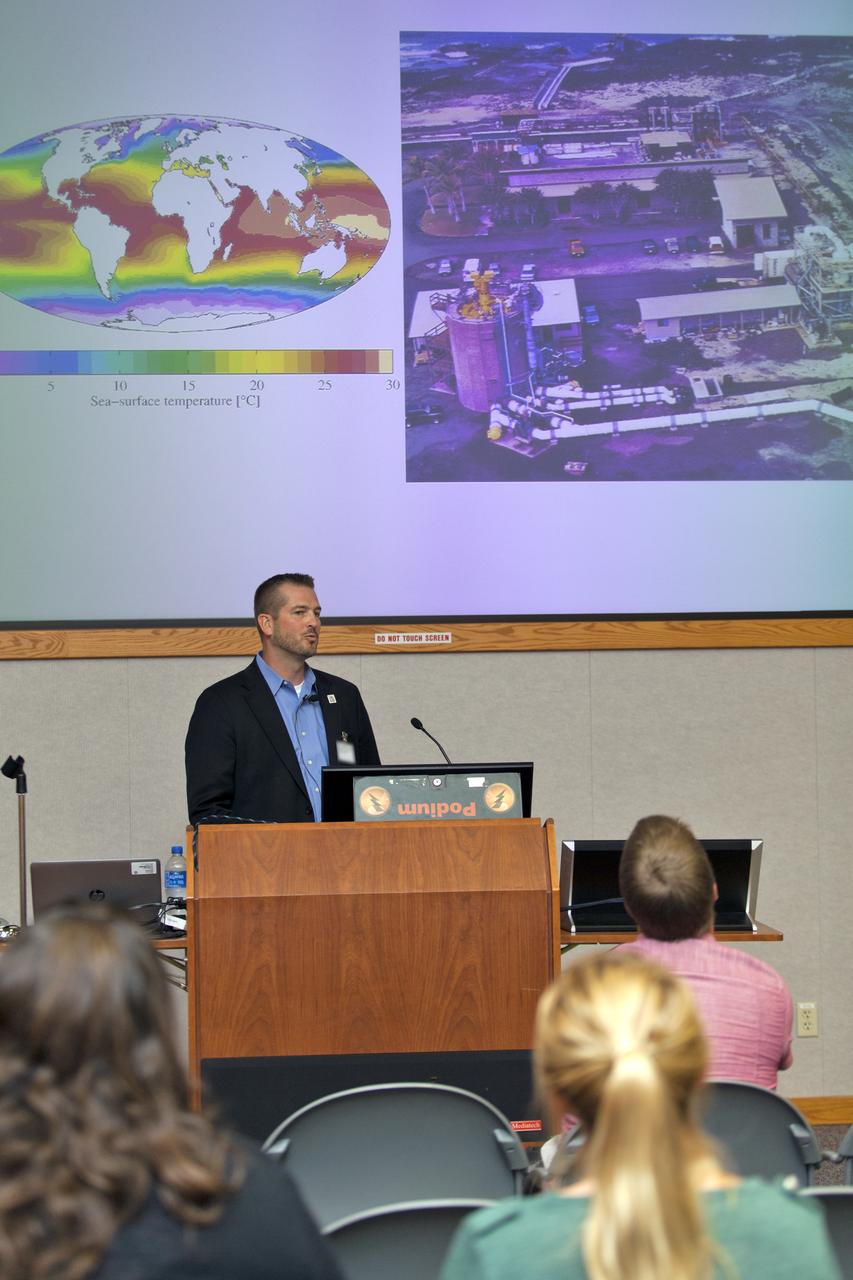
Guest speaker Gabriel Alsenas discusses ocean renewable energy sources with NASA Kennedy Space Center employees in the spaceport’s Mission Briefing Room on Thursday, Oct. 11, 2018. Alsenas is director of the Southeast National Marine Renewable Energy Center at Florida Atlantic University in Boca Raton. The “lunch and learn” event is one of two scheduled during October in conjunction with Energy Awareness Month, which aims to recognize the importance of energy management for our national prosperity, security and environmental sustainability.

Guest speaker Gabriel Alsenas discusses ocean renewable energy sources with NASA Kennedy Space Center employees in the spaceport’s Mission Briefing Room on Thursday, Oct. 11, 2018. Alsenas is director of the Southeast National Marine Renewable Energy Center at Florida Atlantic University in Boca Raton. The “lunch and learn” event is one of two scheduled during October in conjunction with Energy Awareness Month, which aims to recognize the importance of energy management for our national prosperity, security and environmental sustainability.
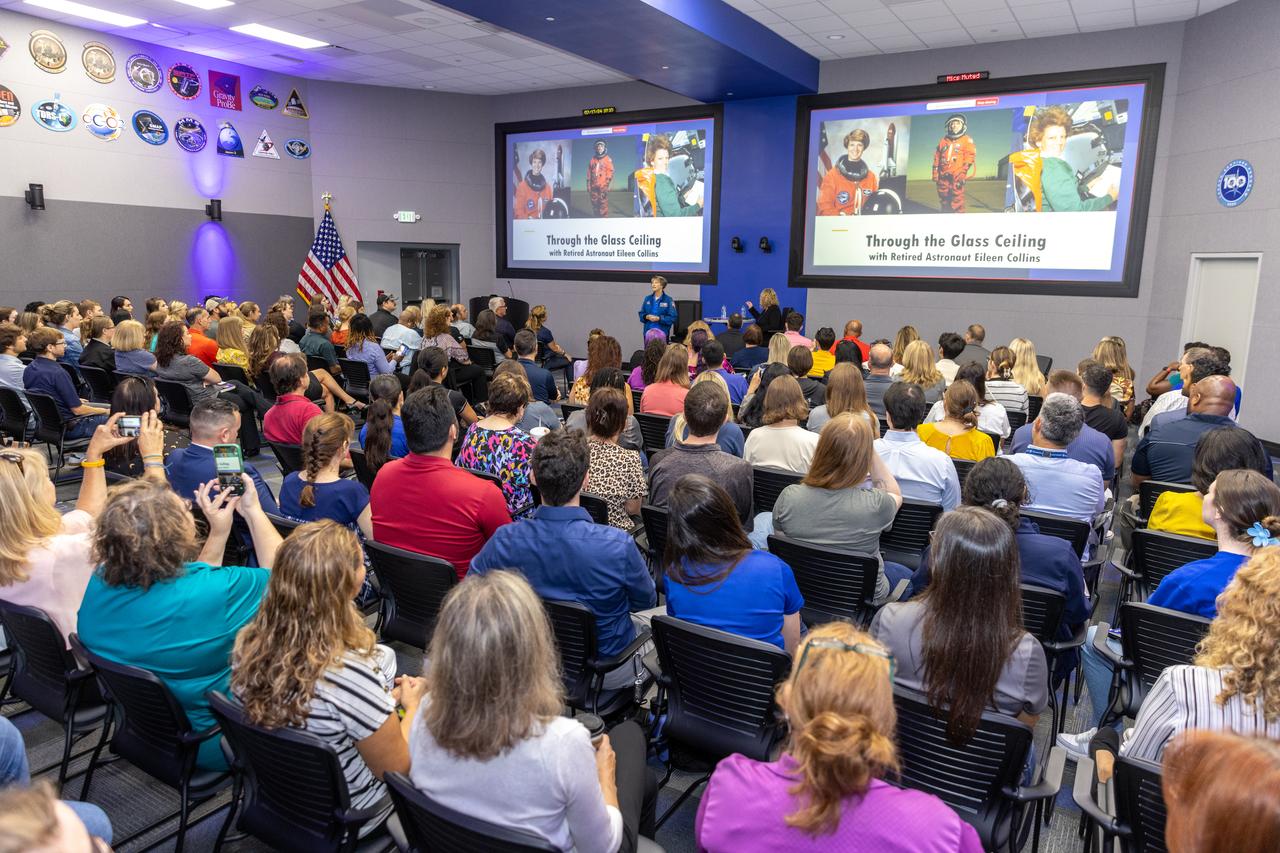
Retired NASA astronaut Eileen Collins participates in a special presentation and question and answer session inside the Neil A. Armstrong Operations and Checkout Building’s Mission Briefing Room at the agency’s Kennedy Space Center in Florida on Wednesday, July 17, 2024. Collins visited NASA Kennedy in celebration of the 25th anniversary of becoming the first woman to command a space mission during STS-93, in which space shuttle Columbia lifted off from the spaceport’s Launch Complex 39B on July 23, 1999.
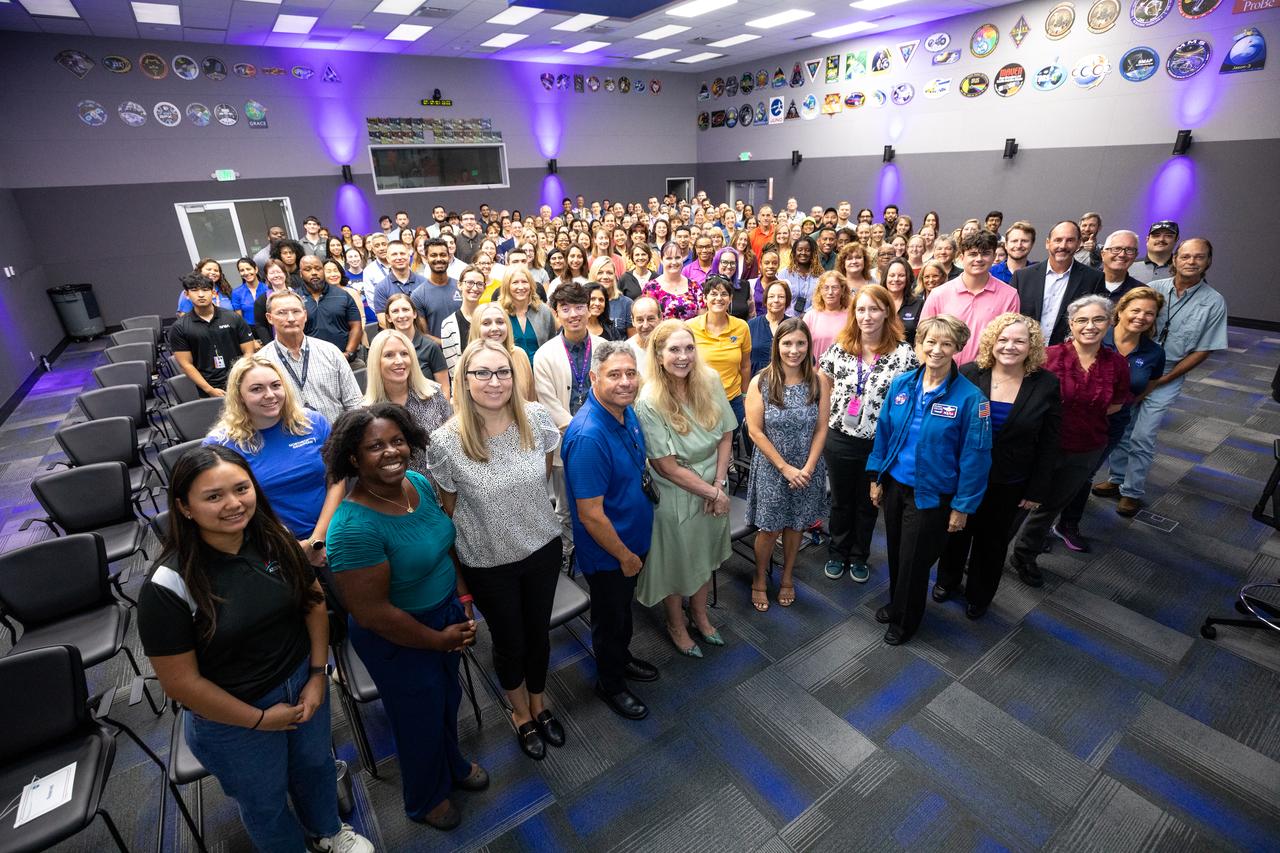
Retired NASA astronaut Eileen Collins poses with NASA employees and contractors after participating in a special presentation and question and answer session inside the Neil A. Armstrong Operations and Checkout Building’s Mission Briefing Room at the agency’s Kennedy Space Center in Florida on Wednesday, July 17, 2024. Collins visited NASA Kennedy in celebration of the 25th anniversary of becoming the first woman to command a space mission during STS-93, in which space shuttle Columbia lifted off from the spaceport’s Launch Complex 39B on July 23, 1999.
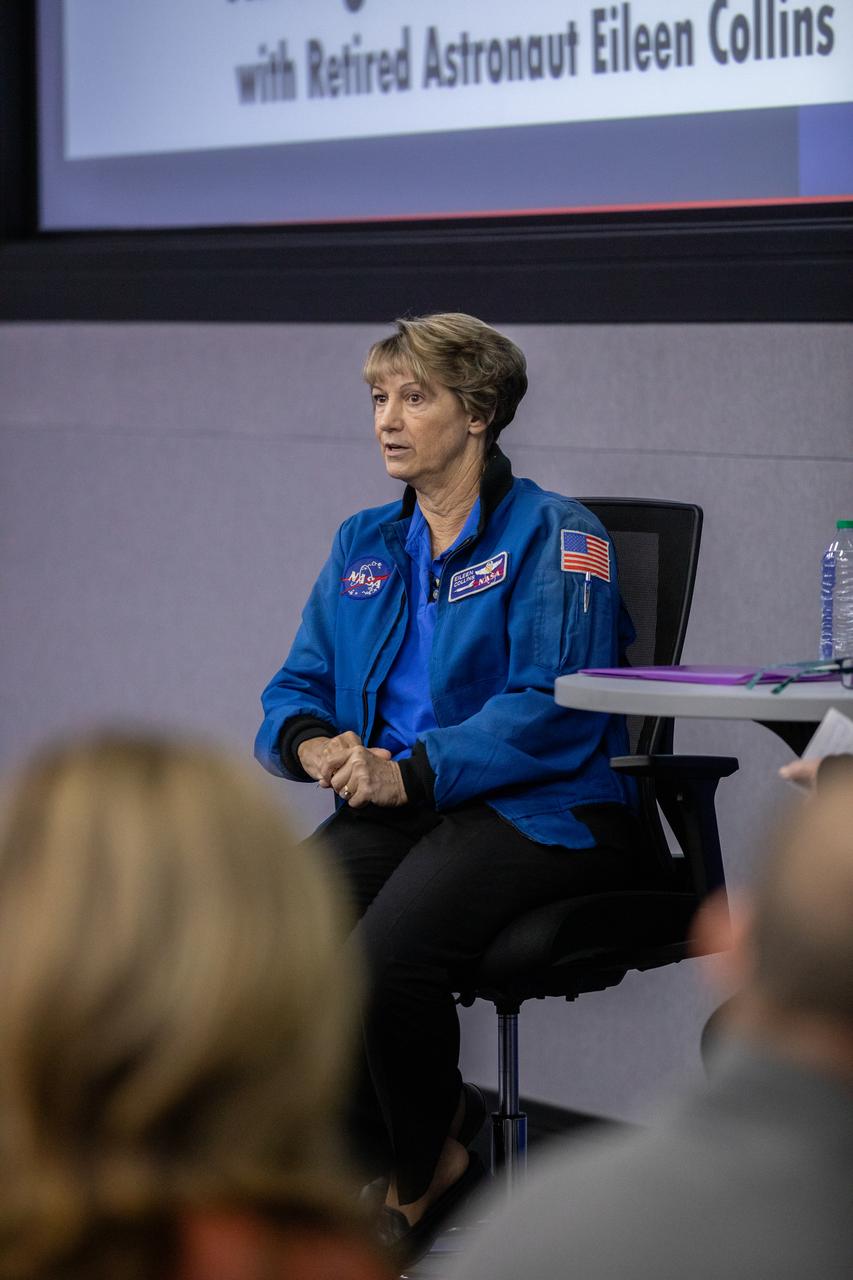
Retired NASA astronaut Eileen Collins participates in a special presentation and question and answer session inside the Neil A. Armstrong Operations and Checkout Building’s Mission Briefing Room at the agency’s Kennedy Space Center in Florida on Wednesday, July 17, 2024. Collins visited NASA Kennedy in celebration of the 25th anniversary of becoming the first woman to command a space mission during STS-93, in which space shuttle Columbia lifted off from the spaceport’s Launch Complex 39B on July 23, 1999.
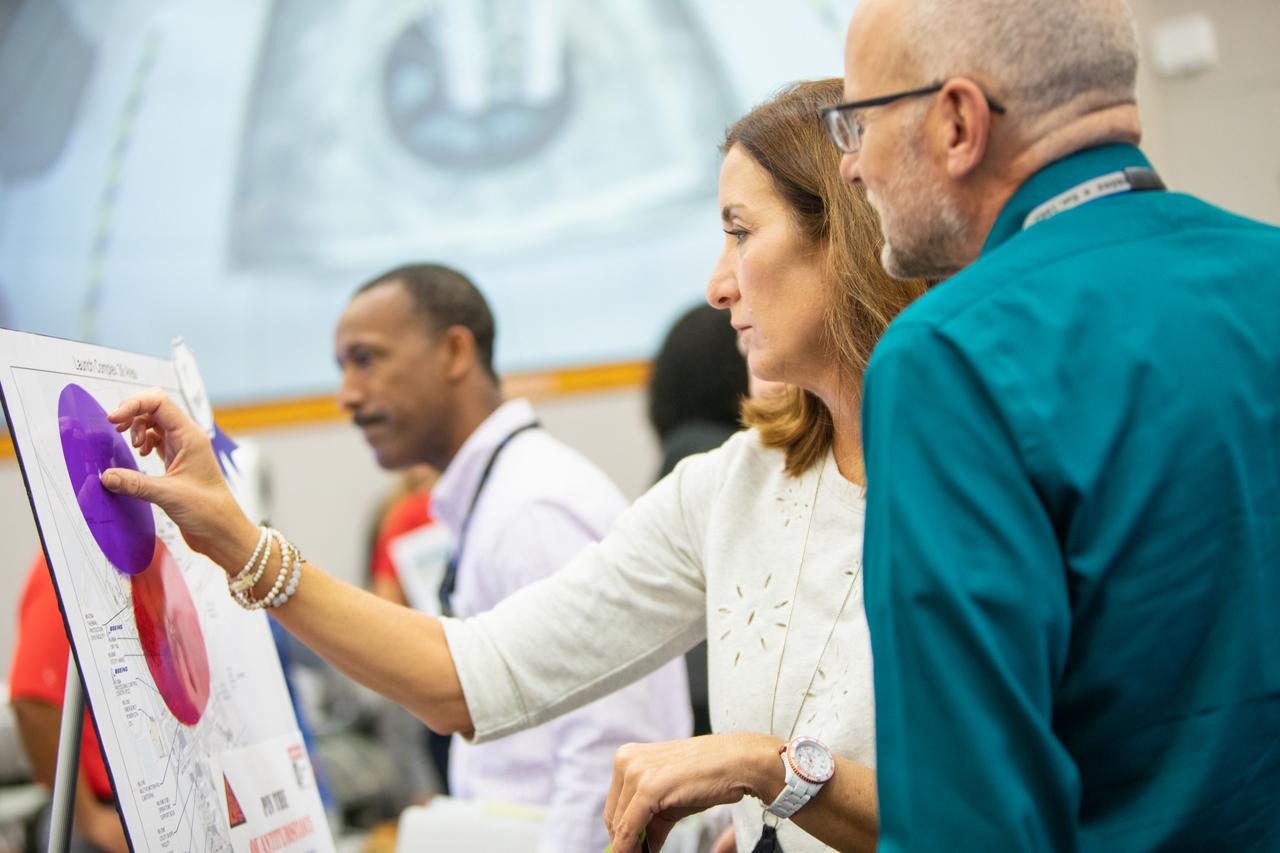
Kennedy Space Center employees participate in an innovation showcase on Nov. 19, 2019, in the Florida spaceport’s Neil Armstrong Operations and Checkout Building’s Mission Briefing Room. Nearly 50 exhibitors gathered to demonstrate new technologies and innovations during the center’s Innovation Days – one of several events throughout the year aimed at fostering and encouraging an innovative culture at Kennedy. Showcase participants included individuals from multiple directorates, programs and organizations throughout Kennedy. In addition to the showcase, employees had the opportunity to attend an overview presentation on NASA’s Human Landing System (HLS), hosted by HLS Program Manager Lisa Watson-Morgan.
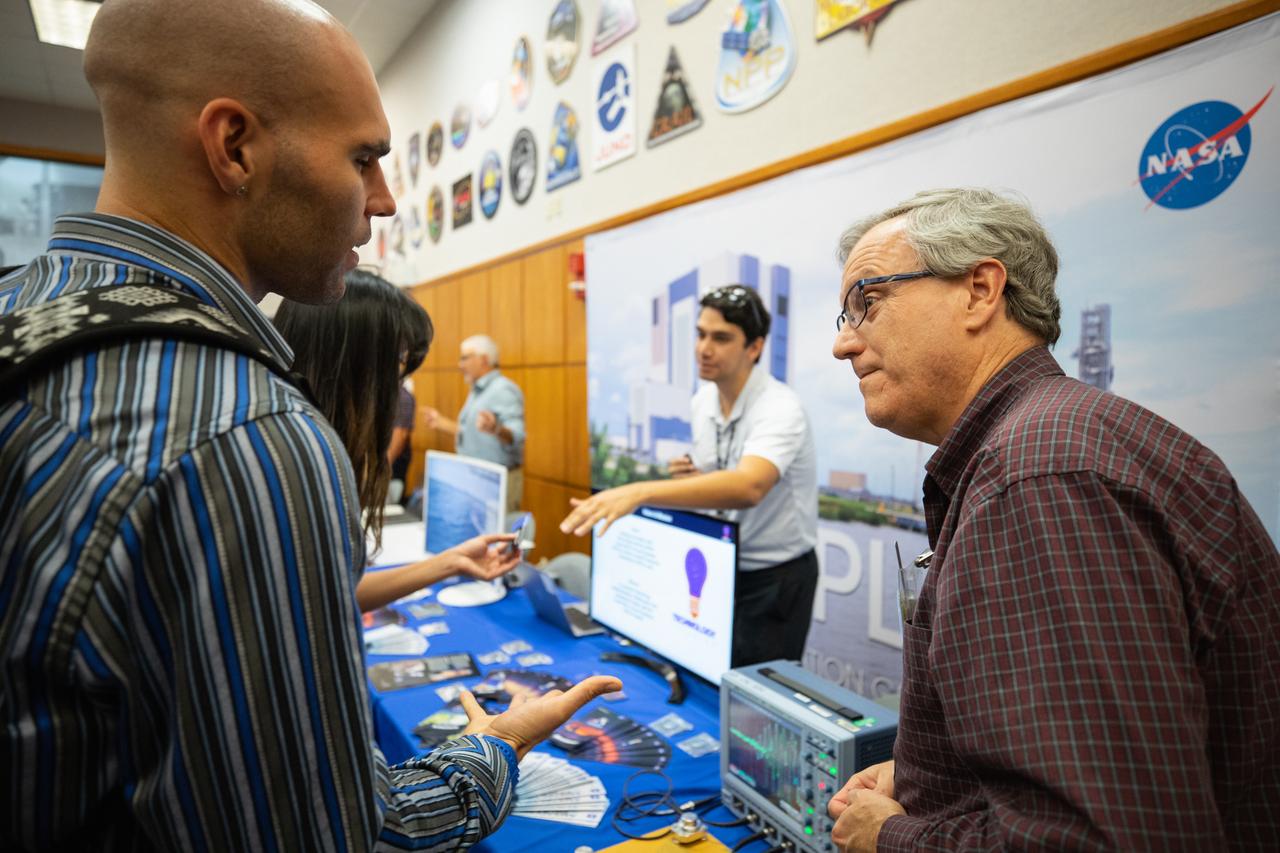
Two Kennedy Space Center employees engage in conversation during an innovation showcase on Nov. 19, 2019, in the Florida spaceport’s Neil Armstrong Operations and Checkout Building’s Mission Briefing Room. Nearly 50 exhibitors gathered to demonstrate new technologies and innovations during the center’s Innovation Days – one of several events throughout the year aimed at fostering and encouraging an innovative culture at Kennedy. Showcase participants included individuals from multiple directorates, programs and organizations throughout Kennedy. In addition to the showcase, employees had the opportunity to attend an overview presentation on NASA’s Human Landing System (HLS), hosted by HLS Program Manager Lisa Watson-Morgan.
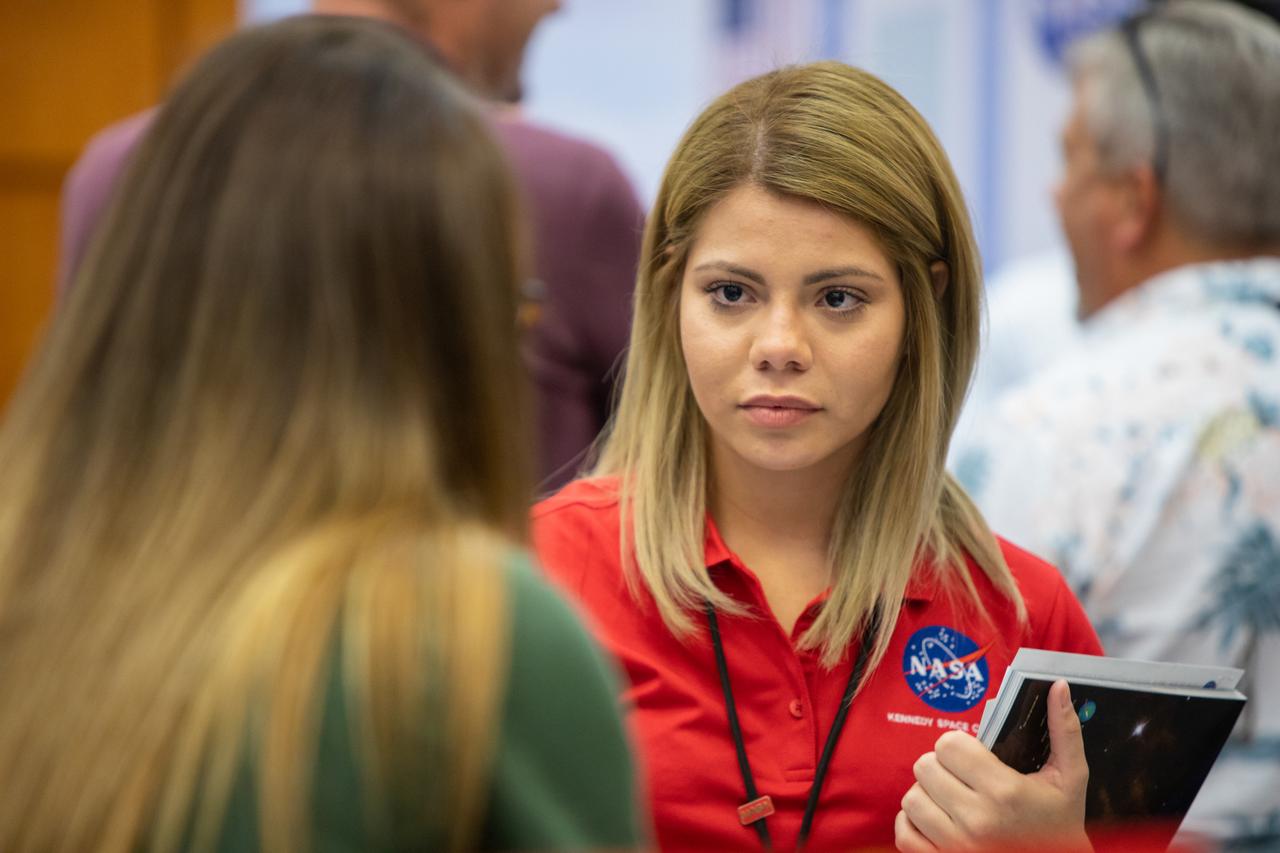
A Kennedy Space Center employee participates in an innovation showcase on Nov. 19, 2019, in the Florida spaceport’s Neil Armstrong Operations and Checkout Building’s Mission Briefing Room. Nearly 50 exhibitors gathered to demonstrate new technologies and innovations during the center’s Innovation Days – one of several events throughout the year aimed at fostering and encouraging an innovative culture at Kennedy. Showcase participants included individuals from multiple directorates, programs and organizations throughout Kennedy. In addition to the showcase, employees had the opportunity to attend an overview presentation on NASA’s Human Landing System (HLS), hosted by HLS Program Manager Lisa Watson-Morgan.
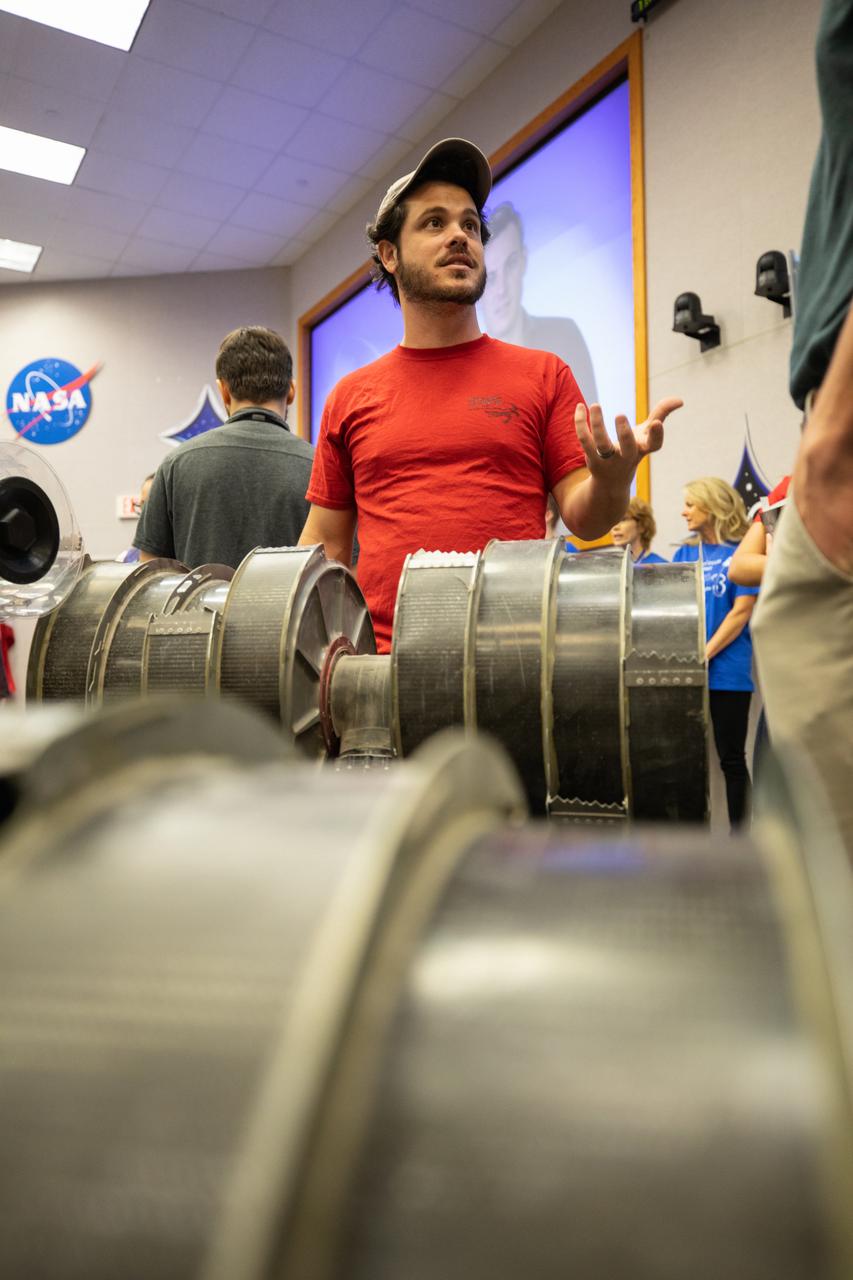
A Kennedy Space Center employee attends an innovation showcase on Nov. 19, 2019, in the Florida spaceport’s Neil Armstrong Operations and Checkout Building’s Mission Briefing Room. Nearly 50 exhibitors gathered to demonstrate new technologies and innovations during the center’s Innovation Days – one of several events throughout the year aimed at fostering and encouraging an innovative culture at Kennedy. Showcase participants included individuals from multiple directorates, programs and organizations throughout Kennedy. In addition to the showcase, employees had the opportunity to attend an overview presentation on NASA’s Human Landing System (HLS), hosted by HLS Program Manager Lisa Watson-Morgan.
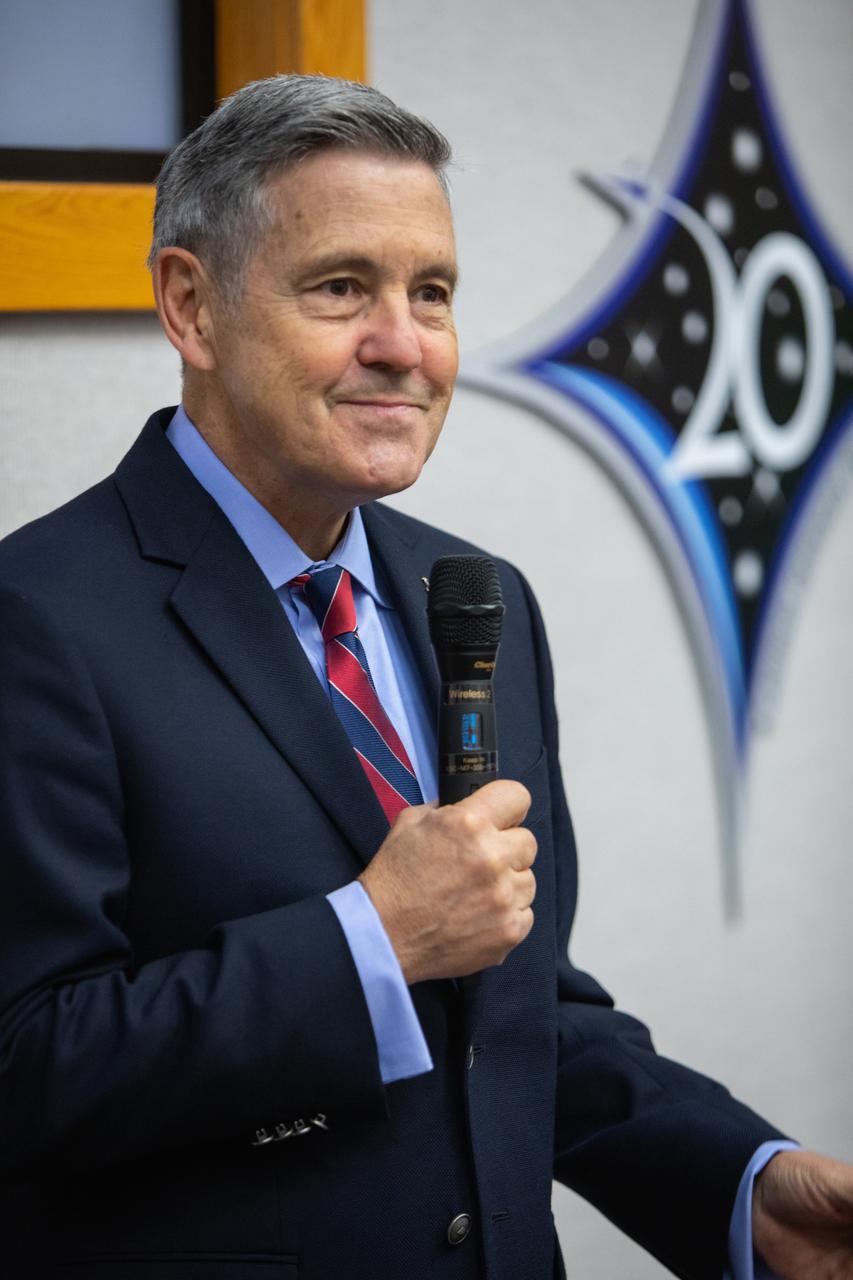
Kennedy Space Center Director Bob Cabana speaks to employees during an innovation showcase on Nov. 19, 2019, in the Florida spaceport’s Neil Armstrong Operations and Checkout Building’s Mission Briefing Room. Nearly 50 exhibitors gathered to participate in the center’s Innovation Days – one of several events throughout the year aimed at fostering and encouraging an innovative culture at Kennedy. Showcase participants included individuals from multiple directorates, programs and organizations throughout Kennedy. In addition to the showcase, employees had the opportunity to attend an overview presentation on NASA’s Human Landing System (HLS), hosted by HLS Program Manager Lisa Watson-Morgan.
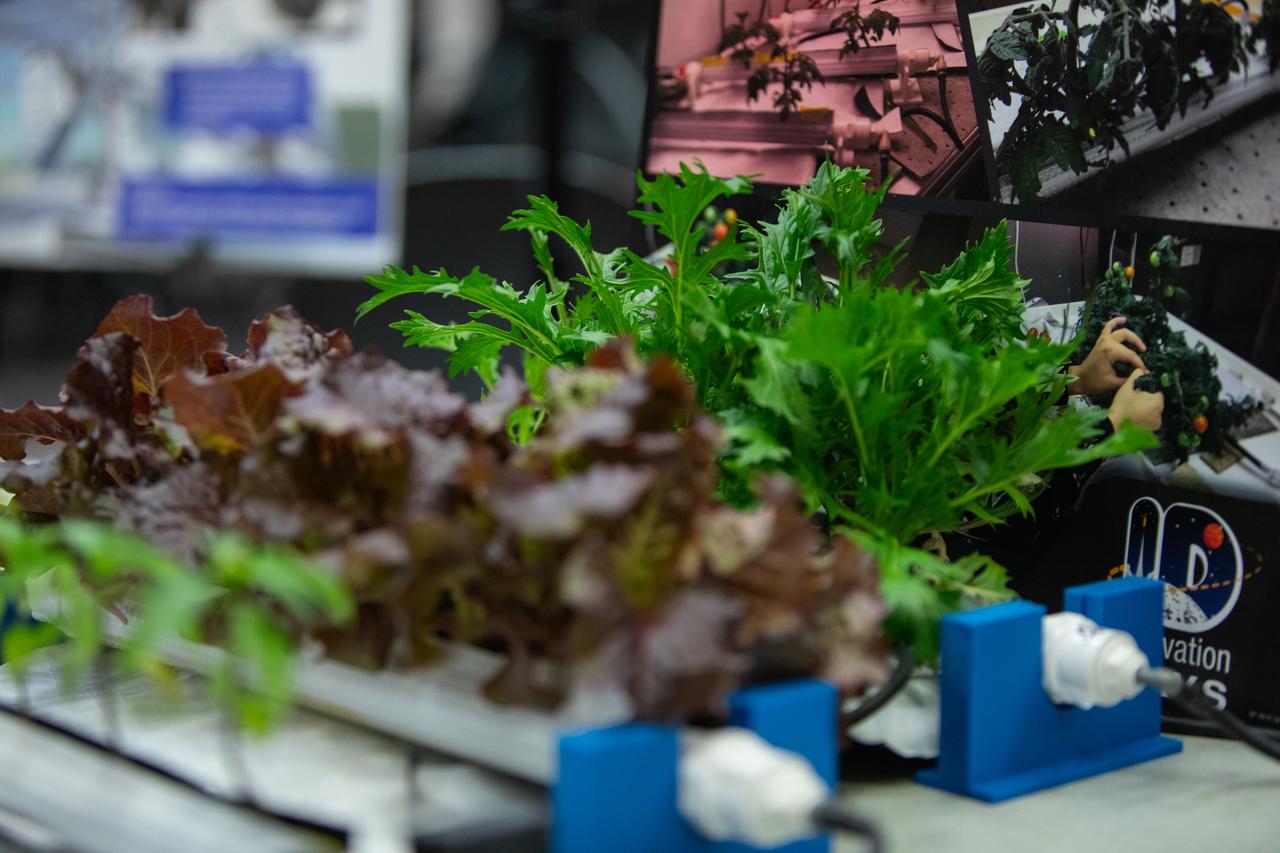
Plants utilized for ground experiments at NASA’s Kennedy Space Center in Florida that complement plant research on the International Space Station are photographed at an innovation showcase on Nov. 19, 2019. Nearly 50 exhibitors gathered in the Neil Armstrong Operations and Checkout Building’s Mission Briefing Room to participate in the center’s Innovation Days – one of several events throughout the year aimed at fostering an encouraging an innovative culture at Kennedy. Showcase participants included individuals from multiple directorates, programs and organizations throughout Kennedy. In addition to the showcase, employees had the opportunity to attend an overview presentation on NASA’s Human Landing System (HLS), hosted by HLS Program Manager Lisa Watson-Morgan.
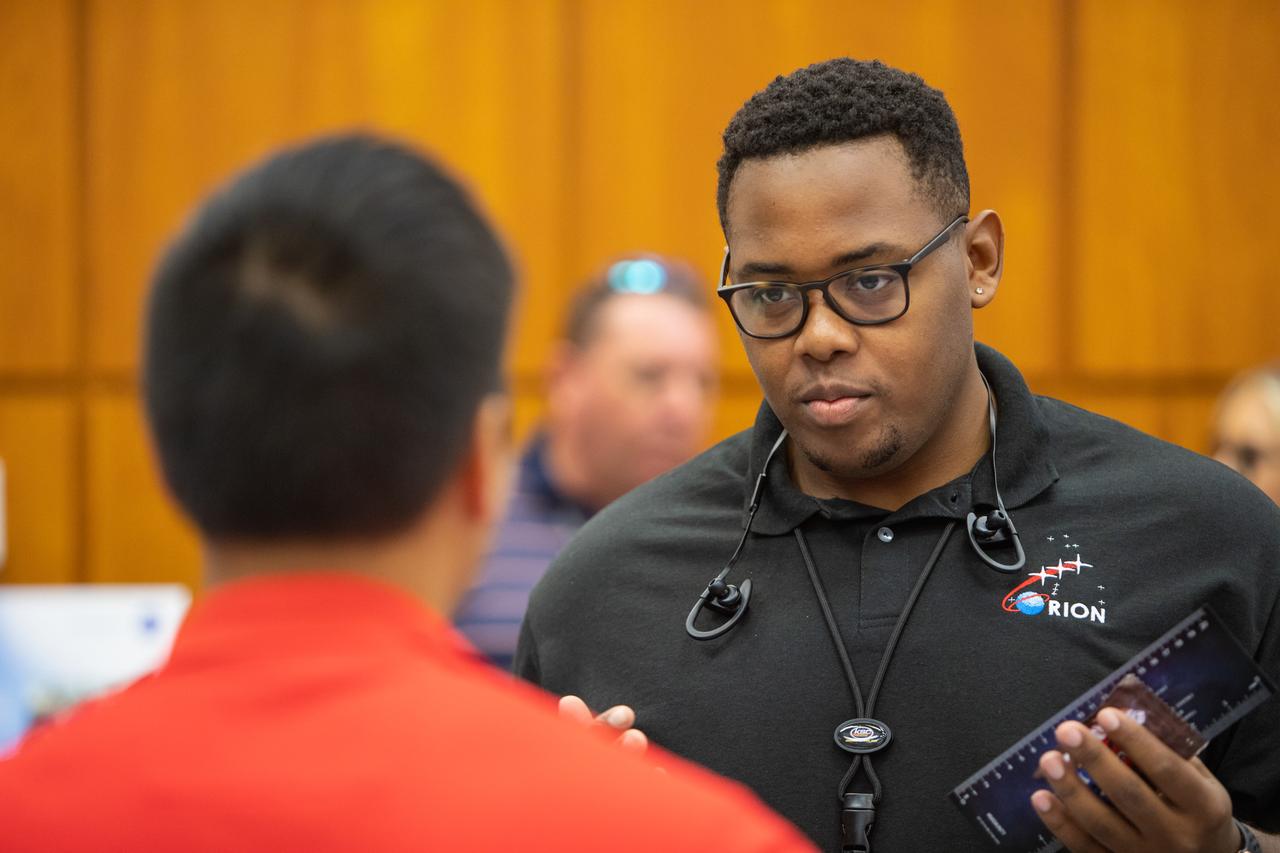
A Kennedy Space Center employee demonstrates a new technology during an innovation showcase on Nov. 19, 2019, in the Florida spaceport’s Neil Armstrong Operations and Checkout Building’s Mission Briefing Room. Nearly 50 exhibitors gathered to participate in the center’s Innovation Days – one of several events throughout the year aimed at fostering and encouraging an innovative culture at Kennedy. Showcase participants included individuals from multiple directorates, programs and organizations throughout Kennedy. In addition to the showcase, employees had the opportunity to attend an overview presentation on NASA’s Human Landing System (HLS), hosted by HLS Program Manager Lisa Watson-Morgan.
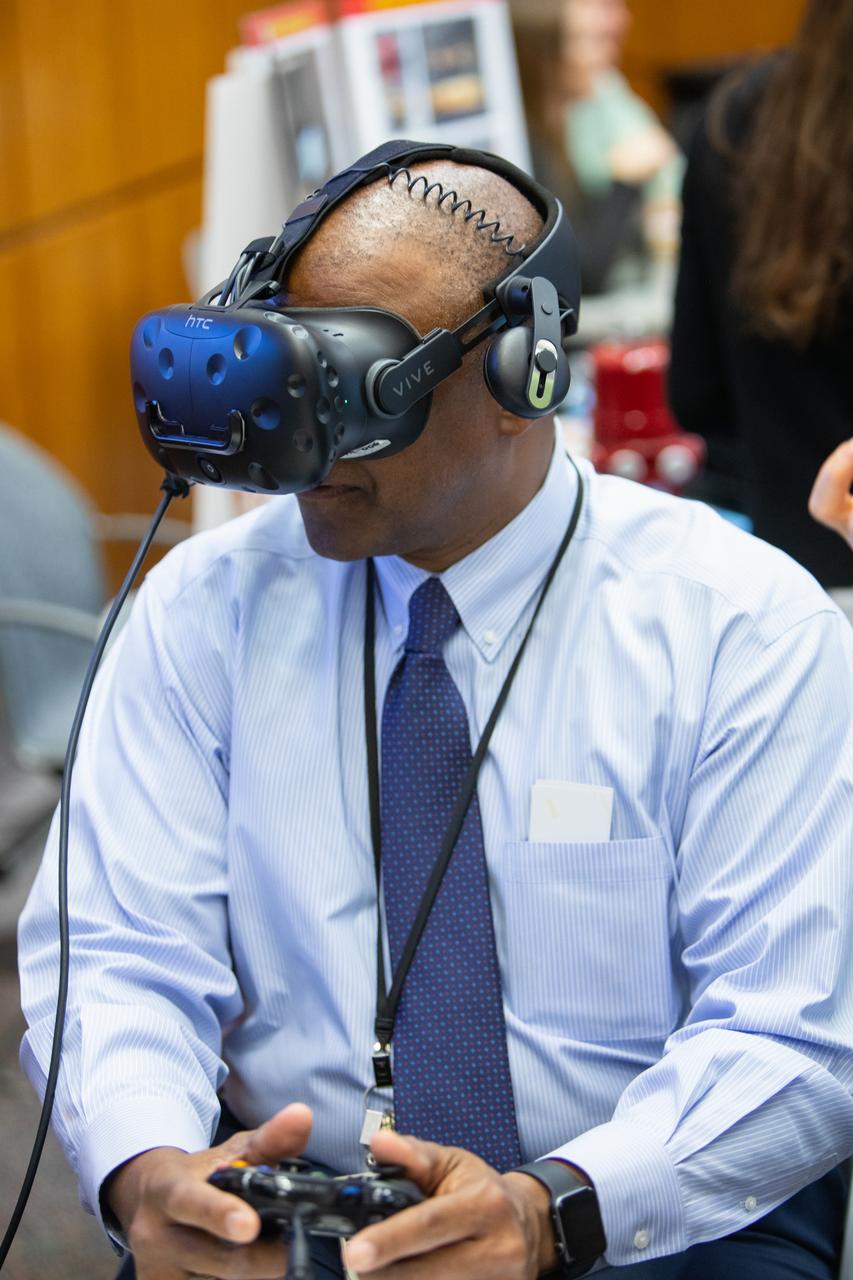
Kennedy Space Center Associate Director, Technical, Kelvin Manning tries out a virtual reality headset during an innovation showcase on Nov. 19, 2019, in the Florida spaceport’s Neil Armstrong Operations and Checkout Building’s Mission Briefing Room. Nearly 50 exhibitors gathered to demonstrate new technologies and innovations during the center’s Innovation Days – one of several events throughout the year aimed at fostering and encouraging an innovative culture at Kennedy. Showcase participants included individuals from multiple directorates, programs and organizations throughout Kennedy. In addition to the showcase, employees had the opportunity to attend an overview presentation on NASA’s Human Landing System (HLS), hosted by HLS Program Manager Lisa Watson-Morgan.
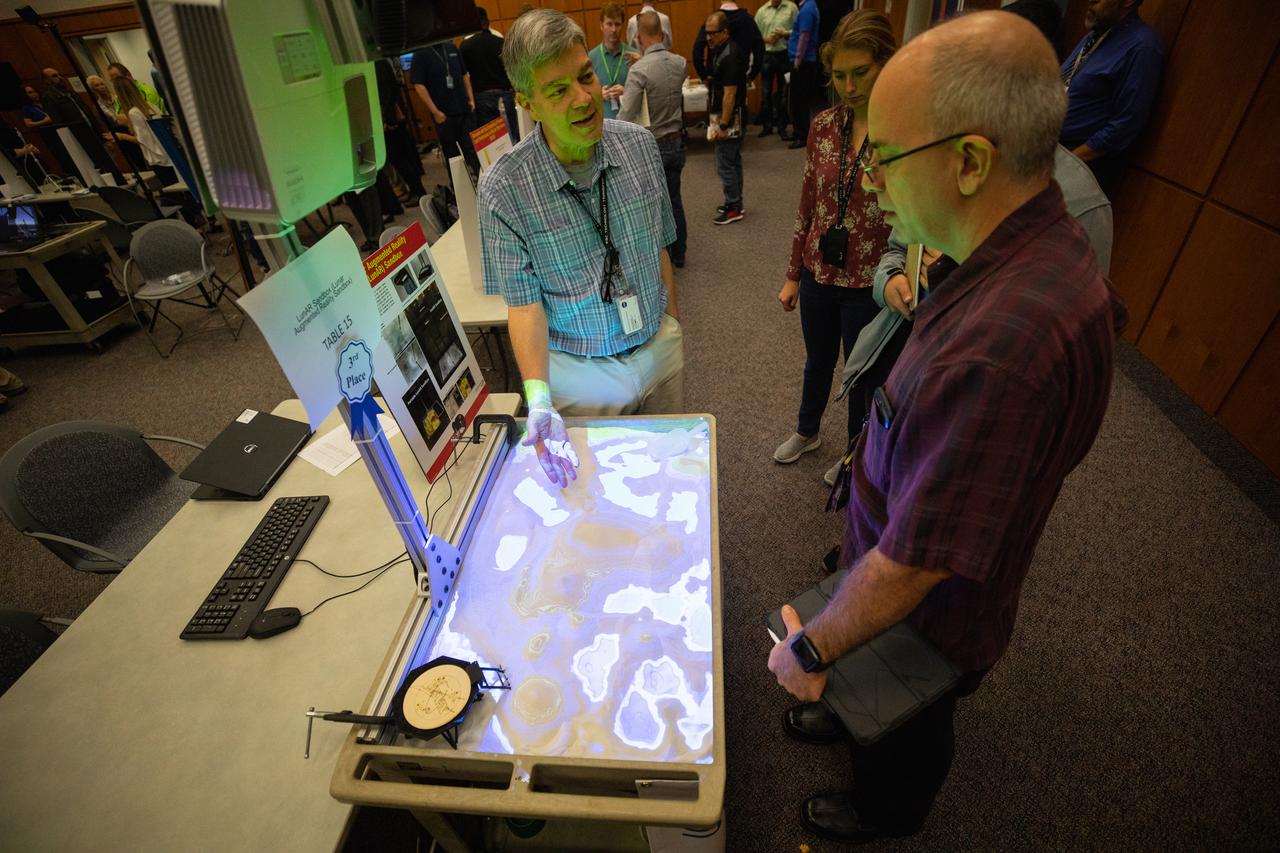
Kennedy Space Center employees participate in an innovation showcase on Nov. 19, 2019, in the Florida spaceport’s Neil Armstrong Operations and Checkout Building’s Mission Briefing Room. Nearly 50 exhibitors gathered to demonstrate new technologies and innovations during the center’s Innovation Days – one of several events throughout the year aimed at fostering and encouraging an innovative culture at Kennedy. Showcase participants included individuals from multiple directorates, programs and organizations throughout Kennedy. In addition to the showcase, employees had the opportunity to attend an overview presentation on NASA’s Human Landing System (HLS), hosted by HLS Program Manager Lisa Watson-Morgan.
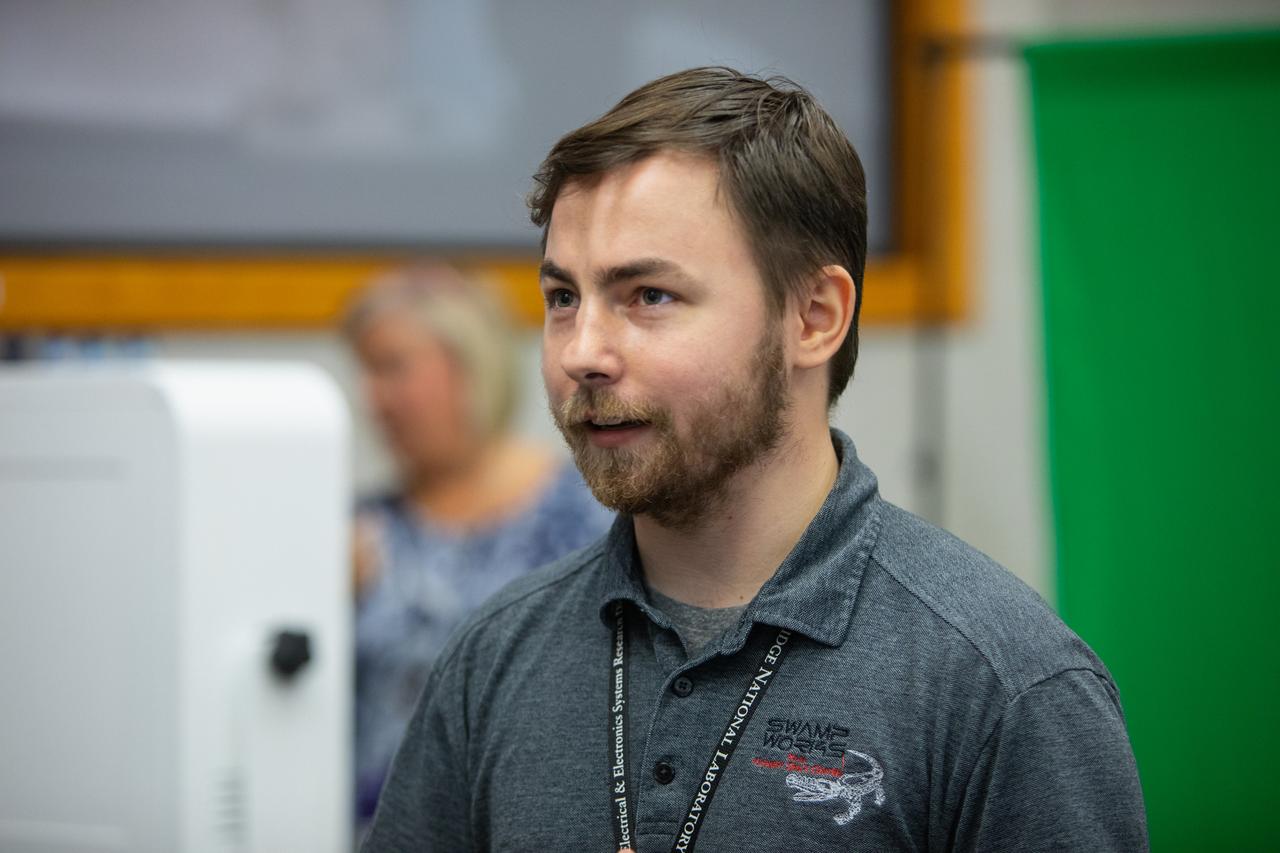
A Kennedy Space Center employee participates in an innovation showcase on Nov. 19, 2019, in the Florida spaceport’s Neil Armstrong Operations and Checkout Building’s Mission Briefing Room. Nearly 50 exhibitors gathered to demonstrate new technologies and innovations during the center’s Innovation Days – one of several events throughout the year aimed at fostering and encouraging an innovative culture at Kennedy. Showcase participants included individuals from multiple directorates, programs and organizations throughout Kennedy. In addition to the showcase, employees had the opportunity to attend an overview presentation on NASA’s Human Landing System (HLS), hosted by HLS Program Manager Lisa Watson-Morgan.
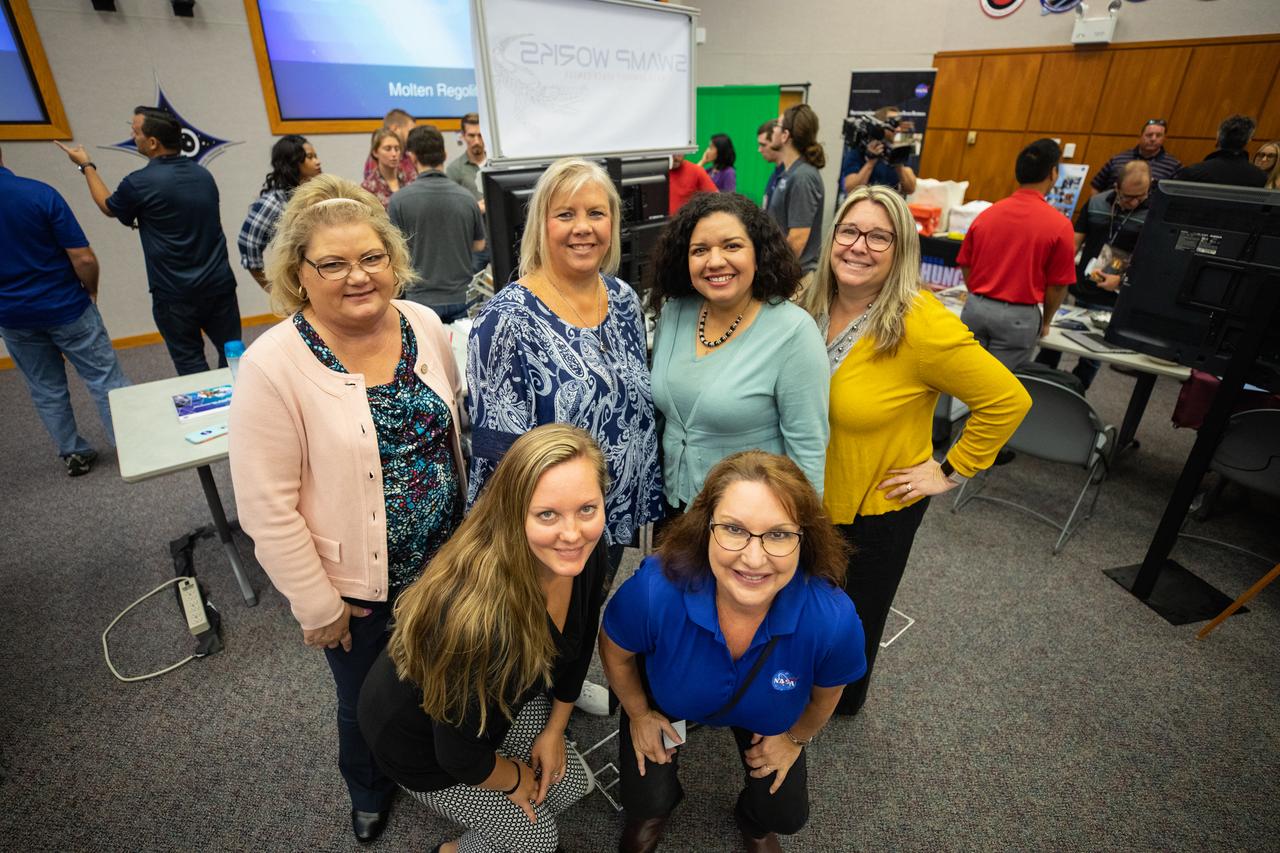
Kennedy Space Center employees are photographed at an innovation showcase, hosted by the Office of the Chief Technologist, on Nov. 19, 2019, in the Florida spaceport’s Neil Armstrong Operations and Checkout Building’s Mission Briefing Room. On the bottom right is Kathy Loftin, deputy chief technologist at Kennedy. Nearly 50 exhibitors gathered to participate in the center’s Innovation Days – one of several events throughout the year aimed at fostering and encouraging an innovative culture at Kennedy. Showcase participants included individuals from multiple directorates, programs and organizations throughout Kennedy. In addition to the showcase, employees had the opportunity to attend an overview presentation on NASA’s Human Landing System (HLS), hosted by HLS Program Manager Lisa Watson-Morgan.
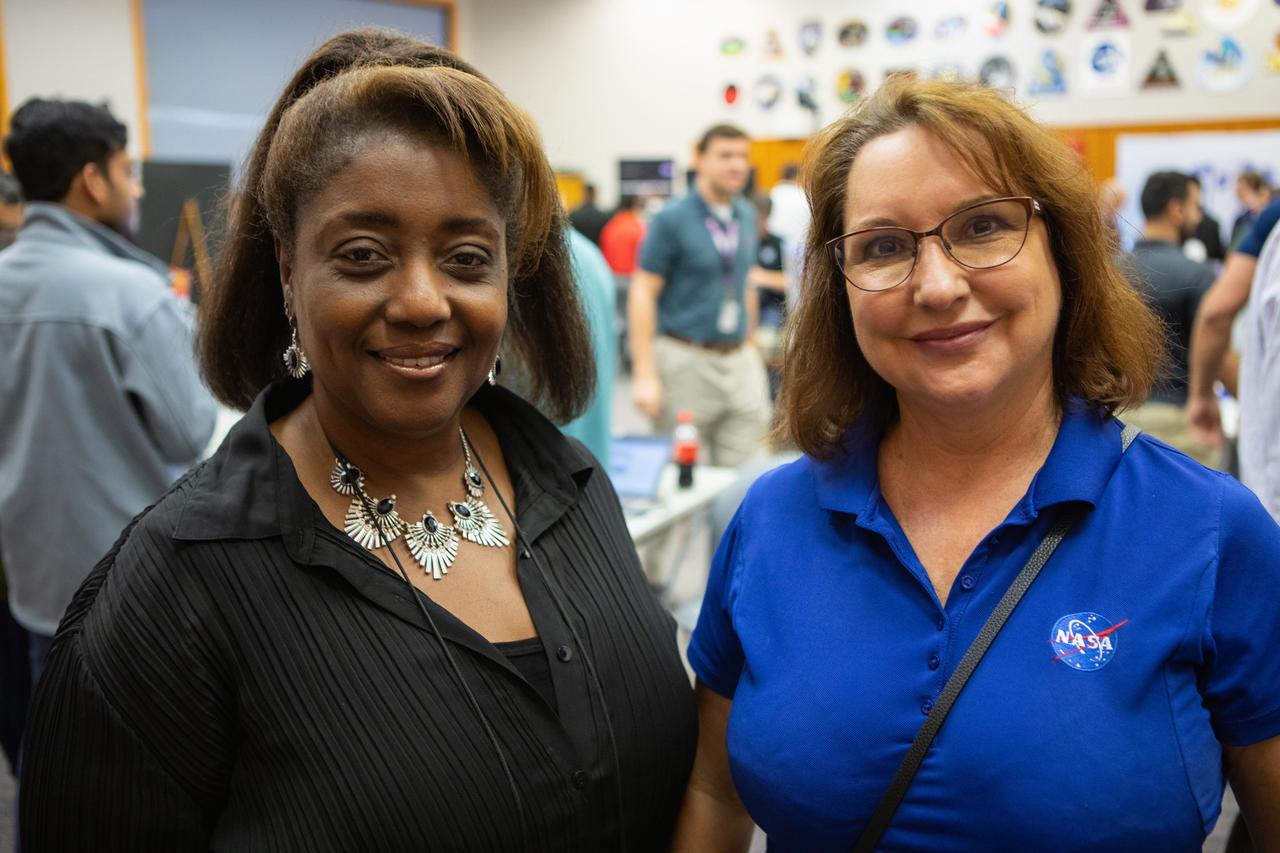
Kennedy Space Center Chief Technologist Barbara Brown, left, and Deputy Chief Technologist Kathy Loftin are photographed during an innovation showcase on Nov. 19, 2019, in the Florida spaceport’s Neil Armstrong Operations and Checkout Building’s Mission Briefing Room. Nearly 50 exhibitors gathered to demonstrate new technologies and innovations during the center’s Innovation Days – one of several events throughout the year aimed at fostering and encouraging an innovative culture at Kennedy. Showcase participants included individuals from multiple directorates, programs and organizations throughout Kennedy. In addition to the showcase, employees had the opportunity to attend an overview presentation on NASA’s Human Landing System (HLS), hosted by HLS Program Manager Lisa Watson-Morgan.

An interactive augmented reality sandbox, used by Swamp Works personnel to visually demonstrate the work being done in the Granular Mechanics and Regolith Operations laboratory at the Kennedy Space Center to produce high-fidelity models of rocket plume impingement on the lunar surface, is photographed during an innovation showcase on Nov. 19, 2019. Nearly 50 exhibitors gathered in the Florida spaceport’s Neil Armstrong Operations and Checkout Building’s Mission Briefing Room to participate in the center’s Innovation Days – one of several events throughout the year aimed at fostering an encouraging an innovative culture at Kennedy. Showcase participants included individuals from multiple directorates, programs and organizations throughout Kennedy. In addition to the showcase, employees had the opportunity to attend an overview presentation on NASA’s Human Landing System (HLS), hosted by HLS Program Manager Lisa Watson-Morgan.
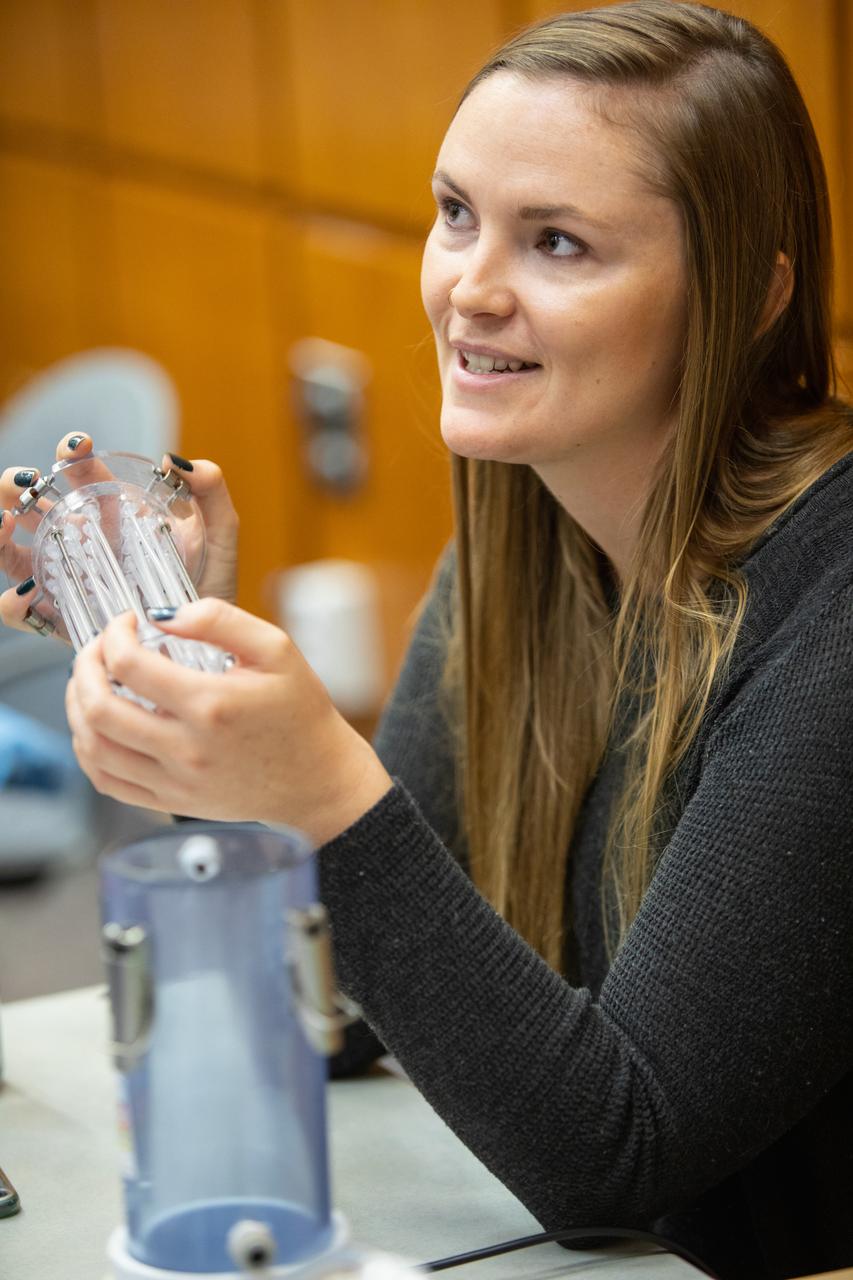
Melanie Pickett, a post-doctorate researcher at NASA’s Kennedy Space Center in Florida, participates in an innovation showcase on Nov. 19, 2019, in the Neil Armstrong Operations and Checkout Building’s Mission Briefing Room. A first-time participant, Pickett presented information on an Algae Membrane Photobioreactor she and others are developing that would eliminate the need for sending water treated with toxic chemicals – currently used to break down urine – to the International Space Station. Nearly 50 exhibitors gathered to demonstrate new technologies and innovations during the center’s Innovation Days – one of several events throughout the year aimed at fostering and encouraging an innovative culture at Kennedy. Showcase participants included individuals from multiple directorates, programs and organizations throughout Kennedy. In addition to the showcase, employees had the opportunity to attend an overview presentation on NASA’s Human Landing System (HLS), hosted by HLS Program Manager Lisa Watson-Morgan.
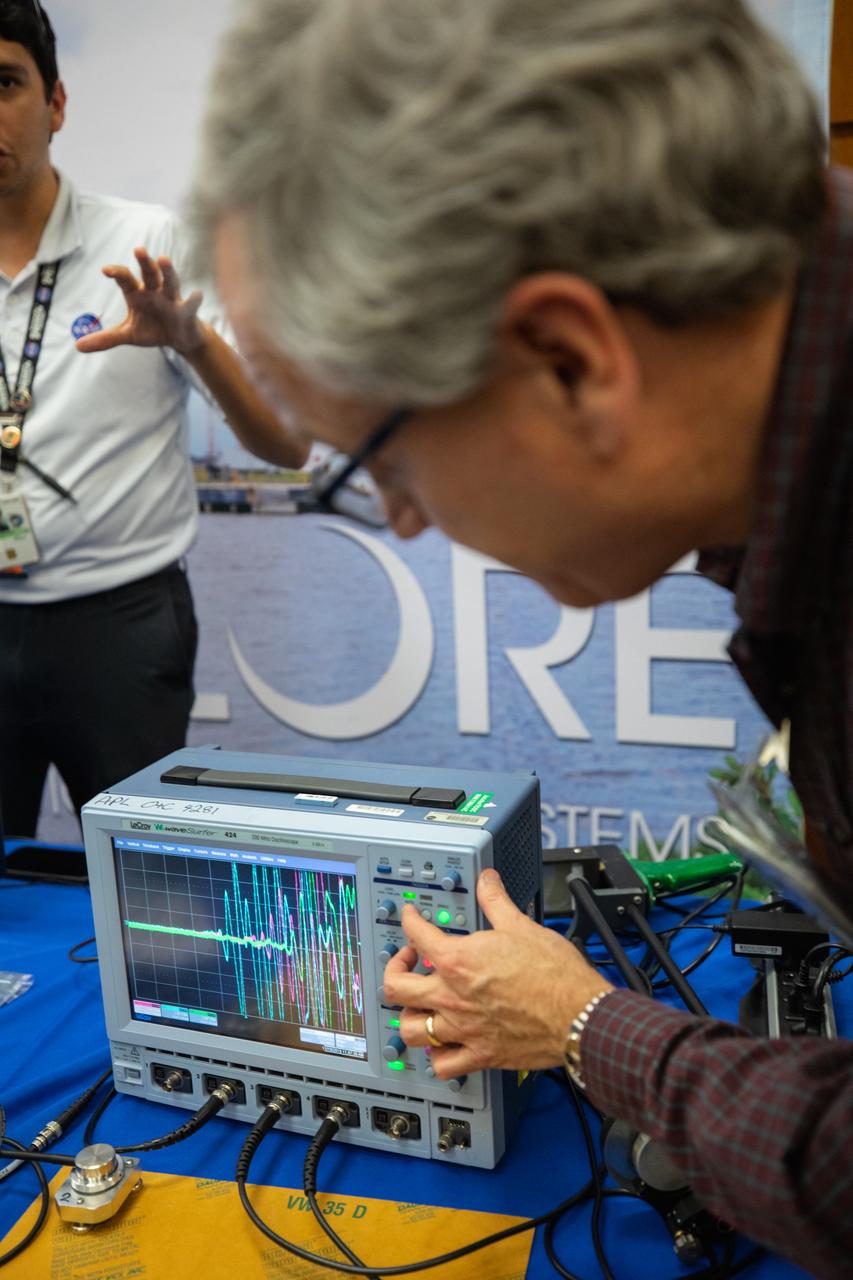
Applied Physics Laboratory Lead Physicist Dr. Bob Youngquist demonstrates technology recently used to resolve a technical challenge at Kennedy Space Center during an innovation showcase on Nov. 19, 2019, in the Florida spaceport’s Neil Armstrong Operations and Checkout Building’s Mission Briefing Room. Nearly 50 exhibitors gathered to participate in the center’s Innovation Days – one of several events throughout the year aimed at fostering and encouraging an innovative culture at Kennedy. Showcase participants included individuals from multiple directorates, programs and organizations throughout Kennedy. In addition to the showcase, employees had the opportunity to attend an overview presentation on NASA’s Human Landing System (HLS), hosted by HLS Program Manager Lisa Watson-Morgan.
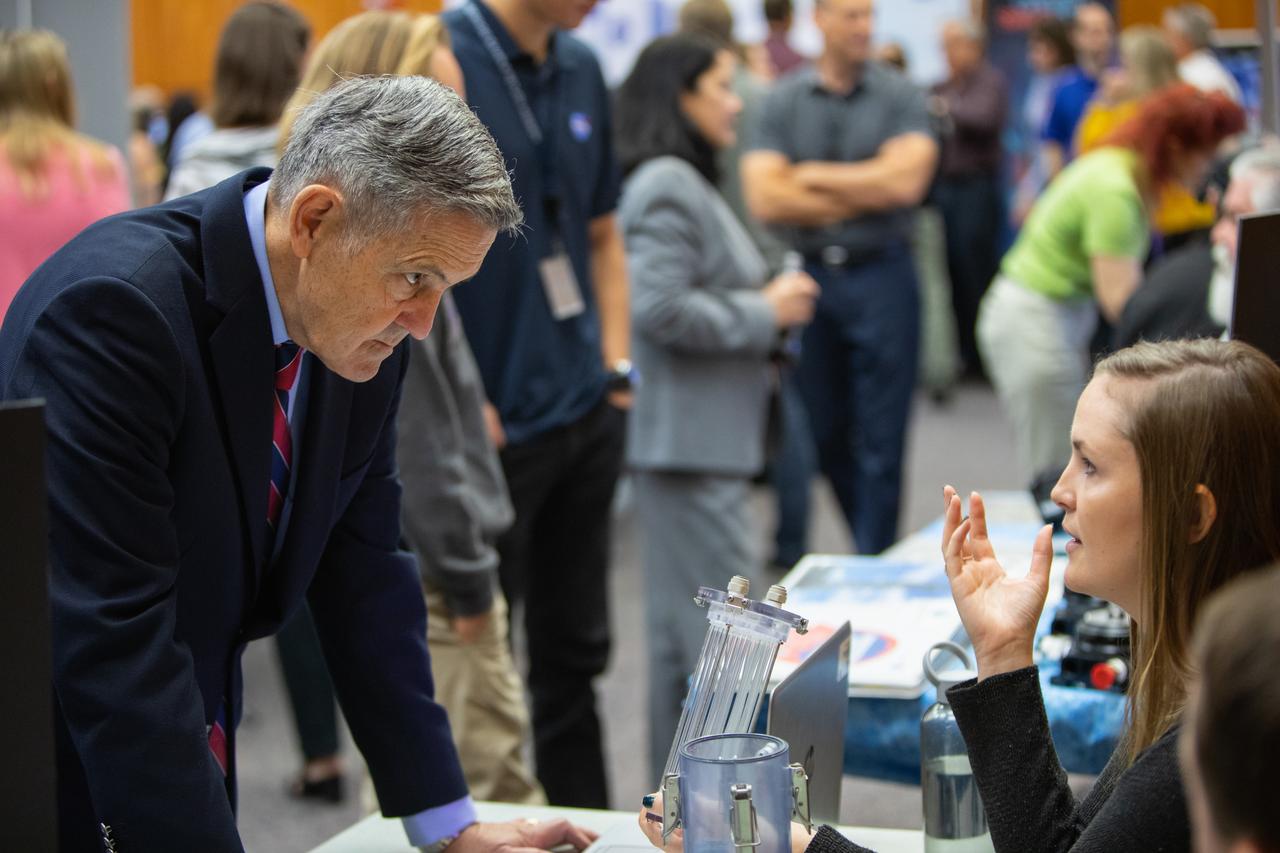
Melanie Pickett, right, a post-doctorate researcher at NASA’s Kennedy Space Center in Florida, speaks to Center Director Bob Cabana about an Algae Membrane Photobioreactor she and others are working on developing during an innovation showcase on Nov. 19, 2019, in the Neil Armstrong Operations and Checkout Building’s Mission Briefing Room. The bioreactor device would eliminate the need for sending pre-treated water – currently used to break down urine – to the International Space Station, reducing the amount of human exposure to toxic chemicals. Nearly 50 exhibitors gathered to demonstrate new technologies and innovations during the center’s Innovation Days – one of several events throughout the year aimed at fostering and encouraging an innovative culture at Kennedy. Showcase participants included individuals from multiple directorates, programs and organizations throughout Kennedy. In addition to the showcase, employees had the opportunity to attend an overview presentation on NASA’s Human Landing System (HLS), hosted by HLS Program Manager Lisa Watson-Morgan.
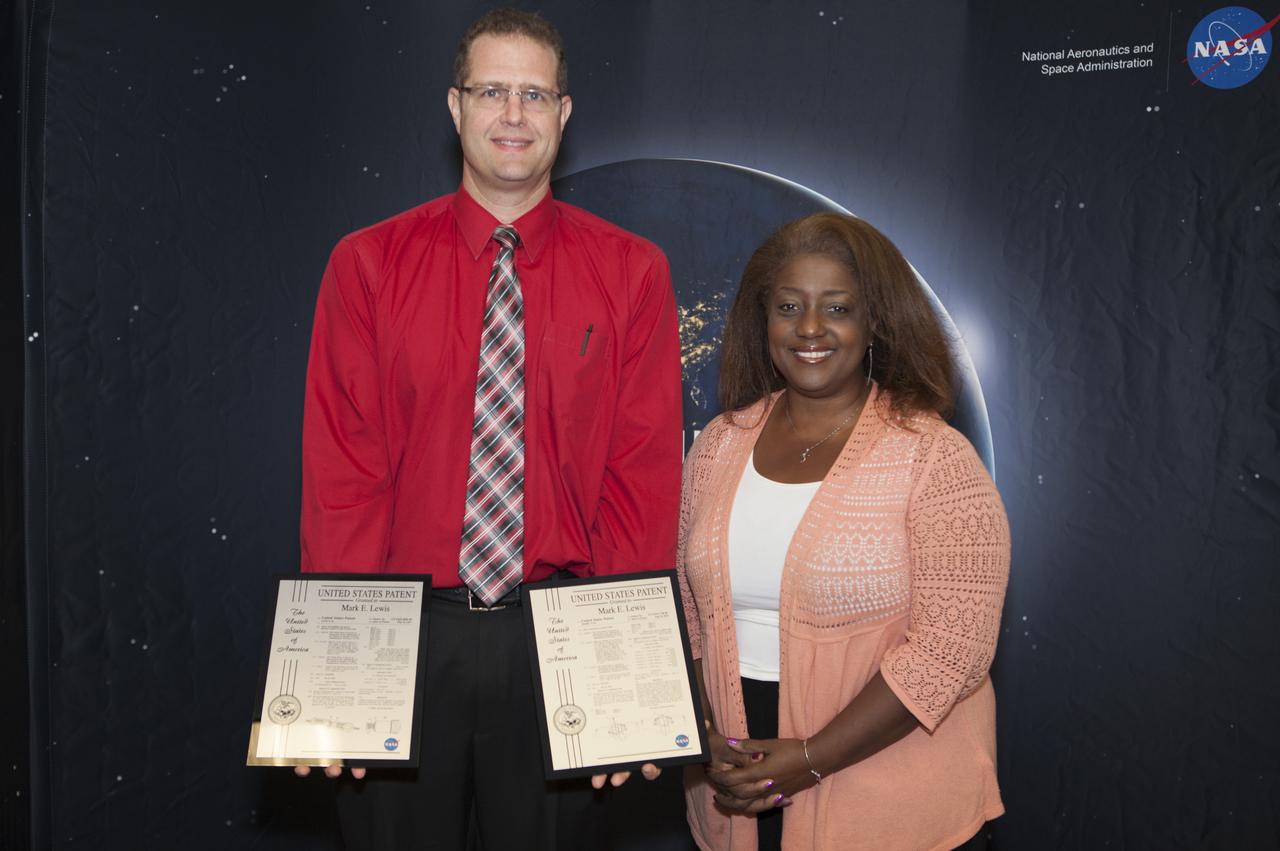
Mark Lewis displays the two U.S. Patent plaques he received during a ceremony at the 2017 Innovation Expo at NASA's Kennedy Space Center in Florida. To his right is Kelly Jones-McDowall, event co-chairperson. The purpose of the annual two-day expo is to help foster innovation and creativity among the Kennedy workforce. The event included several keynote speakers, training opportunities, an innovation showcase and the KSC Kickstart competition.
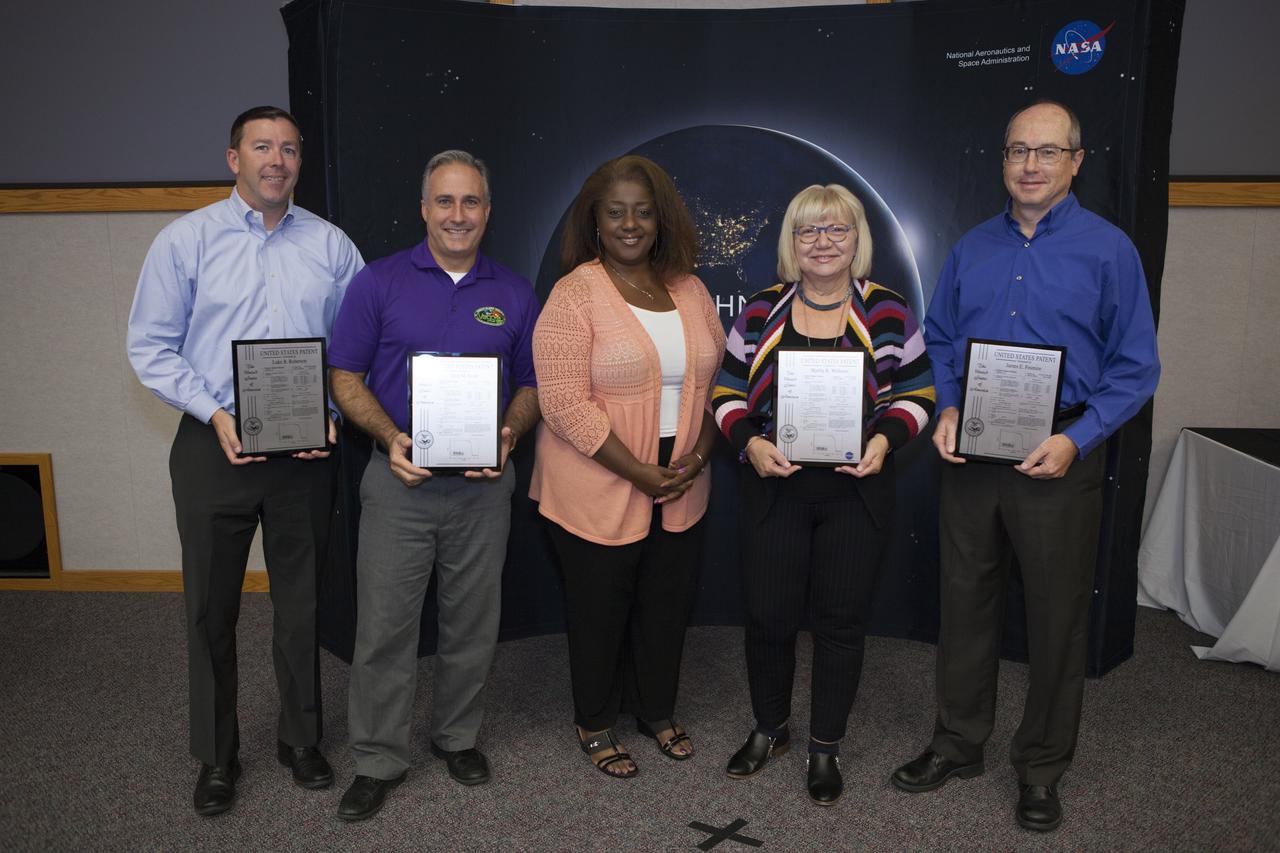
NASA Kennedy Space Center workers display their U.S. Patent plaques during a ceremony at the 2017 Innovation Expo at the center. From left, are Luke Robertson, Trent Smith, Kelly Jones-McDowall, event co-chairperson, Martha Williams and Dr. James Fesmire. The purpose of the annual two-day expo is to help foster innovation and creativity among the Kennedy workforce. The event included several keynote speakers, training opportunities, an innovation showcase and the KSC Kickstart competition.
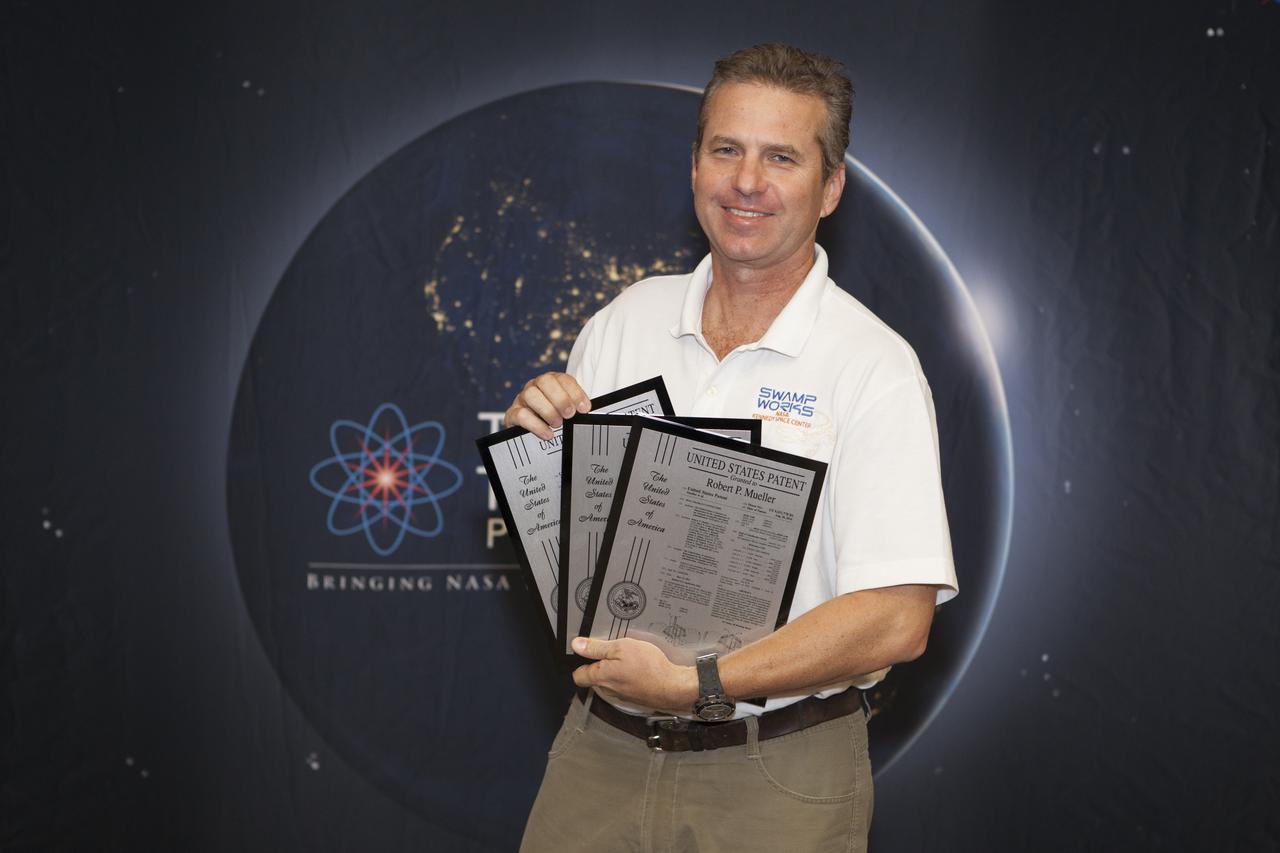
Robert Mueller displays the three U.S. Patent plaques he received during a ceremony at the 2017 Innovation Expo at NASA's Kennedy Space Center in Florida. The purpose of the annual two-day expo is to help foster innovation and creativity among the Kennedy workforce. The event included several keynote speakers, training opportunities, an innovation showcase and the KSC Kickstart competition.
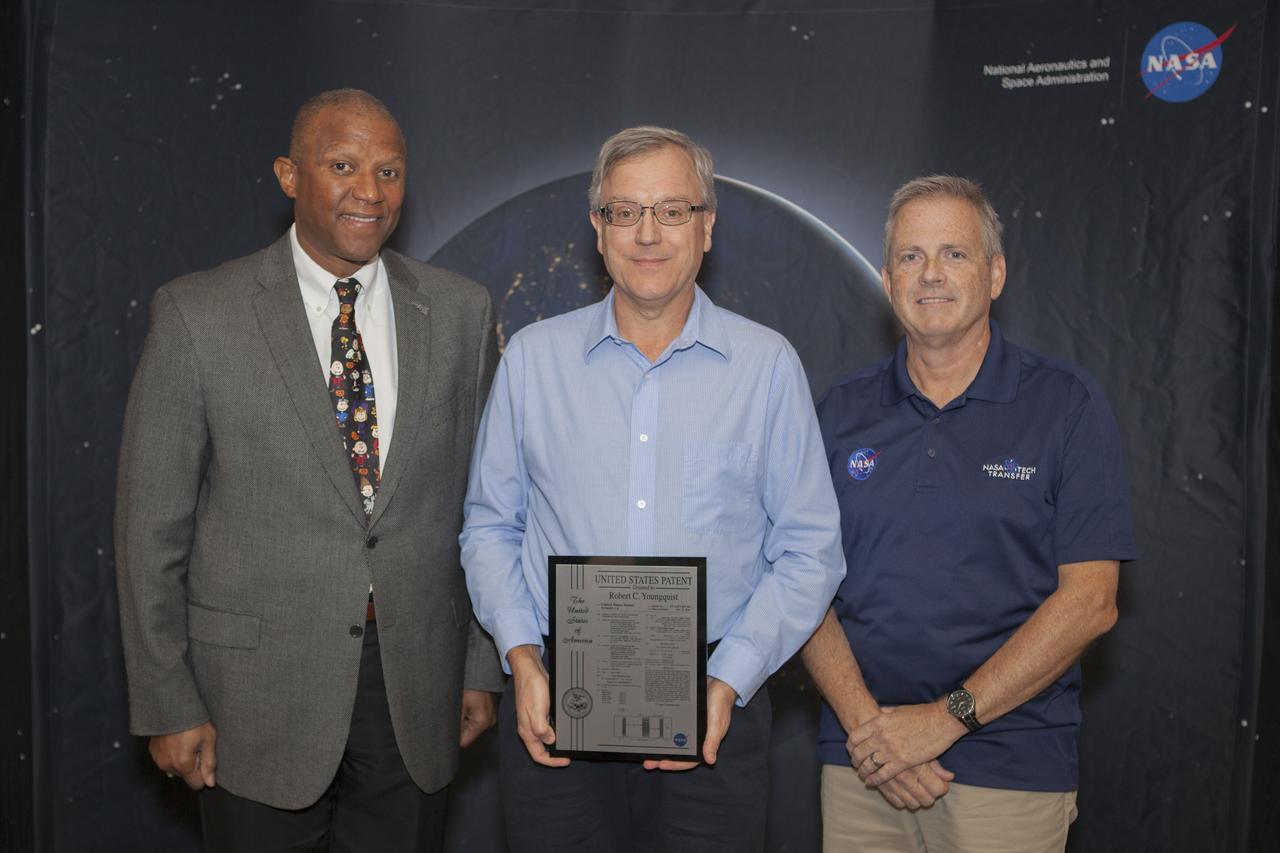
Robert Youngquist, center, Applied Physics Laboratory lead, received a U.S. Patent plaque for his invention, Surface Acoustic Wave Tag-Based Coherence Multiplexing, during the 2017 Innovation Expo at NASA's Kennedy Space Center in Florida. From left, are Kelvin Manning, Kennedy's associate director; Youngquist; and Dave Makufka, Kennedy's Technology Transfer Program manager. The purpose of the annual two-day expo is to help foster innovation and creativity among the Kennedy workforce. The event included several keynote speakers, training opportunities, an innovation showcase and the KSC Kickstart competition.
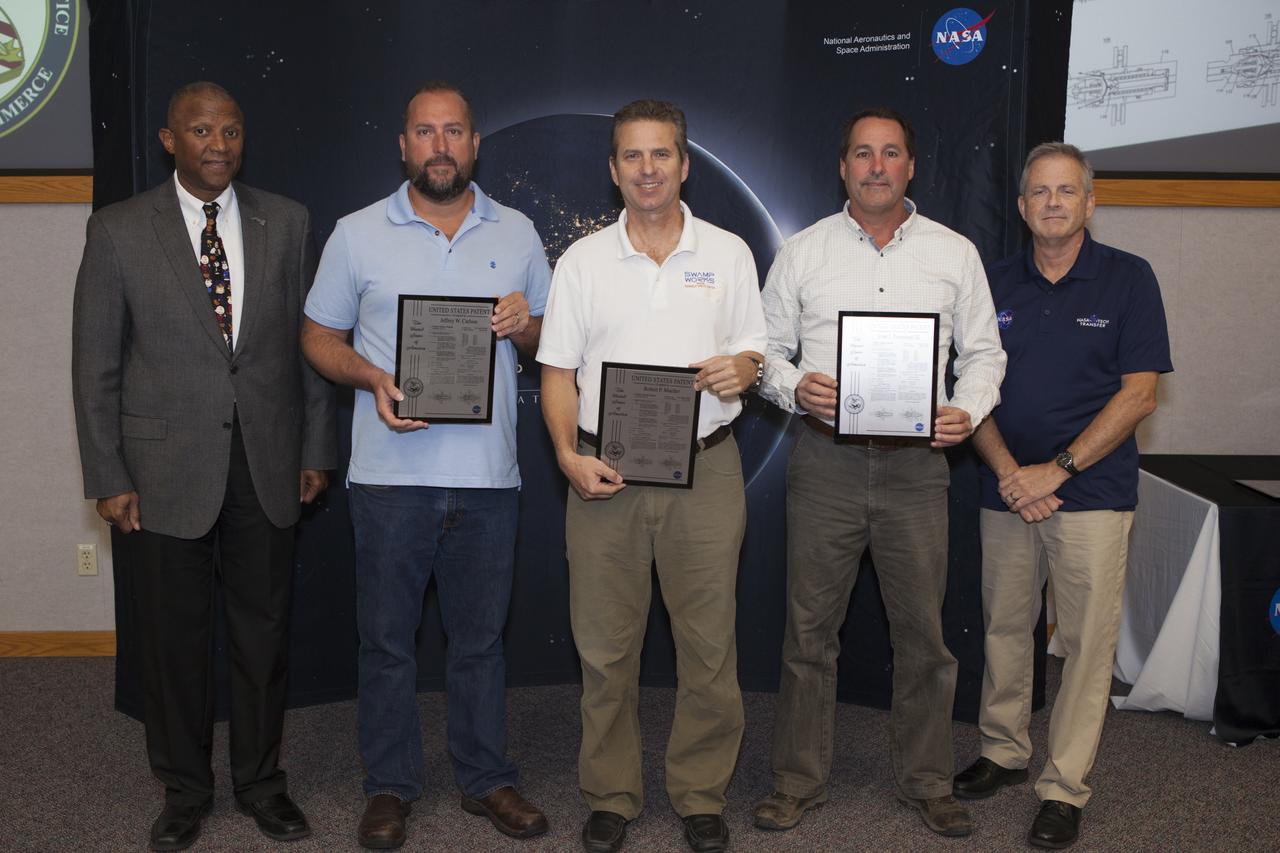
U.S. Patent plaques were awarded to, second from left, Jeffrey Carlson, Robert Mueller and Ivan Townsend III, for their invention, Dust and Debris Tolerant Dual Poppet Valve Connector, during the 2017 Innovation Expo at NASA's Kennedy Space Center in Florida. Not pictured: Gary Basin and Kevin Murtland. At left is Kelvin Manning, Kennedy's associate director. At far right is Dave Makufka, Kennedy's Technology Transfer Program manager. The purpose of the annual two-day expo is to help foster innovation and creativity among the Kennedy workforce. The event included several keynote speakers, training opportunities, an innovation showcase and the KSC Kickstart competition.
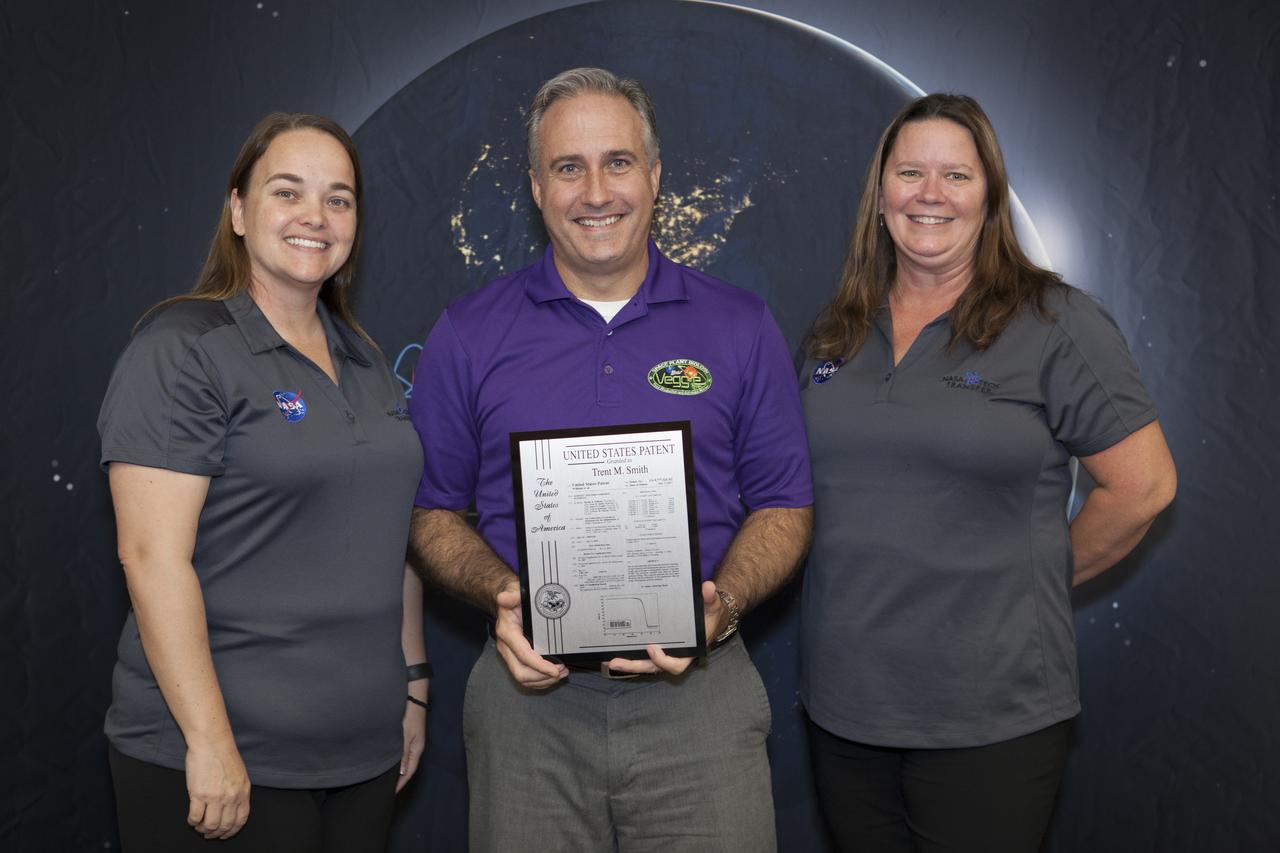
Trent Smith, project manager in the ISS Exploration Research and Technology Program, displays the U.S. Patent plaque he received during a ceremony at the 2017 Innovation Expo at NASA's Kennedy Space Center in Florida. The purpose of the annual two-day expo is to help foster innovation and creativity among the Kennedy workforce. The event included several keynote speakers, training opportunities, an innovation showcase and the KSC Kickstart competition.
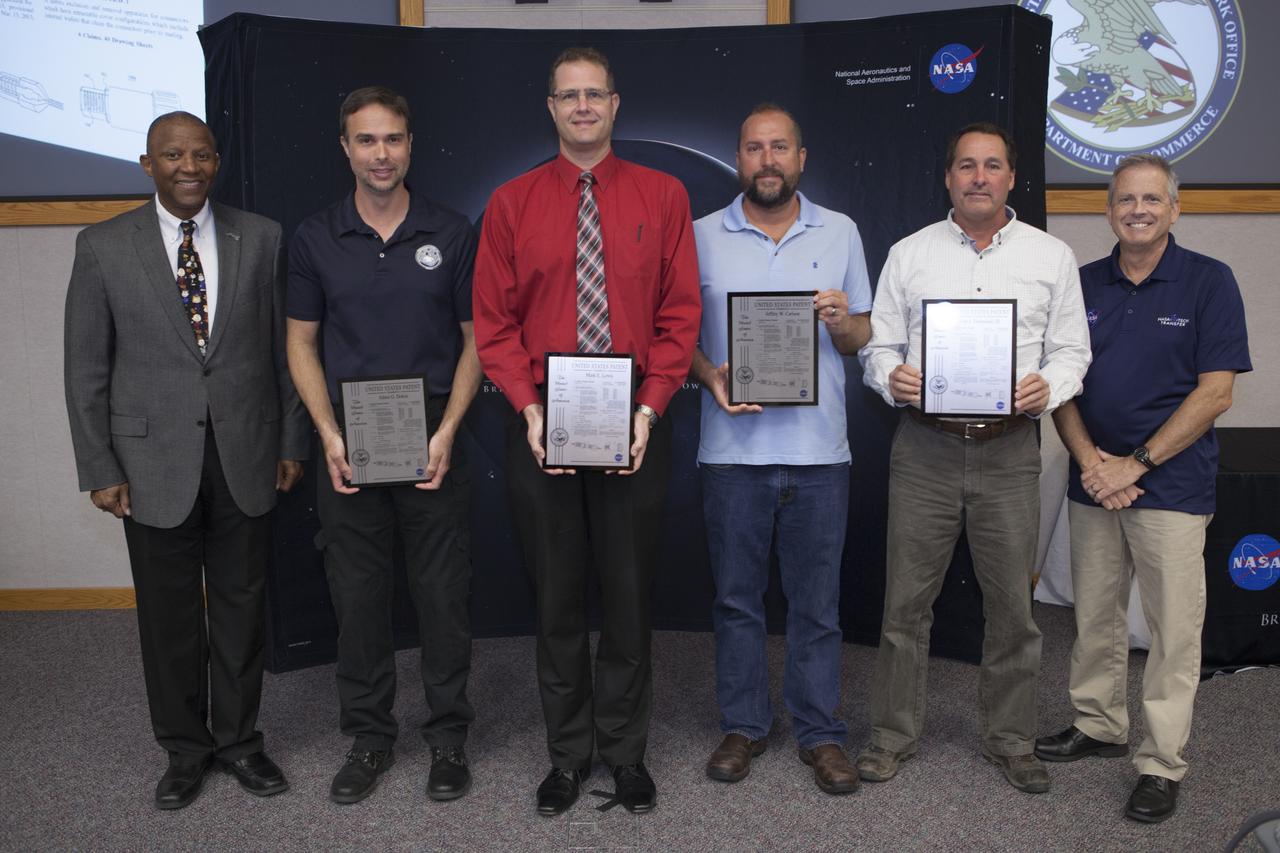
U.S. Patent plaques were awarded to, second from left, Adam Dokos, Mark Lewis, Jeffrey Carlson and Ivan Townsend III, for their invention, Dust and Debris Tolerant Retractable Cover, during the 2017 Innovation Expo at NASA's Kennedy Space Center in Florida. Not pictured: Gary Basin and Kevin Murtland. At left is Kelvin Manning, Kennedy's associate director. At far right is Dave Makufka, Kennedy's Technology Transfer Program manager. The purpose of the annual two-day expo is to help foster innovation and creativity among the Kennedy workforce. The event included several keynote speakers, training opportunities, an innovation showcase and the KSC Kickstart competition.
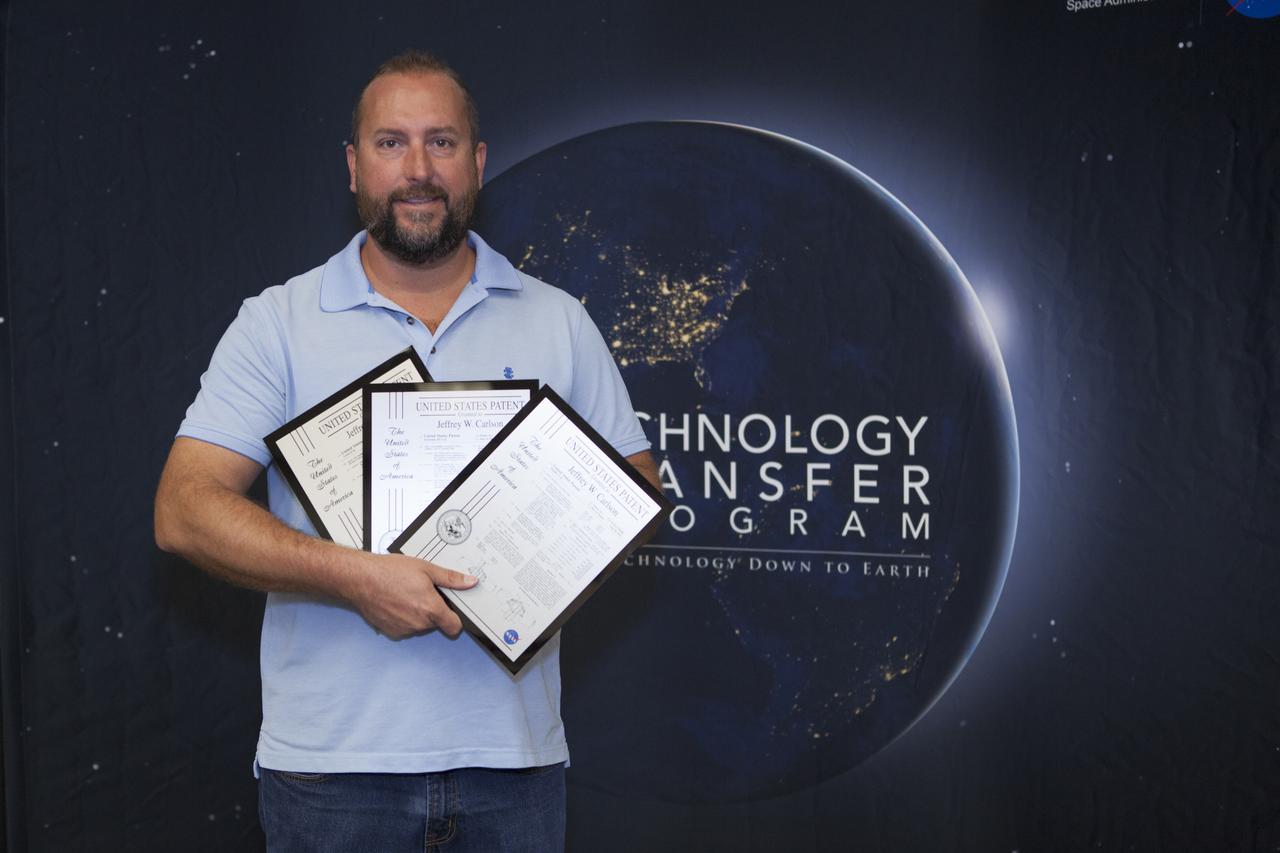
Jeffrey Carlson displays the three U.S. Patent plaques he received during a ceremony at the 2017 Innovation Expo at NASA's Kennedy Space Center in Florida. The purpose of the annual two-day expo is to help foster innovation and creativity among the Kennedy workforce. The event included several keynote speakers, training opportunities, an innovation showcase and the KSC Kickstart competition.
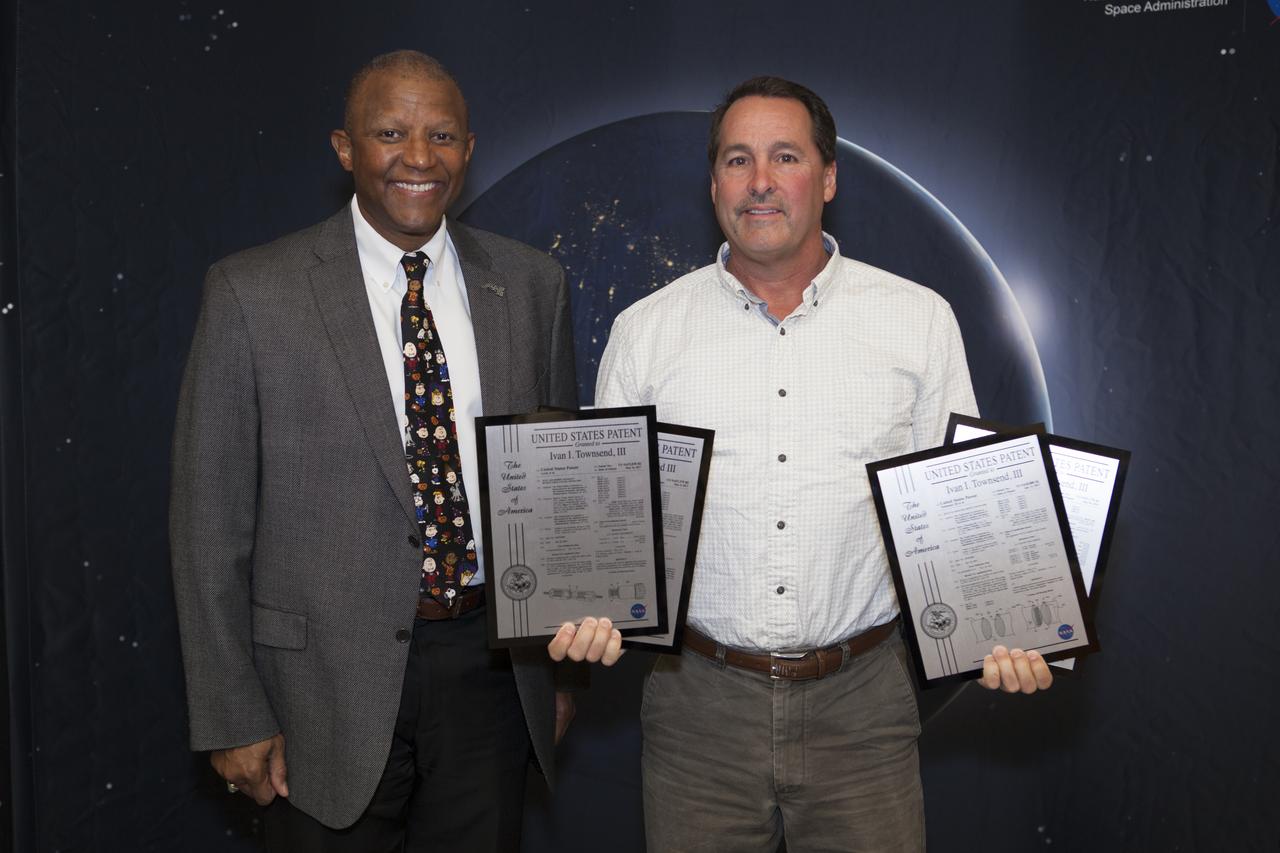
Ivan Townsend III displays the four U.S. Patent plaques he received during a ceremony at the 2017 Innovation Expo at NASA's Kennedy Space Center in Florida. The purpose of the annual two-day expo is to help foster innovation and creativity among the Kennedy workforce. The event included several keynote speakers, training opportunities, an innovation showcase and the KSC Kickstart competition.
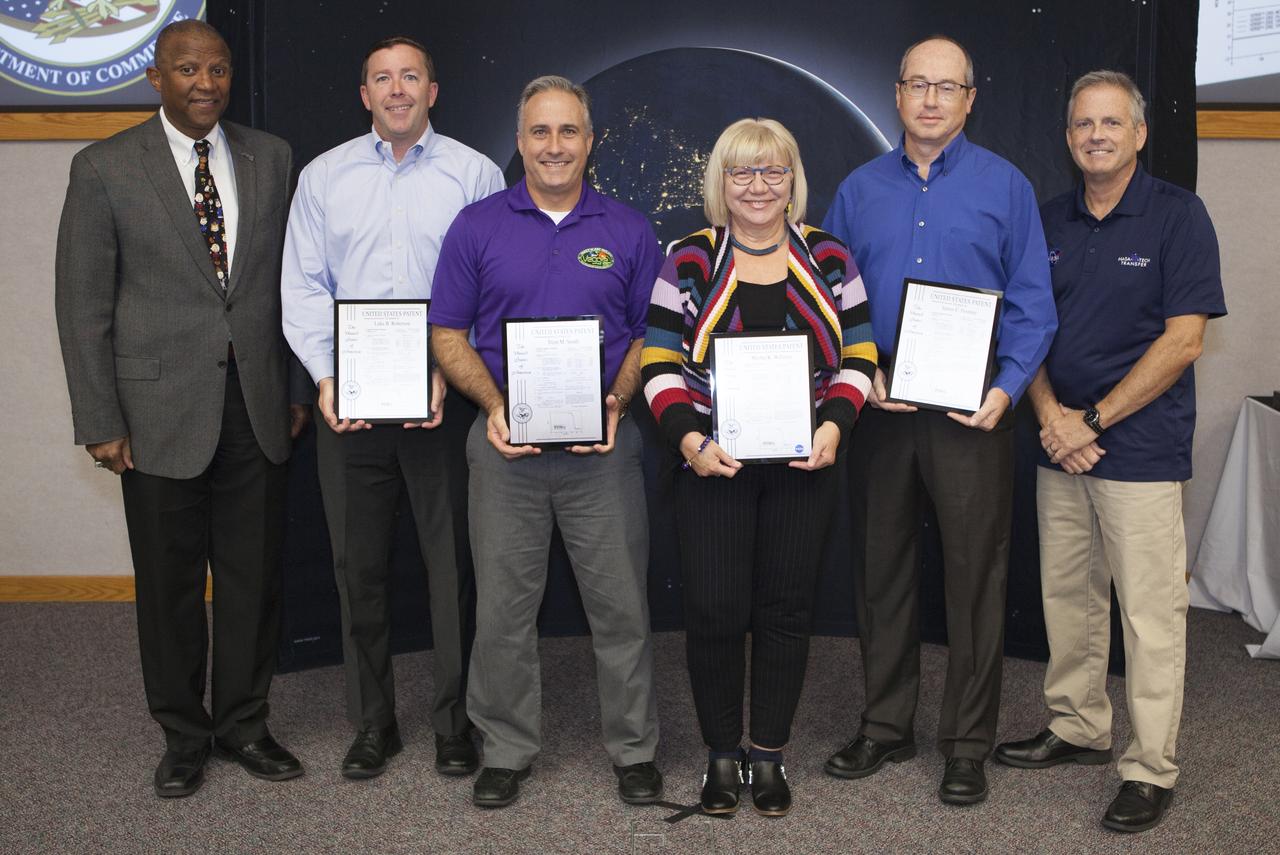
U.S. Patent plaques were awarded to, second from left, Luke Roberson, Trent Smith, Martha Williams and James Fesmire, for their invention, Aerogel/Polymer Composite Materials, known as Aeroplastic, during the 2017 Innovation Expo at NASA's Kennedy Space Center in Florida. At left is Kelvin Manning, Kennedy's associate director; and at far right is Dave Makufka, Kennedy's Technology Transfer Program manager. The purpose of the annual two-day expo is to help foster innovation and creativity among the Kennedy workforce. The event included several keynote speakers, training opportunities, an innovation showcase and the KSC Kickstart competition.
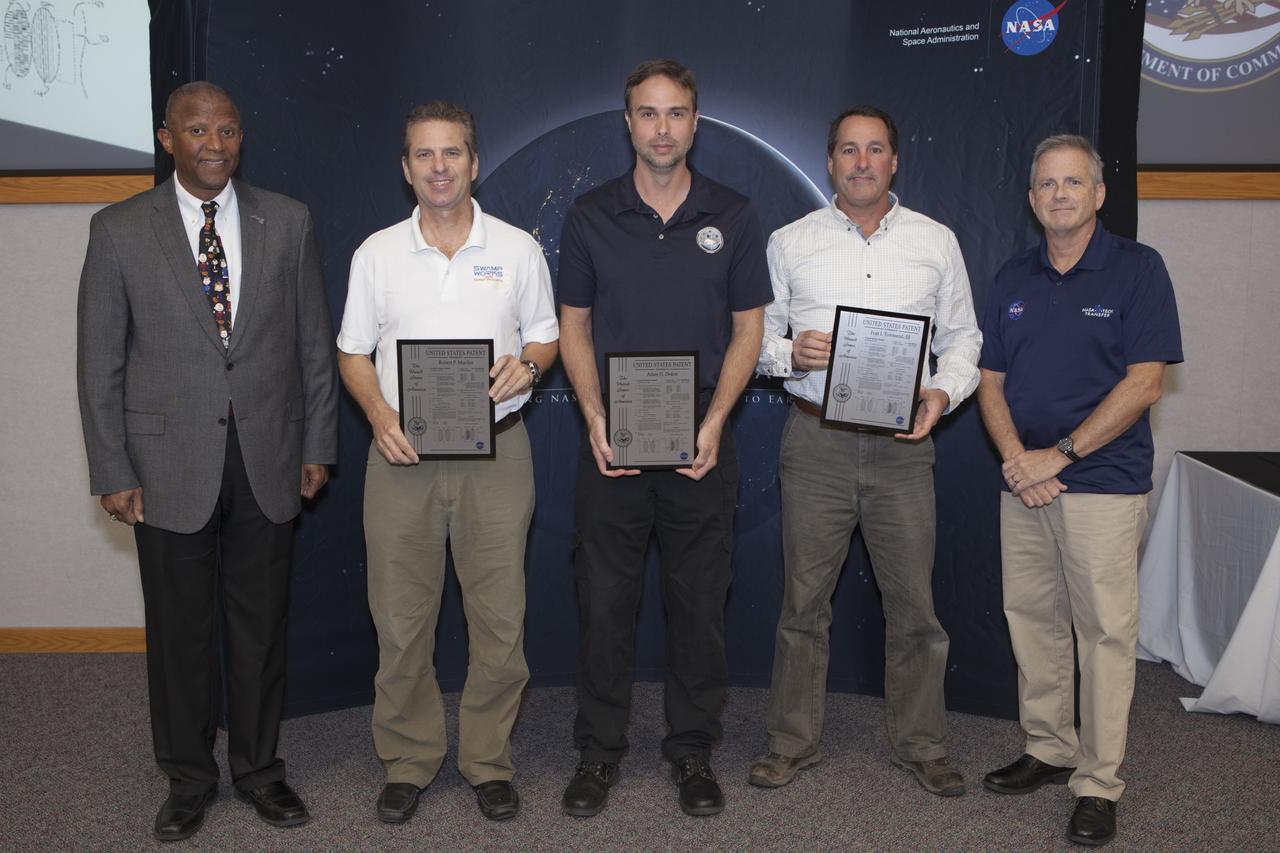
U.S. Patent plaques were awarded to, second from left, Robert Mueller, Adam Dokos and Ivan Townsend III, for their invention, Self-Cleaning Filament Connector, during the 2017 Innovation Expo at NASA's Kennedy Space Center in Florida. At left is Kelvin Manning, Kennedy's associate director. At far right is Dave Makufka, Kennedy's Technology Transfer Program manager. The purpose of the annual two-day expo is to help foster innovation and creativity among the Kennedy workforce. The event included several keynote speakers, training opportunities, an innovation showcase and the KSC Kickstart competition.
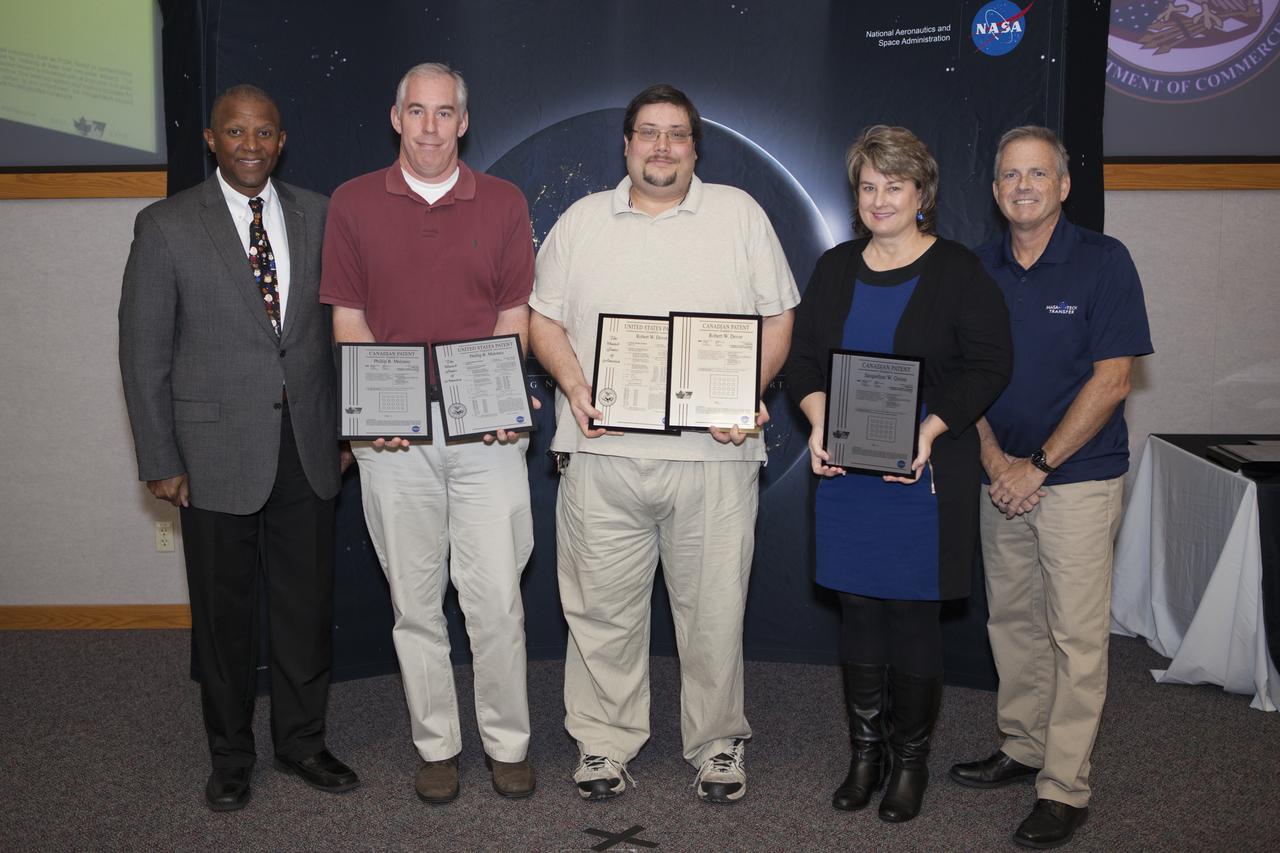
U.S. and Canadian Patent plaques were awarded to, second from left, Phillip Maloney, Robert Devor and Jacqueline Quinn, for their invention, Removing Halogenated Compounds from Contaminated Systems, during the 2017 Innovation Expo at NASA's Kennedy Space Center in Florida. Not pictured: James Captain. At left is Kelvin Manning, Kennedy's associate director. At far right is Dave Makufka, Kennedy's Technology Transfer Program manager. The purpose of the annual two-day expo is to help foster innovation and creativity among the Kennedy workforce. The event included several keynote speakers, training opportunities, an innovation showcase and the KSC Kickstart competition.
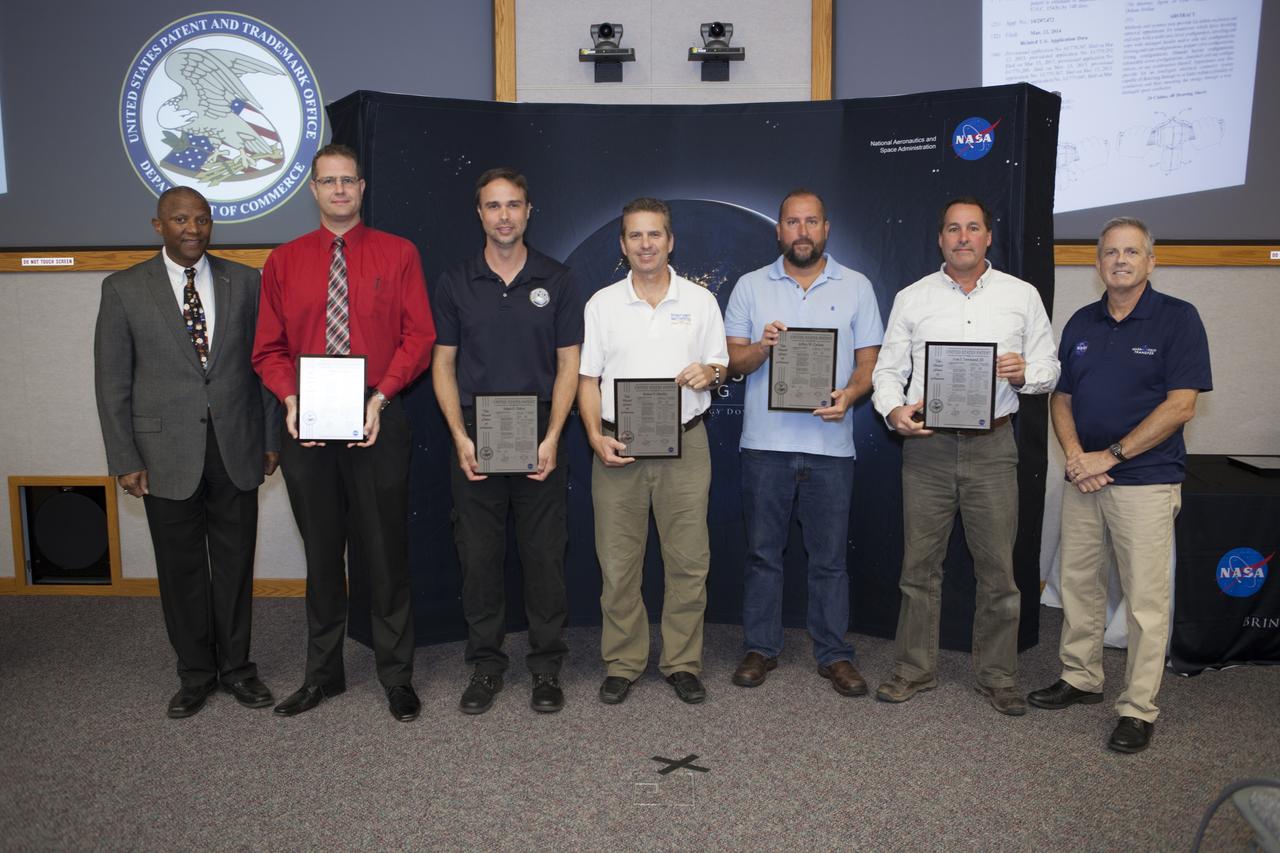
U.S. Patent plaques were awarded to, second from left, Mark Lewis, Adam Dokos, Robert Mueller, Jeffrey Carlson and Ivan Townsend III, for their invention, Dust Tolerant Connectors, during the 2017 Innovation Expo at NASA's Kennedy Space Center in Florida. Not pictured: Gary Basin, Matthew Branch, Kevin Murtland, Matthew Nugent and Gabor Tamasy. At left is Kelvin Manning, Kennedy's associate director. At far right is Dave Makufka, Kennedy's Technology Transfer Program manager. The purpose of the annual two-day expo is to help foster innovation and creativity among the Kennedy workforce. The event included several keynote speakers, training opportunities, an innovation showcase and the KSC Kickstart competition.

PHOTO DATE: 7-10-2011 LOCATION: Bldg. 2N - Press Briefing Room SUBJECT: STS-135 Flight Day 3 Mission Status Briefing with Kwatsi Alibaruho. WORK ORDER: 00000-DCB_STS135_Day 3_Status Briefing_7-10-11 PHOTOGRAPHER: Devin Boldt
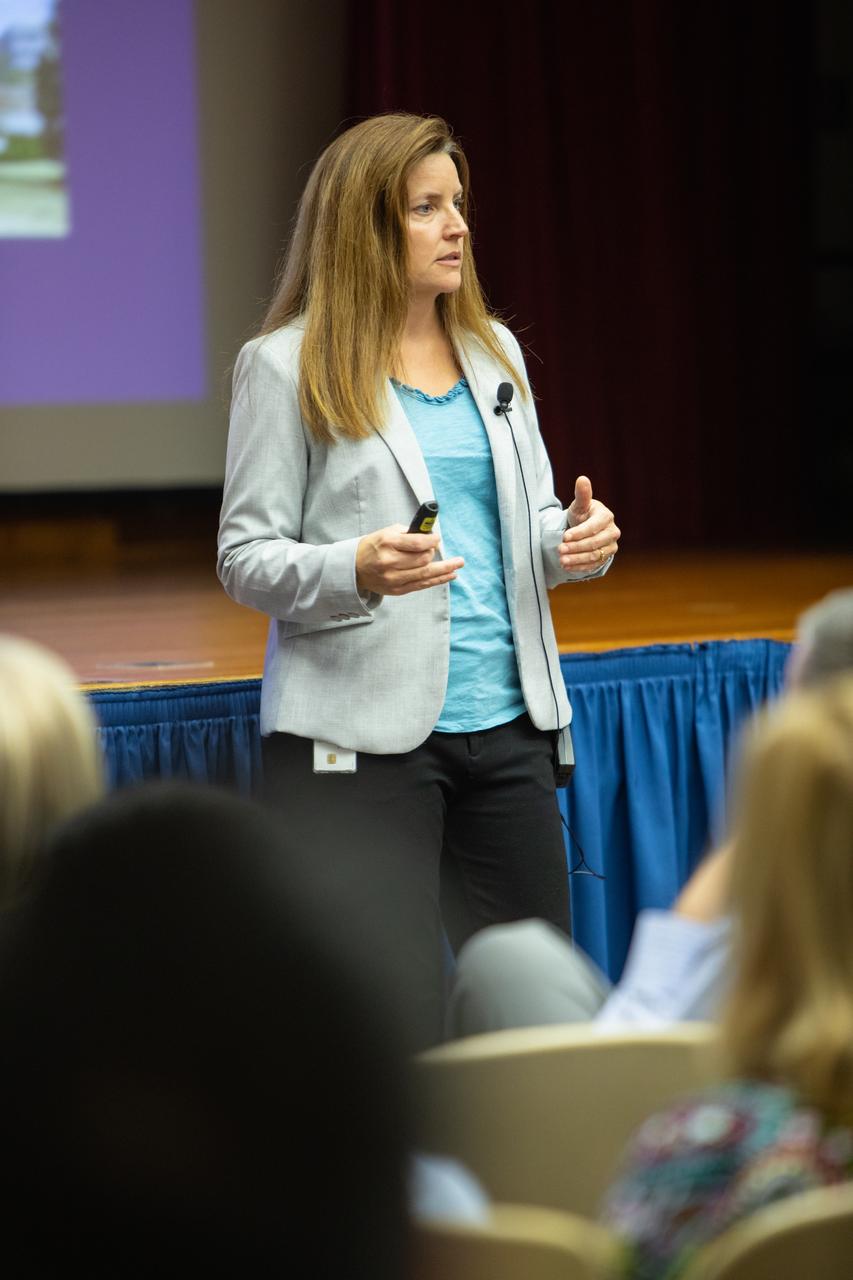
Lisa-Watson Morgan, NASA’s Human Landing System program manager, provides an overview of the program to Kennedy Space Center employees in the Florida spaceport’s Training Auditorium on Nov. 19, 2019. Watson-Morgan’s presentation was part of the center’s Innovation Days, one of several events throughout the year aimed at fostering and encouraging an innovative culture at Kennedy. In addition to the presentation, Kennedy employees had the opportunity to attend an innovation showcase, where nearly 50 exhibitors demonstrated new technologies and innovations. Showcase participants included individuals from multiple directorates, programs and organizations throughout Kennedy.

Kennedy Space Center employees attend “The Legacy of Sally Ride: The First American Woman in Space” event at Kennedy Space Center in Florida on June 15, 2023. Forty years ago, Ride made her trailblazing flight into space. A hero to millions, Ride was a steadfast advocate for inclusion in STEM (science, technology, engineering, mathematics) – especially for girls and young women – until her death in 2012 from pancreatic cancer.
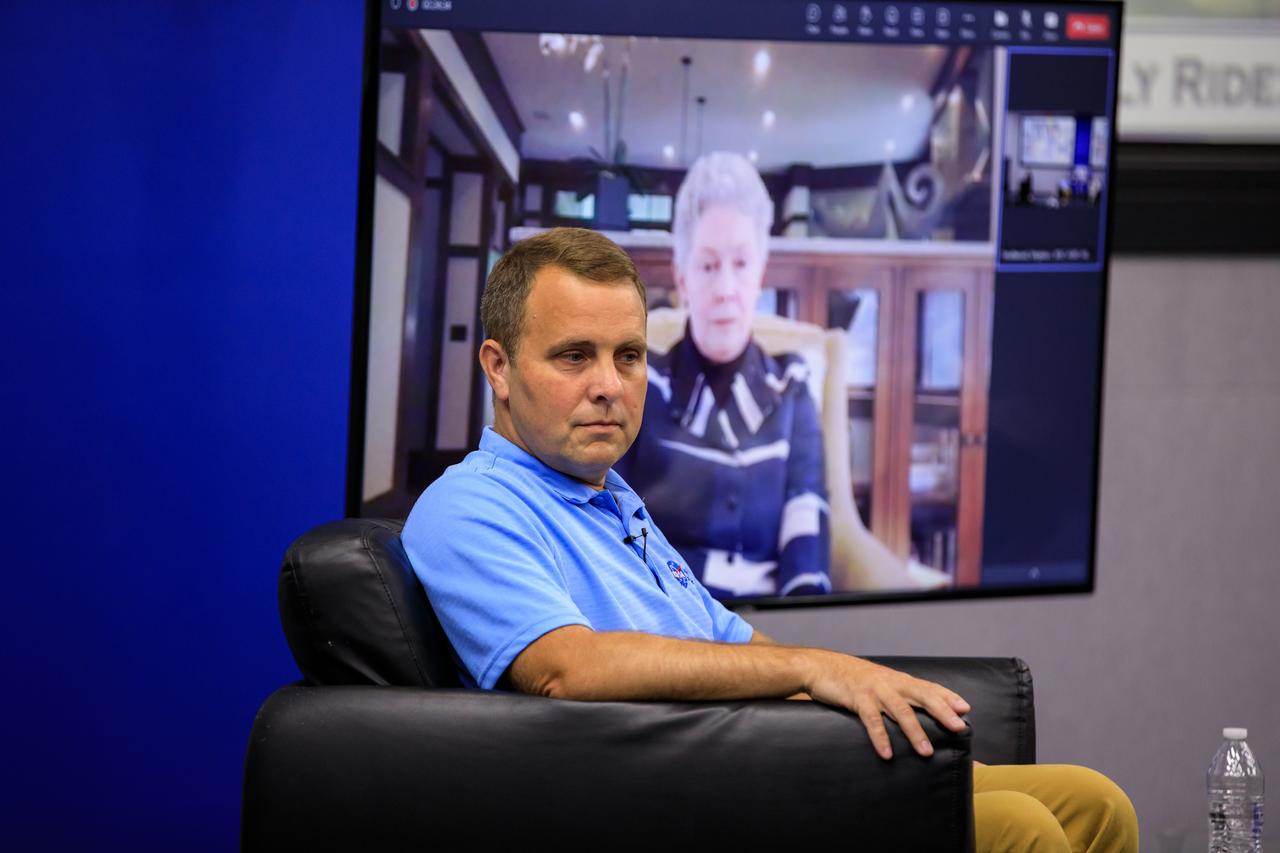
NASA Chief Historian Brian Odom moderates “The Legacy of Sally Ride: The First American Woman in Space” event at Kennedy Space Center in Florida on June 15, 2023. Forty years ago, Ride made her trailblazing flight into space. A hero to millions, Ride was a steadfast advocate for inclusion in STEM (science, technology, engineering, mathematics) – especially for girls and young women – until her death in 2012 from pancreatic cancer. Appearing on the monitor in the background is Sally Ride’s life partner of 27 years, Tam O’Shaughnessy.
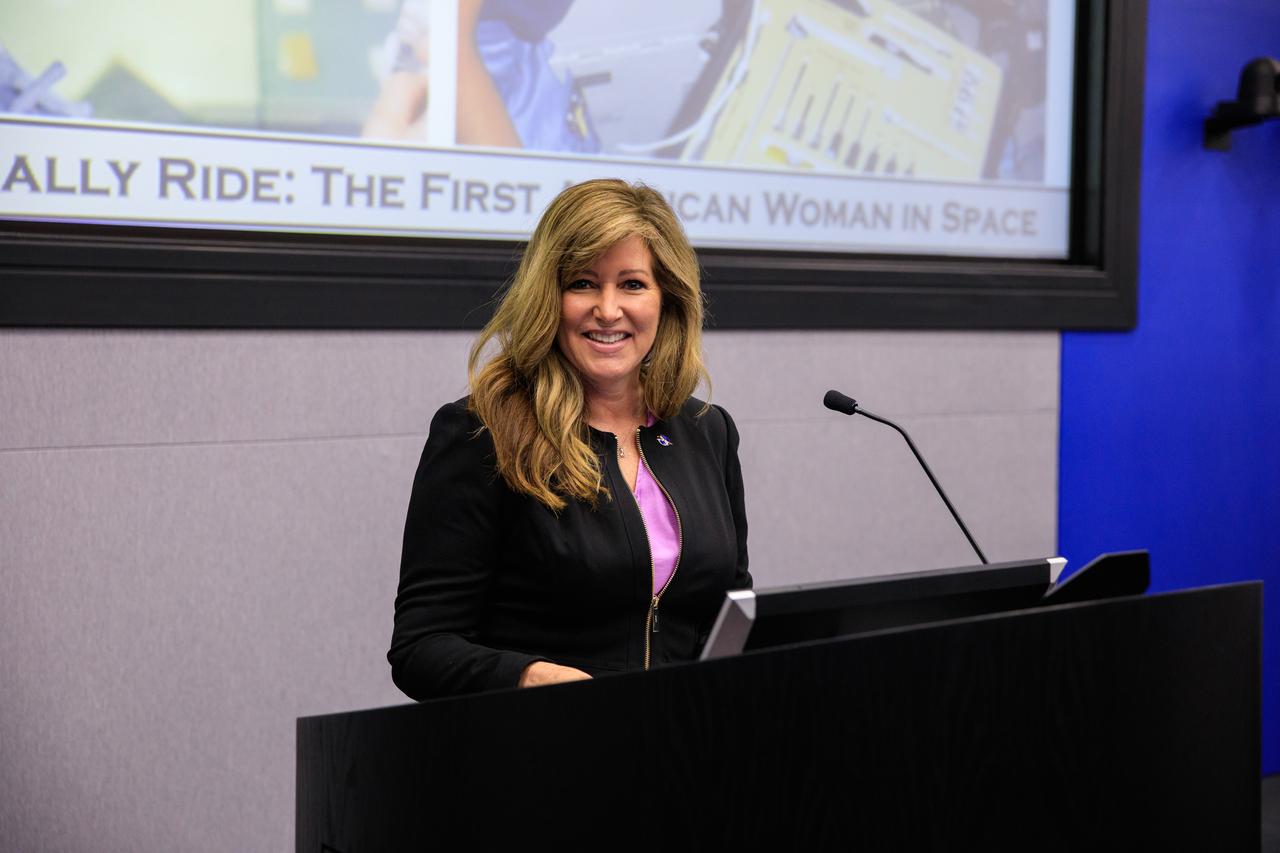
Jennifer Kunz, associate director, technical, at NASA’s Kennedy Space Center, addresses the audience at “The Legacy of Sally Ride: The First American Woman in Space” event at the Florida spaceport on June 15, 2023. Forty years ago, Ride made her trailblazing flight into space. A hero to millions, Ride was a steadfast advocate for inclusion in STEM (science, technology, engineering, mathematics) – especially for girls and young women – until her death in 2012 from pancreatic cancer.
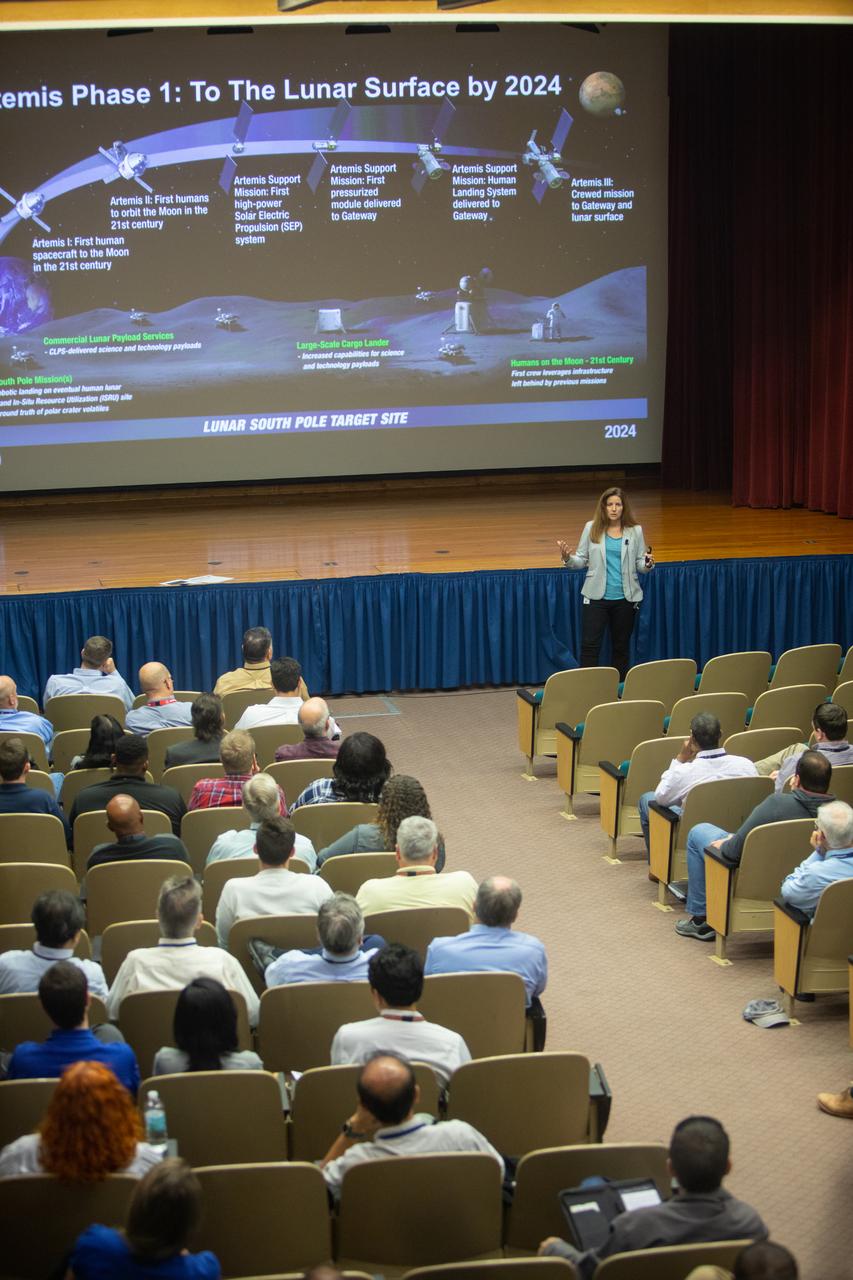
Lisa-Watson Morgan, NASA’s Human Landing System program manager, provides an overview of the program to Kennedy Space Center employees in the Florida spaceport’s Training Auditorium on Nov. 19, 2019. Watson-Morgan’s presentation was part of the center’s Innovation Days, one of several events throughout the year aimed at fostering and encouraging an innovative culture at Kennedy. In addition to the presentation, Kennedy employees had the opportunity to attend an innovation showcase, where nearly 50 exhibitors demonstrated new technologies and innovations. Showcase participants included individuals from multiple directorates, programs and organizations throughout Kennedy.
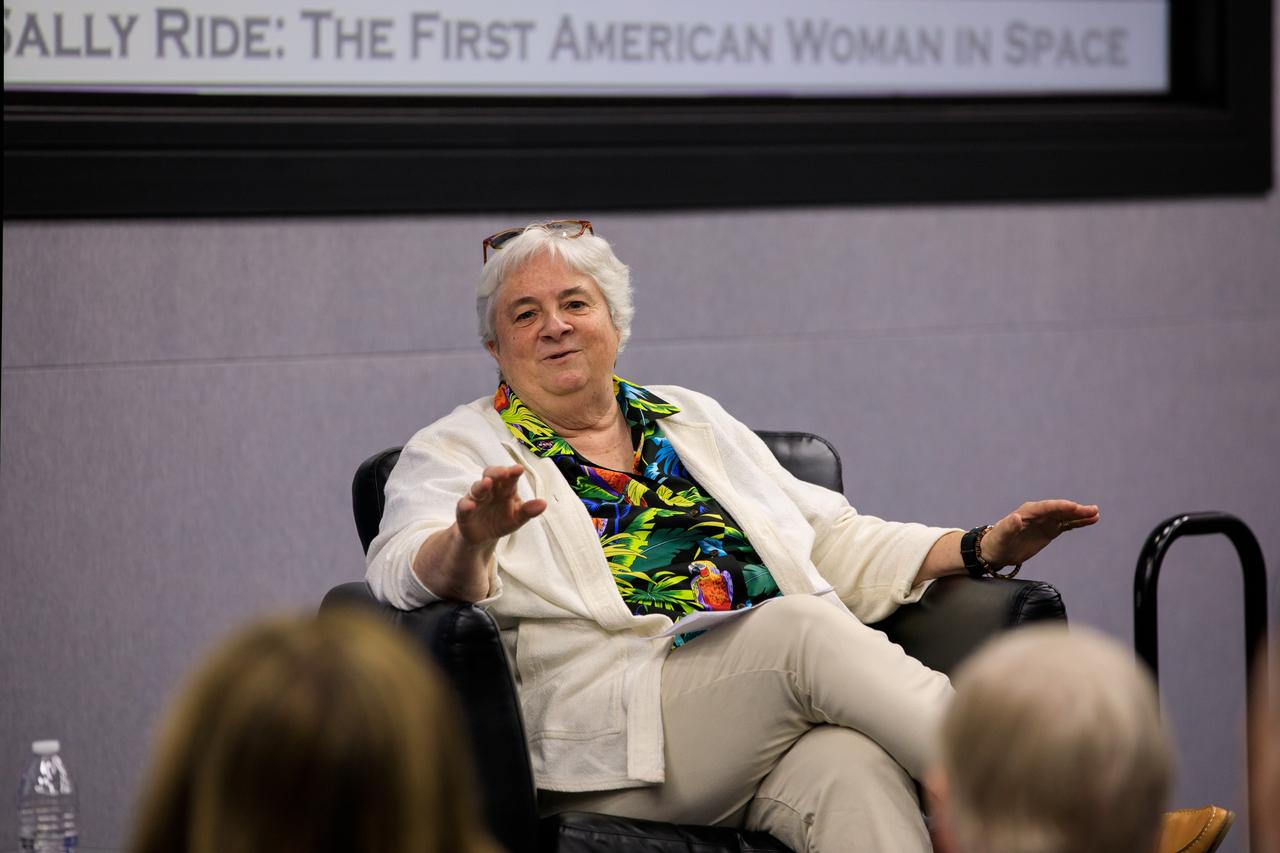
Bear Ride, the sister of pioneering astronaut Sally Ride, speaks during “The Legacy of Sally Ride: The First American Woman in Space” event at Kennedy Space Center in Florida on June 15, 2023. Forty years ago, Ride made her trailblazing flight into space. A hero to millions, Ride was a steadfast advocate for inclusion in STEM (science, technology, engineering, mathematics) – especially for girls and young women – until her death in 2012 from pancreatic cancer.
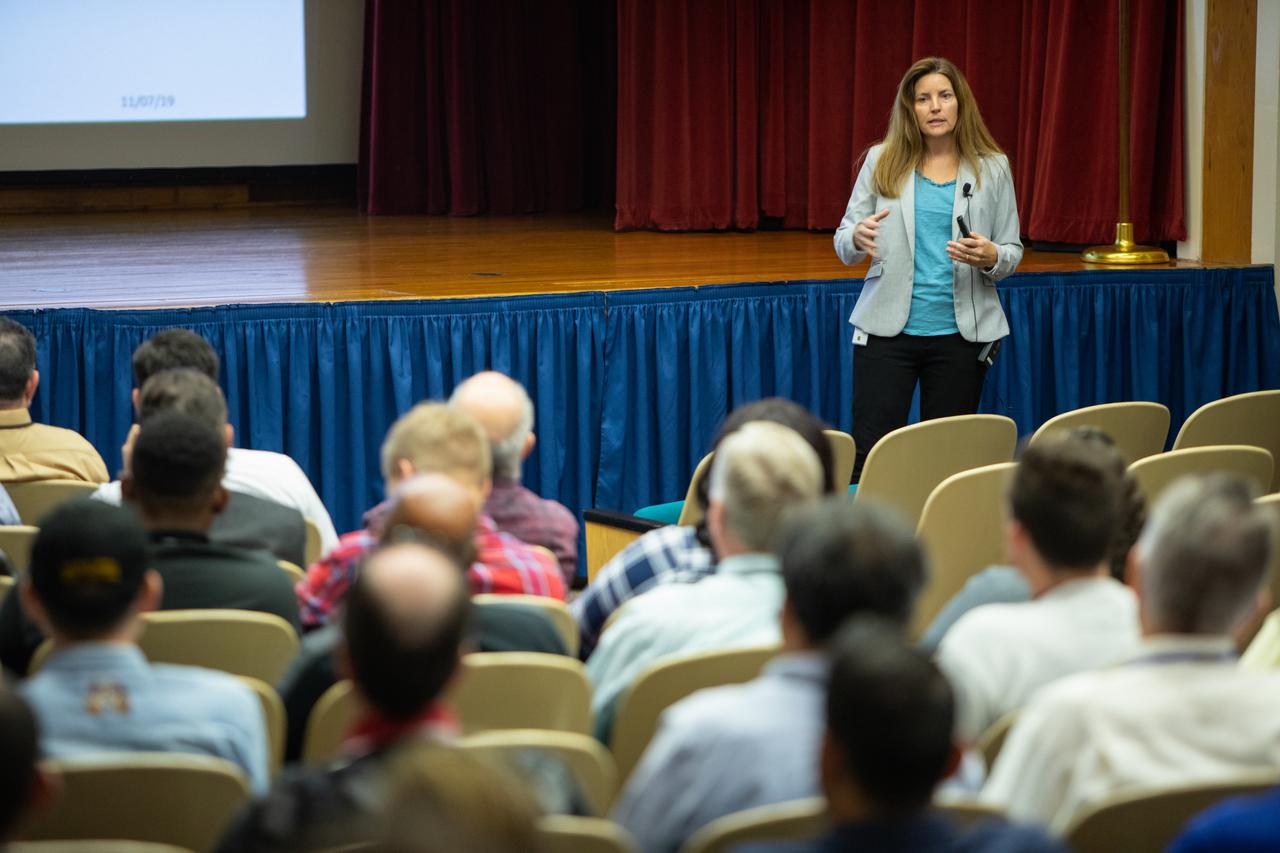
Lisa-Watson Morgan, NASA’s Human Landing System program manager, provides an overview of the program to Kennedy Space Center employees in the Florida spaceport’s Training Auditorium on Nov. 19, 2019. Watson-Morgan’s presentation was part of the center’s Innovation Days, one of several events throughout the year aimed at fostering and encouraging an innovative culture at Kennedy. In addition to the presentation, Kennedy employees had the opportunity to attend an innovation showcase, where nearly 50 exhibitors demonstrated new technologies and innovations. Showcase participants included individuals from multiple directorates, programs and organizations throughout Kennedy.
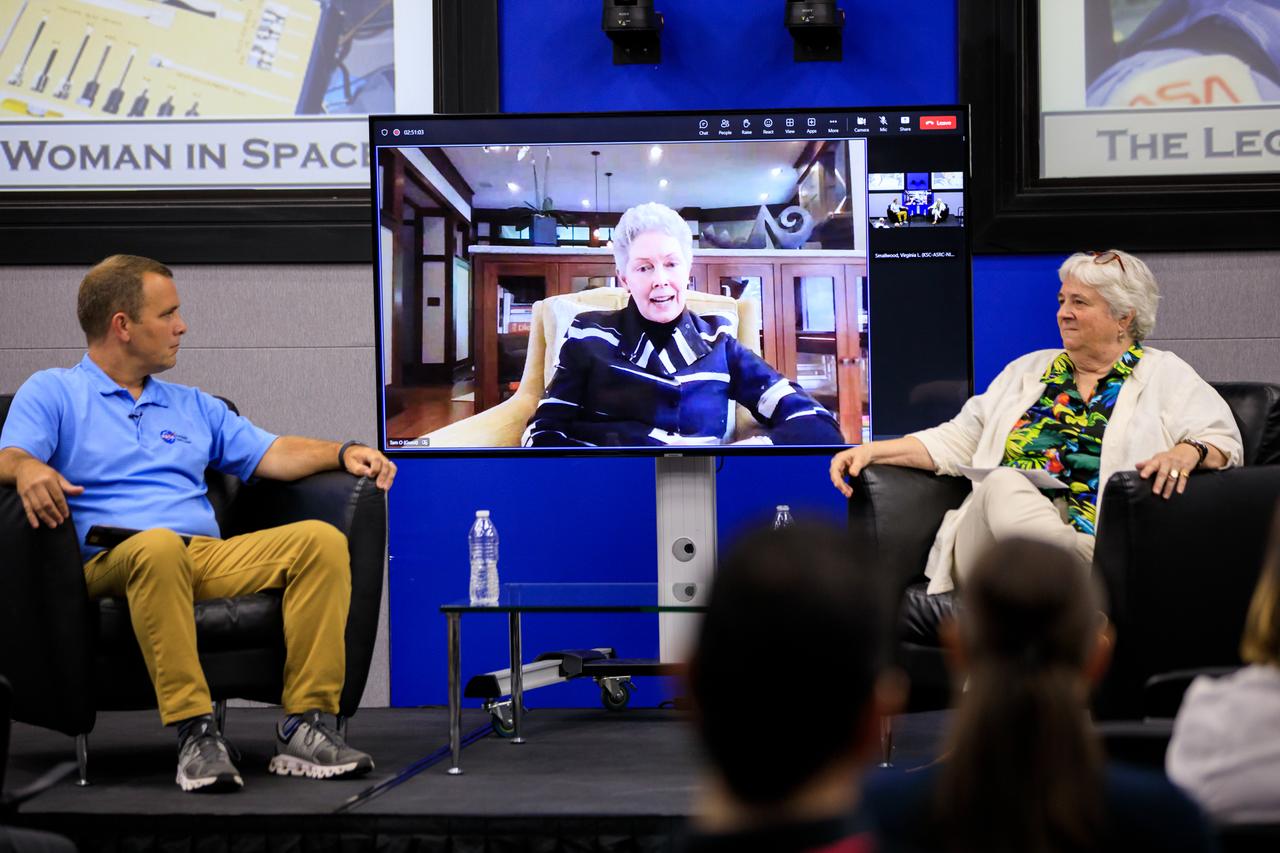
Tam O’Shaughnessy, center (on the monitor), speaks during “The Legacy of Sally Ride: The First American Woman in Space” event at Kennedy Space Center in Florida on June 15, 2023. O’Shaughnessy was Ride’s lifetime partner for 27 years, until the pioneering astronaut died in 2012 at age 61 from pancreatic cancer. NASA Chief Historian Brian Odom, left, and Bear Ride, Sally Ride’s sister, also participated in the event. Forty years ago, Ride made her trailblazing flight into space. She also was a physicist and a steadfast advocate for inclusion in STEM (science, technology, engineering, mathematics) – especially for girls and young women.
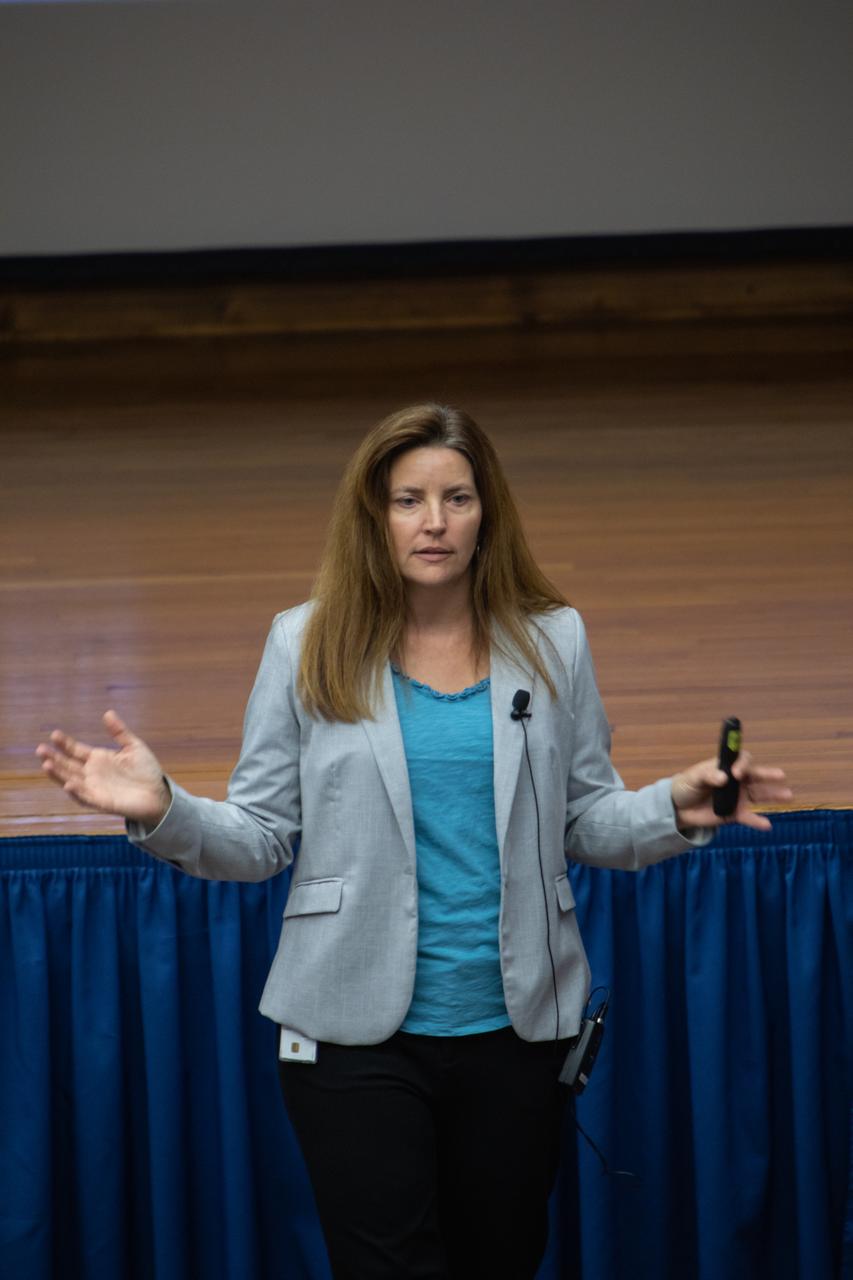
Lisa-Watson Morgan, NASA’s Human Landing System program manager, provides an overview of the program to Kennedy Space Center employees in the Florida spaceport’s Training Auditorium on Nov. 19, 2019. Watson-Morgan’s presentation was part of the center’s Innovation Days, one of several events throughout the year aimed at fostering and encouraging an innovative culture at Kennedy. In addition to the presentation, Kennedy employees had the opportunity to attend an innovation showcase, where nearly 50 exhibitors demonstrated new technologies and innovations. Showcase participants included individuals from multiple directorates, programs and organizations throughout Kennedy.
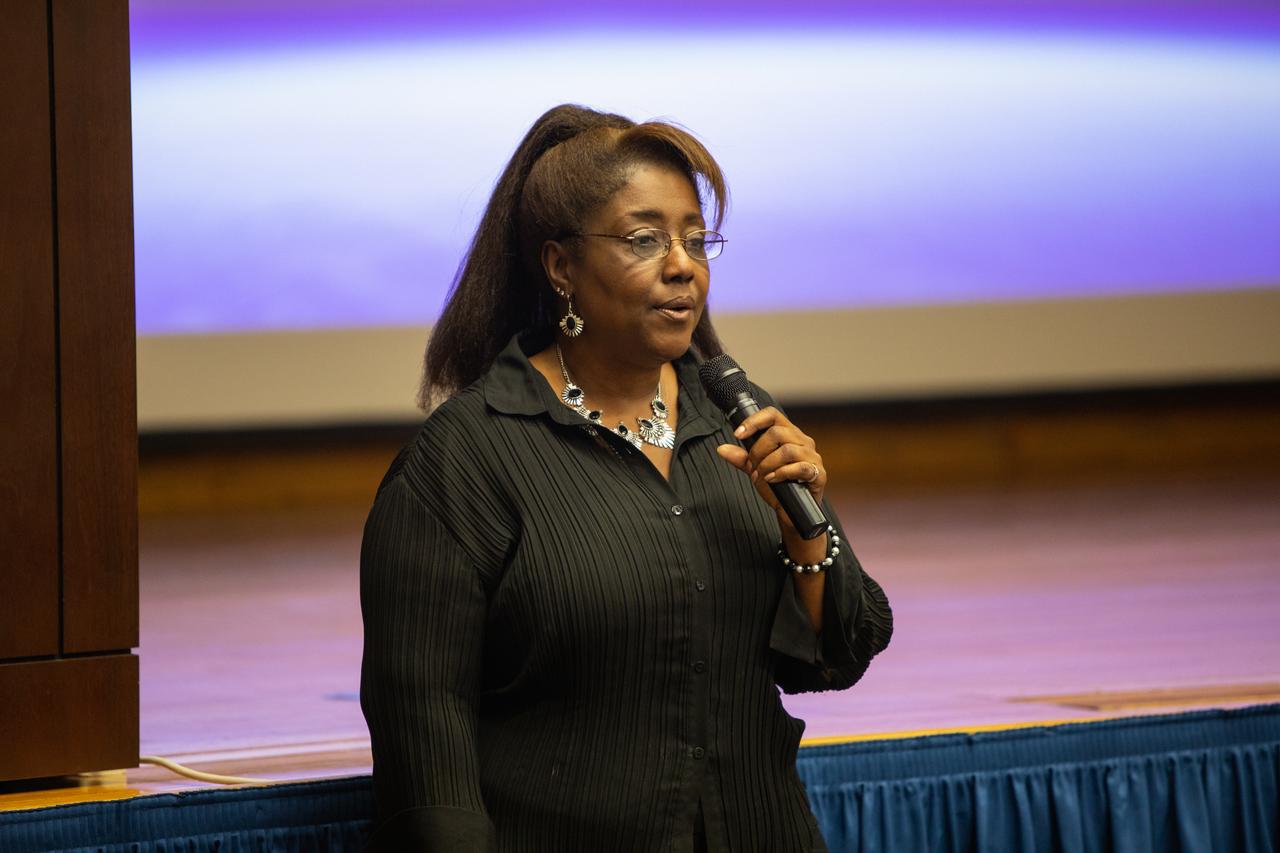
Barbara Brown, chief technologist at NASA’s Kennedy Space Center in Florida, speaks to Kennedy employees inside the Florida spaceport’s Training Auditorium on Nov. 19, 2019, during Innovation Days. One of several events throughout the year aimed at fostering and encouraging an innovative culture at Kennedy, Innovation Days highlights how employees at the multi-user spaceport are constantly looking for new solutions to challenges they face at work. Also part of Innovation Days was an innovation showcase, where nearly 50 exhibitors demonstrated new technologies and innovations. Showcase participants included individuals from multiple directorates, programs and organizations throughout Kennedy.
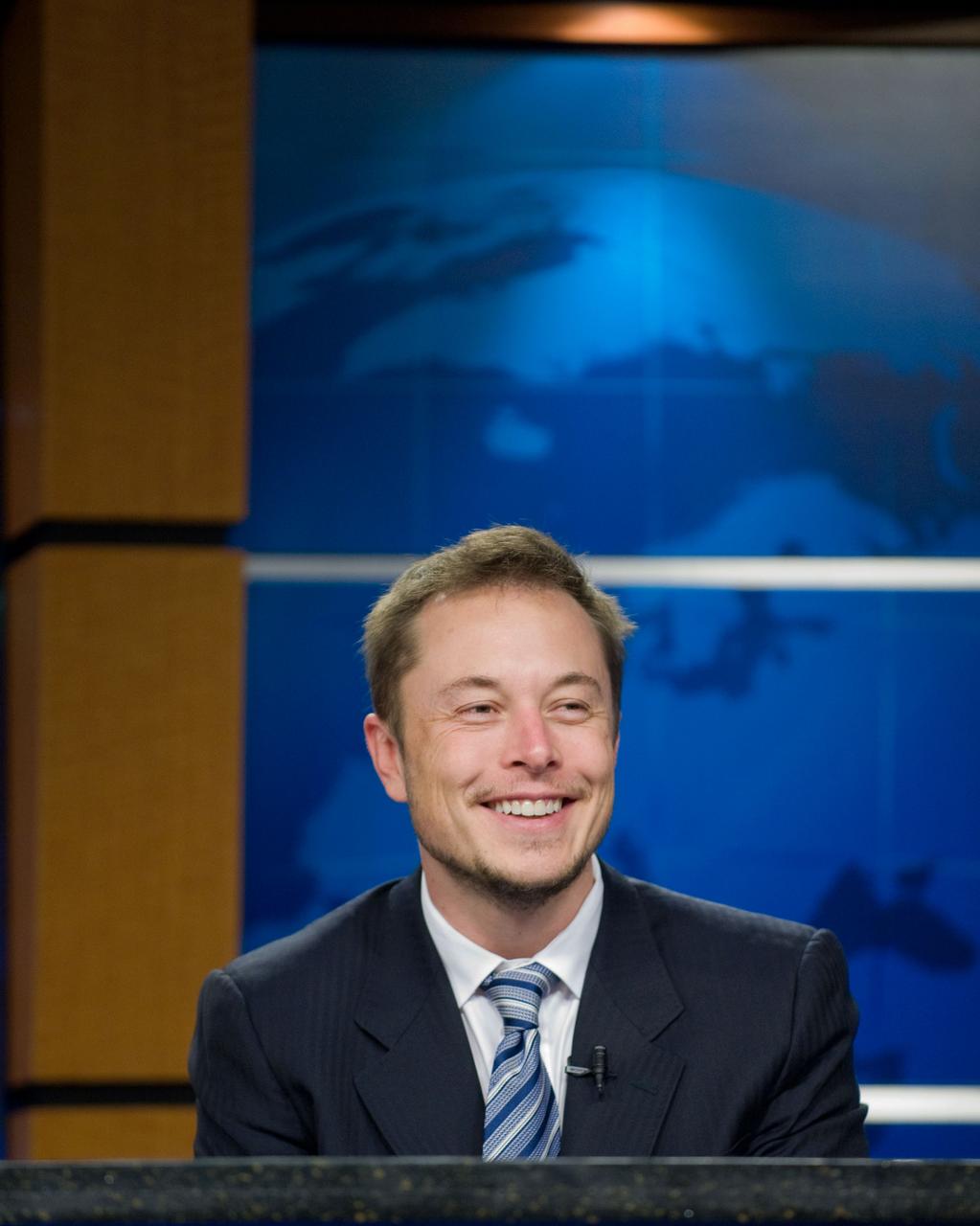
PHOTO DATE: 04-16-20 LOCATION: Bldg. 2N, Press Conf. Room SUBJECT: NASA briefing previewing SpaceX mission to Space Station PHOTOGRAPHER: BILL STAFFORD
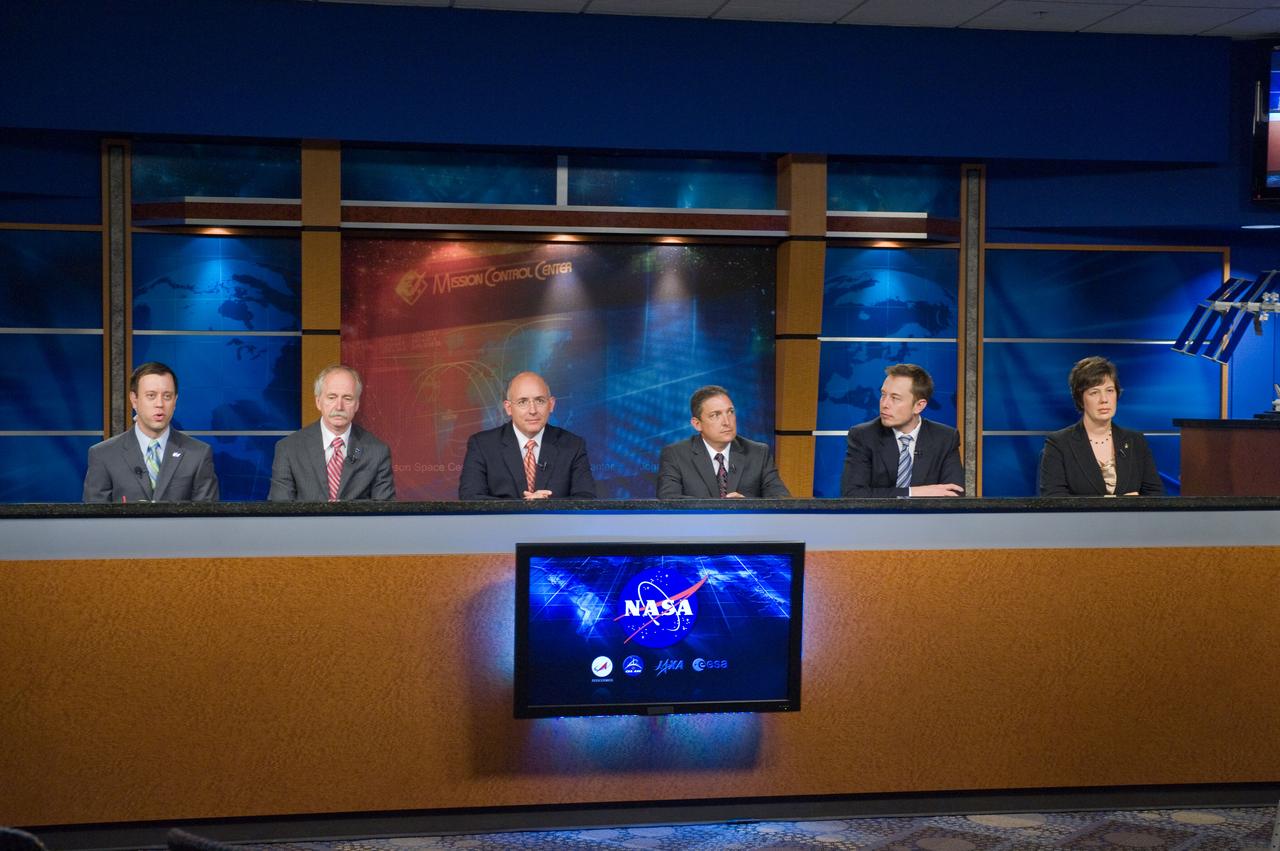
PHOTO DATE: 04-16-20 LOCATION: Bldg. 2N, Press Conf. Room SUBJECT: NASA briefing previewing SpaceX mission to Space Station PHOTOGRAPHER: BILL STAFFORD
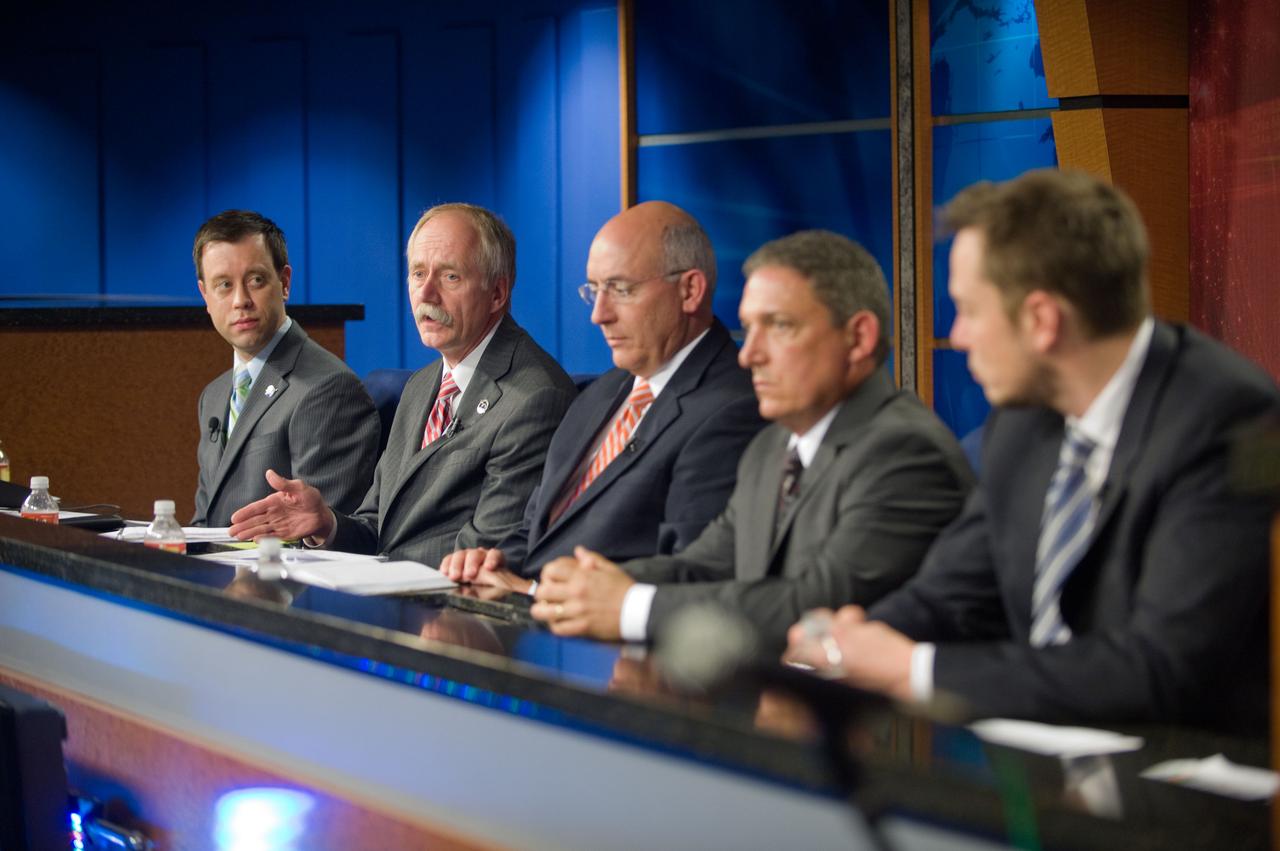
PHOTO DATE: 04-16-20 LOCATION: Bldg. 2N, Press Conf. Room SUBJECT: NASA briefing previewing SpaceX mission to Space Station PHOTOGRAPHER: BILL STAFFORD
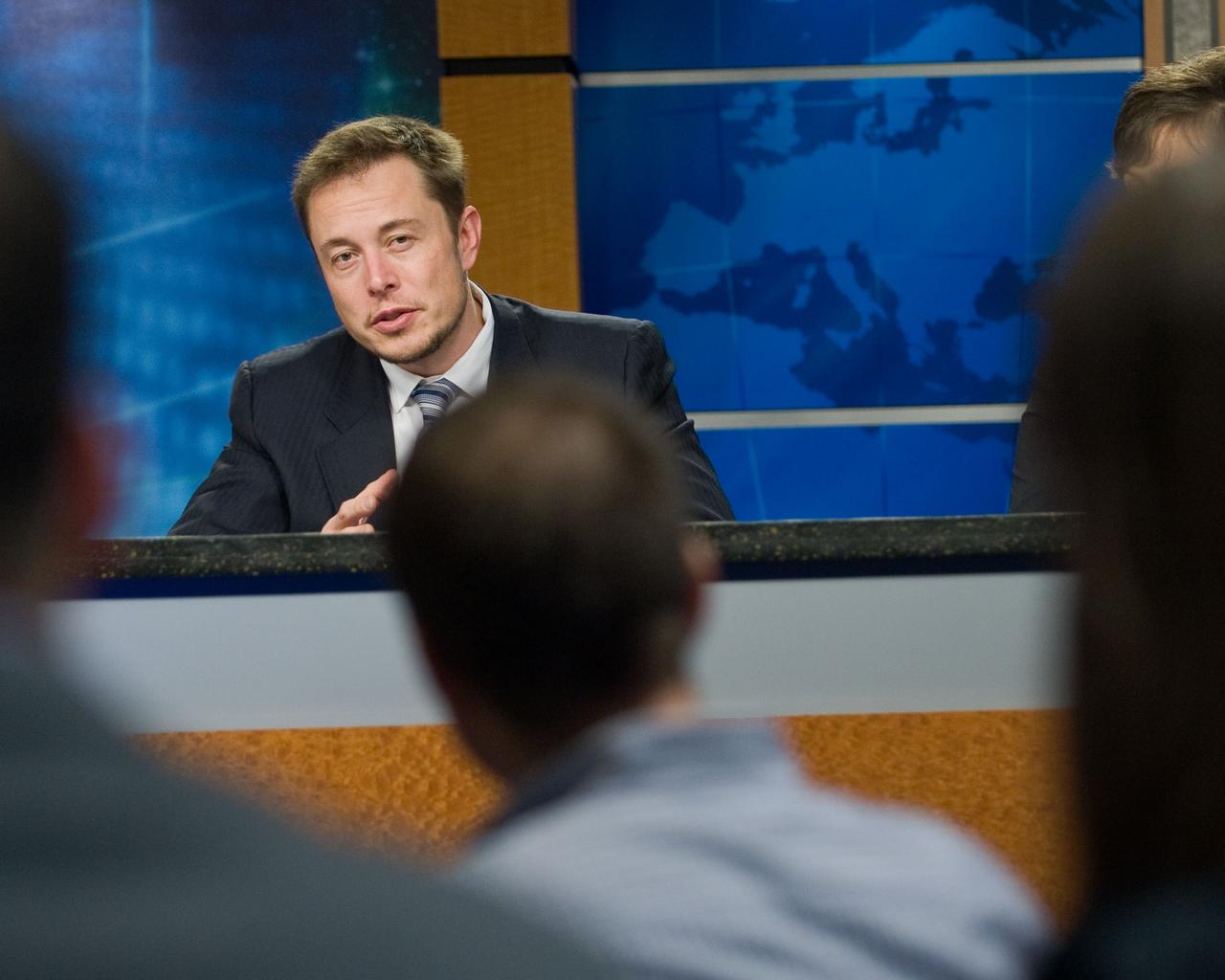
PHOTO DATE: 04-16-20 LOCATION: Bldg. 2N, Press Conf. Room SUBJECT: NASA briefing previewing SpaceX mission to Space Station PHOTOGRAPHER: BILL STAFFORD
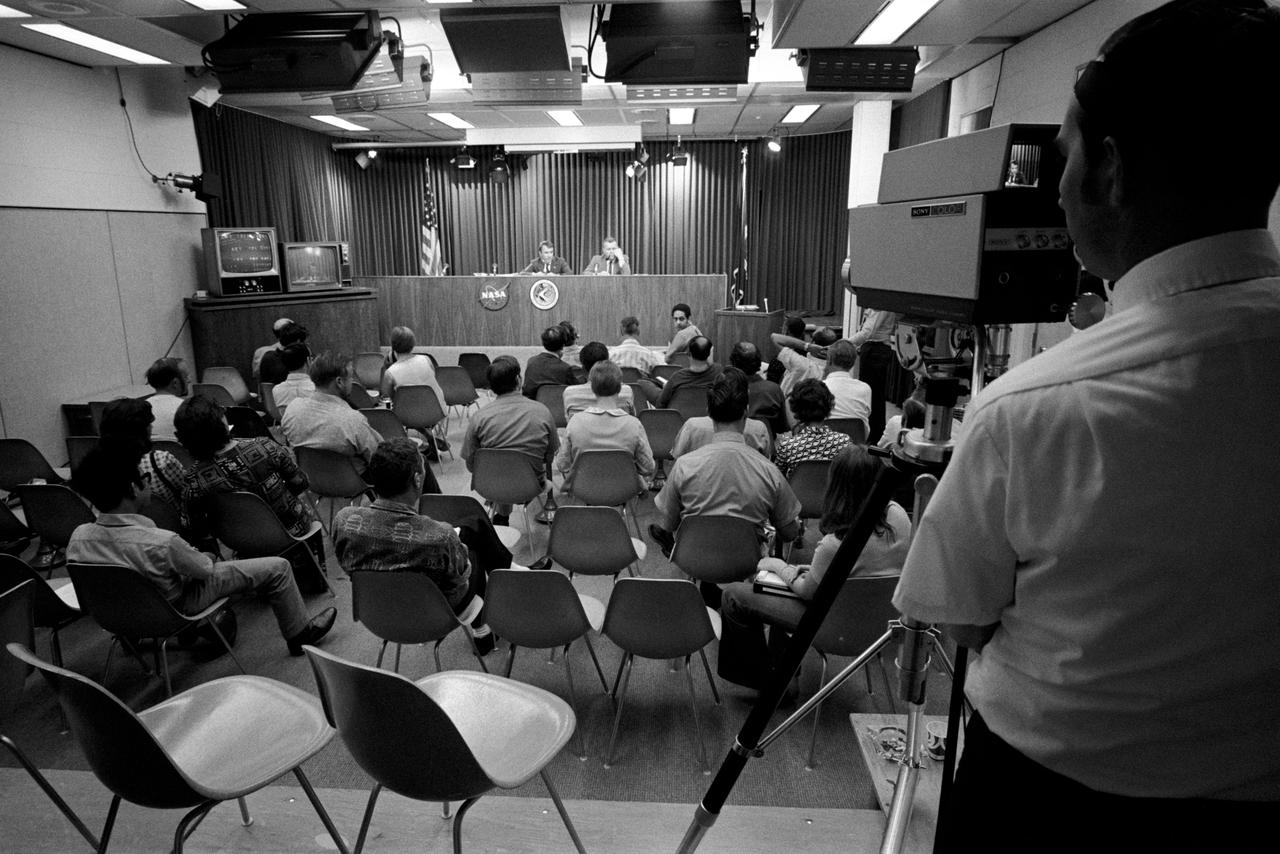
S71-41842 (July 1971) --- Newsmen put questions to Gerald D. Griffin, left at lectern, a flight director for the Apollo 15 lunar landing mission, during a change of shift briefing in the small briefing room in Building One at the Manned Spacecraft Center (MSC). Representing Public Affairs Office at the briefing is Terry White, right at lectern.
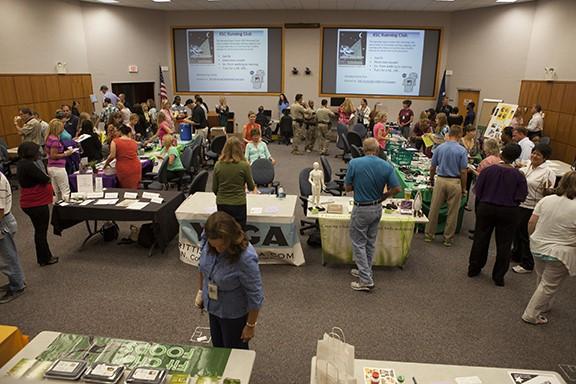
CAPE CANAVERAL, Fla. – The National Employee Health and Fitness Day event takes place in the Operations and Checkout Building's Mission Briefing Room. The expo showcased Kennedy Space Center’s Employee Wellness Programs and local businesses and organizations throughout Florida that contribute to the health and well-being of the community. Photo credit: NASA/Daniel Casper
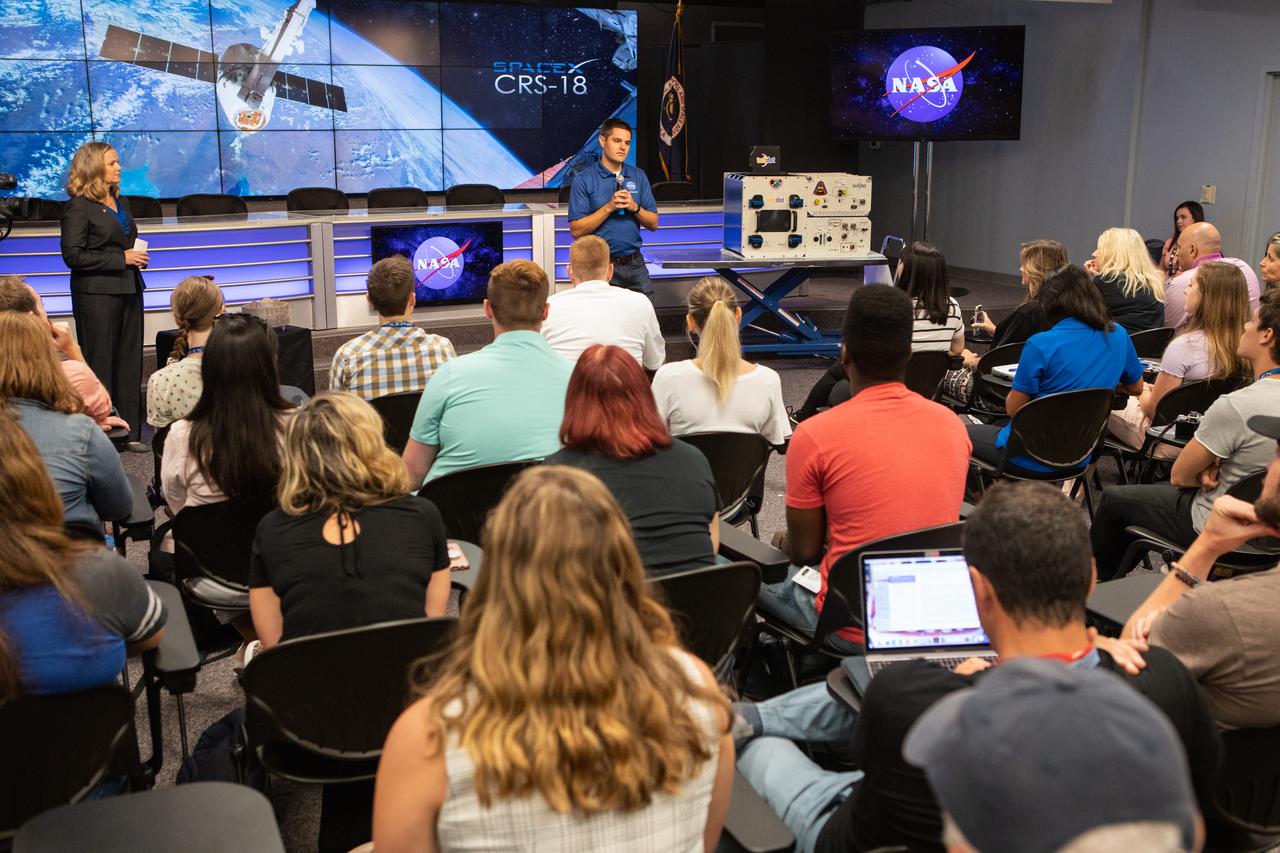
Jason August, International Space Station Mission Evaluation Room manager, talks to NASA Social participants about the International Docking Adapter-3 payload during a What’s On Board science briefing at the agency’s Kennedy Space Center in Florida on July 23, 2019. The briefing was held for SpaceX’s 18th Commercial Resupply Services (CRS-18) mission to the station. The SpaceX Falcon 9 rocket and uncrewed Dragon spacecraft are scheduled to launch July 24, 2019, from Space Launch Complex 40 at Florida’s Cape Canaveral Air Force Station.
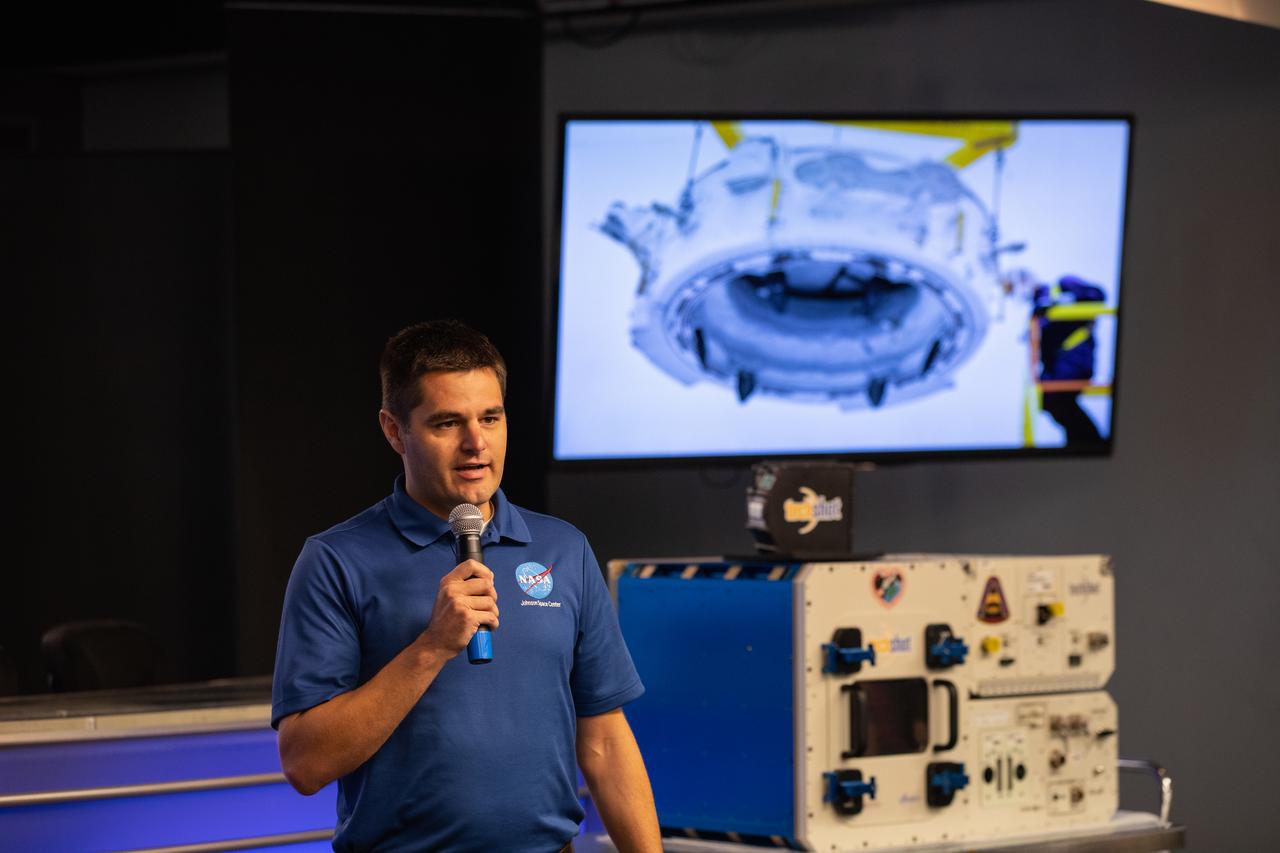
Jason August, International Space Station Mission Evaluation Room manager, talks to NASA Social participants about the International Docking Adapter-3 payload during a What’s On Board science briefing at the agency’s Kennedy Space Center in Florida on July 23, 2019. The briefing was held for SpaceX’s 18th Commercial Resupply Services (CRS-18) mission to the station. The SpaceX Falcon 9 rocket and uncrewed Dragon spacecraft are scheduled to launch July 24, 2019, from Space Launch Complex 40 at Florida’s Cape Canaveral Air Force Station.
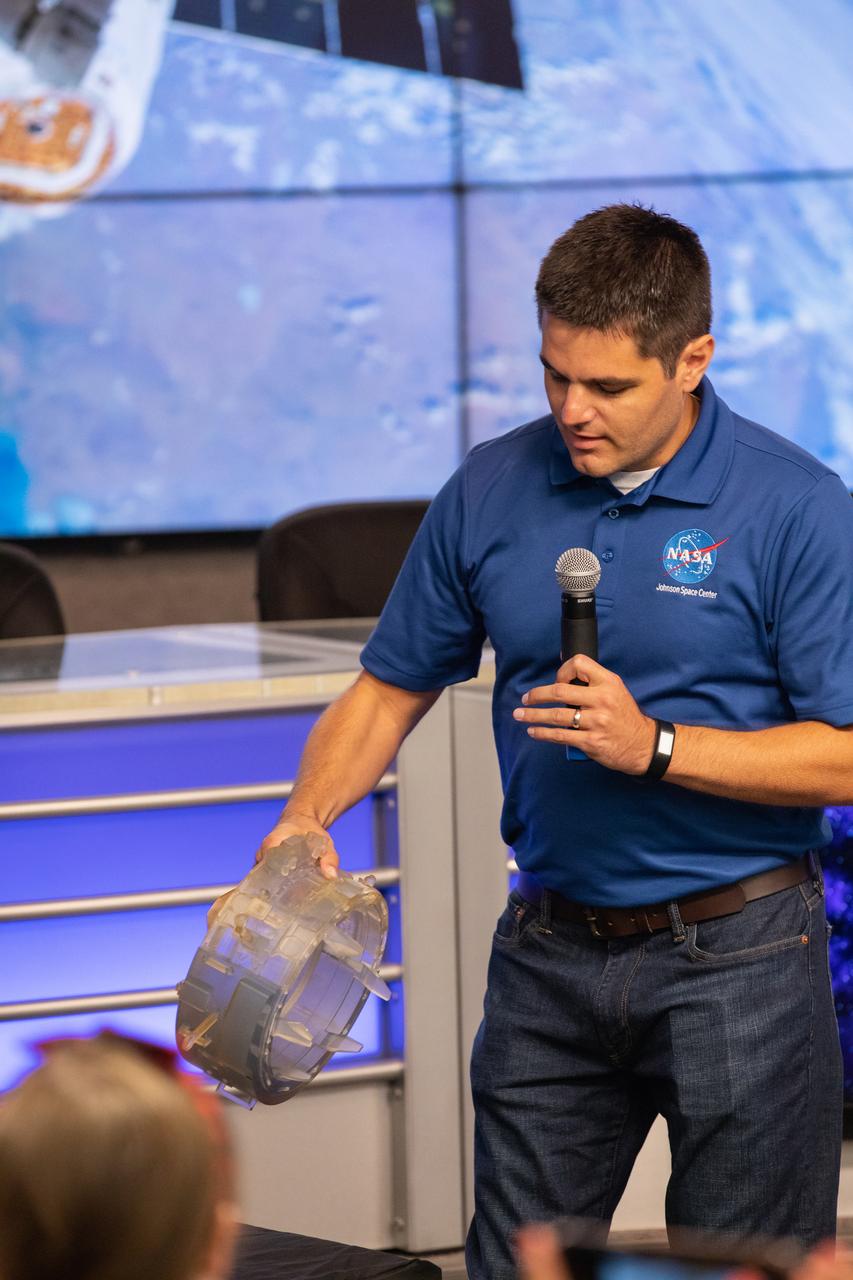
Jason August, International Space Station Mission Evaluation Room manager, talks to NASA Social participants about the International Docking Adapter-3 payload during a What’s On Board science briefing at the agency’s Kennedy Space Center in Florida on July 23, 2019. The briefing was held for SpaceX’s 18th Commercial Resupply Services (CRS-18) mission to the station. The SpaceX Falcon 9 rocket and uncrewed Dragon spacecraft are scheduled to launch July 24, 2019, from Space Launch Complex 40 at Florida’s Cape Canaveral Air Force Station.
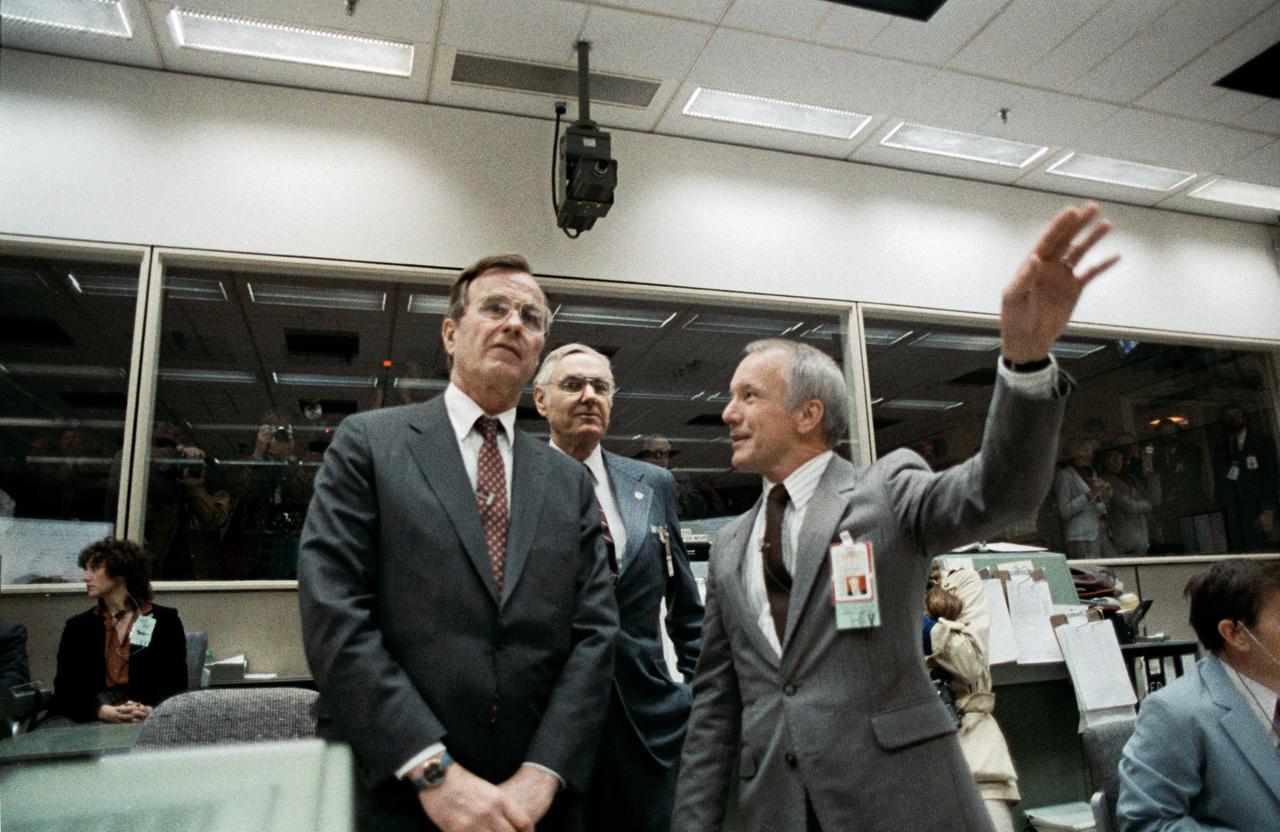
S83-30193 (8 April 1983) --- Vice President George Bush, left, is briefed by JSC Director Gerald D. Griffin, right, during a visit to the mission operations control room (MOCR) in the Johnson Space Center?s mission control center. James Beggs, NASA administrator, center, accompanied the Vice President on his visit. Flight Director Gary E. Coen is partial visible at right edge of frame, The photograph was taken by Otis Imboden.
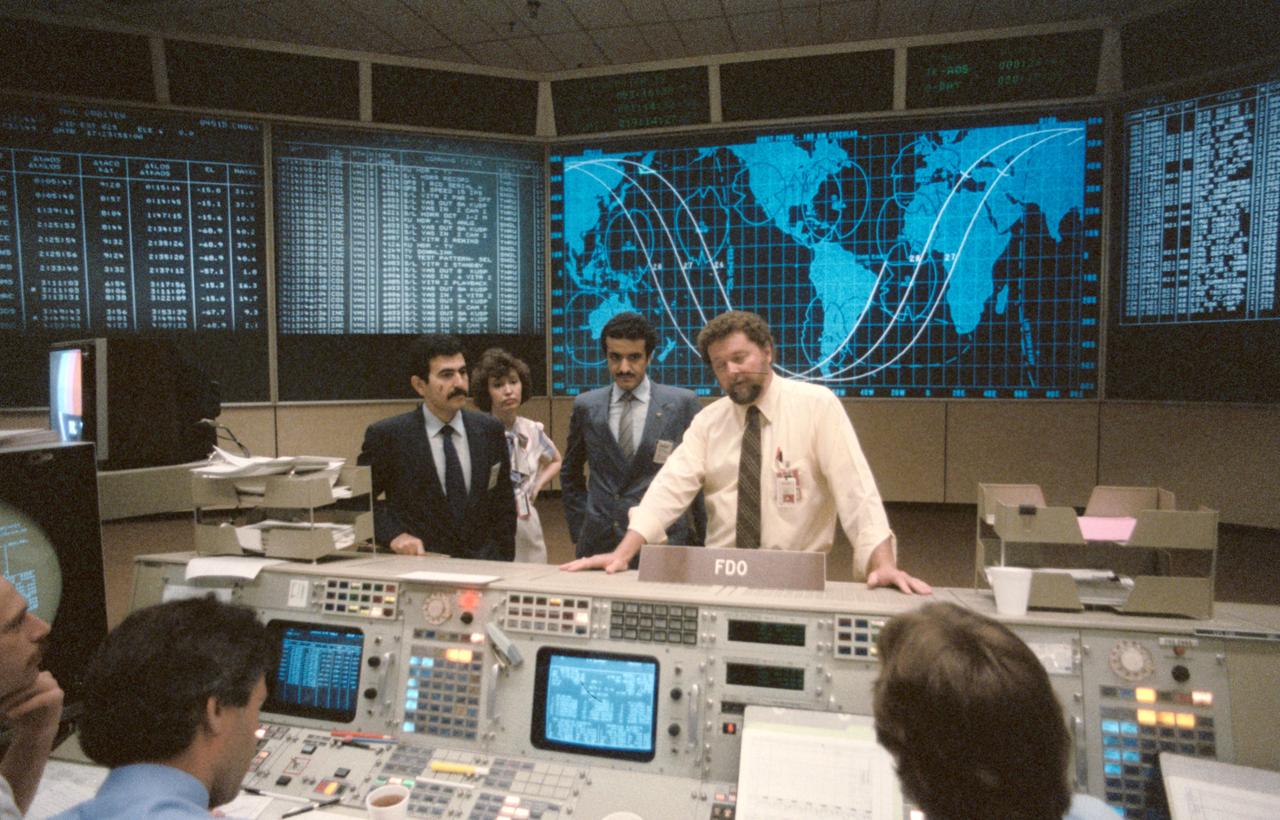
S85-29711 (April 1985) --- Ronald C. Epps, right of the training division in the mission operations directorate, briefs the Saudi Arabian payload specialist, Sultan Salman Abdelazize Al-Saud, and his backup, Abdulmohsen Hamad Al-Bassam, in the flight control room (FCR) of the mission control center (MCC). Erlinda Stevenson is also pictured.
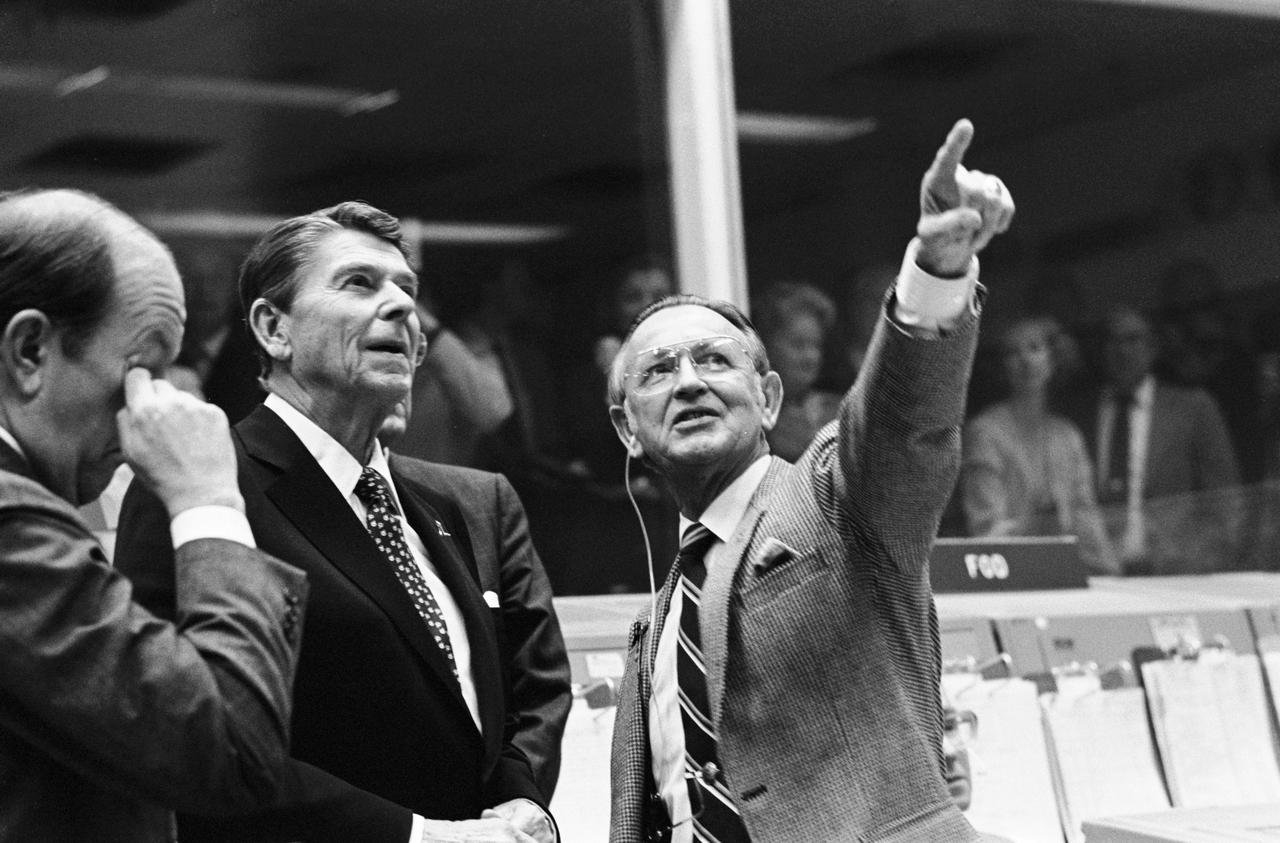
S81-39499 (13 Nov. 1981) --- President Ronald Reagan is briefed by JSC Director Christopher C. Kraft Jr., who points toward the orbiter spotter on the projection plotter in the front of the mission operations control room in the Johnson Space Center's Mission Control Center. This picture was taken just prior to a space-to-ground conversation between STS-2 crew members Joe H. Engle and Richard H. Truly, who were orbiting Earth in the space shuttle Columbia. Photo credit: NASA
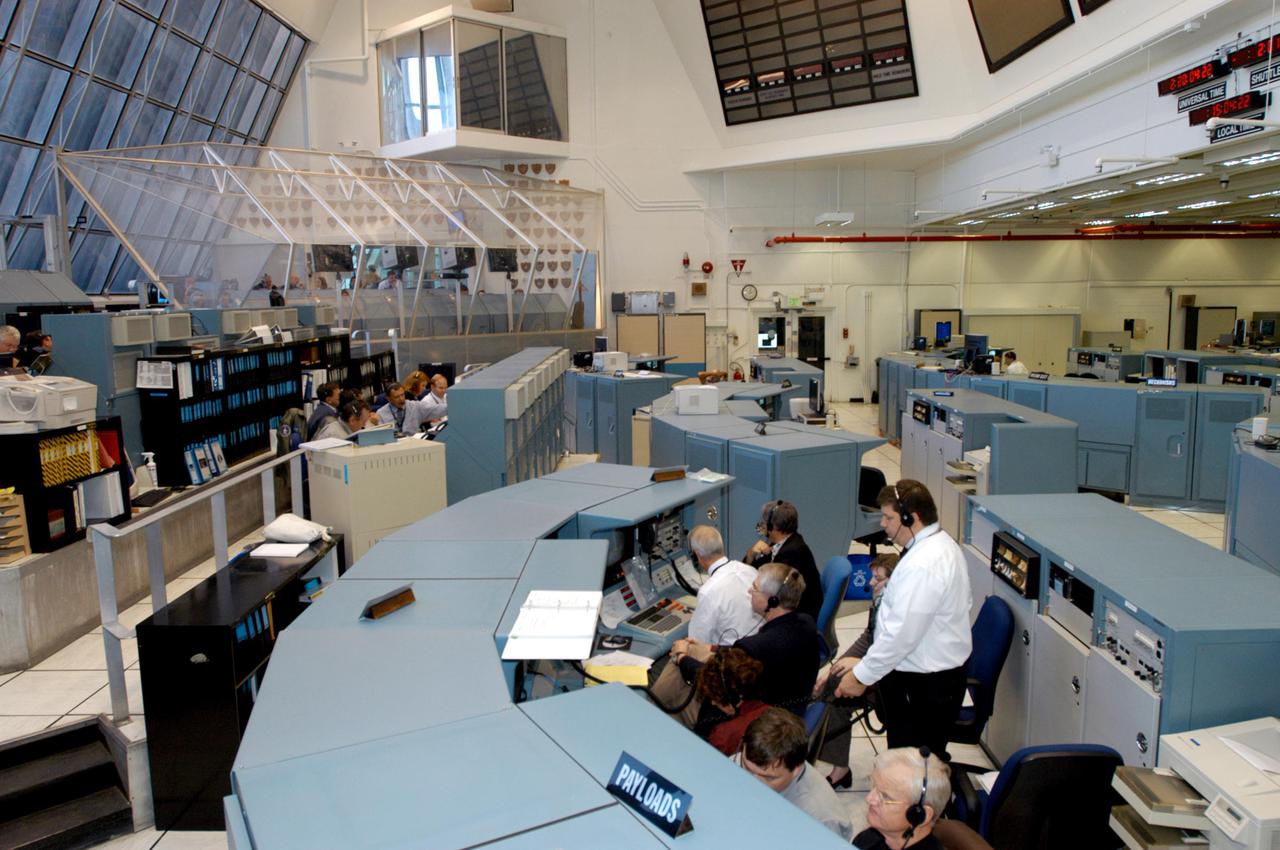
KENNEDY SPACE CENTER, FLA. - In Firing Room 1 at KSC, Shuttle launch team members put the Shuttle system through an End-to-End (ETE) Mission Management Team (MMT) launch simulation. The control room is set up with software used to simulate flight and ground systems in the launch configuration. The ETE MMT simulation included L-2 and L-1 day Prelaunch MMT meetings, an external tanking_weather briefing, and a launch countdown. The ETE transitioned to the Johnson Space Center for the flight portion of the simulation, with the STS-114 crew in a simulator at JSC. Such simulations are common before a launch to keep the Shuttle launch team sharp and ready for liftoff.
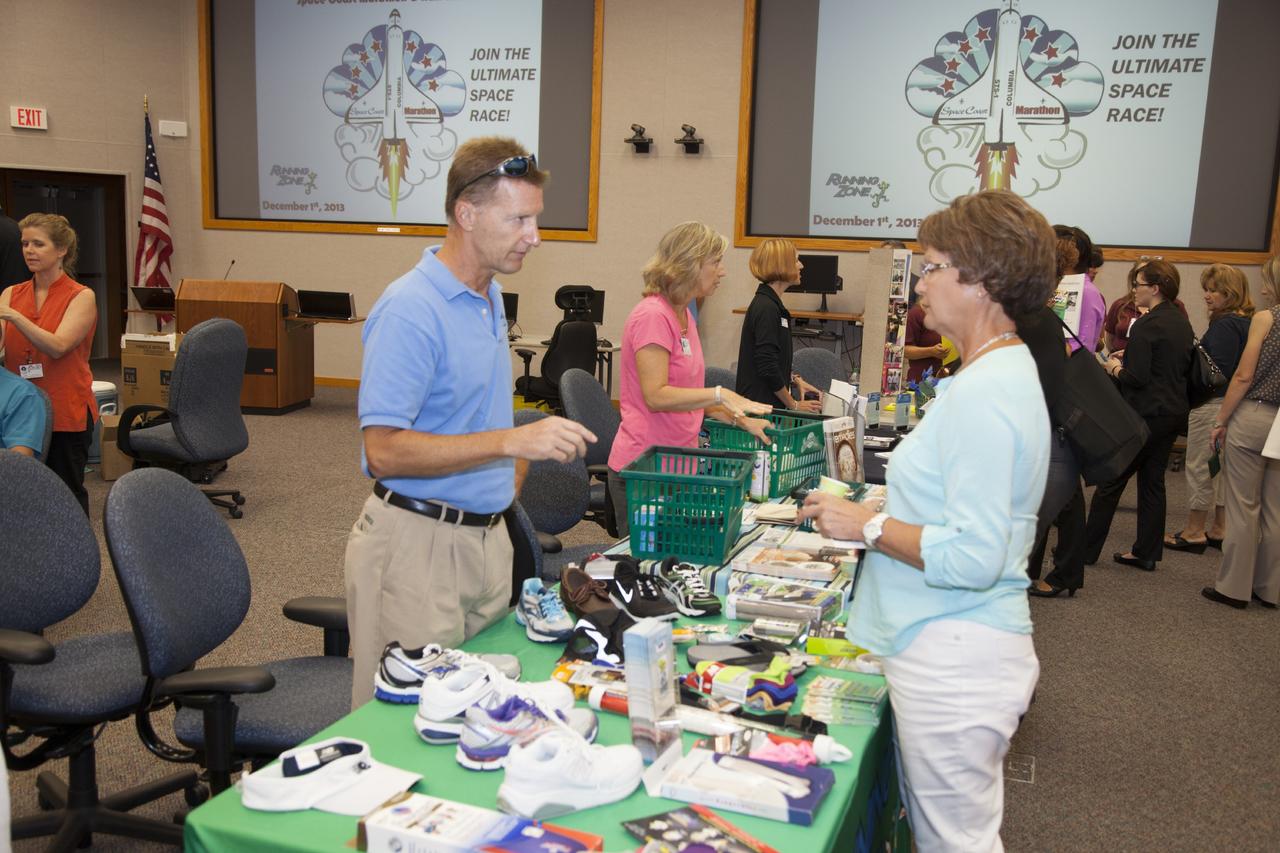
CAPE CANAVERAL, Fla. – Mark Hiebert, of the Running Zone, talks to a Kennedy worker during the National Employee Health and Fitness Day event in the Operations and Checkout Building's Mission Briefing Room. Employees also had the opportunity to be tested for diabetes, enter a raffle for prizes and get a five-minute massage. Other venders shown in the background are Sunseed Co-op’s Marcia Cooney, center, and Bridget Griffin from the YMCA of Titusville. Photo credit: NASA/Daniel Casper
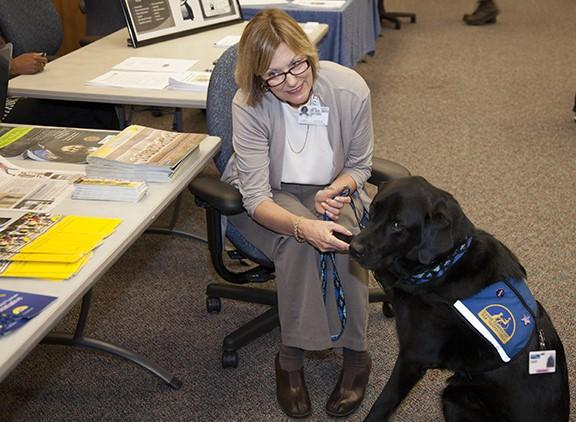
CAPE CANAVERAL, Fla. – Karen Herrsing, of Canine Companions for Independence, educates Kennedy Space Center workers on how Canine Companions for Independence can enhance the lives of others along with her furry friend, Dart, during the National Employee Health and Fitness Day event in the Operations and Checkout Building's Mission Briefing Room. Photo credit: NASA/Daniel Casper
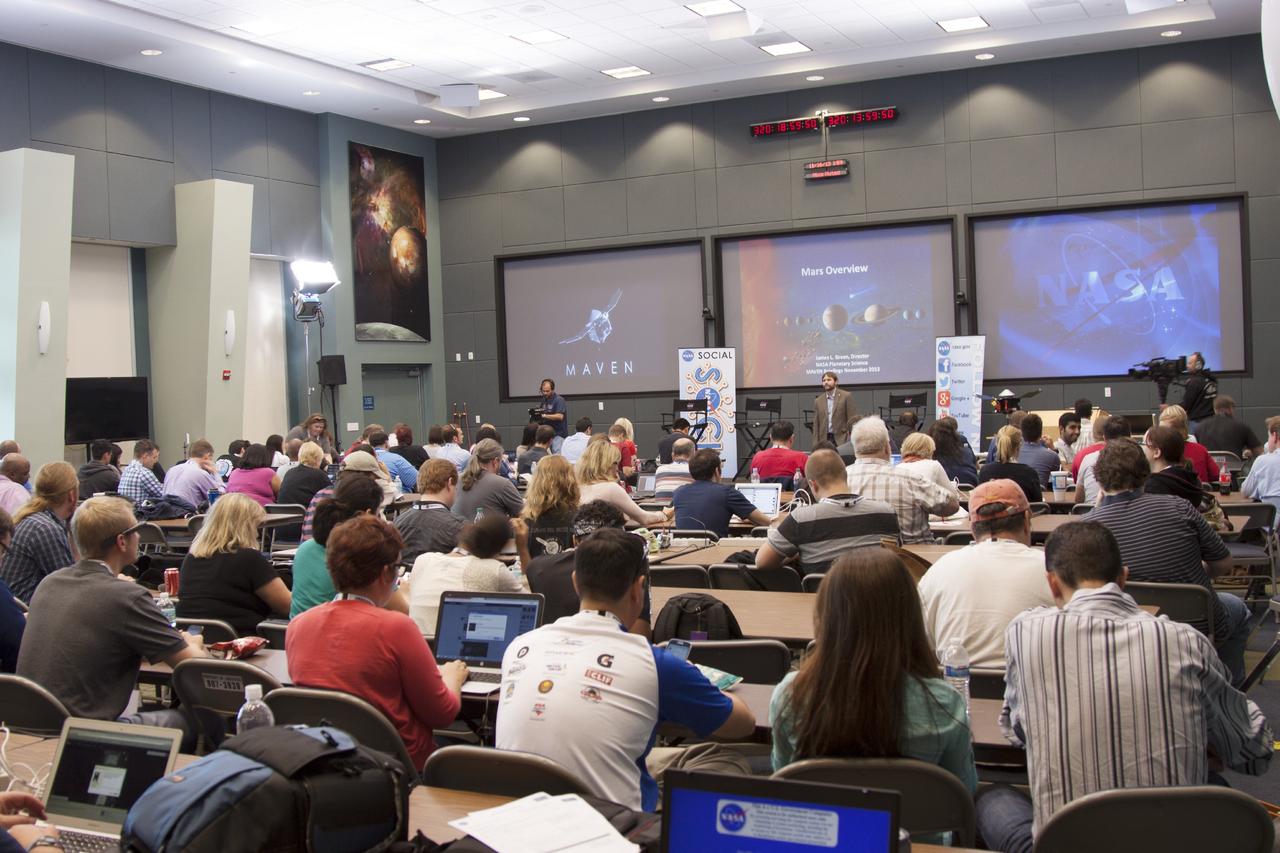
CAPE CANAVERAL, Fla. -- In the conference room of Operations Support Building II at NASA's Kennedy Space Center in Florida, social media participants listen to a briefing on the Mars Atmosphere and Volatile Evolution, or MAVEN, mission. The social media participants gathered at the Florida spaceport for the launch of the Mars Atmosphere and Volatile Evolution, or MAVEN, spacecraft. Their visit included tours of key facilities and participating in presentations by key NASA leaders who updated the space agency's current efforts. Photo credit: NASA/Jim Grossman
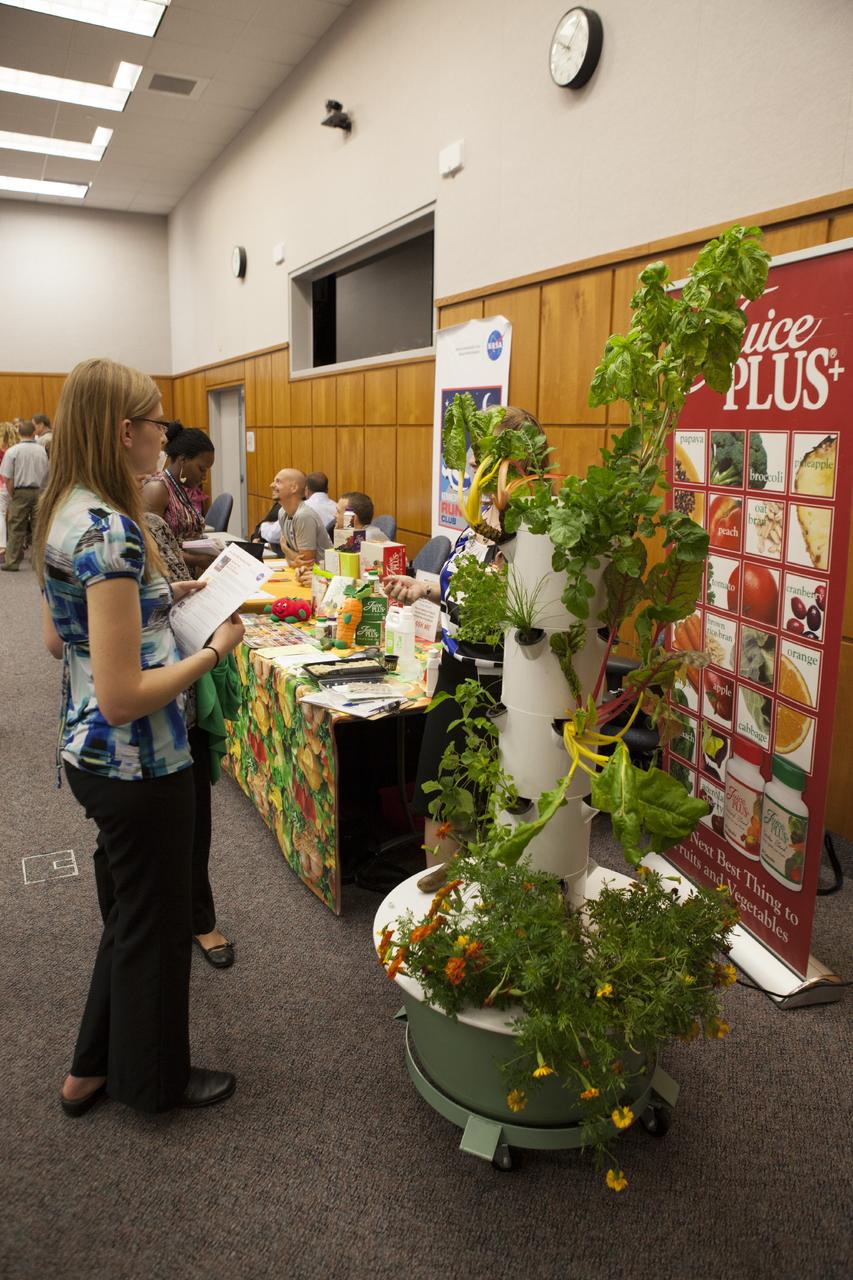
CAPE CANAVERAL, Fla. – A Kennedy Space Center worker talks with Rikki Eloian, of Juice Plus, hidden behind the plant, during the National Employee Health and Fitness Day event in the Operations and Checkout Building's Mission Briefing Room. Other vendors represented at the event included the American Cancer Society, Running Zone and Parrish Medical Center Diabetes Program. Photo credit: NASA/Daniel Casper
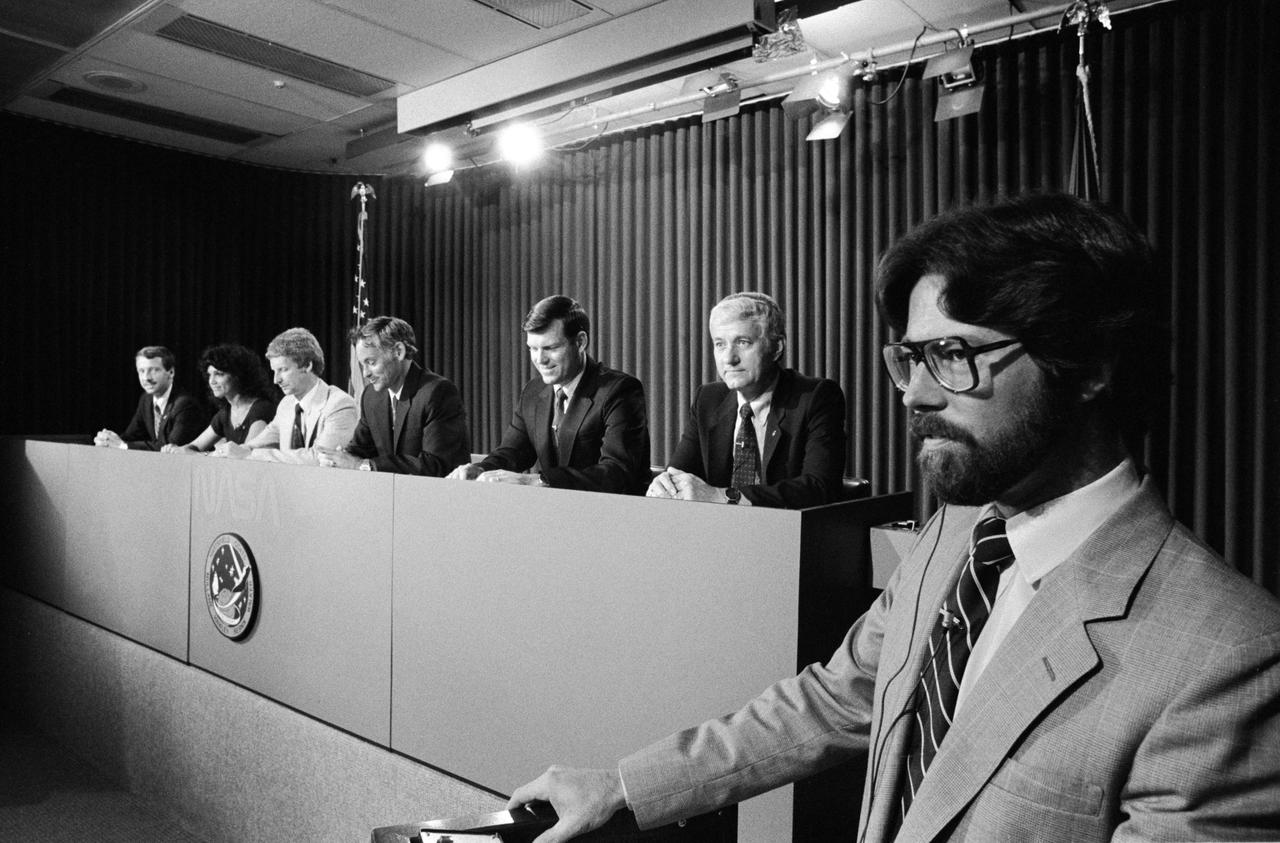
S84-40185 (08/21/1984) --- stronaut preflight Press Conference with the STS-41D Crew with Public Affairs Office (PAO) Reprentative Steve Nesbitt in the foreground in the Bldg 2 Briefing Room on 08/17/1984. Crewmembers visible (R-L) are: Henry W. Hartsfield, Jr., Crew Commander; Michael L. Coats, Pilot: Richard M. (Mike) Mullane, Steven A. Hawley, Judith A. Resnik - all Mission Specialists: and, Charlie D. Walker, Payload Specialist. JSC, Houston, TX
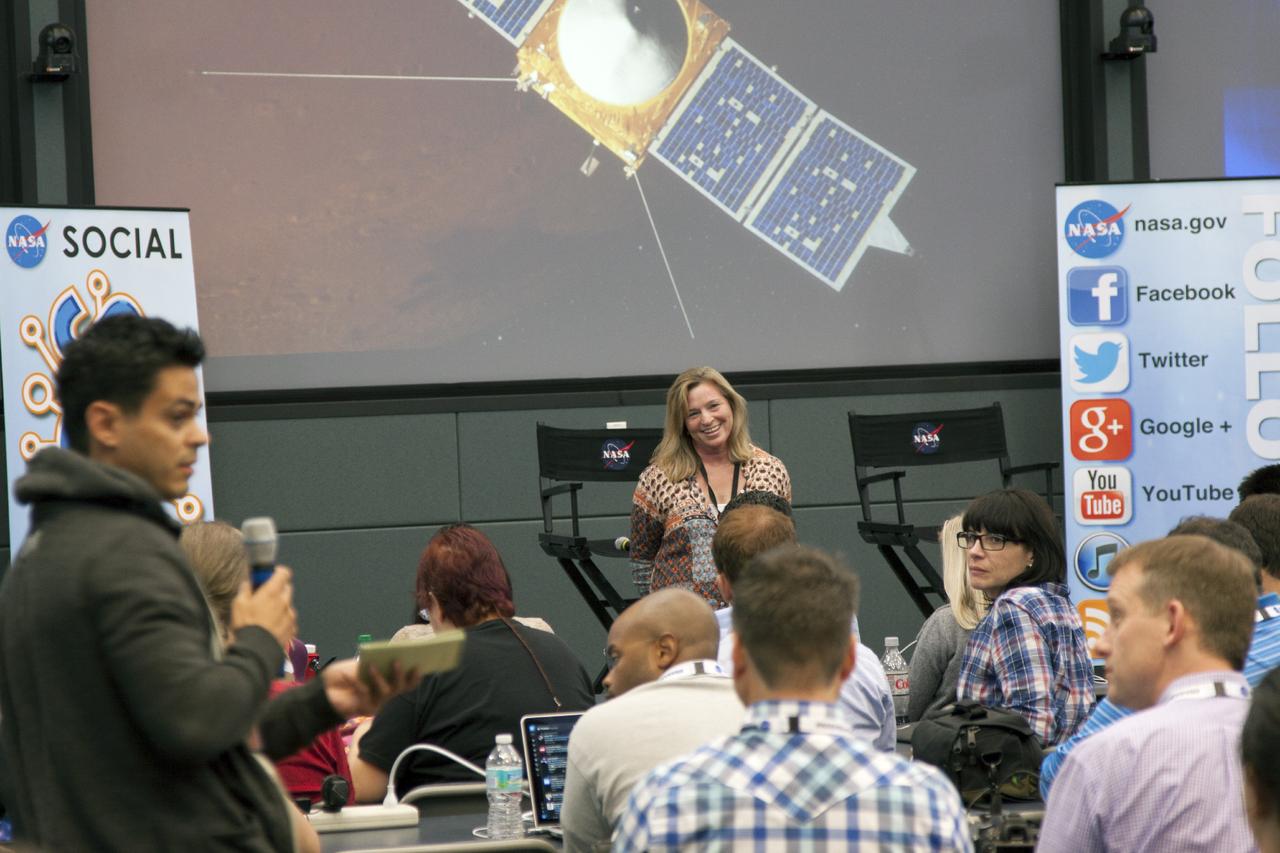
CAPE CANAVERAL, Fla. -- In the conference room of Operations Support Building II at NASA's Kennedy Space Center in Florida, social media participants listen to a briefing on the Mars Atmosphere and Volatile Evolution, or MAVEN, mission by, Ellen Stofan, the agency's chief scientist. The social media participants gathered at the Florida spaceport for the launch of the Mars Atmosphere and Volatile Evolution, or MAVEN, spacecraft. Their visit included tours of key facilities and participating in presentations by key NASA leaders who updated the space agency's current efforts. Photo credit: NASA/Jim Grossman
CAPE CANAVERAL, Fla. -- In the conference room of Operations Support Building II at NASA's Kennedy Space Center in Florida, social media participants listen to a briefing on the Mars Atmosphere and Volatile Evolution, or MAVEN, mission. The social media participants gathered at the Florida spaceport for the launch of the Mars Atmosphere and Volatile Evolution, or MAVEN, spacecraft. Their visit included tours of key facilities and participating in presentations by key NASA leaders who updated the space agency's current efforts. Photo credit: NASA/Jim Grossman
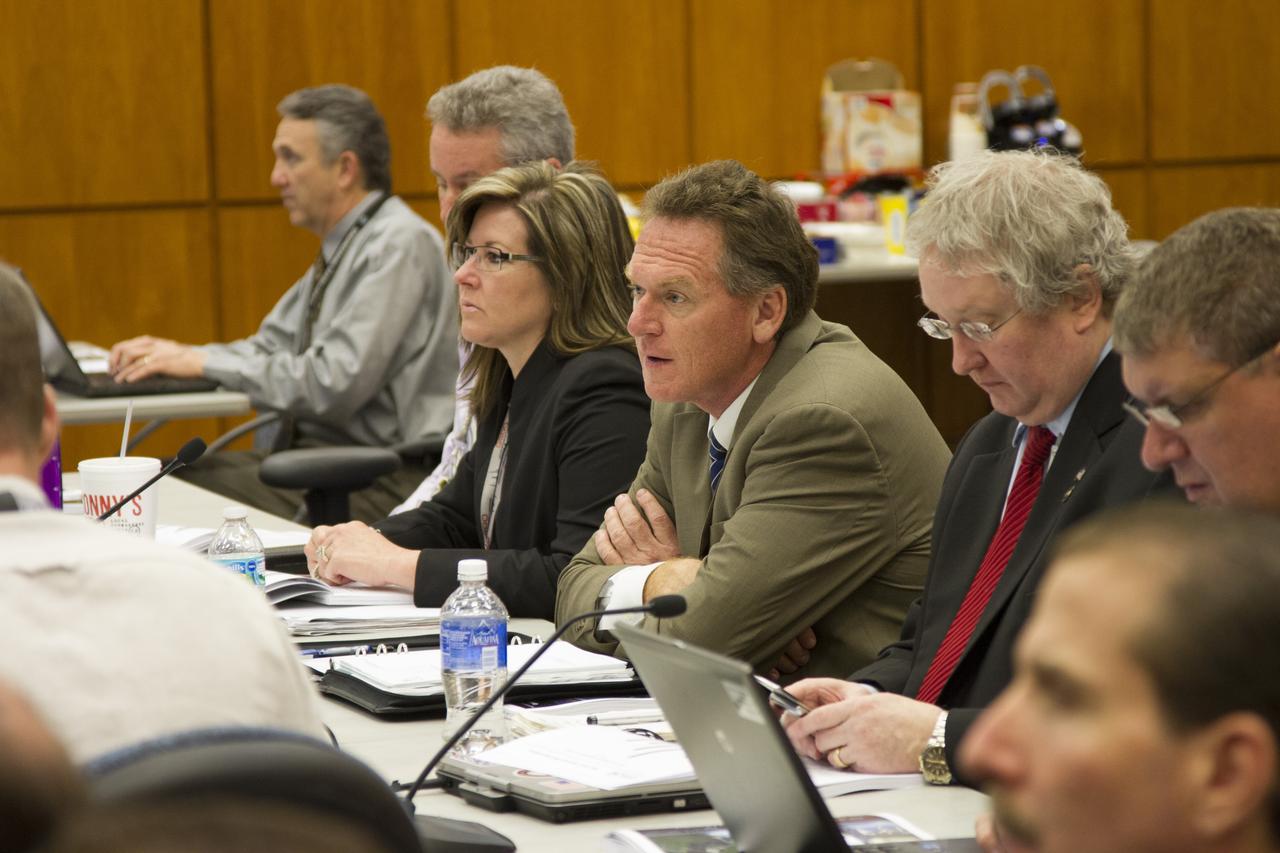
CAPE CANAVERAL, Fla. – Mike Bolger, program manager for the Ground Systems Development and Operations, or GSDO, Program speaks to participants during completion of the preliminary design review in the Mission Briefing Room inside the Operations and Checkout Building at NASA’s Kennedy Space Center in Florida. Representatives from NASA, its contractor partners and experts from across the aerospace industry met in the Mission Briefing Room inside the Operations and Checkout Building at NASA’s Kennedy Space Center in Florida to conclude the initial design and technology development phase. Completion of this review has validated that the baseline architecture is sound and aligns with the agency's exploration objectives. NASA is developing the Space Launch System and Orion spacecraft to provide an entirely new capability for human exploration beyond low-Earth orbit, with the flexibility to launch spacecraft for crew and cargo missions, including to an asteroid and Mars. Orion’s first unpiloted test flight is scheduled to launch later this year atop a Delta IV rocket. A second uncrewed flight test is scheduled for fiscal year 2018 on the Space Launch System rocket. For more information, visit http://www.nasa.gov/orion. Photo credit: NASA/Cory Huston
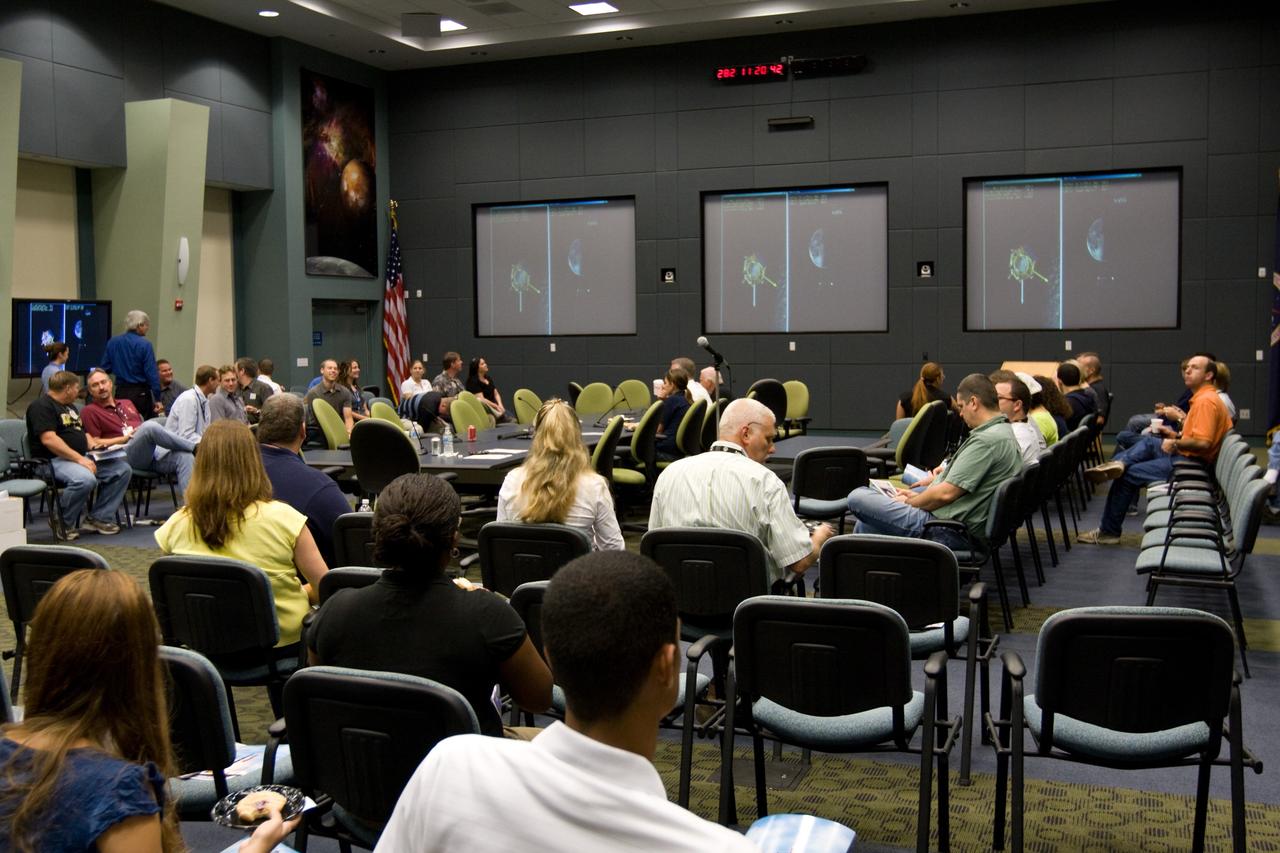
CAPE CANAVERAL, Fla. – Employees at NASA's Kennedy Space Center take advantage of an early morning opportunity to watch the Lunar Crater Observation and Sensing Satellite, or LCROSS, and its spent Centaur upper stage impact the lunar surface live on NASA Television. The employees seen here are in the 5th Floor Conference Room of Operations Support Building II; another group of employees viewed the impact on screens in the Operations and Checkout Building's Mission Briefing Room. The employee event was sponsored by the NASA Exchange, the External Relations Directorate and KSC Launching Leaders. The goal of the LCROSS mission is to search for water ice on the moon, in support of future human lunar exploration. For additional information on the LCROSS mission, visit http://www.nasa.gov/LCROSS. Photo credit: NASA/Dimitri Gerondidakis
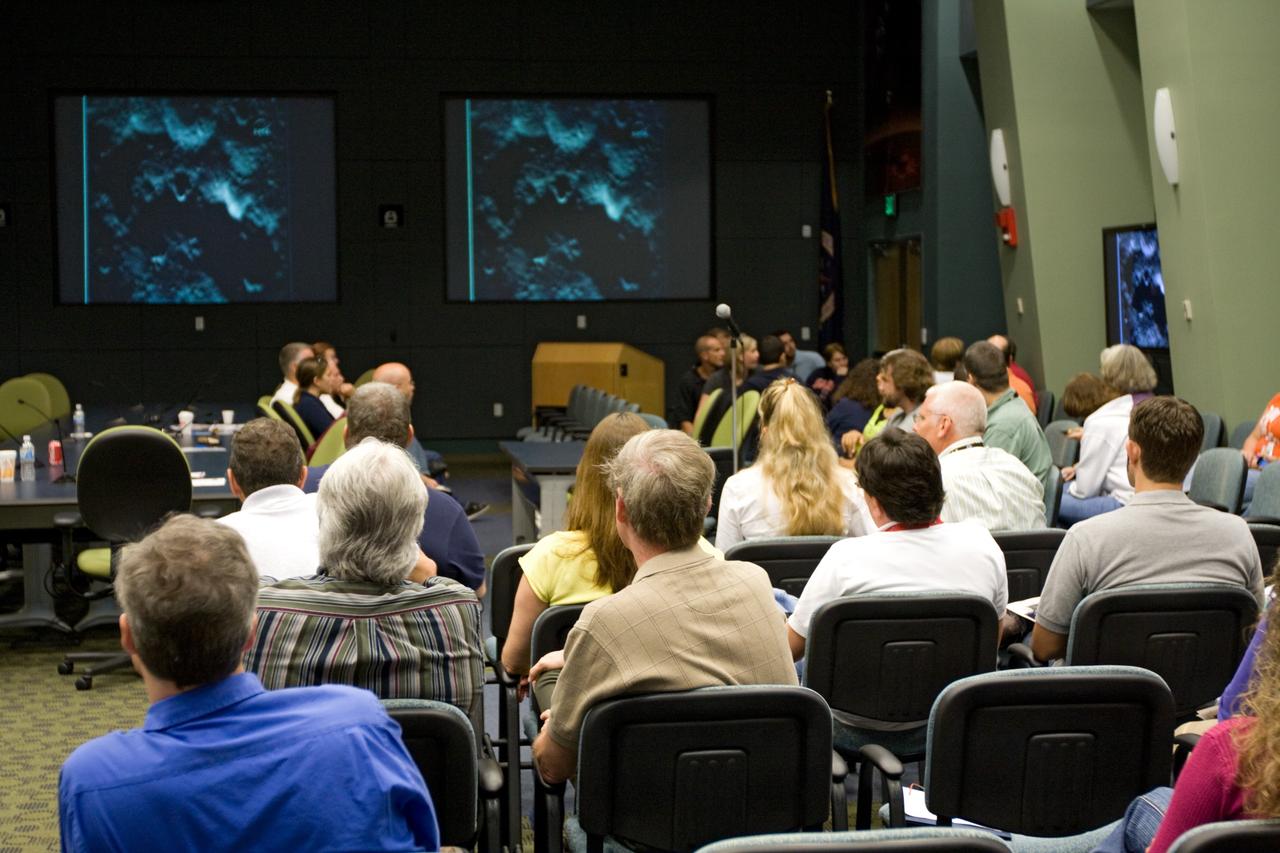
CAPE CANAVERAL, Fla. – Large screens are tuned to NASA Television to allow employees at NASA's Kennedy Space Center a live view of the impact of the Lunar Crater Observation and Sensing Satellite, or LCROSS, and its spent Centaur upper stage on the moon. The employees seen here are in the 5th Floor Conference Room of Operations Support Building II; another group of employees viewed the impact on screens in the Operations and Checkout Building's Mission Briefing Room. The employee event was sponsored by the NASA Exchange, the External Relations Directorate and KSC Launching Leaders. The goal of the LCROSS mission is to search for water ice on the moon, in support of future human lunar exploration. For additional information on the LCROSS mission, visit http://www.nasa.gov/LCROSS. Photo credit: NASA/Dimitri Gerondidakis
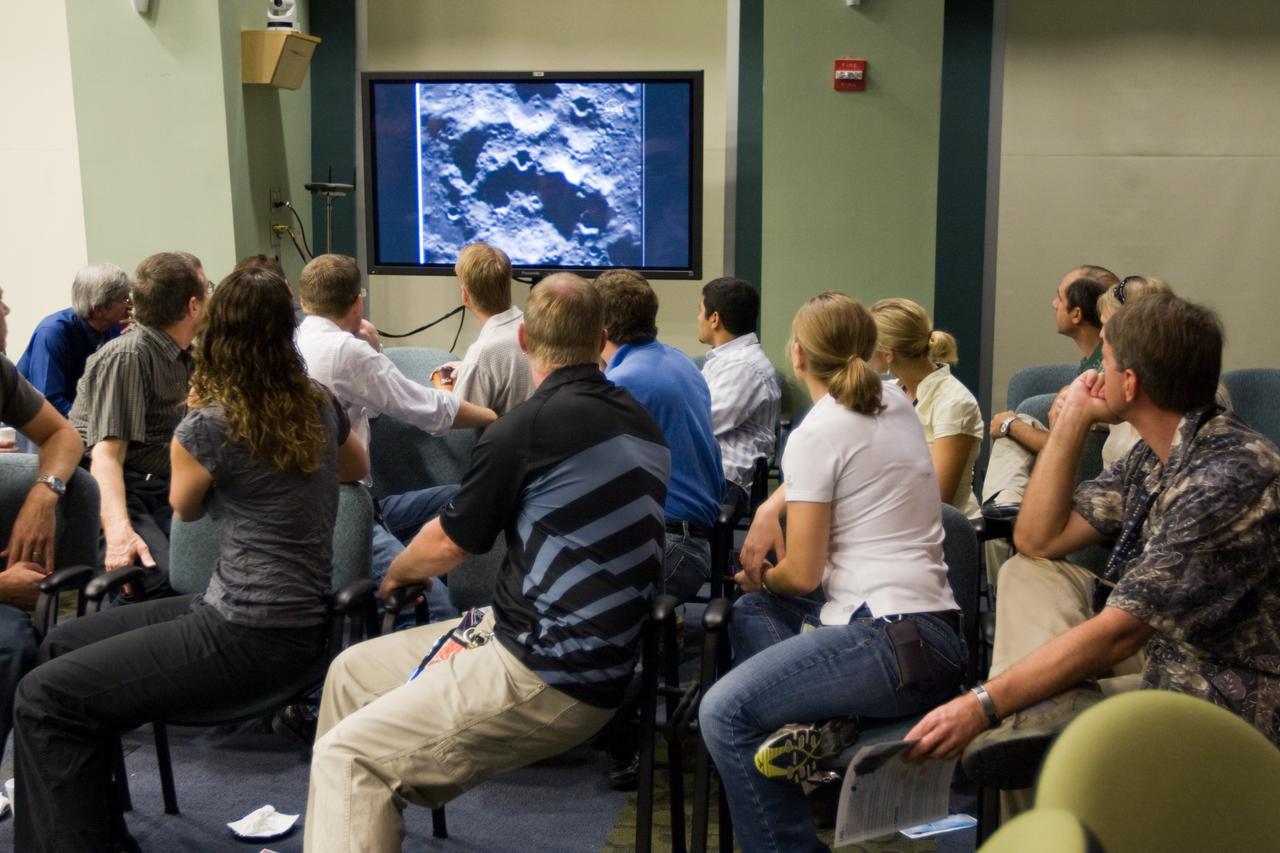
CAPE CANAVERAL, Fla. – Employees at NASA's Kennedy Space Center view live on NASA Television the impact of the Lunar Crater Observation and Sensing Satellite, or LCROSS, and its spent Centaur upper stage on the moon. The employees seen here are in the 5th Floor Conference Room of Operations Support Building II; another group of employees viewed the impact on screens in the Operations and Checkout Building's Mission Briefing Room. The employee event was sponsored by the NASA Exchange, the External Relations Directorate and KSC Launching Leaders. The goal of the LCROSS mission is to search for water ice on the moon, in support of future human lunar exploration. For additional information on the LCROSS mission, visit http://www.nasa.gov/LCROSS. Photo credit: NASA/Dimitri Gerondidakis
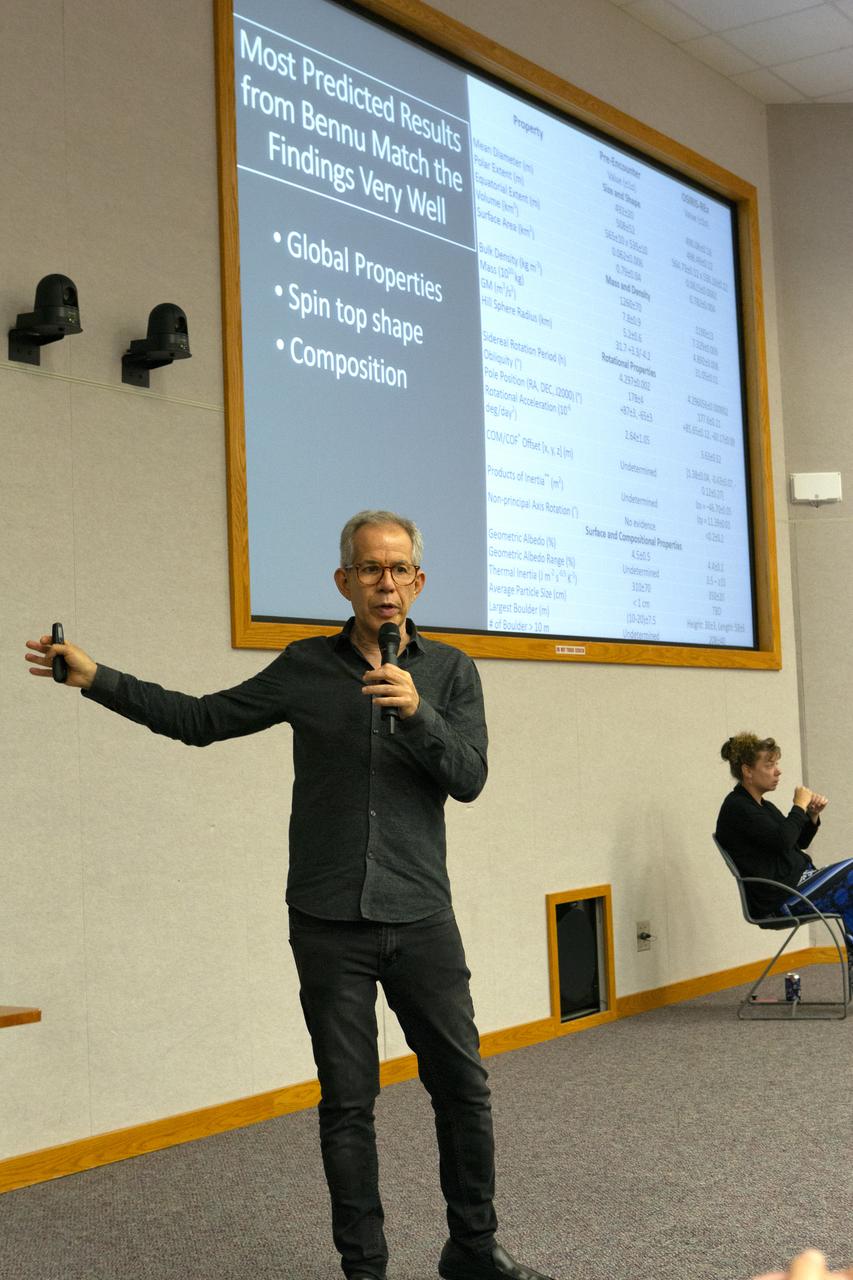
Dr. Humberto Campins from the University of Central Florida speaks to Kennedy Space Center employees in the Florida spaceport’s Neil Armstrong O&C Mission Briefing Room on April 16, 2019, to give a status update on NASA’s Origins, Spectral Interpretation, Resource Identification, Security-Regolith Explorer (OSIRIS-REx). The first U.S. mission to sample an asteroid, OSIRIS-REx launched from Cape Canaveral Air Force Station on Sept. 8, 2016 aboard a United Launch Alliance Atlas V rocket. Management of the launch service for OSIRIS-REx was the responsibility of NASA’s Launch Services Program, based at Kennedy.
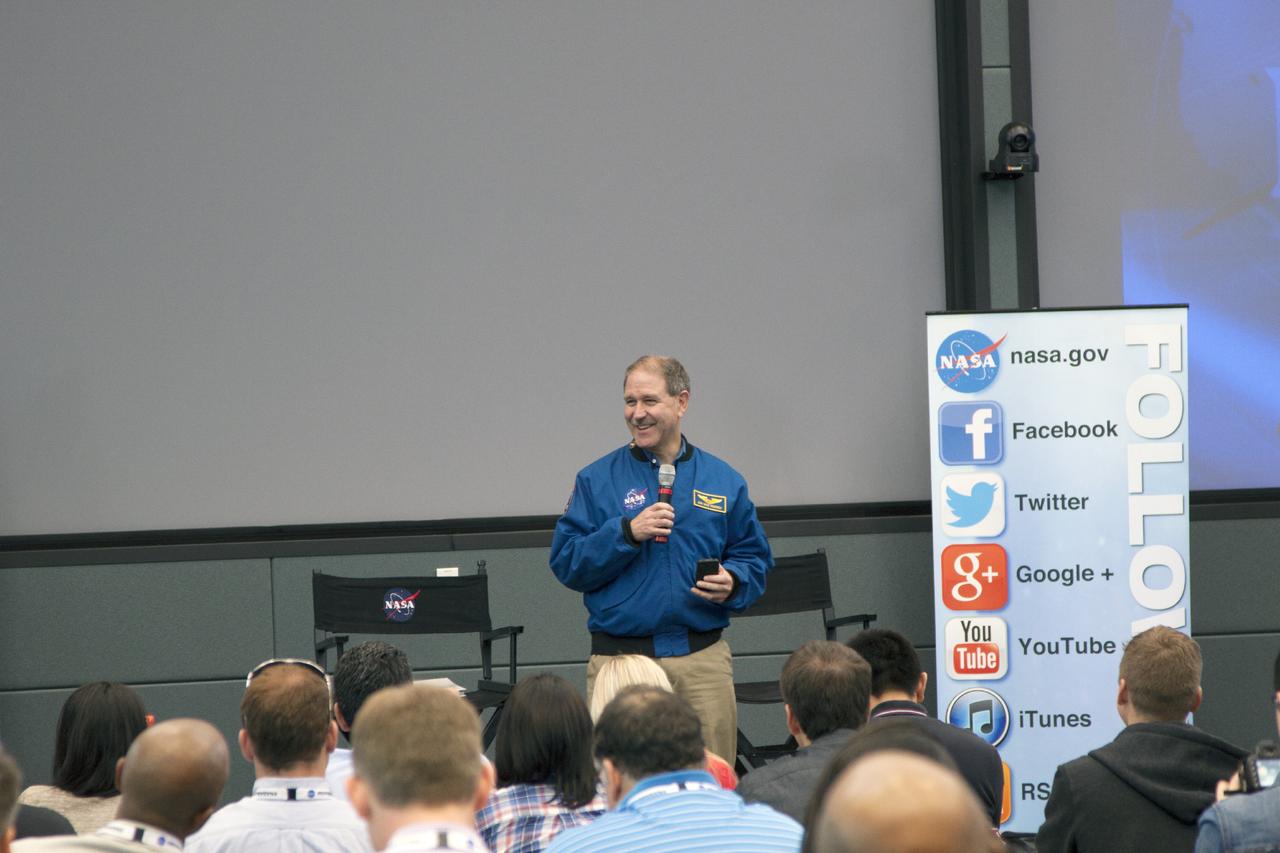
CAPE CANAVERAL, Fla. -- In the conference room of Operations Support Building II at NASA's Kennedy Space Center in Florida, social media participants listen to a briefing on the Mars Atmosphere and Volatile Evolution, or MAVEN, mission by, John Grunsfeld, the agency's associate administrator for the Science Mission Directorate. The social media participants gathered at the Florida spaceport for the launch of the Mars Atmosphere and Volatile Evolution, or MAVEN, spacecraft. Their visit included tours of key facilities and participating in presentations by key NASA leaders who updated the space agency's current efforts. Photo credit: NASA/Jim Grossman
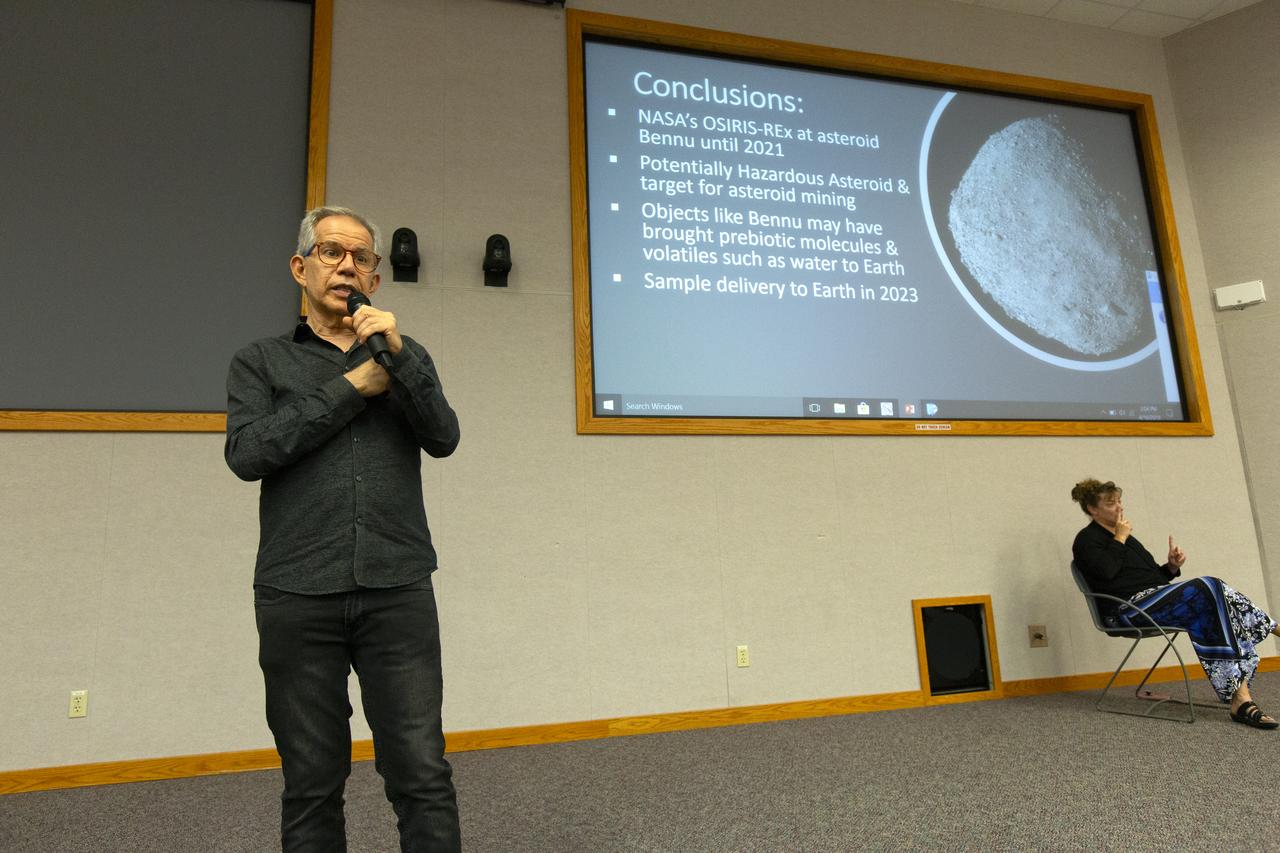
Dr. Humberto Campins from the University of Central Florida speaks to Kennedy Space Center employees in the Florida spaceport’s Neil Armstrong O&C Mission Briefing Room on April 16, 2019, to give a status update on NASA’s Origins, Spectral Interpretation, Resource Identification, Security-Regolith Explorer (OSIRIS-REx). The first U.S. mission to sample an asteroid, OSIRIS-REx launched from Cape Canaveral Air Force Station on Sept. 8, 2016 aboard a United Launch Alliance Atlas V rocket. Management of the launch service for OSIRIS-REx was the responsibility of NASA’s Launch Services Program, based at Kennedy.
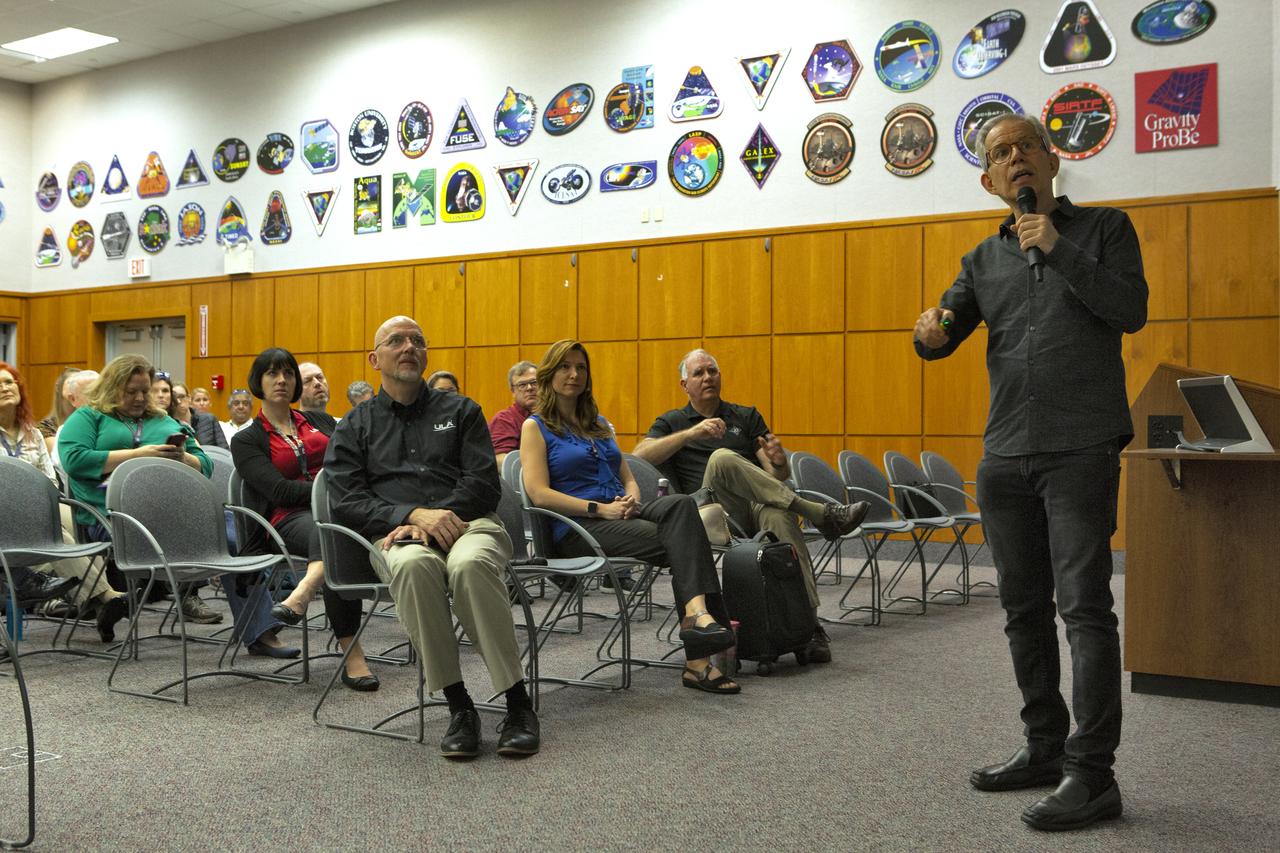
Dr. Humberto Campins from the University of Central Florida speaks to Kennedy Space Center employees in the Florida spaceport’s Neil Armstrong O&C Mission Briefing Room on April 16, 2019, to give a status update on NASA’s Origins, Spectral Interpretation, Resource Identification, Security-Regolith Explorer (OSIRIS-REx). The first U.S. mission to sample an asteroid, OSIRIS-REx launched from Cape Canaveral Air Force Station on Sept. 8, 2016 aboard a United Launch Alliance Atlas V rocket. Management of the launch service for OSIRIS-REx was the responsibility of NASA’s Launch Services Program, based at Kennedy.
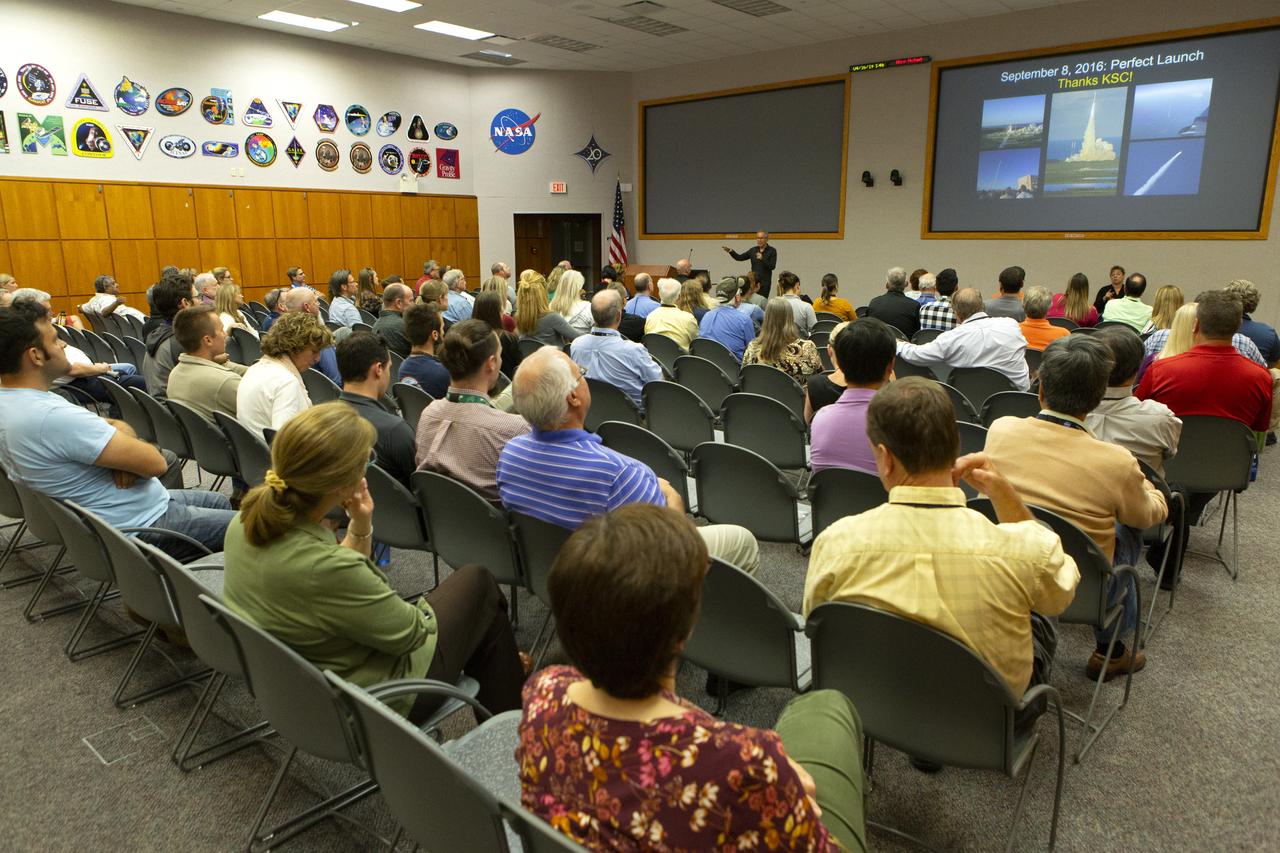
Kennedy Space Center employees gather in the Florida spaceport’s Neil Armstrong O&C Mission Briefing Room on April 16, 2019, to hear Dr. Humberto Campins from the University of Central Florida give a status update on NASA’s Origins, Spectral Interpretation, Resource Identification, Security-Regolith Explorer (OSIRIS-REx). The first U.S. mission to sample an asteroid, OSIRIS-REx launched from Cape Canaveral Air Force Station on Sept. 8, 2016 aboard a United Launch Alliance Atlas V rocket. Management of the launch service for OSIRIS-REx was the responsibility of NASA’s Launch Services Program, based at Kennedy.
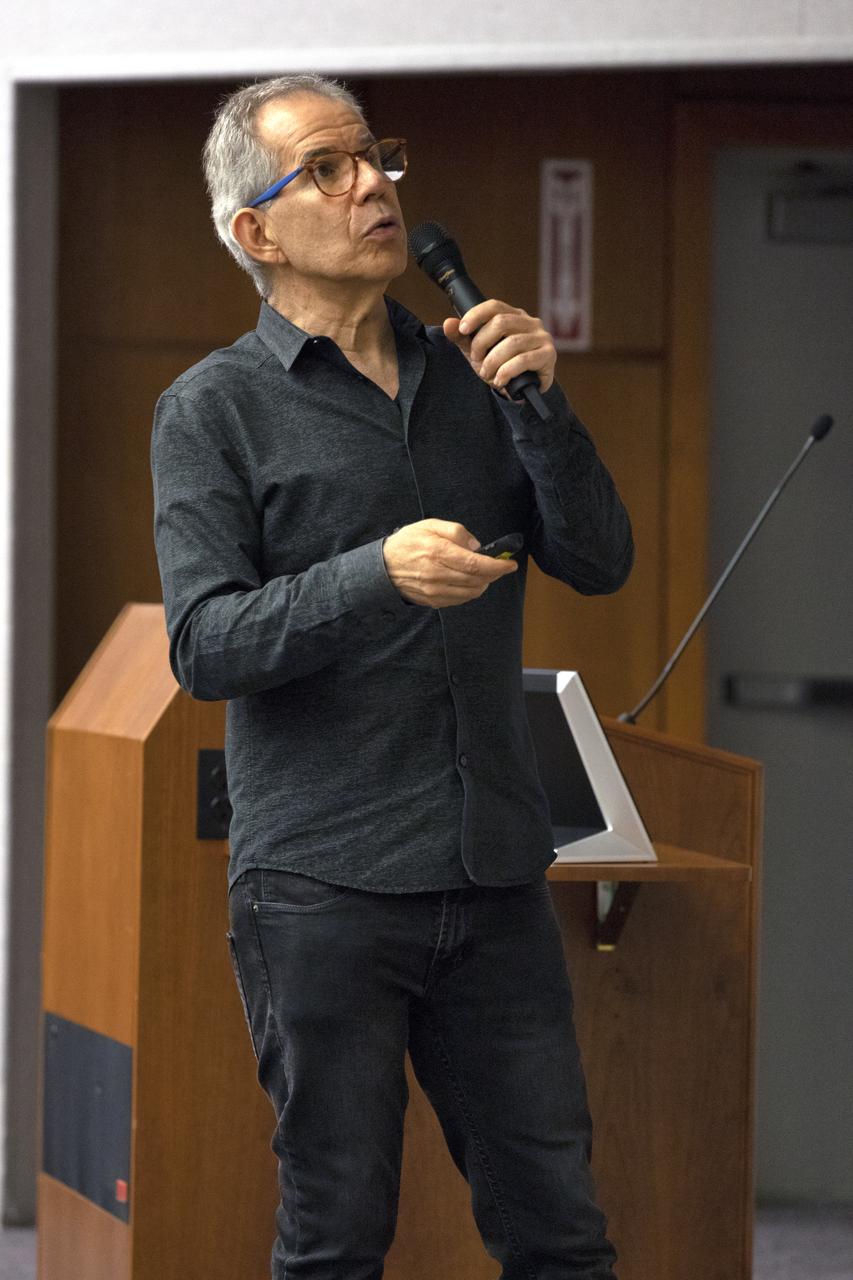
Dr. Humberto Campins from the University of Central Florida speaks to Kennedy Space Center employees in the Florida spaceport’s Neil Armstrong O&C Mission Briefing Room on April 16, 2019, to give a status update on NASA’s Origins, Spectral Interpretation, Resource Identification, Security-Regolith Explorer (OSIRIS-REx). The first U.S. mission to sample an asteroid, OSIRIS-REx launched from Cape Canaveral Air Force Station on Sept. 8, 2016 aboard a United Launch Alliance Atlas V rocket. Management of the launch service for OSIRIS-REx was the responsibility of NASA’s Launch Services Program, based at Kennedy.

S83-34270 (18 June 1983) --- Astronaut C. Gordon Fullerton supplies helpful consultation for Edward I. Fendell (seated) at the Integrated Communications System (INCO) console in the Mission Operations Control Room (MOCR) of the Johnson Space Center's (JSC) Mission Control Center (MCC). Fendell had control over the TV systems during a brief television transmission that featured the opening of the payload bay doors and the revealing of the cargo in the space shuttle Challenger's 18-meter (60-feet) long payload bay. The door-opening was the first of a series of many TV sessions planned for this six-day flight. Photo credit: NASA
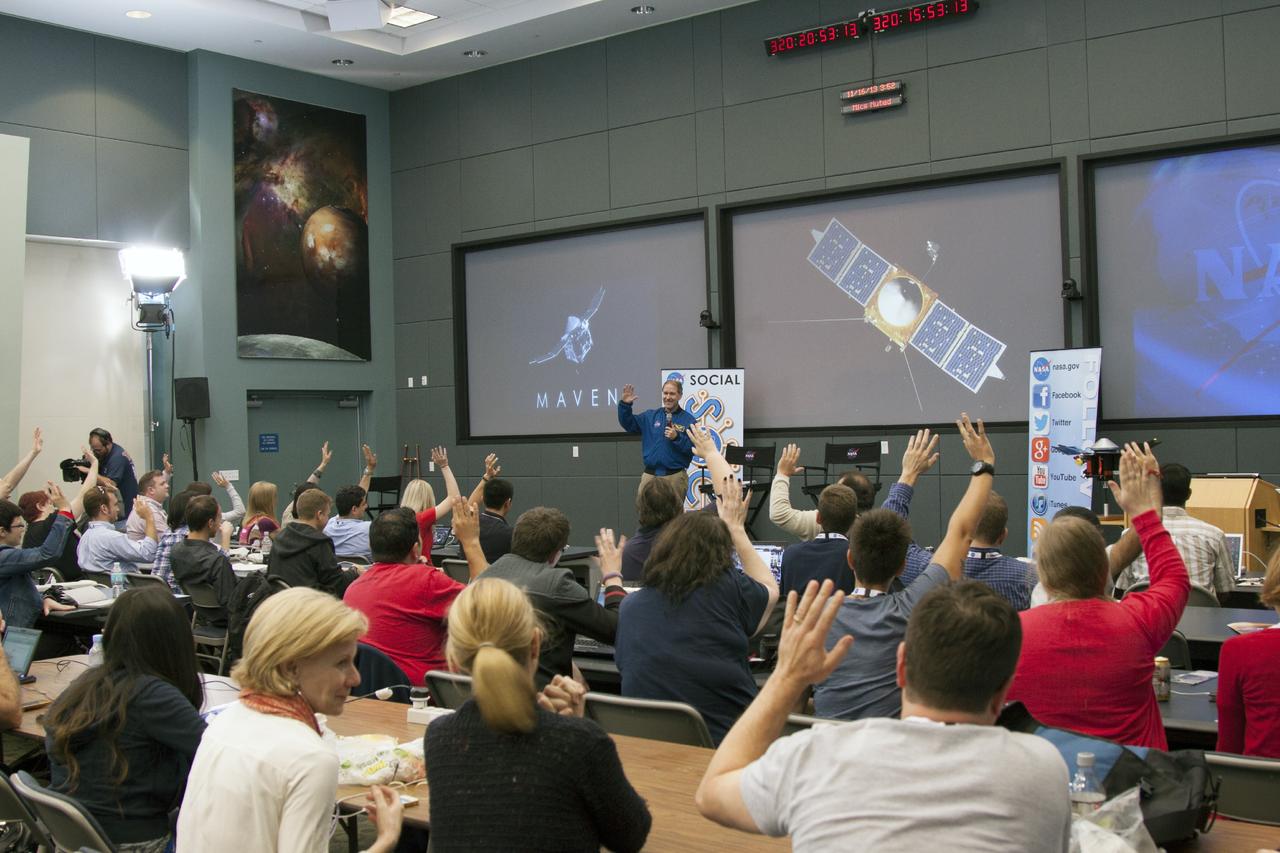
CAPE CANAVERAL, Fla. -- In the conference room of Operations Support Building II at NASA's Kennedy Space Center in Florida, social media participants listen to a briefing on the Mars Atmosphere and Volatile Evolution, or MAVEN, mission by, John Grunsfeld, the agency's associate administrator for the Science Mission Directorate. The social media participants gathered at the Florida spaceport for the launch of the Mars Atmosphere and Volatile Evolution, or MAVEN, spacecraft. Their visit included tours of key facilities and participating in presentations by key NASA leaders who updated the space agency's current efforts. Photo credit: NASA/Jim Grossman

S78-25633 (31 Jan. 1978) --- These six mission specialist astronaut candidates are the first women ASCANs to be named by NASA. They are, left to right, Rhea Seddon, Anna L. Fisher, Judith A. Resnik, Shannon W. Lucid, Sally K. Ride and Kathryn D. Sullivan. Along with these candidates, 14 other mission specialist candidates and 15 pilot astronaut candidates were presented during a press conference at the Johnson Space Center on Jan. 31, 1978. All 35 met the press in the larger Teague Auditorium and the women greeted photographers and other media representatives in the Public Affairs Office briefing room. Photo credit: NASA
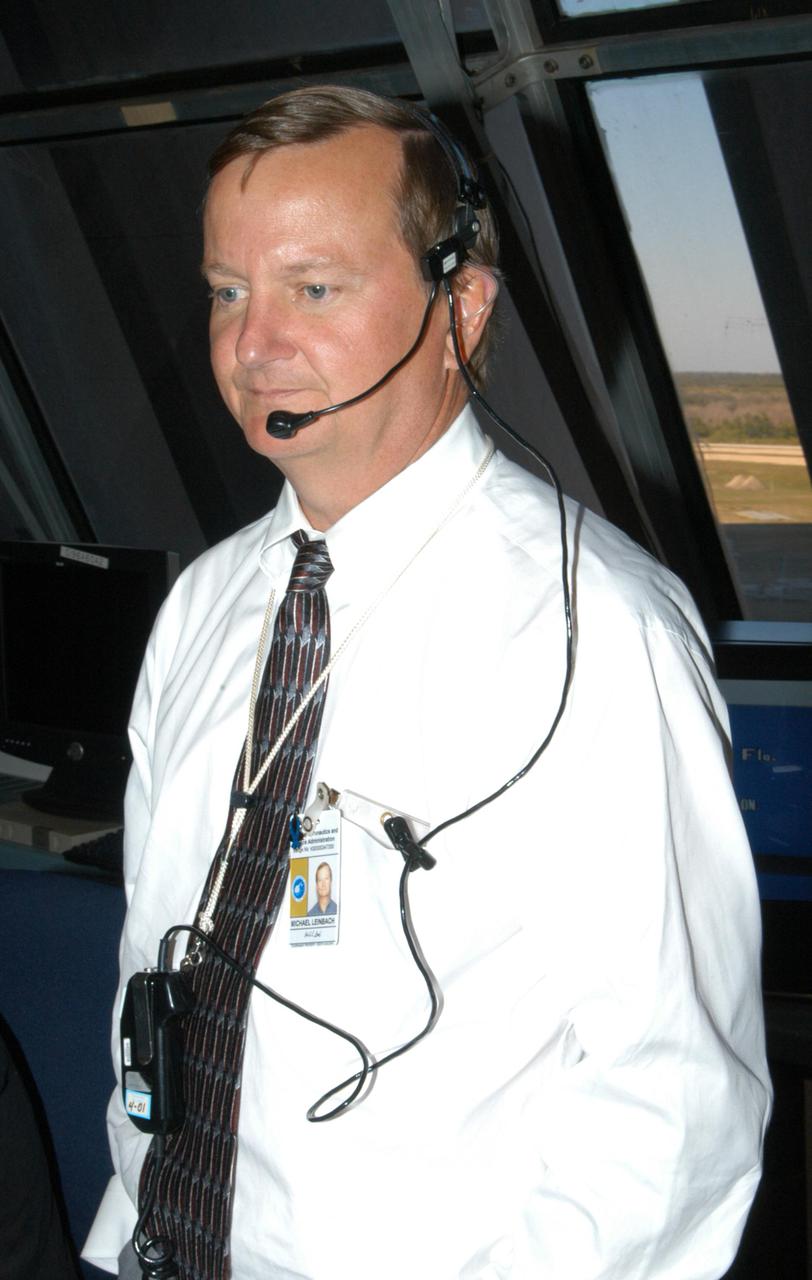
KENNEDY SPACE CENTER, FLA. - Shuttle Launch Director Mike Leinbach takes part in an End-to-End (ETE) Mission Management Team (MMT) launch simulation at KSC. In Firing Room 1 at KSC, Shuttle launch team members put the Shuttle system through an integrated simulation. The control room is set up with software used to simulate flight and ground systems in the launch configuration. The ETE MMT simulation included L-2 and L-1 day Prelaunch MMT meetings, an external tanking_weather briefing, and a launch countdown. The ETE transitioned to the Johnson Space Center for the flight portion of the simulation, with the STS-114 crew in a simulator at JSC. Such simulations are common before a launch to keep the Shuttle launch team sharp and ready for liftoff.
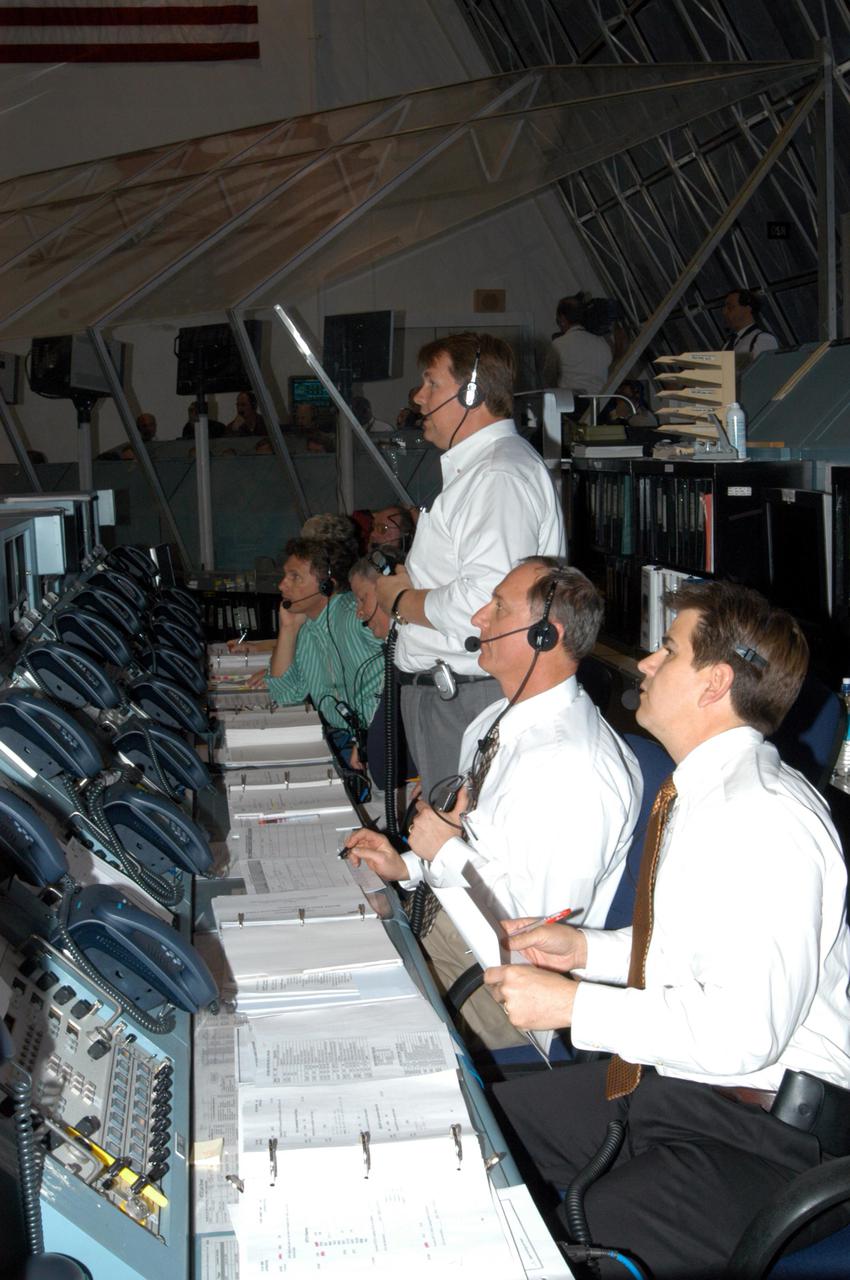
KENNEDY SPACE CENTER, FLA. - Space Shuttle Program managers, directors and engineers man the consoles in the Launch Control Center. They are taking part in an End-to-End (ETE) Mission Management Team (MMT) launch simulation at KSC. In Firing Room 1 at KSC, Shuttle launch team members put the Shuttle system through an integrated simulation. The control room is set up with software used to simulate flight and ground systems in the launch configuration. The ETE MMT simulation included L-2 and L-1 day Prelaunch MMT meetings, an external tanking_weather briefing, and a launch countdown. The ETE transitioned to the Johnson Space Center for the flight portion of the simulation, with the STS-114 crew in a simulator at JSC. Such simulations are common before a launch to keep the Shuttle launch team sharp and ready for liftoff.
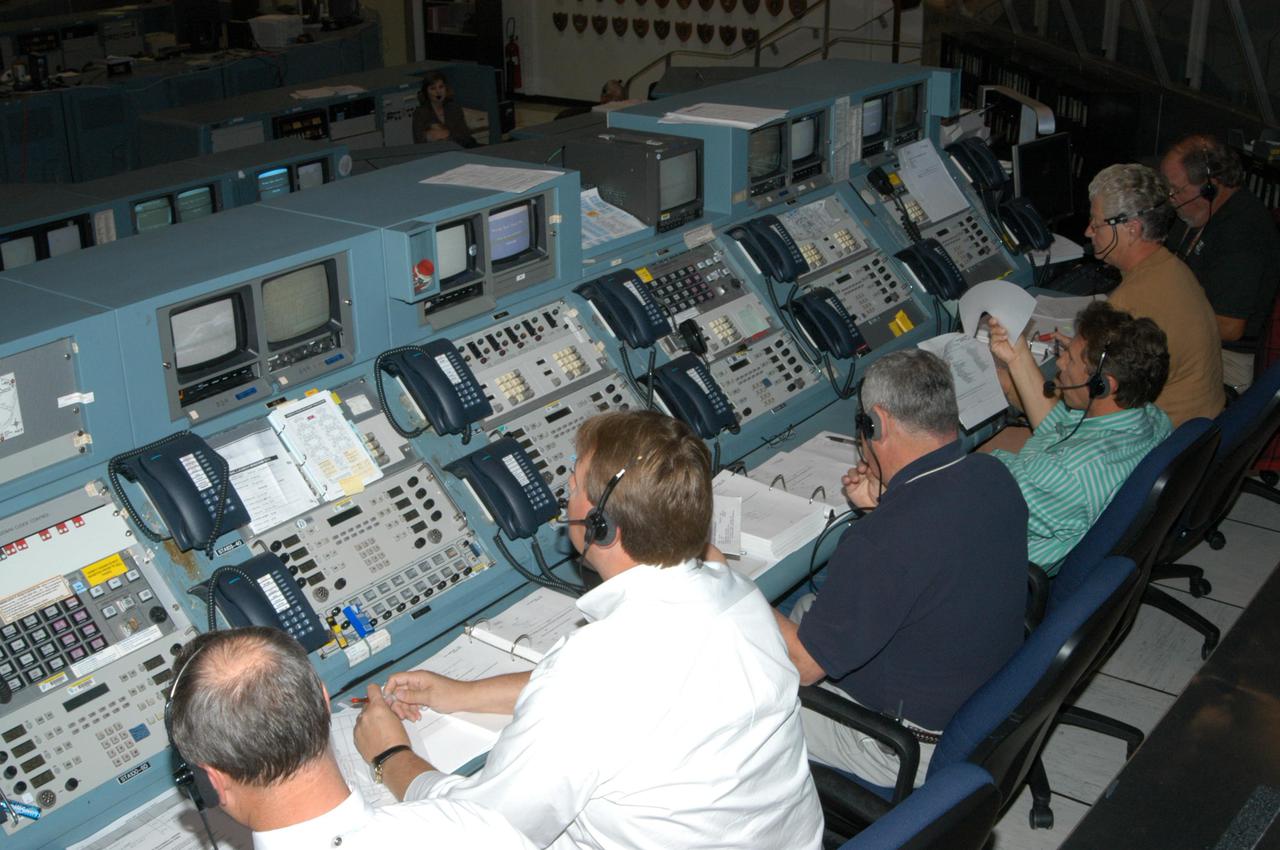
KENNEDY SPACE CENTER, FLA. - Space Shuttle Program managers, directors and engineers work the consoles in the Launch Control Center. They are taking part in an End-to-End (ETE) Mission Management Team (MMT) launch simulation at KSC. In Firing Room 1 at KSC, Shuttle launch team members put the Shuttle system through an integrated simulation. The control room is set up with software used to simulate flight and ground systems in the launch configuration. The ETE MMT simulation included L-2 and L-1 day Prelaunch MMT meetings, an external tanking_weather briefing, and a launch countdown. The ETE transitioned to the Johnson Space Center for the flight portion of the simulation, with the STS-114 crew in a simulator at JSC. Such simulations are common before a launch to keep the Shuttle launch team sharp and ready for liftoff.
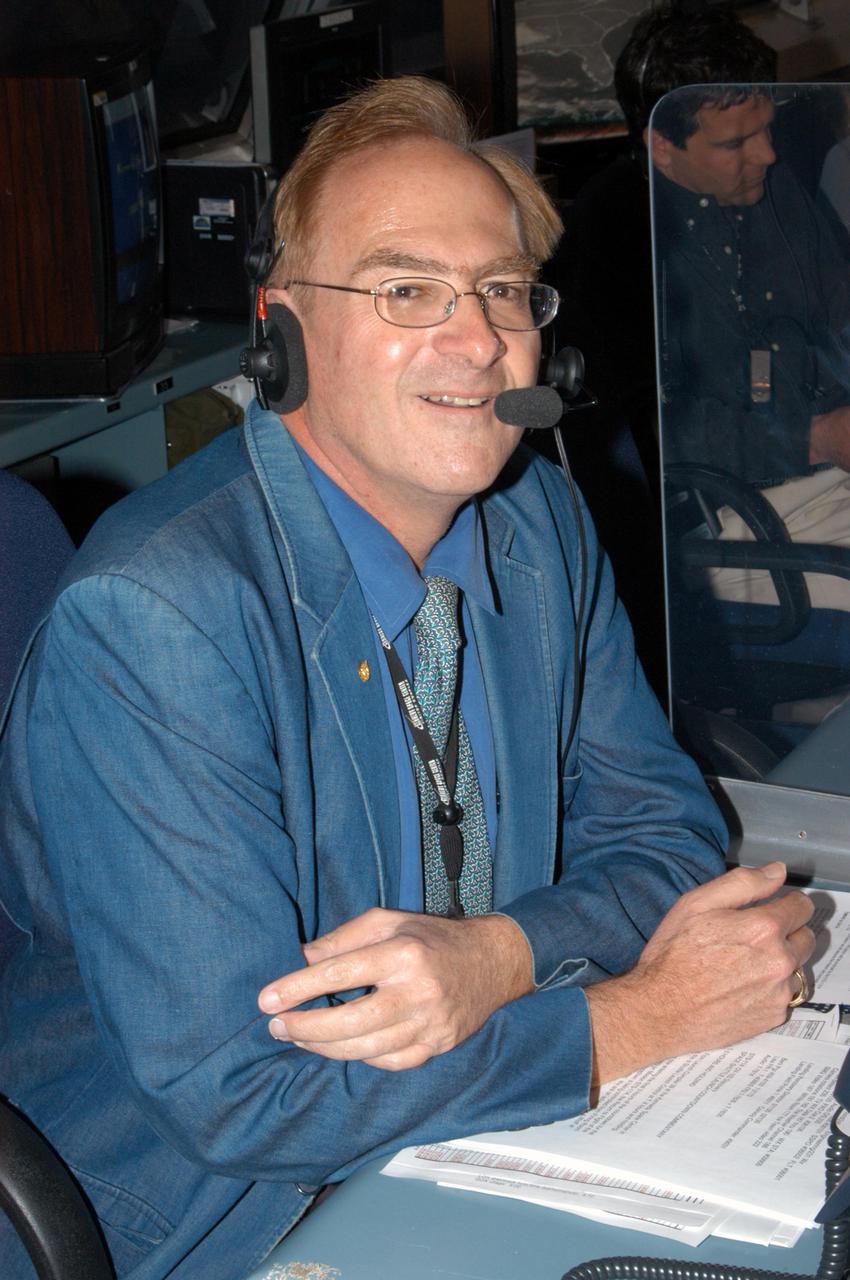
KENNEDY SPACE CENTER, FLA. - Public Information Officer George Diller plays his role as commentator during in an End-to-End (ETE) Mission Management Team (MMT) launch simulation at KSC. In Firing Room 1 at KSC, Shuttle launch team members put the Shuttle system through an integrated simulation. The control room is set up with software used to simulate flight and ground systems in the launch configuration. The ETE MMT simulation included L-2 and L-1 day Prelaunch MMT meetings, an external tanking_weather briefing, and a launch countdown. The ETE transitioned to the Johnson Space Center for the flight portion of the simulation, with the STS-114 crew in a simulator at JSC. Such simulations are common before a launch to keep the Shuttle launch team sharp and ready for liftoff.
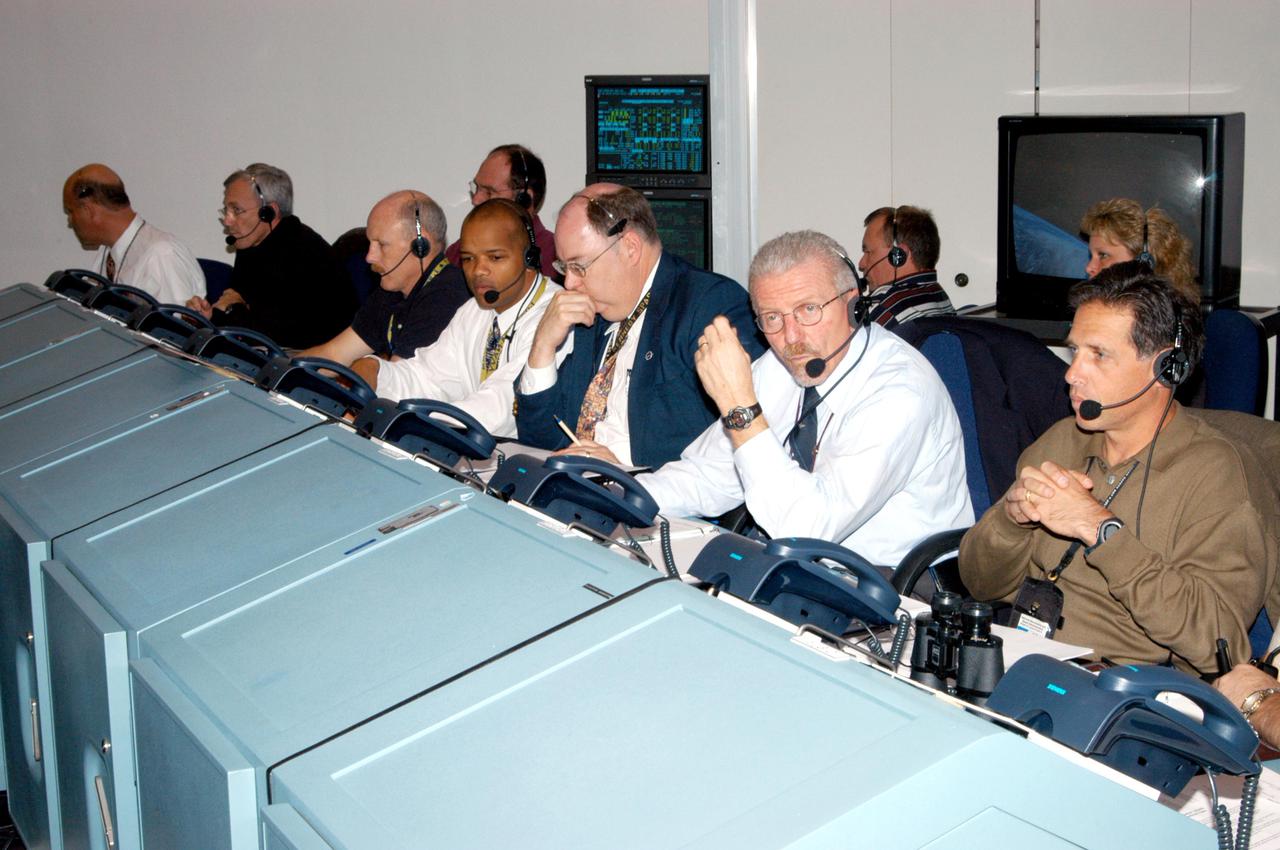
KENNEDY SPACE CENTER, FLA. - Space Shuttle Program managers, directors and engineers work the consoles in the Launch Control Center. They are taking part in an End-to-End (ETE) Mission Management Team (MMT) launch simulation at KSC. In Firing Room 1 at KSC, Shuttle launch team members put the Shuttle system through an integrated simulation. The control room is set up with software used to simulate flight and ground systems in the launch configuration. The ETE MMT simulation included L-2 and L-1 day Prelaunch MMT meetings, an external tanking_weather briefing, and a launch countdown. The ETE transitioned to the Johnson Space Center for the flight portion of the simulation, with the STS-114 crew in a simulator at JSC. Such simulations are common before a launch to keep the Shuttle launch team sharp and ready for liftoff.
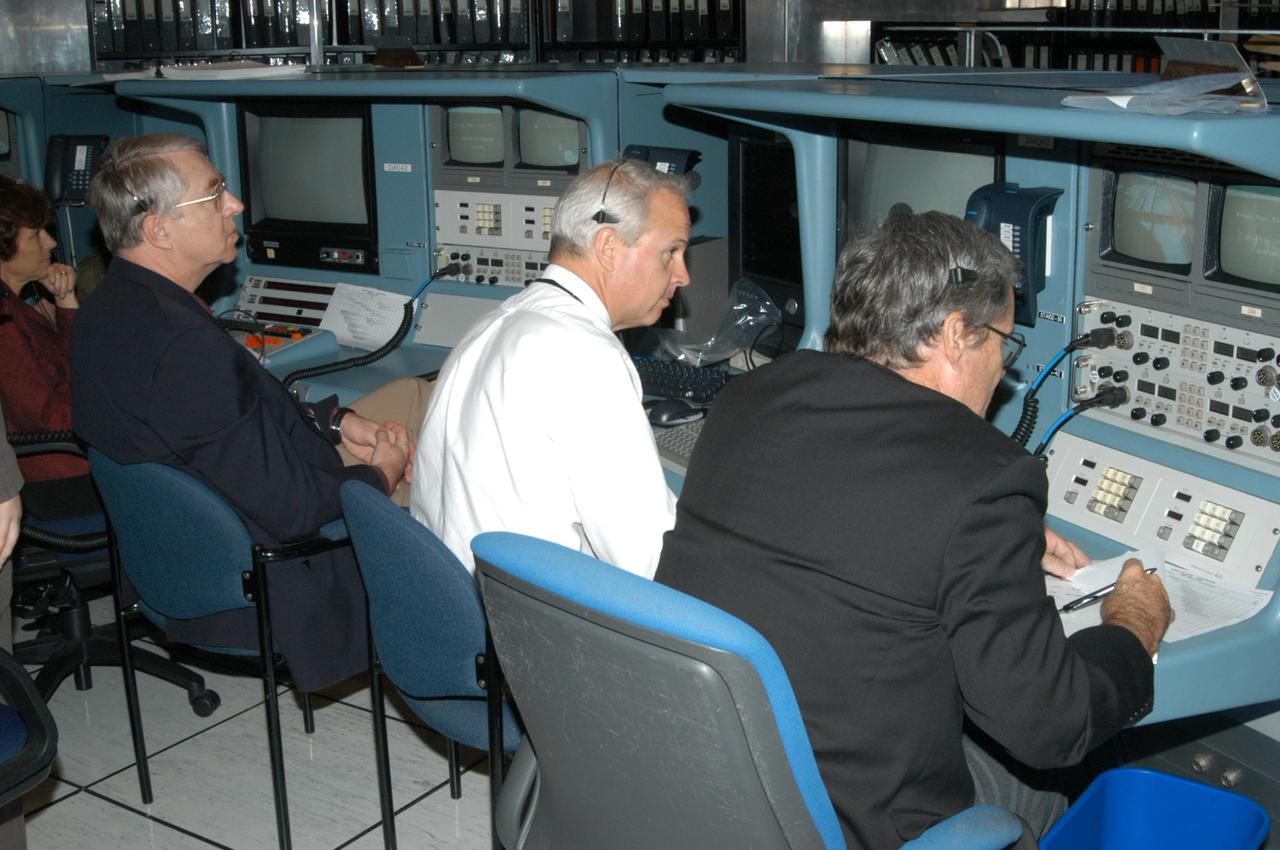
KENNEDY SPACE CENTER, FLA. - Sitting at consoles, journalists Marsha Dunn, Craig Covault, Mike Cabbage and Bill Harwood witness an End-to-End (ETE) Mission Management Team (MMT) launch simulation at KSC. In Firing Room 1 at KSC, Shuttle launch team members put the Shuttle system through an integrated simulation. The control room is set up with software used to simulate flight and ground systems in the launch configuration. The ETE MMT simulation included L-2 and L-1 day Prelaunch MMT meetings, an external tanking_weather briefing, and a launch countdown. The ETE transitioned to the Johnson Space Center for the flight portion of the simulation, with the STS-114 crew in a simulator at JSC. Such simulations are common before a launch to keep the Shuttle launch team sharp and ready for liftoff.
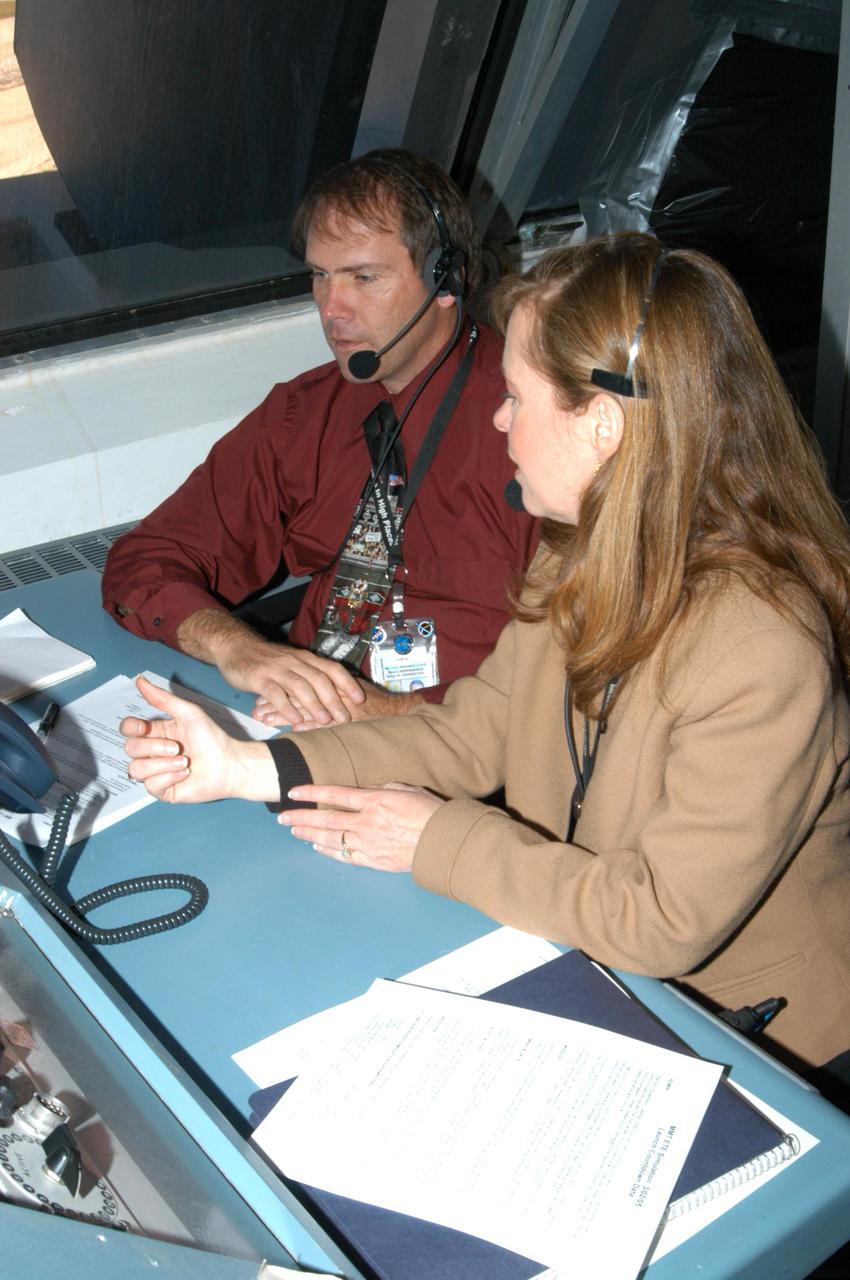
KENNEDY SPACE CENTER, FLA. - During an End-to-End (ETE) Mission Management Team (MMT) launch simulation at KSC, Mike Rein, division chief of Media Services, and Lisa Malone, director of External Relations and Business Development at KSC, work the consoles. In Firing Room 1 at KSC, Shuttle launch team members put the Shuttle system through an integrated simulation. The control room is set up with software used to simulate flight and ground systems in the launch configuration. The ETE MMT simulation included L-2 and L-1 day Prelaunch MMT meetings, an external tanking_weather briefing, and a launch countdown. The ETE transitioned to the Johnson Space Center for the flight portion of the simulation, with the STS-114 crew in a simulator at JSC. Such simulations are common before a launch to keep the Shuttle launch team sharp and ready for liftoff.
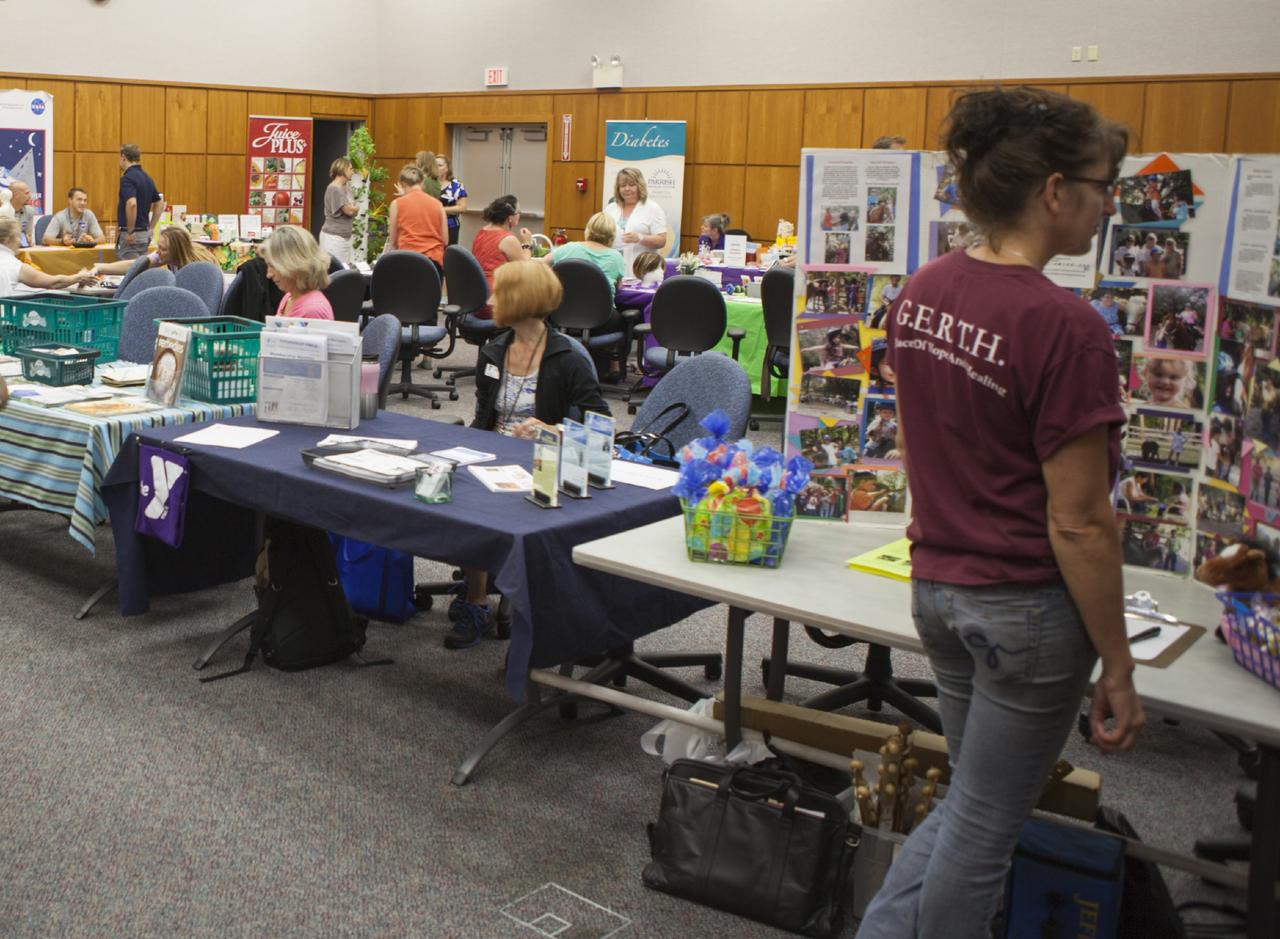
CAPE CANAVERAL, Fla. – Linnea Applegate, right, of Grace Equine Rescue and Therapy for Humans, or GERTH, organizes her booth during the National Employee Health and Fitness Day event in the Operations and Checkout Building's Mission Briefing Room. GERTH is a nonprofit organization in Cocoa, Fla., that brings horses, children and adults together in a safe, nurturing and healing environment to promote therapeutic healing. Other vendors shown in the background include Bridget Griffin of the YMCA of Titusville, center, and Sunseed Co-op’s Marcia Cooney, in pink. Photo credit: NASA/Daniel Casper
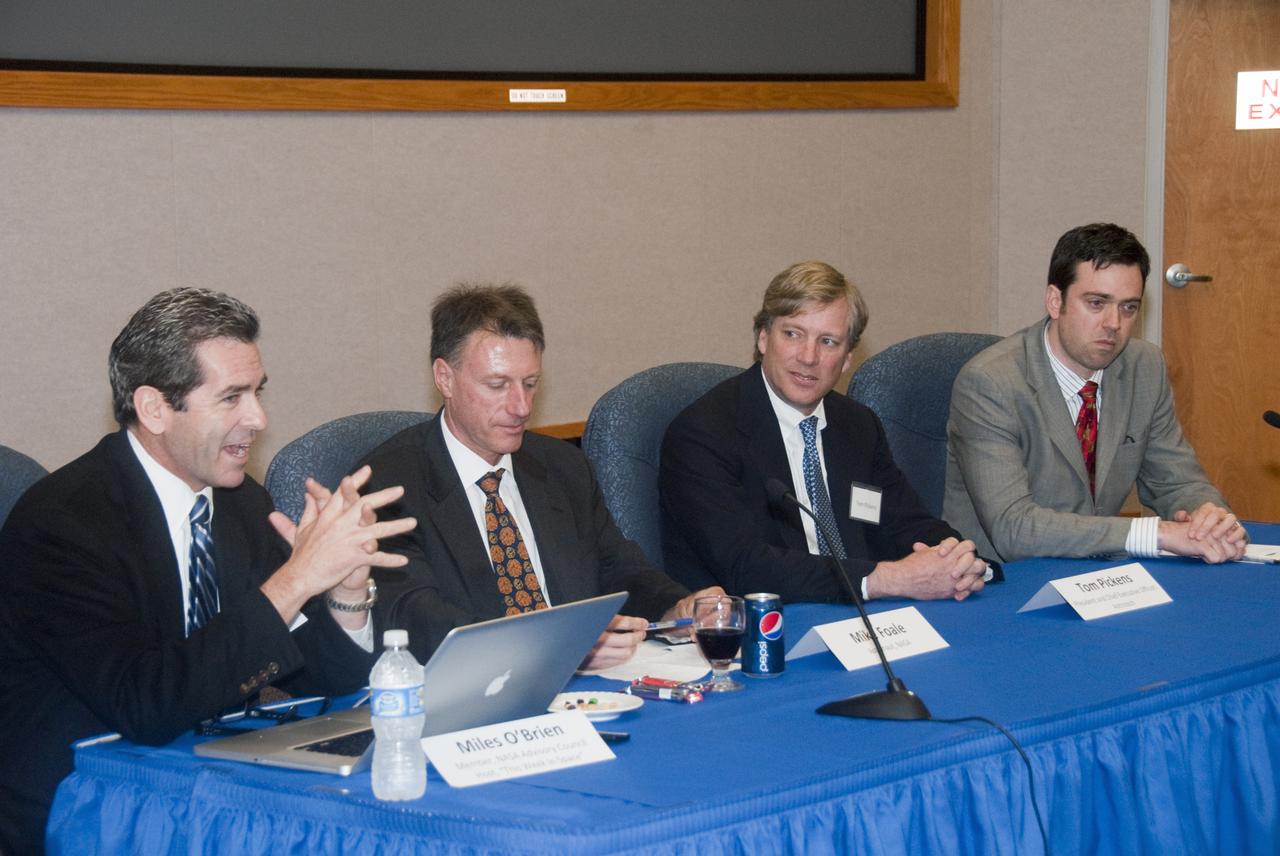
CAPE CANAVERAL, Fla. - In the mission briefing room of the Operations and Checkout Building at NASA's Kennedy Space Center in Florida, Miles O'Brien, a member of the NASA Advisory Council (left), moderates the panel at the second break-out session, 'Increasing Access To and Utilization of the International Space Station,' that is part of the Conference on the American Space Program for the 21st Century. To O'Brien's left on the panel are NASA Astronaut Mike Foale; Tom Pickens, President and Chief Executive Officer of Astrotech Space Operations and Bretton Alexander, President of the Commercial Spaceflight Federation. Photo Credit: NASA_Jim Grossmann
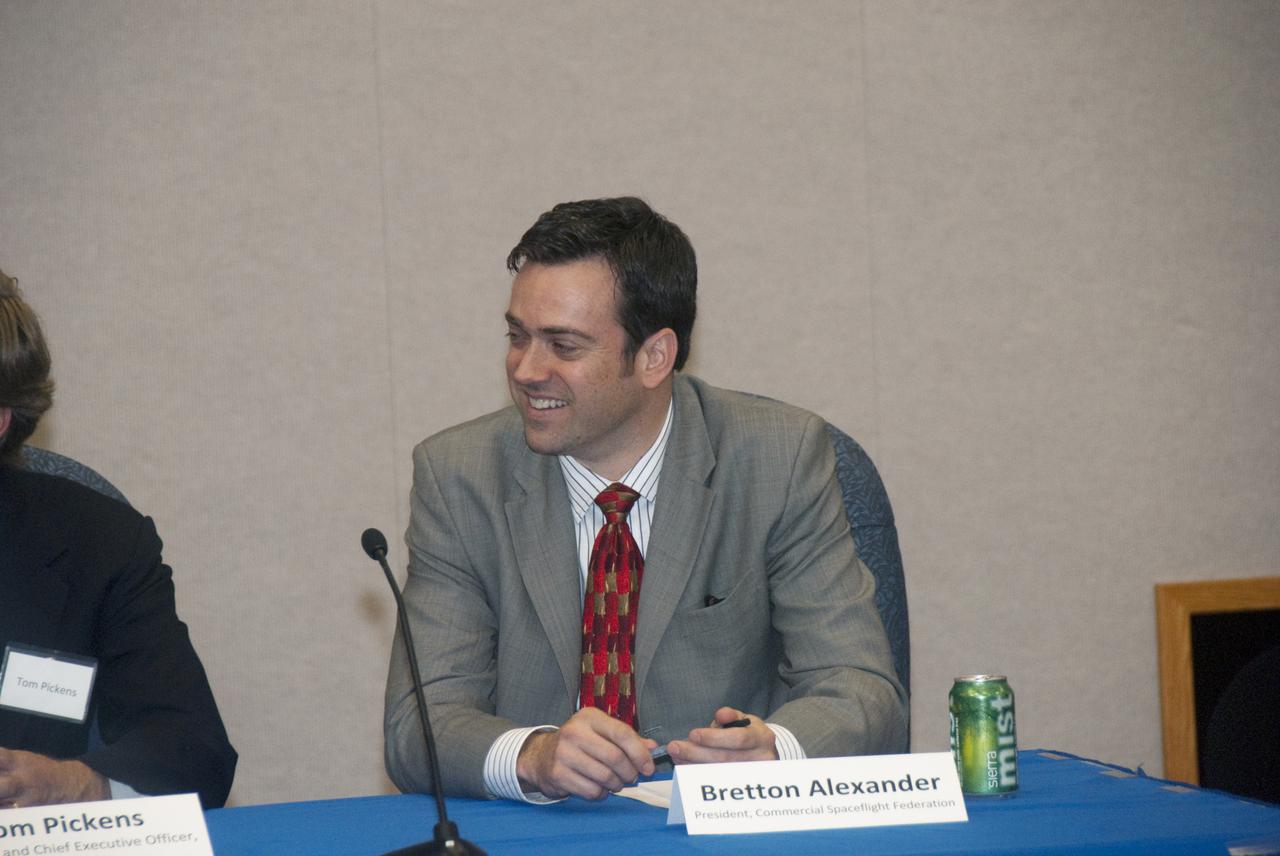
CAPE CANAVERAL, Fla. - In the mission briefing room of the Operations and Checkout Building at NASA's Kennedy Space Center in Florida, Bretton Alexander, President of the Commercial Spaceflight Federation is enjoying his participation in the second break-out session, 'Increasing Access To and Utilization of the International Space Station,' that is part of the Conference on the American Space Program for the 21st Century. Panel members also include NASA Astronaut Mike Foale; Miles O'Brien, a member of the NASA Advisory Council and panel moderator and Tom Pickens, President and Chief Executive Officer of Astrotech Space Operations. Photo Credit: NASA_Jim Grossmann