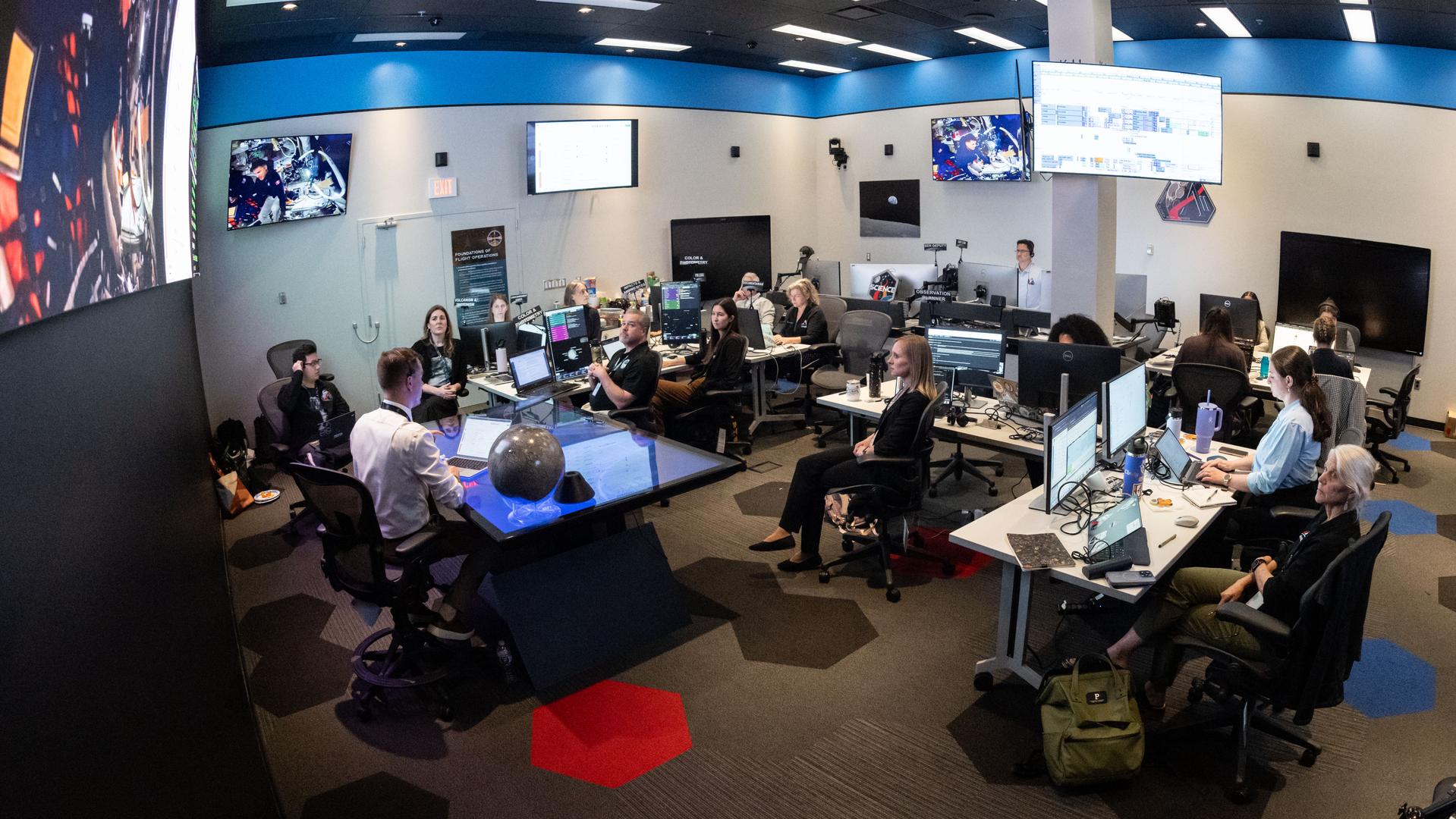
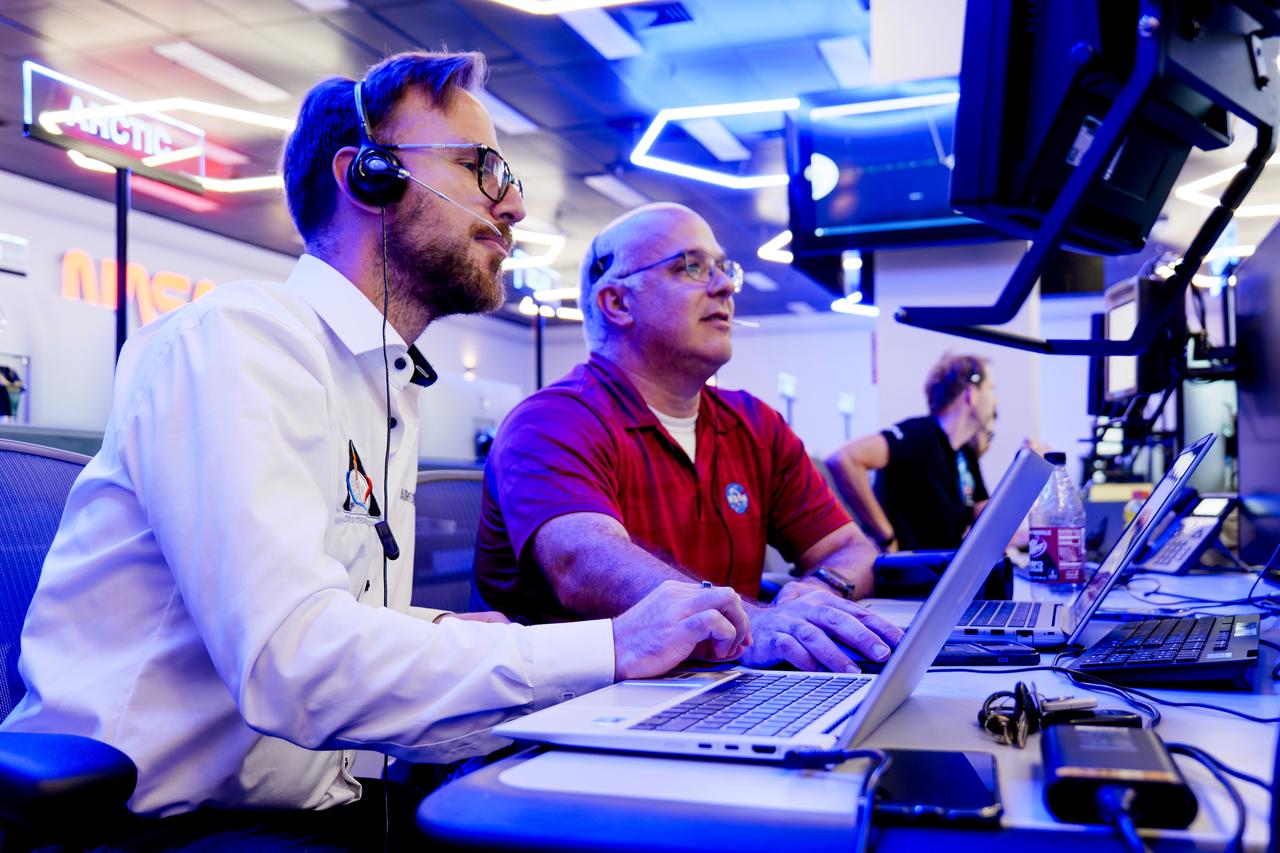
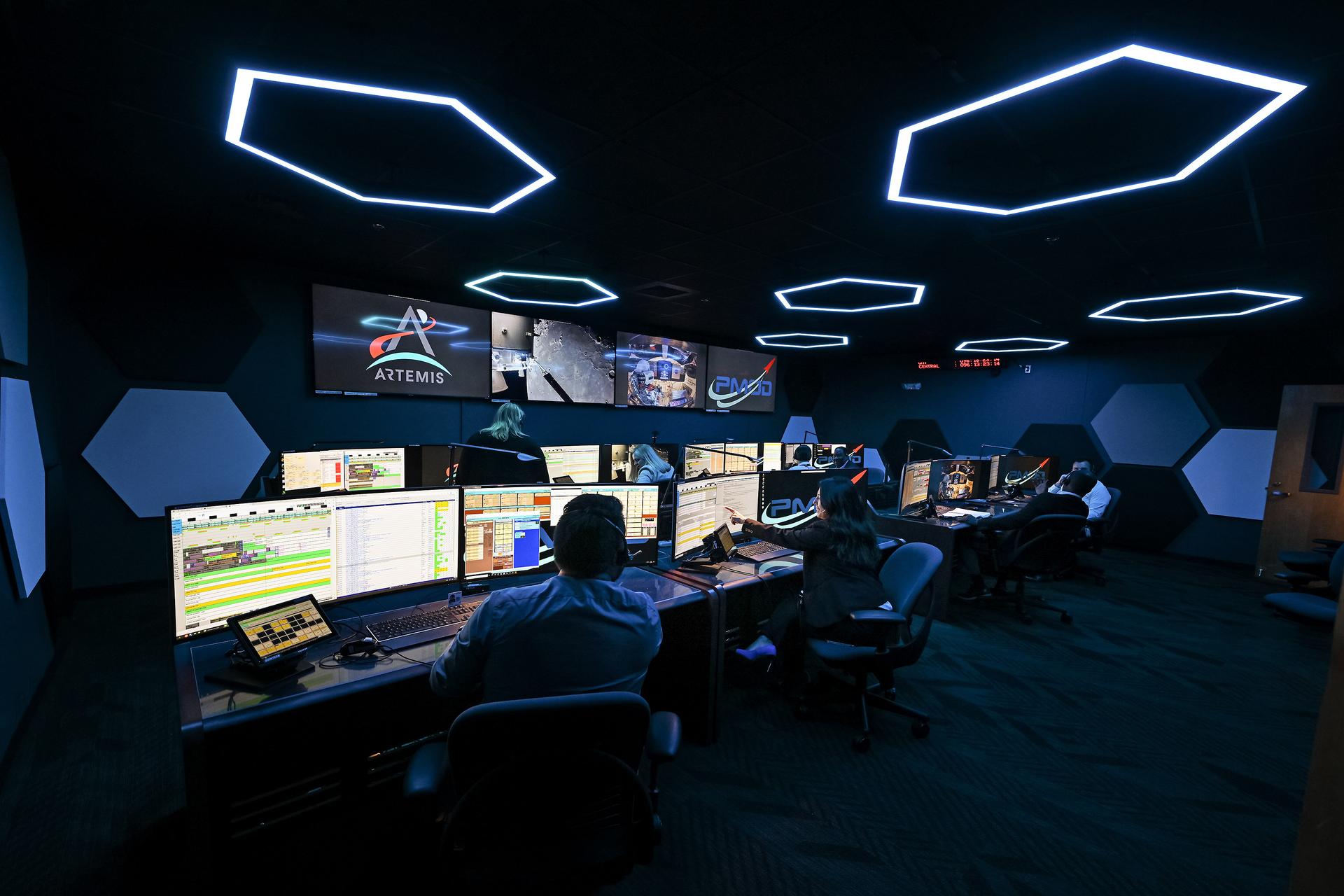
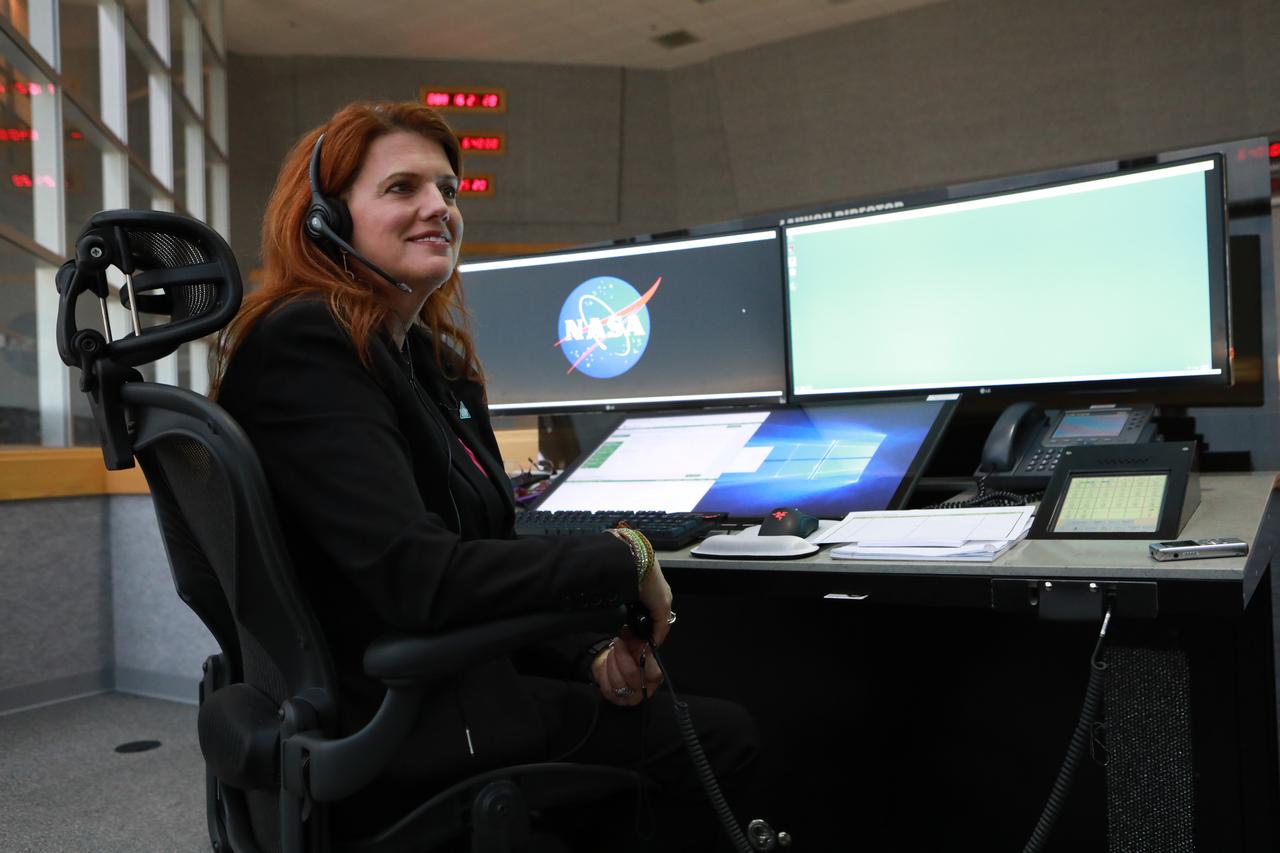
A view inside the Science Evaluation Room (SER) in Mission Control at NASA’s Johnson Space Center in Houston. The SER supports lunar science and planetary observations for the Artemis science officer in the mission’s main flight control room. Built specifically for Artemis missions with these science priorities in mind, the SER is equipped to support rapid data interpretation, collaborative analysis, real-time decision making, and seamless coordination between the science and operations teams. Credits: NASA/Bill Stafford
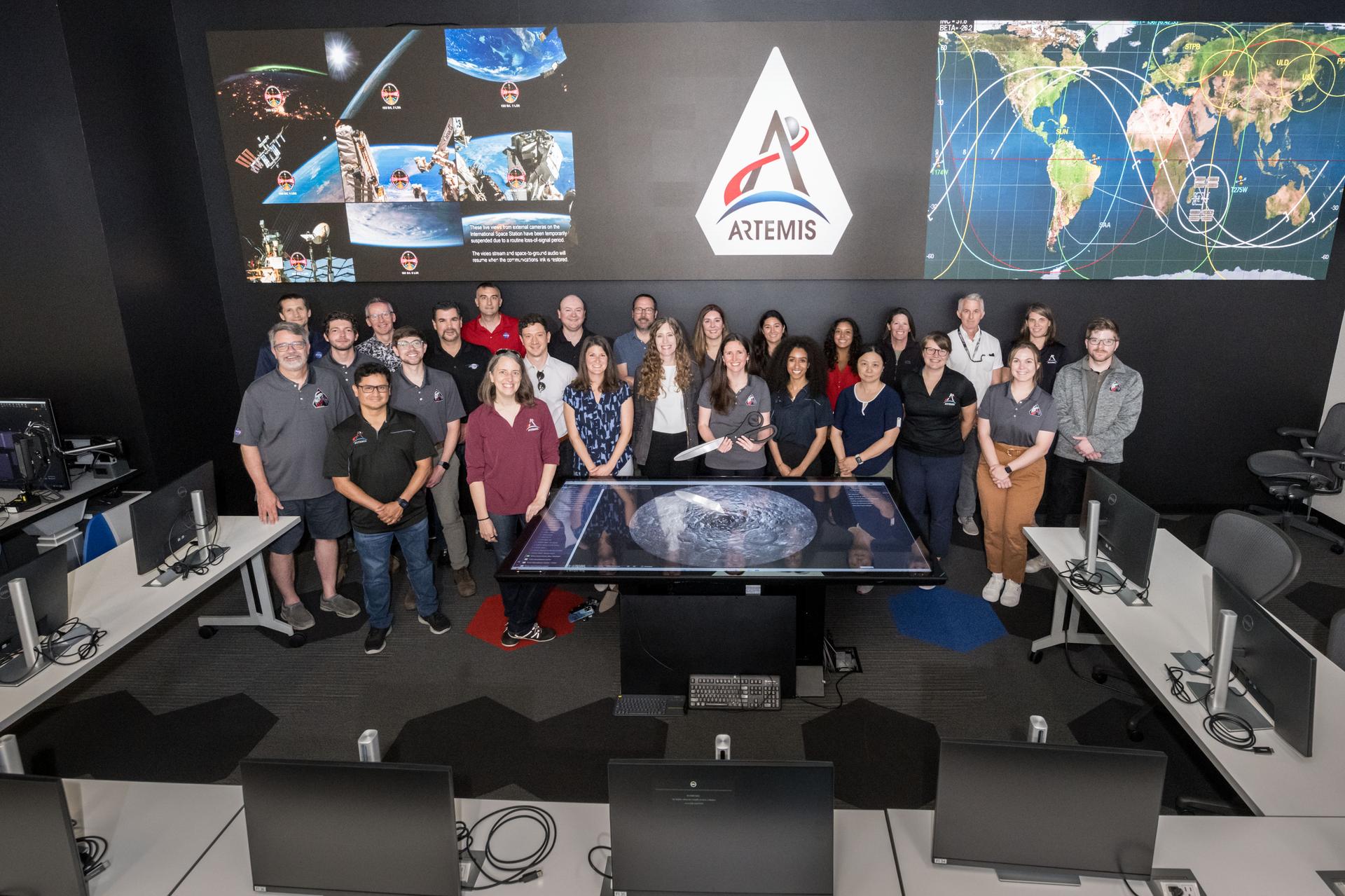
jsc2025e057255 --- NASA’s Artemis III lunar science team is pictured in the Science Evaluation Room (SER) at the agency’s Johnson Space Center in Houston. Located in the Christopher C. Kraft Jr. Mission Control Center, the SER supports the mission’s main flight control room for lunar science and planetary observations. Built specifically for Artemis missions with these science priorities in mind, the SER is equipped to support rapid data interpretation, collaborative analysis, real-time decision making, and seamless coordination between the science and operations teams.
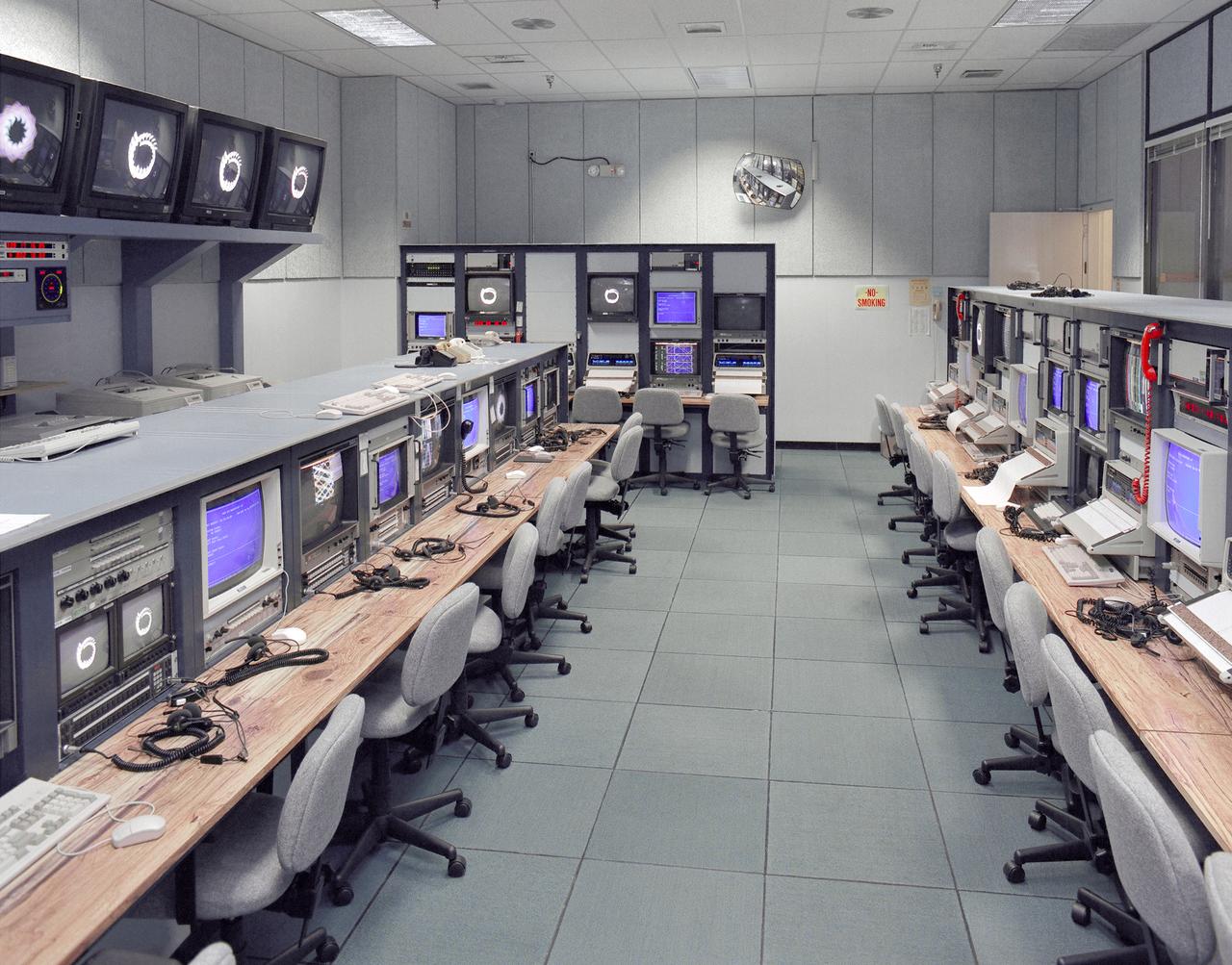
Mission control Blue Room, seen here, in building 4800 at NASA's Dryden Flight Research Center, is part of the Western Aeronautical Test Range (WATR). All aspects of a research mission are monitored from one of two of these control rooms at Dryden. The WATR consists of a highly automated complex of computer controlled tracking, telemetry, and communications systems and control room complexes that are capable of supporting any type of mission ranging from system and component testing, to sub-scale and full-scale flight tests of new aircraft and reentry systems. Designated areas are assigned for spin/dive tests, corridors are provided for low, medium, and high-altitude supersonic flight, and special STOL/VSTOL facilities are available at Ames Moffett and Crows Landing. Special use airspace, available at Edwards, covers approximately twelve thousand square miles of mostly desert area. The southern boundary lies to the south of Rogers Dry Lake, the western boundary lies midway between Mojave and Bakersfield, the northern boundary passes just south of Bishop, and the eastern boundary follows about 25 miles west of the Nevada border except in the northern areas where it crosses into Nevada.
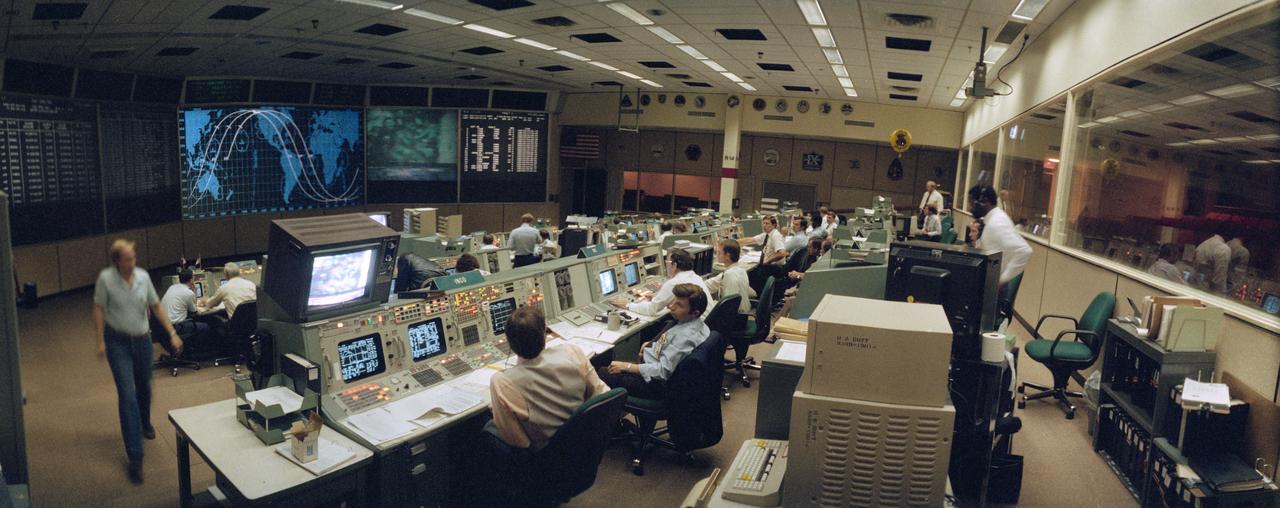
Wide angle view of the flight control room (FCR) of the Mission Control Center (MCC). Some of the STS 41-G crew can be seen on a large screen at the front of the MCC along with a map tracking the progress of the orbiter.
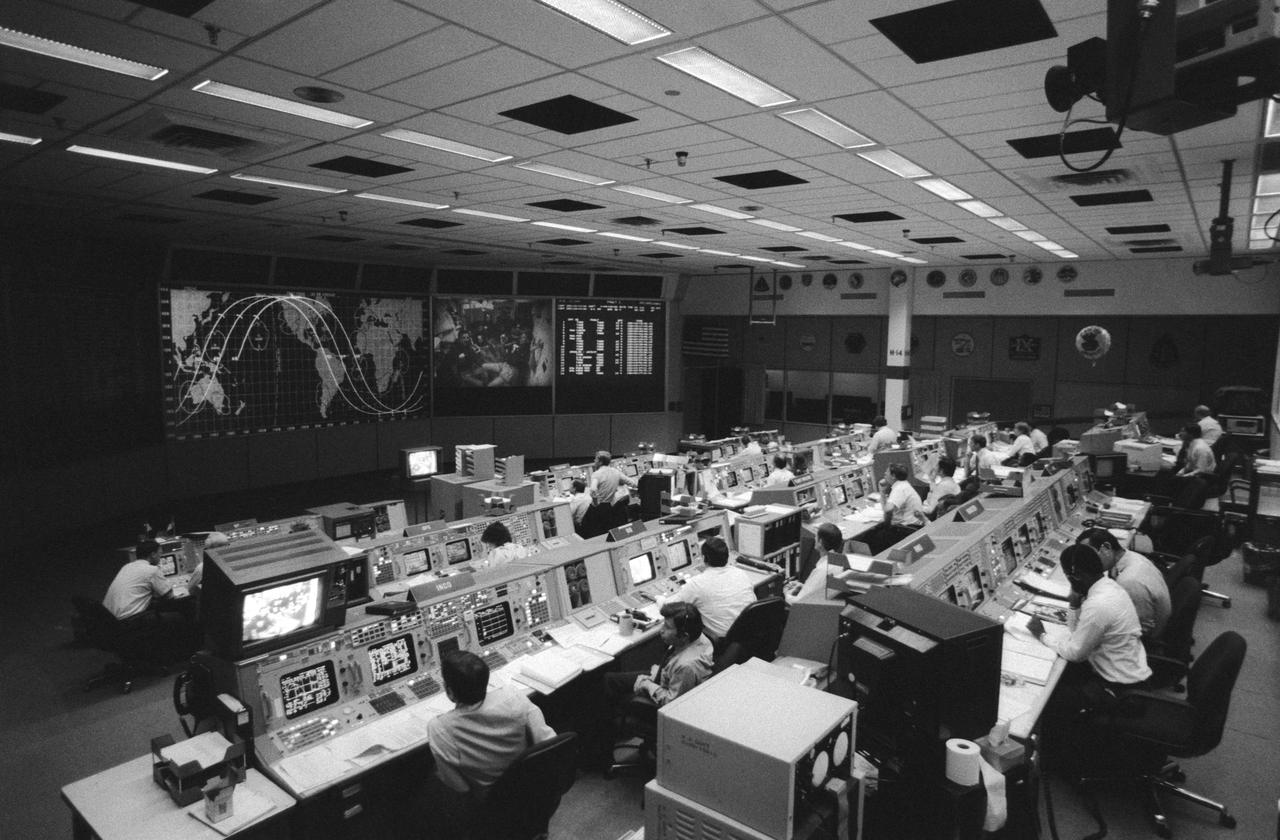
Wide angle view of the flight control room (FCR) of the Mission Control Center (MCC). Some of the STS 41-G crew can be seen on a large screen at the front of the MCC along with a map tracking the progress of the orbiter.
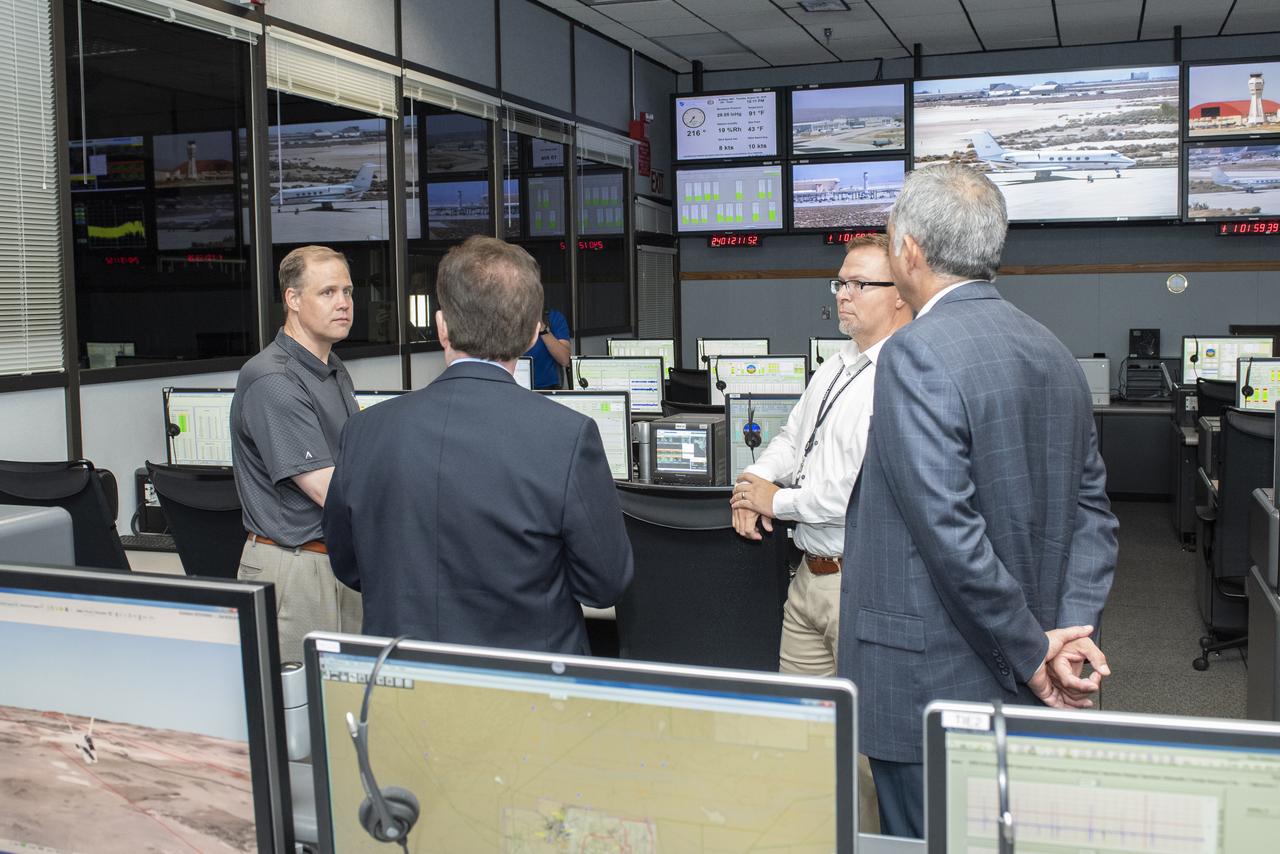
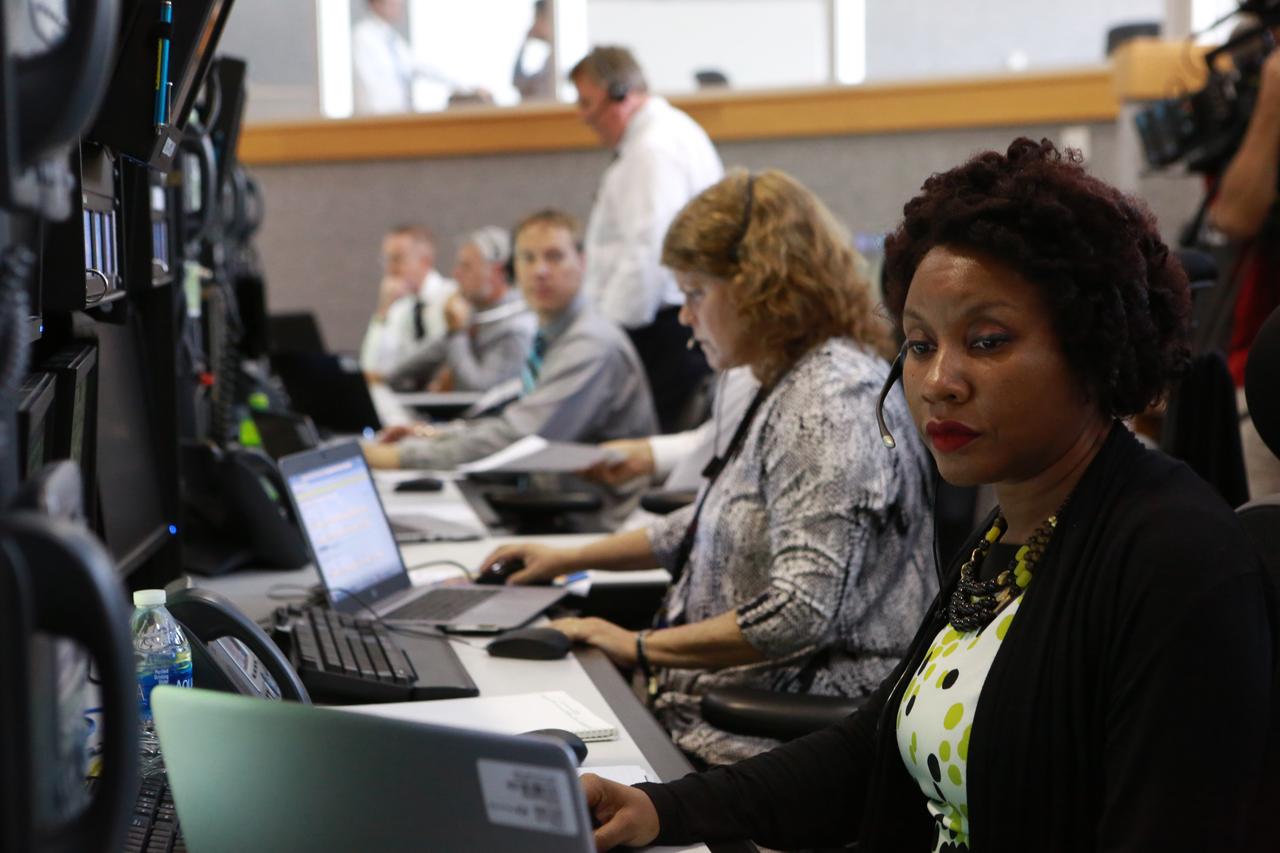
NASA Administrator Bridenstine learns about the many uses for mission control rooms for flight research projects such as monitoring the flights for safety, gathering data and talking to the pilot and project researcher.
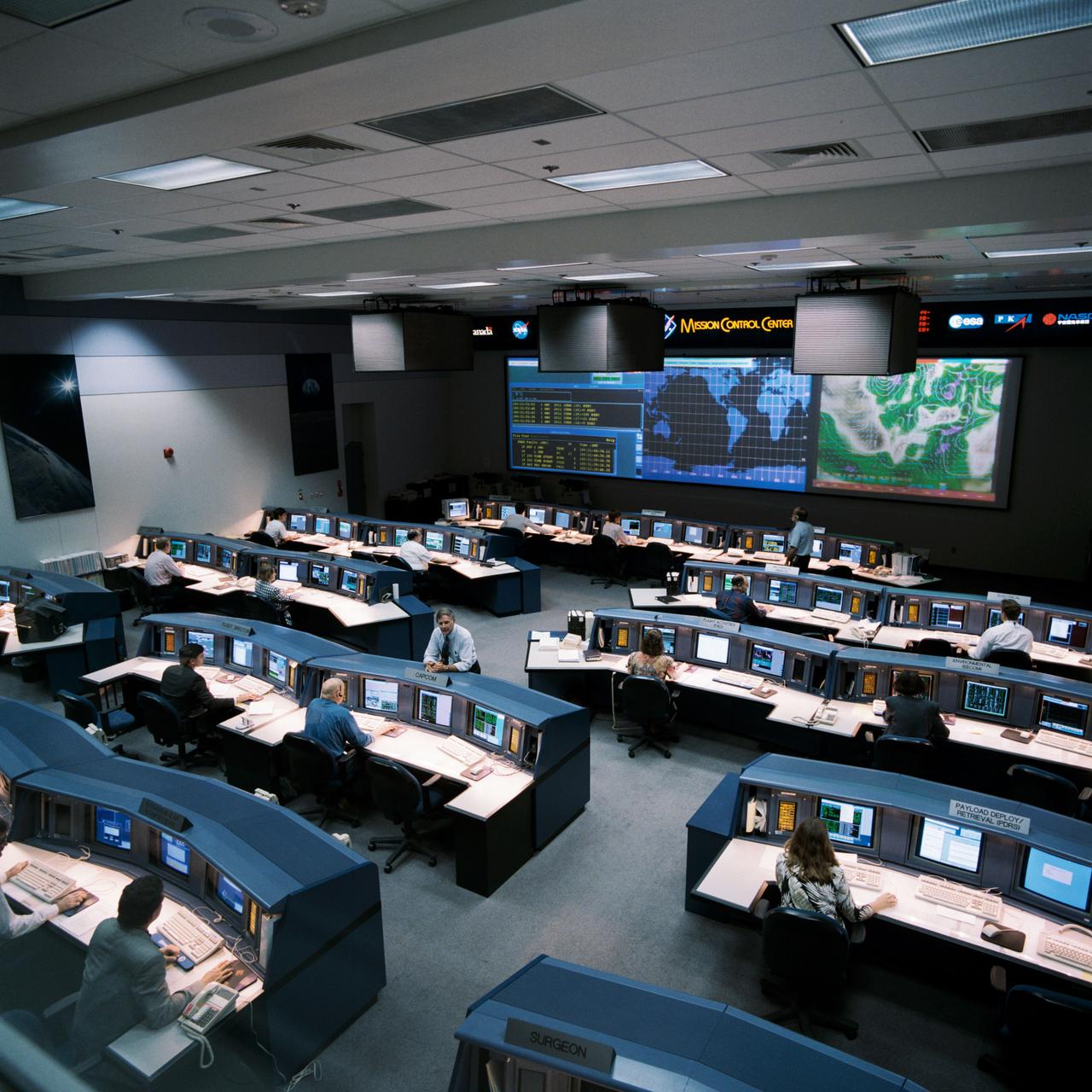
Documentation of the new mission control center White Flight Control Room (FLCR). Excellent overall view of White FLCR with personnel manning console workstations (11221). Fisheye lens perspective from Flight Director station with Brian Austin (11222). Environmental (EECOM) workstation and personnel (11223).
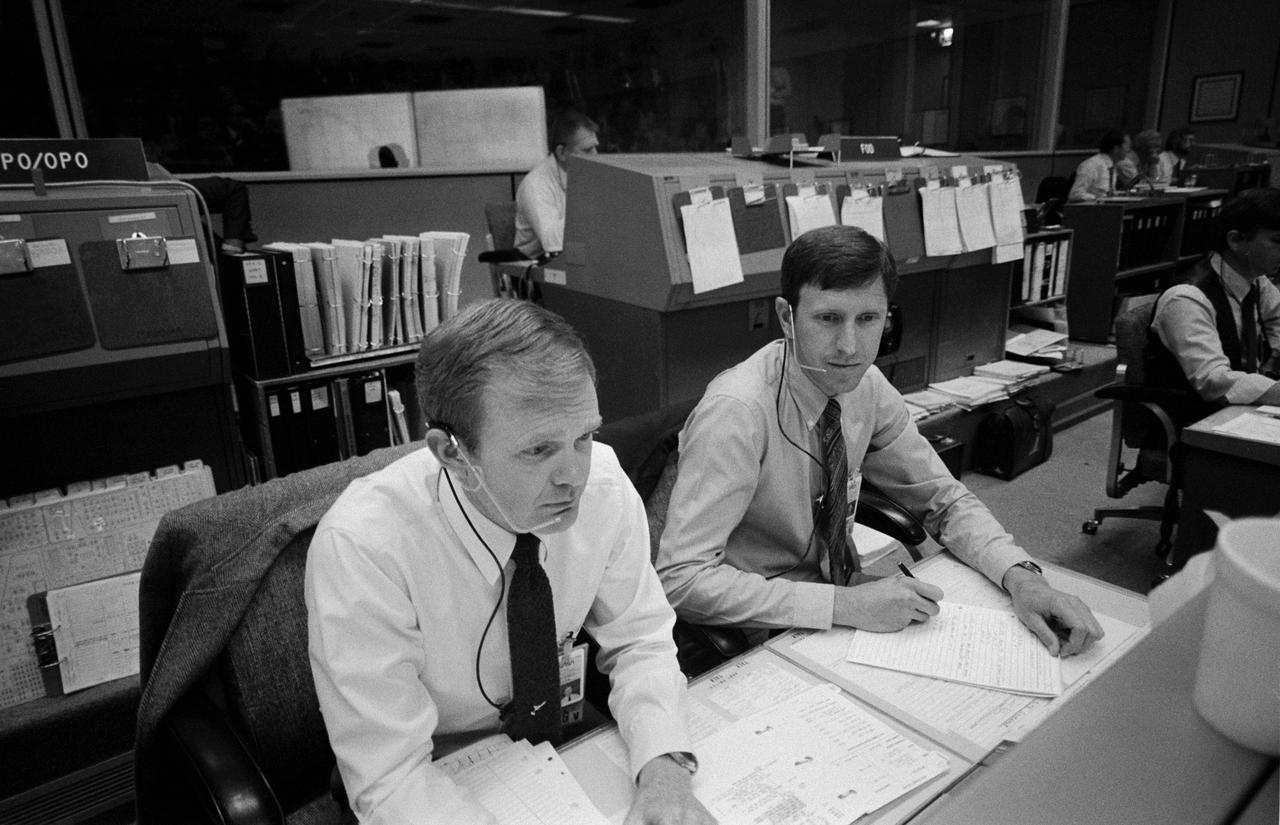
Astronauts Roy D. Bridges (left) and RIchard O. Covey serve as spacecraft communicators (CAPCOM) for STS-6. They are seated at the CAPCOM console in the mission operations control room (MOCR) of JSC's mission control center (30119); Flight Director Jay H. Greene communicates with a nearby flight controller in the MOCR just after launch of the Challenger (30120).
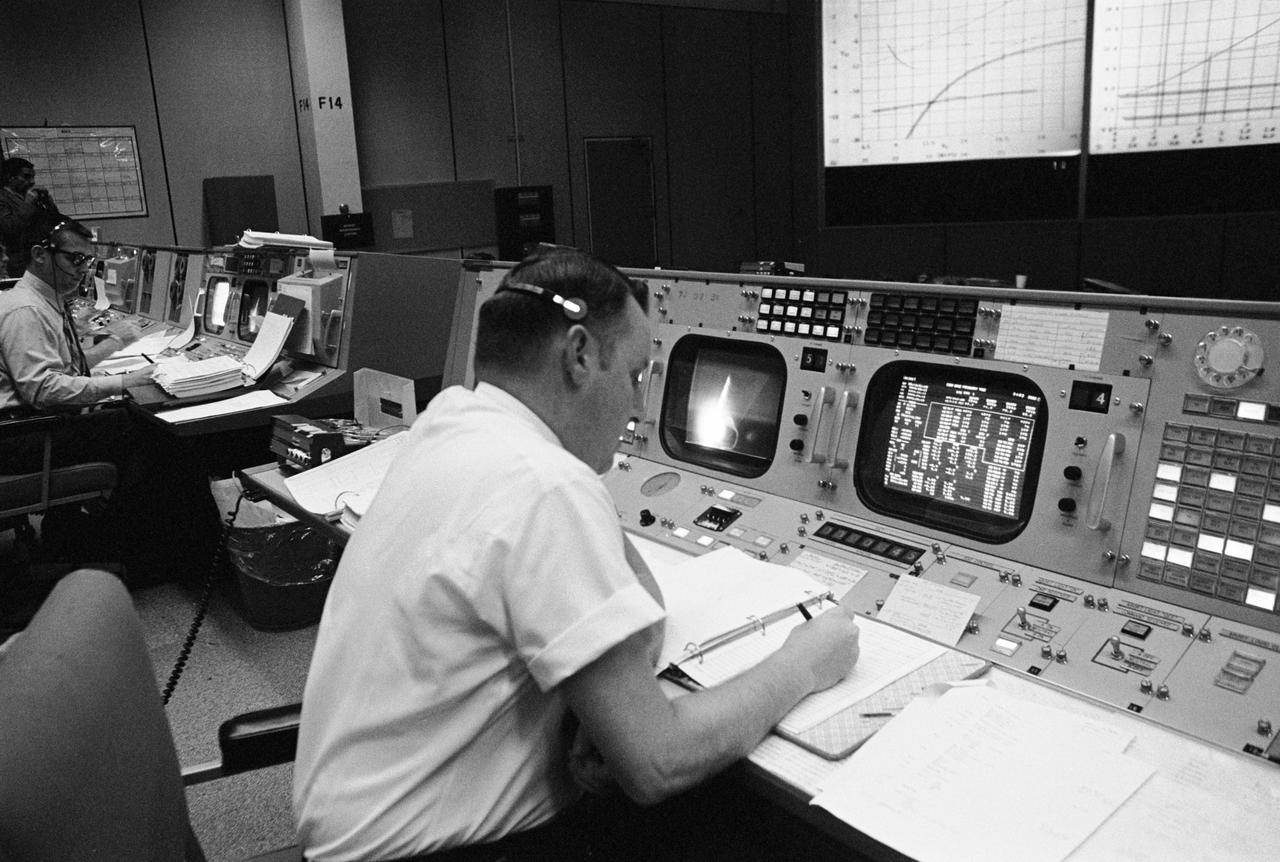
S68-55742 (21 Dec. 1968) --- Clifford E. Charlesworth, Apollo 8 "Green Team" flight director, is seated at his console in the Mission Operations Control Room in the Mission Control Center, Building 30, during the launch of the Apollo 8 (Spacecraft 103/Saturn 503) manned lunar orbit space mission.
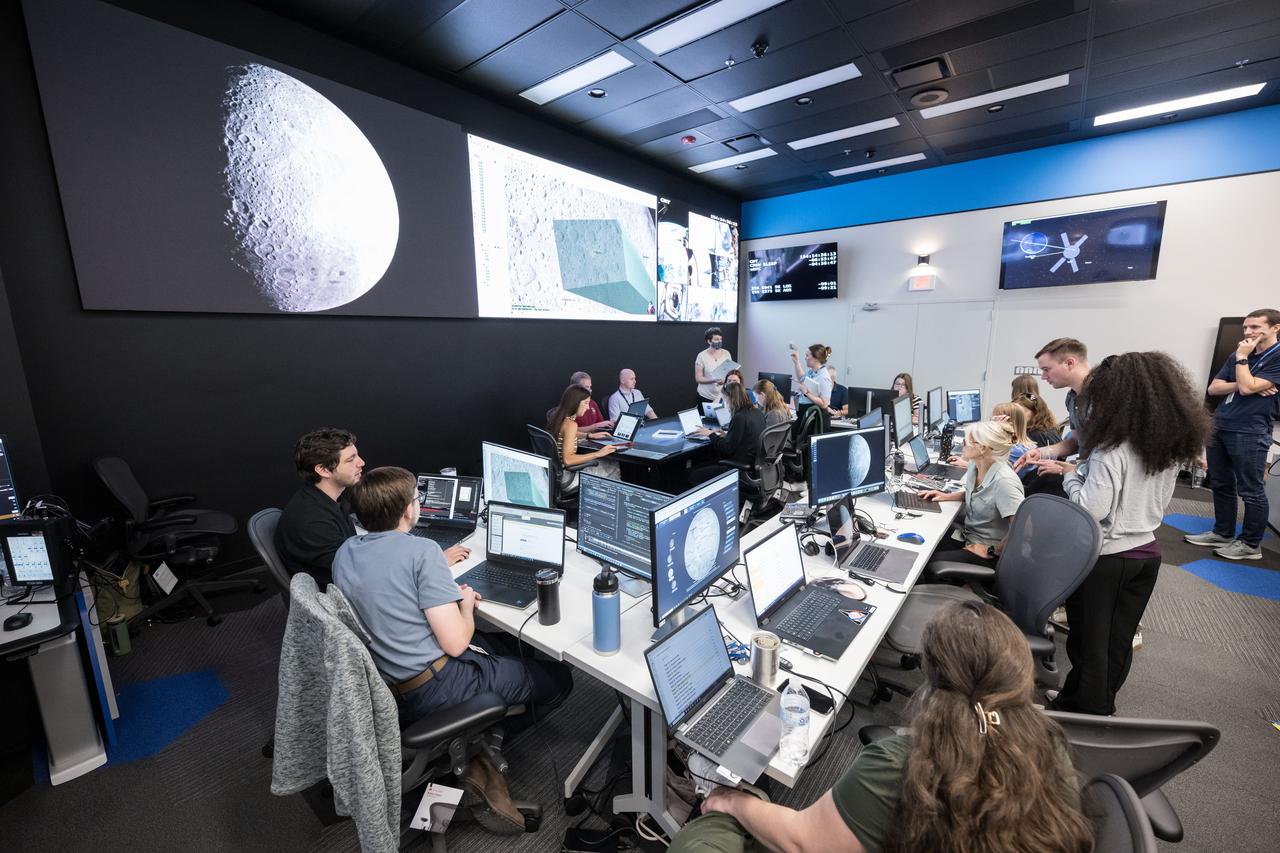
jsc2025e056603 --- The Artemis II Lunar Science Team runs a simulation of lunar observation operations in the new Science Evaluation Room (SER) that serves as a backroom to Mission Control.
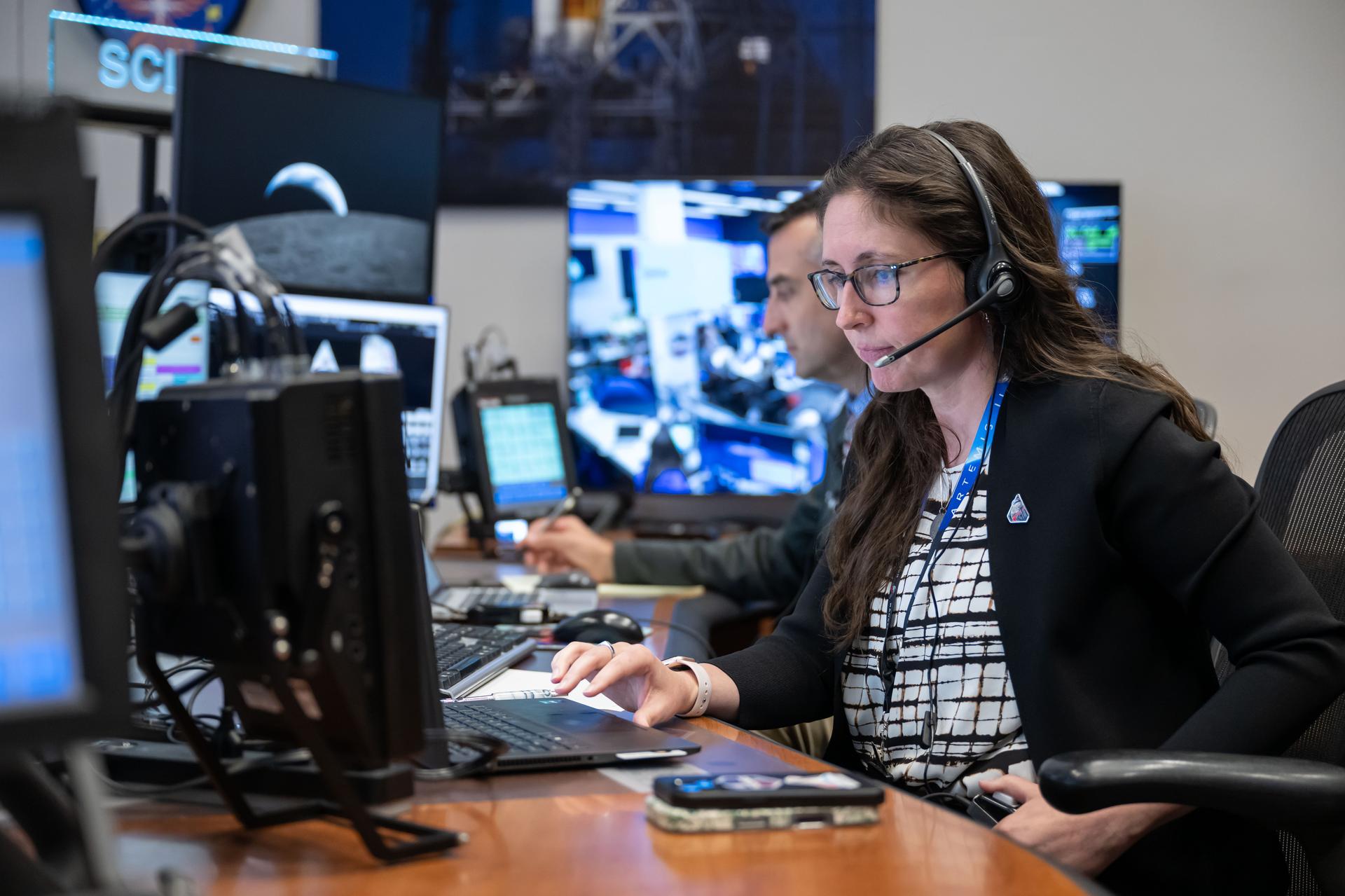
Artemis II science officers, Trevor Graff, background, and Kelsey Young are seen monitoring mission data in real-time from the Science console in the White Flight Control Room in Mission Control at NASA's Johnson Space Center in Houston. Science officers are the senior flight controllers responsible for lunar science and geology objectives during Artemis missions. Credits: NASA/Robert Markowitz
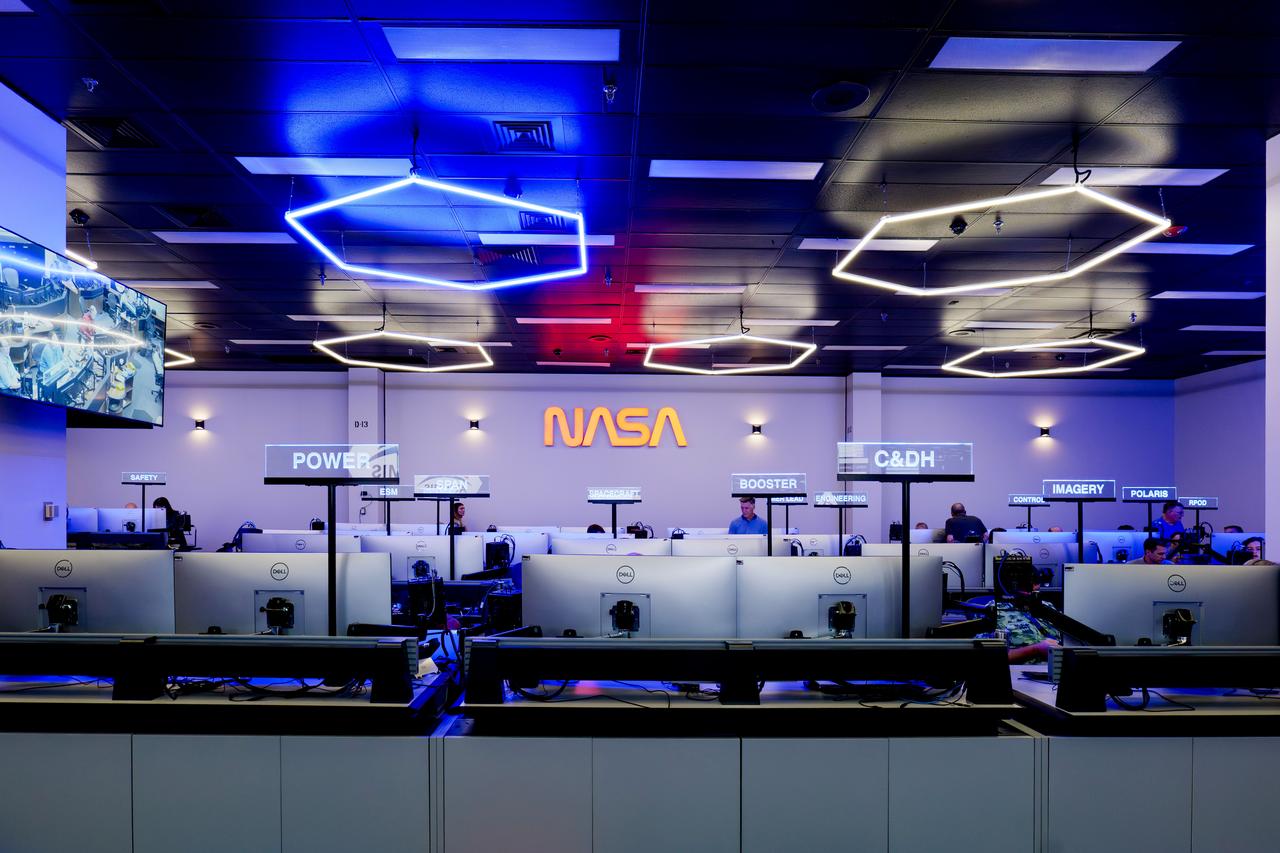
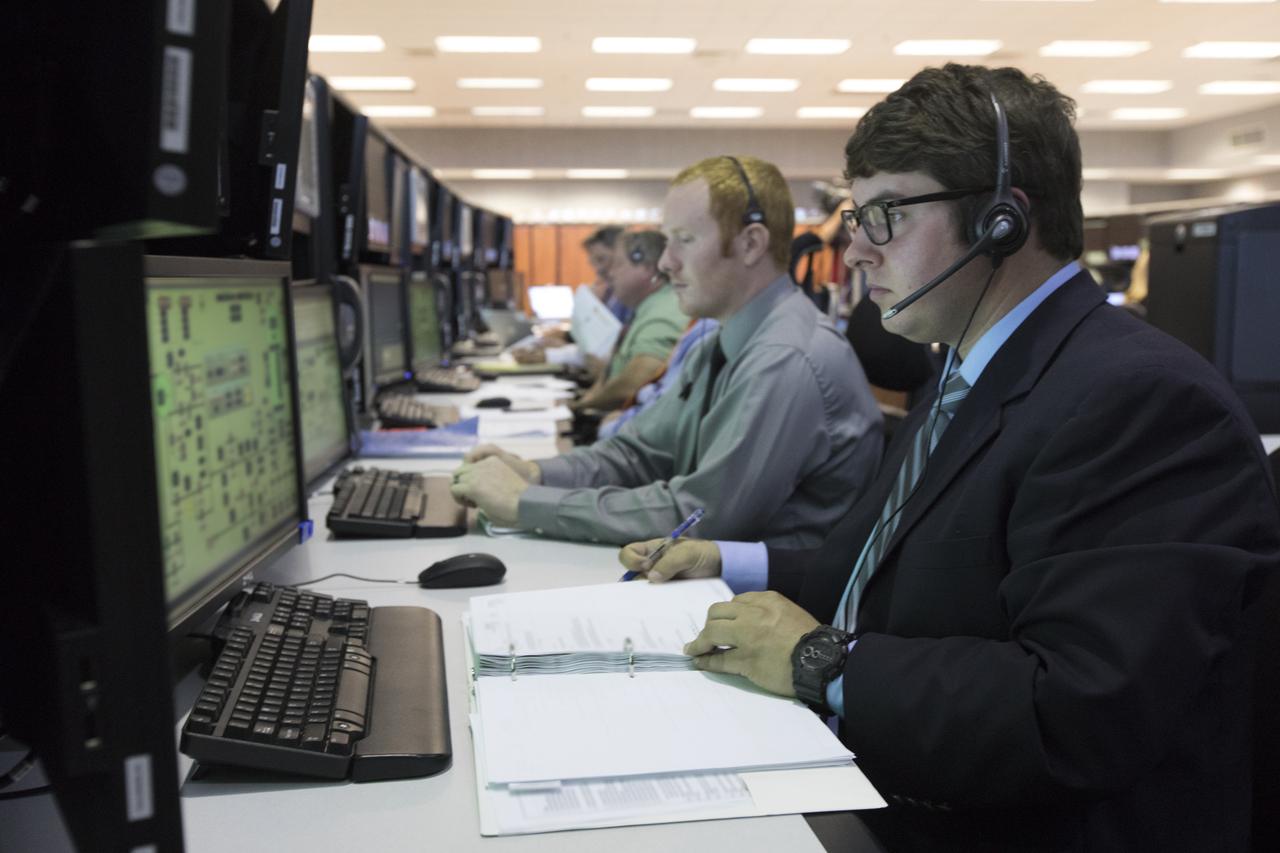
The Orion Mission Evaluation Room (MER) team works during an Artemis II mission simulation on Aug. 19, 2025, from the new Orion MER inside the Mission Control Center at NASA’s Johnson Space Center in Houston.
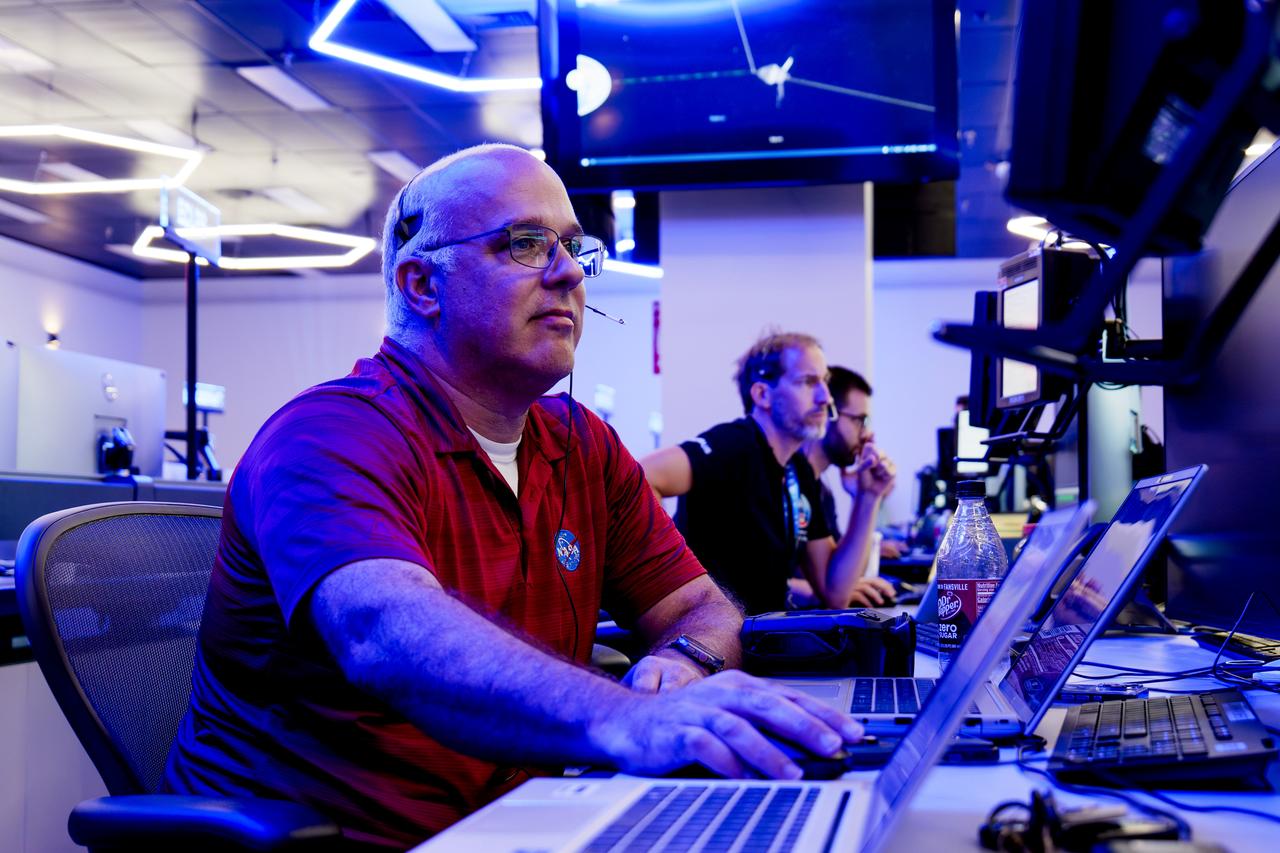
The Orion Mission Evaluation Room (MER) team works during an Artemis II mission simulation on Aug. 19, 2025, from the new Orion MER inside the Mission Control Center at NASA’s Johnson Space Center in Houston.
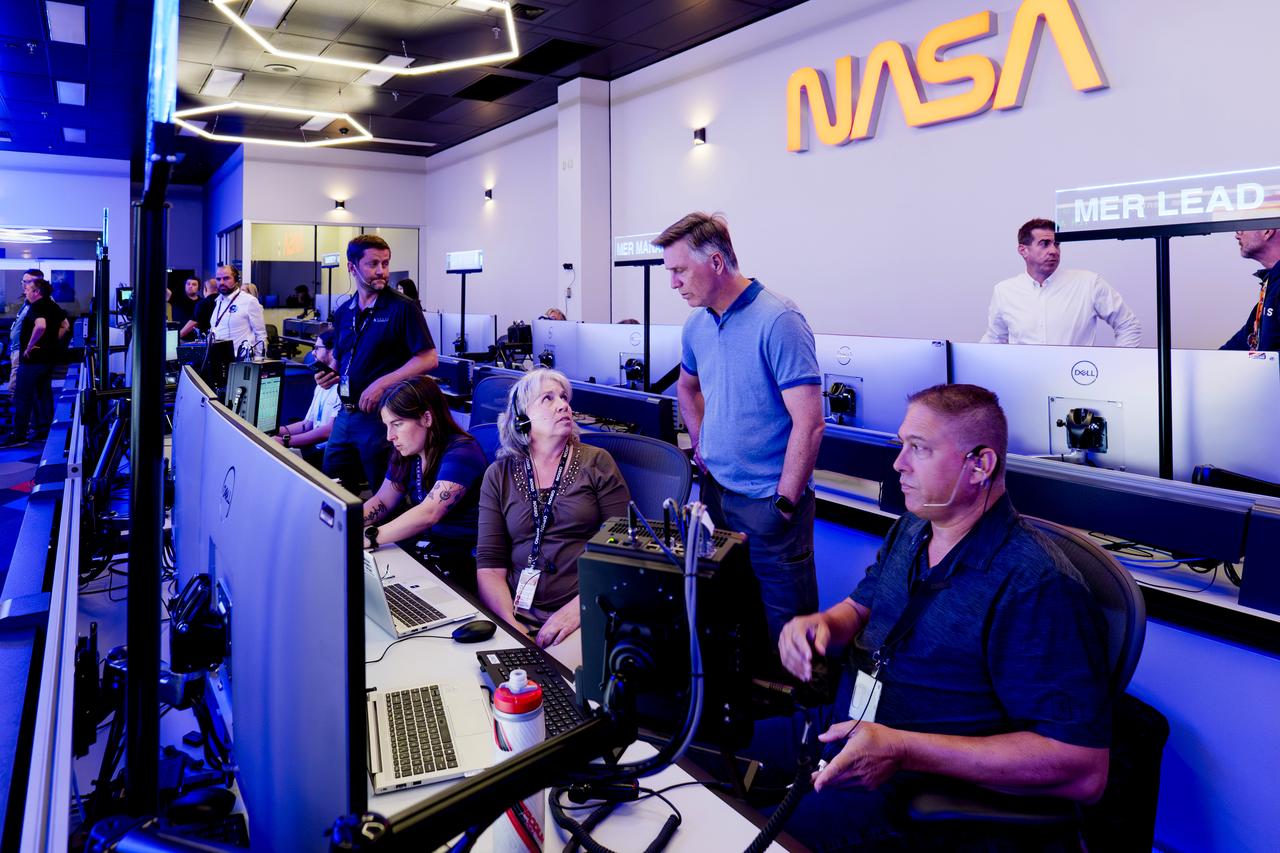
The Orion Mission Evaluation Room (MER) team works during an Artemis II mission simulation on Aug. 19, 2025, from the new Orion MER inside the Mission Control Center at NASA’s Johnson Space Center in Houston.
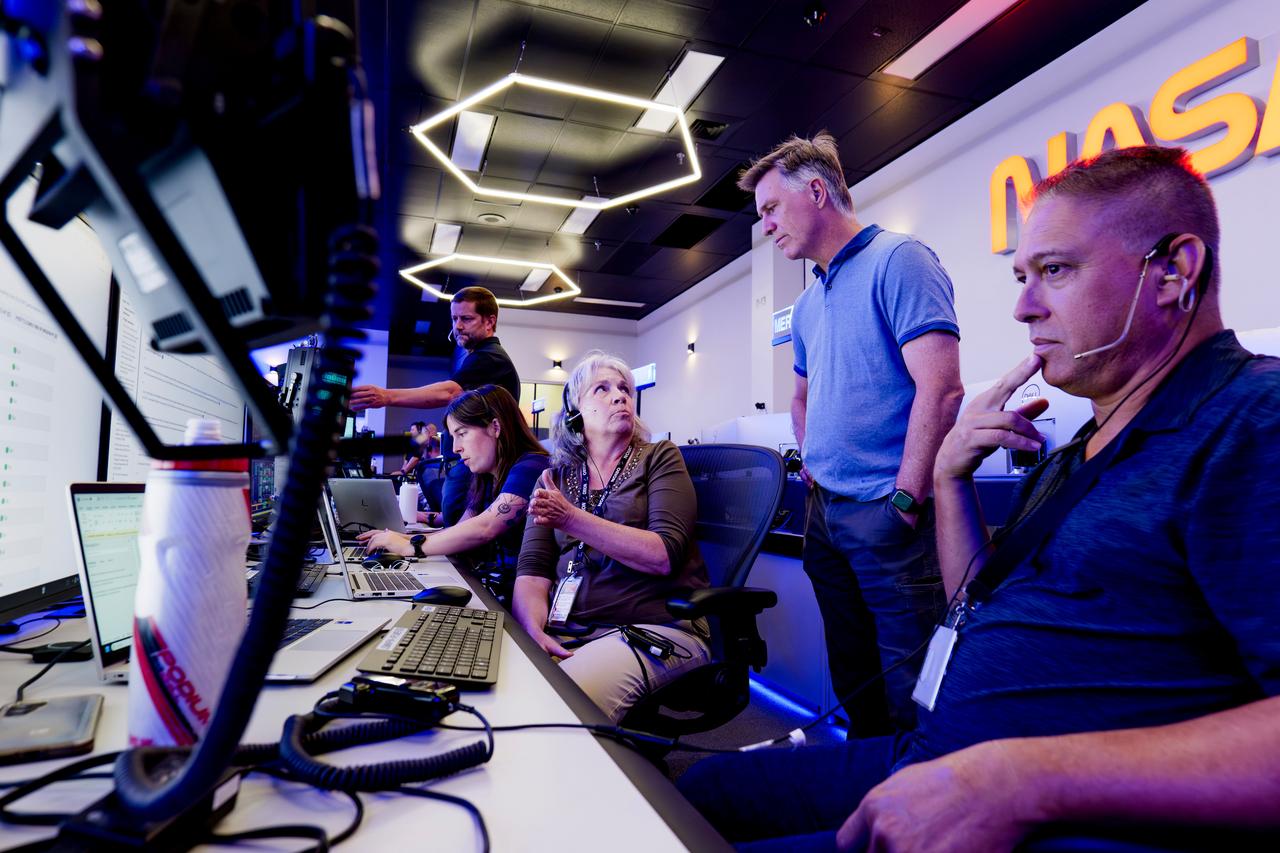
The Orion Mission Evaluation Room (MER) team works during an Artemis II mission simulation on Aug. 19, 2025, from the new Orion MER inside the Mission Control Center at NASA’s Johnson Space Center in Houston.
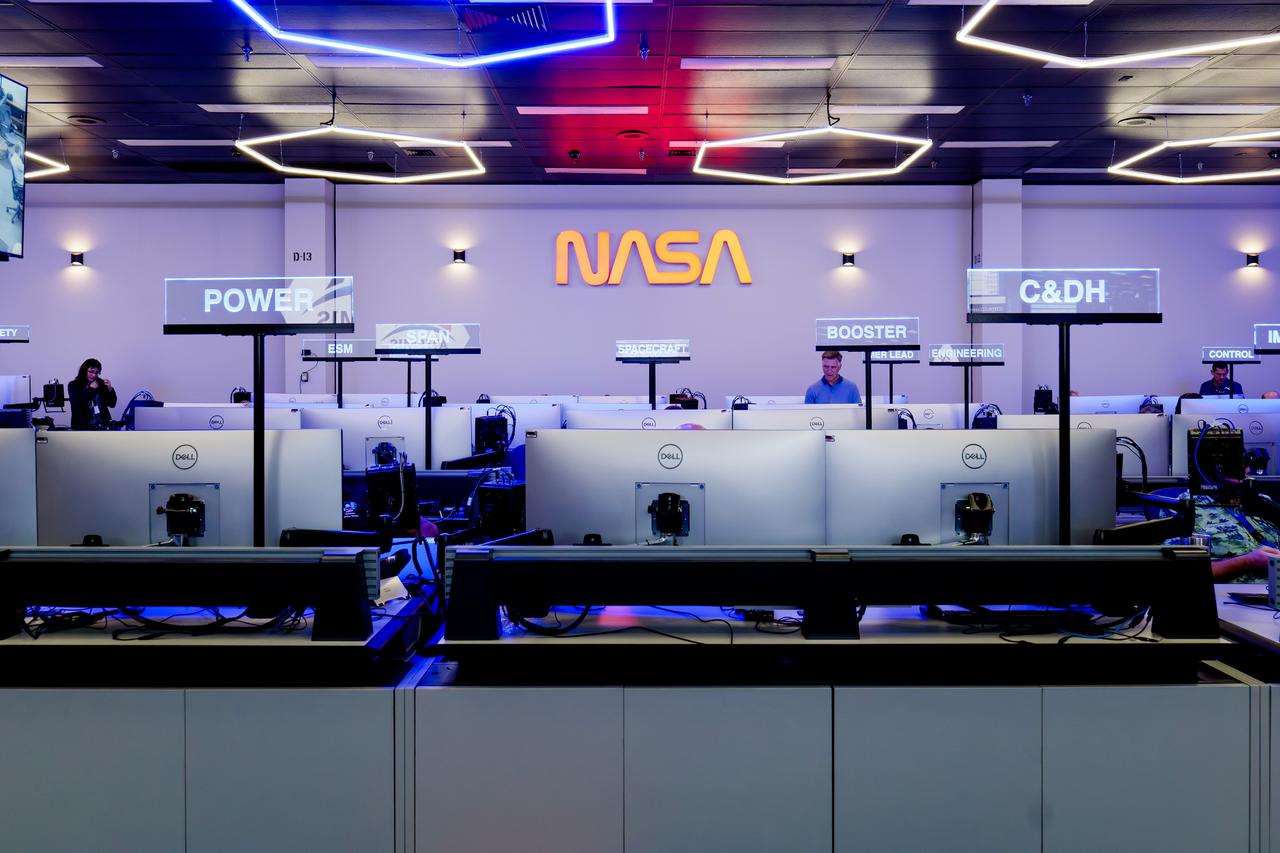
The Orion Mission Evaluation Room (MER) team works during an Artemis II mission simulation on Aug. 19, 2025, from the new Orion MER inside the Mission Control Center at NASA’s Johnson Space Center in Houston.
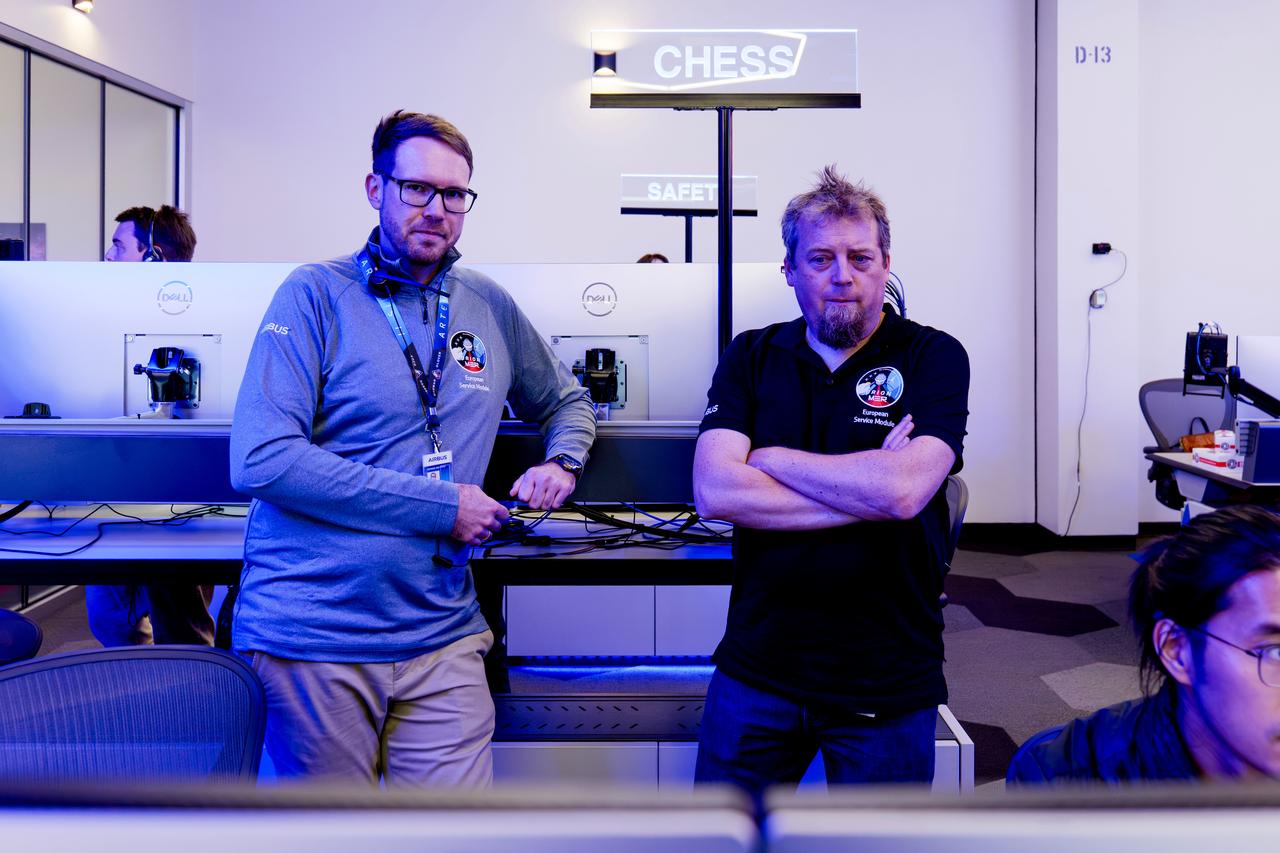
The Orion Mission Evaluation Room (MER) team works during an Artemis II mission simulation on Aug. 19, 2025, from the new Orion MER inside the Mission Control Center at NASA’s Johnson Space Center in Houston.
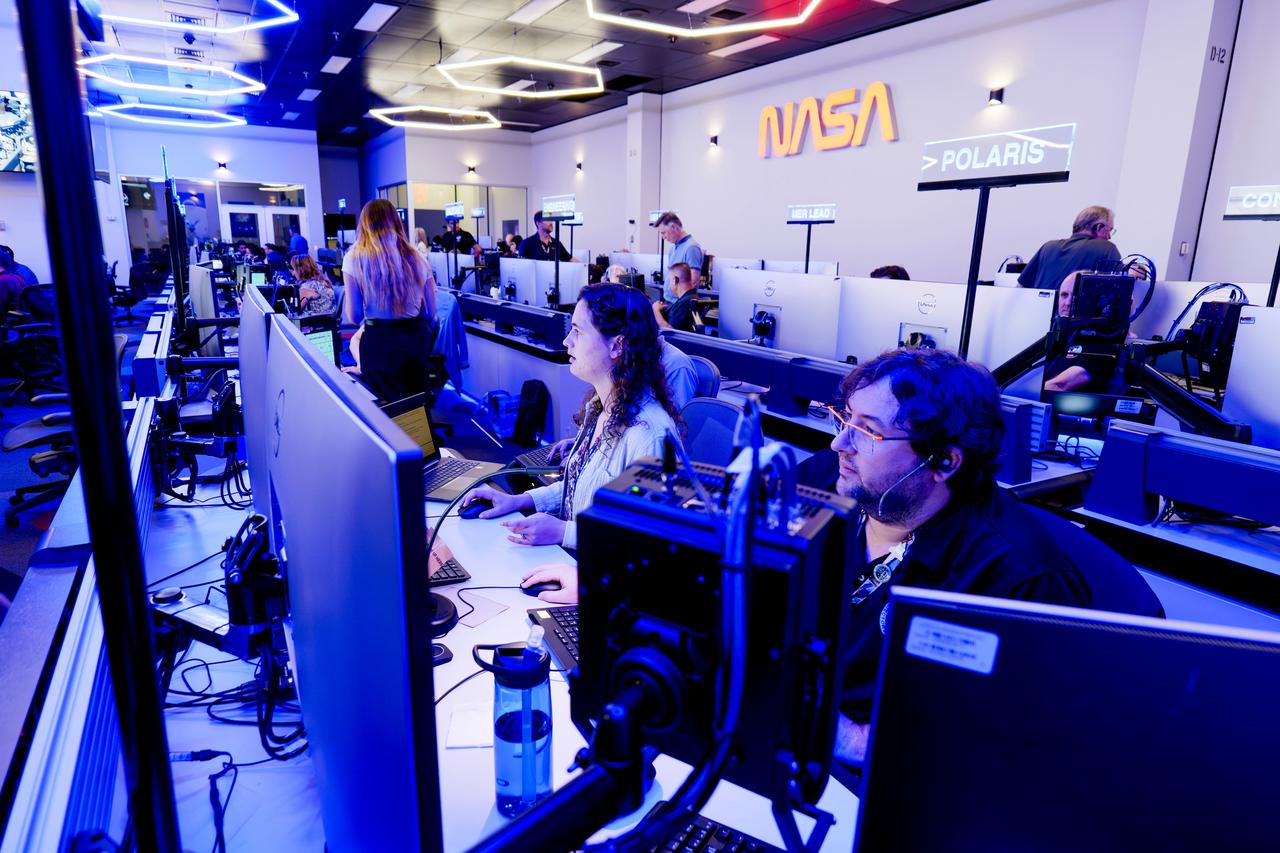
The Orion Mission Evaluation Room (MER) team works during an Artemis II mission simulation on Aug. 19, 2025, from the new Orion MER inside the Mission Control Center at NASA’s Johnson Space Center in Houston.
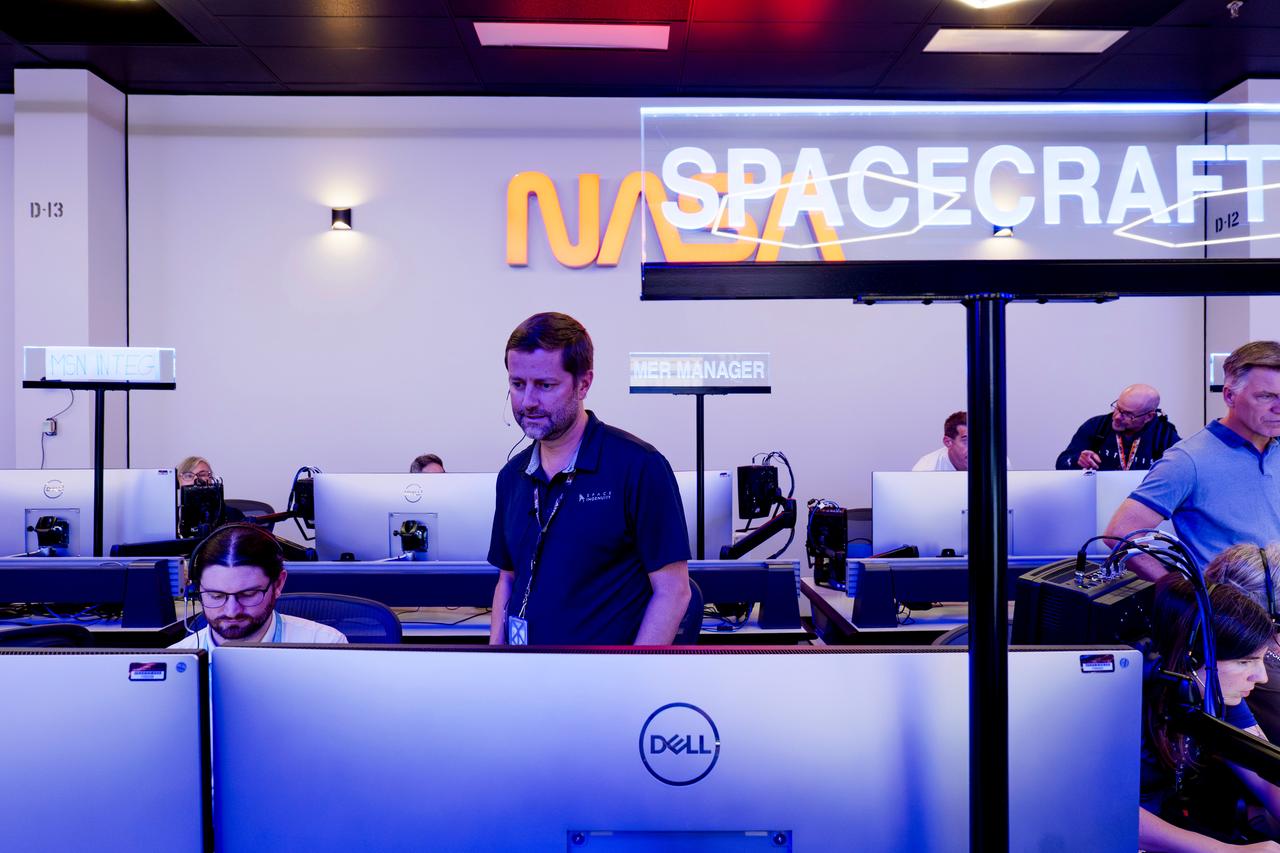
The Orion Mission Evaluation Room (MER) team works during an Artemis II mission simulation on Aug. 19, 2025, from the new Orion MER inside the Mission Control Center at NASA’s Johnson Space Center in Houston.
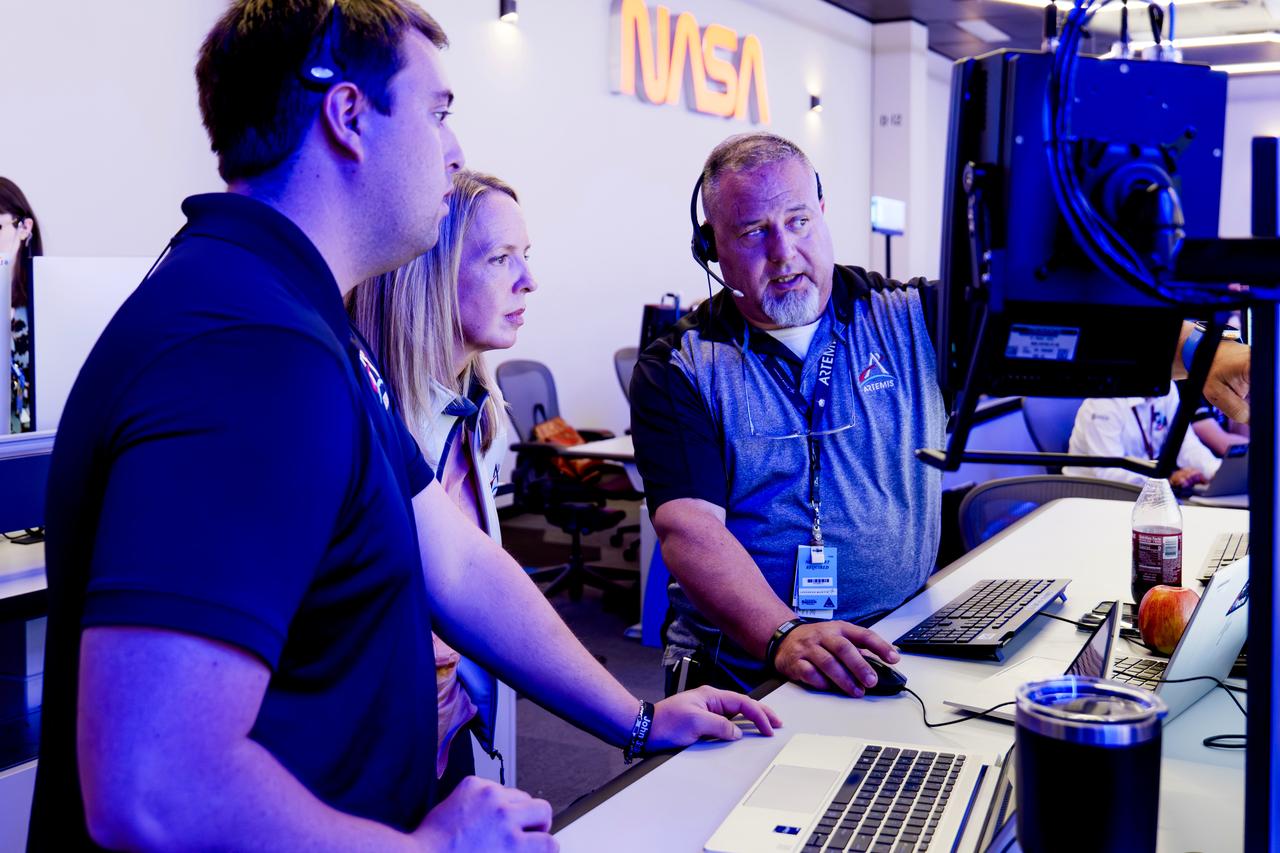
The Orion Mission Evaluation Room (MER) team works during an Artemis II mission simulation on Aug. 19, 2025, from the new Orion MER inside the Mission Control Center at NASA’s Johnson Space Center in Houston.
The Orion Mission Evaluation Room (MER) team works during an Artemis II mission simulation on Aug. 19, 2025, from the new Orion MER inside the Mission Control Center at NASA’s Johnson Space Center in Houston.
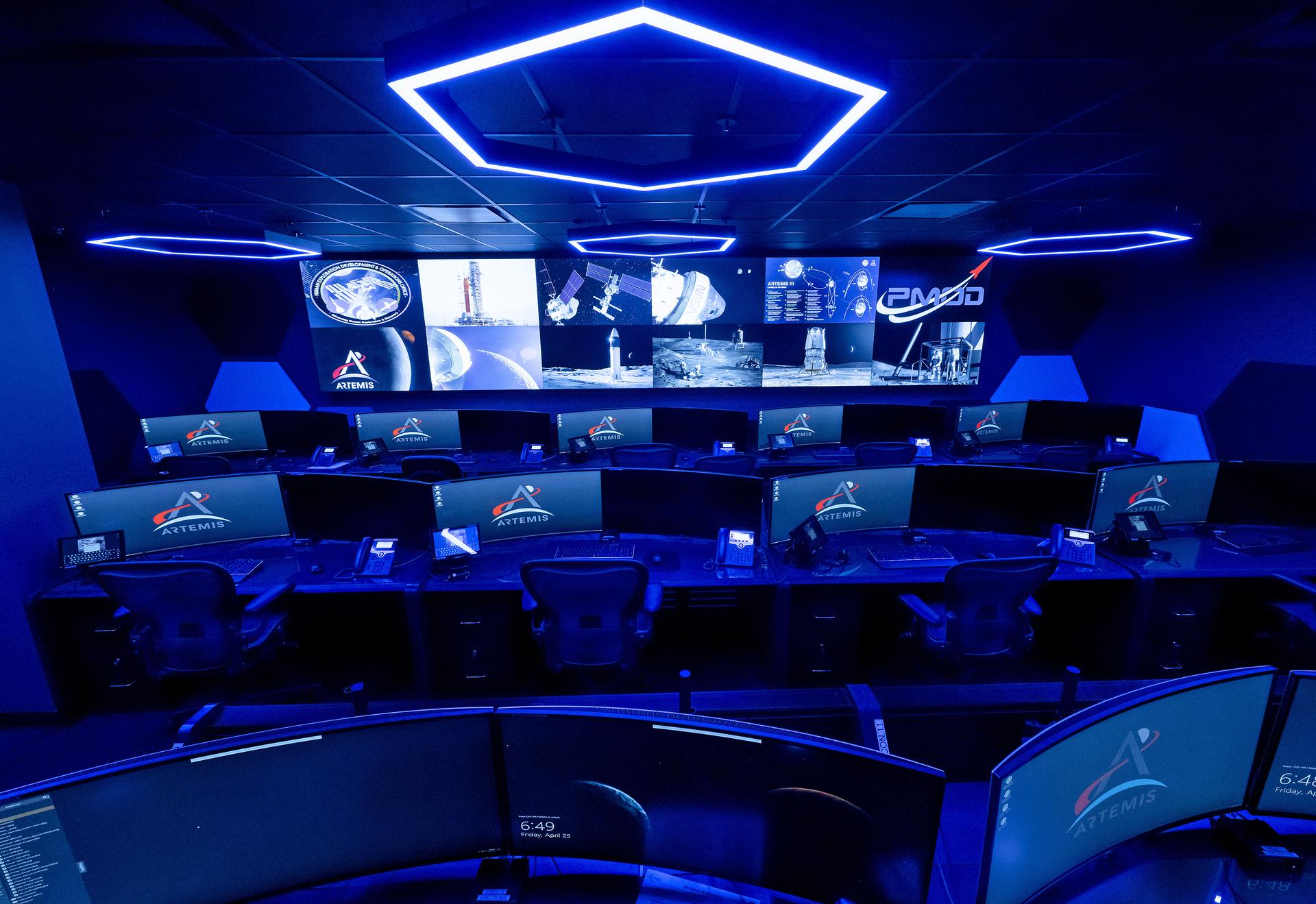
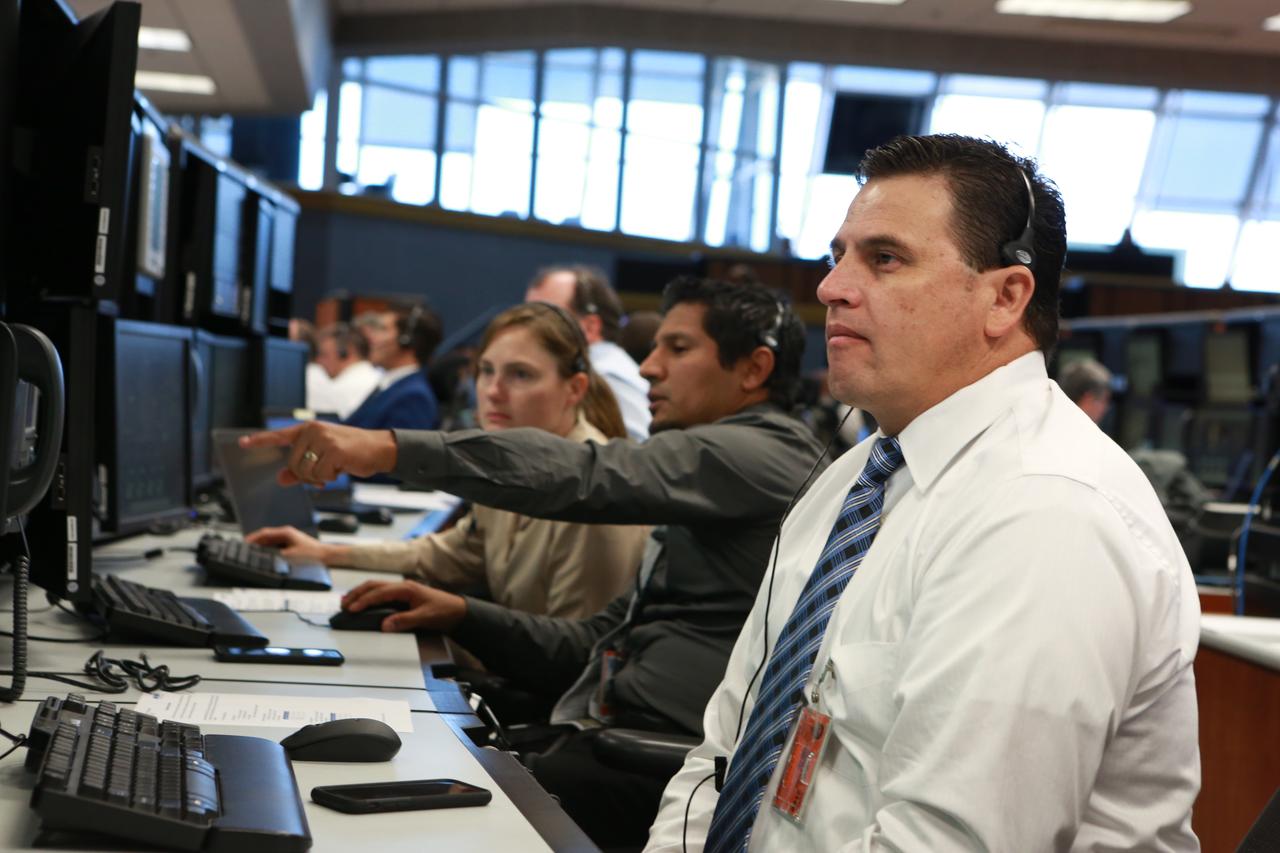
These photos offer a look inside the twin control rooms at NASA’s Marshall Space Flight Center in Huntsville, Alabama, where engineers will monitor Artemis science and future landing operations for Artemis. The LUCA (Lunar Utilization Control Area) and LESA (Lander Engineering Support Area) rooms are part of the Huntsville Operations Support Center at NASA Marshall. The LUCA is specially designed to support a wide variety of science operations on and around the Moon – and beyond. Engineers in the LUCA monitored operations for the Lunar Node-1 experiment, an autonomous navigation payload that was part of the first NASA Commercial Lunar Payload Services (CLPS) launch on Intuitive Machines’ Nova-C lunar lander in 2024. NASA Marshall flight controllers will use the LUCA again for Artemis II to monitor science operations. Beginning with Artemis III, members of the NASA Human Landing System Mission Insight Support Team – a group of engineers, safety leads, flight operations experts, and technical authorities – will work in the LESA. There, they will monitor lander systems in real-time and be involved in key decision-making processes throughout the mission. For more information, contact NASA Marshall’s Office of Communications at 256-544-0034.
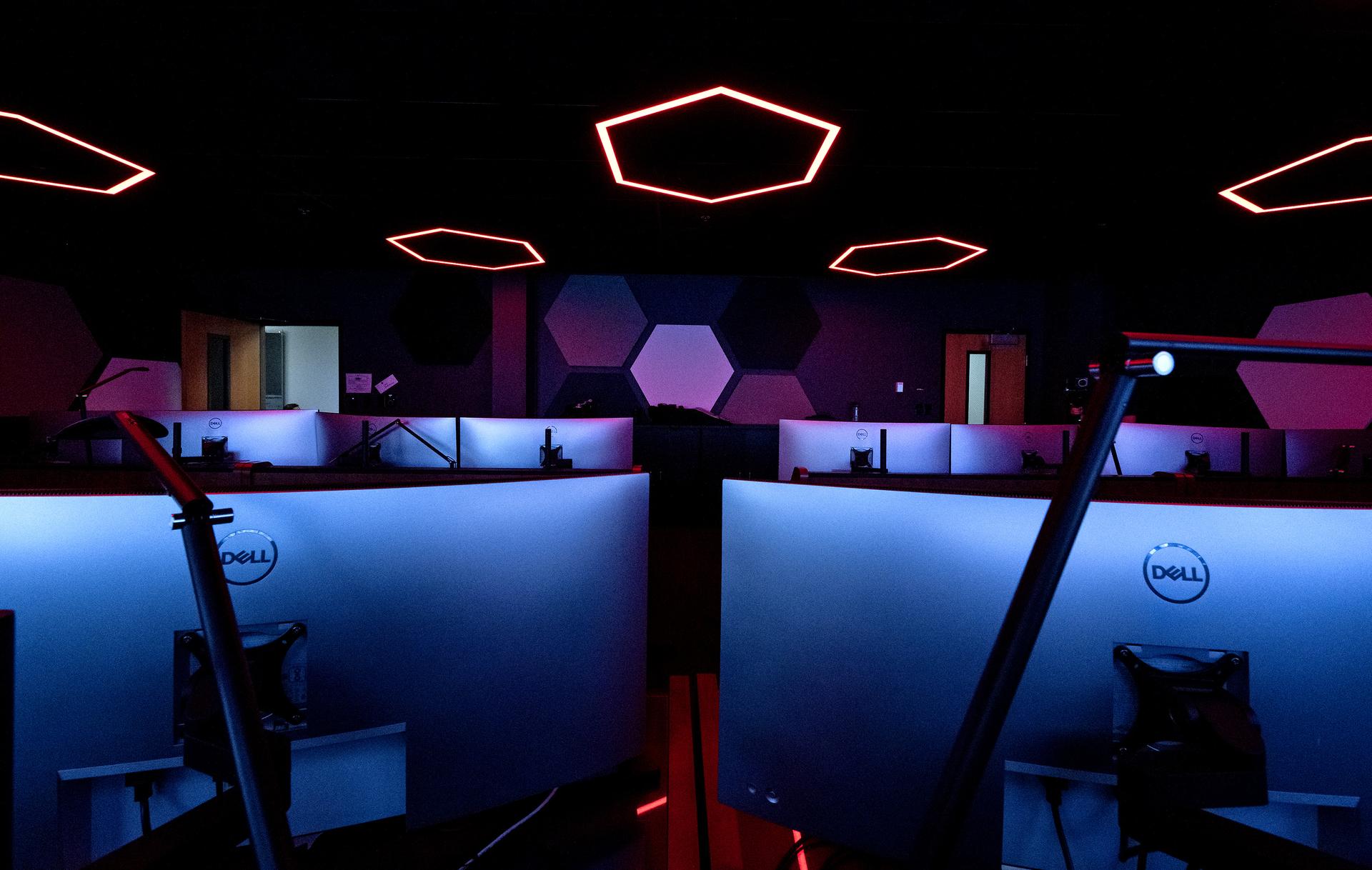
These photos offer a look inside the twin control rooms at NASA’s Marshall Space Flight Center in Huntsville, Alabama, where engineers will monitor Artemis science and future landing operations for Artemis. The LUCA (Lunar Utilization Control Area) and LESA (Lander Engineering Support Area) rooms are part of the Huntsville Operations Support Center at NASA Marshall. The LUCA is specially designed to support a wide variety of science operations on and around the Moon – and beyond. Engineers in the LUCA monitored operations for the Lunar Node-1 experiment, an autonomous navigation payload that was part of the first NASA Commercial Lunar Payload Services (CLPS) launch on Intuitive Machines’ Nova-C lunar lander in 2024. NASA Marshall flight controllers will use the LUCA again for Artemis II to monitor science operations. Beginning with Artemis III, members of the NASA Human Landing System Mission Insight Support Team – a group of engineers, safety leads, flight operations experts, and technical authorities – will work in the LESA. There, they will monitor lander systems in real-time and be involved in key decision-making processes throughout the mission. For more information, contact NASA Marshall’s Office of Communications at 256-544-0034.
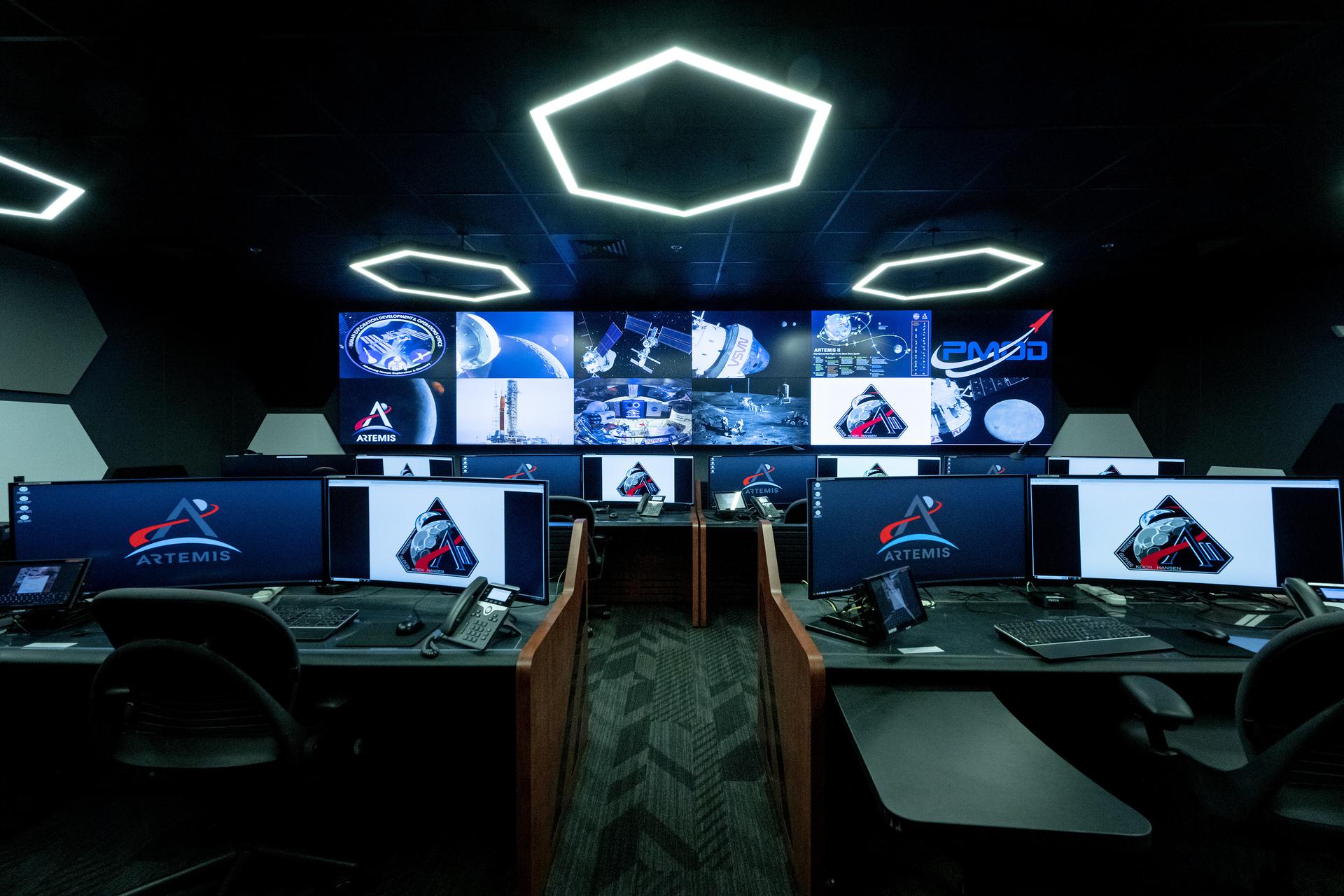
These photos offer a look inside the twin control rooms at NASA’s Marshall Space Flight Center in Huntsville, Alabama, where engineers will monitor Artemis science and future landing operations for Artemis. The LUCA (Lunar Utilization Control Area) and LESA (Lander Engineering Support Area) rooms are part of the Huntsville Operations Support Center at NASA Marshall. The LUCA is specially designed to support a wide variety of science operations on and around the Moon – and beyond. Engineers in the LUCA monitored operations for the Lunar Node-1 experiment, an autonomous navigation payload that was part of the first NASA Commercial Lunar Payload Services (CLPS) launch on Intuitive Machines’ Nova-C lunar lander in 2024. NASA Marshall flight controllers will use the LUCA again for Artemis II to monitor science operations. Beginning with Artemis III, members of the NASA Human Landing System Mission Insight Support Team – a group of engineers, safety leads, flight operations experts, and technical authorities – will work in the LESA. There, they will monitor lander systems in real-time and be involved in key decision-making processes throughout the mission. For more information, contact NASA Marshall’s Office of Communications at 256-544-0034.
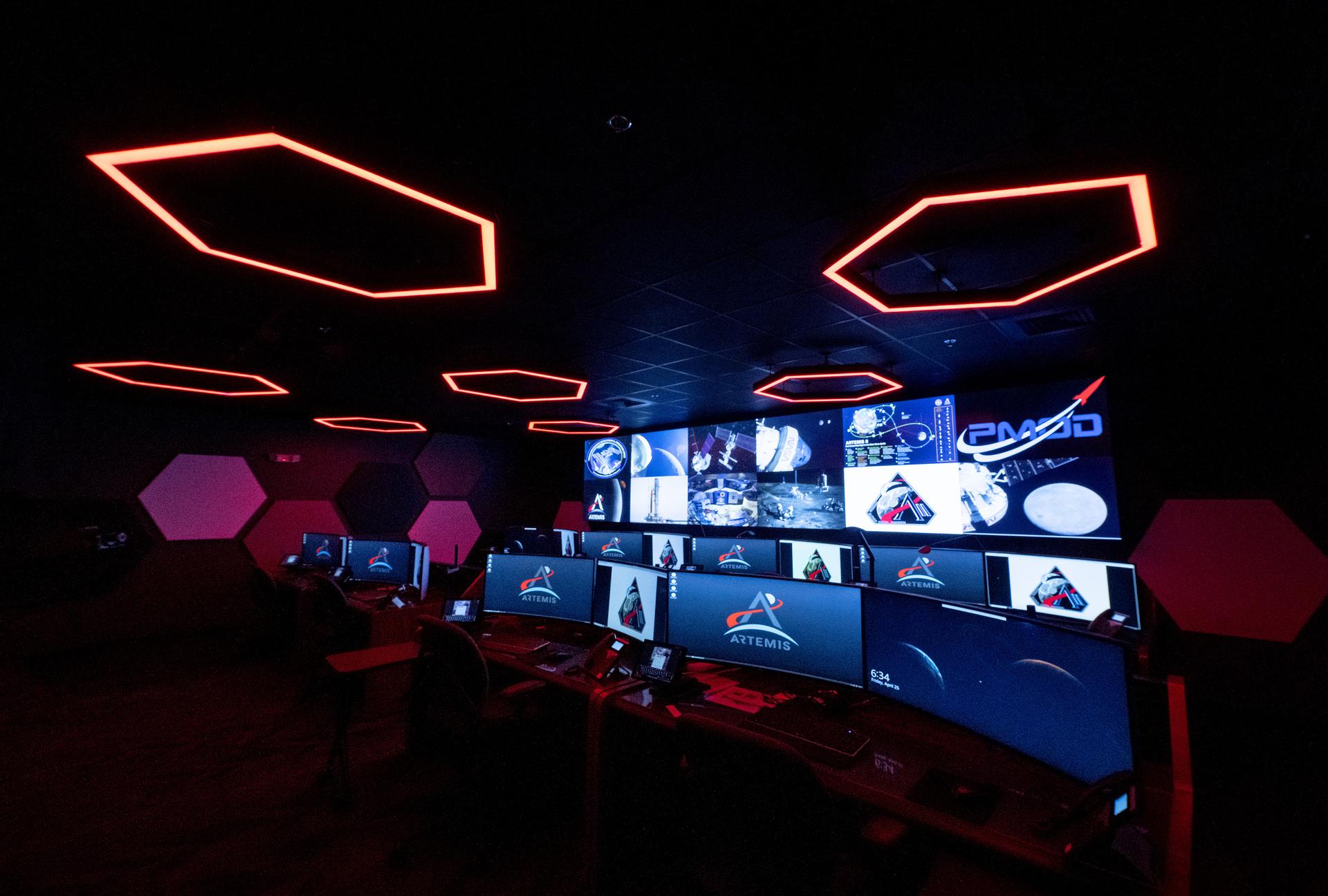
These photos offer a look inside the twin control rooms at NASA’s Marshall Space Flight Center in Huntsville, Alabama, where engineers will monitor Artemis science and future landing operations for Artemis. The LUCA (Lunar Utilization Control Area) and LESA (Lander Engineering Support Area) rooms are part of the Huntsville Operations Support Center at NASA Marshall. The LUCA is specially designed to support a wide variety of science operations on and around the Moon – and beyond. Engineers in the LUCA monitored operations for the Lunar Node-1 experiment, an autonomous navigation payload that was part of the first NASA Commercial Lunar Payload Services (CLPS) launch on Intuitive Machines’ Nova-C lunar lander in 2024. NASA Marshall flight controllers will use the LUCA again for Artemis II to monitor science operations. Beginning with Artemis III, members of the NASA Human Landing System Mission Insight Support Team – a group of engineers, safety leads, flight operations experts, and technical authorities – will work in the LESA. There, they will monitor lander systems in real-time and be involved in key decision-making processes throughout the mission. For more information, contact NASA Marshall’s Office of Communications at 256-544-0034.
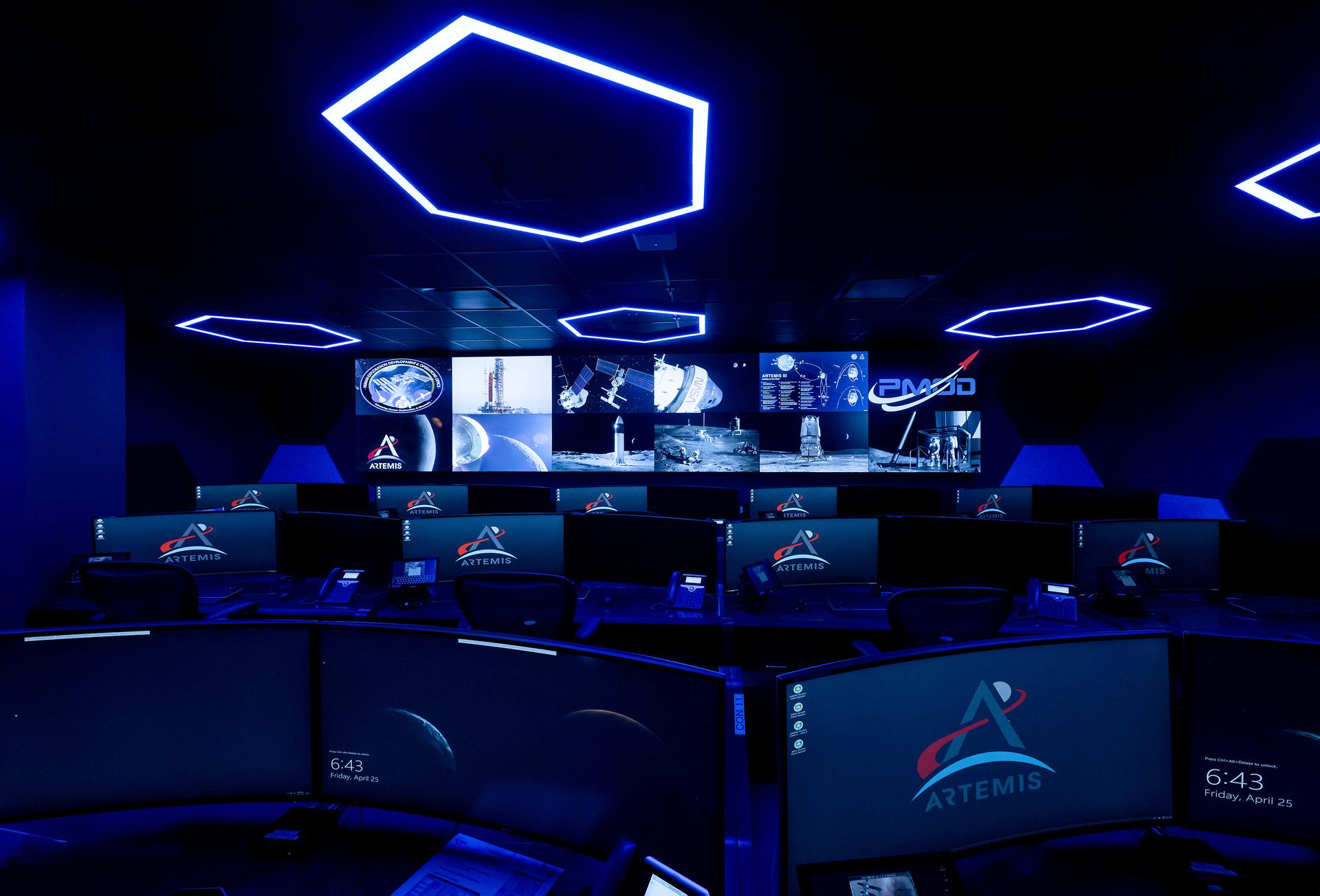
These photos offer a look inside the twin control rooms at NASA’s Marshall Space Flight Center in Huntsville, Alabama, where engineers will monitor Artemis science and future landing operations for Artemis. The LUCA (Lunar Utilization Control Area) and LESA (Lander Engineering Support Area) rooms are part of the Huntsville Operations Support Center at NASA Marshall. The LUCA is specially designed to support a wide variety of science operations on and around the Moon – and beyond. Engineers in the LUCA monitored operations for the Lunar Node-1 experiment, an autonomous navigation payload that was part of the first NASA Commercial Lunar Payload Services (CLPS) launch on Intuitive Machines’ Nova-C lunar lander in 2024. NASA Marshall flight controllers will use the LUCA again for Artemis II to monitor science operations. Beginning with Artemis III, members of the NASA Human Landing System Mission Insight Support Team – a group of engineers, safety leads, flight operations experts, and technical authorities – will work in the LESA. There, they will monitor lander systems in real-time and be involved in key decision-making processes throughout the mission. For more information, contact NASA Marshall’s Office of Communications at 256-544-0034.
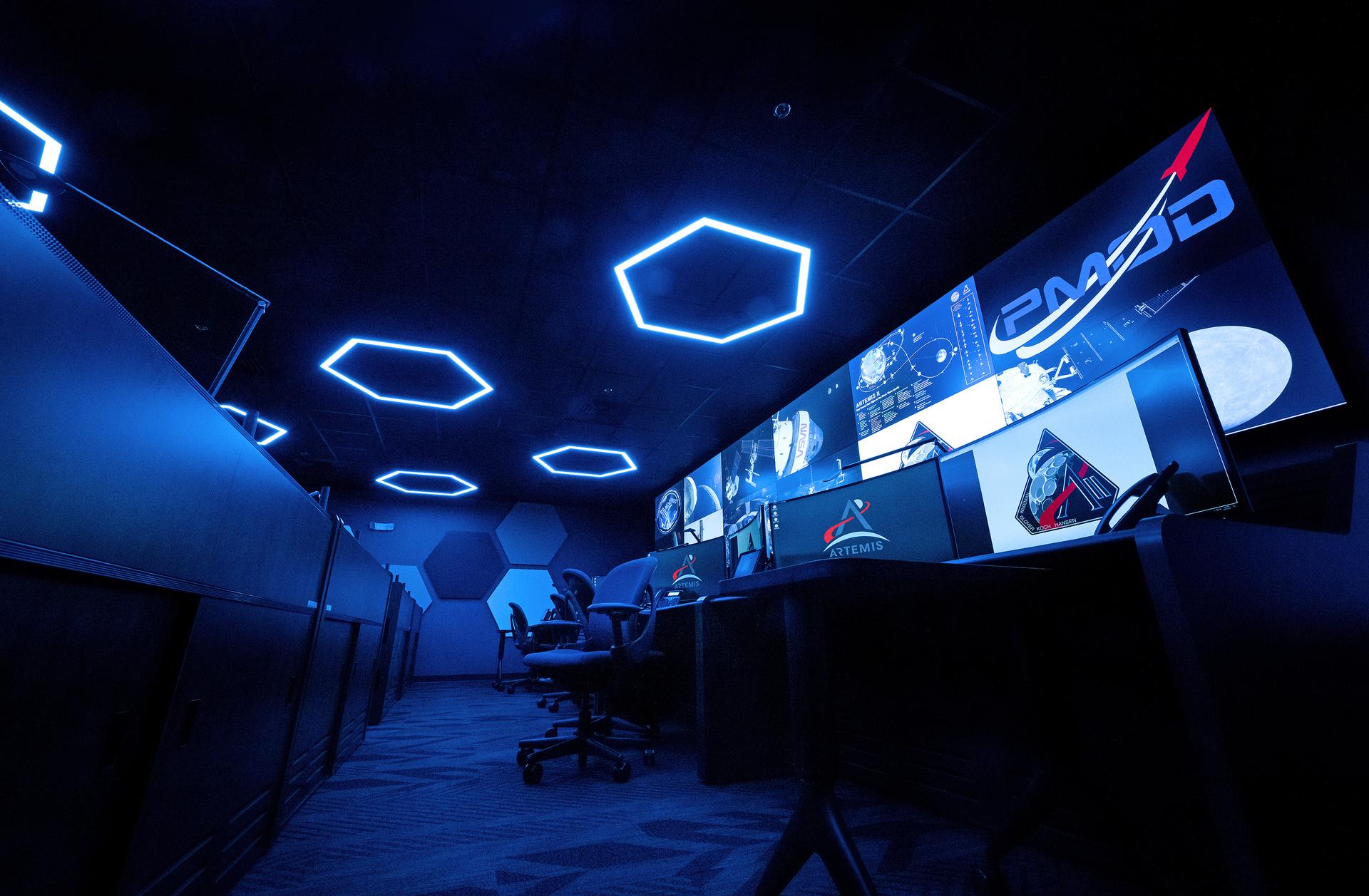
These photos offer a look inside the twin control rooms at NASA’s Marshall Space Flight Center in Huntsville, Alabama, where engineers will monitor Artemis science and future landing operations for Artemis. The LUCA (Lunar Utilization Control Area) and LESA (Lander Engineering Support Area) rooms are part of the Huntsville Operations Support Center at NASA Marshall. The LUCA is specially designed to support a wide variety of science operations on and around the Moon – and beyond. Engineers in the LUCA monitored operations for the Lunar Node-1 experiment, an autonomous navigation payload that was part of the first NASA Commercial Lunar Payload Services (CLPS) launch on Intuitive Machines’ Nova-C lunar lander in 2024. NASA Marshall flight controllers will use the LUCA again for Artemis II to monitor science operations. Beginning with Artemis III, members of the NASA Human Landing System Mission Insight Support Team – a group of engineers, safety leads, flight operations experts, and technical authorities – will work in the LESA. There, they will monitor lander systems in real-time and be involved in key decision-making processes throughout the mission. For more information, contact NASA Marshall’s Office of Communications at 256-544-0034.
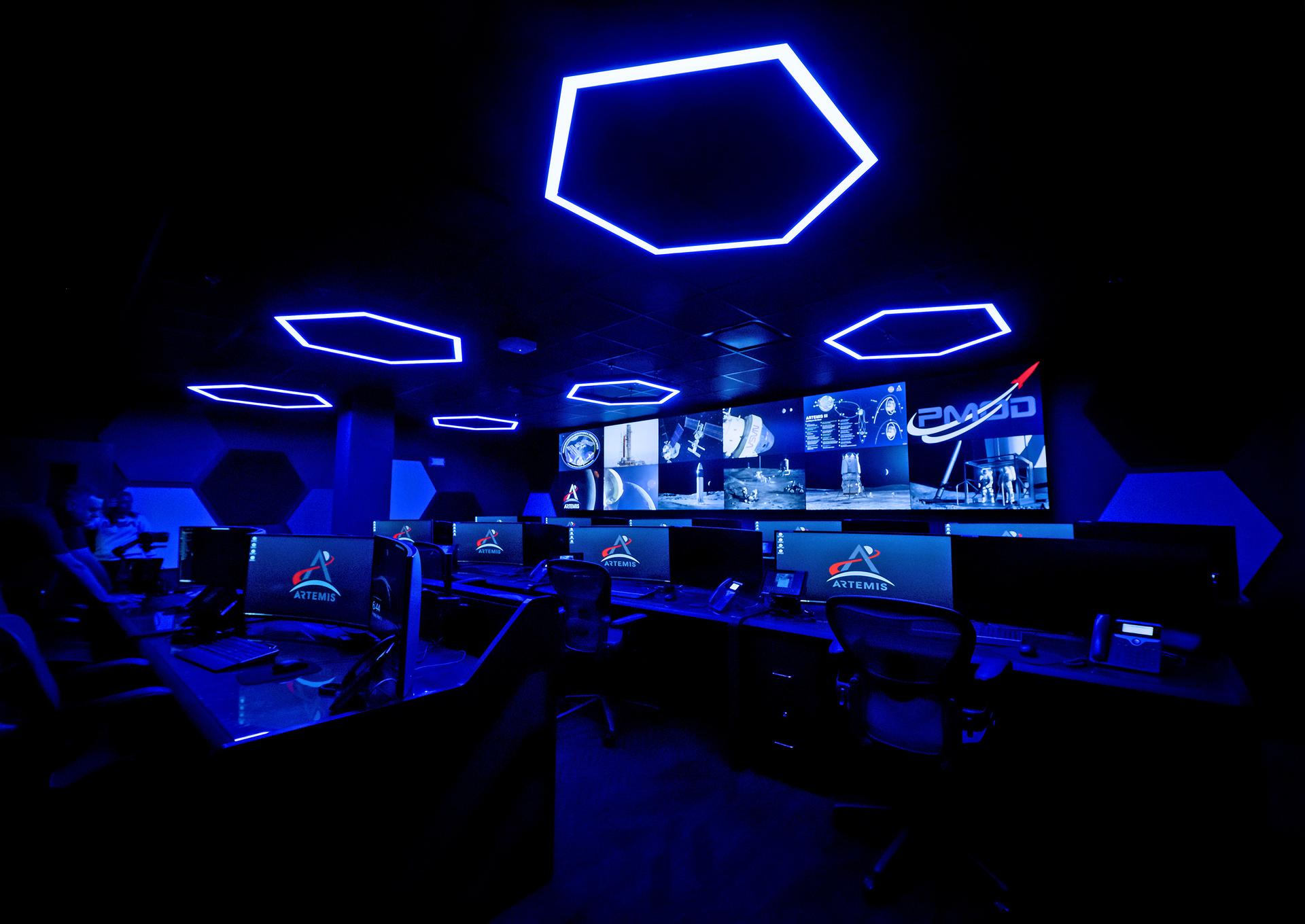
These photos offer a look inside the twin control rooms at NASA’s Marshall Space Flight Center in Huntsville, Alabama, where engineers will monitor Artemis science and future landing operations for Artemis. The LUCA (Lunar Utilization Control Area) and LESA (Lander Engineering Support Area) rooms are part of the Huntsville Operations Support Center at NASA Marshall. The LUCA is specially designed to support a wide variety of science operations on and around the Moon – and beyond. Engineers in the LUCA monitored operations for the Lunar Node-1 experiment, an autonomous navigation payload that was part of the first NASA Commercial Lunar Payload Services (CLPS) launch on Intuitive Machines’ Nova-C lunar lander in 2024. NASA Marshall flight controllers will use the LUCA again for Artemis II to monitor science operations. Beginning with Artemis III, members of the NASA Human Landing System Mission Insight Support Team – a group of engineers, safety leads, flight operations experts, and technical authorities – will work in the LESA. There, they will monitor lander systems in real-time and be involved in key decision-making processes throughout the mission. For more information, contact NASA Marshall’s Office of Communications at 256-544-0034.
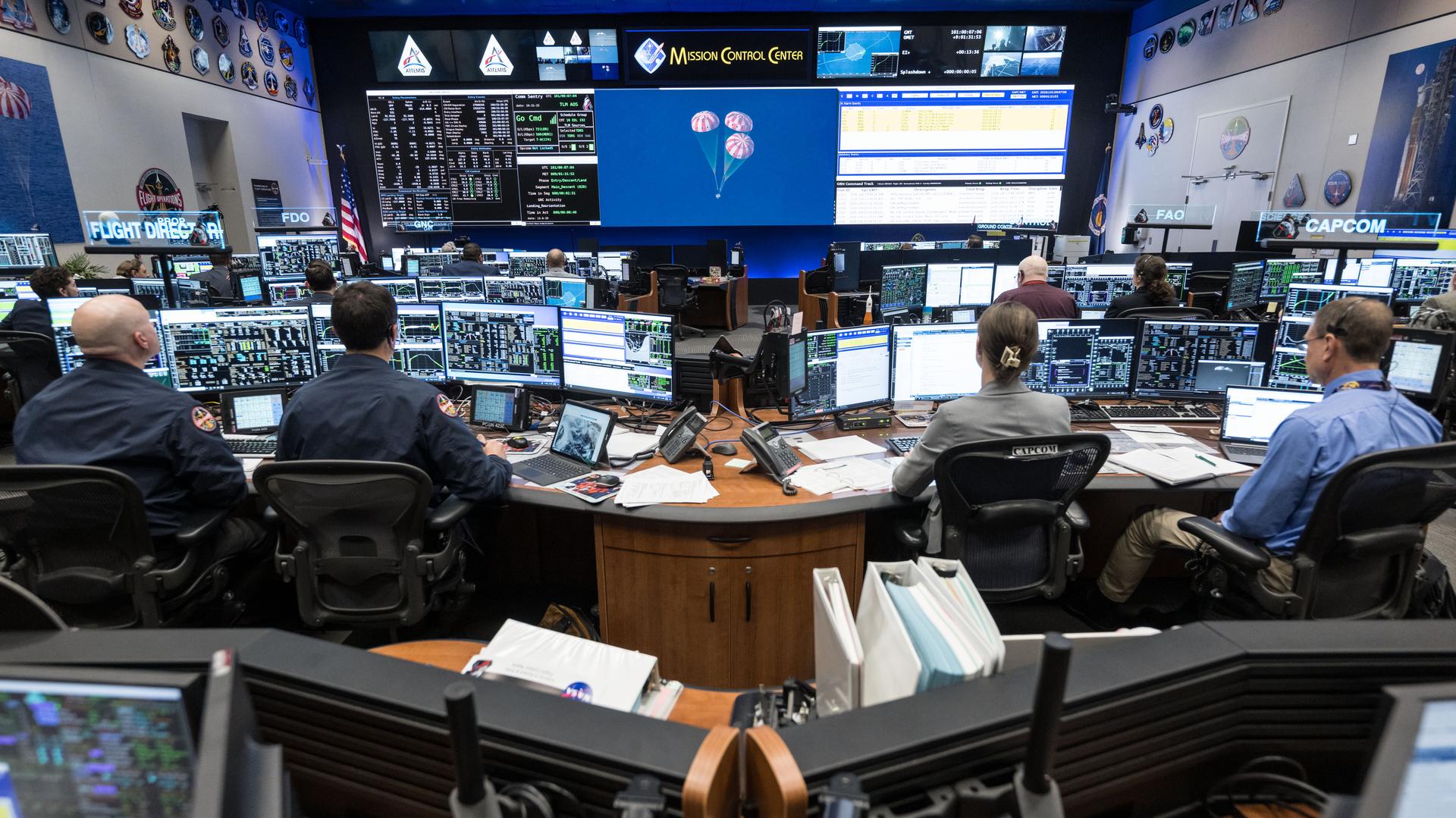
jsc2026e022251(April 10, 2026) - Artemis II Flight Control Team pictured at consoles within the White Flight Control Room in the Mission Control Center at NASA’s Johnson Space Center for the splashdown and recovery of the Artemis II crew as it landed in the Pacific Ocean off the coast of California, Friday, April 10, 2026 at 7:07 p.m. CDT. NASA’s Artemis II mission took NASA astronauts Reid Wiseman, commander; Victor Glover, pilot; Christina Koch, mission specialist; and CSA (Canadian Space Agency) astronaut Jeremy Hansen on a nearly 10-day journey around the Moon and back to Earth. In the foreground, from right to left, are Flight Director Judd Frieling, Flight Director Rick Henfling, CAPCOM (capsule communicator) Jacki Mahaffey, and astronaut Stan Love.
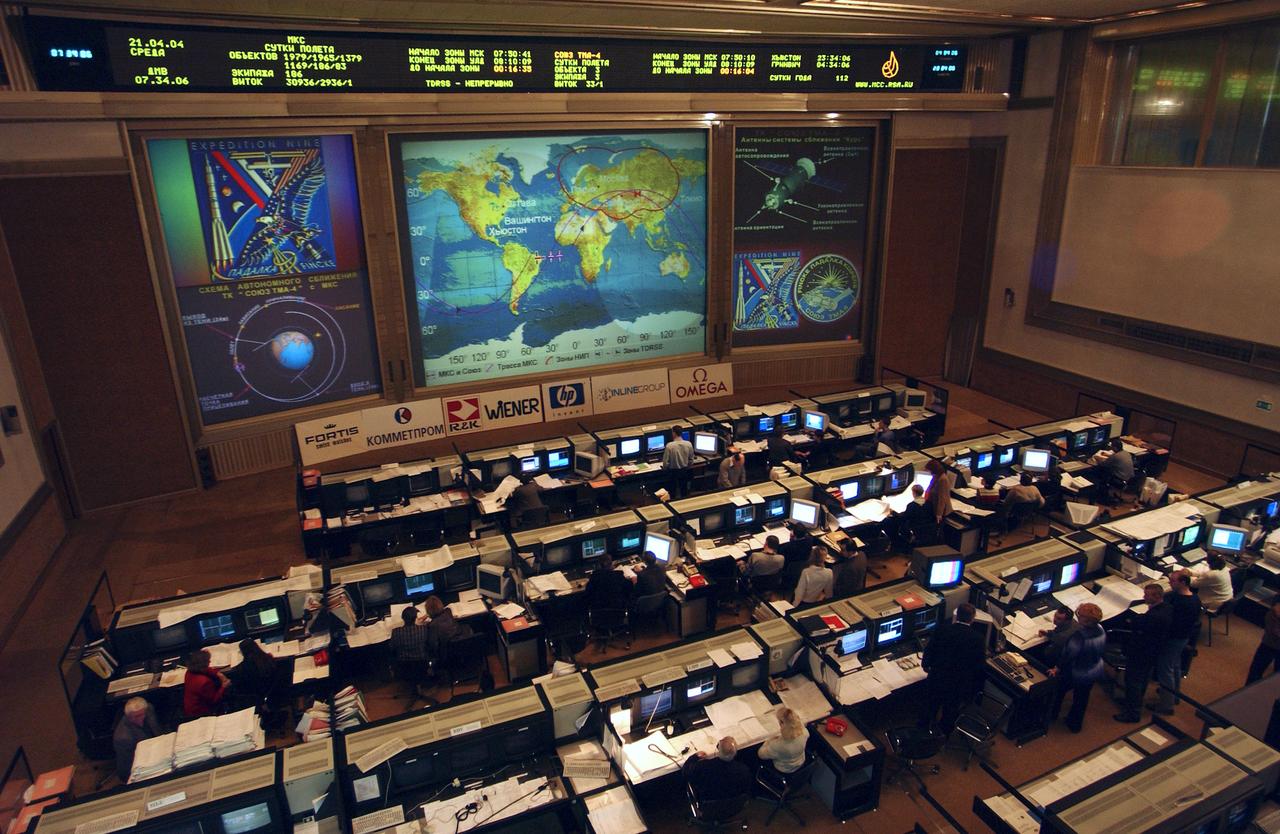
View of the Flight Control Room at the Russian Mission Control Center in Korolev, Russia, located on the outskirts of Moscow, Wednesday, April 21, 2004. Photo Credit: (NASA/Bill Ingalls)
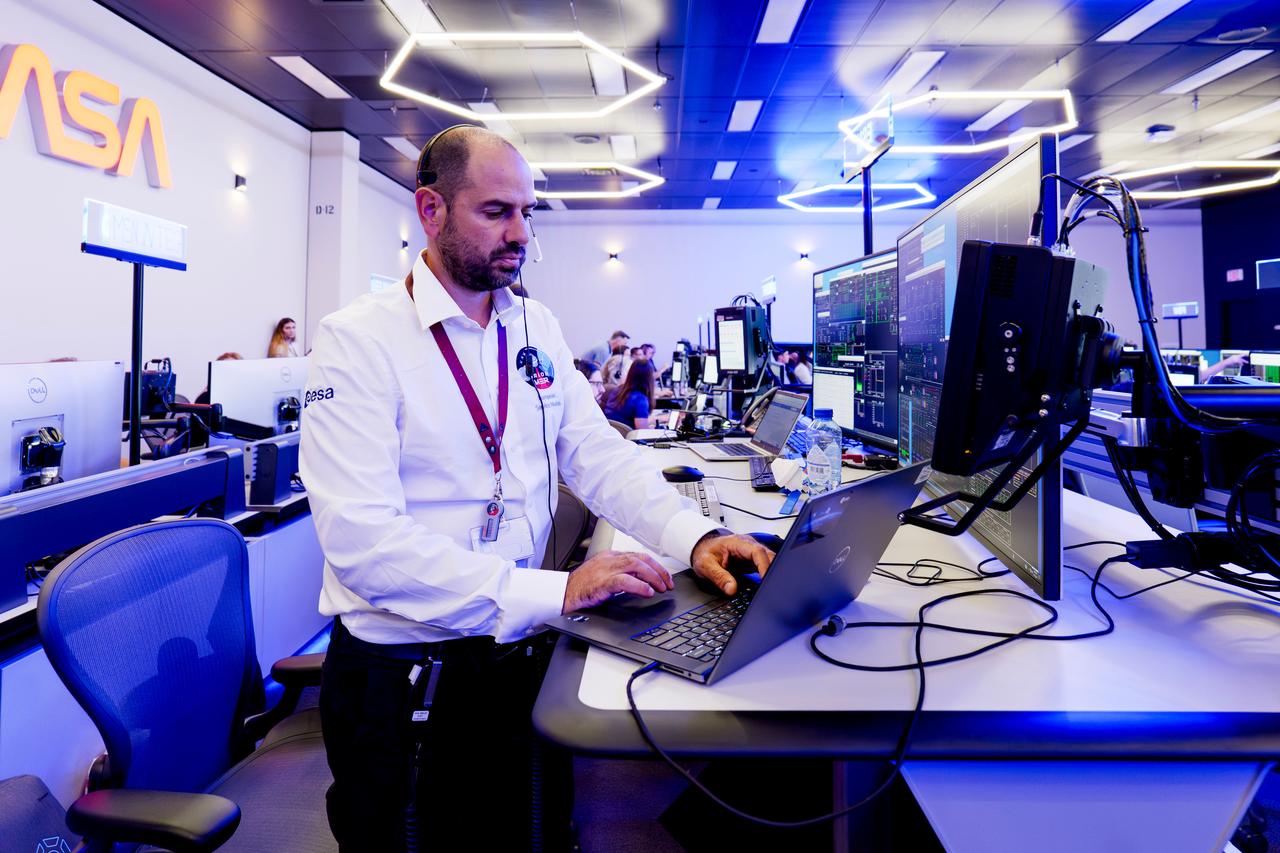
The Orion Mission Evaluation Room (MER) team works during an Artemis II mission simulation on Aug. 19, 2025, from the new Orion MER inside the Mission Control Center at NASA’s Johnson Space Center in Houston.
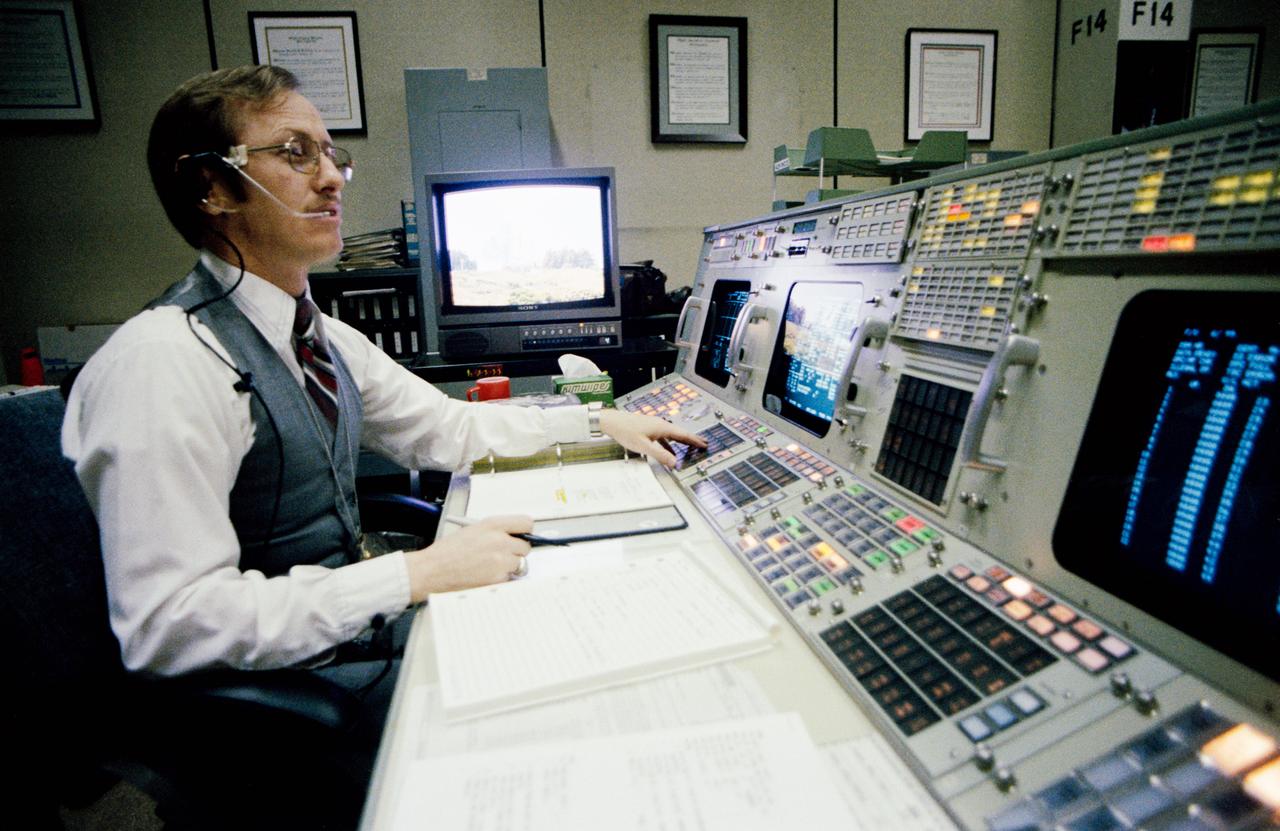
S83-30138 (6 April 1983) --- Granvil A. (Al) Pennington waits for the launch of STS-6?s Challenger as he begins his duties as ascent team integrated communication systems officer (INCO) at the INCO console in the mission operations control room (MOCR) of the Johnson Space Center?s mission control center. The second reusable spacecraft in history launched from the Kennedy Space Center?s Pad 39A at 1:30:00:88 p.m. (EST) today.

S83-34270 (18 June 1983) --- Astronaut C. Gordon Fullerton supplies helpful consultation for Edward I. Fendell (seated) at the Integrated Communications System (INCO) console in the Mission Operations Control Room (MOCR) of the Johnson Space Center's (JSC) Mission Control Center (MCC). Fendell had control over the TV systems during a brief television transmission that featured the opening of the payload bay doors and the revealing of the cargo in the space shuttle Challenger's 18-meter (60-feet) long payload bay. The door-opening was the first of a series of many TV sessions planned for this six-day flight. Photo credit: NASA
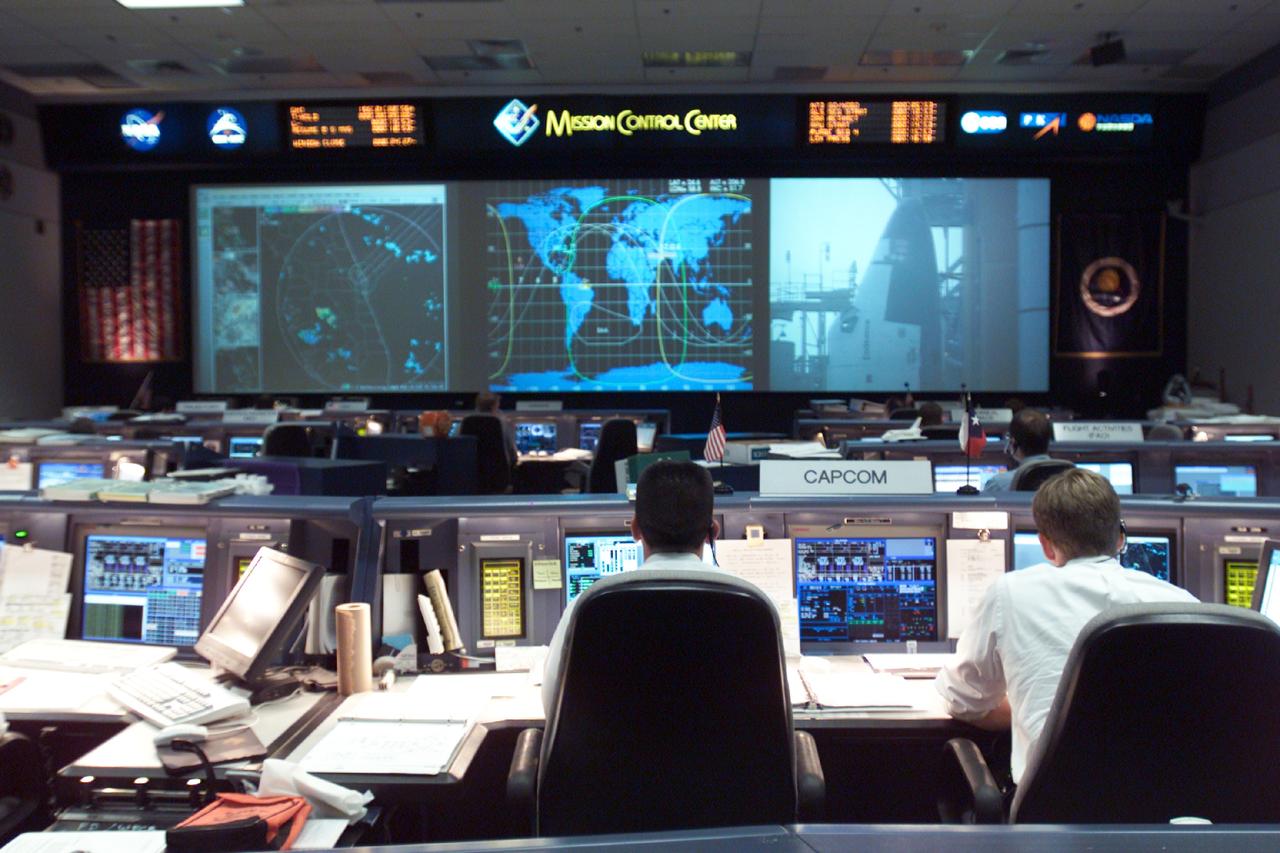
JSC2002-E-23113 (5 June 2002) --- The Space Shuttle Endeavour is shown on the big screen in this overall view of the shuttle flight control room (WFCR) in Houston’s Mission Control Center (MCC) as it is on the launch pad at Kennedy Space Center, Florida. Endeavour launched at 4:23 p.m. (CDT) on June 5, 2002. Once the vehicle cleared the tower in Florida, the Houston-based team of flight controllers took over the ground control of the flight.
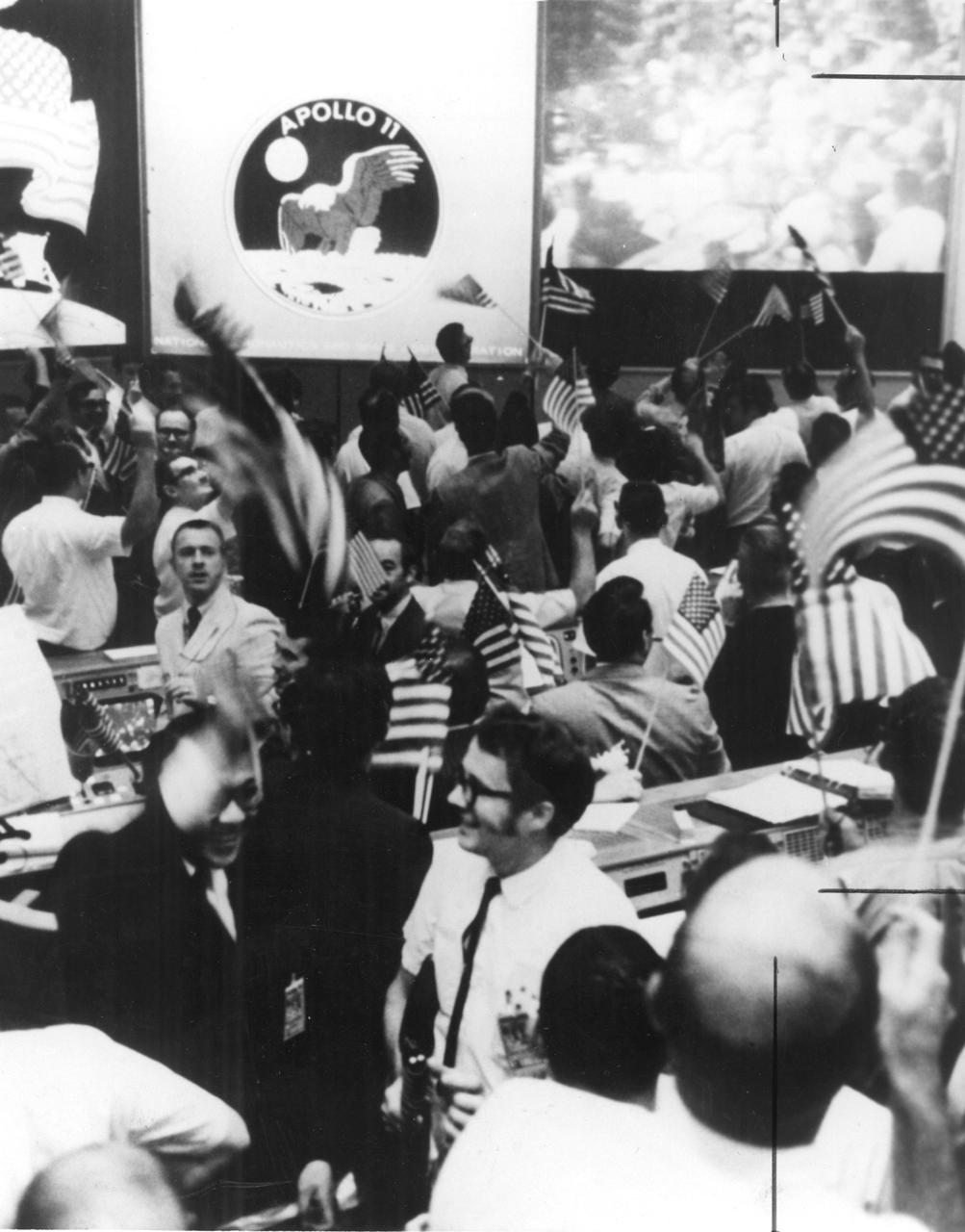
The Apollo 11 mission, the first manned lunar mission, launched from the Kennedy Space Center, Florida via the Marshall Space Flight Center (MSFC) developed Saturn V launch vehicle on July 16, 1969 and safely returned to Earth on July 24, 1969. Aboard he space craft were astronauts Neil A. Armstrong, commander; Michael Collins, Command Module (CM) pilot; and Edwin E. Aldrin Jr., Lunar Module (LM) pilot. The CM, piloted by Michael Collins remained in a parking orbit around the Moon while the LM, named “Eagle’’, carrying astronauts Neil Armstrong and Edwin Aldrin, landed on the Moon. During 2½ hours of surface exploration, the crew collected 47 pounds of lunar surface material for analysis back on Earth. Splashdown occurred in the Pacific Ocean on July 24, 1969. This overall view of the Mission Operations Control Room in the Mission Control Center at the NASA Manned Spacecraft Center (MSC) in Houston Texas shows the jubilation of the celebration of mission success. Mission controllers wave their American flags just after Apollo 11 had been recovered from the Pacific Ocean.

jsc2026e021924 (April 6, 2026) - Artemis II Flight Control Team pictured at consoles within the White Flight Control Room in the Mission Control Center at NASA’s Johnson Space Center during the Artemis II mission. This image was taken when NASA astronauts Reid Wiseman, commander; Victor Glover, pilot; Christina Koch, mission specialist; and CSA (Canadian Space Agency) astronaut Jeremy Hansen conducted the flyby of the Moon. Credit: NASA/Robert Markowitz
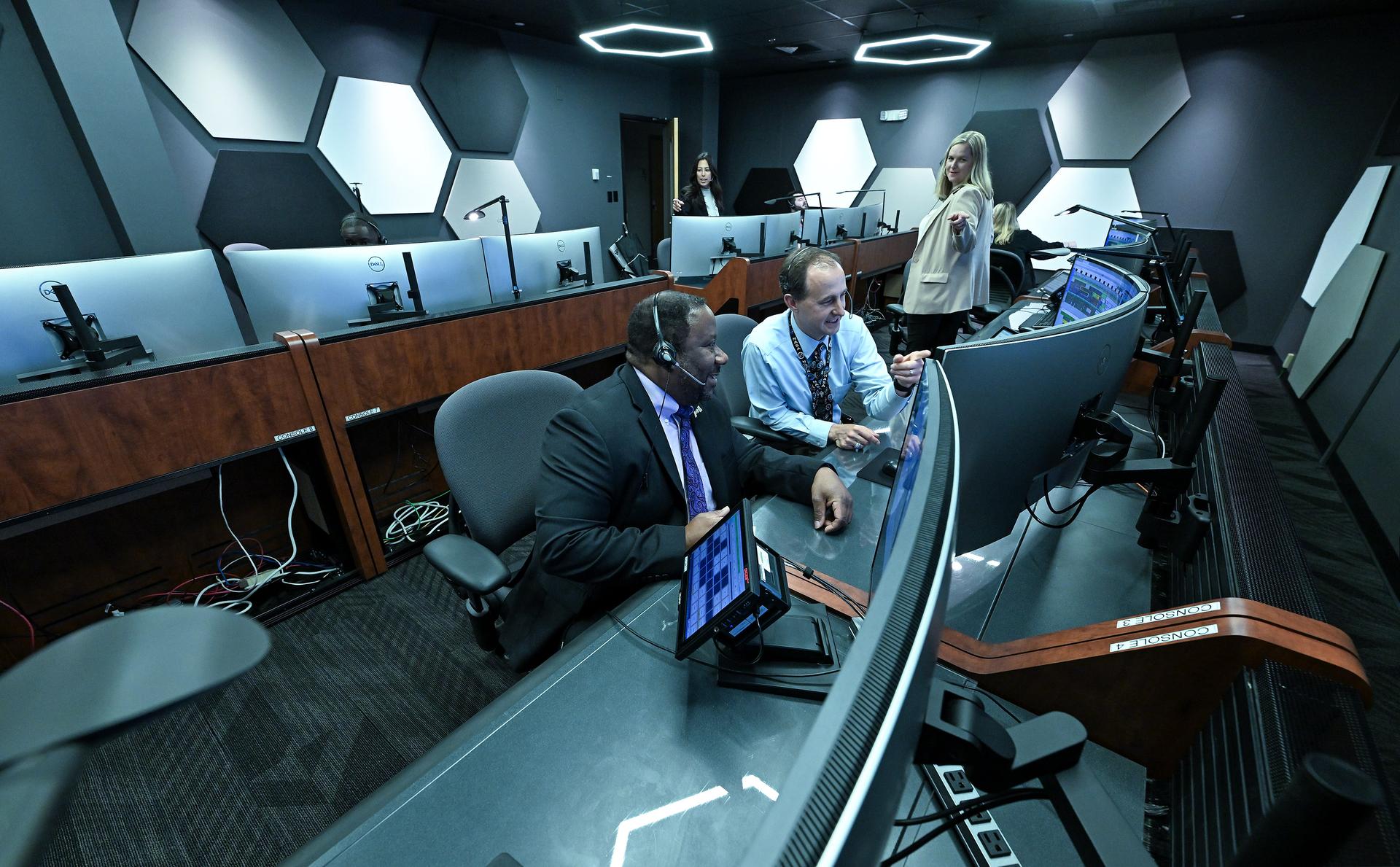
These photos offer a look inside the twin control rooms at NASA’s Marshall Space Flight Center in Huntsville, Alabama, where engineers will monitor Artemis science and future landing operations for Artemis. The LUCA (Lunar Utilization Control Area) and LESA (Lander Engineering Support Area) rooms are part of the Huntsville Operations Support Center at NASA Marshall. The LUCA is specially designed to support a wide variety of science operations on and around the Moon – and beyond. Engineers in the LUCA monitored operations for the Lunar Node-1 experiment, an autonomous navigation payload that was part of the first NASA Commercial Lunar Payload Services (CLPS) launch on Intuitive Machines’ Nova-C lunar lander in 2024. NASA Marshall flight controllers will use the LUCA again for Artemis II to monitor science operations. Beginning with Artemis III, members of the NASA Human Landing System Mission Insight Support Team – a group of engineers, safety leads, flight operations experts, and technical authorities – will work in the LESA. There, they will monitor lander systems in real-time and be involved in key decision-making processes throughout the mission. For more information, contact NASA Marshall’s Office of Communications at 256-544-0034.
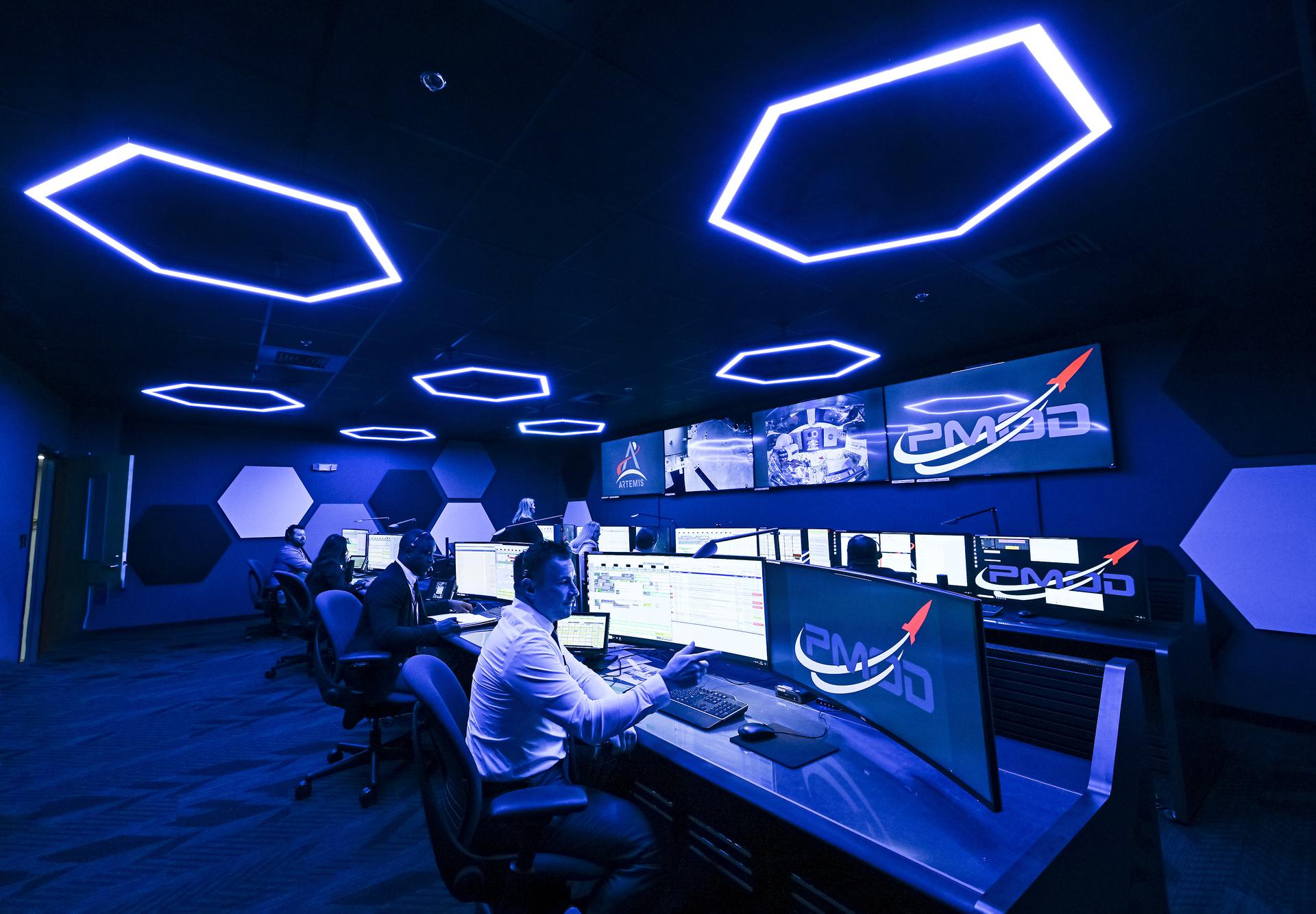
These photos offer a look inside the twin control rooms at NASA’s Marshall Space Flight Center in Huntsville, Alabama, where engineers will monitor Artemis science and future landing operations for Artemis. The LUCA (Lunar Utilization Control Area) and LESA (Lander Engineering Support Area) rooms are part of the Huntsville Operations Support Center at NASA Marshall. The LUCA is specially designed to support a wide variety of science operations on and around the Moon – and beyond. Engineers in the LUCA monitored operations for the Lunar Node-1 experiment, an autonomous navigation payload that was part of the first NASA Commercial Lunar Payload Services (CLPS) launch on Intuitive Machines’ Nova-C lunar lander in 2024. NASA Marshall flight controllers will use the LUCA again for Artemis II to monitor science operations. Beginning with Artemis III, members of the NASA Human Landing System Mission Insight Support Team – a group of engineers, safety leads, flight operations experts, and technical authorities – will work in the LESA. There, they will monitor lander systems in real-time and be involved in key decision-making processes throughout the mission. For more information, contact NASA Marshall’s Office of Communications at 256-544-0034.
These photos offer a look inside the twin control rooms at NASA’s Marshall Space Flight Center in Huntsville, Alabama, where engineers will monitor Artemis science and future landing operations for Artemis. The LUCA (Lunar Utilization Control Area) and LESA (Lander Engineering Support Area) rooms are part of the Huntsville Operations Support Center at NASA Marshall. The LUCA is specially designed to support a wide variety of science operations on and around the Moon – and beyond. Engineers in the LUCA monitored operations for the Lunar Node-1 experiment, an autonomous navigation payload that was part of the first NASA Commercial Lunar Payload Services (CLPS) launch on Intuitive Machines’ Nova-C lunar lander in 2024. NASA Marshall flight controllers will use the LUCA again for Artemis II to monitor science operations. Beginning with Artemis III, members of the NASA Human Landing System Mission Insight Support Team – a group of engineers, safety leads, flight operations experts, and technical authorities – will work in the LESA. There, they will monitor lander systems in real-time and be involved in key decision-making processes throughout the mission. For more information, contact NASA Marshall’s Office of Communications at 256-544-0034.
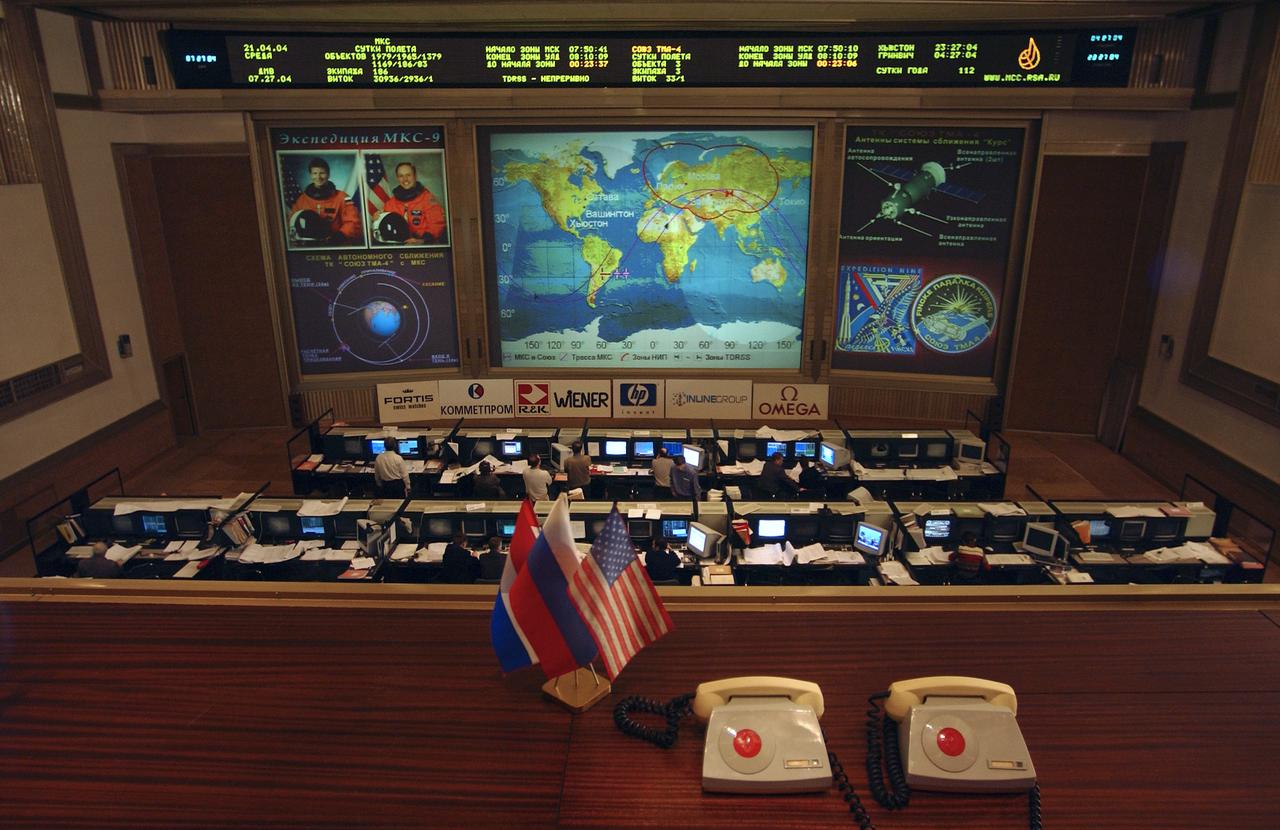
View of the Flight Control Room at the Russian Mission Control Center in Korolev, Russia, located on the outskirts of Moscow, Wednesday, April 21, 2004. Photo Credit: (NASA/Bill Ingalls)
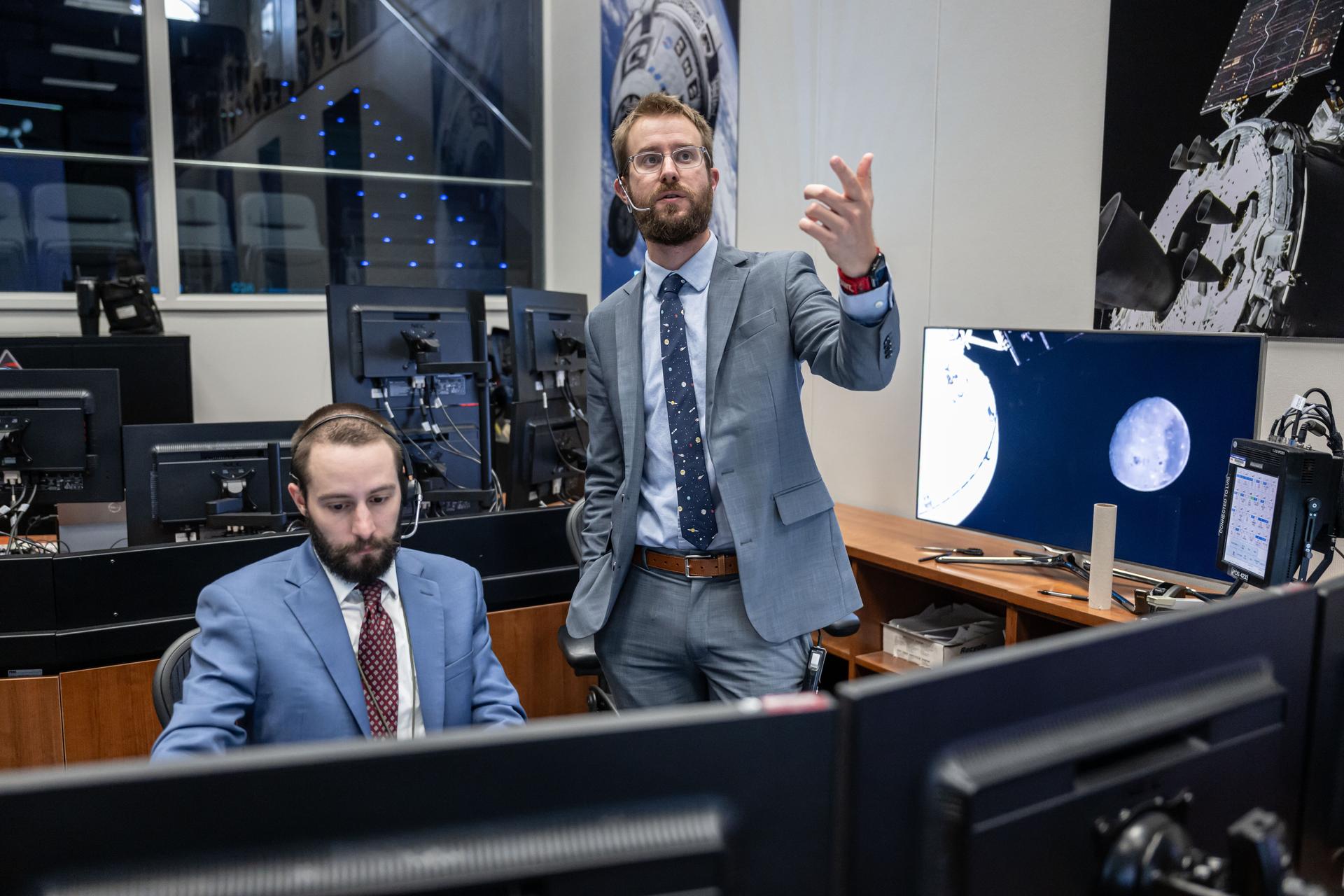
jsc2026e021749 (April 6, 2026) - Chris White, Lead INCO (Integrated Communications Officer) for Artemis II, and Matthew Johns, INCO Flight Controller, are pictured in the White Flight Control Room in the Mission Control Center at NASA’s Johnson Space Center during the Artemis II mission. This image was taken when NASA astronauts Reid Wiseman, Victor Glover, and Christina Koch, and CSA (Canadian Space Agency) astronaut Jeremy Hansen conducted the flyby of the Moon. Credit: NASA/Robert Markowitz
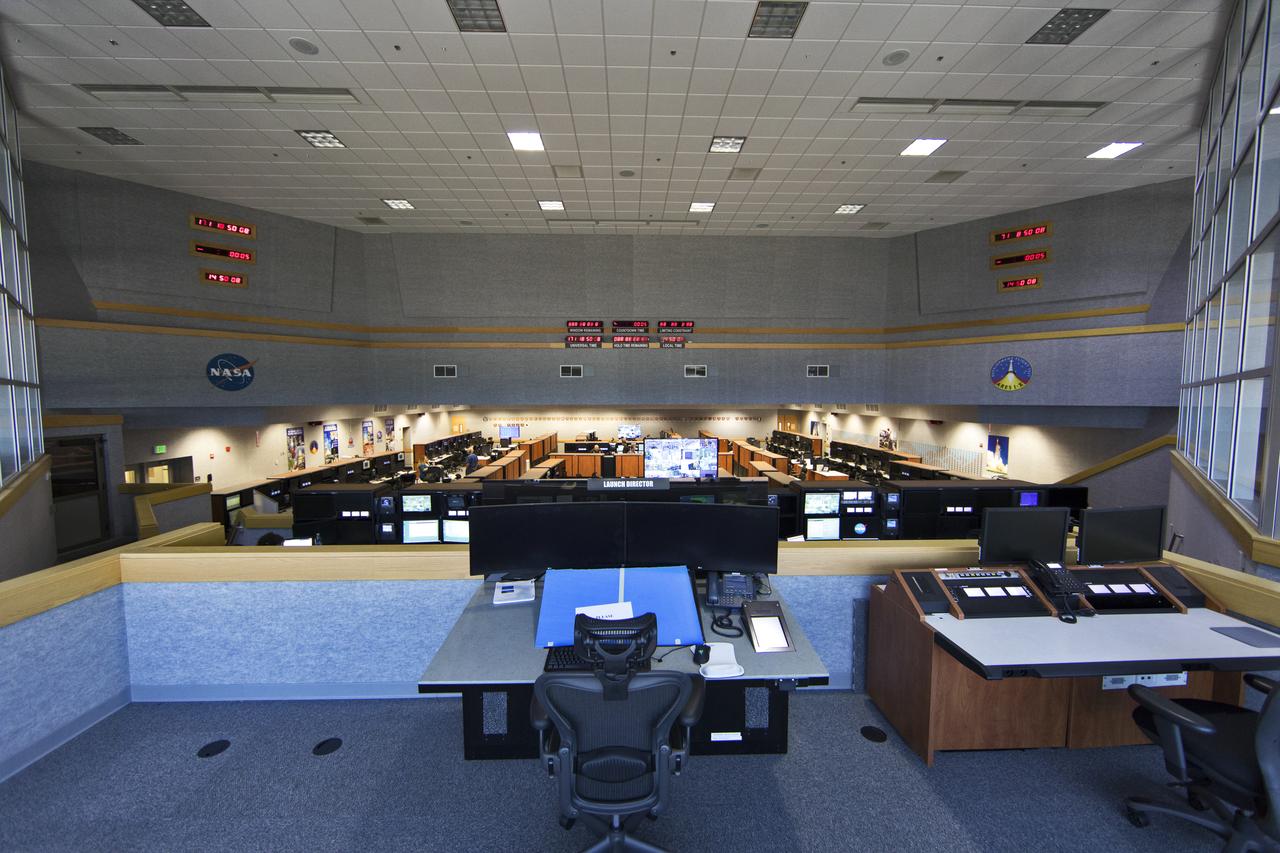
A view of Firing Room 1 in the Launch Control Center (LCC) at NASA's Kennedy Space Center in Florida. The Apollo and shuttle-era firing rooms in the LCC have been upgraded. The upper deck includes a work station in development for the EM-1 launch director. Exploration Ground Systems upgraded Firing Room 1 to support the launch of NASA's Space Launch System rocket and Orion spacecraft on Exploration Mission-1 and deep space missions.
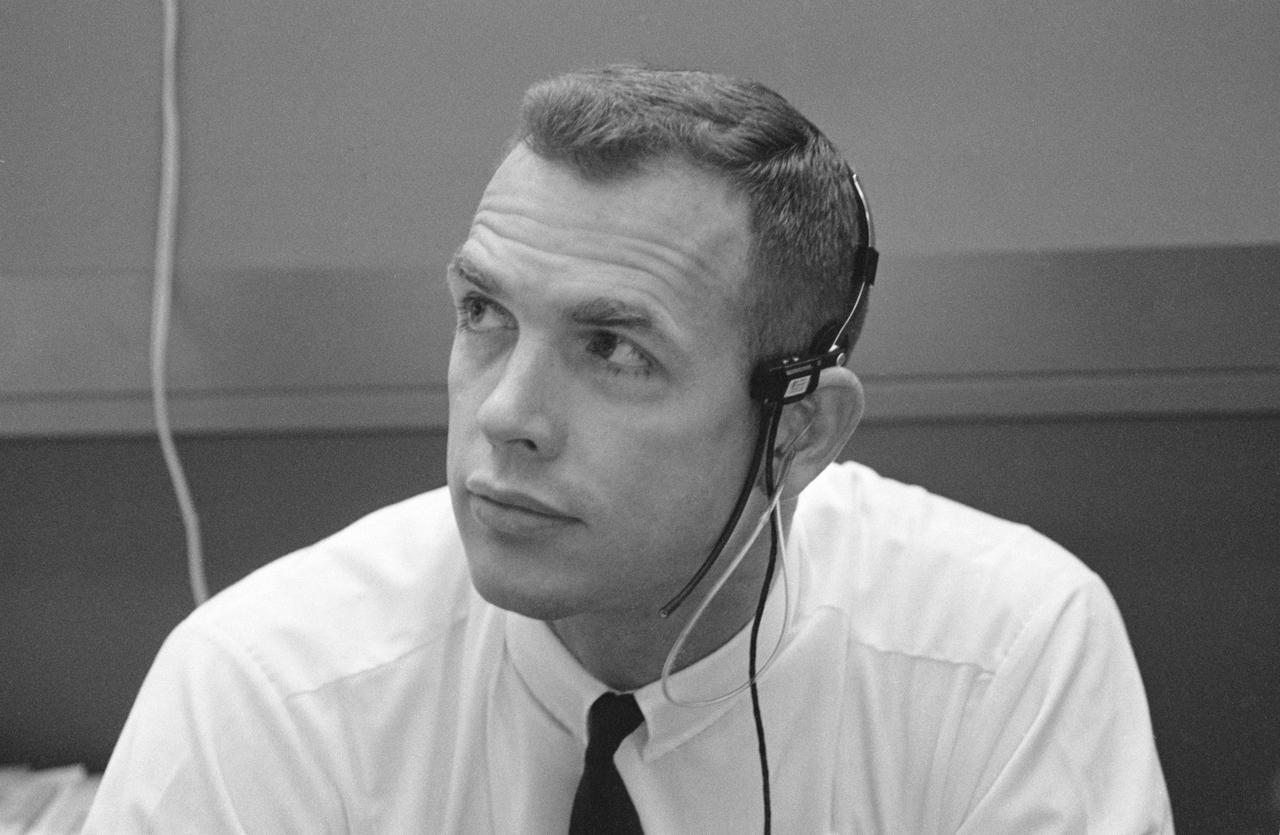
S69-39590 (20 July 1969) --- Astronaut David R. Scott is seated at a console in the Mission Operations Control Room (MOCR) in the Mission Control Center (MCC), Building 30, during the Apollo 11 lunar landing mission. He is watching a television monitor during the lunar surface extravehicular activity (EVA) in which astronauts Neil A. Armstrong and Edwin E. Aldrin Jr. participated. Scott is the backup crew commander for the scheduled Apollo 12 lunar landing mission.
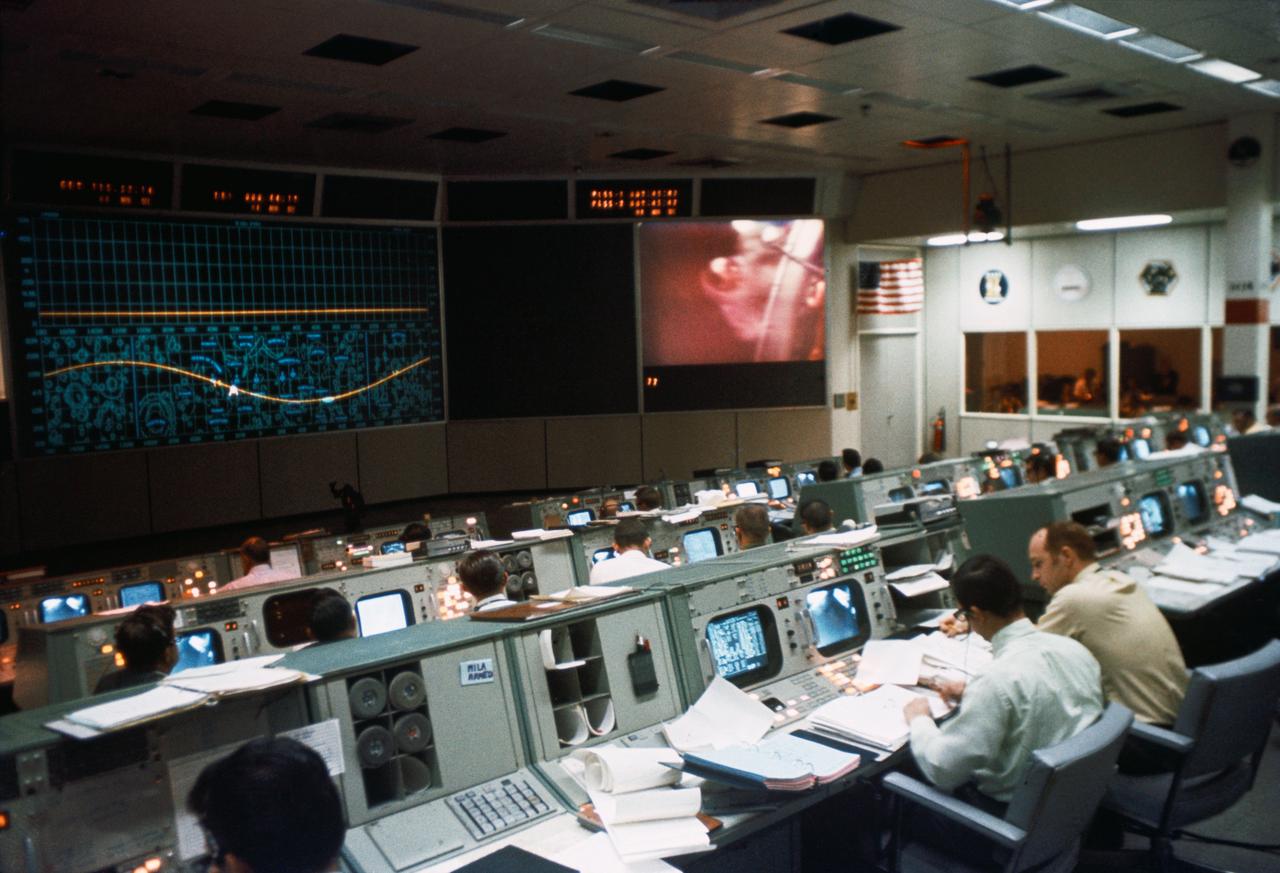
S69-59525 (19 Nov. 1969) --- Overall view of activity in the Mission Operations Control Room (MOCR) in the Mission Control Center (MCC), Building 30, during the Apollo 12 lunar landing mission. When this picture was made the first Apollo 12 extravehicular activity (EVA) was being televised from the surface of the moon. Photo credit: NASA

A blue sky and fluffy clouds serve as the backdrop in this view of the exterior of the Launch Control Center (LCC) at NASA's Kennedy Space Center in Florida. The Apollo and shuttle-era firing rooms in the LCC have been upgraded. Exploration Ground Systems upgraded Firing Room 1 to support the launch of NASA's Space Launch System rocket and Orion spacecraft on Exploration Mission-1 and deep space missions.
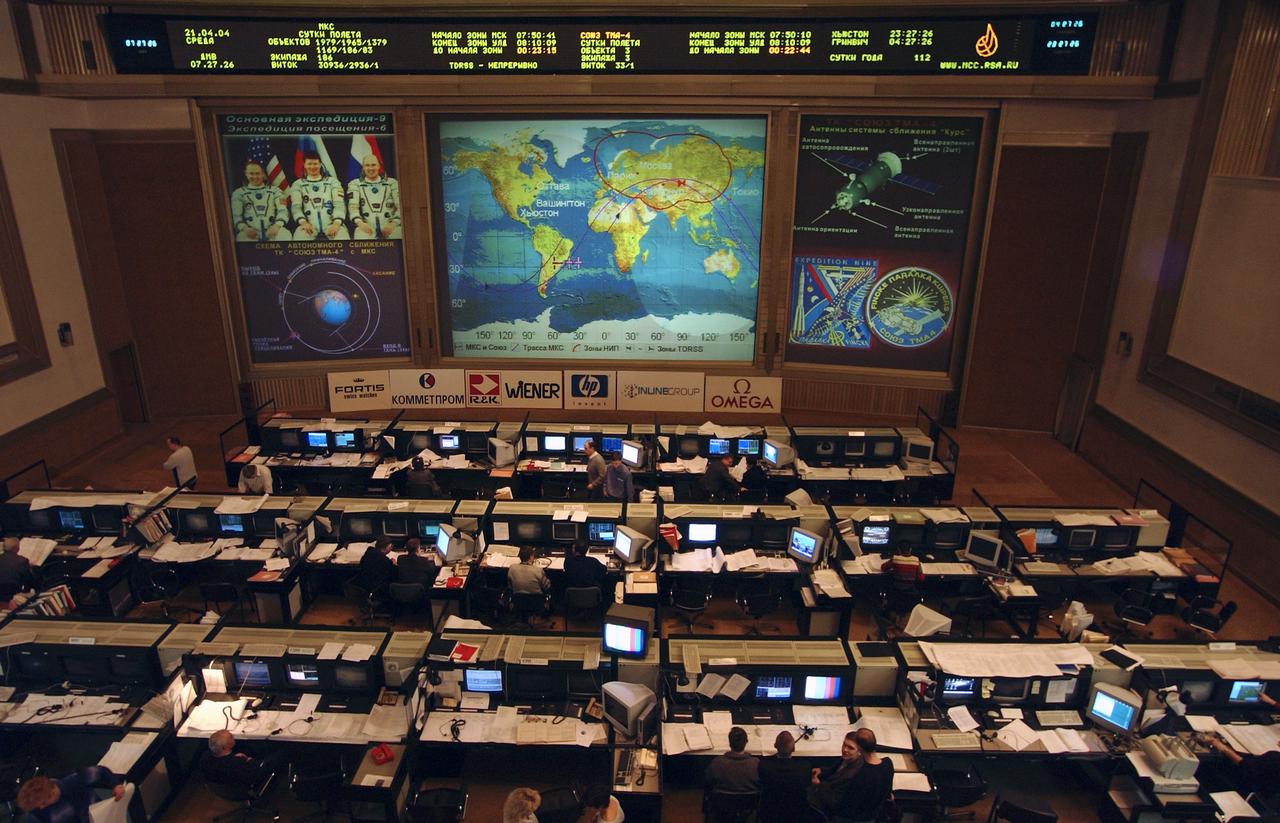
View of the Flight Control Room at the Russian Mission Control Center in Korolev, Russia, located on the outskirts of Moscow, Wednesday, April 21, 2004. Photo Credit: (NASA/Bill Ingalls)
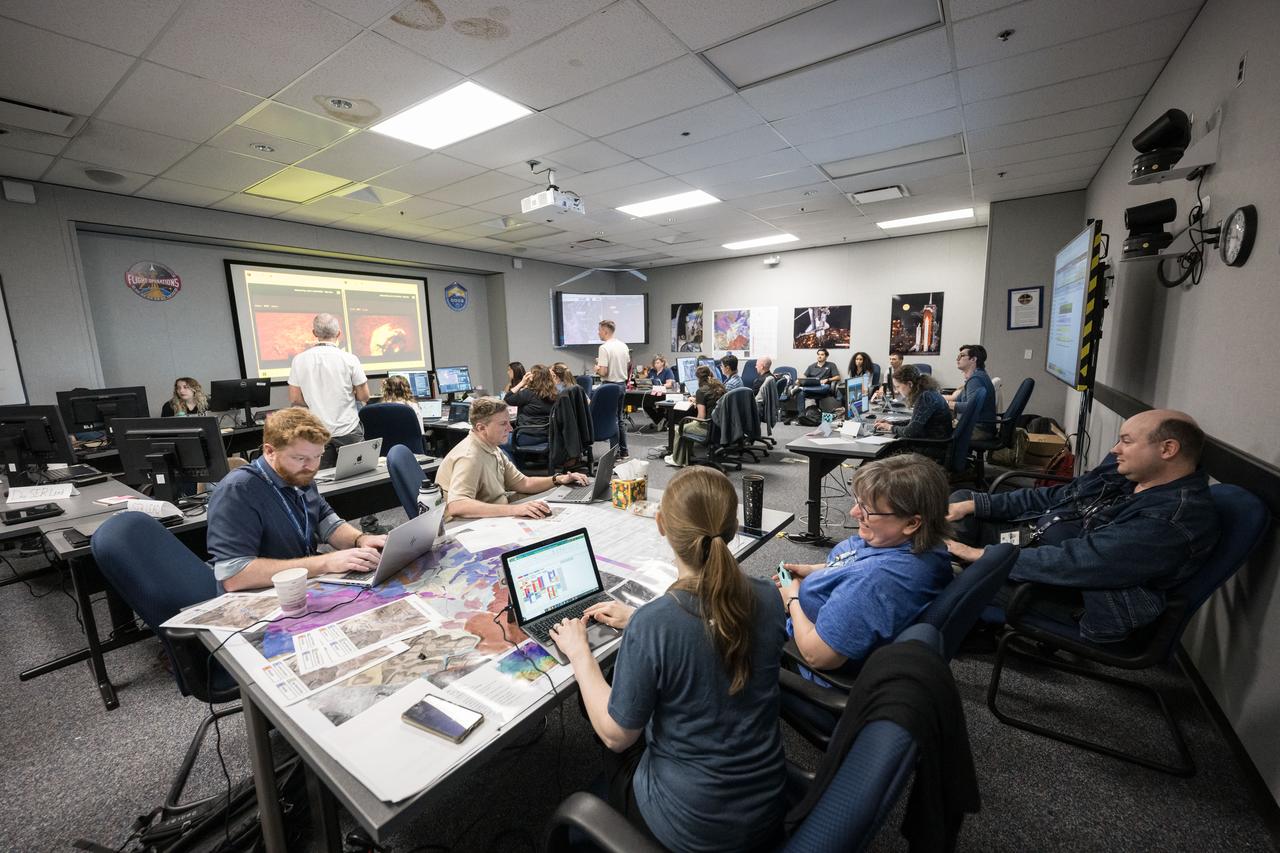
A large group of scientists work in the Science Evaluation Room (SER) at NASA’s Johnson Space Center in Houston during the JETT 5 field test. The SER is the science backroom to mission control during Artemis operations. JETT 5 was a week-long field test in the lunar-like landscape of San Francisco Volcanic Field near Flagstaff, Arizona while a team of flight controllers and scientists at Johnson monitor and guide their activities. Credit: NASA/Robert Markowitz
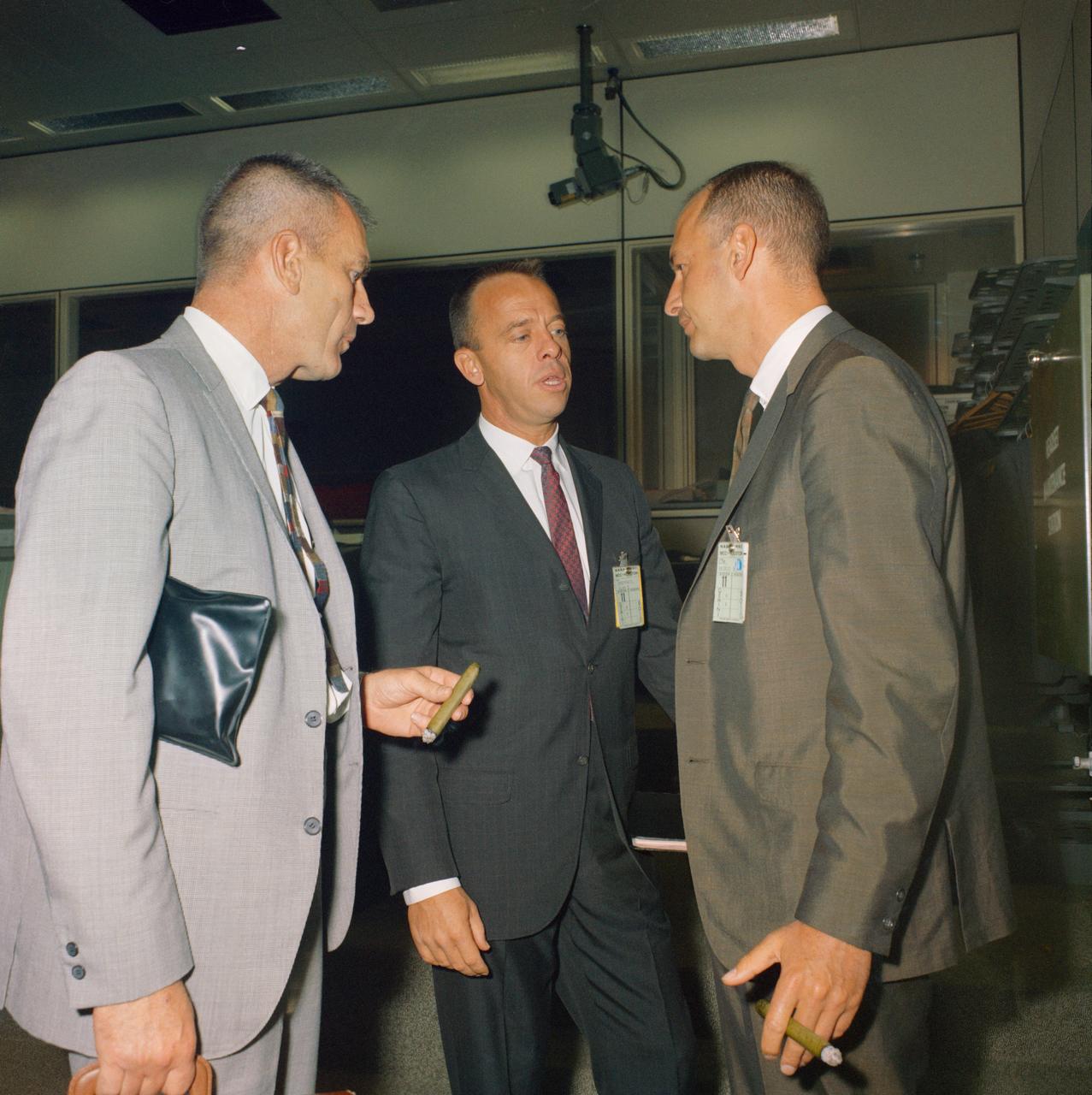
S66-52754 (12 Sept. 1966) --- Three key Manned Spacecraft Center (MSC) officials hold discussion in the Mission Control room during Gemini-11 activity. Left to right, are Donald K. Slayton, MSC Director of Flight Crew Operations; astronaut Alan B. Shepard Jr., Chief, MSC Astronaut Office; and George M. Low, MSC Deputy Director. Photo credit: NASA
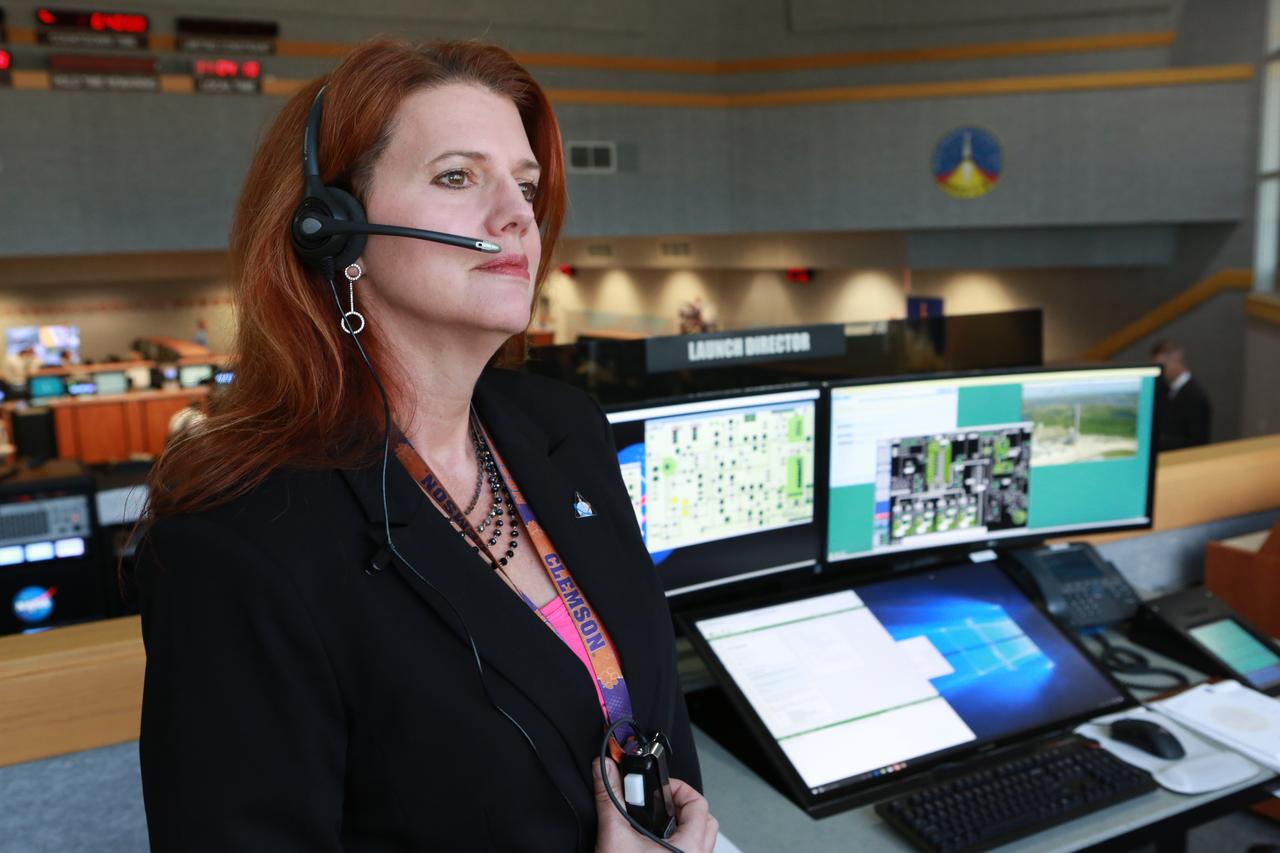
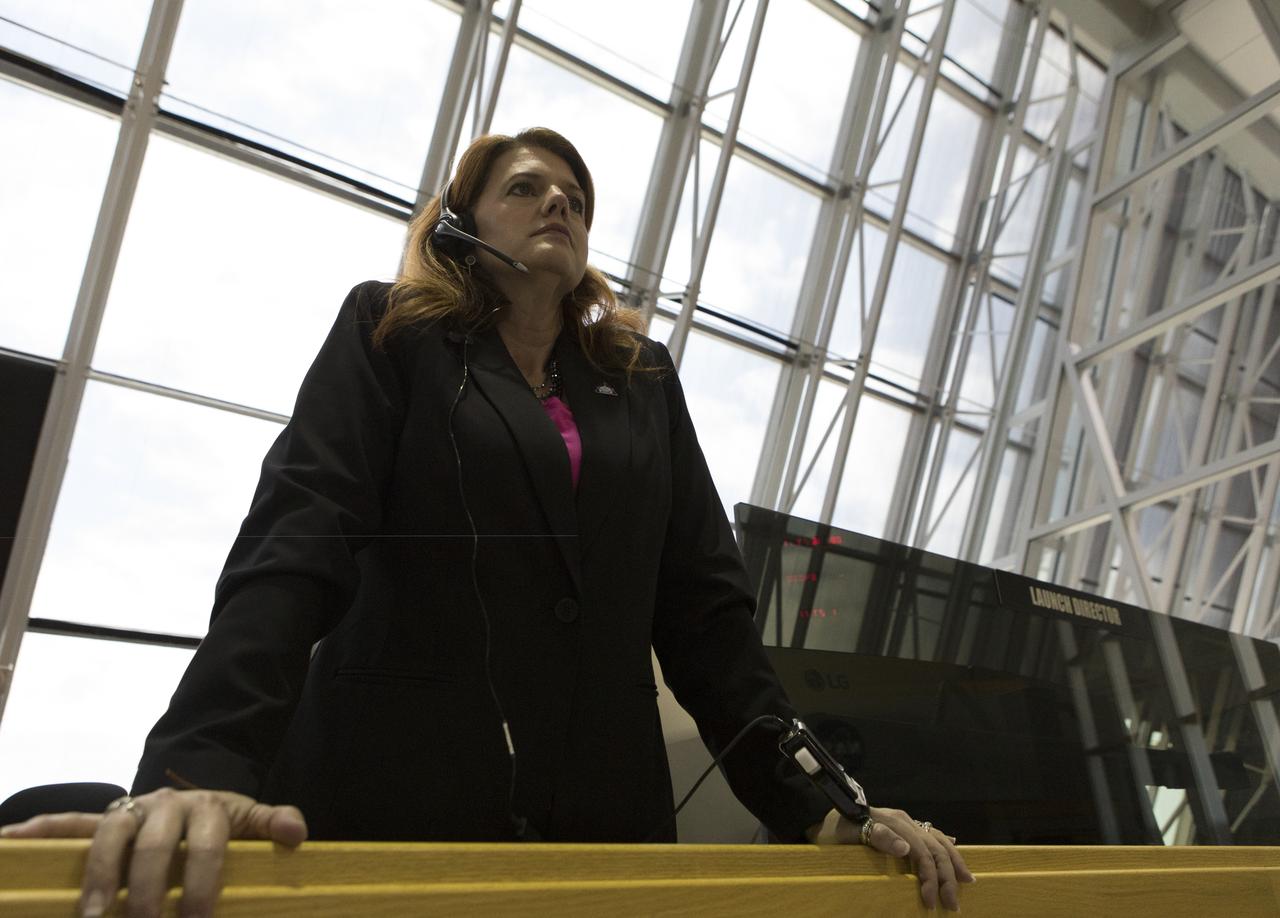
NASA Launch Director Charlie Blackwell-Thompson stands next to her console in Firing Room 1 at the Kennedy Space Center's Launch Control Center during a countdown simulation for Exploration Mission 1. It was the agency's first simulation of a portion of the countdown for the first launch of a Space Launch System rocket and Orion spacecraft that will eventually take astronauts beyond low-Earth orbit to destinations such as the Moon and Mars.
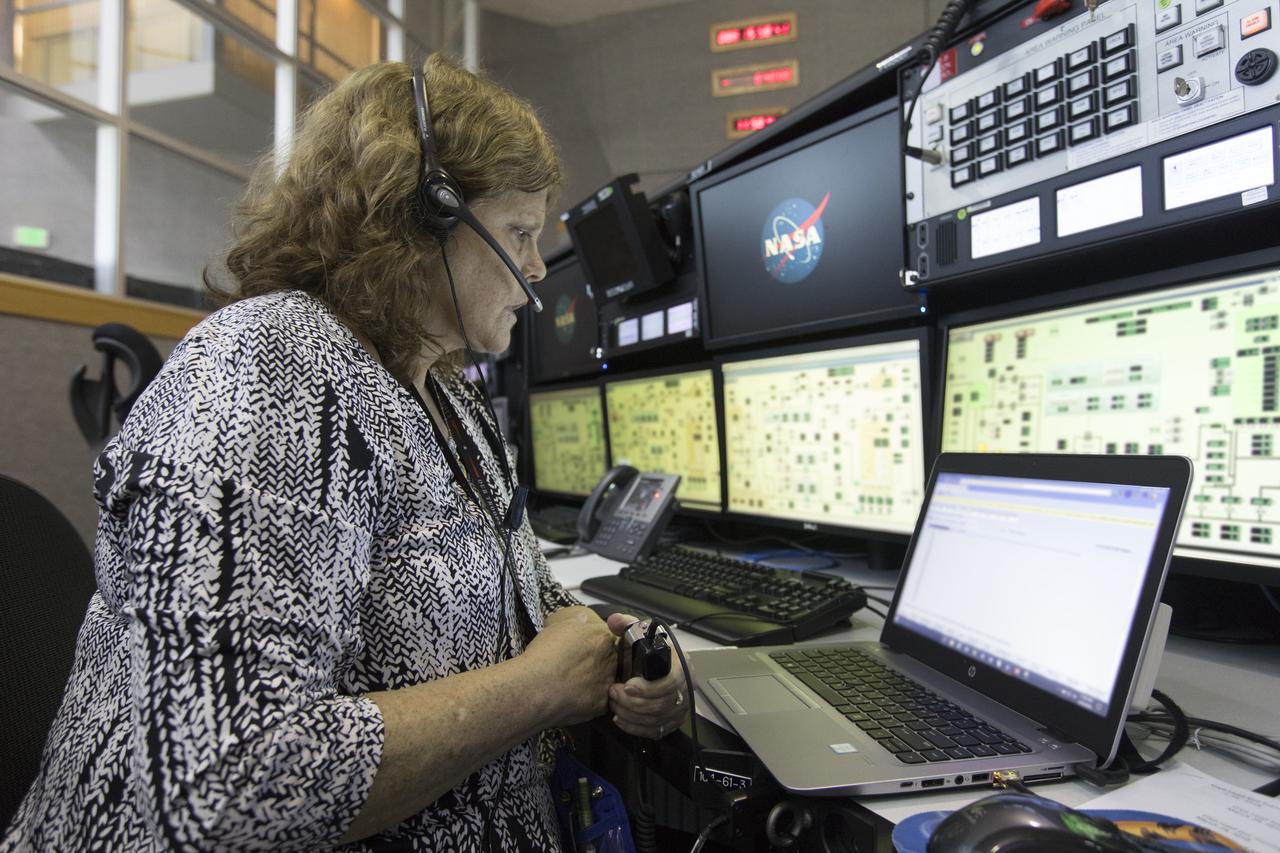
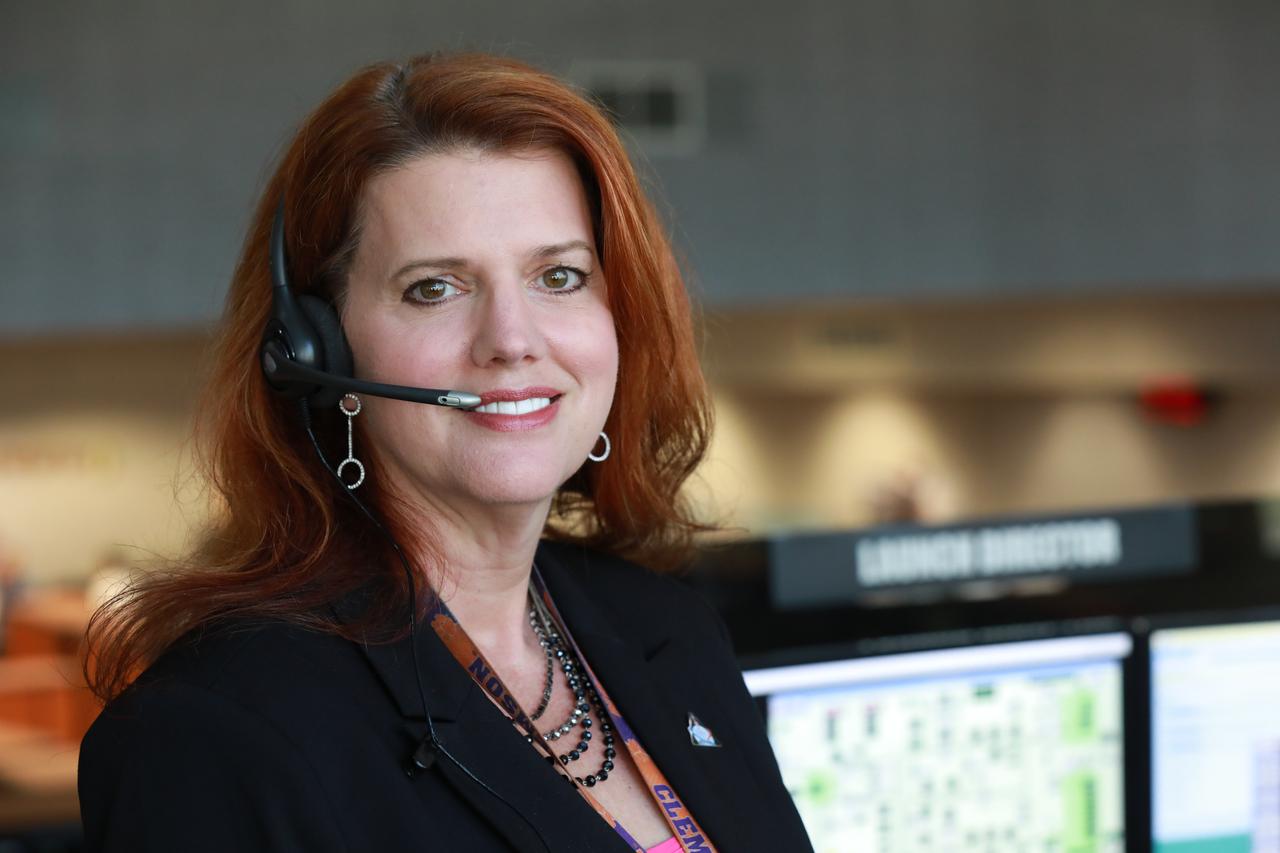
Roberta Wyrick, spacecraft test conductor with Jacobs, NASA's Test and Operations Support Contractor, monitors operations from her console in Firing Room 1 at the Kennedy Space Center's Launch Control Center during a countdown simulation for Exploration Mission 1. It was the agency's first simulation of a portion of the countdown for the first launch of a Space Launch System rocket and Orion spacecraft that will eventually take astronauts beyond low-Earth orbit to destinations such as the Moon and Mars.

Artemis Curation Lead Julianne Gross, left, and Brett Denevi, Artemis III Geology Team principal investigator for NASA’s Science Mission Directorate, work in the Science Evaluation Room (SER) during the JETT 5 field test. JETT 5 was a week-long field test in the lunar-like landscape of San Francisco Volcanic Field near Flagstaff, Arizona while a team of flight controllers and scientists at Johnson monitor and guide their activities. Credit: NASA/Helen Arase Vargas
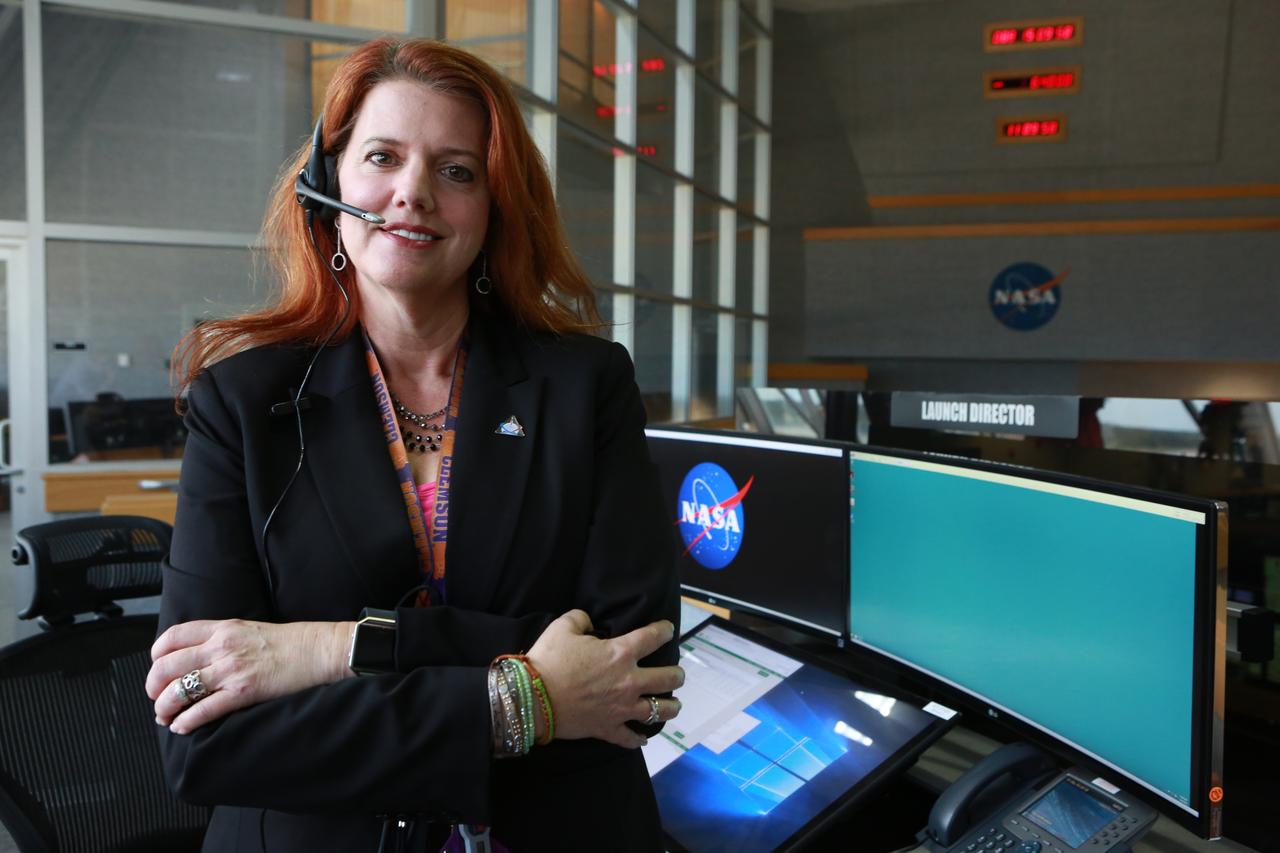
NASA Launch Director Charlie Blackwell-Thompson stands next to her console in Firing Room 1 at the Kennedy Space Center's Launch Control Center during a countdown simulation for Exploration Mission 1. It was the agency's first simulation of a portion of the countdown for the first launch of a Space Launch System rocket and Orion spacecraft that will eventually take astronauts beyond low-Earth orbit to destinations such as the Moon and Mars.
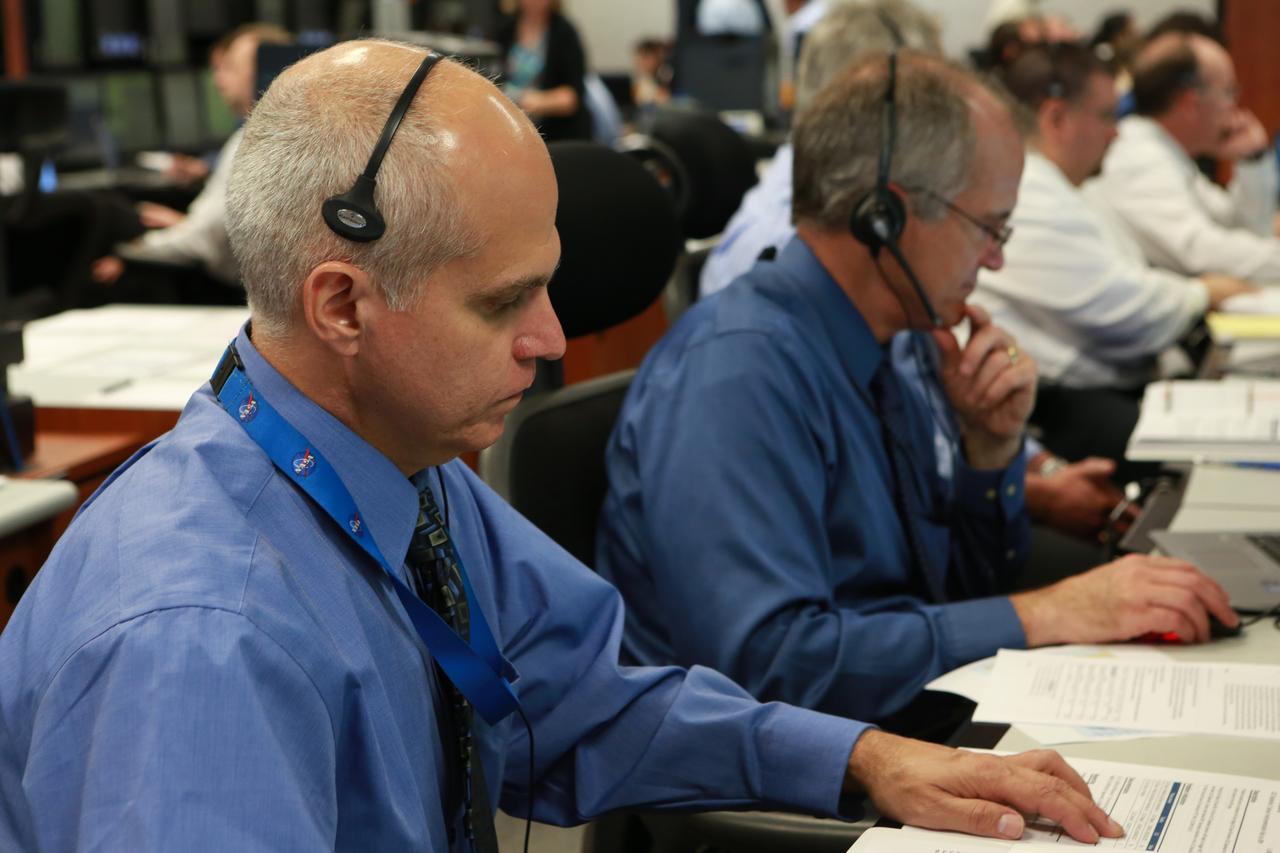
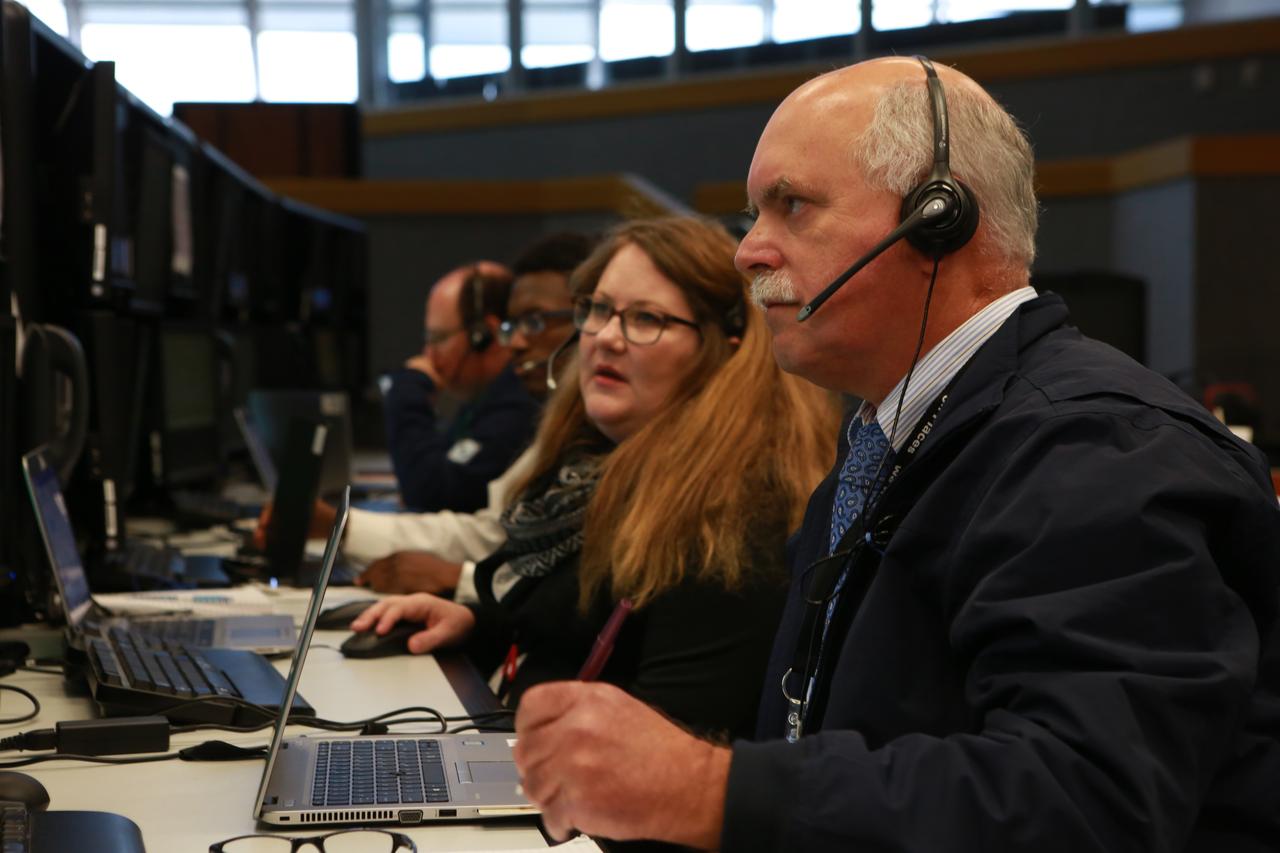
Jacobs Test Project Engineer Don Vinton, left and NASA Operations Project Engineer Doug Robertson, monitor operations from his position in Firing Room 1 at the Kennedy Space Center's Launch Control Center during a countdown simulation for Exploration Mission 1. It was the agency's first simulation of a portion of the countdown for the first launch of a Space Launch System rocket and Orion spacecraft that will eventually take astronauts beyond low-Earth orbit to destinations such as the Moon and Mars.
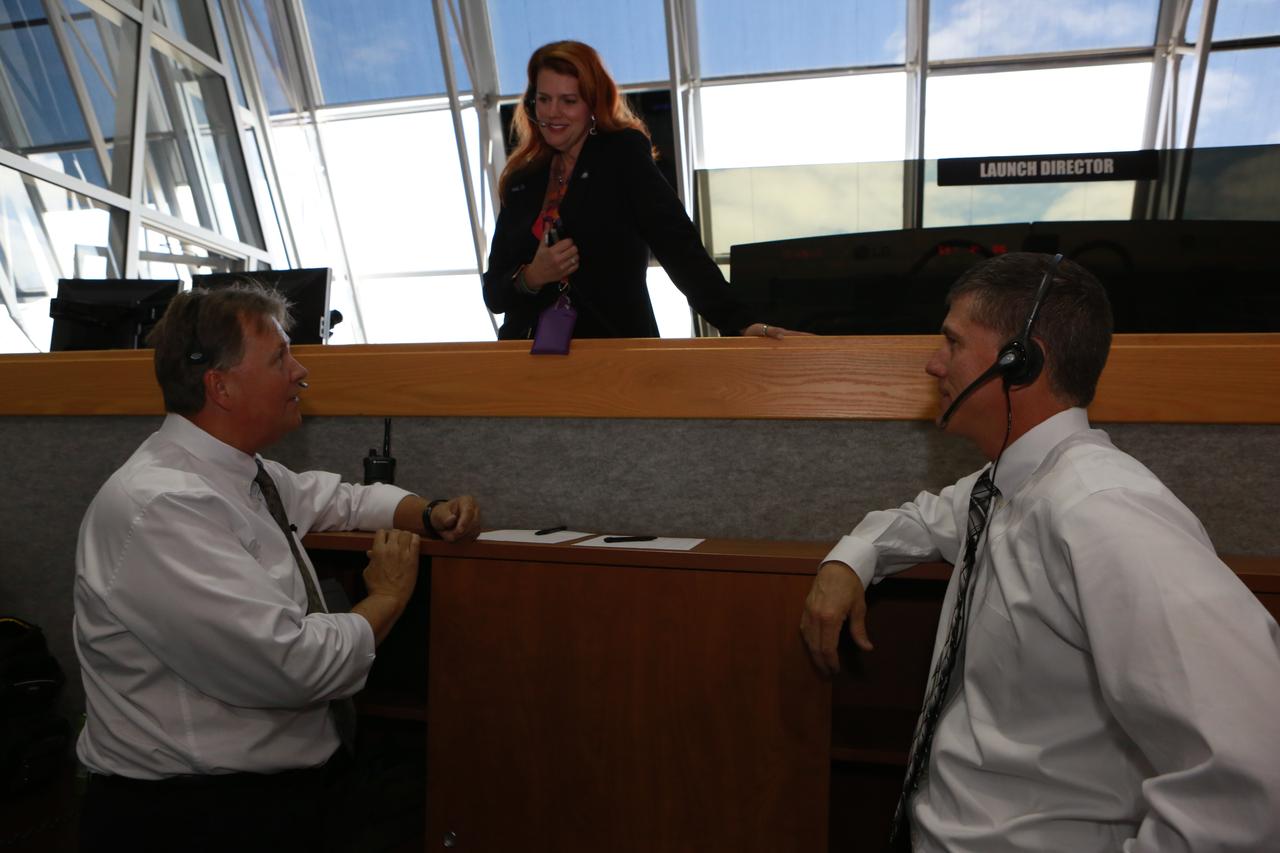
NASA Launch Director Charlie Blackwell-Thompson, above, confers with Senior NASA Test Director Jeff Spaulding, left, and Chief NASA Test Director Jeremy Graeber in Firing Room 1 at the Kennedy Space Center's Launch Control Center during a countdown simulation for Exploration Mission 1. It was the agency's first simulation of a portion of the countdown for the first launch of a Space Launch System rocket and Orion spacecraft that will eventually take astronauts beyond low-Earth orbit to destinations such as the Moon and Mars.
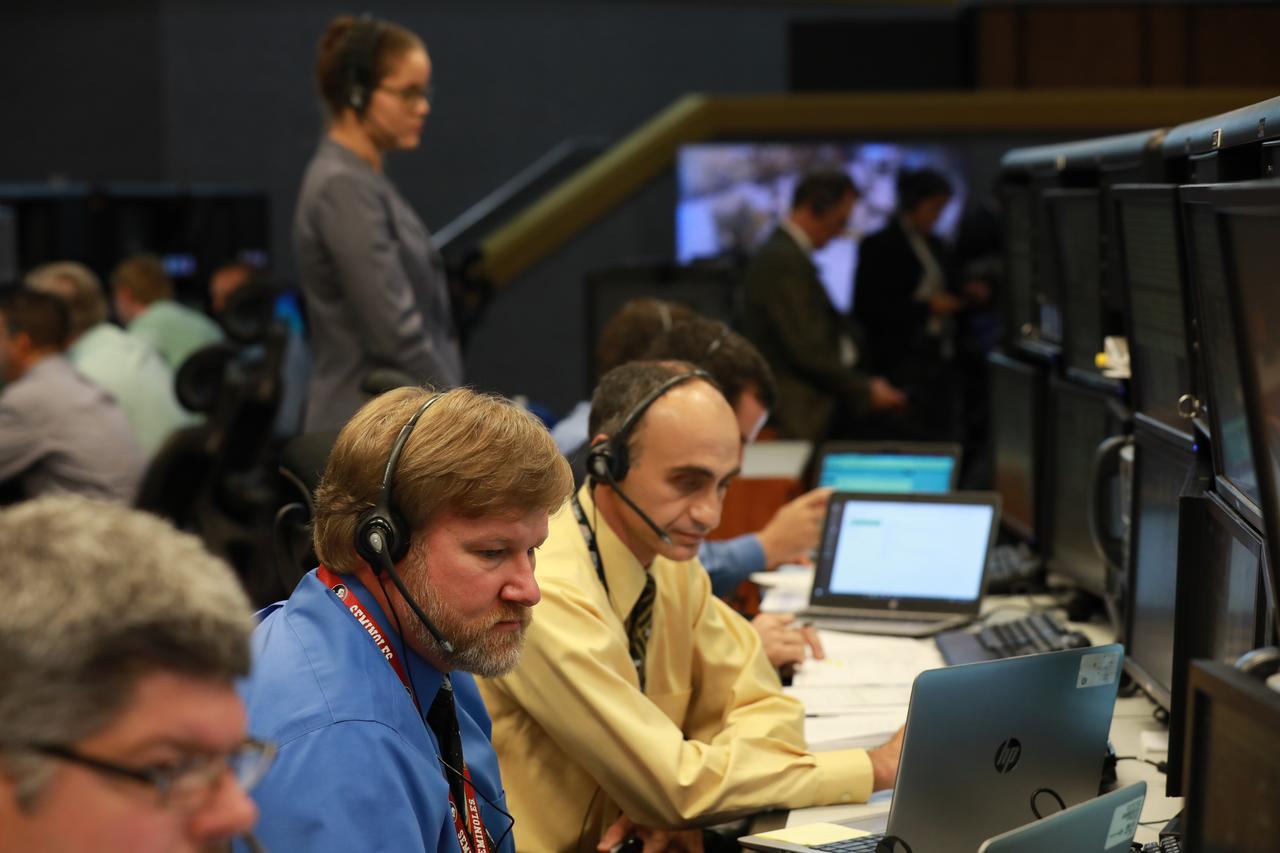
Space Launch System and Orion launch team engineers and managers monitor operations from their console in Firing Room 1 at the Kennedy Space Center's Launch Control Center during a countdown simulation for Exploration Mission 1. It was the agency's first simulation of a portion of the countdown for the first launch of a Space Launch System rocket and Orion spacecraft that will eventually take astronauts beyond low-Earth orbit to destinations such as the Moon and Mars.
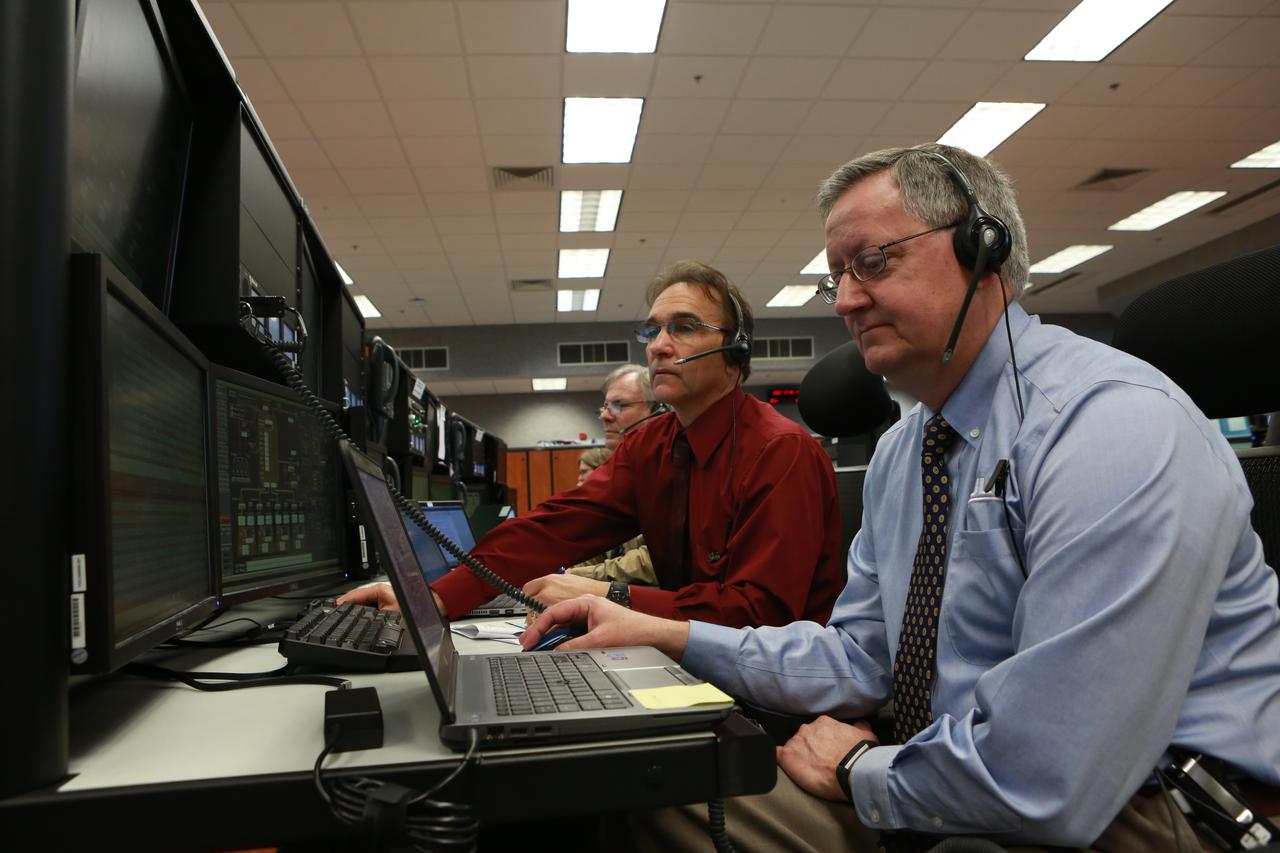
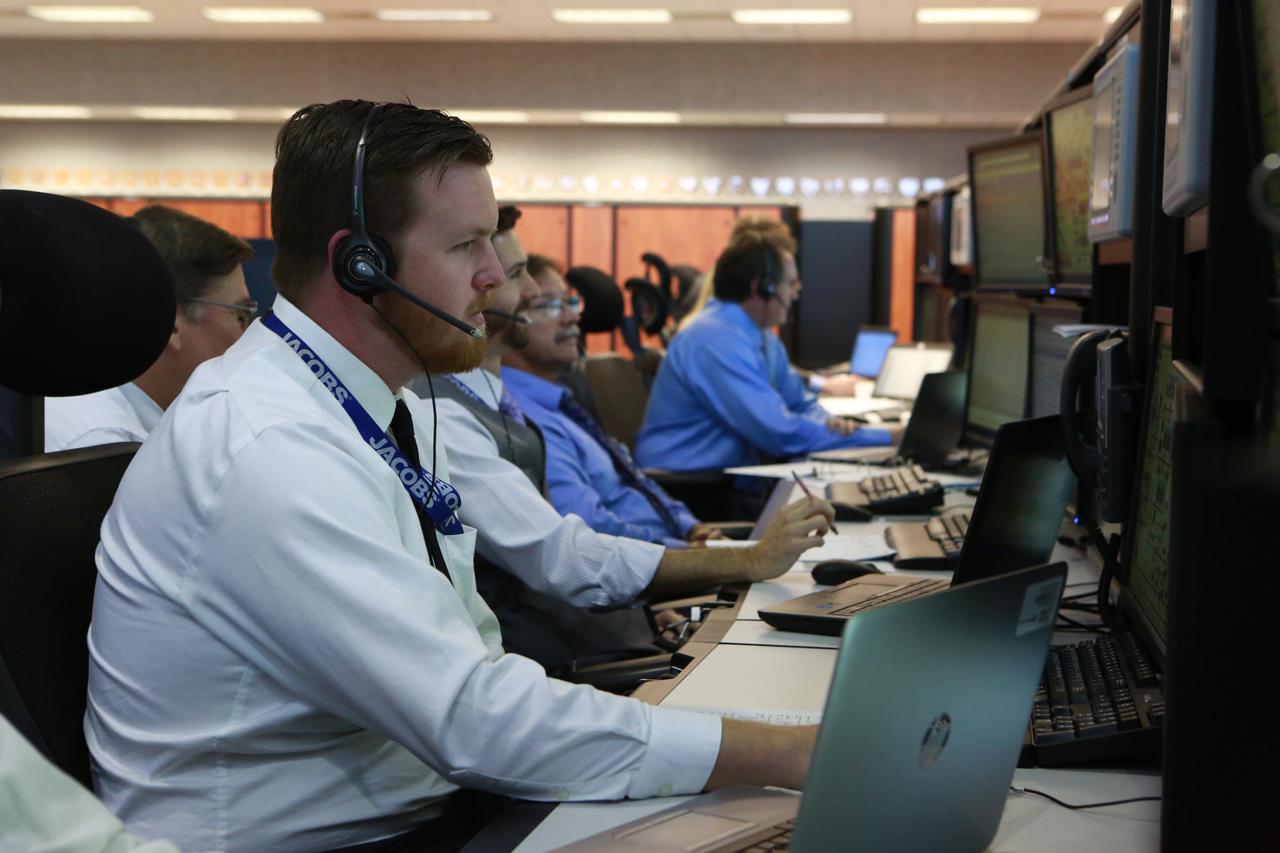
Test Project Engineer Rick Brown, left, and Master Console Operator Jason Robinson, both with Jacobs, monitor operations from their consoles in Firing Room 1 at the Kennedy Space Center's Launch Control Center during a countdown simulation for Exploration Mission 1. It was the agency's first simulation of a portion of the countdown for the first launch of a Space Launch System rocket and Orion spacecraft that will eventually take astronauts beyond low-Earth orbit to destinations such as the Moon and Mars.
NASA Launch Director Charlie Blackwell-Thompson stands next to her console in Firing Room 1 at the Kennedy Space Center's Launch Control Center during a countdown simulation for Exploration Mission 1. It was the agency's first simulation of a portion of the countdown for the first launch of a Space Launch System rocket and Orion spacecraft that will eventually take astronauts beyond low-Earth orbit to destinations such as the Moon and Mars.
Alex Higgins, a liquid hydrogen operations engineer with Jacobs, monitors operations from his position in Firing Room 1 at the Kennedy Space Center's Launch Control Center during a countdown simulation for Exploration Mission 1. It was the agency's first simulation of a portion of the countdown for the first launch of a Space Launch System rocket and Orion spacecraft that will eventually take astronauts beyond low-Earth orbit to destinations such as the Moon and Mars.
Master Console Operators Andrea Oneill, left and David Walsh, monitor operations from their positions in Firing Room 1 at the Kennedy Space Center's Launch Control Center during a countdown simulation for Exploration Mission 1. It was the agency's first simulation of a portion of the countdown for the first launch of a Space Launch System rocket and Orion spacecraft that will eventually take astronauts beyond low-Earth orbit to destinations such as the Moon and Mars.
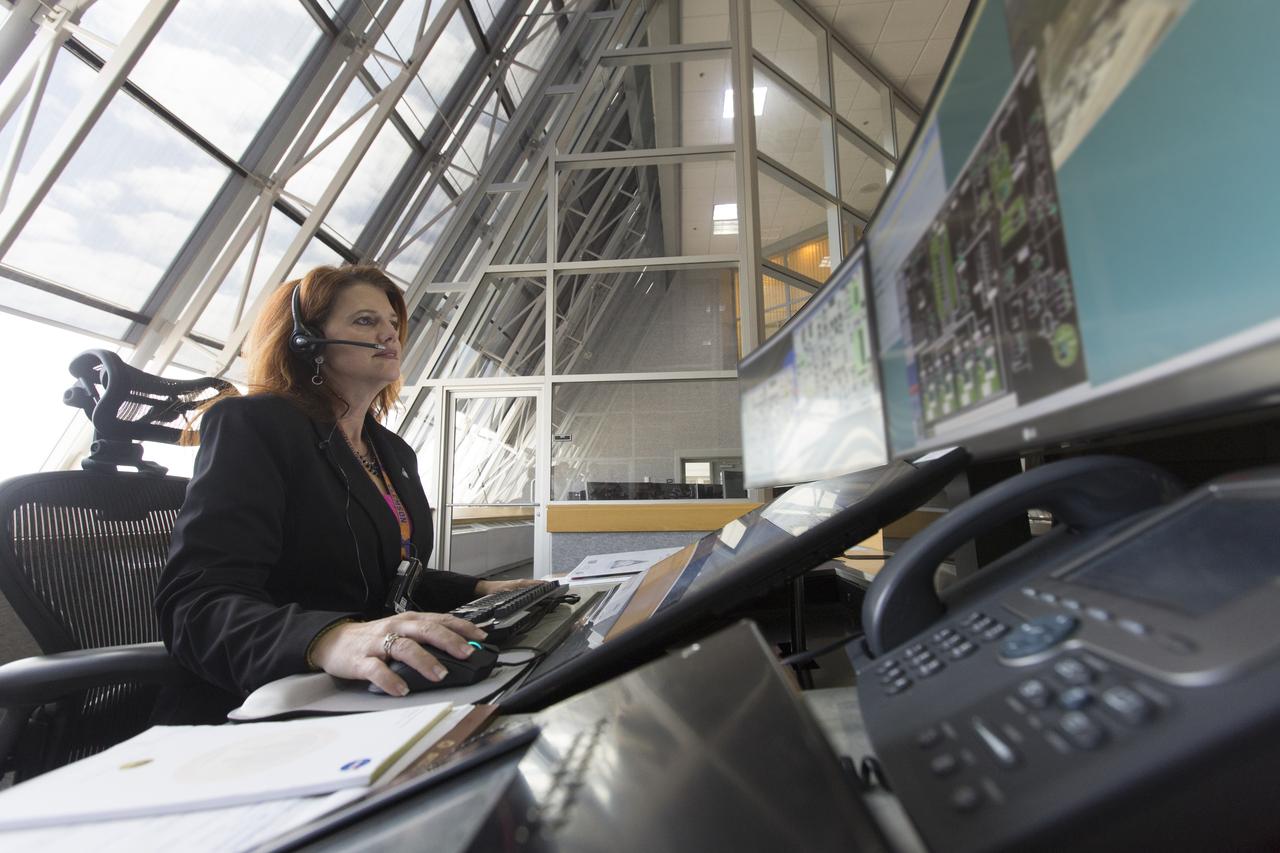
NASA Launch Director Charlie Blackwell-Thompson follows operations at her console in Firing Room 1 at the Kennedy Space Center's Launch Control Center during a countdown simulation for Exploration Mission 1. It was the agency's first simulation of a portion of the countdown for the first launch of a Space Launch System rocket and Orion spacecraft that will eventually take astronauts beyond low-Earth orbit to destinations such as the Moon and Mars.
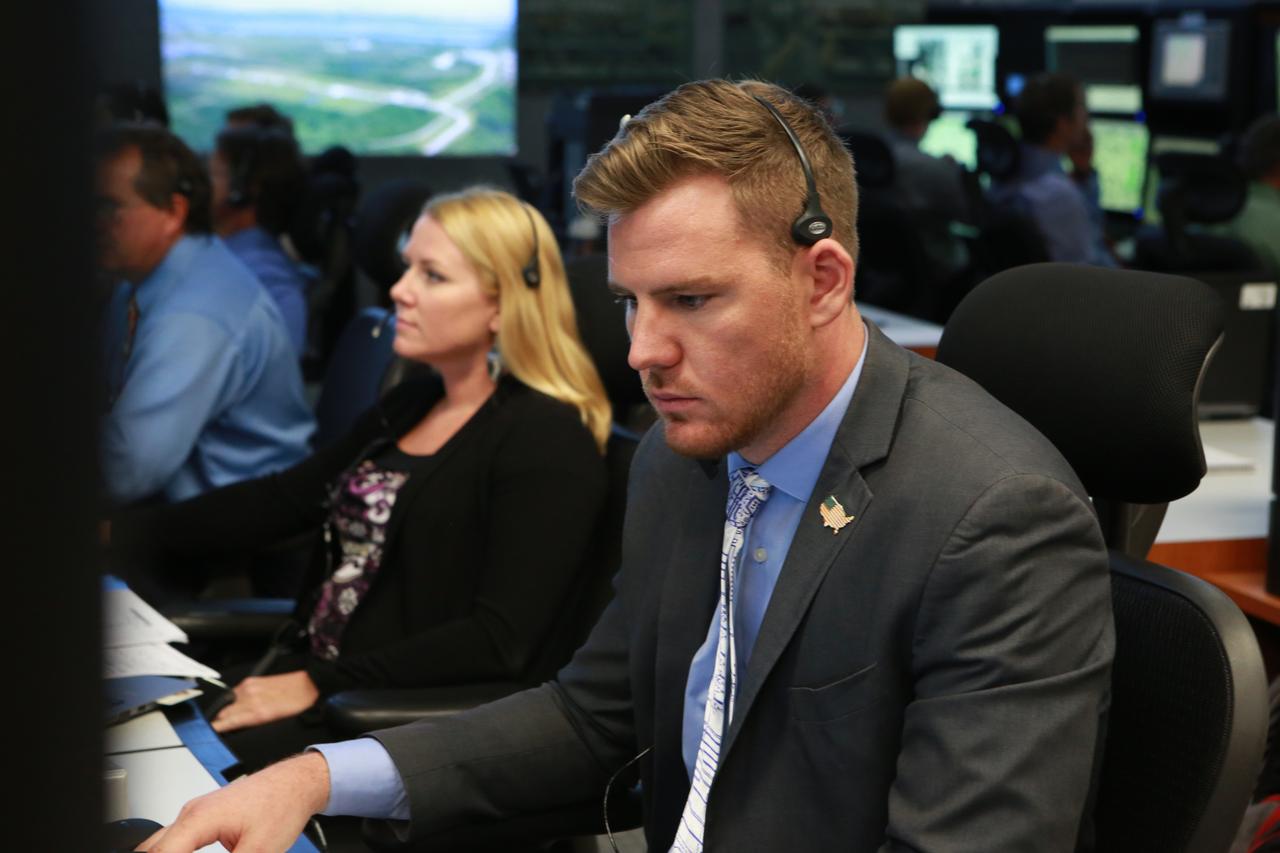
Main Propulsion System Engineers Krista Riggs, left, and Joe Pavicic, both with Jacobs, monitor operations from their consoles in Firing Room 1 at the Kennedy Space Center's Launch Control Center during a countdown simulation for Exploration Mission 1. It was the agency's first simulation of a portion of the countdown for the first launch of a Space Launch System rocket and Orion spacecraft that will eventually take astronauts beyond low-Earth orbit to destinations such as the Moon and Mars.
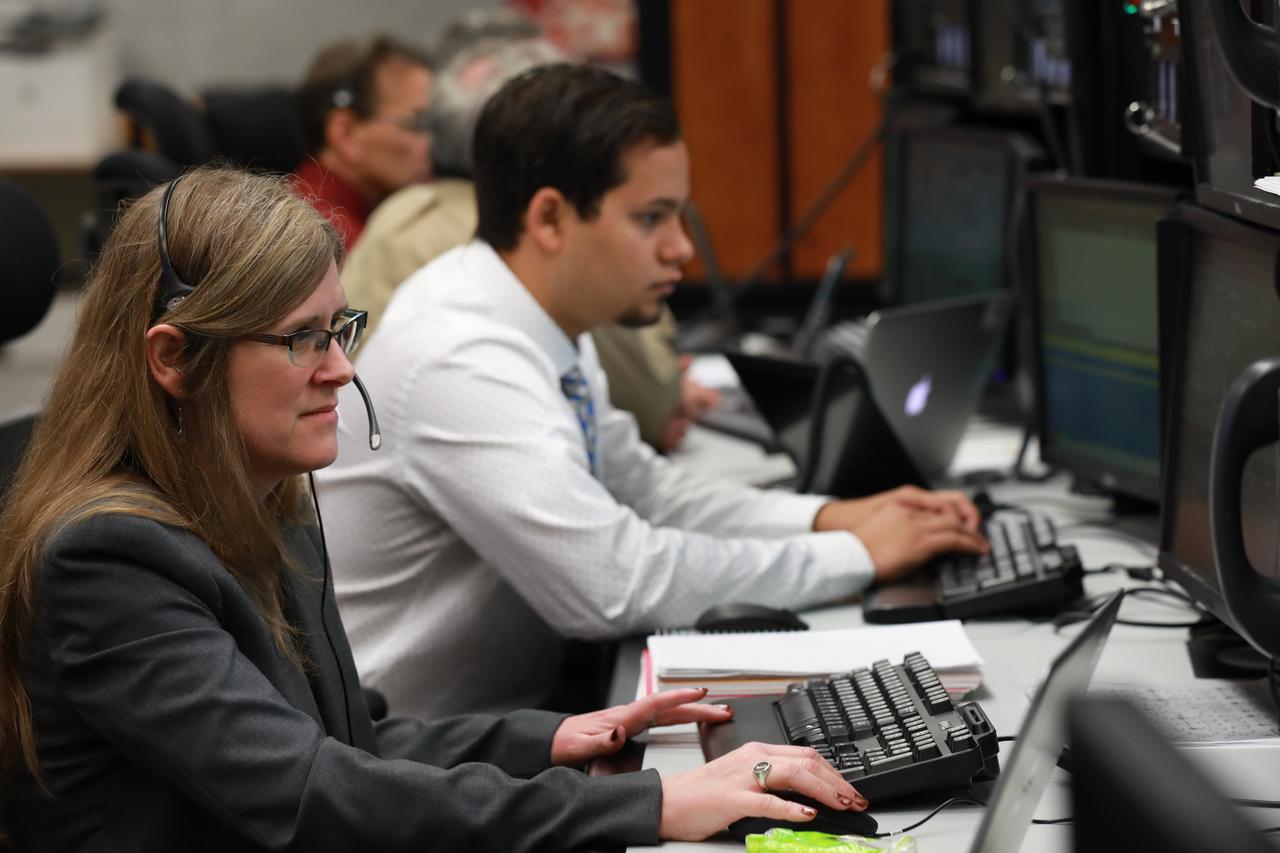
Master Console Operator Jennifer Tschanz, left, and Master Console Operator Diego Diaz, both of Jacobs, monitor operations from their consoles in Firing Room 1 at the Kennedy Space Center's Launch Control Center during a countdown simulation for Exploration Mission 1. It was the agency's first simulation of a portion of the countdown for the first launch of a Space Launch System rocket and Orion spacecraft that will eventually take astronauts beyond low-Earth orbit to destinations such as the Moon and Mars.
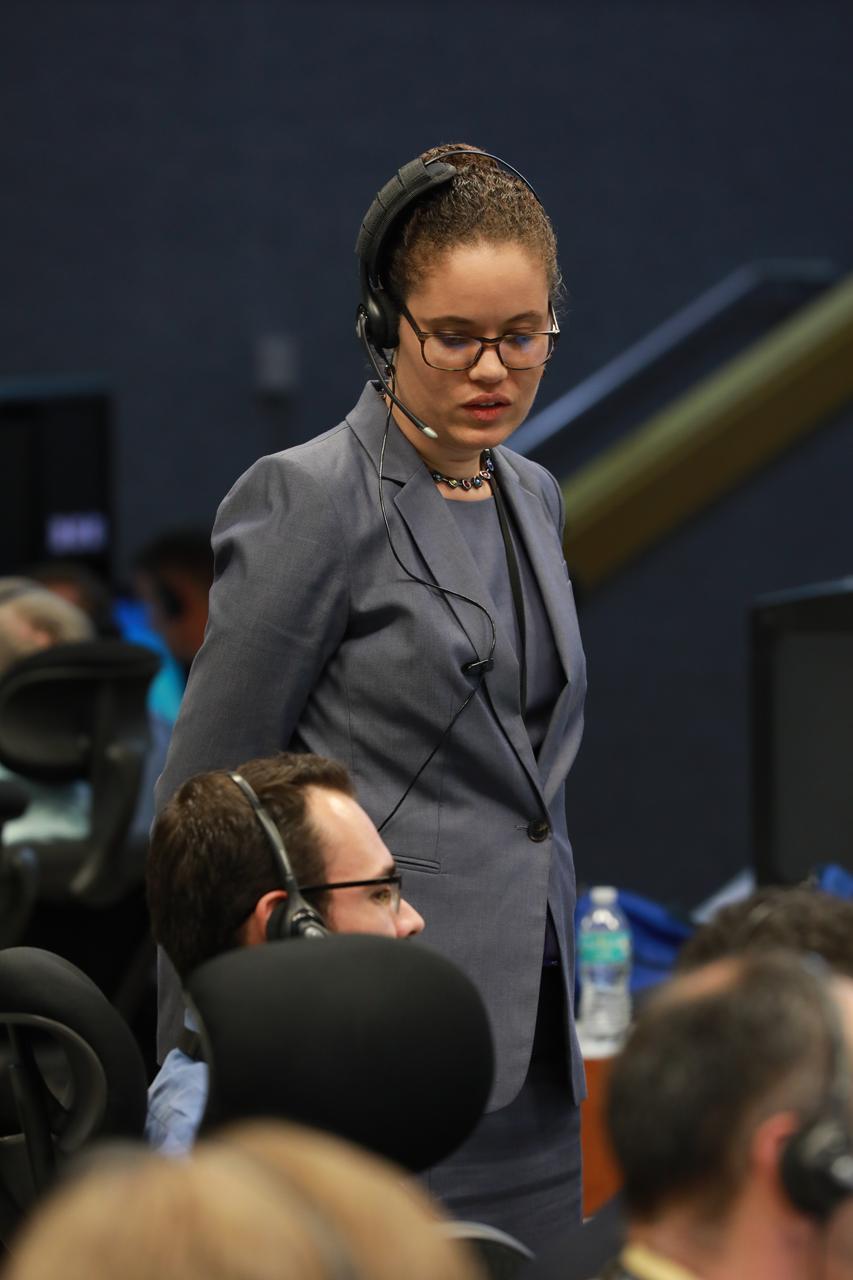
NASA Test Director Christine St. Germain monitors operations in Firing Room 1 at the Kennedy Space Center's Launch Control Center during a countdown simulation for Exploration Mission 1. It was the agency's first simulation of a portion of the countdown for the first launch of a Space Launch System rocket and Orion spacecraft that will eventually take astronauts beyond low-Earth orbit to destinations such as the Moon and Mars.
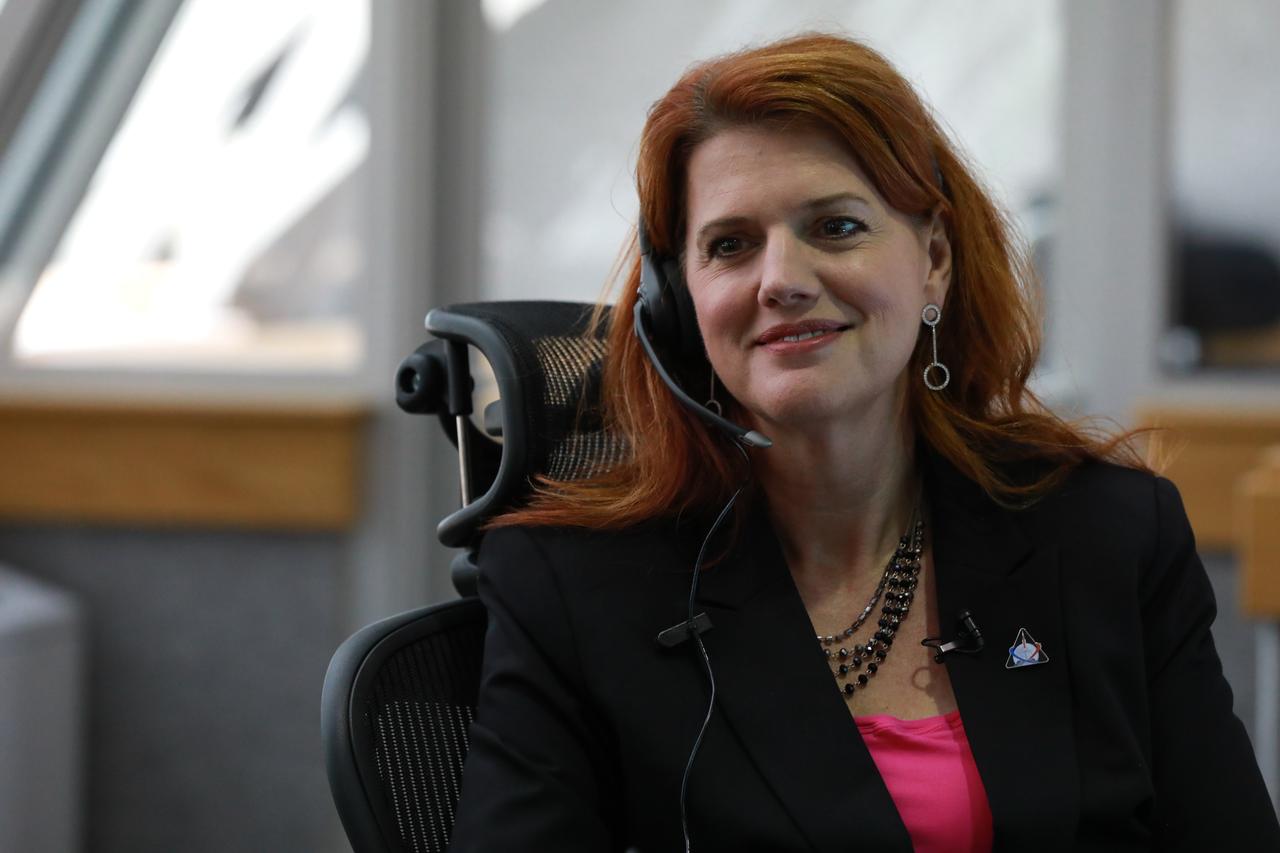
NASA Launch Director Charlie Blackwell-Thompson follows operations at her console in Firing Room 1 at the Kennedy Space Center's Launch Control Center during a countdown simulation for Exploration Mission 1. It was the agency's first simulation of a portion of the countdown for the first launch of a Space Launch System rocket and Orion spacecraft that will eventually take astronauts beyond low-Earth orbit to destinations such as the Moon and Mars.
NASA Launch Director Charlie Blackwell-Thompson follows operations at her console in Firing Room 1 at the Kennedy Space Center's Launch Control Center during a countdown simulation for Exploration Mission 1. It was the agency's first simulation of a portion of the countdown for the first launch of a Space Launch System rocket and Orion spacecraft that will eventually take astronauts beyond low-Earth orbit to destinations such as the Moon and Mars.
Senior NASA Test Director Jeff Spaulding monitors operations from his position in Firing Room 1 at the Kennedy Space Center's Launch Control Center during a countdown simulation for Exploration Mission 1. It was the agency's first simulation of a portion of the countdown for the first launch of a Space Launch System rocket and Orion spacecraft that will eventually take astronauts beyond low-Earth orbit to destinations such as the Moon and Mars.
NASA Launch Director Charlie Blackwell-Thompson follows operations at her console in Firing Room 1 at the Kennedy Space Center's Launch Control Center during a countdown simulation for Exploration Mission 1. It was the agency's first simulation of a portion of the countdown for the first launch of a Space Launch System rocket and Orion spacecraft that will eventually take astronauts beyond low-Earth orbit to destinations such as the Moon and Mars.
NASA Operation Project Engineer Rommel Rubio monitors operations from his position in Firing Room 1 at the Kennedy Space Center's Launch Control Center during a countdown simulation for Exploration Mission 1. It was the agency's first simulation of a portion of the countdown for the first launch of a Space Launch System rocket and Orion spacecraft that will eventually take astronauts beyond low-Earth orbit to destinations such as the Moon and Mars.
NASA Launch Director Charlie Blackwell-Thompson follows operations in Firing Room 1 at the Kennedy Space Center's Launch Control Center during a countdown simulation for Exploration Mission 1. It was the agency's first simulation of a portion of the countdown for the first launch of a Space Launch System rocket and Orion spacecraft that will eventually take astronauts beyond low-Earth orbit to destinations such as the Moon and Mars.
Space Launch System Test Conductors Roberta Wyrick, left, and Tracy Parks, both with Jacobs, NASA's Test and Operations Support Contractor, monitor operations from their consoles in Firing Room 1 at the Kennedy Space Center's Launch Control Center during a countdown simulation for Exploration Mission 1. It was the agency's first simulation of a portion of the countdown for the first launch of a Space Launch System rocket and Orion spacecraft that will eventually take astronauts beyond low-Earth orbit to destinations such as the Moon and Mars.
NASA Launch Director Charlie Blackwell-Thompson follows operations at her console in Firing Room 1 at the Kennedy Space Center's Launch Control Center during a countdown simulation for Exploration Mission 1. It was the agency's first simulation of a portion of the countdown for the first launch of a Space Launch System rocket and Orion spacecraft that will eventually take astronauts beyond low-Earth orbit to destinations such as the Moon and Mars.
Liquid Oxygen Systems Engineer Quinten Jones, left and Liquid Oxygen Systems Engineer Andrew "Kody" Smitherman, both of Jacobs, monitor operation from his position in Firing Room 1 at the Kennedy Space Center's Launch Control Center during a countdown simulation for Exploration Mission 1. It was the agency's first simulation of a portion of the countdown for the first launch of a Space Launch System rocket and Orion spacecraft that will eventually take astronauts beyond low-Earth orbit to destinations such as the Moon and Mars.
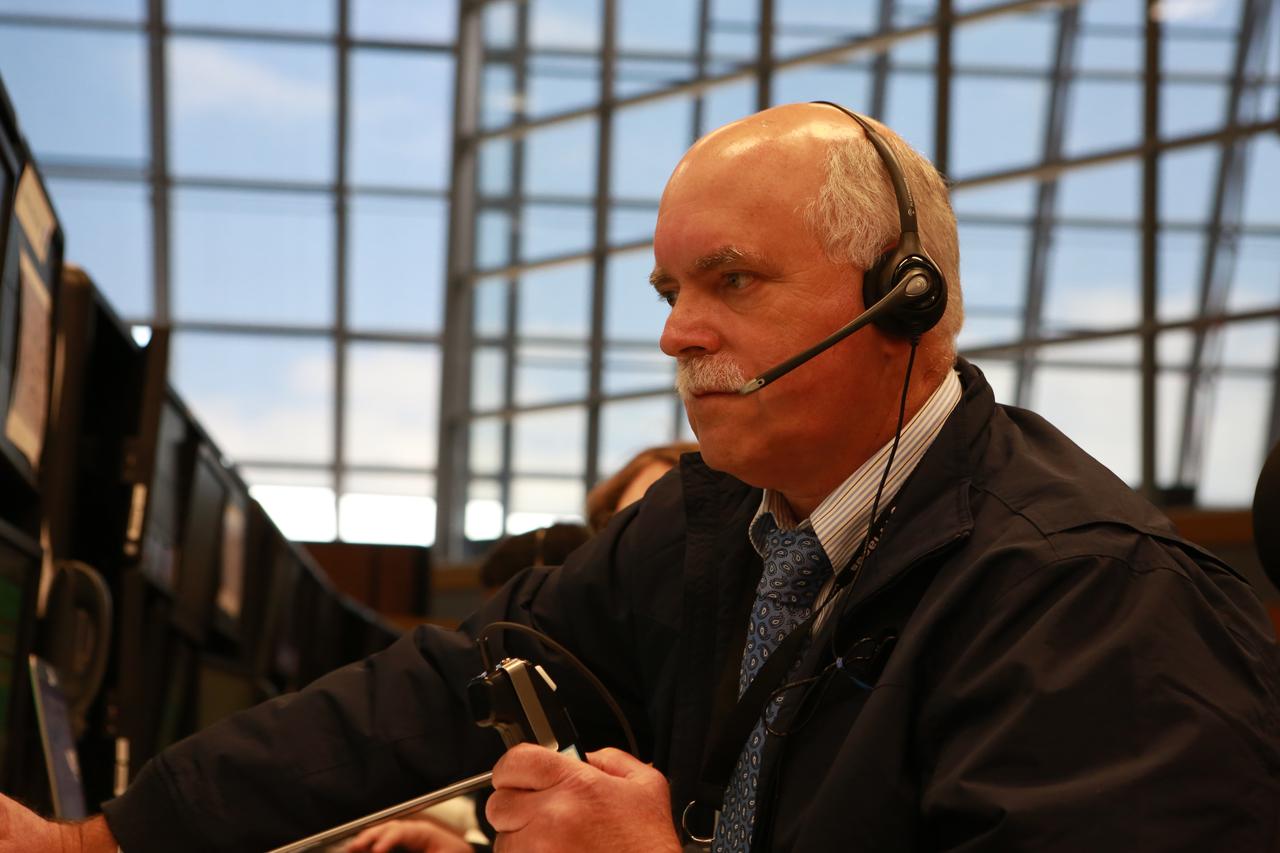
Master console operator David Walsh monitors operations from his position in Firing Room 1 at the Kennedy Space Center's Launch Control Center during a countdown simulation for Exploration Mission 1. It was the agency's first simulation of a portion of the countdown for the first launch of a Space Launch System rocket and Orion spacecraft that will eventually take astronauts beyond low-Earth orbit to destinations such as the Moon and Mars.
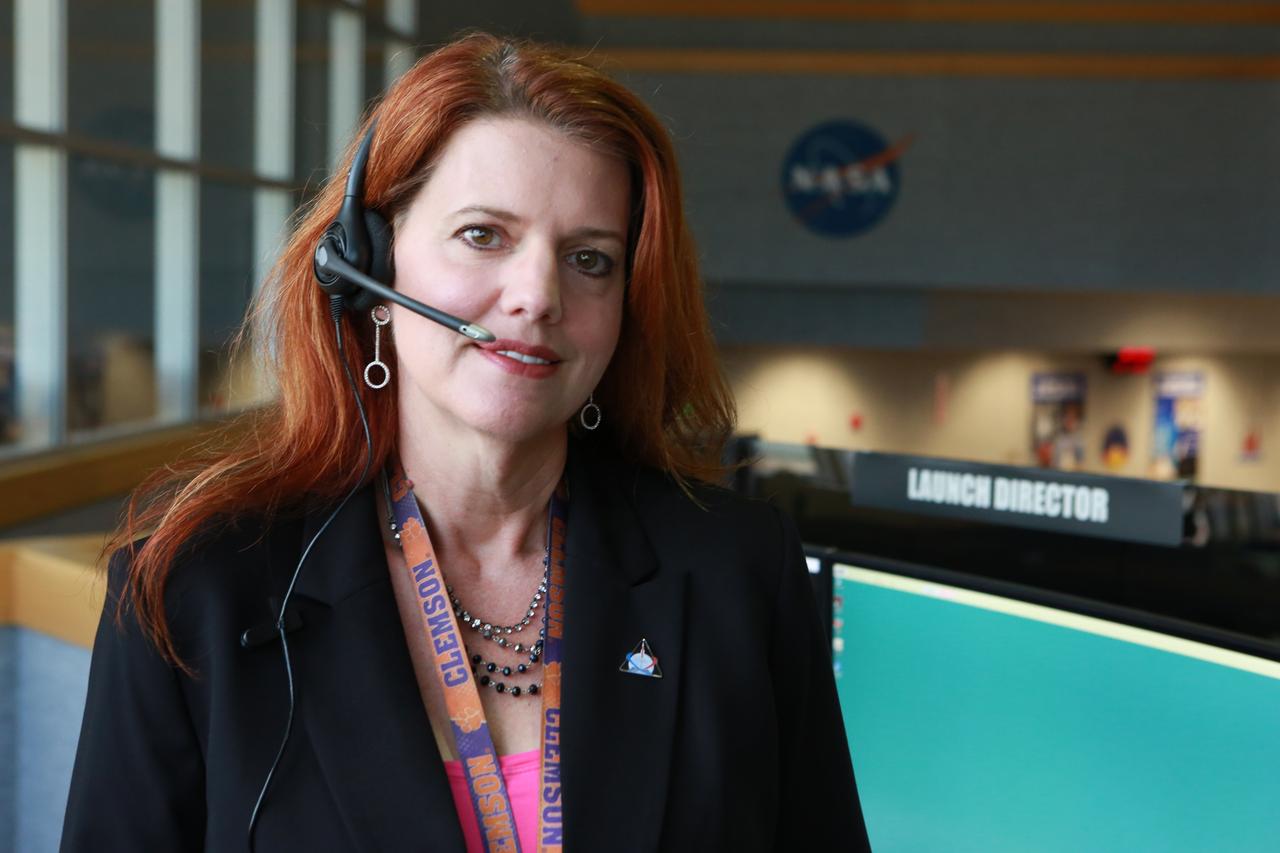
NASA Launch Director Charlie Blackwell-Thompson at her console in Firing Room 1 at the Kennedy Space Center's Launch Control Center during a countdown simulation for Exploration Mission 1. It was the agency's first simulation of a portion of the countdown for the first launch of a Space Launch System rocket and Orion spacecraft that will eventually take astronauts beyond low-Earth orbit to destinations such as the Moon and Mars.
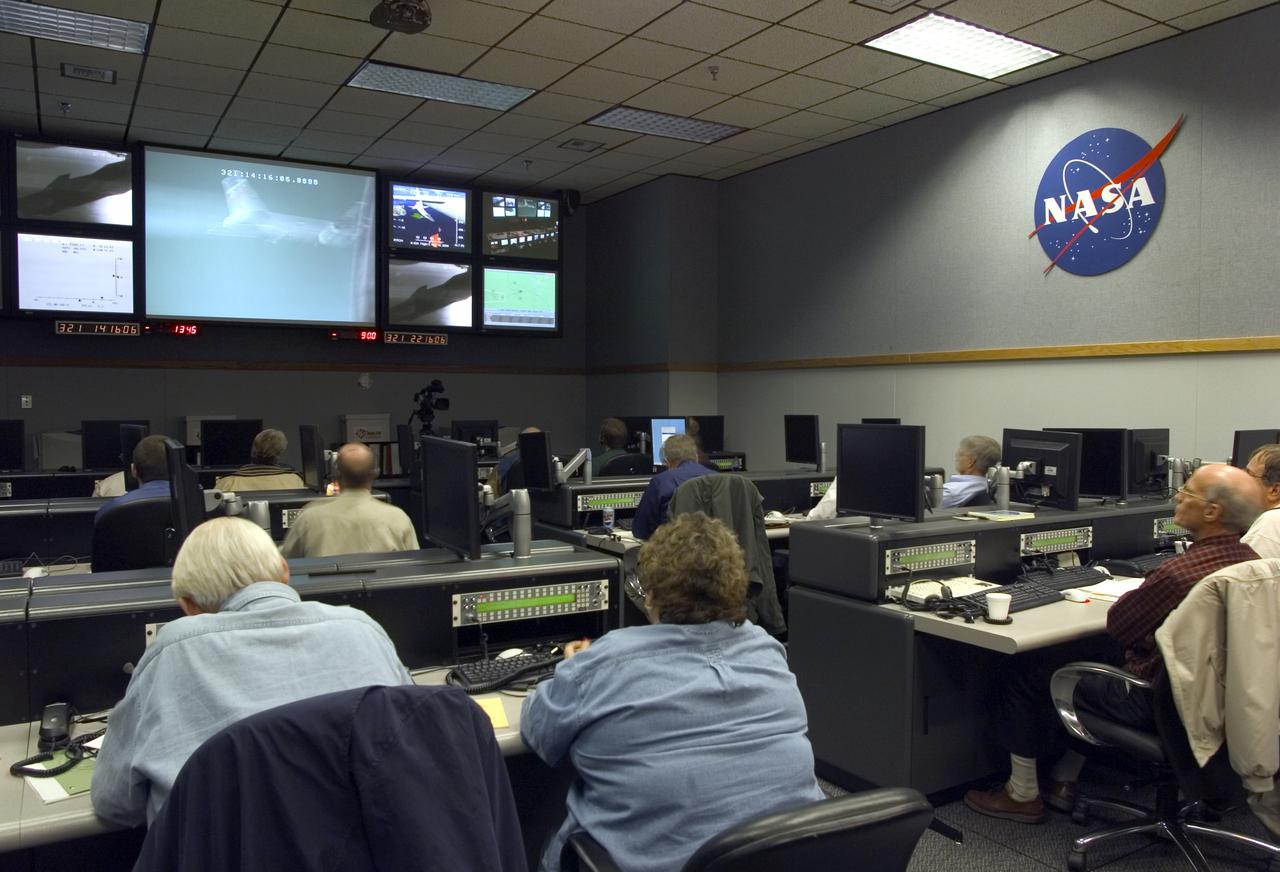
NASA engineers monitor mission progress from a Dryden control room prior to launch of the X-43A scramjet and its booster from NASA's B-52B mothership.
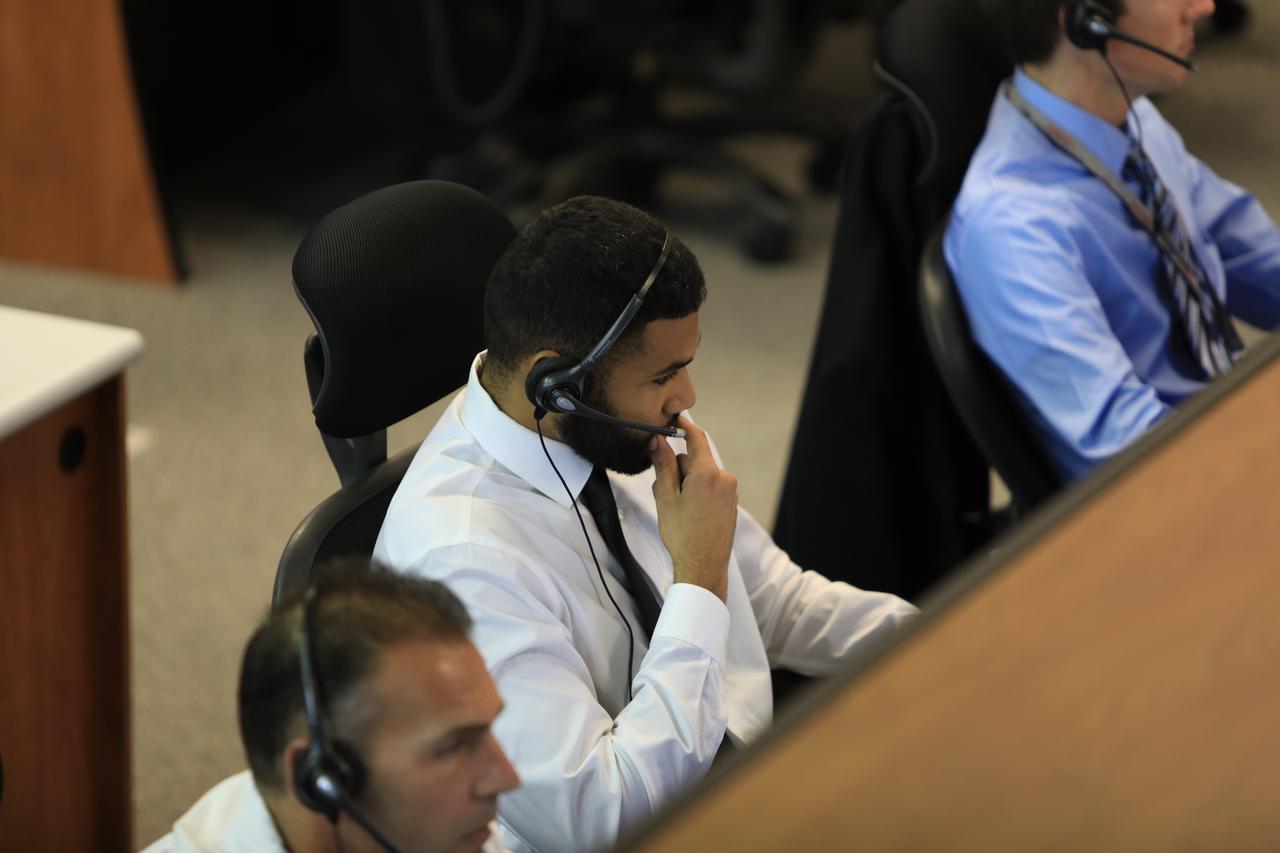
Michael Guzman, an umbilical engineer, monitors his console in Firing Room 1 in the Launch Control Center at NASA’s Kennedy Space Center in Florida, during a terminal countdown demonstration for Exploration Mission 1, or EM-1, on Dec. 14, 2018. The launch will be the first integrated test of the Space Launch System rocket and Orion spacecraft that will eventually take astronauts beyond low-Earth orbit to destinations such as the Moon and Mars. The countdown demonstration was intended to validate the launch team's capability to perform an EM-1 countdown and respond to challenges put into the system for practice.
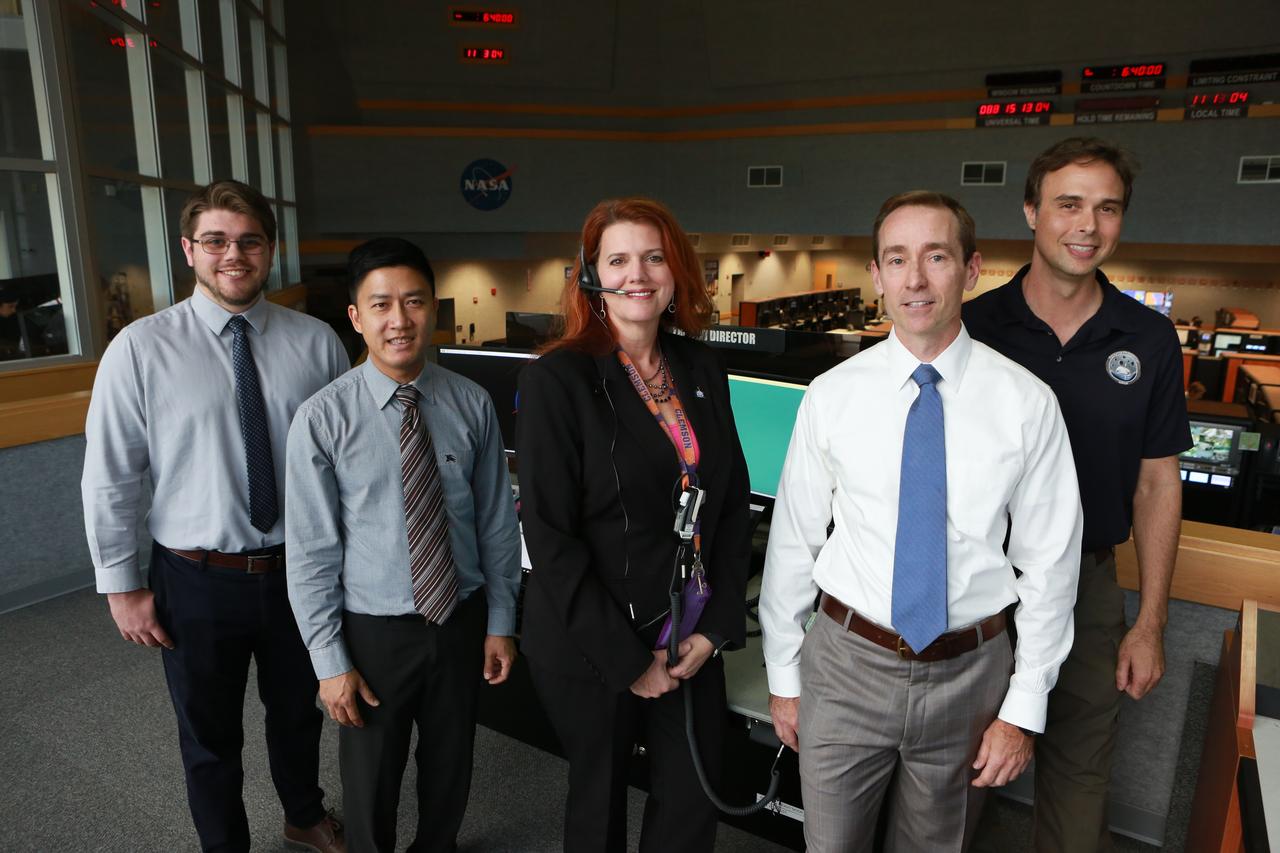
NASA Launch Director Charlie Blackwell-Thompson, center, stands next to her console in Firing Room 1 at the Kennedy Space Center's Launch Control Center. With her, from the left, are NASA intern Justin Connolly, NASA Engineering Project Manager Dan Tran, Blackwell-Thompson, Shawn Reverter, Project Manager for Red Canyon Software, Inc., and NASA Structures and Mechanisms Design Branch Chief Adam Dokos, during a countdown simulation for Exploration Mission 1. It was the agency's first simulation of a portion of the countdown for the first launch of a Space Launch System rocket and Orion spacecraft that will eventually take astronauts beyond low-Earth orbit to destinations such as the Moon and Mars.
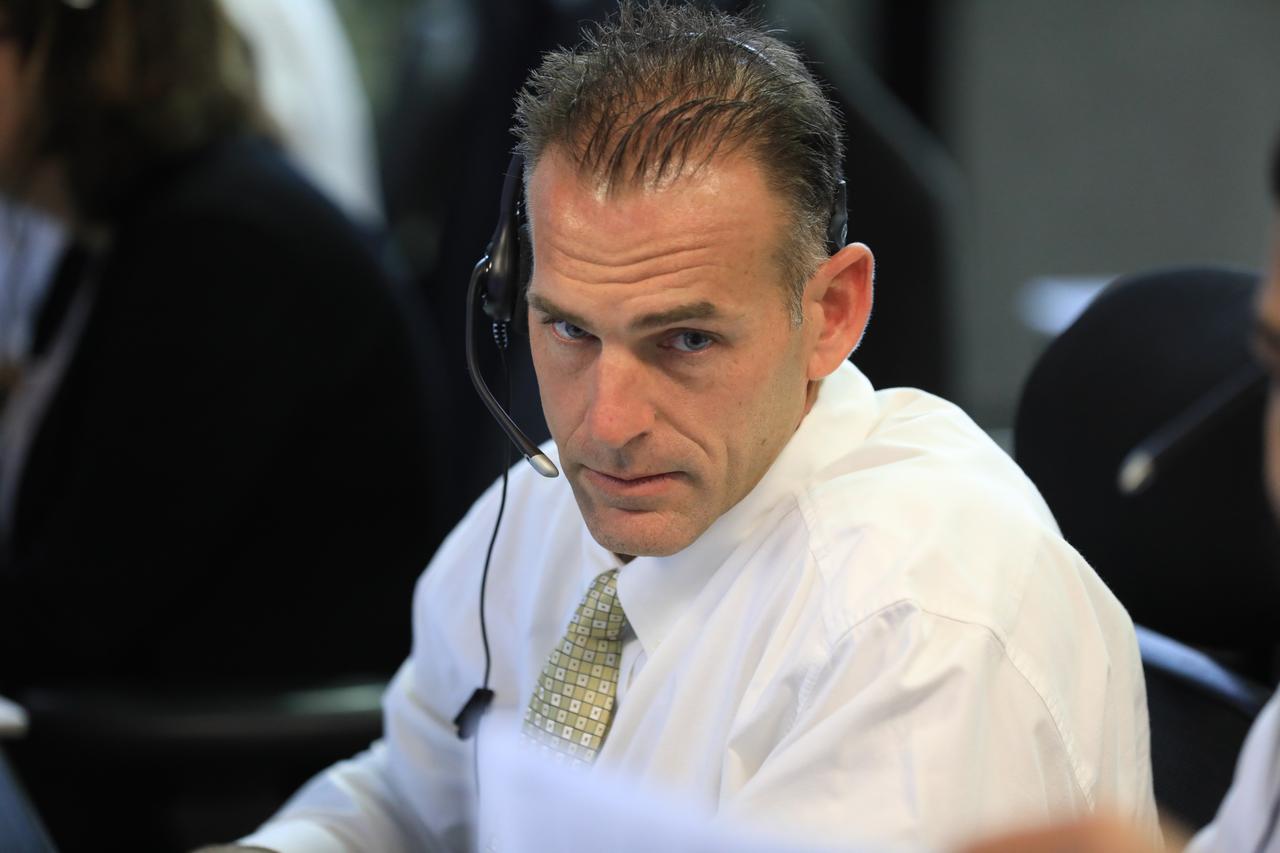
Mark Tripp, center, monitors his console in Firing Room 1 in the Launch Control Center at NASA’s Kennedy Space Center in Florida, during a terminal countdown demonstration for Exploration Mission 1, or EM-1, on Dec. 14, 2018. The launch will be the first integrated test of the Space Launch System rocket and Orion spacecraft that will eventually take astronauts beyond low-Earth orbit to destinations such as the Moon and Mars. The countdown demonstration was intended to validate the launch team's capability to perform an EM-1 countdown and respond to challenges put into the system for practice.
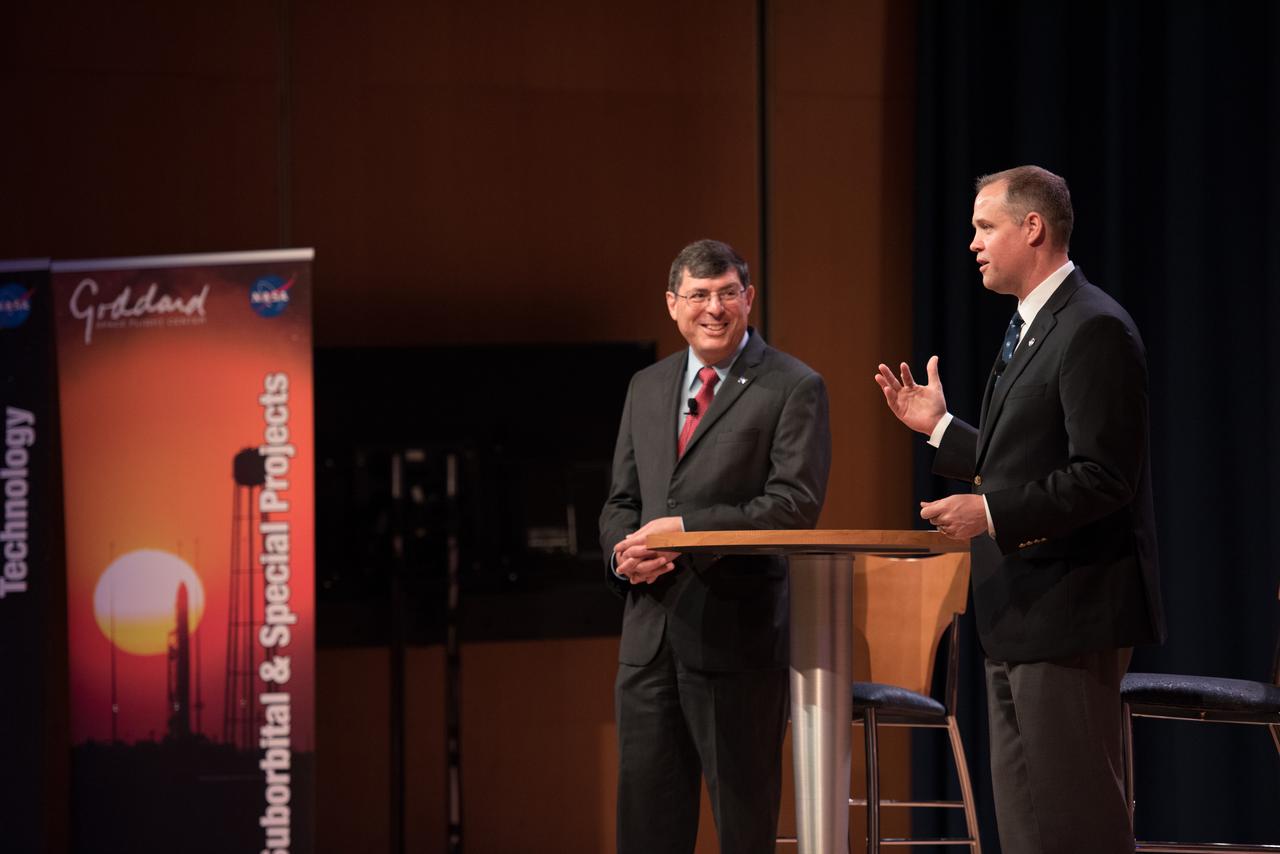
NASA Administrator Jim Bridenstine is greeted by Goddard Space Flight Center Director Chris Scolese as he arrives for his first visit to the NASA field center in Greenbelt, Maryland. During his visit, Bridenenstine met with senior staff, saw Goddard test facilities and mission operation control rooms and held an agency-wide session with students as part of National Intern Day.

NASA Administrator Jim Bridenstine is greeted by Goddard Space Flight Center Director Chris Scolese as he arrives for his first visit to the NASA field center in Greenbelt, Maryland. During his visit, Bridenenstine met with senior staff, saw Goddard test facilities and mission operation control rooms and held an agency-wide session with students as part of National Intern Day.
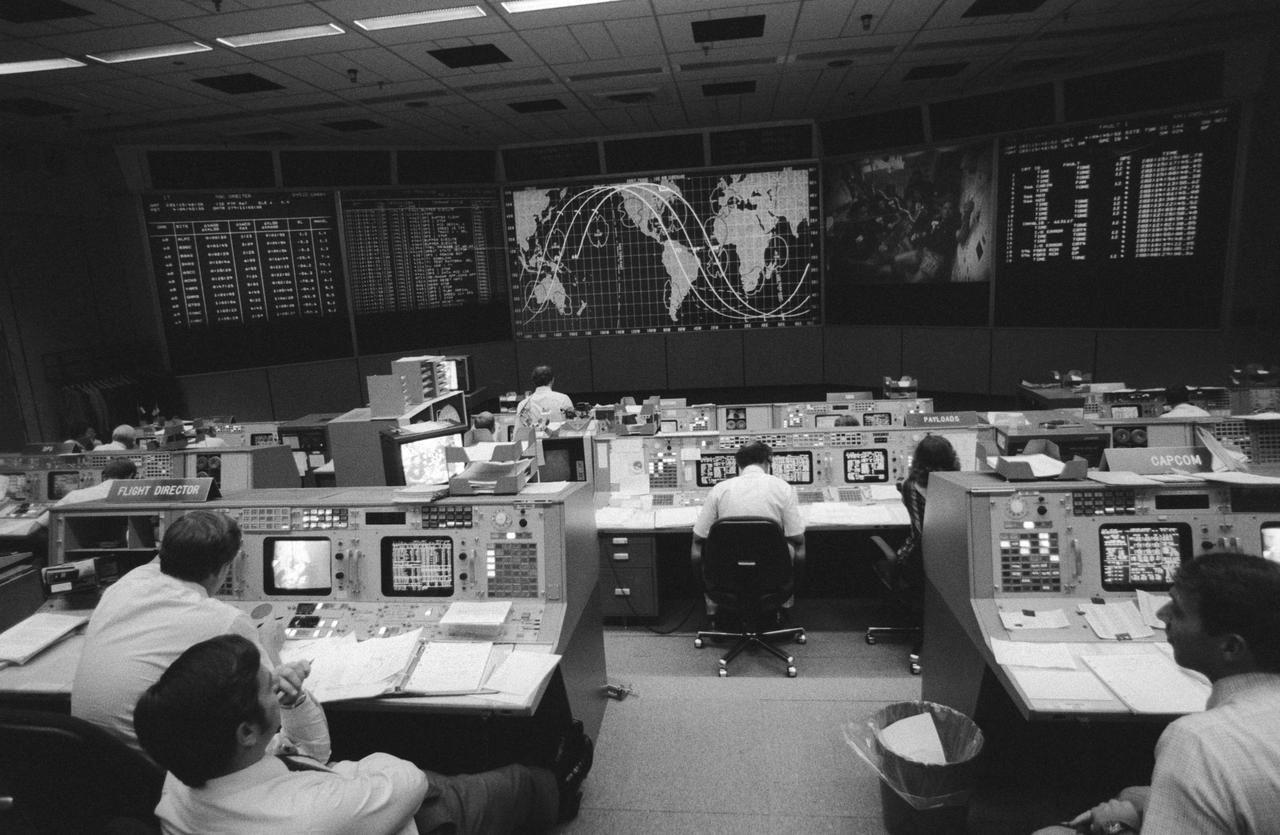
View from the back of the Mission Control Center (MCC). Visible are the Flight Directors console (left front), the CAPCOM console (right front) and the Payloads console. Some of the STS 41-G crew can be seen on a large screen at the front of the MCC along with a map tracking the progress of the orbiter.
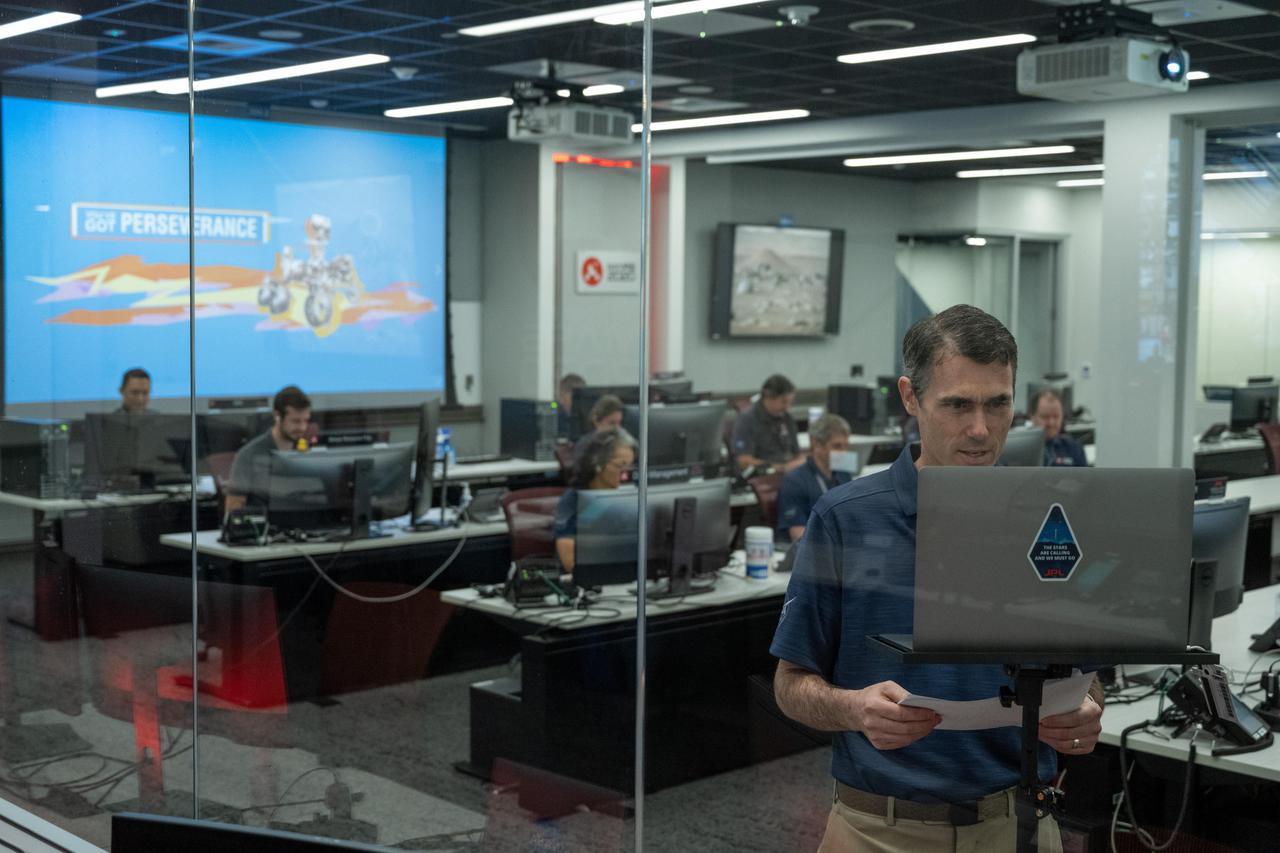
On April 5, 2022, inside the Mars Perseverance rover control room at NASA's Jet Propulsion Laboratory in Southern California, the rover team's deputy mission manager, Robert Hogg, and other team members interacted virtually with students who have overcome academic obstacles. https://photojournal.jpl.nasa.gov/catalog/PIA25274
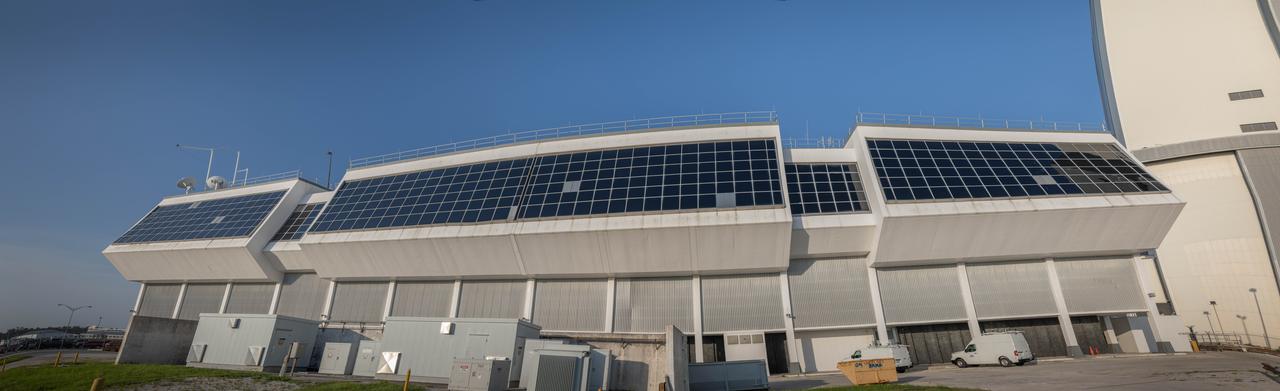
A brilliant blue sky forms the backdrop for a fish-eye panoramic view of the south side of the Launch Control Center (LCC) at NASA's Kennedy Space Center in Florida. Firing Room 1 inside the LCC has been completely upgraded and modernized to support the testing, processing, countdown and launch of NASA's Space Launch System (SLS) rocket and Orion spacecraft on Exploration Mission-1 and deep space mission. Exploration Ground Systems oversaw the upgrades.
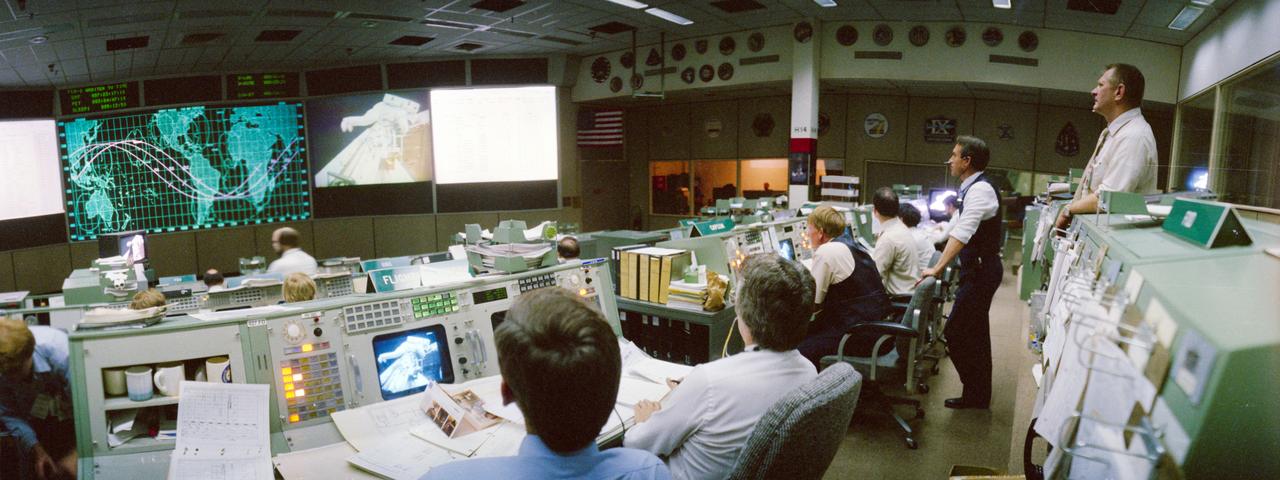
This is a wide-angle view of flight controllers in the MOCR of Mission Control Center (MCC) during the STS-6 Extravehicular Activity (EVA). They are watching the large monitor in the front of the MOCR and small ones at individual consoles as Astronaut Donald H. Peterson translates along the Challenger's port side longerons. Flight Directors Gary E. Coen (left) and Harold M. Draughon are in the foreground. Astronauts John A. McBride and Guy S. Gardner man the Spacecraft Communicator (CAPCOM) Console near center frame. Standing behind the CAPCOM Console is Astronaut William F. Fisher. Eugene F. Kranz, Director of Mission Operations, stands at right near the Flight Operations Directorate Console. JSC, Houston, TX
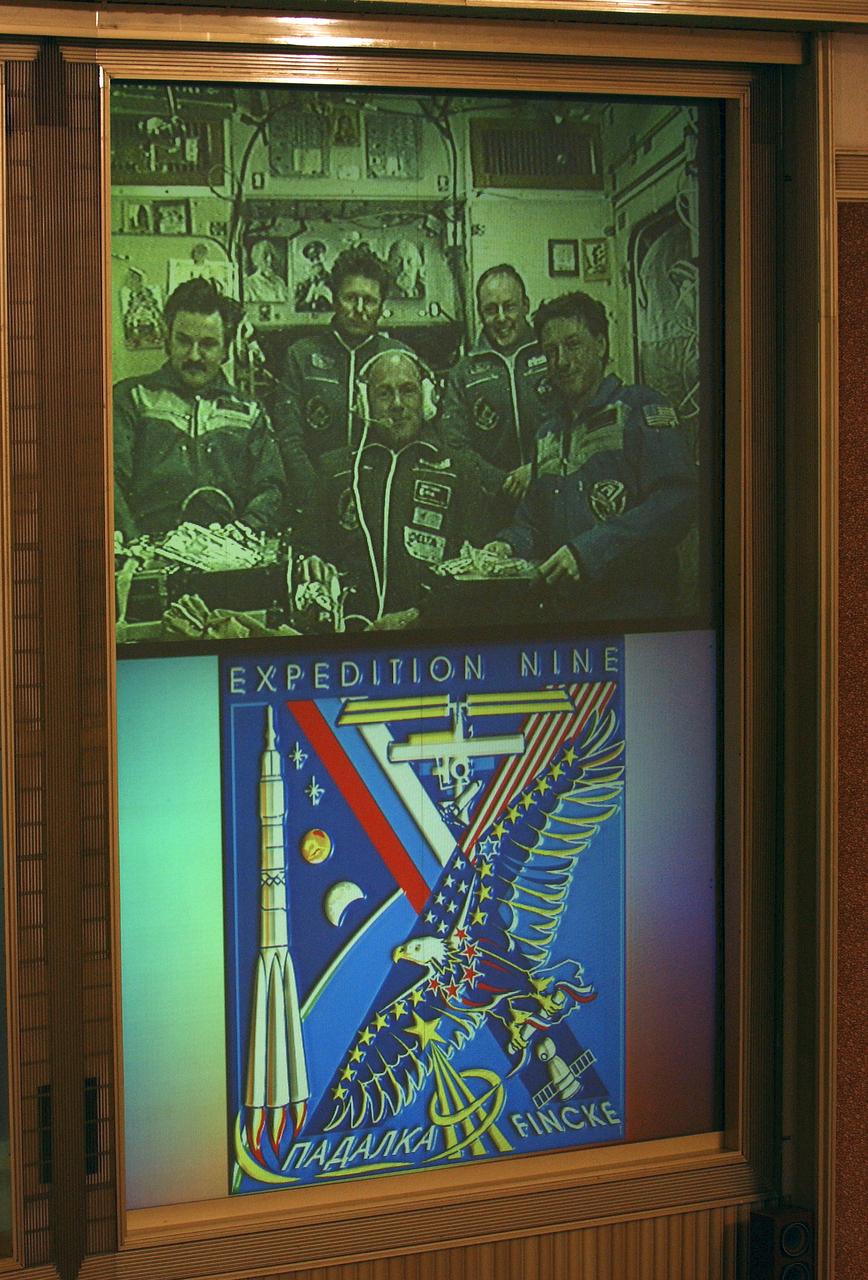
The Expedition 8 and 9 crews and European Space Agency astronaut Andre Kuipers of the Netherlands are viewed on the front screen of the Flight Control Room at the Russian Mission Control Center outside Moscow, Wednesday, April 21, 2004, in a televised welcoming ceremony following their docking to the International Space Station in a Russian Soyuz spacecraft. Under the televised view of the two crews is the insignia of the Expedition 9 crew, consisting of commander Gennady Padalka and Flight Engineer and NASA International Space Station Science Officer Michael Fincke, who will spend six months on the Station. Photo Credit: (NASA/Bill Ingalls)
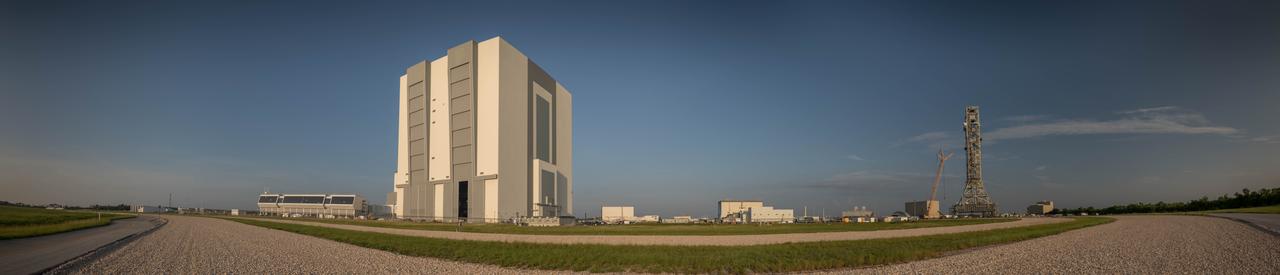
A brilliant blue sky forms the backdrop for a fish-eye panoramic view of the south side of the iconic Vehicle Assembly Building (VAB) and Launch Control Center at NASA's Kennedy Space Center in Florida. Ten levels of new work platforms have been installed in VAB High Bay 3. They will surround and provide access for service and processing of NASA's Space Launch System (SLS) rocket and Orion spacecraft. Exploration Ground Systems oversaw the upgrades and installation of the new work platforms to support the launch of the SLS and Orion on Exploration Mission-1 (EM-1) and deep space missions. At left is the Launch Control Center, where Firing Room 1 has been upgraded to support EM-1.
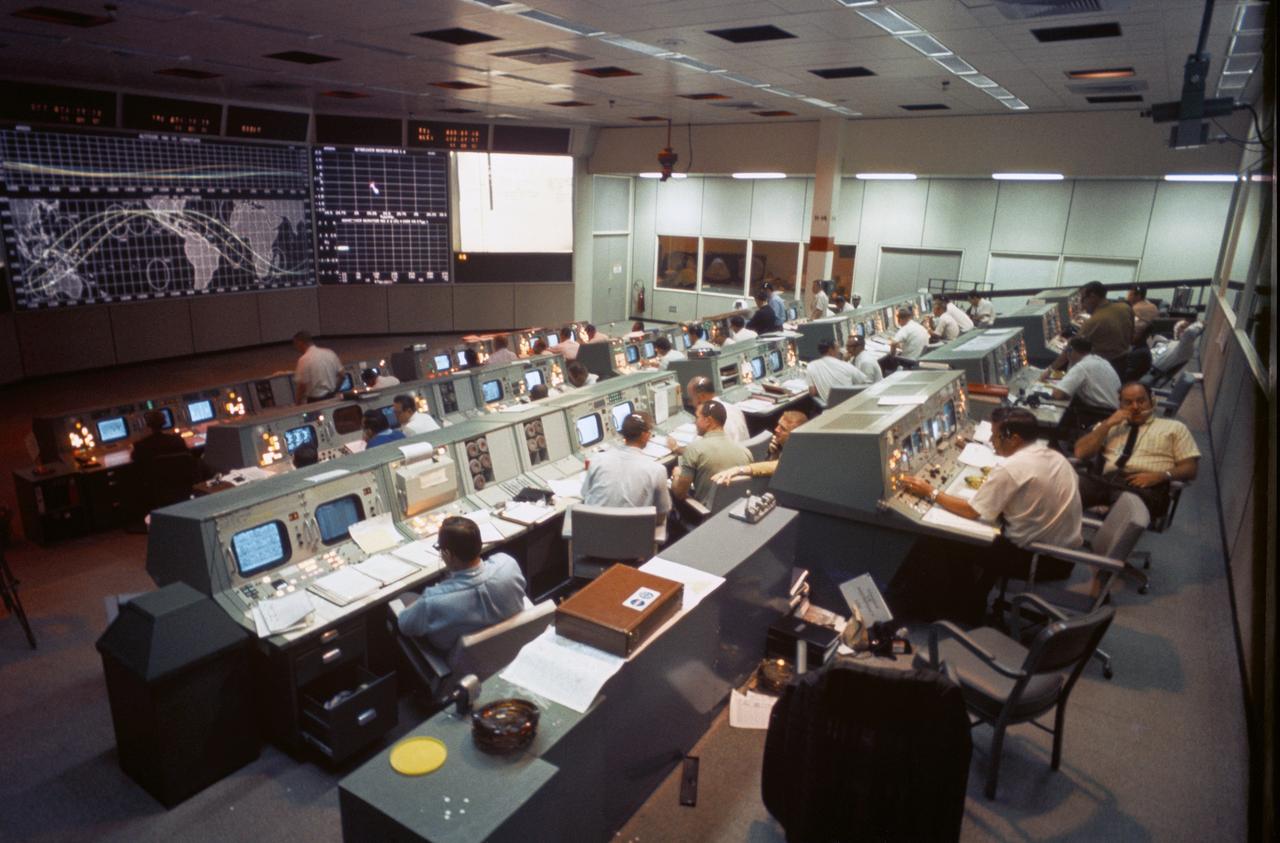
Overall view of activity in the Mission Operations Control Room in the Mission Control Center, Bldg 30, on the first day of the Apollo 7 space mission.
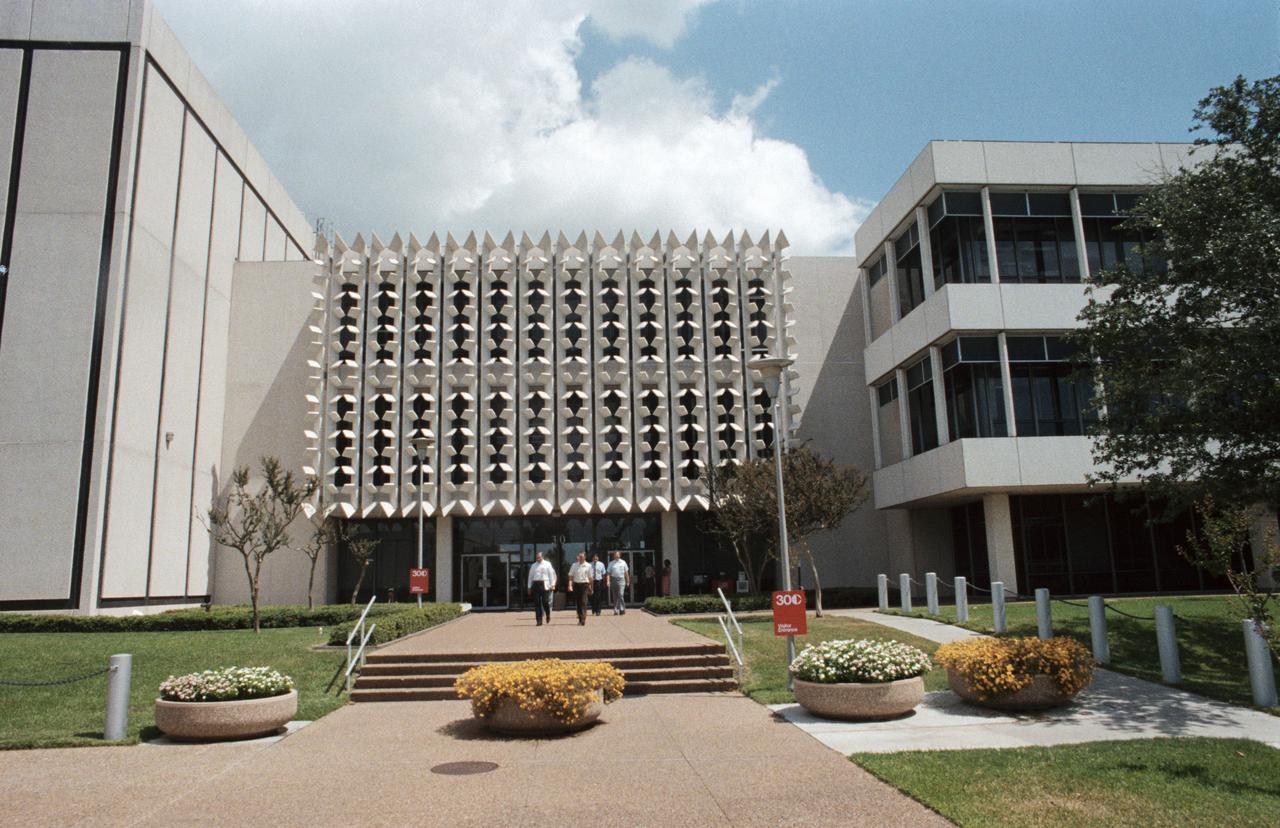
41D-3072 (30 Aug 1984) --- A 41-D shift change is taking place in the Johnson Space Center's Building 30. In its twenty years of operation, the mission control center has been the scene of many such changes. The windowless wing at left houses three floors, including rooms supporting flight control rooms 1 & 2 (formerly called mission operations control rooms 1 & 2).
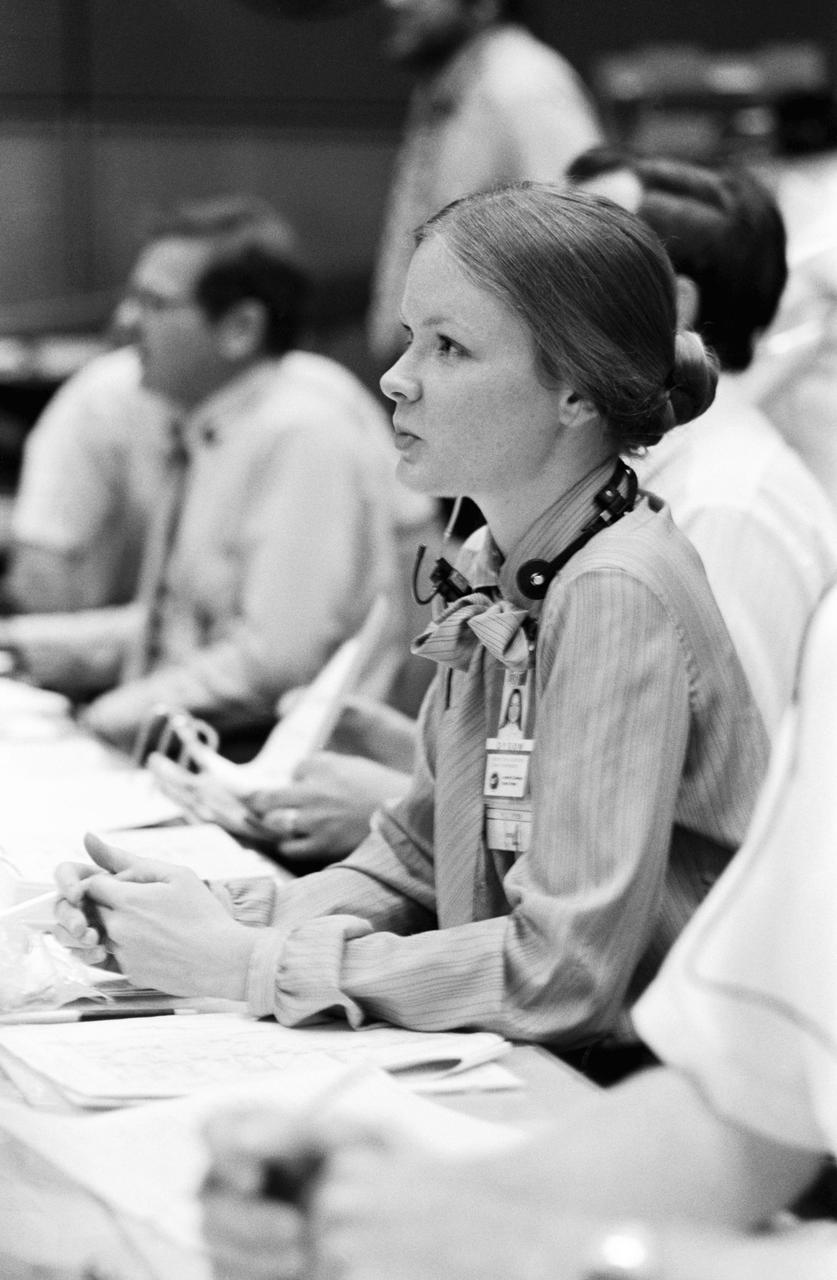
MOCR activities at the Guidance Console and Ms. Thornton E. Dyson during Day-4 of the STS-4 Mission. 1. STS-4 - INFLIGHT JSC, HOUSTON, TX Also see: S82-36160
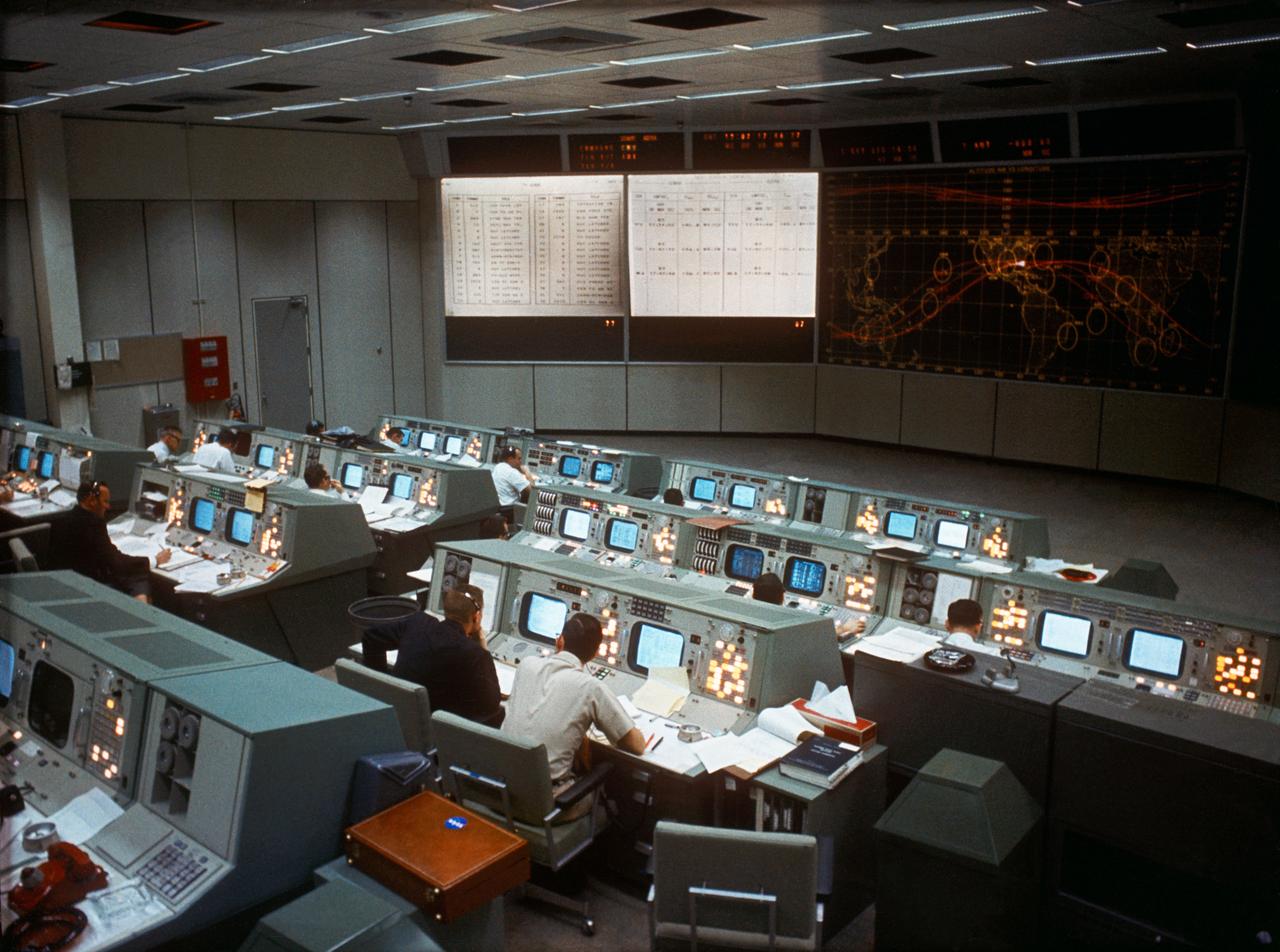
S65-60037 (7 Dec. 1965) --- An overall view of the Manned Spacecraft Center's Mission Control Center, during the National Aeronautics and Space Administration's Gemini-7 spaceflight. Photo credit: NASA
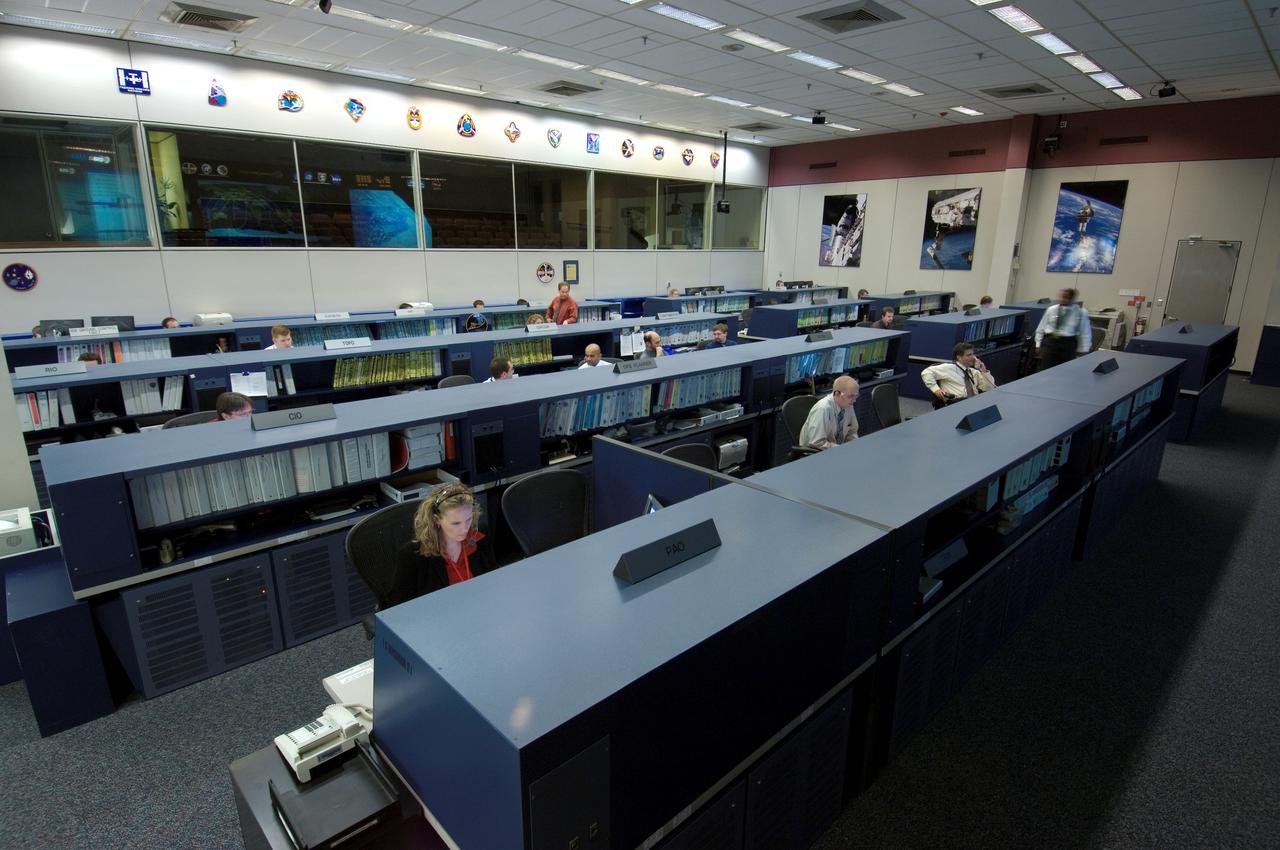
JSC2006-E-43863 (6 Oct. 2006)--- International Space Station flight controllers have this area as their new home with increased technical capabilities, more workspace and a long, distinguished history. The newly updated facility is just down the hall from its predecessor at NASA's Johnson Space Center, Houston. This view is toward the rear of the "new" room. Known as Flight Control Room 1, it was first used to control a space flight 38 years ago, the mission of Apollo 7 launched Oct. 11, 1968. It was one of two control rooms for NASA's manned missions. The room it replaces in its new ISS role, designated the Blue Flight Control Room, had been in operation since the first station component was launched in 1998.
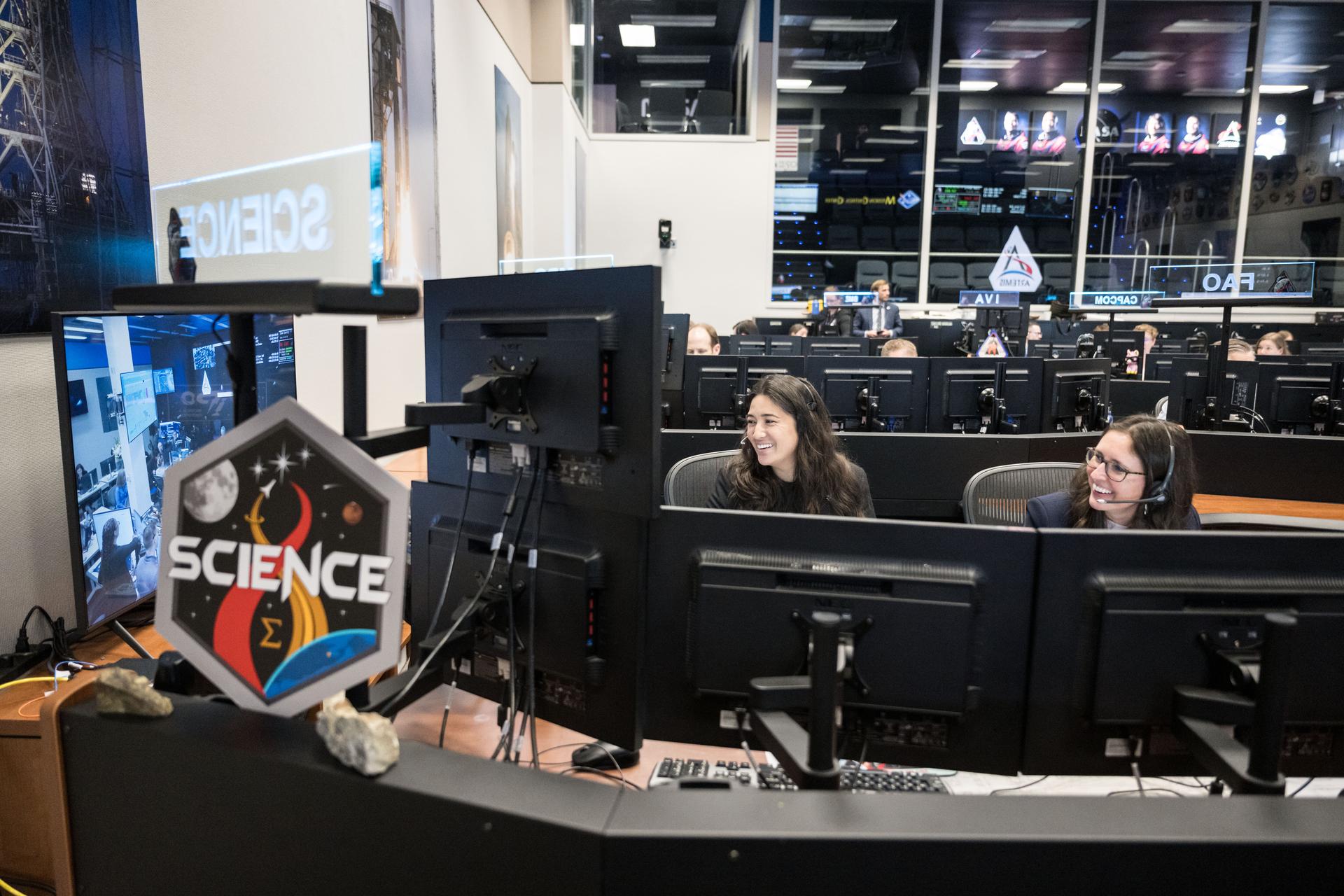
Artemis science officers, from left, Angela Garcia and Kelsey Young, watch the lunar science team celebrating in the Science Evaluation Room (SER) as they hear lunar observations from the Artemis II crew. The science team has spent years training the astronauts in geology and observation, both in the classroom and in the field. They also built the lunar targeting plan that, like a spacewalk plan, provides strong, detailed observation guidance, plus flexibility for the crew to make decisions based on what they’re seeing and experiencing in real time. The science team had many moments of celebration during the lunar flyby as the astronauts took pictures of the Moon and provided verbal descriptions of what they were seeing. This type of information reveals the geologic history of an area and will be critical to collect when future Artemis astronauts explore the Moon's surface. Credits: NASA/Robert Markowitz
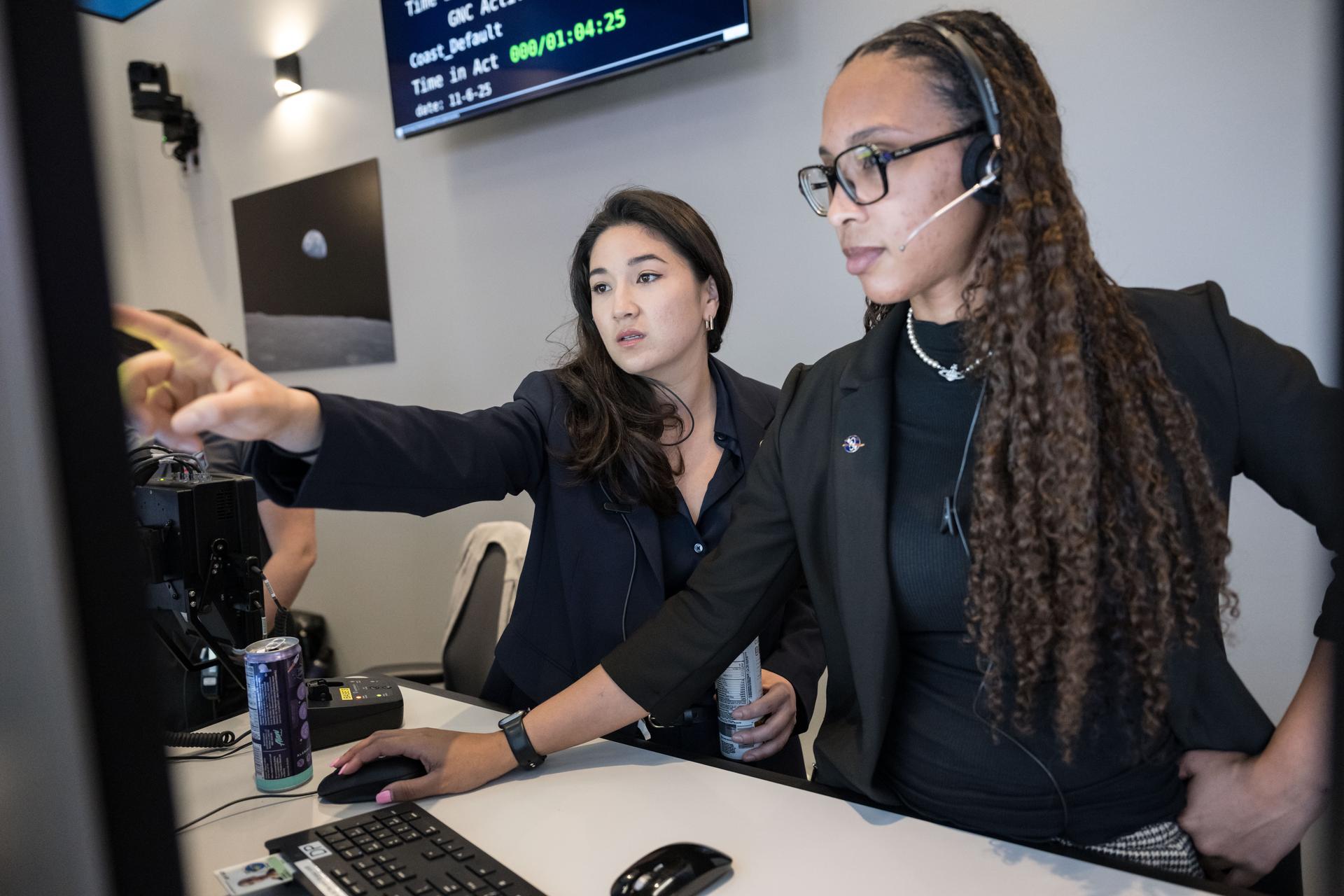
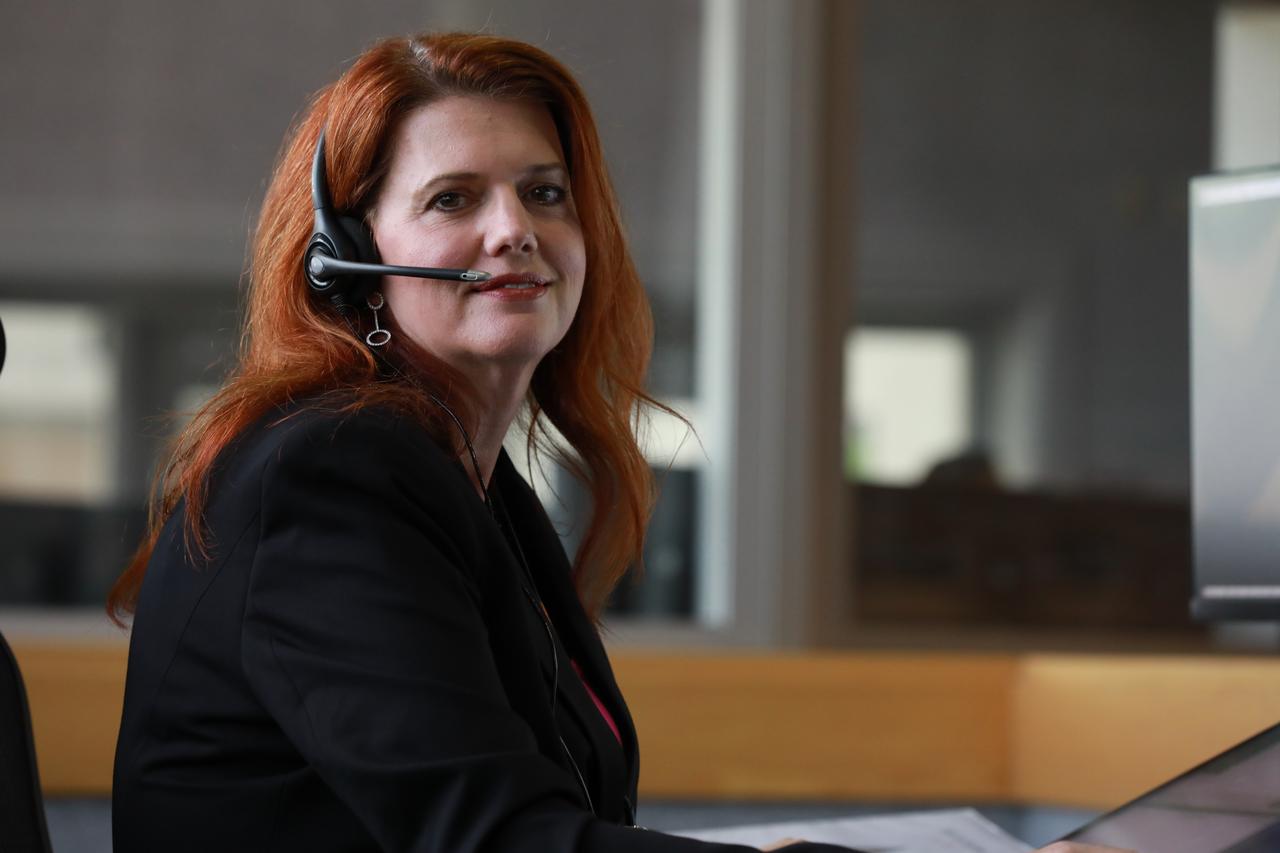
Artemis science officer, Angela Garcia, left and lunar science team member, Kiarre Dumes discuss science operations in the Science Evaluation Room (SER) in Mission Control at NASA's Johnson Space Center in Houston. The SER supports lunar science and planetary observations for the Artemis science officer in the mission’s main flight control room. Dumes serves as the SERCOMM, or Science Evaluation Room Communicator, acting as the singular voice from the science team in the back room, reporting to the science officer. Credits: NASA/Luna Posadas Nava
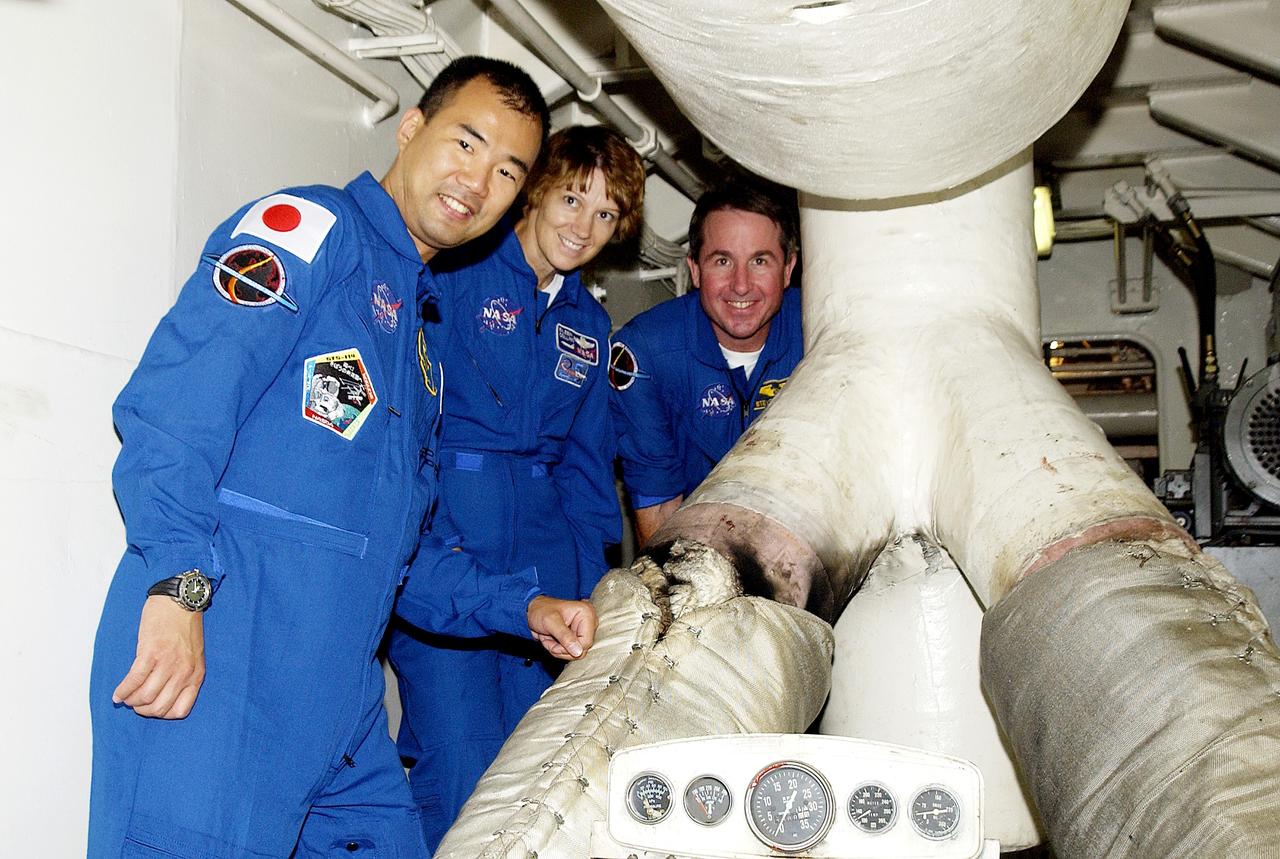
KENNEDY SPACE CENTER, FLA. - Visiting the engine room of the Liberty Star, one of two SRB Retrieval Ships, are STS-114 crew members Soichi Noguchi, mission specialist, Eileen Collins, commander, and Stephen Robinson, mission specialist. Noguchi is with the Japanese space agency NASDA. Not pictured is Pilot James Kelly. On their mission, the crew will carry the MultiPurpose Logistics Module (MPLM) Raffaello and External Stowage Platform 2 to the International Space Station. The MPLM will contain supplies and equipment. Another goal of the mission is to remove and replace a Control Moment Gyro. Launch date for mission STS-114 is under review.
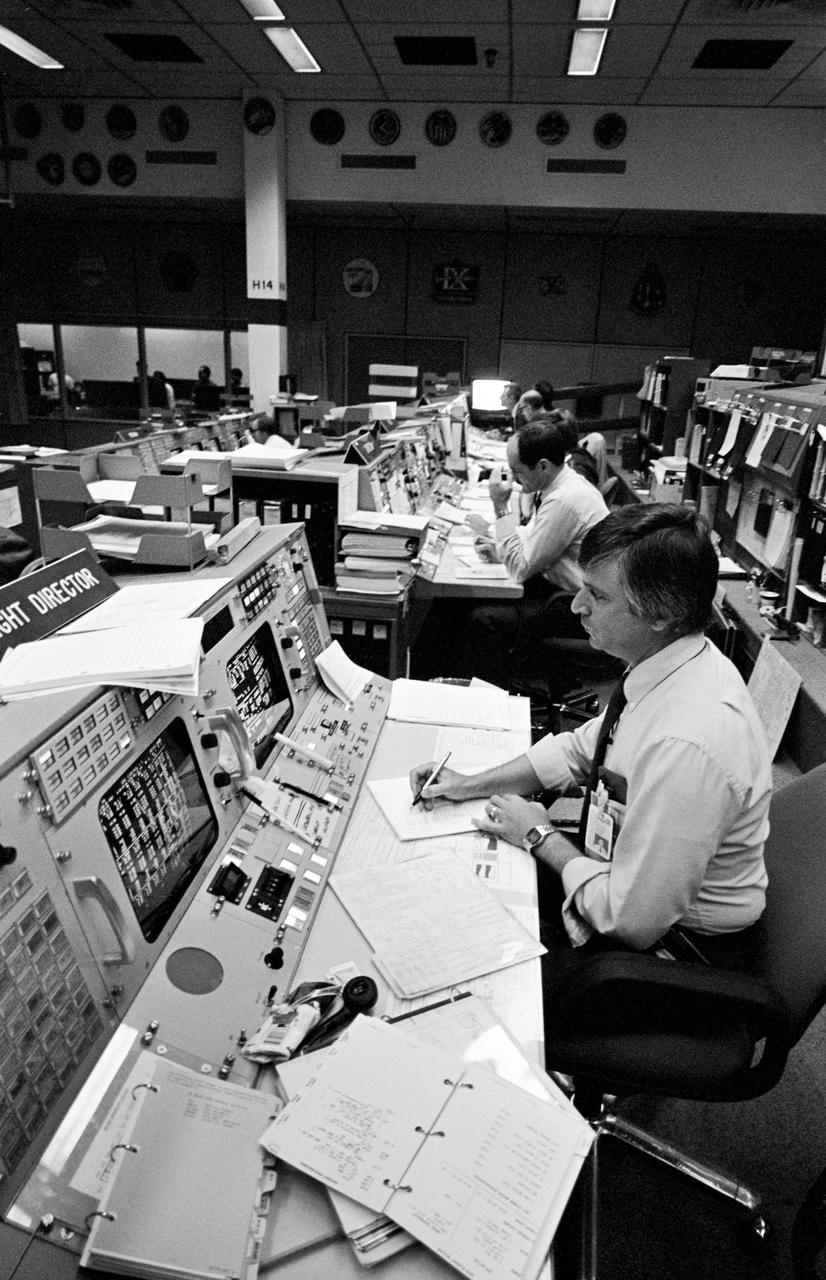
Mission Control Center (MCC) activities during Day-1 of the STS-9 mission with Flight Director Jay H. Greene and Lt. Gen. James A. Abrahamson. 1. Lt. General James A. Abrahamson 2. Jay H. Green 3. MOCR JSC, Houston, TX
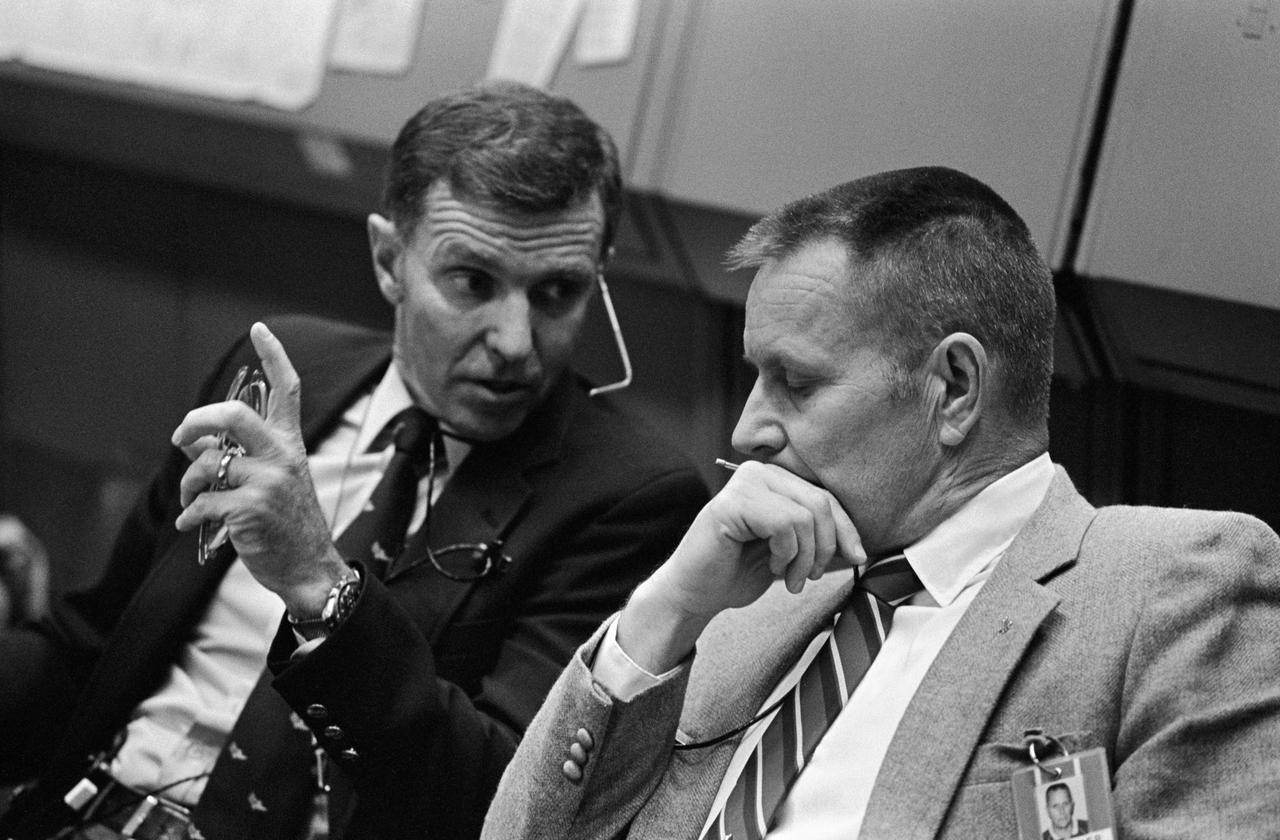
Mission Control Center (MCC) activities during Day-1 of the STS-9 mission with Flight Director Jay H. Greene and Lt. Gen. James A. Abrahamson. 1. Lt. General James A. Abrahamson 2. Jay H. Green 3. MOCR JSC, Houston, TX
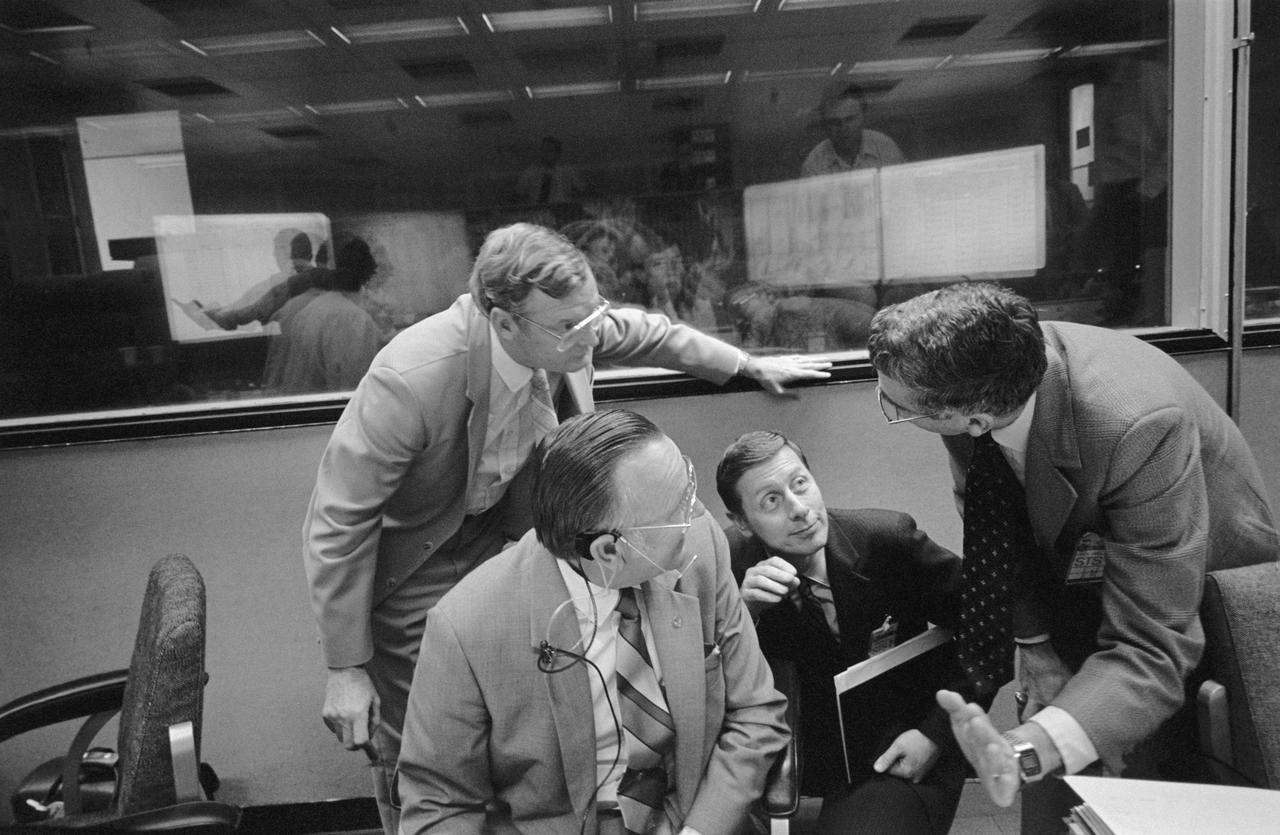
Mission Control Activities during the STS-3 Mission, Day-4 with: Maj. Gen. James A. Abrahamson, Associate Administrator of the Space Transportation System (STS), NASA Hdqs., conversing with Dr. Kraft; Glynn S. Lunney, Manager, Space Shuttle Program Office, JSC, Aaron Cohen, Manager, Space Shuttle Orbiter Project Office; and, J. E. Conner, Ford Aerospace Engineer at the Instrumentation and Communications Officer (INCO) Console position. 1. Glynn S. Lunney 2. Major General James A. Abrahamson 3. Aaron Cohen 4. J. E. Conner 5. Dr. Christopher Kraft JSC, Houston, TX
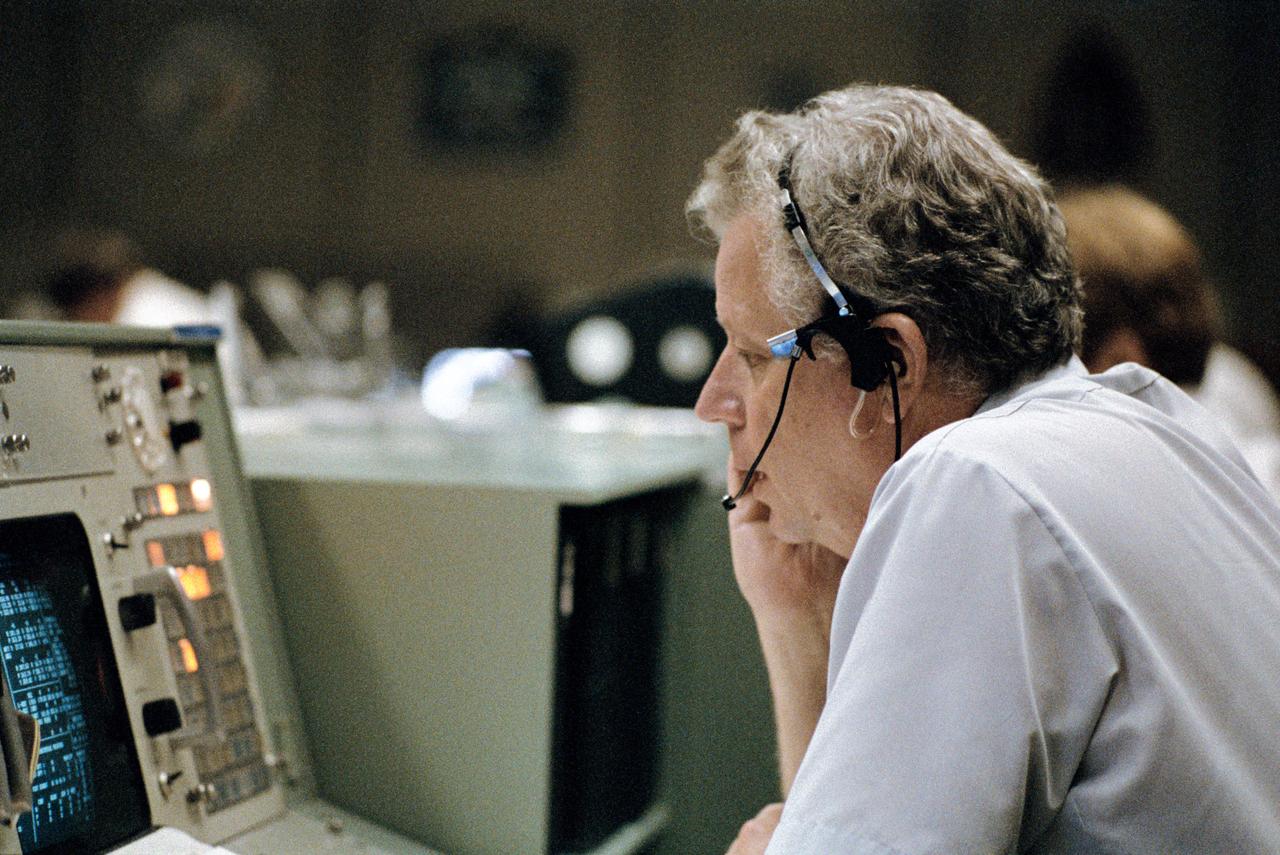
Terry White, serving as public affairs office commentator in the mission operations control room (MOCR) of JSC's mission control center, reads a status report on the STS-8 mission.
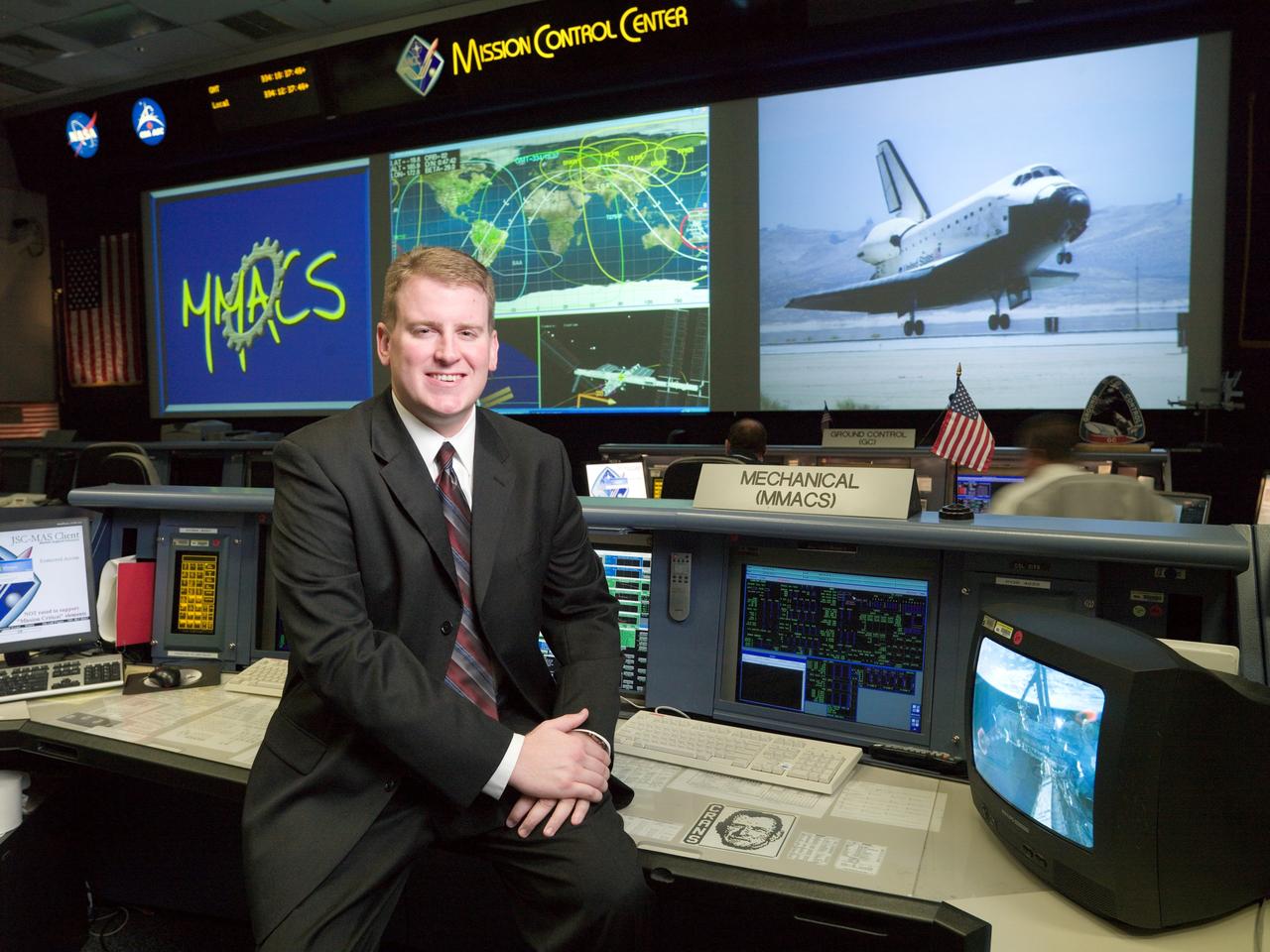
JSC2007-E-108498 (30 Nov. 2007) --- Justin Dithmer, MMACS flight controller, poses for a portrait in the space shuttle flight control room in Houston's Mission Control Center (MCC).
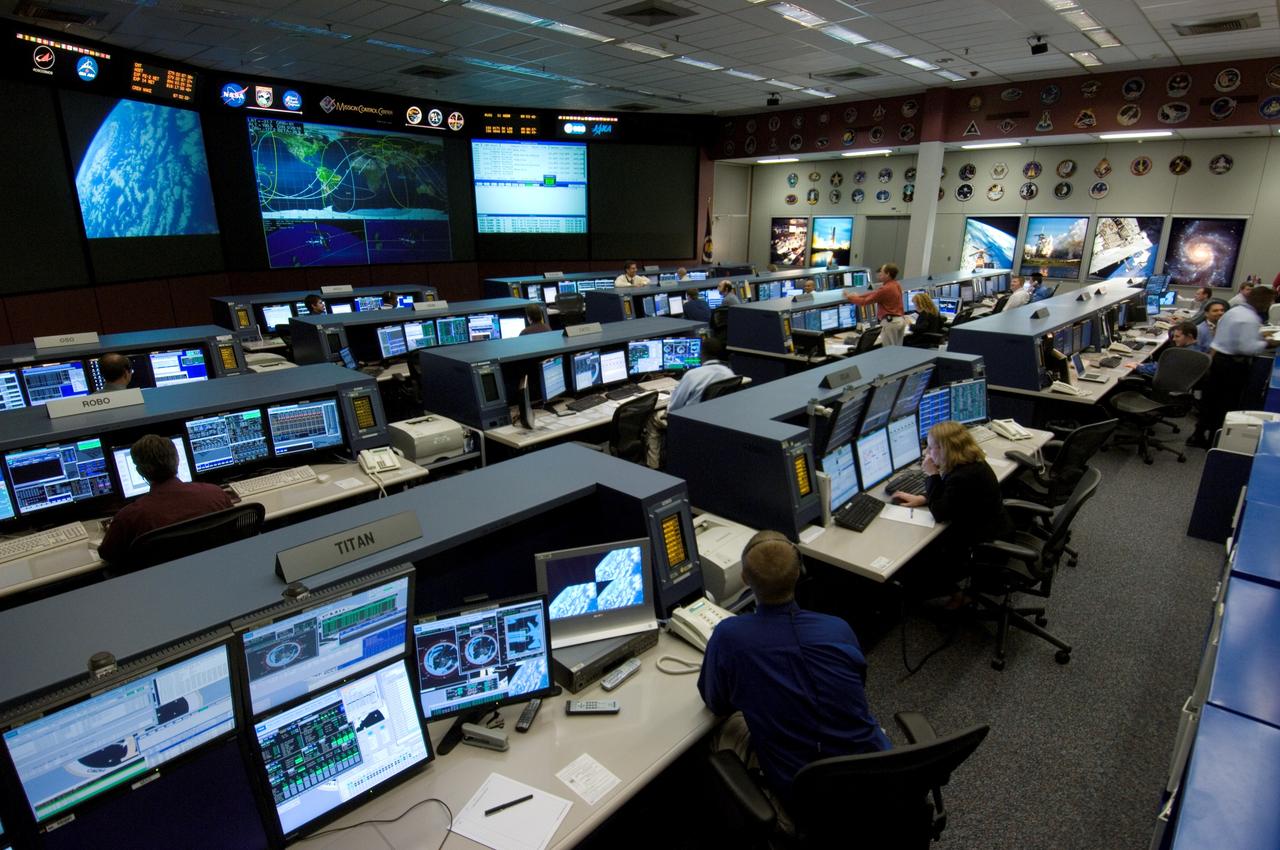
JSC2006-E-43860 (6 Oct. 2006)--- International Space Station flight controllers have this area as their new home with increased technical capabilities, more workspace and a long, distinguished history. The newly updated facility is just down the hall from its predecessor at NASA's Johnson Space Center, Houston. Known as Flight Control Room 1, it was first used to control a space flight 38 years ago, the mission of Apollo 7 launched Oct. 11, 1968. It was one of two control rooms for NASA's manned missions. The room it replaces in its new ISS role, designated the Blue Flight Control Room, had been in operation since the first station component was launched in 1998.