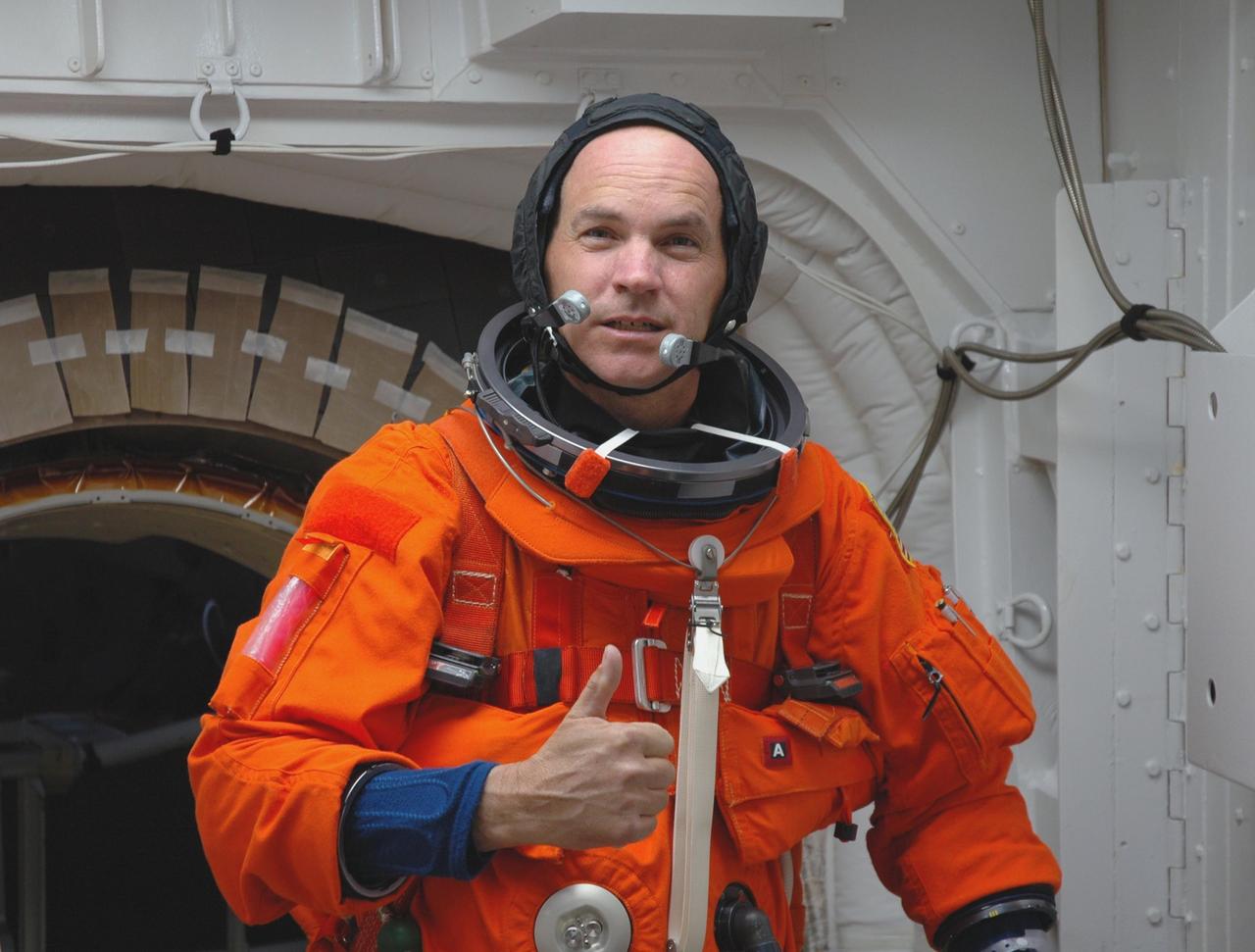
KENNEDY SPACE CENTER, FLA. -- In the white room on Launch Pad 39A, Mission STS-117 Commander Rick Sturckow gives a thumbs up as he prepares to enter Space Shuttle Atlantis. The STS-117 crew practices for launch with a simulation of activities, from suit-up to countdown in the orbiter during terminal countdown demonstration test activities. The STS-117 mission is No. 21 to the International Space Station. Mission payloads aboard Atlantis include the S3/S4 integrated truss structure, a third set of solar arrays and batteries. The crew of six astronauts will install the truss to continue assembly of the station. Launch is scheduled for no earlier than March 15. Photo credit: NASA/Jim Grossmann
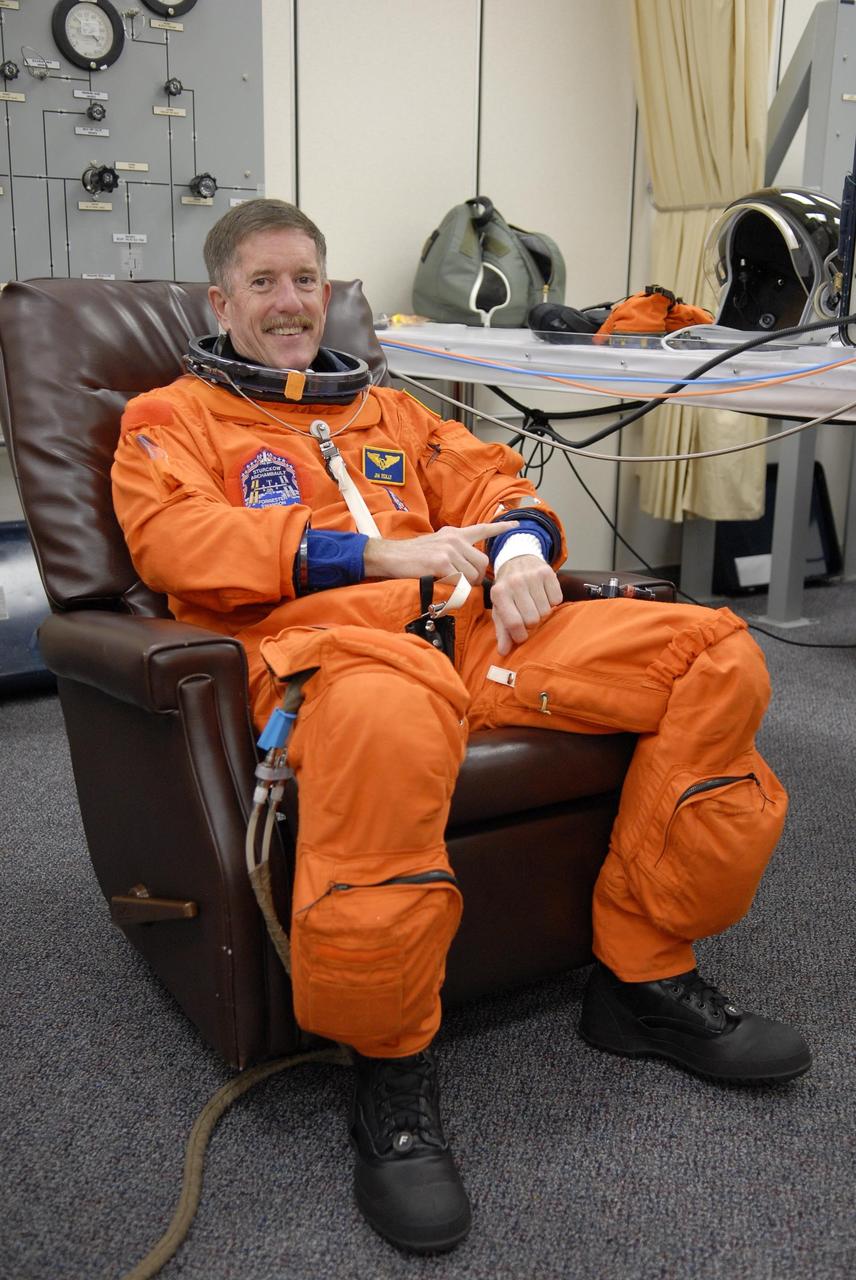
KENNEDY SPACE CENTER, FLA. -- Mission STS-117 Mission Specialist James Reilly has donned his launch suit for a fit check, part of the pre-launch preparations during terminal countdown demonstration test (TCDT) activities. The mission crew is at KSC for the TCDT, which includes a simulated launch countdown.The STS-117 mission is No. 21 to the International Space Station. Mission payloads aboard Atlantis include the S3/S4 integrated truss structure, a third set of solar arrays and batteries. The crew of six astronauts will install the truss to continue assembly of the station. Launch is scheduled for no earlier than March 15. Photo credit: NASA/Kim Shiflett.

KENNEDY SPACE CENTER, FLA. -- Mission STS-117 Mission Specialist James Reilly has donned his launch suit and helmet for a fit check, part of the pre-launch preparations during terminal countdown demonstration test (TCDT) activities. The mission crew is at KSC for the TCDT, which includes a simulated launch countdown. The STS-117 mission is No. 21 to the International Space Station. Mission payloads aboard Atlantis include the S3/S4 integrated truss structure, a third set of solar arrays and batteries. The crew of six astronauts will install the truss to continue assembly of the station. Launch is scheduled for no earlier than March 15. Photo credit: NASA/Kim Shiflett.
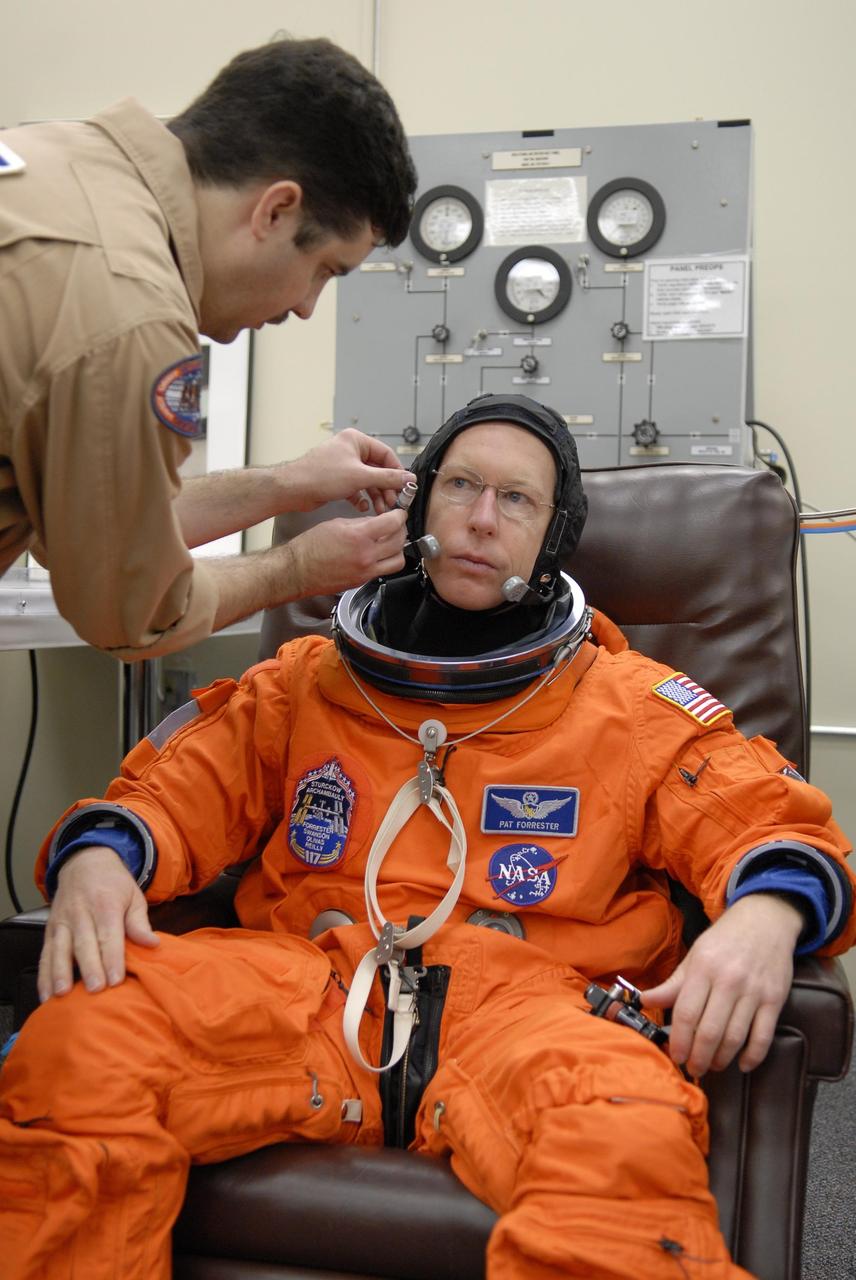
KENNEDY SPACE CENTER, FLA. -- Mission STS-117 Mission Specialist Patrick Forrester has donned his launch suit for a fit check, part of the pre-launch preparations during terminal countdown demonstration test (TCDT) activities. The mission crew is at KSC for the TCDT, which includes a simulated launch countdown. The STS-117 mission is No. 21 to the International Space Station. Mission payloads aboard Atlantis include the S3/S4 integrated truss structure, a third set of solar arrays and batteries. The crew of six astronauts will install the truss to continue assembly of the station. Launch is scheduled for no earlier than March 15. Photo credit: NASA/Kim Shiflett.
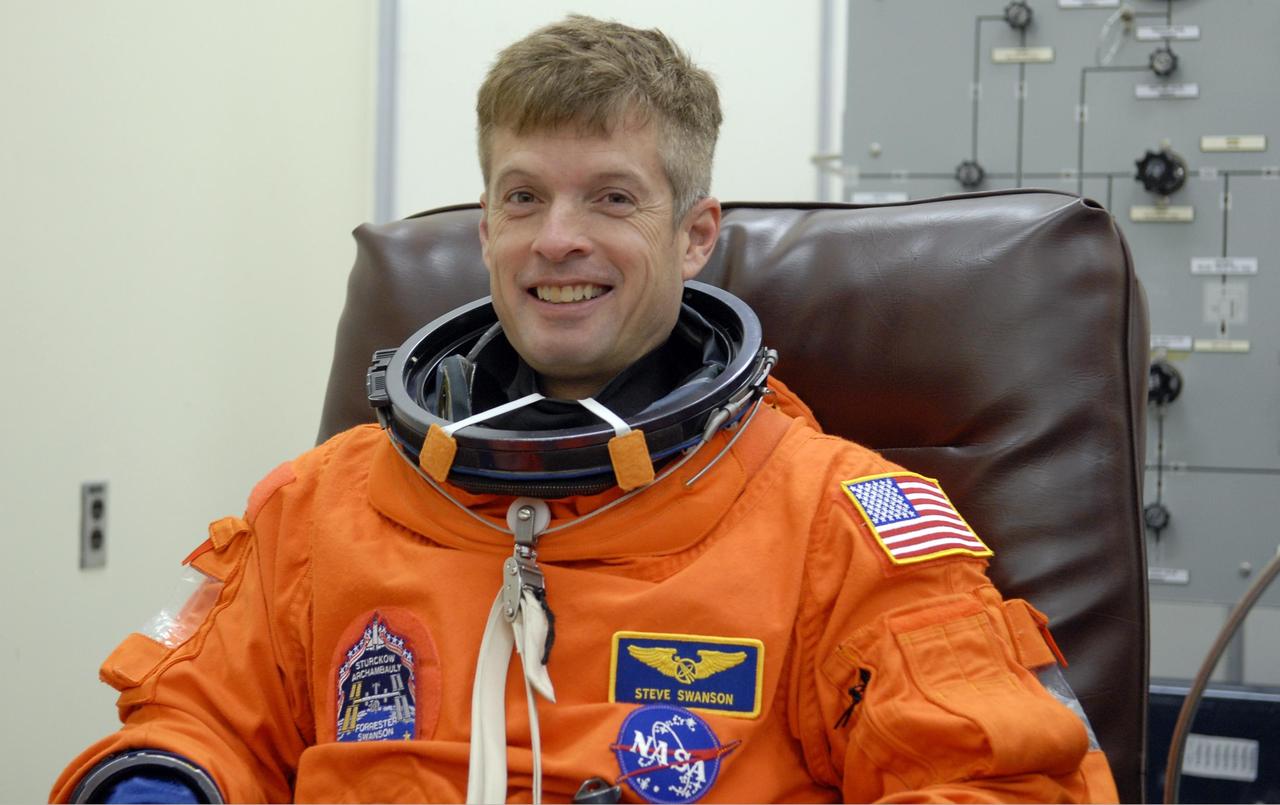
KENNEDY SPACE CENTER, FLA. -- Mission STS-117 Mission Specialist Steven Swanson has donned his launch suit for a fit check, part of the pre-launch preparations during terminal countdown demonstration test (TCDT) activities. The mission crew is at KSC for the TCDT, which includes a simulated launch countdown. The STS-117 mission is No. 21 to the International Space Station. Mission payloads aboard Atlantis include the S3/S4 integrated truss structure, a third set of solar arrays and batteries. The crew of six astronauts will install the truss to continue assembly of the station. Launch is scheduled for no earlier than March 15. Photo credit: NASA/Kim Shiflett.
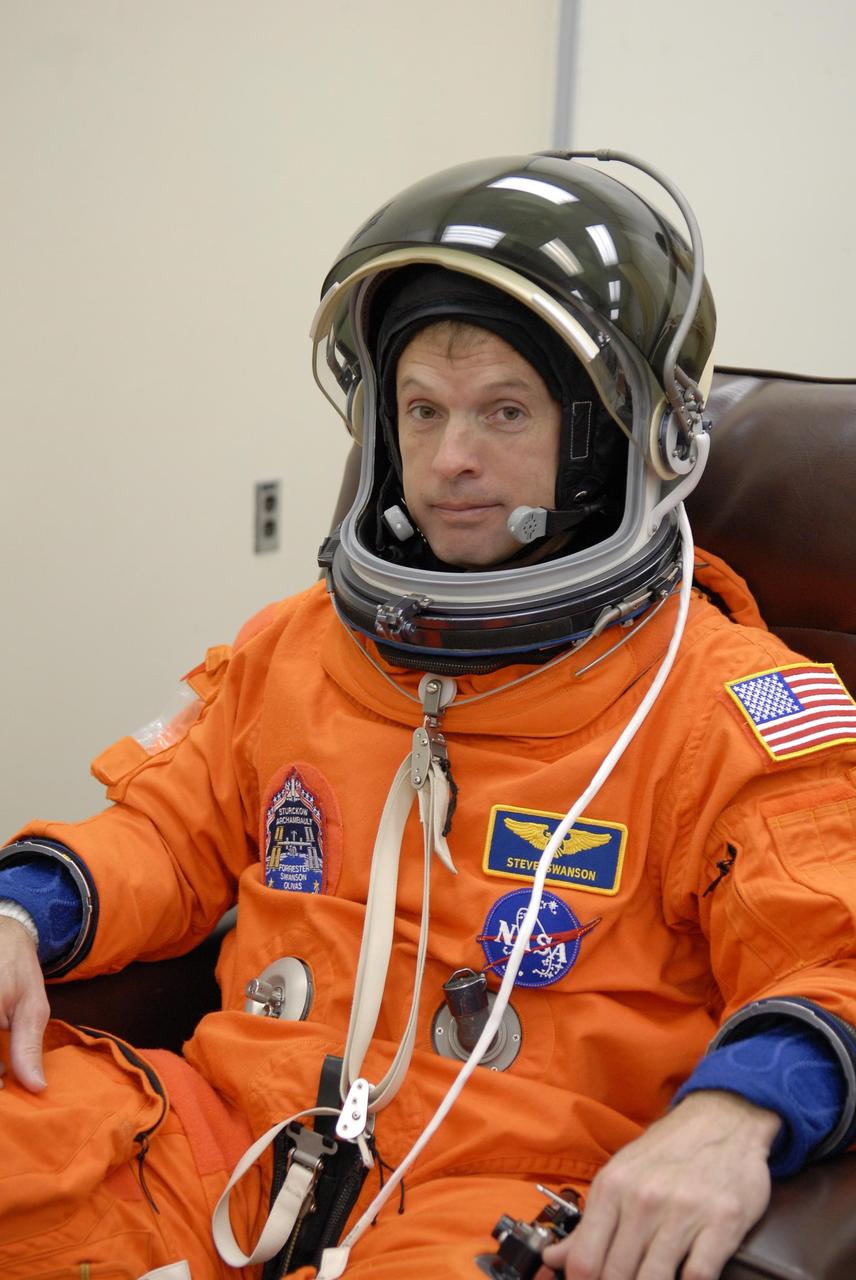
KENNEDY SPACE CENTER, FLA. -- Mission STS-117 Mission Specialist Steven Swanson checks the fit of his launch suit and helmet, part of pre-launch preparations during terminal countdown demonstration test (TCDT) activities. The mission crew is at KSC for the TCDT, which includes a simulated launch countdown. The STS-117 mission is No. 21 to the International Space Station. Mission payloads aboard Atlantis include the S3/S4 integrated truss structure, a third set of solar arrays and batteries. The crew of six astronauts will install the truss to continue assembly of the station. Launch is scheduled for no earlier than March 15. Photo credit: NASA/Kim Shiflett.

KENNEDY SPACE CENTER, FLA. -- Mission STS-117 Mission Specialist Danny Olivas has donned his launch suit for a fit check, part of the pre-launch preparations during terminal countdown demonstration test (TCDT) activities. The mission crew is at KSC for the TCDT, which includes a simulated launch countdown. The STS-117 mission is No. 21 to the International Space Station. Mission payloads aboard Atlantis include the S3/S4 integrated truss structure, a third set of solar arrays and batteries. The crew of six astronauts will install the truss to continue assembly of the station. Launch is scheduled for no earlier than March 15. Photo credit: NASA/Kim Shiflett.
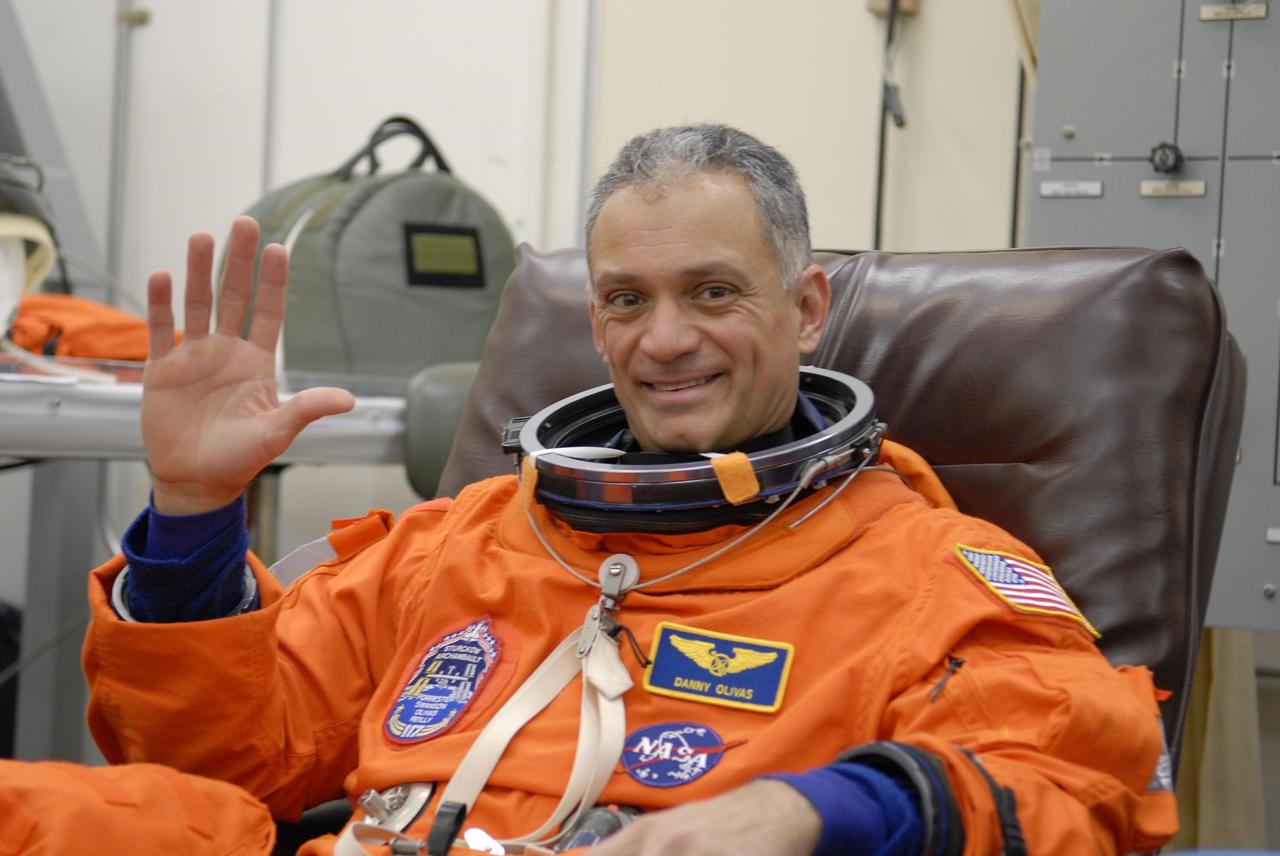
KENNEDY SPACE CENTER, FLA. -- Mission STS-117 Mission Specialist Danny Olivas has donned his launch suit for a fit check, part of the pre-launch preparations during terminal countdown demonstration test (TCDT) activities. The mission crew is at KSC for the TCDT, which includes a simulated launch countdown. The STS-117 mission is No. 21 to the International Space Station. Mission payloads aboard Atlantis include the S3/S4 integrated truss structure, a third set of solar arrays and batteries. The crew of six astronauts will install the truss to continue assembly of the station. Launch is scheduled for no earlier than March 15. Photo credit: NASA/Kim Shiflett.
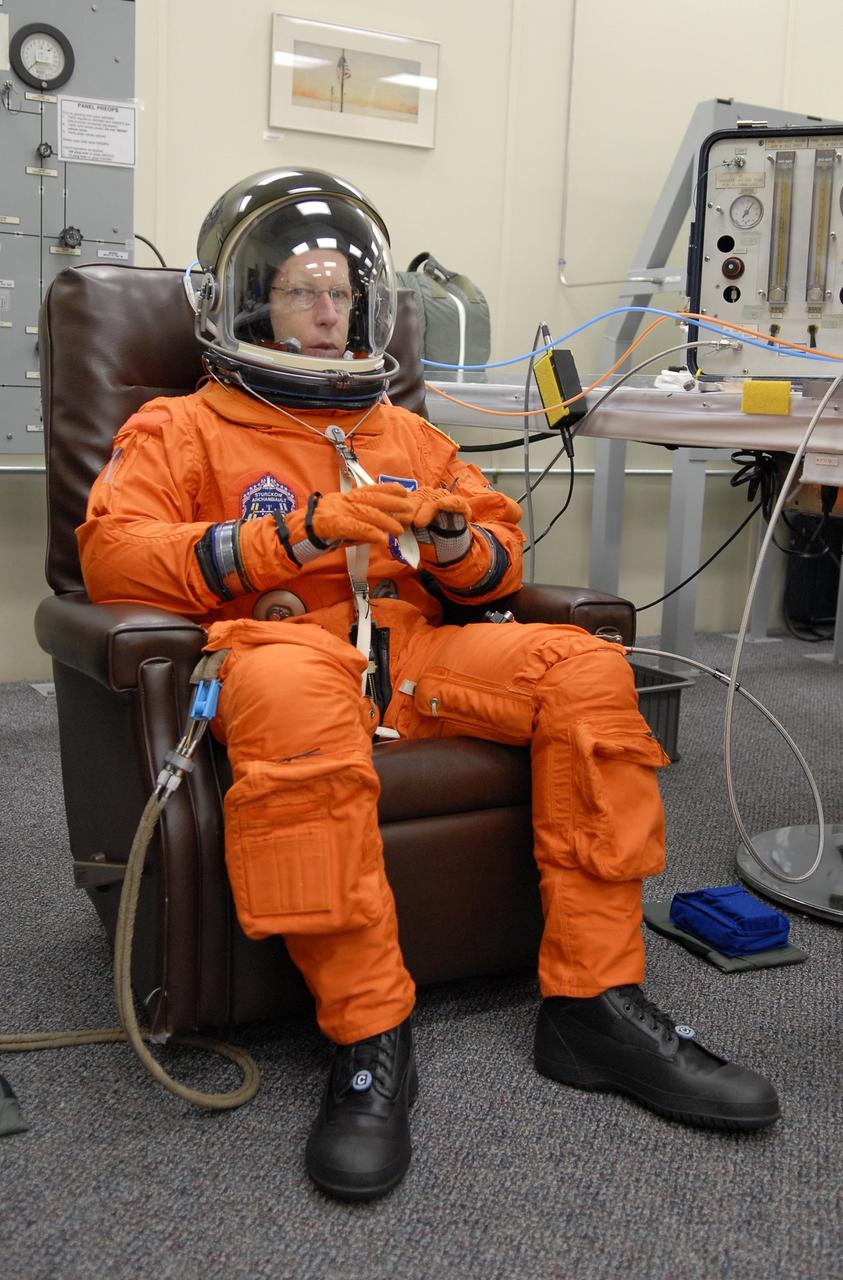
KENNEDY SPACE CENTER, FLA. -- Mission STS-117 Mission Specialist Patrick Forrester has donned his launch suit and helmet for a fit check, part of the pre-launch preparations during terminal countdown demonstration test (TCDT) activities. The mission crew is at KSC for the TCDT, which includes a simulated launch countdown. The STS-117 mission is No. 21 to the International Space Station. Mission payloads aboard Atlantis include the S3/S4 integrated truss structure, a third set of solar arrays and batteries. The crew of six astronauts will install the truss to continue assembly of the station. Launch is scheduled for no earlier than March 15. Photo credit: NASA/Kim Shiflett.
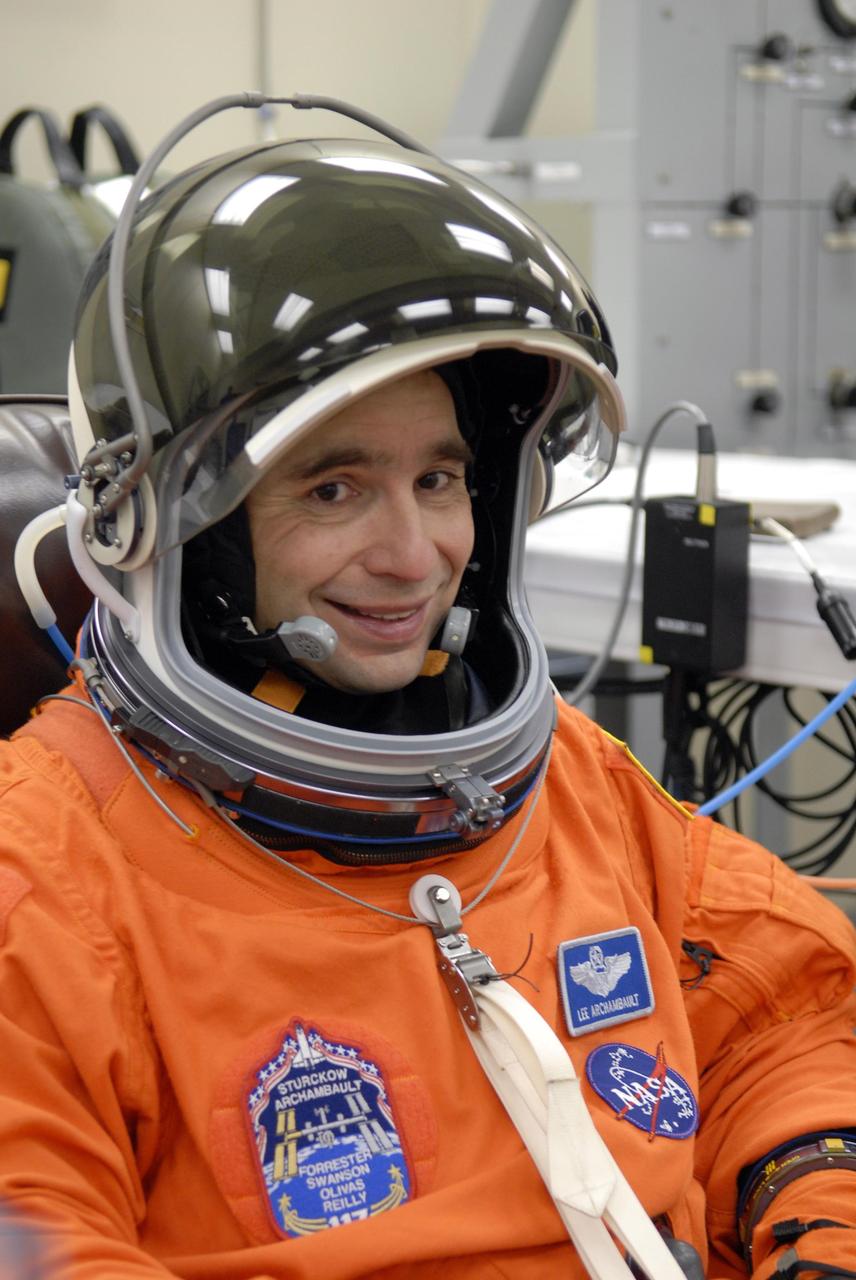
KENNEDY SPACE CENTER, FLA. -- Mission STS-117 Pilot Lee Archambault checks the fit of his launch suit and helmet, part of pre-launch preparations during terminal countdown demonstration test (TCDT) activities. The mission crew is at KSC for the TCDT, which includes a simulated launch countdown. The STS-117 mission is No. 21 to the International Space Station. Mission payloads aboard Atlantis include the S3/S4 integrated truss structure, a third set of solar arrays and batteries. The crew of six astronauts will install the truss to continue assembly of the station. Launch is scheduled for no earlier than March 15. Photo credit: NASA/Kim Shiflett.

KENNEDY SPACE CENTER, FLA. -- Mission STS-117 Pilot Lee Archambault checks the fit of his launch suit and helmet, part of pre-launch preparations during terminal countdown demonstration test (TCDT) activities. The mission crew is at KSC for the TCDT, which includes a simulated launch countdown. The STS-117 mission is No. 21 to the International Space Station. Mission payloads aboard Atlantis include the S3/S4 integrated truss structure, a third set of solar arrays and batteries. The crew of six astronauts will install the truss to continue assembly of the station. Launch is scheduled for no earlier than March 15. Photo credit: NASA/Kim Shiflett.
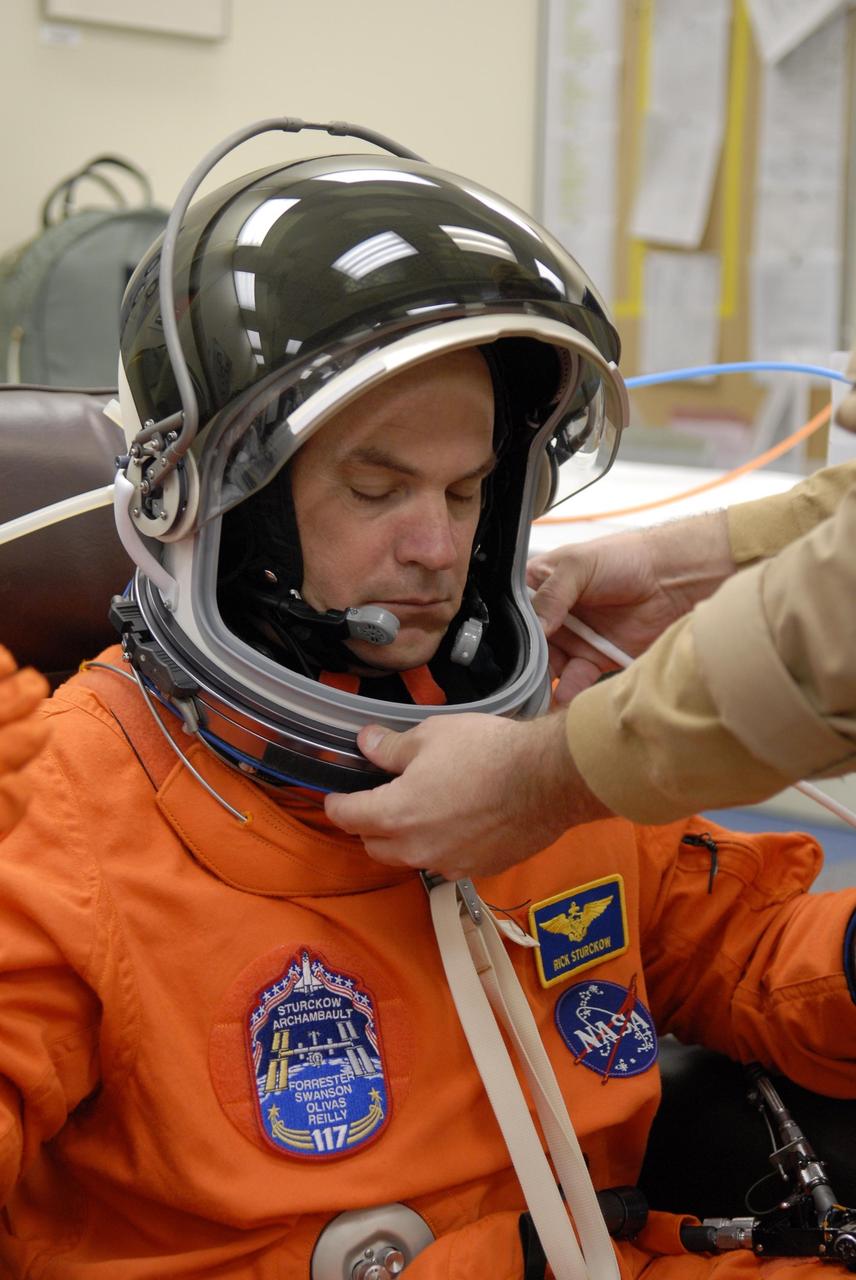
KENNEDY SPACE CENTER, FLA. -- Mission STS-117 Commander Rick Sturckow checks the fit of his launch suit and helmet, part of pre-launch preparations during terminal countdown demonstration test (TCDT) activities. The mission crew is at KSC for the TCDT, which includes a simulated launch countdown. The STS-117 mission is No. 21 to the International Space Station. Mission payloads aboard Atlantis include the S3/S4 integrated truss structure, a third set of solar arrays and batteries. The crew of six astronauts will install the truss to continue assembly of the station. Launch is scheduled for no earlier than March 15. Photo credit: NASA/Kim Shiflett.
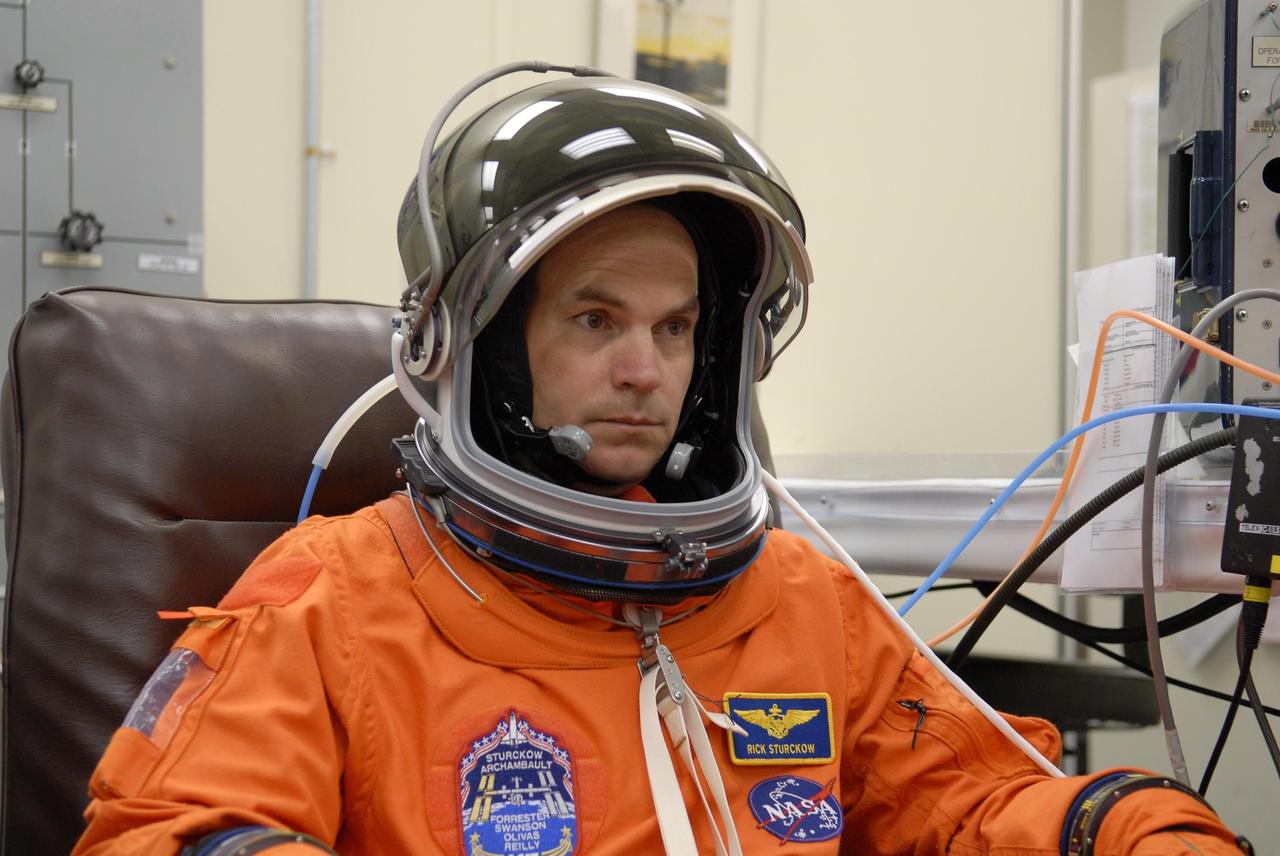
KENNEDY SPACE CENTER, FLA. -- Mission STS-117 Commander Rick Sturckow checks the fit of his launch suit and helmet, part of pre-launch preparations during terminal countdown demonstration test (TCDT) activities. The mission crew is at KSC for the TCDT, which includes a simulated launch countdown. The STS-117 mission is No. 21 to the International Space Station. Mission payloads aboard Atlantis include the S3/S4 integrated truss structure, a third set of solar arrays and batteries. The crew of six astronauts will install the truss to continue assembly of the station. Launch is scheduled for no earlier than March 15. Photo credit: NASA/Kim Shiflett.

KENNEDY SPACE CENTER, FLA. -- Mission STS-117 Commander Rick Sturckow checks the fit of his launch suit and helmet, part of pre-launch preparations during terminal countdown demonstration test (TCDT) activities. The mission crew is at KSC for the TCDT, which includes a simulated launch countdown. The STS-117 mission is No. 21 to the International Space Station. Mission payloads aboard Atlantis include the S3/S4 integrated truss structure, a third set of solar arrays and batteries. The crew of six astronauts will install the truss to continue assembly of the station. Launch is scheduled for no earlier than March 15. Photo credit: NASA/Kim Shiflett.
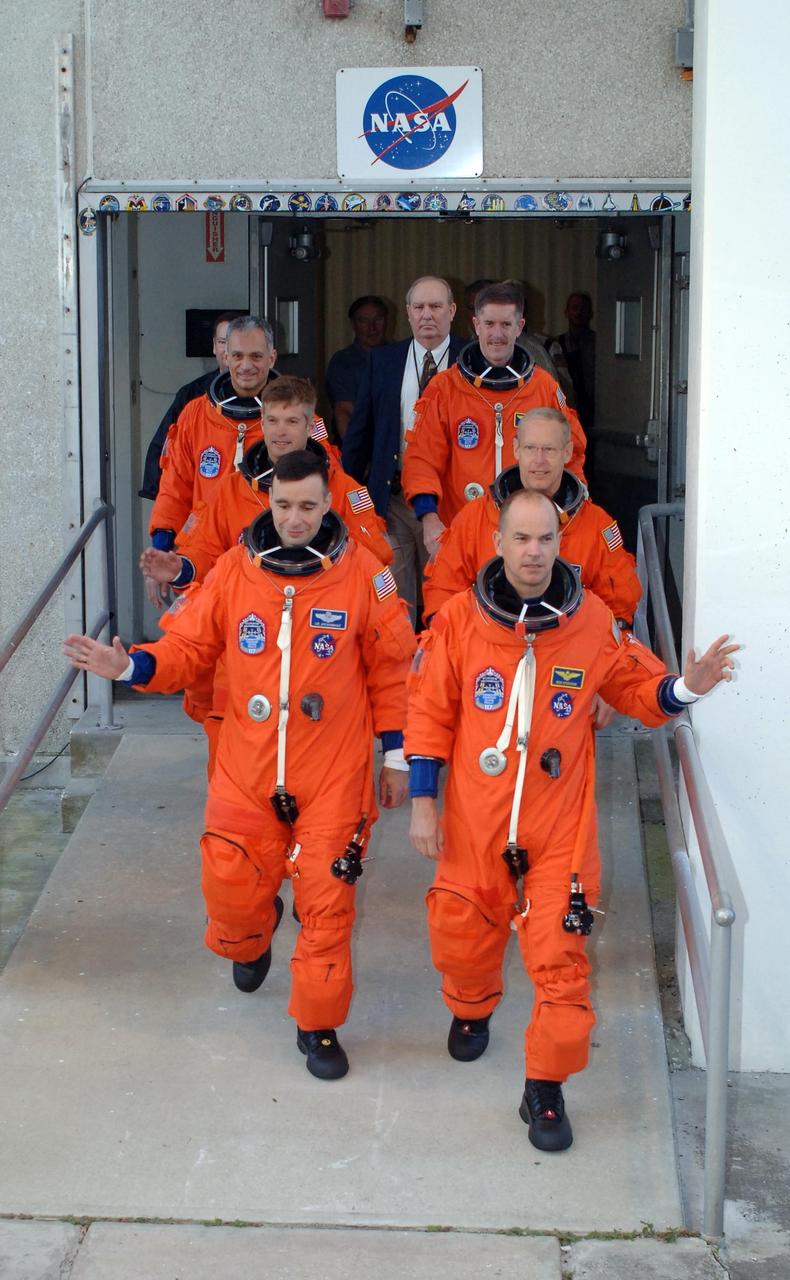
KENNEDY SPACE CENTER, FLA. -- Dressed in their flights suits, the Mission STS-117 crew members practice walk out from the Operations and Checkout Building to the astronaut van for transport to Launch Pad 39A during terminal countdown demonstration test activities. At left from the front are Pilot Lee Archambault and Mission Specialists Steven Swanson and Danny Olivas. At right from the front are Commander Rick Sturckow and Mission Specialists Patrick Forrester and James Reilly. The STS-117 mission is No. 21 to the International Space Station. Mission payloads aboard Atlantis include the S3/S4 integrated truss structure, a third set of solar arrays and batteries. The crew of six astronauts will install the truss to continue assembly of the station. Launch is scheduled for no earlier than March 15. Photo credit: NASA/Kim Shiflett.
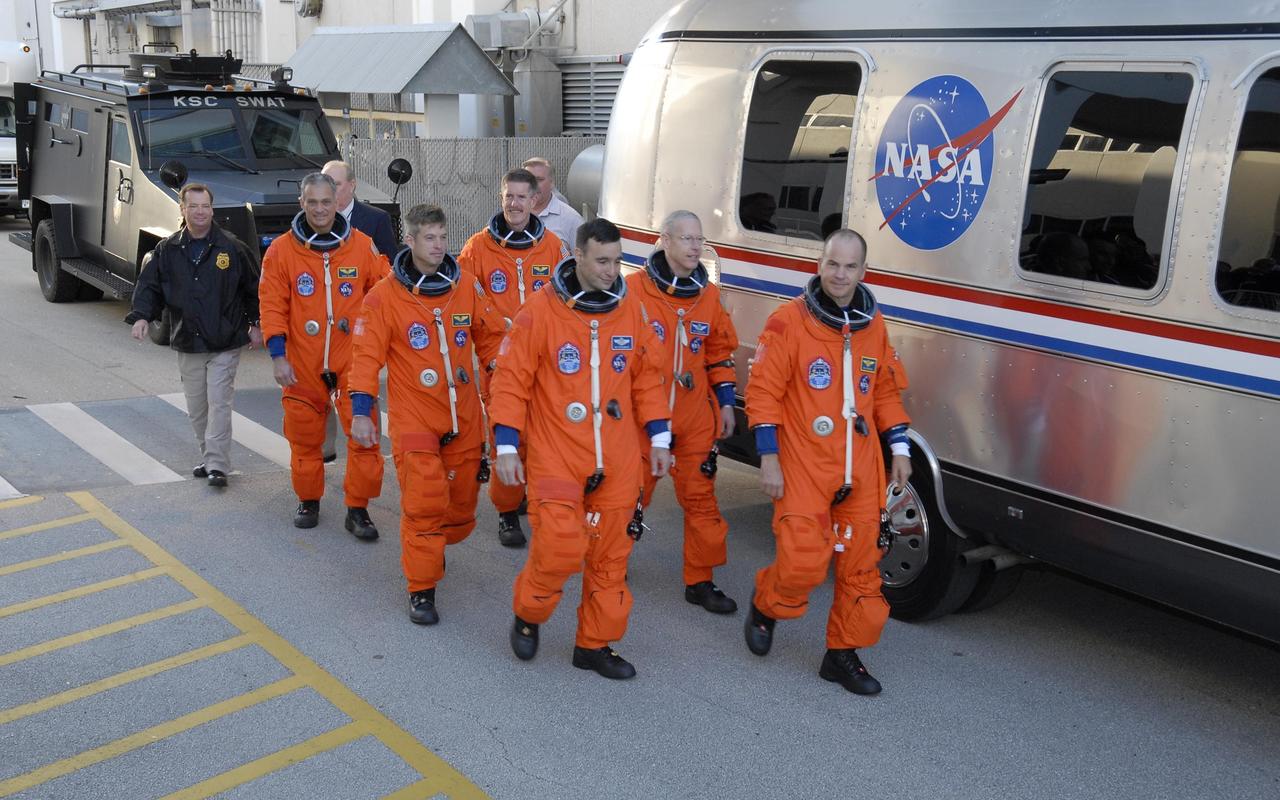
KENNEDY SPACE CENTER, FLA. -- Dressed in their flights suits, the Mission STS-117 crew members practice walk out from the Operations and Checkout Building to the astronaut van for transport to Launch Pad 39A during terminal countdown demonstration test activities. From the left are Mission Specialists Danny Olivas, Steven Swanson and James Reilly (behind Swanson), Pilot Lee Archambault, Mission Specialist Patrick Forrester, and Commander Rick Sturckow is leading the way. The STS-117 mission is No. 21 to the International Space Station. Mission payloads aboard Atlantis include the S3/S4 integrated truss structure, a third set of solar arrays and batteries. The crew of six astronauts will install the truss to continue assembly of the station. Launch is scheduled for no earlier than March 15. Photo credit: NASA/Kim Shiflett.
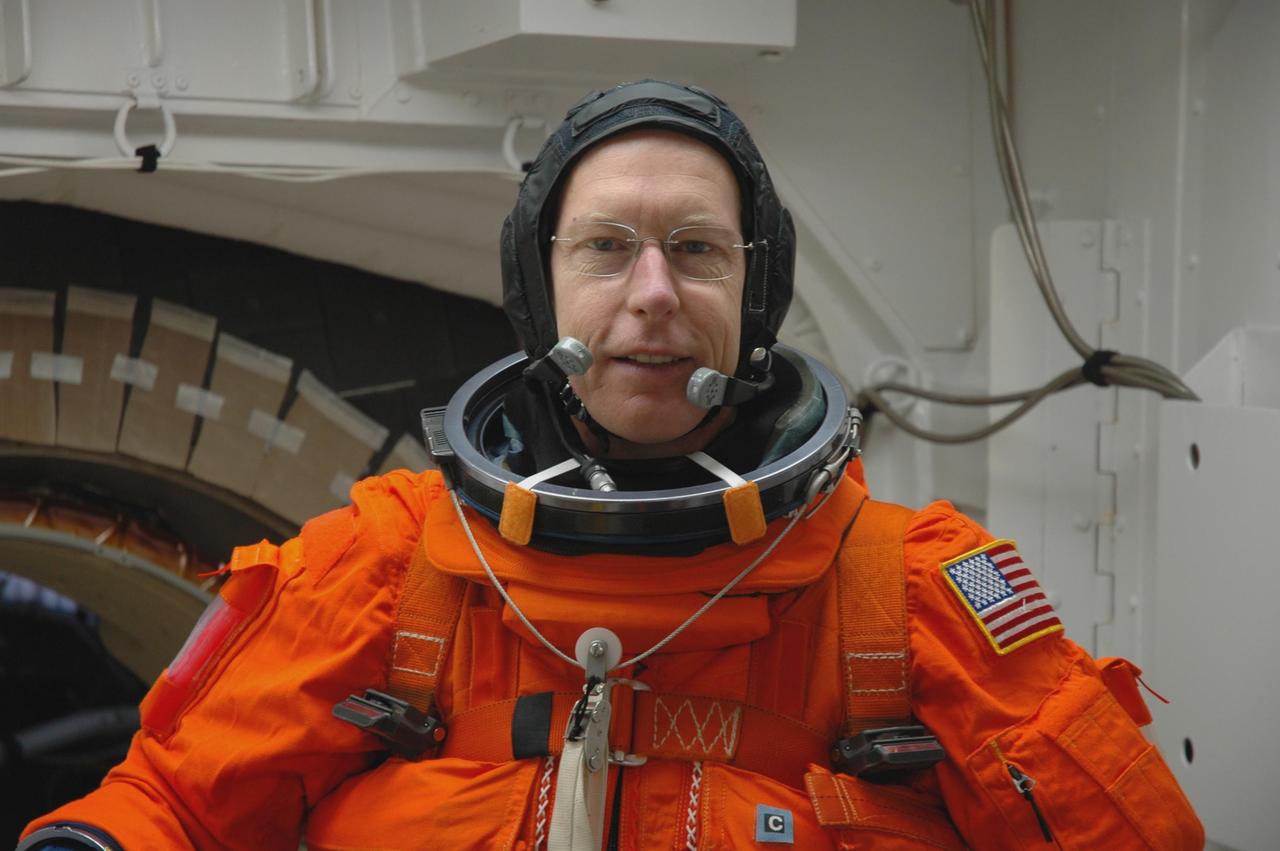
KENNEDY SPACE CENTER, FLA. -- In the white room on Launch Pad 39A, Mission STS-117 Mission Specialist Patrick Forrester prepares to enter Space Shuttle Atlantis. The STS-117 crew practices for launch with a simulation of activities, from suit-up to countdown in the orbiter during terminal countdown demonstration test activities. The STS-117 mission is No. 21 to the International Space Station. Mission payloads aboard Atlantis include the S3/S4 integrated truss structure, a third set of solar arrays and batteries. The crew of six astronauts will install the truss to continue assembly of the station. Launch is scheduled for no earlier than March 15. Photo credit: NASA/Jim Grossmann
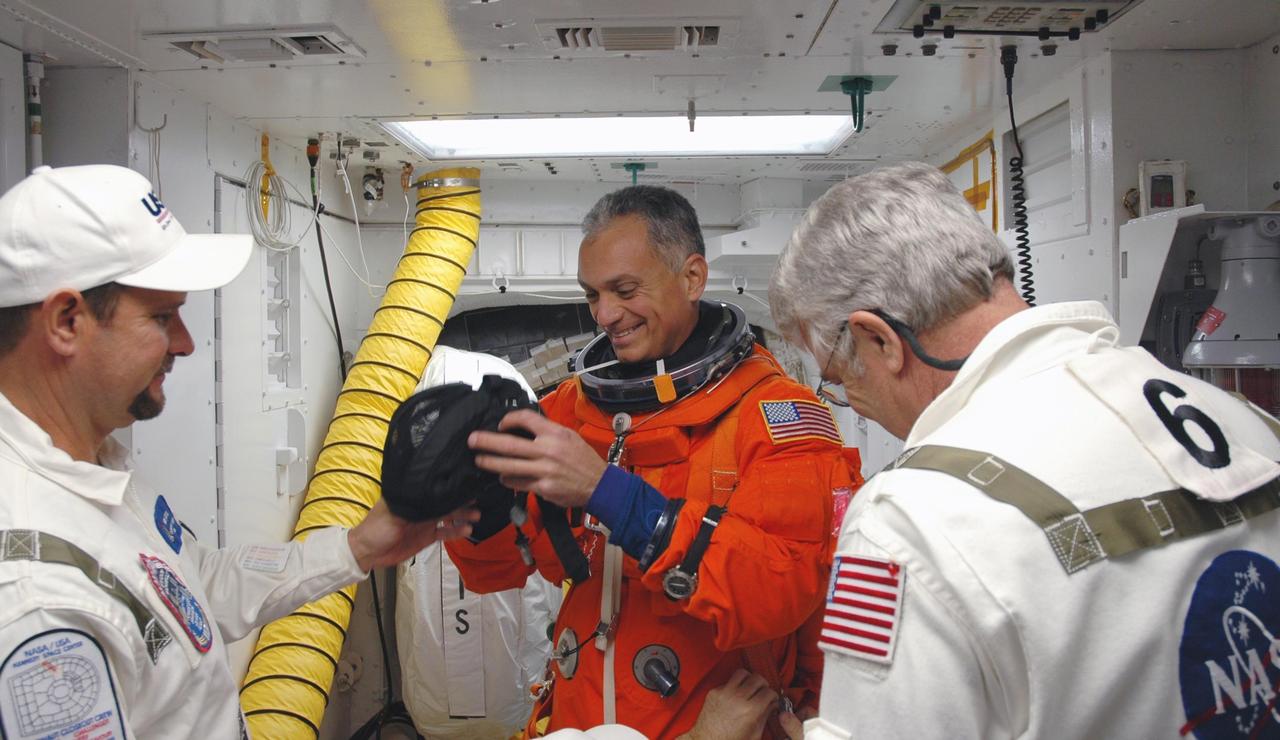
KENNEDY SPACE CENTER, FLA. -- In the white room on Launch Pad 39A, Mission STS-117 Mission Specialist Danny Olivas is helped with his gear before entering Space Shuttle Atlantis. The STS-117 crew practices for launch with a simulation of activities, from suit-up to countdown in the orbiter during terminal countdown demonstration test activities. The STS-117 mission is No. 21 to the International Space Station. Mission payloads aboard Atlantis include the S3/S4 integrated truss structure, a third set of solar arrays and batteries. The crew of six astronauts will install the truss to continue assembly of the station. Launch is scheduled for no earlier than March 15. Photo credit: NASA/Jim Grossmann
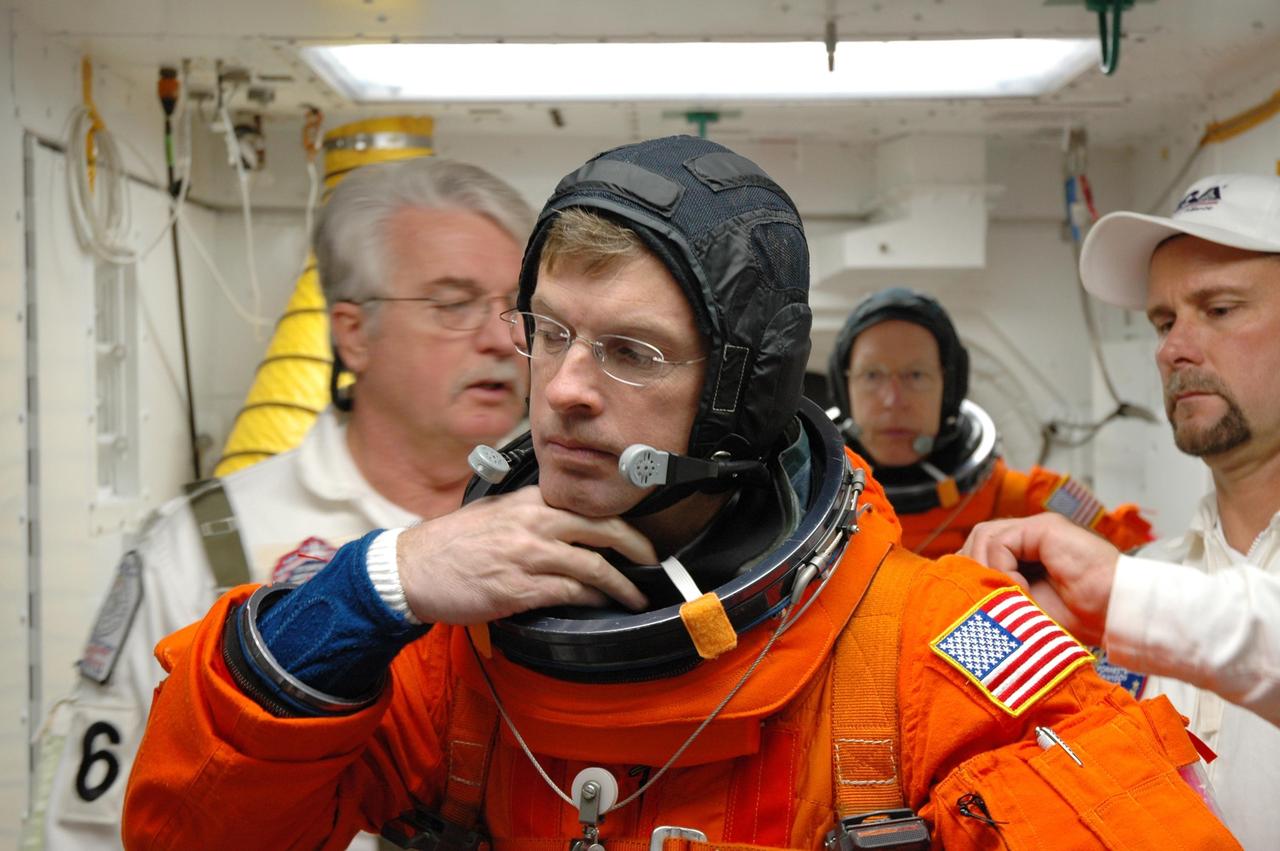
KENNEDY SPACE CENTER, FLA. -- In the white room on Launch Pad 39A, Mission STS-117 Mission Specialist Steven Swanson is helped with his gear before entering Space Shuttle Atlantis. The STS-117 crew practices for launch with a simulation of activities, from suit-up to countdown in the orbiter during terminal countdown demonstration test activities. The STS-117 mission is No. 21 to the International Space Station. Mission payloads aboard Atlantis include the S3/S4 integrated truss structure, a third set of solar arrays and batteries. The crew of six astronauts will install the truss to continue assembly of the station. Launch is scheduled for no earlier than March 15. Photo credit: NASA/Jim Grossmann
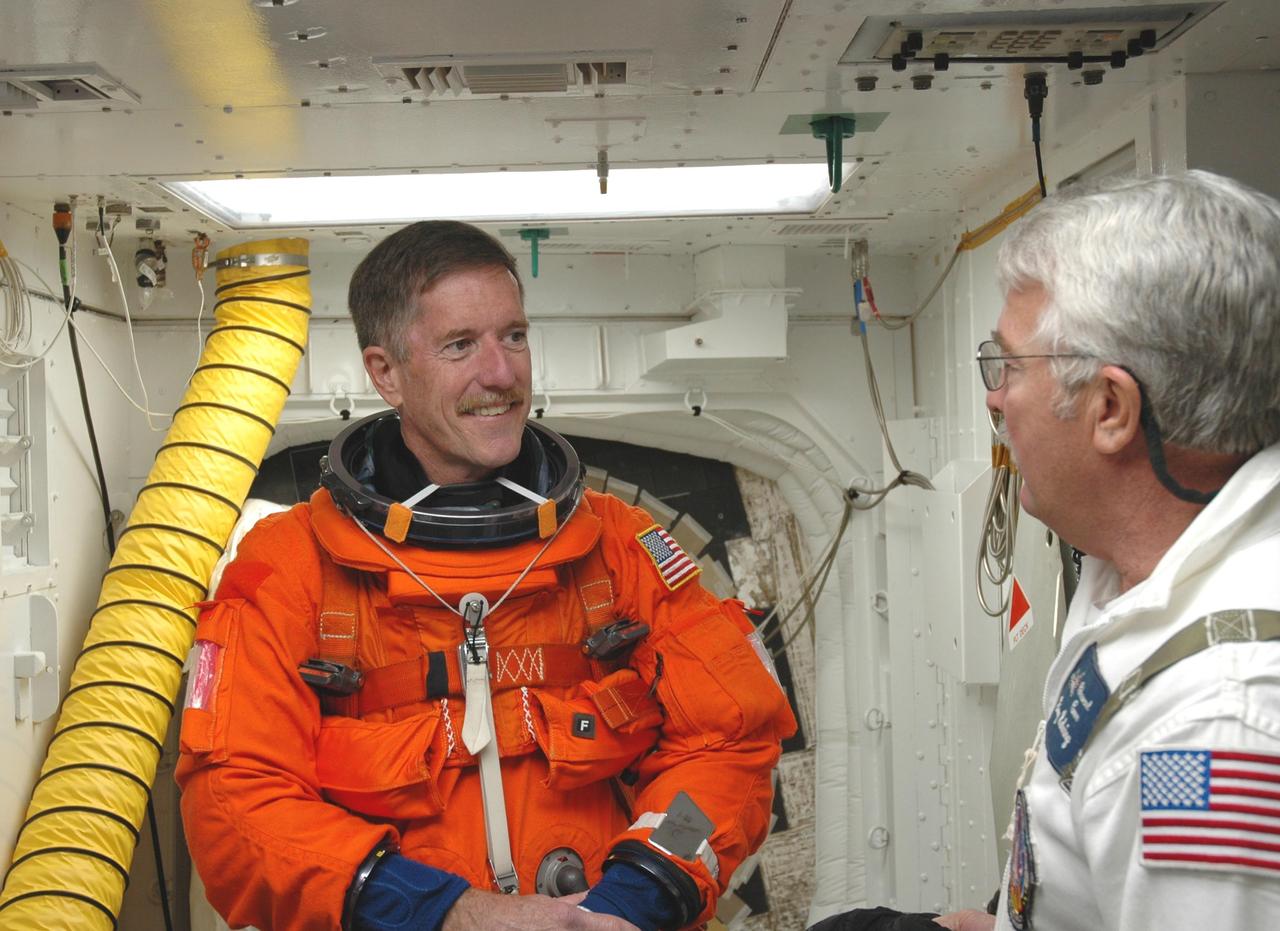
KENNEDY SPACE CENTER, FLA. -- In the white room on Launch Pad 39A, Mission STS-117 Mission Specialist James Reilly is helped with his gear before entering Space Shuttle Atlantis. The STS-117 crew practices for launch with a simulation of activities, from suit-up to countdown in the orbiter during terminal countdown demonstration test activities. The STS-117 mission is No. 21 to the International Space Station. Mission payloads aboard Atlantis include the S3/S4 integrated truss structure, a third set of solar arrays and batteries. The crew of six astronauts will install the truss to continue assembly of the station. Launch is scheduled for no earlier than March 15. Photo credit: NASA/Jim Grossmann
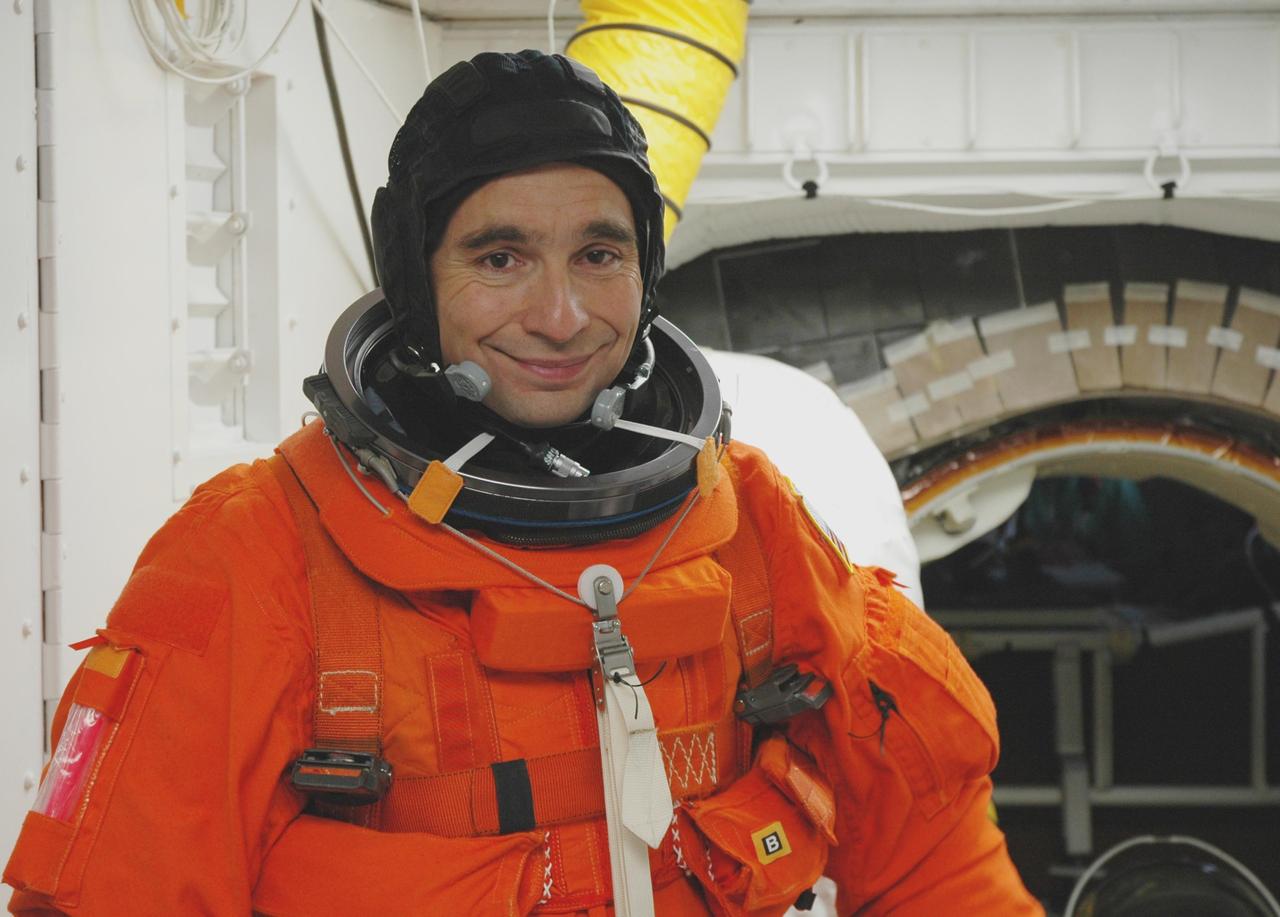
KENNEDY SPACE CENTER, FLA. -- In the white room on Launch Pad 39A, Mission STS-117 Pilot Lee Archambault prepares to enter Space Shuttle Atlantis. The STS-117 crew practices for launch with a simulation of activities, from suit-up to countdown in the orbiter during terminal countdown demonstration test activities. The STS-117 mission is No. 21 to the International Space Station. Mission payloads aboard Atlantis include the S3/S4 integrated truss structure, a third set of solar arrays and batteries. The crew of six astronauts will install the truss to continue assembly of the station. Launch is scheduled for no earlier than March 15. Photo credit: NASA/Jim Grossmann
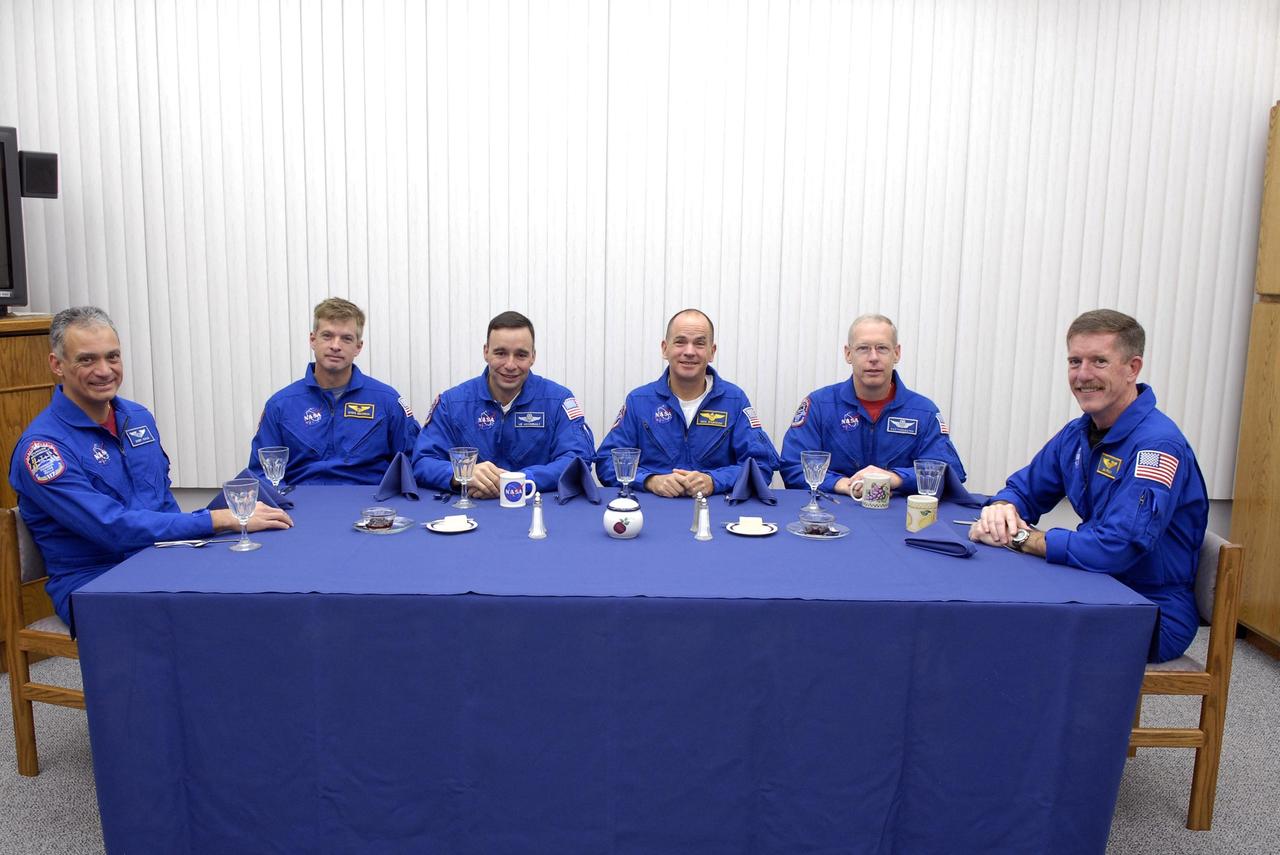
KENNEDY SPACE CENTER, FLA. -- In the crew quarters at the Operations and Checkout Building, the Mission STS-117 crew members enjoy breakfast before resuming Terminal Countdown Demonstration Test activities. From left are Mission Specialists Danny Olivas and Steven Swanson, Pilot Lee Archambault, Commander Rick Sturckow and Mission Specialists Patrick Forrester and James Reilly. The TCDT also includes M-113 armored personnel carrier training, pad emergency egress training and a simulated launch countdown. The mission payload aboard Space Shuttle Atlantis is the S3/S4 integrated truss structure, along with a third set of solar arrays and batteries. The crew of six astronauts will install the truss to continue assembly of the International Space Station. Photo credit: NASA/Kim Shiflett.
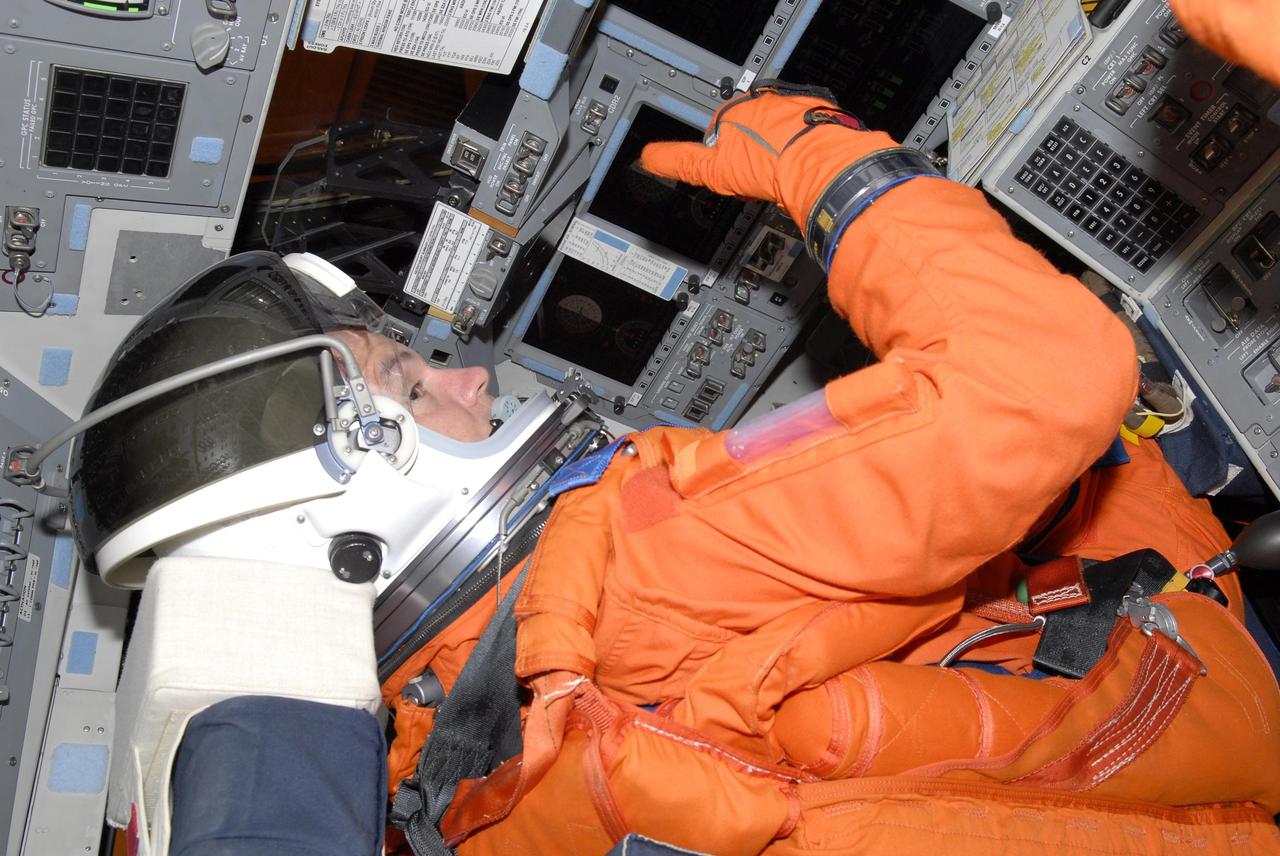
KENNEDY SPACE CENTER, FLA. -- Mission STS-117 Commander Rick Sturckow sits in the cockpit of Space Shuttle Atlantis at Launch Pad 39A to participate in a simulated launch countdown that is part of the prelaunch preparations known as terminal demonstration countdown test (TCDT). The TCDT also includes M-113 armored personnel carrier training and payload familiarization. The STS-117 mission is No. 21 to the International Space Station. Mission payloads aboard Atlantis include the S3/S4 integrated truss structure, a third set of solar arrays and batteries. The crew of six astronauts will install the truss to continue assembly of the station. Launch is scheduled for no earlier than March 15. Photo credit: NASA/Kim Shiflett.
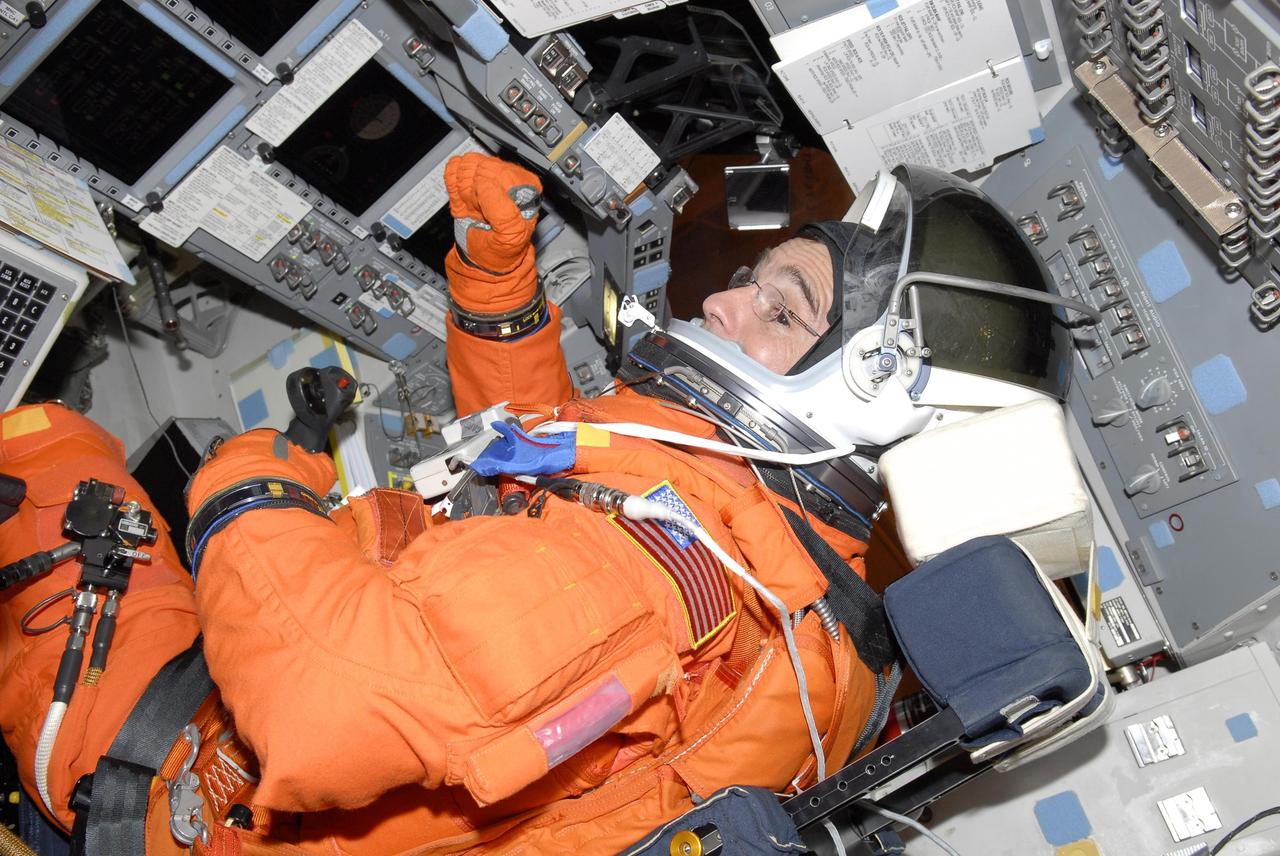
KENNEDY SPACE CENTER, FLA. -- Mission STS-117 Pilot Lee Archambault sits in the cockpit of Space Shuttle Atlantis at Launch Pad 39A to participate in a simulated launch countdown that is part of the prelaunch preparations known as terminal countdown demonstration test (TCDT). The TCDT also includes M-113 armored personnel carrier training and payload familiarization. The STS-117 mission is No. 21 to the International Space Station. Mission payloads aboard Atlantis include the S3/S4 integrated truss structure, a third set of solar arrays and batteries. The crew of six astronauts will install the truss to continue assembly of the station. Launch is scheduled for no earlier than March 15. Photo credit: NASA/Kim Shiflett.
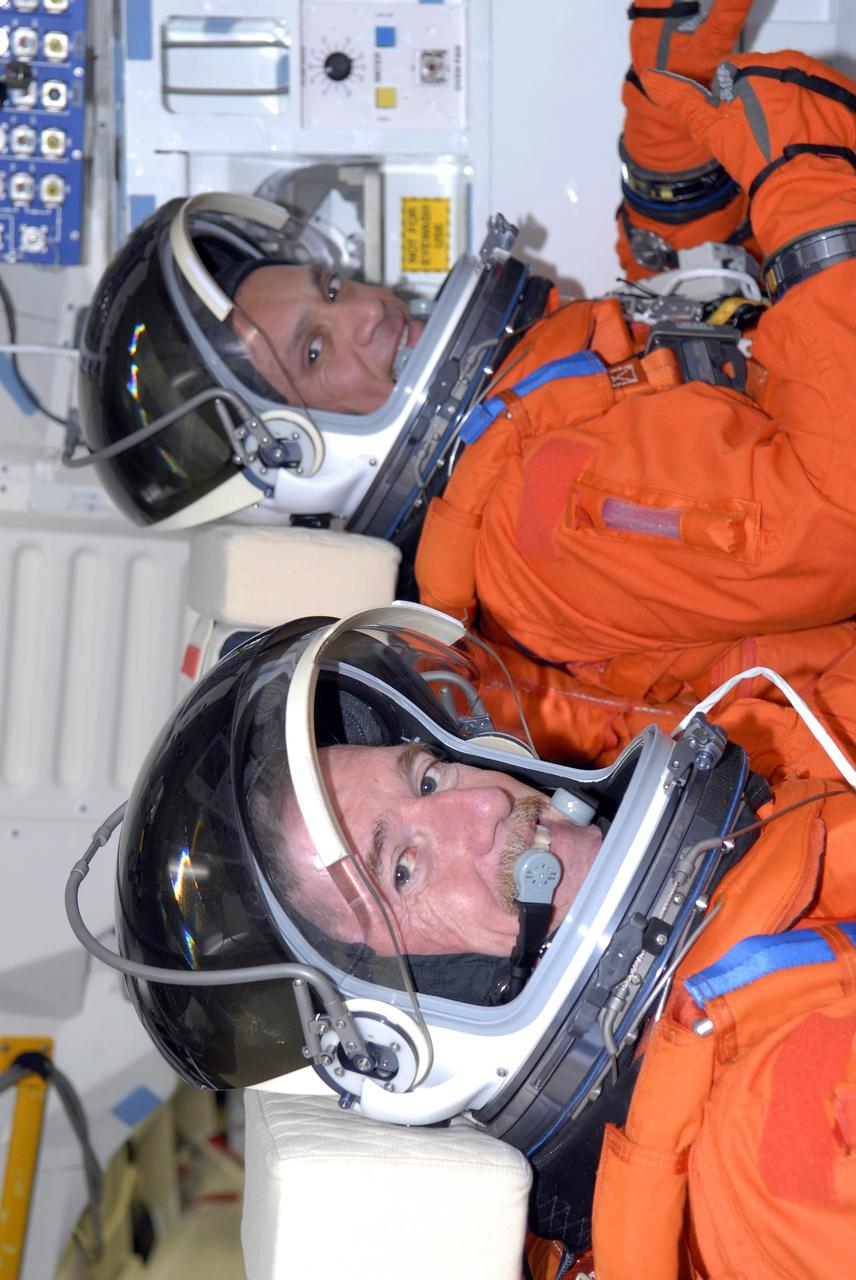
KENNEDY SPACE CENTER, FLA. -- Mission STS-117 Mission Specialists James Reilly (left) and Danny Olivas sit in the mid-deck of Space Shuttle Atlantis at Launch Pad 39A to participate in a simulated launch countdown that is part of the prelaunch preparations known as terminal countdown demonstration test (TCDT). The TCDT also includes M-113 armored personnel carrier training and payload familiarization. The STS-117 mission is No. 21 to the International Space Station. Mission payloads aboard Atlantis include the S3/S4 integrated truss structure, a third set of solar arrays and batteries. The crew of six astronauts will install the truss to continue assembly of the station. Launch is scheduled for no earlier than March 15. Photo credit: NASA/Kim Shiflett.
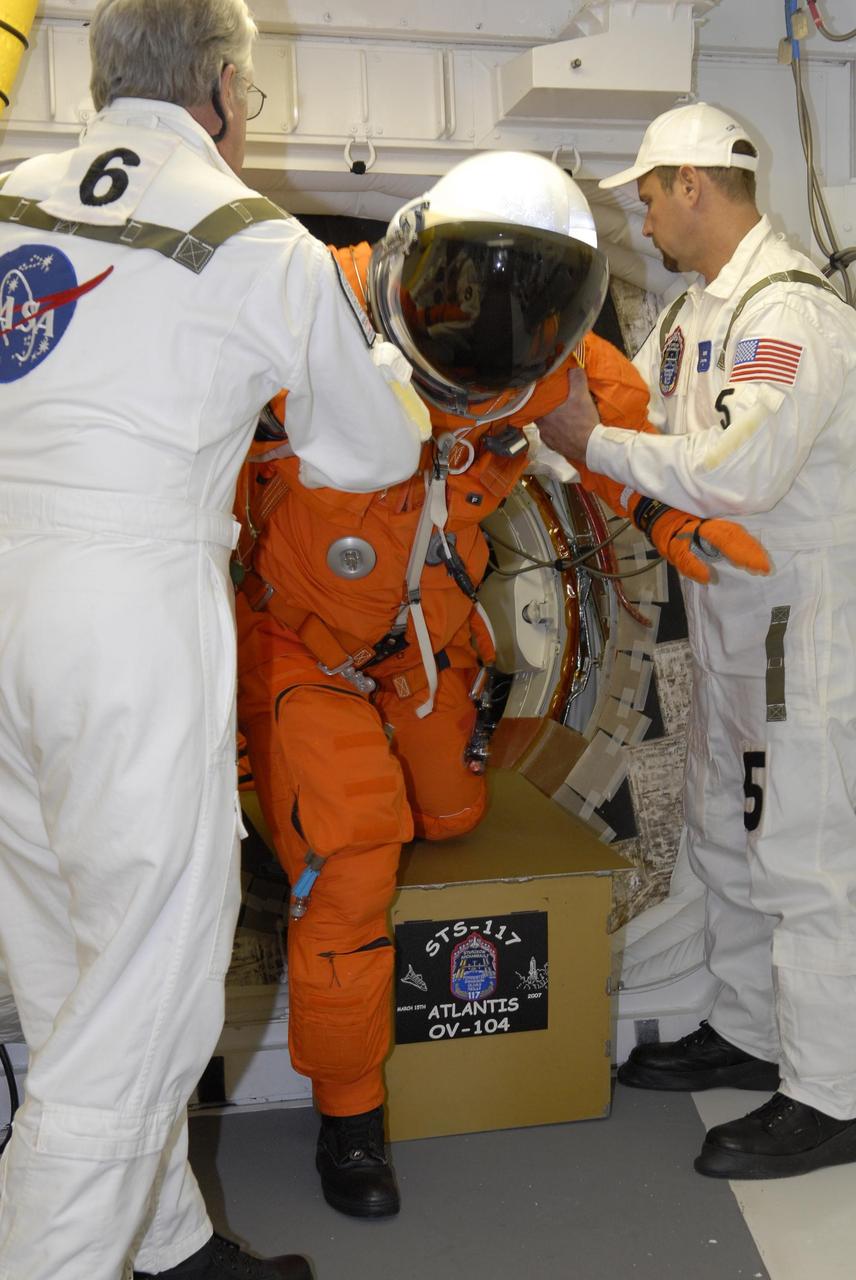
KENNEDY SPACE CENTER, FLA. -- Mission STS-117 Mission Specialist James Reilly egresses from Space Shuttle Atlantis at Launch Pad 39A after participating in a simulated launch countdown that is part of the prelaunch preparations known as terminal demonstration countdown test (TCDT). The TCDT also includes M-113 armored personnel carrier training and payload familiarization. The STS-117 mission is No. 21 to the International Space Station. Mission payloads aboard Atlantis include the S3/S4 integrated truss structure, a third set of solar arrays and batteries. The crew of six astronauts will install the truss to continue assembly of the station. Launch is scheduled for no earlier than March 15. Photo credit: NASA/Kim Shiflett.

KENNEDY SPACE CENTER, FLA. -- Mission STS-117 Mission Specialist Steven Swanson sits inside Space Shuttle Atlantis at Launch Pad 39A to participate in a simulated launch countdown that is part of the prelaunch preparations known as terminal demonstration countdown test (TCDT). The TCDT also includes M-113 armored personnel carrier training and payload familiarization. The STS-117 mission is No. 21 to the International Space Station. Mission payloads aboard Atlantis include the S3/S4 integrated truss structure, a third set of solar arrays and batteries. The crew of six astronauts will install the truss to continue assembly of the station. Launch is scheduled for no earlier than March 15. Photo credit: NASA/Kim Shiflett.
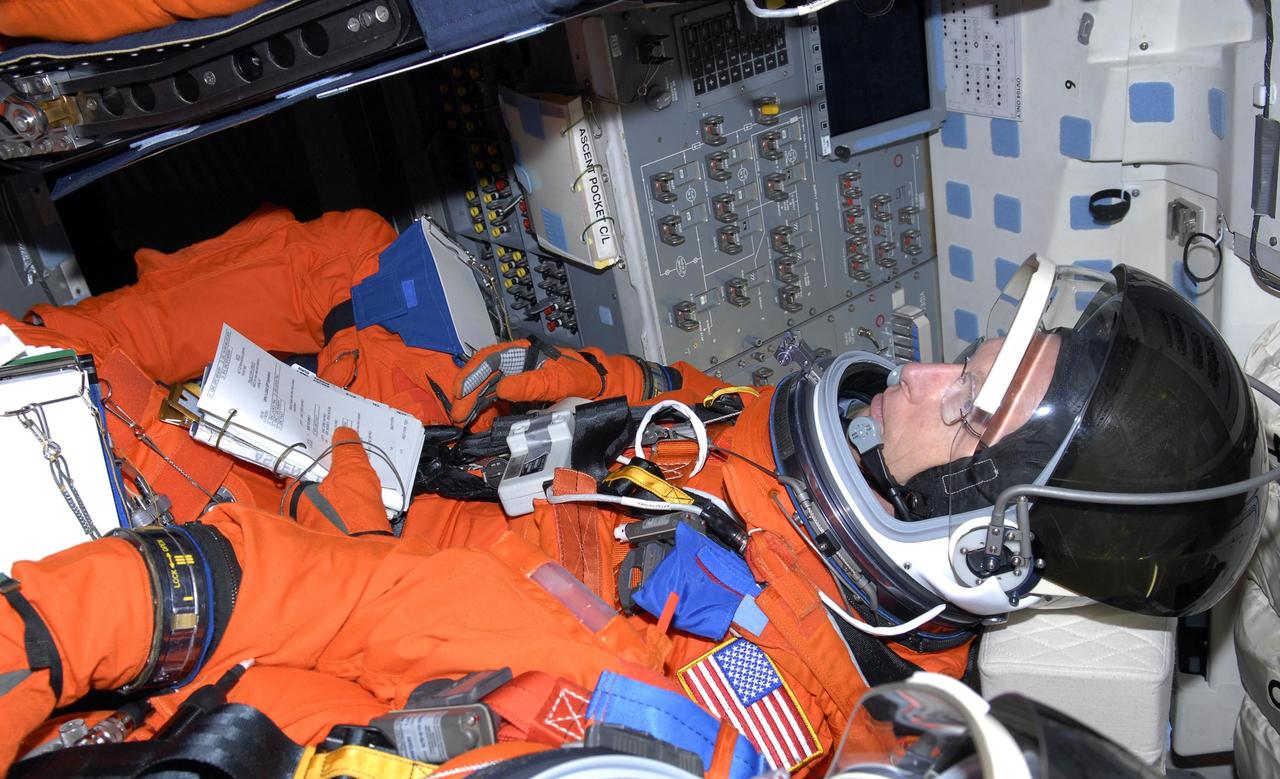
KENNEDY SPACE CENTER, FLA. -- Mission STS-117 Mission Specialist Patrick Forrester sits inside Space Shuttle Atlantis at Launch Pad 39A to participate in a simulated launch countdown that is part of the prelaunch preparations known as the terminal countdown demonstration test (TCDT).The TCDT also includes M-113 armored personnel carrier training and payload familiarization. The STS-117 mission is No. 21 to the International Space Station. Mission payloads aboard Atlantis include the S3/S4 integrated truss structure, a third set of solar arrays and batteries. The crew of six astronauts will install the truss to continue assembly of the station. Launch is scheduled for no earlier than March 15. Photo credit: NASA/Kim Shiflett.
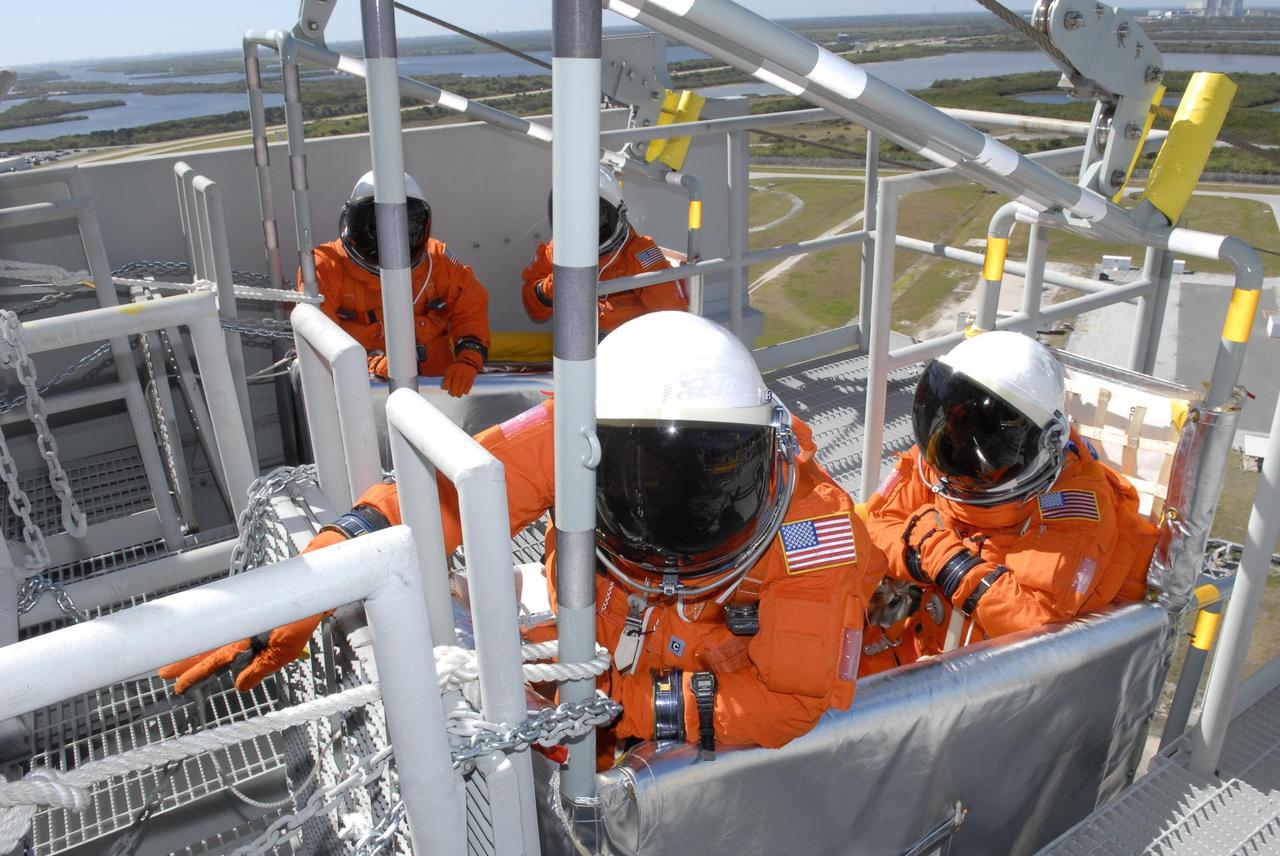
KENNEDY SPACE CENTER, FLA. -- From the 195-foot level of the fixed service structure on Launch Pad 39A, STS-117 Mission Specialists Patrick Forrester (front) and Steven Swanson sit in a slidewire basket, part of the emergency egress system. They and other crew members are practicing the emergency egress procedure to get off the pad, part of the prelaunch preparations known as terminal countdown demonstration test (TCDT). The TCDT also includes M-113 armored personnel carrier training and payload familiarization. The STS-117 mission is No. 21 to the International Space Station. Mission payloads aboard Atlantis include the S3/S4 integrated truss structure, a third set of solar arrays and batteries. The crew of six astronauts will install the truss to continue assembly of the station. Launch is scheduled for no earlier than March 15. Photo credit: NASA/Kim Shiflett.
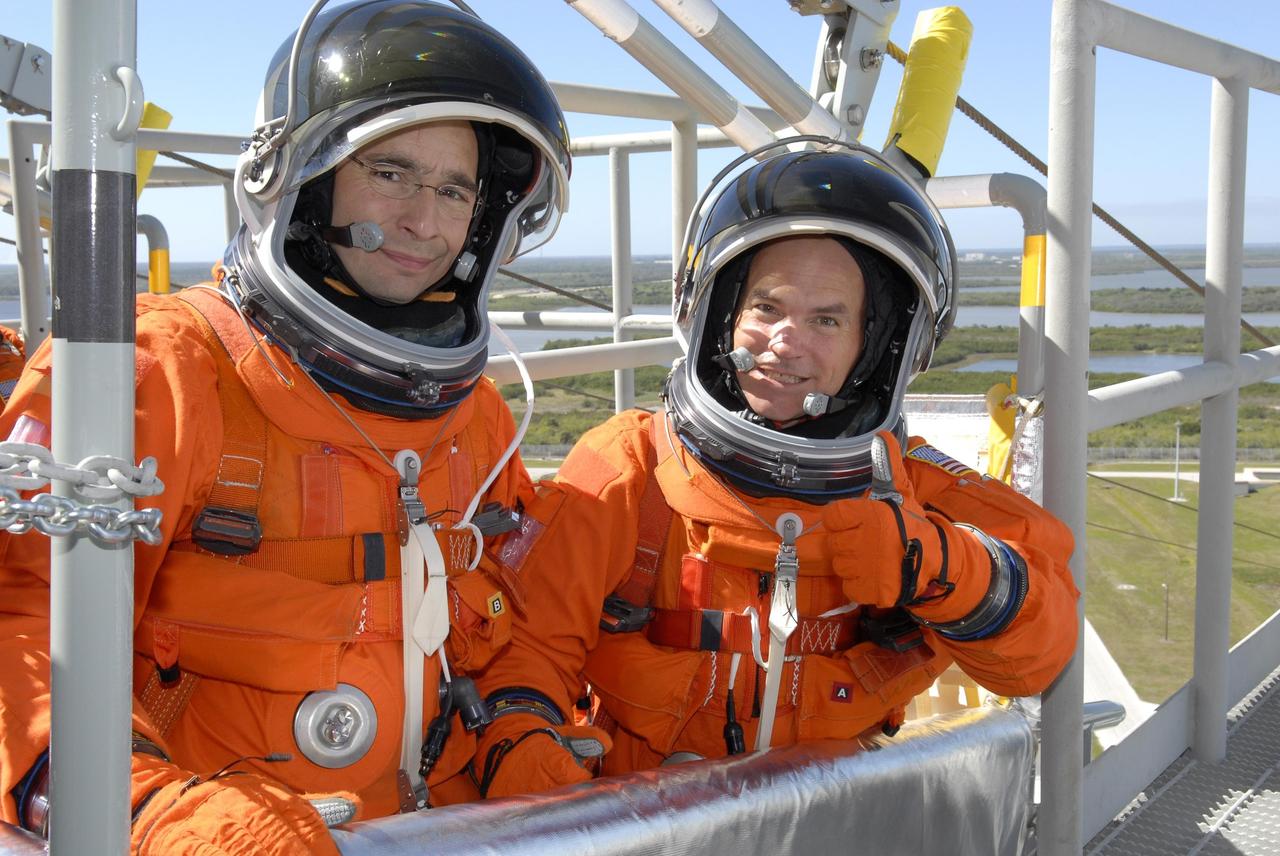
KENNEDY SPACE CENTER, FLA. -- Mission STS-117 Commander Rick Sturckow (right) gives a thumbs up after he and Pilot Lee Archambault practice emergency egress procedures in a slidewire basket at the 195-foot level of the fixed service structure on Launch Pad 39A. They and other crew members are practicing the emergency egress procedure to get off the pad, part of the prelaunch preparations known as terminal countdown demonstration test (TCDT). The TCDT also includes M-113 armored personnel carrier training and payload familiarization. The STS-117 mission is No. 21 to the International Space Station. Mission payloads aboard Atlantis include the S3/S4 integrated truss structure, a third set of solar arrays and batteries. The crew of six astronauts will install the truss to continue assembly of the station. Launch is scheduled for no earlier than March 15. Photo credit: NASA/Kim Shiflett.
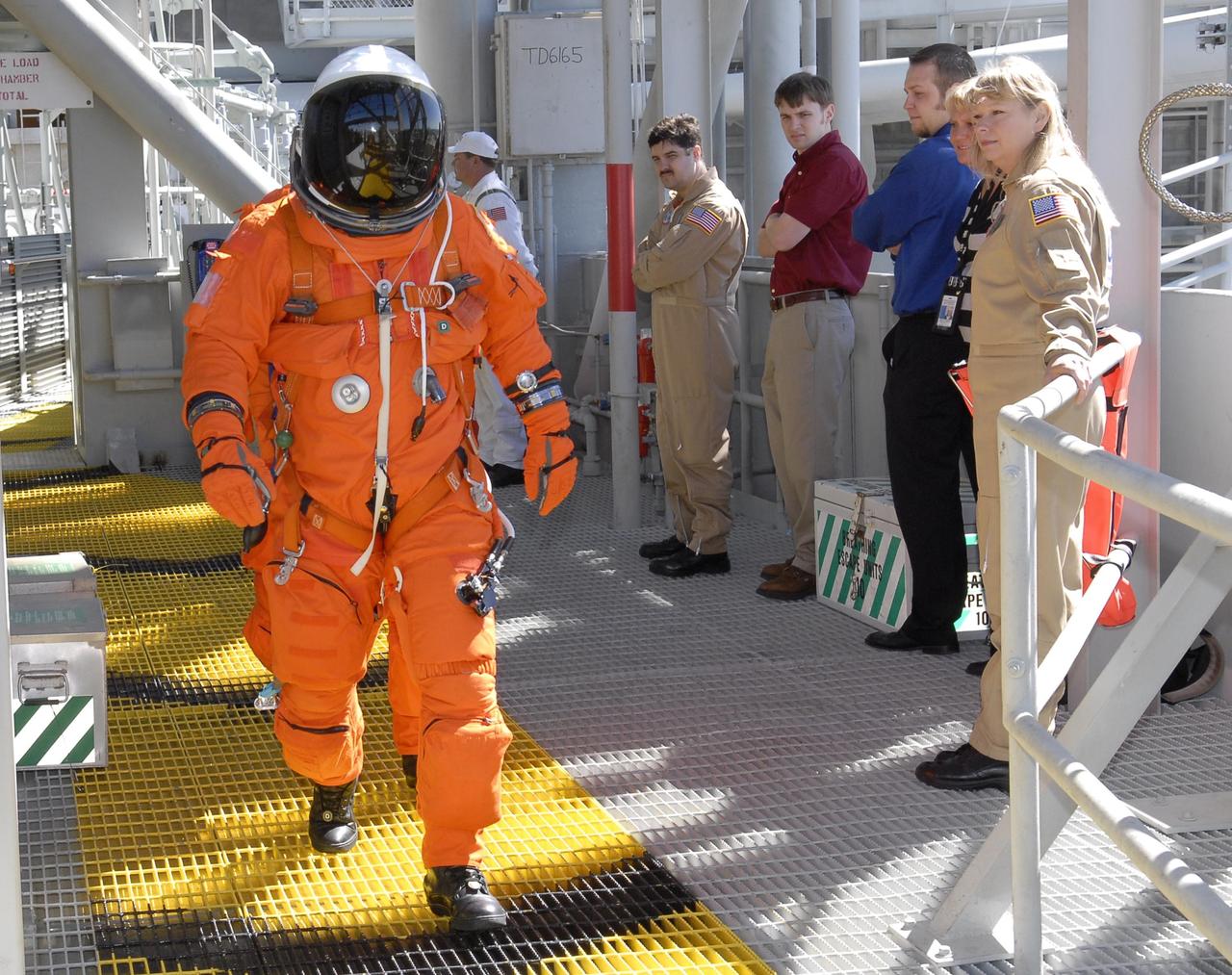
KENNEDY SPACE CENTER, FLA. -- On the 195-foot level of the fixed service structure on Launch Pad 39A, STS-117 Mission Specialists Steven Swanson and Patrick Forrester (directly behind him) head for the slidewire baskets. They and other crew members are practicing the emergency egress procedure to get off the pad, part of the prelaunch preparations known as terminal countdown demonstration test (TCDT). The TCDT also includes M-113 armored personnel carrier training and payload familiarization. The STS-117 mission is No. 21 to the International Space Station. Mission payloads aboard Atlantis include the S3/S4 integrated truss structure, a third set of solar arrays and batteries. The crew of six astronauts will install the truss to continue assembly of the station. Launch is scheduled for no earlier than March 15. Photo credit: NASA/Kim Shiflett.
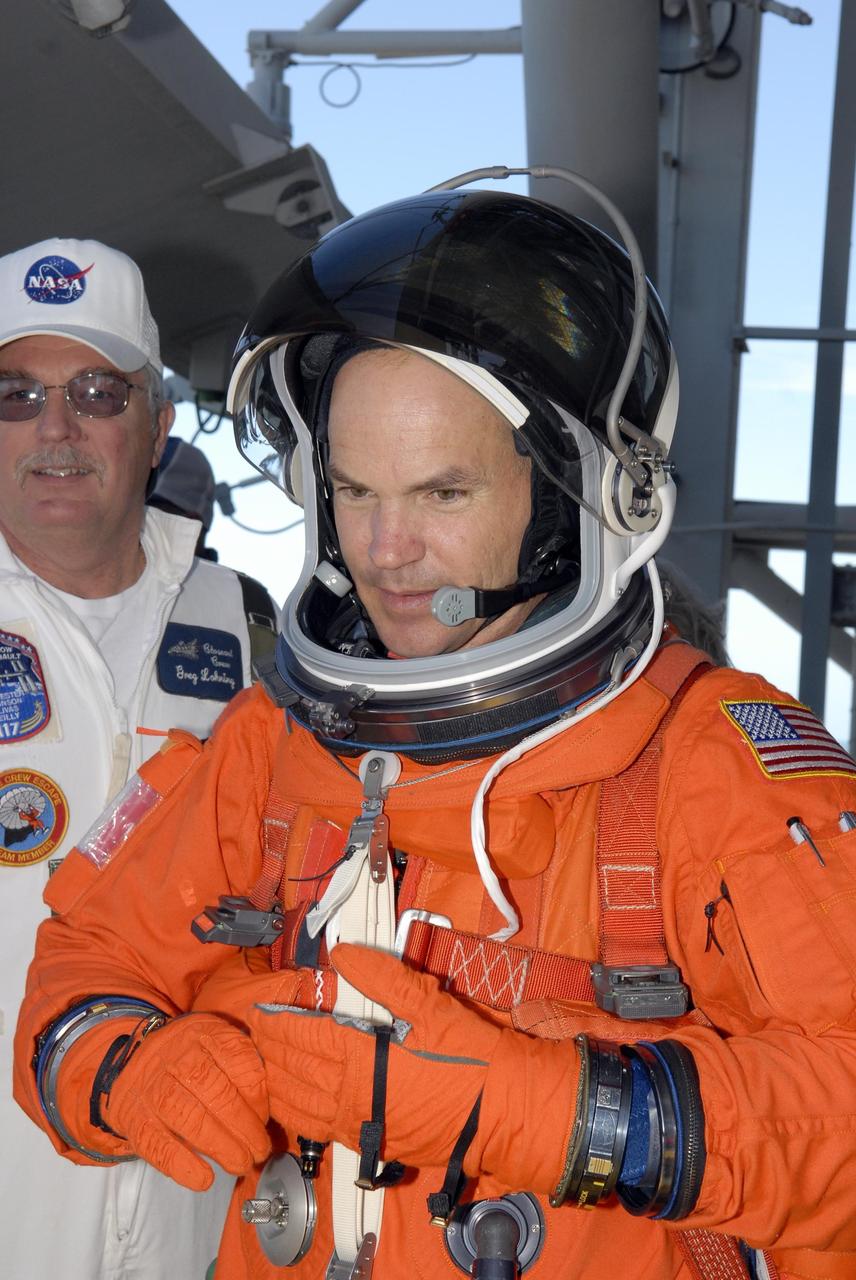
KENNEDY SPACE CENTER, FLA. -- Mission STS-117 Commander Rick Sturckow completes emergency egress procedures at the 195-foot level of the fixed service structure on Launch Pad 39A during the prelaunch preparations known as terminal countdown demonstration test (TCDT). The TCDT also includes M-113 armored personnel carrier training and payload familiarization. The STS-117 mission is No. 21 to the International Space Station. Mission payloads aboard Atlantis include the S3/S4 integrated truss structure, a third set of solar arrays and batteries. The crew of six astronauts will install the truss to continue assembly of the station. Launch is scheduled for no earlier than March 15. Photo credit: NASA/Kim Shiflett.
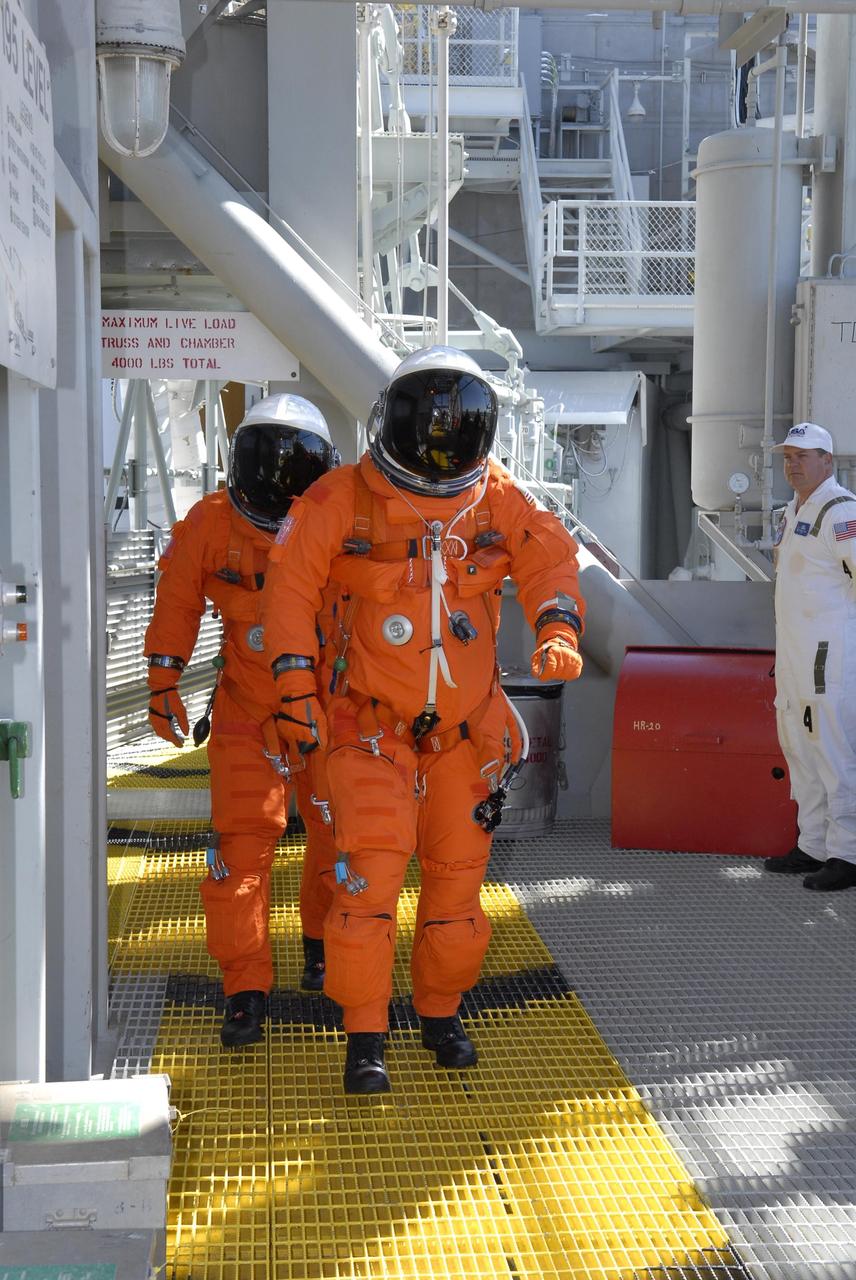
KENNEDY SPACE CENTER, FLA. -- On the 195-foot level of the fixed service structure on Launch Pad 39A, STS-117 Mission Specialists James Reilly (front) and Danny Olivas head for the slidewire baskets. They and other crew members are practicing the emergency egress procedure to get off the pad, part of the prelaunch preparations known as terminal countdown demonstration test (TCDT). The TCDT also includes M-113 armored personnel carrier training and payload familiarization. The STS-117 mission is No. 21 to the International Space Station. Mission payloads aboard Atlantis include the S3/S4 integrated truss structure, a third set of solar arrays and batteries. The crew of six astronauts will install the truss to continue assembly of the station. Launch is scheduled for no earlier than March 15. Photo credit: NASA/Kim Shiflett.
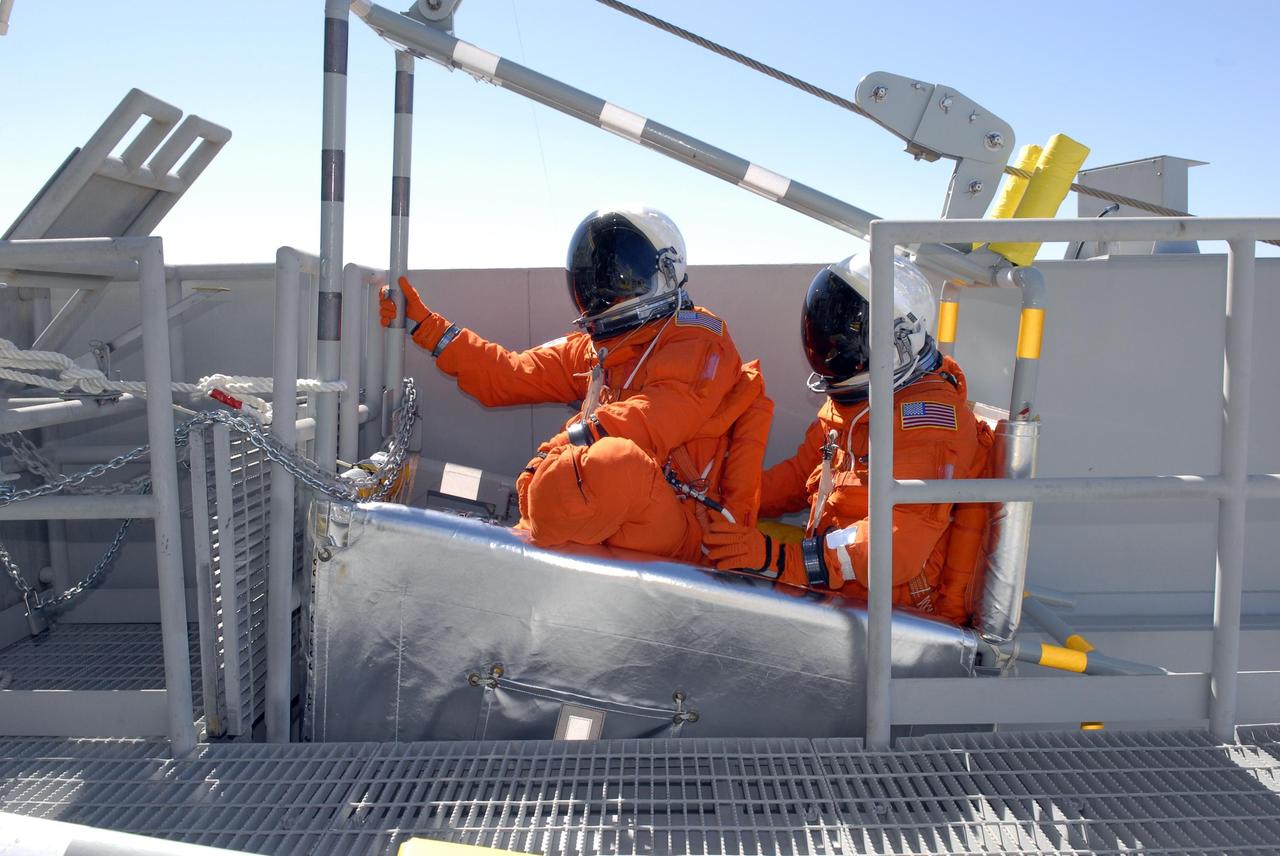
KENNEDY SPACE CENTER, FLA. -- From the 195-foot level of the fixed service structure on Launch Pad 39A, STS-117 Mission Specialists Danny Olivas (front) and James Reilly sit in a slidewire basket, part of the emergency egress system. They and other crew members are practicing the emergency egress procedure to get off the pad, part of the prelaunch preparations known as terminal countdown demonstration test (TCDT). The TCDT also includes M-113 armored personnel carrier training and payload familiarization. The STS-117 mission is No. 21 to the International Space Station. Mission payloads aboard Atlantis include the S3/S4 integrated truss structure, a third set of solar arrays and batteries. The crew of six astronauts will install the truss to continue assembly of the station. Launch is scheduled for no earlier than March 15. Photo credit: NASA/Kim Shiflett.
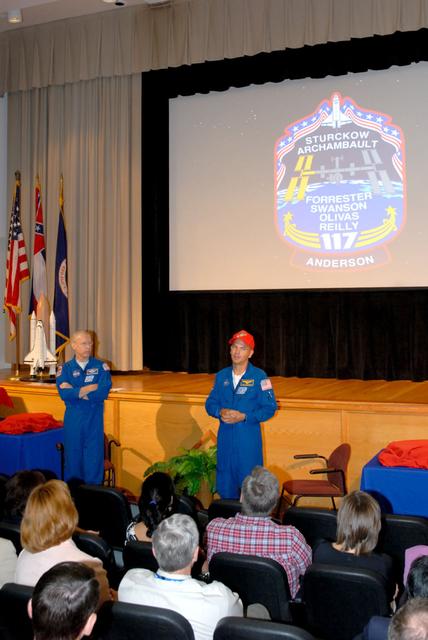
Astronauts Rick Sturckow (right) and Pat Forrester make a presentation Aug. 2 at NASA Stennis Space Center near Bay St. Louis, Miss., about their recent space shuttle mission, STS-117. Sturckow and Forrester thanked employees for the reliability and safe performance of the space shuttle's main engines, which are all tested and proved flight-worthy at SSC. The astronauts delivered a video of their mission's highlights, held a question-and-answer session, met one-on-one with employees and presented two Silver Snoopy awards during their visit. The STS-117 mission, which launched June 8, delivered a truss segment and a set of U.S. solar arrays, batteries and associated equipment to the International Space Station. Sturckow commanded the mission; Forrester was a mission specialist who performed two of STS-117's four spacewalks.
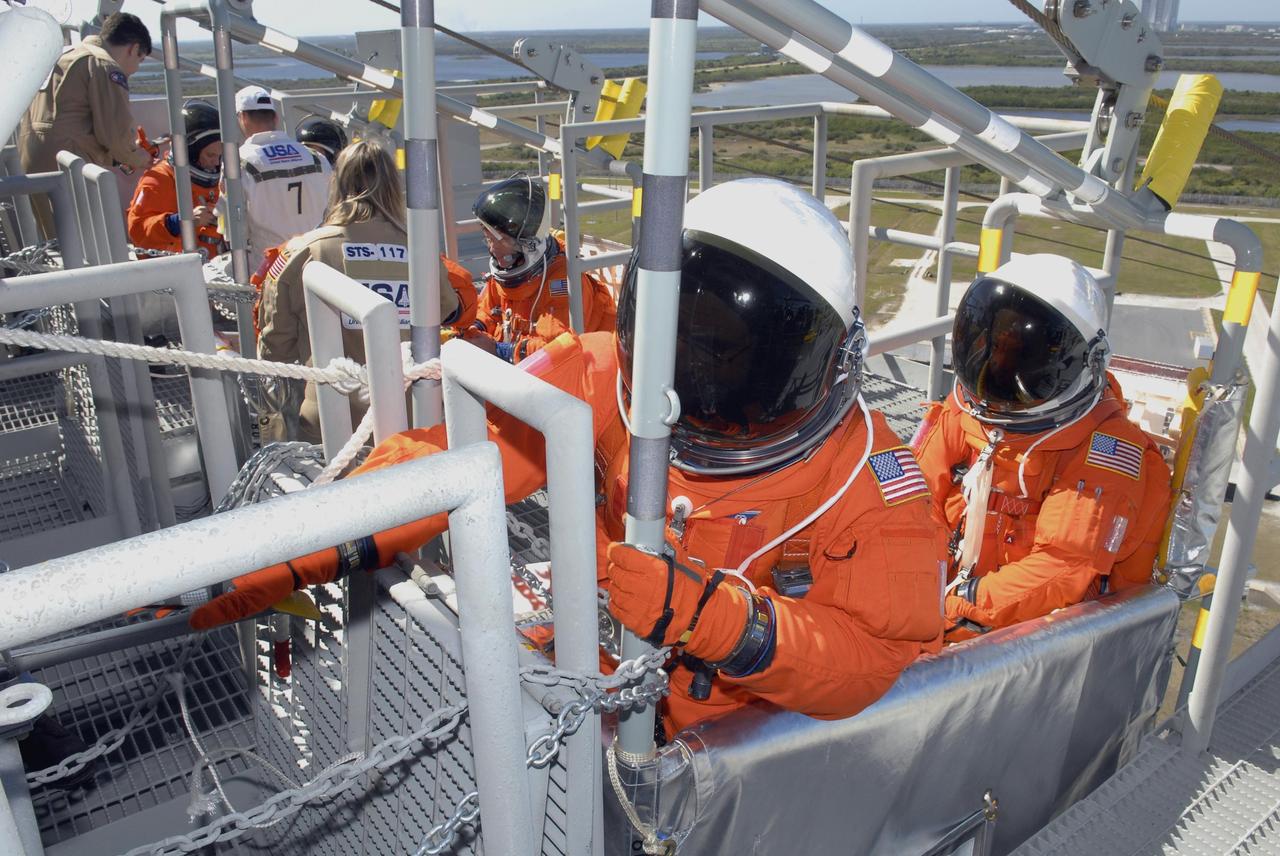
KENNEDY SPACE CENTER, FLA. -- From the 195-foot level of the fixed service structure on Launch Pad 39A, STS-117 Pilot Lee Archambault (front) and Commander Rick Sturckow sit in a slidewire basket, part of the emergency egress system. They and other crew members are practicing the emergency egress procedure to get off the pad, part of the prelaunch preparations known as terminal countdown demonstration test. The TCDT also includes M-113 armored personnel carrier training and payload familiarization. The STS-117 mission is No. 21 to the International Space Station. Mission payloads aboard Atlantis include the S3/S4 integrated truss structure, a third set of solar arrays and batteries. The crew of six astronauts will install the truss to continue assembly of the station. Launch is scheduled for no earlier than March 15. Photo credit: NASA/Kim Shiflett.
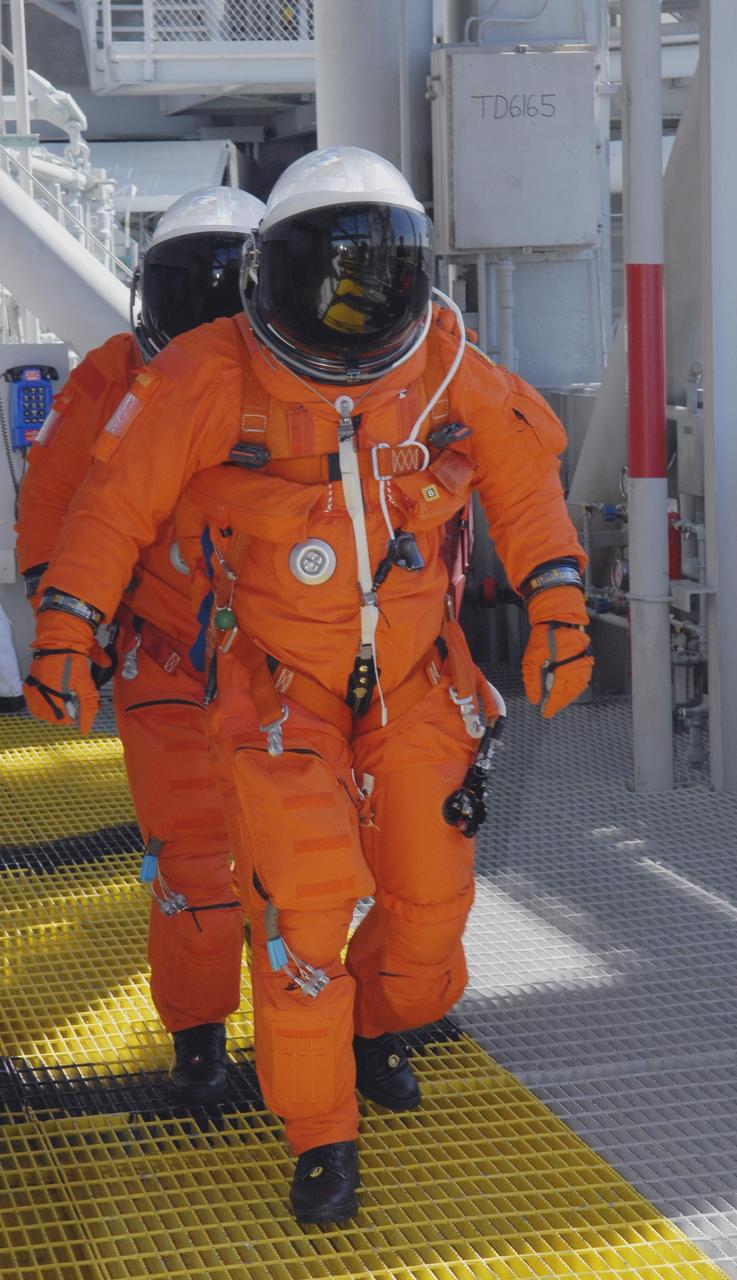
KENNEDY SPACE CENTER, FLA. -- On the 195-foot level of the fixed service structure on Launch Pad 39A, STS-117 Pilot Lee Archambault (front) and Commander Rick Sturckow head for the slidewire baskets. They and other crew members are practicing the emergency egress procedure to get off the pad, part of the prelaunch preparations known as terminal countdown demonstration test (TCDT). The TCDT also includes M-113 armored personnel carrier training and payload familiarization. The STS-117 mission is No. 21 to the International Space Station. Mission payloads aboard Atlantis include the S3/S4 integrated truss structure, a third set of solar arrays and batteries. The crew of six astronauts will install the truss to continue assembly of the station. Launch is scheduled for no earlier than March 15. Photo credit: NASA/Kim Shiflett.
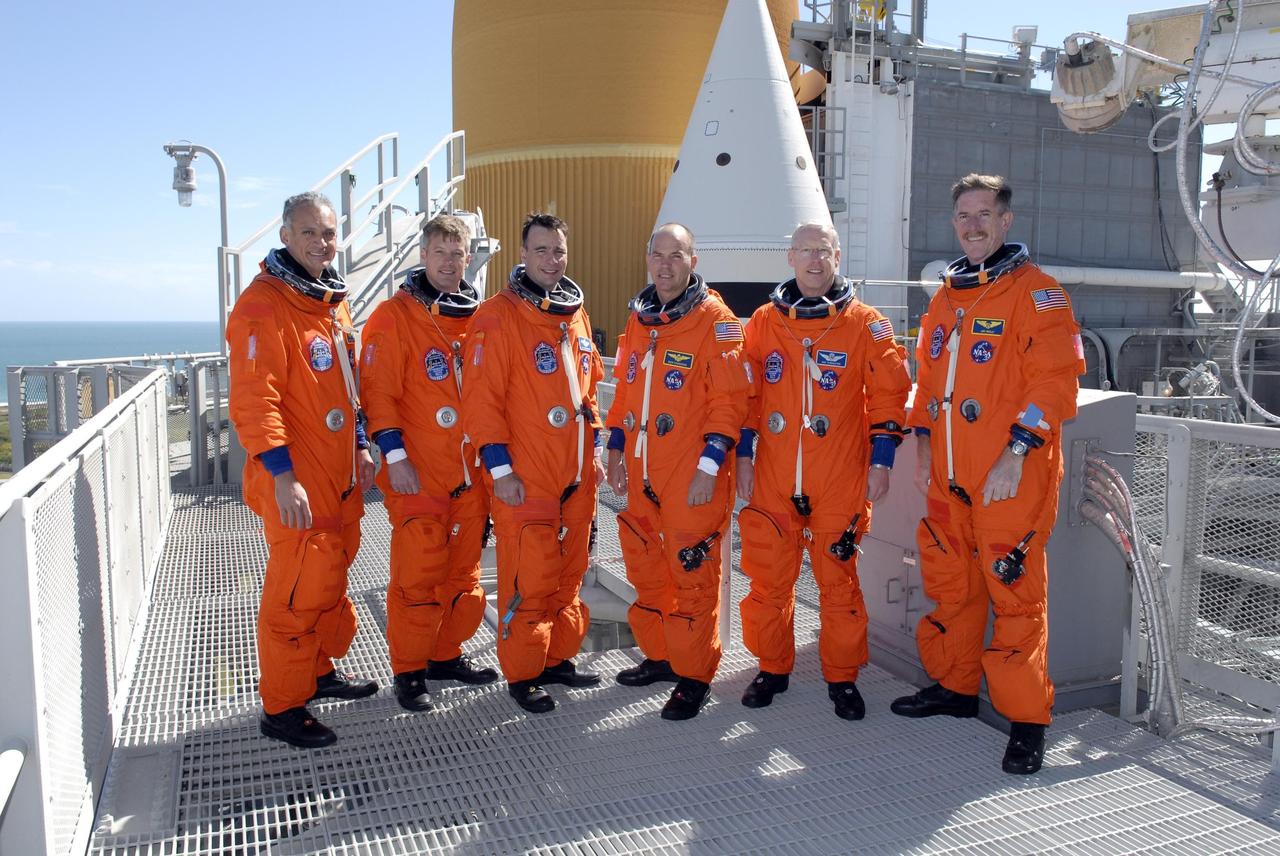
KENNEDY SPACE CENTER, FLA. -- On the 215-foot level of the fixed service structure on Launch Pad 39A, Mission STS-117 crew members gather for a photo near the solid rocket boosters and external tank of Space Shuttle Atlantis. They have just completed a simulated launch countdown and emergency egress from the orbiter, part of the terminal countdown demonstration test (TCDT). From left are Mission Specialists Danny Olivas and Steven Swanson, Pilot Lee Archambault, Commander Rick Sturckow, and Mission Specialists Patrick Forrester and James Reilly. The TCDT also includes M-113 armored personnel carrier training and payload familiarization. The STS-117 mission is No. 21 to the International Space Station. Mission payloads aboard Atlantis include the S3/S4 integrated truss structure, a third set of solar arrays and batteries. The crew of six astronauts will install the truss to continue assembly of the station. Launch is scheduled for no earlier than March 15. Photo credit: NASA/Kim Shiflett.

KENNEDY SPACE CENTER, FLA. -- Mission STS-117 Commander Rick Sturckow (left) and Pilot Lee Archambault arrive at the Shuttle Landing Facility to begin practice flights on the shuttle training aircraft (STA) during Terminal Countdown Demonstration Test (TCDT) activities. The STA is a Grumman American Aviation-built Gulf Stream II jet that was modified to simulate an orbiter's cockpit, motion and visual cues, and handling qualities. In flight, the STA duplicates the orbiter's atmospheric descent trajectory from approximately 35,000 feet altitude to landing on a runway. Because the orbiter is unpowered during re-entry and landing, its high-speed glide must be perfectly executed the first time. The mission payload aboard Space Shuttle Atlantis is the S3/S4 integrated truss structure, along with a third set of solar arrays and batteries. The crew of six astronauts will install the truss to continue assembly of the International Space Station. STS-117 is the 118th space shuttle flight and the 21st flight to the station. Photo credit: NASA/Kim Shiflett

KENNEDY SPACE CENTER, FLA. -- The shuttle training aircraft (STA) sits on the tarmac at the Shuttle Landing Facility, ready for practice flights by Mission STS-117 Commander Rick Sturckow and Pilot Lee Archambault. The STA is a Grumman American Aviation-built Gulf Stream II jet that was modified to simulate an orbiter's cockpit, motion and visual cues, and handling qualities. In flight, the STA duplicates the orbiter's atmospheric descent trajectory from approximately 35,000 feet altitude to landing on a runway. Because the orbiter is unpowered during re-entry and landing, its high-speed glide must be perfectly executed the first time. The mission payload aboard Space Shuttle Atlantis is the S3/S4 integrated truss structure, along with a third set of solar arrays and batteries. The crew of six astronauts will install the truss to continue assembly of the International Space Station. STS-117 is the 118th space shuttle flight and the 21st flight to the station. Photo credit: NASA/Kim Shiflett
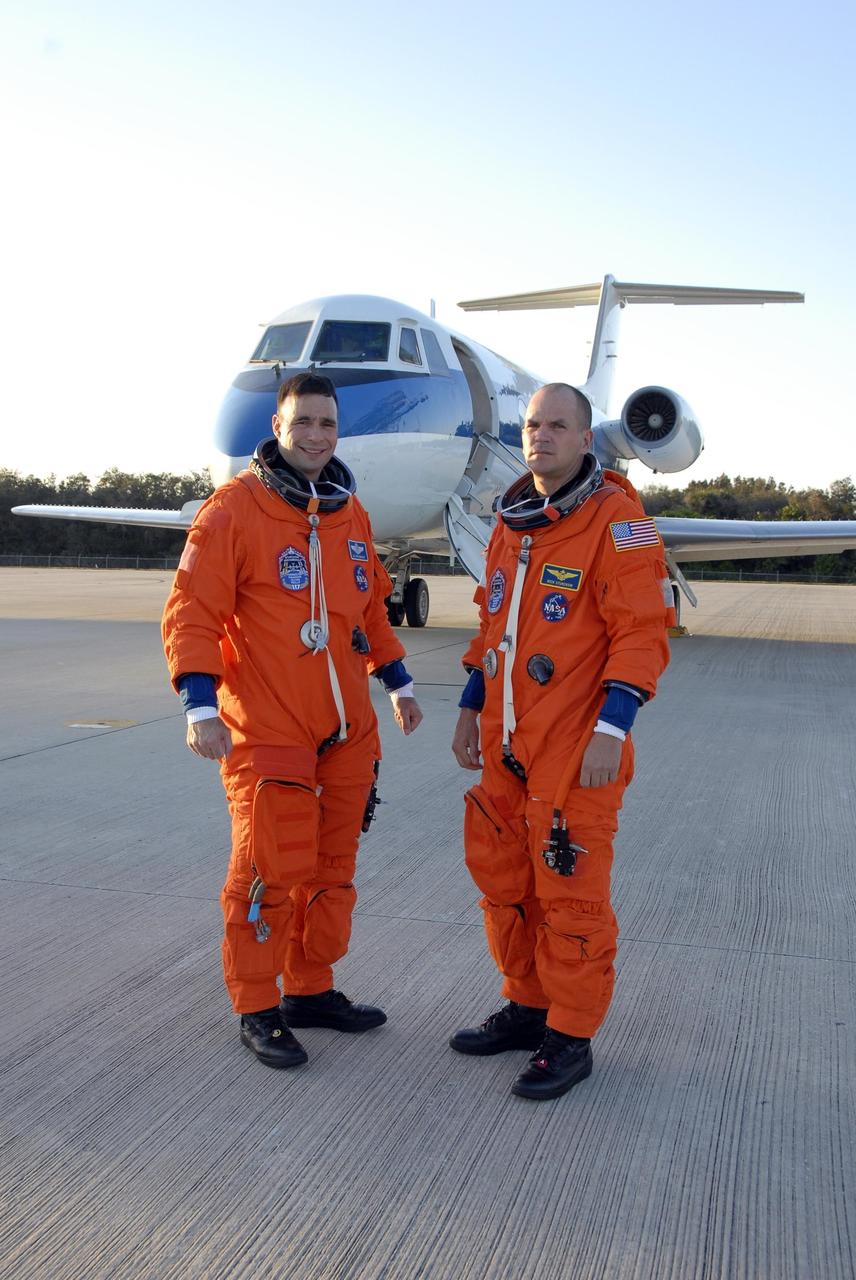
KENNEDY SPACE CENTER, FLA. -- Mission STS-117 Commander Rick Sturckow (left) and Pilot Lee Archambault, dressed in their launch suits, arrive at the Shuttle Landing Facility to begin practice flights on the shuttle training aircraft (STA) during Terminal Countdown Demonstration Test (TCDT) activities. The STA is a Grumman American Aviation-built Gulf Stream II jet that was modified to simulate an orbiter's cockpit, motion and visual cues, and handling qualities. In flight, the STA duplicates the orbiter's atmospheric descent trajectory from approximately 35,000 feet altitude to landing on a runway. Because the orbiter is unpowered during re-entry and landing, its high-speed glide must be perfectly executed the first time. The mission payload aboard Space Shuttle Atlantis is the S3/S4 integrated truss structure, along with a third set of solar arrays and batteries. The crew of six astronauts will install the truss to continue assembly of the International Space Station. STS-117 is the 118th space shuttle flight and the 21st flight to the station. Photo credit: NASA/Kim Shiflett
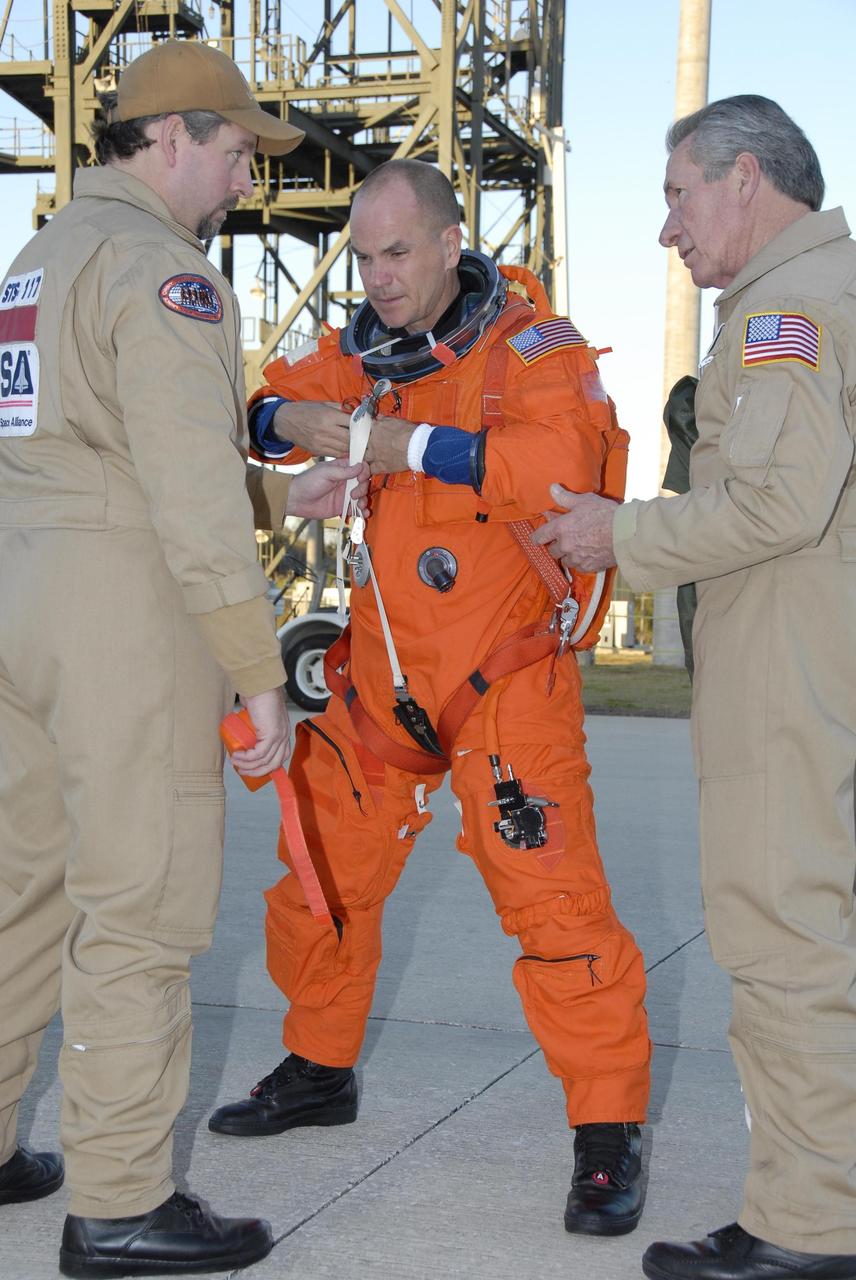
KENNEDY SPACE CENTER, FLA. -- Mission STS-117 Commander Rick Sturckow, dressed in his launch suit, prepares to begin practice flights on the shuttle training aircraft (STA) at the Shuttle Landing Facility during Terminal Countdown Demonstration Test (TCDT) activities. The STA is a Grumman American Aviation-built Gulf Stream II jet that was modified to simulate an orbiter's cockpit, motion and visual cues, and handling qualities. In flight, the STA duplicates the orbiter's atmospheric descent trajectory from approximately 35,000 feet altitude to landing on a runway. Because the orbiter is unpowered during re-entry and landing, its high-speed glide must be perfectly executed the first time. The mission payload aboard Space Shuttle Atlantis is the S3/S4 integrated truss structure, along with a third set of solar arrays and batteries. The crew of six astronauts will install the truss to continue assembly of the International Space Station. STS-117 is the 118th space shuttle flight and the 21st flight to the station. Photo credit: NASA/Kim Shiflett
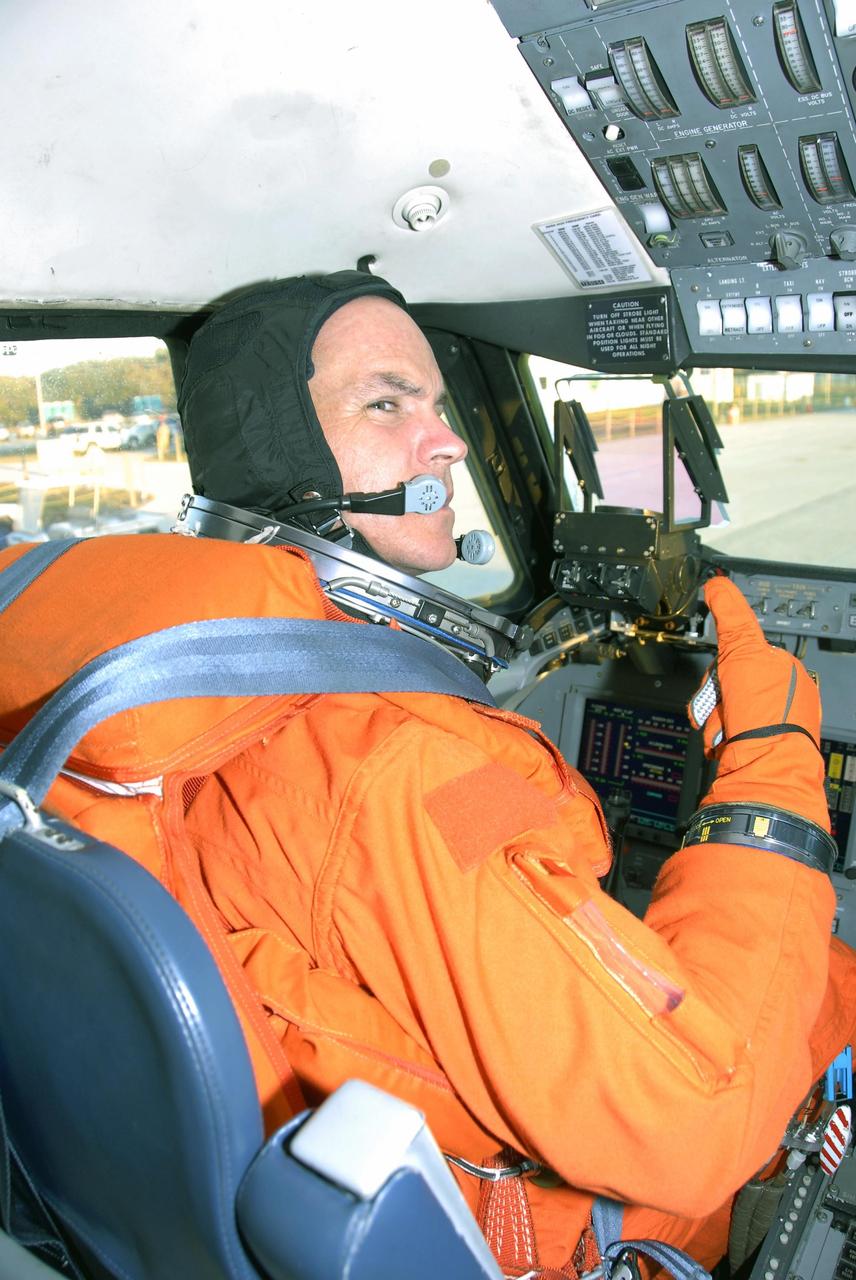
KENNEDY SPACE CENTER, FLA. -- At the Shuttle Landing Facility, Mission STS-117 Commander Rick Sturckow sits in the cockpit of the shuttle training aircraft (STA) ready to begin practice flights as part of the Terminal Countdown Demonstration Test (TCDT) activities. The STA is a Grumman American Aviation-built Gulf Stream II jet that was modified to simulate an orbiter's cockpit, motion and visual cues, and handling qualities. In flight, the STA duplicates the orbiter's atmospheric descent trajectory from approximately 35,000 feet altitude to landing on a runway. Because the orbiter is unpowered during re-entry and landing, its high-speed glide must be perfectly executed the first time. The mission payload aboard Space Shuttle Atlantis is the S3/S4 integrated truss structure, along with a third set of solar arrays and batteries. The crew of six astronauts will install the truss to continue assembly of the International Space Station. STS-117 is the 118th space shuttle flight and the 21st flight to the station. Photo credit: NASA/Kim Shiflett
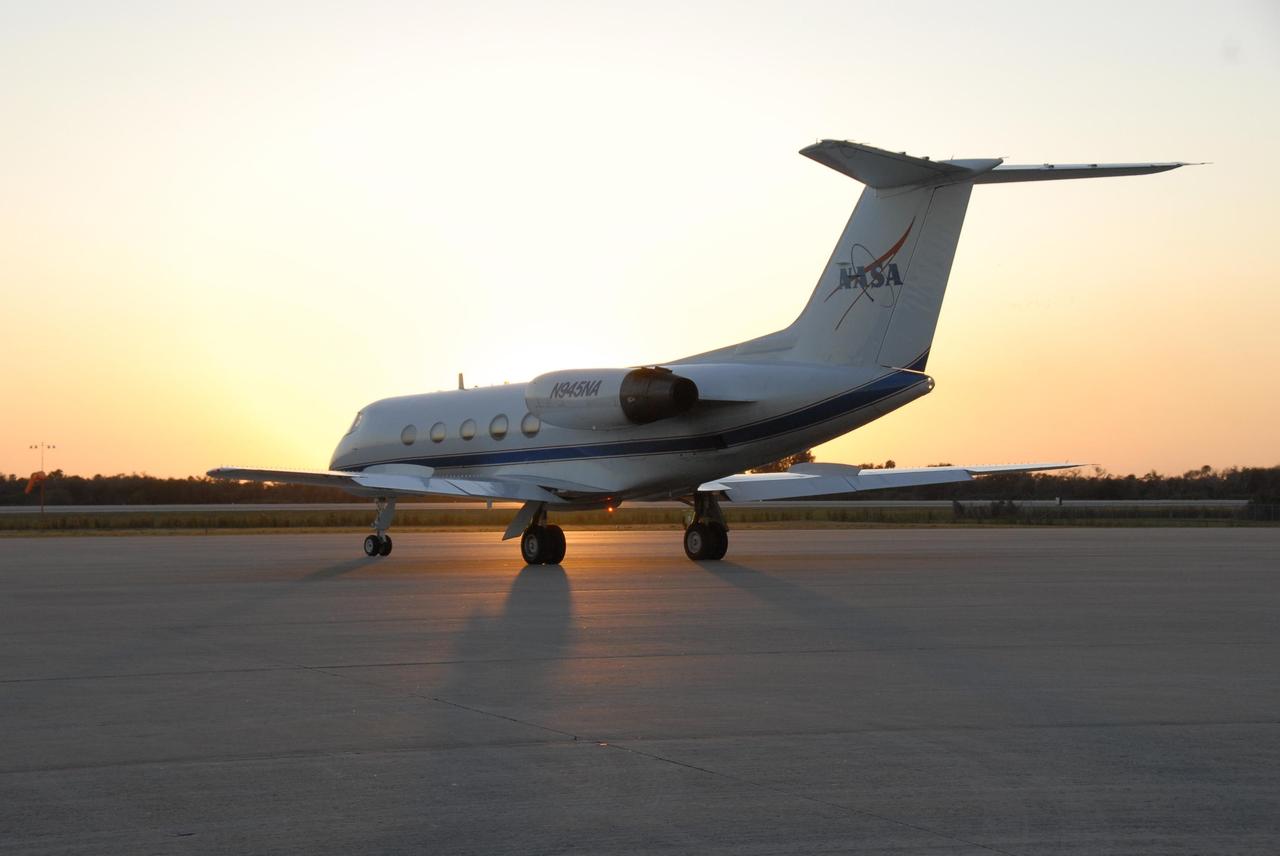
KENNEDY SPACE CENTER, FLA. -- With the sun just peaking above the horizon, the shuttle training aircraft (STA) sits on the tarmac at the Shuttle Landing Facility, ready for practice flights by Mission STS-117 Commander Rick Sturckow and Pilot Lee Archambault. The STA is a Grumman American Aviation-built Gulf Stream II jet that was modified to simulate an orbiter's cockpit, motion and visual cues, and handling qualities. In flight, the STA duplicates the orbiter's atmospheric descent trajectory from approximately 35,000 feet altitude to landing on a runway. Because the orbiter is unpowered during re-entry and landing, its high-speed glide must be perfectly executed the first time. The mission payload aboard Space Shuttle Atlantis is the S3/S4 integrated truss structure, along with a third set of solar arrays and batteries. The crew of six astronauts will install the truss to continue assembly of the International Space Station. STS-117 is the 118th space shuttle flight and the 21st flight to the station. Photo credit: NASA/Kim Shiflett
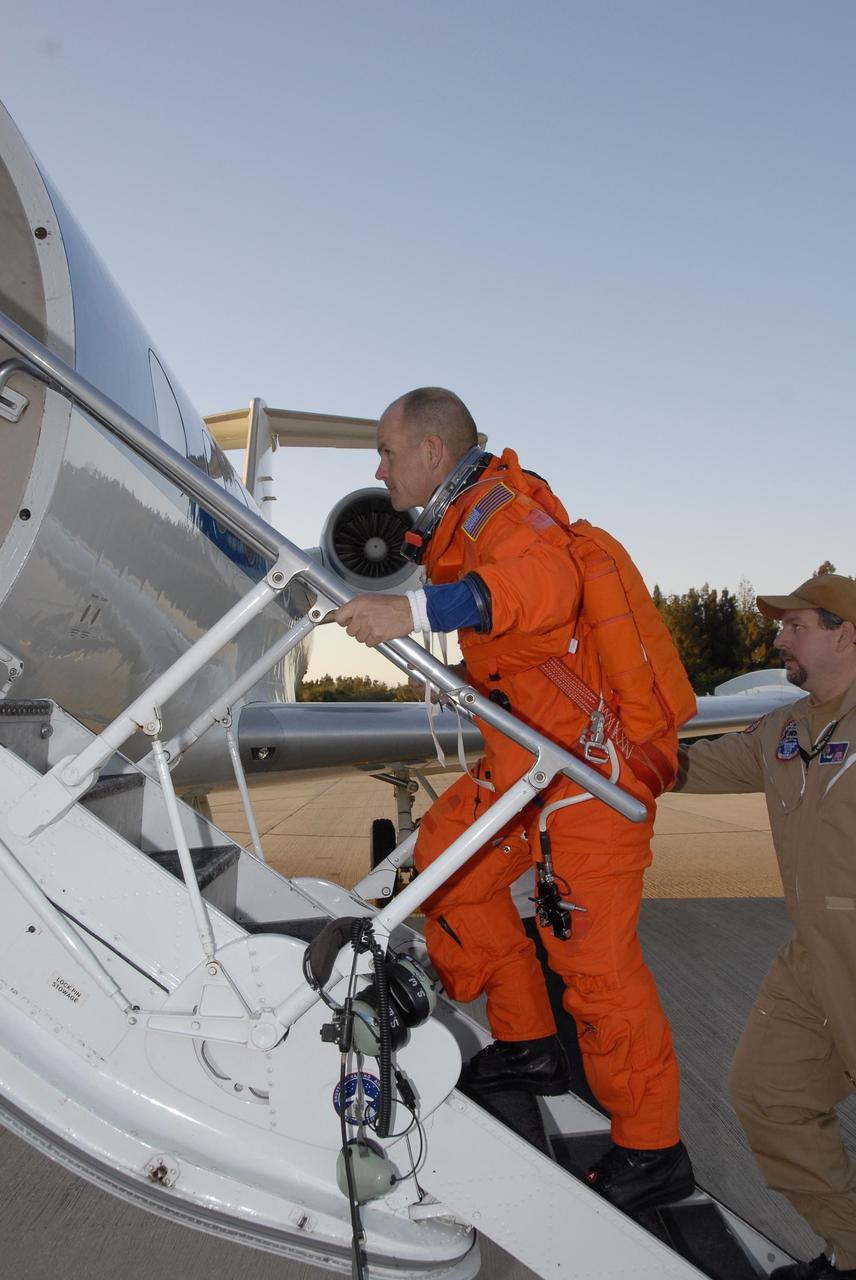
KENNEDY SPACE CENTER, FLA. -- At the Shuttle Landing Facility, Mission STS-117 Commander Rick Sturckow is ready to begin practice flights on the shuttle training aircraft (STA) during Terminal Countdown Demonstration Test (TCDT) Activities. The STA is a Grumman American Aviation-built Gulf Stream II jet that was modified to simulate an orbiter's cockpit, motion and visual cues, and handling qualities. In flight, the STA duplicates the orbiter's atmospheric descent trajectory from approximately 35,000 feet altitude to landing on a runway. Because the orbiter is unpowered during re-entry and landing, its high-speed glide must be perfectly executed the first time. The mission payload aboard Space Shuttle Atlantis is the S3/S4 integrated truss structure, along with a third set of solar arrays and batteries. The crew of six astronauts will install the truss to continue assembly of the International Space Station. STS-117 is the 118th space shuttle flight and the 21st flight to the station. Photo credit: NASA/Kim Shiflett
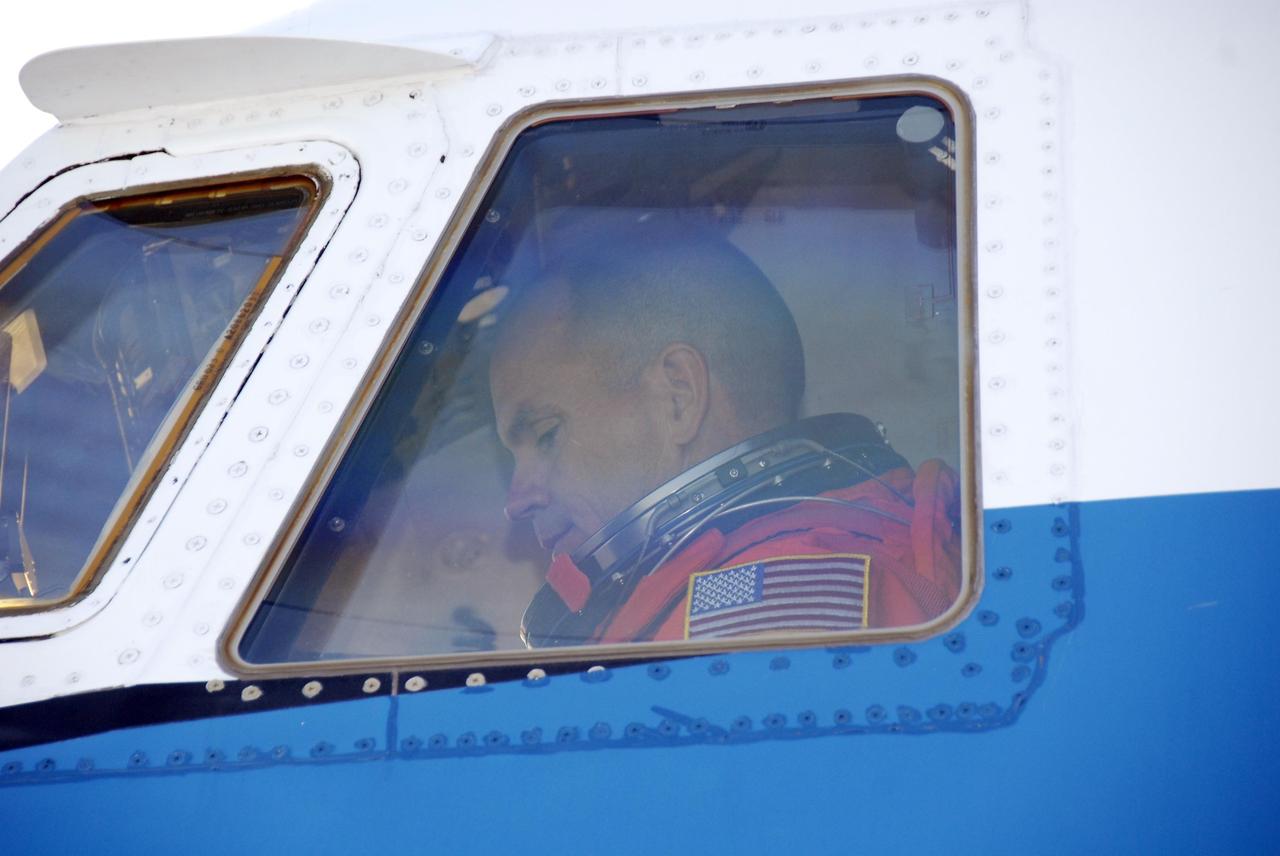
KENNEDY SPACE CENTER, FLA. -- At the Shuttle Landing Facility, Mission STS-117 Commander Rick Sturckow sits in the cockpit of the shuttle training aircraft (STA) ready to begin practice flights as part of the Terminal Countdown Demonstration Test (TCDT) activities. The STA is a Grumman American Aviation-built Gulf Stream II jet that was modified to simulate an orbiter's cockpit, motion and visual cues, and handling qualities. In flight, the STA duplicates the orbiter's atmospheric descent trajectory from approximately 35,000 feet altitude to landing on a runway. Because the orbiter is unpowered during re-entry and landing, its high-speed glide must be perfectly executed the first time. The mission payload aboard Space Shuttle Atlantis is the S3/S4 integrated truss structure, along with a third set of solar arrays and batteries. The crew of six astronauts will install the truss to continue assembly of the International Space Station. STS-117 is the 118th space shuttle flight and the 21st flight to the station. Photo credit: NASA/Kim Shiflett
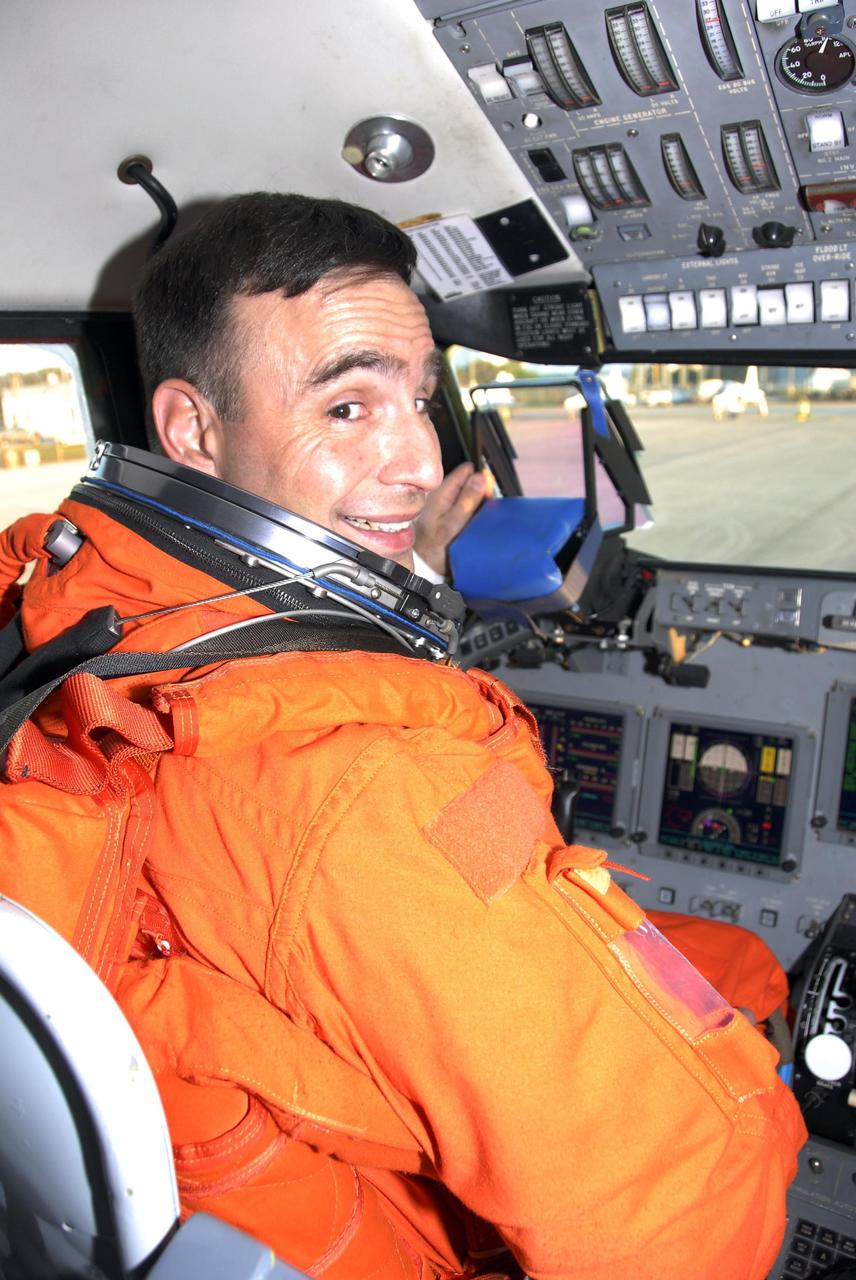
KENNEDY SPACE CENTER, FLA. -- At the Shuttle Landing Facility, Mission STS-117 Pilot Lee Archambault sits in the cockpit of the shuttle training aircraft (STA) ready to begin practice flights as part of the Terminal Countdown Demonstration Test (TCDT) activities. The STA is a Grumman American Aviation-built Gulf Stream II jet that was modified to simulate an orbiter's cockpit, motion and visual cues, and handling qualities. In flight, the STA duplicates the orbiter's atmospheric descent trajectory from approximately 35,000 feet altitude to landing on a runway. Because the orbiter is unpowered during re-entry and landing, its high-speed glide must be perfectly executed the first time. The mission payload aboard Space Shuttle Atlantis is the S3/S4 integrated truss structure, along with a third set of solar arrays and batteries. The crew of six astronauts will install the truss to continue assembly of the International Space Station. STS-117 is the 118th space shuttle flight and the 21st flight to the station. Photo credit: NASA/Kim Shiflett
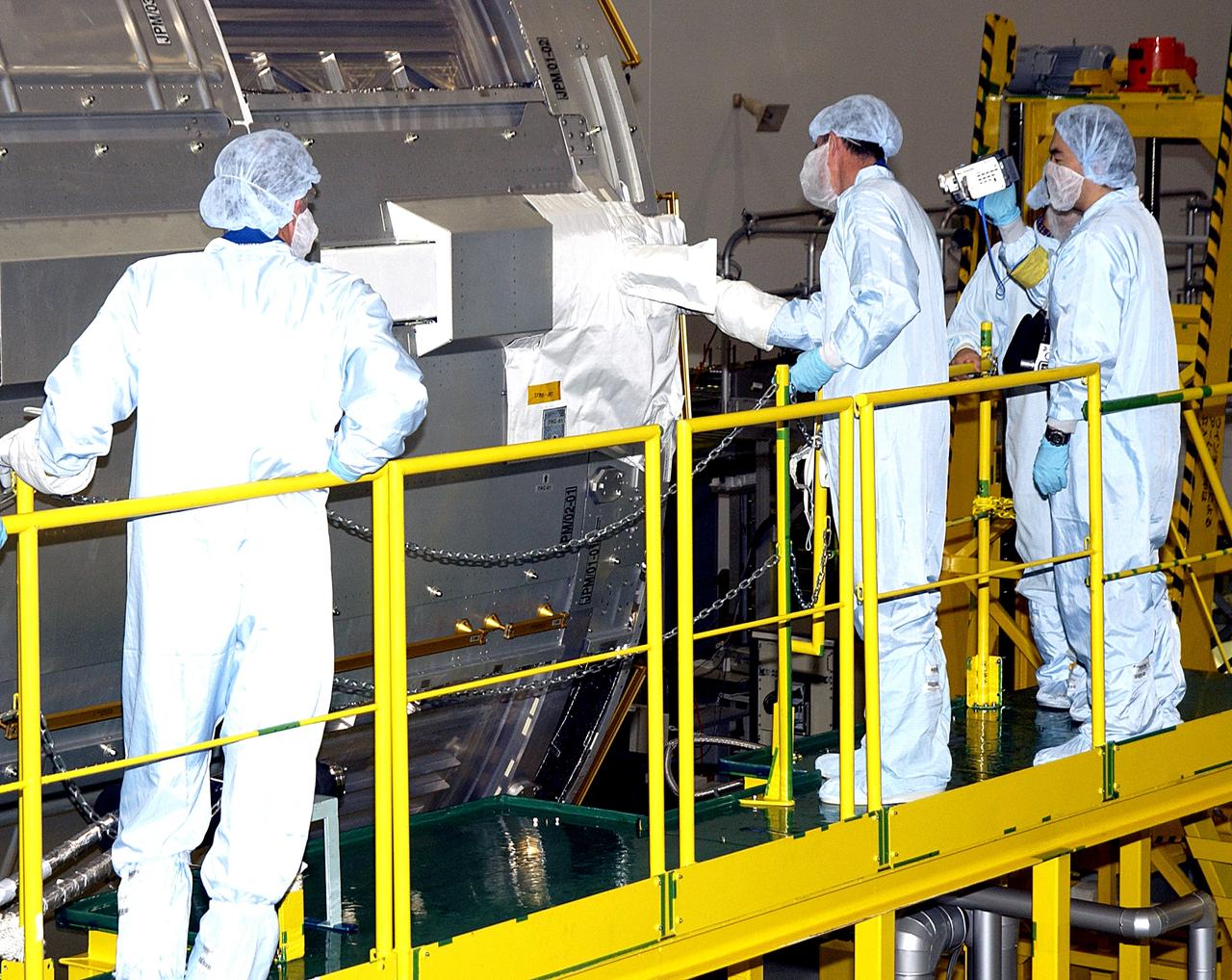
KENNEDY SPACE CENTER, FLA. - In the Space Station Processing Facility, STS-115 Mission Specialist Joseph Tanner gets hands-on experience with the Japanese Experiment Module (JEM). Tanner and STS-117 Mission Specialist James Reilly are at KSC for equipment familiarization, a routine part of astronaut training and launch preparations.
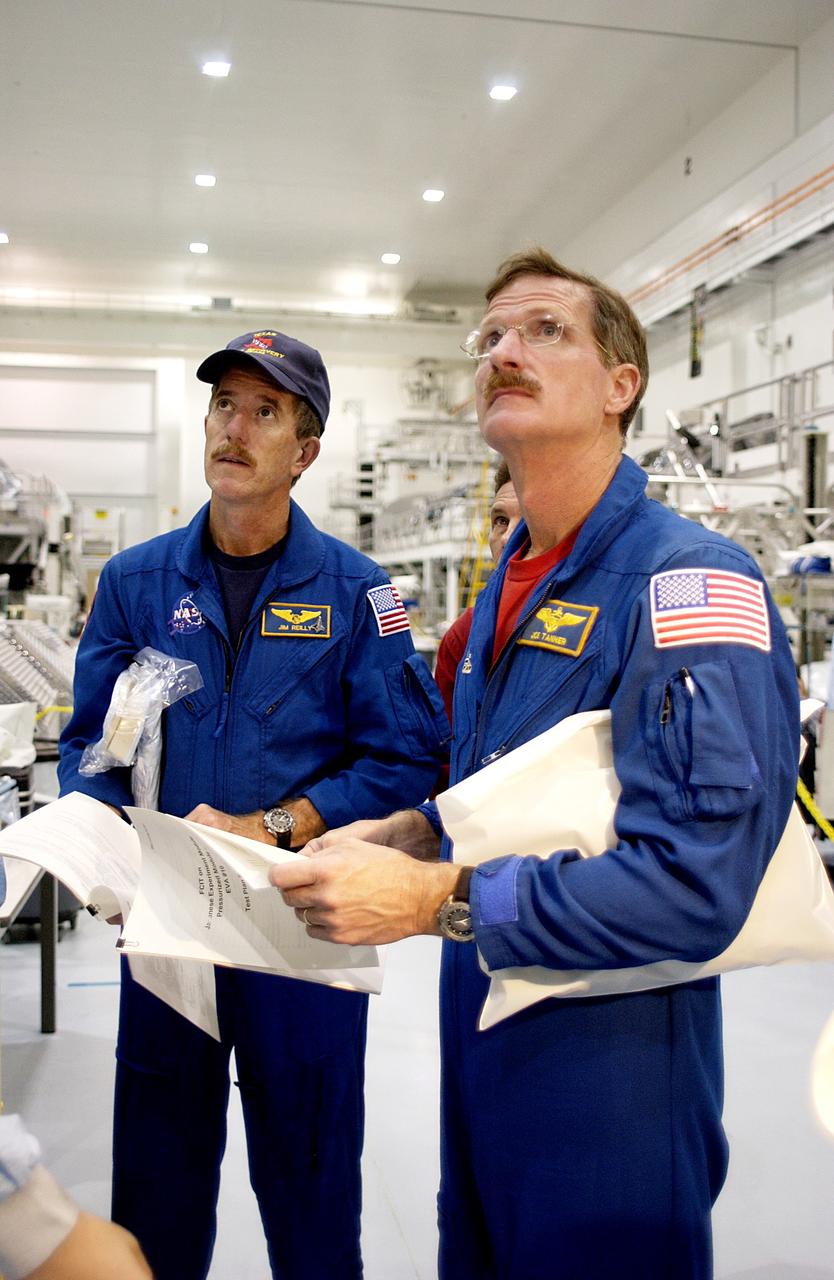
KENNEDY SPACE CENTER, FLA. - In the Space Station Processing Facility, STS-117 Mission Specialist James Reilly (left) and STS-115 Mission Specialist Joseph Tanner (right) look over the Japanese Experiment Module (JEM). Equipment familiarization is a routine part of astronaut training and launch preparations.
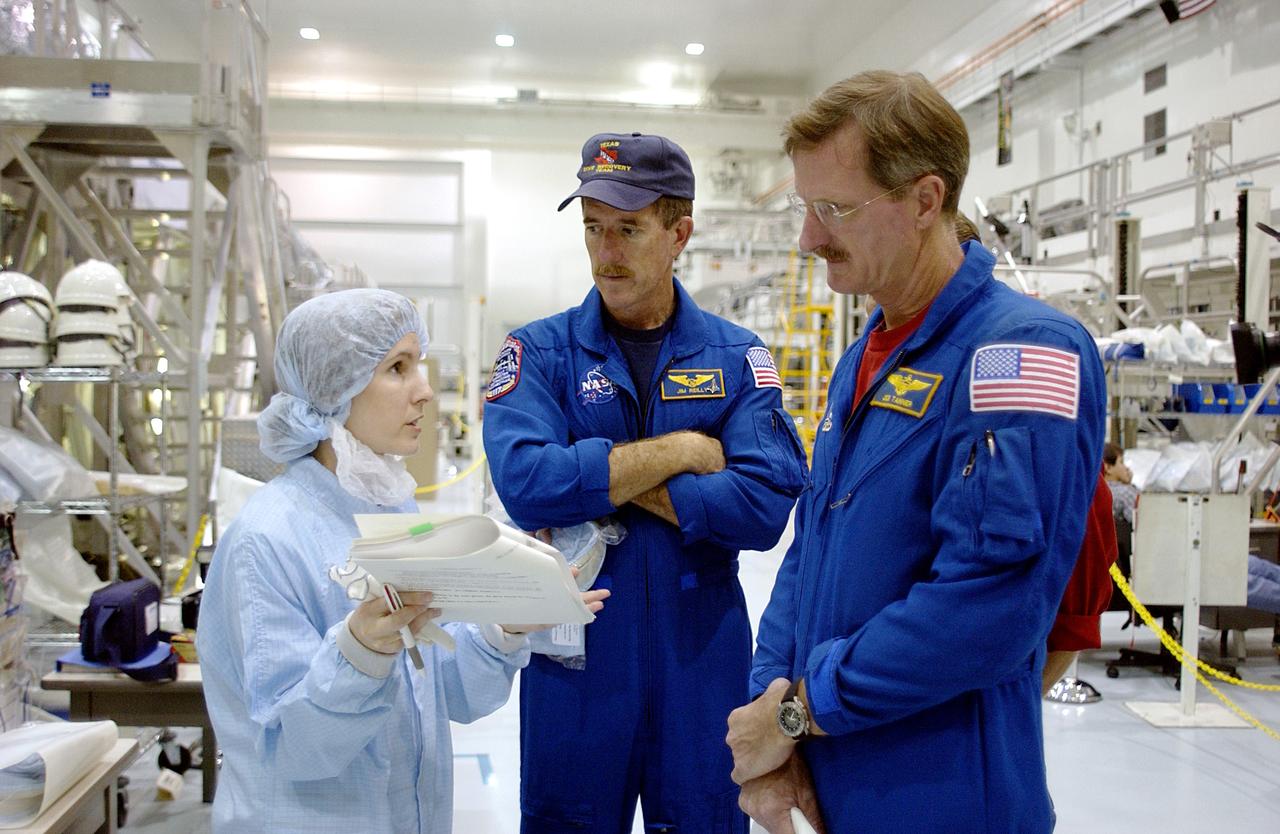
KENNEDY SPACE CENTER, FLA. - In the Space Station Processing Facility, STS-117 Mission Specialist James Reilly (center) and STS-115 Mission Specialist Joseph Tanner (right) talk with a worker about the Japanese Experiment Module (JEM). Equipment familiarization is a routine part of astronaut training and launch preparations.
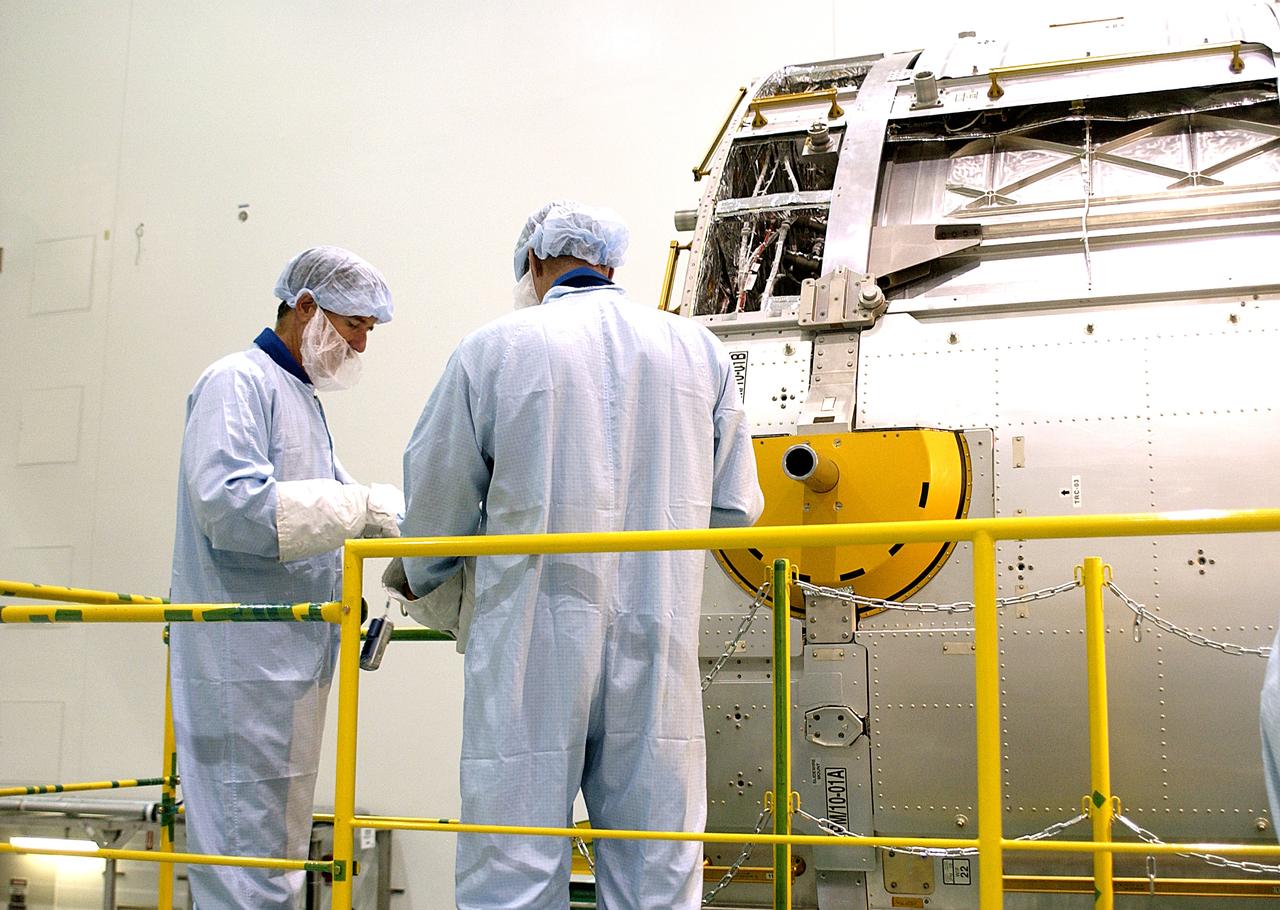
KENNEDY SPACE CENTER, FLA. - In the Space Station Processing Facility, STS-117 Mission Specialist James Reilly (left) and STS-115 Mission Specialist Joseph Tanner get hands-on experience with the Japanese Experiment Module (JEM). Reilly and Tanner are at KSC for equipment familiarization, a routine part of astronaut training and launch preparations.
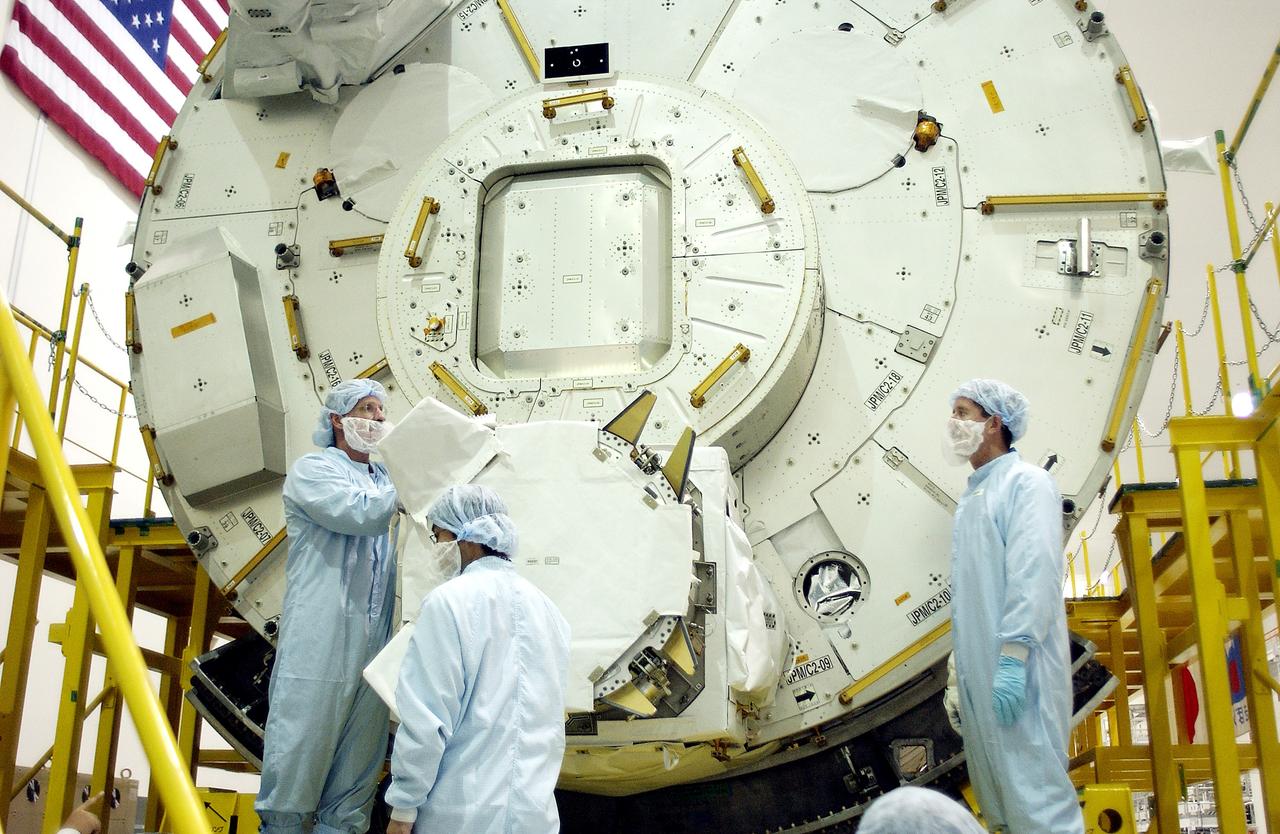
KENNEDY SPACE CENTER, FLA. - In the Space Station Processing Facility, STS-115 Mission Specialist Joseph Tanner (left) and STS-117 Mission Specialist James Reilly (right) look over the Japanese Experiment Module (JEM) behind them. Equipment familiarization is a routine part of astronaut training and launch preparations.
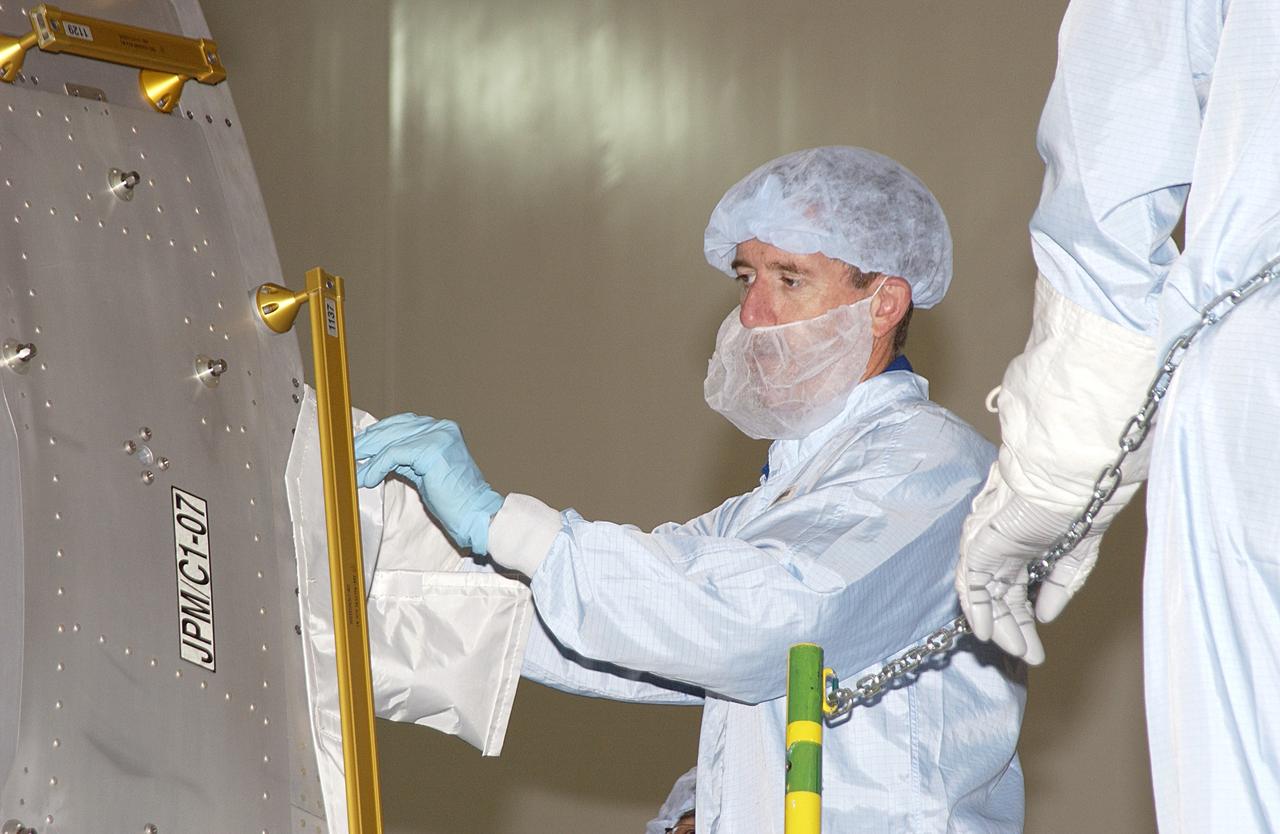
KENNEDY SPACE CENTER, FLA. - In the Space Station Processing Facility, STS-117 Mission Specialist James Reilly works with the Japanese Experiment Module (JEM). Reilly and STS-115 Mission Specialist Joseph Tanner are at KSC for equipment familiarization, a routine part of astronaut training and launch preparations.
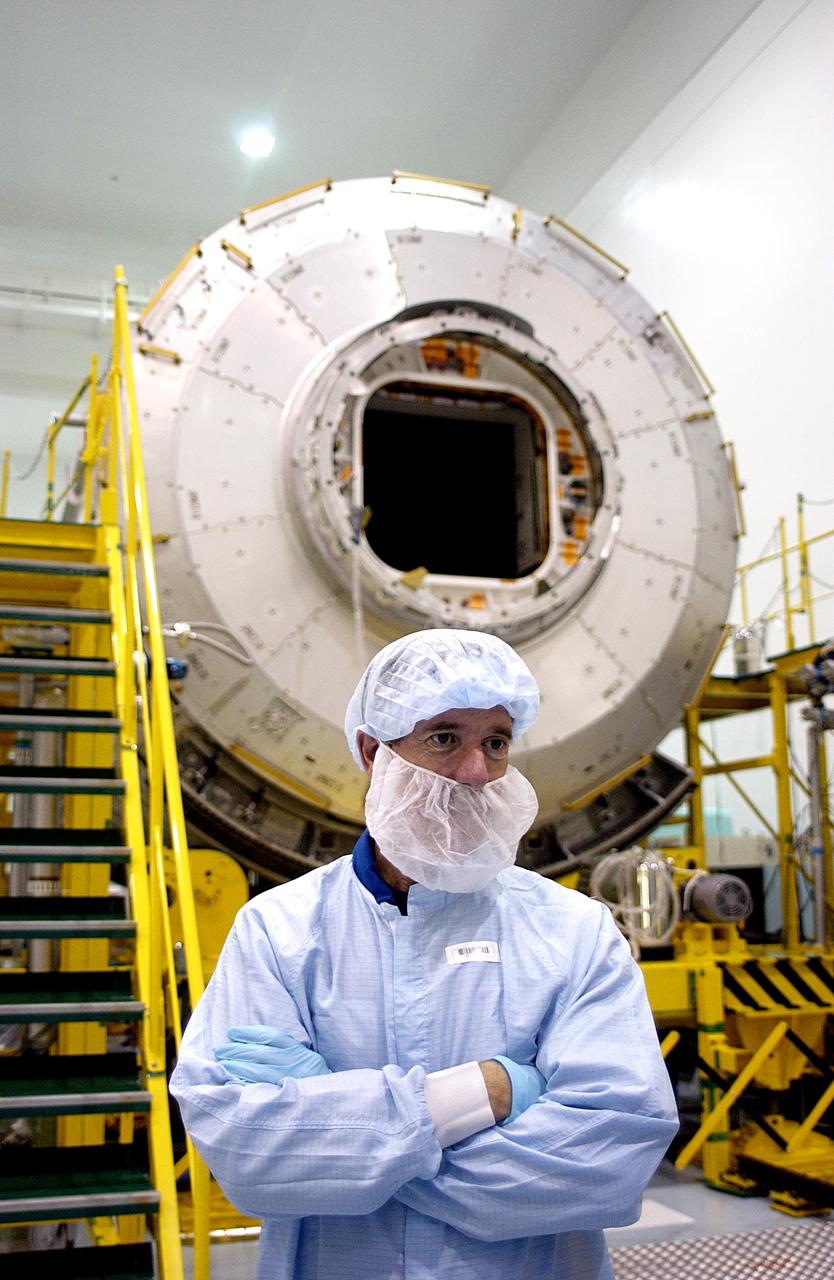
KENNEDY SPACE CENTER, FLA. - In the Space Station Processing Facility, STS-117 Mission Specialist James Reilly stands in front of the Japanese Experiment Module (JEM). Reilly and STS-115 Mission Specialist Joseph Tanner are at KSC for equipment familiarization, a routine part of astronaut training and launch preparations.

KENNEDY SPACE CENTER, FLA. - In the Space Station Processing Facility, STS-117 Mission Specialist James Reilly works with the Japanese Experiment Module (JEM). Reilly and STS-115 Mission Specialist Joseph Tanner are at KSC for equipment familiarization, a routine part of astronaut training and launch preparations.
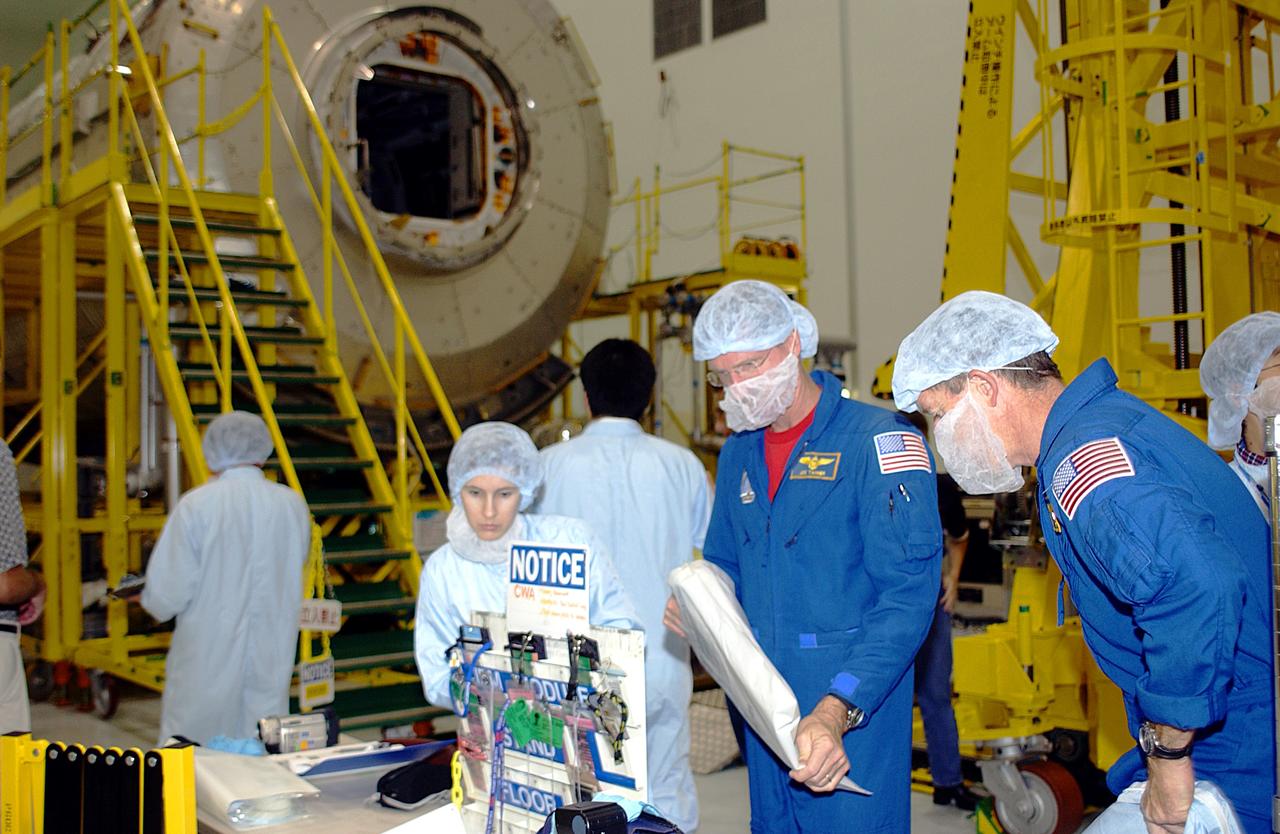
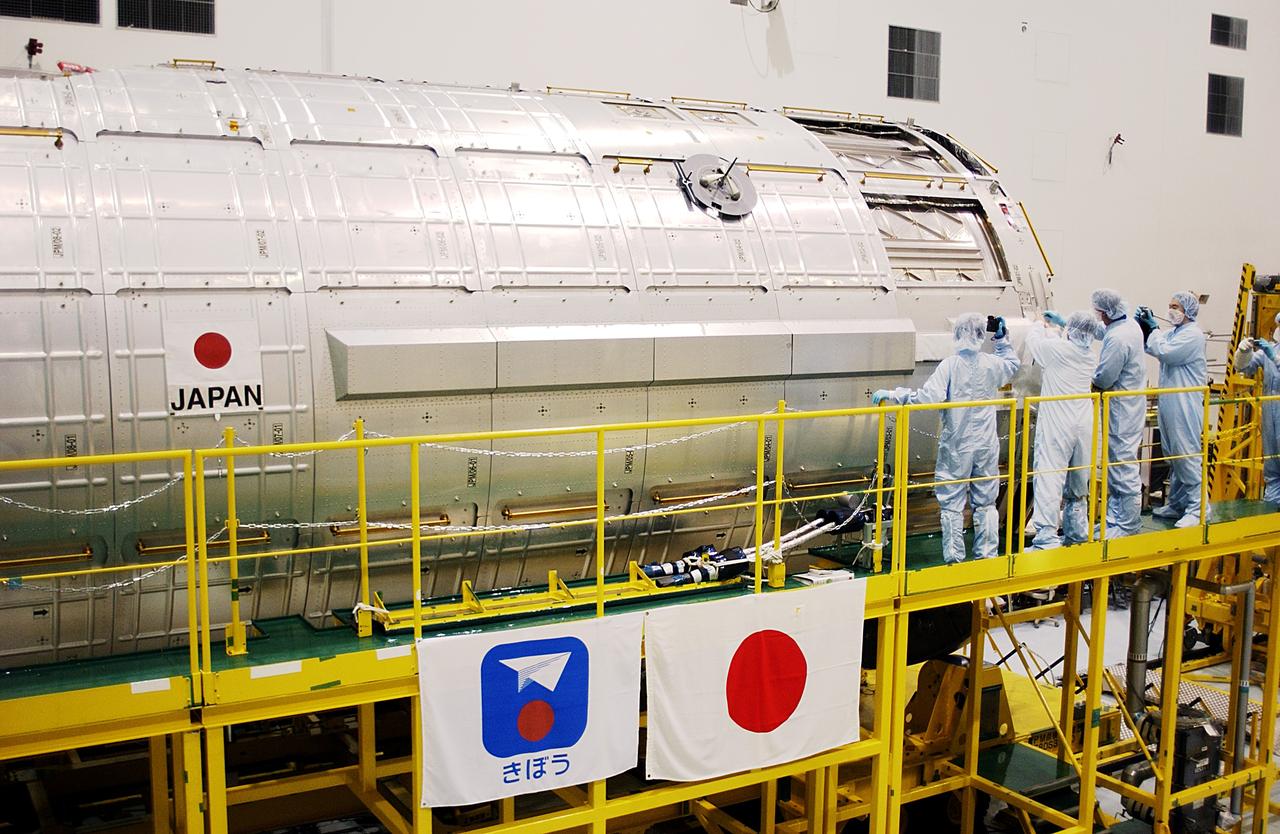
KENNEDY SPACE CENTER, FLA. - In the Space Station Processing Facility, STS-115 Mission Specialist Joseph Tanner (left) and STS-117 Mission Specialist James Reilly (right) are donning protective clothing to interface with the Japanese Experiment Module (JEM), in the background. Equipment familiarization is a routine part of astronaut training and launch preparations.
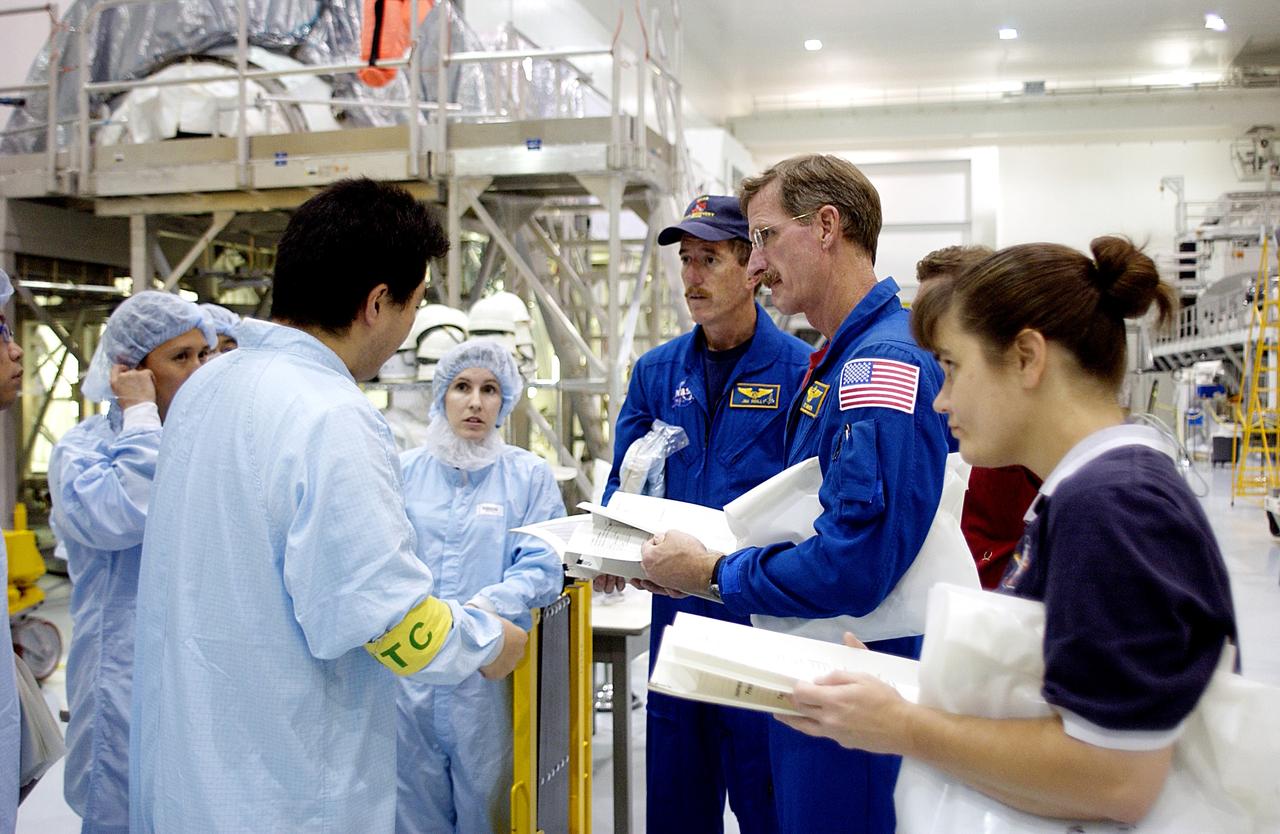
KENNEDY SPACE CENTER, FLA. - In the Space Station Processing Facility, workers (in protective clothing) brief STS-117 Mission Specialist James Reilly (center) and STS-115 Mission Specialist Joseph Tanner (right) about the Japanese Experiment Module (JEM). Equipment familiarization is a routine part of astronaut training and launch preparations.
KENNEDY SPACE CENTER, FLA. - In the Space Station Processing Facility, STS-115 Mission Specialist Joseph Tanner and STS-117 Mission Specialist James Reilly get a close look at the Japanese Experiment Module (JEM). Reilly and Tanner are at KSC for equipment familiarization, a routine part of astronaut training and launch preparations.
KENNEDY SPACE CENTER, FLA. - In the Space Station Processing Facility, STS-117 Mission Specialist James Reilly (left) and STS-115 Mission Specialist Joseph Tanner (right) look over components in the Japanese Experiment Module (JEM). Equipment familiarization is a routine part of astronaut training and launch preparations.
KENNEDY SPACE CENTER, FLA. - In the Space Station Processing Facility, STS-117 Mission Specialist James Reilly (center) works with the Japanese Experiment Module (JEM). Reilly and STS-115 Mission Specialist Joseph Tanner are at KSC for equipment familiarization, a routine part of astronaut training and launch preparations.
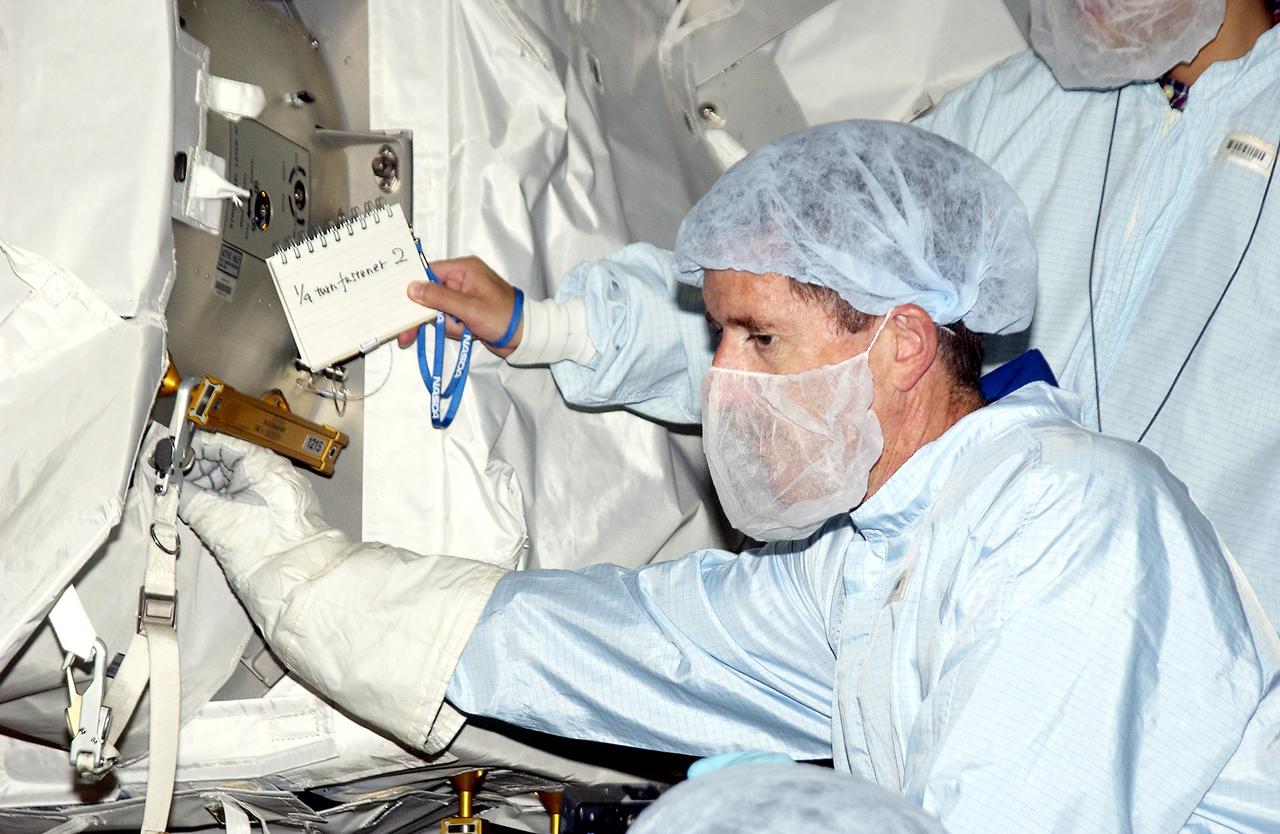
KENNEDY SPACE CENTER, FLA. - In the Space Station Processing Facility, STS-117 Mission Specialist James Reilly works with equipment in the Japanese Experiment Module (JEM) as part of training for ExtraVehicular Activity (EVA). Equipment familiarization is a routine part of astronaut training and launch preparations.
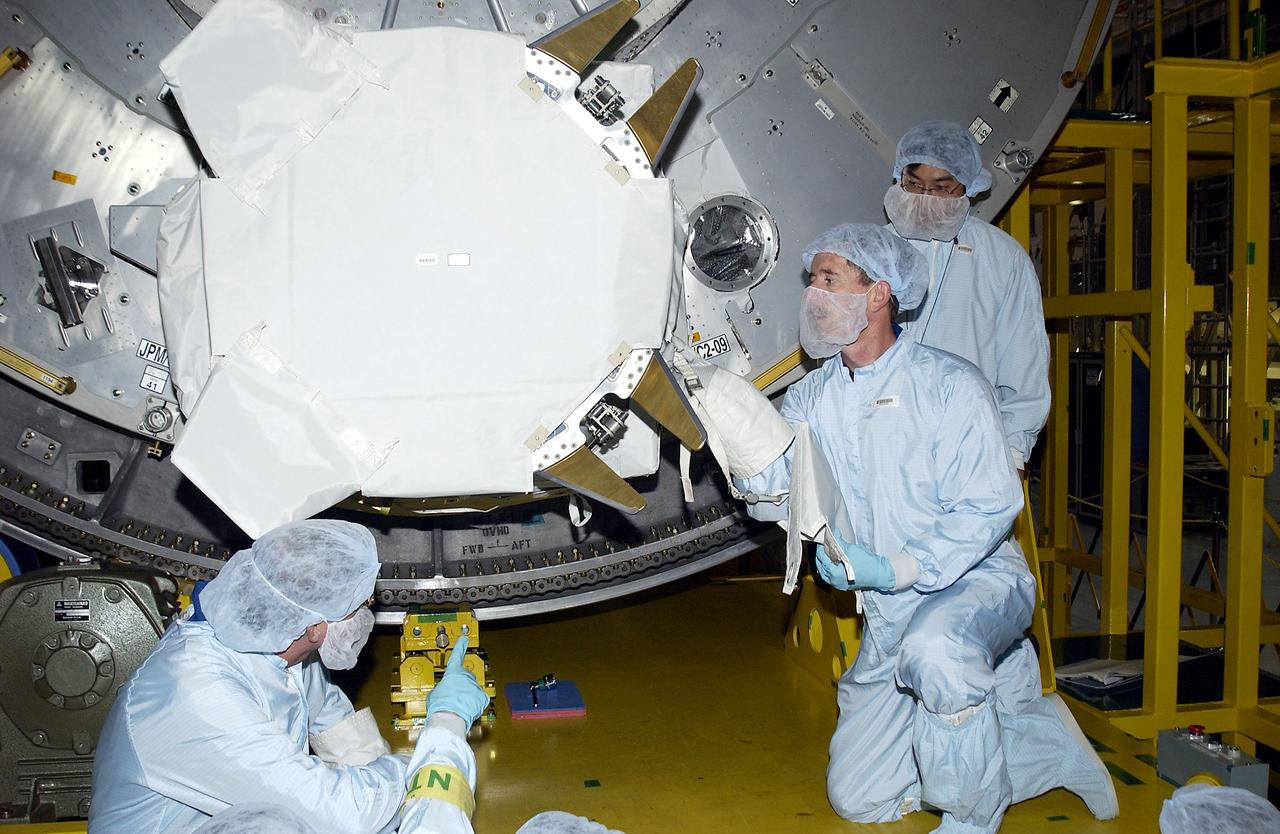
KENNEDY SPACE CENTER, FLA. - In the Space Station Processing Facility, STS-117 Mission Specialist James Reilly (right, in front) works with equipment in the Japanese Experiment Module (JEM) as part of training for ExtraVehicular Activity (EVA). At left is STS-115 Mission Specialist Joseph Tanner. Equipment familiarization is a routine part of astronaut training and launch preparations.
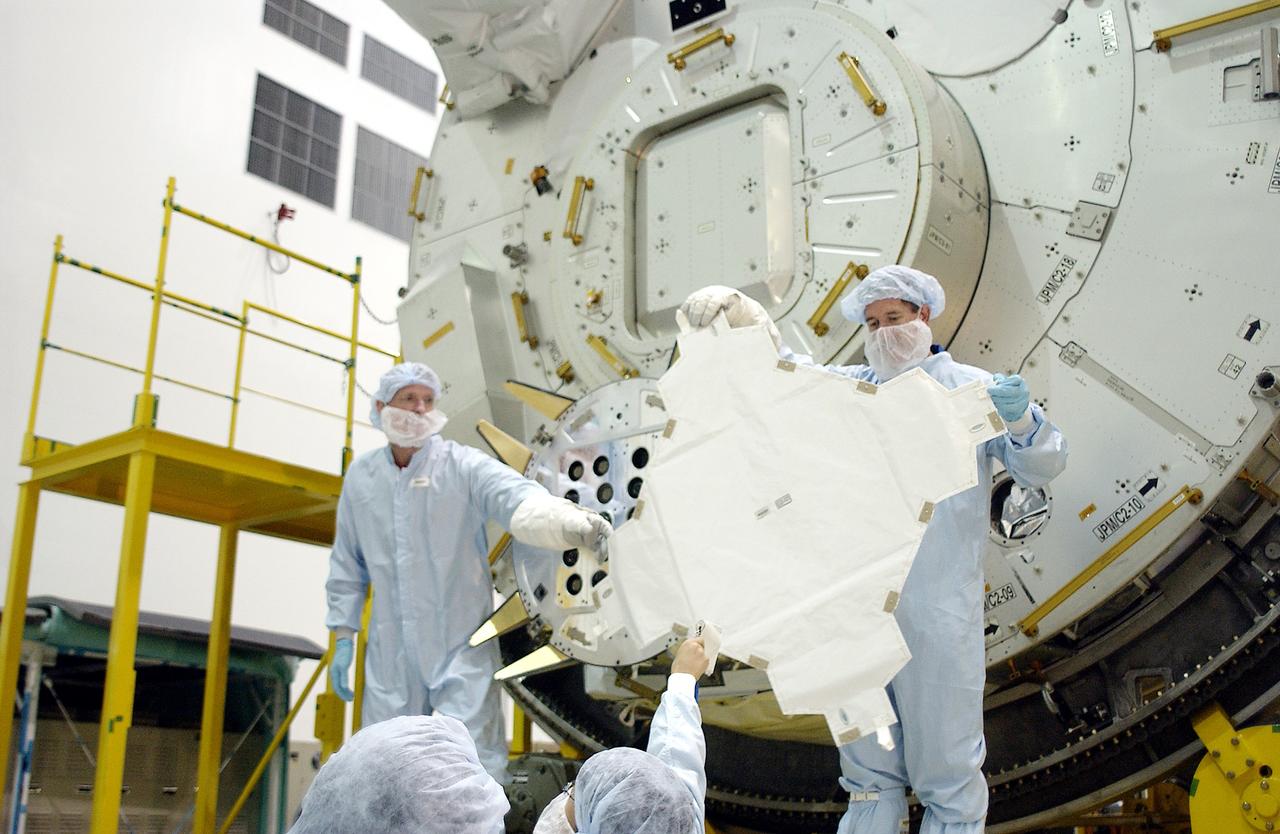
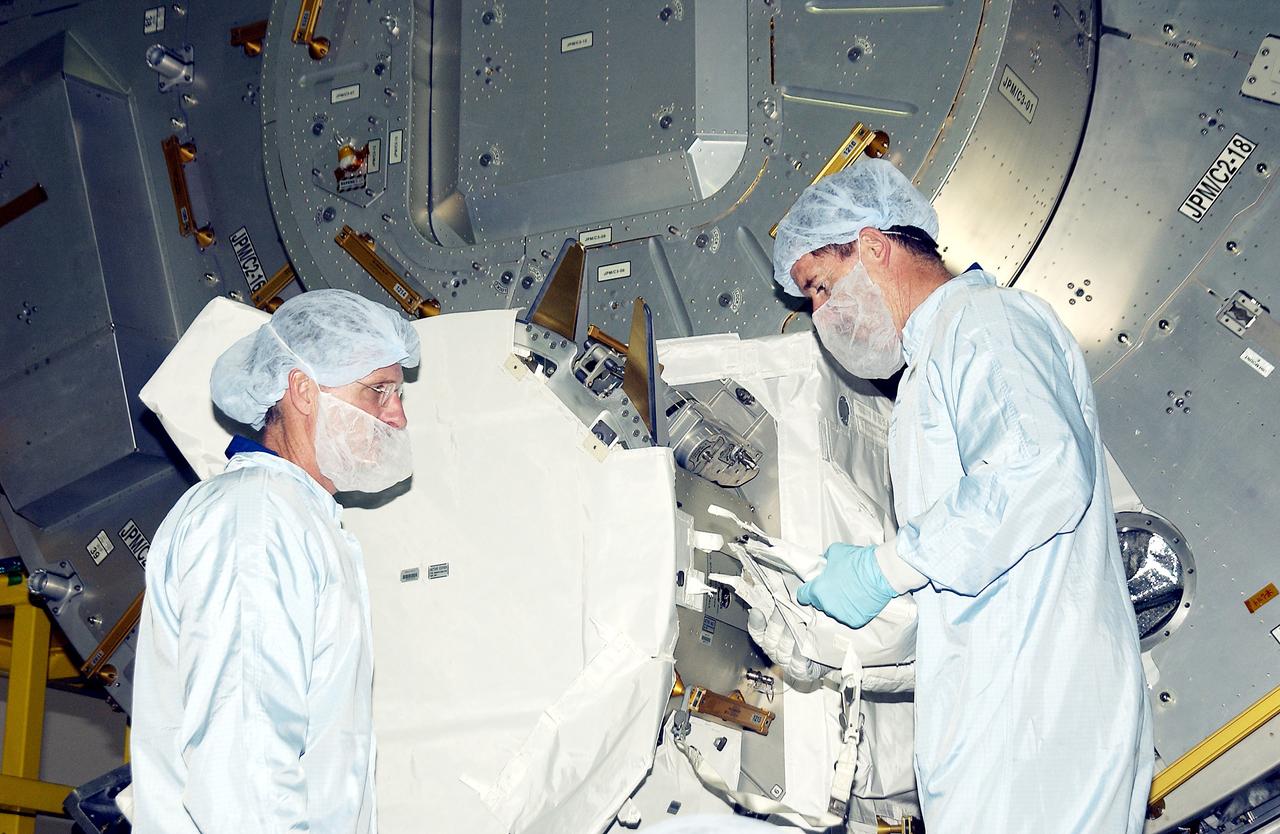
KENNEDY SPACE CENTER, FLA. - In the Space Station Processing Facility, STS-115 Mission Specialist Joseph Tanner (left) and STS-117 Mission Specialist James Reilly (right) remove a cover from the Exposed Facility Berthing Mechanism (EFBM) on the Japanese Experiment Module (JEM) behind them. Equipment familiarization is a routine part of astronaut training and launch preparations.
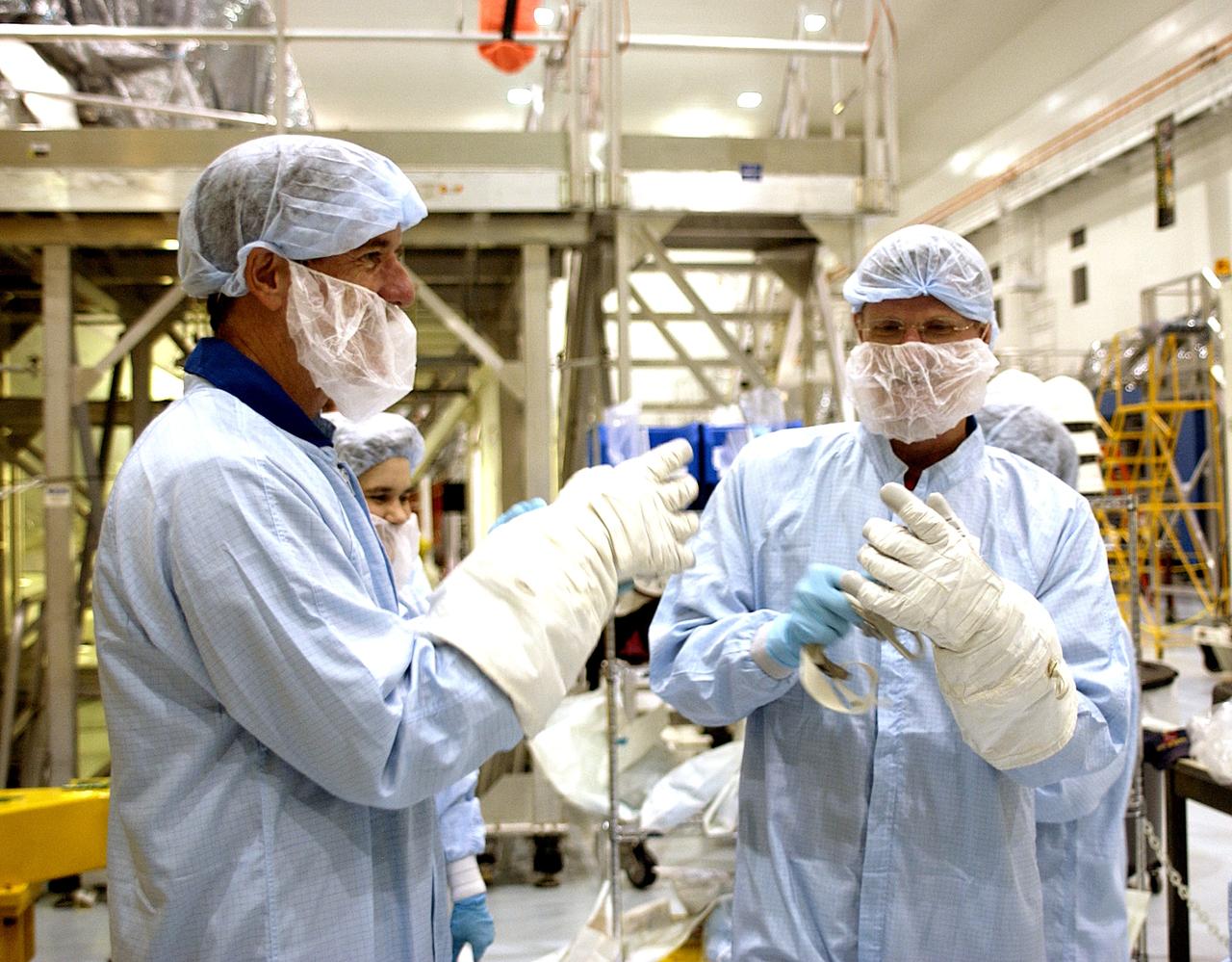
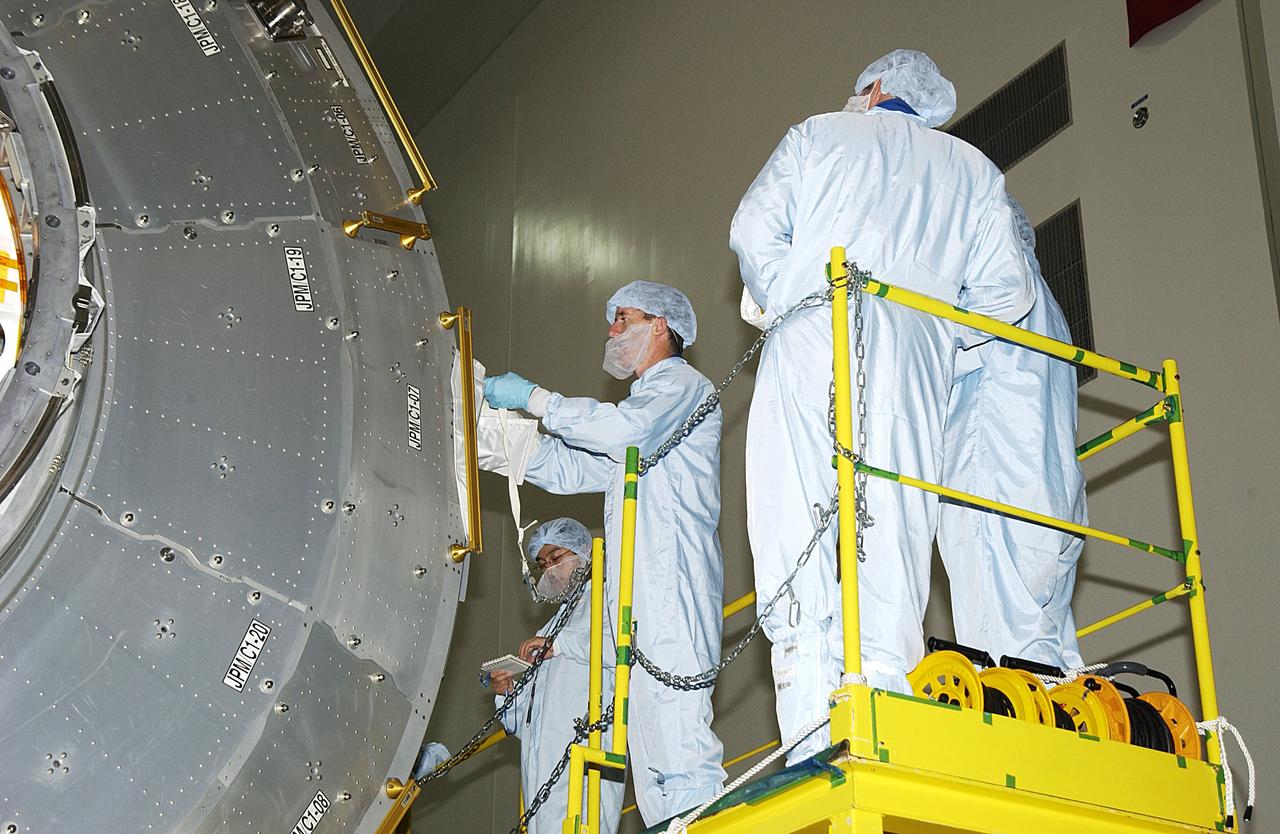
KENNEDY SPACE CENTER, FLA. - STS-117 Mission Specialist James Reilly (left) and STS-115 Mission Specialist Joseph Tanner (right) put on protective gloves before their checkout of the Japanese Experiment Module (JEM) in the Space Station Processing Facility. Reilly and Tanner are at KSC for equipment familiarization, a routine part of astronaut training and launch preparations.
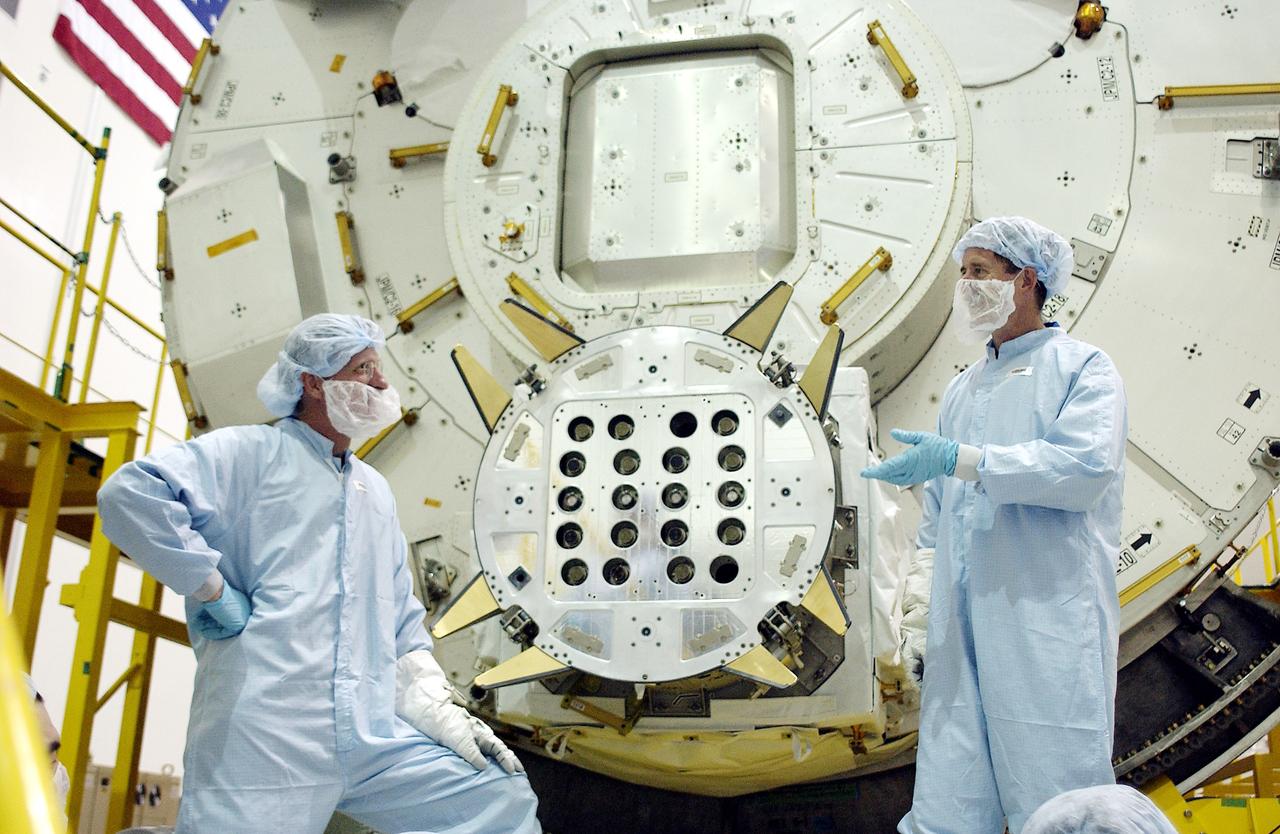
KENNEDY SPACE CENTER, FLA. - In the Space Station Processing Facility, STS-115 Mission Specialist Joseph Tanner (left) and STS-117 Mission Specialist James Reilly (right) talk after removing a cover from the Exposed Facility Berthing Mechanism (EFBM) on the Japanese Experiment Module (JEM) behind them. Equipment familiarization is a routine part of astronaut training and launch preparations.
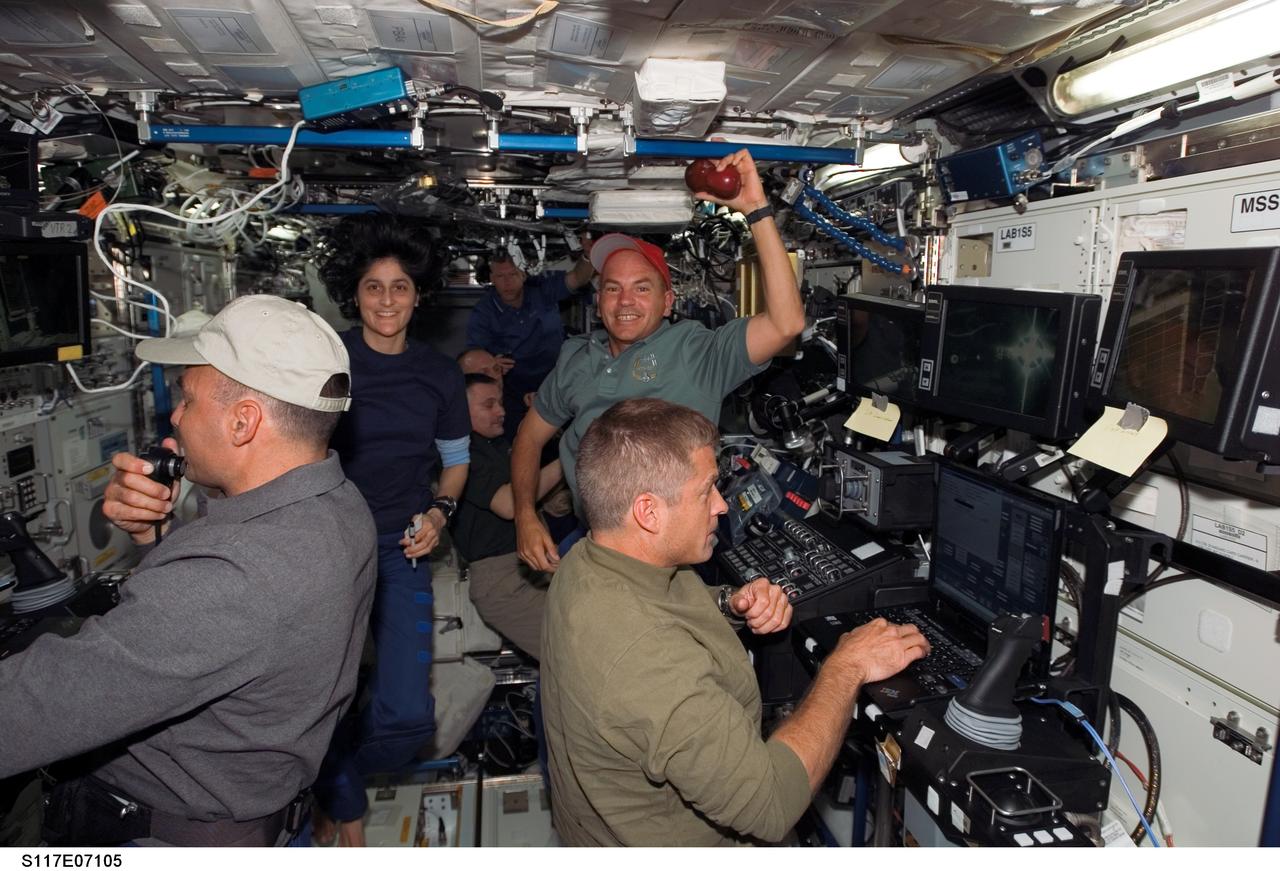
S117-E-07105 (12 June 2007) --- The STS-117 and Expedition 15 crewmembers work various tasks in the Destiny laboratory of the International Space Station during flight day five activities while Space Shuttle Atlantis was docked with the station. Pictured in the foreground (from the left) are astronauts Lee Archambault, STS-117 pilot; Sunita L. Williams, STS-117 mission specialist; Rick Sturckow, STS-117 commander; and Steven Swanson, STS-117 mission specialist. Visible in the background are cosmonaut Fyodor N. Yurchikhin, Expedition 15 commander representing Russia's Federal Space Agency; astronauts Clayton Anderson, Expedition 15 flight engineer; and Patrick Forrester, STS-117 mission specialist.
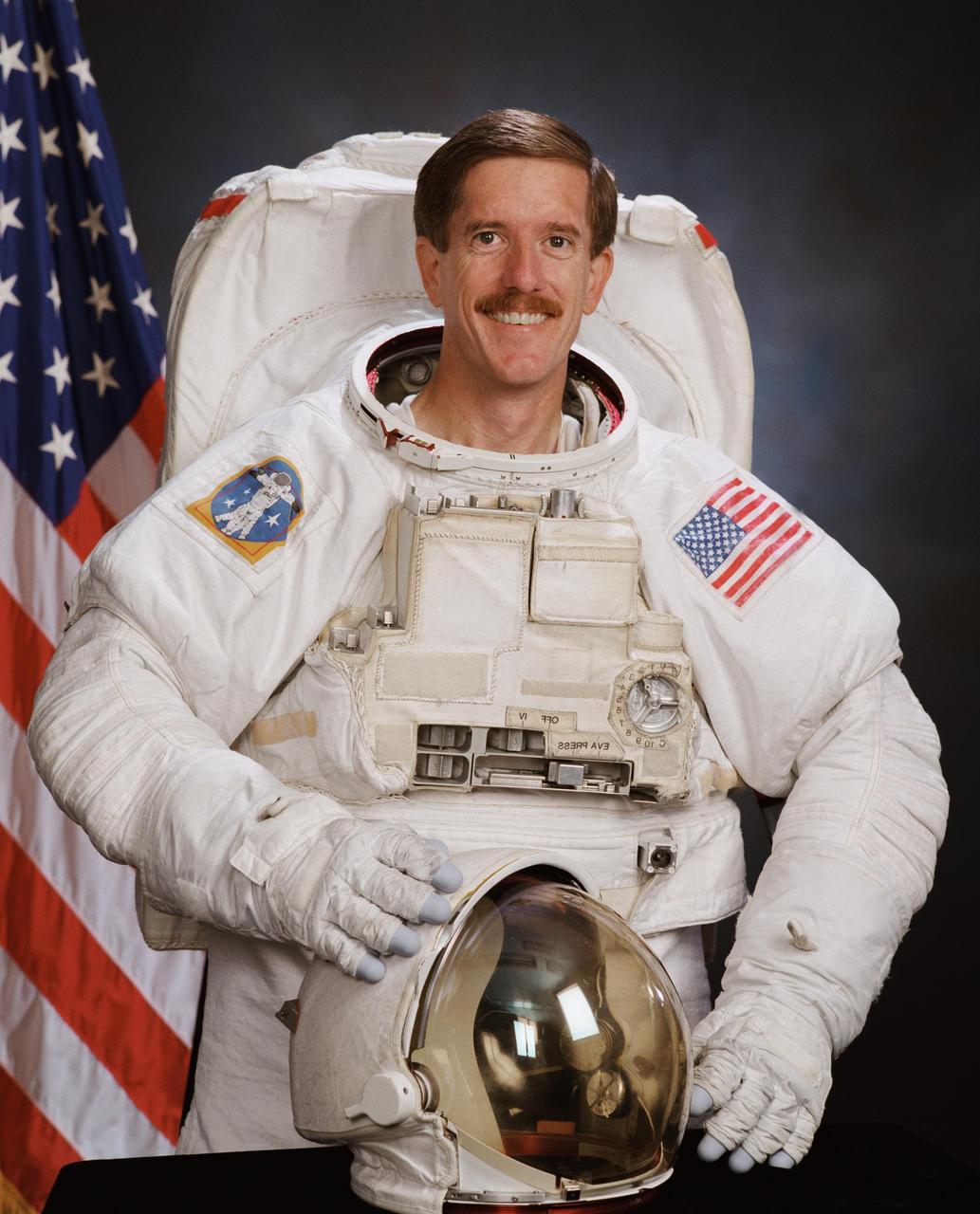
KENNEDY SPACE CENTER, FLA. -- S98-00122 -- Astronaut James F. Reilly II, mission specialist on mission STS-117.
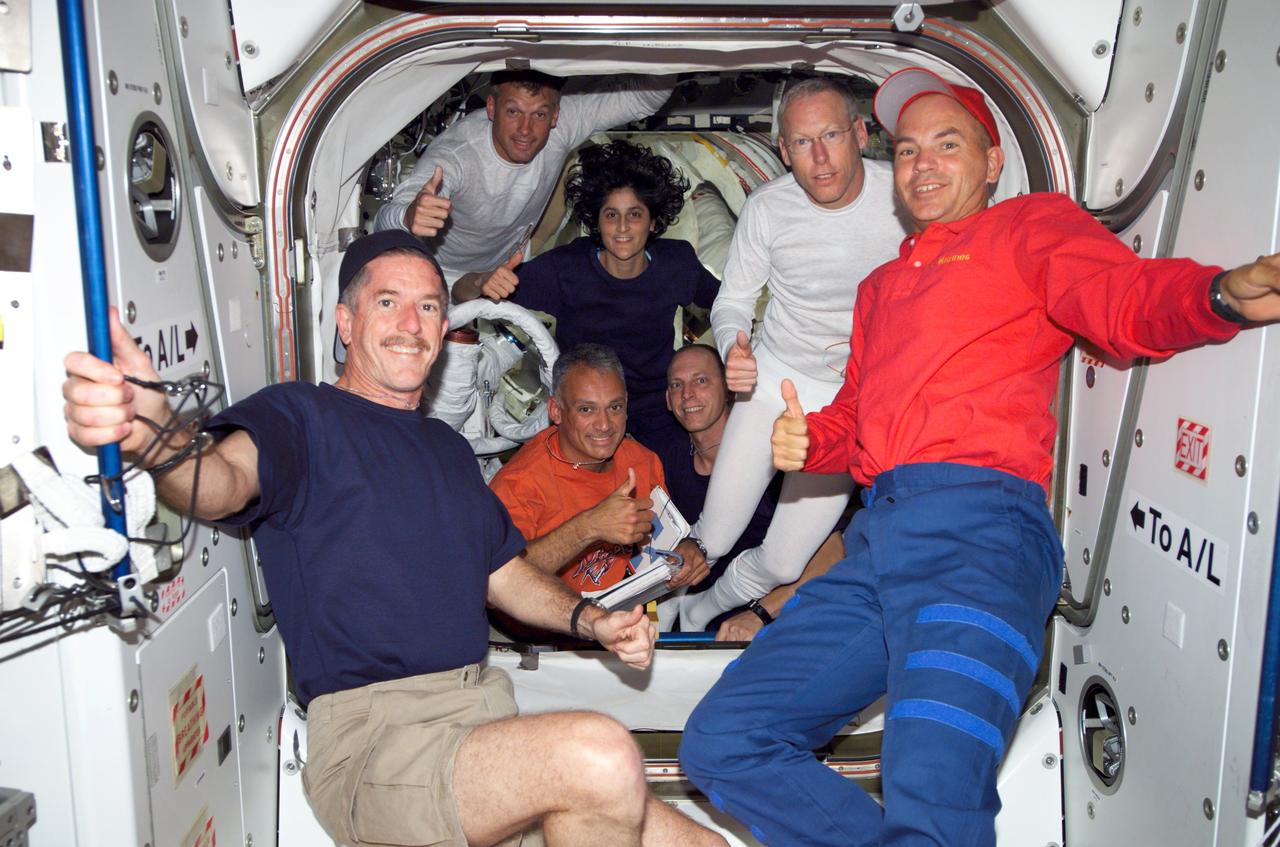
S117-E-07229 (13 June 2007) --- Crewmembers on the International Space Station give a "thumbs-up" signal following a successful session of extravehicular activity (EVA) while Space Shuttle Atlantis was docked with the station. Pictured (from the left, clockwise) are astronauts Jim Reilly, John "Danny" Olivas, Steven Swanson, Sunita Williams, all STS-117 mission specialists; Clayton Anderson, Expedition 15 flight engineer; Patrick Forrester, STS-117 mission specialist; and Rick Sturckow, STS-117 commander.
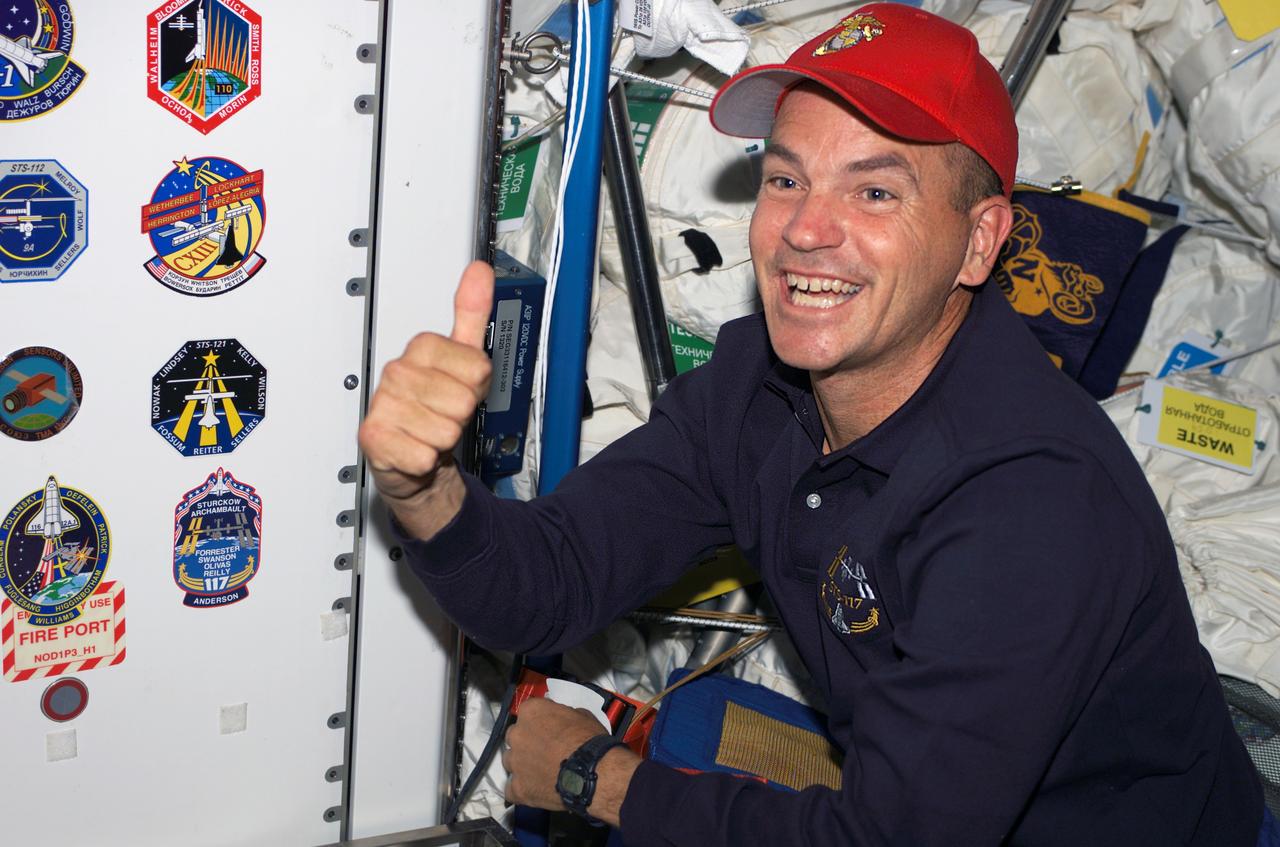
S117-E-09480 (17 June 2007) --- Astronaut Rick Sturckow, STS-117 commander, gives a "thumbs-up" signal after placing the STS-117 mission insignia along with others in the Unity node of the International Space Station.
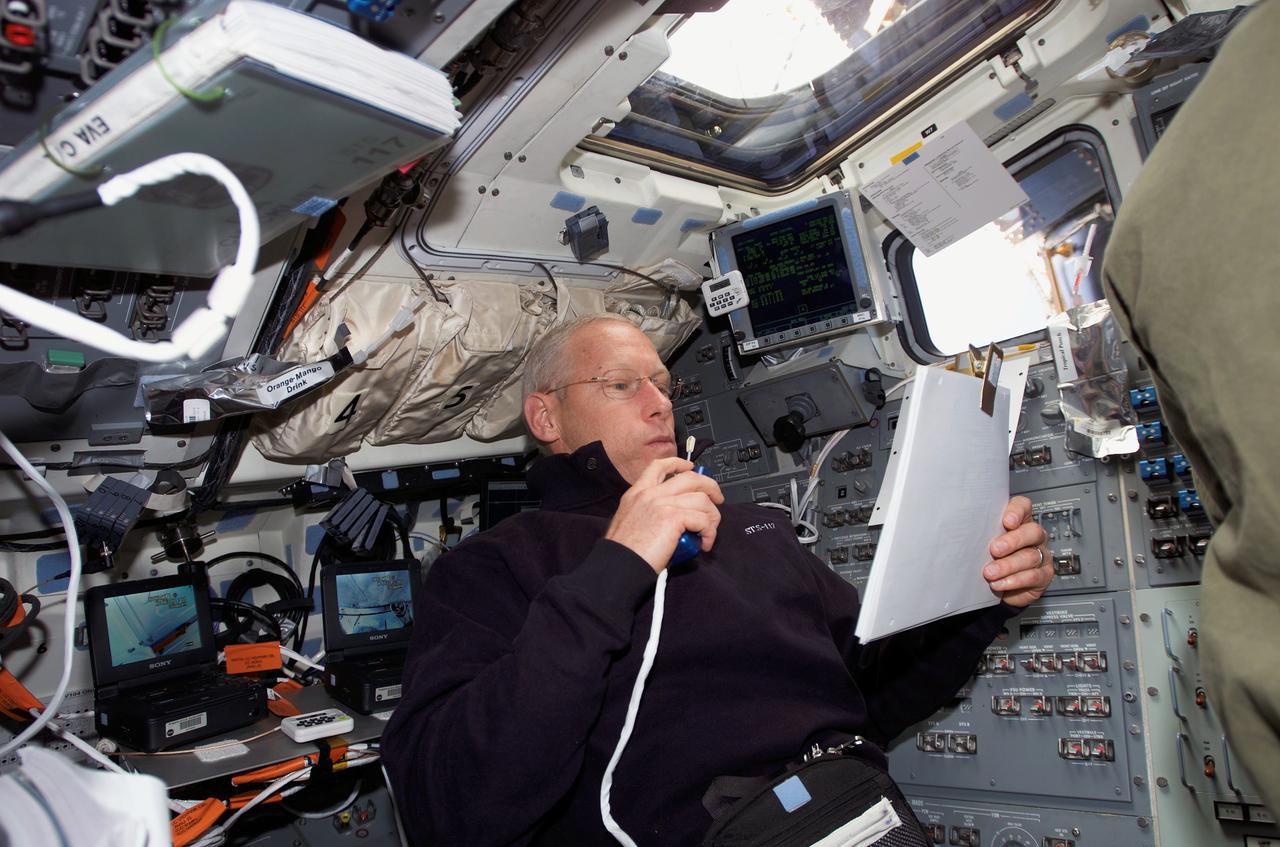
S117-E-07595 (15 June 2007) --- On the aft flight deck of the Space Shuttle Atlantis, astronaut Patrick Forrester, STS-117 mission specialist, talks to ground controllers while supporting two spacewalking crewmates. Forrester will participate in the fourth and final STS-117 spacewalk on June 17.
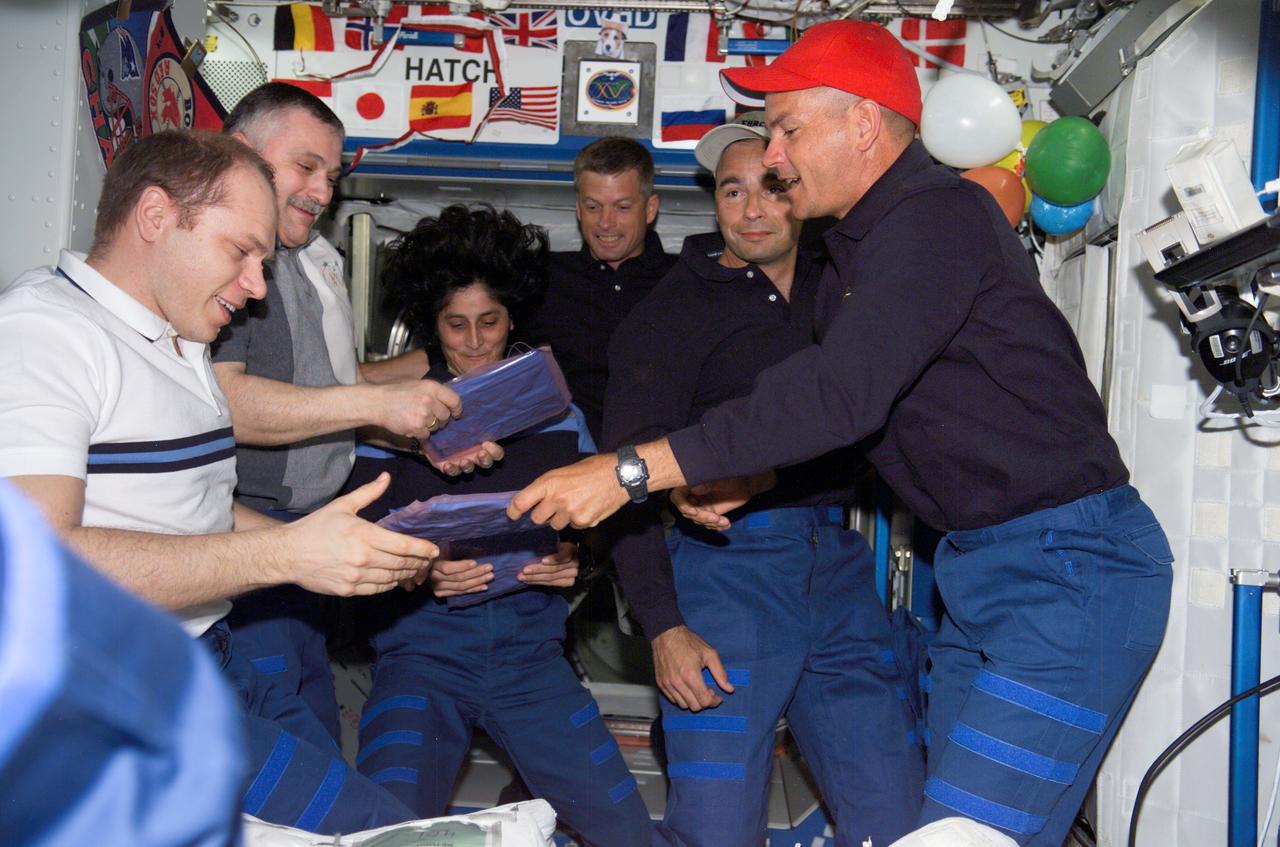
ISS015-E-11778 (10 June 2007) --- The STS-117 crewmembers give the Expedition 15 crewmembers packages from Earth in the Destiny laboratory of the International Space Station shortly after Space Shuttle Atlantis docked with the station. Pictured are (left to right) cosmonauts Oleg V. Kotov and Fyodor N. Yurchikhin, Expedition 15 flight engineer and commander, respectively, representing Russia's Federal Space Agency; astronauts Sunita L. Williams, Expedition 15 flight engineer; Steven Swanson, STS-117 mission specialist; Lee Archambault, STS-117 pilot; and Rick Sturckow, STS-117 commander.
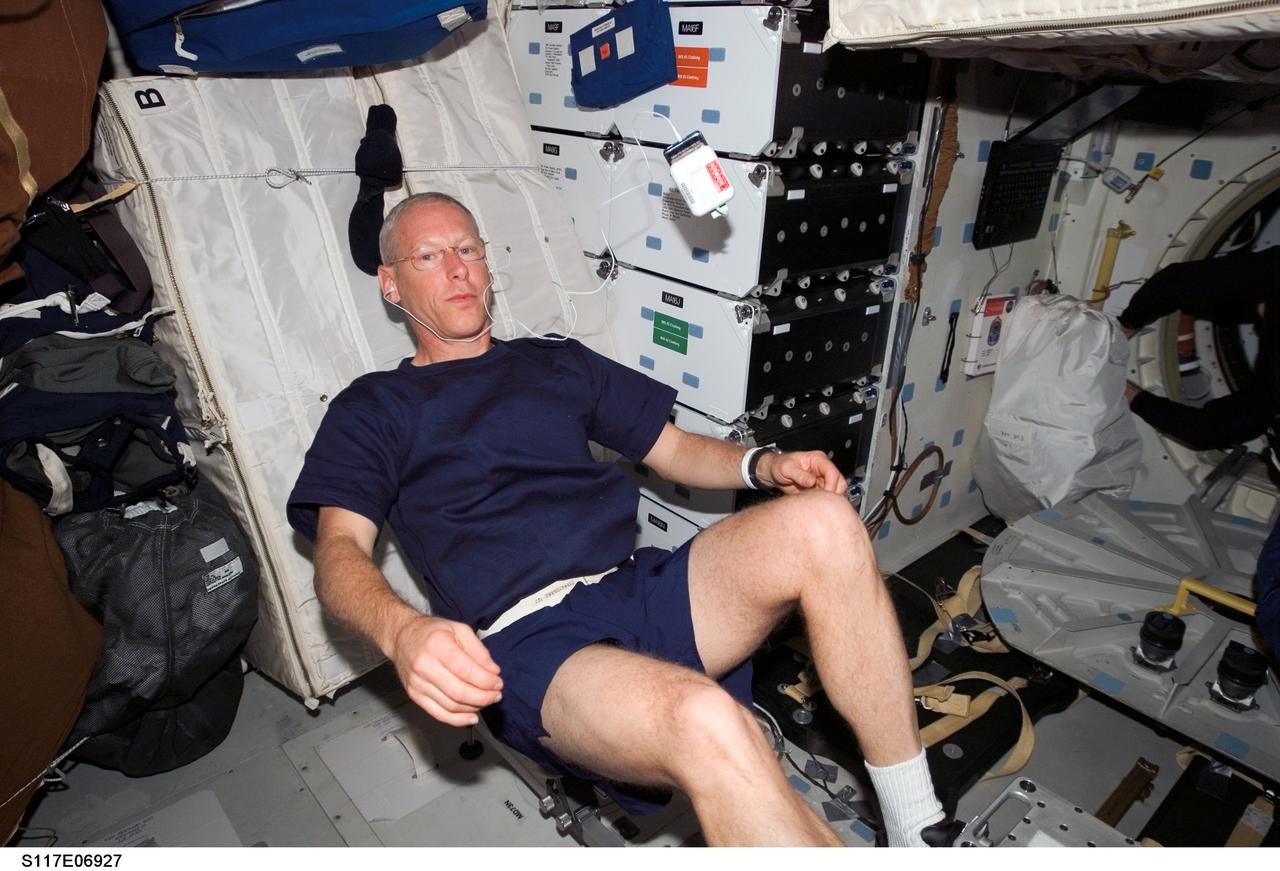
S117-E-06927 (10 June 2007) --- Astronaut Patrick Forrester, STS-117 mission specialist, exercises on a bicycle ergometer on the middeck of the Space Shuttle Atlantis.
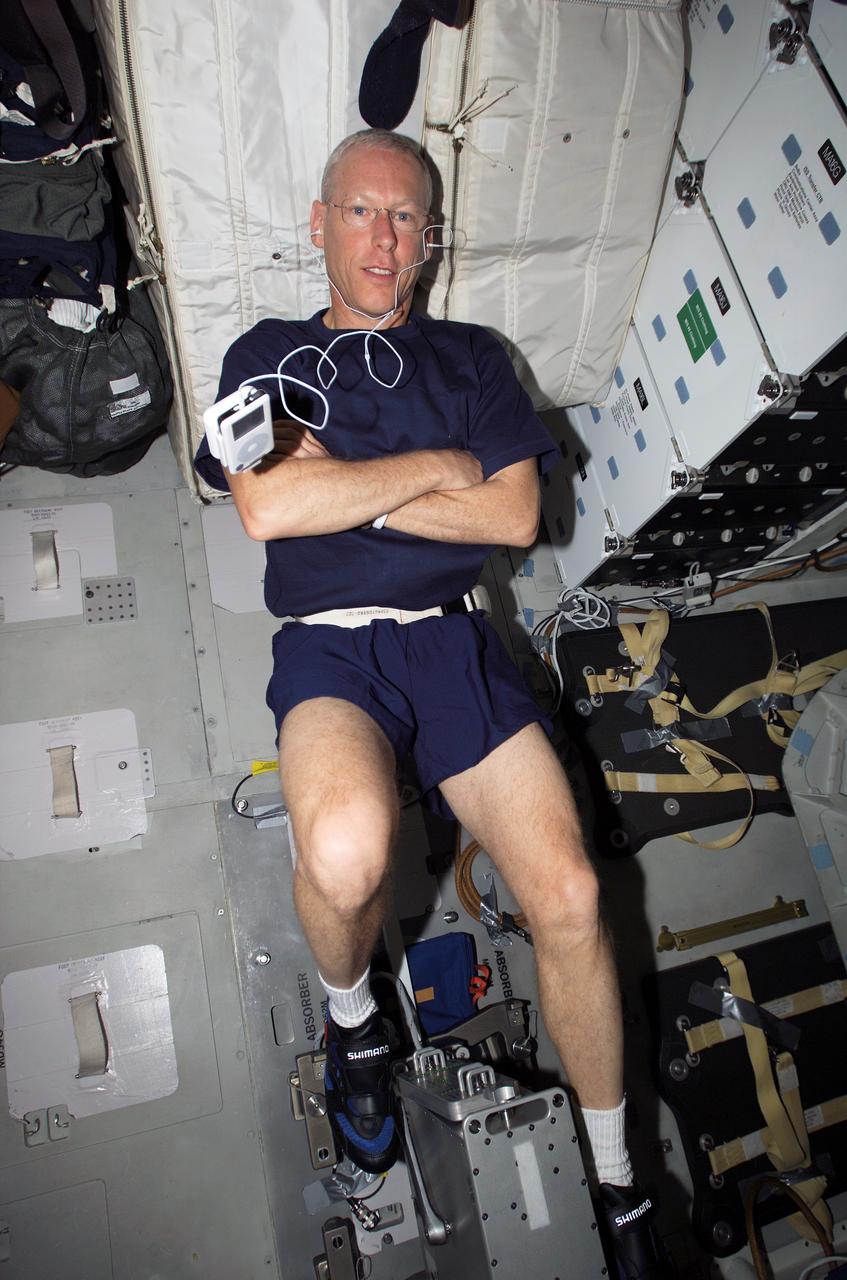
S117-E-06930 (10 June 2007) --- Astronaut Patrick Forrester, STS-117 mission specialist, exercises on a bicycle ergometer on the middeck of the Space Shuttle Atlantis.
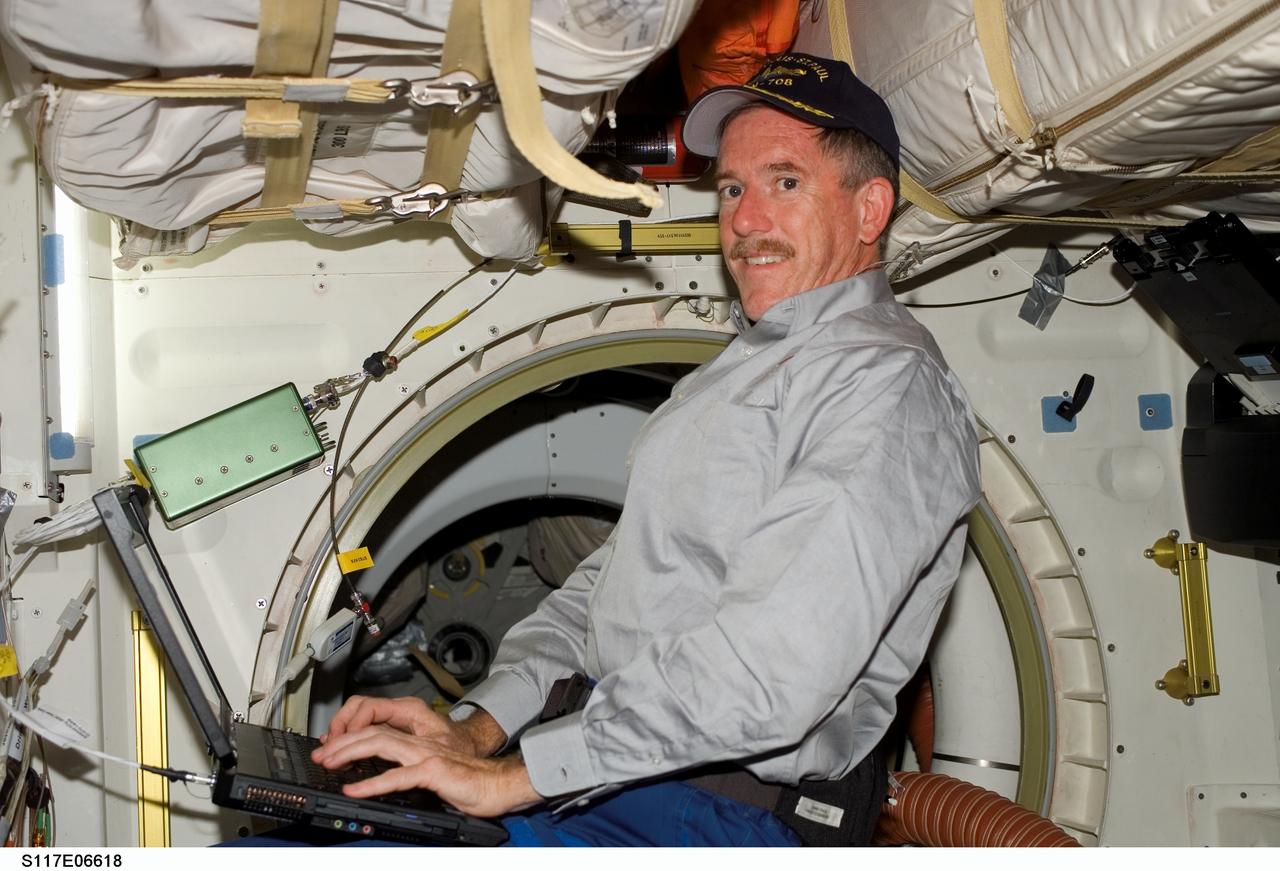
S117-E-06618 (9 June 2007) --- Astronaut Jim Reilly, STS-117 mission specialist, uses a computer on the middeck of Space Shuttle Atlantis.
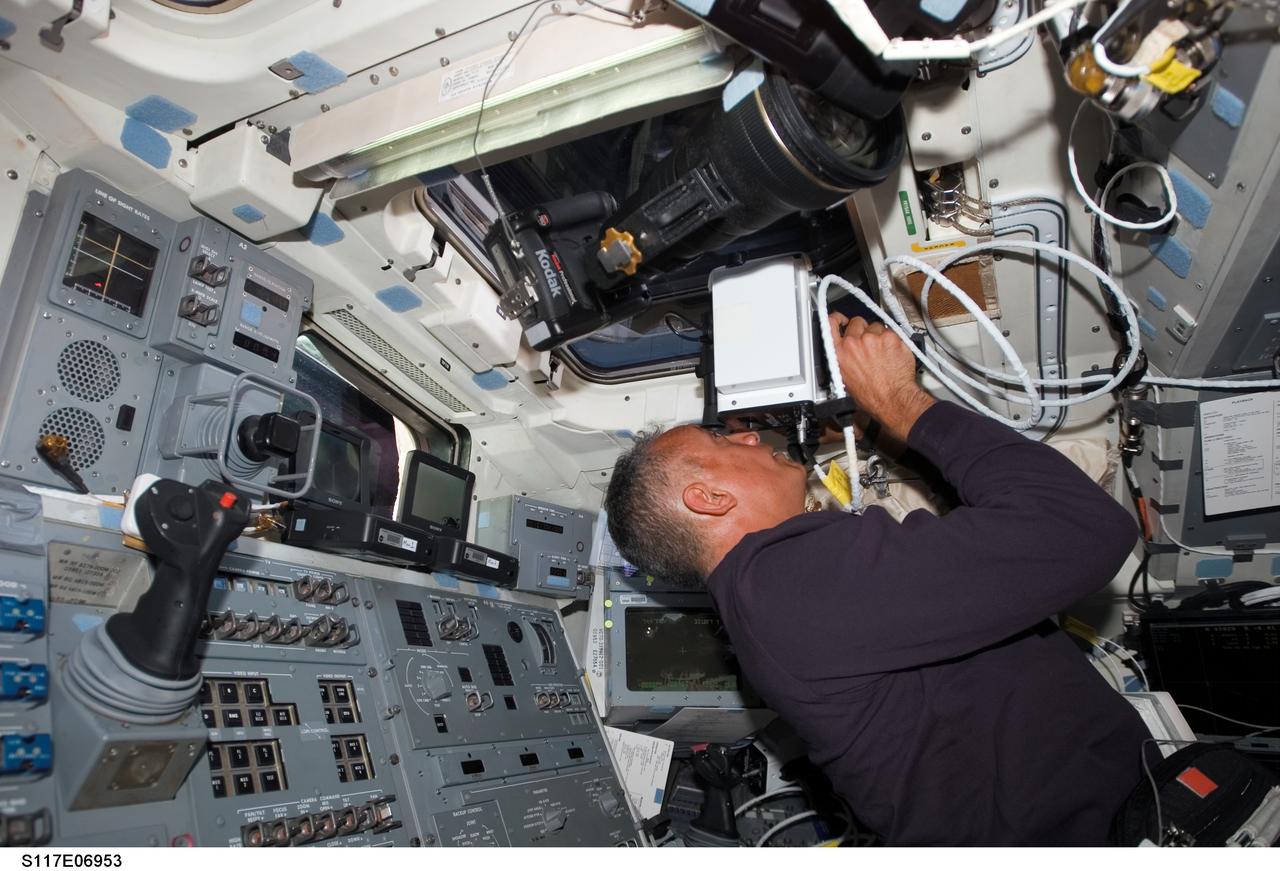
S117-E-06953 (10 June 2007) --- Astronaut John "Danny" Olivas, STS-117 mission specialist, aims a laser range finder through one of the overhead windows on the aft flight deck of the Space Shuttle Atlantis at it approaches the International Space Station. This instrument is a regularly called-on tool during rendezvous operations with the station. The subsequent docking will allow the STS-117 astronauts and the Expedition 15 crew to team up for several days of key tasks in space.

S117-E-06619 (9 June 2007) --- Astronaut Patrick Forrester, STS-117 mission specialist, is pictured near a tortilla floating freely on the middeck of Space Shuttle Atlantis.
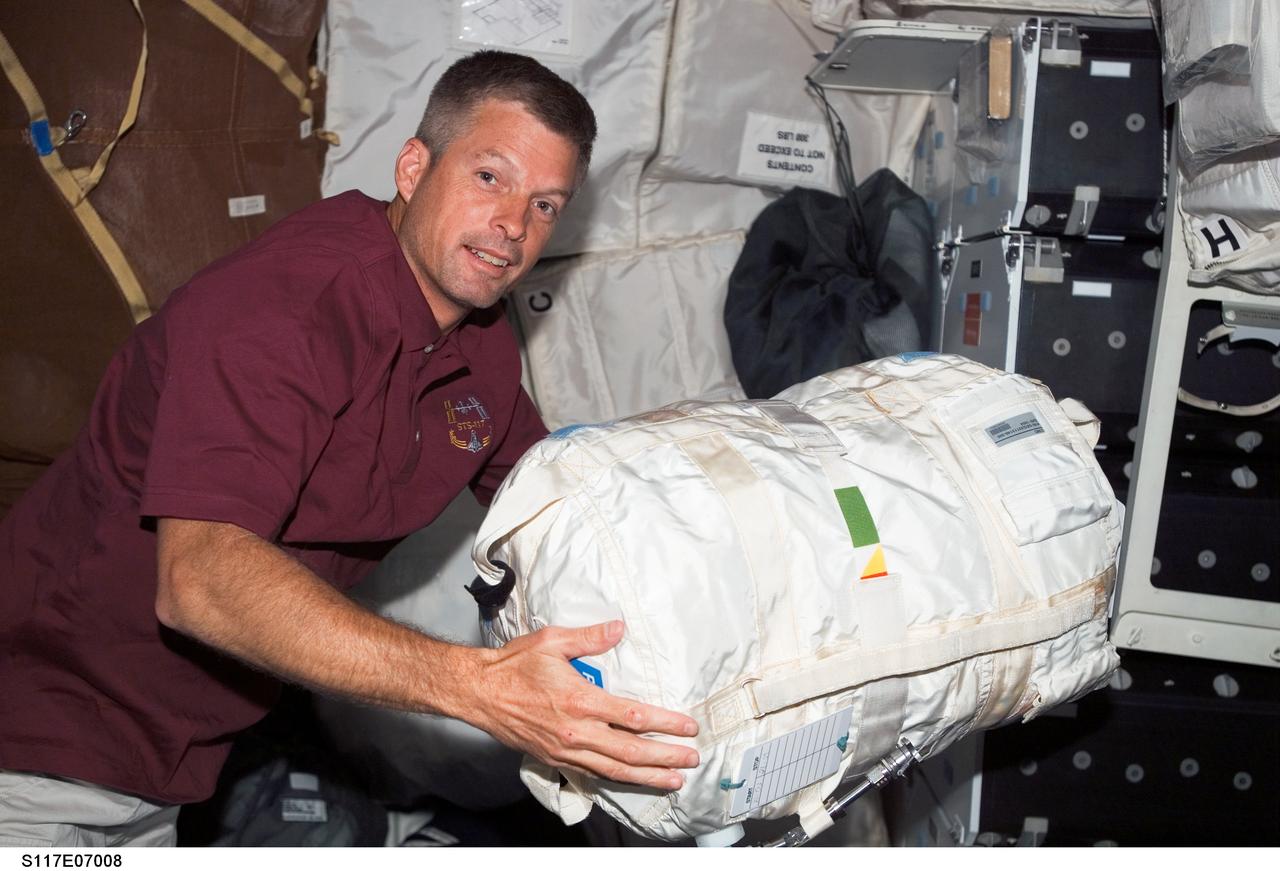
S117-E-07008 (11 June 2007) --- Astronaut Steven Swanson, STS-117 mission specialist, moves a stowage bag on the middeck of the Space Shuttle Atlantis while docked with the International Space Station.
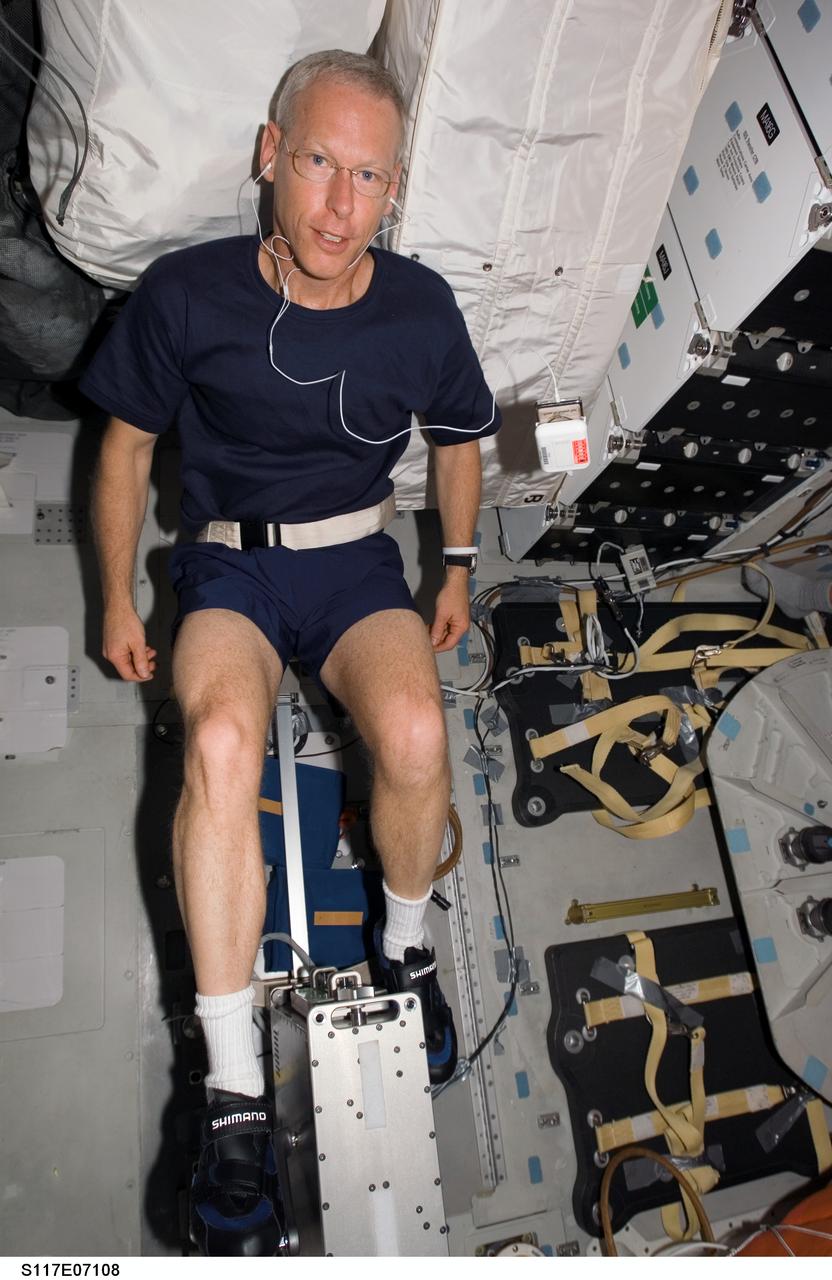
S117-E-07108 (12 June 2007) --- Astronaut Patrick Forrester, STS-117 mission specialist, exercises on a bicycle ergometer on the middeck of the Space Shuttle Atlantis while docked with the International Space Station.
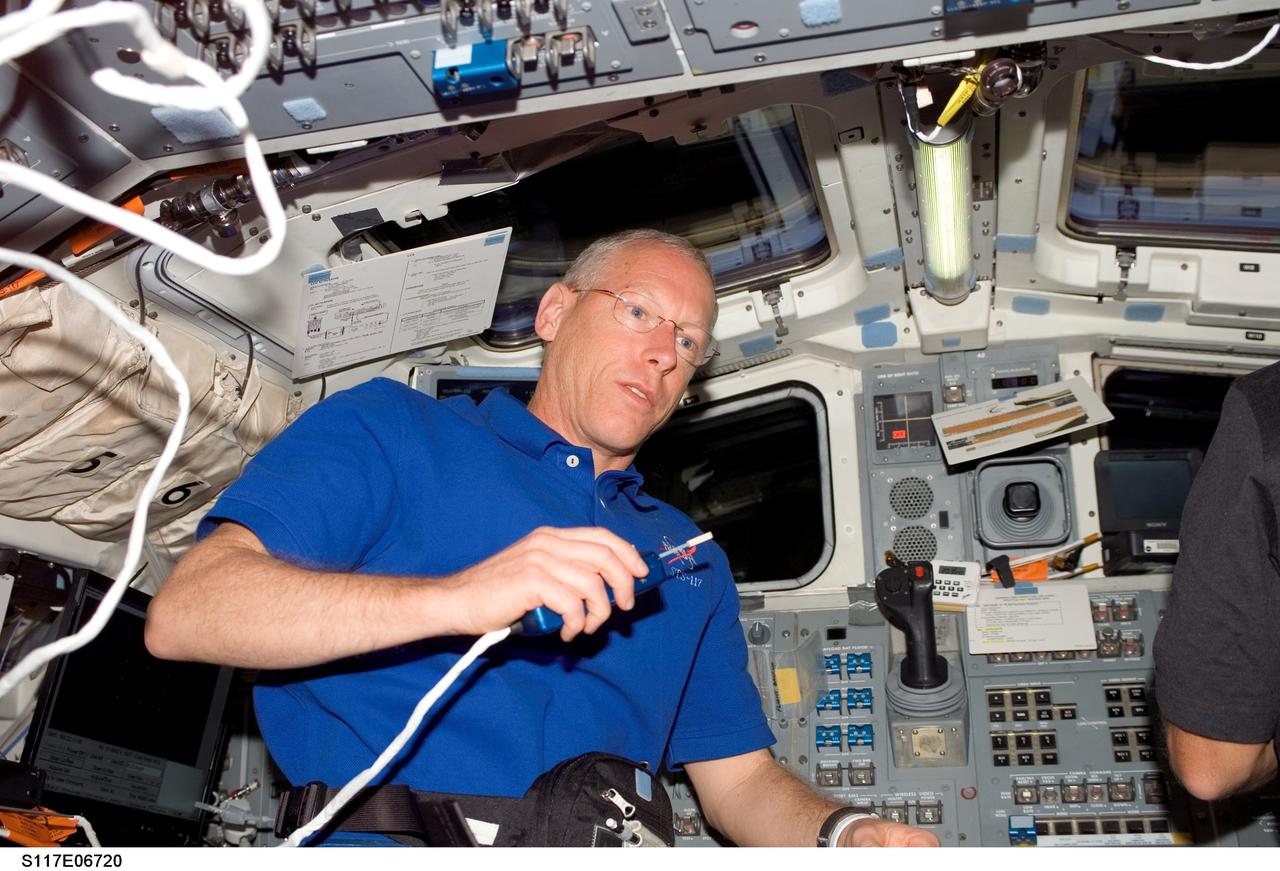
S117-E-06720 (9 June 2007) --- Astronaut Patrick Forrester, STS-117 mission specialist, uses a communication system on the aft flight deck of Space Shuttle Atlantis.
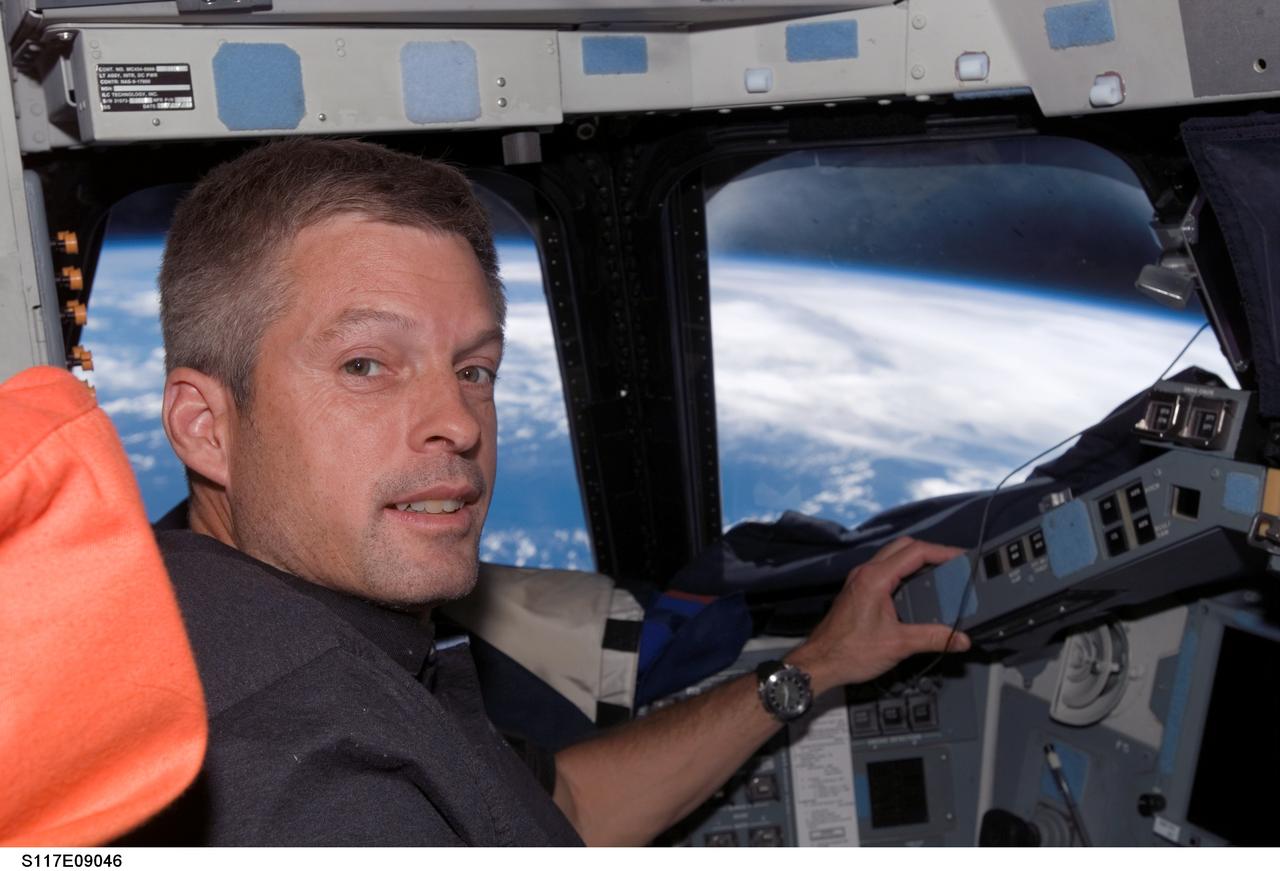
S117-E-09046 (19 June 2007) --- Astronaut Steven Swanson, STS-117 mission specialist, occupies the commander's station on the flight deck of Space Shuttle Atlantis during flight day 12 activities.
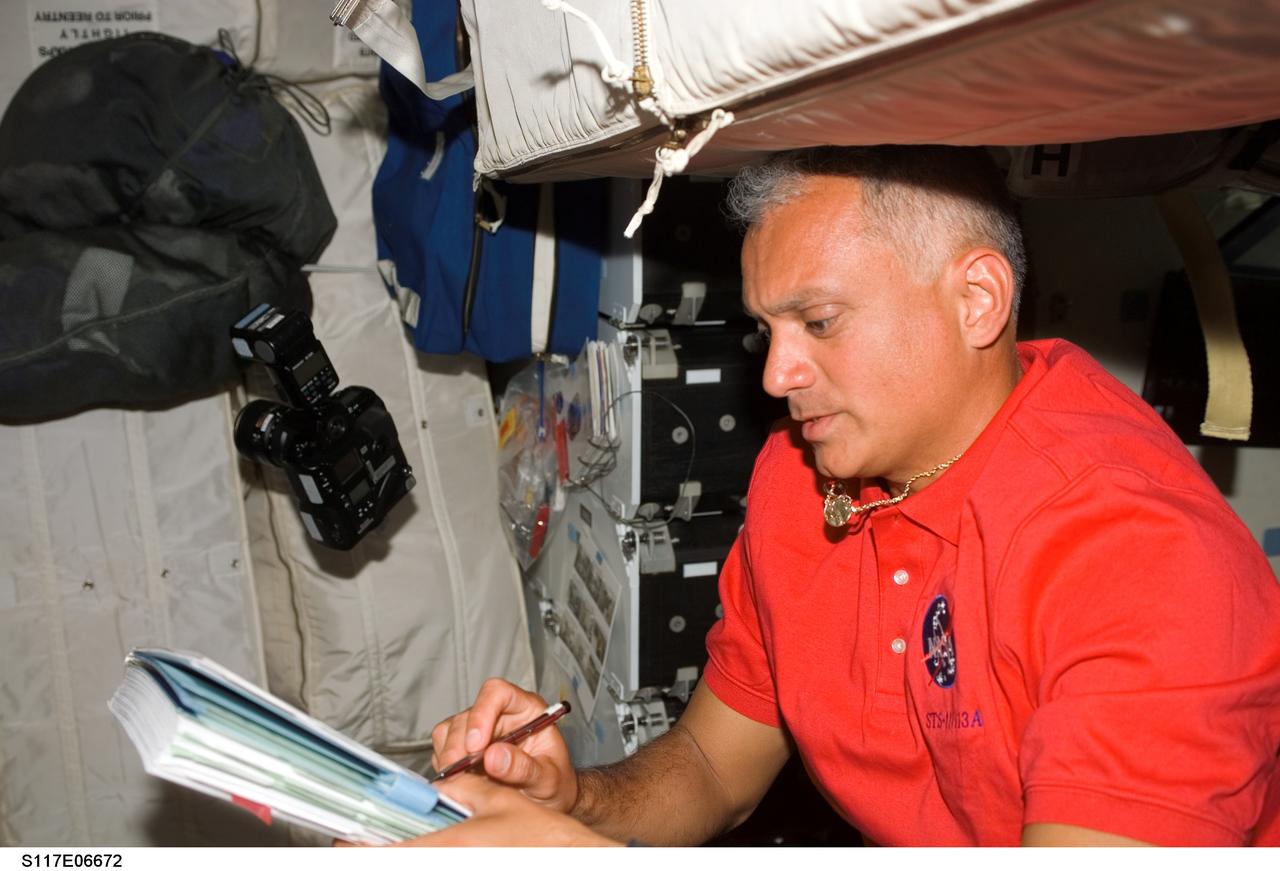
S117-E-06672 (9 June 2007) --- Astronaut John "Danny" Olivas, STS-117 mission specialist, looks over procedures checklists on the middeck of the Space Shuttle Atlantis.
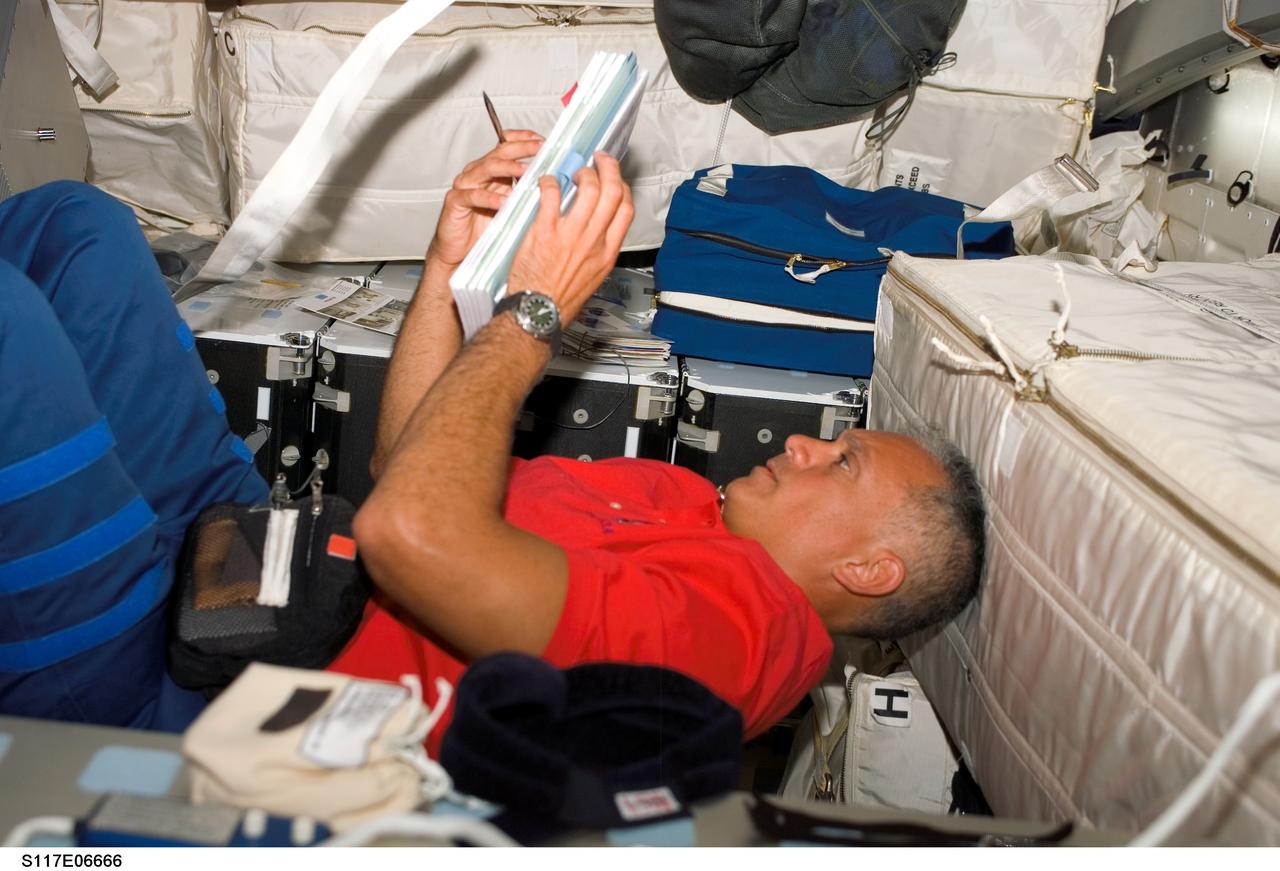
S117-E-06666 (9 June 2007) --- Astronaut John "Danny" Olivas, STS-117 mission specialist, looks over procedures checklists on the middeck of the Space Shuttle Atlantis.
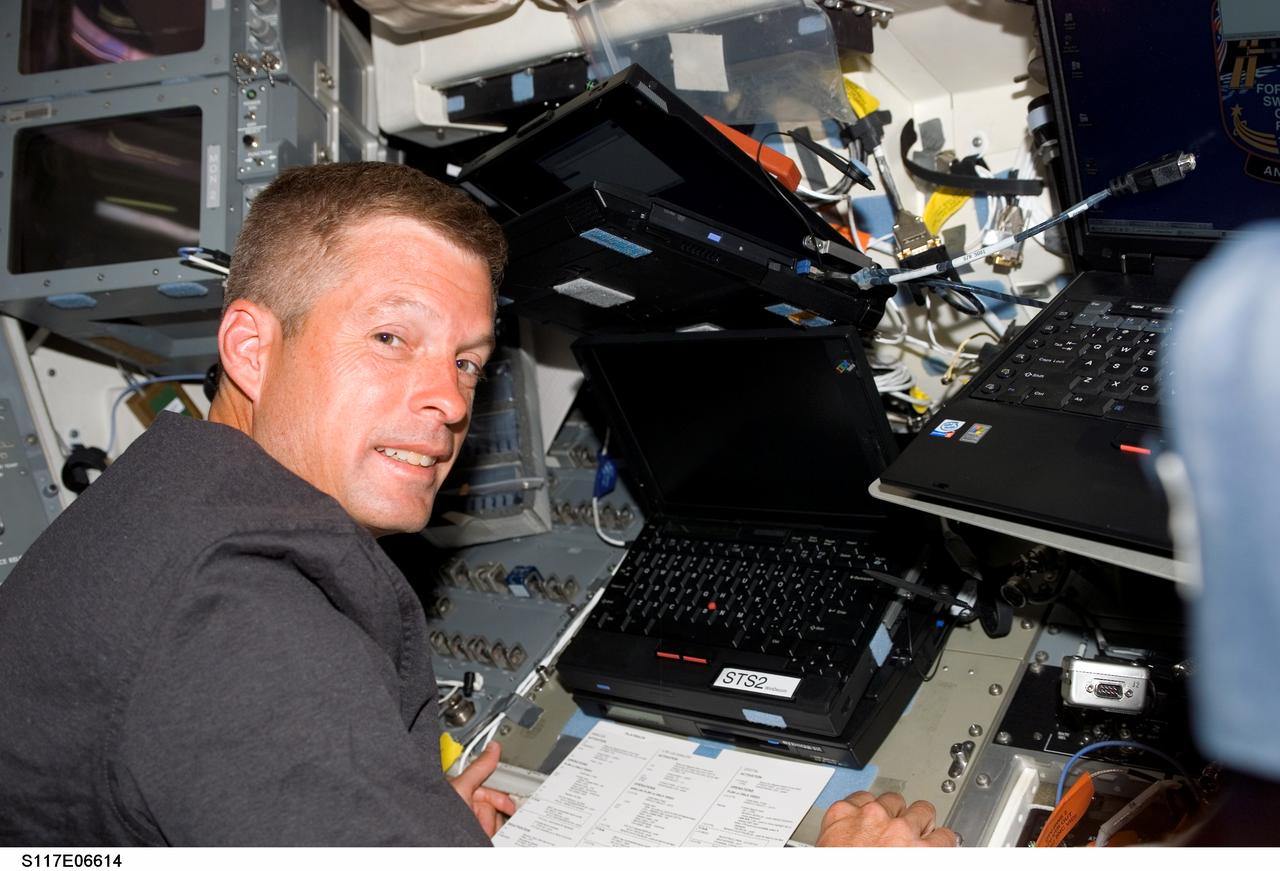
S117-E-06614 (9 June 2007) --- Astronaut Steven Swanson, STS-117 mission specialist, uses a computer on the aft flight deck of Space Shuttle Atlantis.
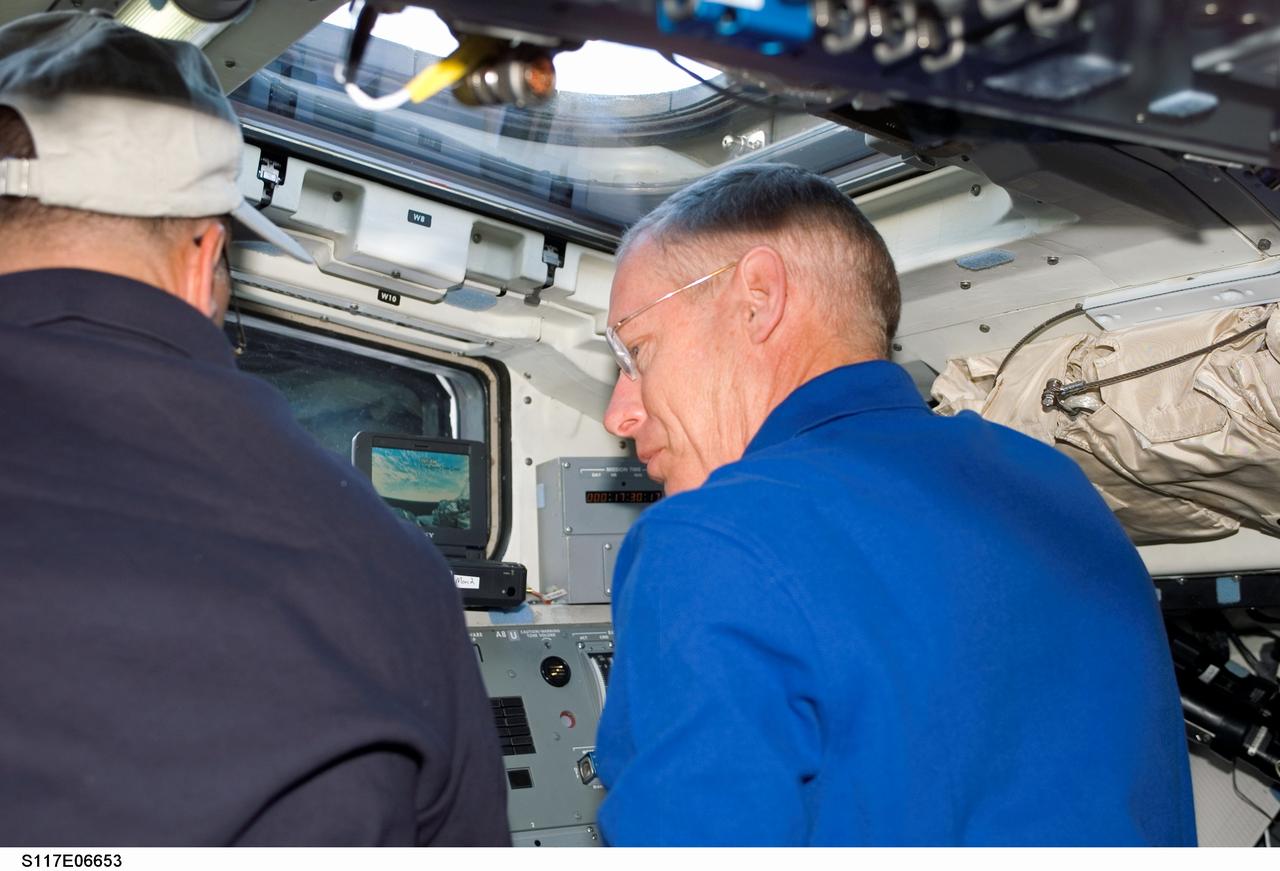
S117-E-06653 (9 June 2007) --- Astronauts Lee Archambault (left), STS-117 pilot, and Patrick Forrester, mission specialist, work at the controls on the aft flight deck of the Space Shuttle Atlantis.
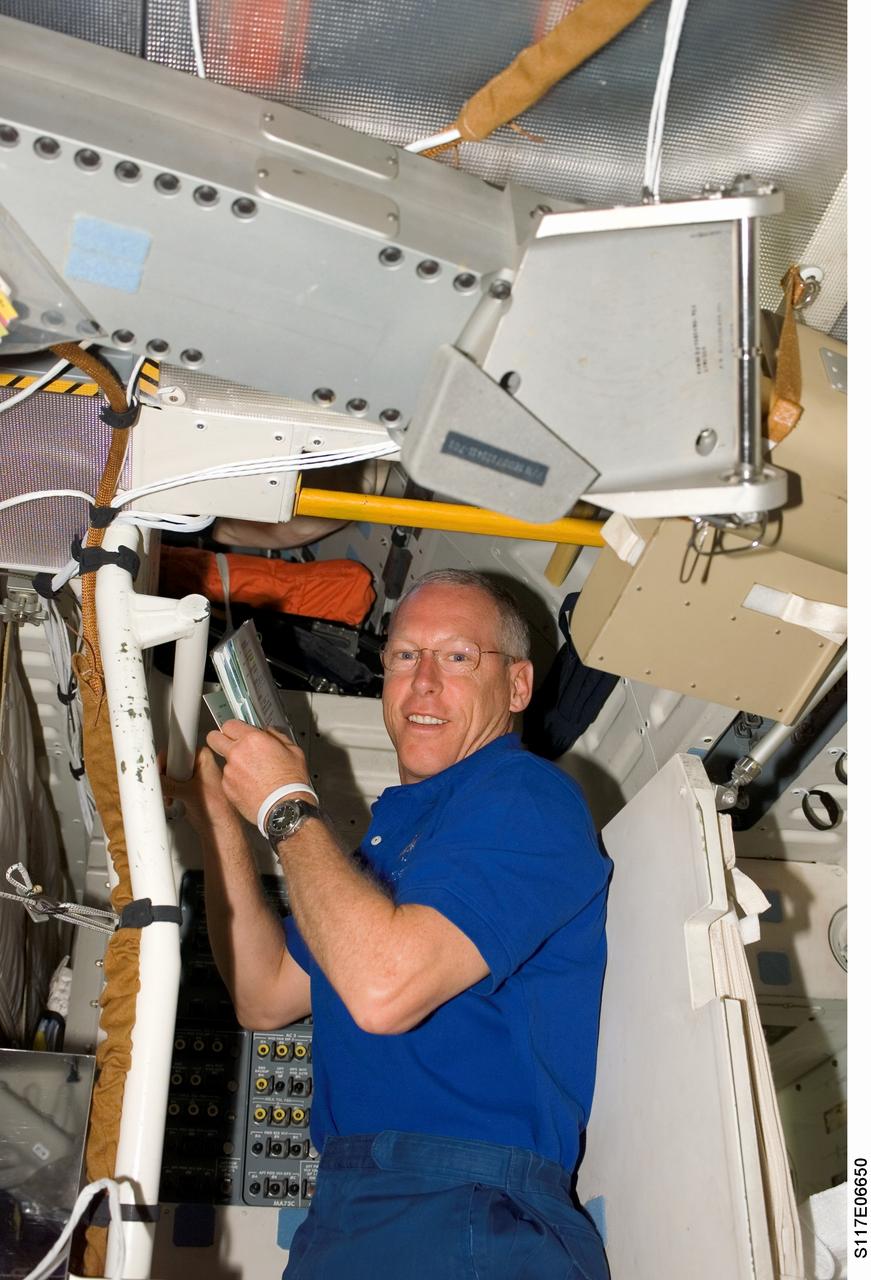
S117-E-06650 (9 June 2007) --- Astronaut Patrick Forrester, STS-117 mission specialist, looks over procedures checklists on the middeck of the Space Shuttle Atlantis.
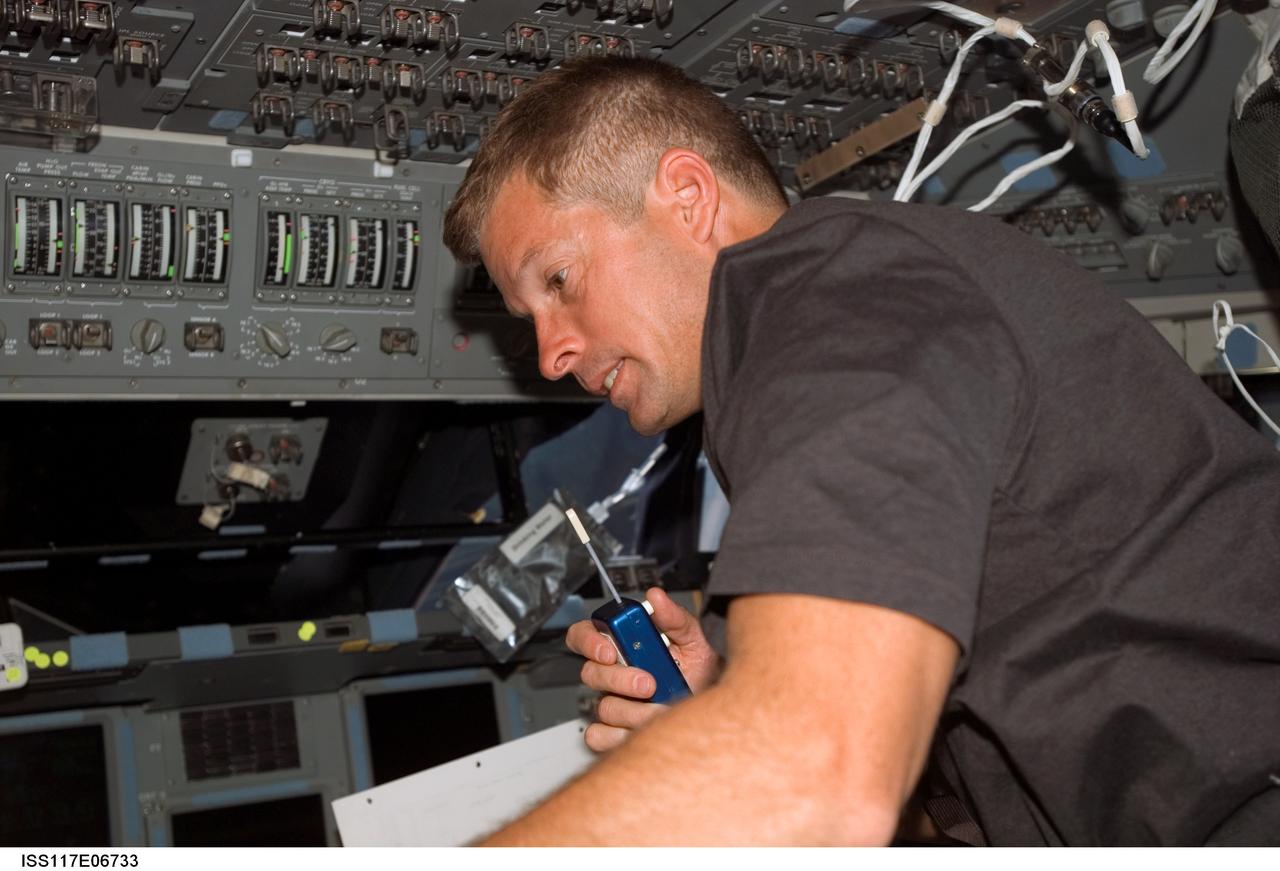
S117-E-06733 (9 June 2007) --- Astronaut Steven Swanson, STS-117 mission specialist, uses a communication system on the flight deck of Space Shuttle Atlantis.
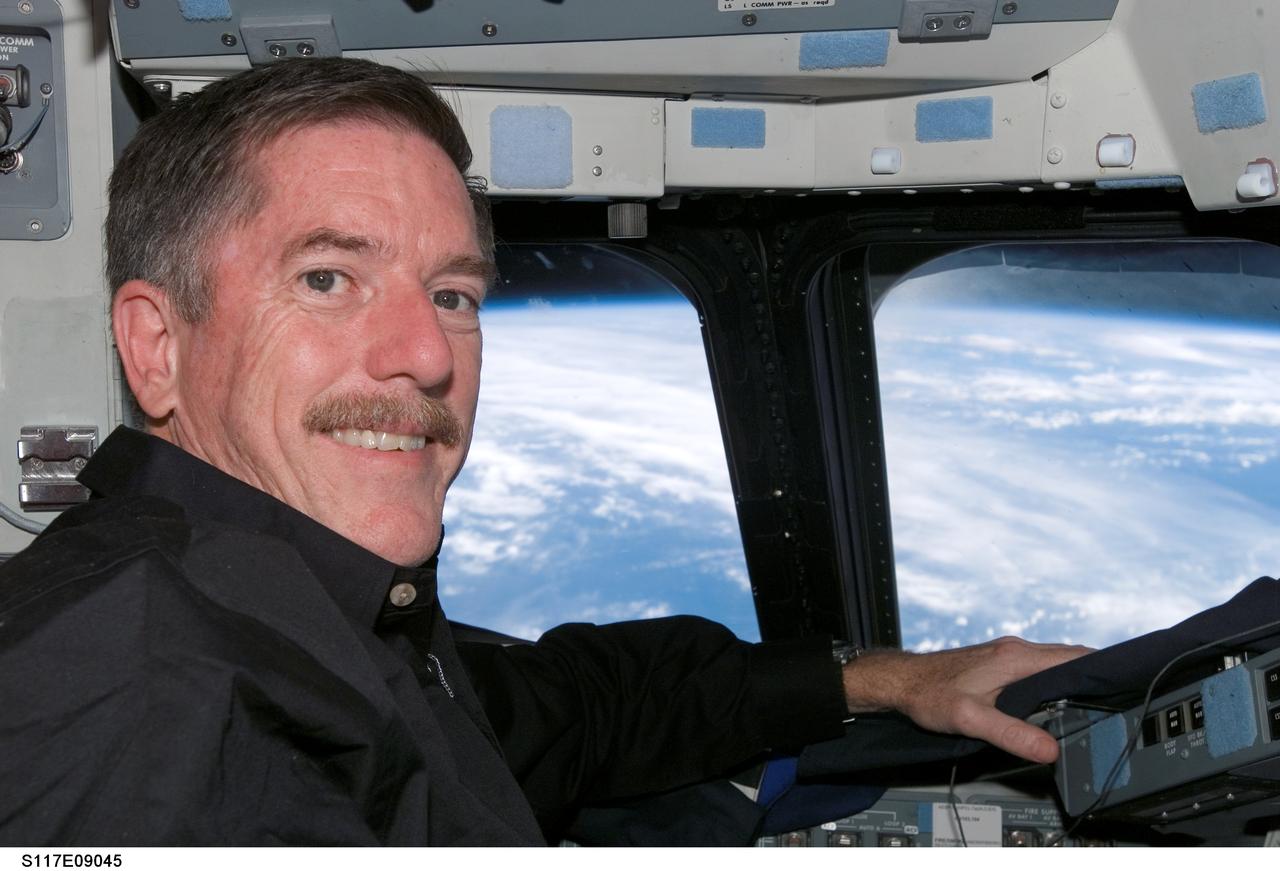
S117-E-09045 (19 June 2007) --- Astronaut Jim Reilly, STS-117 mission specialist, occupies the commander's station on the flight deck of Space Shuttle Atlantis during flight day 12 activities.
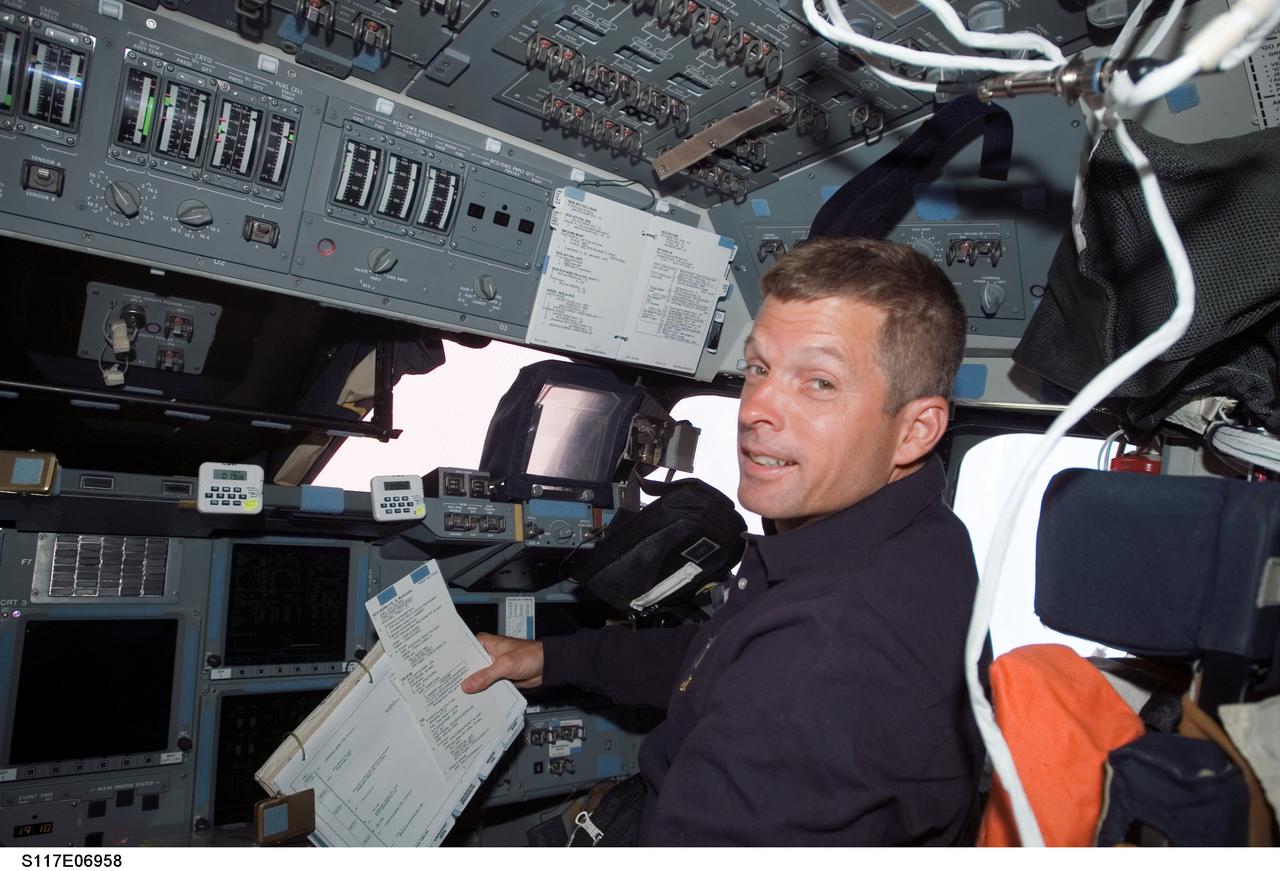
S117-E-06958 (10 June 2007) --- Astronaut Steven Swanson, STS-117 mission specialist, occupies the pilot's station on the flight deck of Space Shuttle Atlantis during rendezvous and docking operations with the International Space Station.
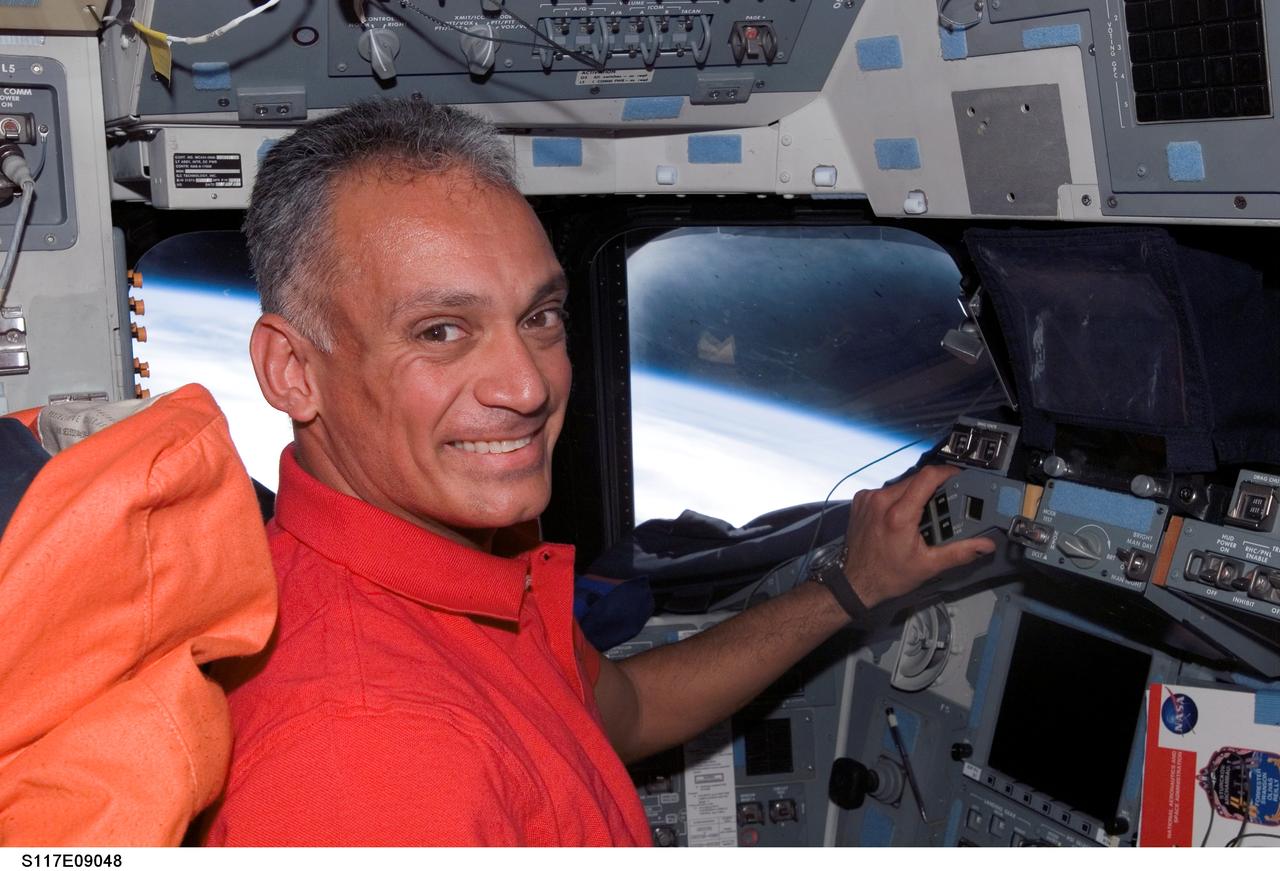
S117-E-09048 (19 June 2007) --- Astronaut John "Danny" Olivas, STS-117 mission specialist, occupies the commander's station on the flight deck of Space Shuttle Atlantis during flight day 12 activities.
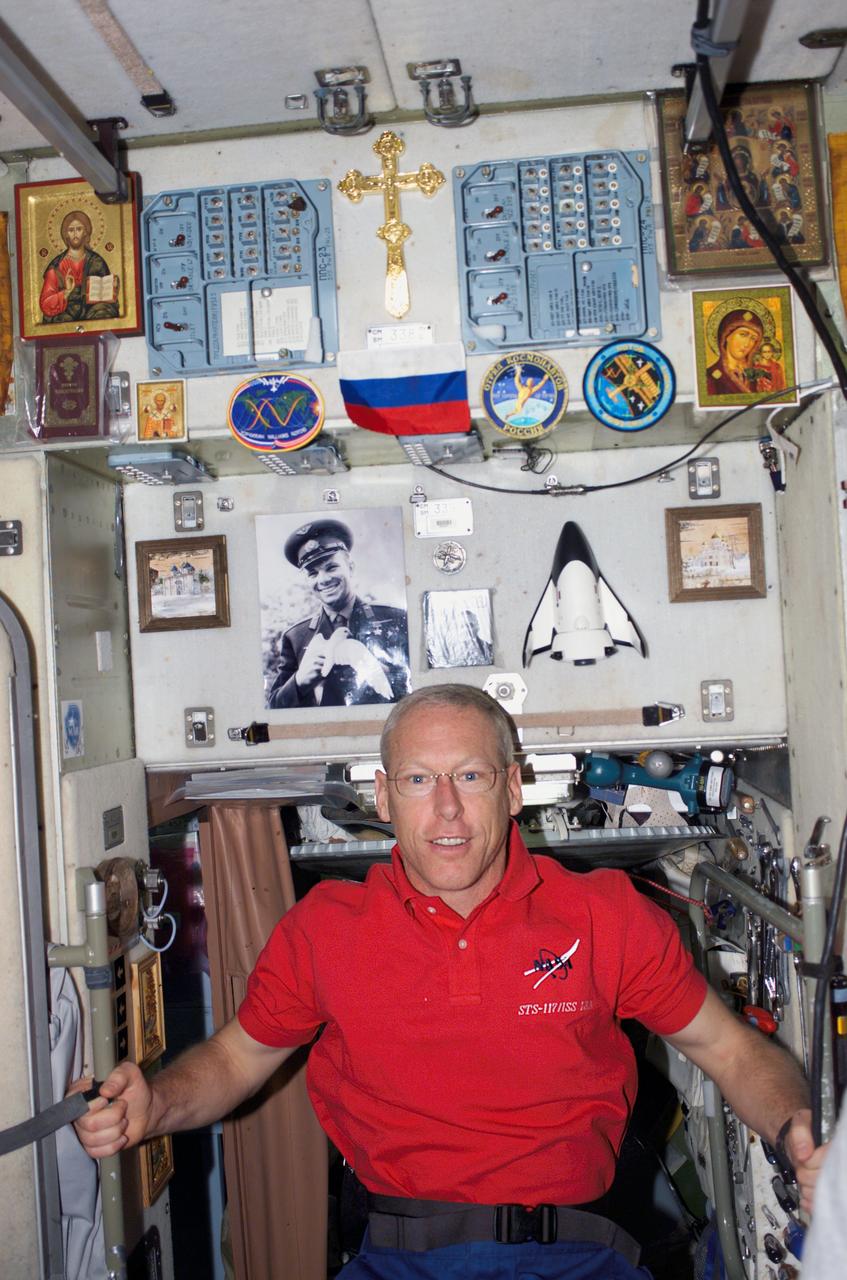
S117-E-09497 (17 June 2007) --- Astronaut Patrick Forrester, STS-117 mission specialist, poses for a photo in the Zvezda Service Module of the International Space Station while Space Shuttle Atlantis was docked with the station.
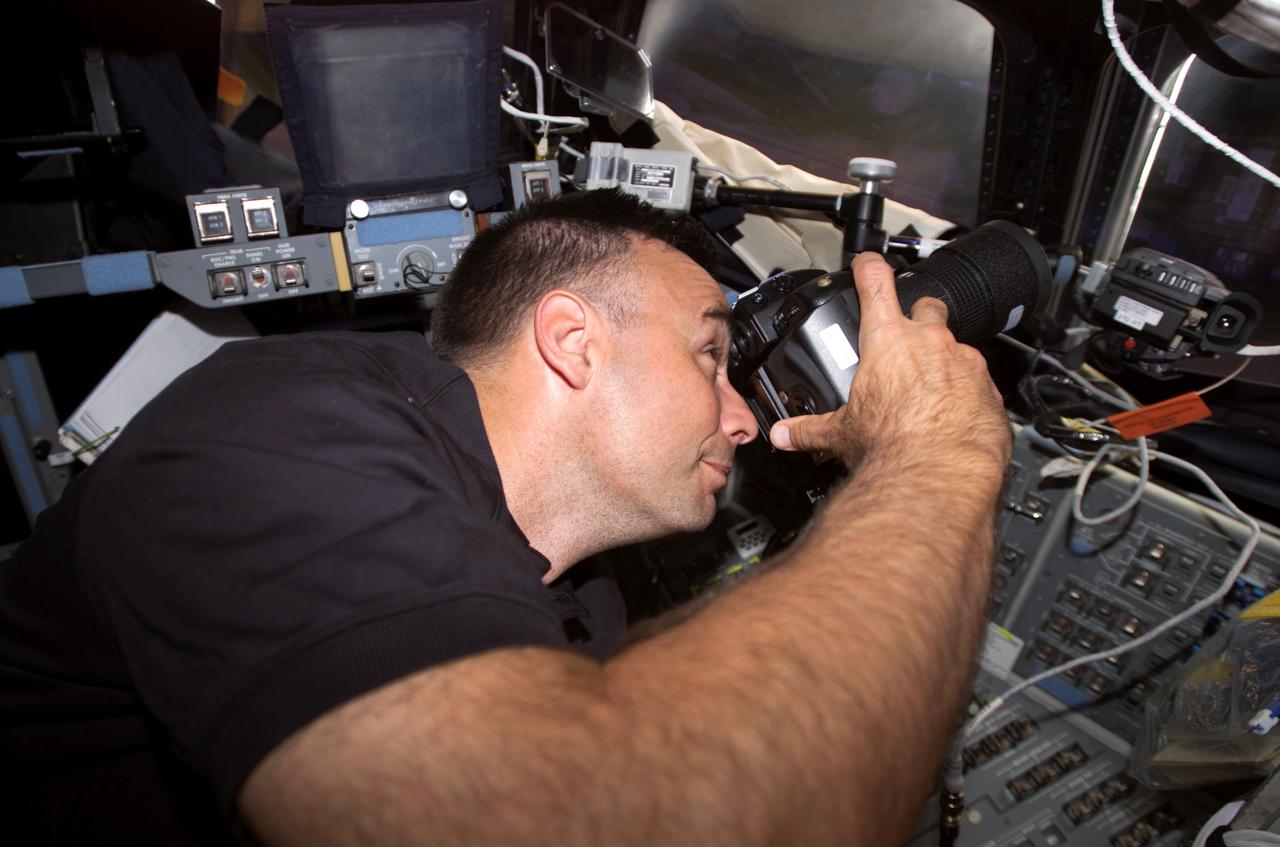
S117-E-07206 (14 June 2007 ) --- Astronaut Lee Archambault, pilot, aims a camera through windows on the flight deck of the Space Shuttle Atlantis about half way through the STS-117 mission.
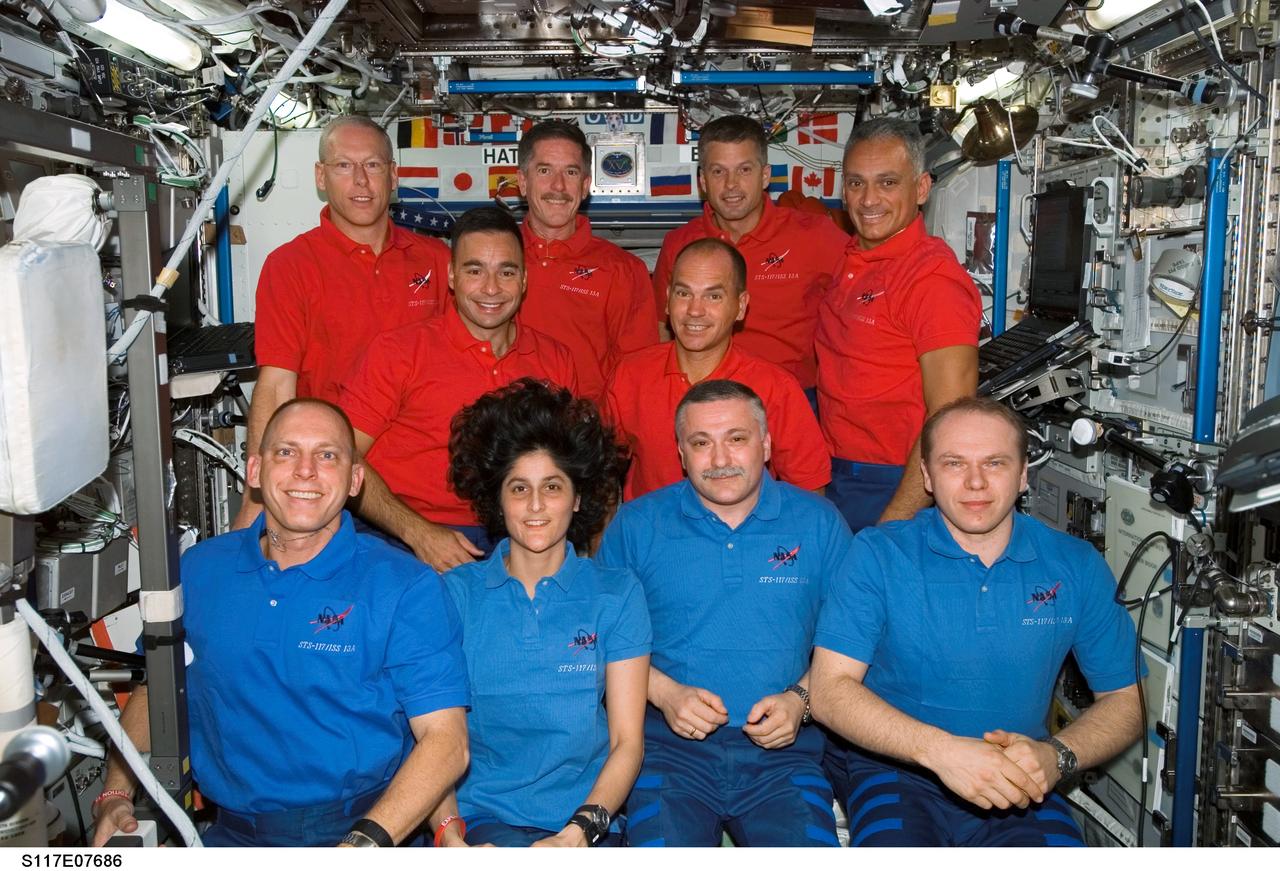
S117-E-07686 (16 June 2007) --- The STS-117 and Expedition 15 crewmembers gather for a group portrait during a joint crew press conference in the Destiny laboratory of the International Space Station while Space Shuttle Atlantis was docked with the station. From the left (front row) are astronauts Clayton Anderson, Expedition 15 flight engineer; Sunita Williams, STS-117 mission specialist; cosmonauts Fyodor N. Yurchikhin and Oleg V. Kotov, Expedition 15 commander and flight engineer, respectively, representing Russia's Federal Space Agency. From the left (middle row) are astronauts Lee Archambault and Rick Sturckow, STS-117 pilot and commander, respectively. From the left (back row) are astronauts Patrick Forrester, Jim Reilly, Steven Swanson and John "Danny" Olivas, all STS-117 mission specialists. Shortly after the two spacecraft docked on June 10, Anderson became a member of the station crew. At the same time, Williams became an Atlantis crewmember for her ride home, completing more than six months in space.
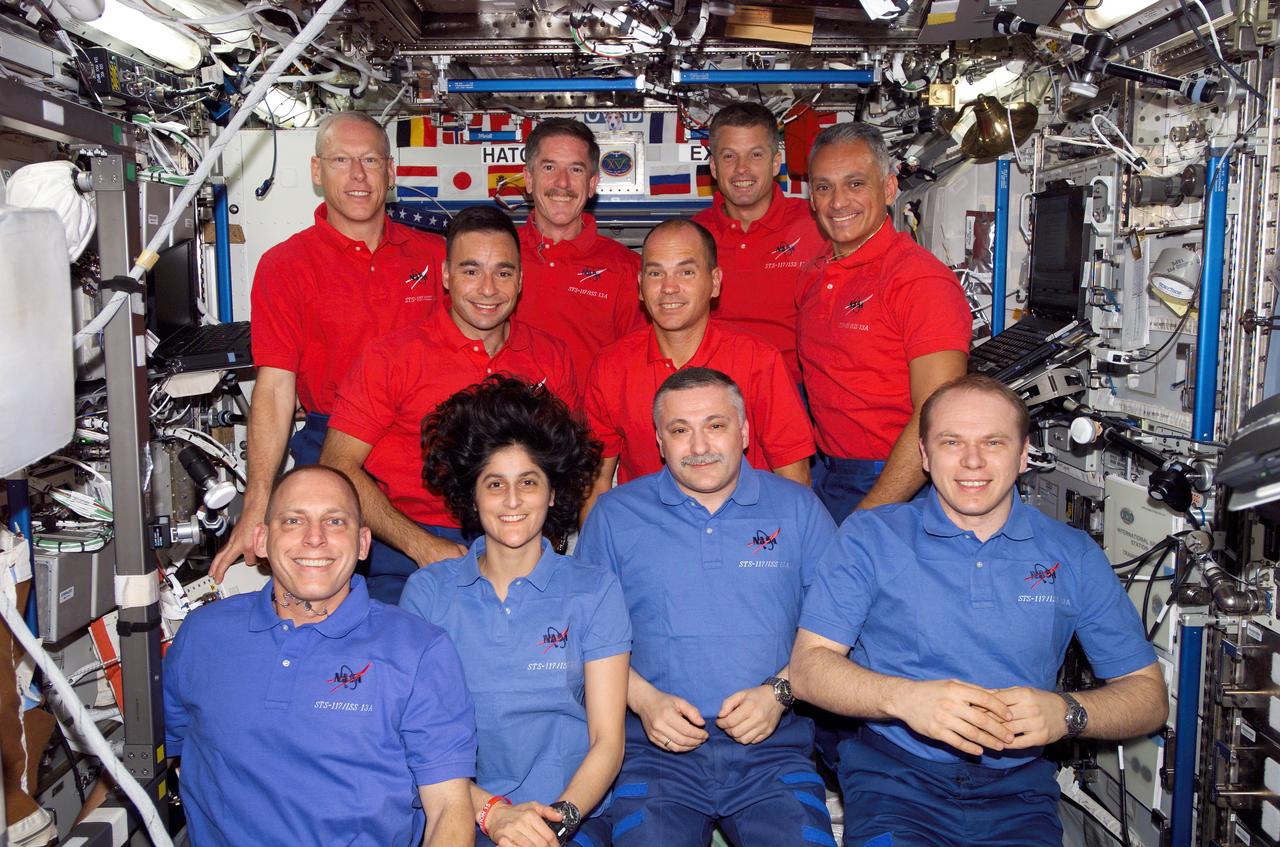
S117-E-07684 (16 June 2007) --- The STS-117 and Expedition 15 crewmembers gather for a group portrait during a joint crew press conference in the Destiny laboratory of the International Space Station while Space Shuttle Atlantis was docked with the station. From the left (front row) are astronauts Clayton Anderson, Expedition 15 flight engineer; Sunita Williams, STS-117 mission specialist; cosmonauts Fyodor N. Yurchikhin and Oleg V. Kotov, Expedition 15 commander and flight engineer, respectively, representing Russia's Federal Space Agency. From the left (middle row) are astronauts Lee Archambault and Rick Sturckow, STS-117 pilot and commander, respectively. From the left (back row) are astronauts Patrick Forrester, Jim Reilly, Steven Swanson and John "Danny" Olivas, all STS-117 mission specialists. Shortly after the two spacecraft docked on June 10, Anderson became a member of the station crew. At the same time, Williams became an Atlantis crewmember for her ride home, completing more than six months in space.
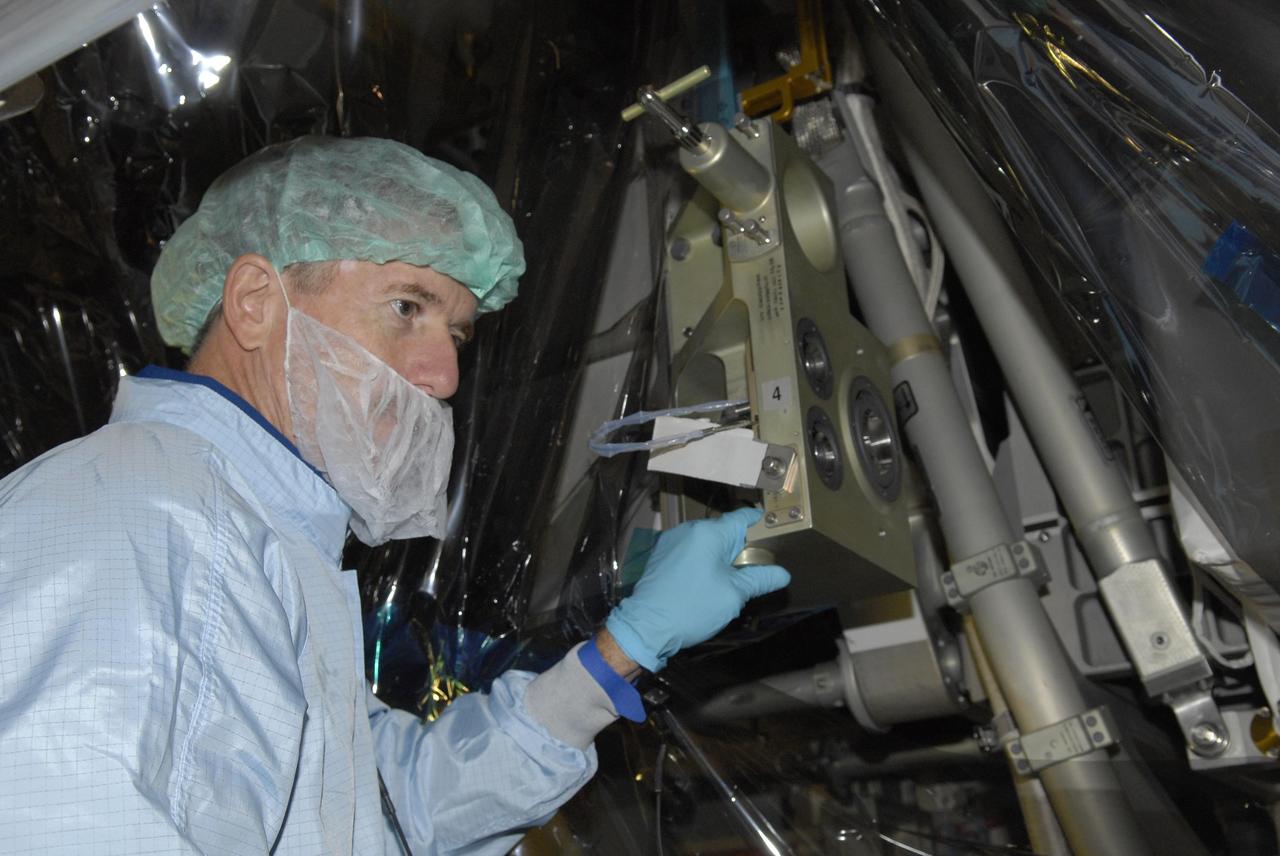
KENNEDY SPACE CENTER, FLA. -- In the Space Station Processing Facility, STS-117 Mission Specialist James Reilly examines the S3/S4 Integrated Truss Segment during Crew Equipment Interface Test (CEIT) activities. A CEIT provides the astronauts opportunities to become familiar with equipment and hardware with which they will be working during their mission. The crew of mission STS-117 will deliver and install the second and third starboard truss segments (S3/S4) and another pair of solar arrays and batteries during the Space Shuttle Program's 21st mission to the International Space Station. Launch of Space Shuttle Atlantis is scheduled for March 2007. Photo credit: NASA/Kim Shiflett
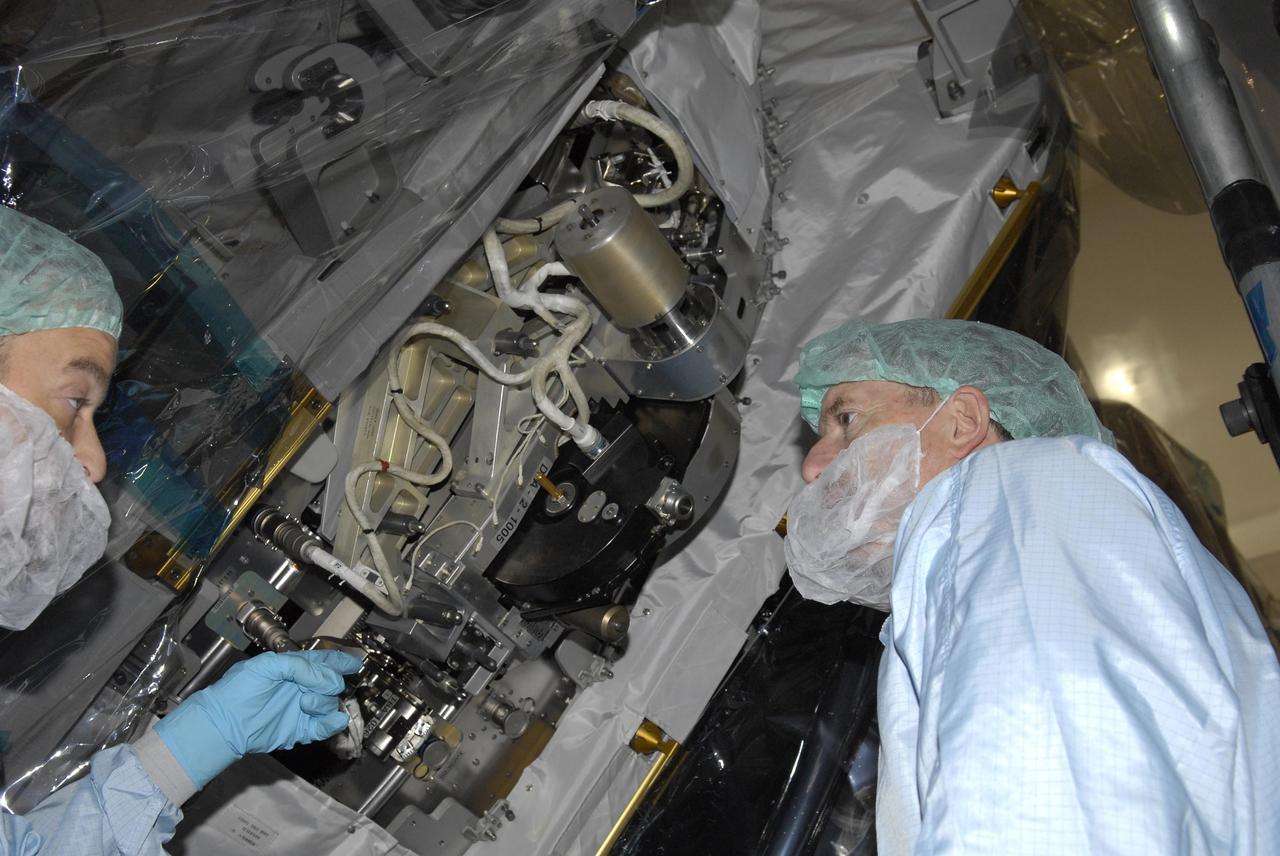
KENNEDY SPACE CENTER, FLA. -- In the Space Station Processing Facility, a technician points out elements of the S3/S4 Integrated Truss Segment to STS-117 Mission Specialist James Reilly (right) during Crew Equipment Interface Test (CEIT) activities. A CEIT provides the astronauts opportunities to become familiar with equipment and hardware with which they will be working during their mission. The crew of mission STS-117 will deliver and install the second and third starboard truss segments (S3/S4) and another pair of solar arrays and batteries during the Space Shuttle Program's 21st mission to the International Space Station. Launch of Space Shuttle Atlantis is scheduled for March 2007. Photo credit: NASA/Kim Shiflett
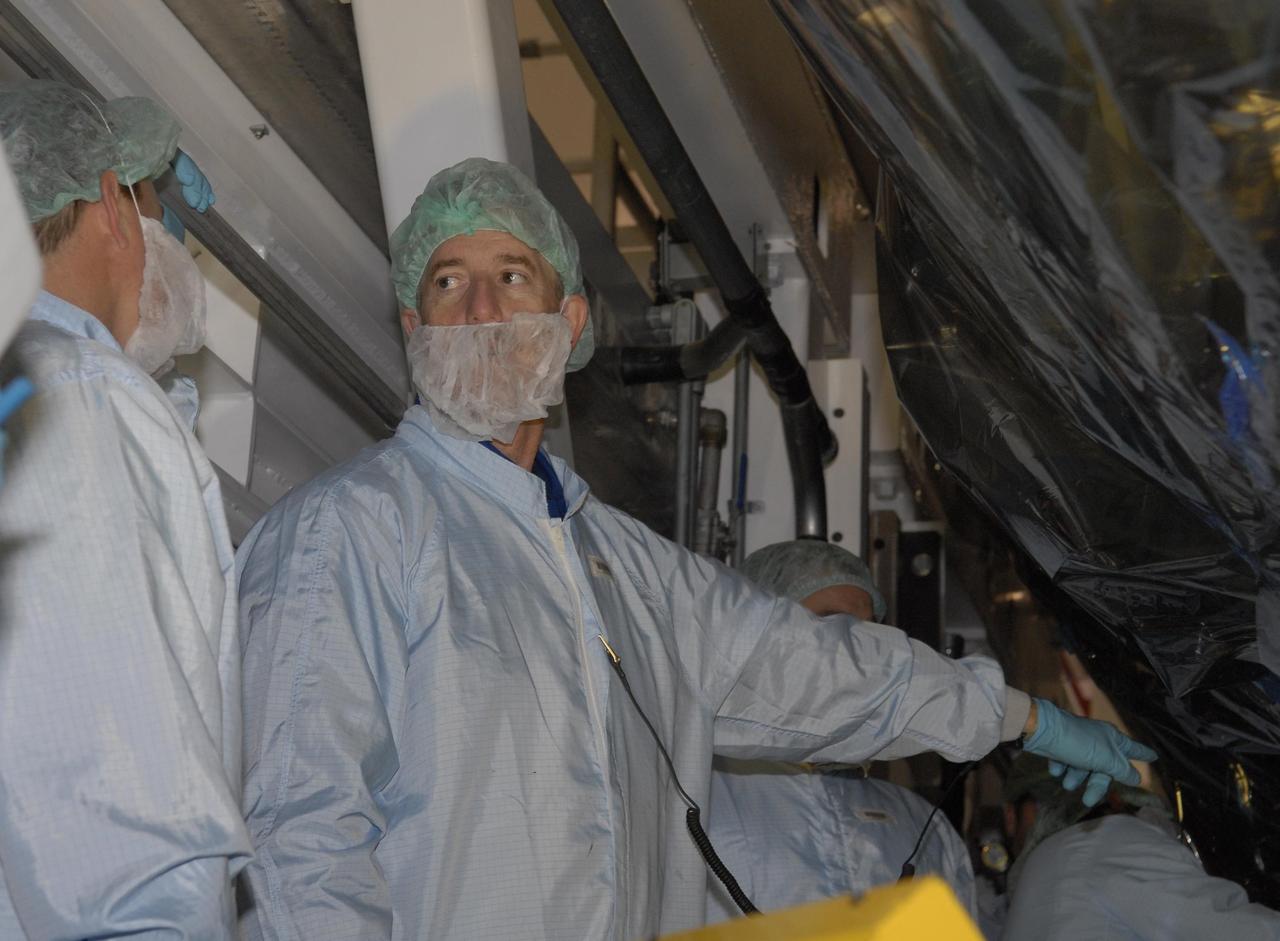
KENNEDY SPACE CENTER, FLA. -- In the Space Station Processing Facility, STS-117 Mission Specialist James Reilly (right) discusses the S3/S4 Integrated Truss Segment with a technician during Crew Equipment Interface Test (CEIT) activities. A CEIT provides the astronauts opportunities to become familiar with equipment and hardware with which they will be working during their mission. The crew of mission STS-117 will deliver and install the second and third starboard truss segments (S3/S4) and another pair of solar arrays and batteries during the Space Shuttle Program's 21st mission to the International Space Station. Launch of Space Shuttle Atlantis is scheduled for March 2007. Photo credit: NASA/Kim Shiflett
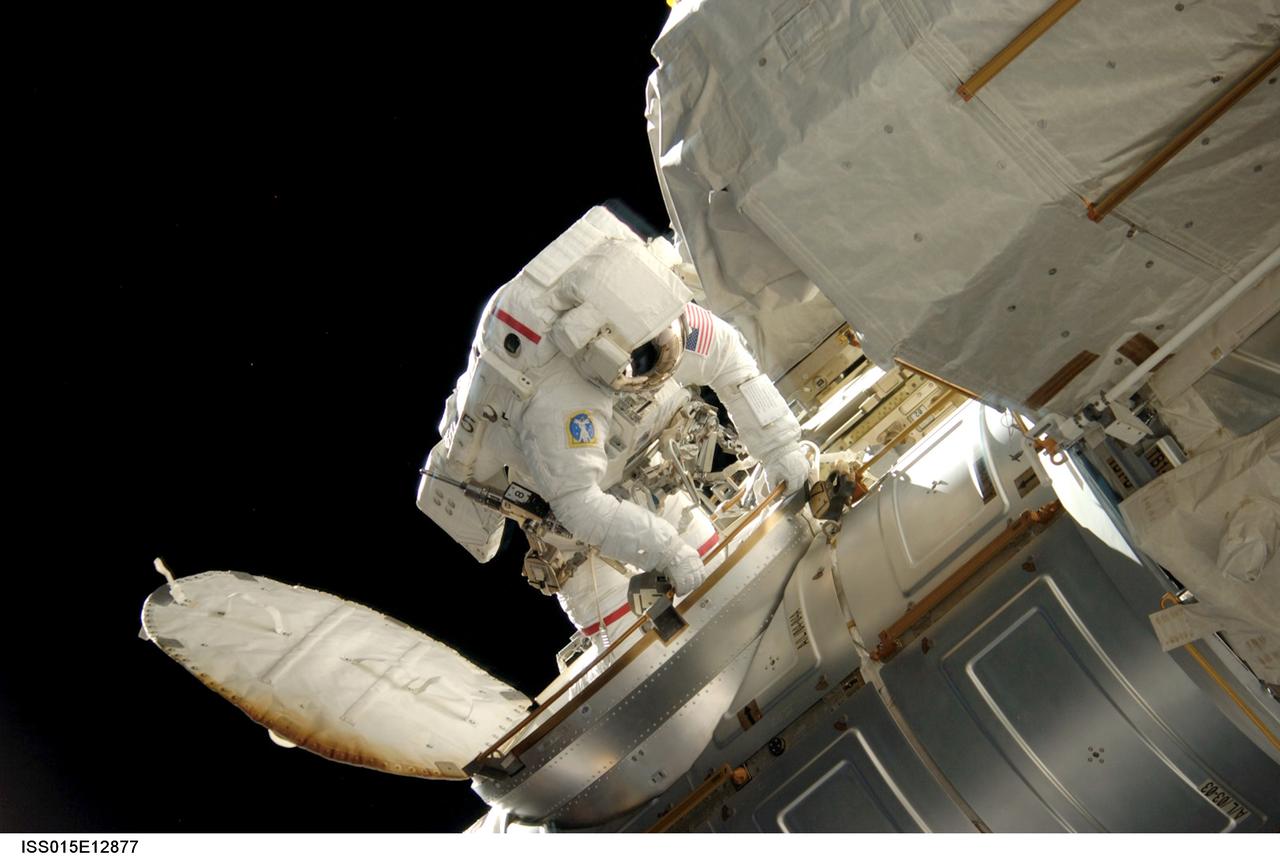
ISS015-E-12877 (15 June 2007) --- Astronaut Jim Reilly, STS-117 mission specialist, enters the Quest Airlock on the International Space Station at the conclusion of the mission's third scheduled session of extravehicular activity (EVA) while Space Shuttle Atlantis was docked with the station.
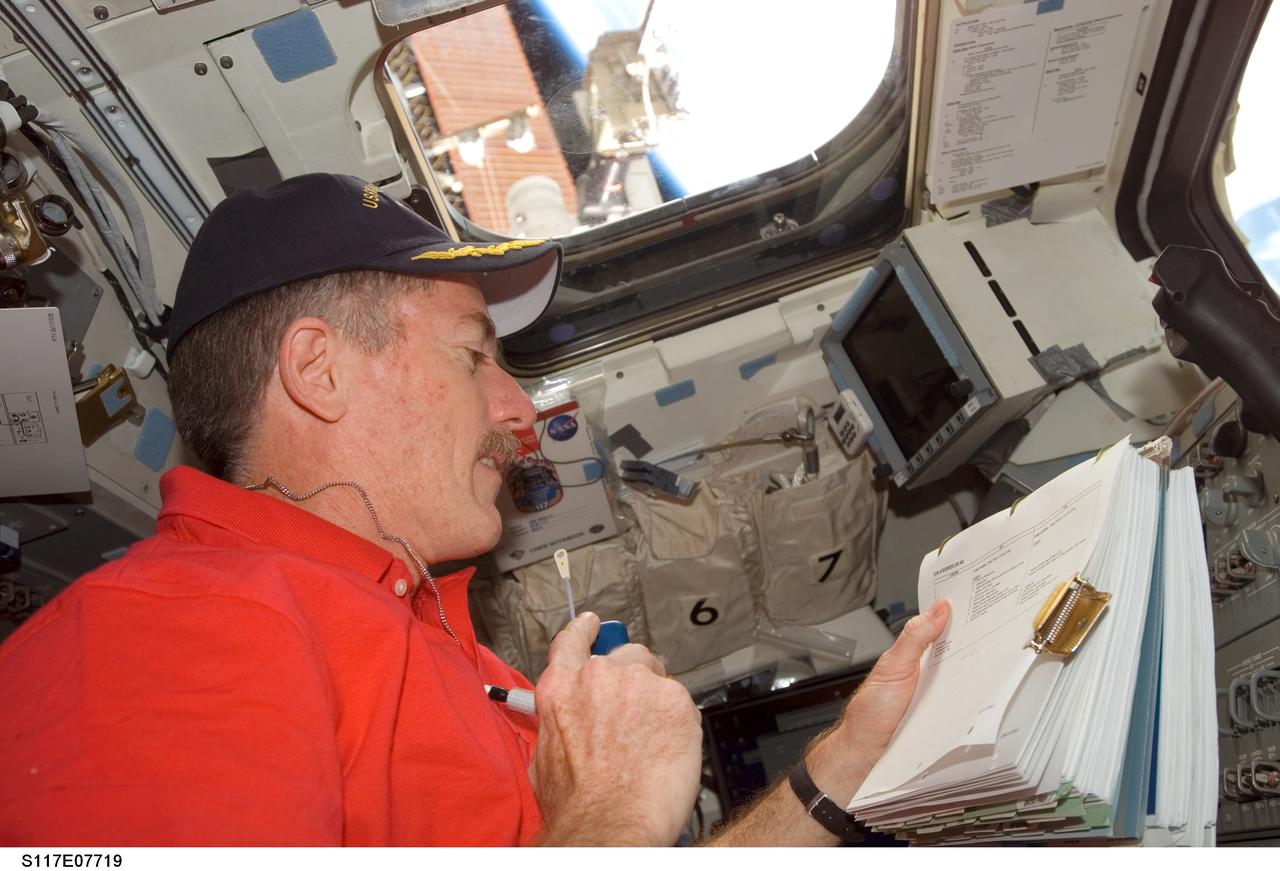
S117-E-07719 (17 June 2007) --- On the flight deck of Space Shuttle Atlantis, astronaut Jim Reilly, STS-117 mission specialist, talks to ground controllers while supporting two spacewalking crewmates during the mission's fourth and final session of extravehicular activity (EVA) while docked with the International Space Station.
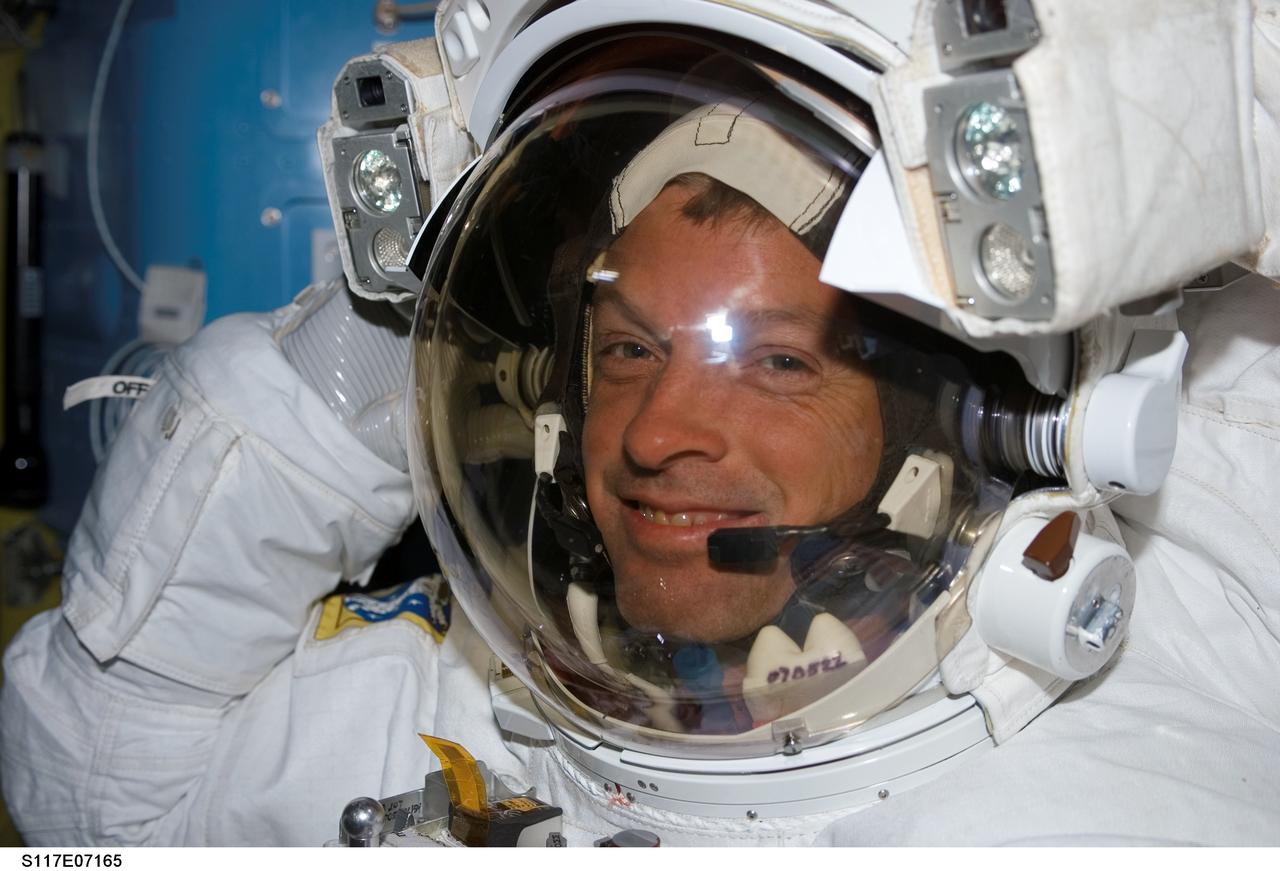
S117-E-07165 (13 June 2007) --- Attired in his extravehicular mobility unit (EMU) spacesuit, astronaut Steven Swanson, STS-117 mission specialist, prepares for the mission's second session of extravehicular activity (EVA) in the Quest Airlock of the International Space Station while Space Shuttle Atlantis was docked with the station.
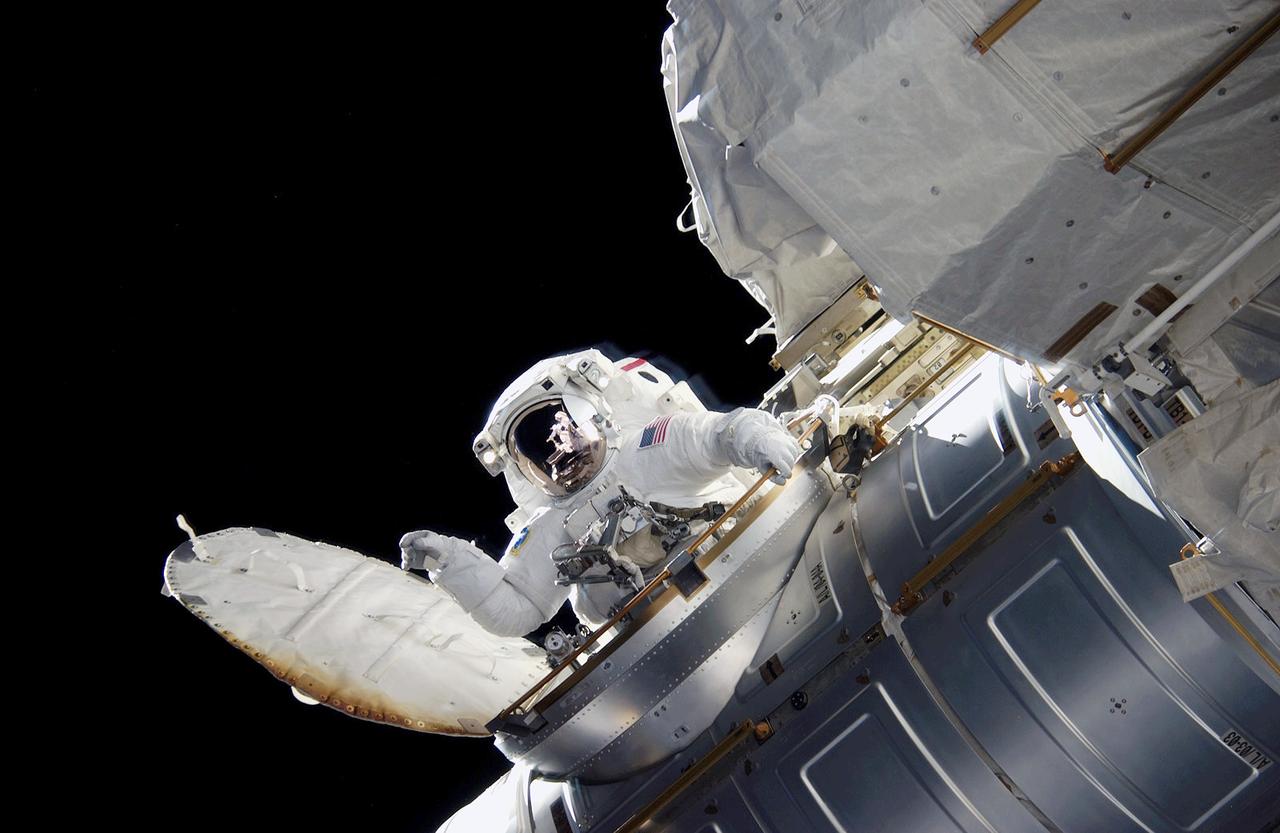
ISS015-E-12878 (15 June 2007) --- Astronaut Jim Reilly, STS-117 mission specialist, enters the Quest Airlock on the International Space Station at the conclusion of the mission's third scheduled session of extravehicular activity (EVA) while Space Shuttle Atlantis was docked with the station.