
KENNEDY SPACE CENTER, FLA. -- Mission STS-117 Commander Rick Sturckow (left) and Pilot Lee Archambault arrive at the Shuttle Landing Facility to begin practice flights on the shuttle training aircraft (STA) during Terminal Countdown Demonstration Test (TCDT) activities. The STA is a Grumman American Aviation-built Gulf Stream II jet that was modified to simulate an orbiter's cockpit, motion and visual cues, and handling qualities. In flight, the STA duplicates the orbiter's atmospheric descent trajectory from approximately 35,000 feet altitude to landing on a runway. Because the orbiter is unpowered during re-entry and landing, its high-speed glide must be perfectly executed the first time. The mission payload aboard Space Shuttle Atlantis is the S3/S4 integrated truss structure, along with a third set of solar arrays and batteries. The crew of six astronauts will install the truss to continue assembly of the International Space Station. STS-117 is the 118th space shuttle flight and the 21st flight to the station. Photo credit: NASA/Kim Shiflett

KENNEDY SPACE CENTER, FLA. -- The shuttle training aircraft (STA) sits on the tarmac at the Shuttle Landing Facility, ready for practice flights by Mission STS-117 Commander Rick Sturckow and Pilot Lee Archambault. The STA is a Grumman American Aviation-built Gulf Stream II jet that was modified to simulate an orbiter's cockpit, motion and visual cues, and handling qualities. In flight, the STA duplicates the orbiter's atmospheric descent trajectory from approximately 35,000 feet altitude to landing on a runway. Because the orbiter is unpowered during re-entry and landing, its high-speed glide must be perfectly executed the first time. The mission payload aboard Space Shuttle Atlantis is the S3/S4 integrated truss structure, along with a third set of solar arrays and batteries. The crew of six astronauts will install the truss to continue assembly of the International Space Station. STS-117 is the 118th space shuttle flight and the 21st flight to the station. Photo credit: NASA/Kim Shiflett
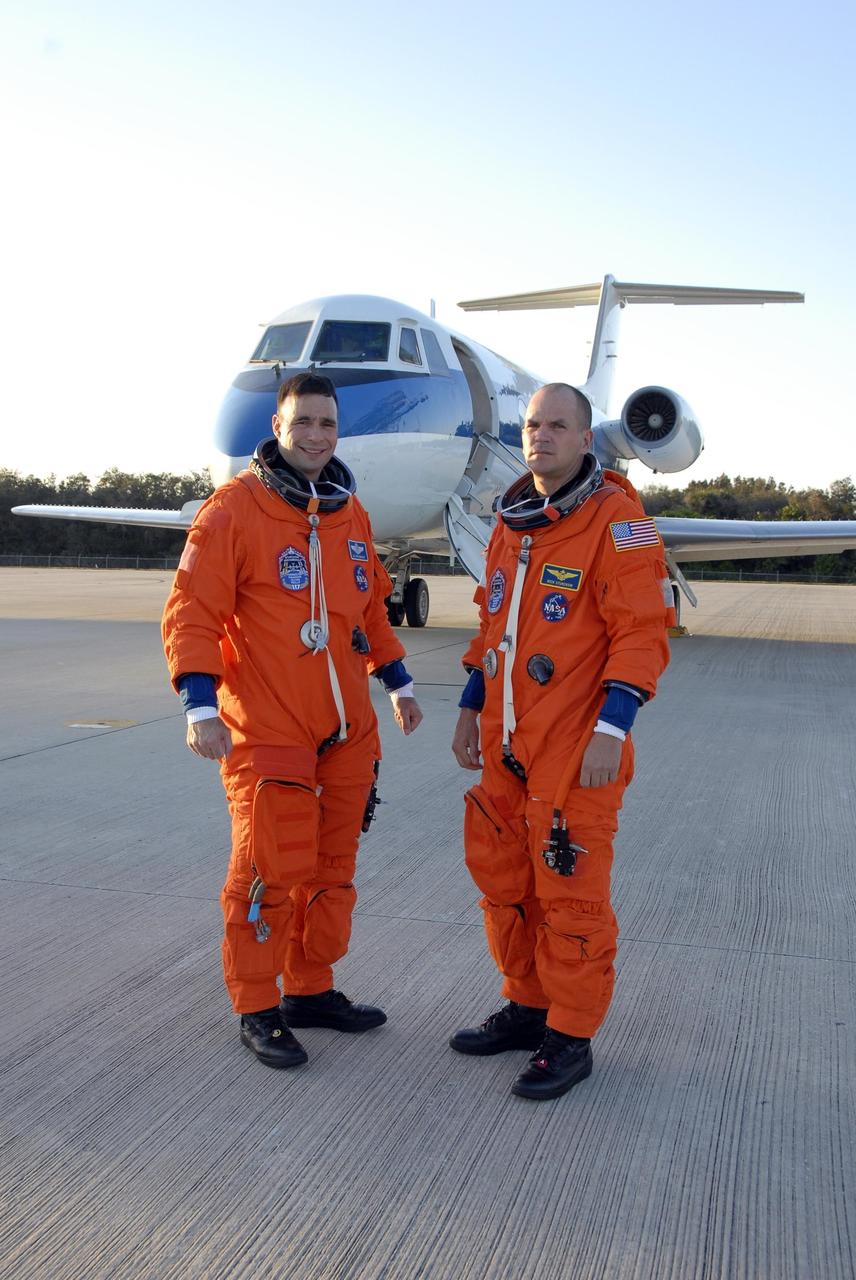
KENNEDY SPACE CENTER, FLA. -- Mission STS-117 Commander Rick Sturckow (left) and Pilot Lee Archambault, dressed in their launch suits, arrive at the Shuttle Landing Facility to begin practice flights on the shuttle training aircraft (STA) during Terminal Countdown Demonstration Test (TCDT) activities. The STA is a Grumman American Aviation-built Gulf Stream II jet that was modified to simulate an orbiter's cockpit, motion and visual cues, and handling qualities. In flight, the STA duplicates the orbiter's atmospheric descent trajectory from approximately 35,000 feet altitude to landing on a runway. Because the orbiter is unpowered during re-entry and landing, its high-speed glide must be perfectly executed the first time. The mission payload aboard Space Shuttle Atlantis is the S3/S4 integrated truss structure, along with a third set of solar arrays and batteries. The crew of six astronauts will install the truss to continue assembly of the International Space Station. STS-117 is the 118th space shuttle flight and the 21st flight to the station. Photo credit: NASA/Kim Shiflett
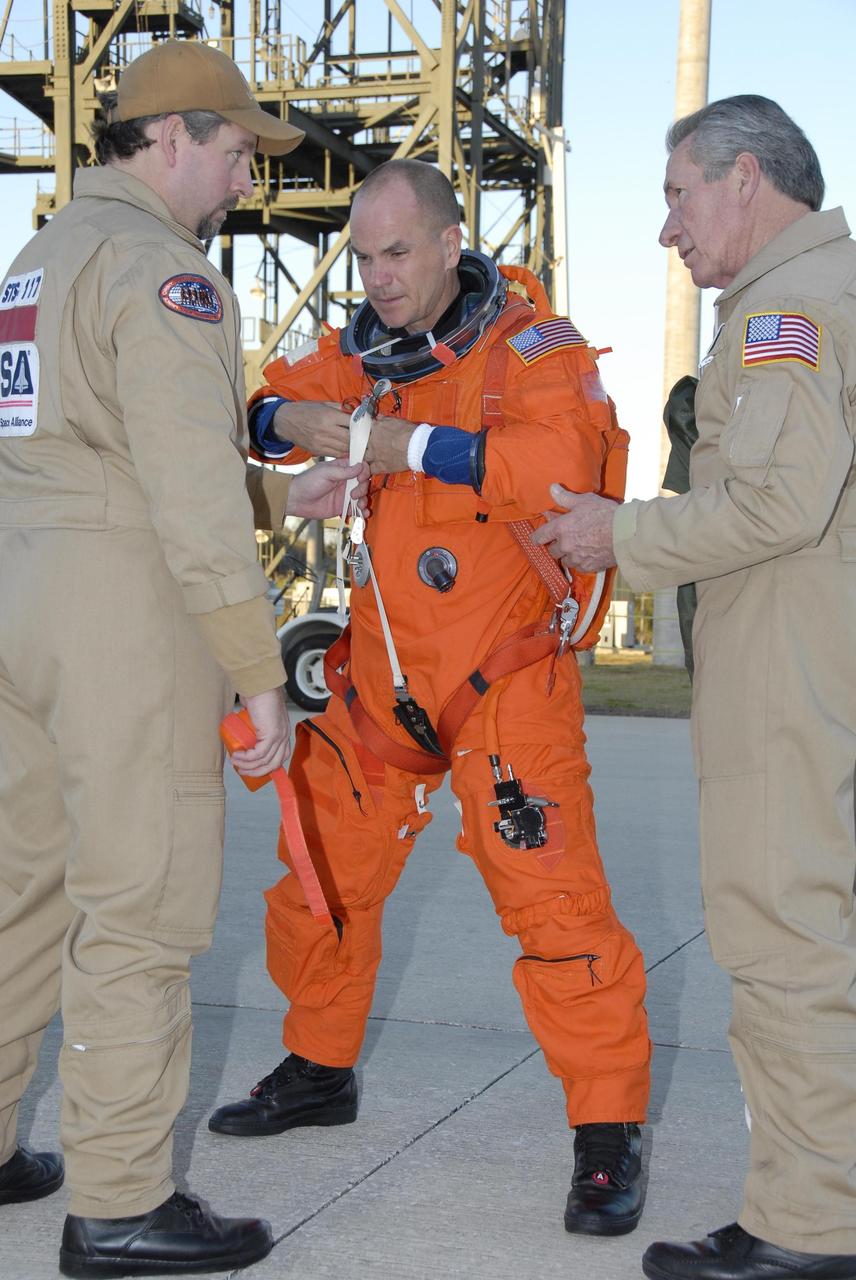
KENNEDY SPACE CENTER, FLA. -- Mission STS-117 Commander Rick Sturckow, dressed in his launch suit, prepares to begin practice flights on the shuttle training aircraft (STA) at the Shuttle Landing Facility during Terminal Countdown Demonstration Test (TCDT) activities. The STA is a Grumman American Aviation-built Gulf Stream II jet that was modified to simulate an orbiter's cockpit, motion and visual cues, and handling qualities. In flight, the STA duplicates the orbiter's atmospheric descent trajectory from approximately 35,000 feet altitude to landing on a runway. Because the orbiter is unpowered during re-entry and landing, its high-speed glide must be perfectly executed the first time. The mission payload aboard Space Shuttle Atlantis is the S3/S4 integrated truss structure, along with a third set of solar arrays and batteries. The crew of six astronauts will install the truss to continue assembly of the International Space Station. STS-117 is the 118th space shuttle flight and the 21st flight to the station. Photo credit: NASA/Kim Shiflett
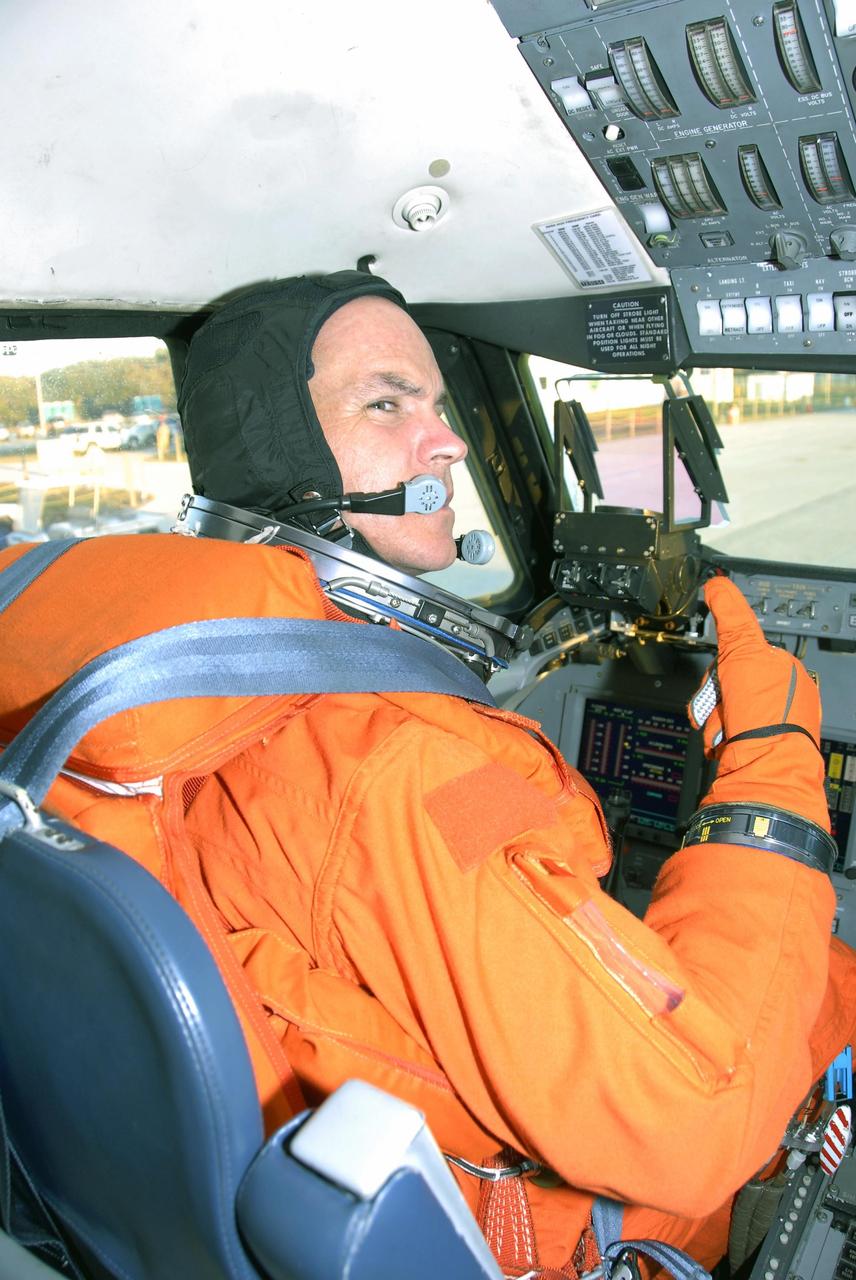
KENNEDY SPACE CENTER, FLA. -- At the Shuttle Landing Facility, Mission STS-117 Commander Rick Sturckow sits in the cockpit of the shuttle training aircraft (STA) ready to begin practice flights as part of the Terminal Countdown Demonstration Test (TCDT) activities. The STA is a Grumman American Aviation-built Gulf Stream II jet that was modified to simulate an orbiter's cockpit, motion and visual cues, and handling qualities. In flight, the STA duplicates the orbiter's atmospheric descent trajectory from approximately 35,000 feet altitude to landing on a runway. Because the orbiter is unpowered during re-entry and landing, its high-speed glide must be perfectly executed the first time. The mission payload aboard Space Shuttle Atlantis is the S3/S4 integrated truss structure, along with a third set of solar arrays and batteries. The crew of six astronauts will install the truss to continue assembly of the International Space Station. STS-117 is the 118th space shuttle flight and the 21st flight to the station. Photo credit: NASA/Kim Shiflett
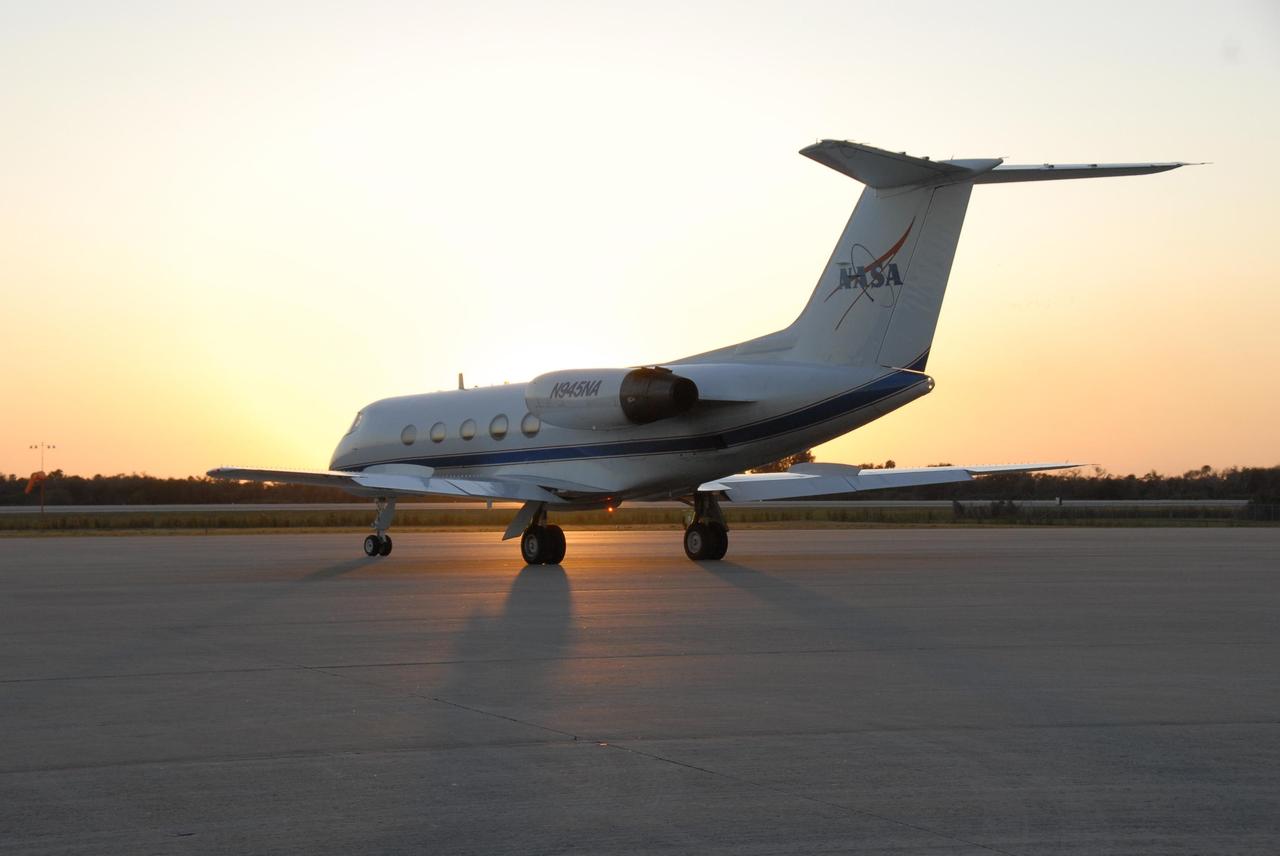
KENNEDY SPACE CENTER, FLA. -- With the sun just peaking above the horizon, the shuttle training aircraft (STA) sits on the tarmac at the Shuttle Landing Facility, ready for practice flights by Mission STS-117 Commander Rick Sturckow and Pilot Lee Archambault. The STA is a Grumman American Aviation-built Gulf Stream II jet that was modified to simulate an orbiter's cockpit, motion and visual cues, and handling qualities. In flight, the STA duplicates the orbiter's atmospheric descent trajectory from approximately 35,000 feet altitude to landing on a runway. Because the orbiter is unpowered during re-entry and landing, its high-speed glide must be perfectly executed the first time. The mission payload aboard Space Shuttle Atlantis is the S3/S4 integrated truss structure, along with a third set of solar arrays and batteries. The crew of six astronauts will install the truss to continue assembly of the International Space Station. STS-117 is the 118th space shuttle flight and the 21st flight to the station. Photo credit: NASA/Kim Shiflett
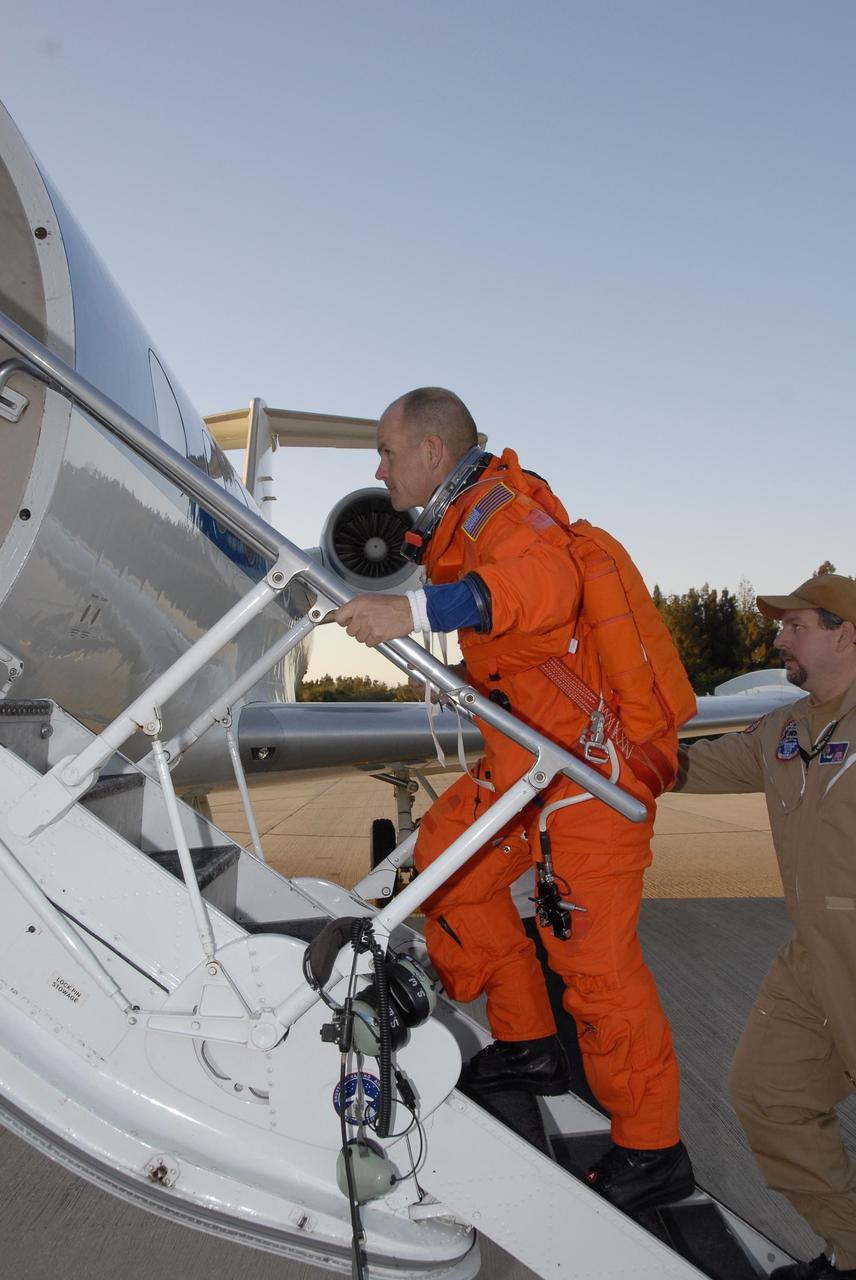
KENNEDY SPACE CENTER, FLA. -- At the Shuttle Landing Facility, Mission STS-117 Commander Rick Sturckow is ready to begin practice flights on the shuttle training aircraft (STA) during Terminal Countdown Demonstration Test (TCDT) Activities. The STA is a Grumman American Aviation-built Gulf Stream II jet that was modified to simulate an orbiter's cockpit, motion and visual cues, and handling qualities. In flight, the STA duplicates the orbiter's atmospheric descent trajectory from approximately 35,000 feet altitude to landing on a runway. Because the orbiter is unpowered during re-entry and landing, its high-speed glide must be perfectly executed the first time. The mission payload aboard Space Shuttle Atlantis is the S3/S4 integrated truss structure, along with a third set of solar arrays and batteries. The crew of six astronauts will install the truss to continue assembly of the International Space Station. STS-117 is the 118th space shuttle flight and the 21st flight to the station. Photo credit: NASA/Kim Shiflett
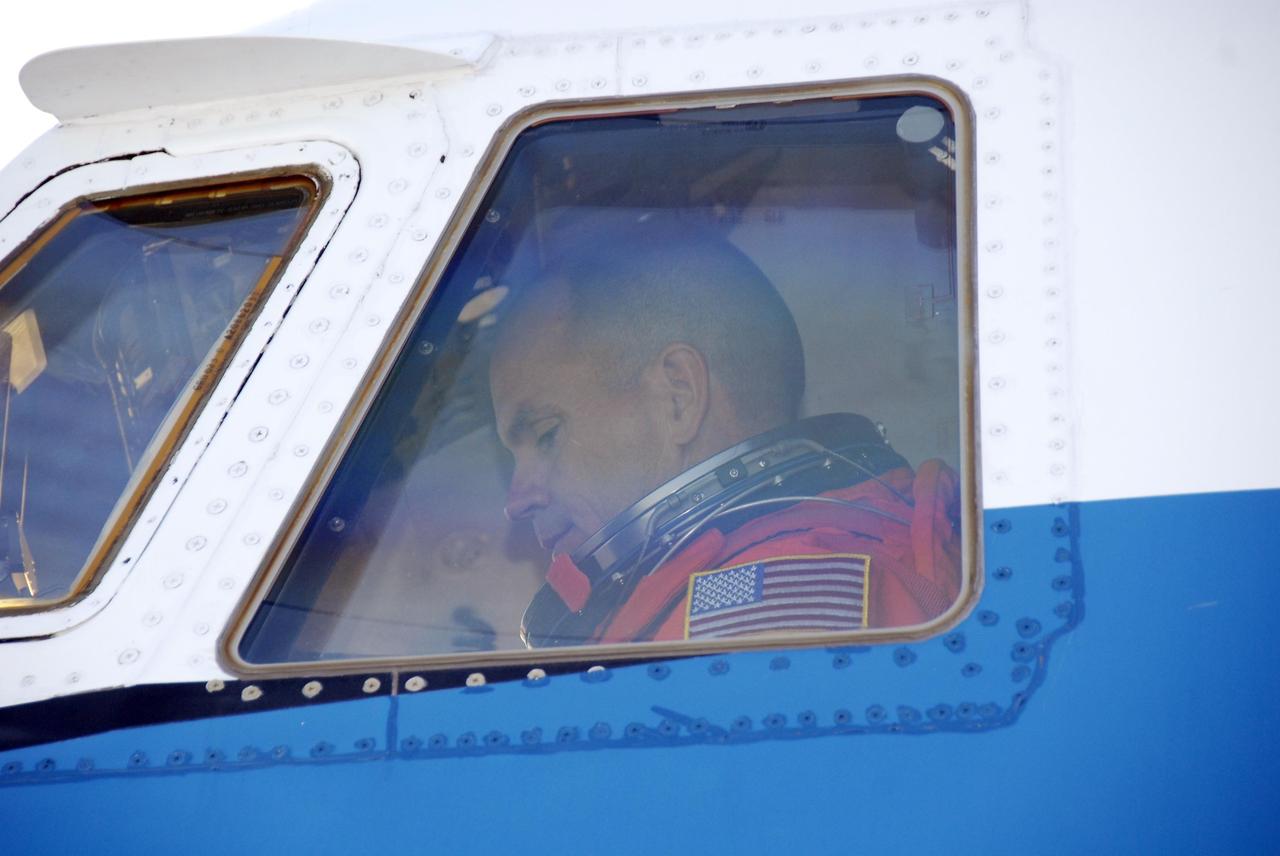
KENNEDY SPACE CENTER, FLA. -- At the Shuttle Landing Facility, Mission STS-117 Commander Rick Sturckow sits in the cockpit of the shuttle training aircraft (STA) ready to begin practice flights as part of the Terminal Countdown Demonstration Test (TCDT) activities. The STA is a Grumman American Aviation-built Gulf Stream II jet that was modified to simulate an orbiter's cockpit, motion and visual cues, and handling qualities. In flight, the STA duplicates the orbiter's atmospheric descent trajectory from approximately 35,000 feet altitude to landing on a runway. Because the orbiter is unpowered during re-entry and landing, its high-speed glide must be perfectly executed the first time. The mission payload aboard Space Shuttle Atlantis is the S3/S4 integrated truss structure, along with a third set of solar arrays and batteries. The crew of six astronauts will install the truss to continue assembly of the International Space Station. STS-117 is the 118th space shuttle flight and the 21st flight to the station. Photo credit: NASA/Kim Shiflett
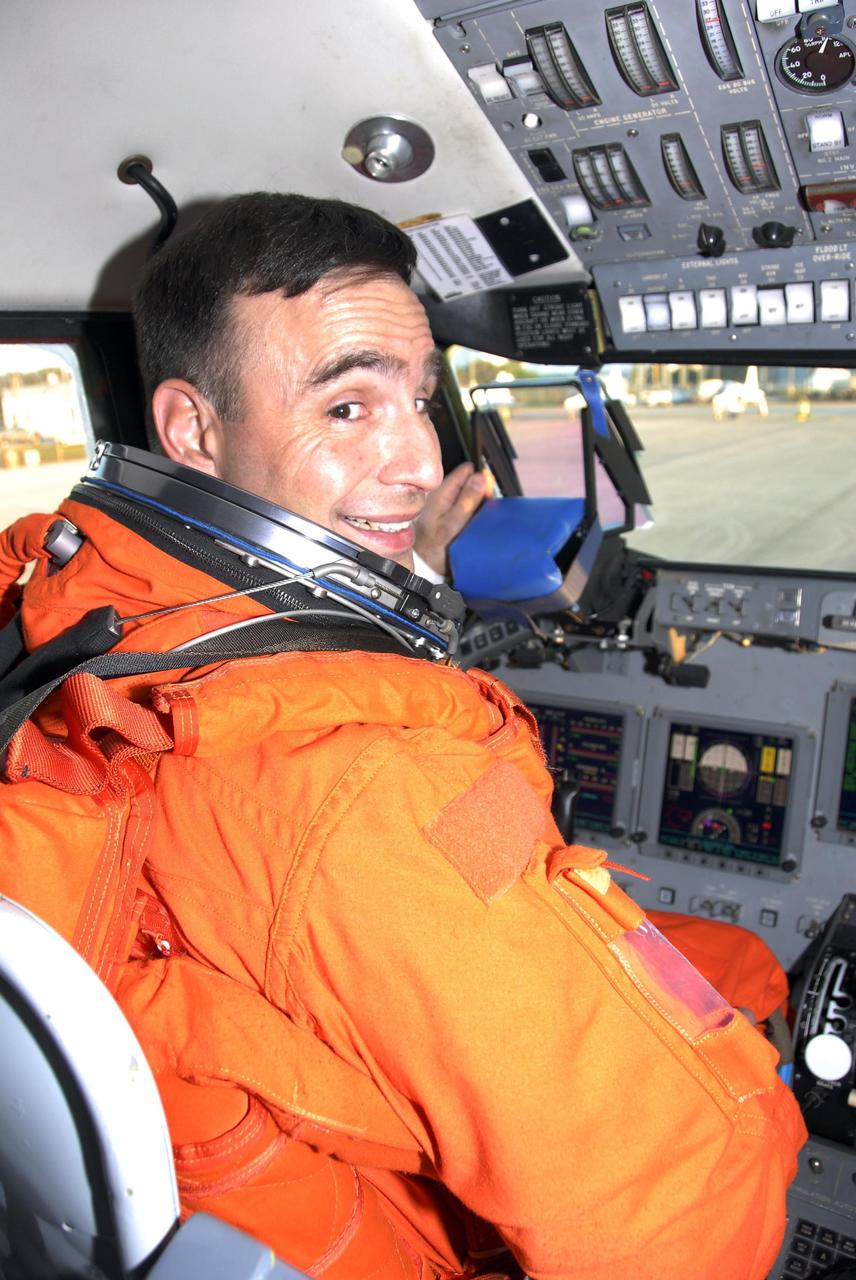
KENNEDY SPACE CENTER, FLA. -- At the Shuttle Landing Facility, Mission STS-117 Pilot Lee Archambault sits in the cockpit of the shuttle training aircraft (STA) ready to begin practice flights as part of the Terminal Countdown Demonstration Test (TCDT) activities. The STA is a Grumman American Aviation-built Gulf Stream II jet that was modified to simulate an orbiter's cockpit, motion and visual cues, and handling qualities. In flight, the STA duplicates the orbiter's atmospheric descent trajectory from approximately 35,000 feet altitude to landing on a runway. Because the orbiter is unpowered during re-entry and landing, its high-speed glide must be perfectly executed the first time. The mission payload aboard Space Shuttle Atlantis is the S3/S4 integrated truss structure, along with a third set of solar arrays and batteries. The crew of six astronauts will install the truss to continue assembly of the International Space Station. STS-117 is the 118th space shuttle flight and the 21st flight to the station. Photo credit: NASA/Kim Shiflett