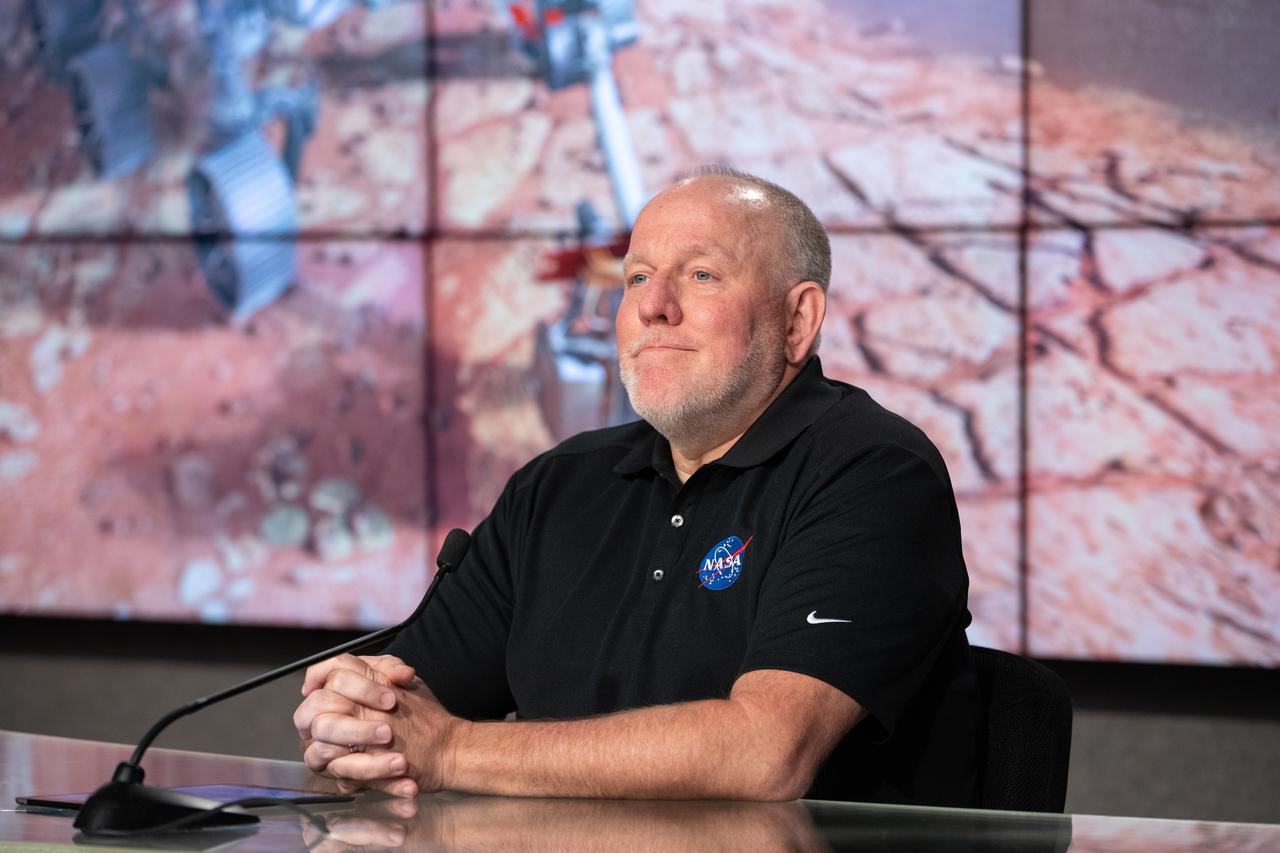
Jeff Sheehy, Space Technology Mission Directorate, NASA Headquarters, participates in a Mars 2020 Mission Tech and Humans to Mars Briefing at NASA’s Kennedy Space Center in Florida on July 28, 2020. The Mars Perseverance rover is scheduled to launch July 30, on a United Launch Alliance Atlas V 541 rocket from Space Launch Complex 41 at nearby Cape Canaveral Air Force Station. The rover is part of NASA’s Mars Exploration Program, a long-term effort of robotic exploration of the Red Planet. The rover will search for habitable conditions in the ancient past and signs of past microbial life on Mars. The Launch Services Program at Kennedy is responsible for launch management.

Tammy Long, NASA Communicaions, moderates a Mars 2020 Mission Tech and Humans to Mars Briefing at NASA’s Kennedy Space Center in Florida on July 28, 2020. The Mars Perseverance rover is scheduled to launch July 30, on a United Launch Alliance Atlas V 541 rocket from Space Launch Complex 41 at nearby Cape Canaveral Air Force Station. The rover is part of NASA’s Mars Exploration Program, a long-term effort of robotic exploration of the Red Planet. The rover will search for habitable conditions in the ancient past and signs of past microbial life on Mars. The Launch Services Program at Kennedy is responsible for launch management.
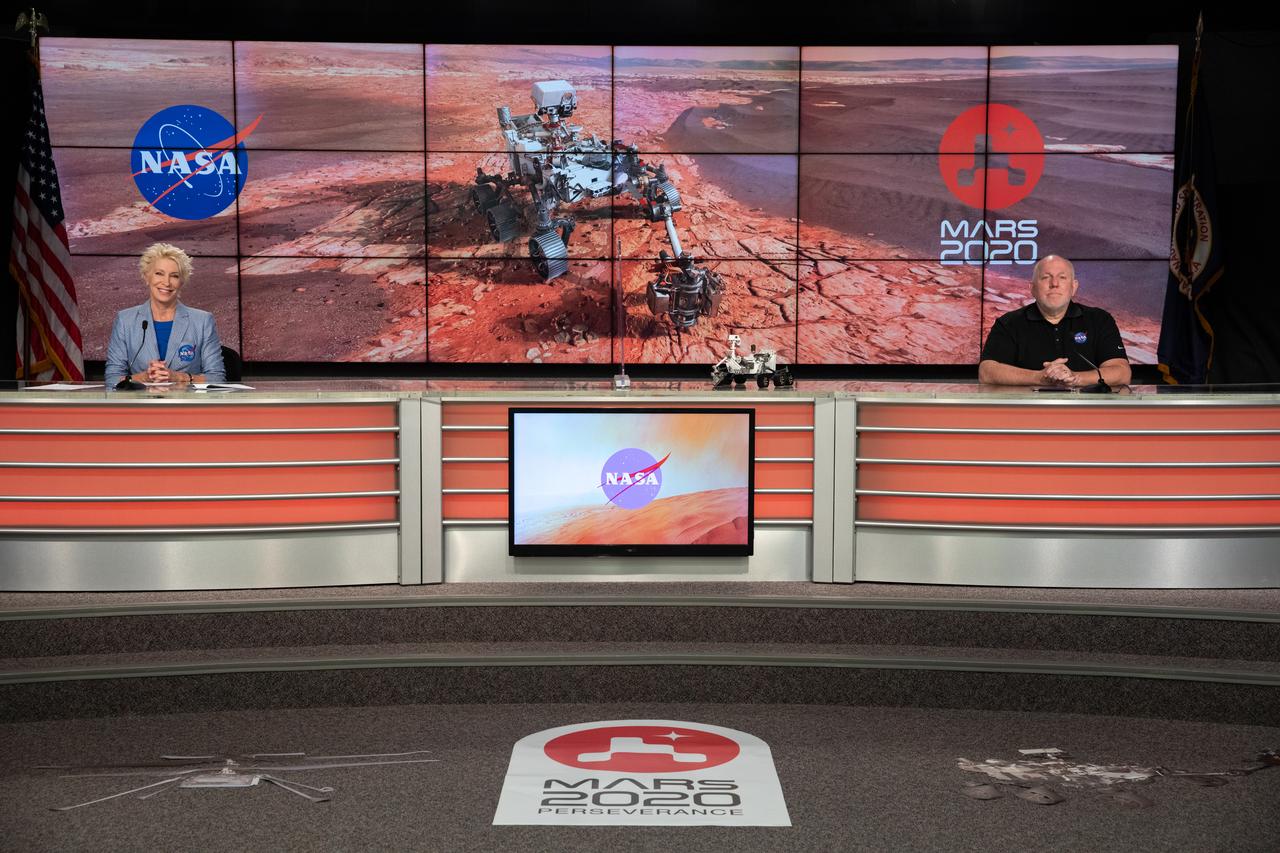
A Mars 2020 Mission Tech and Humans to Mars Briefing is held at NASA’s Kennedy Space Center in Florida on July 28, 2020. Participating in the briefing from left, are Tammy Long, moderator, NASA Communications, and Jeff Sheehy, Space Technology Mission Directorate, NASA Headquarters. The Mars Perseverance rover is scheduled to launch July 30, on a United Launch Alliance Atlas V 541 rocket from Space Launch Complex 41 at nearby Cape Canaveral Air Force Station. The rover is part of NASA’s Mars Exploration Program, a long-term effort of robotic exploration of the Red Planet. The rover will search for habitable conditions in the ancient past and signs of past microbial life on Mars. The Launch Services Program at Kennedy is responsible for launch management.
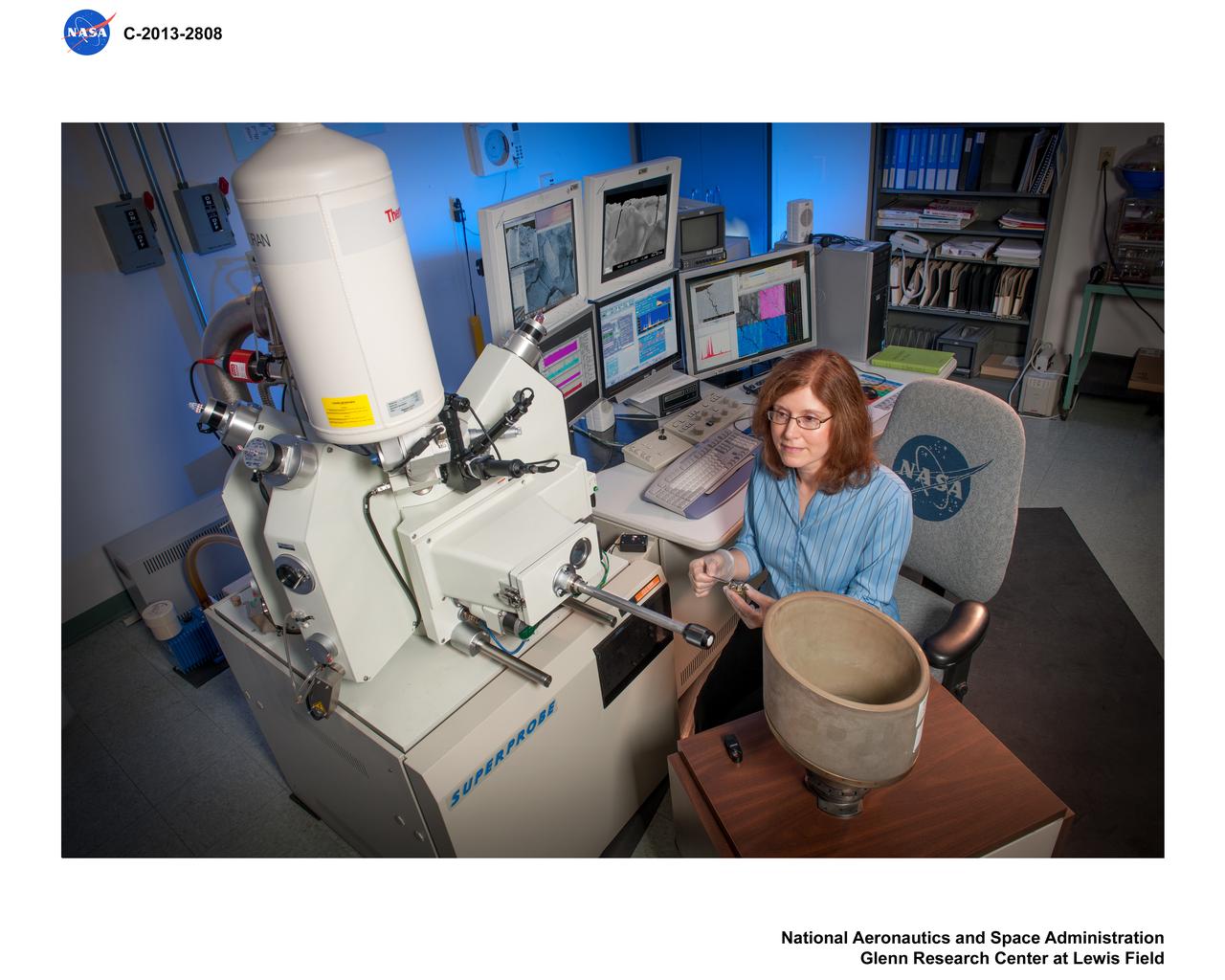
NASA Engineering and Safety Center's, NESC, Mission Tech Update Photos 2013, Electron Optics Laboratory
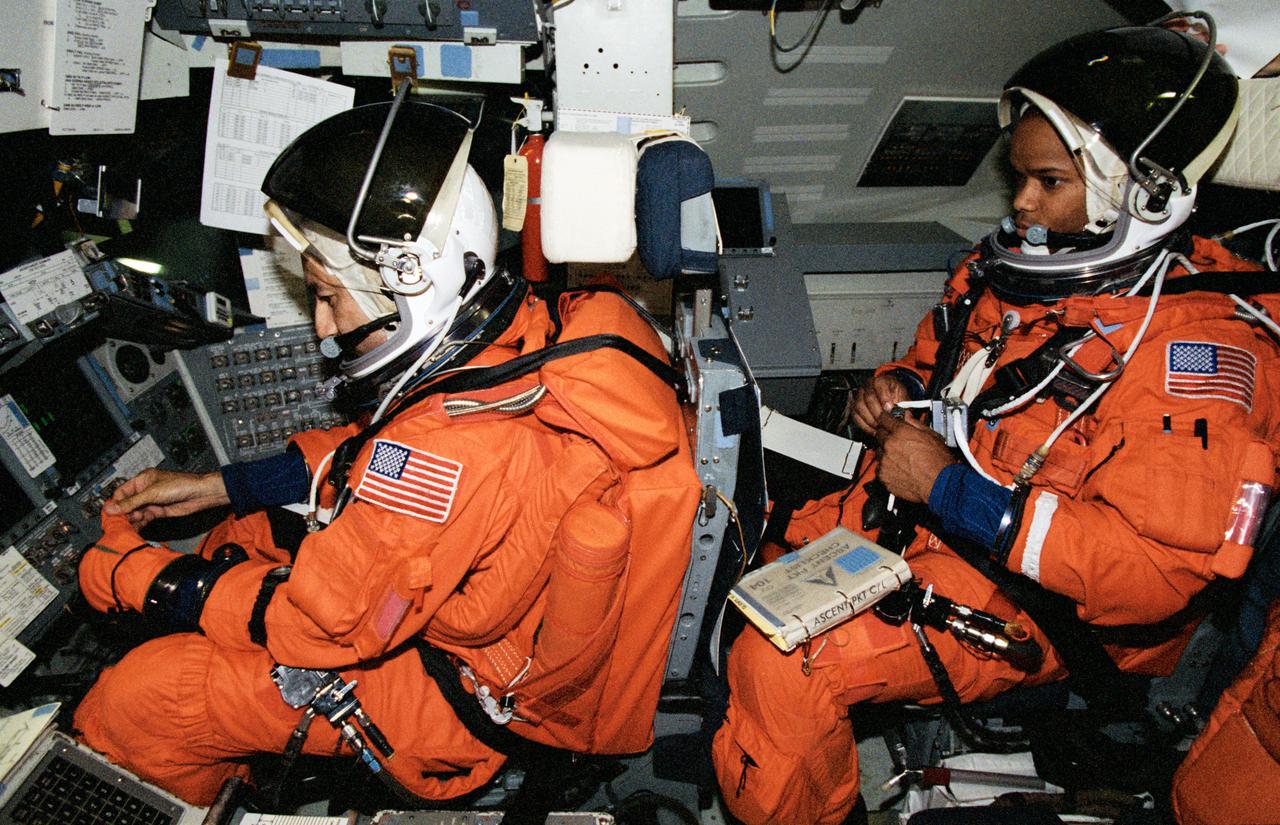
Photographic documentation showing STS-98 crewmembers engaging in preflight training in bldg. 5. Views include: STS-98 mission commander Kenneth D. Cockrell, wearing a Launch Entry Suit (LES) and a helmet, sits in the commanders station on the flight deck of the mobile-based Shuttle Mission Simulator (SMS) (04774); STS-98 pilot Mark L. Polansky, wearing LES and helmet, sits in the pilots station, with STS-98 Mission Specialist (MS) Robert L. Curbeam seated behind him on the flight deck (04775); Polansky in the pilots station (04776); Curbeam in a LES and wearing a Communications Carrier Assembly (CCA) (04777); Polansky and Curbeam pose, wearing LES and no helmets, in bldg. 5 (04778); Polansky, wearing a LES, fastens his CCA (04779); Cockrell, Polansky, Curbeam and STS-98 MS Marsha S. Ivins, wearing LES, sit in locker room (04780); Ivins and suit techs (04781); suit techs and Polansky (04782); suit techs and Cockrell (04783).

Sharad Bhaskaran, mission director for Pittsburgh-based Astrobotic, delivers the monthly Tech Talk on Sept. 12 in Building 4221 at NASA’s Marshall Space Flight Center. Bhaskaran presented Astrobotic’s Peregrine lunar lander which will deliver payloads to the surface of the Moon for government and commercial customers, including NASA.
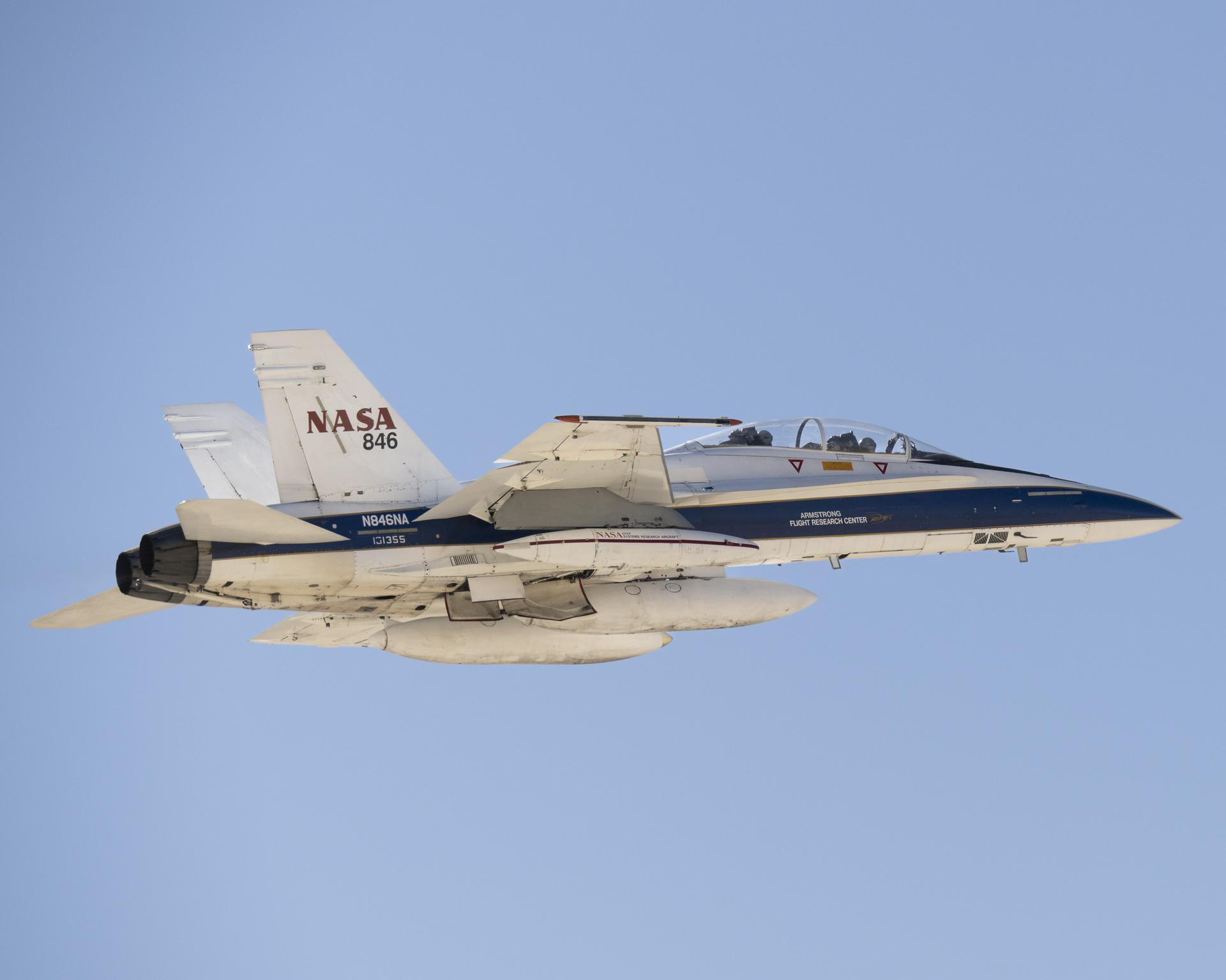
A NASA F/A-18 research aircraft flies near NASA’s Armstrong Flight Research Center in Edwards, California, on Feb. 24, 2025, testing a commercial precision landing technology for future space missions. The Psionic Space Navigation Doppler Lidar (PSNDL) system is installed in a pod located under the right wing of the aircraft.
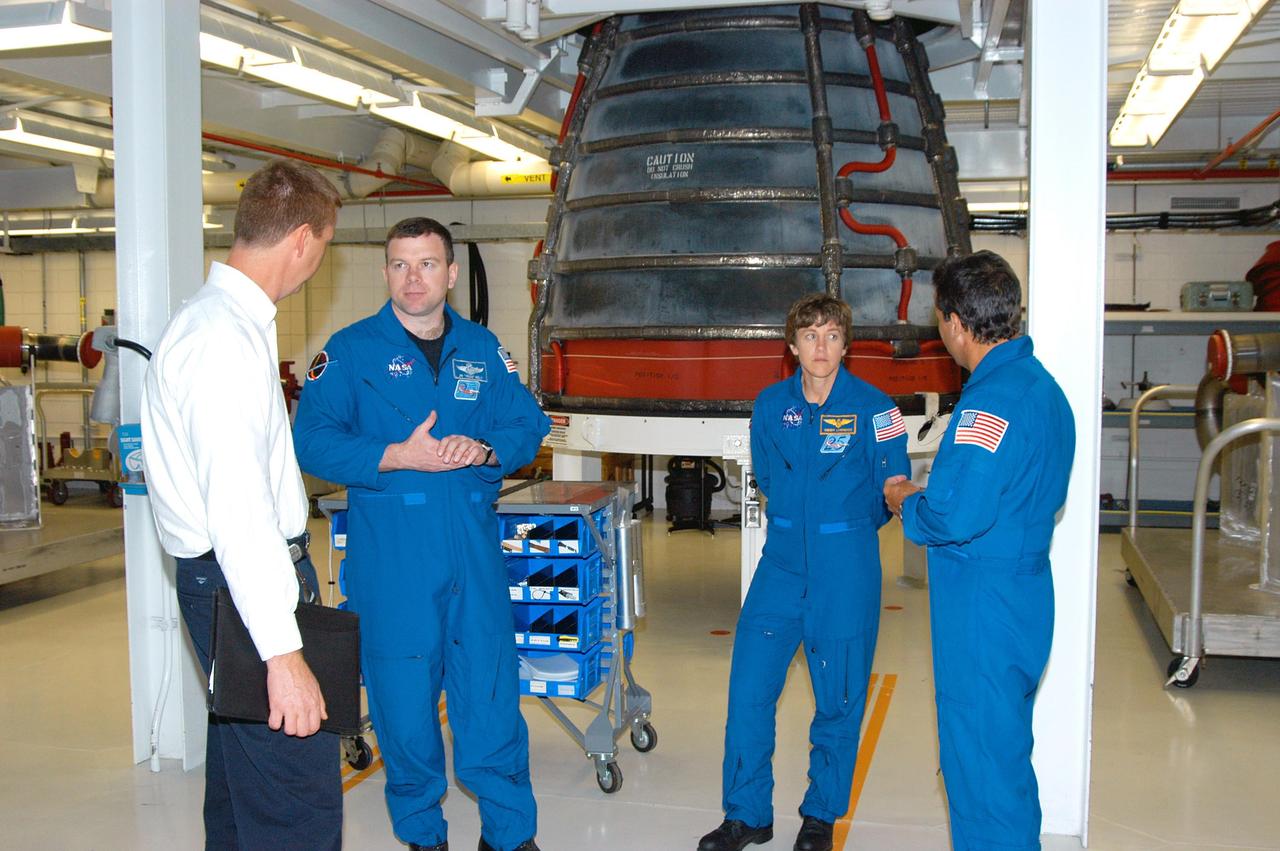
KENNEDY SPACE CENTER, FLA. -- In the Space Shuttle Main Engine Shop at KSC, Boeing Tech Operations’ Team Manager Matthew McClelland (left) talks with STS-114 Pilot James Kelly. At right are Mission Specialists Wendy Lawrence and Charles Camarda. One of the main engines is in the background. Crew members are touring several areas on Center. The STS-114 mission is Logistics Flight 1, which is scheduled to deliver supplies and equipment plus the external stowage platform to the International Space Station.
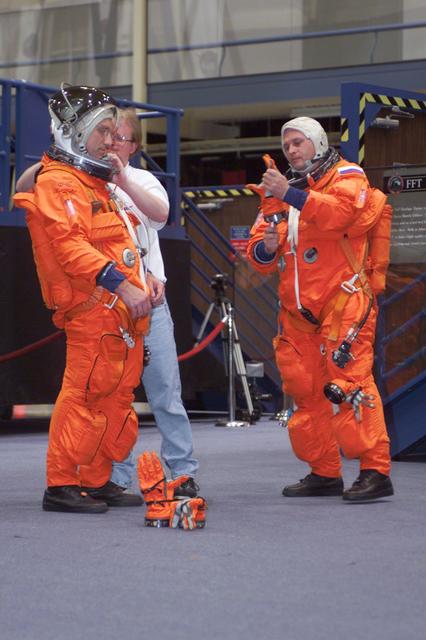
JSC2001-E-18119 (18 May 2001) --- Astronaut Carl E. Walz (left), Expedition Four flight engineer, and cosmonaut Yuri I. Onufrienko, mission commander representing Rosaviakosmos, don their training versions of the full-pressure launch and entry suit prior to a mission training session in the Space Vehicle Mockup Facility at the Johnson Space Center (JSC). Walz and Onufrienko are assisted by United Space Alliance (USA) suit tech Daniel Palmer.
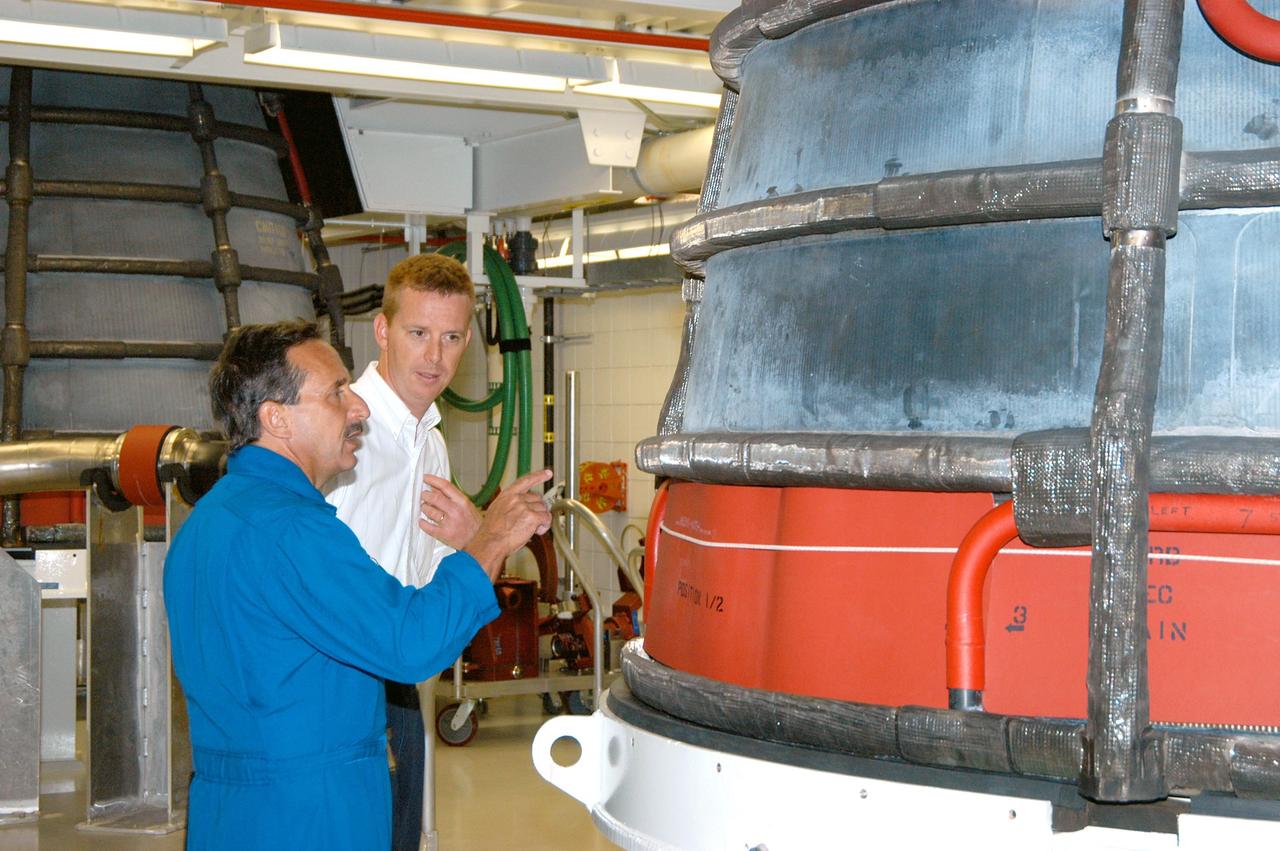
KENNEDY SPACE CENTER, FLA. -- STS-114 Mission Specialist Charles Camarda and Boeing Tech Operations’ Team Manager Matthew McClelland look at an engine on a visit to the Space Shuttle Main Engine Shop at KSC. He and other crew members touring several areas on the Center. The STS-114 mission is Logistics Flight 1, which is scheduled to deliver supplies and equipment plus the external stowage platform to the International Space Station.
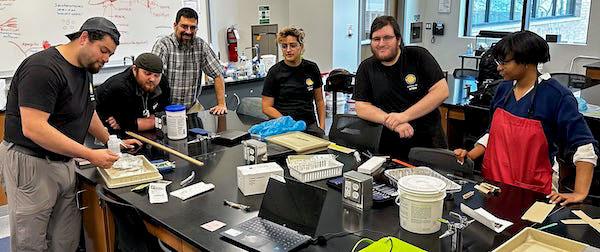
jsc2024e067097 (10/15/2024) --- The Midlands Tech experimental flight team and faculty advisors prepare materials to be autoclaved for the next round of tests. Their experiment, Gravitational Effects on Calcium Oxalate (CaOx) Regulation in Edible Greens, is part of the Nanoracks-National Center for Earth and Space Science Education-Surveyor-Student Spaceflight Experiments Program Mission 18 to ISS (Nanoracks-NCESSE-Surveyor-SSEP).
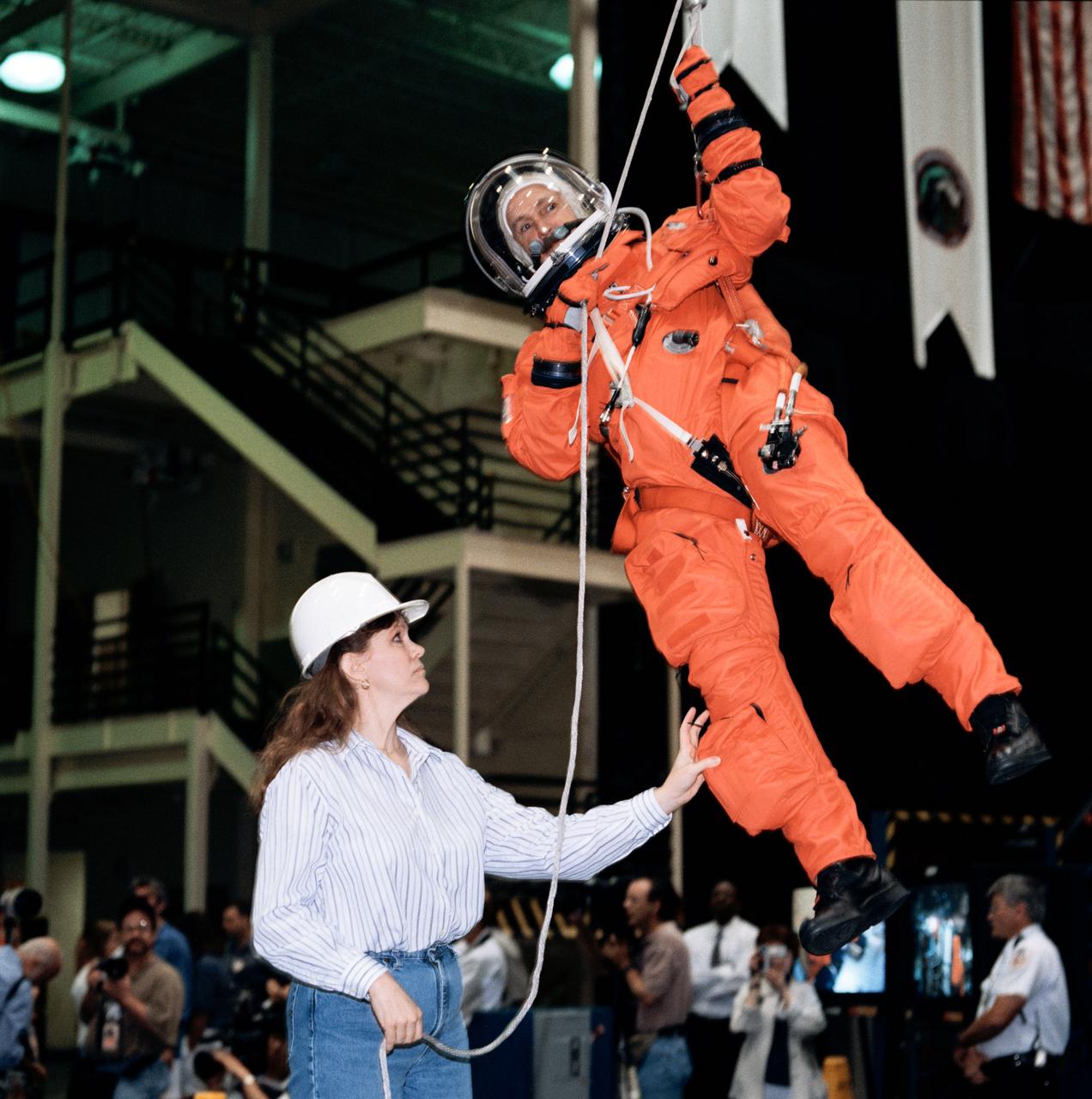
Photographic documentation of the STS-95 crew emergency egress training at the bldg 9A Full Fuselage Trainer (FFT). Views include: Mission specialist Senator John Glenn (in his orange Launch and Landing (LES) suit) is photographed by his wife as other visitors look on (07958). STS-95 crewmember prepares to use the Sky Genie to climb down the side of the FFT (07959). STS-95 crew lines up to pose for pictures in their LES's. Left to right are: Mission specialist Pedro Duque, payload specialist Chiaki Mukai, commander Curt Brown, payload specialist U.S. Senator John Glenn, mission specialist Stephen Robinson, pilot Steven Lindsey, and mission specialist Scott F. Parazynski (07960). Parazynski, Glenn and Robinson talk while their photo is being taken (07961). Mukai receives assistance from suit techs in donning her LES helmet (07962). Glenn receives assistance from suit techs in donning his LES helmet (07963). Glenn, in his LES, walks toward the FFT (07964). Glenn uses the Sky Genie to prepare to climb down the side of the FFT (07965). View of Mrs. Annie Glenn watching her husband during training (07966). Mukai receives assistance from a suit tech with her LES while Glenn watches (07967). Close-up view of Mukai in her LES without a helmet (07968). Glenn and Mukai prepare to strap themselves into their seats in the mockup of the FFT middeck (07969-70). Close-up view of Mukai with her helmet on (07971). Mukai climbs down the rope with help from a technician on the ground (07972). Lindsey, Parazynski, Duque, Mukai and Glenn are photographed seated, waiting for training (07973). Close-up of Duque without his helmet (07974). Close-up of Lindsey with his helmet on, talking to a trainer (07975-6). View of Lindsey climbing down the rope (07977).
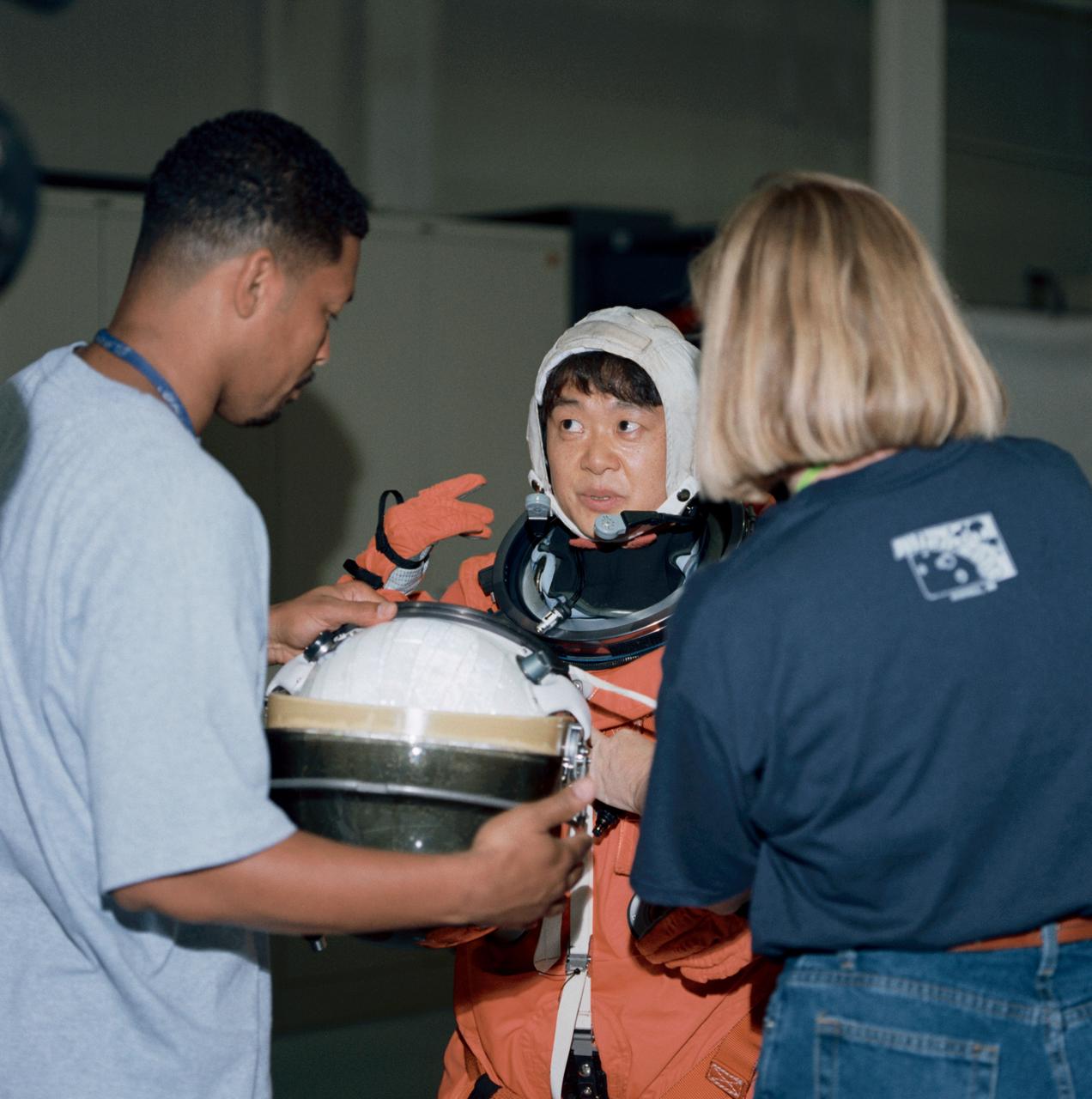
Photographic documentation of the STS-95 crew emergency egress training at the bldg 9A Full Fuselage Trainer (FFT). Views include: Mission specialist Senator John Glenn (in his orange Launch and Landing (LES) suit) is photographed by his wife as other visitors look on (07958). STS-95 crewmember prepares to use the Sky Genie to climb down the side of the FFT (07959). STS-95 crew lines up to pose for pictures in their LES's. Left to right are: Mission specialist Pedro Duque, payload specialist Chiaki Mukai, commander Curt Brown, payload specialist U.S. Senator John Glenn, mission specialist Stephen Robinson, pilot Steven Lindsey, and mission specialist Scott F. Parazynski (07960). Parazynski, Glenn and Robinson talk while their photo is being taken (07961). Mukai receives assistance from suit techs in donning her LES helmet (07962). Glenn receives assistance from suit techs in donning his LES helmet (07963). Glenn, in his LES, walks toward the FFT (07964). Glenn uses the Sky Genie to prepare to climb down the side of the FFT (07965). View of Mrs. Annie Glenn watching her husband during training (07966). Mukai receives assistance from a suit tech with her LES while Glenn watches (07967). Close-up view of Mukai in her LES without a helmet (07968). Glenn and Mukai prepare to strap themselves into their seats in the mockup of the FFT middeck (07969-70). Close-up view of Mukai with her helmet on (07971). Mukai climbs down the rope with help from a technician on the ground (07972). Lindsey, Parazynski, Duque, Mukai and Glenn are photographed seated, waiting for training (07973). Close-up of Duque without his helmet (07974). Close-up of Lindsey with his helmet on, talking to a trainer (07975-6). View of Lindsey climbing down the rope (07977).
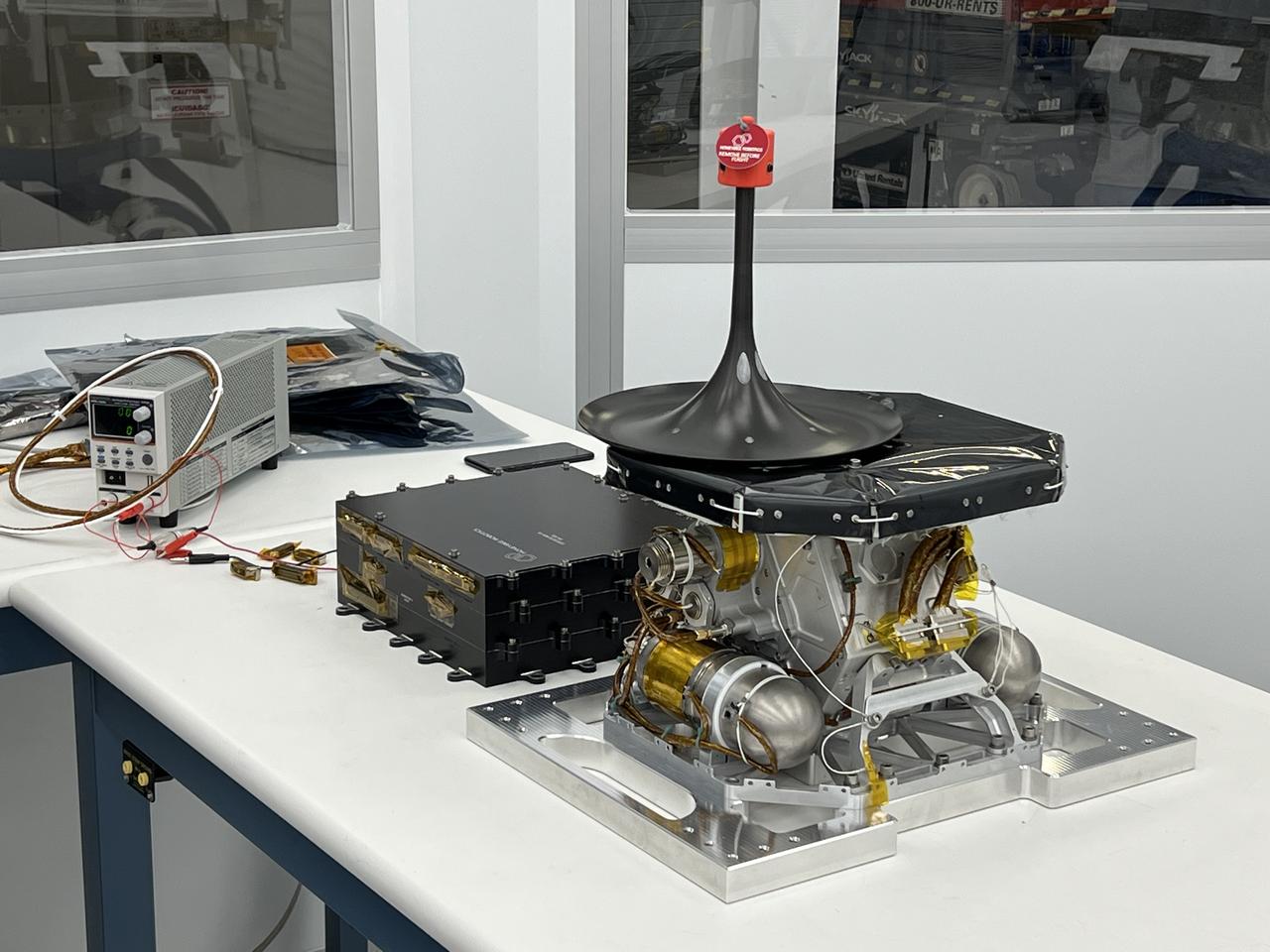
A science instrument flying aboard the next delivery for NASA’s CLPS (Commercial Lunar Payload Services) initiative could help improve our understanding of the Moon. The Lunar Instrumentation for Subsurface Thermal Exploration with Rapidity, or LISTER, is one of 10 payloads set to be carried to the Moon by the Blue Ghost 1 lunar lander in 2025. Developed jointly by Texas Tech University and Honeybee Robotics, LISTER’s planned mission is to measure the flow of heat from the Moon’s interior using a specialized drill. Investigations and demonstrations, such as LISTER, launched on CLPS flights will help NASA study Earth’s nearest neighbor under Artemis and pave the way for future crewed missions on the Moon. NASA’s Marshall Space Flight Center in Huntsville, Alabama, manages the development and operations for seven of the 10 CLPS payloads that will be carried on Firefly’s Blue Ghost lunar lander.
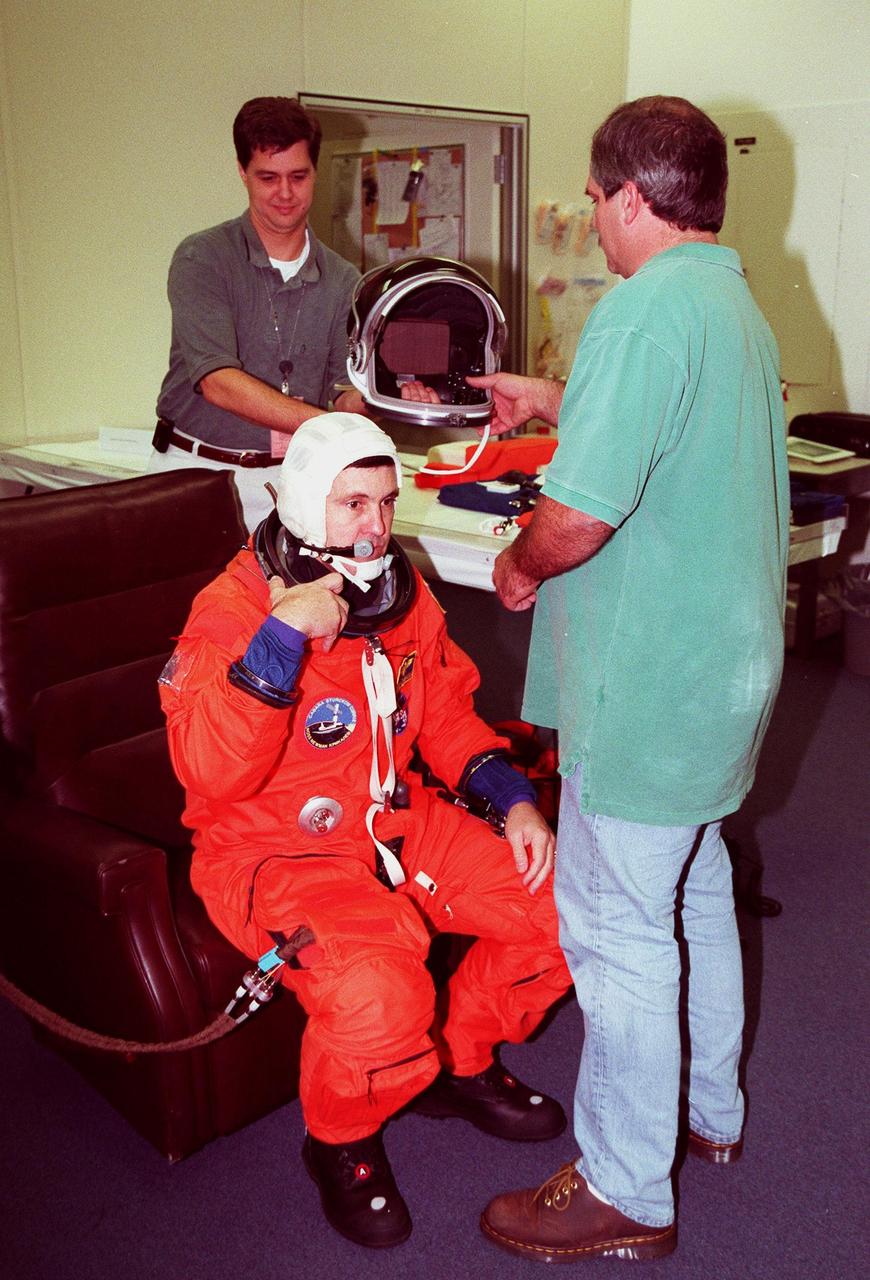
STS-88 Mission Commander Robert D. Cabana suits up in the Operations and Checkout Building prior, as part of flight crew equipment fit check, to his trip to Launch Pad 39A. He is helped by suit tech (right) Lloyd Armintor and an unidentified KSC worker. The crew are at KSC to participate in the Terminal Countdown Demonstration Test (TCDT) which includes mission familiarization activities, emergency egress training, and the simulated main engine cut-off exercise. This is Cabana's fourth space flight. Mission STS-88 is targeted for launch on Dec. 3, 1998. It is the first U.S. flight for the assembly of the International Space Station and will carry the Unity connecting module
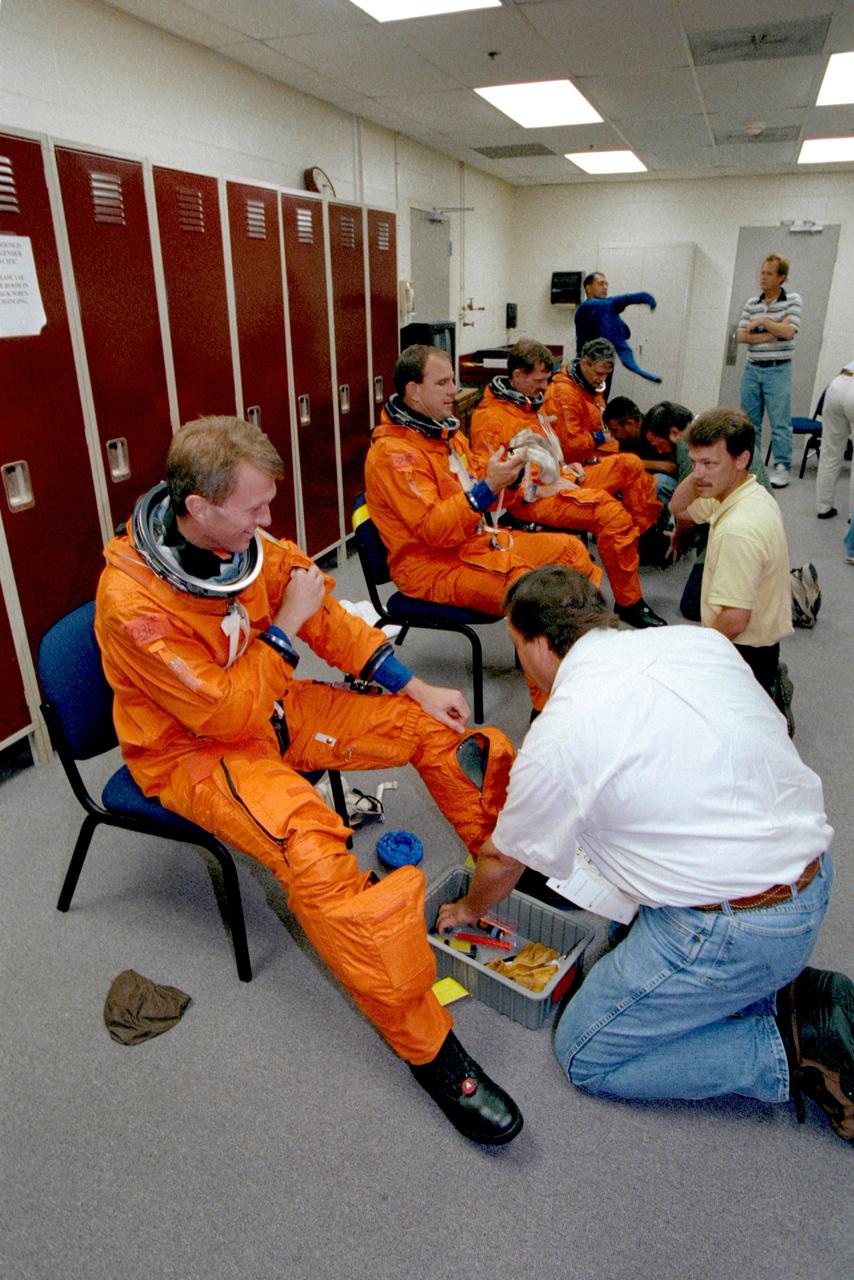
JSC2000-04751 (15 June 2000) --- Members of the STS-97 crew don training versions of the ascent and entry suits for a training session in the Johnson Space Center's Systems Integration Facility. Wearing the burnt-orange pressure suits, from the left, are astronauts Brent W. Jett, mission commander; Michael J. Bloomfield, pilot; and Joseph R. Tanner and Marc Garneau, both mission specialists. Garneau represents the Canadian Space Agency (CSA). Suit technicians assisting are Mike Birkenseher, Brad Milling, Steve Clendenin and Rudy Molina. In the background Carlos I. Noriega, mission specialist, prepares to put on his suit with the assistance of suit tech John Hazelhurt.
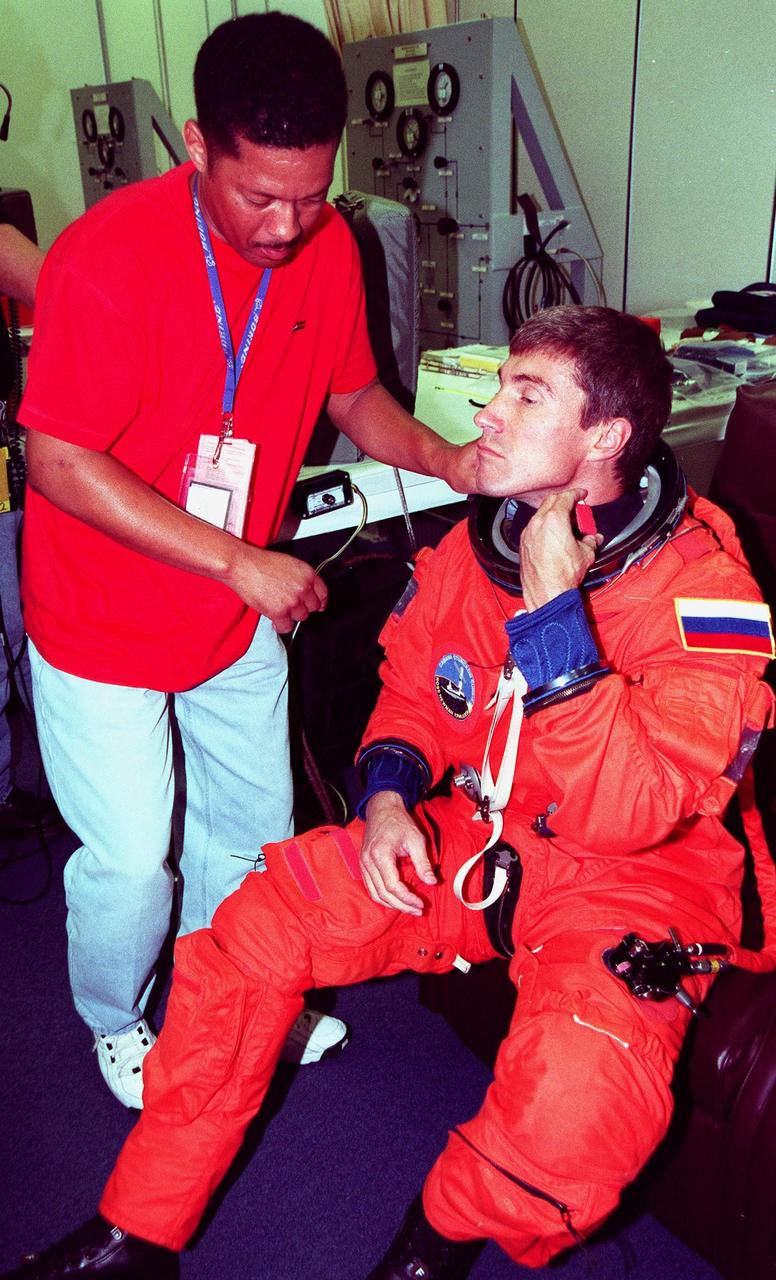
STS-88 Mission Specialist Sergei Konstantinovich Krikalev, a Russian cosmonaut, suits up in the Operations and Checkout Building, as part of a flight crew equipment fit check, prior to his trip to Launch Pad 39A. He is helped by suit tech George Brittingham. The STS-88 crew is at KSC to participate in the Terminal Countdown Demonstration Test (TCDT) which includes mission familiarization activities, emergency egress training, and a simulated launch countdown. This is Krikalev's second flight on the Space Shuttle. Mission STS-88 is targeted for launch on Dec. 3, 1998. It is the first U.S. flight for the assembly of the International Space Station and will carry the Unity connecting module
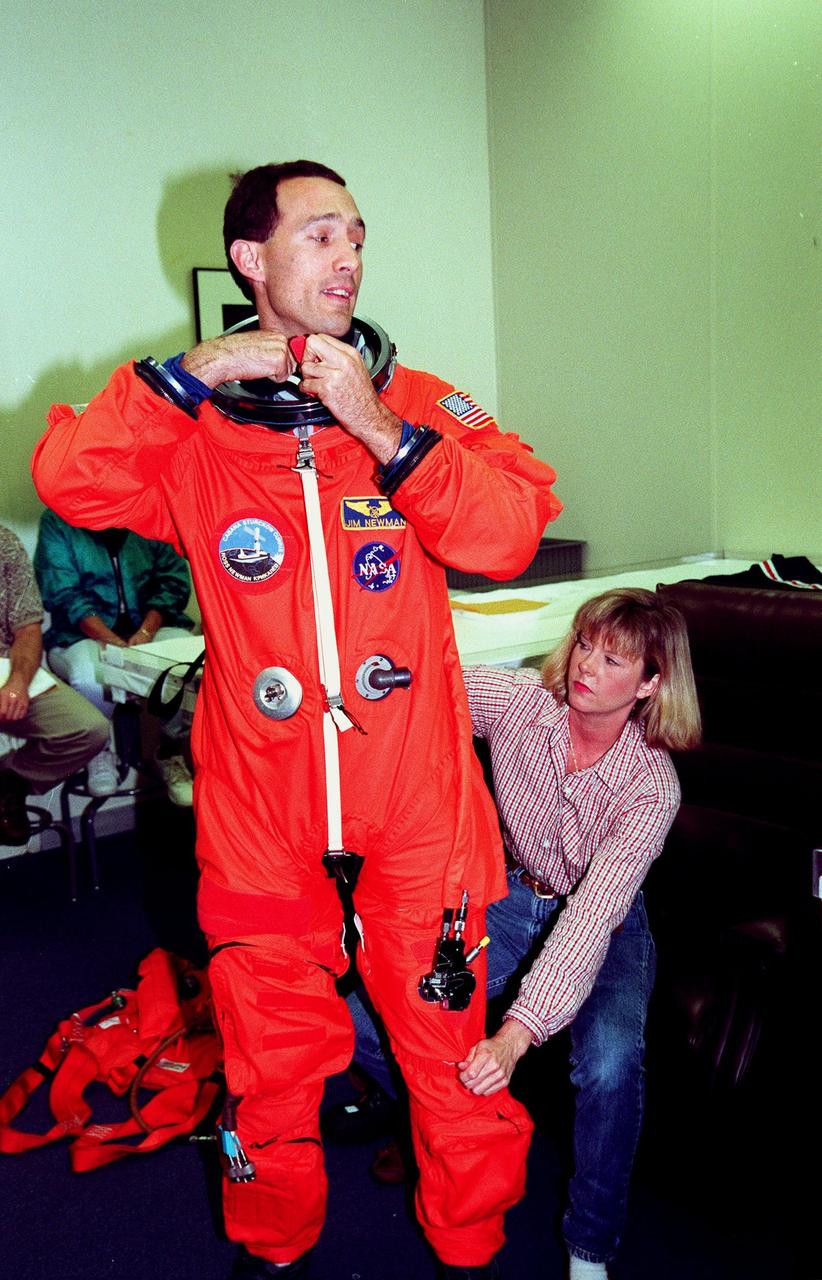
STS-88 Mission Specialist James H. Newman (left) suits up in the Operations and Checkout Building, as part of flight crew equipment fit check, prior to his trip to Launch Pad 39A. He is helped by suit tech Terri McKinney. The crew are at KSC to participate in the Terminal Countdown Demonstration Test (TCDT) which includes mission familiarization activities, emergency egress training, and the simulated main engine cut-off exercise. This is Newman's third space flight. Mission STS-88 is targeted for launch on Dec. 3, 1998. It is the first U.S. flight for the assembly of the International Space Station and will carry the Unity connecting module
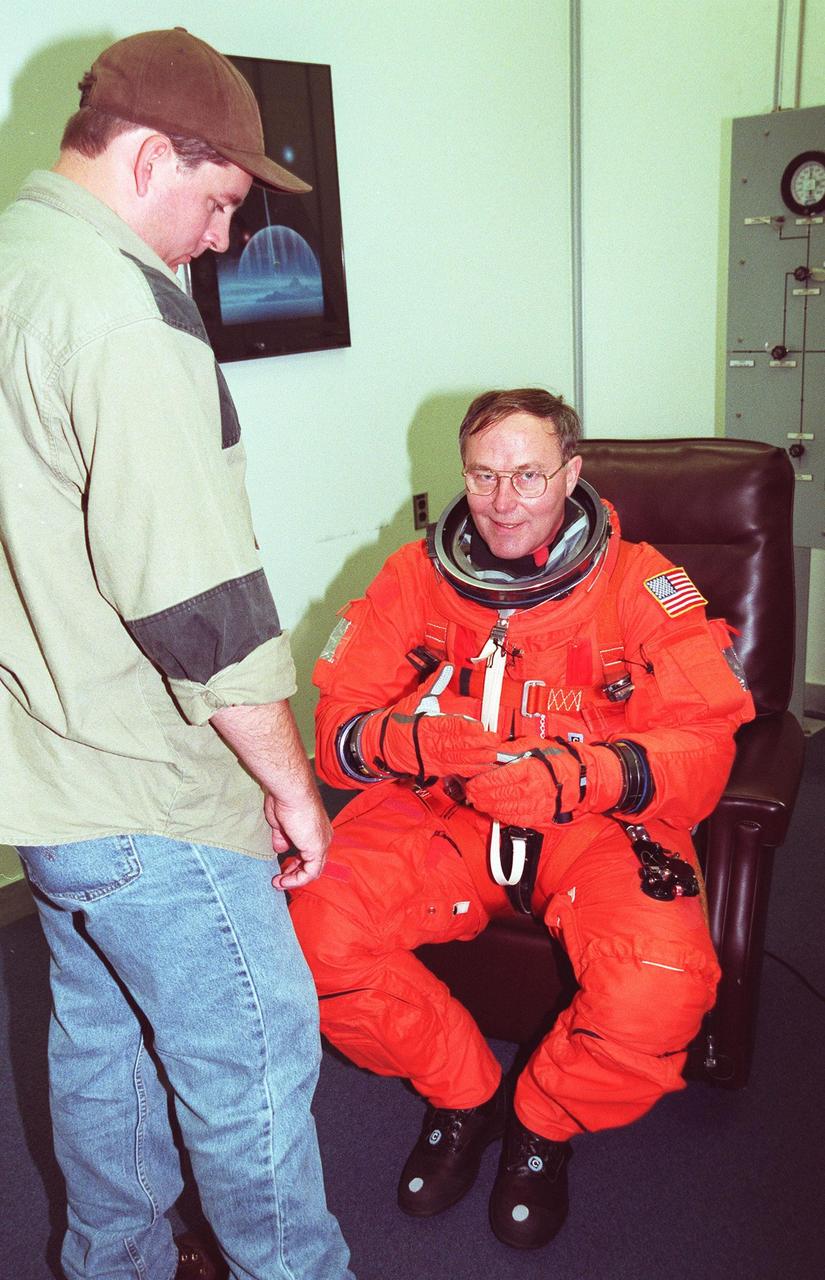
STS-88 Mission Specialist Jerry L. Ross (right) suits up in the Operations and Checkout Building, as part of a flight crew equipment fit check, prior to his trip to Launch Pad 39A. He is helped by suit tech Leonard Groce II. The STS-88 crew is at KSC to participate in the Terminal Countdown Demonstration Test (TCDT) which includes mission familiarization activities, emergency egress training, and a simulated launch countdown. This is Ross' sixth space flight. Mission STS-88 is targeted for launch on Dec. 3, 1998. It is the first U.S. flight for the assembly of the International Space Station and will carry the Unity connecting module
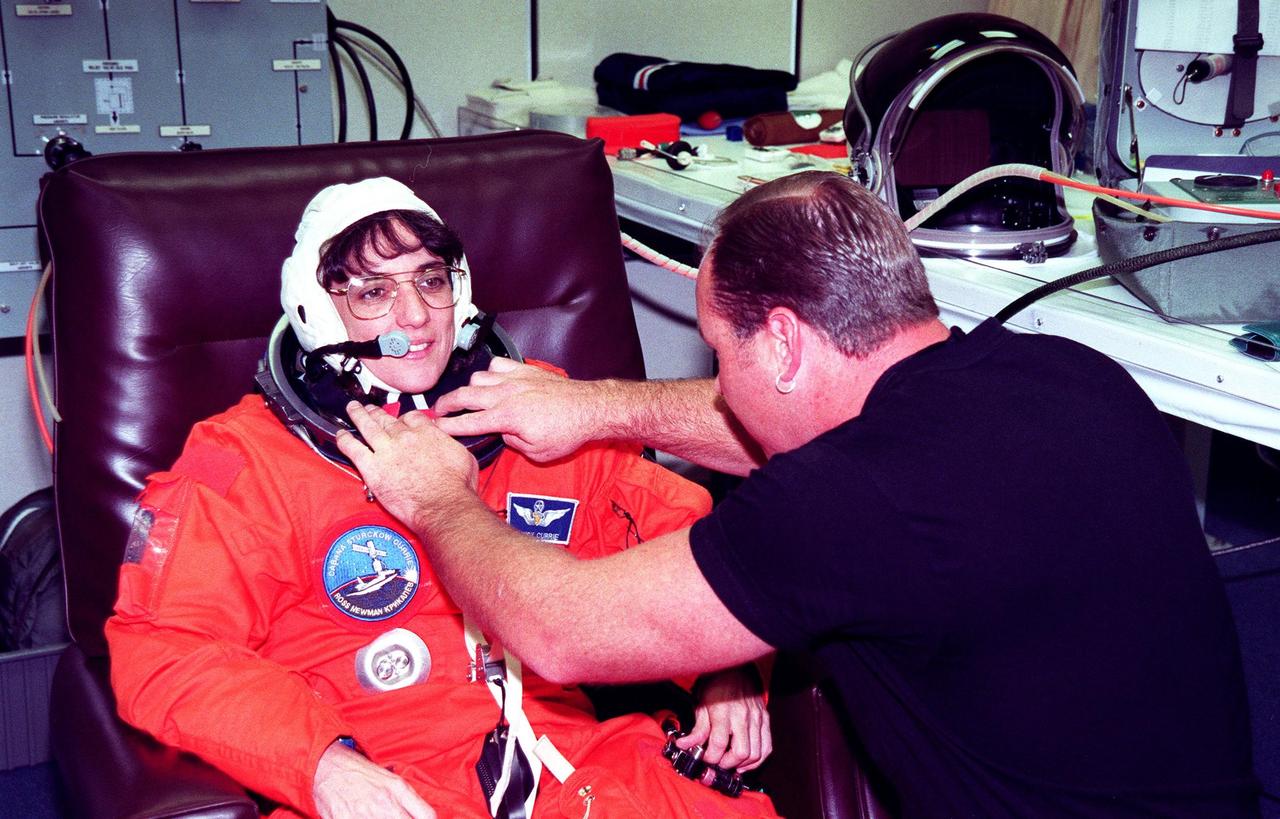
STS-88 Mission Specialist Nancy J. Currie suits up in the Operations and Checkout Building, as part of flight crew equipment fit check, prior to her trip to Launch Pad 39A. She is helped by suit tech Drew Billingsley. The crew are at KSC to participate in the Terminal Countdown Demonstration Test (TCDT) which includes mission familiarization activities, emergency egress training, and the simulated main engine cut-off exercise. This is Currie's third space flight. Mission STS-88 is targeted for launch on Dec. 3, 1998. It is the first U.S. flight for the assembly of the International Space Station and will carry the Unity connecting module
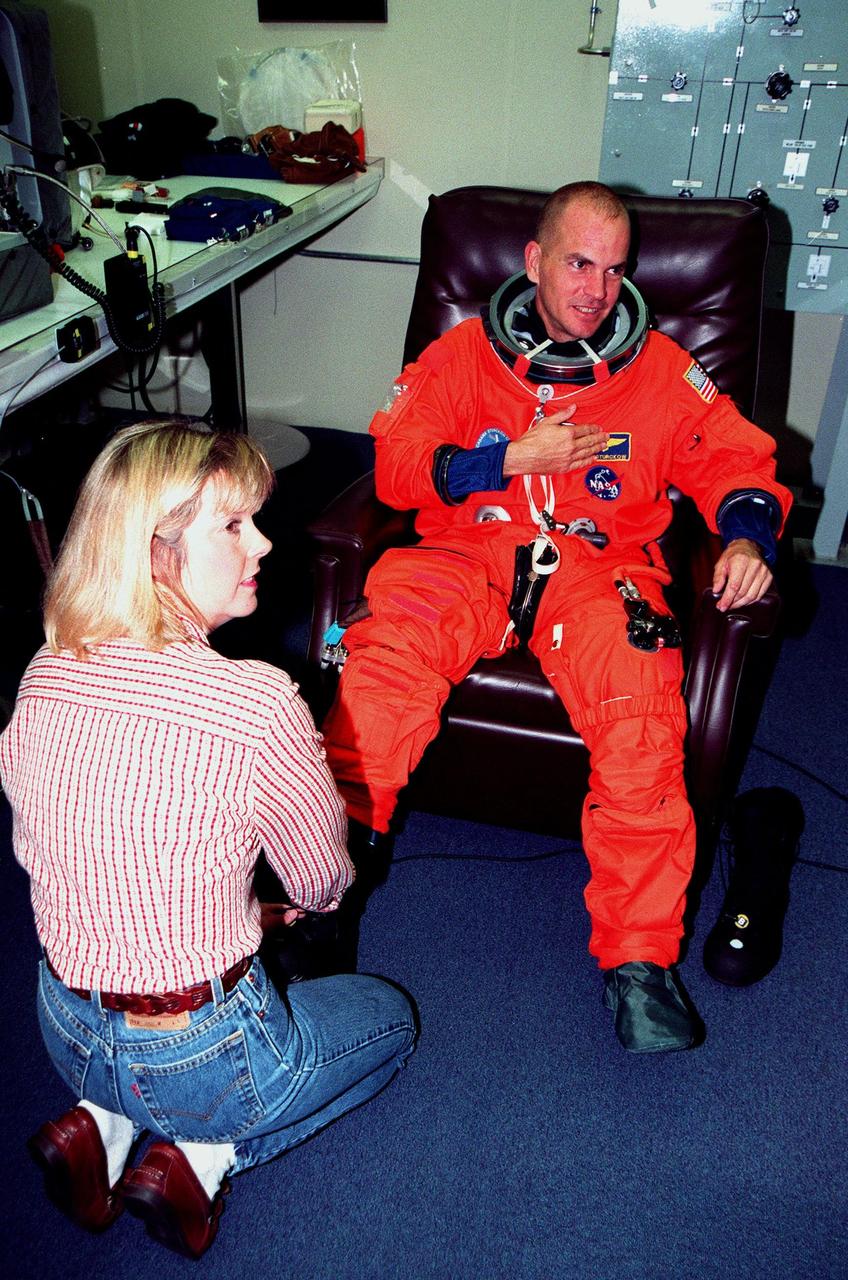
STS-88 Pilot Frederick W. "Rick" Sturckow suits up in the Operations and Checkout Building, as part of flight crew equipment fit check, prior to his trip to Launch Pad 39A. He is helped by suit tech Terri McKinney. The crew are at KSC to participate in the Terminal Countdown Demonstration Test (TCDT) which includes mission familiarization activities, emergency egress training, and the simulated main engine cut-off exercise. This is Sturckow's first space flight. Mission STS-88 is targeted for launch on Dec. 3, 1998. It is the first U.S. flight for the assembly of the International Space Station and will carry the Unity connecting module
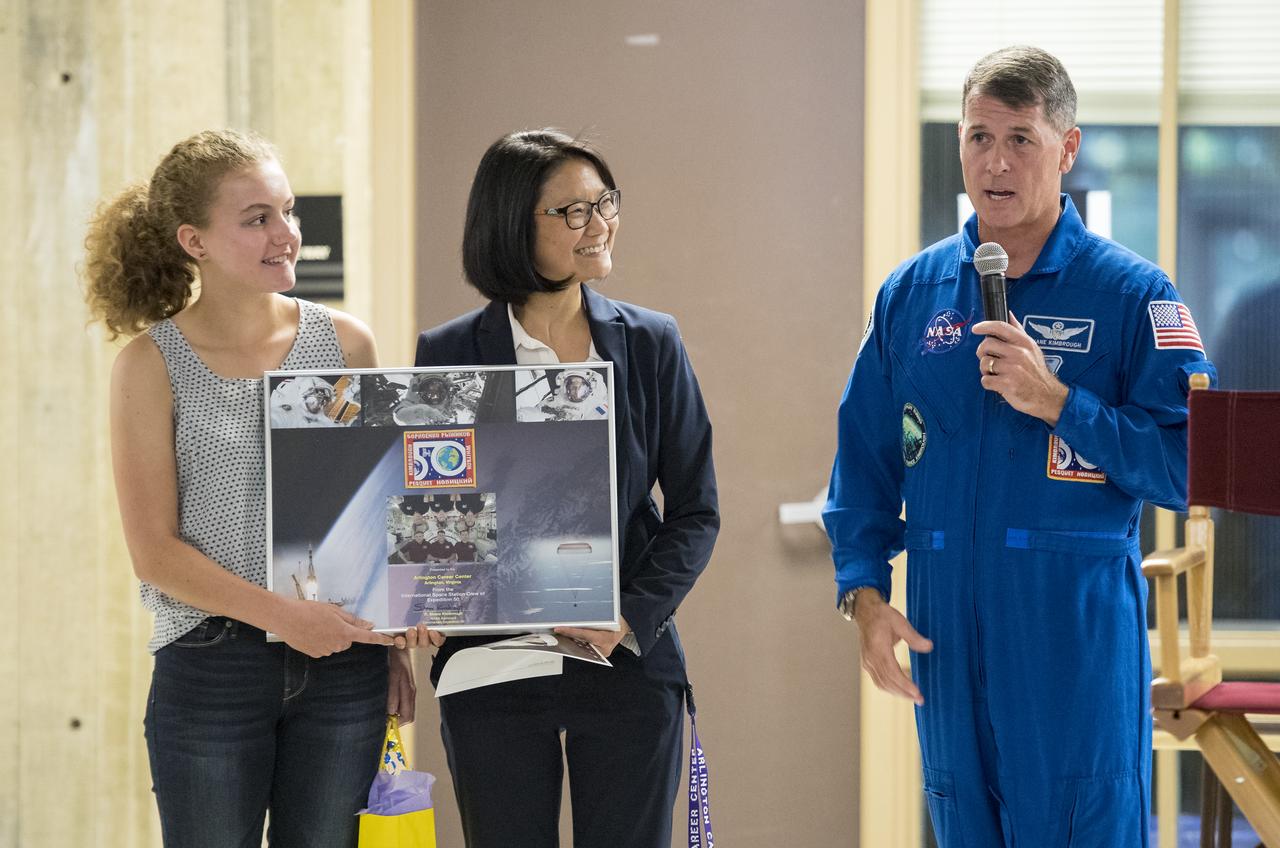
NASA astronaut Shane Kimbrough presents a montage of photos and the Expedition 50 patch to the Arlington Tech High School who hosted his presentation on his time onboard the International Space Station (ISS) during Expeditions 49/50, Tuesday, September 12, 2017 at Arlington Career Center in Arlington, Virginia. During Expedition 50, Kimbrough completed four spacewalks for a total of 39 hours outside the ISS, and concluded his 173-day mission when he landed in a remote area near the town of Zhezkazgan, Kazakhstan in April 2017. Photo Credit: (NASA/Aubrey Gemignani)
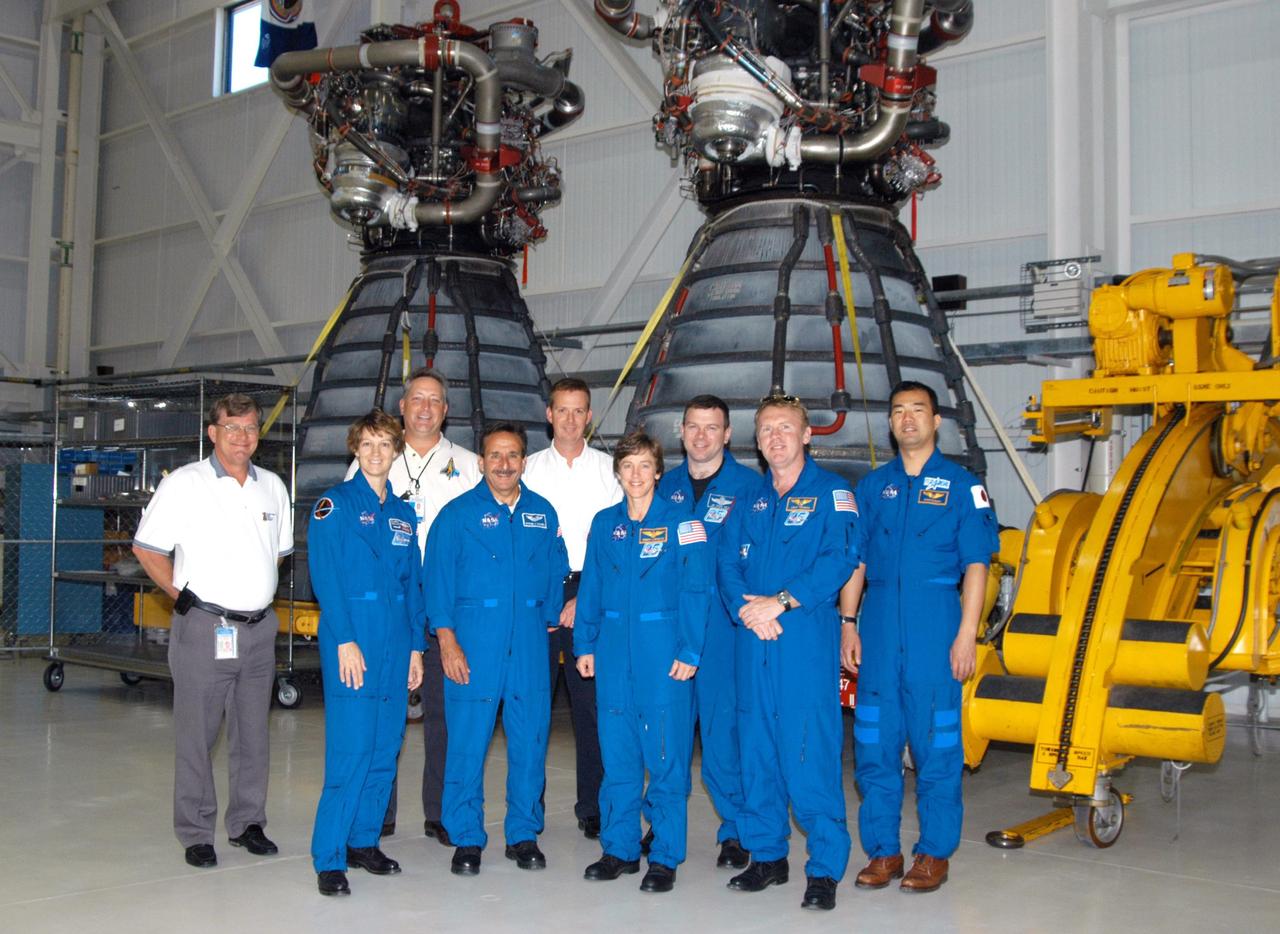
KENNEDY SPACE CENTER, FLA. -- In the Space Shuttle Main Engine Shop at KSC, the STS-114 crew poses for a photo in front of two of the main engines. Crew members, from left, are Mission Commander Eileen Collins, Mission Specialists Charles Camarda and Wendy Lawrence, Pilot James Kelly, and Mission Specialists Andrew Thomas and Soichi Noguchi, who represents the Japanese Aerospace and Exploration Agency. Behind them are Dan Hausman (director, Product Support, Boeing), Dan Sweety (manager, Safety & Mission Assurance, Boeing) and Matt McClelland (team manager, Tech Ops, Boeing). The STS-114 mission is Logistics Flight 1, which is scheduled to deliver supplies and equipment plus the external stowage platform to the International Space Station.
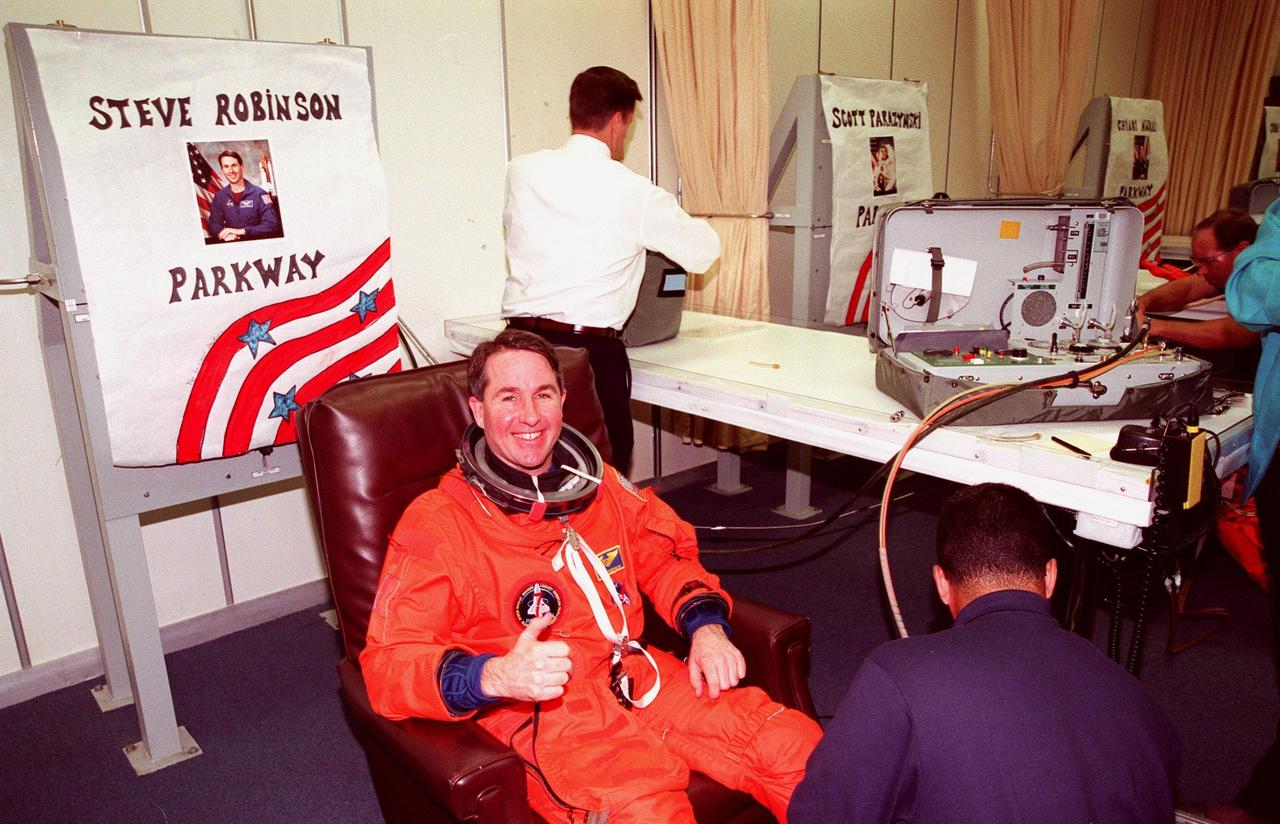
STS-95 Mission Specialist Stephen K. Robinson gives a thumbs up as he dons his flight suit in the Operations and Checkout Building with the help of suit tech George Brittingham (lower right). The final fitting takes place prior to the crew walkout and transport to Launch Pad 39B. Targeted for launch at 2 p.m. EST on Oct. 29, the mission is expected to last 8 days, 21 hours and 49 minutes, and return to KSC at 11:49 a.m. EST on Nov. 7. The STS-95 mission includes research payloads such as the Spartan solar-observing deployable spacecraft, the Hubble Space Telescope Orbital Systems Test Platform, the International Extreme Ultraviolet Hitchhiker, as well as the SPACEHAB single module with experiments on space flight and the aging process
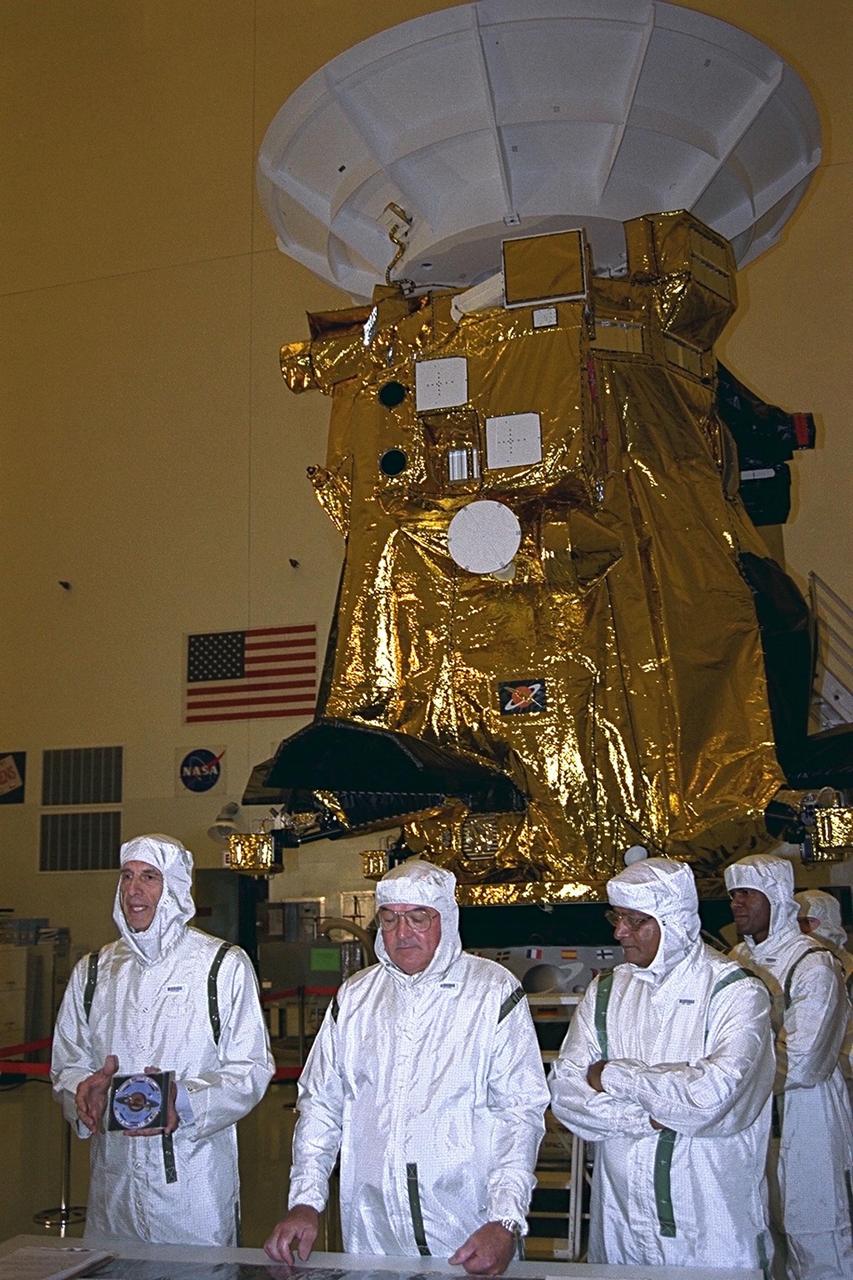
In the Payload Hazardous Servicing Facility (PHSF), Charley Kohlhase, Cassini's science and mission design manager, who oversaw the development of the Digital Video Disk (DVD), discusses it with members of the press. To Kohlhase's left are Richard J. Spehalski, Cassini project manager, and Hamid Hassan, the European Space Agancy Huygens manager. Kohlhase holds the high-tech data disk that will be installed on the Cassini spacecraft. More than 616,400 signatures from 81 countries around the world are on the disk. The Cassini spacecraft is being prepared for launch on Oct. 6, 1997. It will be launched on an Air Force Titan IV/Centaur launch vehicle on an international scientific mission to the planet Saturn. It is destined to arrive at Saturn in July 2004. The Cassini mission is managed for NASA's Office of Space Science, Washington, D.C., by the Jet Propulsion Laboratory, Pasadena, Calif
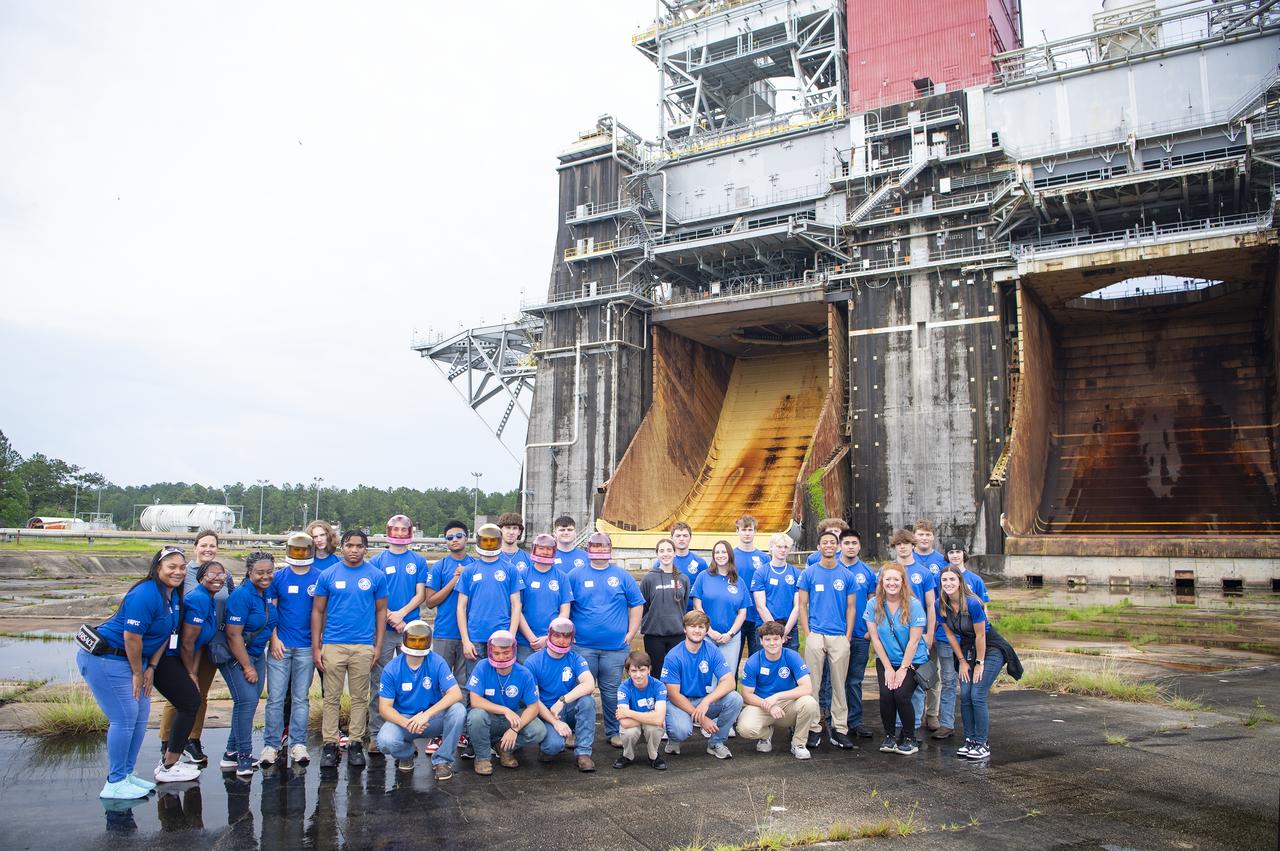
Rising high school juniors and seniors from Ascension Parish, Louisiana, visit the Thad Cochran Test Stand on June 6 during a tour of NASA’s Stennis Space Center. The students are part of the week-long BASF Tech Academy, in coordination with River Parishes Community College, where participants learn about technical careers and education. NASA Stennis is preparing the test stand to test the exploration upper stage, which will fly on future SLS (Space Launch System) missions as NASA continues its mission of exploring the secrets of the universe for the benefit of all. The upper stage is being built at NASA’s Michoud Assembly Facility in New Orleans as a more powerful second stage to send the Orion spacecraft to deep space. It is expected to fly on the Artemis IV mission. Before that, it will be installed on the Thad Cochran Test Stand (B-2) at NASA Stennis to undergo a series of Green Run tests of its integrated systems to demonstrate it is ready to fly.
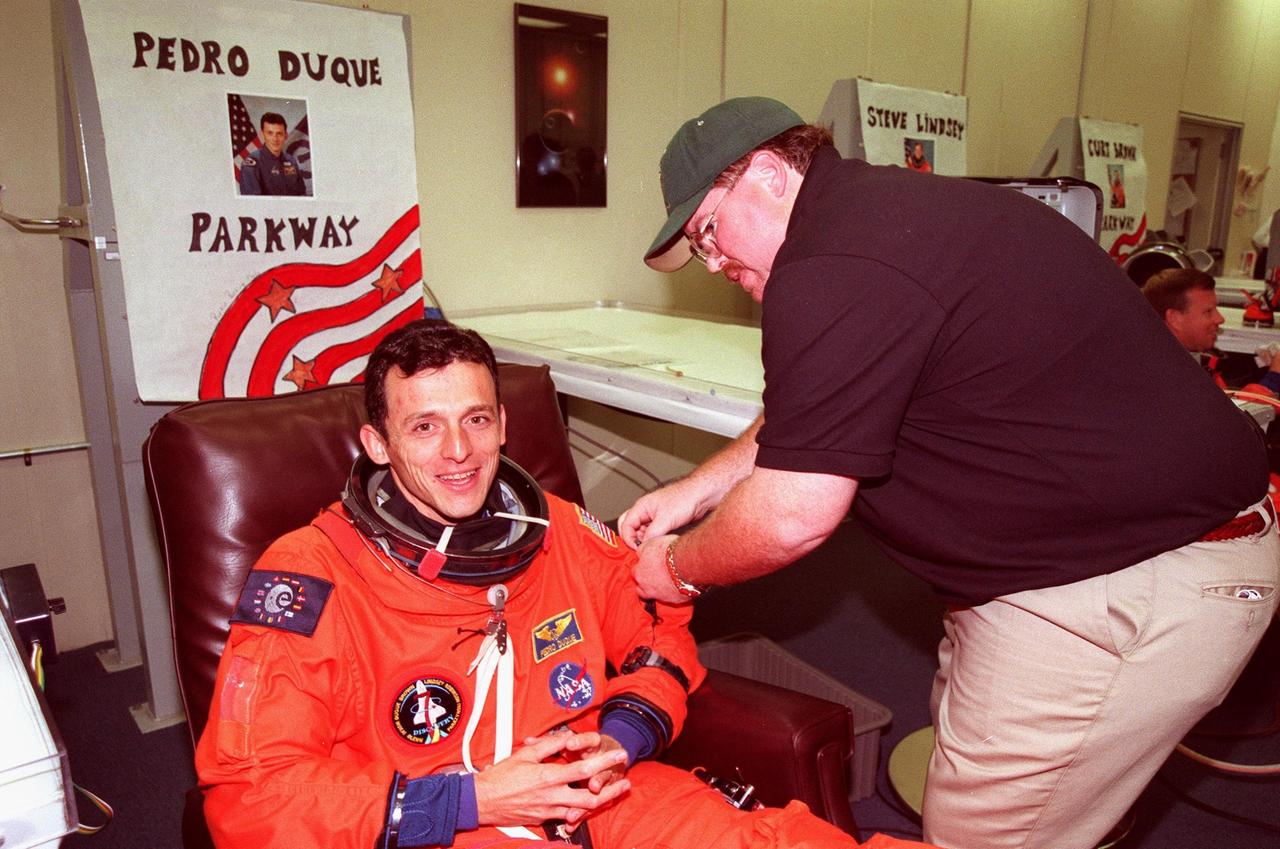
STS-95 Mission Specialist Pedro Duque of Spain, with the European Space Agency, is helped with his flight suit by suit tech Tommy McDonald in the Operations and Checkout Building. The final fitting takes place prior to the crew walkout and transport to Launch Pad 39B. Targeted for launch at 2 p.m. EST on Oct. 29, the mission is expected to last 8 days, 21 hours and 49 minutes, and return to KSC at 11:49 a.m. EST on Nov. 7. The STS-95 mission includes research payloads such as the Spartan solar-observing deployable spacecraft, the Hubble Space Telescope Orbital Systems Test Platform, the International Extreme Ultraviolet Hitchhiker, as well as the SPACEHAB single module with experiments on space flight and the aging process
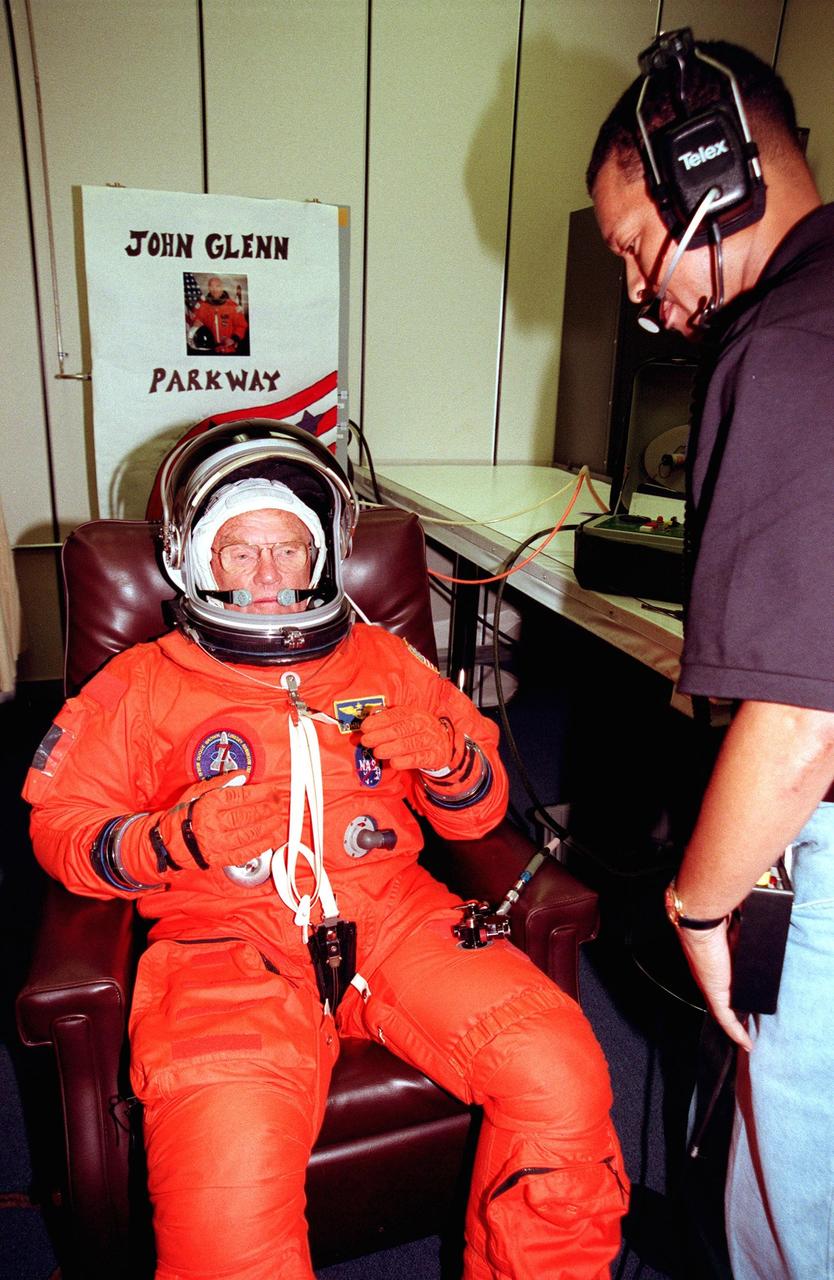
STS-95 Payload Specialist John H. Glenn Jr., senator from Ohio, tests the fitting of his flight suit in the Operations and Checkout Building while suit tech George Brittingham watches. The final fitting takes place prior to the crew walkout and transport to Launch Pad 39B. Targeted for launch at 2 p.m. EST on Oct. 29, the mission is expected to last 8 days, 21 hours and 49 minutes, and return to KSC at 11:49 a.m. EST on Nov. 7. The STS-95 mission includes research payloads such as the Spartan solar-observing deployable spacecraft, the Hubble Space Telescope Orbital Systems Test Platform, the International Extreme Ultraviolet Hitchhiker, as well as the SPACEHAB single module with experiments on space flight and the aging process
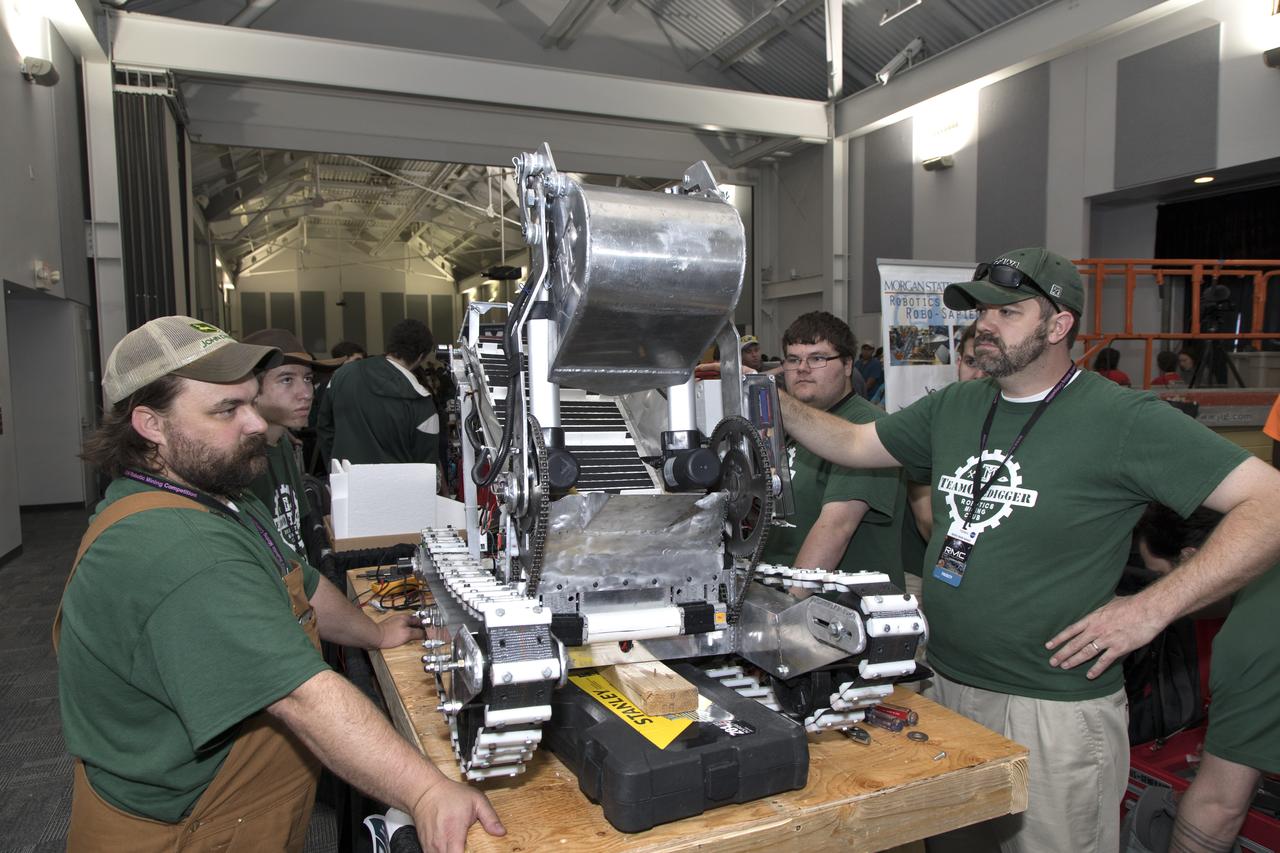
Team members and their advisor, far right, from Montana Tech of the University of Montana, prepare their robot miner on the second day of NASA's 9th Robotic Mining Competition, May 15, in the RobotPits in the Educator Resource Center at Kennedy Space Center Visitor Complex in Florida. More than 40 student teams from colleges and universities around the U.S. will use their mining robots to dig in a supersized sandbox filled with BP-1, or simulated Lunar soil, gravel and rocks, and participate in other competition requirements. The Robotic Mining Competition is a NASA Human Exploration and Operations Mission Directorate project designed to encourage students in science, technology, engineering and math, or STEM fields. The project provides a competitive environment to foster innovative ideas and solutions that could be used on NASA's deep space missions.
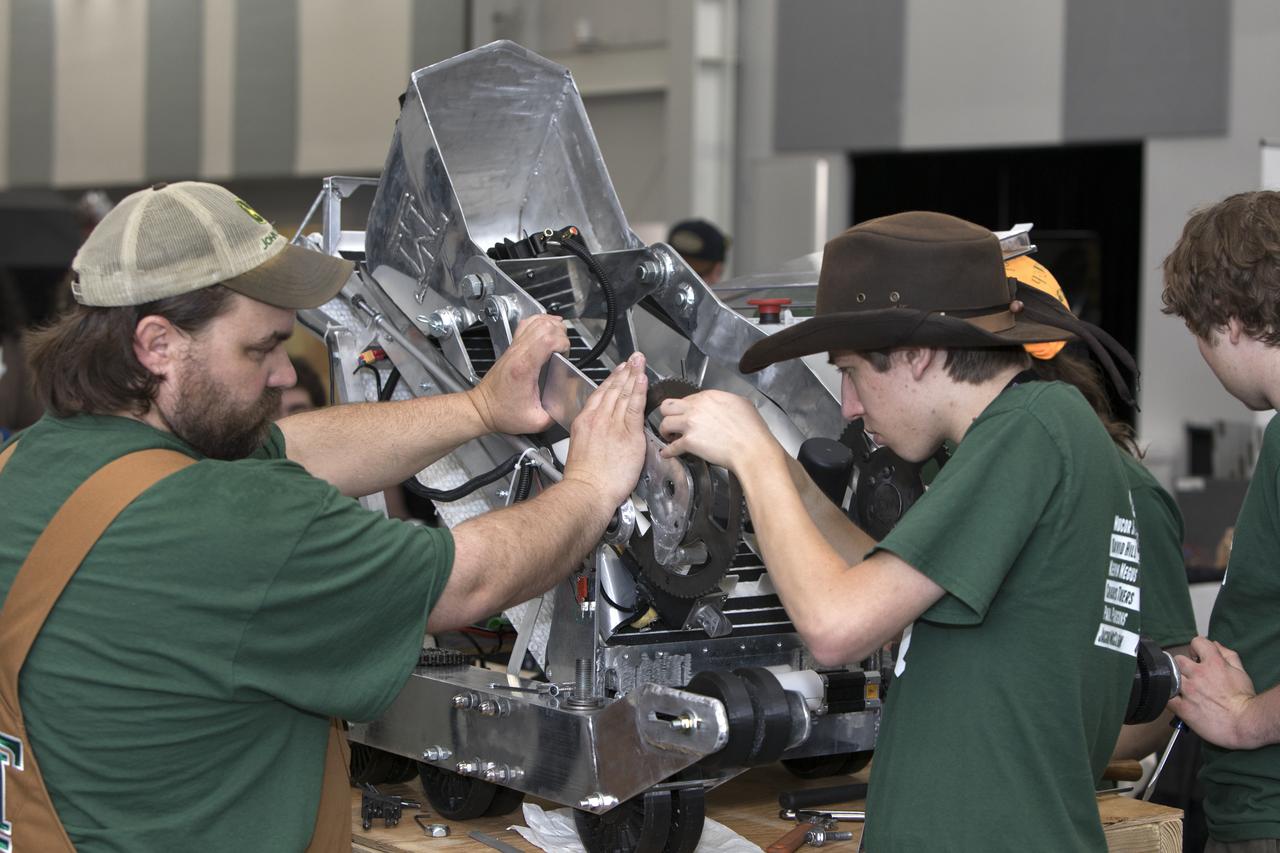
On the first day of NASA's 9th Robotic Mining Competition, set-up day on May 14, team members from Montana Tech of the University of Montana work on their robot miner in the RobotPits in the Educator Resource Center at Kennedy Space Center Visitor Complex in Florida. More than 40 student teams from colleges and universities around the U.S. will use their mining robots to dig in a supersized sandbox filled with BP-1, or simulated Lunar soil, gravel and rocks, and participate in other competition requirements. The Robotic Mining Competition is a NASA Human Exploration and Operations Mission Directorate project designed to encourage students in science, technology, engineering and math, or STEM fields. The project provides a competitive environment to foster innovative ideas and solutions that could be used on NASA's deep space missions.
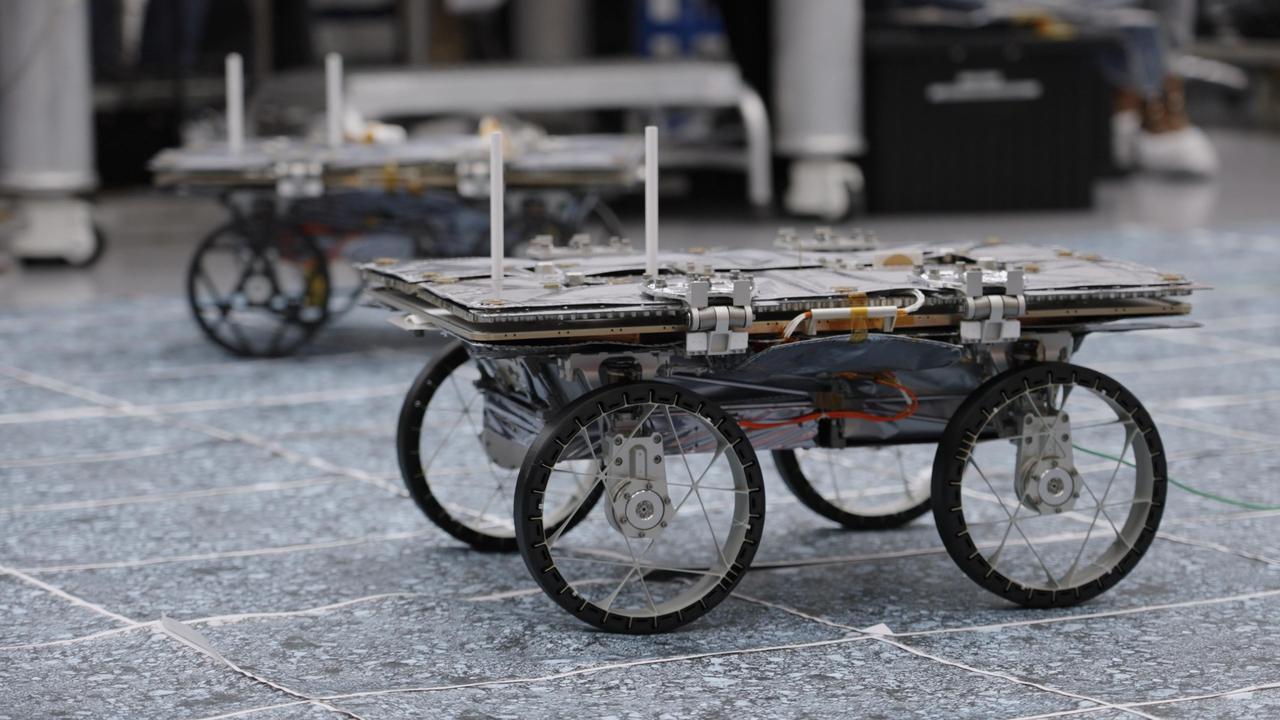
One of three small rovers bound for the Moon took an autonomous test drive in a clean room at NASA's Jet Propulsion Laboratory in Southern California in December 2023. Along with a base station that will be mounted on a lunar lander, the three rovers make up the agency's CADRE (Cooperative Autonomous Distributed Robotic Exploration) technology demonstration. This video was taken during a test of the rovers' ability to drive together as a team without direct commands from engineers. If the CADRE tech demo succeeds on the lunar surface, future missions could include teams of robots spreading out to take scientific measurements from different locations simultaneously, potentially in support of astronauts. In this test, the rover's solar panels were closed, and black plastic covers protected the ultralight aluminum wheels to prevent their grousers from catching on the clean-room floor. Video available at https://photojournal.jpl.nasa.gov/catalog/PIA26297
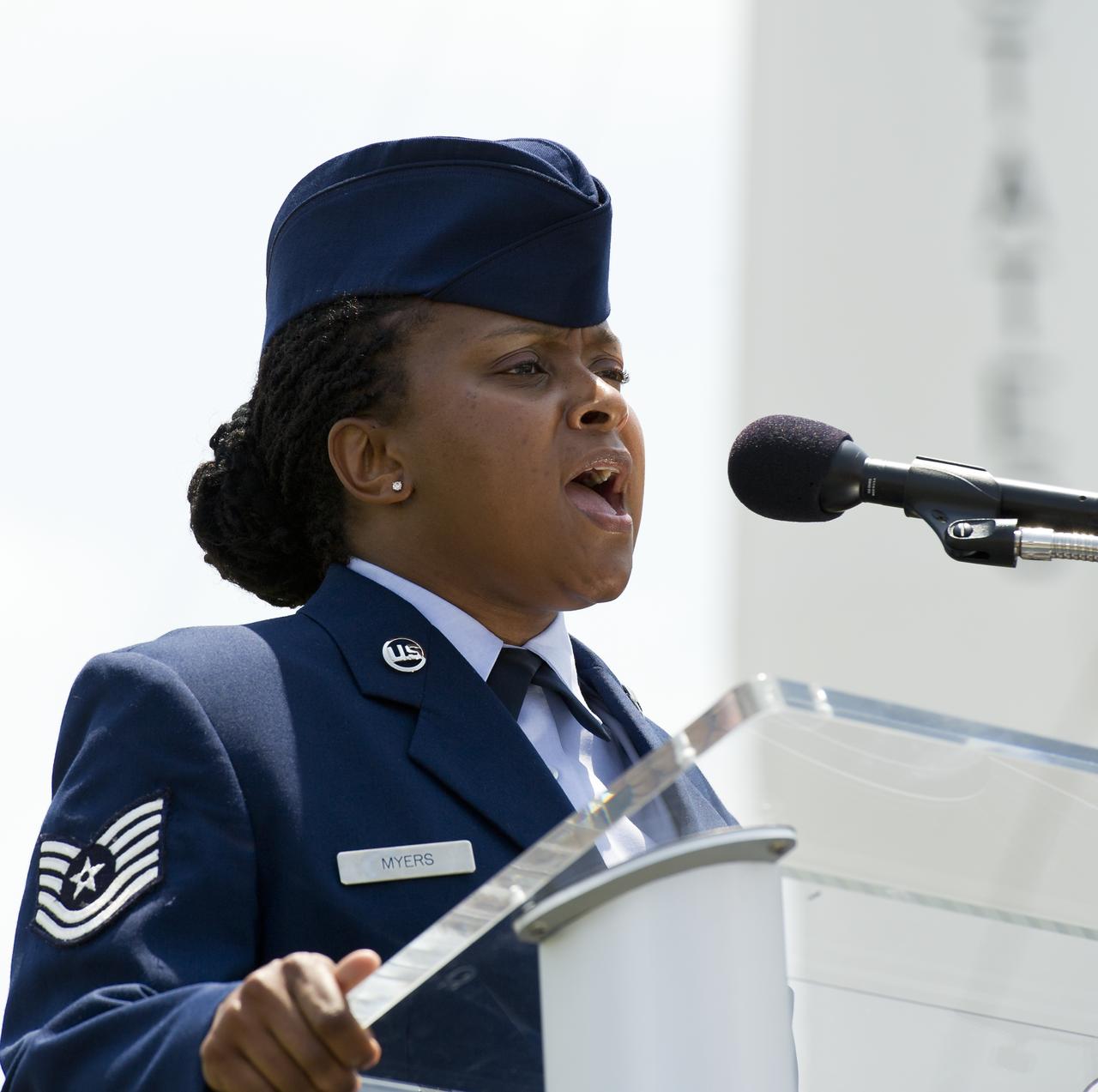
Altrameise Myers, Tech Sgt., 45th Space Wing sings the National Anthem during the start of a ceremony where two USPS stamps where unveiled to commemorate and celebrate 50 years of US Spaceflight and the MESSENGER program during an event, Wednesday, May 4, 2011 at the NASA Kennedy Space Center in Cape Canaveral, Fla. One stamp commemorates NASA’s Project Mercury, America’s first manned spaceflight program, and NASA astronaut Alan Shepard’s historic flight on May 5, 1961, aboard spacecraft Freedom 7. The other stamp draws attention to NASA’s unmanned MESSENGER mission, a scientific investigation of the planet Mercury. On March 17, 2011, MESSENGER became the first spacecraft to enter into orbit around Mercury. Photo Credit: (NASA/Bill Ingalls)
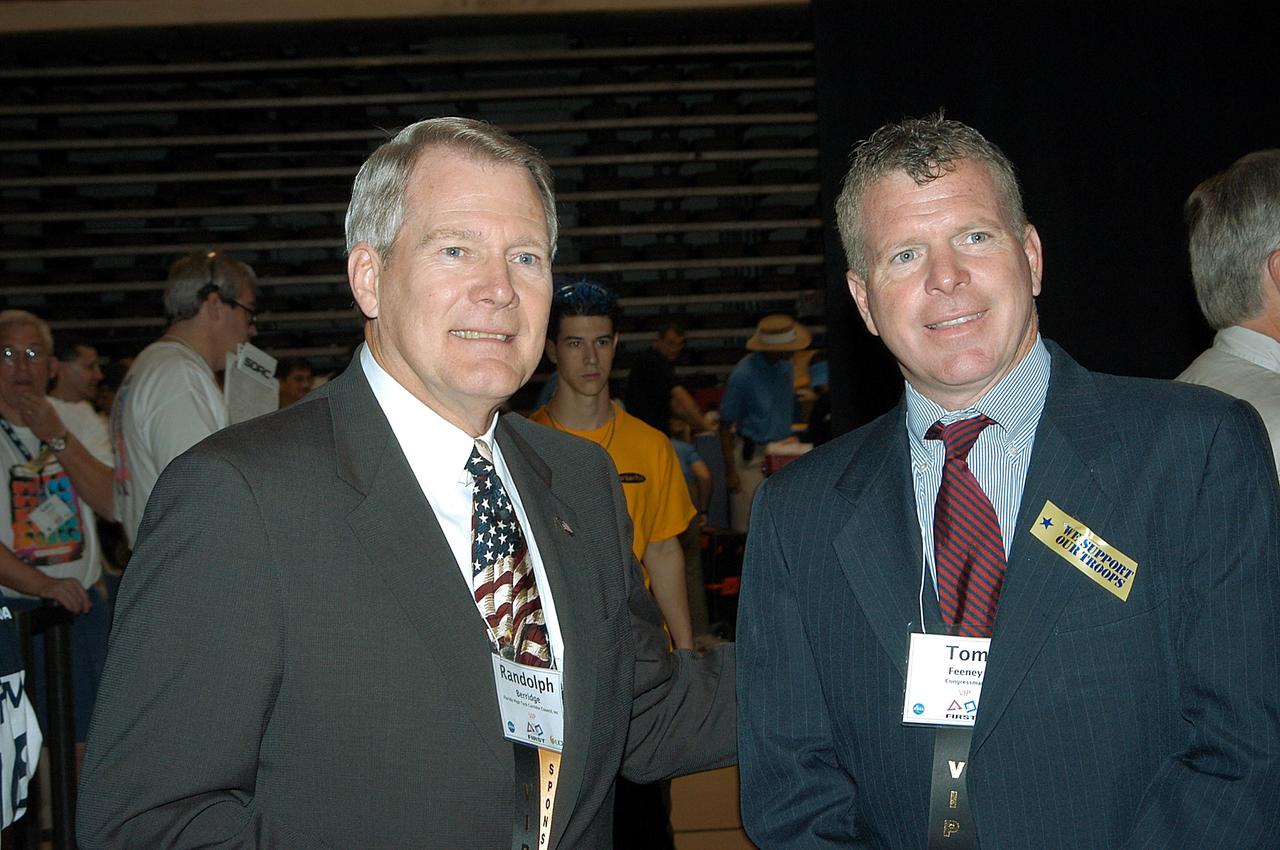
KENNEDY SPACE CENTER, FLA. - Randolph E. Berridge, president of the Florida High Tech Corridor Council, and Tom Feeney, Florida Representative from the 24th District, attend the 2003 Southeastern Regional FIRST Robotic Competition. The competition is being held at the University of Central Florida (UCF) in Orlando, March 20-23. Forty student teams from around the country are participating in the event that pits team-built gladiator robots against each other in an athletic-style competition. The teams are sponsored by NASA/Kennedy Space Center, The Boeing Company/Brevard Community College, and Lockheed Martin Space Operations/Mission Systems for the nonprofit organization For Inspiration and Recognition of Science and Technology, known as FIRST. The vision of FIRST is to inspire in the youth of our nation an appreciation of science and technology and an understanding that mastering these disciplines can enrich the lives of all mankind.
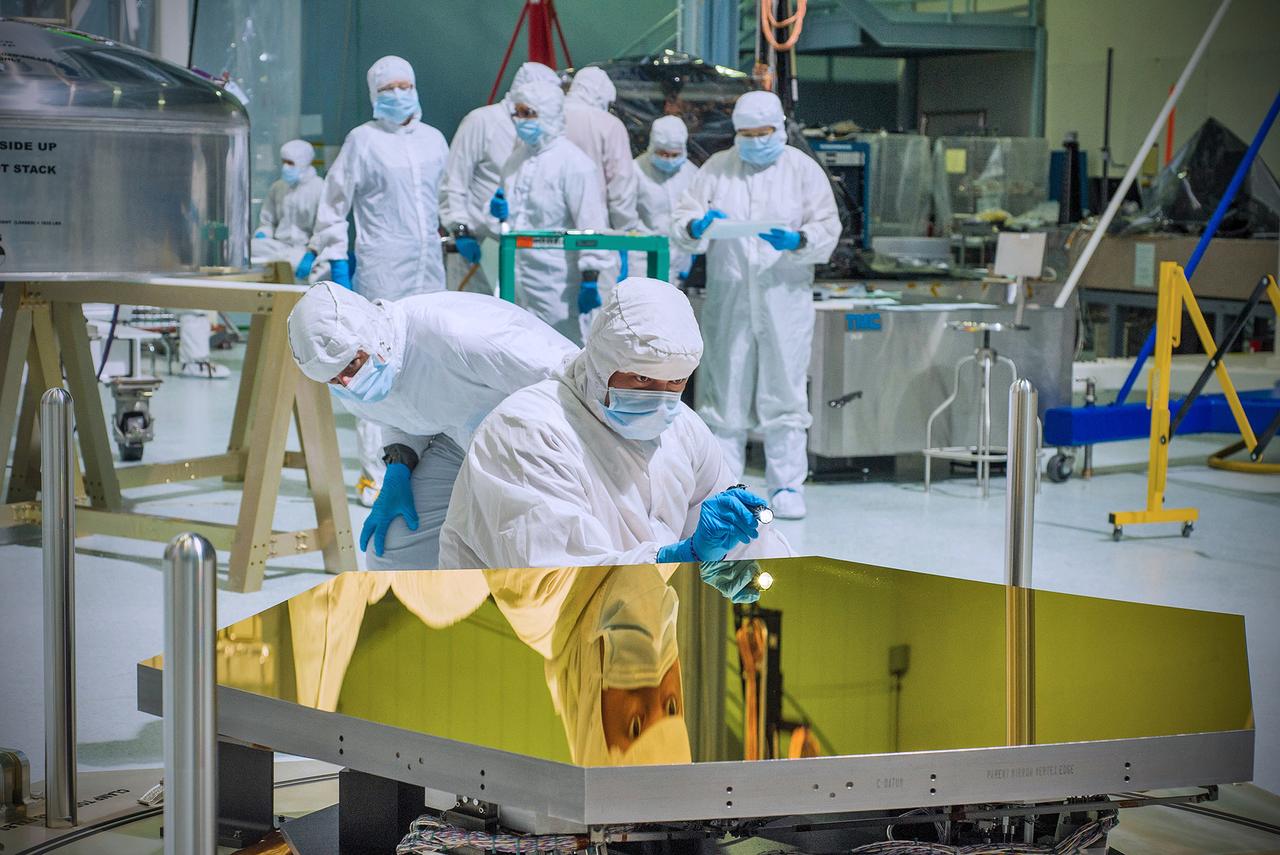
Technicians and scientists check out one of the Webb telescope's first two flight mirrors in the clean room at NASA's Goddard Space Flight Center in Greenbelt, Md. Credit: NASA/Chris Gunn ----- The first two of the 18 primary mirrors to fly aboard NASA’s James Webb Space Telescope arrived at NASA’s Goddard Space Flight Center in Greenbelt, Md. The mirrors are going through receiving and inspection and will then be stored in the Goddard cleanroom until engineers are ready to assemble them onto the telescope's backplane structure that will support them. Ball Aerospace, Boulder, Colo., under contract to Northrop Grumman, is responsible for the Webb’s optical technology and lightweight mirror system. On September 17, 2012, Ball Aerospace shipped the first two mirrors in custom containers designed specifically for the multiple trips the mirrors made through eight U.S. states while completing their manufacturing. The remaining 16 mirrors will make their way from Ball Aerospace to Goddard over the next 12 months as they await telescope integration in 2015. To read more go to: <a href="http://www.nasa.gov/topics/technology/features/webb-tech-mirrors-delivered.html" rel="nofollow">www.nasa.gov/topics/technology/features/webb-tech-mirrors...</a> <b><a href="http://www.nasa.gov/audience/formedia/features/MP_Photo_Guidelines.html" rel="nofollow">NASA image use policy.</a></b> <b><a href="http://www.nasa.gov/centers/goddard/home/index.html" rel="nofollow">NASA Goddard Space Flight Center</a></b> enables NASA’s mission through four scientific endeavors: Earth Science, Heliophysics, Solar System Exploration, and Astrophysics. Goddard plays a leading role in NASA’s accomplishments by contributing compelling scientific knowledge to advance the Agency’s mission. <b>Follow us on <a href="http://twitter.com/NASA_GoddardPix" rel="nofollow">Twitter</a></b> <b>Like us on <a href="http://www.facebook.com/pages/Greenbelt-MD/NASA-Goddard/395013845897?ref=tsd" rel="nofollow">Facebook</a></b> <b>Find us on <a href="http://instagrid.me/nasagoddard/?vm=grid" rel="nofollow">Instagram</a></b>
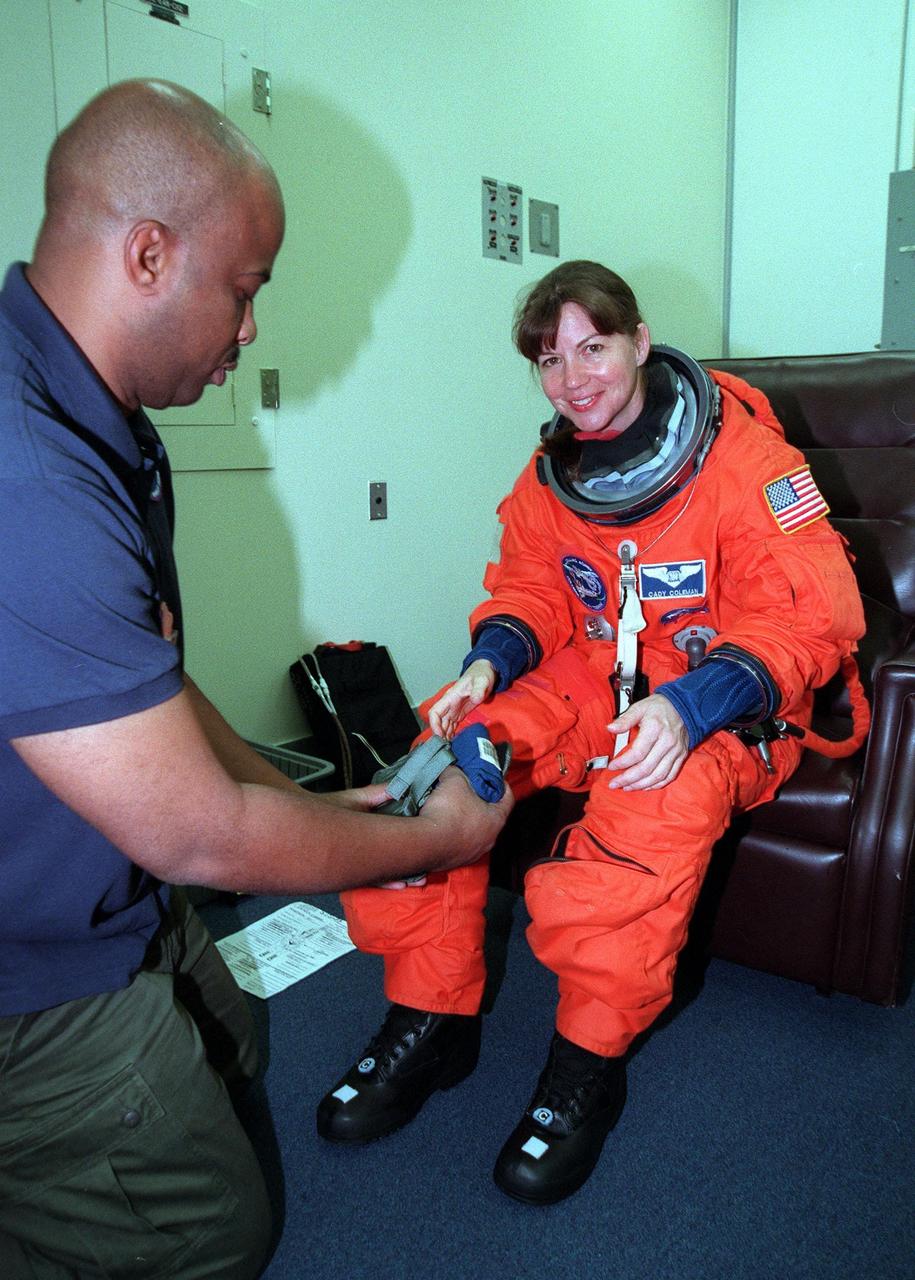
During final launch preparations in the Operations and Checkout Building, STS-93 Mission Specialist Catherine G. Coleman (Ph.D.) gets help with her launch and entry suit from a suit tech. After Space Shuttle Columbia's July 20 launch attempt was scrubbed at the T-7 second mark in the countdown, the launch was rescheduled for Thursday, July 22, at 12:28 a.m. EDT. The target landing date is July 26, 1999, at 11:24 p.m. EDT. STS-93 is a five-day mission primarily to release the Chandra X-ray Observatory, which will allow scientists from around the world to study some of the most distant, powerful and dynamic objects in the universe. The new telescope is 20 to 50 times more sensitive than any previous X-ray telescope and is expected unlock the secrets of supernovae, quasars and black holes. The STS-93 crew numbers five: Commander Eileen M. Collins, Pilot Jeffrey S. Ashby, and Mission Specialists Stephen A. Hawley (Ph.D.), Coleman and Michel Tognini of France, who represents the Centre National d'Etudes Spatiales (CNES). Collins is the first woman to serve as commander of a shuttle mission
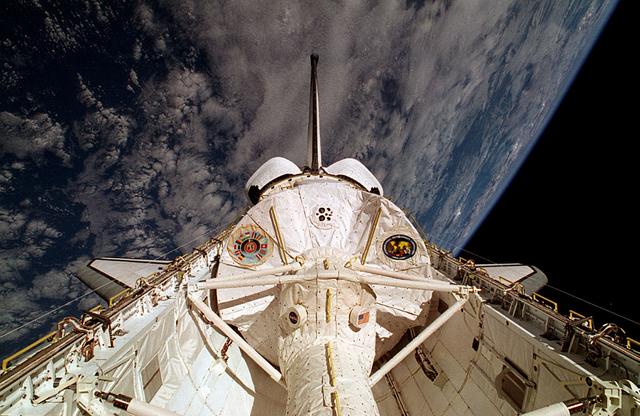
This is a Space Shuttle Columbia (STS-65) onboard photo of the second International Microgravity Laboratory (IML-2) in the cargo bay with Earth in the background. Mission objectives of IML-2 were to conduct science and technology investigations that required the low-gravity environment of space, with emphasis on experiments that studied the effects of microgravity on materials processes and living organisms. Materials science and life sciences are two of the most exciting areas of microgravity research because discoveries in these fields could greatly enhance the quality of life on Earth. If the structure of certain proteins can be determined by examining high-quality protein crystals grown in microgravity, advances can be made to improve the treatment of many human diseases. Electronic materials research in space may help us refine processes and make better products, such as computers, lasers, and other high-tech devices. The 14-nation European Space Agency (ESA), the Canadian Space Agency (SCA), the French National Center for Space Studies (CNES), the German Space Agency and the German Aerospace Research Establishment (DARA/DLR), and the National Space Development Agency of Japan (NASDA) participated in developing hardware and experiments for the IML missions. The missions were managed by NASA's Marshall Space Flight Center. The Orbiter Columbia was launched from the Kennedy Space Center on July 8, 1994 for the IML-2 mission.
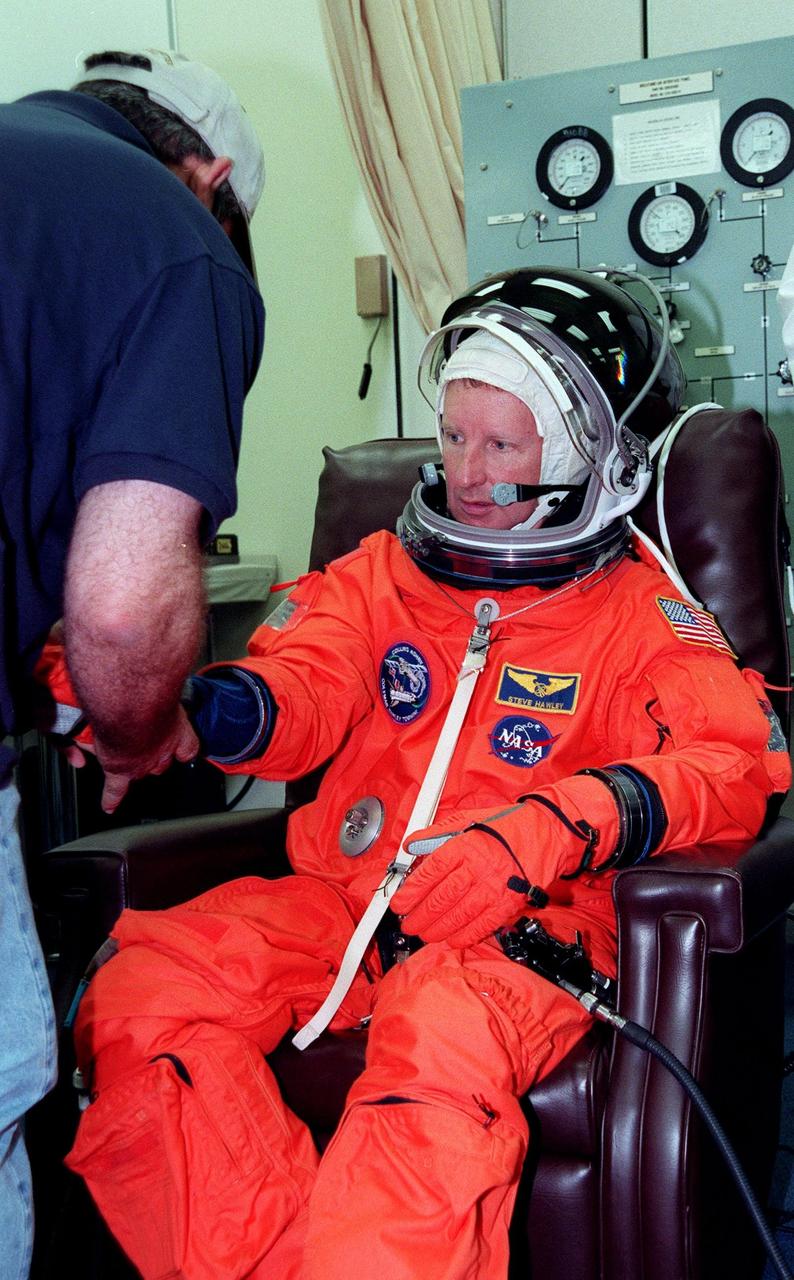
During final launch preparations in the Operations and Checkout Building, STS-93 Mission Specialist Steven A. Hawley (Ph.D.)gets help donning his launch and entry suit from a suit tech. After Space Shuttle Columbia's July 20 launch attempt was scrubbed at the T-7 second mark in the countdown, the launch was rescheduled for Thursday, July 22, at 12:28 a.m. EDT. The target landing date is July 26, 1999, at 11:24 p.m. EDT. STS-93 is a five-day mission primarily to release the Chandra X-ray Observatory, which will allow scientists from around the world to study some of the most distant, powerful and dynamic objects in the universe. The new telescope is 20 to 50 times more sensitive than any previous X-ray telescope and is expected unlock the secrets of supernovae, quasars and black holes. The STS-93 crew numbers five: Commander Eileen M. Collins, Pilot Jeffrey S. Ashby, and Mission Specialists Hawley, Catherine G. Coleman (Ph.D.) and Michel Tognini of France, with the Centre National d'Etudes Spatiales (CNES). Collins is the first woman to serve as commander of a shuttle mission
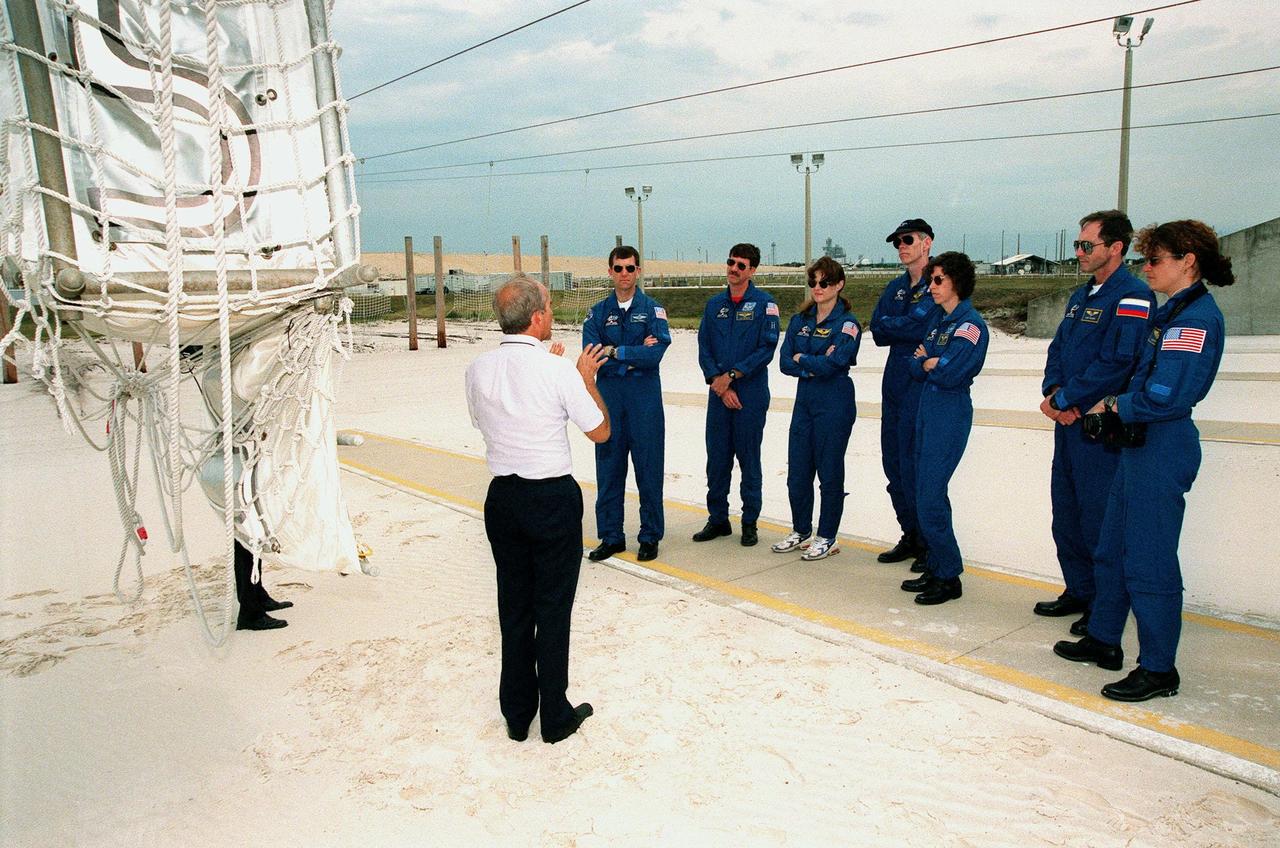
At Launch Pad 39B, the STS-96 crew listens to tech trainer Ken Clark, with United Space Alliance, about the use of the slidewire basket at left during emergency egress training. Standing left to right are Pilot Rick Douglas Husband, Commander Kent V. Rominger, and Mission Specialists Tamara E. Jernigan (Ph.D.), Daniel Barry (M.D., Ph.D.), Ellen Ochoa (Ph.D.), Valery Ivanovich Tokarev, with the Russian Space Agency, and Julie Payette, with the Canadian Space Agency. The STS-96 crew are taking part in Terminal Countdown Demonstration Test activities which also provide simulated countdown exercises and opportunities to inspect the mission payloads in the orbiter's payload bay. Scheduled for liftoff on May 20 at 9:32 a.m., STS-96 is a logistics and resupply mission for the International Space Station, carrying such payloads as a Russian crane, the Strela; a U.S.-built crane; the Spacehab Oceaneering Space System Box (SHOSS), a logistics items carrier; and STARSHINE, a student-led experiment
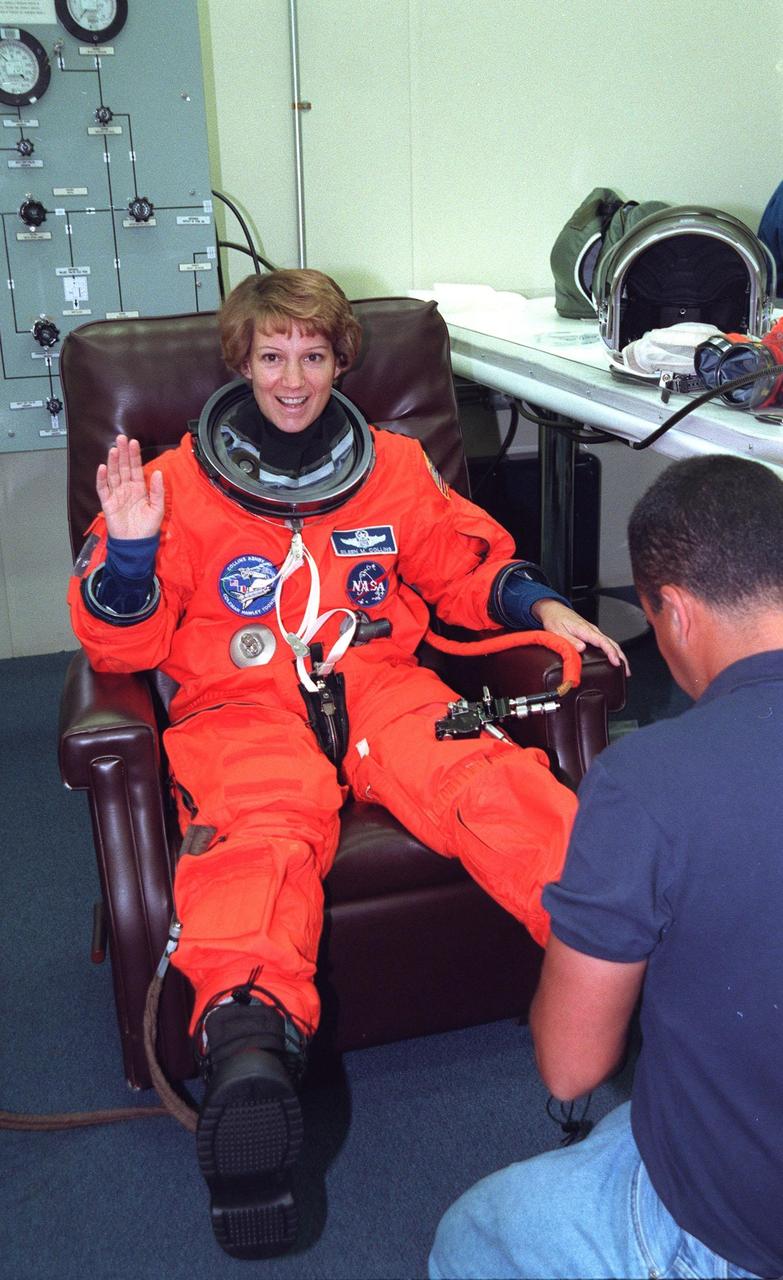
In the Operations and Checkout Building, STS-93 Commander Eileen M. Collins waves while a suit tech adjusts her boot, part of the launch and entry suit, during final launch preparations. STS-93 is a five-day mission primarily to release the Chandra X-ray Observatory, which will allow scientists from around the world to study some of the most distant, powerful and dynamic objects in the universe. The new telescope is 20 to 50 times more sensitive than any previous X-ray telescope and is expected unlock the secrets of supernovae, quasars and black holes. The STS-93 crew numbers five: Commander Collins, Pilot Jeffrey S. Ashby, and Mission Specialists Stephen A. Hawley (Ph.D.), Catherine G. Coleman (Ph.D.) and Michel Tognini of France, with the Centre National d'Etudes Spatiales (CNES). Collins is the first woman to serve as commander of a shuttle mission. STS-93 is scheduled to lift off at 12:36 a.m. EDT July 20. The target landing date is July 24 at 11:30 p.m. EDT
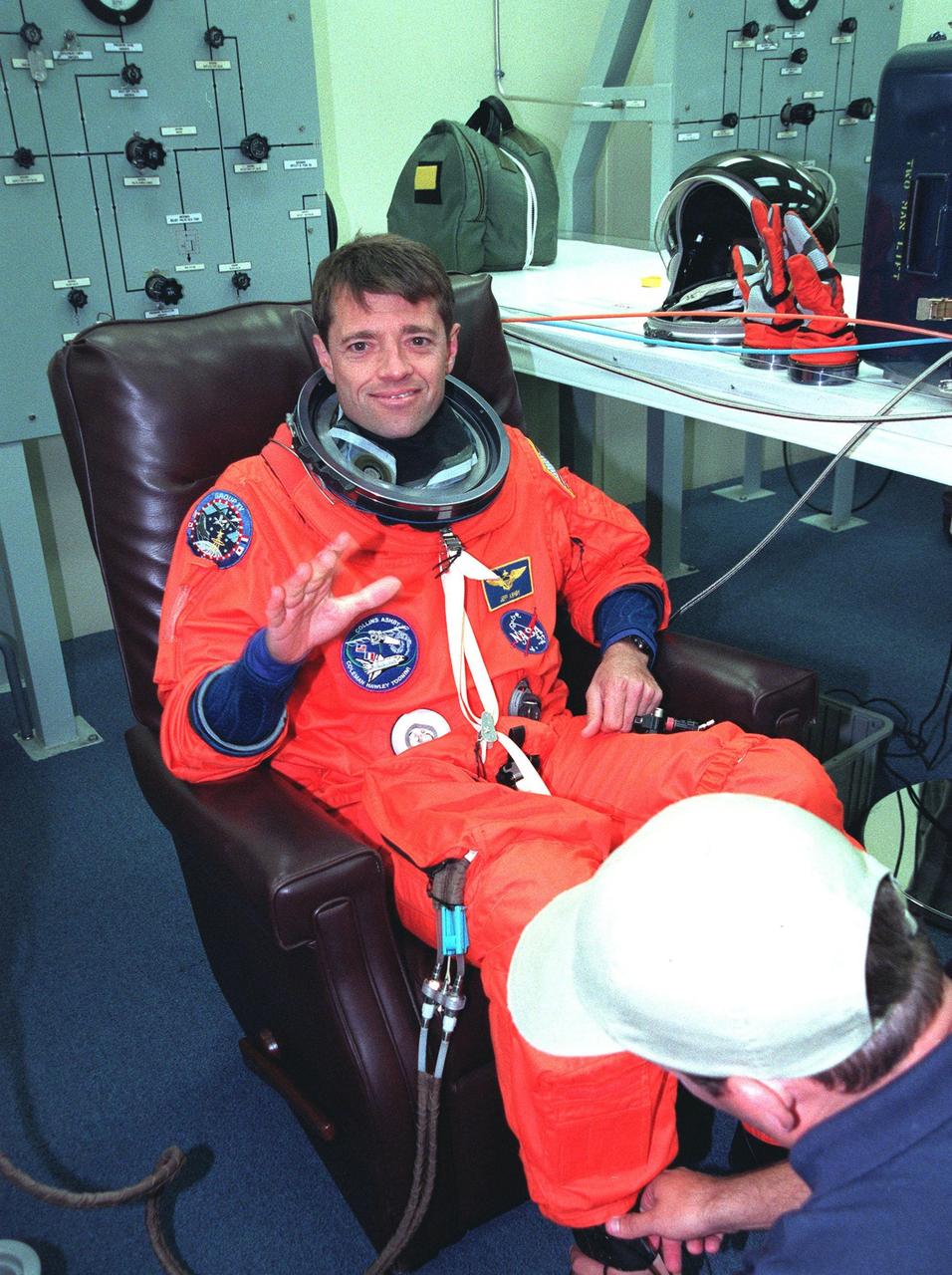
In the Operations and Checkout Building during final launch preparations for the second time, STS-93 Pilot Jeffrey S. Ashby waves after donning his launch and entry suit while a suit tech adjusts his boot. After Space Shuttle Columbia's July 20 launch attempt was scrubbed at the T-7 second mark in the countdown, the launch was rescheduled for Thursday, July 22, at 12:28 a.m. EDT. The target landing date is July 26, 1999, at 11:24 p.m. EDT. STS-93 is a five-day mission primarily to release the Chandra X-ray Observatory, which will allow scientists from around the world to study some of the most distant, powerful and dynamic objects in the universe. The new telescope is 20 to 50 times more sensitive than any previous X-ray telescope and is expected unlock the secrets of supernovae, quasars and black holes. The STS-93 crew numbers five: Commander Eileen M. Collins, Ashby, and Mission Specialists Stephen A. Hawley (Ph.D.), Catherine G. Coleman (Ph.D.) and Michel Tognini of France, with the Centre National d'Etudes Spatiales (CNES). Collins is the first woman to serve as commander of a shuttle mission
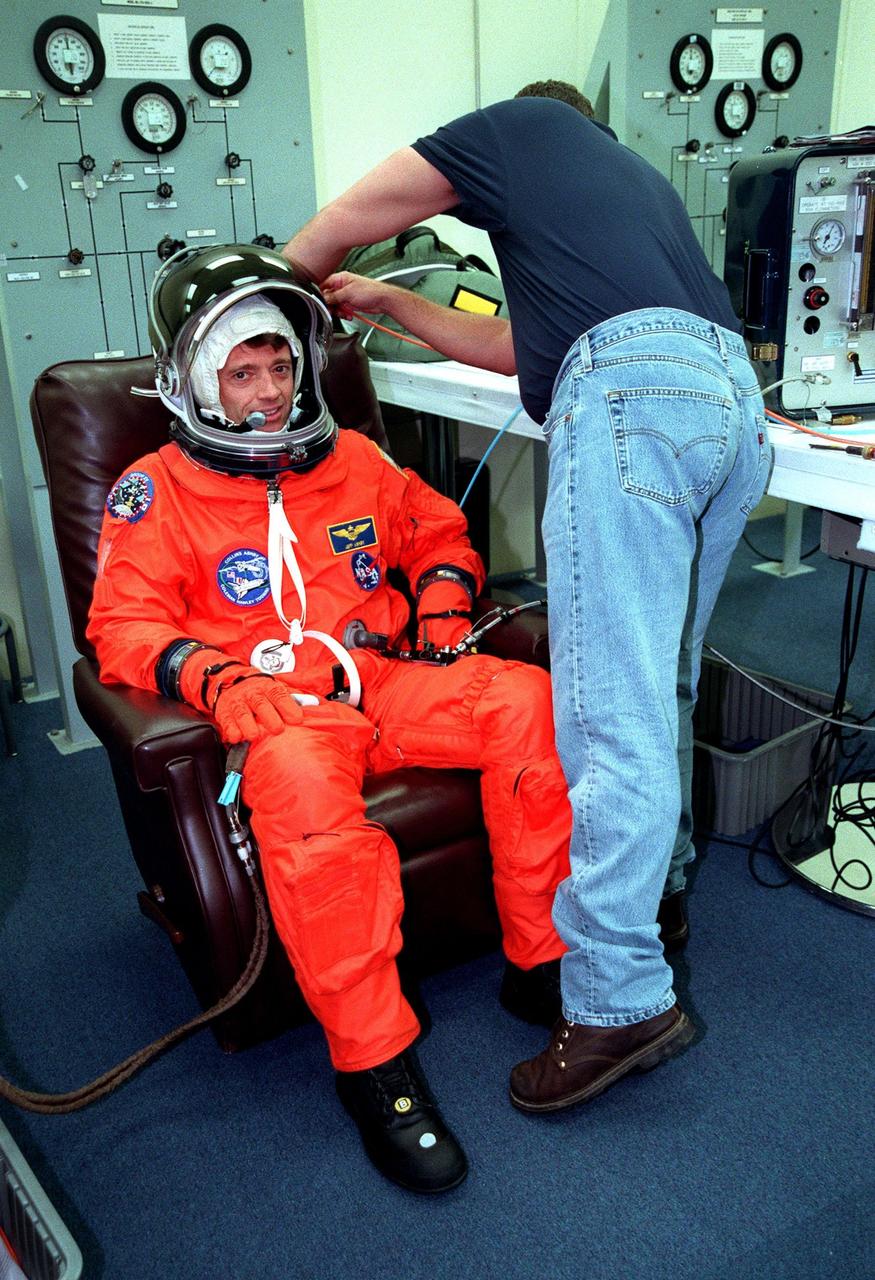
In the Operations and Checkout Building during final launch preparations, STS-93 Pilot Jeffrey S. Ashby waits after donning his launch and entry suit while a suit tech adjusts his helmet. STS-93 is a five-day mission primarily to release the Chandra X-ray Observatory, which will allow scientists from around the world to study some of the most distant, powerful and dynamic objects in the universe. The new telescope is 20 to 50 times more sensitive than any previous X-ray telescope and is expected unlock the secrets of supernovae, quasars and black holes. The STS-93 crew numbers five: Commander Eileen M. Collins, Ashby, and Mission Specialists Stephen A. Hawley (Ph.D.), Catherine G. Coleman (Ph.D.) and Michel Tognini of France, with the Centre National d'Etudes Spatiales (CNES). Collins is the first woman to serve as commander of a shuttle mission. STS-93 is scheduled to lift off at 12:36 a.m. EDT July 20. The target landing date is July 24 at 11:30 p.m. EDT
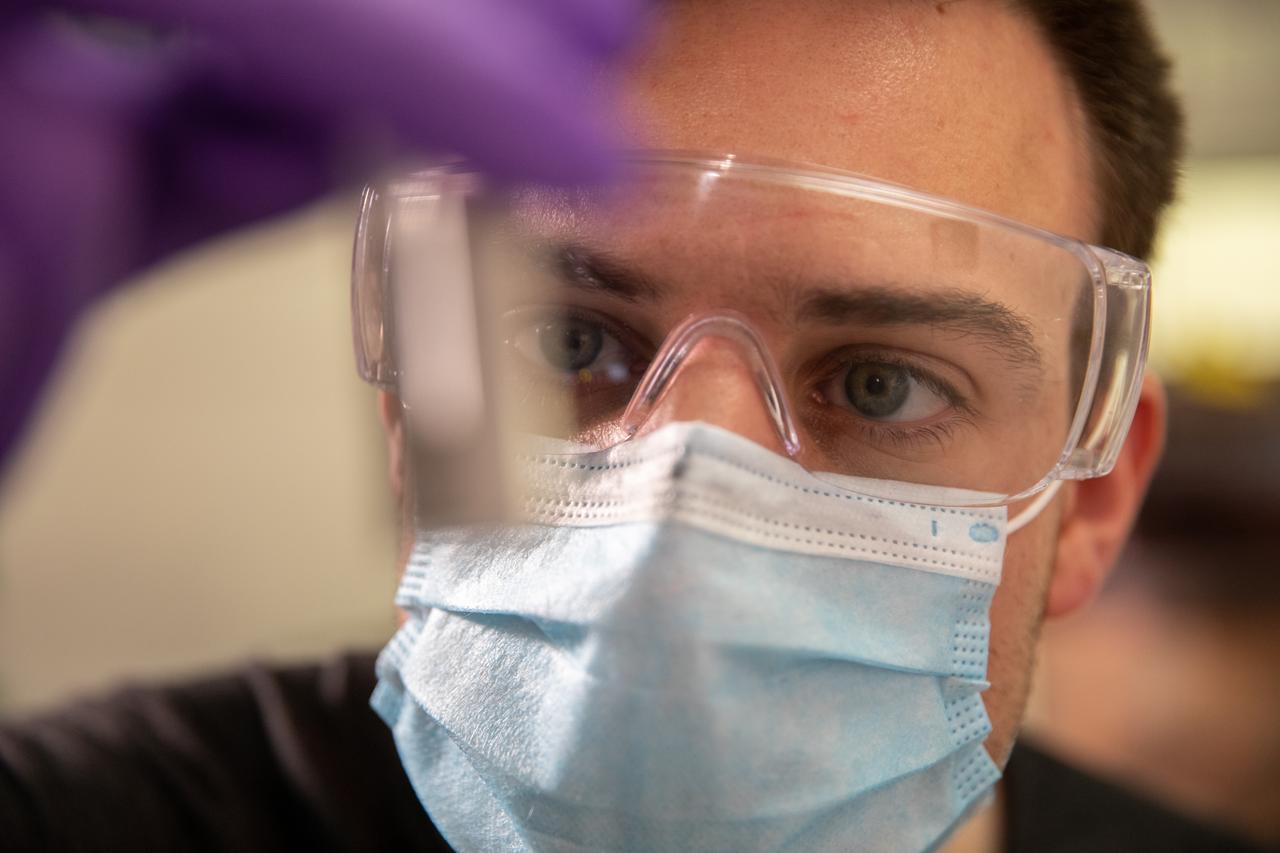
Kevin Grossman, project lead for the Gaseous Lunar Oxygen from Regolith Electrolysis (GaLORE) project at NASA Kennedy Space Center’s Swamp Works, inspects a piece of hardware for GaLORE on July 21, 2020, inside a laboratory at the center’s Neil Armstrong Operations and Checkout Building. Grossman is leading an Early Career Initiative project that is investing in turning lunar regolith into oxygen that could be used for life support for sustainable human lunar exploration on long-duration missions to Mars. GaLORE was selected as an Early Career Initiative project by NASA’s Space Technology Mission directorate.
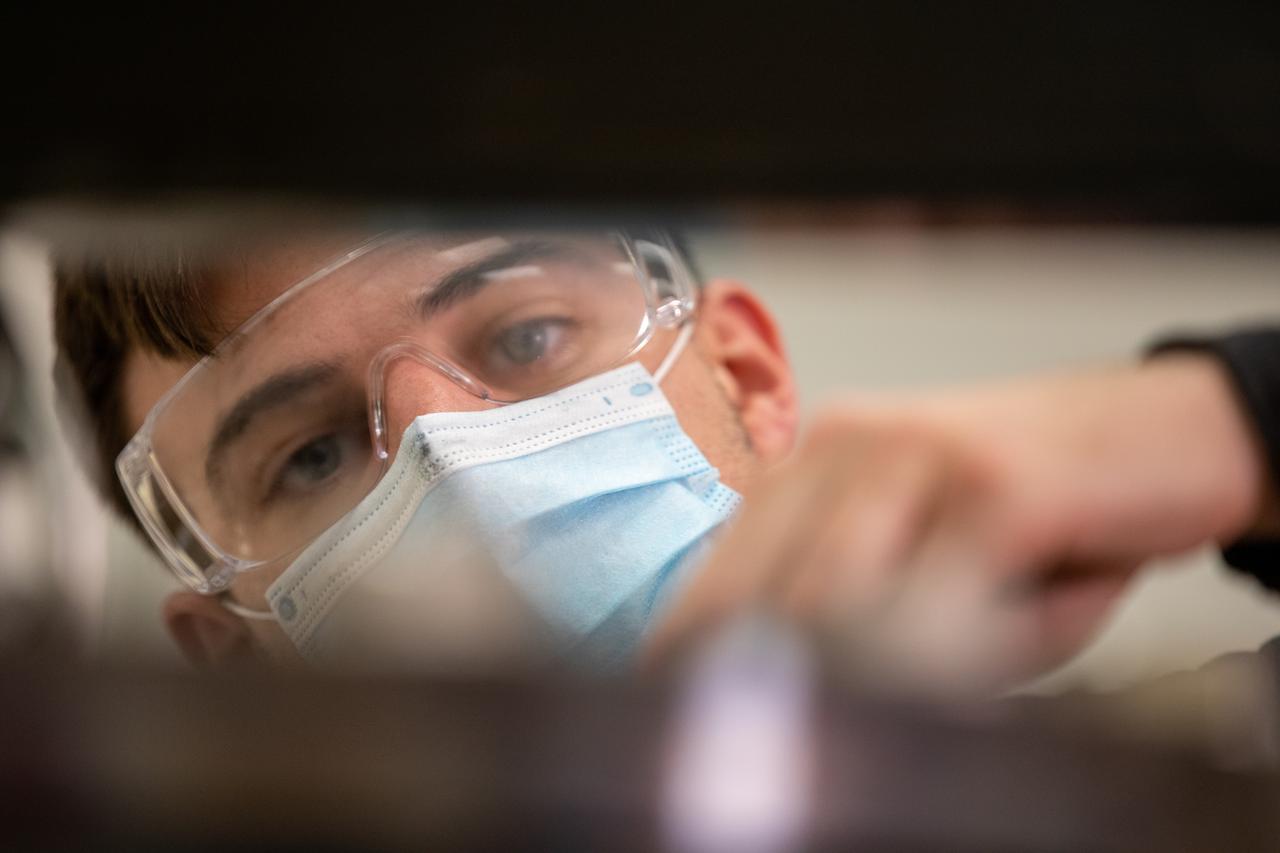
Kevin Grossman, project lead for the Gaseous Lunar Oxygen from Regolith Electrolysis (GaLORE) project at NASA Kennedy Space Center’s Swamp Works, works on the hardware for GaLORE on July 21, 2020, inside a laboratory at the center’s Neil Armstrong Operations and Checkout Building. Grossman is leading an Early Career Initiative project that is investing in turning lunar regolith into oxygen that could be used for life support for sustainable human lunar exploration on long-duration missions to Mars. GaLORE was selected as an Early Career Initiative project by NASA’s Space Technology Mission directorate.
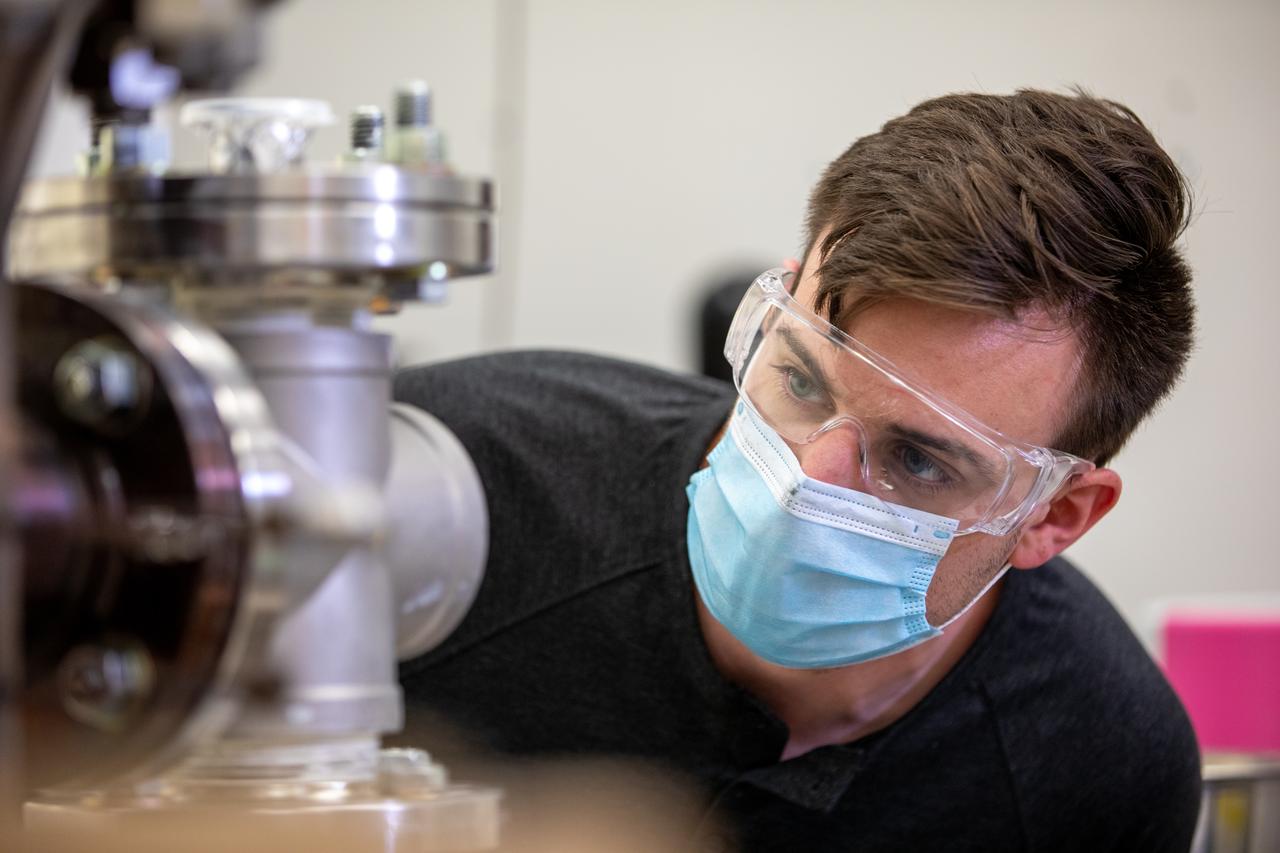
Kevin Grossman, project lead for the Gaseous Lunar Oxygen from Regolith Electrolysis (GaLORE) project at NASA Kennedy Space Center’s Swamp Works, works on the hardware for GaLORE on July 21, 2020, inside a laboratory at the center’s Neil Armstrong Operations and Checkout Building. Grossman is leading an Early Career Initiative project that is investing in turning lunar regolith into oxygen that could be used for life support for sustainable human lunar exploration on long-duration missions to Mars. GaLORE was selected as an Early Career Initiative project by NASA’s Space Technology Mission directorate.
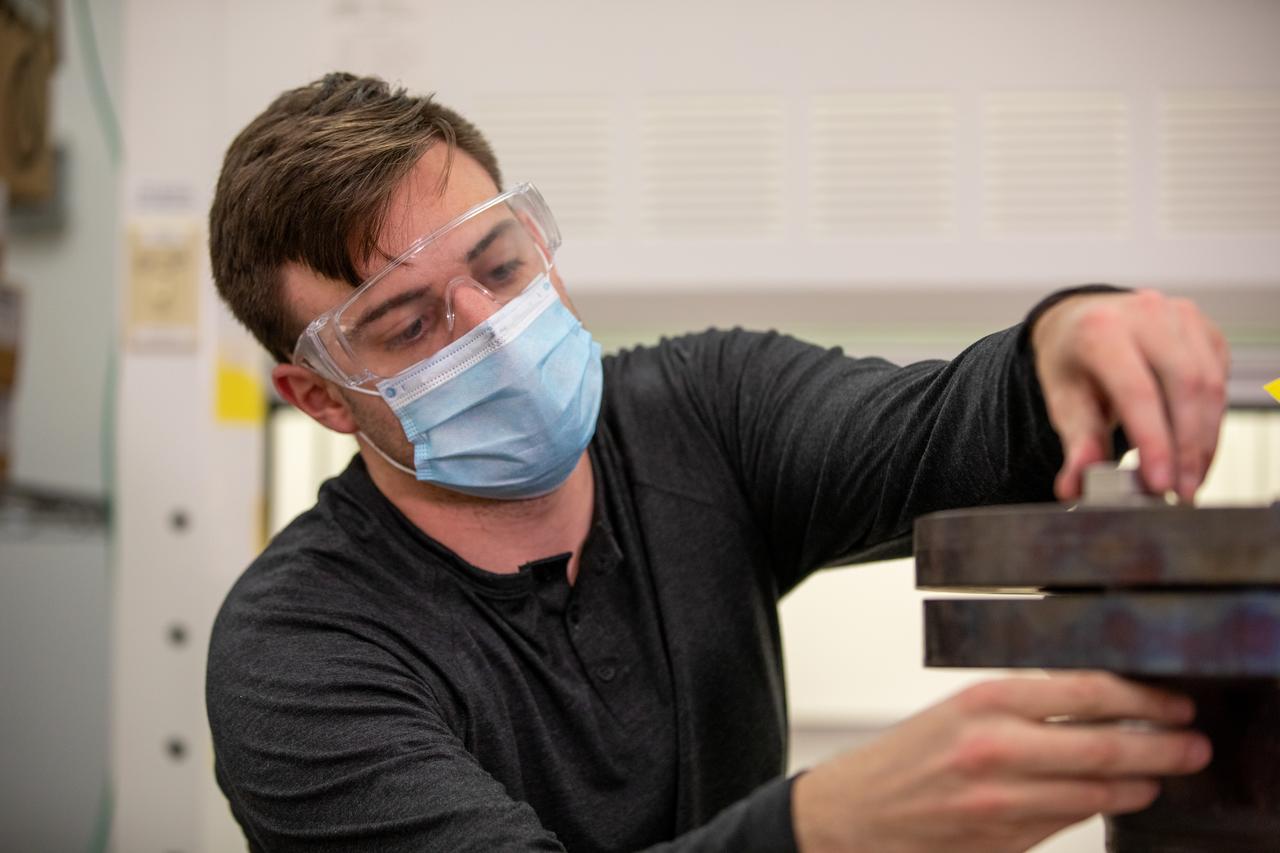
Kevin Grossman, project lead for the Gaseous Lunar Oxygen from Regolith Electrolysis (GaLORE) project at NASA Kennedy Space Center’s Swamp Works, checks the hardware for GaLORE on July 21, 2020, inside a laboratory at the center’s Neil Armstrong Operations and Checkout Building. Grossman is leading an Early Career Initiative project that is investing in turning lunar regolith into oxygen that could be used for life support for sustainable human lunar exploration on long-duration missions to Mars. GaLORE was selected as an Early Career Initiative project by NASA’s Space Technology Mission directorate.
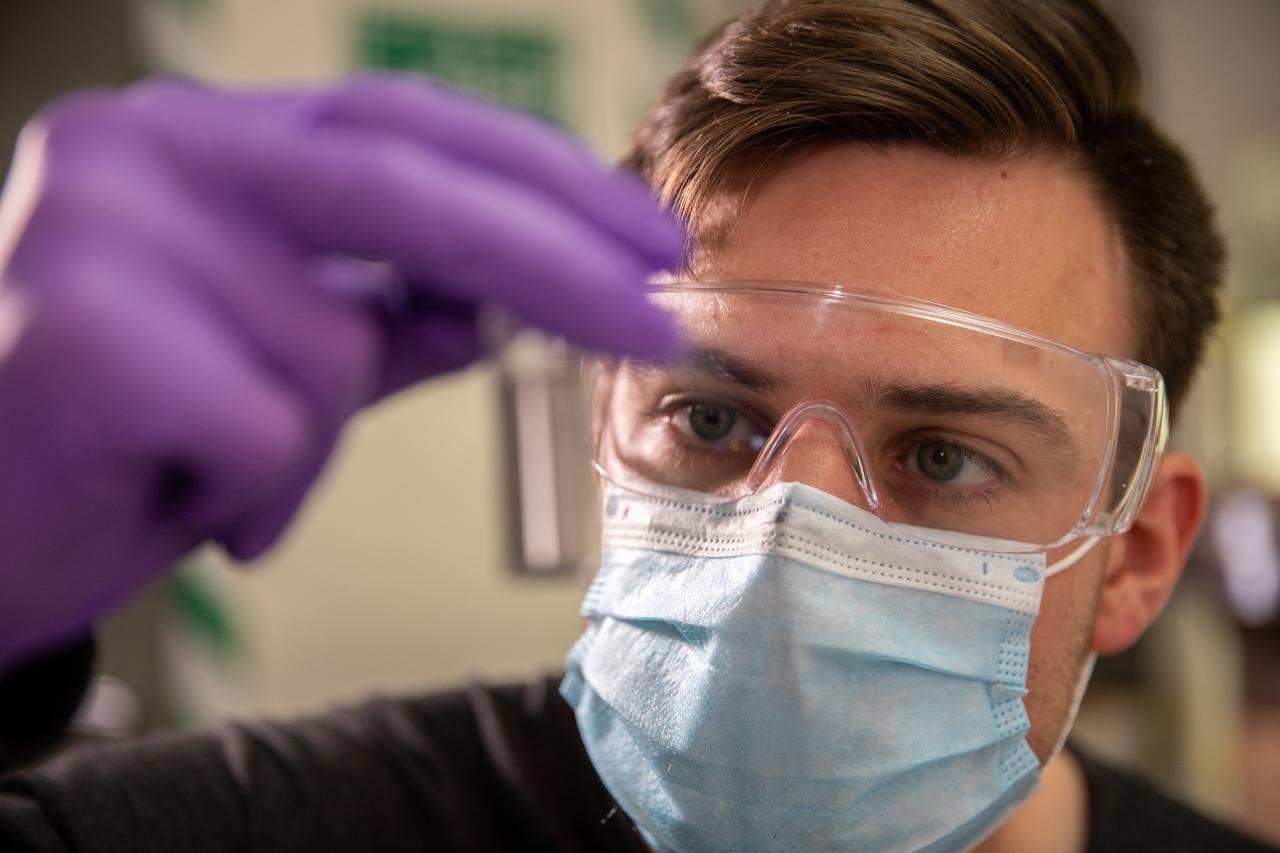
Kevin Grossman, project lead for the Gaseous Lunar Oxygen from Regolith Electrolysis (GaLORE) project at NASA Kennedy Space Center’s Swamp Works, inspects a piece of hardware for GaLORE on July 21, 2020, inside a laboratory at the center’s Neil Armstrong Operations and Checkout Building. Grossman is leading an Early Career Initiative project that is investing in turning lunar regolith into oxygen that could be used for life support for sustainable human lunar exploration on long-duration missions to Mars. GaLORE was selected as an Early Career Initiative project by NASA’s Space Technology Mission directorate.
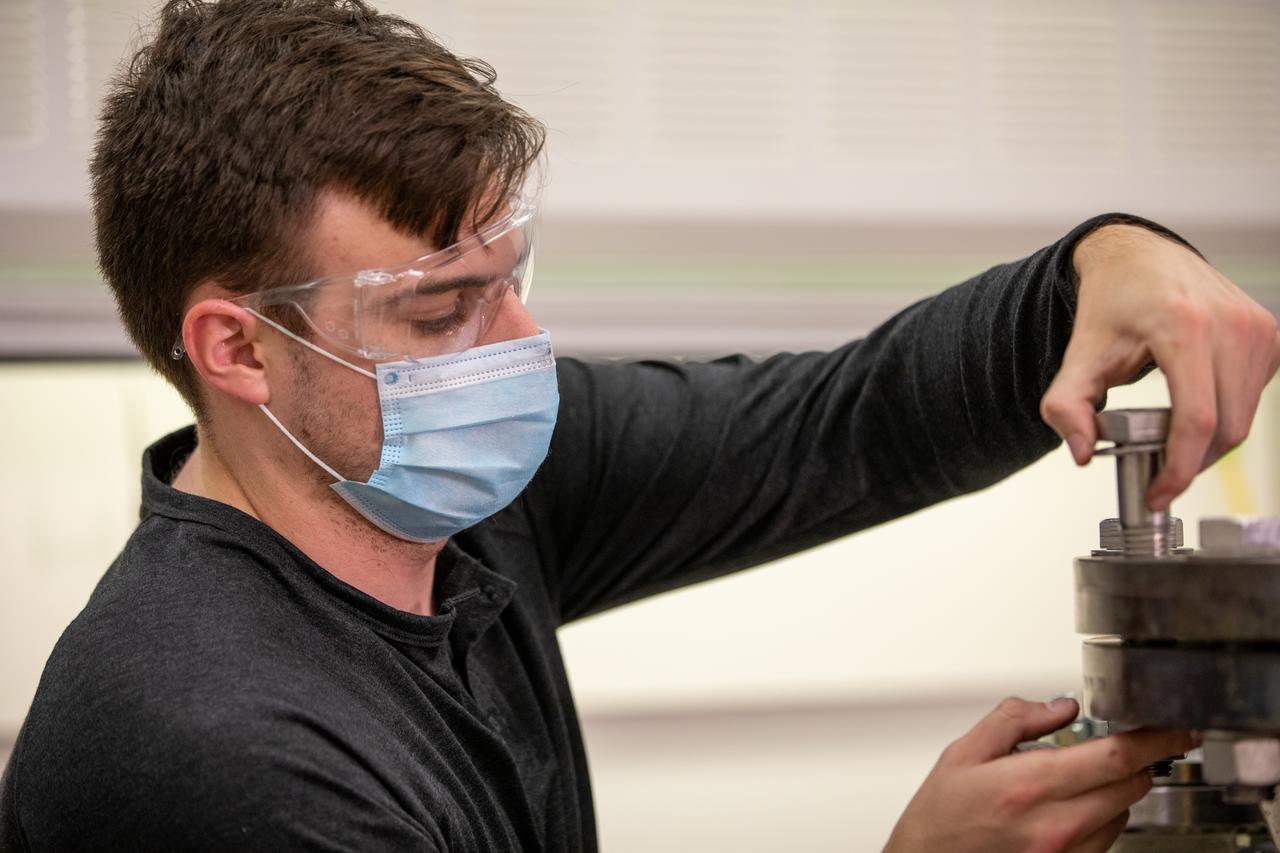
Kevin Grossman, project lead for the Gaseous Lunar Oxygen from Regolith Electrolysis (GaLORE) project at NASA Kennedy Space Center’s Swamp Works, checks the hardware for GaLORE on July 21, 2020, inside a laboratory at the center’s Neil Armstrong Operations and Checkout Building. Grossman is leading an Early Career Initiative project that is investing in turning lunar regolith into oxygen that could be used for life support for sustainable human lunar exploration on long-duration missions to Mars. GaLORE was selected as an Early Career Initiative project by NASA’s Space Technology Mission directorate.
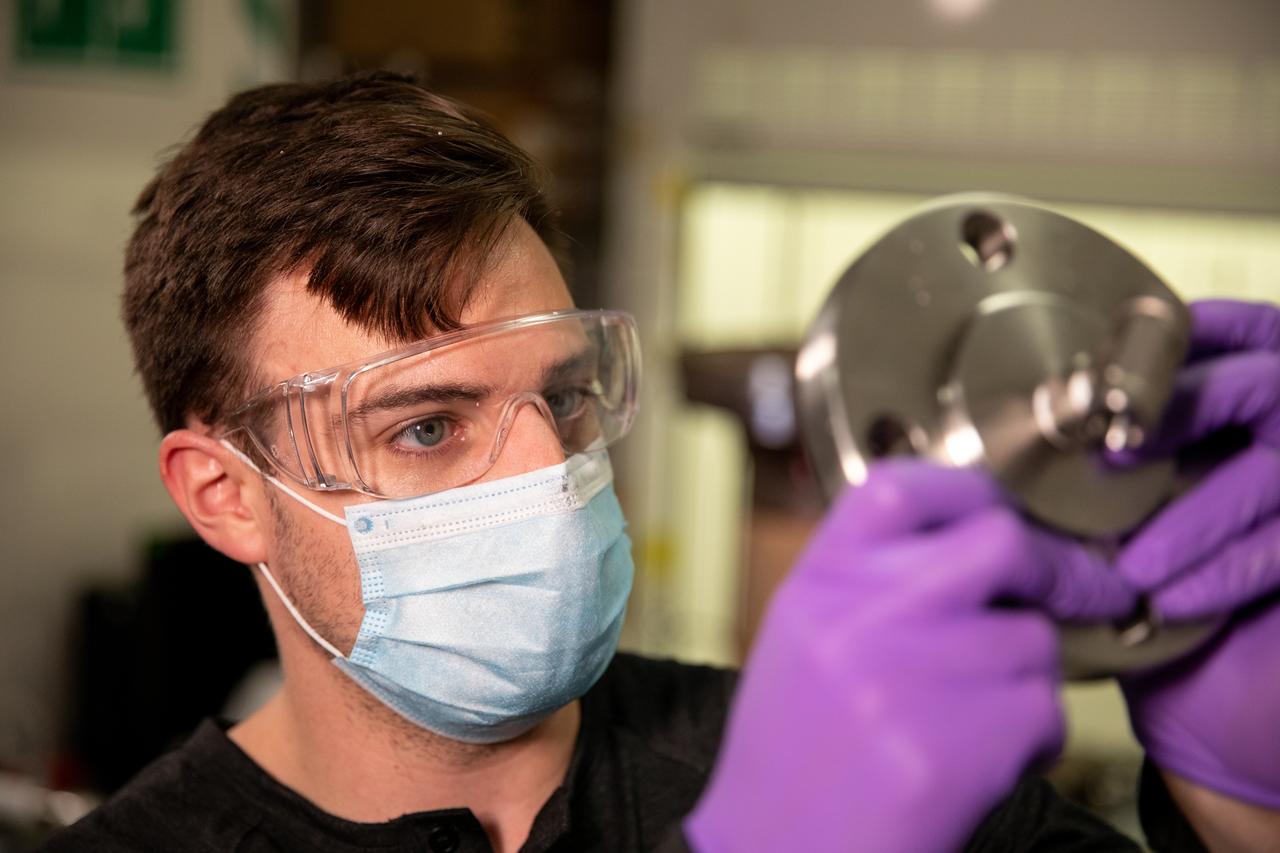
Kevin Grossman, project lead for the Gaseous Lunar Oxygen from Regolith Electrolysis (GaLORE) project at NASA Kennedy Space Center’s Swamp Works, inspects a piece of hardware for GaLORE on July 21, 2020, inside a laboratory at the center’s Neil Armstrong Operations and Checkout Building. Grossman is leading an Early Career Initiative project that is investing in turning lunar regolith into oxygen that could be used for life support for sustainable human lunar exploration on long-duration missions to Mars. GaLORE was selected as an Early Career Initiative project by NASA’s Space Technology Mission directorate.
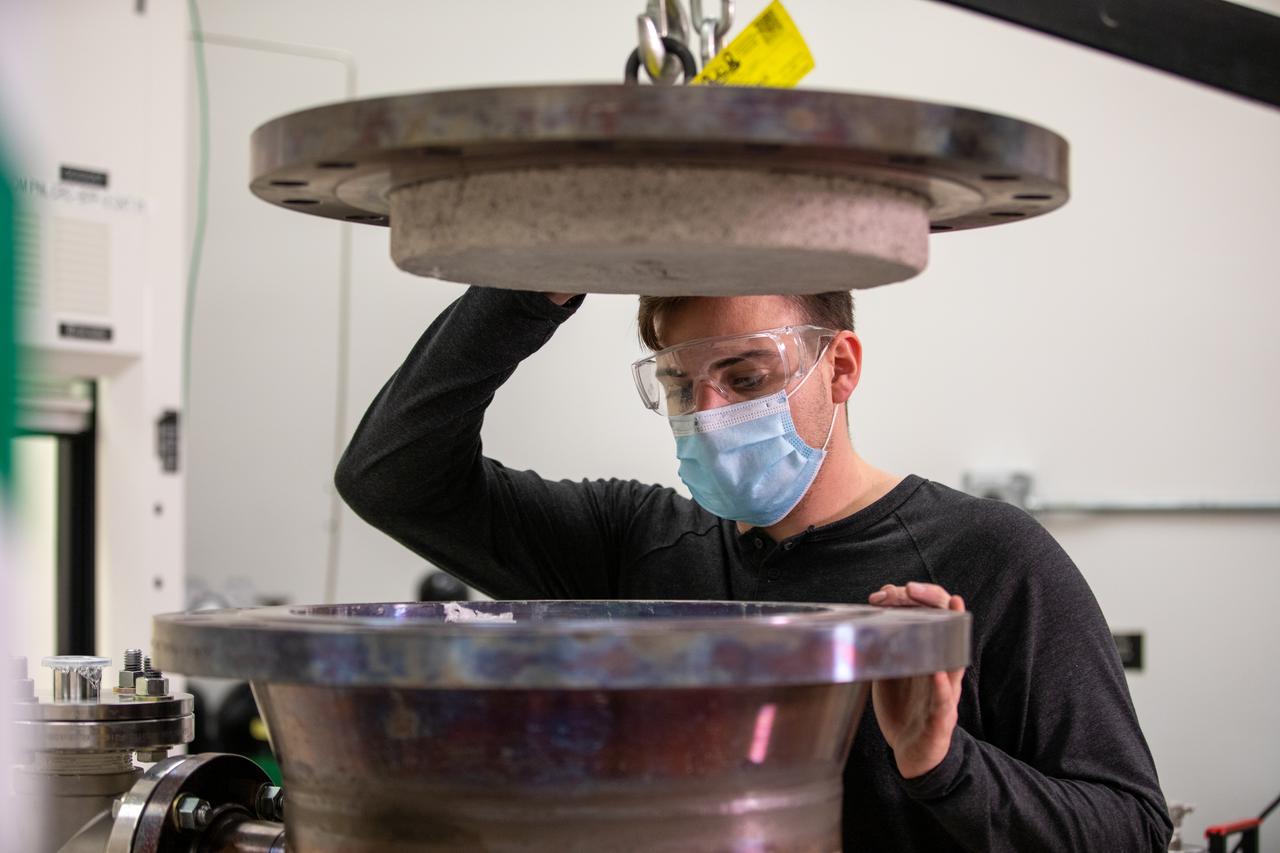
Kevin Grossman, project lead for the Gaseous Lunar Oxygen from Regolith Electrolysis (GaLORE) project at NASA Kennedy Space Center’s Swamp Works, checks the hardware for GaLORE on July 21, 2020, inside a laboratory at the center’s Neil Armstrong Operations and Checkout Building. Grossman is leading an Early Career Initiative project that is investing in turning lunar regolith into oxygen that could be used for life support for sustainable human lunar exploration on long-duration missions to Mars. GaLORE was selected as an Early Career Initiative project by NASA’s Space Technology Mission directorate.
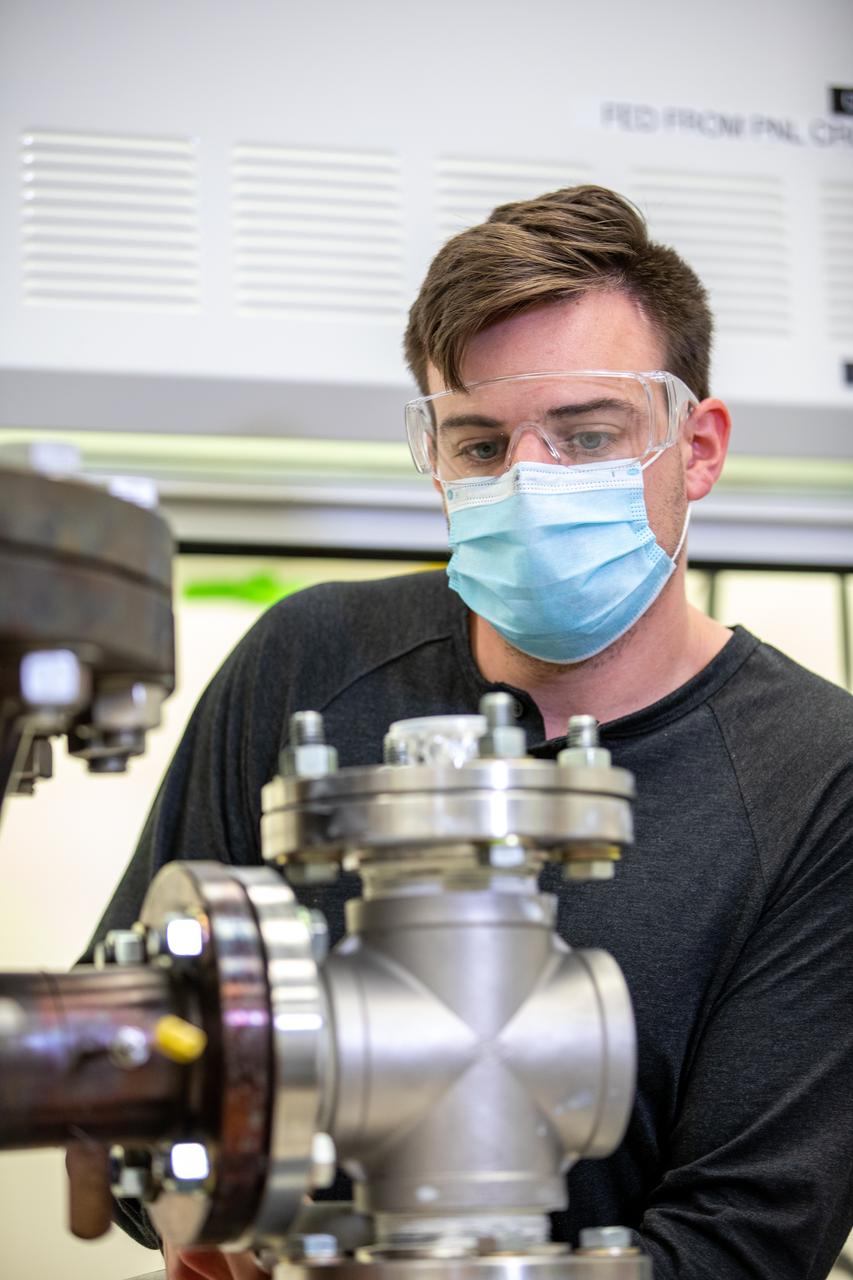
Kevin Grossman, project lead for the Gaseous Lunar Oxygen from Regolith Electrolysis (GaLORE) project at NASA Kennedy Space Center’s Swamp Works, works on the hardware for GaLORE on July 21, 2020, inside a laboratory at the center’s Neil Armstrong Operations and Checkout Building. Grossman is leading an Early Career Initiative project that is investing in turning lunar regolith into oxygen that could be used for life support for sustainable human lunar exploration on long-duration missions to Mars. GaLORE was selected as an Early Career Initiative project by NASA’s Space Technology Mission directorate.
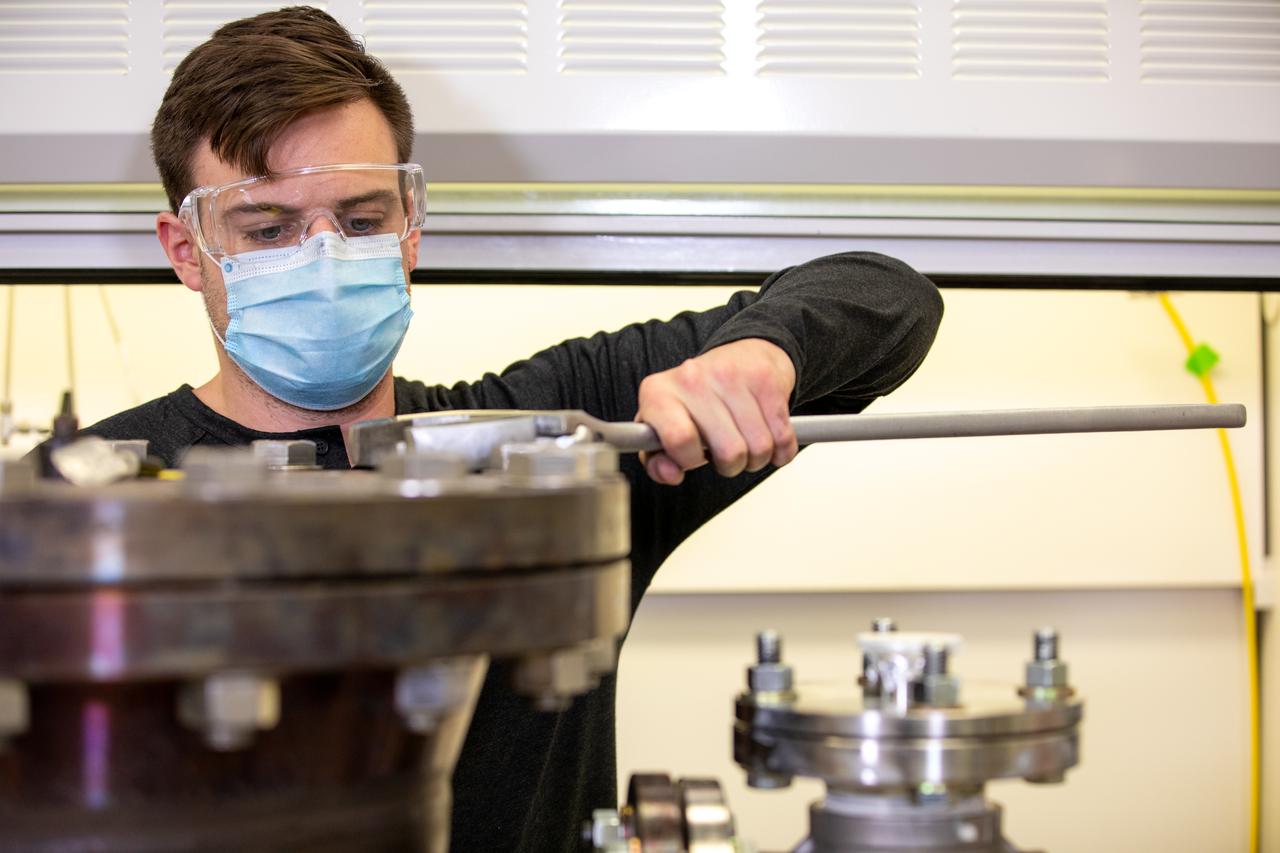
Kevin Grossman, project lead for the Gaseous Lunar Oxygen from Regolith Electrolysis (GaLORE) project at NASA Kennedy Space Center’s Swamp Works, works on the hardware for GaLORE on July 21, 2020, inside a laboratory at the center’s Neil Armstrong Operations and Checkout Building. Grossman is leading an Early Career Initiative project that is investing in turning lunar regolith into oxygen that could be used for life support for sustainable human lunar exploration on long-duration missions to Mars. GaLORE was selected as an Early Career Initiative project by NASA’s Space Technology Mission directorate.
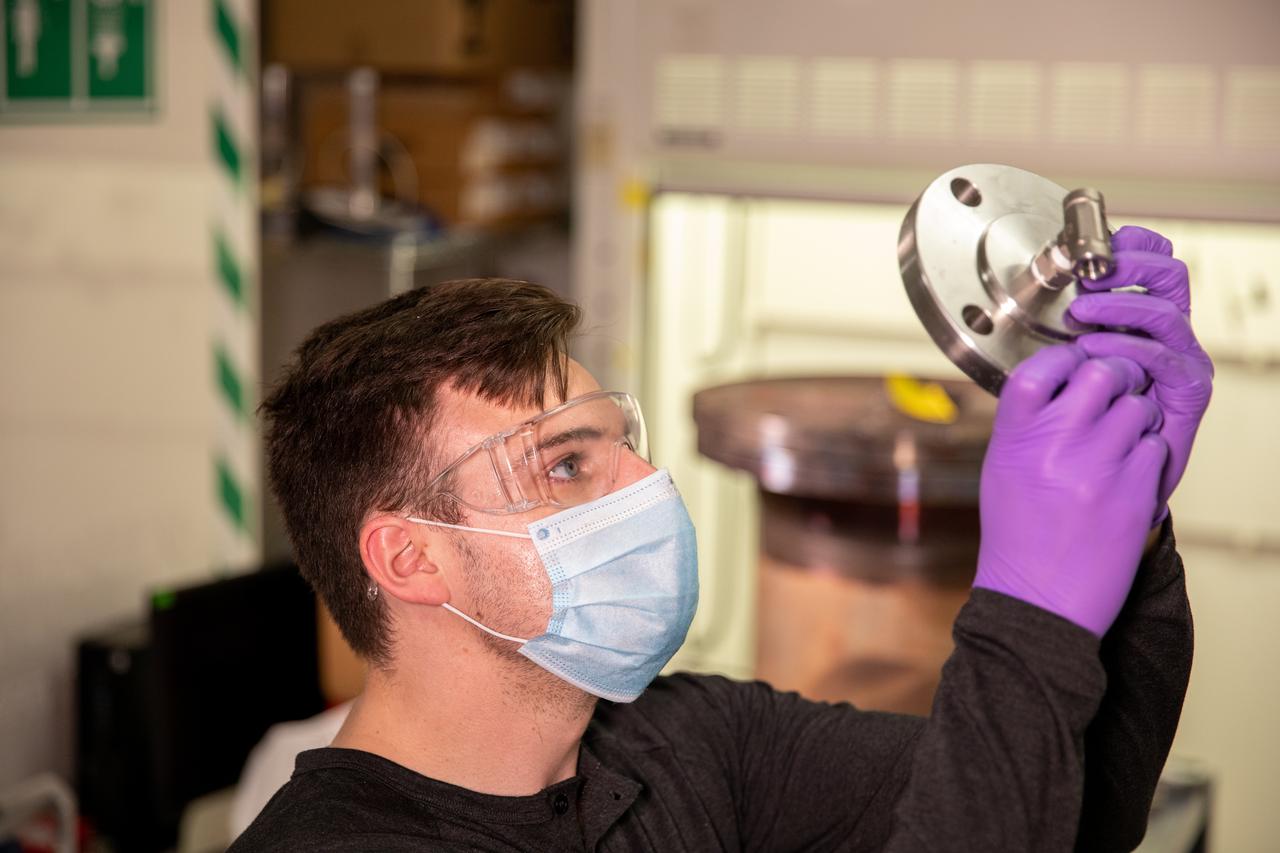
Kevin Grossman, project lead for the Gaseous Lunar Oxygen from Regolith Electrolysis (GaLORE) project at NASA Kennedy Space Center’s Swamp Works, inspects a piece of hardware for GaLORE on July 21, 2020, inside a laboratory at the center’s Neil Armstrong Operations and Checkout Building. Grossman is leading an Early Career Initiative project that is investing in turning lunar regolith into oxygen that could be used for life support for sustainable human lunar exploration on long-duration missions to Mars. GaLORE was selected as an Early Career Initiative project by NASA’s Space Technology Mission directorate.
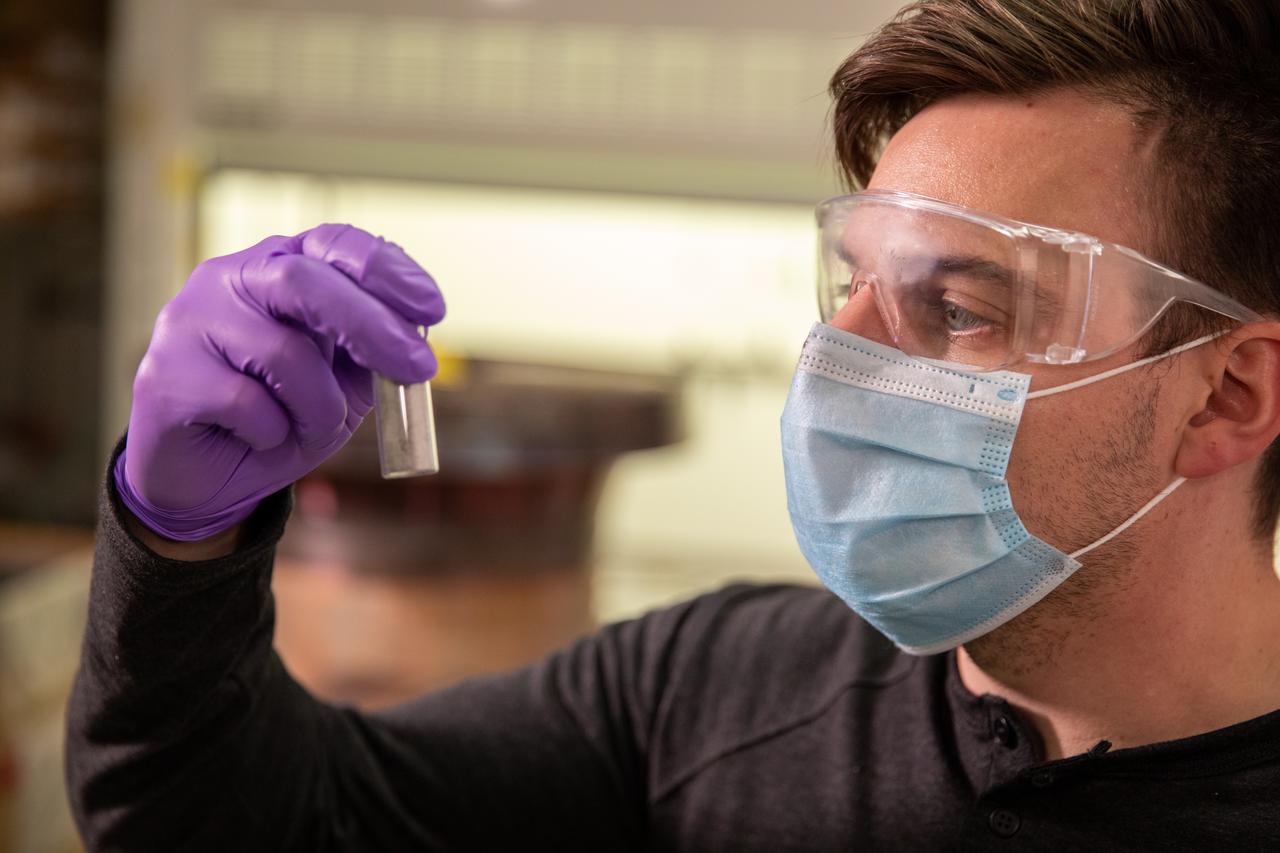
Kevin Grossman, project lead for the Gaseous Lunar Oxygen from Regolith Electrolysis (GaLORE) project at NASA Kennedy Space Center’s Swamp Works, inspects a piece of hardware for GaLORE on July 21, 2020, inside a laboratory at the center’s Neil Armstrong Operations and Checkout Building. Grossman is leading an Early Career Initiative project that is investing in turning lunar regolith into oxygen that could be used for life support for sustainable human lunar exploration on long-duration missions to Mars. GaLORE was selected as an Early Career Initiative project by NASA’s Space Technology Mission directorate.

CAPE CANAVERAL, Fla. – A panel session for participants in the International Space University's Space Studies Program 2012, or SSP, is held in the Operations Support Building II at NASA’s Kennedy Space Center in Florida. From left are Pete Worden, director, NASA Ames Research Center Yvonne Pendleton, observational astronomer, NASA Ames Research Center Scott Hubbard, professor, Stanford University Bill Nye, CEO, The Planetary Society and George Tahu, NASA program executive, Planetary Science Division, NASA Headquarters. The Soffen Memorial Panel session provided the opportunity for participants to engage with today's leaders in the planetary science field. The panel session is named in honor of Gerald Soffen, NASA scientist and leader of NASA's Viking Mars mission. The nine-week intensive SSP course is designed for post-graduate university students and professionals during the summer. The program is hosted by a different country each year, providing a unique educational experience for participants from around the globe. NASA Kennedy Space Center and Florida Tech are co-hosting this year's event which runs from June 4 to Aug. 3. For more information about the International Space University, visit http://www.isunet.edu. Photo credit: NASA/Tim Jacobs
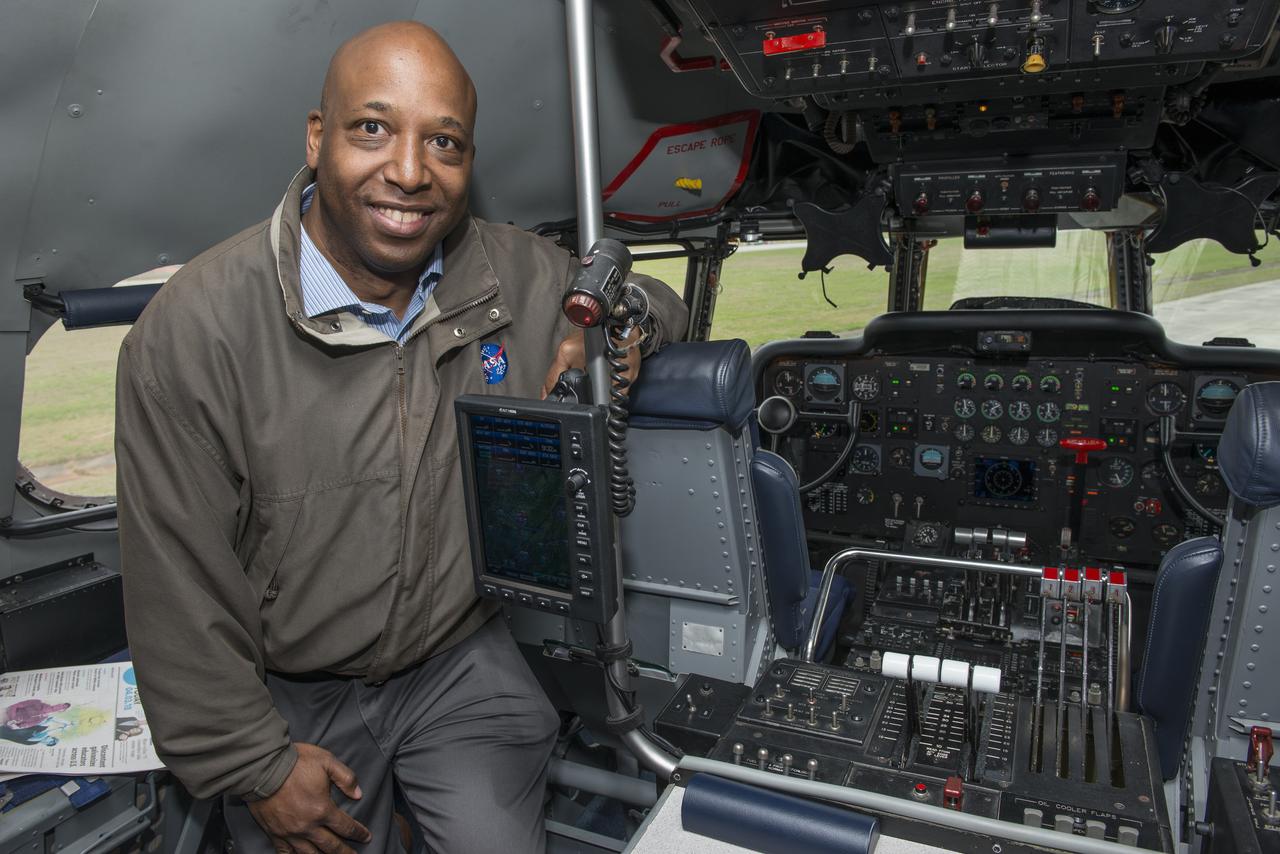
NASA's Super Guppy aircraft arrives to the U.S. Army’s Redstone Airfield in Huntsville, Alabama, April 2, to pick up flight hardware for NASA’s Space Launch System – its new, deep-space rocket that will enable astronauts to begin their journey to explore destinations far into the solar system. The Guppy will depart on Tuesday, April 3 to deliver the Orion stage adapter to NASA’s Kennedy Space Center in Florida for flight preparations. On Exploration Mission-1, the first integrated flight of the SLS and the Orion spacecraft, the adapter will connect Orion to the rocket and carry 13 CubeSats as secondary payloads. Rumaasha Maasha, an aerospace engineer in Marshall's Spacecraft & Vehicle Systems Department, tours the cockpit of NASA's Super Guppy aircraft April 3 when it landed at Marshall to pick up the Orion stage adapter for transportation to NASA's Kennedy Space Center. Maasha holds a master's degree in aerospace engineering, is a certified aviation maintenance tech and pilot and previously worked as a 747 loadmaster and airline refueler.
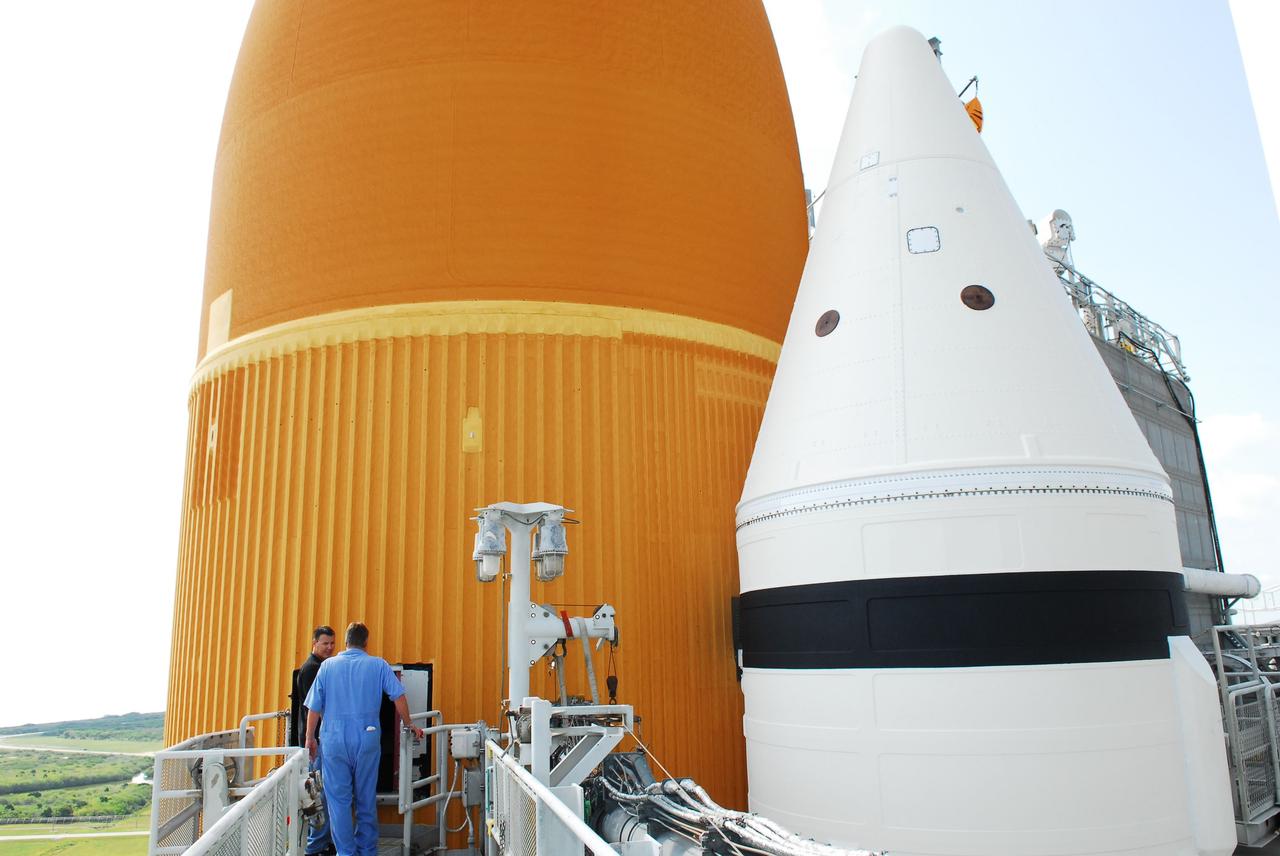
CAPE CANAVERAL, Fla. -- At NASA's Kennedy Space Center in Florida, technicians prepare to conduct Computed Radiography (CR) X-ray scans of 50 support beams, called stringers, on the shuttle-facing side of Atlantis' external tank at Launch Pad 39A. The hi-tech images will be taken of the tops and bottoms of the 21-foot long beams, which are located on the tank's intertank section. The scans follow a June 15th tanking test when the launch team filled then drained the tank of about 535,000 gallons of liquid hydrogen and liquid oxygen, just like for a launch. Earlier this year, managers directed teams to make the same stringer modifications to Atlantis' tank, ET-138, as they had after small cracks in the support beams of shuttle Discovery's STS-133 mission external tank were discovered. The scans will confirm there are no issues with Atlantis' tank. STS-135 Commander Chris Ferguson, Pilot Doug Hurley and Mission Specialists Sandy Magnus and Rex Walheim are targeted to lift off on space shuttle Atlantis July 8, taking with them the MPLM packed with supplies, logistics and spare parts to the International Space Station. The STS-135 mission also will fly a system to investigate the potential for robotically refueling existing satellites and return a failed ammonia pump module to help NASA better understand the failure mechanism and improve pump designs for future systems. STS-135 will be the 33rd flight of Atlantis, the 37th shuttle mission to the space station, and the 135th and final mission of NASA's Space Shuttle Program. For more information visit, www.nasa.gov/mission_pages/shuttle/shuttlemissions/sts135/index.html. Photo credit: NASA/Jim Grossmann
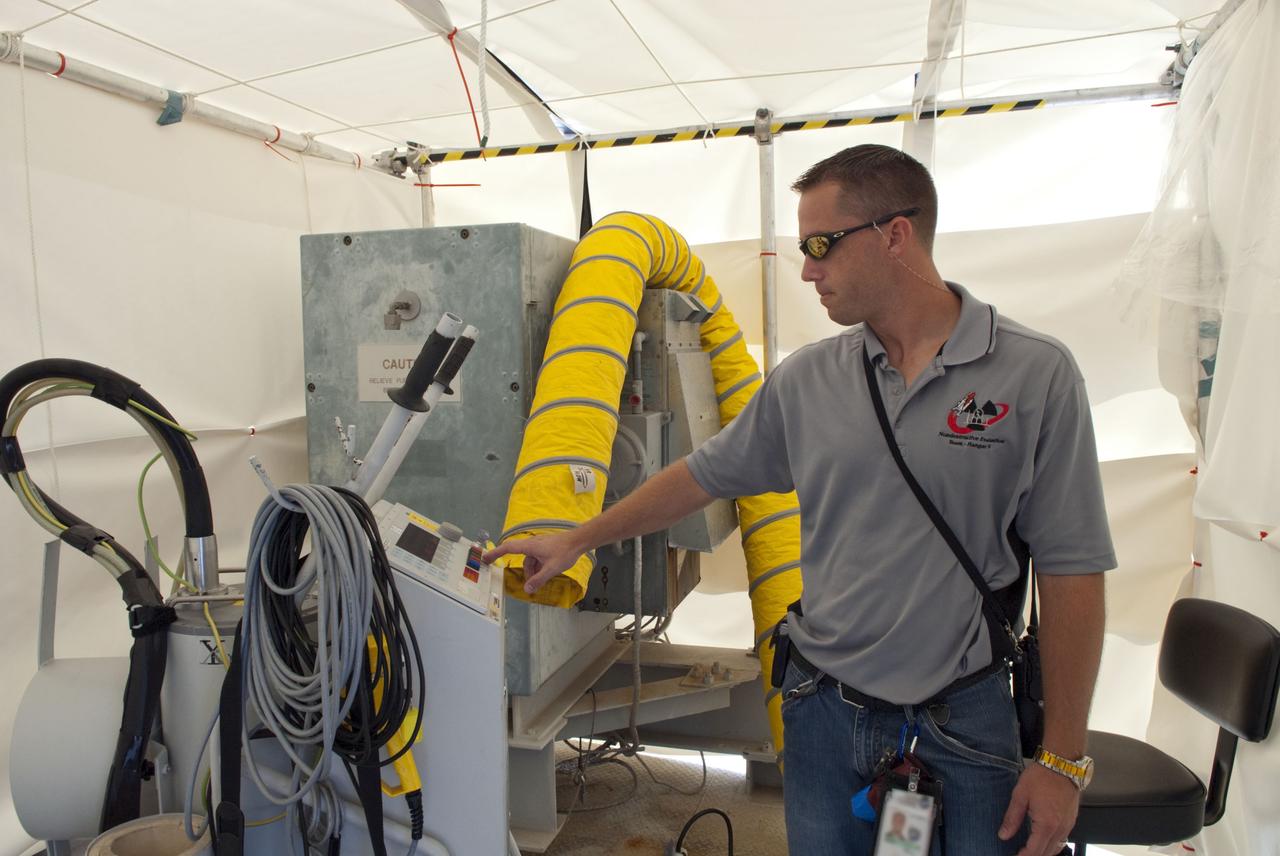
CAPE CANAVERAL, Fla. -- At NASA's Kennedy Space Center in Florida, technicians conduct Computed Radiography (CR) X-ray scans of 50 support beams, called stringers, on the shuttle-facing side of Atlantis' external tank at Launch Pad 39A. The hi-tech images will be taken of the tops and bottoms of the 21-foot long beams, which are located on the tank's intertank section. The scans follow a June 15th tanking test when the launch team filled then drained the tank of about 535,000 gallons of liquid hydrogen and liquid oxygen, just like for a launch. Earlier this year, managers directed teams to make the same stringer modifications to Atlantis' tank, ET-138, as they had after small cracks in the support beams of shuttle Discovery's STS-133 mission external tank were discovered. The scans will confirm there are no issues with Atlantis' tank. STS-135 Commander Chris Ferguson, Pilot Doug Hurley and Mission Specialists Sandy Magnus and Rex Walheim are targeted to lift off on space shuttle Atlantis July 8, taking with them the MPLM packed with supplies, logistics and spare parts to the International Space Station. The STS-135 mission also will fly a system to investigate the potential for robotically refueling existing satellites and return a failed ammonia pump module to help NASA better understand the failure mechanism and improve pump designs for future systems. STS-135 will be the 33rd flight of Atlantis, the 37th shuttle mission to the space station, and the 135th and final mission of NASA's Space Shuttle Program. For more information visit, www.nasa.gov/mission_pages/shuttle/shuttlemissions/sts135/index.html. Photo credit: NASA/Jim Grossmann
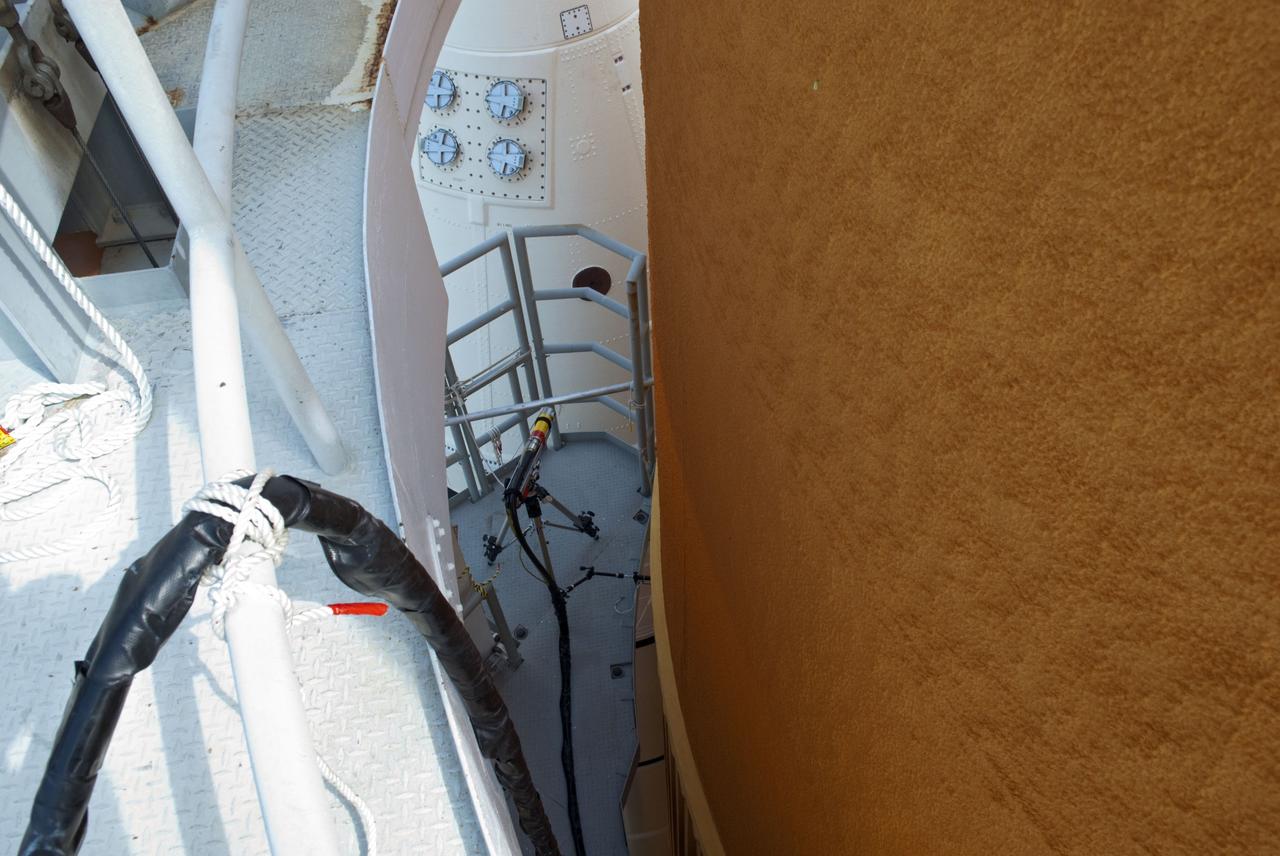
CAPE CANAVERAL, Fla. -- At NASA's Kennedy Space Center in Florida, technicians conduct Computed Radiography (CR) X-ray scans of 50 support beams, called stringers, on the shuttle-facing side of Atlantis' external tank at Launch Pad 39A. The hi-tech images will be taken of the tops and bottoms of the 21-foot long beams, which are located on the tank's intertank section. The scans follow a June 15th tanking test when the launch team filled then drained the tank of about 535,000 gallons of liquid hydrogen and liquid oxygen, just like for a launch. Earlier this year, managers directed teams to make the same stringer modifications to Atlantis' tank, ET-138, as they had after small cracks in the support beams of shuttle Discovery's STS-133 mission external tank were discovered. The scans will confirm there are no issues with Atlantis' tank. STS-135 Commander Chris Ferguson, Pilot Doug Hurley and Mission Specialists Sandy Magnus and Rex Walheim are targeted to lift off on space shuttle Atlantis July 8, taking with them the MPLM packed with supplies, logistics and spare parts to the International Space Station. The STS-135 mission also will fly a system to investigate the potential for robotically refueling existing satellites and return a failed ammonia pump module to help NASA better understand the failure mechanism and improve pump designs for future systems. STS-135 will be the 33rd flight of Atlantis, the 37th shuttle mission to the space station, and the 135th and final mission of NASA's Space Shuttle Program. For more information visit, www.nasa.gov/mission_pages/shuttle/shuttlemissions/sts135/index.html. Photo credit: NASA/Jim Grossmann
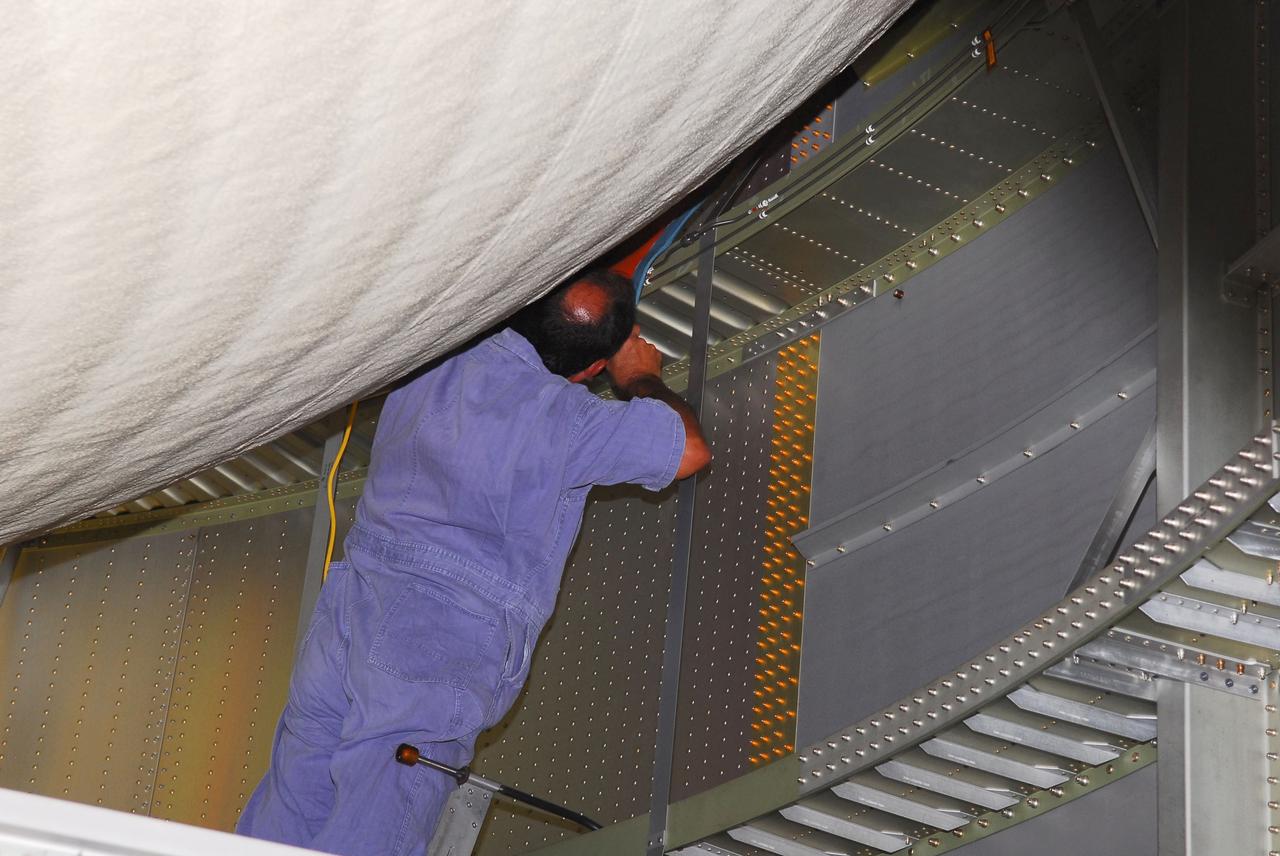
CAPE CANAVERAL, Fla. -- At NASA's Kennedy Space Center in Florida, technicians conduct Computed Radiography (CR) X-ray scans of 50 support beams, called stringers, on the shuttle-facing side of Atlantis' external tank at Launch Pad 39A. The hi-tech images will be taken of the tops and bottoms of the 21-foot long beams, which are located on the tank's intertank section. Here, a technician prepares an image plate inside the outertank. The scans follow a June 15th tanking test when the launch team filled then drained the tank of about 535,000 gallons of liquid hydrogen and liquid oxygen, just like for a launch. Earlier this year, managers directed teams to make the same stringer modifications to Atlantis' tank, ET-138, as they had after small cracks in the support beams of shuttle Discovery's STS-133 mission external tank were discovered. The scans will confirm there are no issues with Atlantis' tank. STS-135 Commander Chris Ferguson, Pilot Doug Hurley and Mission Specialists Sandy Magnus and Rex Walheim are targeted to lift off on space shuttle Atlantis July 8, taking with them the MPLM packed with supplies, logistics and spare parts to the International Space Station. The STS-135 mission also will fly a system to investigate the potential for robotically refueling existing satellites and return a failed ammonia pump module to help NASA better understand the failure mechanism and improve pump designs for future systems. STS-135 will be the 33rd flight of Atlantis, the 37th shuttle mission to the space station, and the 135th and final mission of NASA's Space Shuttle Program. For more information visit, www.nasa.gov/mission_pages/shuttle/shuttlemissions/sts135/index.html. Photo credit: NASA/Jim Grossmann

CAPE CANAVERAL, Fla. -- At NASA's Kennedy Space Center in Florida, technicians conduct Computed Radiography (CR) X-ray scans of 50 support beams, called stringers, on the shuttle-facing side of Atlantis' external tank at Launch Pad 39A. The hi-tech images will be taken of the tops and bottoms of the 21-foot long beams, which are located on the tank's intertank section. The scans follow a June 15th tanking test when the launch team filled then drained the tank of about 535,000 gallons of liquid hydrogen and liquid oxygen, just like for a launch. Earlier this year, managers directed teams to make the same stringer modifications to Atlantis' tank, ET-138, as they had after small cracks in the support beams of shuttle Discovery's STS-133 mission external tank were discovered. The scans will confirm there are no issues with Atlantis' tank. STS-135 Commander Chris Ferguson, Pilot Doug Hurley and Mission Specialists Sandy Magnus and Rex Walheim are targeted to lift off on space shuttle Atlantis July 8, taking with them the MPLM packed with supplies, logistics and spare parts to the International Space Station. The STS-135 mission also will fly a system to investigate the potential for robotically refueling existing satellites and return a failed ammonia pump module to help NASA better understand the failure mechanism and improve pump designs for future systems. STS-135 will be the 33rd flight of Atlantis, the 37th shuttle mission to the space station, and the 135th and final mission of NASA's Space Shuttle Program. For more information visit, www.nasa.gov/mission_pages/shuttle/shuttlemissions/sts135/index.html. Photo credit: NASA/Jim Grossmann
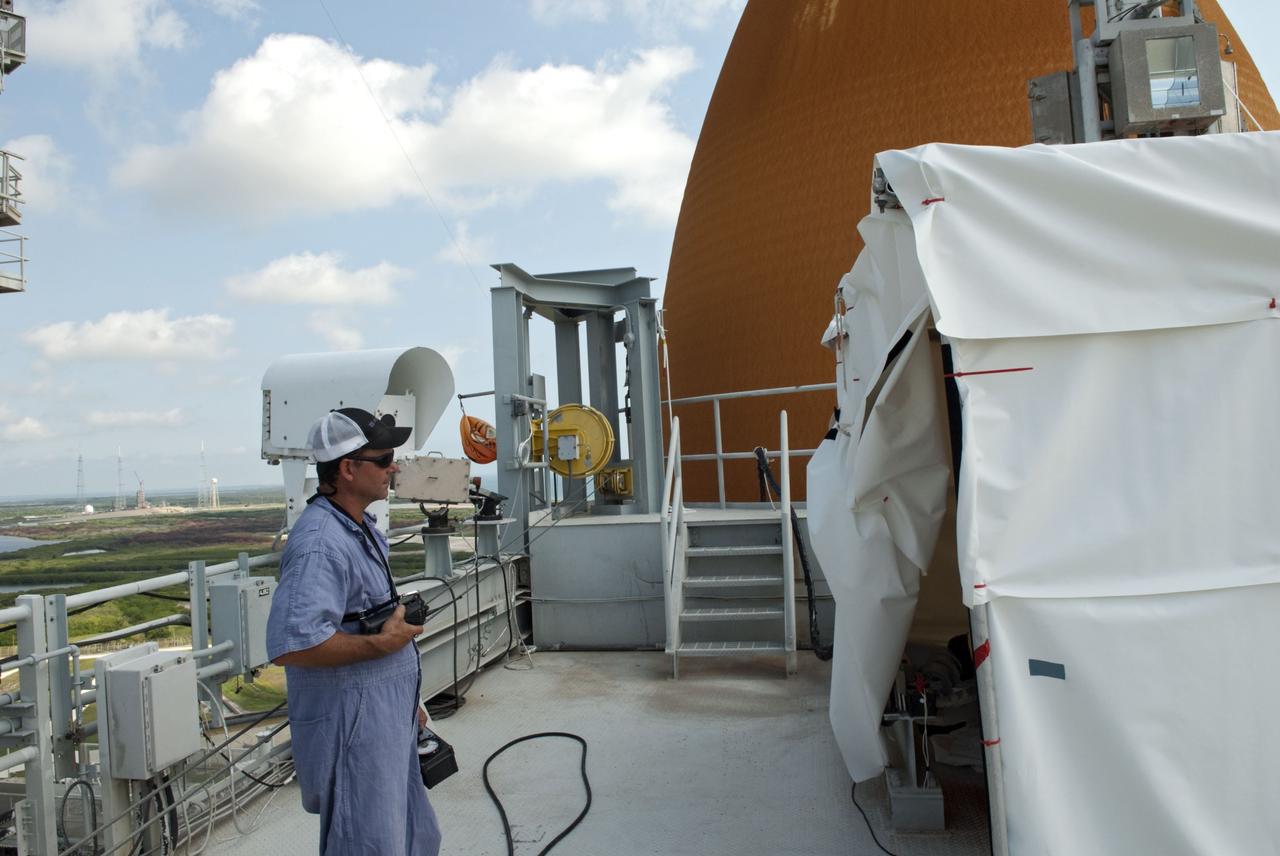
CAPE CANAVERAL, Fla. -- At NASA's Kennedy Space Center in Florida, technicians conduct Computed Radiography (CR) X-ray scans of 50 support beams, called stringers, on the shuttle-facing side of Atlantis' external tank at Launch Pad 39A. The hi-tech images will be taken of the tops and bottoms of the 21-foot long beams, which are located on the tank's intertank section. The scans follow a June 15th tanking test when the launch team filled then drained the tank of about 535,000 gallons of liquid hydrogen and liquid oxygen, just like for a launch. Earlier this year, managers directed teams to make the same stringer modifications to Atlantis' tank, ET-138, as they had after small cracks in the support beams of shuttle Discovery's STS-133 mission external tank were discovered. The scans will confirm there are no issues with Atlantis' tank. STS-135 Commander Chris Ferguson, Pilot Doug Hurley and Mission Specialists Sandy Magnus and Rex Walheim are targeted to lift off on space shuttle Atlantis July 8, taking with them the MPLM packed with supplies, logistics and spare parts to the International Space Station. The STS-135 mission also will fly a system to investigate the potential for robotically refueling existing satellites and return a failed ammonia pump module to help NASA better understand the failure mechanism and improve pump designs for future systems. STS-135 will be the 33rd flight of Atlantis, the 37th shuttle mission to the space station, and the 135th and final mission of NASA's Space Shuttle Program. For more information visit, www.nasa.gov/mission_pages/shuttle/shuttlemissions/sts135/index.html. Photo credit: NASA/Jim Grossmann
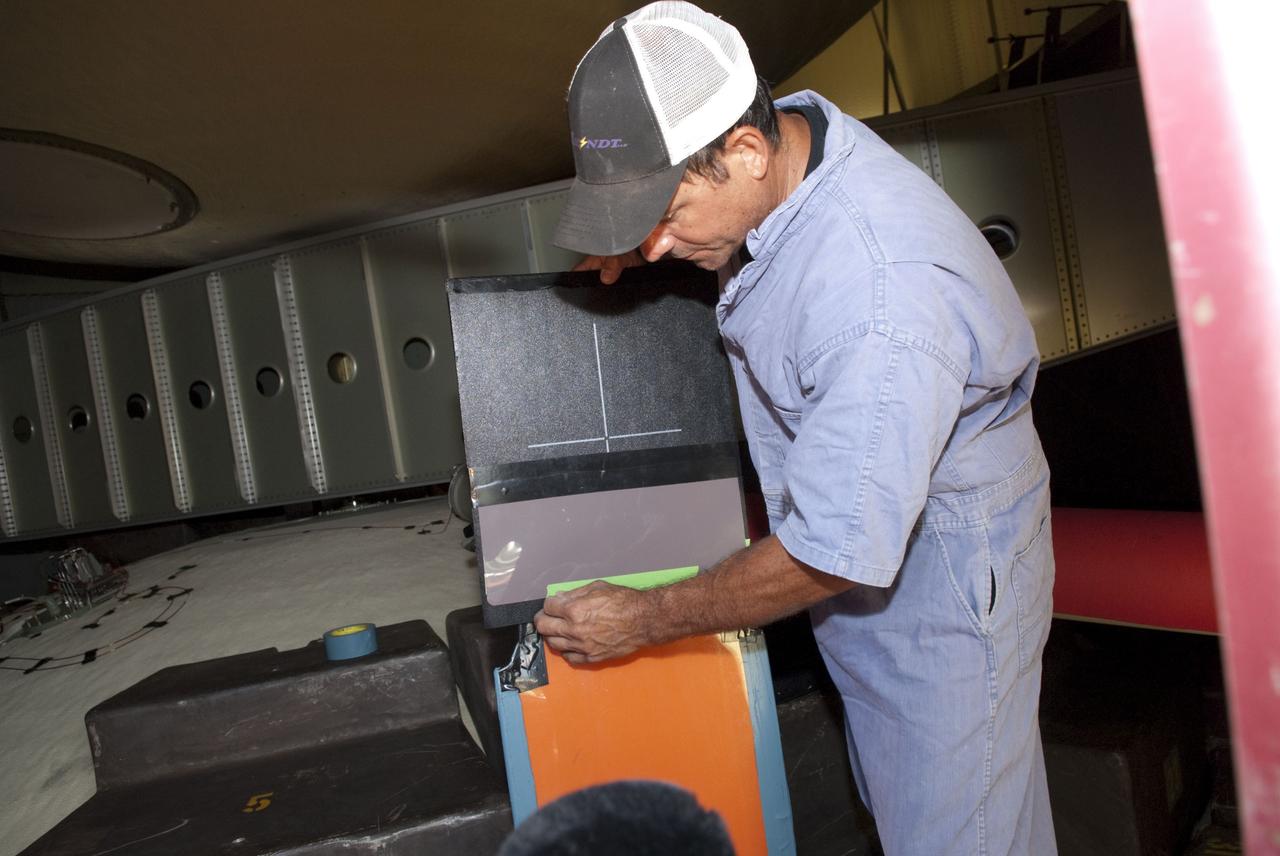
CAPE CANAVERAL, Fla. -- At NASA's Kennedy Space Center in Florida, technicians prepare to conduct Computed Radiography (CR) X-ray scans of 50 support beams, called stringers, on the shuttle-facing side of Atlantis' external tank at Launch Pad 39A. The hi-tech images will be taken of the tops and bottoms of the 21-foot long beams, which are located on the tank's intertank section. Here, a technician prepares an image plate inside the outertank. The scans follow a June 15th tanking test when the launch team filled then drained the tank of about 535,000 gallons of liquid hydrogen and liquid oxygen, just like for a launch. Earlier this year, managers directed teams to make the same stringer modifications to Atlantis' tank, ET-138, as they had after small cracks in the support beams of shuttle Discovery's STS-133 mission external tank were discovered. The scans will confirm there are no issues with Atlantis' tank. STS-135 Commander Chris Ferguson, Pilot Doug Hurley and Mission Specialists Sandy Magnus and Rex Walheim are targeted to lift off on space shuttle Atlantis July 8, taking with them the MPLM packed with supplies, logistics and spare parts to the International Space Station. The STS-135 mission also will fly a system to investigate the potential for robotically refueling existing satellites and return a failed ammonia pump module to help NASA better understand the failure mechanism and improve pump designs for future systems. STS-135 will be the 33rd flight of Atlantis, the 37th shuttle mission to the space station, and the 135th and final mission of NASA's Space Shuttle Program. For more information visit, www.nasa.gov/mission_pages/shuttle/shuttlemissions/sts135/index.html. Photo credit: NASA/Jim Grossmann
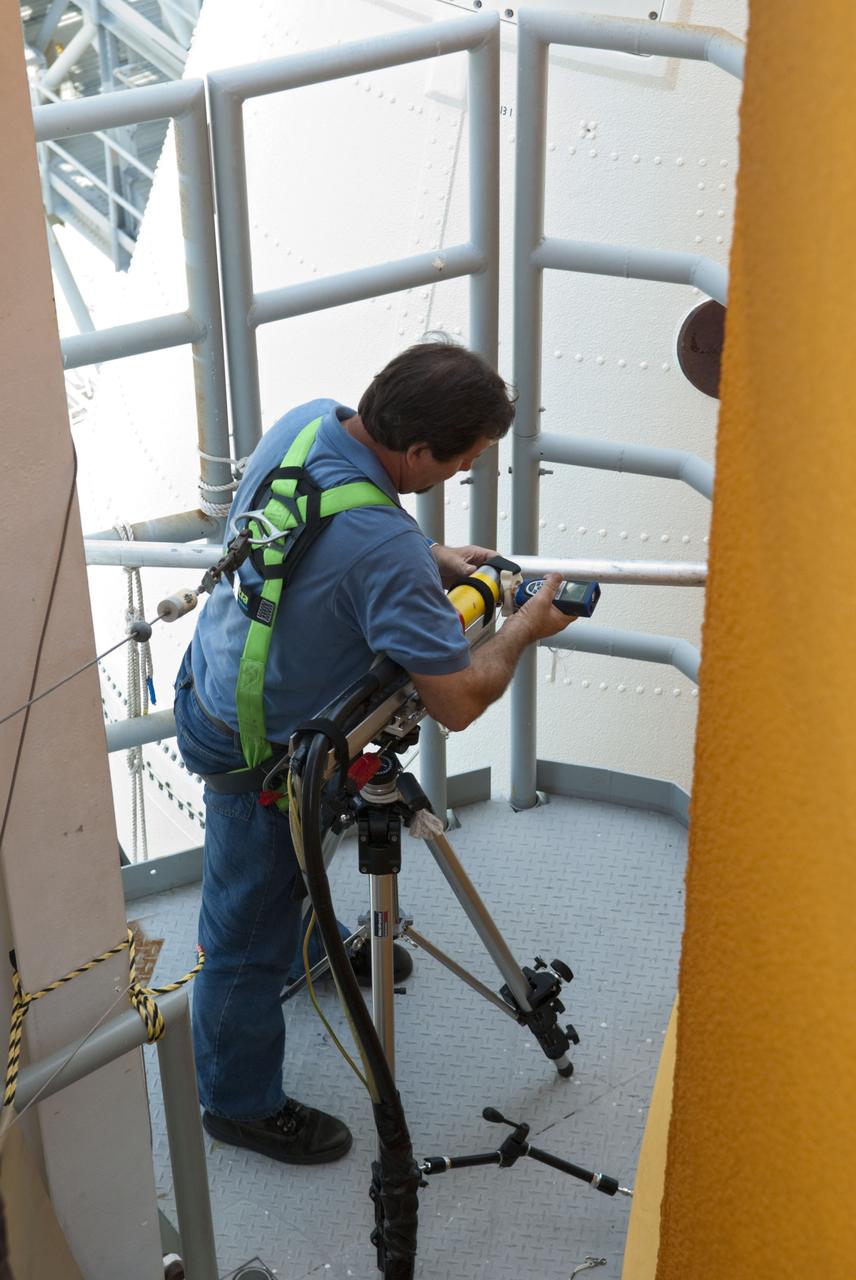
CAPE CANAVERAL, Fla. -- At NASA's Kennedy Space Center in Florida, technicians conduct Computed Radiography (CR) X-ray scans of 50 support beams, called stringers, on the shuttle-facing side of Atlantis' external tank at Launch Pad 39A. The hi-tech images will be taken of the tops and bottoms of the 21-foot long beams, which are located on the tank's intertank section. The scans follow a June 15th tanking test when the launch team filled then drained the tank of about 535,000 gallons of liquid hydrogen and liquid oxygen, just like for a launch. Earlier this year, managers directed teams to make the same stringer modifications to Atlantis' tank, ET-138, as they had after small cracks in the support beams of shuttle Discovery's STS-133 mission external tank were discovered. The scans will confirm there are no issues with Atlantis' tank. STS-135 Commander Chris Ferguson, Pilot Doug Hurley and Mission Specialists Sandy Magnus and Rex Walheim are targeted to lift off on space shuttle Atlantis July 8, taking with them the MPLM packed with supplies, logistics and spare parts to the International Space Station. The STS-135 mission also will fly a system to investigate the potential for robotically refueling existing satellites and return a failed ammonia pump module to help NASA better understand the failure mechanism and improve pump designs for future systems. STS-135 will be the 33rd flight of Atlantis, the 37th shuttle mission to the space station, and the 135th and final mission of NASA's Space Shuttle Program. For more information visit, www.nasa.gov/mission_pages/shuttle/shuttlemissions/sts135/index.html. Photo credit: NASA/Jim Grossmann
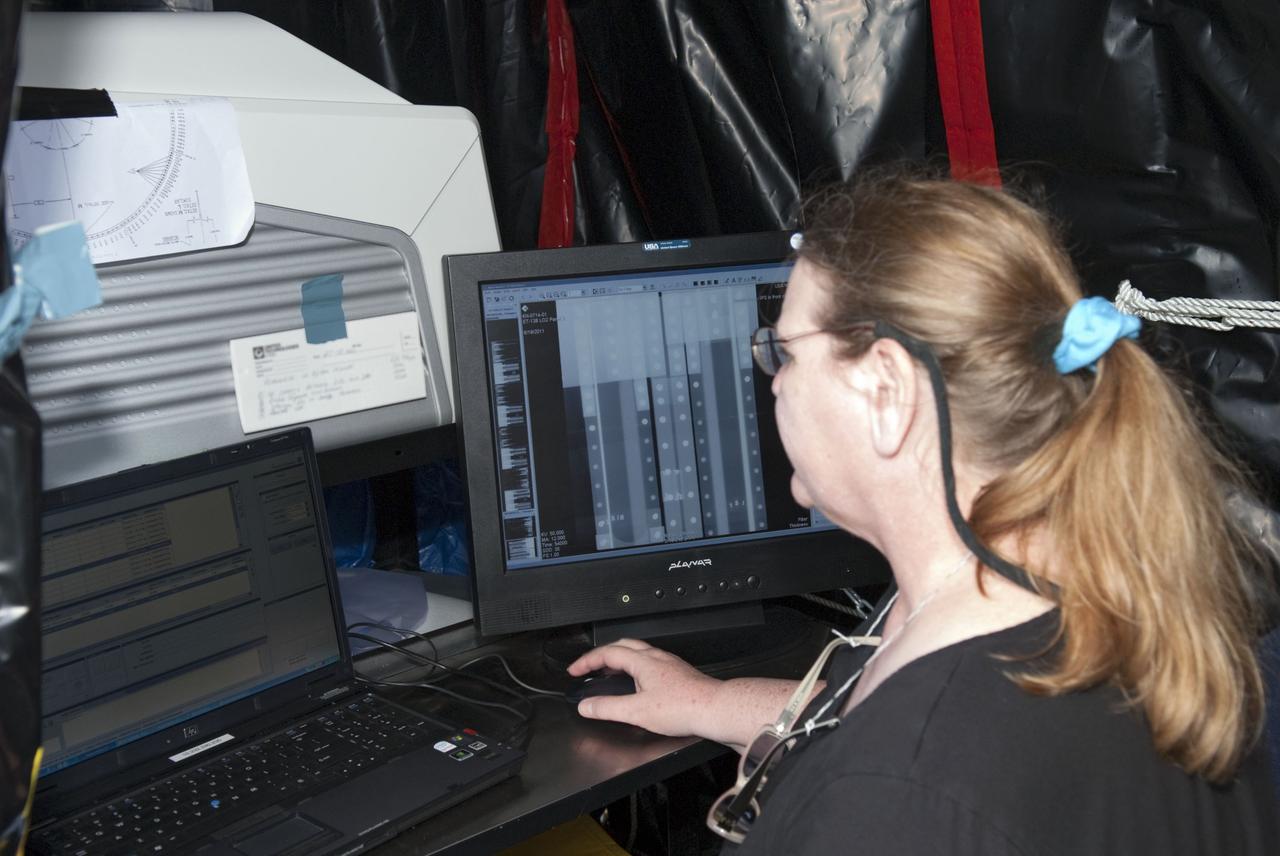
CAPE CANAVERAL, Fla. -- At NASA's Kennedy Space Center in Florida, technicians conduct Computed Radiography (CR) X-ray scans of 50 support beams, called stringers, on the shuttle-facing side of Atlantis' external tank at Launch Pad 39A. The hi-tech images will be taken of the tops and bottoms of the 21-foot long beams, which are located on the tank's intertank section. The scans follow a June 15th tanking test when the launch team filled then drained the tank of about 535,000 gallons of liquid hydrogen and liquid oxygen, just like for a launch. Earlier this year, managers directed teams to make the same stringer modifications to Atlantis' tank, ET-138, as they had after small cracks in the support beams of shuttle Discovery's STS-133 mission external tank were discovered. The scans will confirm there are no issues with Atlantis' tank. STS-135 Commander Chris Ferguson, Pilot Doug Hurley and Mission Specialists Sandy Magnus and Rex Walheim are targeted to lift off on space shuttle Atlantis July 8, taking with them the MPLM packed with supplies, logistics and spare parts to the International Space Station. The STS-135 mission also will fly a system to investigate the potential for robotically refueling existing satellites and return a failed ammonia pump module to help NASA better understand the failure mechanism and improve pump designs for future systems. STS-135 will be the 33rd flight of Atlantis, the 37th shuttle mission to the space station, and the 135th and final mission of NASA's Space Shuttle Program. For more information visit, www.nasa.gov/mission_pages/shuttle/shuttlemissions/sts135/index.html. Photo credit: NASA/Jim Grossmann
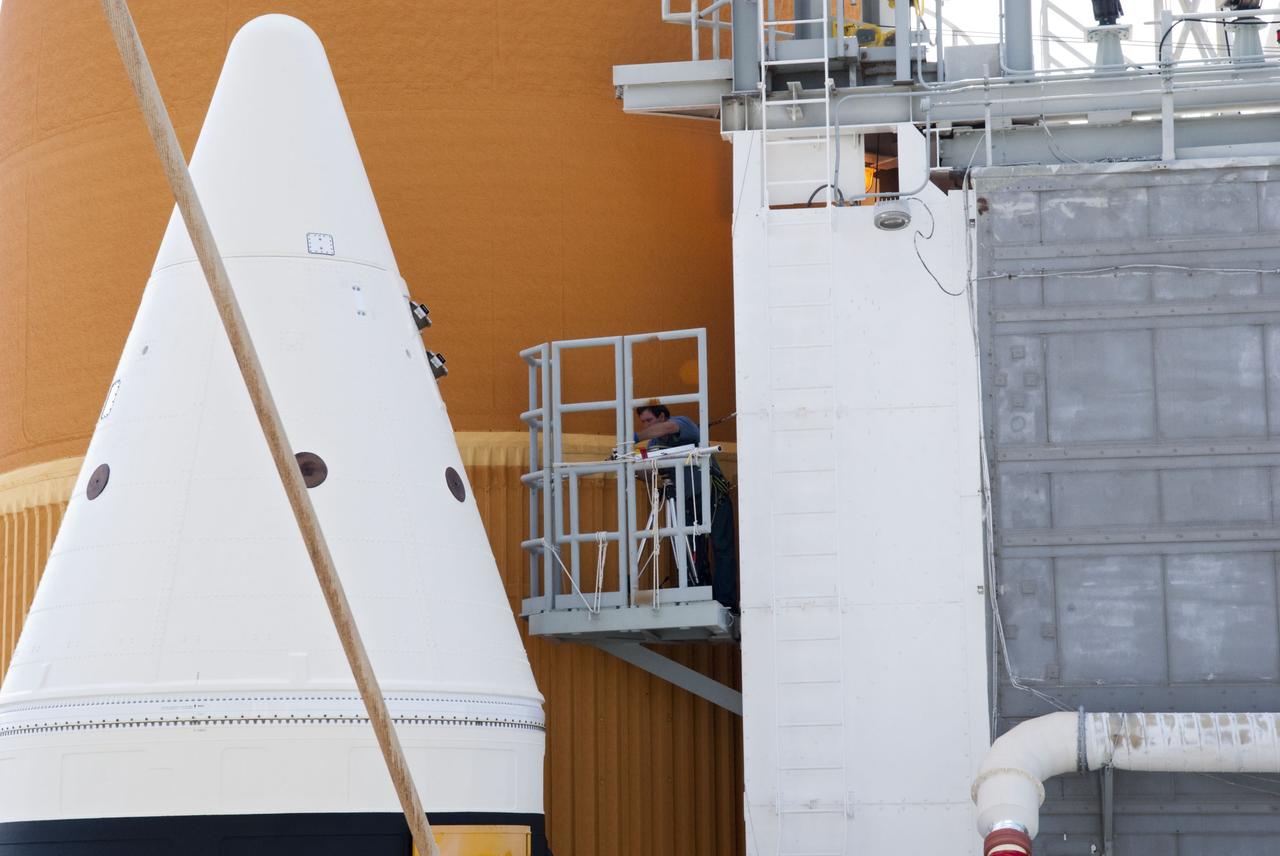
CAPE CANAVERAL, Fla. -- At NASA's Kennedy Space Center in Florida, technicians conduct Computed Radiography (CR) X-ray scans of 50 support beams, called stringers, on the shuttle-facing side of Atlantis' external tank at Launch Pad 39A. The hi-tech images will be taken of the tops and bottoms of the 21-foot long beams, which are located on the tank's intertank section. The scans follow a June 15th tanking test when the launch team filled then drained the tank of about 535,000 gallons of liquid hydrogen and liquid oxygen, just like for a launch. Earlier this year, managers directed teams to make the same stringer modifications to Atlantis' tank, ET-138, as they had after small cracks in the support beams of shuttle Discovery's STS-133 mission external tank were discovered. The scans will confirm there are no issues with Atlantis' tank. STS-135 Commander Chris Ferguson, Pilot Doug Hurley and Mission Specialists Sandy Magnus and Rex Walheim are targeted to lift off on space shuttle Atlantis July 8, taking with them the MPLM packed with supplies, logistics and spare parts to the International Space Station. The STS-135 mission also will fly a system to investigate the potential for robotically refueling existing satellites and return a failed ammonia pump module to help NASA better understand the failure mechanism and improve pump designs for future systems. STS-135 will be the 33rd flight of Atlantis, the 37th shuttle mission to the space station, and the 135th and final mission of NASA's Space Shuttle Program. For more information visit, www.nasa.gov/mission_pages/shuttle/shuttlemissions/sts135/index.html. Photo credit: NASA/Jim Grossmann

A model of a tiny, wedge-shaped robot designed to explore subsurface oceans of icy moons, right, sits beside a large waterproof capsule containing electronics and sensors for testing below glacial ice at the Juneau Icefield in Alaska in July 2023. The model, about 5 inches (12 centimeters) long, was 3D-printed to show the final envisioned size of a futuristic NASA mission concept called SWIM, short for Sensing With Independent Micro-swimmers. Led by NASA's Jet Propulsion Laboratory from spring 2021 to fall 2024, SWIM envisions a swarm of dozens of self-propelled, cellphone-size robots exploring the waters of icy moons like Jupiter's Europa and Saturn's Enceladus. Delivered to the subsurface ocean by an ice-melting cryobot, the tiny robots would zoom away to look for chemical and temperature signals that could point to life. The capsule shown here contains the first generation of an ocean composition sensor built for the SWIM robots by a team at Georgia Tech. The final version of the sensor would enable each robot to simultaneously measure temperature, pressure, acidity or alkalinity, conductivity, and chemical makeup. During the Alaska field test, the team lowered the capsule through a borehole in the ice and measured pressure and conductivity down to a depth of 164 feet (50 meters). This field test was conducted as part of a JPL-managed project called ORCAA (Ocean Worlds Reconnaissance and Characterization of Astrobiological Analogs). Known as an analog mission, ORCAA is working to answer science questions and test technology in preparation for a potential future mission to explore the surface or subsurface of icy moons. ORCAA is funded by NASA's Planetary Science and Technology from Analog Research program. SWIM was supported by Phase I and II funding from NASA's Innovative Advanced Concepts program under the agency's Space Technology Mission Directorate. JPL is managed for NASA by Caltech in Pasadena, California. https://photojournal.jpl.nasa.gov/catalog/PIA26424

The Polar Night Nitric Oxide or PolarNOx experiment from Virginia Tech is launched aboard a NASA Black Brant IX sounding rocket at 8:45 a.m. EST, Jan. 27, from the Poker Flat Research Range in Alaska. PolarNOx is measuring nitric oxide in the polar night sky. Nitric oxide in the polar night sky is created by auroras. Under appropriate conditions it can be transported to the stratosphere where it may destroy ozone resulting in possible changes in stratospheric temperature and wind and may even impact the circulation at Earth’s surface. Credit: NASA/Wallops/Jamie Adkins <b><a href="http://www.nasa.gov/audience/formedia/features/MP_Photo_Guidelines.html" rel="nofollow">NASA image use policy.</a></b> <b><a href="http://www.nasa.gov/centers/goddard/home/index.html" rel="nofollow">NASA Goddard Space Flight Center</a></b> enables NASA’s mission through four scientific endeavors: Earth Science, Heliophysics, Solar System Exploration, and Astrophysics. Goddard plays a leading role in NASA’s accomplishments by contributing compelling scientific knowledge to advance the Agency’s mission. <b>Follow us on <a href="http://twitter.com/NASAGoddardPix" rel="nofollow">Twitter</a></b> <b>Like us on <a href="http://www.facebook.com/pages/Greenbelt-MD/NASA-Goddard/395013845897?ref=tsd" rel="nofollow">Facebook</a></b> <b>Find us on <a href="http://instagrid.me/nasagoddard/?vm=grid" rel="nofollow">Instagram</a></b>
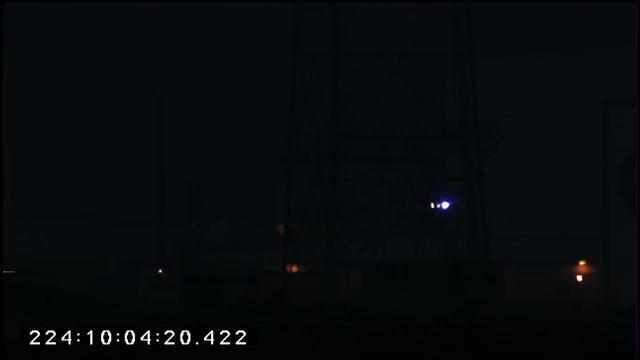
NASA launched a Terrier-Improved Malemute suborbital sounding rocket carrying the RockSat-X payload with university and community college student experiments at 6:04 a.m. EDT Wednesday, Aug. 12, from NASA’s Wallops Flight Facilityin Virginia. More than 60 students and instructors from across the continental United States, Hawaii and Puerto Rico were on hand to witness the launch of their experiments. The payload flew to an altitude of about 97 miles and descended via parachute into the Atlantic Ocean off the coast of Wallops. Payload recovery operations began after lift-off. Developed by students from seven higher education programs, the experiments flew through the RockSat-X program in conjunction with the Colorado Space Grant Consortium. Participating institutions in this flight are the University of Colorado, Boulder; Northwest Nazarene University, Nampa, Idaho; the University of Puerto Rico; the University of Nebraska, Lincoln; Virginia Tech University, Blacksburg; Capitol Technology University, Laurel, Maryland; and University of Hawai'i Community Colleges at the Honolulu, Kapi'olani, Kaua'i, and Windward campuses. The next launch scheduled from Wallops is a NASA Black Brant IX suborbital sounding rocket carrying several technology development instruments. The launch is scheduled between 7 and 7:41 p.m. Sept. 29. The backup launch days are Sept. 30 through Oct. 12. <b><a href="http://www.nasa.gov/audience/formedia/features/MP_Photo_Guidelines.html" rel="nofollow">NASA image use policy.</a></b> <b><a href="http://www.nasa.gov/centers/goddard/home/index.html" rel="nofollow">NASA Goddard Space Flight Center</a></b> enables NASA’s mission through four scientific endeavors: Earth Science, Heliophysics, Solar System Exploration, and Astrophysics. Goddard plays a leading role in NASA’s accomplishments by contributing compelling scientific knowledge to advance the Agency’s mission. <b>Follow us on <a href="http://twitter.com/NASAGoddardPix" rel="nofollow">Twitter</a></b> <b>Like us on <a href="http://www.facebook.com/pages/Greenbelt-MD/NASA-Goddard/395013845897?ref=tsd" rel="nofollow">Facebook</a></b> <b>Find us on <a href="http://instagrid.me/nasagoddard/?vm=grid" rel="nofollow">Instagram</a></b>
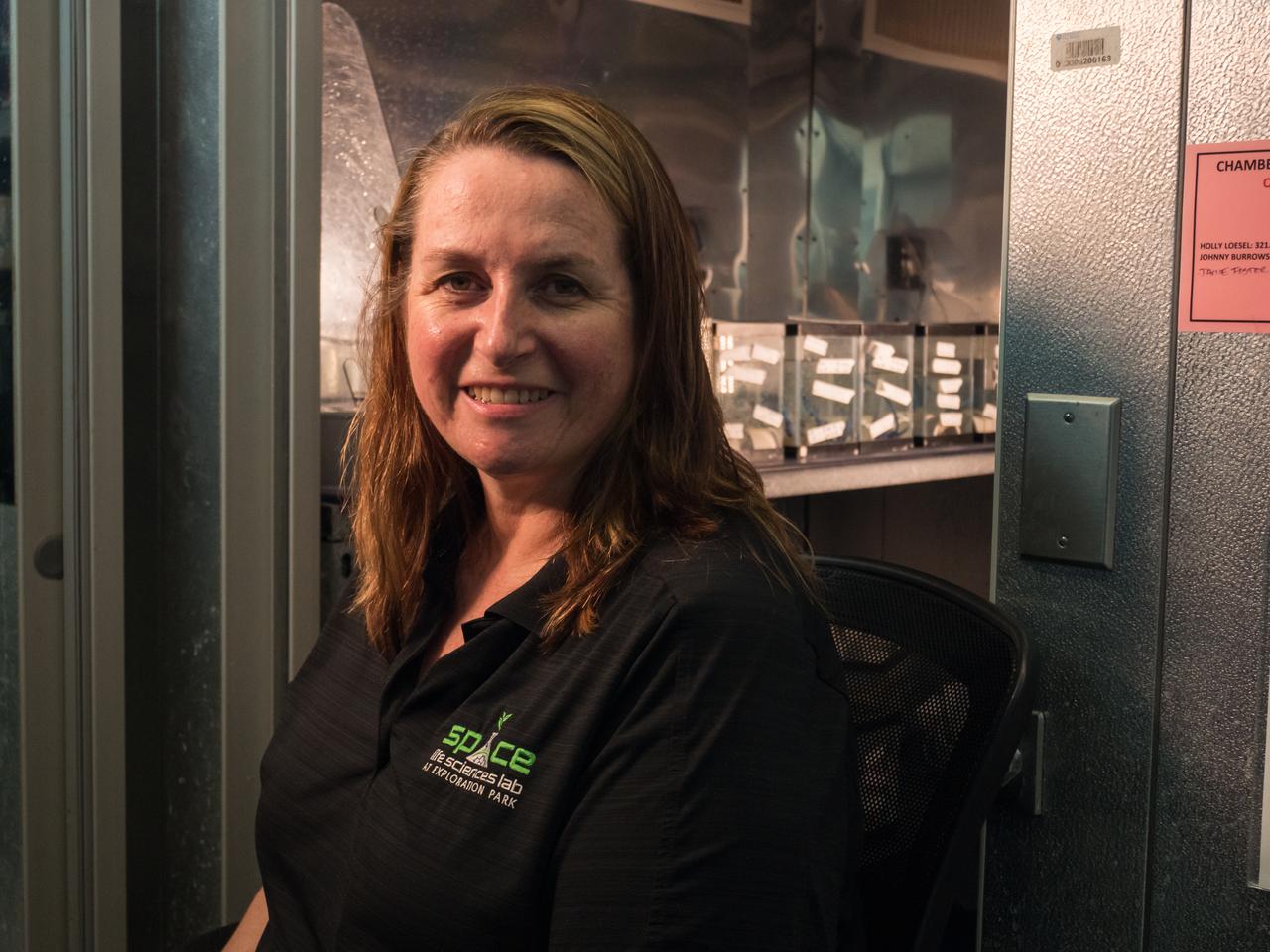
Inside the Space Life Sciences Laboratory at NASA’s Kennedy Space Center in Florida, bobtail squid are part of preparations on May 20, 2021, for the Understanding of Microgravity on Animal-Microbe Interactions (UMAMI) experiment that will launch to the International Space Station aboard SpaceX’s 22nd Commercial Resupply Services mission. The experiment will examine the effects of spaceflight on the molecular and chemical interactions between beneficial microbes and their animal hosts. Amimals, including humans, rely on microbes to maintain a healthy digestive and immune system. UMAMI is one of several experiments bound for the space station in the Dragon capsule atop the SpaceX Falcon 9 rocket. The mission is scheduled to lift off from Launch Complex 39A on June 3.
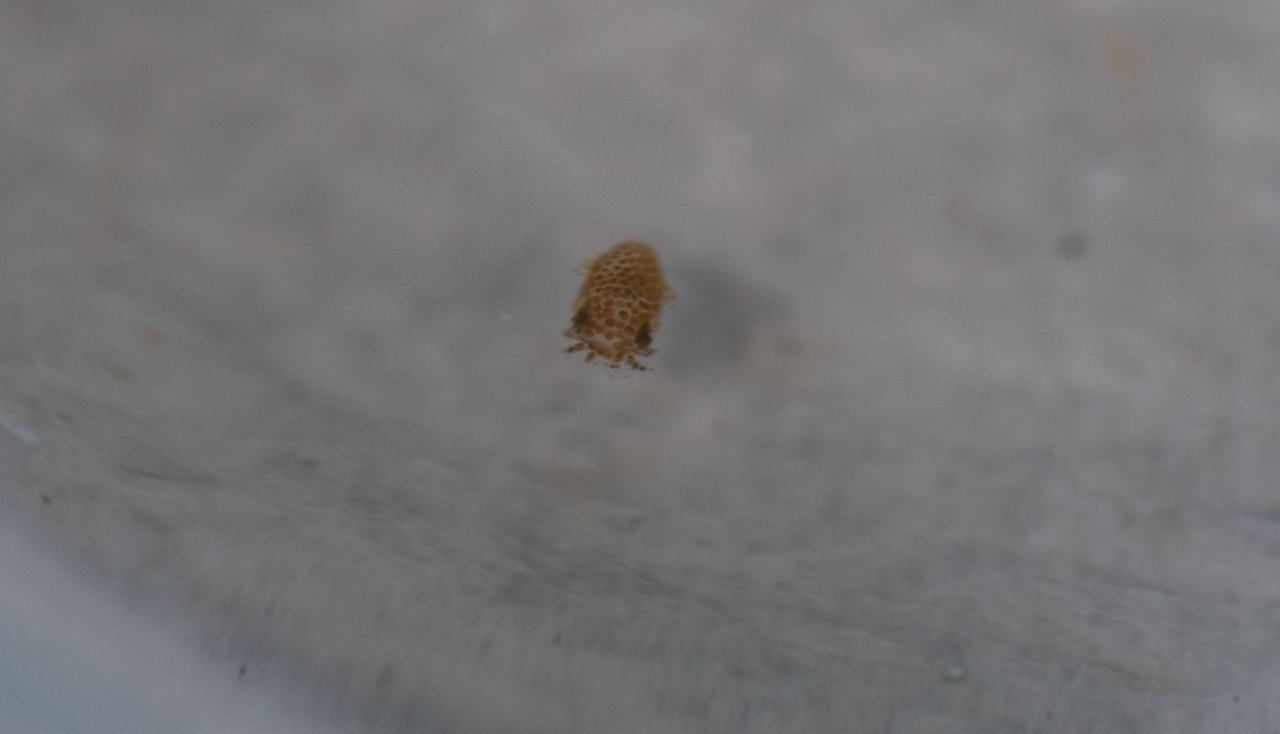
Inside the Space Life Sciences Laboratory at NASA’s Kennedy Space Center in Florida, Jamie Foster, principal investigator on the Understanding of Microgravity on Animal-Microbe Interactions (UMAMI) experiment, demonstrates preparations for bobtail squid on May 20, 2021, for a trip to the International Space Station aboard SpaceX’s 22nd Commercial Resupply Services mission. The experiment will examine the effects of spaceflight on the molecular and chemical interactions between beneficial microbes and their animal hosts. Amimals, including humans, rely on microbes to maintain a healthy digestive and immune system. UMAMI is one of several experiments bound for the space station in the Dragon capsule atop the SpaceX Falcon 9 rocket. The mission is scheduled to lift off from Launch Complex 39A on June 3.
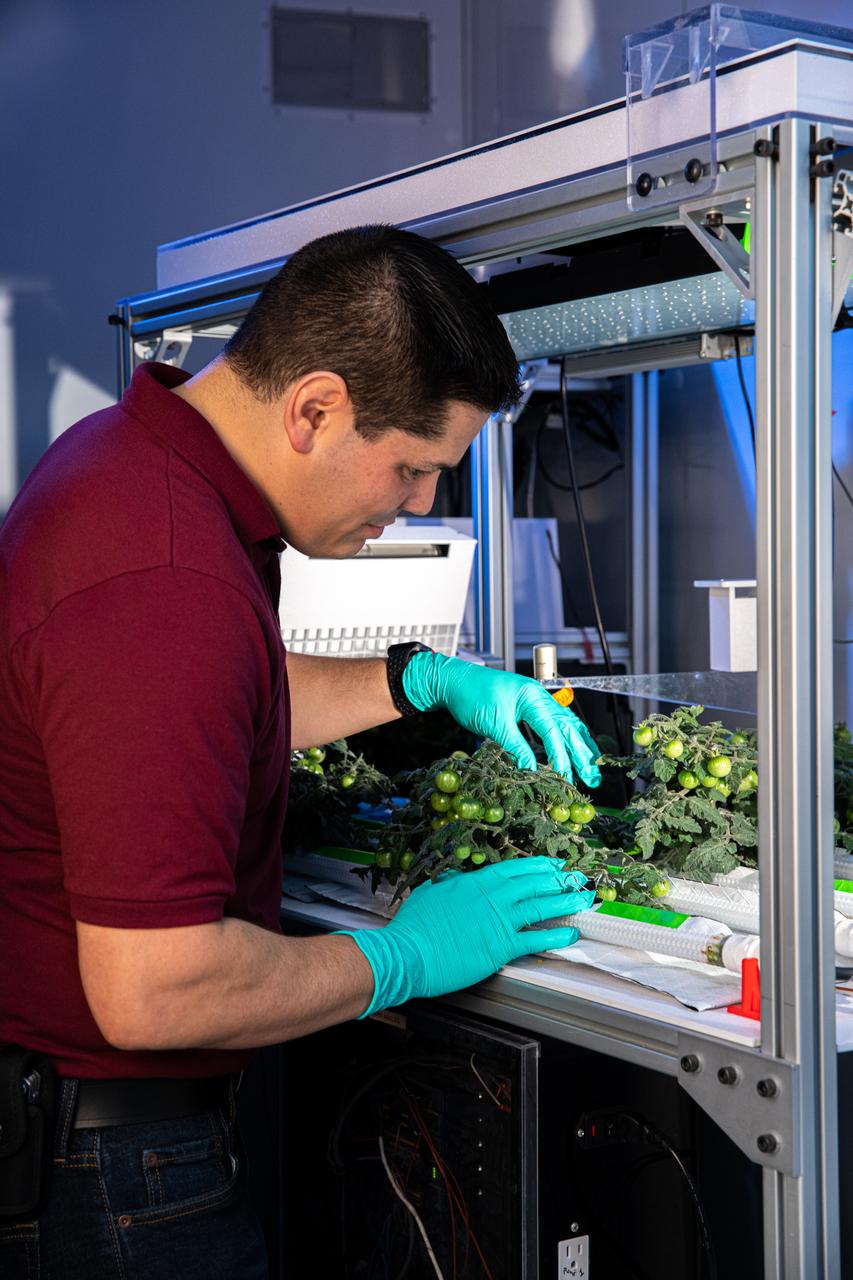
A multidisciplinary team of engineers, biologists, and horticulturalists working out of NASA's Kennedy Space Center in Florida supports the use of technology and automation in plant growth research that looks to supplement the diet of astronauts so they can undertake longer and more distant space exploration missions than ever before.
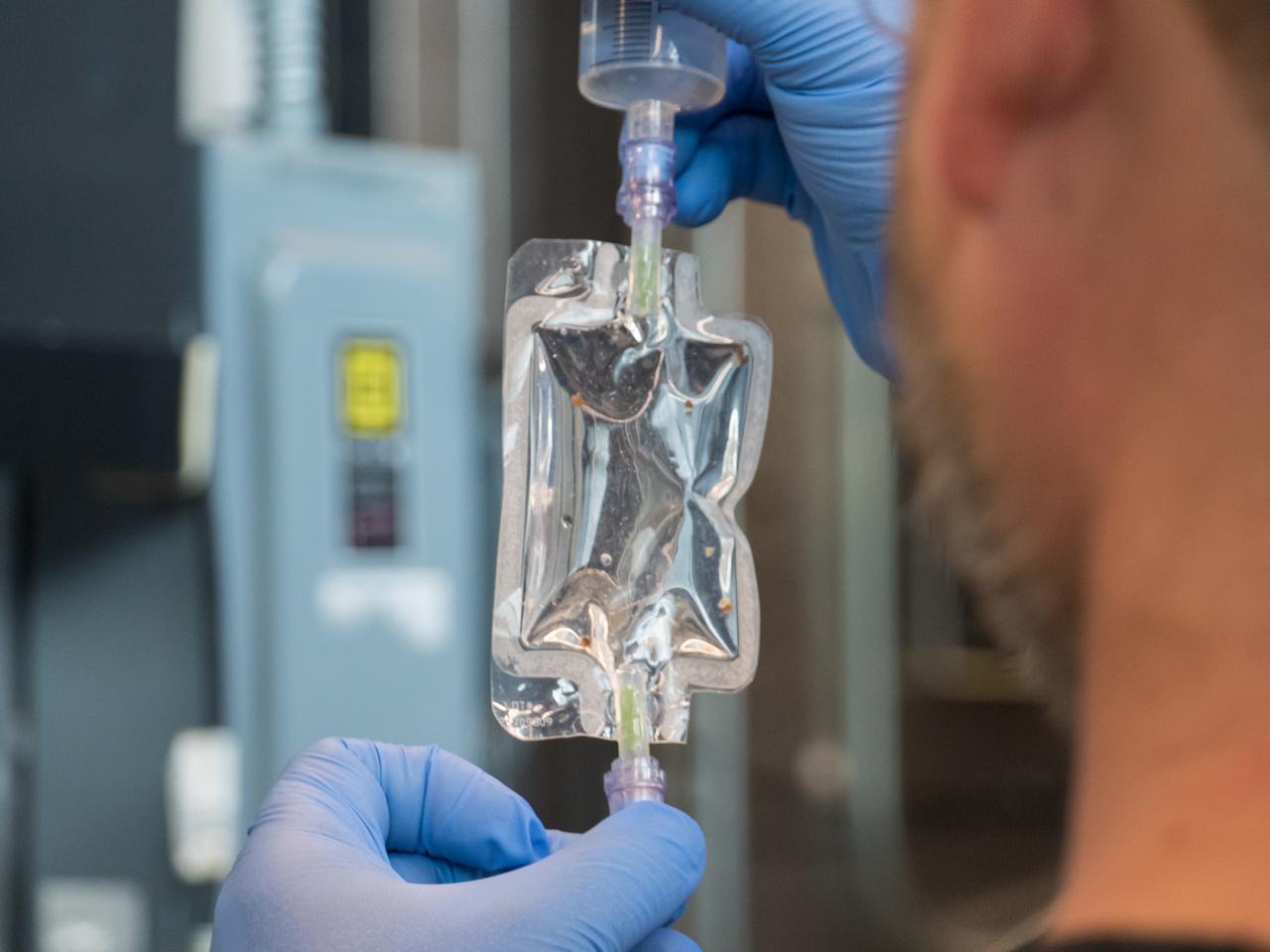
Inside the Space Life Sciences Laboratory at NASA’s Kennedy Space Center in Florida, Dr. Eric Koch, a postdoctoral fellow at the University of Florida, demonstrates preparations for bobtail squid on May 20, 2021, for a trip to the International Space Station aboard SpaceX’s 22nd Commercial Resupply Services mission. The experiment will examine the effects of spaceflight on the molecular and chemical interactions between beneficial microbes and their animal hosts. Amimals, including humans, rely on microbes to maintain a healthy digestive and immune system. UMAMI is one of several experiments bound for the space station in the Dragon capsule atop the SpaceX Falcon 9 rocket. The mission is scheduled to lift off from Launch Complex 39A on June 3.
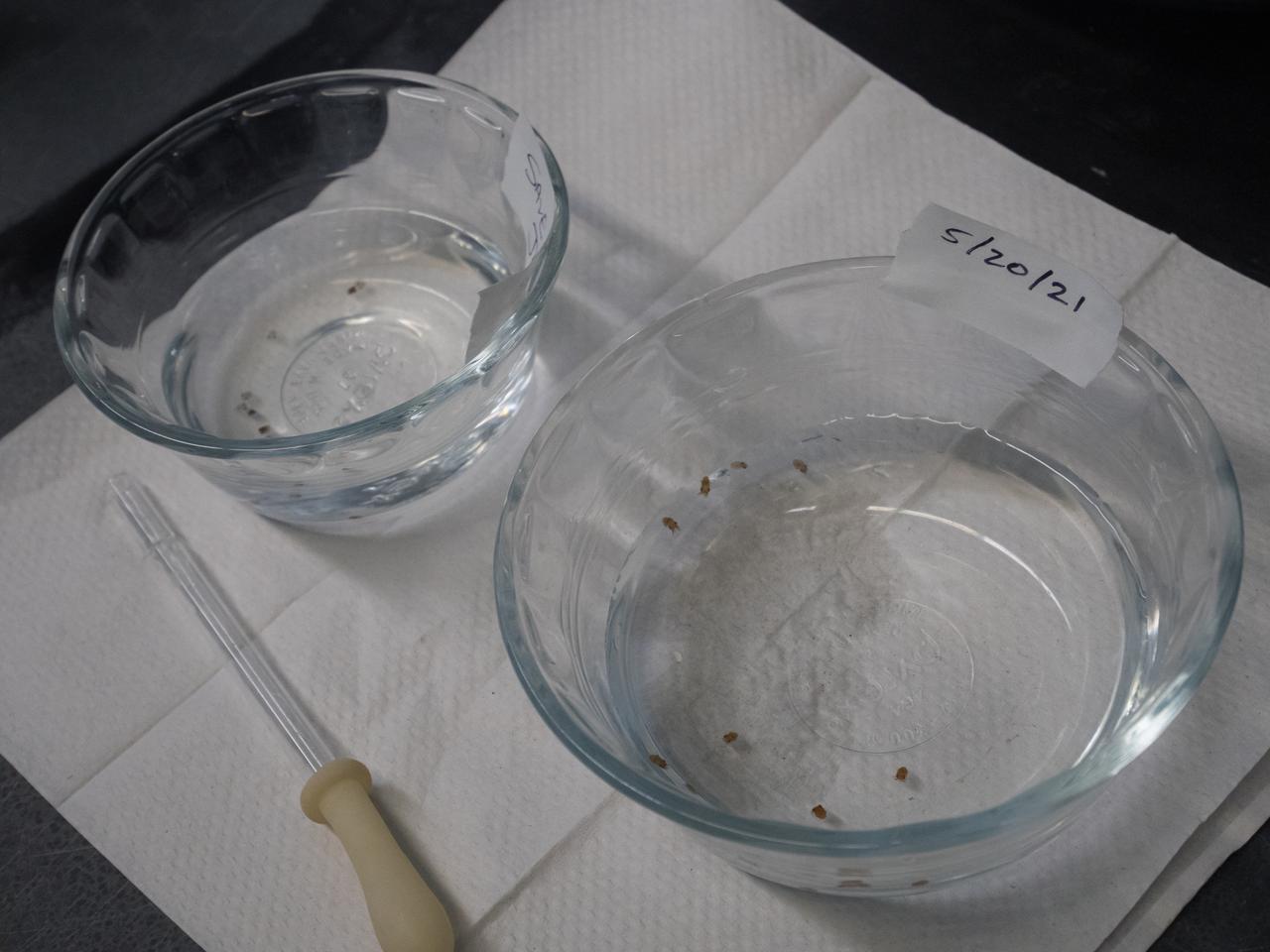
Inside the Space Life Sciences Laboratory at NASA’s Kennedy Space Center in Florida, bobtail squid are part of preparations on May 20, 2021, for the Understanding of Microgravity on Animal-Microbe Interactions (UMAMI) experiment that will launch to the International Space Station aboard SpaceX’s 22nd Commercial Resupply Services mission. The experiment will examine the effects of spaceflight on the molecular and chemical interactions between beneficial microbes and their animal hosts. Animals, including humans, rely on microbes to maintain a healthy digestive and immune system. UMAMI is one of several experiments bound for the space station in the Dragon capsule atop the SpaceX Falcon 9 rocket. The mission is scheduled to lift off from Launch Complex 39A on June 3.
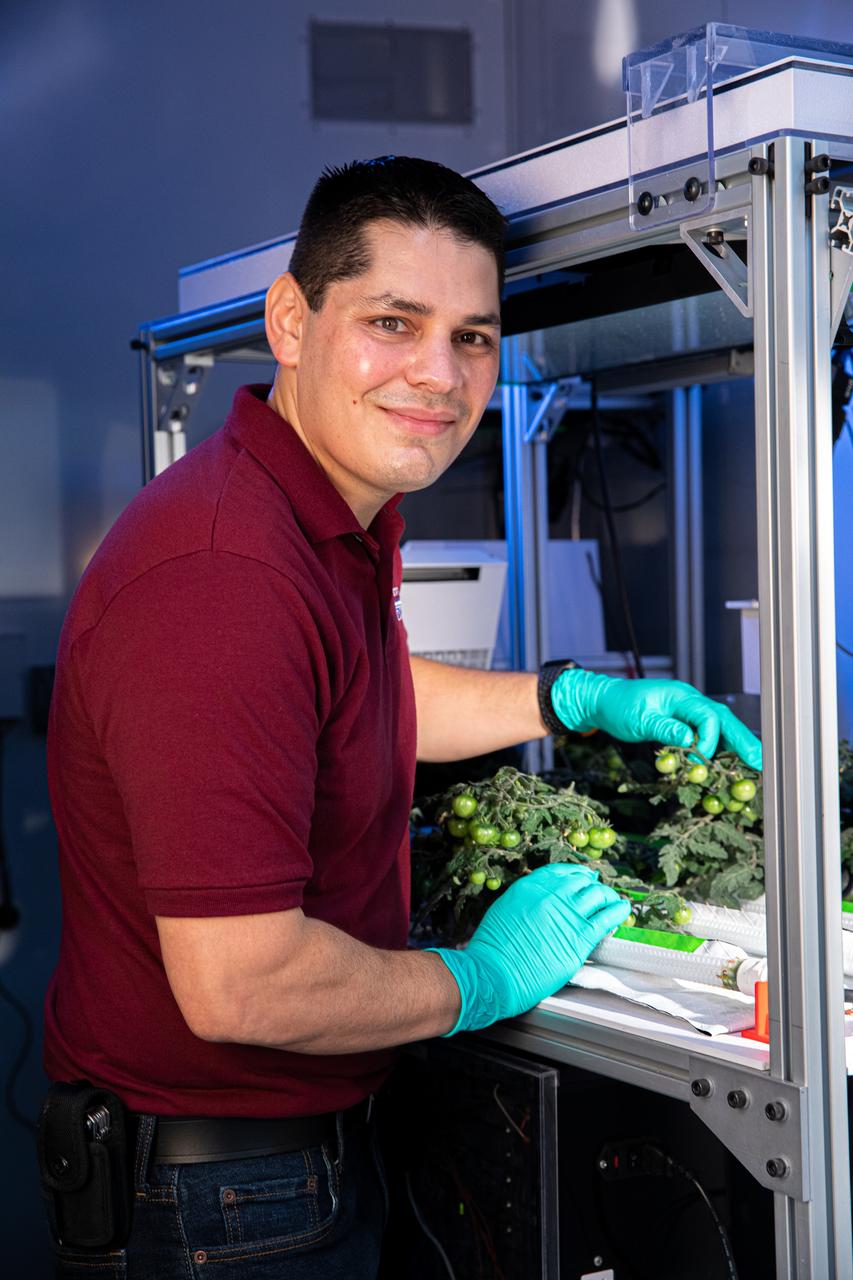
A multidisciplinary team of engineers, biologists, and horticulturalists working out of NASA's Kennedy Space Center in Florida supports the use of technology and automation in plant growth research that looks to supplement the diet of astronauts so they can undertake longer and more distant space exploration missions than ever before.
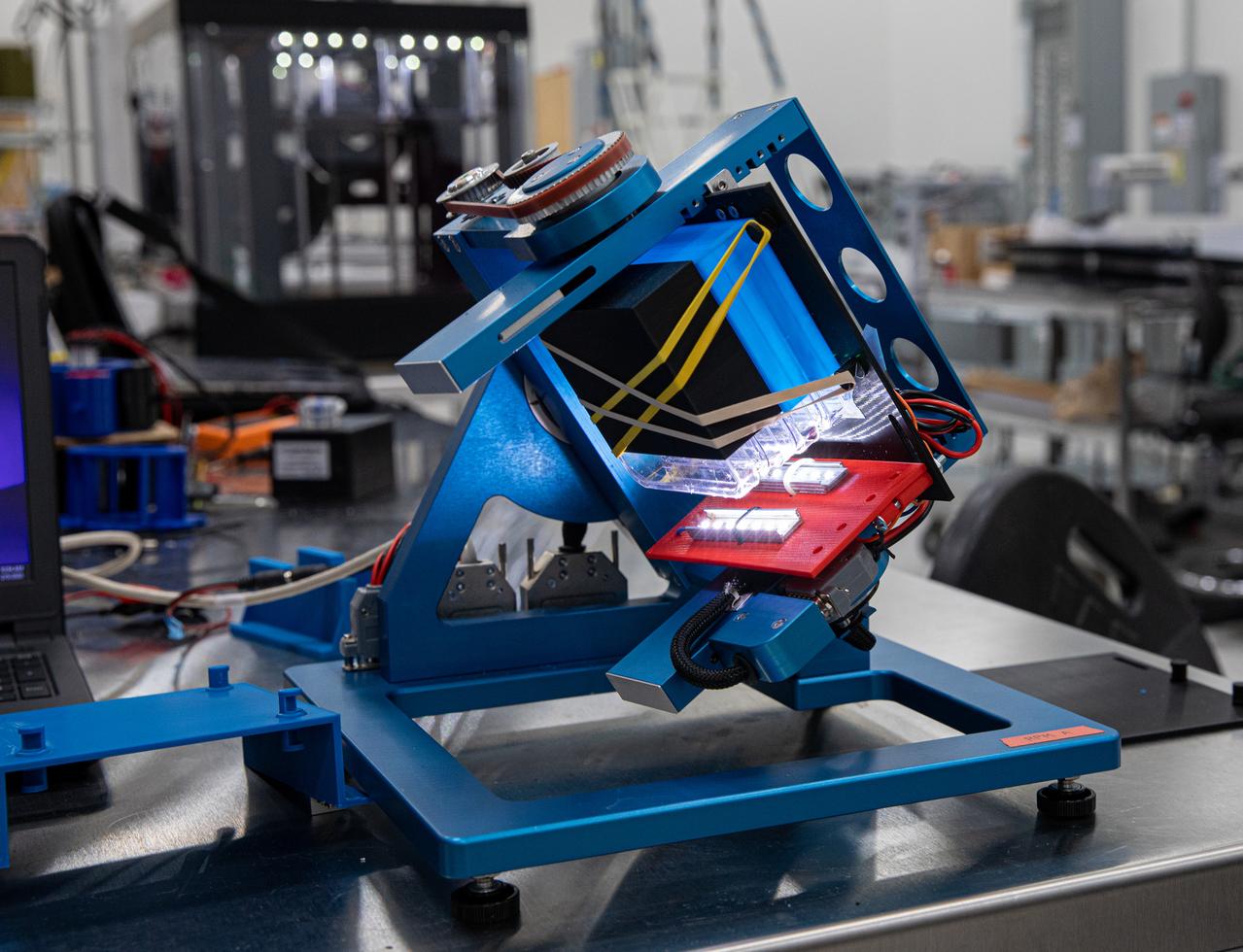
A multidisciplinary team of engineers, biologists, and horticulturalists working out of NASA's Kennedy Space Center in Florida supports the use of technology and automation in plant growth research that looks to supplement the diet of astronauts so they can undertake longer and more distant space exploration missions than ever before.

Inside the Space Life Sciences Laboratory at NASA’s Kennedy Space Center in Florida, Dr. Eric Koch, a postdoctoral fellow at the University of Florida, demonstrates preparations for bobtail squid on May 20, 2021, for a trip to the International Space Station aboard SpaceX’s 22nd Commercial Resupply Services mission. The experiment will examine the effects of spaceflight on the molecular and chemical interactions between beneficial microbes and their animal hosts. Amimals, including humans, rely on microbes to maintain a healthy digestive and immune system. UMAMI is one of several experiments bound for the space station in the Dragon capsule atop the SpaceX Falcon 9 rocket. The mission is scheduled to lift off from Launch Complex 39A on June 3.
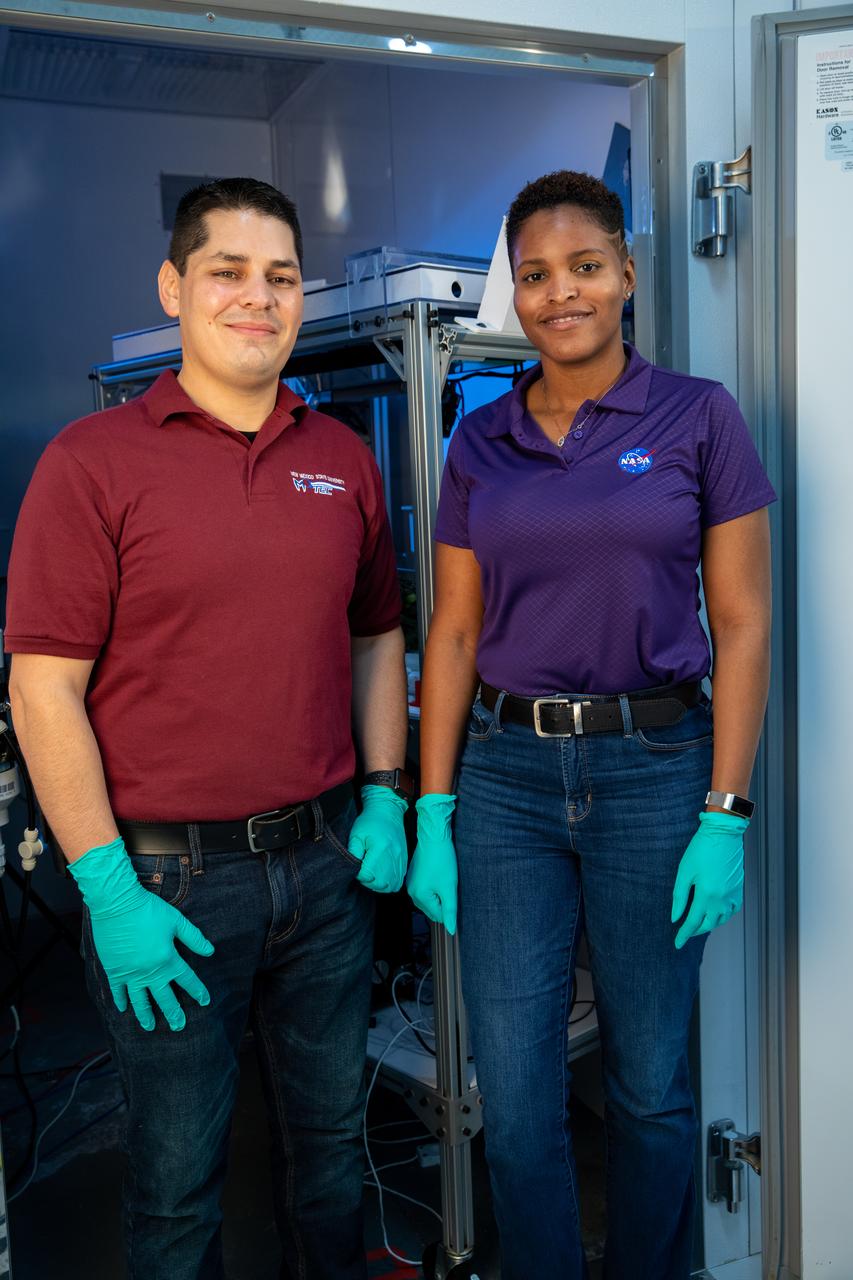
A multidisciplinary team of engineers, biologists, and horticulturalists working out of NASA's Kennedy Space Center in Florida supports the use of technology and automation in plant growth research that looks to supplement the diet of astronauts so they can undertake longer and more distant space exploration missions than ever before.
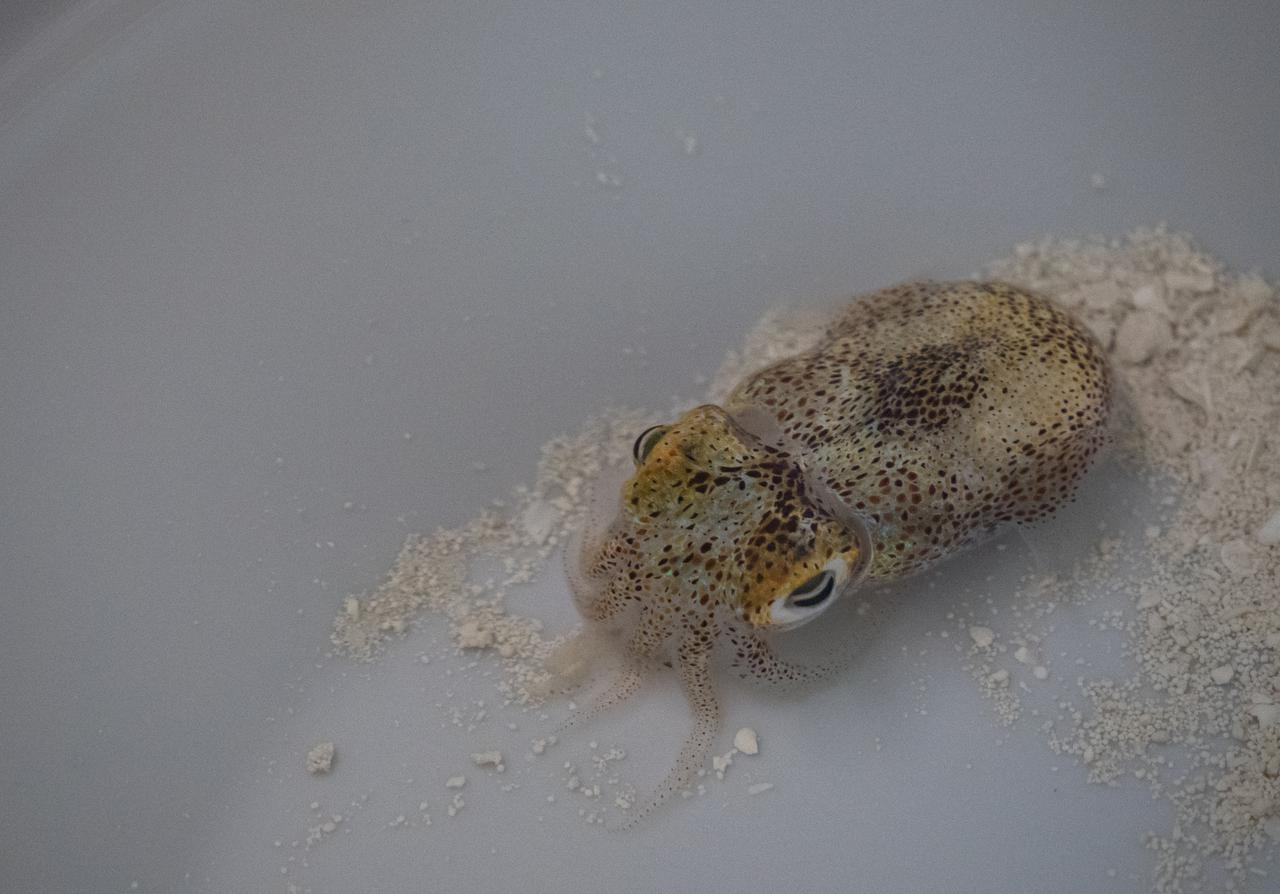
Inside the Space Life Sciences Laboratory at NASA’s Kennedy Space Center in Florida, bobtail squid are part of preparations on May 20, 2021, for the Understanding of Microgravity on Animal-Microbe Interactions (UMAMI) experiment that will launch to the International Space Station aboard SpaceX’s 22nd Commercial Resupply Services mission. The experiment will examine the effects of spaceflight on the molecular and chemical interactions between beneficial microbes and their animal hosts. Amimals, including humans, rely on microbes to maintain a healthy digestive and immune system. UMAMI is one of several experiments bound for the space station in the Dragon capsule atop the SpaceX Falcon 9 rocket. The mission is scheduled to lift off from Launch Complex 39A on June 3.
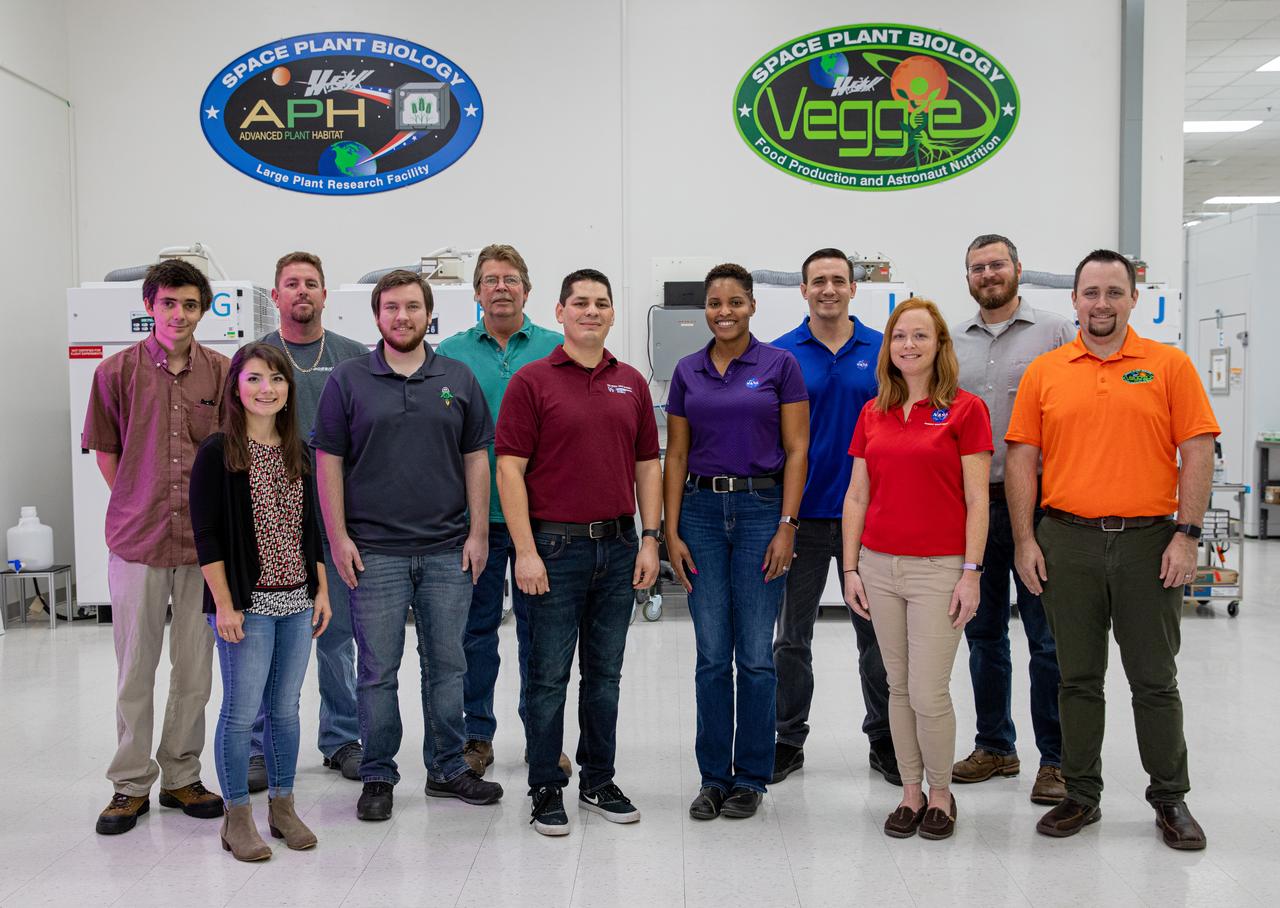
A multidisciplinary team of engineers, biologists, and horticulturalists working out of NASA's Kennedy Space Center in Florida supports the use of technology and automation in plant growth research that looks to supplement the diet of astronauts so they can undertake longer and more distant space exploration missions than ever before.

All around the world, people live in places where the threat of natural disaster is high. On the North Island of New Zealand, the Mount Ruapehu volcano is just such a threat. A towering, active stratovolcano (the classic cone-shaped volcano), snow-capped Ruapehu Volcano is pictured in this enhanced-color image. The image is made from topography data collected by the Shuttle Radar Topography Mission aboard the Space Shuttle Endeavour, launched on February 11, 2000, and imagery collected by the Landsat satellite on October 23, 2002. Ruapehu is one of New Zealand’s most active volcanoes, with ten eruptions since 1861. The eruptions aren’t the only threat from the volcano, however. Among the most serious threats is a volcanic mudflow called a lahar. In between eruptions, a lake forms in the volcano’s caldera from melting snow. If a previous eruption has deposited a dam of ash, rocks and mud in the lake’s natural overflow point, then the lake becomes dangerously full, held back only by the temporary dam. In this scene, the lake is nestled among the ridges at the top of the volcano. Eventually, the dam gives way and a massive flow of mud and debris churns down the mountain toward farmland and towns below. Scientists estimate that Ruapehu has experienced 60 lahars in the last 150 years. A devastating lahar in 1953 killed more than 150 people, who died when a passenger train plunged into a ravine when a railroad bridge was taken out by the lahar. The flank of the volcano below the lake is deeply carved by the path of previous lahars; the gouge can be seen just left of image center. Currently scientists in the region are predicting that the lake will overflow in a lahar sometime in the next year. There is great controversy about how to deal with the threat. News reports from the region indicate that the government is planning to invest in a high-tech warning system that will alert those who might be affected well in advance of any catastrophic release. Others feel that the government should combat the threat through engineering at the top of the mountain, for example, by undertaking a controlled release of the lake. Credit Landsat data provided courtesy of the University of Maryland Global Land Cover Facility Landsat processing by Laura Rocchio, Landsat Project Science Office SRTM 3-arcsecond elevation data courtesy of SRTM Team NASA/JPL/NIMA Visualization created by Earth Observatory staff. <b><a href="http://www.nasa.gov/centers/goddard/home/index.html" rel="nofollow">NASA Goddard Space Flight Center</a></b> enables NASA’s mission through four scientific endeavors: Earth Science, Heliophysics, Solar System Exploration, and Astrophysics. Goddard plays a leading role in NASA’s accomplishments by contributing compelling scientific knowledge to advance the Agency’s mission. <b>Follow us on <a href="http://twitter.com/NASA_GoddardPix" rel="nofollow">Twitter</a></b> <b>Join us on <a href="http://www.facebook.com/pages/Greenbelt-MD/NASA-Goddard/395013845897?ref=tsd" rel="nofollow">Facebook</a></b>