
This chart compares the first Earth-size planets found around a sun-like star to planets in our own solar system, Earth and Venus. NASA Kepler mission discovered the newfound planets, called Kepler-20e and Kepler-20f.
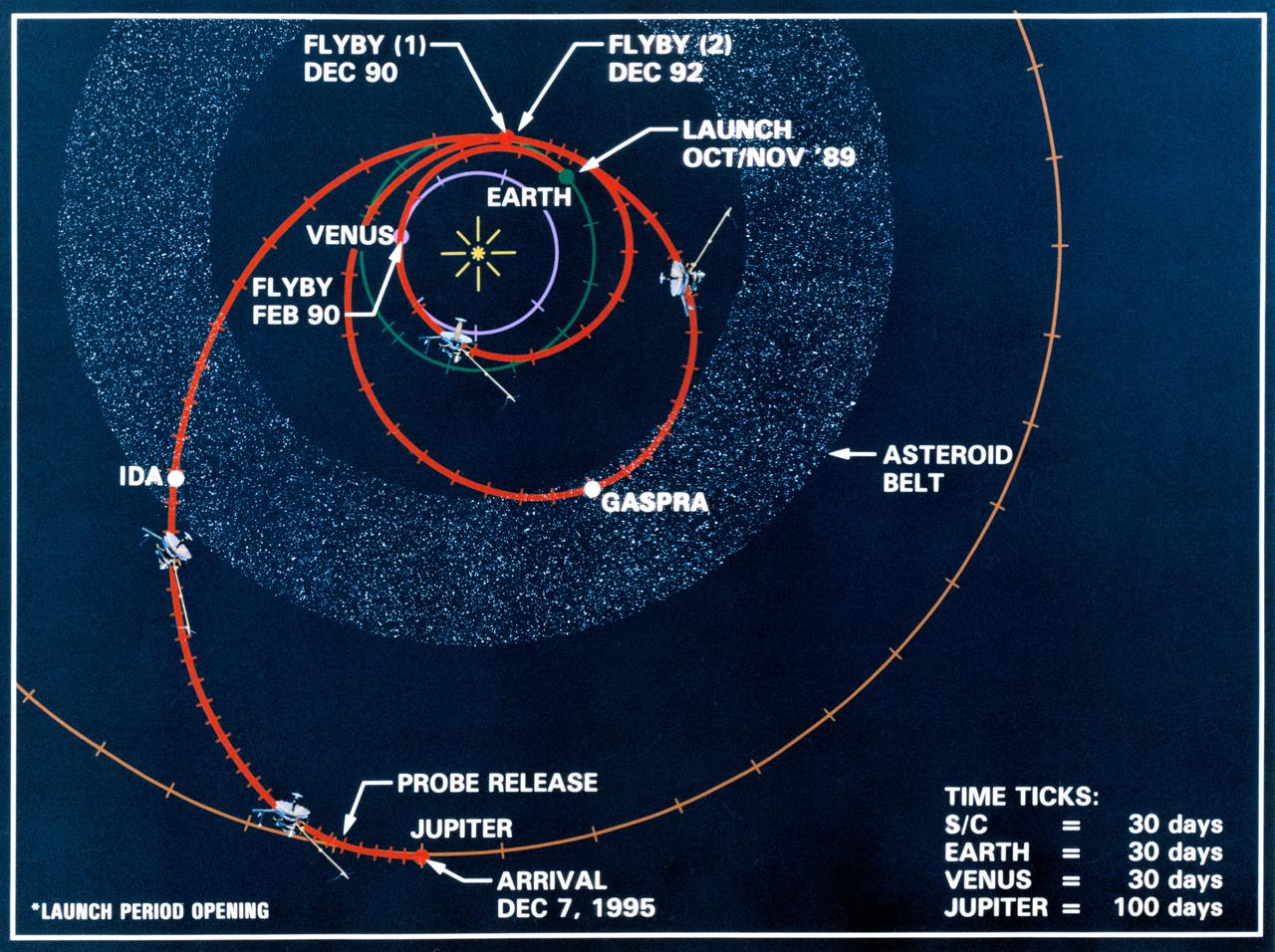
Line drawing charts the Galileo spacecraft's launch from low Earth orbit and its three planetary and two asteroid encounters in the course of its gravity-assisted flight to Jupiter. These encounters include Venus (February 1990), two Earth passes (December 1990 and December 1992), and the asteroids Gaspra and Ida in the asteroid belt. Galileo will release a probe and will arrive at Jupiter, 12-07-95.
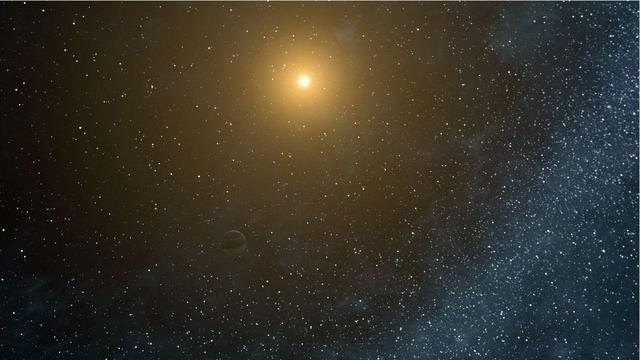
This still from an artist animation flies through the Kepler-20 star system, where NASA Kepler mission discovered the first Earth-size planets around a star beyond our own. The system is jam-packed with five planets.

Scientists using data from NASA's Kepler mission have confirmed the first near-Earth-size planet orbiting in the habitable zone of a sun-like star. The habitable zone is the region around a star where temperatures are just right for water to exist in its liquid form. The artist's concept compares Earth (left) to the new planet, called Kepler-452b, which is about 60 percent larger. The illustration represents one possible appearance for Kepler-452b -- scientists do not know whether the planet has oceans and continents like Earth. Both planets orbit a G2-type star of about the same temperature; however, the star hosting Kepler-452b is 6 billion years old, 1.5 billion years older than our sun. As stars age, they become larger, hotter and brighter, as represented in the illustration. Kepler-452b's star appears a bit larger and brighter. http://photojournal.jpl.nasa.gov/catalog/PIA19825
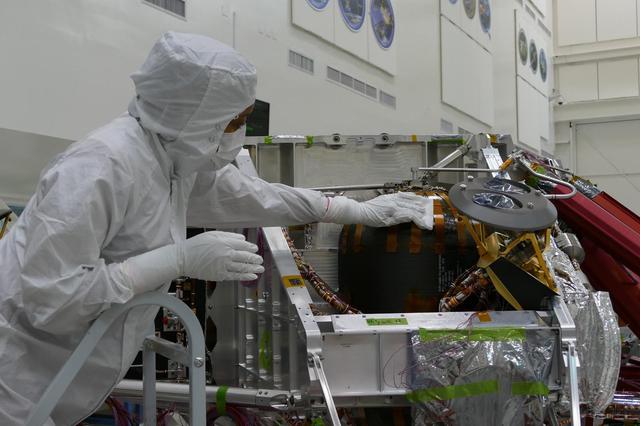
Wiping down hardware is part of the strategy to limit the number of Earth microbes going to the Red Planet for NASA's Mars 2020 Perseverance mission. This cleaning takes place in the Spacecraft Assembly Facility clean room at NASA's Jet Propulsion Laboratory in Southern California. https://photojournal.jpl.nasa.gov/catalog/PIA23717
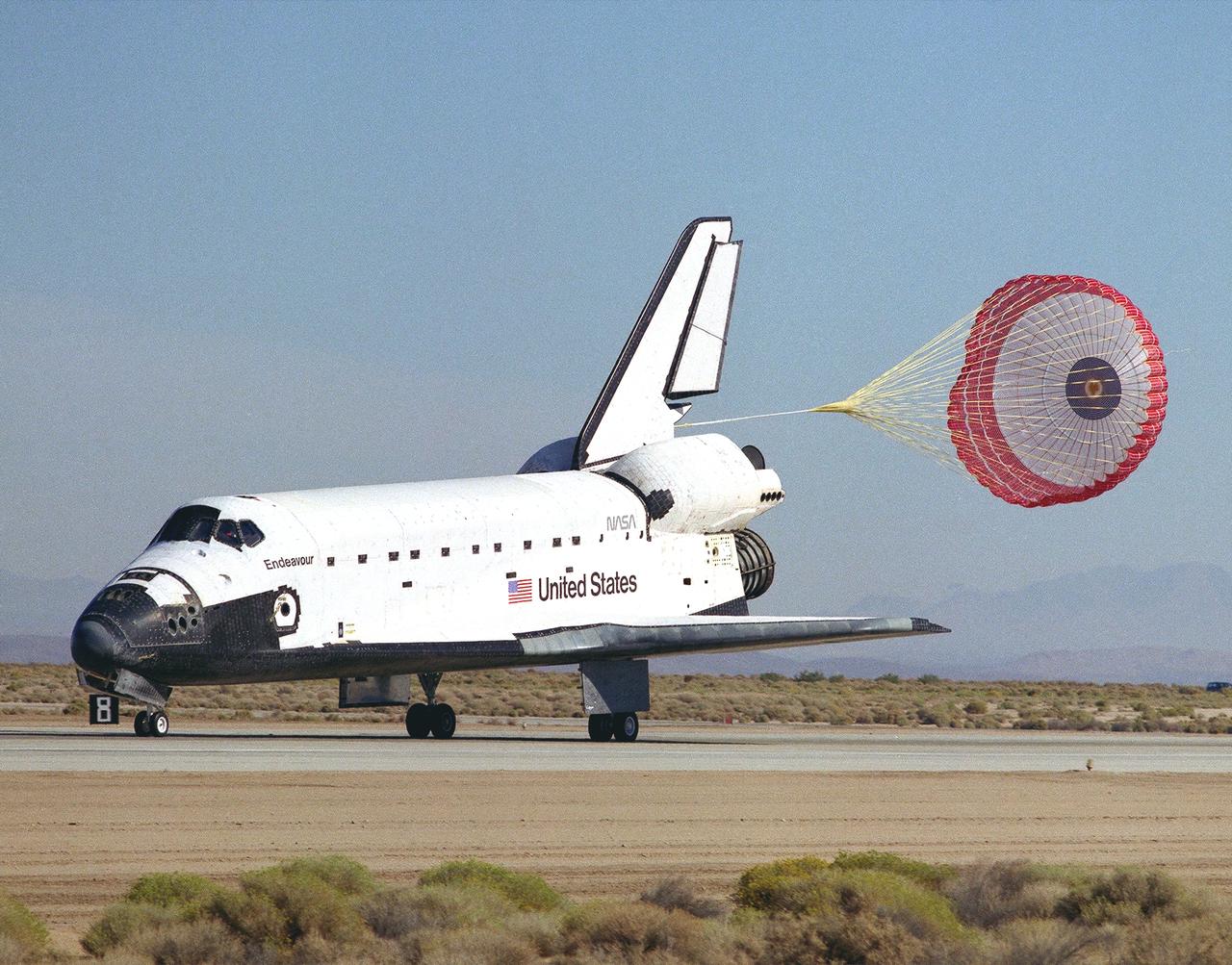
A drag chute slows the shuttle Endeavour after landing on runway 22 at Edwards, California, to complete the highly successful STS-68 mission dedicated to radar imaging of the earth's surface as part of NASA's Mission To Planet Earth program. The landing was at 10:02 a.m. (PDT) 11 October 1994, after waiving off from the Kennedy Space Center, Florida, earlier that morning due to adverse weather at Kennedy. The Endeavour crew was originally scheduled to land at Kennedy the morning of 10 October, but mission planners decided early in the flight to extend the mission by one day. Mission commander was Michael A. Baker and the pilot was Terrence W. Wilcutt. The four mission specialists were Thomas D. Jones, payload; Steven L. Smith; Daniel W. Bursch; and Peter J.K. Wisoff.

This is the first image ever taken of Earth from the surface of a planet beyond the Moon. It was taken by the Mars Exploration Rover Spirit one hour before sunrise on the 63rd martian day, or sol, of its mission. Earth is the tiny white dot in the center. The image is a mosaic of images taken by the rover's navigation camera showing a broad view of the sky, and an image taken by the rover's panoramic camera of Earth. The contrast in the panoramic camera image was increased two times to make Earth easier to see. http://photojournal.jpl.nasa.gov/catalog/PIA05560

NASA's Polar Radiant Energy in the Far-InfraRed Experiment (PREFIRE) mission will measure the amount of heat Earth emits into space from two of the coldest, most remote regions on the planet. Data from the mission will improve computer models researchers use to predict how Earth's ice, seas, and weather will change in a warming world. This artist's concept depicts one of two PREFIRE CubeSats in orbit around Earth. Earth absorbs a lot of the Sun's energy at the tropics, and weather and ocean currents transport that heat to the poles. Ice, snow, clouds, and other parts of the polar environment emit the heat into space, much of it in the form of far-infrared radiation. The difference between how much heat Earth absorbs at the tropics and then radiates out to space from the Arctic and Antarctic determines the planet's temperature and drives a dynamic system of climate and weather. But far-infrared emissions at the poles have never been systematically measured. This is where PREFIRE comes in. The mission will help researchers gain a clearer understanding of when and where Earth's poles emit far-infrared radiation, as well as how atmospheric water vapor and clouds influence the amount that escapes to space. PREFIRE is composed of two roughly shoebox-size CubeSats outfitted with specialized miniature heat sensors that will give researchers a more accurate picture of how much heat Earth emits into space. https://photojournal.jpl.nasa.gov/catalog/PIA26185

This is the first image ever taken of Earth from the surface of a planet beyond the Moon. It was taken by the Mars Exploration Rover Spirit one hour before sunrise on the 63rd martian day, or sol, of its mission. The image is a mosaic of images taken by the rover's navigation camera showing a broad view of the sky, and an image taken by the rover's panoramic camera of Earth. The contrast in the panoramic camera image was increased two times to make Earth easier to see. The inset shows a combination of four panoramic camera images zoomed in on Earth. The arrow points to Earth. Earth was too faint to be detected in images taken with the panoramic camera's color filters. http://photojournal.jpl.nasa.gov/catalog/PIA05547

iss075-s-001 (June 11, 2025) -- The official mission insignia of the Expedition 75 crew aboard the International Space Station. This patch embodies Expedition 75's mission on the orbital ouitpost, a beacon of human aspiration. Radiant golden and white lines surge from Earth, forging a bond between our planet and the cosmos, illustrating the profound impact of the International Space Station's work on humanity. Above, the cupola's windows, depicted as geometric blue forms, serve as a poignant reminder of our home, connecting astronauts to their loved ones and the breathtaking beauty of Earth. Below, majestic mountain ranges underscore the vital role of our planet's landscapes and ecosystems in our quest for knowledge and preservation. The gradient arc, cradling Earth's curvature, symbolizes our fragile atmosphere and the International Space Station's orbital path, a testament to our relentless pursuit of discovery and growth.
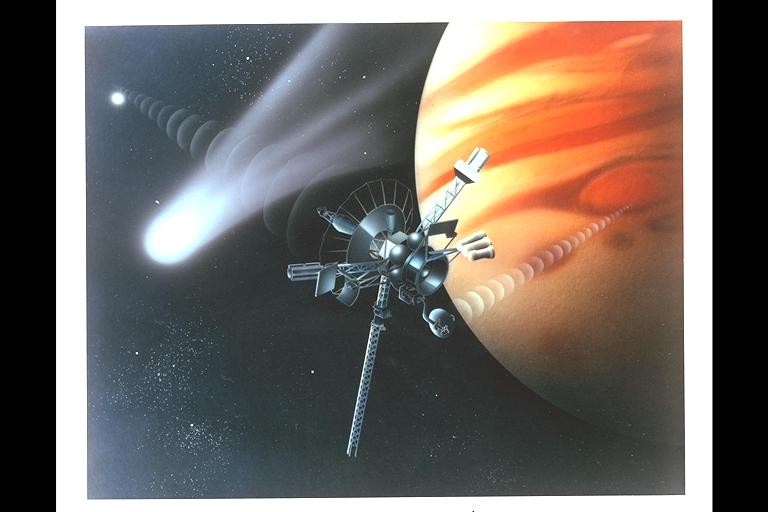
Pioneer Galileo mission trajectory artwork depicting radio signal from Earth to spacecraft to planet and comet crossing spacecrafts' orbit
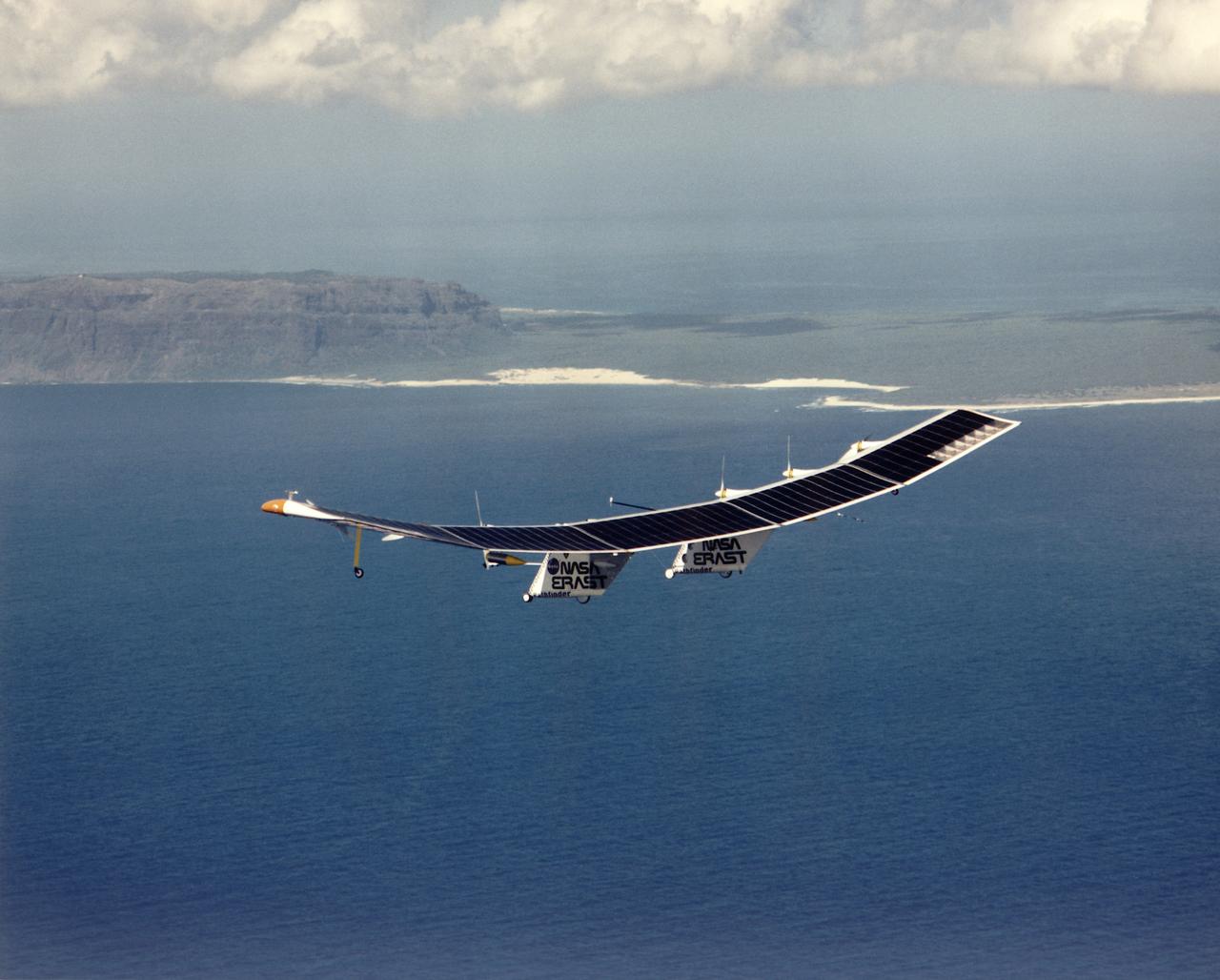
Pathfinder, NASA's solar-powered, remotely-piloted aircraft is shown while it was conducting a series of science flights to highlight the aircraft's science capabilities while collecting imagery of forest and coastal zone ecosystems on Kauai, Hawaii. The flights also tested two new scientific instruments, a high spectral resolution Digital Array Scanned Interferometer (DASI) and a high spatial resolution Airborne Real-Time Imaging System (ARTIS). The remote sensor payloads were designed by NASA's Ames Research Center, Moffett Field, California, to support NASA's Mission to Planet Earth science programs.
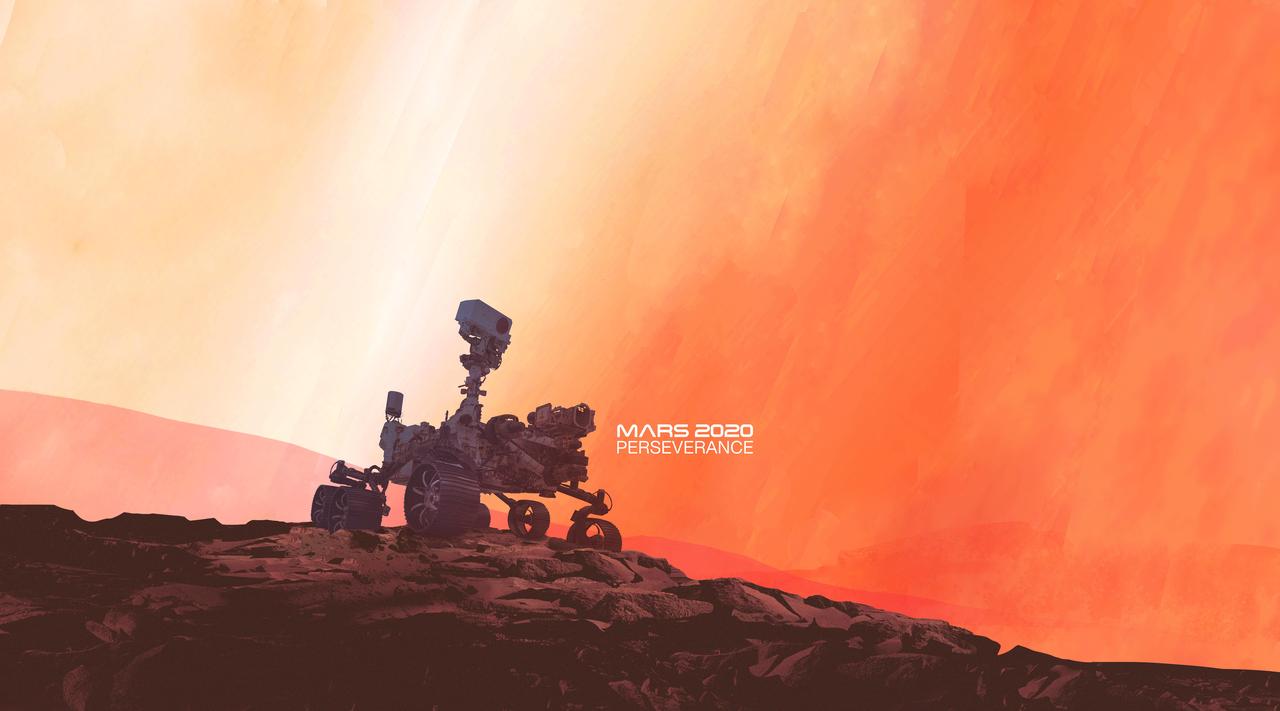
The Mars 2020 Perseverance rover's astrobiology mission will search for signs of ancient microbial life. It will also characterize the planet's climate and geology, collect samples for future return to Earth and pave the way for human exploration of the Red Planet. The mission is part of a larger program that includes missions to the Moon as a way to prepare for human exploration of the Red Planet. Charged with returning astronauts to the Moon by 2024, NASA will establish a sustained human presence on and around the Moon by 2028 through NASA's Artemis lunar exploration plans. https://photojournal.jpl.nasa.gov/catalog/PIA23920
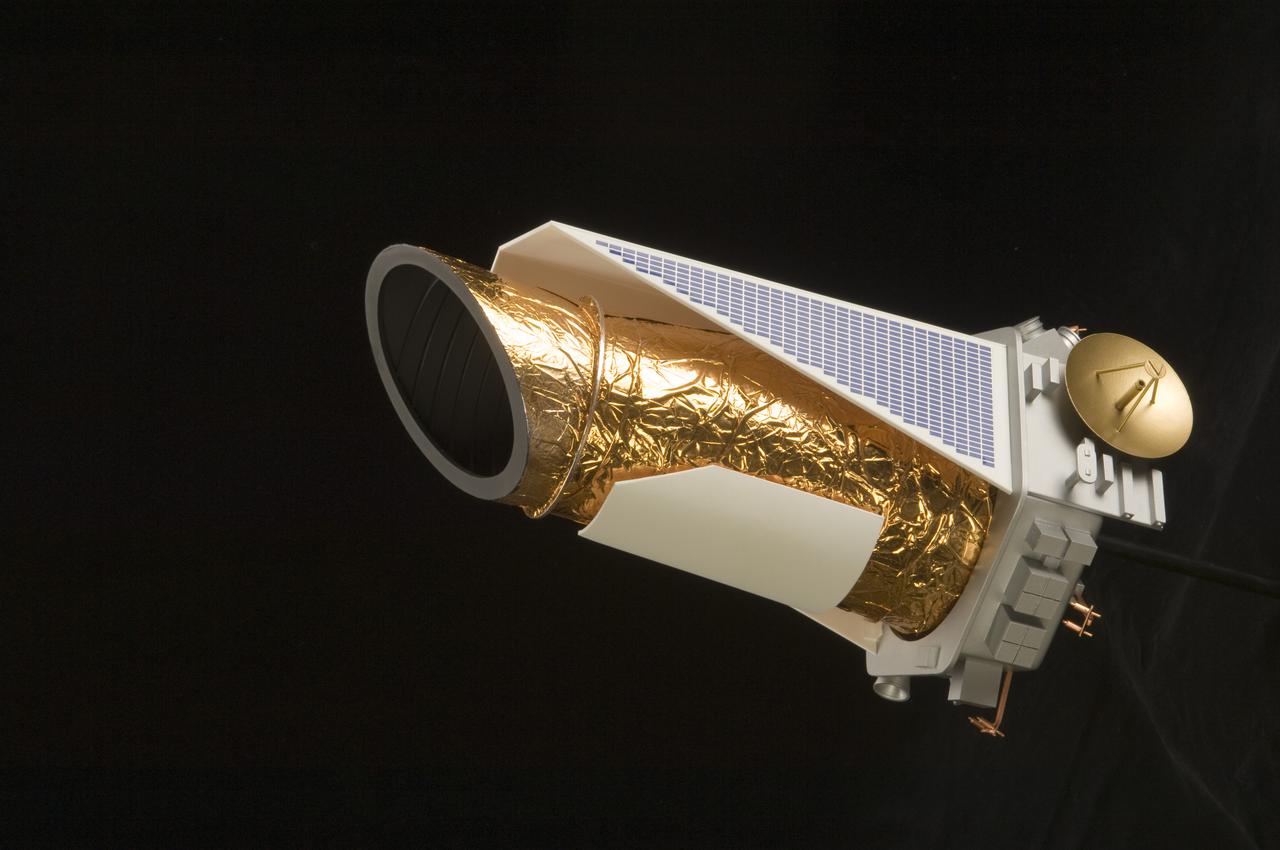
KEPLER table top model (in studio). The Kepler Mission due for launch in March 2009 will look for earth like planets around distant stars.
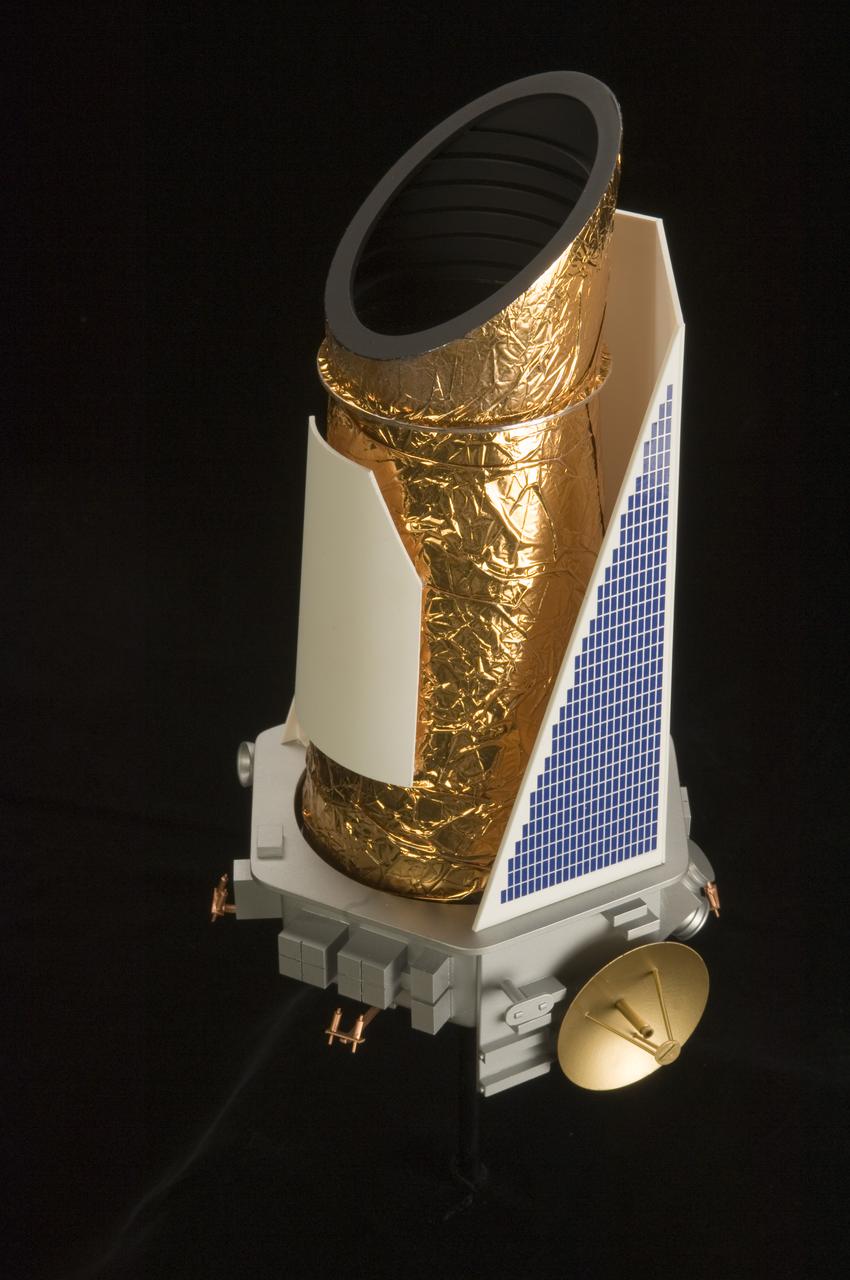
KEPLER table top model (in studio). The Kepler Mission due for launch in March 2009 will look for earth like planets around distant stars.
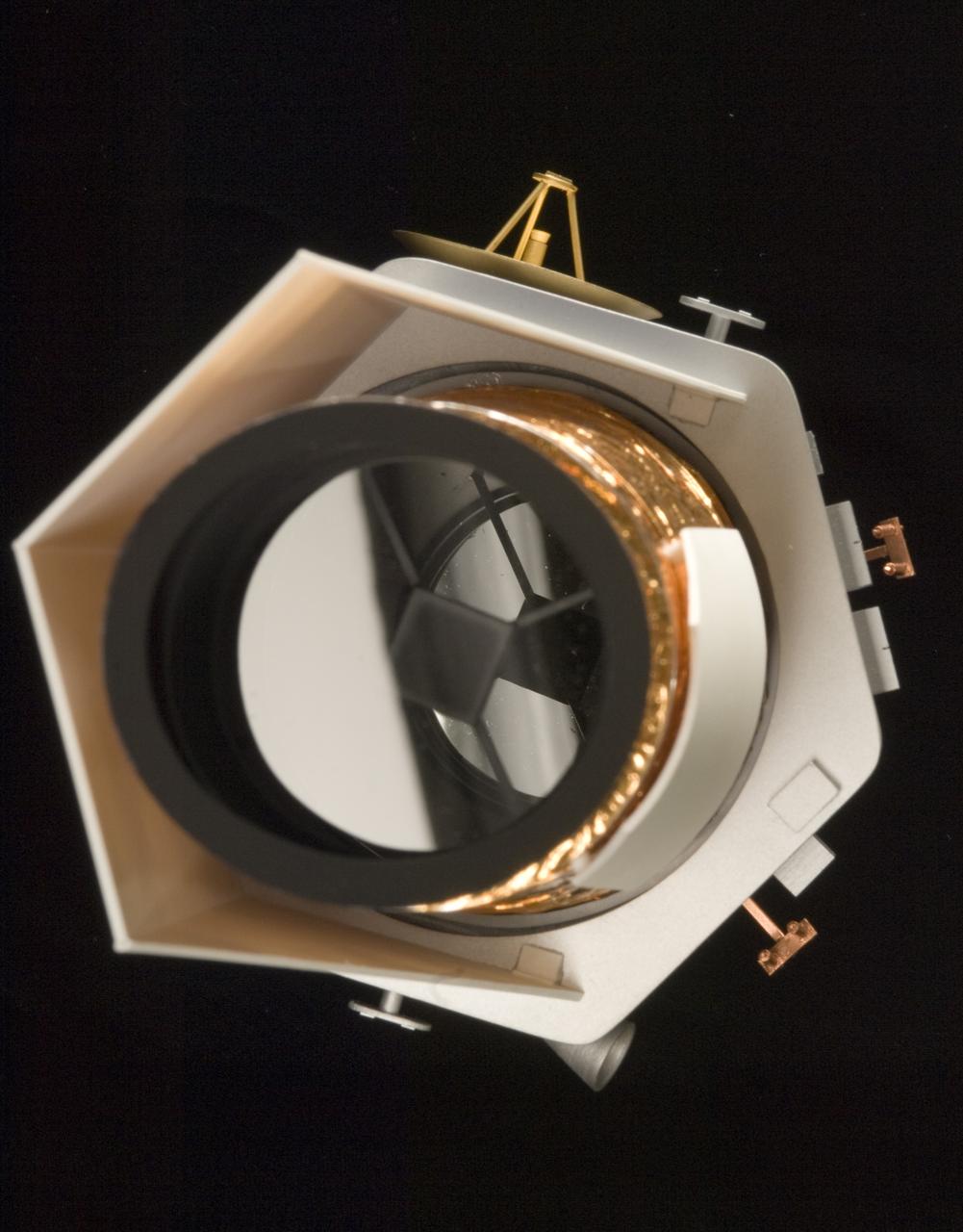
KEPLER table top model (in studio). The Kepler Mission due for launch in March 2009 will look for earth like planets around distant stars.

James Marr, NASA JPL presents a Director's Colloquium to Ames staff on 'The SIM-lite Mission Concept: Detecting Earth-like Planets around Nearby Stars'
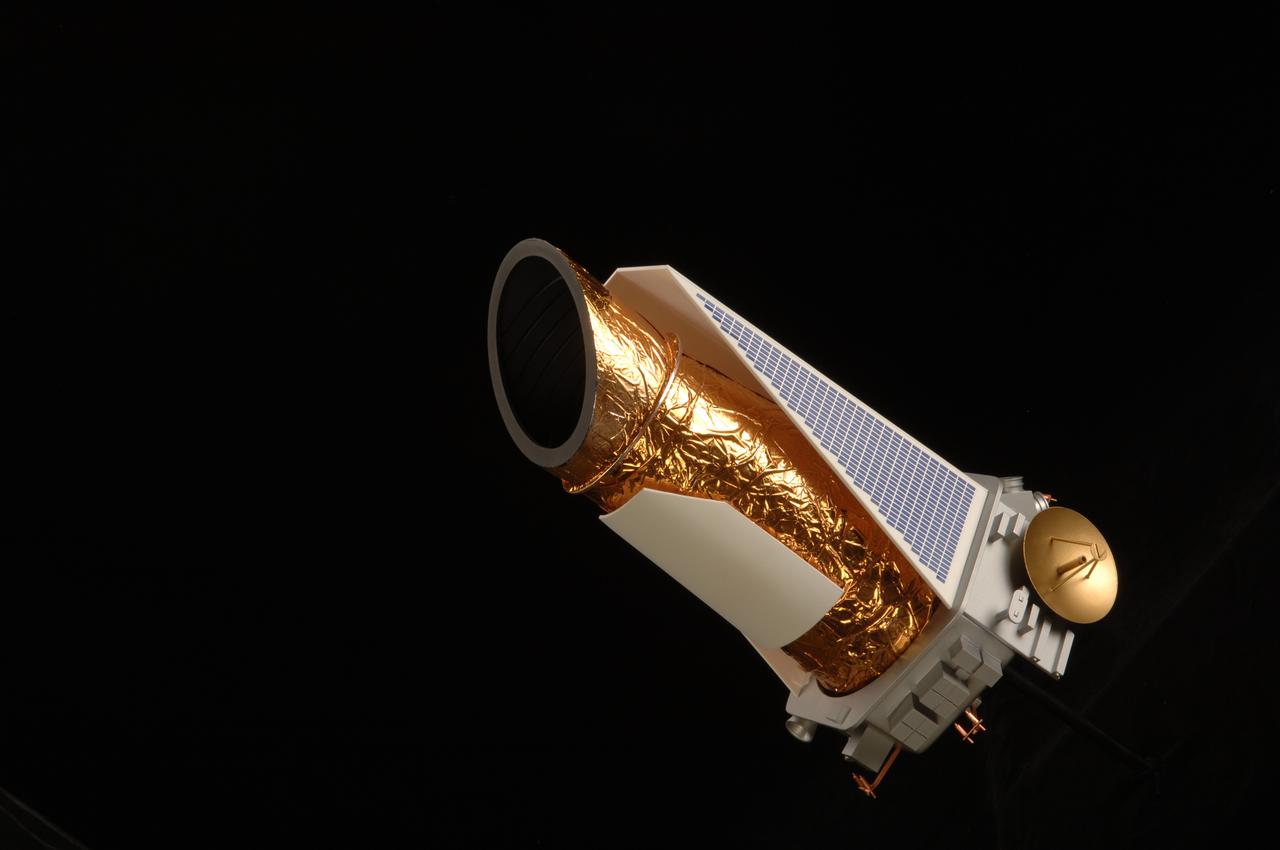
KEPLER table top model (in studio). The Kepler Mission due for launch in March 2009 will look for earth like planets around distant stars.

James Marr, NASA JPL presents a Director's Colloquium to Ames staff on 'The SIM-lite Mission Concept: Detecting Earth-like Planets around Nearby Stars'
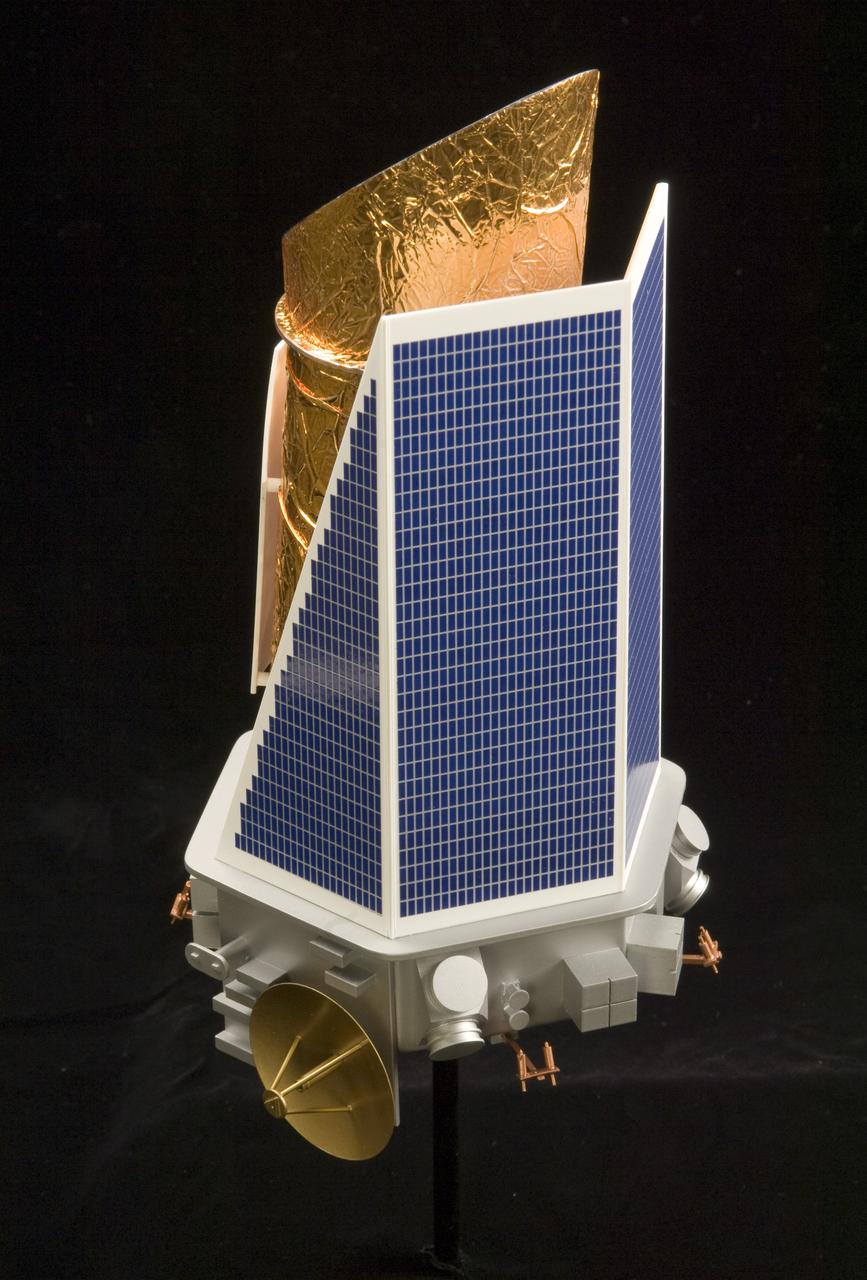
KEPLER table top model (in studio). The Kepler Mission due for launch in March 2009 will look for earth like planets around distant stars.

James Marr, NASA JPL presents a Director's Colloquium to Ames staff on 'The SIM-lite Mission Concept: Detecting Earth-like Planets around Nearby Stars'

James Marr, NASA JPL presents a Director's Colloquium to Ames staff on 'The SIM-lite Mission Concept: Detecting Earth-like Planets around Nearby Stars'
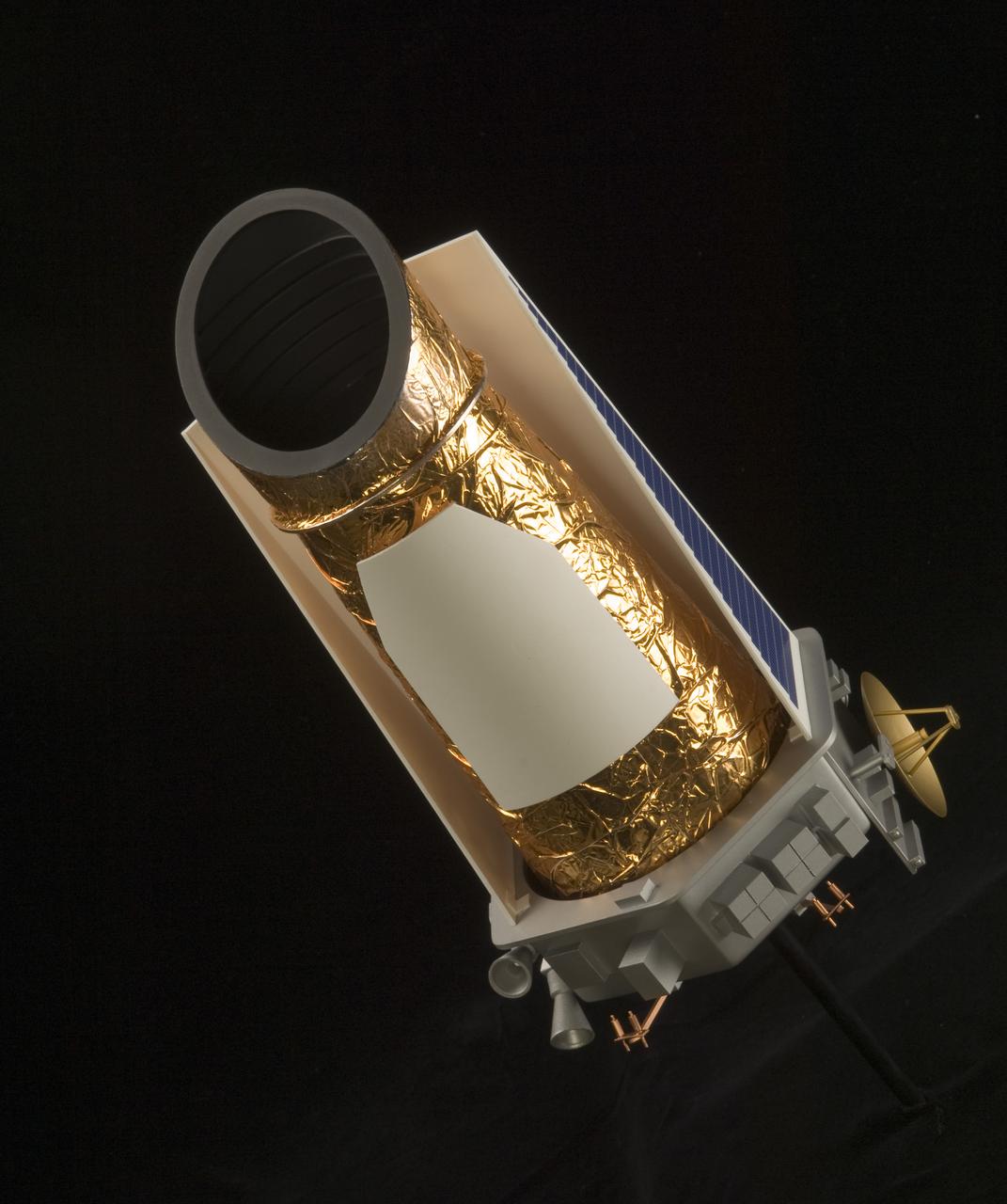
KEPLER table top model (in studio). The Kepler Mission due for launch in March 2009 will look for earth like planets around distant stars.
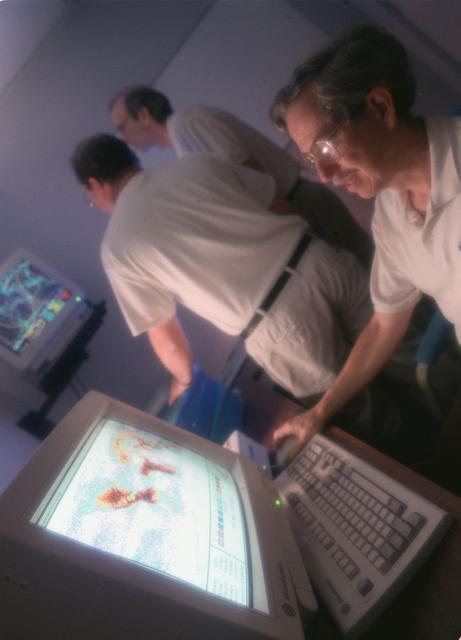
Marshall researchers conduct extensive analysis of weather patterns by using remote sensing on lightning and thunderstorms from outer space for the Mission to Planet Earth program.

art002e014225 (April 6, 2026) – Seen from afar, Earth appears as a small, delicate waning crescent suspended in the darkness of space, captured by the crew during the Artemis II mission. Only a thin sliver of the planet is illuminated, resembling the familiar crescent phases often seen when observing the Moon from Earth. Despite its distance, faint hints of Earth’s blue tones and cloud patterns are visible, offering a striking perspective of our home planet from deep space.

This artist's concept shows NASA's Kepler Space Telescope on its K2 mission. In July 2016, an international team of astronomers announced they had discovered more than 100 new planets using this telescope. The batch includes four planets in the size range of Earth that are orbiting a single dwarf star, depicted in this illustration. Two of these planets are too hot to support life as we know it, but two are in the star's "habitable" zone, where liquid water could exist on the surface. These small, rocky worlds are far closer to their star than Mercury is to our sun. But because the star is smaller and cooler than ours, its habitable zone is much closer. One of the two planets in the habitable zone, K2-72c, has a "year" about 15 Earth-days long -- the time it takes to complete one orbit. This closer planet is likely about 10 percent warmer than Earth. The slightly more distant planet in the habitable zone, K2-72e, has a year lasting 24 Earth days, and would be about 6 percent colder than Earth. http://photojournal.jpl.nasa.gov/catalog/PIA20698

ISS050-S-001 (01/27/2016) --- The Expedition 50 patch encompasses the spirit of human exploration from previous missions to the Moon to current exploration on the International Space Station (ISS). The red border symbolizes future human exploration of Mars – the Red Planet. Our home planet Earth is prominent in the patch to remind us that everything done on the mission is to help people on Earth – “Off the Earth, For the Earth.” The background colors of red, white, and blue represent the national colors of all six crewmembers – United States, Russia, and France. The six stars represent the families of all six crewmembers. Finally, the ‘50’ signifies the 50th Expedition to the ISS.
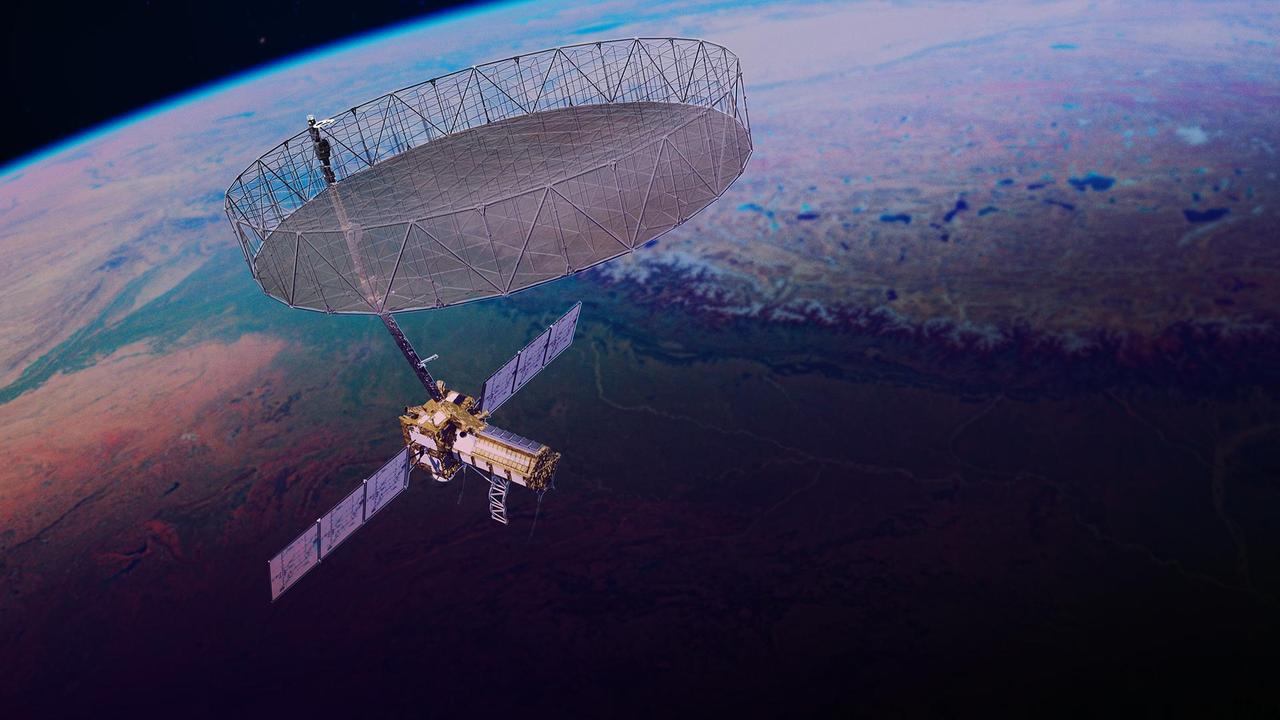
This artist's concept depicts the NISAR satellite orbiting Earth. Short for NASA-ISRO Synthetic Aperture Radar, the mission is an equal collaboration between NASA and the Indian Space Research Organisation and marks the first time the two agencies have cooperated on hardware development for an Earth-observing mission. Observations from NISAR will benefit humanity by helping researchers around the world better understand changes in our planet's surface, including its ice sheets, glaciers, and sea ice. It also will capture changes in forest and wetland ecosystems and track movement and deformation of our planet's crust by phenomena such as earthquakes, landslides, and volcanic activity. The global and rapid coverage from NISAR will provide unprecedented support for disaster response, producing data to assist in mitigating and assessing damage, with observations before and after catastrophic events available in short time frames. NISAR launched from ISRO's Satish Dhawan Space Centre on India's southeastern coast on July 30, 2025. https://photojournal.jpl.nasa.gov/catalog/PIA26613

jsc2025e034457 (March 18, 2025) -- The official Artemis II mission crew patch. The Artemis II test flight begins when a mighty team launches the first crew of the Artemis generation. This patch designates the mission as “AII,” signifying not only the second major flight of the Artemis campaign, but also an endeavor of discovery that seeks to explore for all and by all. Framed in Apollo 8’s famous Earthrise photo, the scene of the Earth and the Moon represents the dual nature of human spaceflight, both equally compelling: The Moon represents our exploration destination, focused on discovery of the unknown. The Earth represents home, focused on the perspective we gain when we look back at our shared planet and learn what it is to be uniquely human. The orbit around Earth highlights the ongoing exploration missions that have enabled Artemis to set sights on a long-term presence on the Moon and soon, Mars. Credit: NASA
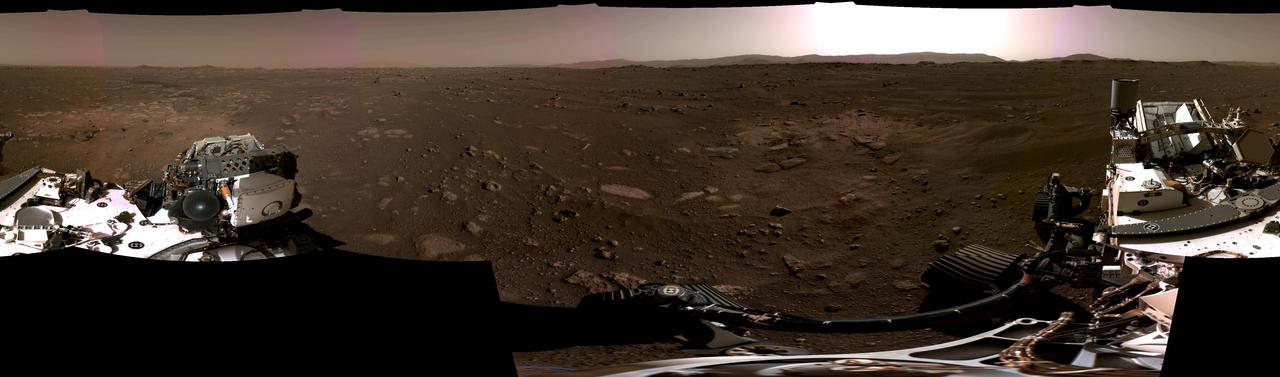
This panorama, taken on Feb. 20, 2021, by the Navigation Cameras, or Navcams, aboard NASA's Perseverance Mars rover, was stitched together from six individual images after they were sent back to Earth. A key objective for Perseverance's mission on Mars is astrobiology, including the search for signs of ancient microbial life. The rover will characterize the planet's geology and past climate, pave the way for human exploration of the Red Planet, and be the first mission to collect and cache Martian rock and regolith. Subsequent missions, currently under consideration by NASA in cooperation with ESA (European Space Agency), would send spacecraft to Mars to collect these cached samples from the surface and return them to Earth for in-depth analysis. The Mars 2020 Perseverance mission is part of NASA's Moon to Mars exploration approach, which includes Artemis missions to the Moon that will help prepare for human exploration of the Red Planet. https://photojournal.jpl.nasa.gov/catalog/PIA24422
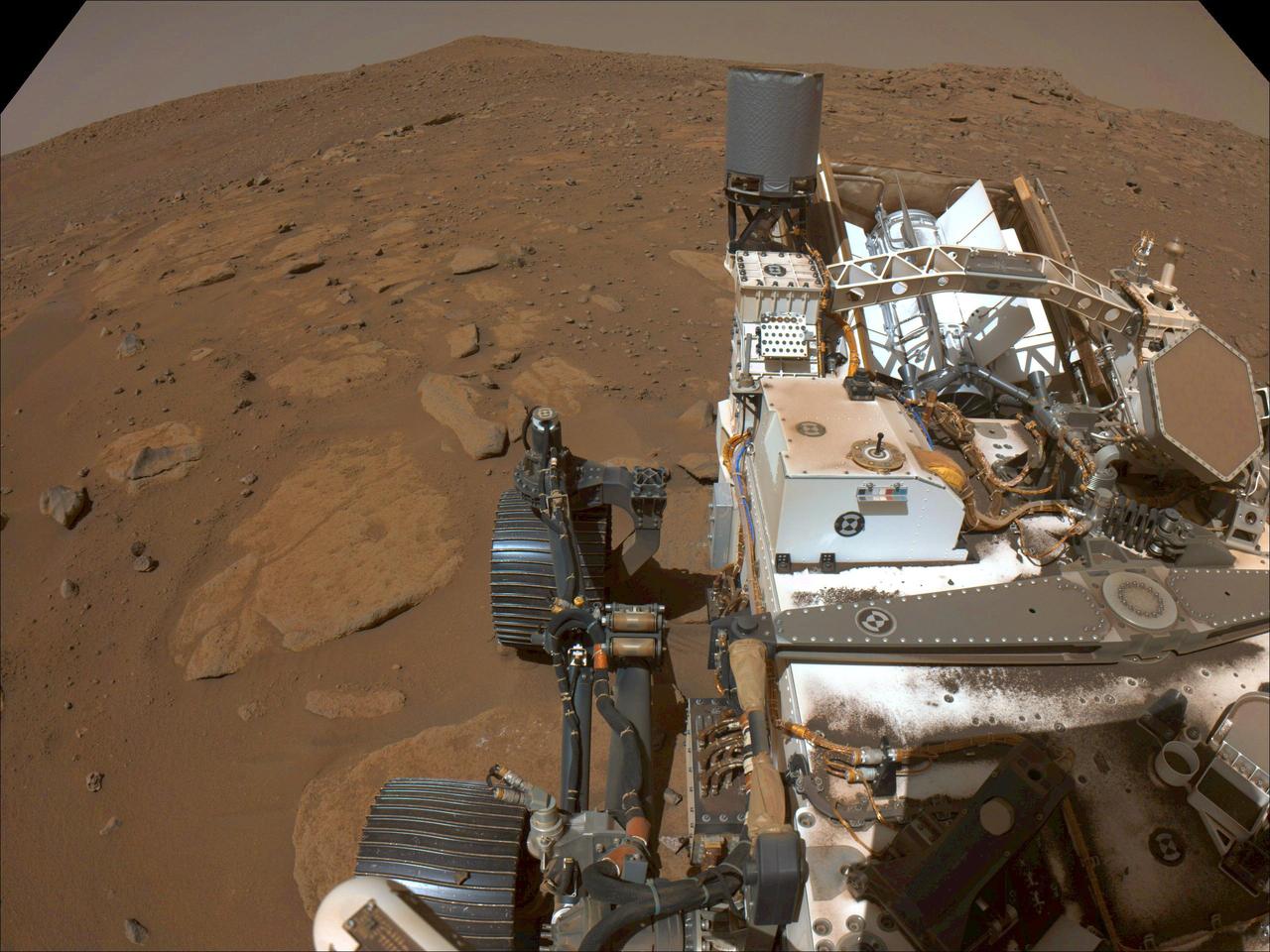
NASA's Perseverance rover captured this view of the location where it will be parked for several weeks during Mars solar conjunction, a period when engineers stop sending commands to spacecraft at the Red Planet. During this time, Mars and Earth are on opposite sides of the Sun, which expels hot, ionized gas that can interfere with radio signals sent between the planets. This image was taken by the rover's left navigation camera on Nov. 1, 2023, the 960th Martian day, or sol, of the mission. A key objective for Perseverance's mission on Mars is astrobiology, including the search for signs of ancient microbial life. The rover will characterize the planet's geology and past climate, pave the way for human exploration of the Red Planet, and be the first mission to collect and cache Martian rock and regolith (broken rock and dust). Subsequent NASA missions, in cooperation with ESA (European Space Agency), would send spacecraft to Mars to collect these sealed samples from the surface and return them to Earth for in-depth analysis. The Mars 2020 Perseverance mission is part of NASA's Moon to Mars exploration approach, which includes Artemis missions to the Moon that will help prepare for human exploration of the Red Planet. https://photojournal.jpl.nasa.gov/catalog/PIA26202
KENNEDY SPACE CENTER, FLA. - MESSENGER, a NASA Discovery mission. The MESSENGER (MErcury Surface, Space ENvironment, GEochemistry, and Ranging) mission is a scientific investigation of the planet Mercury. MESSENGER will be launched in the summer of 2004 and will enter Mercury orbit in March of 2011, after one Earth flyby, two flybys of Venus, and three of Mercury along the way. The flyby and orbital phases of the mission will provide global mapping and detailed characterization of the planet's surface, interior, atmosphere and magnetosphere.
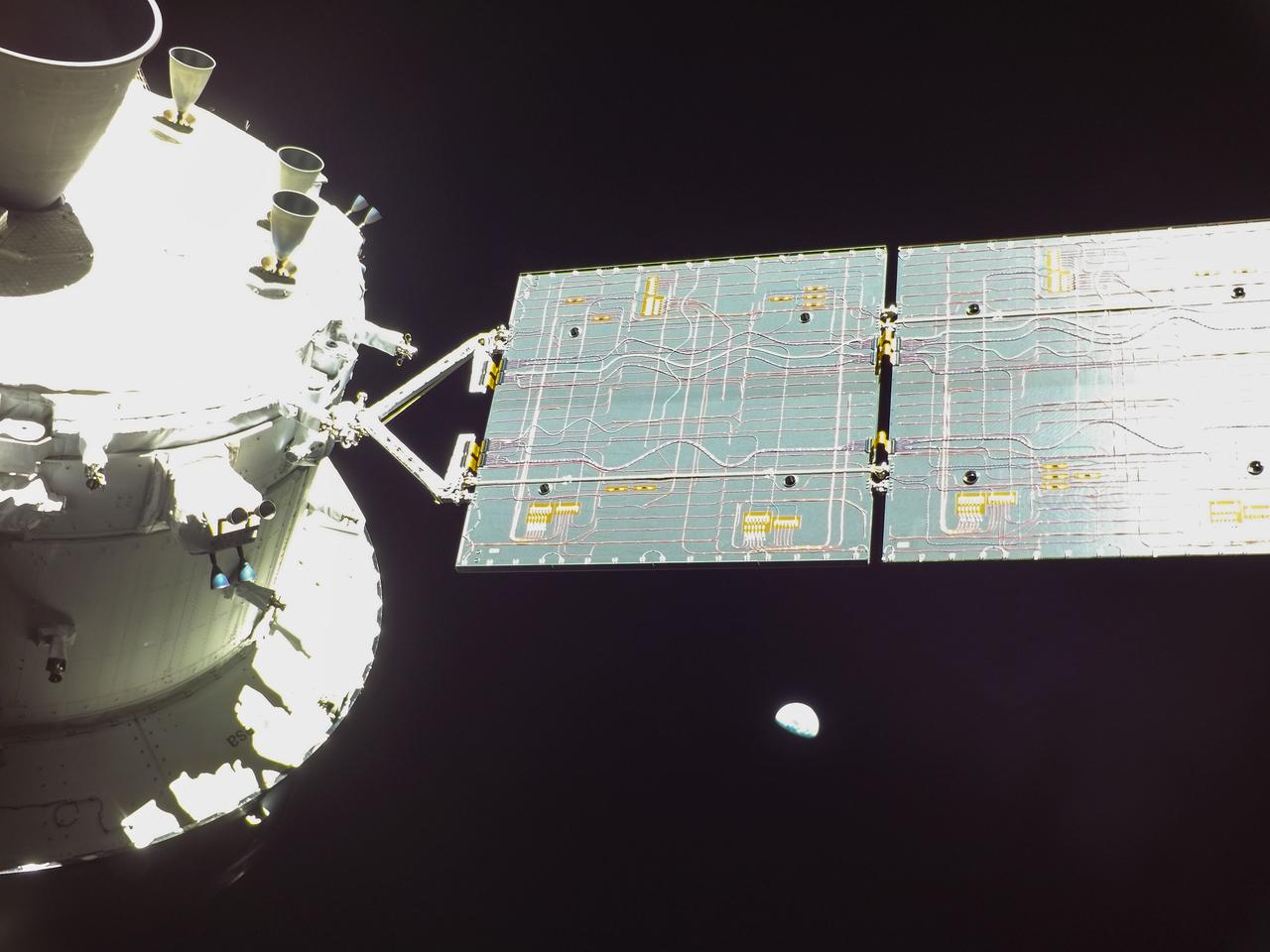
art001e001717 (Nov. 29, 2022) A camera on the tip of one of the Orion’s four solar arrays captured Earth when the spacecraft was 264,000 miles from our home planet on the Artemis I mission.
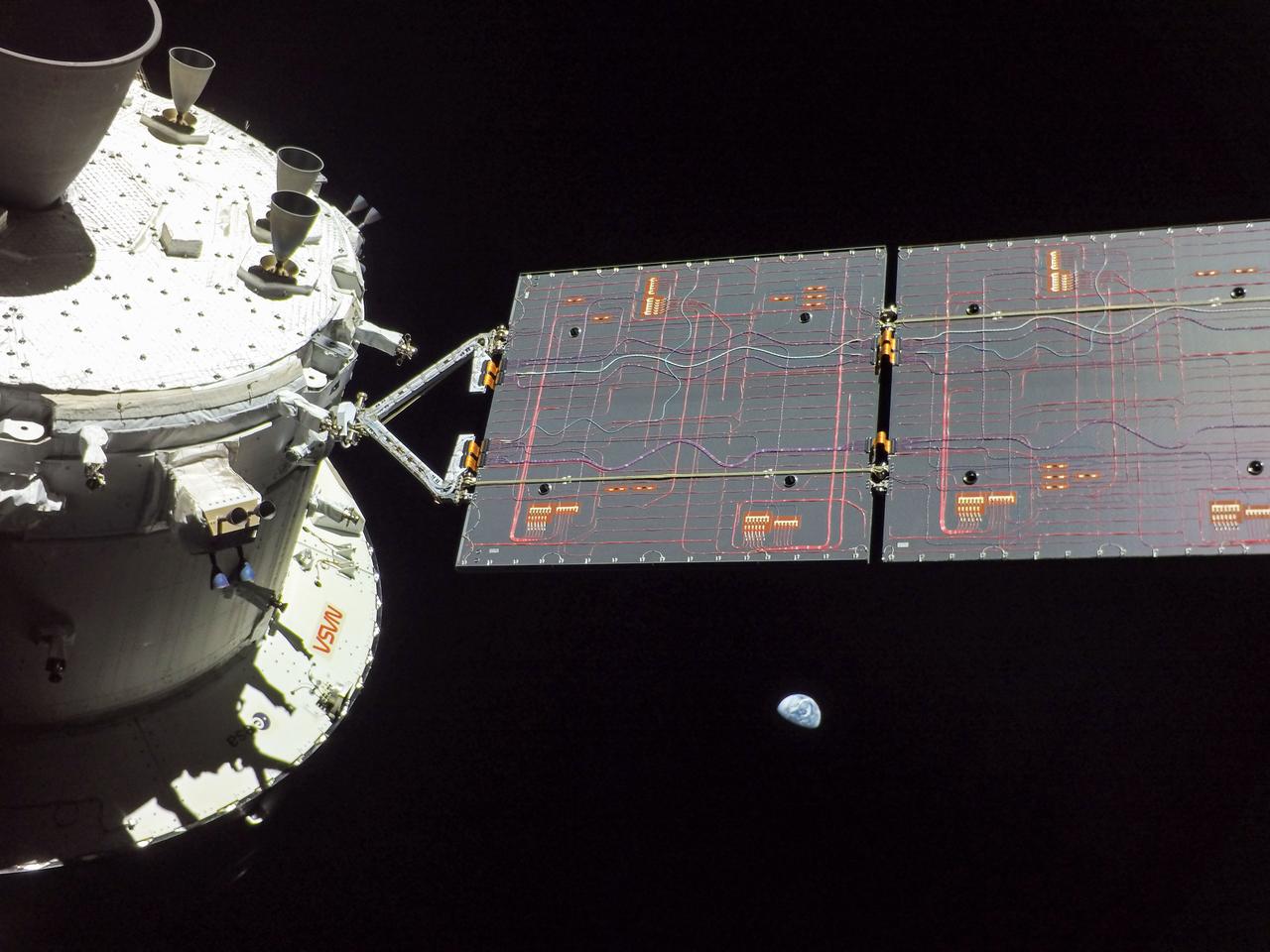
art001e001715 (Nov. 29, 2022) A camera on the tip of one of the Orion’s four solar arrays captured Earth when the spacecraft was 264,000 miles from our home planet on the Artemis I mission.
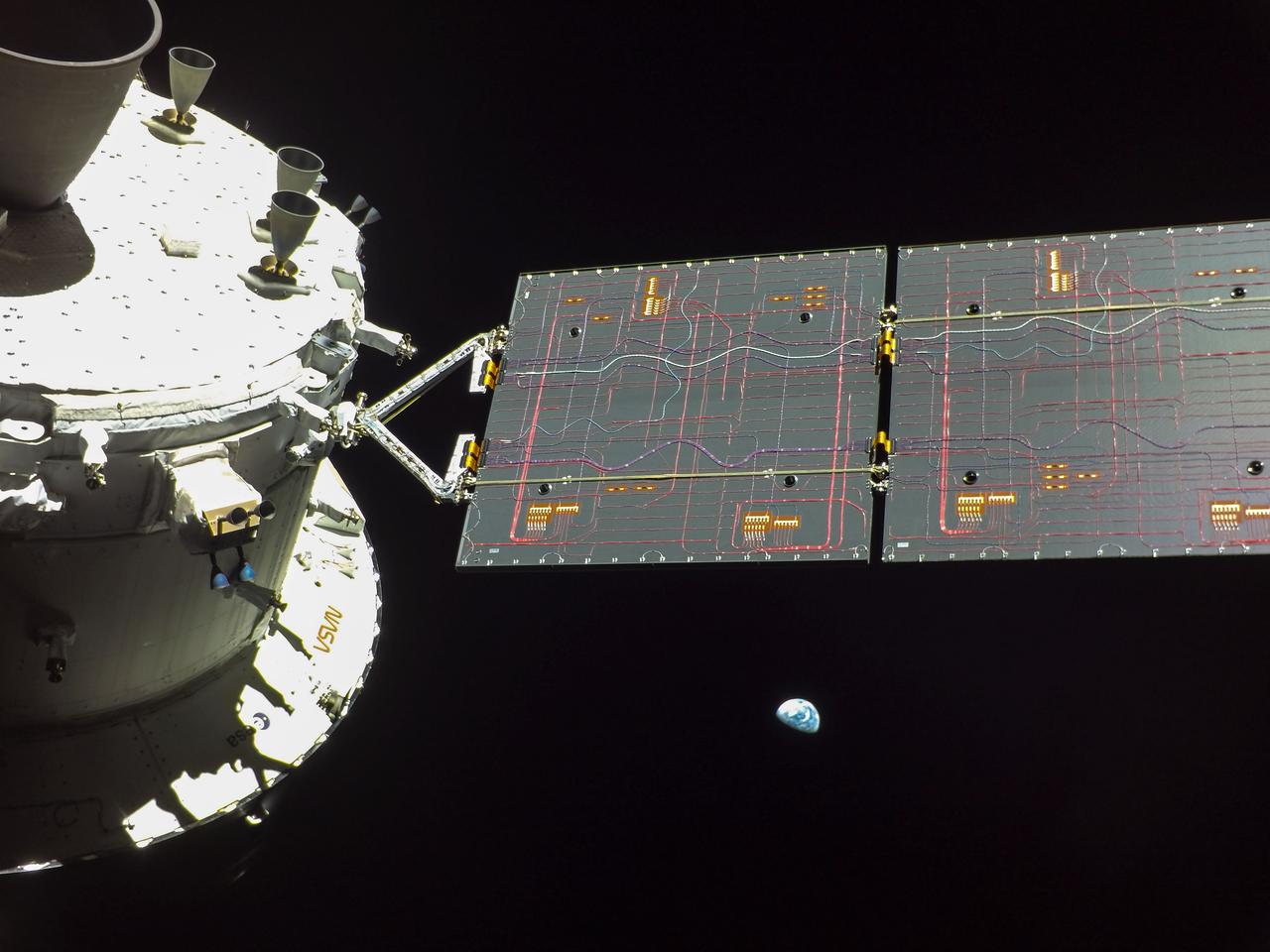
art001e001716 (Nov. 29, 2022) A camera on the tip of one of the Orion’s four solar arrays captured Earth when the spacecraft was 264,000 miles from our home planet on the Artemis I mission.

This first high-resolution image, taken on the first day of the Artemis I mission, was captured by a camera on the tip of one of Orion’s solar arrays. The spacecraft was 57,000 miles from Earth when the image was captured, and continues to distance itself from planet Earth as it approaches the Moon and distant retrograde orbit.
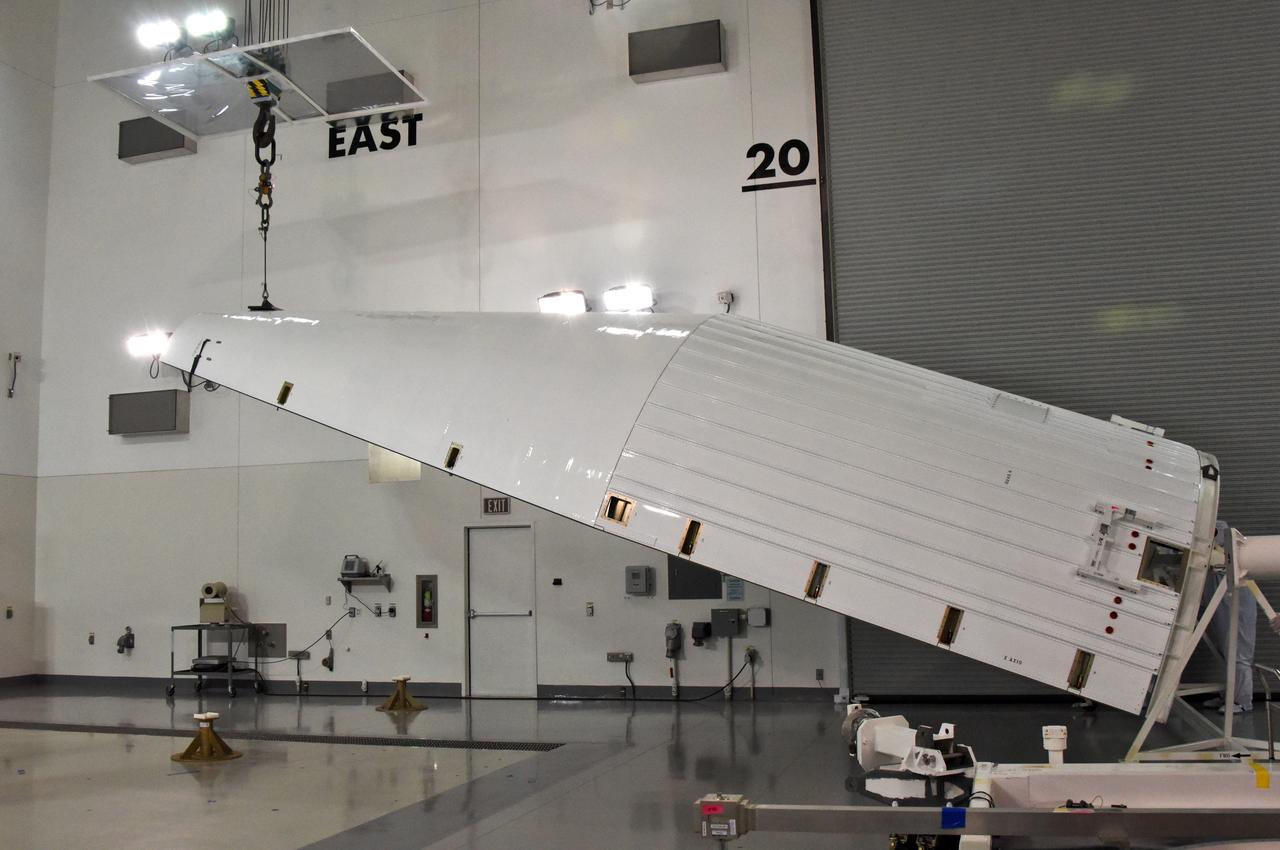
In the Astrotech facility at Vandenberg Air Force Base in California, the payload fairing for the United Launch Alliance (ULA) Atlas V for NASA's upcoming Interior Exploration using Seismic Investigations, Geodesy and Heat Transport, or InSight, mission to land on Mars is lifted to the vertical position. InSight is the first mission to explore the Red Planet's deep interior. It will investigate processes that shaped the rocky planets of the inner solar system including Earth. Liftoff atop a ULA Atlas V rocket is scheduled for May 5, 2018.
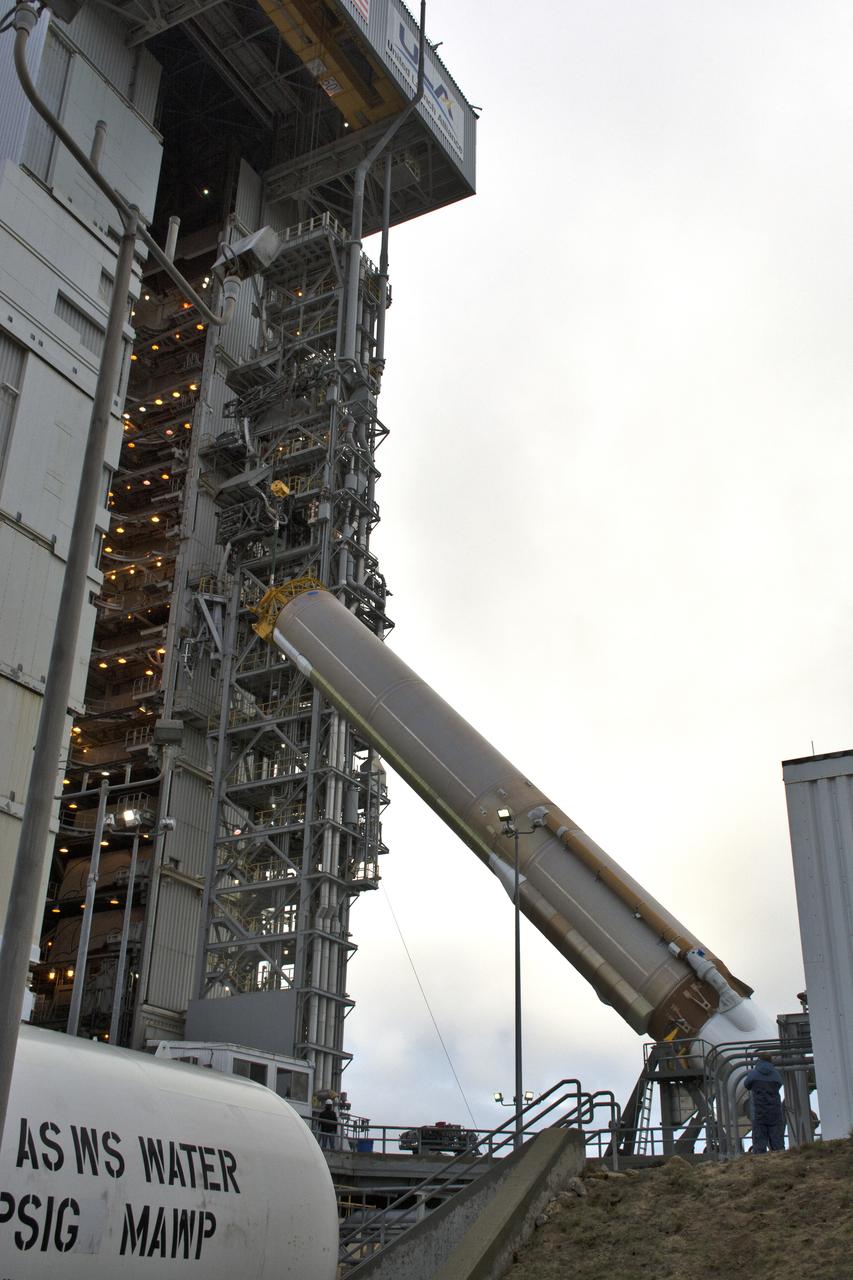
A crane lifts a United Launch Alliance Atlas V booster at Space Launch Complex 3 at Vandenberg Air Force Base in California. The rocket will launch NASA's Interior Exploration using Seismic Investigations, Geodesy and Heat Transport, or InSight, mission to land on Mars. InSight is the first mission to explore the Red Planet's deep interior. It will investigate processes that shaped the rocky planets of the inner solar system including Earth. Liftoff is scheduled for May 5, 2018.
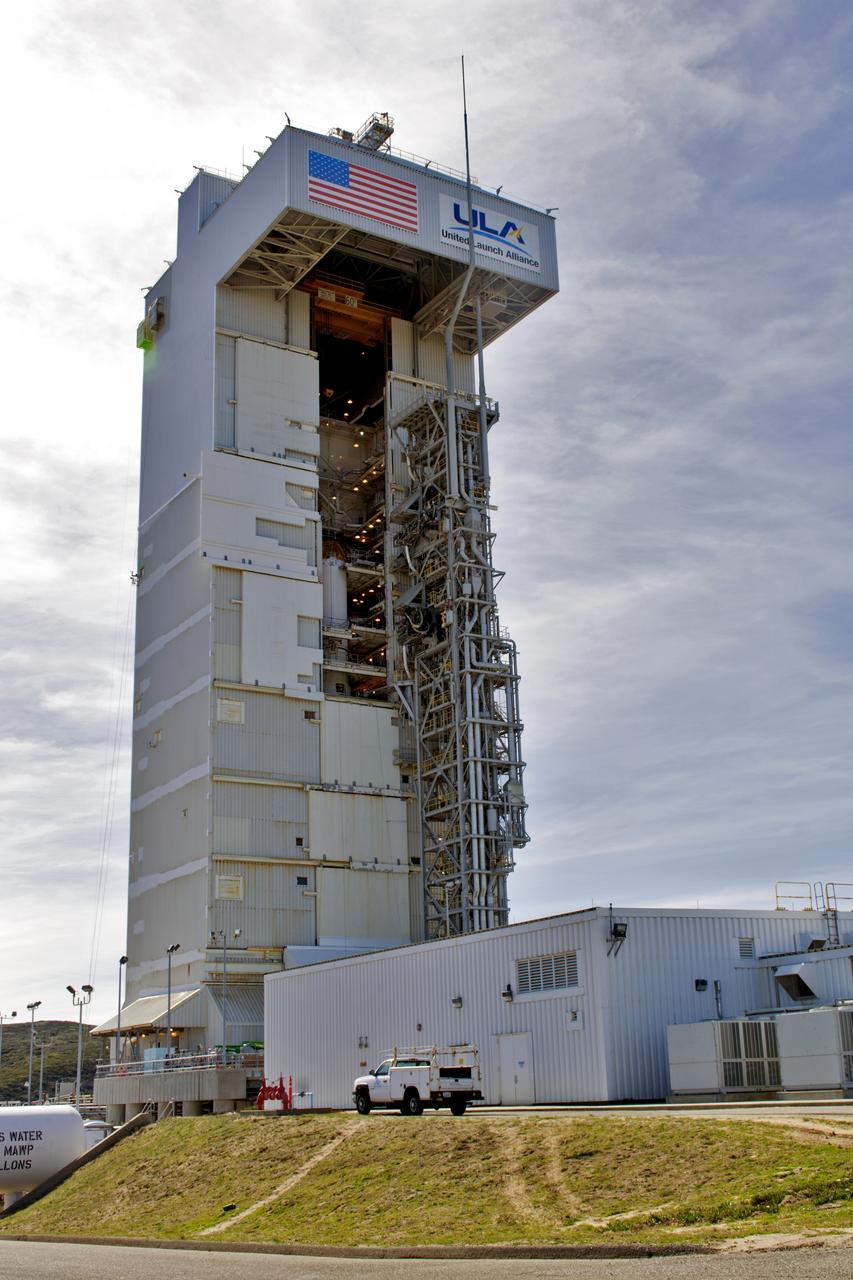
At Space Launch Complex 3 at Vandenberg Air Force Base in California a crane lifts a United Launch Alliance Centaur upper stage for mating atop an Atlas V booster. The rocket will launch NASA's Interior Exploration using Seismic Investigations, Geodesy and Heat Transport, or InSight, mission to land on Mars. InSight is the first mission to explore the Red Planet's deep interior. It will investigate processes that shaped the rocky planets of the inner solar system including Earth. Liftoff is scheduled for May 5, 2018.
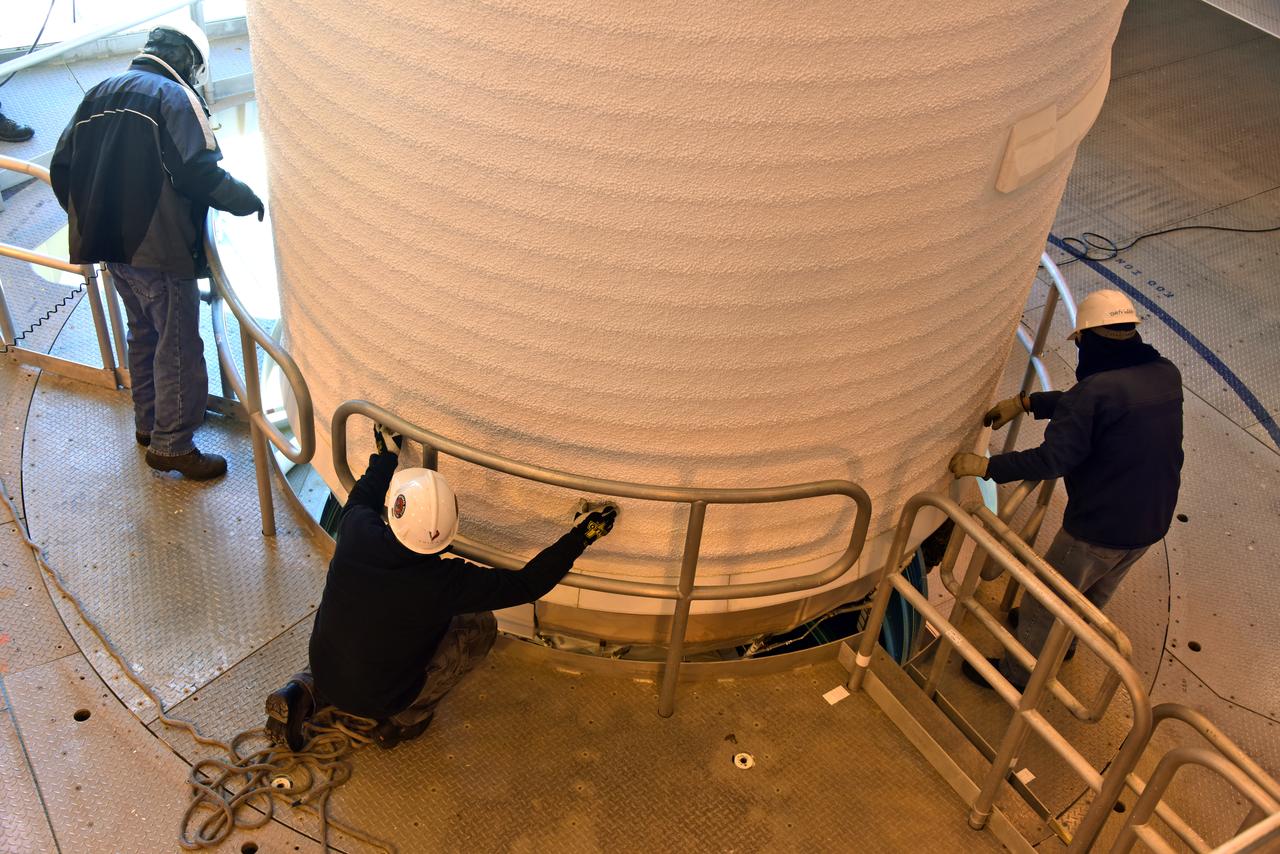
At Space Launch Complex 3 at Vandenberg Air Force Base in California technicians and engineers mate a United Launch Alliance Centaur upper stage atop an Atlas V booster. The rocket will launch NASA's Interior Exploration using Seismic Investigations, Geodesy and Heat Transport, or InSight, mission to land on Mars. InSight is the first mission to explore the Red Planet's deep interior. It will investigate processes that shaped the rocky planets of the inner solar system including Earth. Liftoff is scheduled for May 5, 2018.
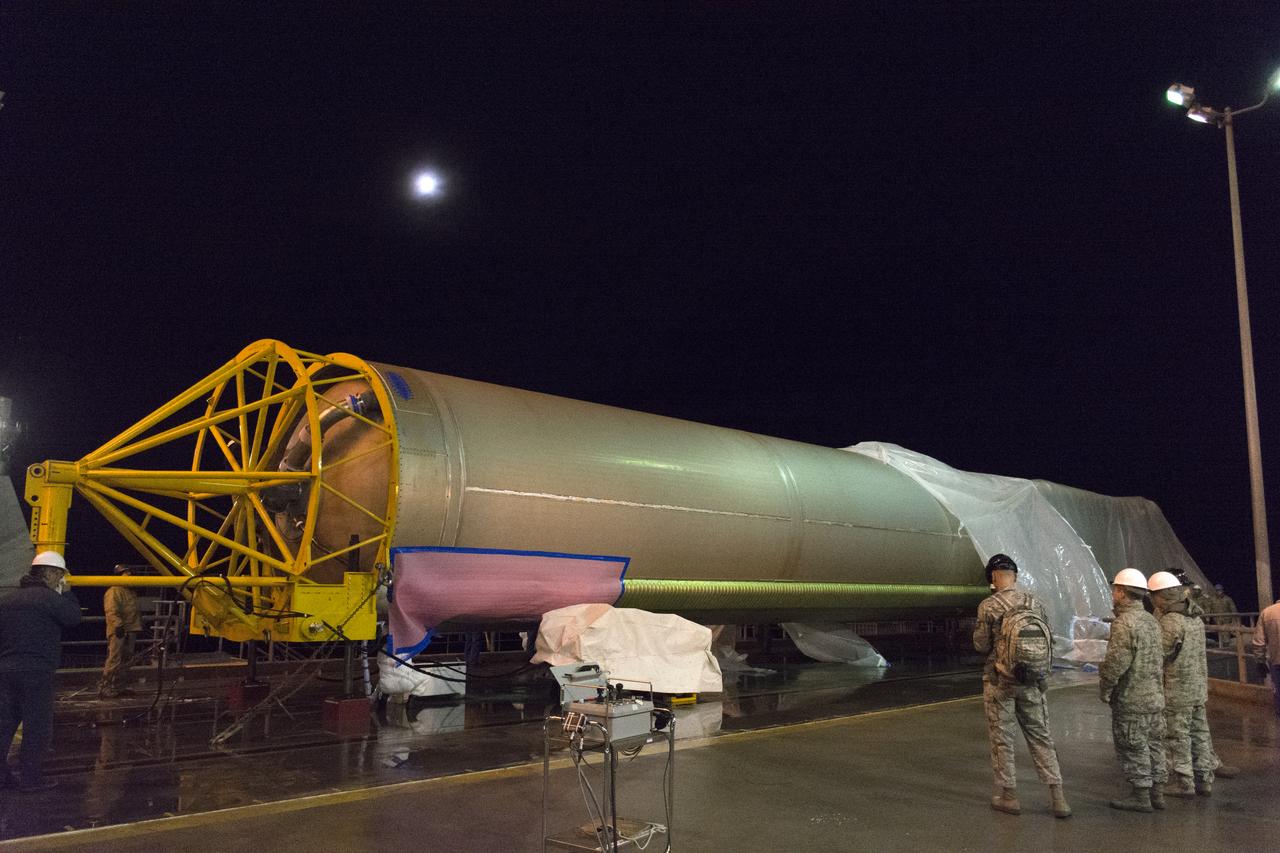
A United Launch Alliance Atlas V booster arrives at Space Launch Complex 3 at Vandenberg Air Force Base in California. The rocket will launch NASA's Interior Exploration using Seismic Investigations, Geodesy and Heat Transport, or InSight, mission to land on Mars. InSight is the first mission to explore the Red Planet's deep interior. It will investigate processes that shaped the rocky planets of the inner solar system including Earth. Liftoff is scheduled for May 5, 2018.
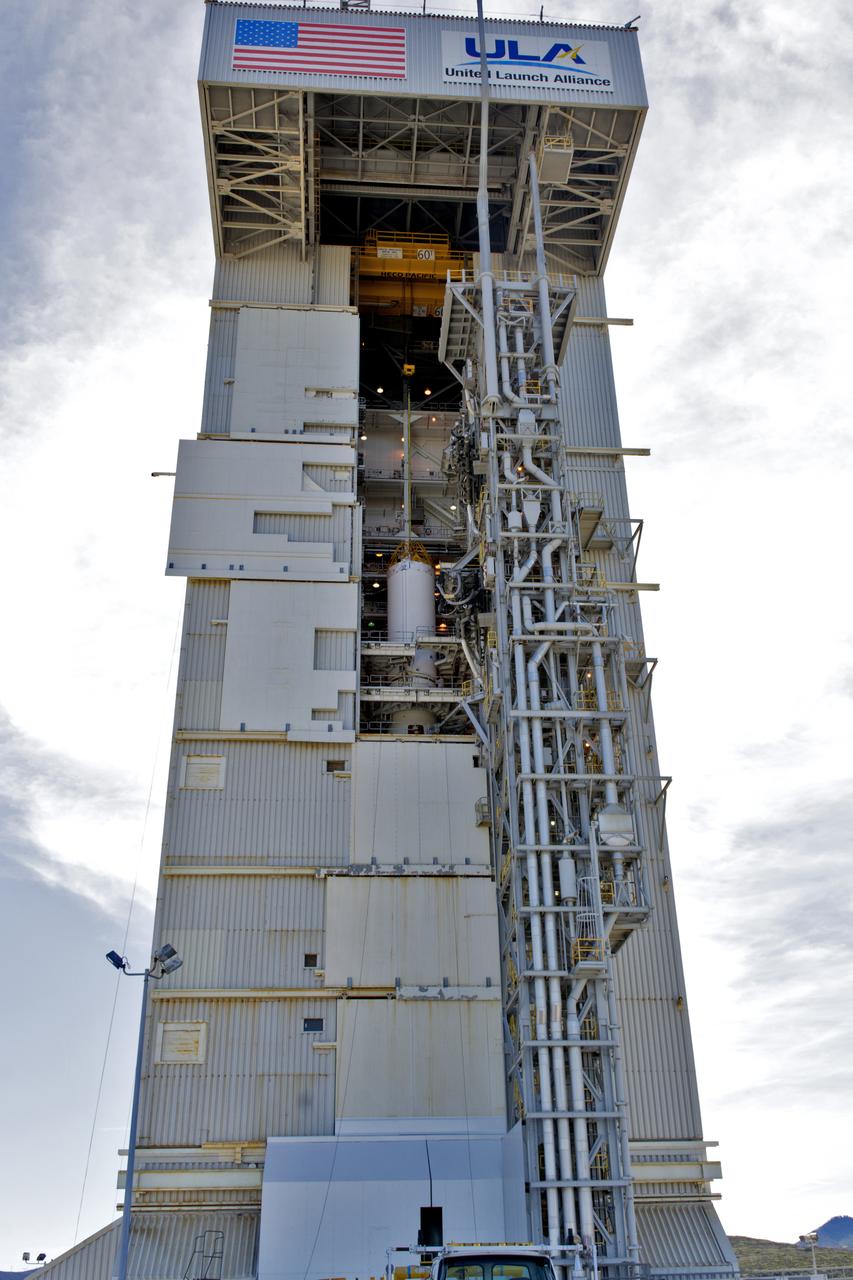
At Space Launch Complex 3 at Vandenberg Air Force Base in California a crane lifts a United Launch Alliance Centaur upper stage for mating atop an Atlas V booster. The rocket will launch NASA's Interior Exploration using Seismic Investigations, Geodesy and Heat Transport, or InSight, mission to land on Mars. InSight is the first mission to explore the Red Planet's deep interior. It will investigate processes that shaped the rocky planets of the inner solar system including Earth. Liftoff is scheduled for May 5, 2018.
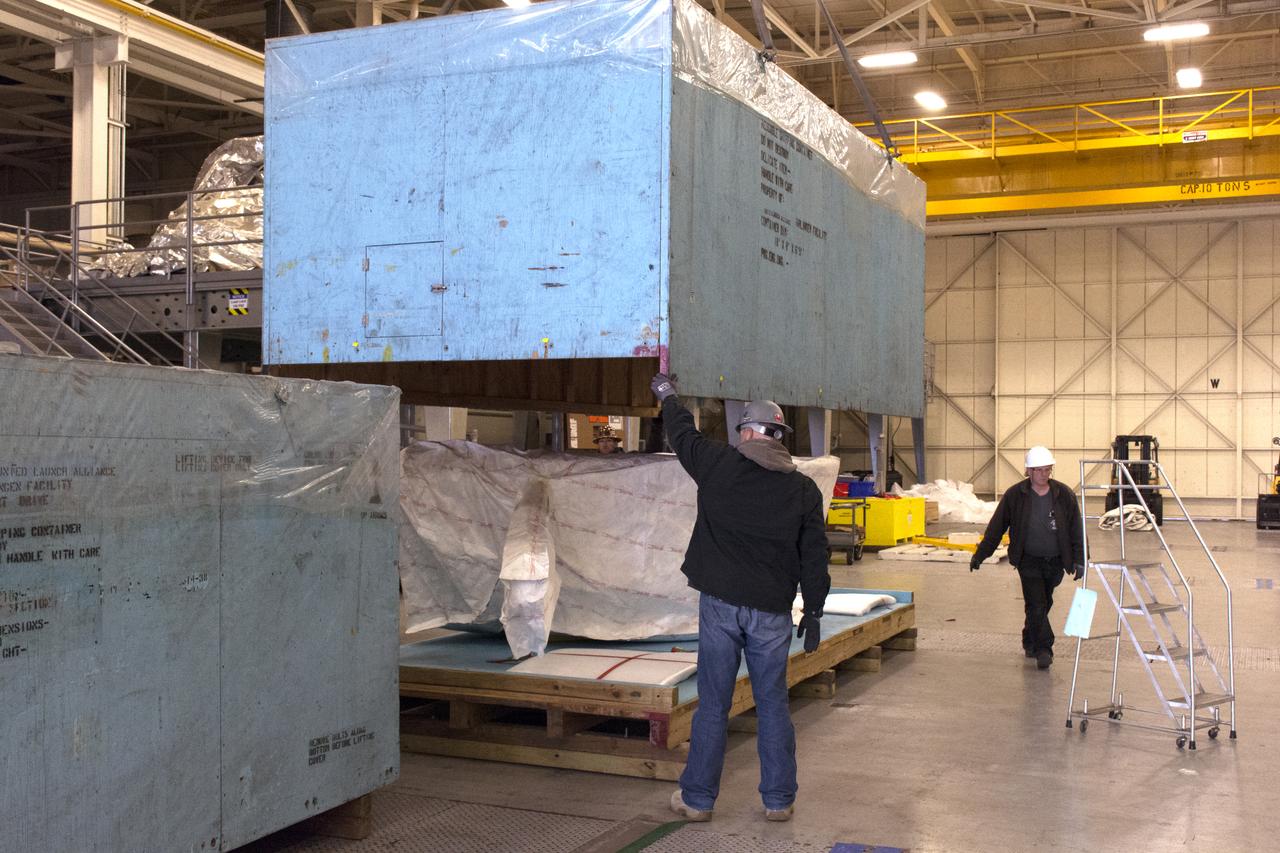
At Vandenberg Air Force Base in California, the boattail adaptor interface that will connect the Centaur upper stage to the payload fairing is offloaded for NASA's upcoming Interior Exploration using Seismic Investigations, Geodesy and Heat Transport, or InSight, mission to land on Mars. InSight will liftoff atop a United Launch Alliance Atlas V rocket to send the spacecraft on the first mission to explore the Red Planet's deep interior. It will investigate processes that shaped the rocky planets of the inner solar system including Earth. Liftoff from Vandenberg is scheduled for May 5, 2018.
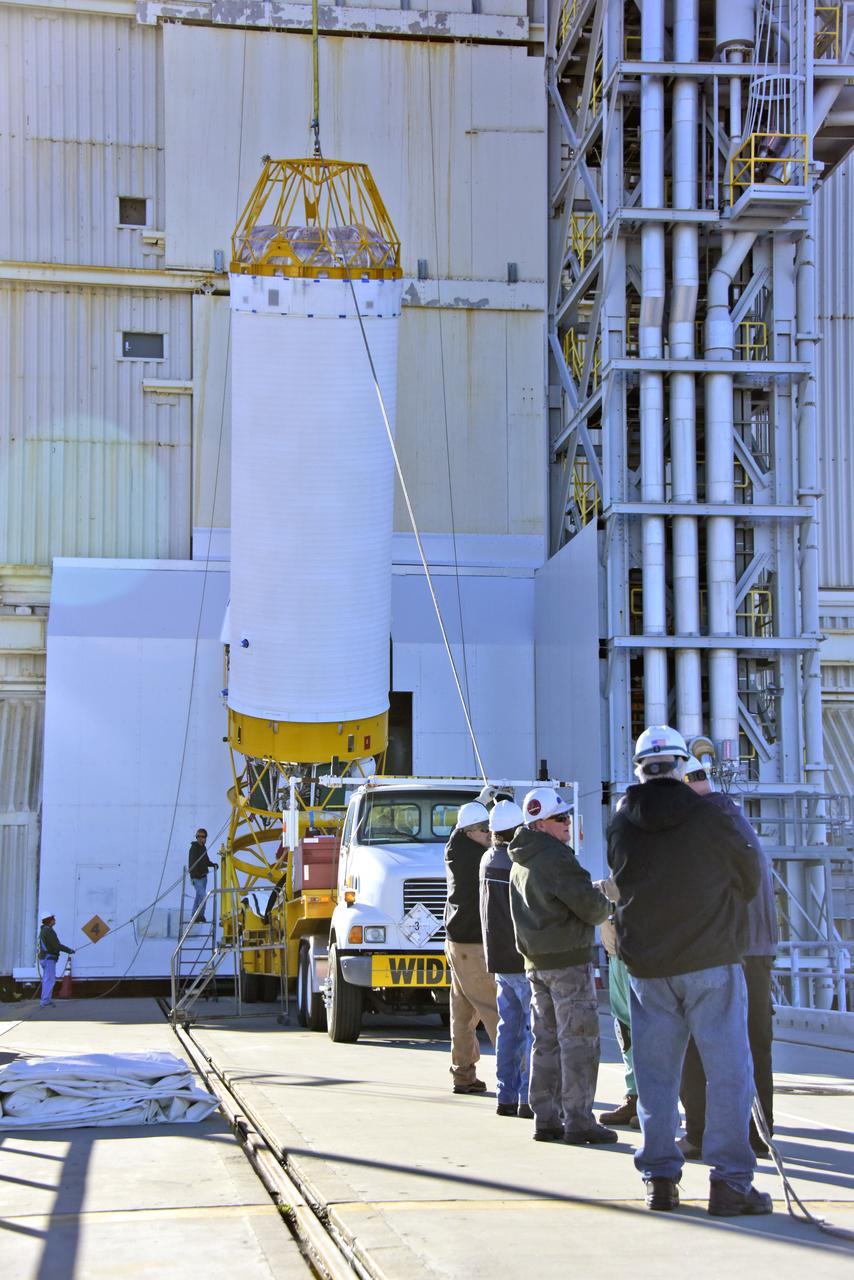
At Space Launch Complex 3 at Vandenberg Air Force Base in California a crane lifts a United Launch Alliance Centaur upper stage for mating atop an Atlas V booster. The rocket will launch NASA's Interior Exploration using Seismic Investigations, Geodesy and Heat Transport, or InSight, mission to land on Mars. InSight is the first mission to explore the Red Planet's deep interior. It will investigate processes that shaped the rocky planets of the inner solar system including Earth. Liftoff is scheduled for May 5, 2018.
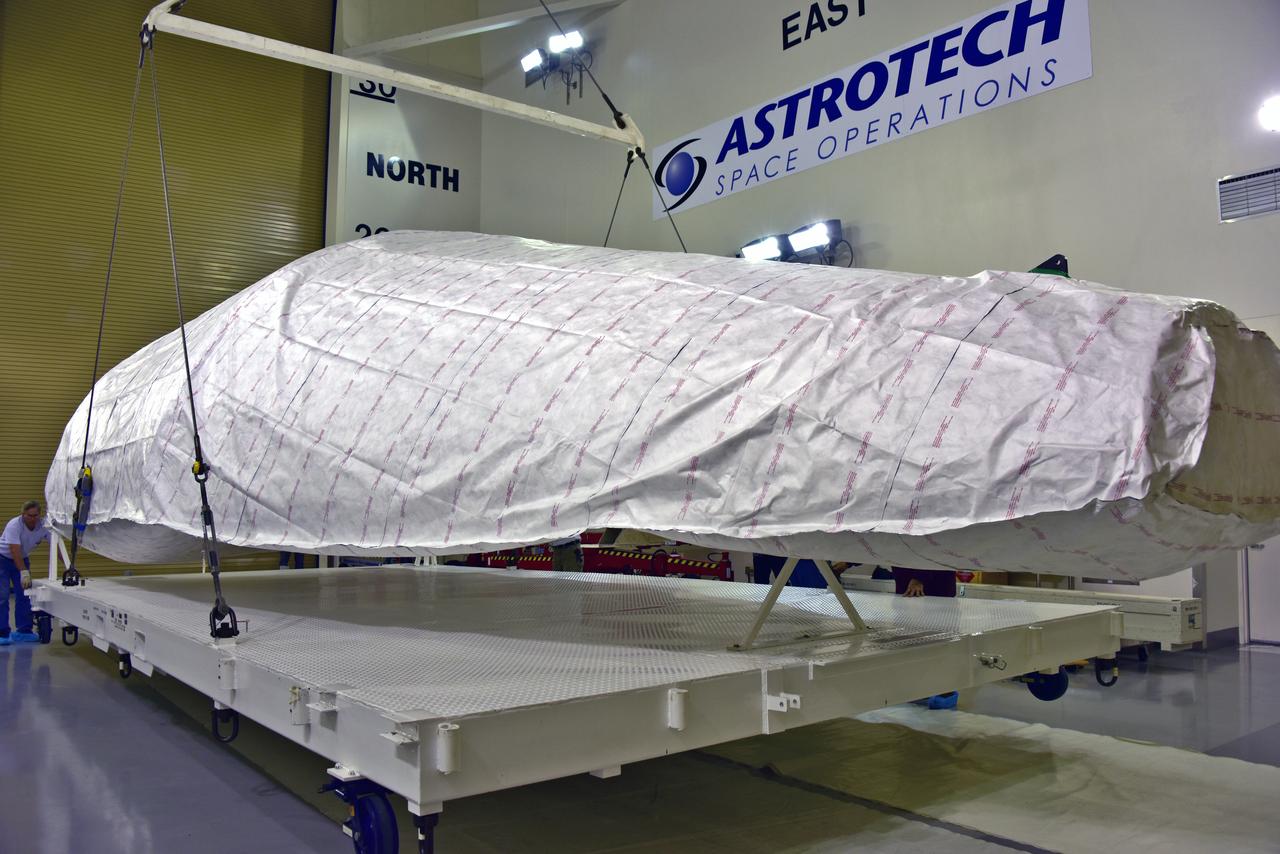
The United Launch Alliance (ULA) payload fairing for NASA's upcoming Interior Exploration using Seismic Investigations, Geodesy and Heat Transport, or InSight, mission to land on Mars has just arrived at the Astrotech facility at Vandenberg Air Force Base in California. InSight is the first mission to explore the Red Planet's deep interior. It will investigate processes that shaped the rocky planets of the inner solar system including Earth. Liftoff atop a ULA Atlas V rocket is scheduled for May 5, 2018.
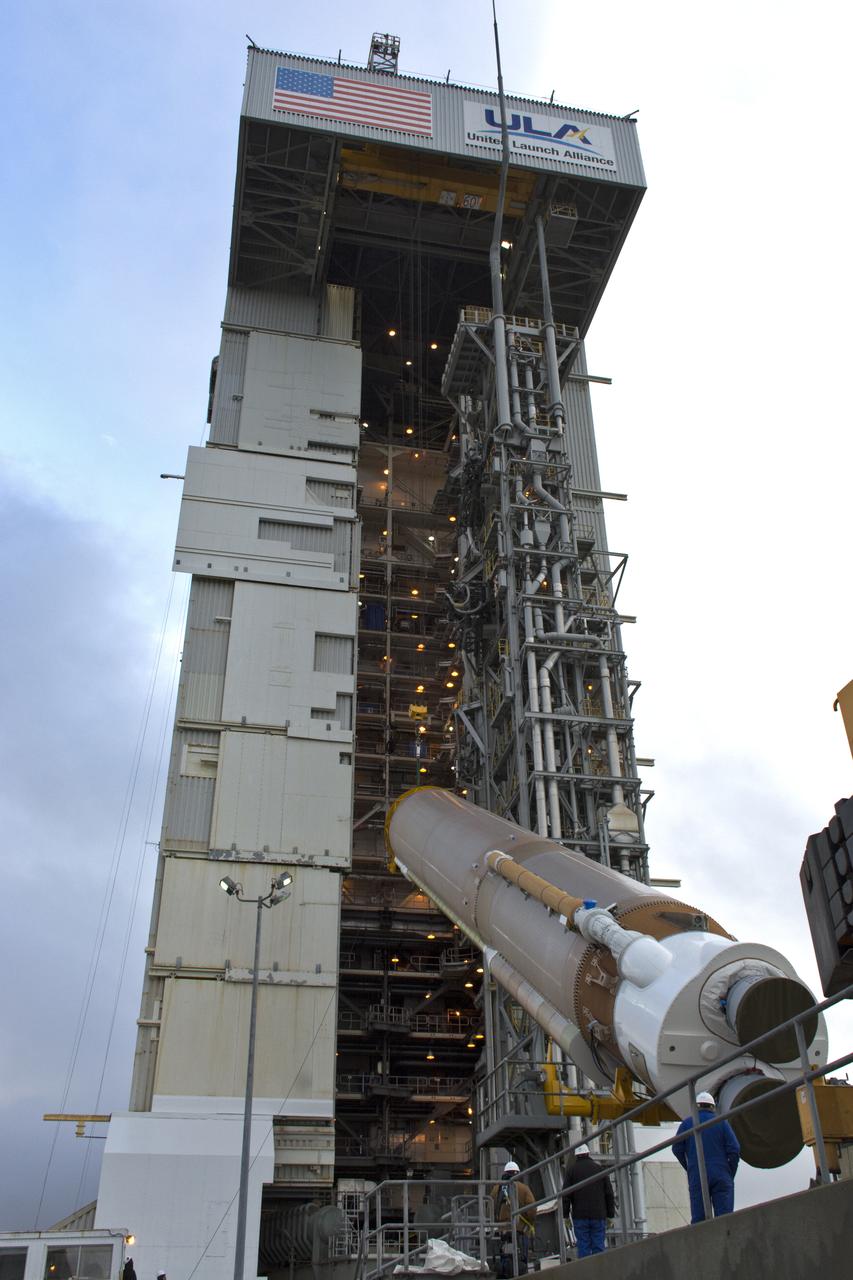
A crane lifts a United Launch Alliance Atlas V booster at Space Launch Complex 3 at Vandenberg Air Force Base in California. The rocket will launch NASA's Interior Exploration using Seismic Investigations, Geodesy and Heat Transport, or InSight, mission to land on Mars. InSight is the first mission to explore the Red Planet's deep interior. It will investigate processes that shaped the rocky planets of the inner solar system including Earth. Liftoff is scheduled for May 5, 2018.
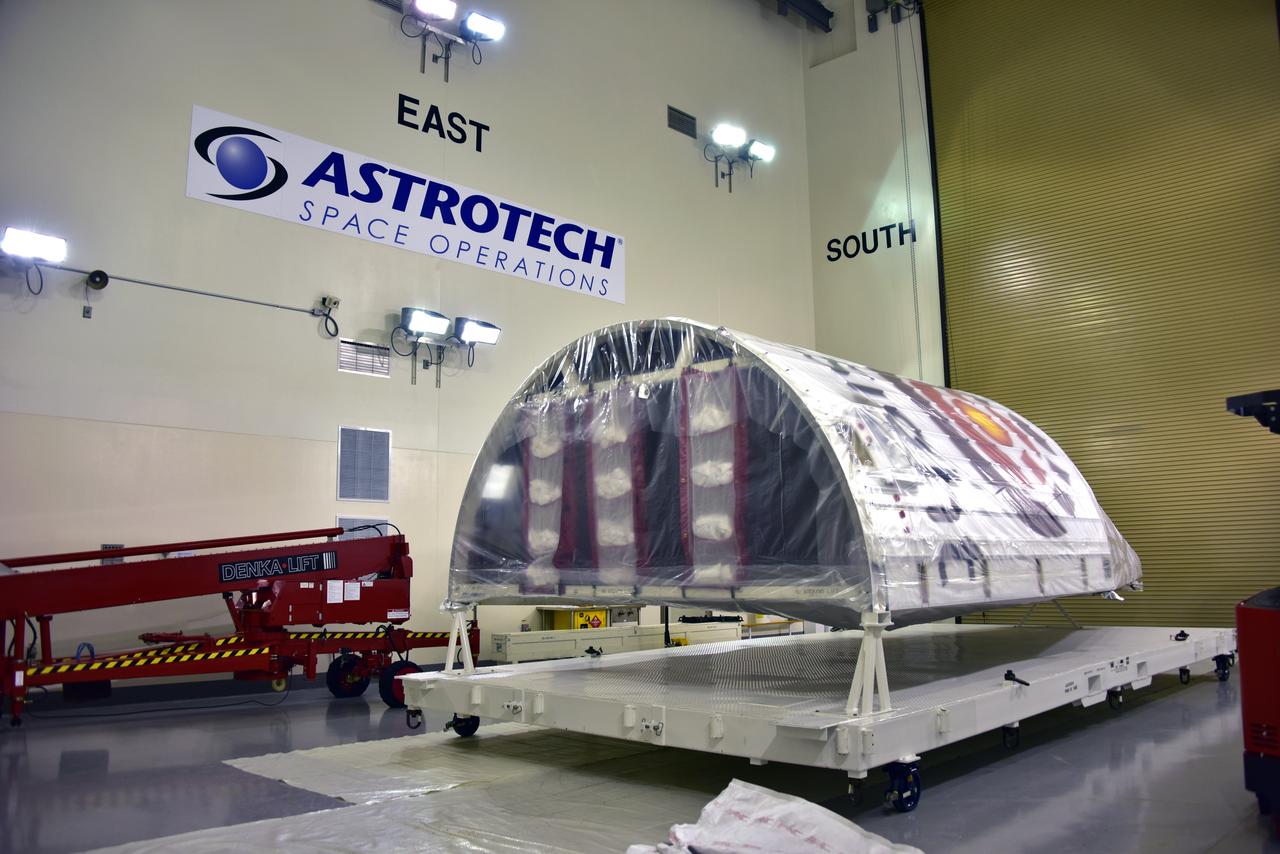
The United Launch Alliance (ULA) payload fairing for NASA's upcoming Interior Exploration using Seismic Investigations, Geodesy and Heat Transport, or InSight, mission to land on Mars has just arrived at the Astrotech facility at Vandenberg Air Force Base in California. InSight is the first mission to explore the Red Planet's deep interior. It will investigate processes that shaped the rocky planets of the inner solar system including Earth. Liftoff atop a ULA Atlas V rocket is scheduled for May 5, 2018.
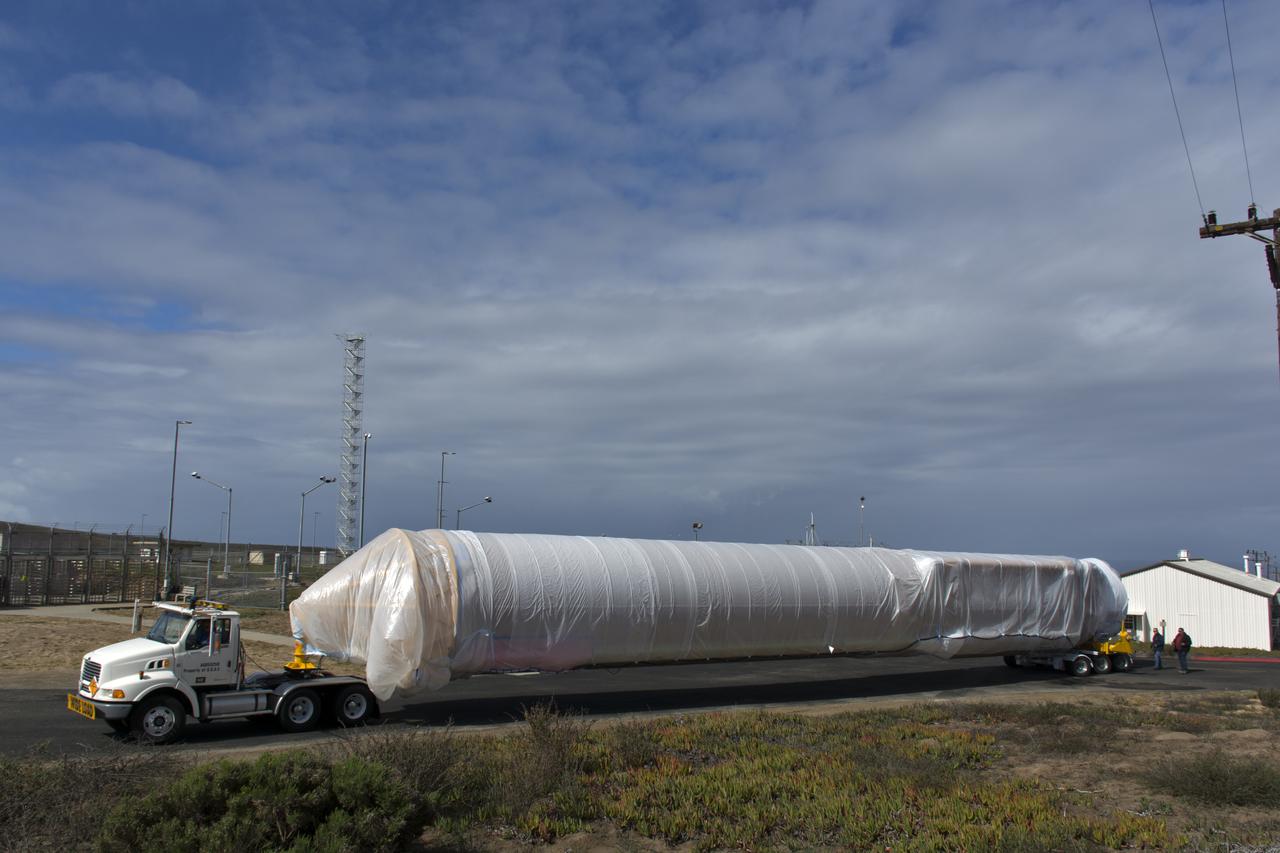
A United Launch Alliance Atlas V booster is transported to Space Launch Complex 3 at Vandenberg Air Force Base in California. The rocket will launch NASA's Interior Exploration using Seismic Investigations, Geodesy and Heat Transport, or InSight, mission to land on Mars. InSight is the first mission to explore the Red Planet's deep interior. It will investigate processes that shaped the rocky planets of the inner solar system including Earth. Liftoff is scheduled for May 5, 2018.
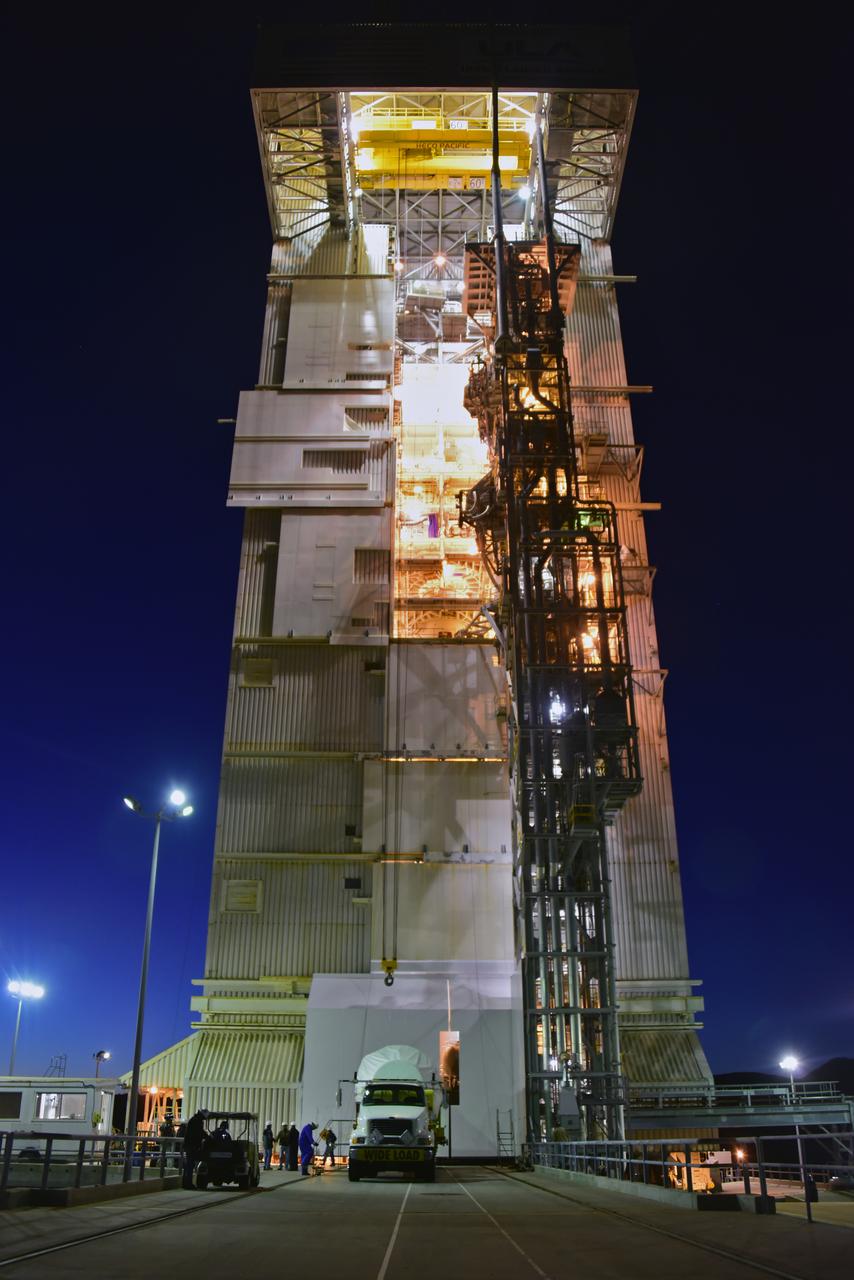
A United Launch Alliance Centaur upper stage arrives at Space Launch Complex 3 at Vandenberg Air Force Base in California. The rocket will launch NASA's Interior Exploration using Seismic Investigations, Geodesy and Heat Transport, or InSight, mission to land on Mars. InSight is the first mission to explore the Red Planet's deep interior. It will investigate processes that shaped the rocky planets of the inner solar system including Earth. Liftoff is scheduled for May 5, 2018.
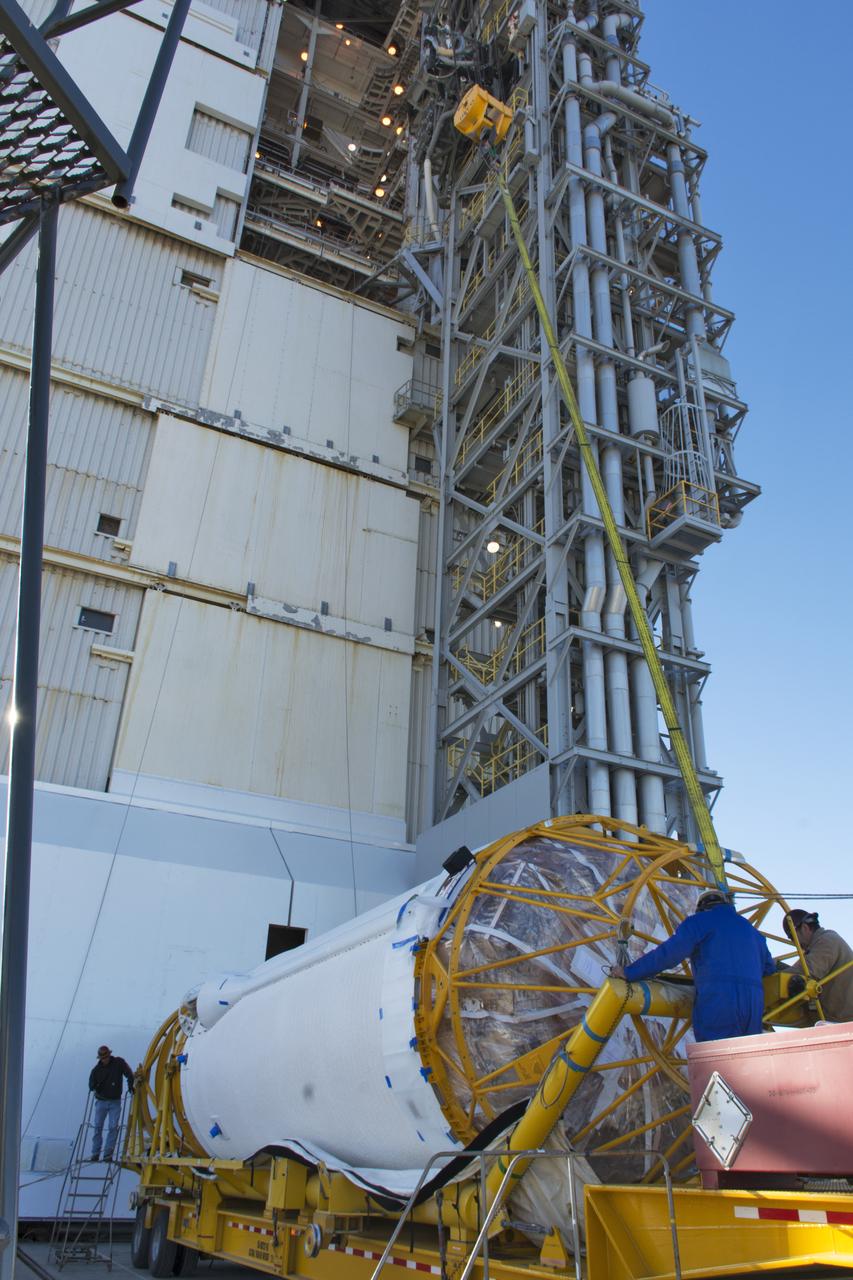
At Space Launch Complex 3 at Vandenberg Air Force Base in California technicians and engineers prepare a United Launch Alliance Centaur upper stage for lifting and mating atop an Atlas V booster. The rocket will launch NASA's Interior Exploration using Seismic Investigations, Geodesy and Heat Transport, or InSight, mission to land on Mars. InSight is the first mission to explore the Red Planet's deep interior. It will investigate processes that shaped the rocky planets of the inner solar system including Earth. Liftoff is scheduled for May 5, 2018.
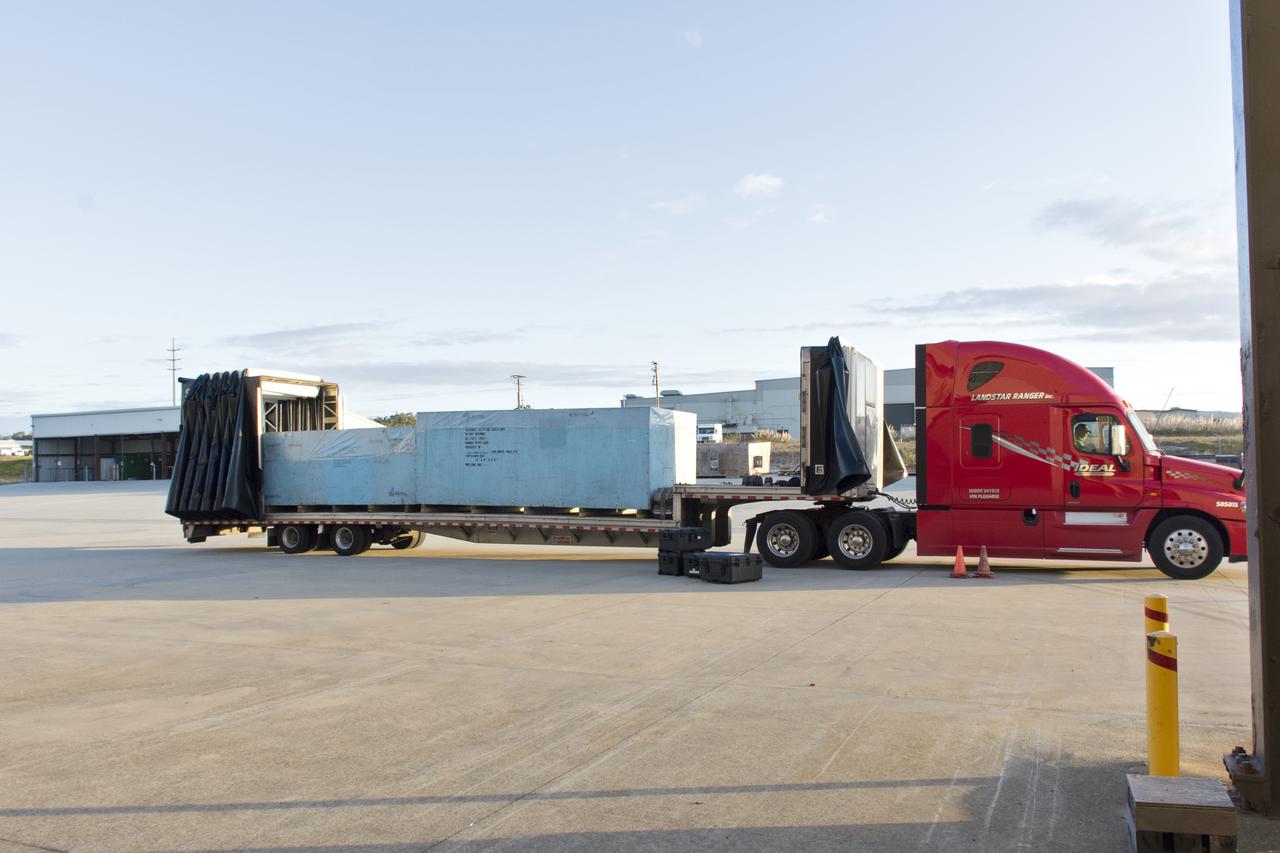
At Vandenberg Air Force Base in California, the boattail adaptor interface that will connect the Centaur upper stage to the payload fairing arrives for NASA's upcoming Interior Exploration using Seismic Investigations, Geodesy and Heat Transport, or InSight, mission to land on Mars. InSight will liftoff atop a United Launch Alliance Atlas V rocket to send the spacecraft on the first mission to explore the Red Planet's deep interior. It will investigate processes that shaped the rocky planets of the inner solar system including Earth. Liftoff from Vandenberg is scheduled for May 5, 2018.
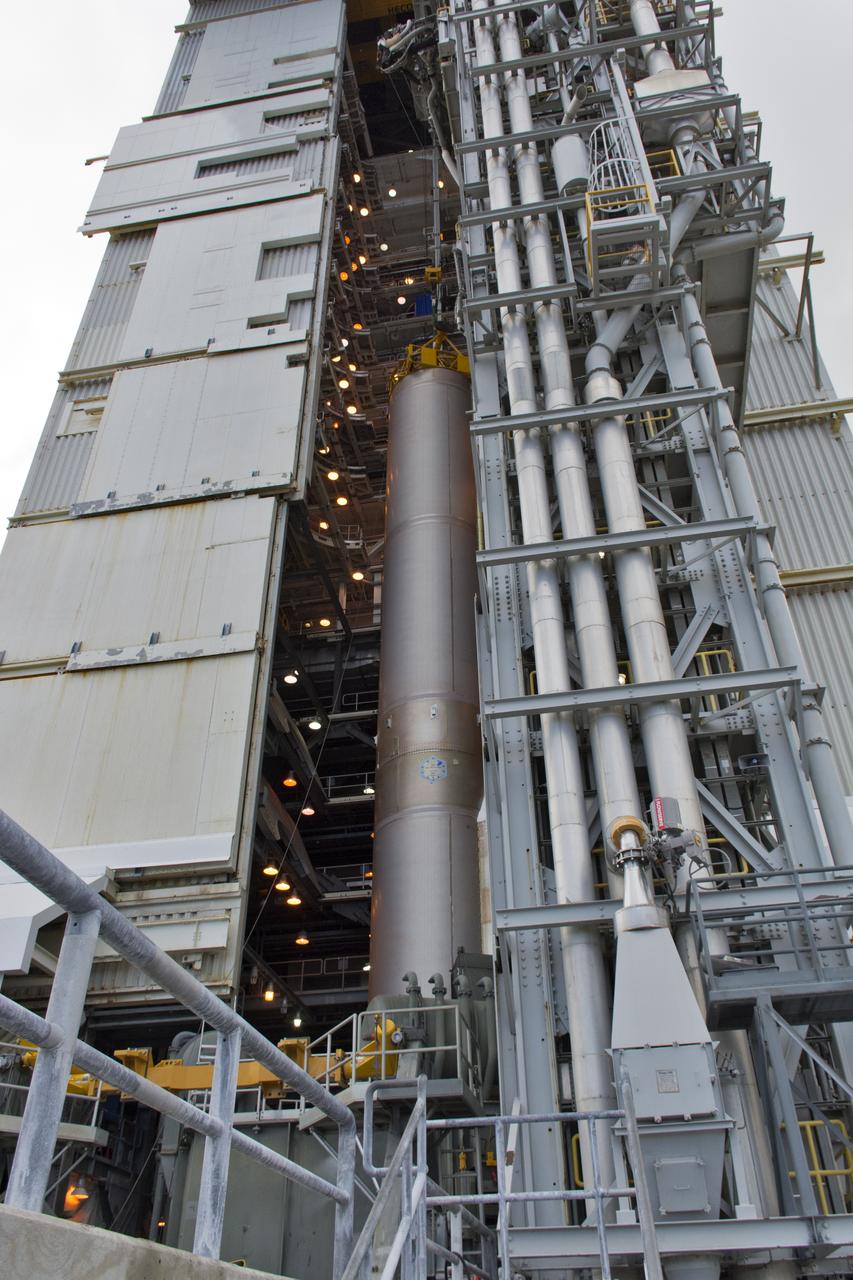
A crane positions a United Launch Alliance Atlas V booster on the launch pad at Space Launch Complex 3 at Vandenberg Air Force Base in California. The rocket will launch NASA's Interior Exploration using Seismic Investigations, Geodesy and Heat Transport, or InSight, mission to land on Mars. InSight is the first mission to explore the Red Planet's deep interior. It will investigate processes that shaped the rocky planets of the inner solar system including Earth. Liftoff is scheduled for May 5, 2018.
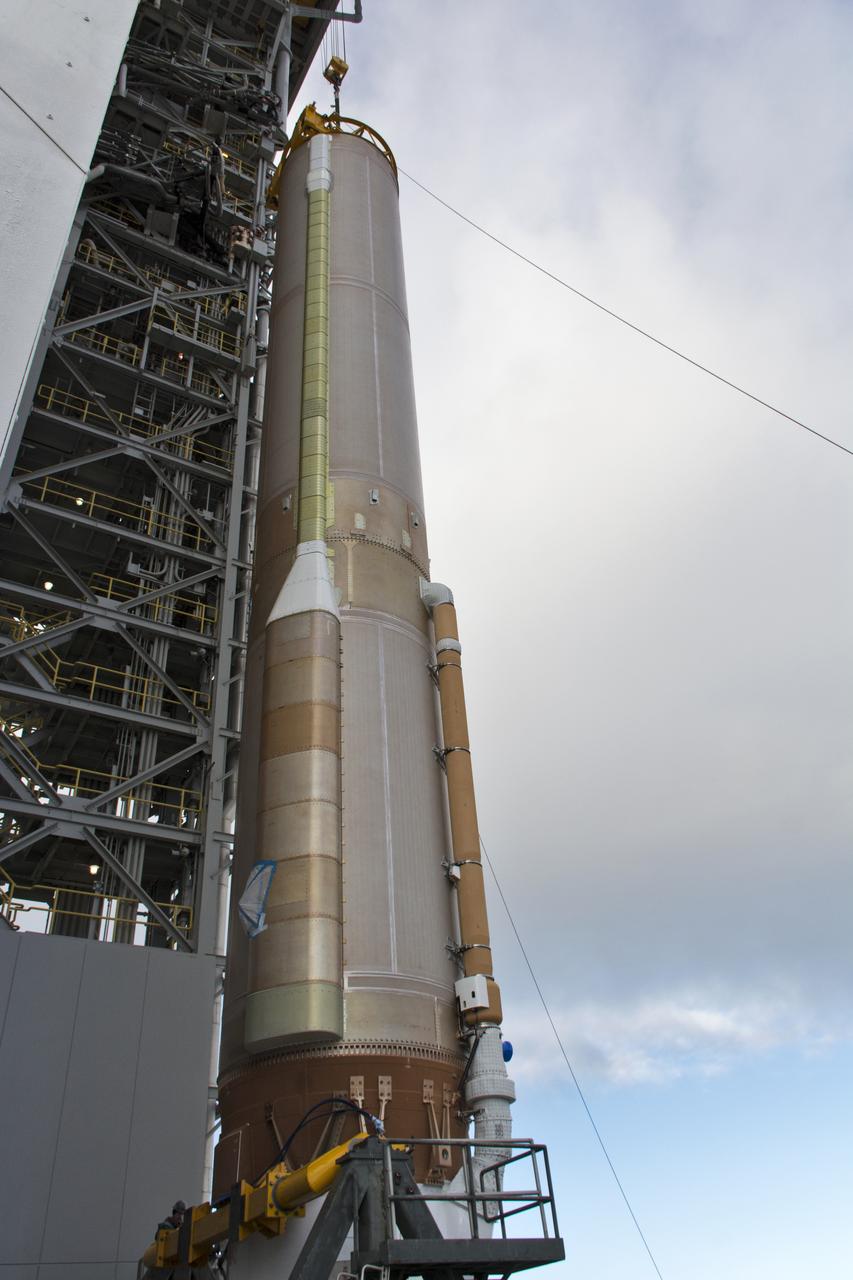
A crane lifts a United Launch Alliance Atlas V booster at Space Launch Complex 3 at Vandenberg Air Force Base in California. The rocket will launch NASA's Interior Exploration using Seismic Investigations, Geodesy and Heat Transport, or InSight, mission to land on Mars. InSight is the first mission to explore the Red Planet's deep interior. It will investigate processes that shaped the rocky planets of the inner solar system including Earth. Liftoff is scheduled for May 5, 2018.
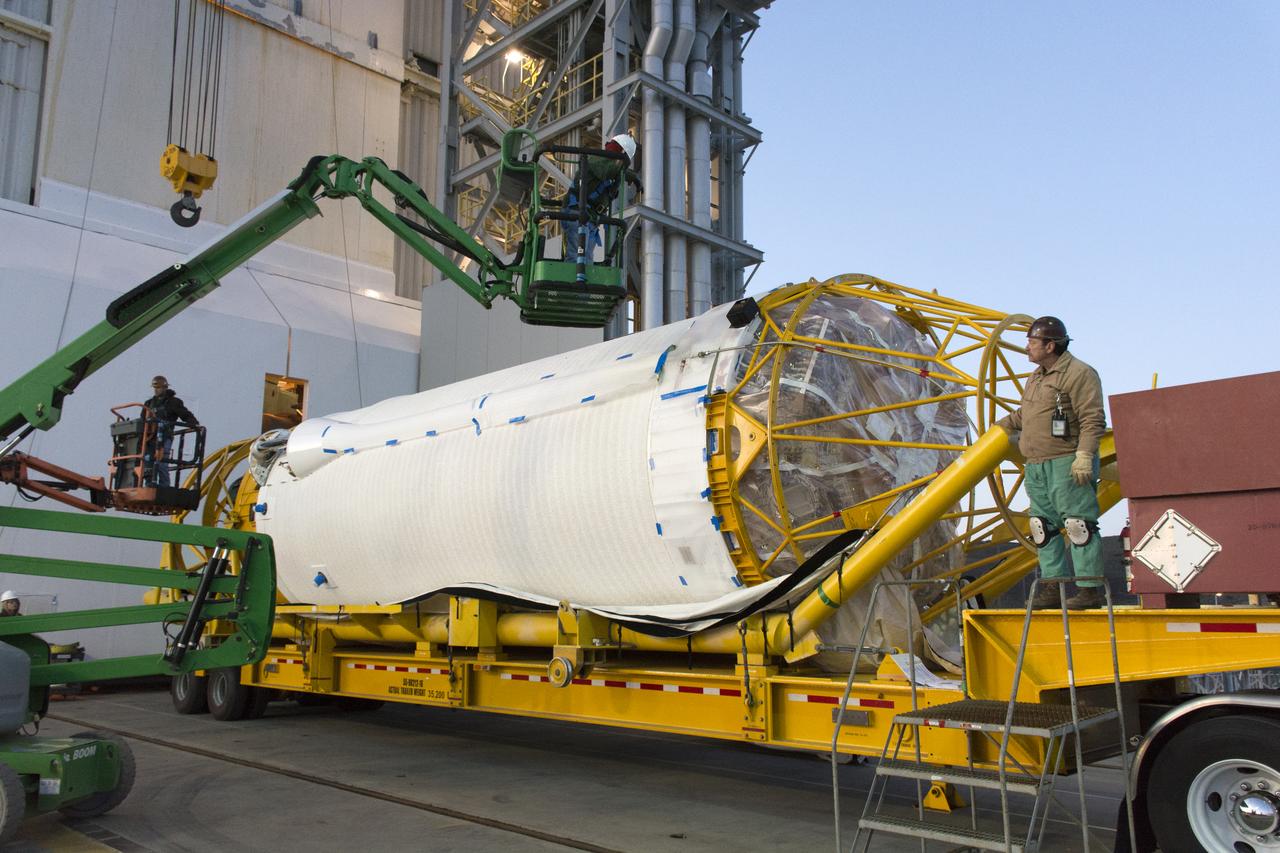
At Space Launch Complex 3 at Vandenberg Air Force Base in California technicians and engineers prepare a United Launch Alliance Centaur upper stage for lifting and mating atop an Atlas V booster. The rocket will launch NASA's Interior Exploration using Seismic Investigations, Geodesy and Heat Transport, or InSight, mission to land on Mars. InSight is the first mission to explore the Red Planet's deep interior. It will investigate processes that shaped the rocky planets of the inner solar system including Earth. Liftoff is scheduled for May 5, 2018.
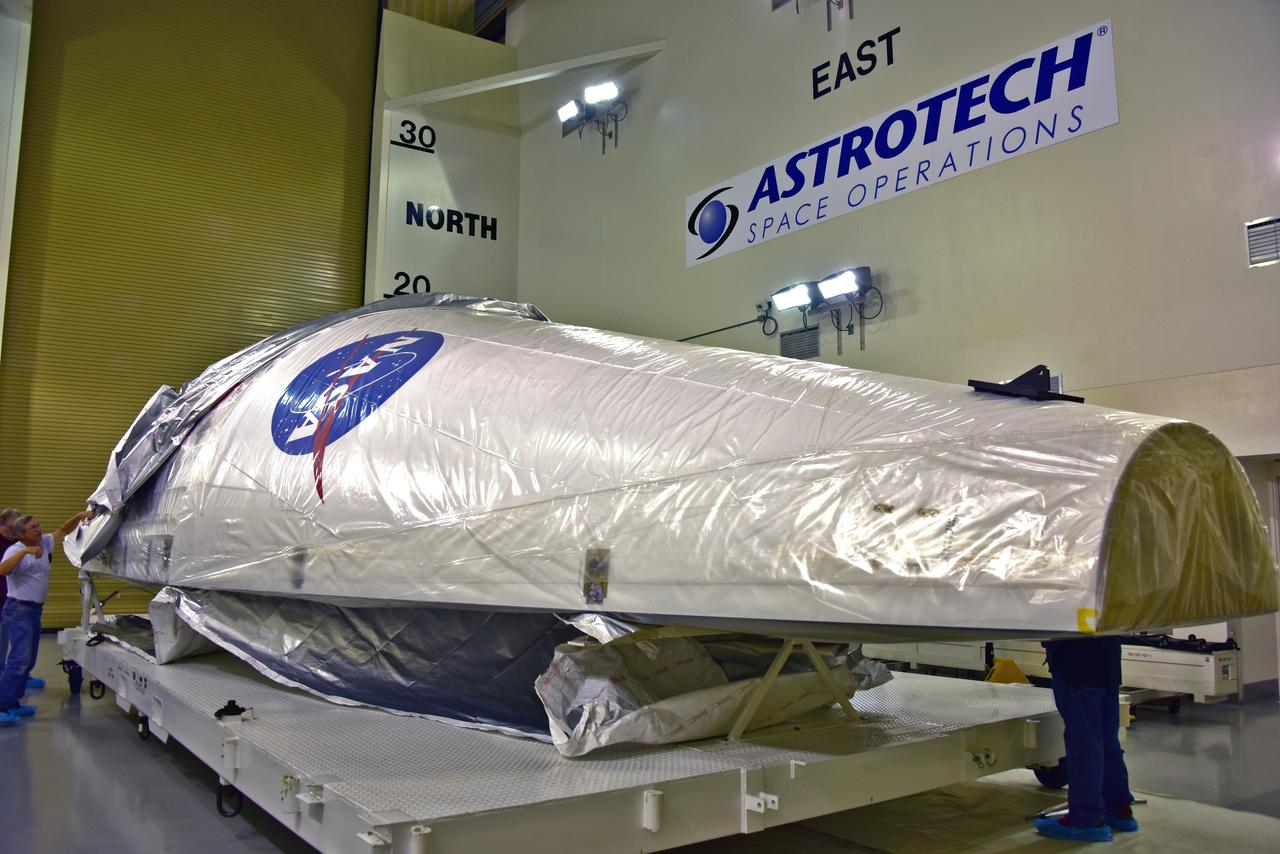
The United Launch Alliance (ULA) payload fairing for NASA's upcoming Interior Exploration using Seismic Investigations, Geodesy and Heat Transport, or InSight, mission to land on Mars has just arrived at the Astrotech facility at Vandenberg Air Force Base in California. InSight is the first mission to explore the Red Planet's deep interior. It will investigate processes that shaped the rocky planets of the inner solar system including Earth. Liftoff atop a ULA Atlas V rocket is scheduled for May 5, 2018.
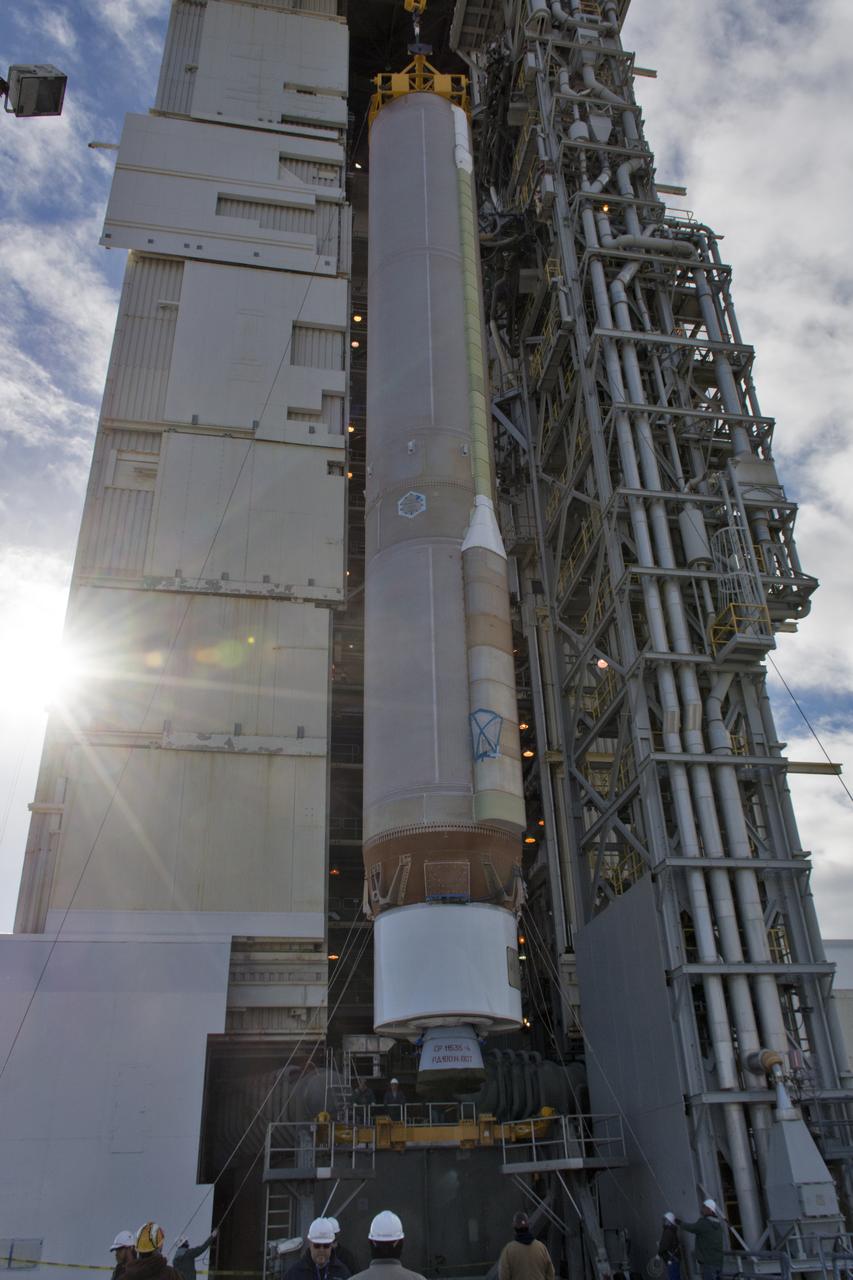
A crane lifts a United Launch Alliance Atlas V booster at Space Launch Complex 3 at Vandenberg Air Force Base in California. The rocket will launch NASA's Interior Exploration using Seismic Investigations, Geodesy and Heat Transport, or InSight, mission to land on Mars. InSight is the first mission to explore the Red Planet's deep interior. It will investigate processes that shaped the rocky planets of the inner solar system including Earth. Liftoff is scheduled for May 5, 2018.
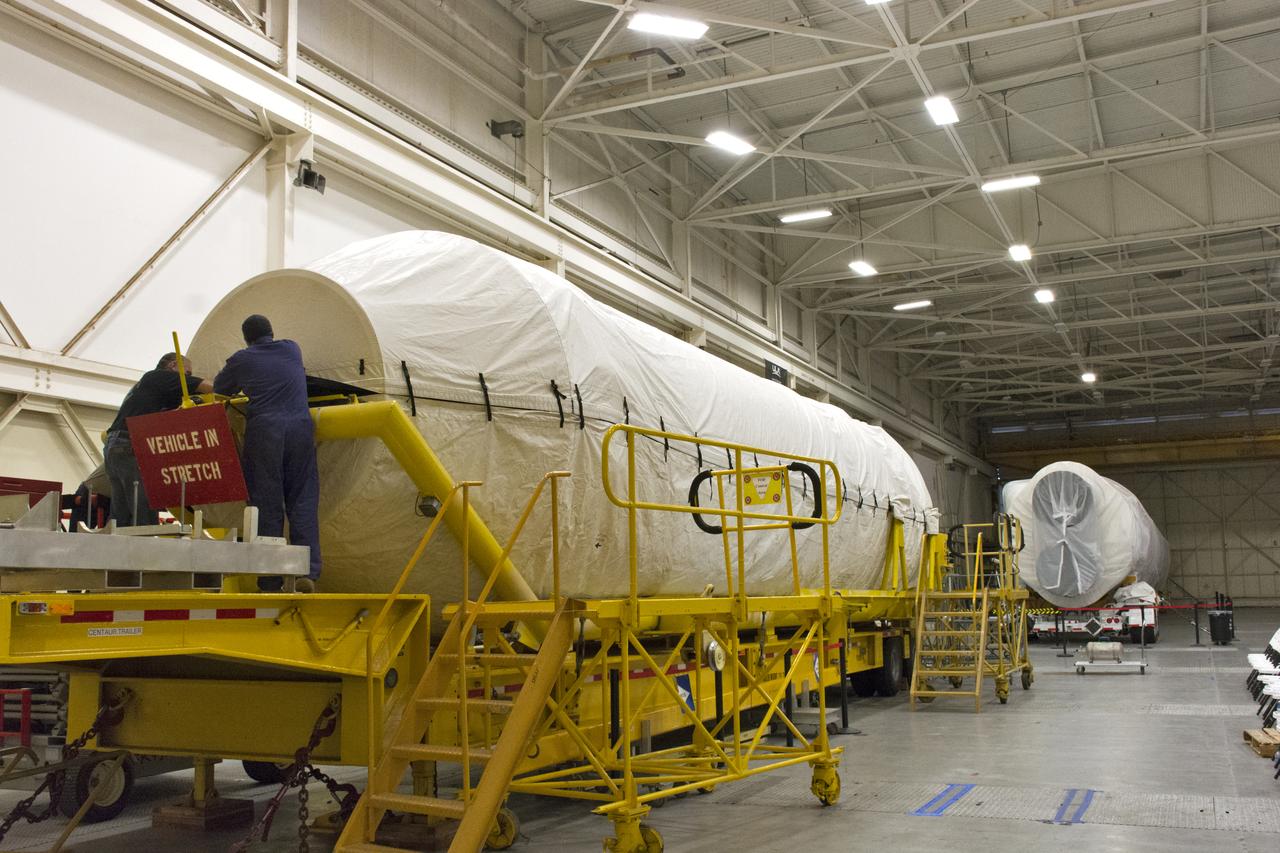
At Vandenberg Air Force Base in California, a cover is installed on a Centaur upper stage in preparation for its transport to Space Launch Complex 3. The Centaur will be mounted atop a United Launch Alliance Atlas V rocket to boost NASA's Interior Exploration using Seismic Investigations, Geodesy and Heat Transport, or InSight, mission to land on Mars. InSight is the first mission to explore the Red Planet's deep interior. It will investigate processes that shaped the rocky planets of the inner solar system including Earth. Liftoff is scheduled for May 5, 2018.
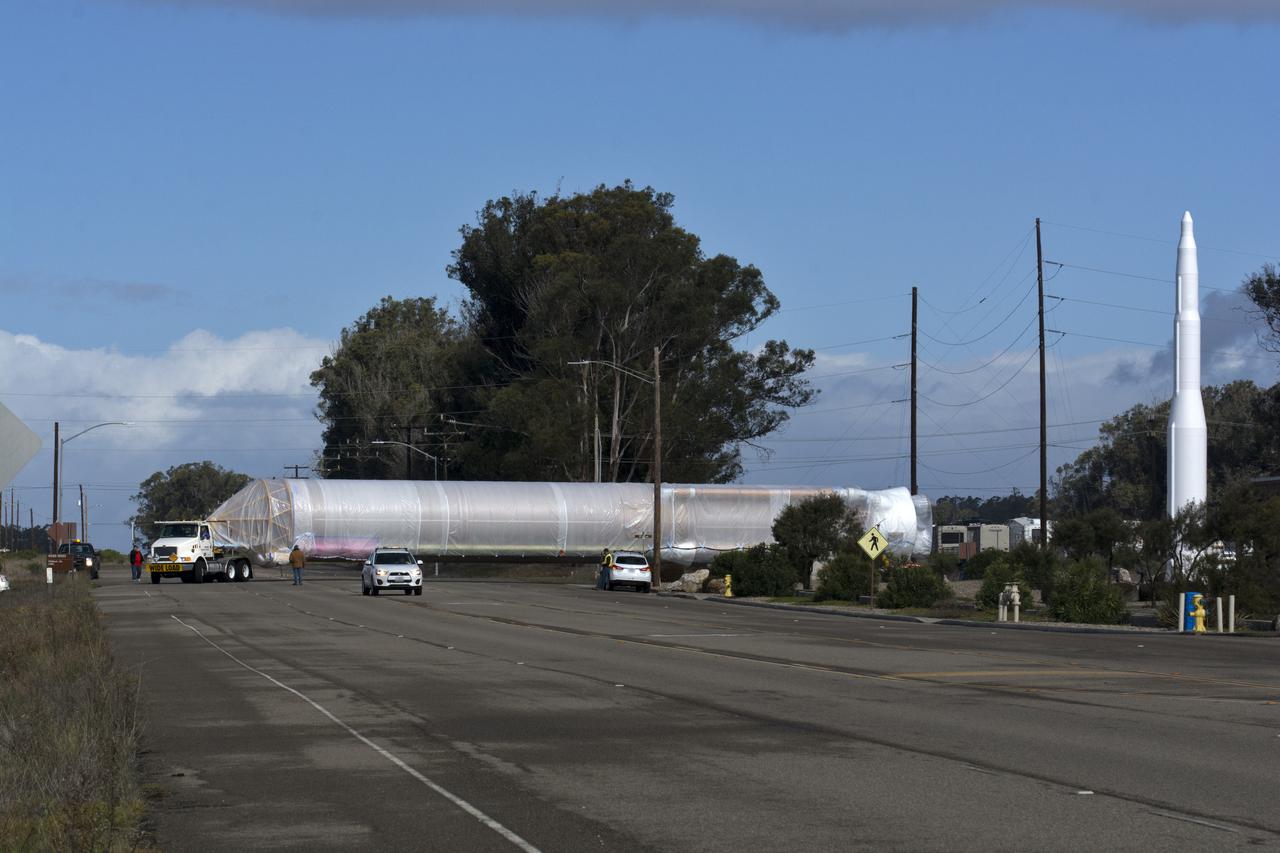
A United Launch Alliance Atlas V booster is transported to Space Launch Complex 3 at Vandenberg Air Force Base in California. The rocket will launch NASA's Interior Exploration using Seismic Investigations, Geodesy and Heat Transport, or InSight, mission to land on Mars. InSight is the first mission to explore the Red Planet's deep interior. It will investigate processes that shaped the rocky planets of the inner solar system including Earth. Liftoff is scheduled for May 5, 2018.
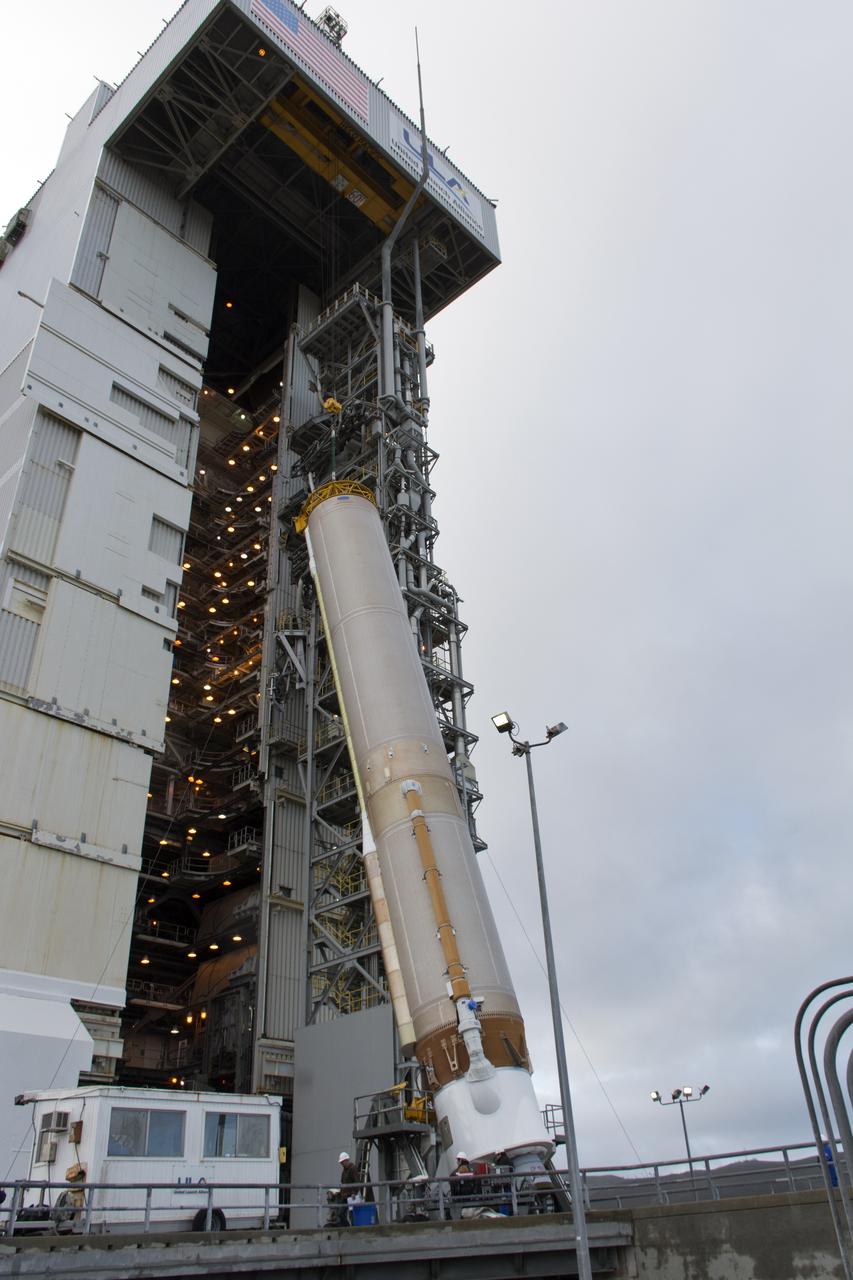
A crane lifts a United Launch Alliance Atlas V booster at Space Launch Complex 3 at Vandenberg Air Force Base in California. The rocket will launch NASA's Interior Exploration using Seismic Investigations, Geodesy and Heat Transport, or InSight, mission to land on Mars. InSight is the first mission to explore the Red Planet's deep interior. It will investigate processes that shaped the rocky planets of the inner solar system including Earth. Liftoff is scheduled for May 5, 2018.
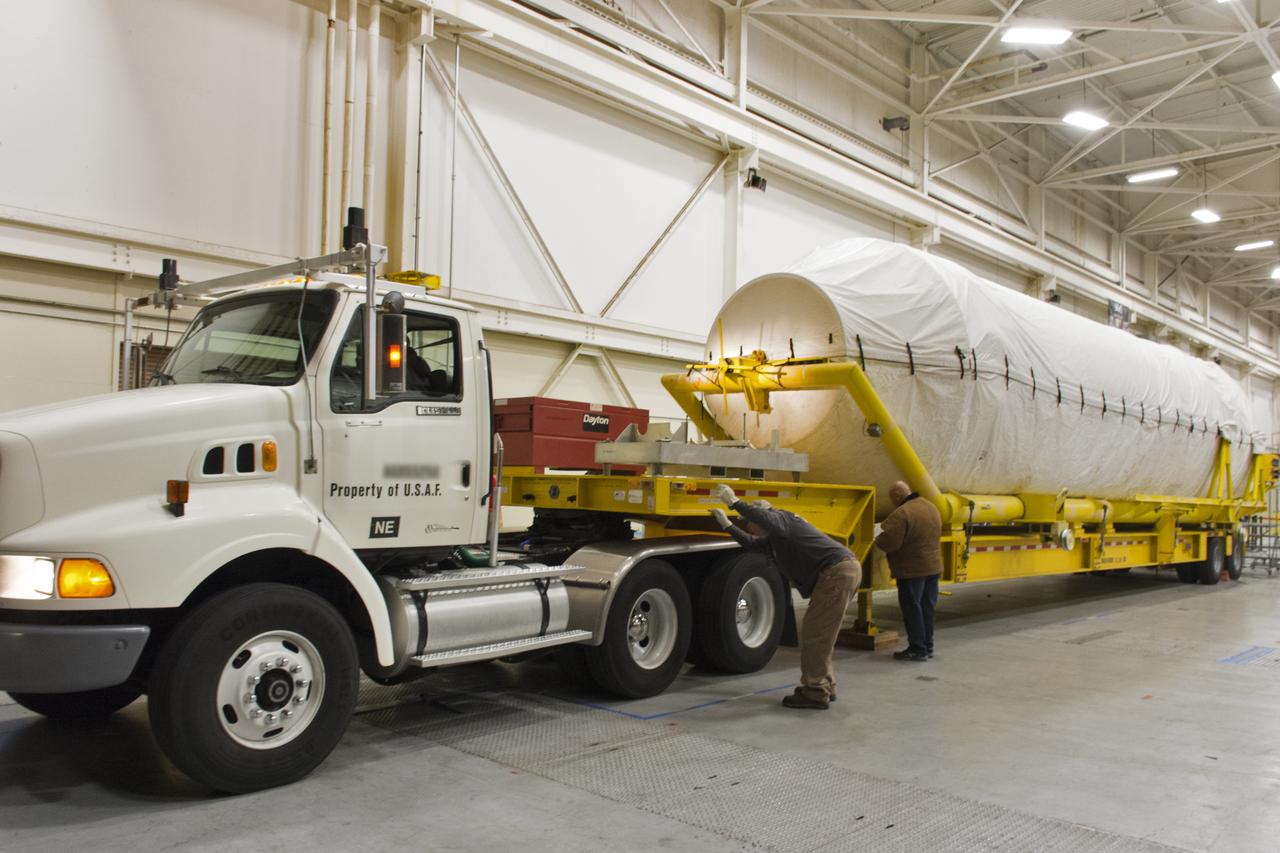
At Vandenberg Air Force Base in California, a United Launch Alliance Centaur upper stage is prepared for transport to Space Launch Complex 3 for mating atop an Atlas V booster. The rocket will launch NASA's Interior Exploration using Seismic Investigations, Geodesy and Heat Transport, or InSight, mission to land on Mars. InSight is the first mission to explore the Red Planet's deep interior. It will investigate processes that shaped the rocky planets of the inner solar system including Earth. Liftoff is scheduled for May 5, 2018.
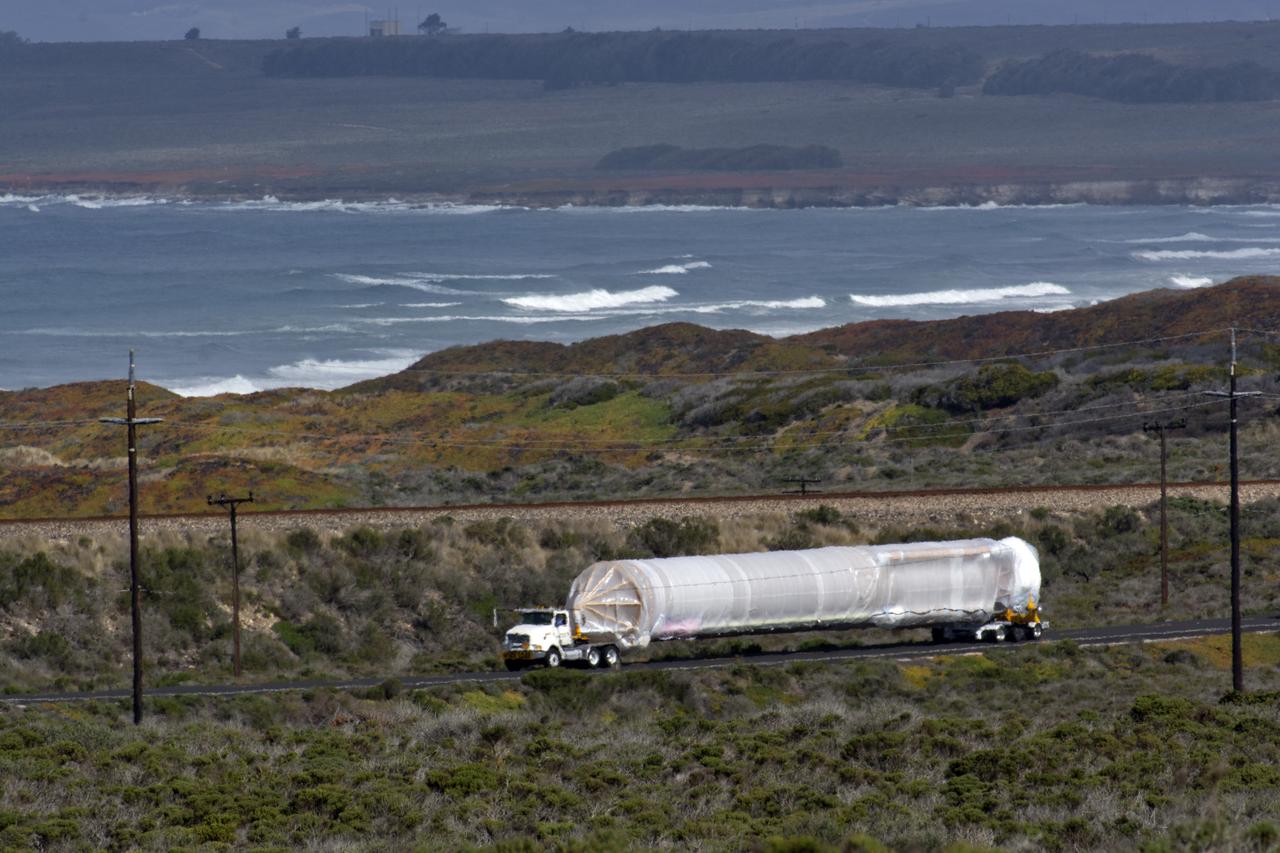
A United Launch Alliance Atlas V booster is transported to Space Launch Complex 3 at Vandenberg Air Force Base in California. The rocket will launch NASA's Interior Exploration using Seismic Investigations, Geodesy and Heat Transport, or InSight, mission to land on Mars. InSight is the first mission to explore the Red Planet's deep interior. It will investigate processes that shaped the rocky planets of the inner solar system including Earth. Liftoff is scheduled for May 5, 2018.
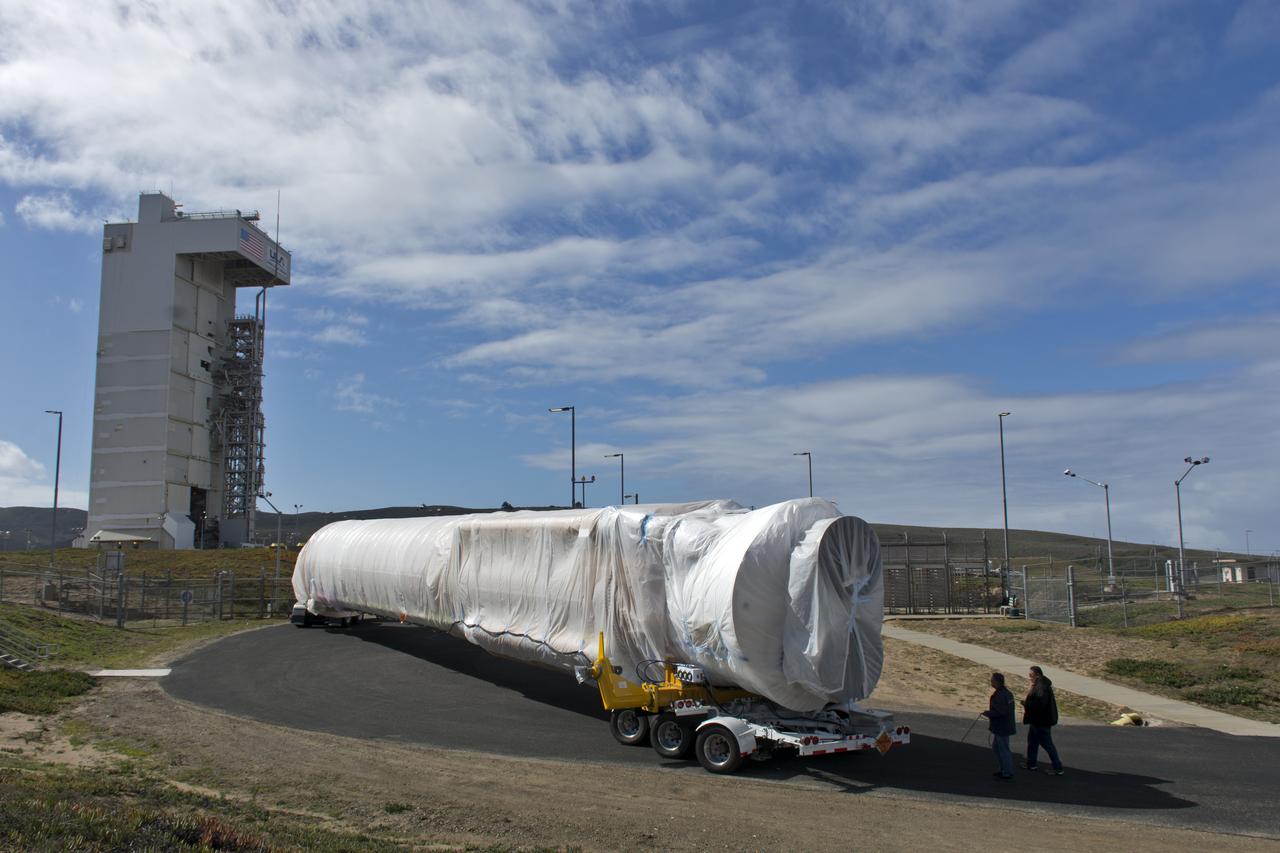
A United Launch Alliance Atlas V booster arrives at Space Launch Complex 3 at Vandenberg Air Force Base in California. The rocket will be positioned on the pad to launch NASA's Interior Exploration using Seismic Investigations, Geodesy and Heat Transport, or InSight, mission to land on Mars. InSight is the first mission to explore the Red Planet's deep interior. It will investigate processes that shaped the rocky planets of the inner solar system including Earth. Liftoff is scheduled for May 5, 2018.
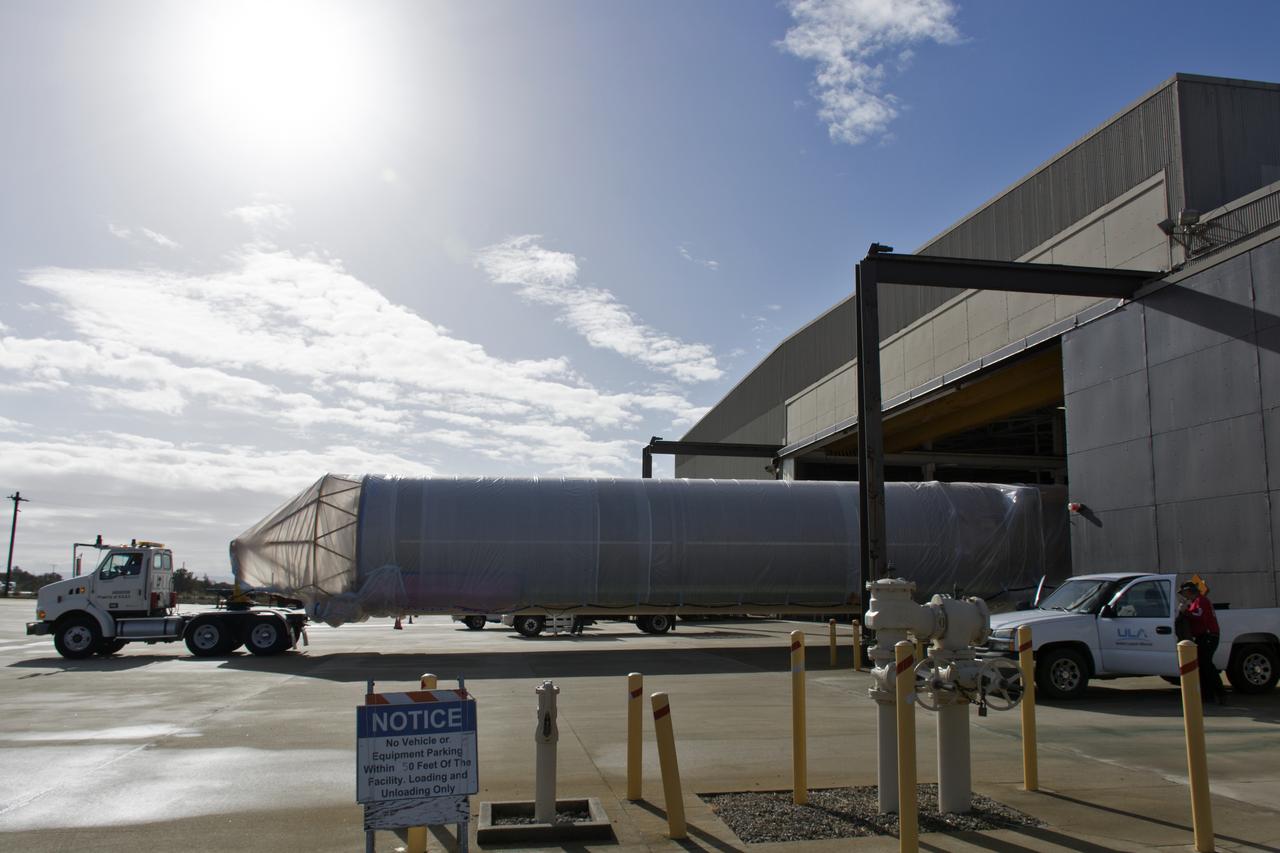
A United Launch Alliance Atlas V booster departs building 7525 at Vandenberg Air Force Base in California on its way to Space Launch Complex 3. The rocket will launch NASA's Interior Exploration using Seismic Investigations, Geodesy and Heat Transport, or InSight, mission to land on Mars. InSight is the first mission to explore the Red Planet's deep interior. It will investigate processes that shaped the rocky planets of the inner solar system including Earth. Liftoff is scheduled for May 5, 2018.
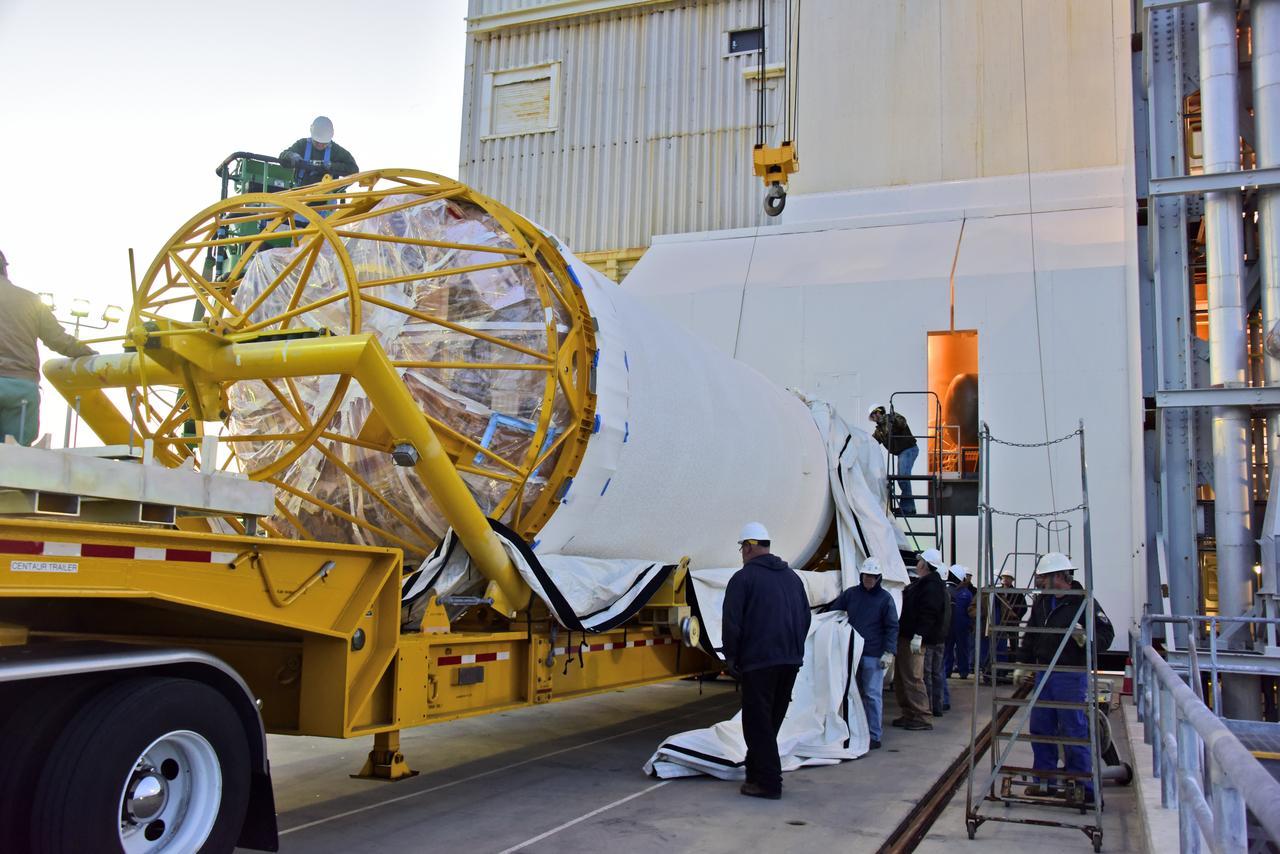
A United Launch Alliance Centaur upper stage arrives at Space Launch Complex 3 at Vandenberg Air Force Base in California. The rocket will launch NASA's Interior Exploration using Seismic Investigations, Geodesy and Heat Transport, or InSight, mission to land on Mars. InSight is the first mission to explore the Red Planet's deep interior. It will investigate processes that shaped the rocky planets of the inner solar system including Earth. Liftoff is scheduled for May 5, 2018.
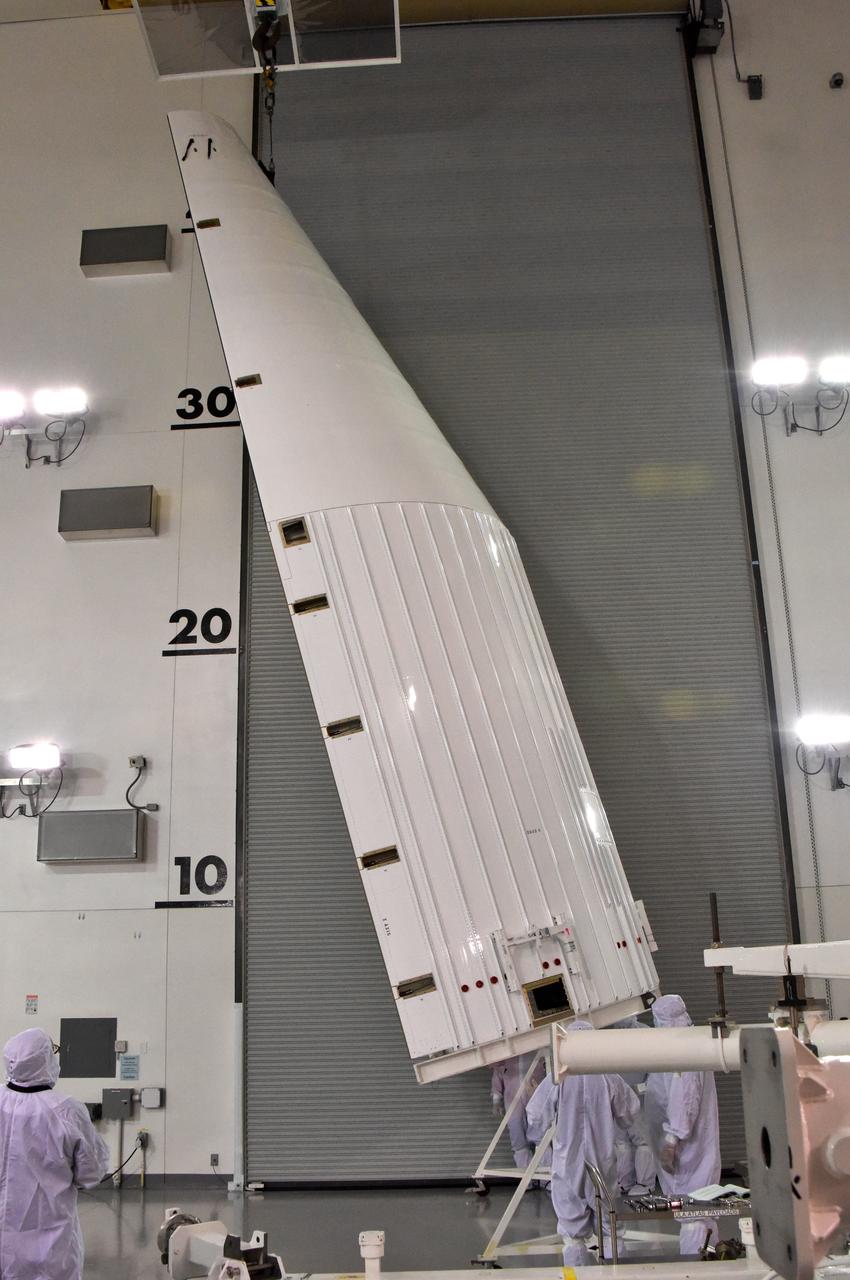
In the Astrotech facility at Vandenberg Air Force Base in California, the payload fairing for the United Launch Alliance (ULA) Atlas V for NASA's upcoming Interior Exploration using Seismic Investigations, Geodesy and Heat Transport, or InSight, mission to land on Mars is lifted to the vertical position. InSight is the first mission to explore the Red Planet's deep interior. It will investigate processes that shaped the rocky planets of the inner solar system including Earth. Liftoff atop a ULA Atlas V rocket is scheduled for May 5, 2018.
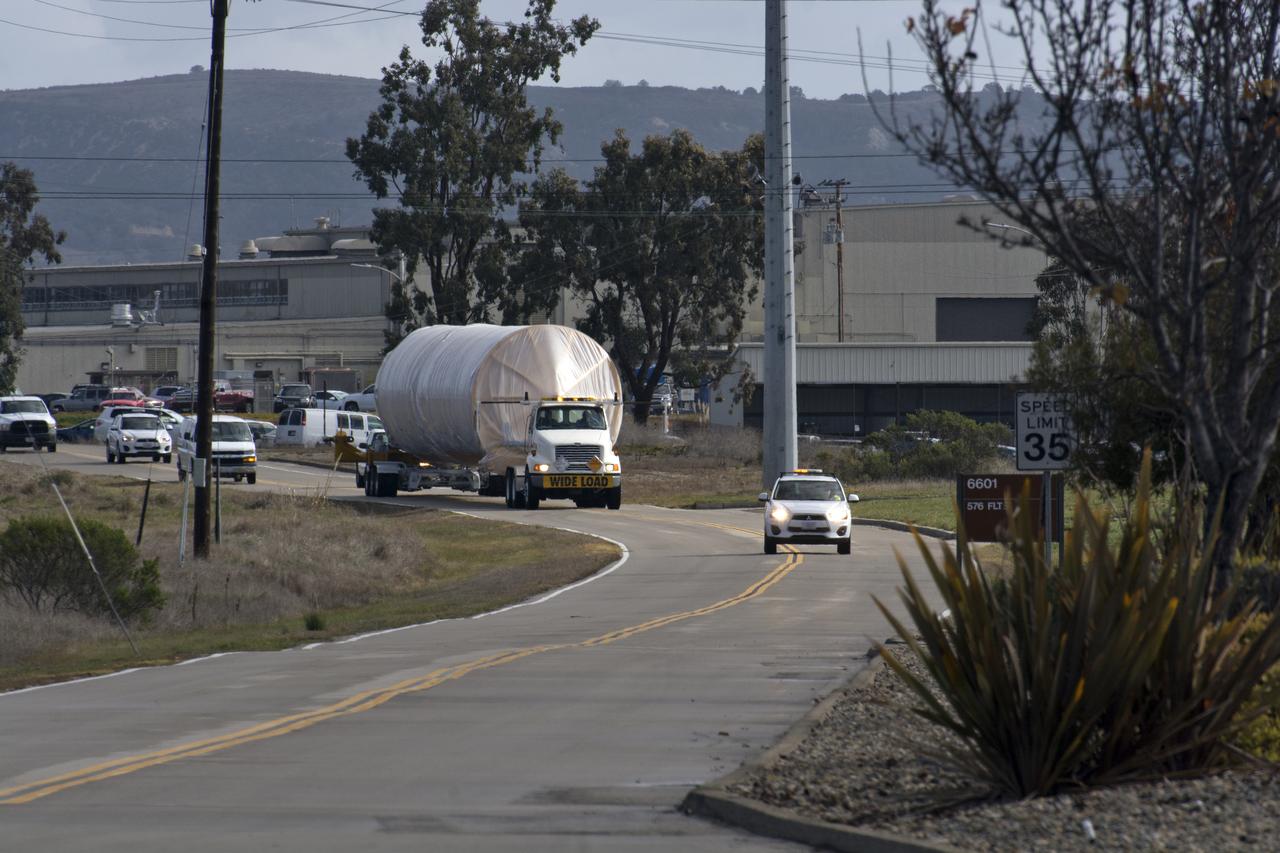
A United Launch Alliance Atlas V booster is transported to Space Launch Complex 3 at Vandenberg Air Force Base in California. The rocket will launch NASA's Interior Exploration using Seismic Investigations, Geodesy and Heat Transport, or InSight, mission to land on Mars. InSight is the first mission to explore the Red Planet's deep interior. It will investigate processes that shaped the rocky planets of the inner solar system including Earth. Liftoff is scheduled for May 5, 2018.
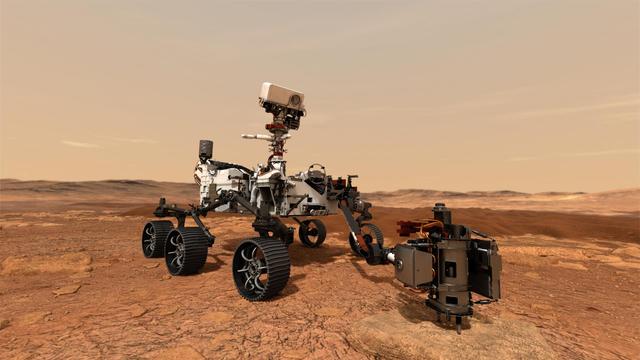
In this illustration, NASA's Mars 2020 rover uses its drill to core a rock sample on Mars. Scheduled to launch in July 2020, the Mars 2020 rover represents the first leg of humanity's first round trip to another planet. The rover will collect and store rock and soil samples on the planet's surface that future missions will retrieve and return to Earth. NASA and the European Space Agency are solidifying concepts for a Mars sample return mission. https://photojournal.jpl.nasa.gov/catalog/PIA23491
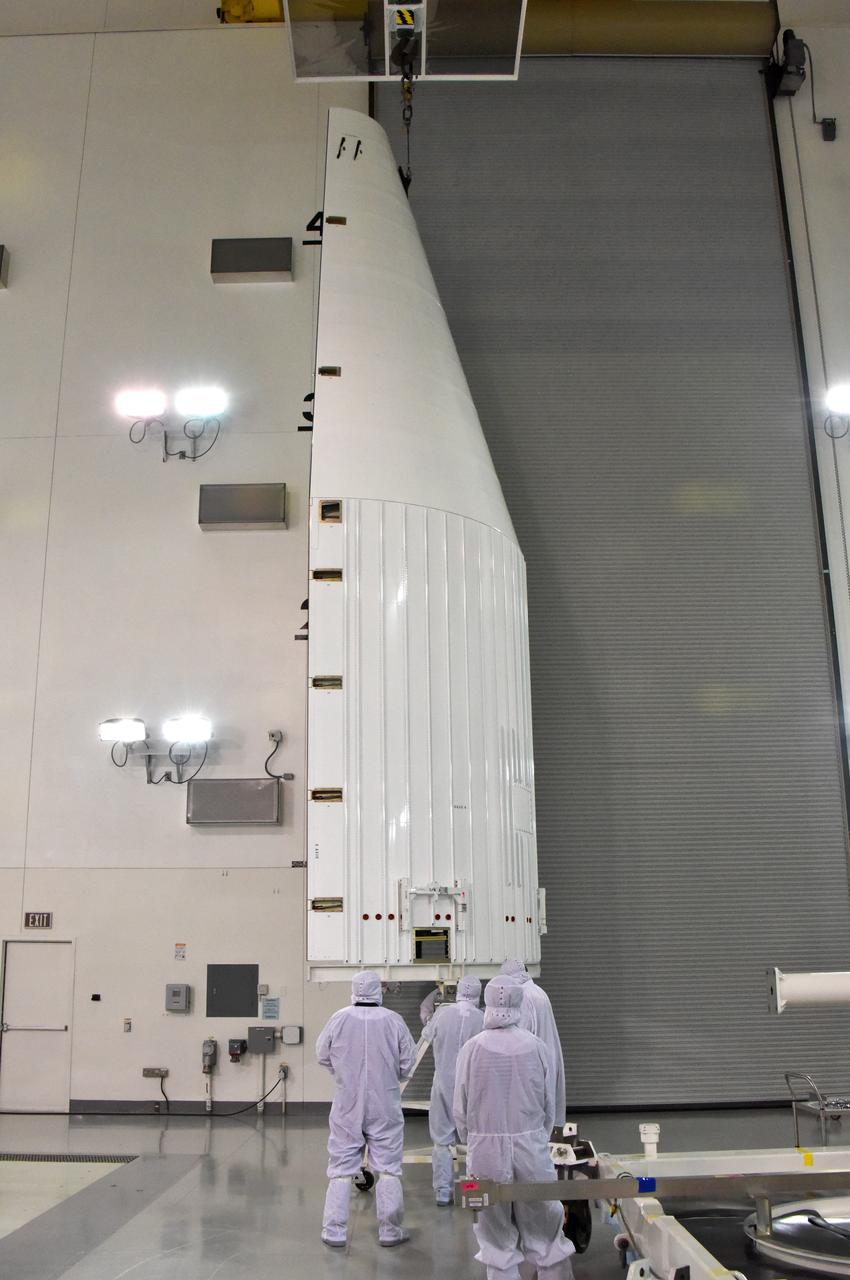
In the Astrotech facility at Vandenberg Air Force Base in California, technicians and engineers inspect the payload fairing for the United Launch Alliance (ULA) Atlas V for NASA's upcoming Interior Exploration using Seismic Investigations, Geodesy and Heat Transport, or InSight, mission to land on Mars after it was lifted to the vertical position. InSight is the first mission to explore the Red Planet's deep interior. It will investigate processes that shaped the rocky planets of the inner solar system including Earth. Liftoff atop a ULA Atlas V rocket is scheduled for May 5, 2018.
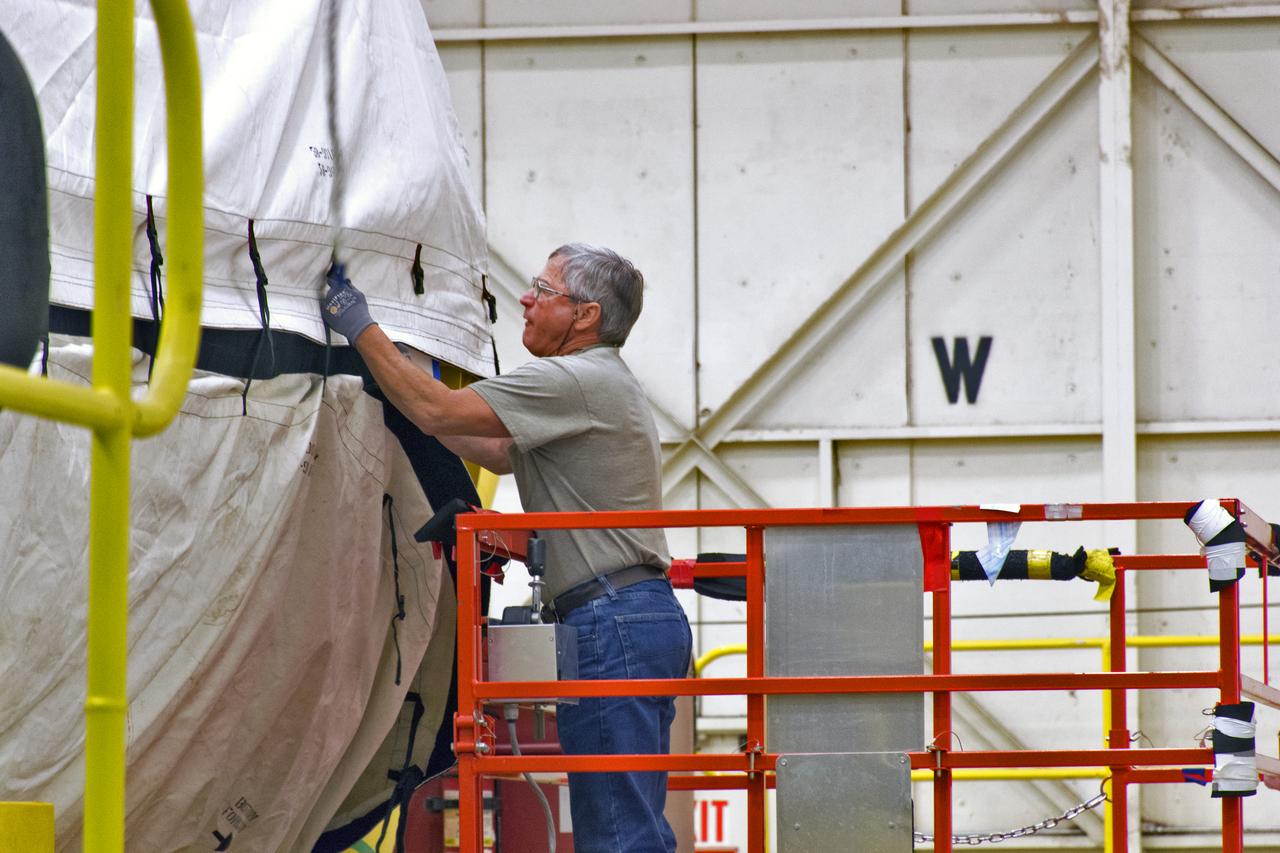
At Vandenberg Air Force Base in California, a cover is installed on a Centaur upper stage in preparation for its transport to Space Launch Complex 3. The Centaur will be mounted atop a United Launch Alliance Atlas V rocket to boost NASA's Interior Exploration using Seismic Investigations, Geodesy and Heat Transport, or InSight, mission to land on Mars. InSight is the first mission to explore the Red Planet's deep interior. It will investigate processes that shaped the rocky planets of the inner solar system including Earth. Liftoff is scheduled for May 5, 2018.
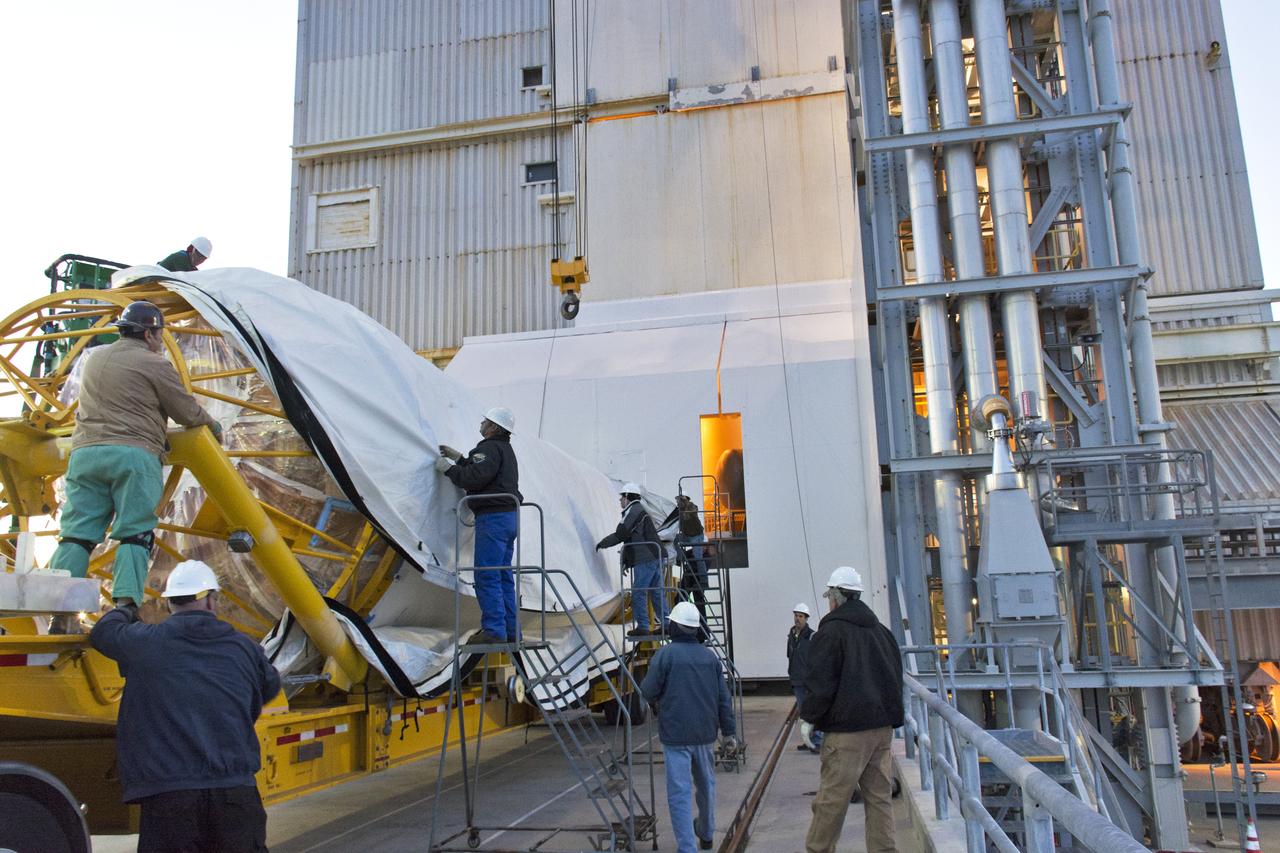
At Space Launch Complex 3 at Vandenberg Air Force Base in California technicians and engineers prepare a United Launch Alliance Centaur upper stage for lifting and mating atop an Atlas V booster. The rocket will launch NASA's Interior Exploration using Seismic Investigations, Geodesy and Heat Transport, or InSight, mission to land on Mars. InSight is the first mission to explore the Red Planet's deep interior. It will investigate processes that shaped the rocky planets of the inner solar system including Earth. Liftoff is scheduled for May 5, 2018.
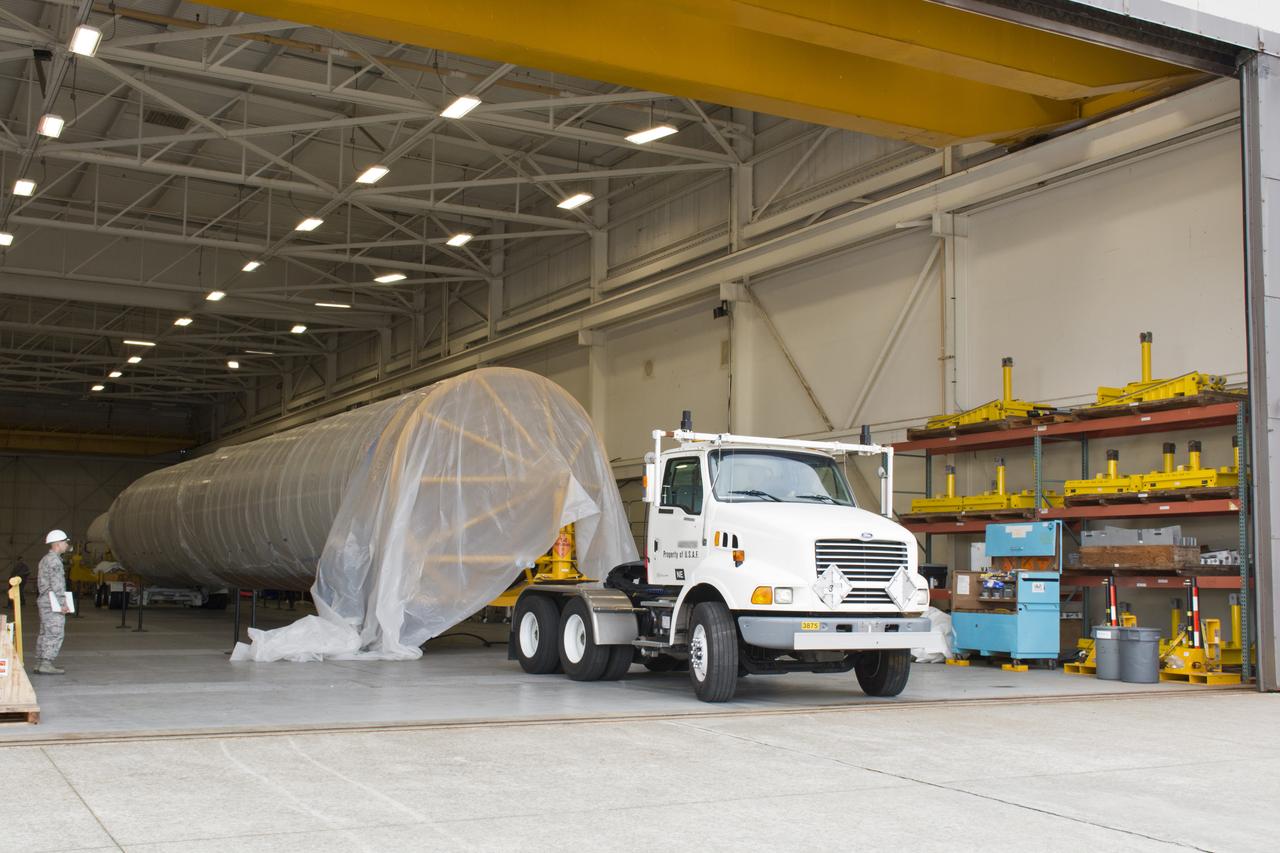
A United Launch Alliance Atlas V booster is prepared for transport to Space Launch Complex 3 at Vandenberg Air Force Base in California. The rocket will launch NASA's Interior Exploration using Seismic Investigations, Geodesy and Heat Transport, or InSight, mission to land on Mars. InSight is the first mission to explore the Red Planet's deep interior. It will investigate processes that shaped the rocky planets of the inner solar system including Earth. Liftoff is scheduled for May 5, 2018.
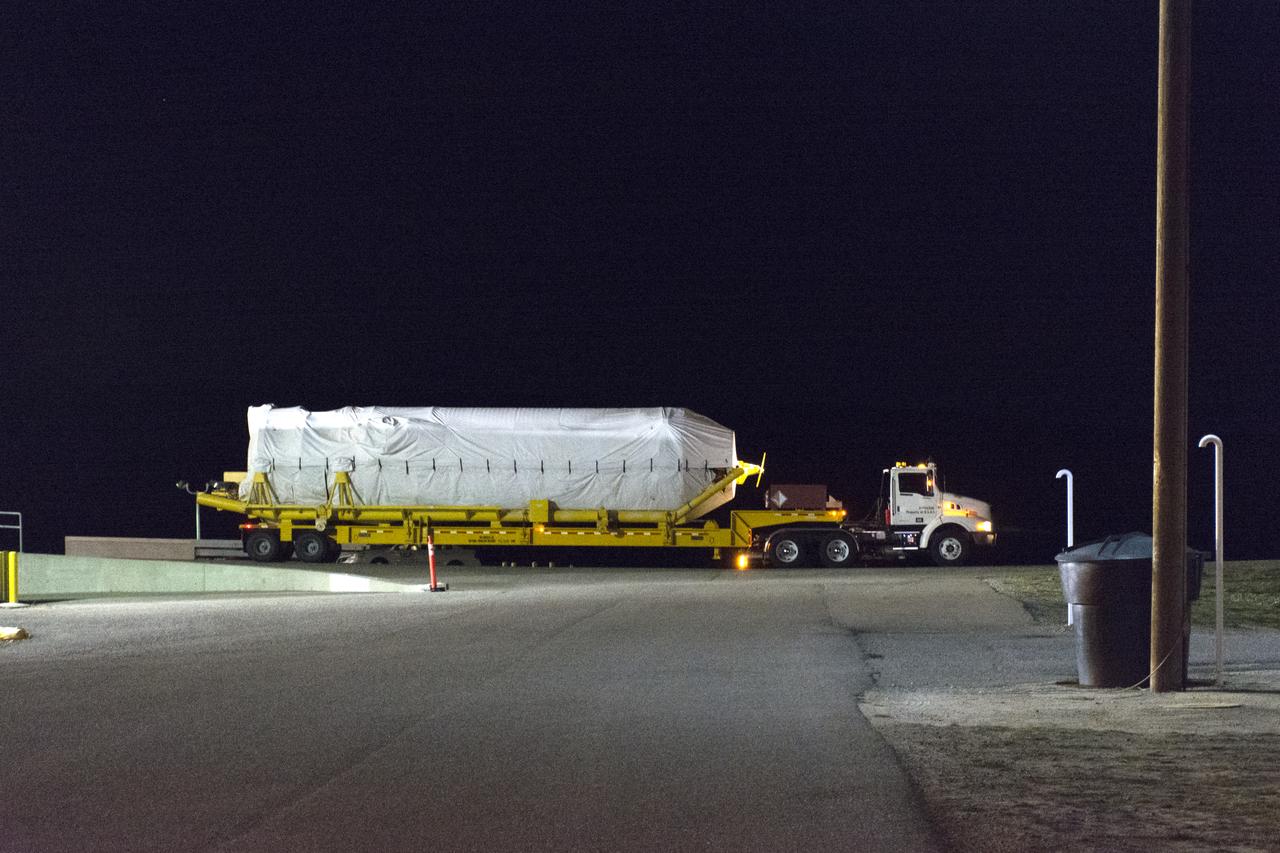
At Vandenberg Air Force Base in California, a United Launch Alliance Centaur upper stage is transported to Space Launch Complex 3 for mating atop an Atlas V booster. The rocket will launch NASA's Interior Exploration using Seismic Investigations, Geodesy and Heat Transport, or InSight, mission to land on Mars. InSight is the first mission to explore the Red Planet's deep interior. It will investigate processes that shaped the rocky planets of the inner solar system including Earth. Liftoff is scheduled for May 5, 2018.
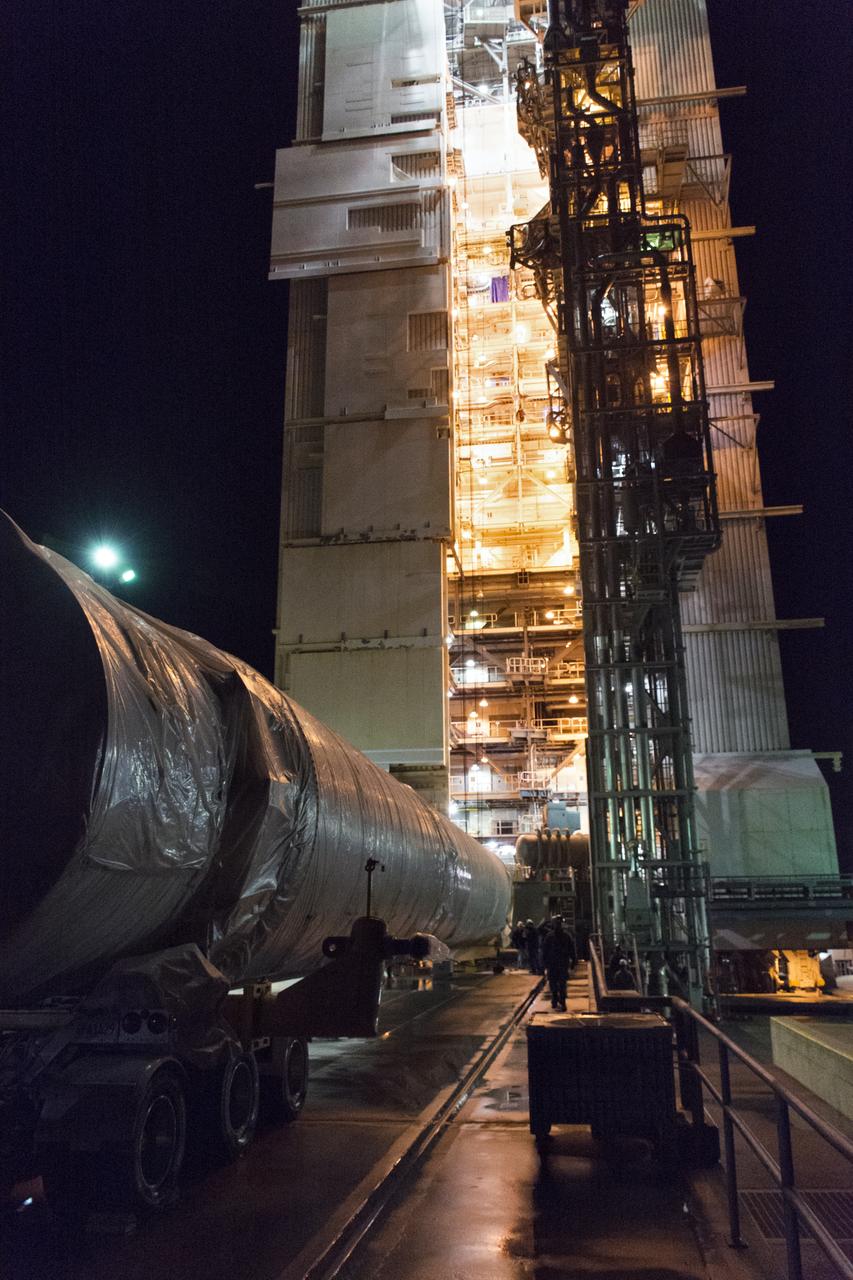
A United Launch Alliance Atlas V booster arrives at Space Launch Complex 3 at Vandenberg Air Force Base in California. The rocket will launch NASA's Interior Exploration using Seismic Investigations, Geodesy and Heat Transport, or InSight, mission to land on Mars. InSight is the first mission to explore the Red Planet's deep interior. It will investigate processes that shaped the rocky planets of the inner solar system including Earth. Liftoff is scheduled for May 5, 2018.
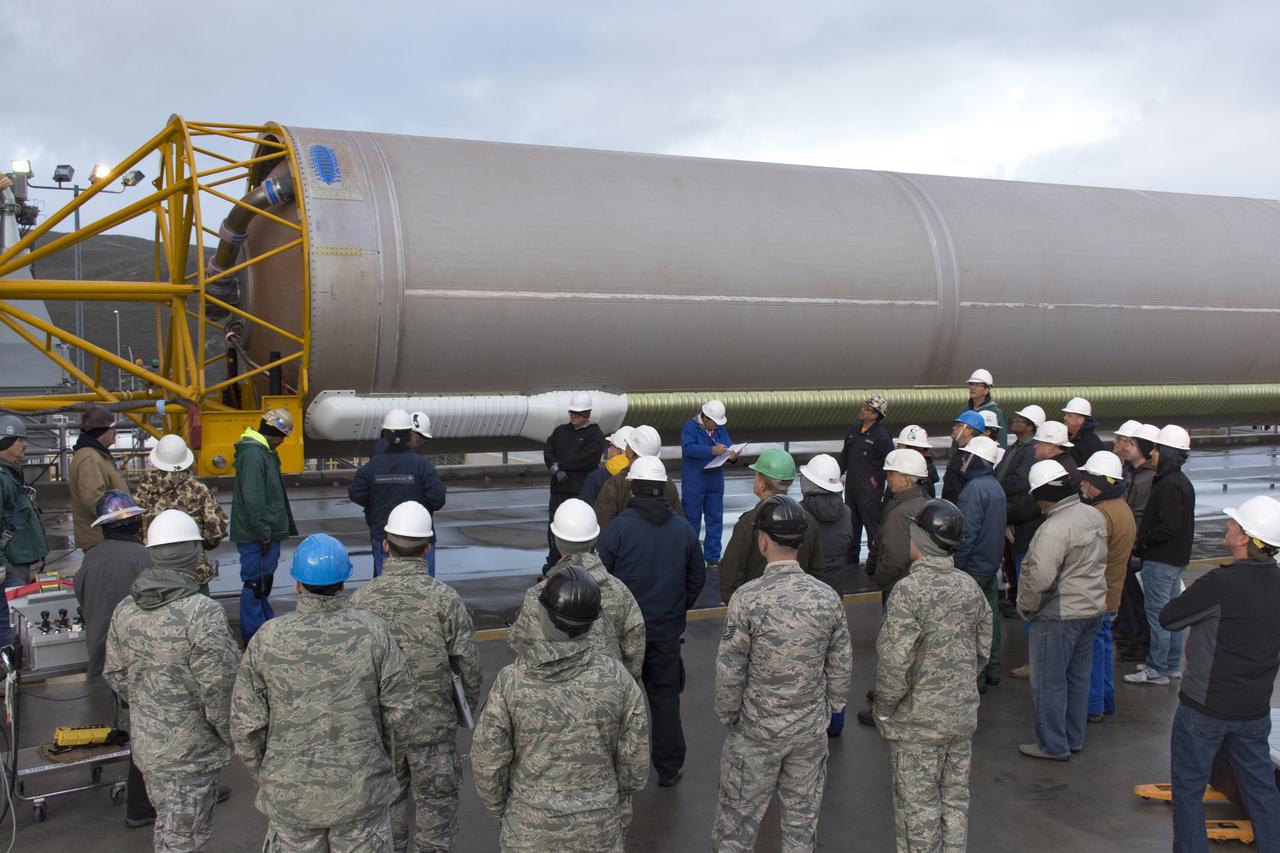
Technicians, engineers and U.S. Air Force personnel prepare to support erection of a United Launch Alliance Atlas V booster at Space Launch Complex 3 at Vandenberg Air Force Base in California. The rocket will launch NASA's Interior Exploration using Seismic Investigations, Geodesy and Heat Transport, or InSight, mission to land on Mars. InSight is the first mission to explore the Red Planet's deep interior. It will investigate processes that shaped the rocky planets of the inner solar system including Earth. Liftoff is scheduled for May 5, 2018.
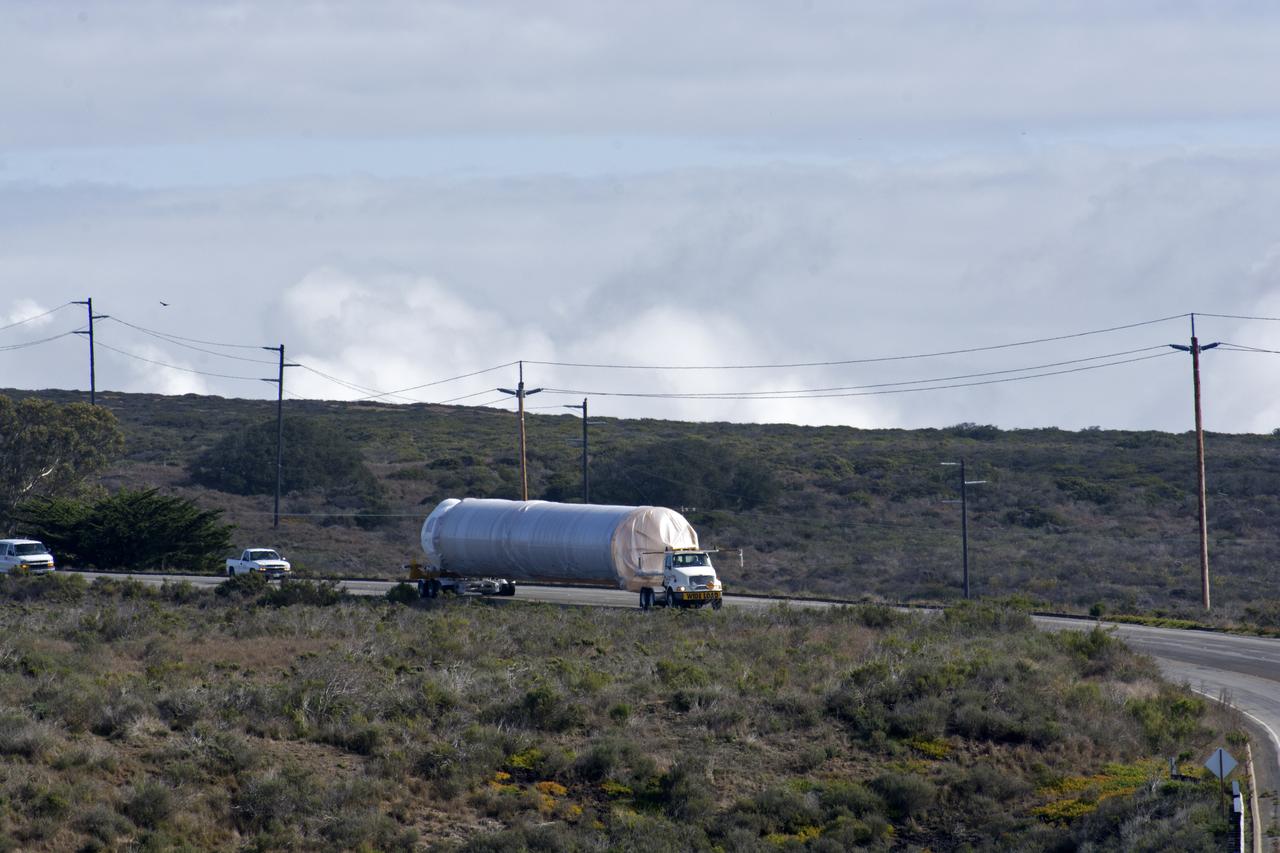
A United Launch Alliance Atlas V booster is transported to Space Launch Complex 3 at Vandenberg Air Force Base in California. The rocket will launch NASA's Interior Exploration using Seismic Investigations, Geodesy and Heat Transport, or InSight, mission to land on Mars. InSight is the first mission to explore the Red Planet's deep interior. It will investigate processes that shaped the rocky planets of the inner solar system including Earth. Liftoff is scheduled for May 5, 2018.
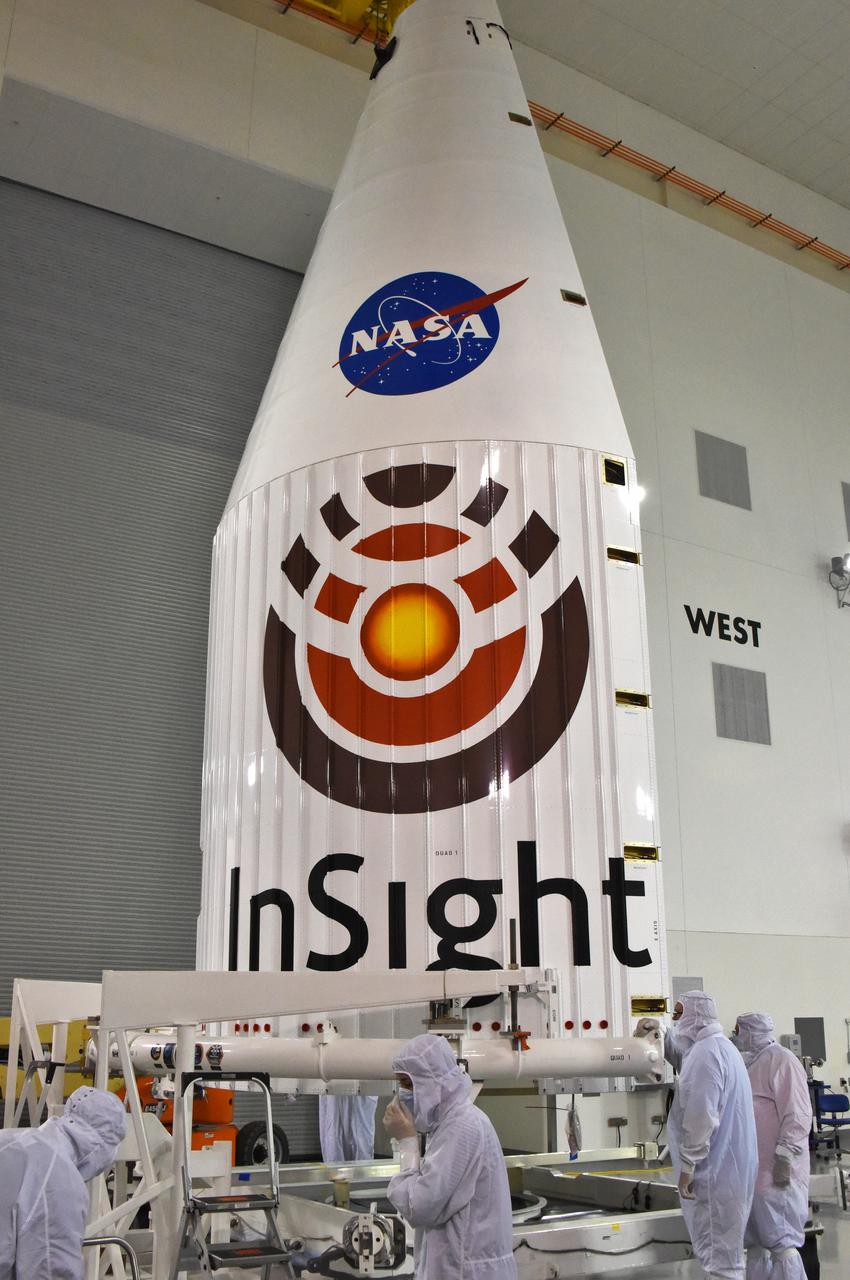
In the Astrotech facility at Vandenberg Air Force Base in California, technicians and engineers inspect the payload fairing for the United Launch Alliance (ULA) Atlas V for NASA's upcoming Interior Exploration using Seismic Investigations, Geodesy and Heat Transport, or InSight, mission to land on Mars after it was lifted to the vertical position. InSight is the first mission to explore the Red Planet's deep interior. It will investigate processes that shaped the rocky planets of the inner solar system including Earth. Liftoff atop a ULA Atlas V rocket is scheduled for May 5, 2018.
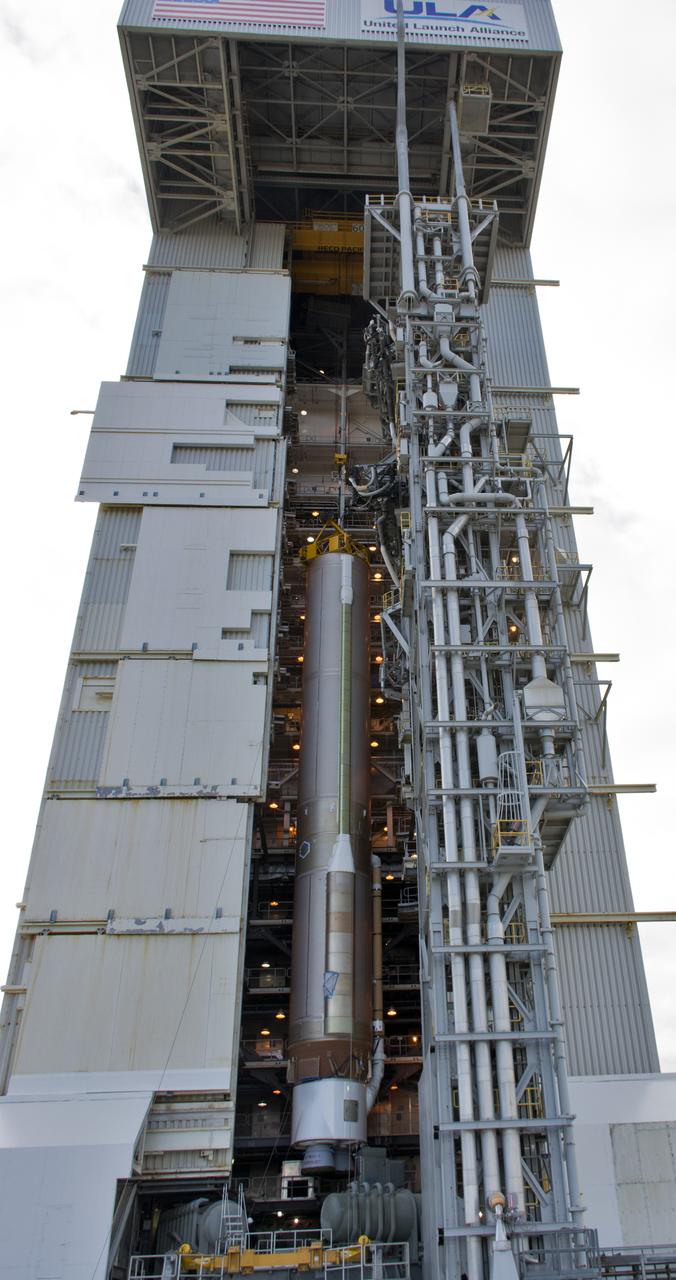
A crane positions a United Launch Alliance Atlas V booster on the launch pad at Space Launch Complex 3 at Vandenberg Air Force Base in California. The rocket will launch NASA's Interior Exploration using Seismic Investigations, Geodesy and Heat Transport, or InSight, mission to land on Mars. InSight is the first mission to explore the Red Planet's deep interior. It will investigate processes that shaped the rocky planets of the inner solar system including Earth. Liftoff is scheduled for May 5, 2018.
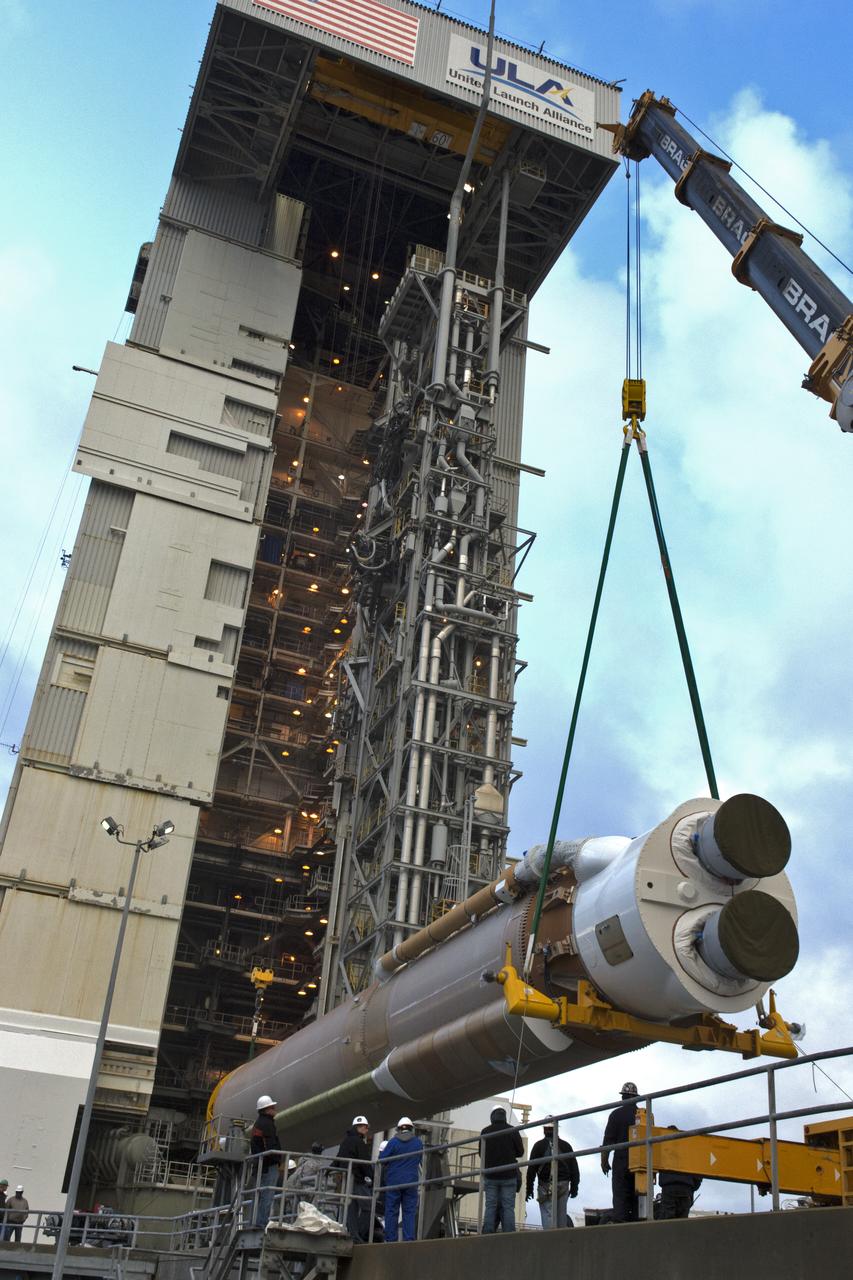
A crane lifts a United Launch Alliance Atlas V booster at Space Launch Complex 3 at Vandenberg Air Force Base in California. The rocket will launch NASA's Interior Exploration using Seismic Investigations, Geodesy and Heat Transport, or InSight, mission to land on Mars. InSight is the first mission to explore the Red Planet's deep interior. It will investigate processes that shaped the rocky planets of the inner solar system including Earth. Liftoff is scheduled for May 5, 2018.
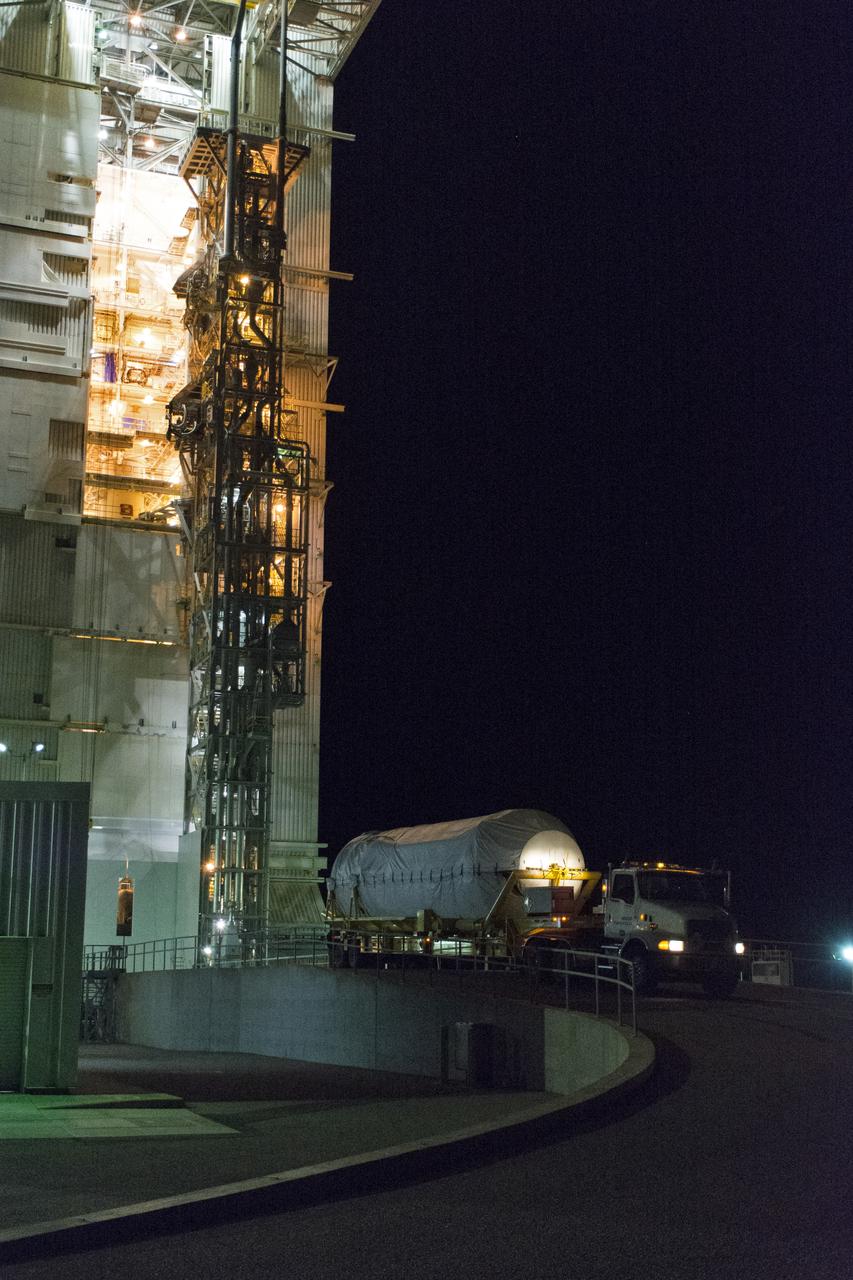
A United Launch Alliance Centaur upper stage arrives at Space Launch Complex 3 at Vandenberg Air Force Base in California. The rocket will launch NASA's Interior Exploration using Seismic Investigations, Geodesy and Heat Transport, or InSight, mission to land on Mars. InSight is the first mission to explore the Red Planet's deep interior. It will investigate processes that shaped the rocky planets of the inner solar system including Earth. Liftoff is scheduled for May 5, 2018.
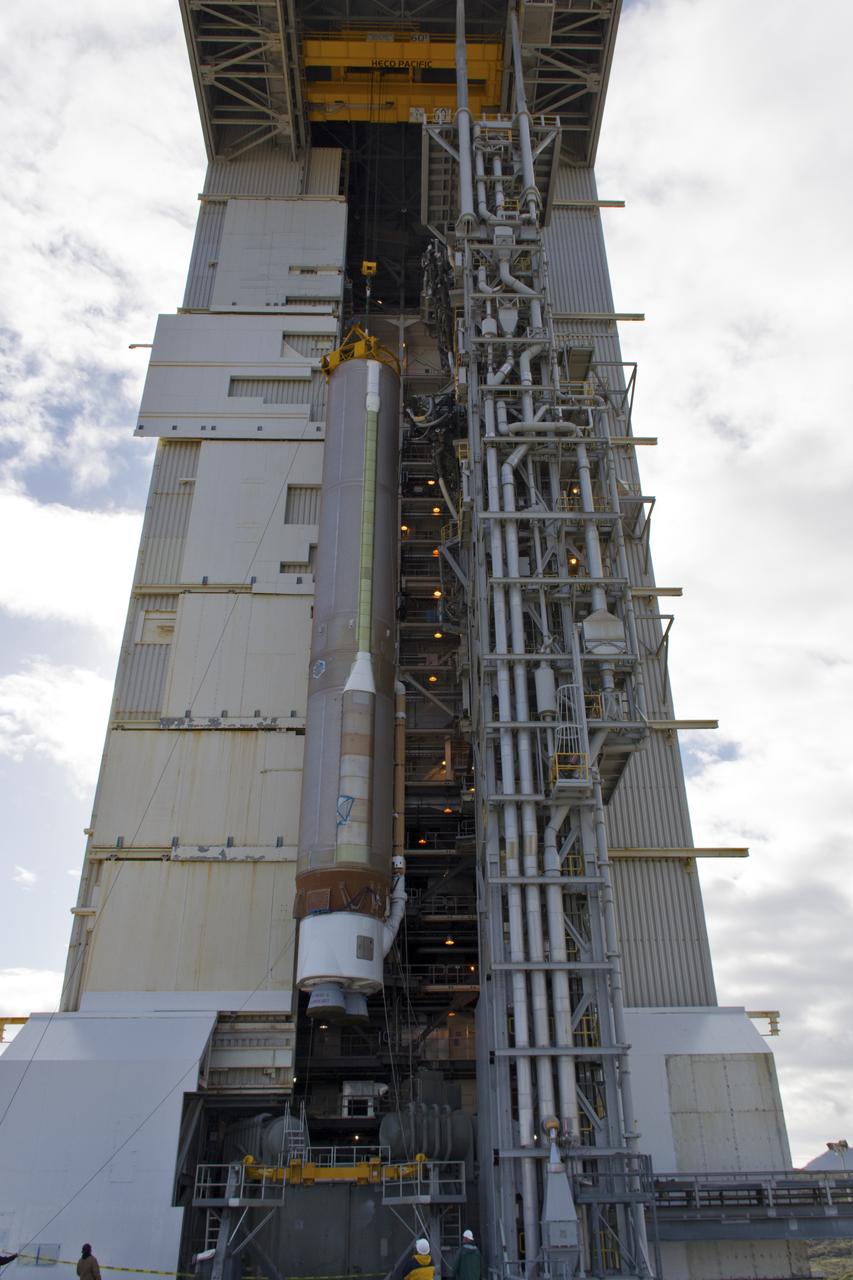
A crane lifts a United Launch Alliance Atlas V booster at Space Launch Complex 3 at Vandenberg Air Force Base in California. The rocket will launch NASA's Interior Exploration using Seismic Investigations, Geodesy and Heat Transport, or InSight, mission to land on Mars. InSight is the first mission to explore the Red Planet's deep interior. It will investigate processes that shaped the rocky planets of the inner solar system including Earth. Liftoff is scheduled for May 5, 2018.
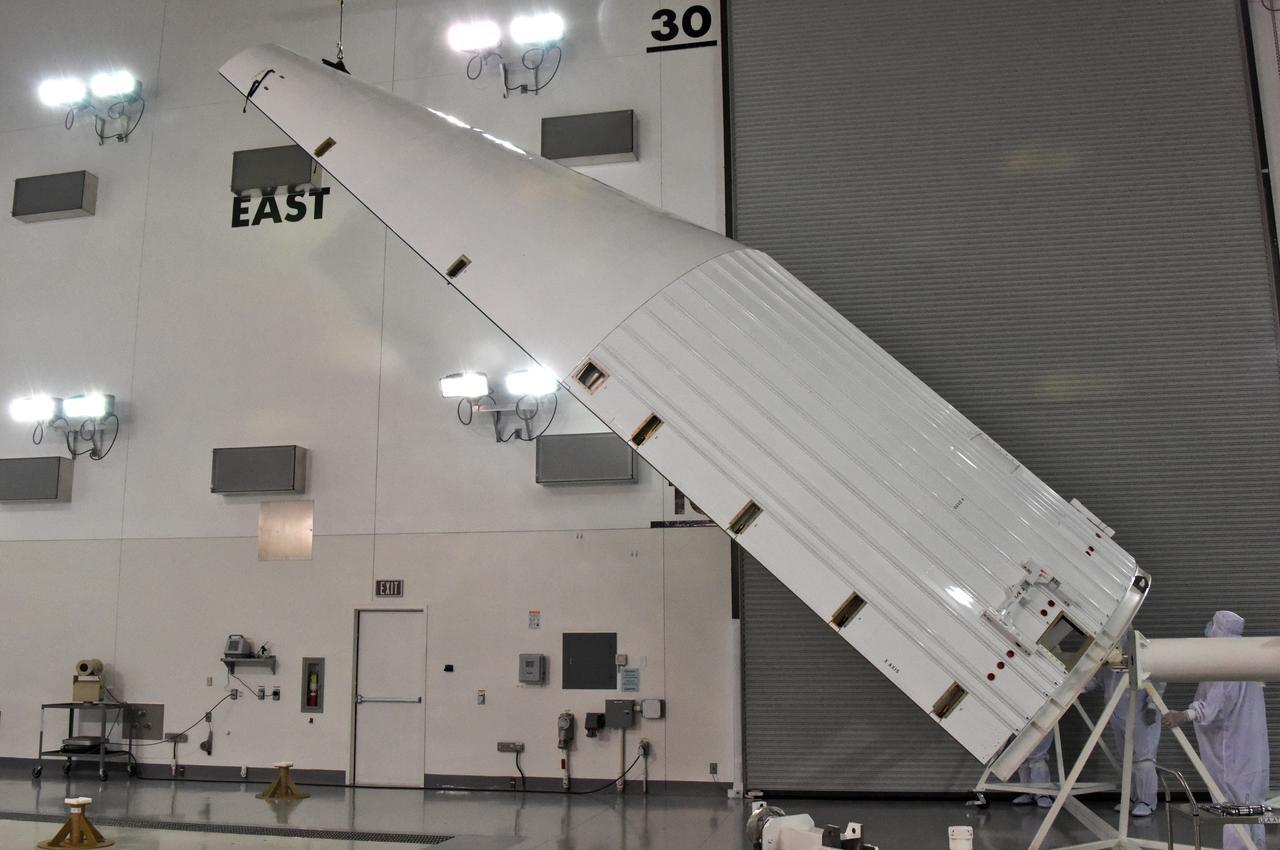
In the Astrotech facility at Vandenberg Air Force Base in California, the payload fairing for the United Launch Alliance (ULA) Atlas V for NASA's upcoming Interior Exploration using Seismic Investigations, Geodesy and Heat Transport, or InSight, mission to land on Mars is lifted to the vertical position. InSight is the first mission to explore the Red Planet's deep interior. It will investigate processes that shaped the rocky planets of the inner solar system including Earth. Liftoff atop a ULA Atlas V rocket is scheduled for May 5, 2018.
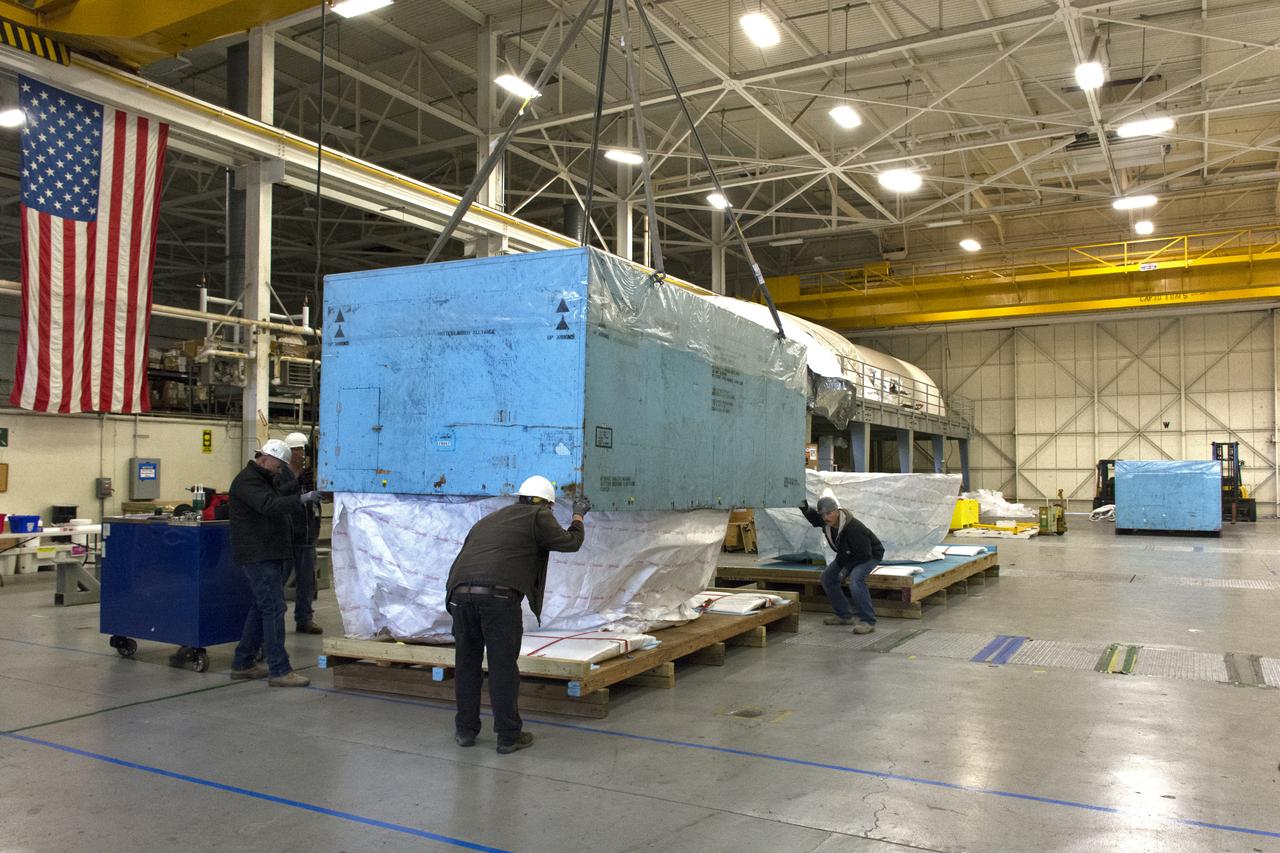
At Vandenberg Air Force Base in California, the boattail adaptor interface that will connect the Centaur upper stage to the payload fairing is offloaded for NASA's upcoming Interior Exploration using Seismic Investigations, Geodesy and Heat Transport, or InSight, mission to land on Mars. InSight will liftoff atop a United Launch Alliance Atlas V rocket to send the spacecraft on the first mission to explore the Red Planet's deep interior. It will investigate processes that shaped the rocky planets of the inner solar system including Earth. Liftoff from Vandenberg is scheduled for May 5, 2018.
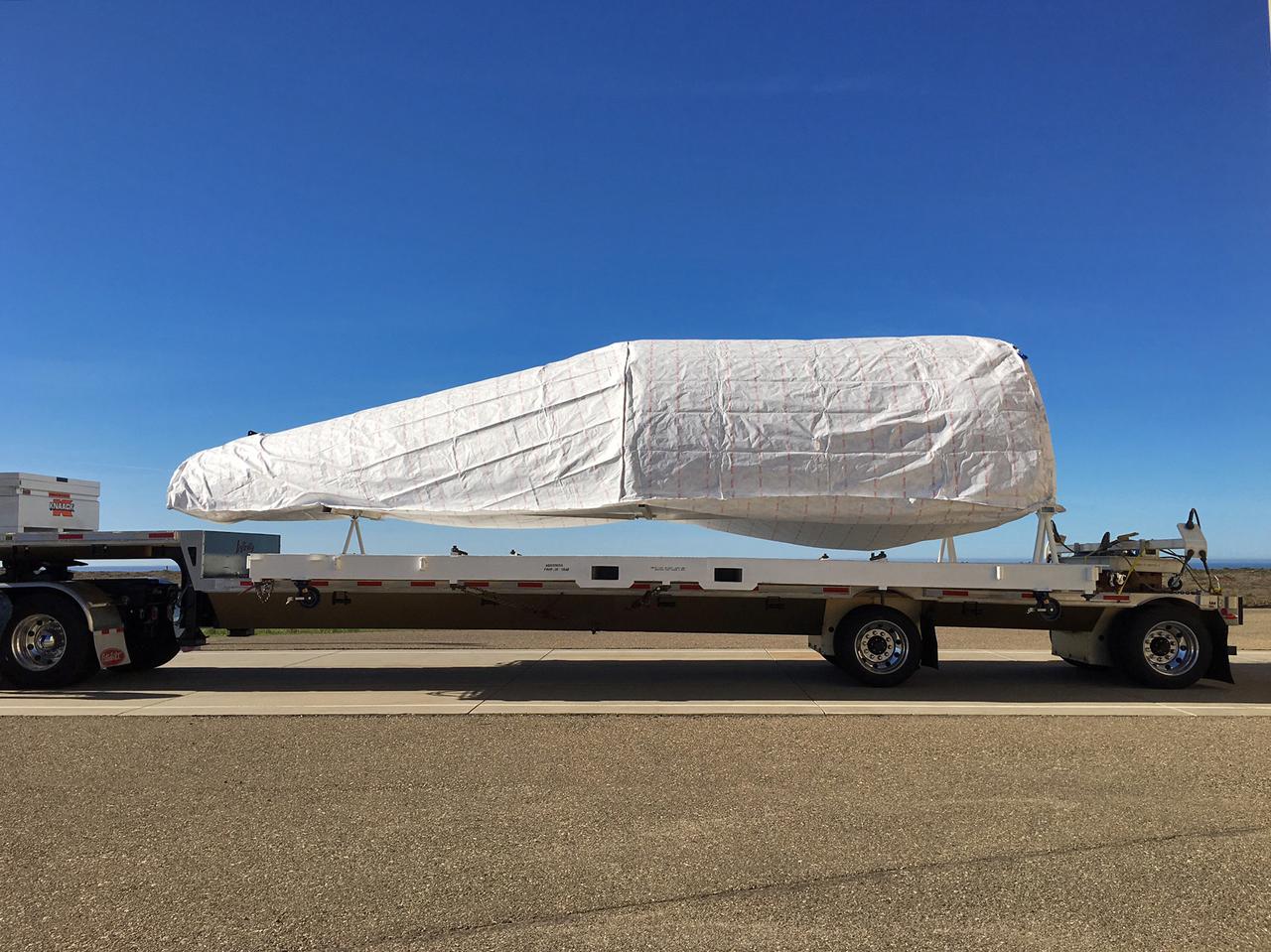
The United Launch Alliance (ULA) payload fairing for NASA's upcoming Interior Exploration using Seismic Investigations, Geodesy and Heat Transport, or InSight, mission to land on Mars arrives at Vandenberg Air Force Base in California. InSight is the first mission to explore the Red Planet's deep interior. It will investigate processes that shaped the rocky planets of the inner solar system including Earth. Liftoff atop a ULA Atlas V rocket is scheduled for May 5, 2018.

CAPE CANAVERAL, Fla. -- Lights are reflected on the solar array panels of NASA's Kepler spacecraft during illumination testing. A NASA Discovery mission, Kepler is specifically designed to survey our region of the Milky Way galaxy to discover hundreds of Earth-size and smaller planets in or near the habitable zone and determine how many of the billions of stars in our galaxy have such planets. Kepler will hunt for planets using a specialized one-meter diameter telescope called a photometer to measure the small changes in brightness caused by the transits. Results from this mission will allow us to place our solar system within the continuum of planetary systems in the Galaxy. After processing at Astrotech, Kepler will be carried to its launch pad at Cape Canaveral Air Force Station. NASA's planet-hunting Kepler mission is scheduled to launch no earlier than March 5 atop a United Launch Alliance Delta II rocket. Photo credit: NASA/Kim Shiflett

CAPE CANAVERAL, Fla. -- A Ball Aerospace and Technology worker conducts a light sensor test on NASA's Kepler spacecraft. A NASA Discovery mission, Kepler is specifically designed to survey our region of the Milky Way galaxy to discover hundreds of Earth-size and smaller planets in or near the habitable zone and determine how many of the billions of stars in our galaxy have such planets. Kepler will hunt for planets using a specialized one-meter diameter telescope called a photometer to measure the small changes in brightness caused by the transits. Results from this mission will allow us to place our solar system within the continuum of planetary systems in the Galaxy. After processing at Astrotech, Kepler will be carried to its launch pad at Cape Canaveral Air Force Station. NASA's planet-hunting Kepler mission is scheduled to launch no earlier than March 5 atop a United Launch Alliance Delta II rocket. Photo credit: NASA/Kim Shiflett

CAPE CANAVERAL, Fla. -- Ball Aerospace and Technology workers conduct a light test on the solar array panels of NASA's Kepler spacecraft. A NASA Discovery mission, Kepler is specifically designed to survey our region of the Milky Way galaxy to discover hundreds of Earth-size and smaller planets in or near the habitable zone and determine how many of the billions of stars in our galaxy have such planets. Kepler will hunt for planets using a specialized one-meter diameter telescope called a photometer to measure the small changes in brightness caused by the transits. Results from this mission will allow us to place our solar system within the continuum of planetary systems in the Galaxy. After processing at Astrotech, Kepler will be carried to its launch pad at Cape Canaveral Air Force Station. NASA's planet-hunting Kepler mission is scheduled to launch no earlier than March 5 atop a United Launch Alliance Delta II rocket. Photo credit: NASA/Kim Shiflett

CAPE CANAVERAL, Fla. -- Ball Aerospace and Technology workers conduct a light test on the solar array panels of NASA's Kepler spacecraft. A NASA Discovery mission, Kepler is specifically designed to survey our region of the Milky Way galaxy to discover hundreds of Earth-size and smaller planets in or near the habitable zone and determine how many of the billions of stars in our galaxy have such planets. Kepler will hunt for planets using a specialized one-meter diameter telescope called a photometer to measure the small changes in brightness caused by the transits. Results from this mission will allow us to place our solar system within the continuum of planetary systems in the Galaxy. After processing at Astrotech, Kepler will be carried to its launch pad at Cape Canaveral Air Force Station. NASA's planet-hunting Kepler mission is scheduled to launch no earlier than March 5 atop a United Launch Alliance Delta II rocket. Photo credit: NASA/Kim Shiflett

CAPE CANAVERAL, Fla. -- Ball Aerospace and Technology workers conduct a light test on the solar array panels of NASA's Kepler spacecraft. A NASA Discovery mission, Kepler is specifically designed to survey our region of the Milky Way galaxy to discover hundreds of Earth-size and smaller planets in or near the habitable zone and determine how many of the billions of stars in our galaxy have such planets. Kepler will hunt for planets using a specialized one-meter diameter telescope called a photometer to measure the small changes in brightness caused by the transits. Results from this mission will allow us to place our solar system within the continuum of planetary systems in the Galaxy. After processing at Astrotech, Kepler will be carried to its launch pad at Cape Canaveral Air Force Station. NASA's planet-hunting Kepler mission is scheduled to launch no earlier than March 5 atop a United Launch Alliance Delta II rocket. Photo credit: NASA/Kim Shiflett

CAPE CANAVERAL, Fla. -- Ball Aerospace and Technology workers conduct a light test on the solar array panels of NASA's Kepler spacecraft. A NASA Discovery mission, Kepler is specifically designed to survey our region of the Milky Way galaxy to discover hundreds of Earth-size and smaller planets in or near the habitable zone and determine how many of the billions of stars in our galaxy have such planets. Kepler will hunt for planets using a specialized one-meter diameter telescope called a photometer to measure the small changes in brightness caused by the transits. Results from this mission will allow us to place our solar system within the continuum of planetary systems in the Galaxy. After processing at Astrotech, Kepler will be carried to its launch pad at Cape Canaveral Air Force Station. NASA's planet-hunting Kepler mission is scheduled to launch no earlier than March 5 atop a United Launch Alliance Delta II rocket. Photo credit: NASA/Kim Shiflett
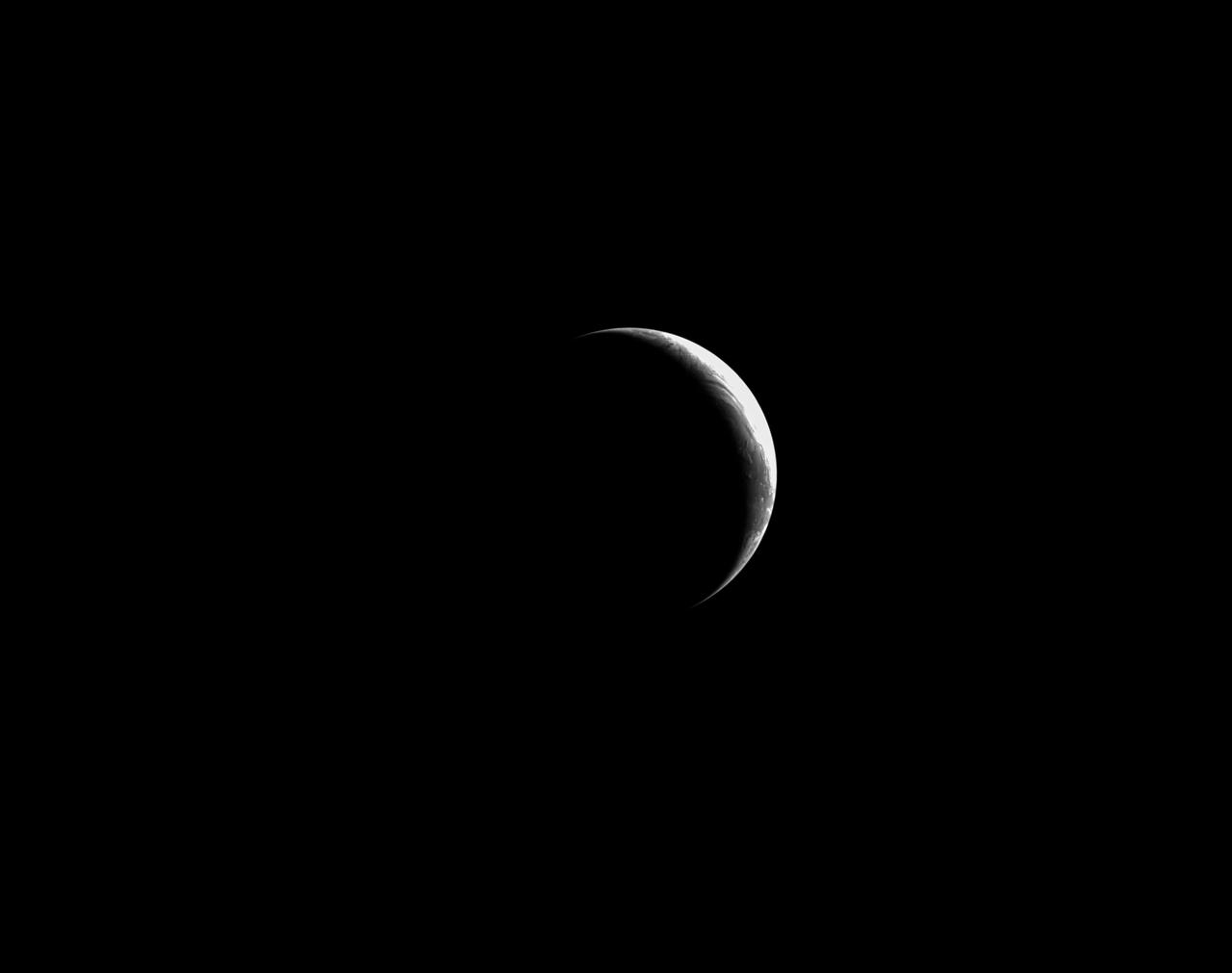
art001e003069 (Dec. 11, 2022) On the day of its return to Earth, Orion’s optical navigation camera captured this image of the planet. The spacecraft splashed down at 12:40 p.m. EST Dec. 11, completing the Artemis I mission and paving the way for future Artemis missions to land the first woman and first person of color on the Moon.

art001e003070 (Dec. 11, 2022) On the day of its return to Earth, Orion’s optical navigation camera captured this image of the planet. The spacecraft splashed down at 12:40 p.m. EST Dec. 11, completing the Artemis I mission and paving the way for future Artemis missions to land the first woman and first person of color on the Moon.
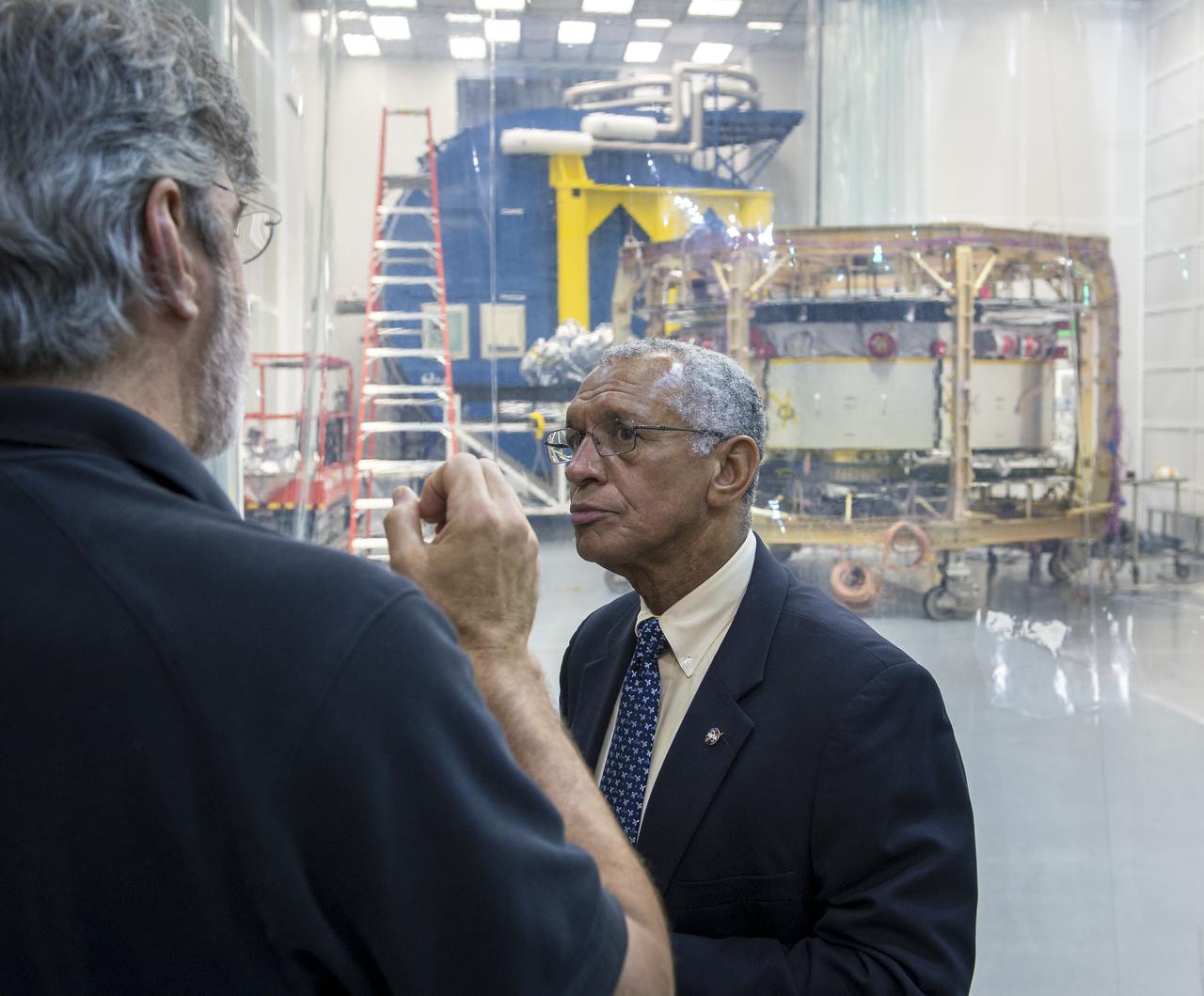
NASA Administrator Charles Bolden listens to Magnetospheric Multiscale (MMS) Mission Project Manager Craig Tooley talk about the MMS mission outside of a Naval Research Laboratory cleanroom where one of four Magnetospheric Multiscale (MMS) spacecraft is currently undergoing testing, Monday, August 4, 2014, in Washington. The Magnetospheric Multiscale, or MMS, mission will study the mystery of how magnetic fields around Earth connect and disconnect, explosively releasing energy via a process known as magnetic reconnection. The four identical spacecraft are scheduled to launch in 2015 from Cape Canaveral and will orbit around Earth in varying formations through the dynamic magnetic system surrounding our planet to provide the first three-dimensional views of the magnetic reconnection process. The goal of the STP Program is to understand the fundamental physical processes of the space environment from the sun to Earth, other planets, and the extremes of the solar system boundary. Photo Credit: (NASA/Bill Ingalls)
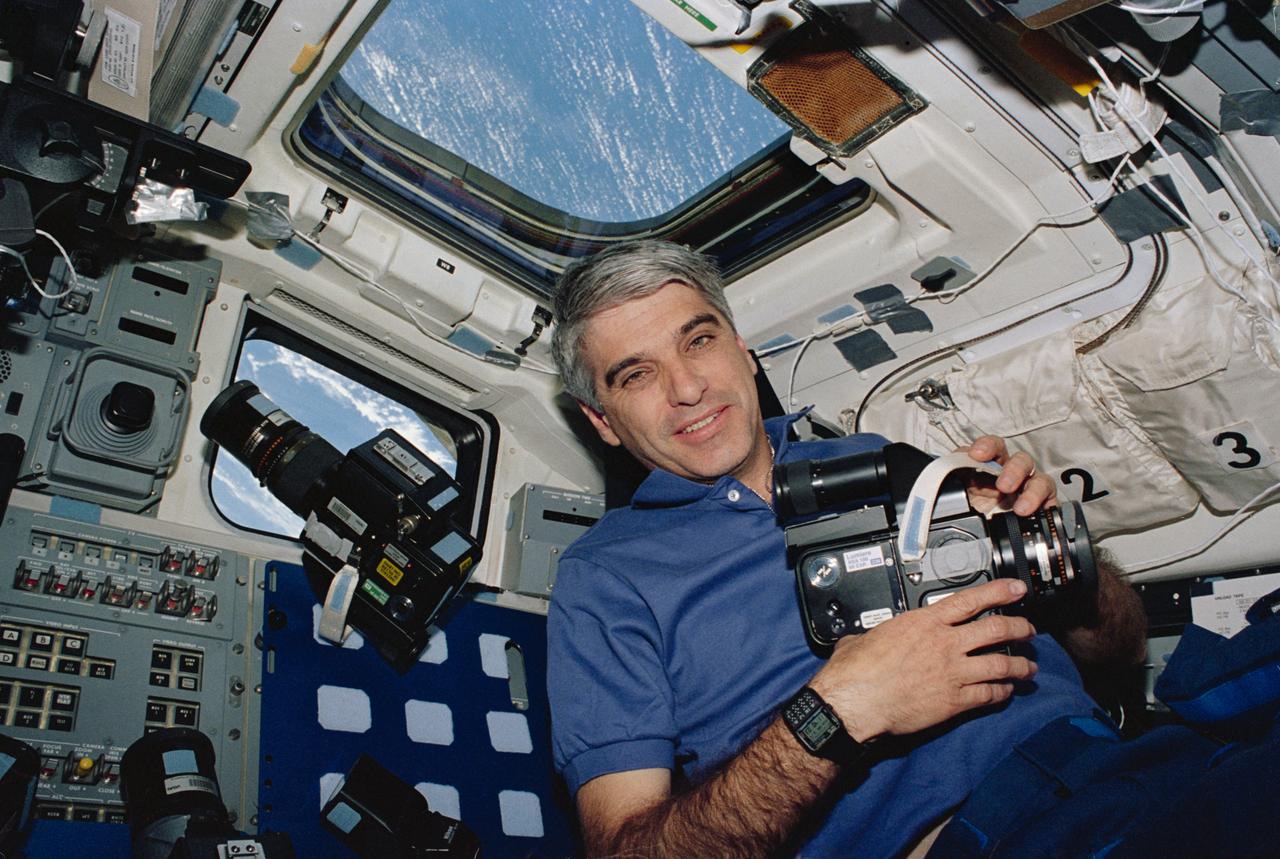
STS059-19-004 (9-20 April 1994) --- Astronaut Sidney M. Gutierrez, mission commander, pauses on the flight deck during Earth observations on the Space Shuttle Endeavour. Gutierrez, who was joined by five other NASA astronauts for 11-days in Earth orbit, holds a 70mm Hasselblad camera. The camera was one of several instruments used during the SRL mission to record an unprecedented compilation of data on planet Earth.
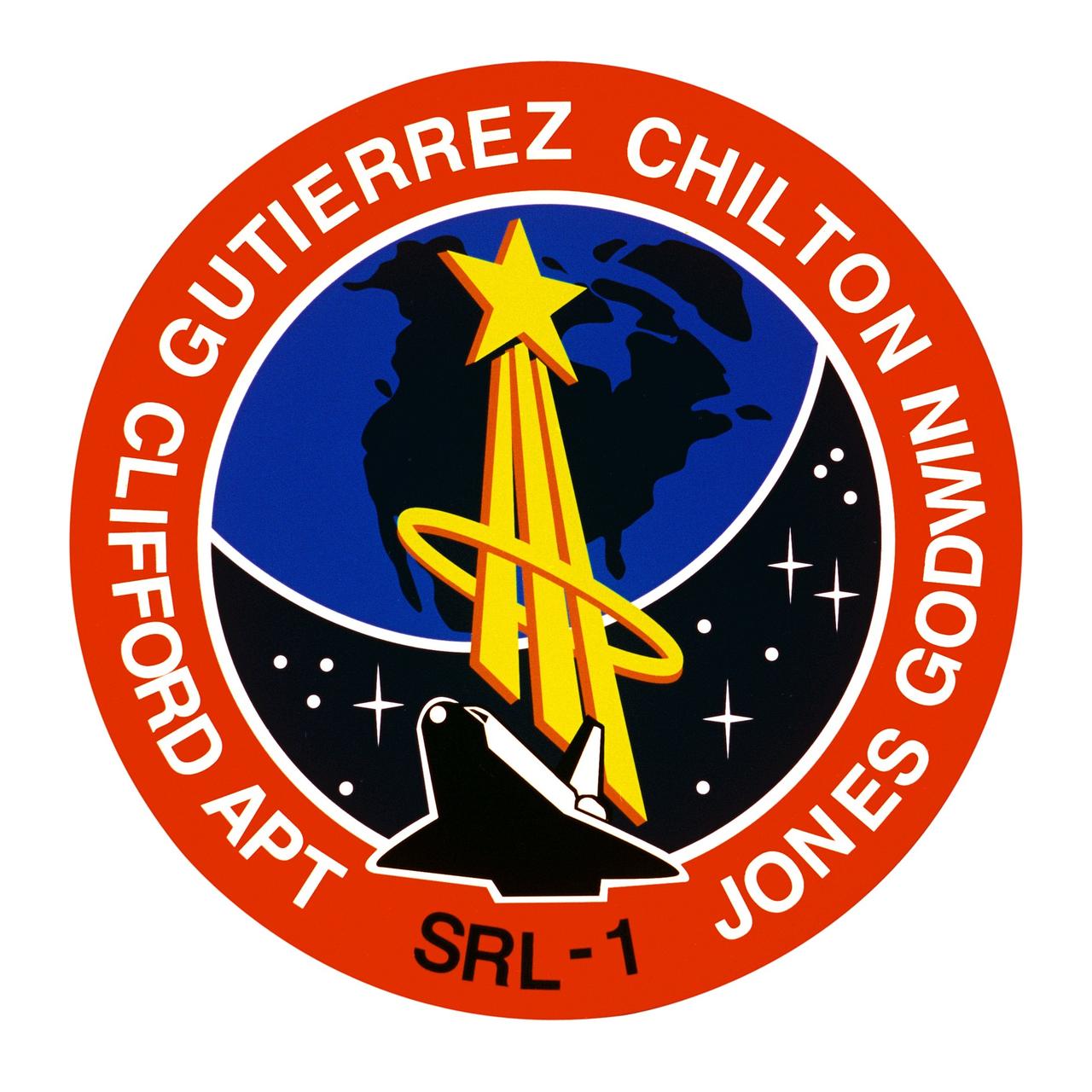
STS059-S-001 (November 1993) --- Designed by the crew members, the STS-59 insignia is dominated by Earth, reflecting the focus of the first Space Radar Laboratory (SRL-1) mission upon our planet's surface and atmosphere. The golden symbol of the astronaut corps emblem sweeps over Earth's surface from the space shuttle Endeavour, representing the operation of the SIR-C/Synthetic Aperture Radar (X-SAR) and the Measurement of Air Pollution from Space (MAPS) sensors. The astronaut emblem also signals the importance of the human element in space exploration and in the study of our planet. Using the unique vantage point of space, Endeavour and its crew -- along with scientists from around the world -- will study Earth and its environment. The starfield visible below Earth represents the many talents and skills of the international (SRL-1) team in working to make this "Mission to Planet Earth" (MTPE) a scientific and operational success. The NASA insignia design for space shuttle flights is reserved for use by the astronauts and for other official use as the NASA Administrator may authorize. Public availability has been approved only in the forms of illustrations by the various news media. When and if there is any change in this policy, which is not anticipated, the change will be publicly announced. Photo credit: NASA
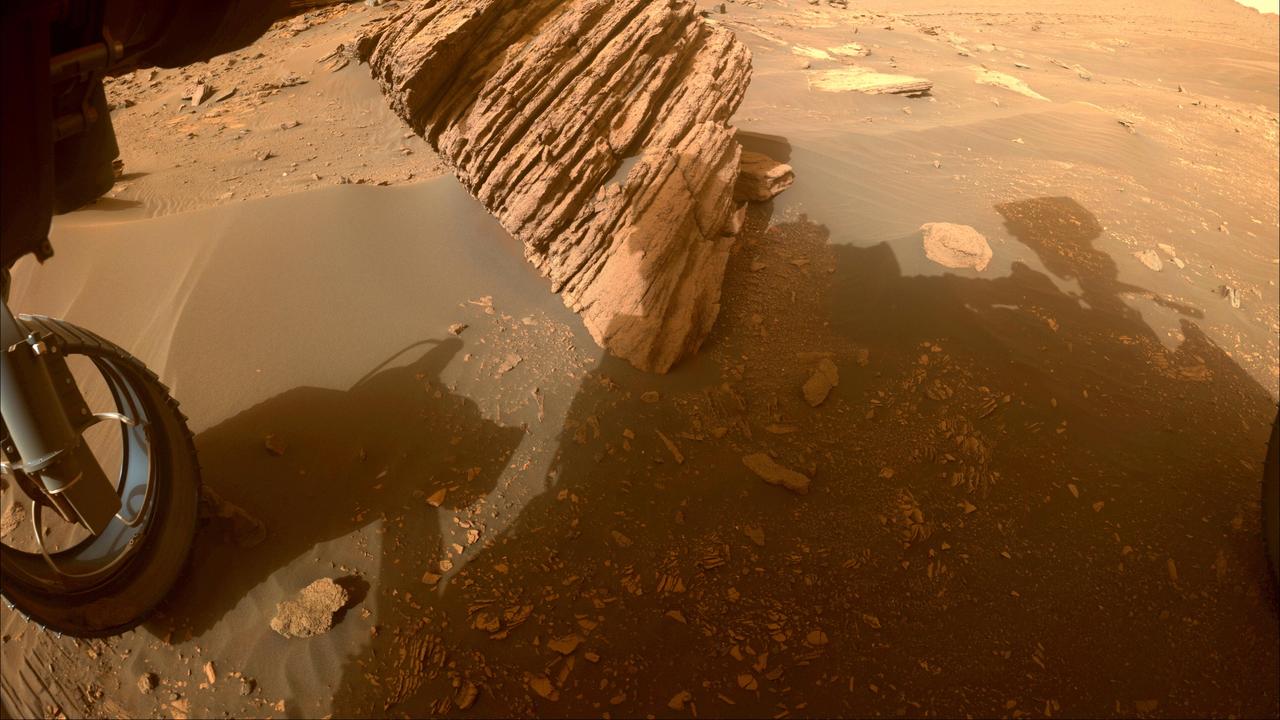
NASA's Perseverance Mars rover captured this image of "Bettys Rock" using one of its front hazard cameras on June 20, 2022, the 474th Martian day, or sol, of the mission. The rock is named after Bettys Rock in Shenandoah National Park. A key objective for Perseverance's mission on Mars is astrobiology, including the search for signs of ancient microbial life. The rover will characterize the planet's geology and past climate, pave the way for human exploration of the Red Planet, and be the first mission to collect and cache Martian rock and regolith (broken rock and dust). Subsequent NASA missions, in cooperation with ESA (European Space Agency), would send spacecraft to Mars to collect these sealed samples from the surface and return them to Earth for in-depth analysis. The Mars 2020 Perseverance mission is part of NASA's Moon to Mars exploration approach, which includes Artemis missions to the Moon that will help prepare for human exploration of the Red Planet. https://photojournal.jpl.nasa.gov/catalog/PIA25655

Inside a mission support area at NASA's Jet Propulsion Laboratory in Southern California, Mars 2020 Perseverance team members displayed their joy as the spacecraft successfully completed a complex series of steps to safely touch down on the Martian surface. JPL built and manages operations of the Mars 2020 Perseverance rover for NASA. A key objective for Perseverance's mission on Mars is astrobiology, including the search for signs of ancient microbial life. The rover will characterize the planet's geology and past climate, pave the way for human exploration of the Red Planet, and be the first mission to collect and cache Martian rock and regolith (broken rock and dust). Subsequent NASA missions, in cooperation with ESA (European Space Agency), would send spacecraft to Mars to collect these sealed samples from the surface and return them to Earth for in-depth analysis. The Mars 2020 mission is part of a larger program that includes missions to the Moon as a way to prepare for human exploration of the Red Planet. https://photojournal.jpl.nasa.gov/catalog/PIA23723
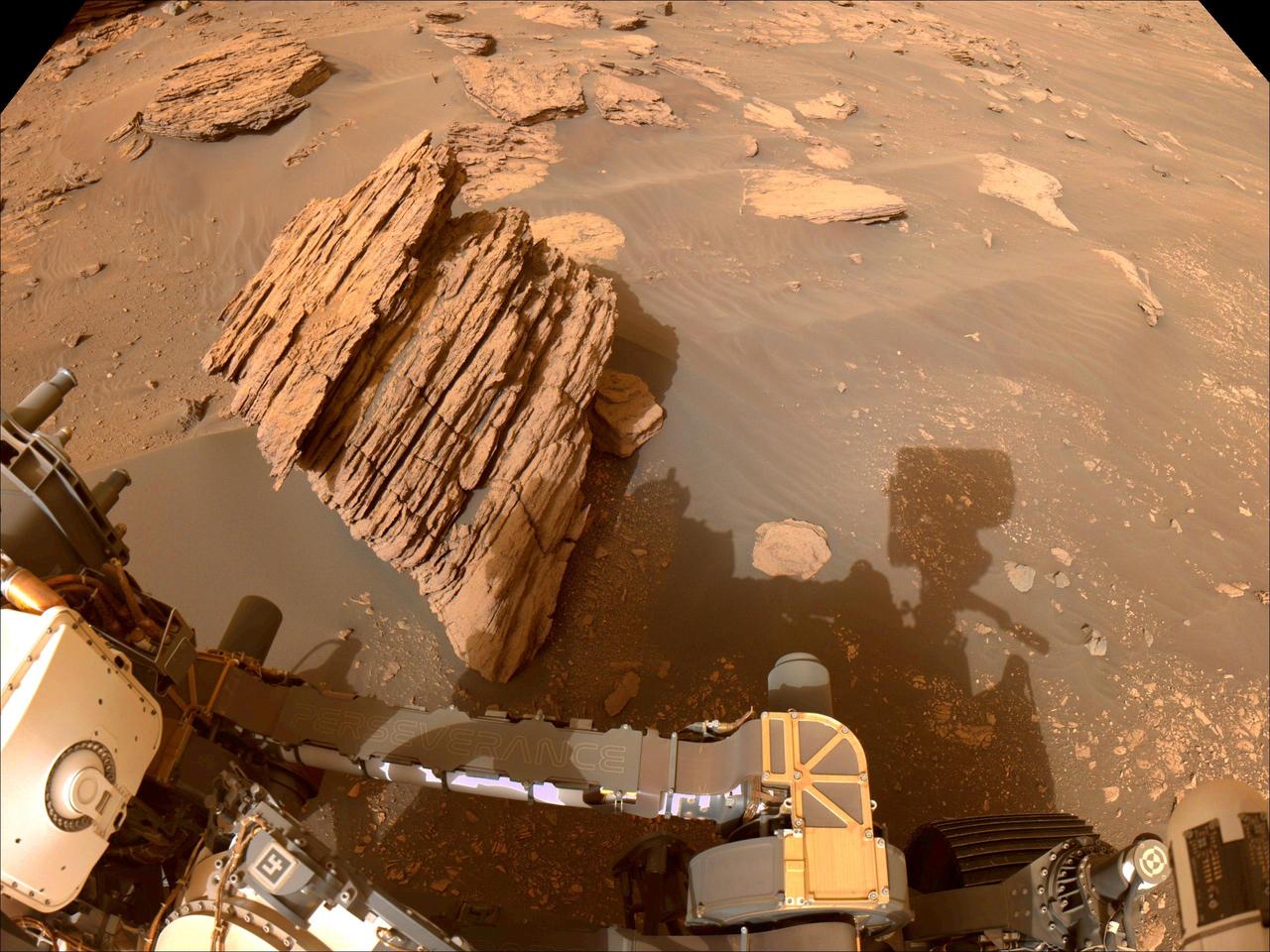
NASA's Perseverance Mars rover captured this image of "Bettys Rock" using one of the rover navigation cameras on June 20, 2022, the 474th Martian day, or sol, of the mission. The rock is named after Bettys Rock in Shenandoah National Park. A key objective for Perseverance's mission on Mars is astrobiology, including the search for signs of ancient microbial life. The rover will characterize the planet's geology and past climate, pave the way for human exploration of the Red Planet, and be the first mission to collect and cache Martian rock and regolith (broken rock and dust). Subsequent NASA missions, in cooperation with ESA (European Space Agency), would send spacecraft to Mars to collect these sealed samples from the surface and return them to Earth for in-depth analysis. The Mars 2020 Perseverance mission is part of NASA's Moon to Mars exploration approach, which includes Artemis missions to the Moon that will help prepare for human exploration of the Red Planet. https://photojournal.jpl.nasa.gov/catalog/PIA25658
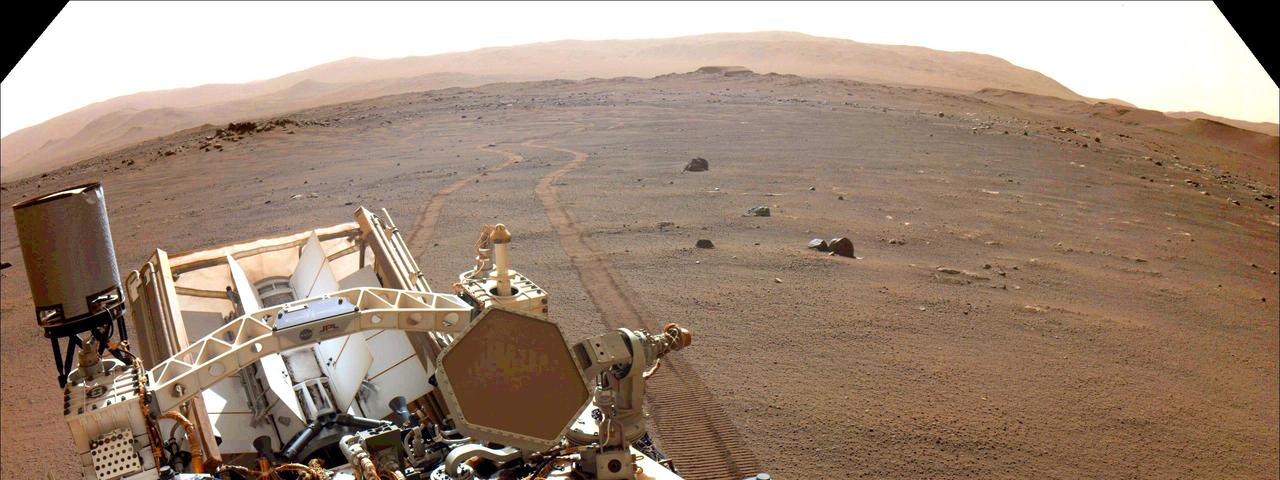
NASA's Perseverance Mars rover looks back at its wheel tracks on March 17, 2022, the 381st Martian day, or sol, of the mission. A key objective for Perseverance's mission on Mars is astrobiology, including the search for signs of ancient microbial life. The rover will characterize the planet's geology and past climate, pave the way for human exploration of the Red Planet, and be the first mission to collect and cache Martian rock and regolith (broken rock and dust). Subsequent NASA missions, in cooperation with ESA (European Space Agency), would send spacecraft to Mars to collect these sealed samples from the surface and return them to Earth for in-depth analysis. The Mars 2020 Perseverance mission is part of NASA's Moon to Mars exploration approach, which includes Artemis missions to the Moon that will help prepare for human exploration of the Red Planet. https://photojournal.jpl.nasa.gov/catalog/PIA25171
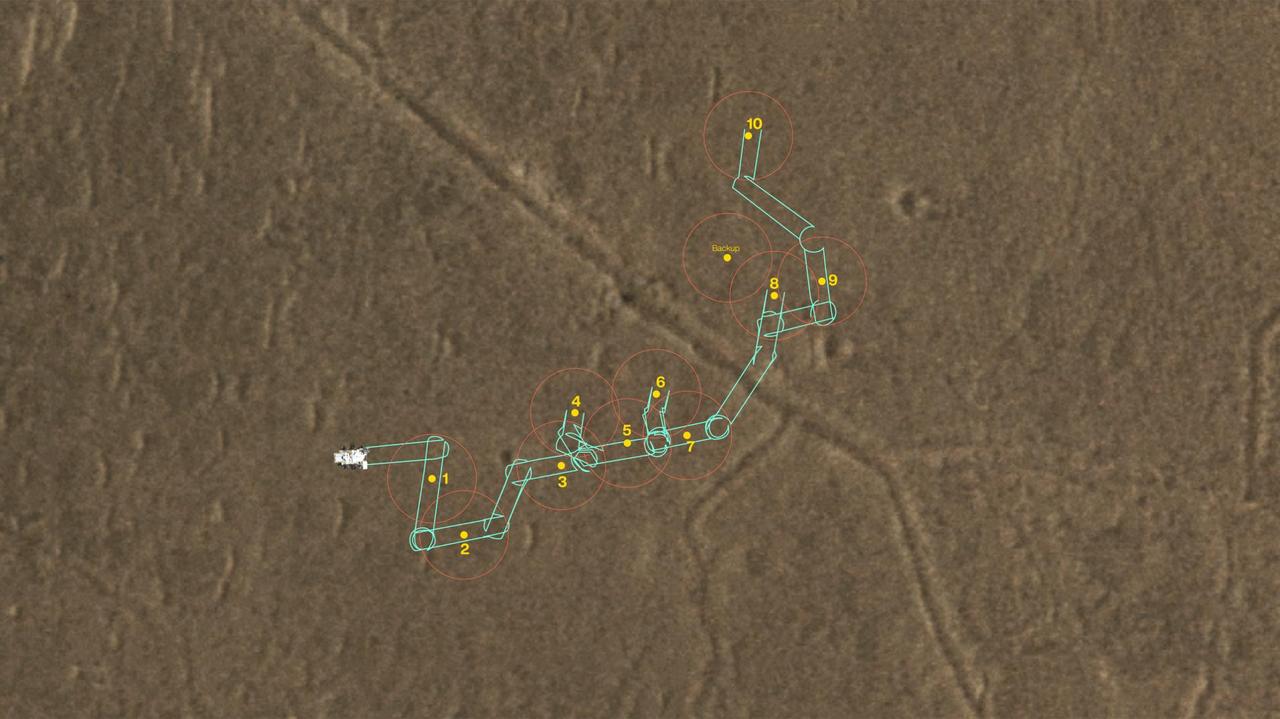
This map shows where NASA's Perseverance Mars rover will be dropping 10 samples that a future mission could pick up. The orange circles represent areas where a Sample Recovery Helicopter could safely operate to acquire the sample tubes. A key objective for Perseverance's mission on Mars is astrobiology, including the search for signs of ancient microbial life. The rover will characterize the planet's geology and past climate, pave the way for human exploration of the Red Planet, and be the first mission to collect and cache Martian rock and regolith (broken rock and dust). Subsequent NASA missions, in cooperation with ESA (European Space Agency), would send spacecraft to Mars to collect these sealed samples from the surface and return them to Earth for in-depth analysis. The Mars 2020 Perseverance mission is part of NASA's Moon to Mars exploration approach, which includes Artemis missions to the Moon that will help prepare for human exploration of the Red Planet. https://photojournal.jpl.nasa.gov/catalog/PIA25678
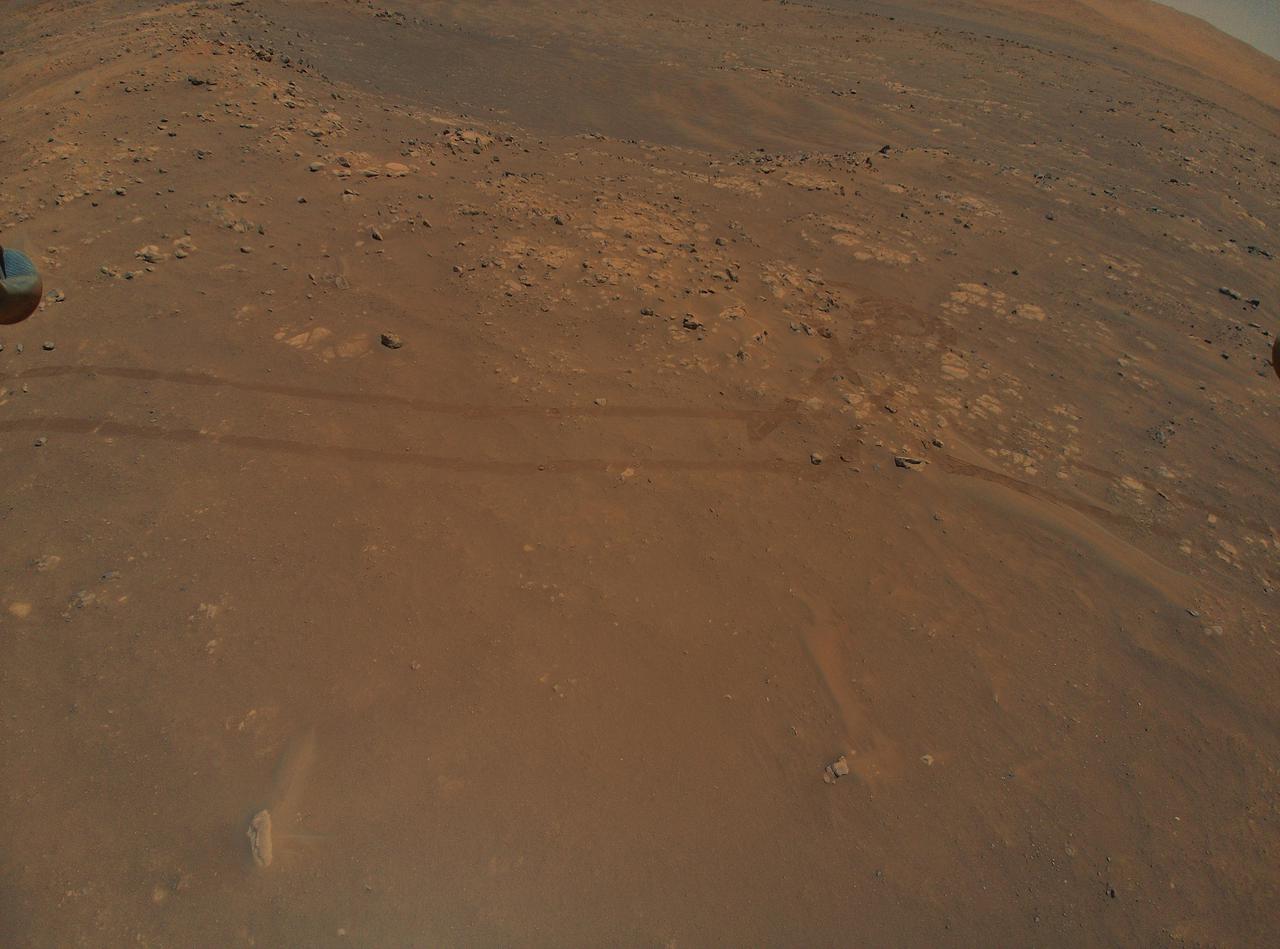
NASA's Ingenuity Mars Helicopter captured this image of tracks made by the Perseverance rover during its ninth flight, on July 5, 2021, the 133rd Martian day, or sol, of the rover's mission. A portion of the helicopter's landing gear can be seen at top left. A key objective for Perseverance's mission on Mars is astrobiology, including the search for signs of ancient microbial life. The rover will characterize the planet's geology and past climate, pave the way for human exploration of the Red Planet, and be the first mission to collect and cache Martian rock and regolith (broken rock and dust). Subsequent NASA missions, in cooperation with ESA (European Space Agency), would send spacecraft to Mars to collect these sealed samples from the surface and return them to Earth for in-depth analysis. The Mars 2020 Perseverance mission is part of NASA's Moon to Mars exploration approach, which includes Artemis missions to the Moon that will help prepare for human exploration of the Red Planet. https://photojournal.jpl.nasa.gov/catalog/PIA24730