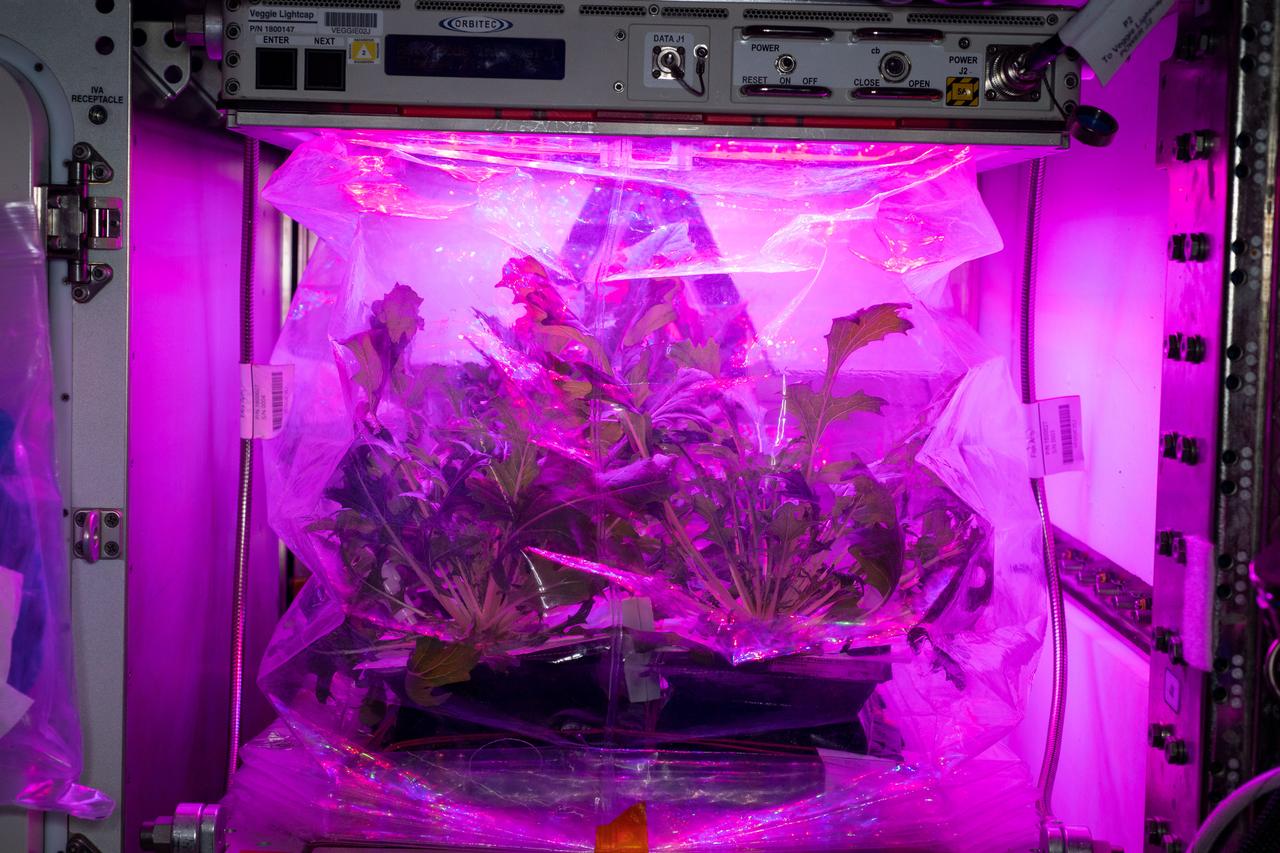
Mizuna Mustard mustard greens, part of the Veg-04A experiment, are shown growing in a Veggie plant growth chamber aboard the International Space Station on July 9, 2019. The Veg-04A experiment tested the greens, grown in blue-rich lighting and red-rich lighting, to determine the effects of different light ratios on plants grown in space on the station. The plants arrived aboard the SpaceX Commercial Resupply Services-16 mission. Astronaut Christina Koch initiated the on-orbit experiment on June 4, 2019, in the station’s two Veggie plant growth chambers, with six plant pillows per chamber. On June 11, 2019, Koch thinned the Mizuna plants to one plant per pillow. The on-orbit harvest took place July 9, 2019, with astronaut Nick Hague harvesting the plants grown under blue-rich light and Koch harvesting the plants grown under red-rich lights.
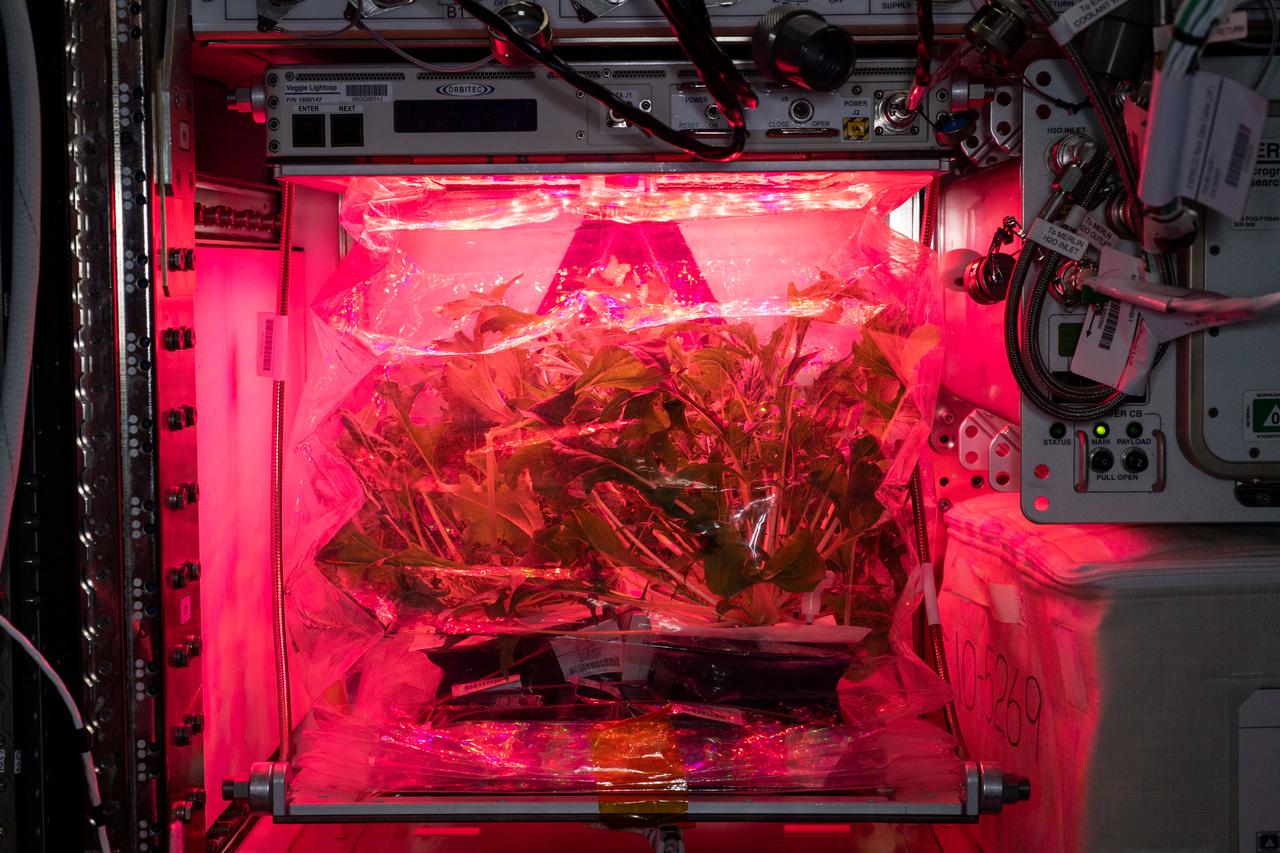
Mizuna Mustard mustard greens, part of the Veg-04A experiment, are shown growing in a Veggie plant growth chamber aboard the International Space Station on July 9, 2019. The Veg-04A experiment tested the greens, grown in blue-rich lighting and red-rich lighting, to determine the effects of different light ratios on plants grown in space on the station. The plants arrived aboard the SpaceX Commercial Resupply Services-16 mission. Astronaut Christina Koch initiated the on-orbit experiment on June 4, 2019, in the station’s two Veggie plant growth chambers, with six plant pillows per chamber. On June 11, 2019, Koch thinned the Mizuna plants to one plant per pillow. The on-orbit harvest took place July 9, 2019, with astronaut Nick Hague harvesting the plants grown under blue-rich light and Koch harvesting the plants grown under red-rich lights.
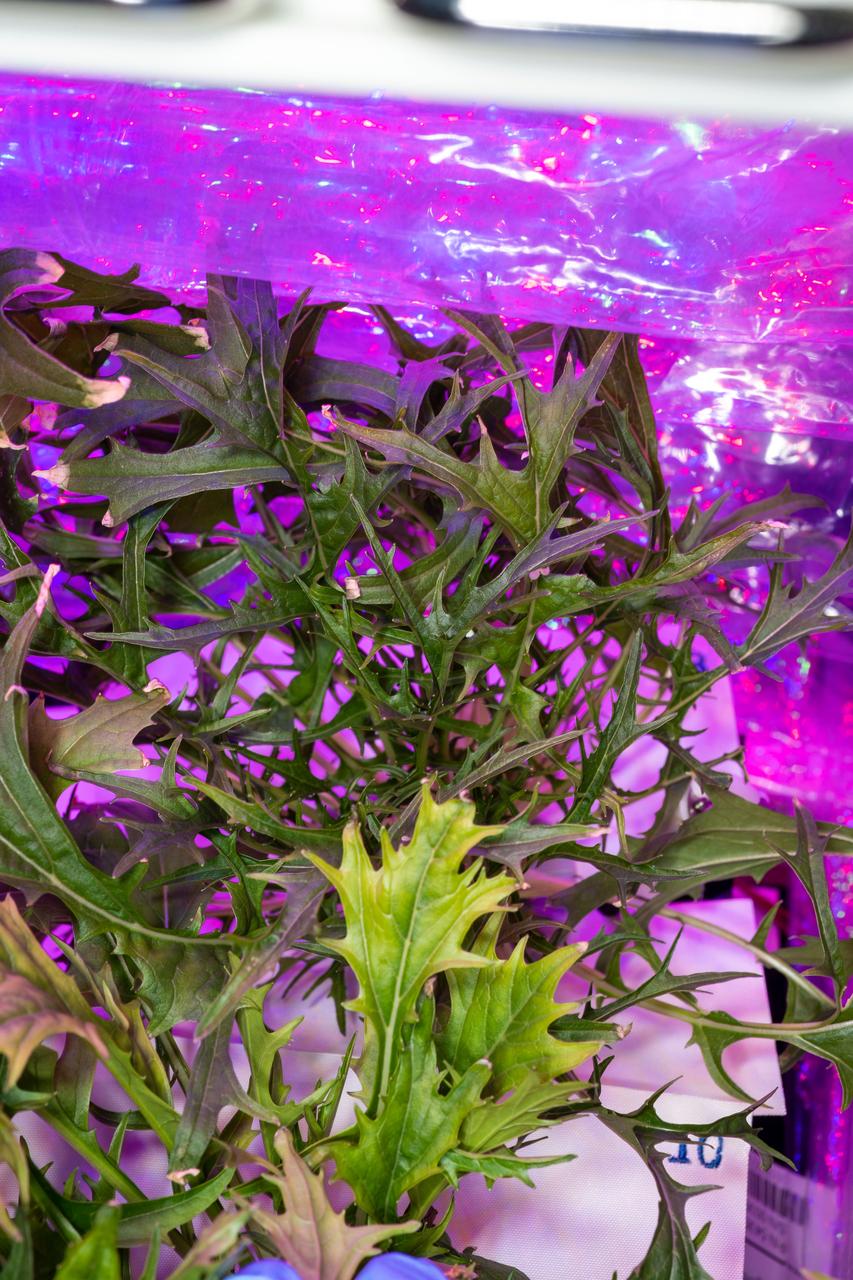
Documentation of a Mizuna mustard plant growing in Plant Pillow 8 in the Vegetable Production System (Veggie). Photo was taken prior to plant harvesting operations (OPS) for the Veg-04B experiment.
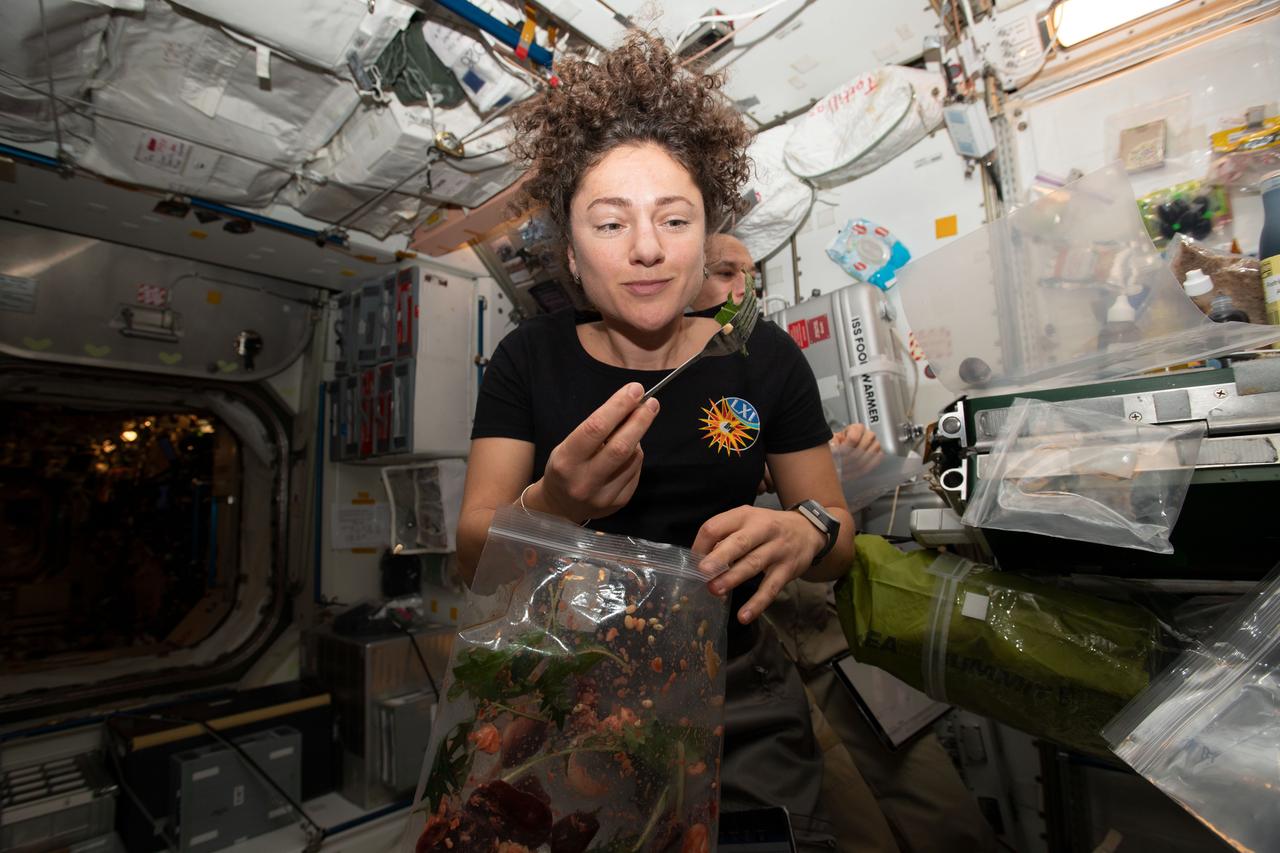
iss061e025829 (Oct. 30, 2019) --- NASA astronaut Jessica Meir dines on fresh Mizuna mustard greens she harvested earlier that day aboard the International Space Station.
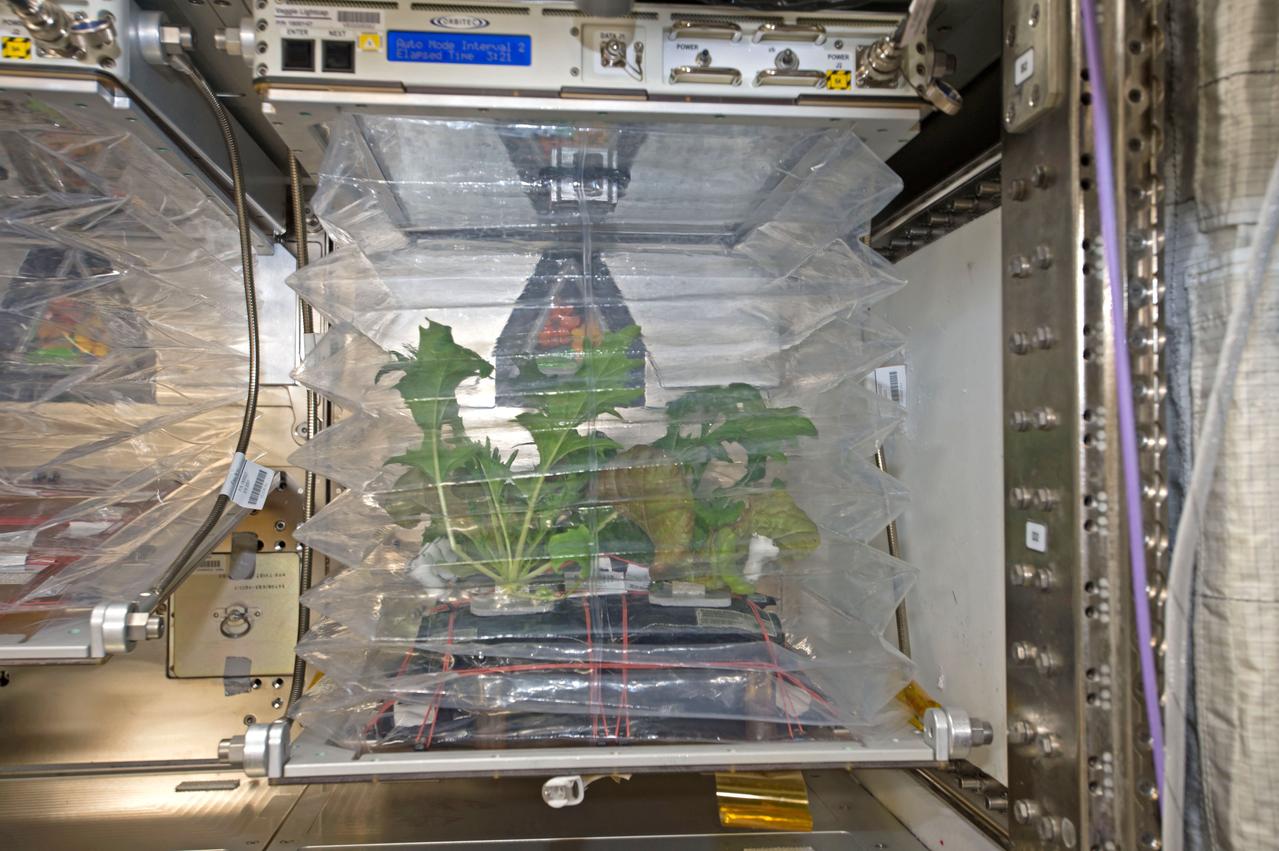
Veg-03D Experiment Onboard the International Space Station. First time three different plant varieties are being grown simultaneously in the Veggie chamber -- Mizuna mustard, Waldmann's green lettuce and Outredgeous Red Romaine lettuce.
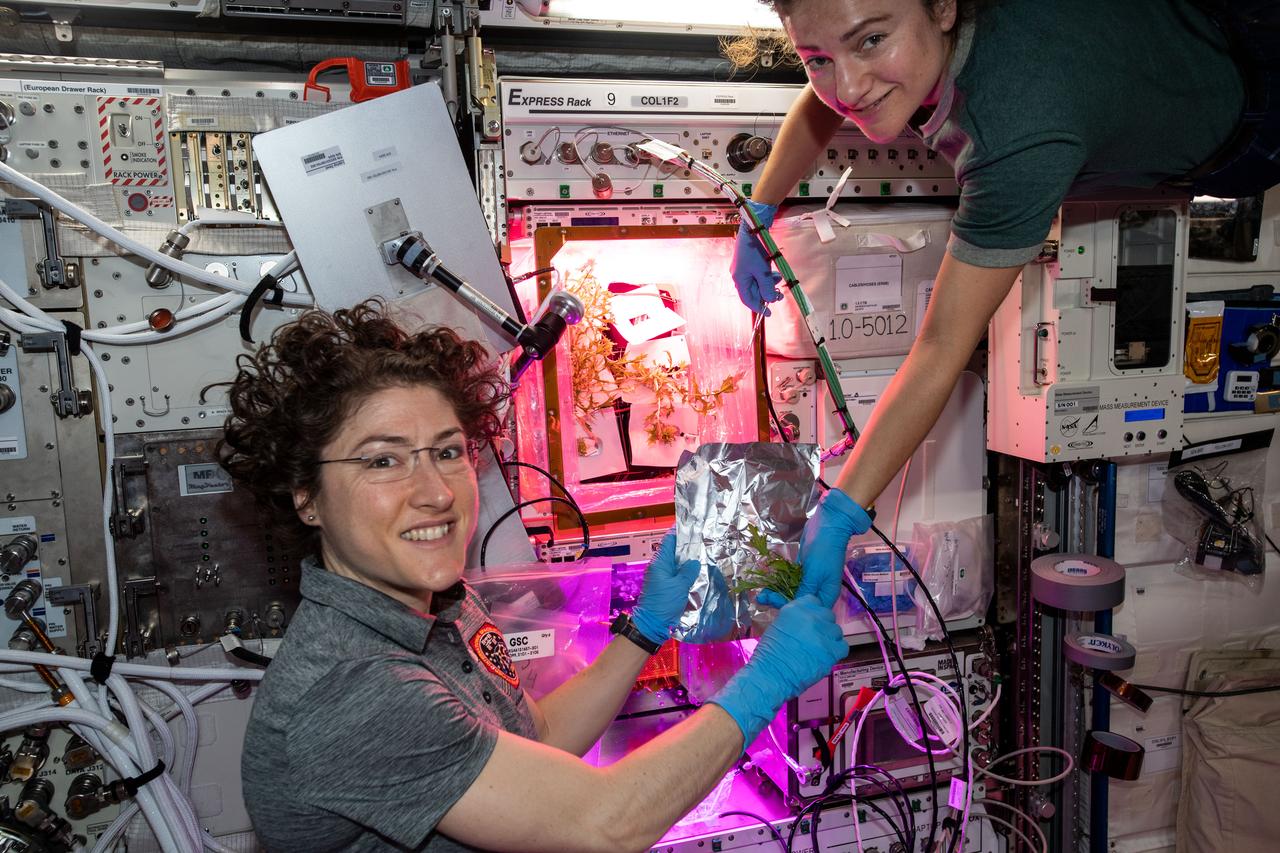
iss061e061596 (Nov. 28, 2019) --- NASA astronauts (left to right) Christina Koch and Jessica Meir harvested Mizuna mustard greens on Thanksgiving day inside the ESA (European Space Agency) laboratory module's VEGGIE facility.
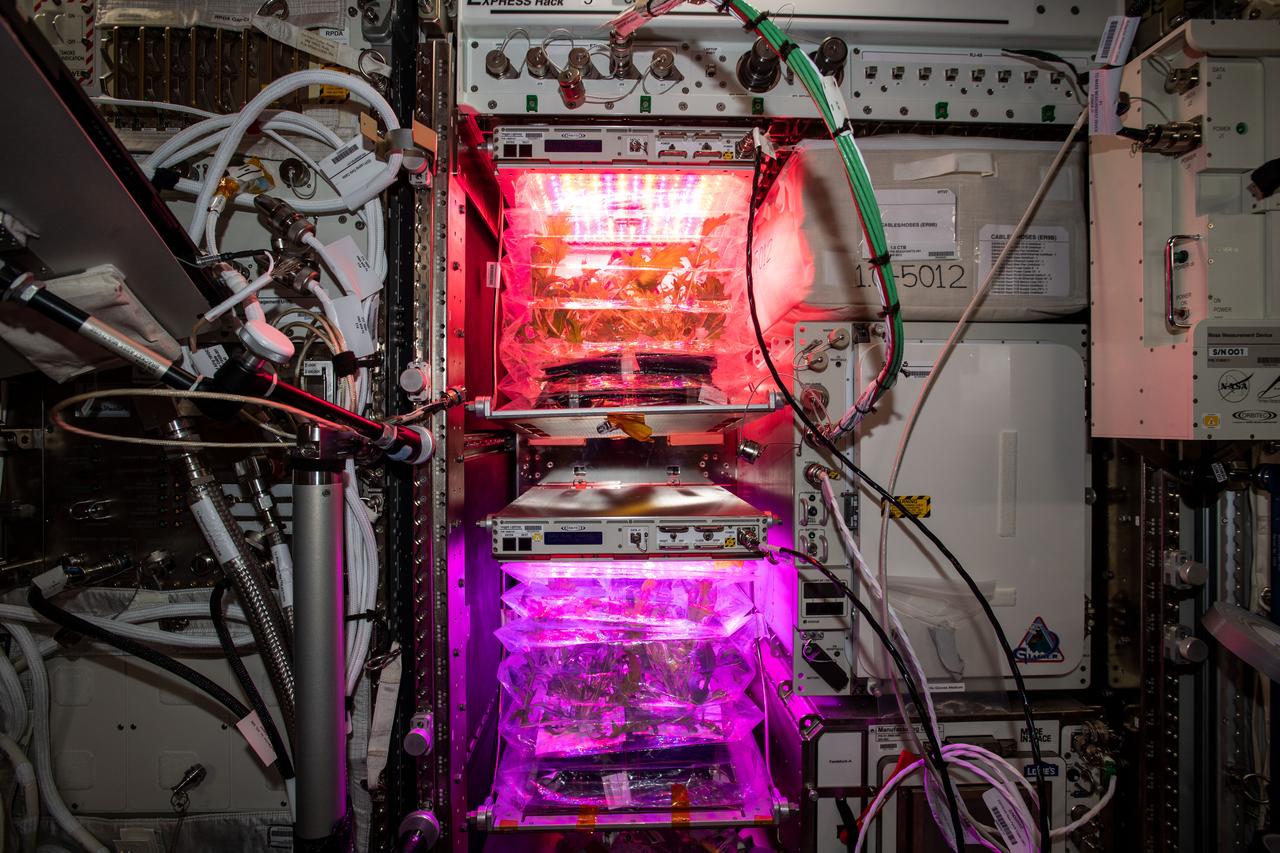
Documentation (overall view) of the Vegetable Production System (Veggie) taken during Pillow watering operations (OPS) for the Veg-04B experiment. Plant Pillows contain Mizuna mustard plants.

iss061e038294 (Nov. 13, 2019) --- NASA astronaut Jessica Meir trims leaves and harvests a crop of Mizuna mustard greens grown inside the International Space Station's Veggie botany facility located in the Columbus laboratory module..
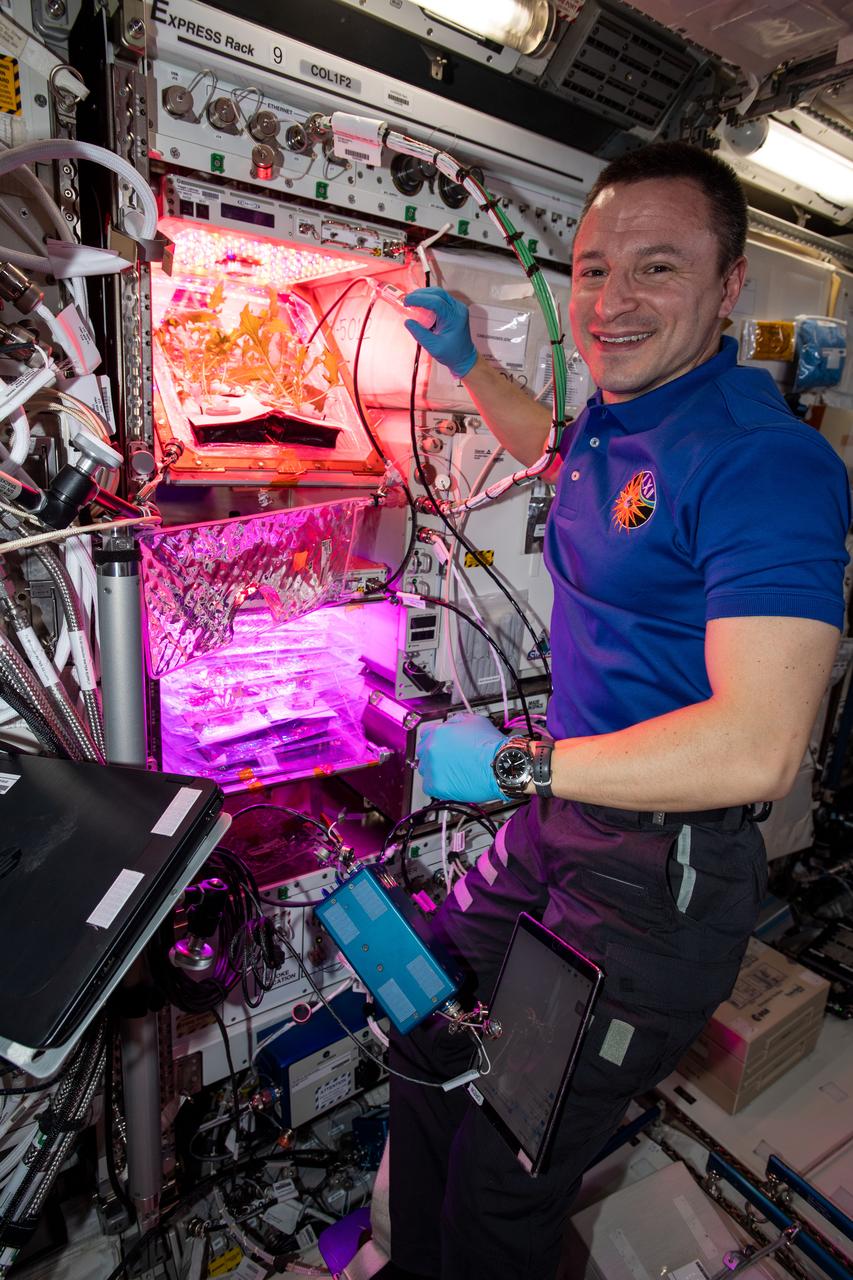
iss061e012956 (Oct. 23, 2019) --- This past week NASA astronaut Andrew Morgan watered the plant pillows in which Mizuna mustard greens are growing for the Veg-04B experiment. Veg-04B focuses on the effects of light quality and fertilizer on the leafy Mizuna crop, microbial food safety, nutritional value and the taste acceptability by the crew. The space botany research is also informing NASA how to provide fresh food for crews on long-term space missions.
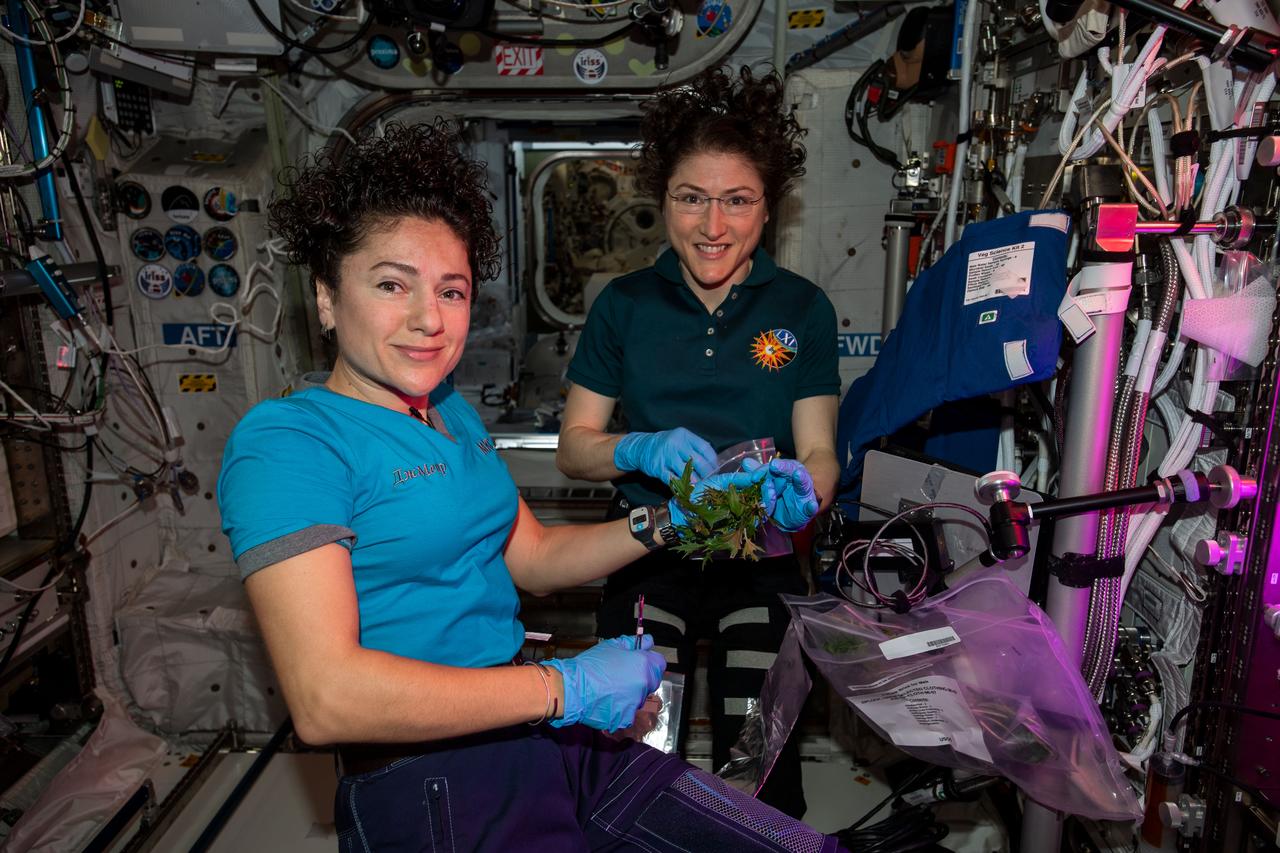
iss061e038302 (Nov. 13, 2019) --- NASA astronauts (from left) Jessica Meir and Christina Koch harvest a crop of Mizuna mustard greens grown inside the International Space Station Veggie's botany facility located in the Columbus laboratory module..

Outredgeous red leaf lettuce, Mizuna mustard and Waldmann's green lettuce are growing in the Veggie control system in the ISS environment simulator chamber in the Space Station Processing Facility at NASA's Kennedy Space Center in Florida. Growth in the chamber mimics the growth of plant experiments in the Veggie plant growth system on the International Space Station.
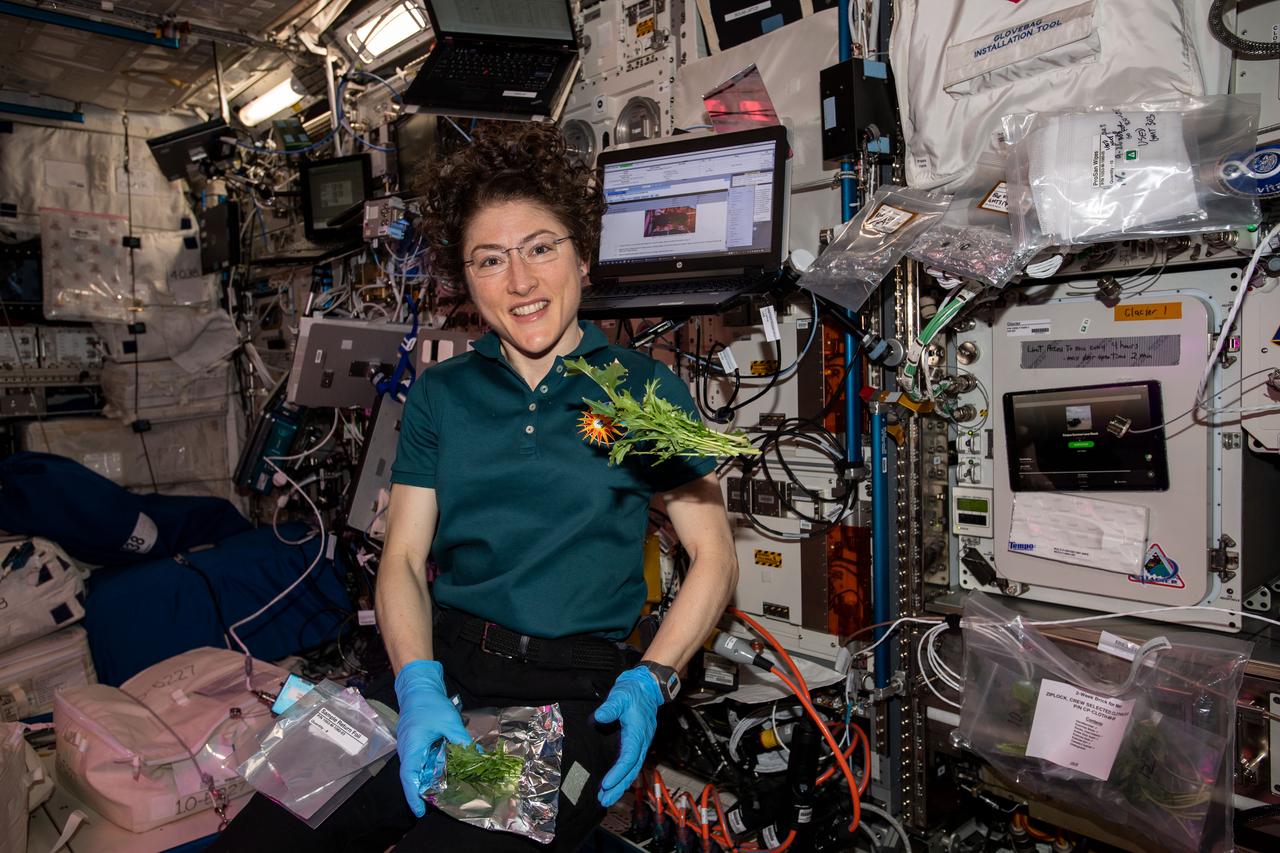
iss061e038290 (Nov. 13, 2019) --- NASA astronaut Christina Koch collects and packs Mizuna mustard greens grown and harvested inside the International Space Station's Veggie botany facility located in the Columbus laboratory module.. A portion of the leaves were consumed by the crew for a taste while the rest were stowed in a science freezer for analysis on Earth.

Water and nutrients are being added to plants in the Veggie hardware in NASA Kennedy Space Center's ISS environment simulator chamber. Mizuna mustard, Outredgeous lettuce and Waldmann's green lettuce are growing in Veggie. Growth in the chamber mimics the growth of plant experiments in the Veggie plant growth system on the International Space Station.
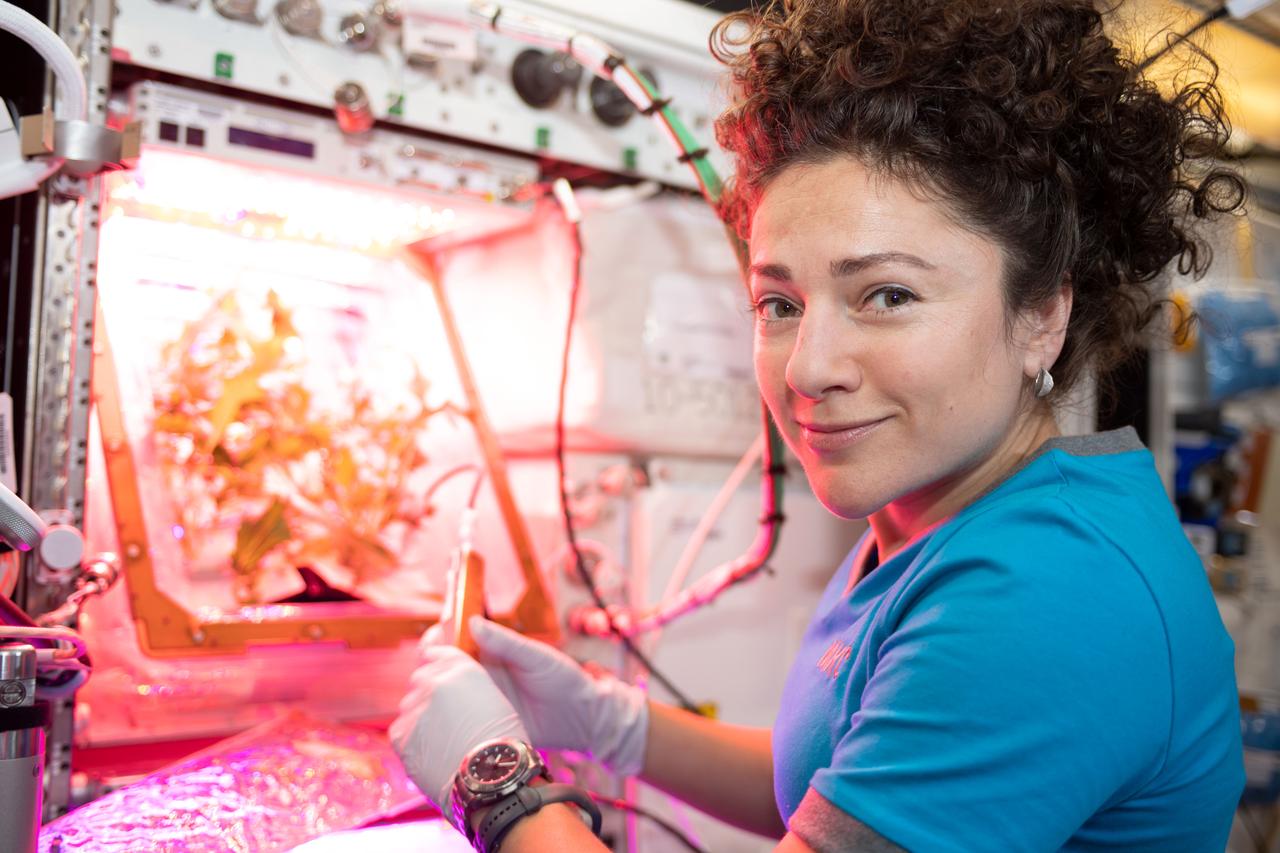
iss061e014149 (Oct. 27, 2019) --- NASA astronaut Jessica Meir waters plant pillows where Mizuna mustard greens are raised as part of the Veg-04B experiment. This investigation is part of a phased research project to address the need for a continuous fresh food production system in space and focuses on the effects of light quality and fertilizer on a leafy crop. Taste is assessed by the crew.

Seeds are secured in plant pillows for the Veggie plant growth system inside a laboratory in the Space Station Processing Facility at NASA's Kennedy Space Center in Florida. The plant pillows, containing Outredgeous lettuce, Mizuna Mustard and Waldmann's green lettuce seeds, were packed for delivery to Veggie on SpaceX's 12th commercial resupply services mission to the International Space Station.
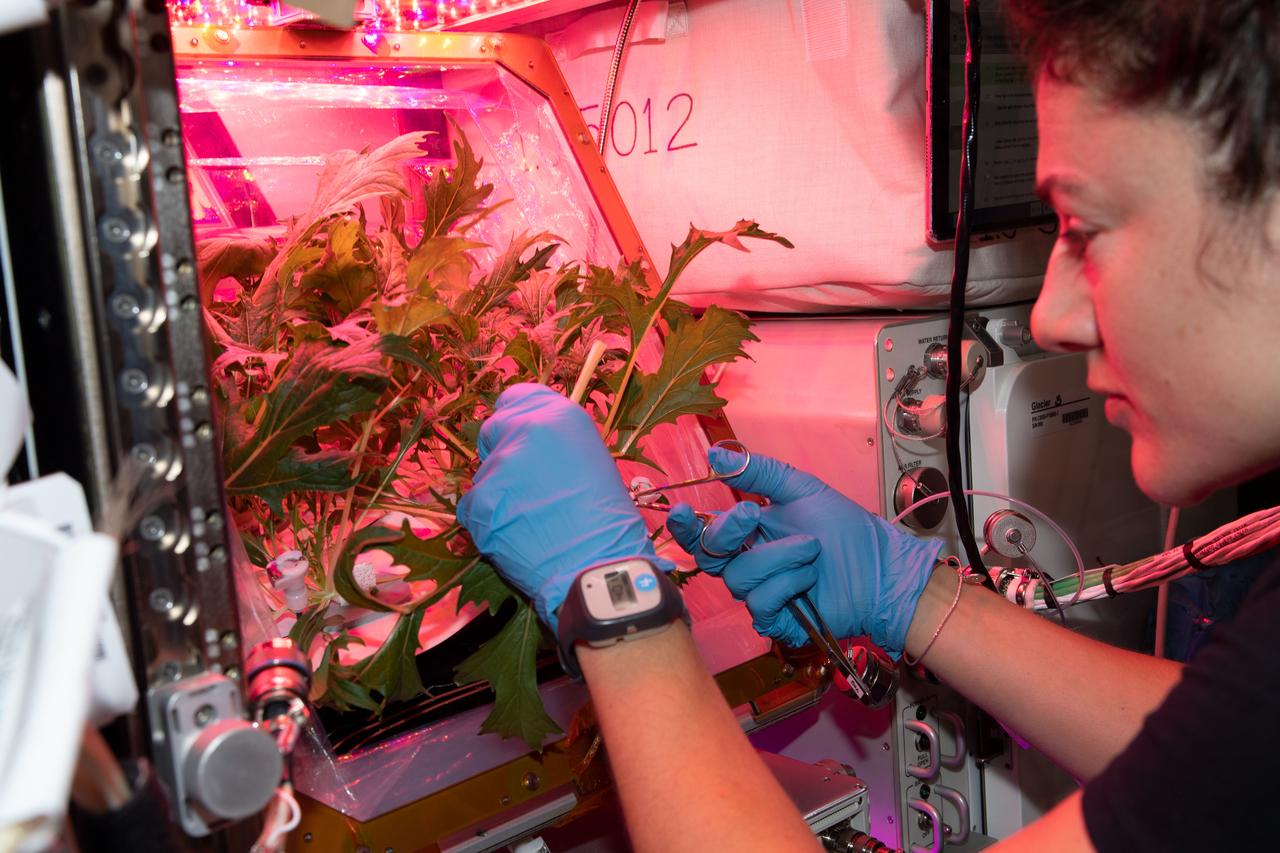
iss061e022796 (Oct. 30, 2019) --- NASA astronaut Jessica Meir cuts Mizuna mustard green leaves grown aboard the International Space Station for the VEG-04B space agriculture study. The botany research is helping scientists to learn how to provide fresh food to space crews on long-duration missions. The Expedition 61 crewmembers also tasted the leaves for edibility and stowed the leftovers in a science freezer for scientific analysis.

Matt Romeyn, a NASA biologist, secures seeds in plant pillows for the Veggie plant growth system inside a laboratory in the Space Station Processing Facility at NASA's Kennedy Space Center in Florida. The plant pillows, containing Outredgeous lettuce, Mizuna Mustard and Waldmann's green lettuce seeds, were packed for delivery to Veggie on SpaceX's 12th commercial resupply services mission to the International Space Station.
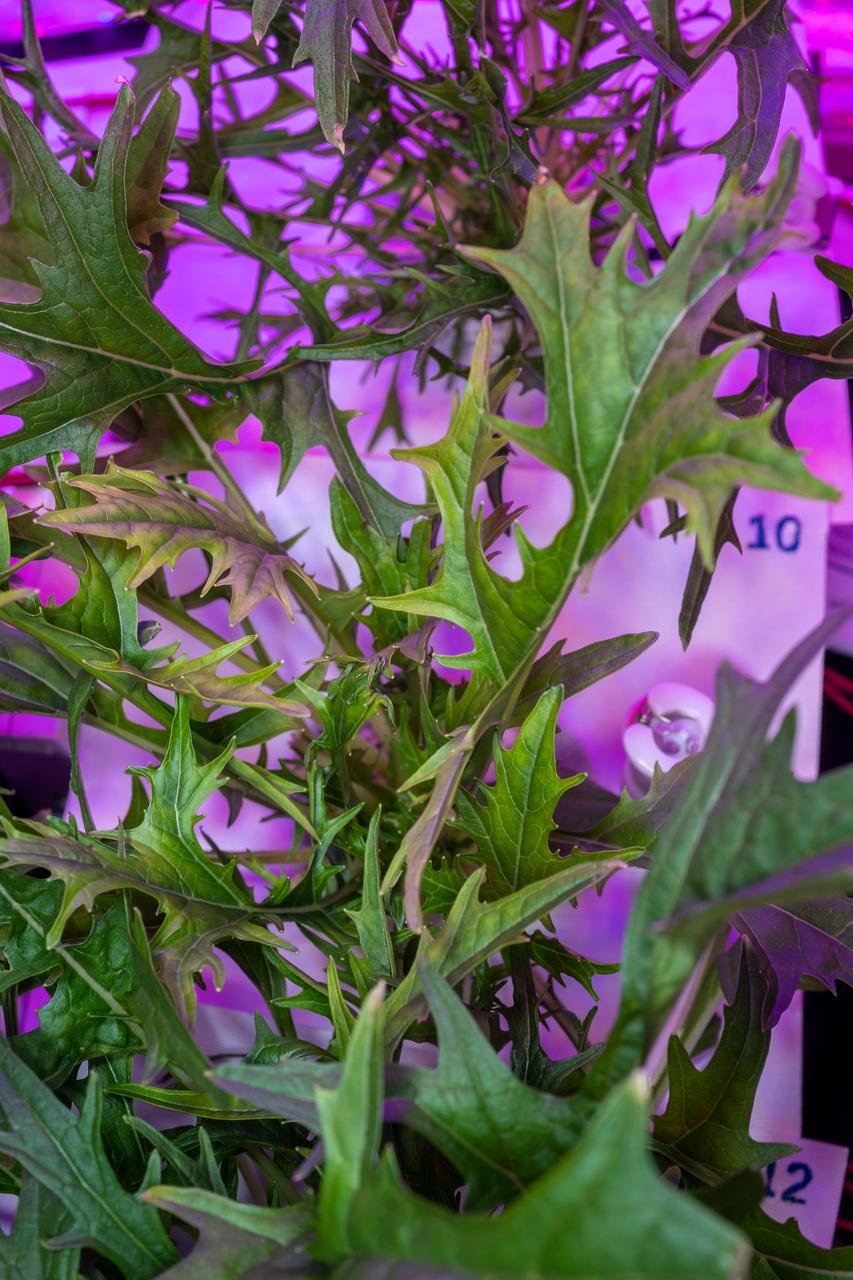
iss061e033379 (Nov. 7, 2019) --- Mizuna mustard greens are growing aboard the International Space Station to demonstrate the feasibility of space agriculture to provide fresh food for crews on deep space missions. The plants are grown under red-to-blue lighting and watered in pillows rather than soil in a specialized botany facility called VEGGIE. Crops are grown, harvested and consumed by astronauts with some samples stowed in science freezers for later analysis as part of the VEG-04 study.

NASA interns Jessica Scotten, left, and Ayla Grandpre water plants in the Veggie hardware in NASA Kennedy Space Center's ISS environment simulator chamber. Mizuna mustard, Outredgeous lettuce and Waldmann's green lettuce are growing in Veggie. Growth in the chamber mimics the growth of plant experiments in the Veggie plant growth system on the International Space Station.

Matt Romeyn, a NASA biologist, secures seeds in plant pillows for the Veggie plant growth system inside a laboratory in the Space Station Processing Facility at NASA's Kennedy Space Center in Florida. The plant pillows, containing Outredgeous lettuce, Mizuna Mustard and Waldmann's green lettuce seeds, were packed for delivery to Veggie on SpaceX's 12th commercial resupply services mission to the International Space Station.

Seeds are secured in plant pillows for the Veggie plant growth system inside a laboratory in the Space Station Processing Facility at NASA's Kennedy Space Center in Florida. The plant pillows, containing Outredgeous lettuce, Mizuna Mustard and Waldmann's green lettuce seeds, were packed for delivery to Veggie on SpaceX's 12th commercial resupply services mission to the International Space Station.

Seeds are secured in plant pillows for the Veggie plant growth system inside a laboratory in the Space Station Processing Facility at NASA's Kennedy Space Center in Florida. The plant pillows, containing Outredgeous lettuce, Mizuna Mustard and Waldmann's green lettuce seeds, were packed for delivery to Veggie on SpaceX's 12th commercial resupply services mission to the International Space Station.

Seeds are secured in plant pillows for the Veggie plant growth system inside a laboratory in the Space Station Processing Facility at NASA's Kennedy Space Center in Florida. The plant pillows, containing Outredgeous lettuce, Mizuna Mustard and Waldmann's green lettuce, were packed for delivery to Veggie on SpaceX's 12th commercial resupply services mission to the International Space Station.
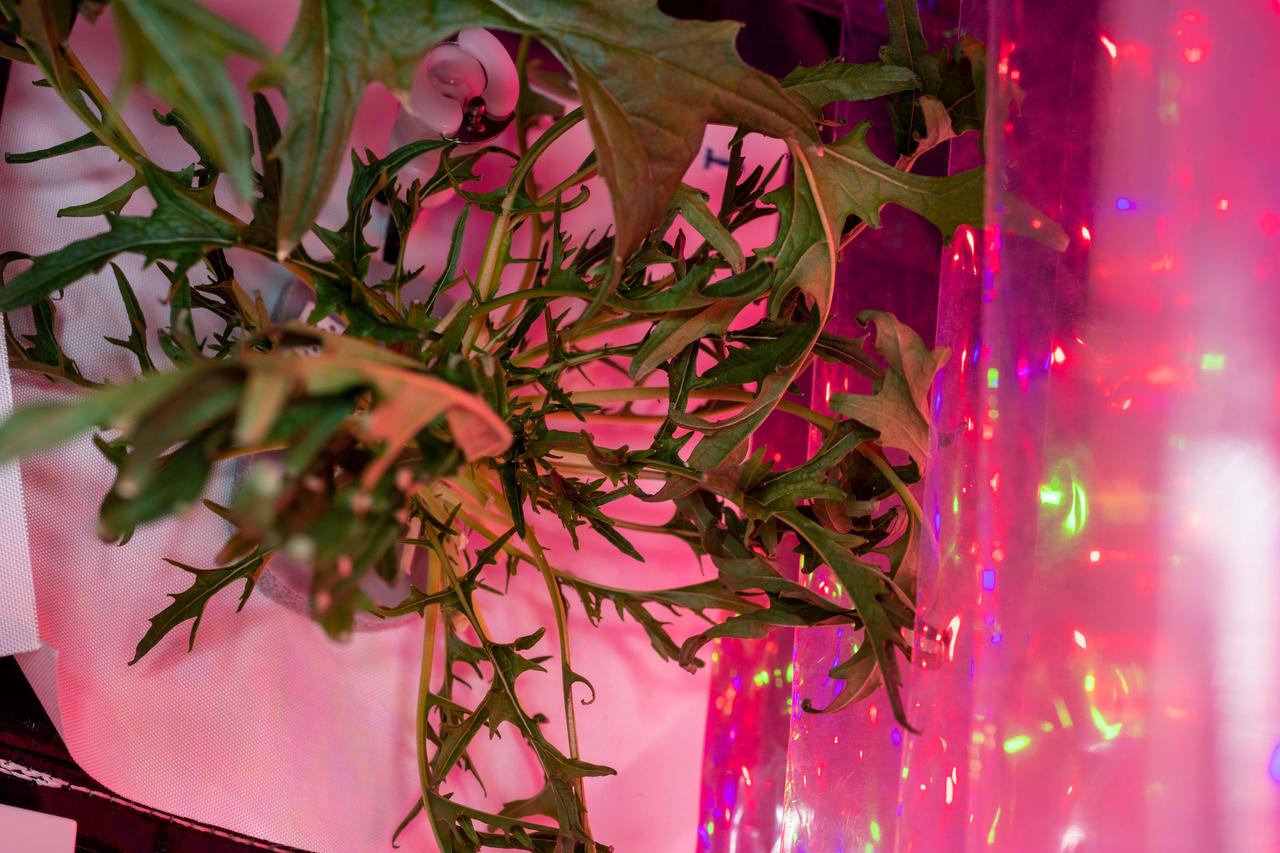
iss061e033363 (Nov. 7, 2019) --- Mizuna mustard greens are growing aboard the International Space Station to demonstrate the feasibility of space agriculture to provide fresh food for crews on deep space missions. The plants are grown under red-to-blue lighting and watered in pillows rather than soil in a specialized botany facility called VEGGIE. Crops are grown, harvested and consumed by astronauts with some samples stowed in science freezers for later analysis as part of the VEG-04 study.
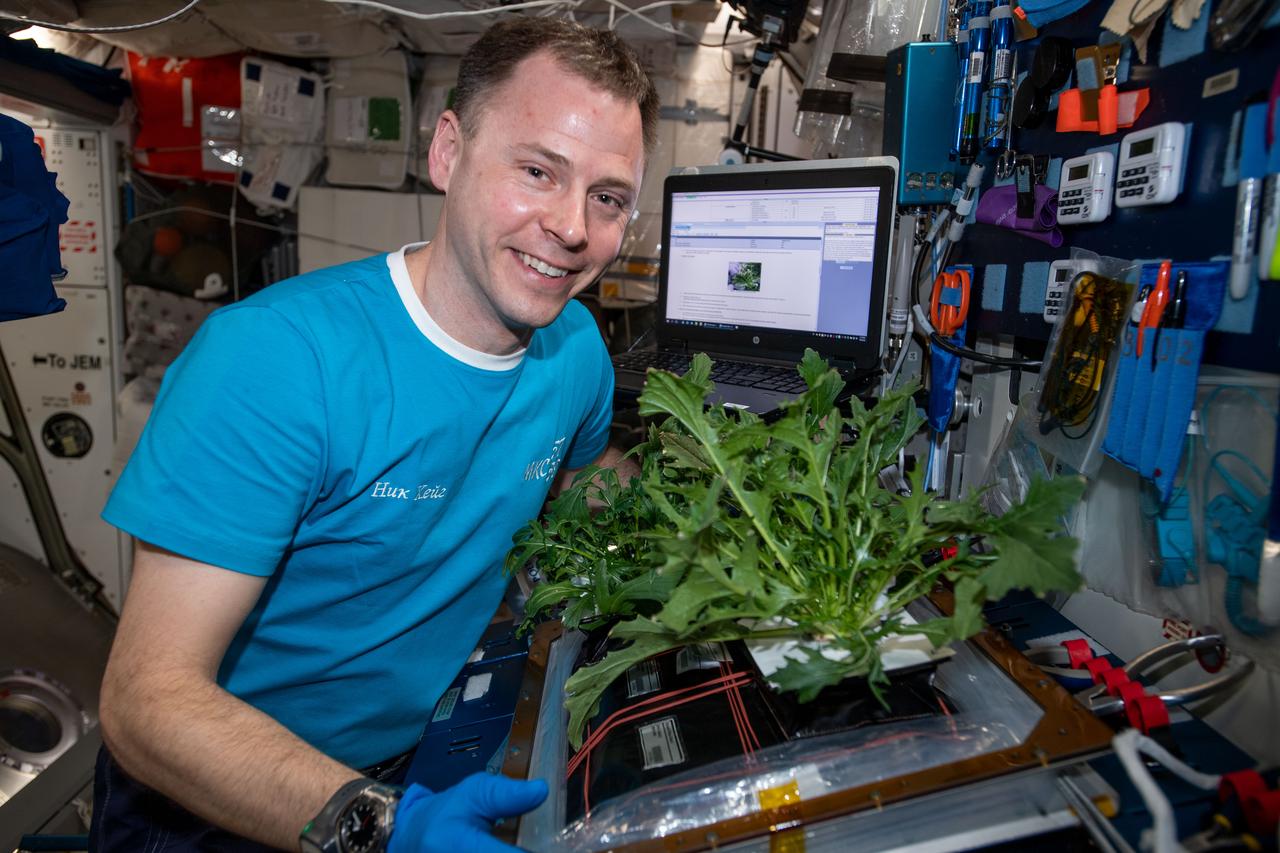
iss060e006113 (July 9, 2019) --- Expedition 60 Flight Engineer Nick Hague of NASA harvests Mizuna mustard greens for the VEG-04 botany study that is exploring the viability of growing fresh food in space to support astronauts on long-term missions. Station crewmembers pick the salad-type plants after 28 days of growth, stow some samples for analysis and taste test the rest.
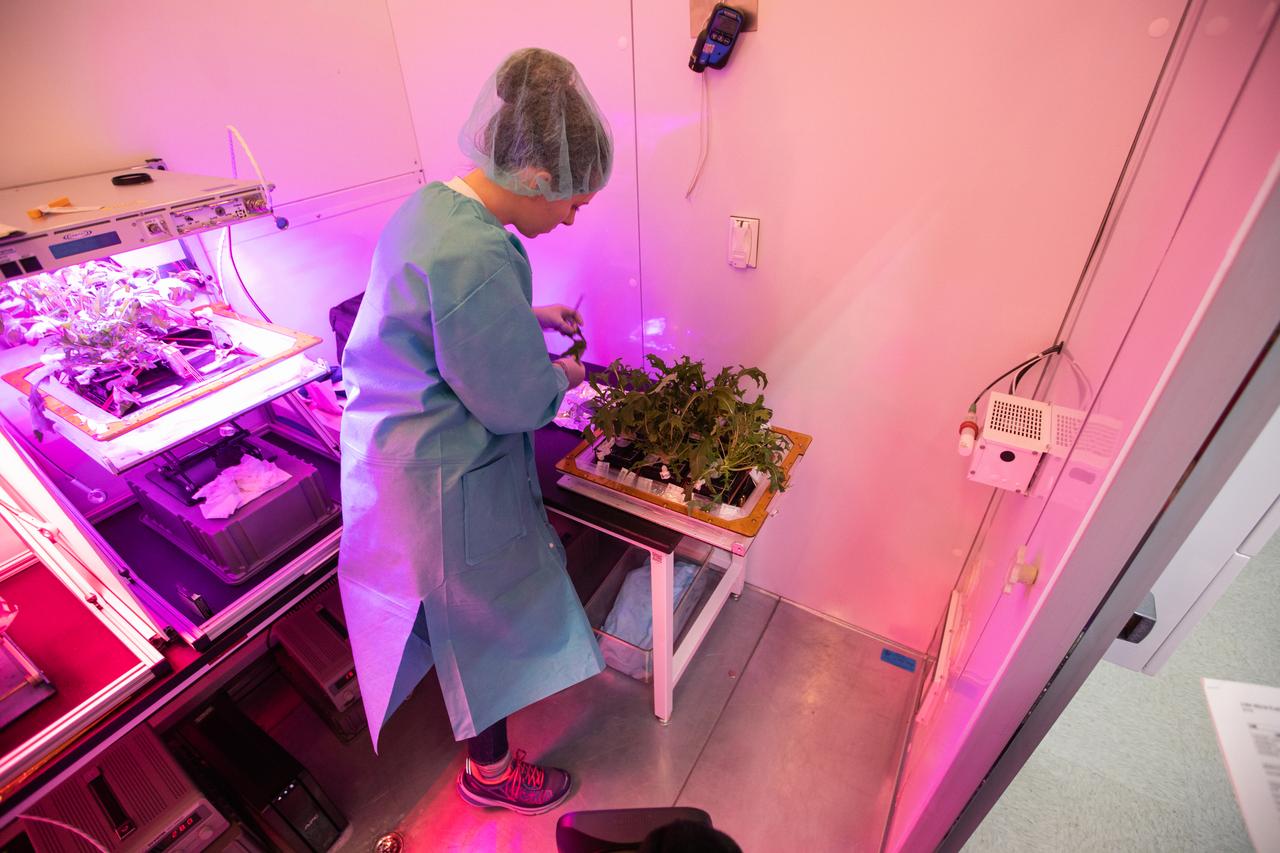
Jess Bunchek, a veggie plant scientist and pseudonaut, harvests mizuna mustard inside the Veggie harvest chamber in the Space Station Processing Facility at NASA’s Kennedy Space Center in Florida on Feb. 19, 2019, as part of the Experiment Verification Test for the VEG-04B mission that will launch to the International Space Station later this year. VEG-04B examines the interactions between light and spaceflight by growing plants under two different LED lighting conditions. A similar harvest will be conducted on the space station after a grow-out duration of 56 days. Ultimately, fresh vegetables grown in space will be an essential supplement to the crew’s pre-packaged diet, prepping them for long-duration space exploration.
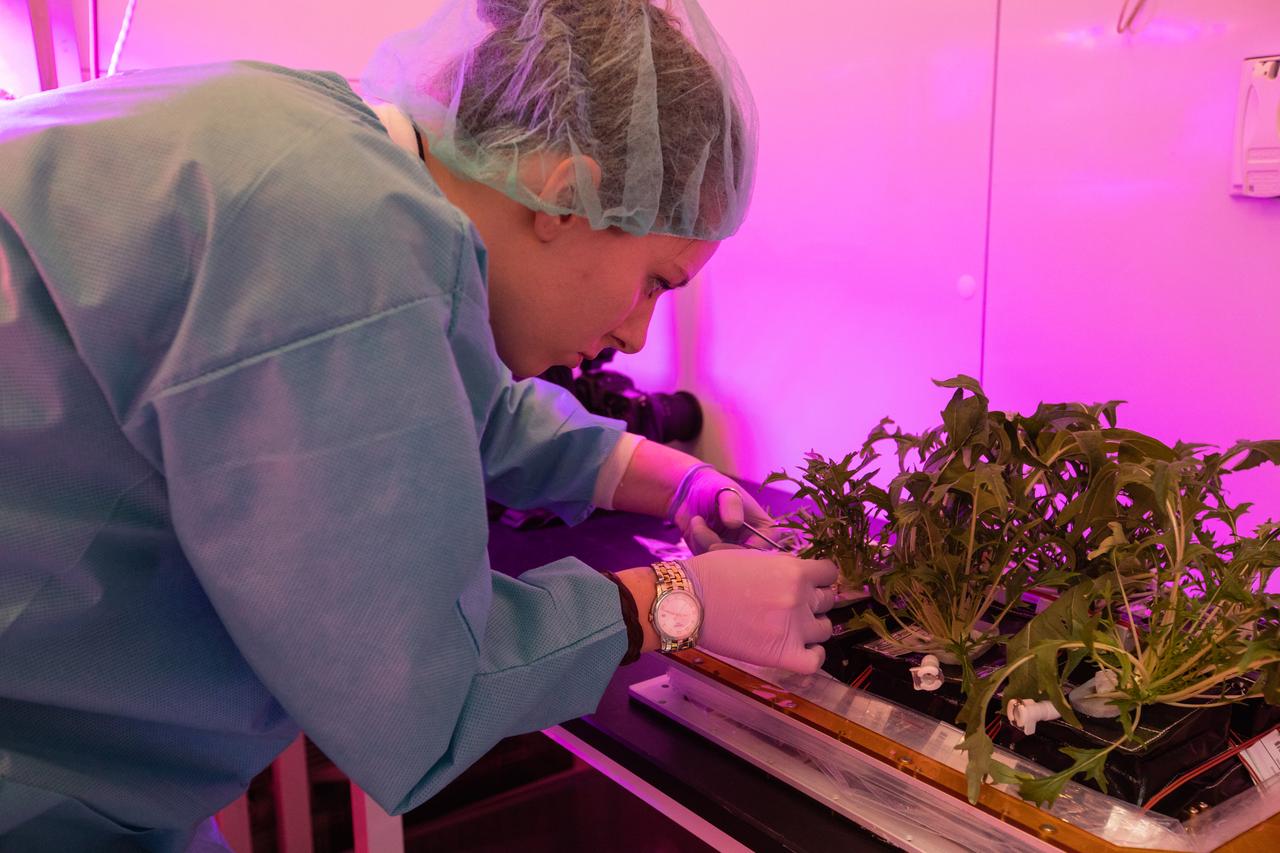
Jess Bunchek, a veggie plant scientist and pseudonaut, harvests mizuna mustard inside the Veggie harvest chamber in the Space Station Processing Facility at NASA’s Kennedy Space Center in Florida on Feb. 19, 2019, as part of the Experiment Verification Test for the VEG-04B mission that will launch to the International Space Station later this year. VEG-04B examines the interactions between light and spaceflight by growing plants under two different LED lighting conditions. A similar harvest will be conducted on the space station after a grow-out duration of 56 days. Ultimately, fresh vegetables grown in space will be an essential supplement to the crew’s pre-packaged diet, prepping them for long-duration space exploration.
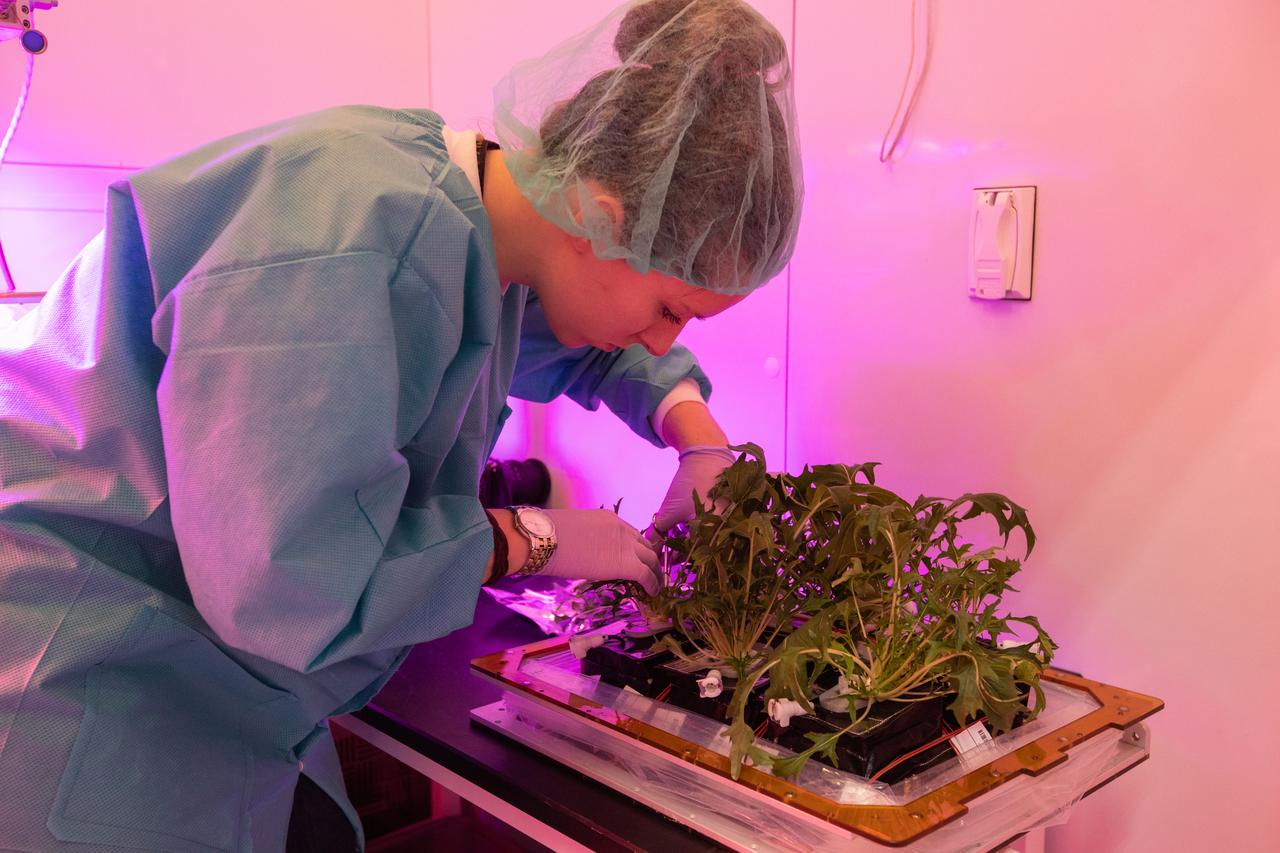
Jess Bunchek, a veggie plant scientist and pseudonaut, harvests mizuna mustard inside the Veggie harvest chamber in the Space Station Processing Facility at NASA’s Kennedy Space Center in Florida on Feb. 19, 2019, as part of the Experiment Verification Test for the VEG-04B mission that will launch to the International Space Station later this year. VEG-04B examines the interactions between light and spaceflight by growing plants under two different LED lighting conditions. A similar harvest will be conducted on the space station after a grow-out duration of 56 days. Ultimately, fresh vegetables grown in space will be an essential supplement to the crew’s pre-packaged diet, prepping them for long-duration space exploration.
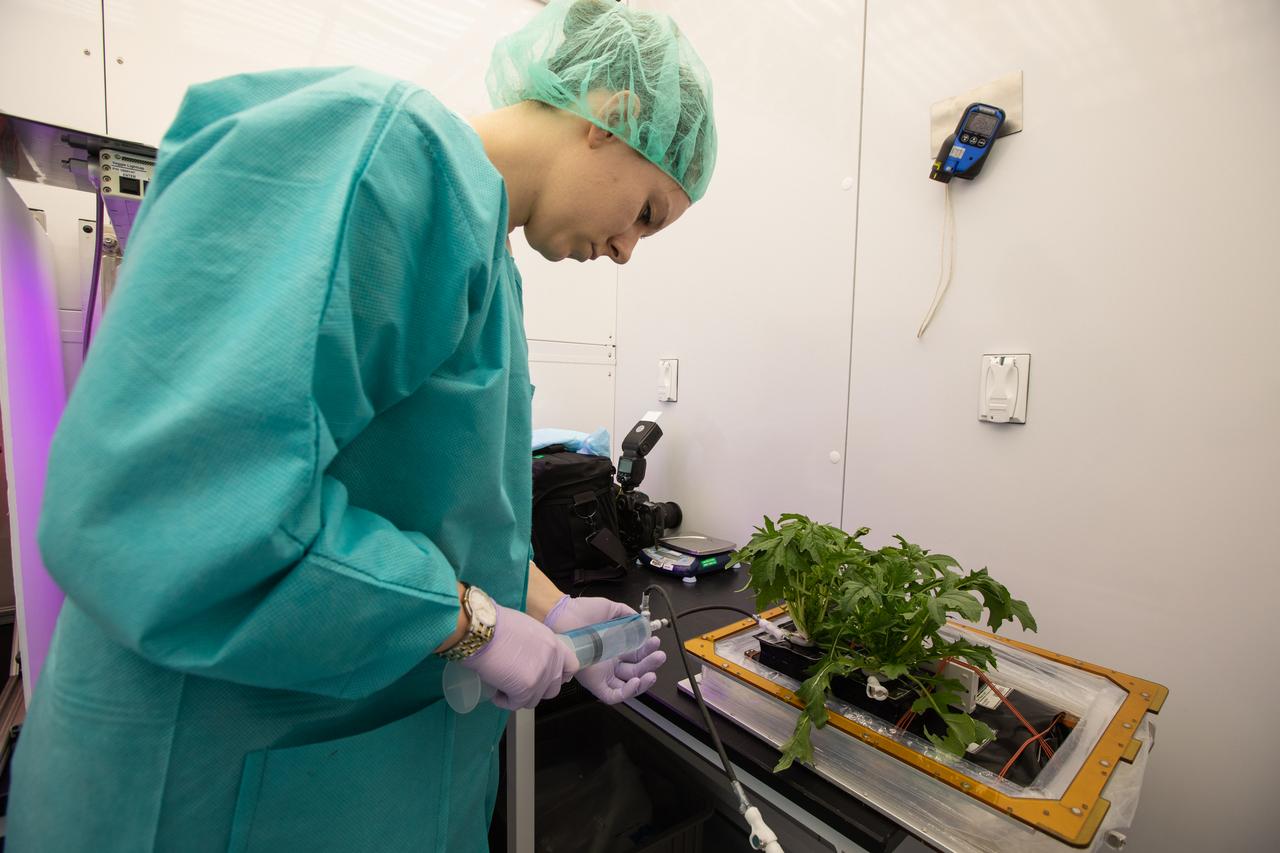
Jess Bunchek, a veggie plant scientist and pseudonaut, harvests mizuna mustard inside the Veggie harvest chamber in the Space Station Processing Facility at NASA’s Kennedy Space Center in Florida on Feb. 19, 2019, as part of the Experiment Verification Test for the VEG-04B mission that will launch to the International Space Station later this year. VEG-04B examines the interactions between light and spaceflight by growing plants under two different LED lighting conditions. A similar harvest will be conducted on the space station after a grow-out duration of 56 days. Ultimately, fresh vegetables grown in space will be an essential supplement to the crew’s pre-packaged diet, prepping them for long-duration space exploration.
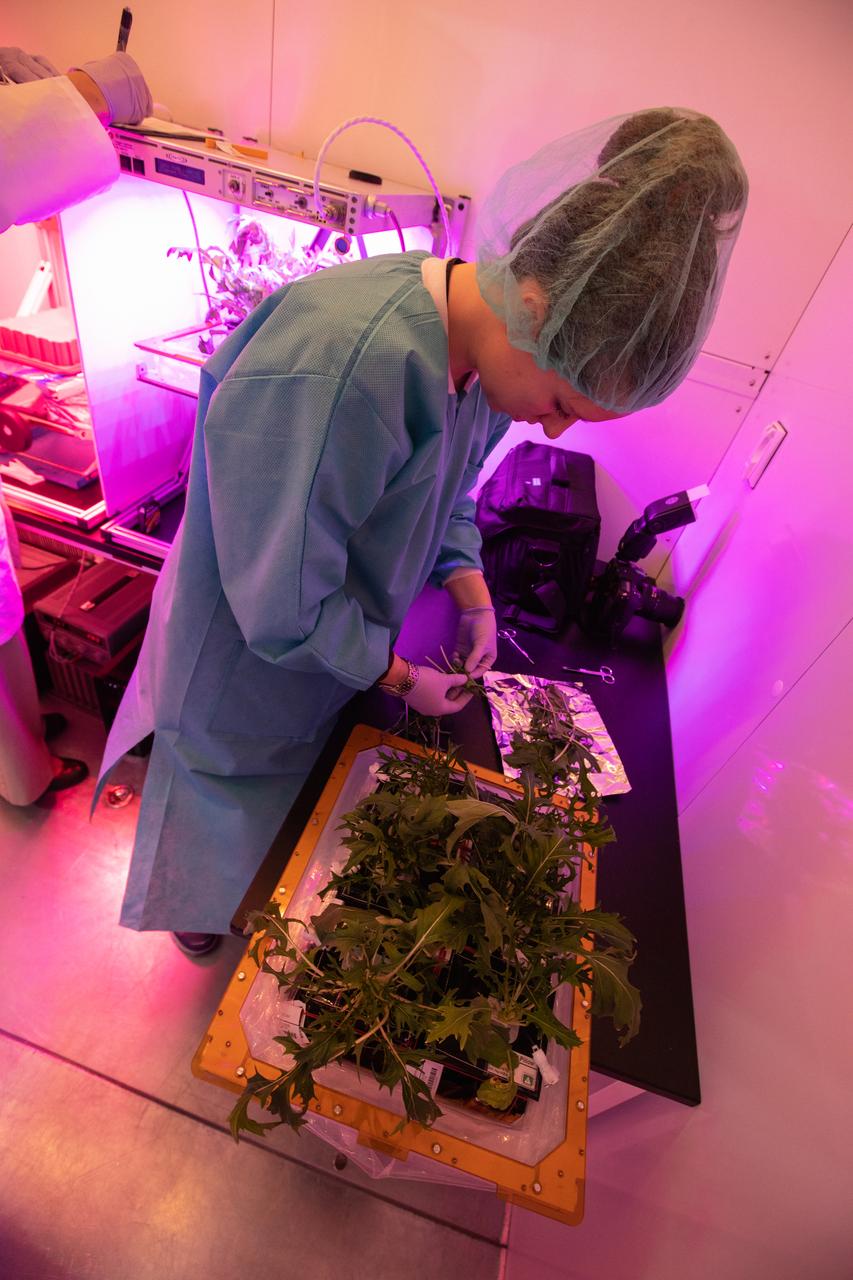
Jess Bunchek, a veggie plant scientist and pseudonaut, harvests mizuna mustard inside the Veggie harvest chamber in the Space Station Processing Facility at NASA’s Kennedy Space Center in Florida on Feb. 19, 2019, as part of the Experiment Verification Test for the VEG-04B mission that will launch to the International Space Station later this year. VEG-04B examines the interactions between light and spaceflight by growing plants under two different LED lighting conditions. A similar harvest will be conducted on the space station after a grow-out duration of 56 days. Ultimately, fresh vegetables grown in space will be an essential supplement to the crew’s pre-packaged diet, prepping them for long-duration space exploration.
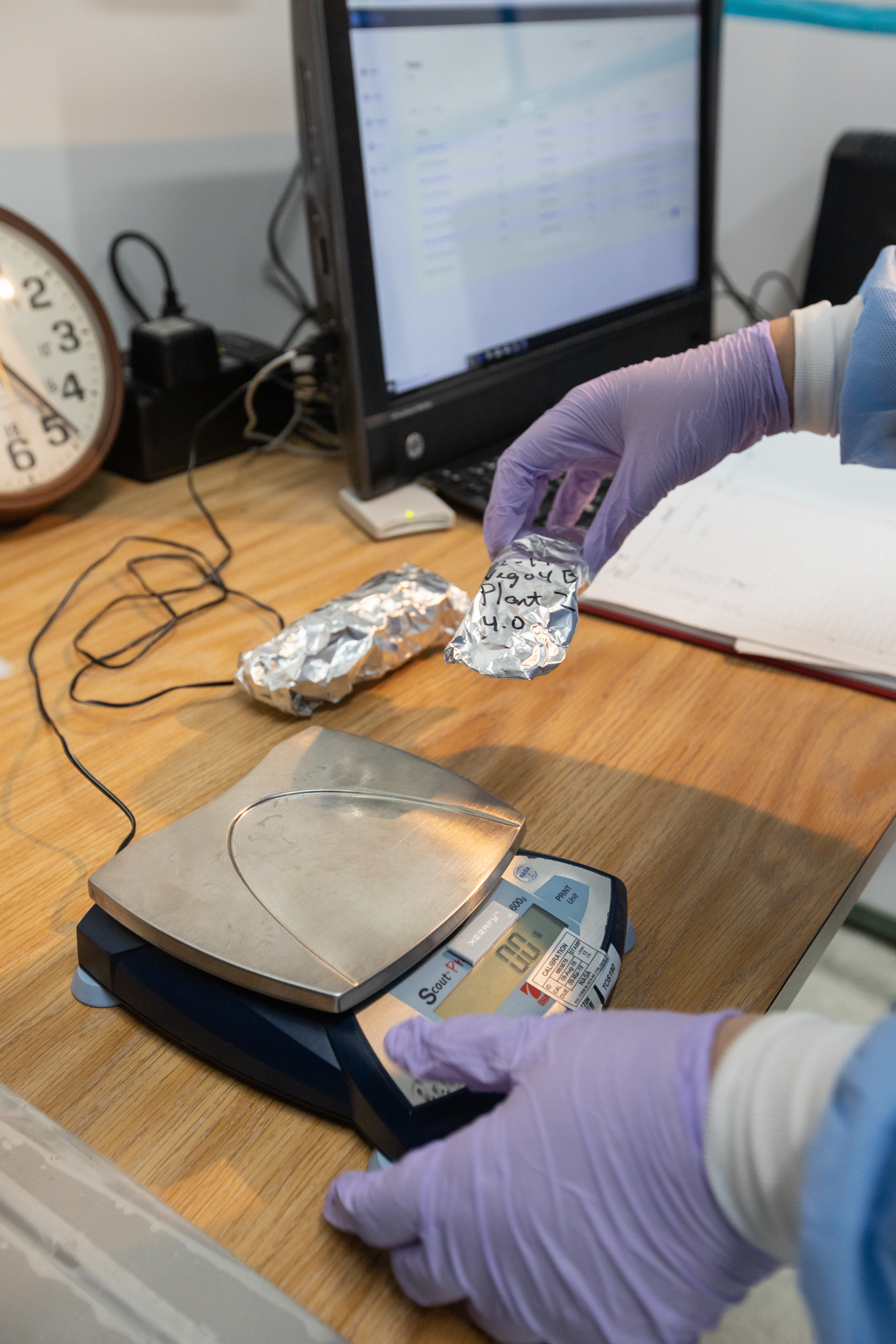
Gretchen Maldonado Vazquez, a microbiologist, weighs the harvest of mizuna mustard inside the Veggie harvest chamber in the Space Station Processing Facility at NASA’s Kennedy Space Center in Florida on Feb. 19, 2019, from the Experiment Verification Test for the VEG-04B mission that will launch to the International Space Station later this year. VEG-04B examines the interactions between light and spaceflight by growing plants under two different LED lighting conditions, and a similar harvest will be conducted on the space station after a grow-out duration of 56 days. Ultimately, fresh vegetables grown in space will be an essential supplement to the crew’s pre-packaged diet, prepping them for long-duration space exploration.
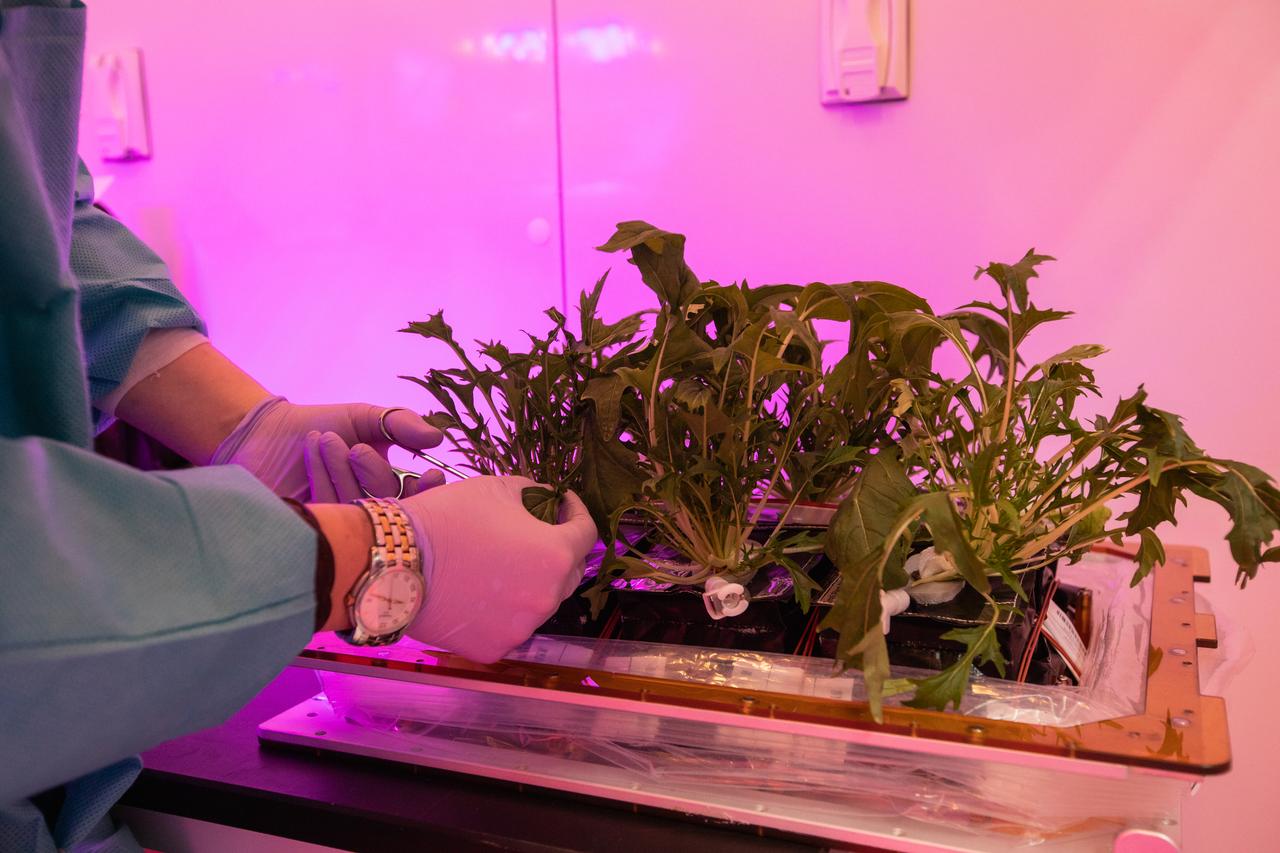
Mizuna mustard is harvested inside the Veggie harvest chamber in the Space Station Processing Facility at NASA’s Kennedy Space Center in Florida on Feb. 19, 2019, as part of the Experiment Verification Test for the VEG-04B mission that will launch to the International Space Station later this year. VEG-04B examines the interactions between light and spaceflight by growing plants under two different LED lighting conditions. A similar harvest will be conducted on the space station after a grow-out duration of 56 days. The VEG-04B mission is expected to provide sensory stimulation and help mark the passage of time in the confined and isolated environment of the space station. Ultimately, fresh vegetables grown in space will be an essential supplement to the crew’s pre-packaged diet, prepping them for long-duration space exploration.
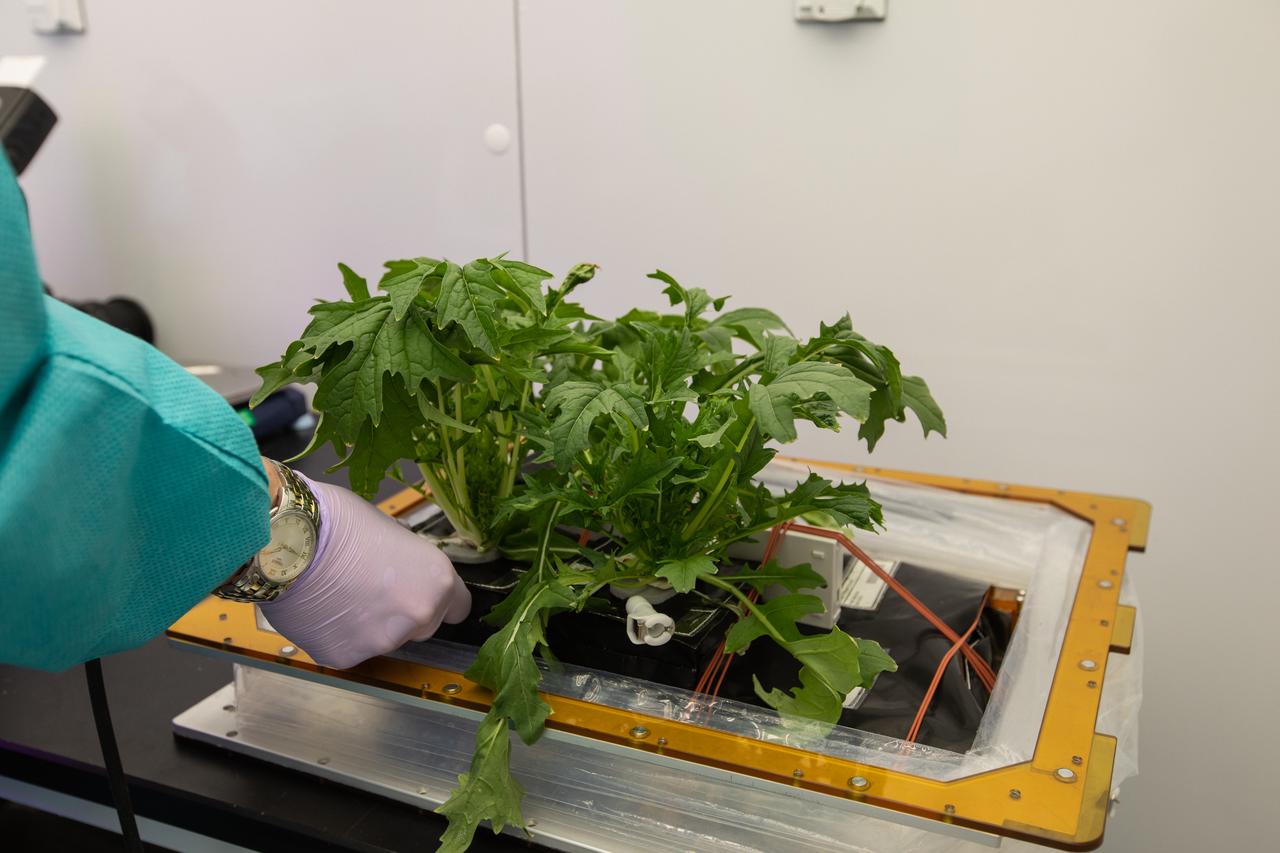
Jess Bunchek, a veggie plant scientist and pseudonaut, harvests mizuna mustard inside the Veggie harvest chamber in the Space Station Processing Facility at NASA’s Kennedy Space Center in Florida on Feb. 19, 2019, as part of the Experiment Verification Test for the VEG-04B mission that will launch to the International Space Station later this year. VEG-04B examines the interactions between light and spaceflight by growing plants under two different LED lighting conditions. A similar harvest will be conducted on the space station after a grow-out duration of 56 days. The VEG-04B mission is expected to provide fresh food, sensory stimulation and help mark the passage of time in the confined and isolated environment of the space station. Ultimately, fresh vegetables grown in space will be an essential supplement to the crew’s pre-packaged diet, prepping them for long-duration space exploration.