
The Mobile Fabrication Shop was received at NASA Armstrong on February 7, 2022 as part of the Robotics Alliance Program based at NASA’s Johnson Space Center. This view shows the fabrication equipment housed inside the trailer that attends robotics competitions to help students during their robotics competitions.
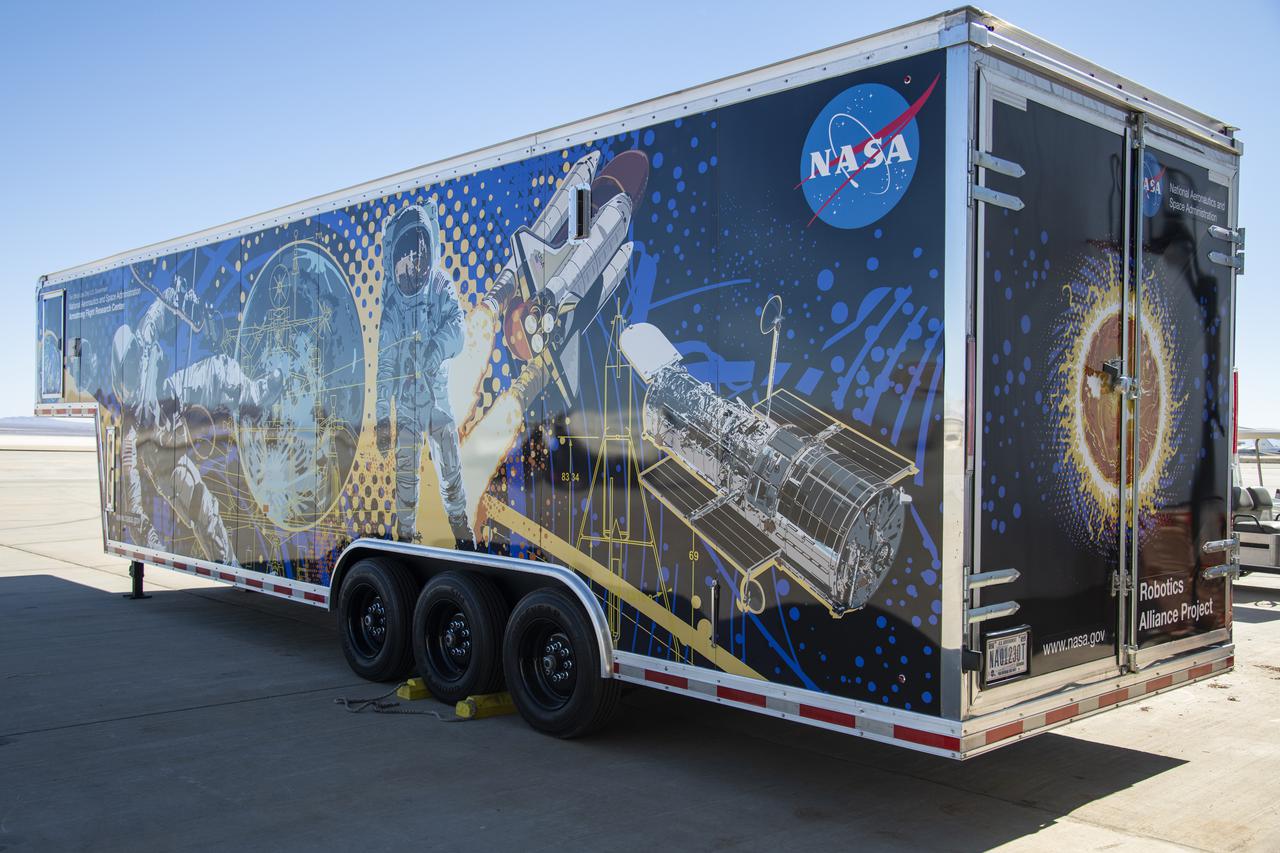
The Mobile Fabrication Shop was received at NASA Armstrong on February 7, 2022 as part of the Robotics Alliance Program based at NASA’s Johnson Space Center. This view shows the side and rear of the wrapped trailer that attends robotics competitions to help students during their robotics competitions.
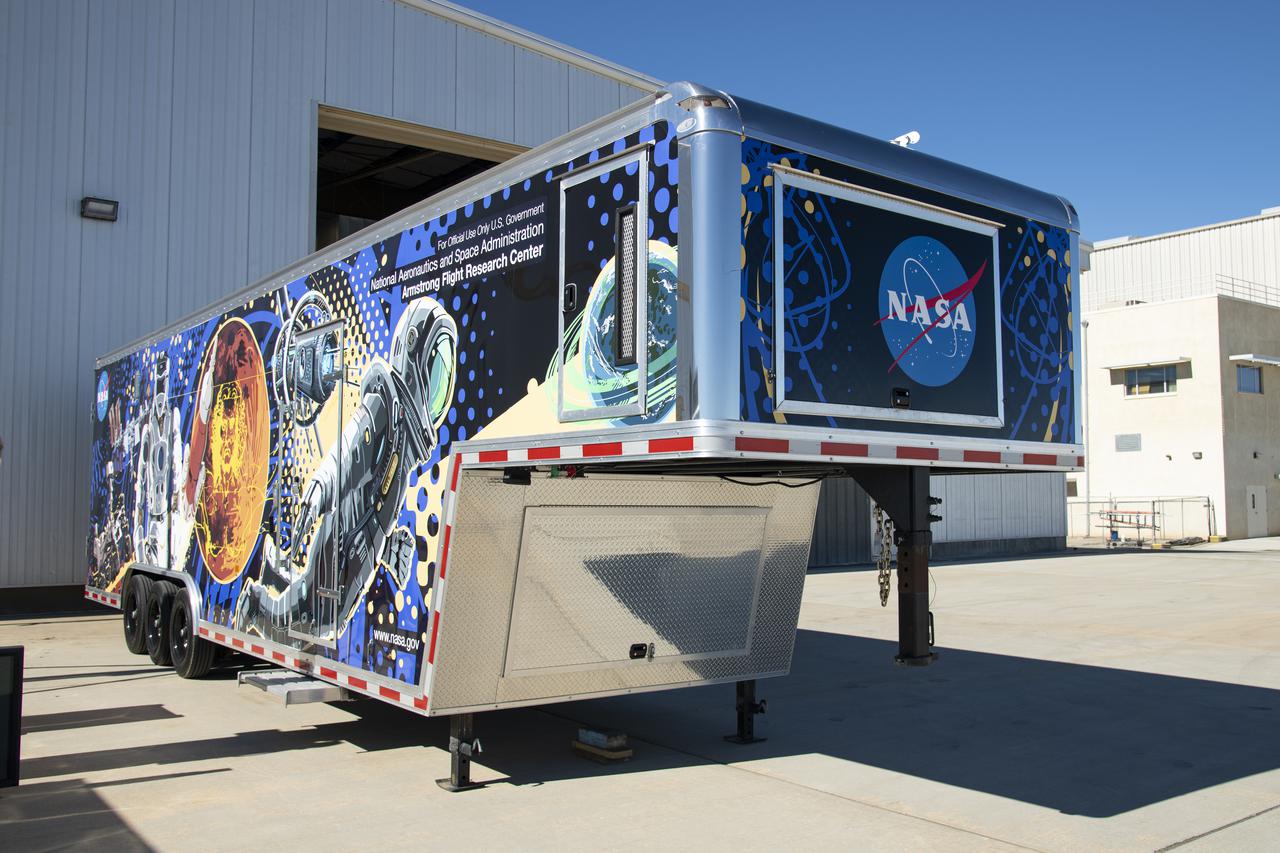
The Mobile Fabrication Shop was received at NASA Armstrong on February 7, 2022 as part of the Robotics Alliance Program based at NASA’s Johnson Space Center. This view shows the front of the wrapped trailer that attends robotics competitions to help students during their robotics competitions.
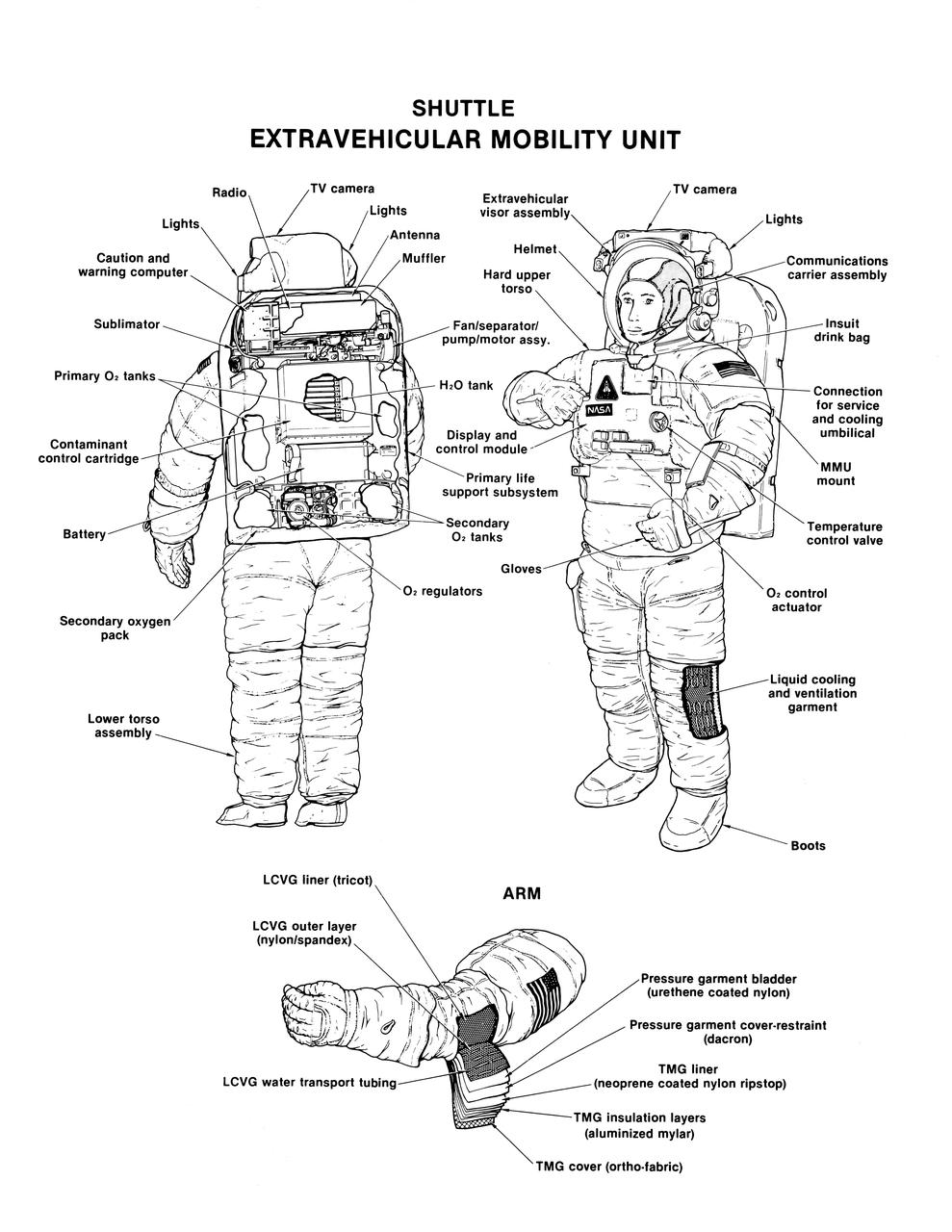
Labeled cutaway line drawing of the Shuttle extravehicular mobility unit (EMU) identifies its various components and equipment. The portable life support system (PLSS) and protective layers of fabric (thermal micrometeoroid garment (TMG)) incorporated in this extravehicular activity (EVA) space suit are shown.
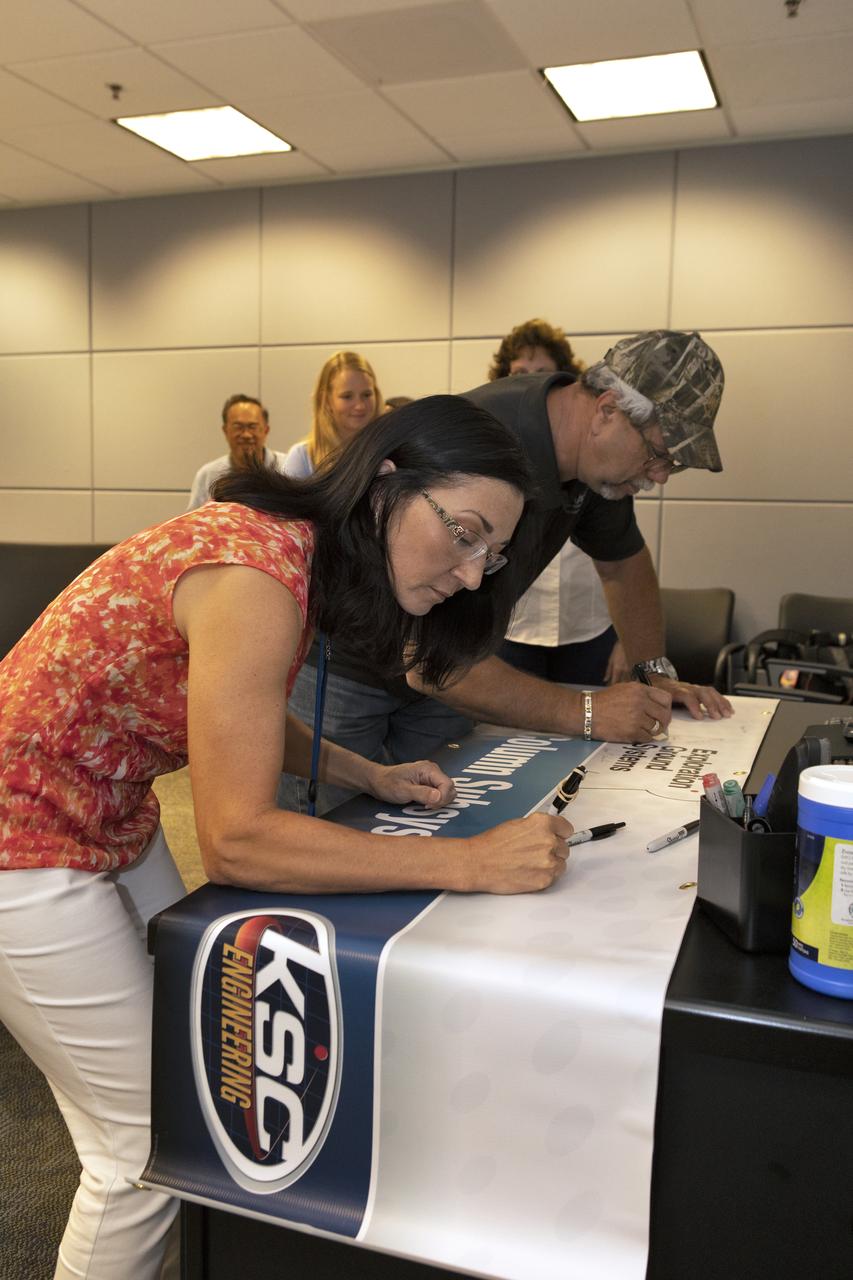
Engineers celebrate the completion of the Extensible Column Subsystem (XCS) project during a banner event held in Operations Support Building II at Kennedy Space Center. The XCS team successfully executed an aggressive schedule, receiving outstanding support from the fabrication contractor, Met-Con. Full functional testing occurred at Met-Con’s facility, with no mechanical or structural issues. All four columns and the test fixture have been delivered to Kennedy. Full-scale testing will take place when the Mobile Launcher gets to the pad later this summer.
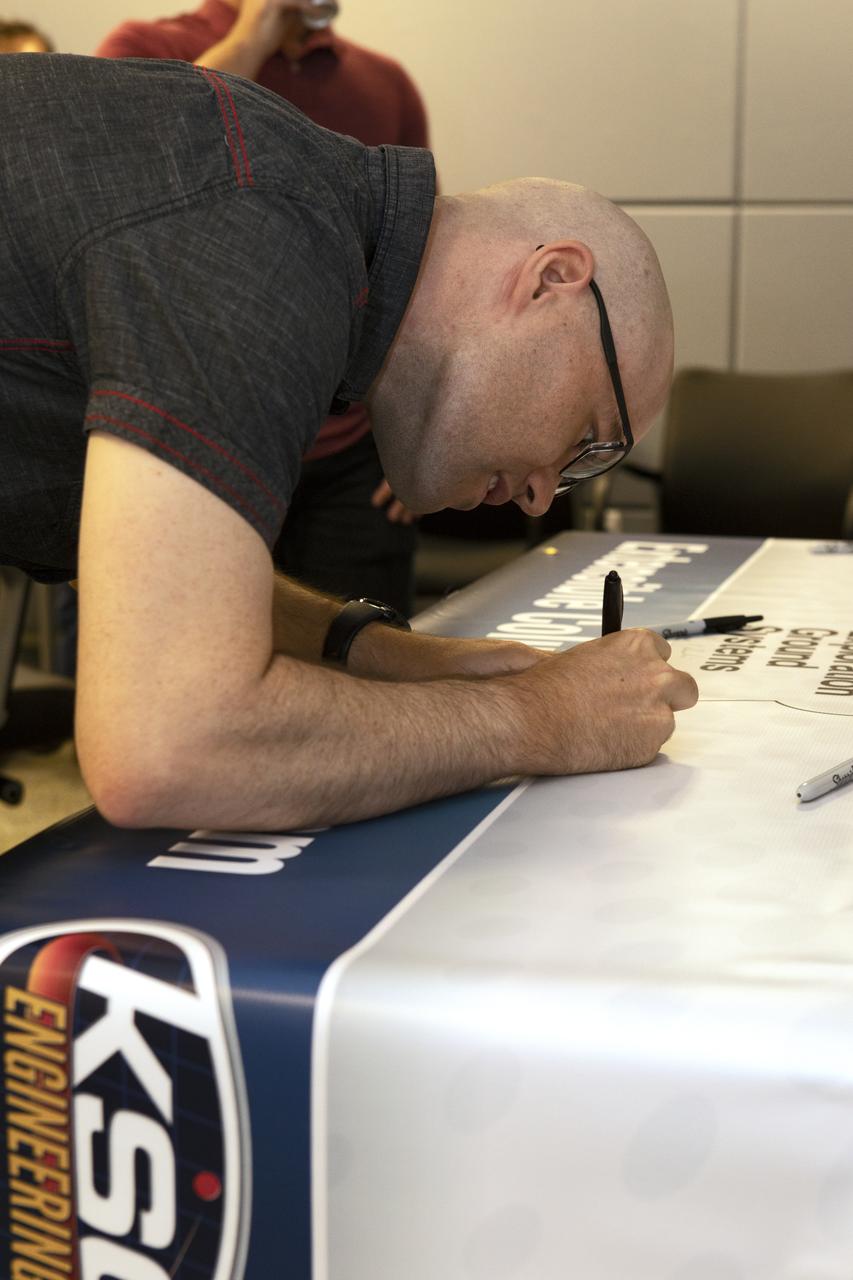
Engineers celebrate the completion of the Extensible Column Subsystem (XCS) project during a banner event held in Operations Support Building II at Kennedy Space Center. The XCS team successfully executed an aggressive schedule, receiving outstanding support from the fabrication contractor, Met-Con. Full functional testing occurred at Met-Con’s facility, with no mechanical or structural issues. All four columns and the test fixture have been delivered to Kennedy. Full-scale testing will take place when the Mobile Launcher gets to the pad later this summer.

Engineers celebrate the completion of the Extensible Column Subsystem (XCS) project during a banner event held in Operations Support Building II at Kennedy Space Center. The XCS team successfully executed an aggressive schedule, receiving outstanding support from the fabrication contractor, Met-Con. Full functional testing occurred at Met-Con’s facility, with no mechanical or structural issues. All four columns and the test fixture have been delivered to Kennedy. Full-scale testing will take place when the Mobile Launcher gets to the pad later this summer.
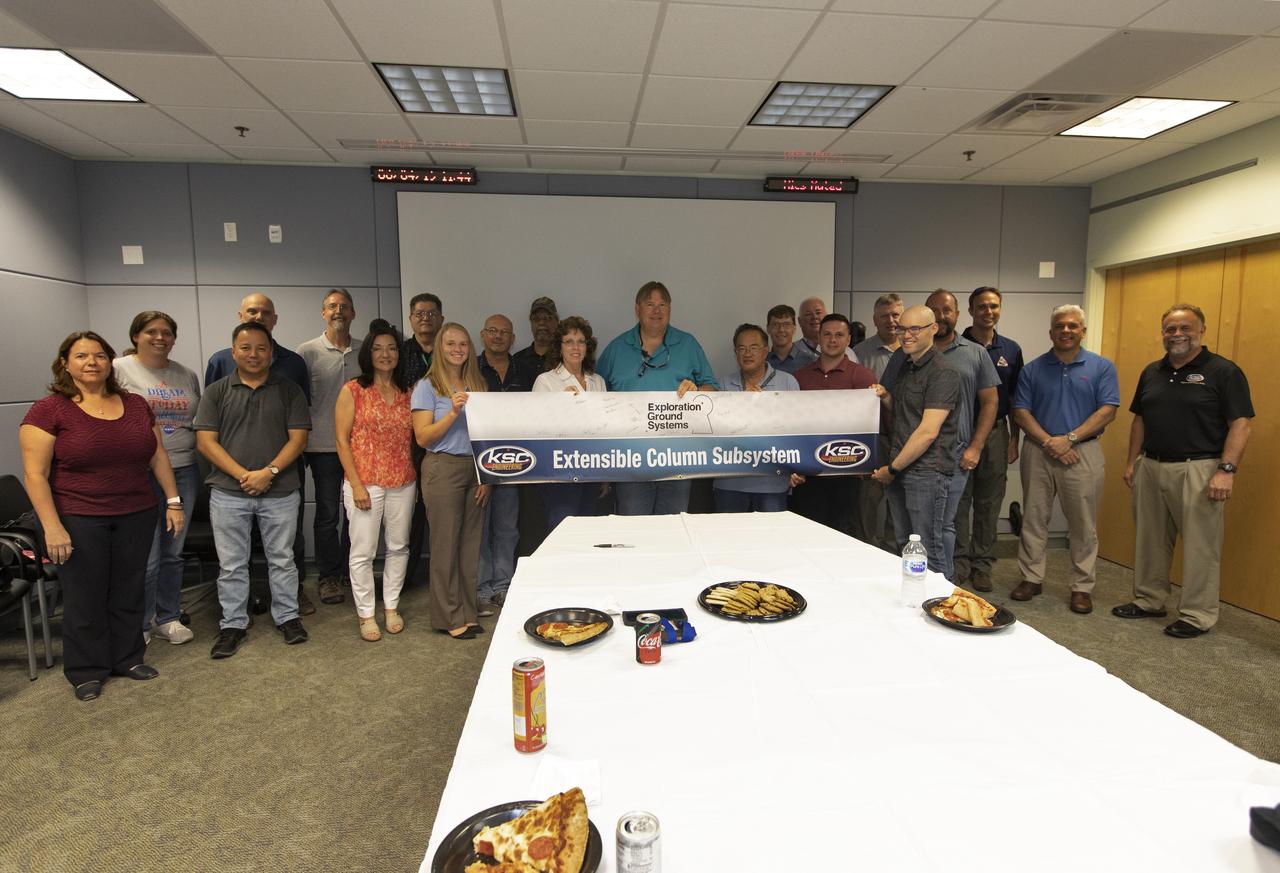
Engineers celebrate the completion of the Extensible Column Subsystem (XCS) project during a banner event held in Operations Support Building II at Kennedy Space Center. The XCS team successfully executed an aggressive schedule, receiving outstanding support from the fabrication contractor, Met-Con. Full functional testing occurred at Met-Con’s facility, with no mechanical or structural issues. All four columns and the test fixture have been delivered to Kennedy. Full-scale testing will take place when the Mobile Launcher gets to the pad later this summer.
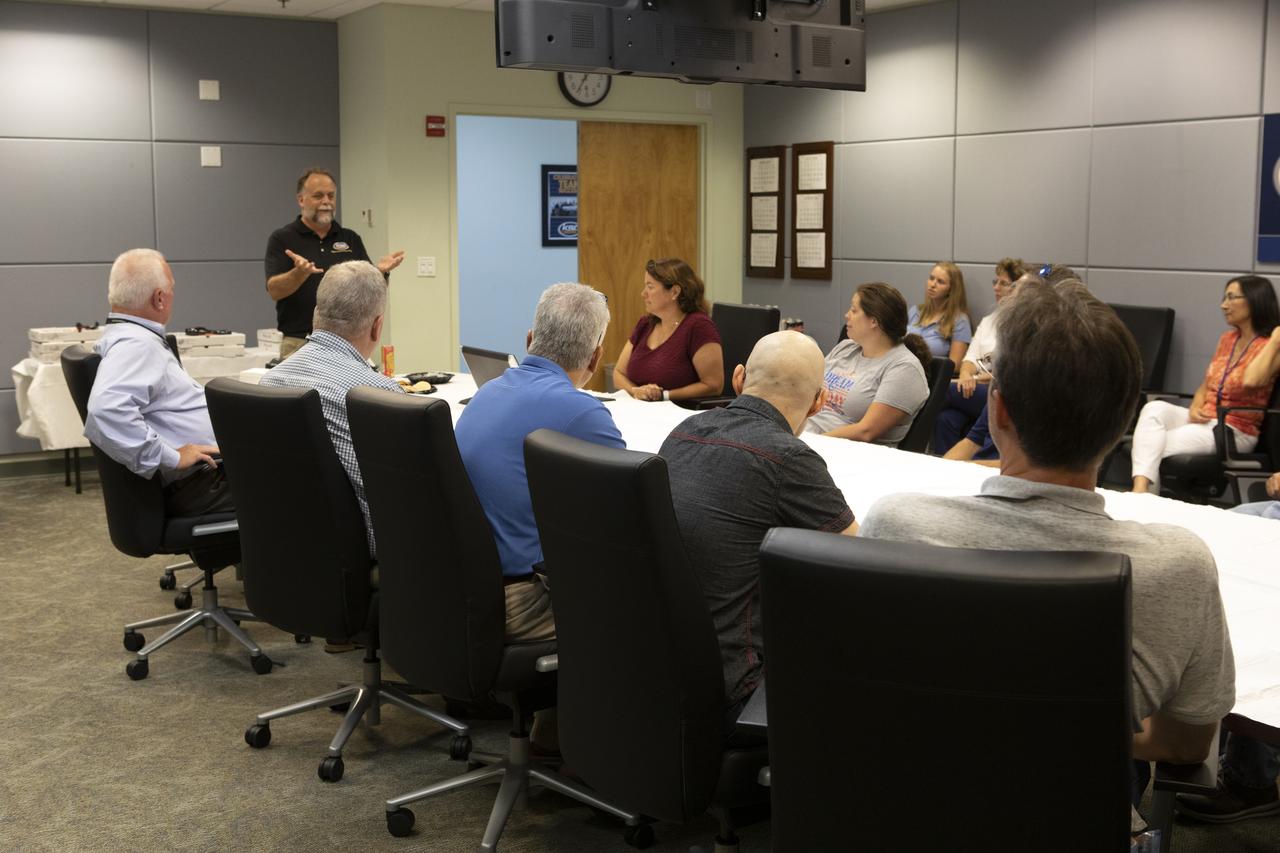
Engineers celebrate the completion of the Extensible Column Subsystem (XCS) project during a banner event held in Operations Support Building II at Kennedy Space Center. The XCS team successfully executed an aggressive schedule, receiving outstanding support from the fabrication contractor, Met-Con. Full functional testing occurred at Met-Con’s facility, with no mechanical or structural issues. All four columns and the test fixture have been delivered to Kennedy. Full-scale testing will take place when the Mobile Launcher gets to the pad later this summer.

Engineers celebrate the completion of the Extensible Column Subsystem (XCS) project during a banner event held in Operations Support Building II at Kennedy Space Center. The XCS team successfully executed an aggressive schedule, receiving outstanding support from the fabrication contractor, Met-Con. Full functional testing occurred at Met-Con’s facility, with no mechanical or structural issues. All four columns and the test fixture have been delivered to Kennedy. Full-scale testing will take place when the Mobile Launcher gets to the pad later this summer.
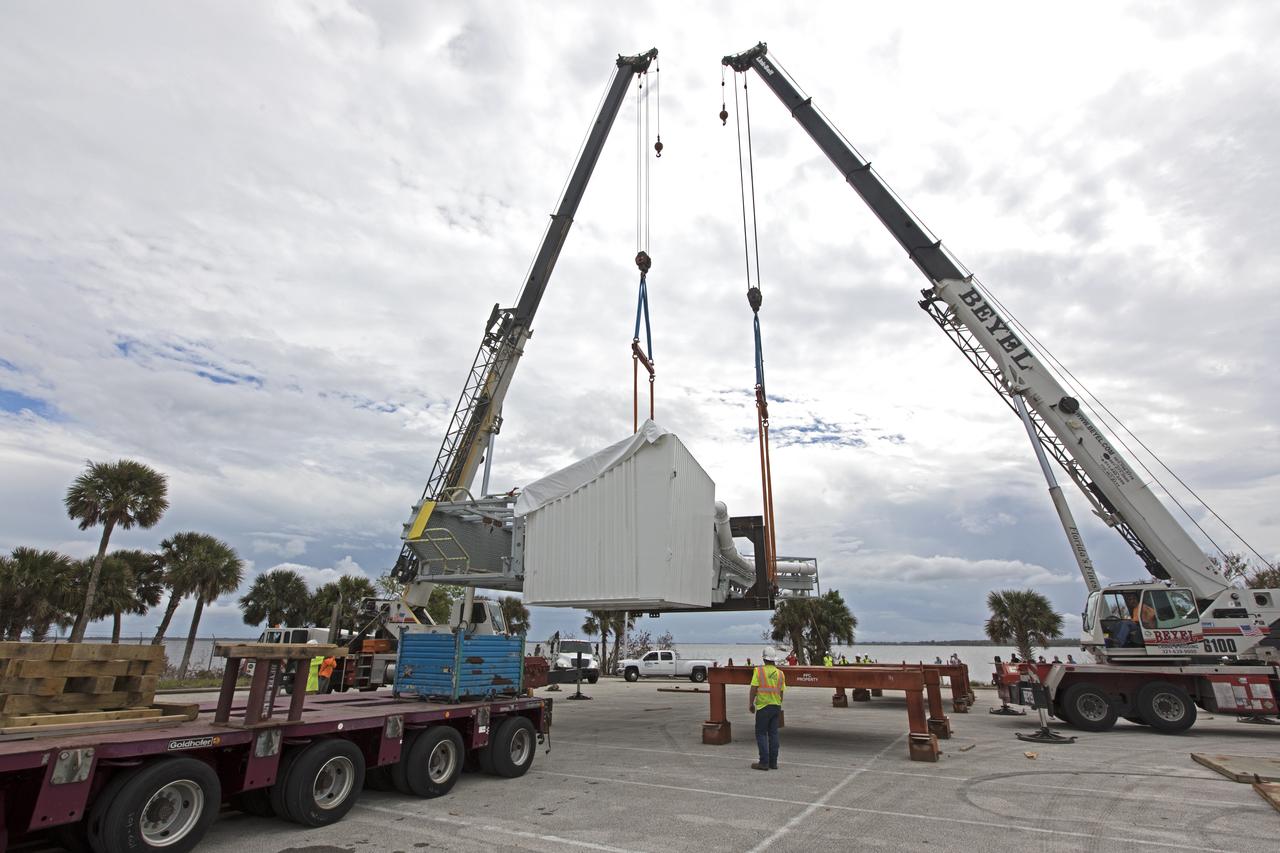
Two heavy-lift cranes are used to lift the Orion crew access arm up from a flatbed truck in a storage location at NASA's Kennedy Space Center in Florida. The access arm was transported from Precision Fabricating and Cleaning in Cocoa, Florida. Later this month, the arm will be transported to the mobile launcher (ML) tower at the center. The crew access arm will be located at about the 274-foot level on the tower. It will rotate from its retracted position and interface with the Orion crew hatch location to provide entry to the Orion crew module. The Ground Systems Development and Operations Program is overseeing installation of umbilicals and launch accessories on the ML tower.
The Orion crew access arm is being secured on a flatbed truck at Precision Fabricating and Cleaning in Cocoa, Florida. The crew access arm will be transported to a storage location near NASA's Kennedy Space Center in Florida. Later this month, the arm will be transported to the mobile launcher (ML) tower at the center. The crew access arm will be located at about the 274-foot level on the tower. It will rotate from its retracted position and interface with the Orion crew hatch location to provide entry to the Orion crew module. The Ground Systems Development and Operations Program is overseeing installation of umbilicals and launch accessories on the ML tower.
The Orion crew access arm is secured on a flatbed truck at Precision Fabricating and Cleaning in Cocoa, Florida and ready to be transported to a storage location at NASA's Kennedy Space Center in Florida. Later this month, the arm will be transported to the mobile launcher (ML) tower at the center. The crew access arm will be located at about the 274-foot level on the tower. It will rotate from its retracted position and interface with the Orion crew hatch location to provide entry to the Orion crew module. The Ground Systems Development and Operations Program is overseeing installation of umbilicals and launch accessories on the ML tower.
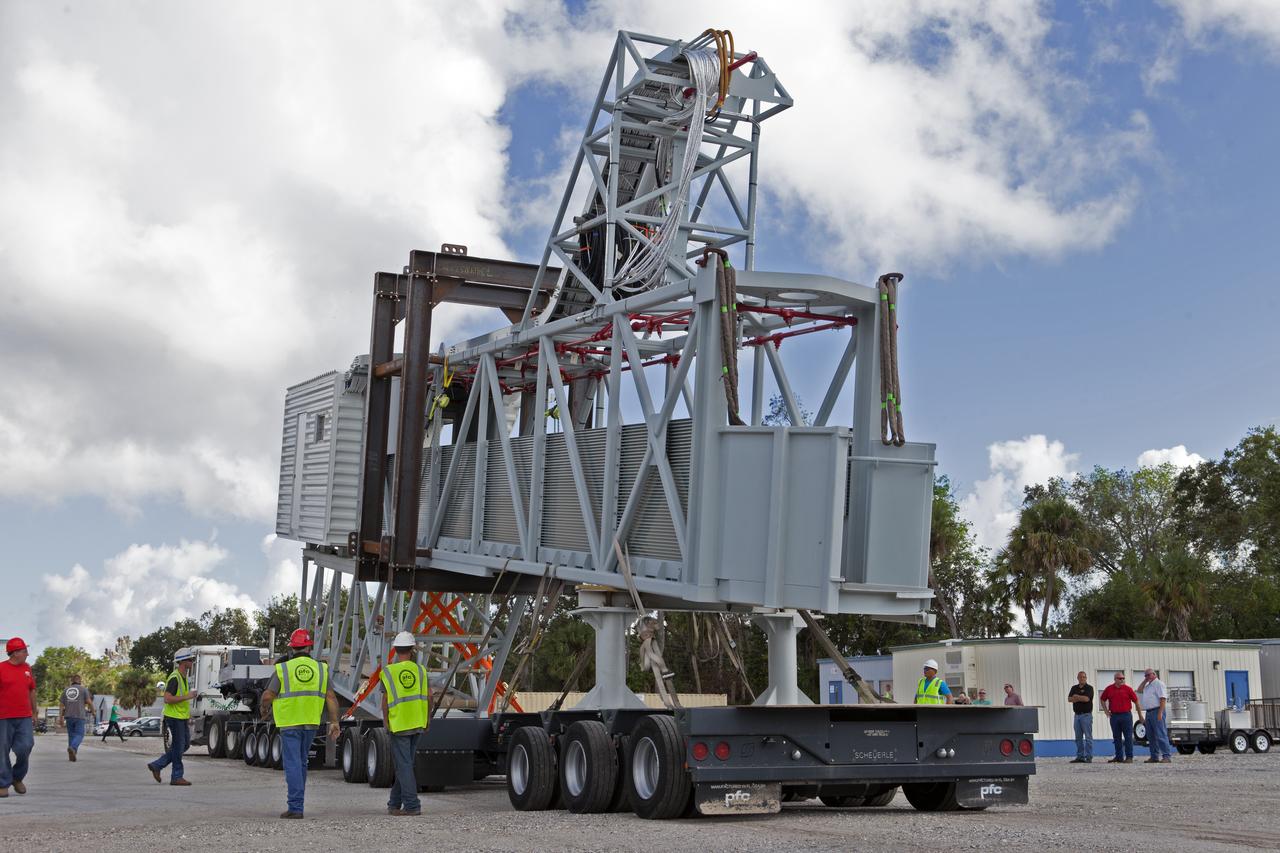
The Orion crew access arm is being secured onto a flatbed truck at Precision Fabricating and Cleaning in Cocoa, Florida. The crew access arm will be transported to a storage location near NASA's Kennedy Space Center in Florida. Later this month, the arm will be transported to the mobile launcher (ML) tower at the center. The crew access arm will be located at about the 274-foot level on the tower. It will rotate from its retracted position and interface with the Orion crew hatch location to provide entry to the Orion crew module. The Ground Systems Development and Operations Program is overseeing installation of umbilicals and launch accessories on the ML tower.
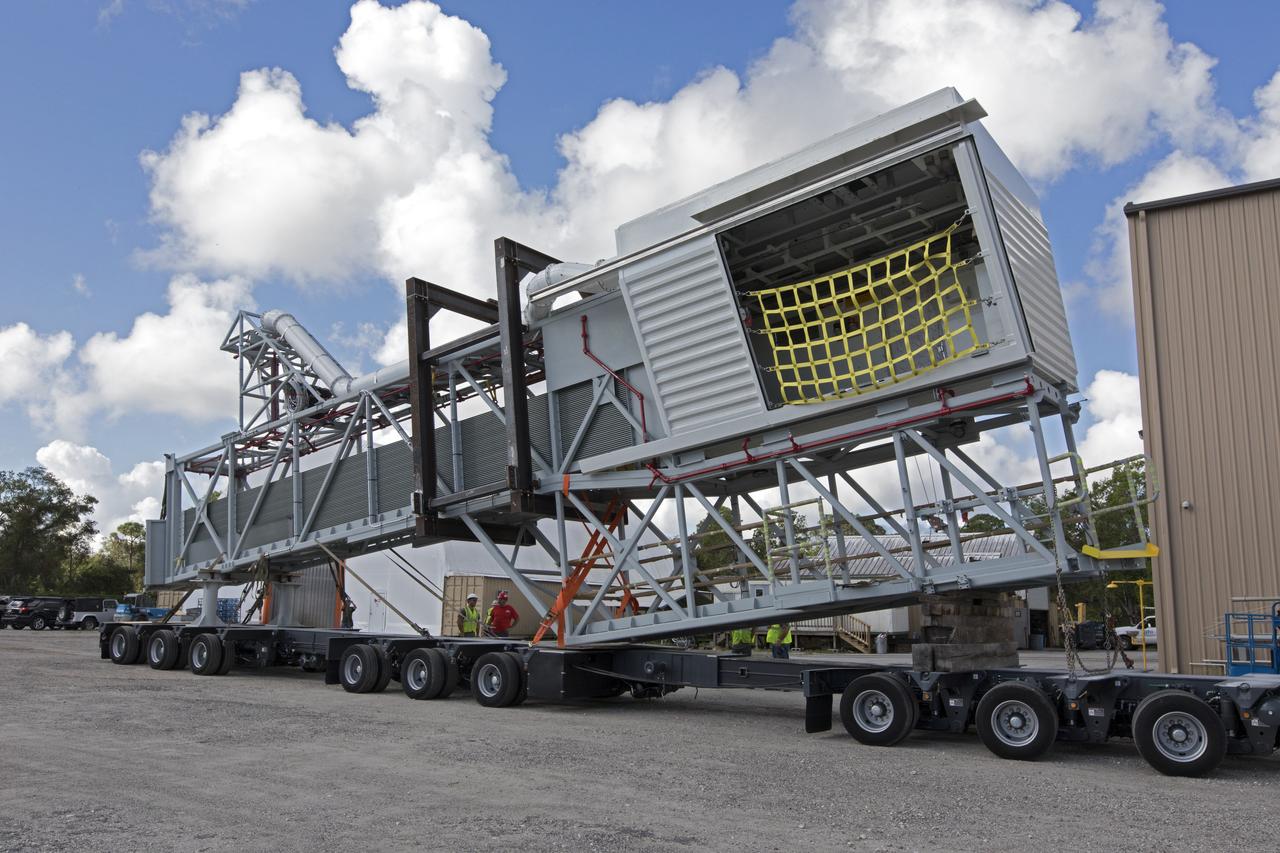
The Orion crew access arm is secured on a flatbed truck at Precision Fabricating and Cleaning in Cocoa, Florida. The crew access arm will be transported to a storage location near NASA's Kennedy Space Center in Florida. Later this month, the arm will be transported to the mobile launcher (ML) tower at the center. The crew access arm will be located at about the 274-foot level on the tower. It will rotate from its retracted position and interface with the Orion crew hatch location to provide entry to the Orion crew module. The Ground Systems Development and Operations Program is overseeing installation of umbilicals and launch accessories on the ML tower.
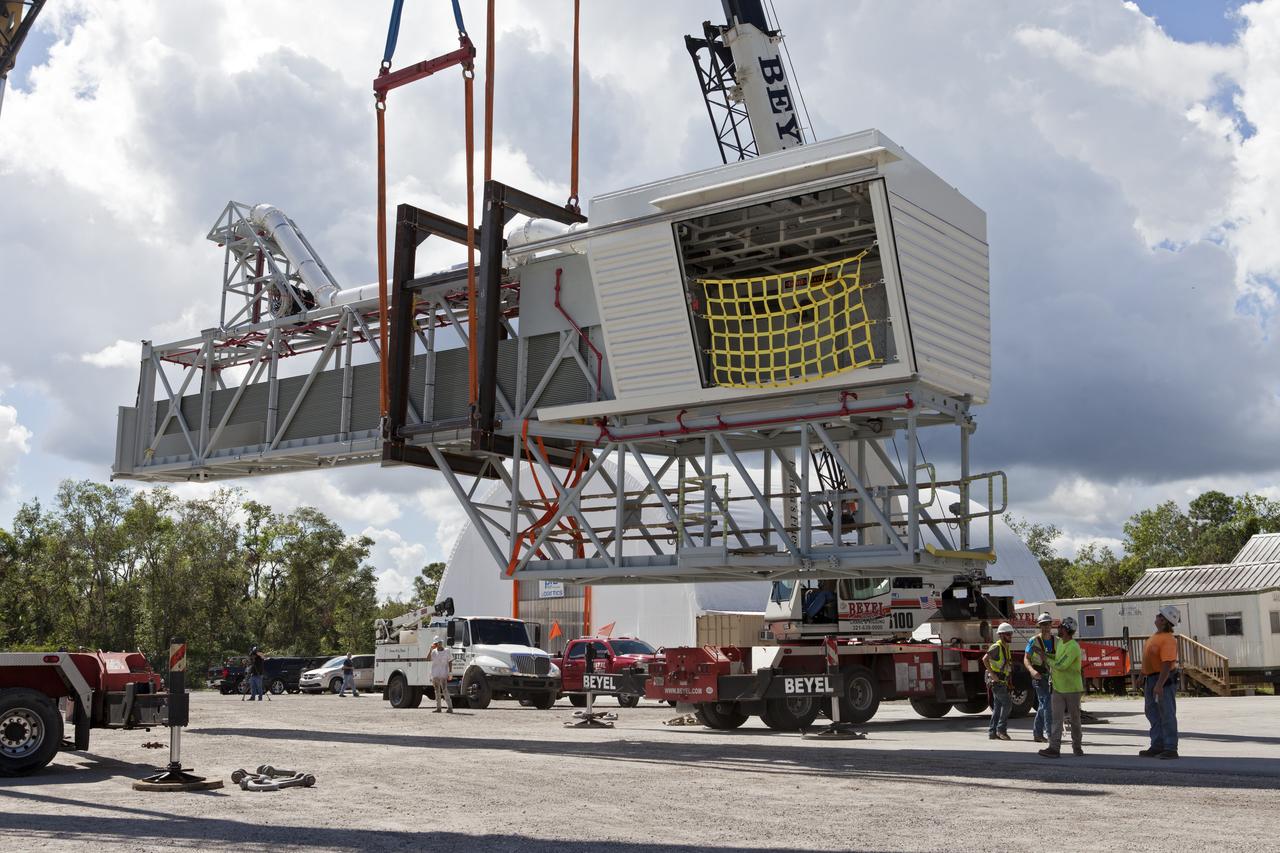
Two heavy-lift cranes are being used to move the Orion crew access arm and lower it onto a flatbed truck at Precision Fabricating and Cleaning in Cocoa, Florida. The crew access arm will be transported to a storage location near NASA's Kennedy Space Center in Florida. Later this month, the arm will be transported to the mobile launcher (ML) tower at the center. The crew access arm will be located at about the 274-foot level on the tower. It will rotate from its retracted position and interface with the Orion crew hatch location to provide entry to the Orion crew module. The Ground Systems Development and Operations Program is overseeing installation of umbilicals and launch accessories on the ML tower.
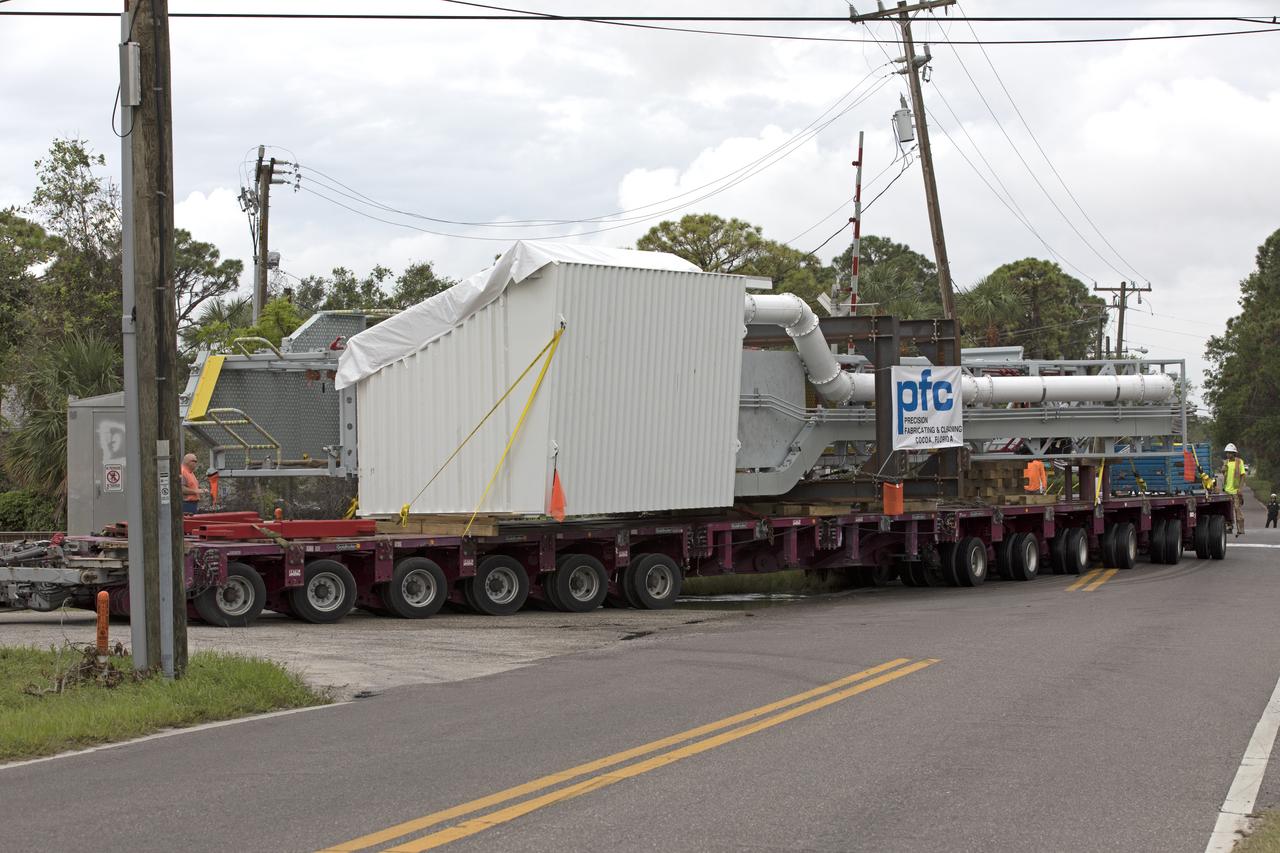
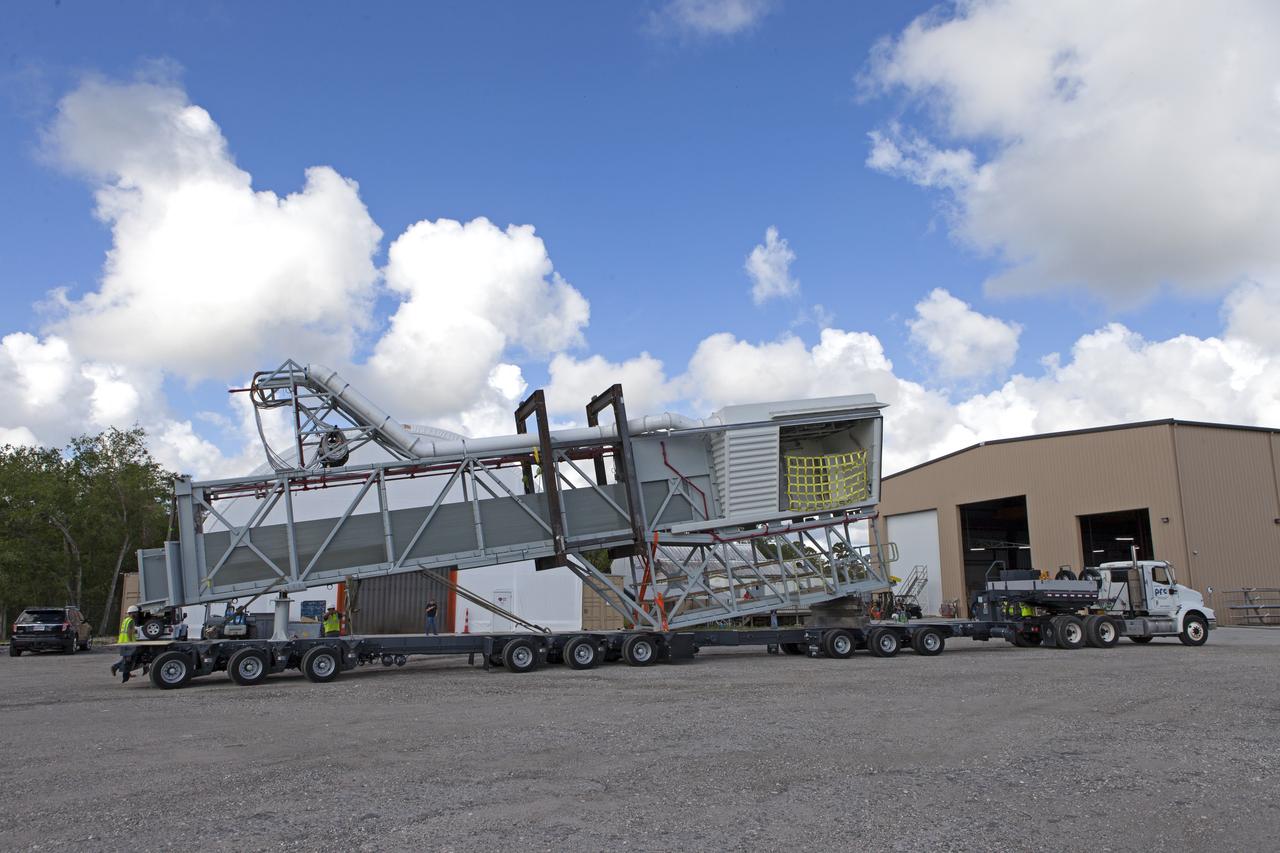
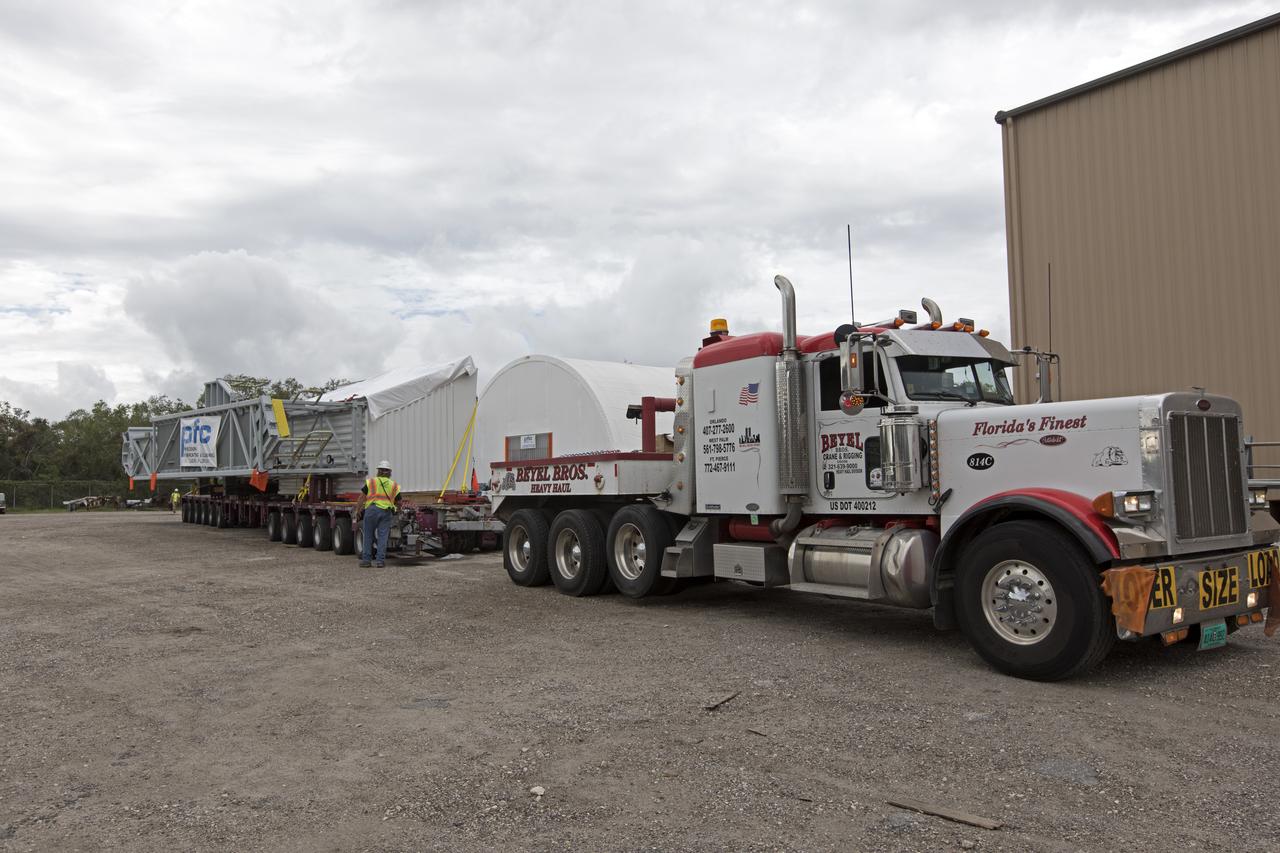
The Orion crew access arm departs Precision Fabricating and Cleaning in Cocoa, Florida, atop a flatbed truck. The access arm will be transported to a storage location at NASA's Kennedy Space Center in Florida. Later this month, the arm will be transported to the mobile launcher (ML) tower at the center. The crew access arm will be located at about the 274-foot level on the tower. It will rotate from its retracted position and interface with the Orion crew hatch location to provide entry to the Orion crew module. The Ground Systems Development and Operations Program is overseeing installation of umbilicals and launch accessories on the ML tower.
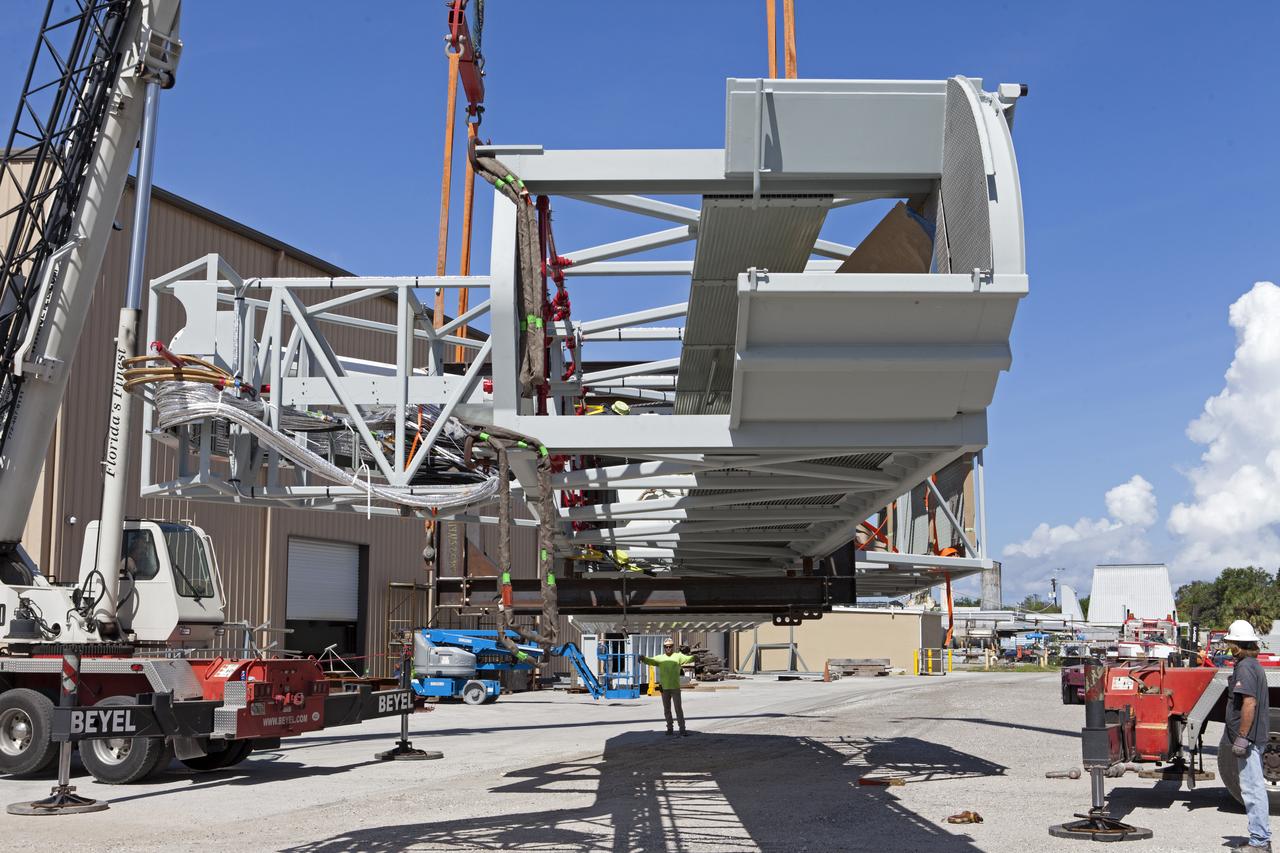
The Orion crew access arm is being moved by crane onto a flatbed truck at Precision Fabricating and Cleaning in Cocoa, Florida. The crew access arm will be transported to a storage location near NASA's Kennedy Space Center in Florida. Later this month, the arm will be transported to the mobile launcher (ML) tower at the center. The crew access arm will be located at about the 274-foot level on the tower. It will rotate from its retracted position and interface with the Orion crew hatch location to provide entry to the Orion crew module. The Ground Systems Development and Operations Program is overseeing installation of umbilicals and launch accessories on the ML tower.
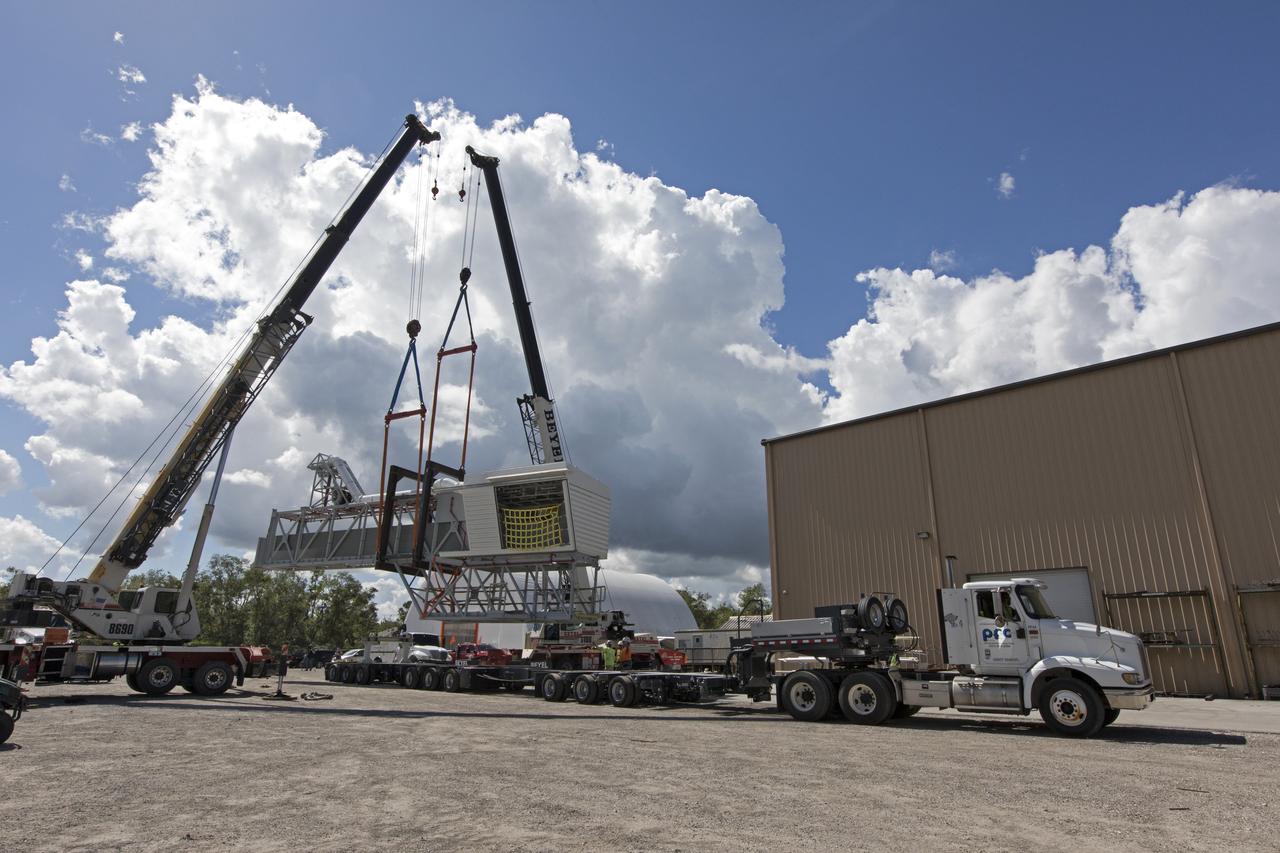
Two heavy-lift cranes are being used to lower the Orion crew access arm onto a flatbed truck at Precision Fabricating and Cleaning in Cocoa, Florida. The crew access arm will be transported to a storage location near NASA's Kennedy Space Center in Florida. Later this month, the arm will be transported to the mobile launcher (ML) tower at the center. The crew access arm will be located at about the 274-foot level on the tower. It will rotate from its retracted position and interface with the Orion crew hatch location to provide entry to the Orion crew module. The Ground Systems Development and Operations Program is overseeing installation of umbilicals and launch accessories on the ML tower.
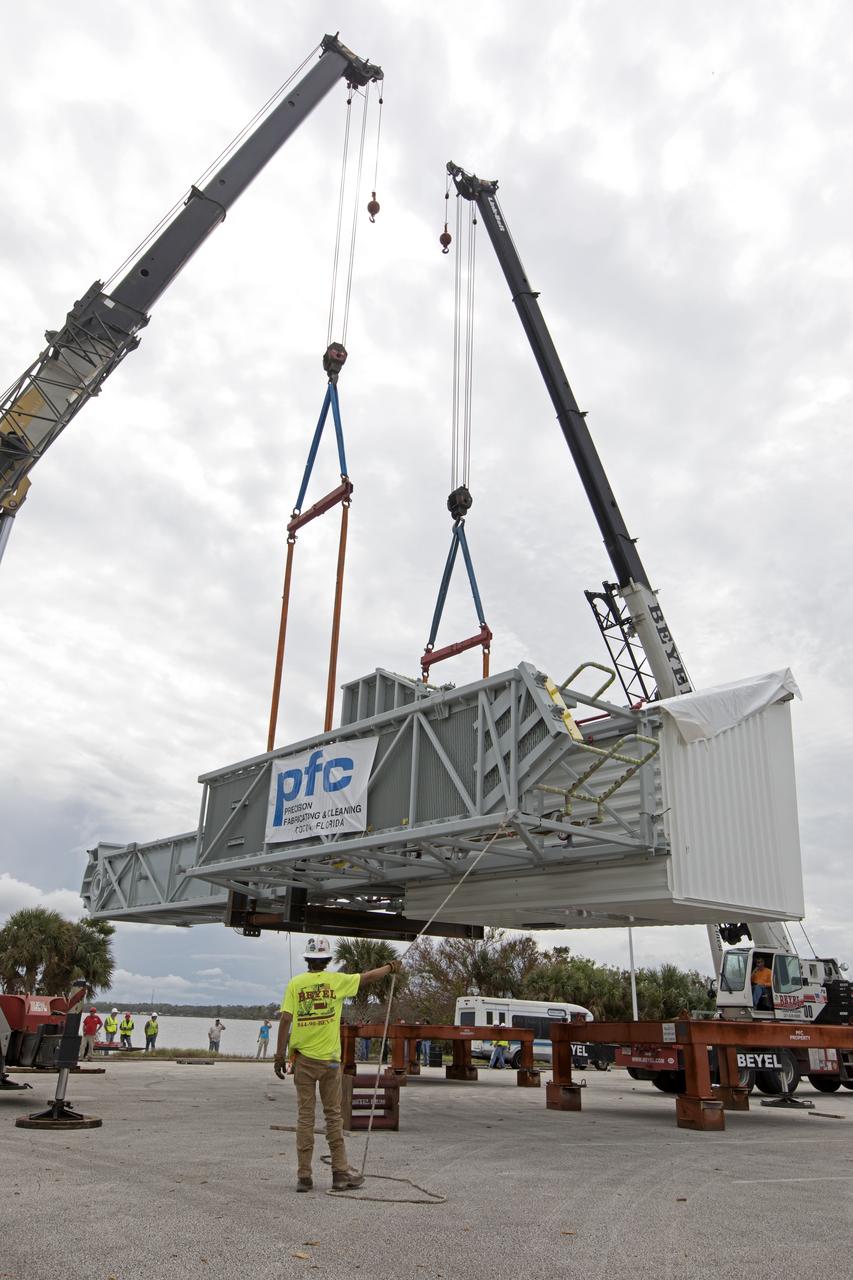
Two heavy-lift cranes are used to lower the Orion crew access arm onto a work stand in a storage location at NASA's Kennedy Space Center in Florida. The access arm was transported from Precision Fabricating and Cleaning in Cocoa, Florida. Later this month, the arm will be transported to the mobile launcher (ML) tower at the center. The crew access arm will be located at about the 274-foot level on the tower. It will rotate from its retracted position and interface with the Orion crew hatch location to provide entry to the Orion crew module. The Ground Systems Development and Operations Program is overseeing installation of umbilicals and launch accessories on the ML tower.
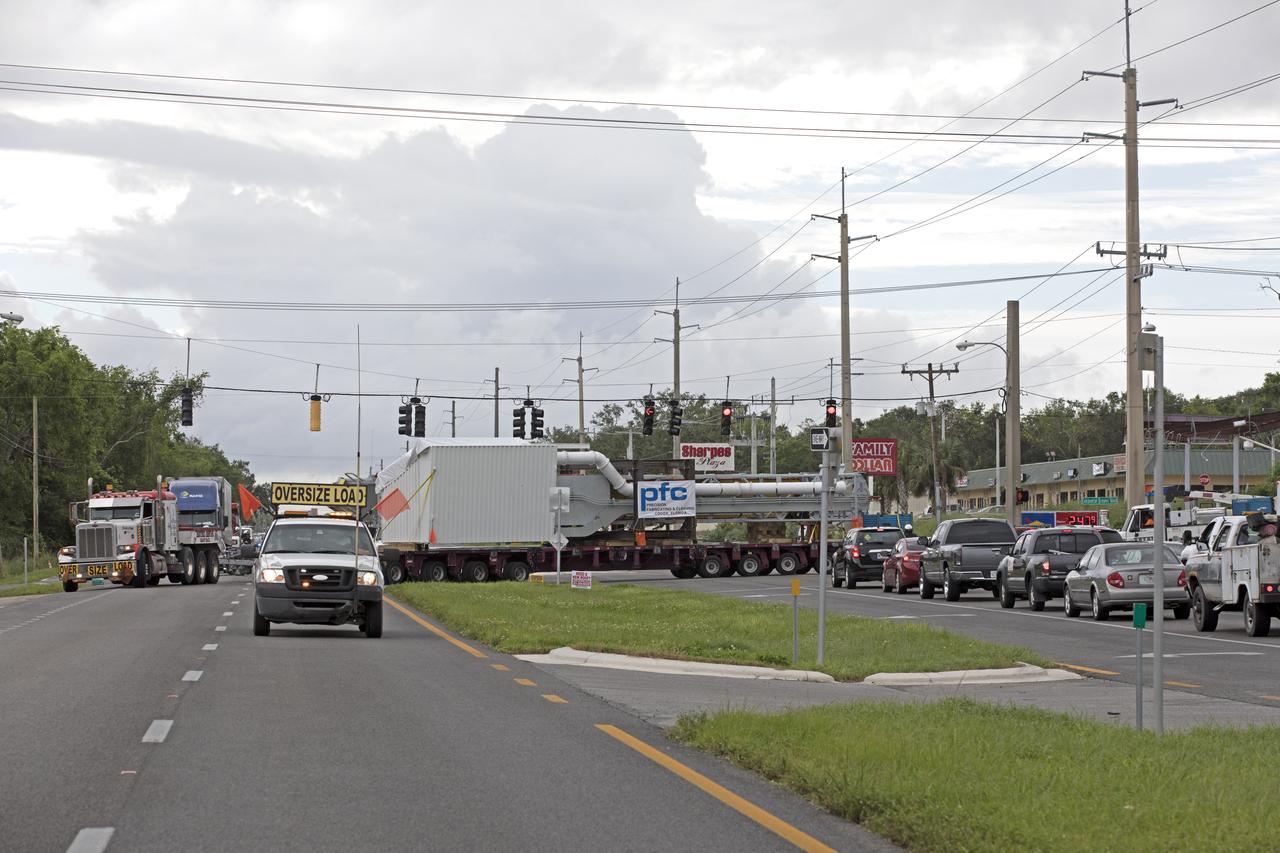
A flatbed truck with the Orion crew access arm secured atop travels along a road in Cocoa, Florida, after departing Precision Fabricating and Cleaning. The access arm will be transported to a storage location at NASA's Kennedy Space Center in Florida. Later this month, the arm will be transported to the mobile launcher (ML) tower at the center. The crew access arm will be located at about the 274-foot level on the tower. It will rotate from its retracted position and interface with the Orion crew hatch location to provide entry to the Orion crew module. The Ground Systems Development and Operations Program is overseeing installation of umbilicals and launch accessories on the ML tower.

Two heavy-lift cranes lower the Orion crew access arm onto a work stand in a storage location at NASA's Kennedy Space Center in Florida. The access arm was transported from Precision Fabricating and Cleaning in Cocoa, Florida. Later this month, the arm will be transported to the mobile launcher (ML) tower at the center. The crew access arm will be located at about the 274-foot level on the tower. It will rotate from its retracted position and interface with the Orion crew hatch location to provide entry to the Orion crew module. The Ground Systems Development and Operations Program is overseeing installation of umbilicals and launch accessories on the ML tower.
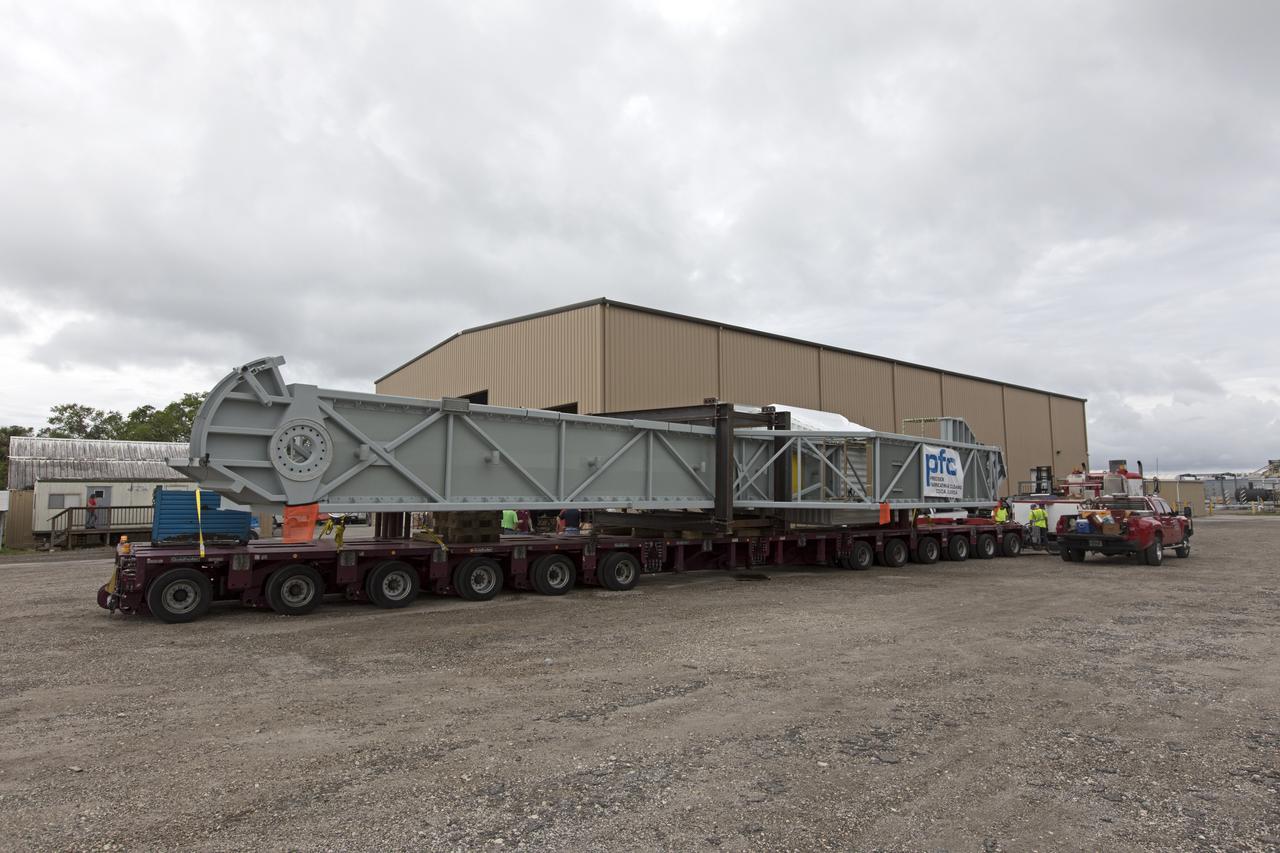
The Orion crew access arm is secured on a flatbed truck at Precision Fabricating and Cleaning in Cocoa, Florida and ready to be transported to a storage location at NASA's Kennedy Space Center in Florida. Later this month, the arm will be transported to the mobile launcher (ML) tower at the center. The crew access arm will be located at about the 274-foot level on the tower. It will rotate from its retracted position and interface with the Orion crew hatch location to provide entry to the Orion crew module. The Ground Systems Development and Operations Program is overseeing installation of umbilicals and launch accessories on the ML tower.
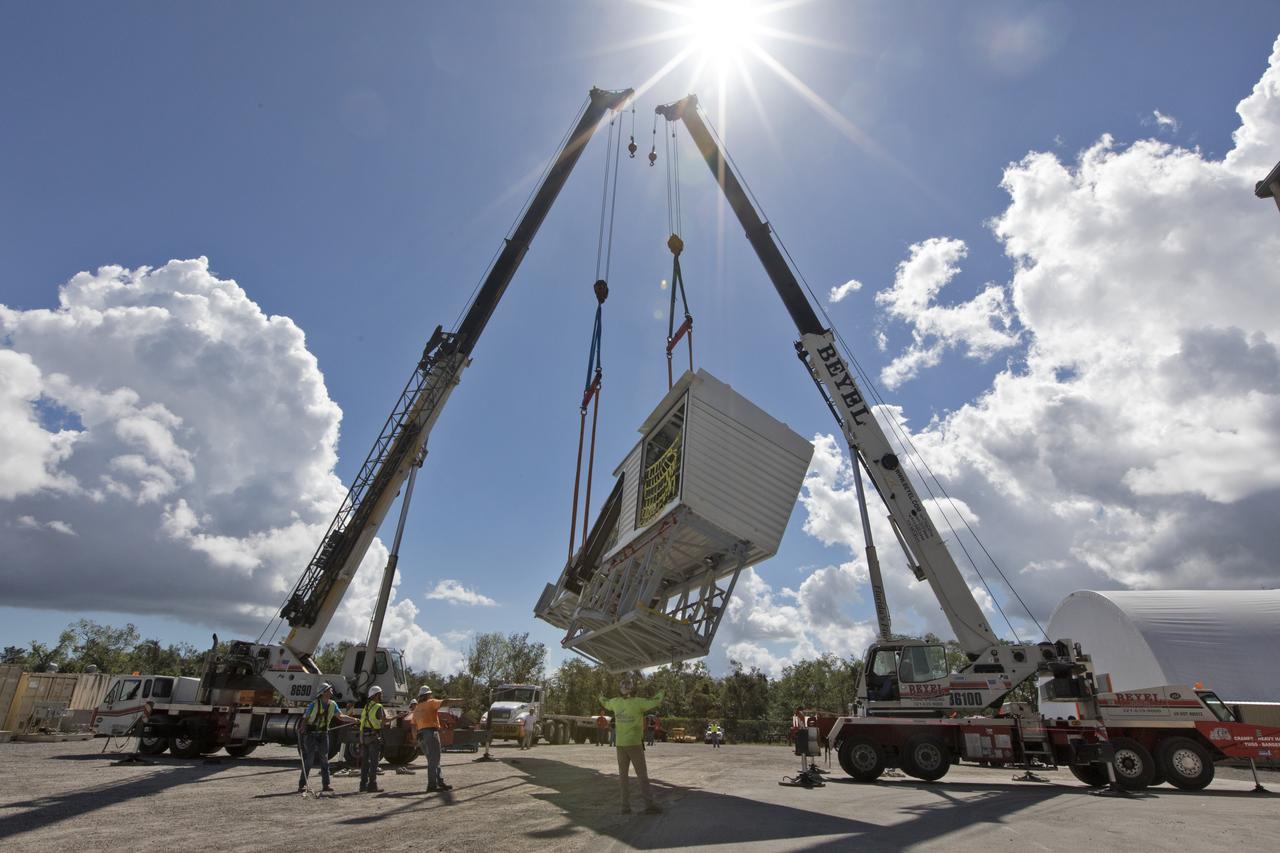
Two heavy-lift cranes are being used to move the Orion crew access arm and lower it onto a flatbed truck at Precision Fabricating and Cleaning in Cocoa, Florida. The crew access arm will be transported to a storage location near NASA's Kennedy Space Center in Florida. Later this month, the arm will be transported to the mobile launcher (ML) tower at the center. The crew access arm will be located at about the 274-foot level on the tower. It will rotate from its retracted position and interface with the Orion crew hatch location to provide entry to the Orion crew module. The Ground Systems Development and Operations Program is overseeing installation of umbilicals and launch accessories on the ML tower.
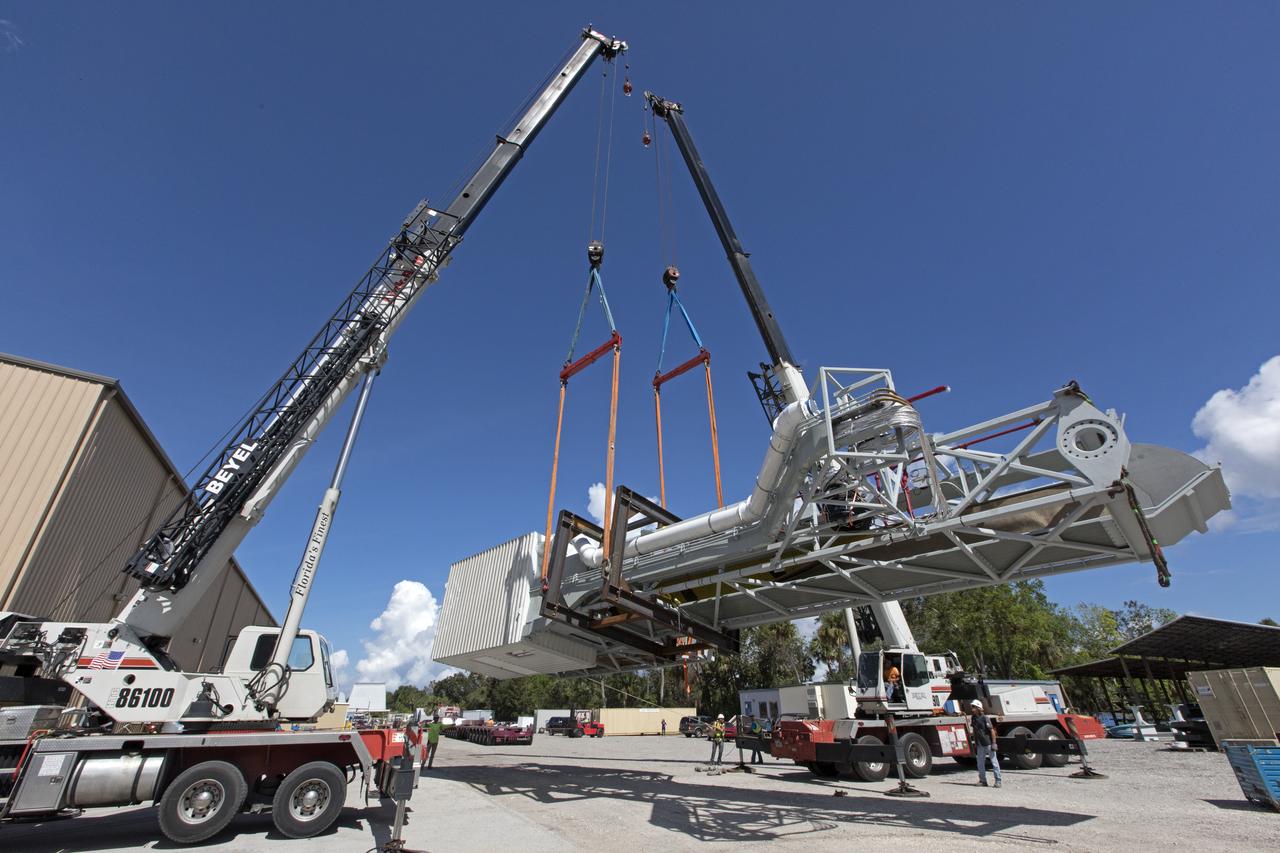
Two heavy-lift cranes are being used to move the Orion crew access arm and lower it onto a flatbed truck at Precision Fabricating and Cleaning in Cocoa, Florida. The crew access arm will be transported to a storage location near NASA's Kennedy Space Center in Florida. Later this month, the arm will be transported to the mobile launcher (ML) tower at the center. The crew access arm will be located at about the 274-foot level on the tower. It will rotate from its retracted position and interface with the Orion crew hatch location to provide entry to the Orion crew module. The Ground Systems Development and Operations Program is overseeing installation of umbilicals and launch accessories on the ML tower.
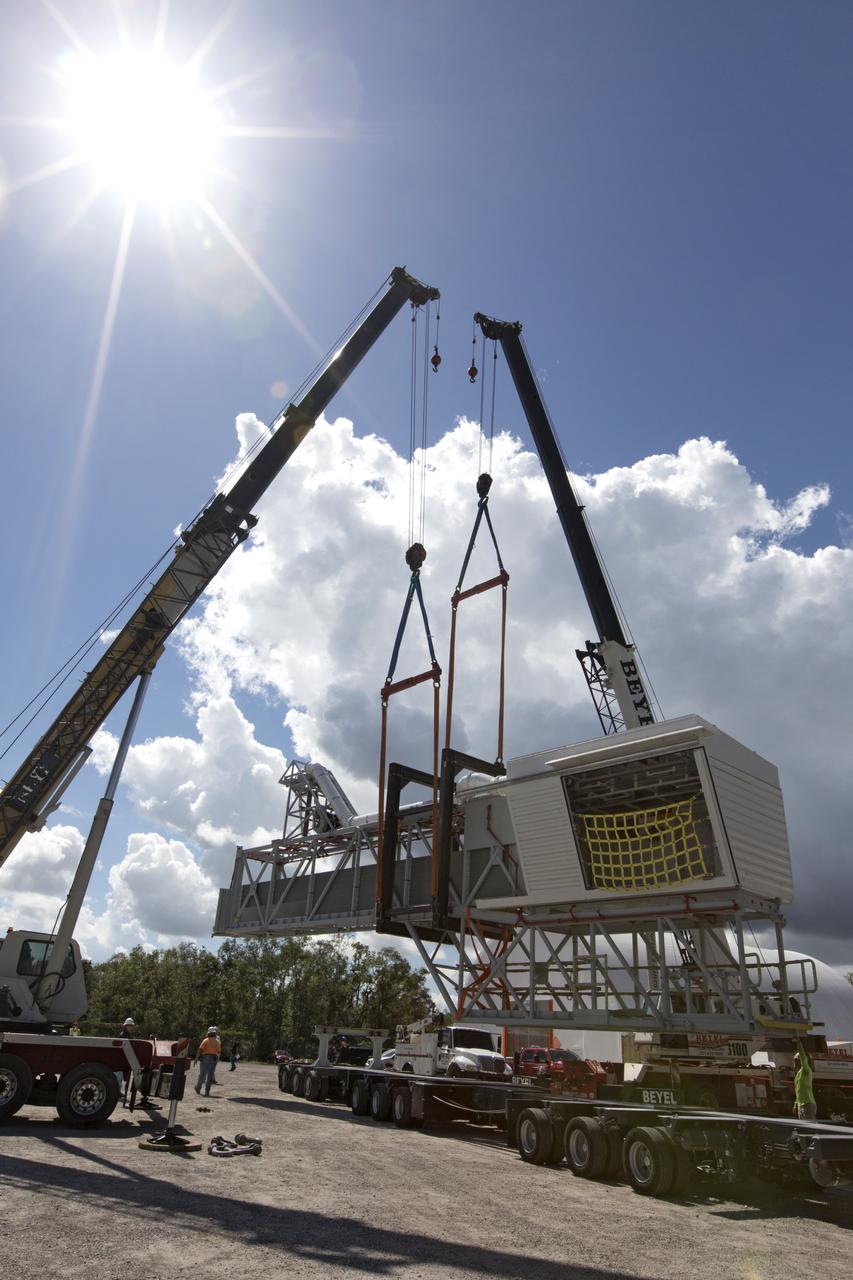
Two heavy-lift cranes are used to lower the Orion crew access arm onto a flatbed truck at Precision Fabricating and Cleaning in Cocoa, Florida. The crew access arm will be transported to a storage location near NASA's Kennedy Space Center in Florida. Later this month, the arm will be transported to the mobile launcher (ML) tower at the center. The crew access arm will be located at about the 274-foot level on the tower. It will rotate from its retracted position and interface with the Orion crew hatch location to provide entry to the Orion crew module. The Ground Systems Development and Operations Program is overseeing installation of umbilicals and launch accessories on the ML tower.
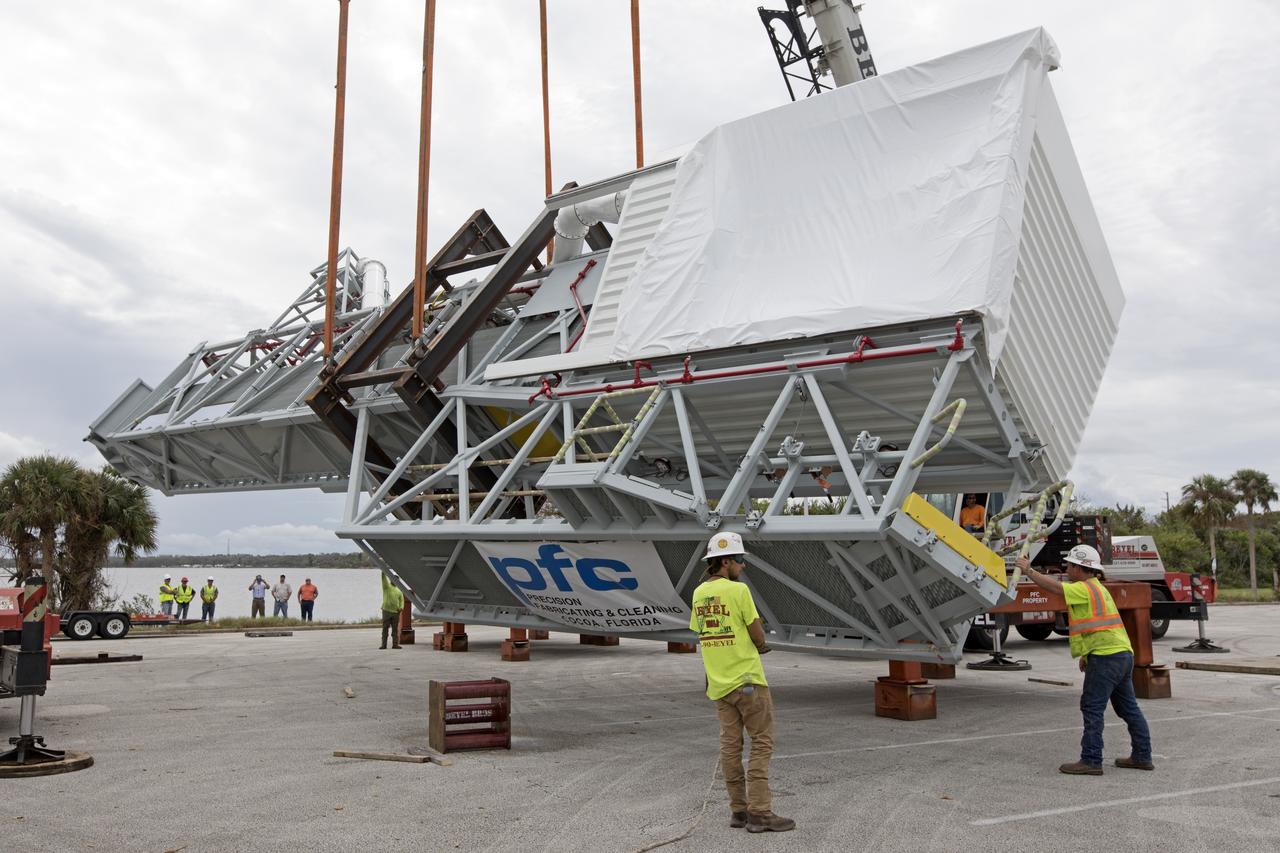
Two heavy-lift cranes are used to tilt and lower the Orion crew access arm onto a work stand in a storage location at NASA's Kennedy Space Center in Florida. The access arm was transported from Precision Fabricating and Cleaning in Cocoa, Florida. Later this month, the arm will be transported to the mobile launcher (ML) tower at the center. The crew access arm will be located at about the 274-foot level on the tower. It will rotate from its retracted position and interface with the Orion crew hatch location to provide entry to the Orion crew module. The Ground Systems Development and Operations Program is overseeing installation of umbilicals and launch accessories on the ML tower.
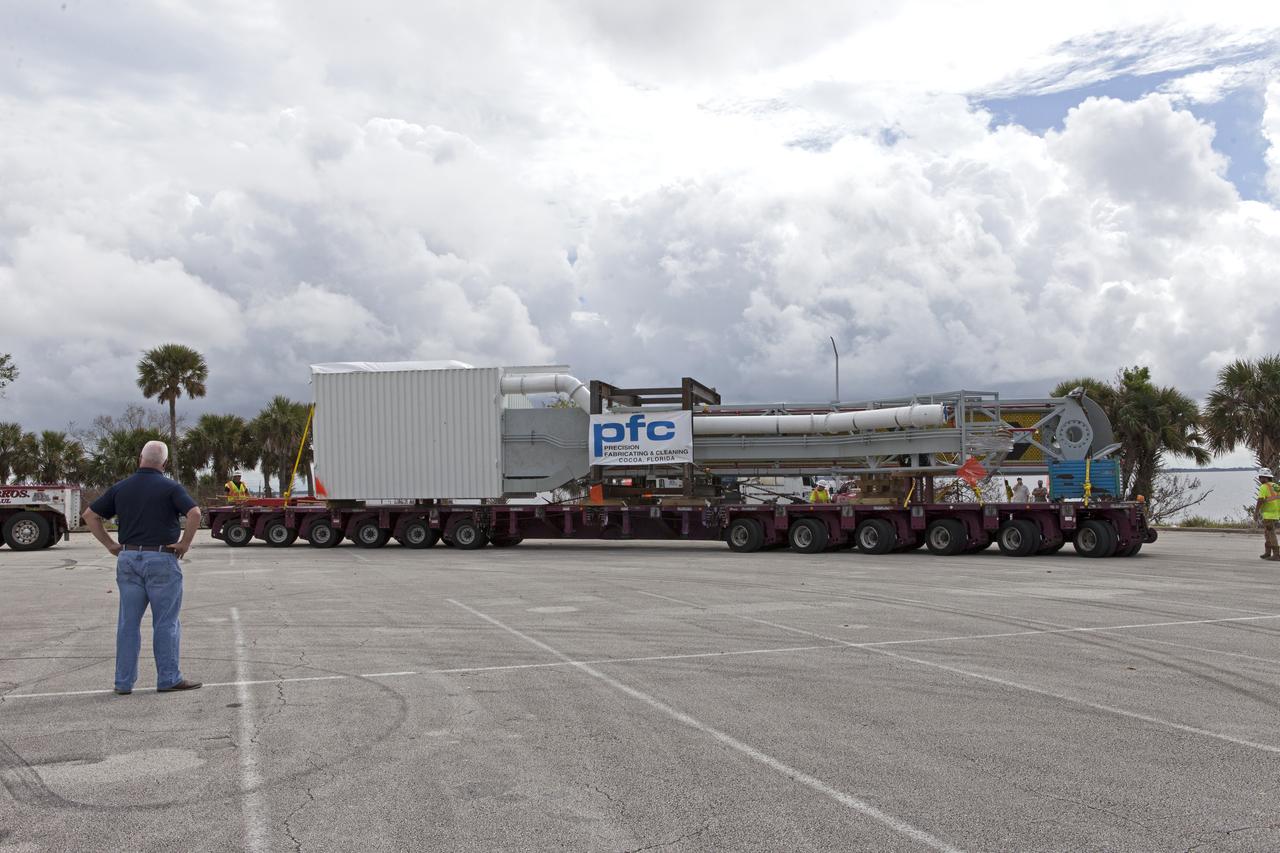
A flatbed truck with the Orion crew access arm secured atop arrives in a storage location at NASA's Kennedy Space Center in Florida. The access arm was transported from Precision Fabricating and Cleaning in Cocoa, Florida. Later this month, the arm will be transported to the mobile launcher (ML) tower at the center. The crew access arm will be located at about the 274-foot level on the tower. It will rotate from its retracted position and interface with the Orion crew hatch location to provide entry to the Orion crew module. The Ground Systems Development and Operations Program is overseeing installation of umbilicals and launch accessories on the ML tower.
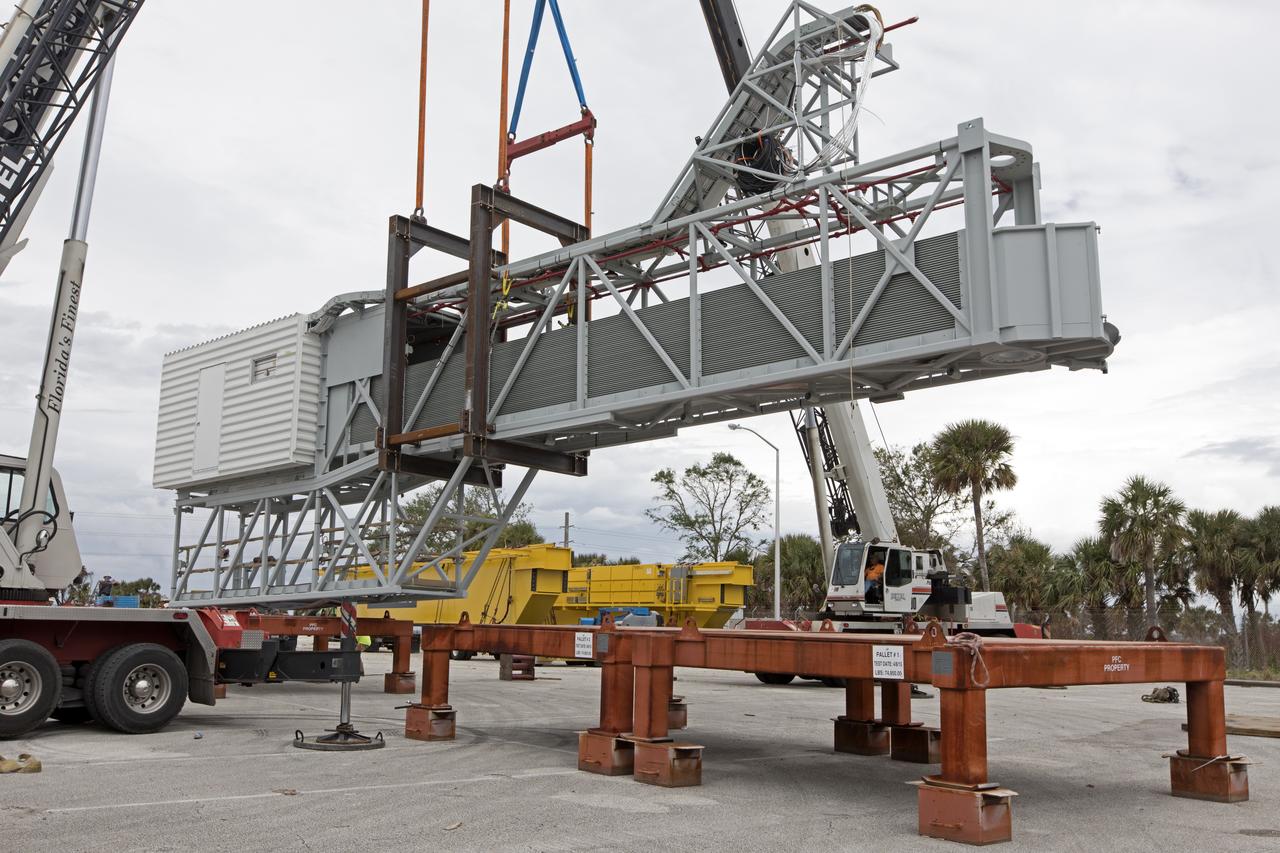
Two heavy-lift cranes are used to lower the Orion crew access arm onto a work stand in a storage location at NASA's Kennedy Space Center in Florida. The access arm was transported from Precision Fabricating and Cleaning in Cocoa, Florida. Later this month, the arm will be transported to the mobile launcher (ML) tower at the center. The crew access arm will be located at about the 274-foot level on the tower. It will rotate from its retracted position and interface with the Orion crew hatch location to provide entry to the Orion crew module. The Ground Systems Development and Operations Program is overseeing installation of umbilicals and launch accessories on the ML tower.
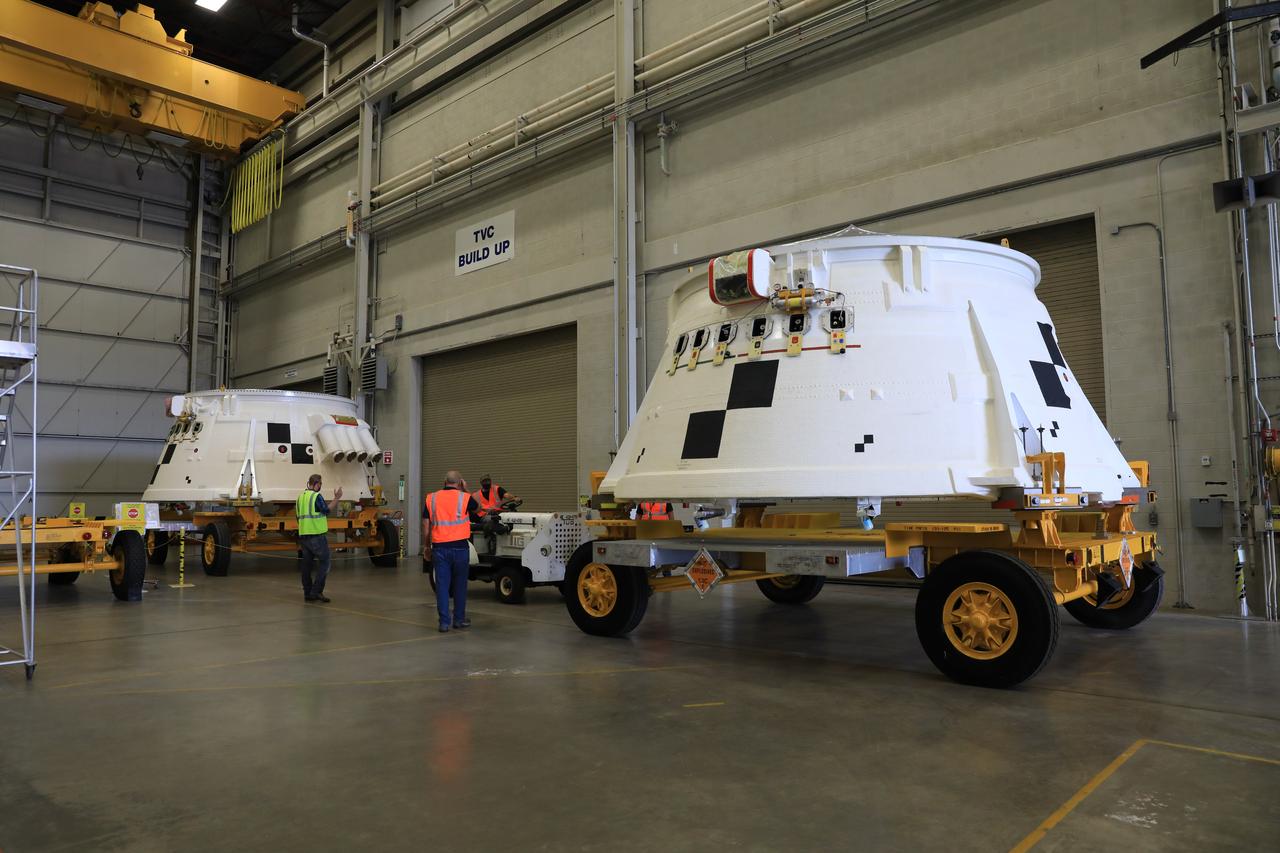
Inside the Booster Fabrication Facility at NASA's Kennedy Space Center in Florida, the Artemis I aft skirts for the agency's Space Launch System (SLS) rocket’s twin solid rocket boosters are moved out of their test cells and are being readied for their move to the Rotation, Processing and Surge Facility (RPSF) on June 9, 2020. The aft skirts were refurbished by Northrop Grumman. They house the thrust vector control system, which controls 70 percent of the steering during initial ascent of the SLS rocket. The segments will remain in the RPSF until ready for stacking with the forward and aft parts of the boosters on the mobile launcher in High Bay 3 of the Vehicle Assembly Building. Through the Artemis Program, NASA is working to land the first woman and next man on the Moon by 2024.
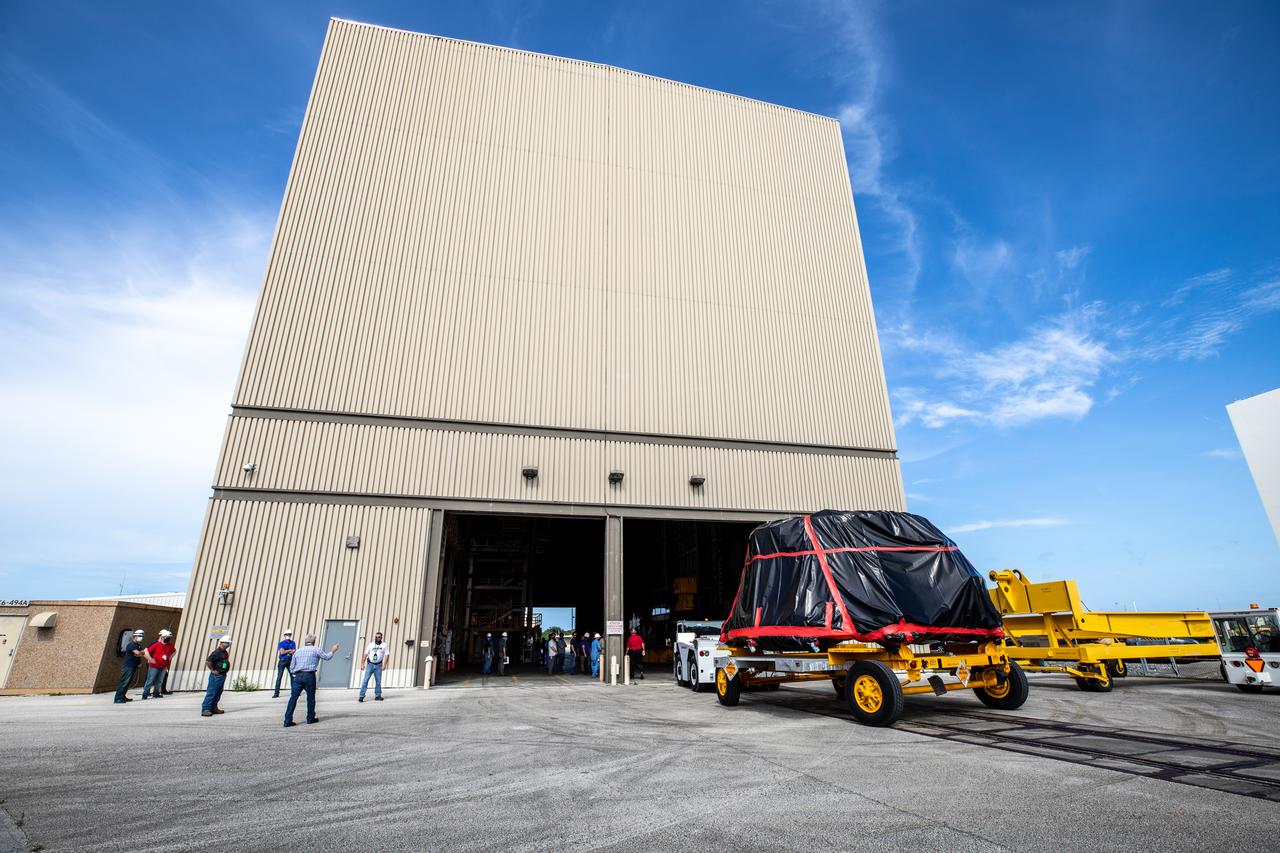
The first of two Artemis I aft skirts for NASA’s Space Launch System (SLS) rocket’s twin solid rocket boosters arrives at the Rotation, Processing and Surge Facility (RPSF) at the agency’s Kennedy Space Center in Florida on June 10, 2020. They were transported from the Booster Fabrication Facility. The aft skirts were refurbished by Northrop Grumman. They house the thrust vector control system, which controls 70 percent of the steering during initial ascent of the SLS rocket. The segments will remain in the RPSF until ready for stacking with the forward and aft parts of the boosters on the mobile launcher in High Bay 3 of the Vehicle Assembly Building. Through the Artemis Program, NASA is working to land the first woman and next man on the Moon by 2024.
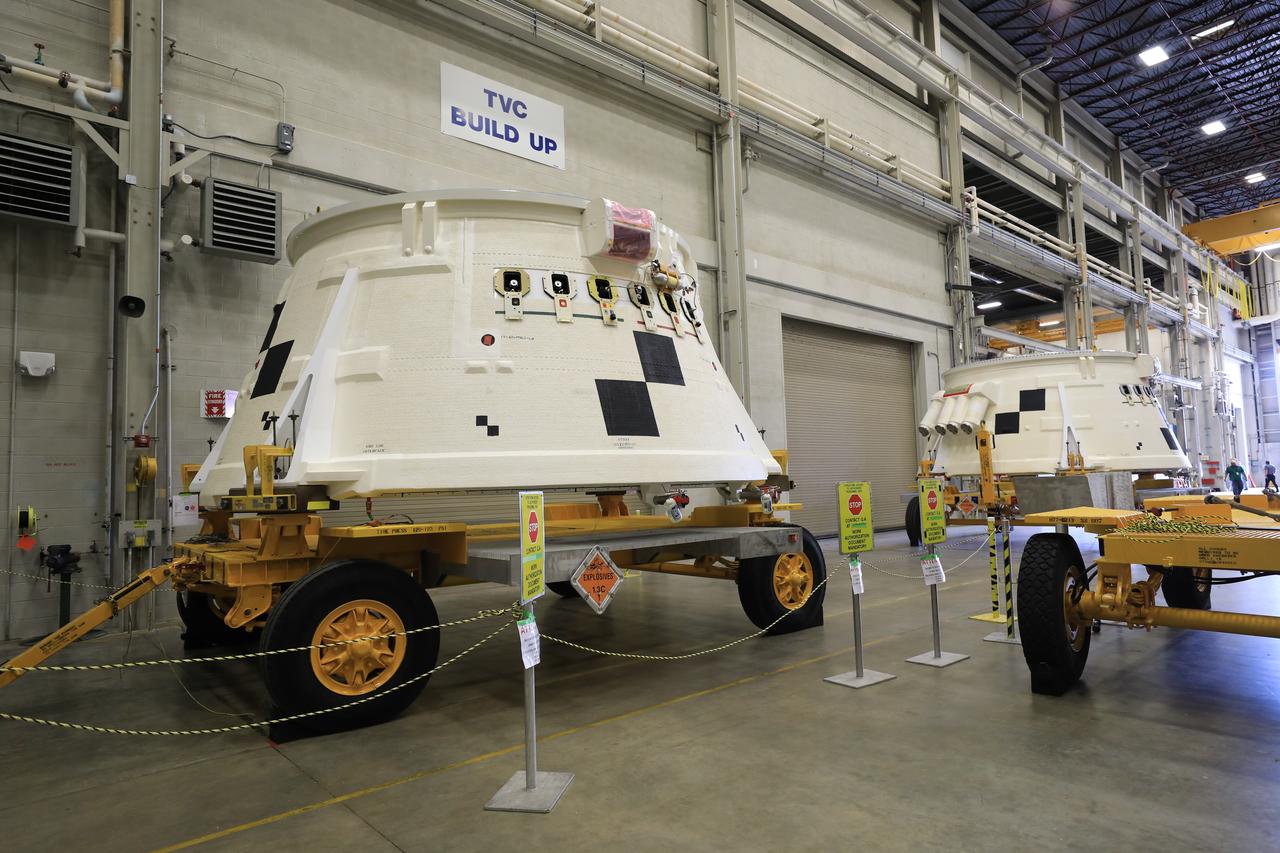
Inside the Booster Fabrication Facility at NASA's Kennedy Space Center in Florida, the Artemis I aft skirts for the agency's Space Launch System (SLS) rocket’s twin solid rocket boosters are being readied for their move to the Rotation, Processing and Surge Facility (RPSF) on June 9, 2020. In view at left is the left aft skirt assembly, and at far right is the right aft skirt assembly. The aft skirts were refurbished by Northrop Grumman. They house the thrust vector control system, which controls 70 percent of the steering during initial ascent of the SLS rocket. The segments will remain in the RPSF until ready for stacking with the forward and aft parts of the boosters on the mobile launcher in High Bay 3 of the Vehicle Assembly Building. Through the Artemis Program, NASA is working to land the first woman and next man on the Moon by 2024.
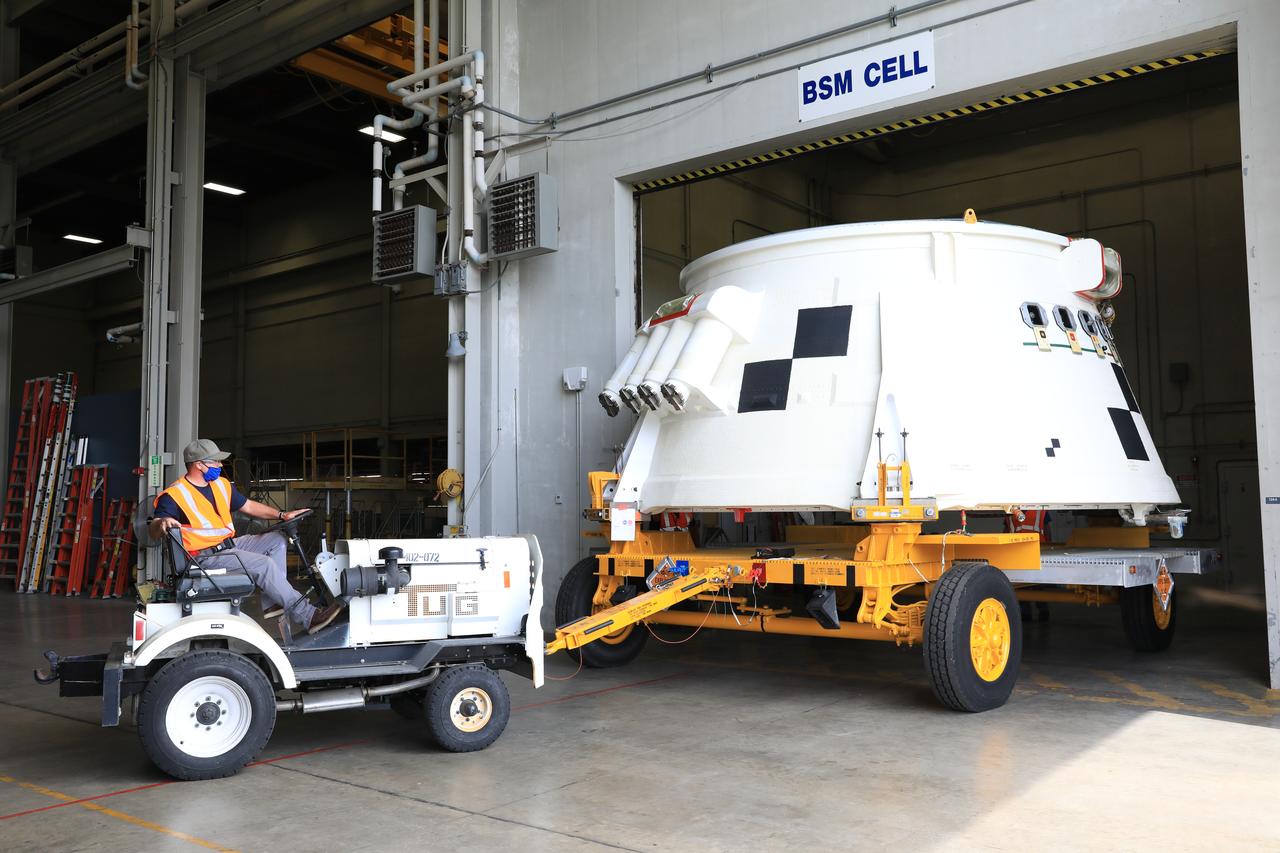
Inside the Booster Fabrication Facility at NASA's Kennedy Space Center in Florida, the Artemis I aft skirts for the agency's Space Launch System (SLS) rocket’s twin solid rocket boosters are being readied for their move to the Rotation, Processing and Surge Facility (RPSF) on June 9, 2020. In view, the left aft skirt assembly is attached to a move vehicle and moved out of a test cell. The aft skirts were refurbished by Northrop Grumman. They house the thrust vector control system, which controls 70 percent of the steering during initial ascent of the SLS rocket. The segments will remain in the RPSF until ready for stacking with the forward and aft parts of the boosters on the mobile launcher in High Bay 3 of the Vehicle Assembly Building. Through the Artemis Program, NASA is working to land the first woman and next man on the Moon by 2024.

Inside the Booster Fabrication Facility at NASA's Kennedy Space Center in Florida, the Artemis I aft skirts for the agency's Space Launch System (SLS) rocket’s twin solid rocket boosters are being readied for their move to the Rotation, Processing and Surge Facility (RPSF) on June 9, 2020. In view at left is the left aft skirt assembly. Behind it to the right is the right aft skirt assembly. Also in view at far right, are the Artemis I forward assemblies, with the left assembly in front and the right assembly behind it. The aft skirts were refurbished by Northrop Grumman. They house the thrust vector control system, which controls 70 percent of the steering during initial ascent of the SLS rocket. The segments will remain in the RPSF until ready for stacking with the forward and aft parts of the boosters on the mobile launcher in High Bay 3 of the Vehicle Assembly Building. Through the Artemis Program, NASA is working to land the first woman and next man on the Moon by 2024.
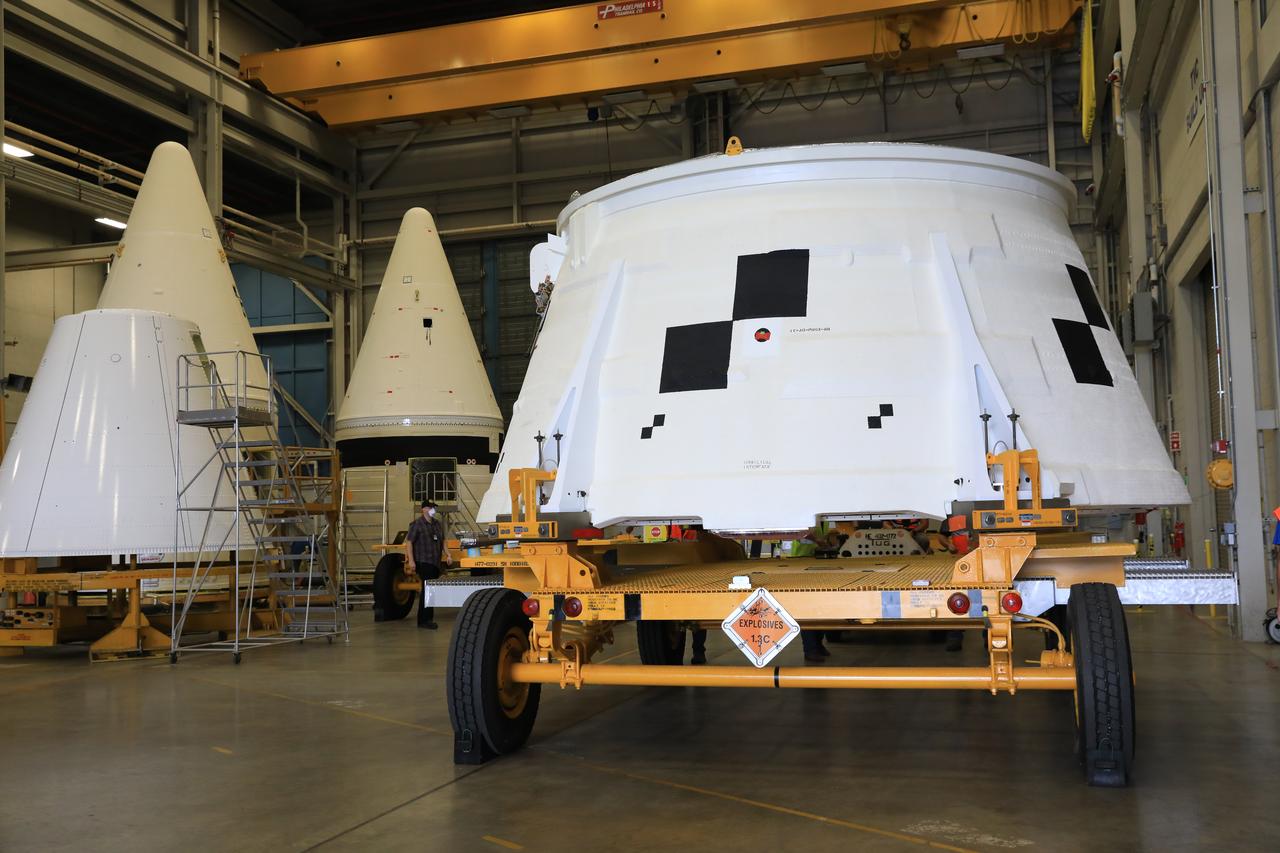
Inside the Booster Fabrication Facility at NASA's Kennedy Space Center in Florida, the Artemis I aft skirts for the agency's Space Launch System (SLS) rocket’s twin solid rocket boosters are moved out of their test cells and are being readied for their move to the Rotation, Processing and Surge Facility (RPSF) on June 9, 2020. In view at right is the right aft skirt. In view at left are the two Artemis I forward assemblies. The aft skirts were refurbished by Northrop Grumman. They house the thrust vector control system, which controls 70 percent of the steering during initial ascent of the SLS rocket. The segments will remain in the RPSF until ready for stacking with the forward and aft parts of the boosters on the mobile launcher in High Bay 3 of the Vehicle Assembly Building. Through the Artemis Program, NASA is working to land the first woman and next man on the Moon by 2024.
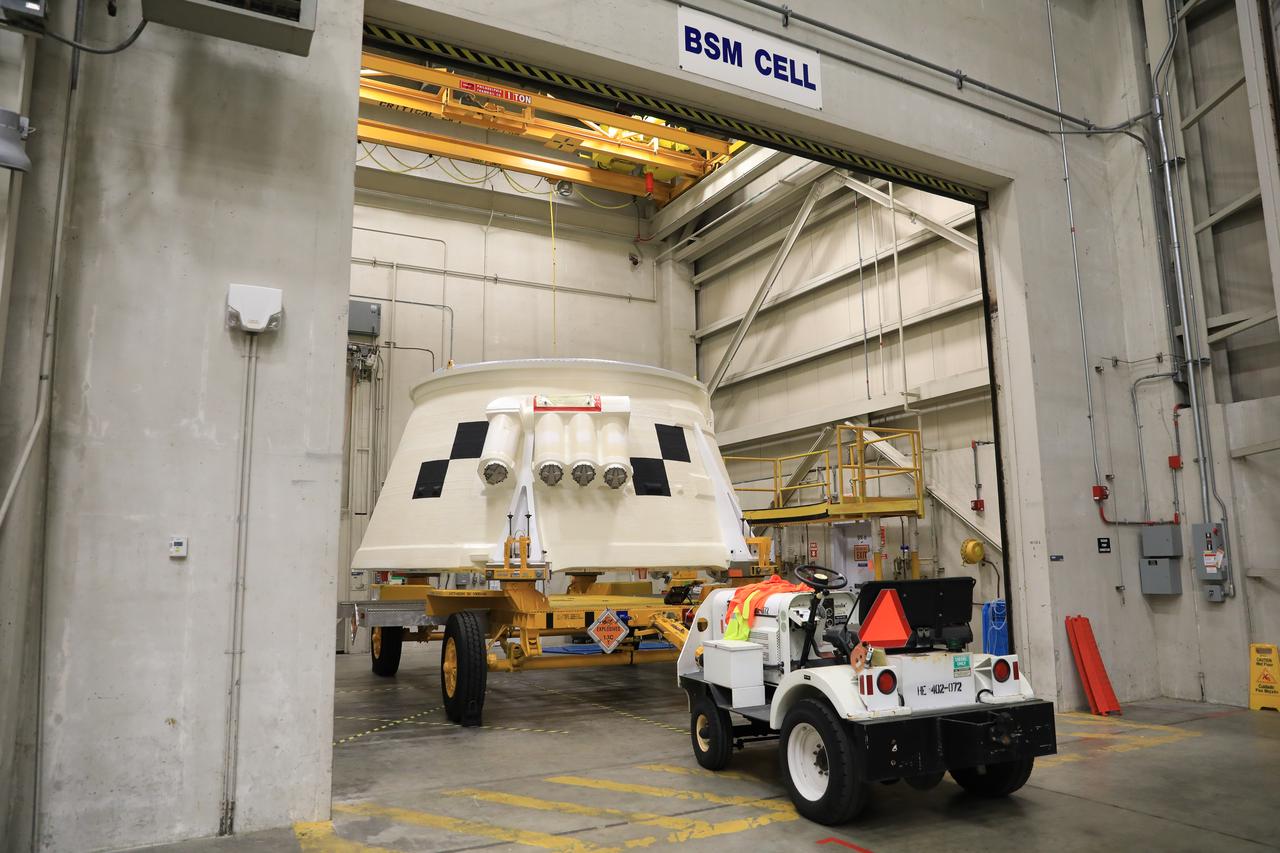
Inside the Booster Fabrication Facility at NASA's Kennedy Space Center in Florida, the Artemis I aft skirts for the agency's Space Launch System (SLS) rocket’s twin solid rocket boosters are being readied for their move to the Rotation, Processing and Surge Facility (RPSF) on June 9, 2020. In view, the left aft skirt assembly is attached to a move vehicle in a test cell. The aft skirts were refurbished by Northrop Grumman. They house the thrust vector control system, which controls 70 percent of the steering during initial ascent of the SLS rocket. The segments will remain in the RPSF until ready for stacking with the forward and aft parts of the boosters on the mobile launcher in High Bay 3 of the Vehicle Assembly Building. Through the Artemis Program, NASA is working to land the first woman and next man on the Moon by 2024.
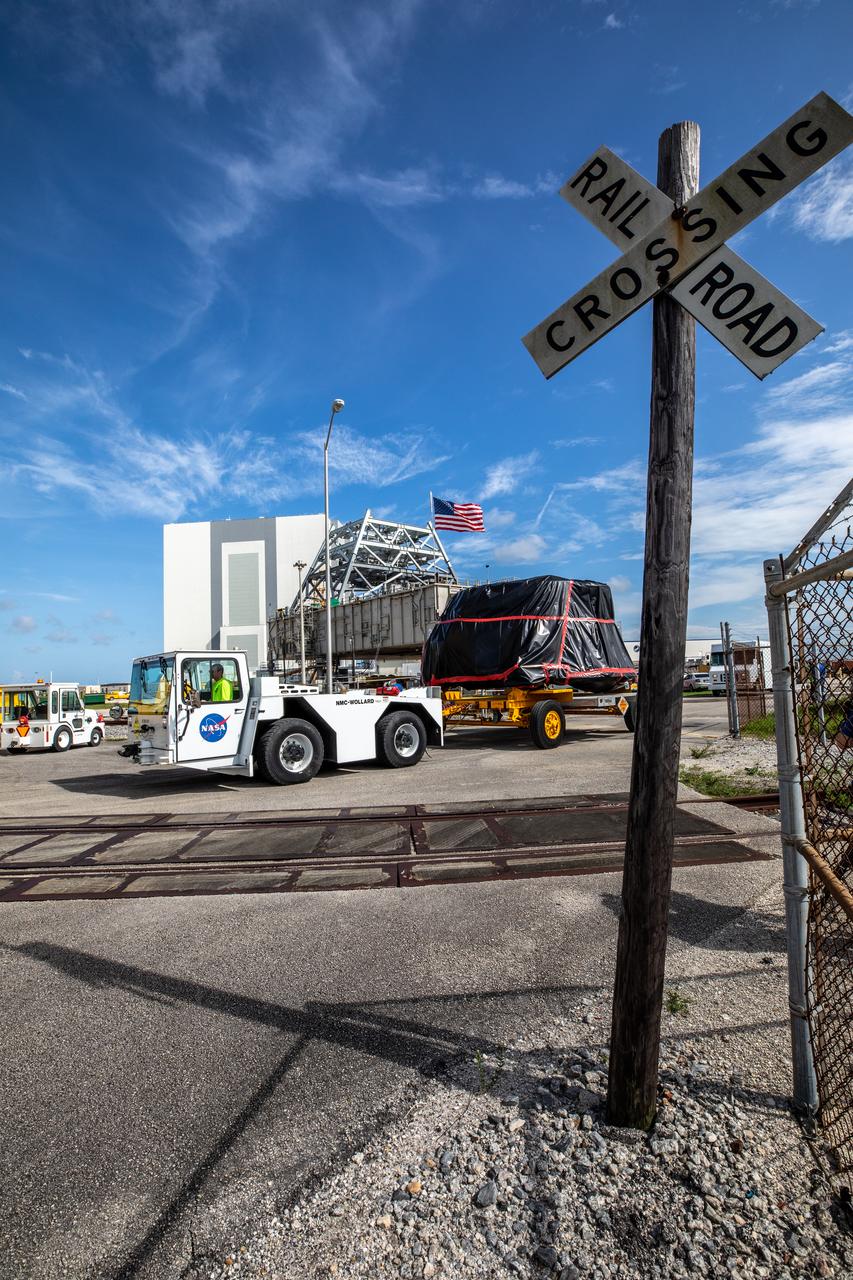
One of two Artemis I aft skirts for NASA’s Space Launch System (SLS) rocket’s twin solid rocket boosters crosses a railroad track on its way to the Rotation, Processing and Surge Facility (RPSF) at the agency’s Kennedy Space Center in Florida on June 10, 2020. They were transported from the Booster Fabrication Facility. The aft skirts were refurbished by Northrop Grumman. They house the thrust vector control system, which controls 70 percent of the steering during initial ascent of the SLS rocket. The segments will remain in the RPSF until ready for stacking with the forward and aft parts of the boosters on the mobile launcher in High Bay 3 of the Vehicle Assembly Building. Through the Artemis Program, NASA is working to land the first woman and next man on the Moon by 2024.
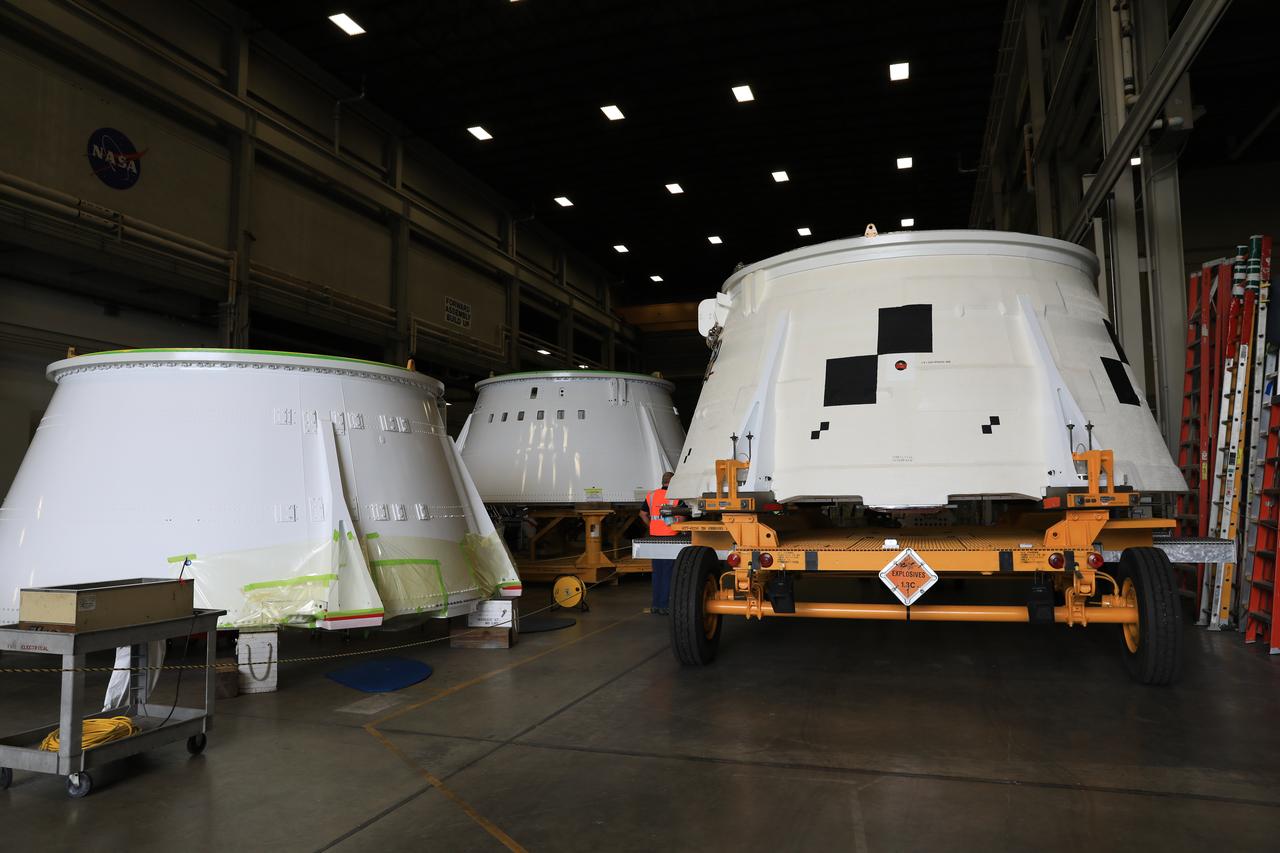
Inside the Booster Fabrication Facility at NASA's Kennedy Space Center in Florida, the Artemis I aft skirts for the agency's Space Launch System (SLS) rocket’s twin solid rocket boosters are being readied for their move to the Rotation, Processing and Surge Facility (RPSF) on June 9, 2020. In view, the left aft skirt assembly is attached to a move vehicle and moved out of a test cell. The Artemis II aft skirt structures are in view at left. The aft skirts were refurbished by Northrop Grumman. They house the thrust vector control system, which controls 70 percent of the steering during initial ascent of the SLS rocket. The segments will remain in the RPSF until ready for stacking with the forward and aft parts of the boosters on the mobile launcher in High Bay 3 of the Vehicle Assembly Building. Through the Artemis Program, NASA is working to land the first woman and next man on the Moon by 2024.
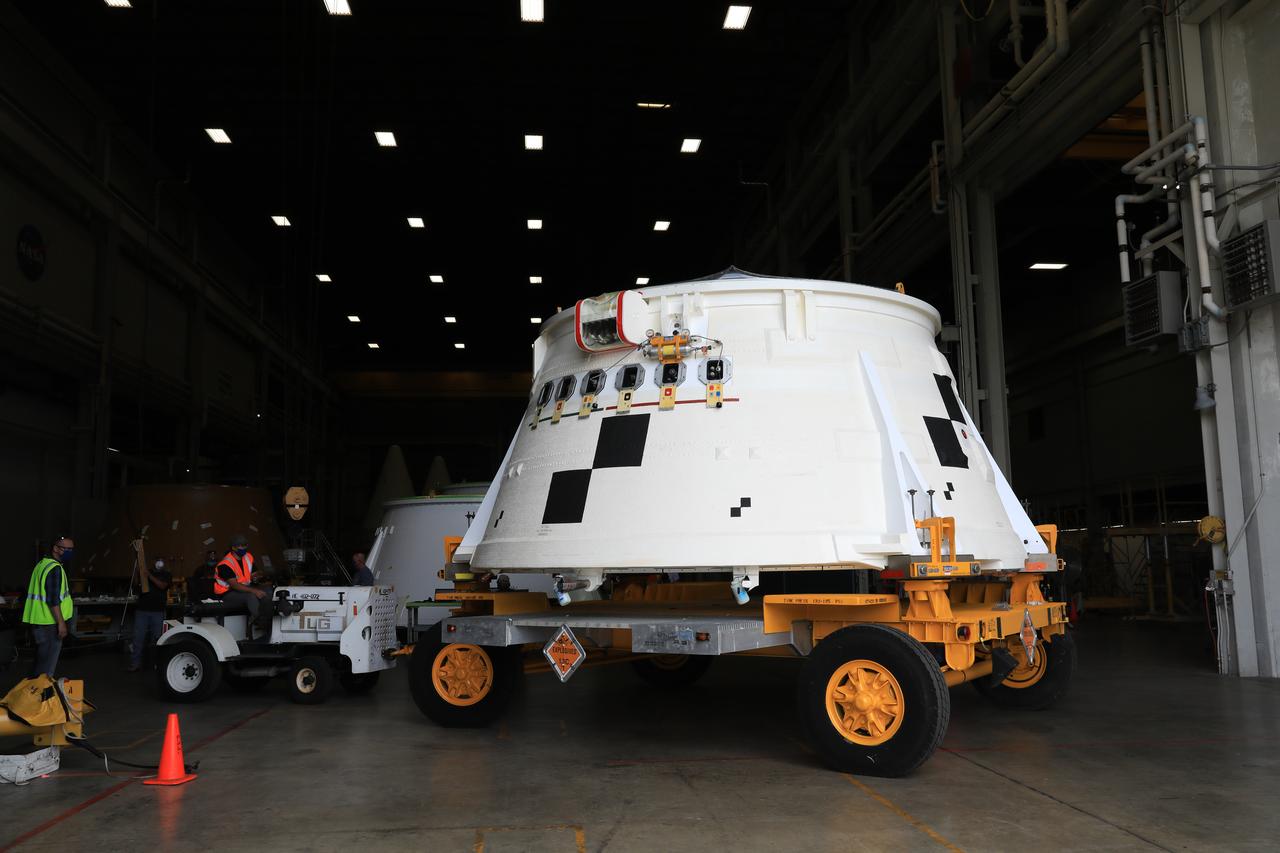
Inside the Booster Fabrication Facility at NASA's Kennedy Space Center in Florida, the Artemis I aft skirts for the agency's Space Launch System (SLS) rocket’s twin solid rocket boosters are being readied for their move to the Rotation, Processing and Surge Facility (RPSF) on June 9, 2020. In view, the left aft skirt assembly is attached to a move vehicle and moved out of a test cell. The aft skirts were refurbished by Northrop Grumman. They house the thrust vector control system, which controls 70 percent of the steering during initial ascent of the SLS rocket. The segments will remain in the RPSF until ready for stacking with the forward and aft parts of the boosters on the mobile launcher in High Bay 3 of the Vehicle Assembly Building. Through the Artemis Program, NASA is working to land the first woman and next man on the Moon by 2024.
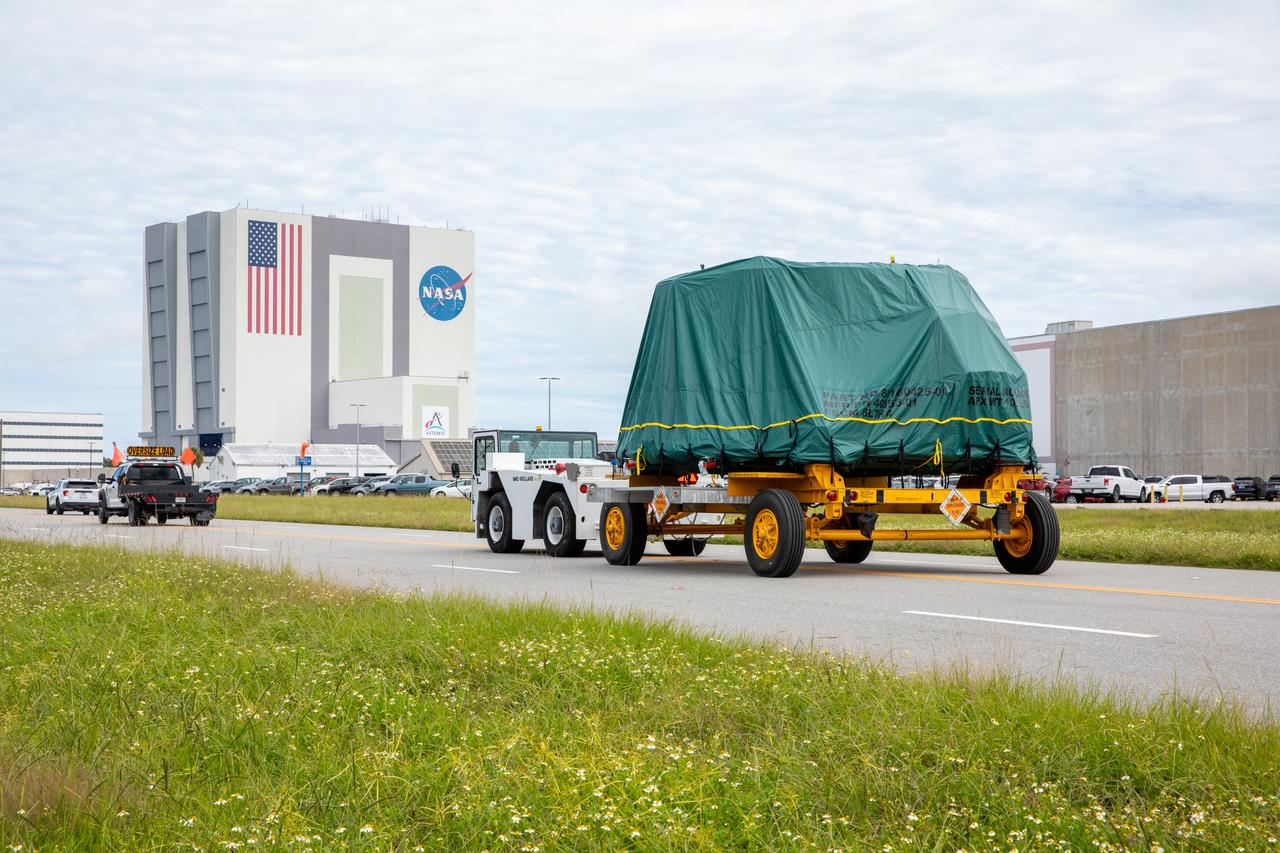
One of two Artemis II aft skirts for NASA's Space Launch System (SLS) rocket’s twin solid rocket boosters is transported from the Booster Fabrication Facility to the Rotation Processing and Surge Facility (RPSF) at the agency’s Kennedy Space Center in Florida on Monday, Sept. 25, 2023. The aft skirts were refurbished by Northrop Grumman and house the thrust vector control system, which controls 70 percent of the steering during initial ascent of the SLS rocket. The segments will remain in the RPSF until ready for stacking with the forward and aft parts of the boosters on the mobile launcher in High Bay 3 of the Vehicle Assembly Building. Artemis II astronauts Reid Wiseman, Victor Glover, Christina Koch, and Jeremy Hansen will launch from Kennedy, traveling around the Moon on the first crewed mission under Artemis that will test all of the Orion spacecraft’s systems.
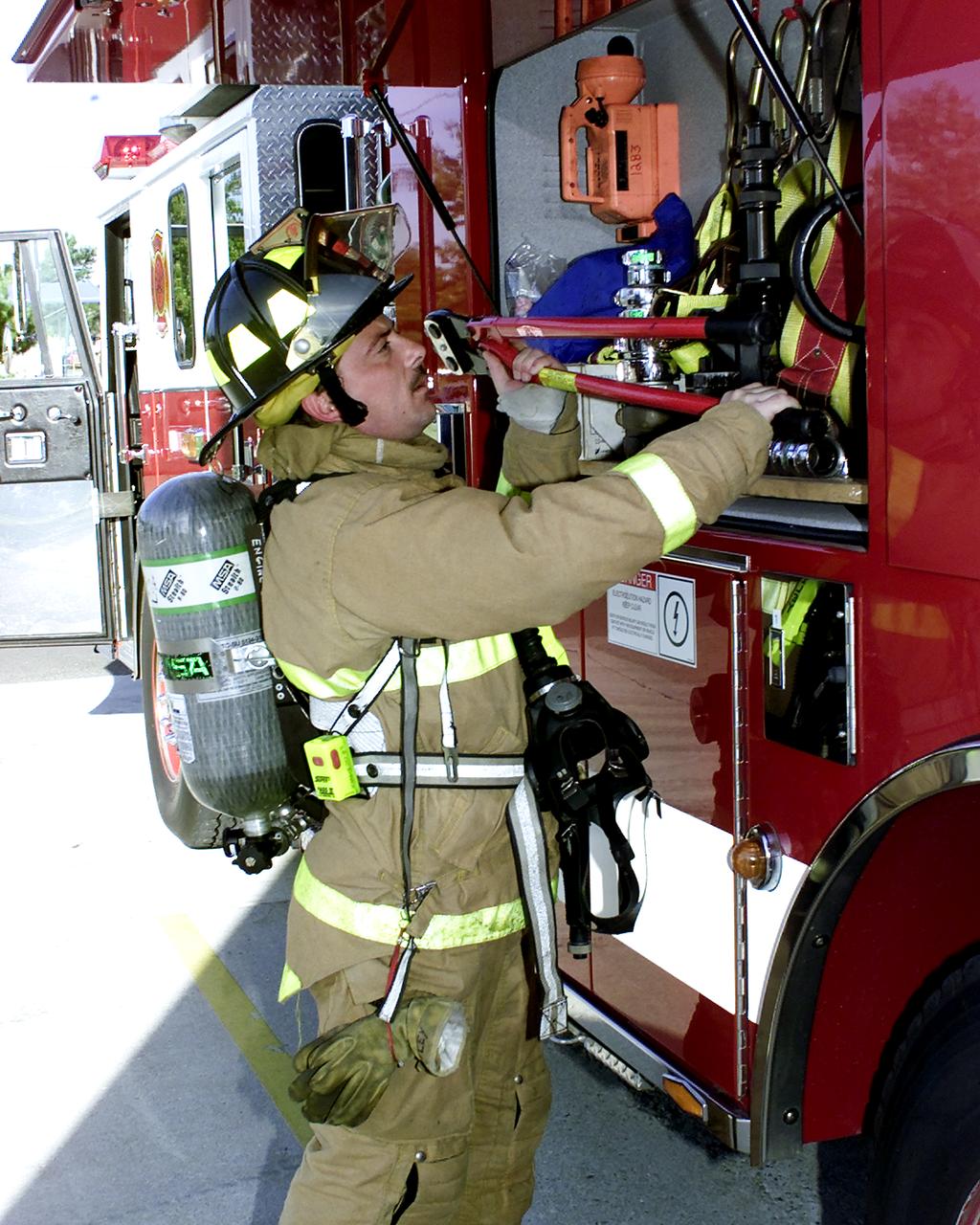
Technology used to provide thermal protection for Apollo astronauts and spacecraft components provides firefighters with better protective clothing and equipment. Spinoffs include a portable firefighting module, protective clothing for workers in hazardous environments, fire-retardant paints and forms, fireblocking coating for outdoor structures, and flame-resistant fabric. Perhaps the farthest reaching is the breathing apparatus worn by firefighters throughout the U.S. for protection against smoke inhalation injury. The breathing system weighs approximately 20 pounds, one-third less than past systems, and it enables the wearer to have improved mobility. It consists of a face mask, frame and harness, a warning device, and an air bottle. The basic air cylinder offers the same 30-minutes of operation time as its predecessor. The result is a drastic reduction in the number of inhalation injuries to firefighters. Though they have made many design modifications and refinements, manufacturers of breathing apparatus still incorporate the original NASA technology.
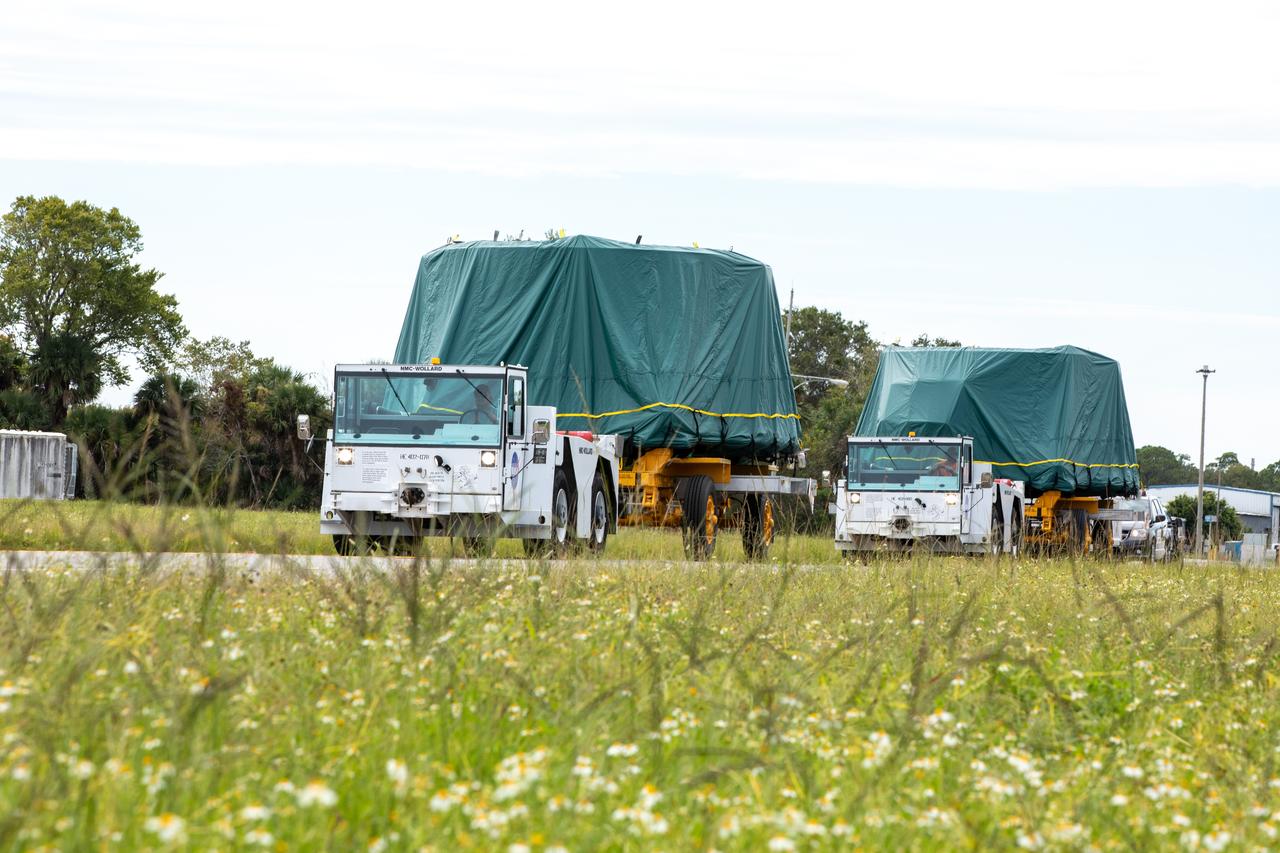
The Artemis II aft skirts for NASA's Space Launch System (SLS) rocket’s twin solid rocket boosters are transported from the Booster Fabrication Facility to the Rotation Processing and Surge Facility (RPSF) at the agency’s Kennedy Space Center in Florida on Monday, Sept. 25, 2023. The aft skirts were refurbished by Northrop Grumman and house the thrust vector control system, which controls 70 percent of the steering during initial ascent of the SLS rocket. The segments will remain in the RPSF until ready for stacking with the forward and aft parts of the boosters on the mobile launcher in High Bay 3 of the Vehicle Assembly Building. Artemis II astronauts Reid Wiseman, Victor Glover, Christina Koch, and Jeremy Hansen will launch from Kennedy, traveling around the Moon on the first crewed mission under Artemis that will test all of the Orion spacecraft’s systems.
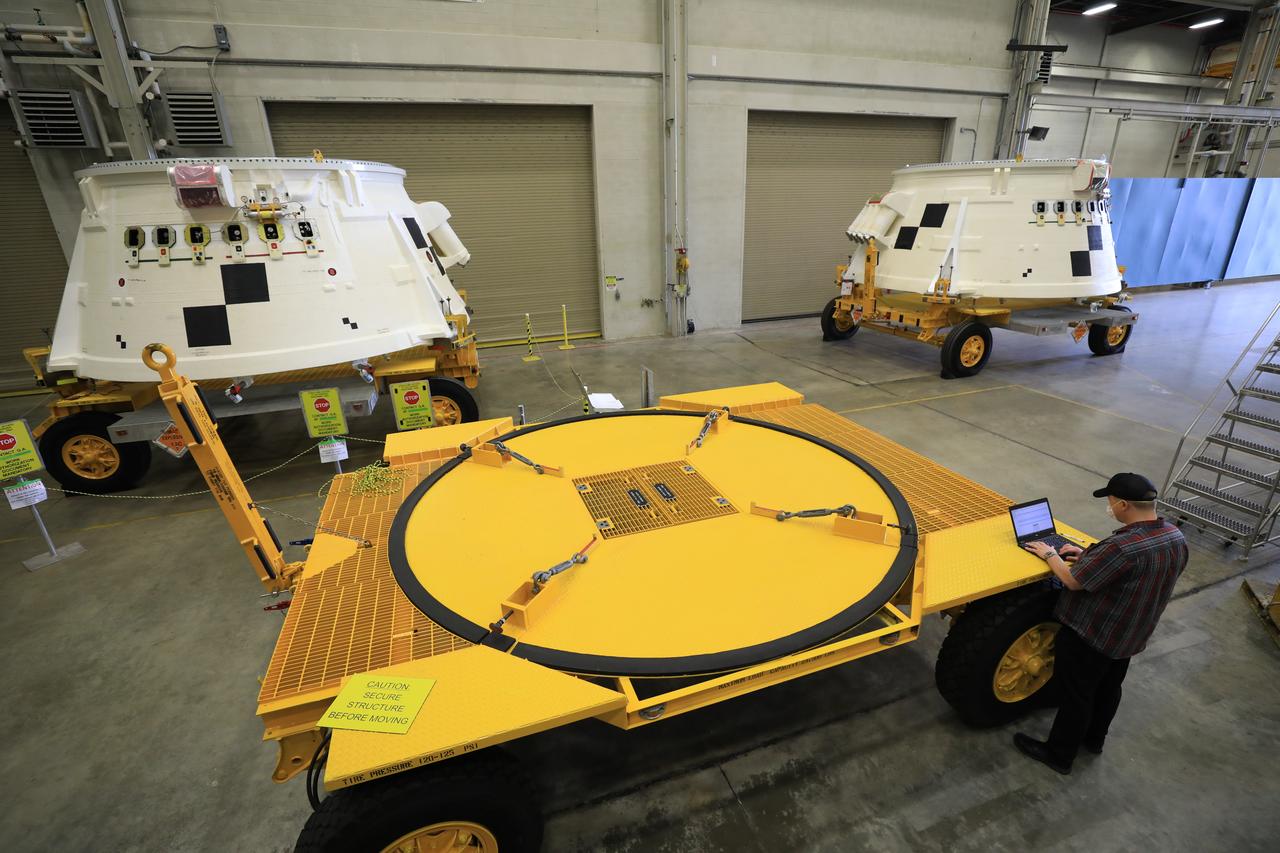
Inside the Booster Fabrication Facility at NASA's Kennedy Space Center in Florida, the Artemis I aft skirts for the agency's Space Launch System (SLS) rocket’s twin solid rocket boosters are being readied for their move to the Rotation, Processing and Surge Facility (RPSF) on June 9, 2020. In view at left is the left aft skirt assembly, and at right is the right aft skirt assembly. The aft skirts were refurbished by Northrop Grumman. They house the thrust vector control system, which controls 70 percent of the steering during initial ascent of the SLS rocket. The segments will remain in the RPSF until ready for stacking with the forward and aft parts of the boosters on the mobile launcher in High Bay 3 of the Vehicle Assembly Building. Through the Artemis Program, NASA is working to land the first woman and next man on the Moon by 2024.
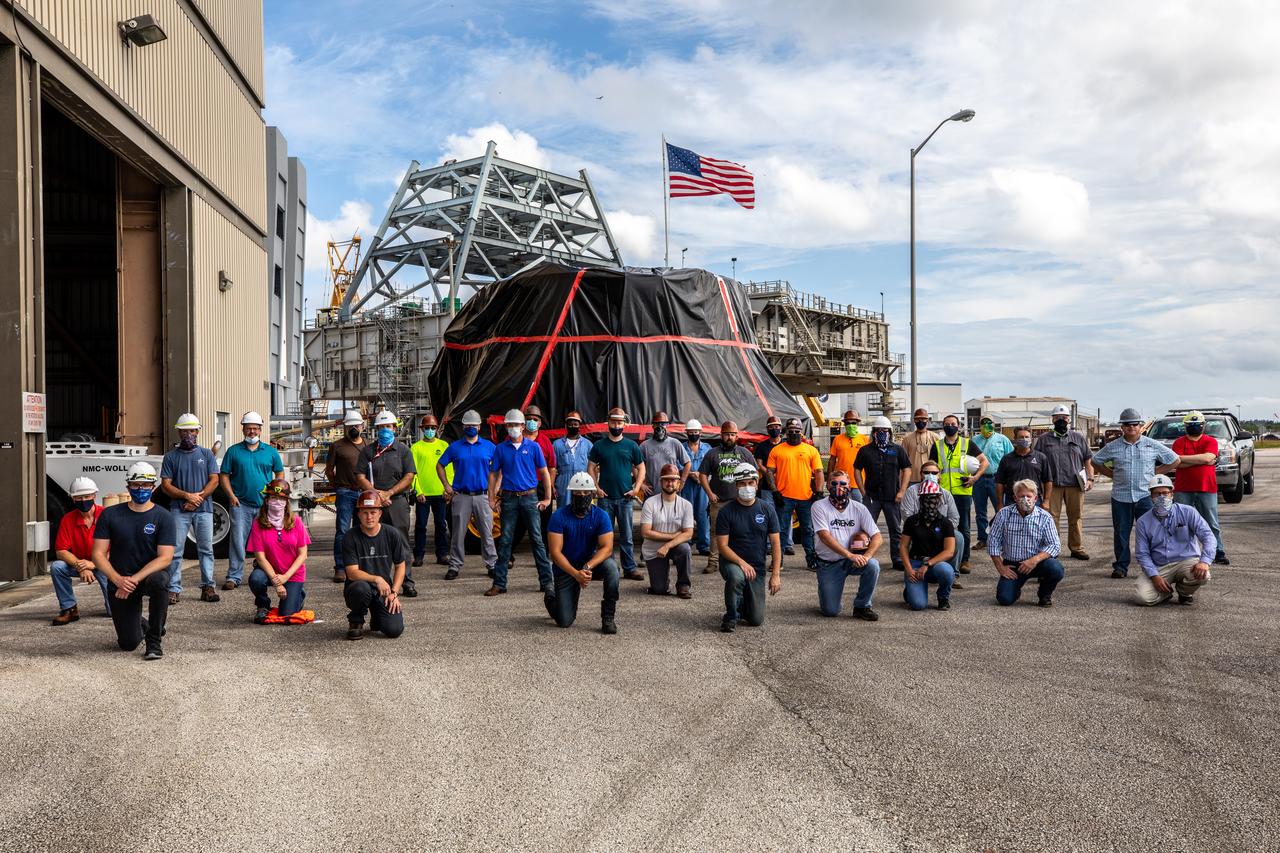
Exploration Ground Systems workers gather in front of the Rotation, Processing and Surge Facility (RPSF) at NASA’s Kennedy Space Center in Florida on June 10, 2020, to mark the arrival of the Artemis I aft skirts for the agency's Space Launch System (SLS) rocket’s twin solid rocket boosters. The aft skirts were moved from the Booster Fabrication Facility. The aft skirts were refurbished by Northrop Grumman. They house the thrust vector control system, which controls 70 percent of the steering during initial ascent of the SLS rocket. The segments will remain in the RPSF until ready for stacking with the forward and aft parts of the boosters on the mobile launcher in High Bay 3 of the Vehicle Assembly Building. Through the Artemis Program, NASA is working to land the first woman and next man on the Moon by 2024.
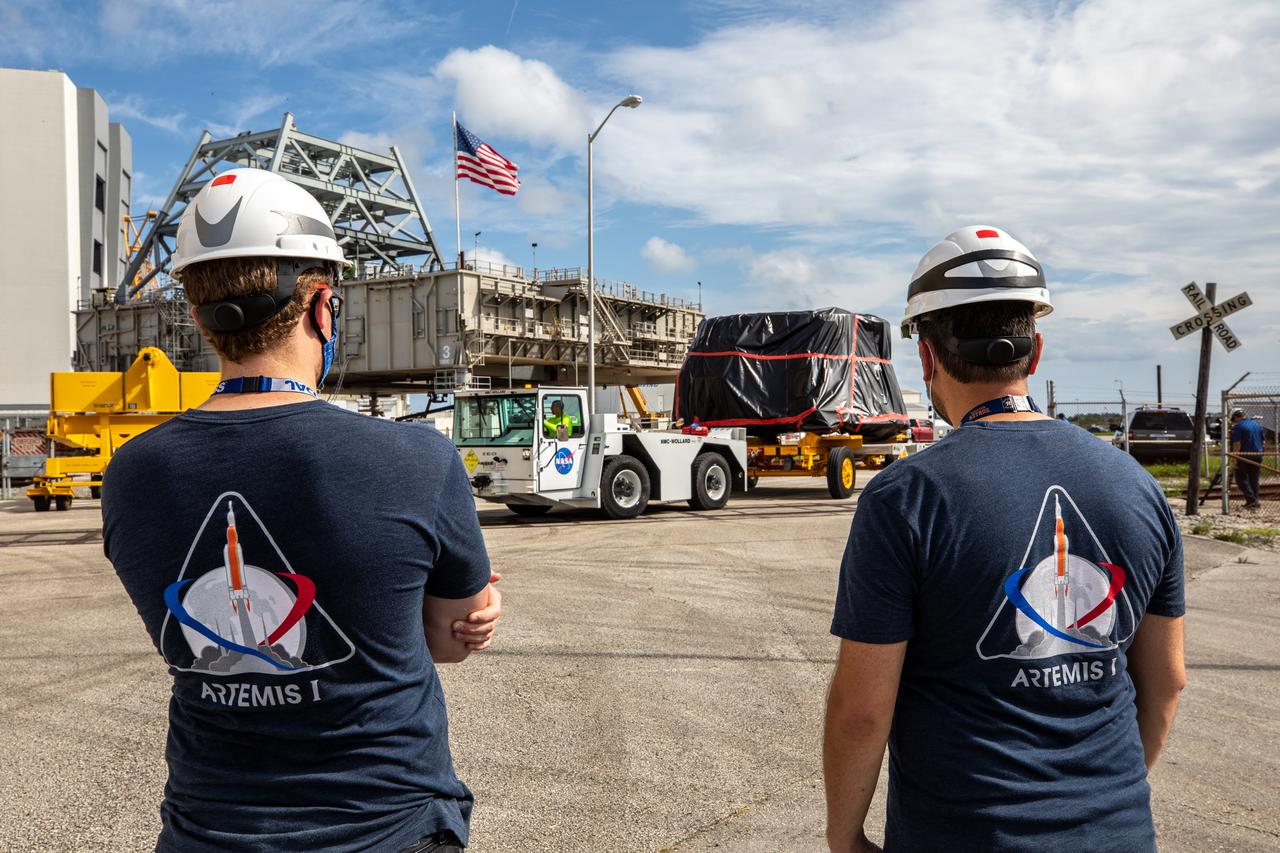
Exploration Ground Systems workers watch as the first of two Artemis I aft skirts for NASA’s Space Launch System (SLS) rocket’s twin solid rocket boosters crosses a railroad track on its way to the Rotation, Processing and Surge Facility (RPSF) at the agency’s Kennedy Space Center in Florida on June 10, 2020. They were transported from the Booster Fabrication Facility. The aft skirts were refurbished by Northrop Grumman. They house the thrust vector control system, which controls 70 percent of the steering during initial ascent of the SLS rocket. The segments will remain in the RPSF until ready for stacking with the forward and aft parts of the boosters on the mobile launcher in High Bay 3 of the Vehicle Assembly Building. Through the Artemis Program, NASA is working to land the first woman and next man on the Moon by 2024.

One of two Artemis II aft skirts for NASA’s Space Launch System (SLS) rocket’s twin solid rocket boosters crosses railroad tracks on its way from the Booster Fabrication Facility to the Rotation Processing and Surge Facility (RPSF) at the agency’s Kennedy Space Center in Florida on Monday, Sept. 25, 2023. The aft skirts were refurbished by Northrop Grumman and house the thrust vector control system, which controls 70 percent of the steering during initial ascent of the SLS rocket. The segments will remain in the RPSF until ready for stacking with the forward and aft parts of the boosters on the mobile launcher in High Bay 3 of the Vehicle Assembly Building. Artemis II astronauts Reid Wiseman, Victor Glover, Christina Koch, and Jeremy Hansen will launch from Kennedy, traveling around the Moon on the first crewed mission under Artemis that will test all of the Orion spacecraft’s systems.
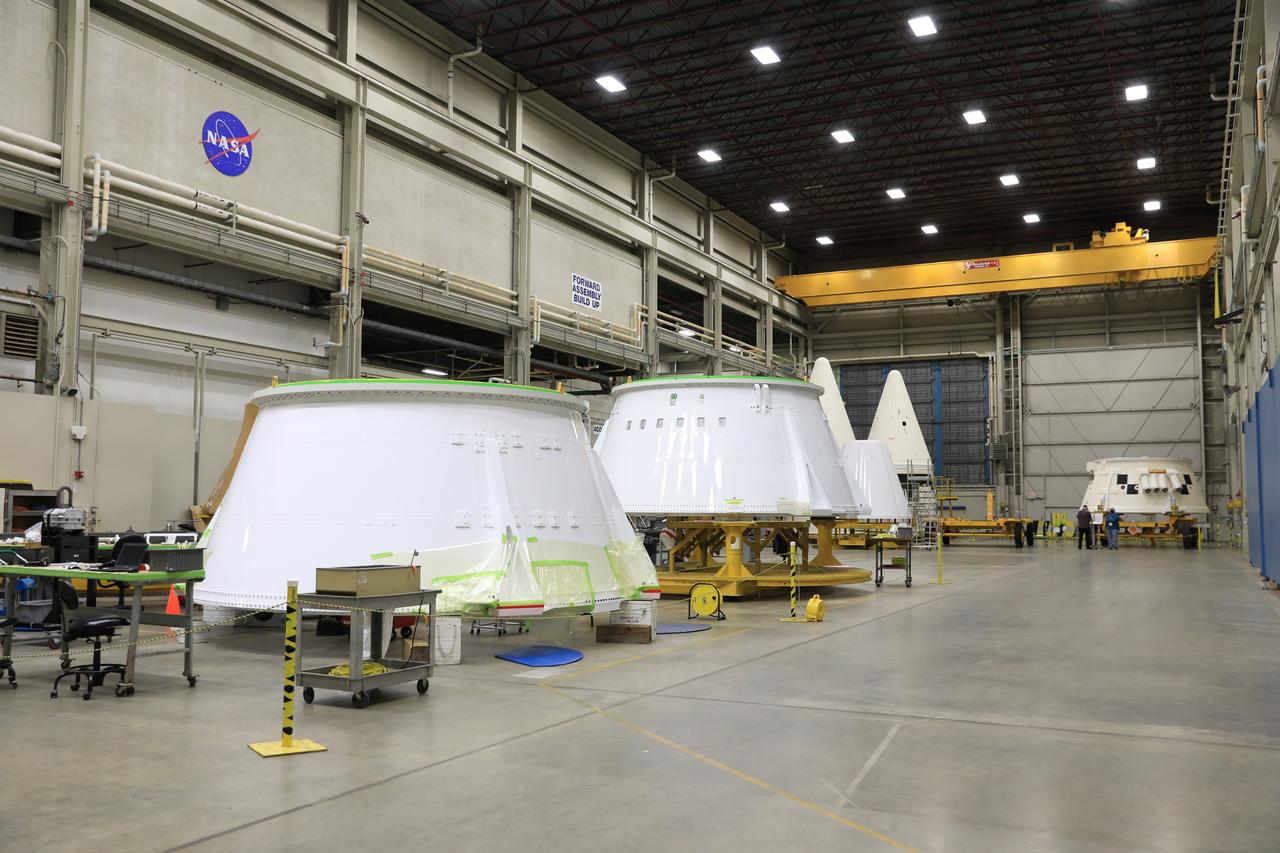
Inside the Booster Fabrication Facility (BFF) at NASA's Kennedy Space Center in Florida, the Artemis II aft skirt structures for the agency's Space Launch System (SLS) rocket’s twin solid rocket boosters are in view at left. Behind them are the two Artemis I forward assemblies. At far right, in the distance, is the right aft skirt assembly. In the BFF, the two aft skirt assemblies are being readied for their move to the Rotation, Processing and Surge Facility (RPSF) on June 9, 2020. The aft skirts were refurbished by Northrop Grumman. They house the thrust vector control system, which controls 70 percent of the steering during initial ascent of the SLS rocket. The segments will remain in the RPSF until ready for stacking with the forward and aft parts of the boosters on the mobile launcher in High Bay 3 of the Vehicle Assembly Building. Through the Artemis Program, NASA is working to land the first woman and next man on the Moon by 2024.