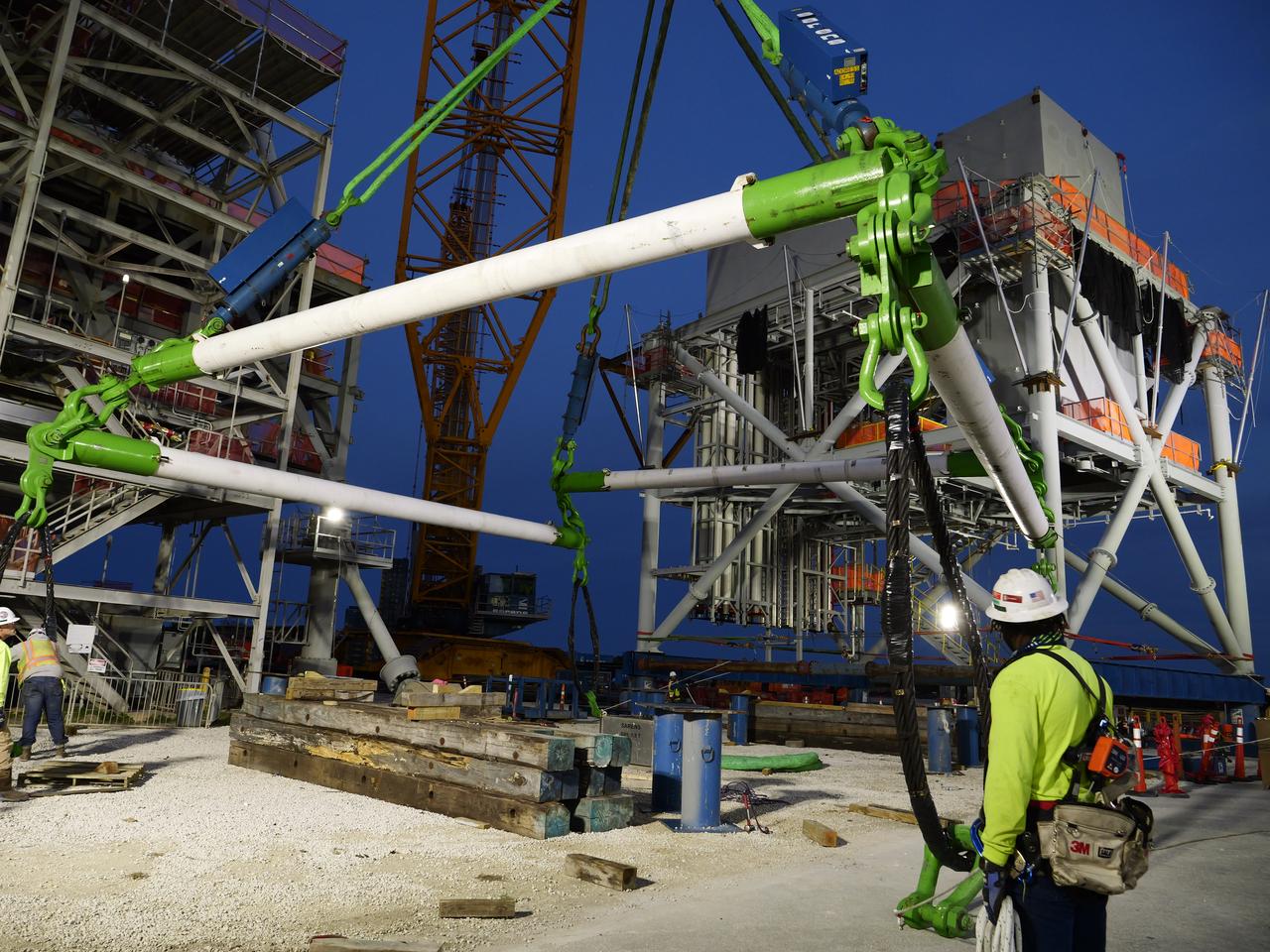
Teams at Bechtel National, Inc. use a crane to lift Module 4 into place atop the mobile launcher 2 tower chair at its Kennedy Space Center park site on January 3, 2025. Module 4 is the first of seven modules that will be stacked vertically to make up the almost 400-foot launch tower that will be used beginning with the Artemis IV mission.

Teams at Bechtel National, Inc. use a crane to lift Module 4 into place atop the mobile launcher 2 tower chair at its Kennedy Space Center park site on January 3, 2025. Module 4 is the first of seven modules that will be stacked vertically to make up the almost 400-foot launch tower that will be used beginning with the Artemis IV mission.

Teams at Bechtel National, Inc. use a crane to lift Module 4 into place atop the mobile launcher 2 tower chair at its Kennedy Space Center park site on January 3, 2025. Module 4 is the first of seven modules that will be stacked vertically to make up the almost 400-foot launch tower that will be used beginning with the Artemis IV mission.
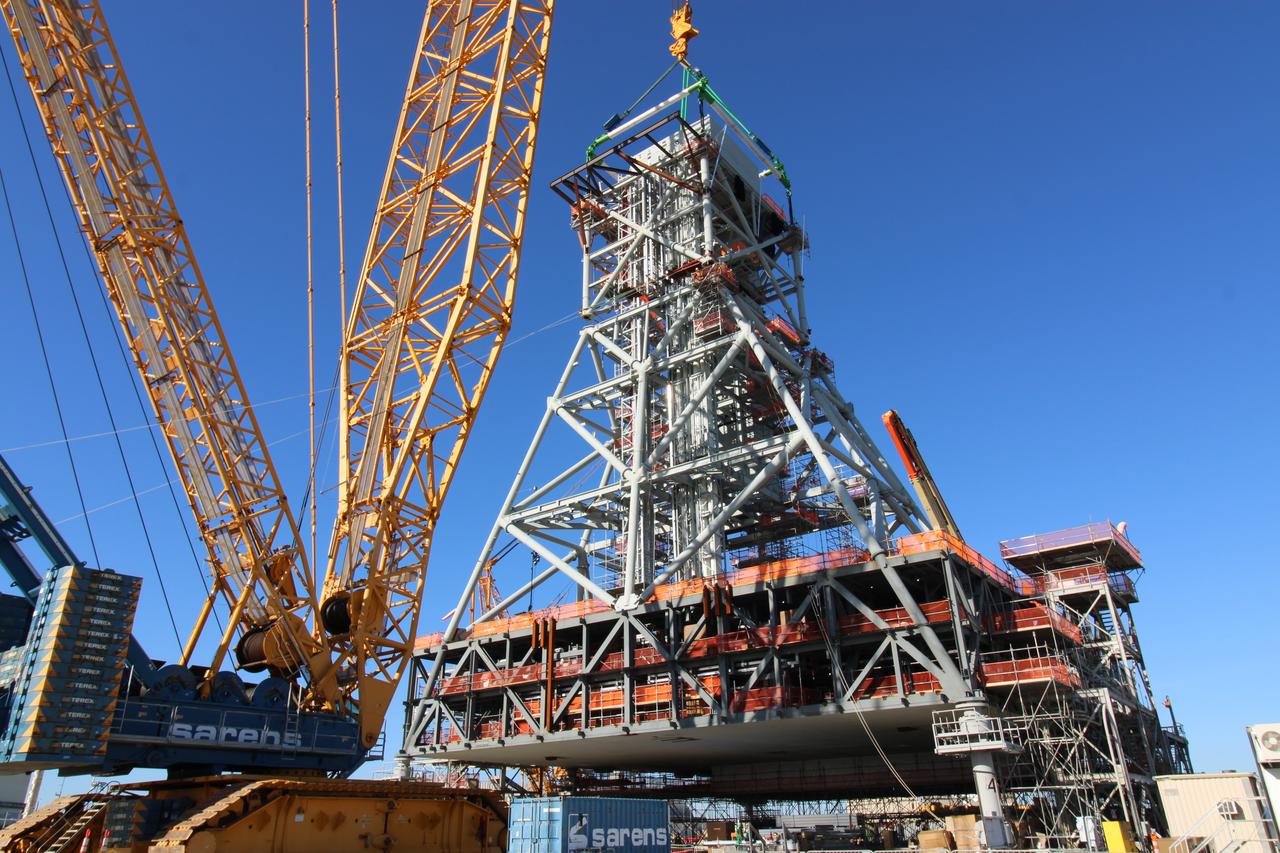
Teams at Bechtel National, Inc. use a crane to lift Module 4 into place atop the mobile launcher 2 tower chair at its Kennedy Space Center park site on January 3, 2025. Module 4 is the first of seven modules that will be stacked vertically to make up the almost 400-foot launch tower that will be used beginning with the Artemis IV mission.
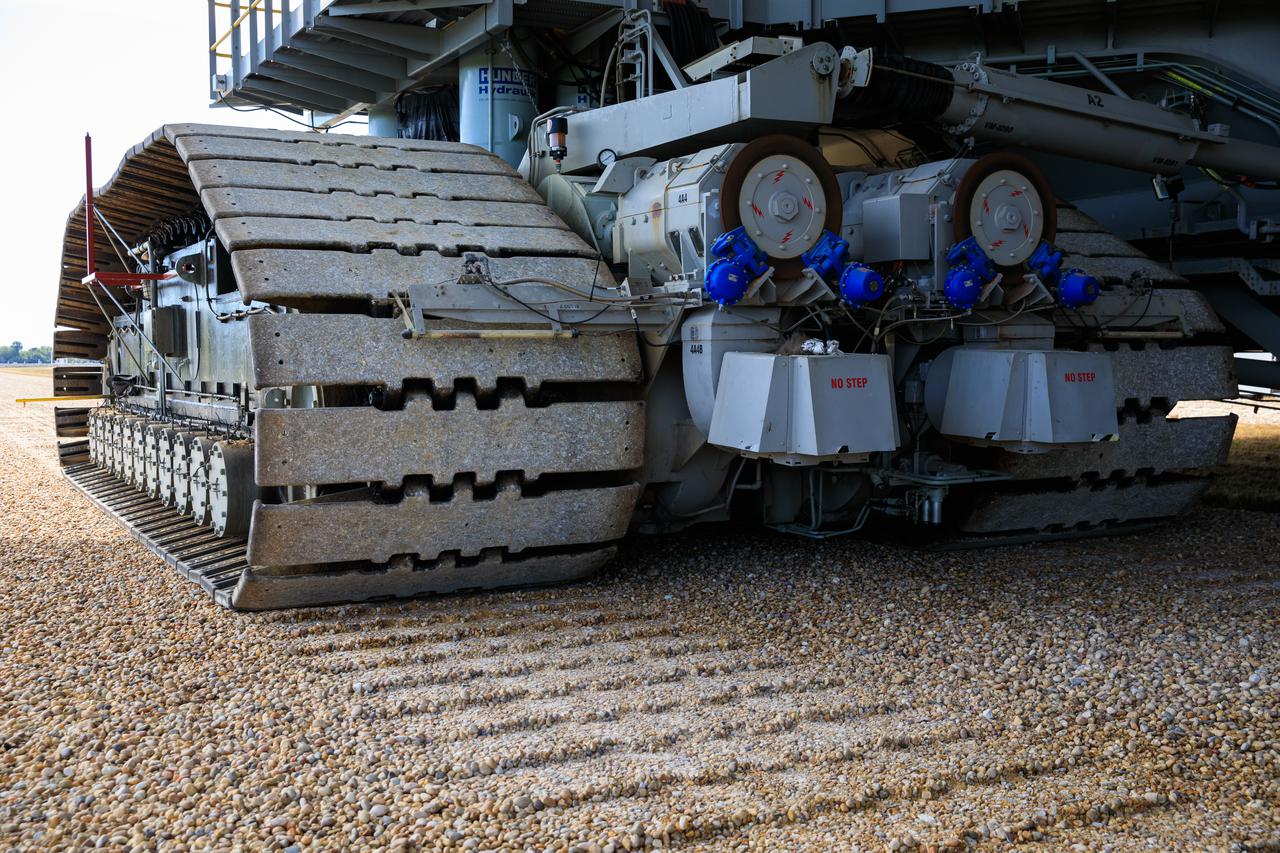
A close-up view of the treads on crawler-transporter 2 (CT-2) as the behemoth vehicle moves along the crawlerway at NASA’s Kennedy Space Center in Florida on Jan. 22, 2021. Teams are working to ensure the crawlerway, the path the CT-2, mobile launcher, and Space Launch System rocket with Orion atop will take from the Vehicle Assembly Building to Launch Complex 39B, is strong enough to withstand the weight and provide stability for the Artemis I mission. CT-2 carrying mobile launcher platform 1, used during the shuttle program, was driven back and forth on the crawlerway with several cement blocks, each weighing about 40,000 pounds to strengthen the crawlerway for launch. Artemis I will be the first in a series of increasingly complex missions to the Moon. Under the Artemis program, NASA aims to land the first woman and the next man on the Moon in 2024 and establish sustainable lunar exploration by the end of the decade.
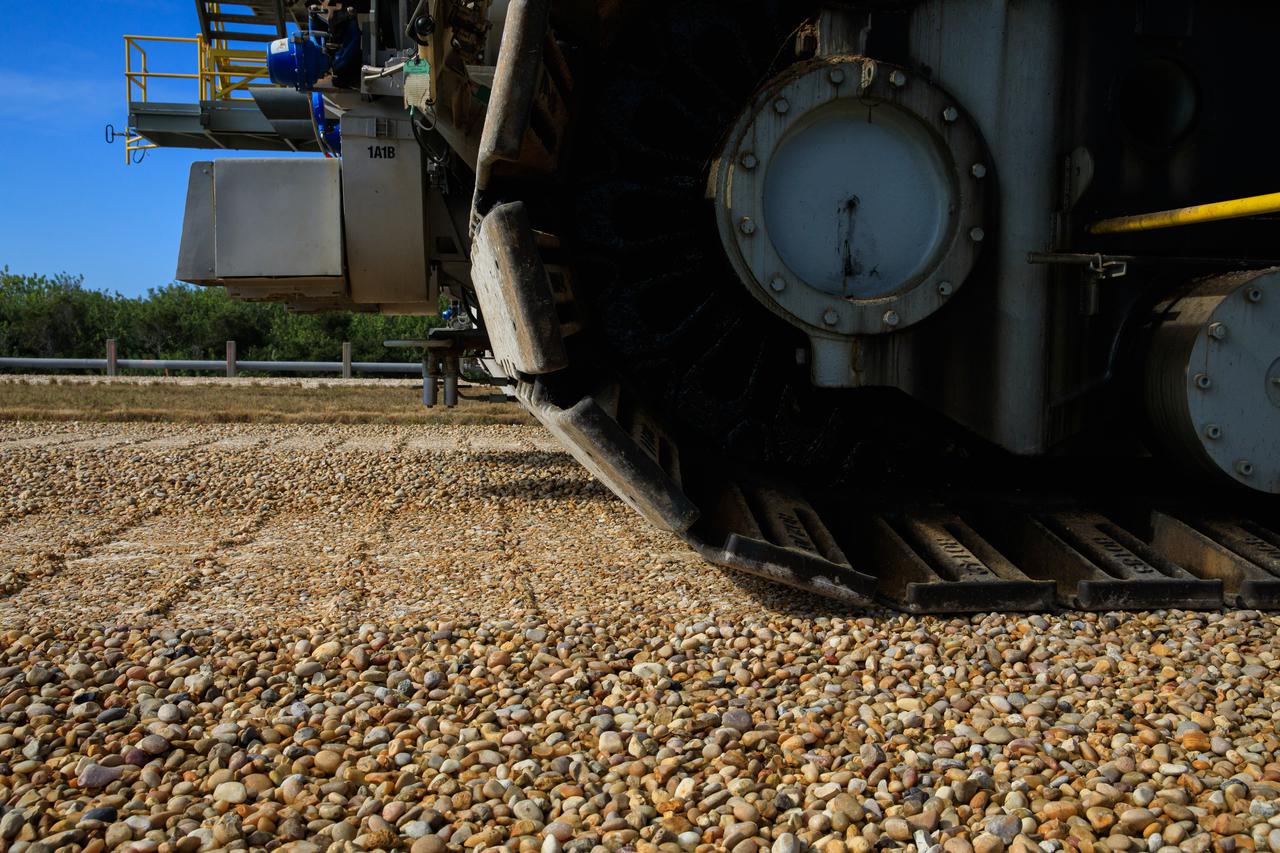
A close-up view of one of the treads on crawler-transporter 2 (CT-2) as the behemoth vehicle moves along the crawlerway at NASA’s Kennedy Space Center in Florida on Jan. 22, 2021. Teams are working to ensure the crawlerway, the path the CT-2, mobile launcher, and Space Launch System rocket with Orion atop will take from the Vehicle Assembly Building to Launch Complex 39B, is strong enough to withstand the weight and provide stability for the Artemis I mission. CT-2 carrying mobile launcher platform 1, used during the shuttle program, was driven back and forth on the crawlerway with several cement blocks, each weighing about 40,000 pounds to strengthen the crawlerway for launch. Artemis I will be the first in a series of increasingly complex missions to the Moon. Under the Artemis program, NASA aims to land the first woman and the next man on the Moon in 2024 and establish sustainable lunar exploration by the end of the decade.
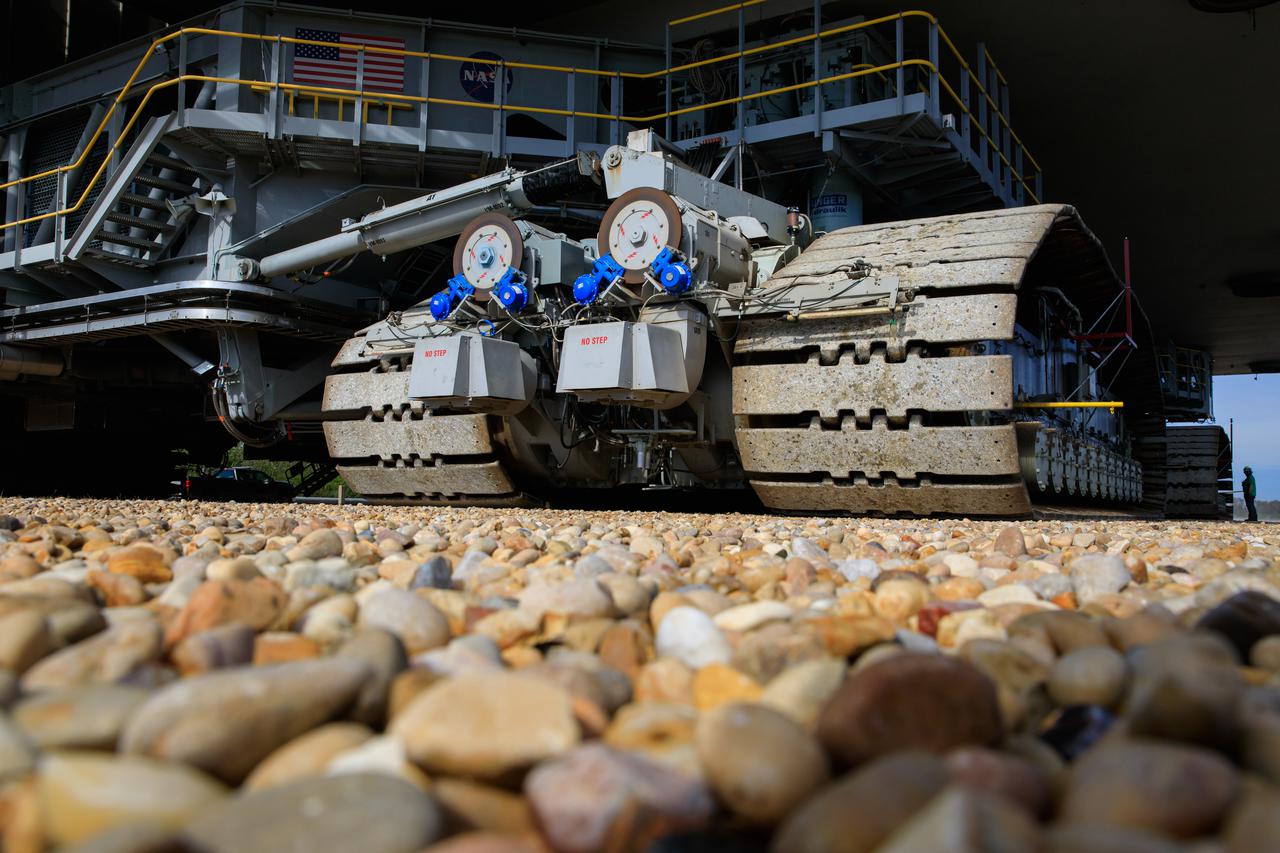
A close-up view of some of the treads on crawler-transporter 2 (CT-2) as the behemoth vehicle moves along the crawlerway at NASA’s Kennedy Space Center in Florida on Jan. 22, 2021. Teams are working to ensure the crawlerway, the path the CT-2, mobile launcher, and Space Launch System rocket with Orion atop will take from the Vehicle Assembly Building to Launch Complex 39B, is strong enough to withstand the weight and provide stability for the Artemis I mission. CT-2 carrying mobile launcher platform 1, used during the shuttle program, was driven back and forth on the crawlerway with several cement blocks, each weighing about 40,000 pounds to strengthen the crawlerway for launch. Artemis I will be the first in a series of increasingly complex missions to the Moon. Under the Artemis program, NASA aims to land the first woman and the next man on the Moon in 2024 and establish sustainable lunar exploration by the end of the decade.

A close-up view of the treads on crawler-transporter 2 (CT-2) as the behemoth vehicle moves along the crawlerway at NASA’s Kennedy Space Center in Florida on Jan. 22, 2021. Teams are working to ensure the crawlerway, the path the CT-2, mobile launcher, and Space Launch System rocket with Orion atop will take from the Vehicle Assembly Building to Launch Complex 39B, is strong enough to withstand the weight and provide stability for the Artemis I mission. CT-2 carrying mobile launcher platform 1, used during the shuttle program, was driven back and forth on the crawlerway with several cement blocks, each weighing about 40,000 pounds to strengthen the crawlerway for launch. Artemis I will be the first in a series of increasingly complex missions to the Moon. Under the Artemis program, NASA aims to land the first woman and the next man on the Moon in 2024 and establish sustainable lunar exploration by the end of the decade.
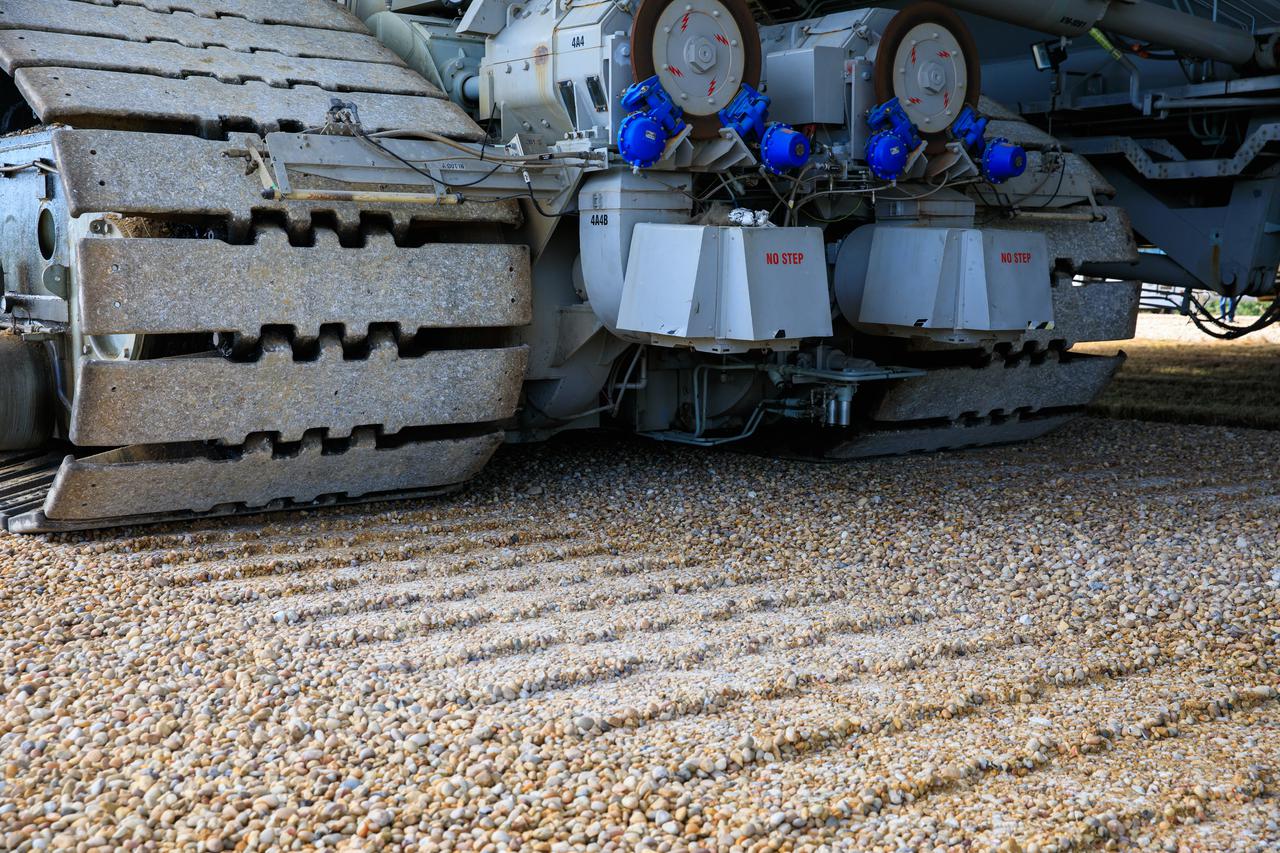
A close-up view of the treads on crawler-transporter 2 (CT-2) as the behemoth vehicle moves along the crawlerway at NASA’s Kennedy Space Center in Florida on Jan. 22, 2021. Teams are working to ensure the crawlerway, the path the CT-2, mobile launcher, and Space Launch System rocket with Orion atop will take from the Vehicle Assembly Building to Launch Complex 39B, is strong enough to withstand the weight and provide stability for the Artemis I mission. CT-2 carrying mobile launcher platform 1, used during the shuttle program, was driven back and forth on the crawlerway with several cement blocks, each weighing about 40,000 pounds to strengthen the crawlerway for launch. Artemis I will be the first in a series of increasingly complex missions to the Moon. Under the Artemis program, NASA aims to land the first woman and the next man on the Moon in 2024 and establish sustainable lunar exploration by the end of the decade.
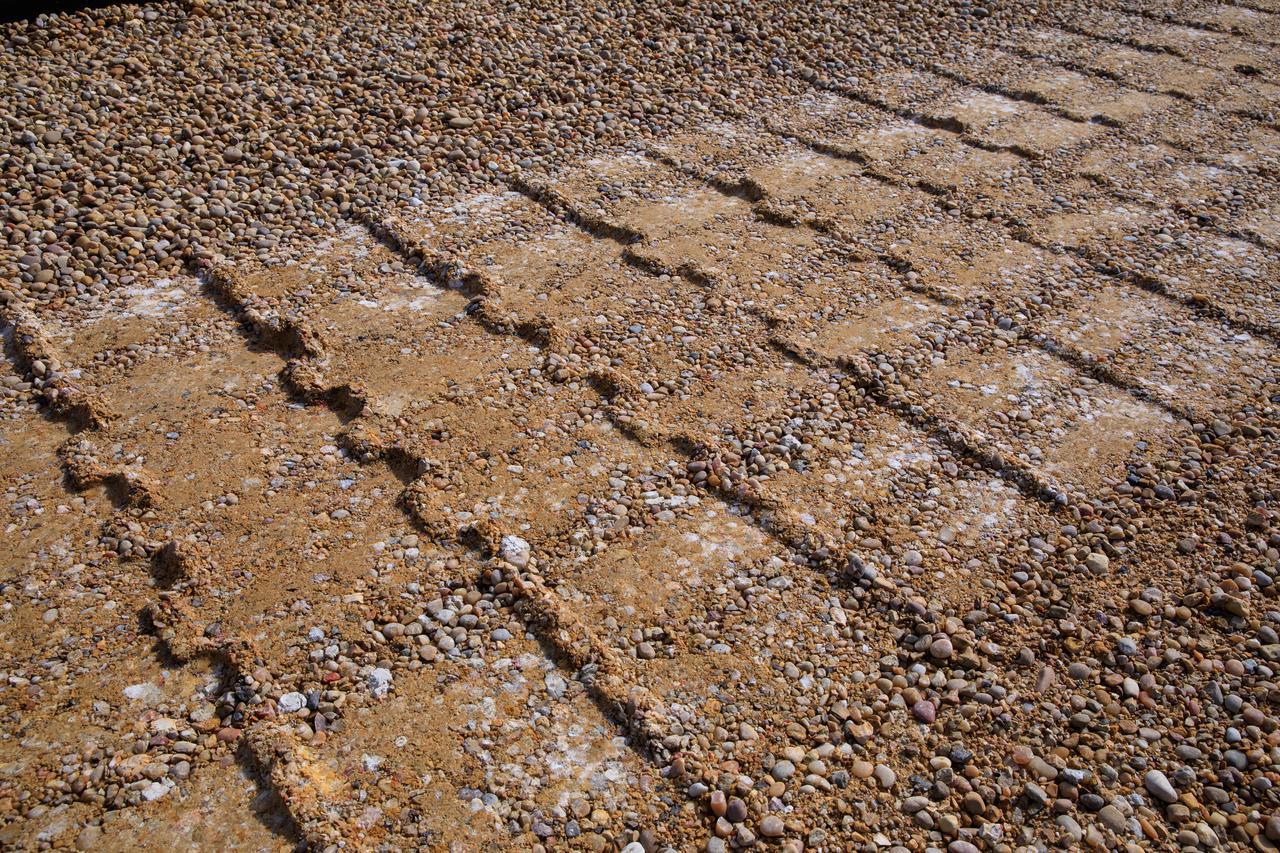
A close-up view of tread marks from crawler-transporter 2 (CT-2) as the behemoth vehicle moves along the crawlerway at NASA’s Kennedy Space Center in Florida on Jan. 22, 2021. Teams are working to ensure the crawlerway, the path the CT-2, mobile launcher, and Space Launch System rocket with Orion atop will take from the Vehicle Assembly Building to Launch Complex 39B, is strong enough to withstand the weight and provide stability for the Artemis I mission. CT-2 carrying mobile launcher platform 1, used during the shuttle program, was driven back and forth on the crawlerway with several cement blocks, each weighing about 40,000 pounds to strengthen the crawlerway for launch. Artemis I will be the first in a series of increasingly complex missions to the Moon. Under the Artemis program, NASA aims to land the first woman and the next man on the Moon in 2024 and establish sustainable lunar exploration by the end of the decade.
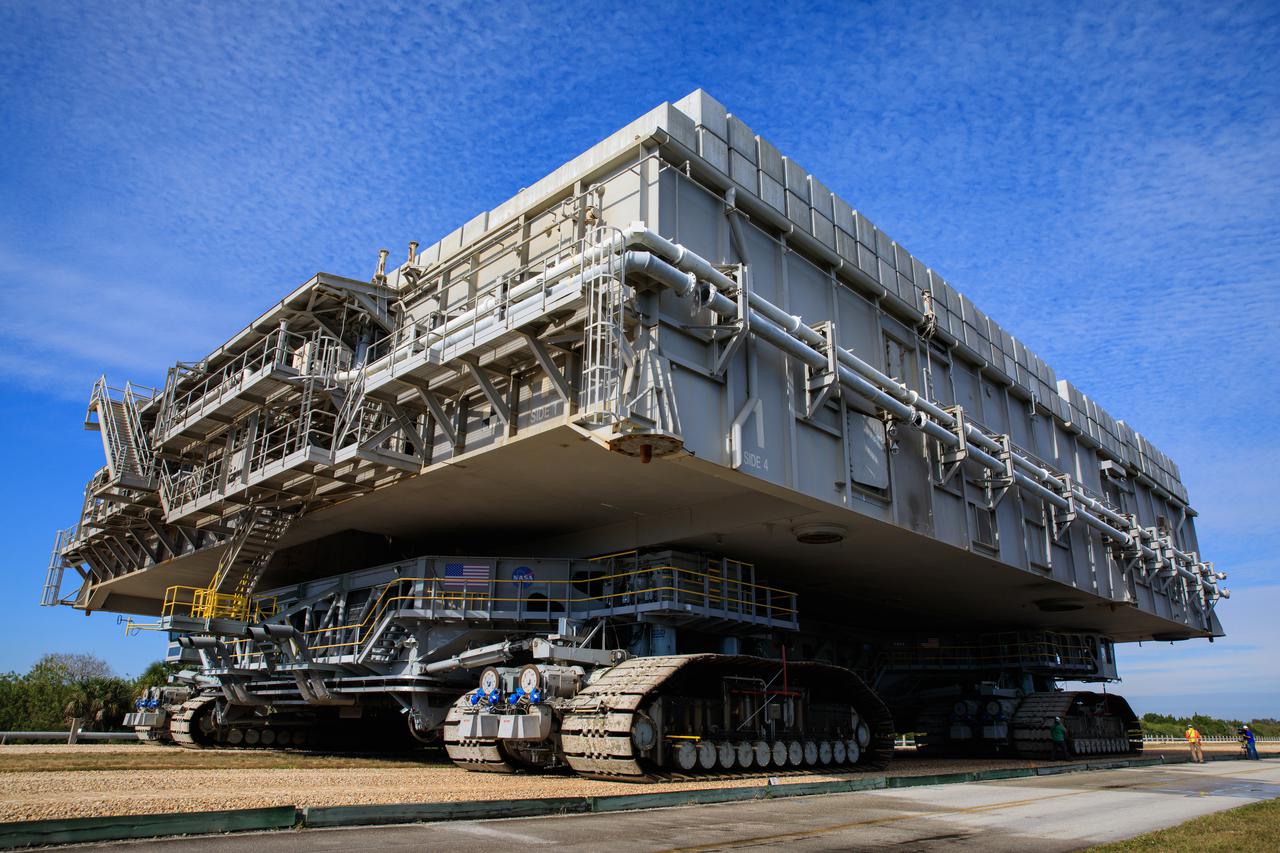
Teams at NASA’s Kennedy Space Center in Florida are working to ensure the crawlerway, the path the crawler-transporter 2 (CT-2), mobile launcher, and Space Launch System rocket with Orion atop will take from the Vehicle Assembly Building to Launch Complex 39B, is strong enough to withstand the weight and provide stability for the Artemis I mission. In this view on Jan. 22, 2021, CT-2 carrying mobile launcher platform 1 that was used during the shuttle program was driven back and forth on the crawlerway with several cement blocks, each weighing about 40,000 pounds to strengthen the crawlerway for launch. Artemis I will be the first in a series of increasingly complex missions to the Moon. Under the Artemis program, NASA aims to land the first woman and the next man on the Moon in 2024 and establish sustainable lunar exploration by the end of the decade.
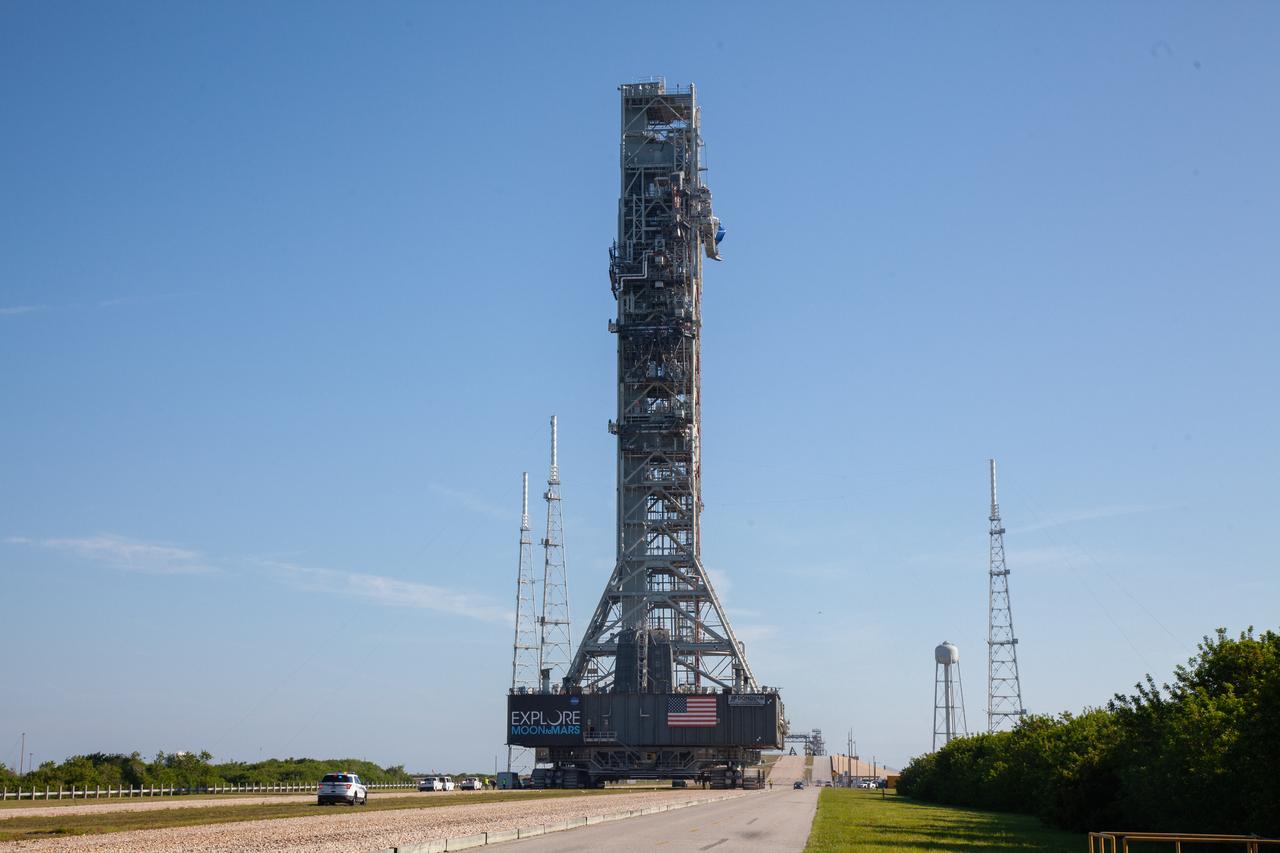
On June 27, 2019, Exploration Ground Systems’ mobile launcher, atop crawler-transporter 2, approaches Kennedy Space Center’s Launch Complex 39B in Florida, where it will remain for the summer, undergoing final testing and checkouts. The mobile launcher departed from the Vehicle Assembly Building at midnight on June 27 for the 10-hour journey to the pad. Its next roll to the pad will be with the agency’s Space Launch System rocket and Orion spacecraft in preparation for the launch of Artemis 1.
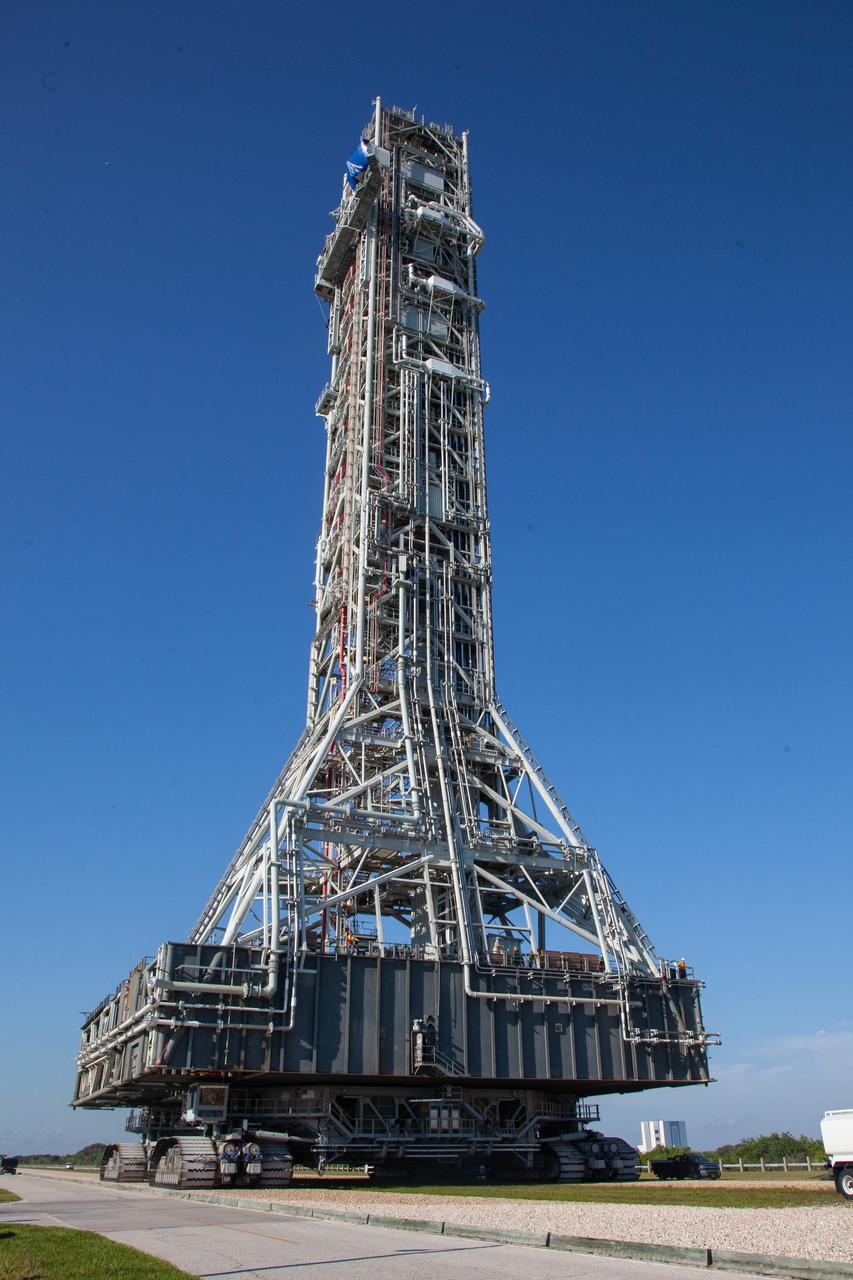
On June 27, 2019, Exploration Ground Systems’ mobile launcher, atop crawler-transporter 2, makes its last solo trek to Kennedy Space Center’s Launch Complex 39B in Florida, where it will remain for the summer, undergoing final testing and checkouts. The mobile launcher departed from the Vehicle Assembly Building at midnight on June 27 for the 10-hour journey to the pad. Its next roll to the pad will be with the agency’s Space Launch System rocket and Orion spacecraft in preparation for the launch of Artemis 1.
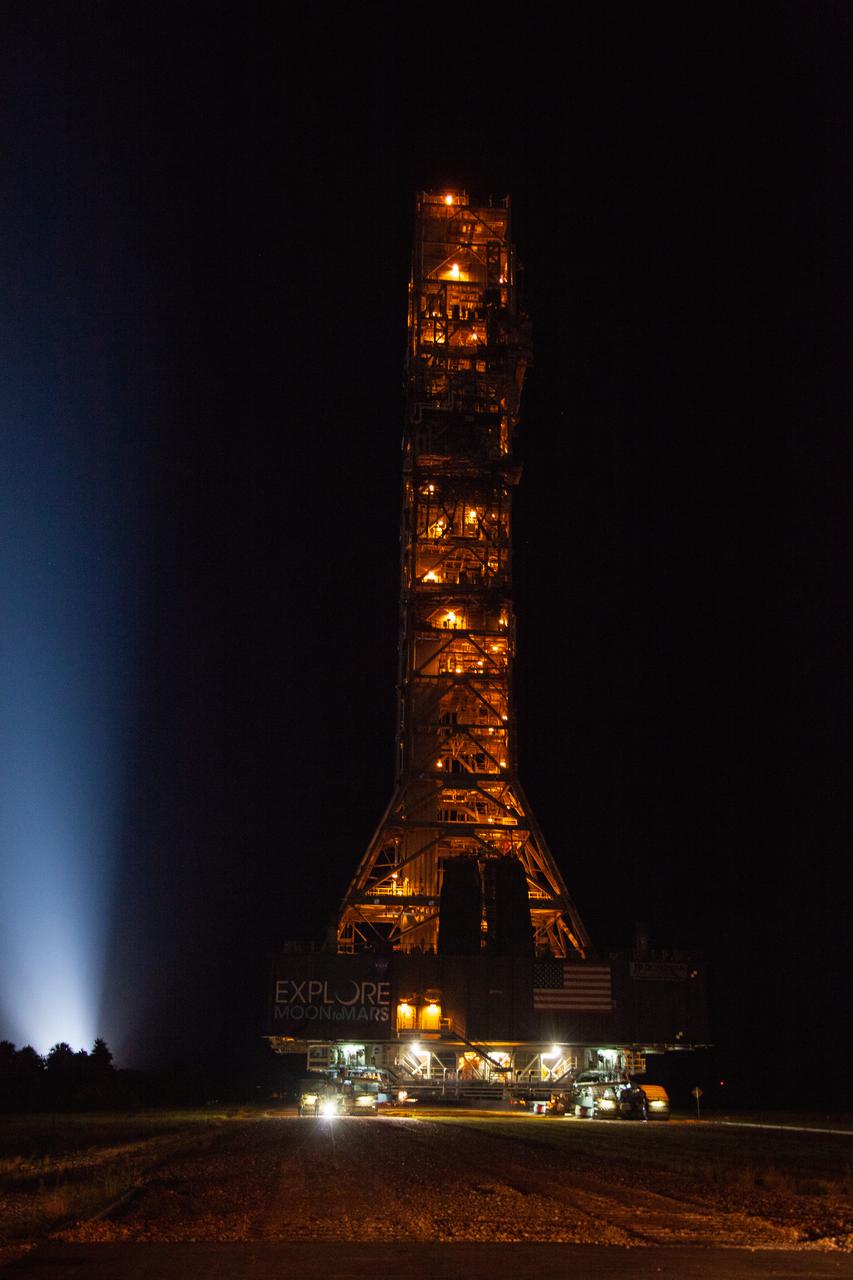
Exploration Ground Systems’ mobile launcher makes its last solo trek along the crawlerway atop crawler-transporter 2 to Kennedy Space Center’s Launch Complex 39B in Florida on June 27, 2019. The mobile launcher departed from the Vehicle Assembly Building at midnight on June 27 for the 10-hour journey to the pad, where it will remain for the summer, undergoing final testing and checkouts. Its next roll to the pad will be with the agency’s Space Launch System rocket and Orion spacecraft in preparation for the launch of Artemis 1.
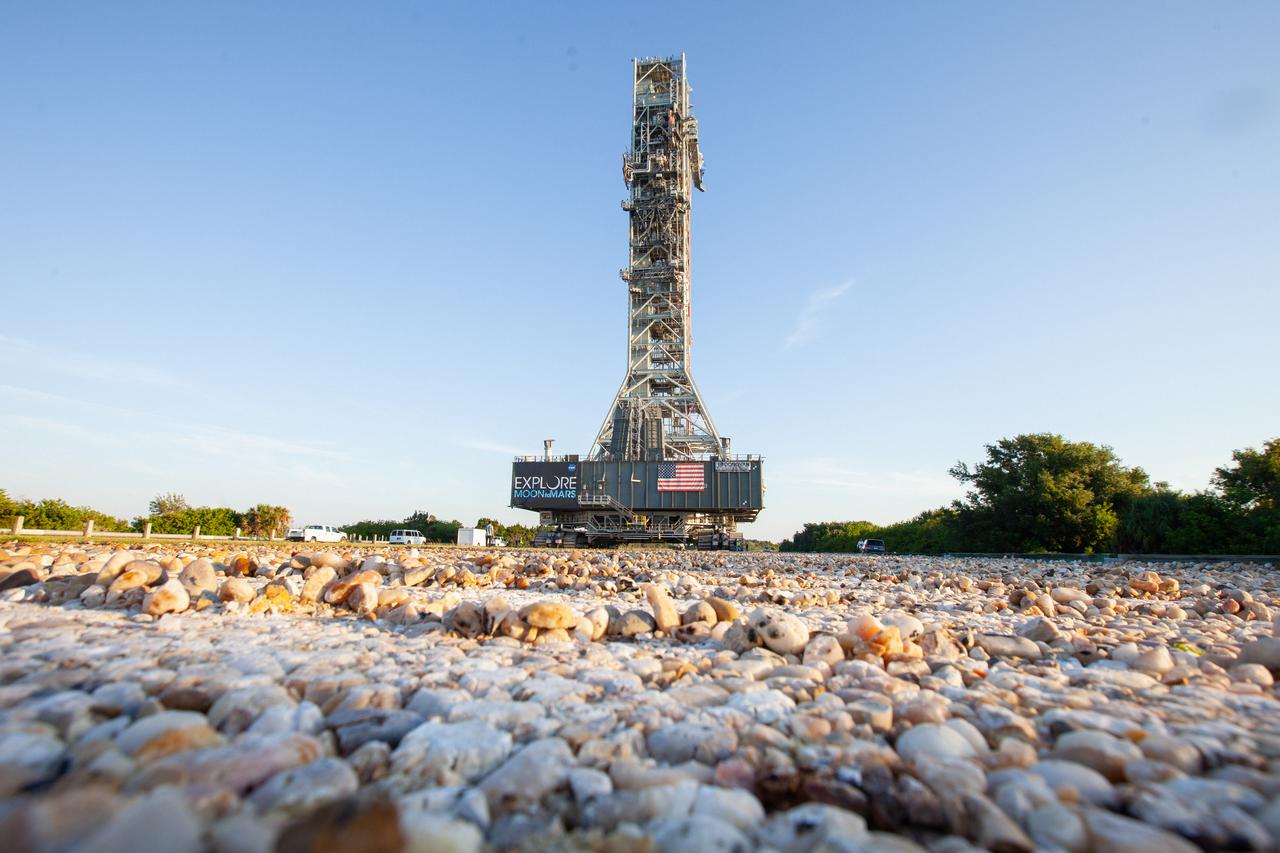
Exploration Ground Systems’ mobile launcher makes its last solo trek along the crawlerway atop crawler-transporter 2 to Kennedy Space Center’s Launch Complex 39B in Florida on June 27, 2019. The mobile launcher departed from the Vehicle Assembly Building at midnight on June 27 for the 10-hour journey to the pad and will remain there for the summer, undergoing final testing and checkouts. Its next roll to the pad will be with the agency’s Space Launch System rocket and Orion spacecraft in preparation for the launch of Artemis 1.
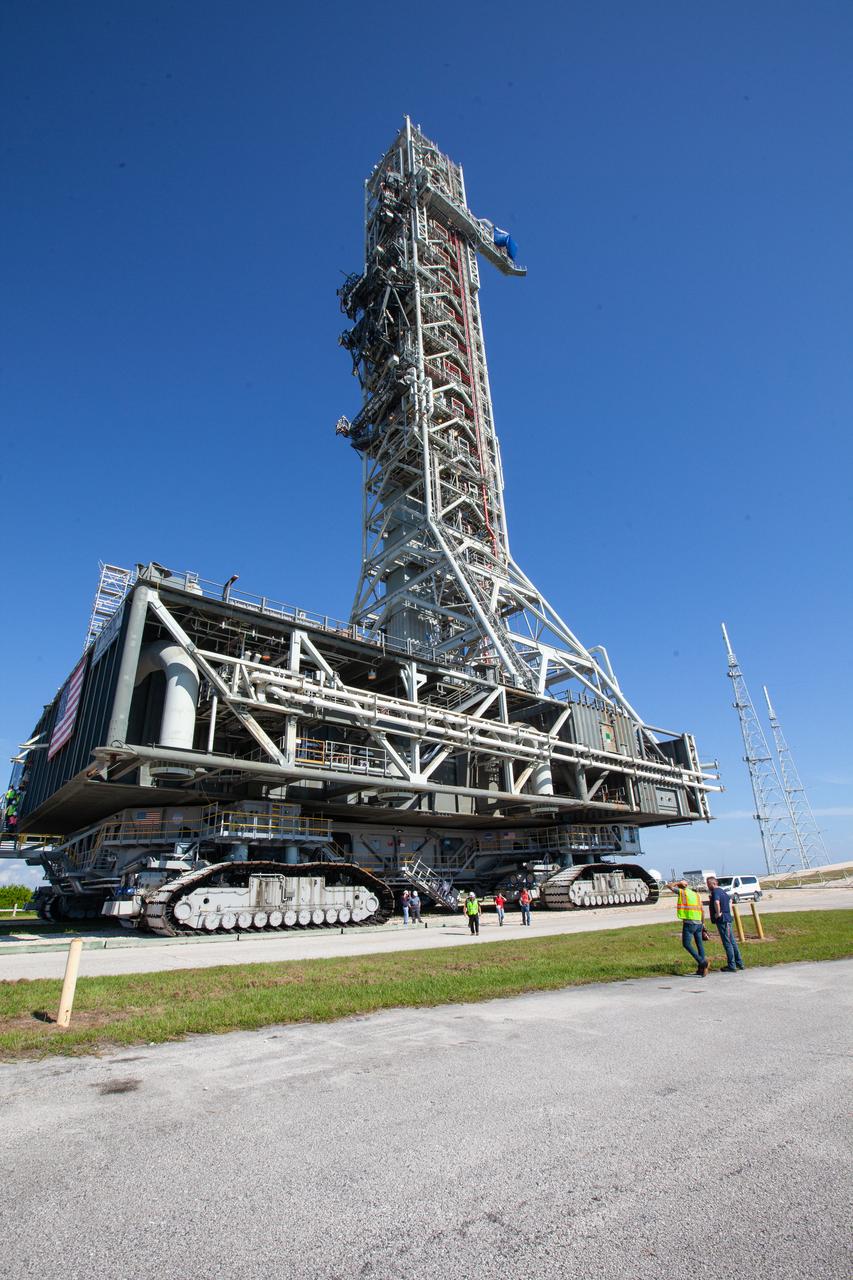
Exploration Ground Systems’ mobile launcher is seen atop crawler-transporter 2 at Kennedy Space Center’s Launch Complex 39B in Florida on June 27, 2019. The mobile launcher departed from the Vehicle Assembly Building at midnight on June 27 for its last solo trek to the pad, where it will remain for the summer, undergoing final testing and checkouts. Its next roll to the pad will be with the agency’s Space Launch System rocket and Orion spacecraft in preparation for the launch of Artemis 1.
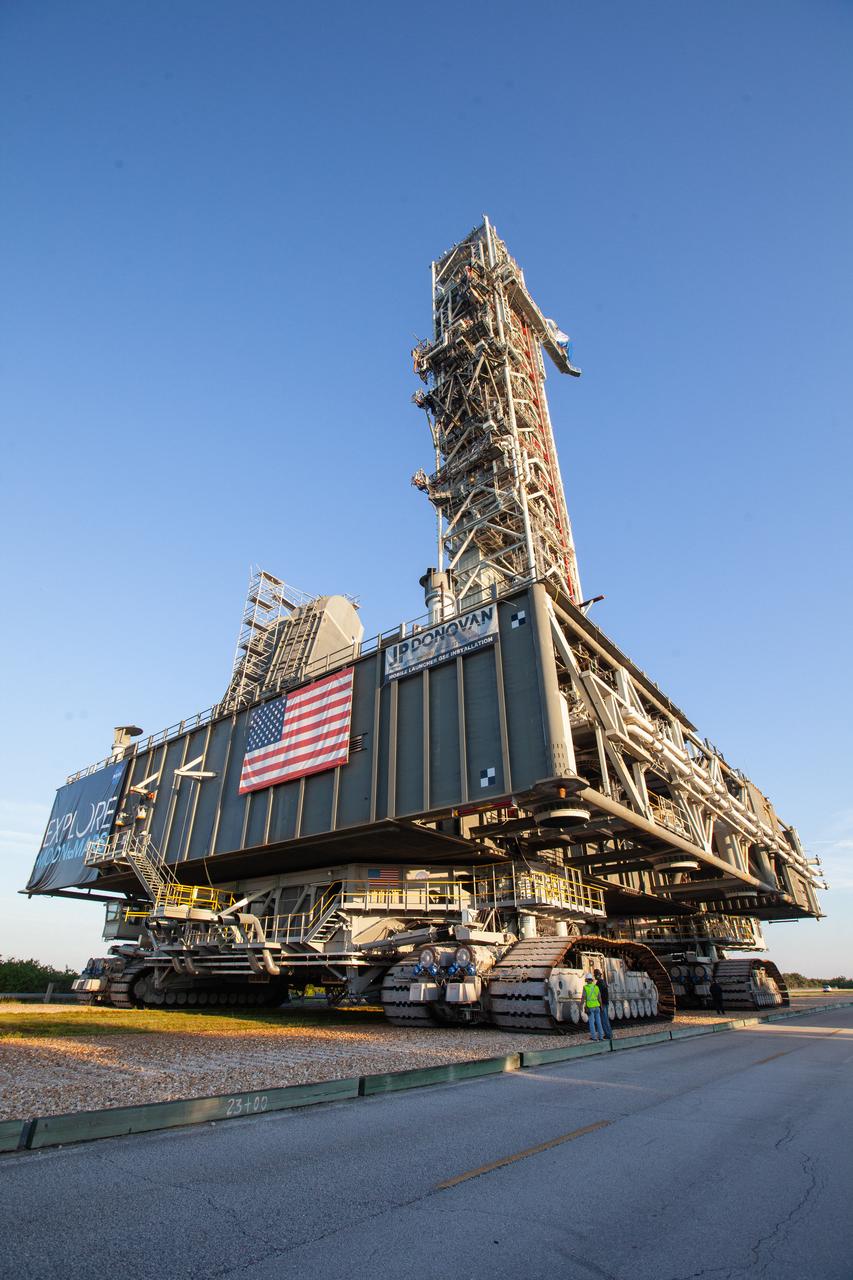
Exploration Ground Systems’ mobile launcher makes its last solo trek along the crawlerway atop crawler-transporter 2 to Kennedy Space Center’s Launch Complex 39B in Florida on June 27, 2019. The mobile launcher departed from the Vehicle Assembly Building at midnight on June 27 for the 10-hour journey to the pad and will remain there for the summer, undergoing final testing and checkouts. Its next roll to the pad will be with the agency’s Space Launch System rocket and Orion spacecraft in preparation for the launch of Artemis 1.
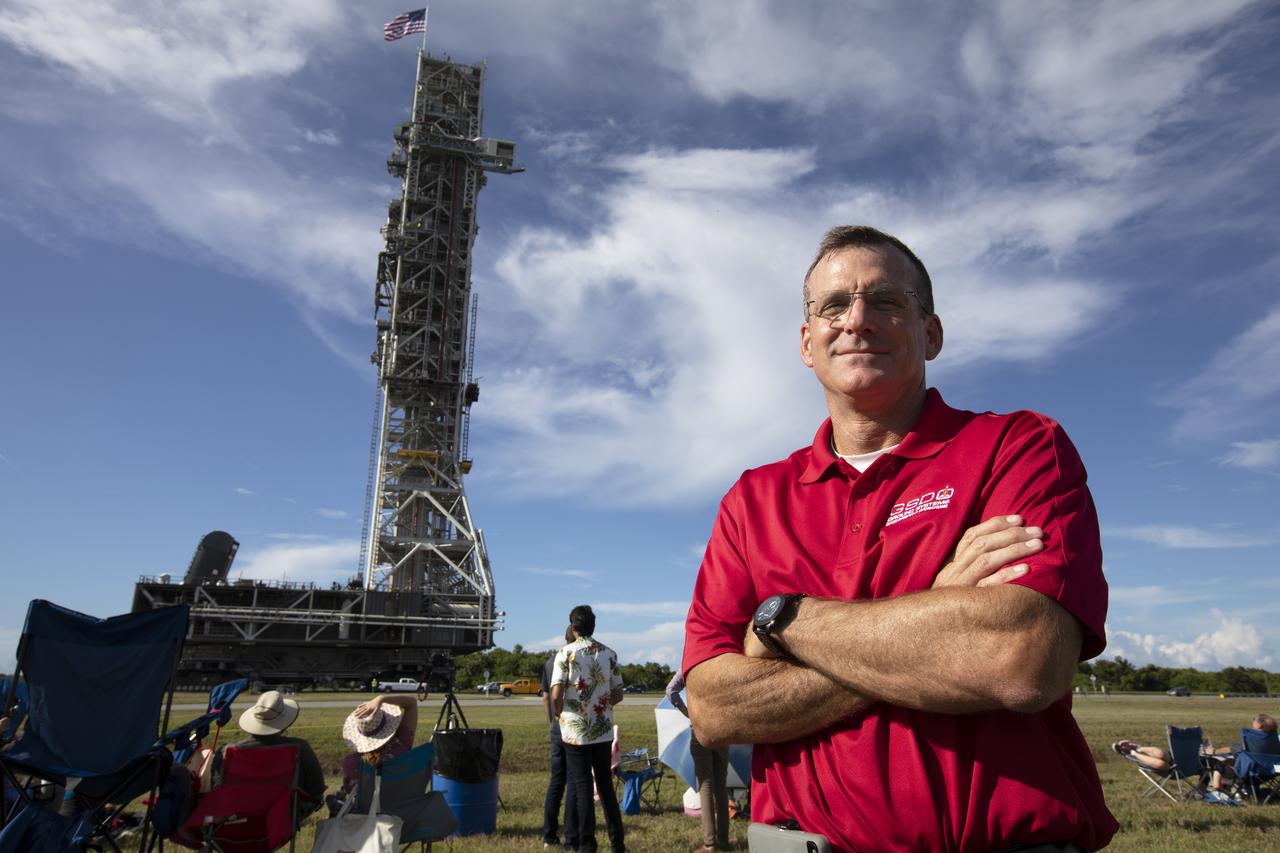
Cliff Lanham, NASA project manager for the mobile launcher, takes a break to attend the employee event for the mobile launcher move to the Vehicle Assembly Building (VAB) on Sept. 7, 2018, at NASA's Kennedy Space Center in Florida. The mobile launcher, atop crawler-transporter 2, began its trek from Launch Pad 39B along the crawlerway after undergoing a fit check and several days of systems testing with the pad. This is the first time that the modified mobile launcher made the trip to the pad. The 380-foot-tall mobile launcher is equipped with the crew access arm and several umbilicals that will provide power, environmental control, pneumatics, communication and electrical connections to the agency's Space Launch System and Orion spacecraft. The mobile launcher will spend seven months in the VAB undergoing testing. Exploration Ground Systems is preparing the ground systems necessary to launch SLS and Orion on Exploration Mission-1, missions to the Moon and on to Mars.
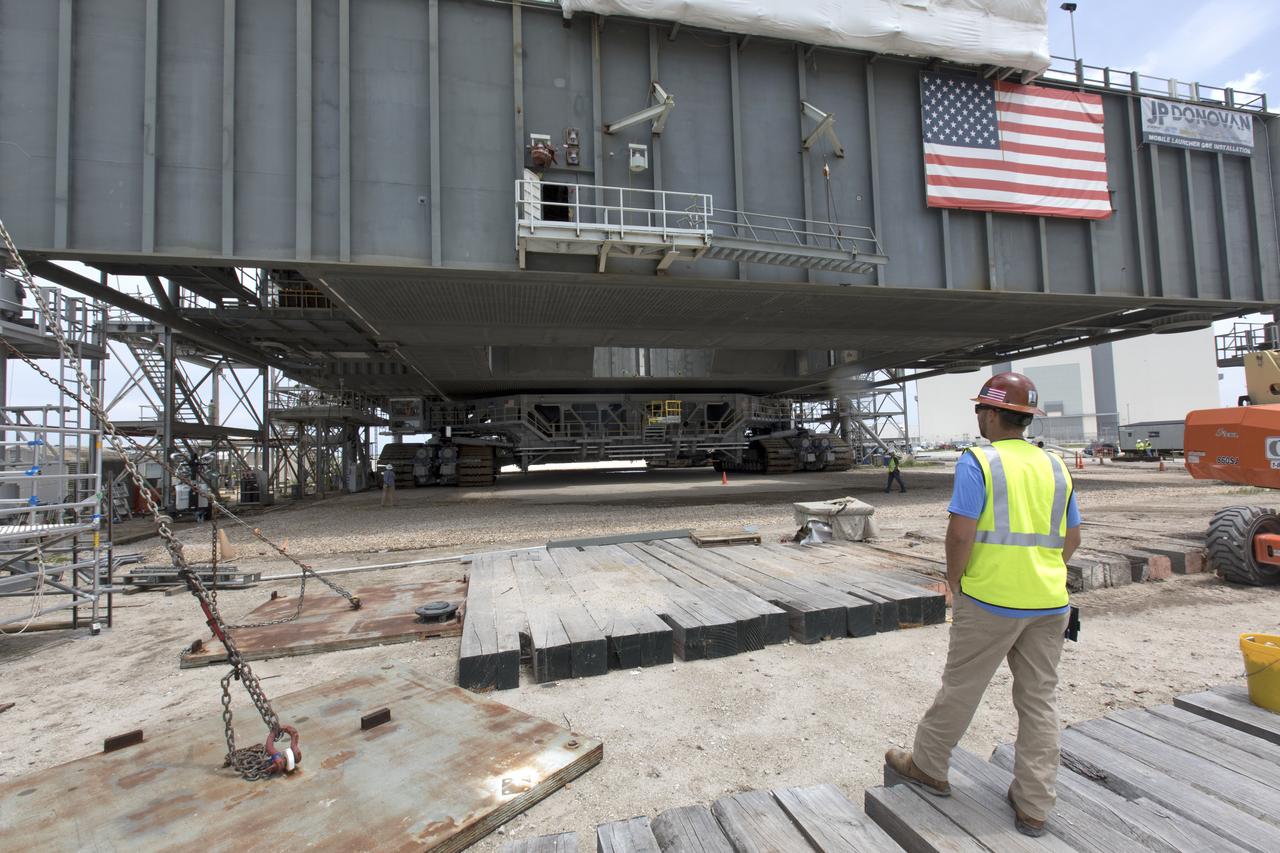
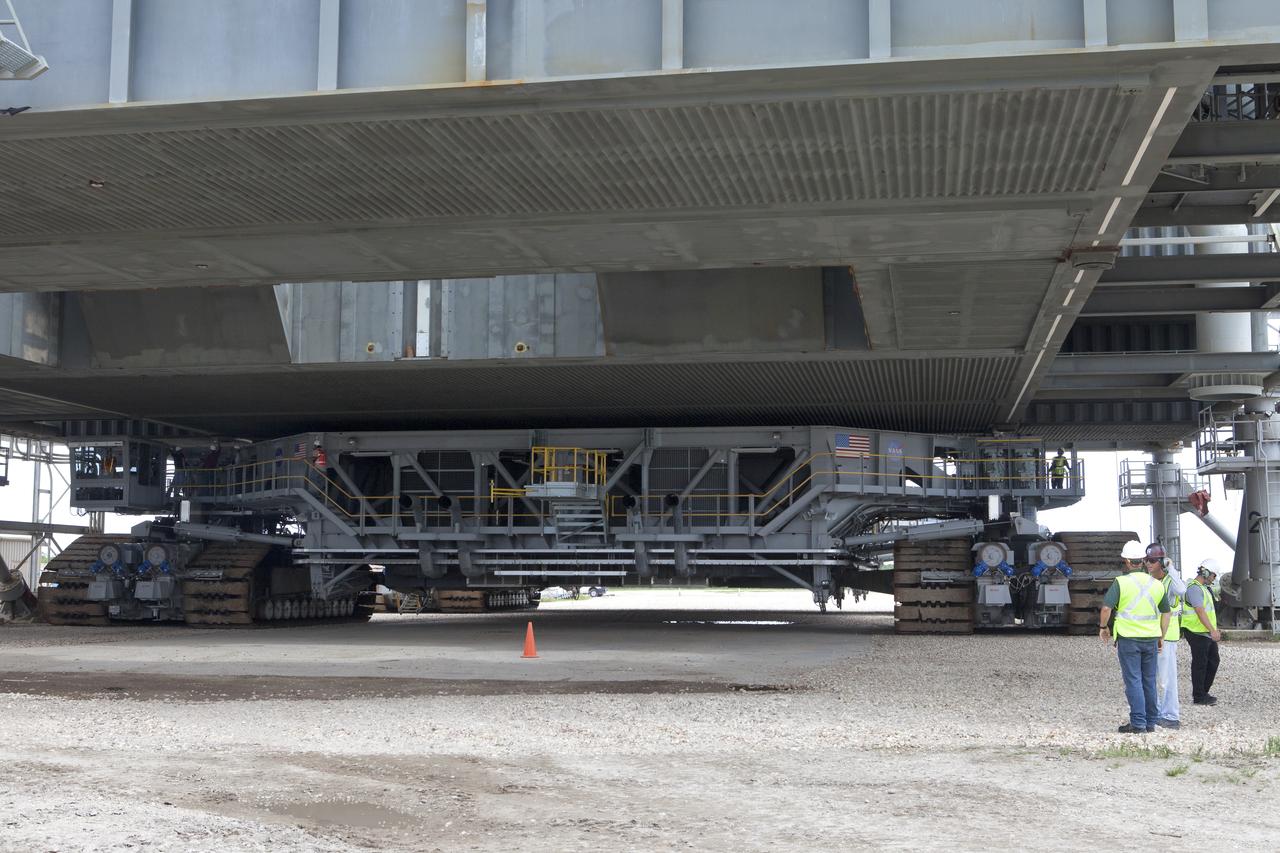
Crawler-transporter 2 (CT-2) is underneath the mobile launcher May 31, 2018, at NASA's Kennedy Space Center in Florida. Three lifts were performed to practice lifting procedures, validate interface locations, confirm the weight of the mobile launcher, and develop a baseline for modal analysis. The mobile launcher is equipped with a number of lines, called umbilicals, which will connect to NASA's Space Launch System (SLS) and Orion. CT-2 has been upgraded to handle the weight of the mobile launcher with SLS and Orion atop. Exploration Ground Systems is preparing the ground systems necessary to support the SLS and Orion spacecraft for Exploration Mission-1 and deep space missions.
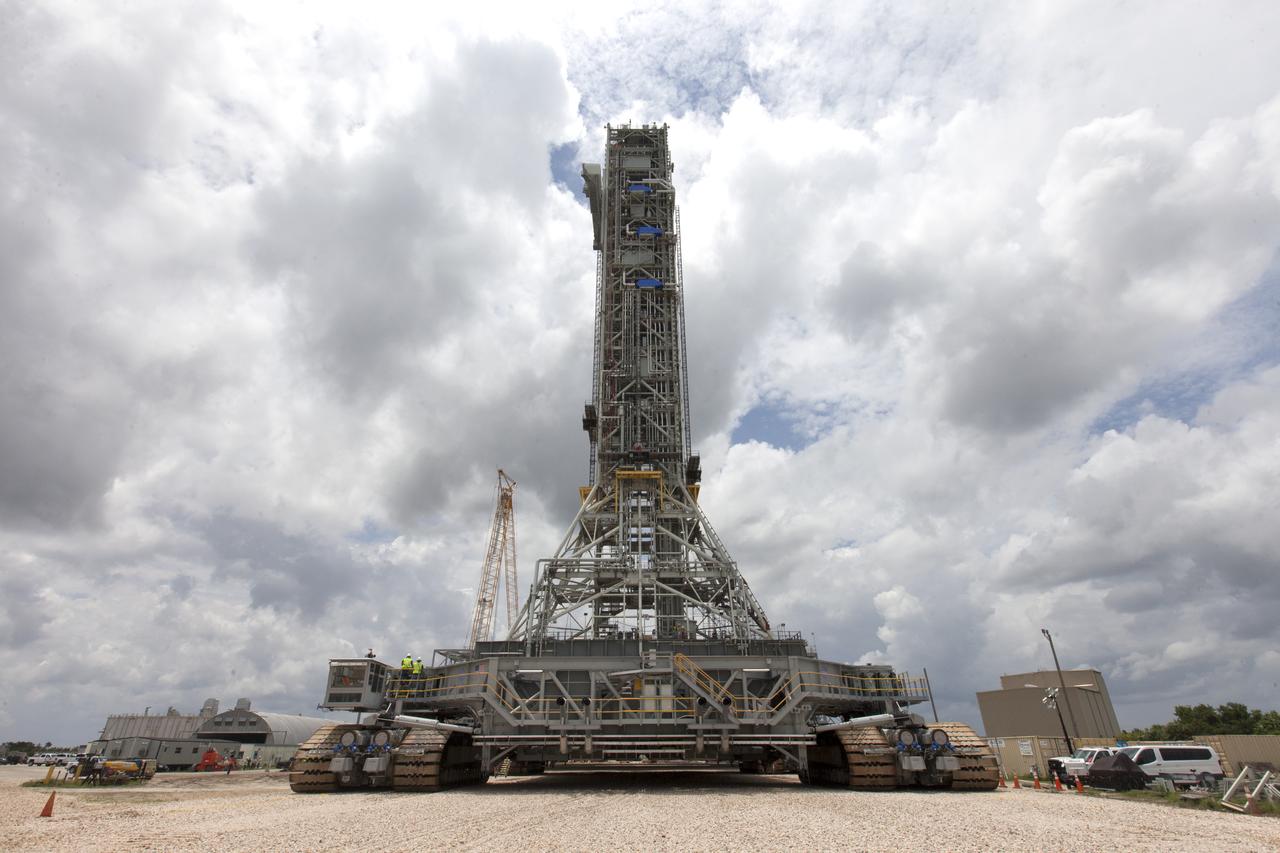
Preparations are underway May 31, 2018, to move crawler-transporter 2 (CT-2) under the mobile launcher at NASA's Kennedy Space Center in Florida. Three lifts will be performed to practice lifting procedures, validate interface locations, confirm the weight of the mobile launcher, and develop a baseline for modal analysis. The mobile launcher is equipped with a number of lines, called umbilicals, which will connect to NASA's Space Launch System (SLS) and Orion. CT-2 has been upgraded to handle the weight of the mobile launcher with SLS and Orion atop. Exploration Ground Systems is preparing the ground systems necessary to support the SLS and Orion spacecraft for Exploration Mission-1 and deep space missions.
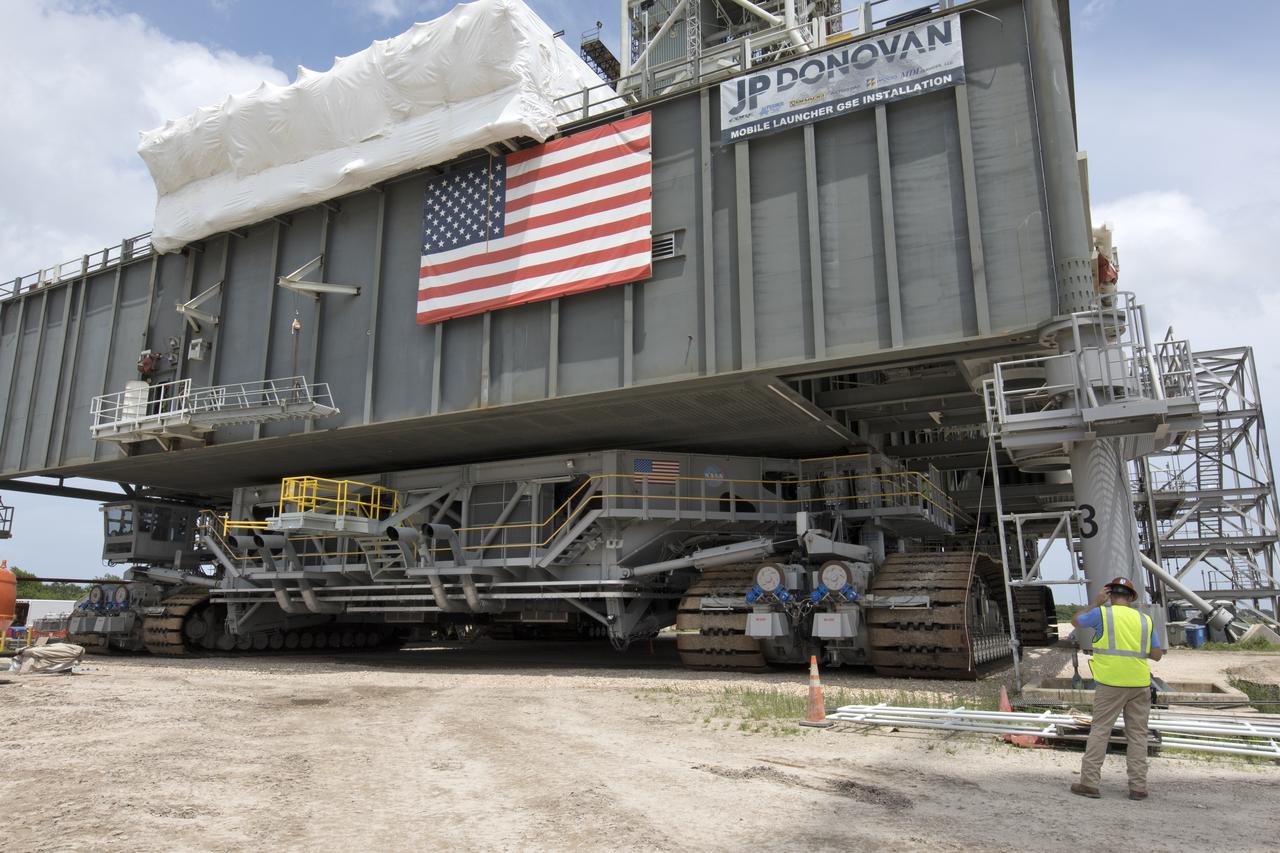
Crawler-transporter 2 (CT-2) is moved under the mobile launcher May 31, 2018, at NASA's Kennedy Space Center in Florida. Three lifts will be performed to practice lifting procedures, validate interface locations, confirm the weight of the mobile launcher, and develop a baseline for modal analysis. The mobile launcher is equipped with a number of lines, called umbilicals, which will connect to NASA's Space Launch System (SLS) and Orion. CT-2 has been upgraded to handle the weight of the mobile launcher with SLS and Orion atop. Exploration Ground Systems is preparing the ground systems necessary to support the SLS and Orion spacecraft for Exploration Mission-1 and deep space missions.
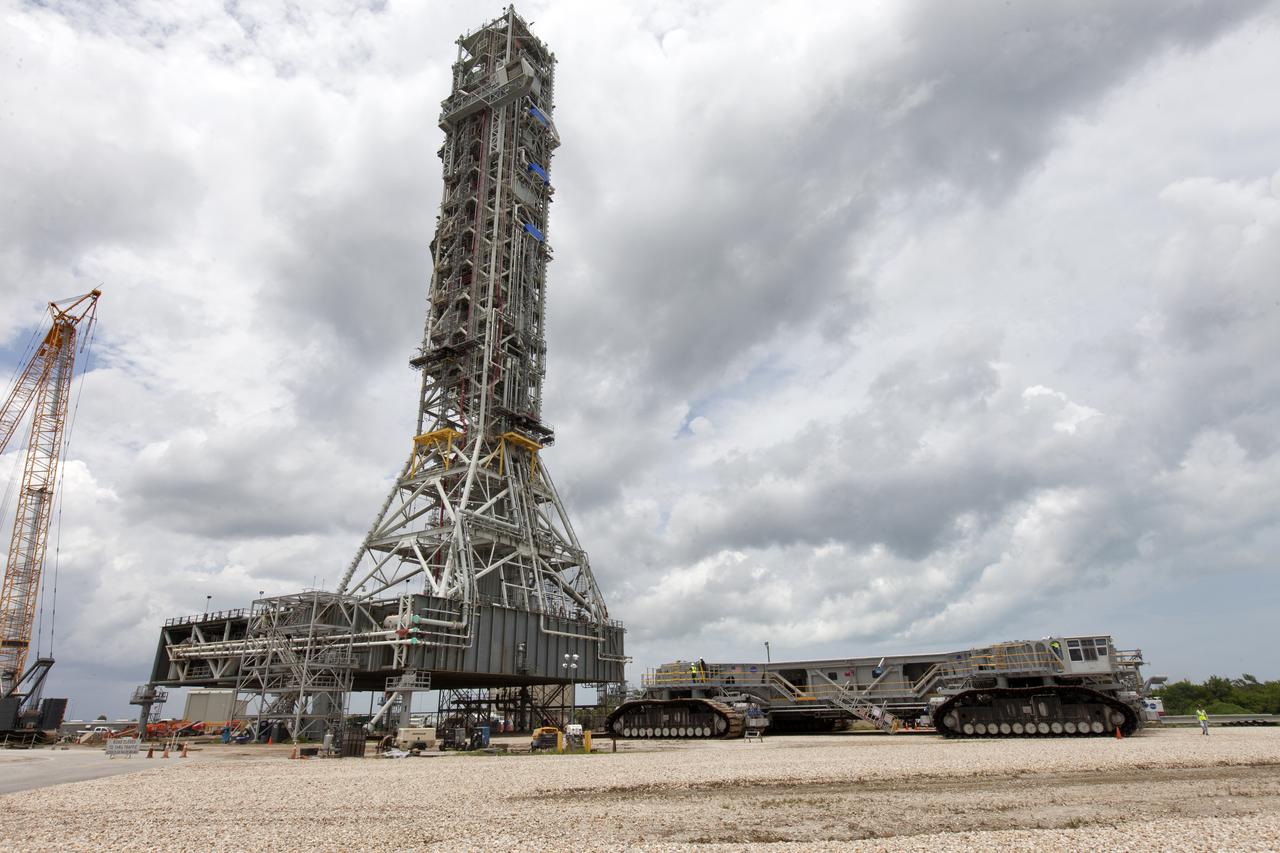
Preparations are underway May 31, 2018, to move crawler-transporter 2 (CT-2) under the mobile launcher at NASA's Kennedy Space Center in Florida. Three lifts will be performed to practice lifting procedures, validate interface locations, confirm the weight of the mobile launcher, and develop a baseline for modal analysis. The mobile launcher is equipped with a number of lines, called umbilicals, which will connect to NASA's Space Launch System (SLS) and Orion. CT-2 has been upgraded to handle the weight of the mobile launcher with SLS and Orion atop. Exploration Ground Systems is preparing the ground systems necessary to support the SLS and Orion spacecraft for Exploration Mission-1 and deep space missions.
Crawler-transporter 2 (CT-2) is underneath the mobile launcher May 31, 2018, at NASA's Kennedy Space Center in Florida. Three lifts will be performed to practice lifting procedures, validate interface locations, confirm the weight of the mobile launcher, and develop a baseline for modal analysis. The mobile launcher is equipped with a number of lines, called umbilicals, which will connect to NASA's Space Launch System (SLS) and Orion. CT-2 has been upgraded to handle the weight of the mobile launcher with SLS and Orion atop. Exploration Ground Systems is preparing the ground systems necessary to support the SLS and Orion spacecraft for Exploration Mission-1 and deep space missions.

Crawler-transporter 2 (CT-2) is being moved under the mobile launcher May 31, 2018, at NASA's Kennedy Space Center in Florida. Three lifts will be performed to practice lifting procedures, validate interface locations, confirm the weight of the mobile launcher, and develop a baseline for modal analysis. The mobile launcher is equipped with a number of lines, called umbilicals, which will connect to NASA's Space Launch System (SLS) and Orion. CT-2 has been upgraded to handle the weight of the mobile launcher with SLS and Orion atop. Exploration Ground Systems is preparing the ground systems necessary to support the SLS and Orion spacecraft for Exploration Mission-1 and deep space missions.
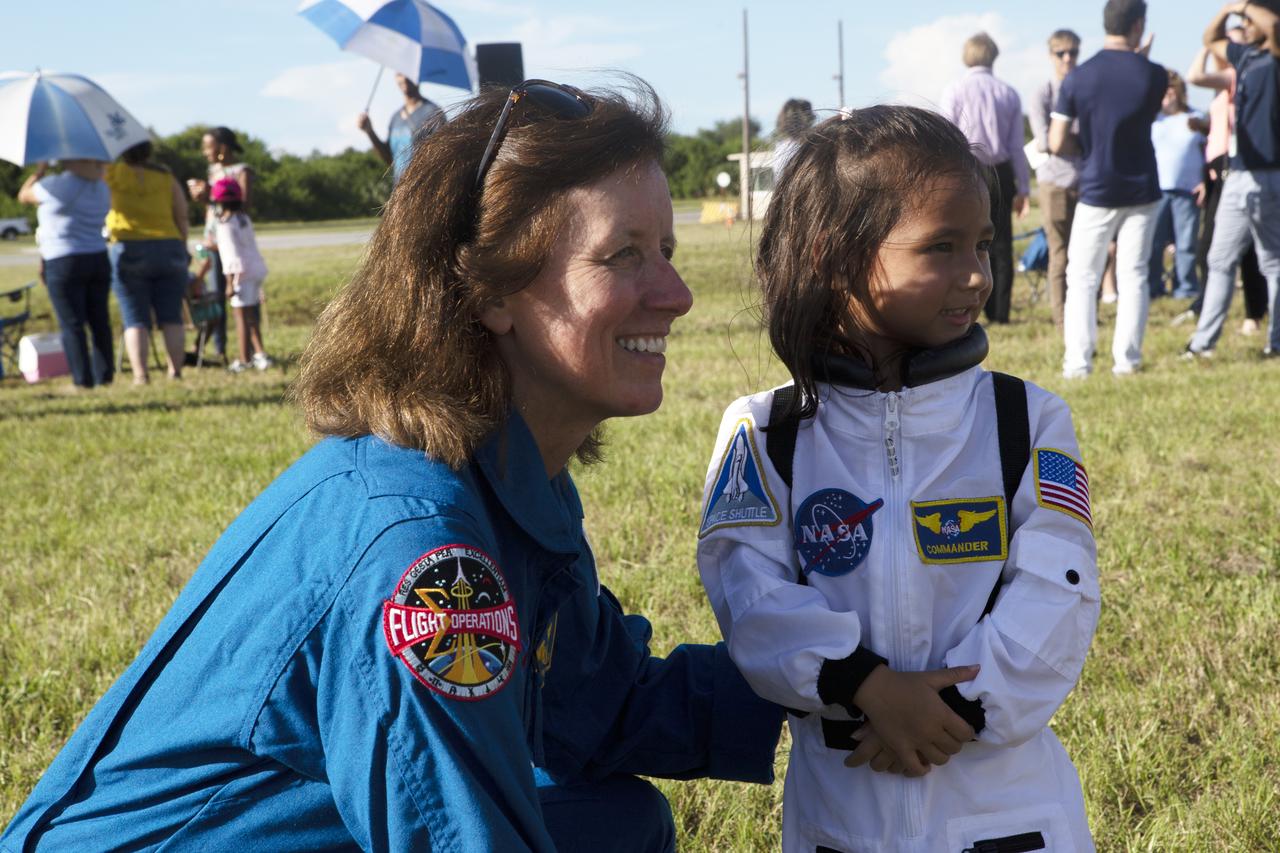
NASA astronaut Shannon Walker visits with a future astronaut during an employee event for workers and their guests for the mobile launcher move to the Vehicle Assembly Building (VAB) on Sept. 7, 2018, at NASA's Kennedy Space Center in Florida. The mobile launcher, atop crawler-transporter 2, began its trek from Launch Pad 39B along the crawlerway after undergoing a fit check and several days of systems testing with the pad. This is the first time that the modified mobile launcher made the trip to the pad. The 380-foot-tall mobile launcher is equipped with the crew access arm and several umbilicals that will provide power, environmental control, pneumatics, communication and electrical connections to the agency's Space Launch System and Orion spacecraft. The mobile launcher will spend seven months in the VAB undergoing testing. Exploration Ground Systems is preparing the ground systems necessary to launch SLS and Orion on Exploration Mission-1, missions to the Moon and on to Mars.

During an employee event, workers and guests watch from bleachers as NASA's mobile launcher, atop crawler-transporter 2, moves slowly along the crawlerway toward the Vehicle Assembly Building (VAB) on Sept. 7, 2018, at NASA's Kennedy Space Center in Florida. The mobile launcher underwent a fit check and several days of systems testing with the pad. This is the first time that the modified mobile launcher made the trip to the pad. The 380-foot-tall mobile launcher is equipped with the crew access arm and several umbilicals that will provide power, environmental control, pneumatics, communication and electrical connections to the agency's Space Launch System and Orion spacecraft. The mobile launcher will spend seven months in the VAB undergoing testing. Exploration Ground Systems is preparing the ground systems necessary to launch SLS and Orion on Exploration Mission-1, missions to the Moon and on to Mars.
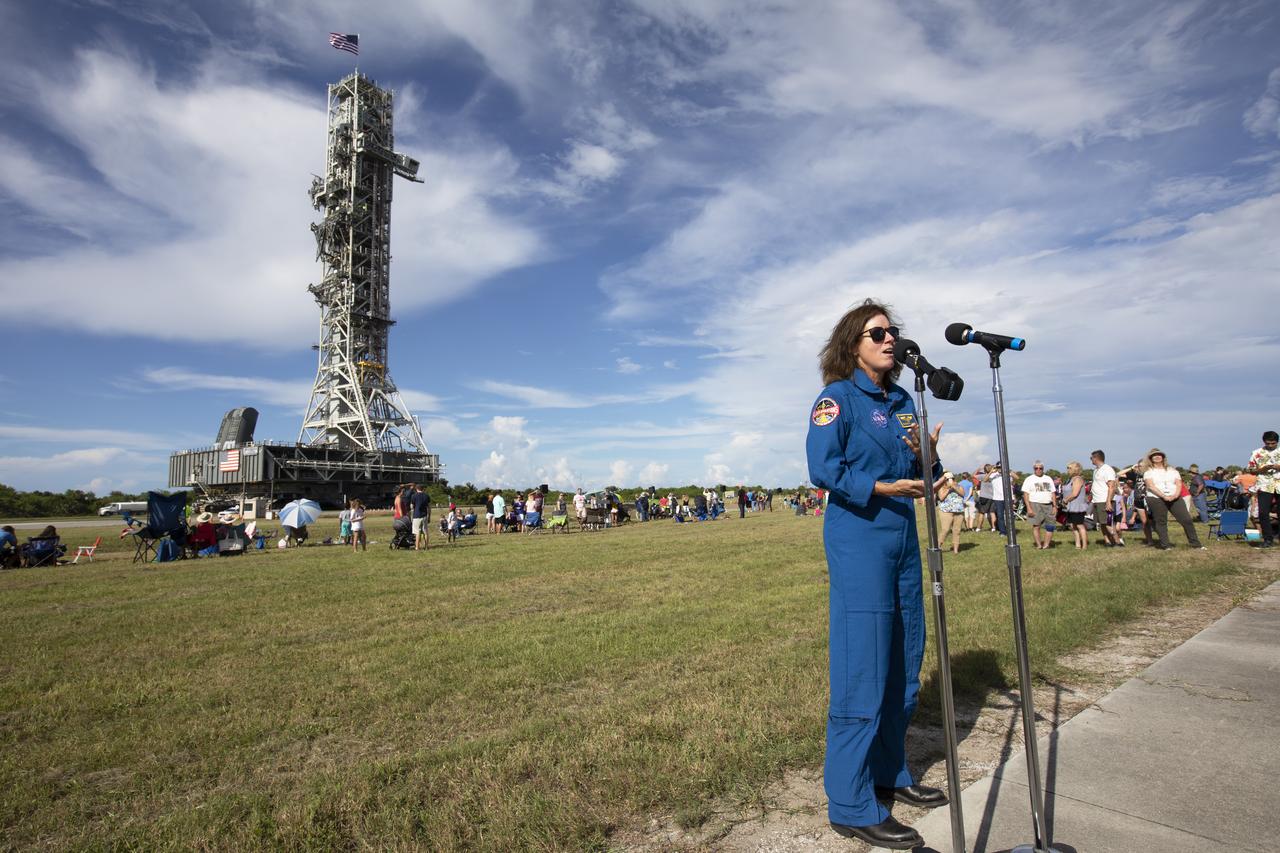
NASA astronaut Shannon Walker speaks to workers and guests during an employee event for the mobile launcher move to the Vehicle Assembly Building (VAB) on Sept. 7, 2018, at NASA's Kennedy Space Center in Florida. The mobile launcher, atop crawler-transporter 2, began its trek from Launch Pad 39B along the crawlerway after undergoing a fit check and several days of systems testing with the pad. This is the first time that the modified mobile launcher made the trip to the pad. The 380-foot-tall mobile launcher is equipped with the crew access arm and several umbilicals that will provide power, environmental control, pneumatics, communication and electrical connections to the agency's Space Launch System and Orion spacecraft. The mobile launcher will spend seven months in the VAB undergoing testing. Exploration Ground Systems is preparing the ground systems necessary to launch SLS and Orion on Exploration Mission-1, missions to the Moon and on to Mars.
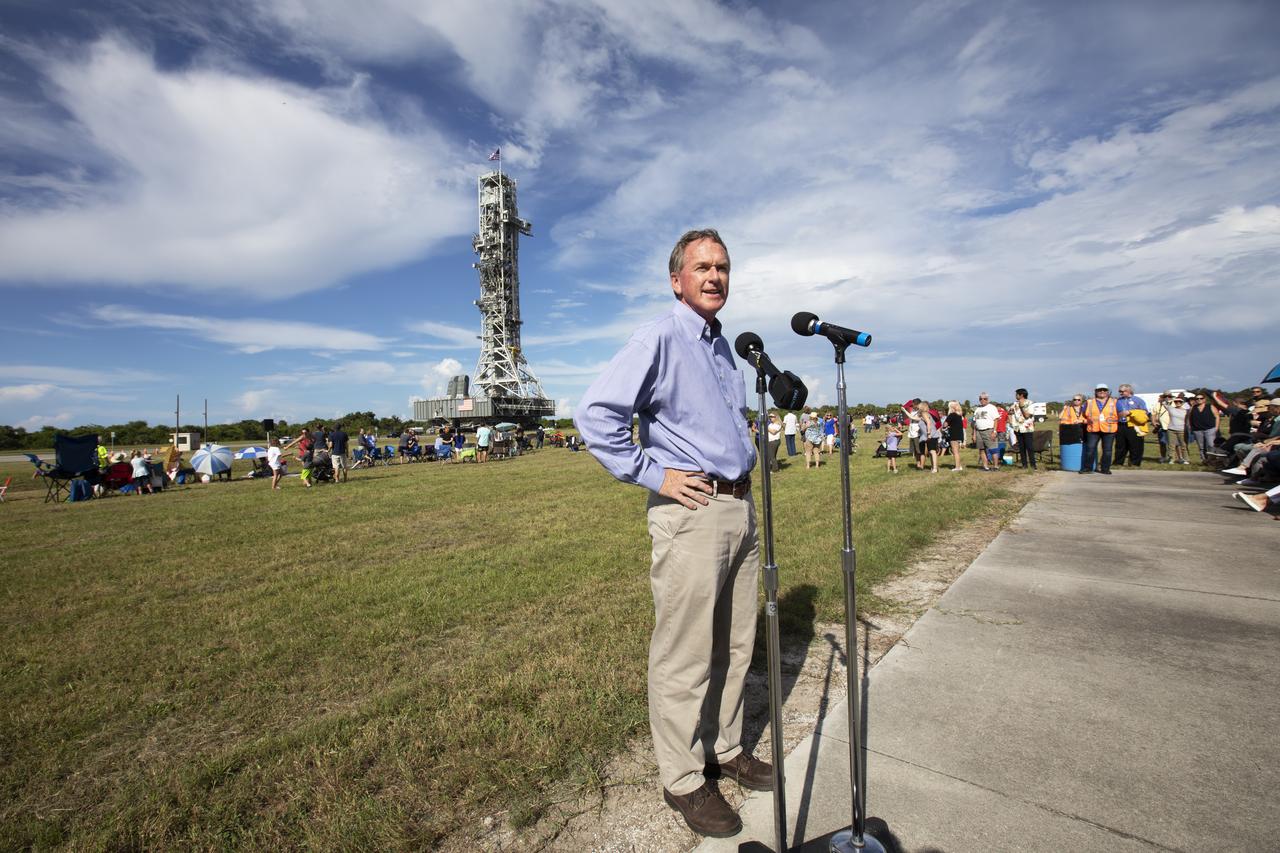
Mike Bolger, program manager of Exploration Ground Systems, speaks to workers and guests during an employee event for the mobile launcher move to the Vehicle Assembly Building (VAB) on Sept. 7, 2018, at NASA's Kennedy Space Center in Florida. The mobile launcher, atop crawler-transporter 2, began its trek from Launch Pad 39B along the crawlerway after undergoing a fit check and several days of systems testing with the pad. This is the first time that the modified mobile launcher made the trip to the pad. The 380-foot-tall mobile launcher is equipped with the crew access arm and several umbilicals that will provide power, environmental control, pneumatics, communication and electrical connections to the agency's Space Launch System and Orion spacecraft. The mobile launcher will spend seven months in the VAB undergoing testing. Exploration Ground Systems is preparing the ground systems necessary to launch SLS and Orion on Exploration Mission-1, missions to the Moon and on to Mars.
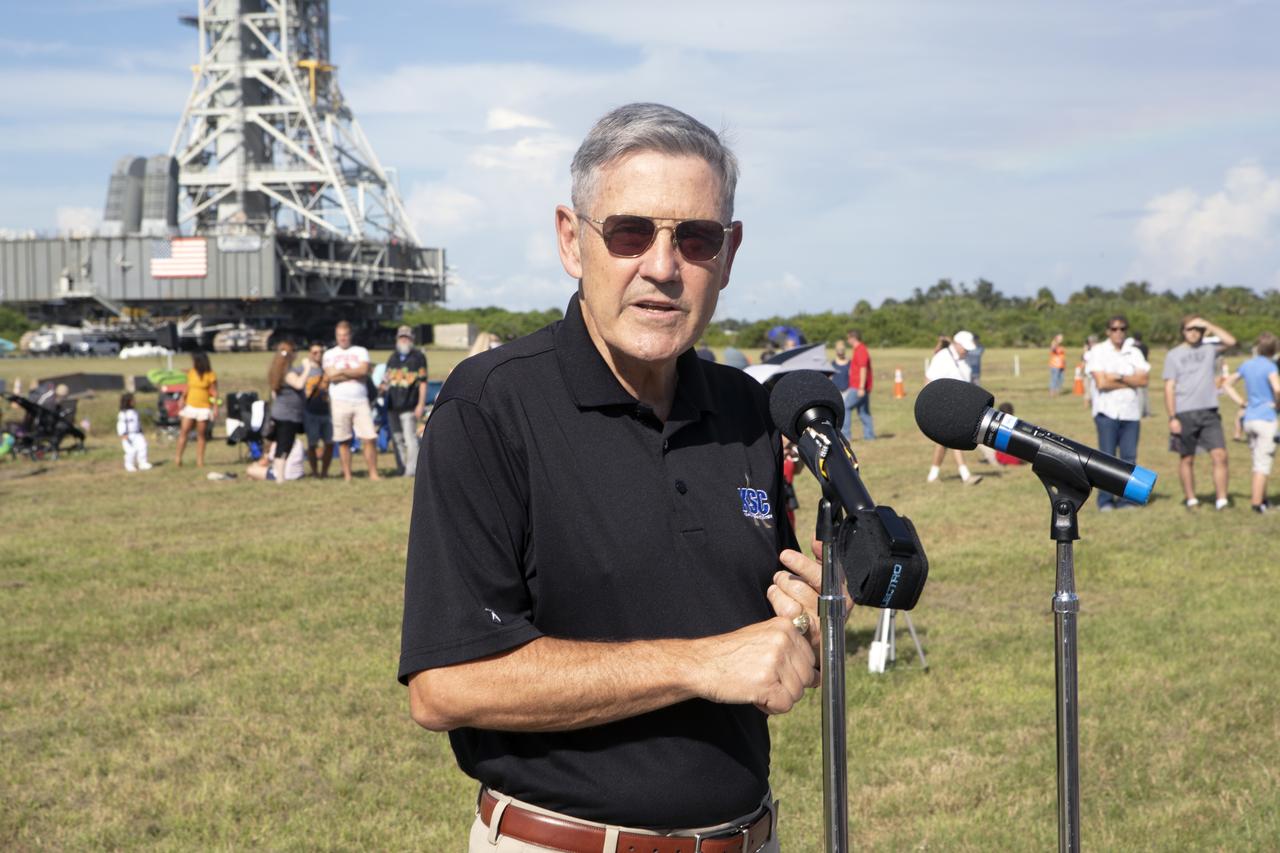
Kennedy Space Center Director Bob Cabana speaks to workers and guests during an employee event for the mobile launcher move to the Vehicle Assembly Building (VAB) on Sept. 7, 2018, at NASA's Kennedy Space Center in Florida. The mobile launcher, atop crawler-transporter 2, began its trek from Launch Pad 39B along the crawlerway after undergoing a fit check and several days of systems testing with the pad. This is the first time that the modified mobile launcher made the trip to the pad. The 380-foot-tall mobile launcher is equipped with the crew access arm and several umbilicals that will provide power, environmental control, pneumatics, communication and electrical connections to the agency's Space Launch System and Orion spacecraft. The mobile launcher will spend seven months in the VAB undergoing testing. Exploration Ground Systems is preparing the ground systems necessary to launch SLS and Orion on Exploration Mission-1, missions to the Moon and on to Mars.
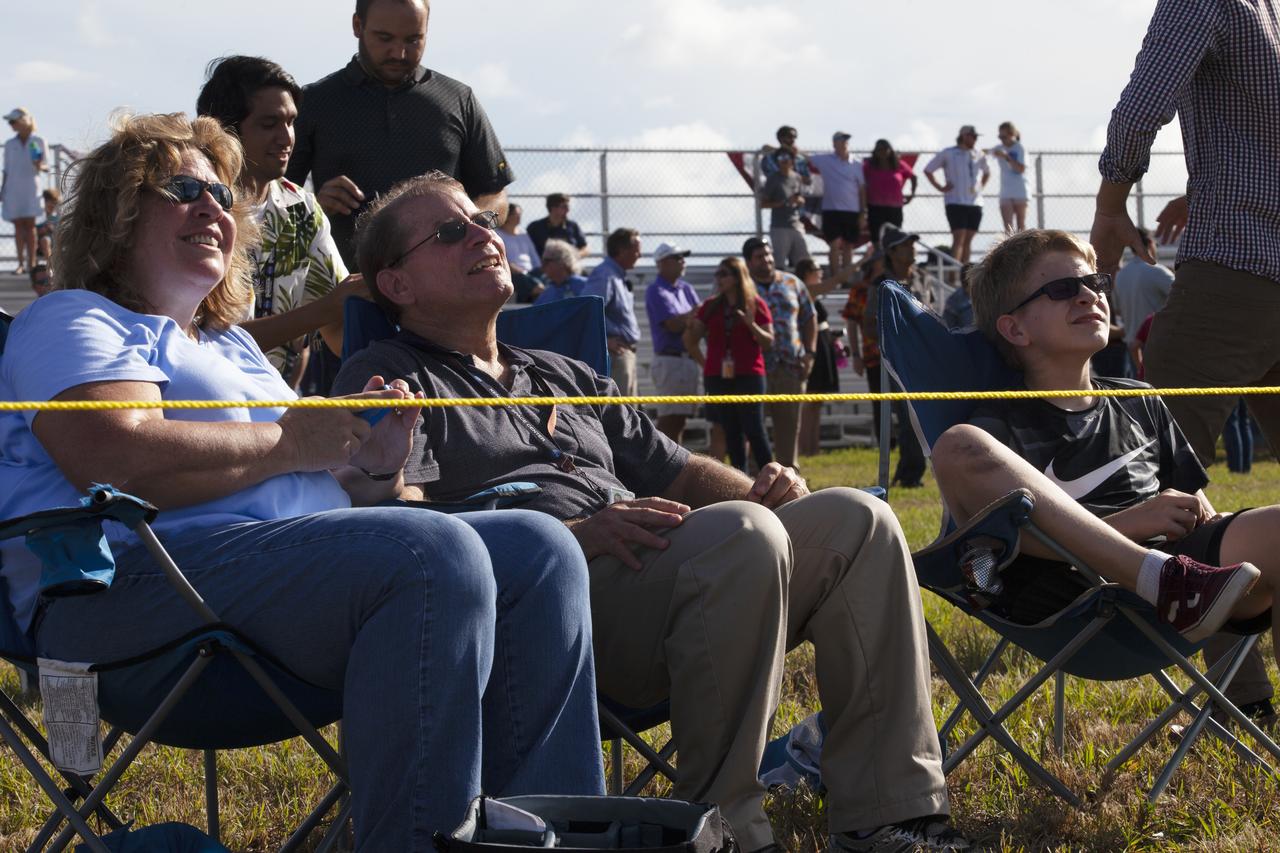
During an employee event, workers and guests watch as NASA's mobile launcher, atop crawler-transporter 2, moves slowly along the crawlerway toward the Vehicle Assembly Building (VAB) on Sept. 7, 2018, at NASA's Kennedy Space Center in Florida. The mobile launcher underwent a fit check and several days of systems testing with the pad. This is the first time that the modified mobile launcher made the trip to the pad. The 380-foot-tall mobile launcher is equipped with the crew access arm and several umbilicals that will provide power, environmental control, pneumatics, communication and electrical connections to the agency's Space Launch System and Orion spacecraft. The mobile launcher will spend seven months in the VAB undergoing testing. Exploration Ground Systems is preparing the ground systems necessary to launch SLS and Orion on Exploration Mission-1, missions to the Moon and on to Mars.
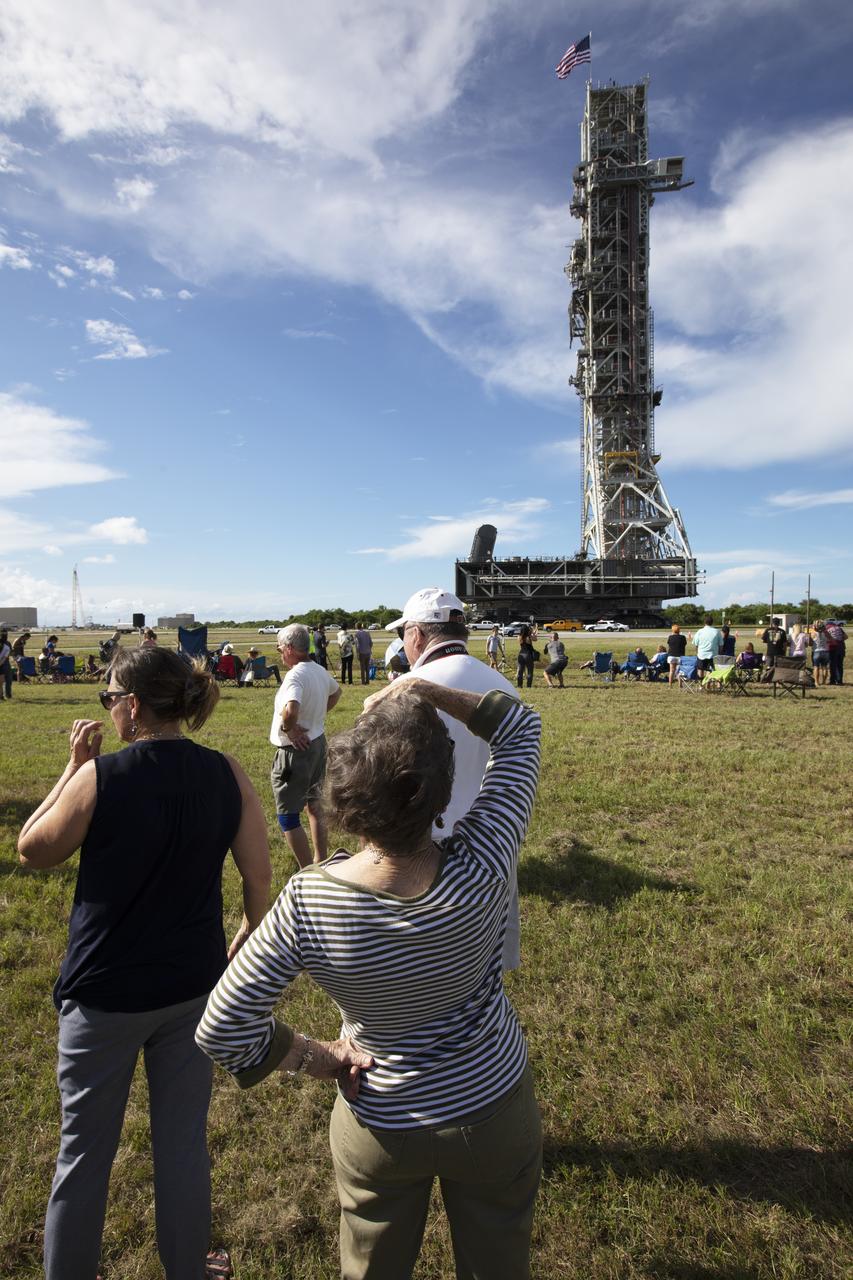
During an employee event, workers and guests watch as NASA's mobile launcher, atop crawler-transporter 2, moves slowly along the crawlerway toward the Vehicle Assembly Building on Sept. 7, 2018, at NASA's Kennedy Space Center in Florida. The mobile launcher underwent a fit check and several days of systems testing with the pad. This is the first time that the modified mobile launcher made the trip to the pad. The 380-foot-tall mobile launcher is equipped with the crew access arm and several umbilicals that will provide power, environmental control, pneumatics, communication and electrical connections to the agency's Space Launch System and Orion spacecraft. The mobile launcher will spend seven months in the VAB undergoing testing. Exploration Ground Systems is preparing the ground systems necessary to launch SLS and Orion on Exploration Mission-1, missions to the Moon and on to Mars.
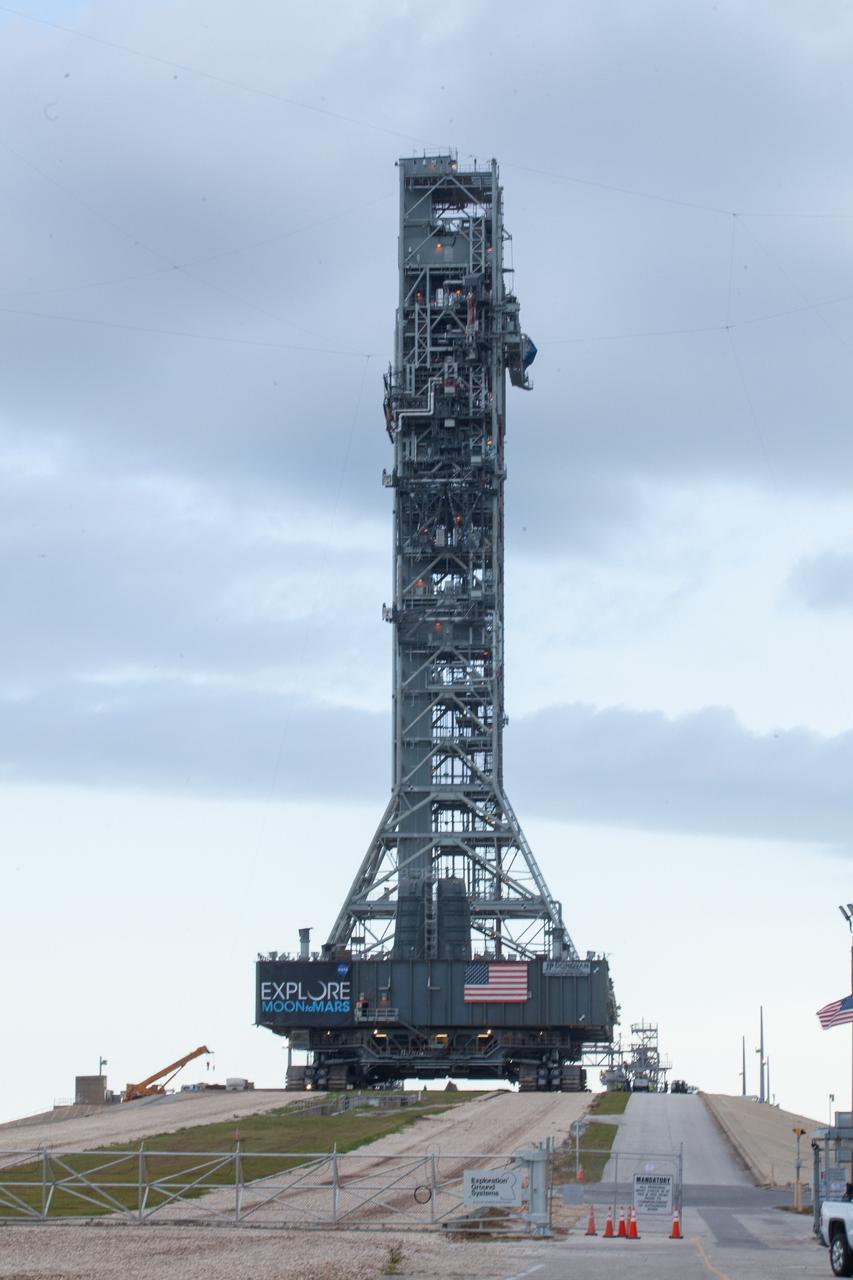
After successfully arriving at Kennedy Space Center’s Launch Complex 39B, Exploration Ground Systems’ mobile launcher continues its journey atop crawler-transporter 2 up to the pad surface on June 28, 2019. The mobile launcher began its final solo trek to the pad at midnight on June 27, departing from NASA’s Vehicle Assembly Building. The mobile launcher will remain at the pad over the summer, undergoing final testing and checkouts. Its next roll to the pad will be with the agency’s Space Launch System rocket and Orion in preparation for the launch of Artemis 1.
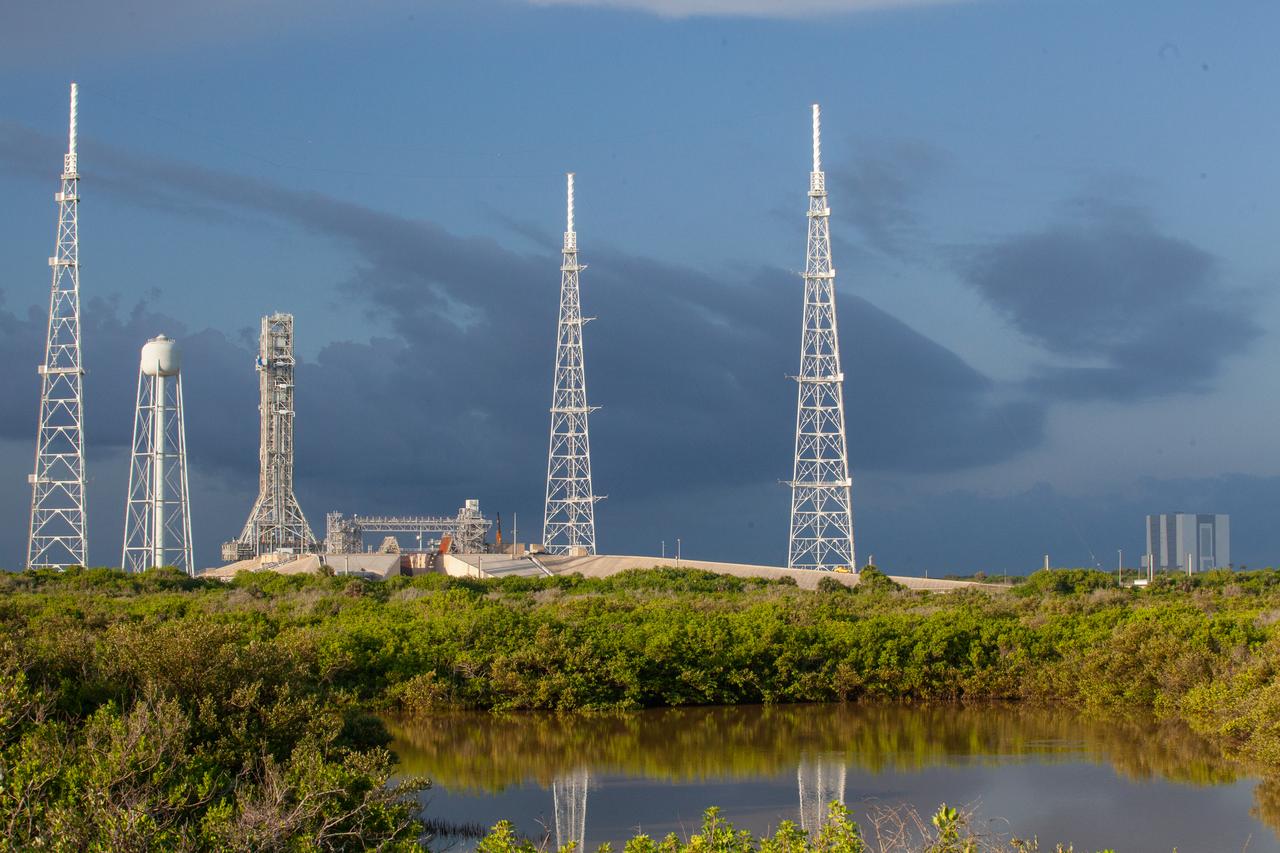
After successfully arriving at Kennedy Space Center’s Launch Complex 39B, Exploration Ground Systems’ mobile launcher continues its journey atop crawler-transporter 2 up to the pad surface on June 28, 2019. The mobile launcher began its final solo trek to the pad at midnight on June 27, departing from NASA’s Vehicle Assembly Building. The mobile launcher will remain at the pad over the summer, undergoing final testing and checkouts. Its next roll to the pad will be with the agency’s Space Launch System rocket and Orion in preparation for the launch of Artemis 1.
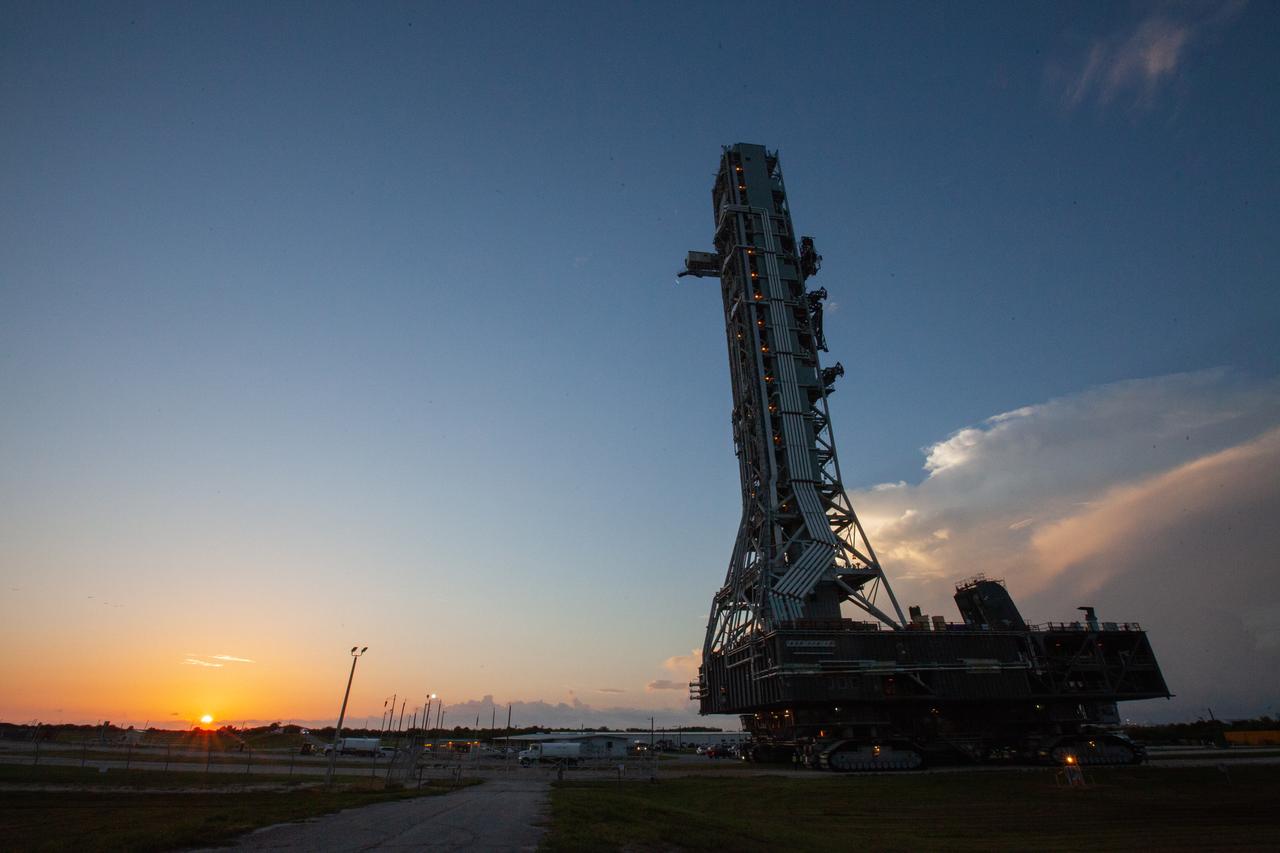
With a sunrise serving as the backdrop, Exploration Ground Systems’ mobile launcher is photographed atop crawler-transporter 2 at Kennedy Space Center’s Launch Complex 39B in Florida on June 28, 2019. The mobile launcher began its final solo trek to the pad at midnight on June 27, departing from NASA’s Vehicle Assembly Building and continuing its journey up to the pad surface on June 28. The mobile launcher will remain at the pad over the summer, undergoing final testing and checkouts. Its next roll to the pad will be with the agency’s Space Launch System rocket and Orion in preparation for the launch of Artemis 1.
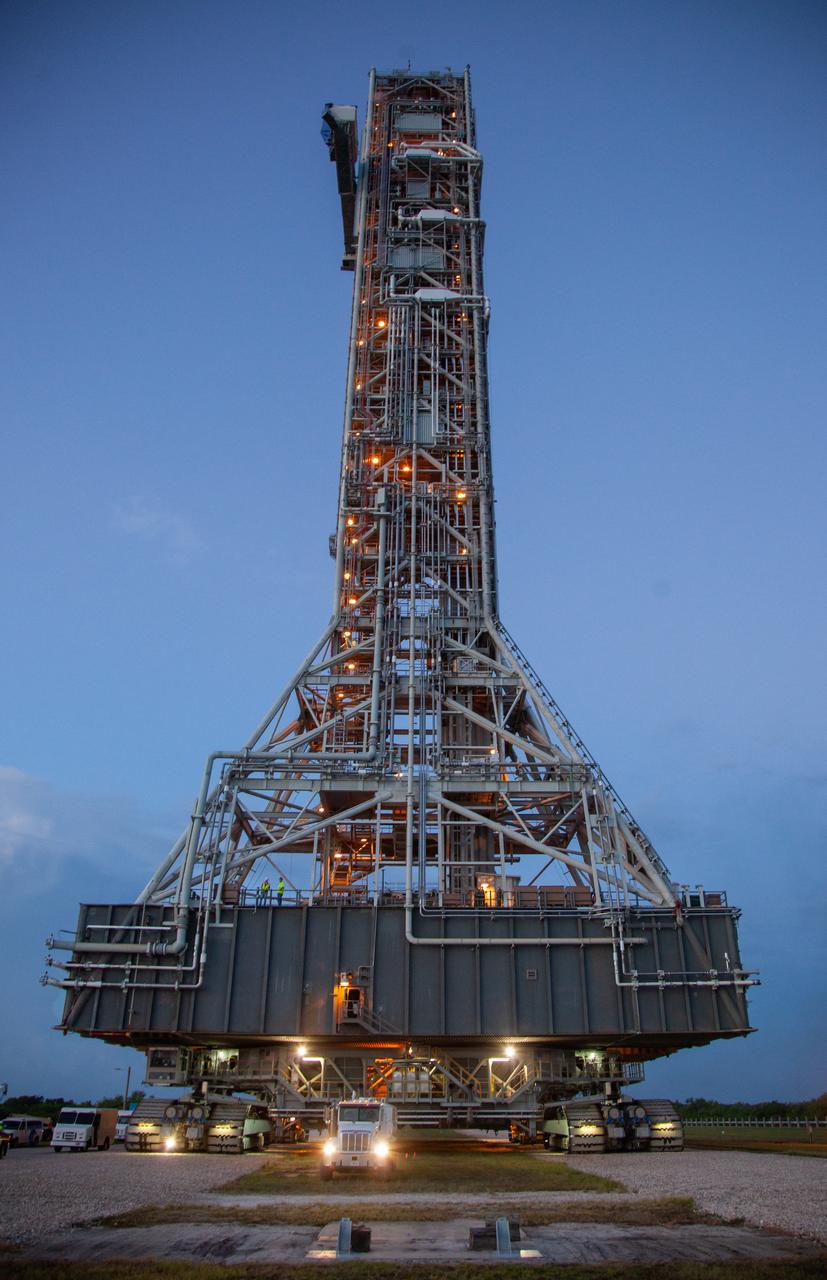
Exploration Ground Systems’ mobile launcher is photographed atop crawler-transporter 2 on its final solo trek to Kennedy Space Center’s Launch Complex 39B in Florida on June 28, 2019. The mobile launcher began its journey to the pad at midnight on June 27, departing from NASA’s Vehicle Assembly Building and continuing up to the pad surface on June 28. The mobile launcher will remain at the pad over the summer, undergoing final testing and checkouts. Its next roll to the pad will be with the agency’s Space Launch System rocket and Orion in preparation for the launch of Artemis 1.
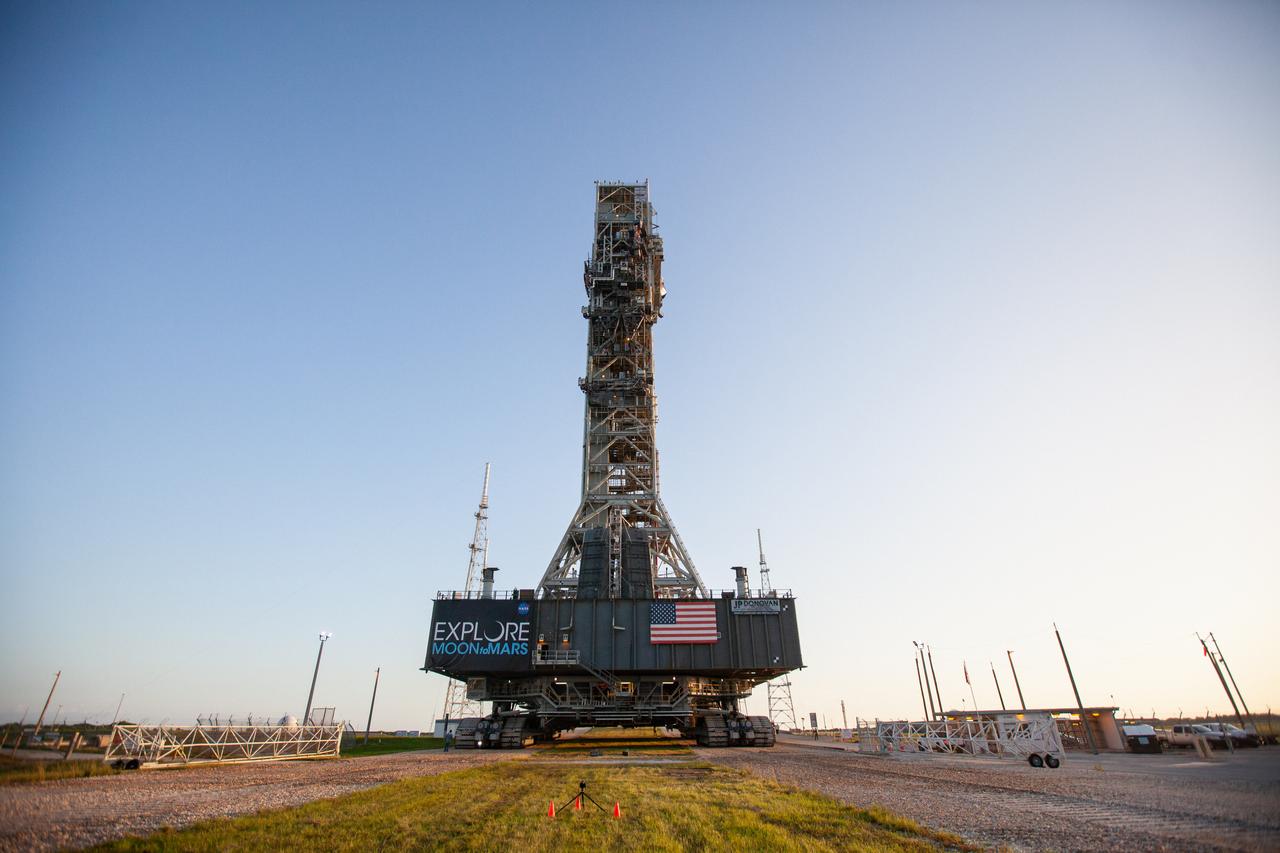
After successfully arriving at Kennedy Space Center’s Launch Complex 39B, Exploration Ground Systems’ mobile launcher continues its journey atop crawler-transporter 2 up to the pad surface on June 28, 2019. The mobile launcher began its final solo trek to the pad at midnight on June 27, departing from NASA’s Vehicle Assembly Building. The mobile launcher will remain at the pad over the summer, undergoing final testing and checkouts. Its next roll to the pad will be with the agency’s Space Launch System rocket and Orion in preparation for the launch of Artemis 1.
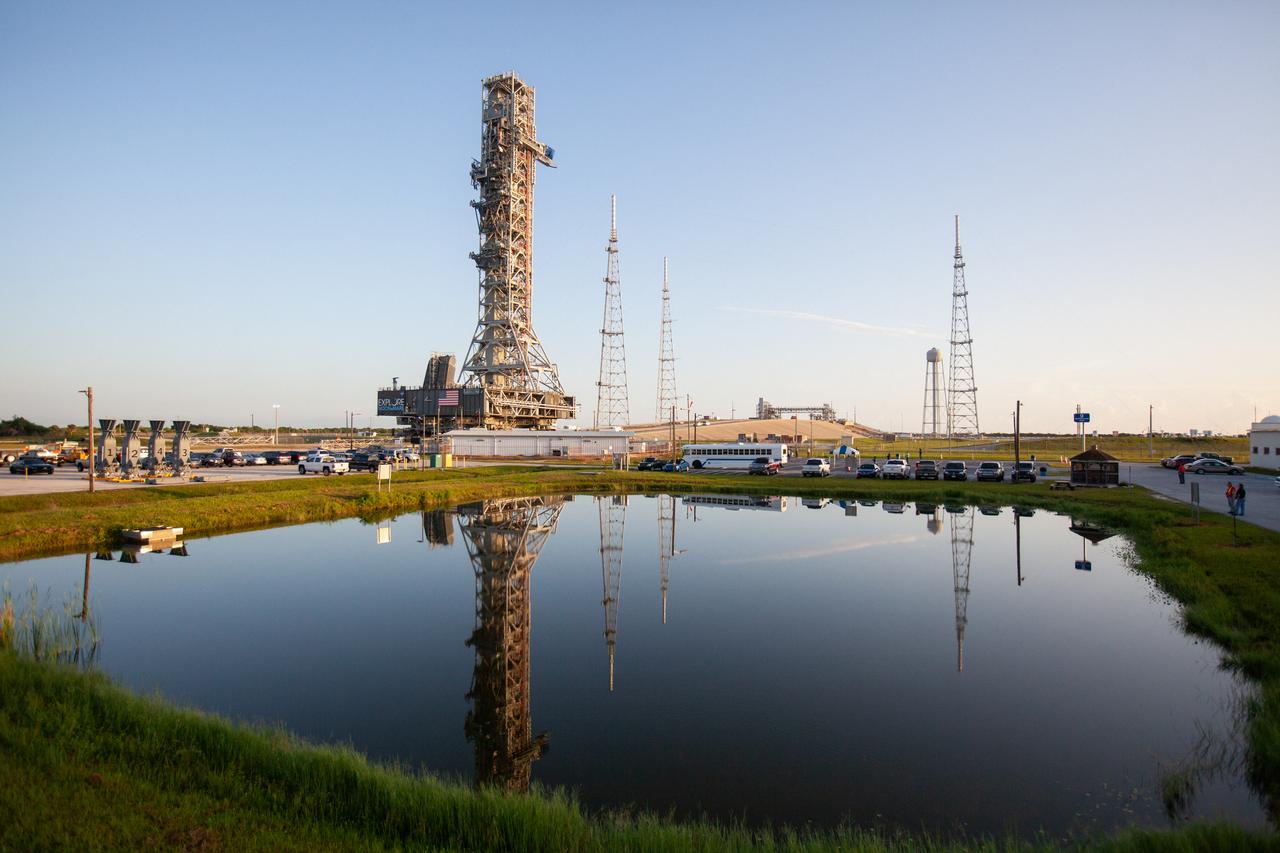
After successfully arriving at Kennedy Space Center’s Launch Complex 39B, Exploration Ground Systems’ mobile launcher continues its journey atop crawler-transporter 2 up to the pad surface on June 28, 2019. The mobile launcher began its final solo trek to the pad at midnight on June 27, departing from NASA’s Vehicle Assembly Building. The mobile launcher will remain at the pad over the summer, undergoing final testing and checkouts. Its next roll to the pad will be with the agency’s Space Launch System rocket and Orion in preparation for the launch of Artemis 1.
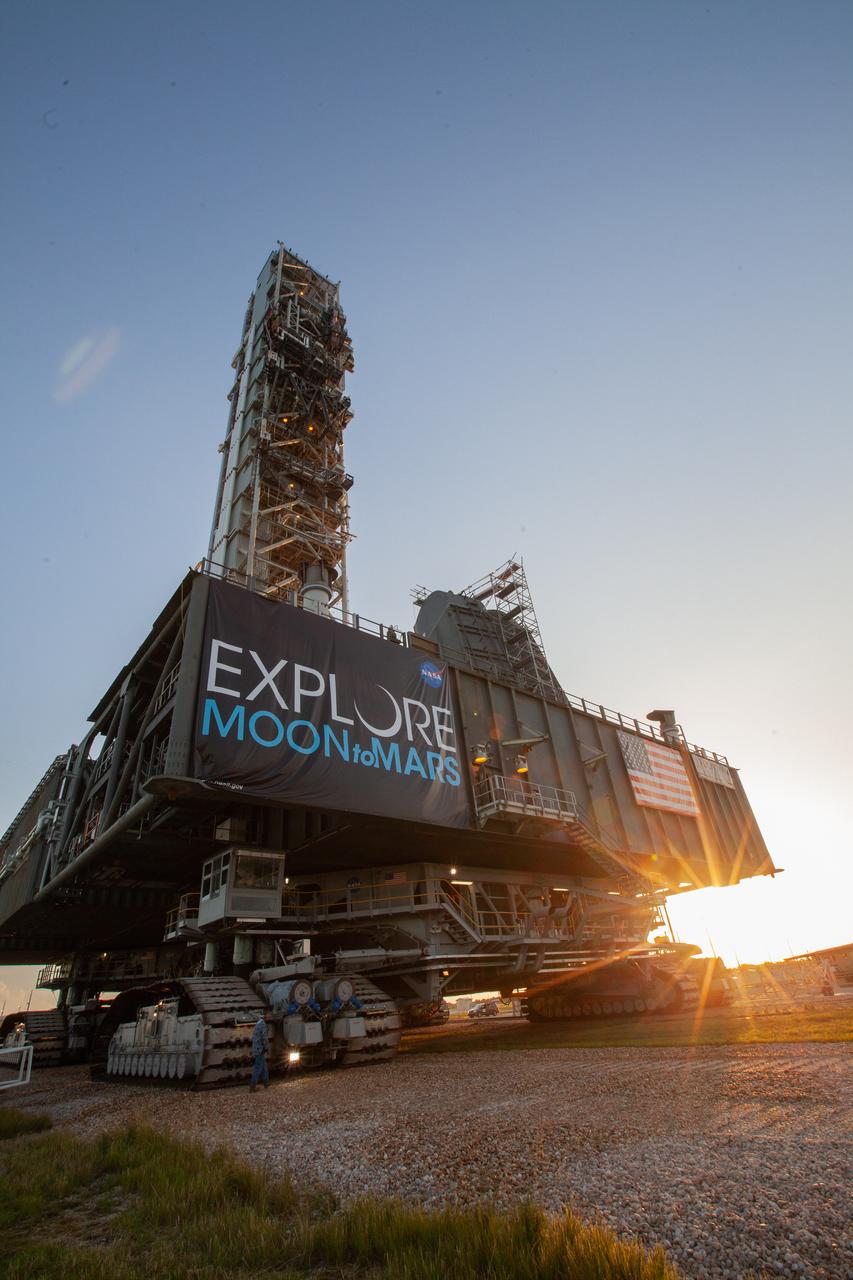
After successfully arriving at Kennedy Space Center’s Launch Complex 39B, Exploration Ground Systems’ mobile launcher continues its journey atop crawler-transporter 2 up to the pad surface on June 28, 2019. The mobile launcher began its final solo trek to the pad at midnight on June 27, departing from NASA’s Vehicle Assembly Building. The mobile launcher will remain at the pad over the summer, undergoing final testing and checkouts. Its next roll to the pad will be with the agency’s Space Launch System rocket and Orion in preparation for the launch of Artemis 1.
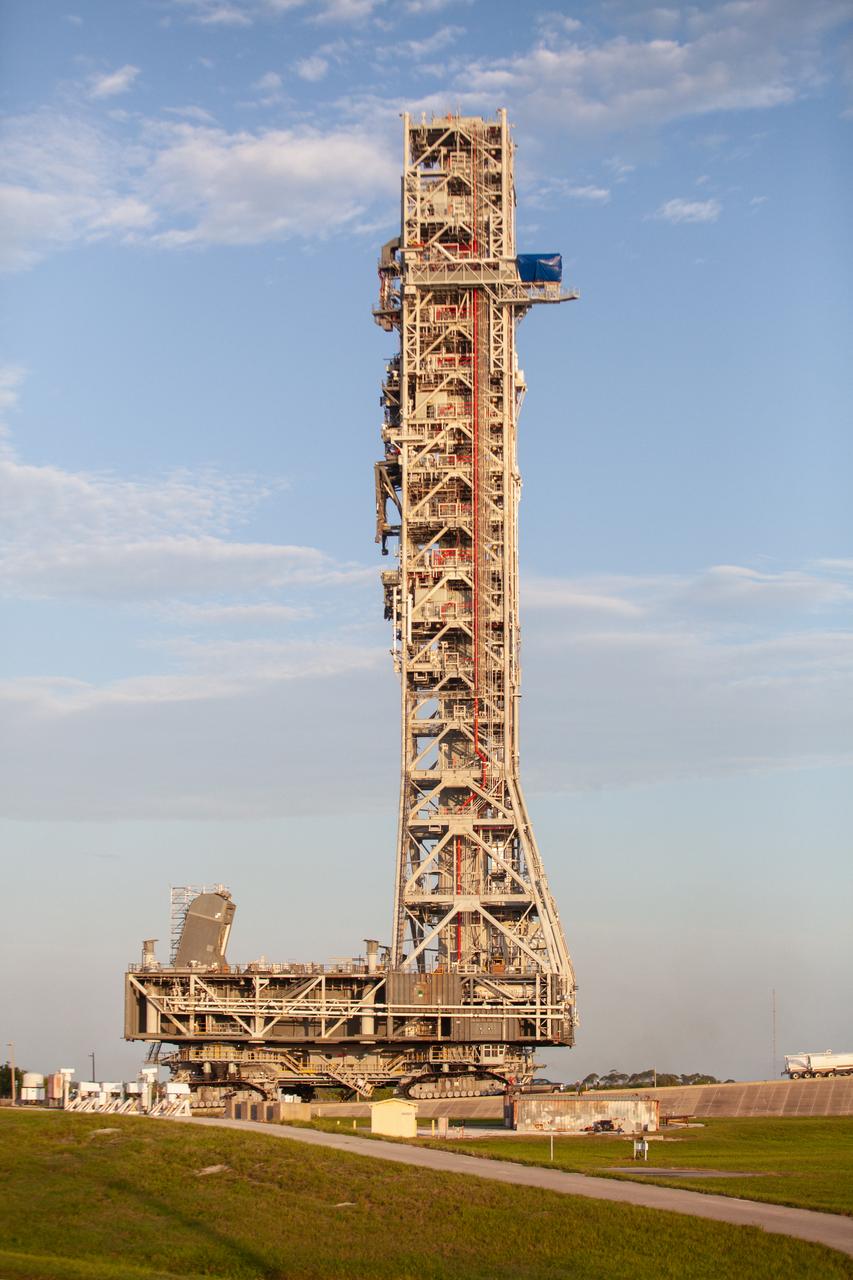
After successfully arriving at Kennedy Space Center’s Launch Complex 39B, Exploration Ground Systems’ mobile launcher continues its journey atop crawler-transporter 2 up to the pad surface on June 28, 2019. The mobile launcher began its final solo trek to the pad at midnight on June 27, departing from NASA’s Vehicle Assembly Building. The mobile launcher will remain at the pad over the summer, undergoing final testing and checkouts. Its next roll to the pad will be with the agency’s Space Launch System rocket and Orion in preparation for the launch of Artemis 1.
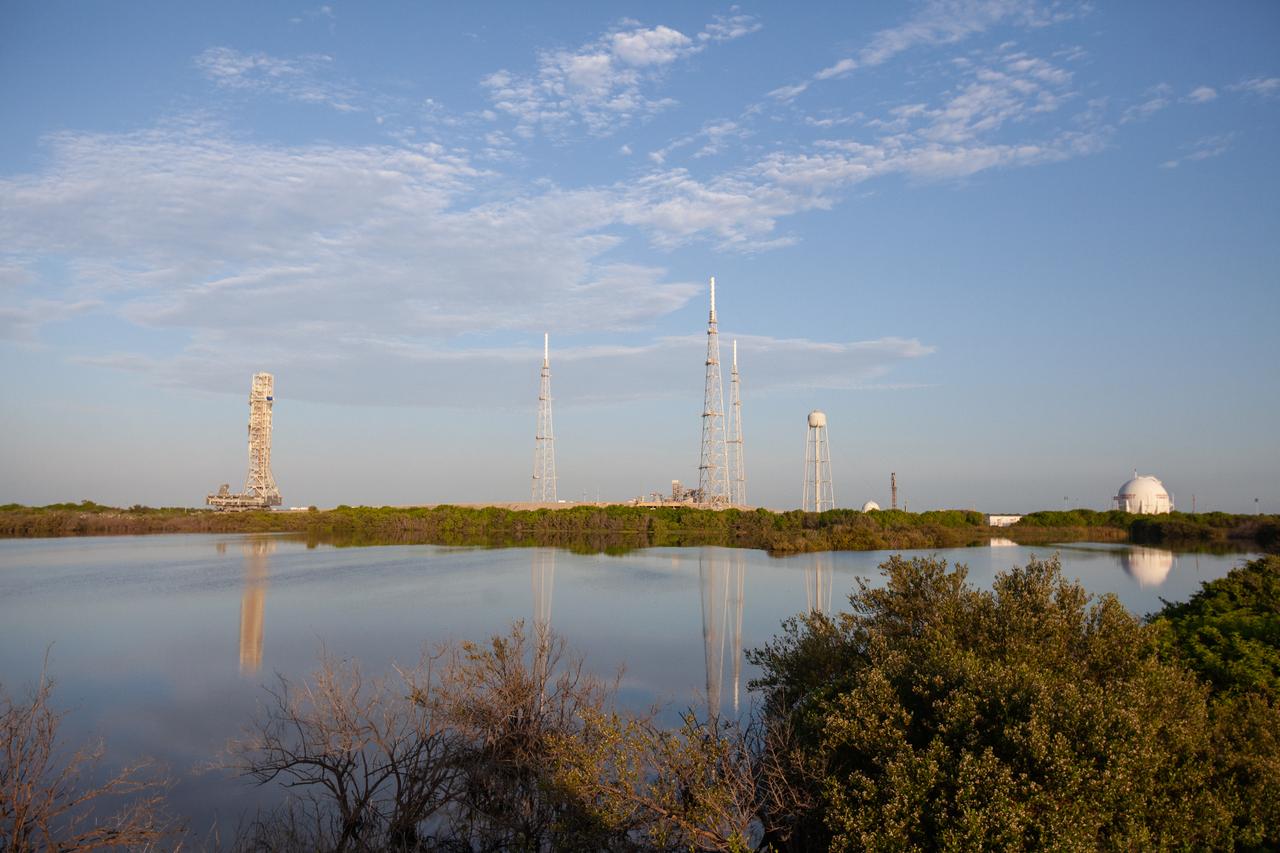
After successfully arriving at Kennedy Space Center’s Launch Complex 39B, Exploration Ground Systems’ mobile launcher continues its journey atop crawler-transporter 2 up to the pad surface on June 28, 2019. The mobile launcher began its final solo trek to the pad at midnight on June 27, departing from NASA’s Vehicle Assembly Building. The mobile launcher will remain at the pad over the summer, undergoing final testing and checkouts. Its next roll to the pad will be with the agency’s Space Launch System rocket and Orion in preparation for the launch of Artemis 1.
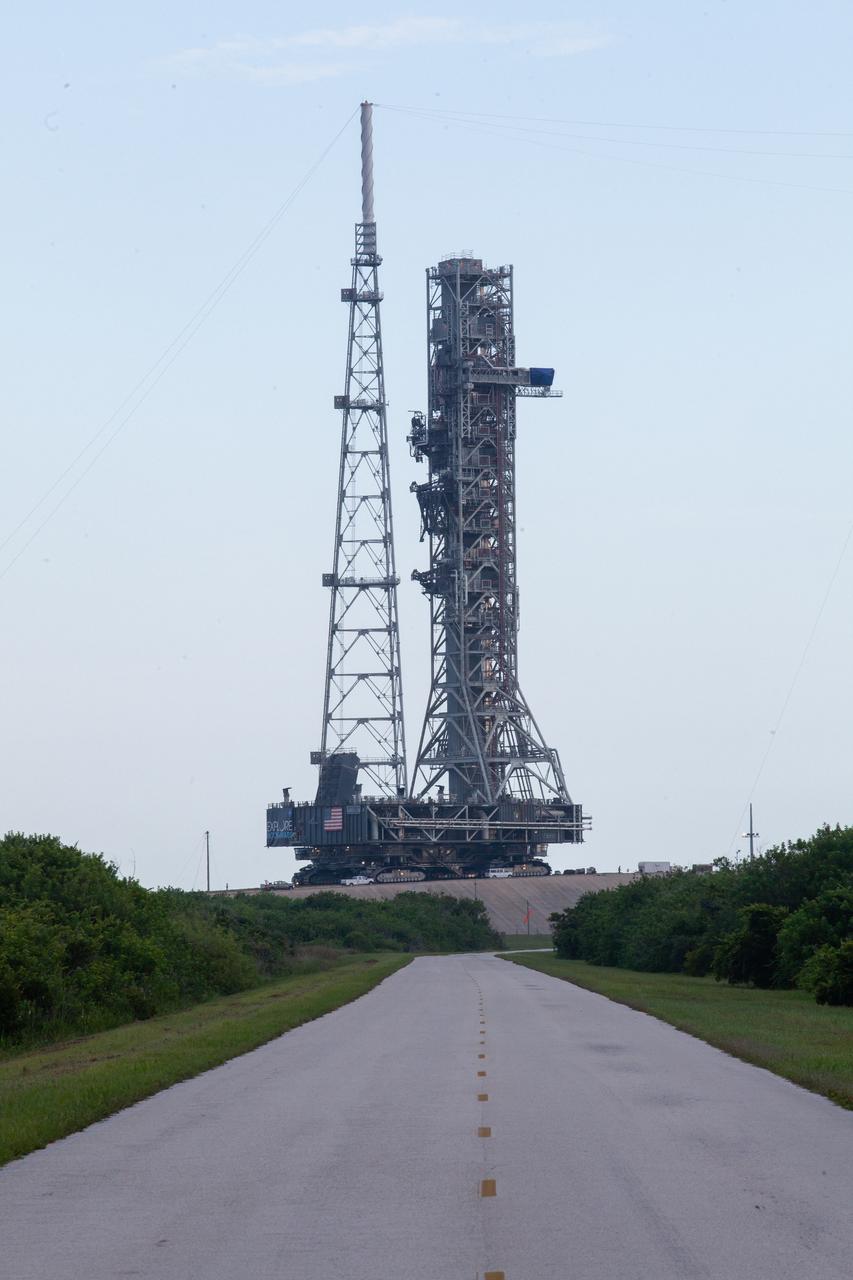
After successfully arriving at Kennedy Space Center’s Launch Complex 39B, Exploration Ground Systems’ mobile launcher is photographed at the pad surface atop crawler-transporter 2 on June 28, 2019. The mobile launcher began its final solo trek to the pad at midnight on June 27, departing from NASA’s Vehicle Assembly Building. The mobile launcher will remain at the pad over the summer, undergoing final testing and checkouts. Its next roll to the pad will be with the agency’s Space Launch System rocket and Orion in preparation for the launch of Artemis 1.
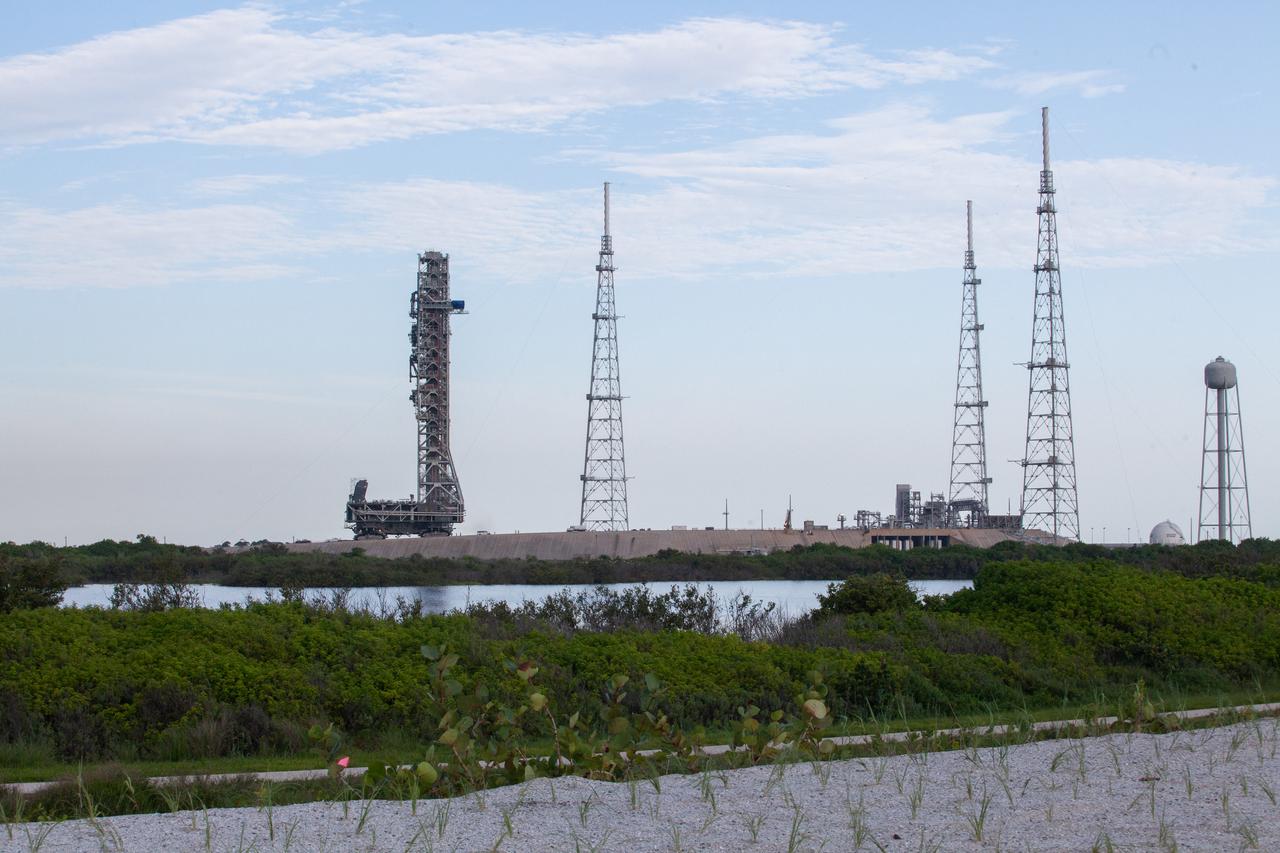
After successfully arriving at Kennedy Space Center’s Launch Complex 39B, Exploration Ground Systems’ mobile launcher continues its journey atop crawler-transporter 2 up to the pad surface on June 28, 2019. The mobile launcher began its final solo trek to the pad at midnight on June 27, departing from NASA’s Vehicle Assembly Building. The mobile launcher will remain at the pad over the summer, undergoing final testing and checkouts. Its next roll to the pad will be with the agency’s Space Launch System rocket and Orion in preparation for the launch of Artemis 1.
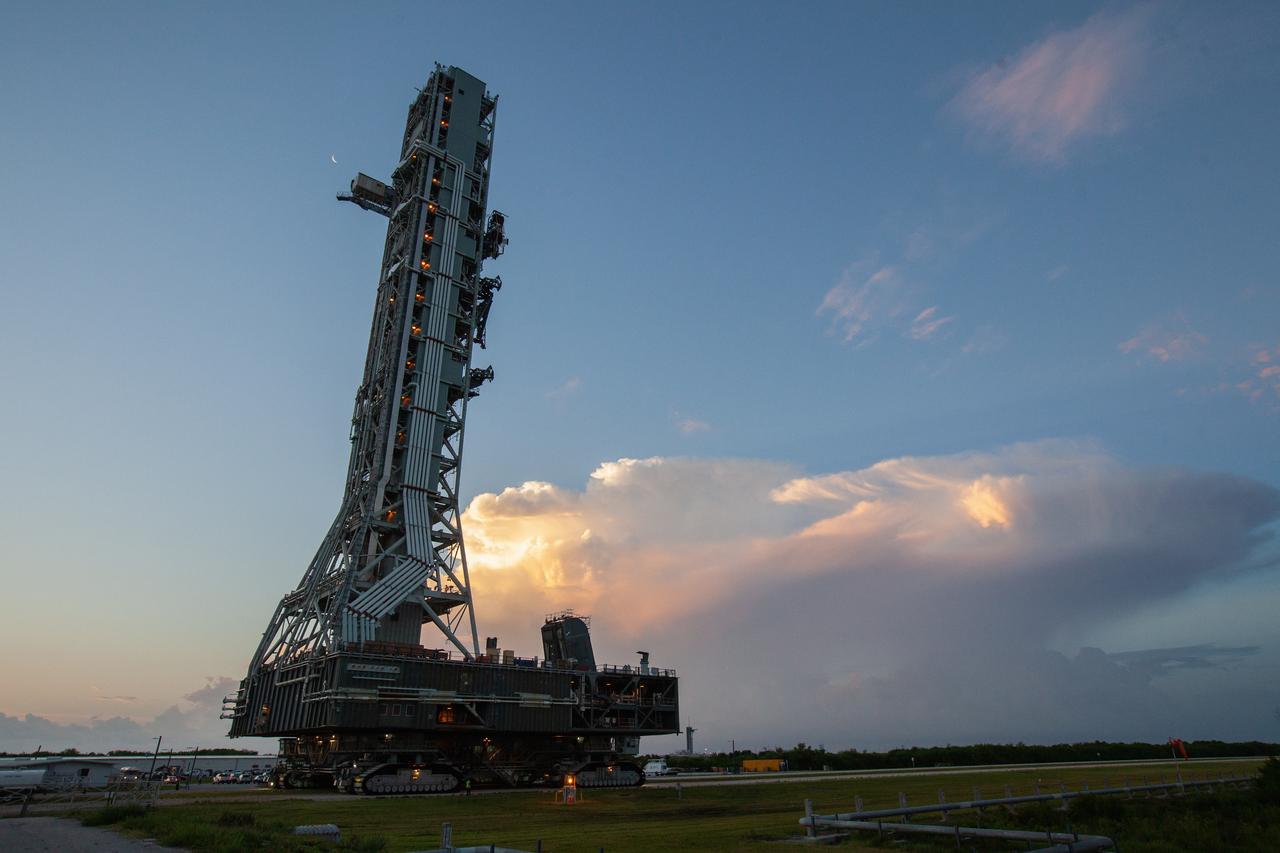
After successfully arriving at Kennedy Space Center’s Launch Complex 39B, Exploration Ground Systems’ mobile launcher continues its journey atop crawler-transporter 2 up to the pad surface on June 28, 2019. The mobile launcher began its final solo trek to the pad at midnight on June 27, departing from NASA’s Vehicle Assembly Building. The mobile launcher will remain at the pad over the summer, undergoing final testing and checkouts. Its next roll to the pad will be with the agency’s Space Launch System rocket and Orion in preparation for the launch of Artemis 1.
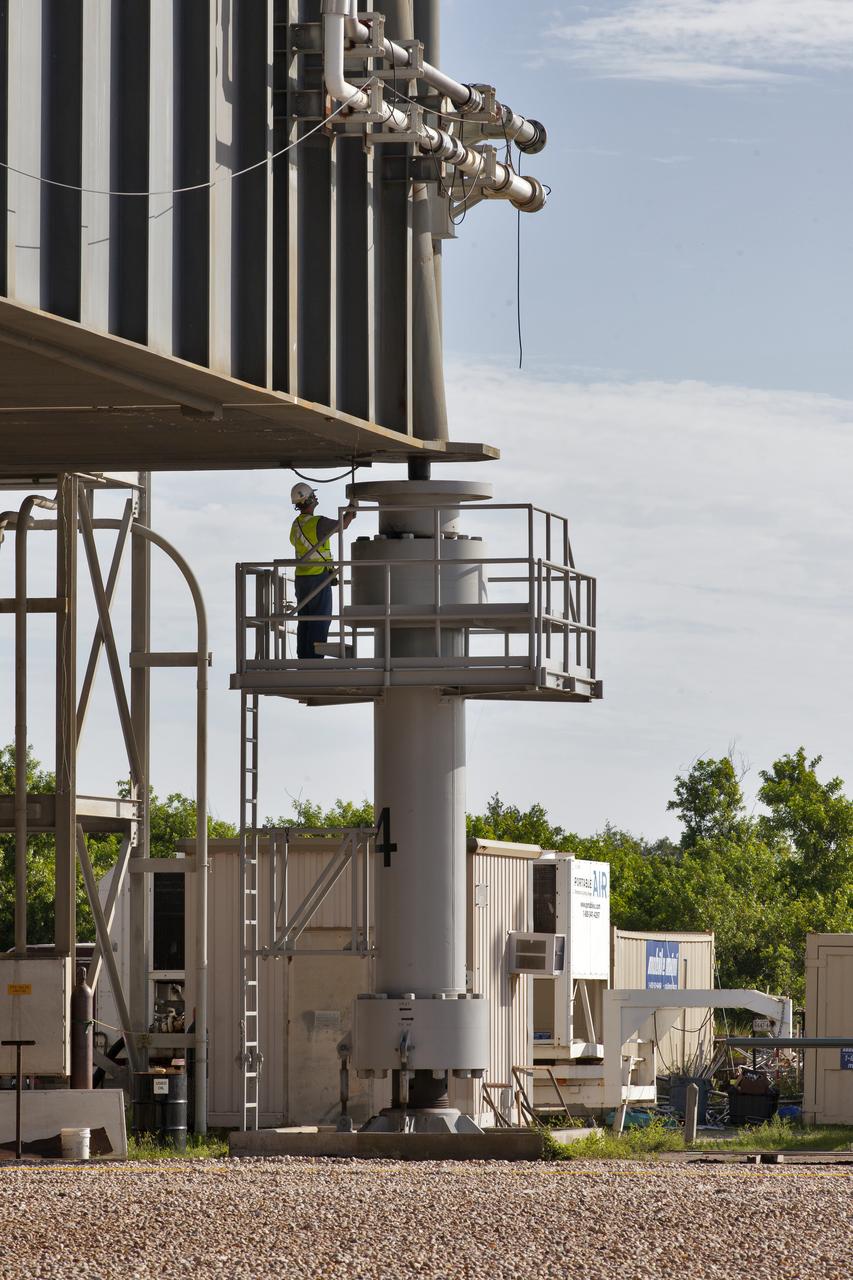
A construction worker monitors the progress as crawler-transporter 2 (CT-2) lifts the mobile launcher up a few inches from its support posts June 1, 2018, at NASA's Kennedy Space Center in Florida. Three lifts were performed to practice lifting procedures, validate interface locations, confirm the weight of the mobile launcher, and develop a baseline for modal analysis. The mobile launcher is equipped with a number of lines, called umbilicals, which will connect to NASA's Space Launch System (SLS) and Orion. The lift helped to test the capability of the upgraded CT-2 to handle the weight of the mobile launcher with SLS and Orion atop. Exploration Ground Systems is preparing the ground systems necessary to support the SLS and Orion spacecraft for Exploration Mission-1 and deep space missions.
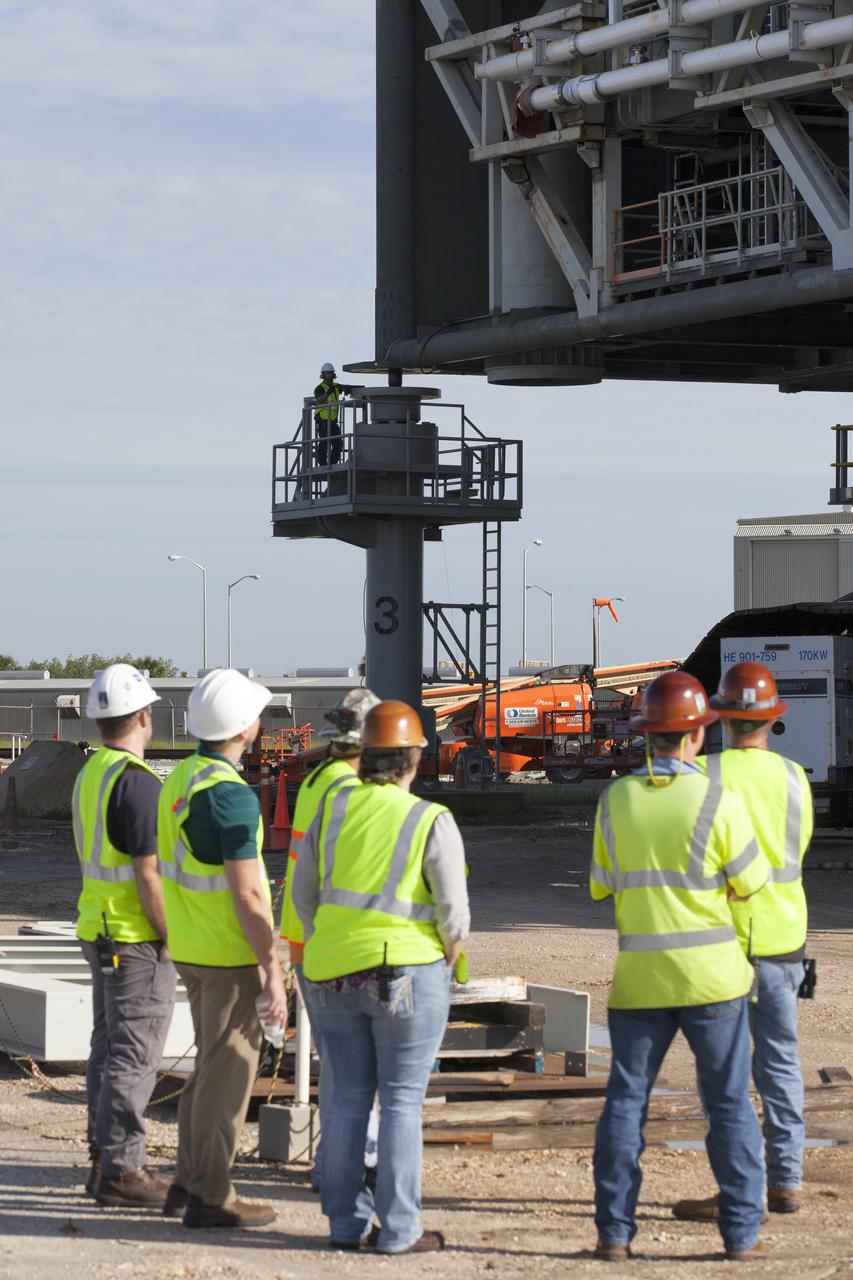
Workers watch as crawler-transporter 2 (CT-2) lifts the mobile launcher up a few inches from its support posts June 1, 2018, at NASA's Kennedy Space Center in Florida. Three lifts were performed to practice lifting procedures, validate interface locations, confirm the weight of the mobile launcher, and develop a baseline for modal analysis. The mobile launcher is equipped with a number of lines, called umbilicals, which will connect to NASA's Space Launch System (SLS) and Orion. The lift helped to test the capability of the upgraded CT-2 to handle the weight of the mobile launcher. Exploration Ground Systems is preparing the ground systems necessary to the SLS and Orion spacecraft for Exploration Mission-1 and deep space missions.
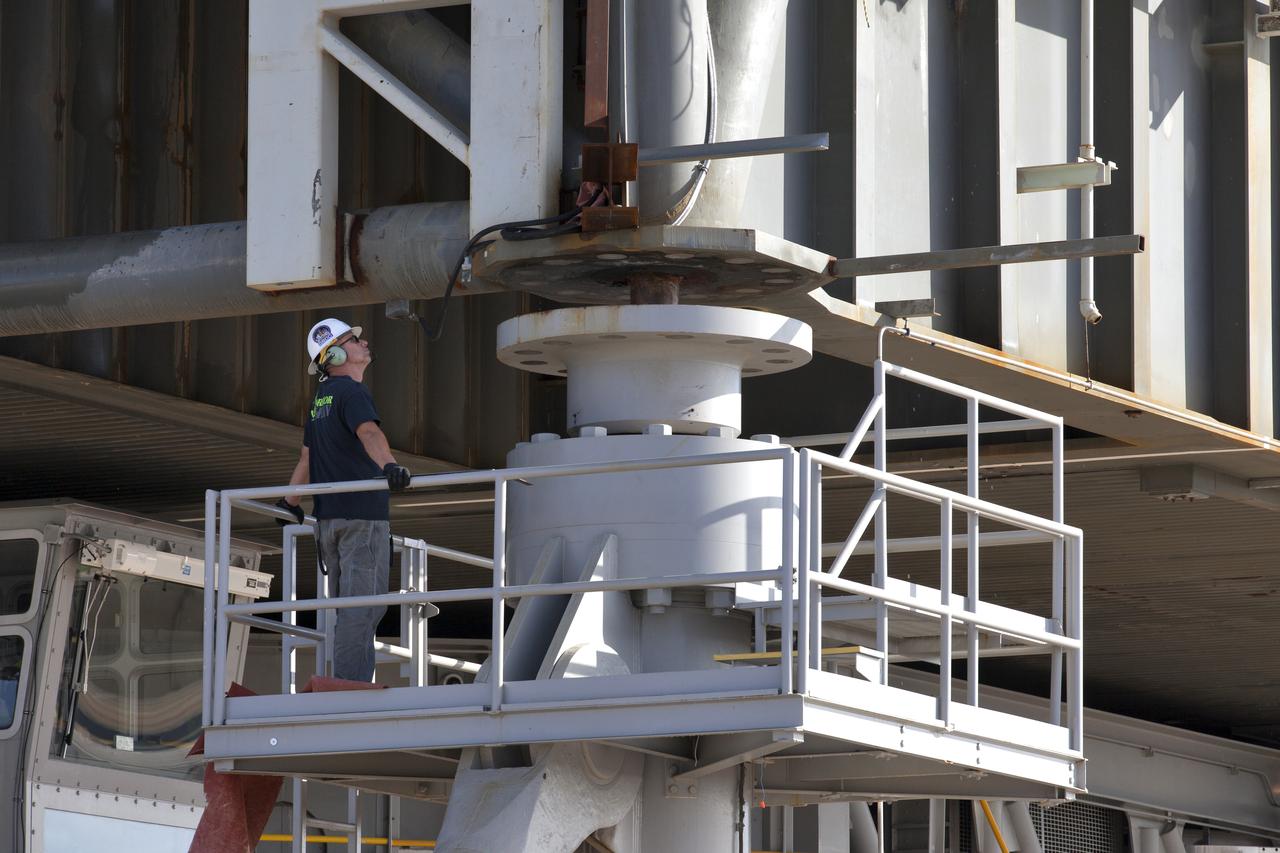
A construction worker monitors the progress as crawler-transporter 2 (CT-2) lifts the mobile launcher up a few inches from its support posts June 1, 2018, at NASA's Kennedy Space Center in Florida. Three lifts were performed to practice lifting procedures, validate interface locations, confirm the weight of the mobile launcher, and develop a baseline for modal analysis. The mobile launcher is equipped with a number of lines, called umbilicals, which will connect to NASA's Space Launch System (SLS) and Orion. The lift helped to test the capability of the upgraded CT-2 to handle the weight of the mobile launcher. Exploration Ground Systems is preparing the ground systems necessary to support the SLS and Orion spacecraft for Exploration Mission-1 and deep space missions.
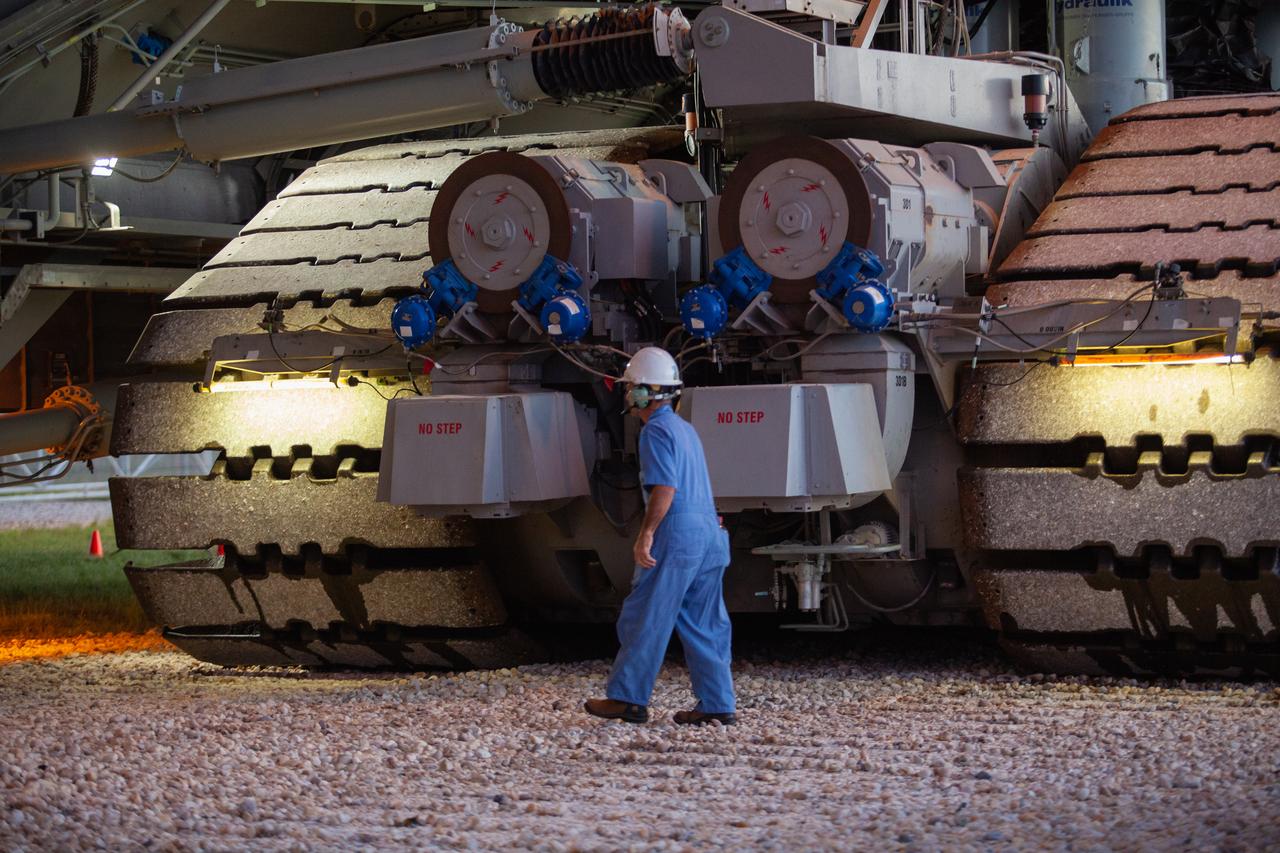
A Kennedy Space Center employee walks near NASA’s crawler-transporter 2 at Kennedy’s Launch Complex 39B area in Florida on June 28, 2019. The crawler-transporter 2 successfully carried Exploration Ground Systems’ mobile launcher to the pad from the Vehicle Assembly Building, departing at midnight on June 27. On June 28, the mobile launcher continued its journey up to the pad surface, where it will remain for the summer, undergoing final testing and checkouts. Its next roll to the pad will be with the agency’s Space Launch System rocket and Orion in preparation for the launch of Artemis 1.
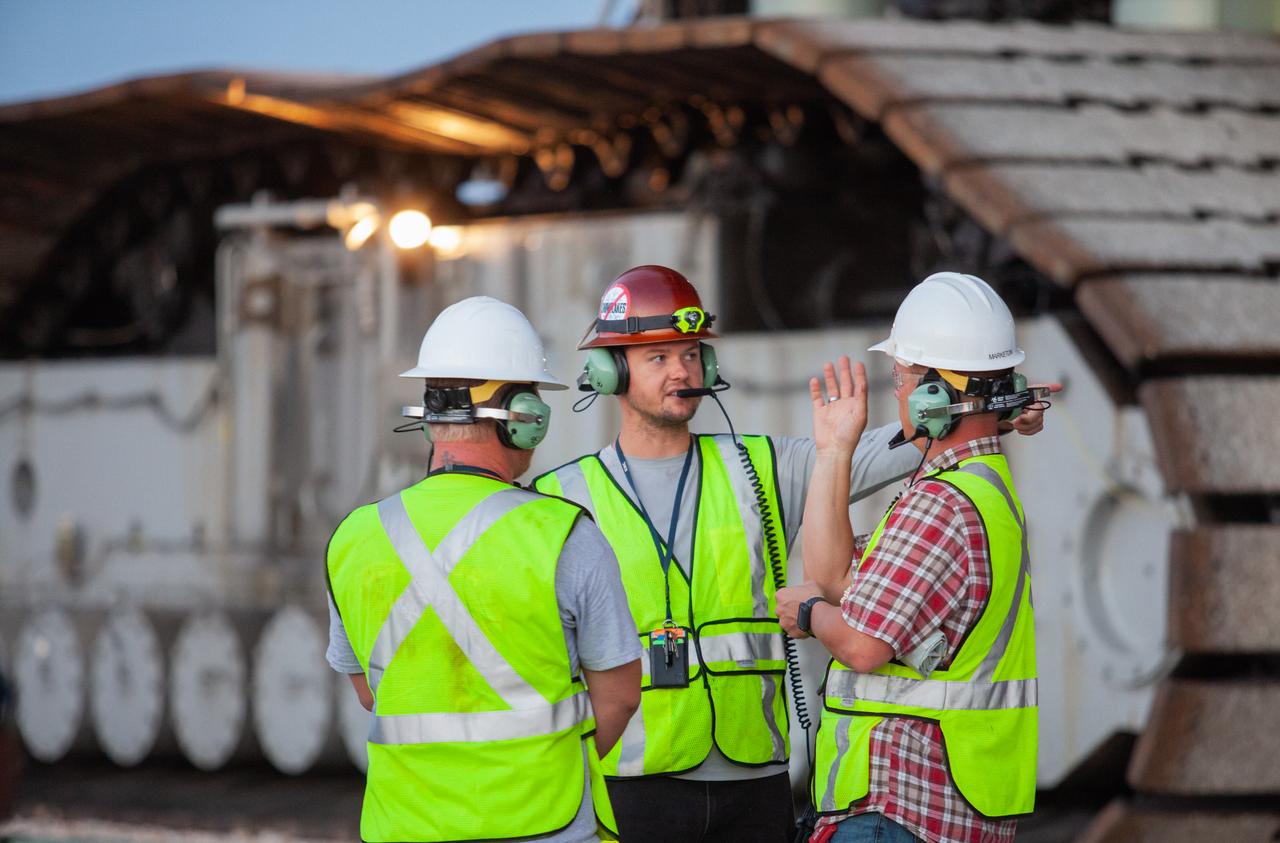
Kennedy Space Center employees stand near NASA’s crawler-transporter 2 at Kennedy’s Launch Complex 39B area in Florida on June 28, 2019. The crawler-transporter 2 successfully carried the Exploration Ground Systems’ mobile launcher to the pad from the Vehicle Assembly Building, departing at midnight on June 27. On June 28, the mobile launcher continued its journey up to the pad surface, where it will remain for the summer, undergoing final testing and checkouts. Its next roll to the pad will be with the agency’s Space Launch System rocket and Orion in preparation for the launch of Artemis 1.
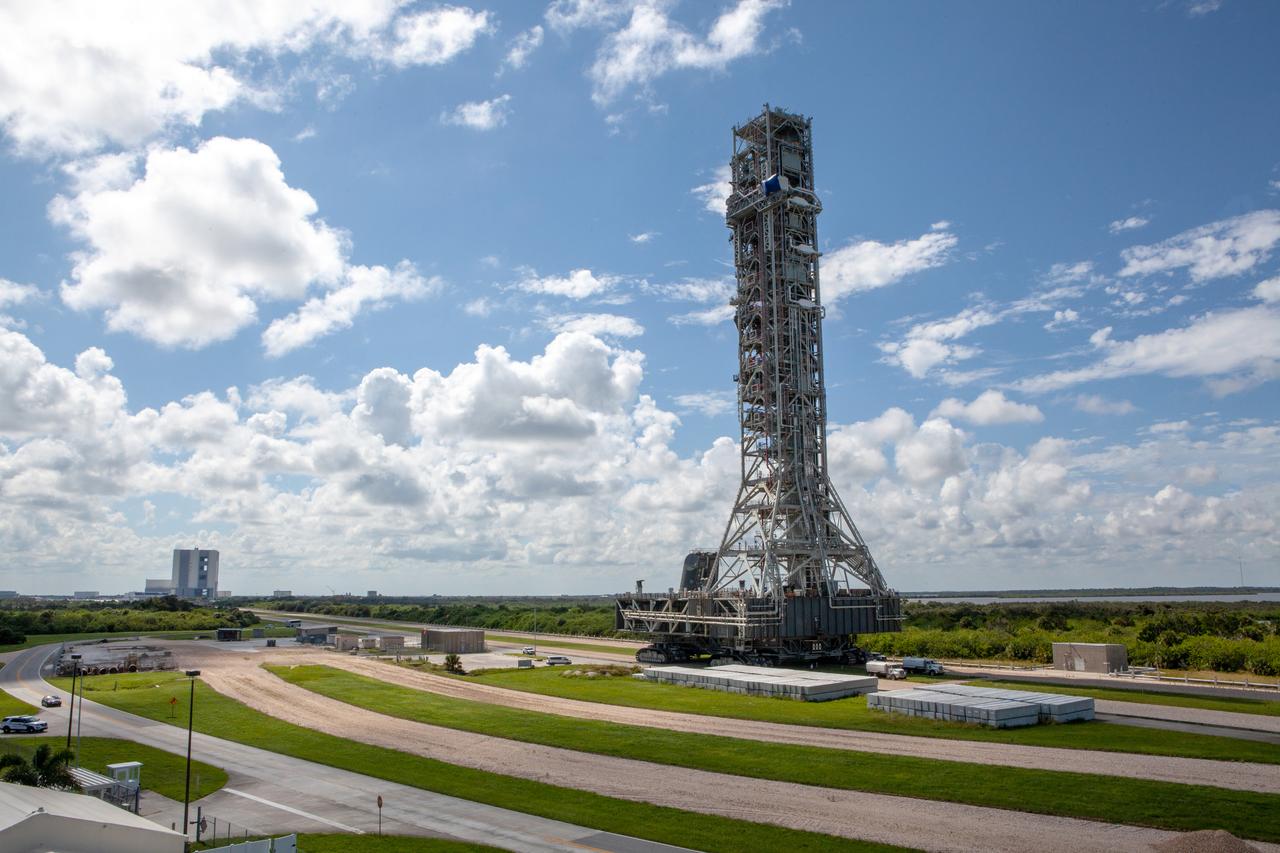
NASA’s mobile launcher (ML) atop crawler-transporter 2 moves along the crawlerway on Sept. 10, 2019, after spending a week and a half inside the Vehicle Assembly Building (VAB) at Kennedy Space Center in Florida due to the approach of Hurricane Dorian. The nearly 400-foot-tall structure was moved from Launch Pad 39B to the VAB for safekeeping on Aug. 30. The storm passed about 70 miles east of the spaceport during the overnight hours Tuesday, Sept. 3, and Wednesday, Sept. 4. NASA’s Exploration Ground Systems is moving the mobile launcher back to the launch pad, where teams will complete testing and checkout on the launcher in the coming weeks for the Artemis I mission.
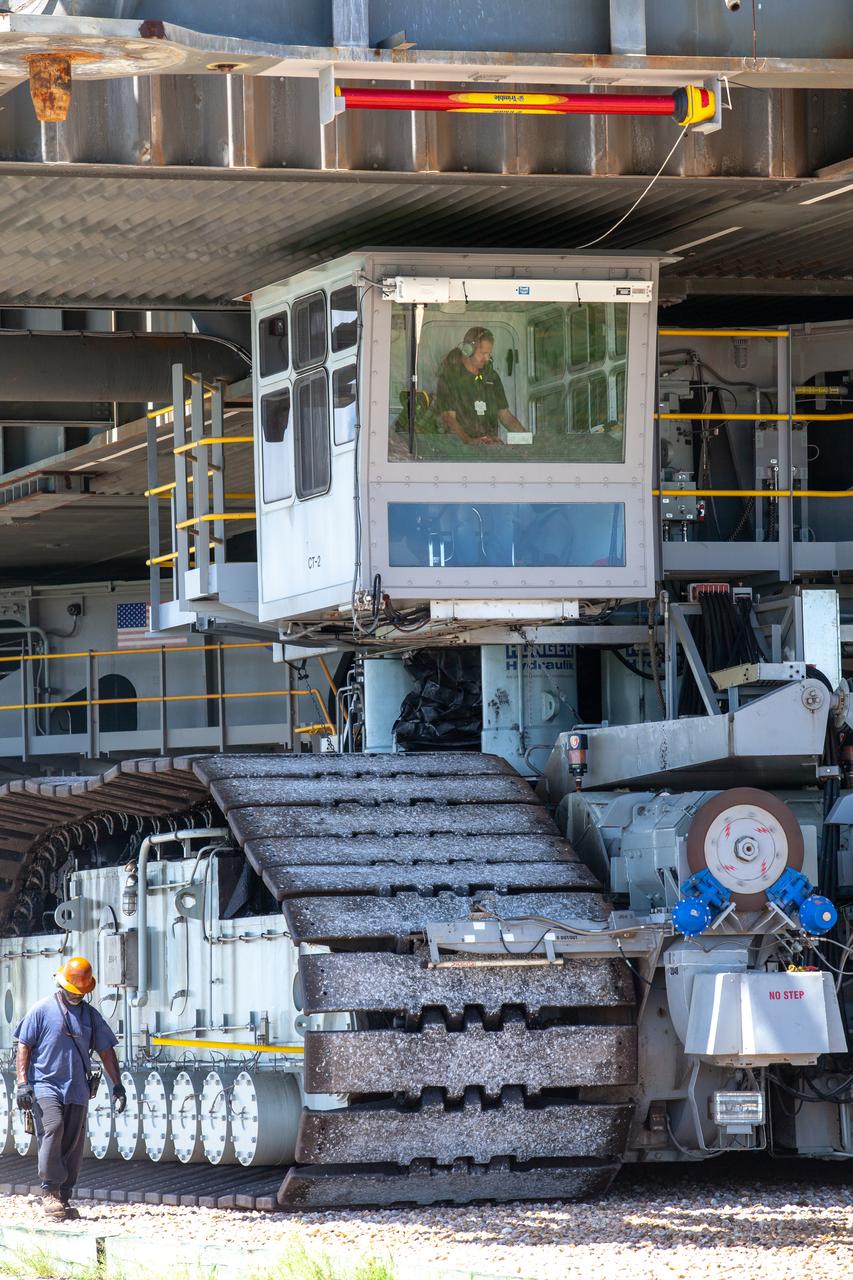
NASA’s mobile launcher (ML) atop crawler-transporter 2 moves along the crawlerway on Sept. 10, 2019, after spending a week and a half inside the Vehicle Assembly Building (VAB) at Kennedy Space Center in Florida due to the approach of Hurricane Dorian. The nearly 400-foot-tall structure was moved from Launch Pad 39B to the VAB for safekeeping on Aug. 30. The storm passed about 70 miles east of the spaceport during the overnight hours Tuesday, Sept. 3, and Wednesday, Sept. 4. NASA’s Exploration Ground Systems is moving the mobile launcher back to the launch pad, where teams will complete testing and checkout on the launcher in the coming weeks for the Artemis I mission.
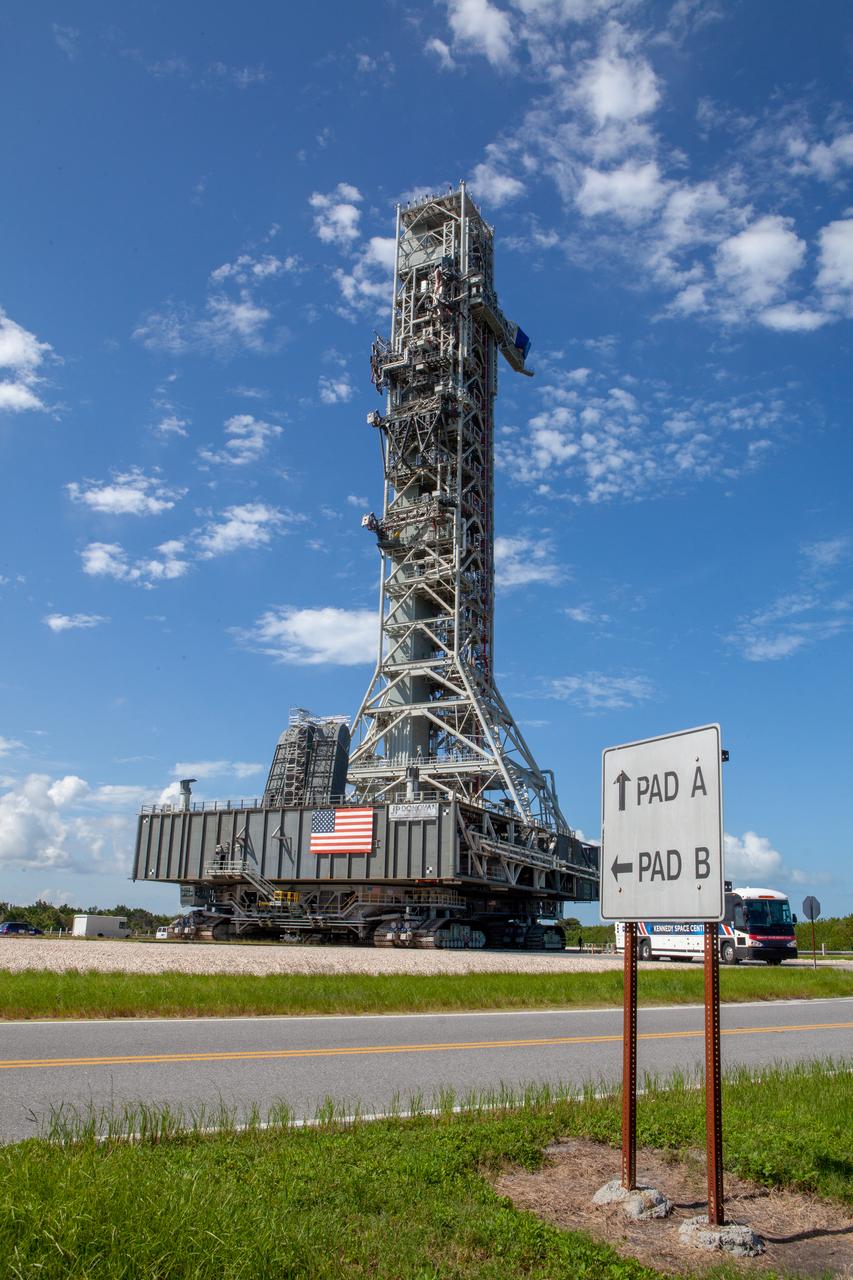
NASA’s mobile launcher (ML) atop crawler-transporter 2 moves along the crawlerway on Sept. 10, 2019, after spending a week and a half inside the Vehicle Assembly Building (VAB) at Kennedy Space Center in Florida due to the approach of Hurricane Dorian. The nearly 400-foot-tall structure was moved from Launch Pad 39B to the VAB for safekeeping on Aug. 30. The storm passed about 70 miles east of the spaceport during the overnight hours Tuesday, Sept. 3, and Wednesday, Sept. 4. NASA’s Exploration Ground Systems is moving the mobile launcher back to the launch pad, where teams will complete testing and checkout on the launcher in the coming weeks for the Artemis I mission.
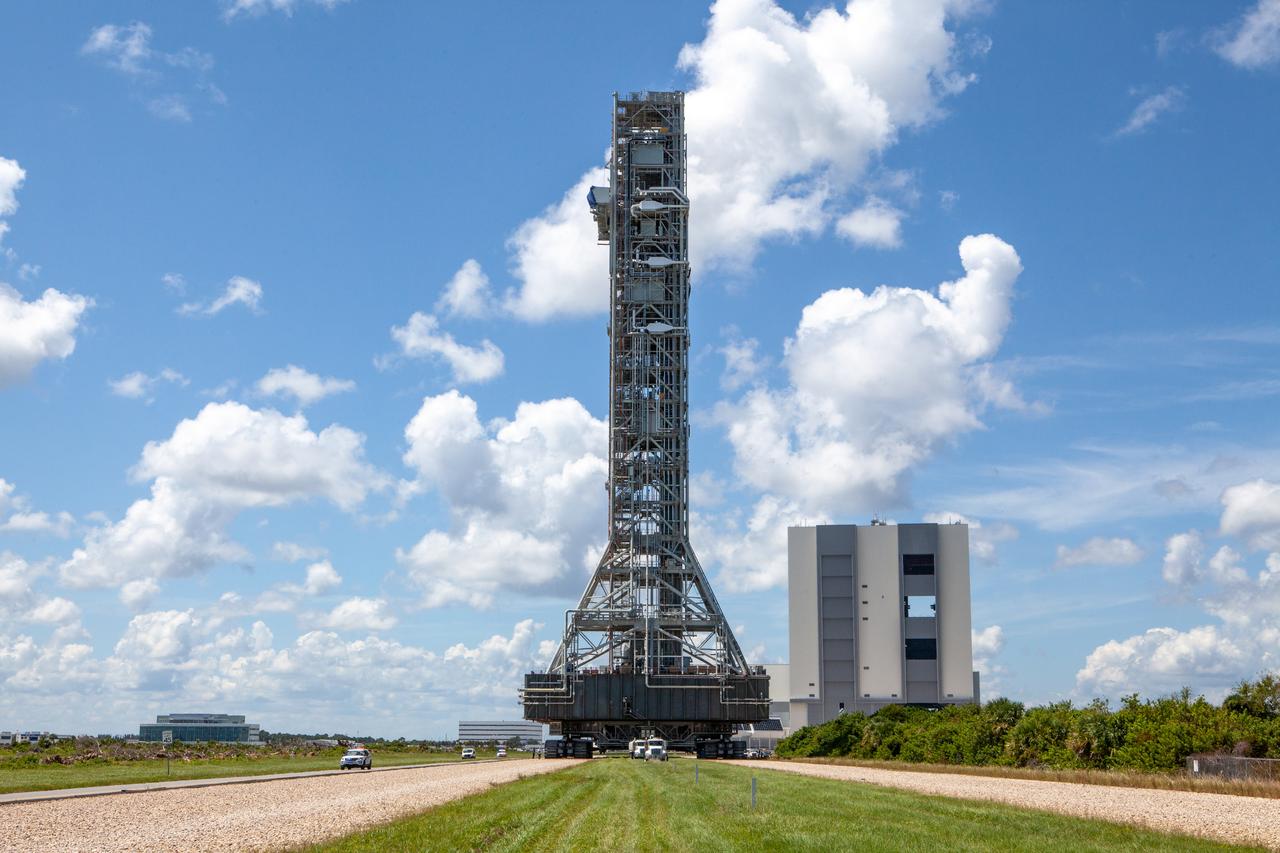
NASA’s mobile launcher (ML) atop crawler-transporter 2 moves along the crawlerway on Sept. 10, 2019, after spending a week and a half inside the Vehicle Assembly Building (VAB) at Kennedy Space Center in Florida due to the approach of Hurricane Dorian. The nearly 400-foot-tall structure was moved from Launch Pad 39B to the VAB for safekeeping on Aug. 30. The storm passed about 70 miles east of the spaceport during the overnight hours Tuesday, Sept. 3, and Wednesday, Sept. 4. NASA’s Exploration Ground Systems is moving the mobile launcher back to the launch pad, where teams will complete testing and checkout on the launcher in the coming weeks for the Artemis I mission.
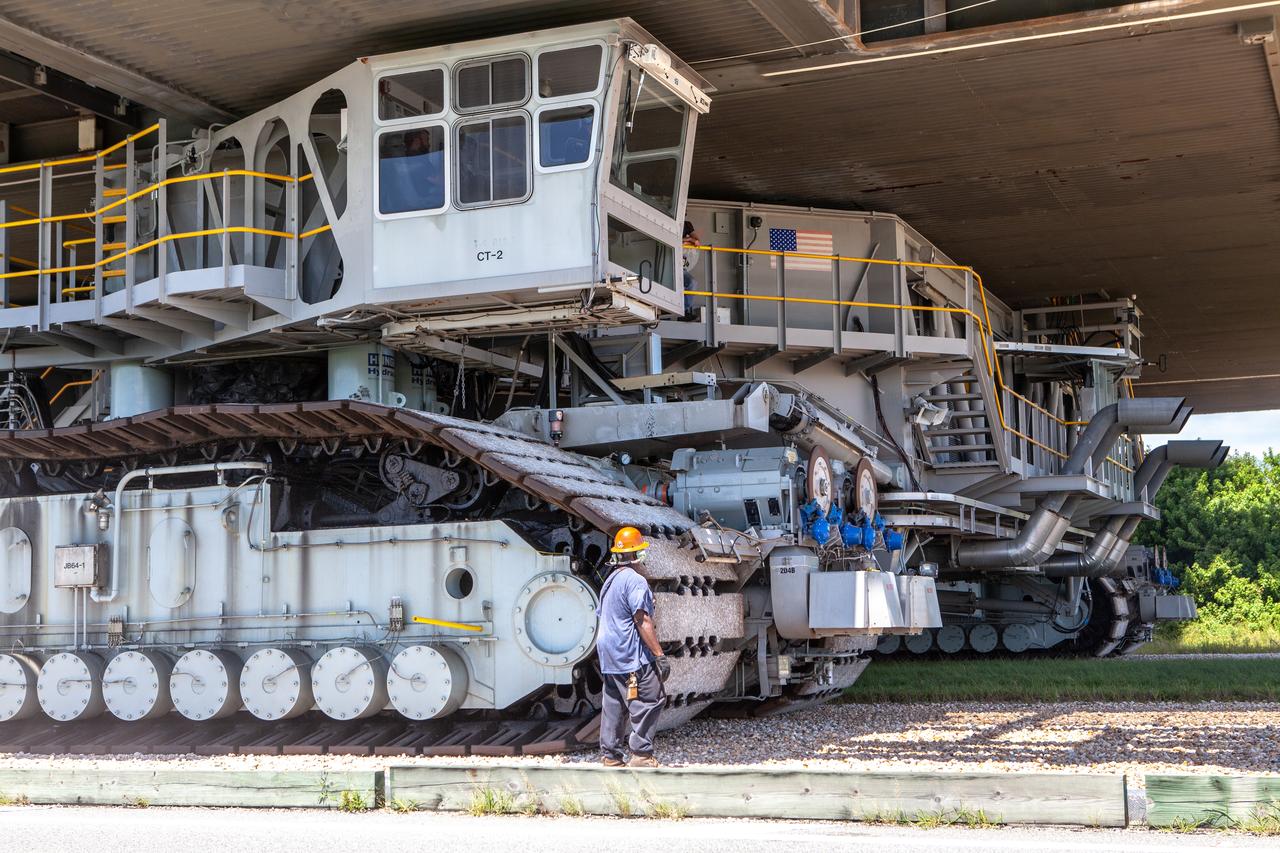
NASA’s mobile launcher (ML) atop crawler-transporter 2 moves along the crawlerway on Sept. 10, 2019, after spending a week and a half inside the Vehicle Assembly Building (VAB) at Kennedy Space Center in Florida due to the approach of Hurricane Dorian. The nearly 400-foot-tall structure was moved from Launch Pad 39B to the VAB for safekeeping on Aug. 30. The storm passed about 70 miles east of the spaceport during the overnight hours Tuesday, Sept. 3, and Wednesday, Sept. 4. NASA’s Exploration Ground Systems is moving the mobile launcher back to the launch pad, where teams will complete testing and checkout on the launcher in the coming weeks for the Artemis I mission.
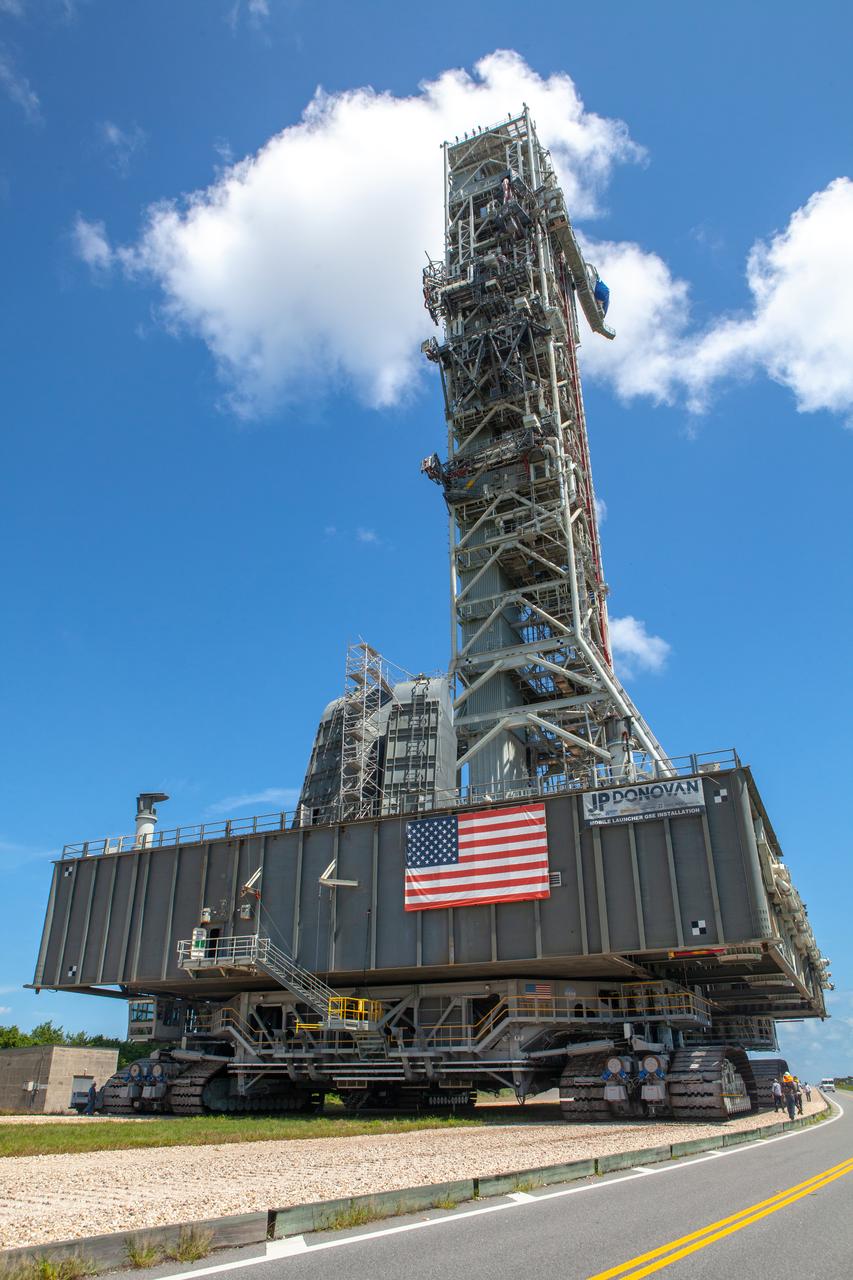
NASA’s mobile launcher (ML) atop crawler-transporter 2 moves along the crawlerway on Sept. 10, 2019, after spending a week and a half inside the Vehicle Assembly Building (VAB) at Kennedy Space Center in Florida due to the approach of Hurricane Dorian. The nearly 400-foot-tall structure was moved from Launch Pad 39B to the VAB for safekeeping on Aug. 30. The storm passed about 70 miles east of the spaceport during the overnight hours Tuesday, Sept. 3, and Wednesday, Sept. 4. NASA’s Exploration Ground Systems is moving the mobile launcher back to the launch pad, where teams will complete testing and checkout on the launcher in the coming weeks for the Artemis I mission.
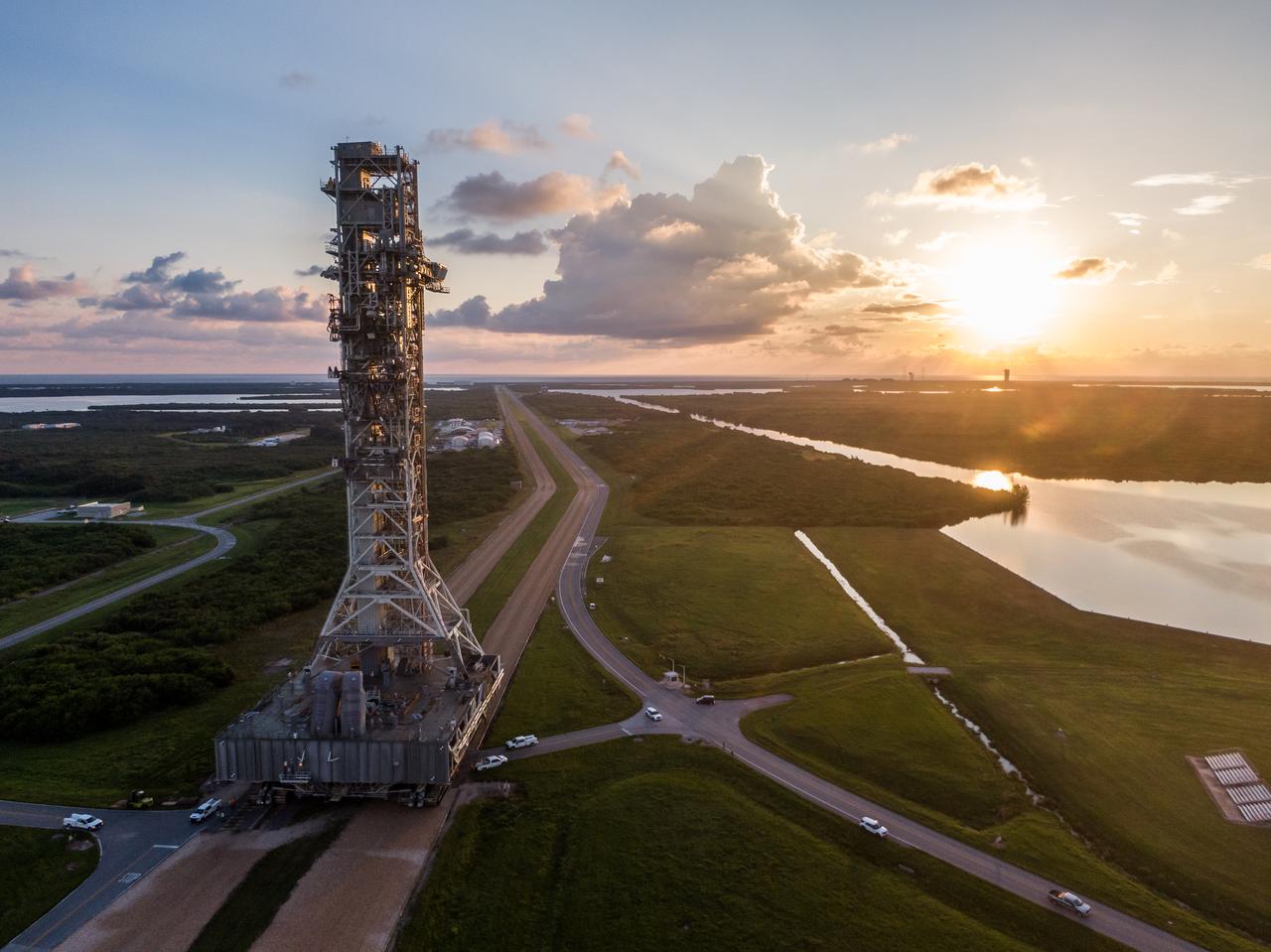
A drone camera captures NASA’s mobile launcher 1 atop the agency’s crawler-transporter 2 moving from Launch Complex 39B to the Vehicle Assembly Building at NASA’s Kennedy Space Center in Florida on Thursday, Oct. 3, 2024. The mobile launcher has been at the launch pad since August 2023 undergoing upgrades and tests in preparation for NASA’s Artemis II mission. The mobile launcher will be used to assemble, process, and launch NASA’s SLS (Space Launch Systems) and Orion spacecraft to the Moon and beyond.
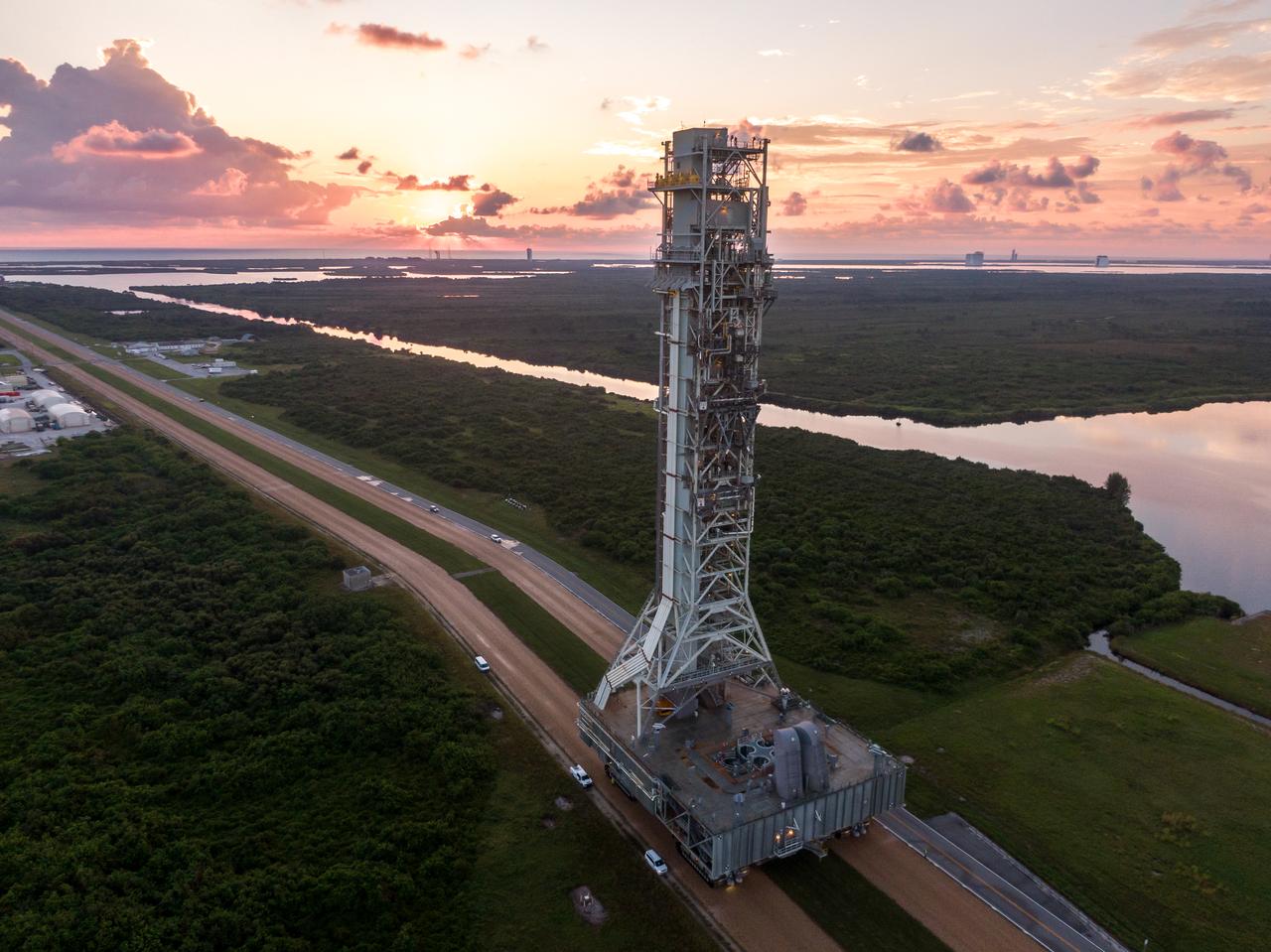
A drone camera captures NASA’s mobile launcher 1 atop the agency’s crawler-transporter 2 moving from Launch Complex 39B to the Vehicle Assembly Building at NASA’s Kennedy Space Center in Florida on Thursday, Oct. 3, 2024. The mobile launcher has been at the launch pad since August 2023 undergoing upgrades and tests in preparation for NASA’s Artemis II mission. The mobile launcher will be used to assemble, process, and launch NASA’s SLS (Space Launch Systems) and Orion spacecraft to the Moon and beyond.
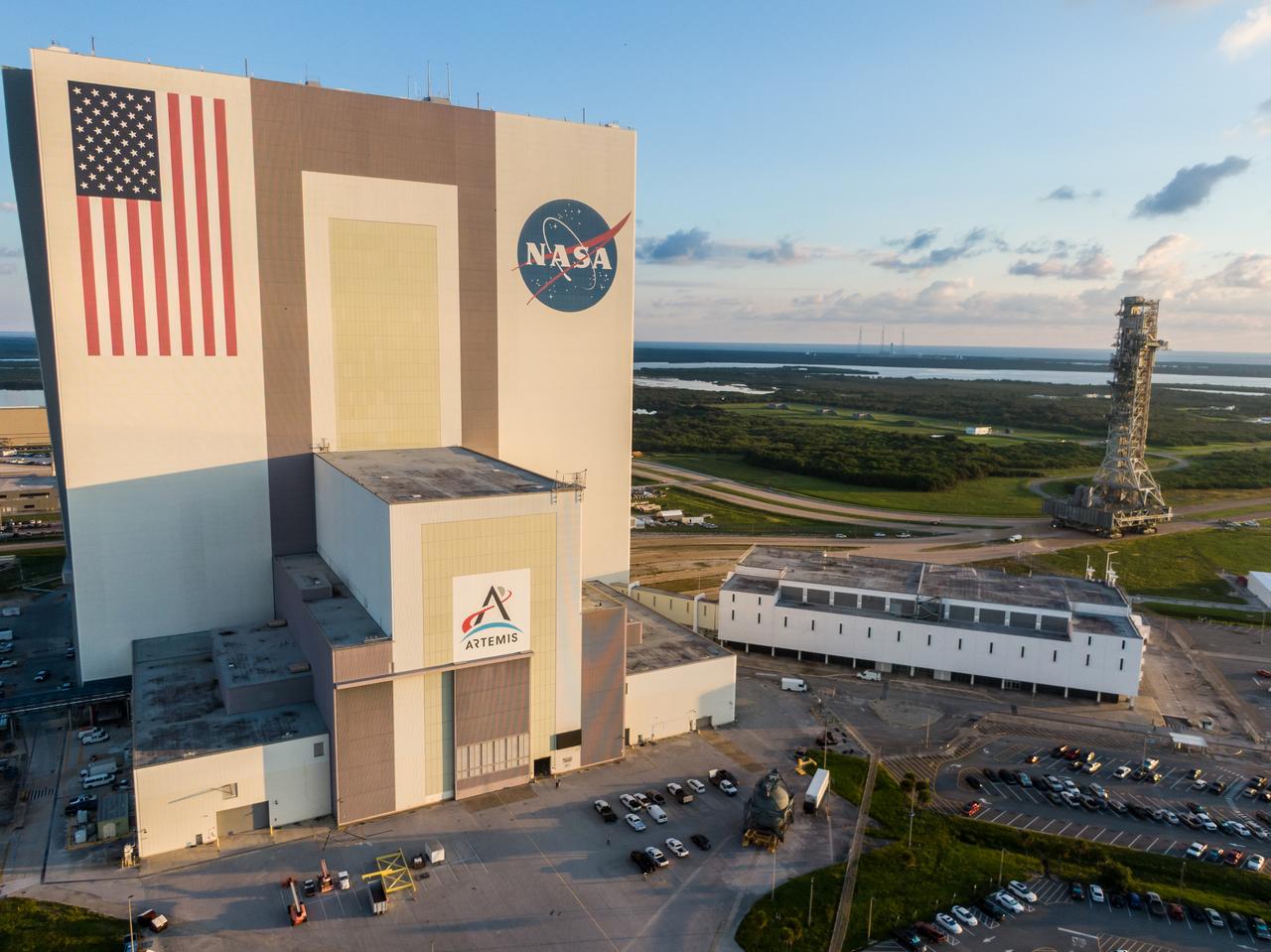
A drone camera captures NASA’s mobile launcher 1 atop the agency’s crawler-transporter 2 moving from Launch Complex 39B approaching to enter the Vehicle Assembly Building at NASA’s Kennedy Space Center in Florida on Thursday, Oct. 3, 2024. The mobile launcher has been at the launch pad since August 2023 undergoing upgrades and tests in preparation for NASA’s Artemis II mission. The mobile launcher will be used to assemble, process, and launch NASA’s SLS (Space Launch Systems) and Orion spacecraft to the Moon and beyond.
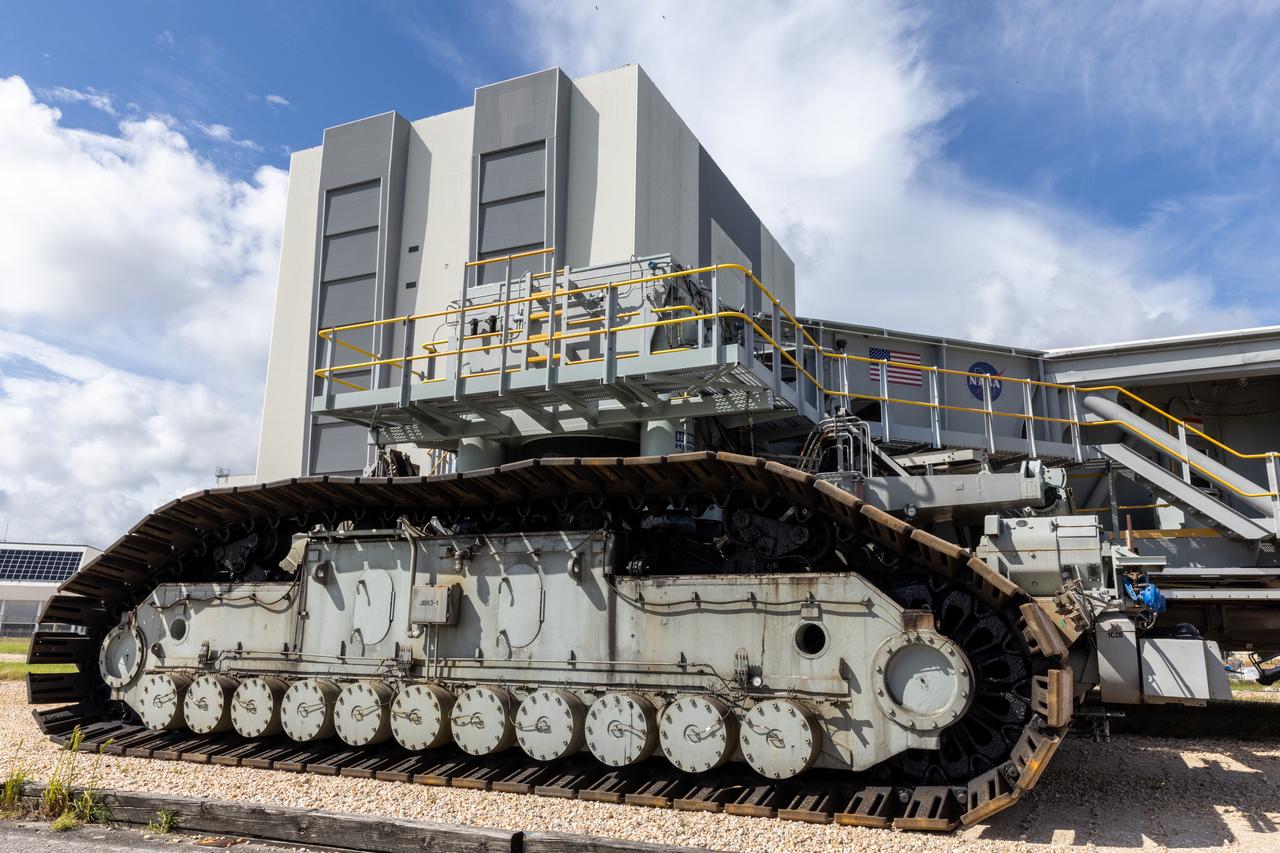
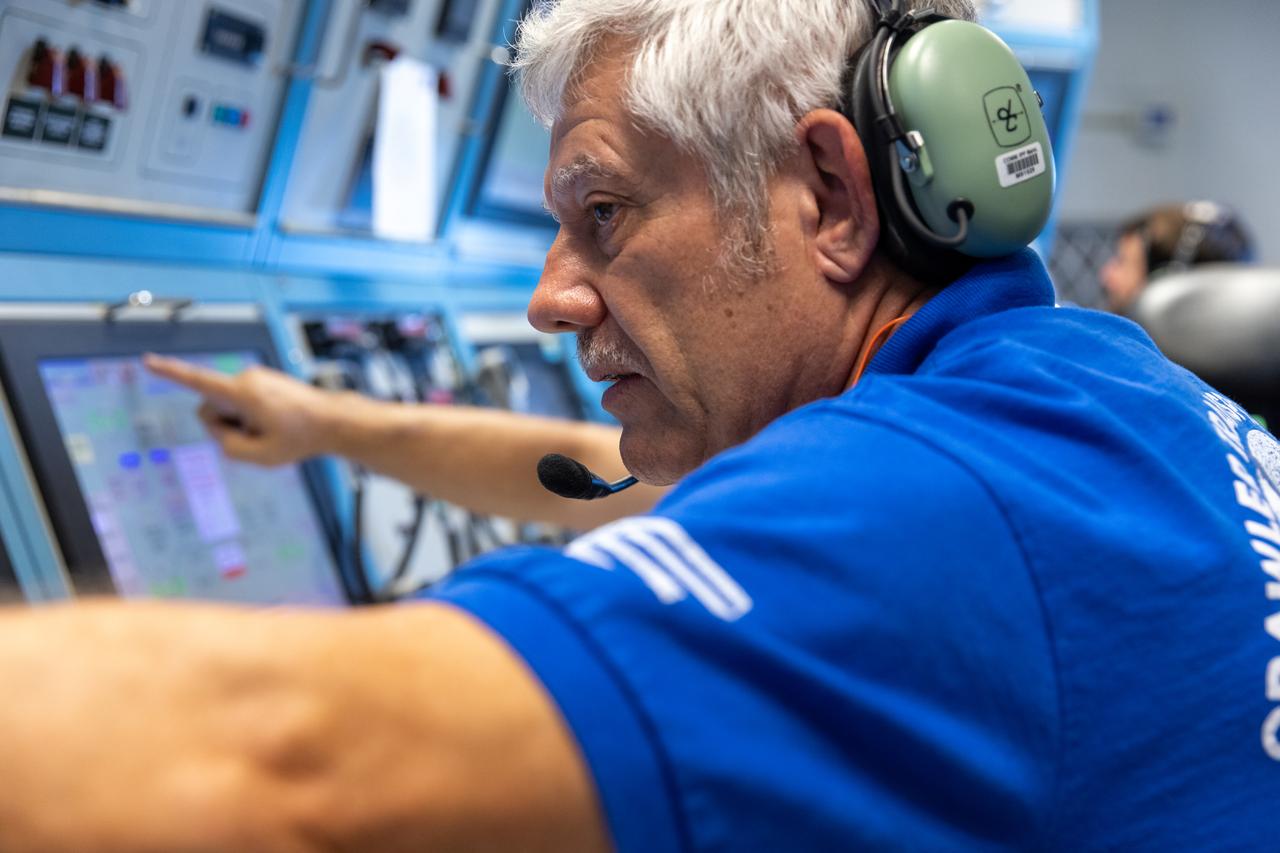
NASA’s crawler-transporter 2 moves slowly along the crawlerway towards Launch Pad 39B at the agency’s Kennedy Space Center in Florida on Wednesday, Sept. 25, 2024, after reaching the milestone of 2,500 miles traveled since its construction in 1965. Crawler-transporter 2 reached the milestone while teams with NASA’s Exploration Ground Systems took it on a trip in preparation for supporting the roll of the mobile launcher back into the spaceport’s Vehicle Assembly Building ahead of the Artemis II launch. Built originally to transport massive Saturn V rockets during the Apollo Program, crawler-transporter 2 continued its service during the Space Shuttle Program, and currently transports the massive SLS (Space Launch System) rocket and Orion spacecraft atop the mobile launcher as part of the agency’s Artemis campaign.
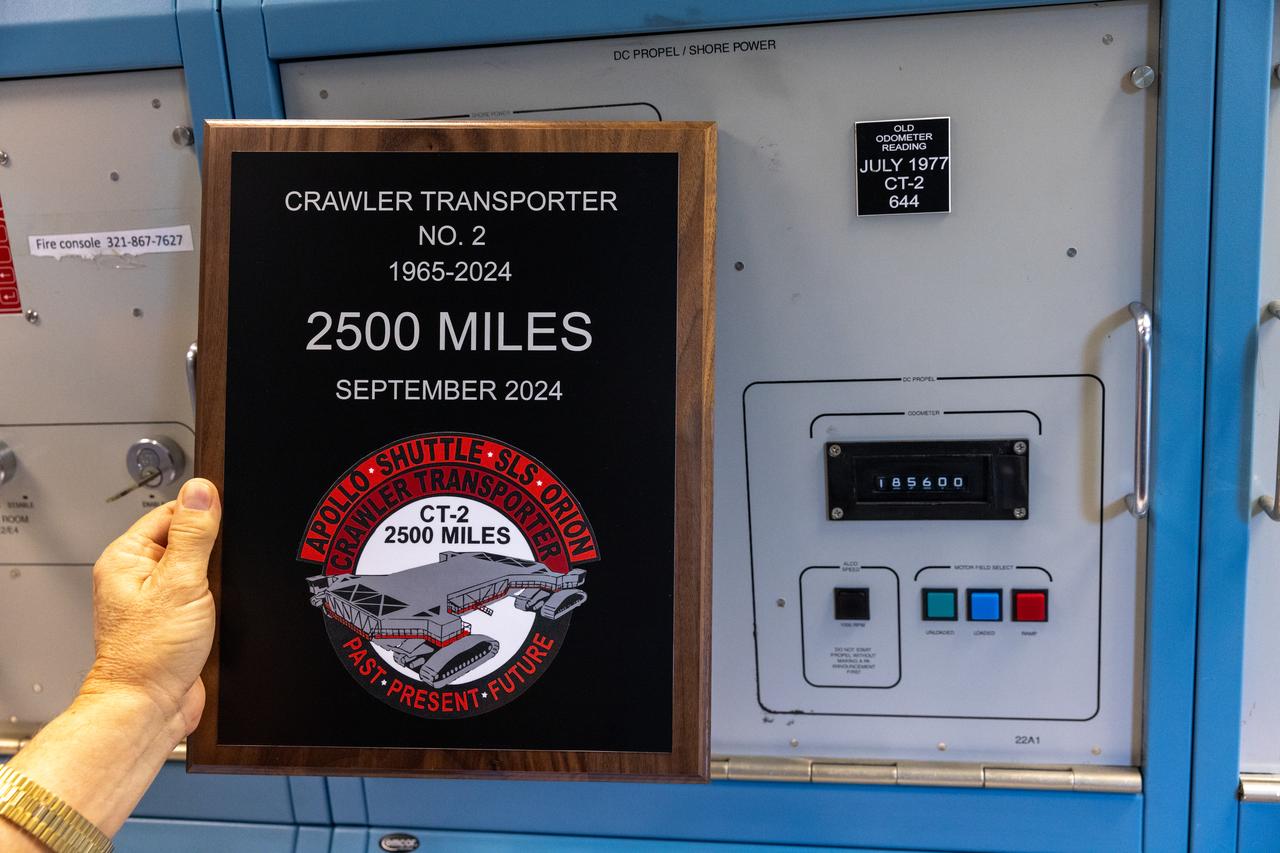
A plaque is held near the odometer of the agency’s crawler-transporter 2, on Wednesday, Sept. 25, 2024, at NASA’s Kennedy Space Center in Florida, commemorating the milestone of 2,500 miles traveled since its construction in 1965. Crawler-transporter 2 reached the milestone while teams with NASA’s Exploration Ground Systems took it on a trip in preparation for supporting the roll of the mobile launcher from Launch Pad 39B back into the spaceport’s Vehicle Assembly Building ahead of the Artemis II launch. Built originally to transport massive Saturn V rockets during the Apollo Program, crawler-transporter 2 continued its service during the Space Shuttle Program, and currently transports the massive SLS (Space Launch System) rocket and Orion spacecraft atop the mobile launcher as part of the agency’s Artemis campaign.
Teams with NASA’s Exploration Ground Systems at NASA’s Kennedy Space Center in Florida celebrate on Wednesday, Sept. 25, 2024, the agency’s crawler-transporter 2 reaching the milestone of 2,500 miles traveled since its construction in 1965. Crawler-transporter 2 reached the milestone while teams took it on a trip in preparation for supporting the roll of the mobile launcher from Launch Pad 39B back into the spaceport’s Vehicle Assembly Building ahead of the Artemis II launch. Built originally to transport massive Saturn V rockets during the Apollo Program, crawler-transporter 2 continued its service during the Space Shuttle Program, and currently transports the massive SLS (Space Launch System) rocket and Orion spacecraft atop the mobile launcher as part of the agency’s Artemis campaign.
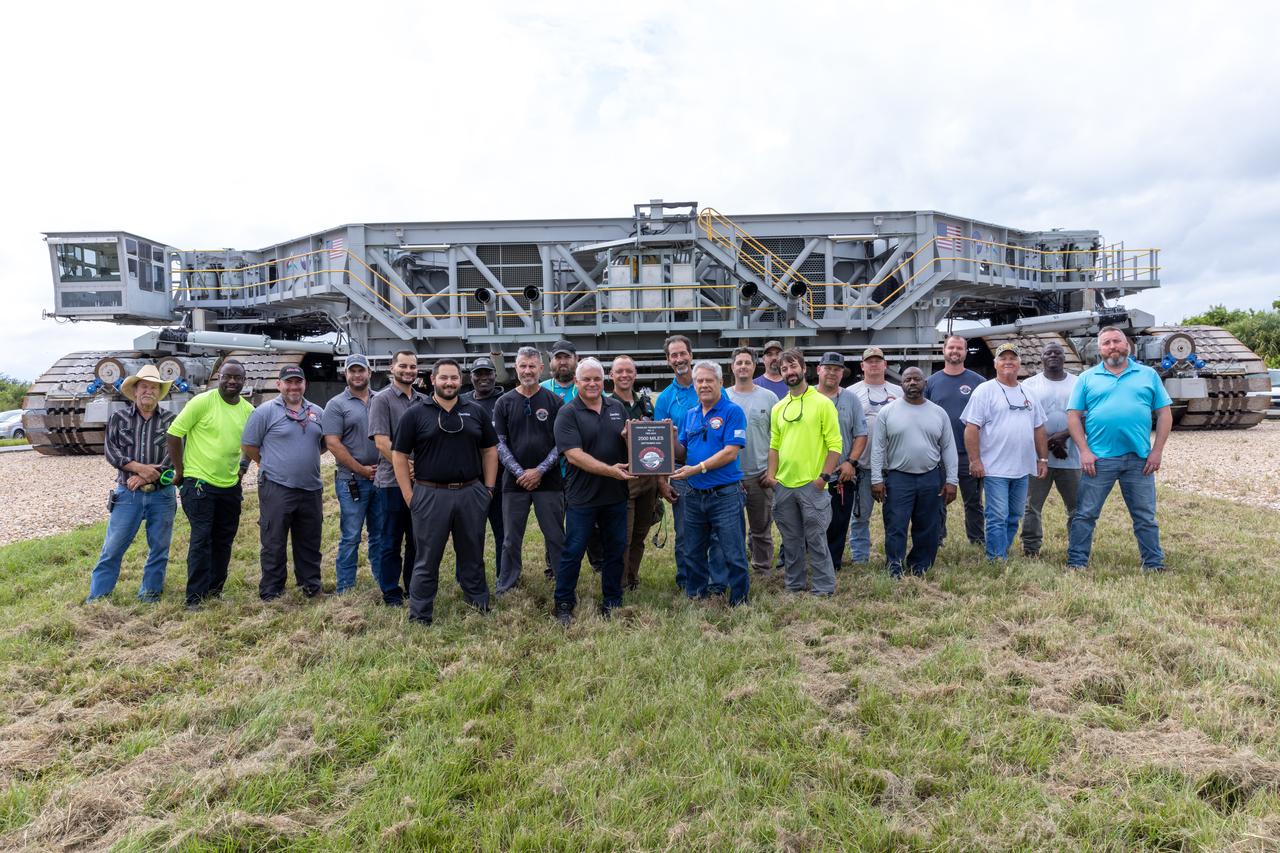
Teams with NASA’s Exploration Ground Systems at NASA’s Kennedy Space Center in Florida celebrate on Wednesday, Sept. 25, 2024, the agency’s crawler-transporter 2 reaching the milestone of 2,500 miles traveled since its construction in 1965. Crawler-transporter 2 reached the milestone while teams took it on a trip in preparation for supporting the roll of the mobile launcher from Launch Pad 39B back into the spaceport’s Vehicle Assembly Building ahead of the Artemis II launch. Built originally to transport massive Saturn V rockets during the Apollo Program, crawler-transporter 2 continued its service during the Space Shuttle Program, and currently transports the massive SLS (Space Launch System) rocket and Orion spacecraft atop the mobile launcher as part of the agency’s Artemis campaign.
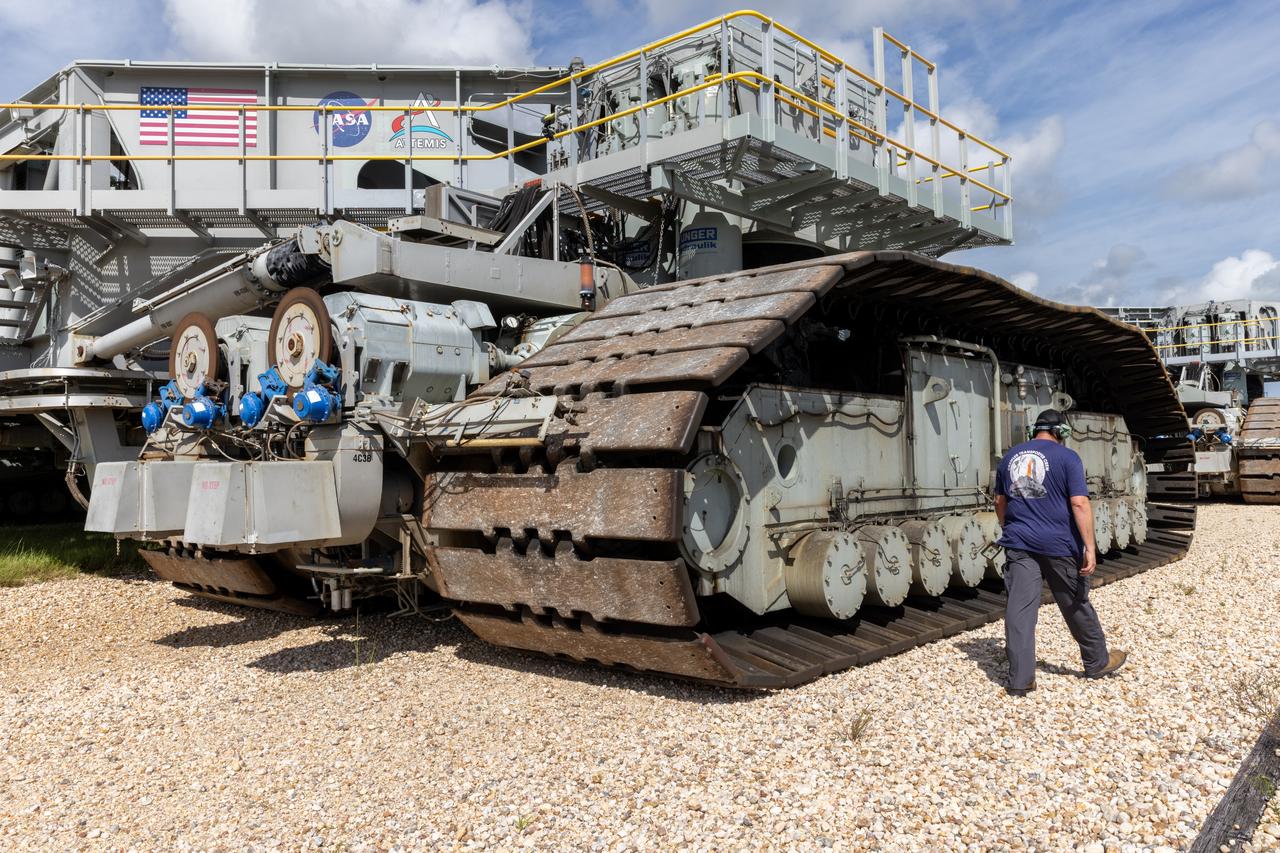
NASA’s crawler-transporter 2 moves slowly along the crawlerway towards Launch Pad 39B at the agency’s Kennedy Space Center in Florida on Wednesday, Sept. 25, 2024, after reaching the milestone of 2,500 miles traveled since its construction in 1965. Crawler-transporter 2 reached the milestone while teams with NASA’s Exploration Ground Systems took it on a trip in preparation for supporting the roll of the mobile launcher back into the spaceport’s Vehicle Assembly Building ahead of the Artemis II launch. Built originally to transport massive Saturn V rockets during the Apollo Program, crawler-transporter 2 continued its service during the Space Shuttle Program, and currently transports the massive SLS (Space Launch System) rocket and Orion spacecraft atop the mobile launcher as part of the agency’s Artemis campaign.
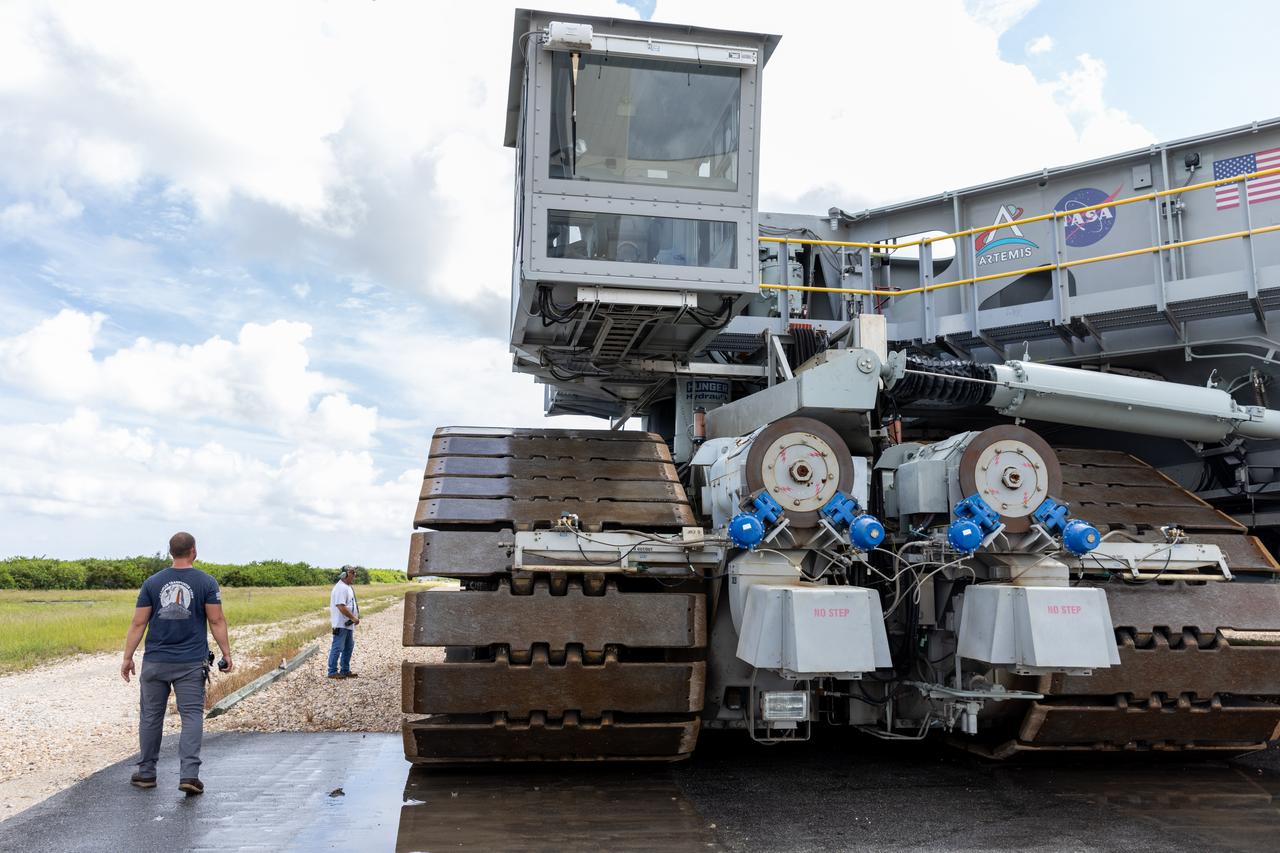
NASA’s crawler-transporter 2 moves slowly along the crawlerway towards Launch Pad 39B at the agency’s Kennedy Space Center in Florida on Wednesday, Sept. 25, 2024, after reaching the milestone of 2,500 miles traveled since its construction in 1965. Crawler-transporter 2 reached the milestone while teams with NASA’s Exploration Ground Systems took it on a trip in preparation for supporting the roll of the mobile launcher back into the spaceport’s Vehicle Assembly Building ahead of the Artemis II launch. Built originally to transport massive Saturn V rockets during the Apollo Program, crawler-transporter 2 continued its service during the Space Shuttle Program, and currently transports the massive SLS (Space Launch System) rocket and Orion spacecraft atop the mobile launcher as part of the agency’s Artemis campaign.
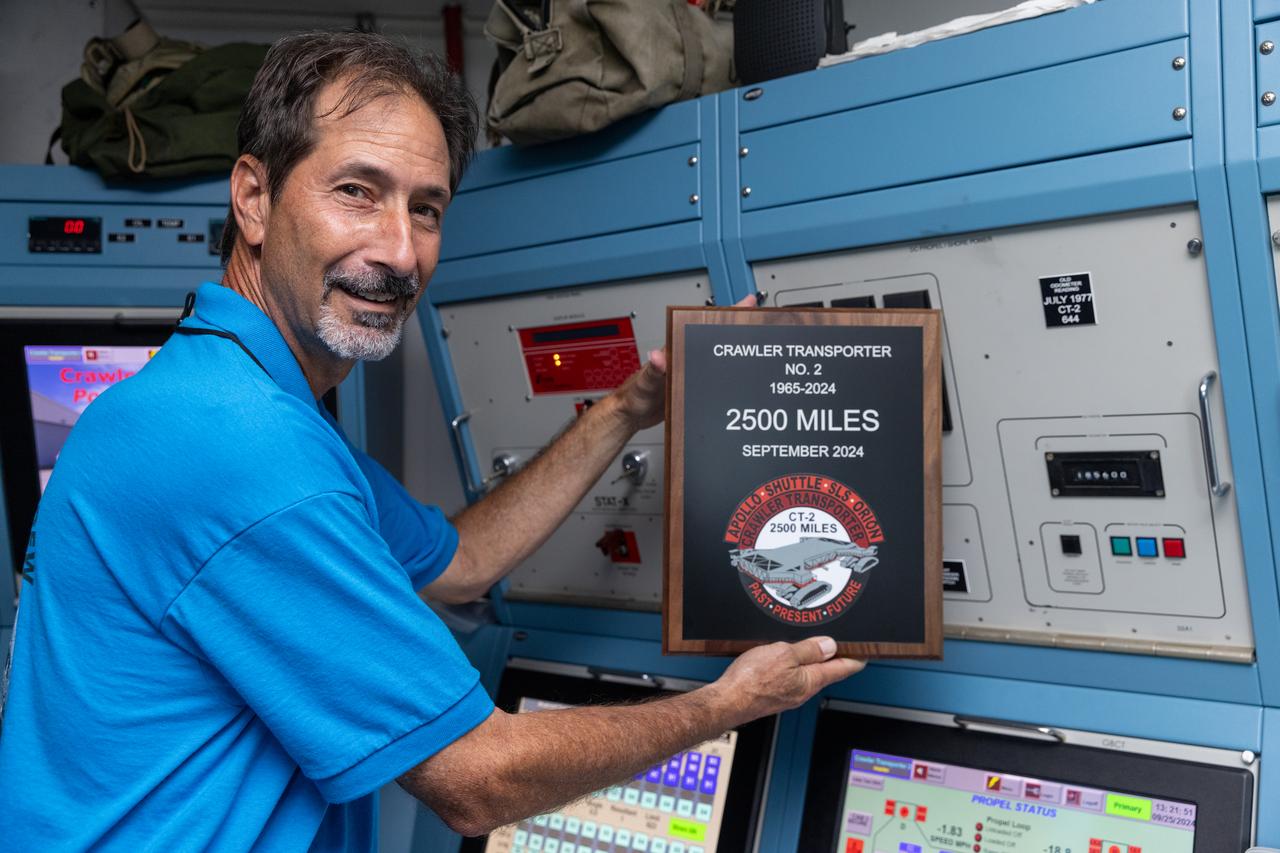
John Giles, crawler element operations manager for NASA’s Exploration Ground Systems, holds a plaque near the odometer of the agency’s crawler-transporter 2, on Wednesday, Sept. 25, 2024, at NASA’s Kennedy Space Center in Florida, commemorating the milestone of 2,500 miles traveled since its construction in 1965. Crawler-transporter 2 reached the milestone while teams took it on a trip in preparation for supporting the roll of the mobile launcher from Launch Pad 39B back into the spaceport’s Vehicle Assembly Building ahead of the Artemis II launch. Built originally to transport massive Saturn V rockets during the Apollo Program, crawler-transporter 2 continued its service during the Space Shuttle Program, and currently transports the massive SLS (Space Launch System) rocket and Orion spacecraft atop the mobile launcher as part of the agency’s Artemis campaign.
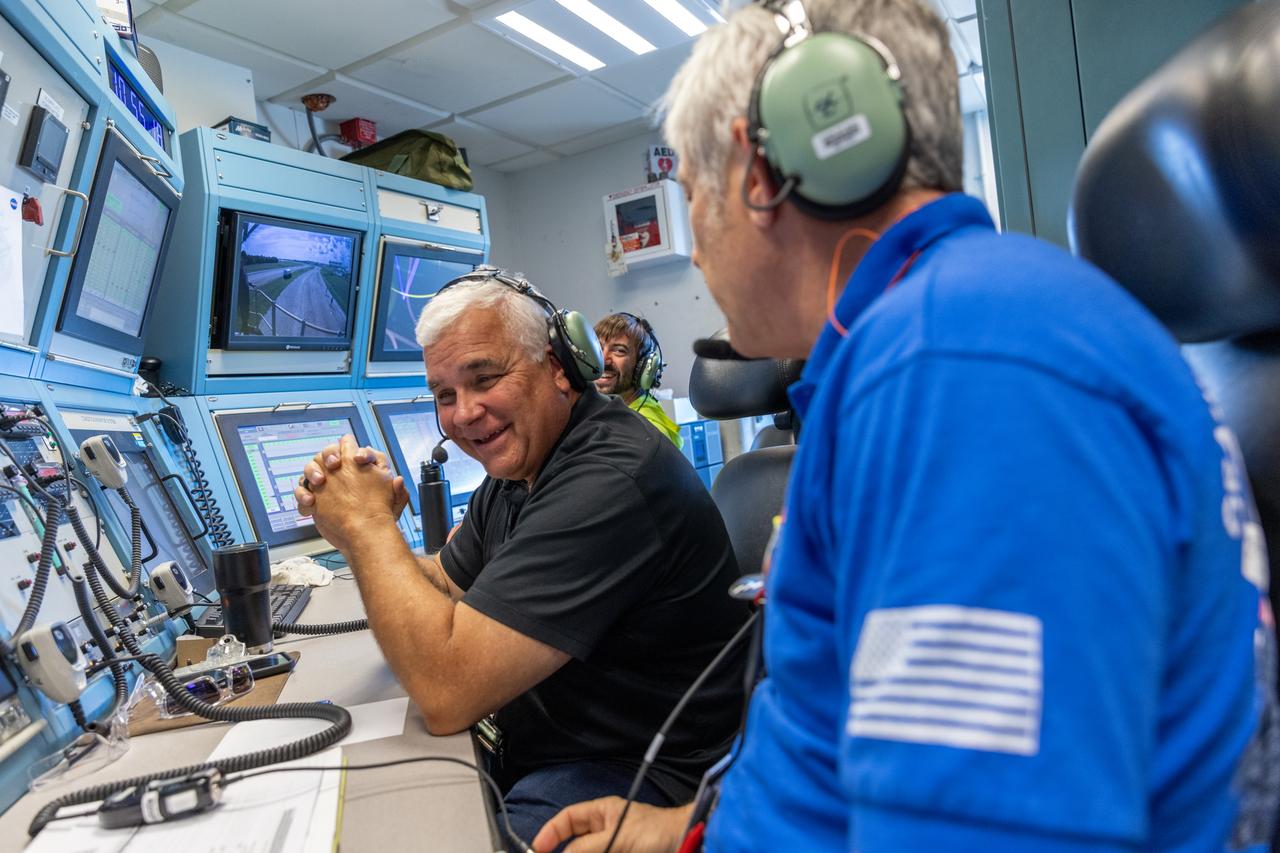
Teams with NASA’s Exploration Ground Systems at NASA’s Kennedy Space Center in Florida celebrate on Wednesday, Sept. 25, 2024, the agency’s crawler-transporter 2 reaching the milestone of 2,500 miles traveled since its construction in 1965. Crawler-transporter 2 reached the milestone while teams took it on a trip in preparation for supporting the roll of the mobile launcher from Launch Pad 39B back into the spaceport’s Vehicle Assembly Building ahead of the Artemis II launch. Built originally to transport massive Saturn V rockets during the Apollo Program, crawler-transporter 2 continued its service during the Space Shuttle Program, and currently transports the massive SLS (Space Launch System) rocket and Orion spacecraft atop the mobile launcher as part of the agency’s Artemis campaign.
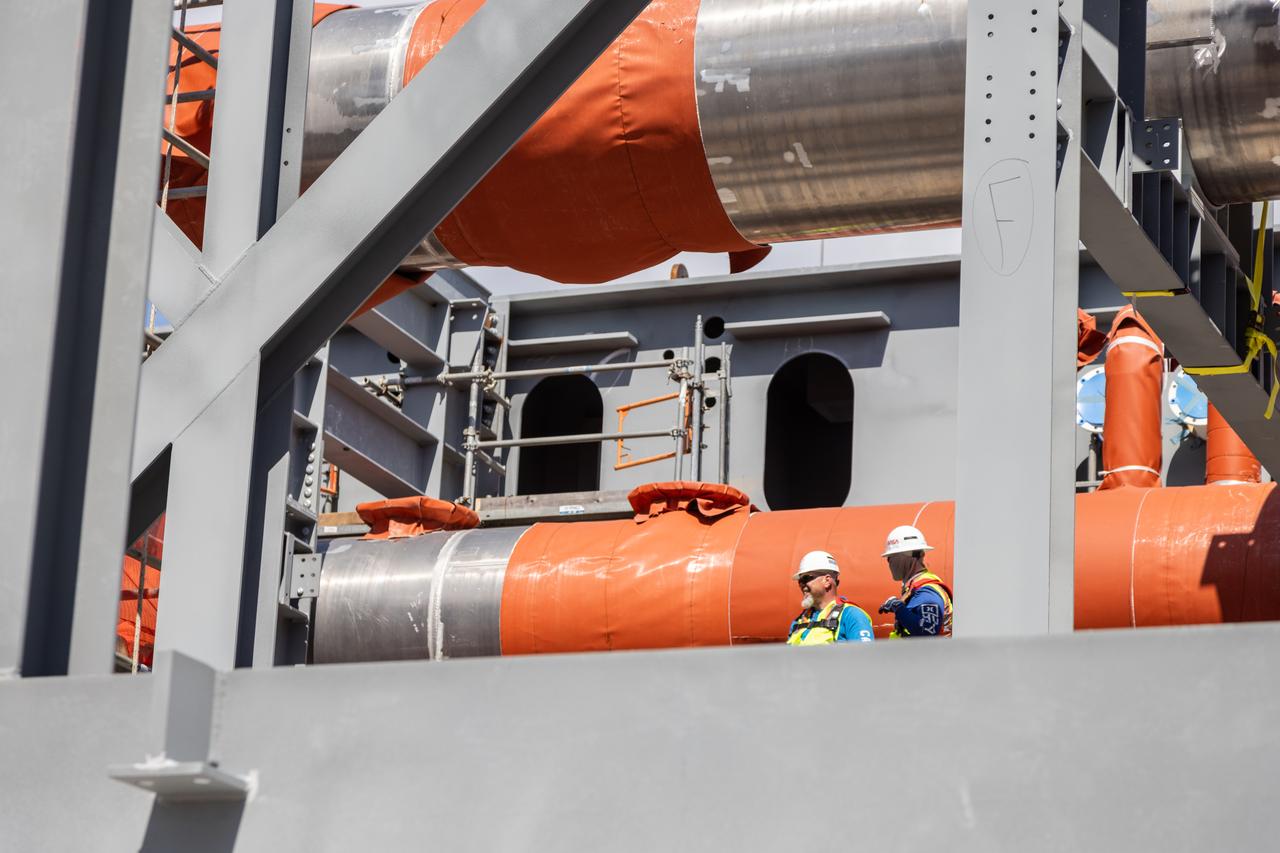
Teams with NASA’s Exploration Ground Systems Program and Bechtel National, Inc., the prime contractor for NASA’s mobile launcher 2, continue construction on the new mobile launcher at the agency’s Kennedy Space Center in Florida on Wednesday, April 24, 2024. Once completed and able to be carried atop the crawler-transporter, the 355-foot-tall mobile launcher 2 will be used during assembly, processing, and launch of the SLS (Space Launch System) rocket and Orion spacecraft on NASA’s upcoming Artemis missions to the Moon beginning with Artemis IV.
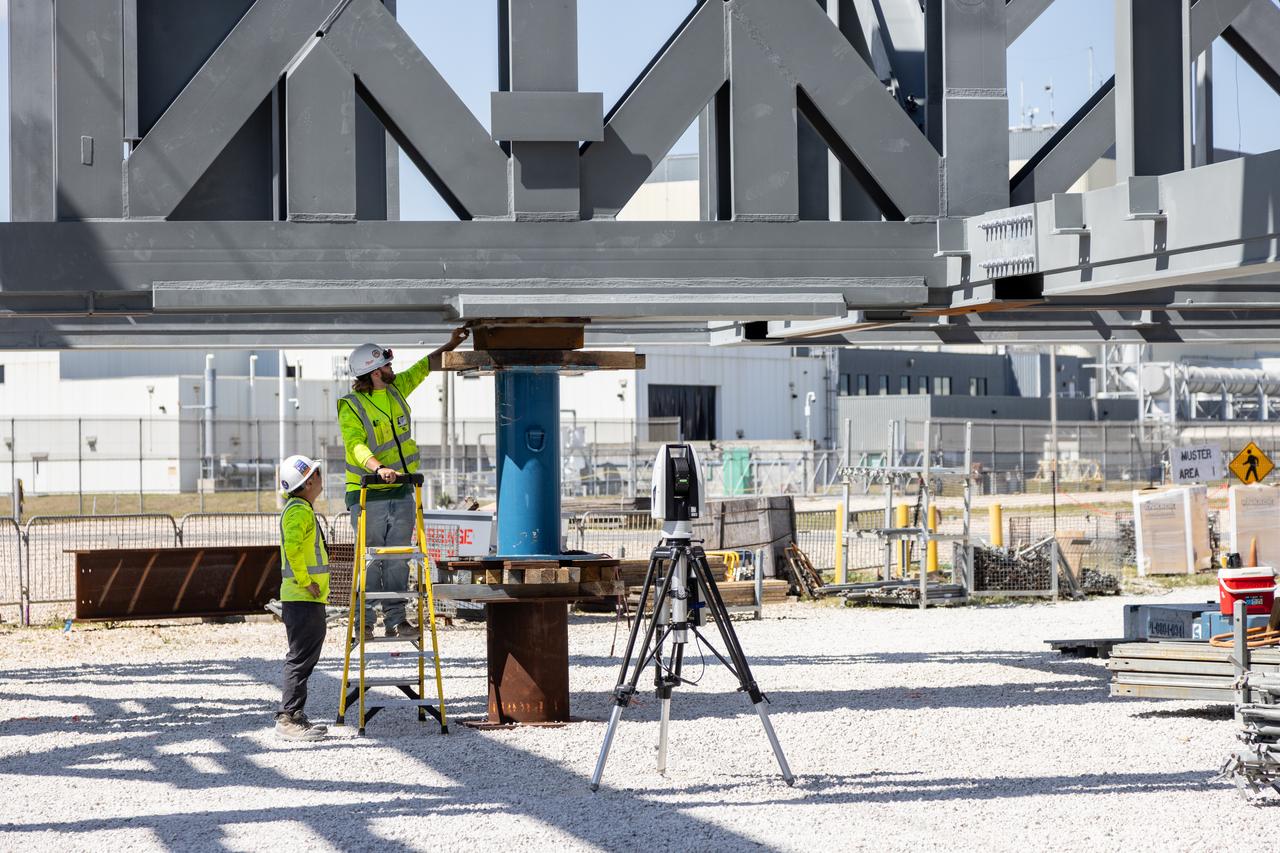
Teams with NASA’s Exploration Ground Systems Program and Bechtel National, Inc., the prime contractor for NASA’s mobile launcher 2, continue construction on the new mobile launcher at the agency’s Kennedy Space Center in Florida on Wednesday, April 24, 2024. Once completed and able to be carried atop the crawler-transporter, the 355-foot-tall mobile launcher 2 will be used during assembly, processing, and launch of the SLS (Space Launch System) rocket and Orion spacecraft on NASA’s upcoming Artemis missions to the Moon beginning with Artemis IV.
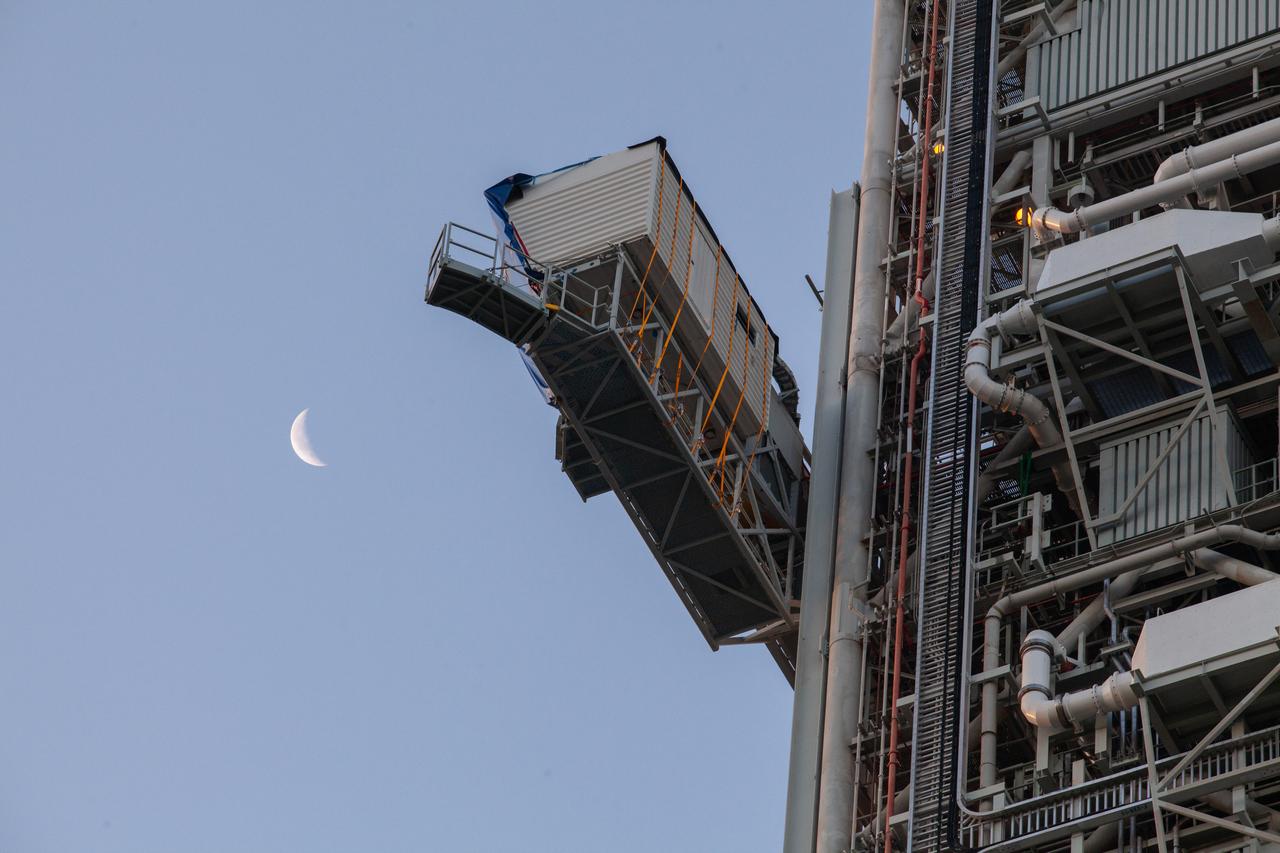
In this view, Exploration Ground Systems’ mobile launcher’s crew access arm (CAA) can be seen. The CAA will interface with the agency’s Space Launch System (SLS) rocket at the Orion crew hatch, providing entry and exit from the Orion crew module. The first crewed flight aboard Orion will be Artemis 2, after the uncrewed Artemis 1 launch verifies SLS and Orion as an integrated system.
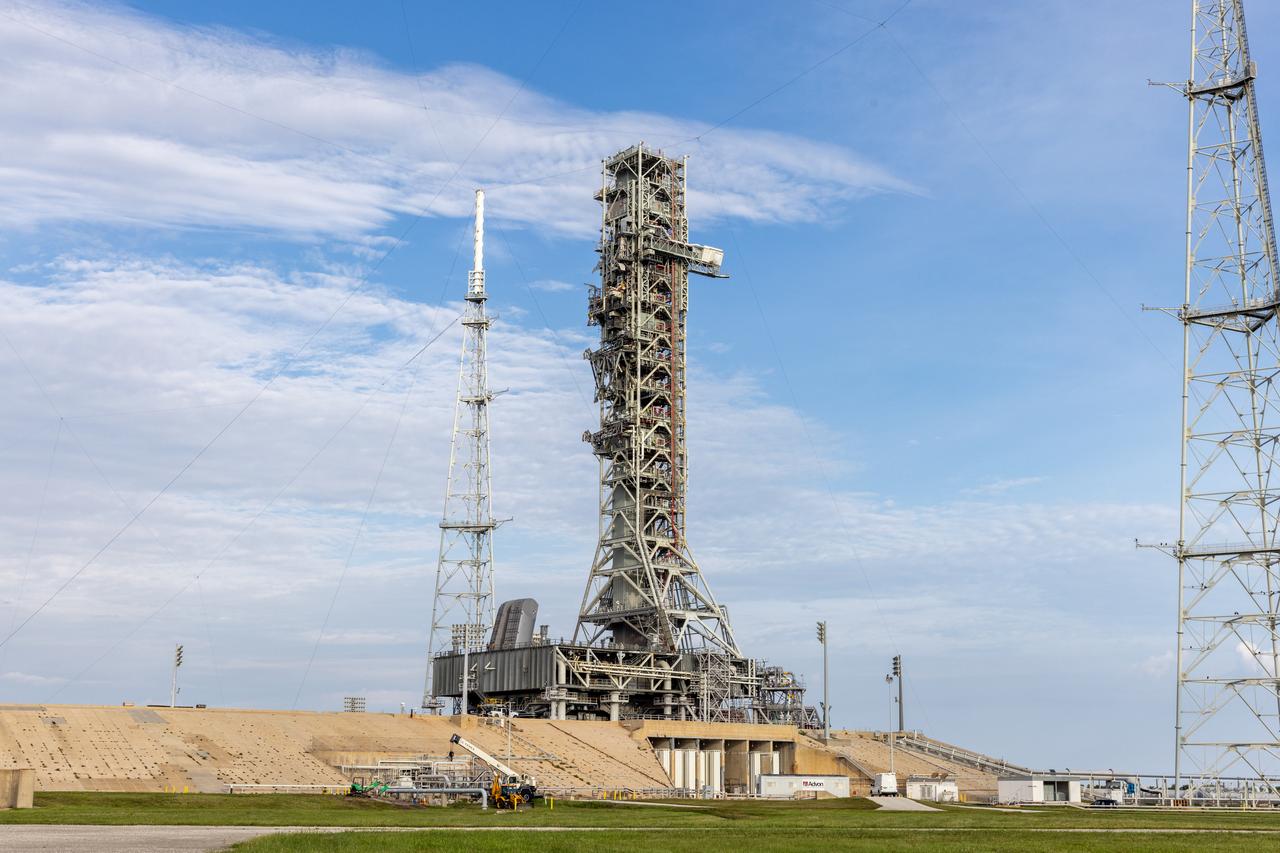
Teams with NASA’s Exploration Ground Systems Program at the agency’s Kennedy Space Center in Florida prepare to move mobile launcher 1 atop the agency’s crawler-transporter 2 from Launch Complex 39B to the Vehicle Assembly Building on Tuesday, Oct. 1, 2024. The crawler recently reached 2,500 miles traveling to the launch pad since its construction in 1965. The mobile launcher has been at the launch pad since August 2023 undergoing upgrades and tests in preparation for NASA’s Artemis II mission. The mobile launcher will be used to assemble, process, and launch NASA’s SLS (Space Launch Systems) and Orion spacecraft to the Moon and beyond.
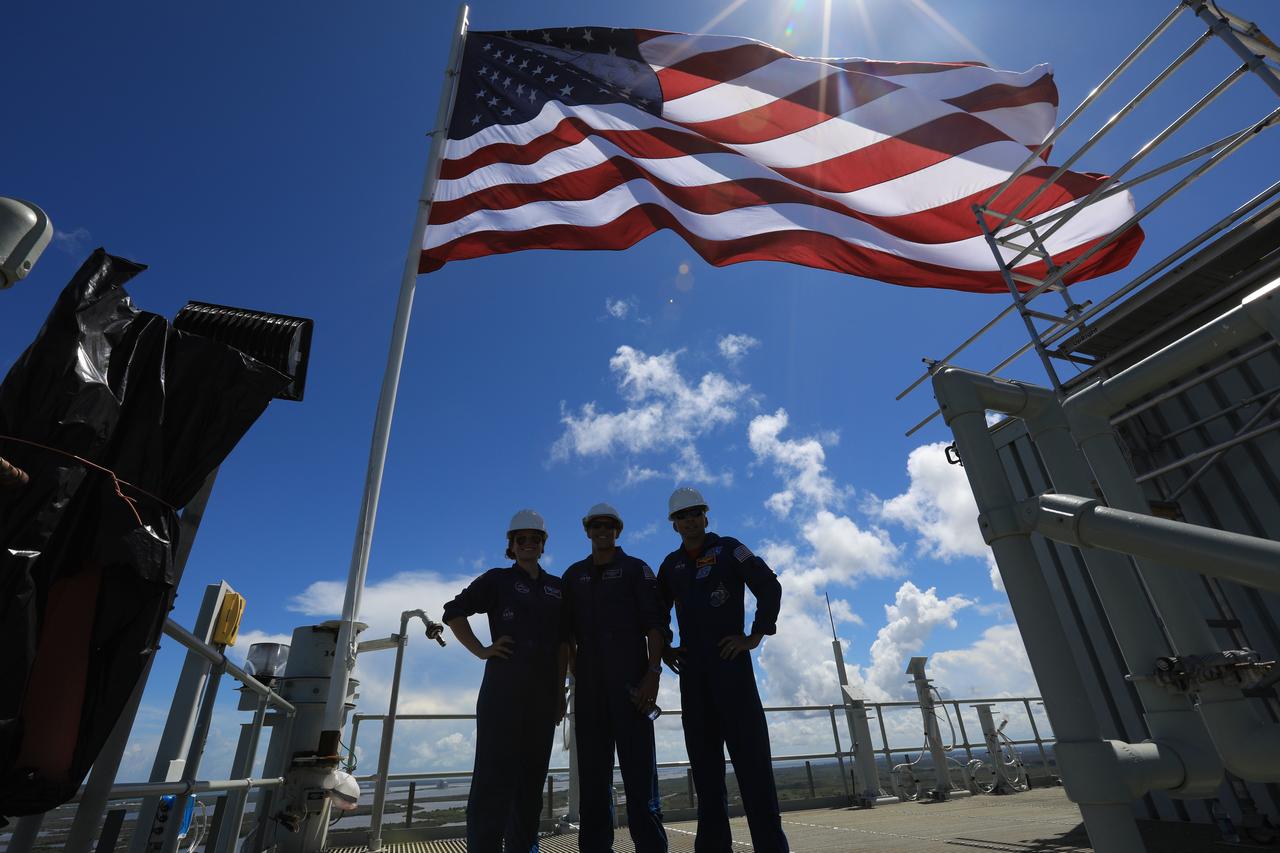
NASA's mobile launcher atop crawler-transporter 2 travels slowly along the crawlerway on Sept. 7, 2018, on its way to the Vehicle Assembly Building at NASA's Kennedy Space Center in Florida. During a portion of the trek, several NASA astronauts were aboard the mobile launcher for a bird’s eye view. The 380-foot-tall mobile launcher is equipped with the crew access arm and several umbilicals that will provide power, environmental control. Pneumatics, communication and electrical connections to the agency's Space Launch System and Orion spacecraft. Exploration Ground Systems is preparing the ground systems necessary to launch SLS and Orion on Exploration Mission-1, missions to the Moon and on to Mars.
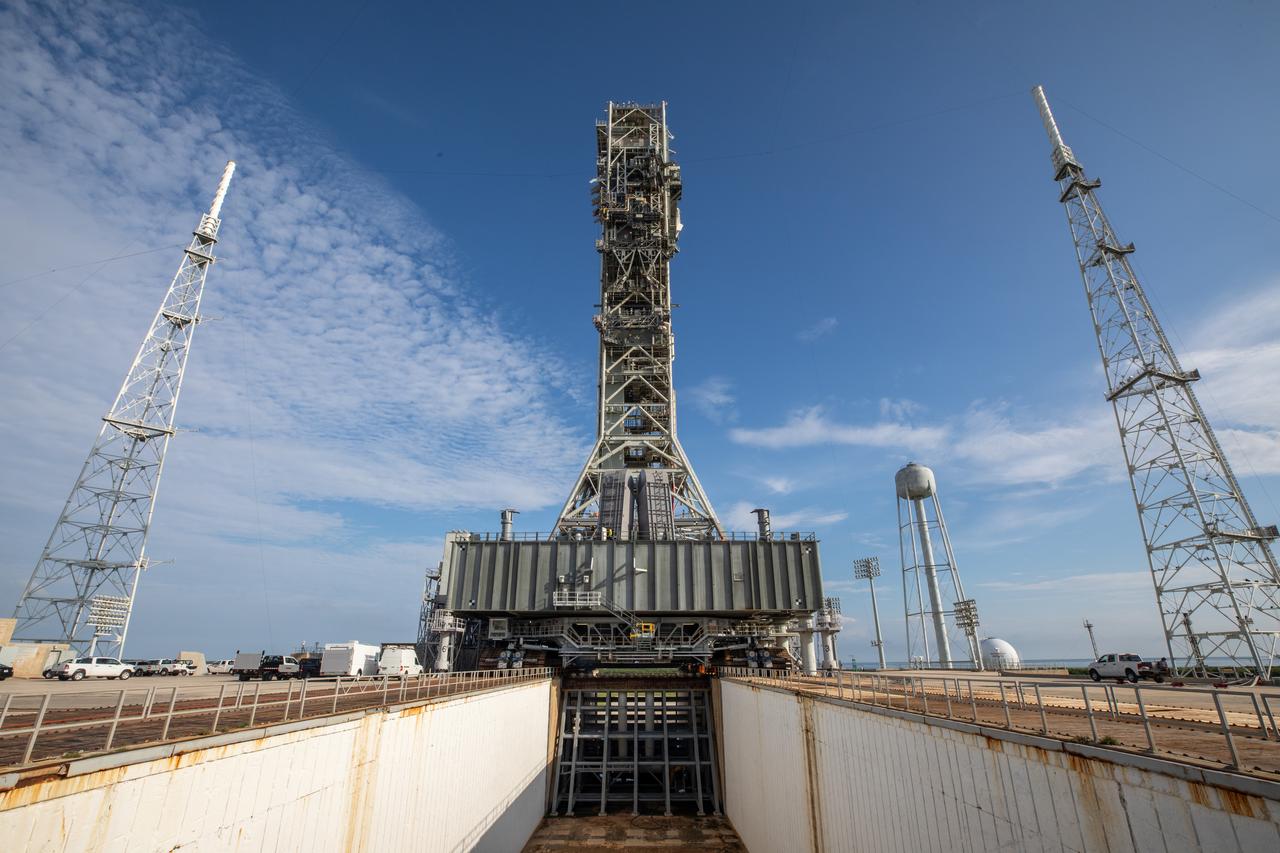
Teams with NASA’s Exploration Ground Systems Program at the agency’s Kennedy Space Center in Florida prepare to move mobile launcher 1 atop the agency’s crawler-transporter 2 from Launch Complex 39B to the Vehicle Assembly Building on Tuesday, Oct. 1, 2024. The crawler recently reached 2,500 miles traveling to the launch pad since its construction in 1965. The mobile launcher has been at the launch pad since August 2023 undergoing upgrades and tests in preparation for NASA’s Artemis II mission. The mobile launcher will be used to assemble, process, and launch NASA’s SLS (Space Launch System) and Orion spacecraft to the Moon and beyond.
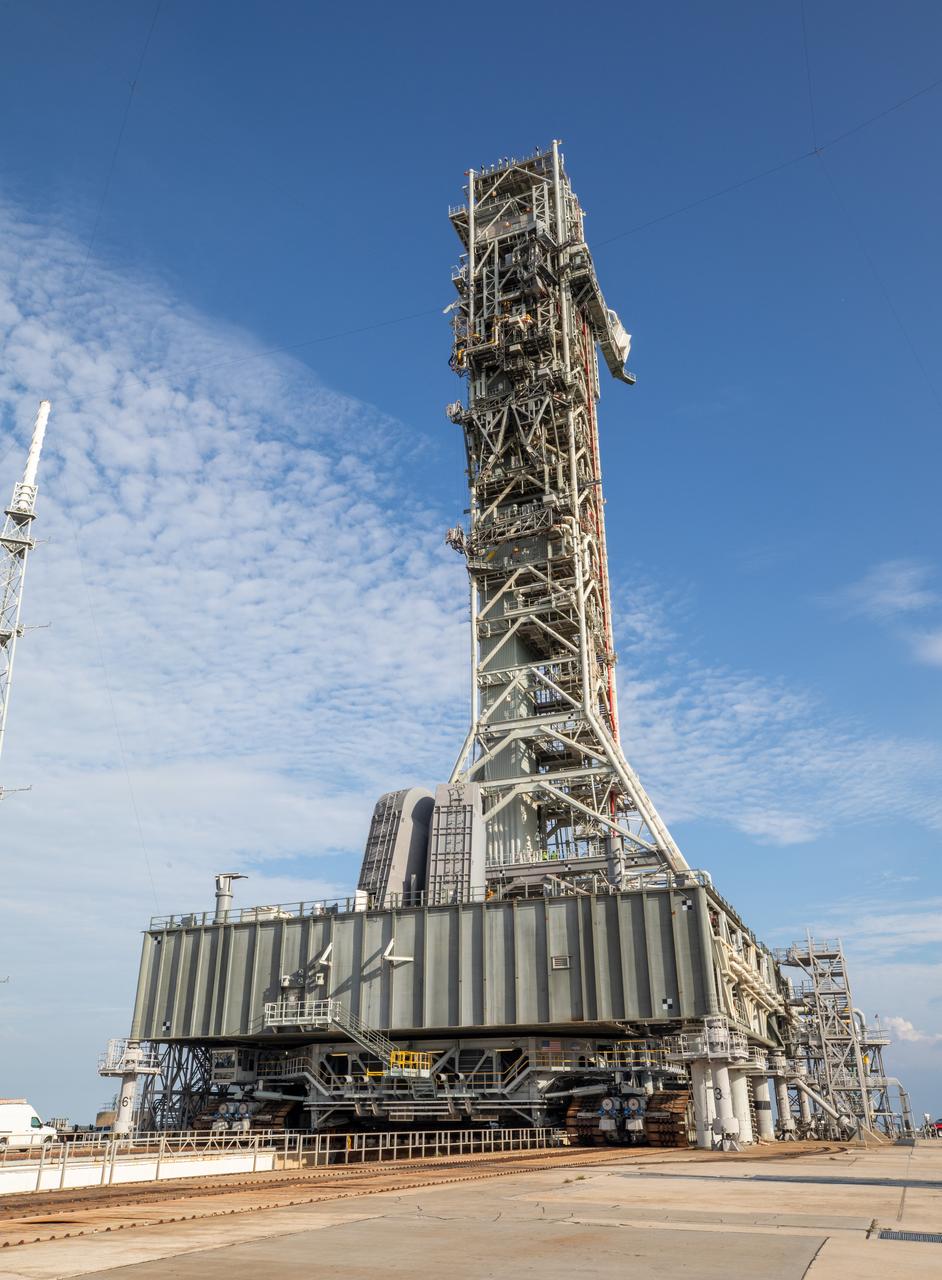
Teams with NASA’s Exploration Ground Systems Program at the agency’s Kennedy Space Center in Florida prepare to move mobile launcher 1 atop the agency’s crawler-transporter 2 from Launch Complex 39B to the Vehicle Assembly Building on Tuesday, Oct. 1, 2024. The crawler recently reached 2,500 miles traveling to the launch pad since its construction in 1965. The mobile launcher has been at the launch pad since August 2023 undergoing upgrades and tests in preparation for NASA’s Artemis II mission. The mobile launcher will be used to assemble, process, and launch NASA’s SLS (Space Launch System) and Orion spacecraft to the Moon and beyond.
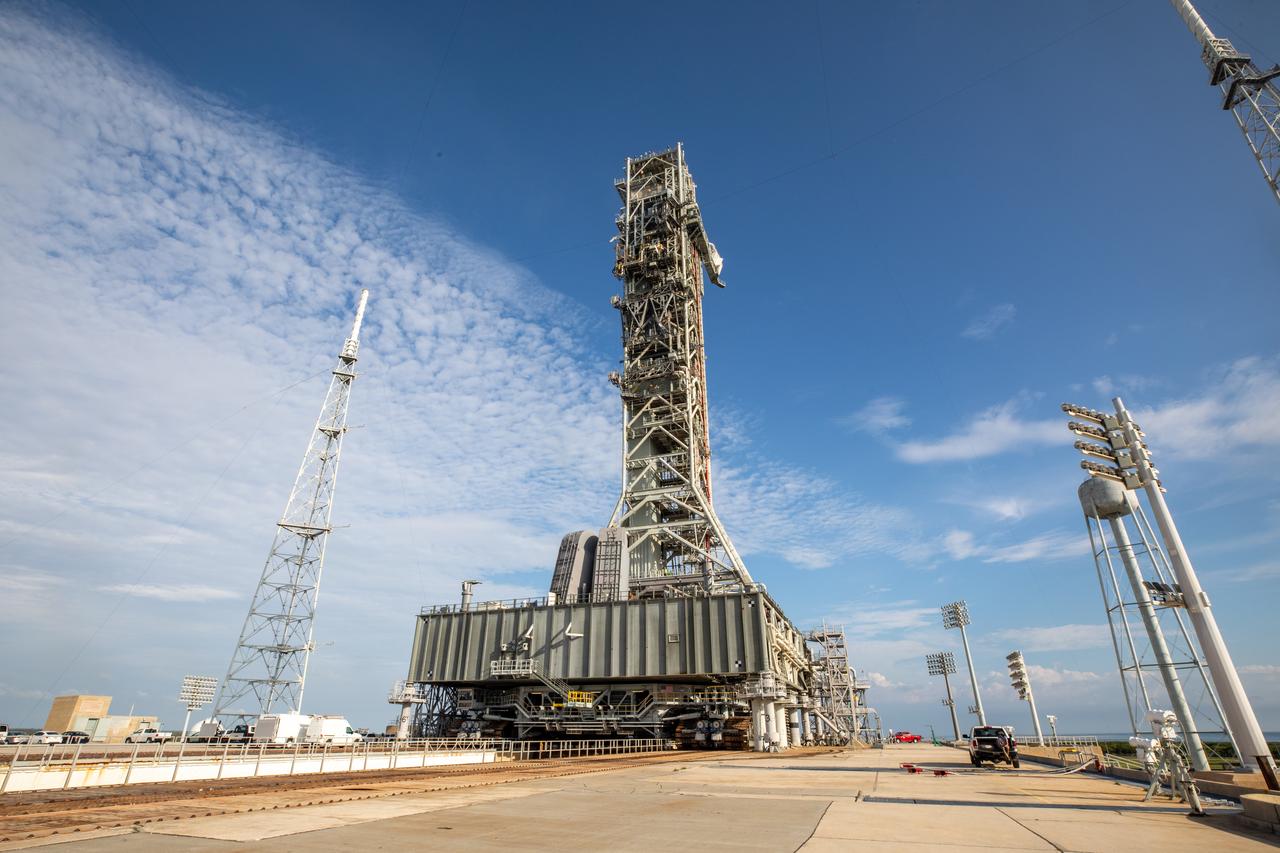
Teams with NASA’s Exploration Ground Systems Program at the agency’s Kennedy Space Center in Florida prepare to move mobile launcher 1 atop the agency’s crawler-transporter 2 from Launch Complex 39B to the Vehicle Assembly Building on Tuesday, Oct. 1, 2024. The crawler recently reached 2,500 miles traveling to the launch pad since its construction in 1965. The mobile launcher has been at the launch pad since August 2023 undergoing upgrades and tests in preparation for NASA’s Artemis II mission. The mobile launcher will be used to assemble, process, and launch NASA’s SLS (Space Launch System) and Orion spacecraft to the Moon and beyond.
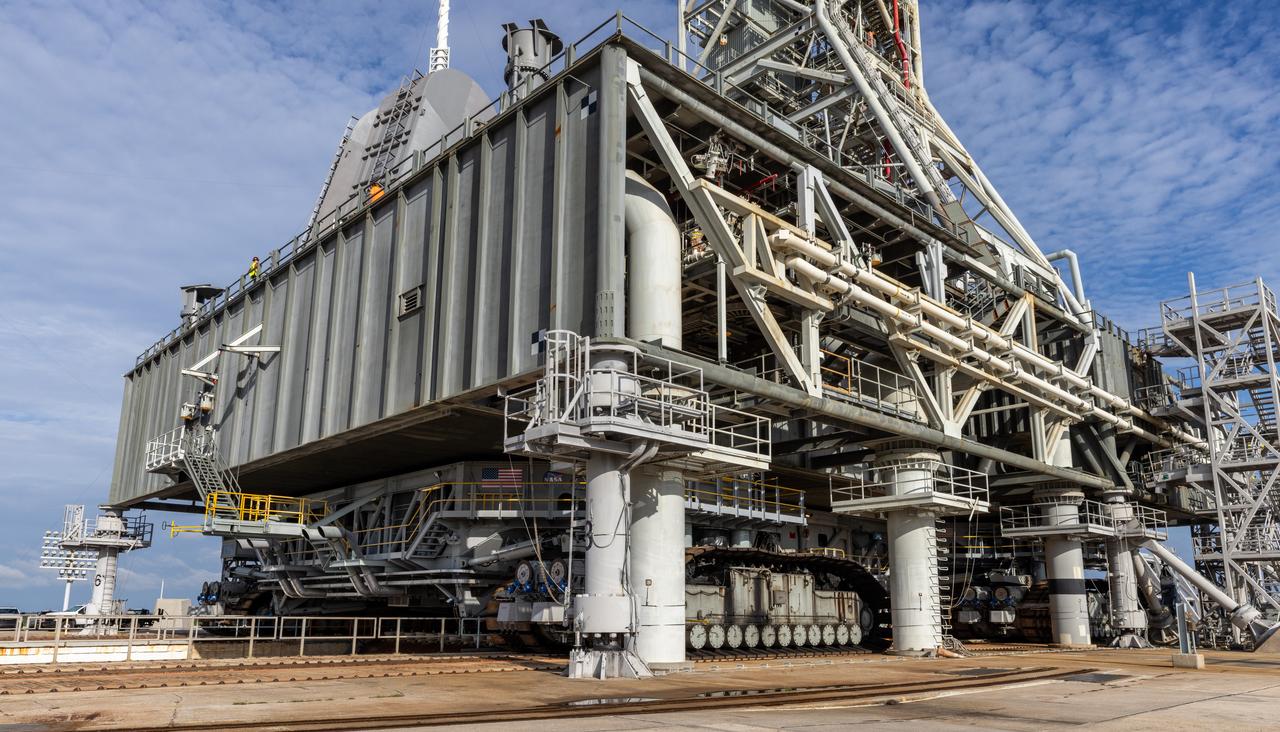
Teams with NASA’s Exploration Ground Systems Program at the agency’s Kennedy Space Center in Florida prepare to move mobile launcher 1 atop the agency’s crawler-transporter 2 from Launch Complex 39B to the Vehicle Assembly Building on Tuesday, Oct. 1, 2024. The crawler recently reached 2,500 miles traveling to the launch pad since its construction in 1965. The mobile launcher has been at the launch pad since August 2023 undergoing upgrades and tests in preparation for NASA’s Artemis II mission. The mobile launcher will be used to assemble, process, and launch NASA’s SLS (Space Launch System) and Orion spacecraft to the Moon and beyond.
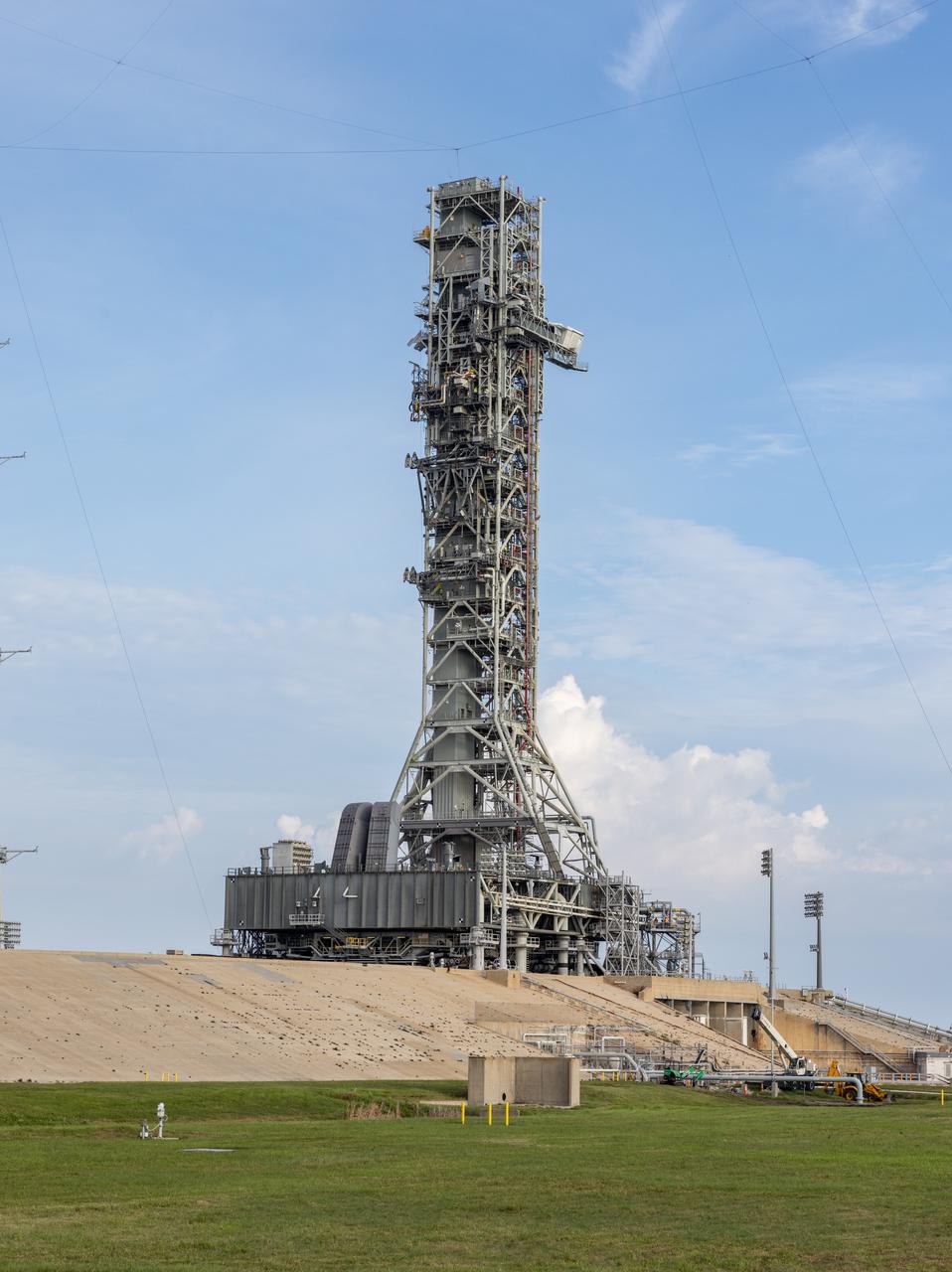
Teams with NASA’s Exploration Ground Systems Program at the agency’s Kennedy Space Center in Florida prepare to move mobile launcher 1 atop the agency’s crawler-transporter 2 from Launch Complex 39B to the Vehicle Assembly Building on Tuesday, Oct. 1, 2024. The crawler recently reached 2,500 miles traveling to the launch pad since its construction in 1965. The mobile launcher has been at the launch pad since August 2023 undergoing upgrades and tests in preparation for NASA’s Artemis II mission. The mobile launcher will be used to assemble, process, and launch NASA’s SLS (Space Launch System) and Orion spacecraft to the Moon and beyond.
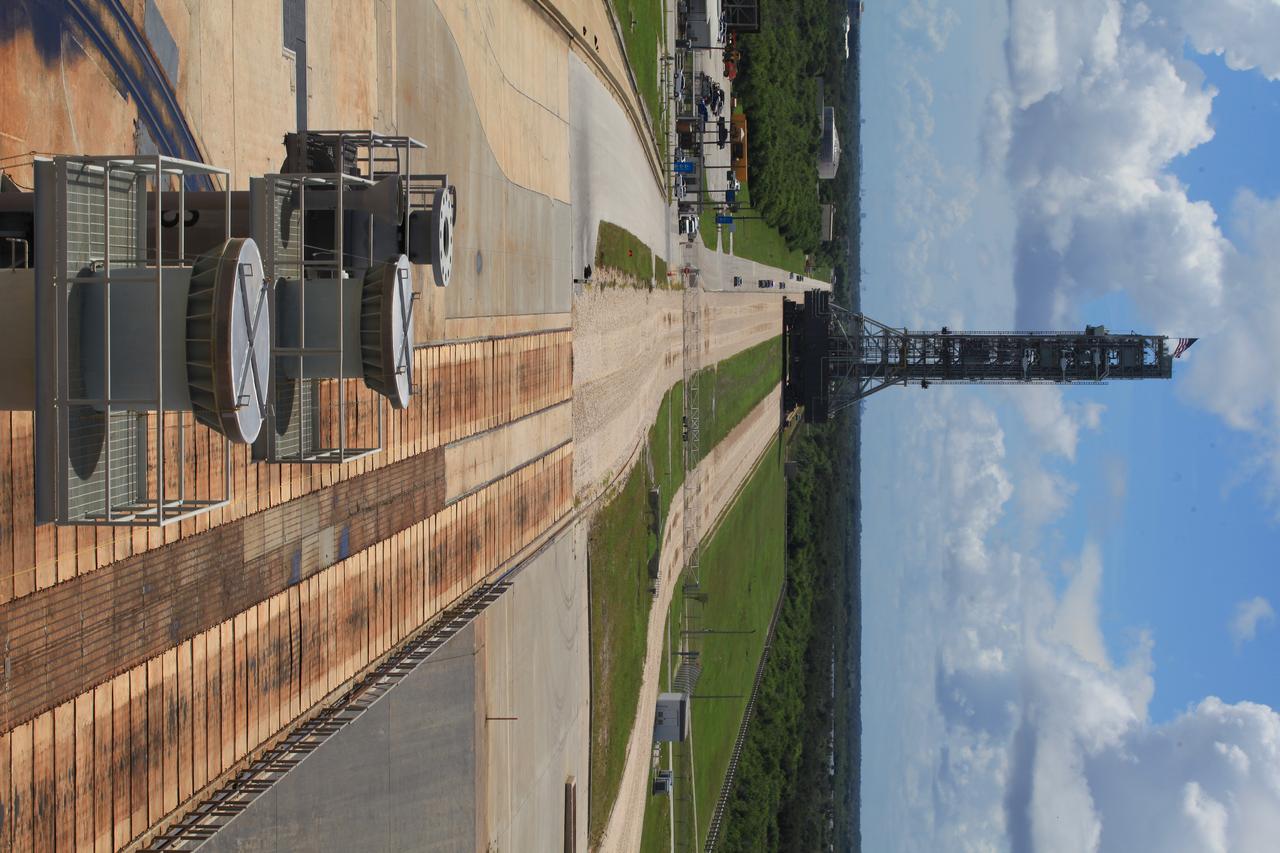
NASA's mobile launcher atop crawler-transporter 2 begins its trek off of Launch Pad 39B on Sept. 7, 2018, at NASA's Kennedy Space Center in Florida. After undergoing a fit check and several days of systems testing with the pad, the mobile launcher is on its way to the Vehicle Assembly Building. This is the first time that the modified mobile launcher made the trip to the pad. The 380-foot-tall mobile launcher is equipped with the crew access arm and several umbilicals that will provide power, environmental control. Pneumatics, communication and electrical connections to the agency's Space Launch System and Orion spacecraft. Exploration Ground Systems is preparing the ground systems necessary to launch SLS and Orion on Exploration Mission-1, missions to the Moon and on to Mars.
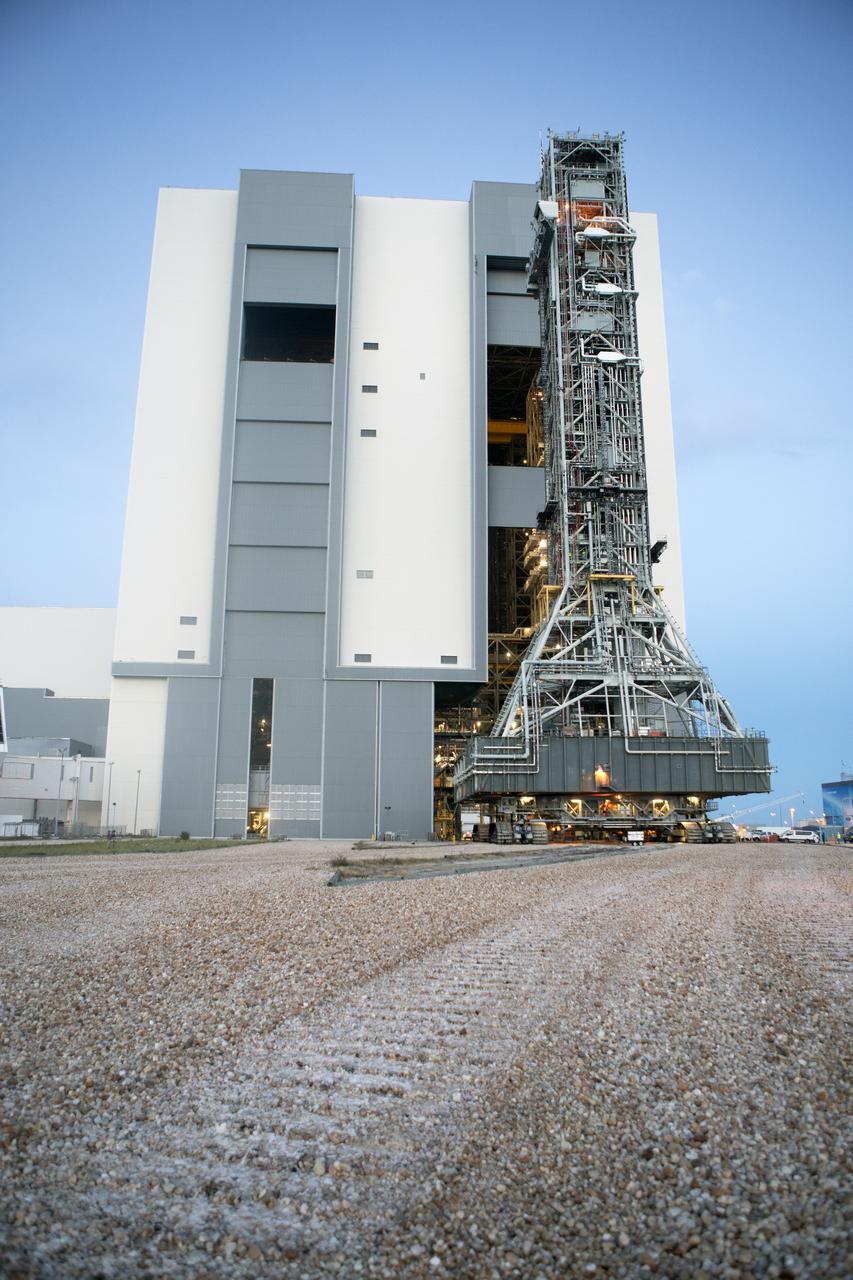
NASA's mobile launcher, atop crawler-transporter 2, is at the entrance to High Bay 3 at the Vehicle Assembly Building (VAB) on Sept. 8, 2018, at NASA's Kennedy Space Center in Florida. The mobile launcher departed Launch Pad 39B after several days of testing with the pad. This is the first time that the modified mobile launcher made the trip to the pad and the VAB. The mobile launcher will spend seven months in the VAB undergoing testing. The 380-foot-tall structure is equipped with the crew access arm and several umbilicals that will provide power, environmental control, pneumatics, communication and electrical connections to the agency's Space Launch System and Orion spacecraft. Exploration Ground Systems is preparing the ground systems necessary to launch SLS and Orion on Exploration Mission-1, missions to the Moon and on to Mars.
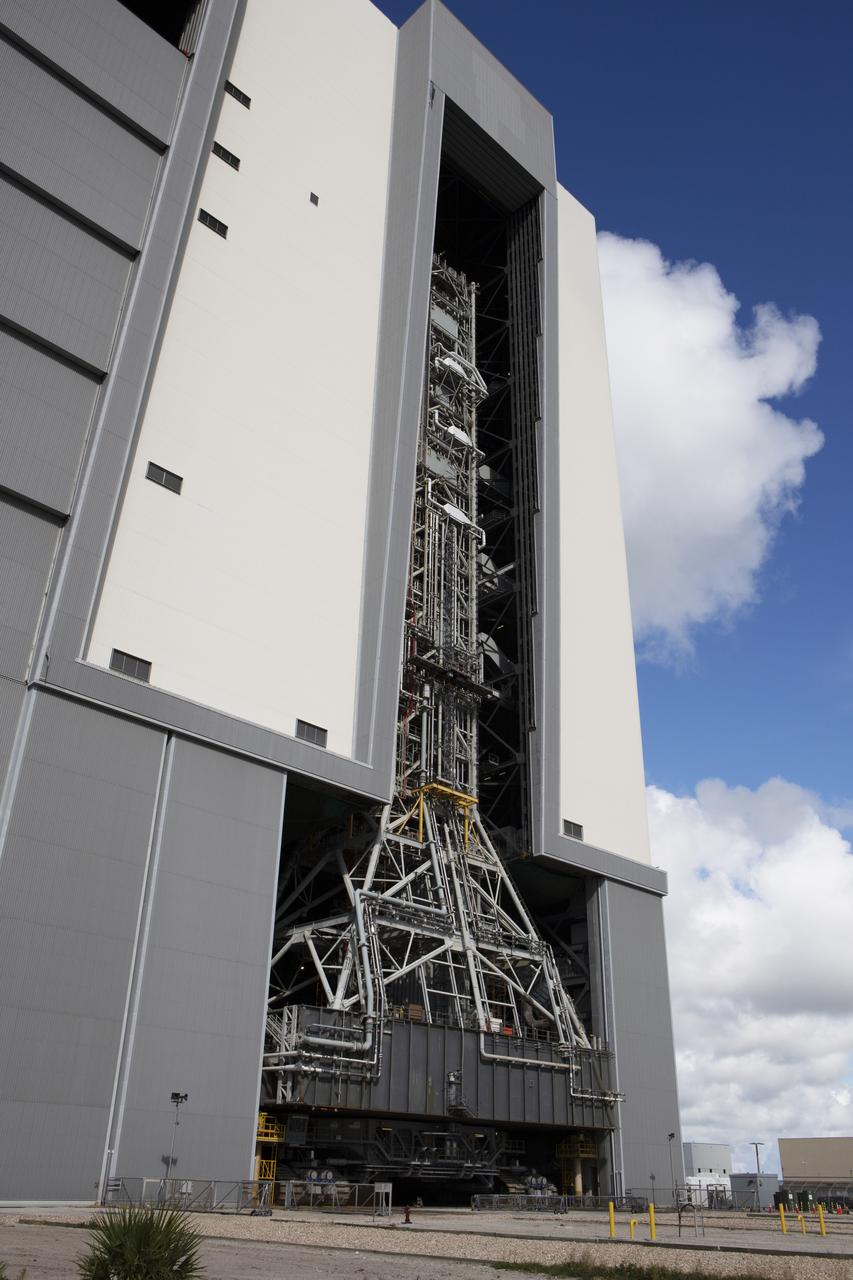
NASA's mobile launcher, atop crawler-transporter 2, moves slowly into High Bay 3 at the Vehicle Assembly Building (VAB) on Sept. 8, 2018, at NASA's Kennedy Space Center in Florida. The mobile launcher departed Launch Pad 39B after several days of testing with the pad. This is the first time that the modified mobile launcher made the trip to the pad and the VAB. The mobile launcher will spend seven months in the VAB undergoing testing. The 380-foot-tall structure is equipped with the crew access arm and several umbilicals that will provide power, environmental control, pneumatics, communication and electrical connections to the agency's Space Launch System and Orion spacecraft. Exploration Ground Systems is preparing the ground systems necessary to launch SLS and Orion on Exploration Mission-1, missions to the Moon and on to Mars.
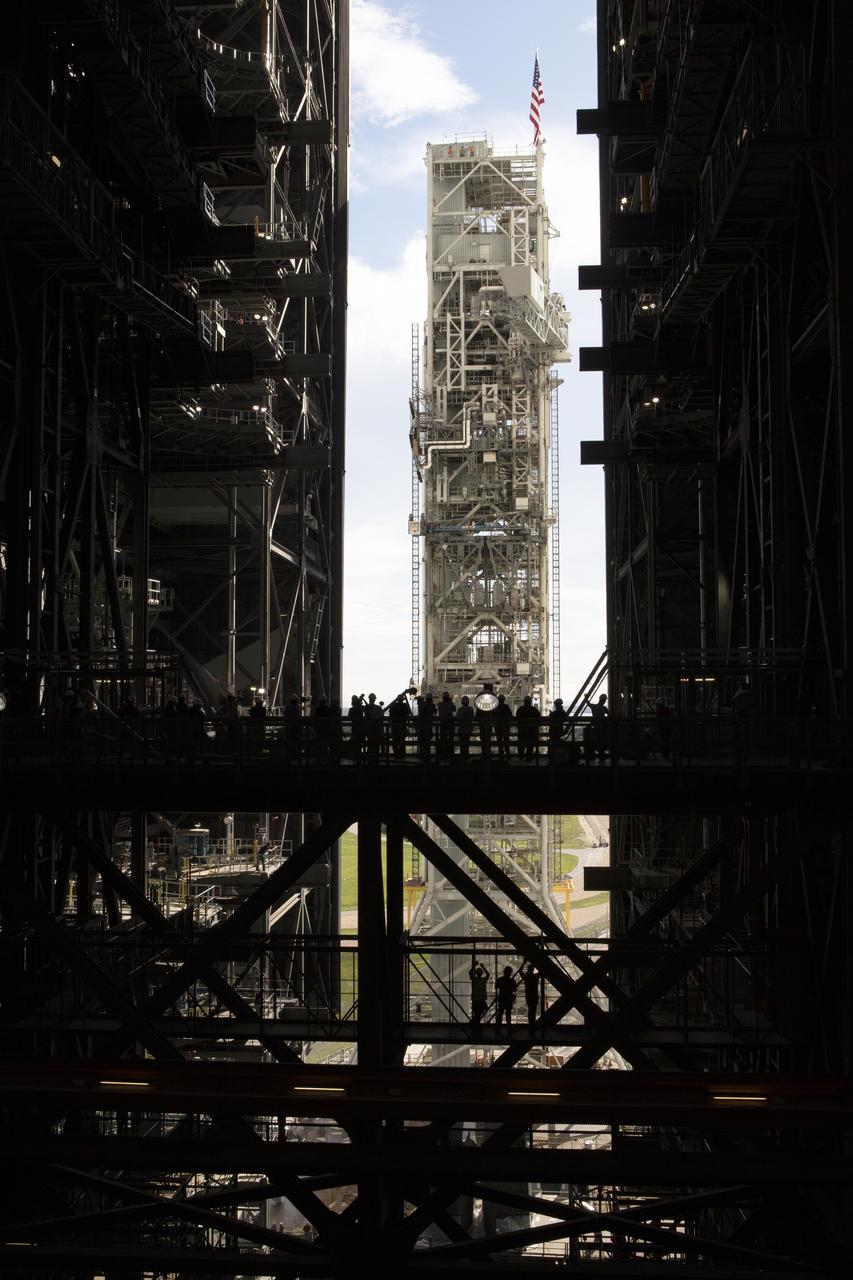
NASA's mobile launcher, atop crawler-transporter 2, moves slowly into High Bay 3 at the Vehicle Assembly Building (VAB) on Sept. 8, 2018, at NASA's Kennedy Space Center in Florida. The mobile launcher departed Launch Pad 39B after several days of testing with the pad. This is the first time that the modified mobile launcher made the trip to the pad and the VAB. The mobile launcher will spend seven months in the VAB undergoing testing. The 380-foot-tall structure is equipped with the crew access arm and several umbilicals that will provide power, environmental control, pneumatics, communication and electrical connections to the agency's Space Launch System and Orion spacecraft. Exploration Ground Systems is preparing the ground systems necessary to launch SLS and Orion on Exploration Mission-1, missions to the Moon and on to Mars.
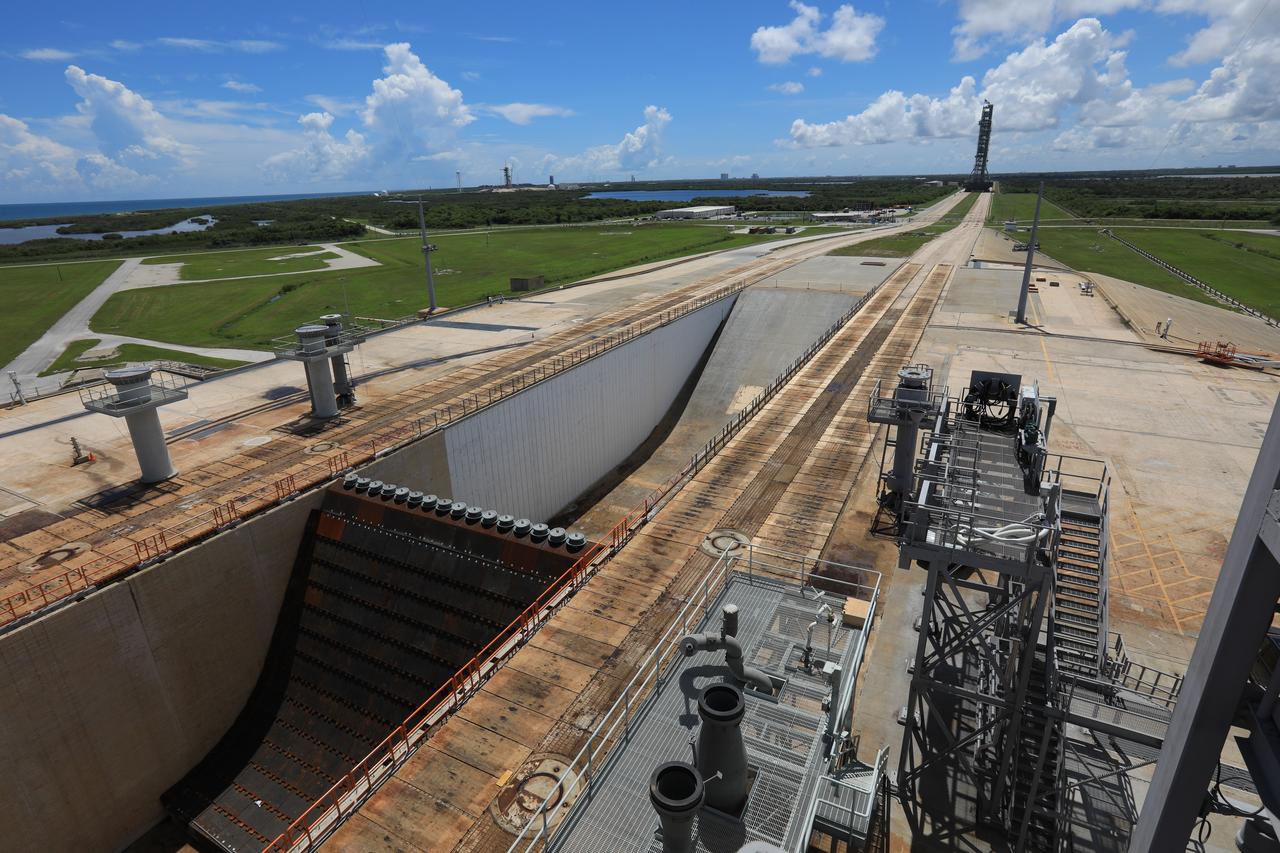
NASA's mobile launcher atop crawler-transporter 2 begins its trek off of Launch Pad 39B on Sept. 7, 2018, at NASA's Kennedy Space Center in Florida. After undergoing a fit check and several days of systems testing with the pad, the mobile launcher is on its way to the Vehicle Assembly Building. This is the first time that the modified mobile launcher made the trip to the pad. The 380-foot-tall mobile launcher is equipped with the crew access arm and several umbilicals that will provide power, environmental control. Pneumatics, communication and electrical connections to the agency's Space Launch System and Orion spacecraft. Exploration Ground Systems is preparing the ground systems necessary to launch SLS and Orion on Exploration Mission-1, missions to the Moon and on to Mars.
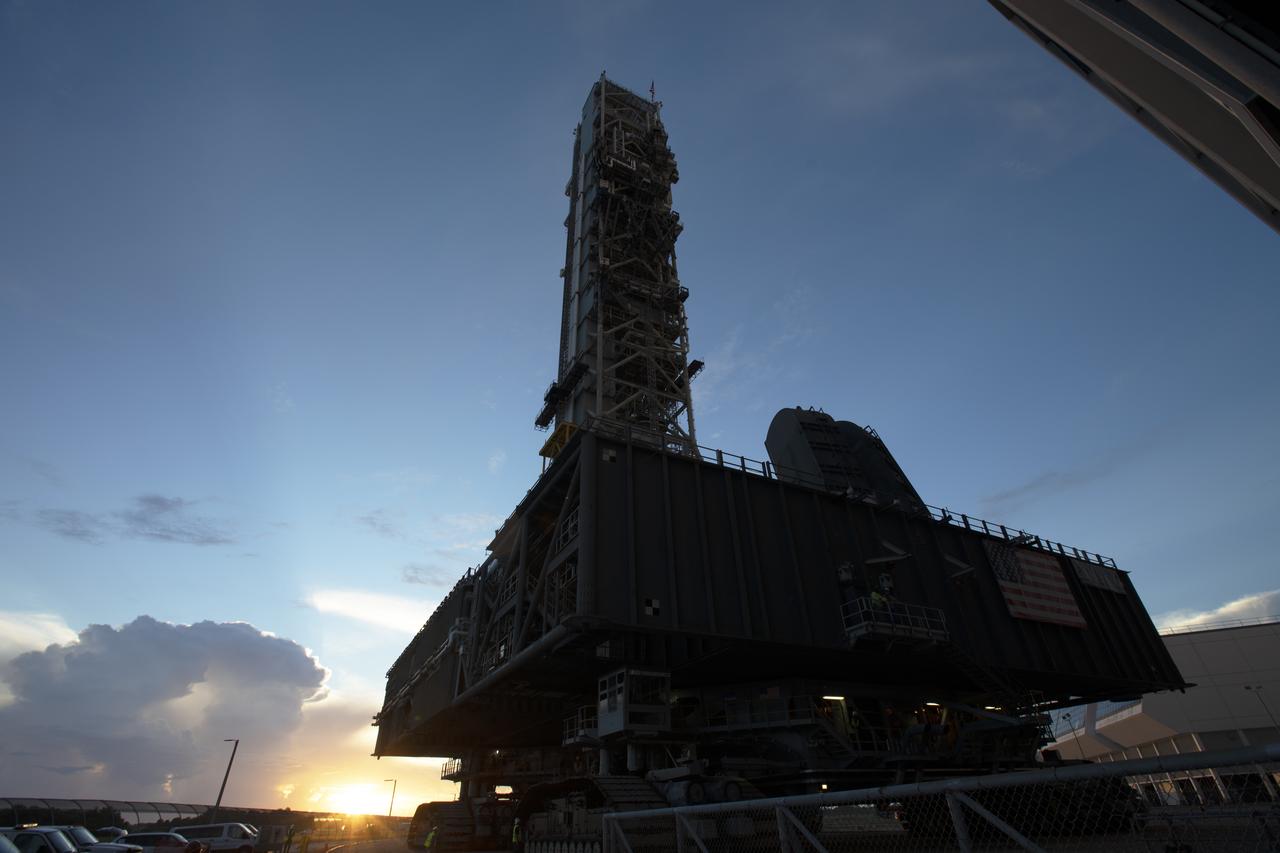
NASA's mobile launcher, atop crawler-transporter 2, is at the entrance to High Bay 3 at the Vehicle Assembly Building (VAB) at sunrise on Sept. 8, 2018, at NASA's Kennedy Space Center in Florida. The mobile launcher departed Launch Pad 39B after several days of testing with the pad. This is the first time that the modified mobile launcher made the trip to the pad and the VAB. The mobile launcher will spend seven months in the VAB undergoing testing. The 380-foot-tall structure is equipped with the crew access arm and several umbilicals that will provide power, environmental control, pneumatics, communication and electrical connections to the agency's Space Launch System and Orion spacecraft. Exploration Ground Systems is preparing the ground systems necessary to launch SLS and Orion on Exploration Mission-1, missions to the Moon and on to Mars.
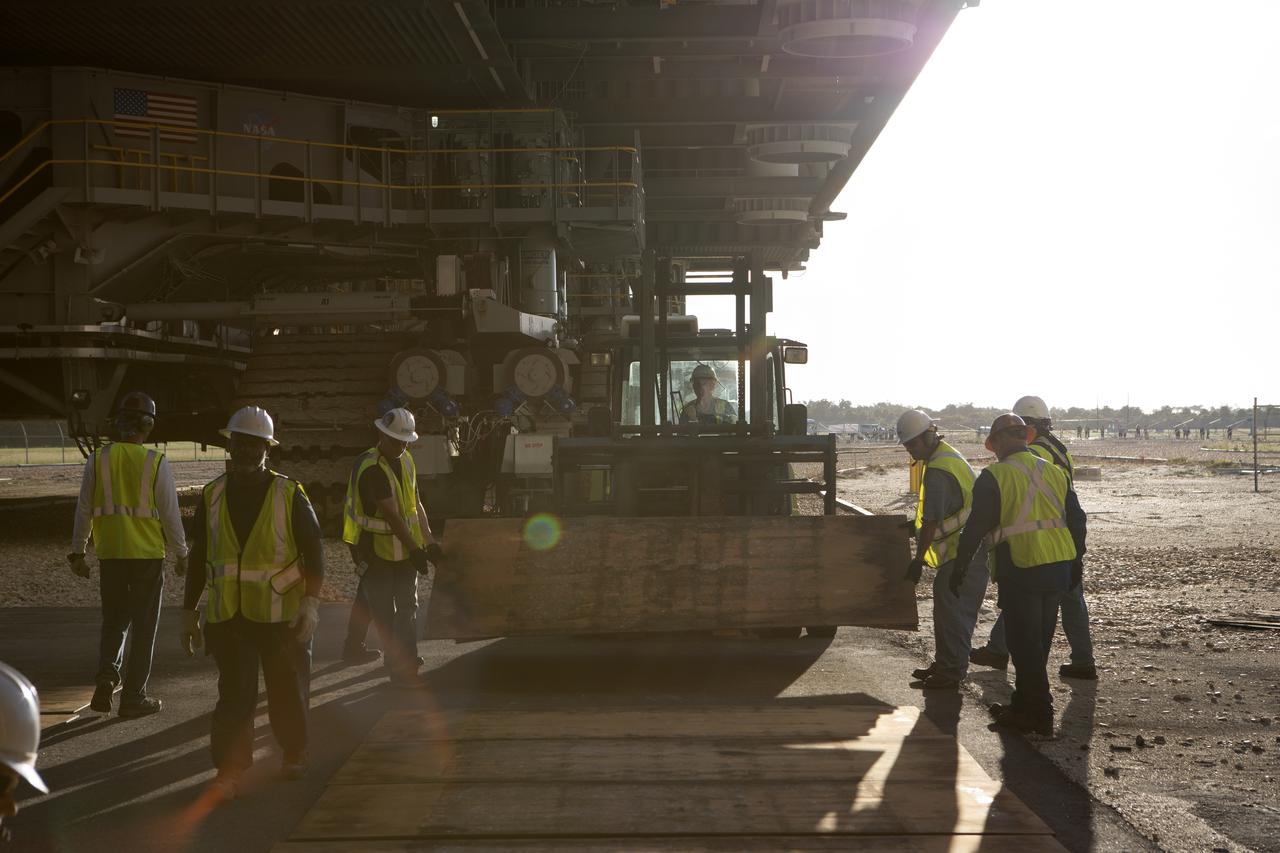
Technicians lay wooden planks down in the tracks to the entrance to High Bay 3 in the Vehicle Assembly Building (VAB), as mobile launcher, atop crawler-transporter 2, moves into the VAB on Sept. 8, 2018, at NASA's Kennedy Space Center in Florida. The mobile launcher departed Launch Pad 39B after several days of testing with the pad. This is the first time that the modified mobile launcher made the trip to the pad and the VAB. The mobile launcher will spend seven months in the VAB undergoing testing. The 380-foot-tall structure is equipped with the crew access arm and several umbilicals that will provide power, environmental control, pneumatics, communication and electrical connections to the agency's Space Launch System and Orion spacecraft. Exploration Ground Systems is preparing the ground systems necessary to launch SLS and Orion on Exploration Mission-1, missions to the Moon and on to Mars.
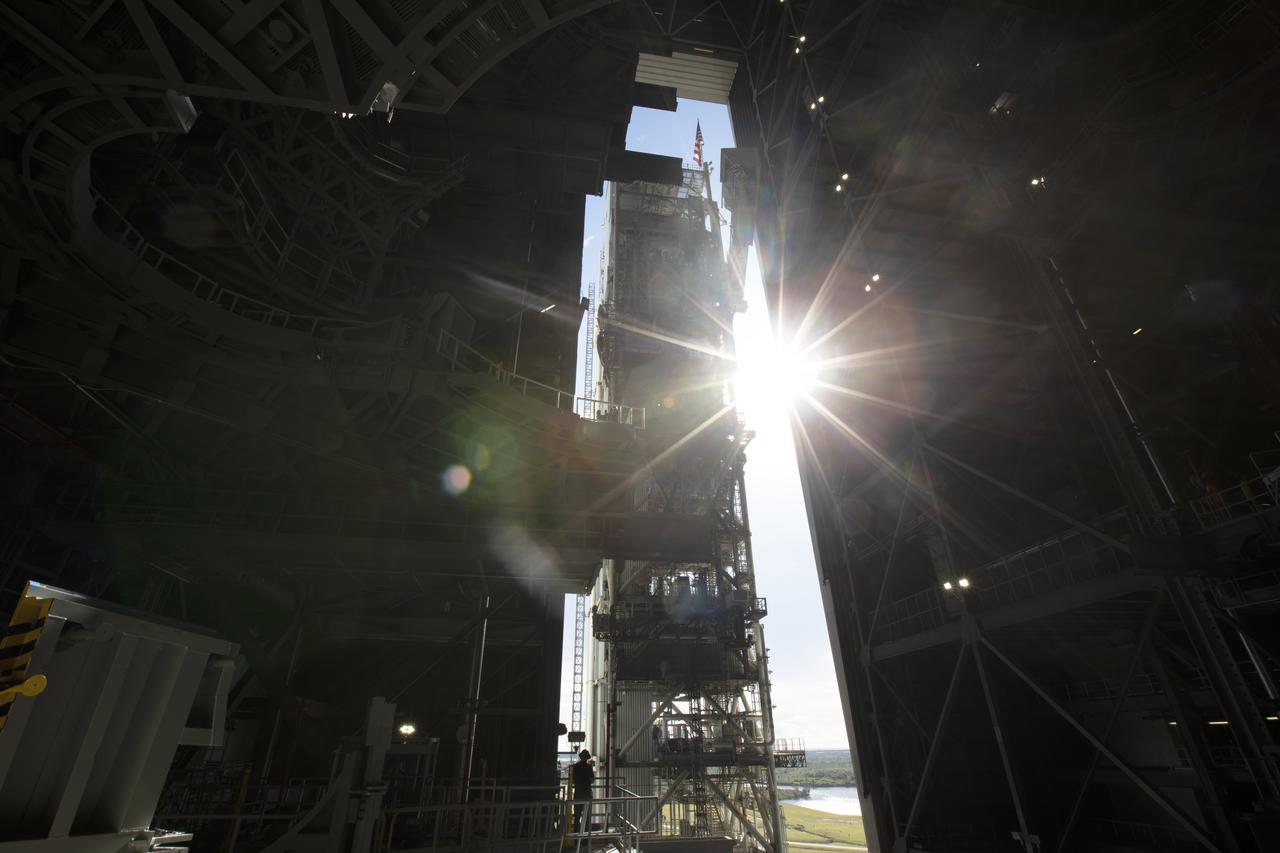
As a brilliant sun shines through, NASA's mobile launcher, atop crawler-transporter 2, begins the move into High Bay 3 at the Vehicle Assembly Building (VAB) on Sept. 8, 2018, at NASA's Kennedy Space Center in Florida. The mobile launcher departed Launch Pad 39B after several days of testing with the pad. This is the first time that the modified mobile launcher made the trip to the pad and the VAB. The mobile launcher will spend seven months in the VAB undergoing testing. The 380-foot-tall structure is equipped with the crew access arm and several umbilicals that will provide power, environmental control, pneumatics, communication and electrical connections to the agency's Space Launch System and Orion spacecraft. Exploration Ground Systems is preparing the ground systems necessary to launch SLS and Orion on Exploration Mission-1, missions to the Moon and on to Mars.
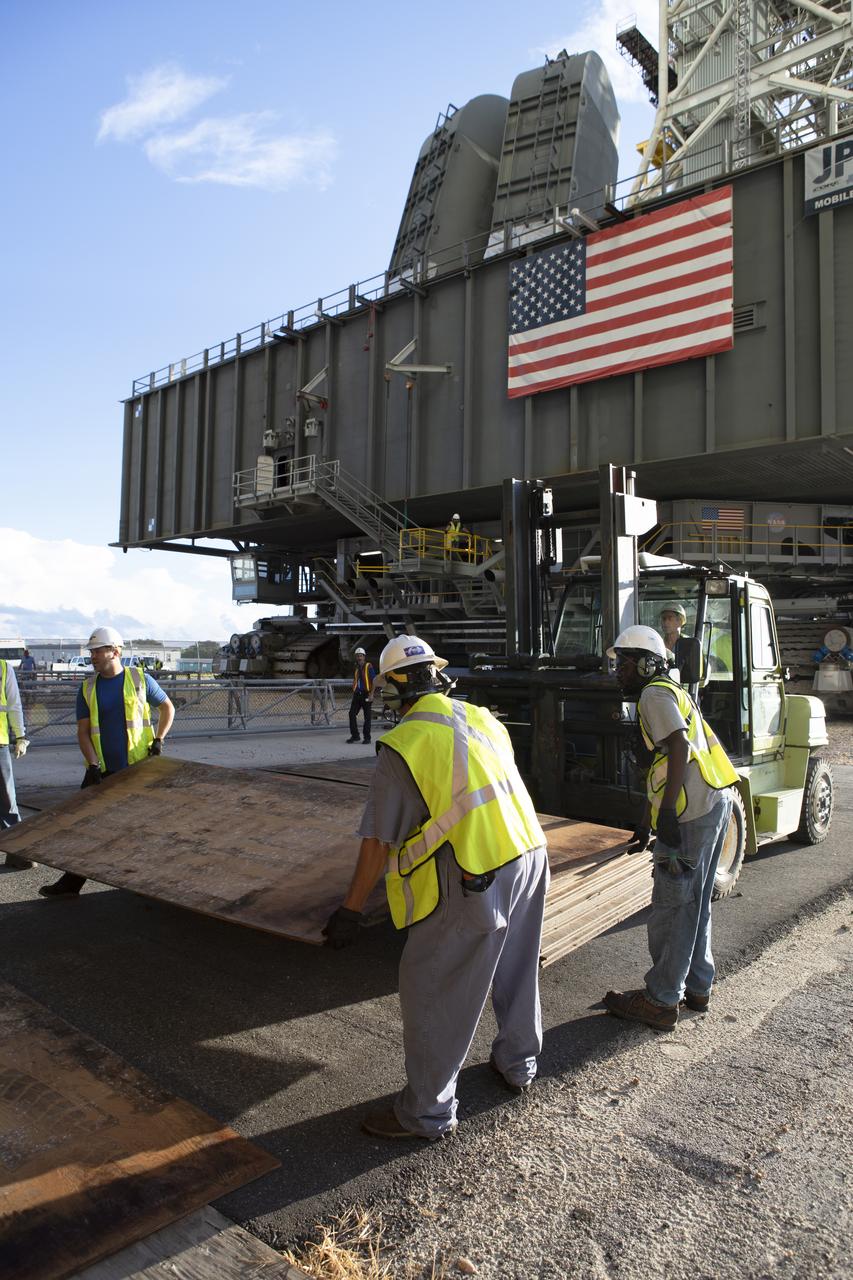
Preparations are underway to move NASA's mobile launcher, atop crawler-transporter 2, into High Bay 3 at the Vehicle Assembly Building (VAB) on Sept. 8, 2018, at NASA's Kennedy Space Center in Florida. The mobile launcher departed Launch Pad 39B after several days of testing with the pad. This is the first time that the modified mobile launcher made the trip to the pad and the VAB. The mobile launcher will spend seven months in the VAB undergoing testing. The 380-foot-tall structure is equipped with the crew access arm and several umbilicals that will provide power, environmental control, pneumatics, communication and electrical connections to the agency's Space Launch System and Orion spacecraft. Exploration Ground Systems is preparing the ground systems necessary to launch SLS and Orion on Exploration Mission-1, missions to the Moon and on to Mars.
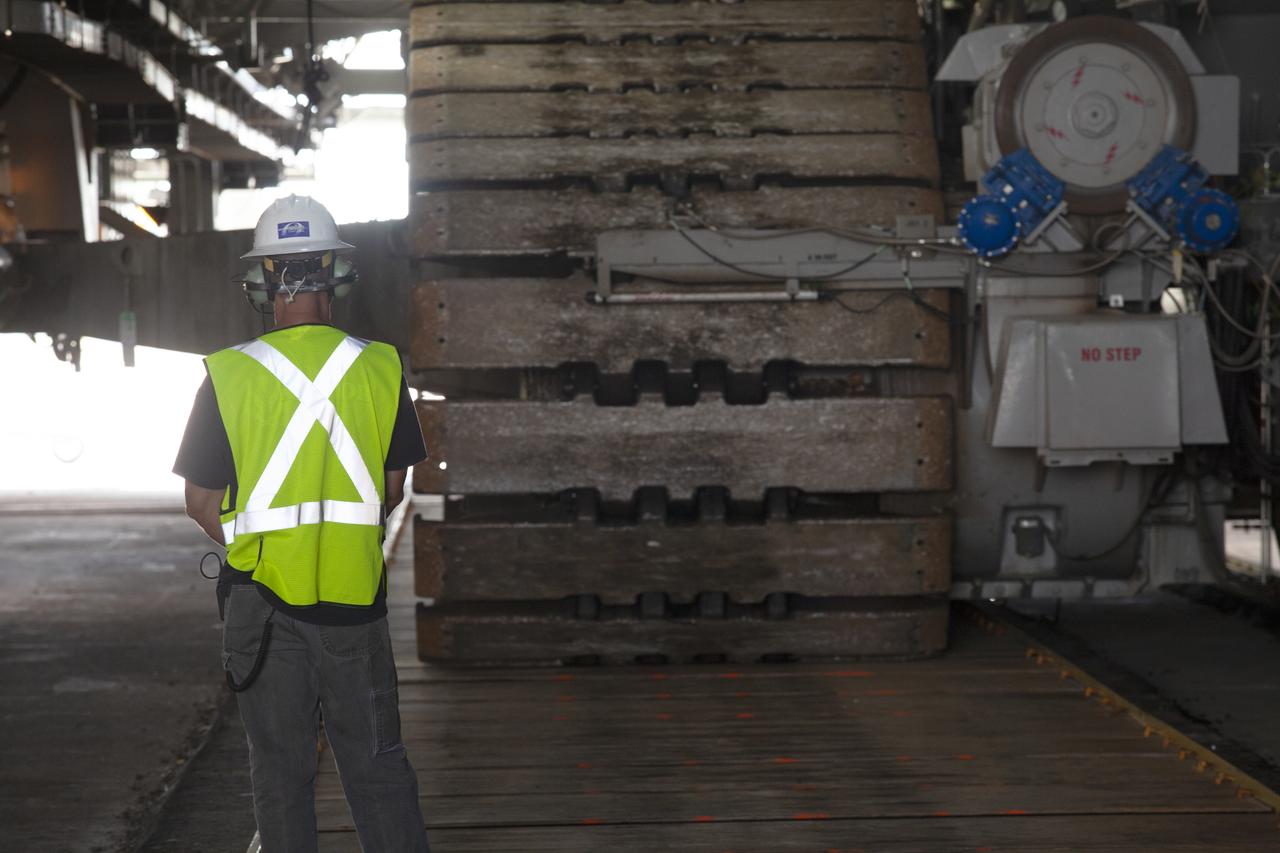
The giant cleats of crawler-transporter 2 are in view as a technician monitors the progress of the move of NASA's mobile launcher, atop the crawler, into High Bay 3 at the Vehicle Assembly Building (VAB) on Sept. 8, 2018, at NASA's Kennedy Space Center in Florida. The mobile launcher departed Launch Pad 39B after several days of testing with the pad. This is the first time that the modified mobile launcher made the trip to the pad and the VAB. The mobile launcher will spend seven months in the VAB undergoing testing. The 380-foot-tall structure is equipped with the crew access arm and several umbilicals that will provide power, environmental control, pneumatics, communication and electrical connections to the agency's Space Launch System and Orion spacecraft. Exploration Ground Systems is preparing the ground systems necessary to launch SLS and Orion on Exploration Mission-1, missions to the Moon and on to Mars.
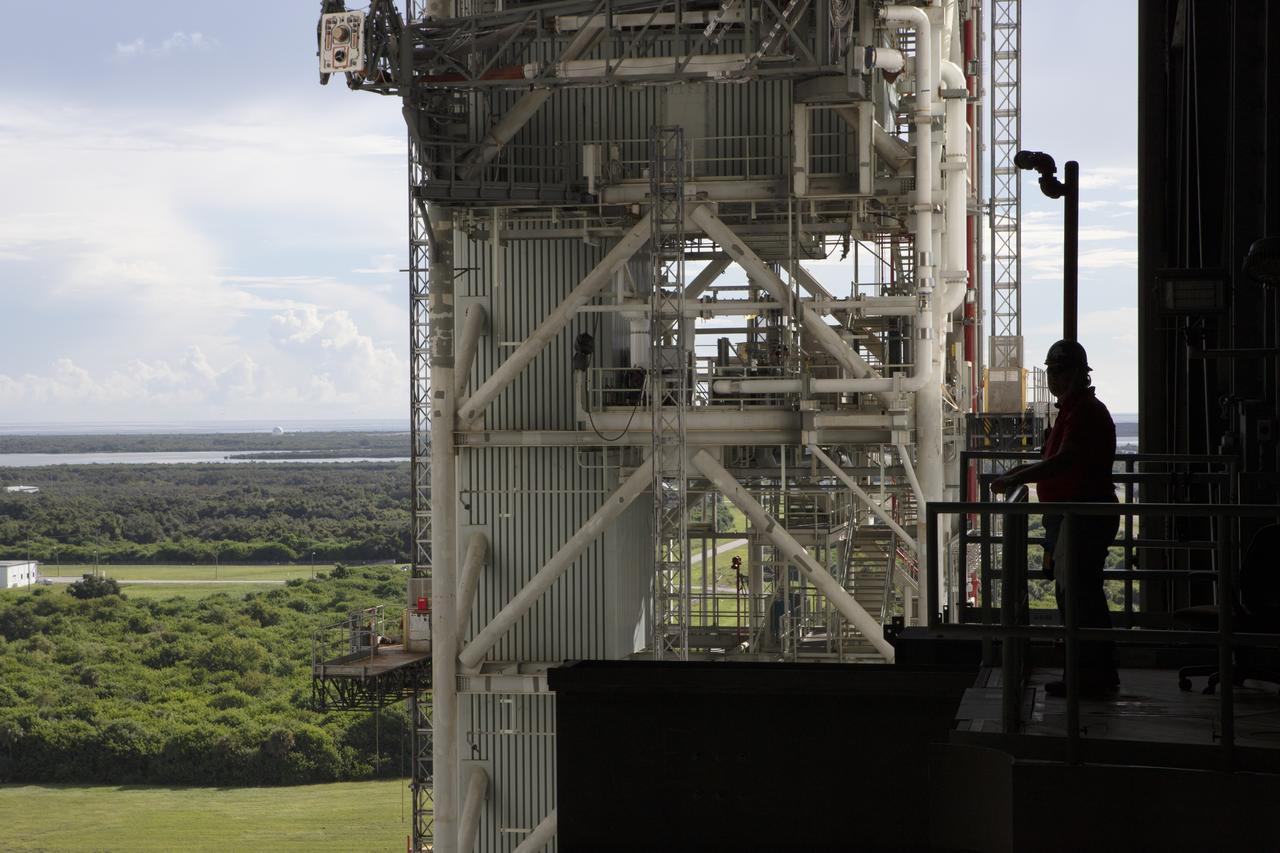
NASA's mobile launcher, atop crawler-transporter 2, moves slowly into High Bay 3 at the Vehicle Assembly Building (VAB) on Sept. 8, 2018, at NASA's Kennedy Space Center in Florida. The mobile launcher departed Launch Pad 39B after several days of testing with the pad. This is the first time that the modified mobile launcher made the trip to the pad and the VAB. The mobile launcher will spend seven months in the VAB undergoing testing. The 380-foot-tall structure is equipped with the crew access arm and several umbilicals that will provide power, environmental control, pneumatics, communication and electrical connections to the agency's Space Launch System and Orion spacecraft. Exploration Ground Systems is preparing the ground systems necessary to launch SLS and Orion on Exploration Mission-1, missions to the Moon and on to Mars.
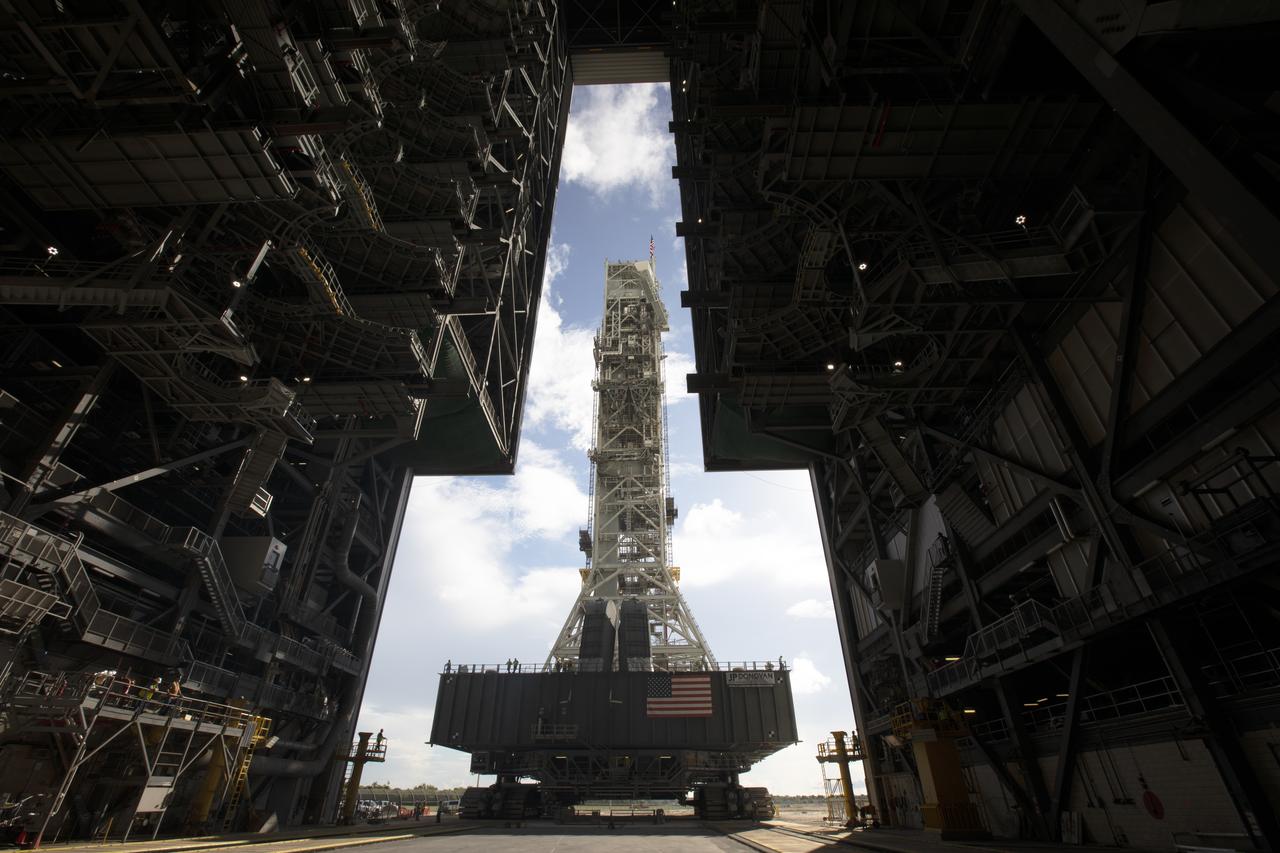
NASA's mobile launcher, atop crawler-transporter 2, begins the move into High Bay 3 at the Vehicle Assembly Building (VAB) on Sept. 8, 2018, at NASA's Kennedy Space Center in Florida. The mobile launcher departed Launch Pad 39B after several days of testing with the pad. This is the first time that the modified mobile launcher made the trip to the pad and the VAB. The mobile launcher will spend seven months in the VAB undergoing testing. The 380-foot-tall structure is equipped with the crew access arm and several umbilicals that will provide power, environmental control, pneumatics, communication and electrical connections to the agency's Space Launch System and Orion spacecraft. Exploration Ground Systems is preparing the ground systems necessary to launch SLS and Orion on Exploration Mission-1, missions to the Moon and on to Mars.
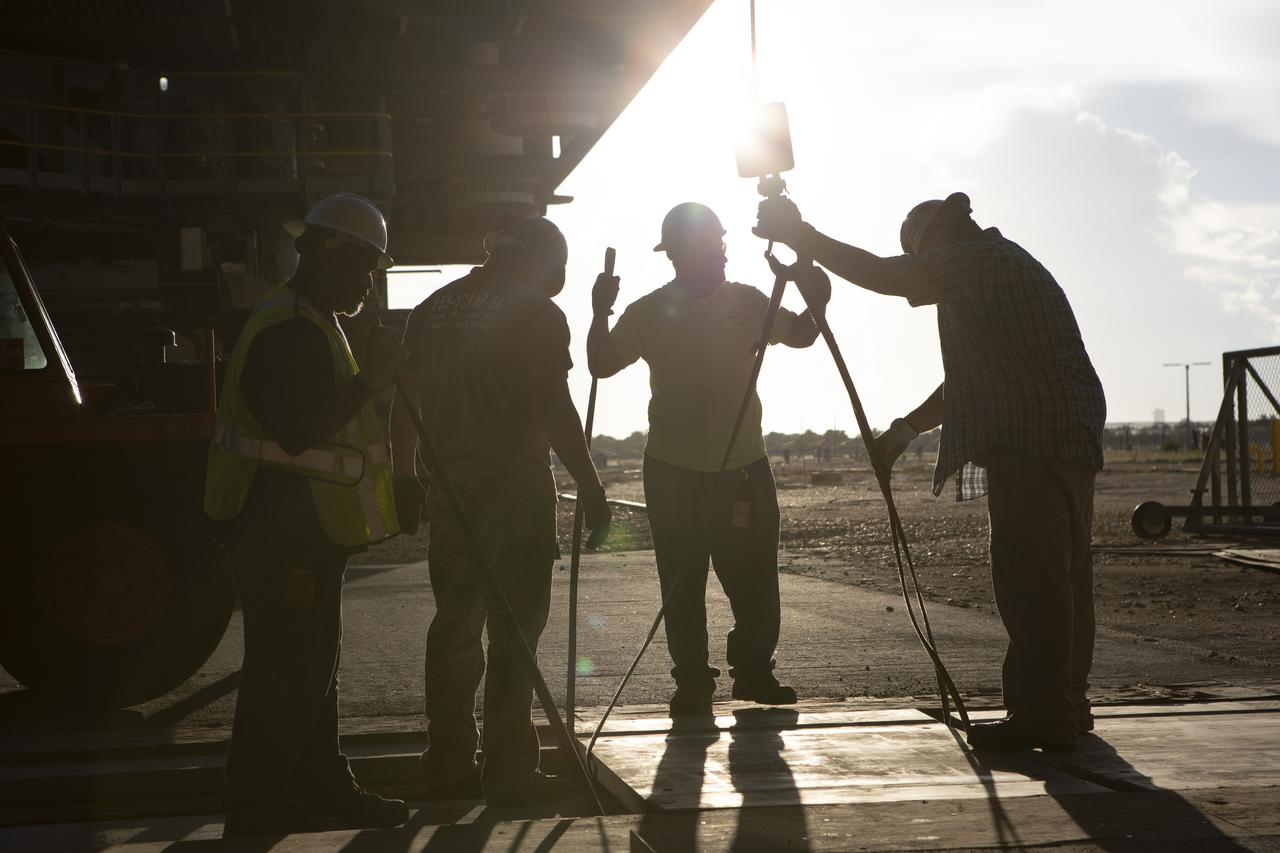
Technicians remove special planks covering tracks as NASA's mobile launcher, atop crawler-transporter 2, moves into High Bay 3 at the Vehicle Assembly Building (VAB) on Sept. 8, 2018, at NASA's Kennedy Space Center in Florida. The mobile launcher departed Launch Pad 39B after several days of testing with the pad. This is the first time that the modified mobile launcher made the trip to the pad and the VAB. The mobile launcher will spend seven months in the VAB undergoing testing. The 380-foot-tall structure is equipped with the crew access arm and several umbilicals that will provide power, environmental control, pneumatics, communication and electrical connections to the agency's Space Launch System and Orion spacecraft. Exploration Ground Systems is preparing the ground systems necessary to launch SLS and Orion on Exploration Mission-1, missions to the Moon and on to Mars.
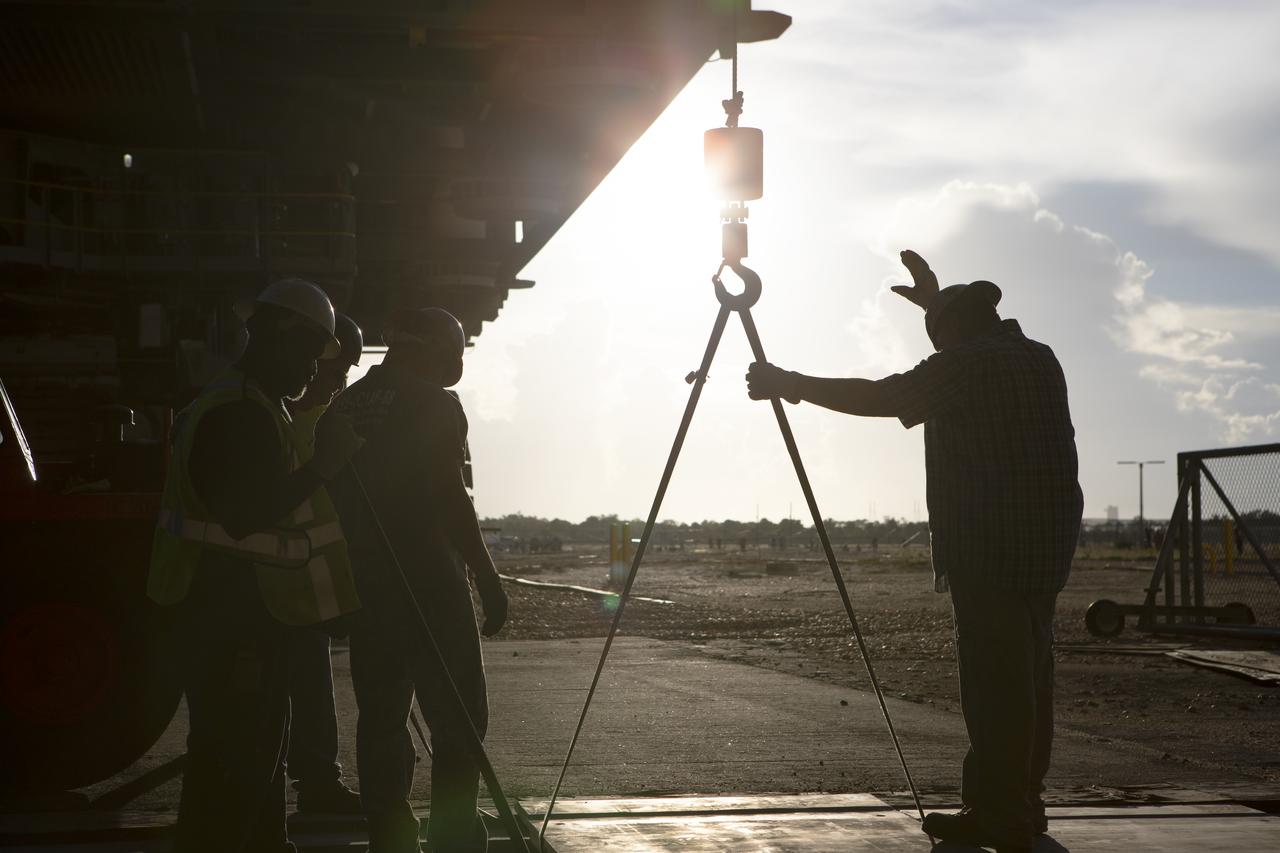
Technicians remove special planks covering tracks as NASA's mobile launcher, atop crawler-transporter 2, moves into High Bay 3 at the Vehicle Assembly Building (VAB) on Sept. 8, 2018, at NASA's Kennedy Space Center in Florida. The mobile launcher departed Launch Pad 39B after several days of testing with the pad. This is the first time that the modified mobile launcher made the trip to the pad and the VAB. The mobile launcher will spend seven months in the VAB undergoing testing. The 380-foot-tall structure is equipped with the crew access arm and several umbilicals that will provide power, environmental control, pneumatics, communication and electrical connections to the agency's Space Launch System and Orion spacecraft. Exploration Ground Systems is preparing the ground systems necessary to launch SLS and Orion on Exploration Mission-1, missions to the Moon and on to Mars.
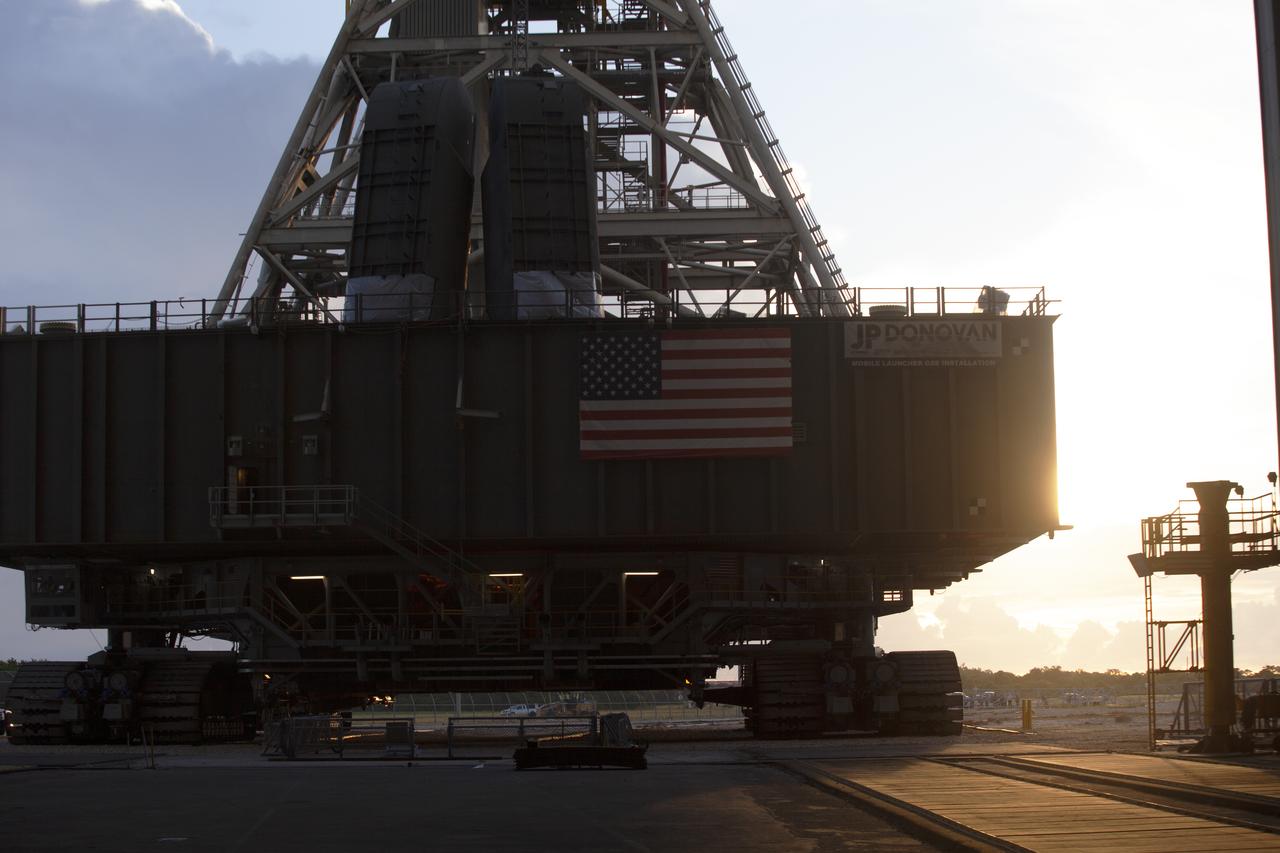
Preparations are underway to move NASA's mobile launcher, atop crawler-transporter 2, into High Bay 3 at the Vehicle Assembly Building (VAB) on Sept. 8, 2018, at NASA's Kennedy Space Center in Florida. The mobile launcher departed Launch Pad 39B after several days of testing with the pad. This is the first time that the modified mobile launcher made the trip to the pad and the VAB. The mobile launcher will spend seven months in the VAB undergoing testing. The 380-foot-tall structure is equipped with the crew access arm and several umbilicals that will provide power, environmental control, pneumatics, communication and electrical connections to the agency's Space Launch System and Orion spacecraft. Exploration Ground Systems is preparing the ground systems necessary to launch SLS and Orion on Exploration Mission-1, missions to the Moon and on to Mars.
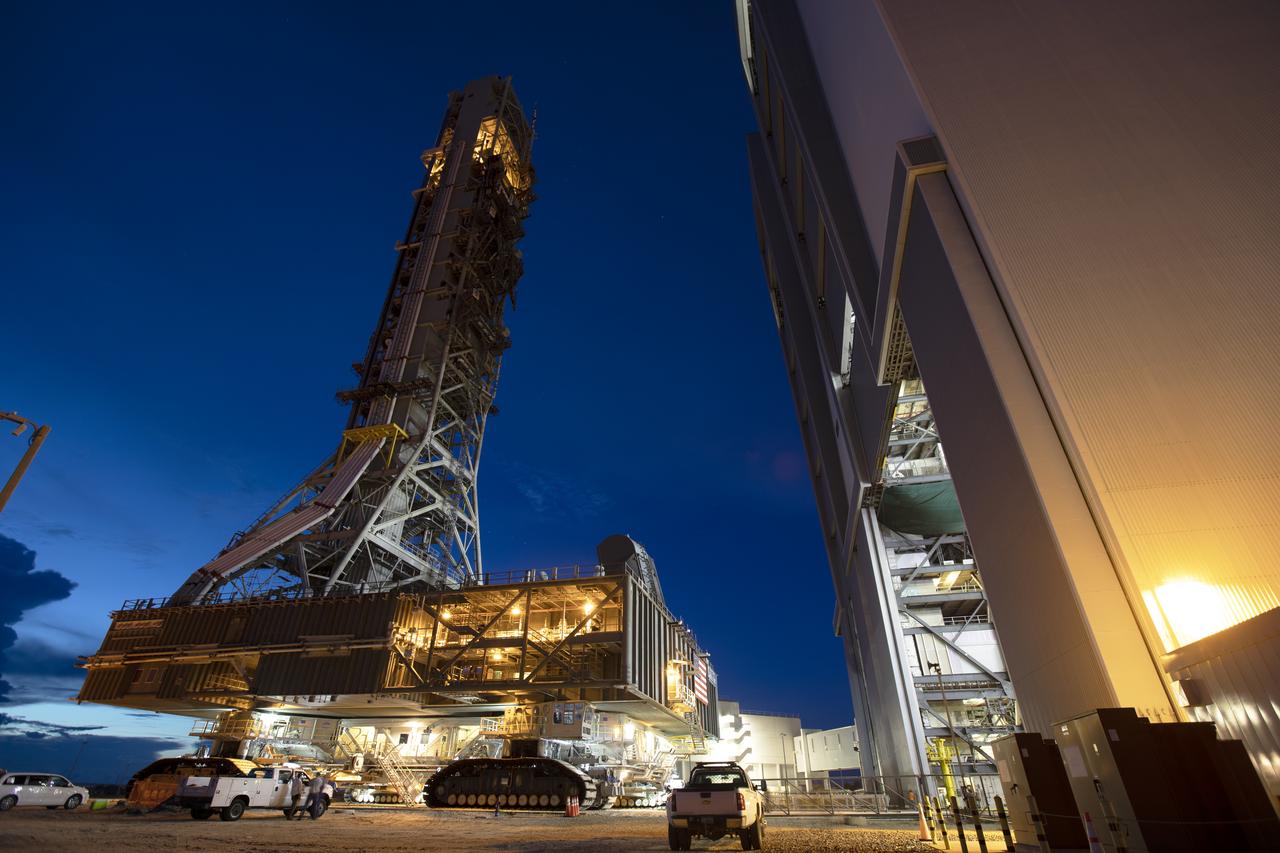
NASA's mobile launcher, atop crawler-transporter 2, is at the entrance to High Bay 3 at the Vehicle Assembly Building (VAB) just before sunrise on Sept. 8, 2018, at NASA's Kennedy Space Center in Florida. The mobile launcher departed Launch Pad 39B after several days of testing with the pad. This is the first time that the modified mobile launcher made the trip to the pad and the VAB. The mobile launcher will spend seven months in the VAB undergoing testing. The 380-foot-tall structure is equipped with the crew access arm and several umbilicals that will provide power, environmental control, pneumatics, communication and electrical connections to the agency's Space Launch System and Orion spacecraft. Exploration Ground Systems is preparing the ground systems necessary to launch SLS and Orion on Exploration Mission-1, missions to the Moon and on to Mars.
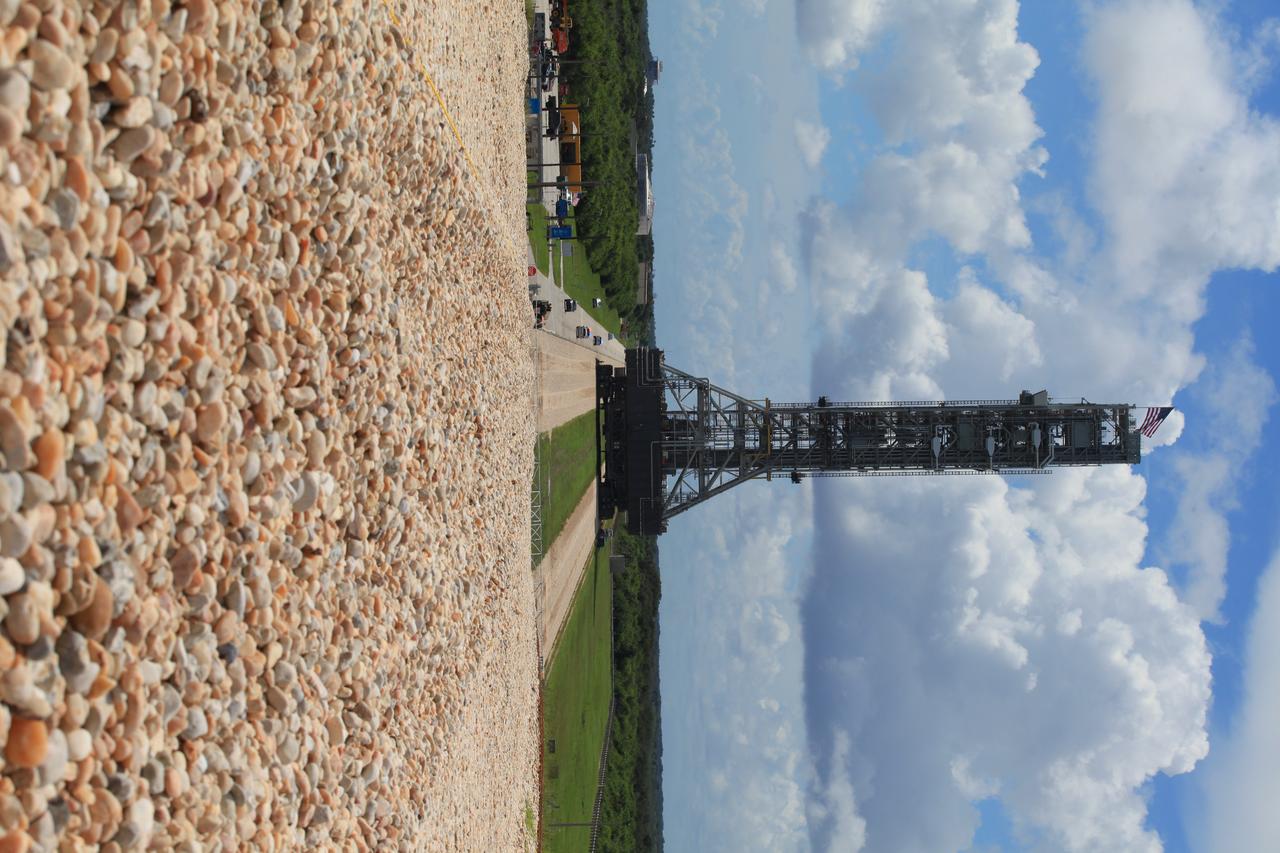
NASA's mobile launcher atop crawler-transporter 2 begins its trek off of Launch Pad 39B on Sept. 7, 2018, at NASA's Kennedy Space Center in Florida. After undergoing a fit check and several days of systems testing with the pad, the mobile launcher is on its way to the Vehicle Assembly Building. This is the first time that the modified mobile launcher made the trip to the pad. The 380-foot-tall mobile launcher is equipped with the crew access arm and several umbilicals that will provide power, environmental control. Pneumatics, communication and electrical connections to the agency's Space Launch System and Orion spacecraft. Exploration Ground Systems is preparing the ground systems necessary to launch SLS and Orion on Exploration Mission-1, missions to the Moon and on to Mars.
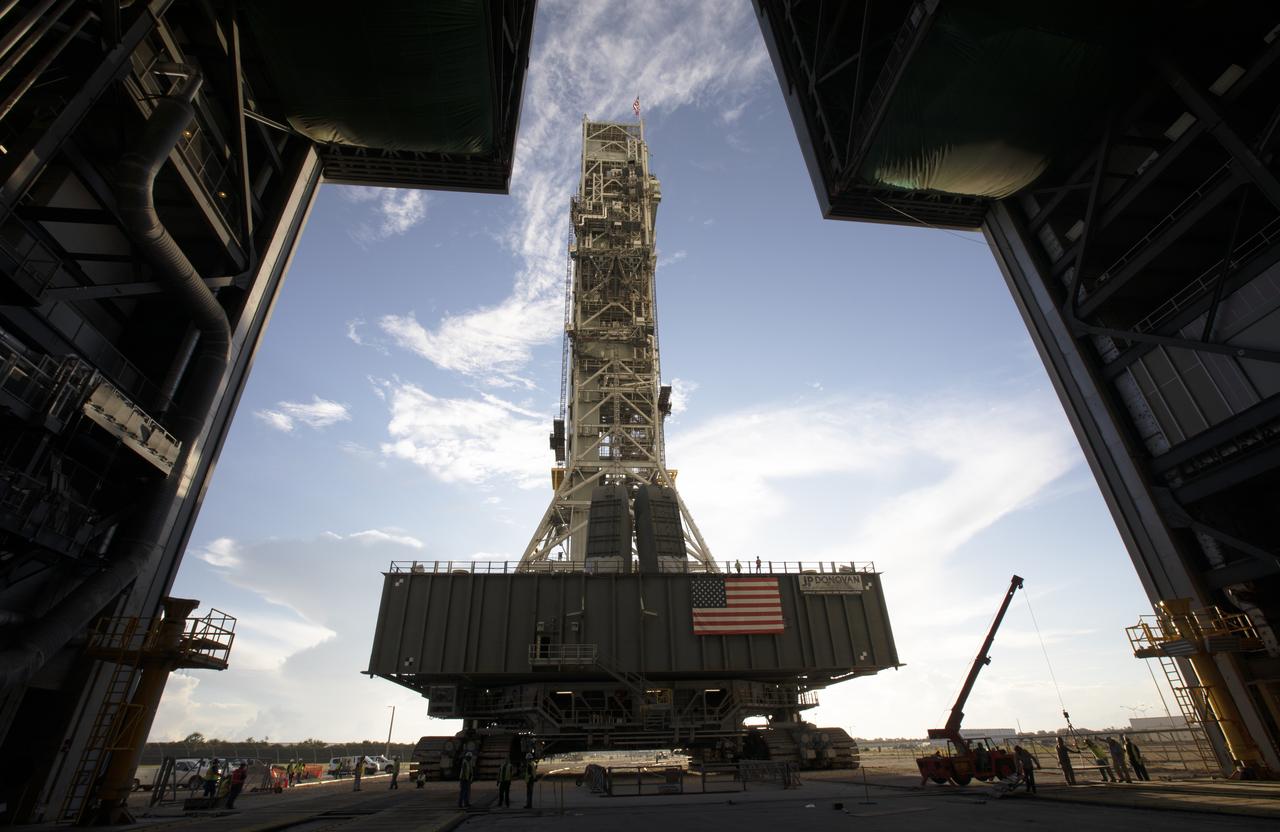
NASA's mobile launcher, atop crawler-transporter 2, is at the entrance to High Bay 3 at the Vehicle Assembly Building (VAB) on Sept. 8, 2018, at NASA's Kennedy Space Center in Florida. The mobile launcher departed Launch Pad 39B after several days of testing with the pad. This is the first time that the modified mobile launcher made the trip to the pad and the VAB. The mobile launcher will spend seven months in the VAB undergoing testing. The 380-foot-tall structure is equipped with the crew access arm and several umbilicals that will provide power, environmental control, pneumatics, communication and electrical connections to the agency's Space Launch System and Orion spacecraft. Exploration Ground Systems is preparing the ground systems necessary to launch SLS and Orion on Exploration Mission-1, missions to the Moon and on to Mars.
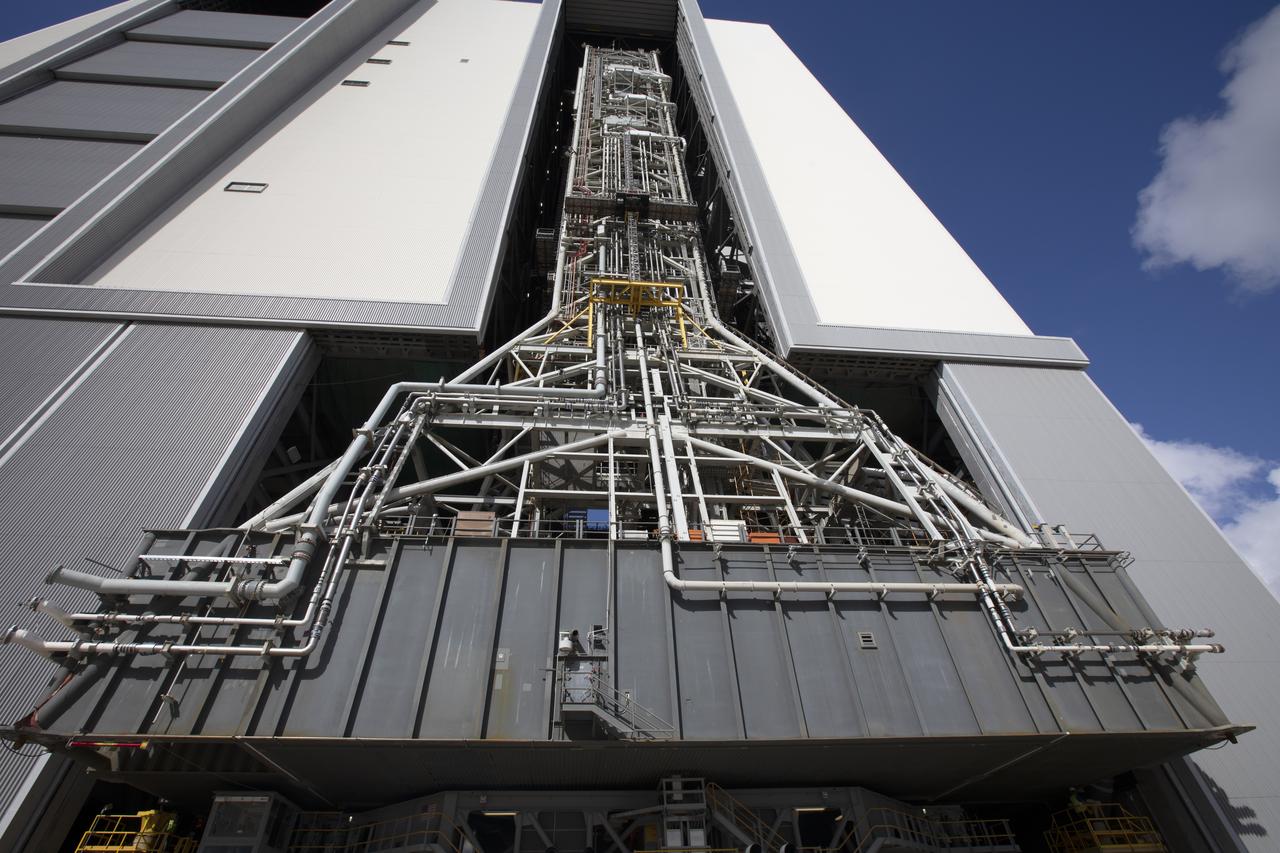
NASA's mobile launcher, atop crawler-transporter 2, moves into High Bay 3 at the Vehicle Assembly Building (VAB) on Sept. 8, 2018, at NASA's Kennedy Space Center in Florida. The mobile launcher departed Launch Pad 39B after several days of testing with the pad. This is the first time that the modified mobile launcher made the trip to the pad and the VAB. The mobile launcher will spend seven months in the VAB undergoing testing. The 380-foot-tall structure is equipped with the crew access arm and several umbilicals that will provide power, environmental control, pneumatics, communication and electrical connections to the agency's Space Launch System and Orion spacecraft. Exploration Ground Systems is preparing the ground systems necessary to launch SLS and Orion on Exploration Mission-1, missions to the Moon and on to Mars.
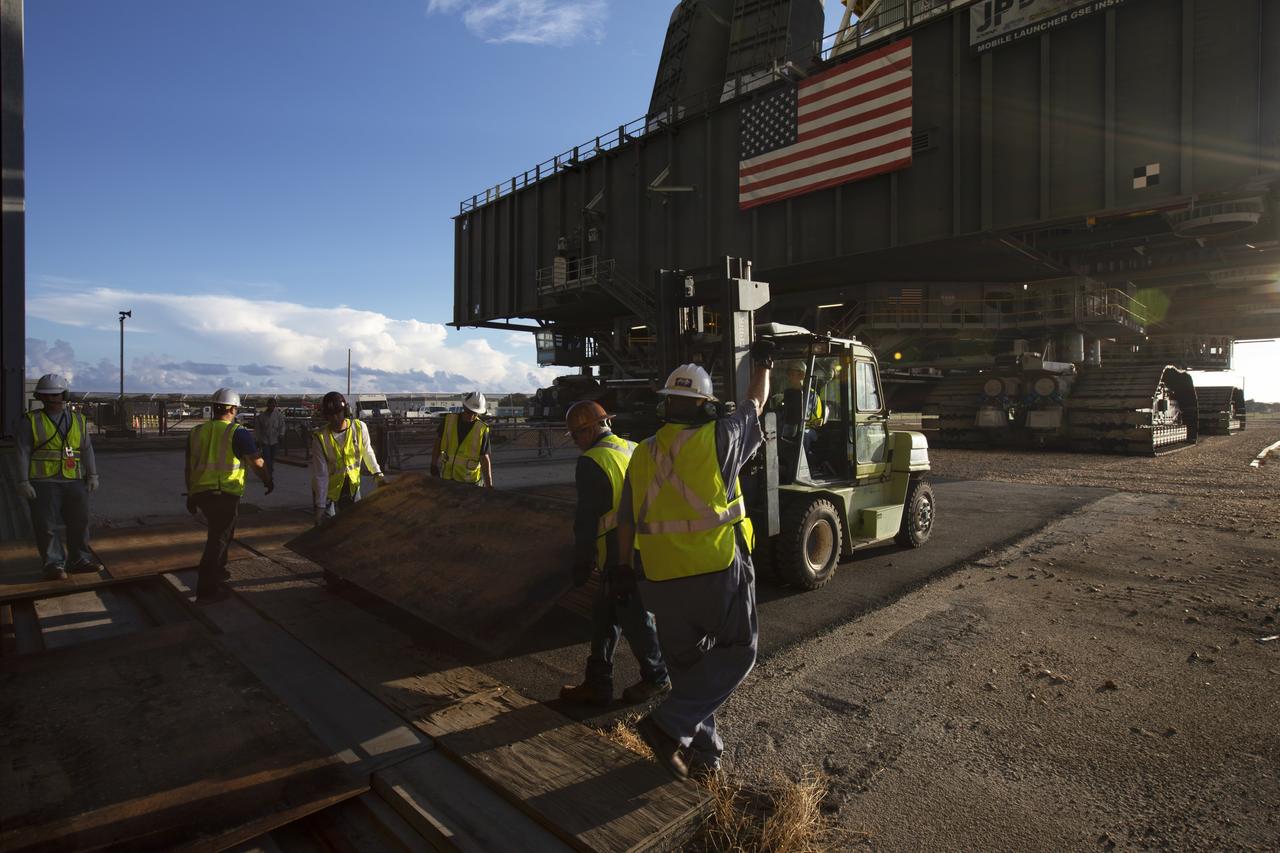
Preparations are underway to move NASA's mobile launcher, atop crawler-transporter 2, into High Bay 3 at the Vehicle Assembly Building (VAB) on Sept. 8, 2018, at NASA's Kennedy Space Center in Florida. The mobile launcher departed Launch Pad 39B after several days of testing with the pad. This is the first time that the modified mobile launcher made the trip to the pad and the VAB. The mobile launcher will spend seven months in the VAB undergoing testing. The 380-foot-tall structure is equipped with the crew access arm and several umbilicals that will provide power, environmental control, pneumatics, communication and electrical connections to the agency's Space Launch System and Orion spacecraft. Exploration Ground Systems is preparing the ground systems necessary to launch SLS and Orion on Exploration Mission-1, missions to the Moon and on to Mars.
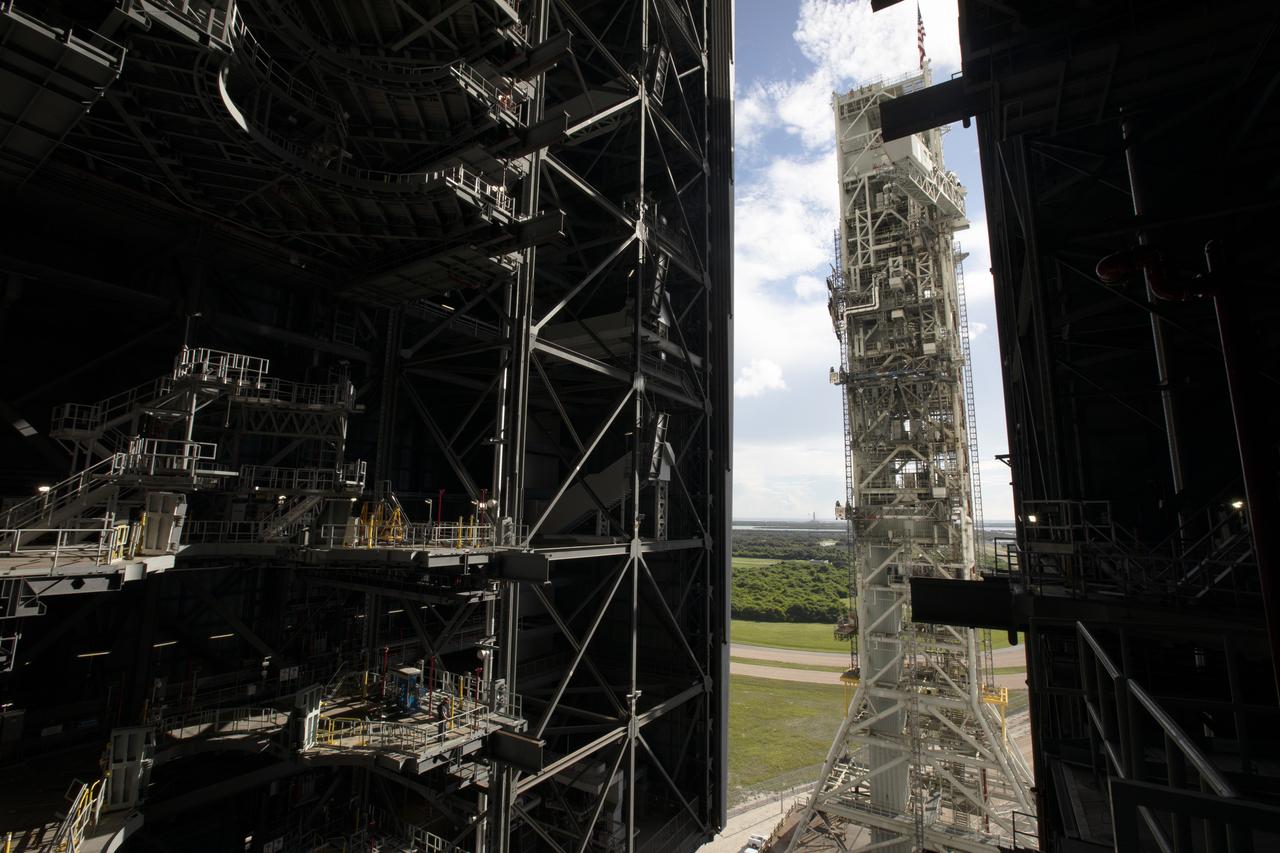
NASA's mobile launcher, atop crawler-transporter 2, begins the move into High Bay 3 at the Vehicle Assembly Building (VAB) on Sept. 8, 2018, at NASA's Kennedy Space Center in Florida. The mobile launcher departed Launch Pad 39B after several days of testing with the pad. This is the first time that the modified mobile launcher made the trip to the pad and the VAB. The mobile launcher will spend seven months in the VAB undergoing testing. The 380-foot-tall structure is equipped with the crew access arm and several umbilicals that will provide power, environmental control, pneumatics, communication and electrical connections to the agency's Space Launch System and Orion spacecraft. Exploration Ground Systems is preparing the ground systems necessary to launch SLS and Orion on Exploration Mission-1, missions to the Moon and on to Mars.
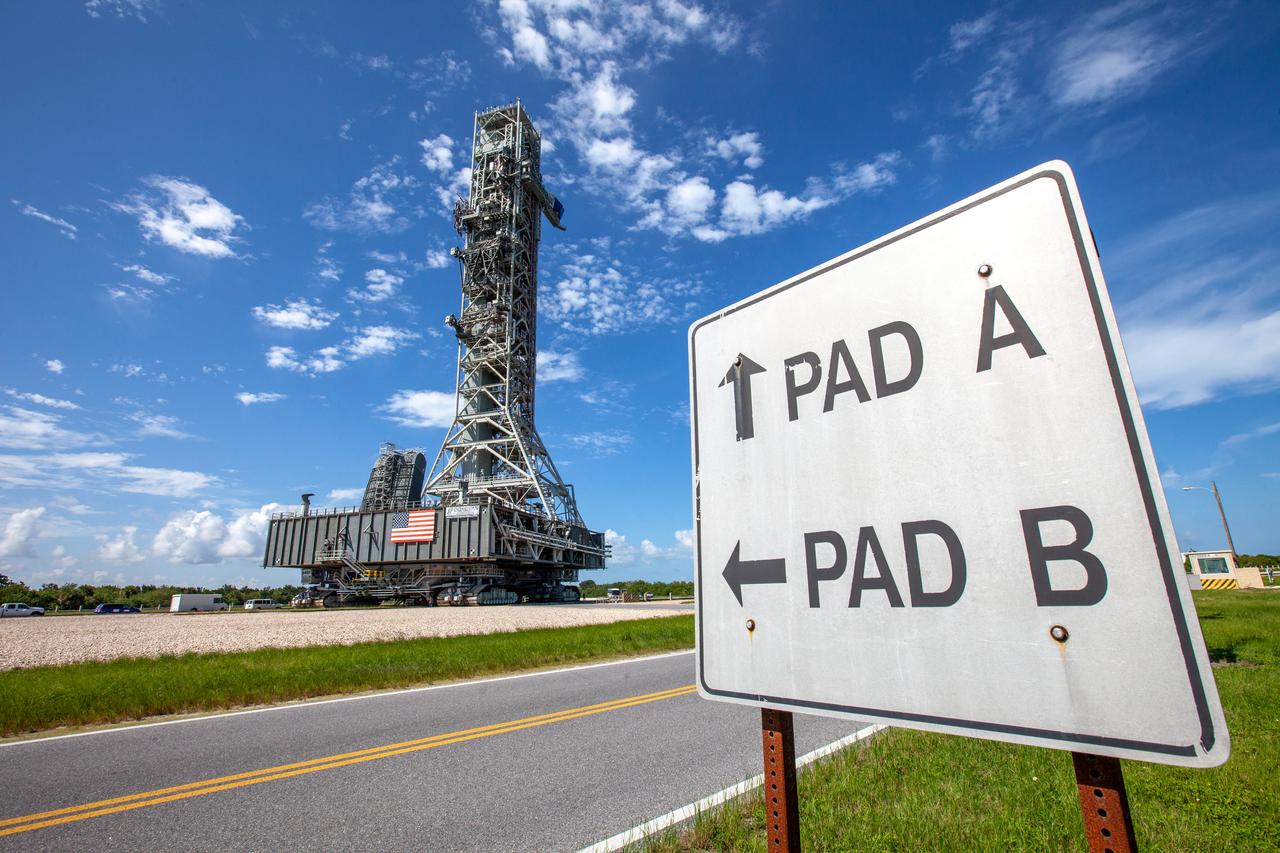
NASA’s mobile launcher (ML) atop crawler-transporter 2 moves along the crawlerway and nears the turn to Launch Pad 39B on Sept. 10, 2019, after spending a week and a half inside the Vehicle Assembly Building (VAB) at Kennedy Space Center in Florida due to the approach of Hurricane Dorian. The nearly 400-foot-tall structure was moved from Pad B to the VAB for safekeeping on Aug. 30. The storm passed about 70 miles east of the spaceport during the overnight hours Tuesday, Sept. 3, and Wednesday, Sept. 4. NASA’s Exploration Ground Systems is moving the mobile launcher back to the launch pad, where teams will complete testing and checkout on the launcher in the coming weeks for the Artemis I mission.
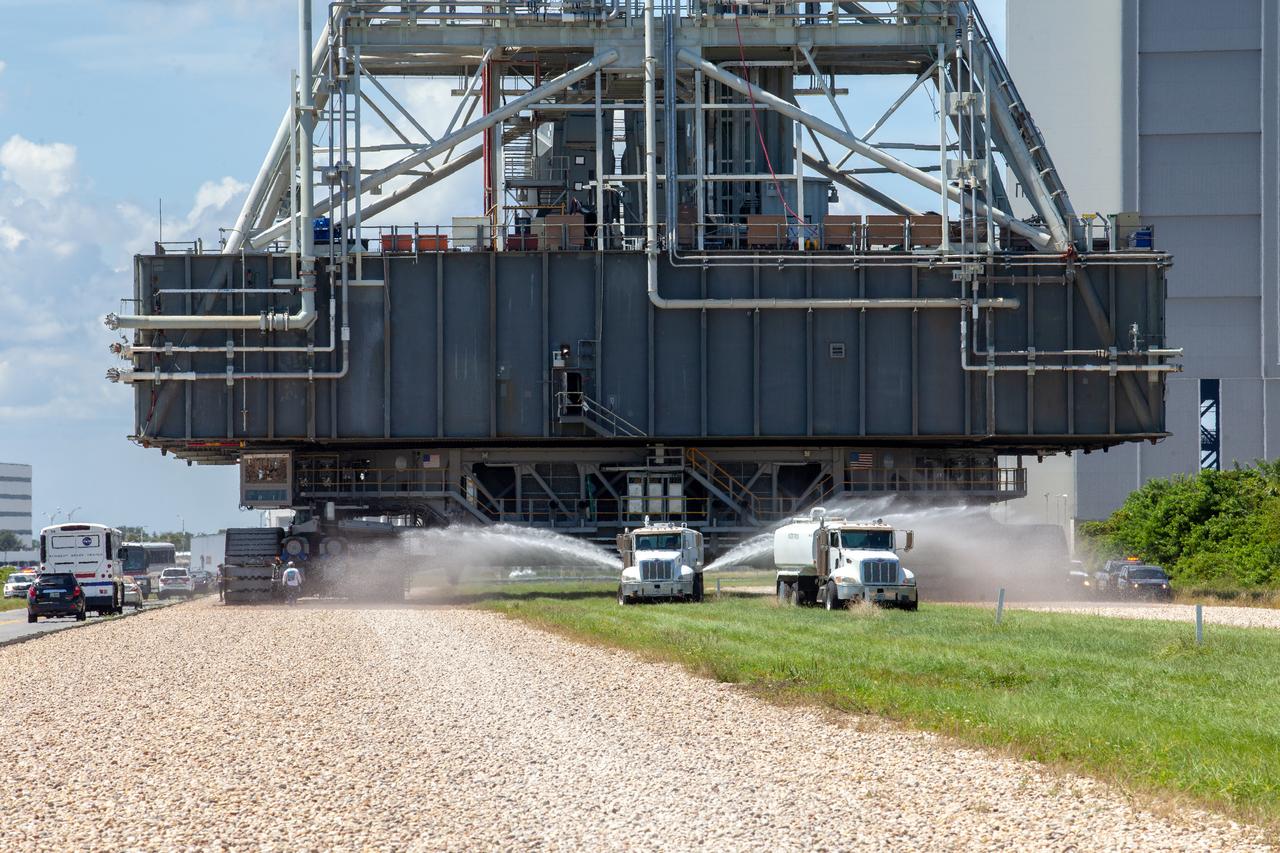
NASA’s mobile launcher (ML) atop crawler-transporter 2 moves along the crawlerway on Sept. 10, 2019, after spending a week and a half inside the Vehicle Assembly Building (VAB) at Kennedy Space Center in Florida due to the approach of Hurricane Dorian. Truck in front spray water to reduce dust and sand. The nearly 400-foot-tall structure was moved from Launch Pad 39B to the VAB for safekeeping on Aug. 30. The storm passed about 70 miles east of the spaceport during the overnight hours Tuesday, Sept. 3, and Wednesday, Sept. 4. NASA’s Exploration Ground Systems is moving the mobile launcher back to the launch pad, where teams will complete testing and checkout on the launcher in the coming weeks for the Artemis I mission.
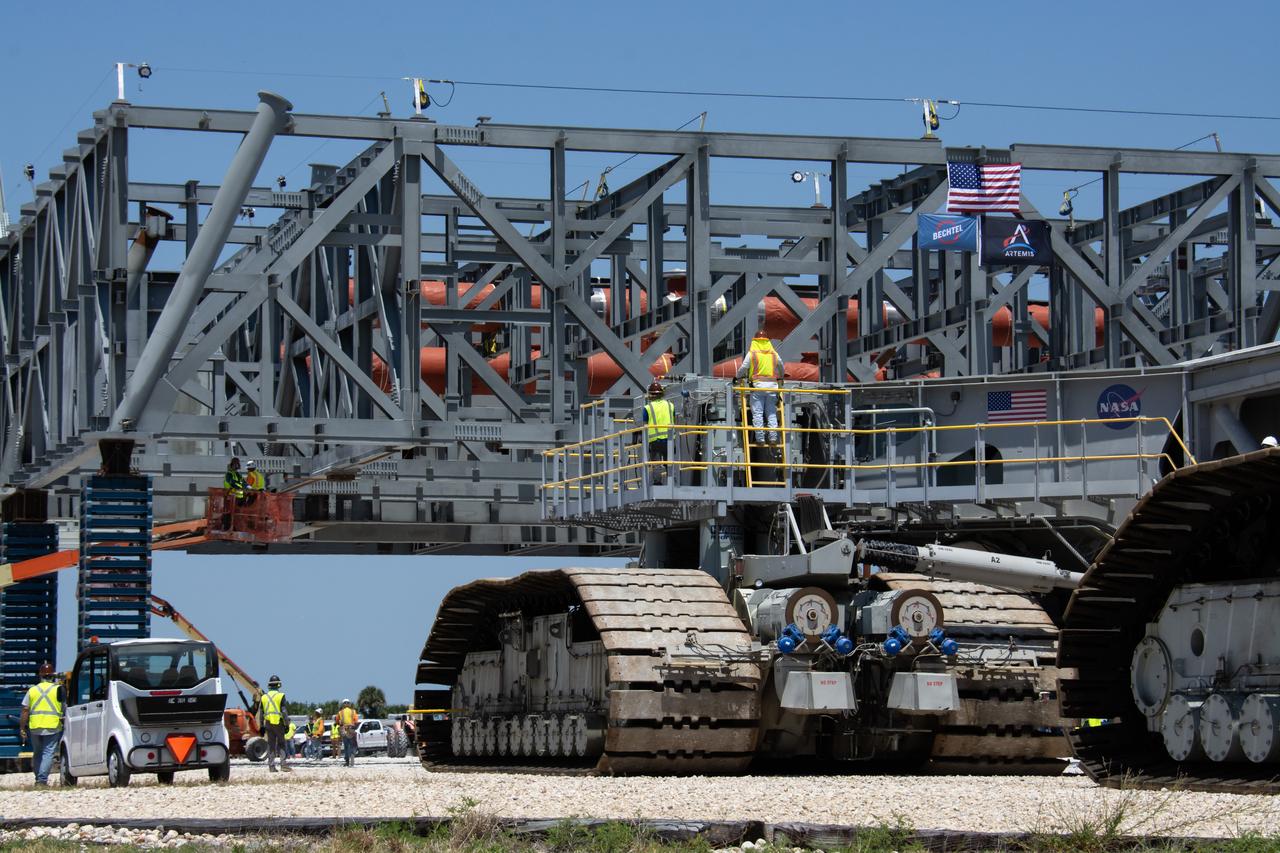
On Thursday, May 9, 2024, teams with NASA’s Exploration Ground Systems Program and primary contractor, Bechtel National, Inc., continue moving the base structure of mobile launcher 2 to a permanent mount structure where assembly will be completed at Kennedy Space Center in Florida. The 355-foot-tall mobile launcher 2 with a two-story base and a tower will be used to assemble and process the SLS (Space Launch System) rocket and Orion spacecraft in the Vehicle Assembly Building on NASA’s upcoming Artemis missions to the Moon beginning with Artemis IV.
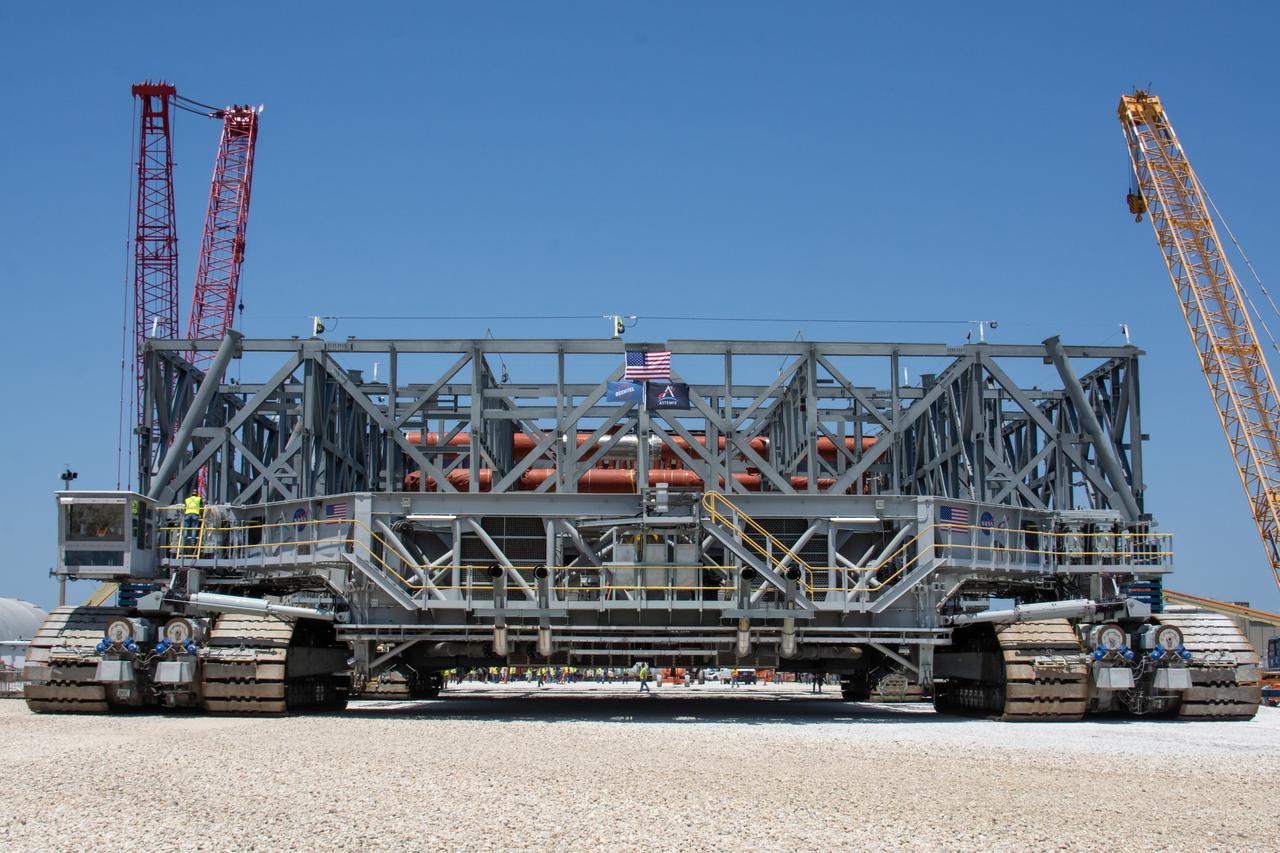
On Thursday, May 9, 2024, teams with NASA’s Exploration Ground Systems Program and primary contractor, Bechtel National, Inc., continue moving the base structure of mobile launcher 2 to a permanent mount structure where assembly will be completed at Kennedy Space Center in Florida. The 355-foot-tall mobile launcher 2 with a two-story base and a tower will be used to assemble and process the SLS (Space Launch System) rocket and Orion spacecraft in the Vehicle Assembly Building on NASA’s upcoming Artemis missions to the Moon beginning with Artemis IV.