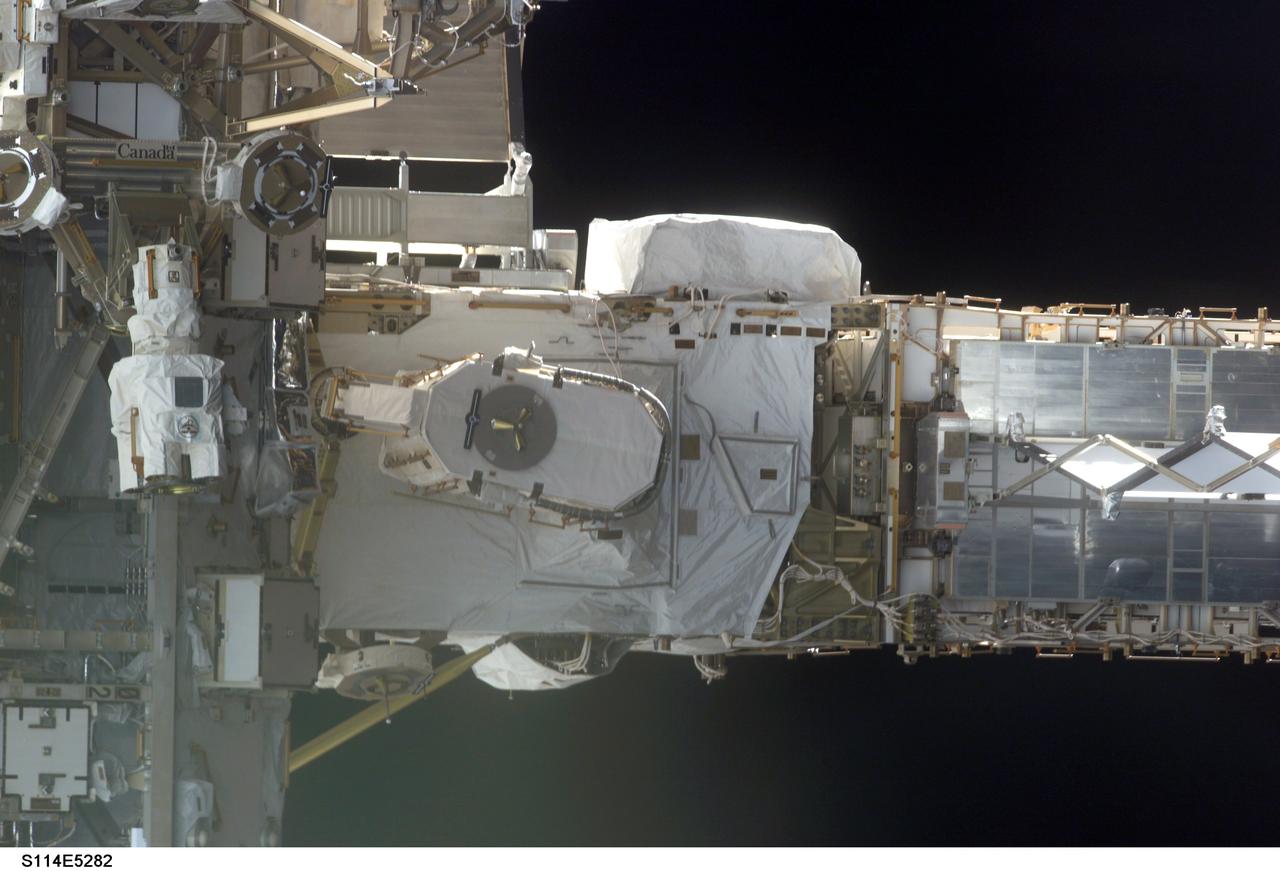
STS114-E-5282 (28 July 2005) --- This frame and STS114-E-5283 actually can be conjoined and rotated 90 degrees to make a single frame, providing an "astronaut's eye view" from Discovery's aft cabin looking toward the recently docked International Space Station. At the left side are the S0 truss and mobile transporter, with the P6 truss on the right side.
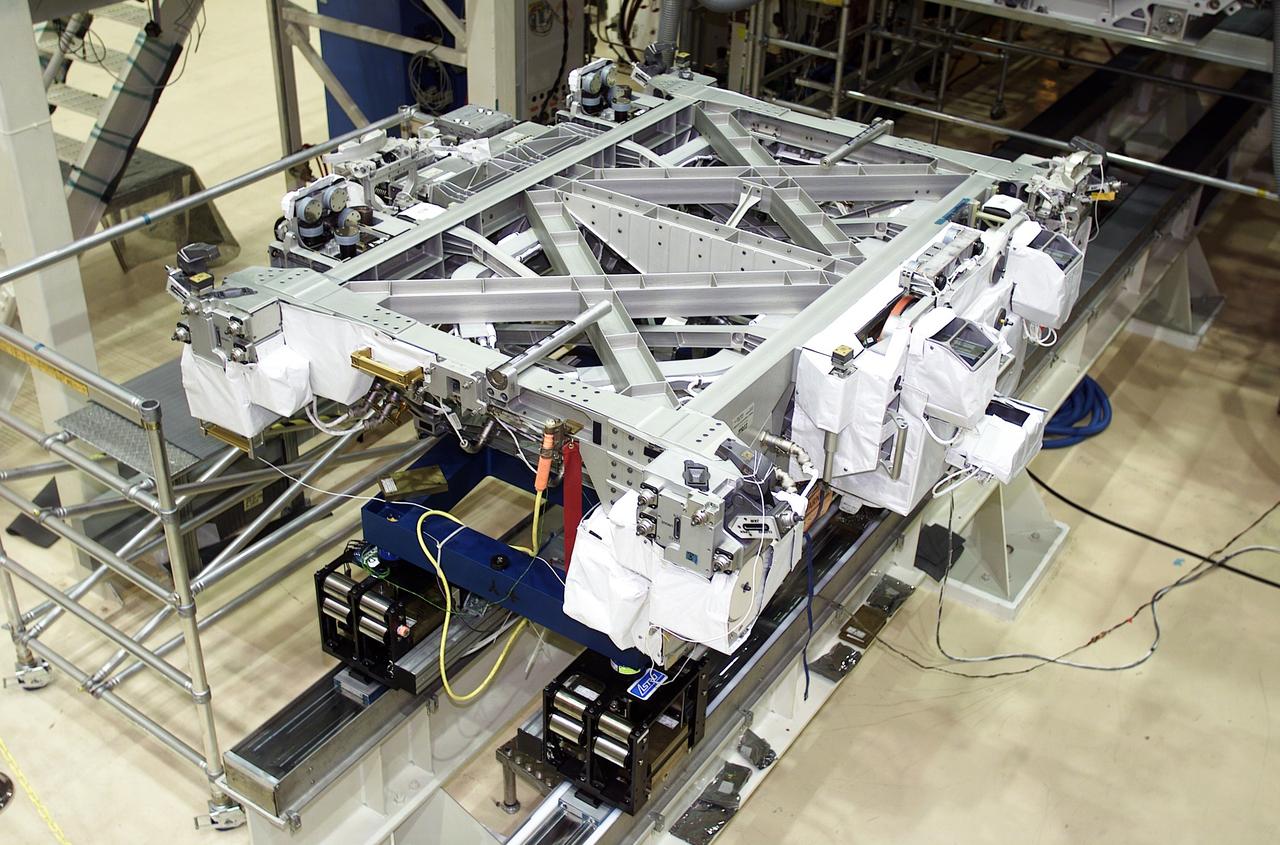
The Space Shuttle Atlantis, STS-110 mission, deployed this railcar, called the Mobile Transporter, and an initial 43-foot section of track, the S0 (S-zero) truss, preparing the International Space Station (ISS) for future spacewalks. The first railroad in space, the Mobile Transporter will allow the Station's robotic arm to travel up and down the finished truss for future assembly and maintenance. The 27,000-pound S0 truss is the first of 9 segments that will make up the Station's external framework that will eventually stretch 356 feet (109 meters), or approximately the length of a football field. The completed truss structure will hold solar arrays and radiators to provide power and cooling for additional international research laboratories from Japan and Europe that will be attached to the Station. The Space Shuttle Orbiter Atlantis, STS-110 mission, was launched April 8, 2002 and returned to Earth April 19, 2002. STS-110's Extravehicular Activity (EVA) marked the first use of the Station's robotic arm to maneuver spacewalkers around the Station.
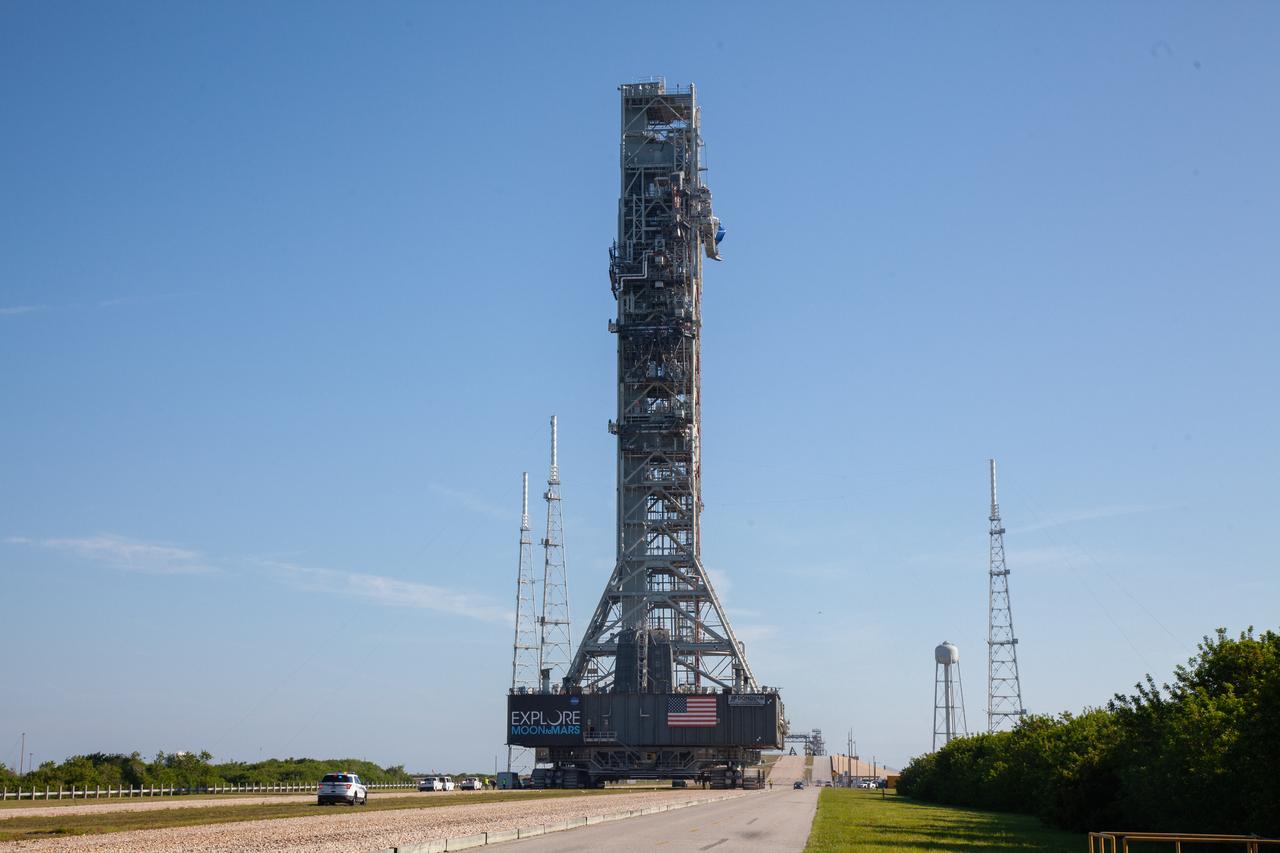
On June 27, 2019, Exploration Ground Systems’ mobile launcher, atop crawler-transporter 2, approaches Kennedy Space Center’s Launch Complex 39B in Florida, where it will remain for the summer, undergoing final testing and checkouts. The mobile launcher departed from the Vehicle Assembly Building at midnight on June 27 for the 10-hour journey to the pad. Its next roll to the pad will be with the agency’s Space Launch System rocket and Orion spacecraft in preparation for the launch of Artemis 1.
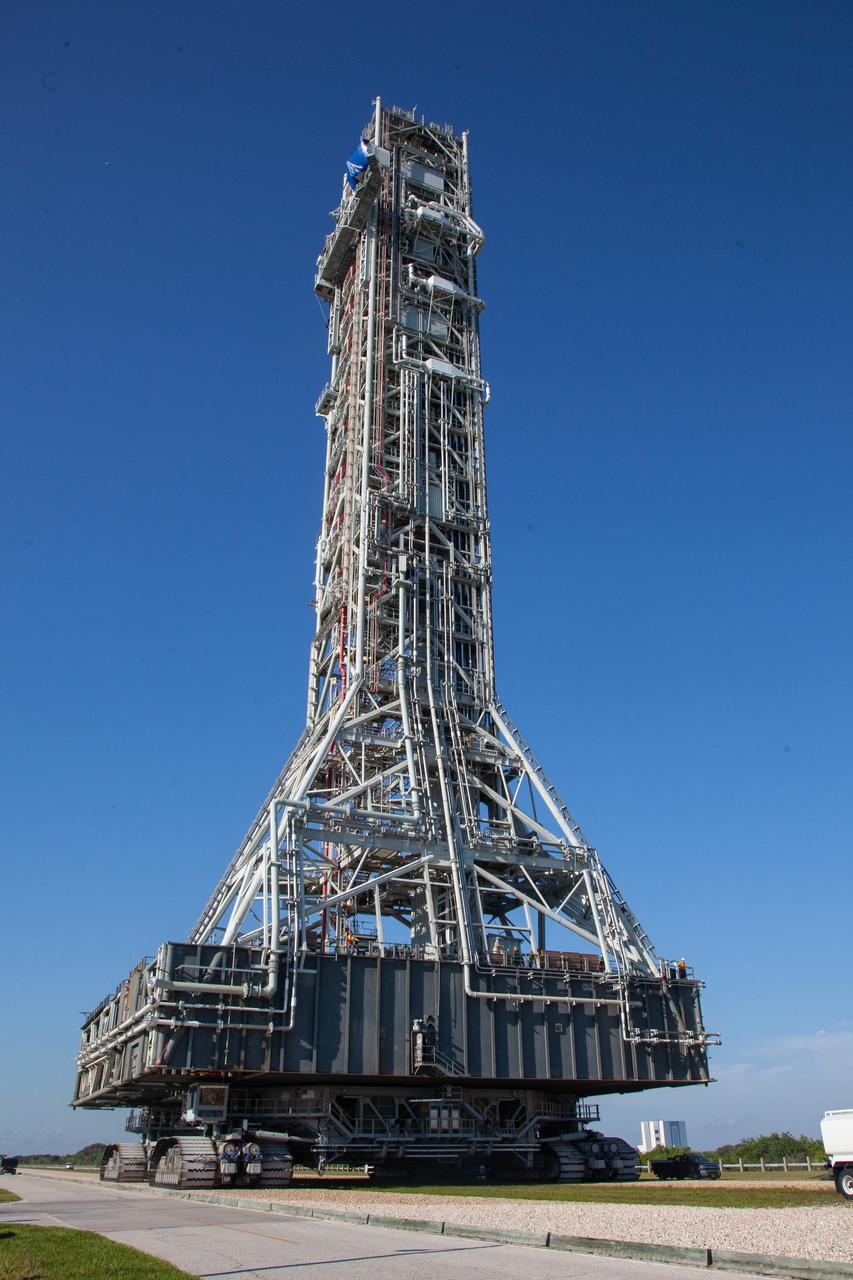
On June 27, 2019, Exploration Ground Systems’ mobile launcher, atop crawler-transporter 2, makes its last solo trek to Kennedy Space Center’s Launch Complex 39B in Florida, where it will remain for the summer, undergoing final testing and checkouts. The mobile launcher departed from the Vehicle Assembly Building at midnight on June 27 for the 10-hour journey to the pad. Its next roll to the pad will be with the agency’s Space Launch System rocket and Orion spacecraft in preparation for the launch of Artemis 1.
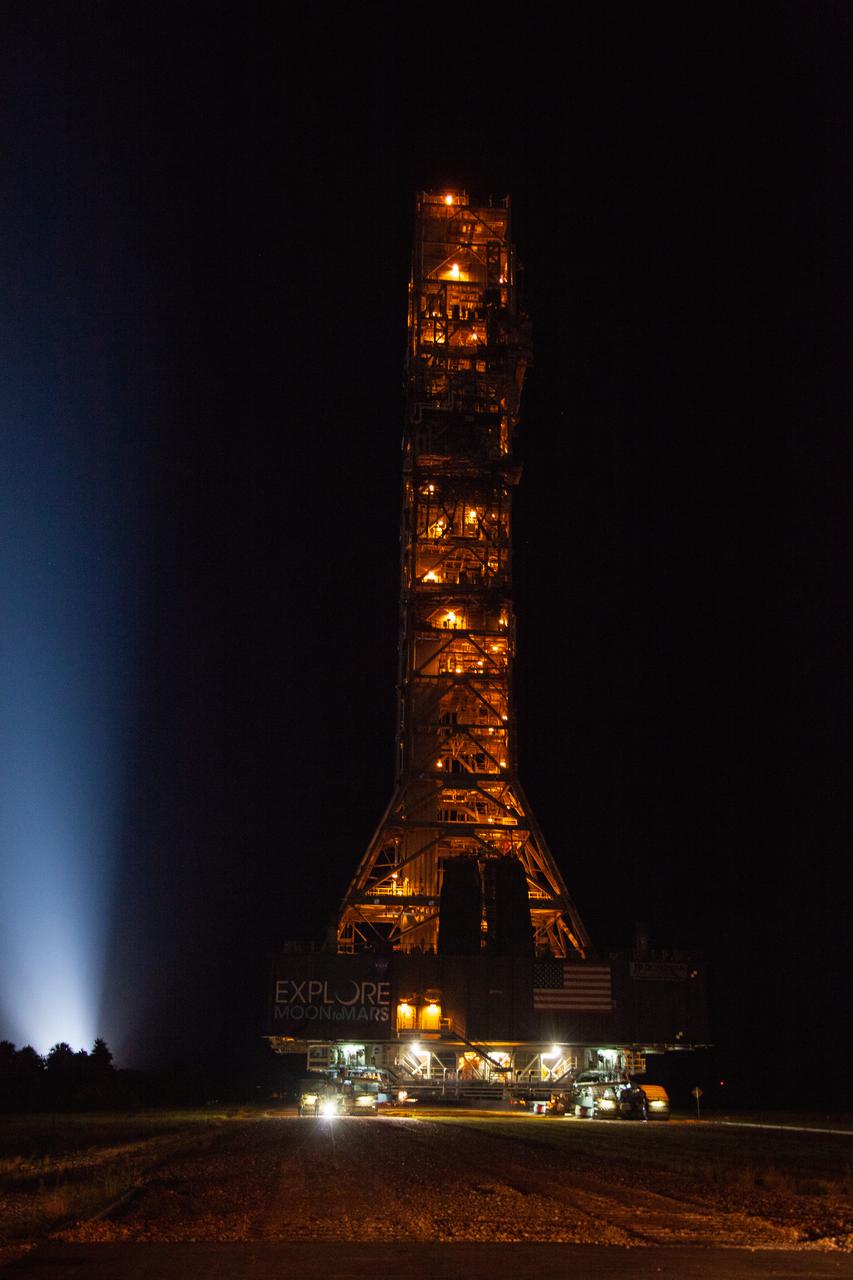
Exploration Ground Systems’ mobile launcher makes its last solo trek along the crawlerway atop crawler-transporter 2 to Kennedy Space Center’s Launch Complex 39B in Florida on June 27, 2019. The mobile launcher departed from the Vehicle Assembly Building at midnight on June 27 for the 10-hour journey to the pad, where it will remain for the summer, undergoing final testing and checkouts. Its next roll to the pad will be with the agency’s Space Launch System rocket and Orion spacecraft in preparation for the launch of Artemis 1.
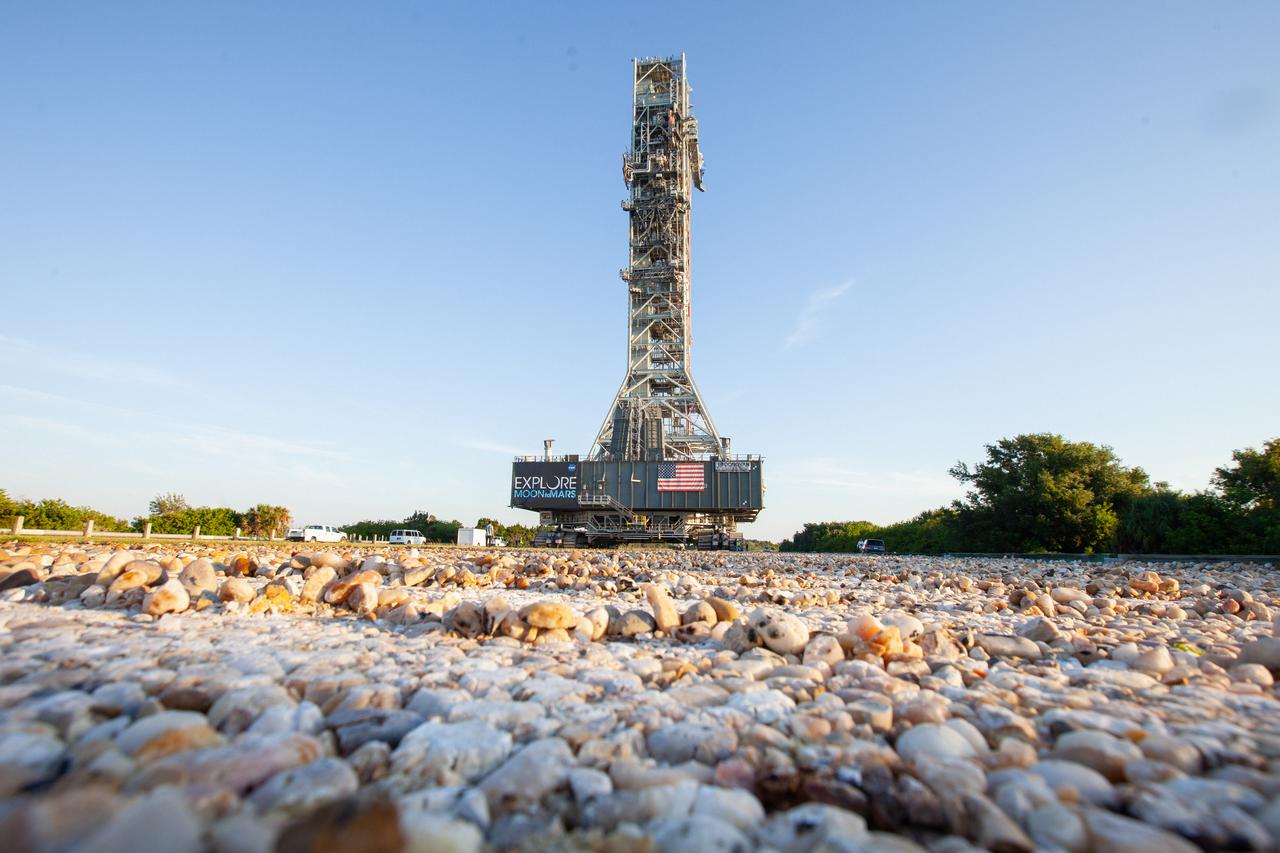
Exploration Ground Systems’ mobile launcher makes its last solo trek along the crawlerway atop crawler-transporter 2 to Kennedy Space Center’s Launch Complex 39B in Florida on June 27, 2019. The mobile launcher departed from the Vehicle Assembly Building at midnight on June 27 for the 10-hour journey to the pad and will remain there for the summer, undergoing final testing and checkouts. Its next roll to the pad will be with the agency’s Space Launch System rocket and Orion spacecraft in preparation for the launch of Artemis 1.
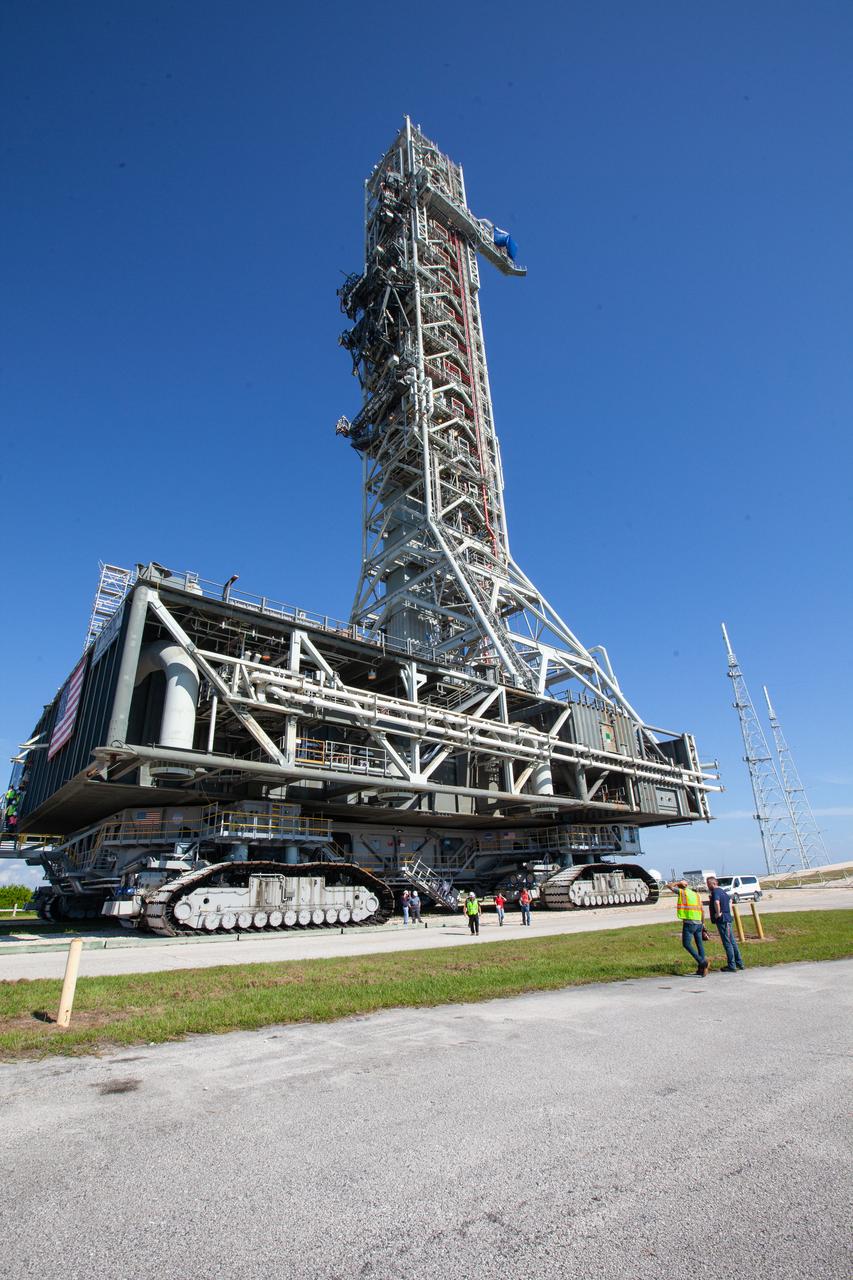
Exploration Ground Systems’ mobile launcher is seen atop crawler-transporter 2 at Kennedy Space Center’s Launch Complex 39B in Florida on June 27, 2019. The mobile launcher departed from the Vehicle Assembly Building at midnight on June 27 for its last solo trek to the pad, where it will remain for the summer, undergoing final testing and checkouts. Its next roll to the pad will be with the agency’s Space Launch System rocket and Orion spacecraft in preparation for the launch of Artemis 1.
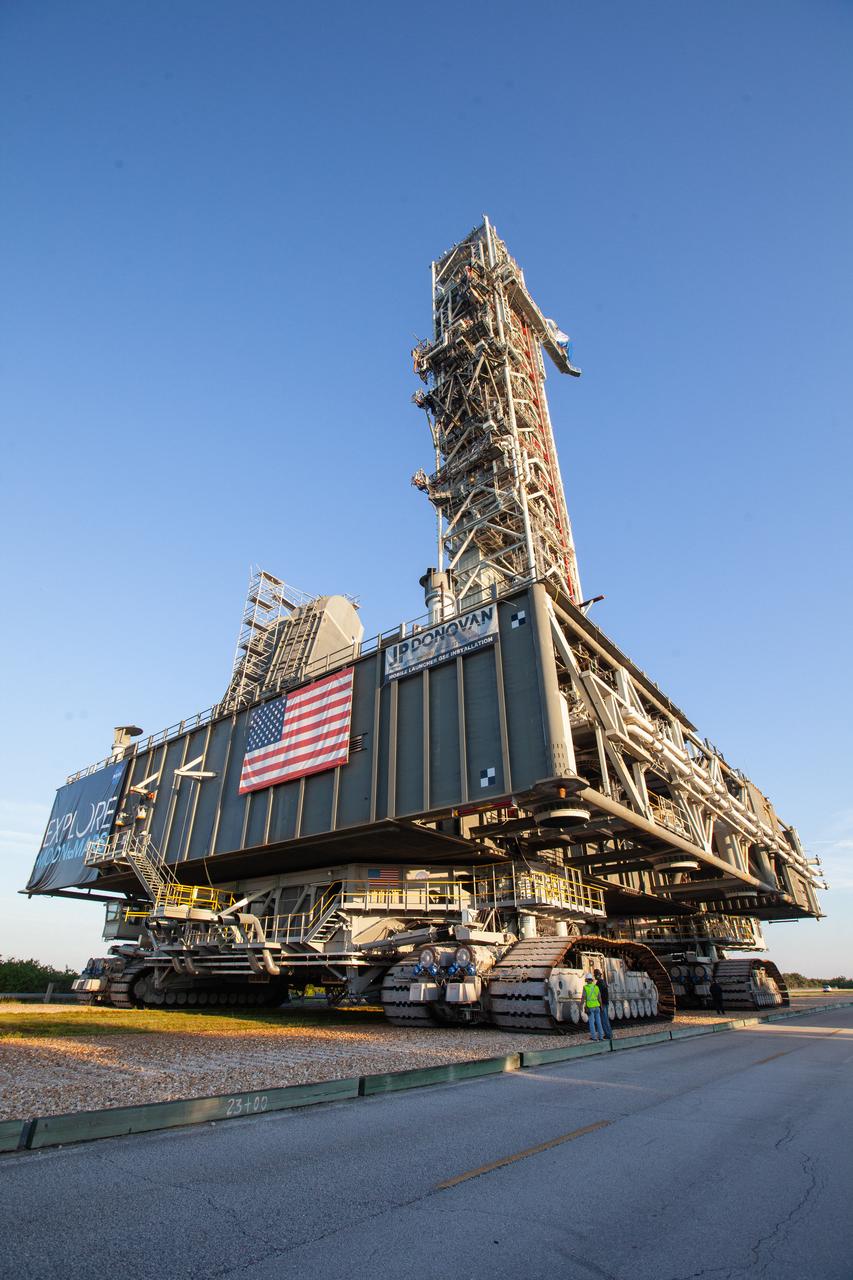
Exploration Ground Systems’ mobile launcher makes its last solo trek along the crawlerway atop crawler-transporter 2 to Kennedy Space Center’s Launch Complex 39B in Florida on June 27, 2019. The mobile launcher departed from the Vehicle Assembly Building at midnight on June 27 for the 10-hour journey to the pad and will remain there for the summer, undergoing final testing and checkouts. Its next roll to the pad will be with the agency’s Space Launch System rocket and Orion spacecraft in preparation for the launch of Artemis 1.
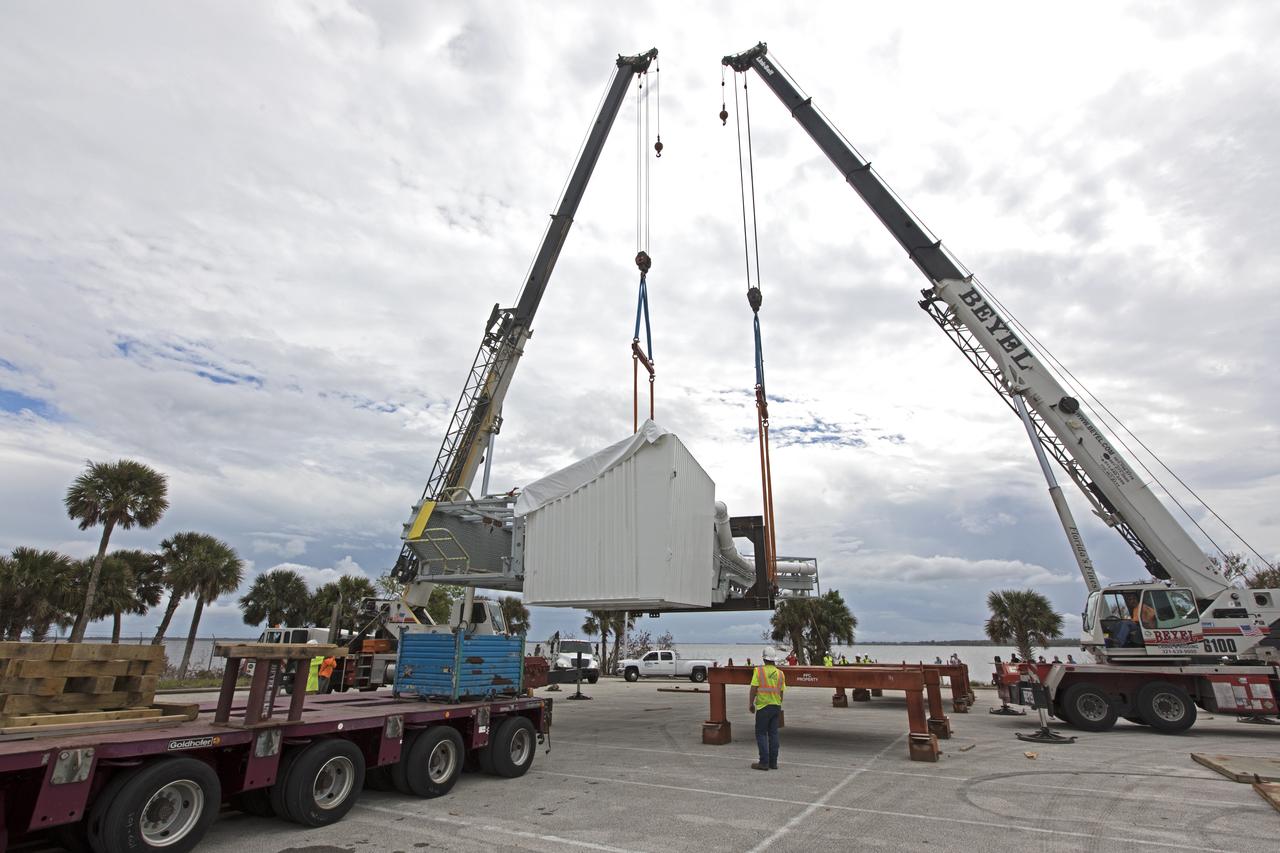
Two heavy-lift cranes are used to lift the Orion crew access arm up from a flatbed truck in a storage location at NASA's Kennedy Space Center in Florida. The access arm was transported from Precision Fabricating and Cleaning in Cocoa, Florida. Later this month, the arm will be transported to the mobile launcher (ML) tower at the center. The crew access arm will be located at about the 274-foot level on the tower. It will rotate from its retracted position and interface with the Orion crew hatch location to provide entry to the Orion crew module. The Ground Systems Development and Operations Program is overseeing installation of umbilicals and launch accessories on the ML tower.
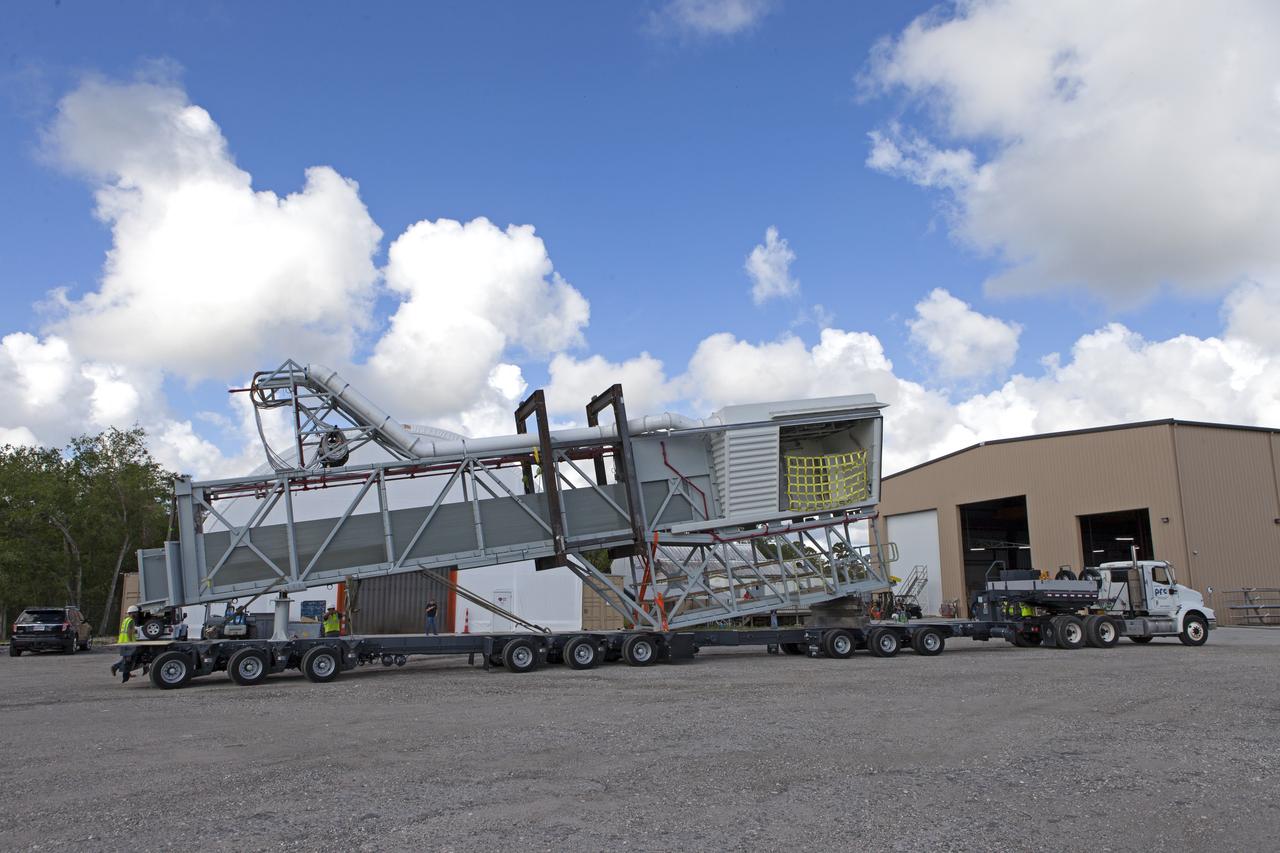
The Orion crew access arm is being secured on a flatbed truck at Precision Fabricating and Cleaning in Cocoa, Florida. The crew access arm will be transported to a storage location near NASA's Kennedy Space Center in Florida. Later this month, the arm will be transported to the mobile launcher (ML) tower at the center. The crew access arm will be located at about the 274-foot level on the tower. It will rotate from its retracted position and interface with the Orion crew hatch location to provide entry to the Orion crew module. The Ground Systems Development and Operations Program is overseeing installation of umbilicals and launch accessories on the ML tower.
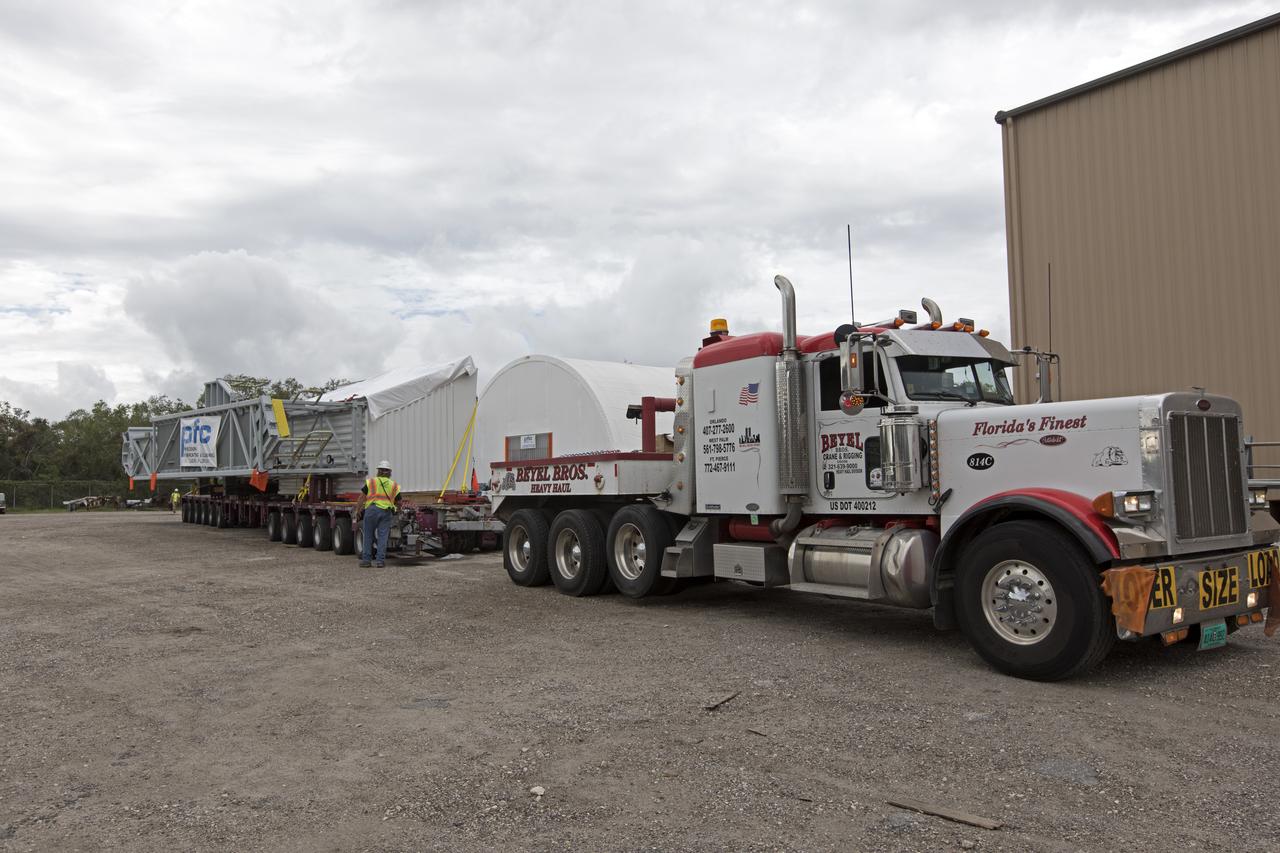
The Orion crew access arm is secured on a flatbed truck at Precision Fabricating and Cleaning in Cocoa, Florida and ready to be transported to a storage location at NASA's Kennedy Space Center in Florida. Later this month, the arm will be transported to the mobile launcher (ML) tower at the center. The crew access arm will be located at about the 274-foot level on the tower. It will rotate from its retracted position and interface with the Orion crew hatch location to provide entry to the Orion crew module. The Ground Systems Development and Operations Program is overseeing installation of umbilicals and launch accessories on the ML tower.
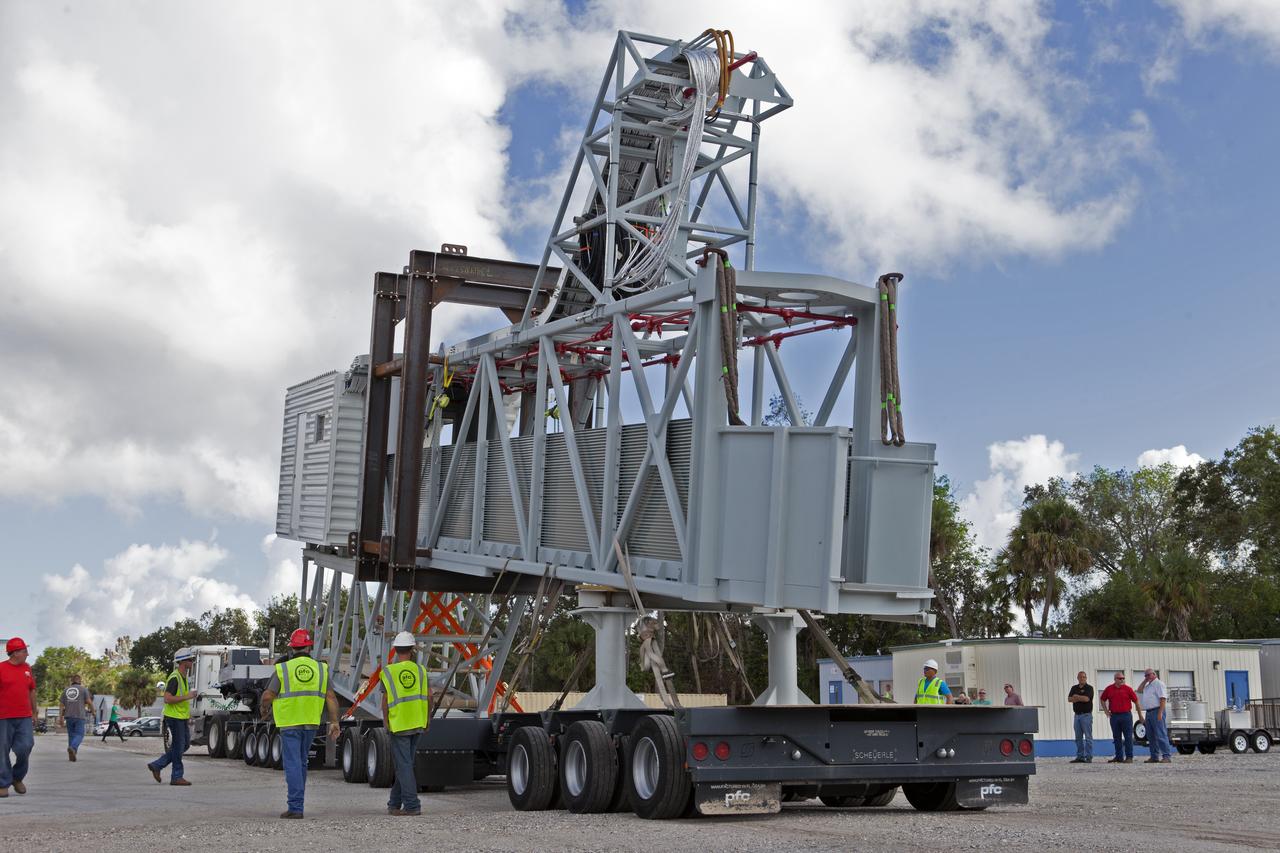
The Orion crew access arm is being secured onto a flatbed truck at Precision Fabricating and Cleaning in Cocoa, Florida. The crew access arm will be transported to a storage location near NASA's Kennedy Space Center in Florida. Later this month, the arm will be transported to the mobile launcher (ML) tower at the center. The crew access arm will be located at about the 274-foot level on the tower. It will rotate from its retracted position and interface with the Orion crew hatch location to provide entry to the Orion crew module. The Ground Systems Development and Operations Program is overseeing installation of umbilicals and launch accessories on the ML tower.
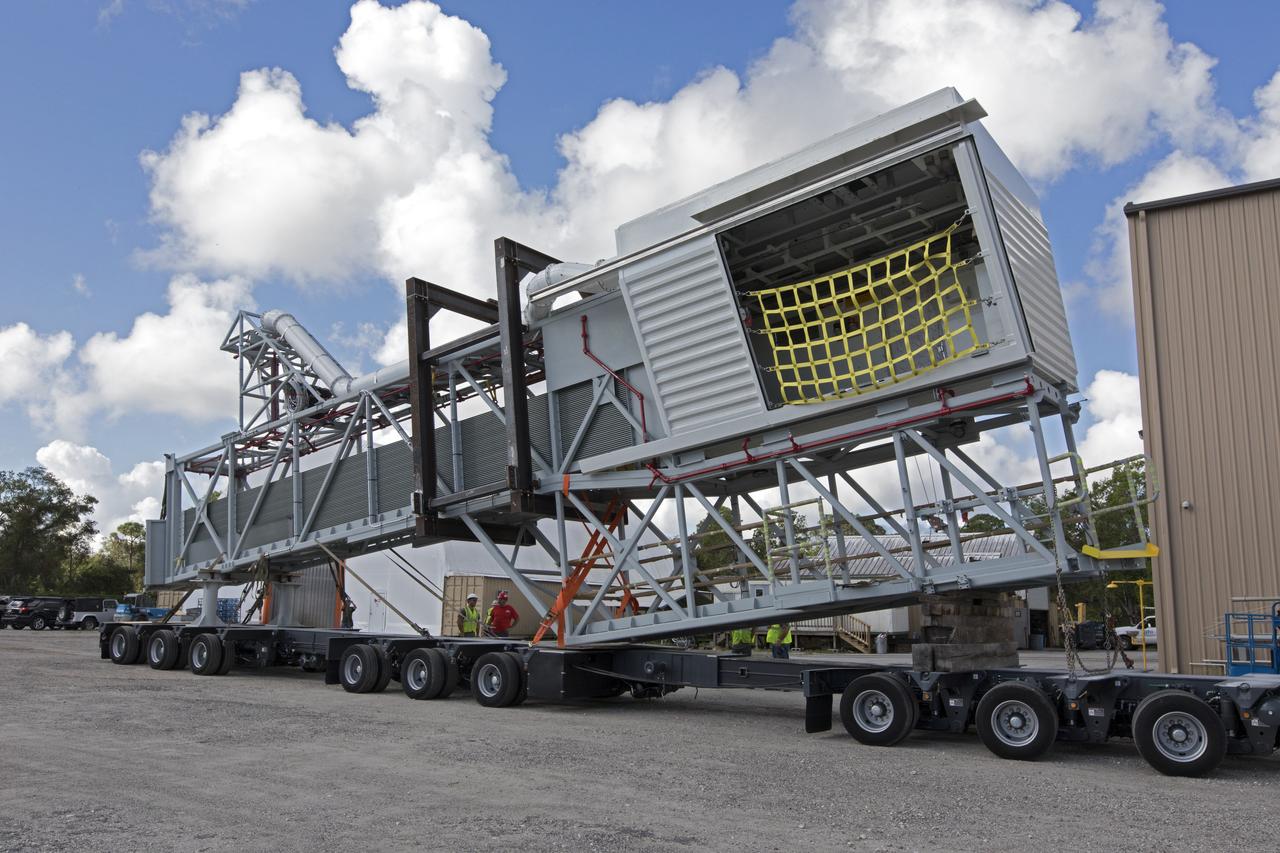
The Orion crew access arm is secured on a flatbed truck at Precision Fabricating and Cleaning in Cocoa, Florida. The crew access arm will be transported to a storage location near NASA's Kennedy Space Center in Florida. Later this month, the arm will be transported to the mobile launcher (ML) tower at the center. The crew access arm will be located at about the 274-foot level on the tower. It will rotate from its retracted position and interface with the Orion crew hatch location to provide entry to the Orion crew module. The Ground Systems Development and Operations Program is overseeing installation of umbilicals and launch accessories on the ML tower.
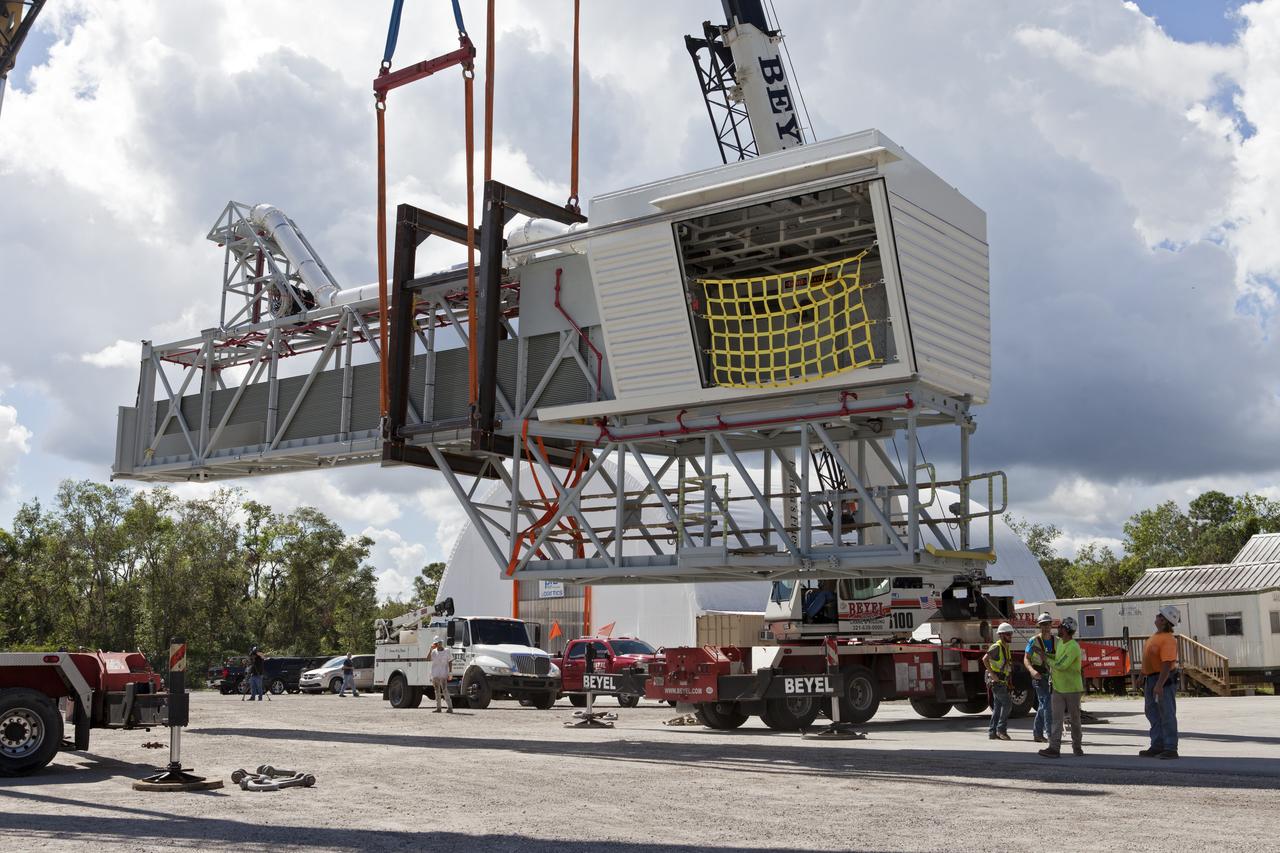
Two heavy-lift cranes are being used to move the Orion crew access arm and lower it onto a flatbed truck at Precision Fabricating and Cleaning in Cocoa, Florida. The crew access arm will be transported to a storage location near NASA's Kennedy Space Center in Florida. Later this month, the arm will be transported to the mobile launcher (ML) tower at the center. The crew access arm will be located at about the 274-foot level on the tower. It will rotate from its retracted position and interface with the Orion crew hatch location to provide entry to the Orion crew module. The Ground Systems Development and Operations Program is overseeing installation of umbilicals and launch accessories on the ML tower.
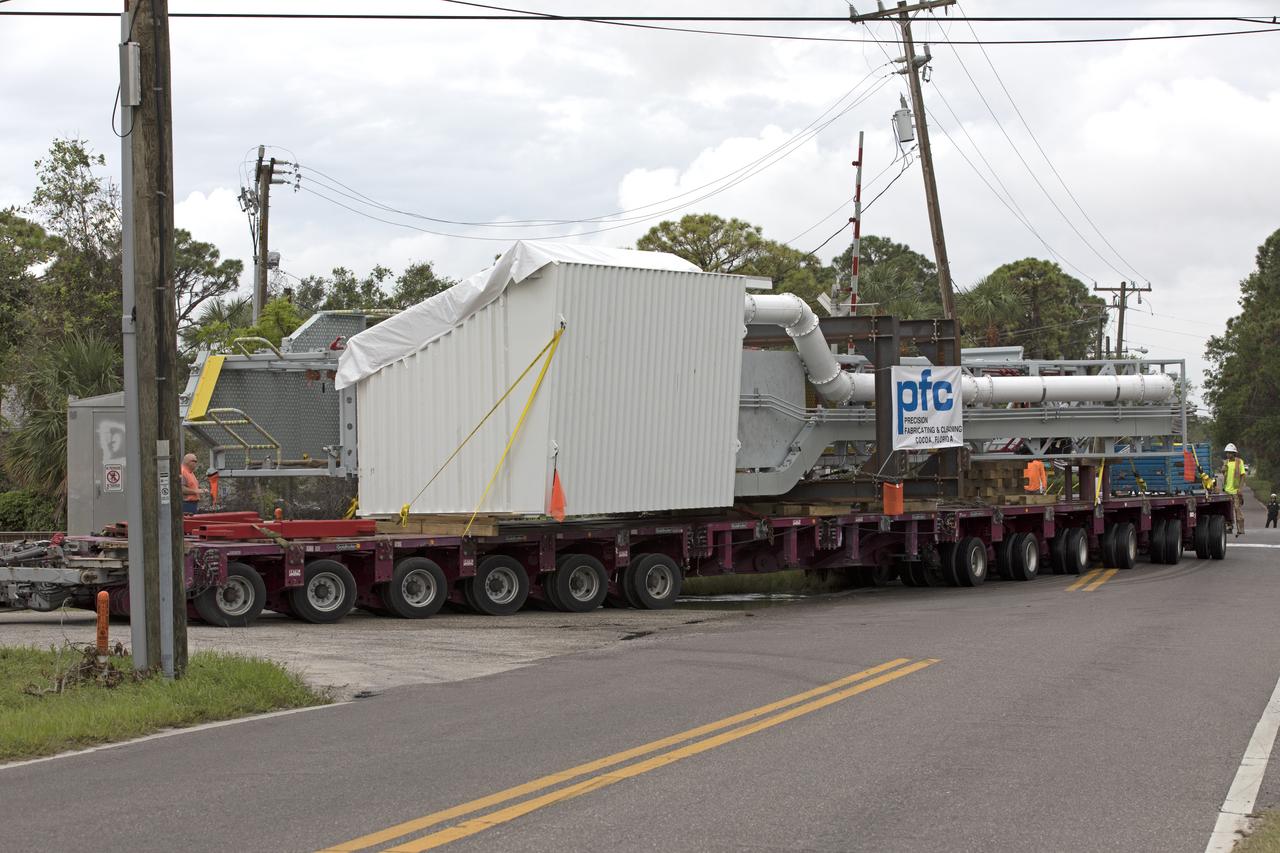
The Orion crew access arm departs Precision Fabricating and Cleaning in Cocoa, Florida, atop a flatbed truck. The access arm will be transported to a storage location at NASA's Kennedy Space Center in Florida. Later this month, the arm will be transported to the mobile launcher (ML) tower at the center. The crew access arm will be located at about the 274-foot level on the tower. It will rotate from its retracted position and interface with the Orion crew hatch location to provide entry to the Orion crew module. The Ground Systems Development and Operations Program is overseeing installation of umbilicals and launch accessories on the ML tower.
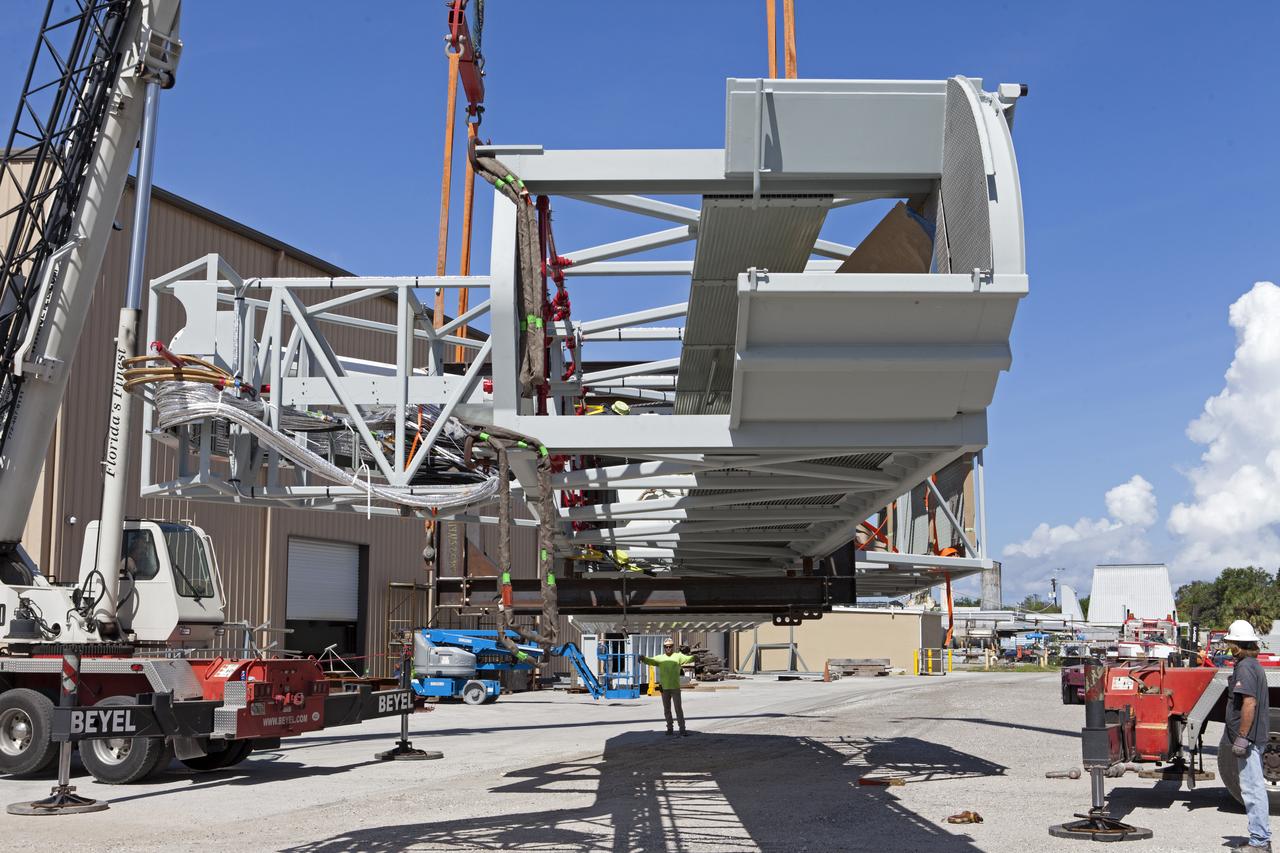
The Orion crew access arm is being moved by crane onto a flatbed truck at Precision Fabricating and Cleaning in Cocoa, Florida. The crew access arm will be transported to a storage location near NASA's Kennedy Space Center in Florida. Later this month, the arm will be transported to the mobile launcher (ML) tower at the center. The crew access arm will be located at about the 274-foot level on the tower. It will rotate from its retracted position and interface with the Orion crew hatch location to provide entry to the Orion crew module. The Ground Systems Development and Operations Program is overseeing installation of umbilicals and launch accessories on the ML tower.
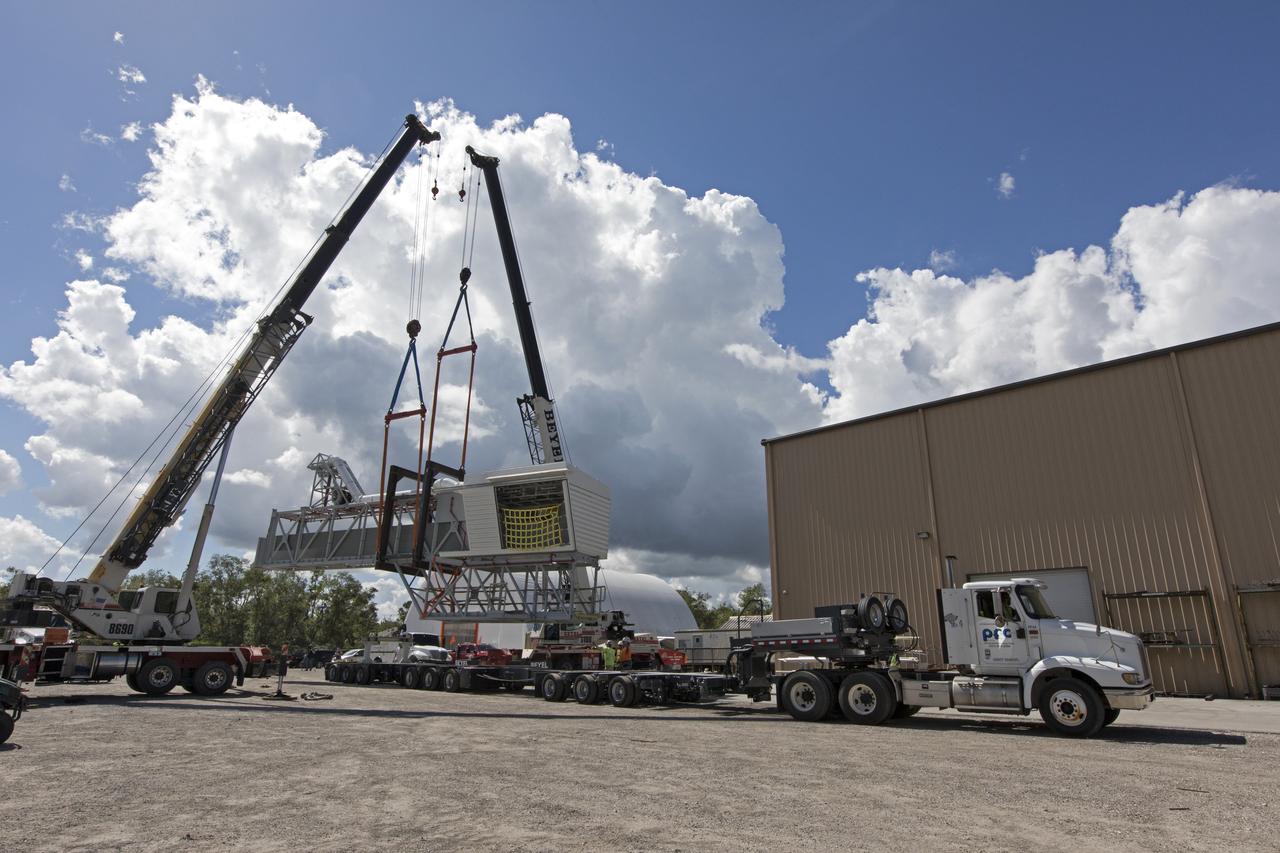
Two heavy-lift cranes are being used to lower the Orion crew access arm onto a flatbed truck at Precision Fabricating and Cleaning in Cocoa, Florida. The crew access arm will be transported to a storage location near NASA's Kennedy Space Center in Florida. Later this month, the arm will be transported to the mobile launcher (ML) tower at the center. The crew access arm will be located at about the 274-foot level on the tower. It will rotate from its retracted position and interface with the Orion crew hatch location to provide entry to the Orion crew module. The Ground Systems Development and Operations Program is overseeing installation of umbilicals and launch accessories on the ML tower.
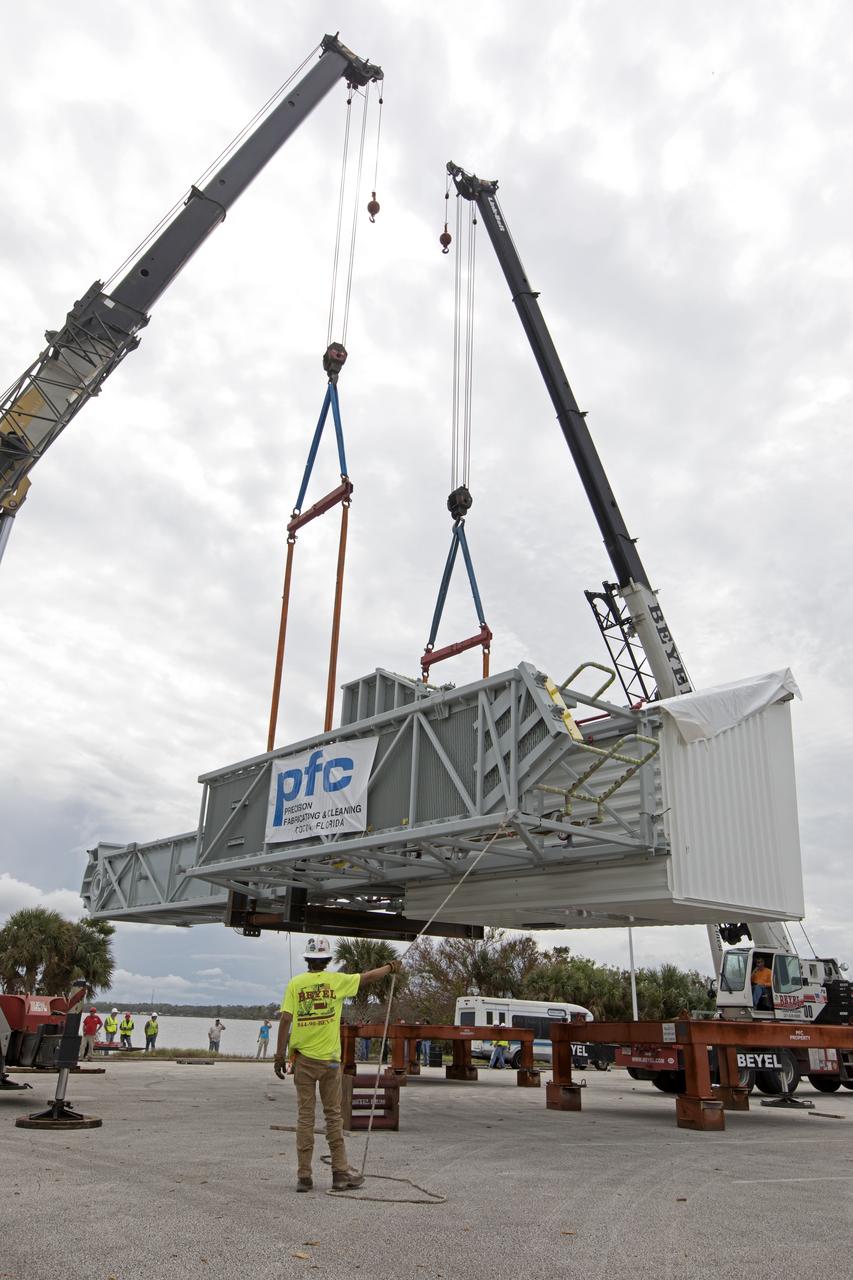
Two heavy-lift cranes are used to lower the Orion crew access arm onto a work stand in a storage location at NASA's Kennedy Space Center in Florida. The access arm was transported from Precision Fabricating and Cleaning in Cocoa, Florida. Later this month, the arm will be transported to the mobile launcher (ML) tower at the center. The crew access arm will be located at about the 274-foot level on the tower. It will rotate from its retracted position and interface with the Orion crew hatch location to provide entry to the Orion crew module. The Ground Systems Development and Operations Program is overseeing installation of umbilicals and launch accessories on the ML tower.
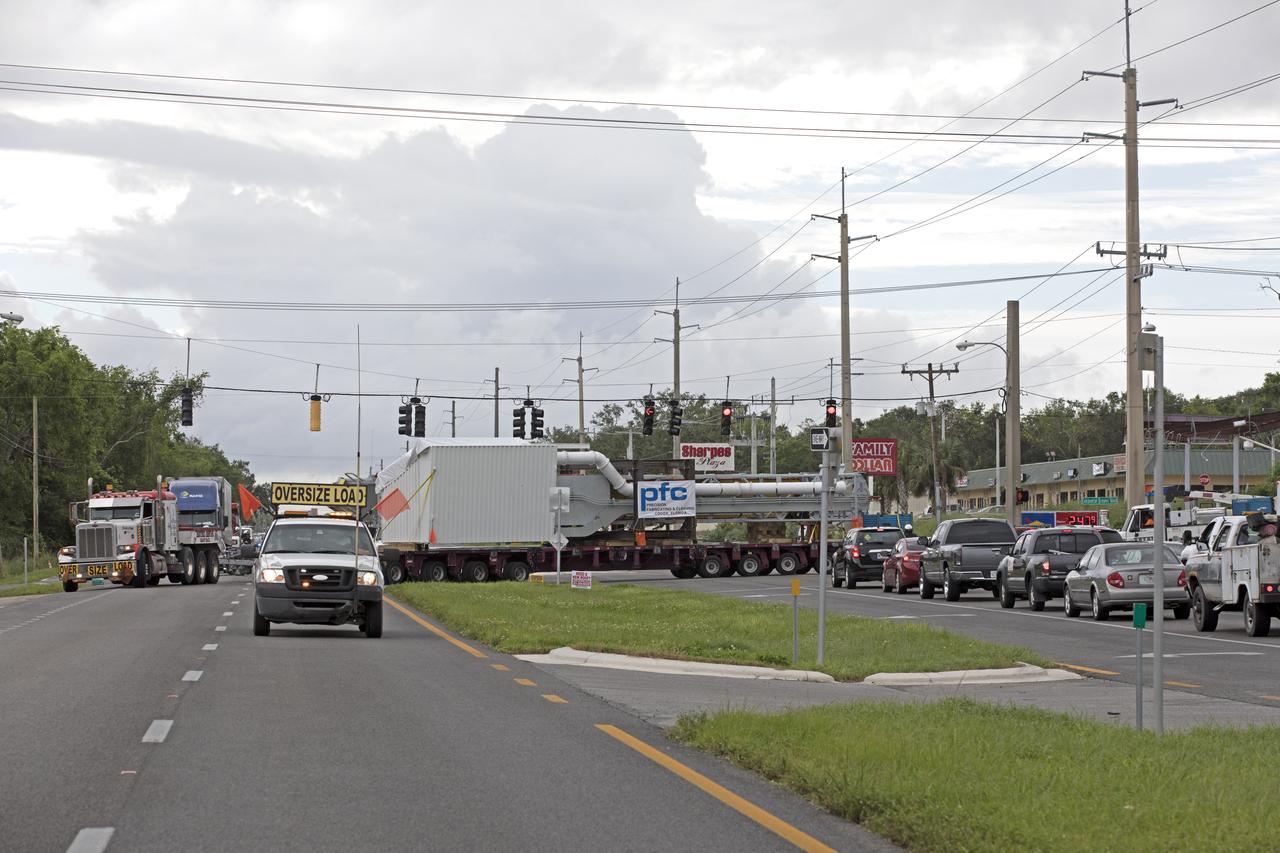
A flatbed truck with the Orion crew access arm secured atop travels along a road in Cocoa, Florida, after departing Precision Fabricating and Cleaning. The access arm will be transported to a storage location at NASA's Kennedy Space Center in Florida. Later this month, the arm will be transported to the mobile launcher (ML) tower at the center. The crew access arm will be located at about the 274-foot level on the tower. It will rotate from its retracted position and interface with the Orion crew hatch location to provide entry to the Orion crew module. The Ground Systems Development and Operations Program is overseeing installation of umbilicals and launch accessories on the ML tower.

Two heavy-lift cranes lower the Orion crew access arm onto a work stand in a storage location at NASA's Kennedy Space Center in Florida. The access arm was transported from Precision Fabricating and Cleaning in Cocoa, Florida. Later this month, the arm will be transported to the mobile launcher (ML) tower at the center. The crew access arm will be located at about the 274-foot level on the tower. It will rotate from its retracted position and interface with the Orion crew hatch location to provide entry to the Orion crew module. The Ground Systems Development and Operations Program is overseeing installation of umbilicals and launch accessories on the ML tower.
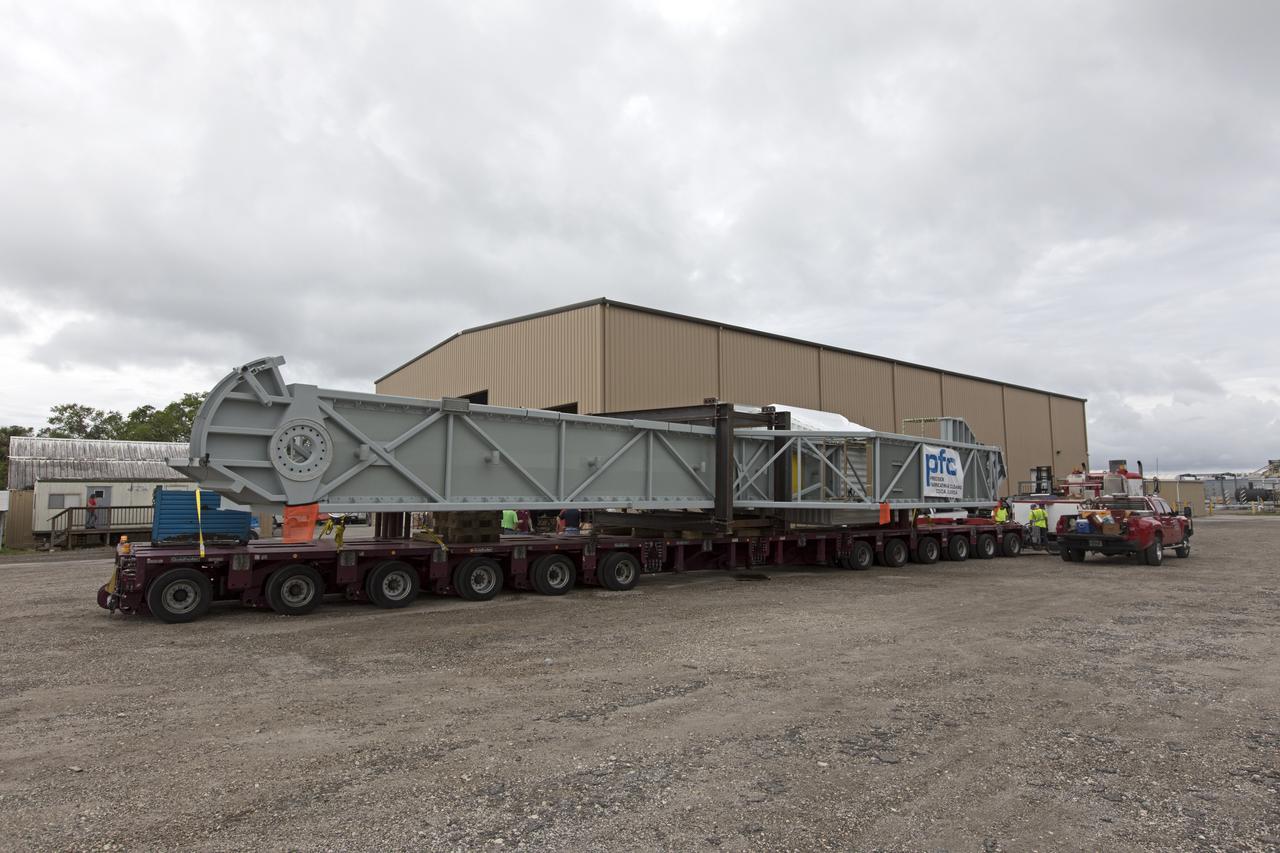
The Orion crew access arm is secured on a flatbed truck at Precision Fabricating and Cleaning in Cocoa, Florida and ready to be transported to a storage location at NASA's Kennedy Space Center in Florida. Later this month, the arm will be transported to the mobile launcher (ML) tower at the center. The crew access arm will be located at about the 274-foot level on the tower. It will rotate from its retracted position and interface with the Orion crew hatch location to provide entry to the Orion crew module. The Ground Systems Development and Operations Program is overseeing installation of umbilicals and launch accessories on the ML tower.
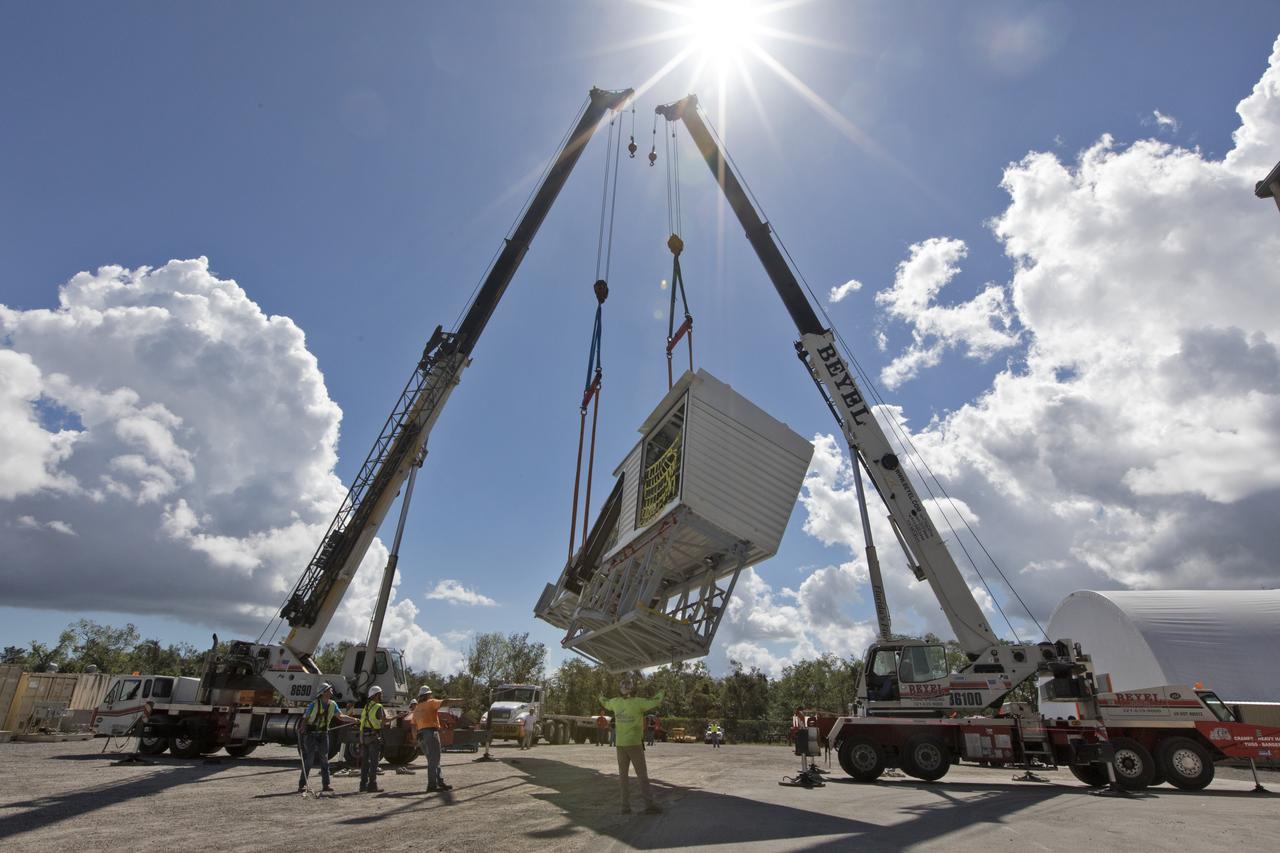
Two heavy-lift cranes are being used to move the Orion crew access arm and lower it onto a flatbed truck at Precision Fabricating and Cleaning in Cocoa, Florida. The crew access arm will be transported to a storage location near NASA's Kennedy Space Center in Florida. Later this month, the arm will be transported to the mobile launcher (ML) tower at the center. The crew access arm will be located at about the 274-foot level on the tower. It will rotate from its retracted position and interface with the Orion crew hatch location to provide entry to the Orion crew module. The Ground Systems Development and Operations Program is overseeing installation of umbilicals and launch accessories on the ML tower.
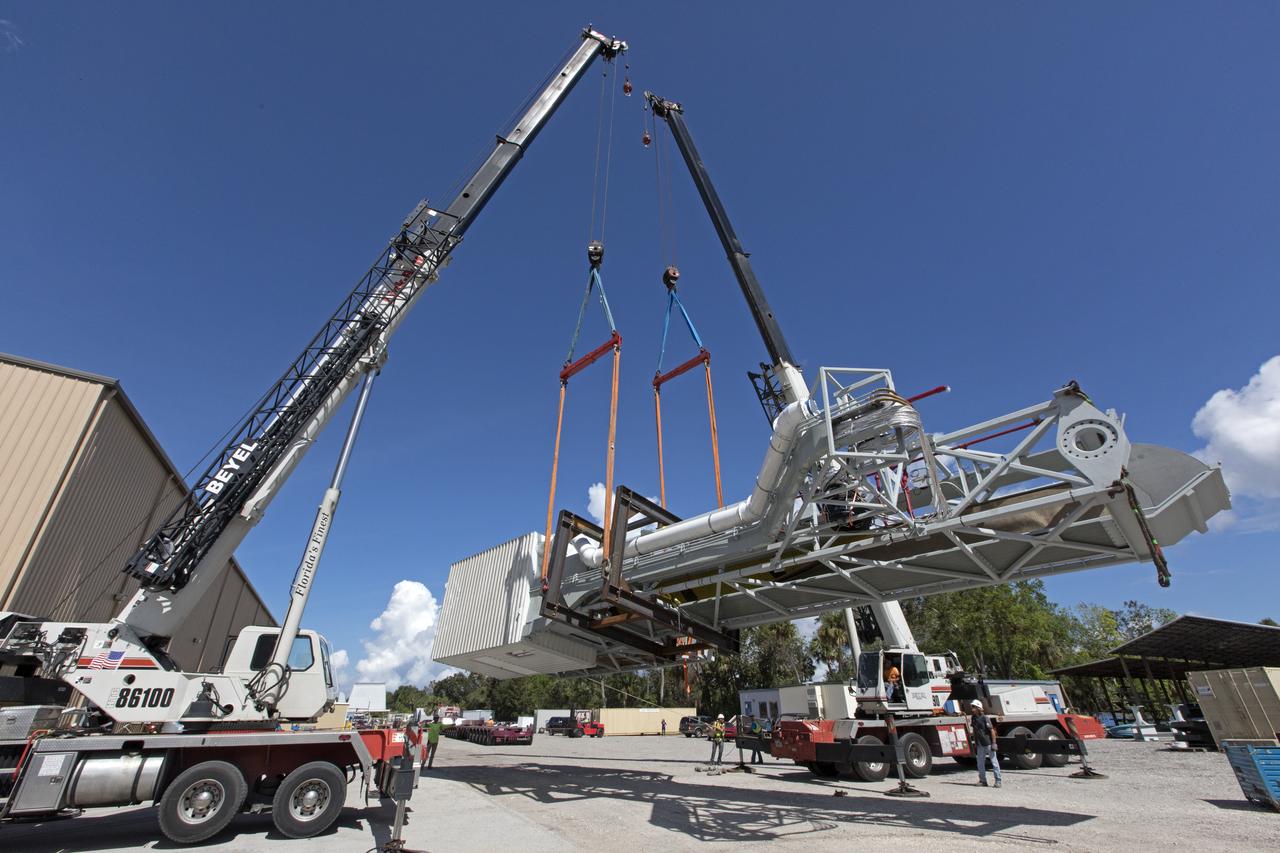
Two heavy-lift cranes are being used to move the Orion crew access arm and lower it onto a flatbed truck at Precision Fabricating and Cleaning in Cocoa, Florida. The crew access arm will be transported to a storage location near NASA's Kennedy Space Center in Florida. Later this month, the arm will be transported to the mobile launcher (ML) tower at the center. The crew access arm will be located at about the 274-foot level on the tower. It will rotate from its retracted position and interface with the Orion crew hatch location to provide entry to the Orion crew module. The Ground Systems Development and Operations Program is overseeing installation of umbilicals and launch accessories on the ML tower.
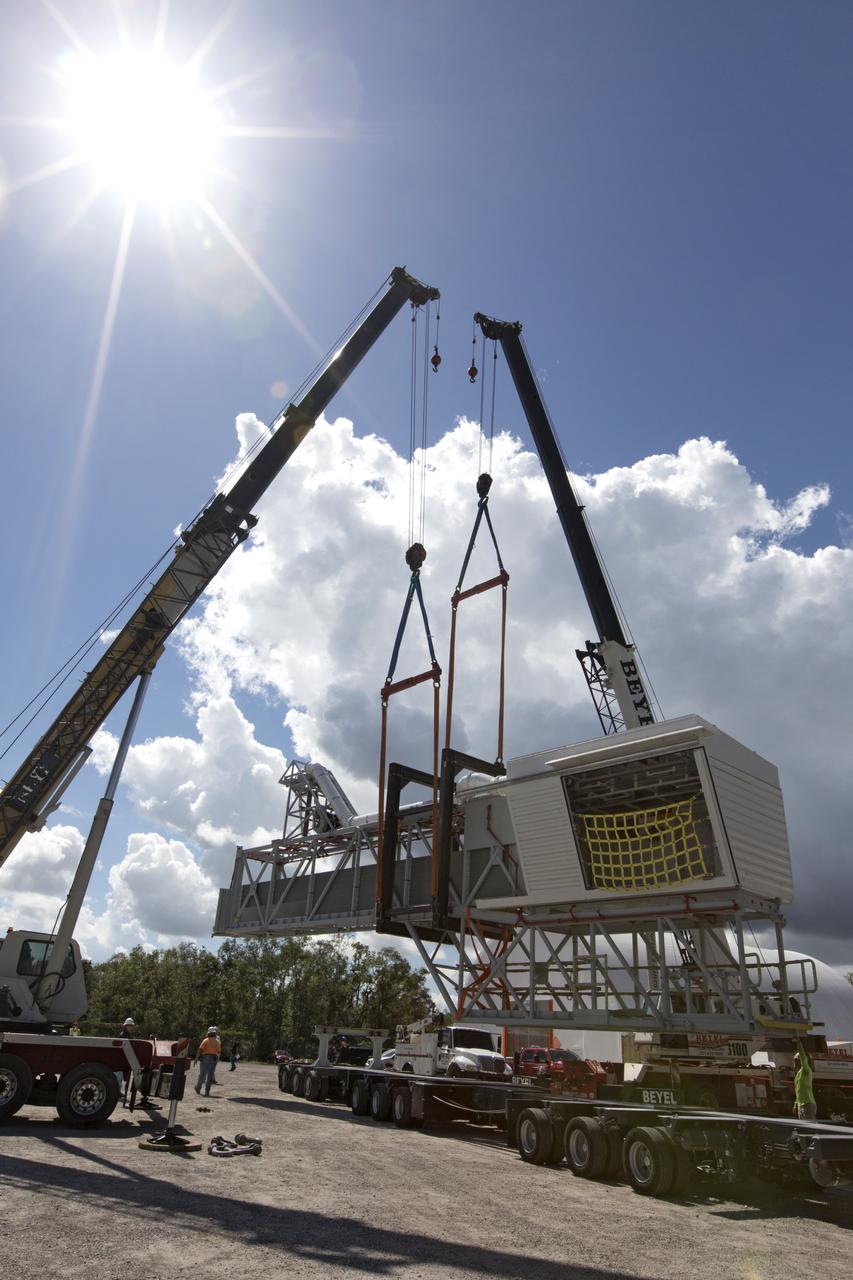
Two heavy-lift cranes are used to lower the Orion crew access arm onto a flatbed truck at Precision Fabricating and Cleaning in Cocoa, Florida. The crew access arm will be transported to a storage location near NASA's Kennedy Space Center in Florida. Later this month, the arm will be transported to the mobile launcher (ML) tower at the center. The crew access arm will be located at about the 274-foot level on the tower. It will rotate from its retracted position and interface with the Orion crew hatch location to provide entry to the Orion crew module. The Ground Systems Development and Operations Program is overseeing installation of umbilicals and launch accessories on the ML tower.
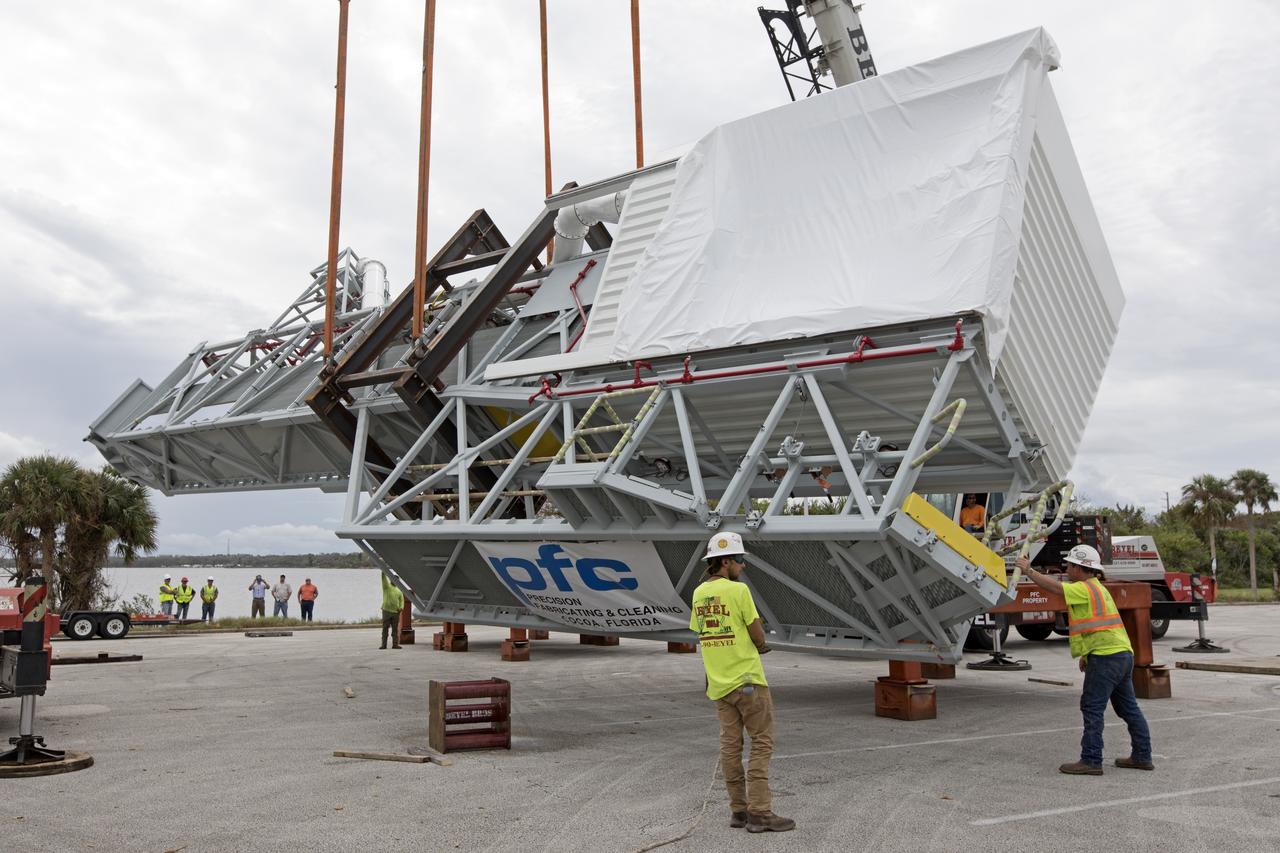
Two heavy-lift cranes are used to tilt and lower the Orion crew access arm onto a work stand in a storage location at NASA's Kennedy Space Center in Florida. The access arm was transported from Precision Fabricating and Cleaning in Cocoa, Florida. Later this month, the arm will be transported to the mobile launcher (ML) tower at the center. The crew access arm will be located at about the 274-foot level on the tower. It will rotate from its retracted position and interface with the Orion crew hatch location to provide entry to the Orion crew module. The Ground Systems Development and Operations Program is overseeing installation of umbilicals and launch accessories on the ML tower.
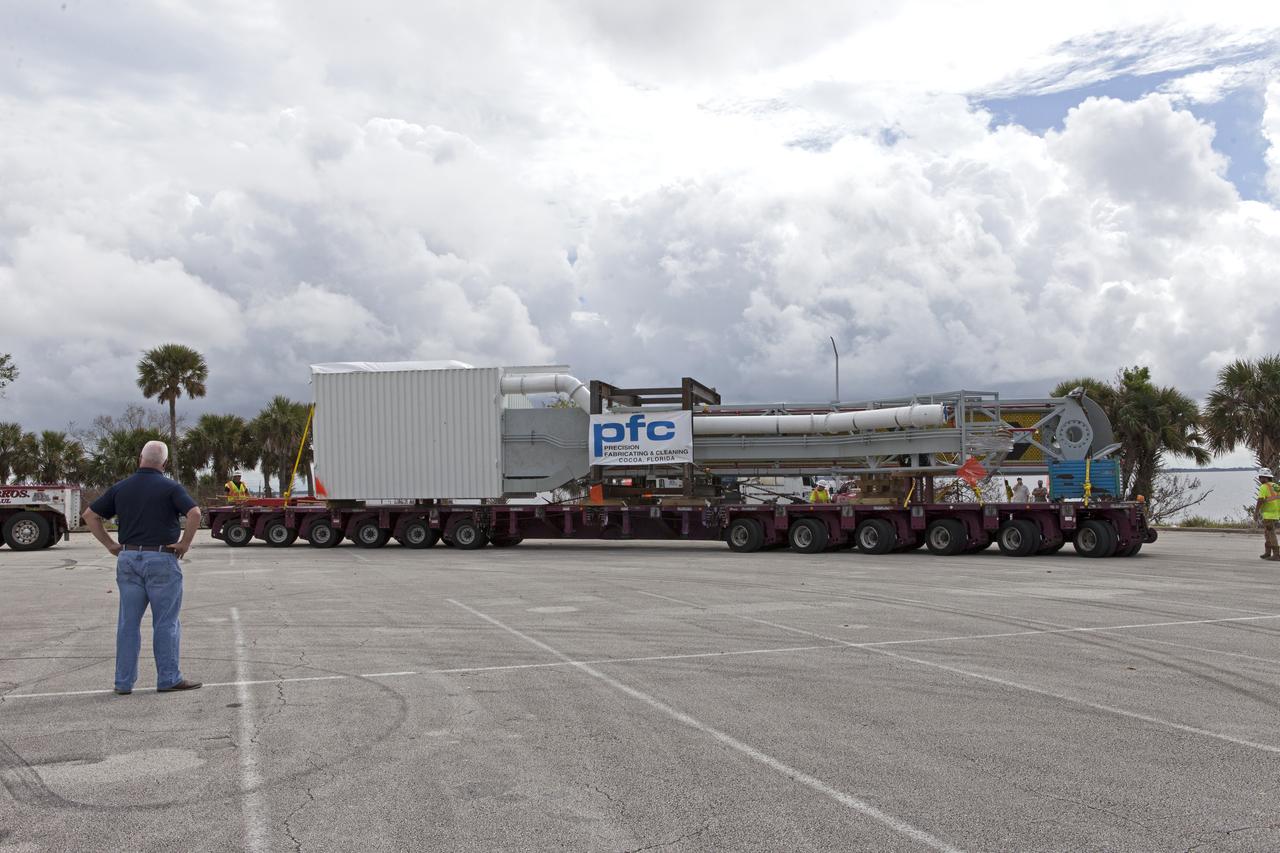
A flatbed truck with the Orion crew access arm secured atop arrives in a storage location at NASA's Kennedy Space Center in Florida. The access arm was transported from Precision Fabricating and Cleaning in Cocoa, Florida. Later this month, the arm will be transported to the mobile launcher (ML) tower at the center. The crew access arm will be located at about the 274-foot level on the tower. It will rotate from its retracted position and interface with the Orion crew hatch location to provide entry to the Orion crew module. The Ground Systems Development and Operations Program is overseeing installation of umbilicals and launch accessories on the ML tower.
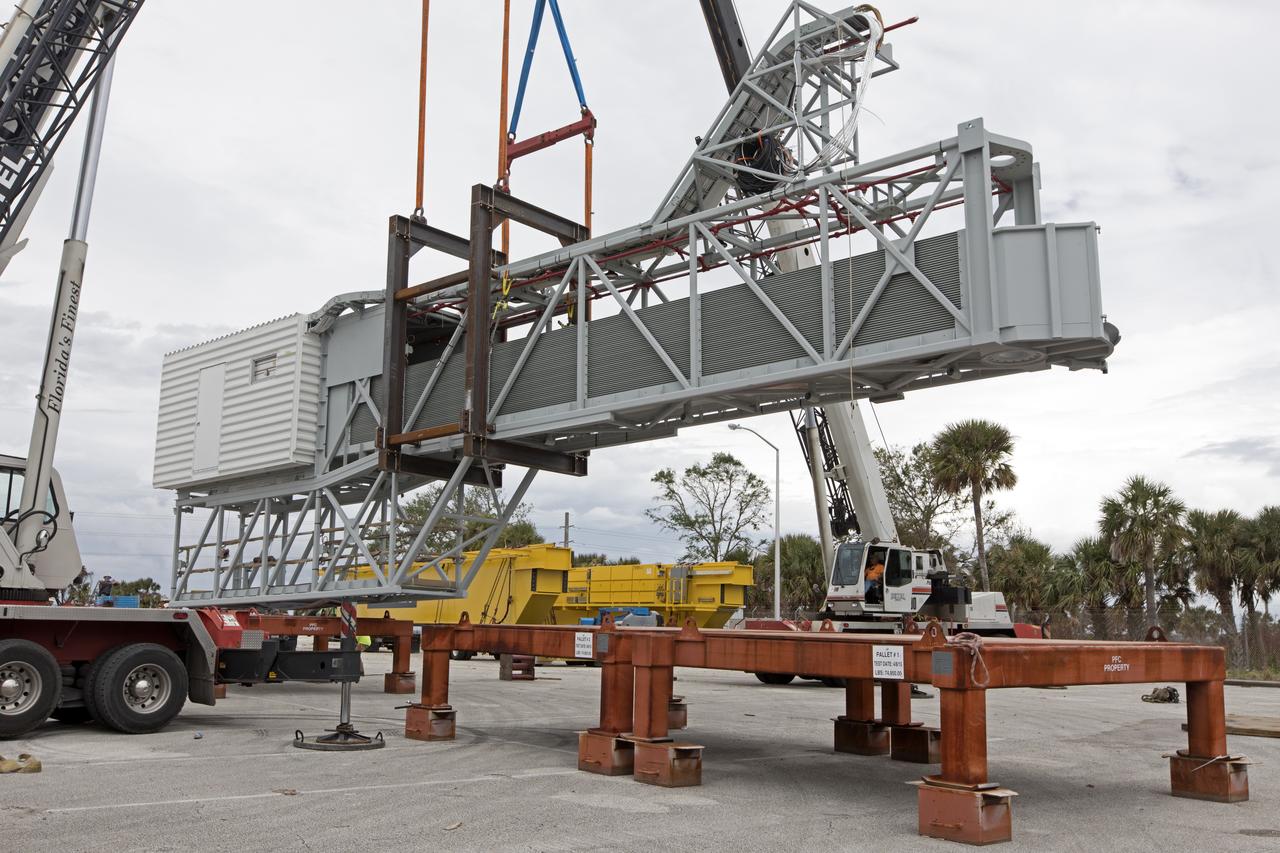
Two heavy-lift cranes are used to lower the Orion crew access arm onto a work stand in a storage location at NASA's Kennedy Space Center in Florida. The access arm was transported from Precision Fabricating and Cleaning in Cocoa, Florida. Later this month, the arm will be transported to the mobile launcher (ML) tower at the center. The crew access arm will be located at about the 274-foot level on the tower. It will rotate from its retracted position and interface with the Orion crew hatch location to provide entry to the Orion crew module. The Ground Systems Development and Operations Program is overseeing installation of umbilicals and launch accessories on the ML tower.
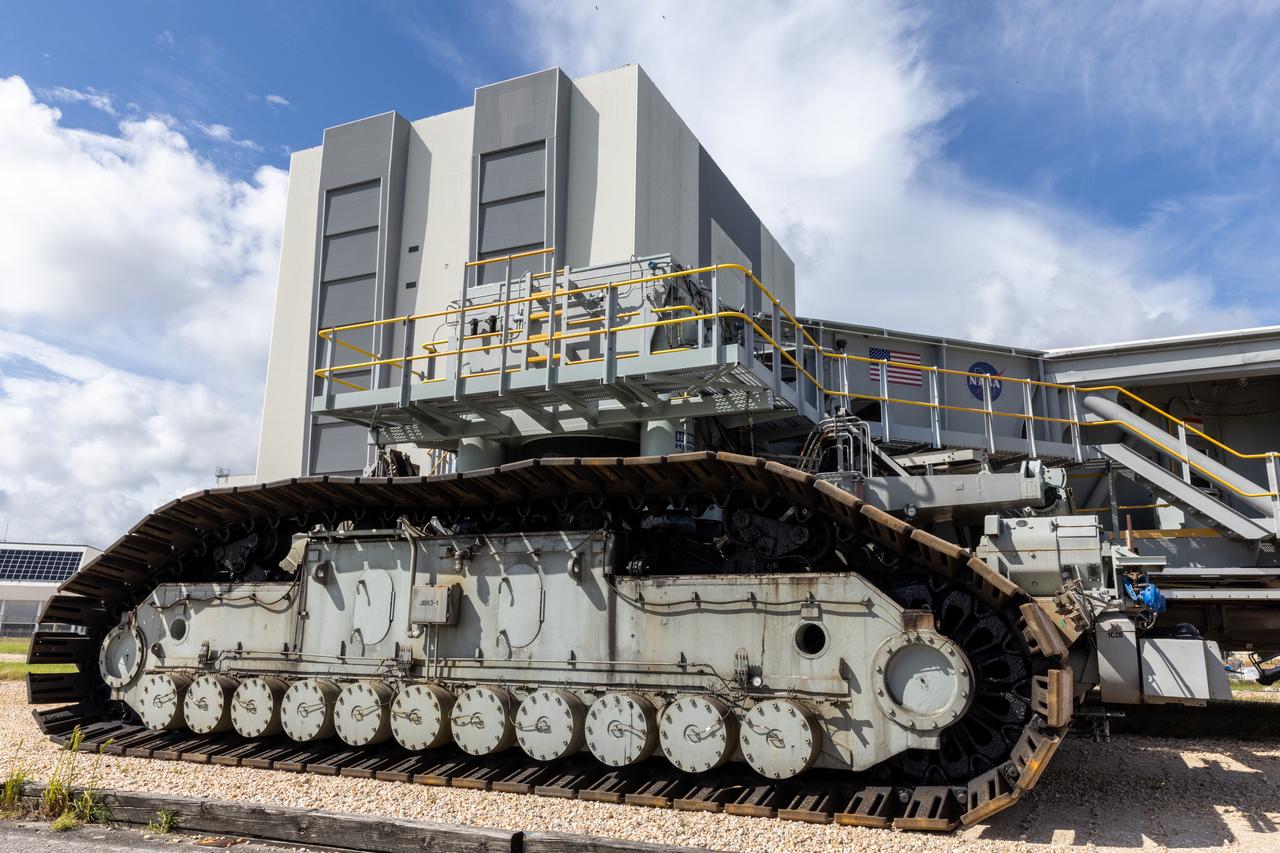
NASA’s crawler-transporter 2 moves slowly along the crawlerway towards Launch Pad 39B at the agency’s Kennedy Space Center in Florida on Wednesday, Sept. 25, 2024, after reaching the milestone of 2,500 miles traveled since its construction in 1965. Crawler-transporter 2 reached the milestone while teams with NASA’s Exploration Ground Systems took it on a trip in preparation for supporting the roll of the mobile launcher back into the spaceport’s Vehicle Assembly Building ahead of the Artemis II launch. Built originally to transport massive Saturn V rockets during the Apollo Program, crawler-transporter 2 continued its service during the Space Shuttle Program, and currently transports the massive SLS (Space Launch System) rocket and Orion spacecraft atop the mobile launcher as part of the agency’s Artemis campaign.
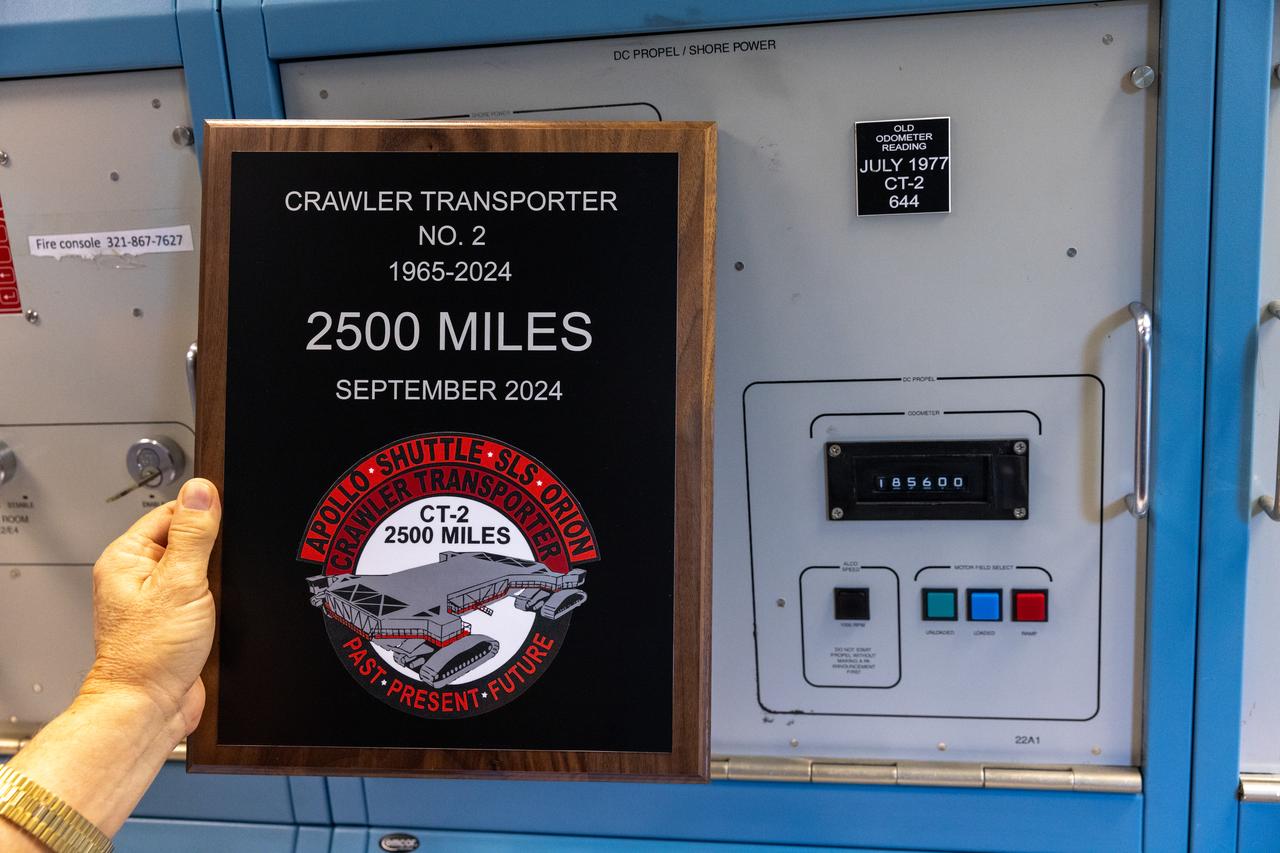
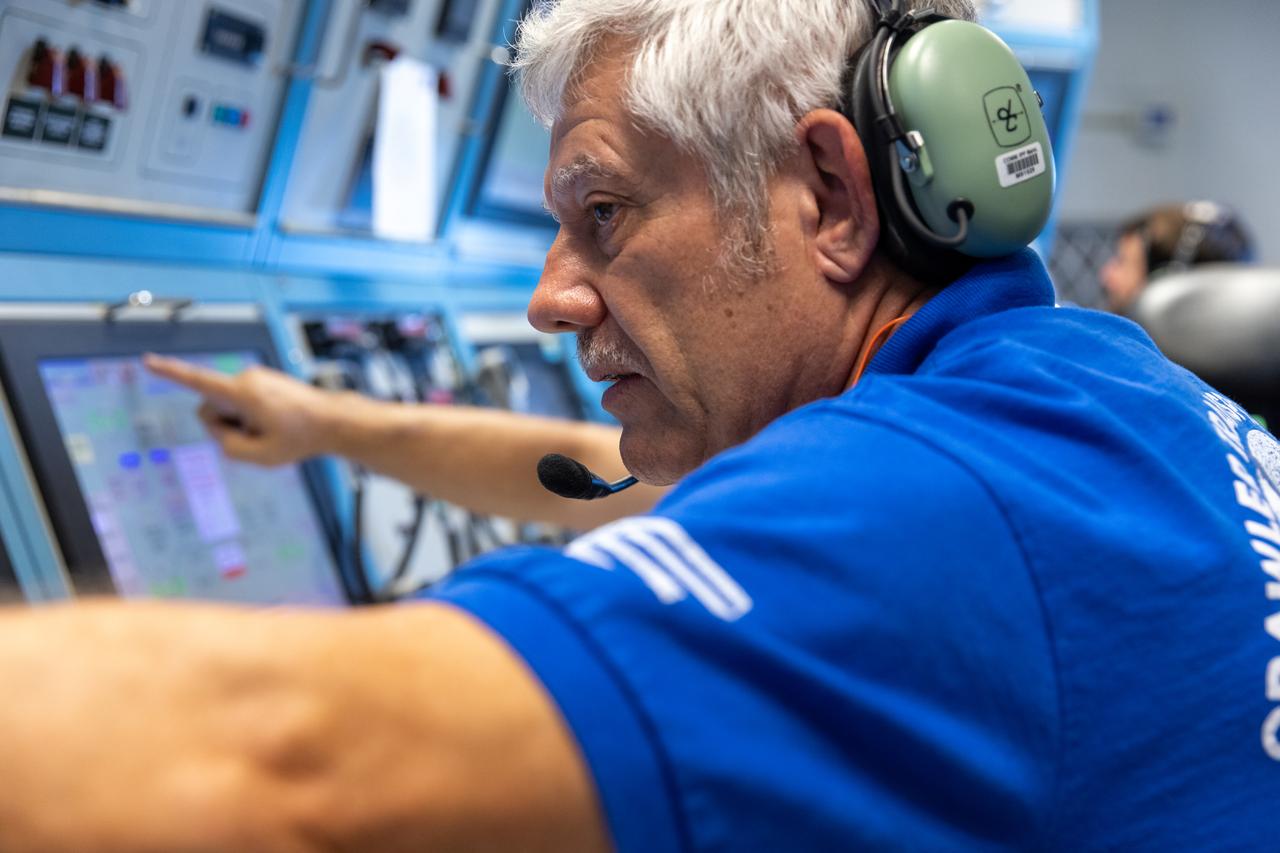
A plaque is held near the odometer of the agency’s crawler-transporter 2, on Wednesday, Sept. 25, 2024, at NASA’s Kennedy Space Center in Florida, commemorating the milestone of 2,500 miles traveled since its construction in 1965. Crawler-transporter 2 reached the milestone while teams with NASA’s Exploration Ground Systems took it on a trip in preparation for supporting the roll of the mobile launcher from Launch Pad 39B back into the spaceport’s Vehicle Assembly Building ahead of the Artemis II launch. Built originally to transport massive Saturn V rockets during the Apollo Program, crawler-transporter 2 continued its service during the Space Shuttle Program, and currently transports the massive SLS (Space Launch System) rocket and Orion spacecraft atop the mobile launcher as part of the agency’s Artemis campaign.
Teams with NASA’s Exploration Ground Systems at NASA’s Kennedy Space Center in Florida celebrate on Wednesday, Sept. 25, 2024, the agency’s crawler-transporter 2 reaching the milestone of 2,500 miles traveled since its construction in 1965. Crawler-transporter 2 reached the milestone while teams took it on a trip in preparation for supporting the roll of the mobile launcher from Launch Pad 39B back into the spaceport’s Vehicle Assembly Building ahead of the Artemis II launch. Built originally to transport massive Saturn V rockets during the Apollo Program, crawler-transporter 2 continued its service during the Space Shuttle Program, and currently transports the massive SLS (Space Launch System) rocket and Orion spacecraft atop the mobile launcher as part of the agency’s Artemis campaign.
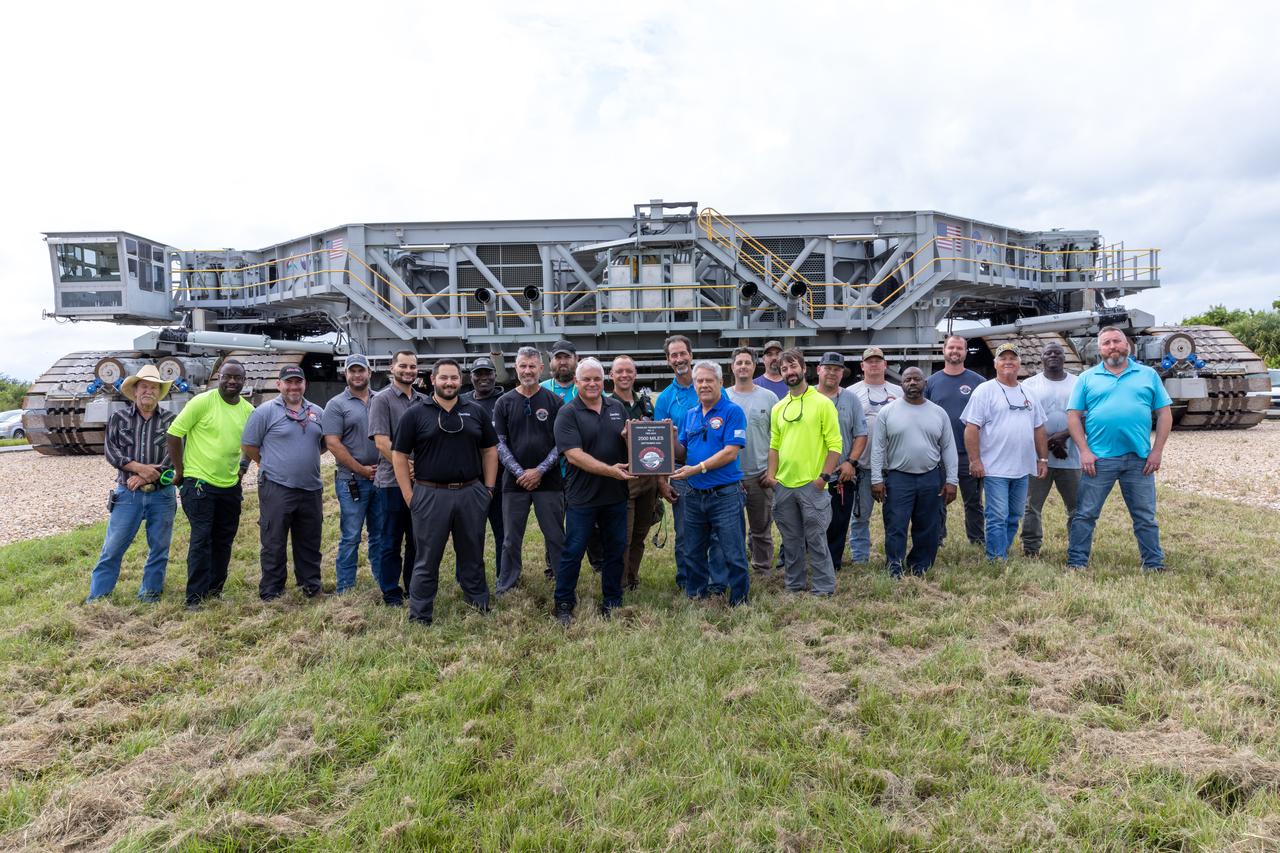
Teams with NASA’s Exploration Ground Systems at NASA’s Kennedy Space Center in Florida celebrate on Wednesday, Sept. 25, 2024, the agency’s crawler-transporter 2 reaching the milestone of 2,500 miles traveled since its construction in 1965. Crawler-transporter 2 reached the milestone while teams took it on a trip in preparation for supporting the roll of the mobile launcher from Launch Pad 39B back into the spaceport’s Vehicle Assembly Building ahead of the Artemis II launch. Built originally to transport massive Saturn V rockets during the Apollo Program, crawler-transporter 2 continued its service during the Space Shuttle Program, and currently transports the massive SLS (Space Launch System) rocket and Orion spacecraft atop the mobile launcher as part of the agency’s Artemis campaign.
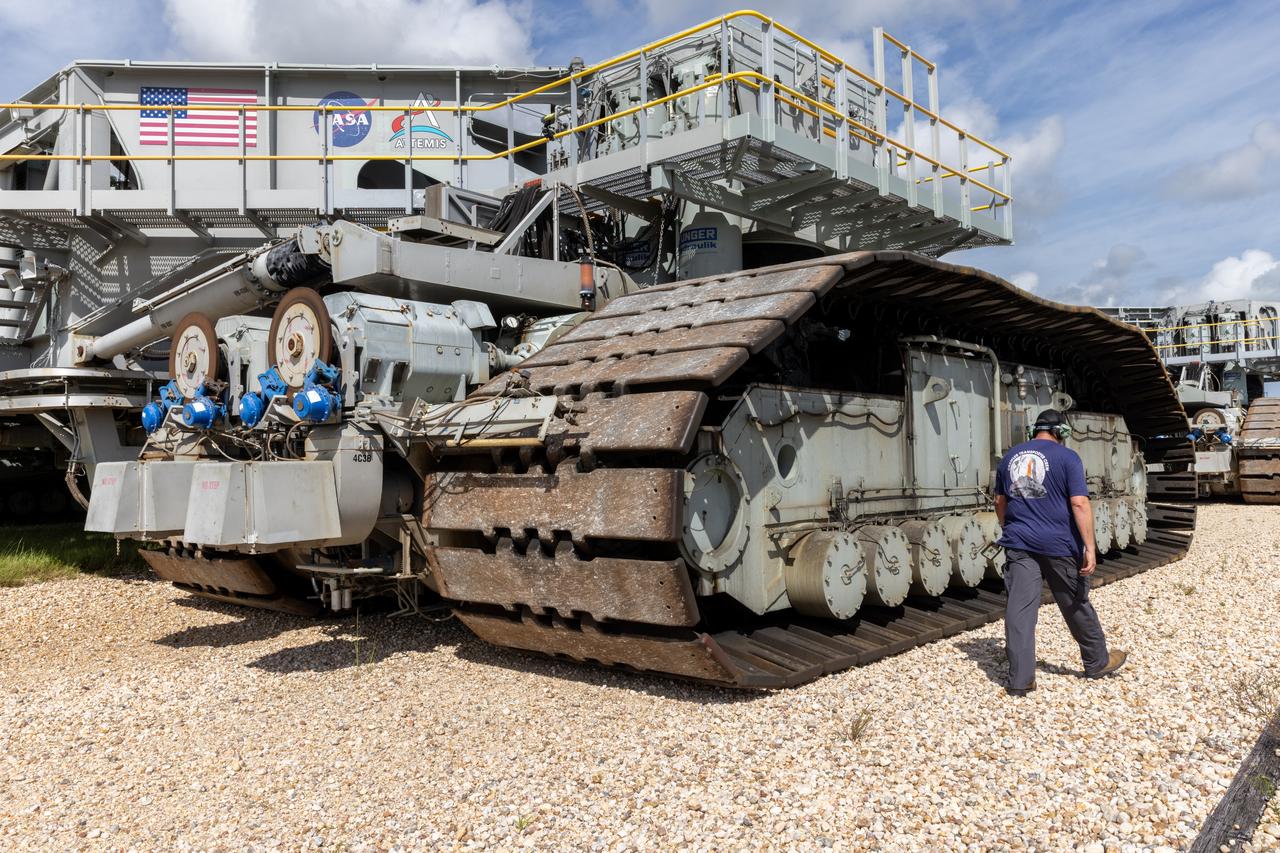
NASA’s crawler-transporter 2 moves slowly along the crawlerway towards Launch Pad 39B at the agency’s Kennedy Space Center in Florida on Wednesday, Sept. 25, 2024, after reaching the milestone of 2,500 miles traveled since its construction in 1965. Crawler-transporter 2 reached the milestone while teams with NASA’s Exploration Ground Systems took it on a trip in preparation for supporting the roll of the mobile launcher back into the spaceport’s Vehicle Assembly Building ahead of the Artemis II launch. Built originally to transport massive Saturn V rockets during the Apollo Program, crawler-transporter 2 continued its service during the Space Shuttle Program, and currently transports the massive SLS (Space Launch System) rocket and Orion spacecraft atop the mobile launcher as part of the agency’s Artemis campaign.
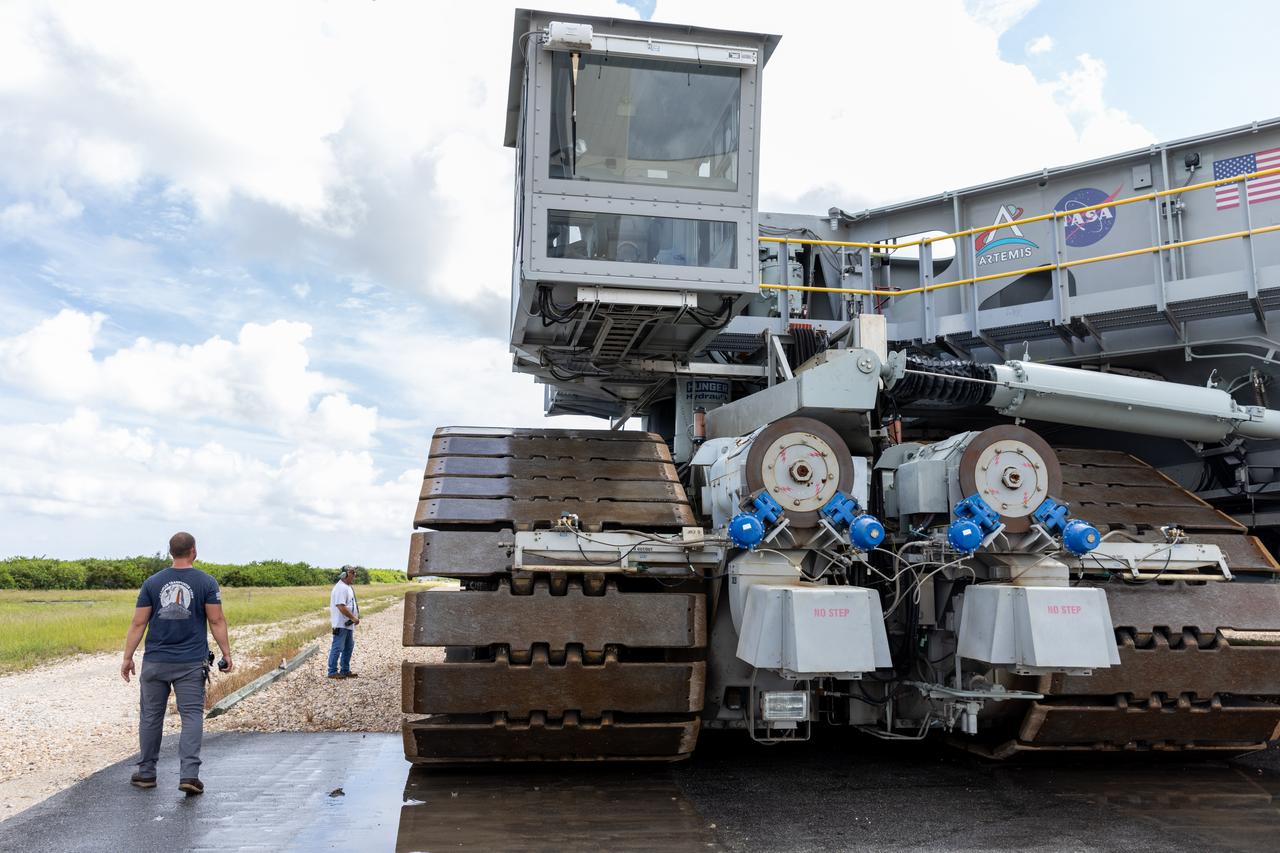
NASA’s crawler-transporter 2 moves slowly along the crawlerway towards Launch Pad 39B at the agency’s Kennedy Space Center in Florida on Wednesday, Sept. 25, 2024, after reaching the milestone of 2,500 miles traveled since its construction in 1965. Crawler-transporter 2 reached the milestone while teams with NASA’s Exploration Ground Systems took it on a trip in preparation for supporting the roll of the mobile launcher back into the spaceport’s Vehicle Assembly Building ahead of the Artemis II launch. Built originally to transport massive Saturn V rockets during the Apollo Program, crawler-transporter 2 continued its service during the Space Shuttle Program, and currently transports the massive SLS (Space Launch System) rocket and Orion spacecraft atop the mobile launcher as part of the agency’s Artemis campaign.
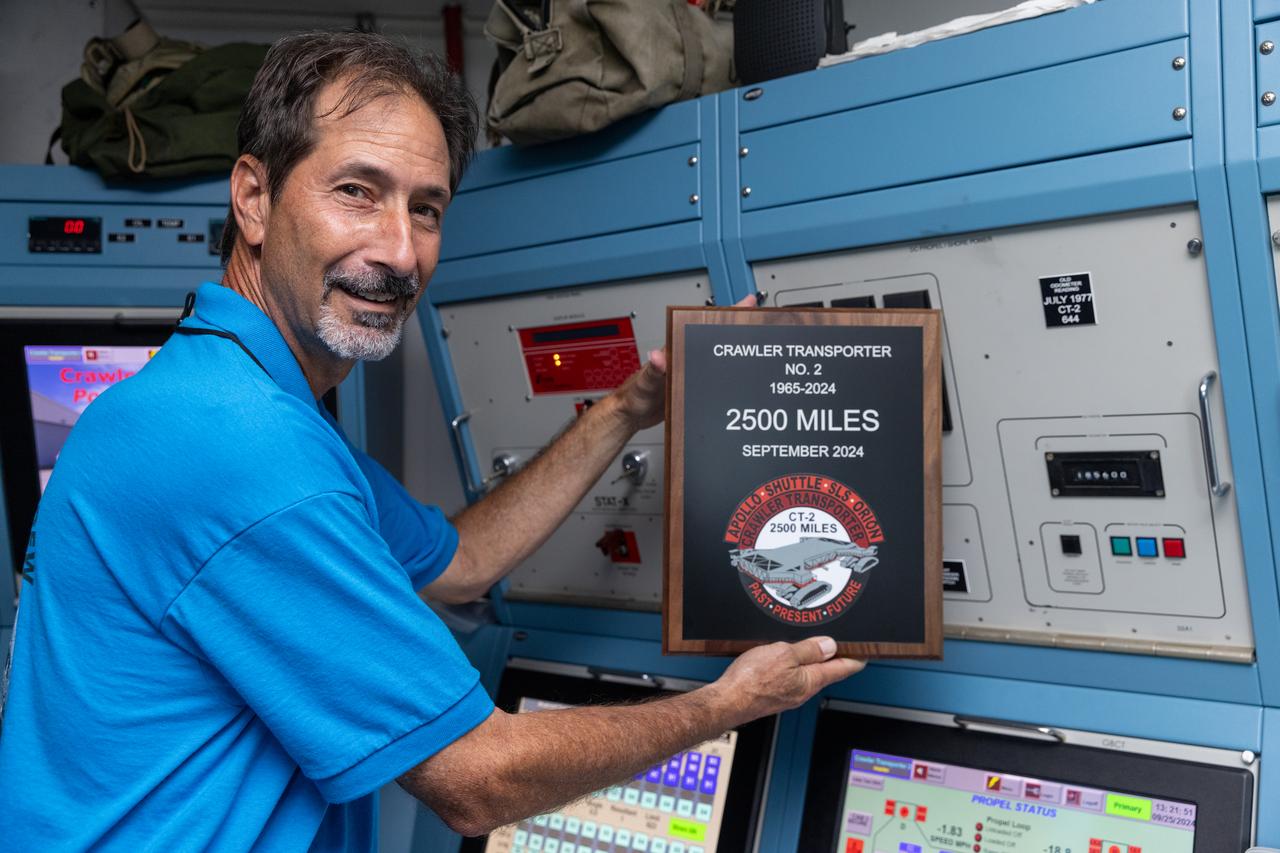
John Giles, crawler element operations manager for NASA’s Exploration Ground Systems, holds a plaque near the odometer of the agency’s crawler-transporter 2, on Wednesday, Sept. 25, 2024, at NASA’s Kennedy Space Center in Florida, commemorating the milestone of 2,500 miles traveled since its construction in 1965. Crawler-transporter 2 reached the milestone while teams took it on a trip in preparation for supporting the roll of the mobile launcher from Launch Pad 39B back into the spaceport’s Vehicle Assembly Building ahead of the Artemis II launch. Built originally to transport massive Saturn V rockets during the Apollo Program, crawler-transporter 2 continued its service during the Space Shuttle Program, and currently transports the massive SLS (Space Launch System) rocket and Orion spacecraft atop the mobile launcher as part of the agency’s Artemis campaign.
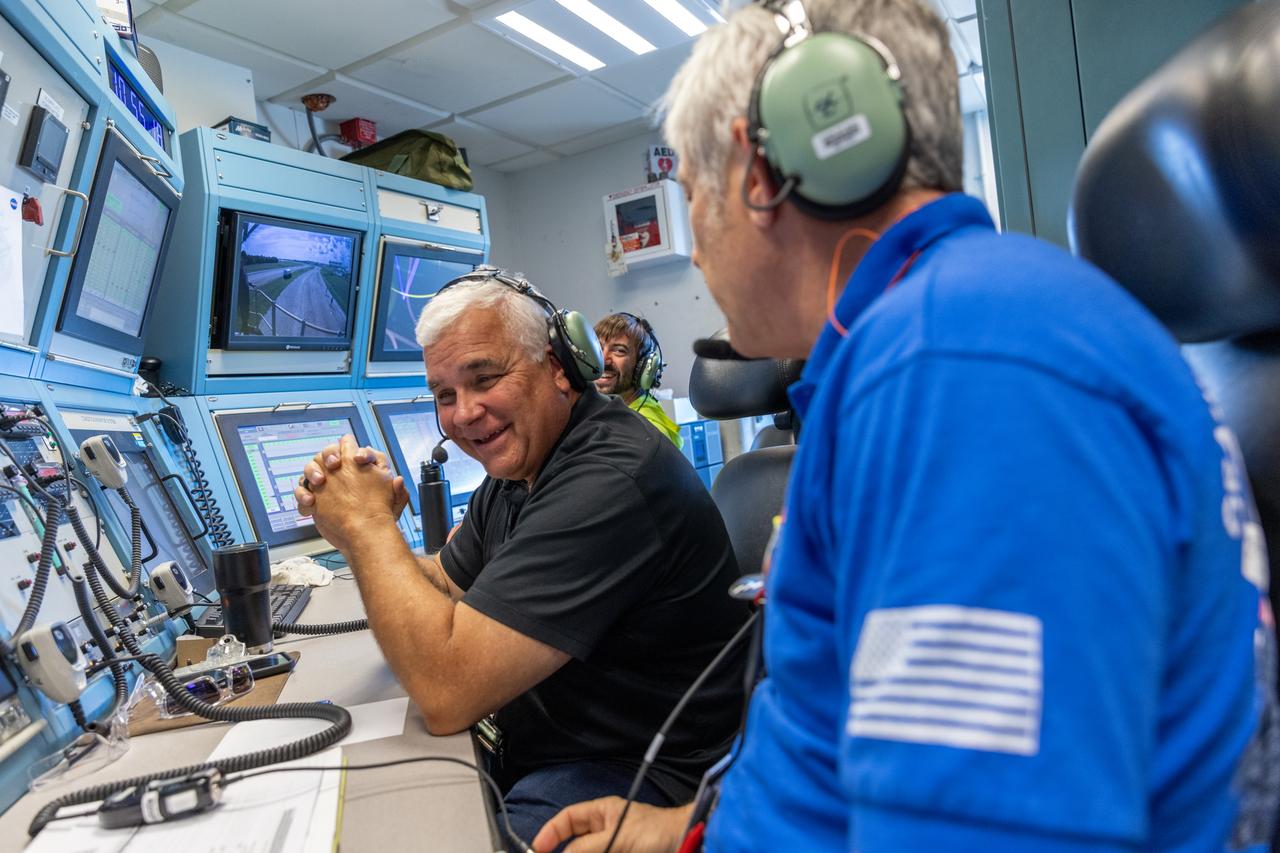
Teams with NASA’s Exploration Ground Systems at NASA’s Kennedy Space Center in Florida celebrate on Wednesday, Sept. 25, 2024, the agency’s crawler-transporter 2 reaching the milestone of 2,500 miles traveled since its construction in 1965. Crawler-transporter 2 reached the milestone while teams took it on a trip in preparation for supporting the roll of the mobile launcher from Launch Pad 39B back into the spaceport’s Vehicle Assembly Building ahead of the Artemis II launch. Built originally to transport massive Saturn V rockets during the Apollo Program, crawler-transporter 2 continued its service during the Space Shuttle Program, and currently transports the massive SLS (Space Launch System) rocket and Orion spacecraft atop the mobile launcher as part of the agency’s Artemis campaign.
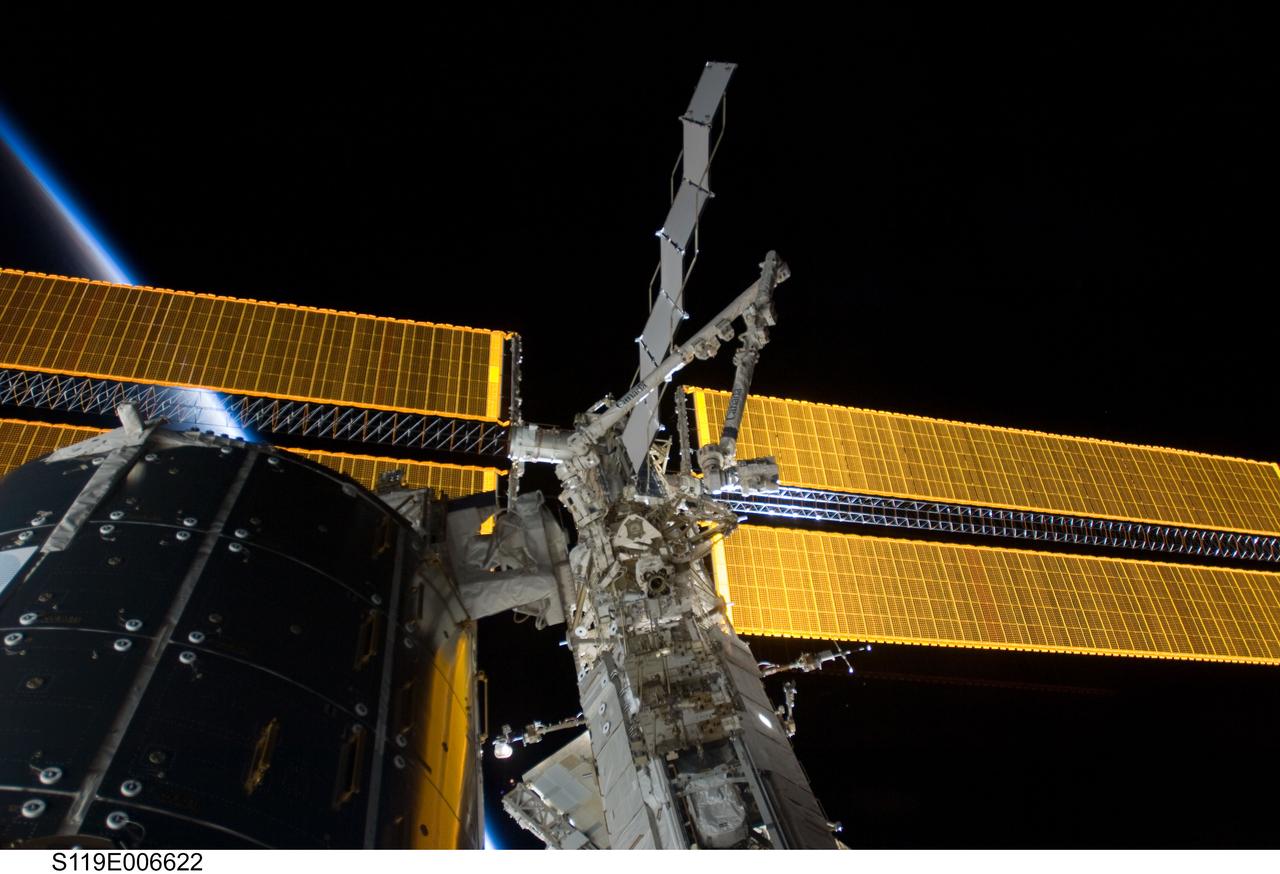
View of the Space Station Remote Manipulator System (SSRMS) on the Mobile Transporter (MT) for S6 Relocation OPS during STS-119 / Expedition 18 joint docked OPS. The MT is on the S1 Truss segment.
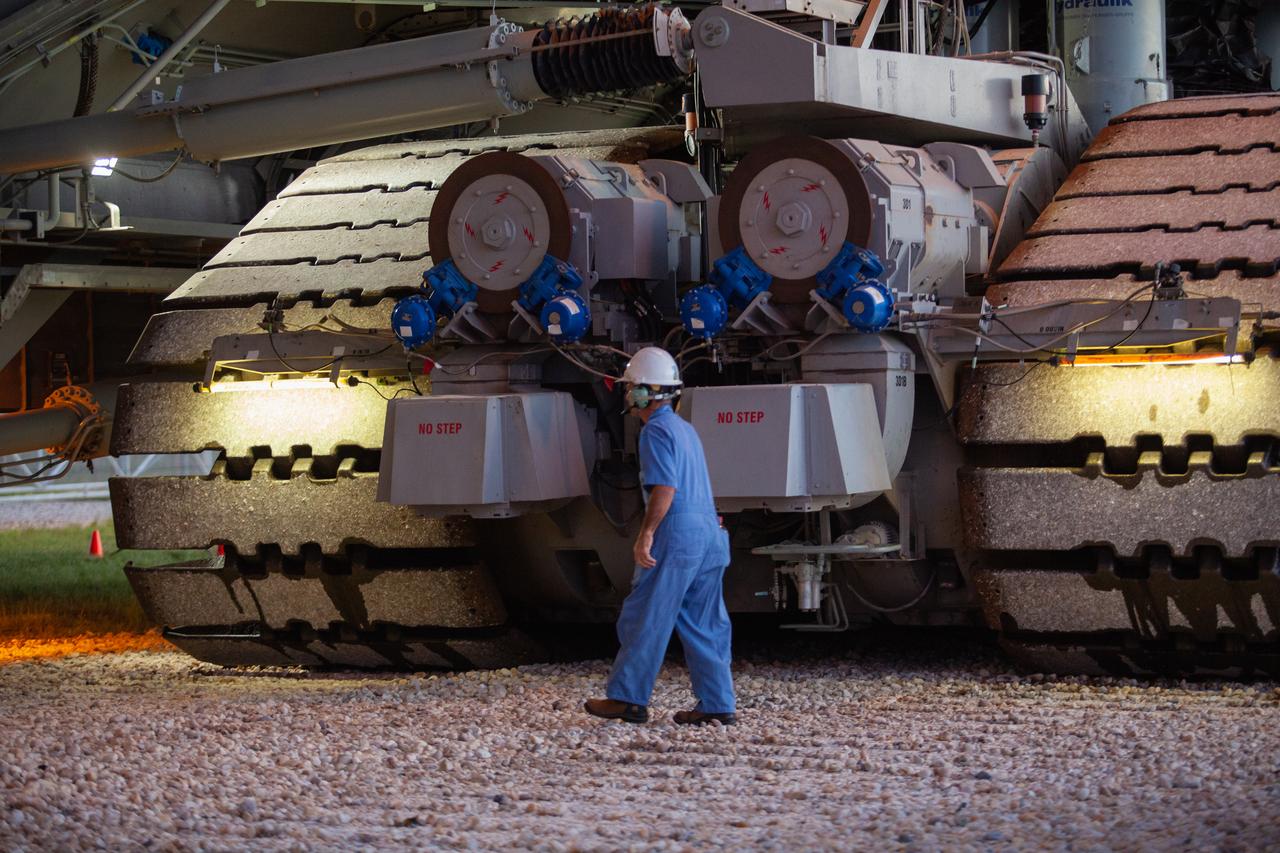
A Kennedy Space Center employee walks near NASA’s crawler-transporter 2 at Kennedy’s Launch Complex 39B area in Florida on June 28, 2019. The crawler-transporter 2 successfully carried Exploration Ground Systems’ mobile launcher to the pad from the Vehicle Assembly Building, departing at midnight on June 27. On June 28, the mobile launcher continued its journey up to the pad surface, where it will remain for the summer, undergoing final testing and checkouts. Its next roll to the pad will be with the agency’s Space Launch System rocket and Orion in preparation for the launch of Artemis 1.
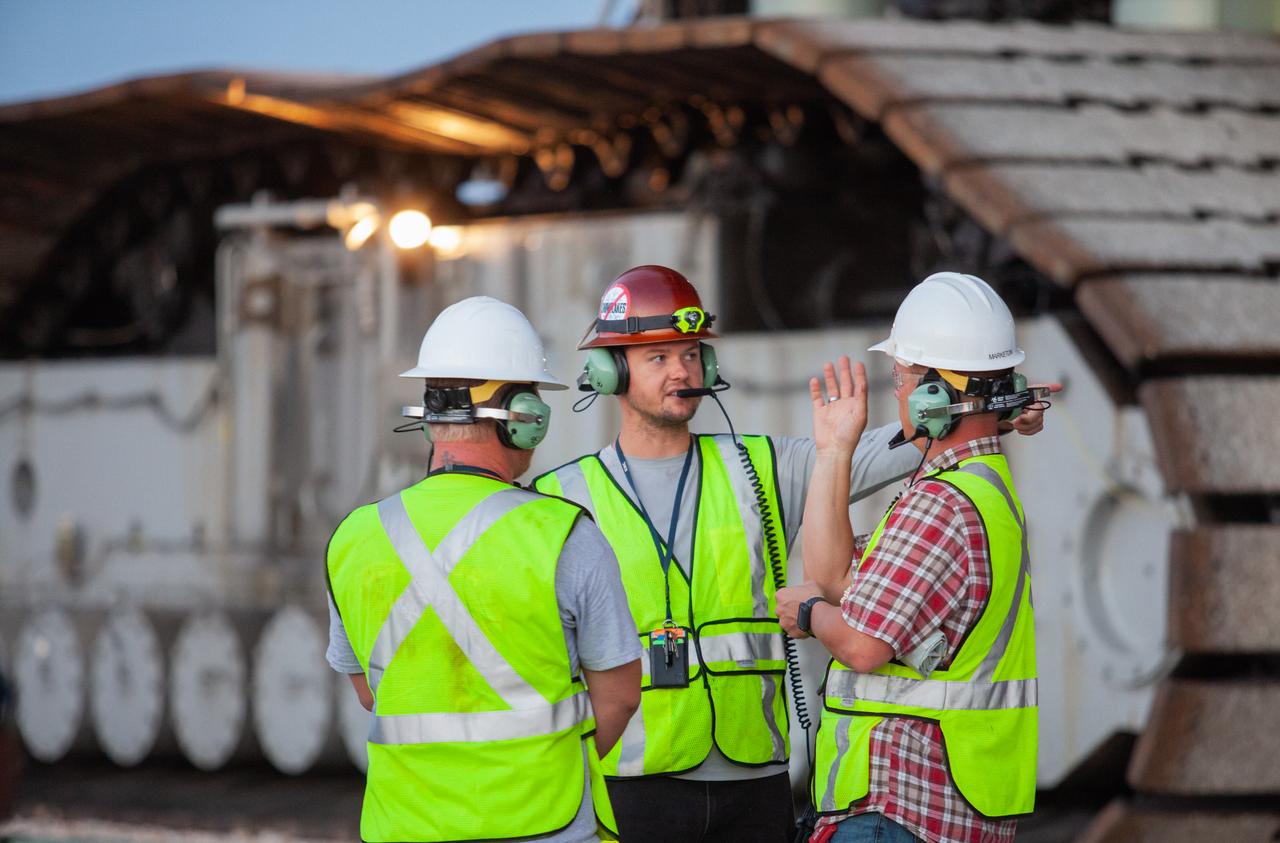
Kennedy Space Center employees stand near NASA’s crawler-transporter 2 at Kennedy’s Launch Complex 39B area in Florida on June 28, 2019. The crawler-transporter 2 successfully carried the Exploration Ground Systems’ mobile launcher to the pad from the Vehicle Assembly Building, departing at midnight on June 27. On June 28, the mobile launcher continued its journey up to the pad surface, where it will remain for the summer, undergoing final testing and checkouts. Its next roll to the pad will be with the agency’s Space Launch System rocket and Orion in preparation for the launch of Artemis 1.
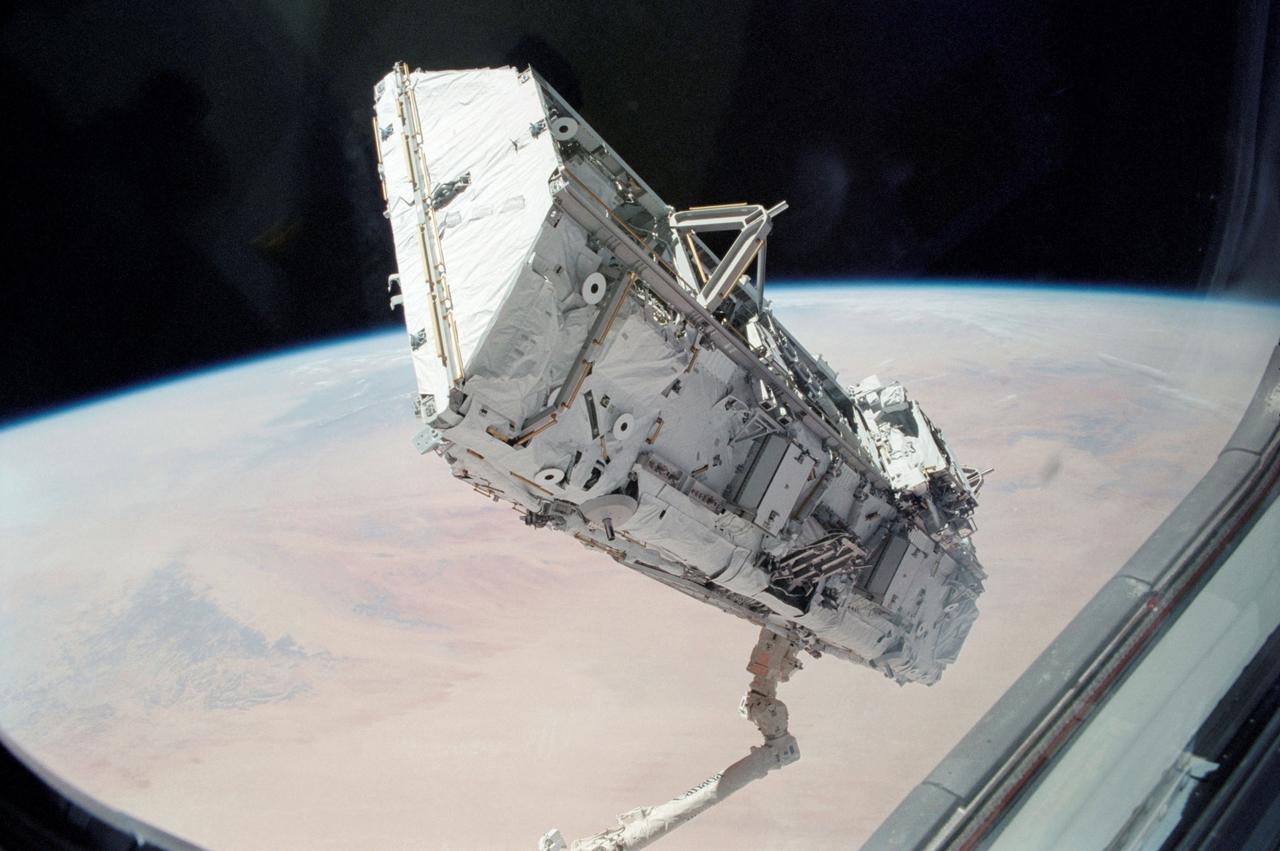
Backdropped against the blackness of space and the Earth's horizon, the S0 (S-zero) truss is removed from Atlantis' cargo bay and onto the Destiny laboratory of the International Space Station (ISS) by Astronauts Ellen Ochoa, STS-110 mission specialist, and Daniel W. Bursch, Expedition Four flight engineer, using the ISS' Canadarm2. Space Shuttle Orbiter Atlantis, STS-110 mission, prepared the International Space Station (ISS) for future spacewalks by installing and outfitting the 43-foot-long S0 truss and preparing the first railroad in space, the Mobile Transporter. The 27,000-pound S0 truss was the first of 9 segments that will make up the Station's external framework that will eventually stretch 356 feet (109 meters), or approximately the length of a football field. This central truss segment also includes a flatcar called the Mobile Transporter and rails that will become the first "space railroad," which will allow the Station's robotic arm to travel up and down the finished truss for future assembly and maintenance. The completed truss structure will hold solar arrays and radiators to provide power and cooling for additional international research laboratories from Japan and Europe that will be attached to the Station. Milestones of the STS-110 mission included the first use of the Station's robotic arm to maneuver spacewalkers around the Station and it was the first time all of a Shuttle crew's spacewalks were based out of the Station's Quest Airlock. It was also the first Shuttle to use three Block II Main Engines. The Space Shuttle Orbiter Atlantis, STS-110 mission, was launched April 8, 2002 and returned to Earth April 19, 2002.
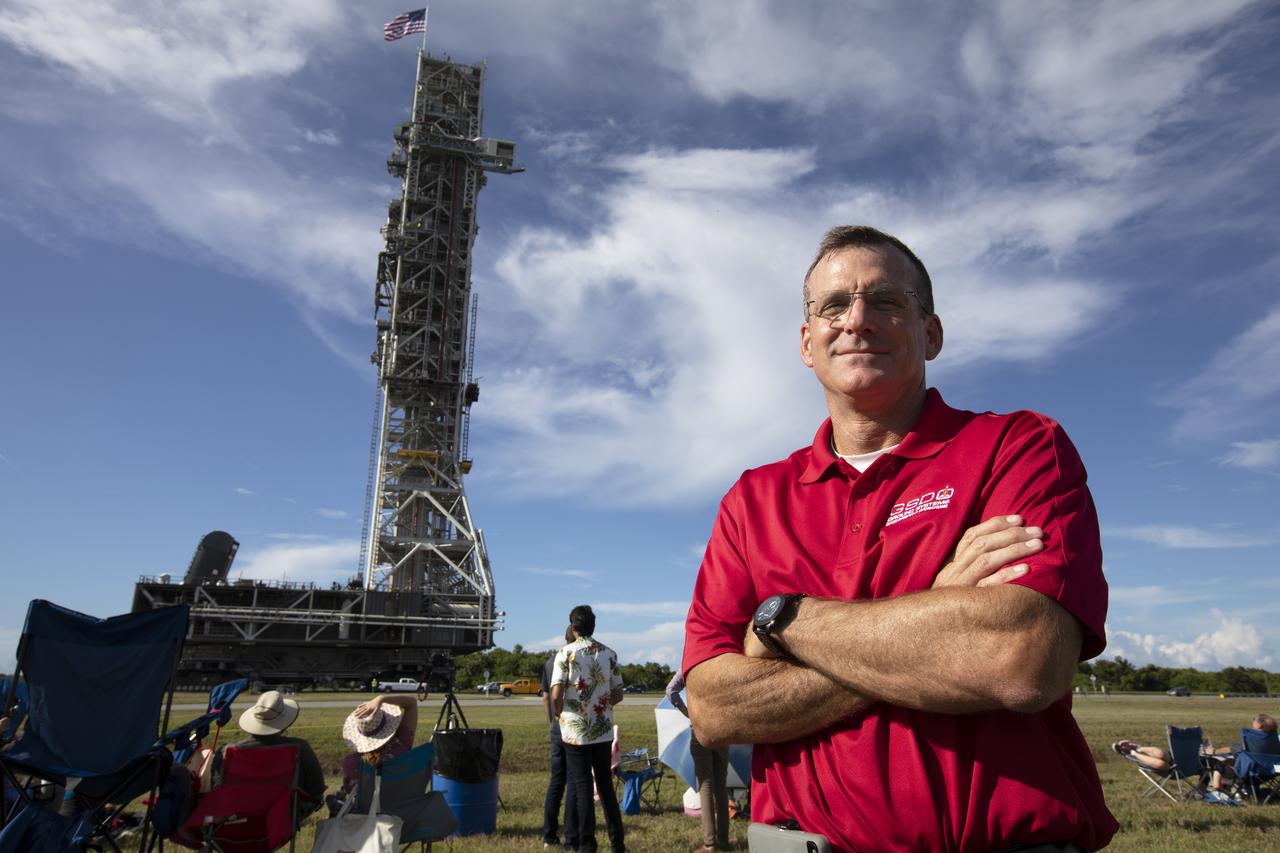
Cliff Lanham, NASA project manager for the mobile launcher, takes a break to attend the employee event for the mobile launcher move to the Vehicle Assembly Building (VAB) on Sept. 7, 2018, at NASA's Kennedy Space Center in Florida. The mobile launcher, atop crawler-transporter 2, began its trek from Launch Pad 39B along the crawlerway after undergoing a fit check and several days of systems testing with the pad. This is the first time that the modified mobile launcher made the trip to the pad. The 380-foot-tall mobile launcher is equipped with the crew access arm and several umbilicals that will provide power, environmental control, pneumatics, communication and electrical connections to the agency's Space Launch System and Orion spacecraft. The mobile launcher will spend seven months in the VAB undergoing testing. Exploration Ground Systems is preparing the ground systems necessary to launch SLS and Orion on Exploration Mission-1, missions to the Moon and on to Mars.
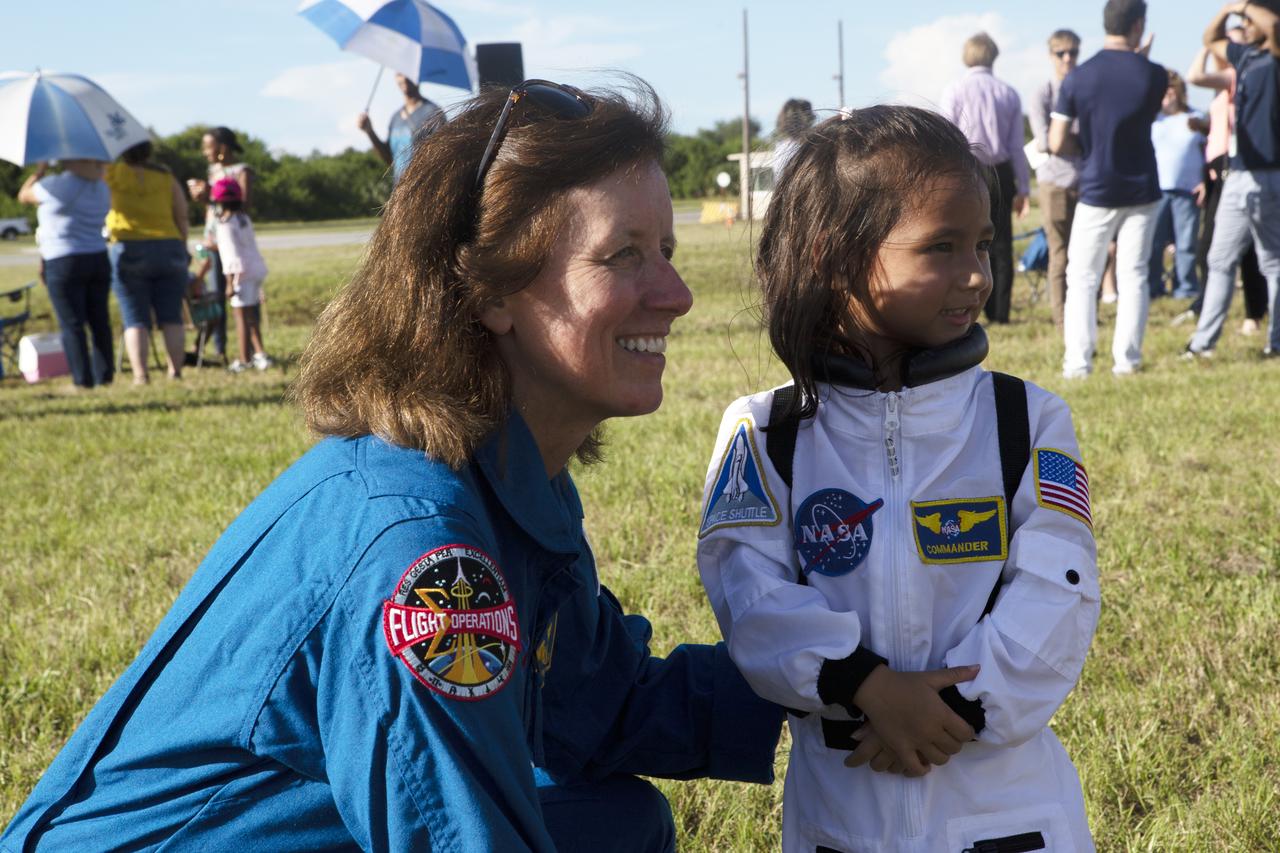
NASA astronaut Shannon Walker visits with a future astronaut during an employee event for workers and their guests for the mobile launcher move to the Vehicle Assembly Building (VAB) on Sept. 7, 2018, at NASA's Kennedy Space Center in Florida. The mobile launcher, atop crawler-transporter 2, began its trek from Launch Pad 39B along the crawlerway after undergoing a fit check and several days of systems testing with the pad. This is the first time that the modified mobile launcher made the trip to the pad. The 380-foot-tall mobile launcher is equipped with the crew access arm and several umbilicals that will provide power, environmental control, pneumatics, communication and electrical connections to the agency's Space Launch System and Orion spacecraft. The mobile launcher will spend seven months in the VAB undergoing testing. Exploration Ground Systems is preparing the ground systems necessary to launch SLS and Orion on Exploration Mission-1, missions to the Moon and on to Mars.

During an employee event, workers and guests watch from bleachers as NASA's mobile launcher, atop crawler-transporter 2, moves slowly along the crawlerway toward the Vehicle Assembly Building (VAB) on Sept. 7, 2018, at NASA's Kennedy Space Center in Florida. The mobile launcher underwent a fit check and several days of systems testing with the pad. This is the first time that the modified mobile launcher made the trip to the pad. The 380-foot-tall mobile launcher is equipped with the crew access arm and several umbilicals that will provide power, environmental control, pneumatics, communication and electrical connections to the agency's Space Launch System and Orion spacecraft. The mobile launcher will spend seven months in the VAB undergoing testing. Exploration Ground Systems is preparing the ground systems necessary to launch SLS and Orion on Exploration Mission-1, missions to the Moon and on to Mars.
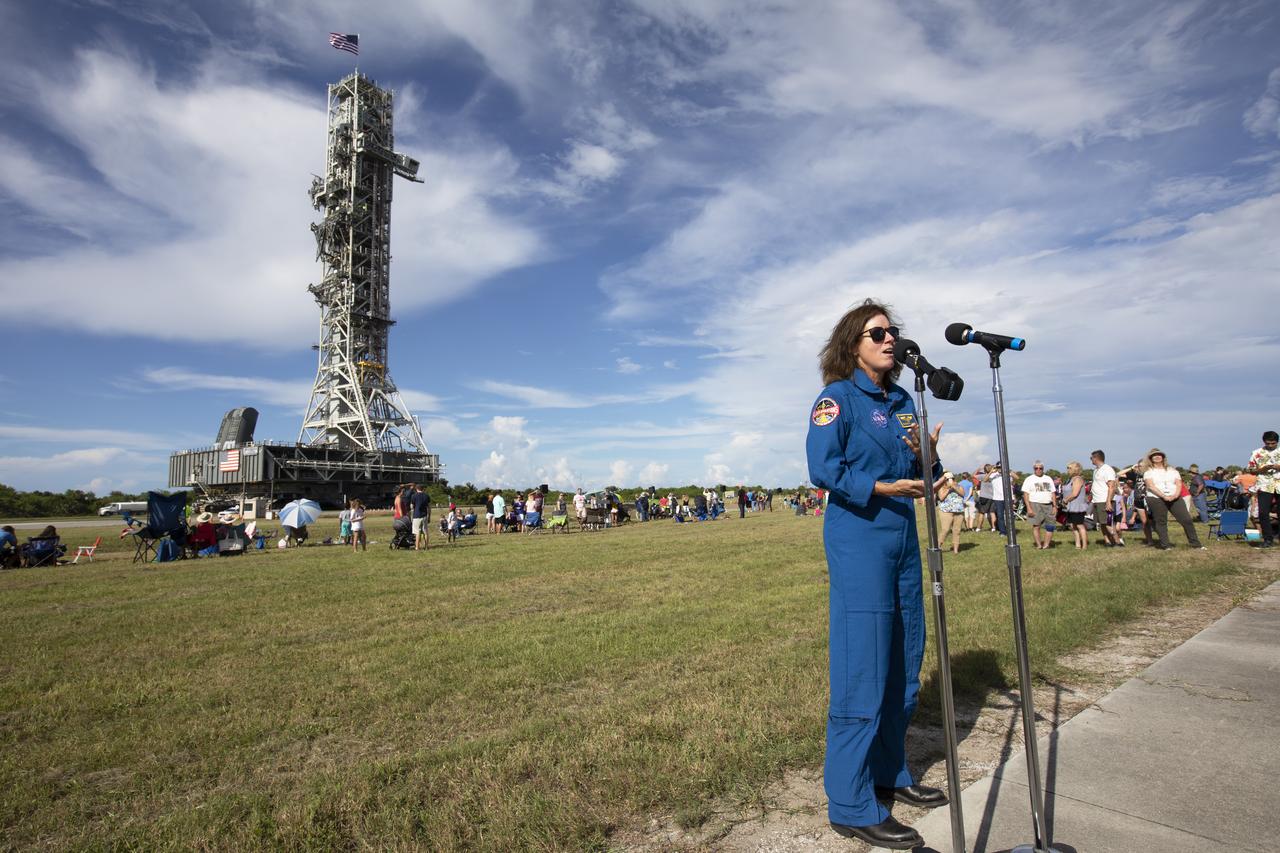
NASA astronaut Shannon Walker speaks to workers and guests during an employee event for the mobile launcher move to the Vehicle Assembly Building (VAB) on Sept. 7, 2018, at NASA's Kennedy Space Center in Florida. The mobile launcher, atop crawler-transporter 2, began its trek from Launch Pad 39B along the crawlerway after undergoing a fit check and several days of systems testing with the pad. This is the first time that the modified mobile launcher made the trip to the pad. The 380-foot-tall mobile launcher is equipped with the crew access arm and several umbilicals that will provide power, environmental control, pneumatics, communication and electrical connections to the agency's Space Launch System and Orion spacecraft. The mobile launcher will spend seven months in the VAB undergoing testing. Exploration Ground Systems is preparing the ground systems necessary to launch SLS and Orion on Exploration Mission-1, missions to the Moon and on to Mars.
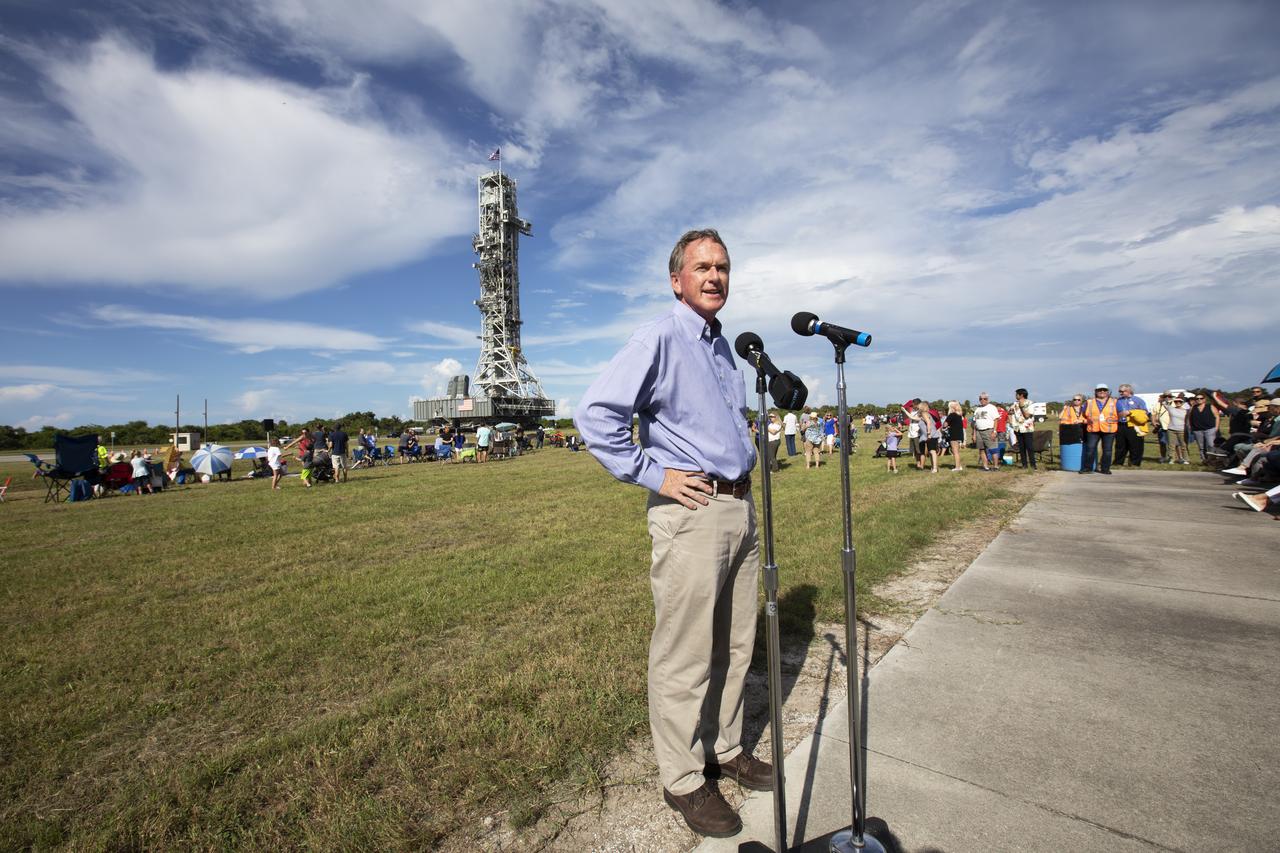
Mike Bolger, program manager of Exploration Ground Systems, speaks to workers and guests during an employee event for the mobile launcher move to the Vehicle Assembly Building (VAB) on Sept. 7, 2018, at NASA's Kennedy Space Center in Florida. The mobile launcher, atop crawler-transporter 2, began its trek from Launch Pad 39B along the crawlerway after undergoing a fit check and several days of systems testing with the pad. This is the first time that the modified mobile launcher made the trip to the pad. The 380-foot-tall mobile launcher is equipped with the crew access arm and several umbilicals that will provide power, environmental control, pneumatics, communication and electrical connections to the agency's Space Launch System and Orion spacecraft. The mobile launcher will spend seven months in the VAB undergoing testing. Exploration Ground Systems is preparing the ground systems necessary to launch SLS and Orion on Exploration Mission-1, missions to the Moon and on to Mars.
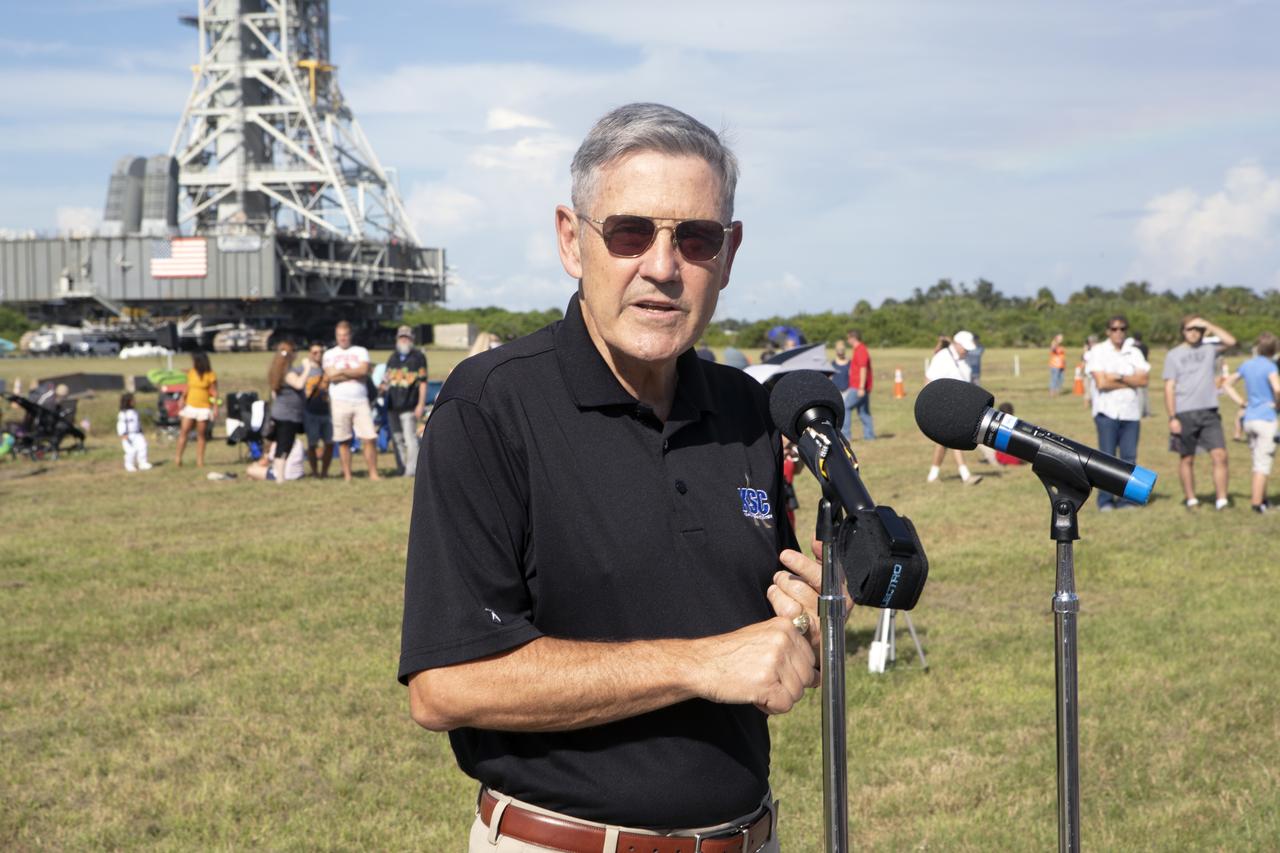
Kennedy Space Center Director Bob Cabana speaks to workers and guests during an employee event for the mobile launcher move to the Vehicle Assembly Building (VAB) on Sept. 7, 2018, at NASA's Kennedy Space Center in Florida. The mobile launcher, atop crawler-transporter 2, began its trek from Launch Pad 39B along the crawlerway after undergoing a fit check and several days of systems testing with the pad. This is the first time that the modified mobile launcher made the trip to the pad. The 380-foot-tall mobile launcher is equipped with the crew access arm and several umbilicals that will provide power, environmental control, pneumatics, communication and electrical connections to the agency's Space Launch System and Orion spacecraft. The mobile launcher will spend seven months in the VAB undergoing testing. Exploration Ground Systems is preparing the ground systems necessary to launch SLS and Orion on Exploration Mission-1, missions to the Moon and on to Mars.
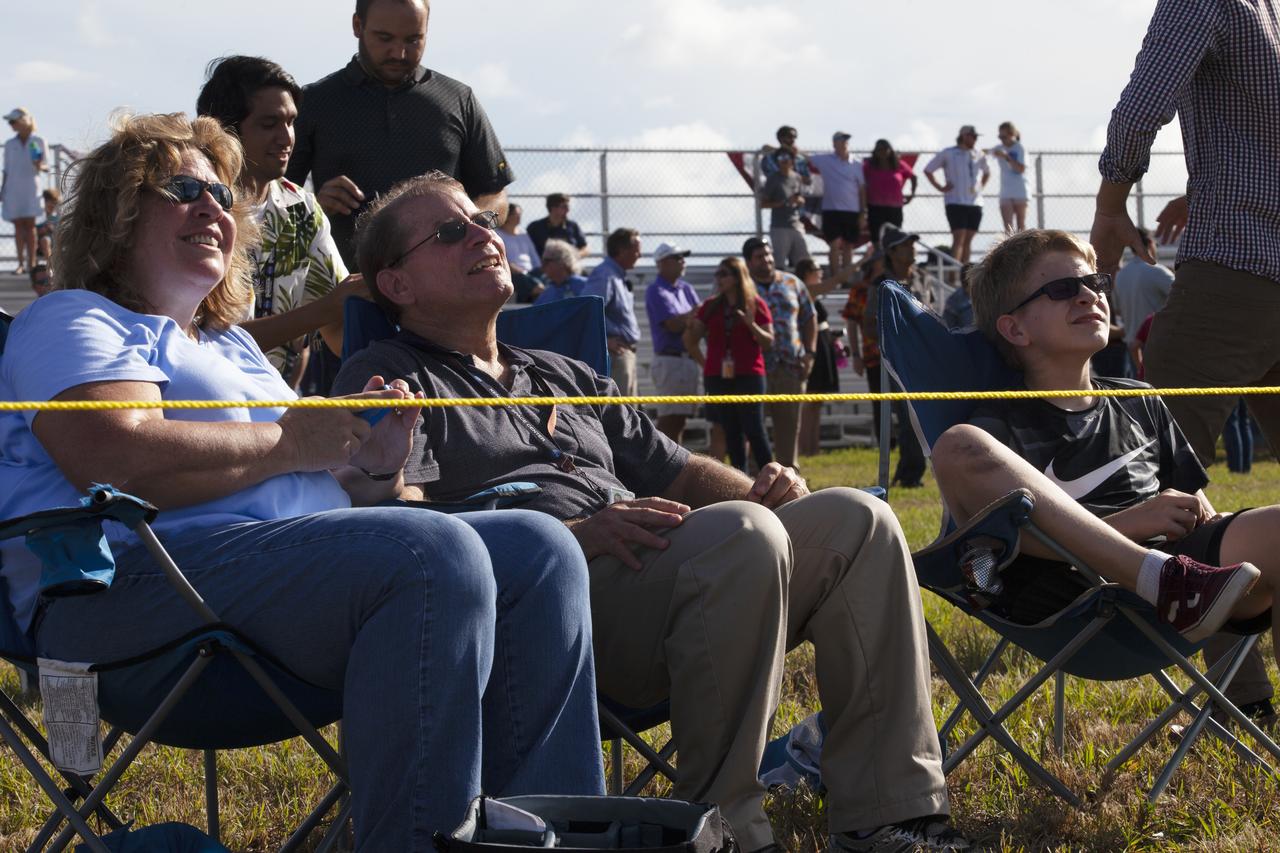
During an employee event, workers and guests watch as NASA's mobile launcher, atop crawler-transporter 2, moves slowly along the crawlerway toward the Vehicle Assembly Building (VAB) on Sept. 7, 2018, at NASA's Kennedy Space Center in Florida. The mobile launcher underwent a fit check and several days of systems testing with the pad. This is the first time that the modified mobile launcher made the trip to the pad. The 380-foot-tall mobile launcher is equipped with the crew access arm and several umbilicals that will provide power, environmental control, pneumatics, communication and electrical connections to the agency's Space Launch System and Orion spacecraft. The mobile launcher will spend seven months in the VAB undergoing testing. Exploration Ground Systems is preparing the ground systems necessary to launch SLS and Orion on Exploration Mission-1, missions to the Moon and on to Mars.
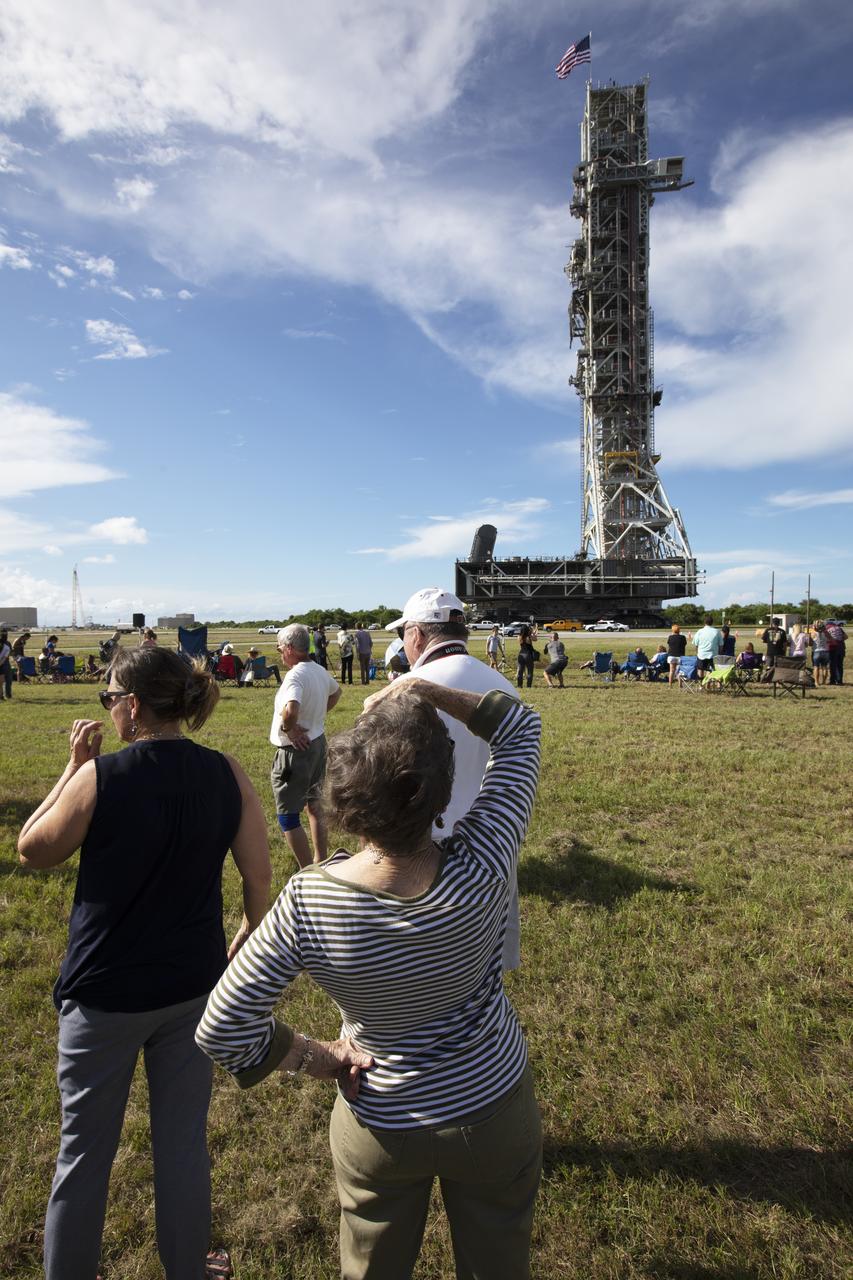
During an employee event, workers and guests watch as NASA's mobile launcher, atop crawler-transporter 2, moves slowly along the crawlerway toward the Vehicle Assembly Building on Sept. 7, 2018, at NASA's Kennedy Space Center in Florida. The mobile launcher underwent a fit check and several days of systems testing with the pad. This is the first time that the modified mobile launcher made the trip to the pad. The 380-foot-tall mobile launcher is equipped with the crew access arm and several umbilicals that will provide power, environmental control, pneumatics, communication and electrical connections to the agency's Space Launch System and Orion spacecraft. The mobile launcher will spend seven months in the VAB undergoing testing. Exploration Ground Systems is preparing the ground systems necessary to launch SLS and Orion on Exploration Mission-1, missions to the Moon and on to Mars.
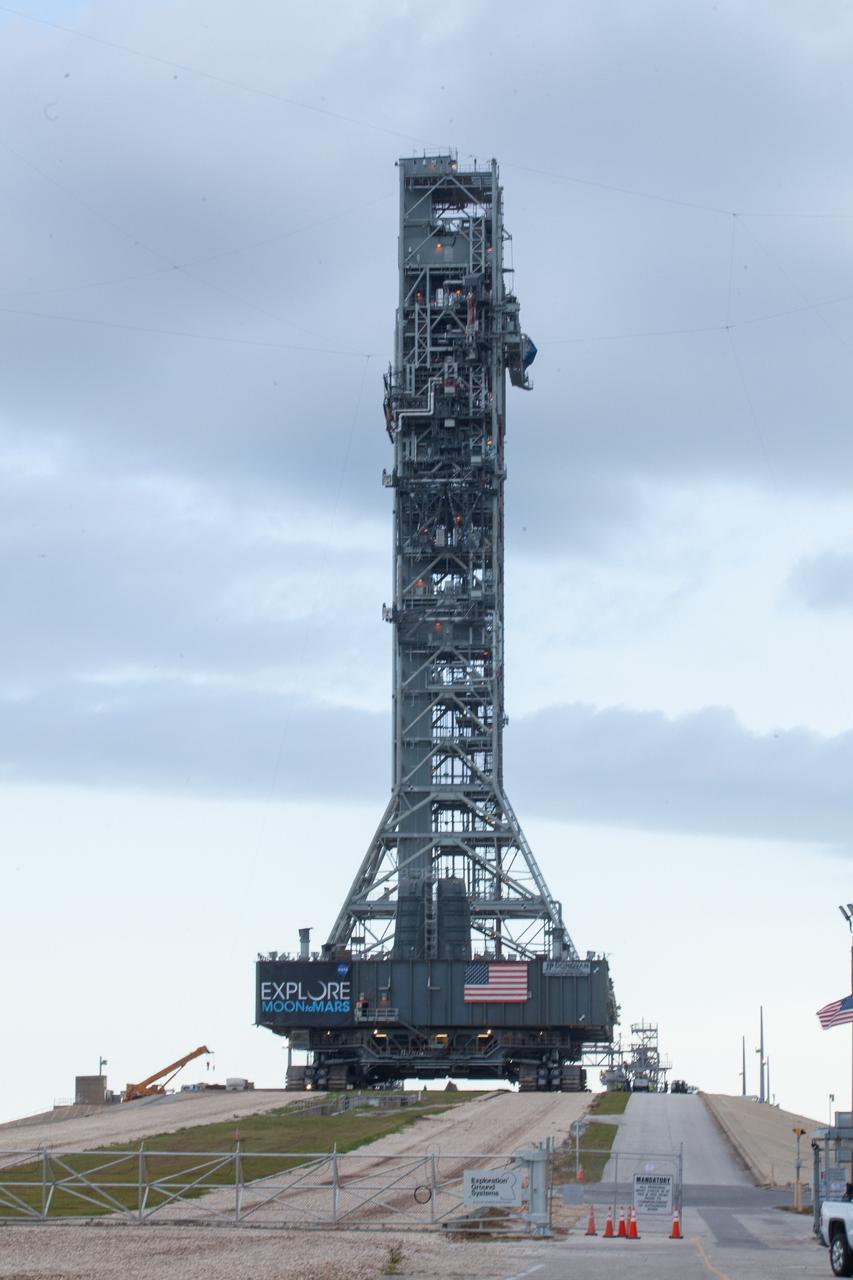
After successfully arriving at Kennedy Space Center’s Launch Complex 39B, Exploration Ground Systems’ mobile launcher continues its journey atop crawler-transporter 2 up to the pad surface on June 28, 2019. The mobile launcher began its final solo trek to the pad at midnight on June 27, departing from NASA’s Vehicle Assembly Building. The mobile launcher will remain at the pad over the summer, undergoing final testing and checkouts. Its next roll to the pad will be with the agency’s Space Launch System rocket and Orion in preparation for the launch of Artemis 1.
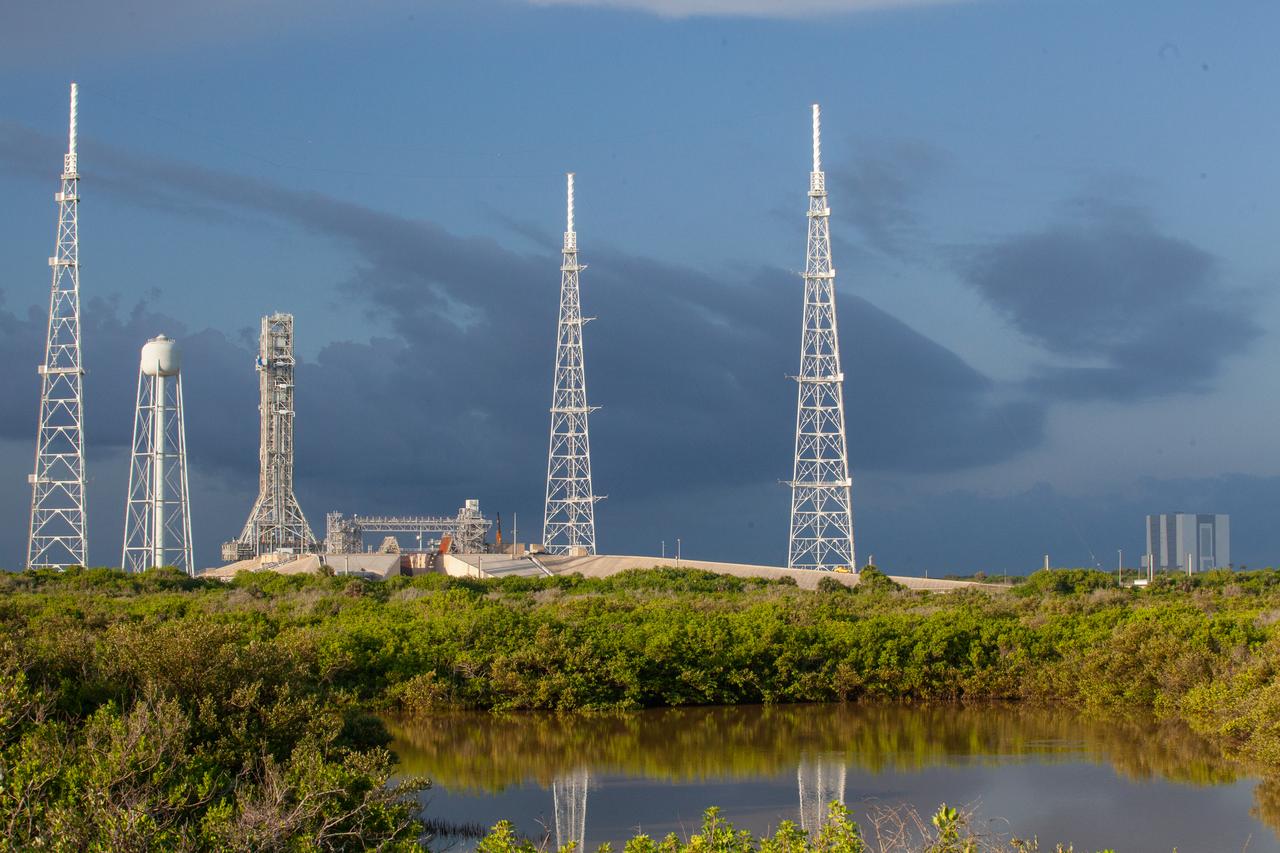
After successfully arriving at Kennedy Space Center’s Launch Complex 39B, Exploration Ground Systems’ mobile launcher continues its journey atop crawler-transporter 2 up to the pad surface on June 28, 2019. The mobile launcher began its final solo trek to the pad at midnight on June 27, departing from NASA’s Vehicle Assembly Building. The mobile launcher will remain at the pad over the summer, undergoing final testing and checkouts. Its next roll to the pad will be with the agency’s Space Launch System rocket and Orion in preparation for the launch of Artemis 1.
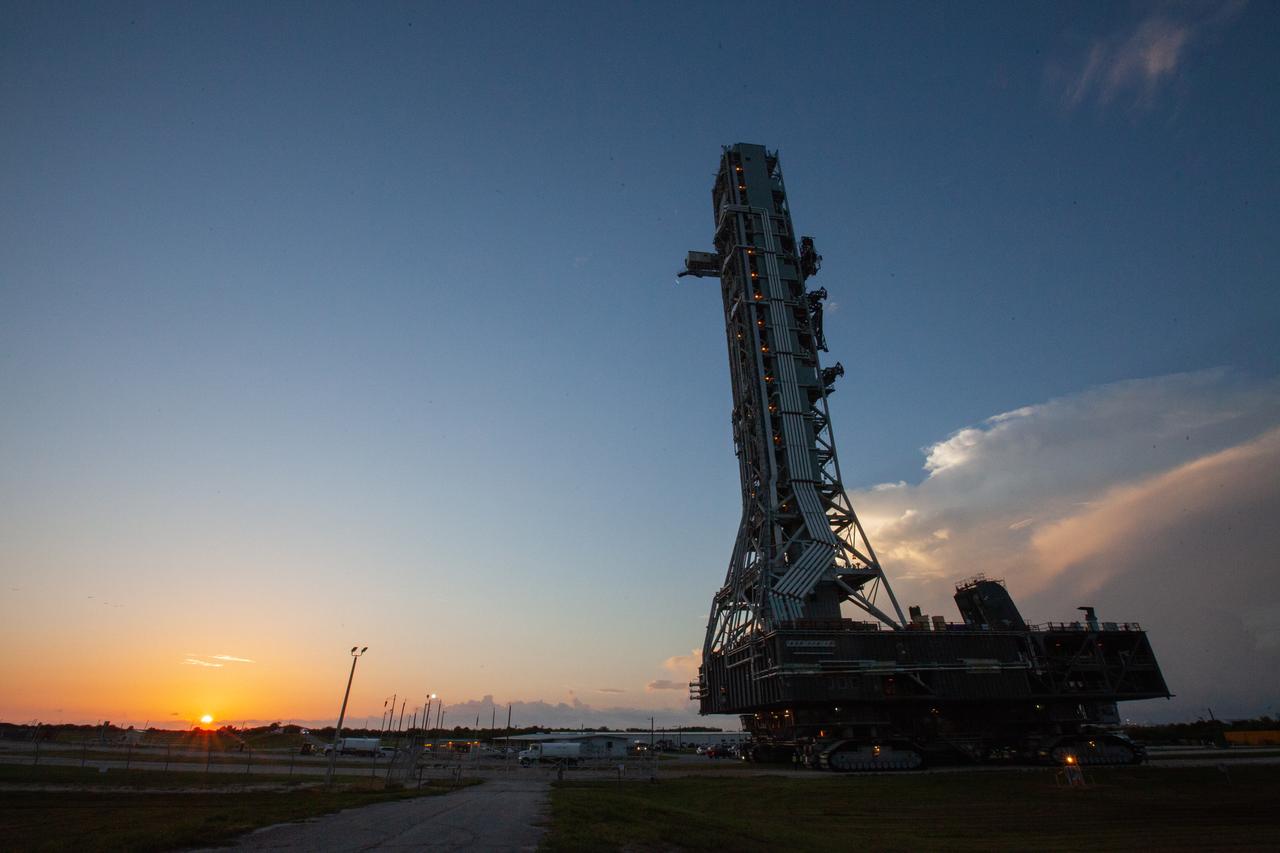
With a sunrise serving as the backdrop, Exploration Ground Systems’ mobile launcher is photographed atop crawler-transporter 2 at Kennedy Space Center’s Launch Complex 39B in Florida on June 28, 2019. The mobile launcher began its final solo trek to the pad at midnight on June 27, departing from NASA’s Vehicle Assembly Building and continuing its journey up to the pad surface on June 28. The mobile launcher will remain at the pad over the summer, undergoing final testing and checkouts. Its next roll to the pad will be with the agency’s Space Launch System rocket and Orion in preparation for the launch of Artemis 1.
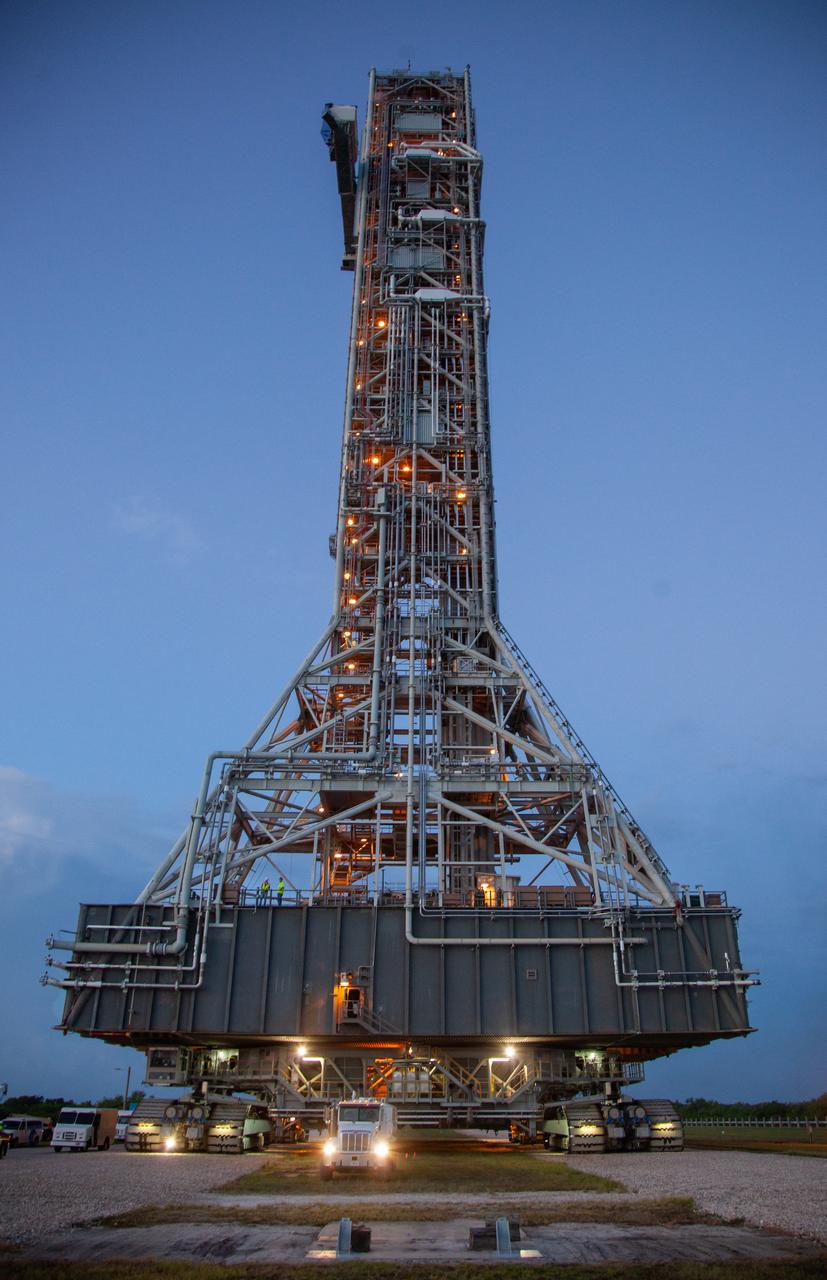
Exploration Ground Systems’ mobile launcher is photographed atop crawler-transporter 2 on its final solo trek to Kennedy Space Center’s Launch Complex 39B in Florida on June 28, 2019. The mobile launcher began its journey to the pad at midnight on June 27, departing from NASA’s Vehicle Assembly Building and continuing up to the pad surface on June 28. The mobile launcher will remain at the pad over the summer, undergoing final testing and checkouts. Its next roll to the pad will be with the agency’s Space Launch System rocket and Orion in preparation for the launch of Artemis 1.
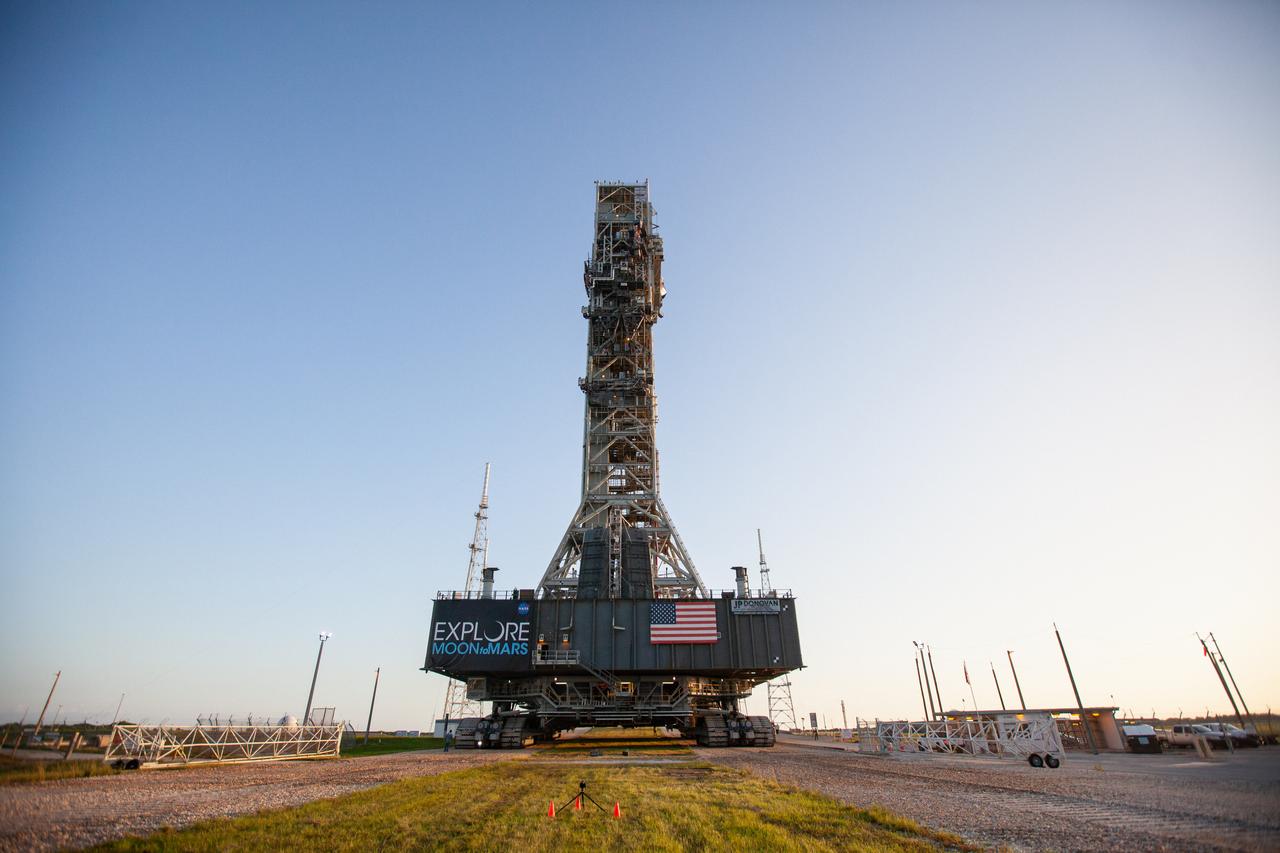
After successfully arriving at Kennedy Space Center’s Launch Complex 39B, Exploration Ground Systems’ mobile launcher continues its journey atop crawler-transporter 2 up to the pad surface on June 28, 2019. The mobile launcher began its final solo trek to the pad at midnight on June 27, departing from NASA’s Vehicle Assembly Building. The mobile launcher will remain at the pad over the summer, undergoing final testing and checkouts. Its next roll to the pad will be with the agency’s Space Launch System rocket and Orion in preparation for the launch of Artemis 1.
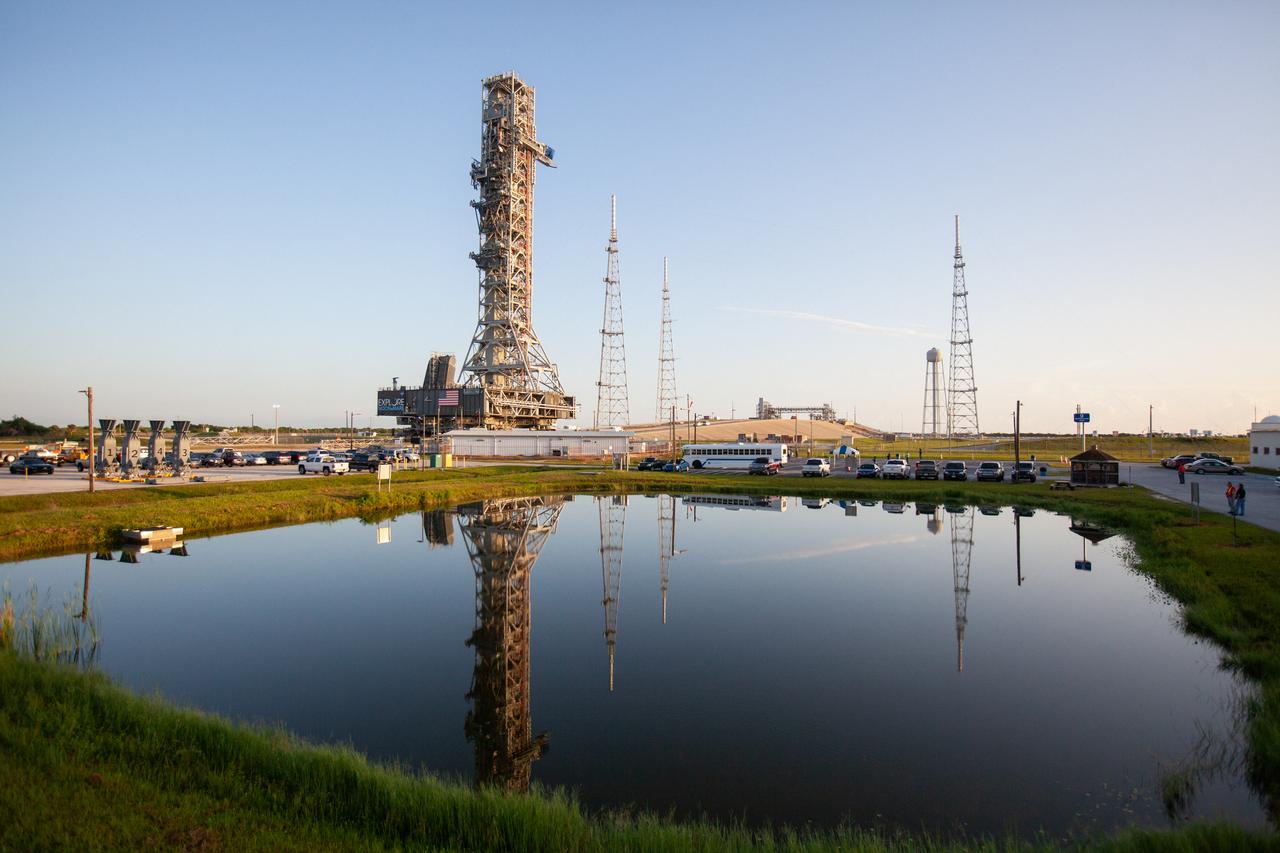
After successfully arriving at Kennedy Space Center’s Launch Complex 39B, Exploration Ground Systems’ mobile launcher continues its journey atop crawler-transporter 2 up to the pad surface on June 28, 2019. The mobile launcher began its final solo trek to the pad at midnight on June 27, departing from NASA’s Vehicle Assembly Building. The mobile launcher will remain at the pad over the summer, undergoing final testing and checkouts. Its next roll to the pad will be with the agency’s Space Launch System rocket and Orion in preparation for the launch of Artemis 1.
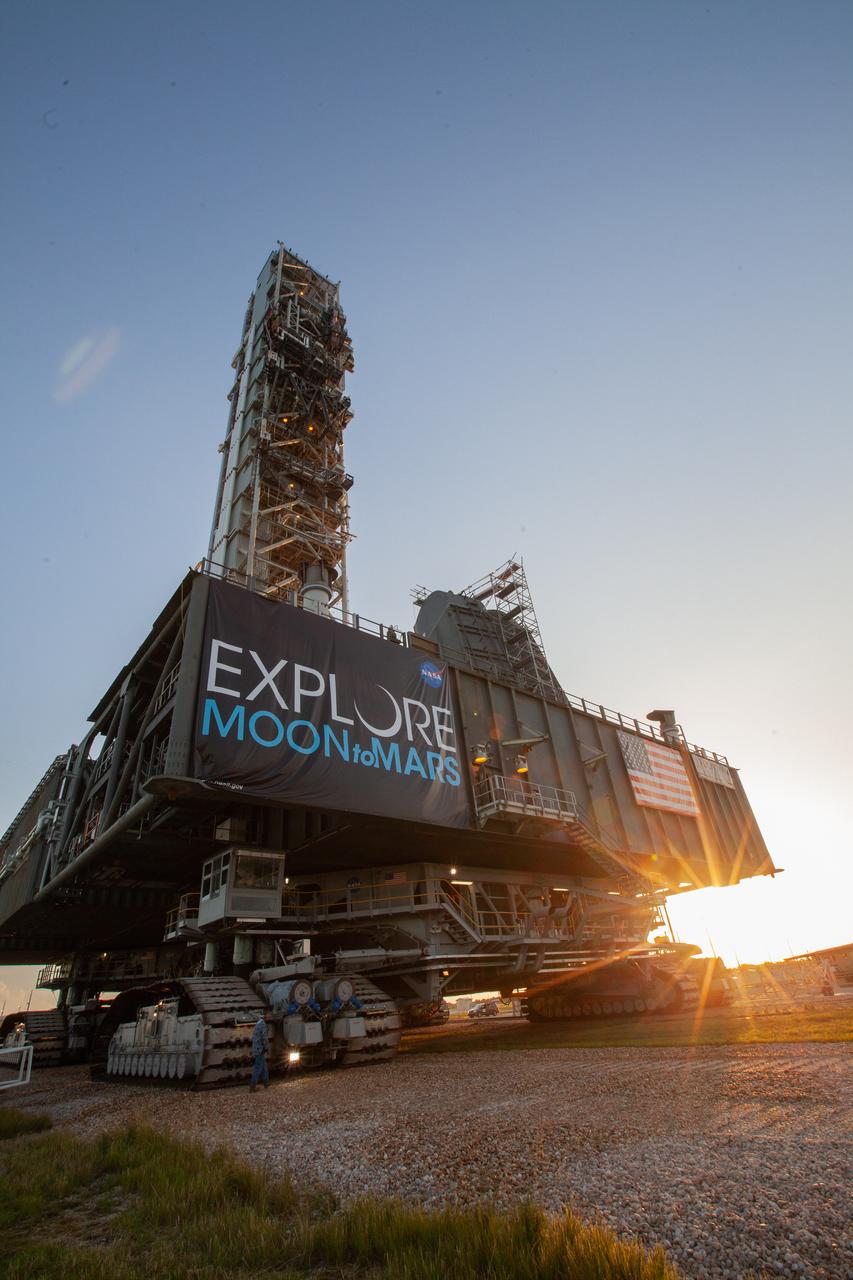
After successfully arriving at Kennedy Space Center’s Launch Complex 39B, Exploration Ground Systems’ mobile launcher continues its journey atop crawler-transporter 2 up to the pad surface on June 28, 2019. The mobile launcher began its final solo trek to the pad at midnight on June 27, departing from NASA’s Vehicle Assembly Building. The mobile launcher will remain at the pad over the summer, undergoing final testing and checkouts. Its next roll to the pad will be with the agency’s Space Launch System rocket and Orion in preparation for the launch of Artemis 1.
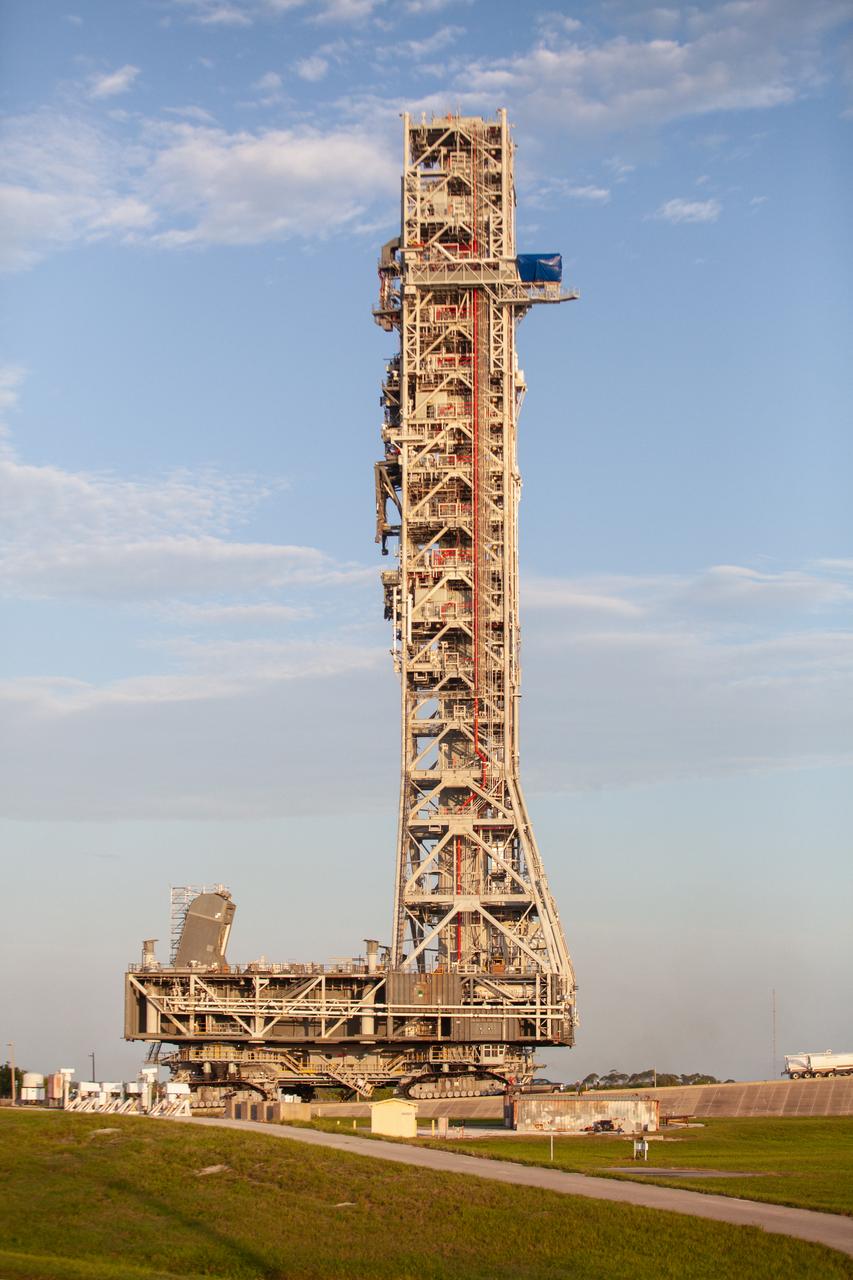
After successfully arriving at Kennedy Space Center’s Launch Complex 39B, Exploration Ground Systems’ mobile launcher continues its journey atop crawler-transporter 2 up to the pad surface on June 28, 2019. The mobile launcher began its final solo trek to the pad at midnight on June 27, departing from NASA’s Vehicle Assembly Building. The mobile launcher will remain at the pad over the summer, undergoing final testing and checkouts. Its next roll to the pad will be with the agency’s Space Launch System rocket and Orion in preparation for the launch of Artemis 1.
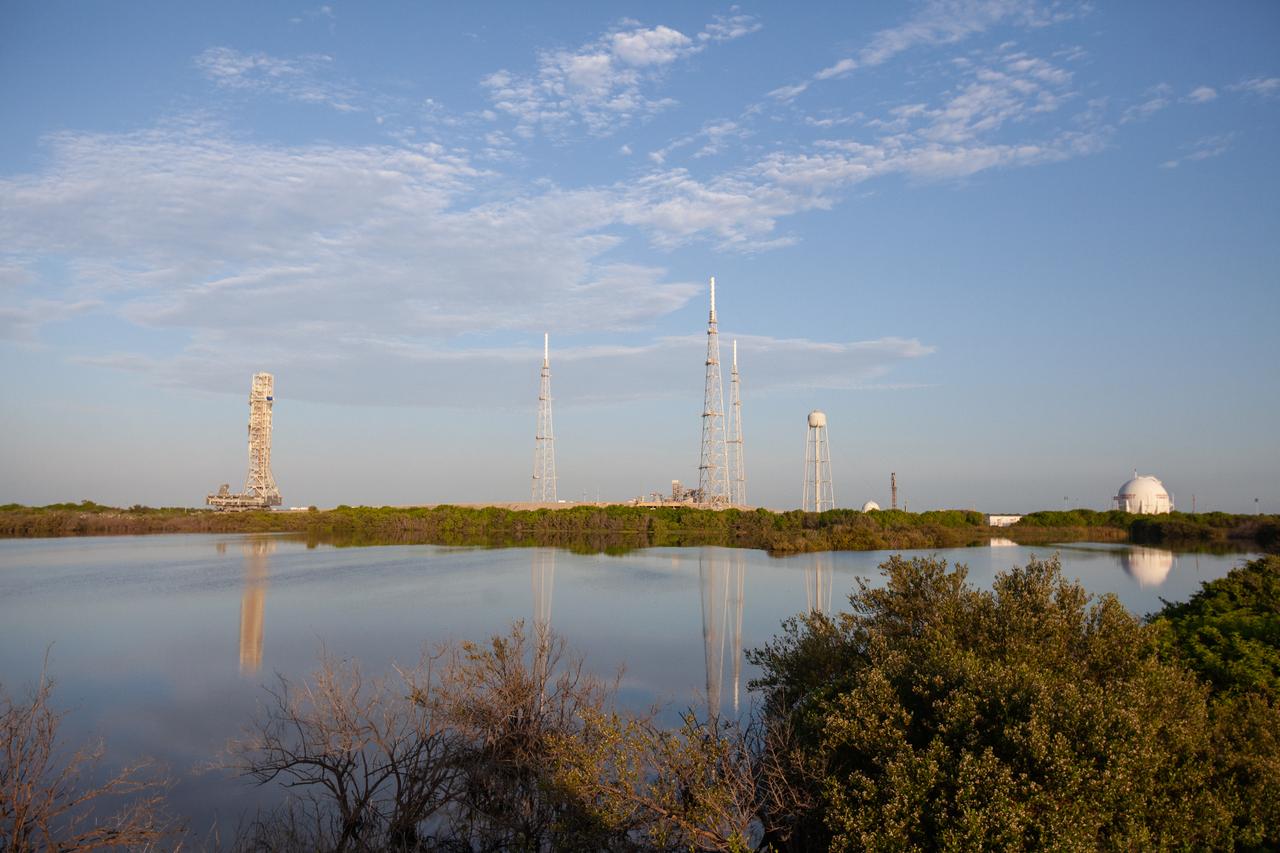
After successfully arriving at Kennedy Space Center’s Launch Complex 39B, Exploration Ground Systems’ mobile launcher continues its journey atop crawler-transporter 2 up to the pad surface on June 28, 2019. The mobile launcher began its final solo trek to the pad at midnight on June 27, departing from NASA’s Vehicle Assembly Building. The mobile launcher will remain at the pad over the summer, undergoing final testing and checkouts. Its next roll to the pad will be with the agency’s Space Launch System rocket and Orion in preparation for the launch of Artemis 1.
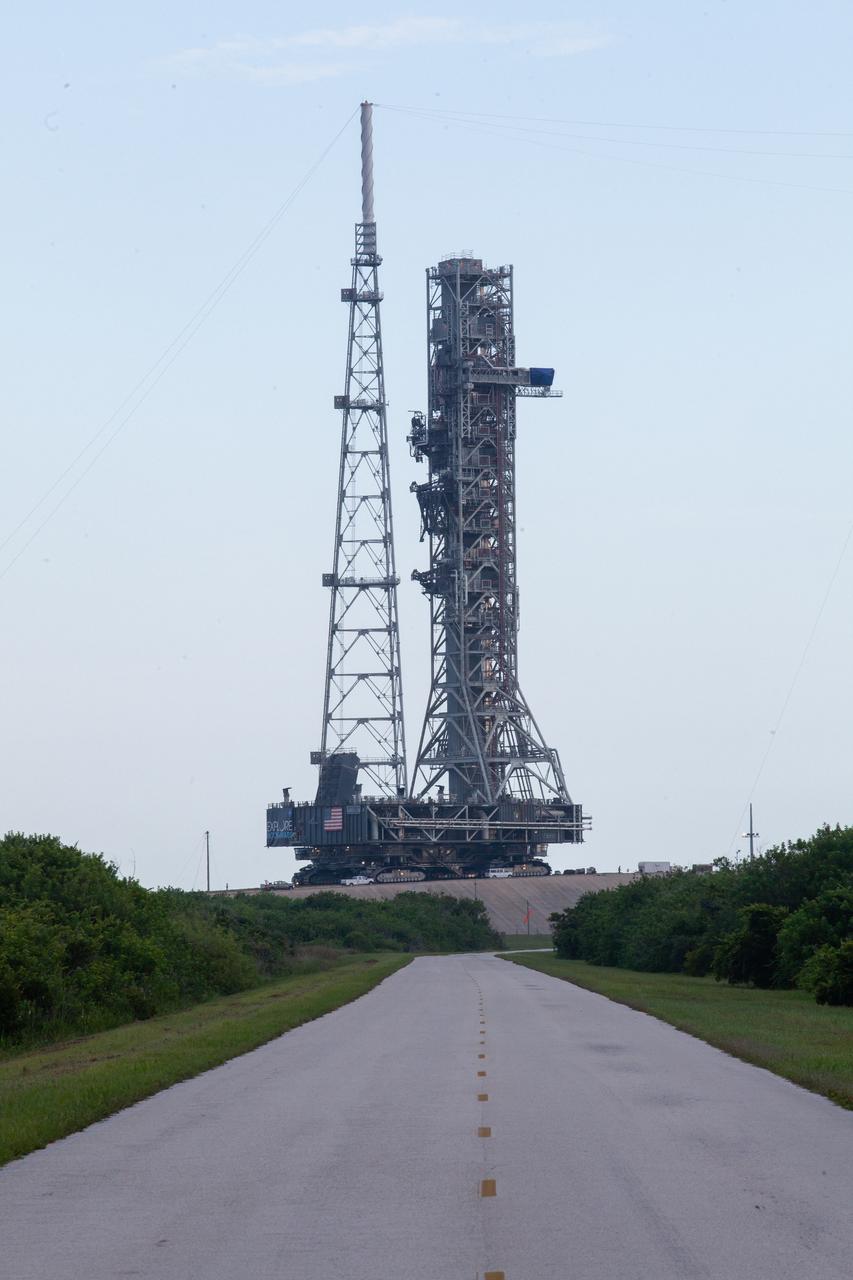
After successfully arriving at Kennedy Space Center’s Launch Complex 39B, Exploration Ground Systems’ mobile launcher is photographed at the pad surface atop crawler-transporter 2 on June 28, 2019. The mobile launcher began its final solo trek to the pad at midnight on June 27, departing from NASA’s Vehicle Assembly Building. The mobile launcher will remain at the pad over the summer, undergoing final testing and checkouts. Its next roll to the pad will be with the agency’s Space Launch System rocket and Orion in preparation for the launch of Artemis 1.
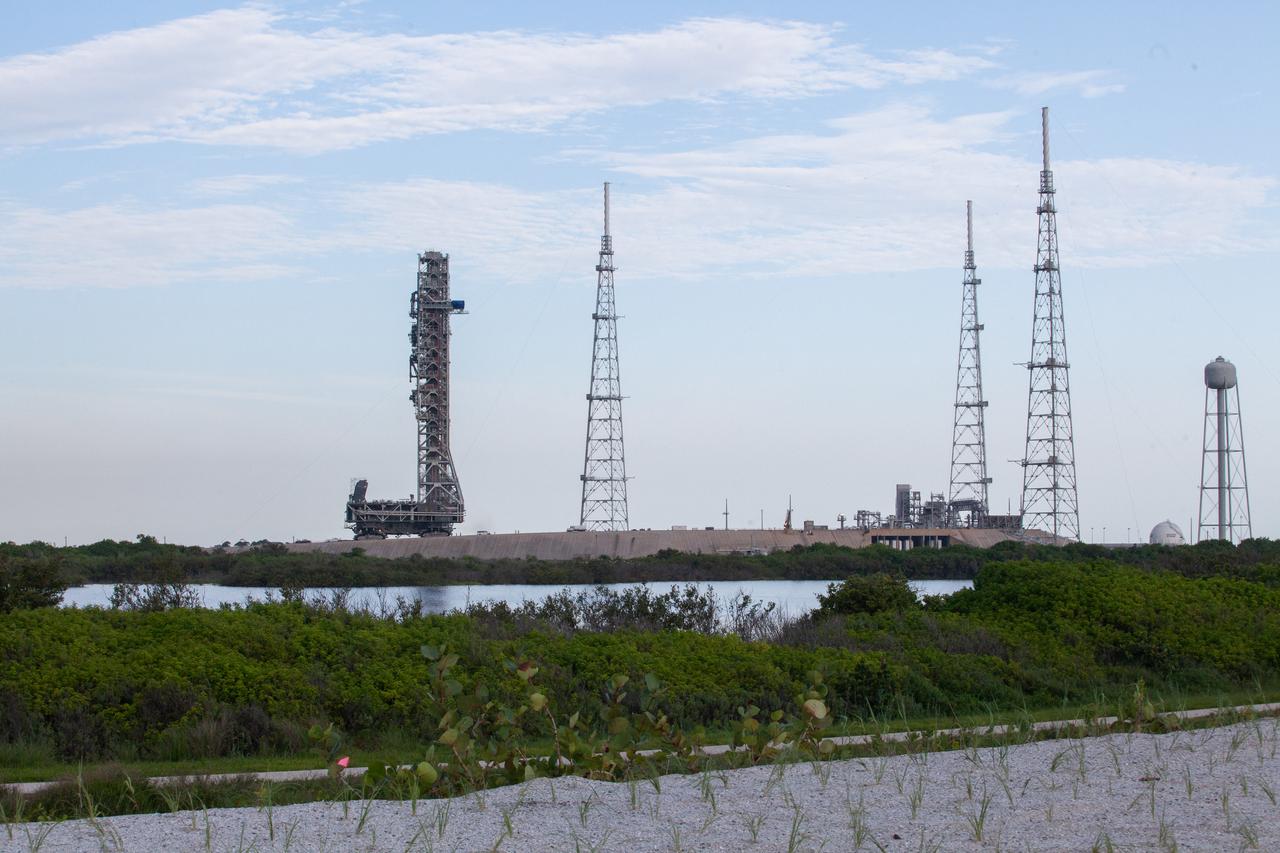
After successfully arriving at Kennedy Space Center’s Launch Complex 39B, Exploration Ground Systems’ mobile launcher continues its journey atop crawler-transporter 2 up to the pad surface on June 28, 2019. The mobile launcher began its final solo trek to the pad at midnight on June 27, departing from NASA’s Vehicle Assembly Building. The mobile launcher will remain at the pad over the summer, undergoing final testing and checkouts. Its next roll to the pad will be with the agency’s Space Launch System rocket and Orion in preparation for the launch of Artemis 1.
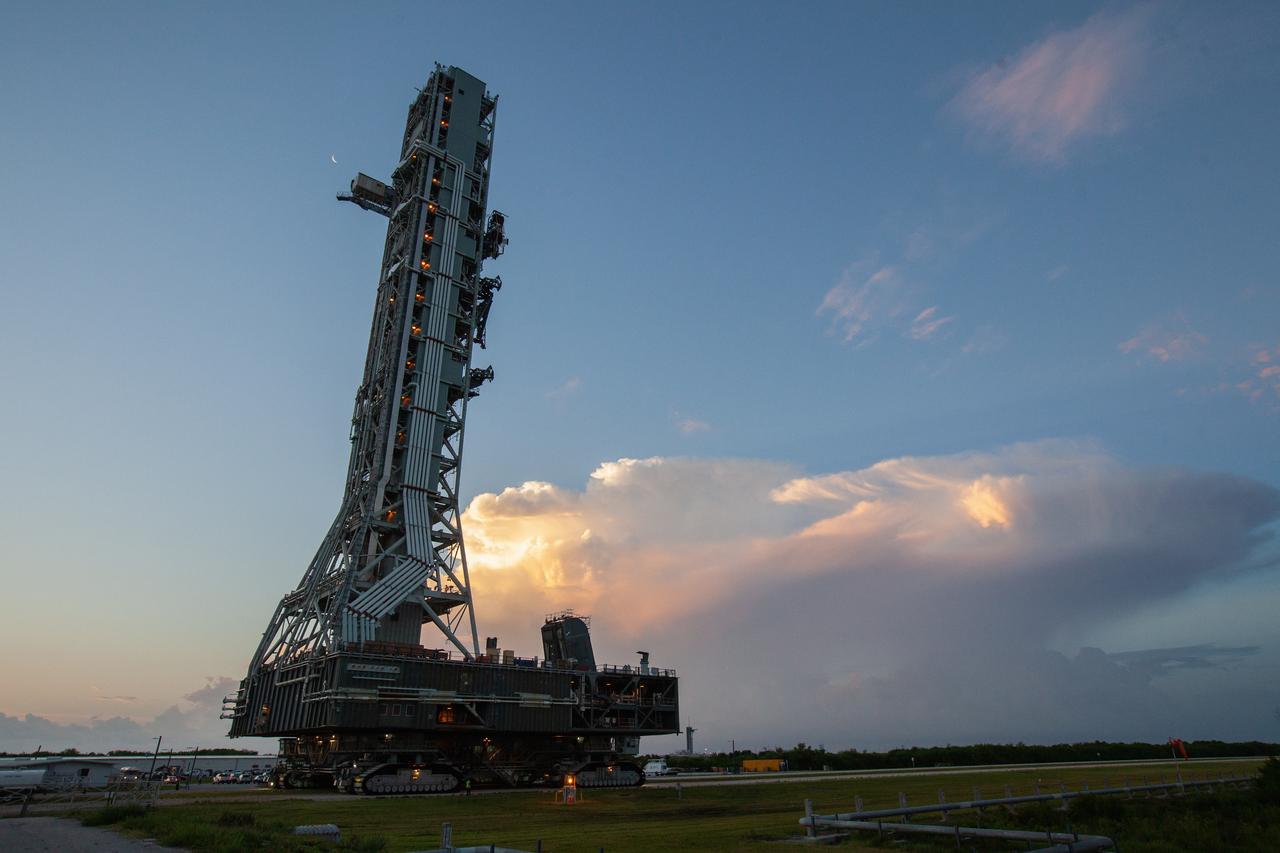
After successfully arriving at Kennedy Space Center’s Launch Complex 39B, Exploration Ground Systems’ mobile launcher continues its journey atop crawler-transporter 2 up to the pad surface on June 28, 2019. The mobile launcher began its final solo trek to the pad at midnight on June 27, departing from NASA’s Vehicle Assembly Building. The mobile launcher will remain at the pad over the summer, undergoing final testing and checkouts. Its next roll to the pad will be with the agency’s Space Launch System rocket and Orion in preparation for the launch of Artemis 1.
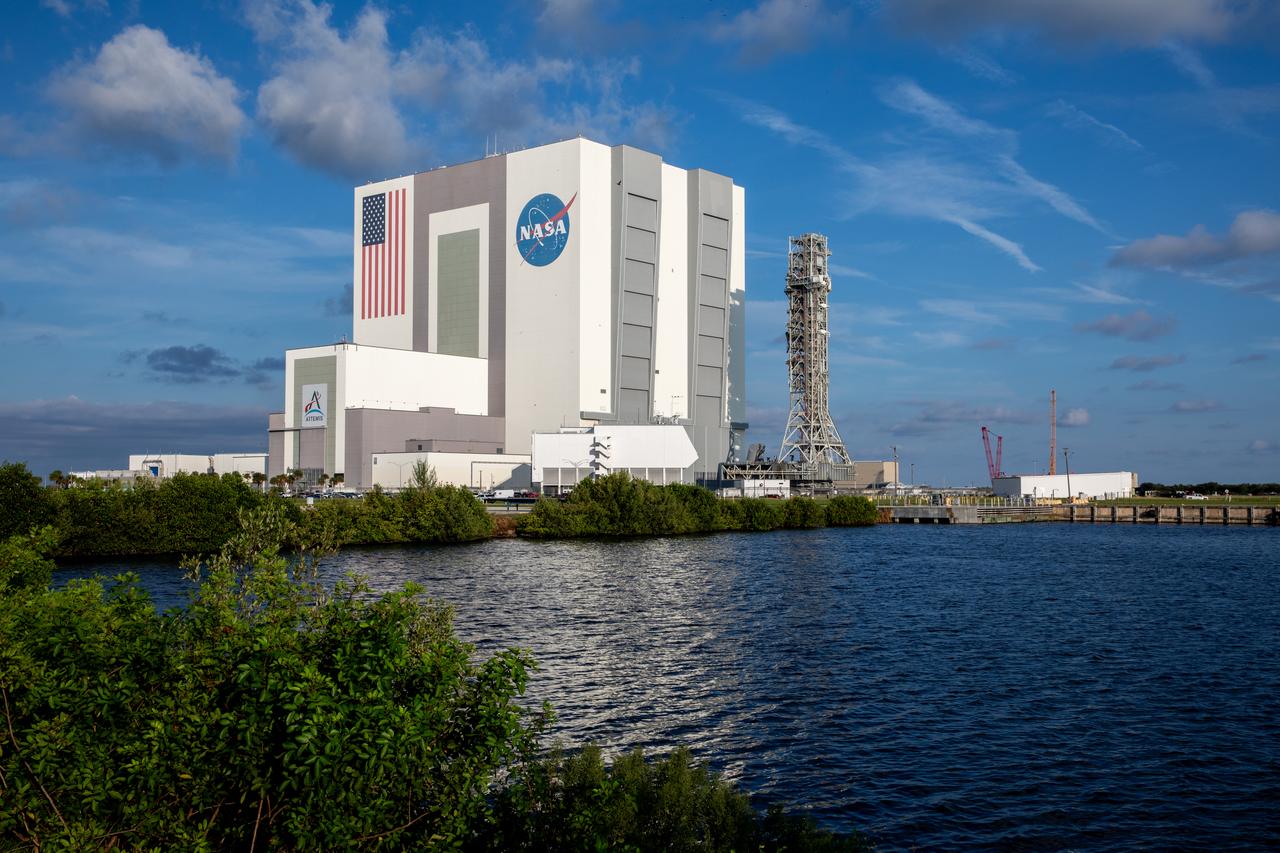
Teams with NASA’s Exploration Ground Systems Program transport the 380-foot-tall mobile launcher 1 along a 4.2-mile stretch to the iconic Vehicle Assembly Building at NASA’s Kennedy Space Center in Florida on Thursday, Oct. 3, 2024. The crawler transporter recently reached 2,500 miles traveling to the launch pad since its construction in 1965. The mobile launcher has been at Launch Complex 39B since August 2023 undergoing upgrades and tests in preparation for NASA’s Artemis II mission. The mobile launcher will be used to assemble, process, and launch NASA’s SLS (Space Launch Systems) and Orion spacecraft to the Moon and beyond.
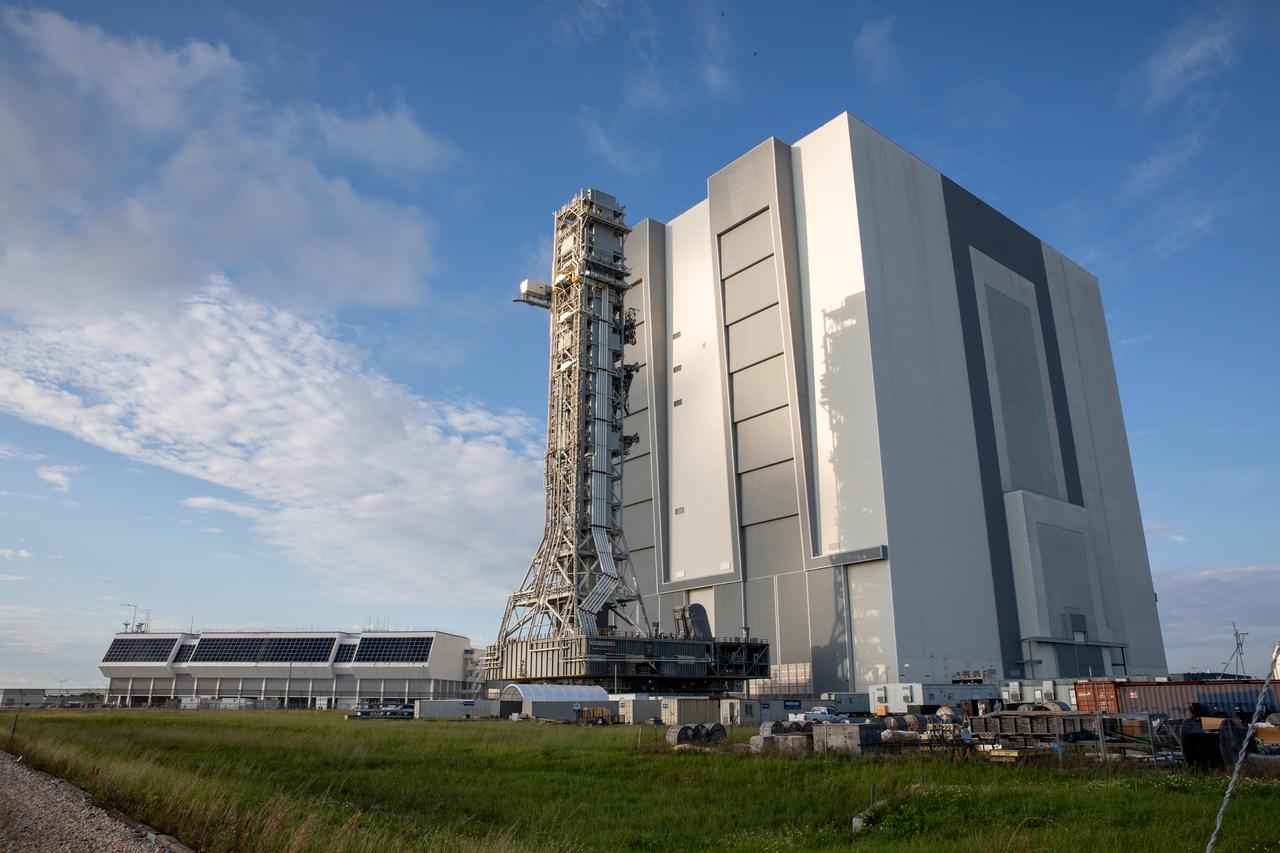
Teams with NASA’s Exploration Ground Systems Program transport the 380-foot-tall mobile launcher 1 along a 4.2-mile stretch to the iconic Vehicle Assembly Building at NASA’s Kennedy Space Center in Florida on Thursday, Oct. 3, 2024. The crawler transporter recently reached 2,500 miles traveling to the launch pad since its construction in 1965. The mobile launcher has been at Launch Complex 39B since August 2023 undergoing upgrades and tests in preparation for NASA’s Artemis II mission. The mobile launcher will be used to assemble, process, and launch NASA’s SLS (Space Launch Systems) and Orion spacecraft to the Moon and beyond.

Teams with NASA’s Exploration Ground Systems Program transport the 380-foot-tall mobile launcher 1 along a 4.2-mile stretch to the iconic Vehicle Assembly Building at NASA’s Kennedy Space Center in Florida on Thursday, Oct. 3, 2024. The crawler transporter recently reached 2,500 miles traveling to the launch pad since its construction in 1965. The mobile launcher has been at Launch Complex 39B since August 2023 undergoing upgrades and tests in preparation for NASA’s Artemis II mission. The mobile launcher will be used to assemble, process, and launch NASA’s SLS (Space Launch Systems) and Orion spacecraft to the Moon and beyond.
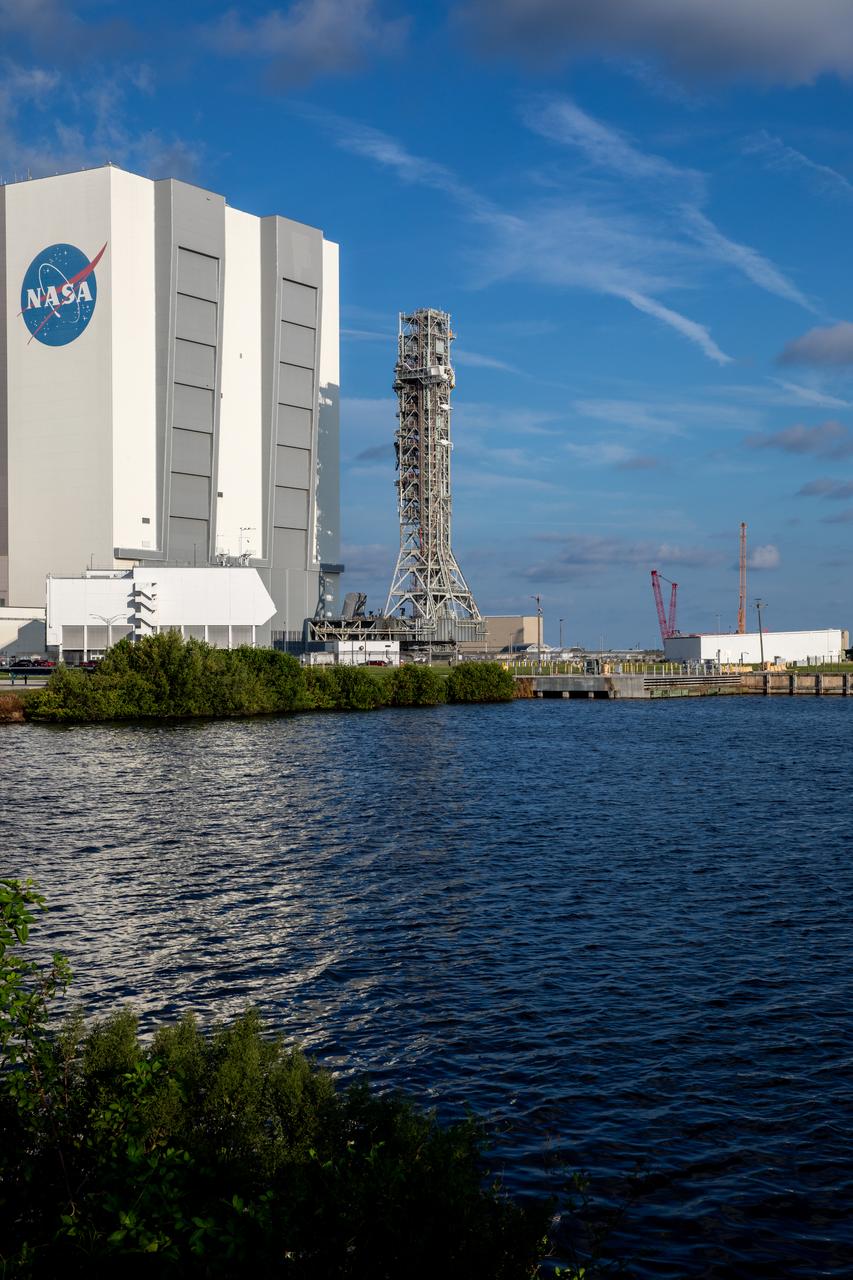
Teams with NASA’s Exploration Ground Systems Program transport the 380-foot-tall mobile launcher 1 along a 4.2-mile stretch to the iconic Vehicle Assembly Building at NASA’s Kennedy Space Center in Florida on Thursday, Oct. 3, 2024. The crawler transporter recently reached 2,500 miles traveling to the launch pad since its construction in 1965. The mobile launcher has been at Launch Complex 39B since August 2023 undergoing upgrades and tests in preparation for NASA’s Artemis II mission. The mobile launcher will be used to assemble, process, and launch NASA’s SLS (Space Launch Systems) and Orion spacecraft to the Moon and beyond.

Teams with NASA’s Exploration Ground Systems Program transport the 380-foot-tall mobile launcher 1 along a 4.2-mile stretch to the iconic Vehicle Assembly Building at NASA’s Kennedy Space Center in Florida on Thursday, Oct. 3, 2024. The crawler transporter recently reached 2,500 miles traveling to the launch pad since its construction in 1965. The mobile launcher has been at Launch Complex 39B since August 2023 undergoing upgrades and tests in preparation for NASA’s Artemis II mission. The mobile launcher will be used to assemble, process, and launch NASA’s SLS (Space Launch Systems) and Orion spacecraft to the Moon and beyond.
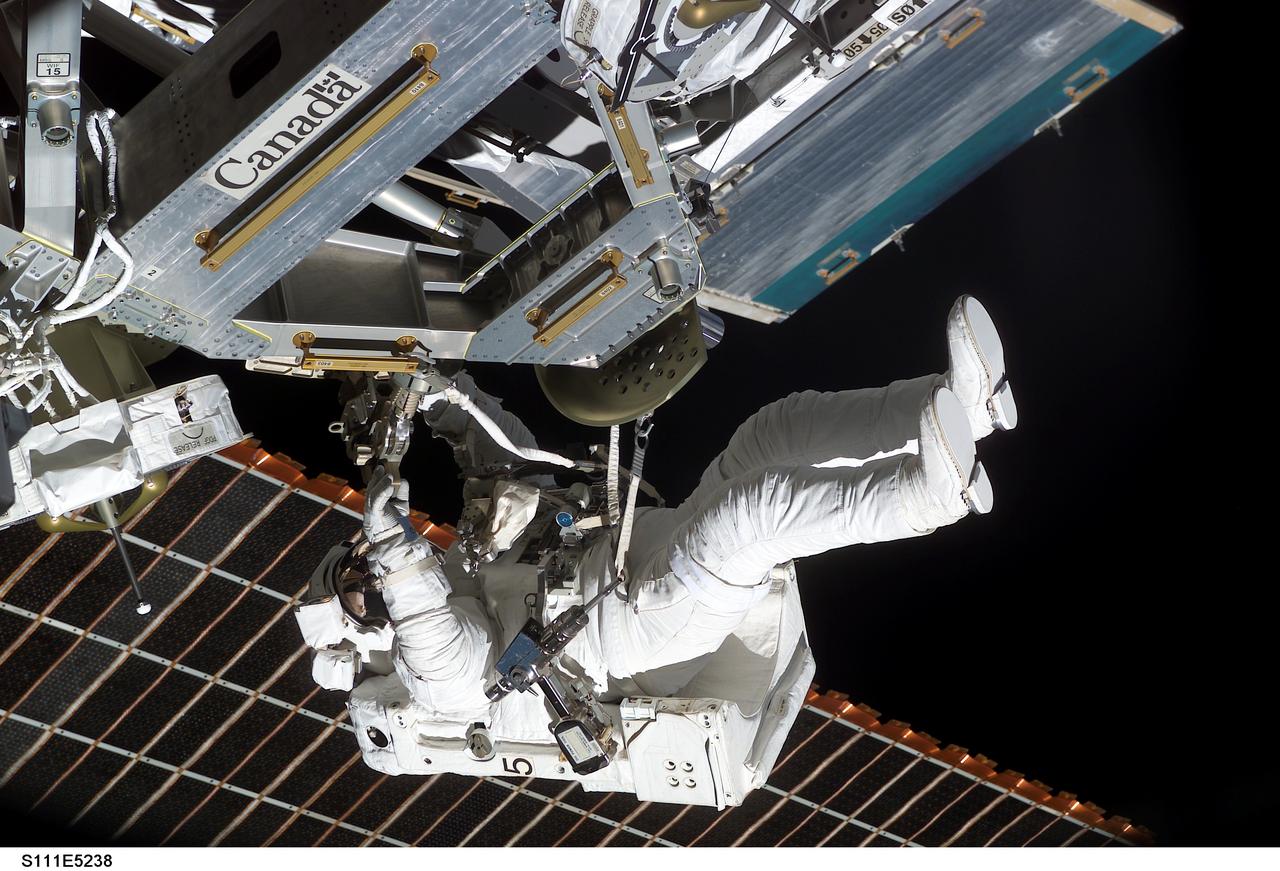
STS111-E-5238 (11 June 2002) --- Astronaut Philippe Perrin, STS-111 mission specialist, works on the installation of the Mobile Remote Servicer Base System (MBS) on the International Space Station’s (ISS) railcar, the Mobile Transporter, during the second scheduled session of extravehicular activity (EVA) for the STS-111 mission. Perrin represents CNES, the French Space Agency.
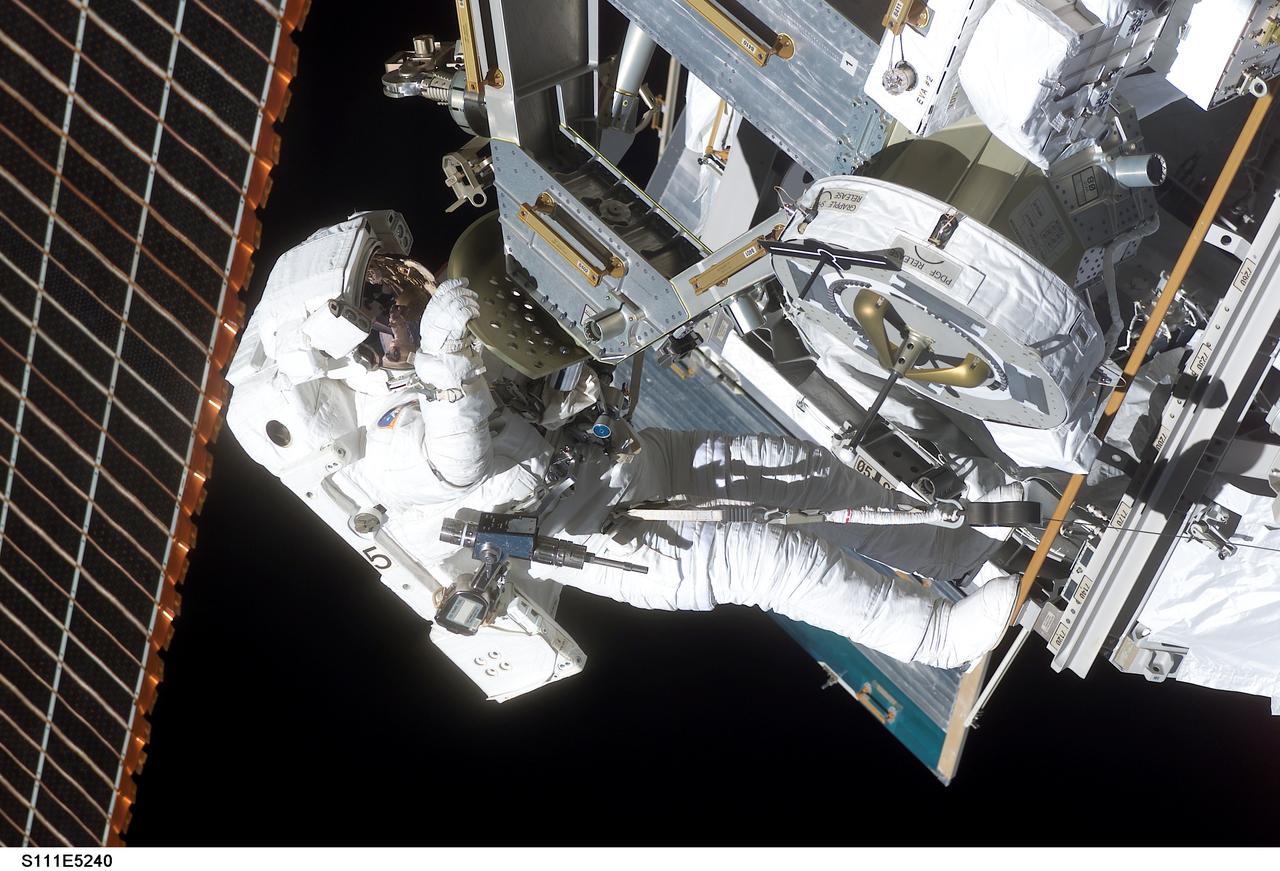
STS111-E-5240 (11 June 2002) --- Astronaut Philippe Perrin, STS-111 mission specialist, works on the installation of the Mobile Remote Servicer Base System (MBS) on the International Space Station’s (ISS) railcar, the Mobile Transporter, during the second scheduled session of extravehicular activity (EVA) for the STS-111 mission. Perrin represents CNES, the French Space Agency.
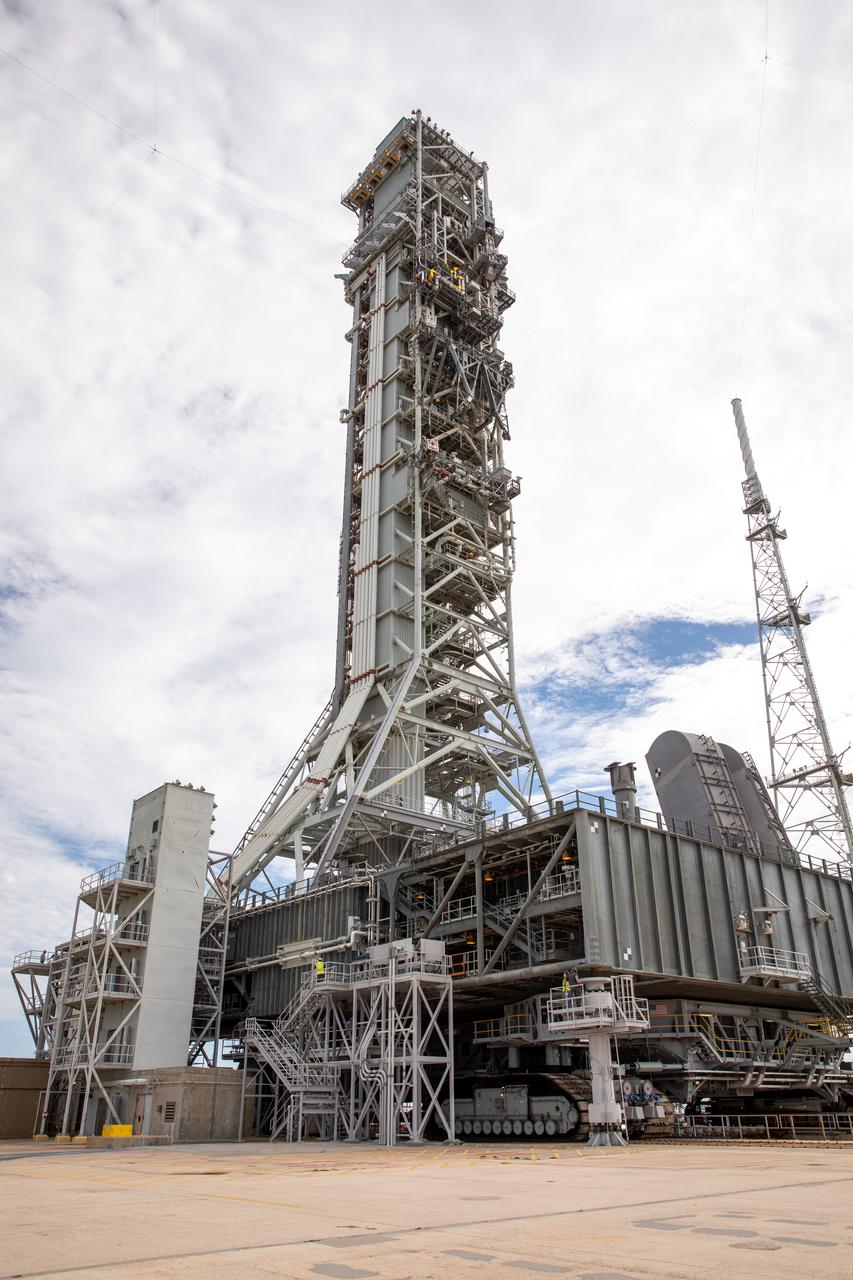
The mobile launcher is secured on the pad at Launch Complex 39B at NASA’s Kennedy Space Center in Florida on Aug. 17, 2023. It was transported to the pad by crawler-transporter 2. While at the pad, the mobile launcher will undergo testing for the agency’s Artemis II mission. Under Artemis, the mobile launcher will transport NASA’s Space Launch System rocket and Orion spacecraft to pad 39B for liftoff.
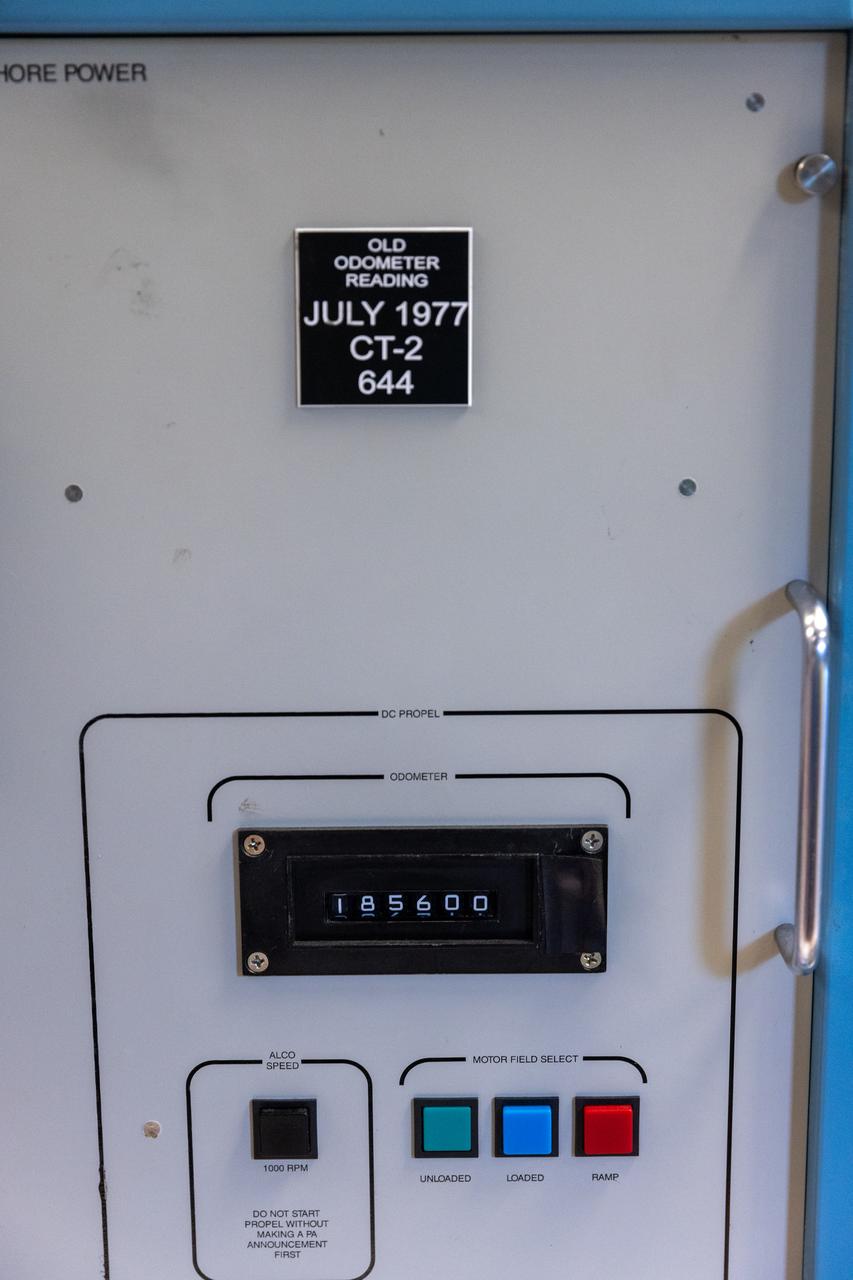
A photo of NASA’s crawler-transporter 2 odometer on Wednesday, Sept. 25, 2024, at NASA’s Kennedy Space Center in Florida, commemorates the milestone of reaching 2,500 miles traveled since its construction in 1965. Crawler-transporter 2’s original odometer ceased working in 1977 at 644 miles, so teams with NASA’s Exploration Ground Systems added the original figure to the new odometer to calculate the milestone. Built originally to transport massive Saturn V rockets during the Apollo Program, crawler-transporter 2 continued its service during the Space Shuttle Program, and currently transports the massive SLS (Space Launch System) rocket and Orion spacecraft atop the mobile launcher as part of the agency’s Artemis campaign.
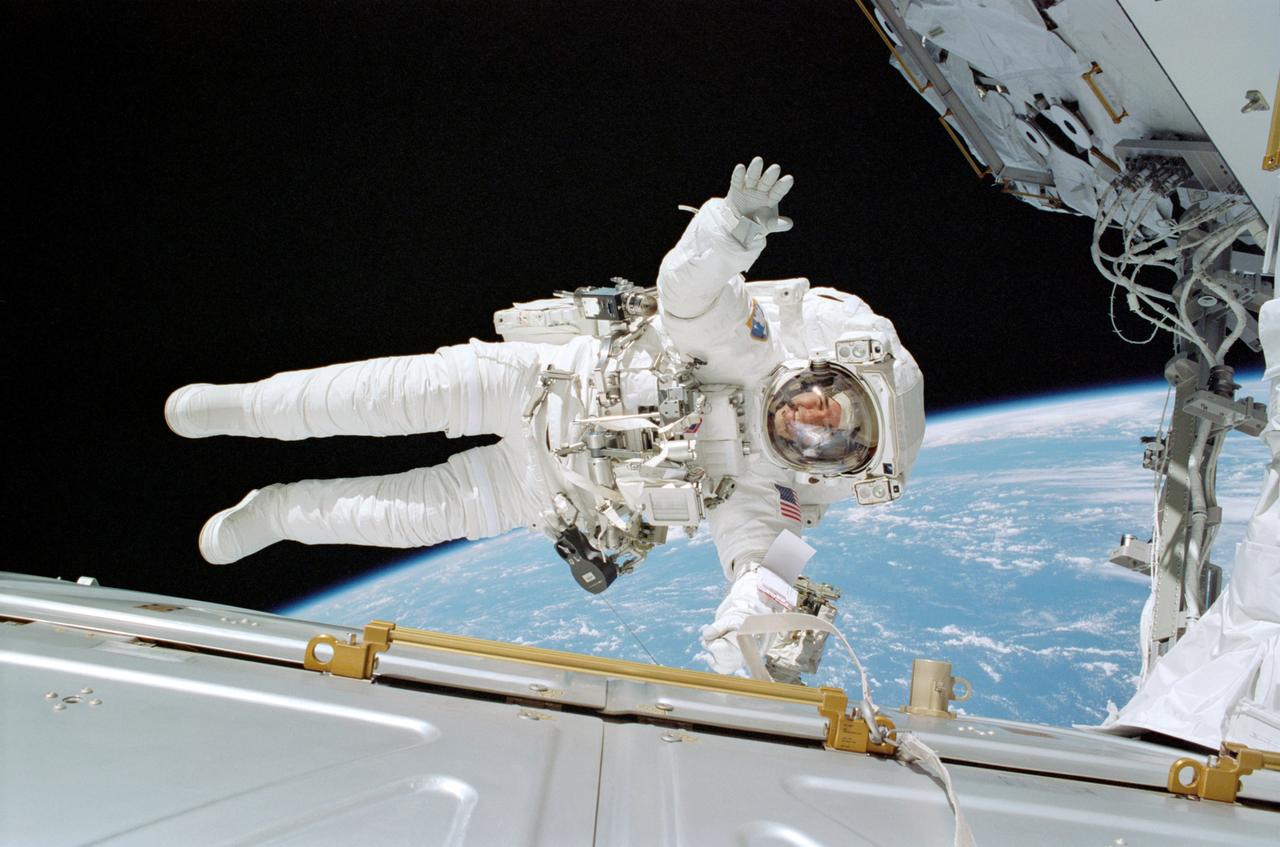
STS-110 Mission astronaut Rex J. Walheim, accompanied by astronaut Steven L. Smith (out of frame) translates along the Destiny laboratory on the International Space Station (ISS) during the third scheduled EVA session. The duo released the locking bolts on the Mobile Transporter and rewired the Station's robotic arm. The STS-110 mission prepared the ISS for future space walks by installing and outfitting the S0 (S-Zero) Truss and the Mobile Transporter. The 43-foot-long S0 truss weighing in at 27,000 pounds was the first of 9 segments that will make up the Station's external framework that will eventually stretch 356 feet (109 meters), or approximately the length of a football field. This central truss segment also includes a flatcar called the Mobile Transporter and rails that will become the first "space railroad," which will allow the Station's robotic arm to travel up and down the finished truss for future assembly and maintenance. The completed truss structure will hold solar arrays and radiators to provide power and cooling for additional international research laboratories from Japan and Europe that will be attached to the Station. Milestones of the S-110 mission included the first time the ISS robotic arm was used to maneuver space walkers around the Station and marked the first time all space walks were based out of the Station's Quest Airlock. It was also the first Shuttle to use three Block II Main Engines. The Space Shuttle Orbiter Atlantis, STS-110 mission, was launched April 8, 2002 and returned to Earth April 19, 2002.
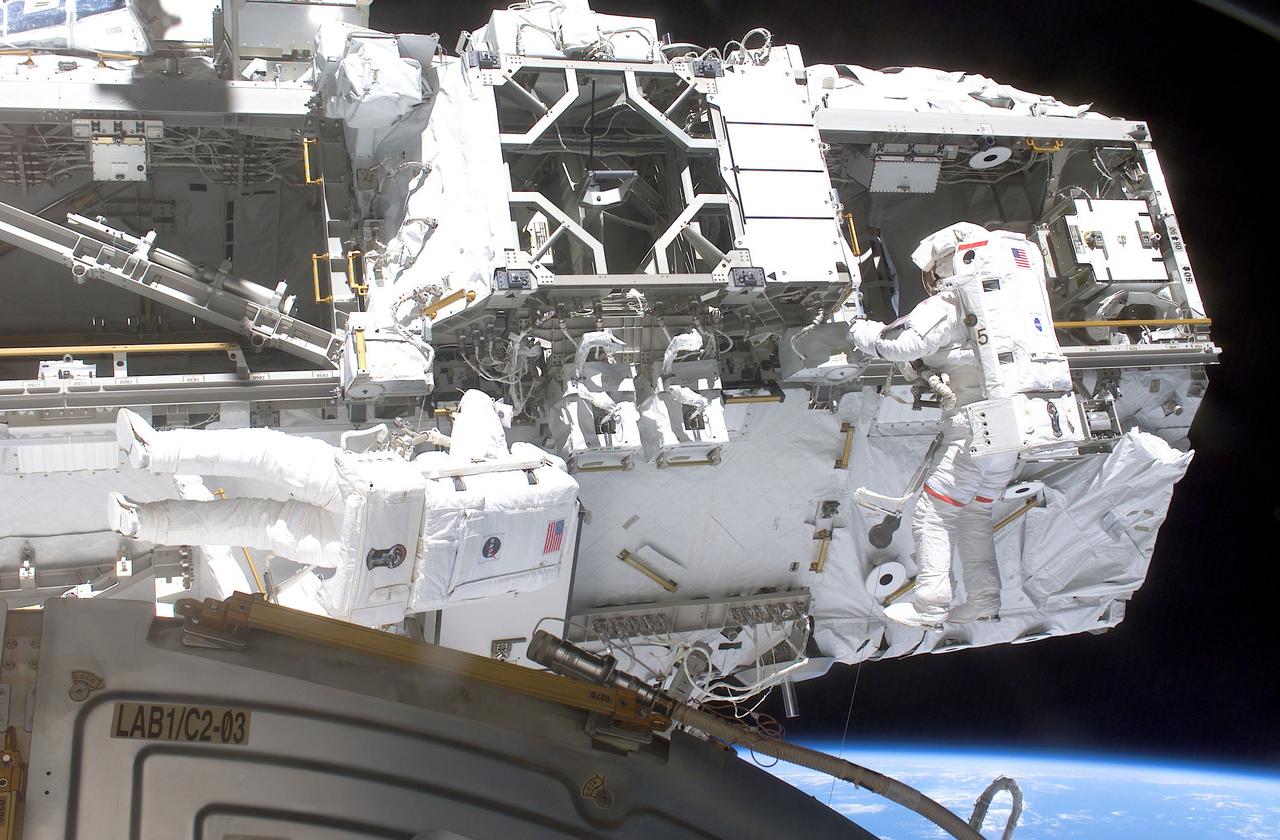
STS-110 Mission astronauts Steven L. Smith (right) and Rex J. Walheim work in tandem on the third scheduled EVA session in which they released the locking bolts on the Mobile Transporter and rewired the Station's robotic arm (out of frame). Part of the Destiny laboratory and a glimpse of the Earth's horizon are seen in the lower portion of this digital image. The STS-110 mission prepared the International Space Station (ISS) for future spacewalks by installing and outfitting the S0 (S-zero) Truss and the Mobile Transporter. The 43-foot-long S0 truss weighing in at 27,000 pounds was the first of 9 segments that will make up the Station's external framework that will eventually stretch 356 feet (109 meters), or approximately the length of a football field. This central truss segment also includes a flatcar called the Mobile Transporter and rails that will become the first "space railroad," which will allow the Station's robotic arm to travel up and down the finished truss for future assembly and maintenance. The completed truss structure will hold solar arrays and radiators to provide power and cooling for additional international research laboratories from Japan and Europe that will be attached to the Station. Milestones of the S-110 mission included the first time the ISS robotic arm was used to maneuver spacewalkers around the Station and marked the first time all spacewalks were based out of the Station's Quest Airlock. It was also the first Shuttle to use three Block II Main Engines. The Space Shuttle Orbiter Atlantis, STS-110 mission, was launched April 8, 2002 and returned to Earth April 19, 2002.
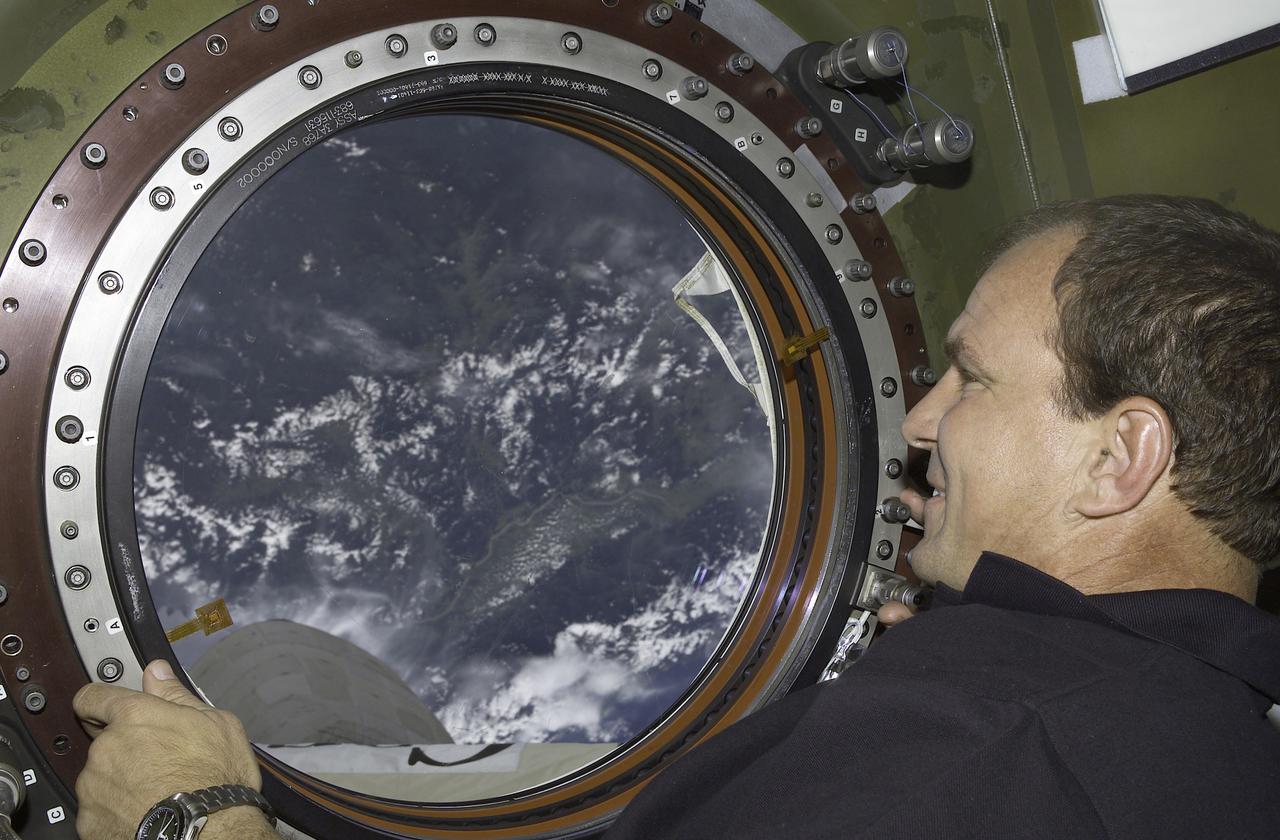
Astronaut Michael J. Bloomfield, STS-110 mission commander, looks through the Earth observation window in the Destiny laboratory aboard the International Space Station (ISS). The STS-110 mission prepared the ISS for future spacewalks by installing and outfitting the S0 (S-zero) truss and the Mobile Transporter. The 43-foot-long S0 Truss, weighing in at 27,000 pounds, was the first of 9 segments that will make up the Station's external framework that will eventually stretch 356 feet (109 meters), or approximately the length of a football field. This central truss segment also includes a flatcar called the Mobile Transporter and rails that will become the first "space railroad," which will allow the Station's robotic arm to travel up and down the finished truss for future assembly and maintenance. The completed truss structure will hold solar arrays and radiators to provide power and cooling for additional international research laboratories from Japan and Europe that will be attached to the Station. Milestones of the STS-110 mission included the first time the ISS robotic arm was used to maneuver spacewalkers around the Station and marked the first time all spacewalks were based out of the Station's Quest Airlock. It was also the first Shuttle to use three Block II Main Engines. The Space Shuttle Orbiter Atlantis, STS-110 mission, was launched April 8, 2002 and returned to Earth April 19, 2002.
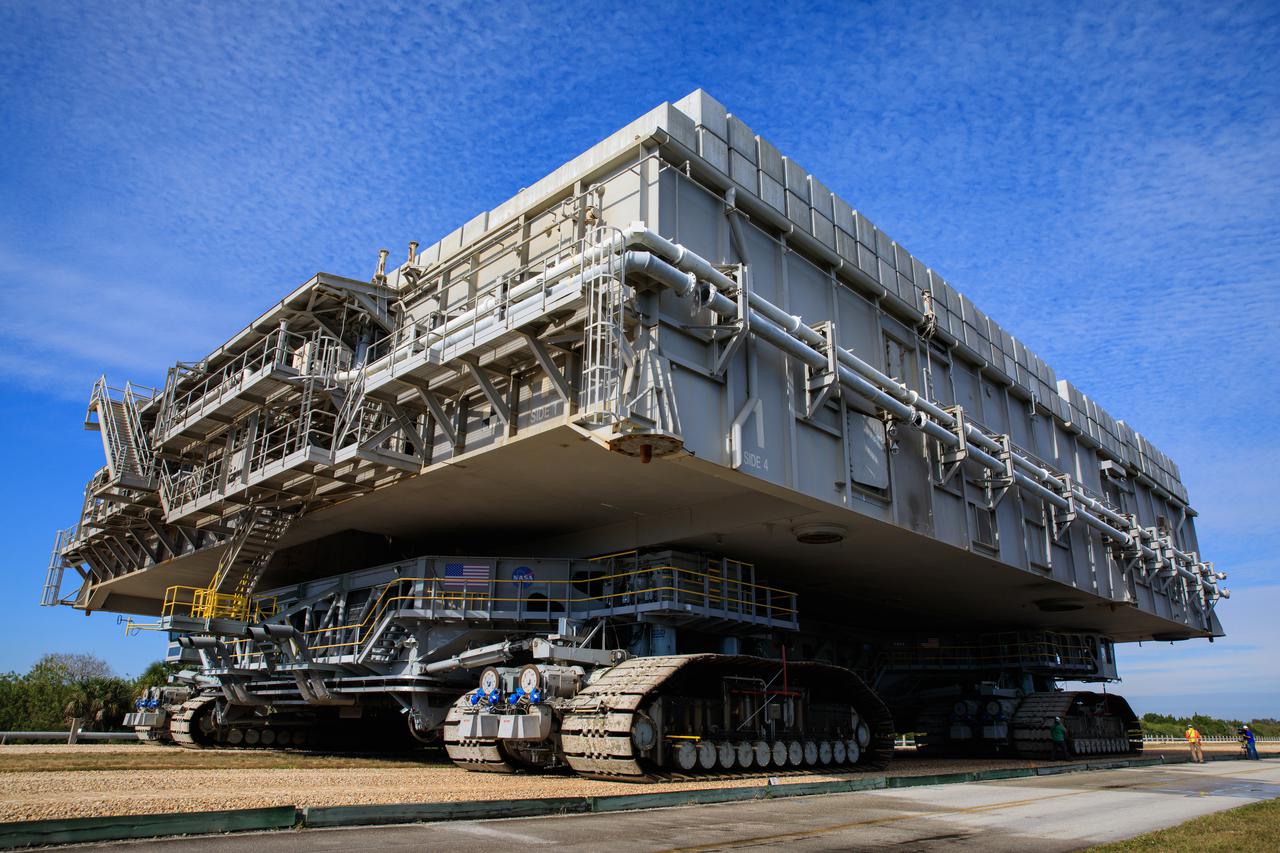
Teams at NASA’s Kennedy Space Center in Florida are working to ensure the crawlerway, the path the crawler-transporter 2 (CT-2), mobile launcher, and Space Launch System rocket with Orion atop will take from the Vehicle Assembly Building to Launch Complex 39B, is strong enough to withstand the weight and provide stability for the Artemis I mission. In this view on Jan. 22, 2021, CT-2 carrying mobile launcher platform 1 that was used during the shuttle program was driven back and forth on the crawlerway with several cement blocks, each weighing about 40,000 pounds to strengthen the crawlerway for launch. Artemis I will be the first in a series of increasingly complex missions to the Moon. Under the Artemis program, NASA aims to land the first woman and the next man on the Moon in 2024 and establish sustainable lunar exploration by the end of the decade.
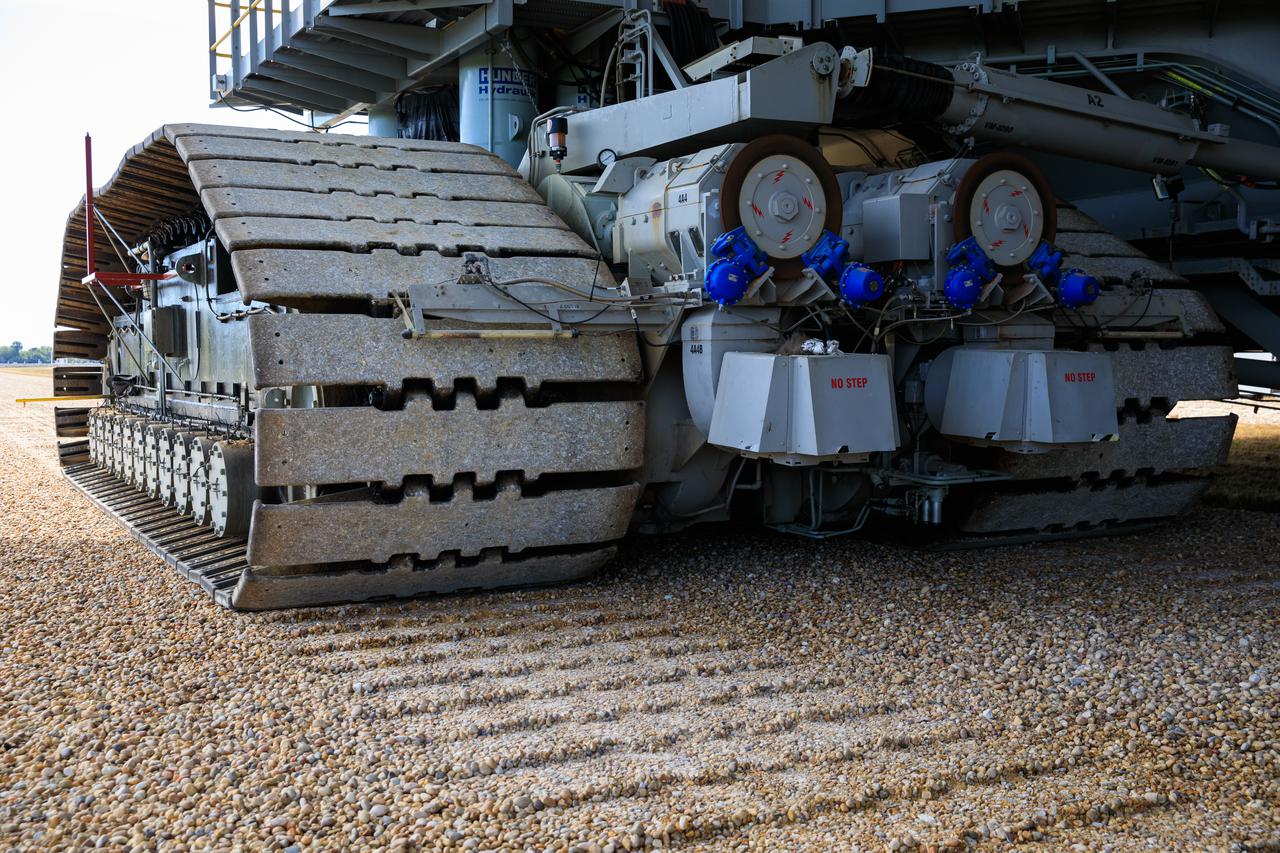
A close-up view of the treads on crawler-transporter 2 (CT-2) as the behemoth vehicle moves along the crawlerway at NASA’s Kennedy Space Center in Florida on Jan. 22, 2021. Teams are working to ensure the crawlerway, the path the CT-2, mobile launcher, and Space Launch System rocket with Orion atop will take from the Vehicle Assembly Building to Launch Complex 39B, is strong enough to withstand the weight and provide stability for the Artemis I mission. CT-2 carrying mobile launcher platform 1, used during the shuttle program, was driven back and forth on the crawlerway with several cement blocks, each weighing about 40,000 pounds to strengthen the crawlerway for launch. Artemis I will be the first in a series of increasingly complex missions to the Moon. Under the Artemis program, NASA aims to land the first woman and the next man on the Moon in 2024 and establish sustainable lunar exploration by the end of the decade.
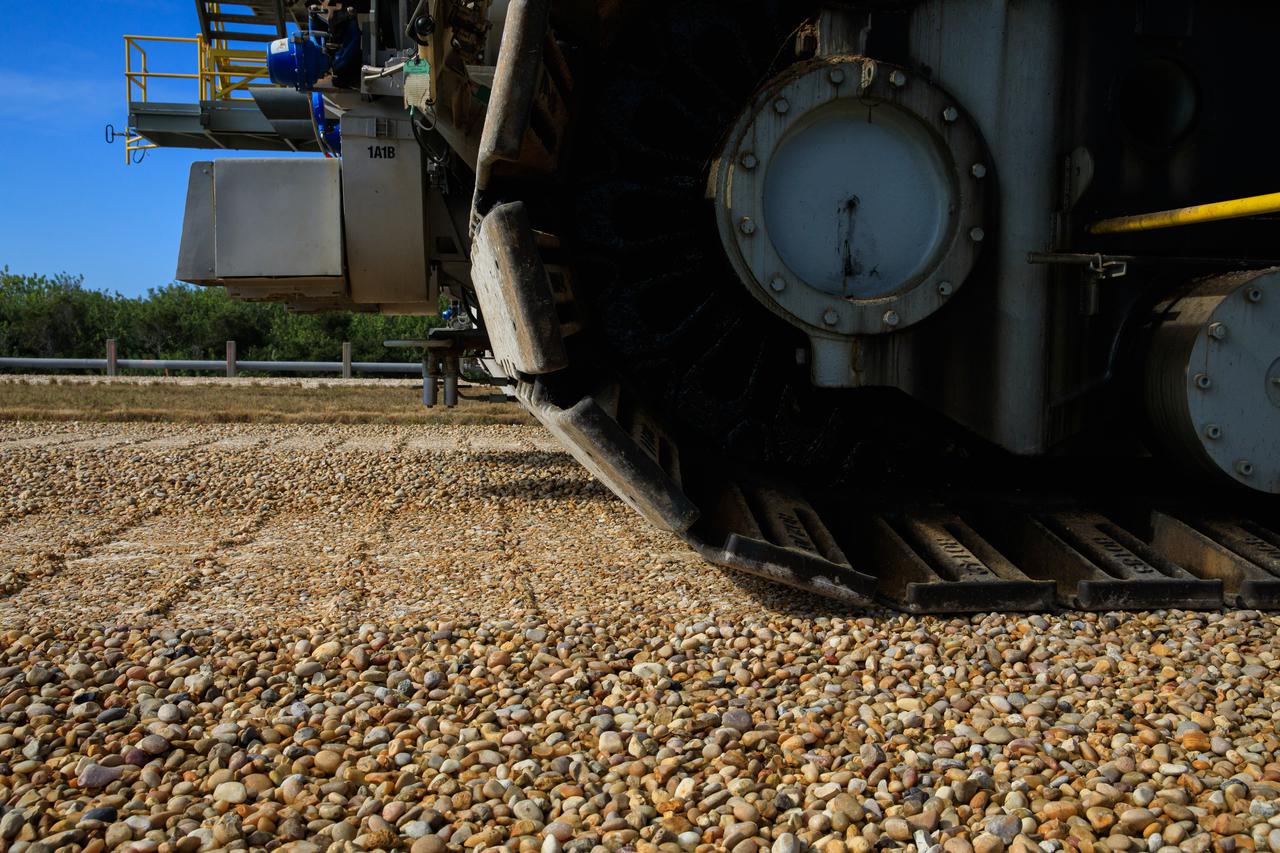
A close-up view of one of the treads on crawler-transporter 2 (CT-2) as the behemoth vehicle moves along the crawlerway at NASA’s Kennedy Space Center in Florida on Jan. 22, 2021. Teams are working to ensure the crawlerway, the path the CT-2, mobile launcher, and Space Launch System rocket with Orion atop will take from the Vehicle Assembly Building to Launch Complex 39B, is strong enough to withstand the weight and provide stability for the Artemis I mission. CT-2 carrying mobile launcher platform 1, used during the shuttle program, was driven back and forth on the crawlerway with several cement blocks, each weighing about 40,000 pounds to strengthen the crawlerway for launch. Artemis I will be the first in a series of increasingly complex missions to the Moon. Under the Artemis program, NASA aims to land the first woman and the next man on the Moon in 2024 and establish sustainable lunar exploration by the end of the decade.
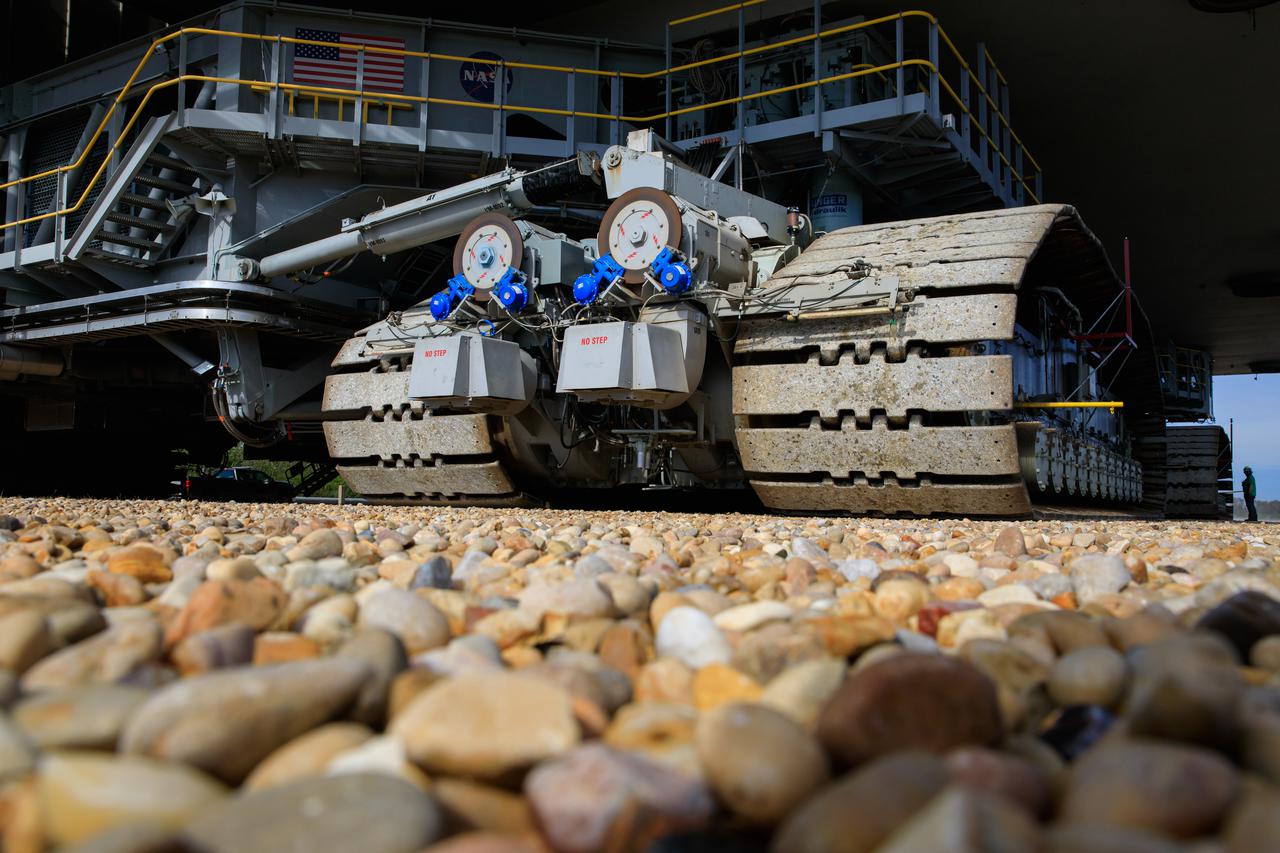
A close-up view of some of the treads on crawler-transporter 2 (CT-2) as the behemoth vehicle moves along the crawlerway at NASA’s Kennedy Space Center in Florida on Jan. 22, 2021. Teams are working to ensure the crawlerway, the path the CT-2, mobile launcher, and Space Launch System rocket with Orion atop will take from the Vehicle Assembly Building to Launch Complex 39B, is strong enough to withstand the weight and provide stability for the Artemis I mission. CT-2 carrying mobile launcher platform 1, used during the shuttle program, was driven back and forth on the crawlerway with several cement blocks, each weighing about 40,000 pounds to strengthen the crawlerway for launch. Artemis I will be the first in a series of increasingly complex missions to the Moon. Under the Artemis program, NASA aims to land the first woman and the next man on the Moon in 2024 and establish sustainable lunar exploration by the end of the decade.

A close-up view of the treads on crawler-transporter 2 (CT-2) as the behemoth vehicle moves along the crawlerway at NASA’s Kennedy Space Center in Florida on Jan. 22, 2021. Teams are working to ensure the crawlerway, the path the CT-2, mobile launcher, and Space Launch System rocket with Orion atop will take from the Vehicle Assembly Building to Launch Complex 39B, is strong enough to withstand the weight and provide stability for the Artemis I mission. CT-2 carrying mobile launcher platform 1, used during the shuttle program, was driven back and forth on the crawlerway with several cement blocks, each weighing about 40,000 pounds to strengthen the crawlerway for launch. Artemis I will be the first in a series of increasingly complex missions to the Moon. Under the Artemis program, NASA aims to land the first woman and the next man on the Moon in 2024 and establish sustainable lunar exploration by the end of the decade.
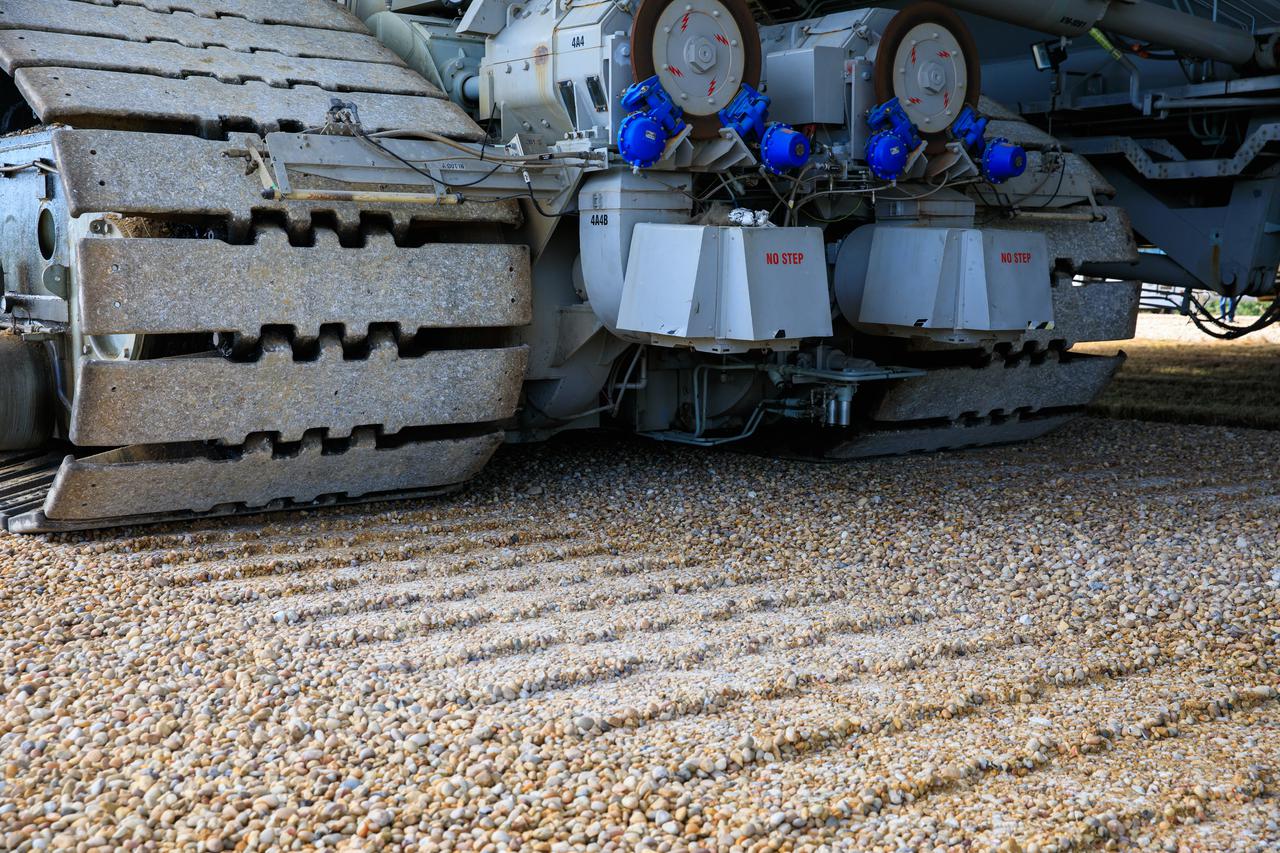
A close-up view of the treads on crawler-transporter 2 (CT-2) as the behemoth vehicle moves along the crawlerway at NASA’s Kennedy Space Center in Florida on Jan. 22, 2021. Teams are working to ensure the crawlerway, the path the CT-2, mobile launcher, and Space Launch System rocket with Orion atop will take from the Vehicle Assembly Building to Launch Complex 39B, is strong enough to withstand the weight and provide stability for the Artemis I mission. CT-2 carrying mobile launcher platform 1, used during the shuttle program, was driven back and forth on the crawlerway with several cement blocks, each weighing about 40,000 pounds to strengthen the crawlerway for launch. Artemis I will be the first in a series of increasingly complex missions to the Moon. Under the Artemis program, NASA aims to land the first woman and the next man on the Moon in 2024 and establish sustainable lunar exploration by the end of the decade.
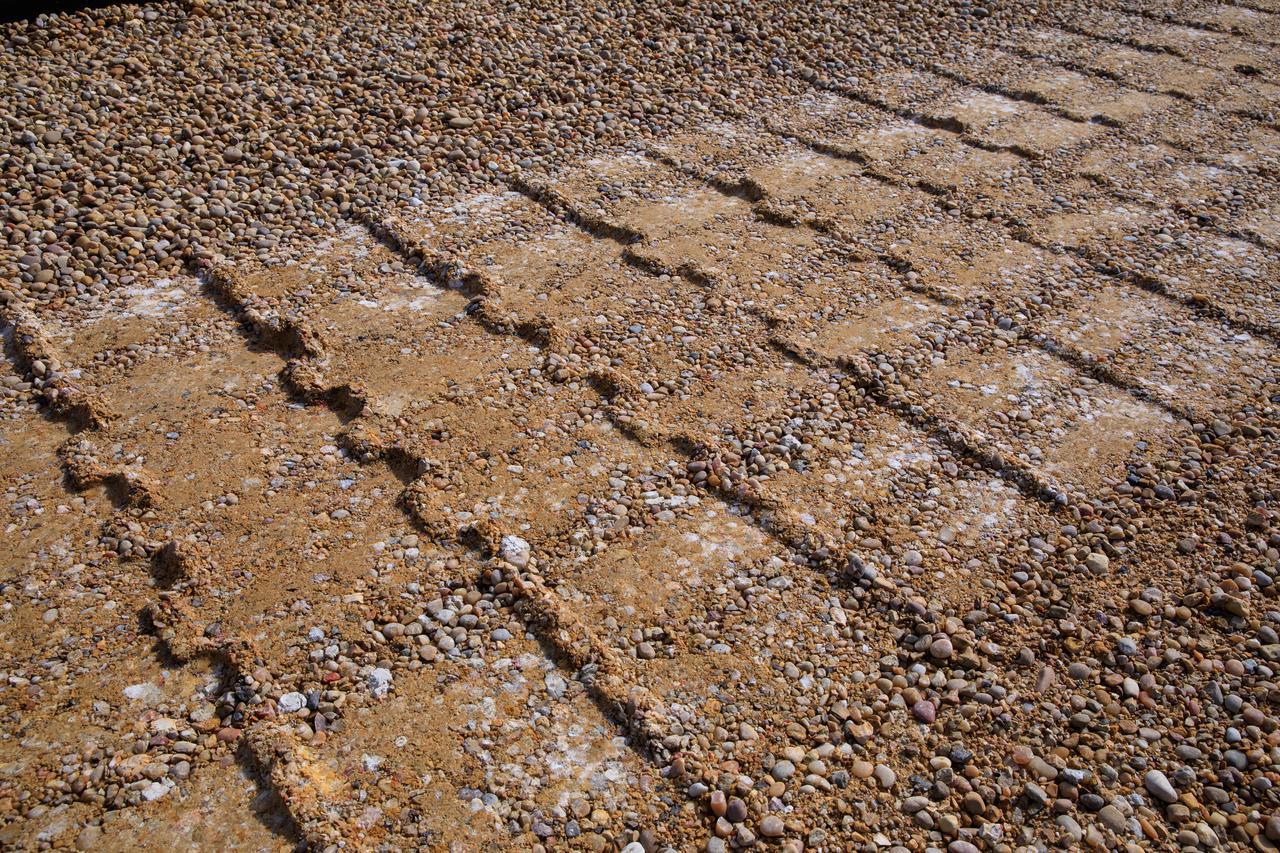
A close-up view of tread marks from crawler-transporter 2 (CT-2) as the behemoth vehicle moves along the crawlerway at NASA’s Kennedy Space Center in Florida on Jan. 22, 2021. Teams are working to ensure the crawlerway, the path the CT-2, mobile launcher, and Space Launch System rocket with Orion atop will take from the Vehicle Assembly Building to Launch Complex 39B, is strong enough to withstand the weight and provide stability for the Artemis I mission. CT-2 carrying mobile launcher platform 1, used during the shuttle program, was driven back and forth on the crawlerway with several cement blocks, each weighing about 40,000 pounds to strengthen the crawlerway for launch. Artemis I will be the first in a series of increasingly complex missions to the Moon. Under the Artemis program, NASA aims to land the first woman and the next man on the Moon in 2024 and establish sustainable lunar exploration by the end of the decade.
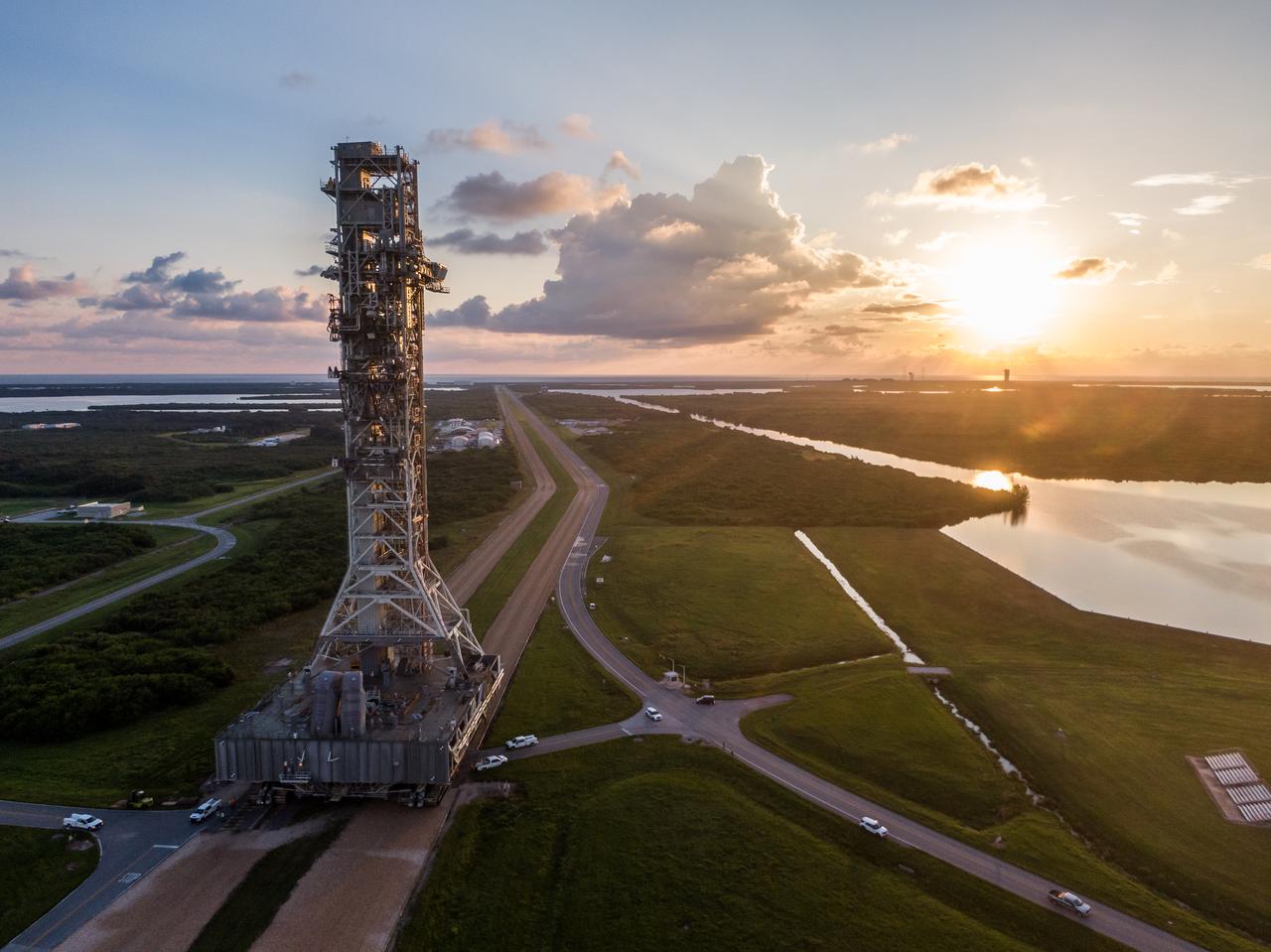
A drone camera captures NASA’s mobile launcher 1 atop the agency’s crawler-transporter 2 moving from Launch Complex 39B to the Vehicle Assembly Building at NASA’s Kennedy Space Center in Florida on Thursday, Oct. 3, 2024. The mobile launcher has been at the launch pad since August 2023 undergoing upgrades and tests in preparation for NASA’s Artemis II mission. The mobile launcher will be used to assemble, process, and launch NASA’s SLS (Space Launch Systems) and Orion spacecraft to the Moon and beyond.
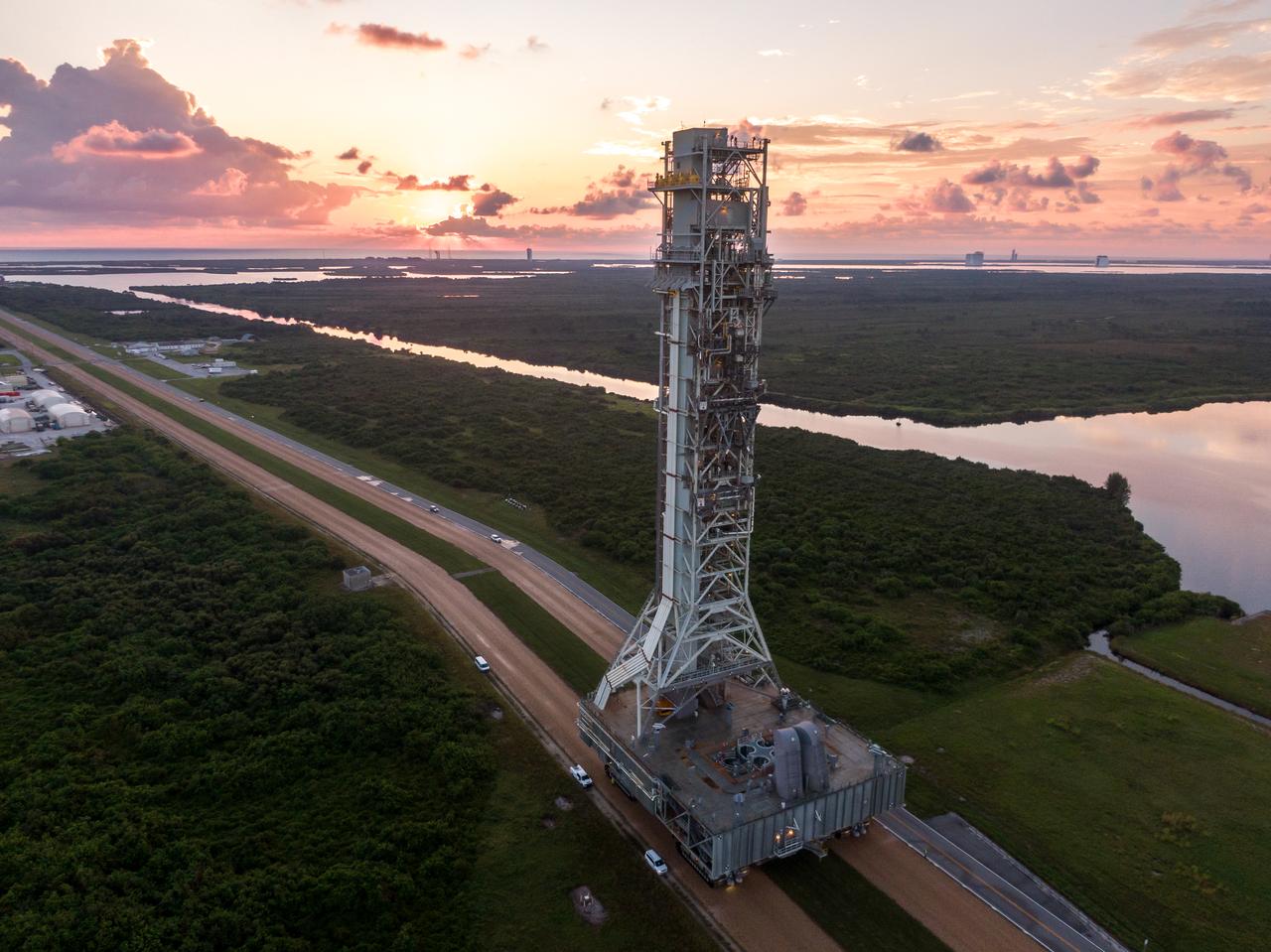
A drone camera captures NASA’s mobile launcher 1 atop the agency’s crawler-transporter 2 moving from Launch Complex 39B to the Vehicle Assembly Building at NASA’s Kennedy Space Center in Florida on Thursday, Oct. 3, 2024. The mobile launcher has been at the launch pad since August 2023 undergoing upgrades and tests in preparation for NASA’s Artemis II mission. The mobile launcher will be used to assemble, process, and launch NASA’s SLS (Space Launch Systems) and Orion spacecraft to the Moon and beyond.
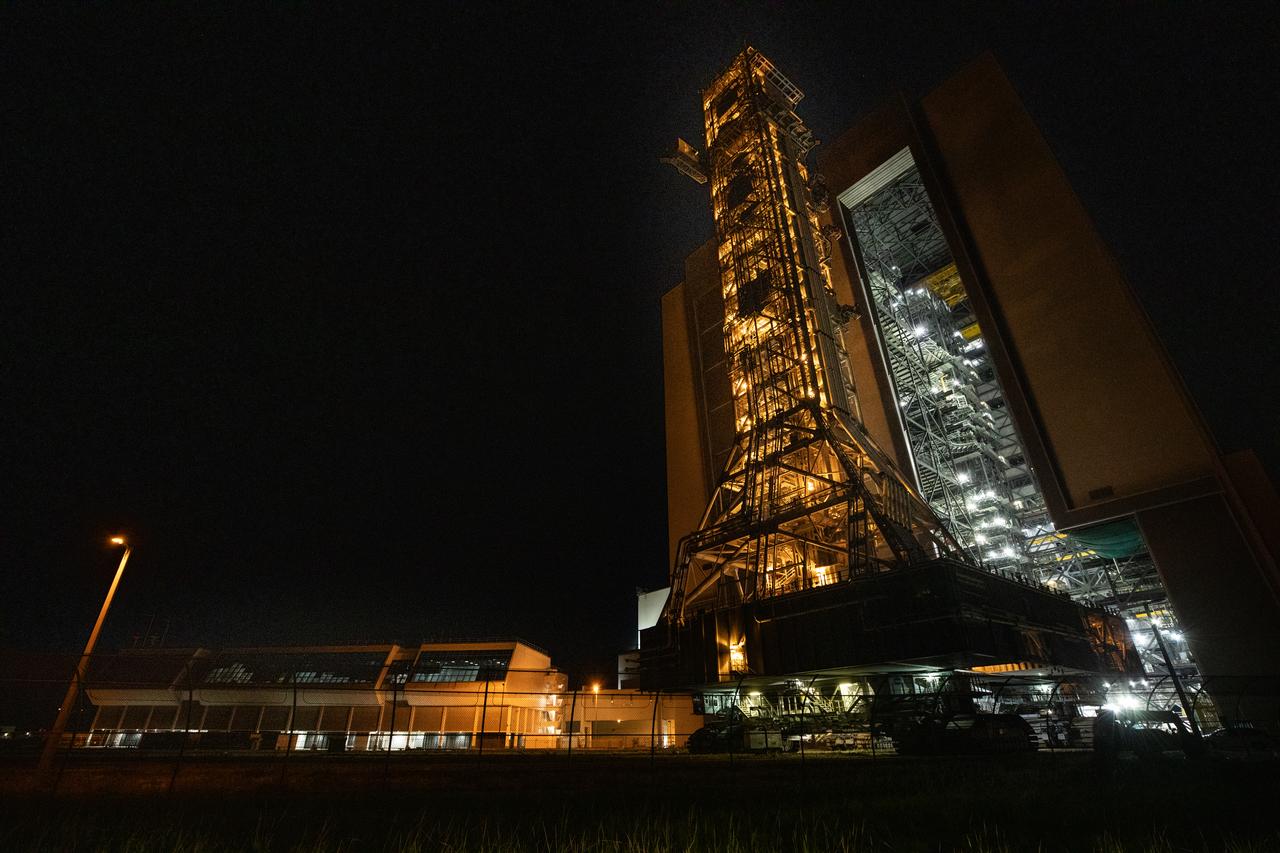
NASA’s mobile launcher 1 atop the spaceport’s crawler is transported inside the agency’s Vehicle Assembly Building at Kennedy Space Center in Florida ahead of integration of the Artemis II Moon rocket on Friday, Oct. 4, 2024. The mobile launcher has been at Launch Complex 39B since August 2023 undergoing upgrades and tests in preparation for NASA’s Artemis II mission. The mobile launcher will be used to assemble, process, and launch NASA’s SLS (Space Launch Systems) and Orion spacecraft to the Moon and beyond.
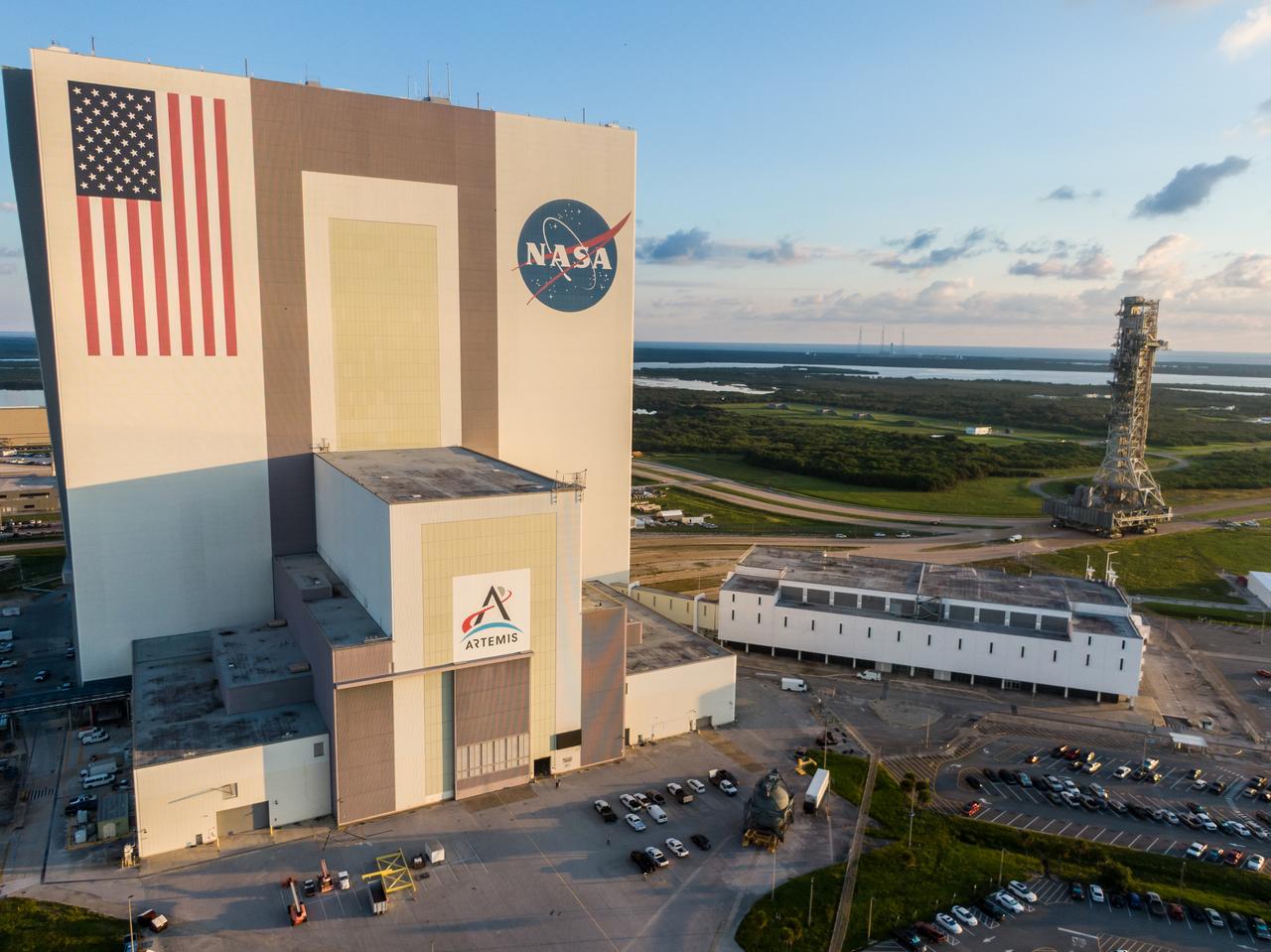
A drone camera captures NASA’s mobile launcher 1 atop the agency’s crawler-transporter 2 moving from Launch Complex 39B approaching to enter the Vehicle Assembly Building at NASA’s Kennedy Space Center in Florida on Thursday, Oct. 3, 2024. The mobile launcher has been at the launch pad since August 2023 undergoing upgrades and tests in preparation for NASA’s Artemis II mission. The mobile launcher will be used to assemble, process, and launch NASA’s SLS (Space Launch Systems) and Orion spacecraft to the Moon and beyond.
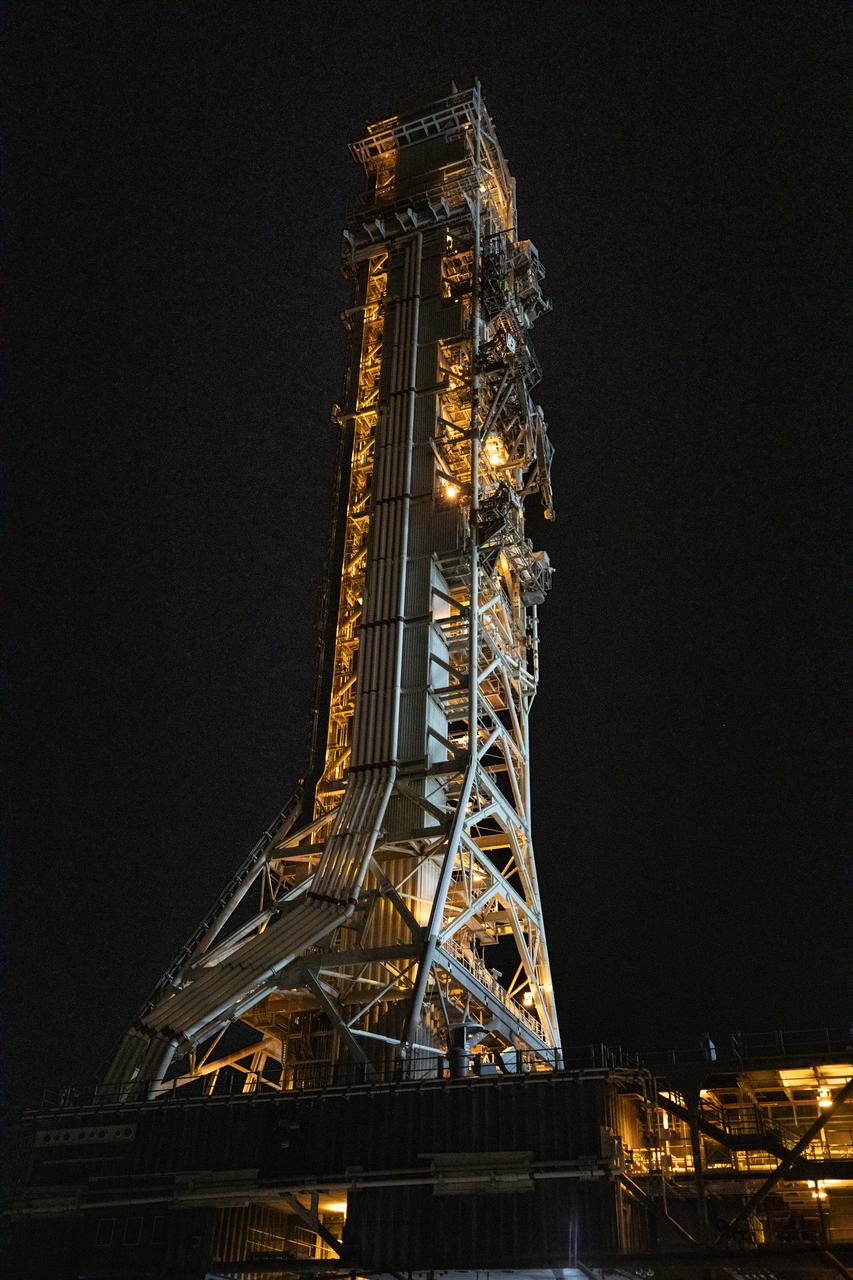
NASA’s mobile launcher 1 atop the spaceport’s crawler is transported inside the agency’s Vehicle Assembly Building at Kennedy Space Center in Florida ahead of integration of the Artemis II Moon rocket on Friday, Oct. 4, 2024. The mobile launcher has been at Launch Complex 39B since August 2023 undergoing upgrades and tests in preparation for NASA’s Artemis II mission. The mobile launcher will be used to assemble, process, and launch NASA’s SLS (Space Launch Systems) and Orion spacecraft to the Moon and beyond.
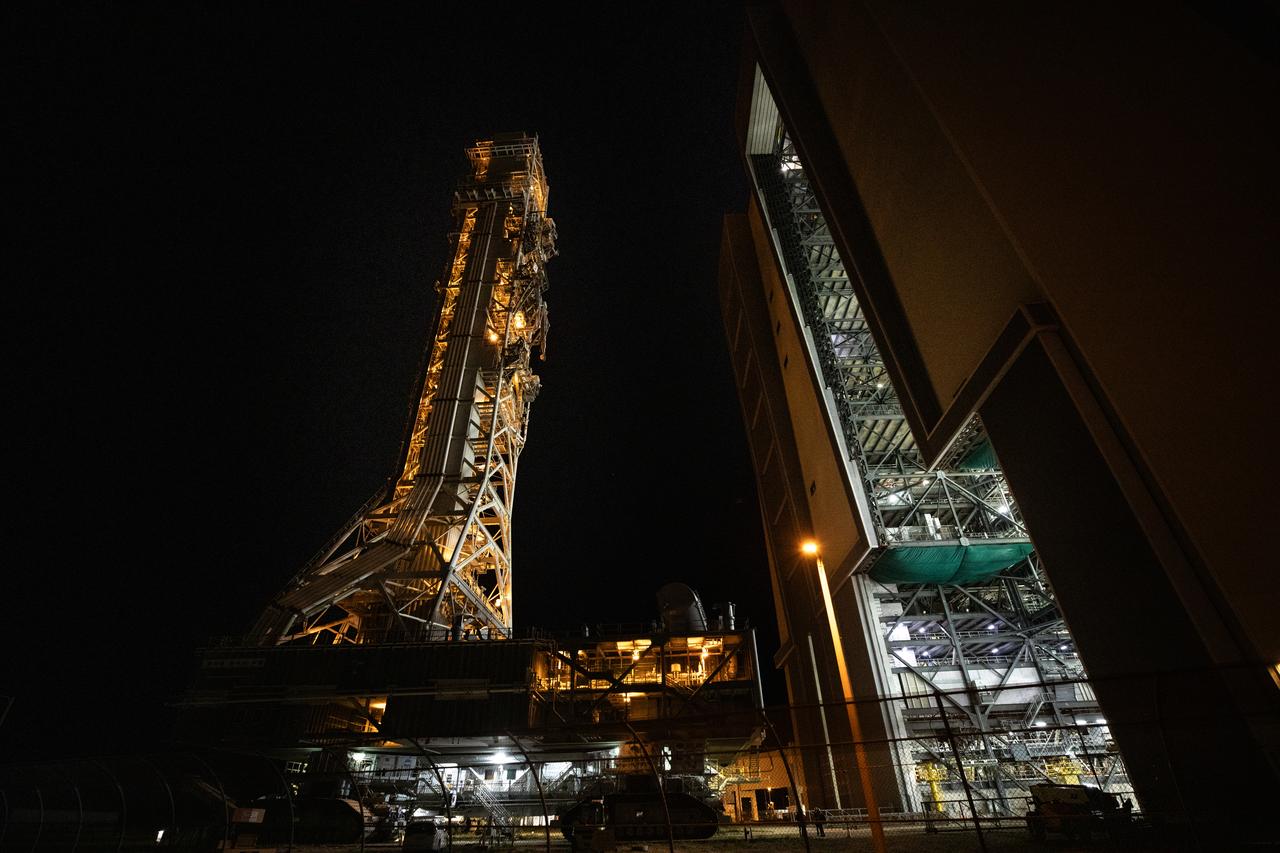
NASA’s mobile launcher 1 atop the spaceport’s crawler is transported inside the agency’s Vehicle Assembly Building at Kennedy Space Center in Florida ahead of integration of the Artemis II Moon rocket on Friday, Oct. 4, 2024. The mobile launcher has been at Launch Complex 39B since August 2023 undergoing upgrades and tests in preparation for NASA’s Artemis II mission. The mobile launcher will be used to assemble, process, and launch NASA’s SLS (Space Launch Systems) and Orion spacecraft to the Moon and beyond.
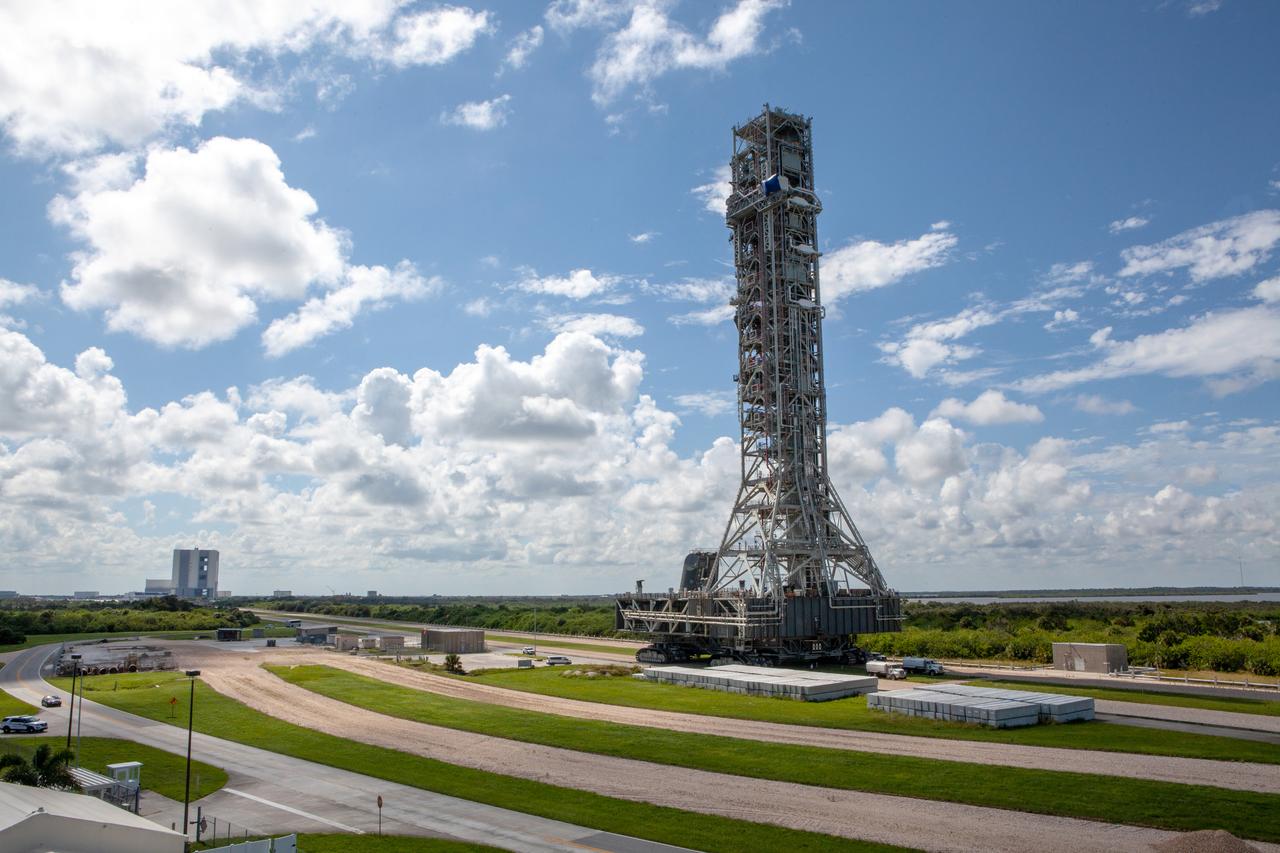
NASA’s mobile launcher (ML) atop crawler-transporter 2 moves along the crawlerway on Sept. 10, 2019, after spending a week and a half inside the Vehicle Assembly Building (VAB) at Kennedy Space Center in Florida due to the approach of Hurricane Dorian. The nearly 400-foot-tall structure was moved from Launch Pad 39B to the VAB for safekeeping on Aug. 30. The storm passed about 70 miles east of the spaceport during the overnight hours Tuesday, Sept. 3, and Wednesday, Sept. 4. NASA’s Exploration Ground Systems is moving the mobile launcher back to the launch pad, where teams will complete testing and checkout on the launcher in the coming weeks for the Artemis I mission.
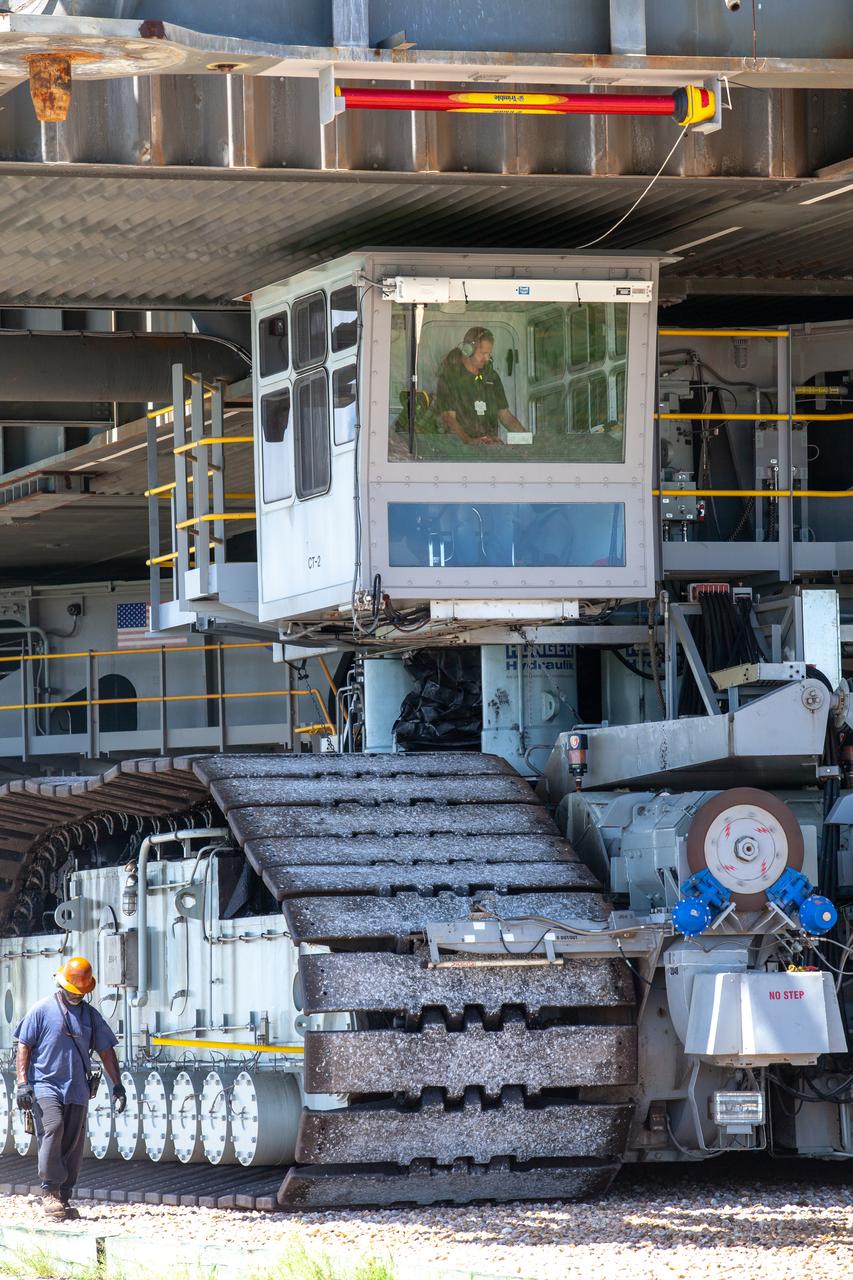
NASA’s mobile launcher (ML) atop crawler-transporter 2 moves along the crawlerway on Sept. 10, 2019, after spending a week and a half inside the Vehicle Assembly Building (VAB) at Kennedy Space Center in Florida due to the approach of Hurricane Dorian. The nearly 400-foot-tall structure was moved from Launch Pad 39B to the VAB for safekeeping on Aug. 30. The storm passed about 70 miles east of the spaceport during the overnight hours Tuesday, Sept. 3, and Wednesday, Sept. 4. NASA’s Exploration Ground Systems is moving the mobile launcher back to the launch pad, where teams will complete testing and checkout on the launcher in the coming weeks for the Artemis I mission.
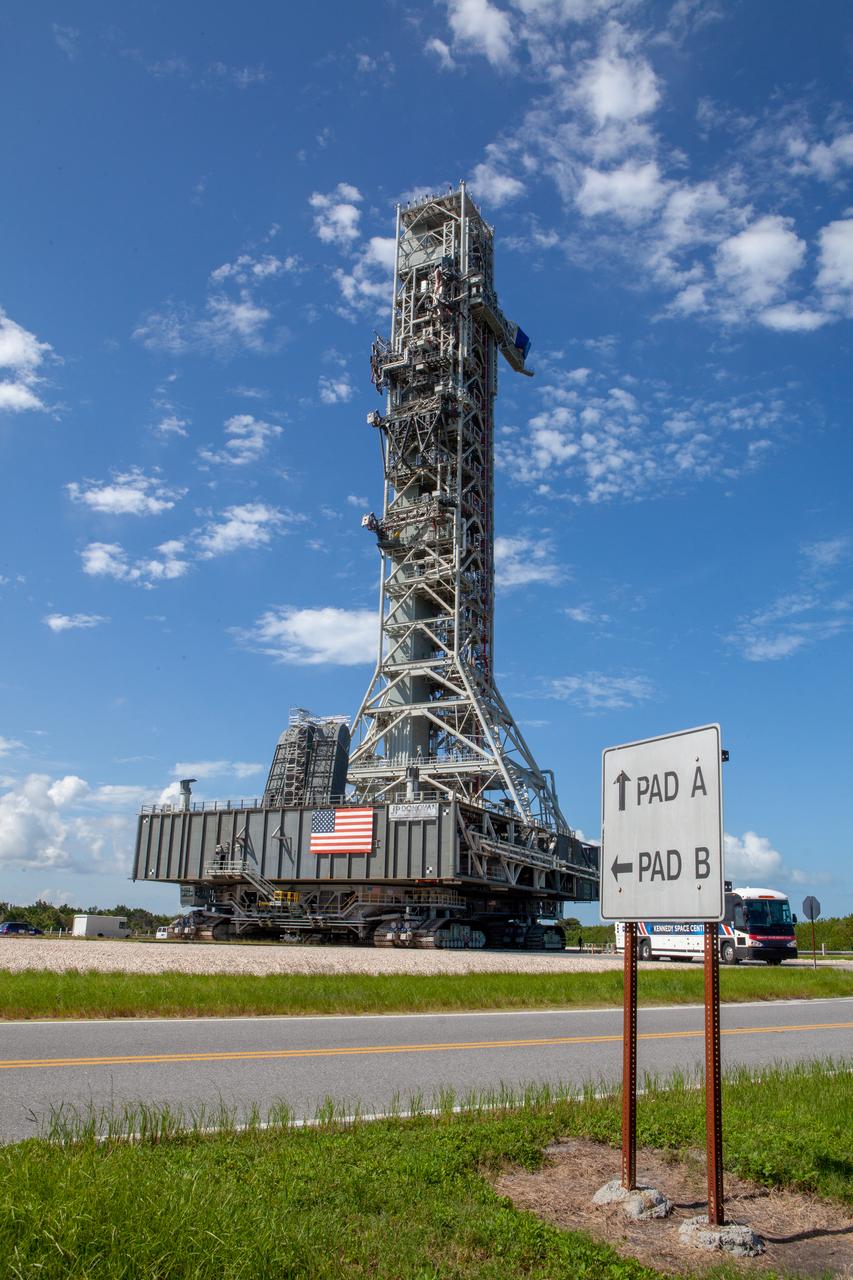
NASA’s mobile launcher (ML) atop crawler-transporter 2 moves along the crawlerway on Sept. 10, 2019, after spending a week and a half inside the Vehicle Assembly Building (VAB) at Kennedy Space Center in Florida due to the approach of Hurricane Dorian. The nearly 400-foot-tall structure was moved from Launch Pad 39B to the VAB for safekeeping on Aug. 30. The storm passed about 70 miles east of the spaceport during the overnight hours Tuesday, Sept. 3, and Wednesday, Sept. 4. NASA’s Exploration Ground Systems is moving the mobile launcher back to the launch pad, where teams will complete testing and checkout on the launcher in the coming weeks for the Artemis I mission.
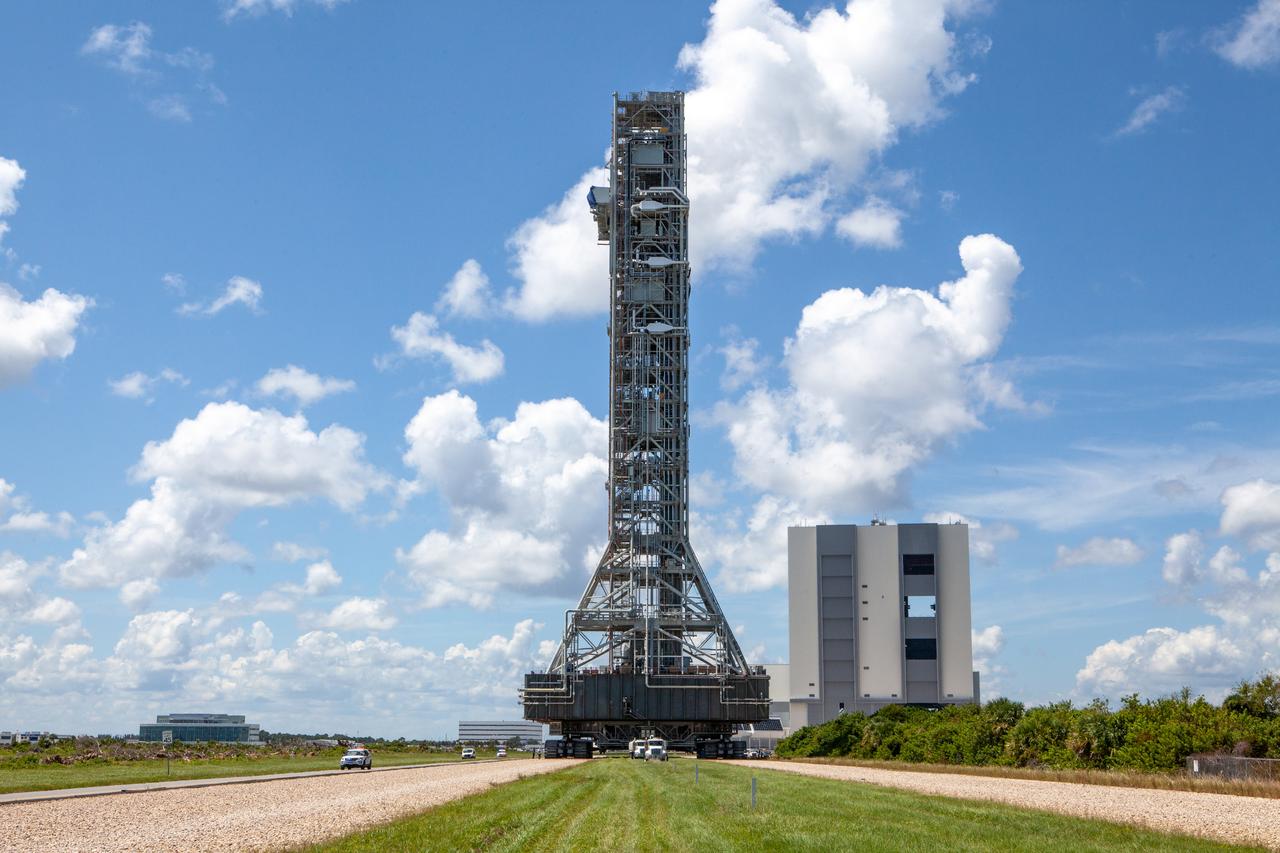
NASA’s mobile launcher (ML) atop crawler-transporter 2 moves along the crawlerway on Sept. 10, 2019, after spending a week and a half inside the Vehicle Assembly Building (VAB) at Kennedy Space Center in Florida due to the approach of Hurricane Dorian. The nearly 400-foot-tall structure was moved from Launch Pad 39B to the VAB for safekeeping on Aug. 30. The storm passed about 70 miles east of the spaceport during the overnight hours Tuesday, Sept. 3, and Wednesday, Sept. 4. NASA’s Exploration Ground Systems is moving the mobile launcher back to the launch pad, where teams will complete testing and checkout on the launcher in the coming weeks for the Artemis I mission.
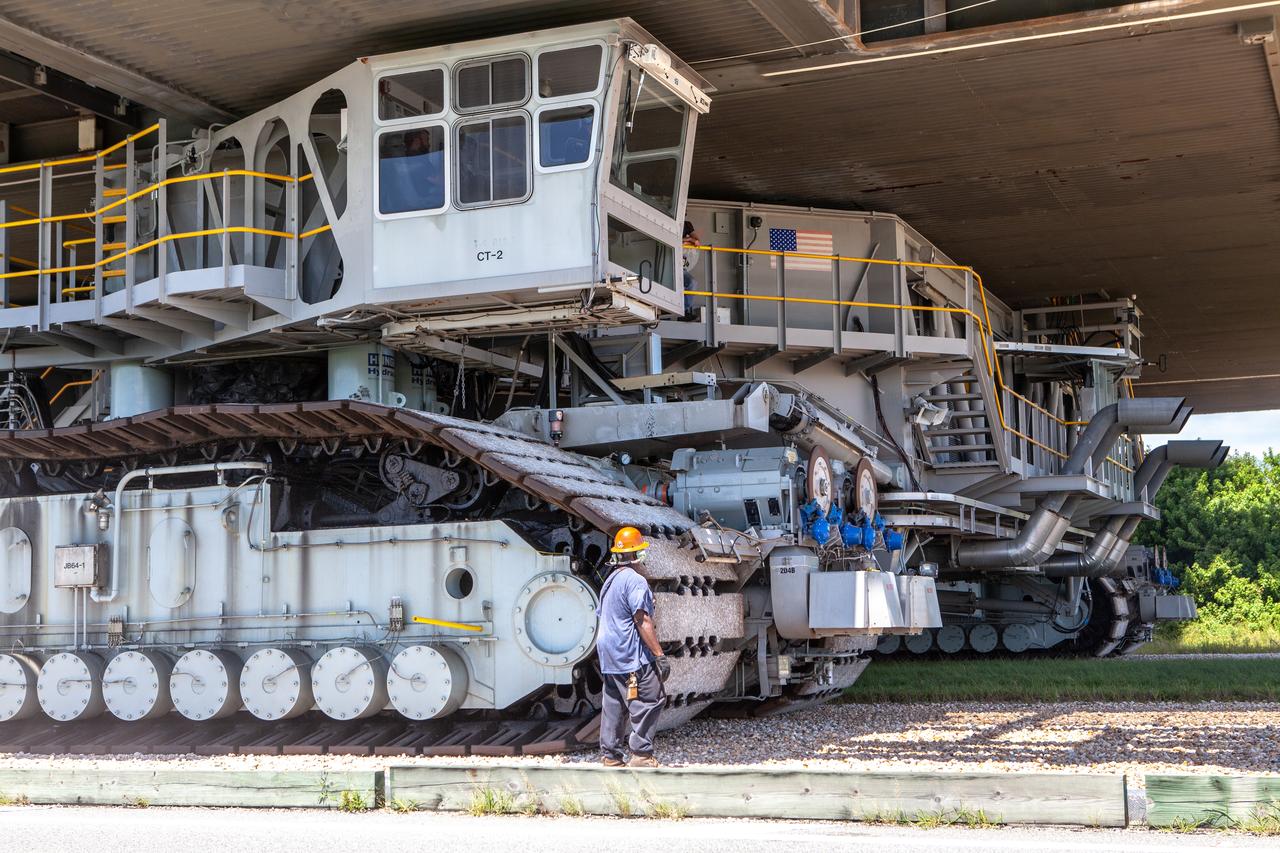
NASA’s mobile launcher (ML) atop crawler-transporter 2 moves along the crawlerway on Sept. 10, 2019, after spending a week and a half inside the Vehicle Assembly Building (VAB) at Kennedy Space Center in Florida due to the approach of Hurricane Dorian. The nearly 400-foot-tall structure was moved from Launch Pad 39B to the VAB for safekeeping on Aug. 30. The storm passed about 70 miles east of the spaceport during the overnight hours Tuesday, Sept. 3, and Wednesday, Sept. 4. NASA’s Exploration Ground Systems is moving the mobile launcher back to the launch pad, where teams will complete testing and checkout on the launcher in the coming weeks for the Artemis I mission.
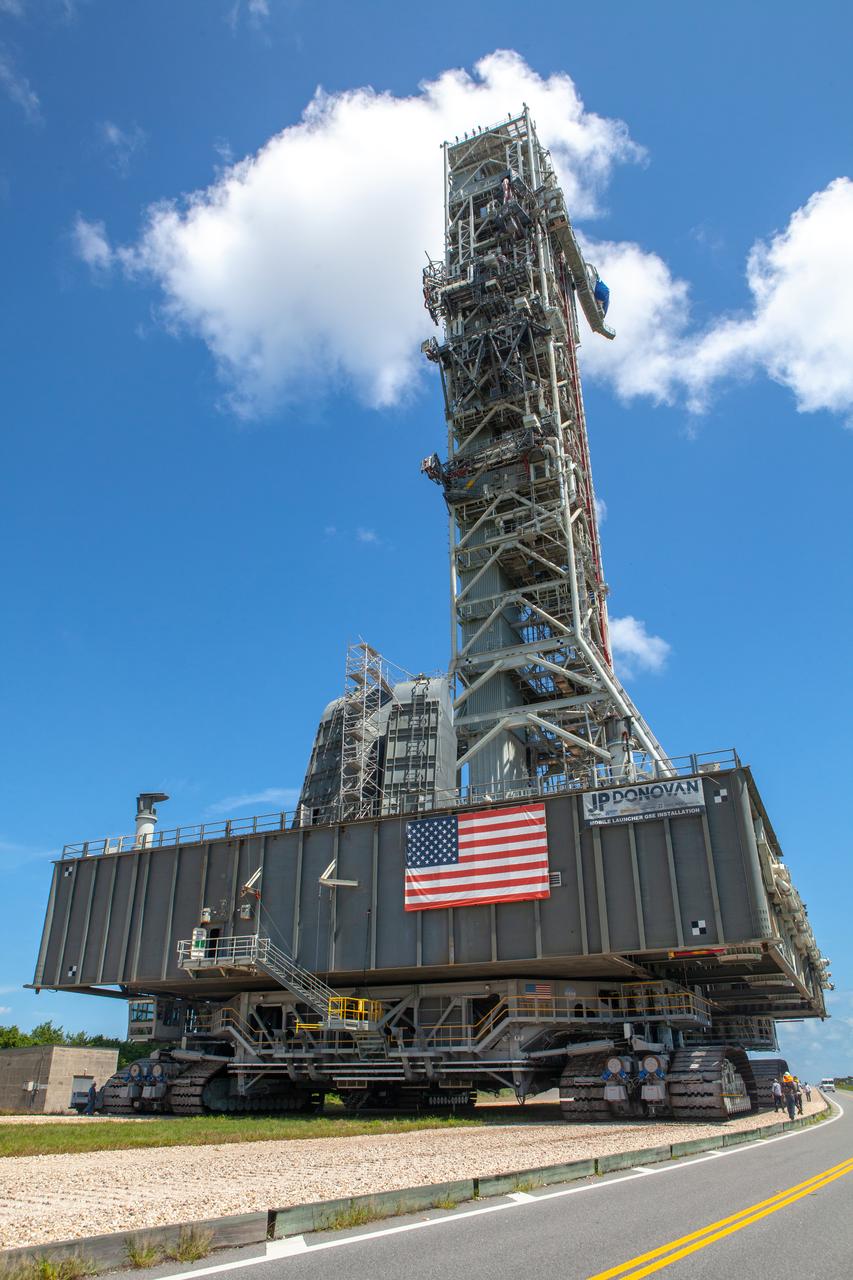
NASA’s mobile launcher (ML) atop crawler-transporter 2 moves along the crawlerway on Sept. 10, 2019, after spending a week and a half inside the Vehicle Assembly Building (VAB) at Kennedy Space Center in Florida due to the approach of Hurricane Dorian. The nearly 400-foot-tall structure was moved from Launch Pad 39B to the VAB for safekeeping on Aug. 30. The storm passed about 70 miles east of the spaceport during the overnight hours Tuesday, Sept. 3, and Wednesday, Sept. 4. NASA’s Exploration Ground Systems is moving the mobile launcher back to the launch pad, where teams will complete testing and checkout on the launcher in the coming weeks for the Artemis I mission.
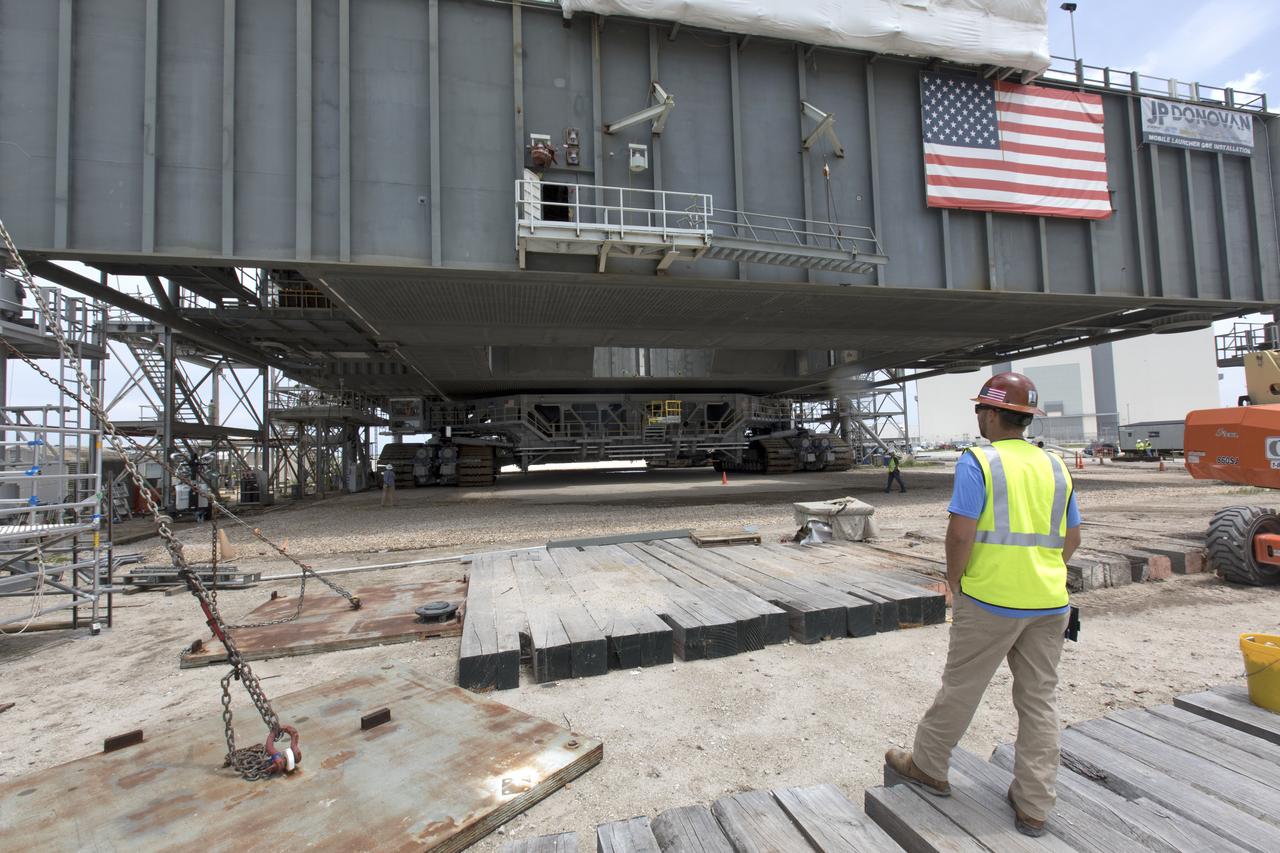
Crawler-transporter 2 (CT-2) is underneath the mobile launcher May 31, 2018, at NASA's Kennedy Space Center in Florida. Three lifts were performed to practice lifting procedures, validate interface locations, confirm the weight of the mobile launcher, and develop a baseline for modal analysis. The mobile launcher is equipped with a number of lines, called umbilicals, which will connect to NASA's Space Launch System (SLS) and Orion. CT-2 has been upgraded to handle the weight of the mobile launcher with SLS and Orion atop. Exploration Ground Systems is preparing the ground systems necessary to support the SLS and Orion spacecraft for Exploration Mission-1 and deep space missions.
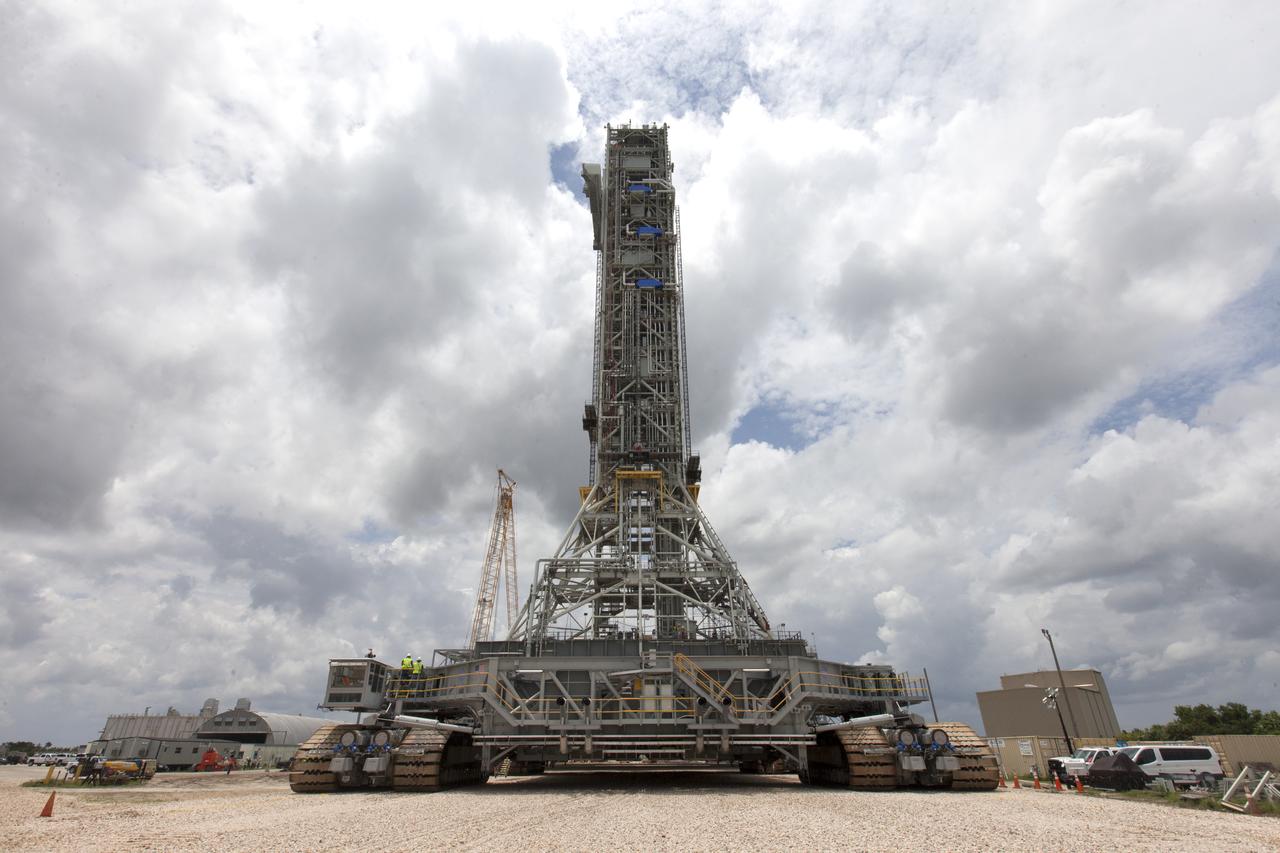
Preparations are underway May 31, 2018, to move crawler-transporter 2 (CT-2) under the mobile launcher at NASA's Kennedy Space Center in Florida. Three lifts will be performed to practice lifting procedures, validate interface locations, confirm the weight of the mobile launcher, and develop a baseline for modal analysis. The mobile launcher is equipped with a number of lines, called umbilicals, which will connect to NASA's Space Launch System (SLS) and Orion. CT-2 has been upgraded to handle the weight of the mobile launcher with SLS and Orion atop. Exploration Ground Systems is preparing the ground systems necessary to support the SLS and Orion spacecraft for Exploration Mission-1 and deep space missions.
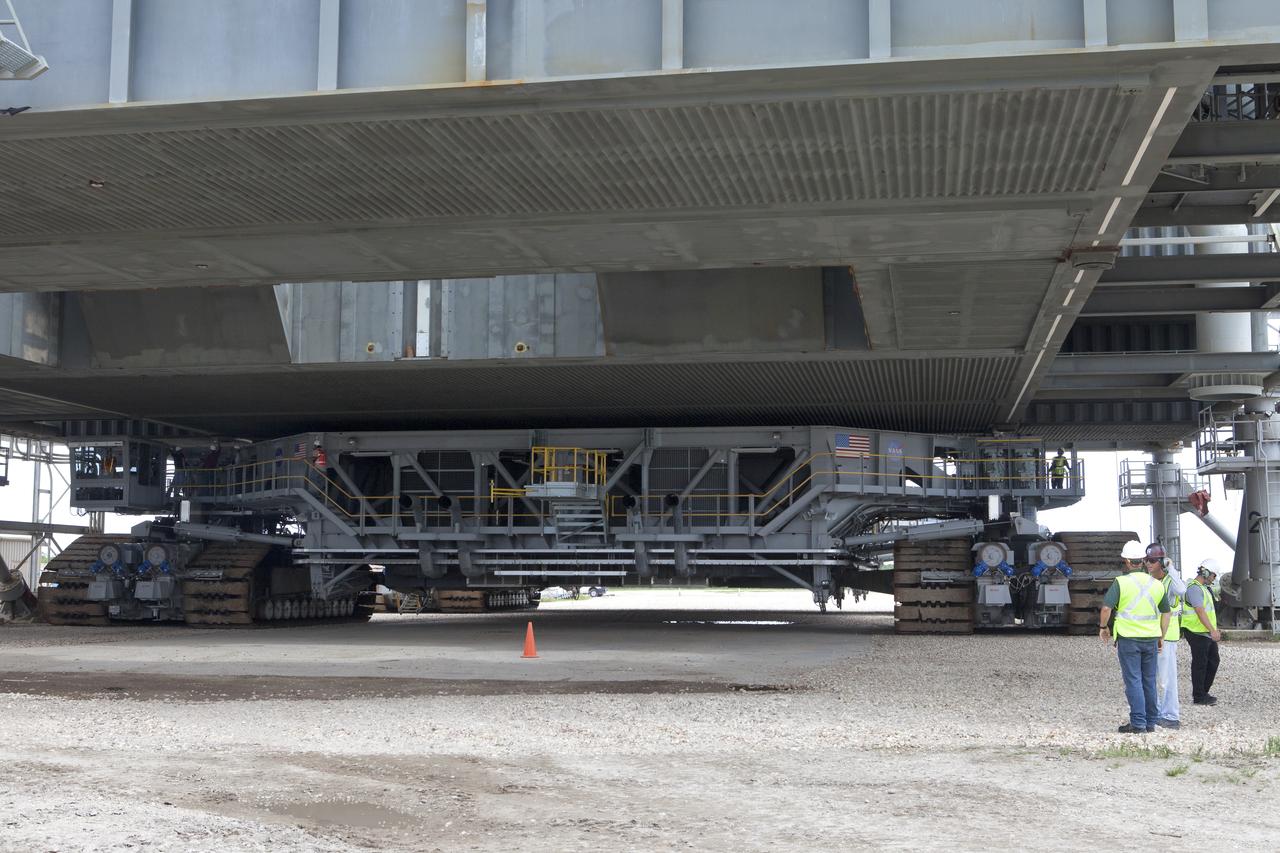
Crawler-transporter 2 (CT-2) is moved under the mobile launcher May 31, 2018, at NASA's Kennedy Space Center in Florida. Three lifts will be performed to practice lifting procedures, validate interface locations, confirm the weight of the mobile launcher, and develop a baseline for modal analysis. The mobile launcher is equipped with a number of lines, called umbilicals, which will connect to NASA's Space Launch System (SLS) and Orion. CT-2 has been upgraded to handle the weight of the mobile launcher with SLS and Orion atop. Exploration Ground Systems is preparing the ground systems necessary to support the SLS and Orion spacecraft for Exploration Mission-1 and deep space missions.
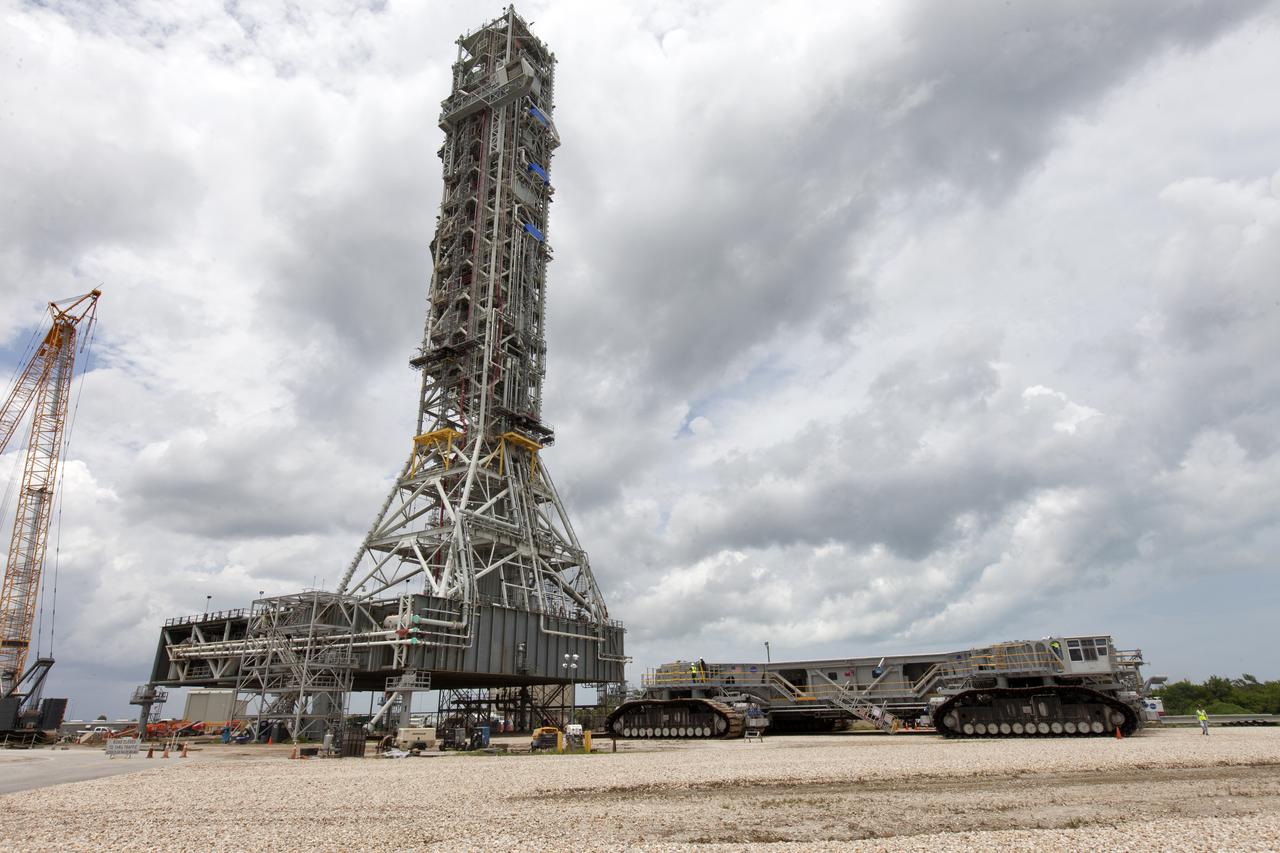
Preparations are underway May 31, 2018, to move crawler-transporter 2 (CT-2) under the mobile launcher at NASA's Kennedy Space Center in Florida. Three lifts will be performed to practice lifting procedures, validate interface locations, confirm the weight of the mobile launcher, and develop a baseline for modal analysis. The mobile launcher is equipped with a number of lines, called umbilicals, which will connect to NASA's Space Launch System (SLS) and Orion. CT-2 has been upgraded to handle the weight of the mobile launcher with SLS and Orion atop. Exploration Ground Systems is preparing the ground systems necessary to support the SLS and Orion spacecraft for Exploration Mission-1 and deep space missions.
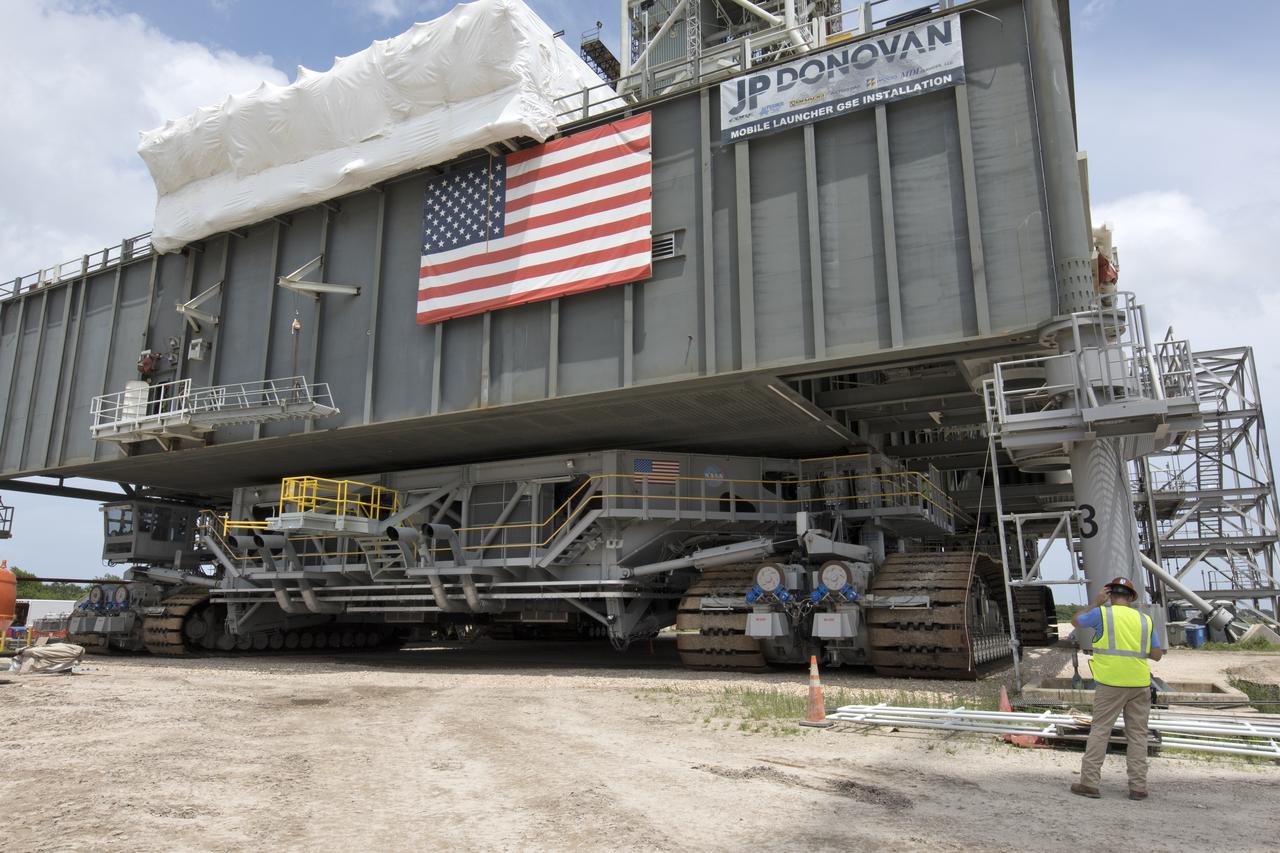
Crawler-transporter 2 (CT-2) is underneath the mobile launcher May 31, 2018, at NASA's Kennedy Space Center in Florida. Three lifts will be performed to practice lifting procedures, validate interface locations, confirm the weight of the mobile launcher, and develop a baseline for modal analysis. The mobile launcher is equipped with a number of lines, called umbilicals, which will connect to NASA's Space Launch System (SLS) and Orion. CT-2 has been upgraded to handle the weight of the mobile launcher with SLS and Orion atop. Exploration Ground Systems is preparing the ground systems necessary to support the SLS and Orion spacecraft for Exploration Mission-1 and deep space missions.

Crawler-transporter 2 (CT-2) is being moved under the mobile launcher May 31, 2018, at NASA's Kennedy Space Center in Florida. Three lifts will be performed to practice lifting procedures, validate interface locations, confirm the weight of the mobile launcher, and develop a baseline for modal analysis. The mobile launcher is equipped with a number of lines, called umbilicals, which will connect to NASA's Space Launch System (SLS) and Orion. CT-2 has been upgraded to handle the weight of the mobile launcher with SLS and Orion atop. Exploration Ground Systems is preparing the ground systems necessary to support the SLS and Orion spacecraft for Exploration Mission-1 and deep space missions.
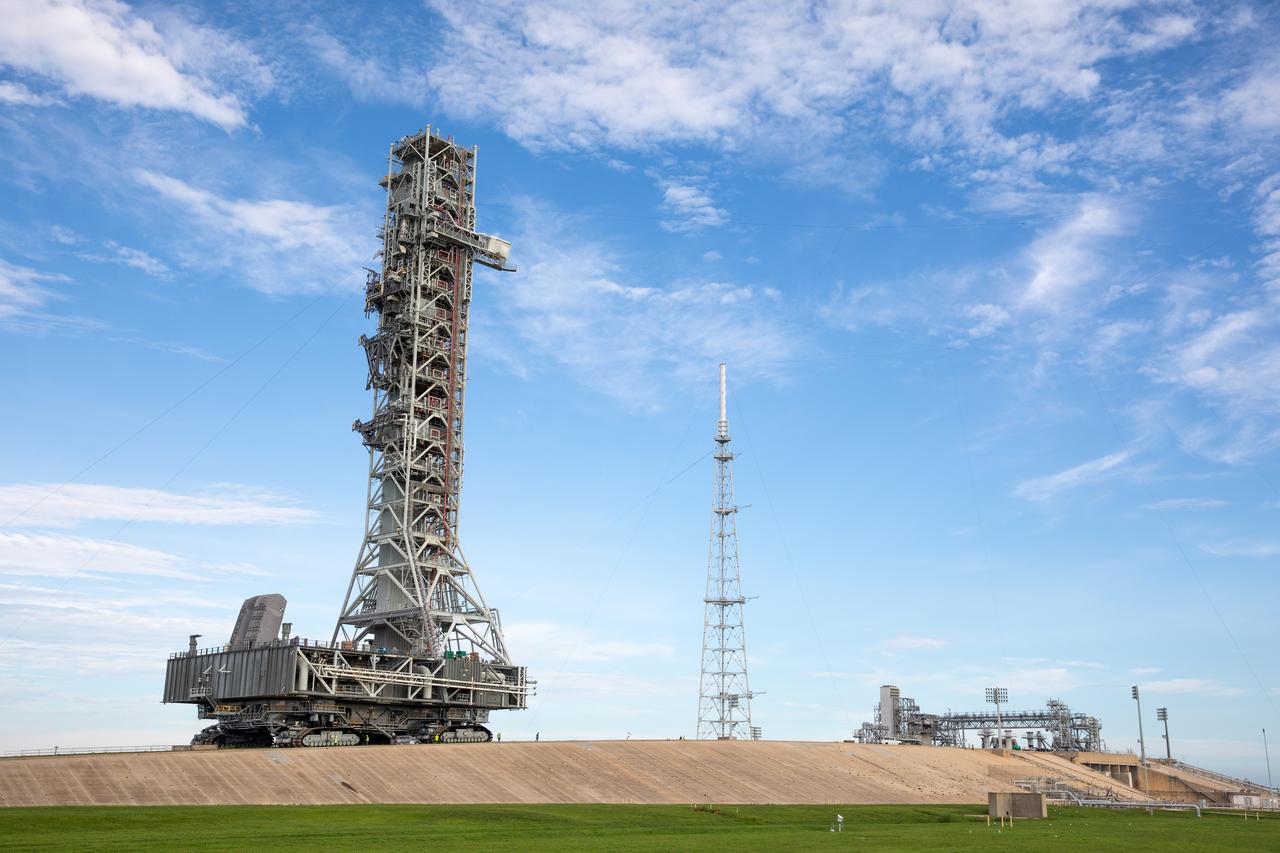
The mobile launcher, carried by the crawler-transporter 2, nears the pad at Launch Complex 39B at NASA’s Kennedy Space Center in Florida on Aug. 17, 2023. While at the pad, the mobile launcher will undergo testing for the agency’s Artemis II mission. Under Artemis, the mobile launcher will transport NASA’s Space Launch System rocket and Orion spacecraft to pad 39B for liftoff.
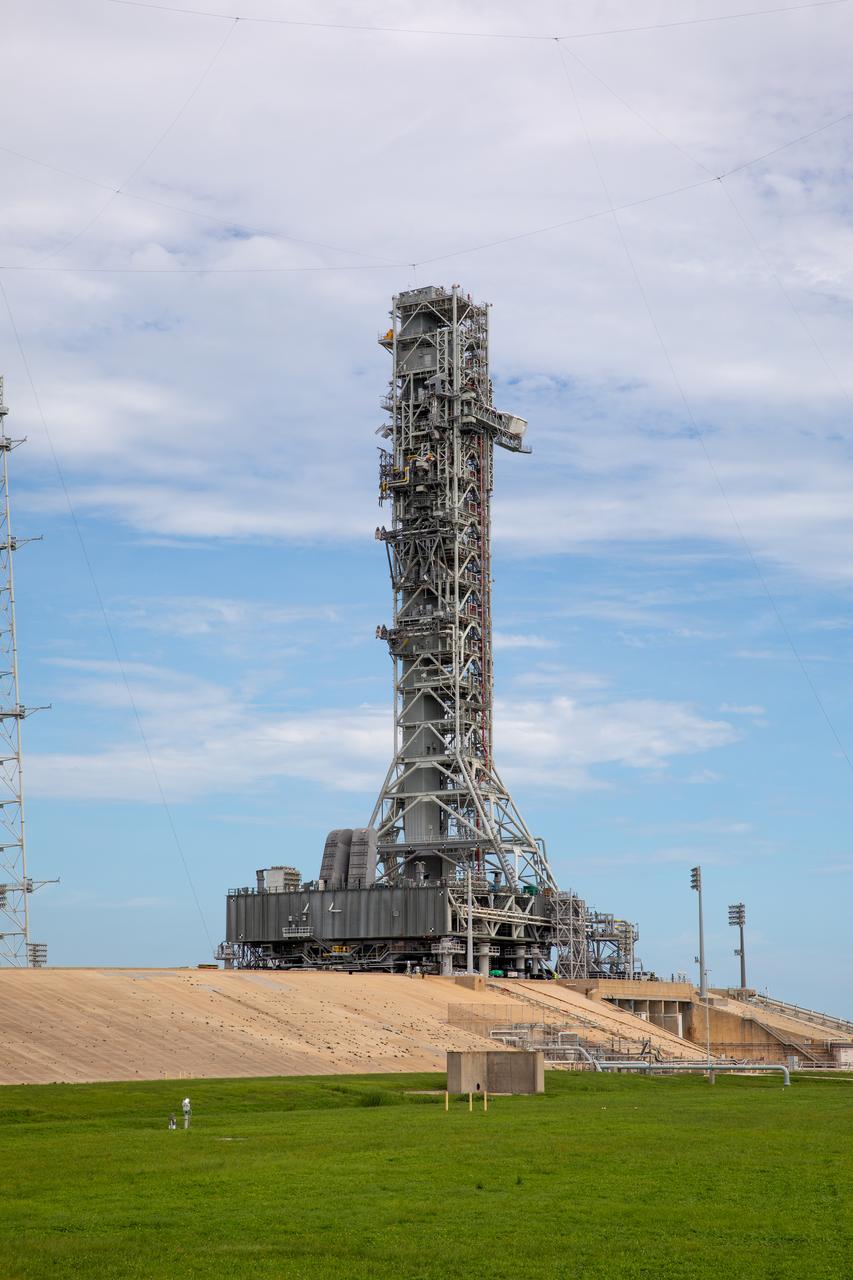
The mobile launcher, carried by the crawler-transporter 2, arrives at the pad at Launch Complex 39B at NASA’s Kennedy Space Center in Florida on Aug. 17, 2023. While at the pad, the mobile launcher will undergo testing for the agency’s Artemis II mission. Under Artemis, the mobile launcher will transport NASA’s Space Launch System rocket and Orion spacecraft to pad 39B for liftoff.
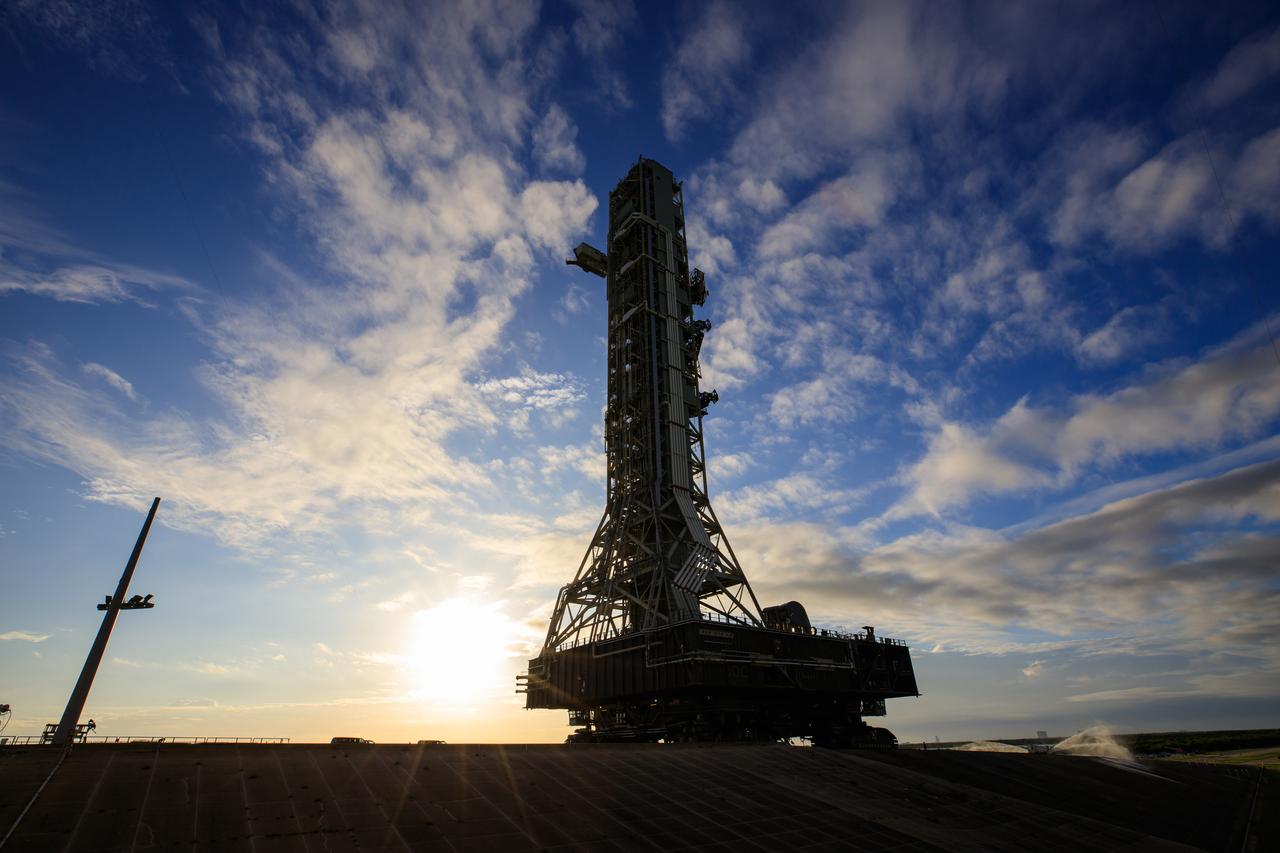
During sunrise on Oct. 30, 2020, the mobile launcher for the Artemis I mission, atop crawler-transporter 2, departs Launch Pad 39B and moves slowly along the crawlerway to return to the Vehicle Assembly Building at NASA’s Kennedy Space Center in Florida. The nearly 400-foot-tall mobile launcher was at the pad for 10 days, while engineers with Exploration Ground Systems and Jacobs performed several tasks, including a timing test to validate the launch team’s countdown timeline, and a thorough, top-to-bottom wash down of the mobile launcher to remove any debris remaining from construction and installation of the umbilical arms. Artemis I will test the Orion spacecraft and Space Launch System as an integrated system ahead of crewed flights to the Moon. Under the Artemis program, NASA will land the first woman and the next man on the Moon in 2024.
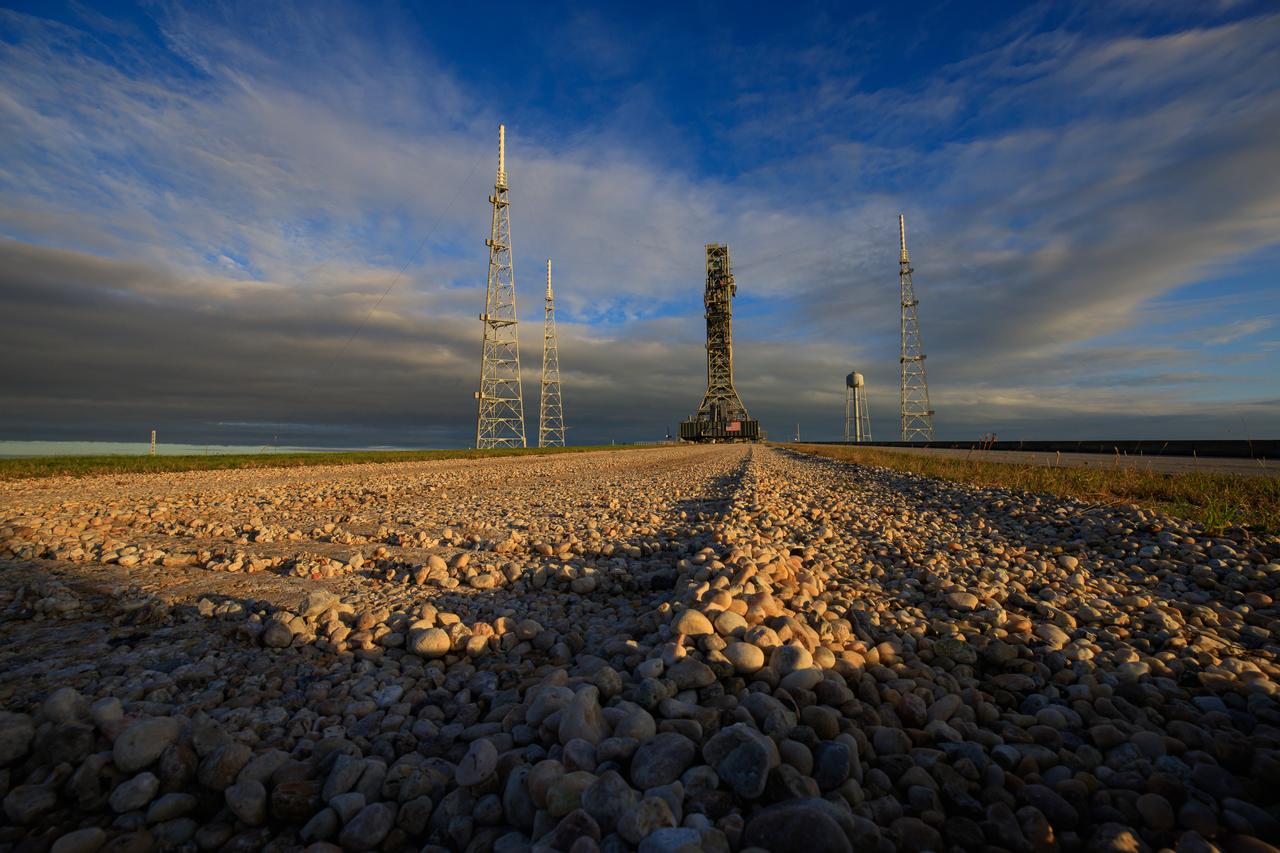
During sunrise on Oct. 30, 2020, the mobile launcher for the Artemis I mission, atop crawler-transporter 2, departs Launch Pad 39B and moves slowly along the crawlerway to return to the Vehicle Assembly Building at NASA’s Kennedy Space Center in Florida. The nearly 400-foot-tall mobile launcher was at the pad for 10 days, while engineers with Exploration Ground Systems and Jacobs performed several tasks, including a timing test to validate the launch team’s countdown timeline, and a thorough, top-to-bottom wash down of the mobile launcher to remove any debris remaining from construction and installation of the umbilical arms. Artemis I will test the Orion spacecraft and Space Launch System as an integrated system ahead of crewed flights to the Moon. Under the Artemis program, NASA will land the first woman and the next man on the Moon in 2024.