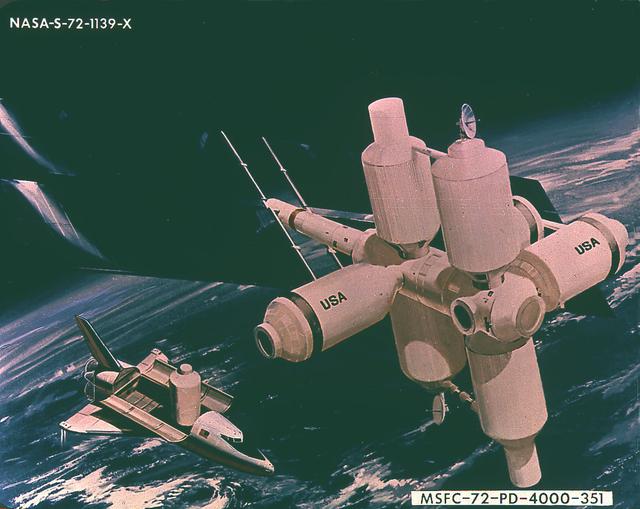
This is an artist's concept of a modular space station. In 1970 the Marshall Space Flight Center arnounced the completion of a study concerning a modular space station that could be launched by the planned-for reusable Space Shuttle. The study envisioned a space station composed of cylindrical sections 14 feet in diameter and of varying lengths joined to form any one of a number of possible shapes. The sections were restricted to 14 feet in diameter and 58 feet in length to be consistent with a shuttle cargo bay size of 15 by 60 feet. Center officials said that the first elements of the space station could be in orbit by about 1978 and could be manned by three or six men. This would be an interim space station with sections that could be added later to form a full 12-man station by the early 1980s.
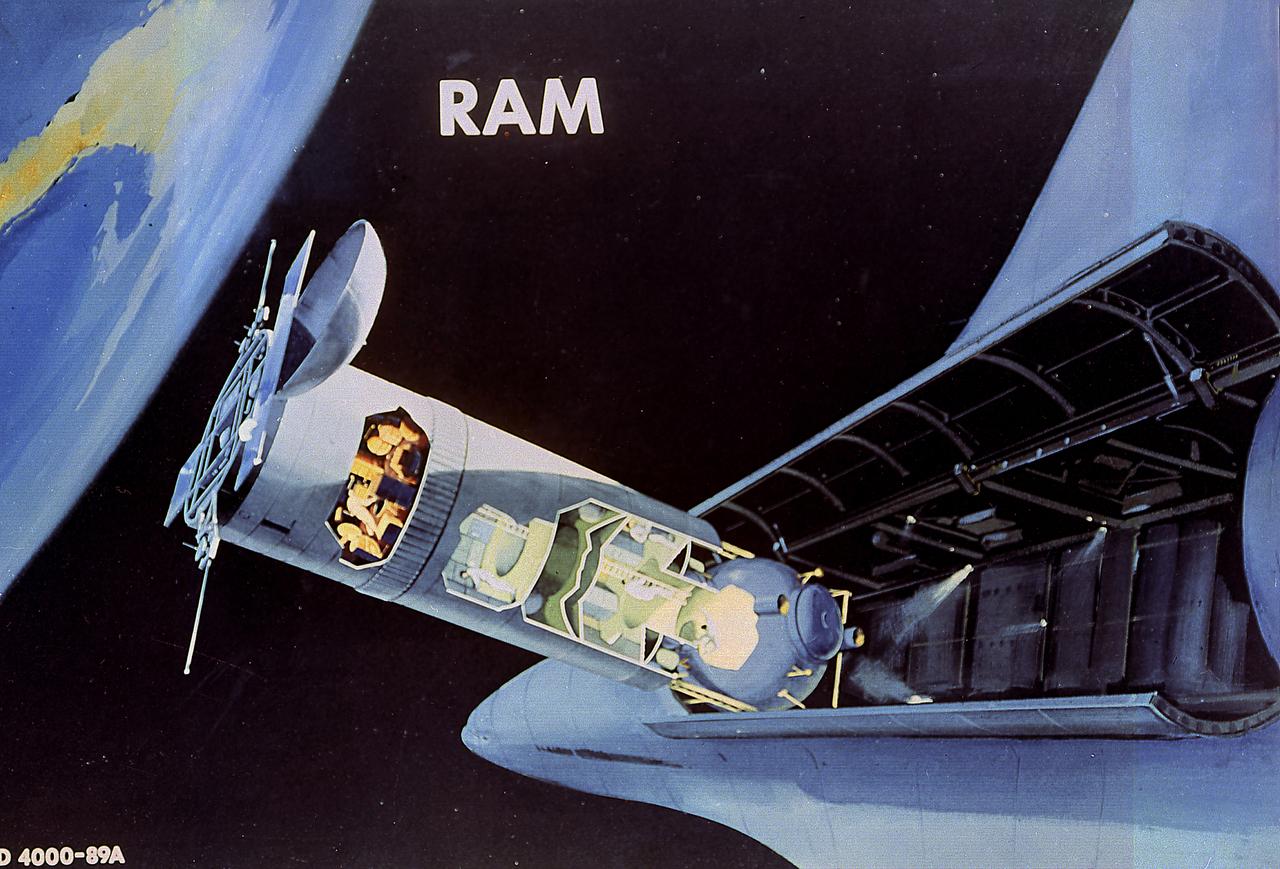
This is an artist's concept of the Research and Applications Modules (RAM). Evolutionary growth was an important consideration in space station plarning, and another project was undertaken in 1971 to facilitate such growth. The RAM study, conducted through a Marshall Space Flight Center contract with General Dynamics Convair Aerospace, resulted in the conceptualization of a series of RAM payload carrier-sortie laboratories, pallets, free-flyers, and payload and support modules. The study considered two basic manned systems. The first would use RAM hardware for sortie mission, where laboratories were carried into space and remained attached to the Shuttle for operational periods up to 7 days. The second envisioned a modular space station capability that could be evolved by mating RAM modules to the space station core configuration. The RAM hardware was to be built by Europeans, thus fostering international participation in the space program.
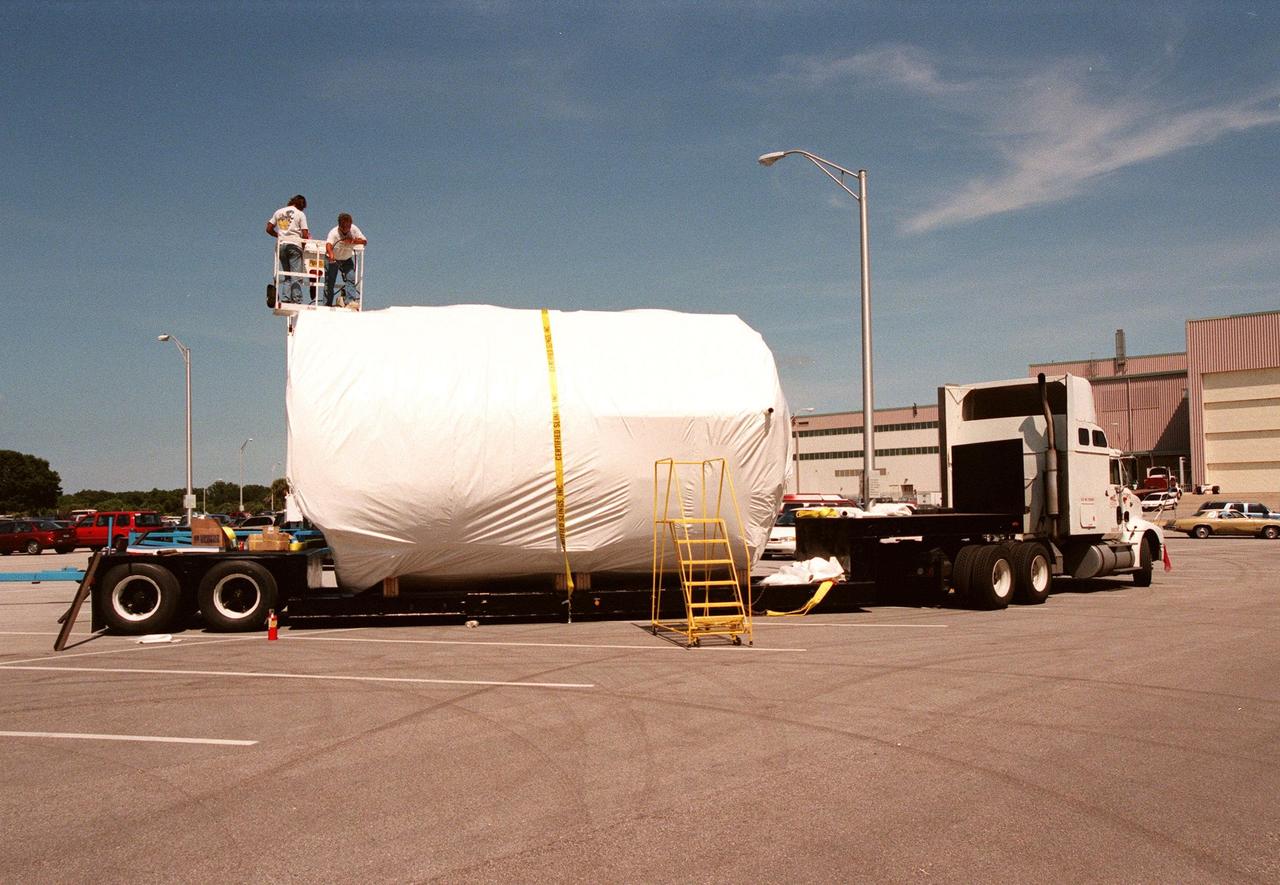
Spacelab is wrapped and ready for transport to the National Air and Space Museum in Washington, DC. Spacelab was designed by the European Space Agency (ESA) for the Space Shuttle program and first flew on STS-9 in November 1983. Its final flight was the STS-90 Neurolab mission in April 1998. A sister module will travel home and be placed on display in Europe. The Spacelab concept of modular experiment racks in a pressurized shirt-sleeve environment made it highly user-friendly and accessible. Numerous experiments conceived by hundreds of scientists on the ground were conducted by flight crews in orbit. Spacelab modules served as on-orbit homes for everything from squirrel monkeys to plant seeds. They supported astronomical as well as Earth observations, for servicing the Hubble Space Telescope and for research preparatory to the International Space Station. One of the greatest benefits afforded by the Spacelab missions was the opportunity to fly a mission more than once, with the second or third flight building on the experiences and data gathered from its predecessors
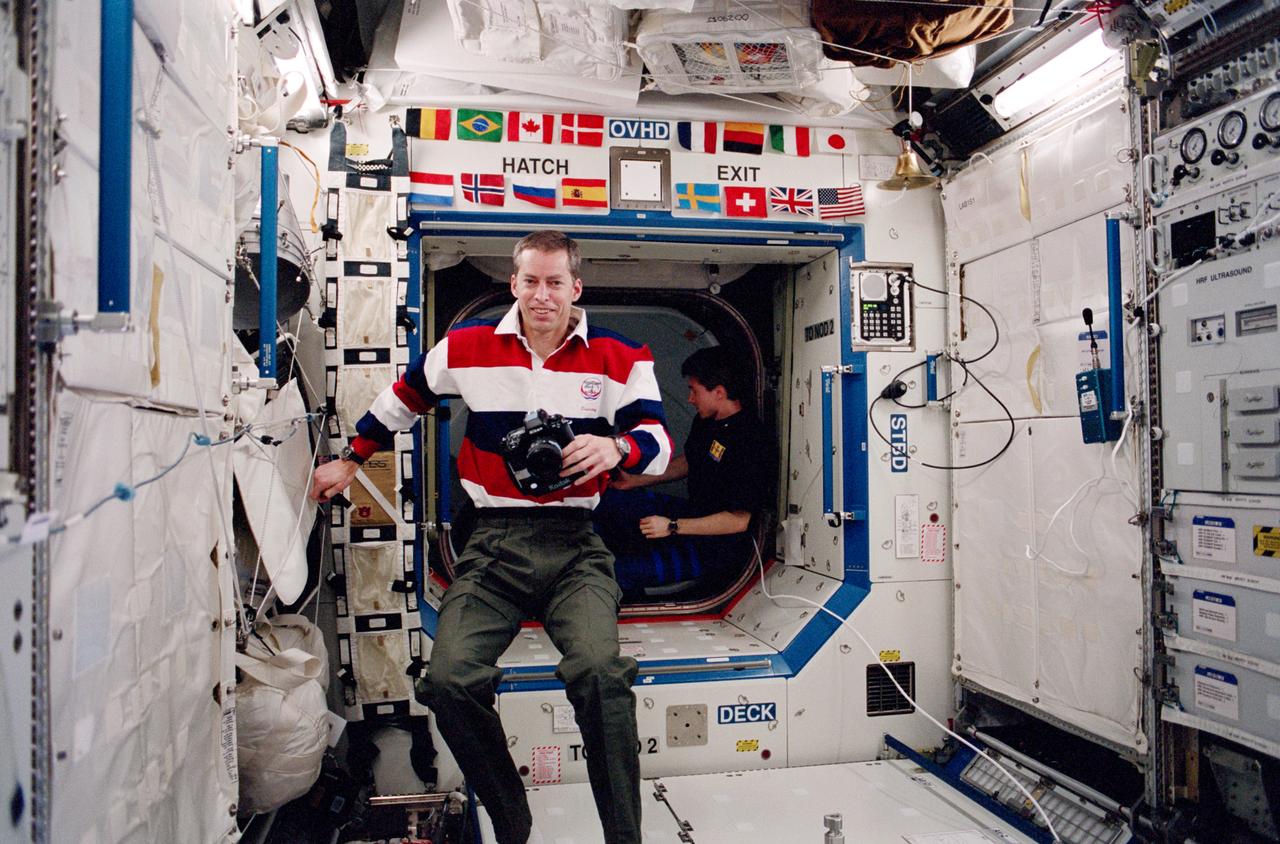
In this Space Shuttle STS-102 mission image, the Payload Equipment Restraint System H-Strap is shown at the left side of the U.S. Laboratory hatch and behind Astronaut James D. Weatherbee, mission specialist. PERS is an integrated modular system of components designed to assist the crew of the International Space Station (ISS) in restraining and carrying necessary payload equipment and tools in a microgravity environment. The Operations Development Group, Flight Projects Directorate at the Marshall Space Flight Center (MSFC), while providing operation support to the ISS Materials Science Research Facility (MSRF), recognized the need for an on-orbit restraint system to facilitate control of lose objects, payloads, and tools. The PERS is the offspring of that need and it helps the ISS crew manage tools and rack components that would otherwise float away in the near-zero gravity environment aboard the Space Station. The system combines Kevlar straps, mesh pockets, Velcro and a variety of cornecting devices into a portable, adjustable system. The system includes the Single Strap, the H-Strap, the Belly Pack, the Laptop Restraint Belt, and the Tool Page Case. The Single Strap and the H-Strap were flown on this mission. The PERS concept was developed by industrial design students at Auburn University and the MSFC Flight Projects Directorate.
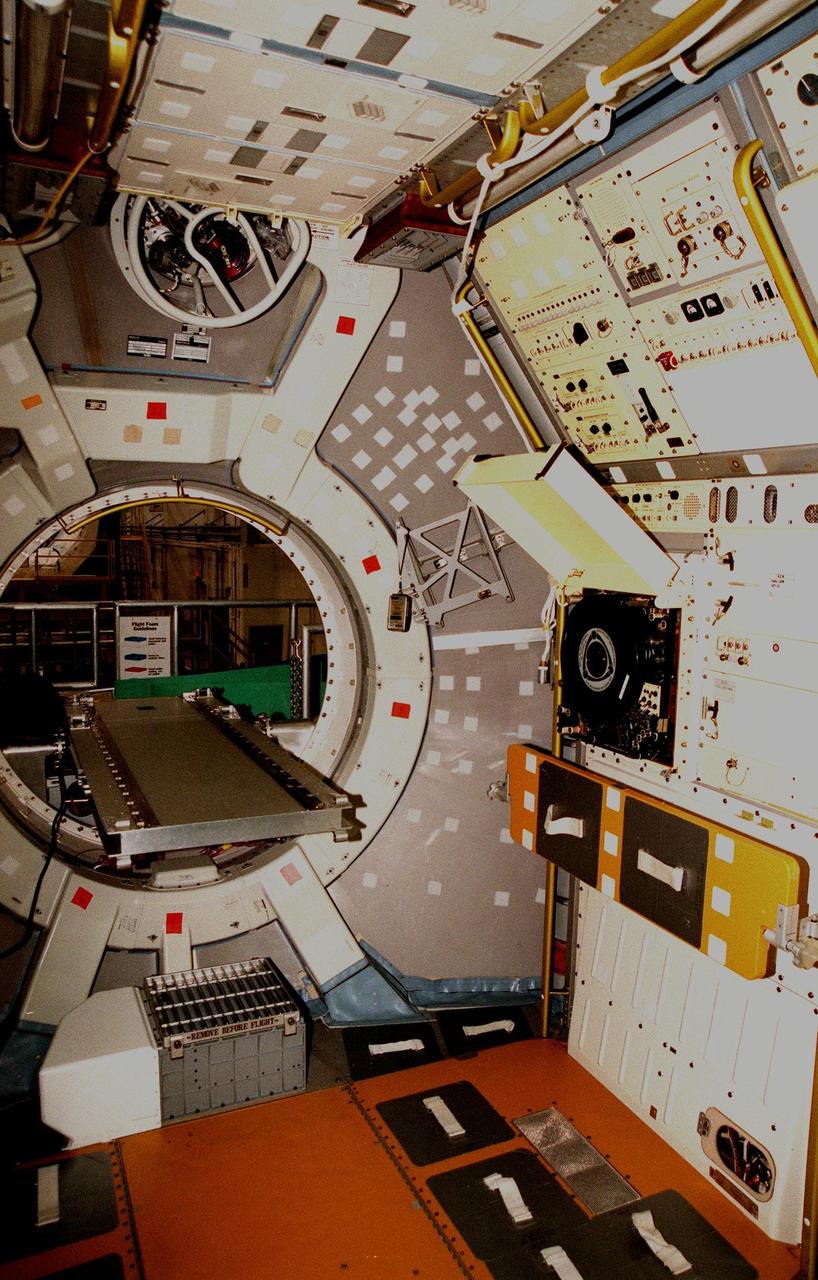
KENNEDY SPACE CENTER, FLA. -- A closeup view of the hatch to this Spacelab module shows an empty interior as the module is being prepared in the Operations & Checkout Building for shipment to the National Air and Space Museum in Washington, DC. Visible on the floor are the foot restraints used by astronauts to keep them stationary while conducting experiments. Spacelab was designed by the European Space Agency (ESA) for the Space Shuttle program. It first flew on STS-9 in November 1983 and its final flight was the STS-90 Neurolab mission in April 1998. The Spacelab concept of modular experiment racks in a pressurized shirt-sleeve environment made it highly user-friendly and accessible. Numerous experiments conceived by hundreds of scientists on the ground were conducted by flight crews in orbit. Spacelab modules served as on-orbit homes for everything from squirrel monkeys to plant seeds. They supported astronomical as well as Earth observations, for servicing the Hubble Space Telescope and for research preparatory to the International Space Station. One of the greatest benefits afforded by the Spacelab missions was the opportunity to fly a mission more than once, with the second or third flight building on the experiences and data gathered from its predecessors
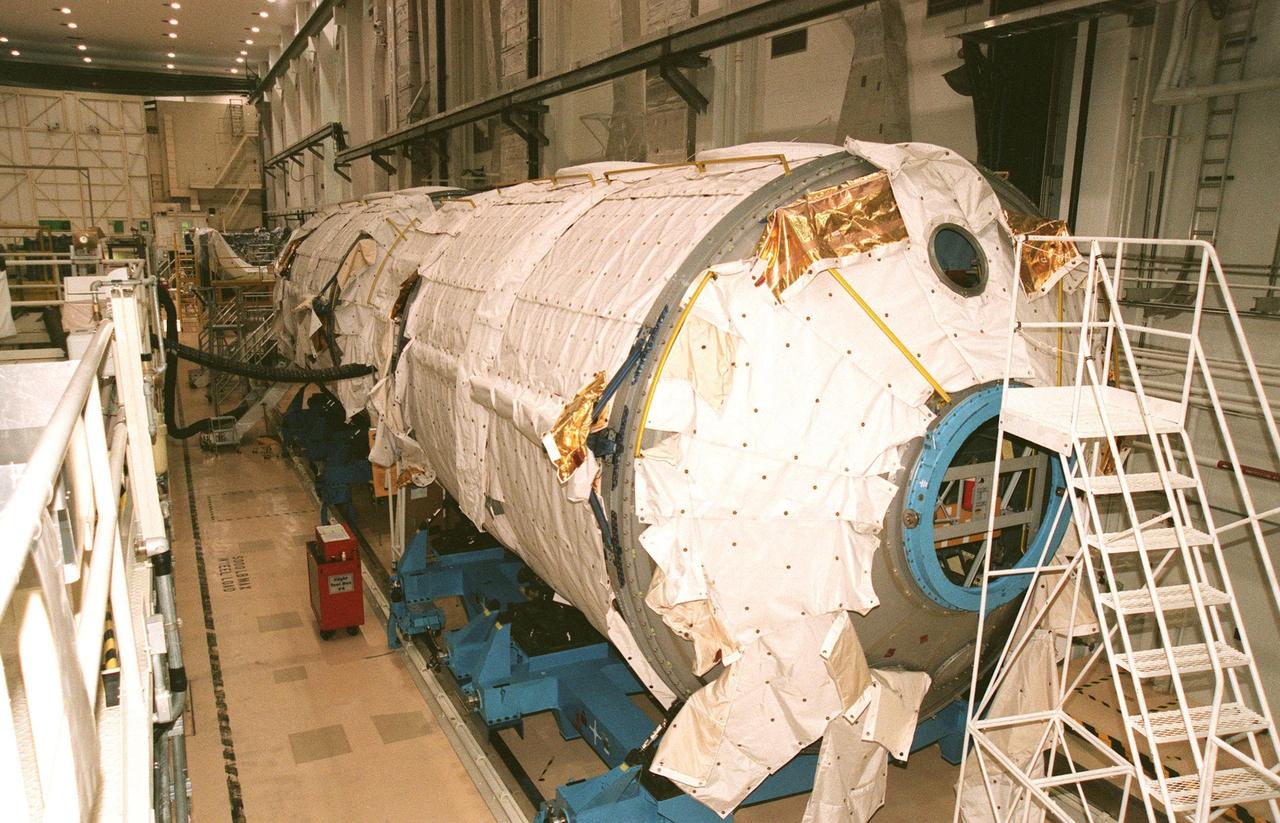
KENNEDY SPACE CENTER, FLA. -- Two Spacelab modules (end to end) are made ready in the Operations and Checkout Building for shipment to the National Air and Space Museum in Washington, DC. Spacelab was designed by the European Space Agency (ESA) for the Space Shuttle program and first flew on STS-9 in November 1983. Its final flight was the STS-90 Neurolab mission in April 1998. The sister module (first in line) will travel home and be placed on display in Europe. The Spacelab concept of modular experiment racks in a pressurized shirt-sleeve environment made it highly user-friendly and accessible. Numerous experiments conceived by hundreds of scientists on the ground were conducted by flight crews in orbit. Spacelab modules served as on-orbit homes for everything from squirrel monkeys to plant seeds. They supported astronomical as well as Earth observations, for servicing the Hubble Space Telescope and for research preparatory to the International Space Station. One of the greatest benefits afforded by the Spacelab missions was the opportunity to fly a mission more than once, with the second or third flight building on the experiences and data gathered from its predecessors
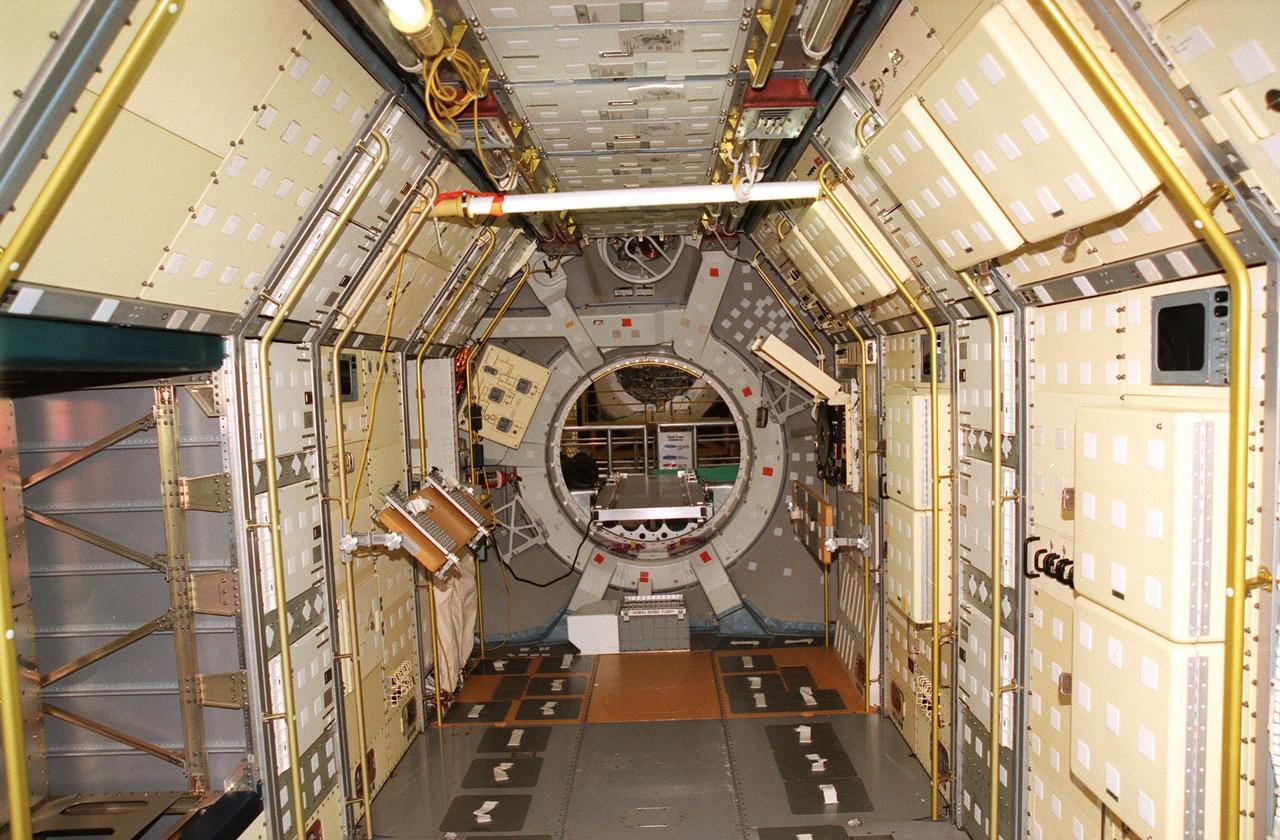
Viewed looking forward, this Spacelab module is empty now, being prepared in the Operations & Checkout Building for shipment to the National Air and Space Museum in Washington, DC. Visible on the floor are the foot restraints used by astronauts to keep them stationary while conducting experiments. Spacelab was designed by the European Space Agency (ESA) for the Space Shuttle program. It first flew on STS-9 in November 1983 and its final flight was the STS-90 Neurolab mission in April 1998. The Spacelab concept of modular experiment racks in a pressurized shirt-sleeve environment made it highly user-friendly and accessible. Numerous experiments conceived by hundreds of scientists on the ground were conducted by flight crews in orbit. Spacelab modules served as on-orbit homes for everything from squirrel monkeys to plant seeds. They supported astronomical as well as Earth observations, for servicing the Hubble Space Telescope and for research preparatory to the International Space Station. One of the greatest benefits afforded by the Spacelab missions was the opportunity to fly a mission more than once, with the second or third flight building on the experiences and data gathered from its predecessors
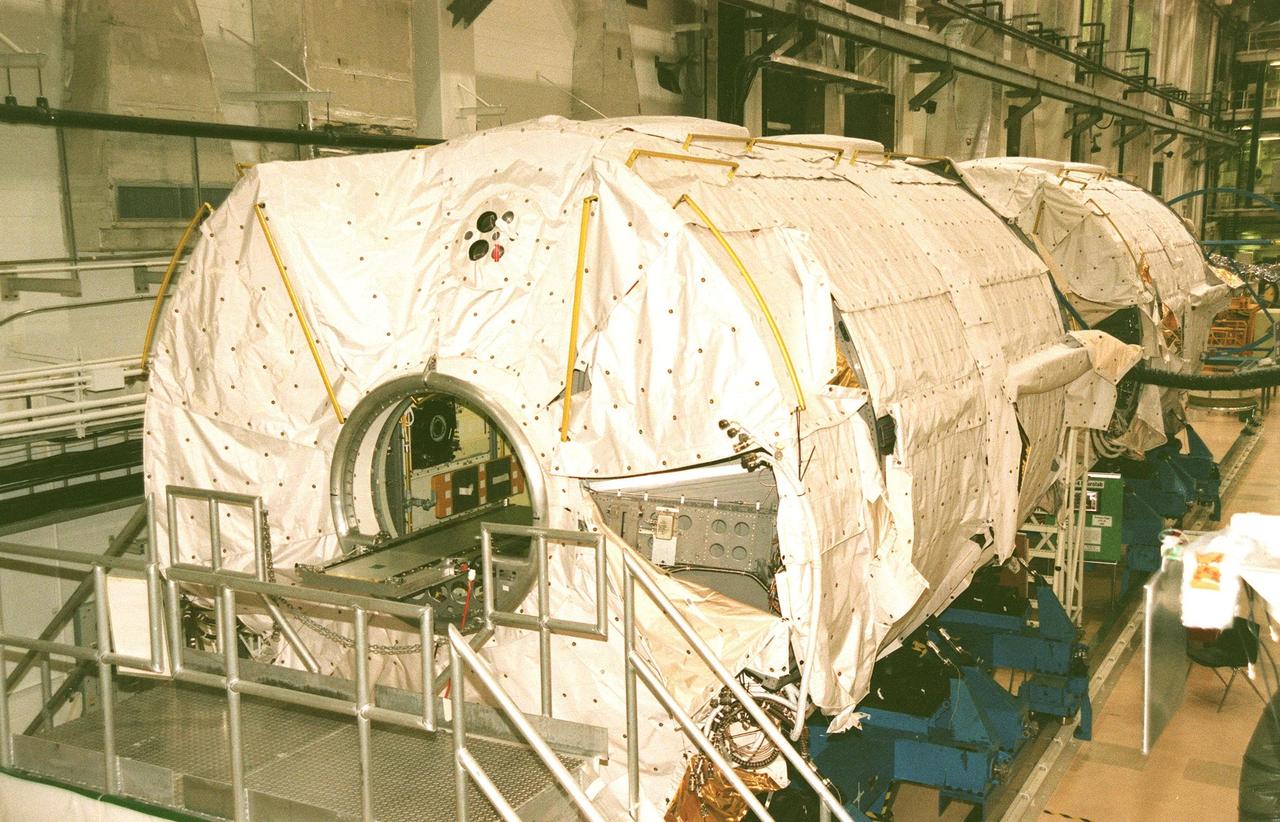
Spacelab Module MD001 (foreground) and its sister module (behind it) are prepared for shipment to the National Air and Space Museum in Washington, DC. Spacelab was designed by the European Space Agency (ESA) for the Space Shuttle program. It first flew on STS-9 in November 1983 and its final flight was the STS-90 Neurolab mission in April 1998. The sister module will travel home and be placed on display in Europe. The Spacelab concept of modular experiment racks in a pressurized shirt-sleeve environment made it highly user-friendly and accessible. Numerous experiments conceived by hundreds of scientists on the ground were conducted by flight crews in orbit. Spacelab modules served as on-orbit homes for everything from squirrel monkeys to plant seeds. They supported astronomical as well as Earth observations, for servicing the Hubble Space Telescope and for research preparatory to the International Space Station. One of the greatest benefits afforded by the Spacelab missions was the opportunity to fly a mission more than once, with the second or third flight building on the experiences and data gathered from its predecessors
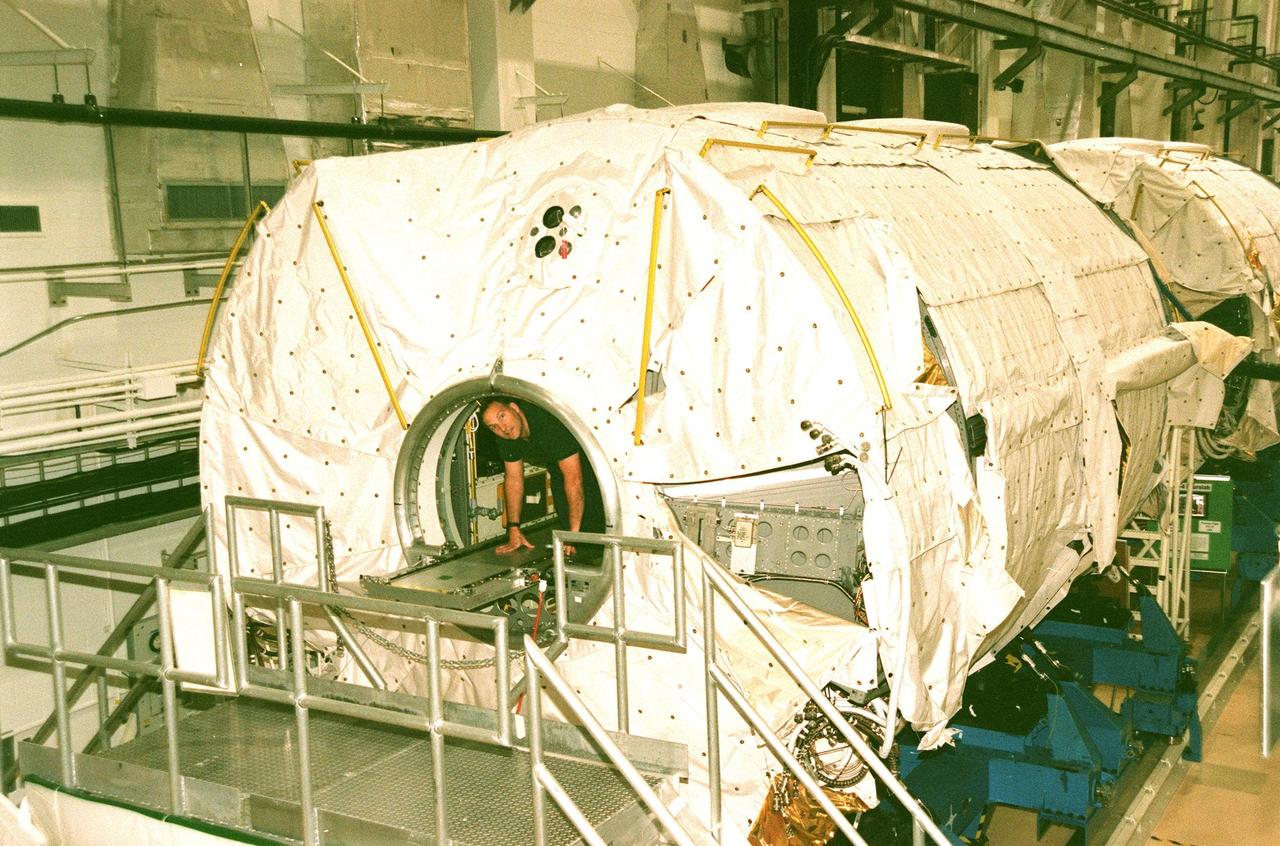
Jim Dumoulin, NASA Payload Electrical Systems engineer, crawls out of the Spacelab module for the last time after stowing some equipment for its final trip to the National Air and Space Museum in Washington, DC. He has worked on the Spacelab program since its first launch on STS-9 in November 1983 as part of the NASA Civil Service Level IV experiment integration team. Spacelab was designed by the European Space Agency (ESA) for the Space Shuttle program. Its final flight was the STS-90 Neurolab mission in April 1998. The Spacelab concept of modular experiment racks in a pressurized shirt-sleeve environment made it highly user-friendly and accessible. Numerous experiments conceived by hundreds of scientists on the ground were conducted by flight crews in orbit. Spacelab modules served as on-orbit homes for everything from squirrel monkeys to plant seeds. They supported astronomical as well as Earth observations, for servicing the Hubble Space Telescope and for research preparatory to the International Space Station. One of the greatest benefits afforded by the Spacelab missions was the opportunity to fly a mission more than once, with the second or third flight building on the experiences and data gathered from its predecessors
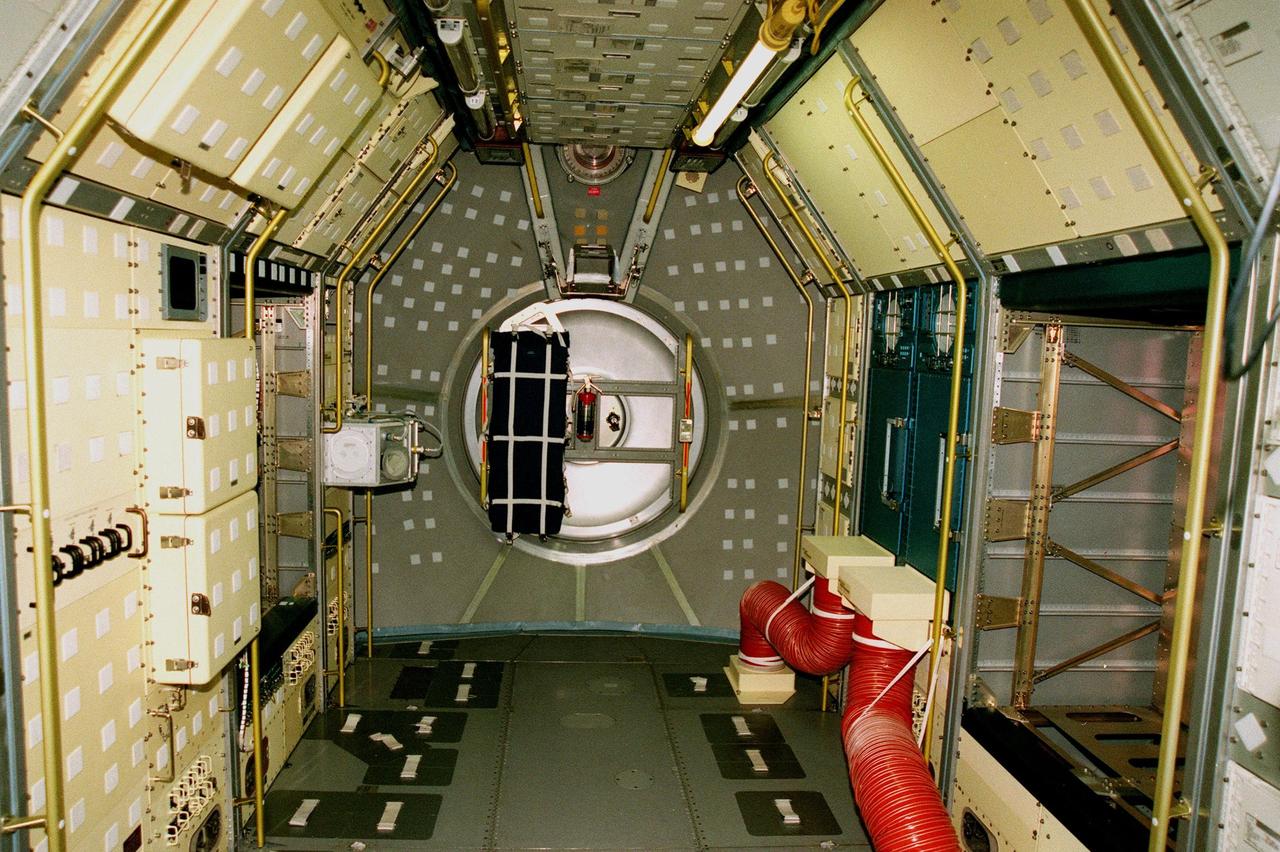
Viewed looking aft, this Spacelab module is empty now, being prepared in the Operations & Checkout Building for shipment to the National Air and Space Museum in Washington, DC. Visible on the floor are the foot restraints used by astronauts to keep them stationary while conducting experiments. Spacelab was designed by the European Space Agency (ESA) for the Space Shuttle program. It first flew on STS-9 in November 1983 and its final flight was the STS-90 Neurolab mission in April 1998. The Spacelab concept of modular experiment racks in a pressurized shirt-sleeve environment made it highly user-friendly and accessible. Numerous experiments conceived by hundreds of scientists on the ground were conducted by flight crews in orbit. Spacelab modules served as on-orbit homes for everything from squirrel monkeys to plant seeds. They supported astronomical as well as Earth observations, for servicing the Hubble Space Telescope and for research preparatory to the International Space Station. One of the greatest benefits afforded by the Spacelab missions was the opportunity to fly a mission more than once, with the second or third flight building on the experiences and data gathered from its predecessors
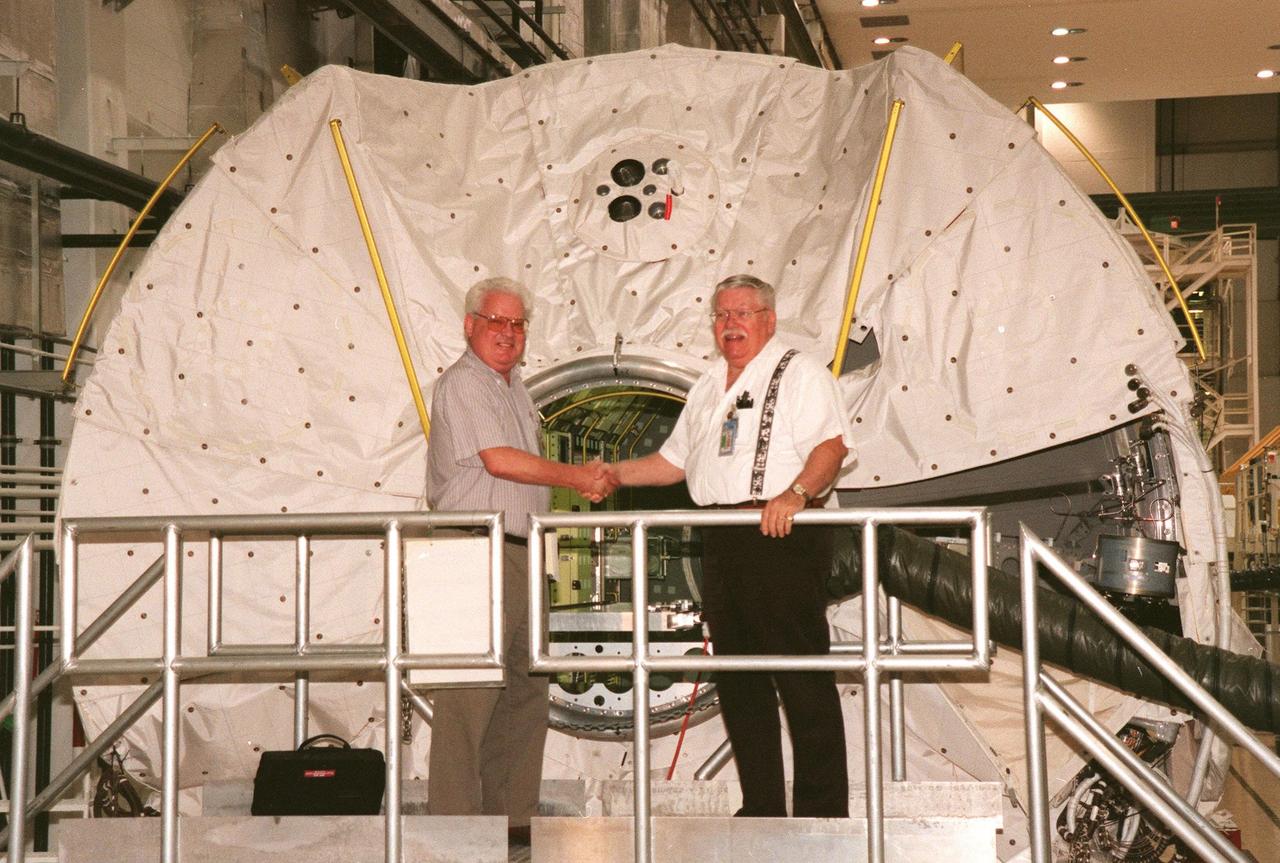
KENNEDY SPACE CENTER, FLA. -- In the Operations and Checkout Building, Rainer Goercke shakes hands with Norman Jatz in front of the Spacelab Module MD001 as they prepare to close it for the last time before shipment to the National Air and Space Museum in Washington, DC. Goercke and Jatz have been on the Spacelab program since 1979 and were part of the team that first unloaded the module at KSC. Goercke is the only remaining European representative from the German-based Spacelab contractor, ERNO, and Jatz is a mechanical engineering lead from Boeing. Spacelab was designed by the European Space Agency (ESA) for the Space Shuttle program. It first flew on STS-9 in November 1983 and its final flight was the STS-90 Neurolab mission in April 1998. The sister module will travel home and be placed on display in Europe. The Spacelab concept of modular experiment racks in a pressurized shirt-sleeve environment made it highly user-friendly and accessible. Numerous experiments conceived by hundreds of scientists on the ground were conducted by flight crews in orbit. Spacelab modules served as on-orbit homes for everything from squirrel monkeys to plant seeds. They supported astronomical as well as Earth observations, for servicing the Hubble Space Telescope and for research preparatory to the International Space Station. One of the greatest benefits afforded by the Spacelab missions was the opportunity to fly a mission more than once, with the second or third flight building on the experiences and data gathered from its predecessors