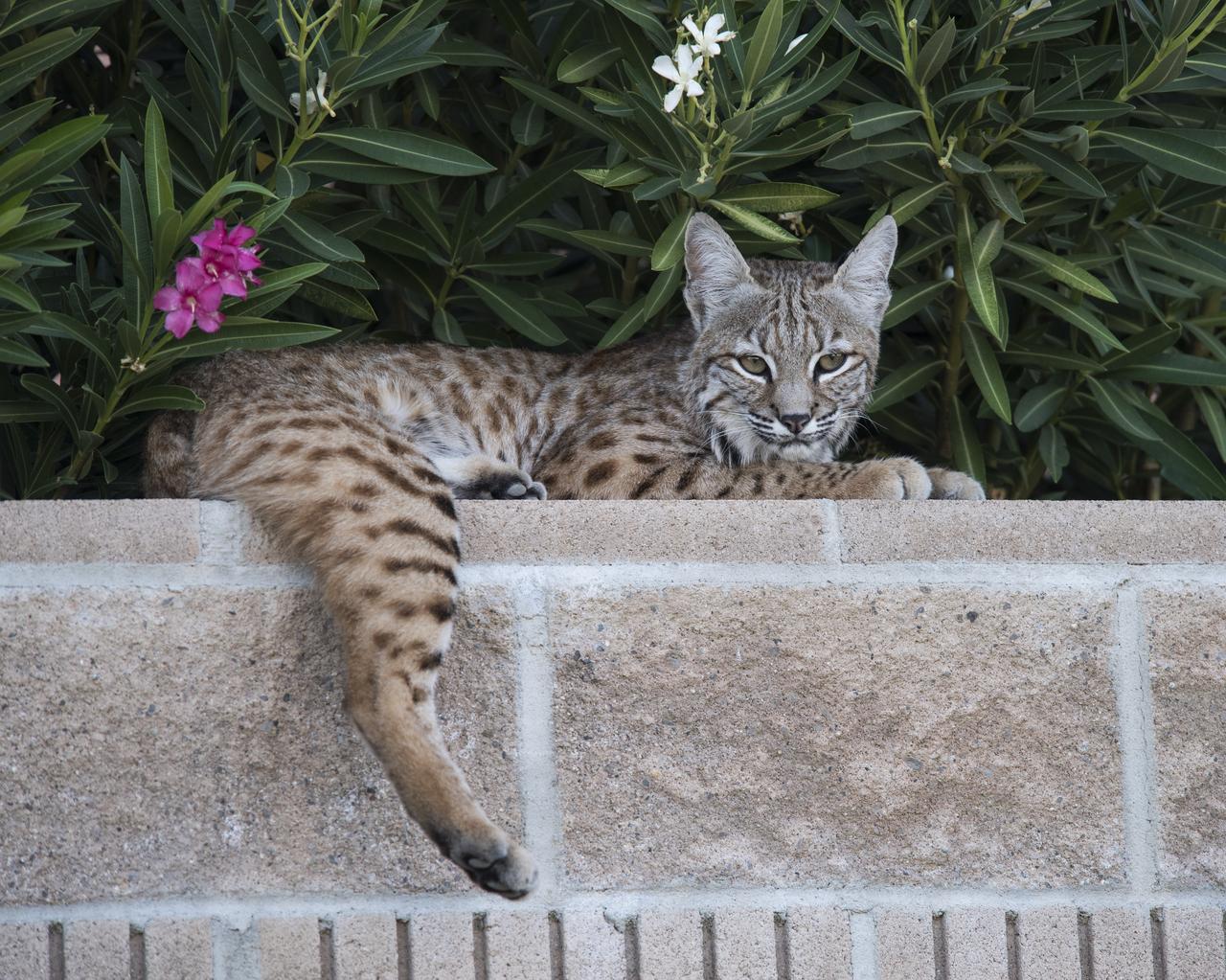
A bobcat resting leisurely on a retaining wall among the flowering bushes at Armstrong Flight Research Center in Edwards, California. The facility is home to a number of wild animals including the bobcats which are free to roam the more than 300,000 acres of Mojave Desert.
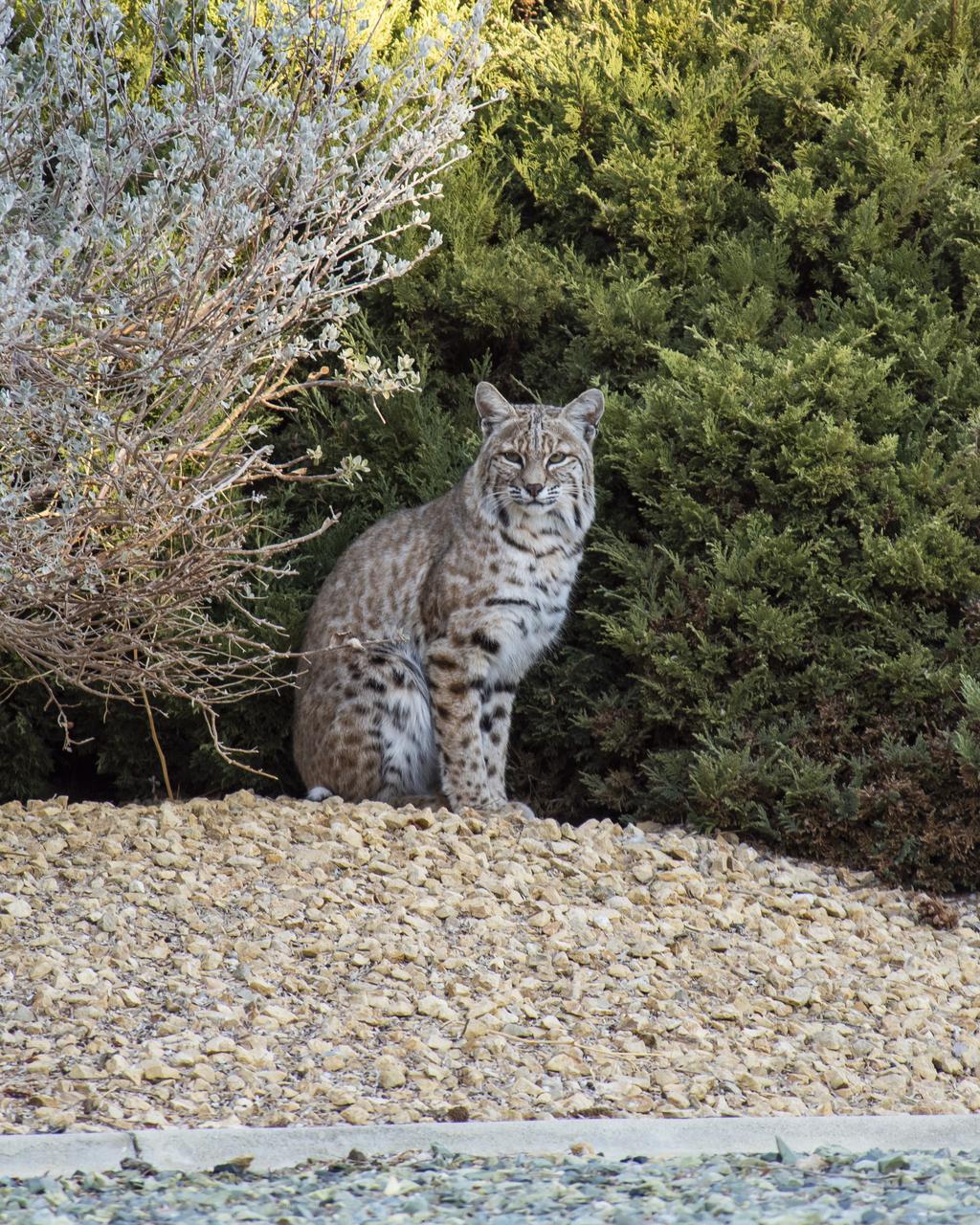
A bobcat surveying the landscape in between bushes at Armstrong Flight Research Center in Edwards, California. The spotted feline makes its home on the more than 300,000 acres of Mojave Desert surrounding the NASA facility housed at Edwards Air Force Base.
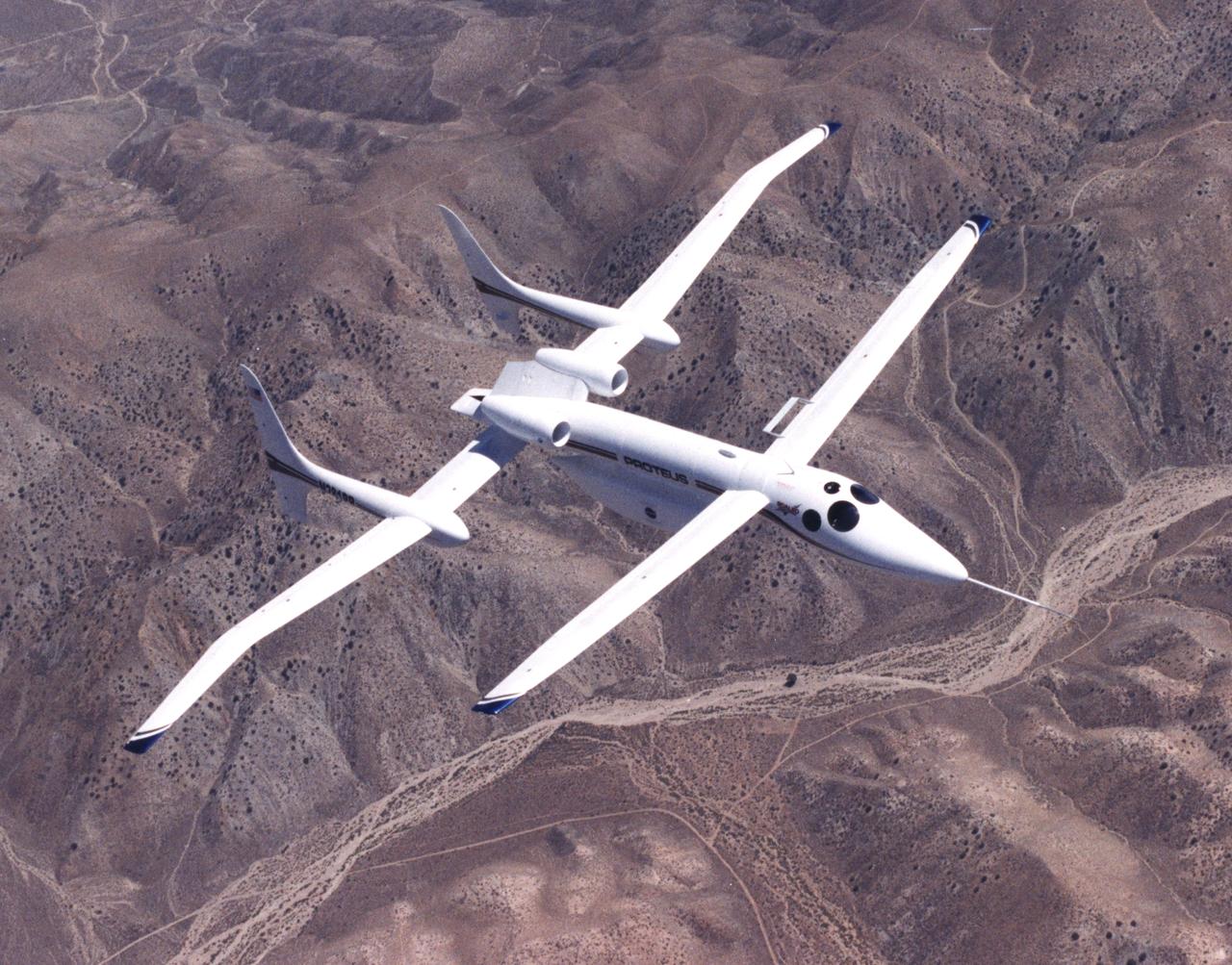
The unusual design of the Proteus high-altitude aircraft, incorporating a gull-wing shape for its main wing and a long, slender forward canard, is clearly visible in this view of the aircraft in flight over the Mojave Desert in California.
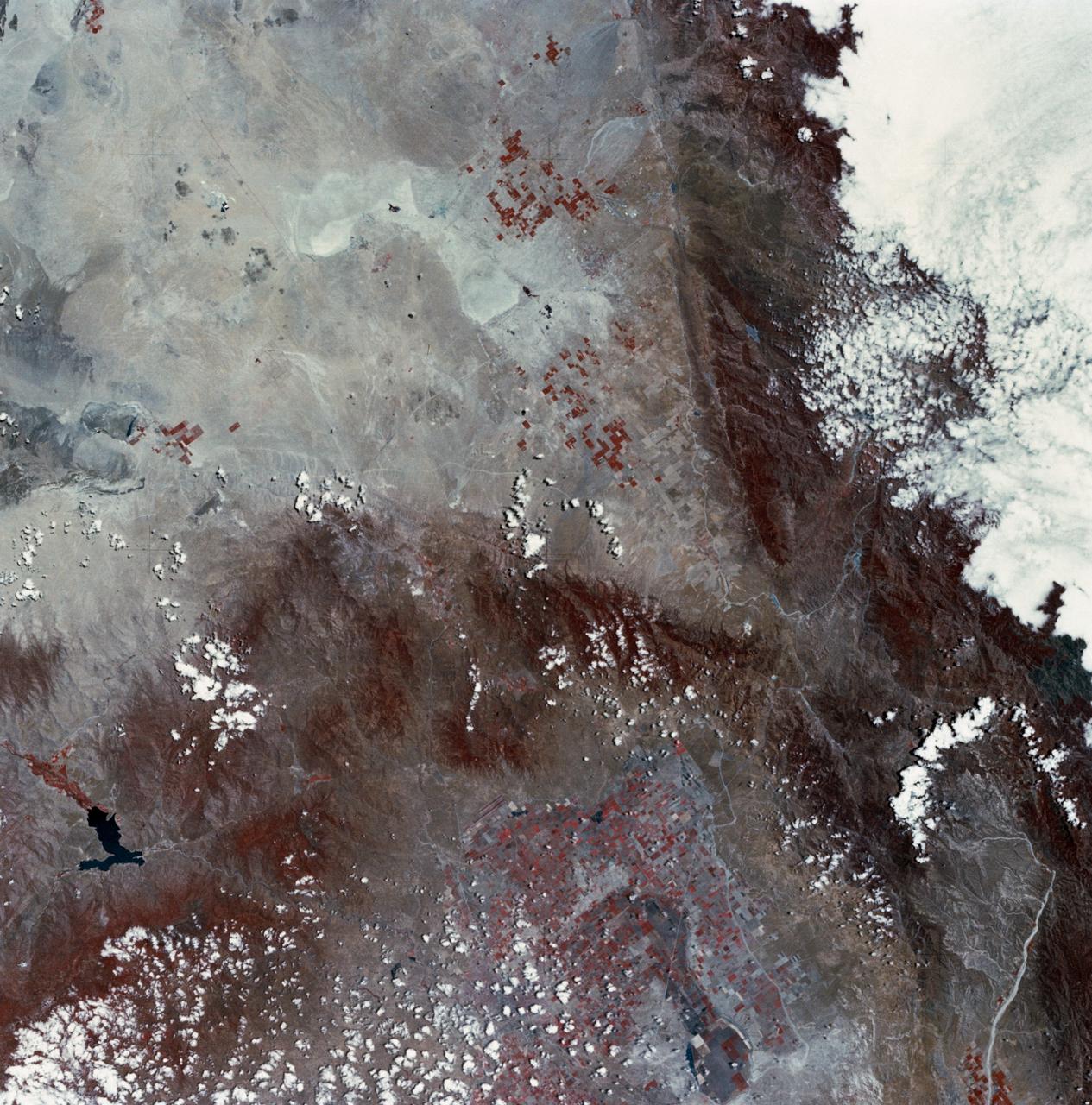
SL2-03-126 (June 1973) --- A color infrared photograph of the Los Angeles County and Kern County area, taken from the Skylab space station in Earth orbit during its first manned Skylab mission. The Mojave Desert occupies the northeast one-fourth of the photograph. Lake Isabella in the Sierra Nevada Mountains is the v-shaped body of water. The San Gabriel Mountains extend across the southern part of the picture. At lower center is the intersection of the San Andreas and Garlock faults. The San Joaquin Valley is in the center at the left edge. (The picture should be held with the heavy cloud cover at lower right corner so that north will be at top.) This picture was exposed by one of the six lenses of the Itek-furnished S190-A Multispectral Photographic Facility experiment in the Multiple Docking Adapter of the Skylab space station. Type 2443 film was used. Photo credit: NASA
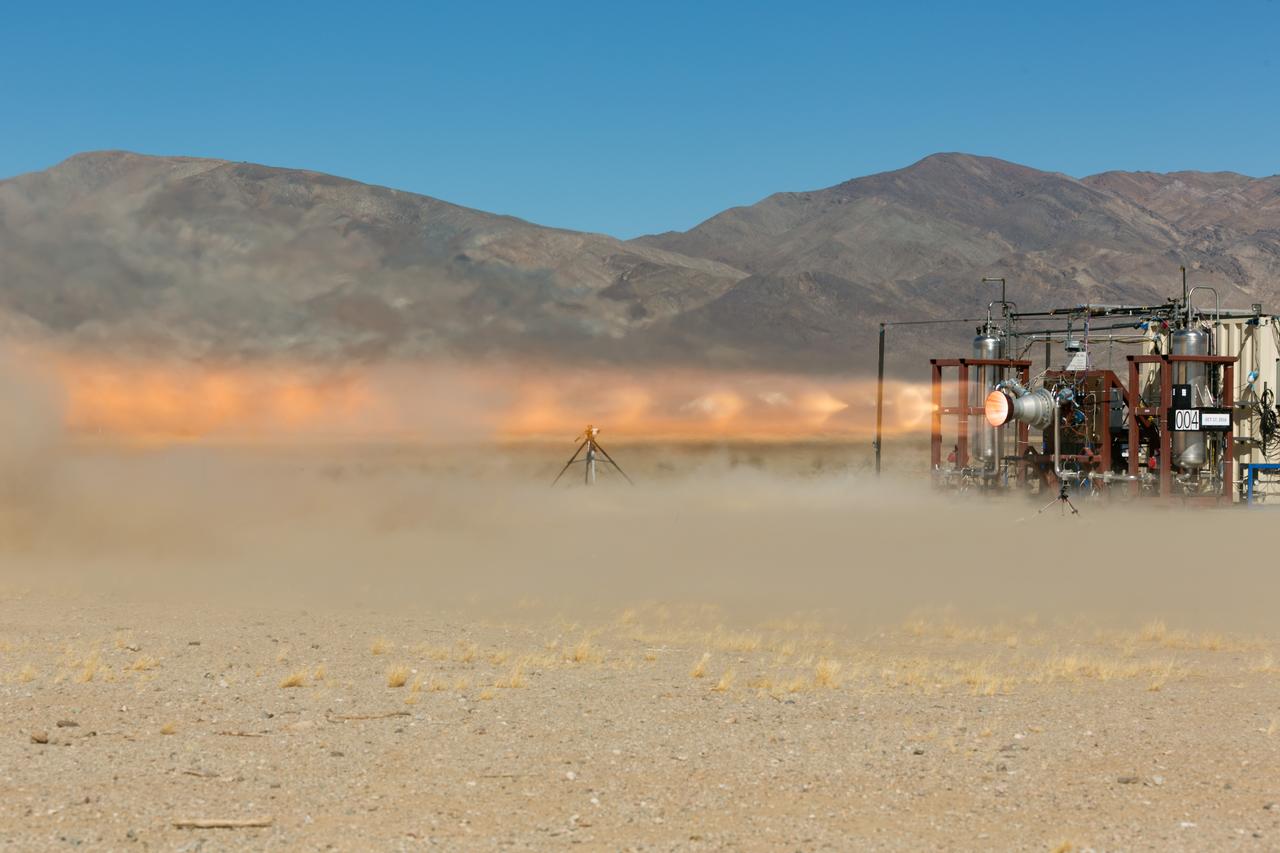
A launch abort engine built by Aerojet Rocketdyne is hot-fired during tests in the Mojave Desert in California. The engine produces up to 40,000 pounds of thrust and burns hypergolic propellants. The engines have been designed and built for use on Boeing’s CST-100 Starliner spacecraft in sets of four. In an emergency at the pad or during ascent, the engines would ignite to push the Starliner and its crew out of danger.
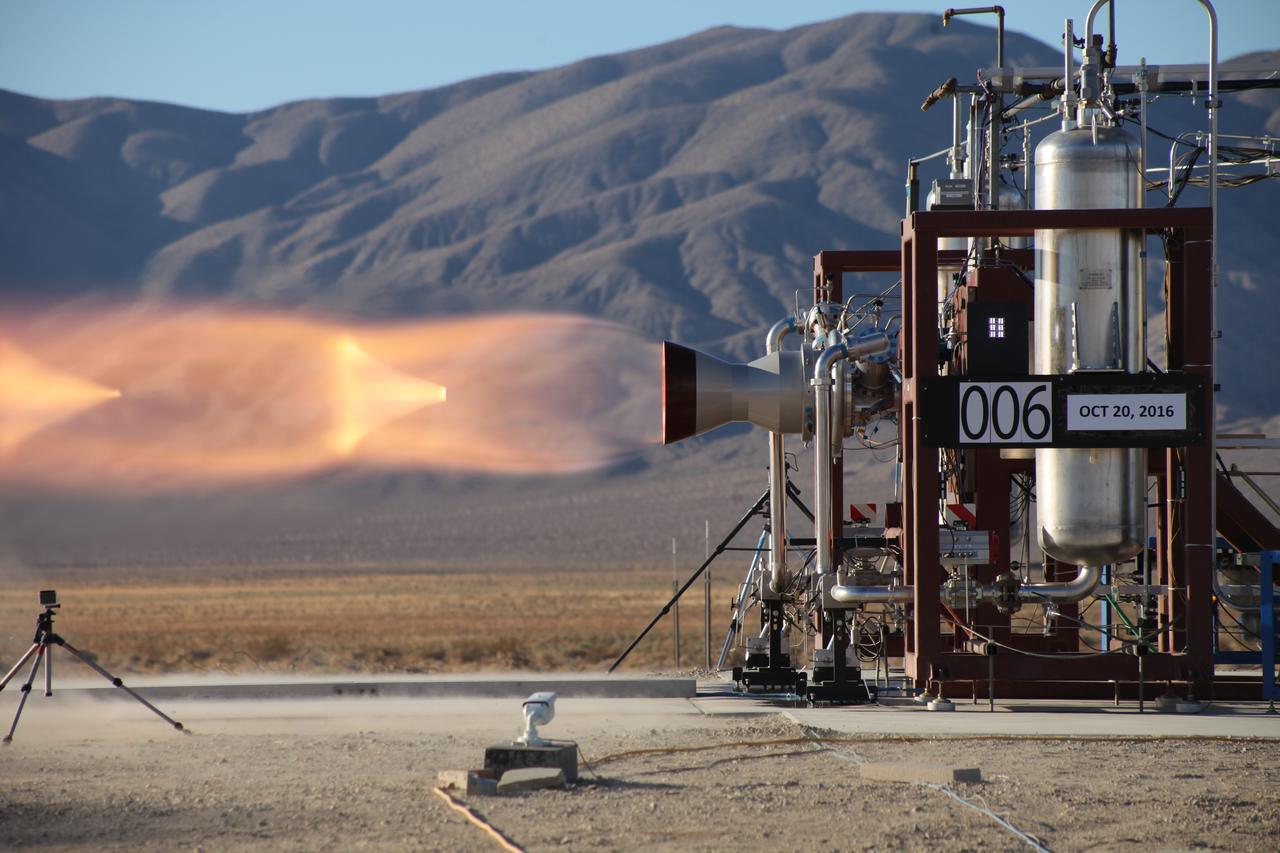
A launch abort engine built by Aerojet Rocketdyne is hot-fired during tests in the Mojave Desert in California. The engine produces up to 40,000 pounds of thrust and burns hypergolic propellants. The engines have been designed and built for use on Boeing’s CST-100 Starliner spacecraft in sets of four. In an emergency at the pad or during ascent, the engines would ignite to push the Starliner and its crew out of danger.
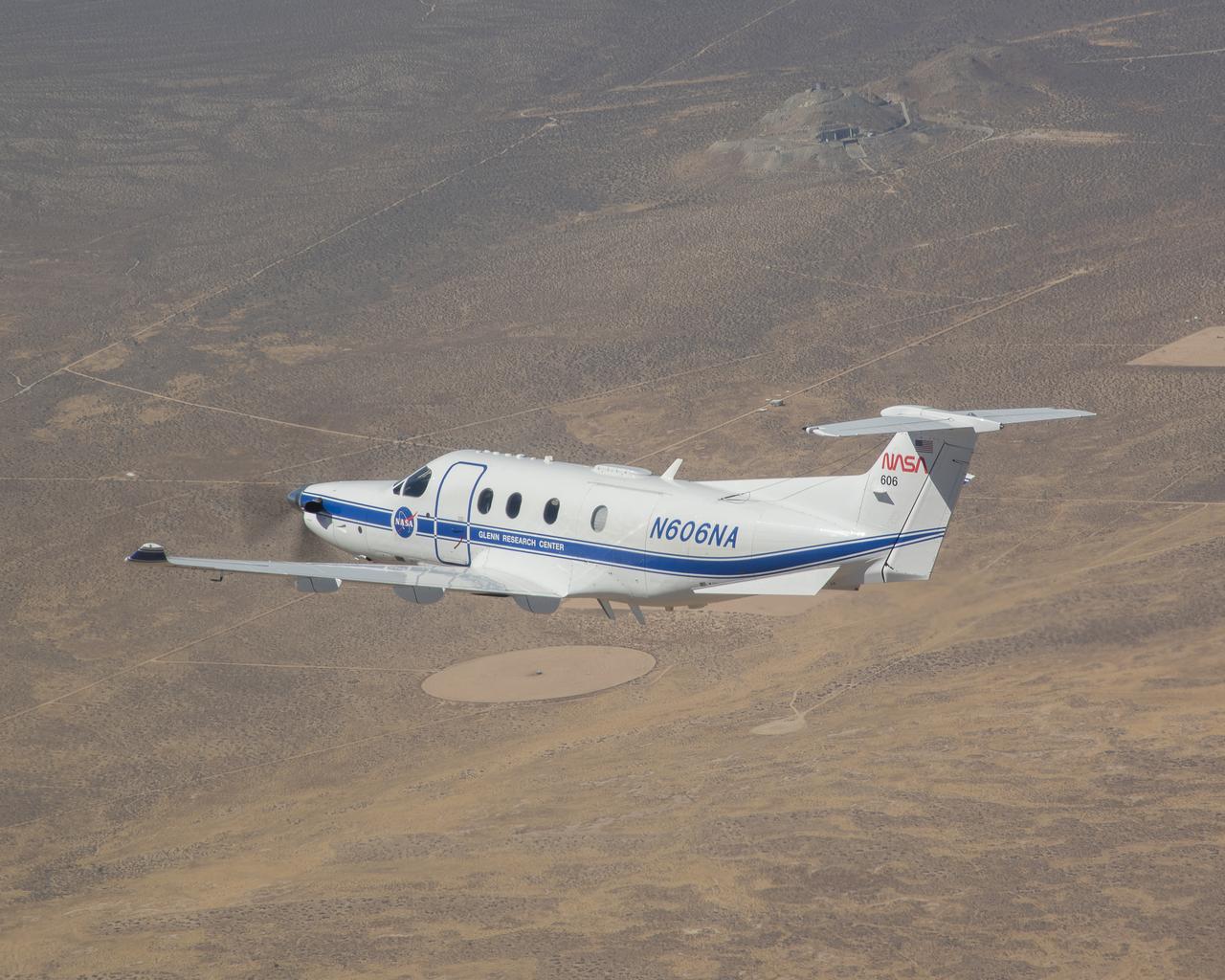
Equipped with state-of-the-art technology to test and evaluate communication, navigation, and surveillance systems, NASA’s Pilatus PC-12 flies over the Mojave Desert near Armstrong Flight Research Center in Edwards, California. Based at Glenn Research Center in Cleveland, the Pilatus PC-12 runs a series of familiarization flights for NASA Armstrong pilots before a test series evaluating ADS-B or Automatic Dependent Surveillance Broadcast systems for advanced air mobility applications in the desert flight test range on Sept. 18, 2024. Airborne work during familiarization flights includes several approach and landings, with an emphasis on avionics, then medium altitude air-work with steep turns, slow flight, and stall demonstrations to qualitatively understand the handling characteristics of the aircraft. The flights lasted about 60 to 90 minutes on average.
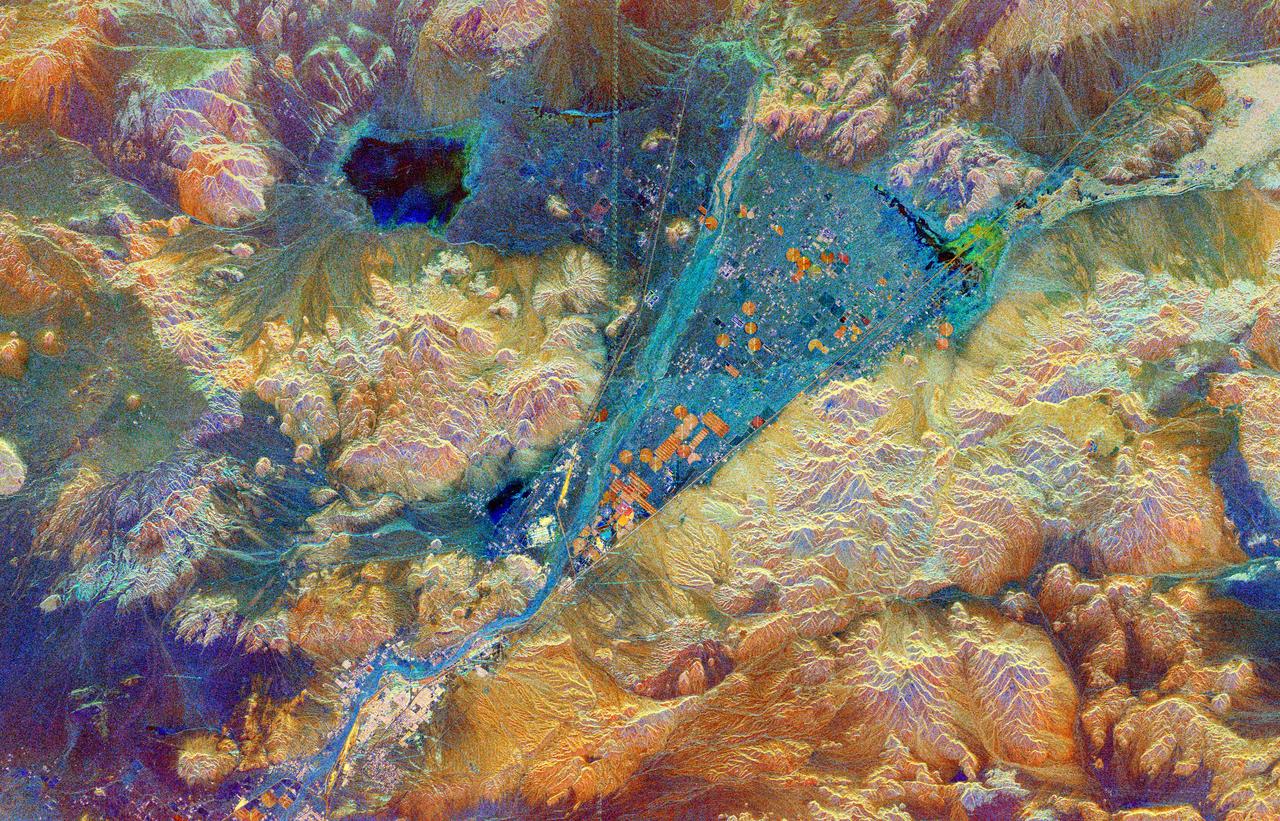
This spaceborne radar image shows part of the Mojave Desert in the vicinity of Barstow, California and reveals evidence of human activities in the arid environment of the southern California deserts.
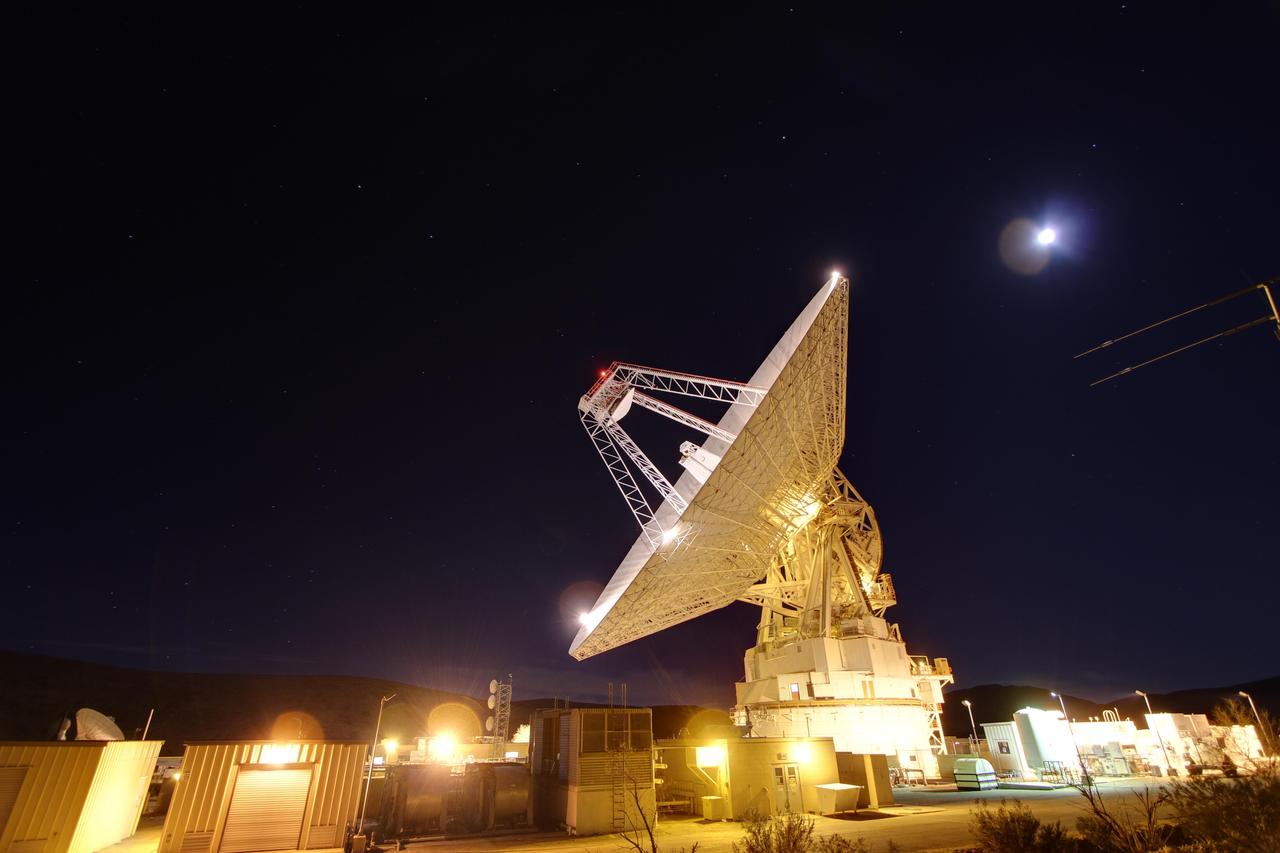
Late night in the desert: Goldstone 230-foot 70-meter antenna tracks spacecraft day and night. This photograph was taken on Jan. 11, 2012. The Goldstone Deep Space Communications Complex is located in the Mojave Desert in California, USA.
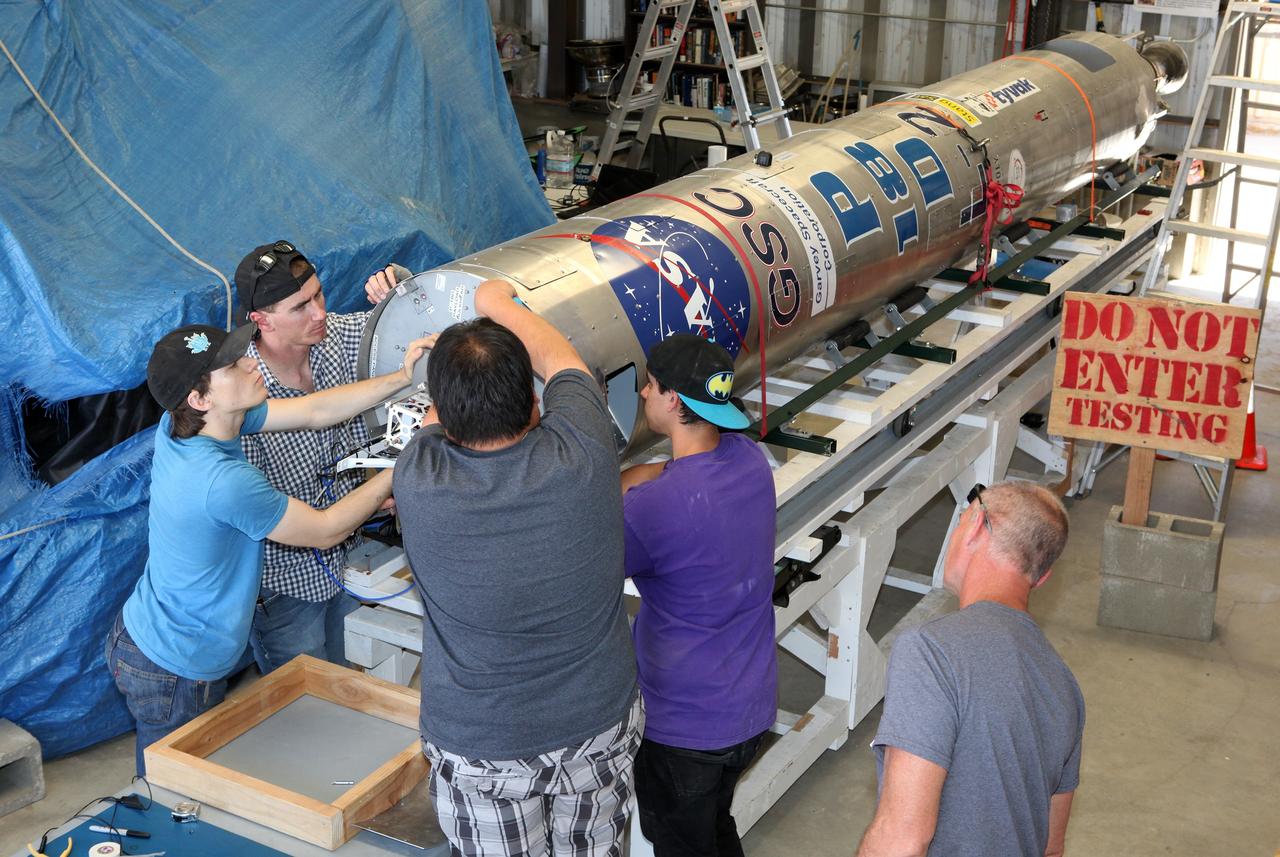
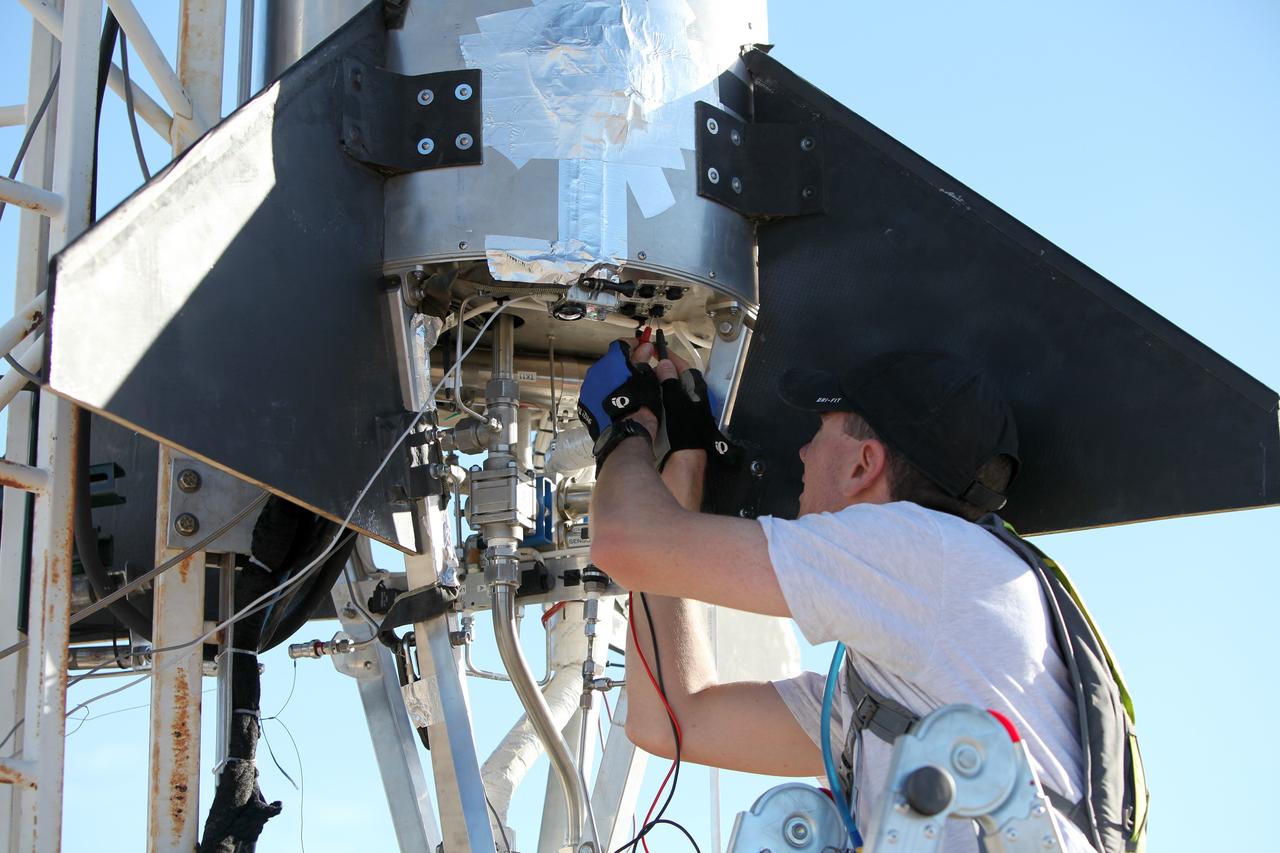
MOJAVE DESERT, Calif. – In the Mojave Desert in California, students and engineers checkout the Garvey Spacecraft Corporation's Prospector P-18D rocket. The rocket is scheduled for launch June 15 with the RUBICS-1 payload on a high-altitude, suborbital flight. The rocket will carry four satellites made from four-inch cube sections. Collectively known as CubeSats, the satellites will record shock, vibrations and heat inside the rocket. They will not be released during the test flight, but the results will be used to prove or strengthen their designs before they are carried into orbit in 2014 on a much larger rocket. A new, lightweight carrier is also being tested for use on future missions to deploy the small spacecraft. The flight also is being watched closely as a model for trying out new or off-the-shelf technologies quickly before putting them in the pipeline for use on NASA's largest launchers. Built by several different organizations, including a university, a NASA field center and a high school, the spacecraft are four-inch cubes designed to fly on their own eventually, but will remain firmly attached to the rocket during the upcoming mission. For more information, visit http://www.nasa.gov/mission_pages/smallsats/elana/cubesatlaunchpreview.html Photo credit: NASA/Dimitri Gerondidakis
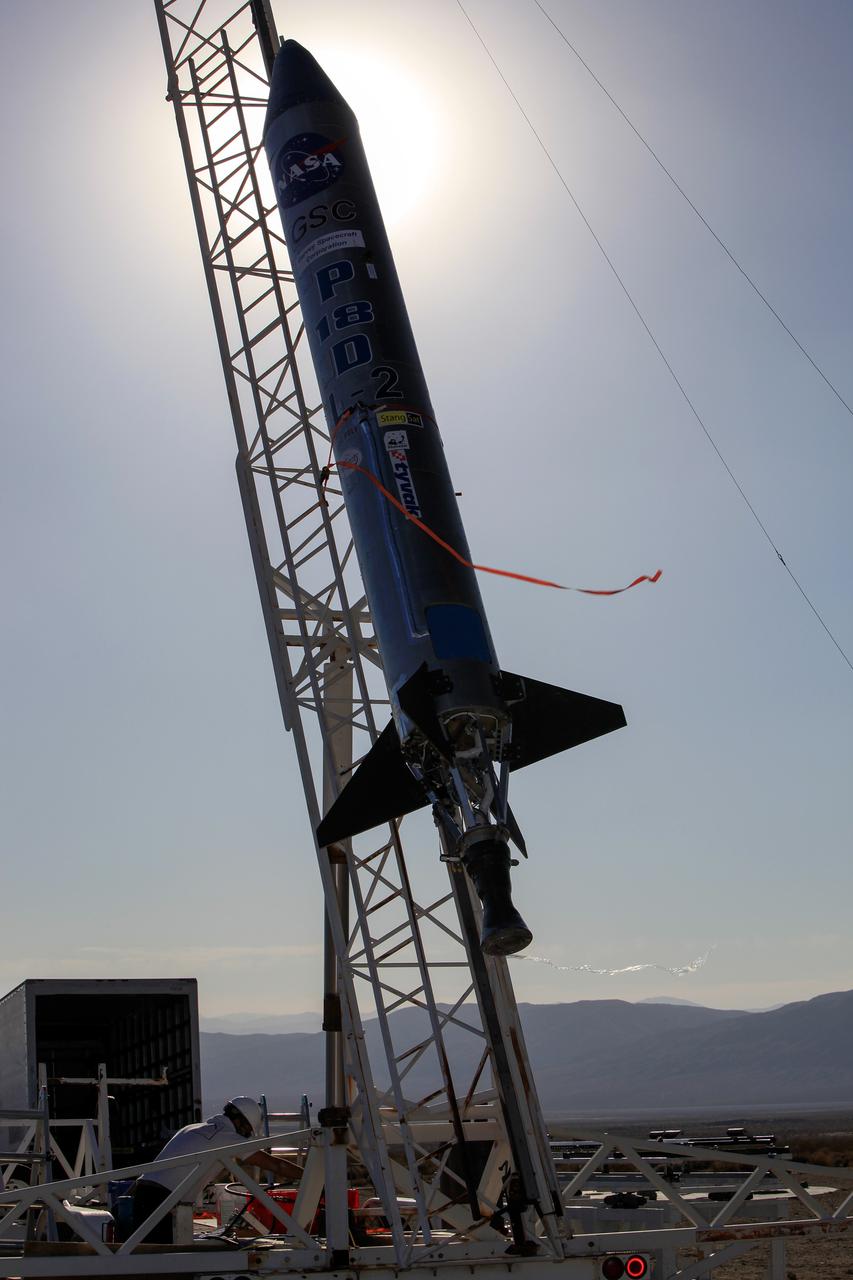
MOJAVE DESERT, Calif. – In the Mojave Desert in California, the Garvey Spacecraft Corporation's Prospector P-18D rocket is lifted into position for its scheduled launch on June 15 with the RUBICS-1 payload on a high-altitude, suborbital flight. The rocket will carry four satellites made from four-inch cube sections. Collectively known as CubeSats, the satellites will record shock, vibrations and heat inside the rocket. They will not be released during the test flight, but the results will be used to prove or strengthen their designs before they are carried into orbit in 2014 on a much larger rocket. A new, lightweight carrier is also being tested for use on future missions to deploy the small spacecraft. The flight also is being watched closely as a model for trying out new or off-the-shelf technologies quickly before putting them in the pipeline for use on NASA's largest launchers. Built by several different organizations, including a university, a NASA field center and a high school, the spacecraft are four-inch cubes designed to fly on their own eventually, but will remain firmly attached to the rocket during the upcoming mission. For more information, visit http://www.nasa.gov/mission_pages/smallsats/elana/cubesatlaunchpreview.html Photo credit: NASA/Dimitri Gerondidakis
MOJAVE DESERT, Calif. – In the Mojave Desert in California, final checkouts are completed on the Garvey Spacecraft Corporation's Prospector P-18D rocket positioned for launch with the RUBICS-1 payload on a high-altitude, suborbital flight. The rocket will carry four satellites made from four-inch cube sections. The rocket reached a peak altitude of about 9,000 feet, however the parachute deployed prematurely and the vehicle continued on its trajectory, coasting and tumbling to a hard landing on its side. In spite of the rough ride, all four CubeSats were recovered. PhoneSat and RUBICS received data in flight, but sustained structural damage. CP-9 and StangSat fared better, and their teams are working to recover as much information as possible. Collectively known as CubeSats, the satellites were designed to record shock, vibrations and heat inside the rocket. The results will be used to prove or strengthen their designs before they are carried into orbit in 2014 on a much larger rocket. Built by several different organizations, including a university, a NASA field center and a high school, the spacecraft are four-inch cubes designed to fly on their own eventually, but will remain firmly attached to the rocket during the upcoming mission. For more information, visit http://www.nasa.gov/mission_pages/smallsats/elana/cubesatlaunchpreview.html Photo credit: NASA/Dimitri Gerondidakis
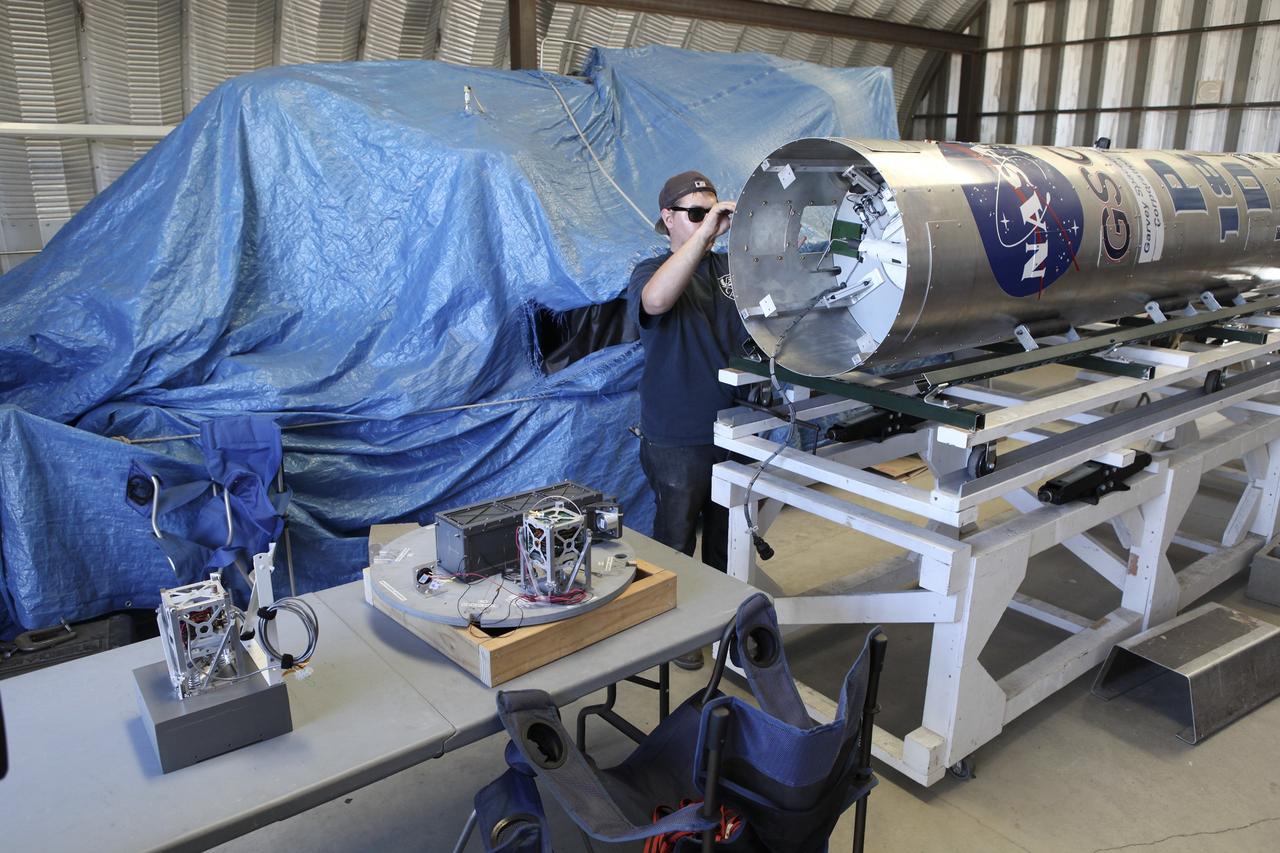
MOJAVE DESERT, Calif. – In the Mojave Desert in California, a student checks out the Garvey Spacecraft Corporation's Prospector P-18D rocket scheduled for launch June 15 with the RUBICS-1 payload on a high-altitude, suborbital flight. The rocket will carry four satellites made from four-inch cube section. Collectively known as CubeSats, the satellites will record shock, vibrations and heat inside the rocket. They will not be released during the test flight, but the results will be used to prove or strengthen their designs before they are carried into orbit in 2014 on a much larger rocket. A new, lightweight carrier is also being tested for use on future missions to deploy the small spacecraft. The flight also is being watched closely as a model for trying out new or off-the-shelf technologies quickly before putting them in the pipeline for use on NASA's largest launchers. Built by several different organizations, including a university, a NASA field center and a high school, the spacecraft are four-inch cubes designed to fly on their own eventually, but will remain firmly attached to the rocket during the upcoming mission. For more information, visit http://www.nasa.gov/mission_pages/smallsats/elana/cubesatlaunchpreview.html Photo credit: NASA/Dimitri Gerondidakis
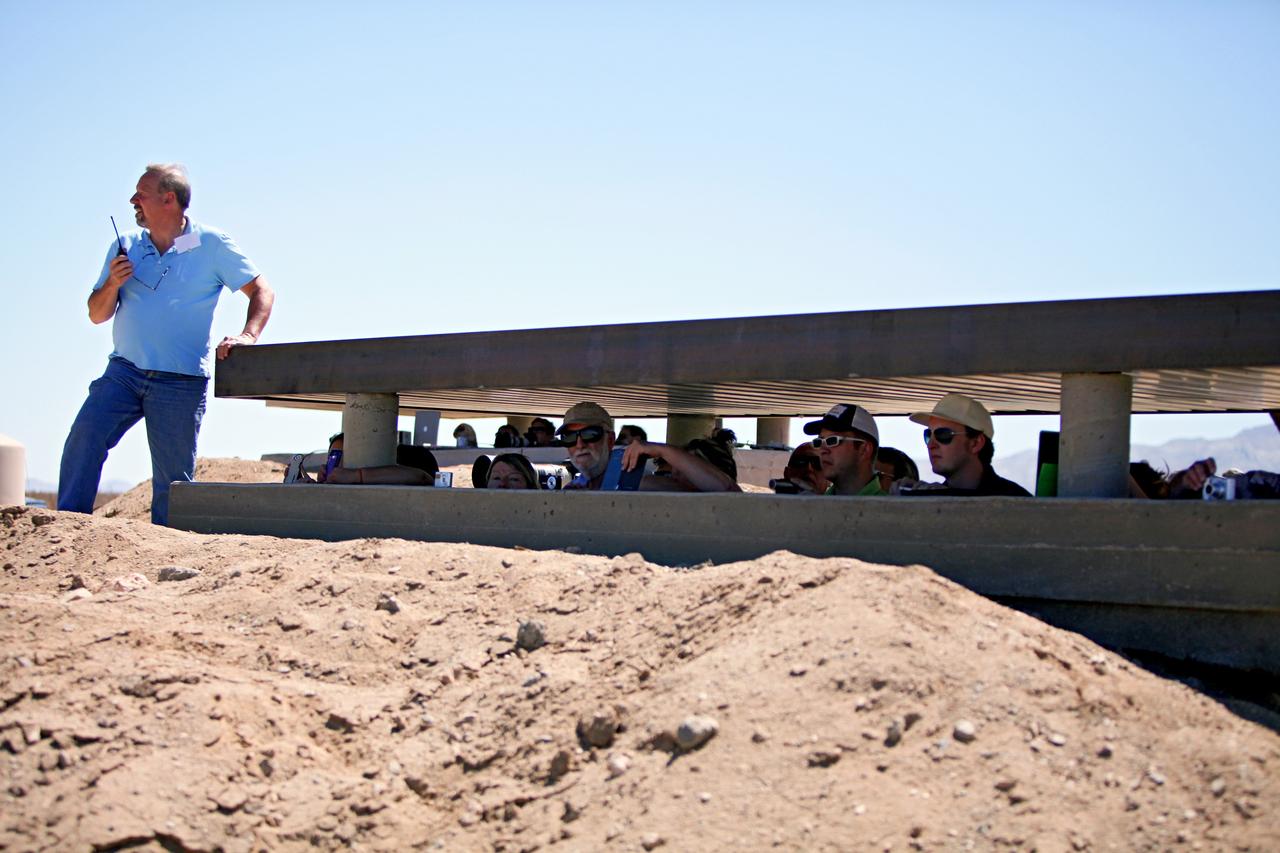
MOJAVE DESERT, Calif. – In the Mojave Desert in California, Kevin Baxter, a range representative of the Friends of Amateur Rocketry launch site, ensures all is ready for launch of the Garvey Spacecraft Corporation's Prospector P-18D rocket with the RUBICS-1 payload on a high-altitude, suborbital flight. The rocket will carry four satellites made from four-inch cube sections. The rocket reached a peak altitude of about 9,000 feet, however the parachute deployed prematurely and the vehicle continued on its trajectory, coasting and tumbling to a hard landing on its side. In spite of the rough ride, all four CubeSats were recovered. PhoneSat and RUBICS received data in flight, but sustained structural damage. CP-9 and StangSat fared better, and their teams are working to recover as much information as possible. Collectively known as CubeSats, the satellites were designed to record shock, vibrations and heat inside the rocket. The results will be used to prove or strengthen their designs before they are carried into orbit in 2014 on a much larger rocket. Built by several different organizations, including a university, a NASA field center and a high school, the spacecraft are four-inch cubes designed to fly on their own eventually, but will remain firmly attached to the rocket during the upcoming mission. For more information, visit http://www.nasa.gov/mission_pages/smallsats/elana/cubesatlaunchpreview.html Photo credit: NASA/Dimitri Gerondidakis
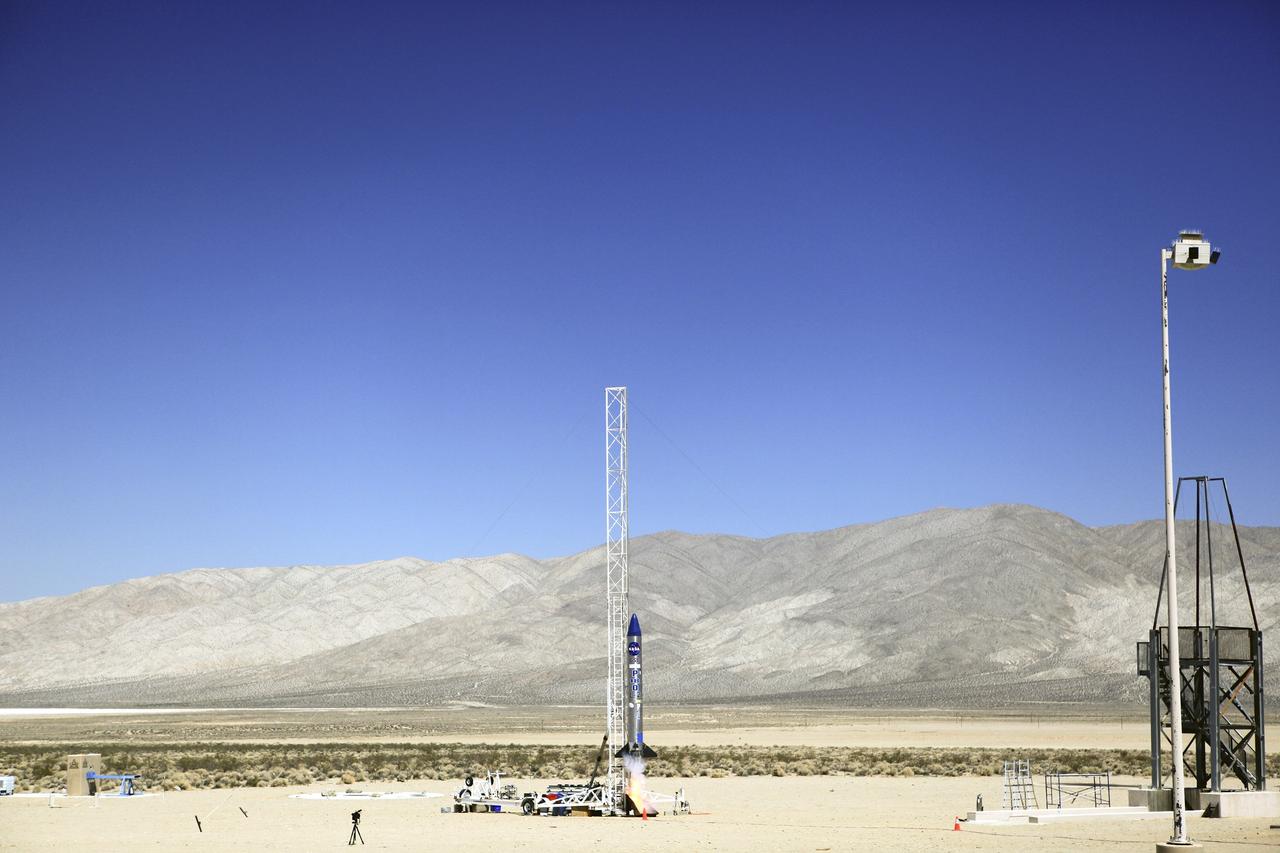
MOJAVE DESERT, Calif. – In the Mojave Desert in California, the Garvey Spacecraft Corporation's Prospector P-18D rocket lifts off at 10:52 a.m. PDT carrying the RUBICS-1 payload on a high-altitude, suborbital flight. The rocket carried four satellites made from four-inch cube sections. The rocket reached a peak altitude of about 9,000 feet, however the parachute deployed prematurely and the vehicle continued on its trajectory, coasting and tumbling to a hard landing on its side. In spite of the rough ride, all four CubeSats were recovered. PhoneSat and RUBICS received data in flight, but sustained structural damage. CP-9 and StangSat fared better, and their teams are working to recover as much information as possible. Collectively known as CubeSats, the satellites were designed to record shock, vibrations and heat inside the rocket. The results will be used to prove or strengthen their designs before they are carried into orbit in 2014 on a much larger rocket. Built by several different organizations, including a university, a NASA field center and a high school, the spacecraft are four-inch cubes designed to fly on their own eventually, but will remain firmly attached to the rocket during the upcoming mission. For more information, visit http://www.nasa.gov/mission_pages/smallsats/elana/cubesatlaunchpreview.html Photo credit: NASA/Dimitri Gerondidakis
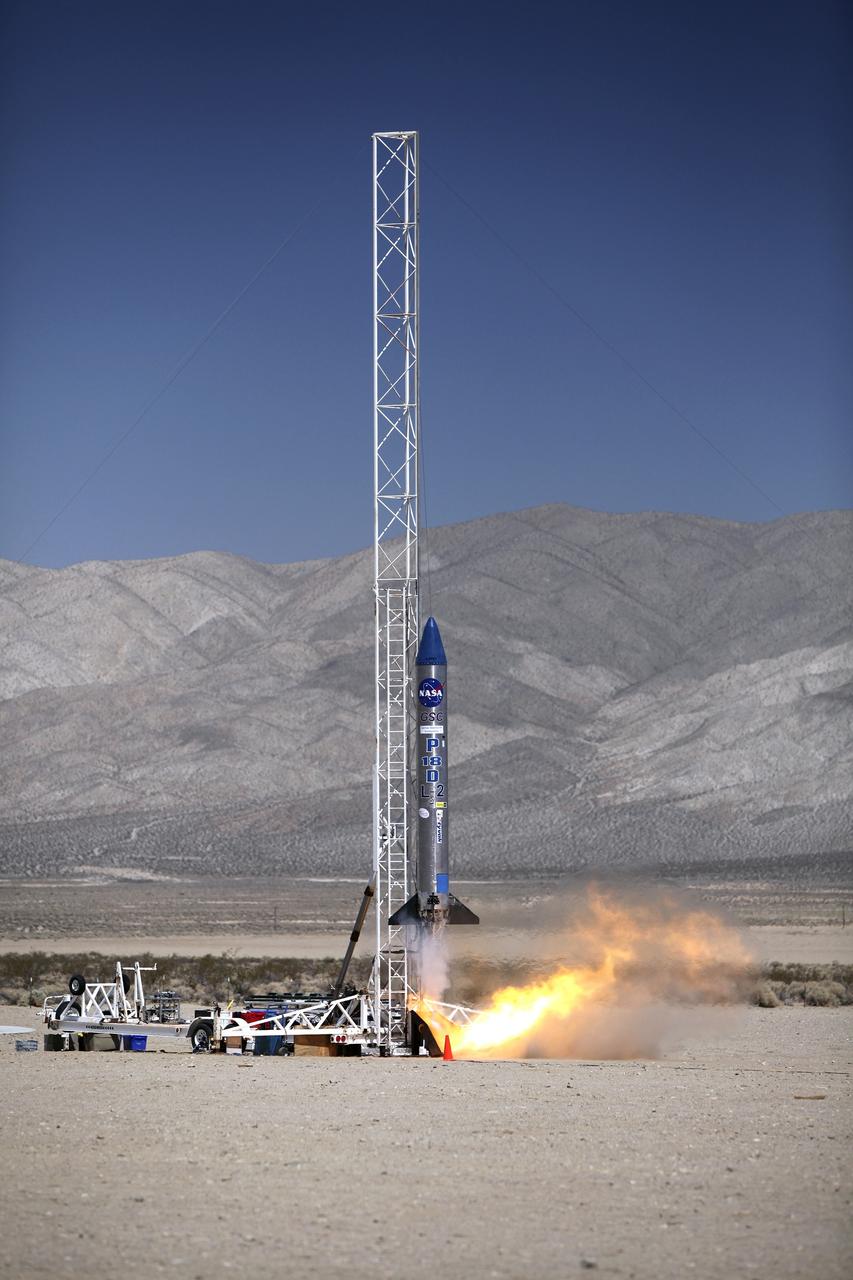
MOJAVE DESERT, Calif. – In the Mojave Desert in California, the Garvey Spacecraft Corporation's Prospector P-18D rocket lifts off at 10:52 a.m. PDT carrying the RUBICS-1 payload on a high-altitude, suborbital flight. The rocket carried four satellites made from four-inch cube sections. The rocket reached a peak altitude of about 9,000 feet, however the parachute deployed prematurely and the vehicle continued on its trajectory, coasting and tumbling to a hard landing on its side. In spite of the rough ride, all four CubeSats were recovered. PhoneSat and RUBICS received data in flight, but sustained structural damage. CP-9 and StangSat fared better, and their teams are working to recover as much information as possible. Collectively known as CubeSats, the satellites were designed to record shock, vibrations and heat inside the rocket. The results will be used to prove or strengthen their designs before they are carried into orbit in 2014 on a much larger rocket. Built by several different organizations, including a university, a NASA field center and a high school, the spacecraft are four-inch cubes designed to fly on their own eventually, but will remain firmly attached to the rocket during the upcoming mission. For more information, visit http://www.nasa.gov/mission_pages/smallsats/elana/cubesatlaunchpreview.html Photo credit: NASA/Dimitri Gerondidakis
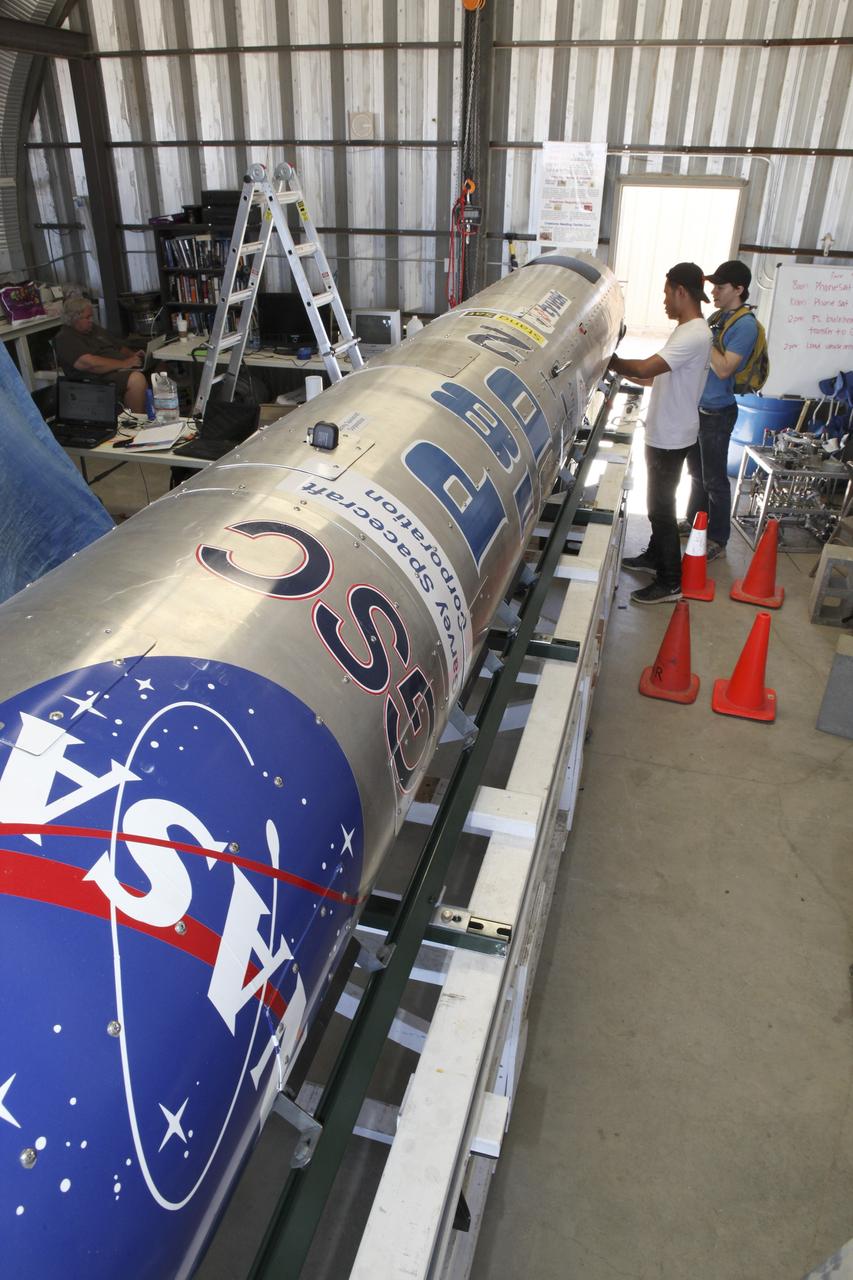
MOJAVE DESERT, Calif. – In the Mojave Desert in California, students and engineers pack the parachute in the Garvey Spacecraft Corporation's Prospector P-18D rocket. The work is in preparation for the June 15 launch of a on a high-altitude, suborbital flight. The rocket will carry four satellites made from four-inch cube section. Collectively known as CubeSats, the satellites will record shock, vibrations and heat inside the rocket. They will not be released during the test flight, but the results will be used to prove or strengthen their designs before they are carried into orbit in 2014 on a much larger rocket. A new, lightweight carrier is also being tested for use on future missions to deploy the small spacecraft. The flight also is being watched closely as a model for trying out new or off-the-shelf technologies quickly before putting them in the pipeline for use on NASA's largest launchers. Built by several different organizations, including a university, a NASA field center and a high school, the spacecraft are four-inch cubes designed to fly on their own eventually, but will remain firmly attached to the rocket during the upcoming mission. For more information, visit http://www.nasa.gov/mission_pages/smallsats/elana/cubesatlaunchpreview.html Photo credit: NASA/Dimitri Gerondidakis
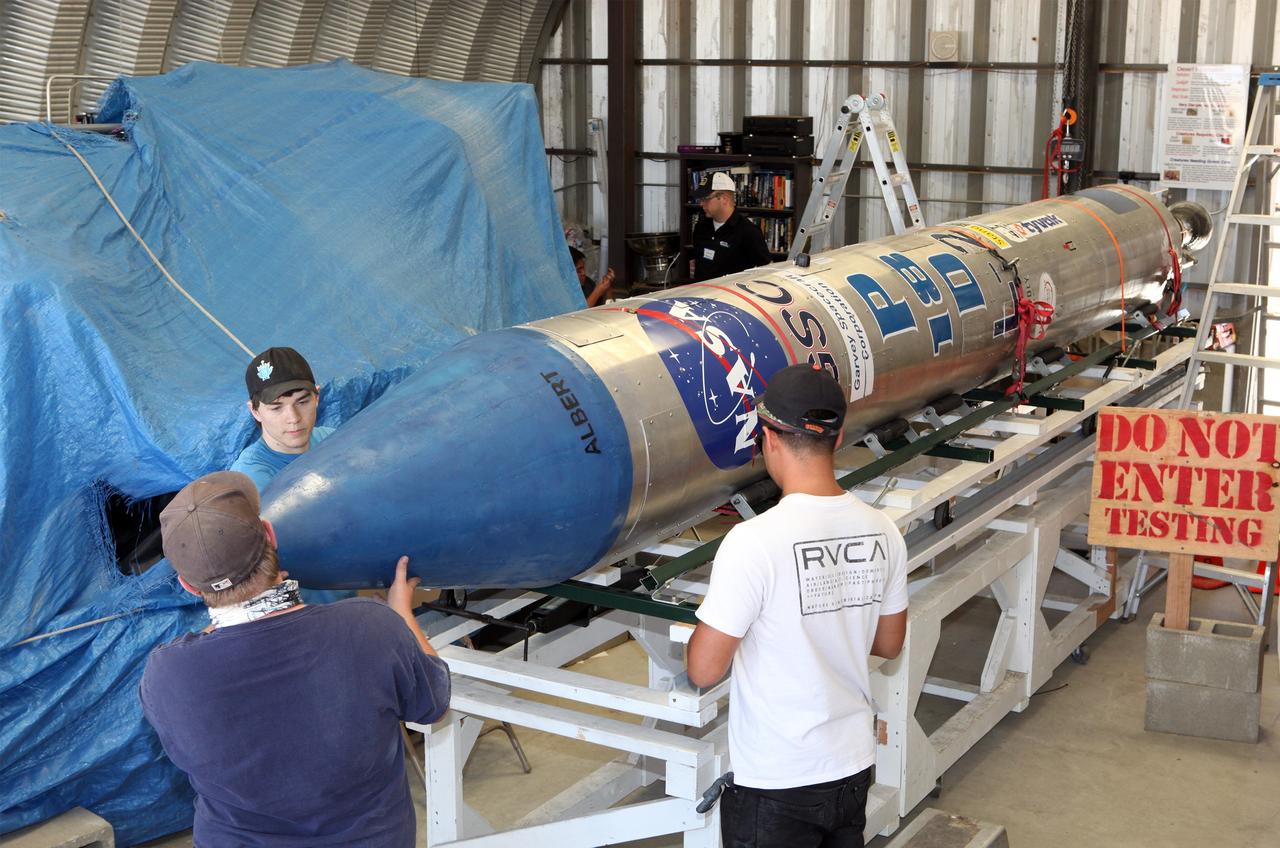
MOJAVE DESERT, Calif. – In the Mojave Desert in California, students install the nose cone on the Garvey Spacecraft Corporation's Prospector P-18D rocket. The work is in preparation for the June 15 launch on a high-altitude, suborbital flight. The rocket will carry four satellites made from four-inch cube sections. Collectively known as CubeSats, the satellites will record shock, vibrations and heat inside the rocket. They will not be released during the test flight, but the results will be used to prove or strengthen their designs before they are carried into orbit in 2014 on a much larger rocket. A new, lightweight carrier is also being tested for use on future missions to deploy the small spacecraft. The flight also is being watched closely as a model for trying out new or off-the-shelf technologies quickly before putting them in the pipeline for use on NASA's largest launchers. Built by several different organizations, including a university, a NASA field center and a high school, the spacecraft are four-inch cubes designed to fly on their own eventually, but will remain firmly attached to the rocket during the upcoming mission. For more information, visit http://www.nasa.gov/mission_pages/smallsats/elana/cubesatlaunchpreview.html Photo credit: NASA/Dimitri Gerondidakis
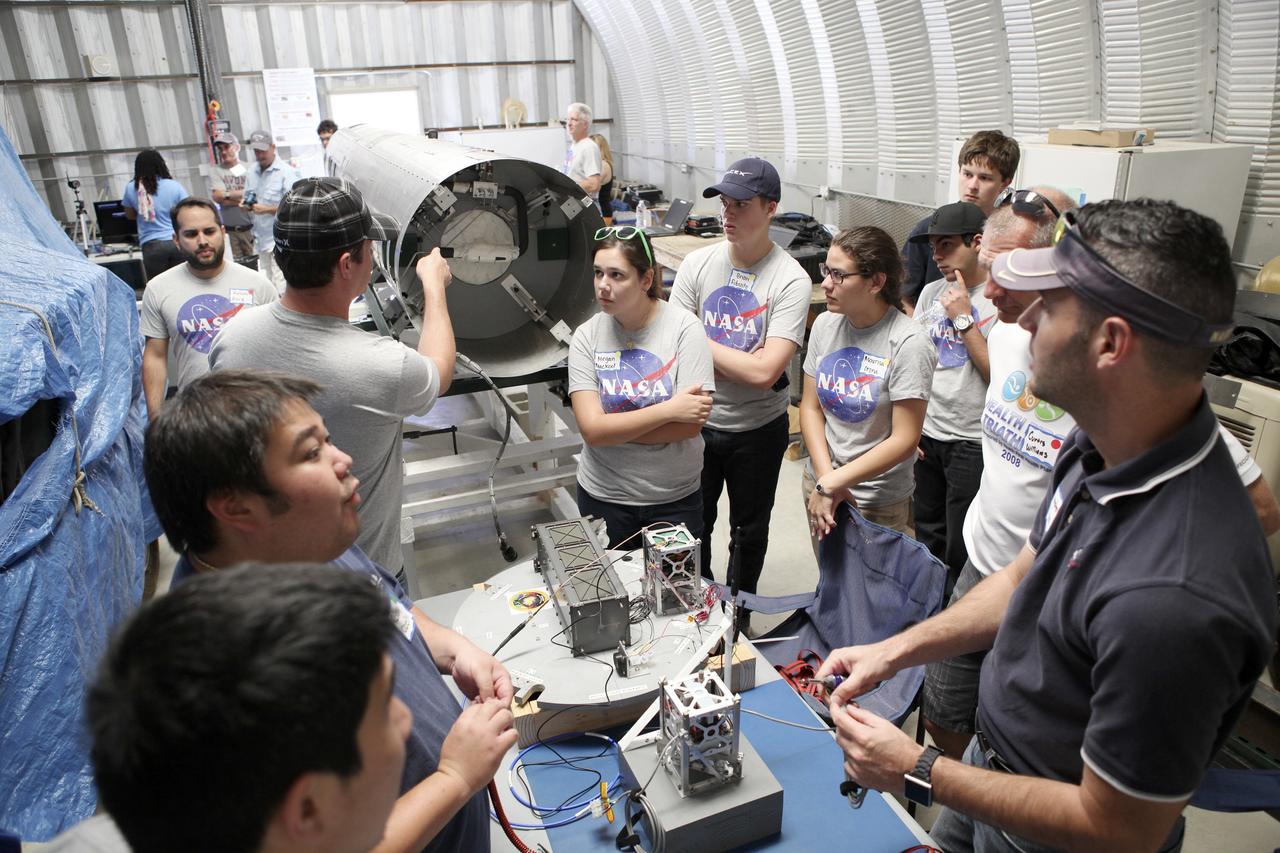
MOJAVE DESERT, Calif. – In the Mojave Desert in California, students and engineers checkout the RUBICS-1 payload into the body of the Garvey Spacecraft Corporation's Prospector P-18D rocket for launch June 15 on a high-altitude, suborbital flight. The flight will carry four satellites made from four-inch cube section. Collectively known as CubeSats, the satellites will record shock, vibrations and heat inside the rocket. They will not be released during the test flight, but the results will be used to prove or strengthen their designs before they are carried into orbit in 2014 on a much larger rocket. A new, lightweight carrier is also being tested for use on future missions to deploy the small spacecraft. The flight also is being watched closely as a model for trying out new or off-the-shelf technologies quickly before putting them in the pipeline for use on NASA's largest launchers. Built by several different organizations, including a university, a NASA field center and a high school, the spacecraft are four-inch cubes designed to fly on their own eventually, but will remain firmly attached to the rocket during the upcoming mission. For more information, visit http://www.nasa.gov/mission_pages/smallsats/elana/cubesatlaunchpreview.html Photo credit: NASA/Dimitri Gerondidakis
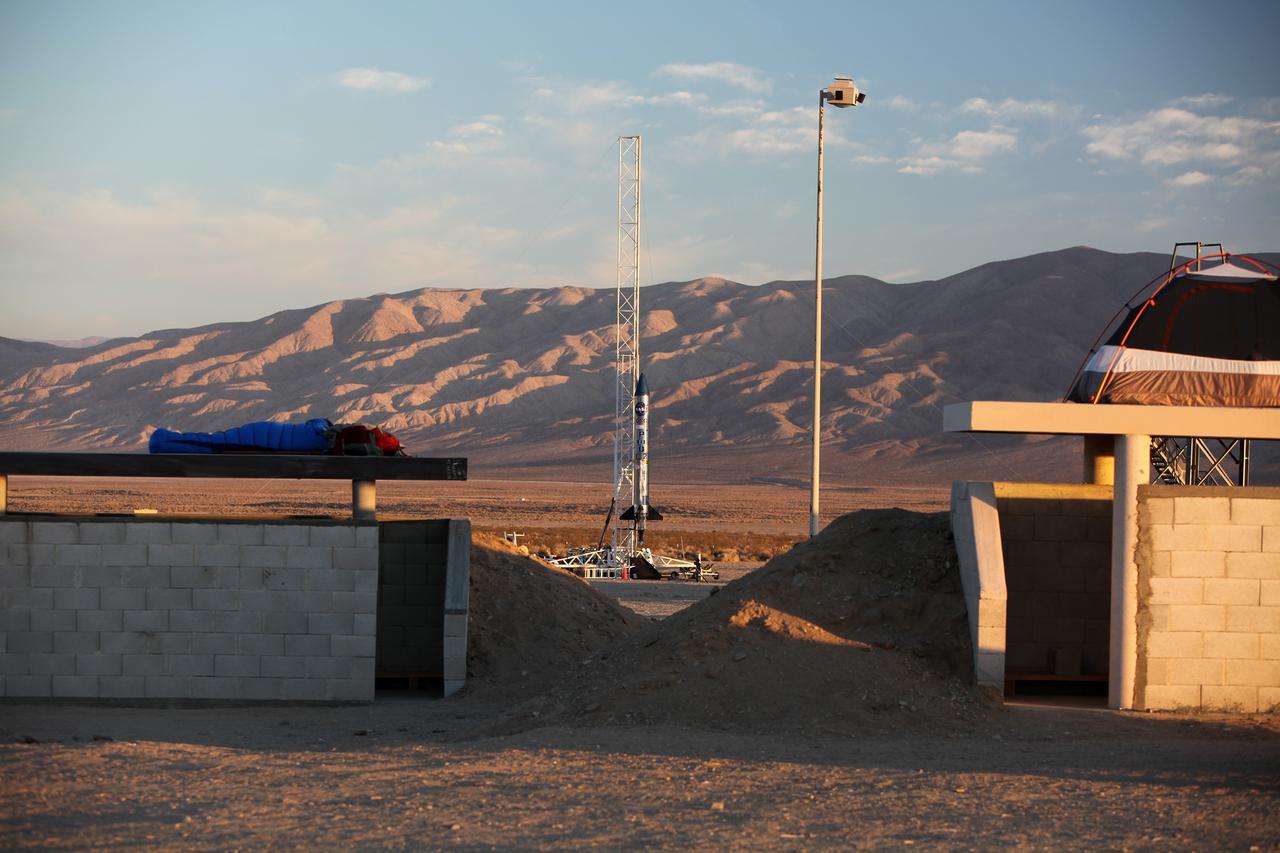
MOJAVE DESERT, Calif. – Viewed from a nearby bunker in the Mojave Desert in California, the Garvey Spacecraft Corporation's Prospector P-18D rocket is positioned for launch with the RUBICS-1 payload on a high-altitude, suborbital flight. The rocket will carry four satellites made from four-inch cube sections. Collectively known as CubeSats, the satellites will record shock, vibrations and heat inside the rocket. They will not be released during the test flight, but the results will be used to prove or strengthen their designs before they are carried into orbit in 2014 on a much larger rocket. A new, lightweight carrier is also being tested for use on future missions to deploy the small spacecraft. The flight also is being watched closely as a model for trying out new or off-the-shelf technologies quickly before putting them in the pipeline for use on NASA's largest launchers. Built by several different organizations, including a university, a NASA field center and a high school, the spacecraft are four-inch cubes designed to fly on their own eventually, but will remain firmly attached to the rocket during the upcoming mission. For more information, visit http://www.nasa.gov/mission_pages/smallsats/elana/cubesatlaunchpreview.html Photo credit: NASA/Dimitri Gerondidakis
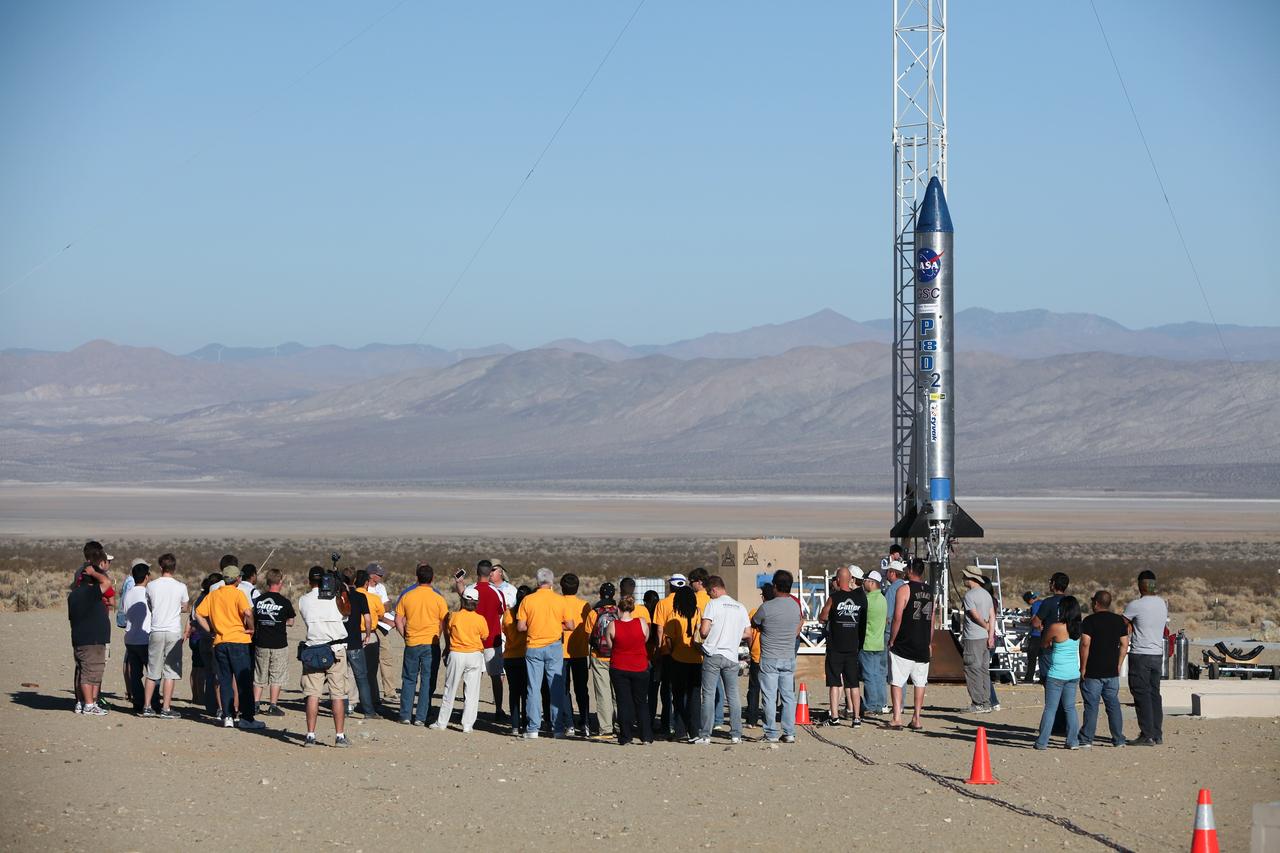
MOJAVE DESERT, Calif. – In the Mojave Desert in California, students and engineers participate in a pre-launch briefing before the lift off of the Garvey Spacecraft Corporation's Prospector P-18D rocket. The rocket is scheduled to launch the RUBICS-1 payload on a high-altitude, suborbital flight. The rocket will carry four satellites made from four-inch cube sections. The rocket reached a peak altitude of about 9,000 feet, however the parachute deployed prematurely and the vehicle continued on its trajectory, coasting and tumbling to a hard landing on its side. In spite of the rough ride, all four CubeSats were recovered. PhoneSat and RUBICS received data in flight, but sustained structural damage. CP-9 and StangSat fared better, and their teams are working to recover as much information as possible. Collectively known as CubeSats, the satellites were designed to record shock, vibrations and heat inside the rocket. The results will be used to prove or strengthen their designs before they are carried into orbit in 2014 on a much larger rocket. Built by several different organizations, including a university, a NASA field center and a high school, the spacecraft are four-inch cubes designed to fly on their own eventually, but will remain firmly attached to the rocket during the upcoming mission. For more information, visit http://www.nasa.gov/mission_pages/smallsats/elana/cubesatlaunchpreview.html Photo credit: NASA/Dimitri Gerondidakis
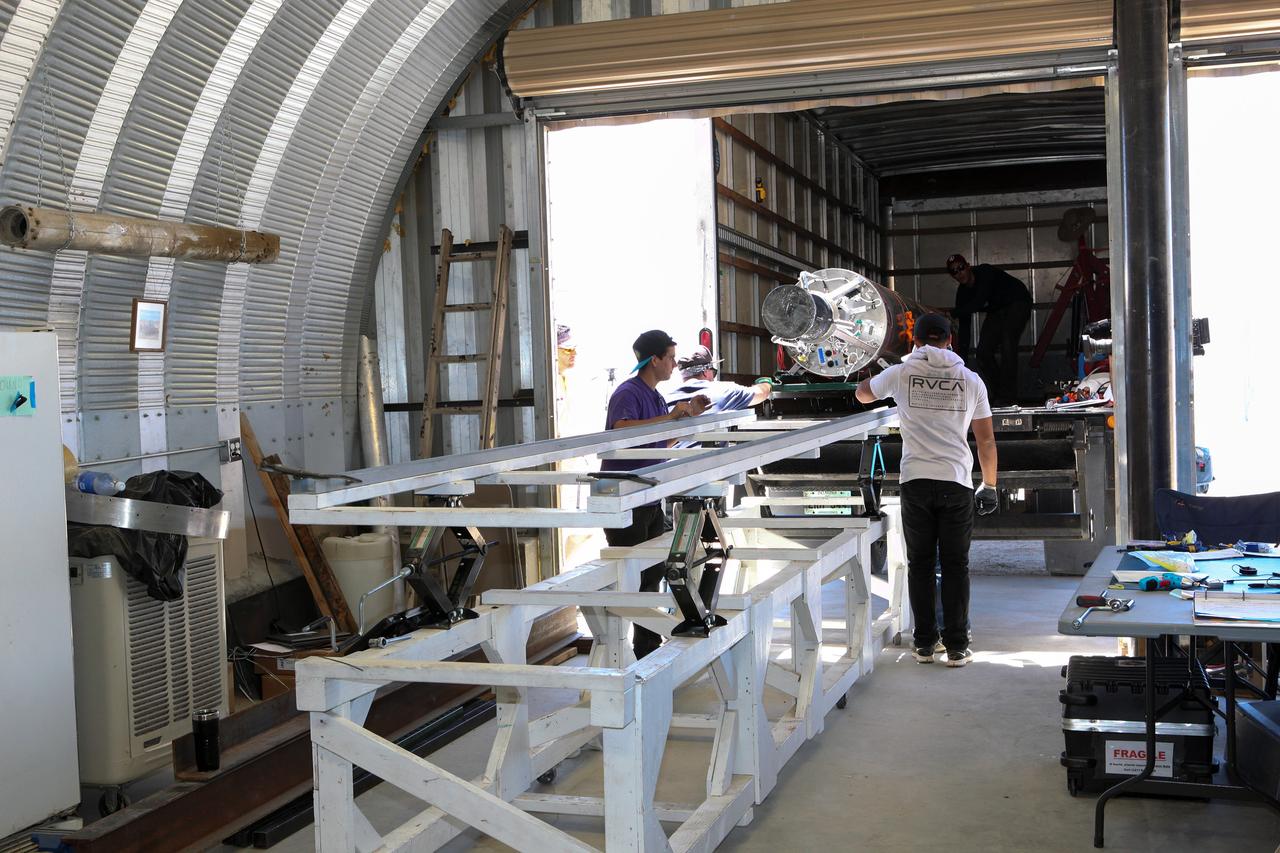
MOJAVE DESERT, Calif. – In the Mojave Desert in California, students and engineers load the Garvey Spacecraft Corporation's Prospector P-18D rocket onto a truck for transportation to the launch site. The rocket is scheduled for launch June 15 with the RUBICS-1 payload on a high-altitude, suborbital flight. The rocket will carry four satellites made from four-inch cube sections. Collectively known as CubeSats, the satellites will record shock, vibrations and heat inside the rocket. They will not be released during the test flight, but the results will be used to prove or strengthen their designs before they are carried into orbit in 2014 on a much larger rocket. A new, lightweight carrier is also being tested for use on future missions to deploy the small spacecraft. The flight also is being watched closely as a model for trying out new or off-the-shelf technologies quickly before putting them in the pipeline for use on NASA's largest launchers. Built by several different organizations, including a university, a NASA field center and a high school, the spacecraft are four-inch cubes designed to fly on their own eventually, but will remain firmly attached to the rocket during the upcoming mission. For more information, visit http://www.nasa.gov/mission_pages/smallsats/elana/cubesatlaunchpreview.html Photo credit: NASA/Dimitri Gerondidakis
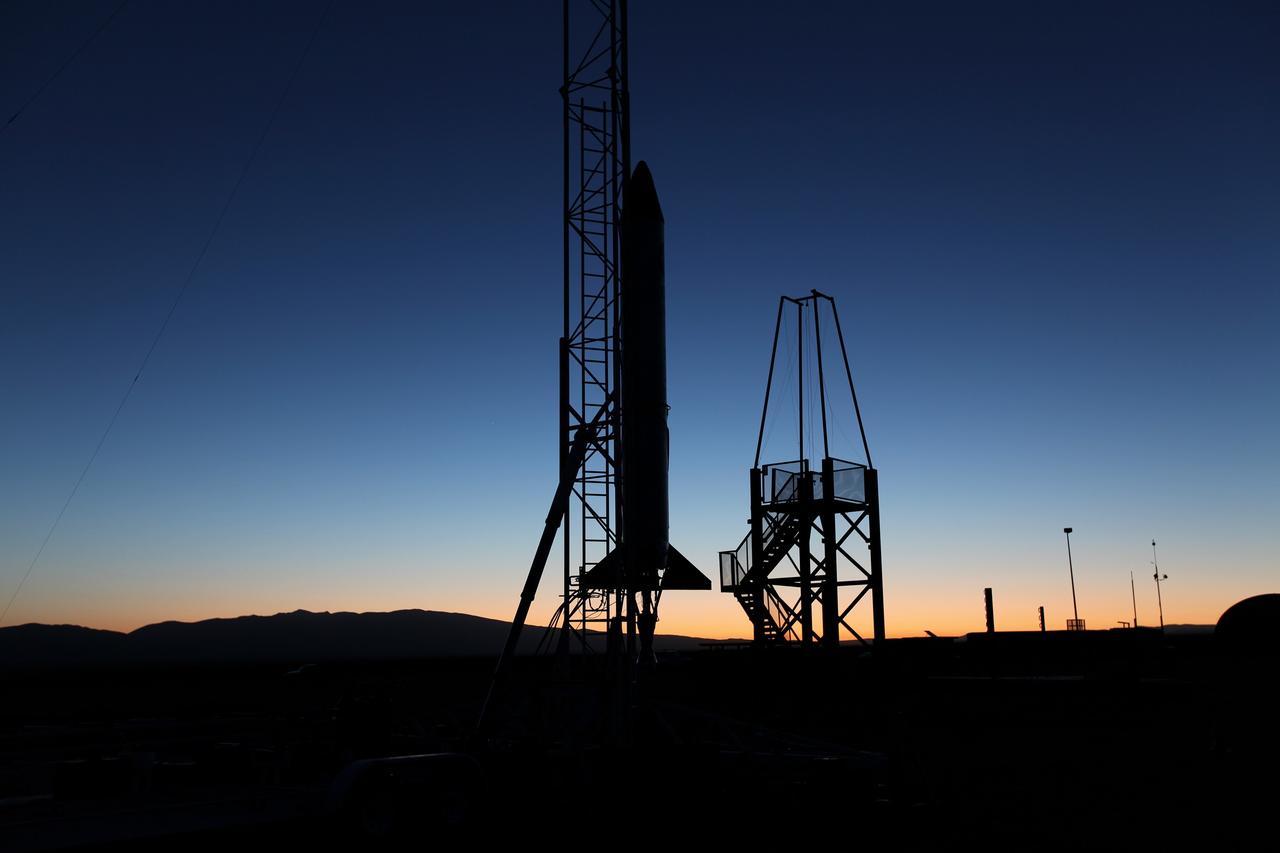
MOJAVE DESERT, Calif. – As the sun rises in the Mojave Desert in California, the Garvey Spacecraft Corporation's Prospector P-18D rocket is positioned for launch with the RUBICS-1 payload on a high-altitude, suborbital flight. The rocket will carry four satellites made from four-inch cube sections. Collectively known as CubeSats, the satellites will record shock, vibrations and heat inside the rocket. They will not be released during the test flight, but the results will be used to prove or strengthen their designs before they are carried into orbit in 2014 on a much larger rocket. A new, lightweight carrier is also being tested for use on future missions to deploy the small spacecraft. The flight also is being watched closely as a model for trying out new or off-the-shelf technologies quickly before putting them in the pipeline for use on NASA's largest launchers. Built by several different organizations, including a university, a NASA field center and a high school, the spacecraft are four-inch cubes designed to fly on their own eventually, but will remain firmly attached to the rocket during the upcoming mission. For more information, visit http://www.nasa.gov/mission_pages/smallsats/elana/cubesatlaunchpreview.html Photo credit: NASA/Dimitri Gerondidakis
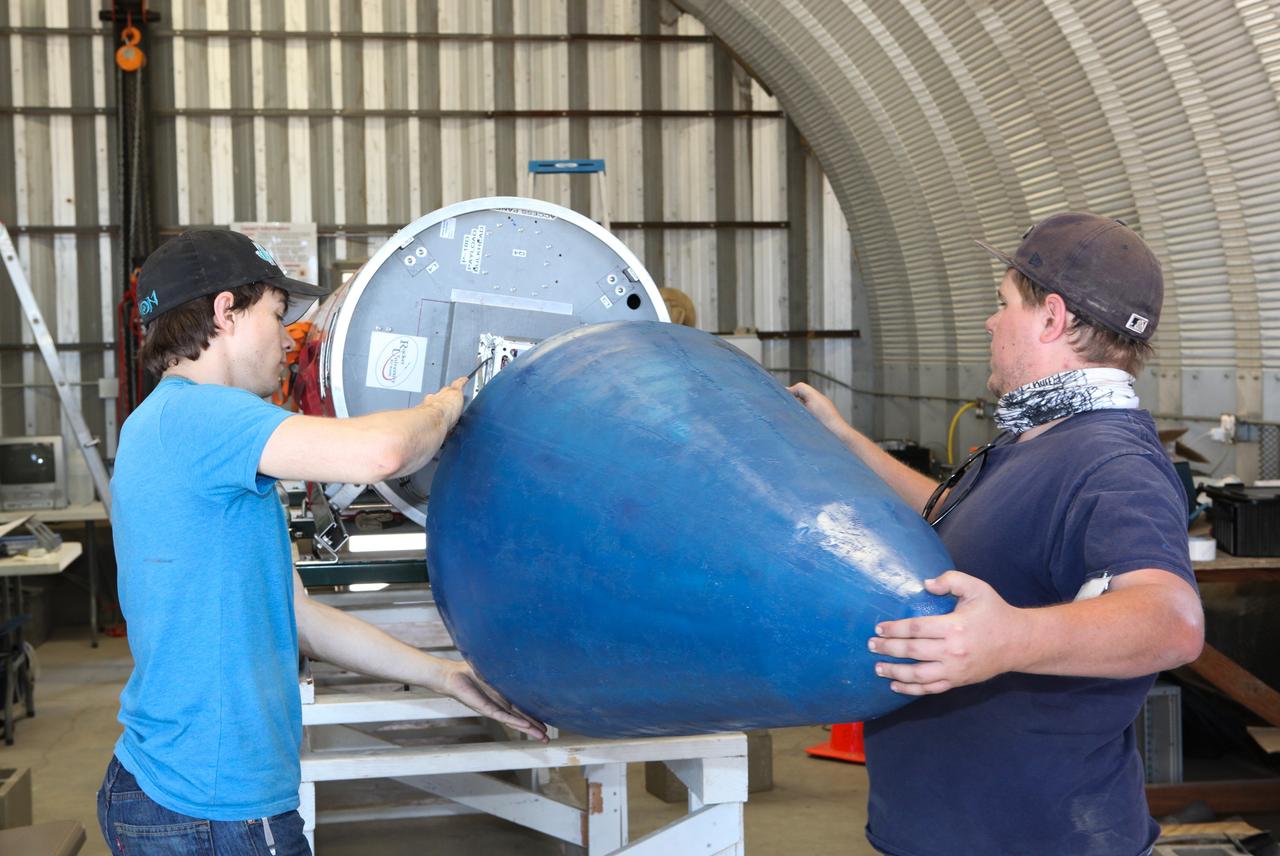
MOJAVE DESERT, Calif. – In the Mojave Desert in California, students install the nose cone on the Garvey Spacecraft Corporation's Prospector P-18D rocket. The work is in preparation for the June 15 launch on a high-altitude, suborbital flight. The rocket will carry four satellites made from four-inch cube sections. Collectively known as CubeSats, the satellites will record shock, vibrations and heat inside the rocket. They will not be released during the test flight, but the results will be used to prove or strengthen their designs before they are carried into orbit in 2014 on a much larger rocket. A new, lightweight carrier is also being tested for use on future missions to deploy the small spacecraft. The flight also is being watched closely as a model for trying out new or off-the-shelf technologies quickly before putting them in the pipeline for use on NASA's largest launchers. Built by several different organizations, including a university, a NASA field center and a high school, the spacecraft are four-inch cubes designed to fly on their own eventually, but will remain firmly attached to the rocket during the upcoming mission. For more information, visit http://www.nasa.gov/mission_pages/smallsats/elana/cubesatlaunchpreview.html Photo credit: NASA/Dimitri Gerondidakis
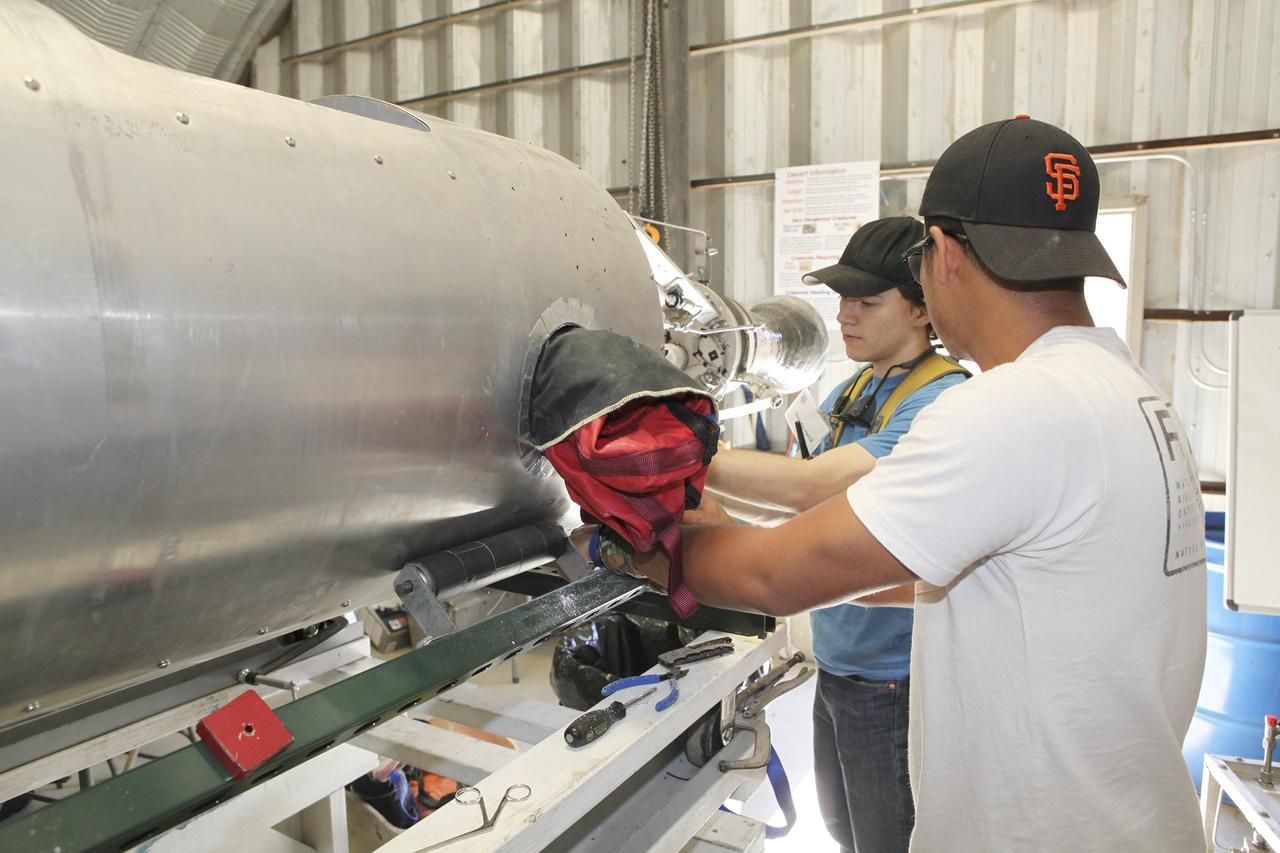
MOJAVE DESERT, Calif. – In the Mojave Desert in California, students and engineers pack the parachute in the Garvey Spacecraft Corporation's Prospector P-18D rocket. The work is in preparation for the June 15 launch of a on a high-altitude, suborbital flight. The rocket will carry four satellites made from four-inch cube section. Collectively known as CubeSats, the satellites will record shock, vibrations and heat inside the rocket. They will not be released during the test flight, but the results will be used to prove or strengthen their designs before they are carried into orbit in 2014 on a much larger rocket. A new, lightweight carrier is also being tested for use on future missions to deploy the small spacecraft. The flight also is being watched closely as a model for trying out new or off-the-shelf technologies quickly before putting them in the pipeline for use on NASA's largest launchers. Built by several different organizations, including a university, a NASA field center and a high school, the spacecraft are four-inch cubes designed to fly on their own eventually, but will remain firmly attached to the rocket during the upcoming mission. For more information, visit http://www.nasa.gov/mission_pages/smallsats/elana/cubesatlaunchpreview.html Photo credit: NASA/Dimitri Gerondidakis
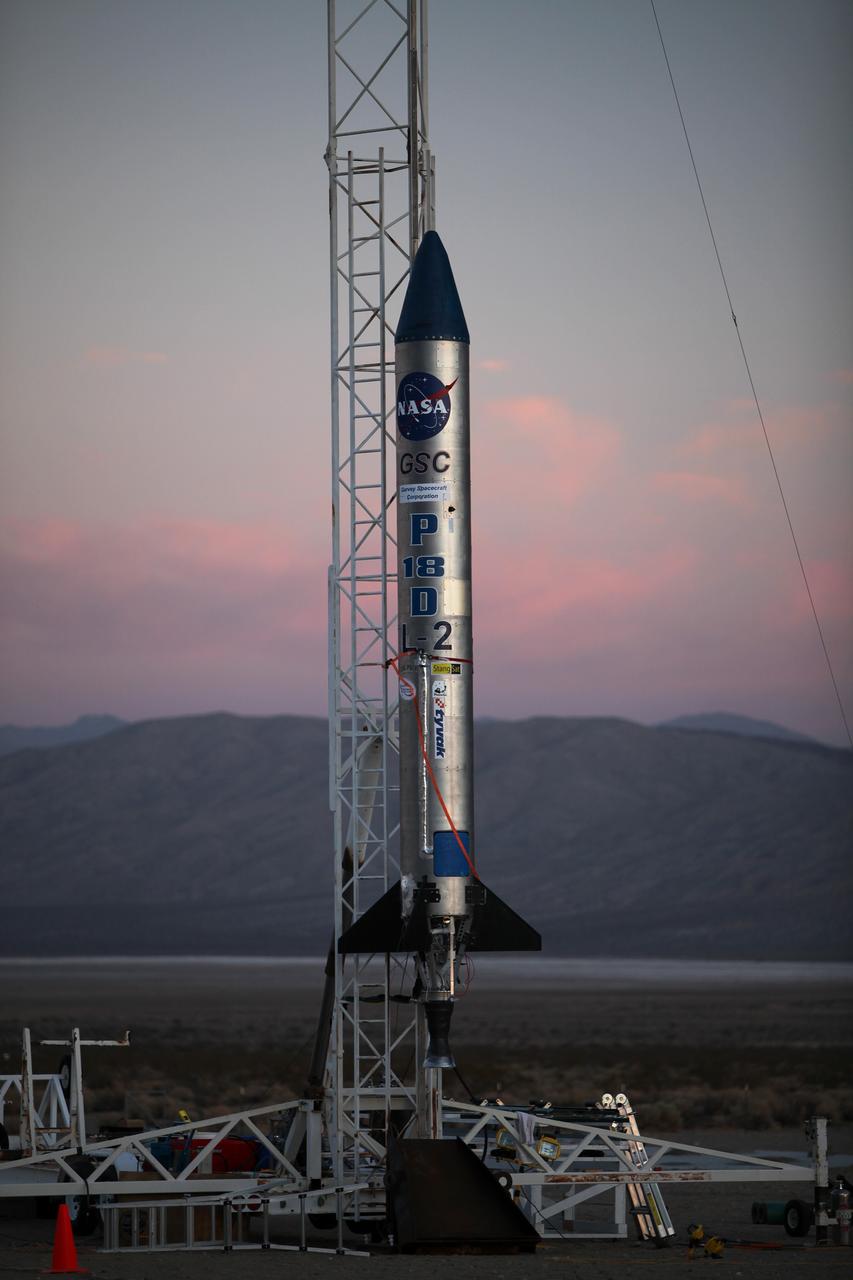
MOJAVE DESERT, Calif. – As the sun rises in the Mojave Desert in California, the Garvey Spacecraft Corporation's Prospector P-18D rocket is positioned for launch with the RUBICS-1 payload on a high-altitude, suborbital flight. The rocket will carry four satellites made from four-inch cube sections. Collectively known as CubeSats, the satellites will record shock, vibrations and heat inside the rocket. They will not be released during the test flight, but the results will be used to prove or strengthen their designs before they are carried into orbit in 2014 on a much larger rocket. A new, lightweight carrier is also being tested for use on future missions to deploy the small spacecraft. The flight also is being watched closely as a model for trying out new or off-the-shelf technologies quickly before putting them in the pipeline for use on NASA's largest launchers. Built by several different organizations, including a university, a NASA field center and a high school, the spacecraft are four-inch cubes designed to fly on their own eventually, but will remain firmly attached to the rocket during the upcoming mission. For more information, visit http://www.nasa.gov/mission_pages/smallsats/elana/cubesatlaunchpreview.html Photo credit: NASA/Dimitri Gerondidakis
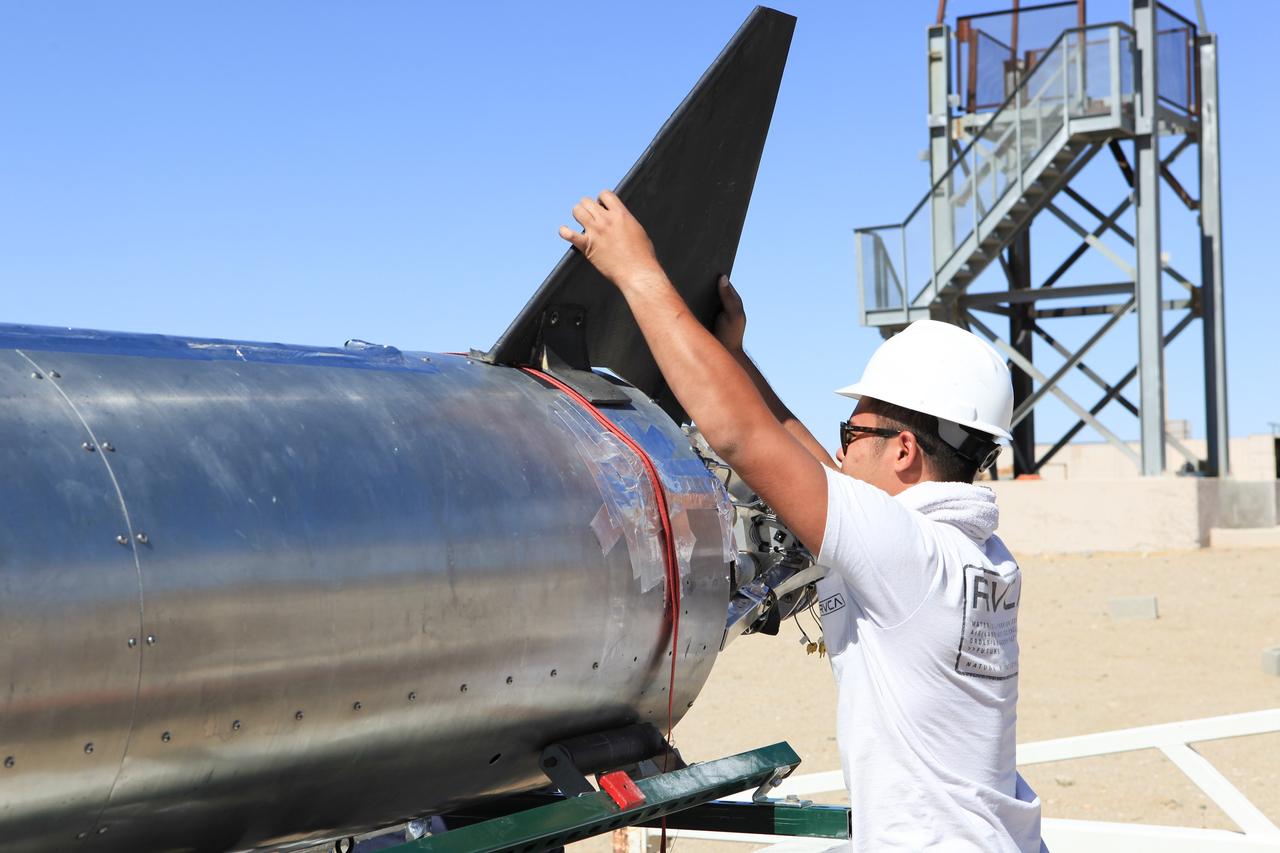
MOJAVE DESERT, Calif. – In the Mojave Desert in California, a student attaches a tail fin to the Garvey Spacecraft Corporation's Prospector P-18D rocket at the Friends of Amateur Rocketry launch site. The rocket is scheduled for flight June 15 with the RUBICS-1 payload on a high-altitude, suborbital flight. The rocket will carry four satellites made from four-inch cube sections. Collectively known as CubeSats, the satellites will record shock, vibrations and heat inside the rocket. They will not be released during the test flight, but the results will be used to prove or strengthen their designs before they are carried into orbit in 2014 on a much larger rocket. A new, lightweight carrier is also being tested for use on future missions to deploy the small spacecraft. The flight also is being watched closely as a model for trying out new or off-the-shelf technologies quickly before putting them in the pipeline for use on NASA's largest launchers. Built by several different organizations, including a university, a NASA field center and a high school, the spacecraft are four-inch cubes designed to fly on their own eventually, but will remain firmly attached to the rocket during the upcoming mission. For more information, visit http://www.nasa.gov/mission_pages/smallsats/elana/cubesatlaunchpreview.html Photo credit: NASA/Dimitri Gerondidakis
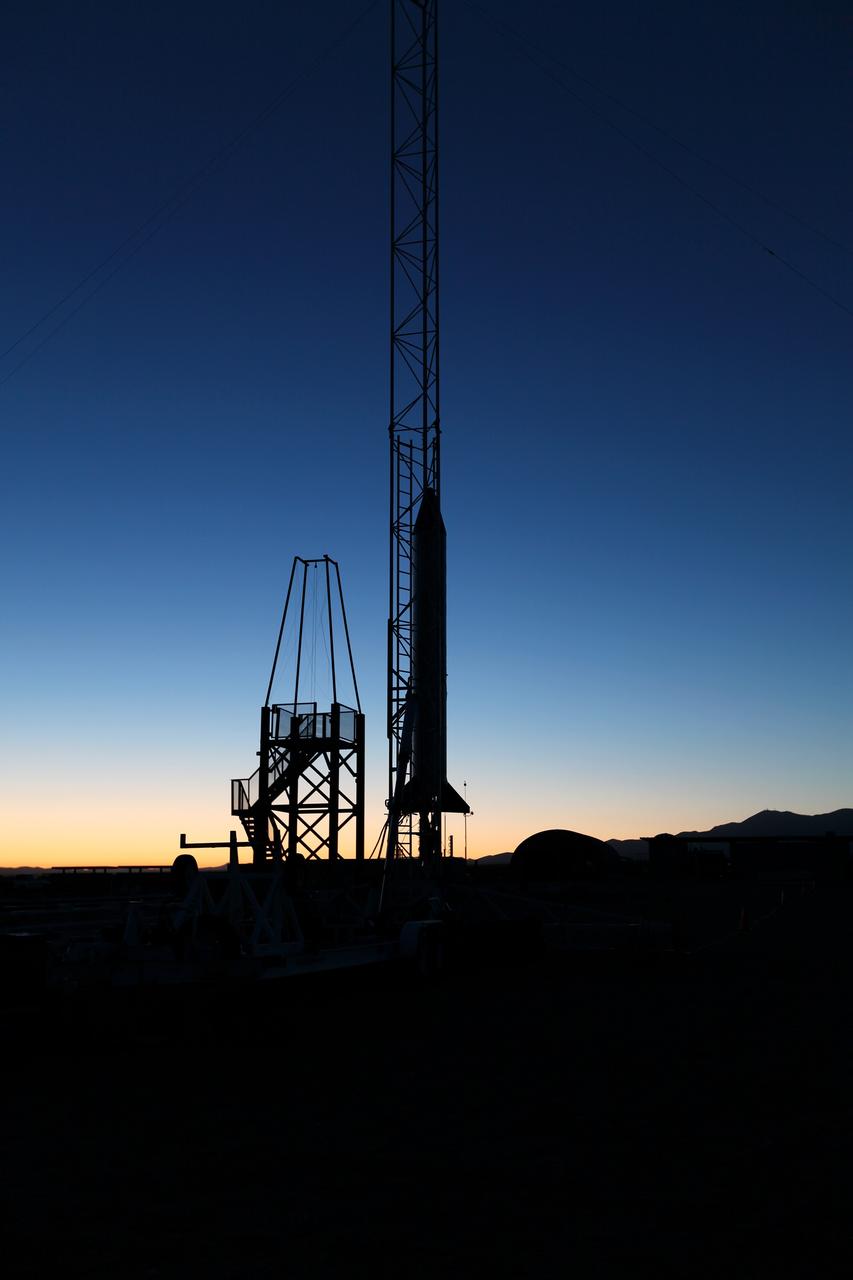
MOJAVE DESERT, Calif. – As the sun rises in the Mojave Desert in California, the Garvey Spacecraft Corporation's Prospector P-18D rocket is positioned for launch with the RUBICS-1 payload on a high-altitude, suborbital flight. The rocket will carry four satellites made from four-inch cube sections. Collectively known as CubeSats, the satellites will record shock, vibrations and heat inside the rocket. They will not be released during the test flight, but the results will be used to prove or strengthen their designs before they are carried into orbit in 2014 on a much larger rocket. A new, lightweight carrier is also being tested for use on future missions to deploy the small spacecraft. The flight also is being watched closely as a model for trying out new or off-the-shelf technologies quickly before putting them in the pipeline for use on NASA's largest launchers. Built by several different organizations, including a university, a NASA field center and a high school, the spacecraft are four-inch cubes designed to fly on their own eventually, but will remain firmly attached to the rocket during the upcoming mission. For more information, visit http://www.nasa.gov/mission_pages/smallsats/elana/cubesatlaunchpreview.html Photo credit: NASA/Dimitri Gerondidakis
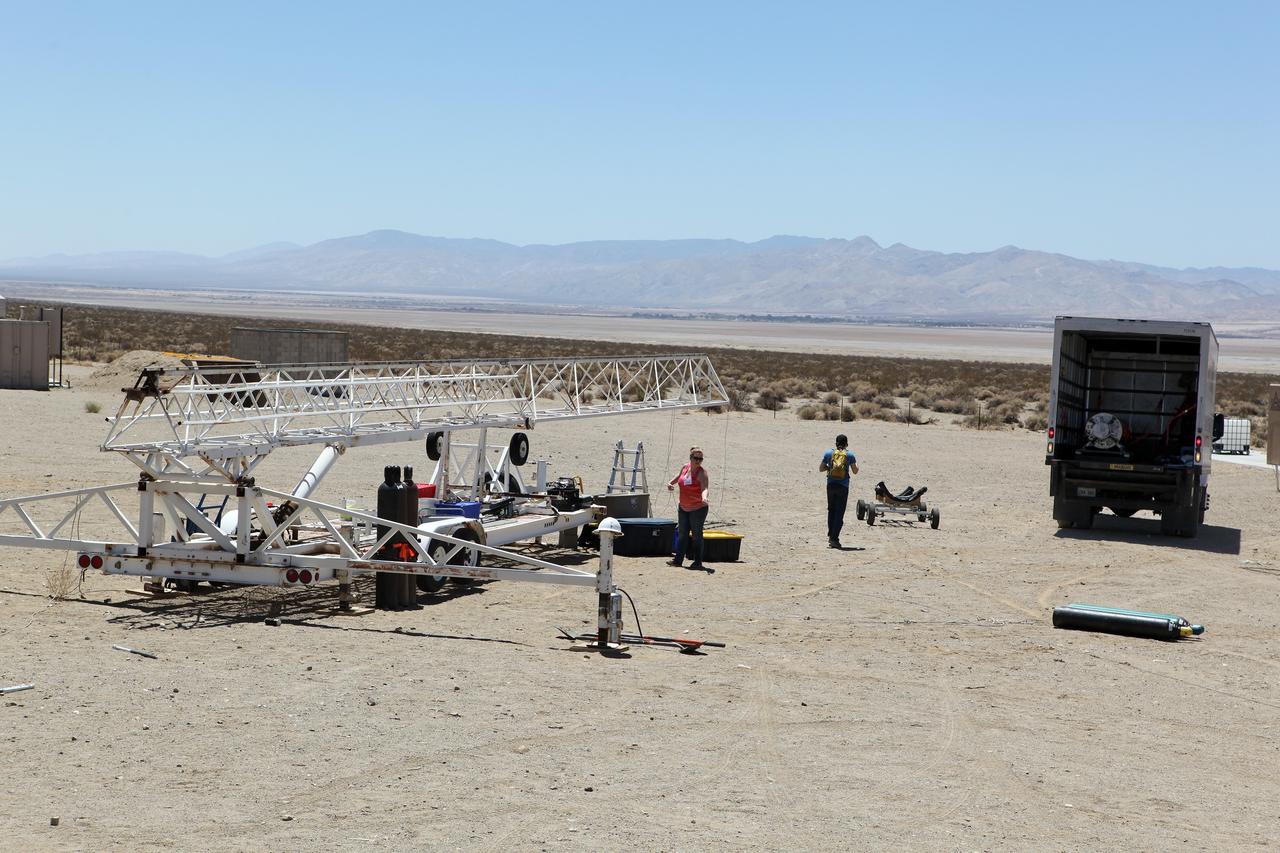
MOJAVE DESERT, Calif. – In the Mojave Desert in California, students and engineers prepare the launch stand for the Garvey Spacecraft Corporation's Prospector P-18D rocket. The rocket is scheduled for launch June 15 with the RUBICS-1 payload on a high-altitude, suborbital flight. The rocket will carry four satellites made from four-inch cube sections. Collectively known as CubeSats, the satellites will record shock, vibrations and heat inside the rocket. They will not be released during the test flight, but the results will be used to prove or strengthen their designs before they are carried into orbit in 2014 on a much larger rocket. A new, lightweight carrier is also being tested for use on future missions to deploy the small spacecraft. The flight also is being watched closely as a model for trying out new or off-the-shelf technologies quickly before putting them in the pipeline for use on NASA's largest launchers. Built by several different organizations, including a university, a NASA field center and a high school, the spacecraft are four-inch cubes designed to fly on their own eventually, but will remain firmly attached to the rocket during the upcoming mission. For more information, visit http://www.nasa.gov/mission_pages/smallsats/elana/cubesatlaunchpreview.html Photo credit: NASA/Dimitri Gerondidakis

MOJAVE DESERT, Calif. – In the Mojave Desert in California, the Garvey Spacecraft Corporation's Prospector P-18D rocket lifts off at 10:52 a.m. PDT carrying the RUBICS-1 payload on a high-altitude, suborbital flight. The rocket carried four satellites made from four-inch cube sections. The rocket reached a peak altitude of about 9,000 feet, however the parachute deployed prematurely and the vehicle continued on its trajectory, coasting and tumbling to a hard landing on its side. In spite of the rough ride, all four CubeSats were recovered. PhoneSat and RUBICS received data in flight, but sustained structural damage. CP-9 and StangSat fared better, and their teams are working to recover as much information as possible. Collectively known as CubeSats, the satellites were designed to record shock, vibrations and heat inside the rocket. The results will be used to prove or strengthen their designs before they are carried into orbit in 2014 on a much larger rocket. Built by several different organizations, including a university, a NASA field center and a high school, the spacecraft are four-inch cubes designed to fly on their own eventually, but will remain firmly attached to the rocket during the upcoming mission. For more information, visit http://www.nasa.gov/mission_pages/smallsats/elana/cubesatlaunchpreview.html Photo credit: NASA/Dimitri Gerondidakis
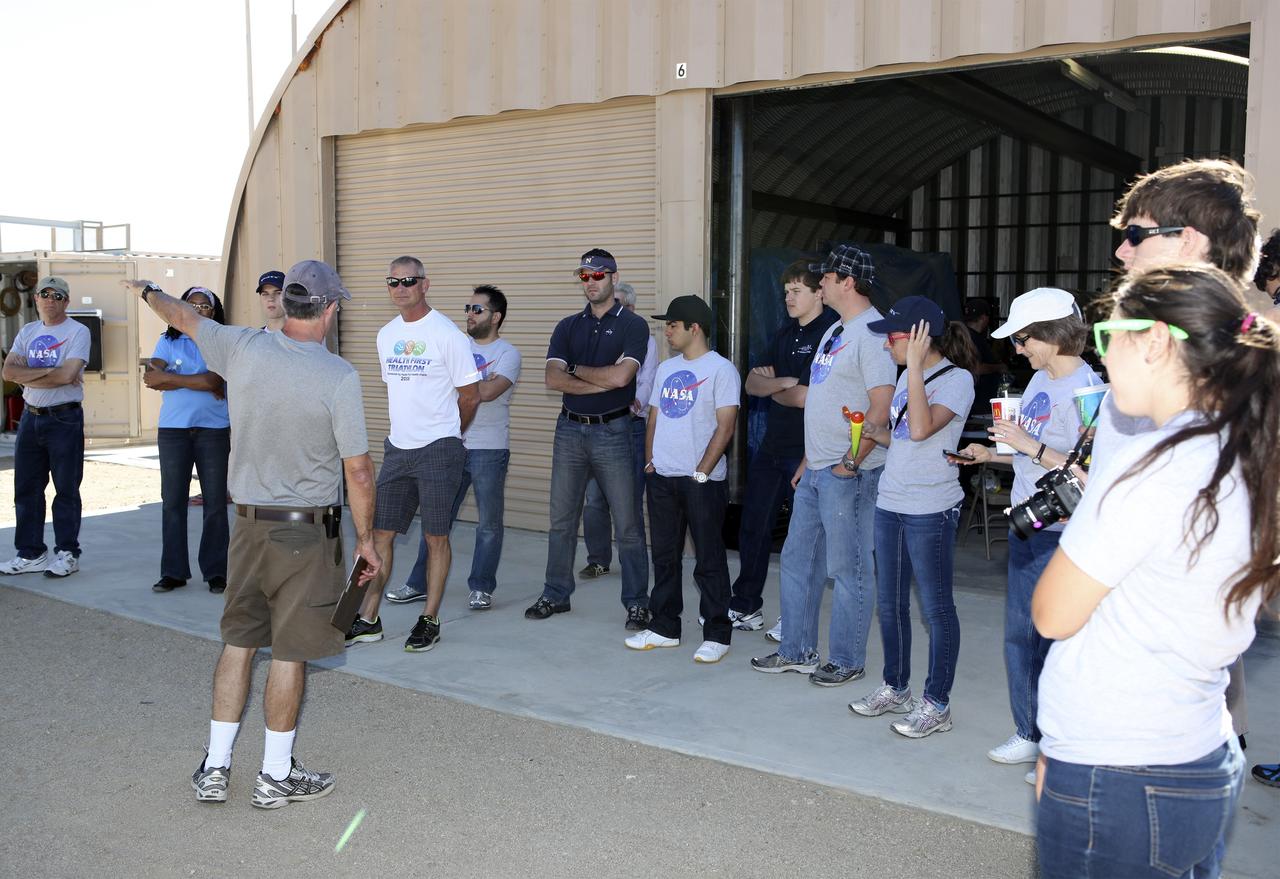
MOJAVE DESERT, Calif. – In the Mojave Desert in California, students and engineers participate in a pre-task briefing as preparations continue for the June 15 launch of a Garvey Spacecraft Corporation Prospector P-18D rocket on a high-altitude, suborbital flight. The rocket will carry four satellites made from four-inch cube section. Collectively known as CubeSats, the satellites will record shock, vibrations and heat inside the rocket. They will not be released during the test flight, but the results will be used to prove or strengthen their designs before they are carried into orbit in 2014 on a much larger rocket. A new, lightweight carrier is also being tested for use on future missions to deploy the small spacecraft. The flight also is being watched closely as a model for trying out new or off-the-shelf technologies quickly before putting them in the pipeline for use on NASA's largest launchers. Built by several different organizations, including a university, a NASA field center and a high school, the spacecraft are four-inch cubes designed to fly on their own eventually, but will remain firmly attached to the rocket during the upcoming mission. For more information, visit http://www.nasa.gov/mission_pages/smallsats/elana/cubesatlaunchpreview.html Photo credit: NASA/Dimitri Gerondidakis
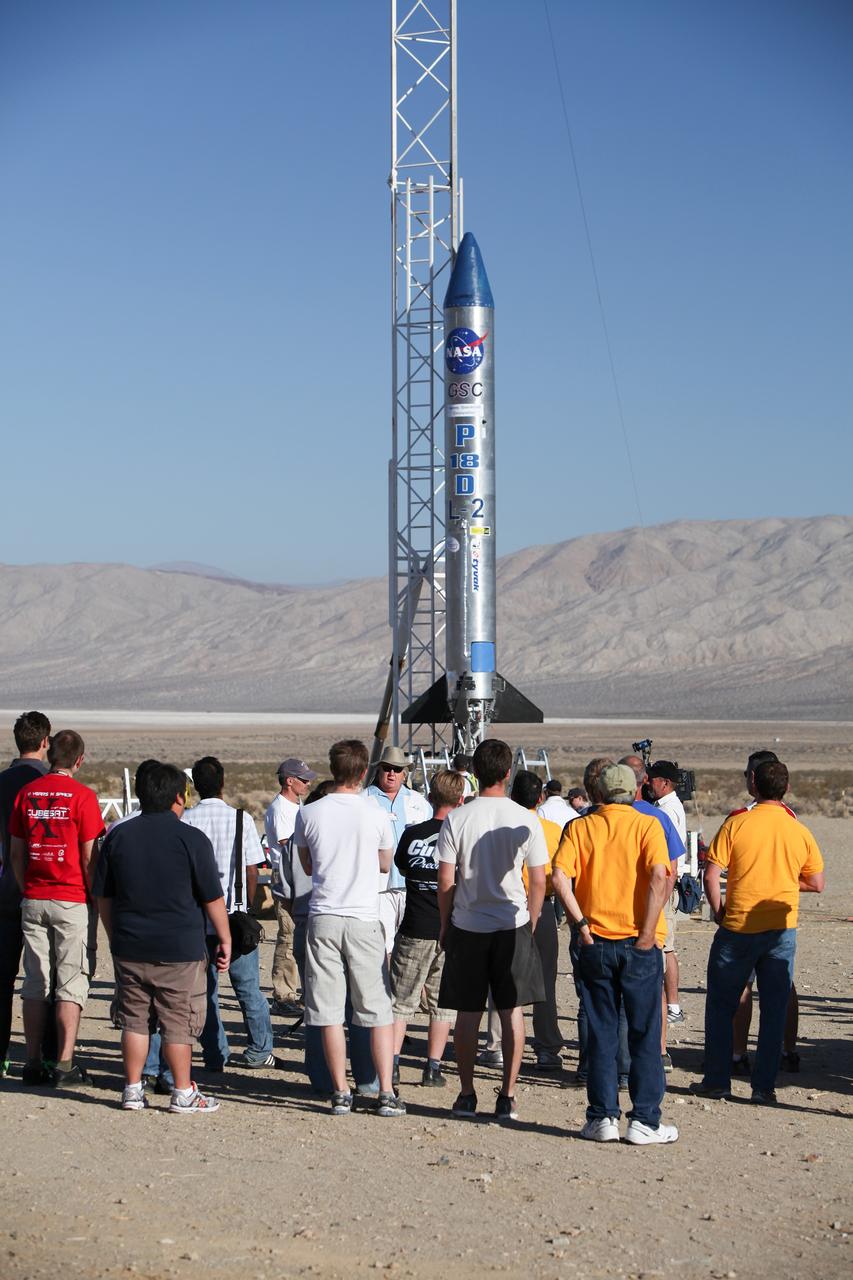
MOJAVE DESERT, Calif. – In the Mojave Desert in California, students and engineers participate in a pre-launch briefing before the lift off of the Garvey Spacecraft Corporation's Prospector P-18D rocket. The rocket is scheduled to launch the RUBICS-1 payload on a high-altitude, suborbital flight. The rocket will carry four satellites made from four-inch cube sections. The rocket reached a peak altitude of about 9,000 feet, however the parachute deployed prematurely and the vehicle continued on its trajectory, coasting and tumbling to a hard landing on its side. In spite of the rough ride, all four CubeSats were recovered. PhoneSat and RUBICS received data in flight, but sustained structural damage. CP-9 and StangSat fared better, and their teams are working to recover as much information as possible. Collectively known as CubeSats, the satellites were designed to record shock, vibrations and heat inside the rocket. The results will be used to prove or strengthen their designs before they are carried into orbit in 2014 on a much larger rocket. Built by several different organizations, including a university, a NASA field center and a high school, the spacecraft are four-inch cubes designed to fly on their own eventually, but will remain firmly attached to the rocket during the upcoming mission. For more information, visit http://www.nasa.gov/mission_pages/smallsats/elana/cubesatlaunchpreview.html Photo credit: NASA/Dimitri Gerondidakis
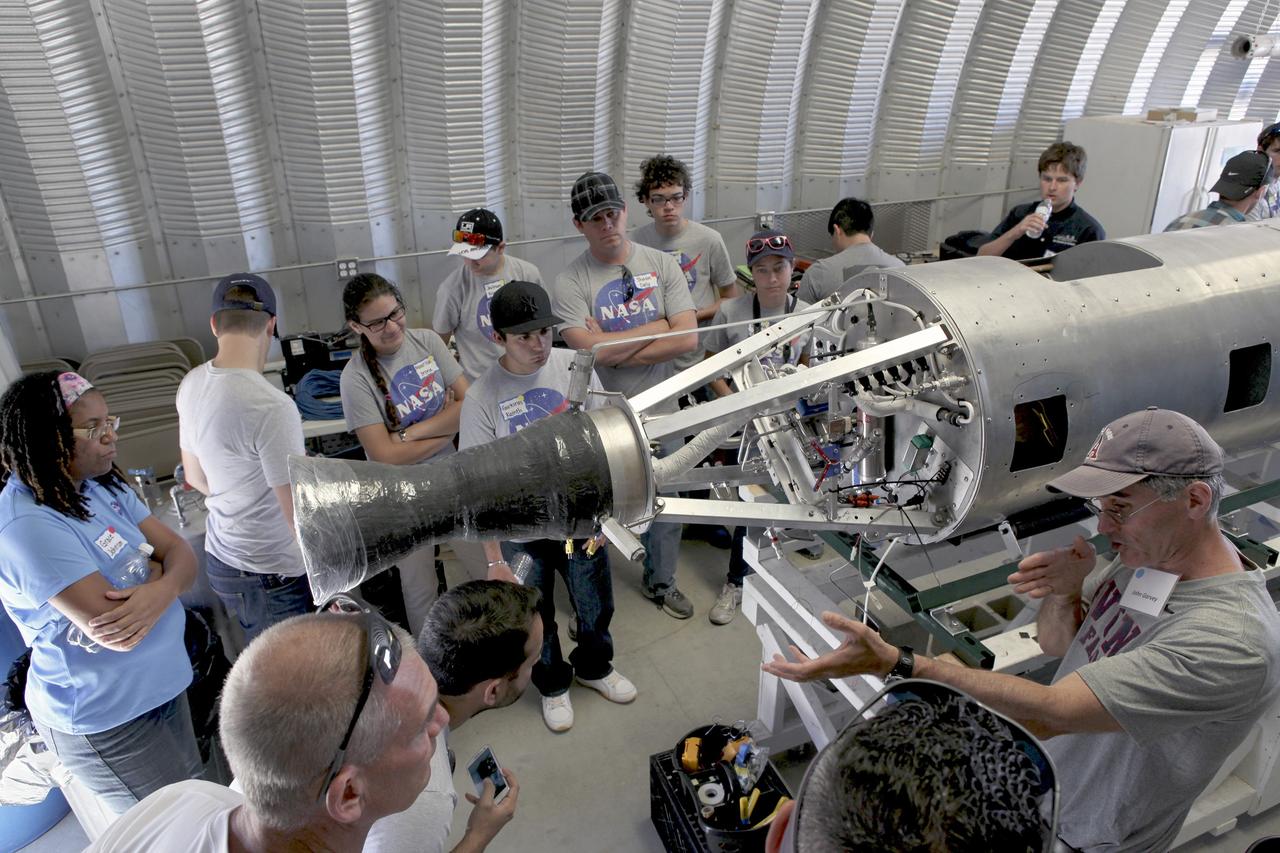
MOJAVE DESERT, Calif. – In the Mojave Desert in California, John Garvey, far right, describes his company's Prospector-18 rocket. Long Beach, Calif.-based Garvey Spacecraft Corp. built the rocket and its engine. Collectively known as CubeSats, the satellites will record shock, vibrations and heat inside the rocket. They will not be released during the test flight, but the results will be used to prove or strengthen their designs before they are carried into orbit in 2014 on a much larger rocket. A new, lightweight carrier is also being tested for use on future missions to deploy the small spacecraft. The flight also is being watched closely as a model for trying out new or off-the-shelf technologies quickly before putting them in the pipeline for use on NASA's largest launchers. Built by several different organizations, including a university, a NASA field center and a high school, the spacecraft are four-inch cubes designed to fly on their own eventually, but will remain firmly attached to the rocket during the upcoming mission. For more information, visit http://www.nasa.gov/mission_pages/smallsats/elana/cubesatlaunchpreview.html Photo credit: NASA/Dimitri Gerondidakis
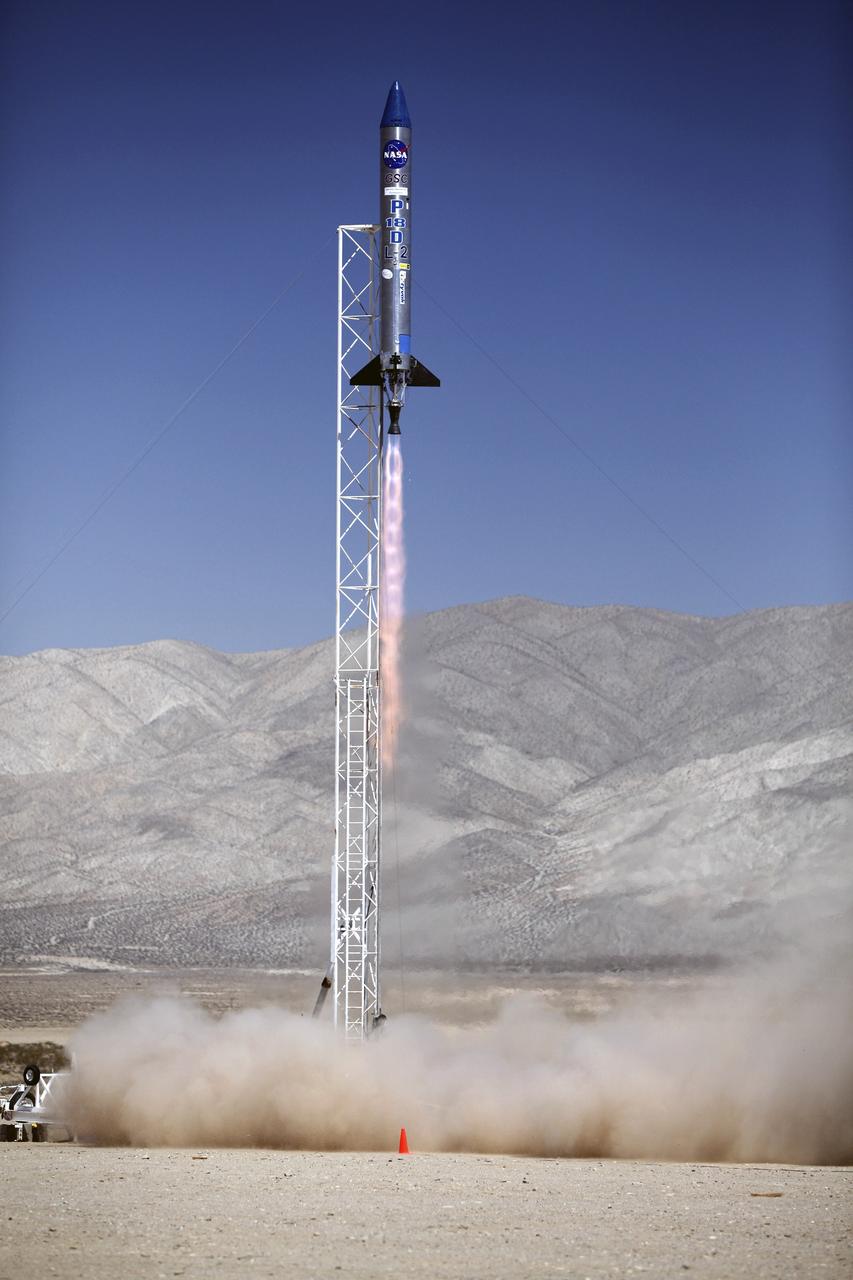
MOJAVE DESERT, Calif. – In the Mojave Desert in California, the Garvey Spacecraft Corporation's Prospector P-18D rocket lifts off at 10:52 a.m. PDT carrying the RUBICS-1 payload on a high-altitude, suborbital flight. The rocket carried four satellites made from four-inch cube sections. The rocket reached a peak altitude of about 9,000 feet, however the parachute deployed prematurely and the vehicle continued on its trajectory, coasting and tumbling to a hard landing on its side. In spite of the rough ride, all four CubeSats were recovered. PhoneSat and RUBICS received data in flight, but sustained structural damage. CP-9 and StangSat fared better, and their teams are working to recover as much information as possible. Collectively known as CubeSats, the satellites were designed to record shock, vibrations and heat inside the rocket. The results will be used to prove or strengthen their designs before they are carried into orbit in 2014 on a much larger rocket. Built by several different organizations, including a university, a NASA field center and a high school, the spacecraft are four-inch cubes designed to fly on their own eventually, but will remain firmly attached to the rocket during the upcoming mission. For more information, visit http://www.nasa.gov/mission_pages/smallsats/elana/cubesatlaunchpreview.html Photo credit: NASA/Dimitri Gerondidakis
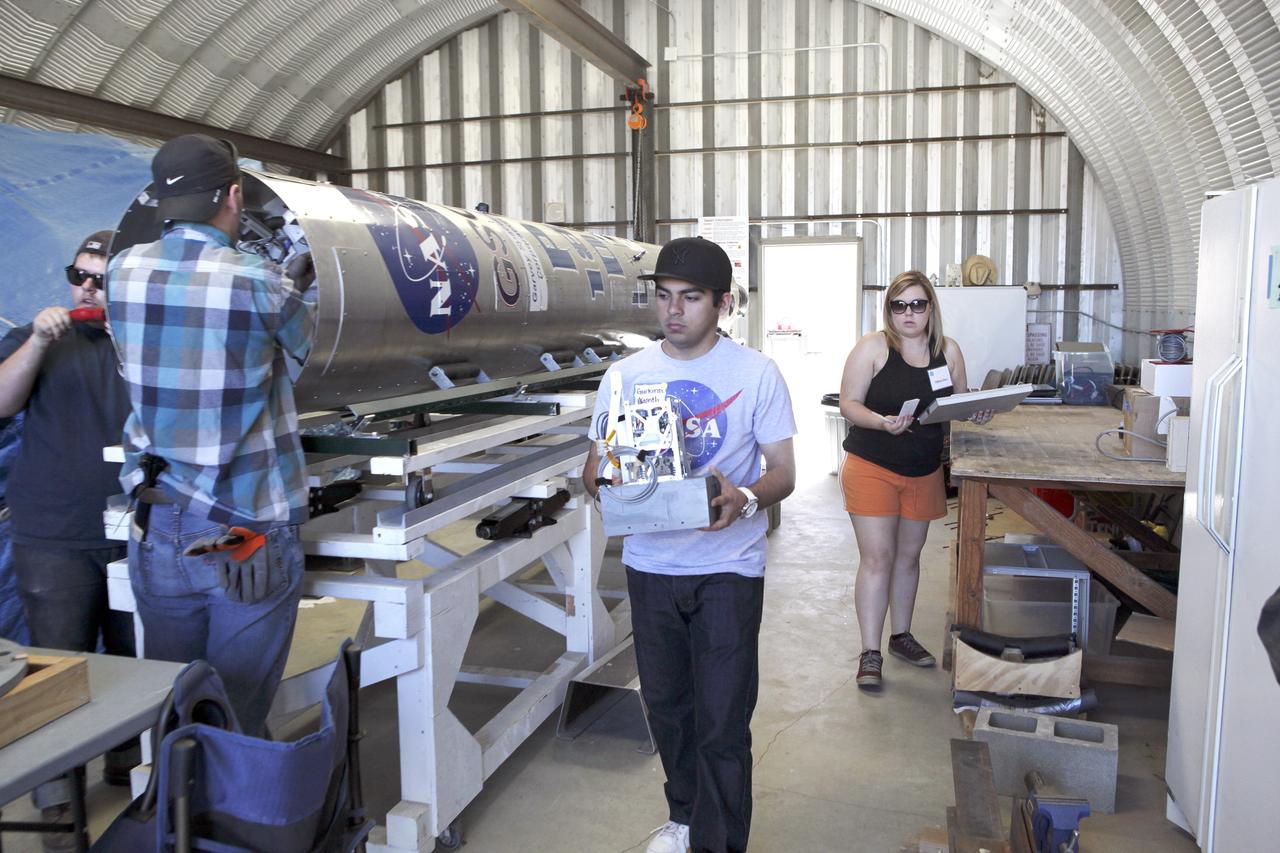
MOJAVE DESERT, Calif. – In the Mojave Desert in California, students and engineers prepare to load the RUBICS-1 payload into the body of the Garvey Spacecraft Corporation's Prospector P-18D rocket for launch June 15 on a high-altitude, suborbital flight. The flight will carry four satellites made from four-inch cube section. Collectively known as CubeSats, the satellites will record shock, vibrations and heat inside the rocket. They will not be released during the test flight, but the results will be used to prove or strengthen their designs before they are carried into orbit in 2014 on a much larger rocket. A new, lightweight carrier is also being tested for use on future missions to deploy the small spacecraft. The flight also is being watched closely as a model for trying out new or off-the-shelf technologies quickly before putting them in the pipeline for use on NASA's largest launchers. Built by several different organizations, including a university, a NASA field center and a high school, the spacecraft are four-inch cubes designed to fly on their own eventually, but will remain firmly attached to the rocket during the upcoming mission. For more information, visit http://www.nasa.gov/mission_pages/smallsats/elana/cubesatlaunchpreview.html Photo credit: NASA/Dimitri Gerondidakis
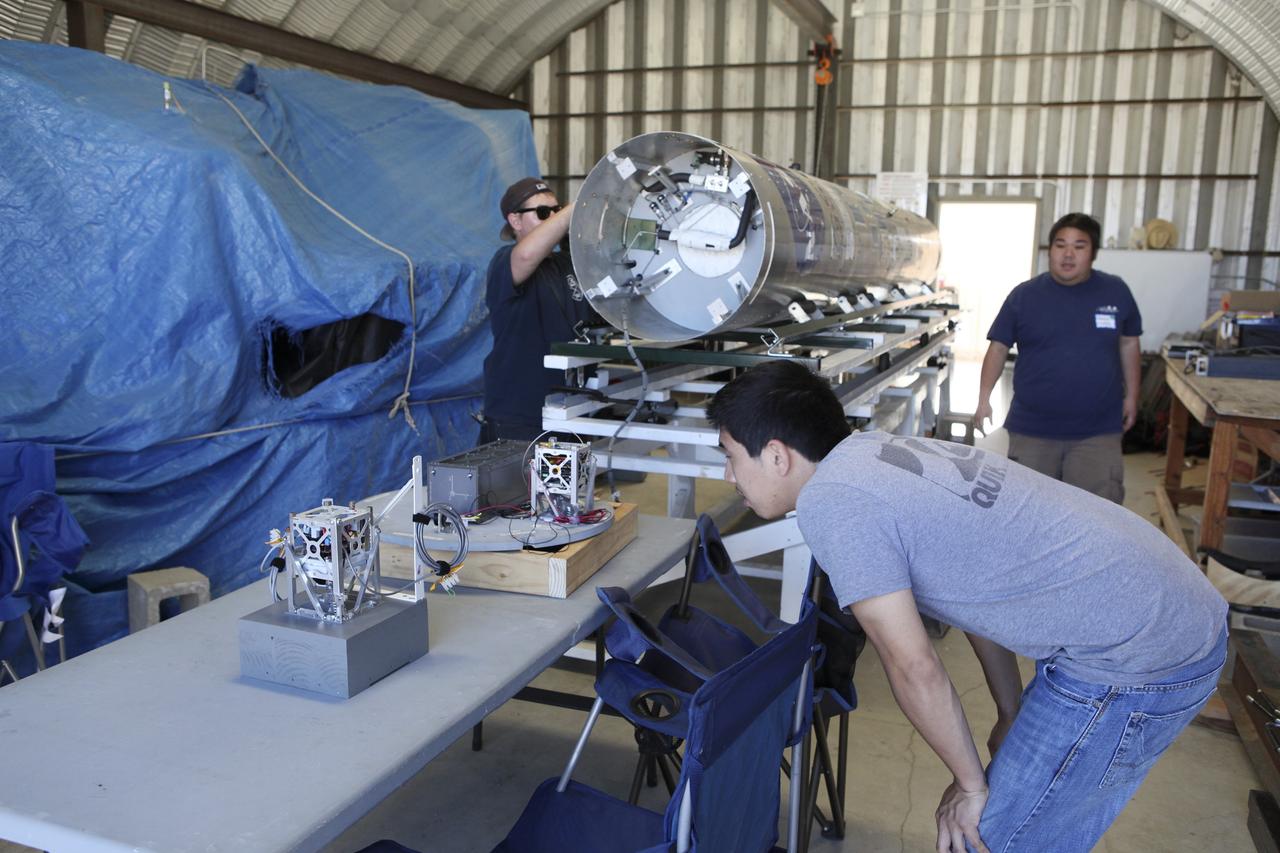
MOJAVE DESERT, Calif. – In the Mojave Desert in California, students and engineers checkout the RUBICS-1 payload which will be placed into the body of the Garvey Spacecraft Corporation's Prospector P-18D rocket for launch June 15 on a high-altitude, suborbital flight. The flight will carry four satellites made from four-inch cube section. Collectively known as CubeSats, the satellites will record shock, vibrations and heat inside the rocket. They will not be released during the test flight, but the results will be used to prove or strengthen their designs before they are carried into orbit in 2014 on a much larger rocket. A new, lightweight carrier is also being tested for use on future missions to deploy the small spacecraft. The flight also is being watched closely as a model for trying out new or off-the-shelf technologies quickly before putting them in the pipeline for use on NASA's largest launchers. Built by several different organizations, including a university, a NASA field center and a high school, the spacecraft are four-inch cubes designed to fly on their own eventually, but will remain firmly attached to the rocket during the upcoming mission. For more information, visit http://www.nasa.gov/mission_pages/smallsats/elana/cubesatlaunchpreview.html Photo credit: NASA/Dimitri Gerondidakis
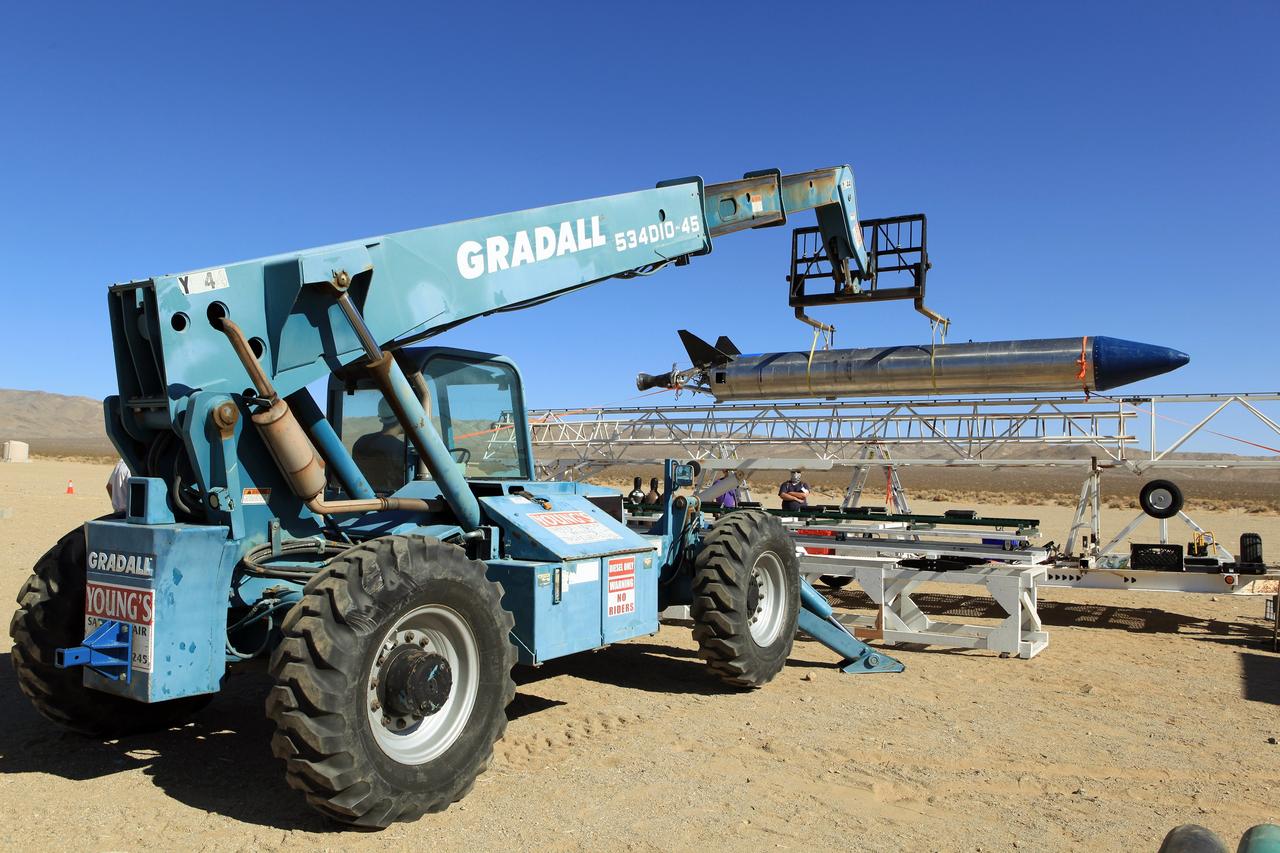
MOJAVE DESERT, Calif. – In the Mojave Desert in California, the Garvey Spacecraft Corporation's Prospector P-18D rocket is lifted into position for its scheduled launch on June 15 with the RUBICS-1 payload on a high-altitude, suborbital flight. The rocket will carry four satellites made from four-inch cube sections. Collectively known as CubeSats, the satellites will record shock, vibrations and heat inside the rocket. They will not be released during the test flight, but the results will be used to prove or strengthen their designs before they are carried into orbit in 2014 on a much larger rocket. A new, lightweight carrier is also being tested for use on future missions to deploy the small spacecraft. The flight also is being watched closely as a model for trying out new or off-the-shelf technologies quickly before putting them in the pipeline for use on NASA's largest launchers. Built by several different organizations, including a university, a NASA field center and a high school, the spacecraft are four-inch cubes designed to fly on their own eventually, but will remain firmly attached to the rocket during the upcoming mission. For more information, visit http://www.nasa.gov/mission_pages/smallsats/elana/cubesatlaunchpreview.html Photo credit: NASA/Dimitri Gerondidakis
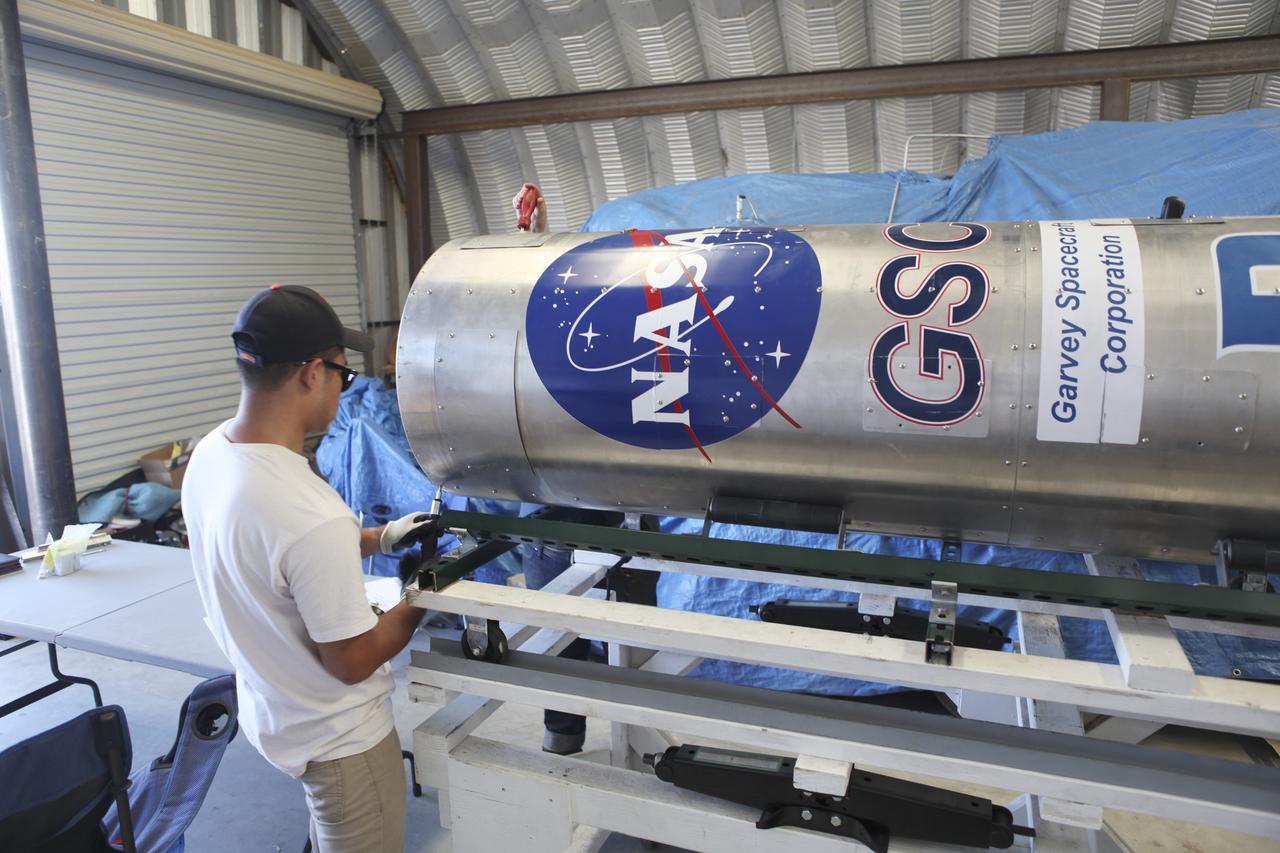
MOJAVE DESERT, Calif. – In the Mojave Desert in California, a student checks out the Garvey Spacecraft Corporation's Prospector P-18D rocket scheduled for launch June 15 with the RUBICS-1 payload on a high-altitude, suborbital flight. The rocket will carry four satellites made from four-inch cube section. Collectively known as CubeSats, the satellites will record shock, vibrations and heat inside the rocket. They will not be released during the test flight, but the results will be used to prove or strengthen their designs before they are carried into orbit in 2014 on a much larger rocket. A new, lightweight carrier is also being tested for use on future missions to deploy the small spacecraft. The flight also is being watched closely as a model for trying out new or off-the-shelf technologies quickly before putting them in the pipeline for use on NASA's largest launchers. Built by several different organizations, including a university, a NASA field center and a high school, the spacecraft are four-inch cubes designed to fly on their own eventually, but will remain firmly attached to the rocket during the upcoming mission. For more information, visit http://www.nasa.gov/mission_pages/smallsats/elana/cubesatlaunchpreview.html Photo credit: NASA/Dimitri Gerondidakis
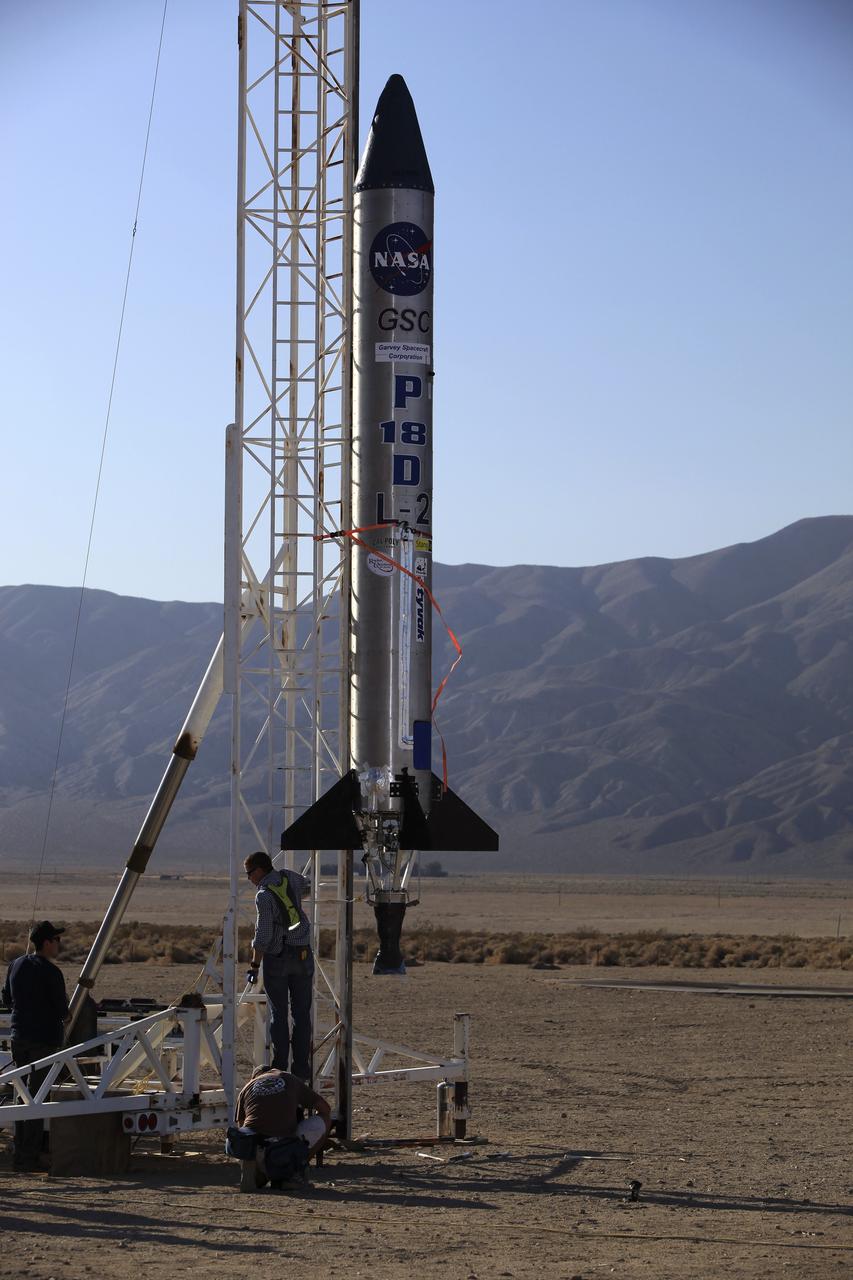
MOJAVE DESERT, Calif. – In the Mojave Desert in California, the Garvey Spacecraft Corporation's Prospector P-18D rocket is positioned for its scheduled launch on June 15 with the RUBICS-1 payload on a high-altitude, suborbital flight. The rocket will carry four satellites made from four-inch cube sections. Collectively known as CubeSats, the satellites will record shock, vibrations and heat inside the rocket. They will not be released during the test flight, but the results will be used to prove or strengthen their designs before they are carried into orbit in 2014 on a much larger rocket. A new, lightweight carrier is also being tested for use on future missions to deploy the small spacecraft. The flight also is being watched closely as a model for trying out new or off-the-shelf technologies quickly before putting them in the pipeline for use on NASA's largest launchers. Built by several different organizations, including a university, a NASA field center and a high school, the spacecraft are four-inch cubes designed to fly on their own eventually, but will remain firmly attached to the rocket during the upcoming mission. For more information, visit http://www.nasa.gov/mission_pages/smallsats/elana/cubesatlaunchpreview.html Photo credit: NASA/Dimitri Gerondidakis
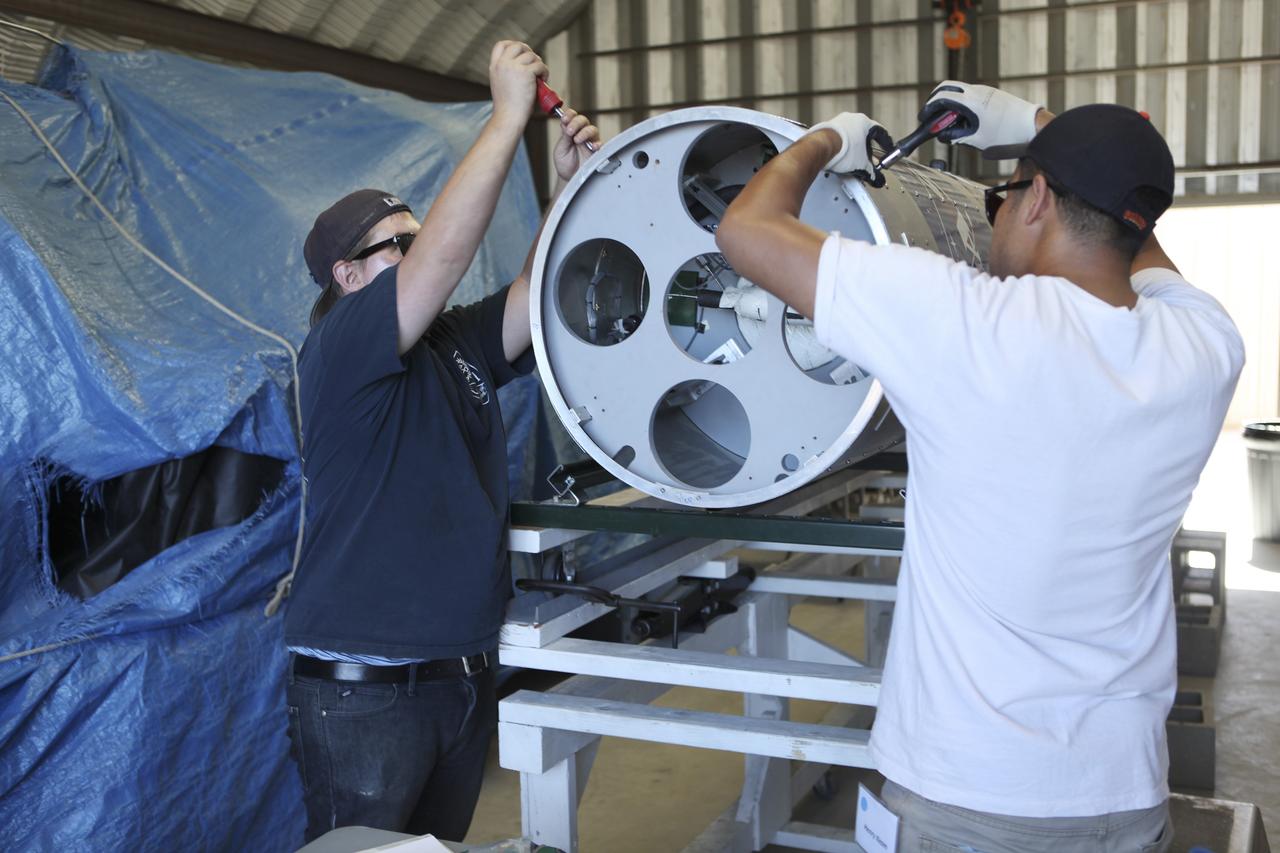
MOJAVE DESERT, Calif. – In the Mojave Desert in California, students and engineers checkout the Garvey Spacecraft Corporation's Prospector P-18D rocket scheduled for launch June 15 with the RUBICS-1 payload on a high-altitude, suborbital flight. The rocket will carry four satellites made from four-inch cube section. Collectively known as CubeSats, the satellites will record shock, vibrations and heat inside the rocket. They will not be released during the test flight, but the results will be used to prove or strengthen their designs before they are carried into orbit in 2014 on a much larger rocket. A new, lightweight carrier is also being tested for use on future missions to deploy the small spacecraft. The flight also is being watched closely as a model for trying out new or off-the-shelf technologies quickly before putting them in the pipeline for use on NASA's largest launchers. Built by several different organizations, including a university, a NASA field center and a high school, the spacecraft are four-inch cubes designed to fly on their own eventually, but will remain firmly attached to the rocket during the upcoming mission. For more information, visit http://www.nasa.gov/mission_pages/smallsats/elana/cubesatlaunchpreview.html Photo credit: NASA/Dimitri Gerondidakis
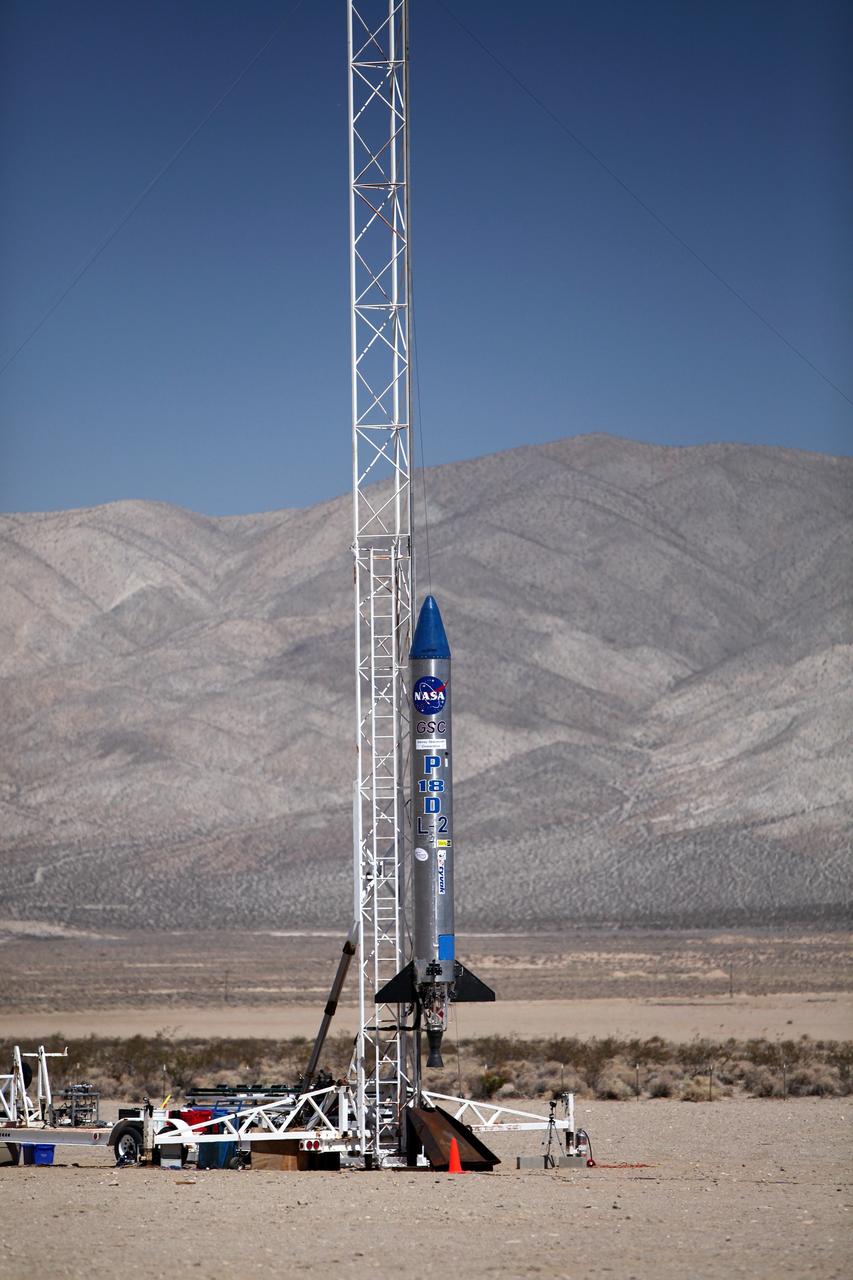
MOJAVE DESERT, Calif. – In the Mojave Desert in California, the Garvey Spacecraft Corporation's Prospector P-18D rocket is positioned for launch with the RUBICS-1 payload on a high-altitude, suborbital flight. The rocket will carry four satellites made from four-inch cube sections. The rocket reached a peak altitude of about 9,000 feet, however the parachute deployed prematurely and the vehicle continued on its trajectory, coasting and tumbling to a hard landing on its side. In spite of the rough ride, all four CubeSats were recovered. PhoneSat and RUBICS received data in flight, but sustained structural damage. CP-9 and StangSat fared better, and their teams are working to recover as much information as possible. Collectively known as CubeSats, the satellites were designed to record shock, vibrations and heat inside the rocket. The results will be used to prove or strengthen their designs before they are carried into orbit in 2014 on a much larger rocket. Built by several different organizations, including a university, a NASA field center and a high school, the spacecraft are four-inch cubes designed to fly on their own eventually, but will remain firmly attached to the rocket during the upcoming mission. For more information, visit http://www.nasa.gov/mission_pages/smallsats/elana/cubesatlaunchpreview.html Photo credit: NASA/Dimitri Gerondidakis
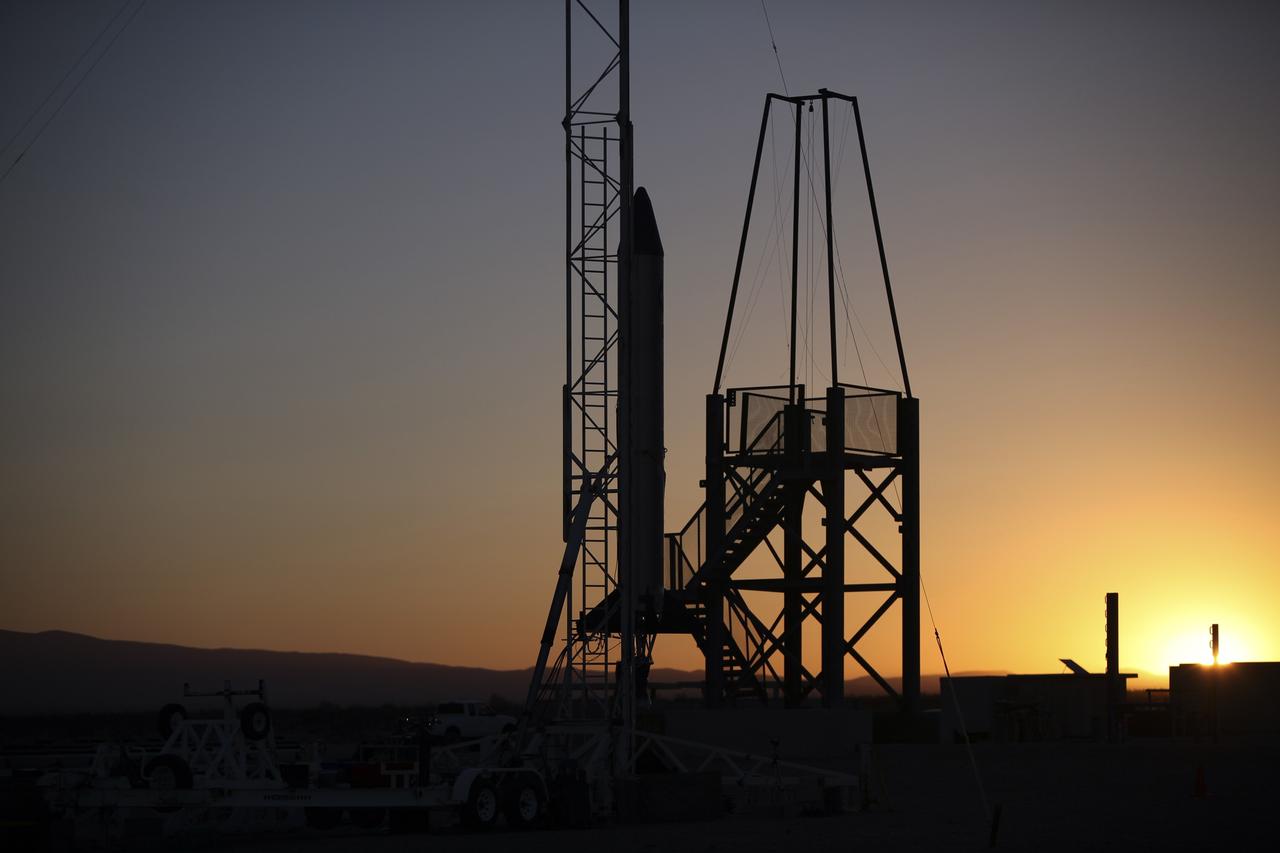
MOJAVE DESERT, Calif. – As the sun rises in the Mojave Desert in California, the Garvey Spacecraft Corporation's Prospector P-18D rocket is positioned for launch with the RUBICS-1 payload on a high-altitude, suborbital flight. The rocket will carry four satellites made from four-inch cube sections. Collectively known as CubeSats, the satellites will record shock, vibrations and heat inside the rocket. They will not be released during the test flight, but the results will be used to prove or strengthen their designs before they are carried into orbit in 2014 on a much larger rocket. A new, lightweight carrier is also being tested for use on future missions to deploy the small spacecraft. The flight also is being watched closely as a model for trying out new or off-the-shelf technologies quickly before putting them in the pipeline for use on NASA's largest launchers. Built by several different organizations, including a university, a NASA field center and a high school, the spacecraft are four-inch cubes designed to fly on their own eventually, but will remain firmly attached to the rocket during the upcoming mission. For more information, visit http://www.nasa.gov/mission_pages/smallsats/elana/cubesatlaunchpreview.html Photo credit: NASA/Dimitri Gerondidakis
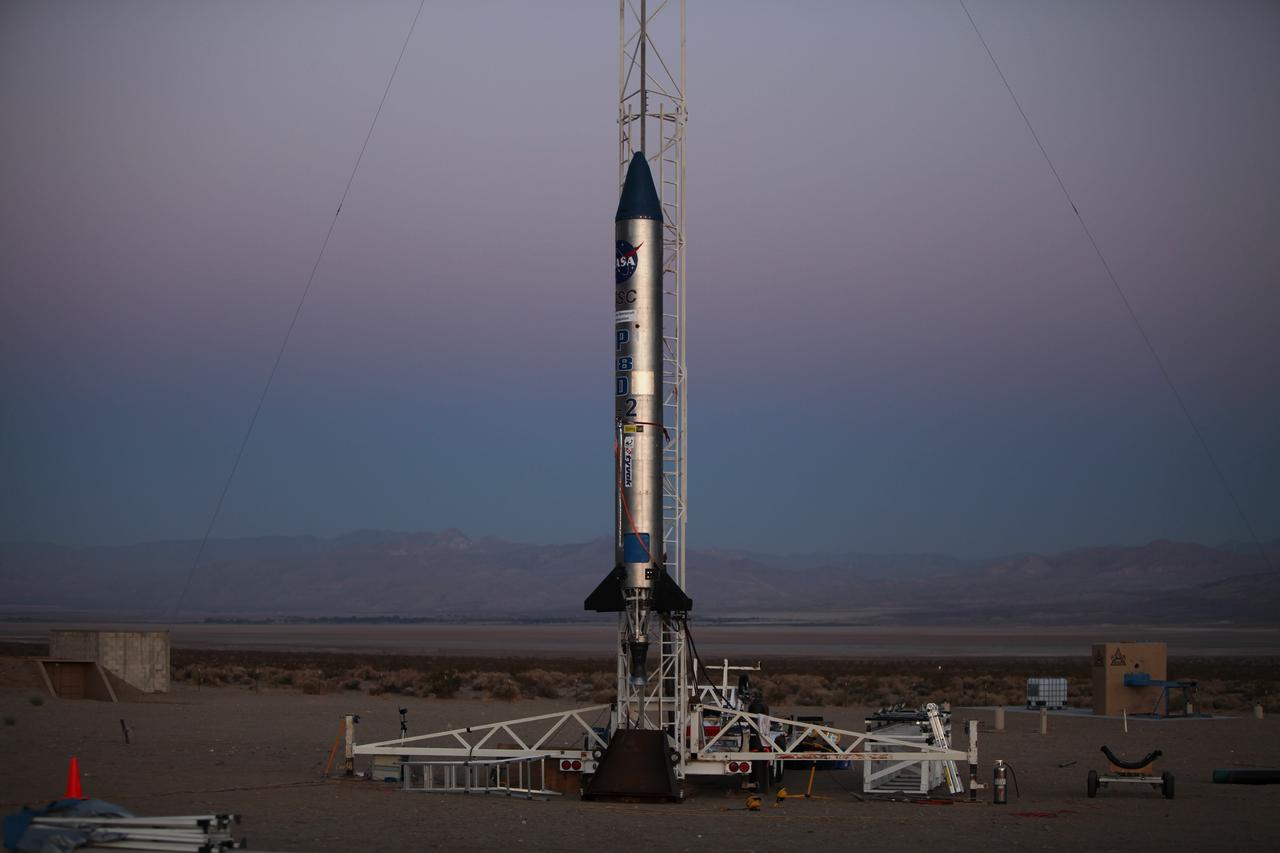
MOJAVE DESERT, Calif. – As the sun rises in the Mojave Desert in California, the Garvey Spacecraft Corporation's Prospector P-18D rocket is positioned for launch with the RUBICS-1 payload on a high-altitude, suborbital flight. The rocket will carry four satellites made from four-inch cube sections. Collectively known as CubeSats, the satellites will record shock, vibrations and heat inside the rocket. They will not be released during the test flight, but the results will be used to prove or strengthen their designs before they are carried into orbit in 2014 on a much larger rocket. A new, lightweight carrier is also being tested for use on future missions to deploy the small spacecraft. The flight also is being watched closely as a model for trying out new or off-the-shelf technologies quickly before putting them in the pipeline for use on NASA's largest launchers. Built by several different organizations, including a university, a NASA field center and a high school, the spacecraft are four-inch cubes designed to fly on their own eventually, but will remain firmly attached to the rocket during the upcoming mission. For more information, visit http://www.nasa.gov/mission_pages/smallsats/elana/cubesatlaunchpreview.html Photo credit: NASA/Dimitri Gerondidakis
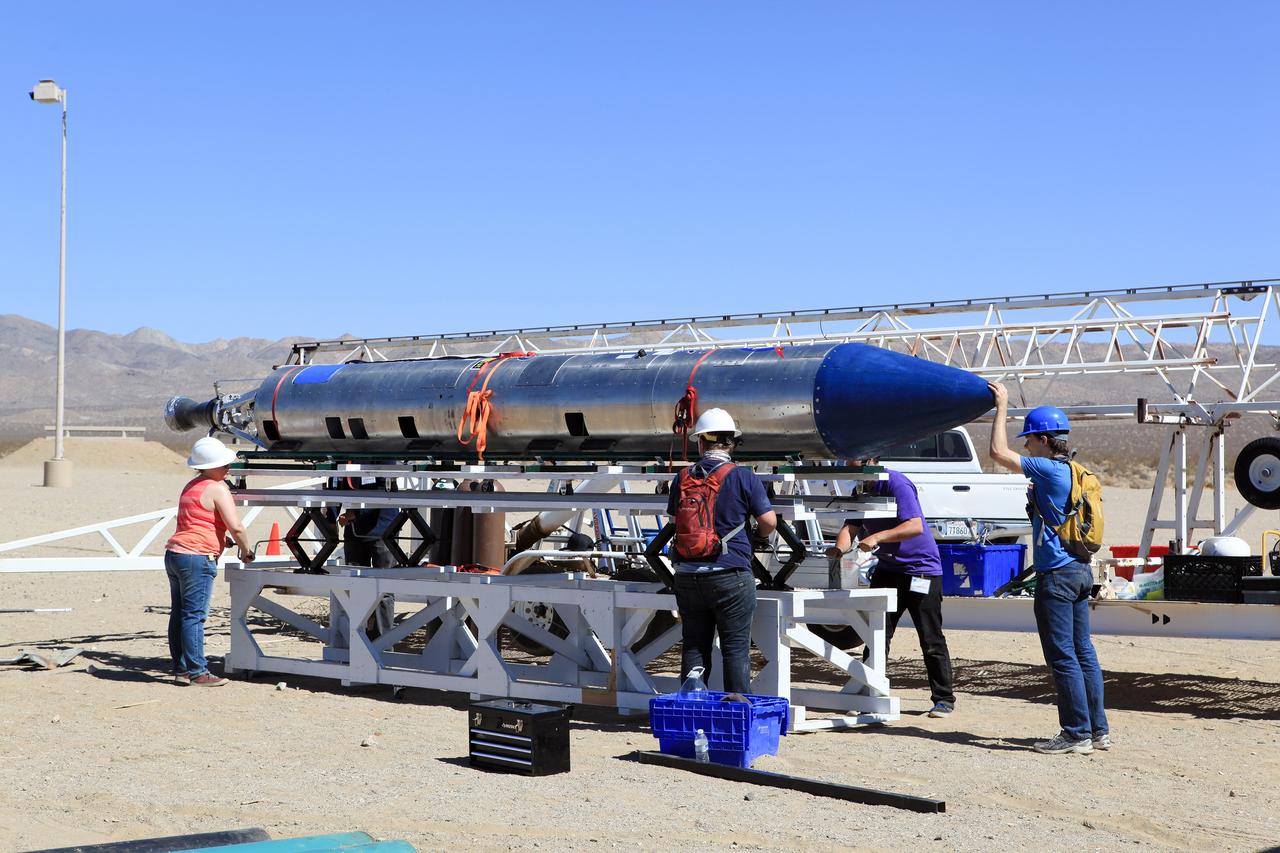
MOJAVE DESERT, Calif. – In the Mojave Desert in California, students and engineers checkout the Garvey Spacecraft Corporation's Prospector P-18D rocket at the Friends of Amateur Rocketry launch site. The rocket is scheduled for launch June 15 with the RUBICS-1 payload on a high-altitude, suborbital mission. The rocket will carry four satellites made from four-inch cube sections. Collectively known as CubeSats, the satellites will record shock, vibrations and heat inside the rocket. They will not be released during the test flight, but the results will be used to prove or strengthen their designs before they are carried into orbit in 2014 on a much larger rocket. A new, lightweight carrier is also being tested for use on future missions to deploy the small spacecraft. The flight also is being watched closely as a model for trying out new or off-the-shelf technologies quickly before putting them in the pipeline for use on NASA's largest launchers. Built by several different organizations, including a university, a NASA field center and a high school, the spacecraft are four-inch cubes designed to fly on their own eventually, but will remain firmly attached to the rocket during the upcoming mission. For more information, visit http://www.nasa.gov/mission_pages/smallsats/elana/cubesatlaunchpreview.html Photo credit: NASA/Dimitri Gerondidakis
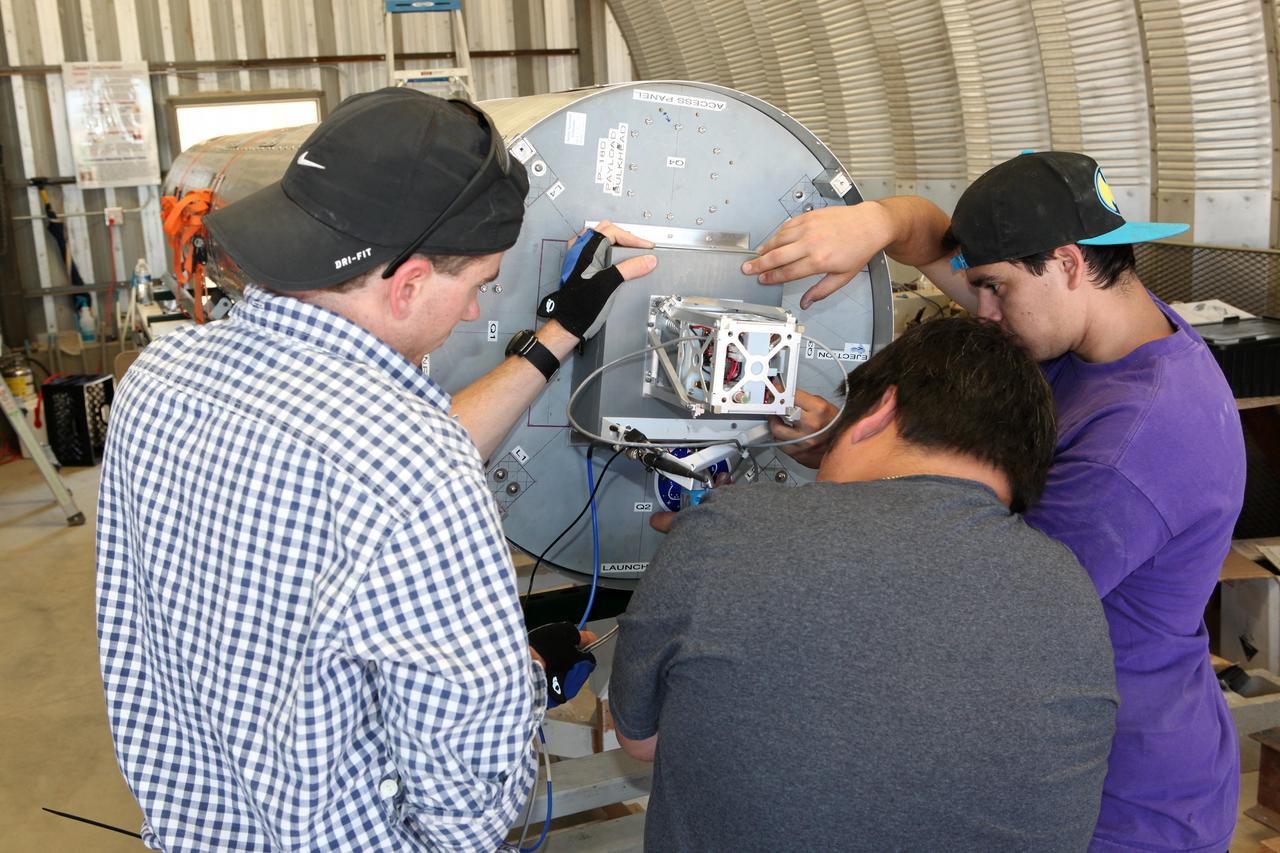
MOJAVE DESERT, Calif. – In the Mojave Desert in California, students and engineers checkout the Garvey Spacecraft Corporation's Prospector P-18D rocket. The rocket is scheduled for launch June 15 with the RUBICS-1 payload on a high-altitude, suborbital flight. The rocket will carry four satellites made from four-inch cube sections. Collectively known as CubeSats, the satellites will record shock, vibrations and heat inside the rocket. They will not be released during the test flight, but the results will be used to prove or strengthen their designs before they are carried into orbit in 2014 on a much larger rocket. A new, lightweight carrier is also being tested for use on future missions to deploy the small spacecraft. The flight also is being watched closely as a model for trying out new or off-the-shelf technologies quickly before putting them in the pipeline for use on NASA's largest launchers. Built by several different organizations, including a university, a NASA field center and a high school, the spacecraft are four-inch cubes designed to fly on their own eventually, but will remain firmly attached to the rocket during the upcoming mission. For more information, visit http://www.nasa.gov/mission_pages/smallsats/elana/cubesatlaunchpreview.html Photo credit: NASA/Dimitri Gerondidakis
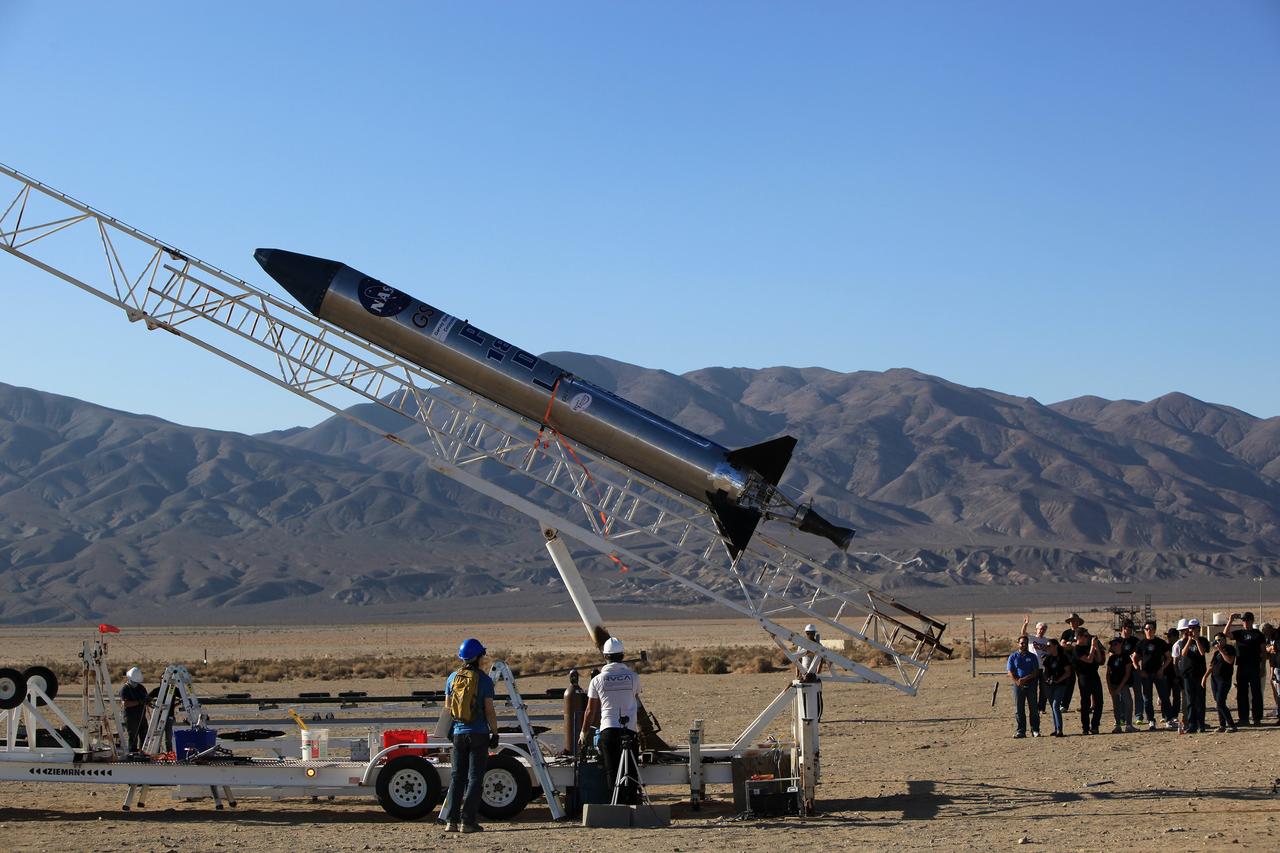
MOJAVE DESERT, Calif. – In the Mojave Desert in California, students and engineers watch as the Garvey Spacecraft Corporation's Prospector P-18D rocket is lifted into position for its scheduled launch on June 15 with the RUBICS-1 payload on a high-altitude, suborbital flight. The rocket will carry four satellites made from four-inch cube sections. Collectively known as CubeSats, the satellites will record shock, vibrations and heat inside the rocket. They will not be released during the test flight, but the results will be used to prove or strengthen their designs before they are carried into orbit in 2014 on a much larger rocket. A new, lightweight carrier is also being tested for use on future missions to deploy the small spacecraft. The flight also is being watched closely as a model for trying out new or off-the-shelf technologies quickly before putting them in the pipeline for use on NASA's largest launchers. Built by several different organizations, including a university, a NASA field center and a high school, the spacecraft are four-inch cubes designed to fly on their own eventually, but will remain firmly attached to the rocket during the upcoming mission. For more information, visit http://www.nasa.gov/mission_pages/smallsats/elana/cubesatlaunchpreview.html Photo credit: NASA/Dimitri Gerondidakis
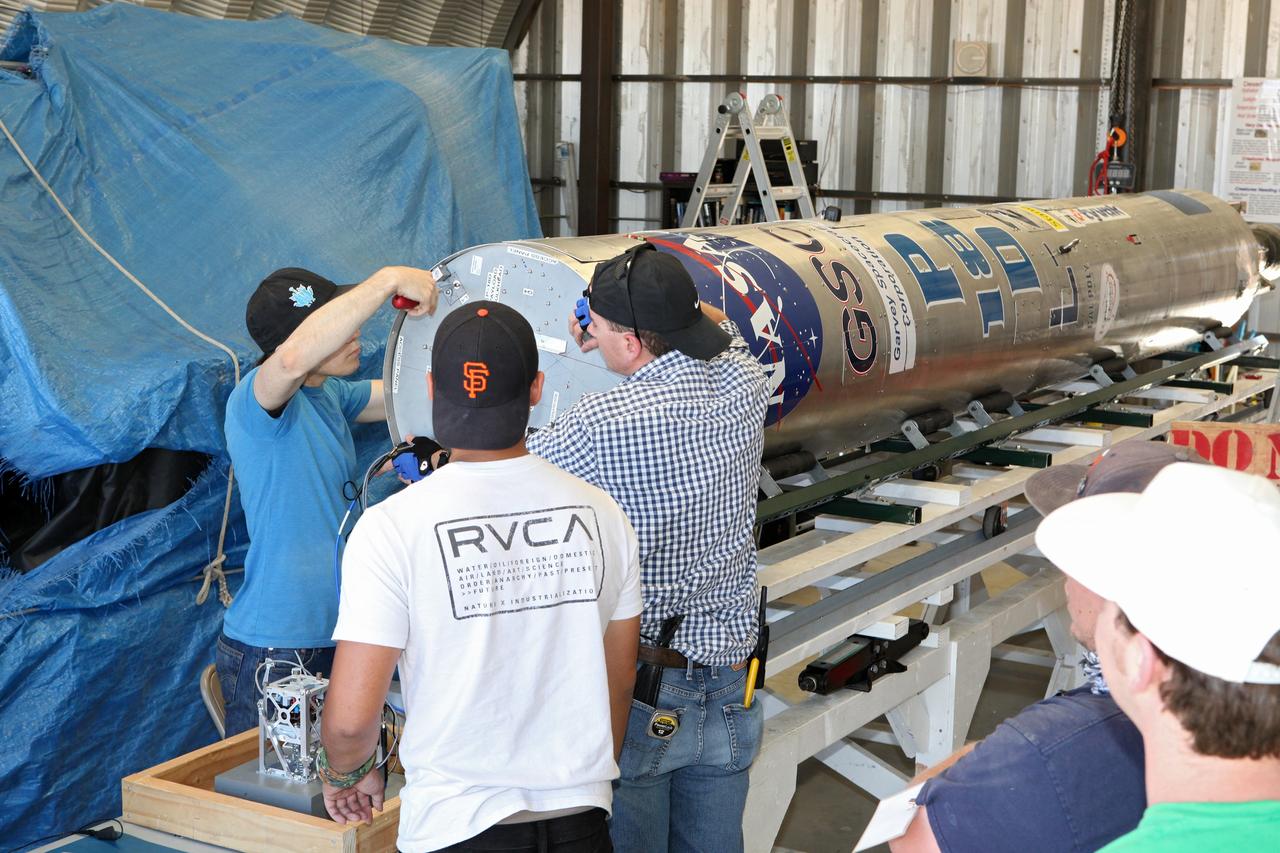
MOJAVE DESERT, Calif. – In the Mojave Desert in California, students and engineers checkout the Garvey Spacecraft Corporation's Prospector P-18D rocket. The rocket is scheduled for launch June 15 with the RUBICS-1 payload on a high-altitude, suborbital flight. The rocket will carry four satellites made from four-inch cube sections. Collectively known as CubeSats, the satellites will record shock, vibrations and heat inside the rocket. They will not be released during the test flight, but the results will be used to prove or strengthen their designs before they are carried into orbit in 2014 on a much larger rocket. A new, lightweight carrier is also being tested for use on future missions to deploy the small spacecraft. The flight also is being watched closely as a model for trying out new or off-the-shelf technologies quickly before putting them in the pipeline for use on NASA's largest launchers. Built by several different organizations, including a university, a NASA field center and a high school, the spacecraft are four-inch cubes designed to fly on their own eventually, but will remain firmly attached to the rocket during the upcoming mission. For more information, visit http://www.nasa.gov/mission_pages/smallsats/elana/cubesatlaunchpreview.html Photo credit: NASA/Dimitri Gerondidakis
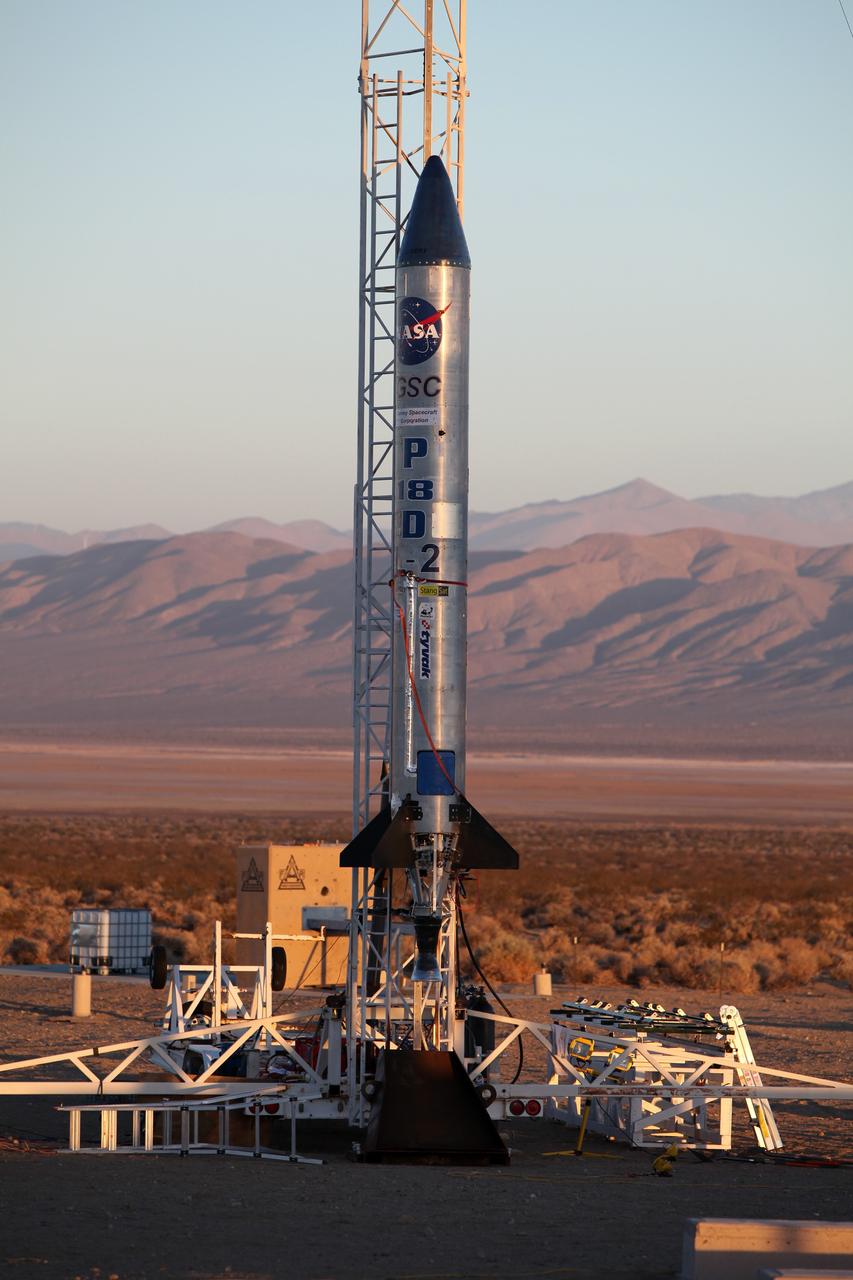
MOJAVE DESERT, Calif. – As the sun rises in the Mojave Desert in California, the Garvey Spacecraft Corporation's Prospector P-18D rocket is positioned for launch with the RUBICS-1 payload on a high-altitude, suborbital flight. The rocket will carry four satellites made from four-inch cube sections. Collectively known as CubeSats, the satellites will record shock, vibrations and heat inside the rocket. They will not be released during the test flight, but the results will be used to prove or strengthen their designs before they are carried into orbit in 2014 on a much larger rocket. A new, lightweight carrier is also being tested for use on future missions to deploy the small spacecraft. The flight also is being watched closely as a model for trying out new or off-the-shelf technologies quickly before putting them in the pipeline for use on NASA's largest launchers. Built by several different organizations, including a university, a NASA field center and a high school, the spacecraft are four-inch cubes designed to fly on their own eventually, but will remain firmly attached to the rocket during the upcoming mission. For more information, visit http://www.nasa.gov/mission_pages/smallsats/elana/cubesatlaunchpreview.html Photo credit: NASA/Dimitri Gerondidakis
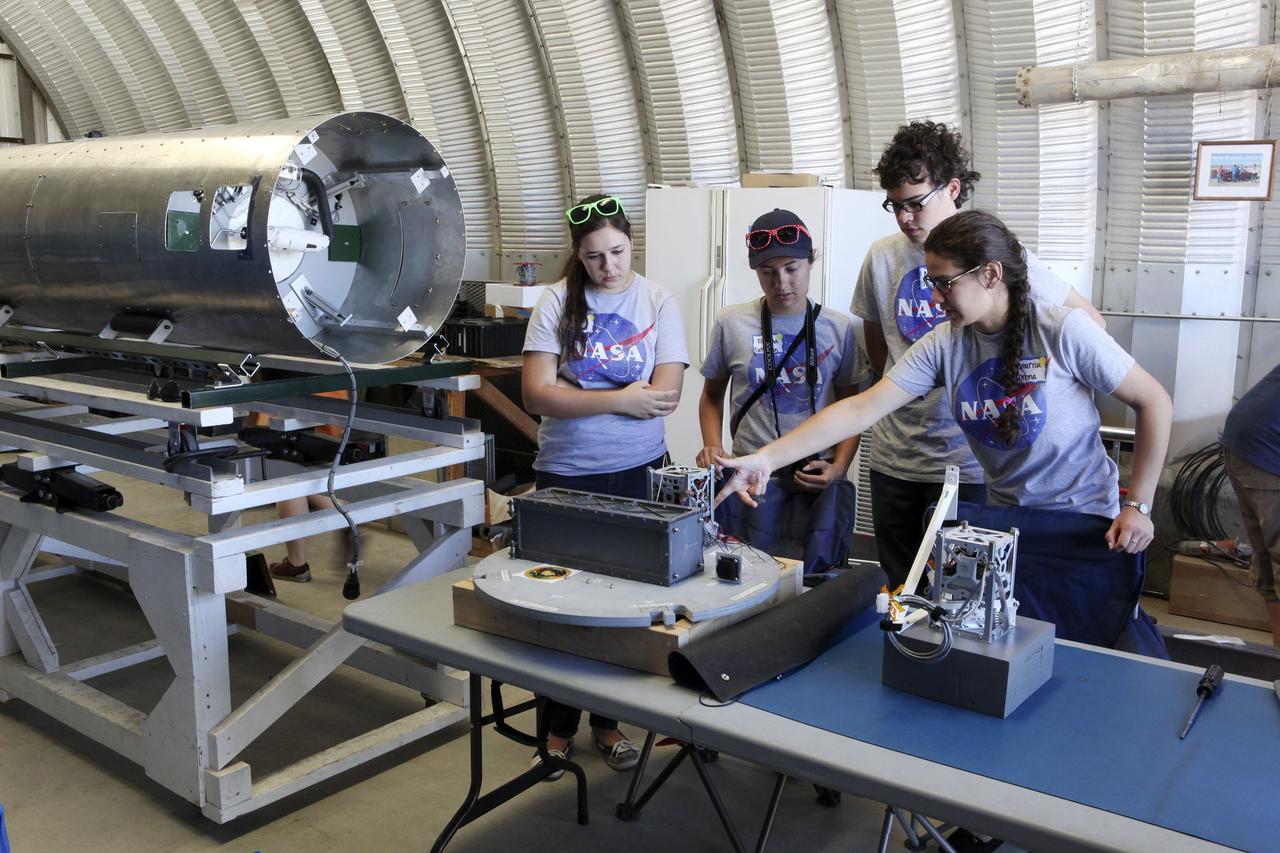
MOJAVE DESERT, Calif. – In the Mojave Desert in California, students and engineers checkout the RUBICS-1 payload into the body of the Garvey Spacecraft Corporation's Prospector P-18D rocket for launch June 15 on a high-altitude, suborbital flight. The flight will carry four satellites made from four-inch cube section. Collectively known as CubeSats, the satellites will record shock, vibrations and heat inside the rocket. They will not be released during the test flight, but the results will be used to prove or strengthen their designs before they are carried into orbit in 2014 on a much larger rocket. A new, lightweight carrier is also being tested for use on future missions to deploy the small spacecraft. The flight also is being watched closely as a model for trying out new or off-the-shelf technologies quickly before putting them in the pipeline for use on NASA's largest launchers. Built by several different organizations, including a university, a NASA field center and a high school, the spacecraft are four-inch cubes designed to fly on their own eventually, but will remain firmly attached to the rocket during the upcoming mission. For more information, visit http://www.nasa.gov/mission_pages/smallsats/elana/cubesatlaunchpreview.html Photo credit: NASA/Dimitri Gerondidakis
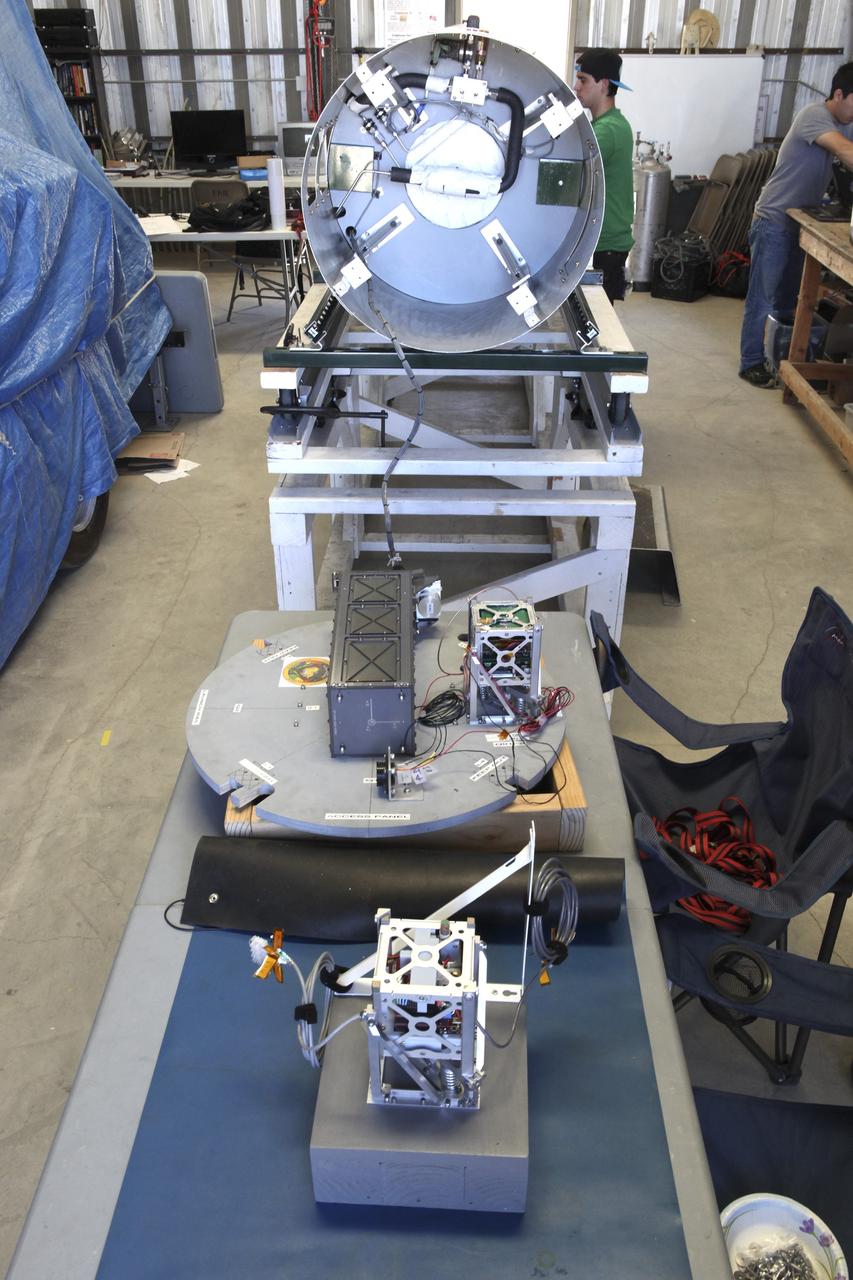
MOJAVE DESERT, Calif. – In the Mojave Desert in California, the student-designed RUBICS-1 payload is in the foreground as students and engineers checkout the into the body of the Garvey Spacecraft Corporation's Prospector P-18D rocket set for launch June 15 on a high-altitude, suborbital flight. The flight will carry four satellites made from four-inch cube section. Collectively known as CubeSats, the satellites will record shock, vibrations and heat inside the rocket. They will not be released during the test flight, but the results will be used to prove or strengthen their designs before they are carried into orbit in 2014 on a much larger rocket. A new, lightweight carrier is also being tested for use on future missions to deploy the small spacecraft. The flight also is being watched closely as a model for trying out new or off-the-shelf technologies quickly before putting them in the pipeline for use on NASA's largest launchers. Built by several different organizations, including a university, a NASA field center and a high school, the spacecraft are four-inch cubes designed to fly on their own eventually, but will remain firmly attached to the rocket during the upcoming mission. For more information, visit http://www.nasa.gov/mission_pages/smallsats/elana/cubesatlaunchpreview.html Photo credit: NASA/Dimitri Gerondidakis
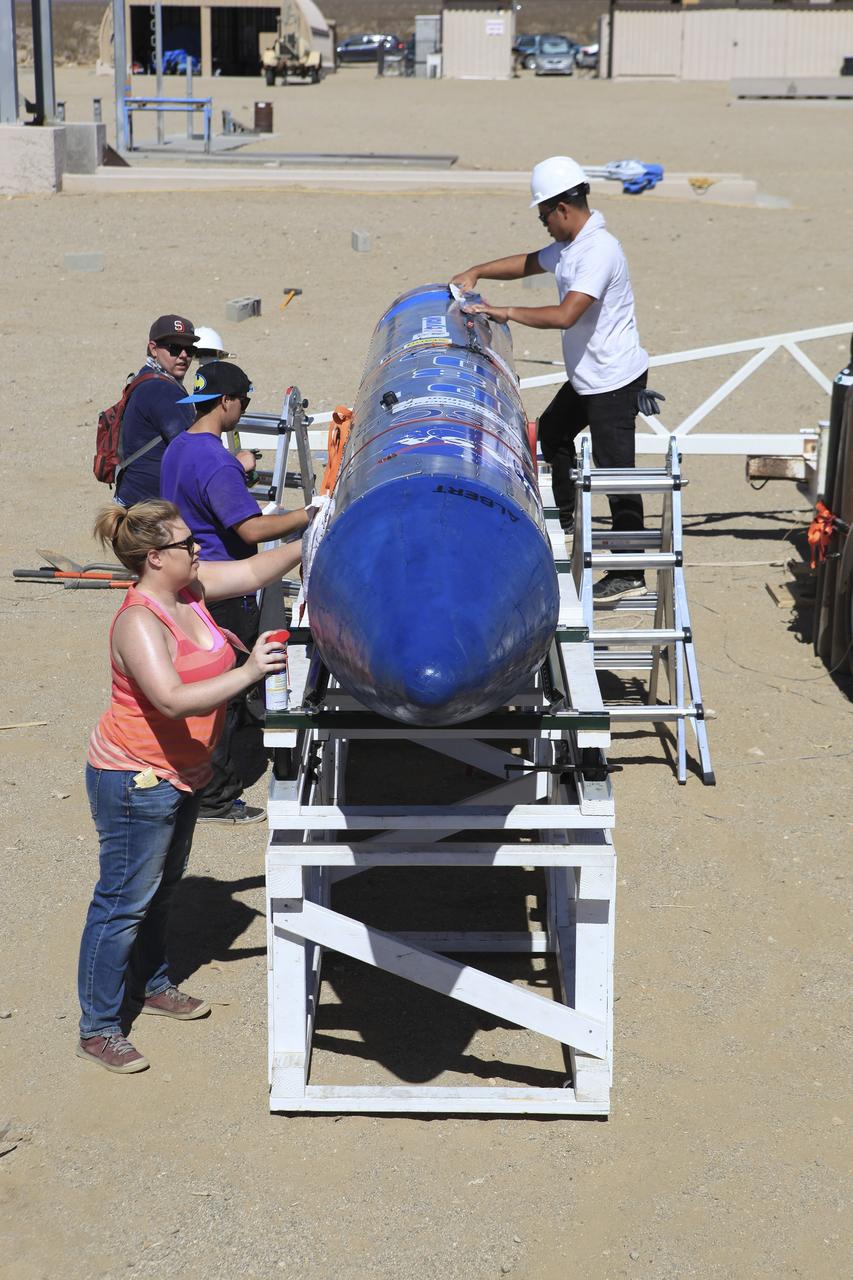
MOJAVE DESERT, Calif. – In the Mojave Desert in California, students and engineers checkout the Garvey Spacecraft Corporation's Prospector P-18D rocket at the Friends of Amateur Rocketry launch site. The rocket is scheduled for flight June 15 with the RUBICS-1 payload on a high-altitude, suborbital flight. The rocket will carry four satellites made from four-inch cube sections. Collectively known as CubeSats, the satellites will record shock, vibrations and heat inside the rocket. They will not be released during the test flight, but the results will be used to prove or strengthen their designs before they are carried into orbit in 2014 on a much larger rocket. A new, lightweight carrier is also being tested for use on future missions to deploy the small spacecraft. The flight also is being watched closely as a model for trying out new or off-the-shelf technologies quickly before putting them in the pipeline for use on NASA's largest launchers. Built by several different organizations, including a university, a NASA field center and a high school, the spacecraft are four-inch cubes designed to fly on their own eventually, but will remain firmly attached to the rocket during the upcoming mission. For more information, visit http://www.nasa.gov/mission_pages/smallsats/elana/cubesatlaunchpreview.html Photo credit: NASA/Dimitri Gerondidakis
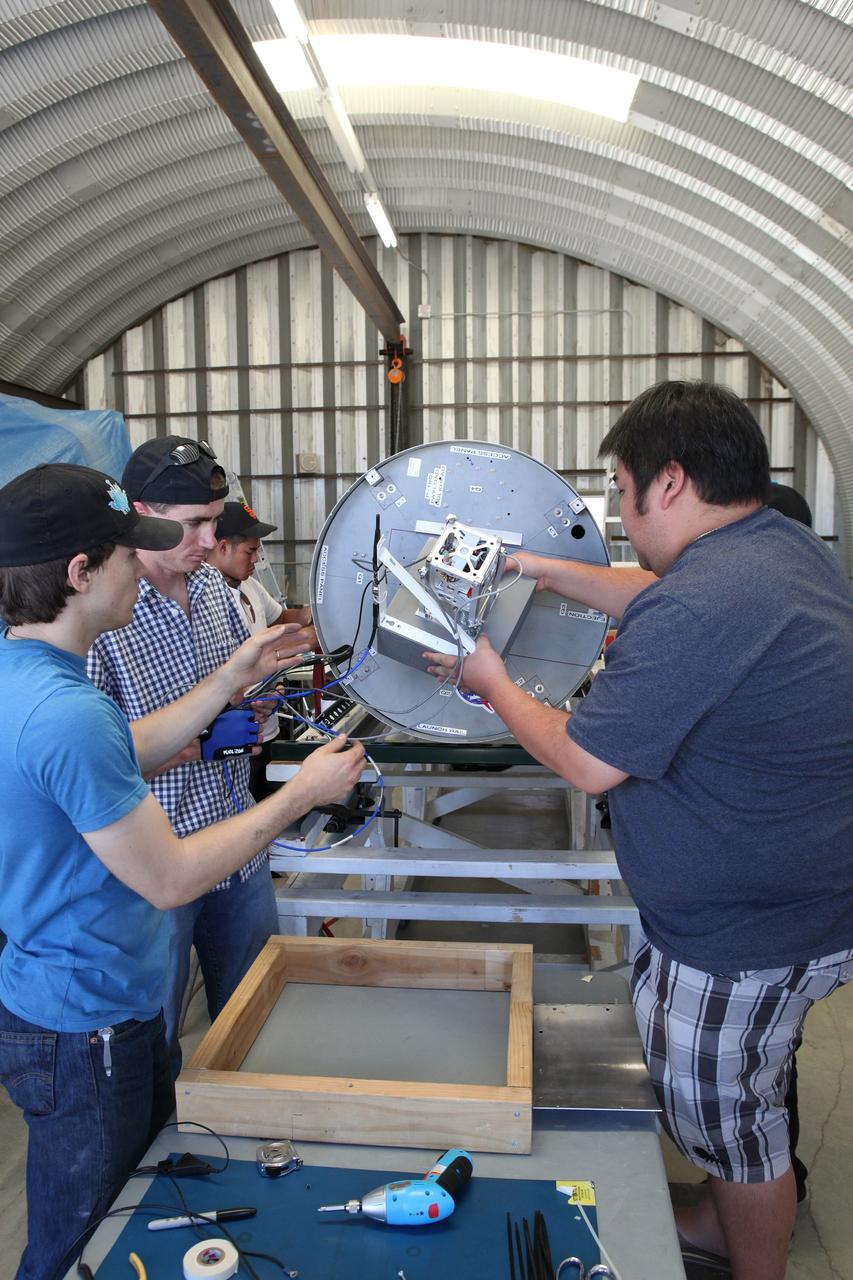
MOJAVE DESERT, Calif. – In the Mojave Desert in California, students and engineers checkout the Garvey Spacecraft Corporation's Prospector P-18D rocket. The rocket is scheduled for launch June 15 with the RUBICS-1 payload on a high-altitude, suborbital flight. The rocket will carry four satellites made from four-inch cube sections. Collectively known as CubeSats, the satellites will record shock, vibrations and heat inside the rocket. They will not be released during the test flight, but the results will be used to prove or strengthen their designs before they are carried into orbit in 2014 on a much larger rocket. A new, lightweight carrier is also being tested for use on future missions to deploy the small spacecraft. The flight also is being watched closely as a model for trying out new or off-the-shelf technologies quickly before putting them in the pipeline for use on NASA's largest launchers. Built by several different organizations, including a university, a NASA field center and a high school, the spacecraft are four-inch cubes designed to fly on their own eventually, but will remain firmly attached to the rocket during the upcoming mission. For more information, visit http://www.nasa.gov/mission_pages/smallsats/elana/cubesatlaunchpreview.html Photo credit: NASA/Dimitri Gerondidakis
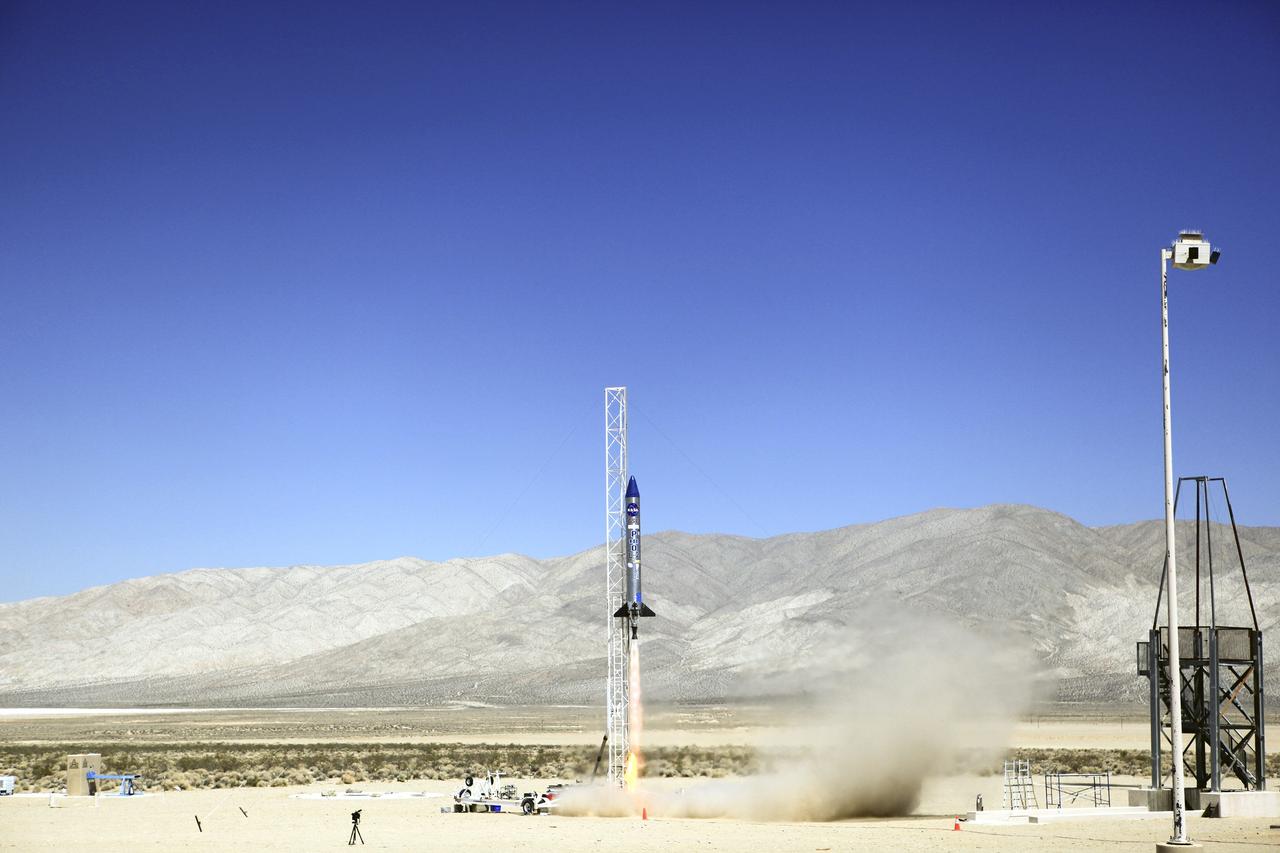
MOJAVE DESERT, Calif. – In the Mojave Desert in California, the Garvey Spacecraft Corporation's Prospector P-18D rocket lifts off at 10:52 a.m. PDT carrying the RUBICS-1 payload on a high-altitude, suborbital flight. The rocket carried four satellites made from four-inch cube sections. The rocket reached a peak altitude of about 9,000 feet, however the parachute deployed prematurely and the vehicle continued on its trajectory, coasting and tumbling to a hard landing on its side. In spite of the rough ride, all four CubeSats were recovered. PhoneSat and RUBICS received data in flight, but sustained structural damage. CP-9 and StangSat fared better, and their teams are working to recover as much information as possible. Collectively known as CubeSats, the satellites were designed to record shock, vibrations and heat inside the rocket. The results will be used to prove or strengthen their designs before they are carried into orbit in 2014 on a much larger rocket. Built by several different organizations, including a university, a NASA field center and a high school, the spacecraft are four-inch cubes designed to fly on their own eventually, but will remain firmly attached to the rocket during the upcoming mission. For more information, visit http://www.nasa.gov/mission_pages/smallsats/elana/cubesatlaunchpreview.html Photo credit: NASA/Dimitri Gerondidakis
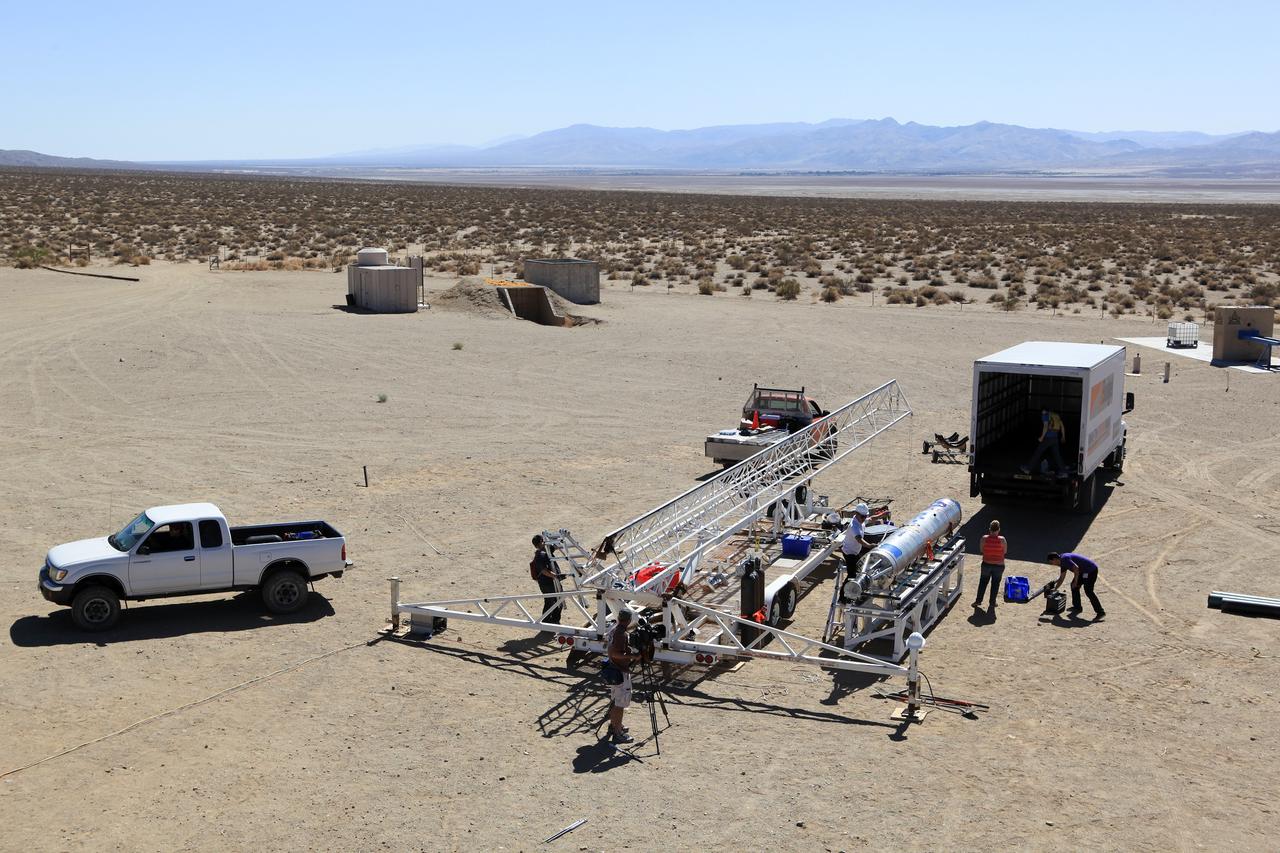
MOJAVE DESERT, Calif. – In the Mojave Desert in California, students and engineers checkout the Garvey Spacecraft Corporation's Prospector P-18D rocket at the Friends of Amateur Rocketry launch site. The rocket is scheduled for launch June 15 with the RUBICS-1 payload on a high-altitude, suborbital mission. The rocket will carry four satellites made from four-inch cube sections. Collectively known as CubeSats, the satellites will record shock, vibrations and heat inside the rocket. They will not be released during the test flight, but the results will be used to prove or strengthen their designs before they are carried into orbit in 2014 on a much larger rocket. A new, lightweight carrier is also being tested for use on future missions to deploy the small spacecraft. The flight also is being watched closely as a model for trying out new or off-the-shelf technologies quickly before putting them in the pipeline for use on NASA's largest launchers. Built by several different organizations, including a university, a NASA field center and a high school, the spacecraft are four-inch cubes designed to fly on their own eventually, but will remain firmly attached to the rocket during the upcoming mission. For more information, visit http://www.nasa.gov/mission_pages/smallsats/elana/cubesatlaunchpreview.html Photo credit: NASA/Dimitri Gerondidakis
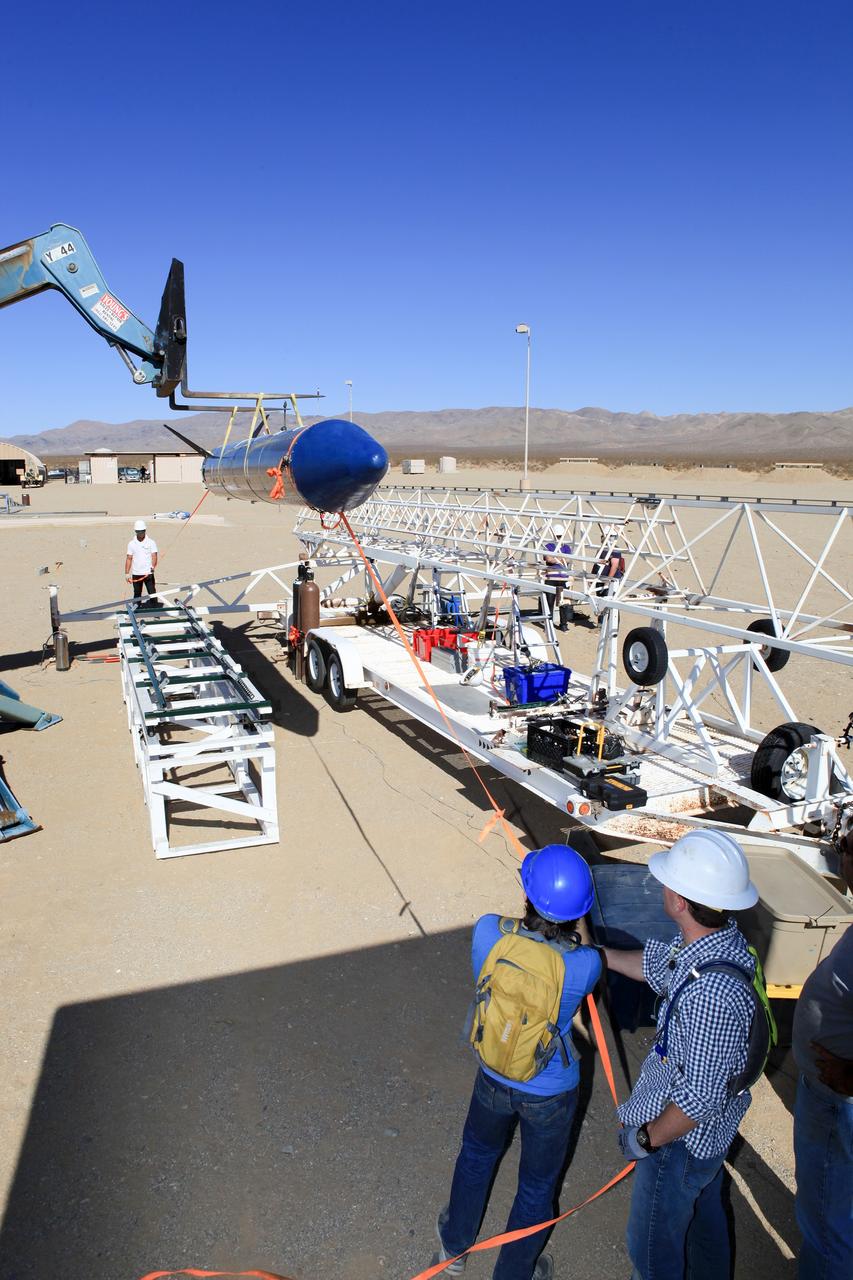
MOJAVE DESERT, Calif. – In the Mojave Desert in California, students and engineers assist as the Garvey Spacecraft Corporation's Prospector P-18D rocket is lifted into position for its scheduled launch on June 15 with the RUBICS-1 payload on a high-altitude, suborbital flight. The rocket will carry four satellites made from four-inch cube sections. Collectively known as CubeSats, the satellites will record shock, vibrations and heat inside the rocket. They will not be released during the test flight, but the results will be used to prove or strengthen their designs before they are carried into orbit in 2014 on a much larger rocket. A new, lightweight carrier is also being tested for use on future missions to deploy the small spacecraft. The flight also is being watched closely as a model for trying out new or off-the-shelf technologies quickly before putting them in the pipeline for use on NASA's largest launchers. Built by several different organizations, including a university, a NASA field center and a high school, the spacecraft are four-inch cubes designed to fly on their own eventually, but will remain firmly attached to the rocket during the upcoming mission. For more information, visit http://www.nasa.gov/mission_pages/smallsats/elana/cubesatlaunchpreview.html Photo credit: NASA/Dimitri Gerondidakis
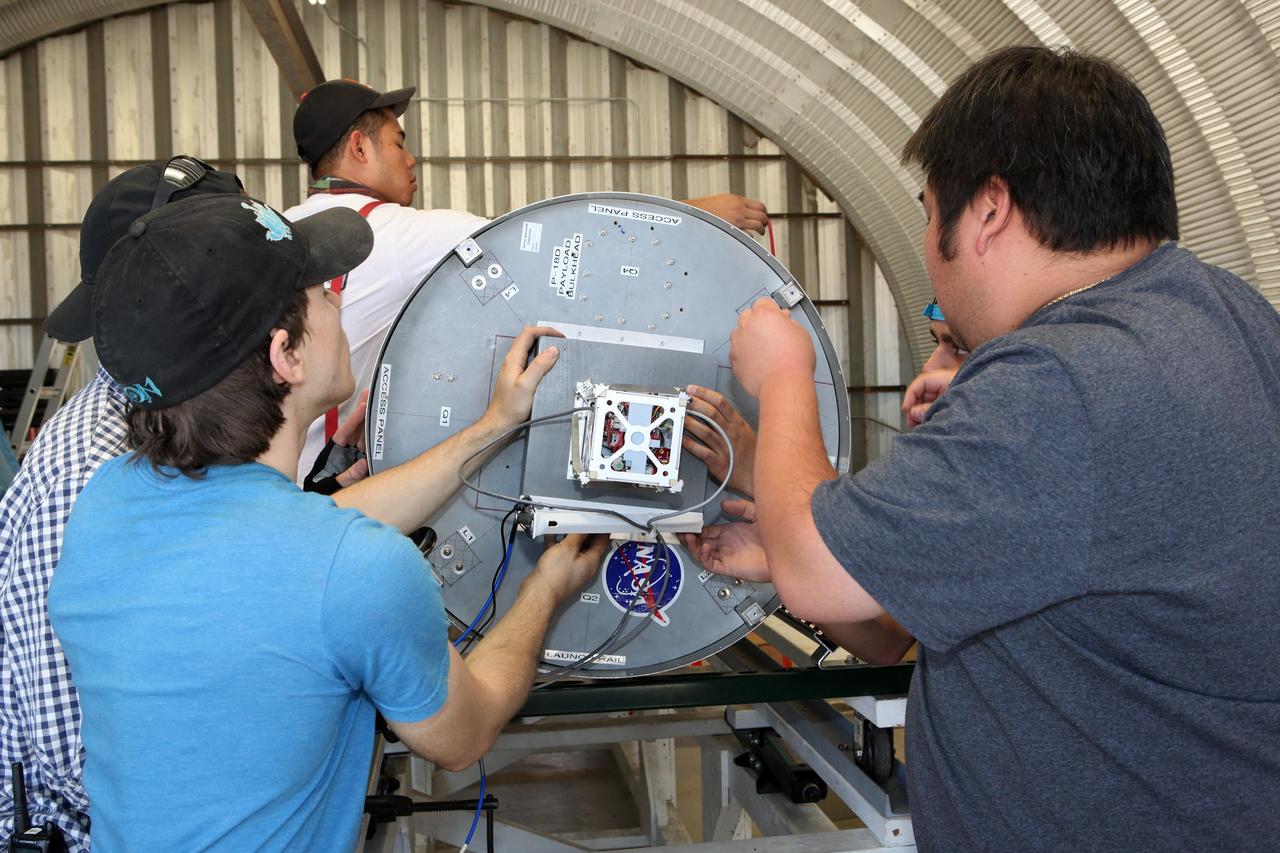
MOJAVE DESERT, Calif. – In the Mojave Desert in California, students and engineers checkout the Garvey Spacecraft Corporation's Prospector P-18D rocket. The rocket is scheduled for launch June 15 with the RUBICS-1 payload on a high-altitude, suborbital flight. The rocket will carry four satellites made from four-inch cube sections. Collectively known as CubeSats, the satellites will record shock, vibrations and heat inside the rocket. They will not be released during the test flight, but the results will be used to prove or strengthen their designs before they are carried into orbit in 2014 on a much larger rocket. A new, lightweight carrier is also being tested for use on future missions to deploy the small spacecraft. The flight also is being watched closely as a model for trying out new or off-the-shelf technologies quickly before putting them in the pipeline for use on NASA's largest launchers. Built by several different organizations, including a university, a NASA field center and a high school, the spacecraft are four-inch cubes designed to fly on their own eventually, but will remain firmly attached to the rocket during the upcoming mission. For more information, visit http://www.nasa.gov/mission_pages/smallsats/elana/cubesatlaunchpreview.html Photo credit: NASA/Dimitri Gerondidakis
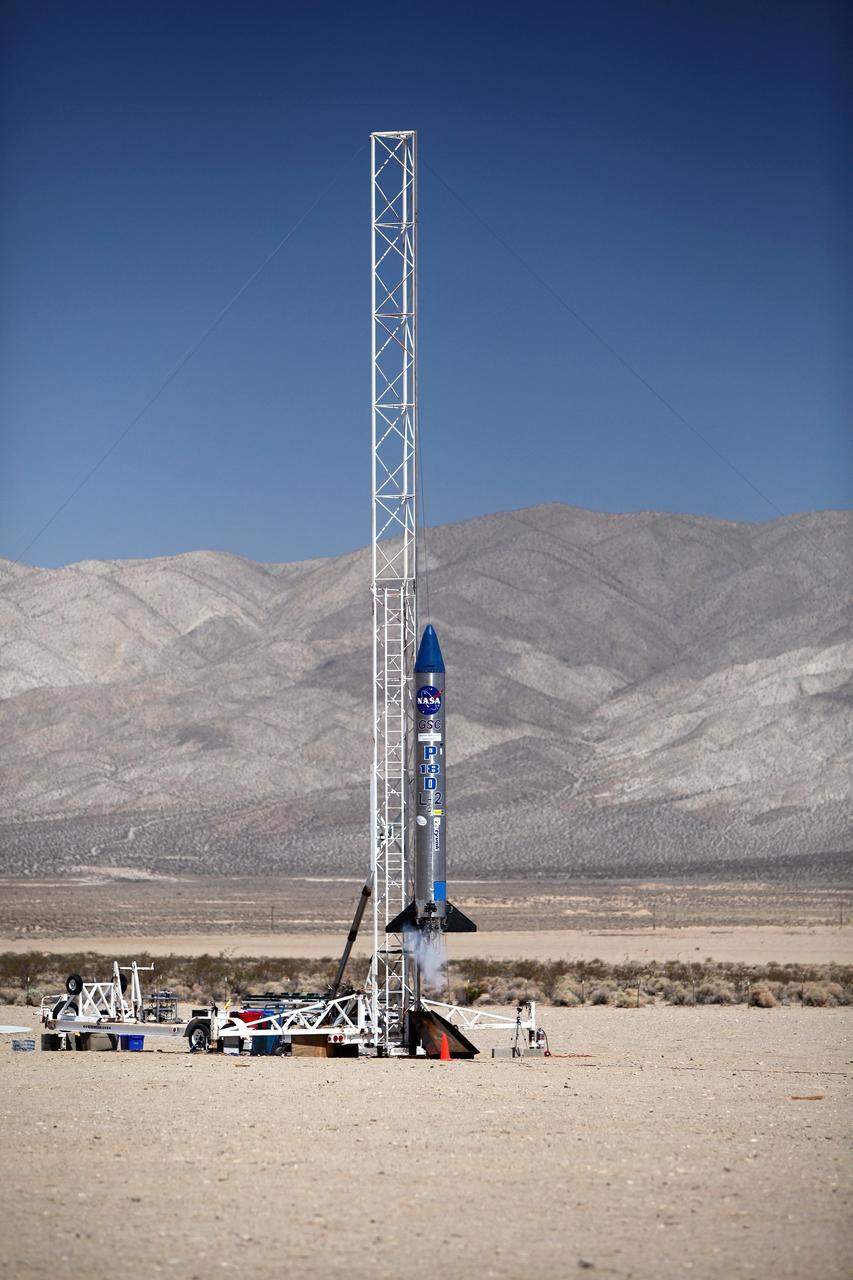
MOJAVE DESERT, Calif. – In the Mojave Desert in California, the ignition sequence begins on the Garvey Spacecraft Corporation's Prospector P-18D rocket. The vehicle is carrying the RUBICS-1 payload on a high-altitude, suborbital flight. The rocket carried four satellites made from four-inch cube sections. The rocket reached a peak altitude of about 9,000 feet, however the parachute deployed prematurely and the vehicle continued on its trajectory, coasting and tumbling to a hard landing on its side. In spite of the rough ride, all four CubeSats were recovered. PhoneSat and RUBICS received data in flight, but sustained structural damage. CP-9 and StangSat fared better, and their teams are working to recover as much information as possible. Collectively known as CubeSats, the satellites were designed to record shock, vibrations and heat inside the rocket. The results will be used to prove or strengthen their designs before they are carried into orbit in 2014 on a much larger rocket. Built by several different organizations, including a university, a NASA field center and a high school, the spacecraft are four-inch cubes designed to fly on their own eventually, but will remain firmly attached to the rocket during the upcoming mission. For more information, visit http://www.nasa.gov/mission_pages/smallsats/elana/cubesatlaunchpreview.html Photo credit: NASA/Dimitri Gerondidakis
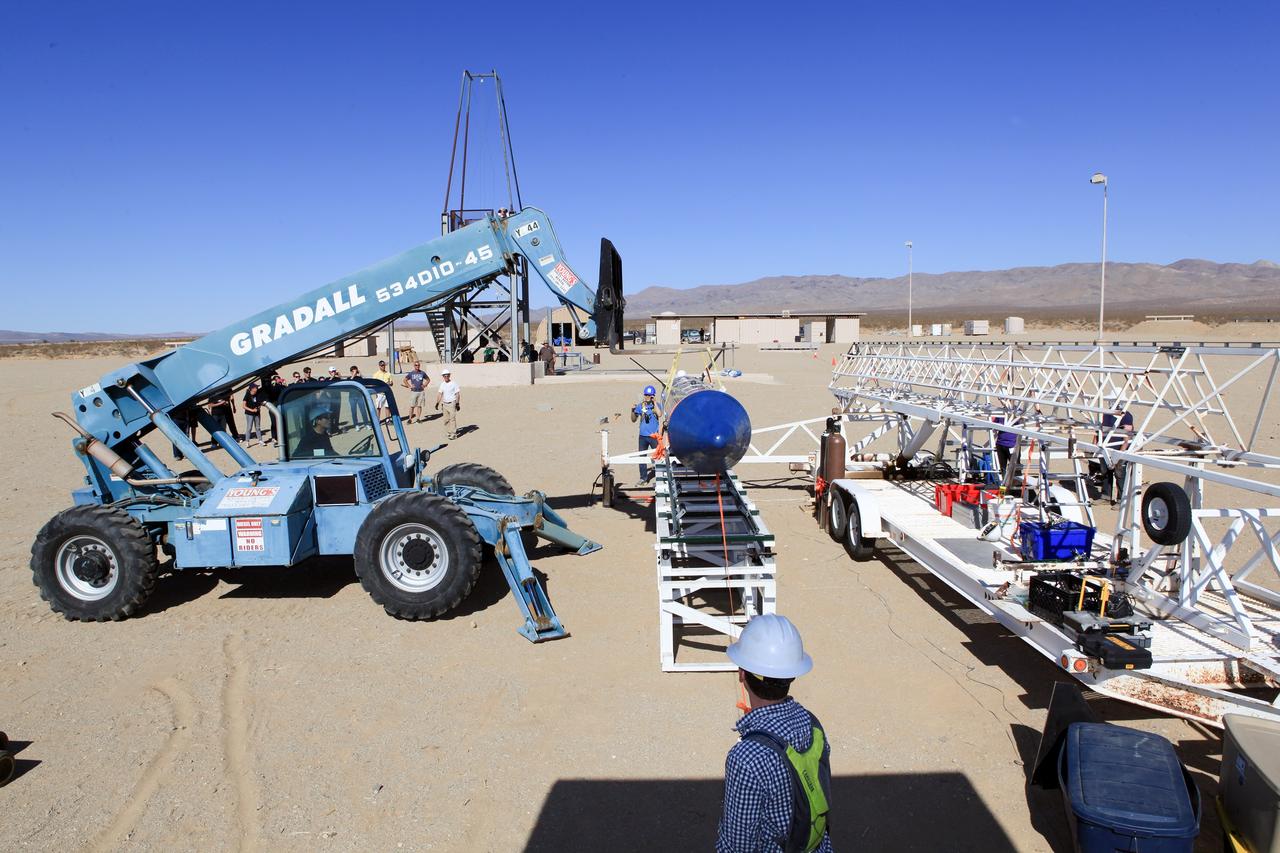
MOJAVE DESERT, Calif. – In the Mojave Desert in California, students and engineers assist as the Garvey Spacecraft Corporation's Prospector P-18D rocket is lifted into position for its scheduled launch on June 15 with the RUBICS-1 payload on a high-altitude, suborbital flight. The rocket will carry four satellites made from four-inch cube sections. Collectively known as CubeSats, the satellites will record shock, vibrations and heat inside the rocket. They will not be released during the test flight, but the results will be used to prove or strengthen their designs before they are carried into orbit in 2014 on a much larger rocket. A new, lightweight carrier is also being tested for use on future missions to deploy the small spacecraft. The flight also is being watched closely as a model for trying out new or off-the-shelf technologies quickly before putting them in the pipeline for use on NASA's largest launchers. Built by several different organizations, including a university, a NASA field center and a high school, the spacecraft are four-inch cubes designed to fly on their own eventually, but will remain firmly attached to the rocket during the upcoming mission. For more information, visit http://www.nasa.gov/mission_pages/smallsats/elana/cubesatlaunchpreview.html Photo credit: NASA/Dimitri Gerondidakis
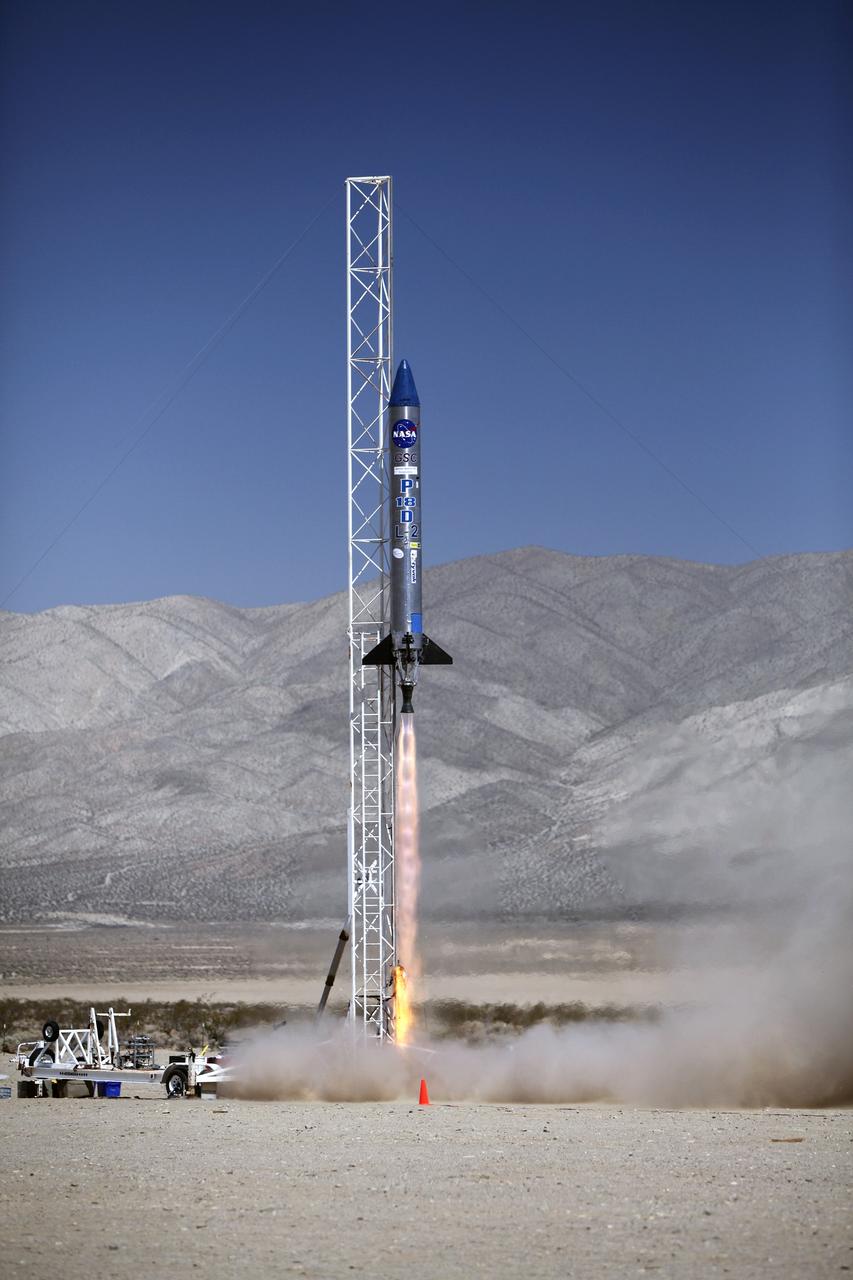
MOJAVE DESERT, Calif. – In the Mojave Desert in California, the Garvey Spacecraft Corporation's Prospector P-18D rocket lifts off at 10:52 a.m. PDT carrying the RUBICS-1 payload on a high-altitude, suborbital flight. The rocket carried four satellites made from four-inch cube sections. The rocket reached a peak altitude of about 9,000 feet, however the parachute deployed prematurely and the vehicle continued on its trajectory, coasting and tumbling to a hard landing on its side. In spite of the rough ride, all four CubeSats were recovered. PhoneSat and RUBICS received data in flight, but sustained structural damage. CP-9 and StangSat fared better, and their teams are working to recover as much information as possible. Collectively known as CubeSats, the satellites were designed to record shock, vibrations and heat inside the rocket. The results will be used to prove or strengthen their designs before they are carried into orbit in 2014 on a much larger rocket. Built by several different organizations, including a university, a NASA field center and a high school, the spacecraft are four-inch cubes designed to fly on their own eventually, but will remain firmly attached to the rocket during the upcoming mission. For more information, visit http://www.nasa.gov/mission_pages/smallsats/elana/cubesatlaunchpreview.html Photo credit: NASA/Dimitri Gerondidakis
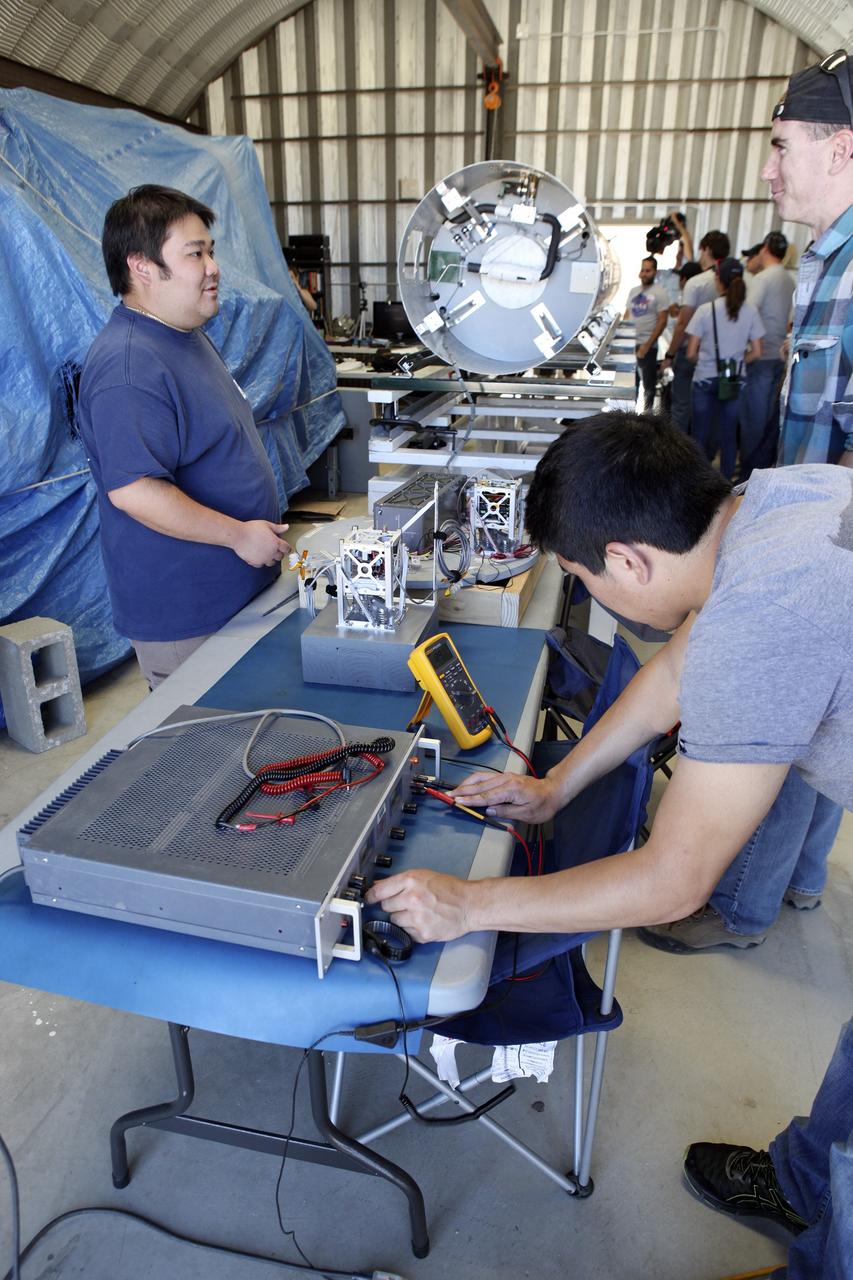
MOJAVE DESERT, Calif. – In the Mojave Desert in California, students and engineers checkout the RUBICS-1 payload which will be placed into the body of the Garvey Spacecraft Corporation's Prospector P-18D rocket for launch June 15 on a high-altitude, suborbital flight. The flight will carry four satellites made from four-inch cube section. Collectively known as CubeSats, the satellites will record shock, vibrations and heat inside the rocket. They will not be released during the test flight, but the results will be used to prove or strengthen their designs before they are carried into orbit in 2014 on a much larger rocket. A new, lightweight carrier is also being tested for use on future missions to deploy the small spacecraft. The flight also is being watched closely as a model for trying out new or off-the-shelf technologies quickly before putting them in the pipeline for use on NASA's largest launchers. Built by several different organizations, including a university, a NASA field center and a high school, the spacecraft are four-inch cubes designed to fly on their own eventually, but will remain firmly attached to the rocket during the upcoming mission. For more information, visit http://www.nasa.gov/mission_pages/smallsats/elana/cubesatlaunchpreview.html Photo credit: NASA/Dimitri Gerondidakis
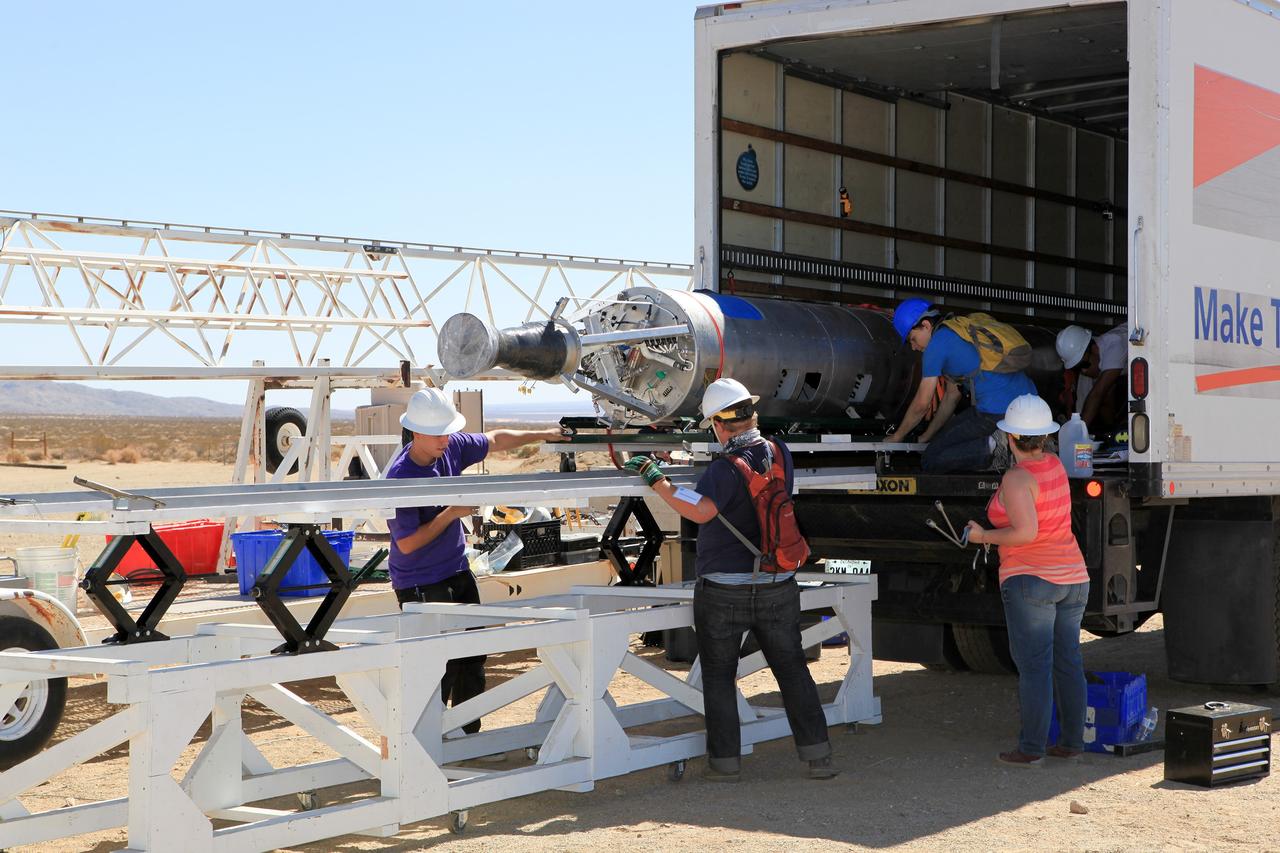
MOJAVE DESERT, Calif. – In the Mojave Desert in California, students and engineers unload the Garvey Spacecraft Corporation's Prospector P-18D rocket from a truck at the launch site. The rocket is scheduled for launch June 15 with the RUBICS-1 payload on a high-altitude, suborbital flight. The rocket will carry four satellites made from four-inch cube sections. Collectively known as CubeSats, the satellites will record shock, vibrations and heat inside the rocket. They will not be released during the test flight, but the results will be used to prove or strengthen their designs before they are carried into orbit in 2014 on a much larger rocket. A new, lightweight carrier is also being tested for use on future missions to deploy the small spacecraft. The flight also is being watched closely as a model for trying out new or off-the-shelf technologies quickly before putting them in the pipeline for use on NASA's largest launchers. Built by several different organizations, including a university, a NASA field center and a high school, the spacecraft are four-inch cubes designed to fly on their own eventually, but will remain firmly attached to the rocket during the upcoming mission. For more information, visit http://www.nasa.gov/mission_pages/smallsats/elana/cubesatlaunchpreview.html Photo credit: NASA/Dimitri Gerondidakis
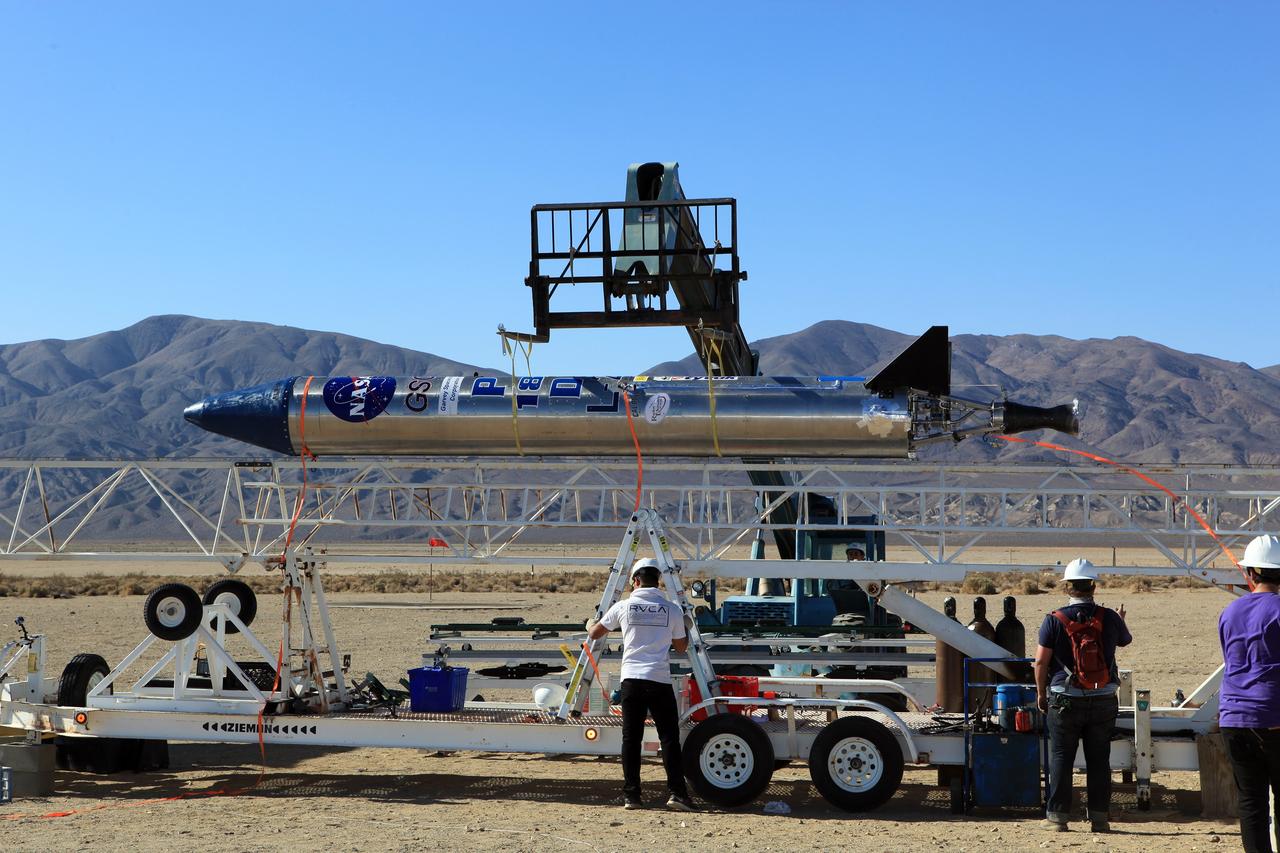
MOJAVE DESERT, Calif. – In the Mojave Desert in California, students and engineers assist as the Garvey Spacecraft Corporation's Prospector P-18D rocket is lifted into position for its scheduled launch on June 15 with the RUBICS-1 payload on a high-altitude, suborbital flight. The rocket will carry four satellites made from four-inch cube sections. Collectively known as CubeSats, the satellites will record shock, vibrations and heat inside the rocket. They will not be released during the test flight, but the results will be used to prove or strengthen their designs before they are carried into orbit in 2014 on a much larger rocket. A new, lightweight carrier is also being tested for use on future missions to deploy the small spacecraft. The flight also is being watched closely as a model for trying out new or off-the-shelf technologies quickly before putting them in the pipeline for use on NASA's largest launchers. Built by several different organizations, including a university, a NASA field center and a high school, the spacecraft are four-inch cubes designed to fly on their own eventually, but will remain firmly attached to the rocket during the upcoming mission. For more information, visit http://www.nasa.gov/mission_pages/smallsats/elana/cubesatlaunchpreview.html Photo credit: NASA/Dimitri Gerondidakis
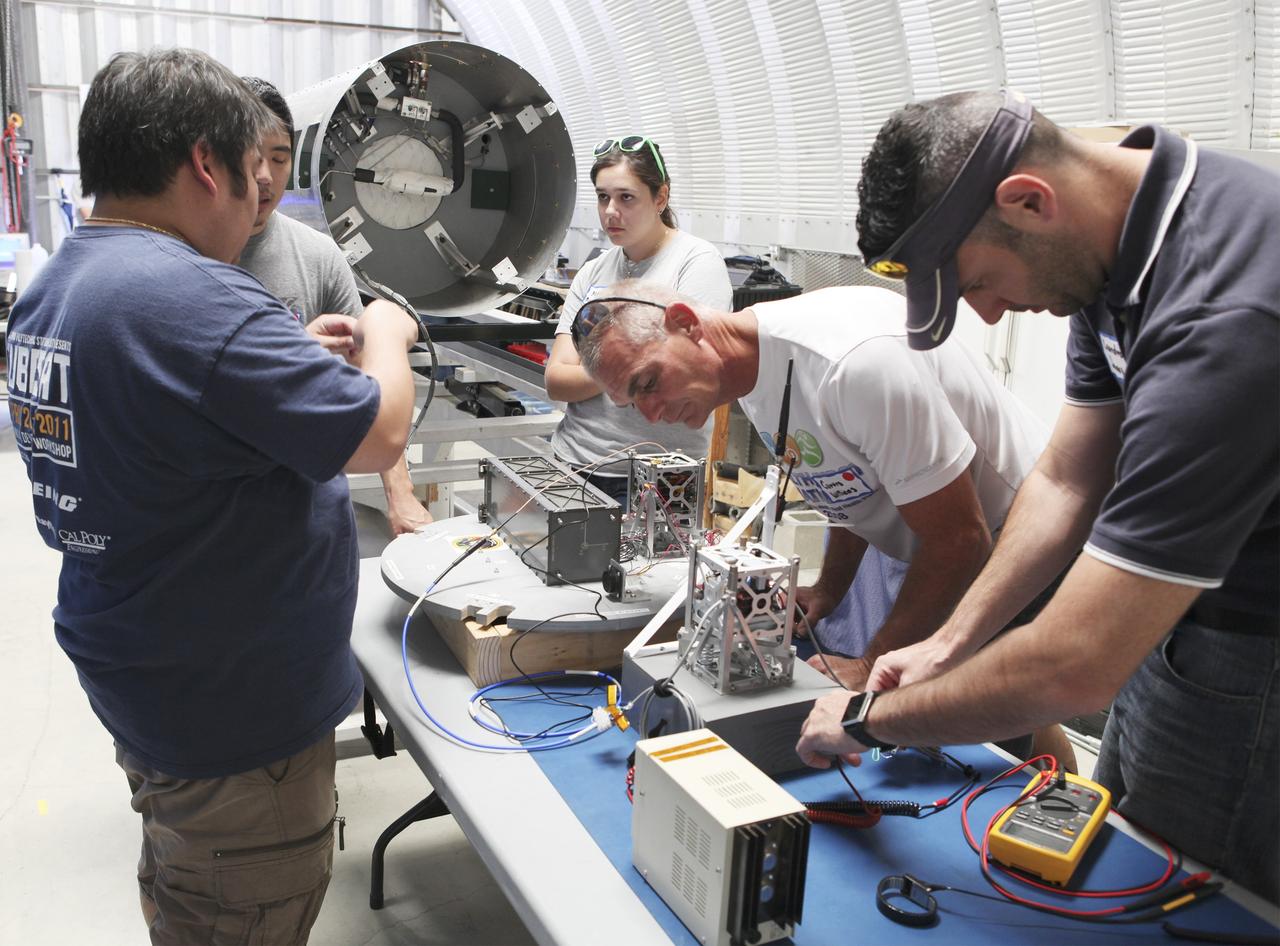
MOJAVE DESERT, Calif. – In the Mojave Desert in California, students and engineers checkout the RUBICS-1 payload which will be placed into the body of the Garvey Spacecraft Corporation's Prospector P-18D rocket for launch June 15 on a high-altitude, suborbital flight. The flight will carry four satellites made from four-inch cube section. Collectively known as CubeSats, the satellites will record shock, vibrations and heat inside the rocket. They will not be released during the test flight, but the results will be used to prove or strengthen their designs before they are carried into orbit in 2014 on a much larger rocket. A new, lightweight carrier is also being tested for use on future missions to deploy the small spacecraft. The flight also is being watched closely as a model for trying out new or off-the-shelf technologies quickly before putting them in the pipeline for use on NASA's largest launchers. Built by several different organizations, including a university, a NASA field center and a high school, the spacecraft are four-inch cubes designed to fly on their own eventually, but will remain firmly attached to the rocket during the upcoming mission. For more information, visit http://www.nasa.gov/mission_pages/smallsats/elana/cubesatlaunchpreview.html Photo credit: NASA/Dimitri Gerondidakis
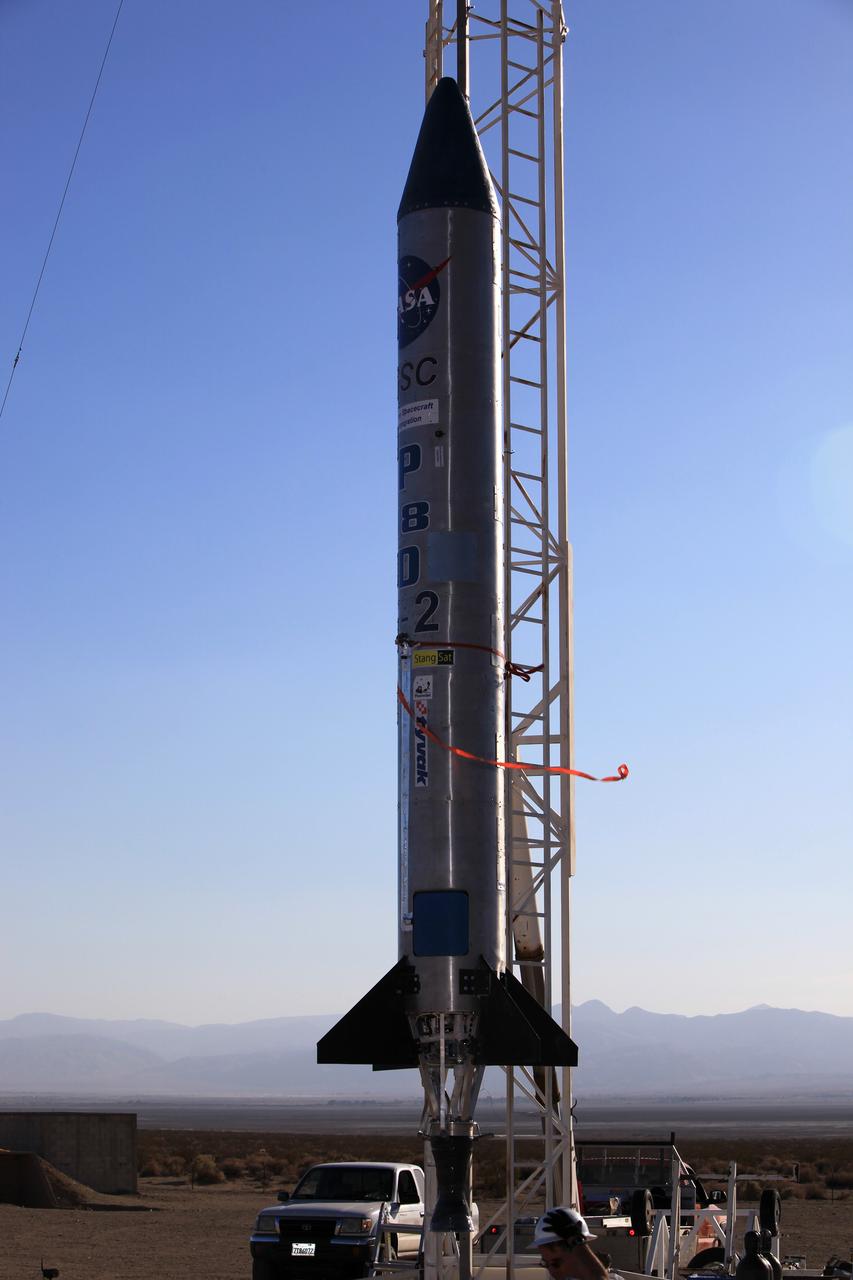
MOJAVE DESERT, Calif. – In the Mojave Desert in California, the Garvey Spacecraft Corporation's Prospector P-18D rocket is lifted into position for its scheduled launch on June 15 with the RUBICS-1 payload on a high-altitude, suborbital flight. The rocket will carry four satellites made from four-inch cube sections. Collectively known as CubeSats, the satellites will record shock, vibrations and heat inside the rocket. They will not be released during the test flight, but the results will be used to prove or strengthen their designs before they are carried into orbit in 2014 on a much larger rocket. A new, lightweight carrier is also being tested for use on future missions to deploy the small spacecraft. The flight also is being watched closely as a model for trying out new or off-the-shelf technologies quickly before putting them in the pipeline for use on NASA's largest launchers. Built by several different organizations, including a university, a NASA field center and a high school, the spacecraft are four-inch cubes designed to fly on their own eventually, but will remain firmly attached to the rocket during the upcoming mission. For more information, visit http://www.nasa.gov/mission_pages/smallsats/elana/cubesatlaunchpreview.html Photo credit: NASA/Dimitri Gerondidakis
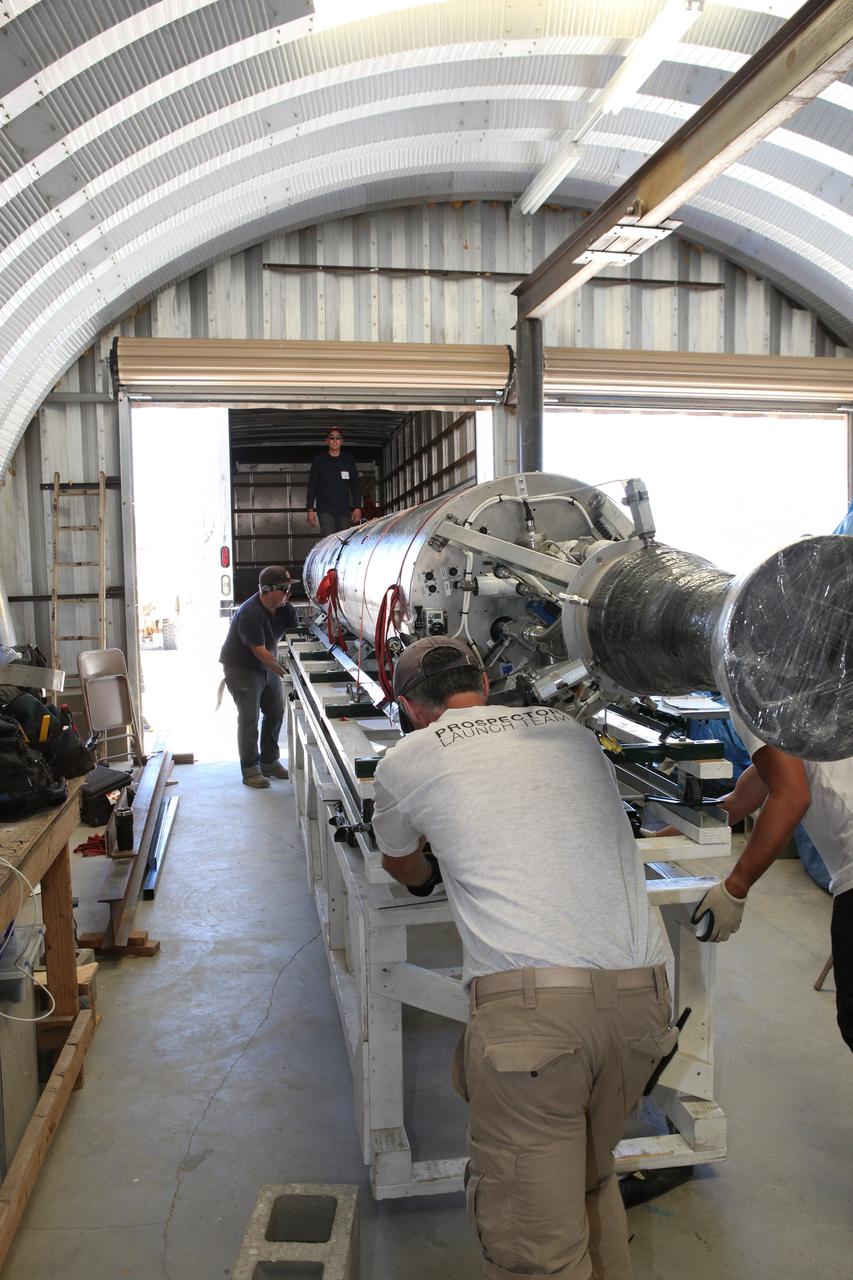
MOJAVE DESERT, Calif. – In the Mojave Desert in California, students and engineers load the Garvey Spacecraft Corporation's Prospector P-18D rocket onto a truck for transportation to the launch site. The rocket is scheduled for launch June 15 with the RUBICS-1 payload on a high-altitude, suborbital flight. The rocket will carry four satellites made from four-inch cube sections. Collectively known as CubeSats, the satellites will record shock, vibrations and heat inside the rocket. They will not be released during the test flight, but the results will be used to prove or strengthen their designs before they are carried into orbit in 2014 on a much larger rocket. A new, lightweight carrier is also being tested for use on future missions to deploy the small spacecraft. The flight also is being watched closely as a model for trying out new or off-the-shelf technologies quickly before putting them in the pipeline for use on NASA's largest launchers. Built by several different organizations, including a university, a NASA field center and a high school, the spacecraft are four-inch cubes designed to fly on their own eventually, but will remain firmly attached to the rocket during the upcoming mission. For more information, visit http://www.nasa.gov/mission_pages/smallsats/elana/cubesatlaunchpreview.html Photo credit: NASA/Dimitri Gerondidakis
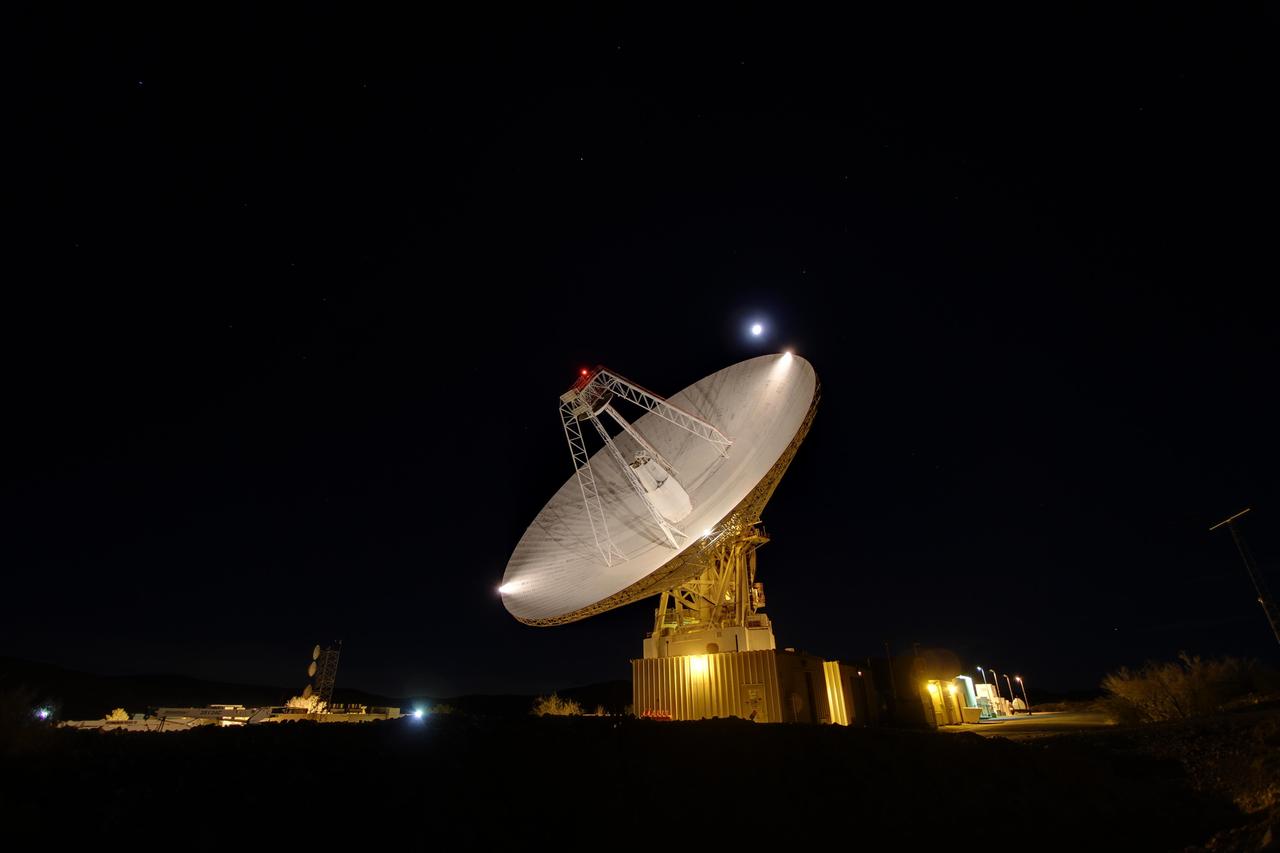
Goldstone 230-foot 70-m antenna tracks under a full moon. The Goldstone Deep Space Communications Complex is located in the Mojave Desert in California, USA.
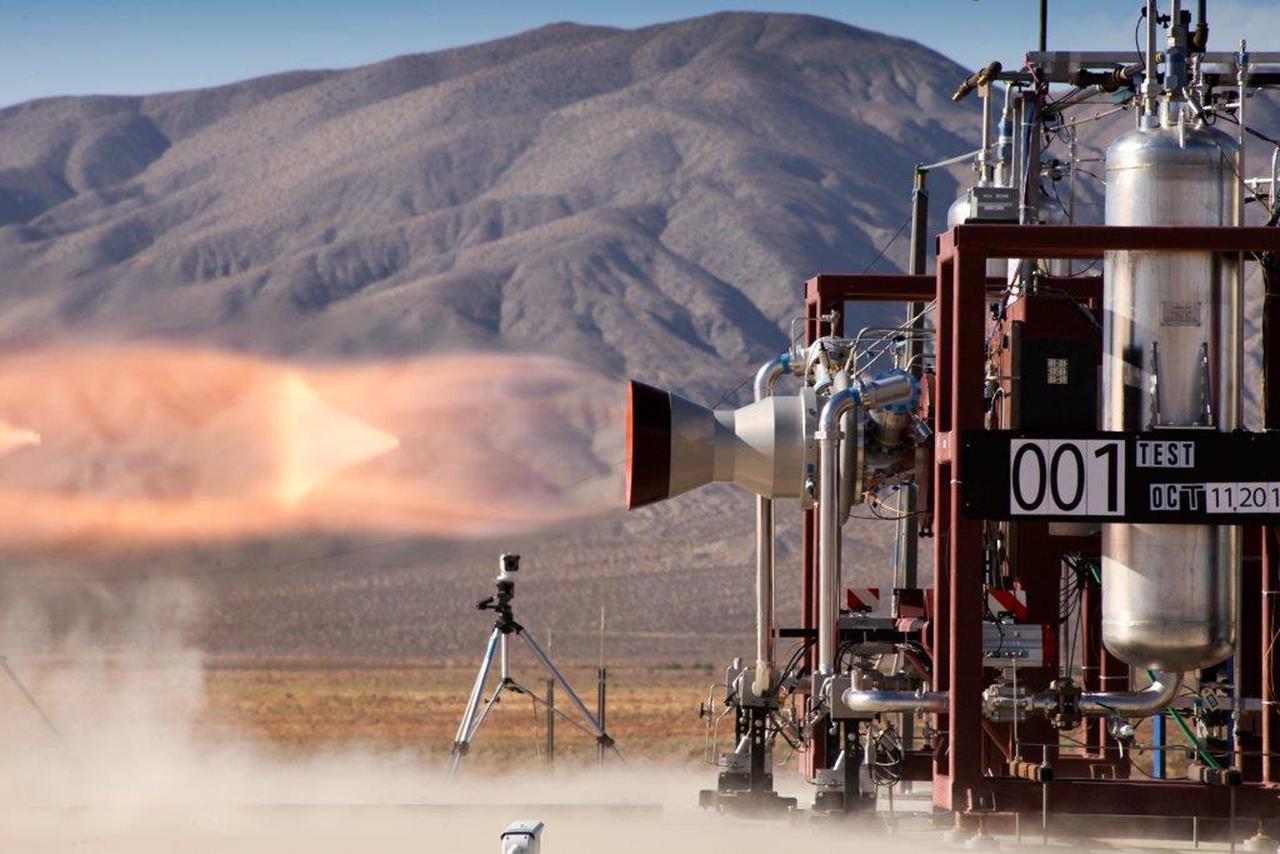
Boeing and Aerojet Rocketdyne have begun a series of developmental hot-fire tests with two launch abort engines similar to the ones that will be part of Boeing’s CST-100 Starliner service module, in the Mojave Desert in California. The engines, designed to maximize thrust build-up, while minimizing overshoot during start up, will be fired between half a second and 3 seconds each during the test campaign. If the Starliner’s four launch abort engines were used during an abort scenario, they would fire between 3 and 5.5. seconds, with enough thrust to get the spacecraft and its crew away from the rocket, before splashing down in the ocean under parachutes.
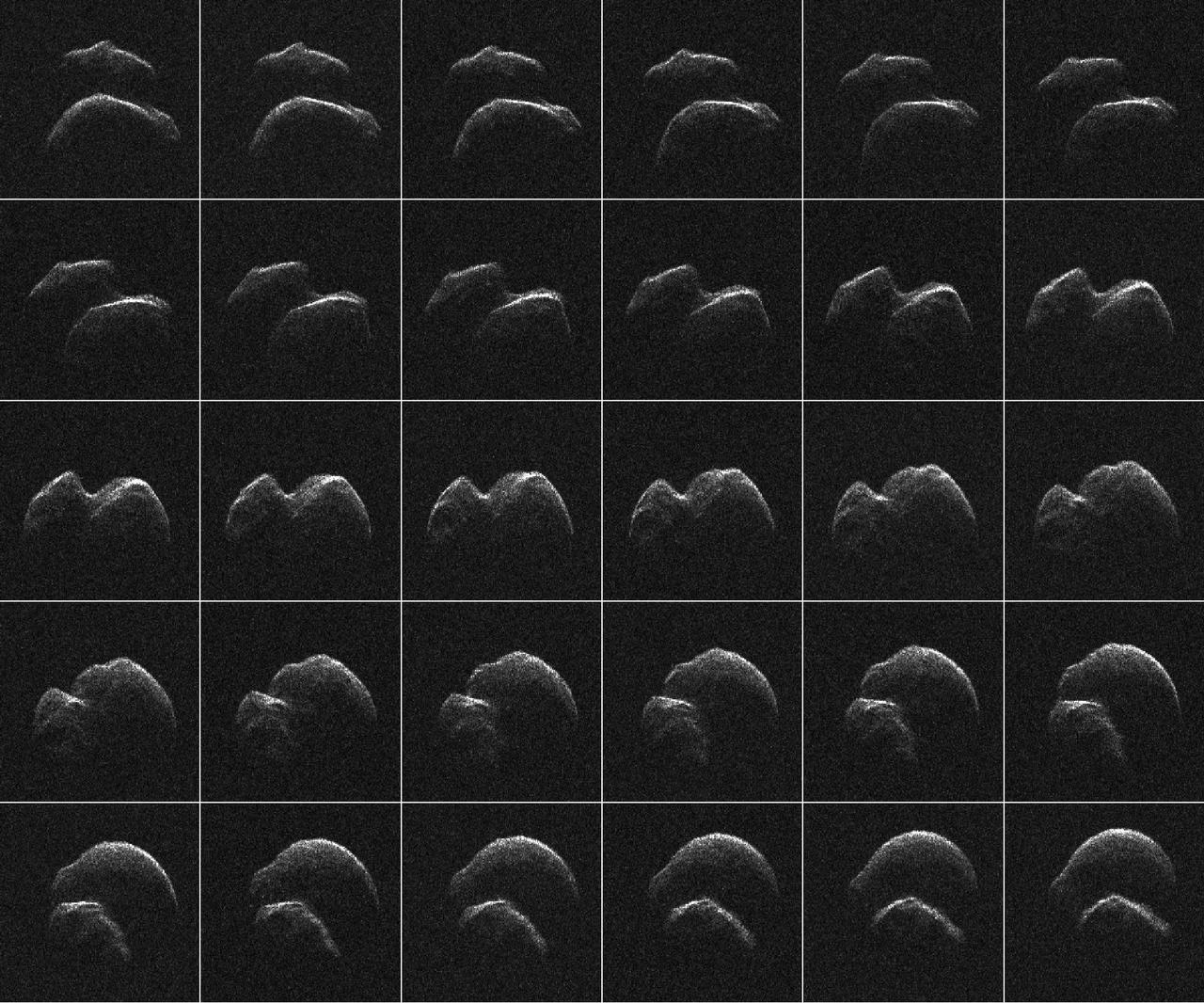
This composite of 30 images of asteroid 2014 JO25 was generated with radar data collected using NASA Goldstone Solar System Radar in California Mojave Desert. https://photojournal.jpl.nasa.gov/catalog/PIA21594
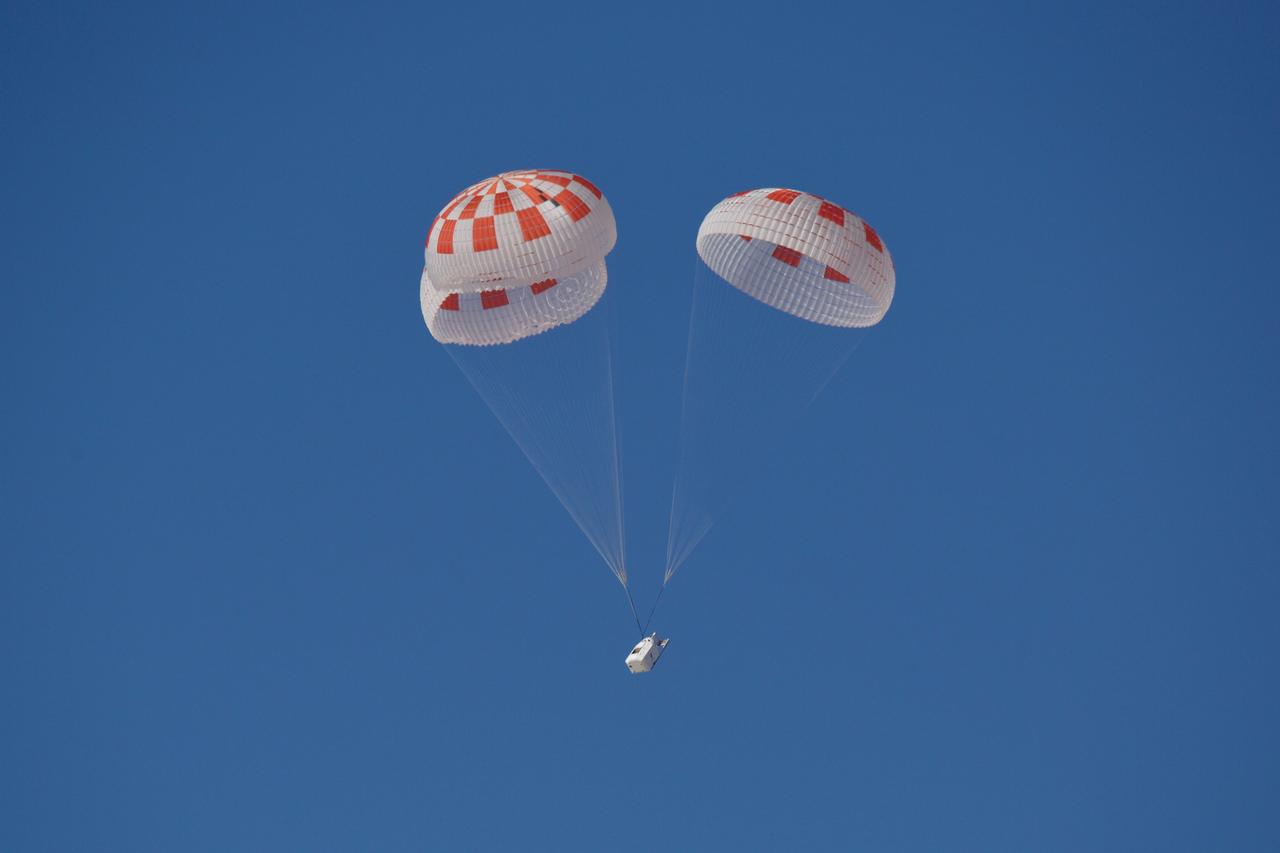
SpaceX performed its fourteenth overall parachute test supporting Crew Dragon development. This most recent exercise was the first of several planned parachute system qualification tests ahead of the spacecraft’s first crewed flight and resulted in the successful touchdown of Crew Dragon’s parachute system. During this test, a C-130 aircraft transported the parachute test vehicle, designed to achieve the maximum speeds that Crew Dragon could experience on re-entry, over the Mojave Desert in Southern California and dropped the vehicle from an altitude of 25,000 feet. The test demonstrated an off-nominal situation, deploying only one of the two drogue chutes and intentionally skipping a reefing stage on one of the four main parachutes, proving a safe landing in such a contingency scenario.
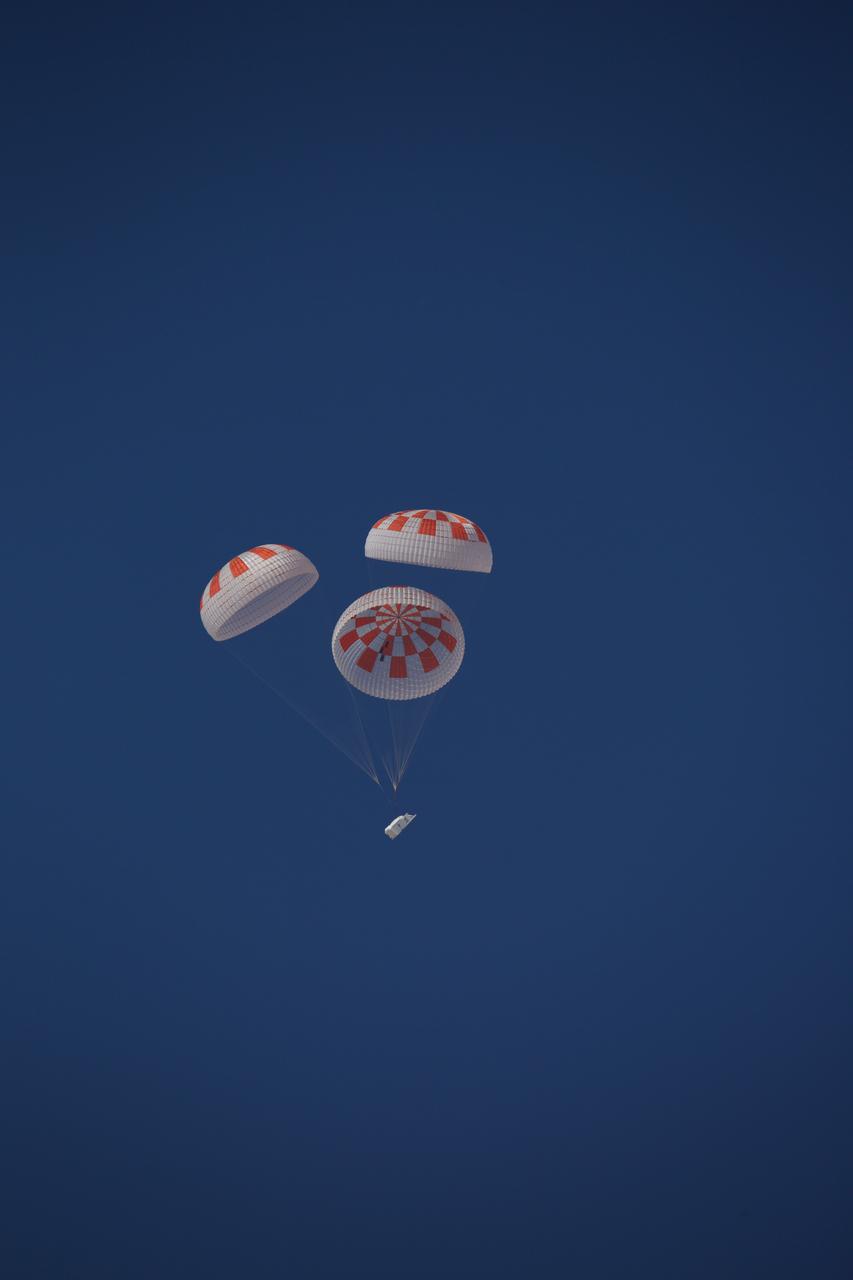
SpaceX performed its fourteenth overall parachute test supporting Crew Dragon development. This most recent exercise was the first of several planned parachute system qualification tests ahead of the spacecraft’s first crewed flight and resulted in the successful touchdown of Crew Dragon’s parachute system. During this test, a C-130 aircraft transported the parachute test vehicle, designed to achieve the maximum speeds that Crew Dragon could experience on re-entry, over the Mojave Desert in Southern California and dropped the vehicle from an altitude of 25,000 feet. The test demonstrated an off-nominal situation, deploying only one of the two drogue chutes and intentionally skipping a reefing stage on one of the four main parachutes, proving a safe landing in such a contingency scenario.
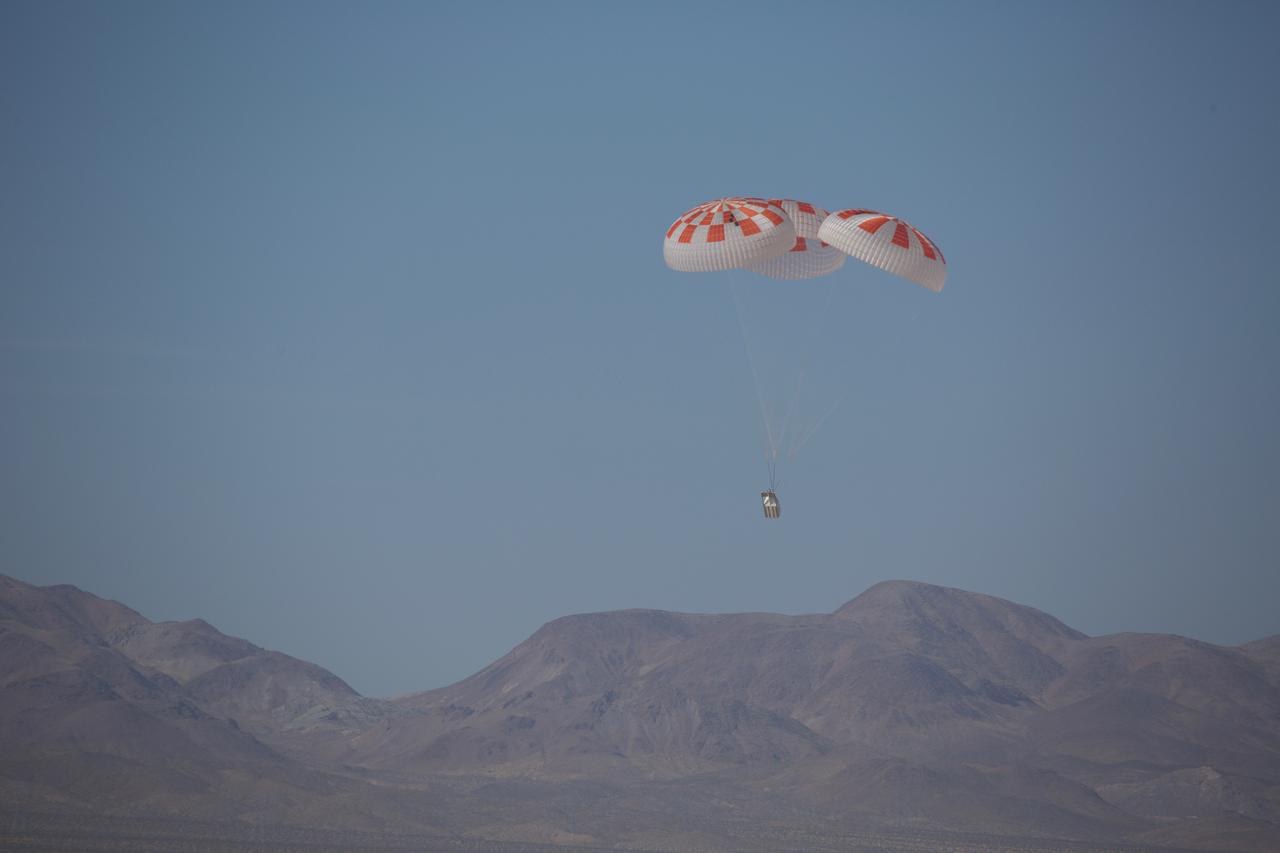
SpaceX performed its fourteenth overall parachute test supporting Crew Dragon development. This most recent exercise was the first of several planned parachute system qualification tests ahead of the spacecraft’s first crewed flight and resulted in the successful touchdown of Crew Dragon’s parachute system. During this test, a C-130 aircraft transported the parachute test vehicle, designed to achieve the maximum speeds that Crew Dragon could experience on re-entry, over the Mojave Desert in Southern California and dropped the vehicle from an altitude of 25,000 feet. The test demonstrated an off-nominal situation, deploying only one of the two drogue chutes and intentionally skipping a reefing stage on one of the four main parachutes, proving a safe landing in such a contingency scenario.
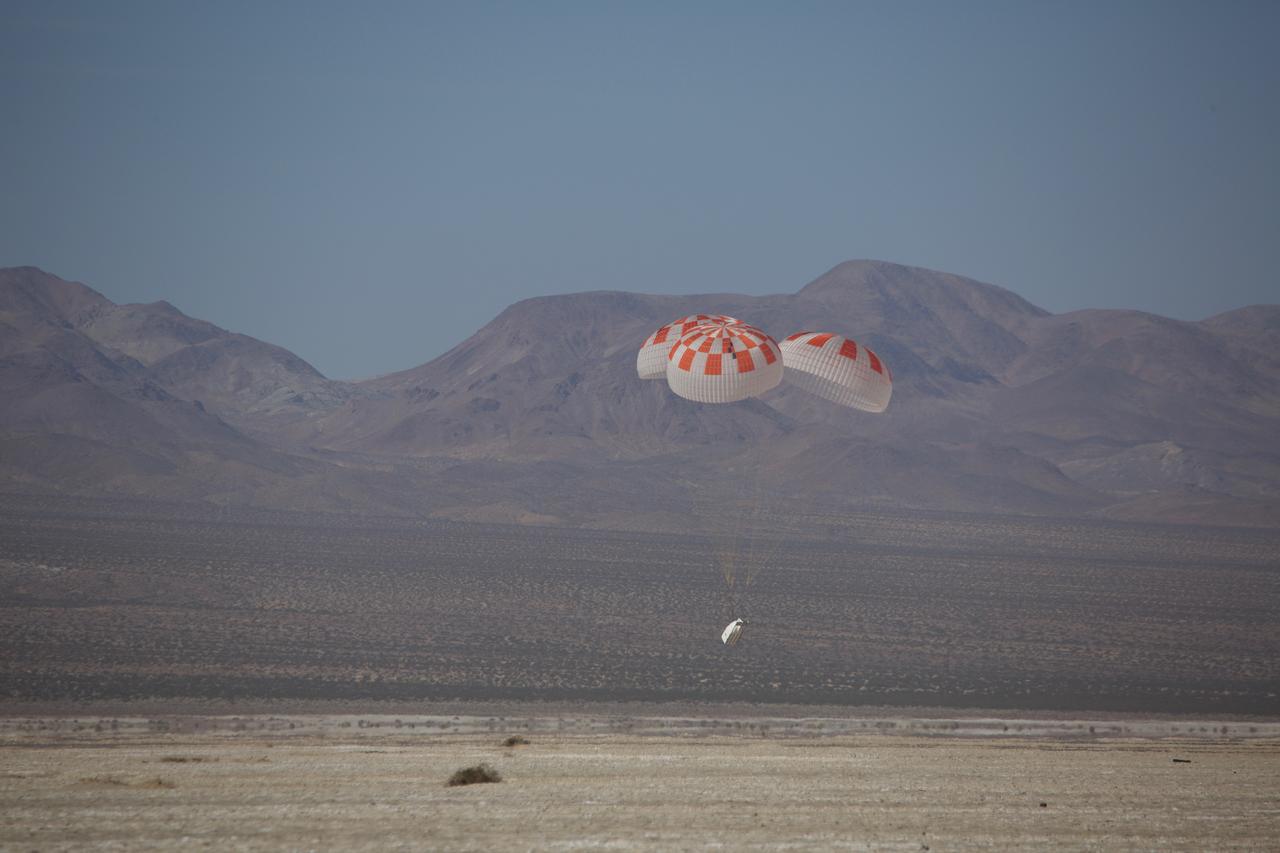
SpaceX performed its fourteenth overall parachute test supporting Crew Dragon development. This most recent exercise was the first of several planned parachute system qualification tests ahead of the spacecraft’s first crewed flight and resulted in the successful touchdown of Crew Dragon’s parachute system. During this test, a C-130 aircraft transported the parachute test vehicle, designed to achieve the maximum speeds that Crew Dragon could experience on re-entry, over the Mojave Desert in Southern California and dropped the vehicle from an altitude of 25,000 feet. The test demonstrated an off-nominal situation, deploying only one of the two drogue chutes and intentionally skipping a reefing stage on one of the four main parachutes, proving a safe landing in such a contingency scenario.
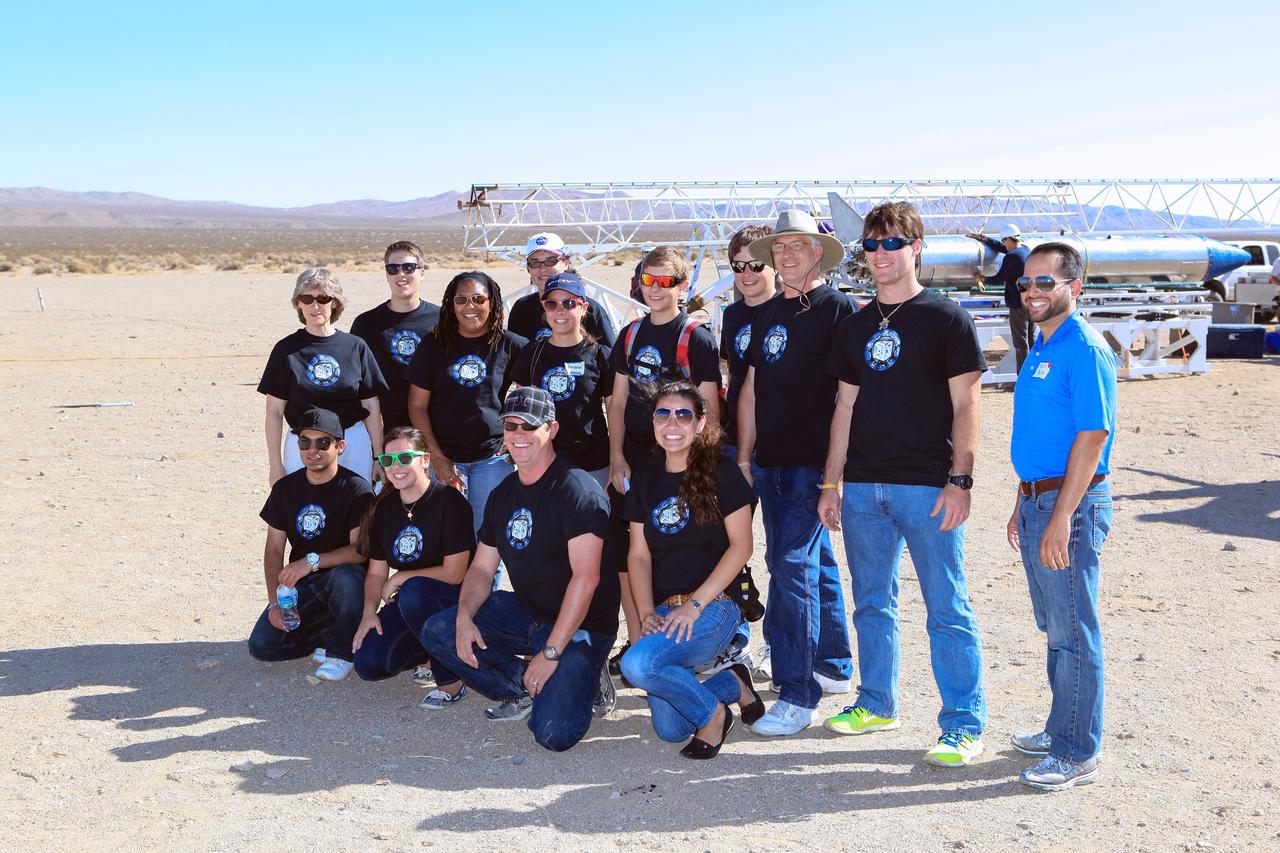
MOJAVE DESERT, Calif. – In the Mojave Desert in California, a student StangSat Team of students from Merritt Island High School in Florida posed for a pre-launch photograph as the Garvey Spacecraft Corporation's Prospector P-18D rocket, in the background, was being prepared for flight at the Friends of Amateur Rocketry launch site. Kneeling from left to right, are: Gurkirat Kainth, Megan Mackool, NASA mentor Shaun Daly and Maurisa Orona. Standing from left to right, are: teacher sponsor Tracey Beatovich, Brian Robusto, NASA Education program manager Grace Johnson, Nathan Stephens, Briana Luthman, Jackson Kinney, Steven Krygier, NASA mentor Jim Kinney, Joshua Zirkle and NASA mentor Kelvin Ruiz. Collectively known as CubeSats, the satellites will record shock, vibrations and heat inside the rocket. They will not be released during the test flight, but the results will be used to prove or strengthen their designs before they are carried into orbit in 2014 on a much larger rocket. A new, lightweight carrier is also being tested for use on future missions to deploy the small spacecraft. The flight also is being watched closely as a model for trying out new or off-the-shelf technologies quickly before putting them in the pipeline for use on NASA's largest launchers. Built by several different organizations, including a university, a NASA field center and a high school, the spacecraft are four-inch cubes designed to fly on their own eventually, but will remain firmly attached to the rocket during the upcoming mission. For more information, visit http://www.nasa.gov/mission_pages/smallsats/elana/cubesatlaunchpreview.html Photo credit: NASA/Dimitri Gerondidakis
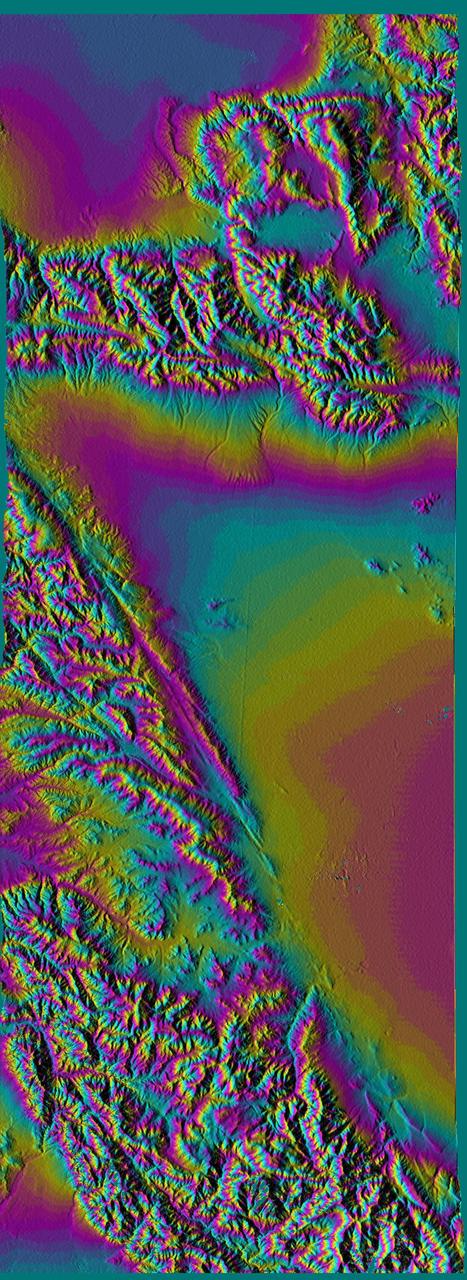
This topographic map acquired by NASA Shuttle Radar Topography Mission SRTM from data collected on February 16, 2000 vividly displays California famous San Andreas Fault along the southwestern edge of the Mojave Desert, Calif.
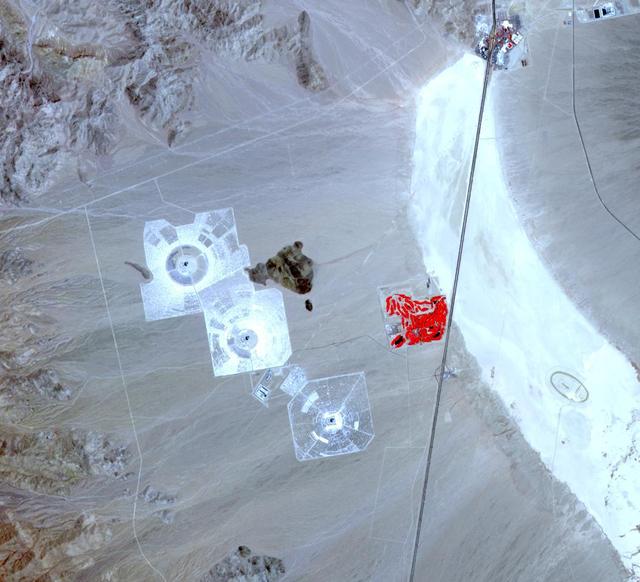
On May 30, 2013, NASA Terra spacecraft acquired this image of the largest solar plant of its kind in the world started producing power in southern California Mojave Desert near the Nevada border.
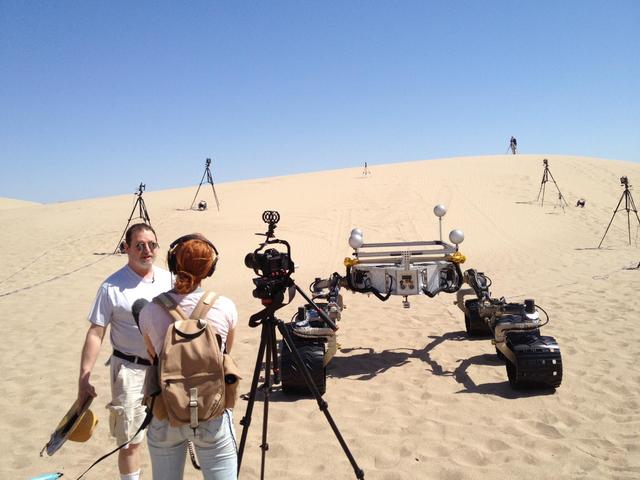
Michael Malin, left, principal investigator for three science cameras on NASA Curiosity Mars rover, comments to a news reporter during tests with Curiosity mobility-test stand-in, Scarecrow, on Dumont Dunes in California Mojave Desert.
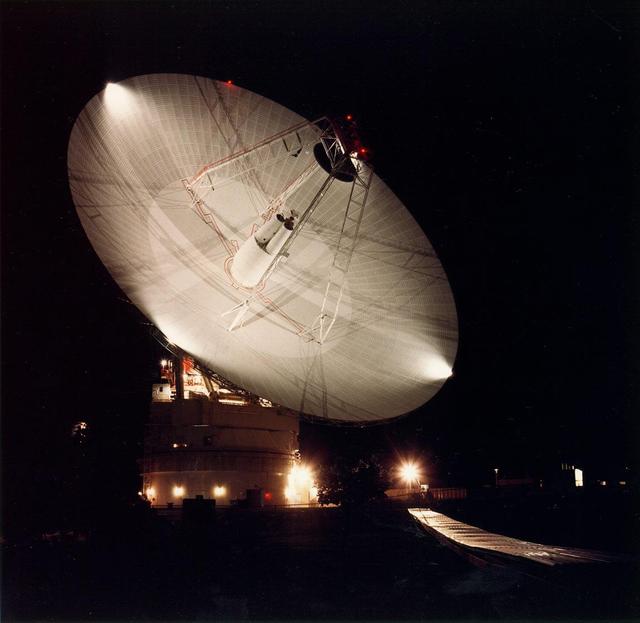
Night shot of the 70m antenna at Goldstone, California. The parabolic dish is 70m 230 ft. in diameter. The Goldstone Deep Space Communications Complex, located in the Mojave Desert in California, is one of three complexes which comprise NASA DSN.
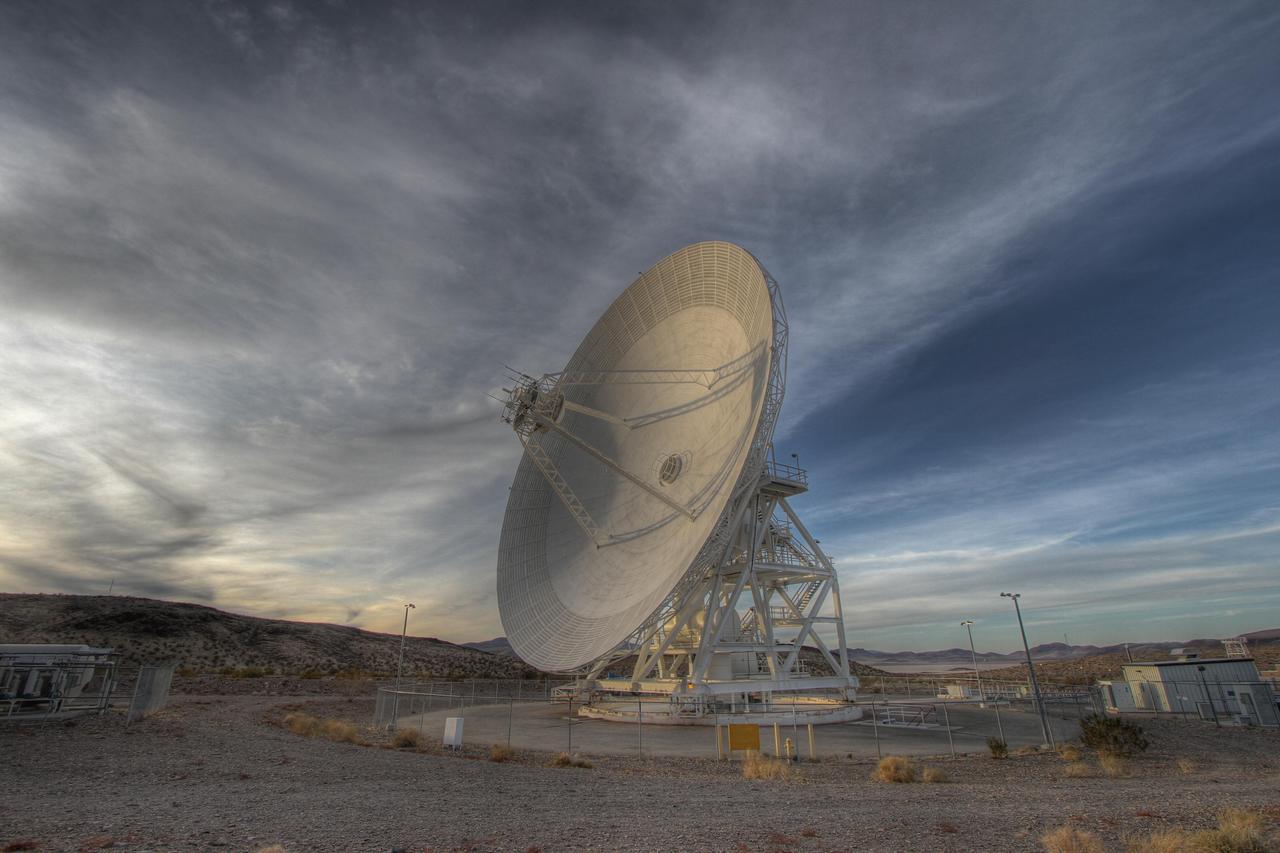
Goldstone 111.5-foot 34-meter Beam Waveguide tracks a spacecraft as it comes into view. The Goldstone Deep Space Communications Complex is located in the Mojave Desert in California, USA.
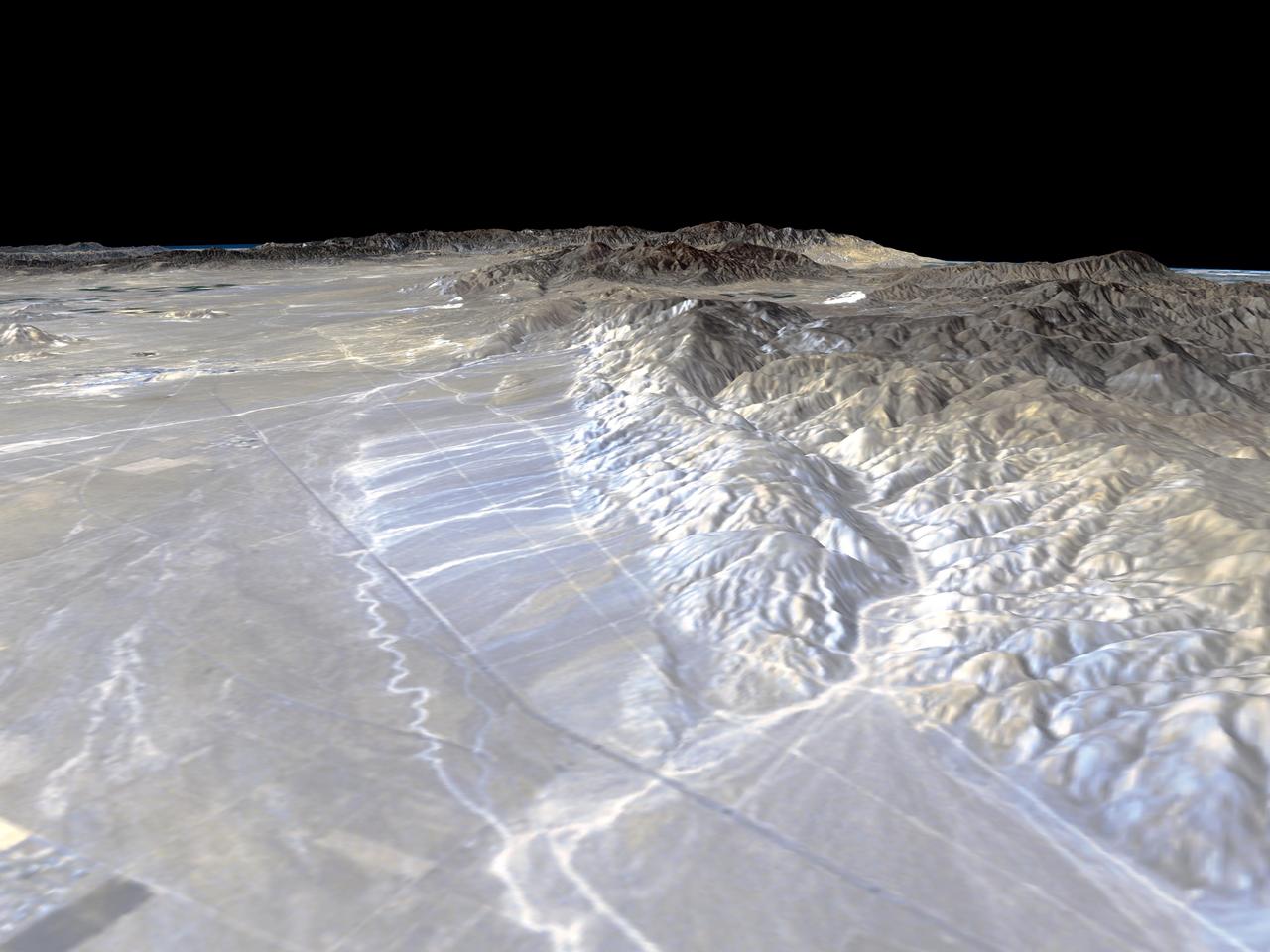
California Garlock Fault, marking the northwestern boundary of the Mojave Desert, lies at the foot of the mountains, running from the lower right to the top center of this image, which was created with data from NASA shuttle Radar Topography Mission.
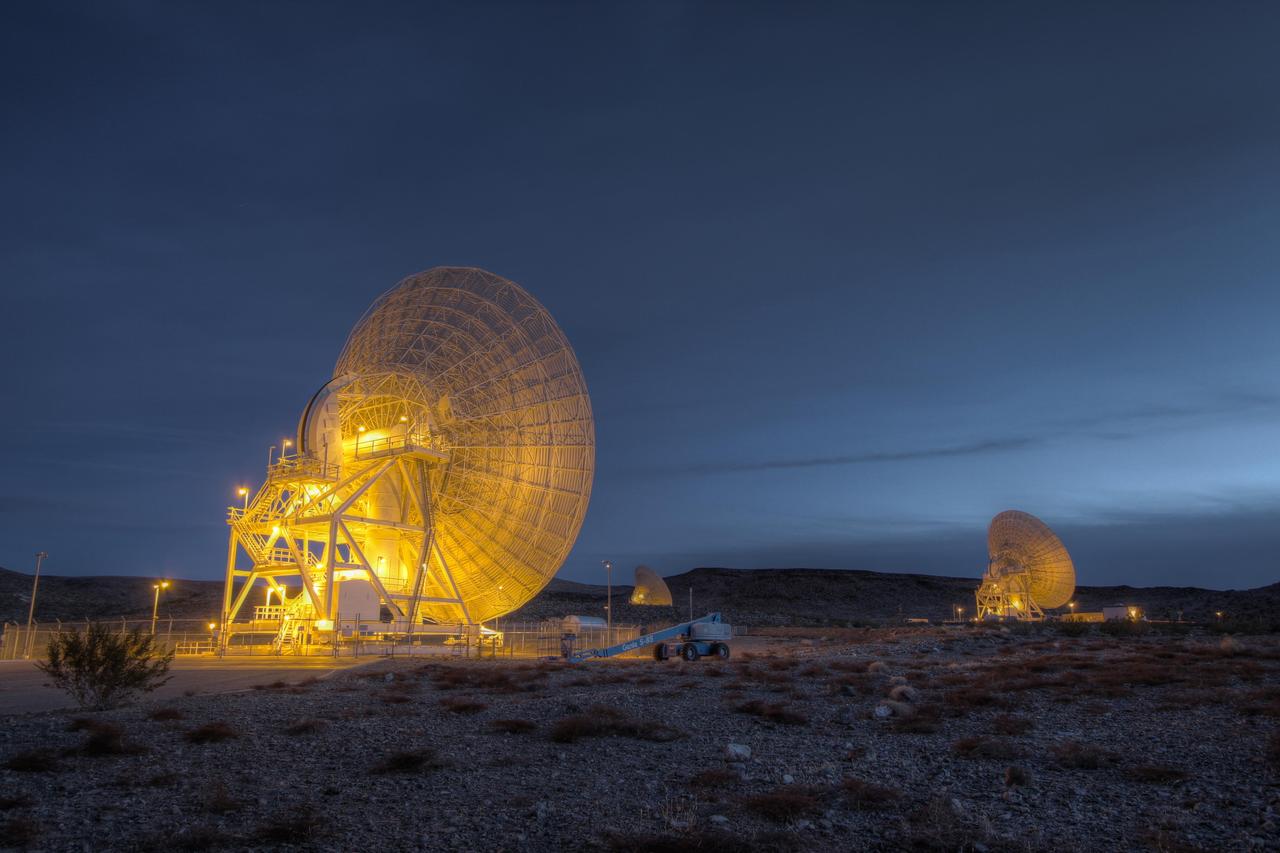
Beam Wave Guide antennas at Goldstone, known as the Beam Waveguide Cluster. They are located in an area at Goldstone called Apollo Valley. The Goldstone Deep Space Communications Complex is located in the Mojave Desert in California, USA.
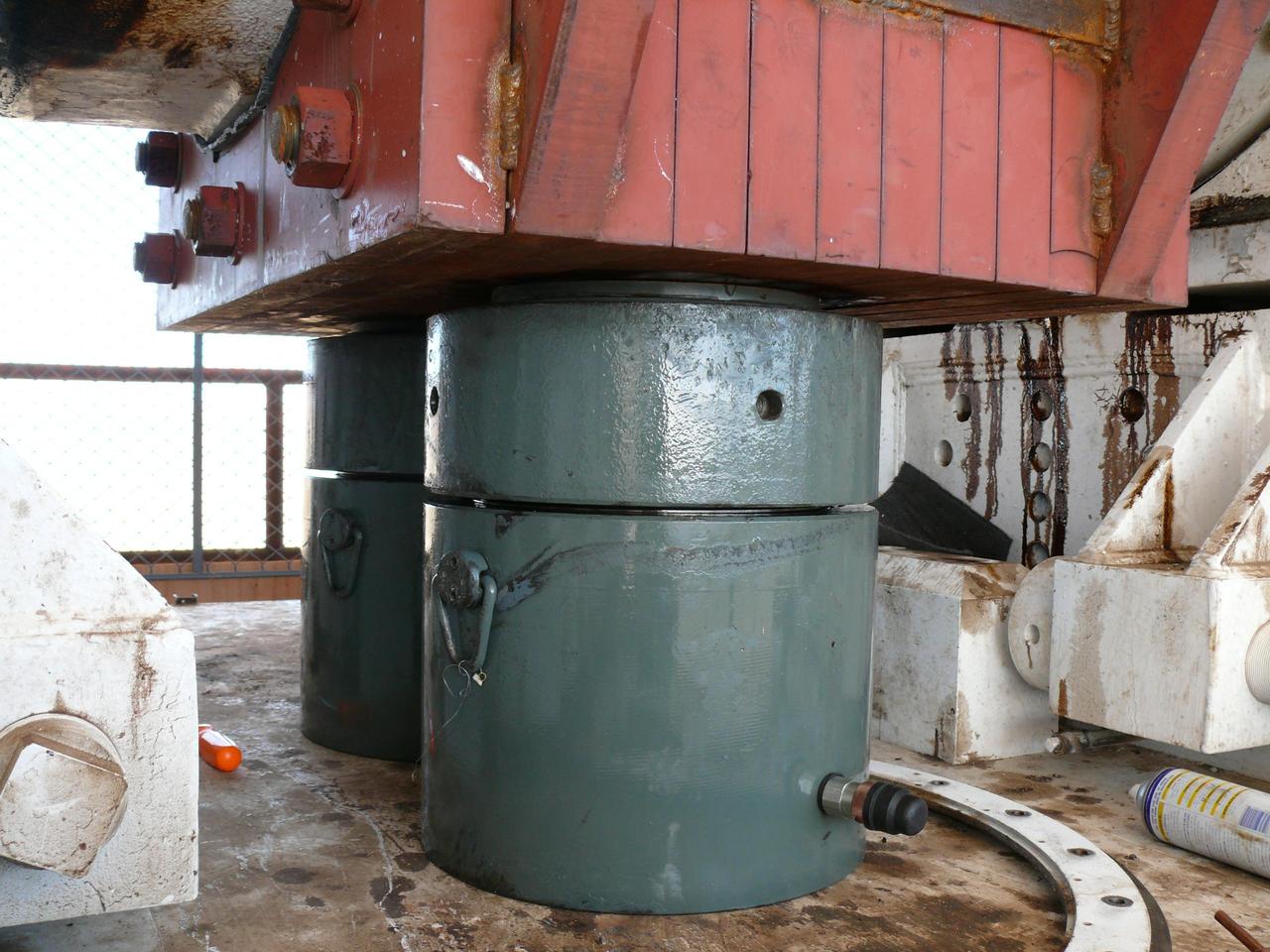
A major refurbishment of the giant Mars antenna at NASA Deep Space Network Goldstone Deep Space Communications Complex in California Mojave Desert required workers to jack up millions of pounds of delicate scientific equipment.
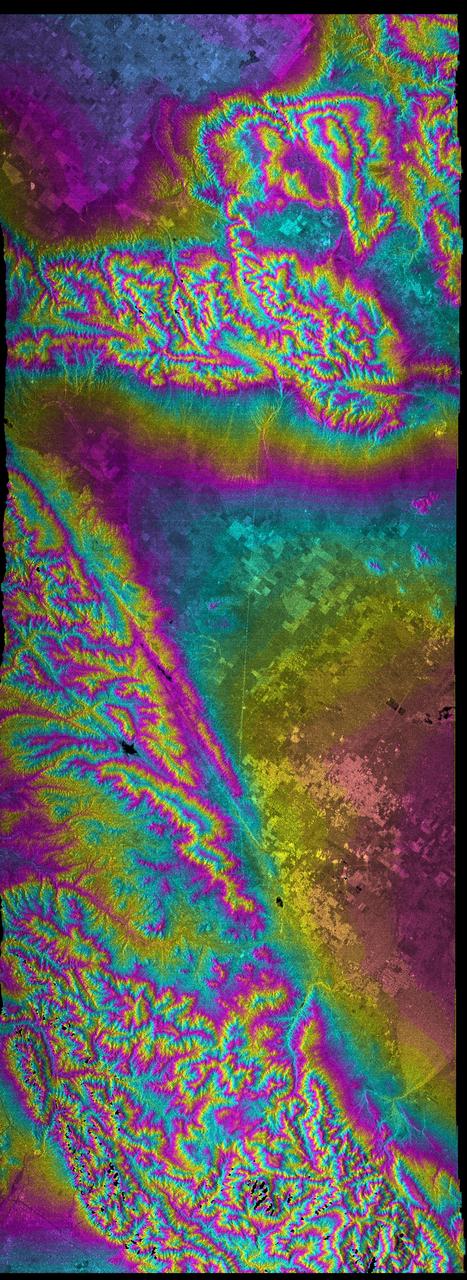
This topographic map acquired by NASA Shuttle Radar Topography Mission SRTM from data collected on February 16, 2000 vividly displays California famous San Andreas Fault along the southwestern edge of the Mojave Desert, Calif.
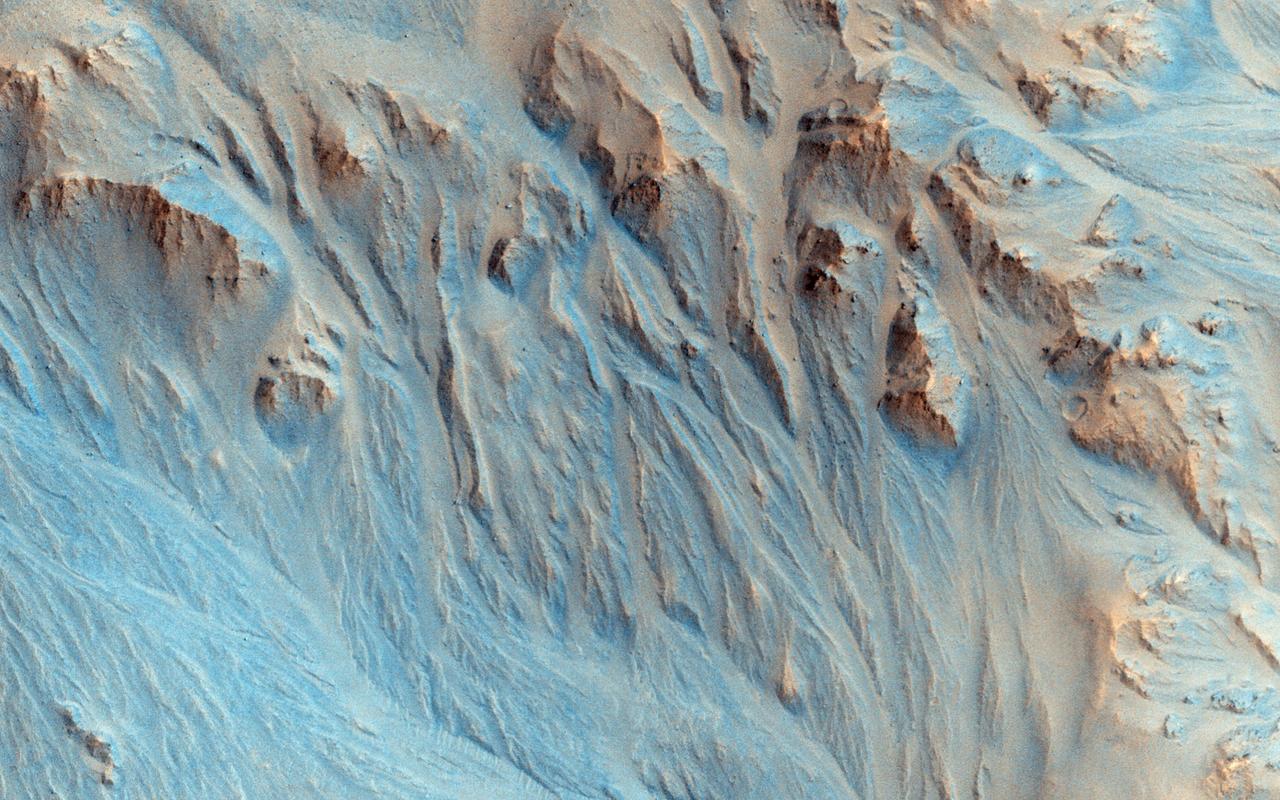
This image from NASA Mars Reconnaissance Orbiter shows a landscape that is pervasively eroded, right up to the tops of the ridges, with channels extending down into depositional fans much like alluvial fans in the Mojave Desert.
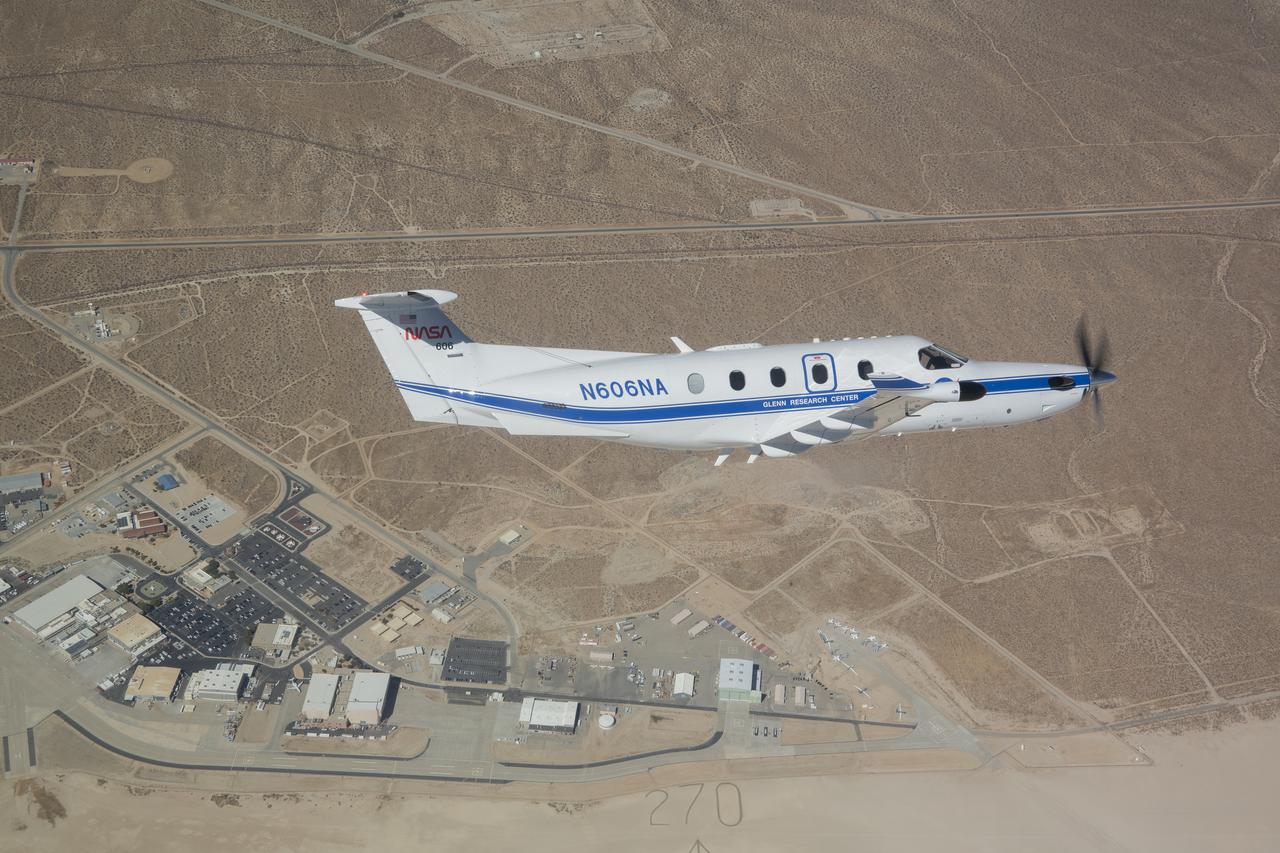
NASA’s Pilatus PC-12, based out of NASA’s Glenn Research Center in Cleveland, is seen flying over NASA’s Armstrong Flight Research Center in Edwards, California. On Sept. 18, 2024, NASA pilots and crew from both centers flew the PC-12 over the Mojave Desert in a series of familiarization flights. Familiarization flights involve egress training, preflight walkaround, interior preflight, engine start, taxi, and takeoff.

STS001-12-308 (12-14 April 1981) --- Space shuttle Columbia approached Edwards Air Force Base from the left to land at the dry lake at the center. The view is to the southwest. The edge of the light "vee" is the intersection of the San Andres and Garlock Faults at Fort Tejon. Los Angeles is at upper right. Owens Lake is at the lower center. Photo credit: NASA
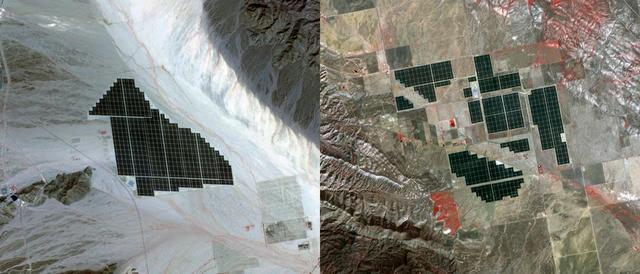
On February 15, 2015 the Desert Sunlight solar project in California’s Mojave Desert became operational. This image from NASA Terra spacecraft shows the 550-megawatt plant generates enough electricity to power 160,000 average homes. Covering an area of 16 km2, the 8.8 million cadmium telluride photovoltaic modules take advantage of the more than 300 days of sunshine. Desert Sunlight joins the similar-sized Topaz Solar Farm in San Luis Obispo County, CA, that became operational in June, 2014. The Desert Sunlight image (left) was acquired March 12, 2015 and is located at 33.8 degrees north, 115.4 degrees west; the Topaz image (right) was acquired September 11, 2014 and is located at 35.4 degrees north, 120.1 degrees west. Each image covers an area of 10.5 x 12 km. http://photojournal.jpl.nasa.gov/catalog/PIA19268
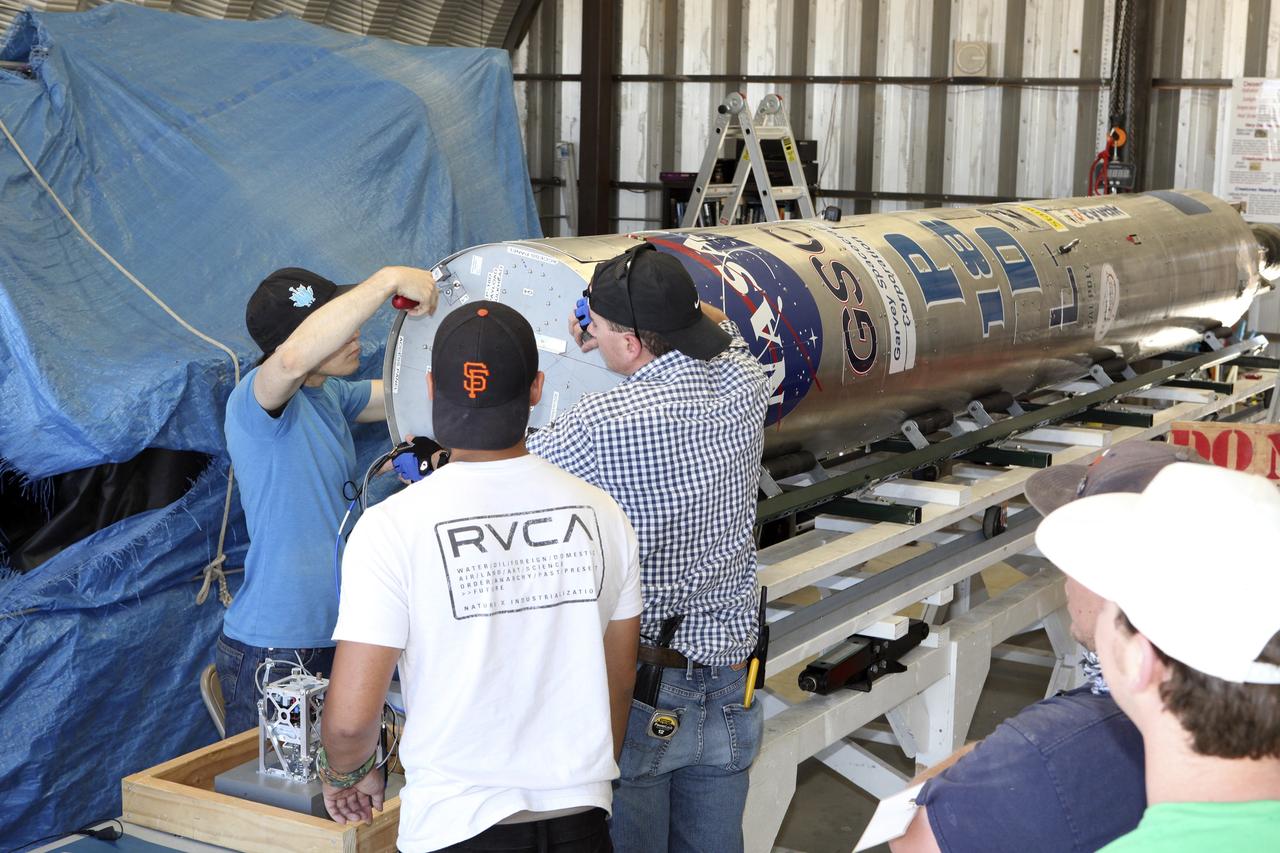
In the Mojave Desert in California, students and engineers checkout the Garvey Spacecraft Corporation's Prospector P-18D rocket engine. The rocket is scheduled for launch June 15 with the RUBICS-1 payload on a high-altitude, suborbital flight. The rocket will carry four satellites made from four-inch cube section. Collectively known as CubeSats, the satellites will record shock, vibrations and heat inside the rocket. They will not be released during the test flight, but the results will be used to prove or strengthen their designs before they are carried into orbit in 2014 on a much larger rocket. A new, lightweight carrier is also being tested for use on future missions to deploy the small spacecraft. The flight also is being watched closely as a model for trying out new or off-the-shelf technologies quickly before putting them in the pipeline for use on NASA's largest launchers. Built by several different organizations, including a university, a NASA field center and a high school, the spacecraft are four-inch cubes designed to fly on their own eventually, but will remain firmly attached to the rocket during the upcoming mission. For more information, visit http://www.nasa.gov/mission_pages/smallsats/elana/cubesatlaunchpreview.html Photo credit: NASA/Dimitri Gerondidakis
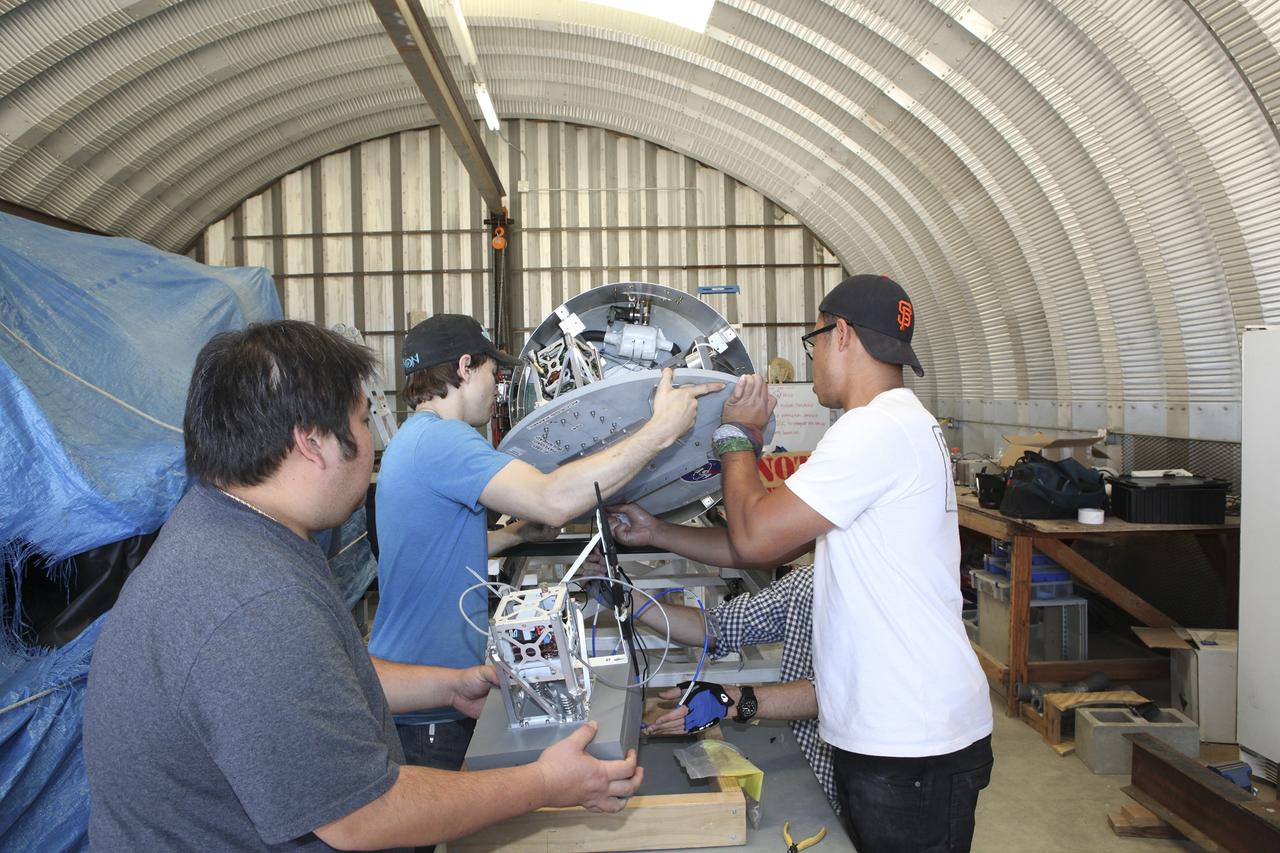
In the Mojave Desert in California, students and engineers checkout the Garvey Spacecraft Corporation's Prospector P-18D rocket engine. The rocket is scheduled for launch June 15 with the RUBICS-1 payload on a high-altitude, suborbital flight. The rocket will carry four satellites made from four-inch cube section. Collectively known as CubeSats, the satellites will record shock, vibrations and heat inside the rocket. They will not be released during the test flight, but the results will be used to prove or strengthen their designs before they are carried into orbit in 2014 on a much larger rocket. A new, lightweight carrier is also being tested for use on future missions to deploy the small spacecraft. The flight also is being watched closely as a model for trying out new or off-the-shelf technologies quickly before putting them in the pipeline for use on NASA's largest launchers. Built by several different organizations, including a university, a NASA field center and a high school, the spacecraft are four-inch cubes designed to fly on their own eventually, but will remain firmly attached to the rocket during the upcoming mission. For more information, visit http://www.nasa.gov/mission_pages/smallsats/elana/cubesatlaunchpreview.html Photo credit: NASA/Dimitri Gerondidakis
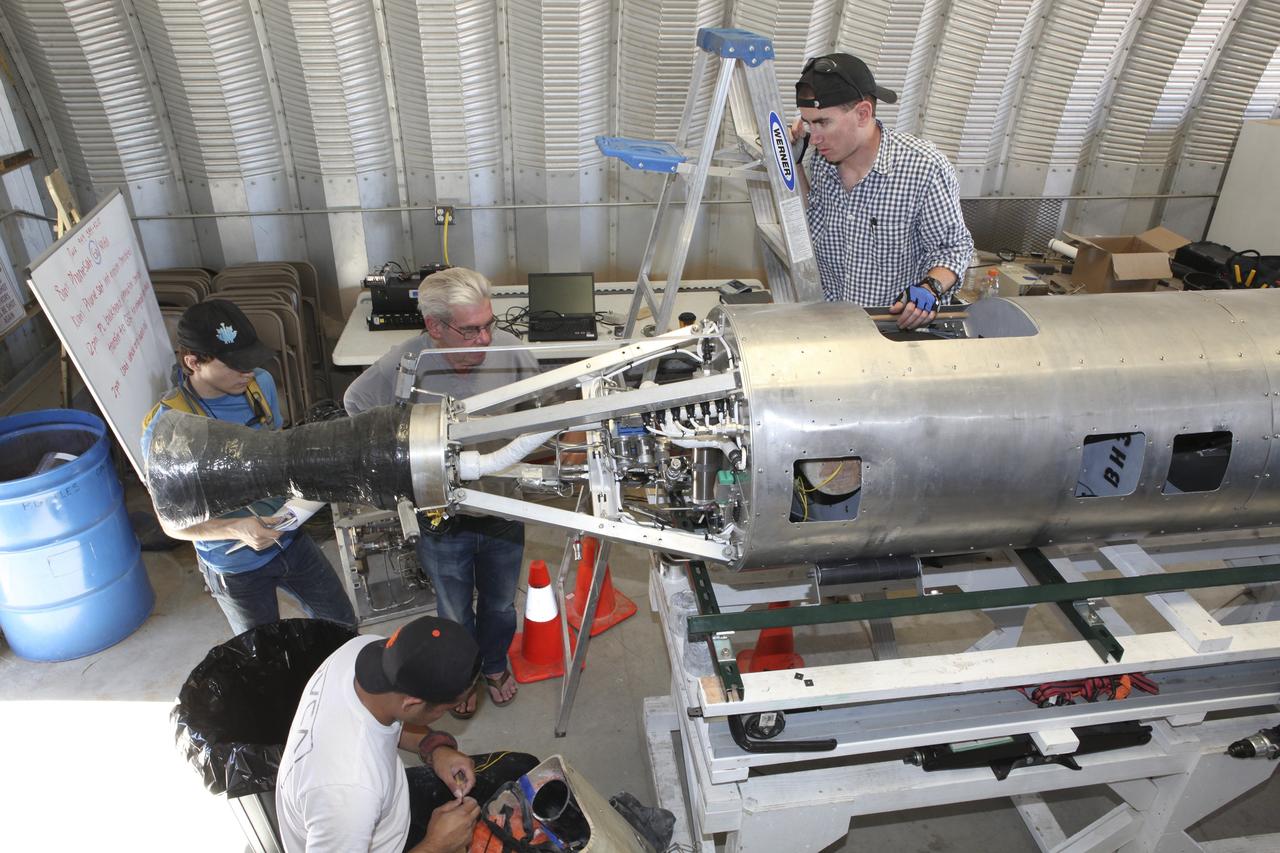
In the Mojave Desert in California, students and engineers checkout the Garvey Spacecraft Corporation's Prospector P-18D rocket engine. The rocket is scheduled for launch June 15 with the RUBICS-1 payload on a high-altitude, suborbital flight. The rocket will carry four satellites made from four-inch cube section. Collectively known as CubeSats, the satellites will record shock, vibrations and heat inside the rocket. They will not be released during the test flight, but the results will be used to prove or strengthen their designs before they are carried into orbit in 2014 on a much larger rocket. A new, lightweight carrier is also being tested for use on future missions to deploy the small spacecraft. The flight also is being watched closely as a model for trying out new or off-the-shelf technologies quickly before putting them in the pipeline for use on NASA's largest launchers. Built by several different organizations, including a university, a NASA field center and a high school, the spacecraft are four-inch cubes designed to fly on their own eventually, but will remain firmly attached to the rocket during the upcoming mission. For more information, visit http://www.nasa.gov/mission_pages/smallsats/elana/cubesatlaunchpreview.html Photo credit: NASA/Dimitri Gerondidakis
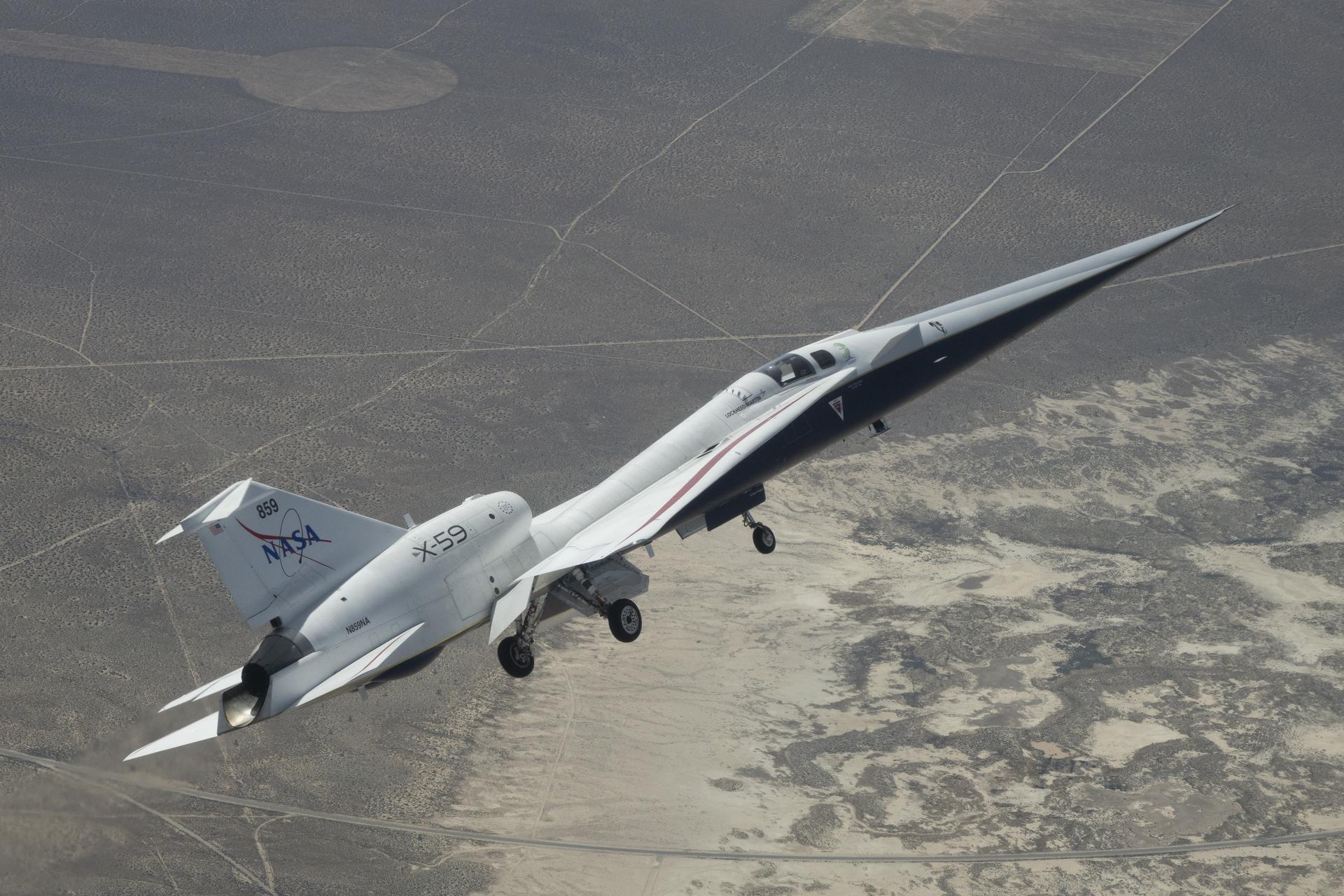
NASA’s X-59 quiet supersonic jet flies over the Mojave Desert during its third flight on Thursday, March 26, 2026, from NASA’s Armstrong Flight Research Center in Edwards, California. The aircraft departed and landed at Edwards Air Force Base, completing its approximate one-hour flight and providing the team with significant data for future flights.
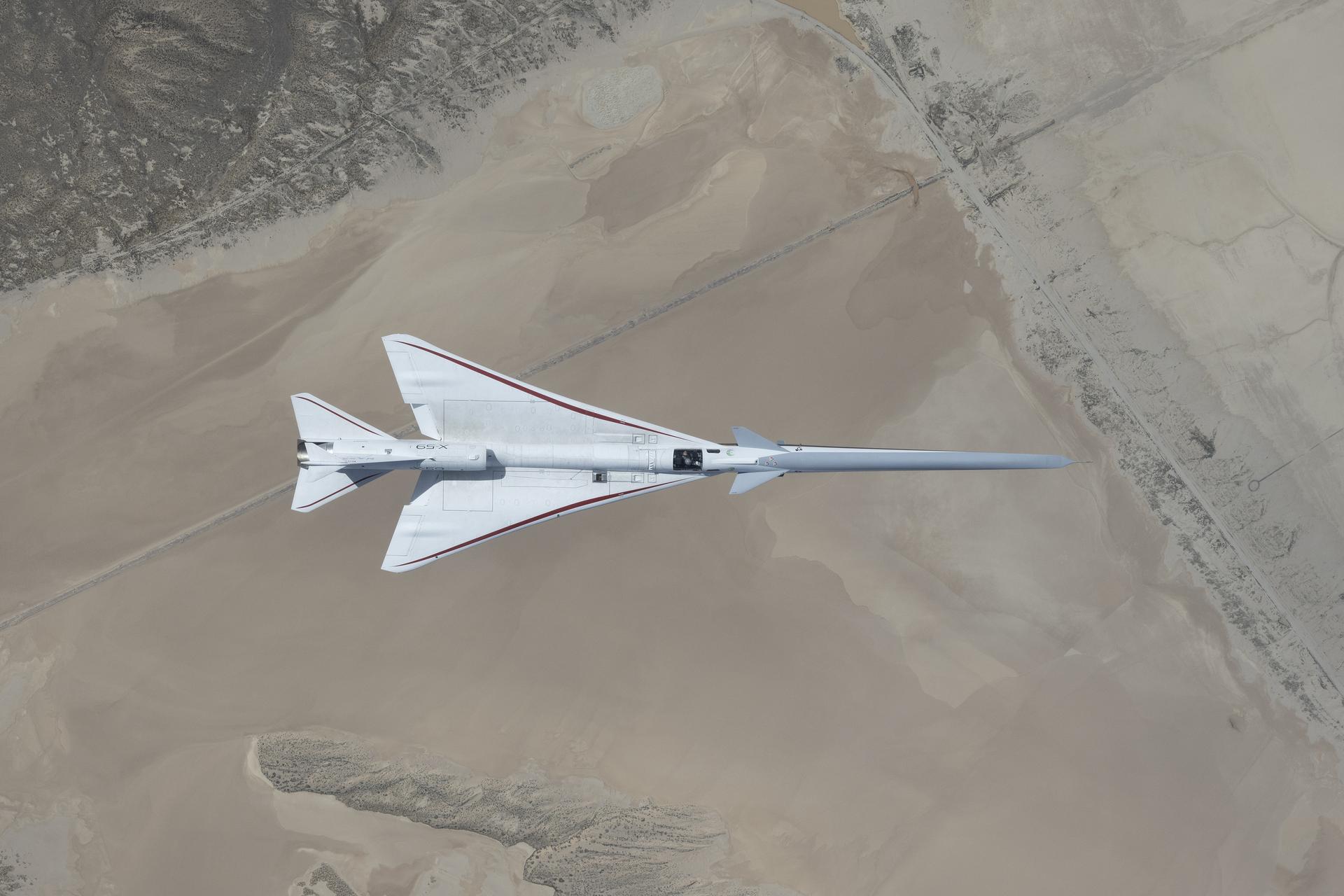
NASA’s X-59 quiet supersonic jet flies over the Mojave Desert during its third flight on Thursday, March 26, 2026, from NASA’s Armstrong Flight Research Center in Edwards, California. The aircraft departed and landed at Edwards Air Force Base, completing its approximate one-hour flight and providing the team with significant data for future flights.
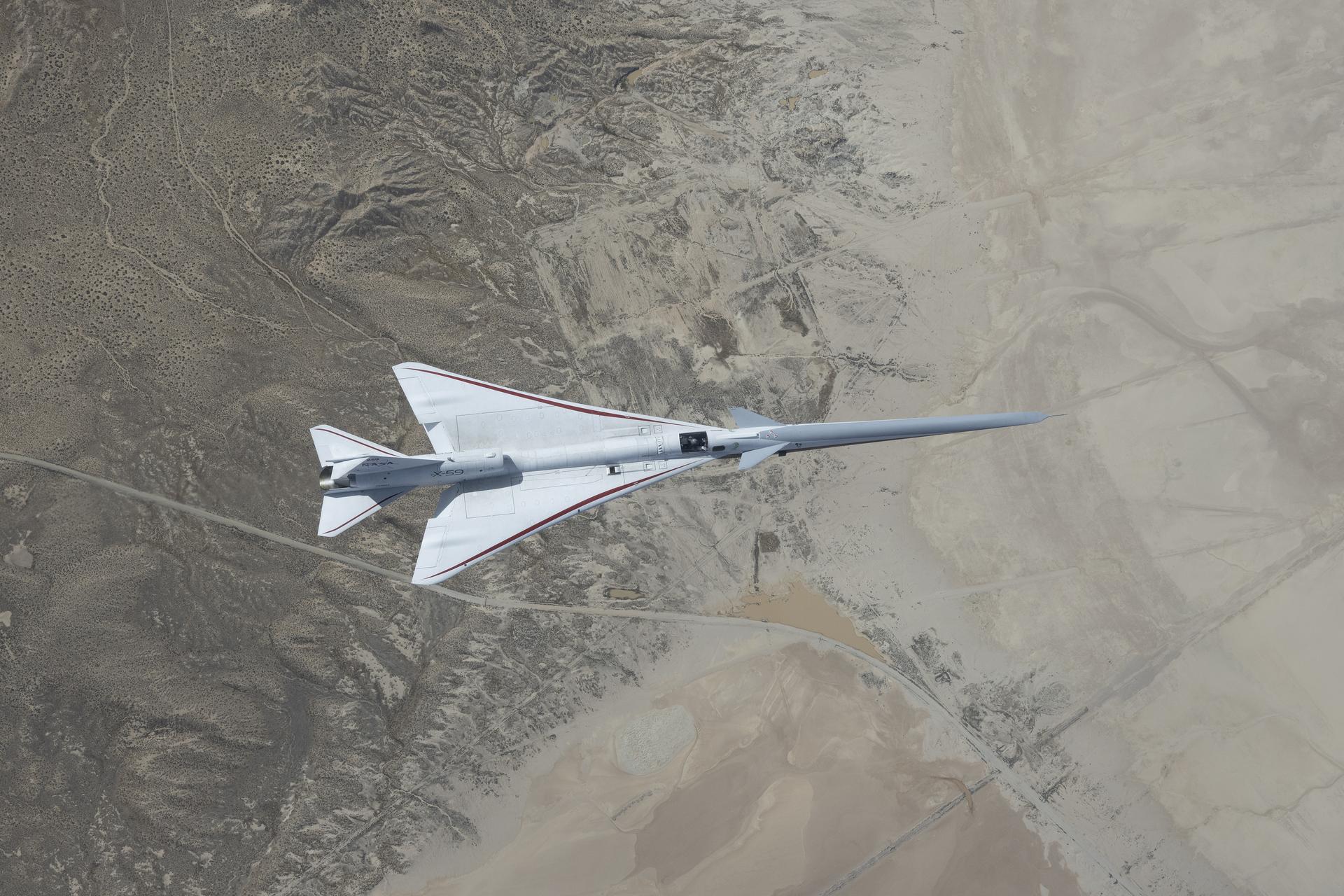
NASA’s X-59 quiet supersonic jet flies over the Mojave Desert during its third flight on Thursday, March 26, 2026, from NASA’s Armstrong Flight Research Center in Edwards, California. The aircraft departed and landed at Edwards Air Force Base, completing its approximate one-hour flight and providing the team with significant data for future flights.
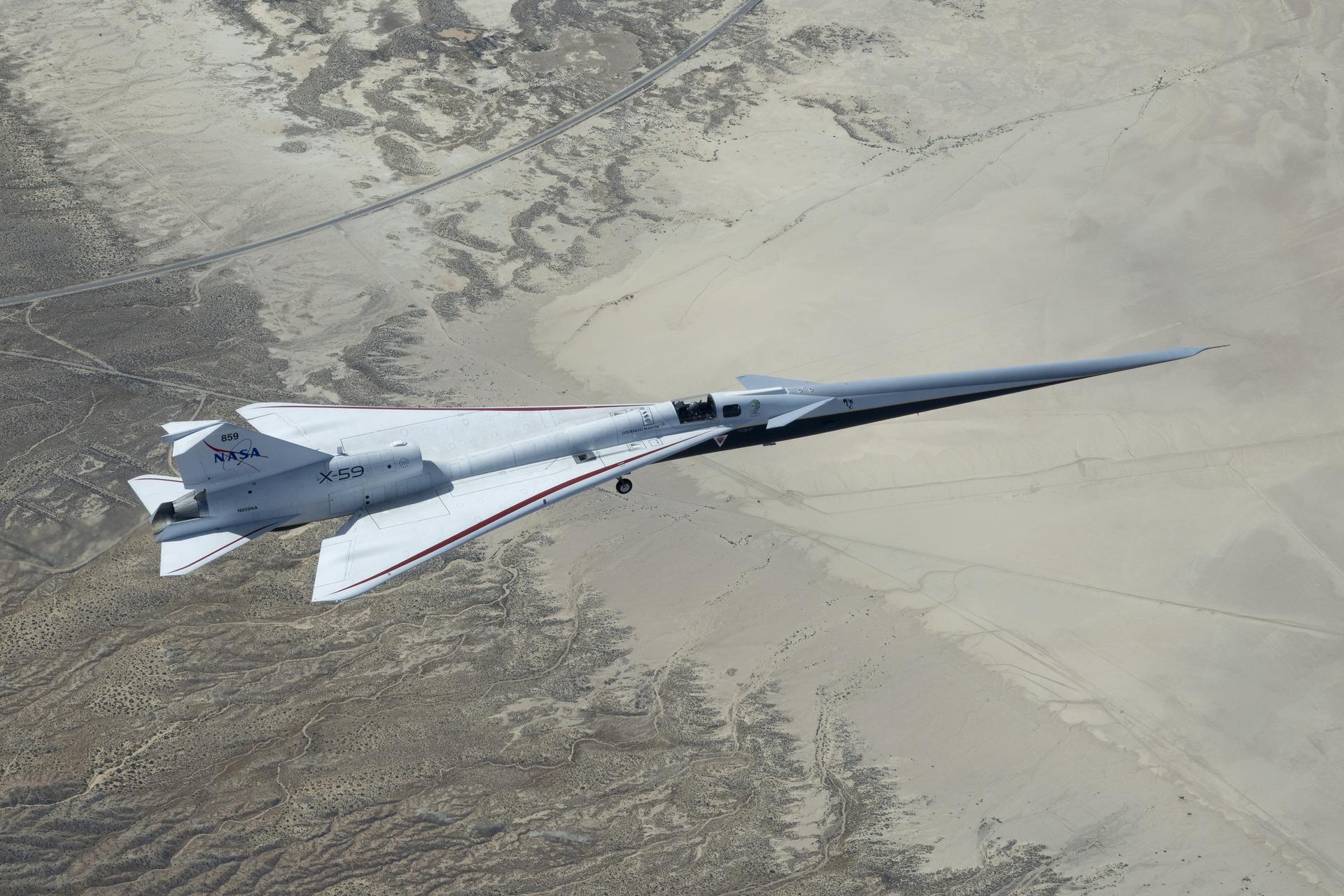
NASA’s X-59 quiet supersonic jet flies over the Mojave Desert during its third flight on Thursday, March 26, 2026, from NASA’s Armstrong Flight Research Center in Edwards, California. The aircraft departed and landed at Edwards Air Force Base, completing its approximate one-hour flight and providing the team with significant data for future flights.
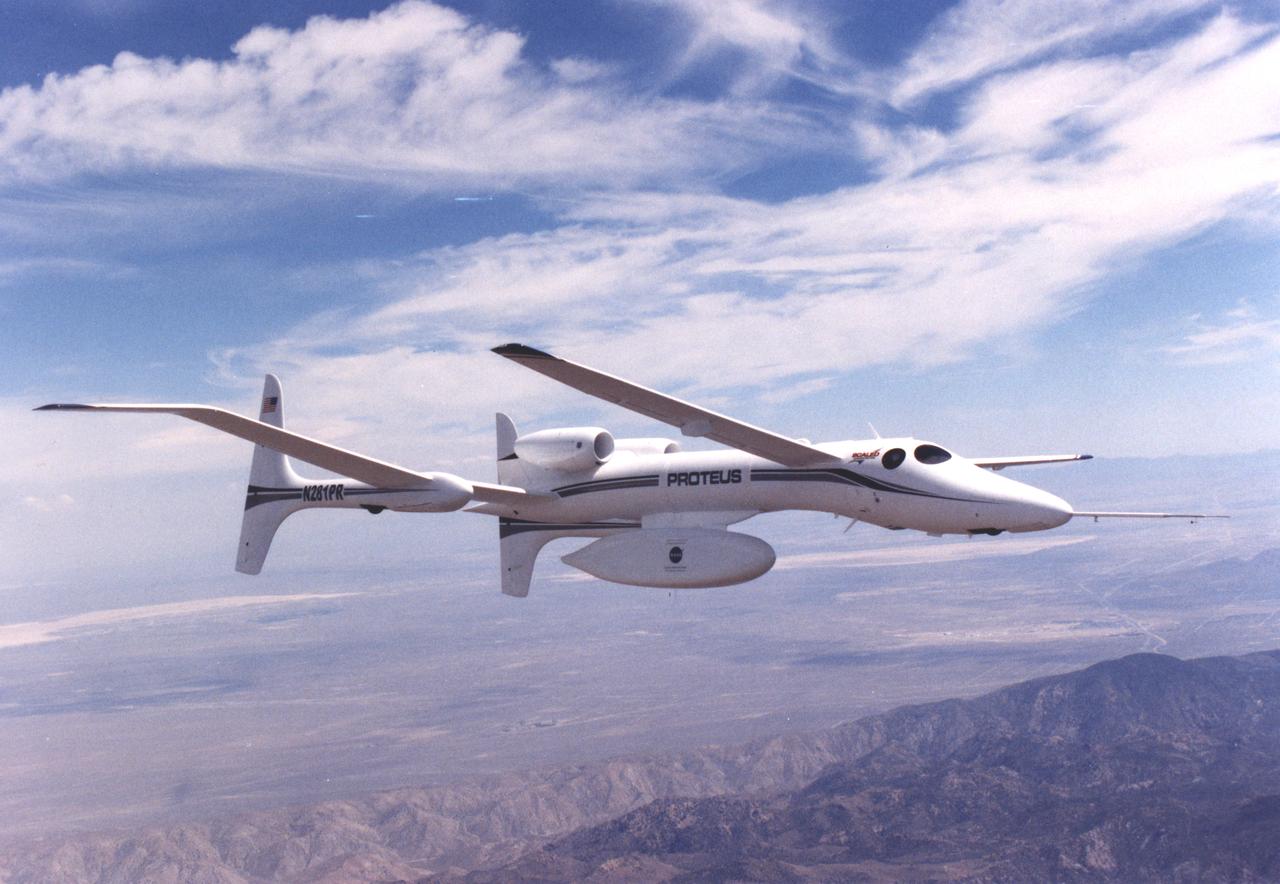
The uniquely shaped Proteus high-altitude aircraft soars over California’s Mojave Desert during a July 1999 flight.
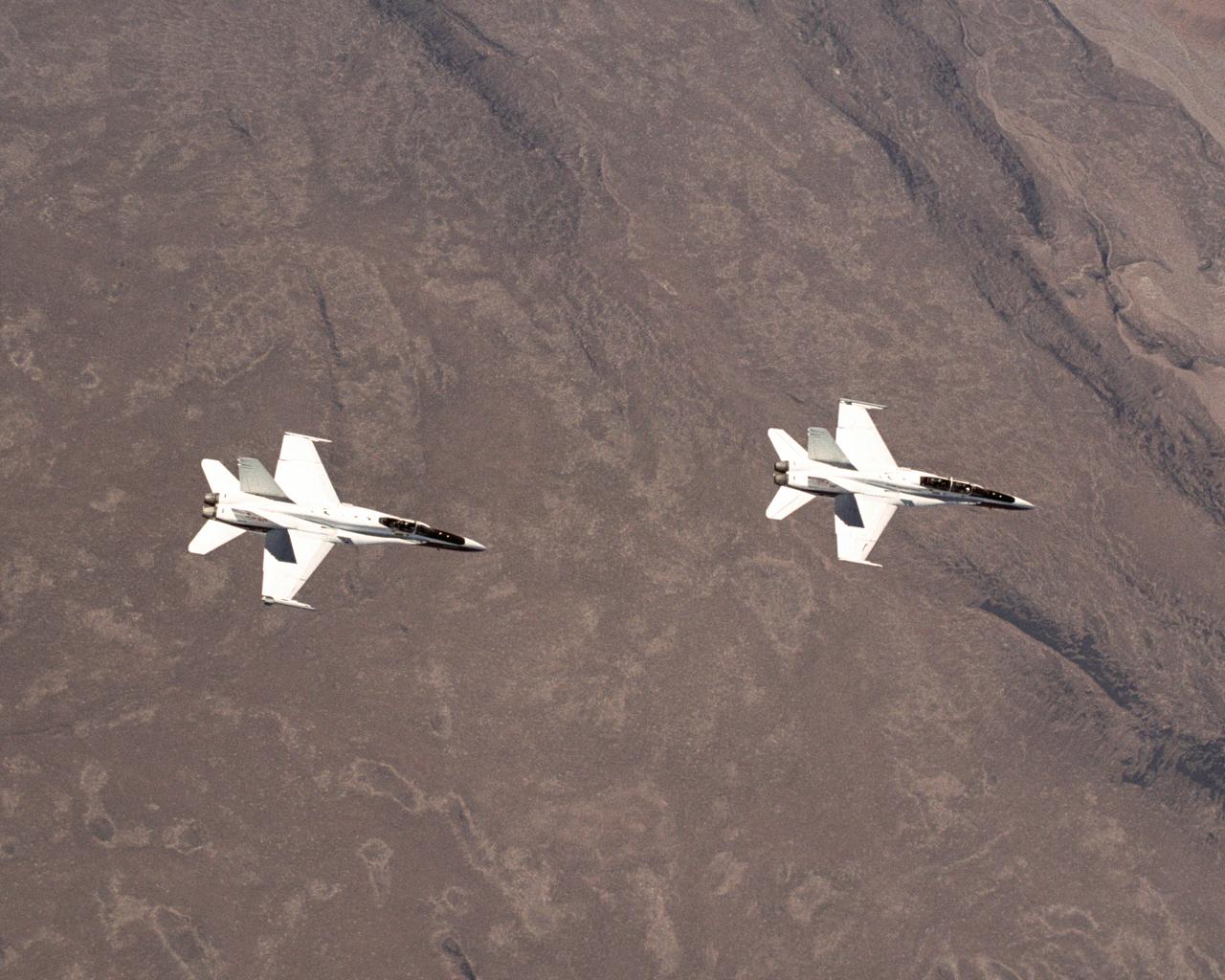
These two NASA F/A-18 aircraft are flying a test point for the Autonomous Formation Flight project over California's Mojave Desert.
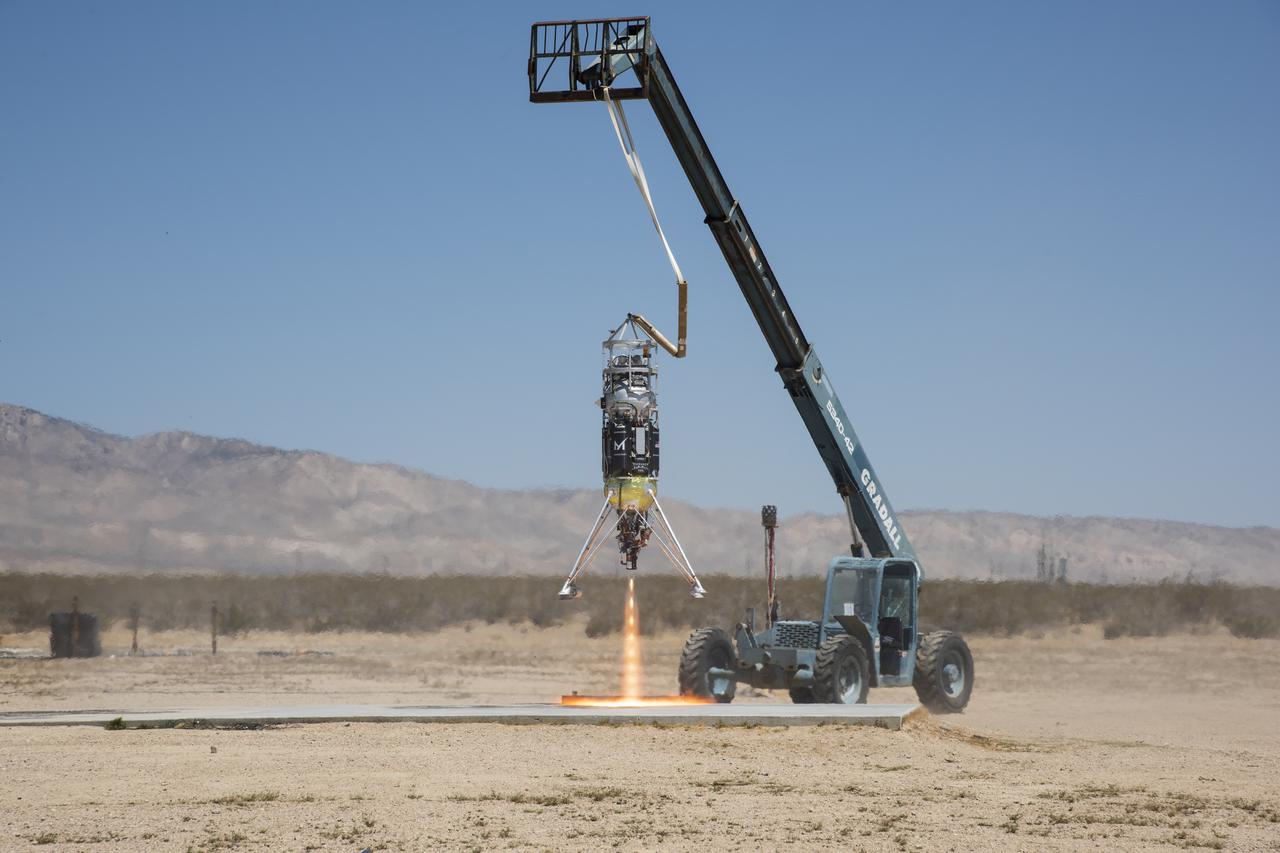
Masten Space Systems’ Xodiac rocket flight tests Honeybee Robotics pneumatic sampler collection system, PlanetVac, in Mojave Desert.
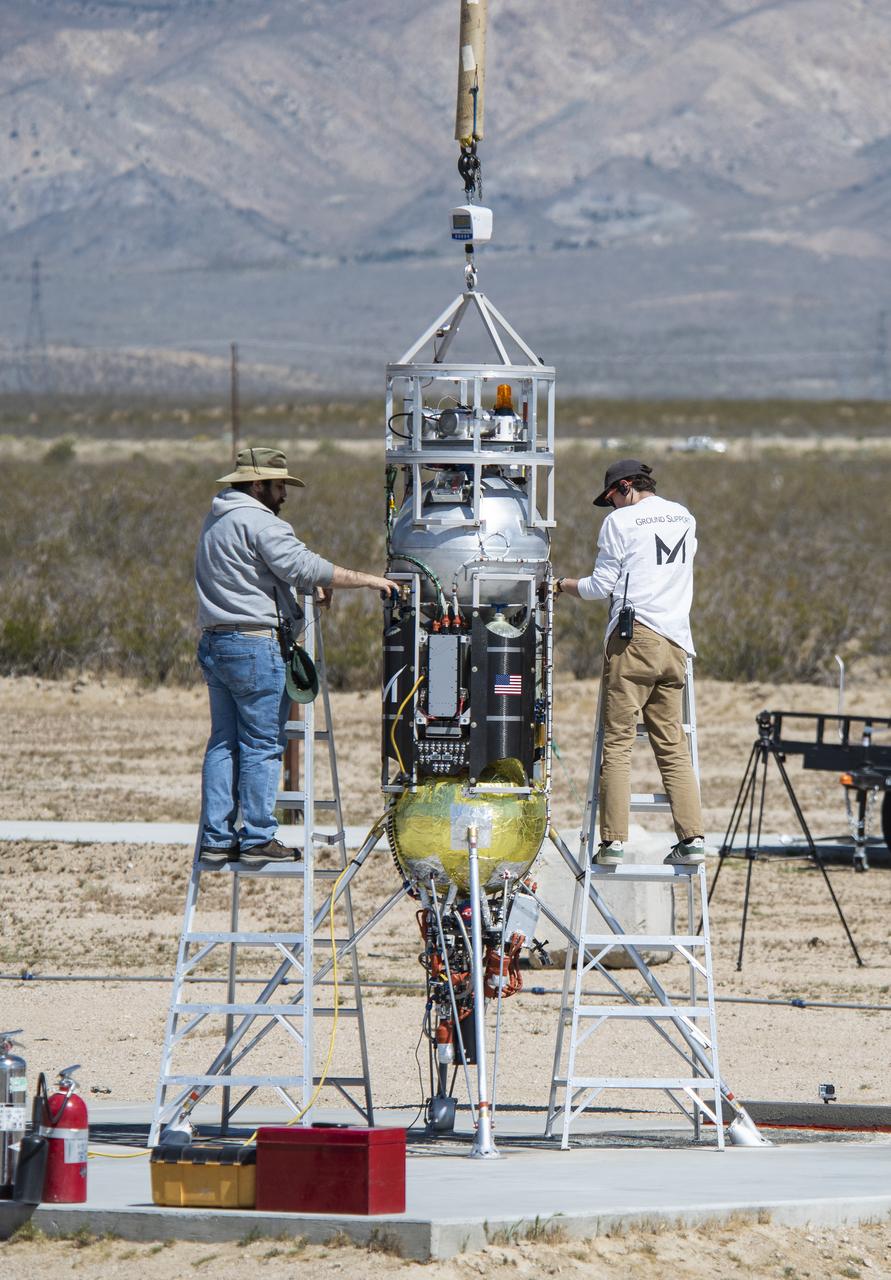
Masten Space Systems’ technicians prepare their Xodiac rocket to flight test Honeybee Robotics pneumatic sampler collection system, PlanetVac, in Mojave Desert.
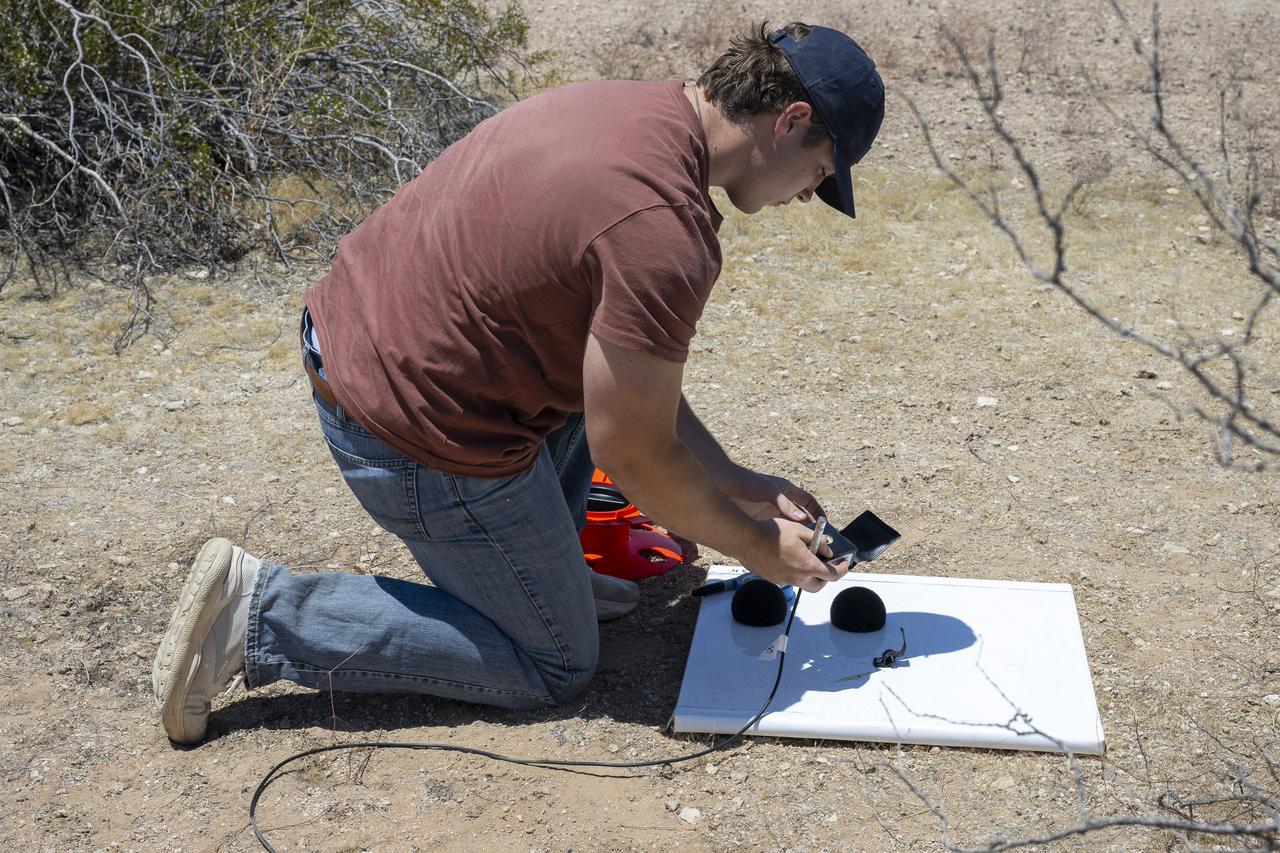
A NASA intern sets up ground recording system (GRS) units in California’s Mojave Desert during a Phase 2 rehearsal of the agency’s Quesst mission. The GRS units were placed across miles of desert terrain to capture the acoustic signature of supersonic aircraft during rehearsal flights and in preparation for the start of the actual tests.
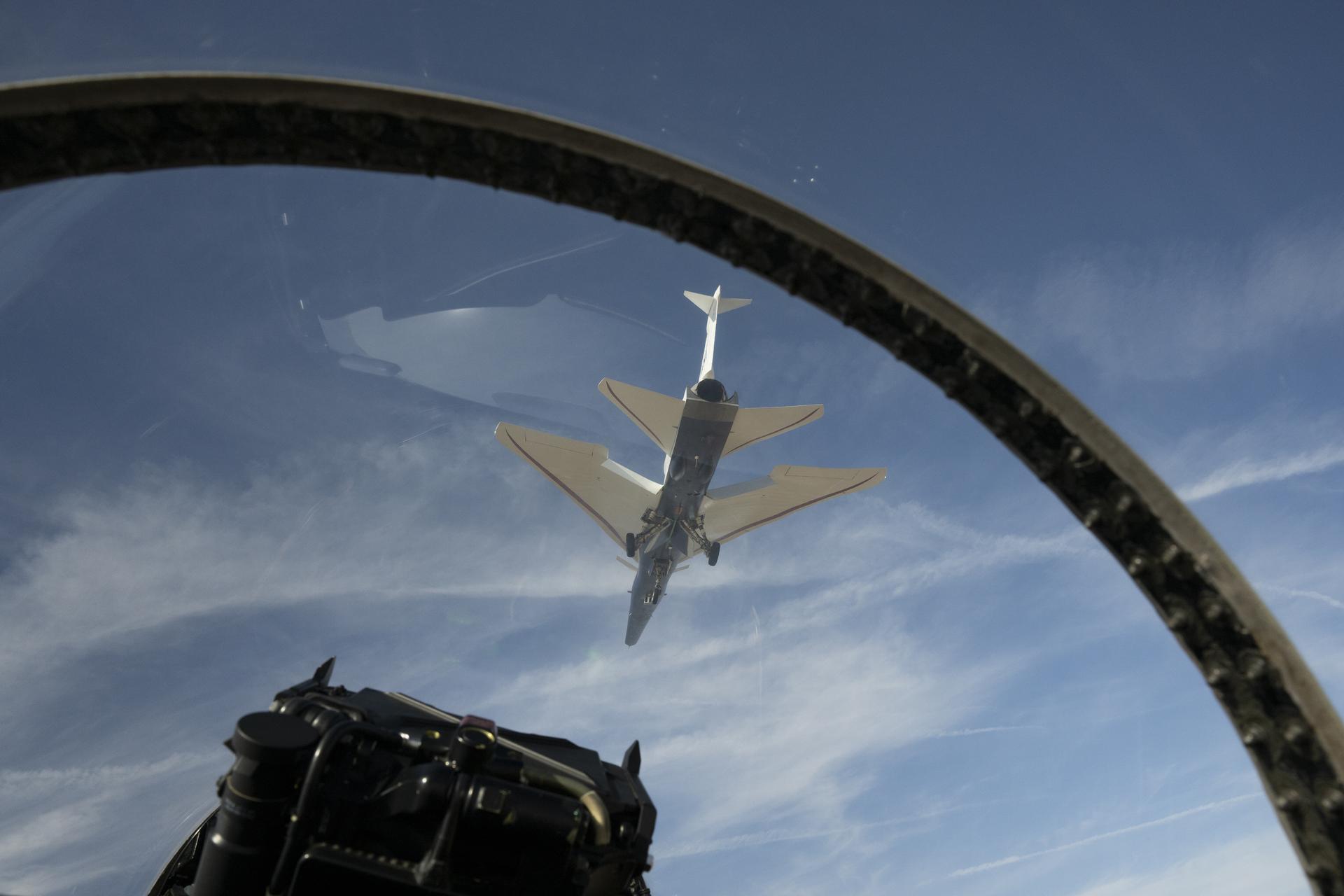
NASA’s X-59 quiet supersonic jet flies over the Mojave Desert during its third flight on Thursday, March 26, 2026, from NASA’s Armstrong Flight Research Center in Edwards, California. The aircraft departed and landed at Edwards Air Force Base, completing its approximate one-hour flight and providing the team with significant data for future flights.
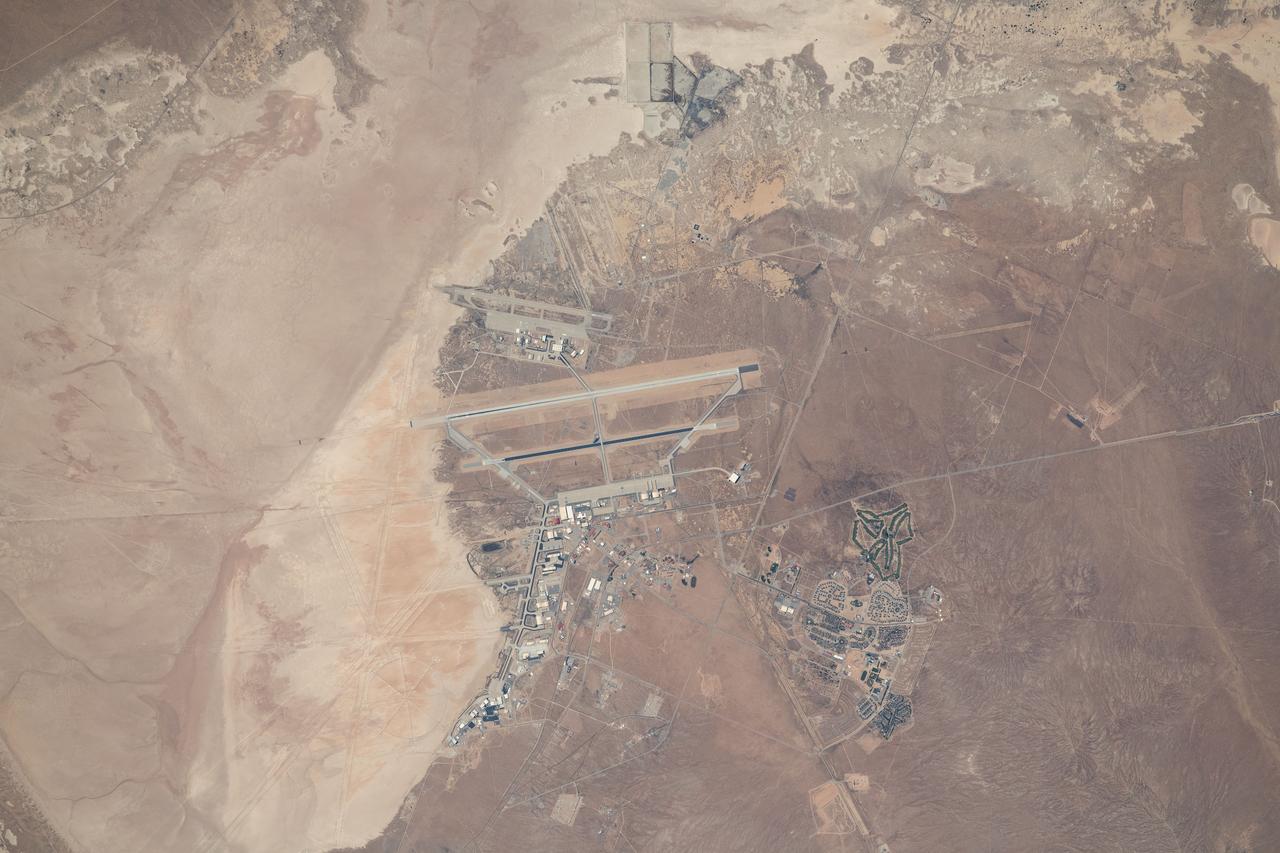
iss060e003647 (July 4, 2019) --- NASA's Neil A. Armstrong Flight Research Center and Edwards Air Force Base are pictured in California's Mojave Desert as the International Space Station orbited 256 miles above the Golden State.