Monitoring the Maelstrom
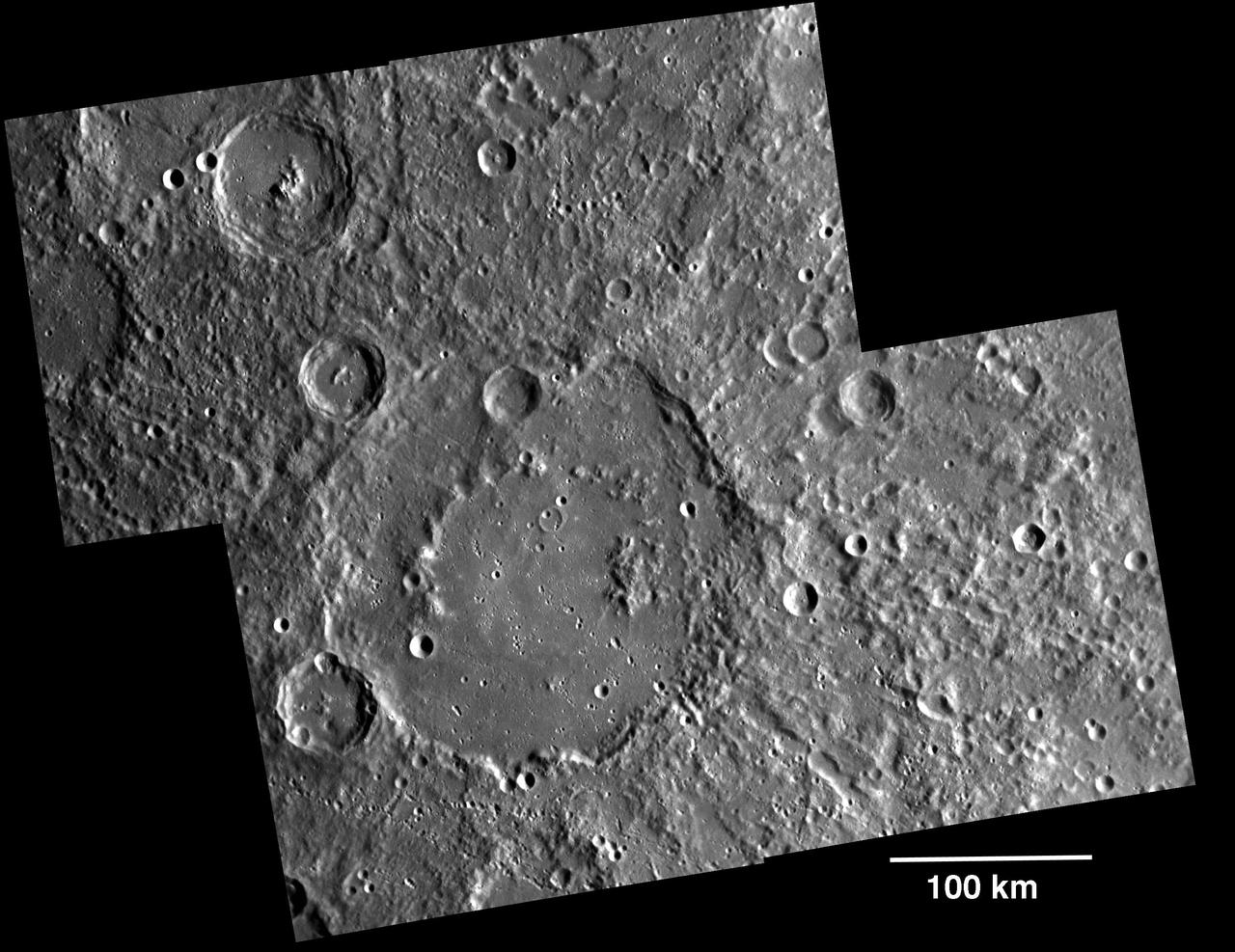
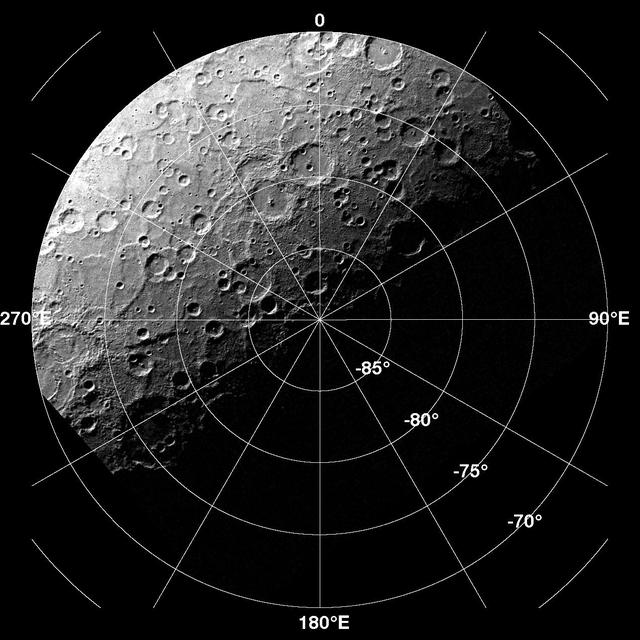
Monitoring Mercury South Pole
On June 15, NASA's Swift caught the onset of a rare X-ray outburst from a stellar-mass black hole in the binary system V404 Cygni. Astronomers around the world are watching the event. In this system, a stream of gas from a star much like the sun flows toward a 10 solar mass black hole. Instead of spiraling toward the black hole, the gas accumulates in an accretion disk around it. Every couple of decades, the disk switches into a state that sends the gas rushing inward, starting a new outburst.  Read more: <a href="http://www.nasa.gov/feature/goddard/nasa-missions-monitor-a-waking-black-hole" rel="nofollow">www.nasa.gov/feature/goddard/nasa-missions-monitor-a-waki...</a>  Credits: NASA's Goddard Space Flight Center  Download this video in HD formats from NASA Goddard's Scientific Visualization Studio <a href="http://svs.gsfc.nasa.gov/cgi-bin/details.cgi?aid=11110" rel="nofollow">svs.gsfc.nasa.gov/cgi-bin/details.cgi?aid=11110</a>
NASA Missions Monitor a Waking Black Hole
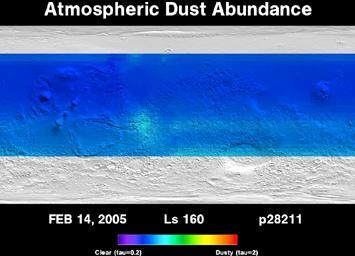
Three Years of Monitoring Mars Atmospheric Dust Animation
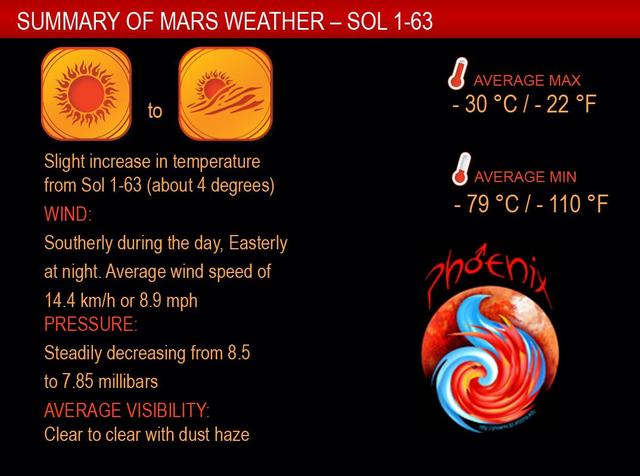
Sixty-One Martian Days of Weather Monitoring
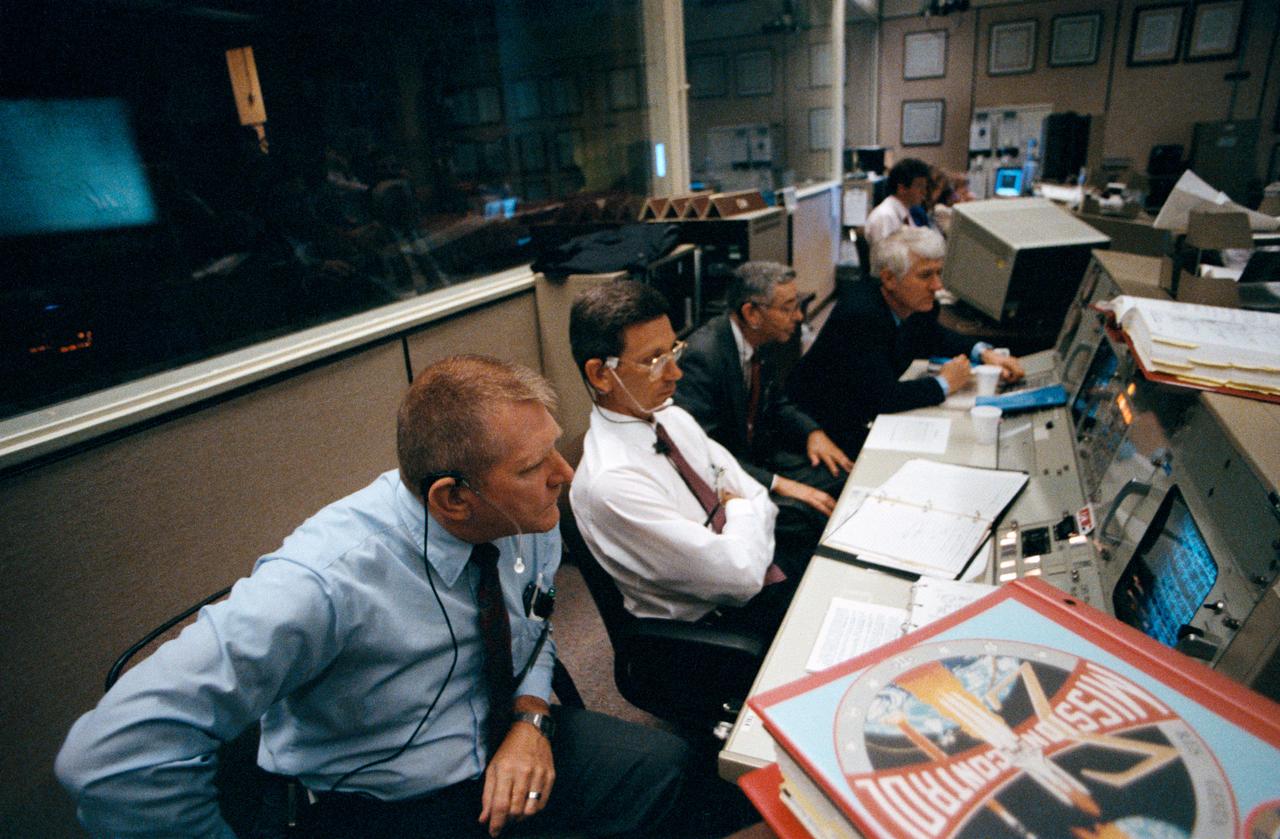
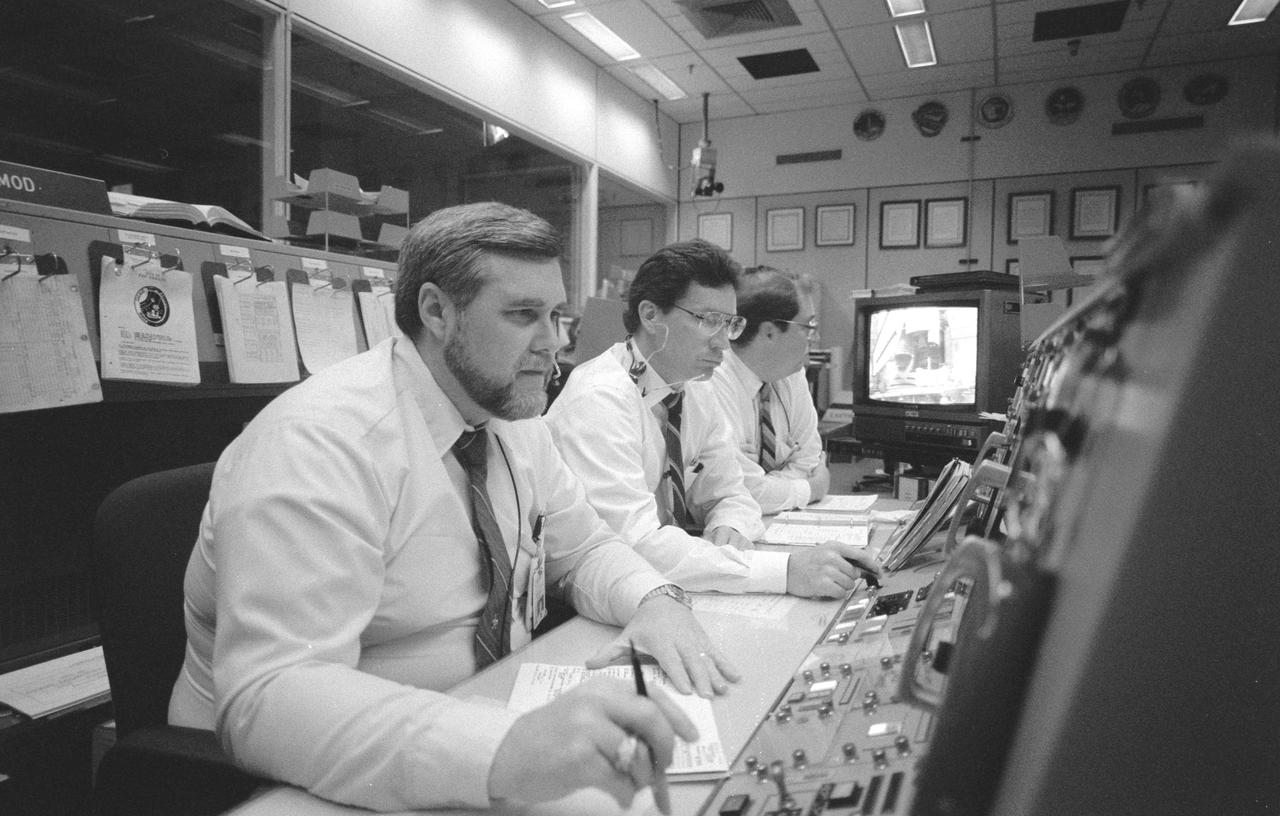
STS030-S-004 (8 May 1989) --- JSC Officials monitor early moments of NASA's STS-30 Atlantis, Orbiter Vehicle (OV) 104, flight in the Flight Control Room (FCR) of JSC's Mission Control Center (MCC) Bldg 30. At the Mission Operations Directorate (MOD) console, MOD Director Eugene F. Kranz (foreground), studiously reviews data on a nearby monitor. Others in the photo are (left to right) Flight Directors Office Deputy Chief Lawrence S. Bourgeois, JSC Director Aaron Cohen, and Flight Crew Operations Deputy Director Henry W. Hartsfield, Jr. Kranz'z replete loose-leaf notebook, bearing the insignia of the flight control team members (MOD insignia), is in the foreground.
JSC officials in MCC Bldg 30 monitor STS-30 Atlantis, OV-104, liftoff
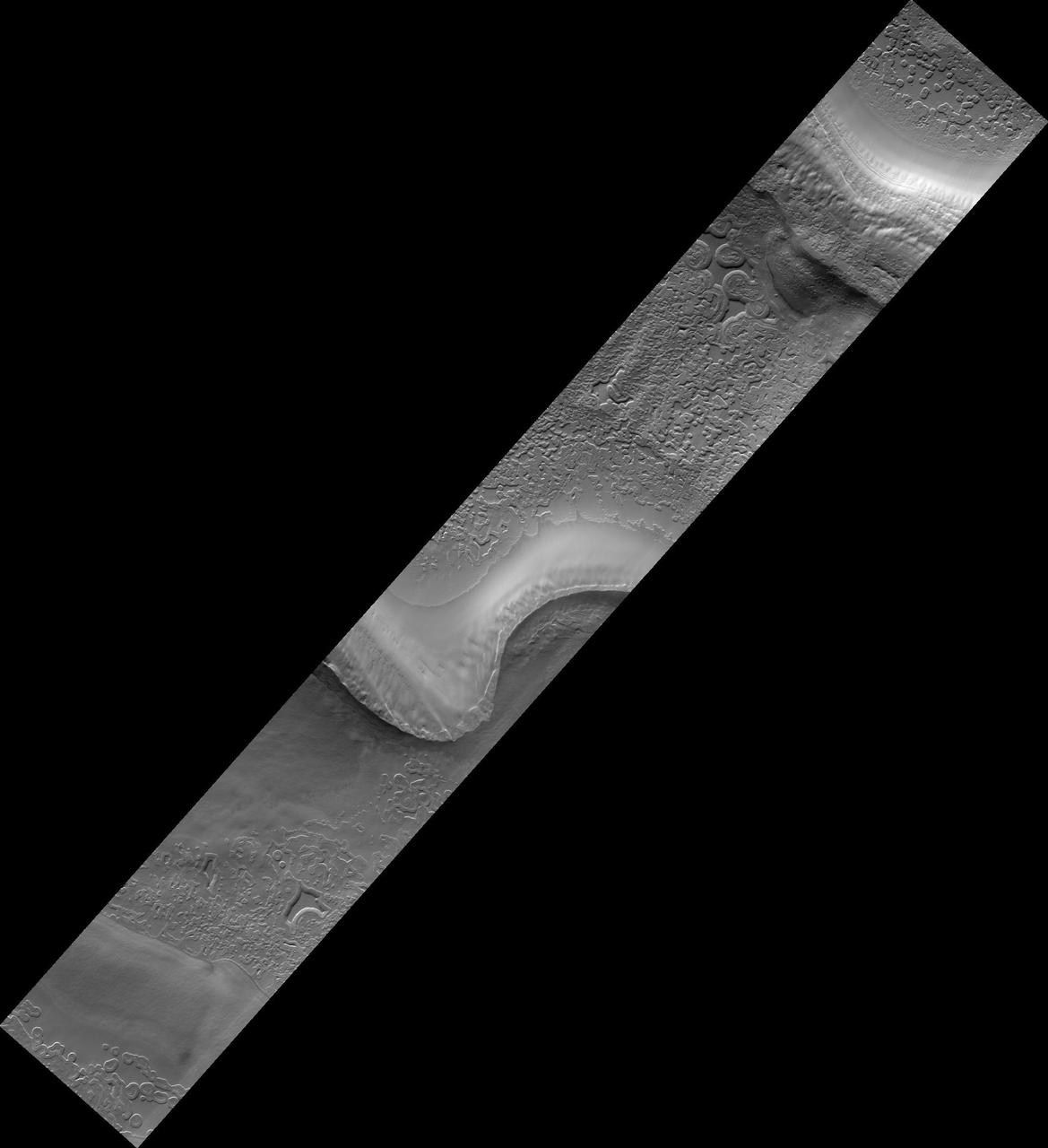
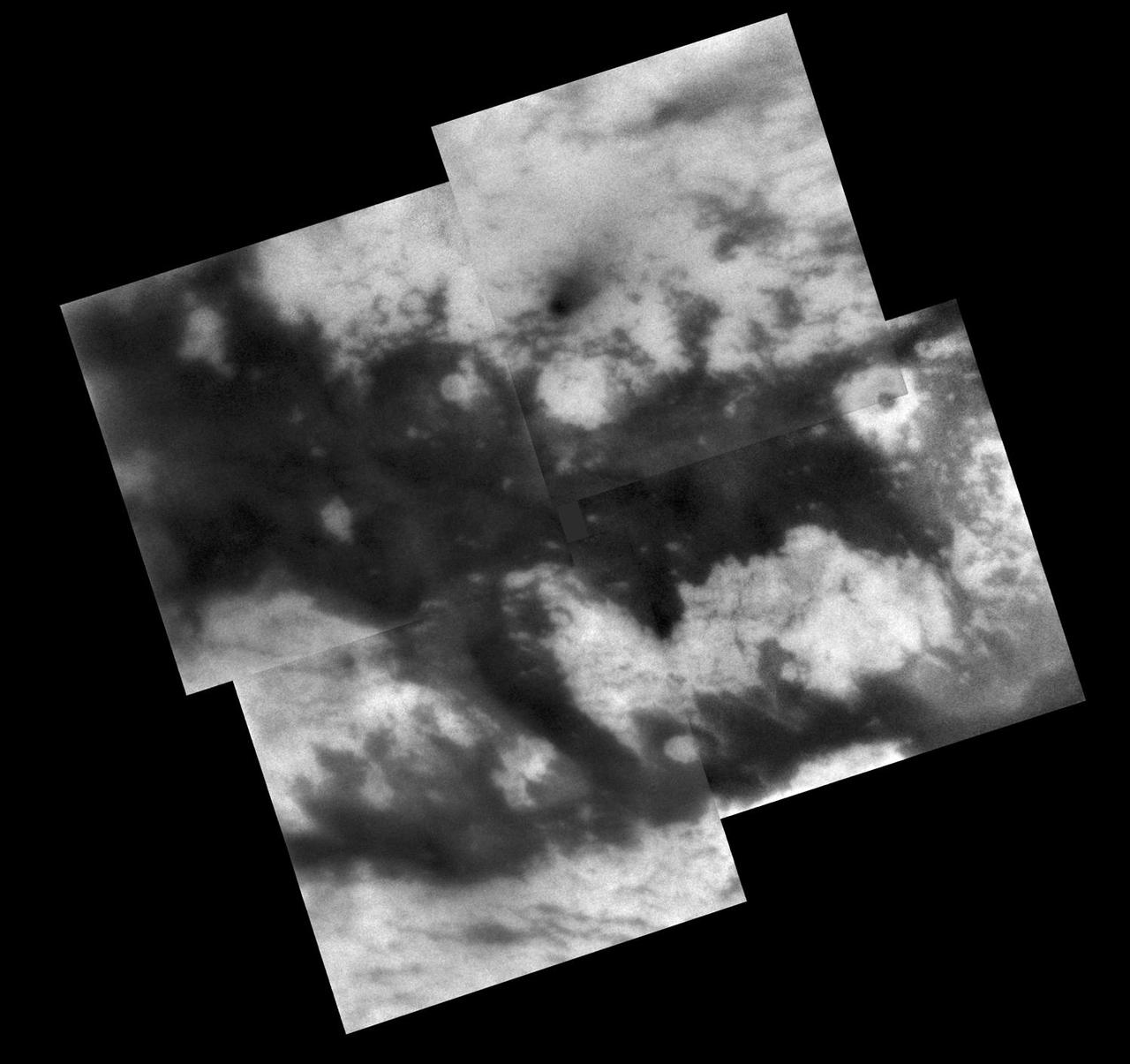
Monitoring South Polar Cap Swiss-Cheese Terrain Change
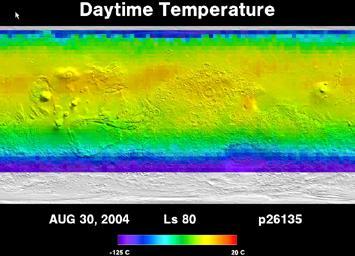
Five Years of Monitoring Mars Daytime Surface Temperatures Animation
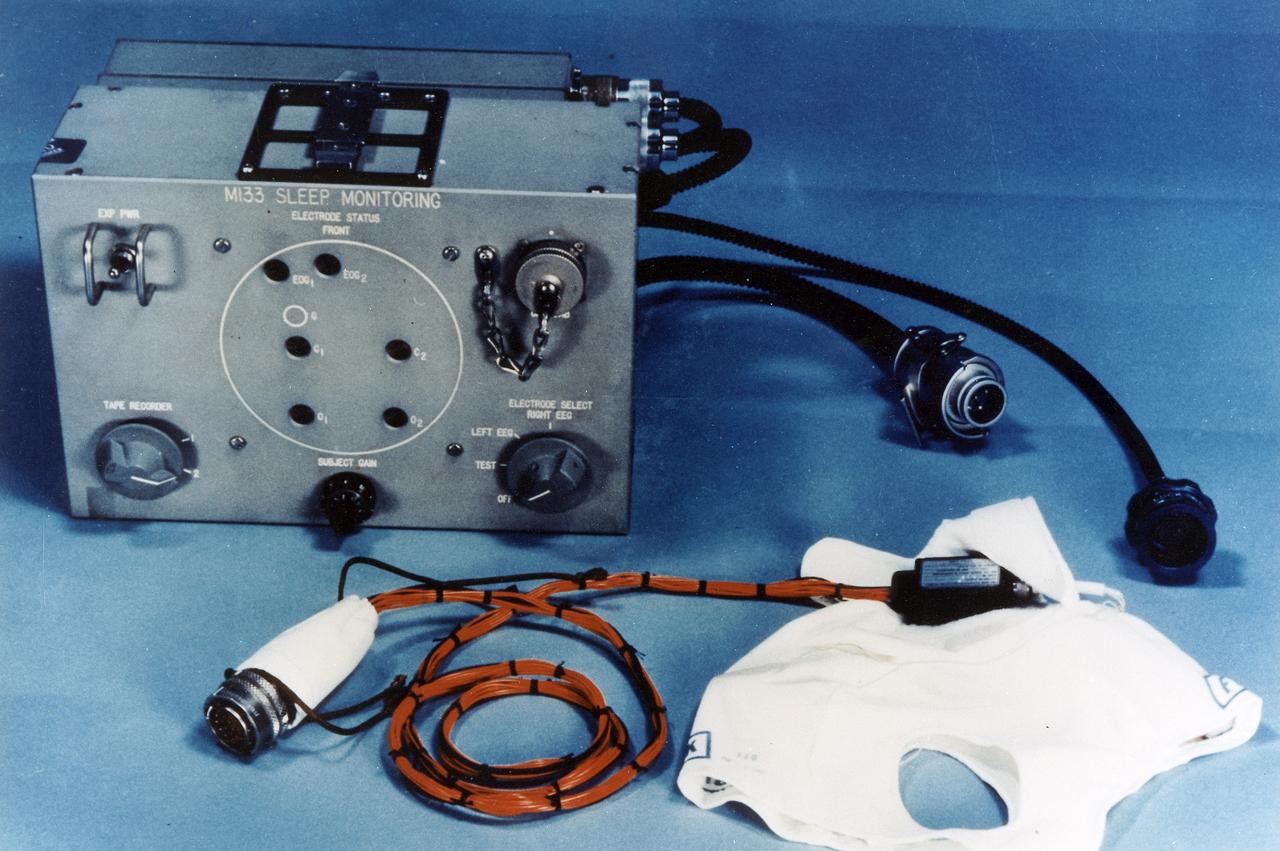
This 1970 photograph shows equipment for the Skylab's Sleep Monitoring Experiment (M133), a medical evaluation designed to objectively determine the amount and quality of crewmembers' inflight sleep. The experiment monitored and recorded electroencephalographic (EEG) and electrooculographic (EOG) activity during astronauts' sleep periods. One of the astronauts was selected for this experiment and wore a fitted cap during his sleep periods. The Marshall Space Flight Center had program management responsibility for the development of Skylab hardware and experiments.
Skylab
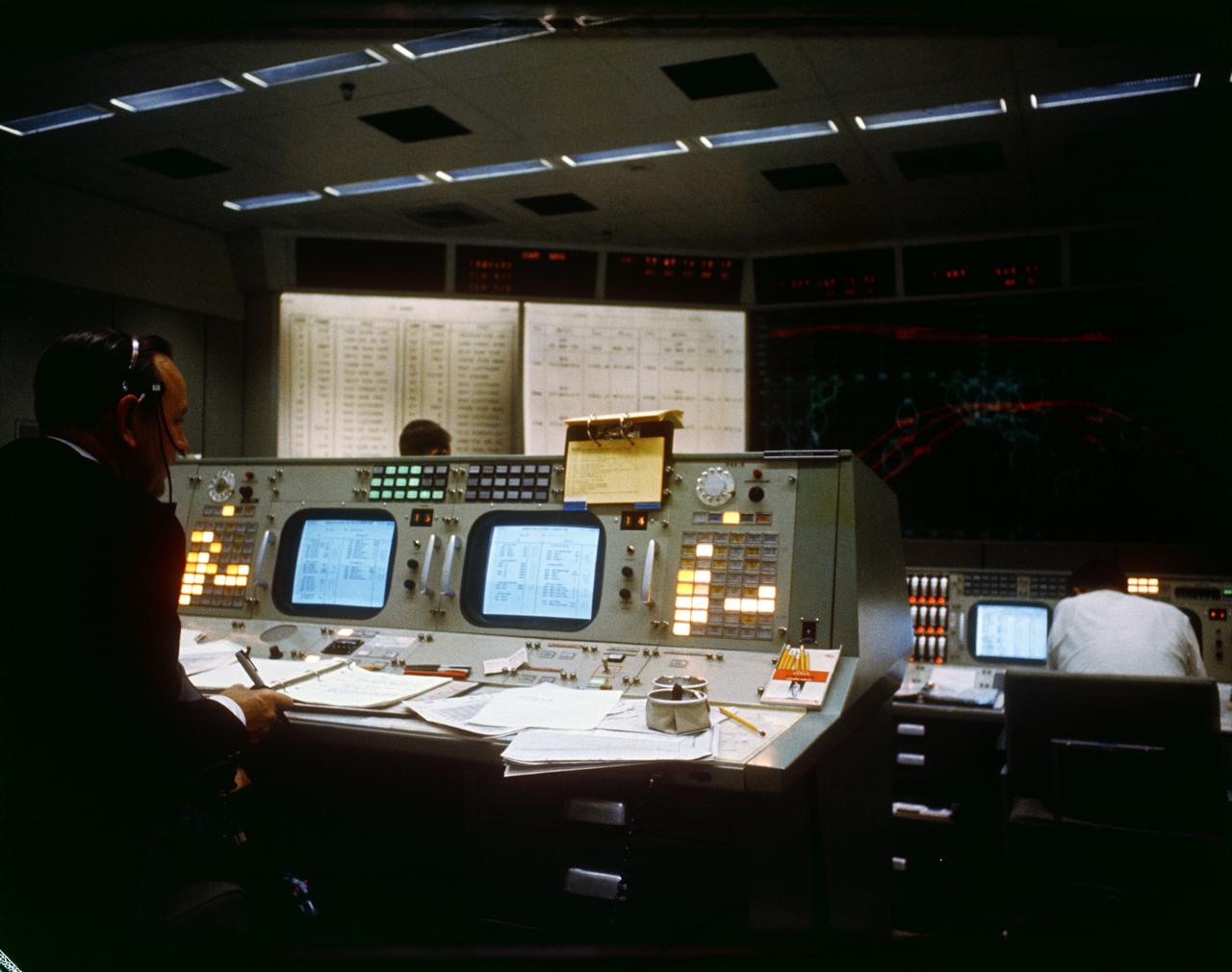
S65-60039 (7 Dec. 1965) --- Christopher C. Kraft Jr. (left), assistant director for Flight Operations, monitors his console in the Mission Control Center during the Gemini-7 spaceflight. Photo credit: NASA
MISSION CONTROL CENTER (MCC) - GEMINI-TITAN (GT)-7 - MSC
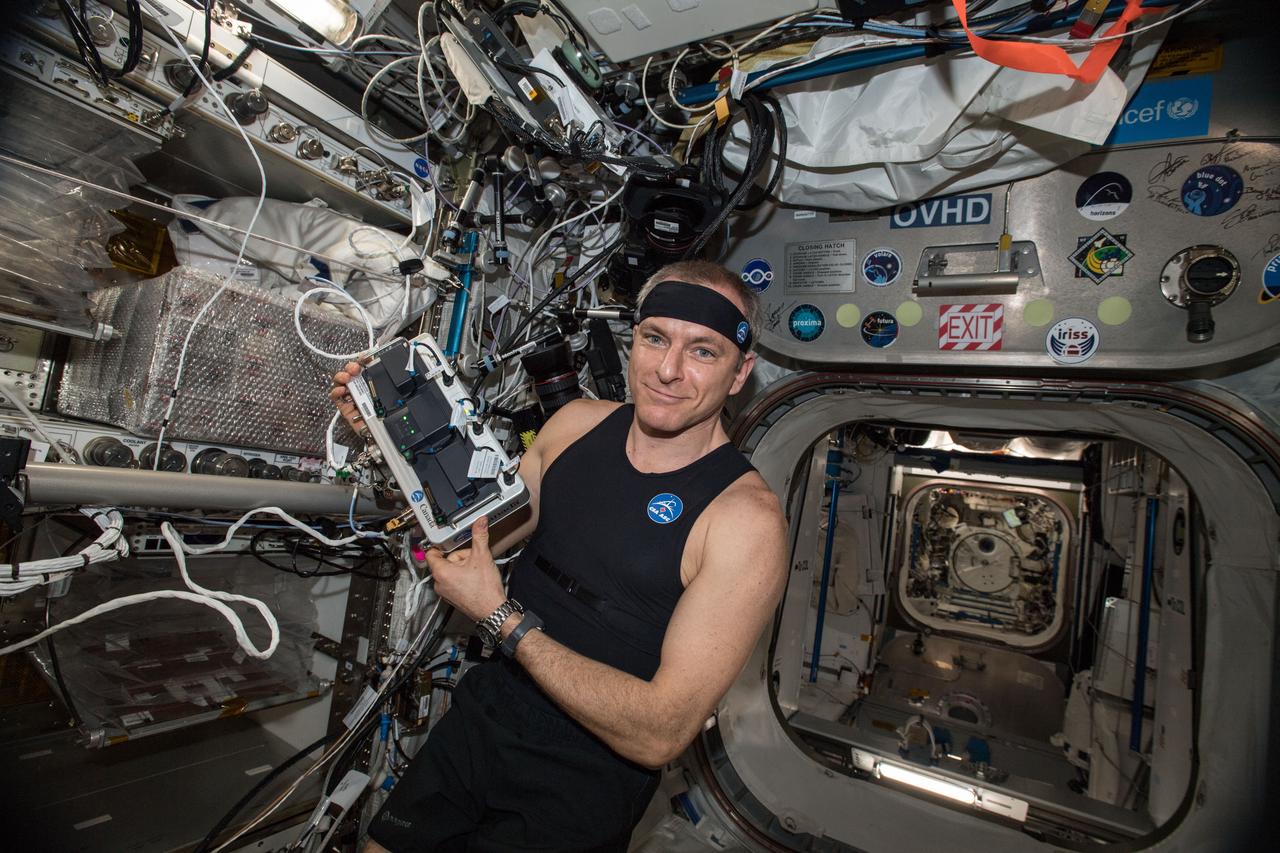
iss058e003984 (1/16/2019) --- Canadian Space Agency (CSA) astronaut David Saint-Jacques demonstrates the Bio-Monitor, a Canadian technology, which is utilized in the Autonomous Health Monitoring for Adaption Assessment on Long Range Missions Using Big Data Analytic.(Space Health) study. The innovative smart shirt system captures the astronauts' vital signs, and the data is used to assess the impact of spaceflight on the cardiovascular system. Image courtesy of CSA/NASA.
Bio-Monitor
Monitoring Fensal-Aztlan
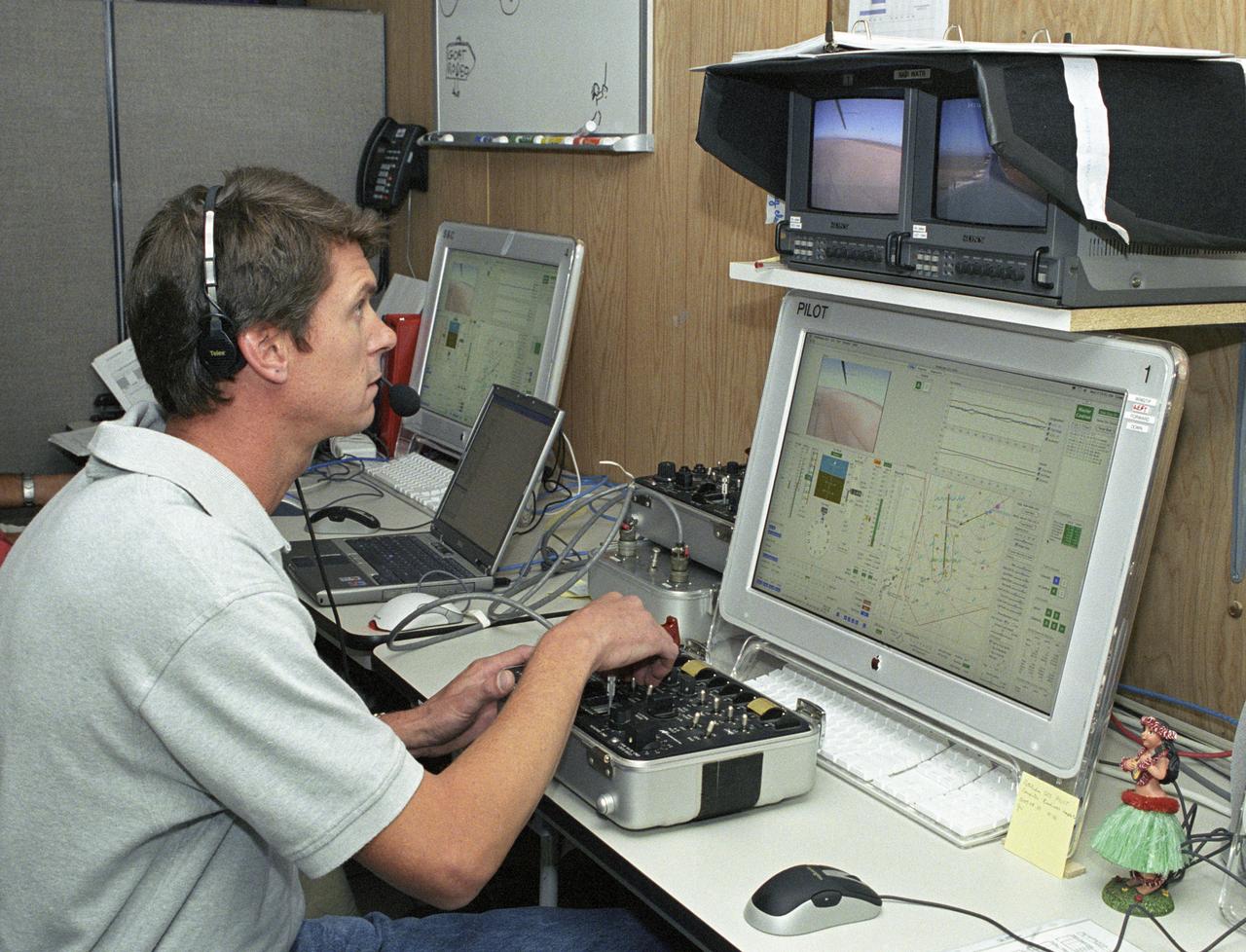
AeroVironment pilot Wyatt Sadler controls the Pathfinder-Plus flying wing from a small console, video and computer monitors in the ground station.
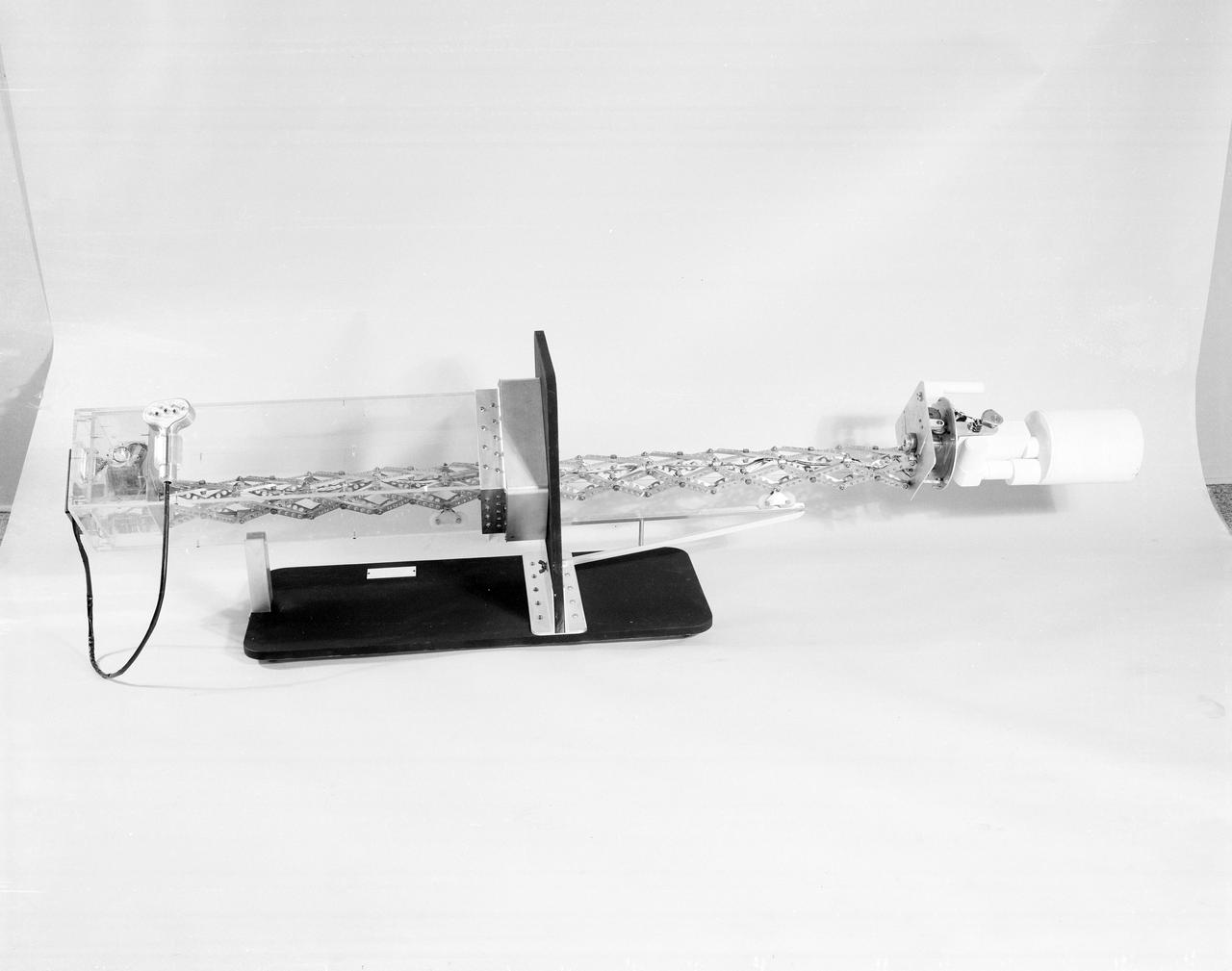
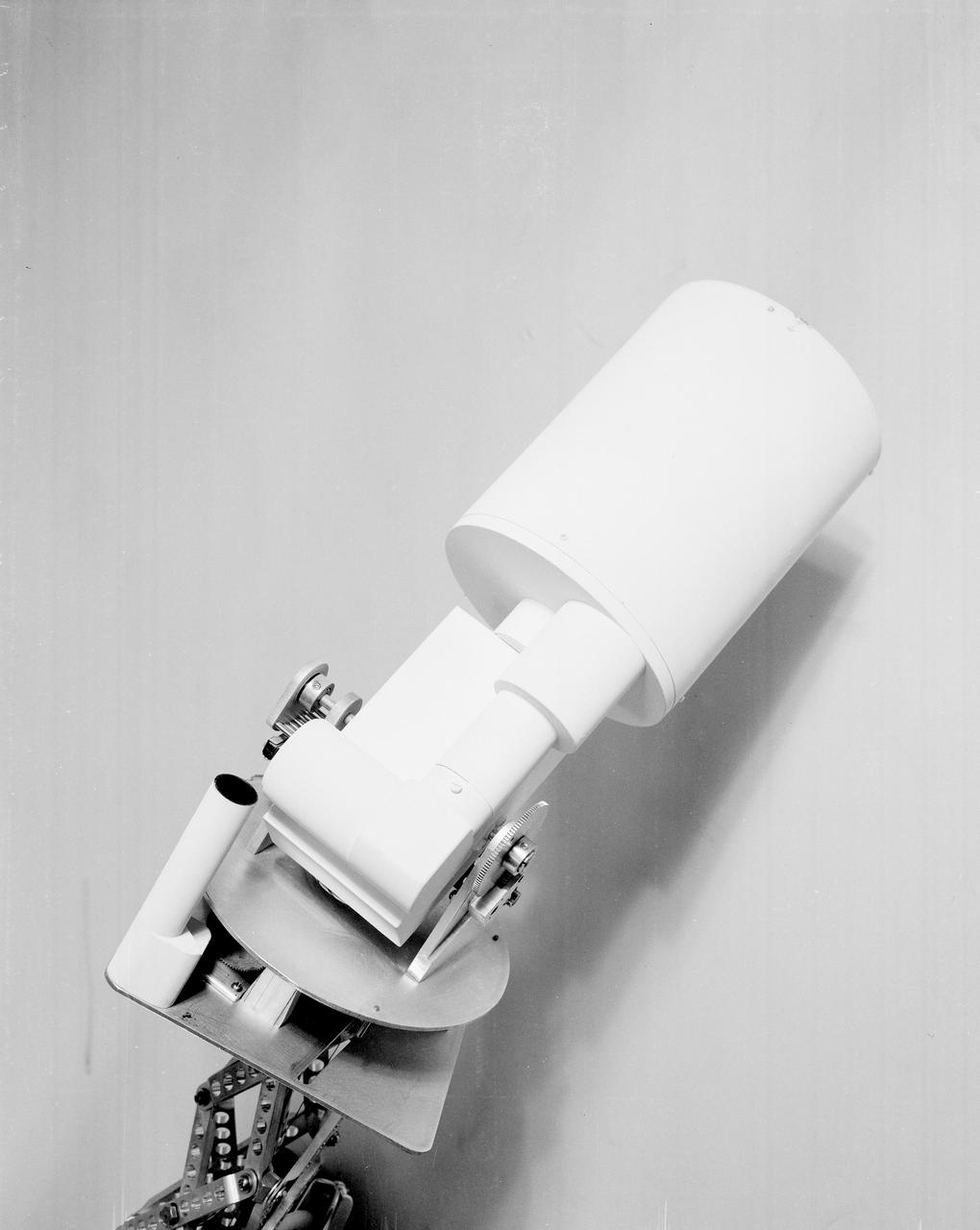
The Apollo Telescope Mount (ATM), designed and developed by the Marshall Space Flight Center, served as the primary scientific instrument unit aboard the Skylab. The ATM contained eight complex astronomical instruments designed to observe the Sun over a wide spectrum from visible light to x-rays. This photo depicts a side view is of a fully extended ATM contamination monitor mockup.
Saturn Apollo Program
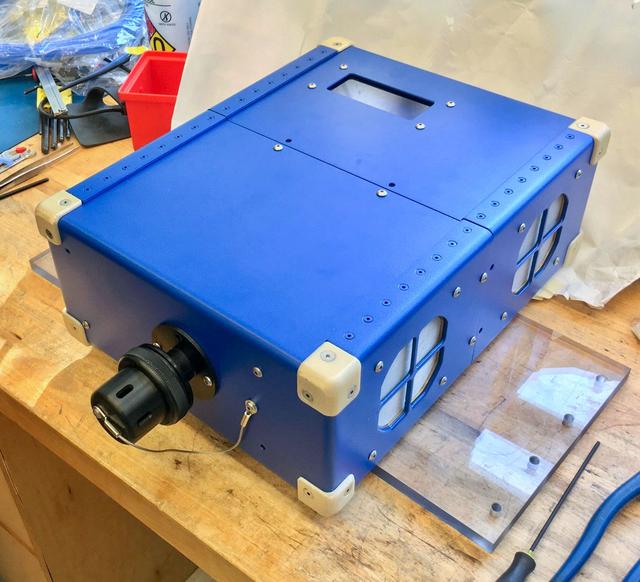
jsc2020e004941 (2/7/2020) --- A preflight view of the Airborne Particulate Monitor (APM) engineering unit. APM technology has applications in environmental monitoring and air pollution studies on Earth. Its combination of two instruments into one box offers a wider range of particle size measurement than other commercially available instruments.
Airborne Particulate Monitor (APM)
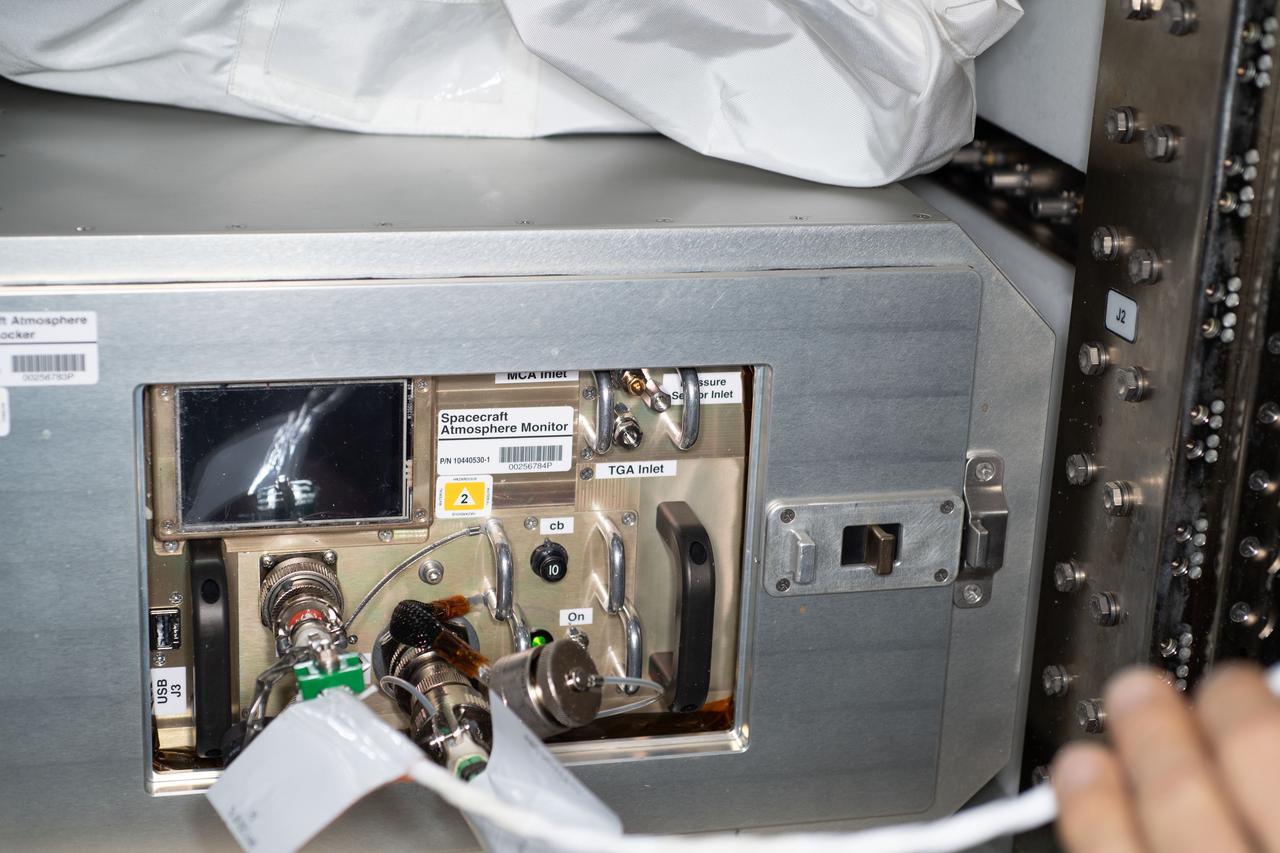
iss063e012706 (5/14/2020) --- A view of the Spacecraft Atmosphere Monitor inside Spacecraft Atmosphere Monitor Locker in the U.S. Laboratory Expedite the Processing of Experiments to the Space Station (EXPRESS) Rack 8 aboard the International space Station (ISS). The Spacecraft Atmosphere Monitor investigation demonstrates the capabilities of a small, reliable, portable gas chromatograph mass spectrometer instrument aboard the ISS to conduct major and minor elements of air measurement. The instrument transmits data back to the ground research team every two seconds, providing a continuous analysis to the ground research team.
Spacecraft Atmosphere Monitor
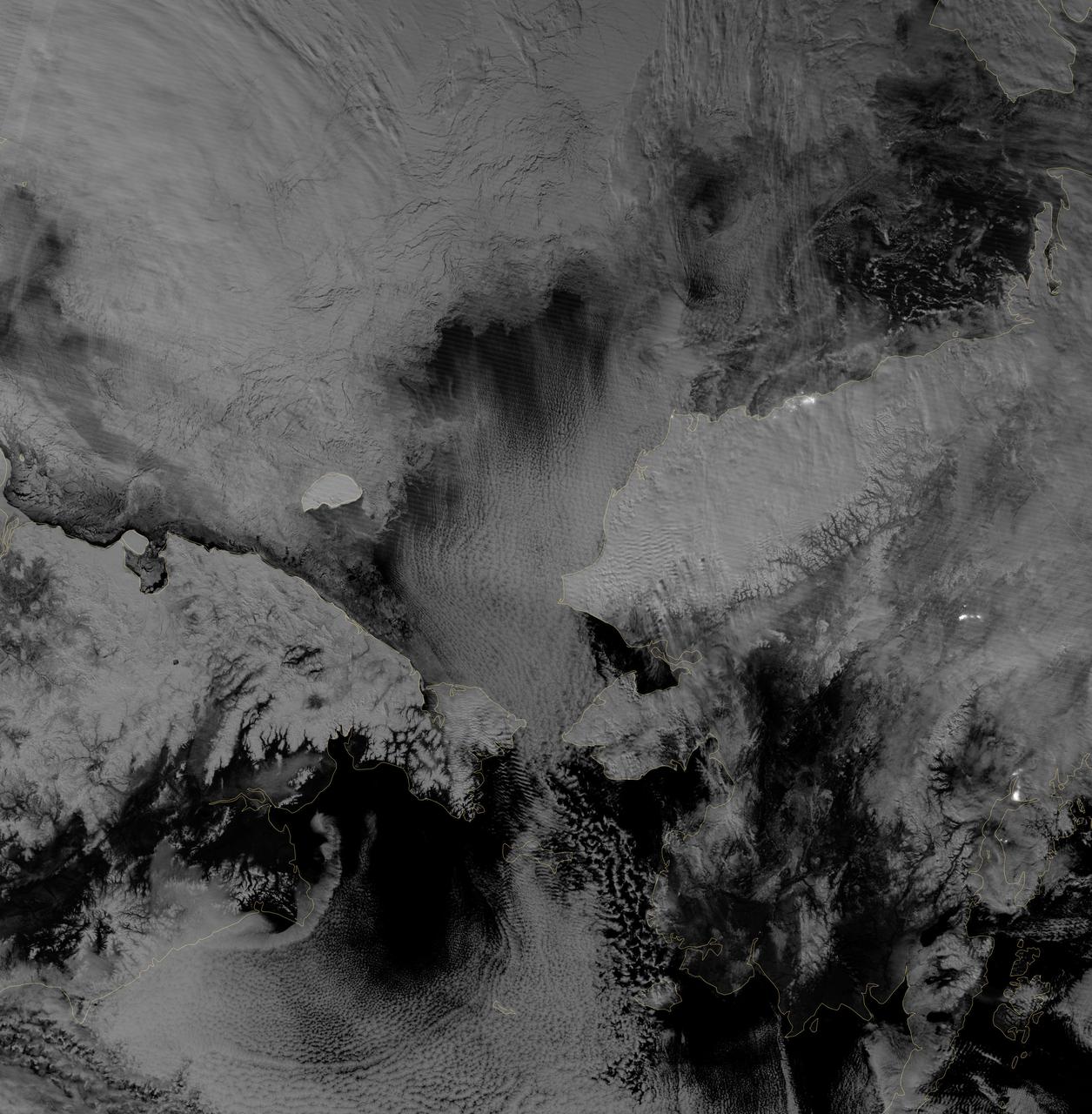
Image acquired October 30, 2012  Scientists watched the Arctic with particular interest in the summer of 2012, when Arctic sea ice set a new record low. The behavior of sea ice following such a low extent also interests scientists, but as Arctic sea ice was advancing in the autumn of 2012, so was polar darkness.  Fortunately, the Visible Infrared Imaging Radiometer Suite (VIIRS) on the Suomi NPP satellite can see in the dark. The VIIRS “day-night band” detects light in a range of wavelengths from green to near-infrared and uses filtering techniques to observe signals such as gas flares, auroras, wildfires, city lights, and reflected moonlight. VIIRS acquired this nighttime view of sea ice north of Russia and Alaska on October 30, 2012.  The day-night band takes advantage of moonlight, airglow (the atmosphere’s self-illumination through chemical reactions), zodiacal light (sunlight scattered by interplanetary dust), and starlight from the Milky Way. By using these dim light sources, the day-night band can detect changes in clouds, snow cover, and sea ice. The VIIRS day-night band offers a unique perspective because once polar night has descended, satellite sensors relying on visible light can no longer produce photo-like images. And although passive microwave sensors can monitor sea ice through the winter, they offer much lower resolution.  Steve Miller of the Cooperative Institute for Research in the Atmosphere at Colorado State University has used the day-night band to study nighttime behavior of weather systems and sees advantages in studying the polar regions. “There’s a lot of use with these measurements as we look back at a season of record ice melt in the Arctic,” Miller says. “We can observe areas where there is ice melt and reformation, where there’s clear water and ships can pass through—especially as the ‘great darkness’ approaches with winter.”  Ted Scambos of the National Snow and Ice Data Center at the University of Colorado concurs. “Things start changing rapidly in the late fall: sea ice formation and snow cover extent at the highest latitudes. This lets us see rapid-growth areas in detail.”  The day-night band is also useful for following weather systems, including severe storms, which can develop and strike populous areas at night as well as day. Geostationary Operational Environmental Satellites orbit the Earth’s equator. The satellites offer uninterrupted observations of North America, but high-latitude areas such as Alaska may benefit more from polar-orbiting satellites. Miller explains, “In the high latitudes, the orbits begin to overlap considerably, which gives you a lot more passes in Alaska. If you start to look at multiple passes and stitch them together, you can get a version of a poor man’s geostationary time loop of the weather.”  Day-night band imagery at high latitudes has already proven useful for tracking rapid ice movement and diagnosing Gulf of Alaska circulations. The day-night band is even useful at tracking ship movement at high latitudes.  NASA Earth Observatory image by Jesse Allen and Robert Simmon, using VIIRS Day-Night Band data from the Suomi National Polar-orbiting Partnership. Suomi NPP is the result of a partnership between NASA, the National Oceanic and Atmospheric Administration, and the Department of Defense. Caption by Michon Scott.  Instrument: Suomi NPP - VIIRS   Credit: <b><a href="http://www.earthobservatory.nasa.gov/" rel="nofollow"> NASA Earth Observatory</a></b>  <b>Click here to view all of the <a href="http://earthobservatory.nasa.gov/Features/NightLights/" rel="nofollow"> Earth at Night 2012 images </a></b>  <b>Click here to <a href="http://earthobservatory.nasa.gov/NaturalHazards/view.php?id=79825" rel="nofollow"> read more </a> about this image </b>    <b><a href="http://www.nasa.gov/audience/formedia/features/MP_Photo_Guidelines.html" rel="nofollow">NASA image use policy.</a></b>  <b><a href="http://www.nasa.gov/centers/goddard/home/index.html" rel="nofollow">NASA Goddard Space Flight Center</a></b> enables NASA
Monitoring the Arctic during Polar Darkness
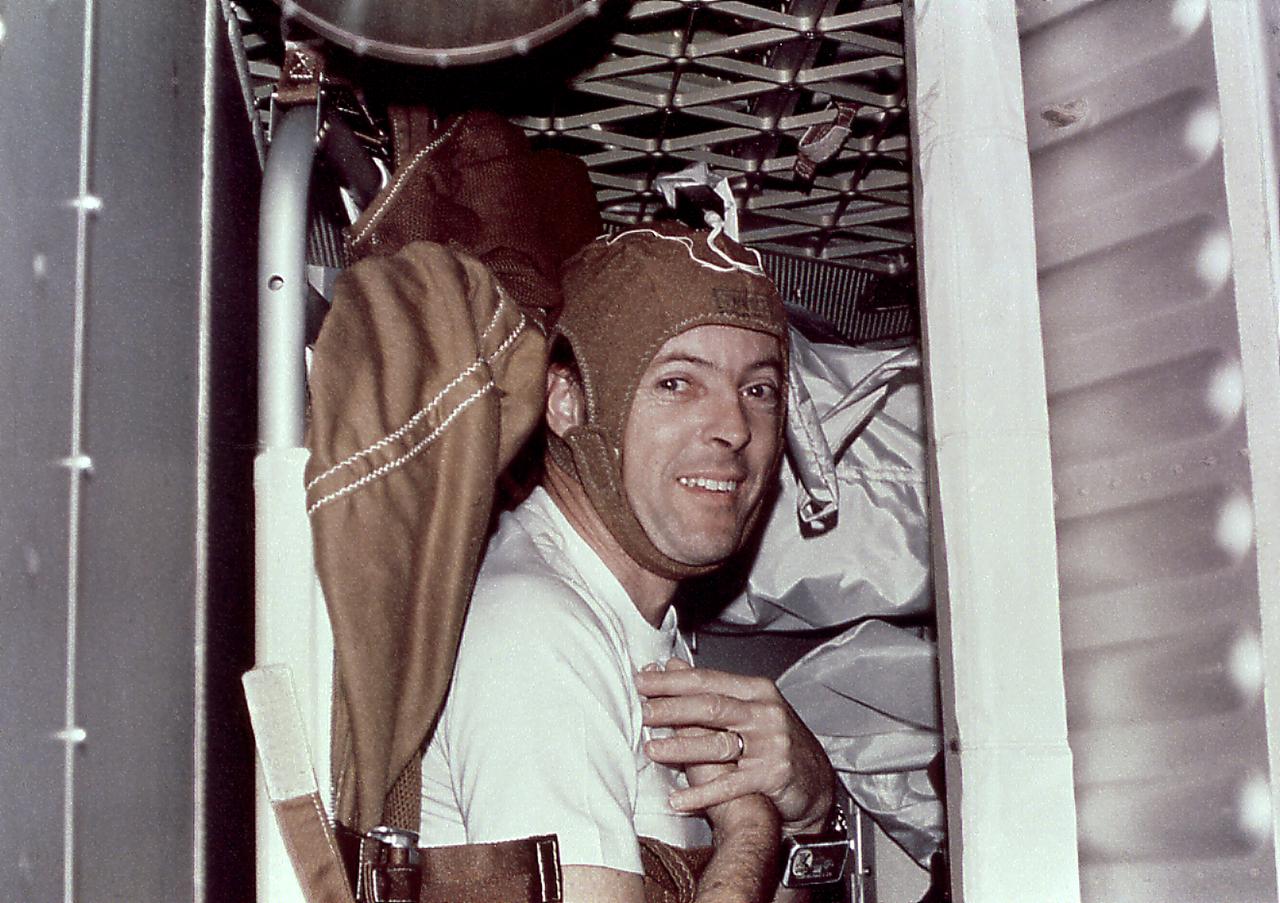
This photograph is of Astronaut Kerwin wearing the Sleep Monitoring cap (Experiment M133) taken during the Skylab-2 mission. The Sleep Monitoring Experiment was a medical evaluation designed to objectively determine the amount and quality of crew members' inflight sleep. The experiment monitored and recorded electroencephalographic (EEG) and electrooculographic (EOG) activity during astronauts' sleep periods. One of the astronauts was selected for this experiment and wore a fitted cap during his sleep periods.
Skylab
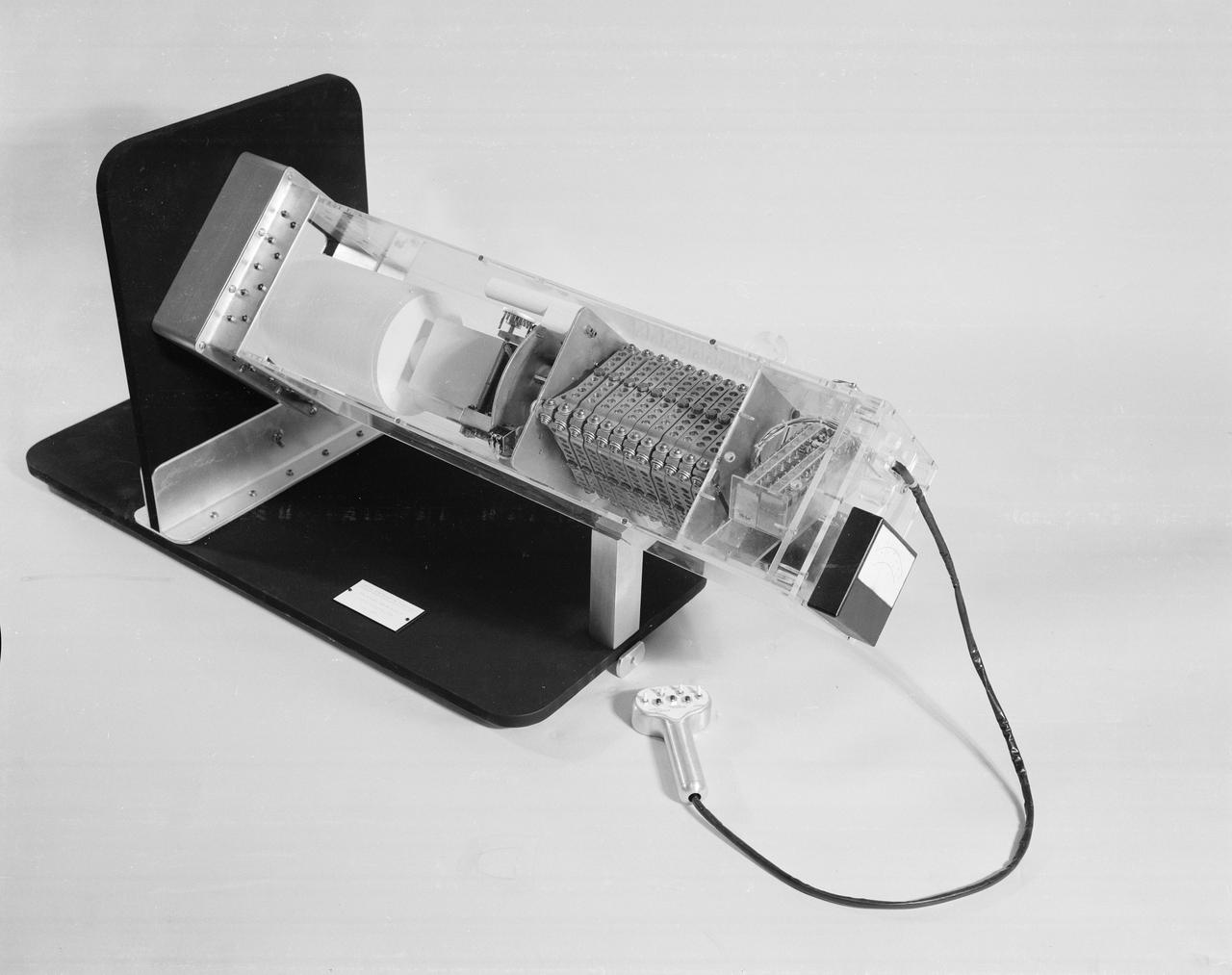
The Apollo Telescope Mount (ATM), designed and developed by the Marshall Space Flight Center, served as the primary scientific instrument unit aboard the Skylab. The ATM contained eight complex astronomical instruments designed to observe the Sun over a wide spectrum from visible light to x-rays. This angle view is of an ATM contamination monitor meter mockup.
Saturn Apollo Program
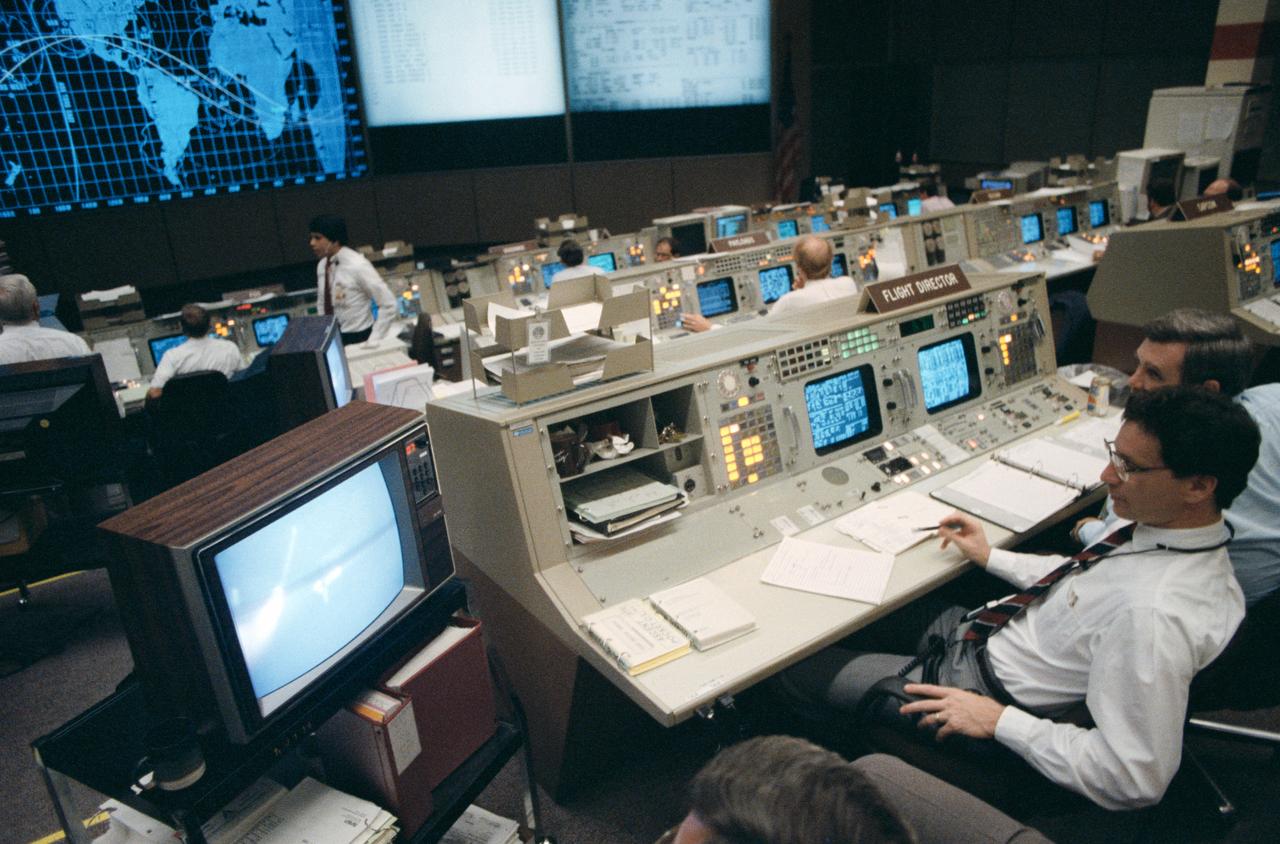
Only moments away from ignition, Atlantis, Orbiter Vehicle (OV) 104, and its five member crew are the subjects of concern drawing serious countenance in this scene in the Flight Control Room (FCR) of JSC's Mission Control Center (MCC) Bldg 30. Ascent Flight Director Alan L. Briscoe, monitors the Kennedy Space Center pre-launch activity from the flight director (FD) console, along with Ronald D. Dittemore (center) and N. Wayne Hale, Jr.
Flight directors at JSC MCC Bldg 30 monitor STS-30 prelaunch activities
STS029-S-042 (13 March 1989) --- Flight Directors Ronald D. Dittemore, left and Lee Briscoe monitor solid rocket booster separation activity on monitors at their consoles in the flight control room of the Johnson Space Center's mission control center.
STS-29 Flight Directors Briscoe and Dittemore at JSC MCC consoles
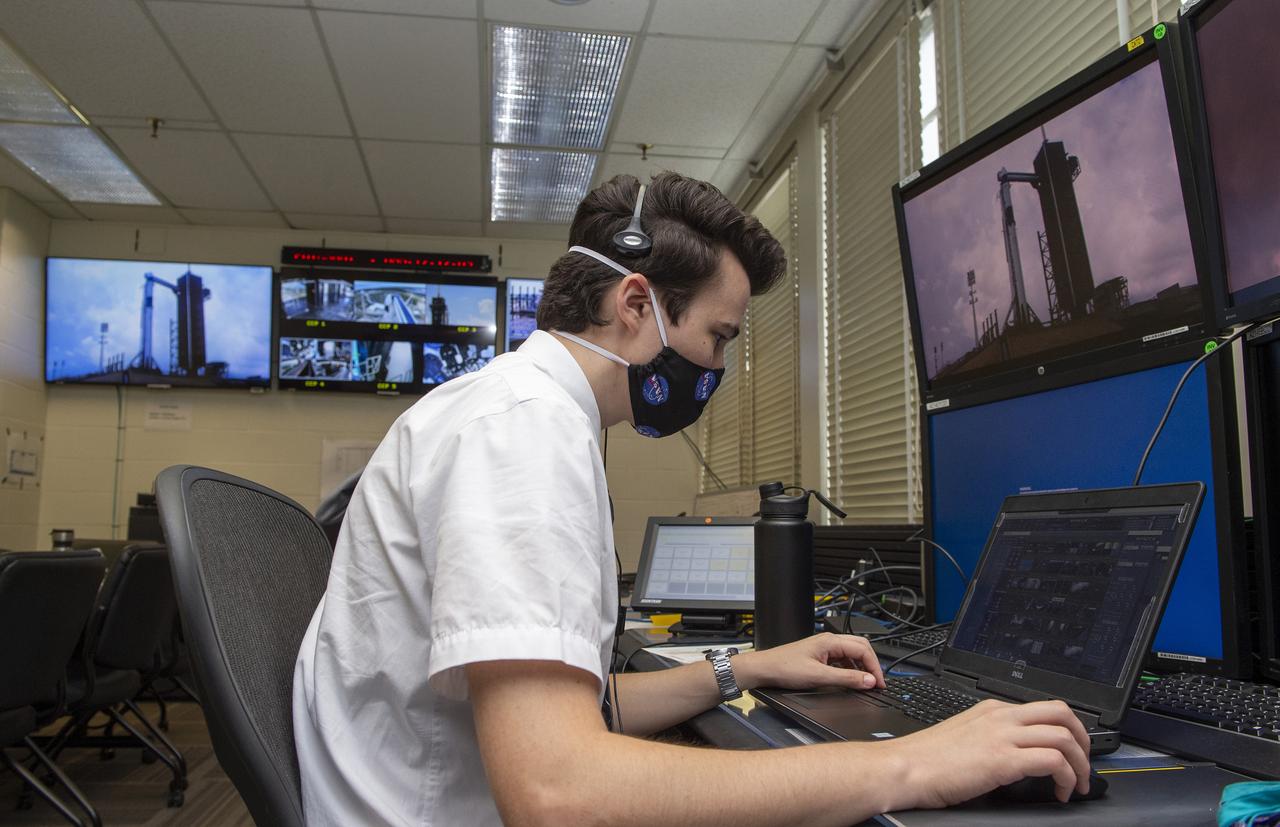
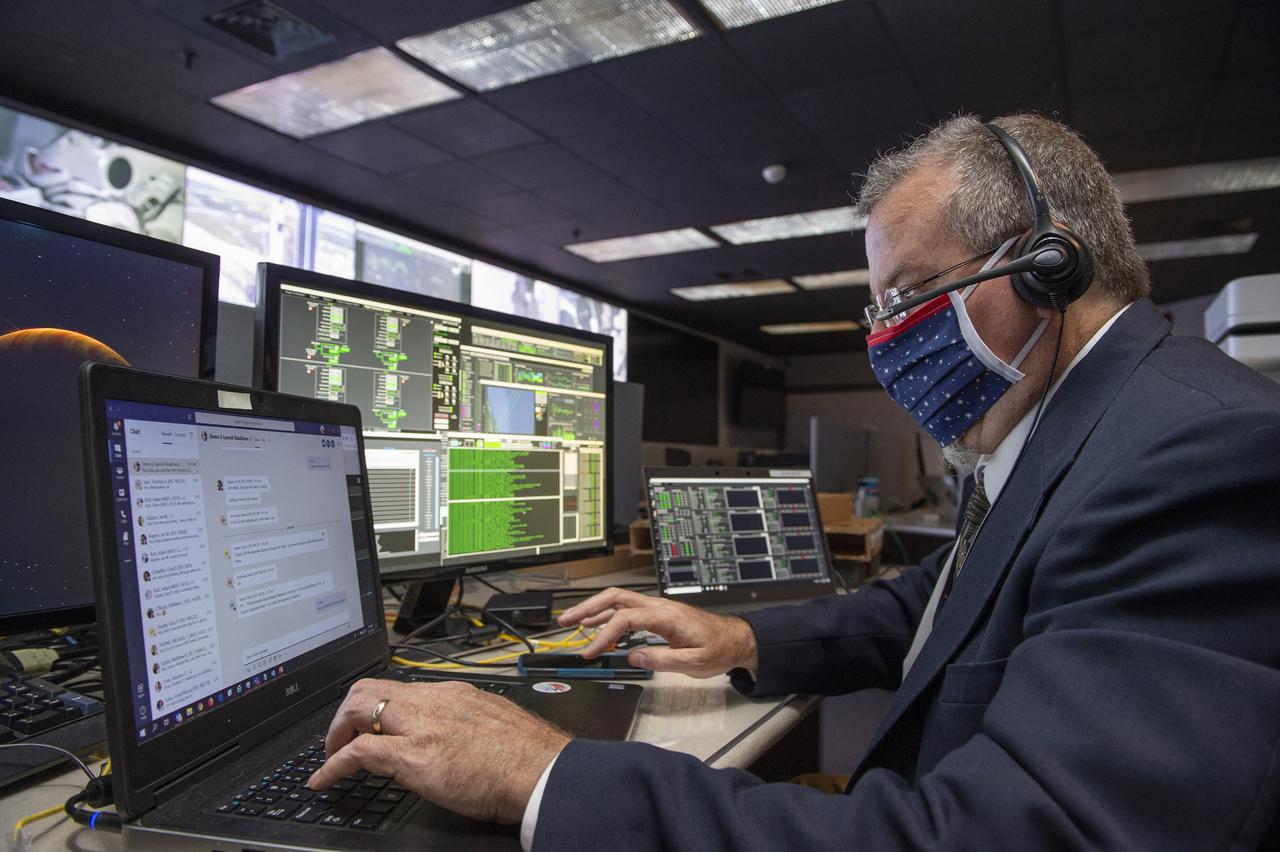
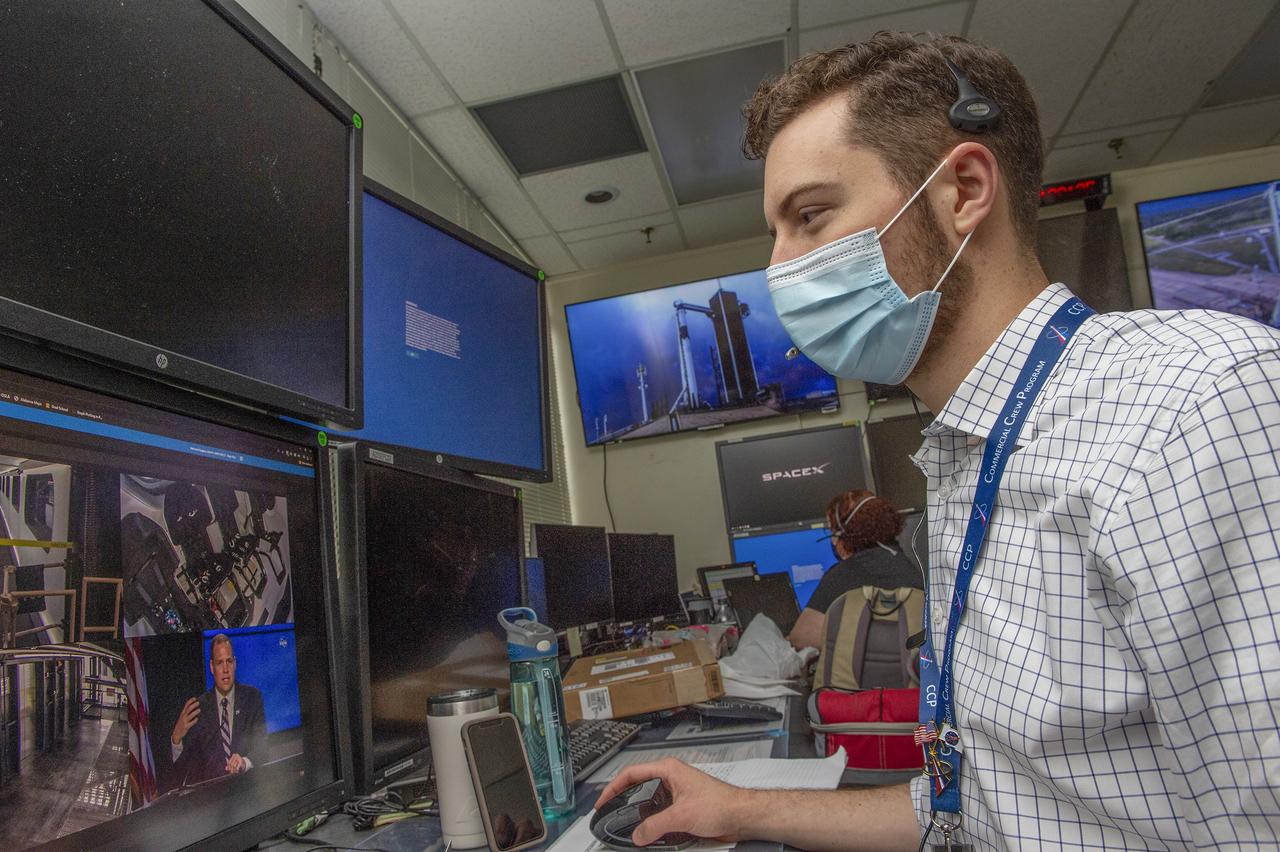
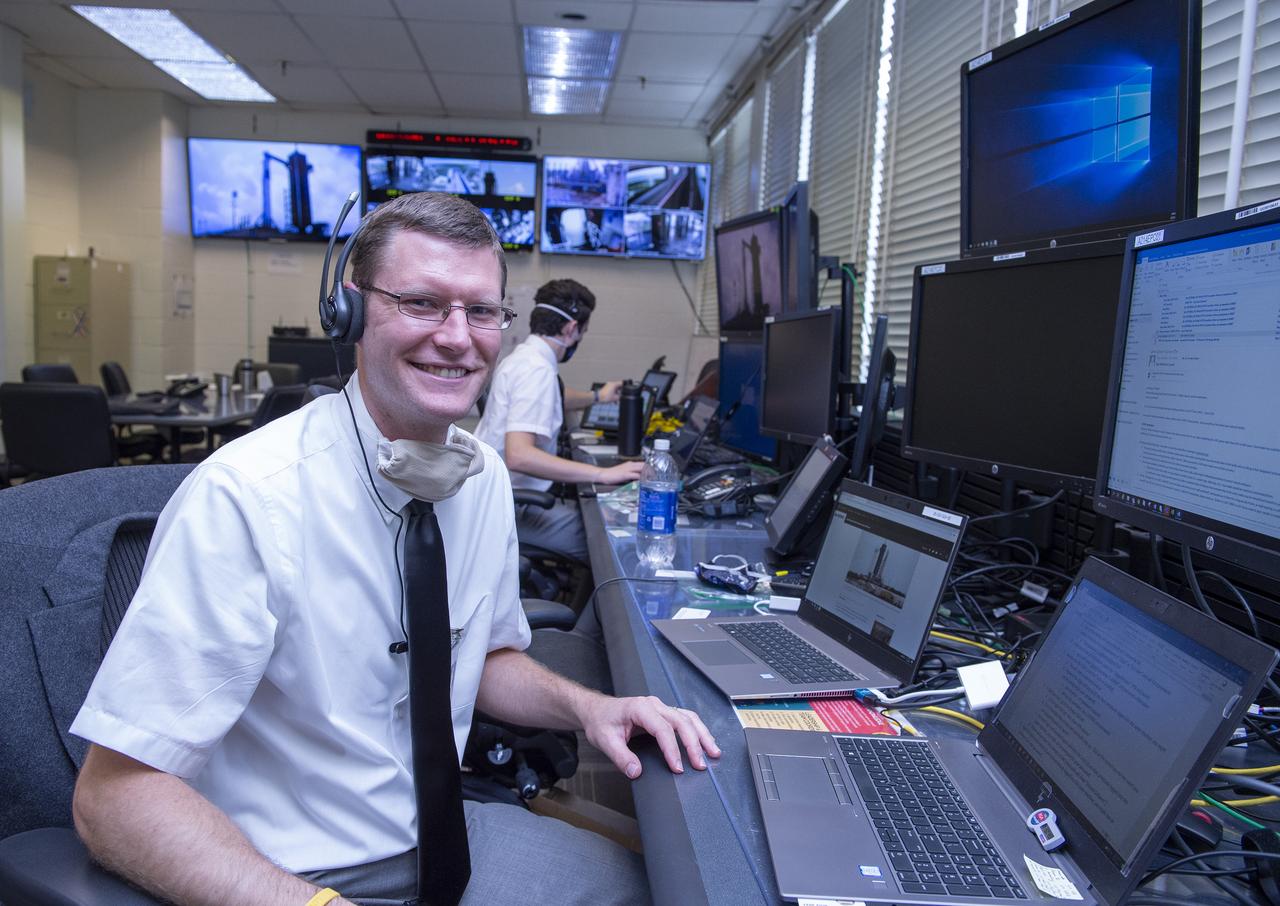
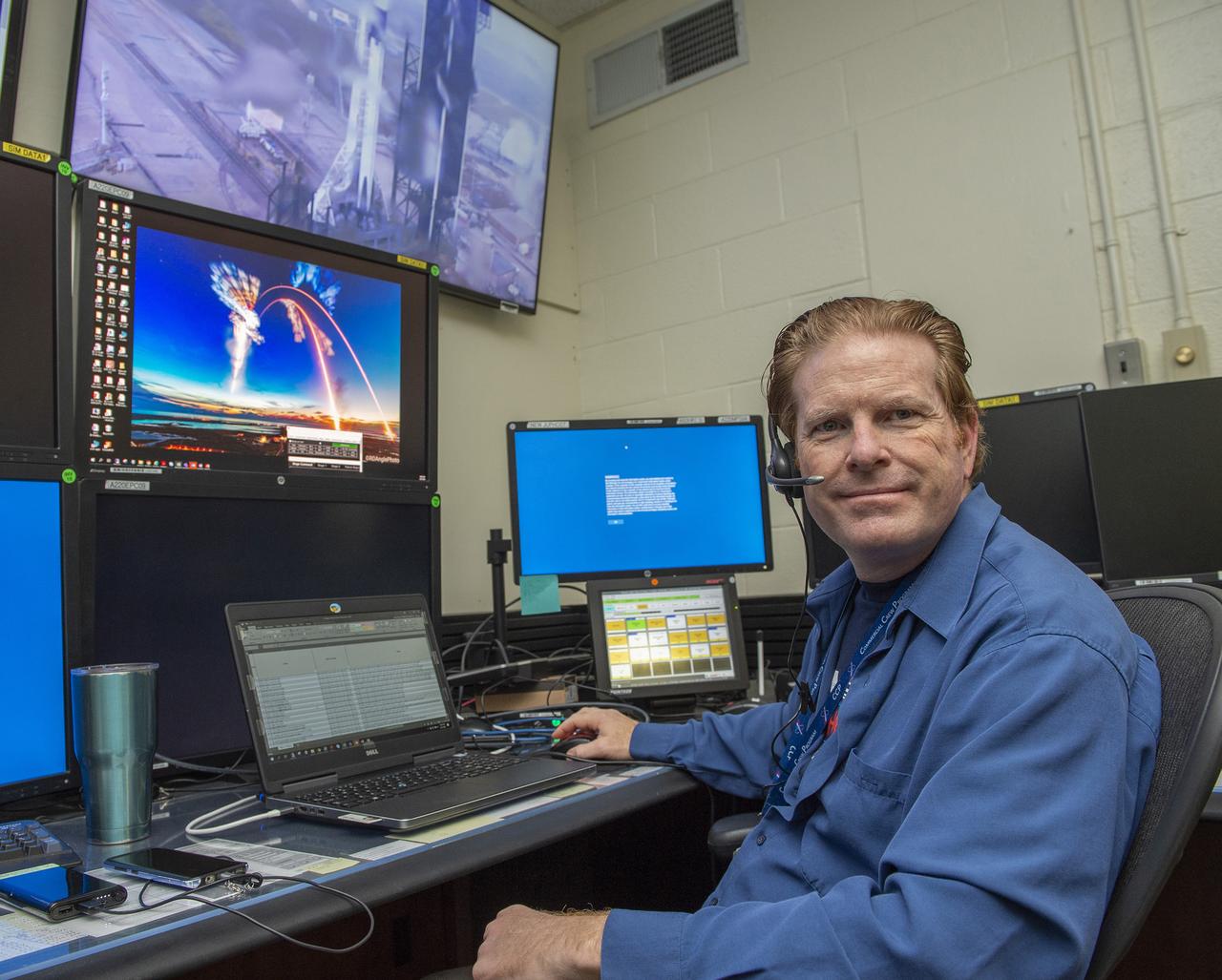
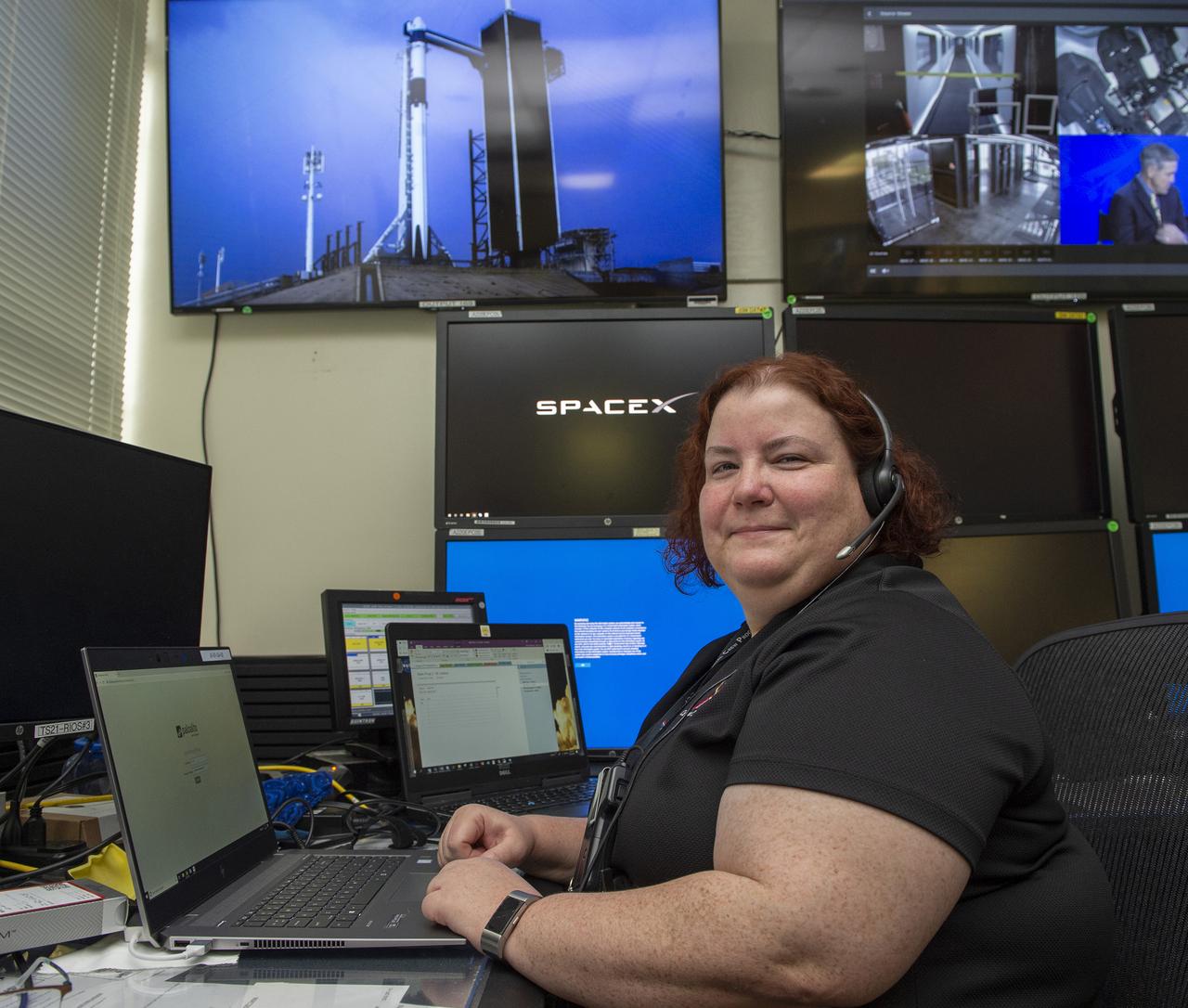
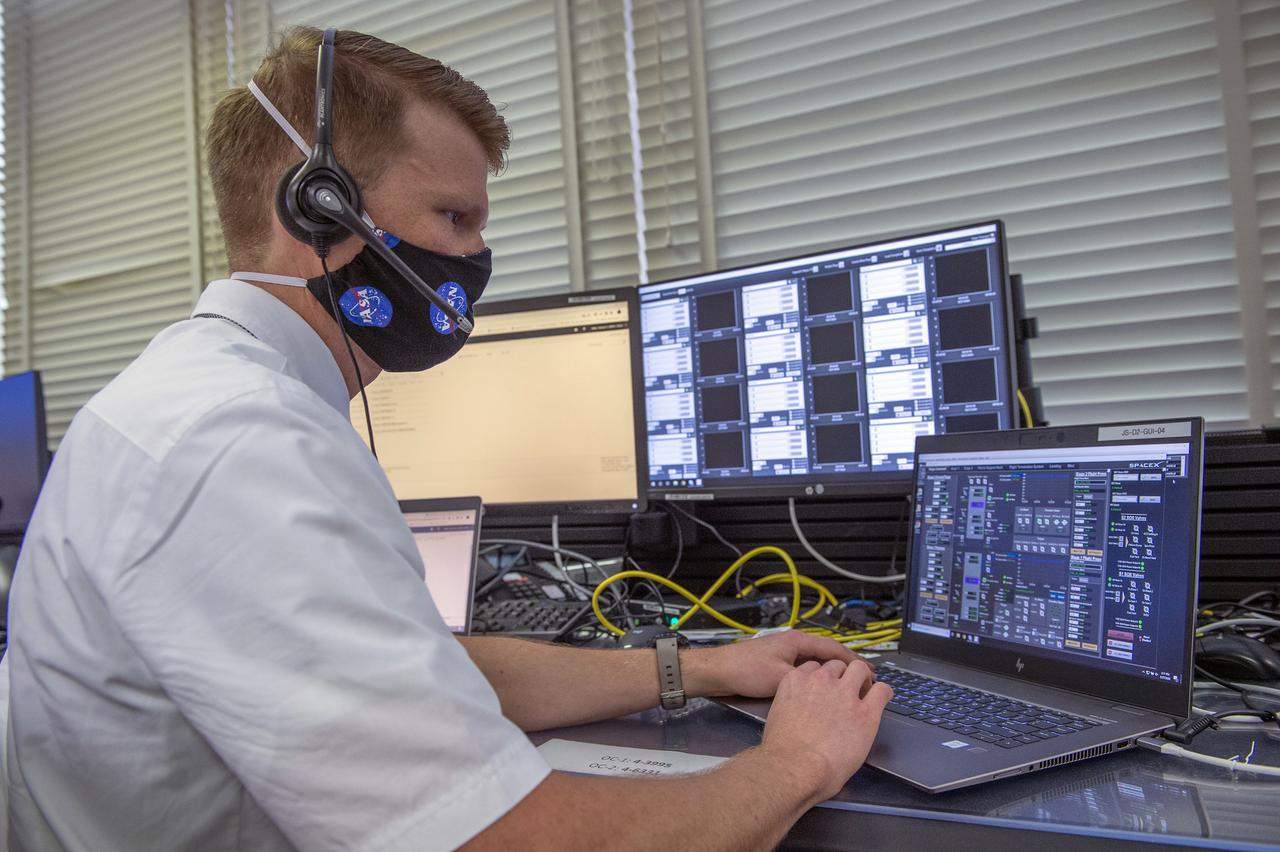
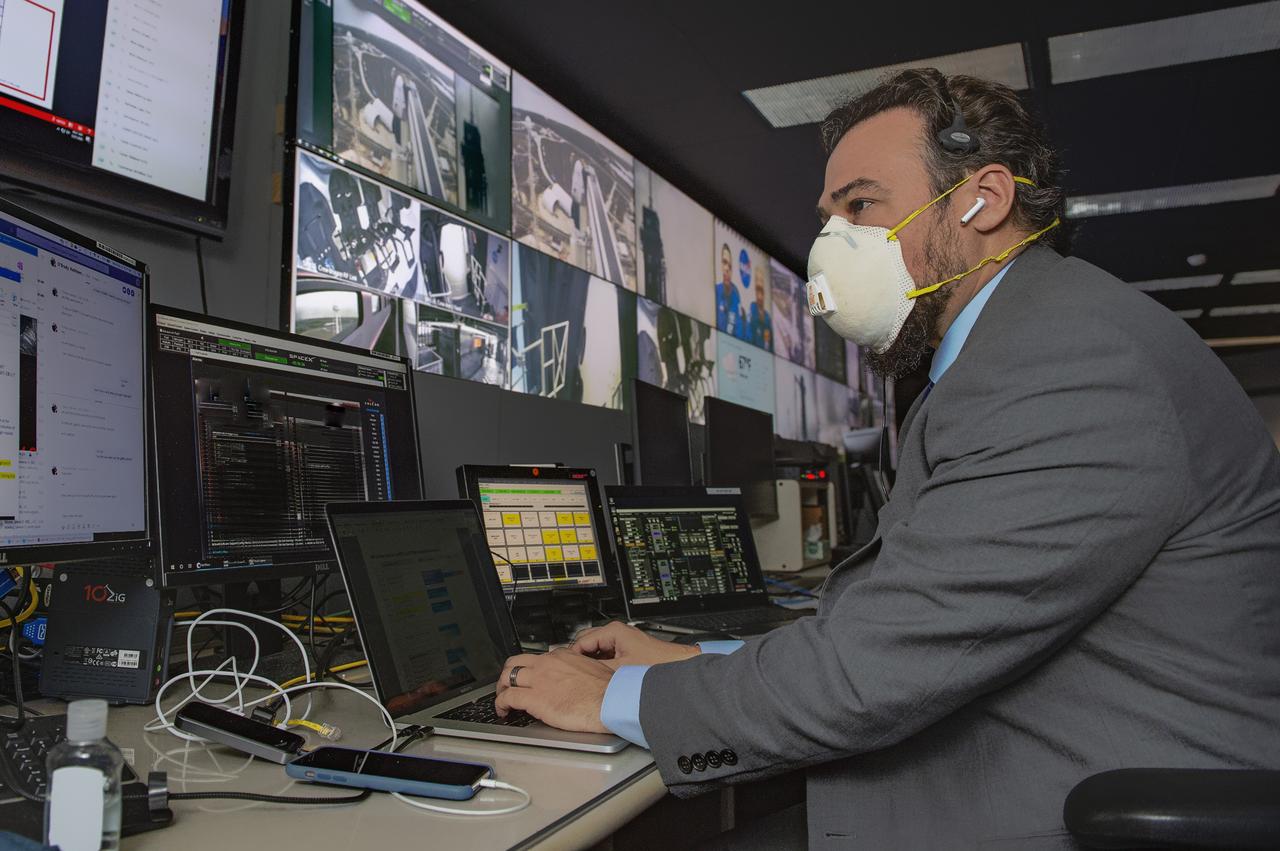
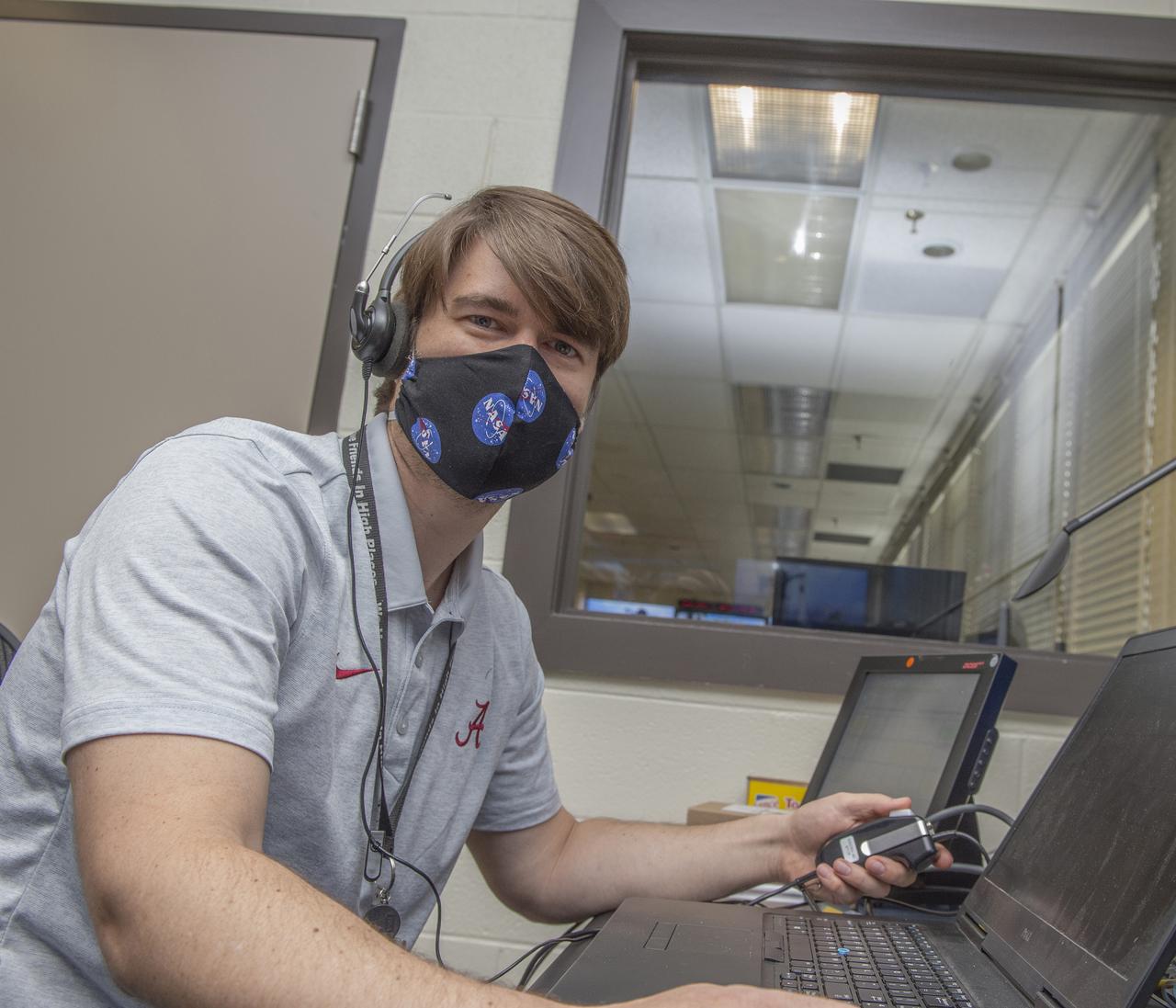
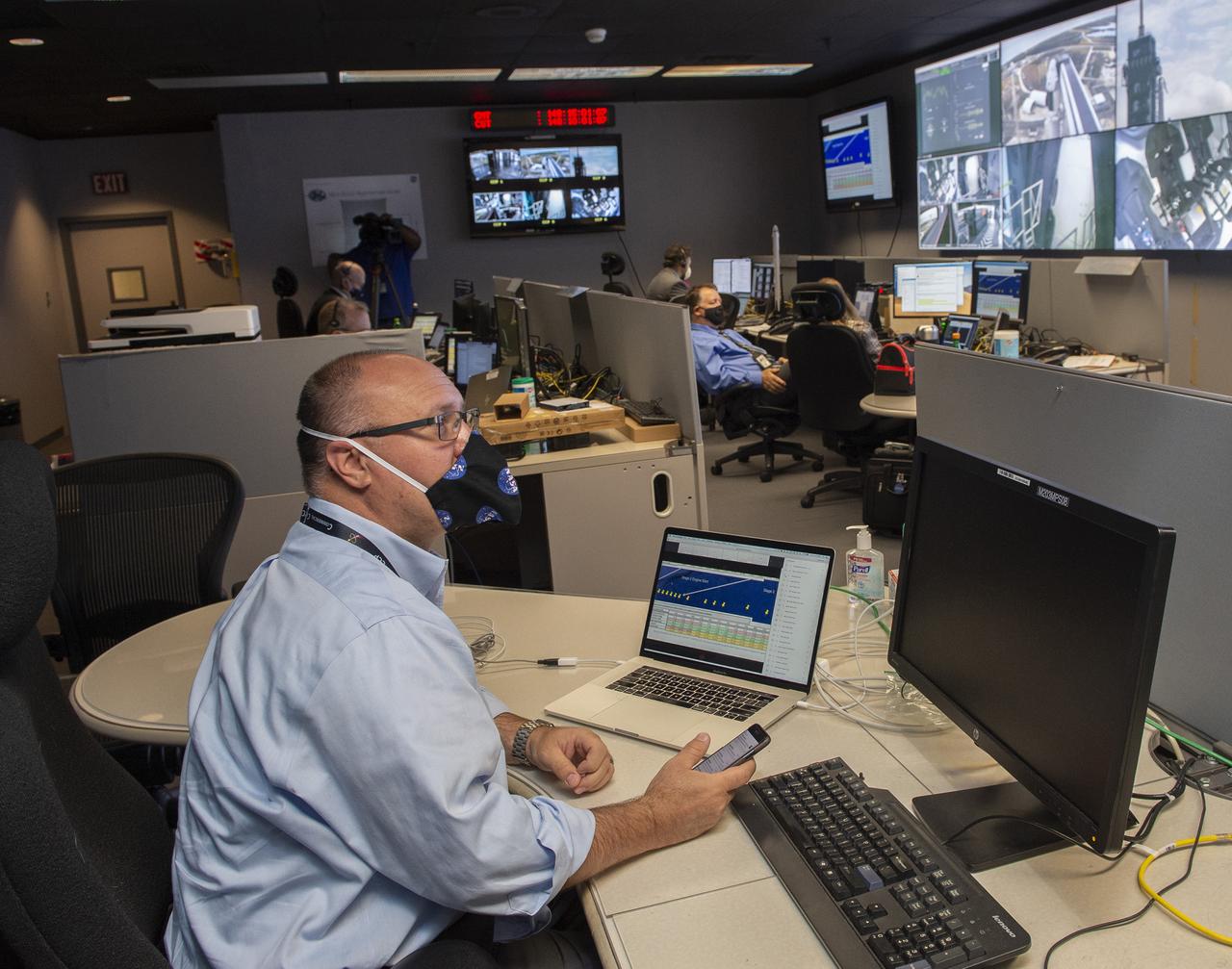
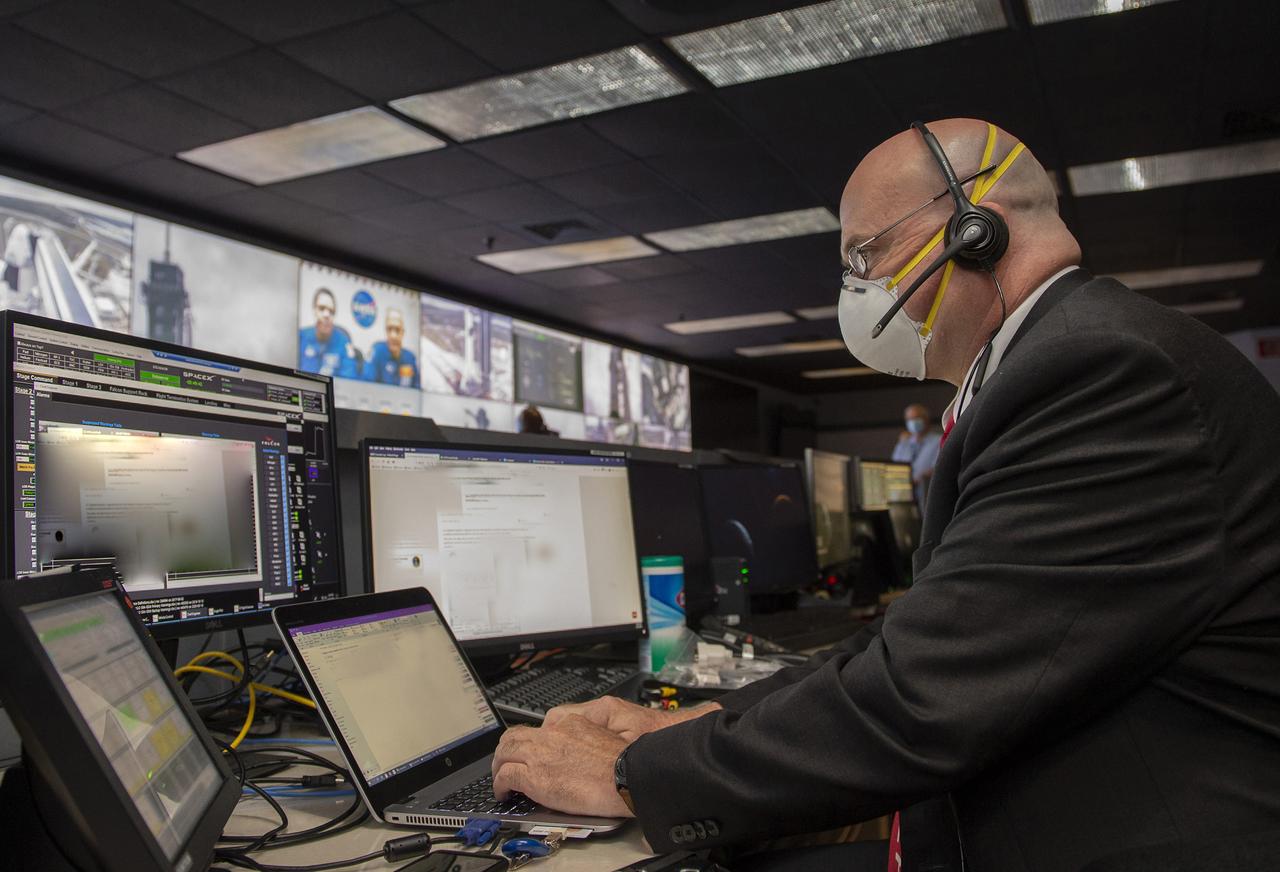
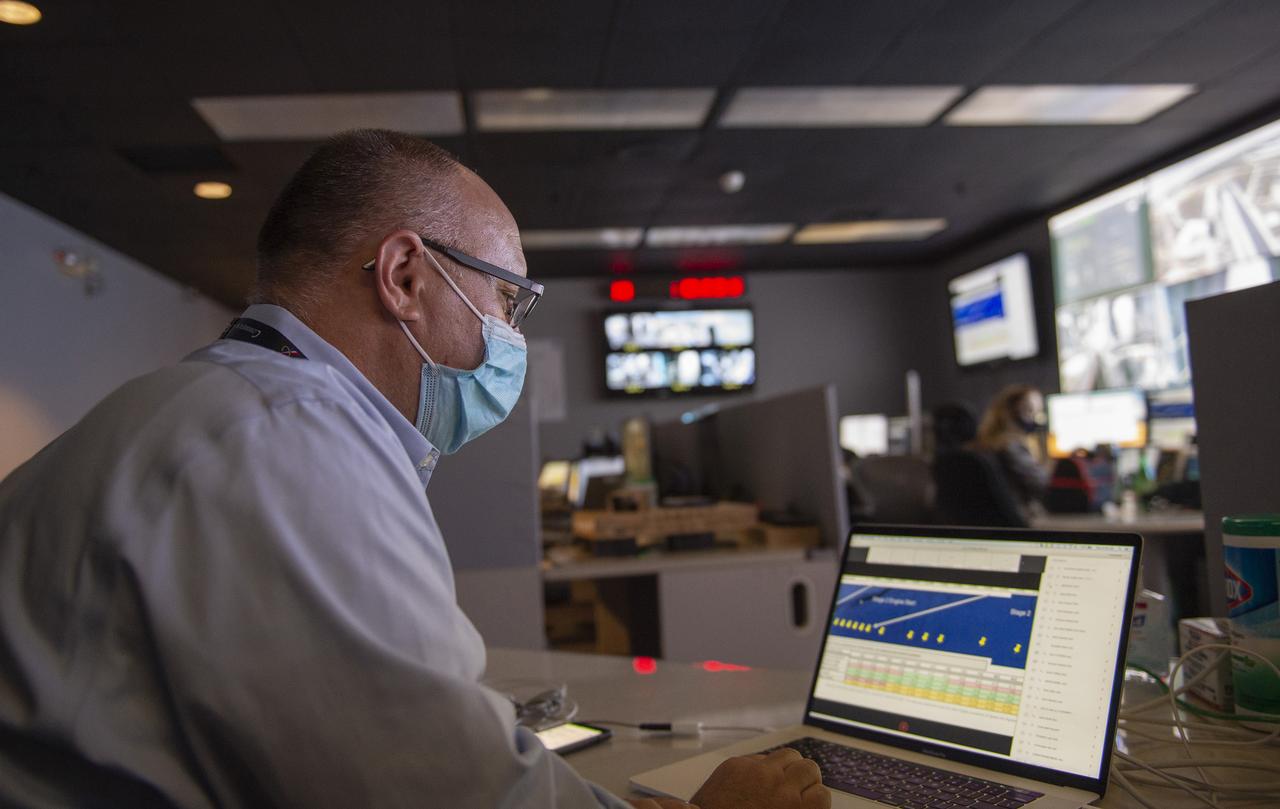
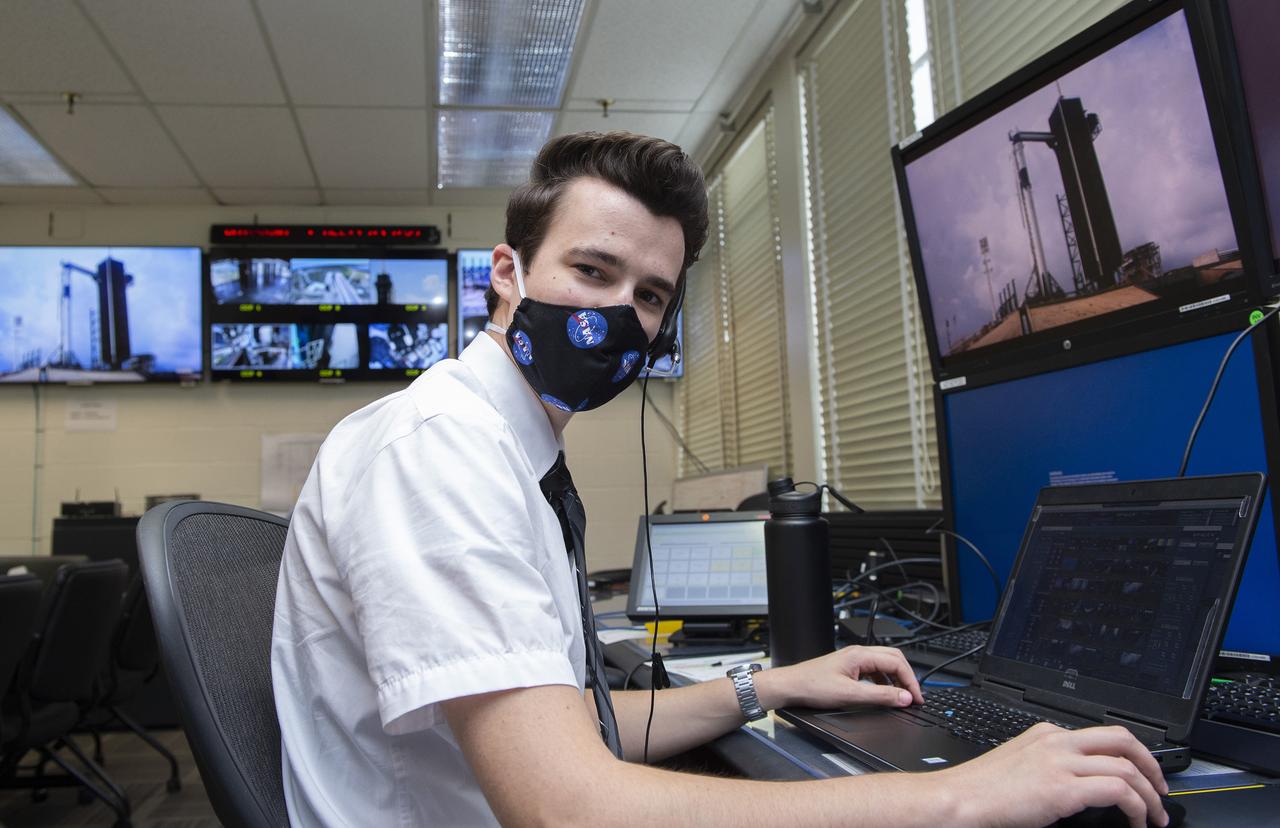
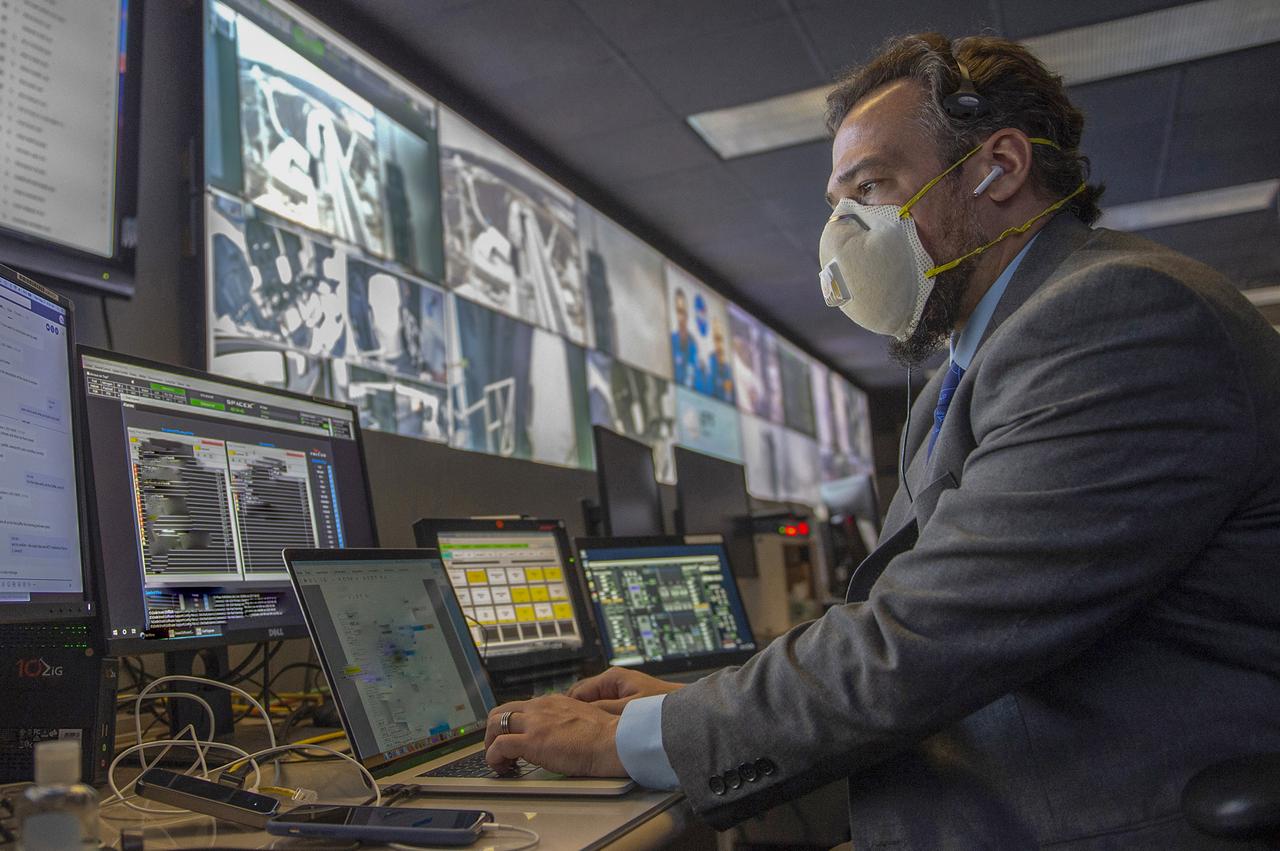
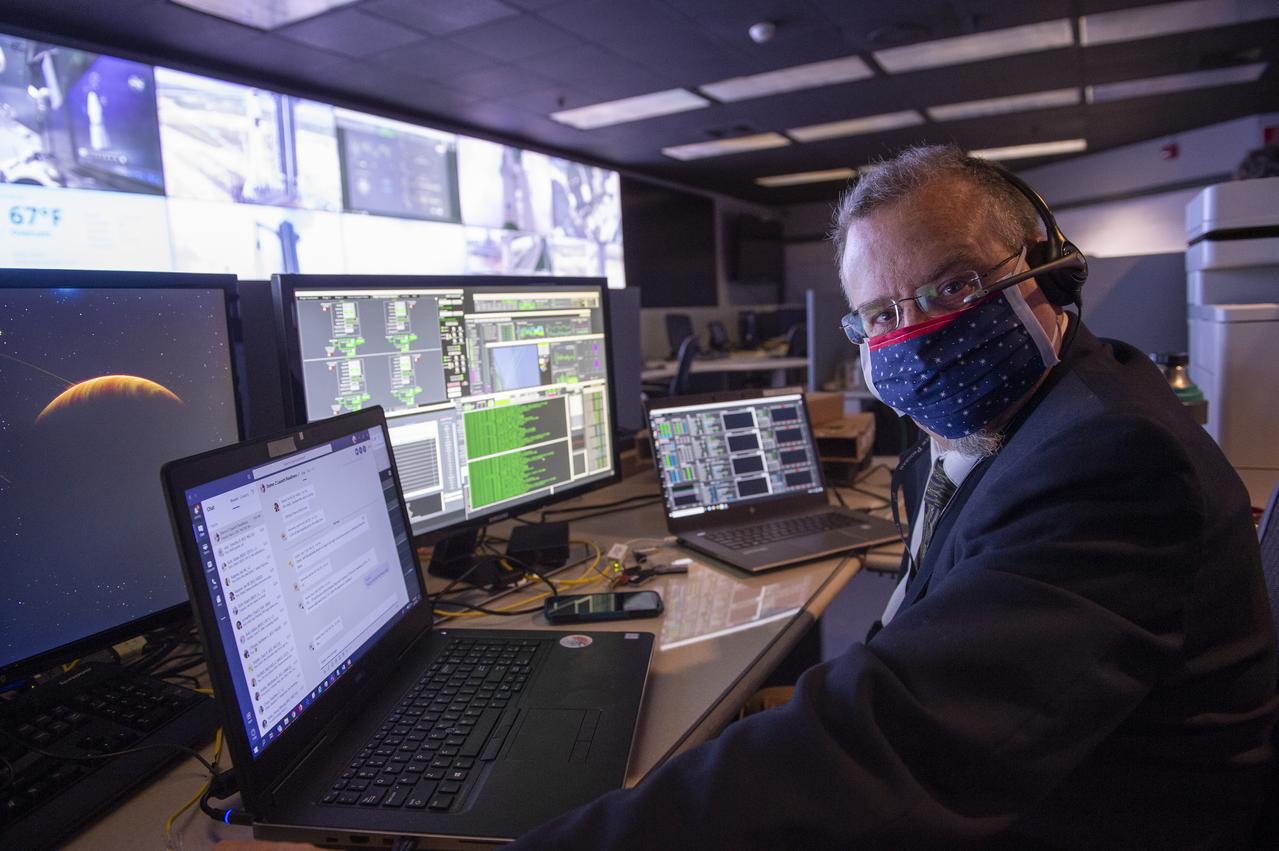
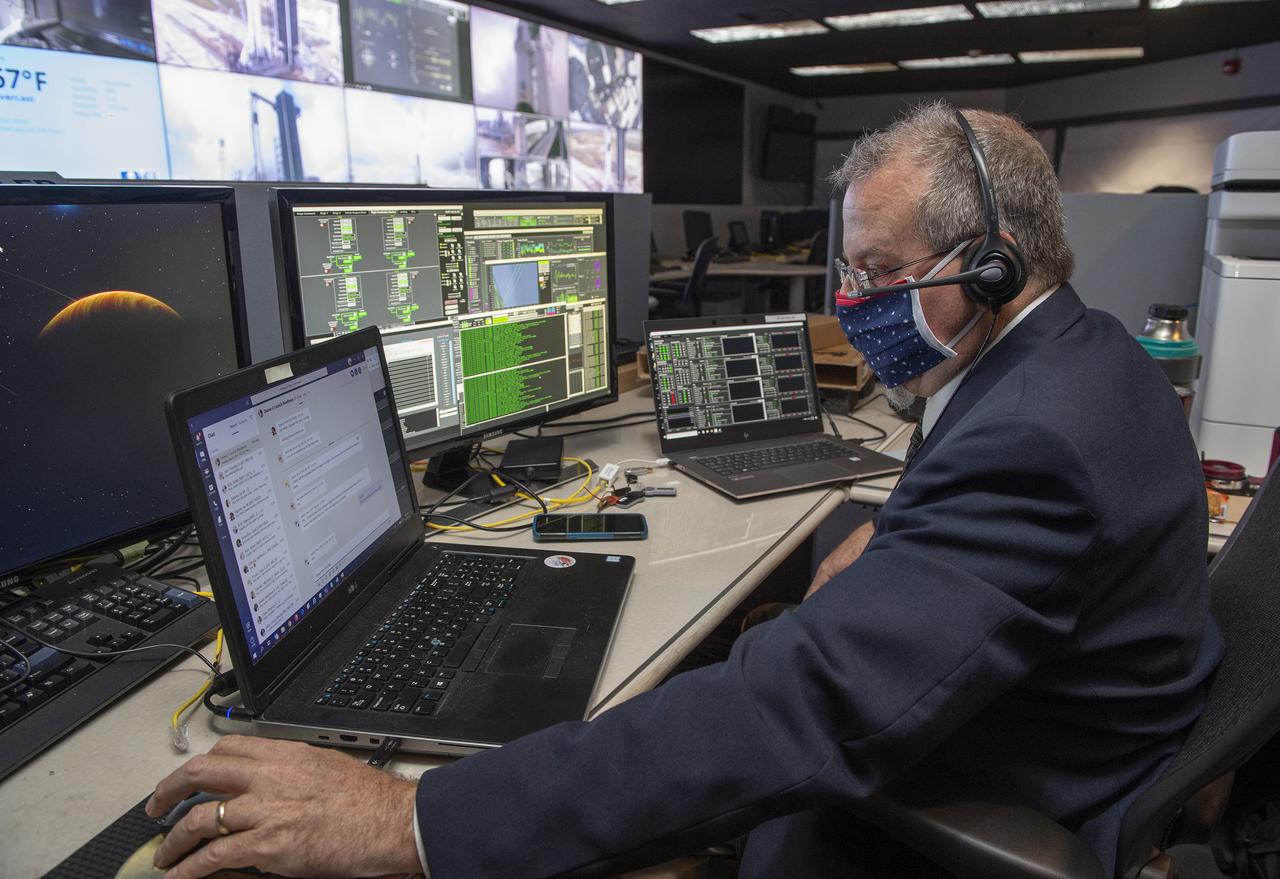
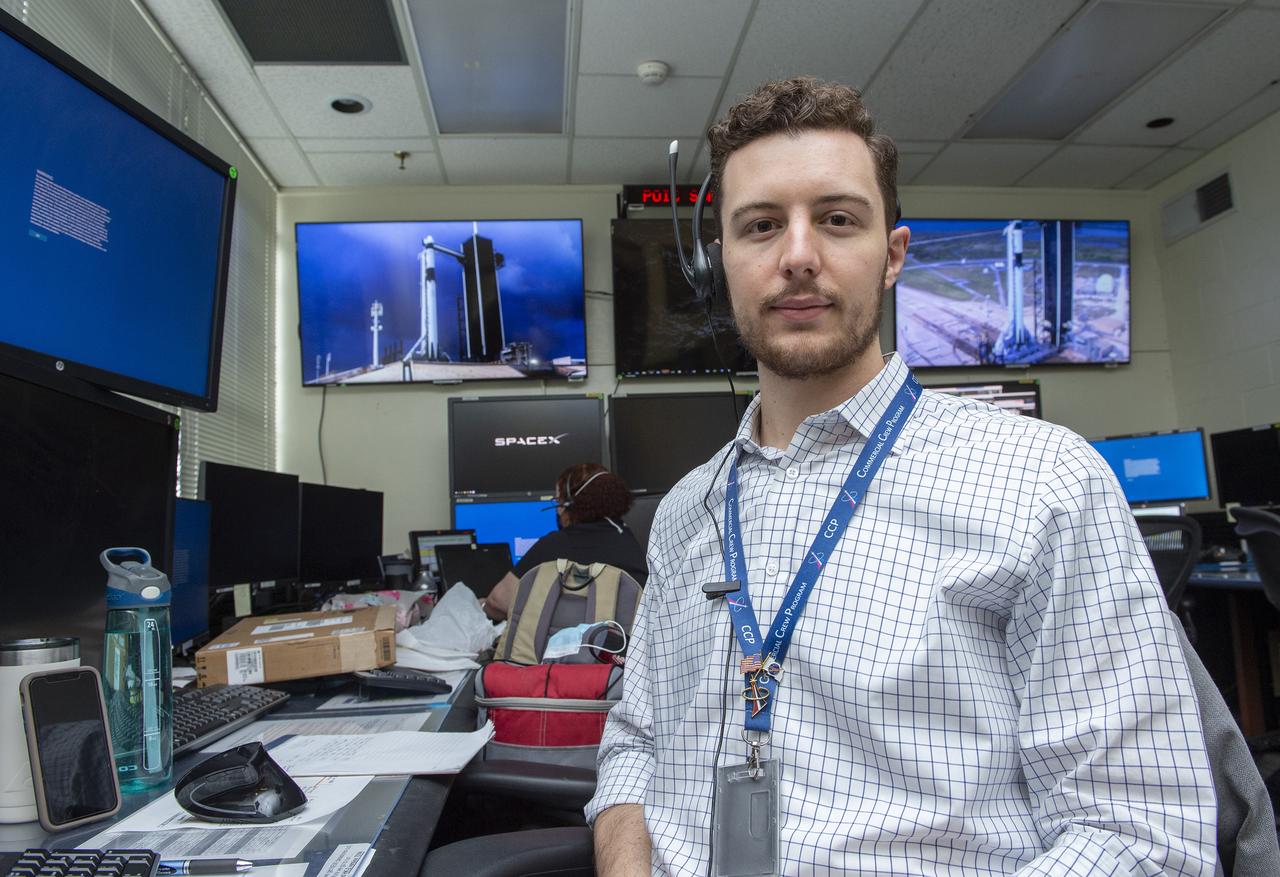
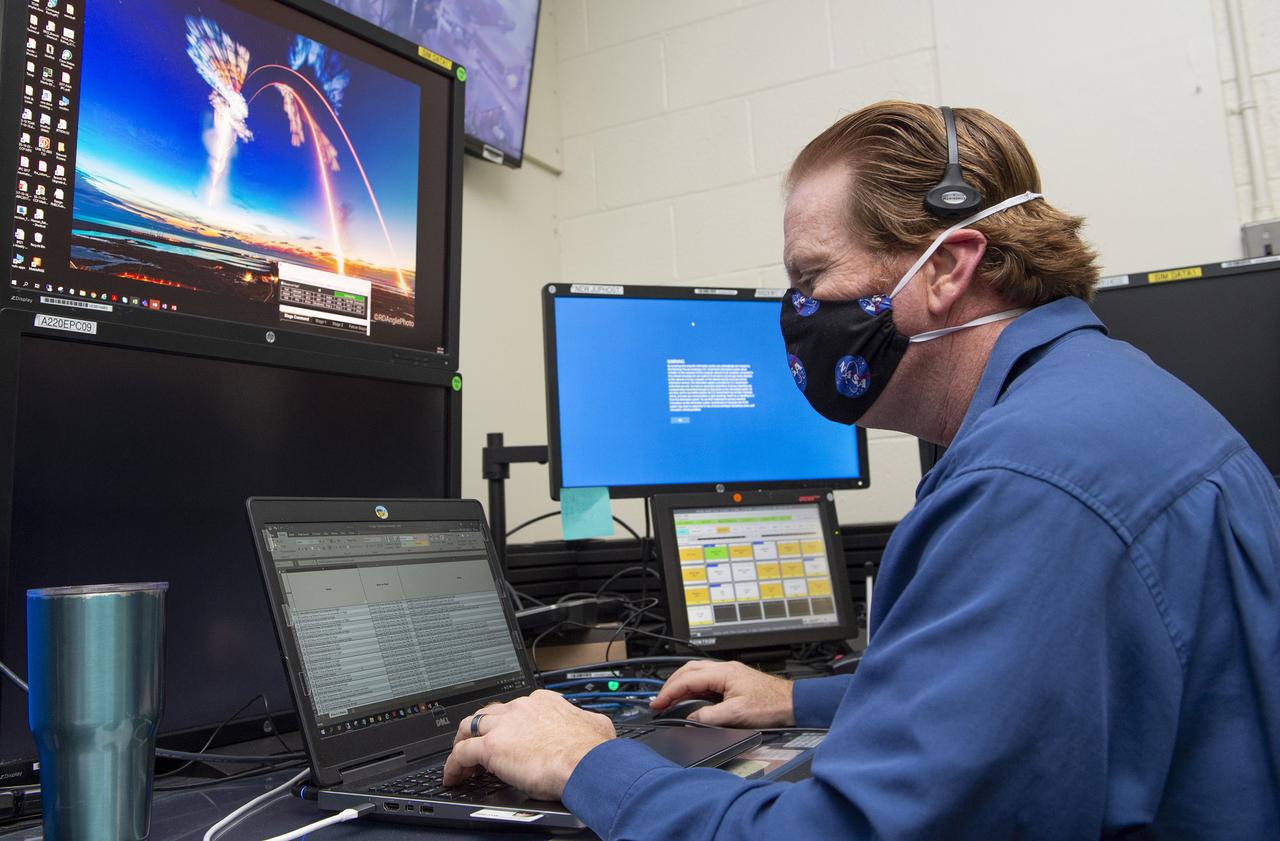
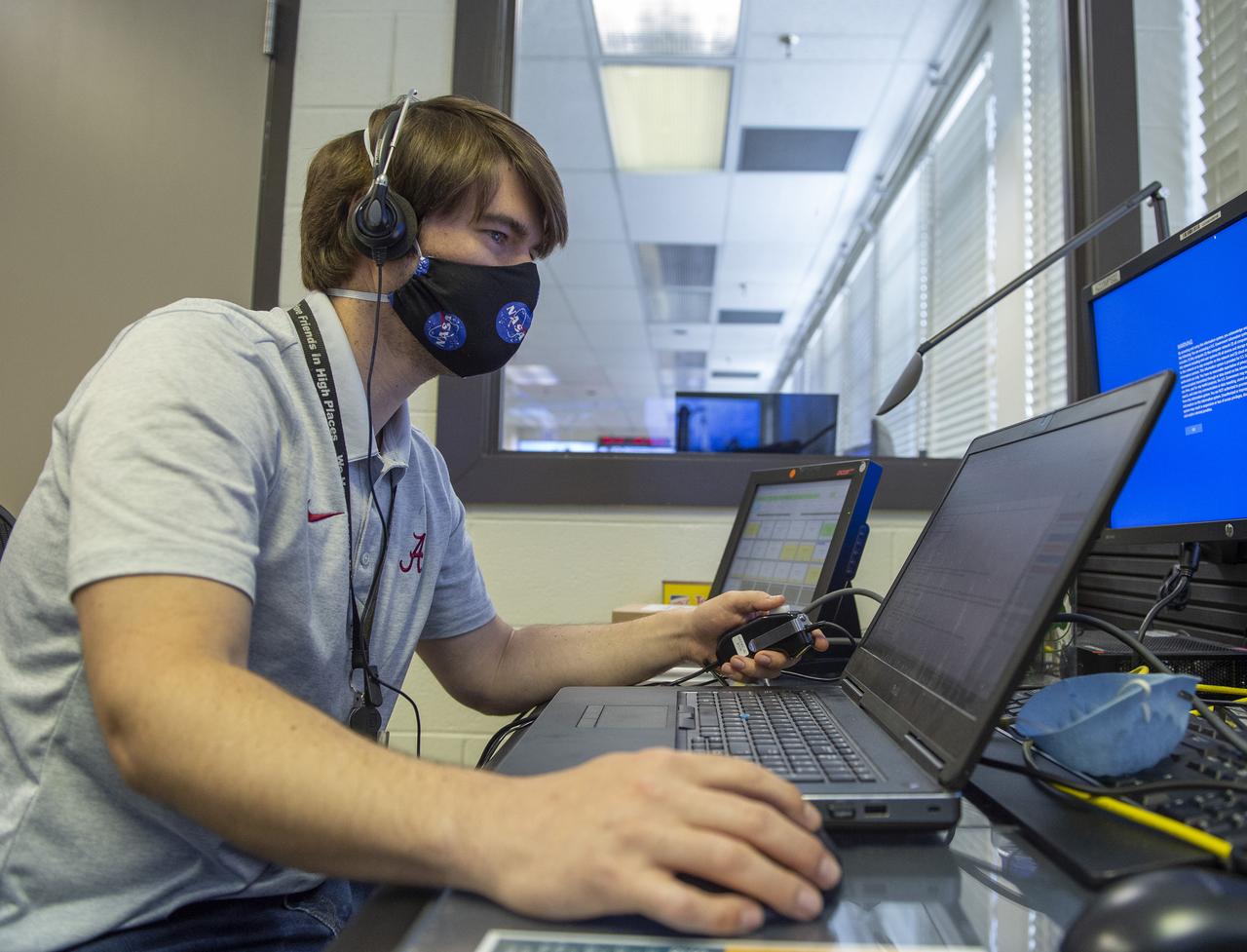
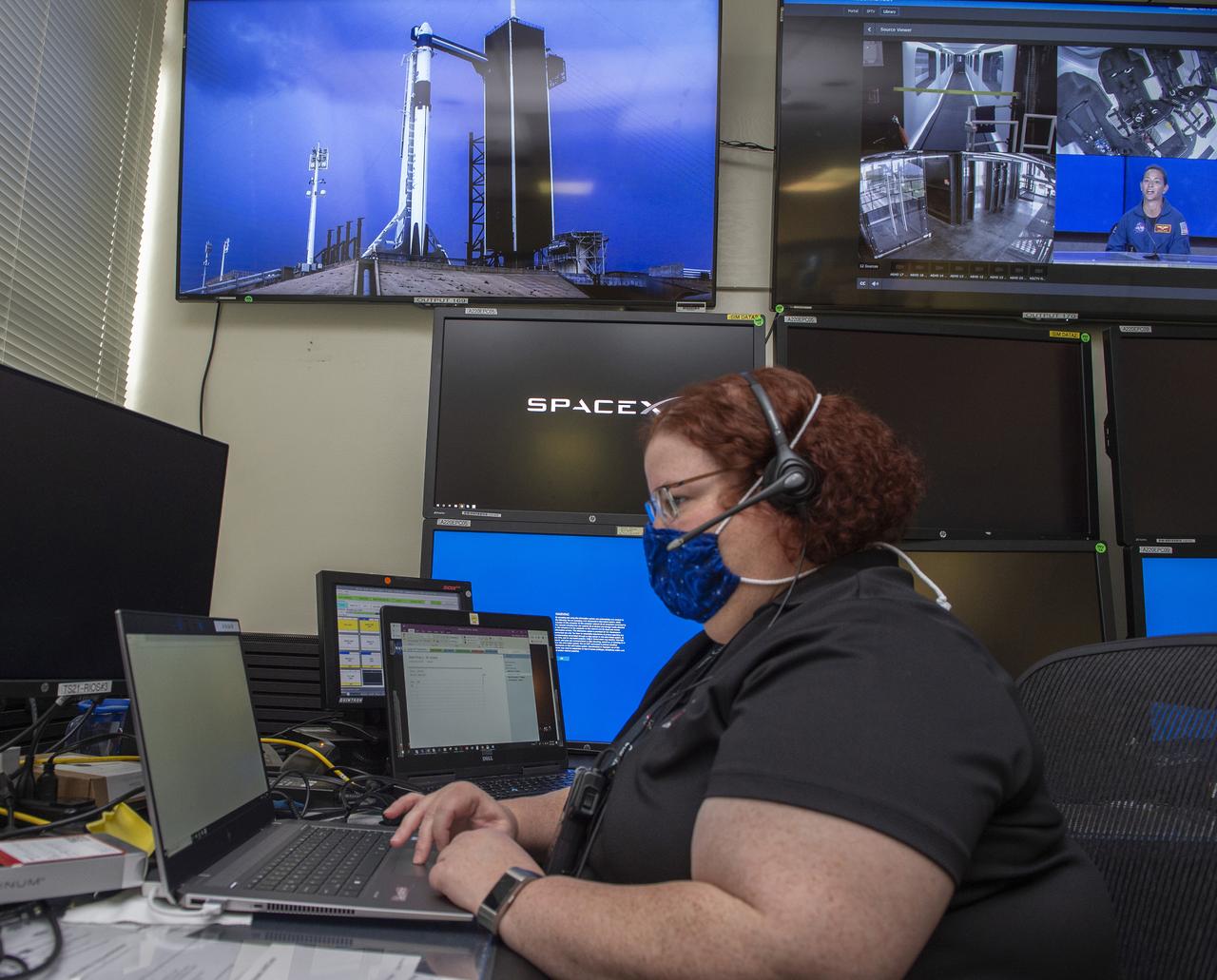
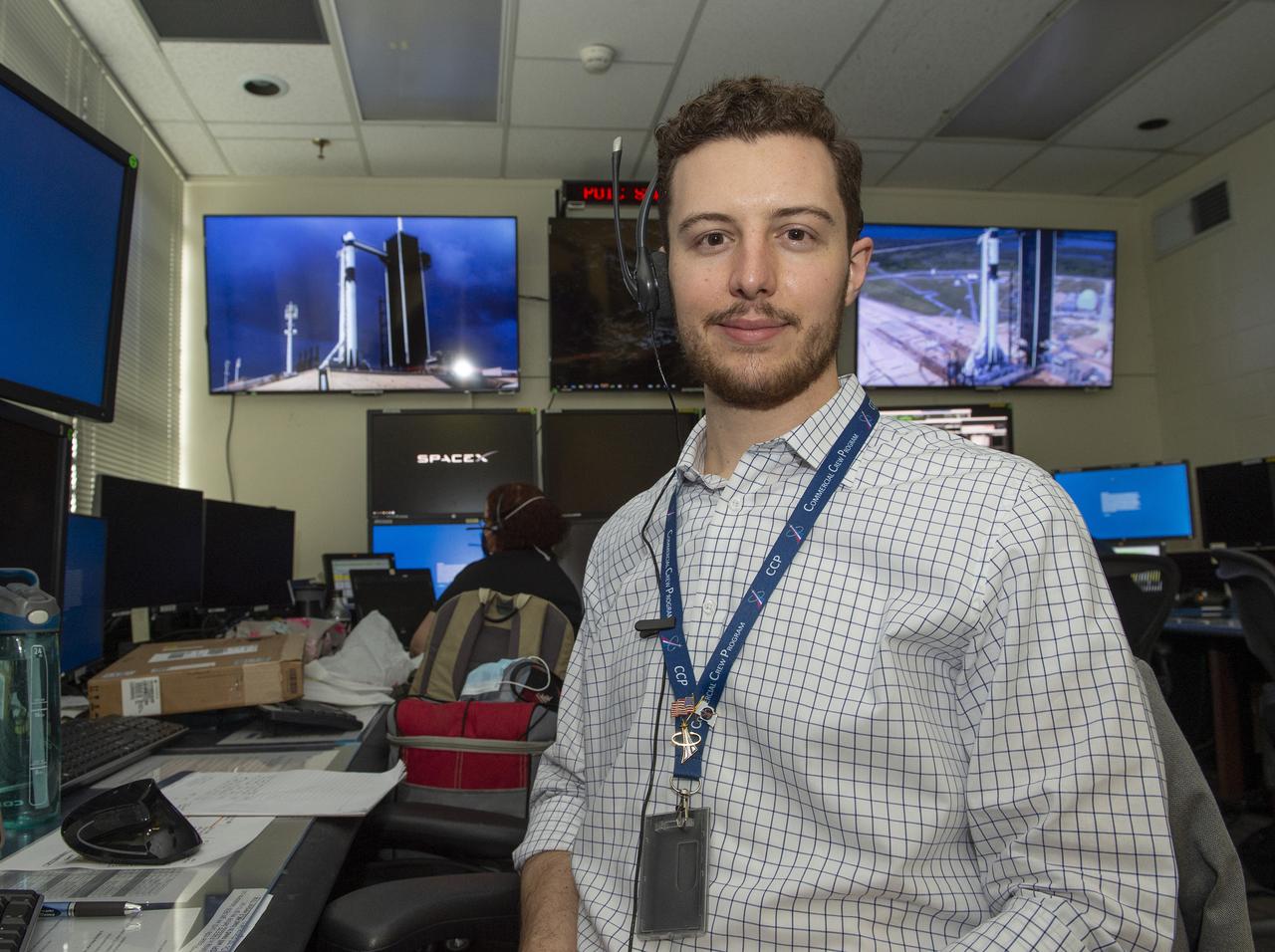
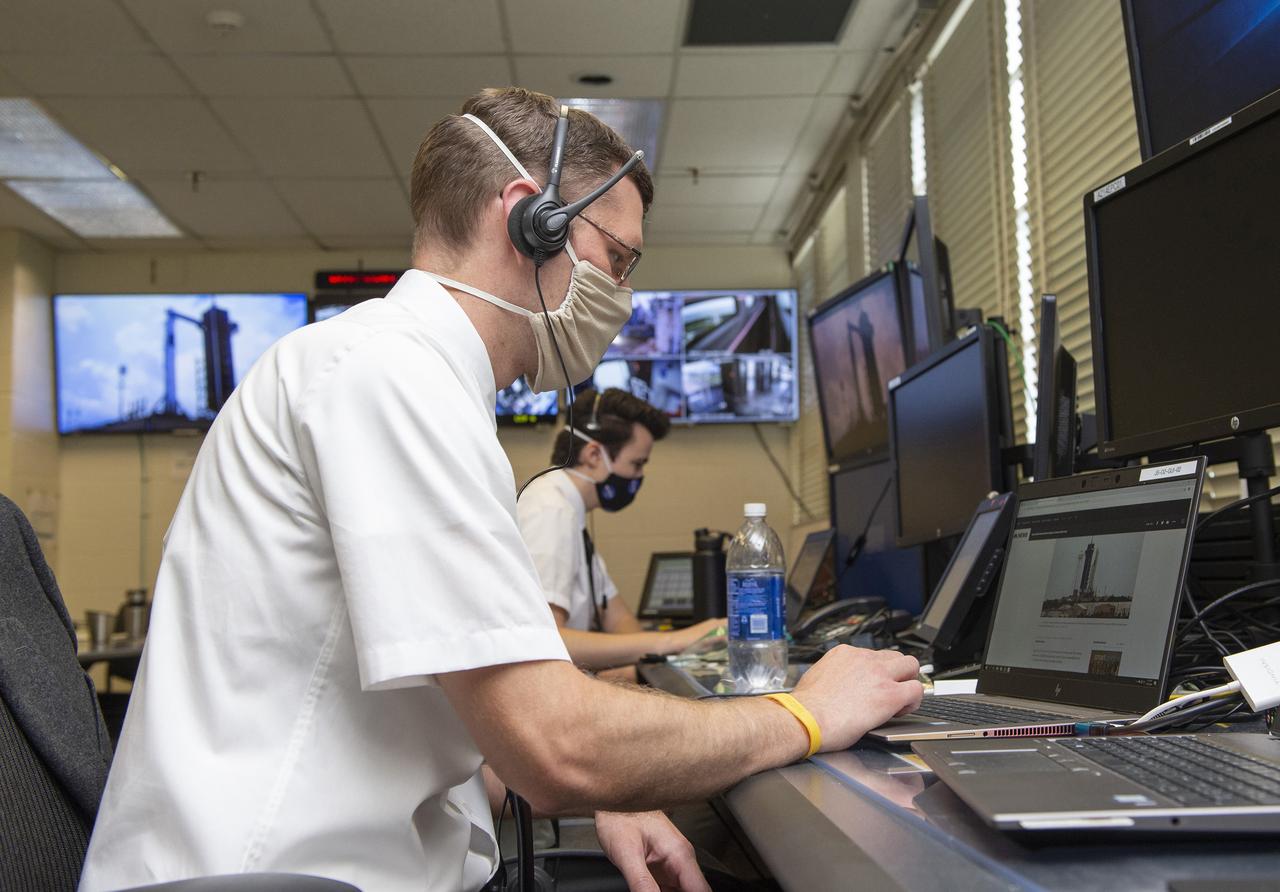
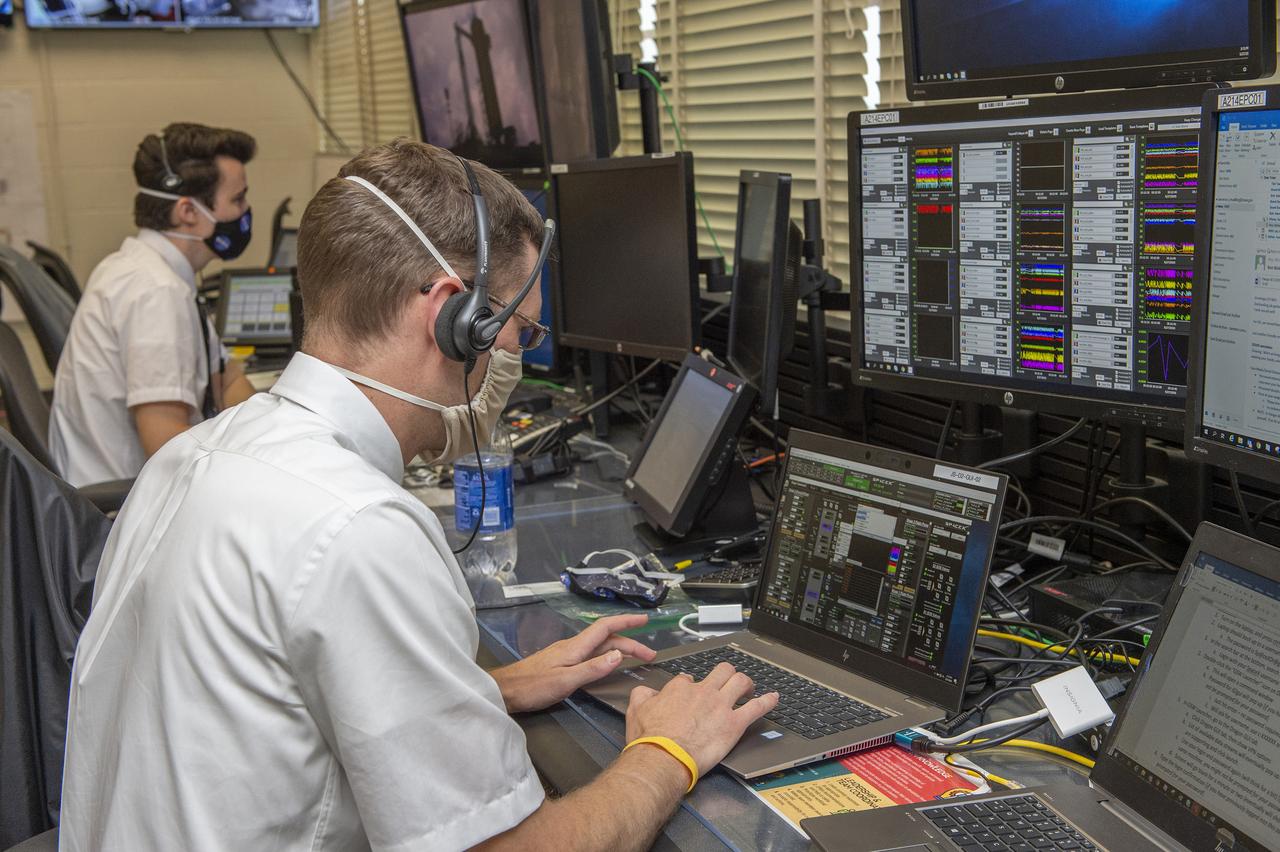
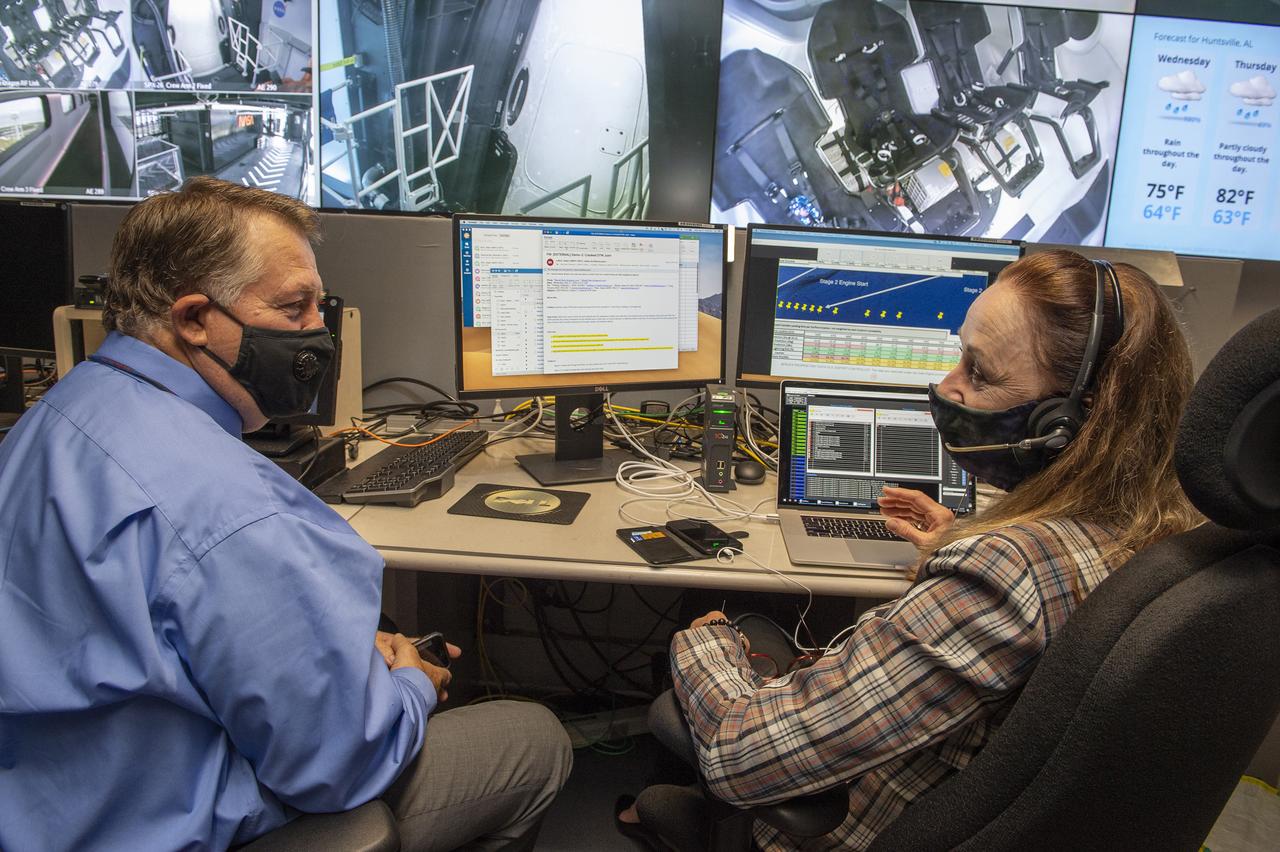
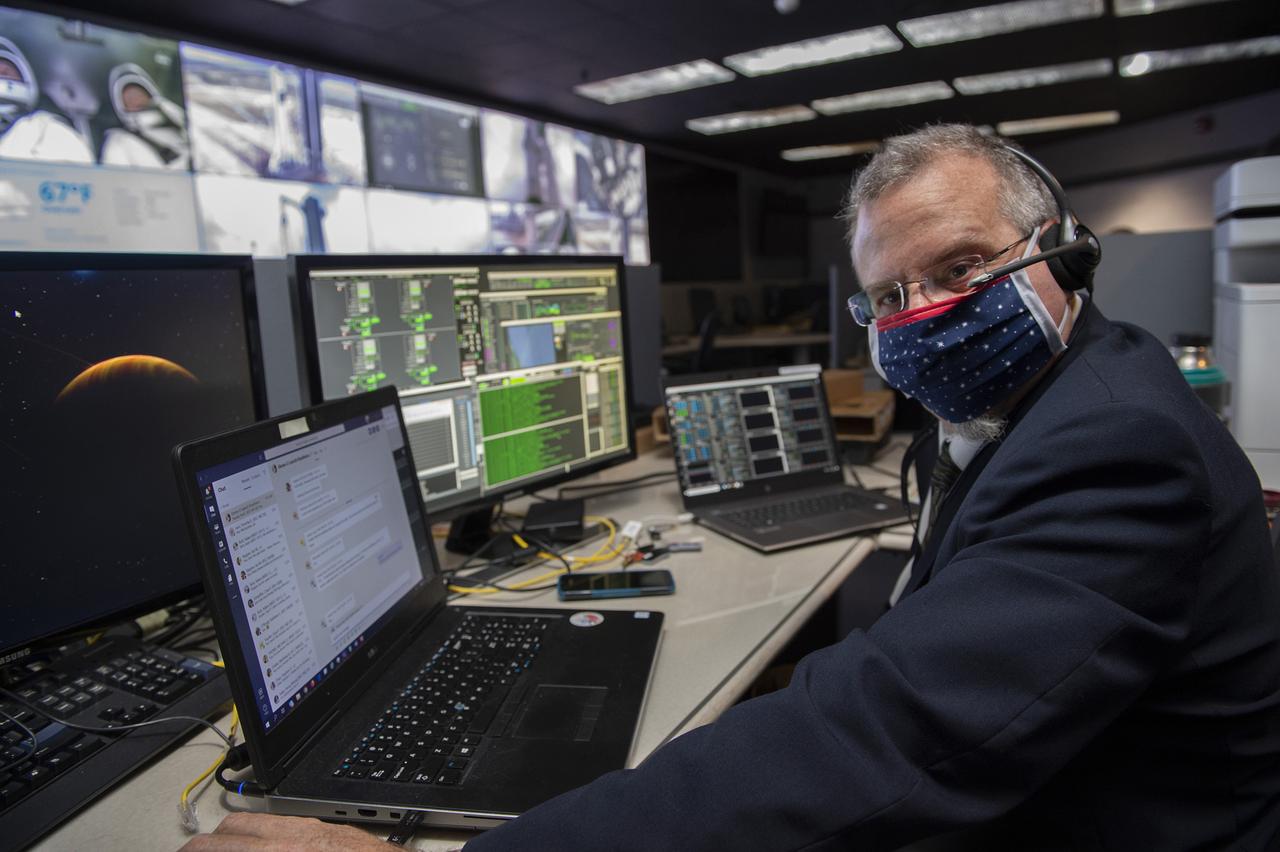
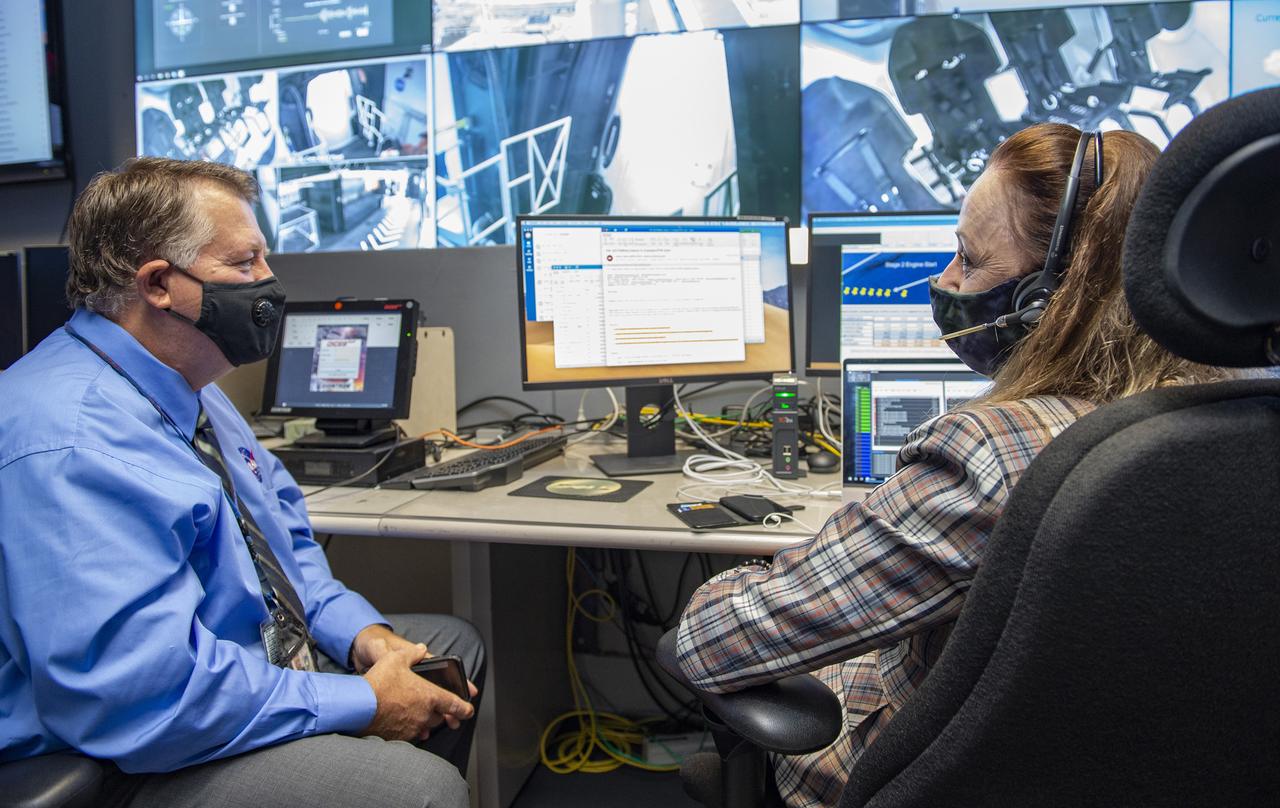
Stewart Whaley and teams at NASA’s Marshall Space Flight Center help monitor launch conditions for the Demo-2 mission from the Huntsville Operations Support Center, HOSC.
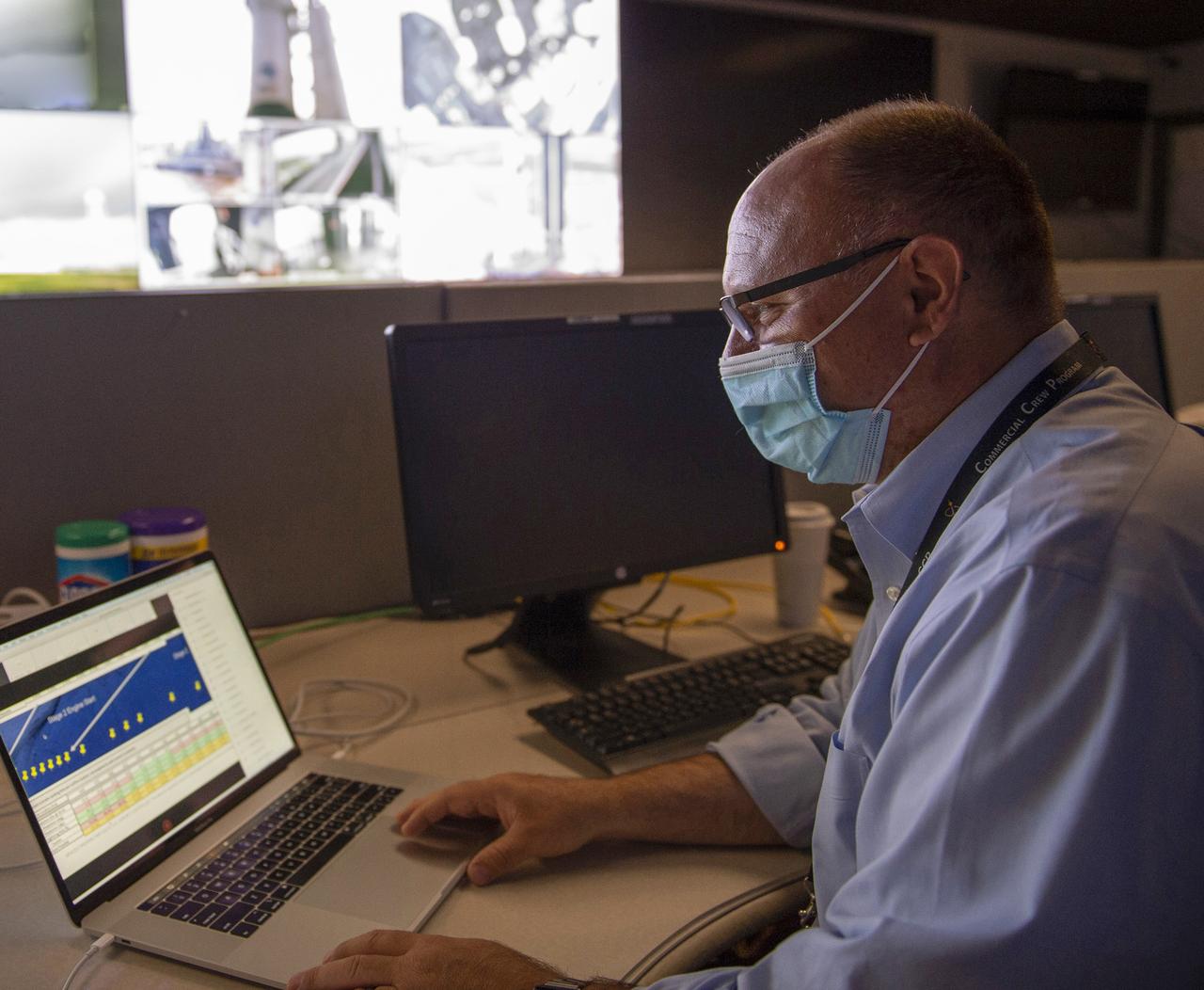
Reid Ruggles and teams at NASA’s Marshall Space Flight Center help monitor launch conditions for the Demo-2 mission from the Huntsville Operations Support Center, HOSC.
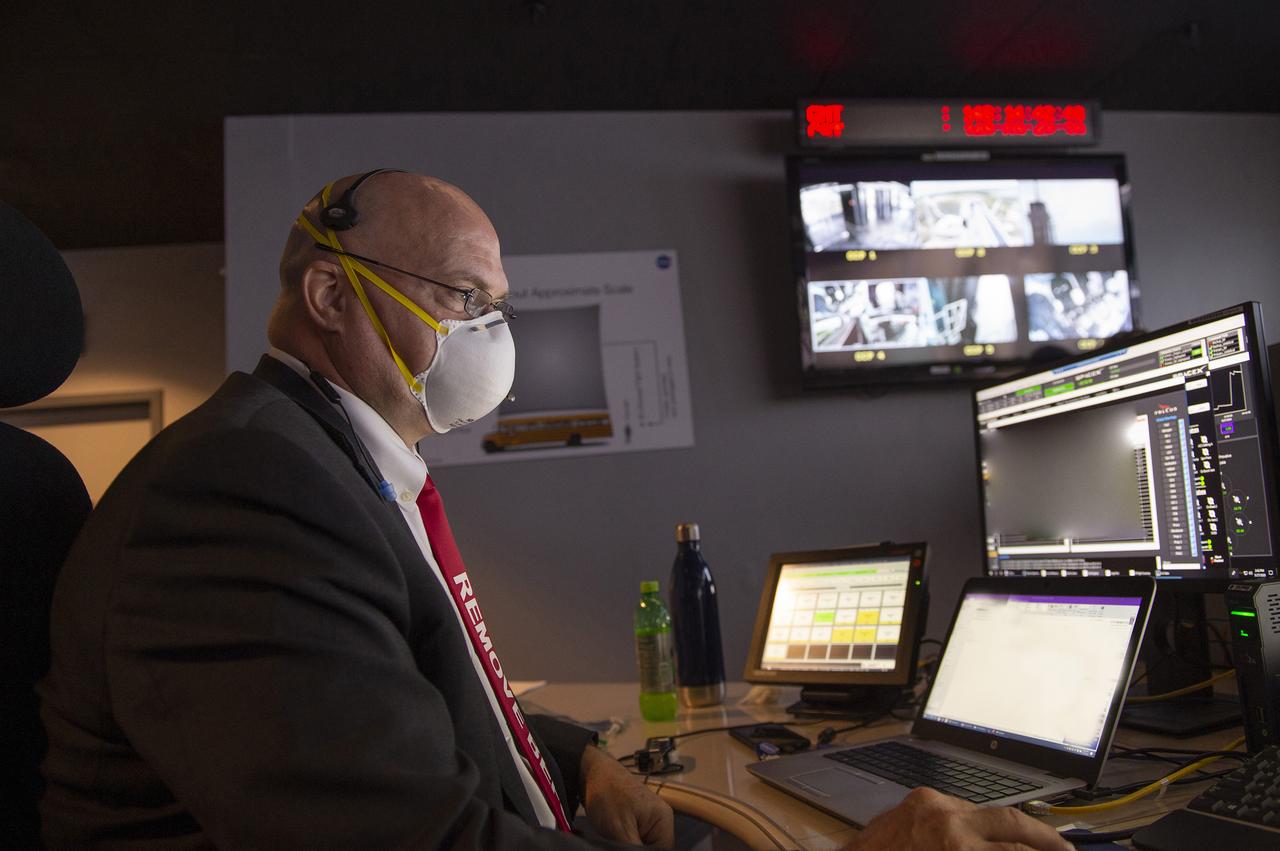
Sean Kenny and teams at NASA’s Marshall Space Flight Center help monitor launch conditions for the Demo-2 mission from the Huntsville Operations Support Center, HOSC.
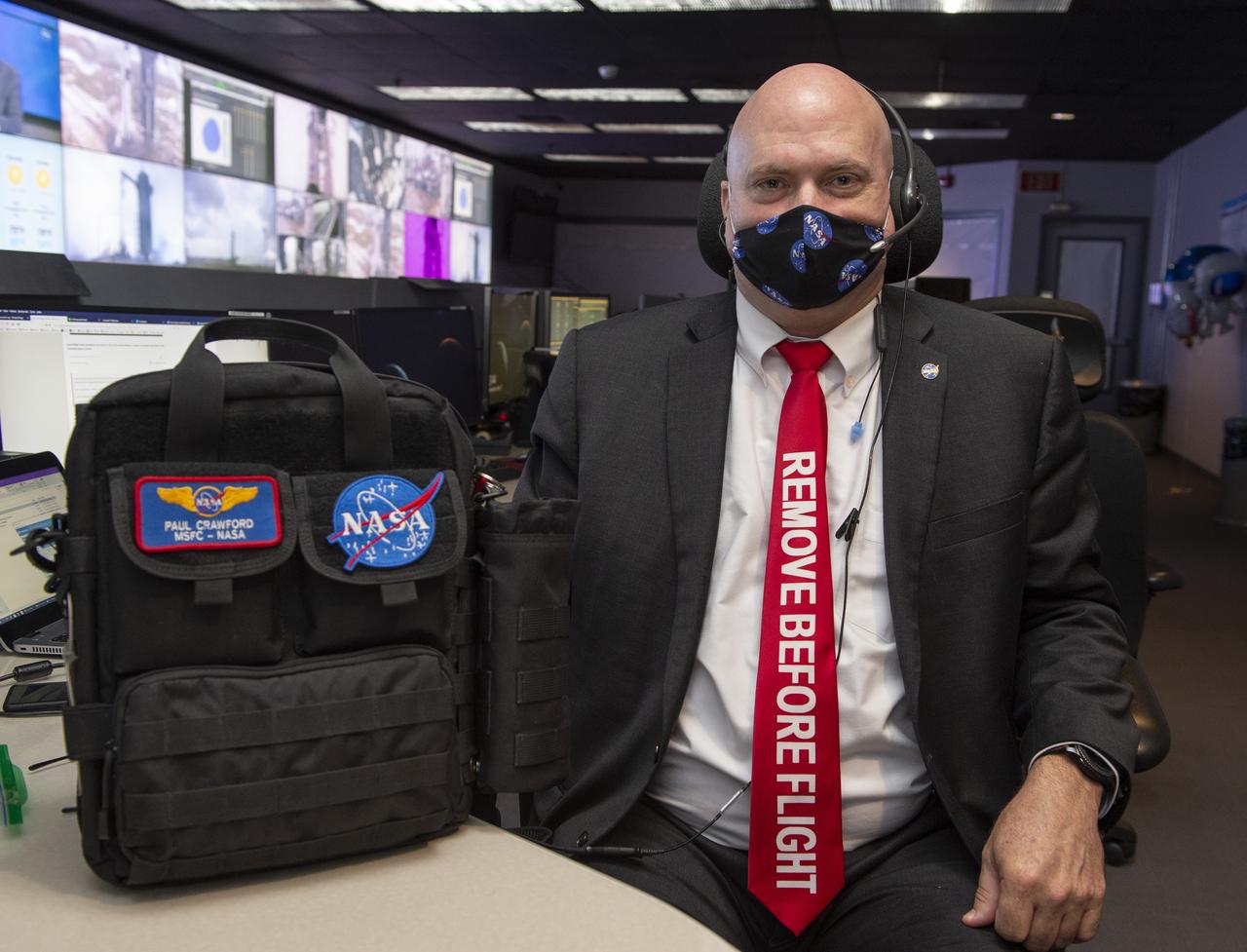
Paul Crawford and Teams at NASA’s Marshall Space Flight Center help monitor launch conditions for the Demo-2 mission from the Huntsville Operations Support Center, HOSC.
Steve Gaddis and teams at NASA’s Marshall Space Flight Center help monitor launch conditions for the Demo-2 mission from the Huntsville Operations Support Center, HOSC.
Steve Gaddis and Teams at NASA’s Marshall Space Flight Center help monitor launch conditions for the Demo-2 mission from the Huntsville Operations Support Center, HOSC.
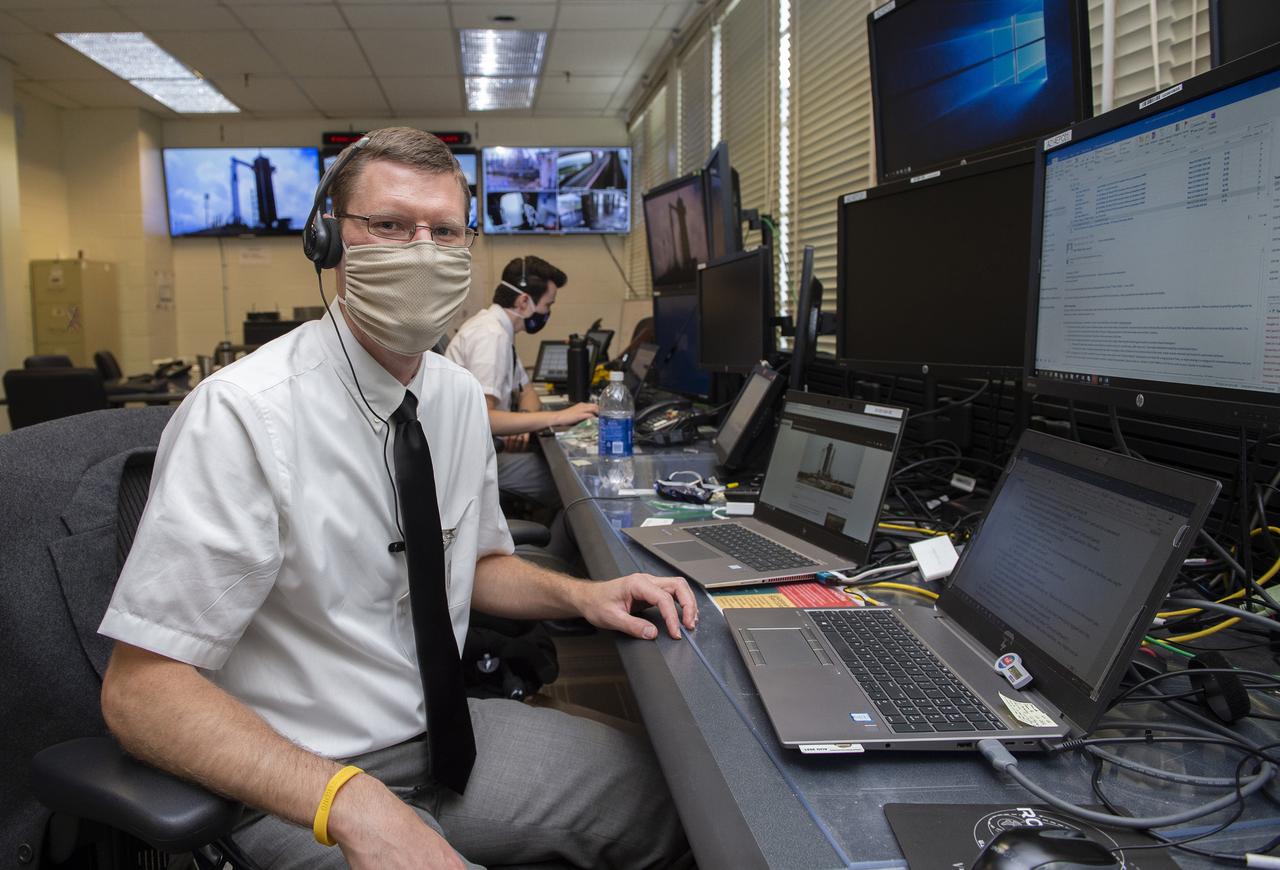
Adam Butt andTeams at NASA’s Marshall Space Flight Center help monitor launch conditions for the Demo-2 mission from the Huntsville Operations Support Center, HOSC.
Adam Butt and Teams at NASA’s Marshall Space Flight Center help monitor launch conditions for the Demo-2 mission from the Huntsville Operations Support Center, HOSC.
Steve Gaddis and teams  at NASA’s Marshall Space Flight Center help monitor launch conditions for the Demo-2 mission from the Huntsville Operations Support Center, HOSC.
Steve Gaddis and teams at NASA’s Marshall Space Flight Center help monitor launch conditions for the Demo-2 mission from the Huntsville Operations Support Center, HOSC.
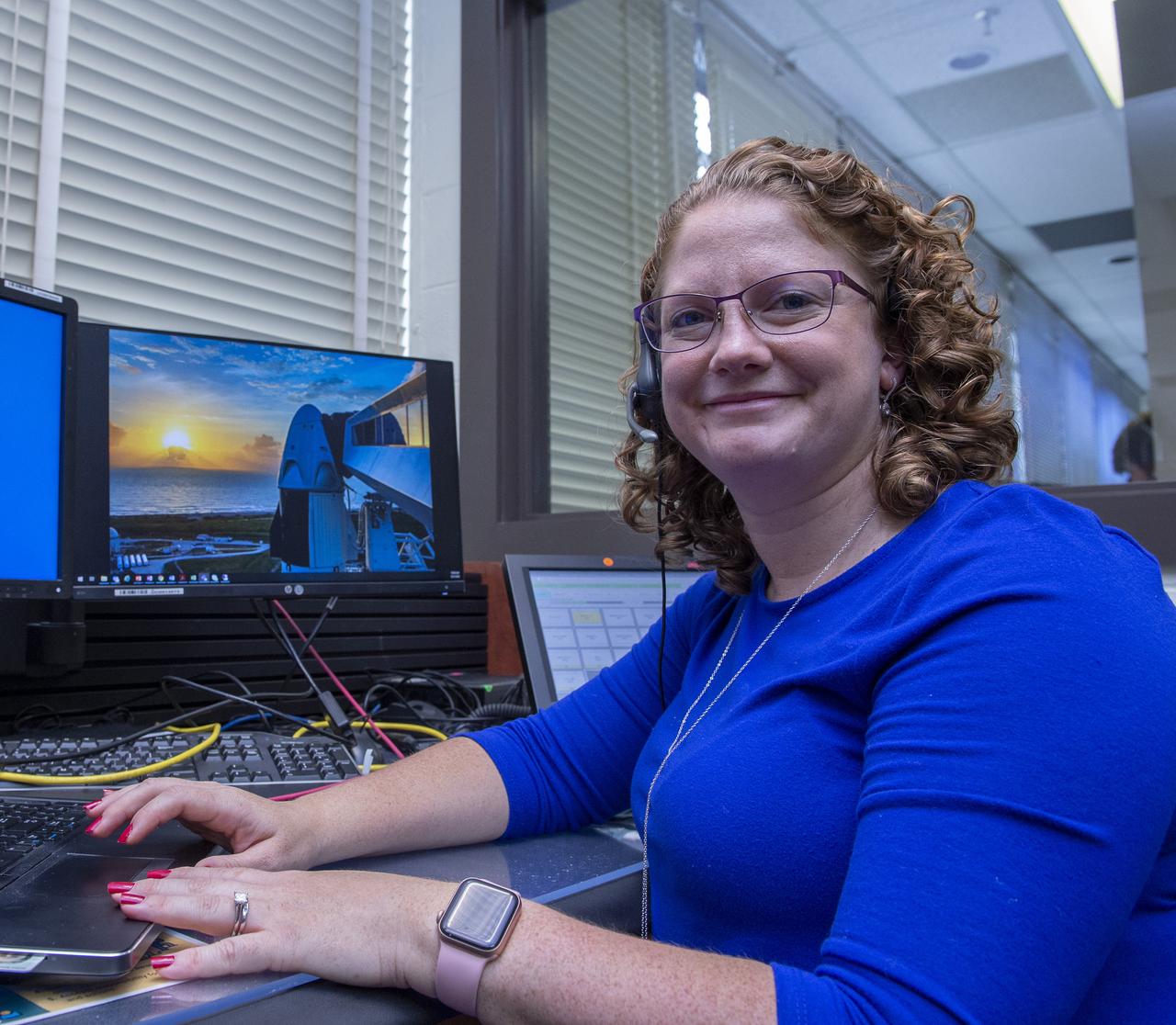
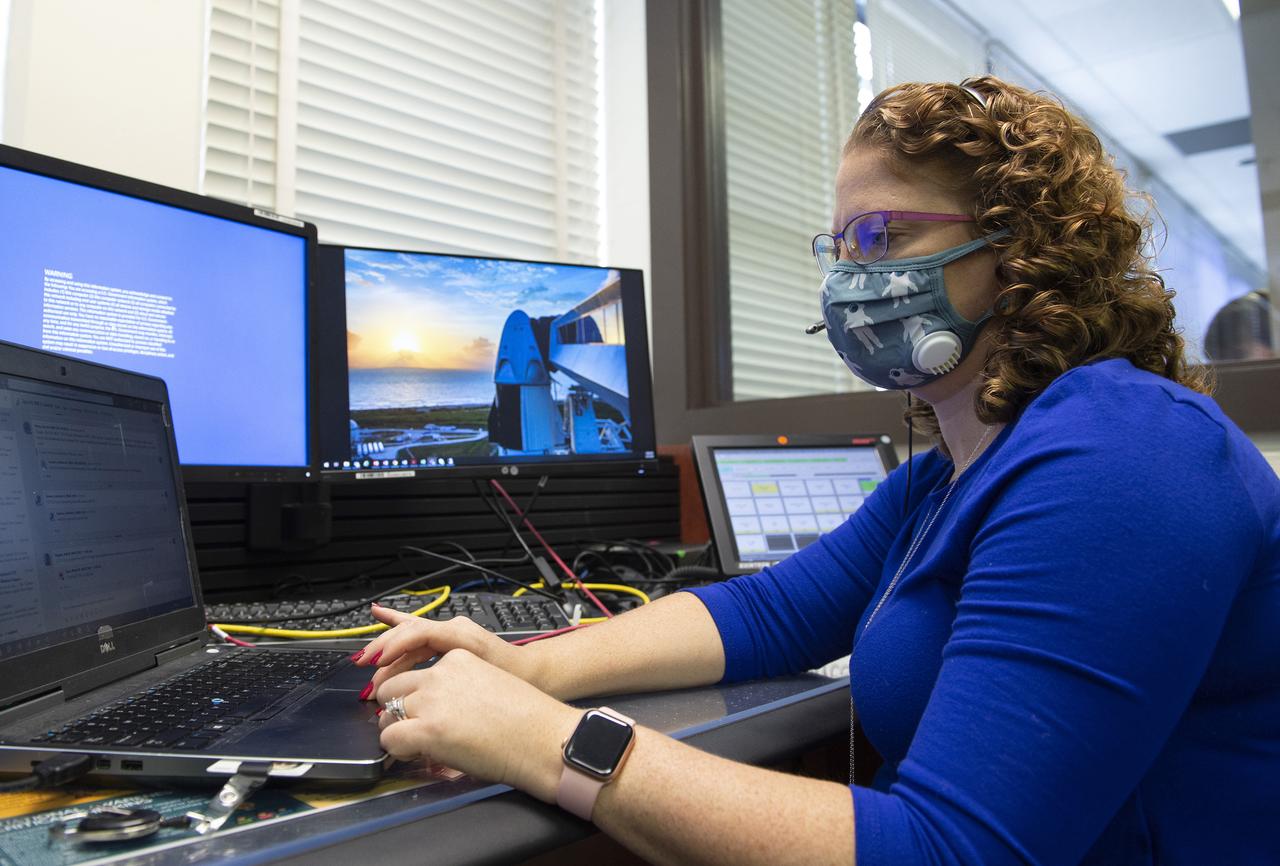
Miranda Holton and teams at NASA’s Marshall Space Flight Center help monitor launch conditions for the Demo-2 mission from the Huntsville Operations Support Center, HOSC.
Reid Ruggles and teams at NASA’s Marshall Space Flight Center help monitor launch conditions for the Demo-2 mission from the Huntsville Operations Support Center, HOSC.
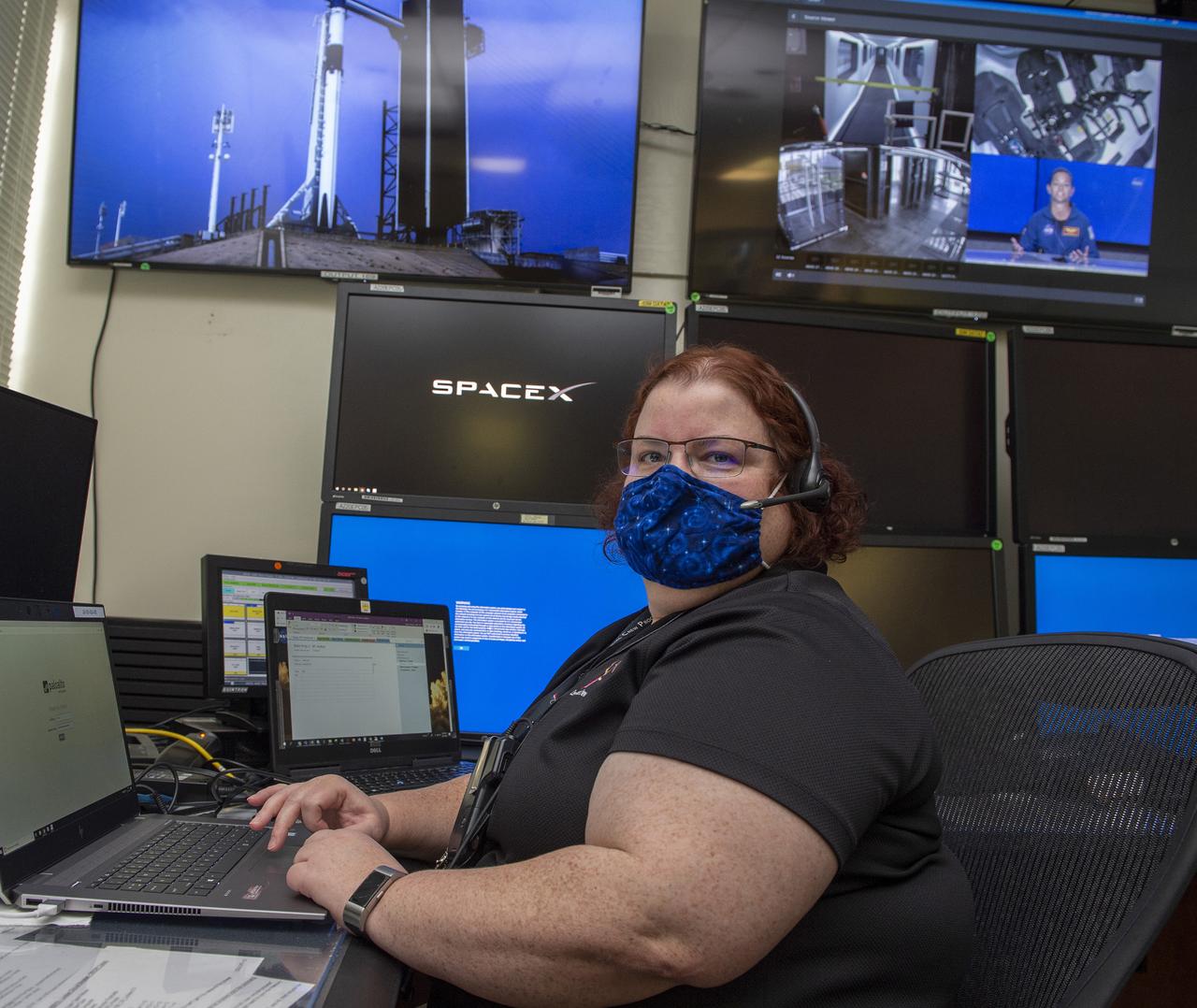
Amanda Stein and teams at NASA’s Marshall Space Flight Center help monitor launch conditions for the Demo-2 mission from the Huntsville Operations Support Center, HOSC.
Jimmy Moore and teams at NASA’s Marshall Space Flight Center help monitor launch conditions for the Demo-2 mission from the Huntsville Operations Support Center, HOSC.
Paul Crawford andTeams at NASA’s Marshall Space Flight Center help monitor launch conditions for the Demo-2 mission from the Huntsville Operations Support Center, HOSC.
Paul Crawford and Teams at NASA’s Marshall Space Flight Center help monitor launch conditions for the Demo-2 mission from the Huntsville Operations Support Center, HOSC.
Paul Crawford and  teams at NASA’s Marshall Space Flight Center help monitor launch conditions for the Demo-2 mission from the Huntsville Operations Support Center, HOSC.
Paul Crawford and teams at NASA’s Marshall Space Flight Center help monitor launch conditions for the Demo-2 mission from the Huntsville Operations Support Center, HOSC.
Amanda Stein and teams at NASA’s Marshall Space Flight Center help monitor launch conditions for the Demo-2 mission from the Huntsville Operations Support Center, HOSC.
Amanda Stein and eams at NASA’s Marshall Space Flight Center help monitor launch conditions for the Demo-2 mission from the Huntsville Operations Support Center, HOSC.
Patrick Mills and teams at NASA’s Marshall Space Flight Center help monitor launch conditions for the Demo-2 mission from the Huntsville Operations Support Center, HOSC.
Reid Ruggles and teams at NASA’s Marshall Space Flight Center help monitor launch conditions for the Demo-2 mission from the Huntsville Operations Support Center, HOSC.
Steve Gaddis and teams at NASA’s Marshall Space Flight Center help monitor launch conditions for the Demo-2 mission from the Huntsville Operations Support Center, HOSC.
Ken Schrock and teams at NASA’s Marshall Space Flight Center help monitor launch conditions for the Demo-2 mission from the Huntsville Operations Support Center, HOSC.
Miranda Holton and teams at NASA’s Marshall Space Flight Center help monitor launch conditions for the Demo-2 mission from the Huntsville Operations Support Center, HOSC.
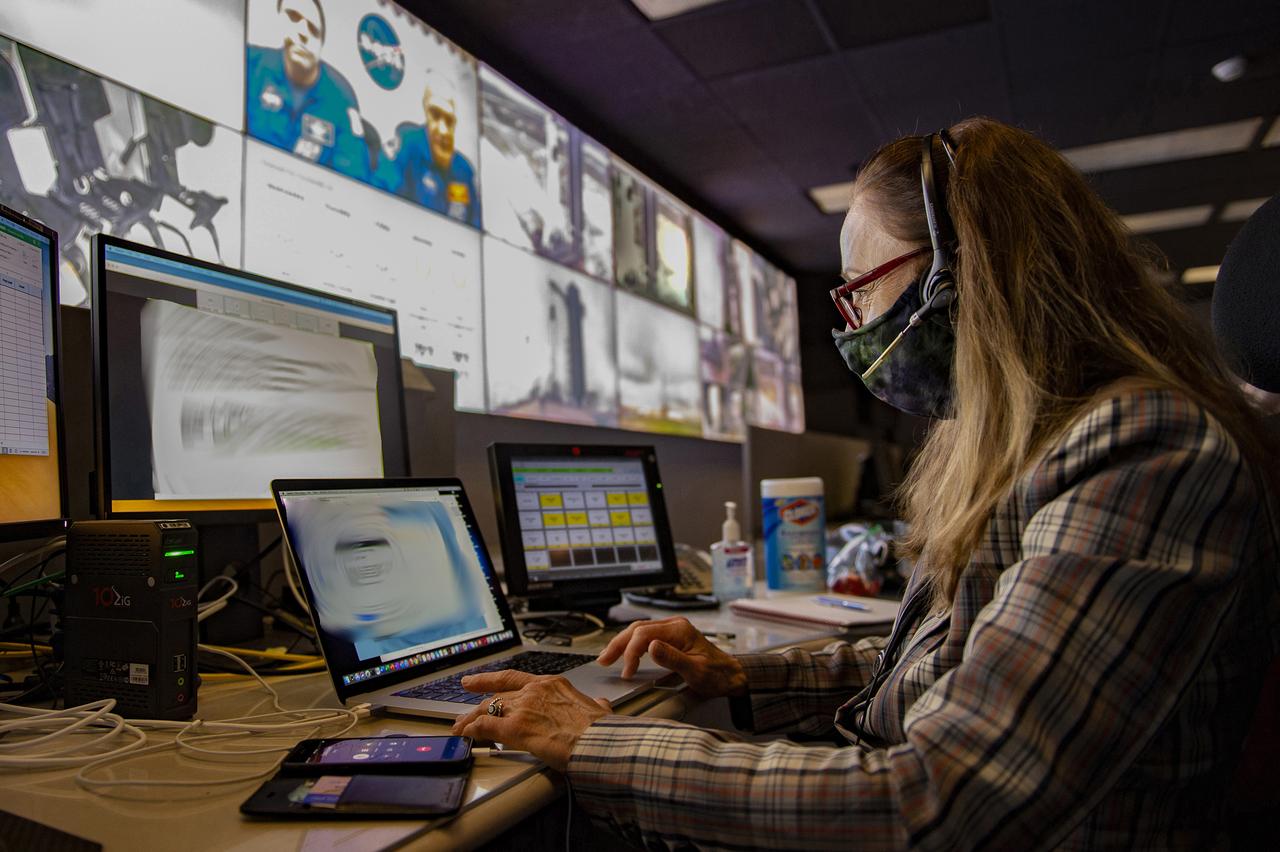
Deborah Crane andTeams at NASA’s Marshall Space Flight Center help monitor launch conditions for the Demo-2 mission from the Huntsville Operations Support Center, HOSC.
Deborah Crane and Teams at NASA’s Marshall Space Flight Center help monitor launch conditions for the Demo-2 mission from the Huntsville Operations Support Center, HOSC.
Steve Gaddis and teams at NASA’s Marshall Space Flight Center help monitor launch conditions for the Demo-2 mission from the Huntsville Operations Support Center, HOSC.
Steve Gaddis and teamsat NASA’s Marshall Space Flight Center help monitor launch conditions for the Demo-2 mission from the Huntsville Operations Support Center, HOSC.
Deborah Crane and Teams at NASA’s Marshall Space Flight Center help monitor launch conditions for the Demo-2 mission from the Huntsville Operations Support Center, HOSC.
Ken Schrock and teams at NASA’s Marshall Space Flight Center help monitor launch conditions for the Demo-2 mission from the Huntsville Operations Support Center, HOSC.
Jimmy Moore and teams at NASA’s Marshall Space Flight Center help monitor launch conditions for the Demo-2 mission from the Huntsville Operations Support Center, HOSC.
Adam Butt andTeams at NASA’s Marshall Space Flight Center help monitor launch conditions for the Demo-2 mission from the Huntsville Operations Support Center, HOSC.
Adam Butt and Teams at NASA’s Marshall Space Flight Center help monitor launch conditions for the Demo-2 mission from the Huntsville Operations Support Center, HOSC.
Ken Schrock and teams at NASA’s Marshall Space Flight Center help monitor launch conditions for the Demo-2 mission from the Huntsville Operations Support Center, HOSC.
Patrick Mills and teams at NASA’s Marshall Space Flight Center help monitor launch conditions for the Demo-2 mission from the Huntsville Operations Support Center, HOSC.
Stewart Whaley and teams  at NASA’s Marshall Space Flight Center help monitor launch conditions for the Demo-2 mission from the Huntsville Operations Support Center, HOSC.
Stewart Whaley and teams at NASA’s Marshall Space Flight Center help monitor launch conditions for the Demo-2 mission from the Huntsville Operations Support Center, HOSC.
 Steve Gaddis and teams at NASA’s Marshall Space Flight Center help monitor launch conditions for the Demo-2 mission from the Huntsville Operations Support Center, HOSC.
Steve Gaddis and teams at NASA’s Marshall Space Flight Center help monitor launch conditions for the Demo-2 mission from the Huntsville Operations Support Center, HOSC.
Stewart Whaley and teams at NASA’s Marshall Space Flight Center help monitor launch conditions for the Demo-2 mission from the Huntsville Operations Support Center, HOSC.
Sean Kenny and teams at NASA’s Marshall Space Flight Center help monitor launch conditions for the Demo-2 mission from the Huntsville Operations Support Center, HOSC.
Steve Gaddis and Teams at NASA’s Marshall Space Flight Center help monitor launch conditions for the Demo-2 mission from the Huntsville Operations Support Center, HOSC.
Sean Kenny and teams at NASA’s Marshall Space Flight Center help monitor launch conditions for the Demo-2 mission from the Huntsville Operations Support Center, HOSC.
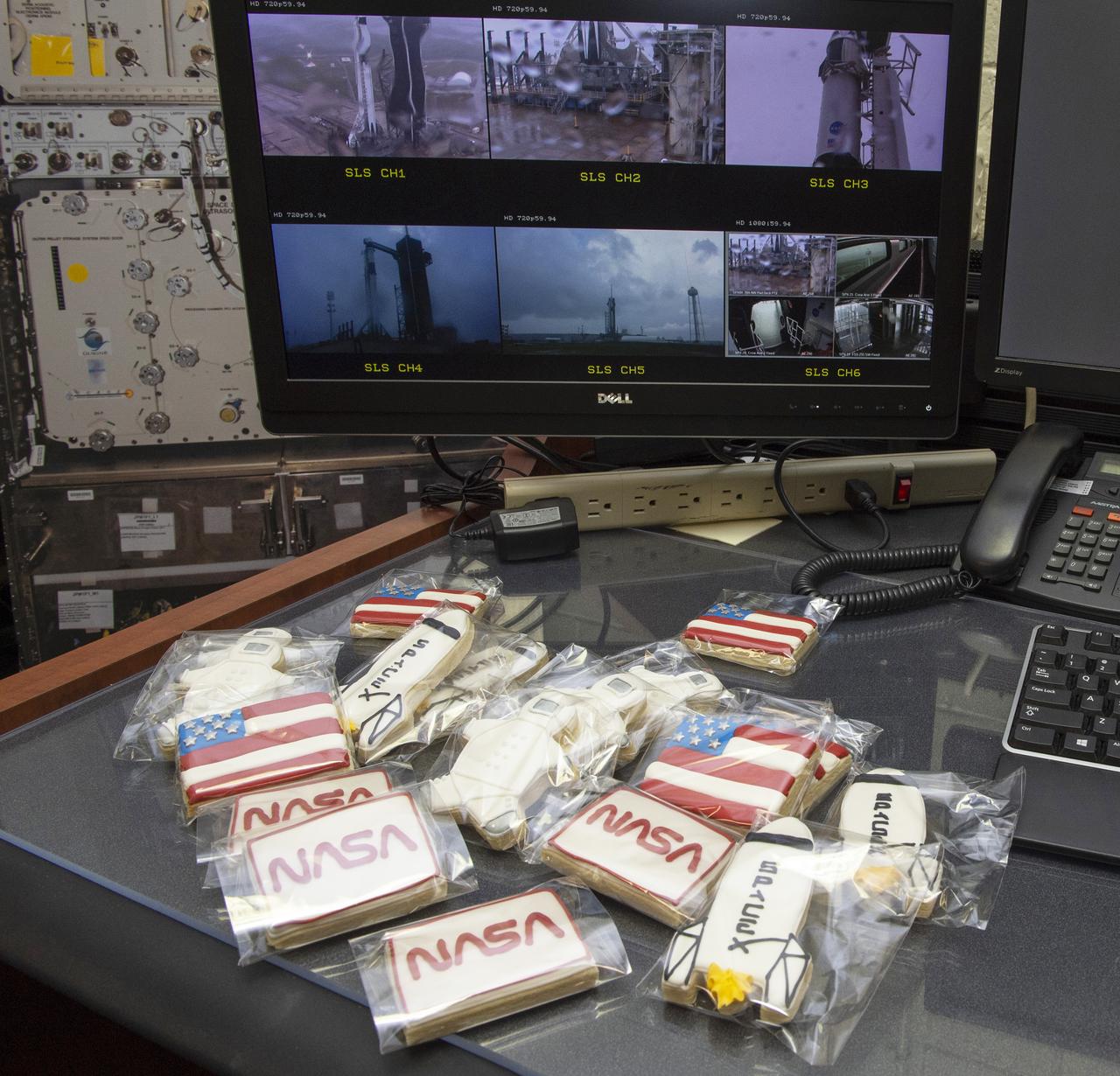
NASA themed cookies for teams at NASA’s Marshall Space Flight Center help monitor launch conditions for the Demo-2 mission from the Huntsville Operations Support Center, HOSC.
 Reid Ruggles and teams at NASA’s Marshall Space Flight Center help monitor launch conditions for the Demo-2 mission from the Huntsville Operations Support Center, HOSC.
Reid Ruggles and teams at NASA’s Marshall Space Flight Center help monitor launch conditions for the Demo-2 mission from the Huntsville Operations Support Center, HOSC.
Adam Butt andTeams at NASA’s Marshall Space Flight Center help monitor launch conditions for the Demo-2 mission from the Huntsville Operations Support Center, HOSC.
Adam Butt and Teams at NASA’s Marshall Space Flight Center help monitor launch conditions for the Demo-2 mission from the Huntsville Operations Support Center, HOSC.
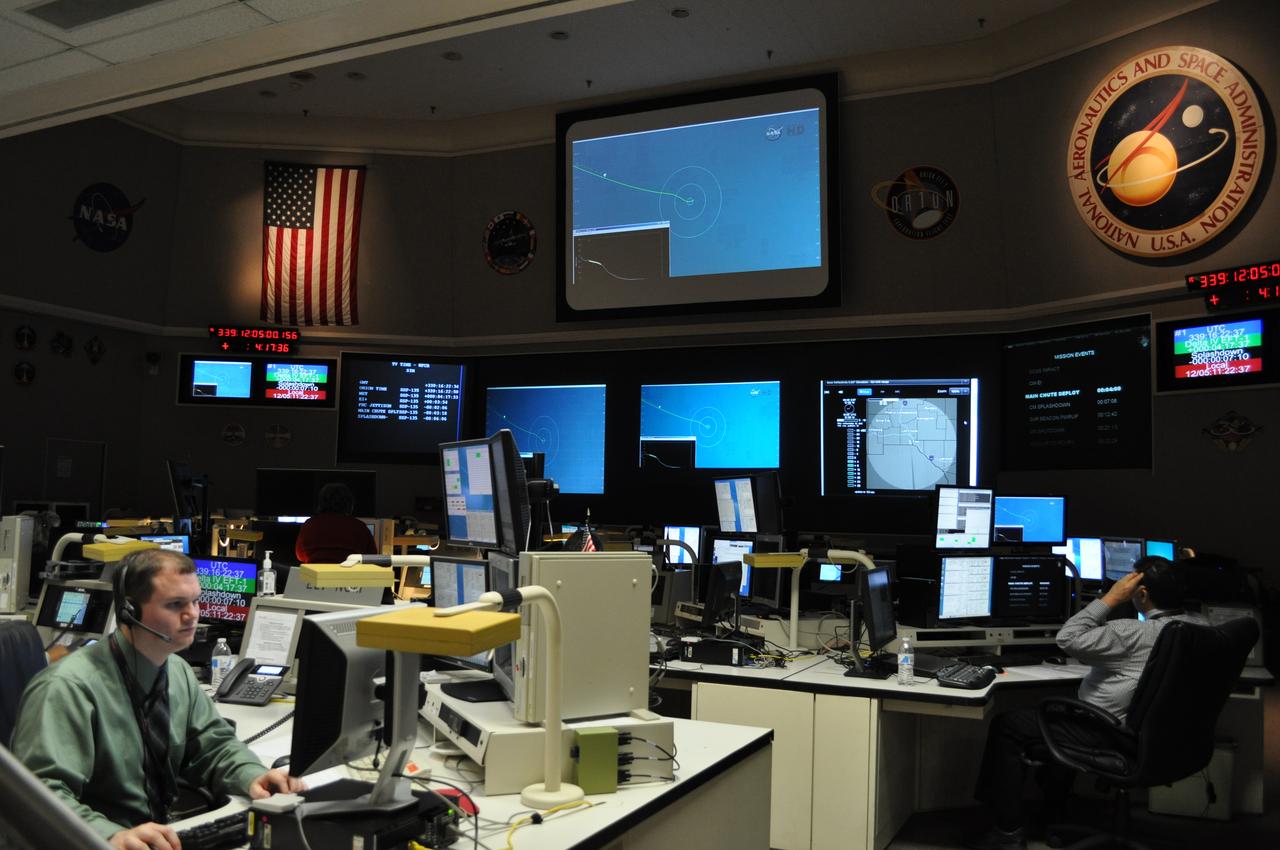
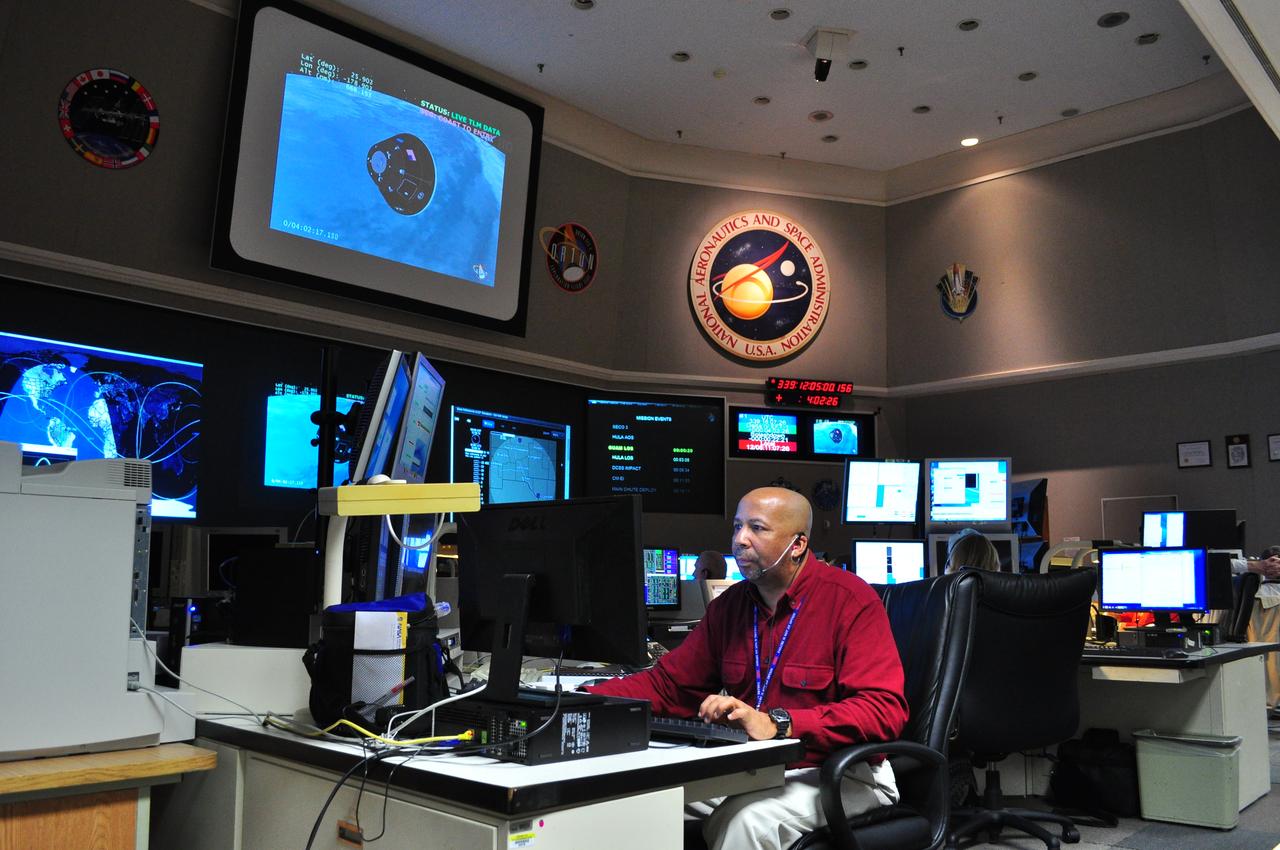
NASA's Goddard Space Flight Center in Greenbelt, Maryland, played a critical role in the test flight of the #Orion spacecraft on Dec. 5, 2014. Goddard's Networks Integration Center, pictured here, coordinated the communications support for both the Orion vehicle and the Delta IV rocket, ensuring complete communications coverage through NASA's Space Network and Tracking and Data Relay Satellite.  The Orion spacecraft lifted off from Cape Canaveral Air Force Station's Space Launch Complex 37 in Florida at 7:05 a.m. EST. The Orion capsule splashed down about four and a half hours later, at 11:29 a.m. EST, about 600 miles off the coast of San Diego, California. While no humans were aboard Orion for this test flight, in the future, Orion will allow humans to travel deeper in to space than ever before, including an asteroid and Mars.  Credit: NASA/Goddard/Amber Jacobson  Credit: NASA/Goddard/Amber Jacobson  <b><a href="http://www.nasa.gov/audience/formedia/features/MP_Photo_Guidelines.html" rel="nofollow">NASA image use policy.</a></b>  <b><a href="http://www.nasa.gov/centers/goddard/home/index.html" rel="nofollow">NASA Goddard Space Flight Center</a></b> enables NASA’s mission through four scientific endeavors: Earth Science, Heliophysics, Solar System Exploration, and Astrophysics. Goddard plays a leading role in NASA’s accomplishments by contributing compelling scientific knowledge to advance the Agency’s mission. <b>Follow us on <a href="http://twitter.com/NASAGoddardPix" rel="nofollow">Twitter</a></b> <b>Like us on <a href="http://www.facebook.com/pages/Greenbelt-MD/NASA-Goddard/395013845897?ref=tsd" rel="nofollow">Facebook</a></b> <b>Find us on <a href="http://instagram.com/nasagoddard?vm=grid" rel="nofollow">Instagram</a></b>
Goddard Monitors Orions EFT-1 Test Flight
NASA's Goddard Space Flight Center in Greenbelt, Maryland, played a critical role in the test flight of the #Orion spacecraft on Dec. 5, 2014. Goddard's Networks Integration Center, pictured here, coordinated the communications support for both the Orion vehicle and the Delta IV rocket, ensuring complete communications coverage through NASA's Space Network and Tracking and Data Relay Satellite.  The Orion spacecraft lifted off from Cape Canaveral Air Force Station's Space Launch Complex 37 in Florida at 7:05 a.m. EST. The Orion capsule splashed down about four and a half hours later, at 11:29 a.m. EST, about 600 miles off the coast of San Diego, California. While no humans were aboard Orion for this test flight, in the future, Orion will allow humans to travel deeper in to space than ever before, including an asteroid and Mars.  Credit: NASA/Goddard/Amber Jacobson  Credit: NASA/Goddard/Amber Jacobson  <b><a href="http://www.nasa.gov/audience/formedia/features/MP_Photo_Guidelines.html" rel="nofollow">NASA image use policy.</a></b>  <b><a href="http://www.nasa.gov/centers/goddard/home/index.html" rel="nofollow">NASA Goddard Space Flight Center</a></b> enables NASA’s mission through four scientific endeavors: Earth Science, Heliophysics, Solar System Exploration, and Astrophysics. Goddard plays a leading role in NASA’s accomplishments by contributing compelling scientific knowledge to advance the Agency’s mission. <b>Follow us on <a href="http://twitter.com/NASAGoddardPix" rel="nofollow">Twitter</a></b> <b>Like us on <a href="http://www.facebook.com/pages/Greenbelt-MD/NASA-Goddard/395013845897?ref=tsd" rel="nofollow">Facebook</a></b> <b>Find us on <a href="http://instagram.com/nasagoddard?vm=grid" rel="nofollow">Instagram</a></b>
Goddard Monitors Orions EFT-1 Test Flight
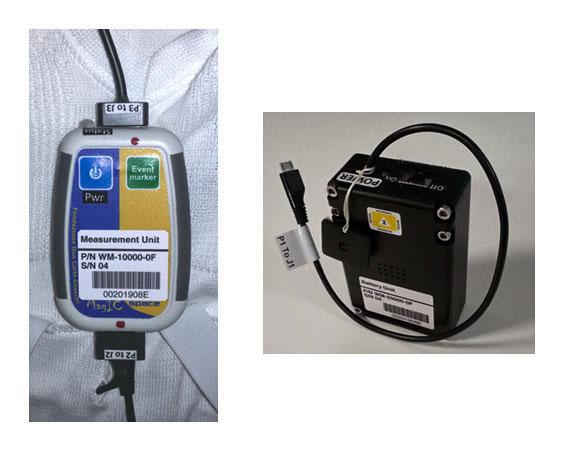
jsc2021e009423 (3/2/2021) --- A preflight view of the Measurement Unit (left panel) and Battery Pack (right panel) of the Wearable Monitoring Facility.  Image courtesy of Marco Di Rienzo ©
Wearable Monitoring Facility
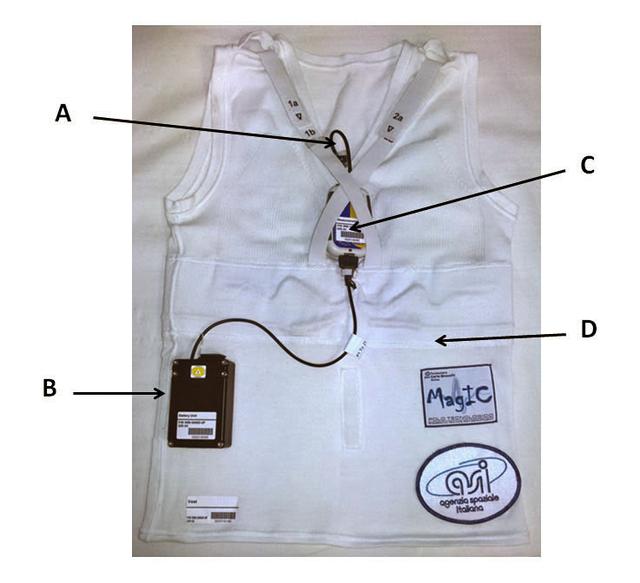
jsc2021e009422 (3/2/2021) --- A preflight view of the MagIC-Space payload. A=Thermometer probe; B= Battery Pack; C= Measurement Unit; D=Vest of the Wearable Monitoring Facility. Image courtesy of Marco Di Rienzo ©
Wearable Monitoring Facility
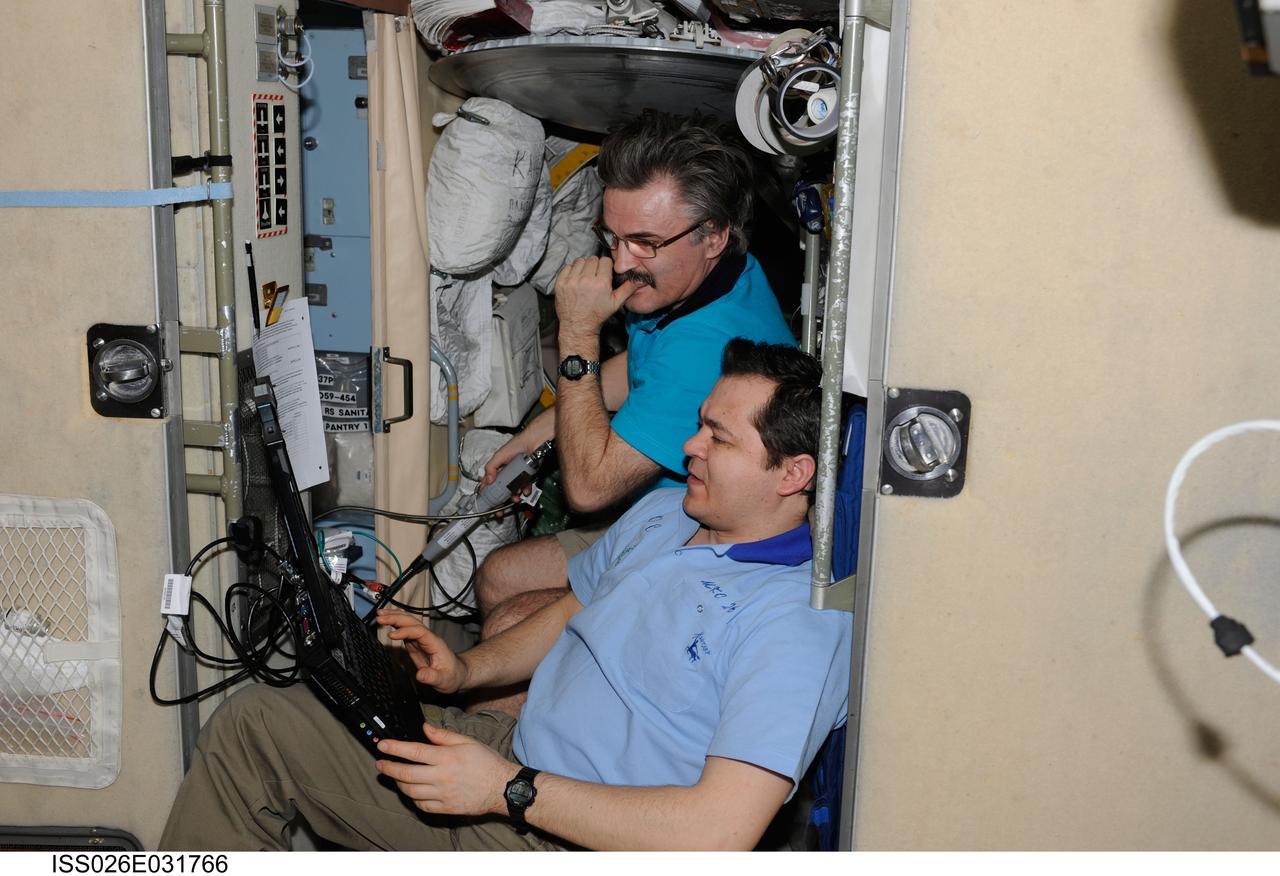
ISS026-E-031766 (4 March 2011) --- Russian cosmonauts Oleg Skripochka (foreground) and Alexander Kaleri, both Expedition 26 flight engineers, watch a computer monitor in the Zvezda Service Module of the International Space Station.
Skripochka and Kaleri watch monitor
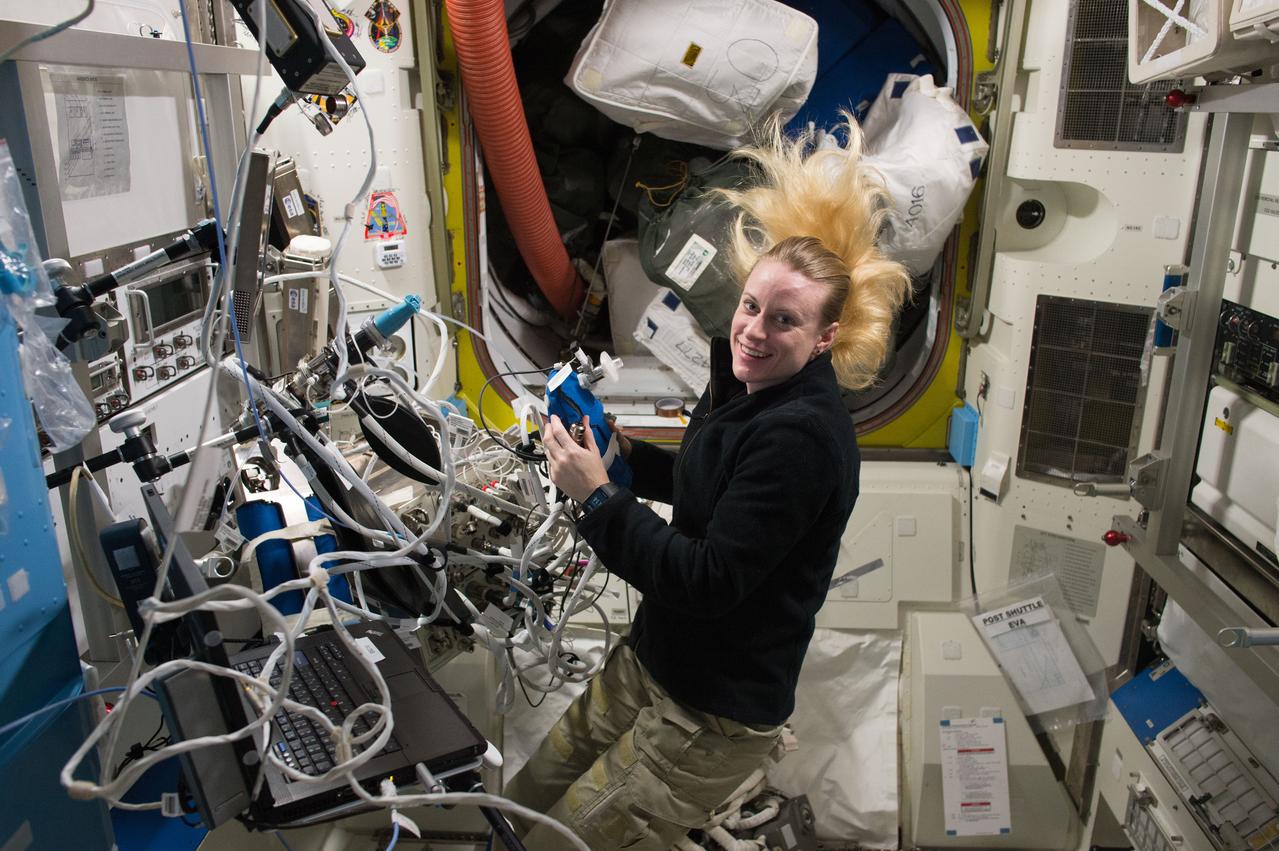
iss049e045997 (10/25/2016) --- NASA Astronaut Kate Rubins as she begans the measurement of the European Space Agency (ESA) Airway Monitoring experiment in the Quest airlock. The investigation studies the occurrence and indicators of airway inflammation in crew members to help flight surgeons plan safer, long-term missions to the moon, Mars and beyond. Results may also help doctors treat patients on Earth with asthma or other airway inflammatory diseases.
Airway Monitoring
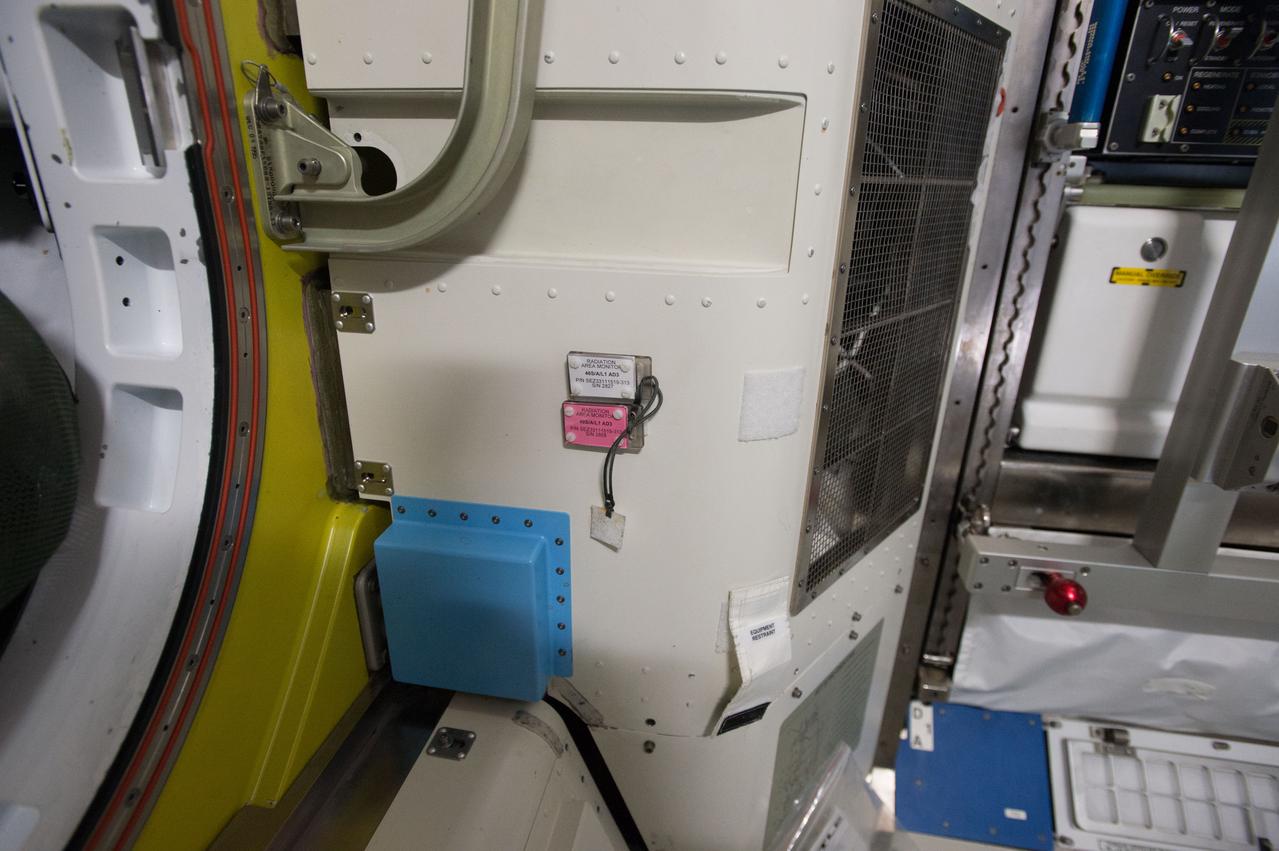
iss049e045458 (10/24/2016) --- Photographic documentation of Radiation Area Monitor (RAM) deployed in the Quest Airlock of the International Space Station (ISS). The Radiation Area Monitor (RAM) is a small set of thermoluminescent detectors encased in Lexan plastic that respond to radiation; the amount of radiation they absorb can be revealed by applying heat and measuring the amount of visible light released. The RAM is used to monitor dose and dose equivalent within the habitable volume of the International space Station (ISS) as a function of location, due to its predicted low sensitivity to high-Linear Energy Transfer radiation (neutrons and alpha particles).
Radiation Area Monitor (RAM) Deploy
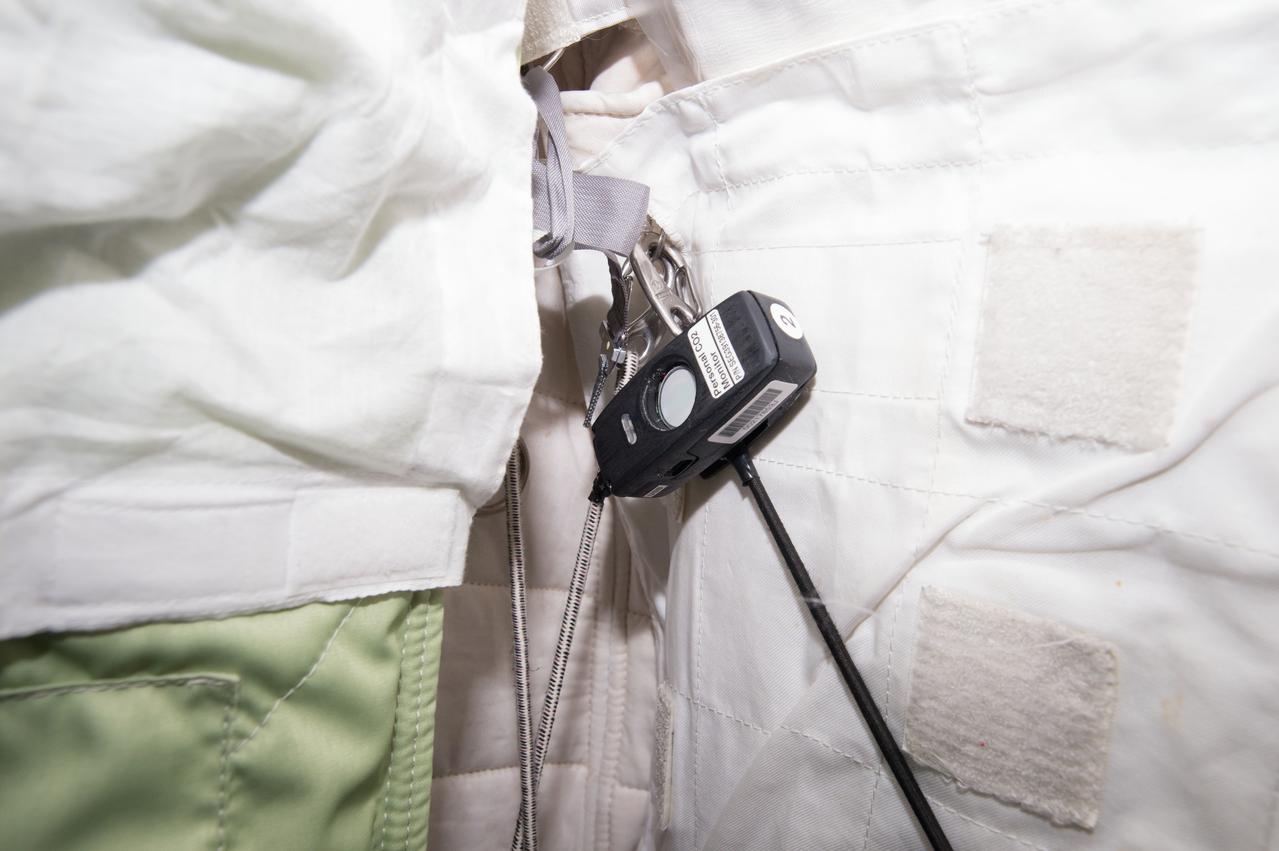
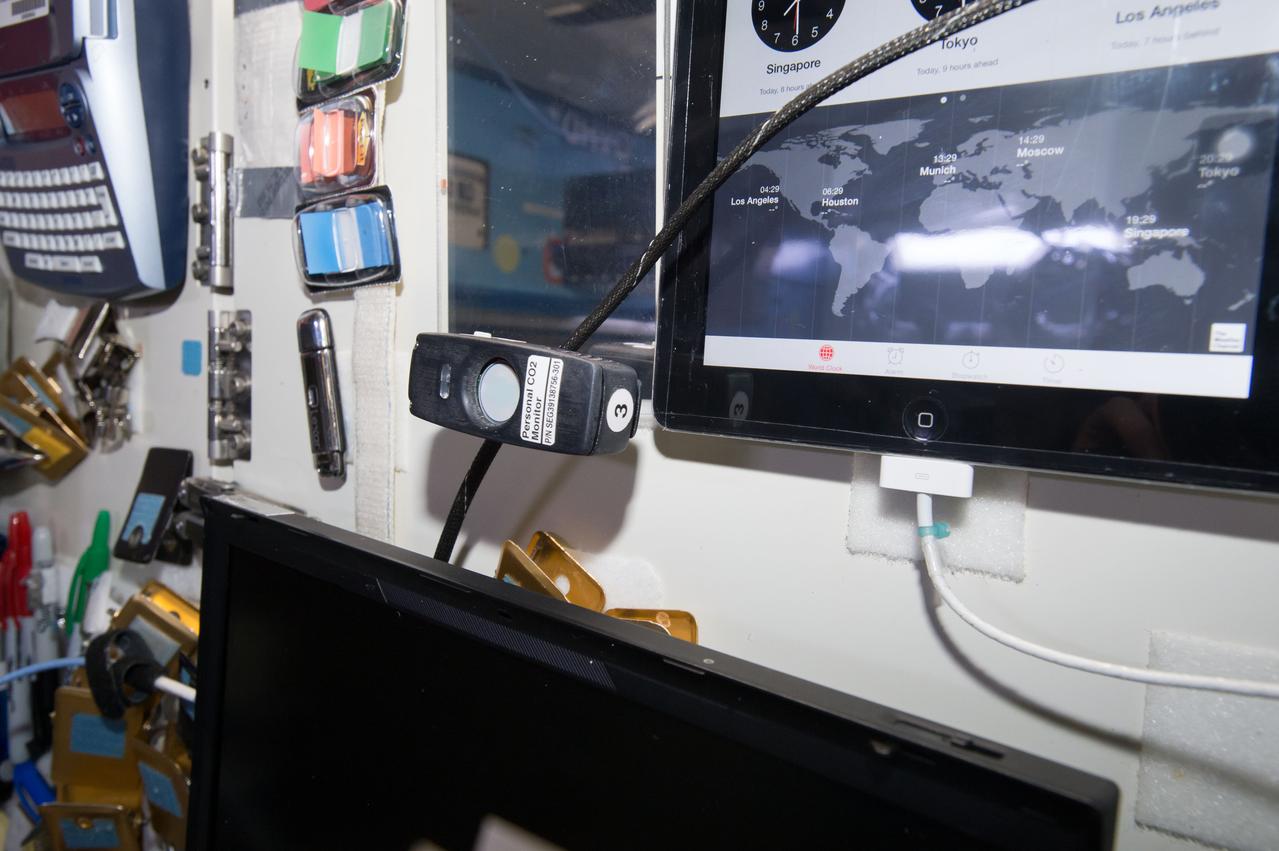
iss049e004440 (9/18/2016) --- Photographic documentation taken of Personal CO2 monitor in static locations aboard the International Space Station (ISS). The Personal CO2 Monitor demonstrates a new capability on the ISS - continuous monitoring of the astronauts' immediate surroundings.
Personal CO2 monitor deployed in static locations
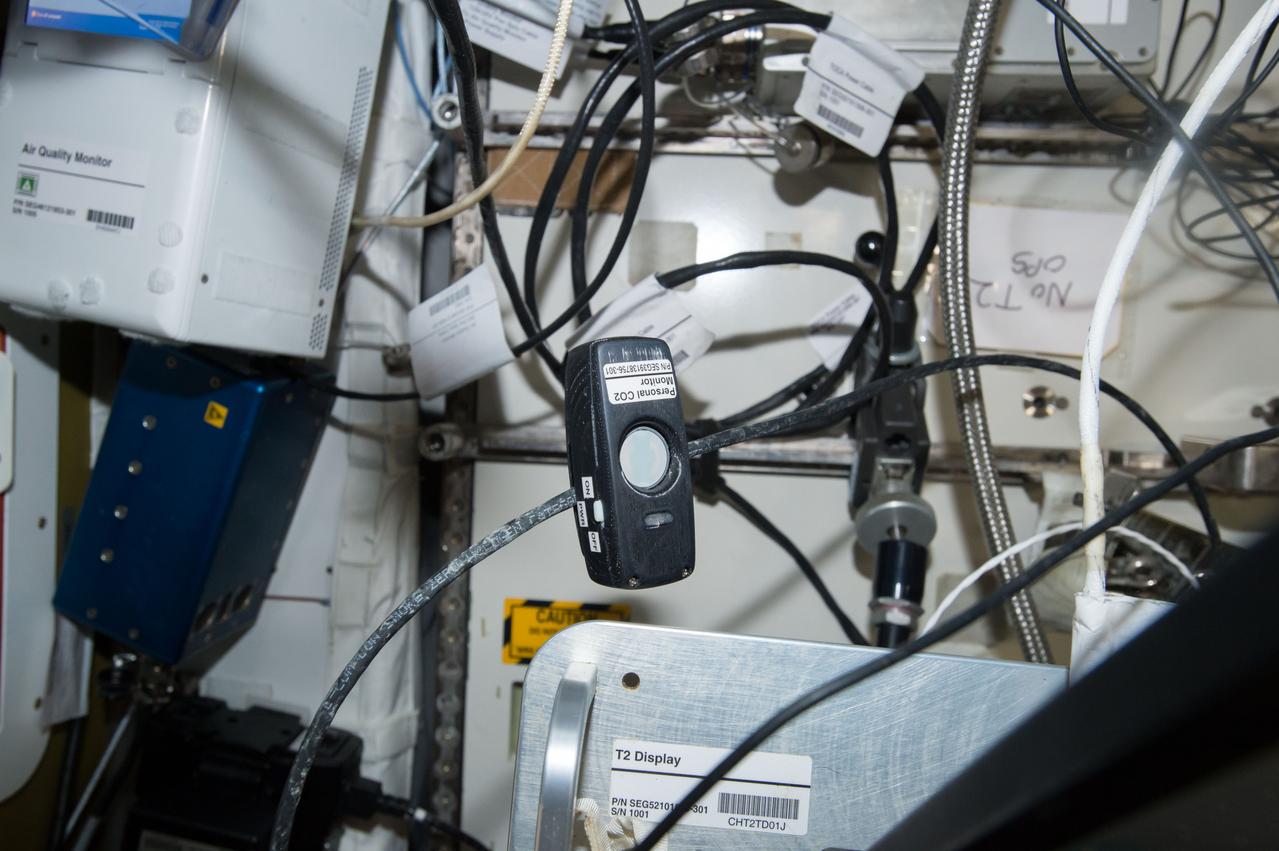
iss049e004448 (9/18/2016) --- Photographic documentation taken of Personal CO2 monitor in static locations aboard the International Space Station (ISS). The Personal CO2 Monitor demonstrates a new capability on the ISS - continuous monitoring of the astronauts' immediate surroundings.
Personal CO2 monitor deployed in static locations
iss049e004443 (9/18/2016) --- Photographic documentation taken of Personal CO2 monitor in static locations aboard the International Space Station (ISS). The Personal CO2 Monitor demonstrates a new capability on the ISS - continuous monitoring of the astronauts' immediate surroundings.
Personal CO2 monitor deployed in static locations
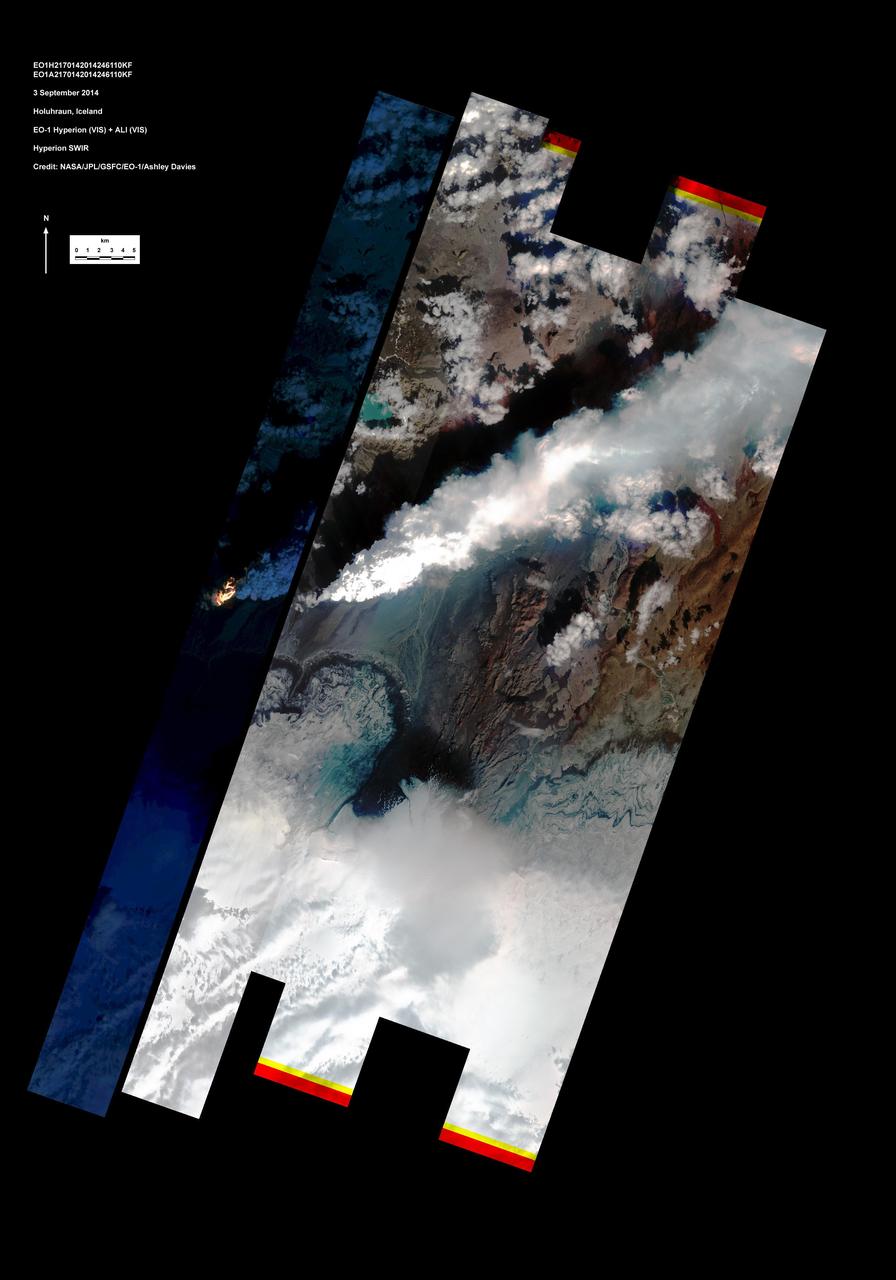
This image shows Iceland volcanic eruption monitored by NASA EO-1 spacecraft. To the south is the edge of Dyngjuj&ouml;kull and to the north is the volcano called Askja.
Iceland Volcanic Eruption Monitored by NASA EO-1 Spacecraft
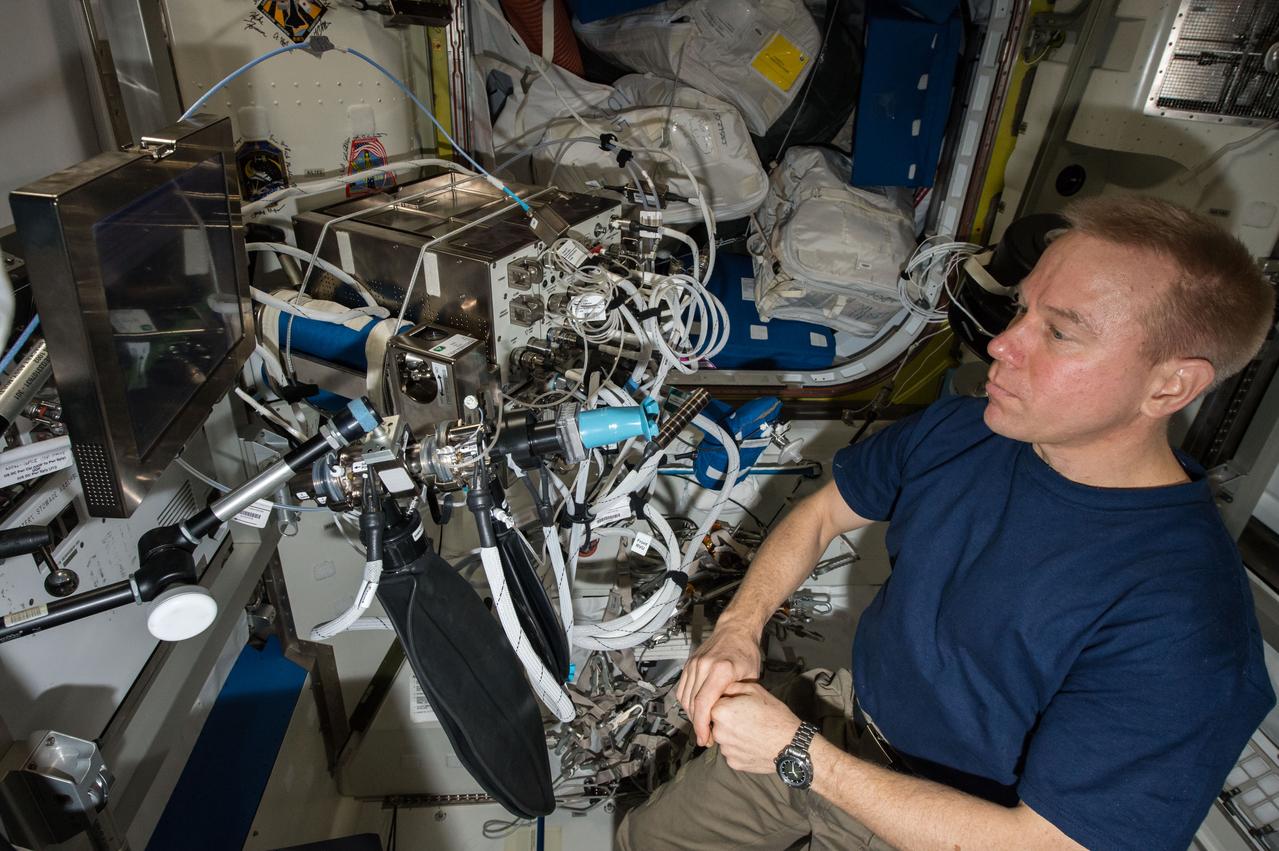
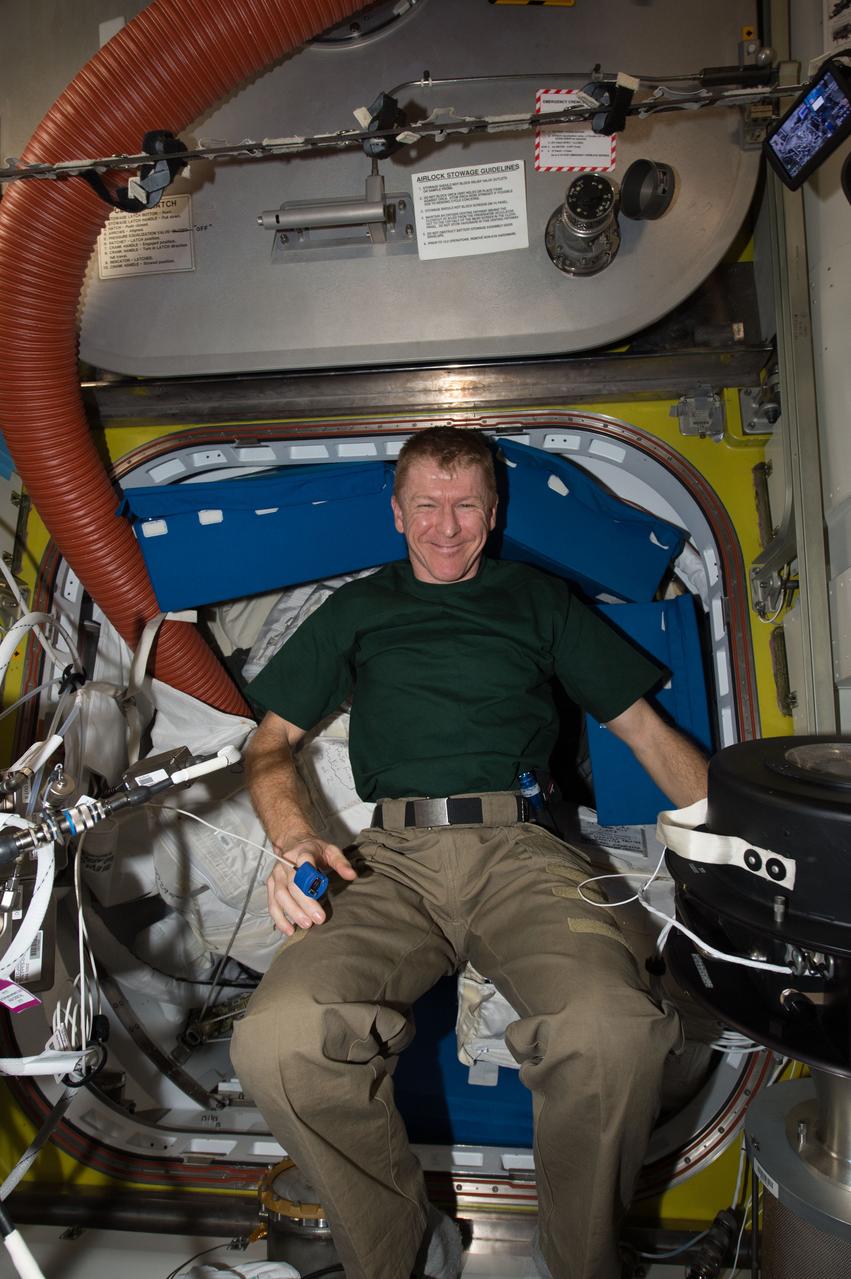
ISS046e048360 (02/25/2016) --- NASA astronaut Tim Kopra prepares to participate in the Airway Monitoring experiment. With dust particles present in the International Space Station atmosphere, Airway Monitoring studies the occurrence and indicators of airway inflammation in crewmembers, using ultra-sensitive gas analyzers to analyze exhaled air. This helps to highlight any health impacts and to maintain crewmember well-being on future human spaceflight missions, especially longer-duration missions to the Moon and Mars for example, where crewmembers will have to be more self-sufficient in highlighting and avoiding such conditions.
Airway Monitoring experiment
ISS046e047972 (02/25/2016) --- ESA (European Space Agency) astronaut Timothy Peake participates in the Airway Monitoring experiment. With dust particles present in the International Space Station atmosphere, Airway Monitoring studies the occurrence and indicators of airway inflammation in crewmembers, using ultra-sensitive gas analyzers to analyze exhaled air. This helps to highlight any health impacts and to maintain crewmember well-being on future human spaceflight missions, especially longer-duration missions to the Moon and Mars for example, where crewmembers will have to be more self-sufficient in highlighting and avoiding such conditions.
Airway Monitoring experiment
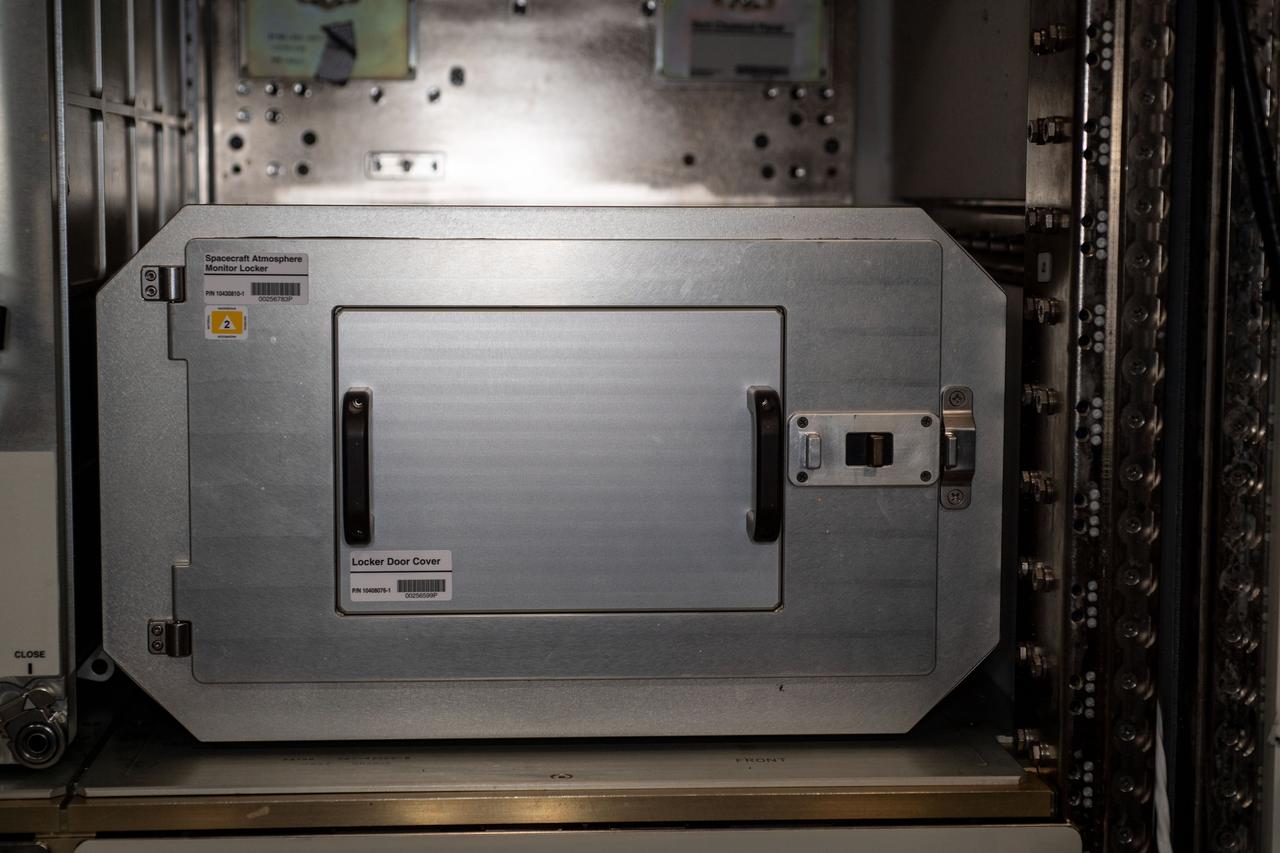
iss063e012814 (5/14/2020) --- A view of Spacecraft Atmosphere Monitor empty locker at Expedite the Processing of Experiments to the Space Station (EXPRESS) Rack 8 shown with protective locker door cover installed in the U.S. Laboratory aboard the International Space Station (ISS). The Spacecraft Atmosphere Monitor investigation demonstrates the capabilities of a small, reliable, portable gas chromatograph mass spectrometer instrument aboard the ISS to conduct major and minor elements of air measurement. The instrument transmits data back to the ground research team every two seconds, providing a continuous analysis to the ground research team.
Spacecraft Atmosphere Monitor Removal
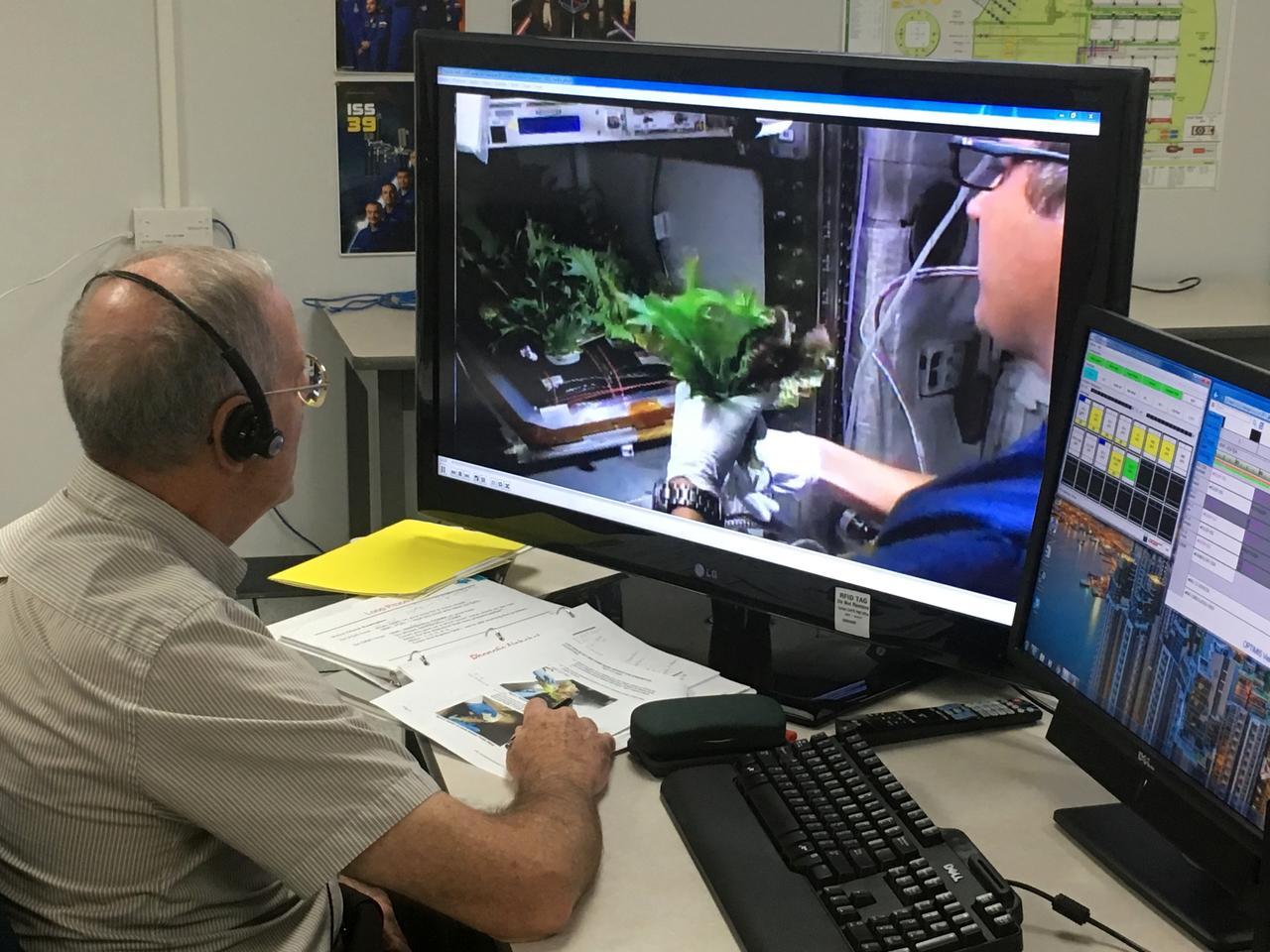
Charles Spern, project manager on the Engineering Services Contract, communicates instructions for the Veggie system to astronaut Joe Acaba on the International Space Station. Spern is in the Experiment Monitoring Room in the Space Station Processing Facility at Kennedy Space Center in Florida. Three different varieties of plants from the Veg-03D plant experiment were harvested.
Veggie Harvest
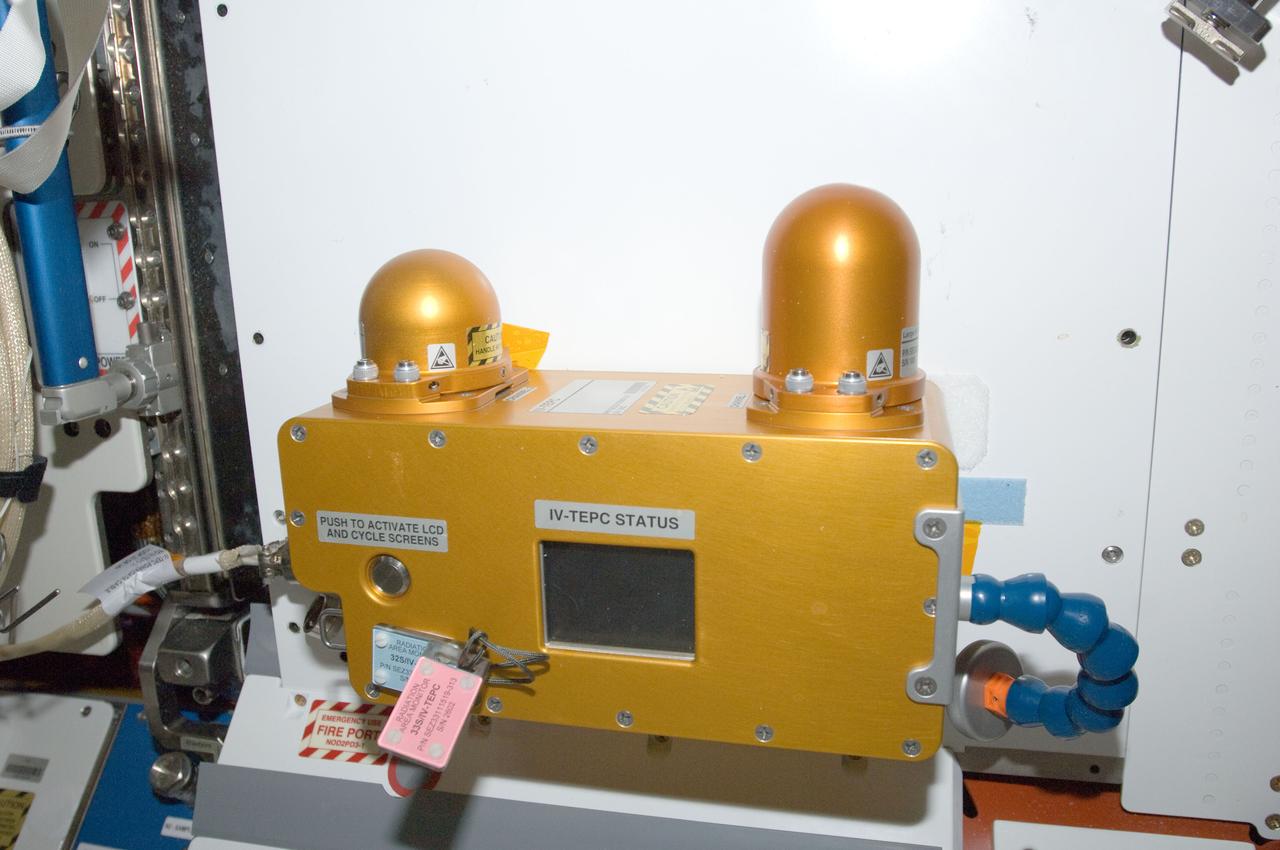
View of radiation monitor,Intra-Vehicular Tissue Equivalent Proportional Counter (IV-TEPC),relocated to NOD2  P3,Part Number (P/N):  SEG33120960-301,Serial Number (S/N):  1002,in the Node 2.  Photo was taken during Expedition 34.
Radiation Monitor,IV-TEPC
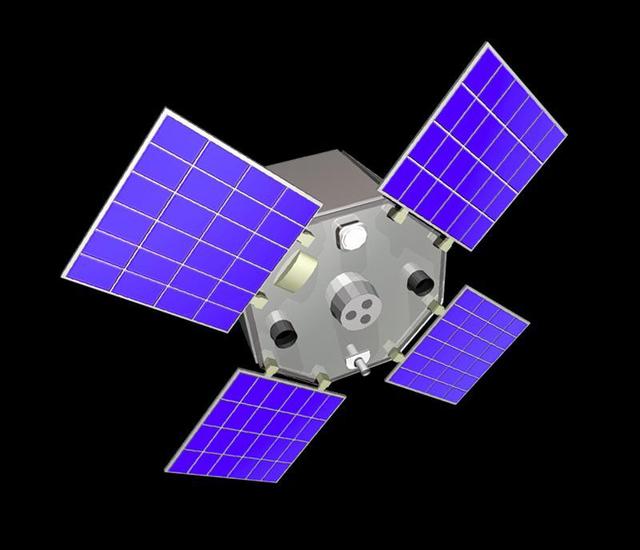
The Active Cavity Irradiance Monitor Satellite, or ACRIMSAT, mission is a climate change investigation that measures changes in how much of the sun's energy reaches Earth's atmosphere. This energy, called solar irradience, creates winds, heats the land and drives ocean currents, and therefore contains significant data that climatologists can use to improve predictions of climate change and global warming.  The satellite's Active Cavity Irradiance Monitor III instrument, now in its third generation, has been used since the 1980s to study solar irradiance and its impacts on global warming. Scientists, using data from the instrument, now theorize that there is a significant correlation between solar radiation and global warming.  ACRIMSAT completed its five-year primary mission in 2005 when it began operating under its extended mission.  http://photojournal.jpl.nasa.gov/catalog/PIA18157
Active Cavity Irradiance Monitor Satellite ACRIMSAT Artist Concept
The Apollo Telescope Mount (ATM), designed and developed by the Marshall Space Flight Center, served as the primary scientific instrument unit aboard the Skylab. The ATM contained eight complex astronomical instruments designed to observe the Sun over a wide spectrum from visible light to x-rays. This photo depicts a mockup of the ATM contamination monitor camera and photometer.
Saturn Apollo Program
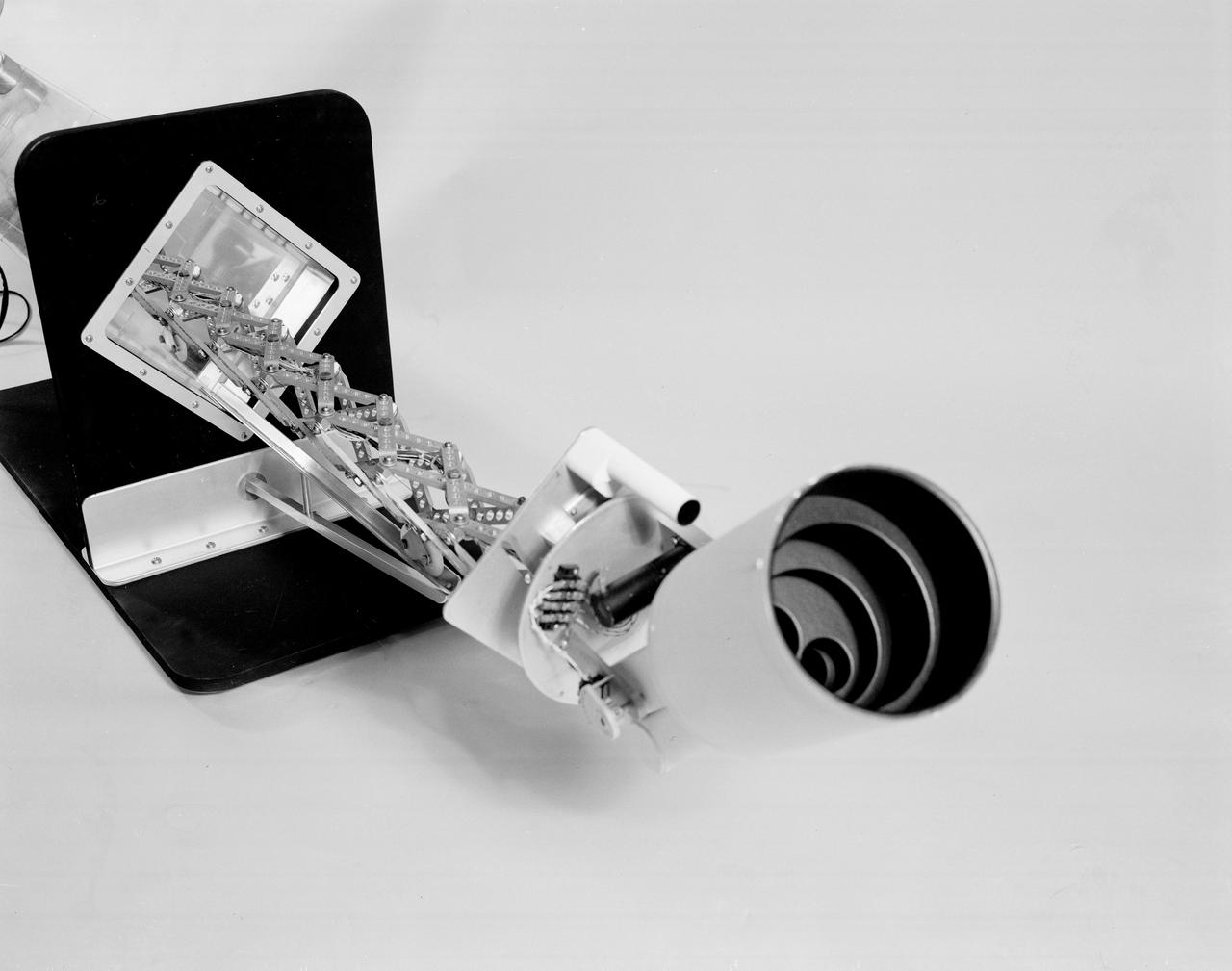
The Apollo Telescope Mount (ATM), designed and developed by the Marshall Space Flight Center, served as the primary scientific instrument unit aboard the Skylab. The ATM contained eight complex astronomical instruments designed to observe the Sun over a wide spectrum from visible light to x-rays. This photo of the ATM contamination monitor mockup offers an extended view of the sunshield interior.
Saturn Apollo Program
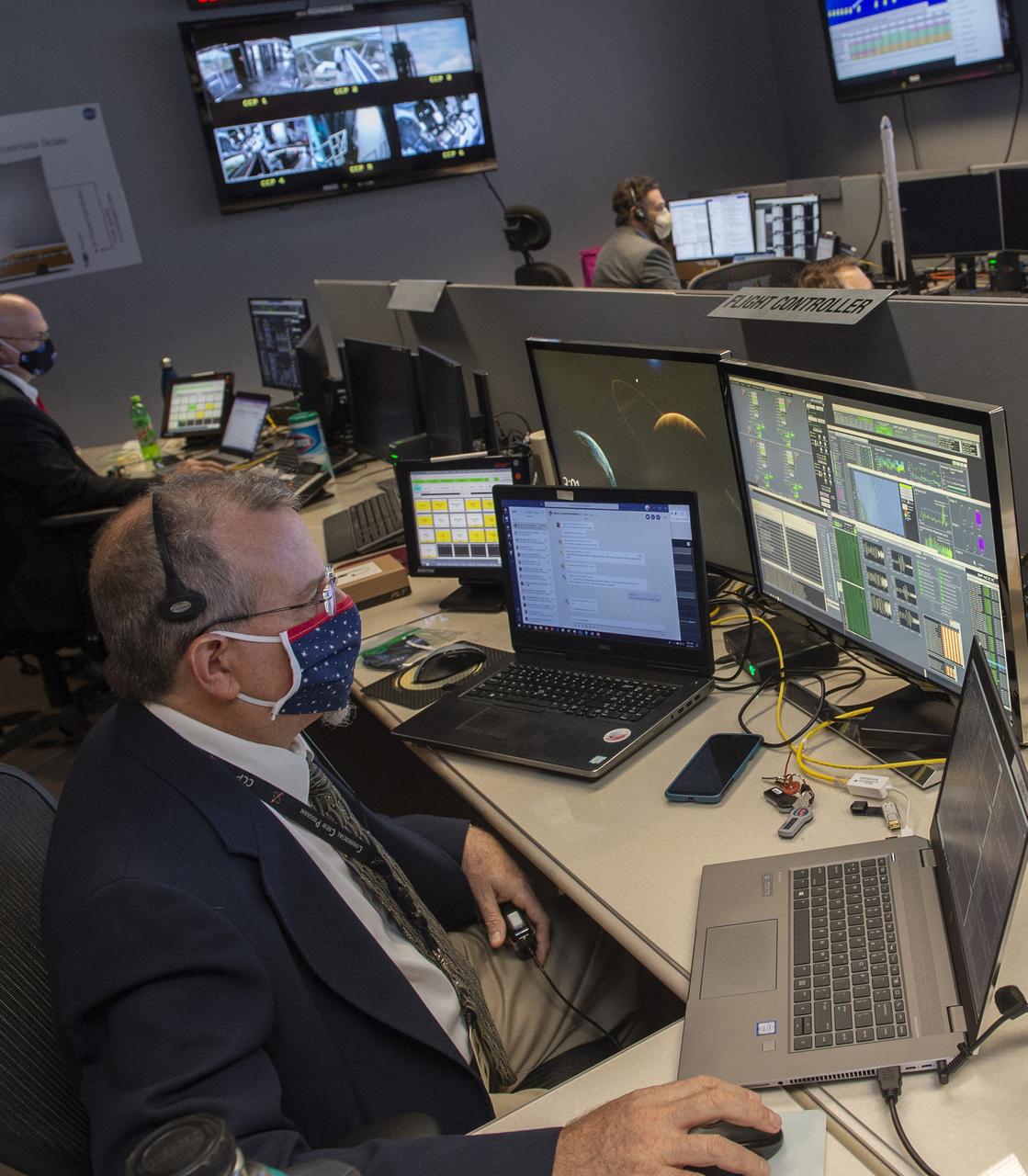
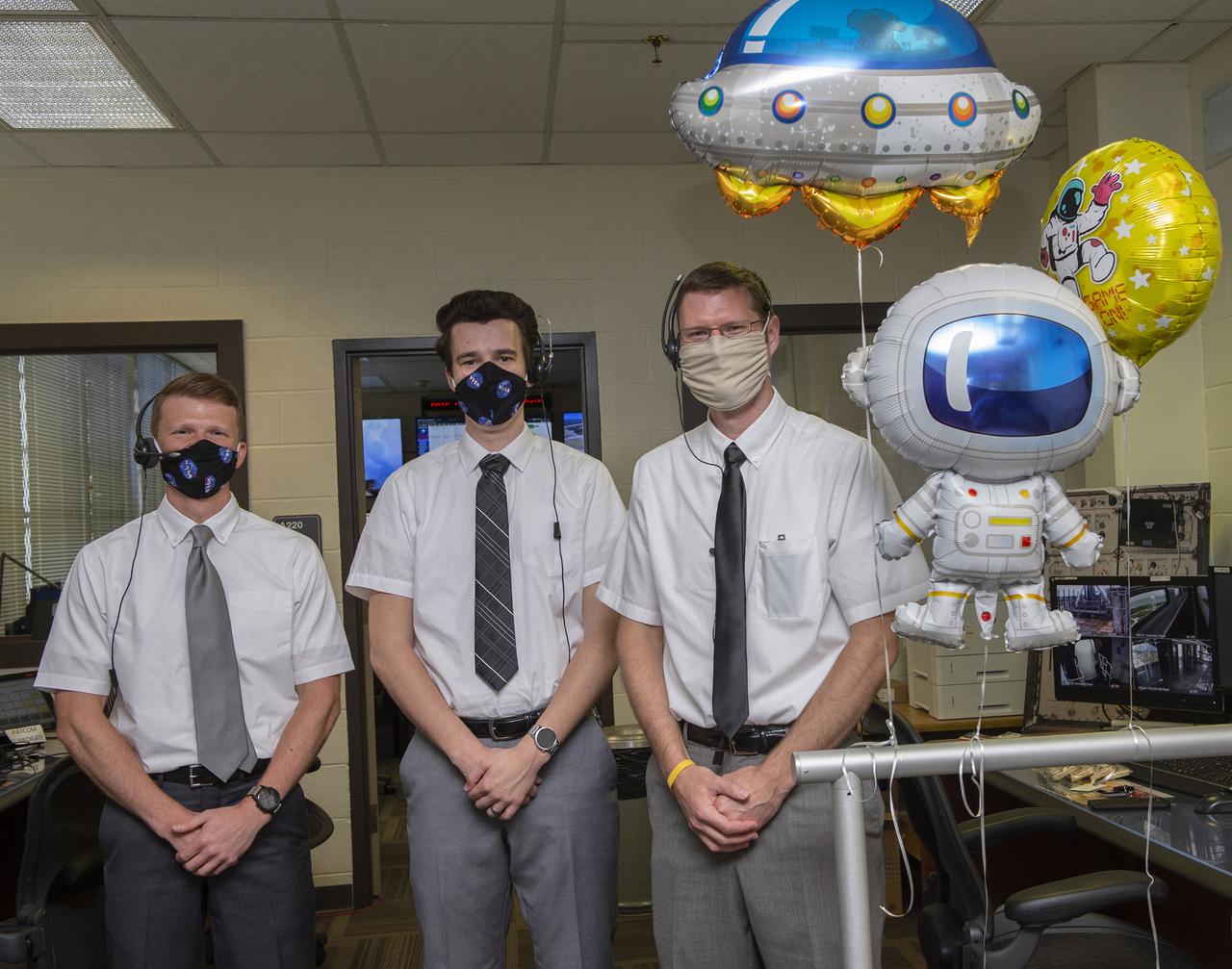
Ken Schrock, Paul Crawford, Adam Butt, and teams at NASA’s Marshall Space Flight Center help monitor launch conditions for the Demo-2 mission from the Huntsville Operations Support Center, HOSC.
Stewart Whaley, Cameron Muelling, foreground, and teams  at NASA’s Marshall Space Flight Center help monitor launch conditions for the Demo-2 mission from the Huntsville Operations Support Center, HOSC.
Stewart Whaley, Cameron Muelling, foreground, and teams at NASA’s Marshall Space Flight Center help monitor launch conditions for the Demo-2 mission from the Huntsville Operations Support Center, HOSC.
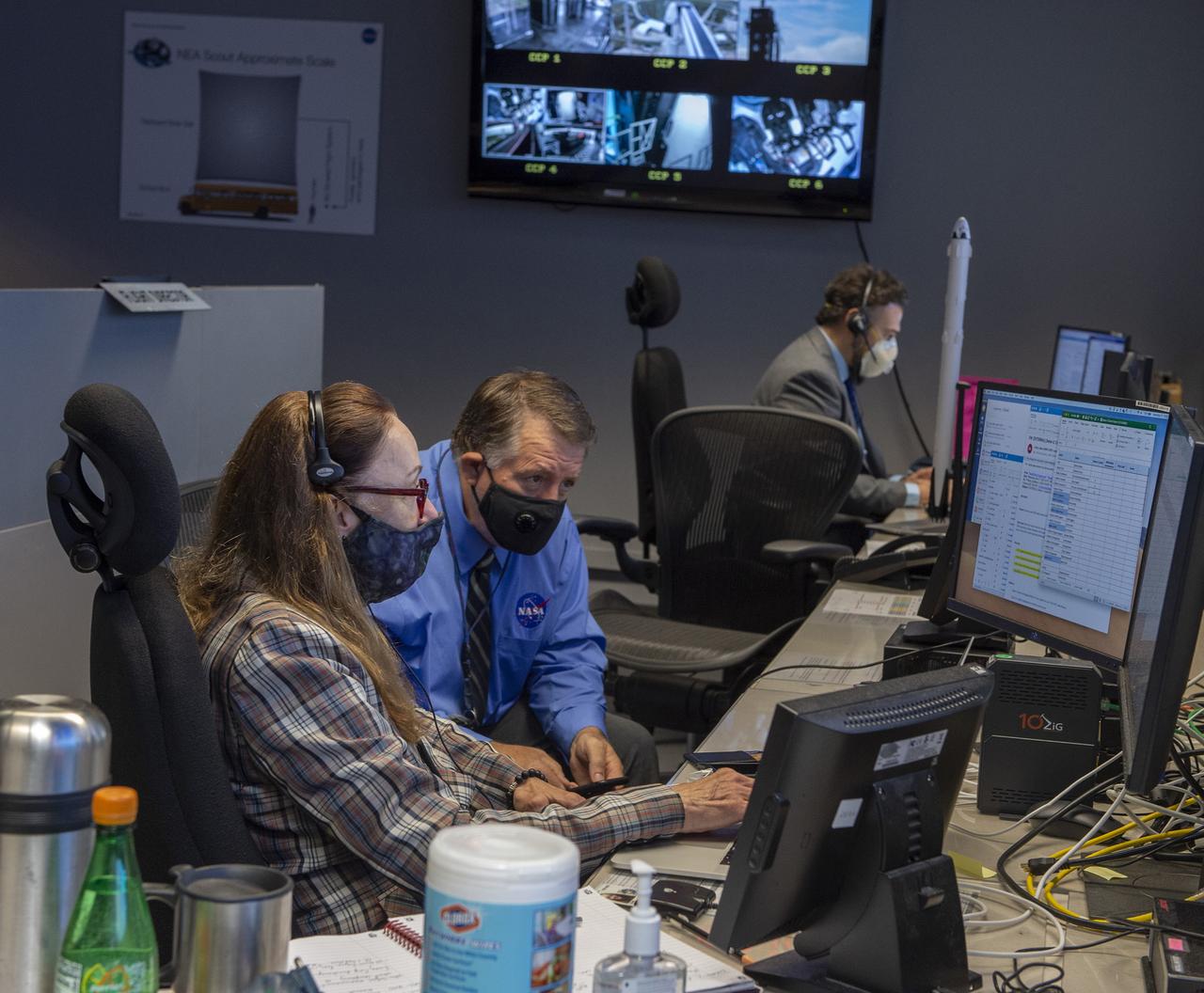
Preston Jones, Deborah Crane, and teams at NASA’s Marshall Space Flight Center help monitor launch conditions for the Demo-2 mission from the Huntsville Operations Support Center, HOSC.
Patrick Mills, Stewart Whaley, Cameron Muelling and teams at NASA’s Marshall Space Flight Center help monitor launch conditions for the Demo-2 mission from the Huntsville Operations Support Center, HOSC.
Stewart Whaley, Cameron Muelling, foreground, and teams at NASA’s Marshall Space Flight Center help monitor launch conditions for the Demo-2 mission from the Huntsville Operations Support Center, HOSC.
Preston Jones, Deborah Crane, Adam Butt, and teams at NASA’s Marshall Space Flight Center help monitor launch conditions for the Demo-2 mission from the Huntsville Operations Support Center, HOSC.
 Stewart Whaley, Cameron Muelling, foreground, and teamsat NASA’s Marshall Space Flight Center help monitor launch conditions for the Demo-2 mission from the Huntsville Operations Support Center, HOSC.
Stewart Whaley, Cameron Muelling, foreground, and teams at NASA’s Marshall Space Flight Center help monitor launch conditions for the Demo-2 mission from the Huntsville Operations Support Center, HOSC.
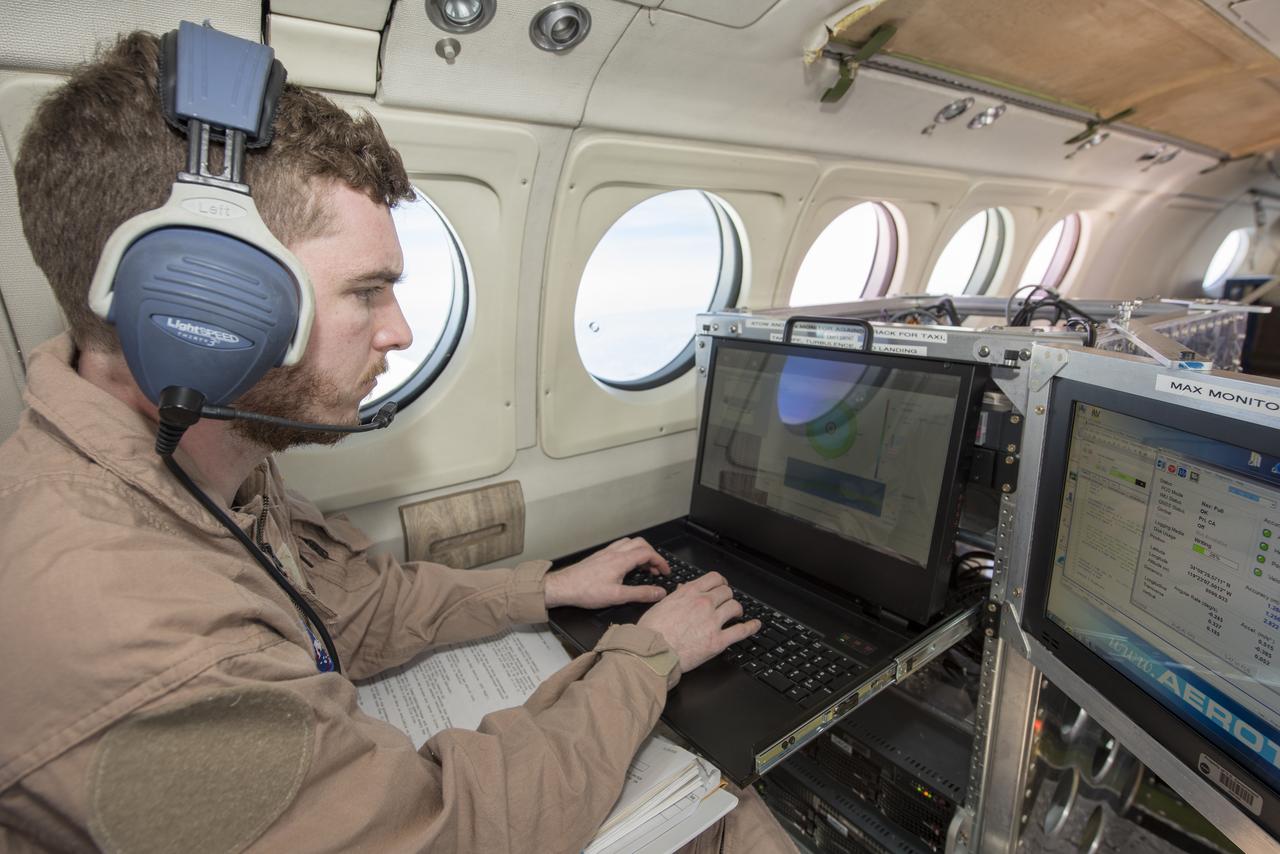
Radar operator Alexander Winteer monitors incoming wind data from the  DopplerScatt radar instrument during a science flight off the California Coast on March 5, 2018.
Instrument Operator Monitors Wind Data
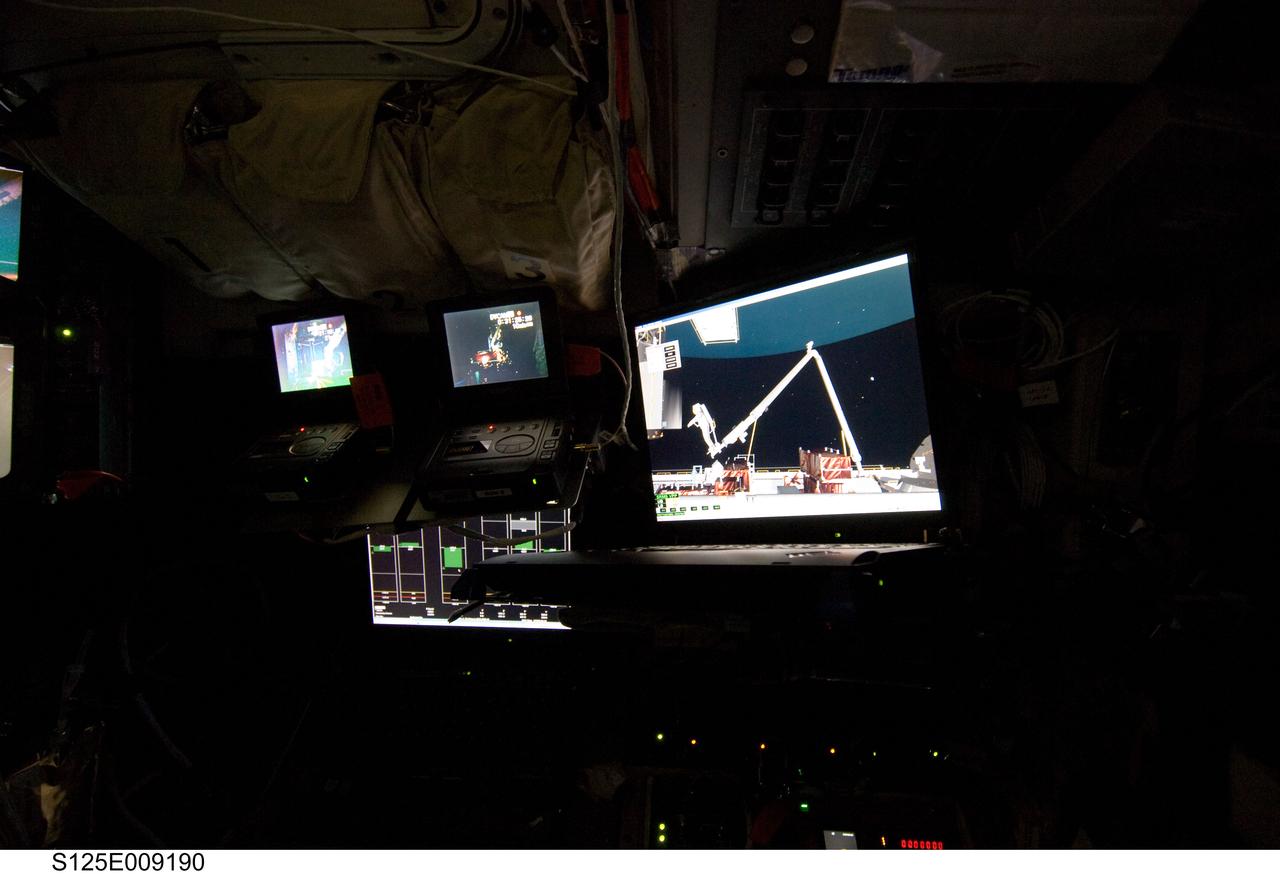
S125-E-009190 (17 May 2009) --- A computer monitor showing animation of an extravehicular activity (EVA) is visible in this image photographed by a STS-125 crewmember in a darkened flight deck on the Earth-orbiting Space Shuttle Atlantis.
View of Atlantis Flight Deck Monitors
NASA Administrator Bridenstine learns about the many uses for mission control rooms for flight research projects such as monitoring the flights for safety, gathering data and talking to the pilot and project researcher.
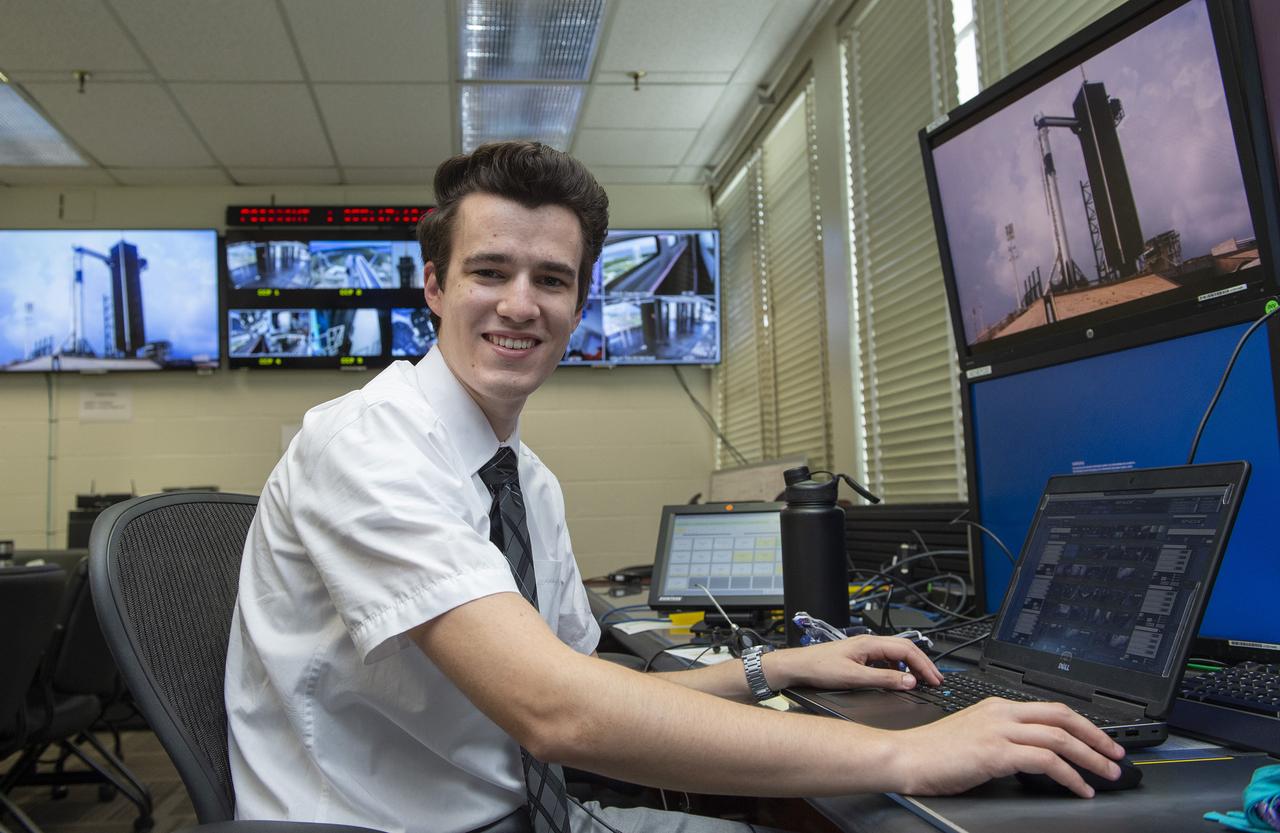
Bridenstine stands by AFRC center director David McBride in one of Armstrong's mission control rooms that monitor flights, talk with pilots and gather data to project analysis.
Nicole Dufour, flight integration lead, communicates directly with astronaut Joe Acaba during installation of NASA’s Advanced Plant Habitat in the Japanese Kibo module on the International Space Station. Dufour is in the Experiment Monitoring Room in the Space Station Processing Facility at Kennedy Space Center in Florida. The procedures to install the system took about six hours.
Veggie Harvest
NASA pilot Jim Less is assisted by life support as he is fitted with a Cobham designed VigiLOX pilot oxygen monitoring system. VigiLOX is a sensing system that is attached to a pilot's existing gear to capture real-time physiological, breathing gas and cockpit environmental data.
VigiLOX Pilot Oxygen Monitoring System
NASA pilot Jim Less is assisted by life support as he is fitted with a Cobham designed VigiLOX pilot oxygen monitoring system. VigiLOX is a sensing system that is attached to a pilot's existing gear to capture real-time physiological, breathing gas and cockpit environmental data.
VigiLOX Pilot Oxygen Monitoring System
This is a Hubble Space Telescope composite image of a supernova explosion designated SN 2014J in the galaxy M82. At a distance of approximately 11.5 million light-years from Earth it is the closest supernova of its type discovered in the past few decades. The explosion is categorized as a Type Ia supernova, which is theorized to be triggered in binary systems consisting of a white dwarf and another star — which could be a second white dwarf, a star like our sun, or a giant star.  Astronomers using a ground-based telescope discovered the explosion on January 21, 2014. This Hubble photograph was taken on January 31, as the supernova approached its peak brightness. The Hubble data are expected to help astronomers refine distance measurements to Type Ia supernovae. In addition, the observations could yield insights into what kind of stars were involved in the explosion. Hubble’s ultraviolet-light sensitivity will allow astronomers to probe the environment around the site of the supernova explosion and in the interstellar medium of the host galaxy.  Because of their consistent peak brightness, Type Ia supernovae are among the best tools to measure distances in the universe. They were fundamental to the 1998 discovery of the mysterious acceleration of the expanding universe. A hypothesized repulsive force, called dark energy, is thought to cause the acceleration.  Among the other major NASA space-based observatories used in the M82 viewing campaign are Spitzer Space Telescope, Chandra X-ray Observatory, Nuclear Spectroscopic Telescope Array (NuSTAR), Fermi Gamma-ray Space Telescope, Swift Gamma Ray Burst Explorer, and the Stratospheric Observatory for Infrared Astronomy (SOFIA).     Image Credit: NASA, ESA, A. Goobar (Stockholm University), and the Hubble Heritage Team (STScI/AURA)   <b><a href="http://www.nasa.gov/audience/formedia/features/MP_Photo_Guidelines.html" rel="nofollow">NASA image use policy.</a></b>  <b><a href="http://www.nasa.gov/centers/goddard/home/index.html" rel="nofollow">NASA Goddard Space Flight Center</a></b> enables NASA’s mission through four scientific endeavors: Earth Science, Heliophysics, Solar System Exploration, and Astrophysics. Goddard plays a leading role in NASA’s accomplishments by contributing compelling scientific knowledge to advance the Agency’s mission.  <b>Follow us on <a href="http://twitter.com/NASAGoddardPix" rel="nofollow">Twitter</a></b>  <b>Like us on <a href="http://www.facebook.com/pages/Greenbelt-MD/NASA-Goddard/395013845897?ref=tsd" rel="nofollow">Facebook</a></b>  <b>Find us on <a href="http://instagram.com/nasagoddard?vm=grid" rel="nofollow">Instagram</a></b>
Hubble Monitors Supernova In Nearby Galaxy M82
Although the new fiber optic sensors on the Ikhana, which are located on fibers that are the diameter of a human hair, are not visible, the sealant used to cover them can be seen in this view from above the left wing. NASA Dryden Flight Research Center is evaluating an advanced fiber optic-based sensing technology installed on the wings of NASA's Ikhana aircraft. The fiber optic system measures and displays the shape of the aircraft's wings in flight. There are other potential safety applications for the technology, such as vehicle structural health monitoring. If an aircraft structure can be monitored with sensors and a computer can manipulate flight control surfaces to compensate for stresses on the wings, structural control can be established to prevent situations that might otherwise result in a loss of control.
ED07-0287-08
51G-04-010 (17-24 June 1985) --- Astronaut Shannon W. Lucid monitors cargo bay activities with one of the satellite payloads aboard.
Astronaut Shannon Lucid monitors payload bay activities
STS009-123-340 (28 Nov 1983) --- Astronaut Owen K. Garriott, STS-9 mission specialist, left, and Ulf Merbold, payload specialist, take a break from monitoring experimentation aboard Spacelab to be photographed. Dr. Garriott, holds in his left hand a data/log book for the solar spectrum experiment. Dr. Merbold, holds a map in his left hand for the monitoring of ground objectives of the metric camera.
Astronauts Garriott and Merbold monitoring experiemnts in Spacelab
Amanda Stein, Patrick Mills, Stewart Whaley, Cameron Muelling and teams at NASA’s Marshall Space Flight Center help monitor launch conditions for the Demo-2 mission from the Huntsville Operations Support Center, HOSC.
Amanda Stein, Patrick Mills, Stewart Whaley, Cameron Muelling and Teams at NASA’s Marshall Space Flight Center help monitor launch conditions for the Demo-2 mission from the Huntsville Operations Support Center, HOSC.
ISS041-E-000003 (11 Sept. 2014) --- A close-up view of a computer monitor onboard the International Space Station, photographed by an Expedition 41 crew member, shows the landing of the Soyuz TMA-12M spacecraft with NASA astronaut Steve Swanson, Expedition 40 commander; Russian cosmonaut Alexander Skvortsov, Soyuz commander and flight engineer; and Russian cosmonaut Oleg Artemyev, flight engineer, onboard.
Soyuz TMA-12M/38S Spacecraft attached to parachute
A researcher points out the trajectory of a weather pattern on a computer monitor during a flight aboard the NASA DC-8 aircraft, Tuesday, Aug. 17, 2010, over the Gulf of Mexico. Sceintists and researchers flew Tuesday to study weather as part of the Genesis and Rapid Intensification Processes (GRIP) experiment is a NASA Earth science field experiment in 2010 that is being conducted to better understand how tropical storms form and develop into major hurricanes. Photo Credit: (NASA/Paul E. Alers)
GRIP Experiment 2010