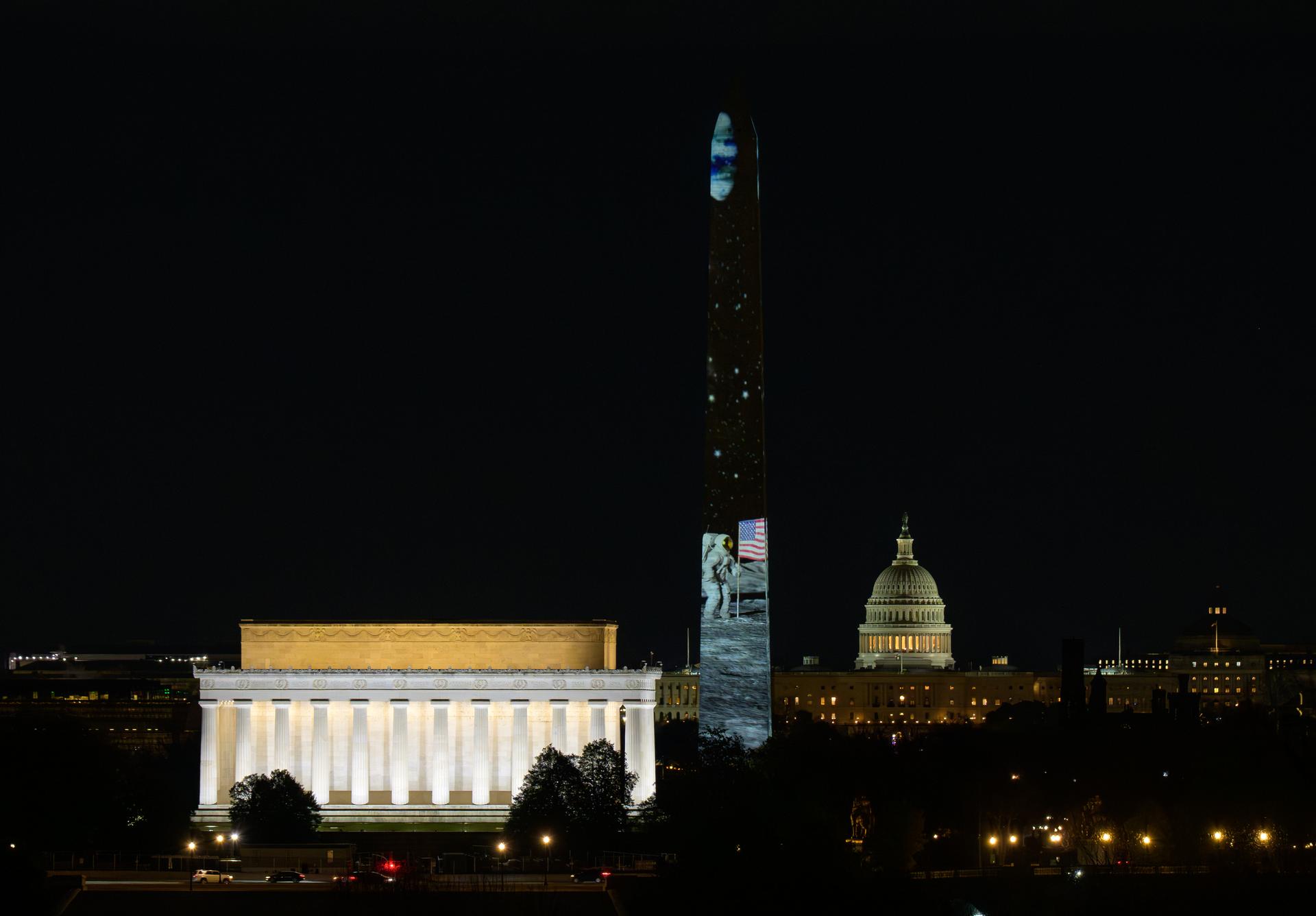
Images depicting NASA Moon missions are projected onto the Washington Monument as part of an event to kick off the nation's 250th birthday year, Wednesday, Dec. 31, 2025, in Washington. Photo Credit: (NASA/Bill Ingalls)
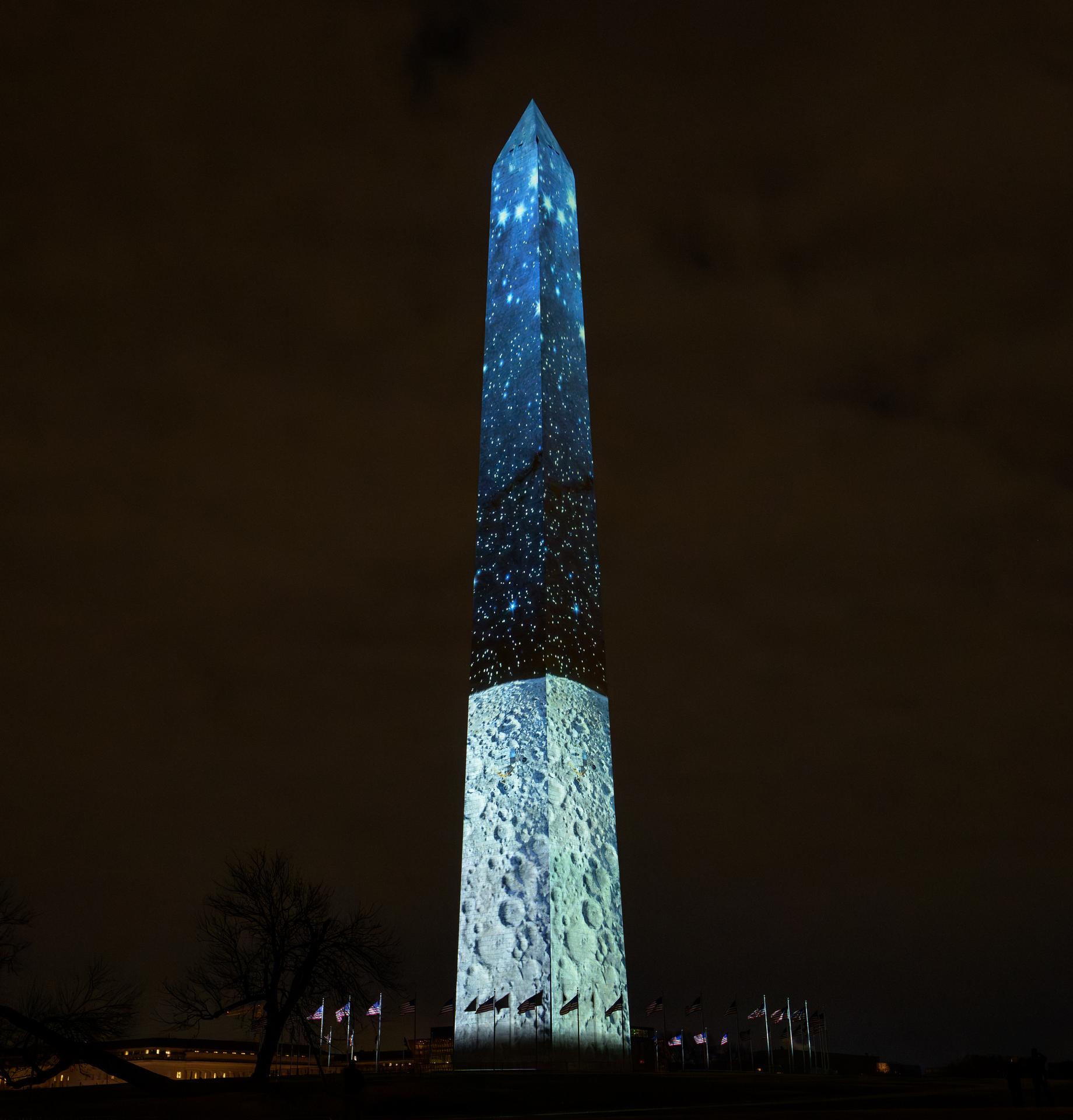
Images depicting NASA Moon missions are projected onto the Washington Monument as part of an event to kick off the nation's 250th birthday year, Wednesday, Dec. 31, 2025, in Washington. Photo Credit: (NASA/Bill Ingalls)
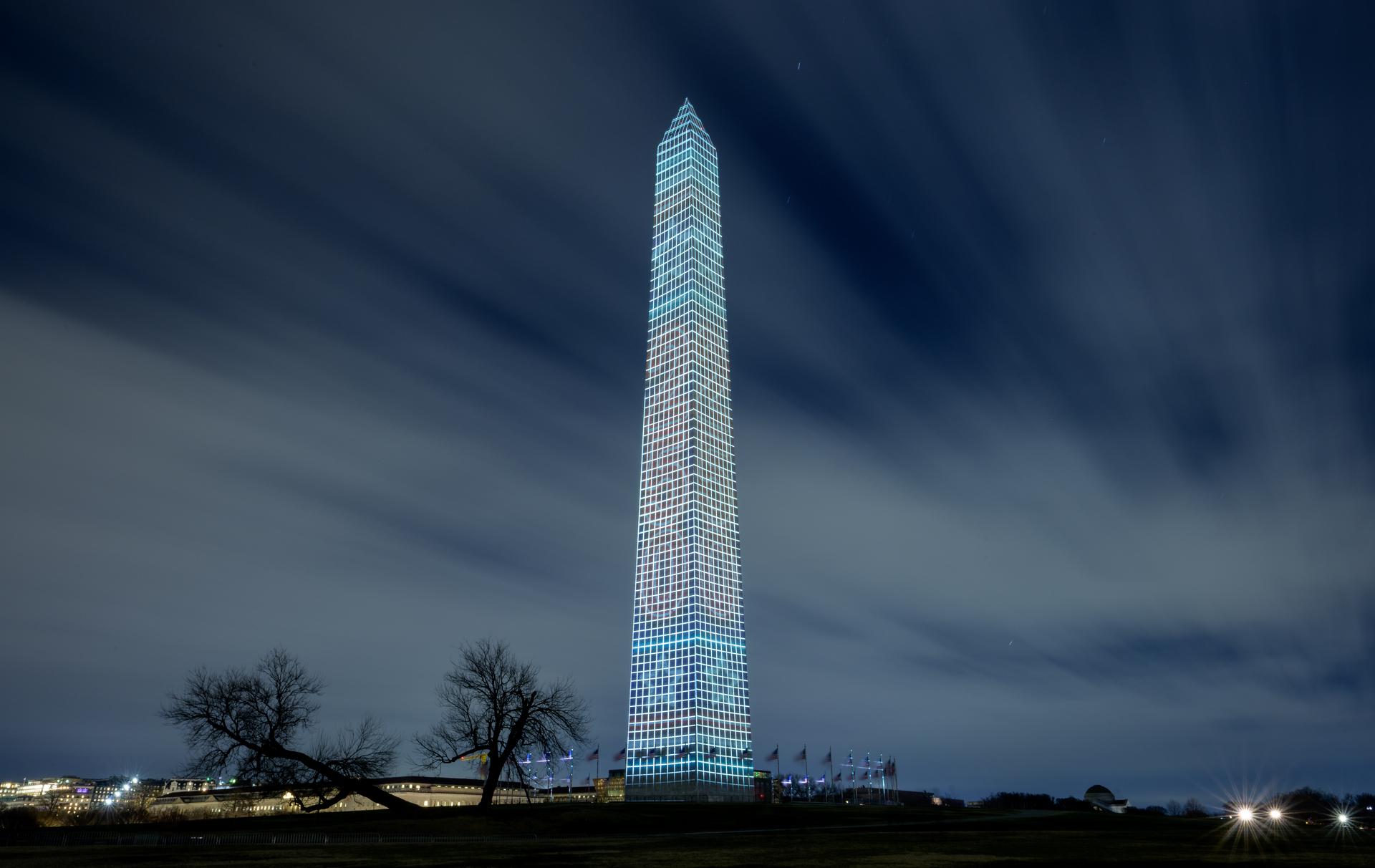
The Washington Monument is seen lit in this long exposure photograph as part of an event to kick off the nation's 250th birthday year, Wednesday, Dec. 31, 2025, in Washington. Photo Credit: (NASA/Bill Ingalls)
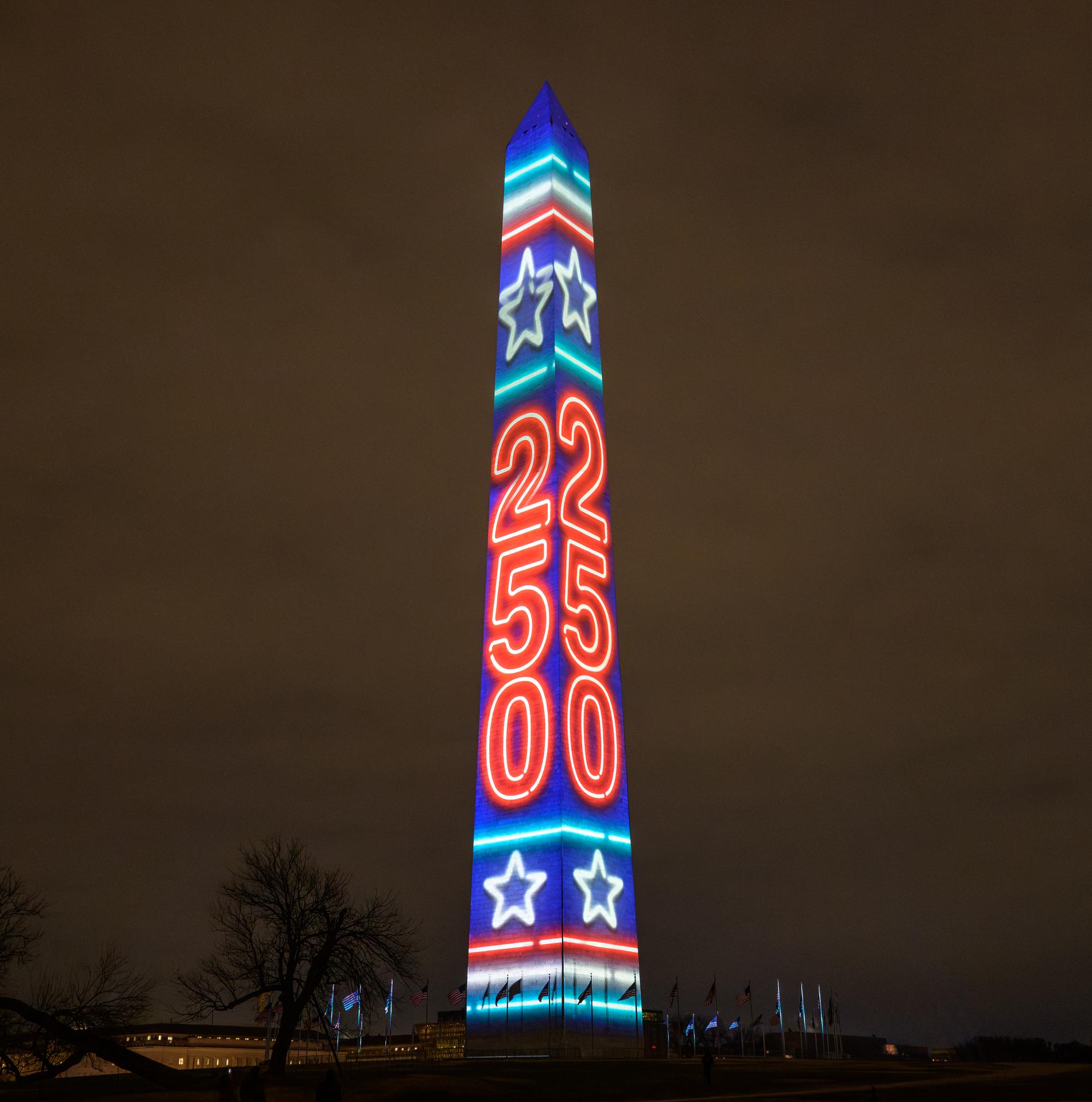
The Washington Monument is lit as part of an event to kick off the nation's 250th birthday year, Wednesday, Dec. 31, 2025, in Washington. Photo Credit: (NASA/Bill Ingalls)
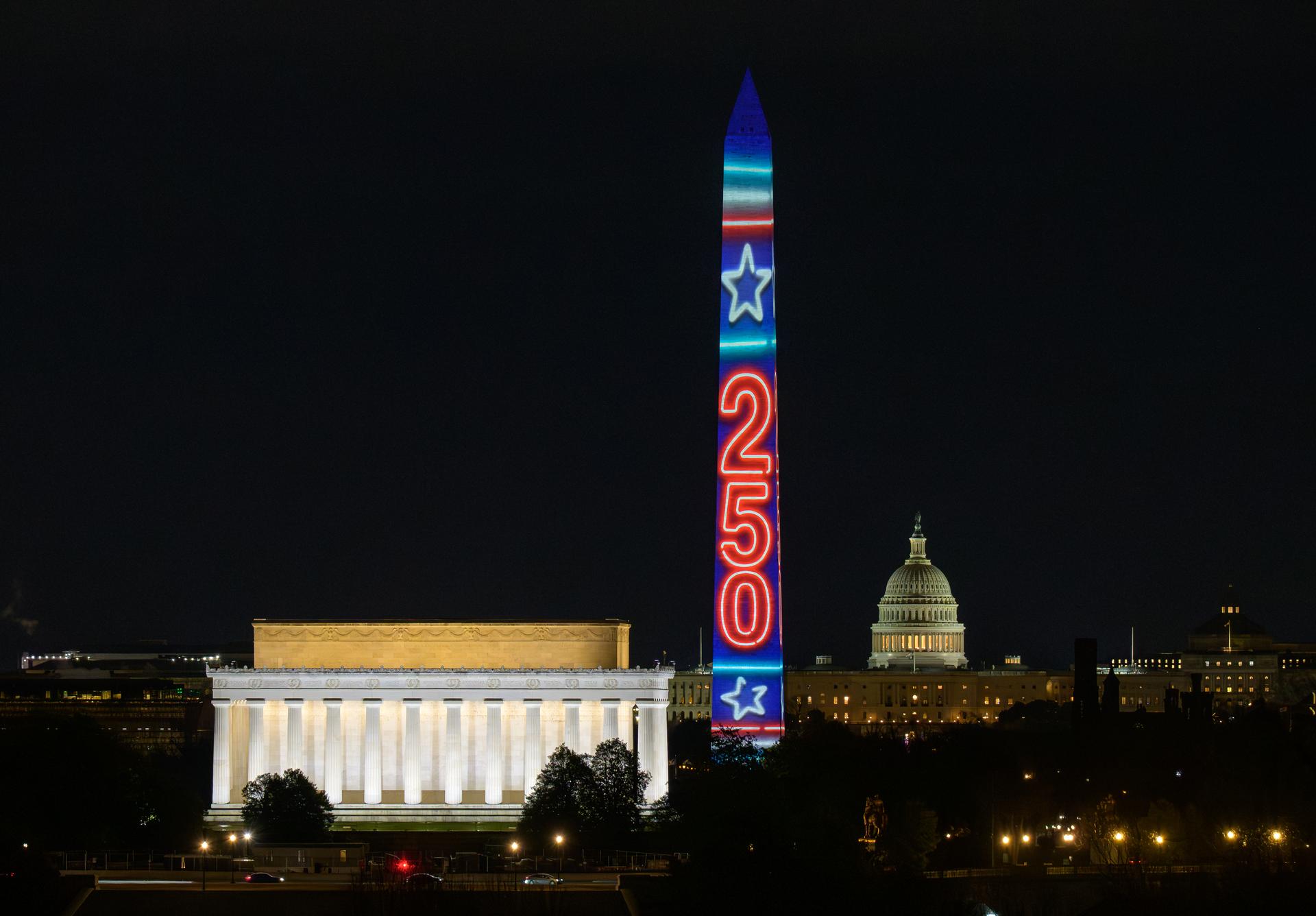
The Washington Monument is lit as part of an event to kick off the nation's 250th birthday year, Wednesday, Dec. 31, 2025, in Washington. Photo Credit: (NASA/Bill Ingalls)
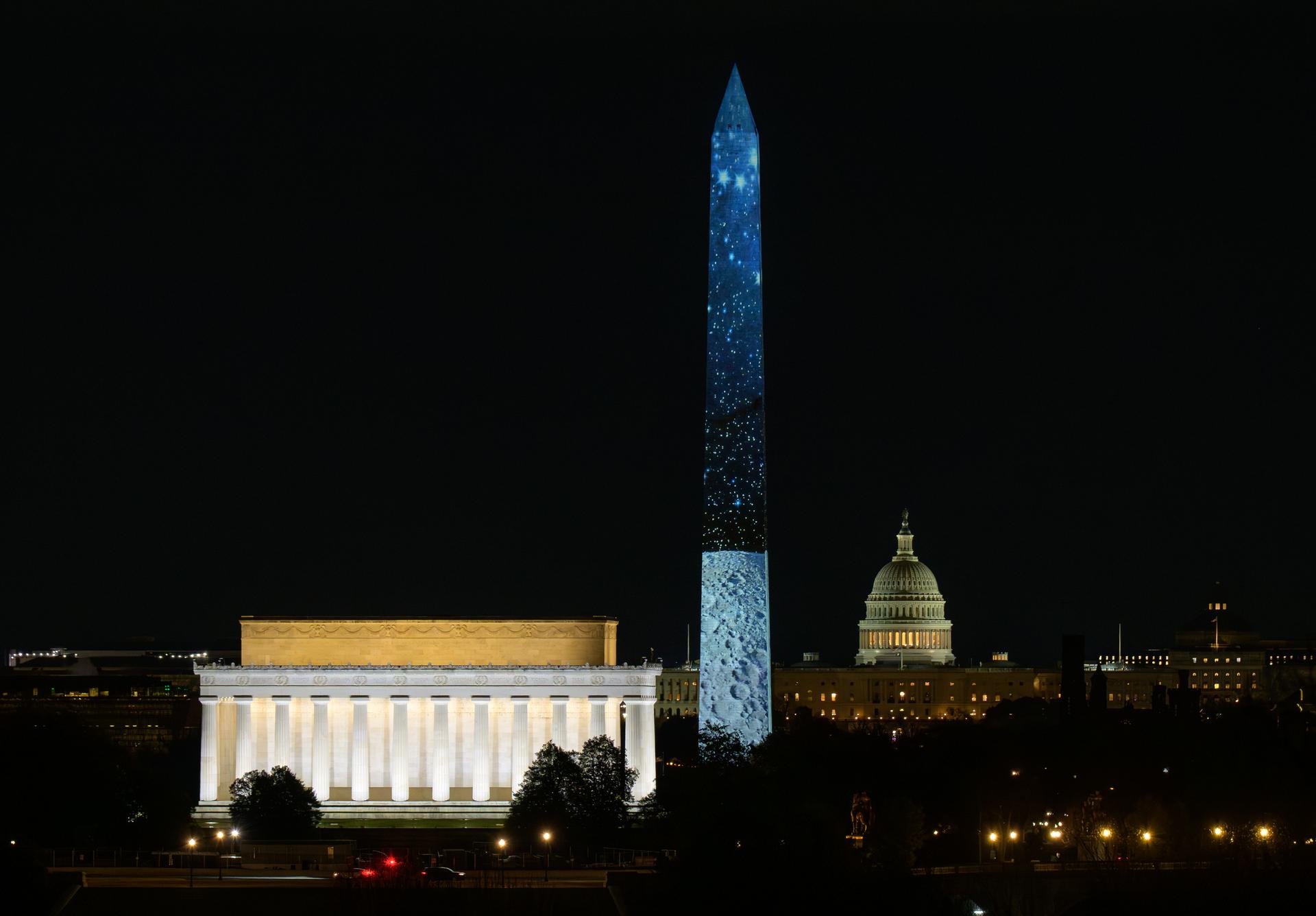
Images depicting NASA Moon missions are projected onto the Washington Monument as part of an event to kick off the nation's 250th birthday year, Wednesday, Dec. 31, 2025, in Washington. Photo Credit: (NASA/Bill Ingalls)
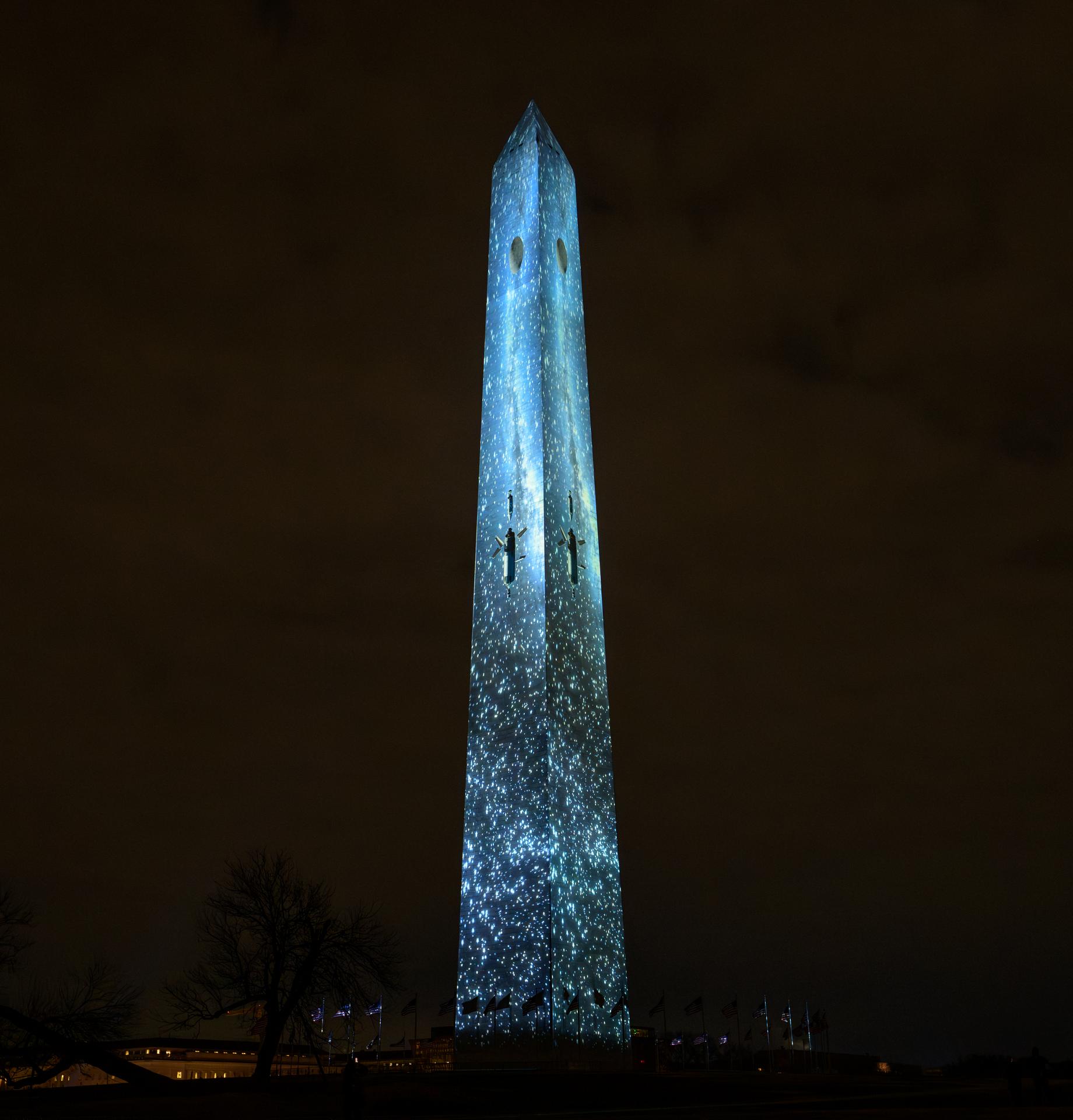
Images depicting NASA missions are projected onto the Washington Monument as part of an event to kick off the nation's 250th birthday year, Wednesday, Dec. 31, 2025, in Washington. Photo Credit: (NASA/Bill Ingalls)
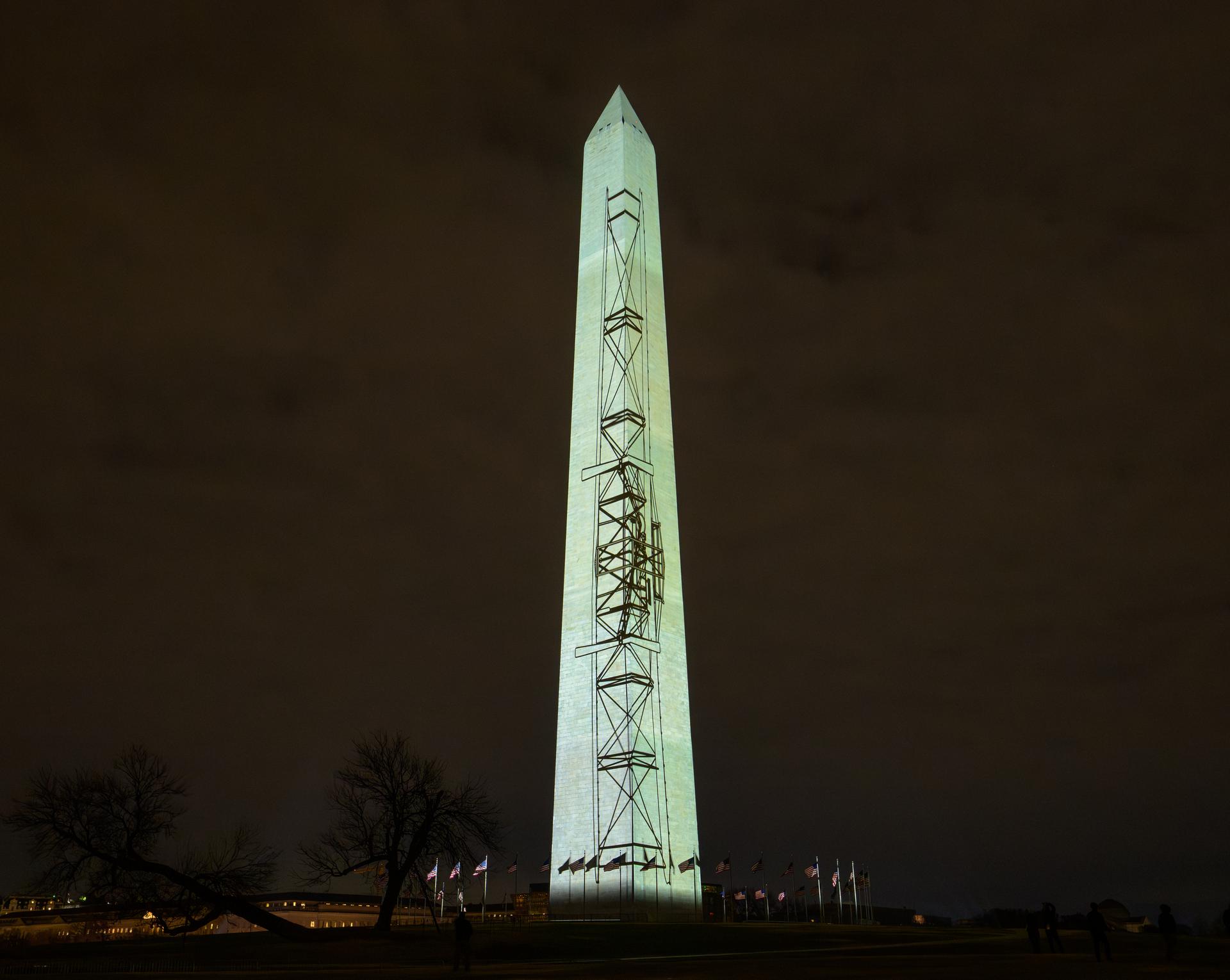
Images depicting the Wright brothers aircraft are projected onto the Washington Monument as part of an event to kick off the nation's 250th birthday year, Wednesday, Dec. 31, 2025, in Washington. Photo Credit: (NASA/Bill Ingalls)
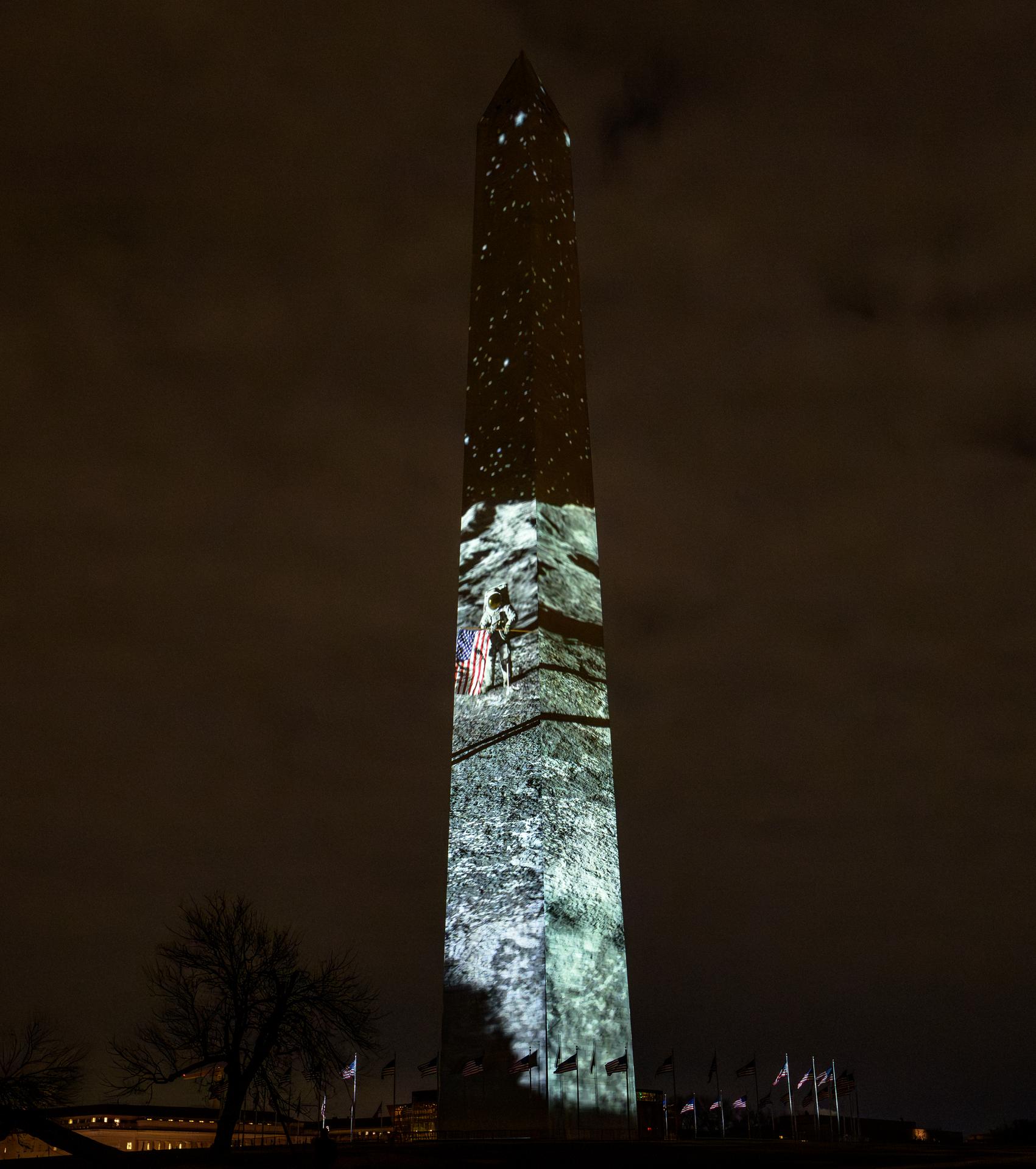
Images depicting NASA Apollo Moon missions are projected onto the Washington Monument as part of an event to kick off the nation's 250th birthday year, Wednesday, Dec. 31, 2025, in Washington. Photo Credit: (NASA/Bill Ingalls)
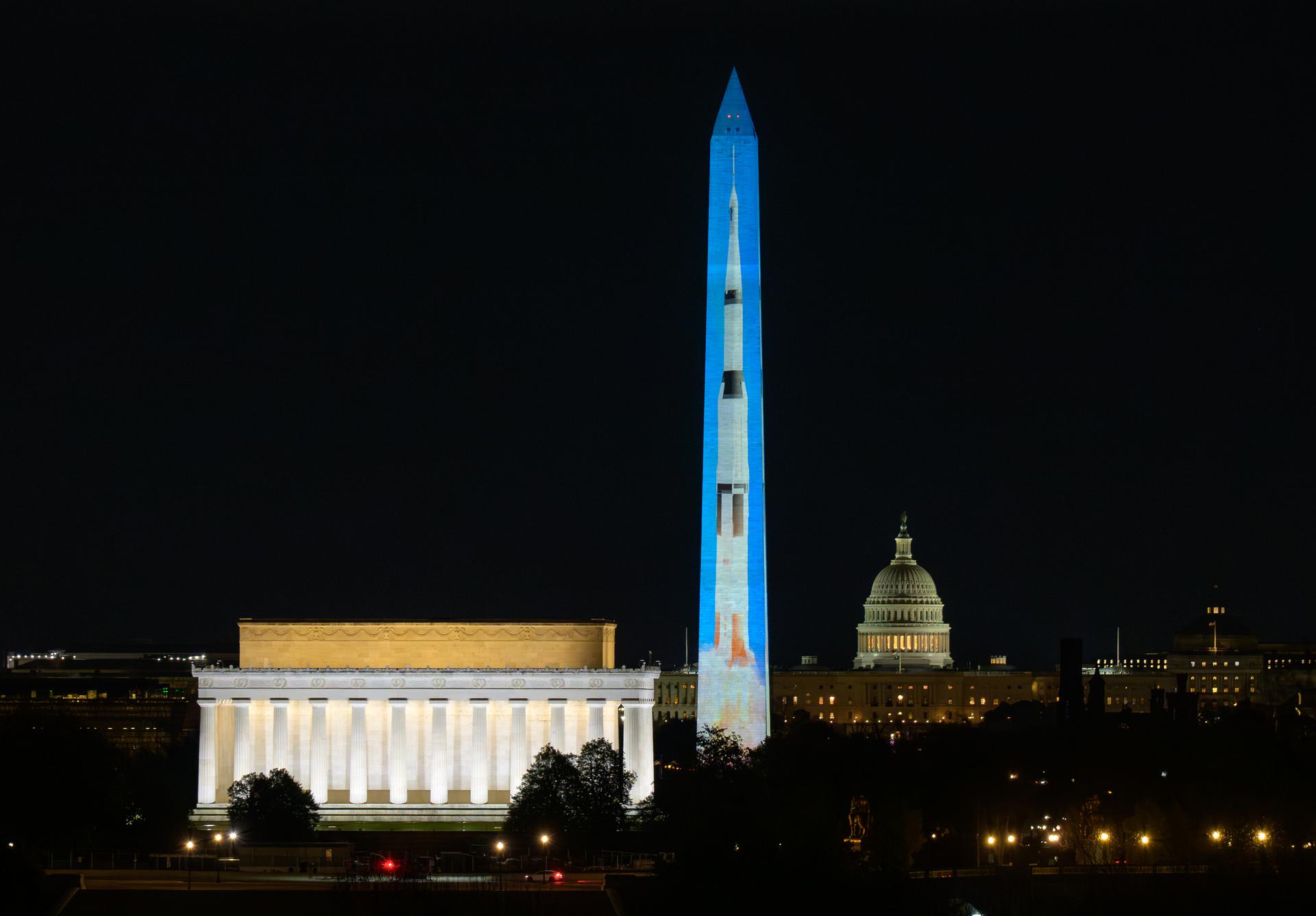
Images depicting NASA’s Saturn V Rocket are projected onto the Washington Monument as part of an event to kick off the nation's 250th birthday year, Wednesday, Dec. 31, 2025, in Washington. Photo Credit: (NASA/Bill Ingalls)
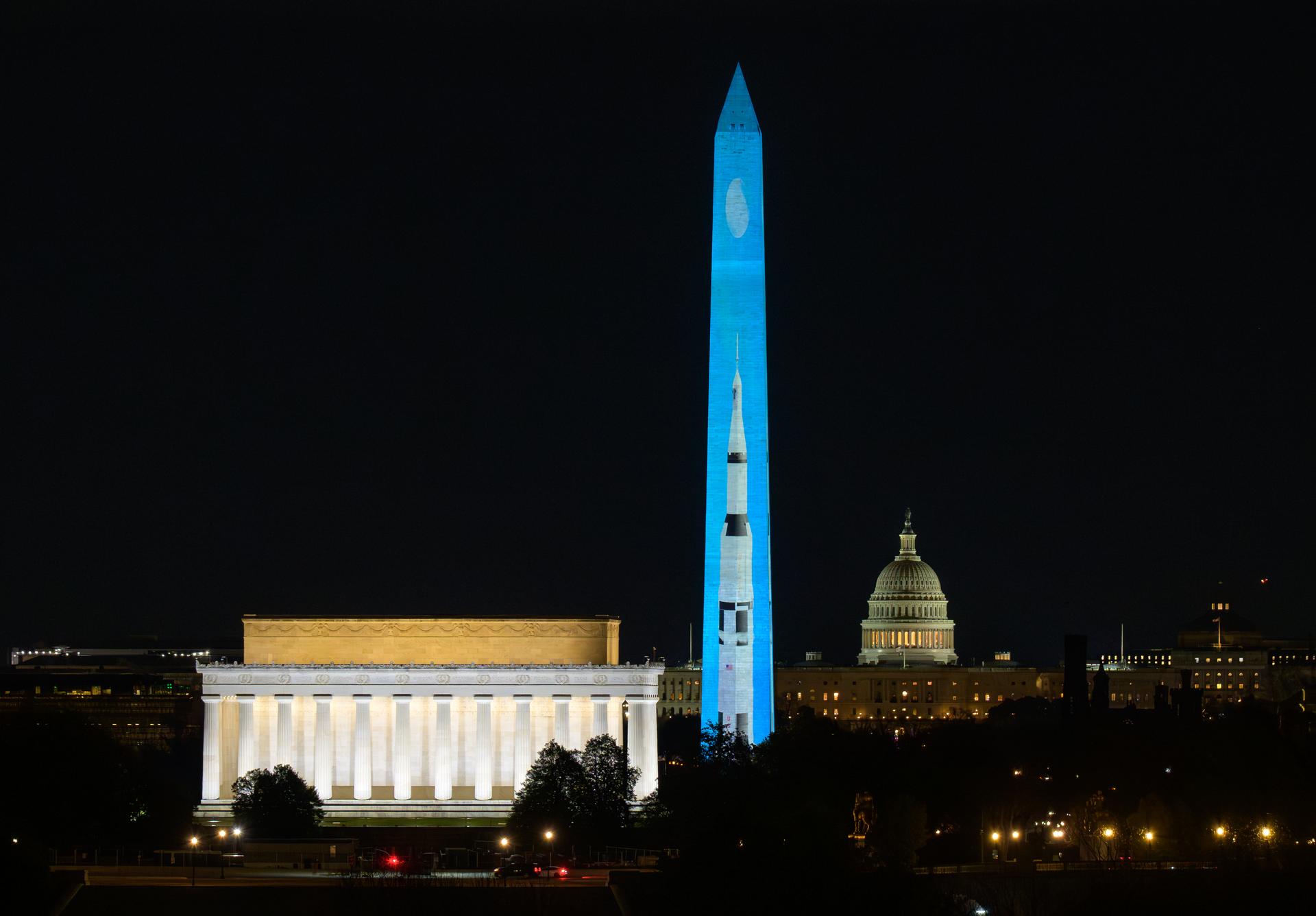
Images depicting NASA’s Saturn V Rocket are projected onto the Washington Monument as part of an event to kick off the nation's 250th birthday year, Wednesday, Dec. 31, 2025, in Washington. Photo Credit: (NASA/Bill Ingalls)
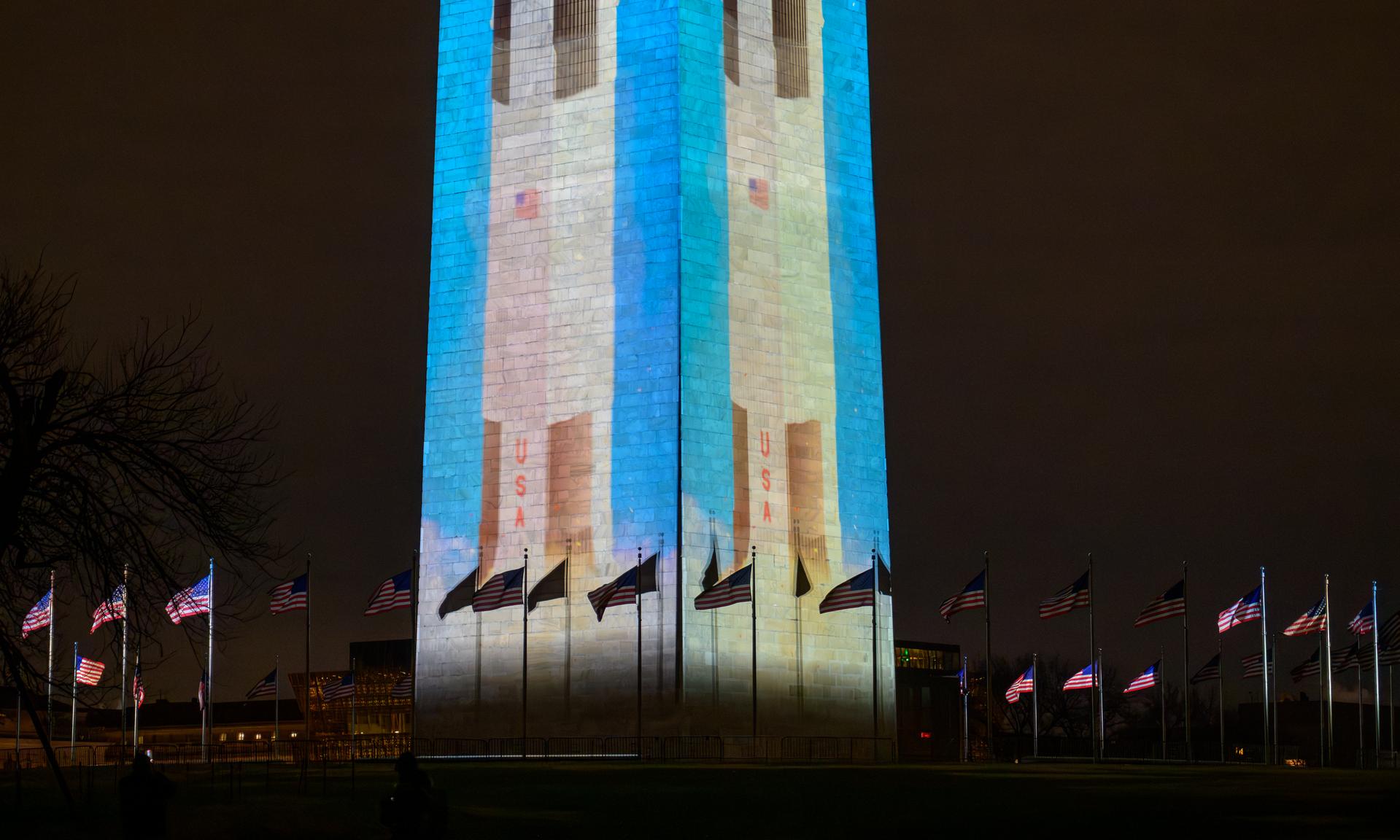
Images depicting NASA’s Saturn V Rocket are projected onto the Washington Monument as part of an event to kick off the nation's 250th birthday year, Wednesday, Dec. 31, 2025, in Washington. Photo Credit: (NASA/Bill Ingalls)
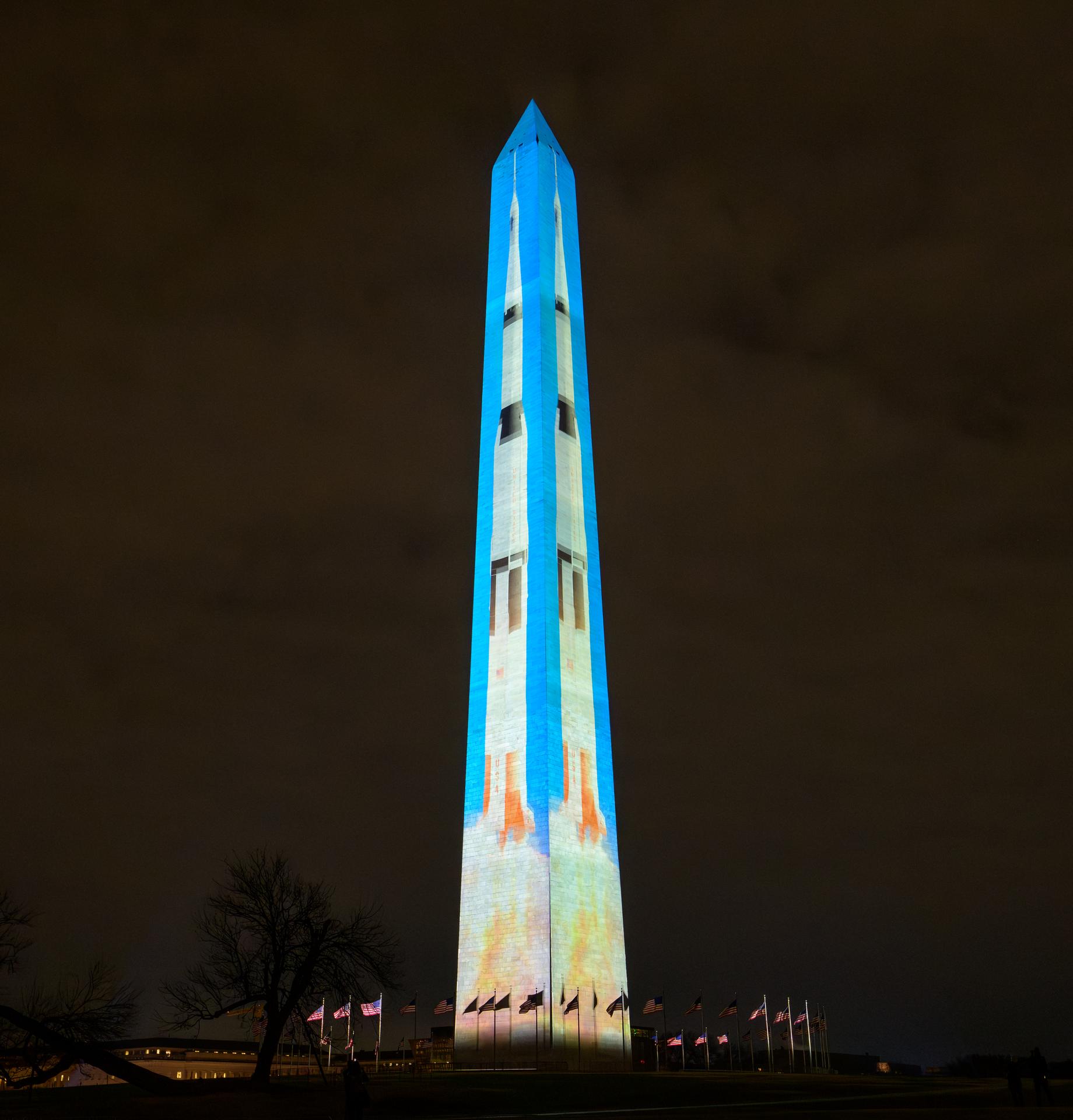
Images depicting NASA’s Saturn V Rocket are projected onto the Washington Monument as part of an event to kick off the nation's 250th birthday year, Wednesday, Dec. 31, 2025, in Washington. Photo Credit: (NASA/Bill Ingalls)
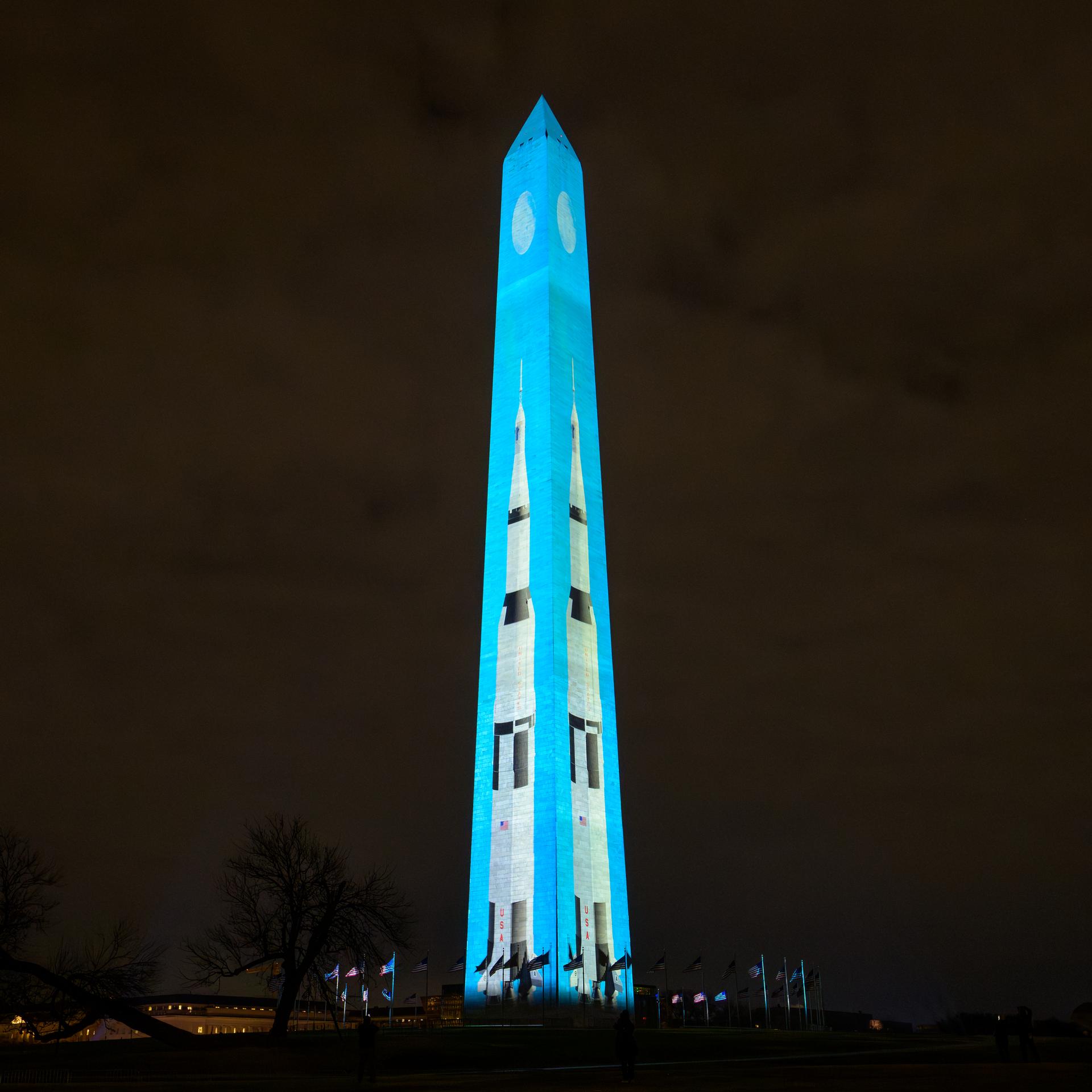
Images depicting NASA’s Saturn V Rocket are projected onto the Washington Monument as part of an event to kick off the nation's 250th birthday year, Wednesday, Dec. 31, 2025, in Washington. Photo Credit: (NASA/Bill Ingalls)
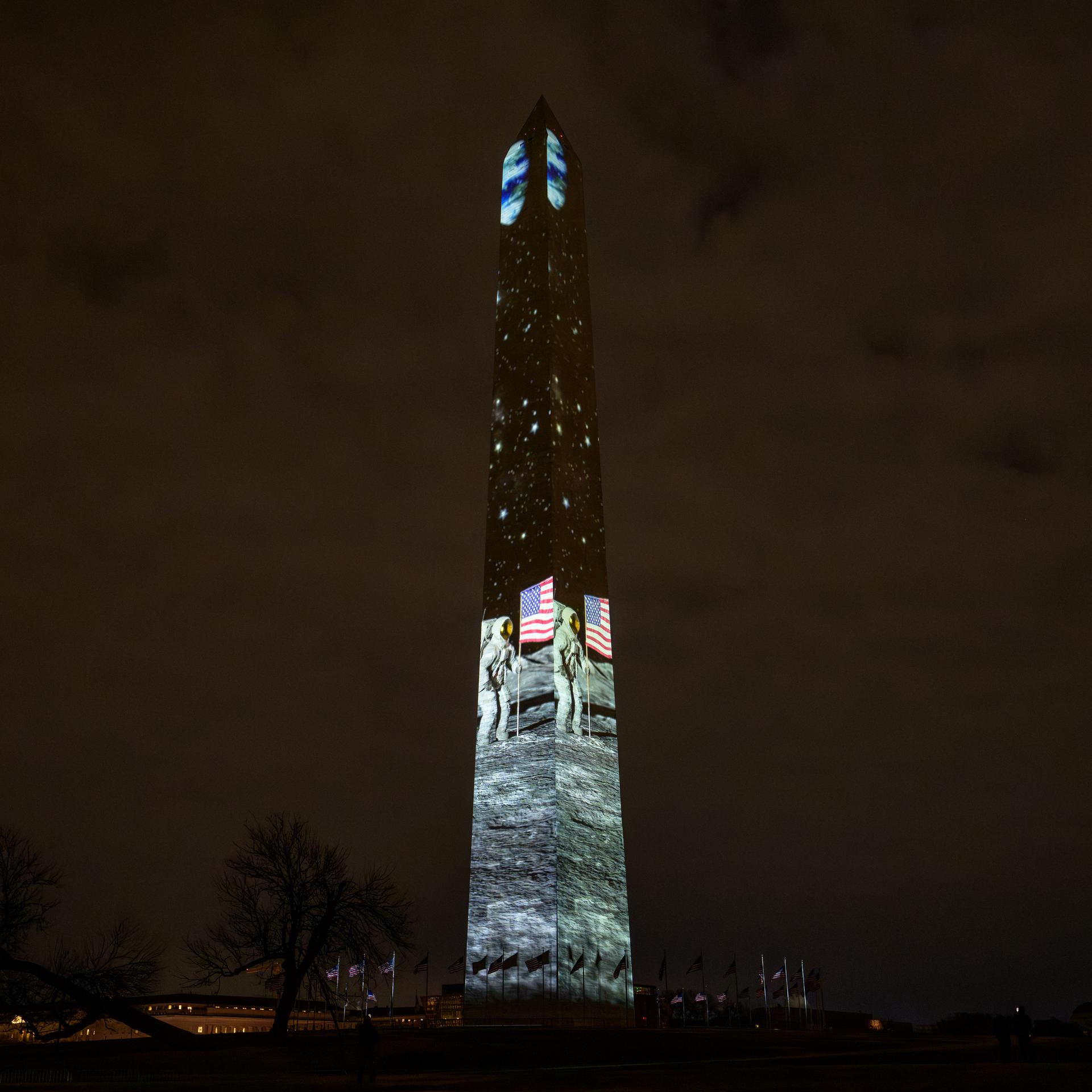
Images depicting NASA Apollo Moon missions are projected onto Washington Monument as part of an event to kick off the nation's 250th birthday year, Wednesday, Dec. 31, 2025, in Washington. Photo Credit: (NASA/Bill Ingalls)
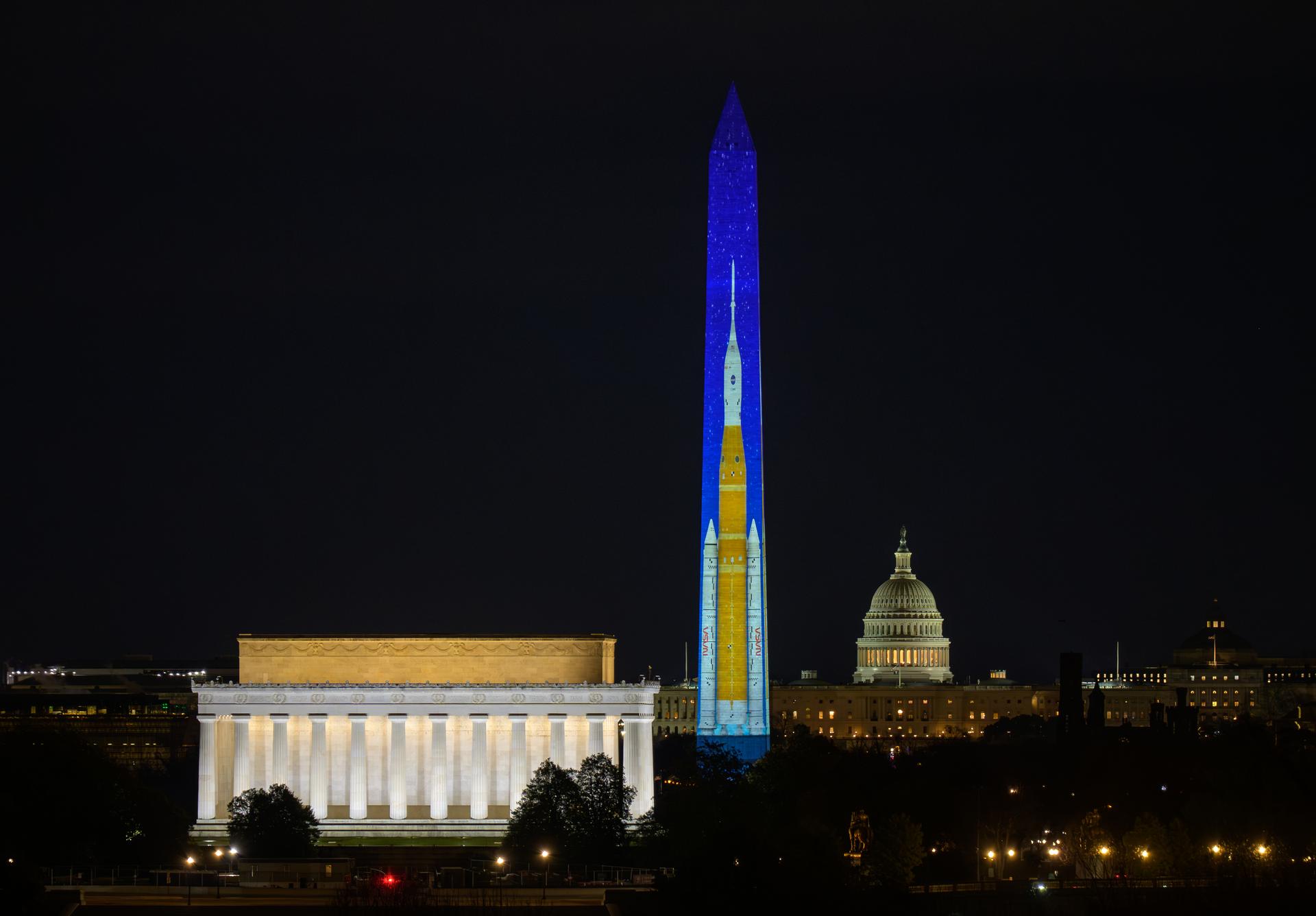
Images depicting NASA’s Space Launch System (SLS) rocket are projected onto the Washington Monument as part of an event to kick off the nation's 250th birthday year, Wednesday, Dec. 31, 2025, in Washington. Photo Credit: (NASA/Bill Ingalls)
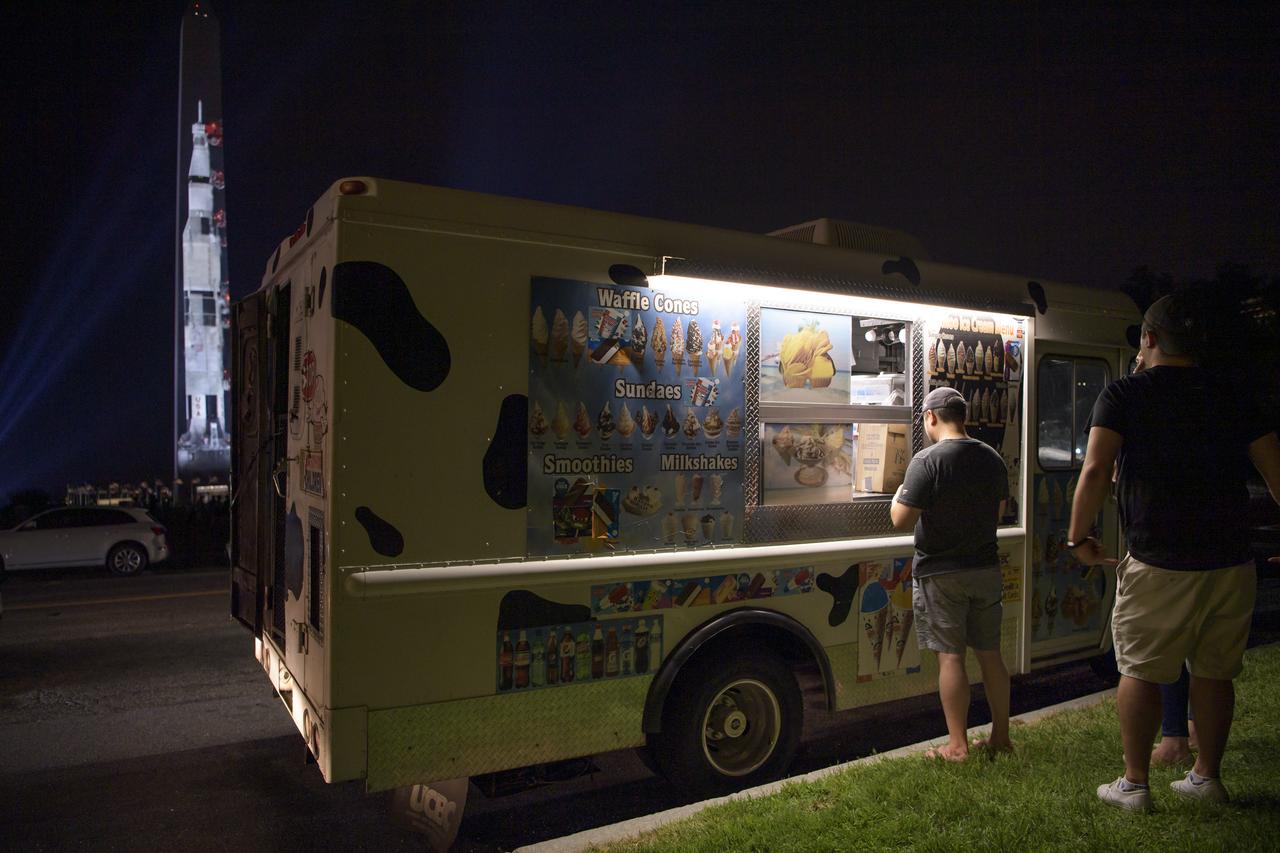
A full-sized, 363-foot Saturn V rocket is projected onto the east face of the Washington Monument 50 years to the day after astronauts Neil Armstrong, Michael Collins, and Buzz Aldrin launched on Apollo 11, the first mission to land astronauts on the Moon, Tuesday, July 16, 2019. On Friday, July 19, and Saturday, July 20, a special 17-minute show, “Apollo 50: Go for the Moon” will combine full-motion projection-mapping artwork on the monument and archival footage to recreate the launch of Apollo 11 and tell the story of the first moon landing. Photo Credit: (NASA/Bill Ingalls)
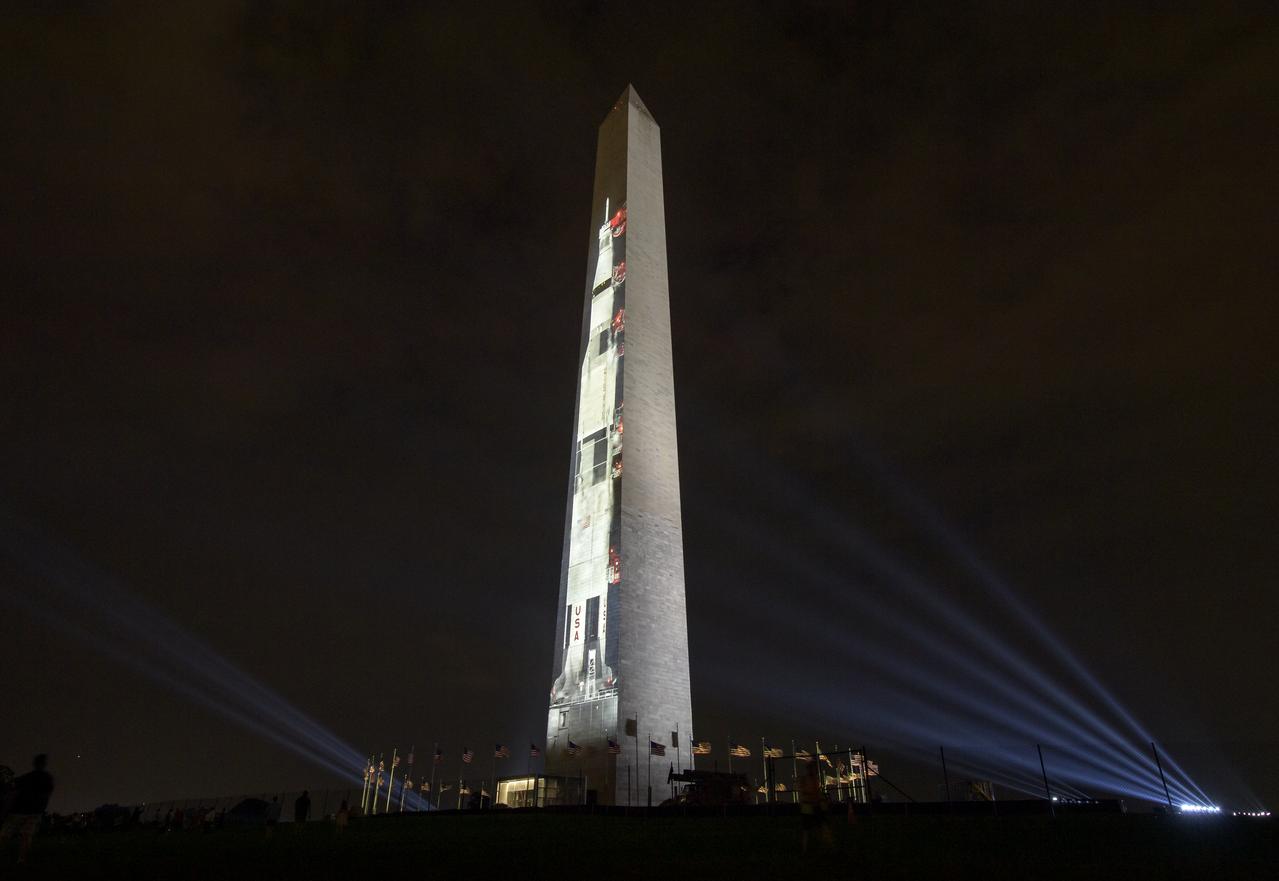
A full-sized, 363-foot Saturn V rocket is projected onto the east face of the Washington Monument 50 years to the day after astronauts Neil Armstrong, Michael Collins, and Buzz Aldrin launched on Apollo 11, the first mission to land astronauts on the Moon, Tuesday, July 16, 2019. On Friday, July 19, and Saturday, July 20, a special 17-minute show, “Apollo 50: Go for the Moon” will combine full-motion projection-mapping artwork on the monument and archival footage to recreate the launch of Apollo 11 and tell the story of the first moon landing. Photo Credit: (NASA/Bill Ingalls)
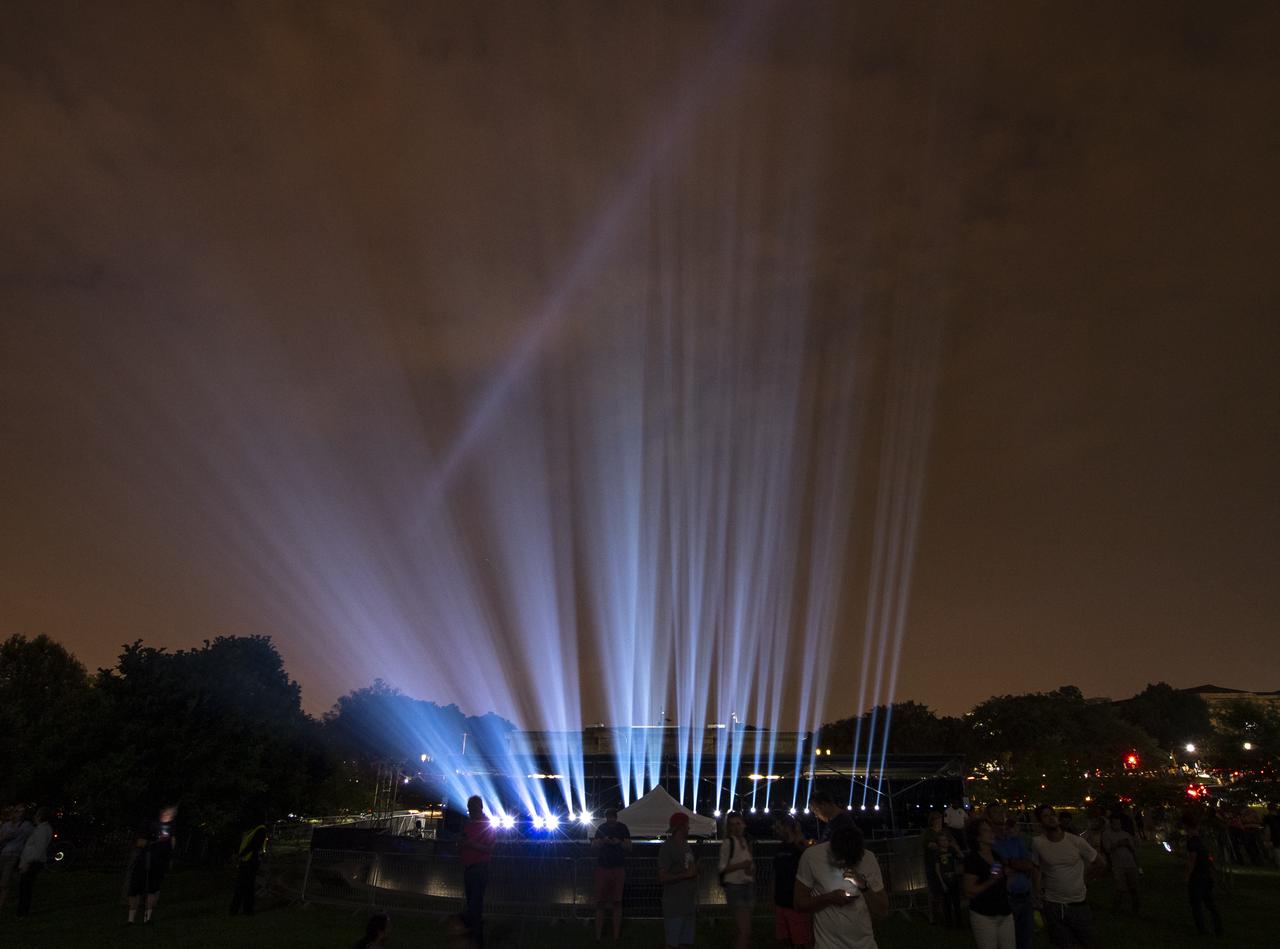
Projectors used to display a full-sized, 363-foot Saturn V rocket at the Washington Monument are seen 50 years to the day after astronauts Neil Armstrong, Michael Collins, and Buzz Aldrin launched on Apollo 11, the first mission to land astronauts on the Moon, Tuesday, July 16, 2019. On Friday, July 19, and Saturday, July 20, a special 17-minute show, “Apollo 50: Go for the Moon” will combine full-motion projection-mapping artwork on the monument and archival footage to recreate the launch of Apollo 11 and tell the story of the first moon landing. Photo Credit: (NASA/Bill Ingalls)
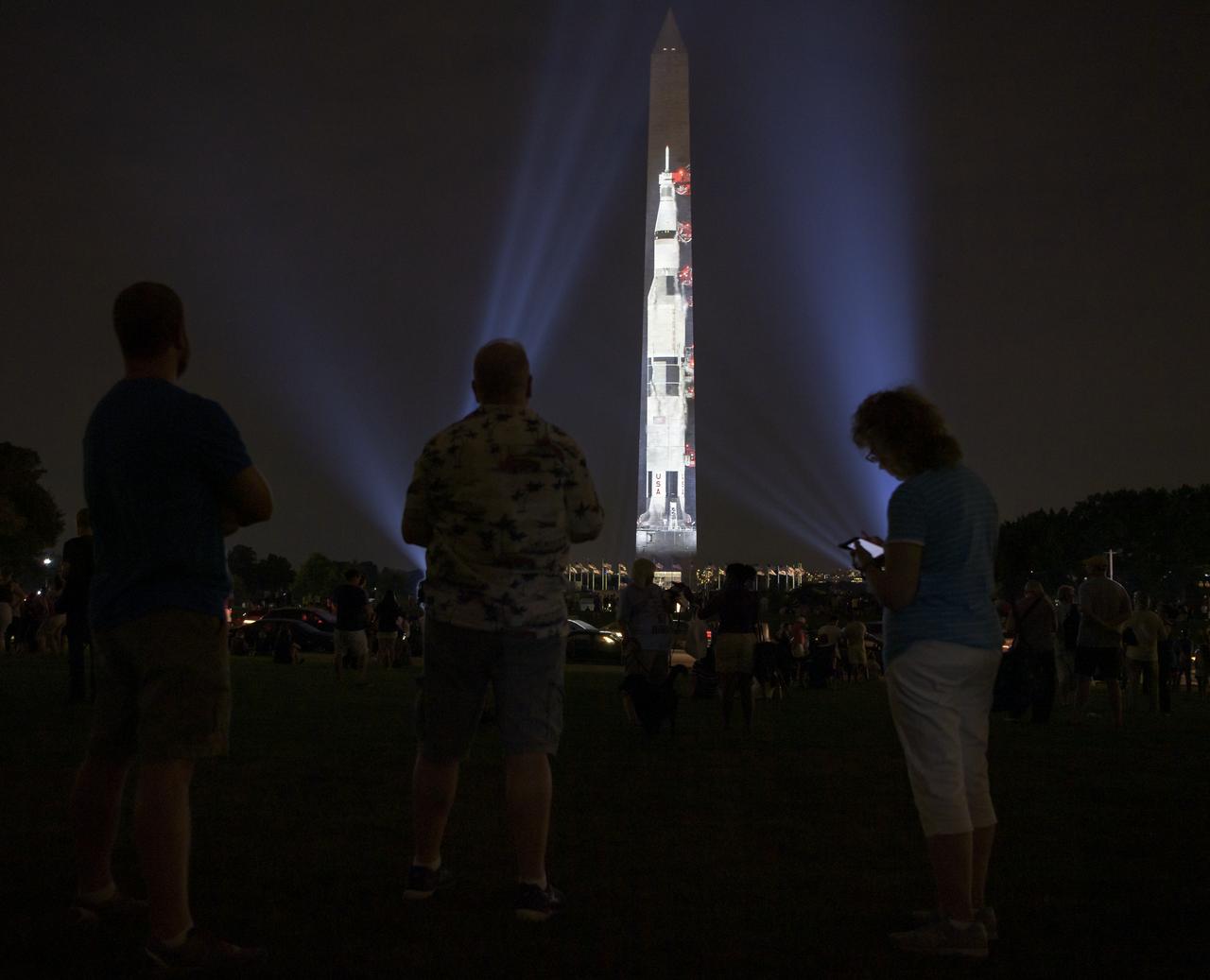
A full-sized, 363-foot Saturn V rocket is projected onto the east face of the Washington Monument 50 years to the day after astronauts Neil Armstrong, Michael Collins, and Buzz Aldrin launched on Apollo 11, the first mission to land astronauts on the Moon, Tuesday, July 16, 2019. On Friday, July 19, and Saturday, July 20, a special 17-minute show, “Apollo 50: Go for the Moon” will combine full-motion projection-mapping artwork on the monument and archival footage to recreate the launch of Apollo 11 and tell the story of the first moon landing. Photo Credit: (NASA/Bill Ingalls)
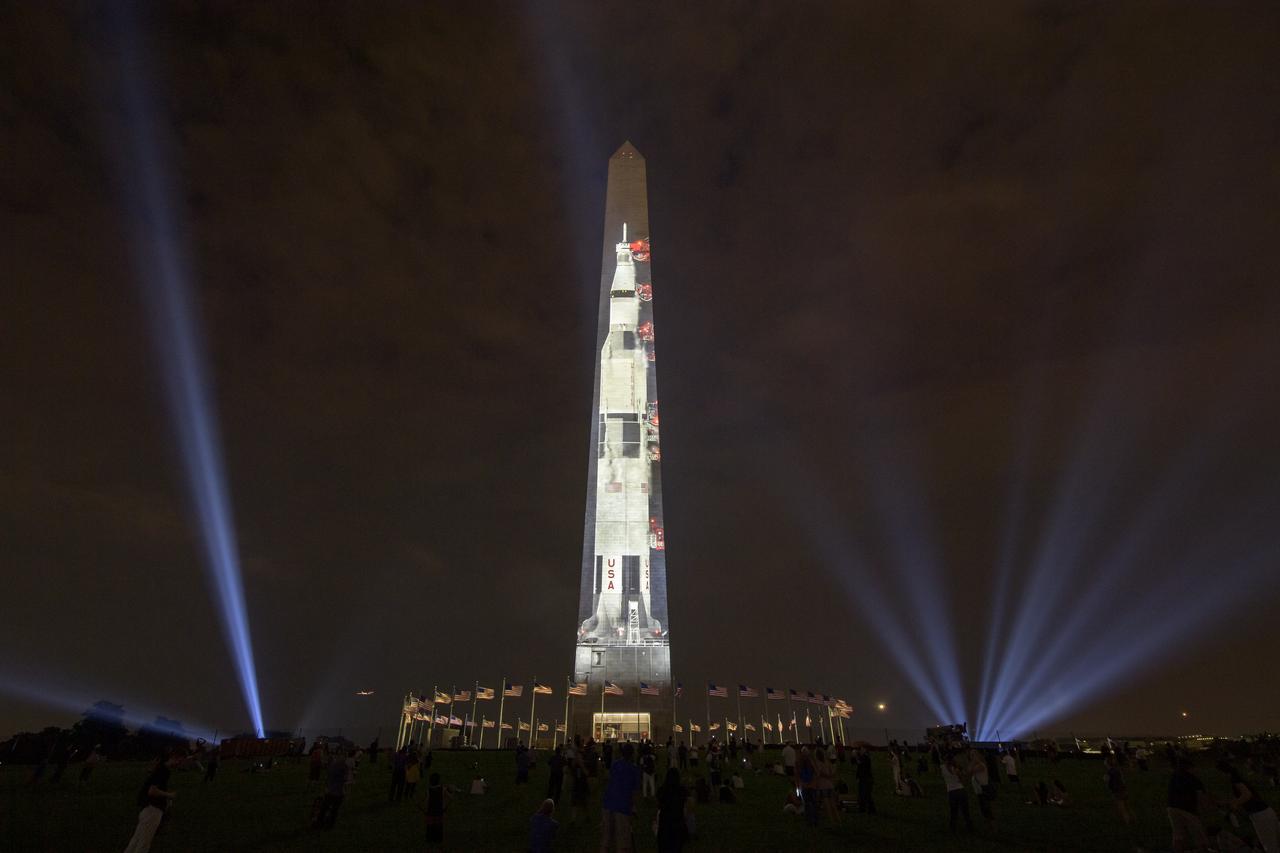
A full-sized, 363-foot Saturn V rocket is projected onto the east face of the Washington Monument 50 years to the day after astronauts Neil Armstrong, Michael Collins, and Buzz Aldrin launched on Apollo 11, the first mission to land astronauts on the Moon, Tuesday, July 16, 2019. On Friday, July 19, and Saturday, July 20, a special 17-minute show, “Apollo 50: Go for the Moon” will combine full-motion projection-mapping artwork on the monument and archival footage to recreate the launch of Apollo 11 and tell the story of the first moon landing. Photo Credit: (NASA/Bill Ingalls)
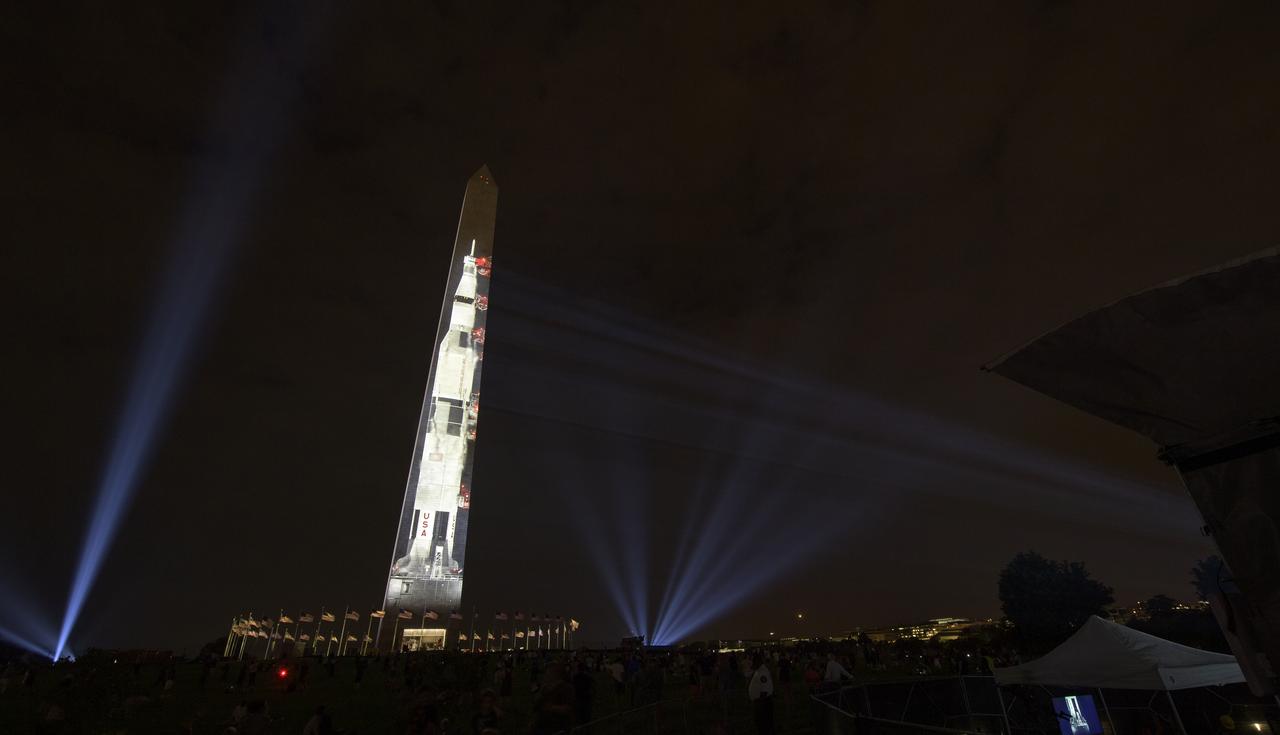
A full-sized, 363-foot Saturn V rocket is projected onto the east face of the Washington Monument 50 years to the day after astronauts Neil Armstrong, Michael Collins, and Buzz Aldrin launched on Apollo 11, the first mission to land astronauts on the Moon, Tuesday, July 16, 2019. On Friday, July 19, and Saturday, July 20, a special 17-minute show, “Apollo 50: Go for the Moon” will combine full-motion projection-mapping artwork on the monument and archival footage to recreate the launch of Apollo 11 and tell the story of the first moon landing. Photo Credit: (NASA/Bill Ingalls)
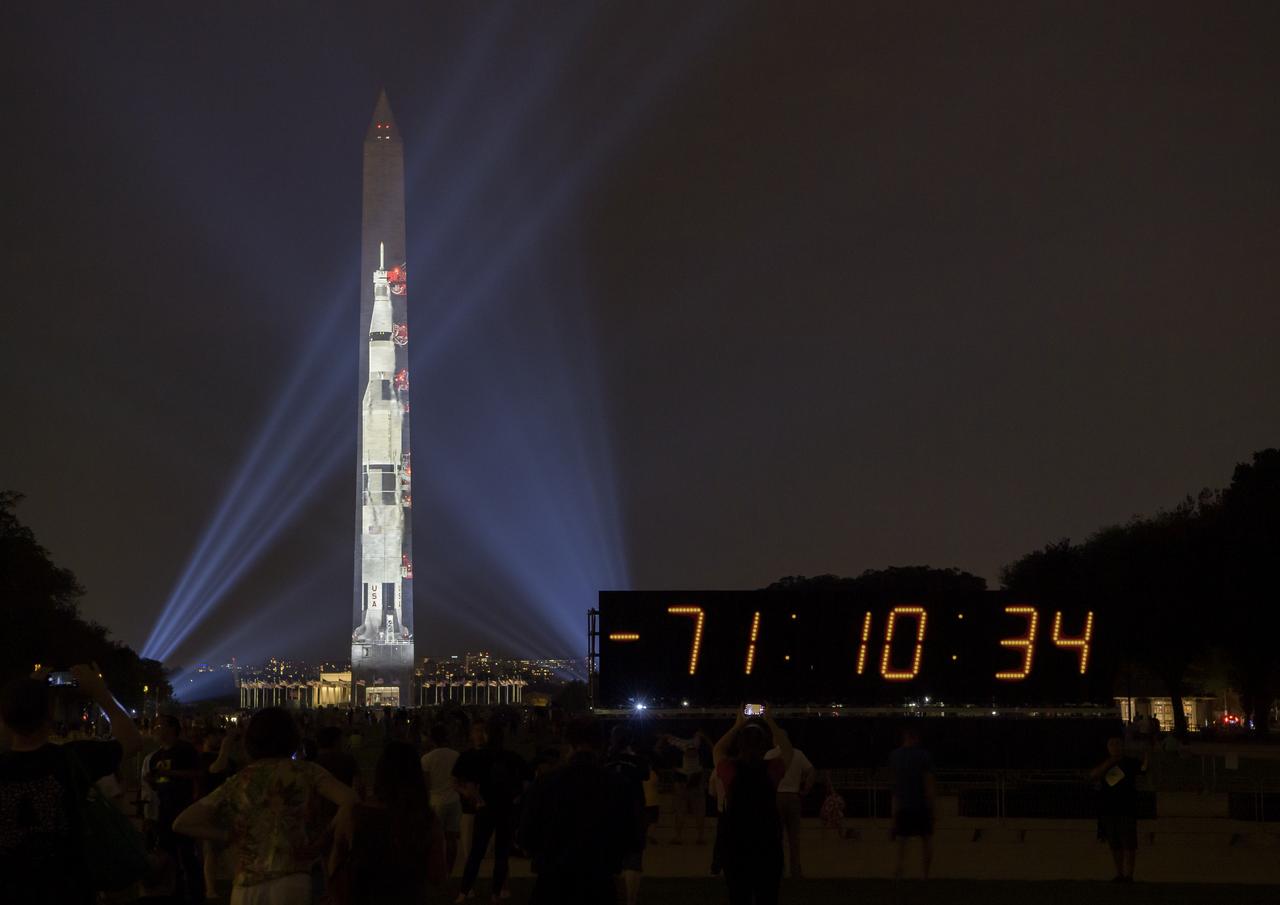
A full-sized, 363-foot Saturn V rocket is projected onto the east face of the Washington Monument 50 years to the day after astronauts Neil Armstrong, Michael Collins, and Buzz Aldrin launched on Apollo 11, the first mission to land astronauts on the Moon, Tuesday, July 16, 2019. On Friday, July 19, and Saturday, July 20, a special 17-minute show, “Apollo 50: Go for the Moon” will combine full-motion projection-mapping artwork on the monument and archival footage to recreate the launch of Apollo 11 and tell the story of the first moon landing. Photo Credit: (NASA/Bill Ingalls)
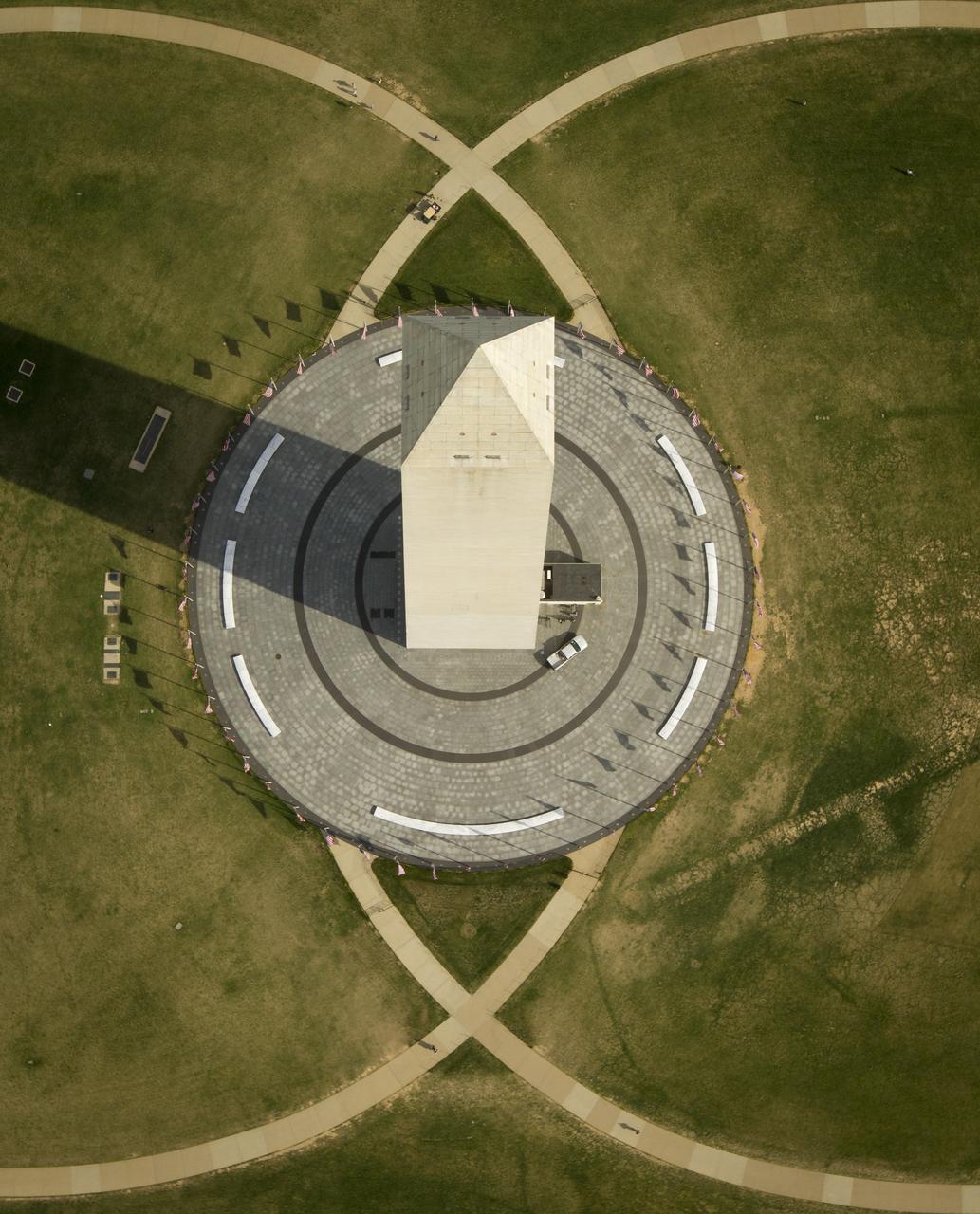
Aerial view of the Washington Monument on Thursday, April 5, 2012 in Washington. Photo Credit: (NASA/Bill Ingalls)

The Apollo 1 monument at Arlington National Cemetery is seen following its dedication, Thursday, June 2, 2022, in Arlington, Va. The monument honors and memorializes the Apollo 1 crew of Virgil I. “Gus” Grissom, Edward H. White II, and Roger B. Chaffee. Photo Credit: (NASA/Bill Ingalls)

The Apollo 1 monument is seen at Arlington National Cemetery, Thursday, June 2, 2022, in Arlington, Va. The monument honors and memorializes the Apollo 1 crew of Virgil I. “Gus” Grissom, Edward H. White II, and Roger B. Chaffee. Photo Credit: (NASA/Bill Ingalls)
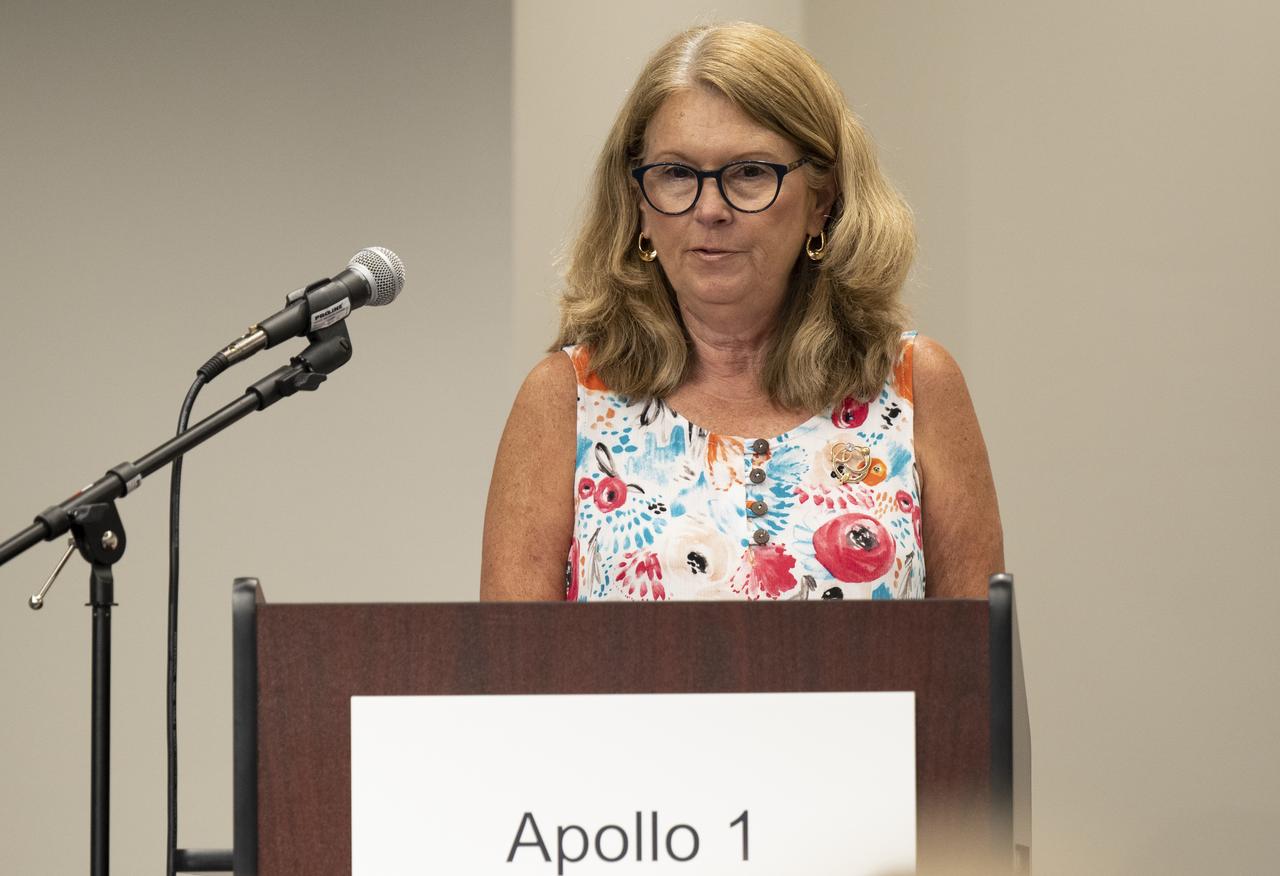
Sheryl Chaffee, daughter of Apollo 1 astronaut Roger B. Chaffee, delivers remarks at a reception following the dedication of the Apollo 1 monument, Thursday, June 2, 2022, in the Reception Hall of the Military Women’s Memorial at Arlington National Cemetery in Arlington, Va. The monument honors and memorializes the Apollo 1 crew of Virgil I. “Gus” Grissom, Edward H. White II, and Roger B. Chaffee. Photo Credit: (NASA/Bill Ingalls)

Lance Bush, President and CEO of the Challenge Center, delivers remarks at a reception following the dedication of the Apollo 1 monument, Thursday, June 2, 2022, in the Reception Hall of the Military Women’s Memorial at Arlington National Cemetery in Arlington, Va. The monument honors and memorializes the Apollo 1 crew of Virgil I. “Gus” Grissom, Edward H. White II, and Roger B. Chaffee. Photo Credit: (NASA/Bill Ingalls)

Family members of Apollo 1 astronaut Roger B. Chaffee are joined by NASA Administrator Bill Nelson as they place flowers at the Apollo 1 Monument during its dedication at Arlington National Cemetery, Thursday, June 2, 2022, in Arlington, Va. The monument honors and memorializes the Apollo 1 crew of Virgil I. “Gus” Grissom, Edward H. White II, and Roger B. Chaffee. Photo Credit: (NASA/Bill Ingalls)

Family members of Apollo 1 astronaut Edward H. White II are joined by NASA Administrator Bill Nelson as they place flowers at the Apollo 1 monument during its dedication at Arlington National Cemetery, Thursday, June 2, 2022, in Arlington, Va. The monument honors and memorializes the Apollo 1 crew of Virgil I. “Gus” Grissom, Edward H. White II, and Roger B. Chaffee. Photo Credit: (NASA/Bill Ingalls)

Eric Fanning, AIA President and CEO, delivers remarks at a reception following the dedication of the Apollo 1 monument, Thursday, June 2, 2022, in the Reception Hall of the Military Women’s Memorial at Arlington National Cemetery in Arlington, Va. The monument honors and memorializes the Apollo 1 crew of Virgil I. “Gus” Grissom, Edward H. White II, and Roger B. Chaffee. Photo Credit: (NASA/Bill Ingalls)
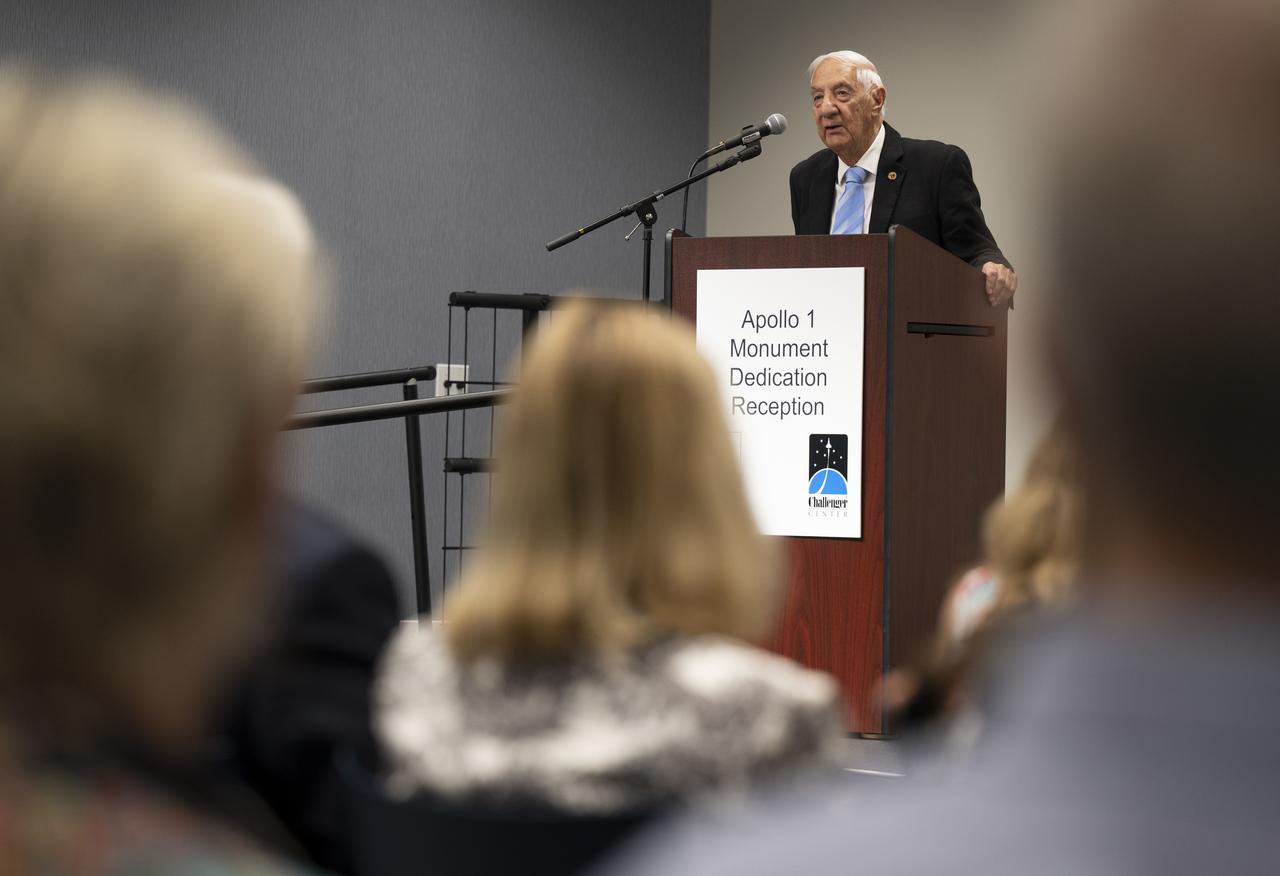
Lowell Grissom, brother of Apollo 1 astronaut Virgil I. “Gus” Grissom, delivers remarks at a reception following the dedication of the Apollo 1 monument, Thursday, June 2, 2022, in the Reception Hall of the Military Women’s Memorial at Arlington National Cemetery in Arlington, Va. The monument honors and memorializes the Apollo 1 crew of Virgil I. “Gus” Grissom, Edward H. White II, and Roger B. Chaffee. Photo Credit: (NASA/Bill Ingalls)

Family members of Apollo 1 astronaut Edward H. White II are joined by NASA Administrator Bill Nelson as they place flowers at the Apollo 1 monument during its dedication at Arlington National Cemetery, Thursday, June 2, 2022, in Arlington, Va. The monument honors and memorializes the Apollo 1 crew of Virgil I. “Gus” Grissom, Edward H. White II, and Roger B. Chaffee. Photo Credit: (NASA/Bill Ingalls)
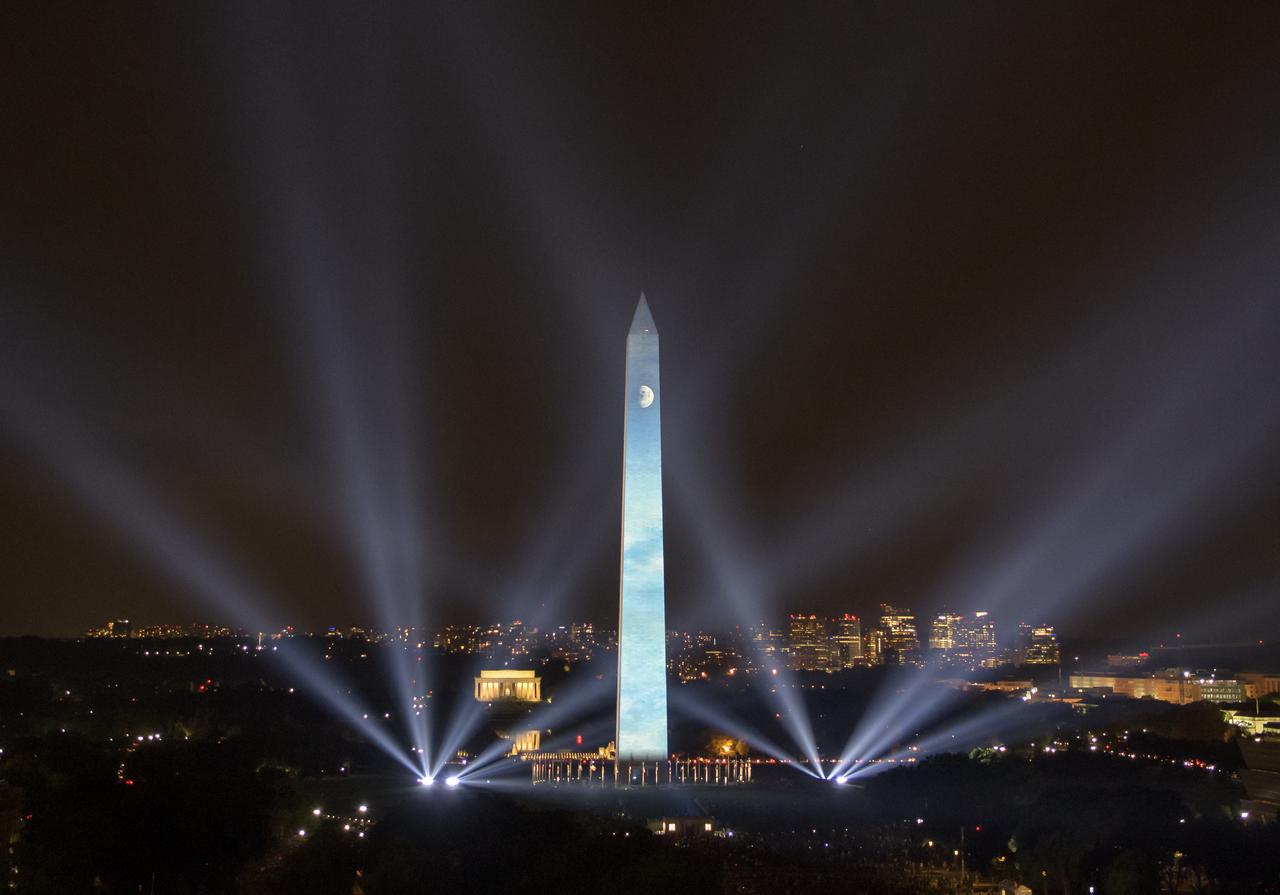
The 50 year anniversary of the Apollo 11 mission with NASA astronauts Neil Armstrong, Michael Collins, and Buzz Aldrin is celebrated in a 17-minute show, “Apollo 50: Go for the Moon”, by the Smithsonian’s National Air and Space Museum, which combined full-motion projection-mapping artwork on the Washington Monument and archival footage to recreate the launch of Apollo 11 and tell the story of the first moon landing, Friday, July 19, 2019 in Washington. Photo Credit: (NASA/Bill Ingalls)
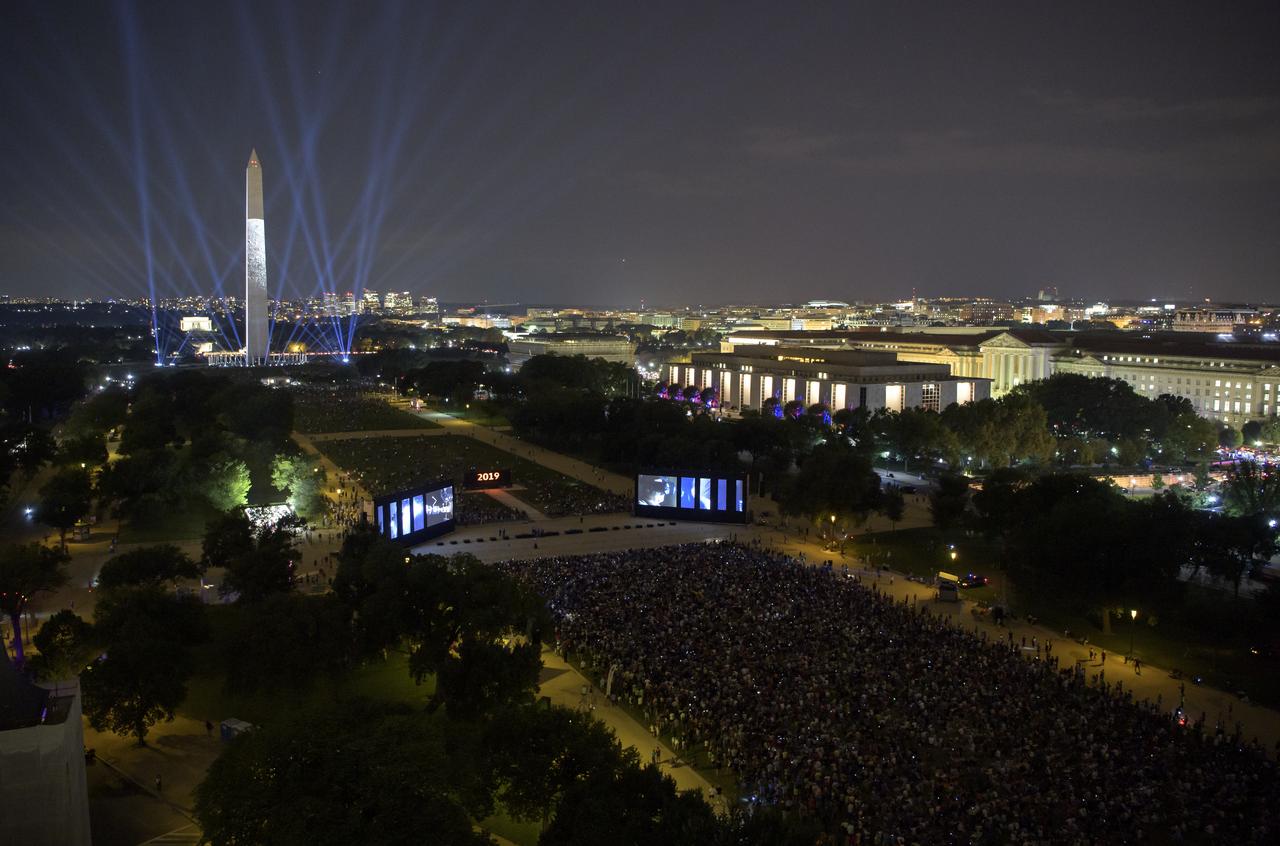
The 50 year anniversary of the Apollo 11 mission with NASA astronauts Neil Armstrong, Michael Collins, and Buzz Aldrin is celebrated in a 17-minute show, “Apollo 50: Go for the Moon”, by the Smithsonian’s National Air and Space Museum, which combined full-motion projection-mapping artwork on the Washington Monument and archival footage to recreate the launch of Apollo 11 and tell the story of the first moon landing, Friday, July 19, 2019 in Washington. Photo Credit: (NASA/Bill Ingalls)
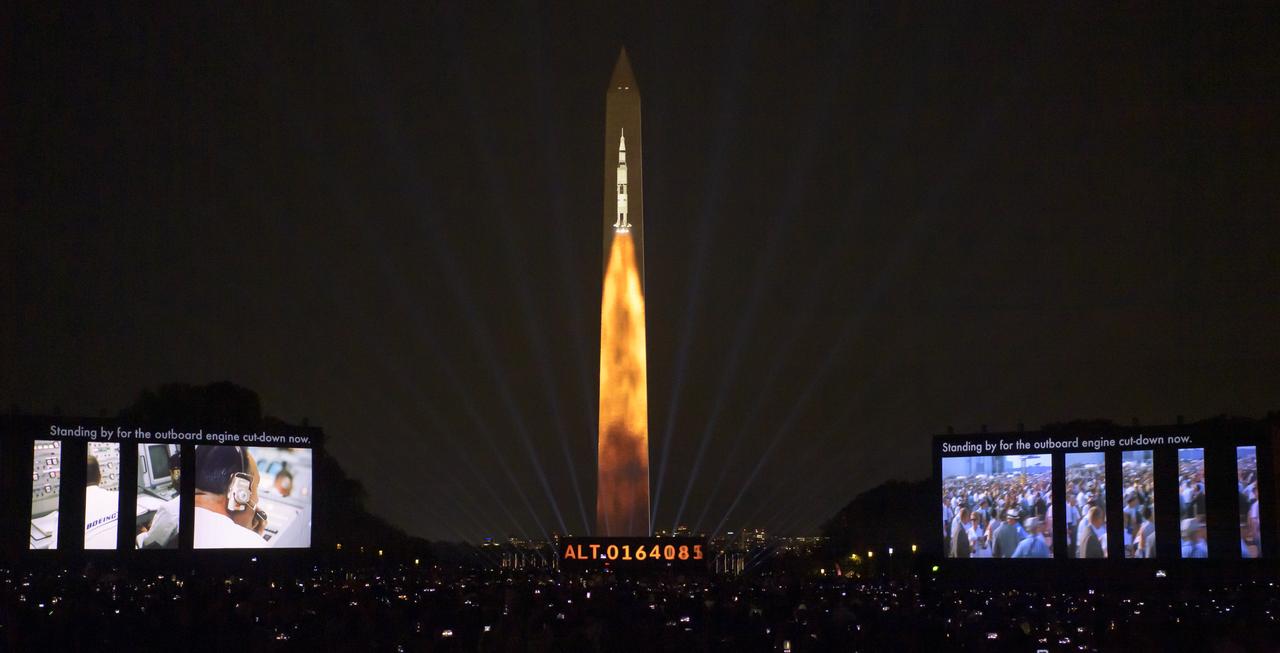
The 50 year anniversary of the Apollo 11 mission with NASA astronauts Neil Armstrong, Michael Collins, and Buzz Aldrin is celebrated in a 17-minute show, “Apollo 50: Go for the Moon”, by the Smithsonian’s National Air and Space Museum, which combined full-motion projection-mapping artwork on the Washington Monument and archival footage to recreate the launch of Apollo 11 and tell the story of the first moon landing, Friday, July 19, 2019 in Washington. Photo Credit: (NASA/Bill Ingalls)
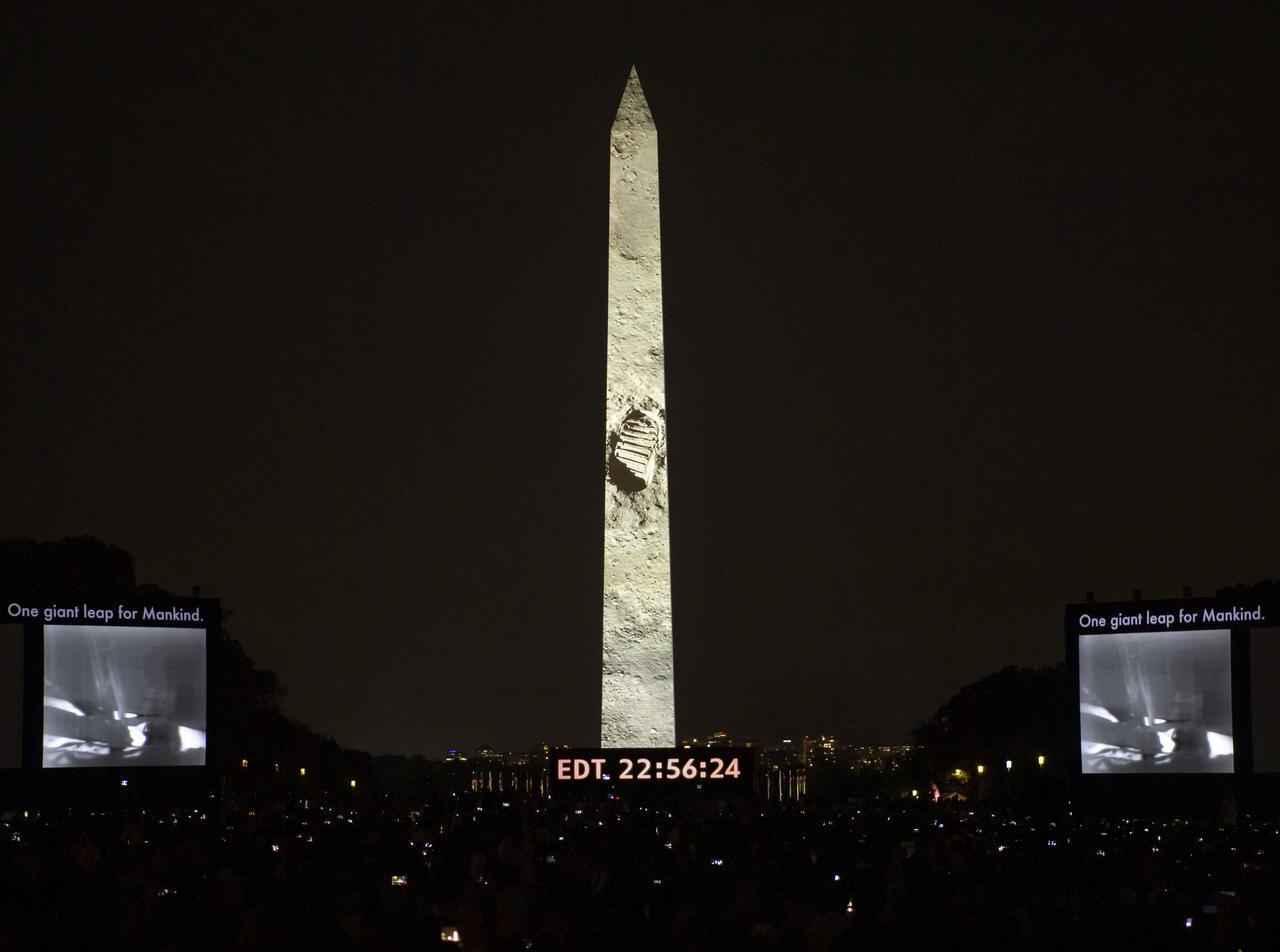
The 50 year anniversary of the Apollo 11 mission with NASA astronauts Neil Armstrong, Michael Collins, and Buzz Aldrin is celebrated in a 17-minute show, “Apollo 50: Go for the Moon”, by the Smithsonian’s National Air and Space Museum, which combined full-motion projection-mapping artwork on the Washington Monument and archival footage to recreate the launch of Apollo 11 and tell the story of the first moon landing, Friday, July 19, 2019 in Washington. Photo Credit: (NASA/Bill Ingalls)
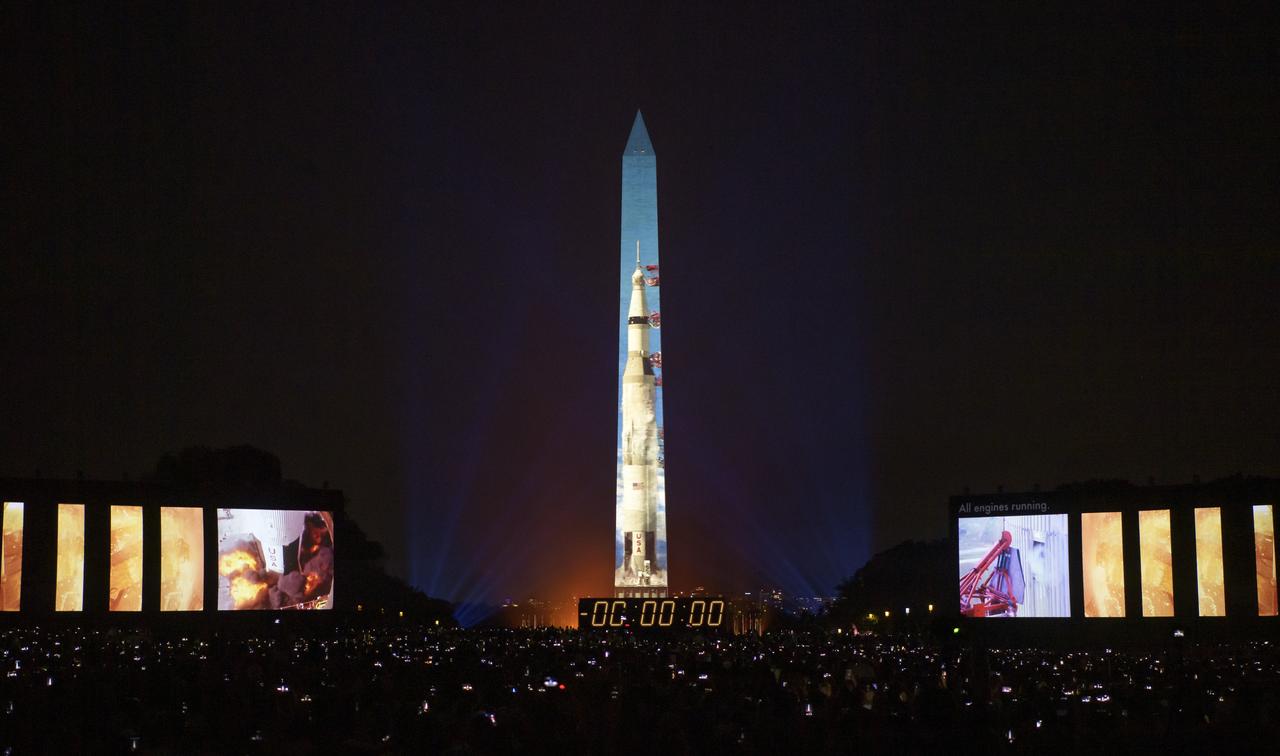
The 50 year anniversary of the Apollo 11 mission with NASA astronauts Neil Armstrong, Michael Collins, and Buzz Aldrin is celebrated in a 17-minute show, “Apollo 50: Go for the Moon”, by the Smithsonian’s National Air and Space Museum, which combined full-motion projection-mapping artwork on the Washington Monument and archival footage to recreate the launch of Apollo 11 and tell the story of the first moon landing, Friday, July 19, 2019 in Washington. Photo Credit: (NASA/Bill Ingalls)
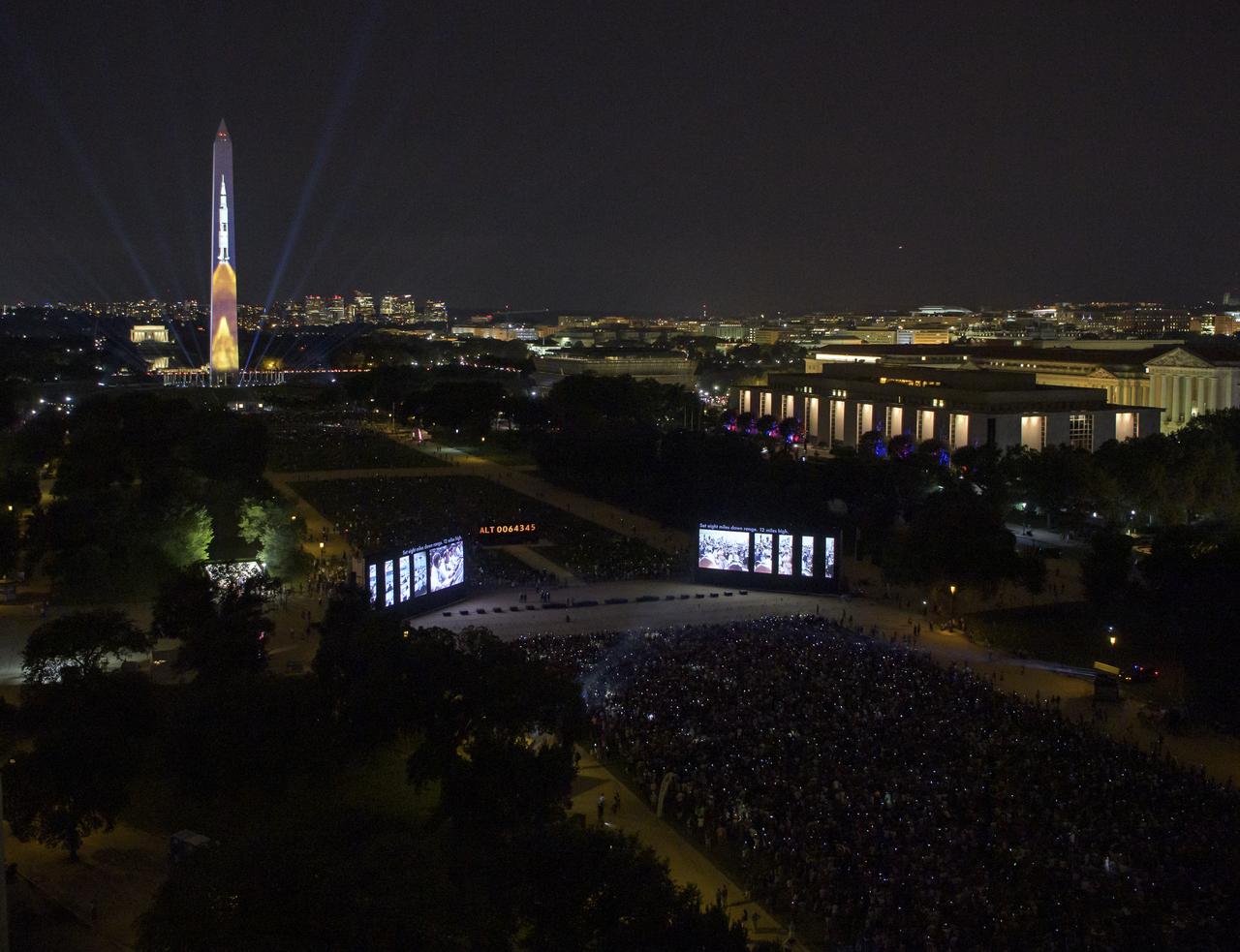
The 50 year anniversary of the Apollo 11 mission with NASA astronauts Neil Armstrong, Michael Collins, and Buzz Aldrin is celebrated in a 17-minute show, “Apollo 50: Go for the Moon”, by the Smithsonian’s National Air and Space Museum, which combined full-motion projection-mapping artwork on the Washington Monument and archival footage to recreate the launch of Apollo 11 and tell the story of the first moon landing, Friday, July 19, 2019 in Washington. Photo Credit: (NASA/Bill Ingalls)
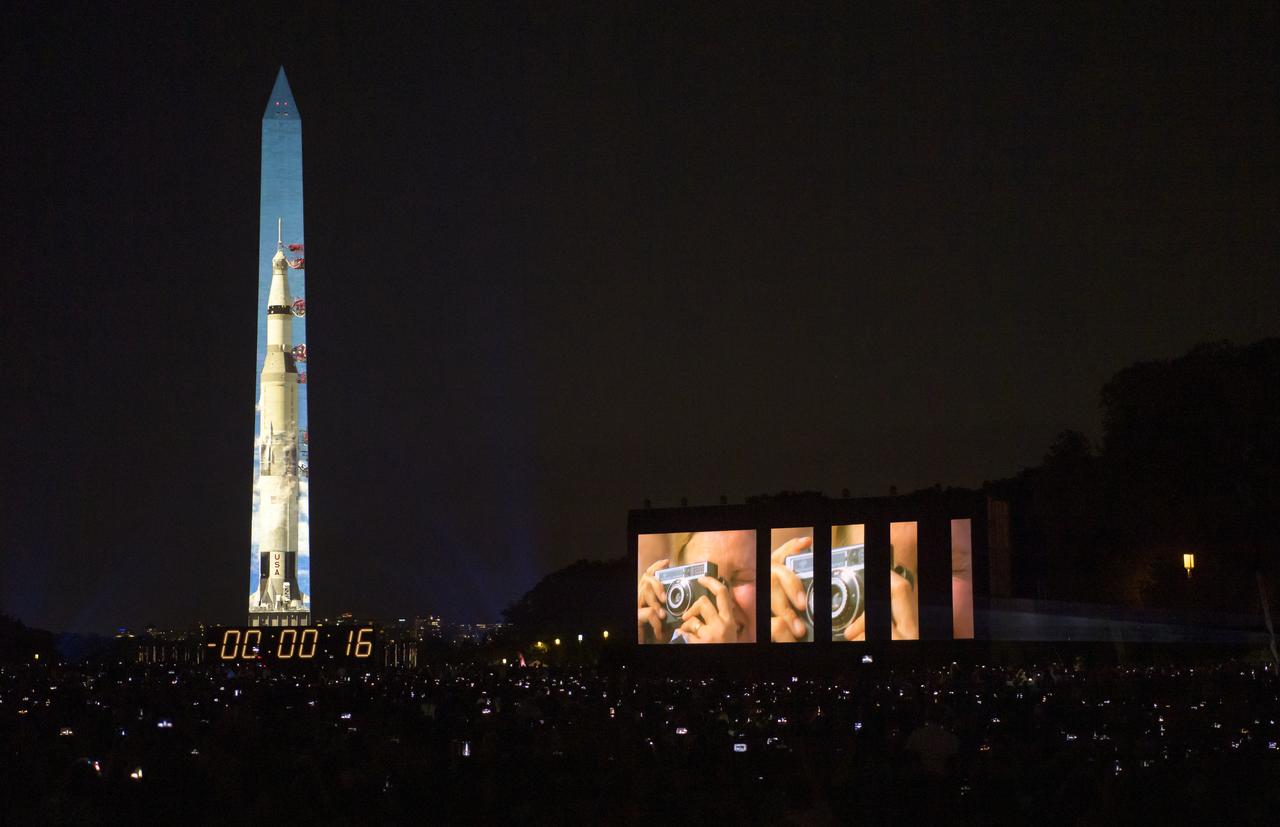
The 50 year anniversary of the Apollo 11 mission with NASA astronauts Neil Armstrong, Michael Collins, and Buzz Aldrin is celebrated in a 17-minute show, “Apollo 50: Go for the Moon”, by the Smithsonian’s National Air and Space Museum, which combined full-motion projection-mapping artwork on the Washington Monument and archival footage to recreate the launch of Apollo 11 and tell the story of the first moon landing, Friday, July 19, 2019 in Washington. Photo Credit: (NASA/Bill Ingalls)

The Washington Monument is seen as the full moon is shadowed by the Earth during a total lunar eclipse on the arrival of the winter solstice, Tuesday, December 21, 2010 in Washington. From beginning to end, the eclipse lasted about three hours and twenty-eight minutes. Photo Credit: (NASA/Bill Ingalls)

Eric Fanning, AIA President and CEO, left, Lance Bush, President and CEO of the Challenge Center, center, NASA Administrator Bill Nelson, left, are seen as they deliver remarks during the dedication of the Apollo 1 monument at Arlington National Cemetery, Thursday, June 2, 2022, in Arlington, Va. The monument honors and memorializes the Apollo 1 crew of Virgil I. “Gus” Grissom, Edward H. White II, and Roger B. Chaffee. Photo Credit: (NASA/Bill Ingalls)
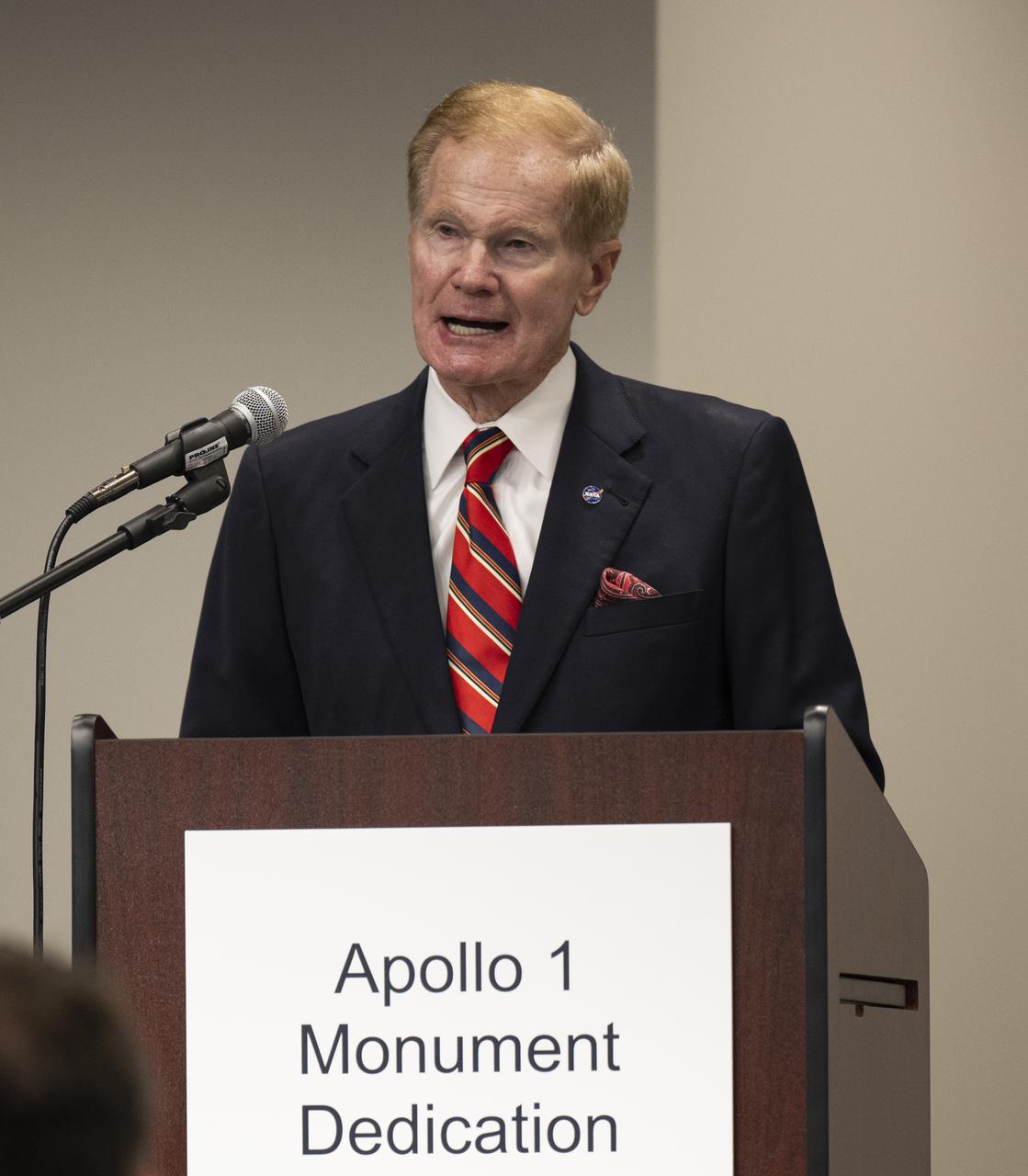
NASA Administrator Bill Nelson delivers remarks at a reception following the dedication of the Apollo 1 monument, Thursday, June 2, 2022, in the Reception Hall of the Military Women’s Memorial at Arlington National Cemetery in Arlington, Va. The monument honors and memorializes the Apollo 1 crew of Virgil I. “Gus” Grissom, Edward H. White II, and Roger B. Chaffee. Photo Credit: (NASA/Bill Ingalls)

Eric Fanning, AIA President and CEO, left, Lance Bush, President and CEO of the Challenge Center, center, NASA Administrator Bill Nelson, right, are seen as they deliver remarks during the dedication of the Apollo 1 monument at Arlington National Cemetery, Thursday, June 2, 2022, in Arlington, Va. The monument honors and memorializes the Apollo 1 crew of Virgil I. “Gus” Grissom, Edward H. White II, and Roger B. Chaffee. Photo Credit: (NASA/Bill Ingalls)

NASA Administrator Bill Nelson delivers remarks at a reception following the dedication of the Apollo 1 monument, Thursday, June 2, 2022, in the Reception Hall of the Military Women’s Memorial at Arlington National Cemetery in Arlington, Va. The monument honors and memorializes the Apollo 1 crew of Virgil I. “Gus” Grissom, Edward H. White II, and Roger B. Chaffee. Photo Credit: (NASA/Bill Ingalls)
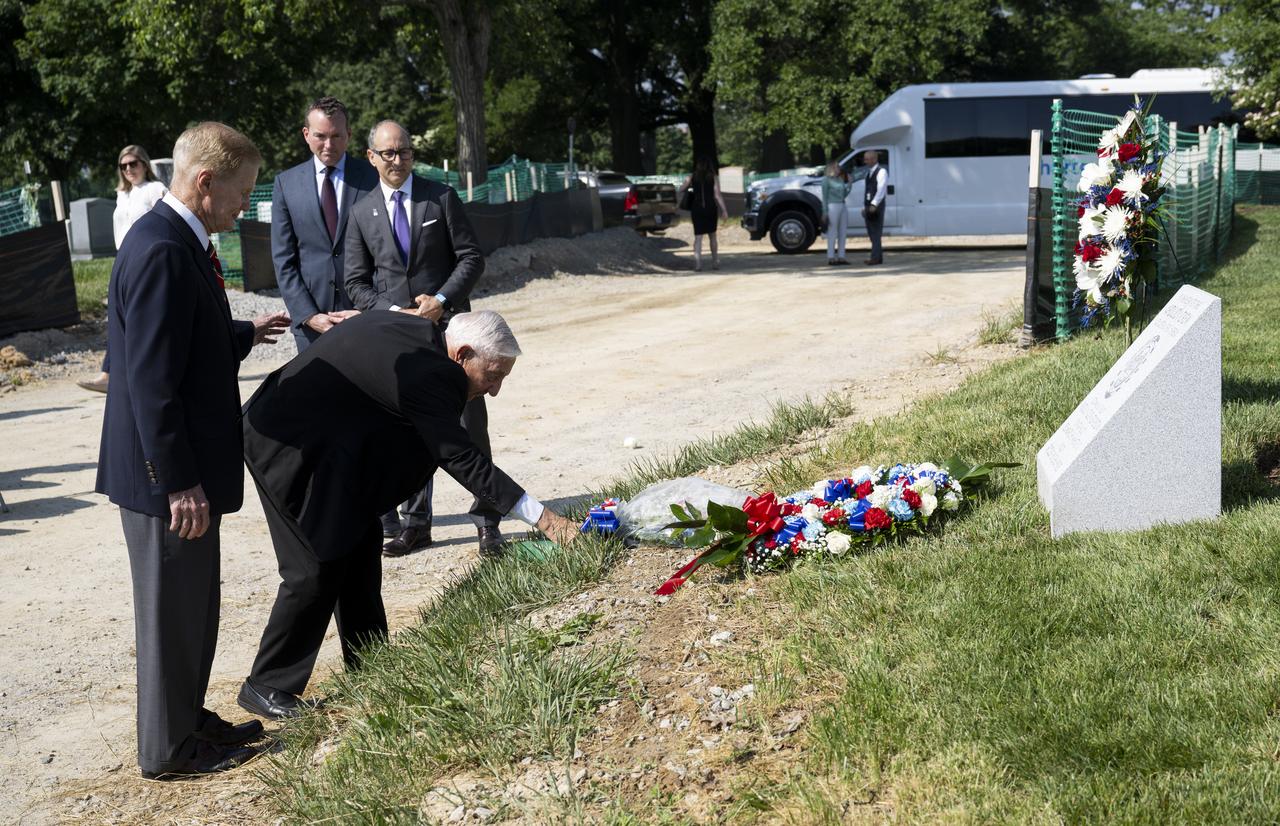
Lowell Grissom, brother of Apollo 1 astronaut Virgil I. “Gus” Grissom, is joined by NASA Administrator Bill Nelson as he places flowers at the Apollo 1 monument during its dedication at Arlington National Cemetery, Thursday, June 2, 2022, in Arlington, Va. The monument honors and memorializes the Apollo 1 crew of Virgil I. “Gus” Grissom, Edward H. White II, and Roger B. Chaffee. Photo Credit: (NASA/Bill Ingalls)

NASA Administrator Bill Nelson delivers remarks at the dedication of the Apollo 1 monument at Arlington National Cemetery, Thursday, June 2, 2022, in Arlington, Va. The monument honors and memorializes the Apollo 1 crew of Virgil I. “Gus” Grissom, Edward H. White II, and Roger B. Chaffee. Photo Credit: (NASA/Bill Ingalls)
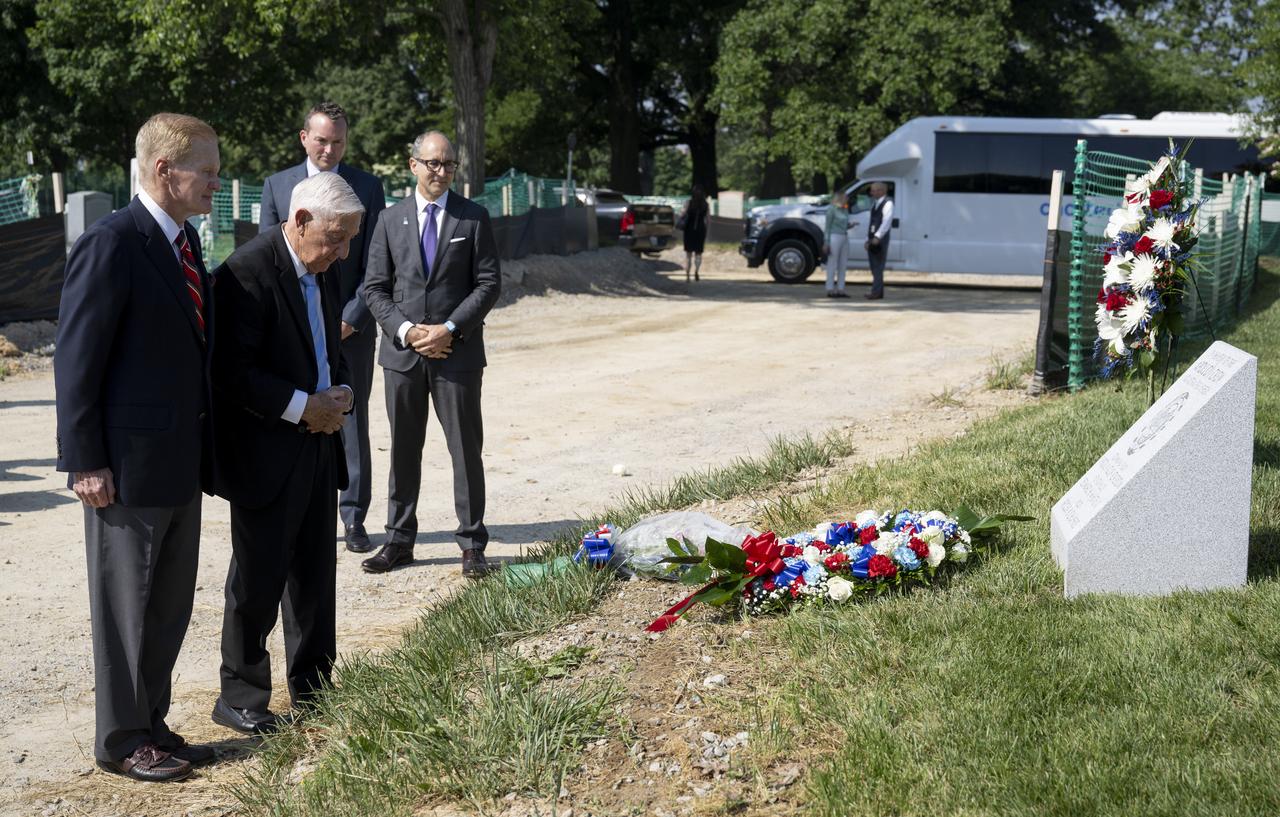
Lowell Grissom, brother of Apollo 1 astronaut Virgil I. “Gus” Grissom, is joined by NASA Administrator Bill Nelson as he places flowers at the Apollo 1 monument during its dedication at Arlington National Cemetery, Thursday, June 2, 2022, in Arlington, Va. Photo Credit: (NASA/Bill Ingalls)
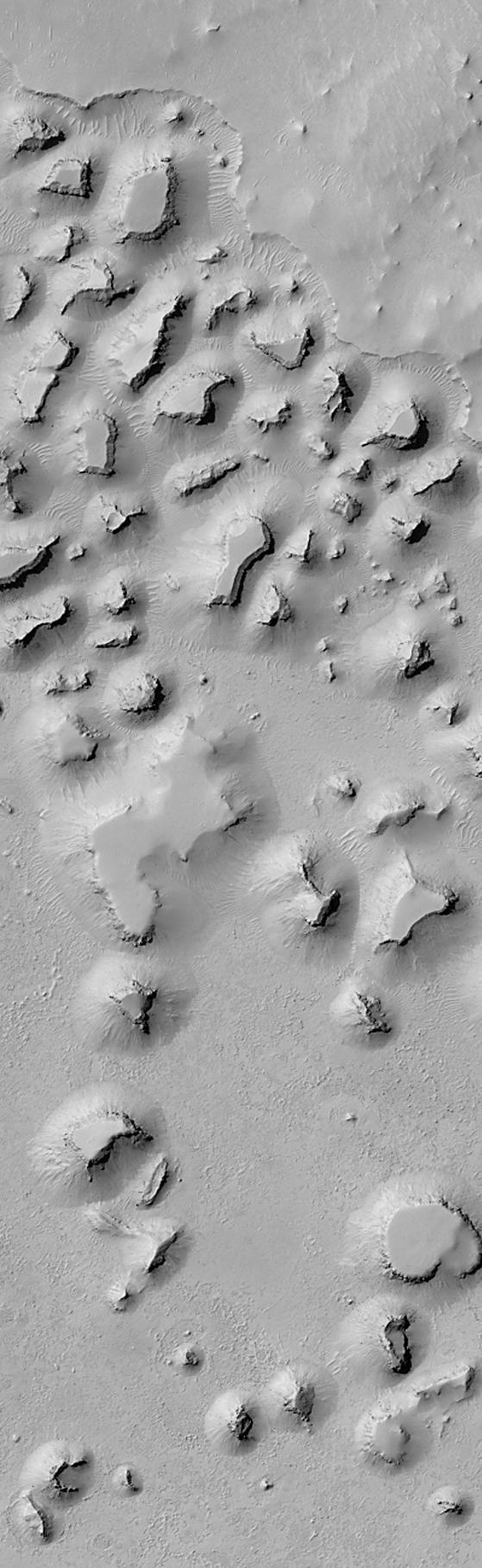
A Martian Monument
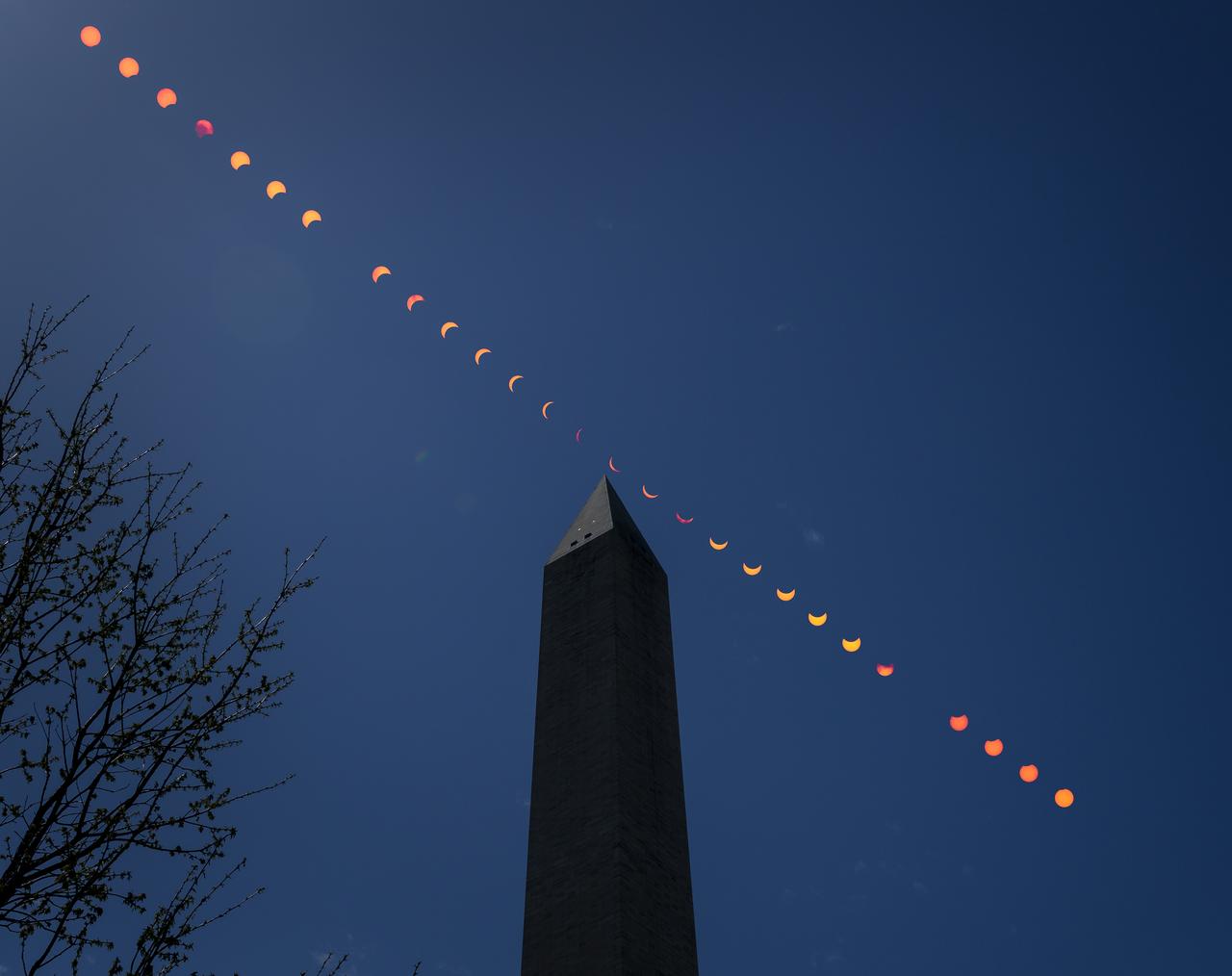
This composite image of multiple exposures shows the progression of a partial solar eclipse over the Washington Monument, Monday, April 8, 2024, in Washington. A total solar eclipse swept across a narrow portion of the North American continent from Mexico’s Pacific coast to the Atlantic coast of Newfoundland, Canada. A partial solar eclipse was visible across the entire North American continent along with parts of Central America and Europe. Photo Credit: (NASA/Bill Ingalls)
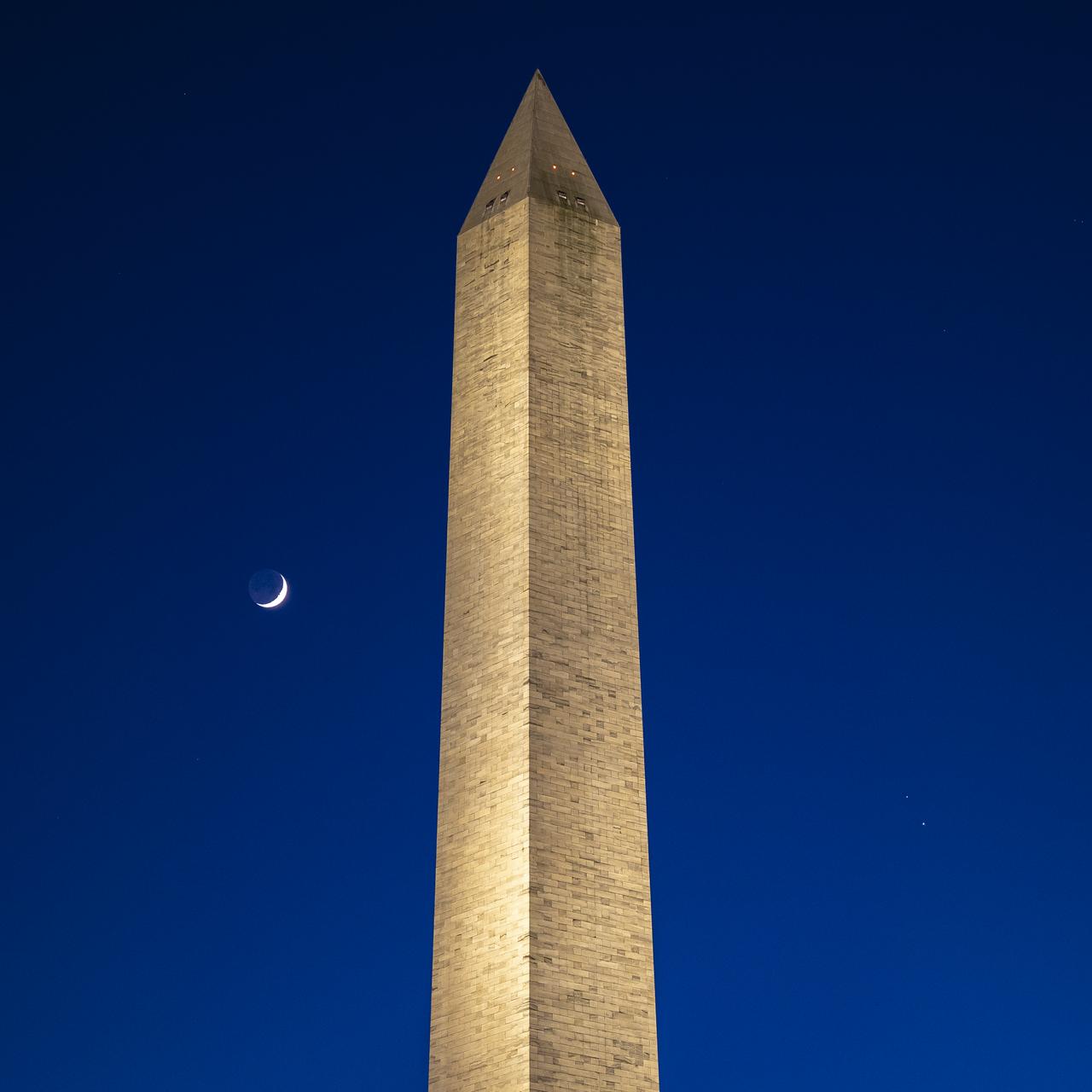
The Moon, left, Saturn, upper right, and Jupiter, lower right, are seen after sunset with the Washington Monument, Thurs. Dec. 17, 2020, in Washington. The two planets are drawing closer to each other in the sky as they head towards a “great conjunction” on December 21, where the two giant planets will appear a tenth of a degree apart. Photo Credit: (NASA/Bill Ingalls)
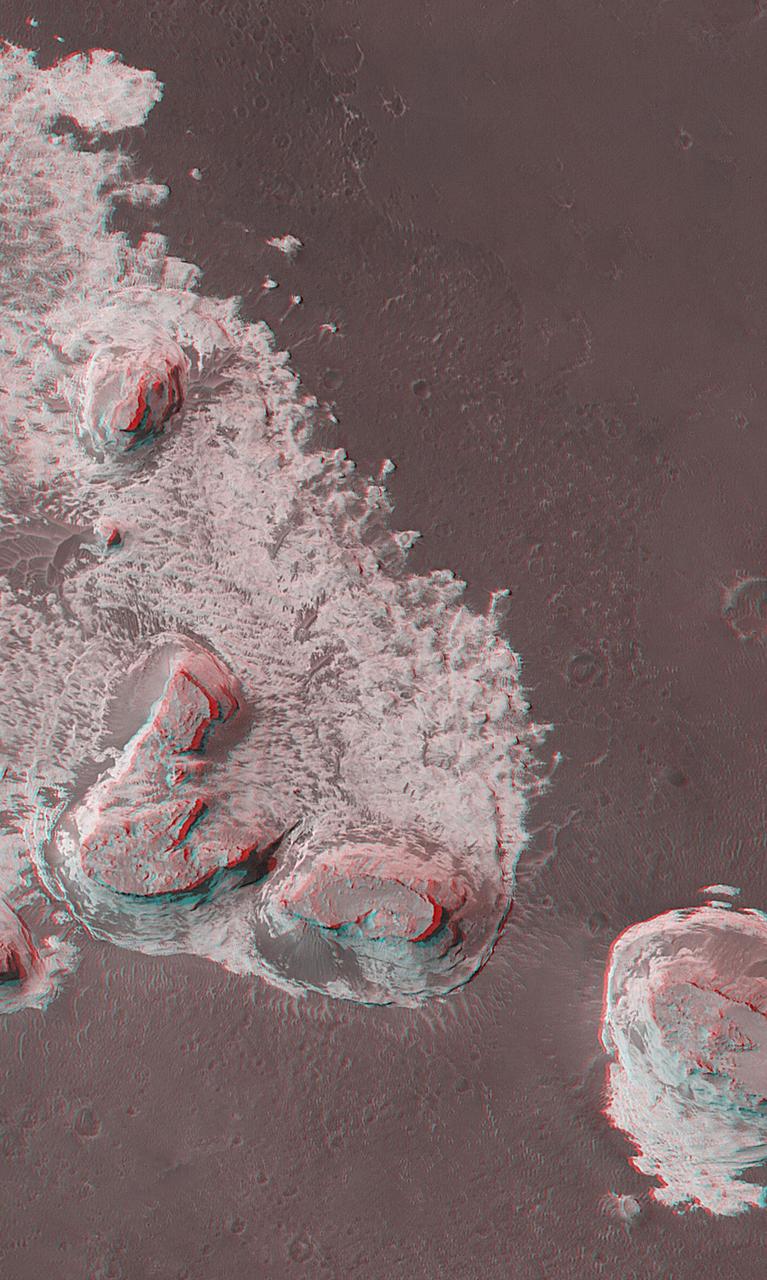
Northern Terra Meridiani Monument
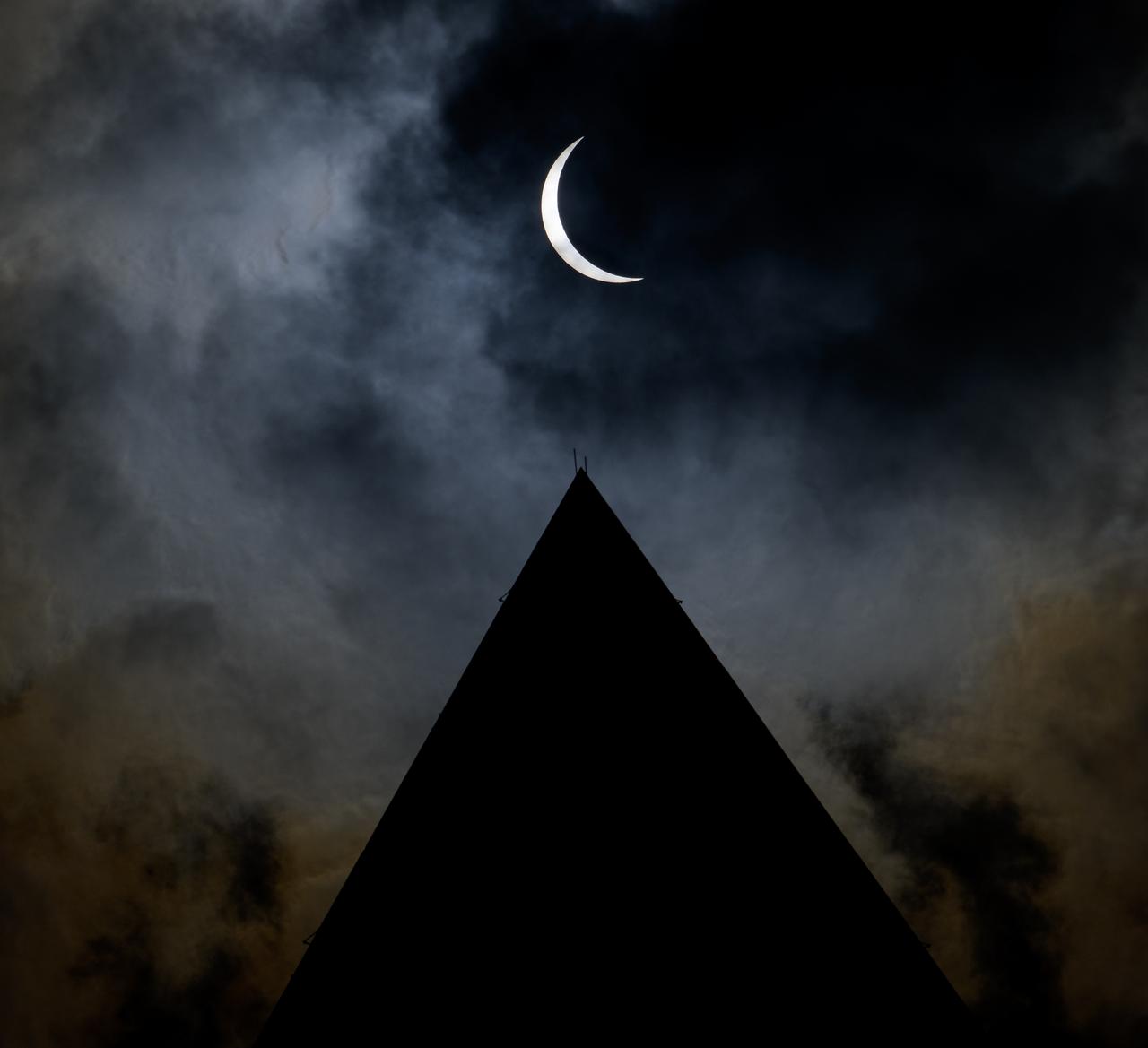
The Moon is seen passing in front of the Sun, with the top of the Washington Monument in silhouette, during a partial solar eclipse in Washington, on Monday, April 8, 2024. A total solar eclipse swept across a narrow portion of the North American continent from Mexico’s Pacific coast to the Atlantic coast of Newfoundland, Canada. A partial solar eclipse was visible across the entire North American continent along with parts of Central America and Europe. Photo Credit: (NASA/Bill Ingalls)

The Moon, top, is seen passing in front of the Sun, with the top of the Washington Monument in silhouette, during a partial solar eclipse in Washington, on Monday, April 8, 2024. A total solar eclipse swept across a narrow portion of the North American continent from Mexico’s Pacific coast to the Atlantic coast of Newfoundland, Canada. A partial solar eclipse was visible across the entire North American continent along with parts of Central America and Europe. Photo Credit: (NASA/Bill Ingalls)
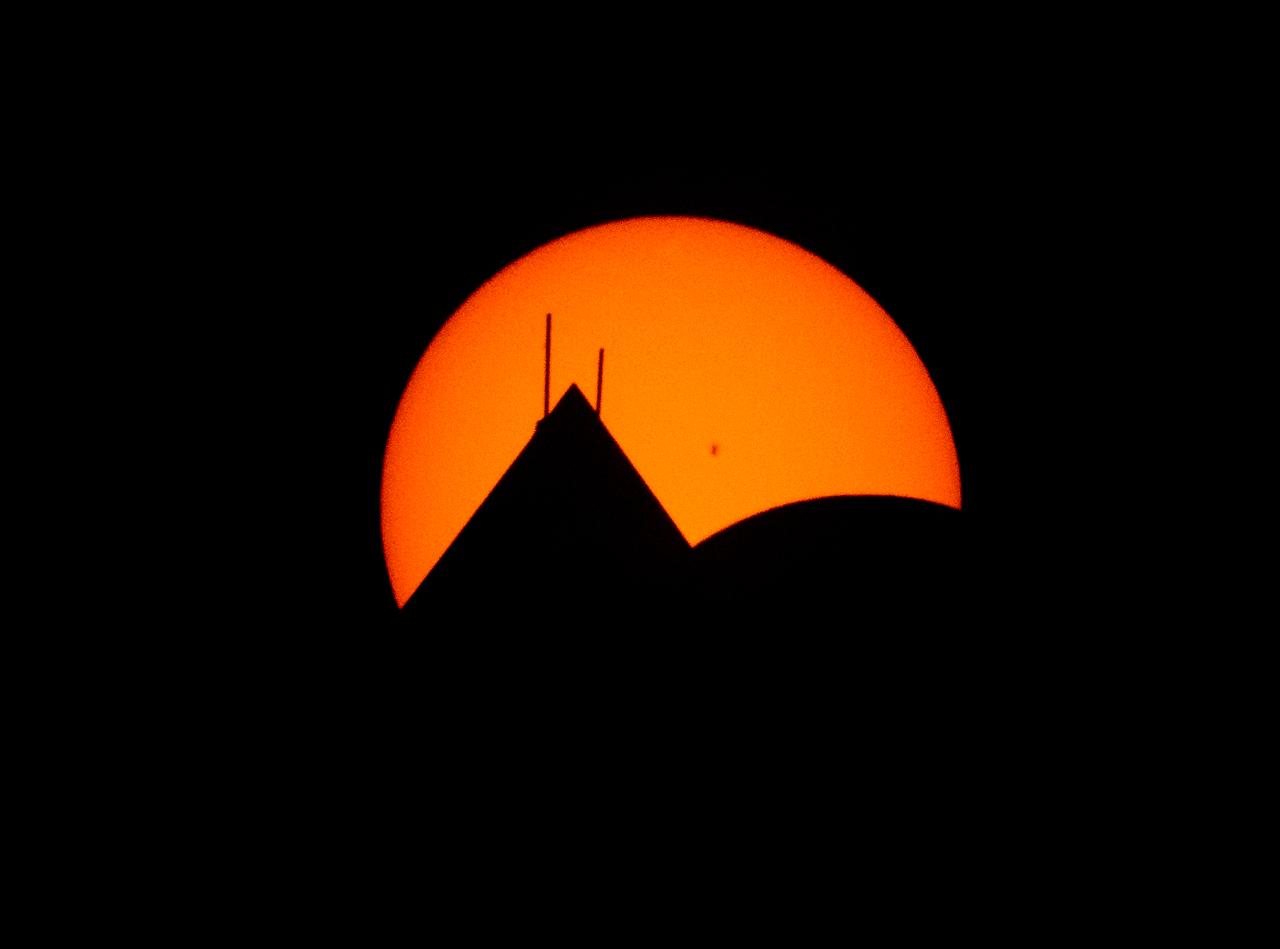
The Moon, lower right, is seen passing in front of the Sun, with the top of the Washington Monument in silhouette, during a partial solar eclipse in Washington, on Monday, April 8, 2024. A total solar eclipse swept across a narrow portion of the North American continent from Mexico’s Pacific coast to the Atlantic coast of Newfoundland, Canada. A partial solar eclipse was visible across the entire North American continent along with parts of Central America and Europe. Photo Credit: (NASA/Bill Ingalls)
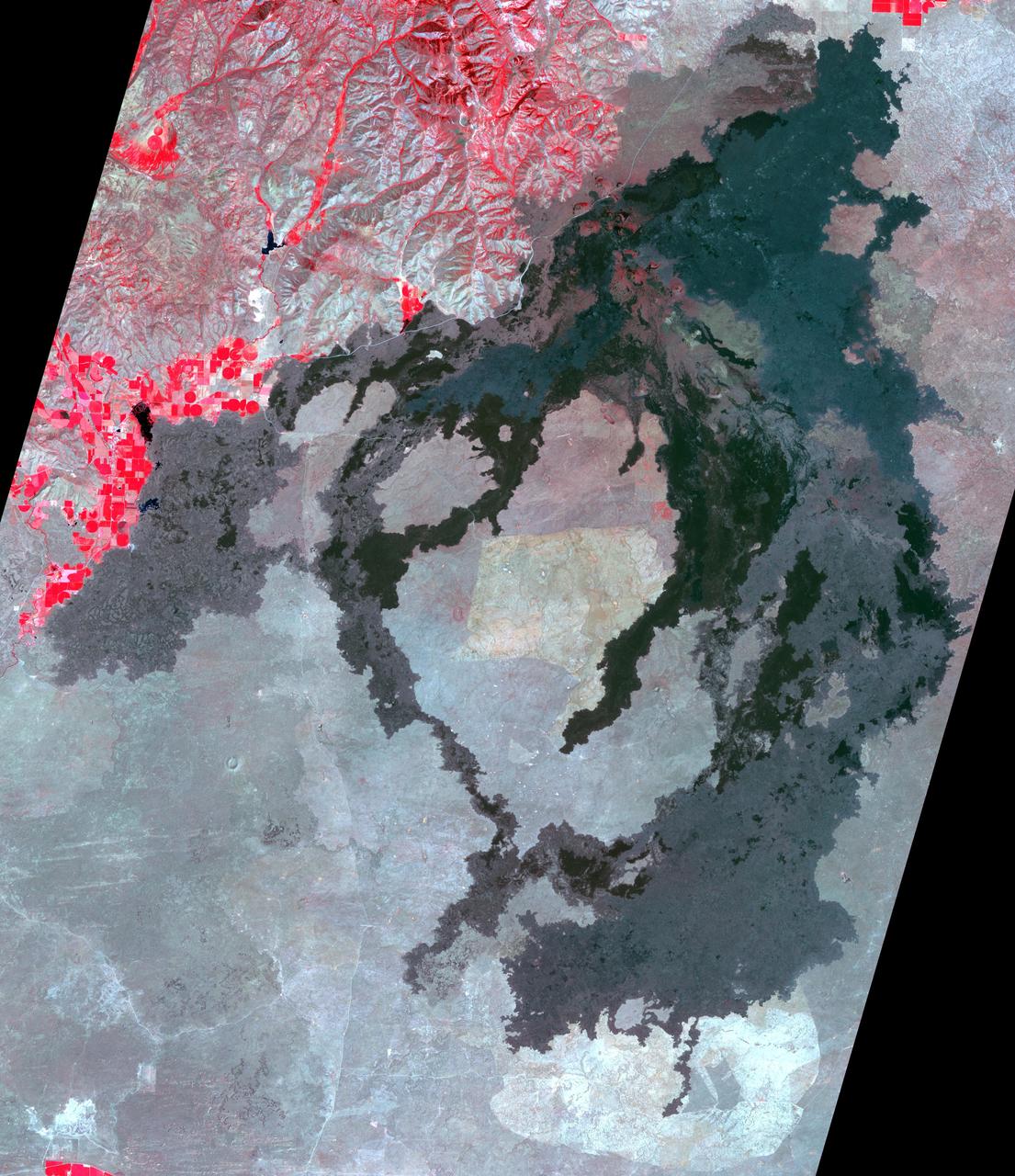
Craters of the Moon National Monument is located in southern Idaho in the Snake River Plain. The Snake River Plain was formed by a series of giant eruptions which started 16 million years ago. The COM flows were erupted between 15,000 and 2,100 years ago. The hotspot that created the eruptions is now under Yellowstone. The COM has some of the best examples of open rift cracks in the world. There are excellent examples of almost every variety of basaltic, as well as tree molds, lava tubes, and many other volcanic features. The image was acquired July 14, 2006, covers an area of 65.2 by 75.4 km, and is located at 43.5 degrees north, 113.5 degrees west. https://photojournal.jpl.nasa.gov/catalog/PIA26501
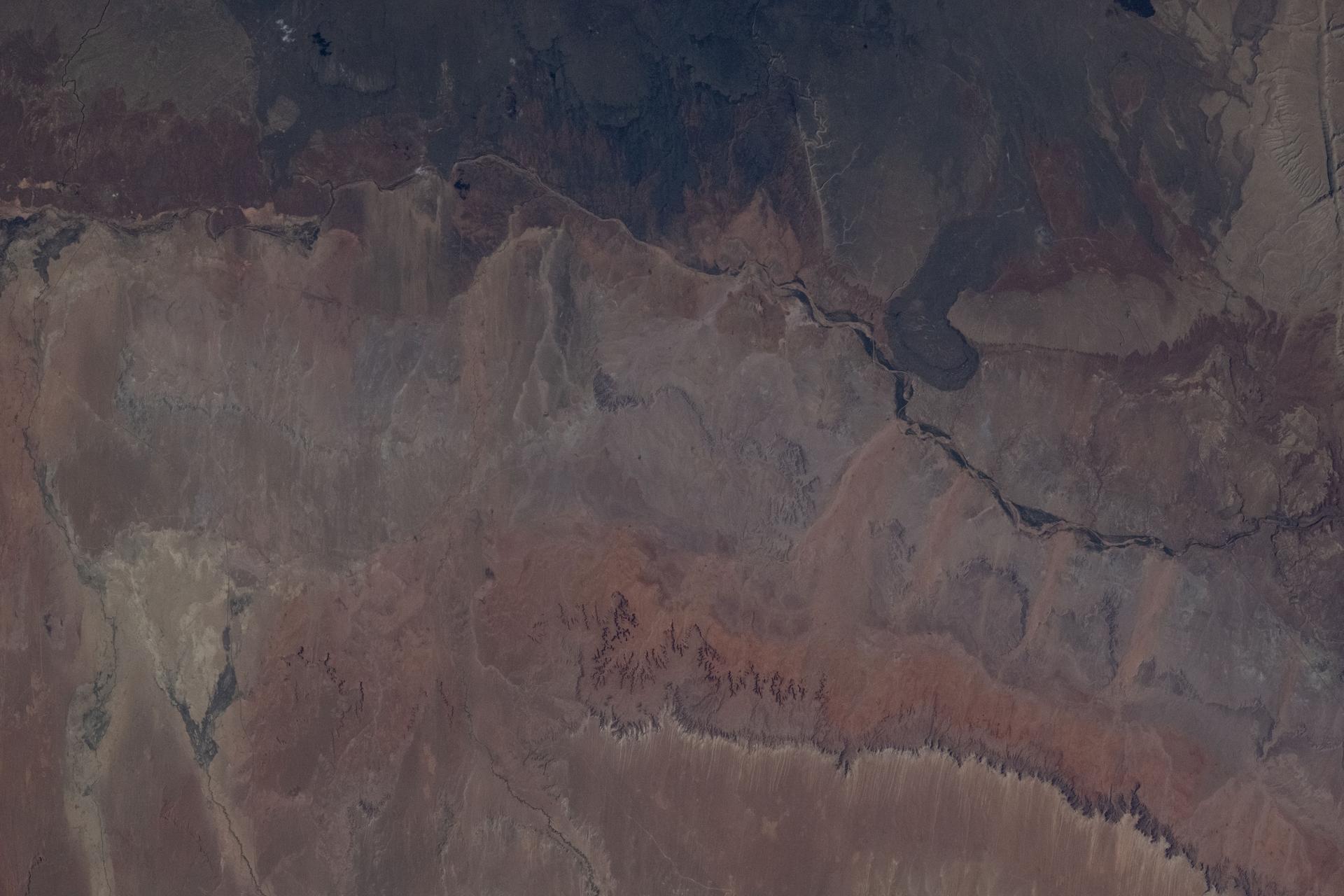
iss073e0886930 (Oct. 1, 2025) --- Arizona's Wupatki National Monument—rich in Native American archaeology, shaped by desert landscapes and ancient volcanic activity—is pictured from the International Space Station as it orbited 262 miles above the southwestern edge of the Colorado Plateau.

A monument in honor of cosmonaut Yuriy A. Gagarin, the first human to fly in space, stands in front of a cosmonaut apartment building at the Gagarin Cosmonaut Training Center in Star City, Russia. At the time this photo was taken, NASA astronauts Norman E. Thagard and Bonnie J. Dunbar were in Russia for training.
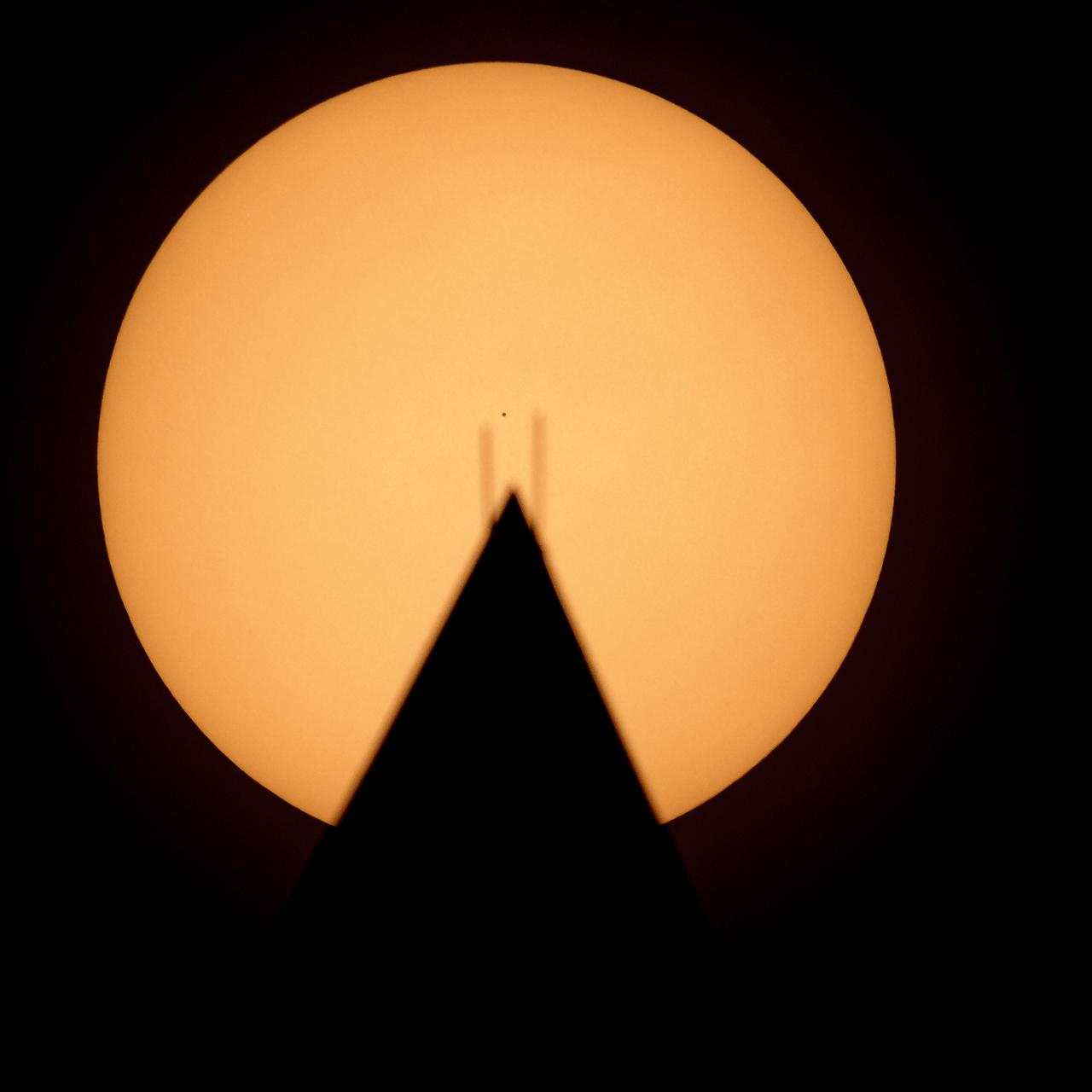
The planet Mercury is seen in silhouette, center, as it transits across the face of the Sun, behind the Washington Monument, Monday, Nov. 11, 2019, in Washington. Mercury’s last transit was in 2016. The next won’t happen again until 2032. Photo Credit: (NASA/Bill Ingalls)
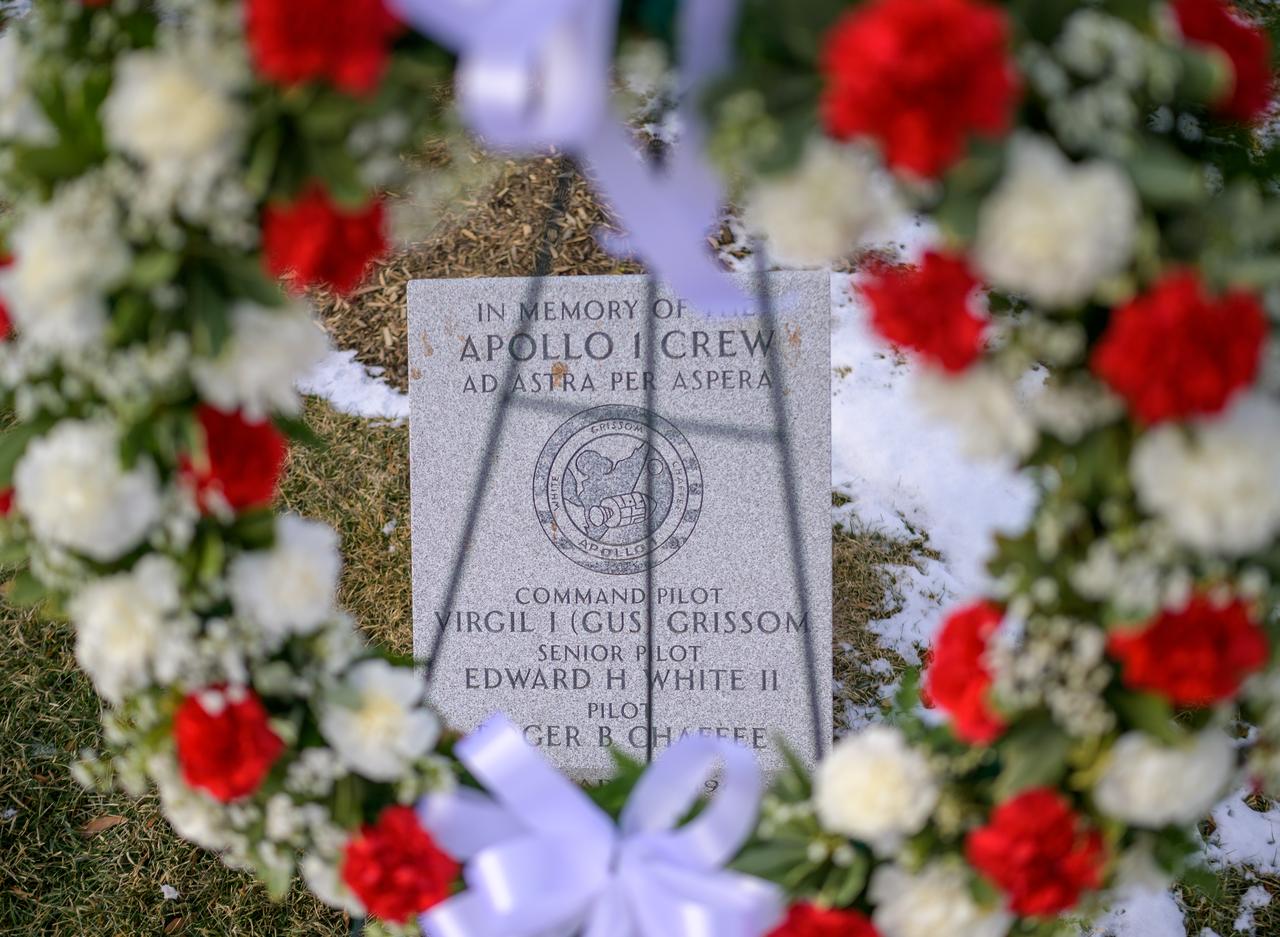
A wreath is left at the Apollo 1 monument as part of NASA's Day of Remembrance, Thursday, Jan. 23, 2025, at Arlington National Cemetery in Arlington, Va. The monument honors and memorializes the Apollo 1 crew of Virgil I. “Gus” Grissom, Edward H. White II, and Roger B. Chaffee. Photo Credit: (NASA/Bill Ingalls)
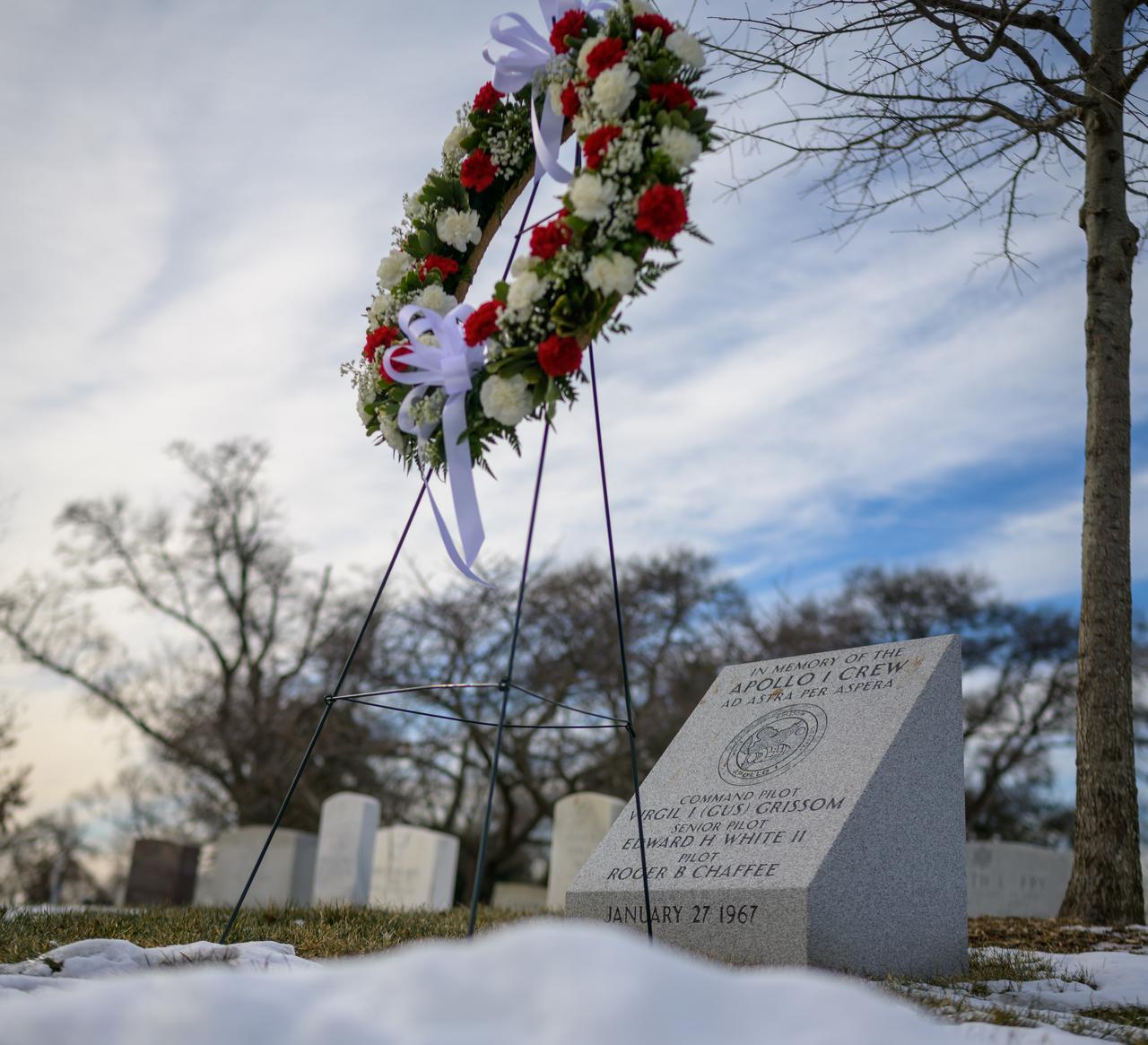
A wreath is left at the Apollo 1 monument as part of NASA's Day of Remembrance, Thursday, Jan. 23, 2025, at Arlington National Cemetery in Arlington, Va. The monument honors and memorializes the Apollo 1 crew of Virgil I. “Gus” Grissom, Edward H. White II, and Roger B. Chaffee. Photo Credit: (NASA/Bill Ingalls)
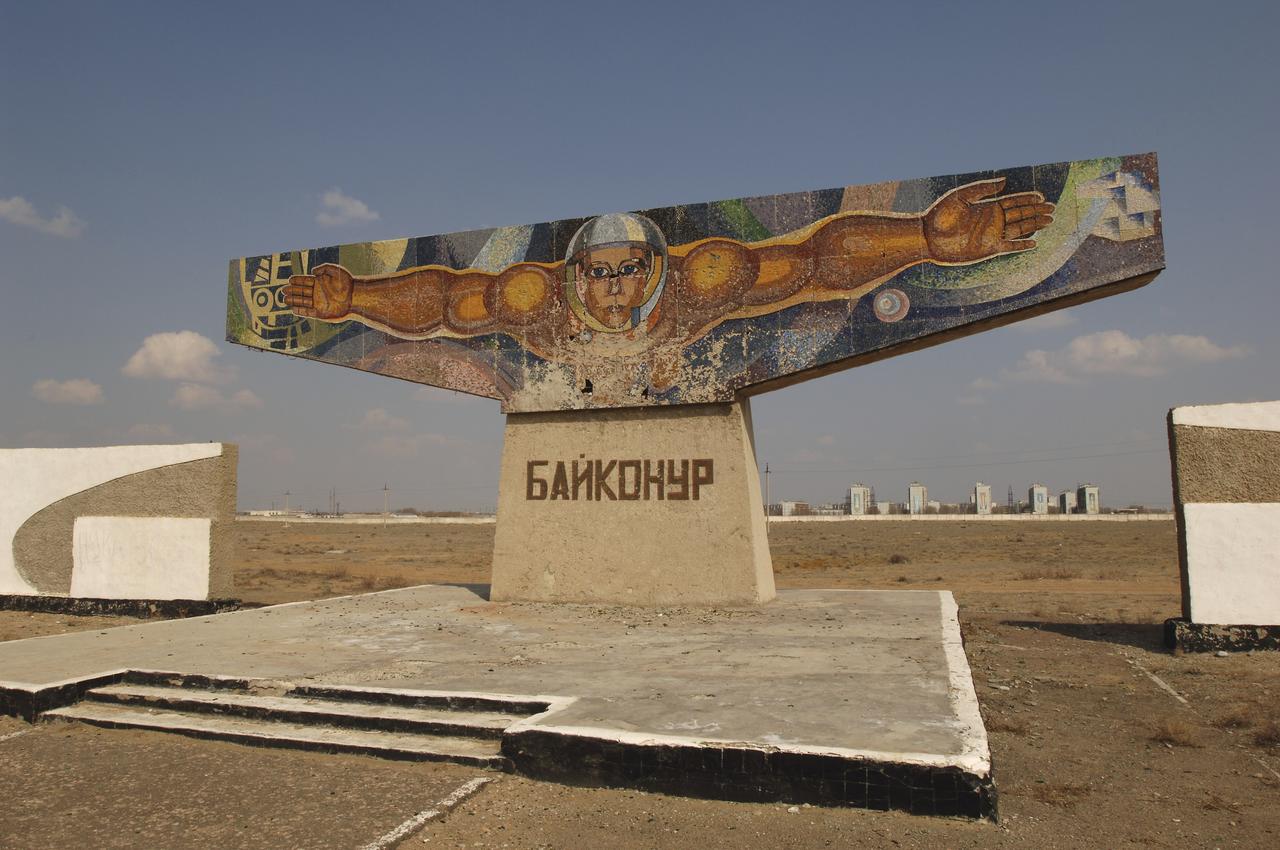
Cosmonauts and astronauts alike are welcomed by this tiled mosaic monument outside the city gates of Baikonur, Kazakhstan as seen Saturday, Oct. 9, 2005. Photo Credit: (NASA/Bill Ingalls)
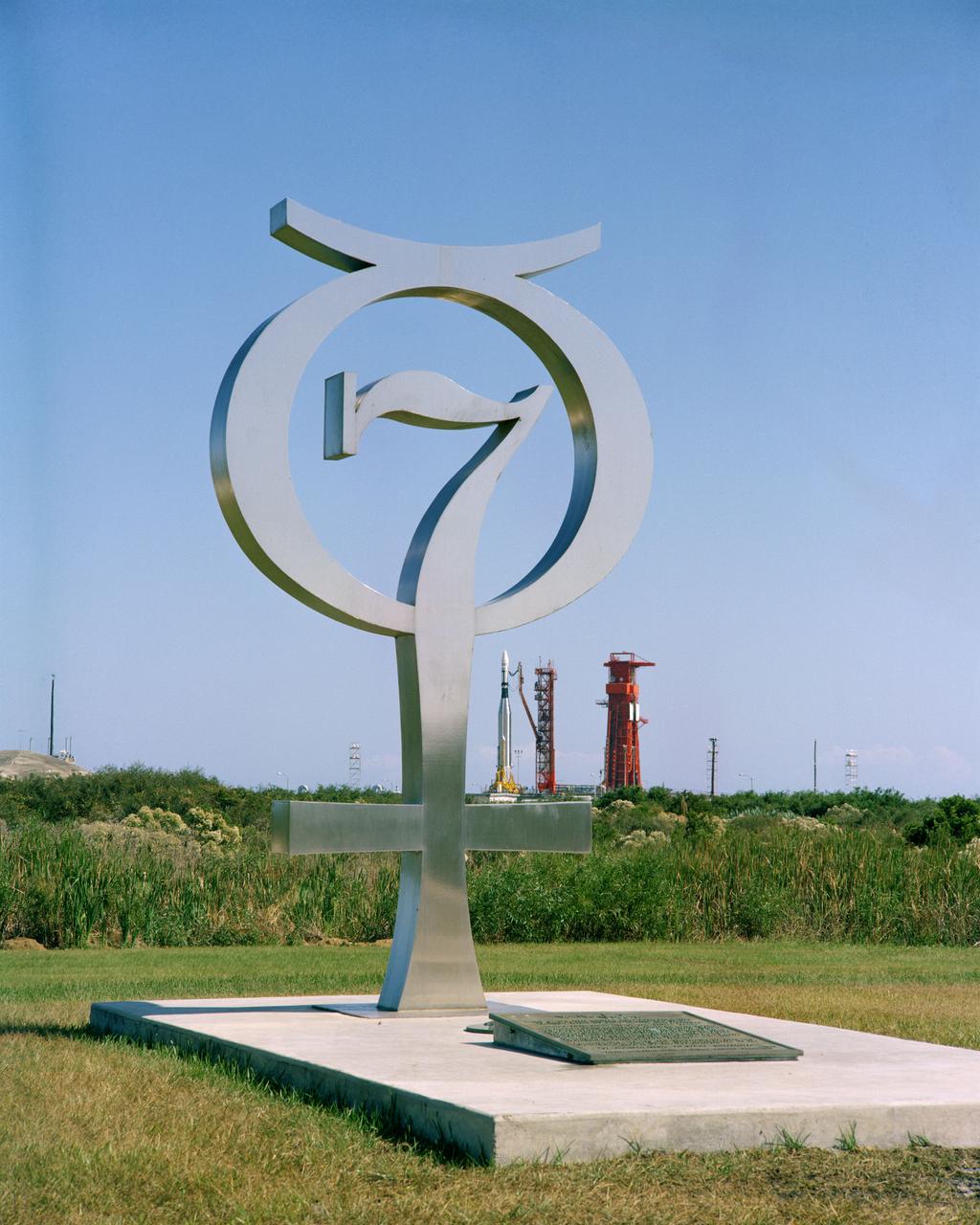
S66-59963 (9 Nov. 1966) --- Monument at Pad 14 honoring Project Mercury. The Arabic number seven represents the seven original astronauts. The other figure is the astronomical symbol of the Planet Mercury. In background is the Gemini-12 Agena Target Docking Vehicle atop its Atlas launch vehicle at Cape Kennedy, Florida. Photo credit: NASA
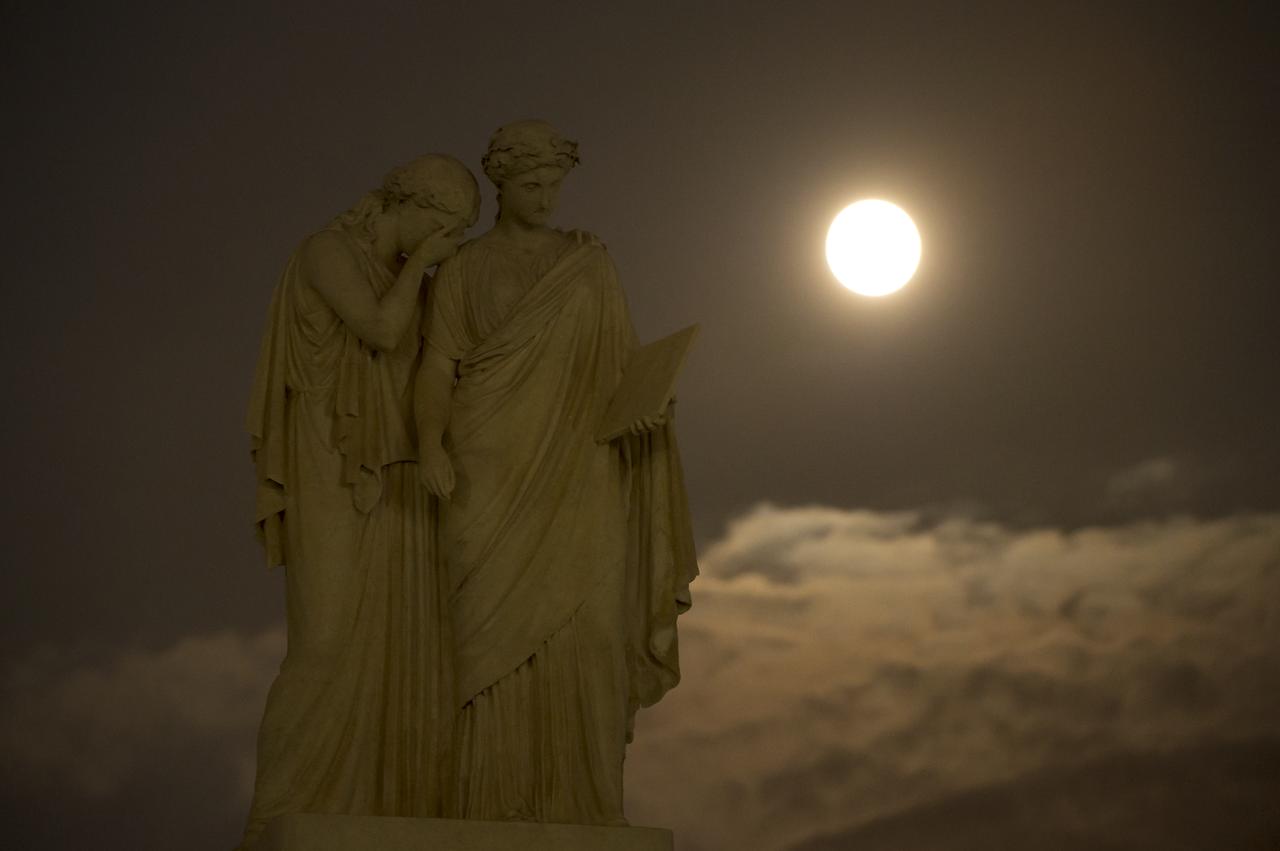
A perigee full moon or supermoon is seen over the The Peace Monument on the grounds of the United States Capitol, Sunday, August 10, 2014, in Washington. A supermoon occurs when the moon’s orbit is closest (perigee) to Earth at the same time it is full. Photo Credit: (NASA/Bill Ingalls)

NASA acting Administrator Janet Petro leads guests to a moment of silence at the Apollo 1 monument as part of NASA's Day of Remembrance, Thursday, Jan. 23, 2025, at Arlington National Cemetery in Arlington, Va. The monument honors and memorializes the Apollo 1 crew of Virgil I. “Gus” Grissom, Edward H. White II, and Roger B. Chaffee. Photo Credit: (NASA/Bill Ingalls)
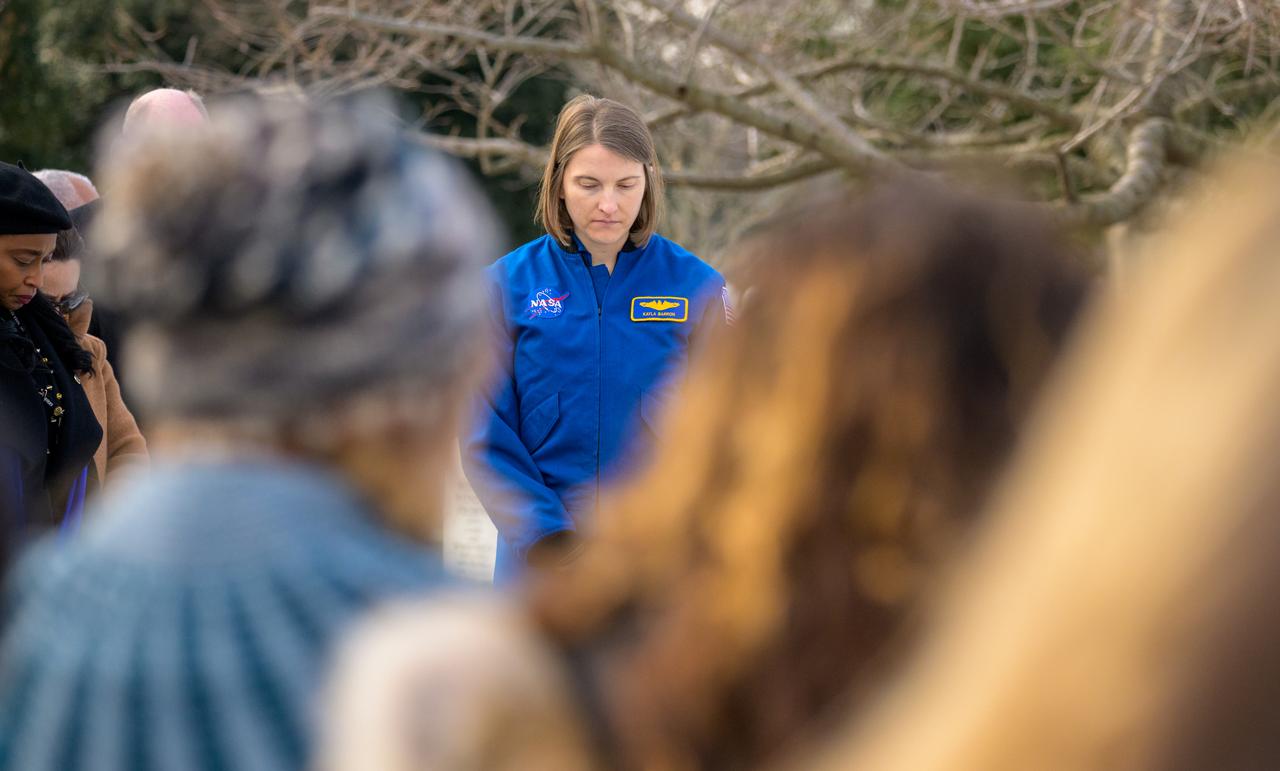
NASA Astronaut Kayla Barron is seen during a moment of silence at the Apollo 1 monument as part of NASA's Day of Remembrance, Thursday, Jan. 23, 2025, at Arlington National Cemetery in Arlington, Va. The monument honors and memorializes the Apollo 1 crew of Virgil I. “Gus” Grissom, Edward H. White II, and Roger B. Chaffee. Photo Credit: (NASA/Bill Ingalls)

NASA acting Administrator Janet Petro leads guests to a moment of silence at the Apollo 1 monument as part of NASA's Day of Remembrance, Thursday, Jan. 23, 2025, at Arlington National Cemetery in Arlington, Va. The monument honors and memorializes the Apollo 1 crew of Virgil I. “Gus” Grissom, Edward H. White II, and Roger B. Chaffee. Photo Credit: (NASA/Bill Ingalls)
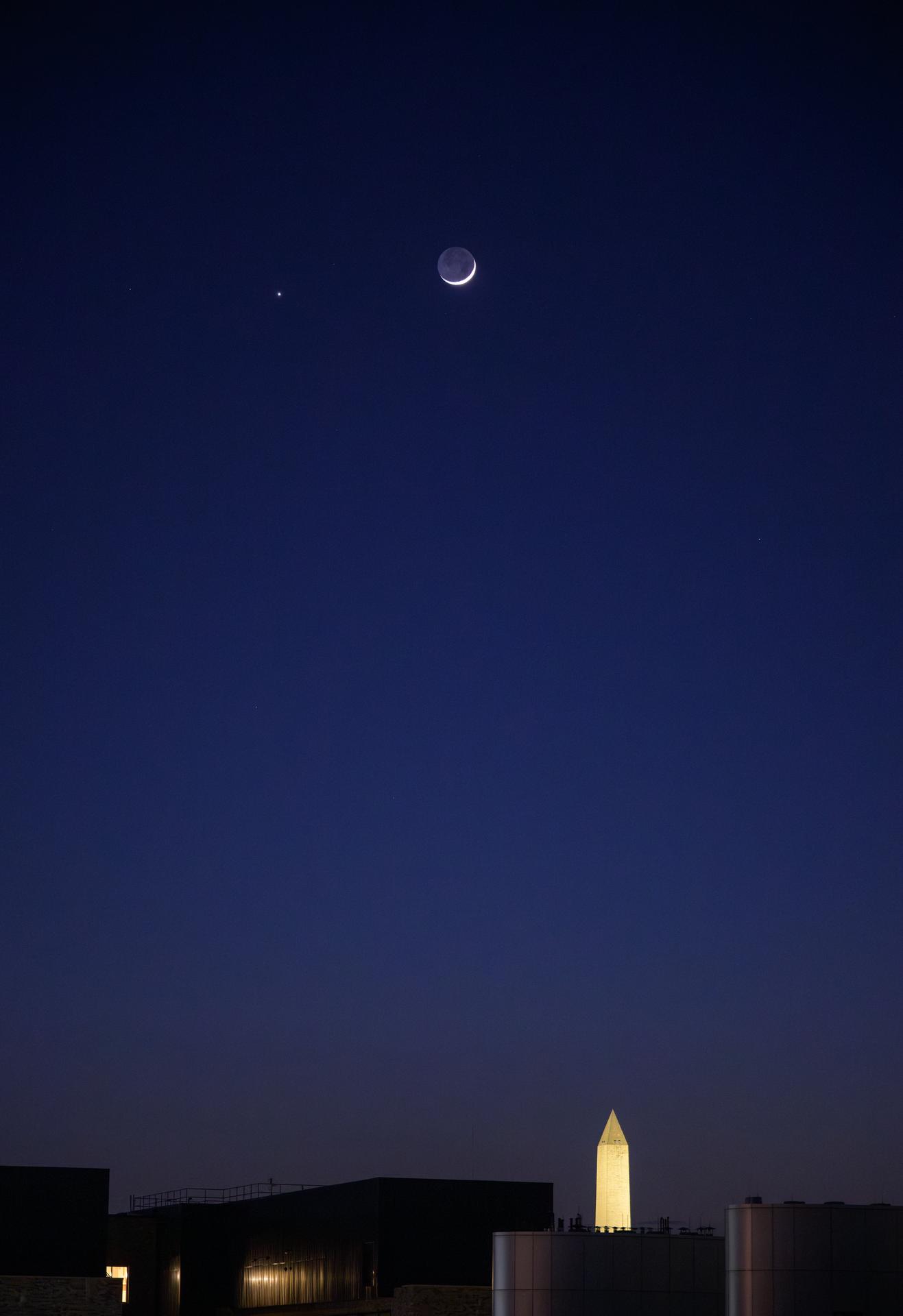
The Moon and Venus, left, are seen in conjunction above the Washington Monument, Monday, May 18, 2026, as viewed from the Mary W. Jackson NASA Headquarters Building in Washington. Photo Credit: (NASA/Bill Ingalls)

The Moon and Venus, center, are seen in conjunction above the Washington Monument, Monday, May 18, 2026, as viewed from the Mary W. Jackson NASA Headquarters Building in Washington. Photo Credit: (NASA/Bill Ingalls)
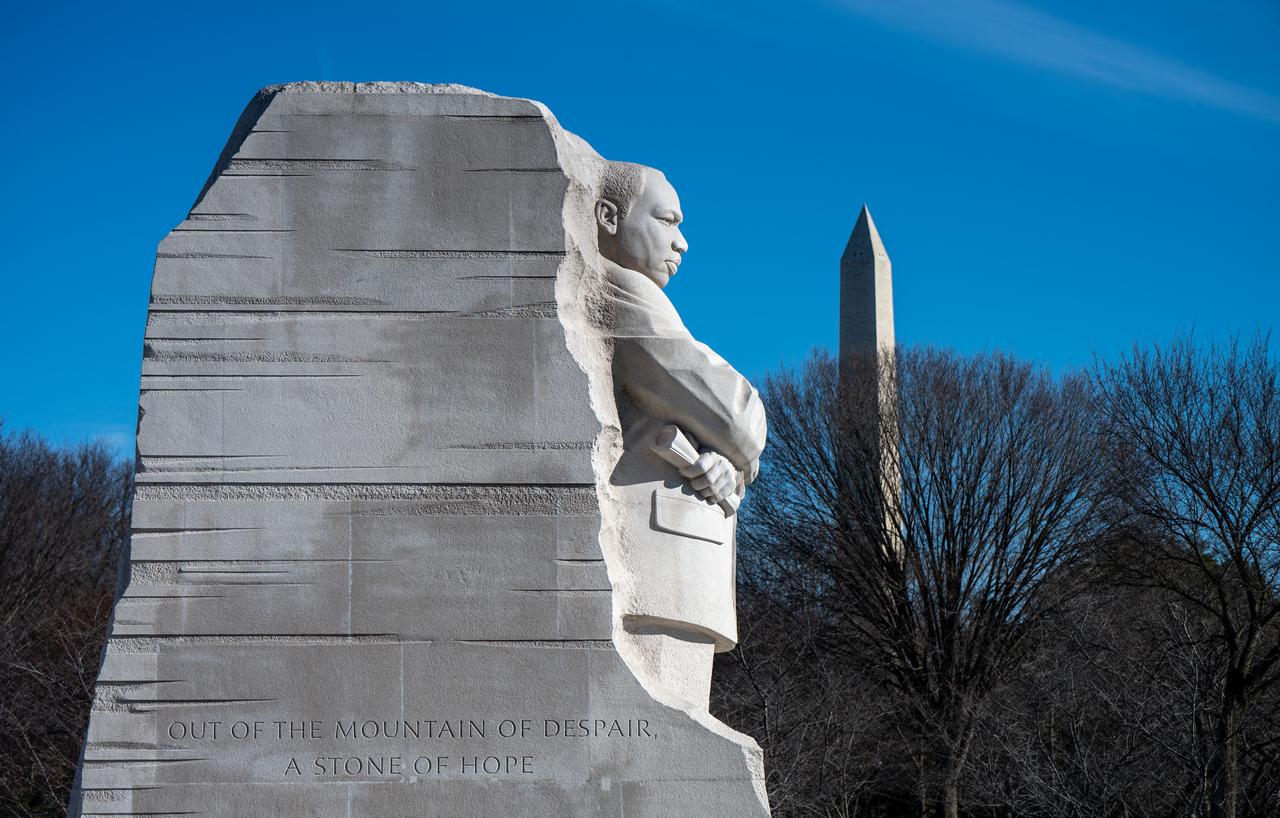
The Martin Luther King, Jr. Memorial is seen in the foregound with the Washington Monument in the background, Sunday, Jan. 5, 2025, in Washington. The memorial covers four acres and includes the Stone of Hope, a granite statue of civil rights movement leader Martin Luther King Jr. carved by sculptor Lei Yixin. Photo Credit: (NASA/Bill Ingalls)
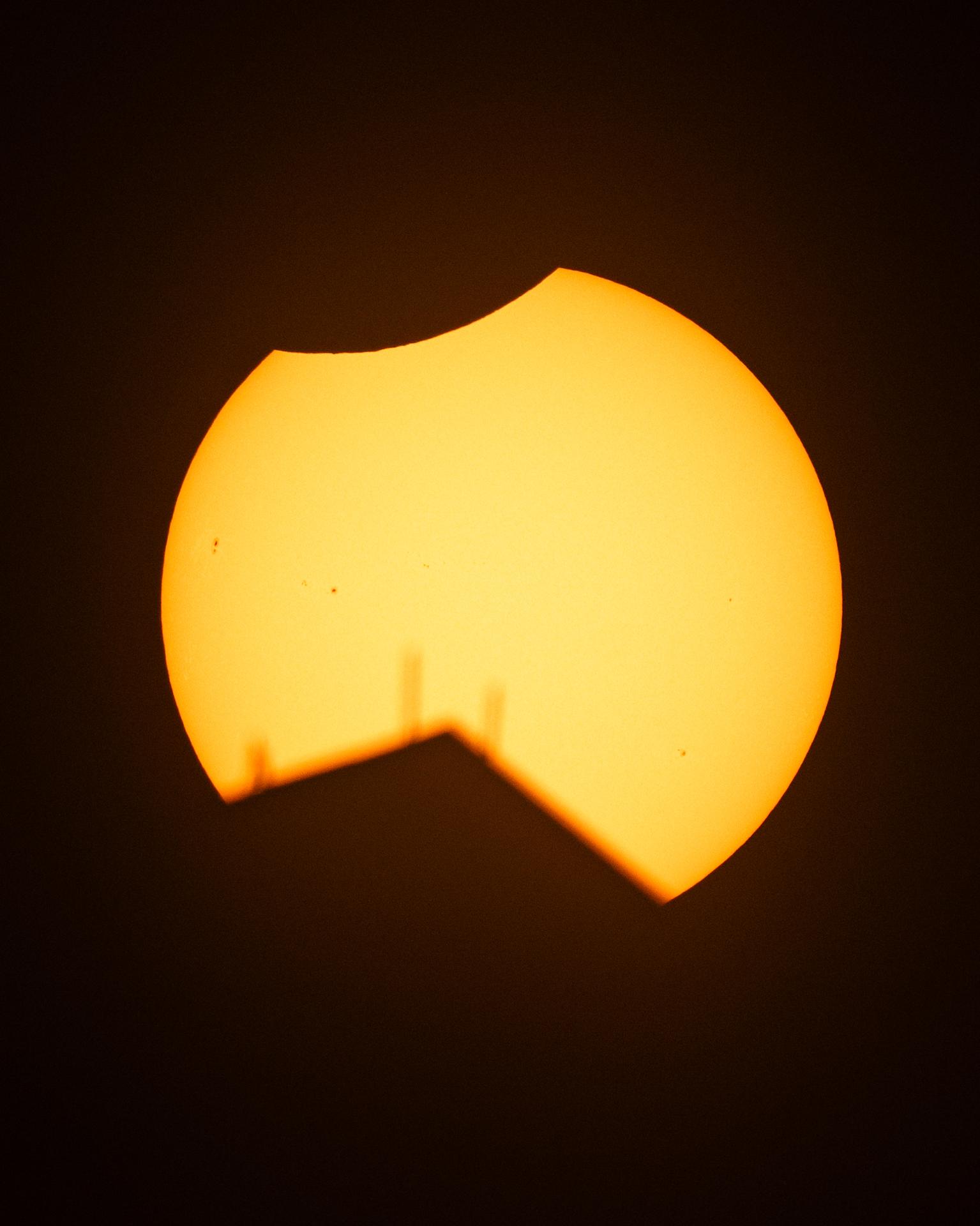
The Moon, top, is seen passing in front of the Sun, with the top of the Washington Monument in silhouette, during a partial solar eclipse in Washington, Wednesday, Aug. 12, 2026. A total solar eclipse swept across parts of Greenland, Iceland, northern Russia, the Atlantic Ocean, Spain, and a small corner of Portugal. A partial eclipse was visible in parts of the U.S., most of Canada, much of Europe, and northwest Africa. Photo Credit: (NASA/Keegan Barber)

The Martin Luther King, Jr. Memorial is seen in the foregound with the Washington Monument in the background, Sunday, Jan. 5, 2025, in Washington. The memorial covers four acres and includes the Stone of Hope, a granite statue of civil rights movement leader Martin Luther King Jr. carved by sculptor Lei Yixin. Photo Credit: (NASA/Bill Ingalls)
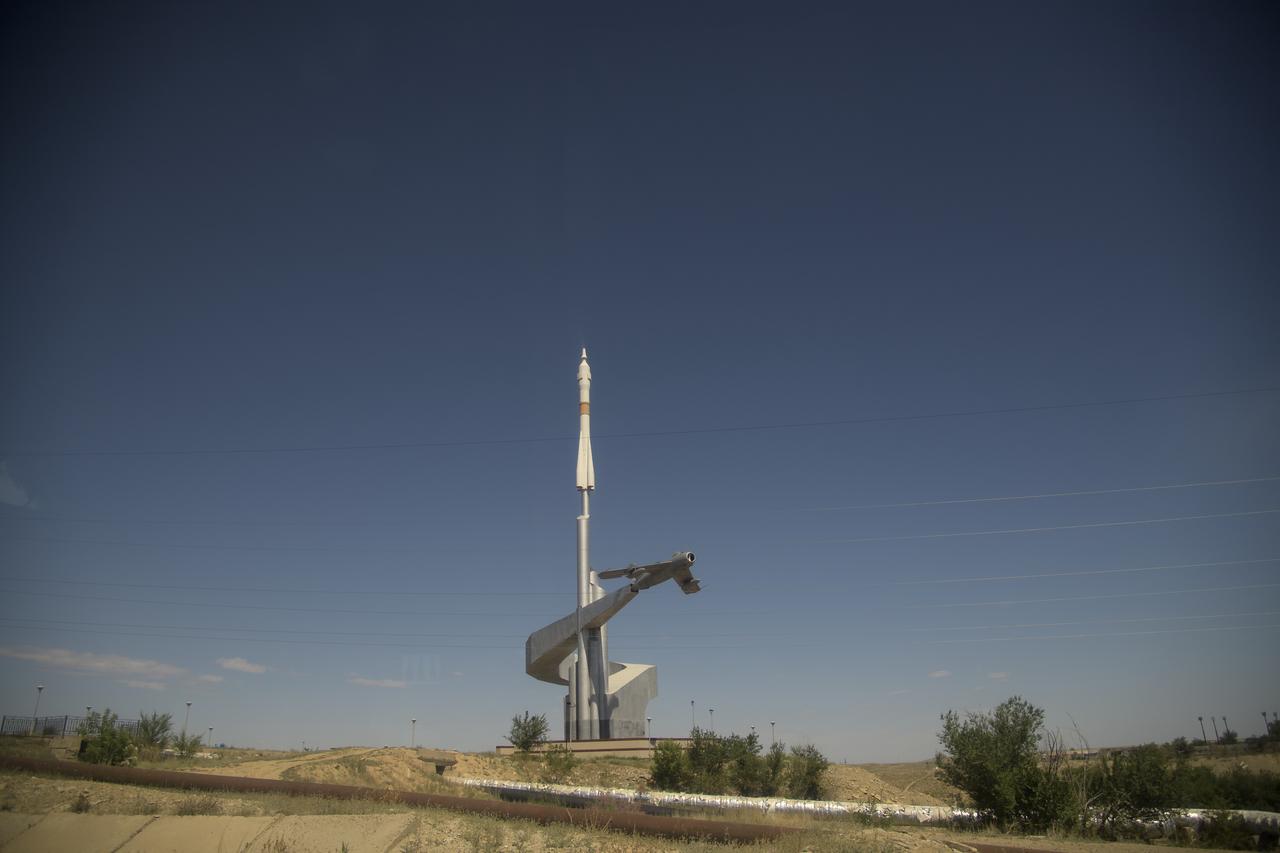
An aeronautics and space themed monument is visible from the bus carrying NASA, Canadian Space Agency, Roscosmos, and Russian Search and Recovery Forces into Zhezkazgan, Kazakhstan Monday, June 24, 2019. The teams are arriving in advance of the landing of Expedition 59 crew members Anne McClain of NASA, David Saint-Jacques of the Canadian Space Agency, and Oleg Kononenko of Roscosmos from the International Space Station. McClain, Saint-Jacques, and Kononenko are returning after 204 days in space where they served as members of the Expedition 58 and 59 crews. Photo Credit: (NASA/Bill Ingalls)
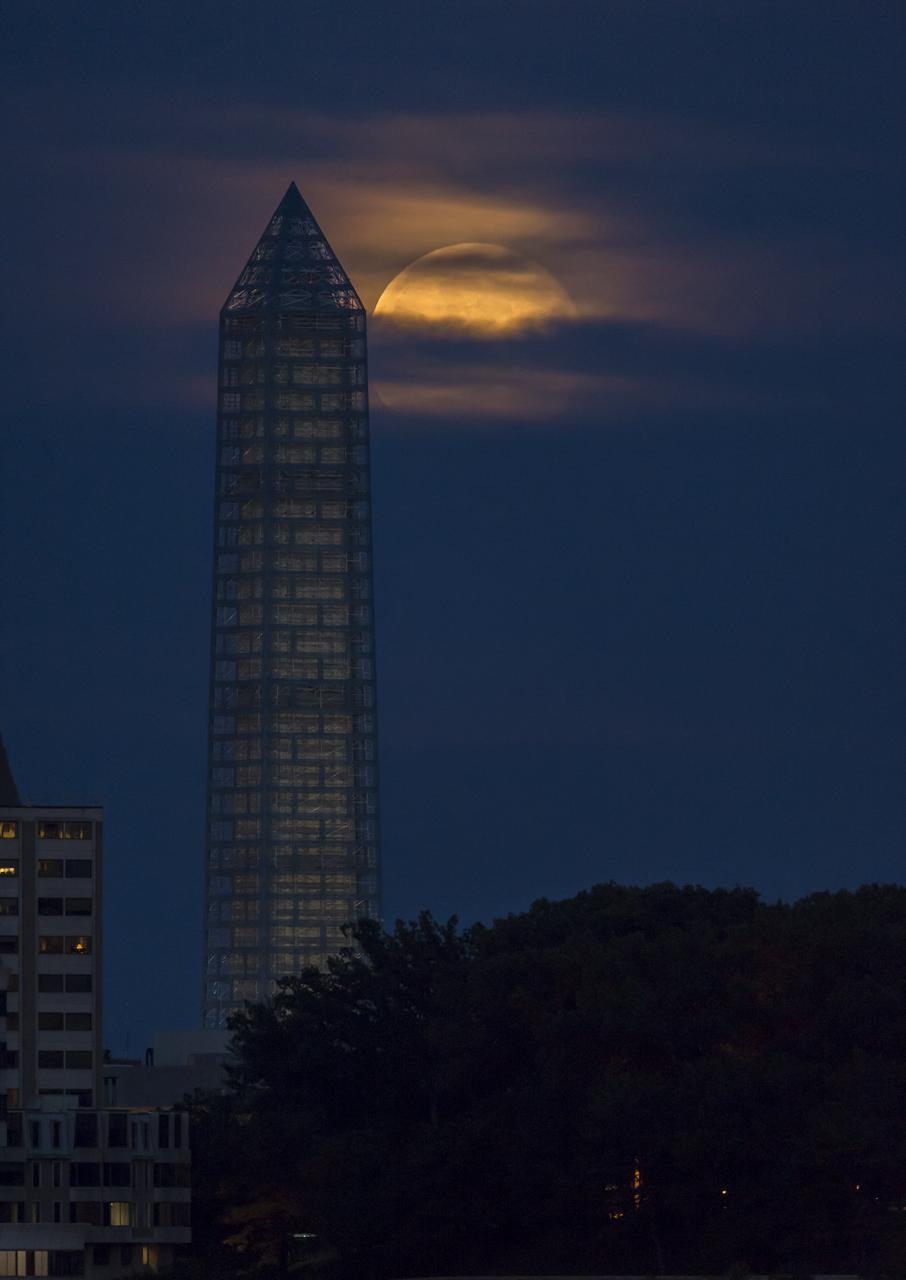
A supermoon rises behind the Washington Monument, Sunday, June 23, 2013, in Washington. This year the Supermoon is up to 13.5% larger and 30% brighter than a typical Full Moon is. This is a result of the Moon reaching its perigee - the closest that it gets to the Earth during the course of its orbit. During perigee on 23 June the Moon was about 221,824 miles away, as compared to the 252,581 miles away that it is at its furthest distance from the Earth (apogee). Photo Credit: (NASA/Bill Ingalls)
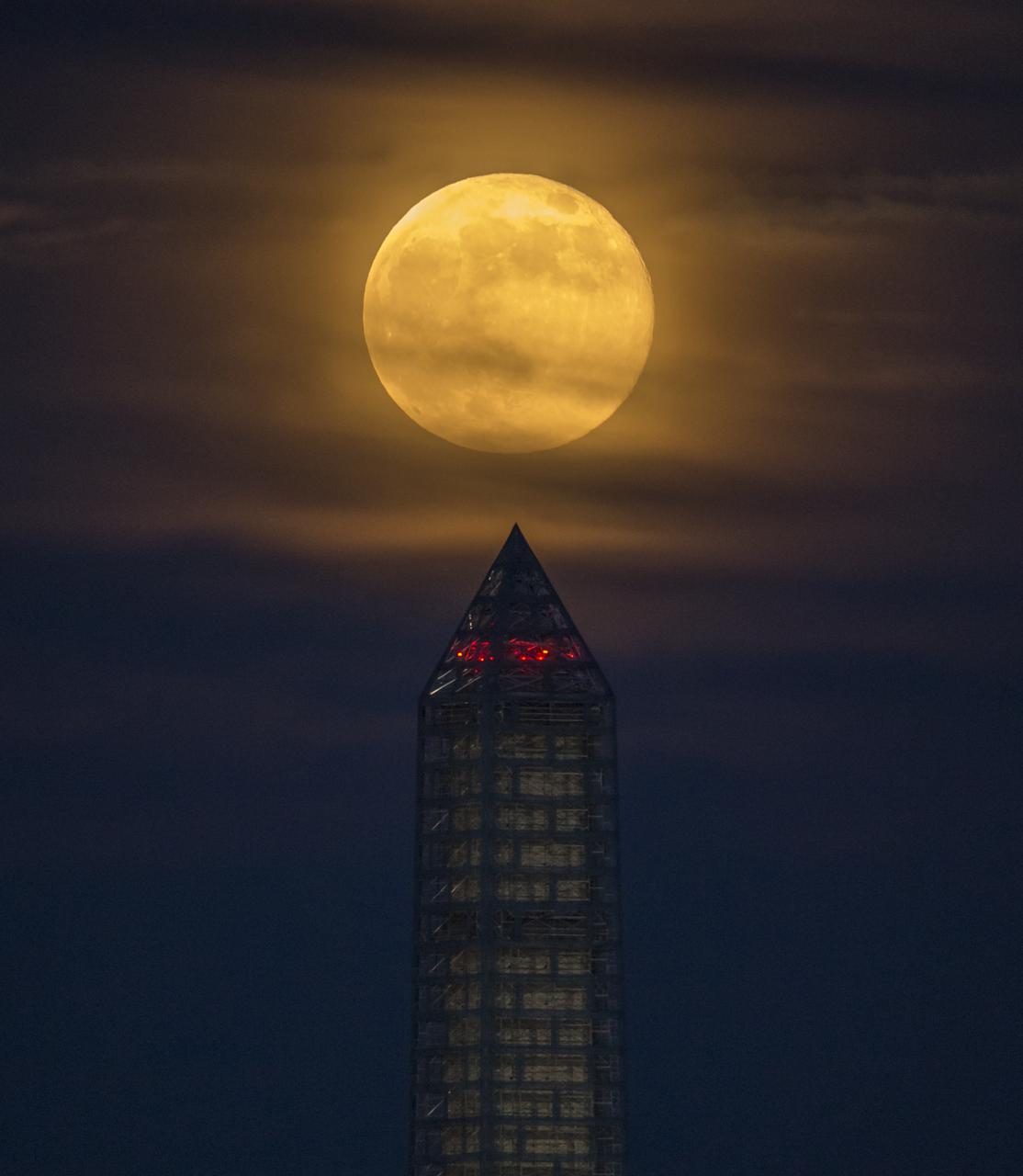
A supermoon rises behind the Washington Monument, Sunday, June 23, 2013, in Washington. This year the Supermoon is up to 13.5% larger and 30% brighter than a typical Full Moon is. This is a result of the Moon reaching its perigee - the closest that it gets to the Earth during the course of its orbit. During perigee on 23 June the Moon was about 221,824 miles away, as compared to the 252,581 miles away that it is at its furthest distance from the Earth (apogee). Photo Credit: (NASA/Bill Ingalls)
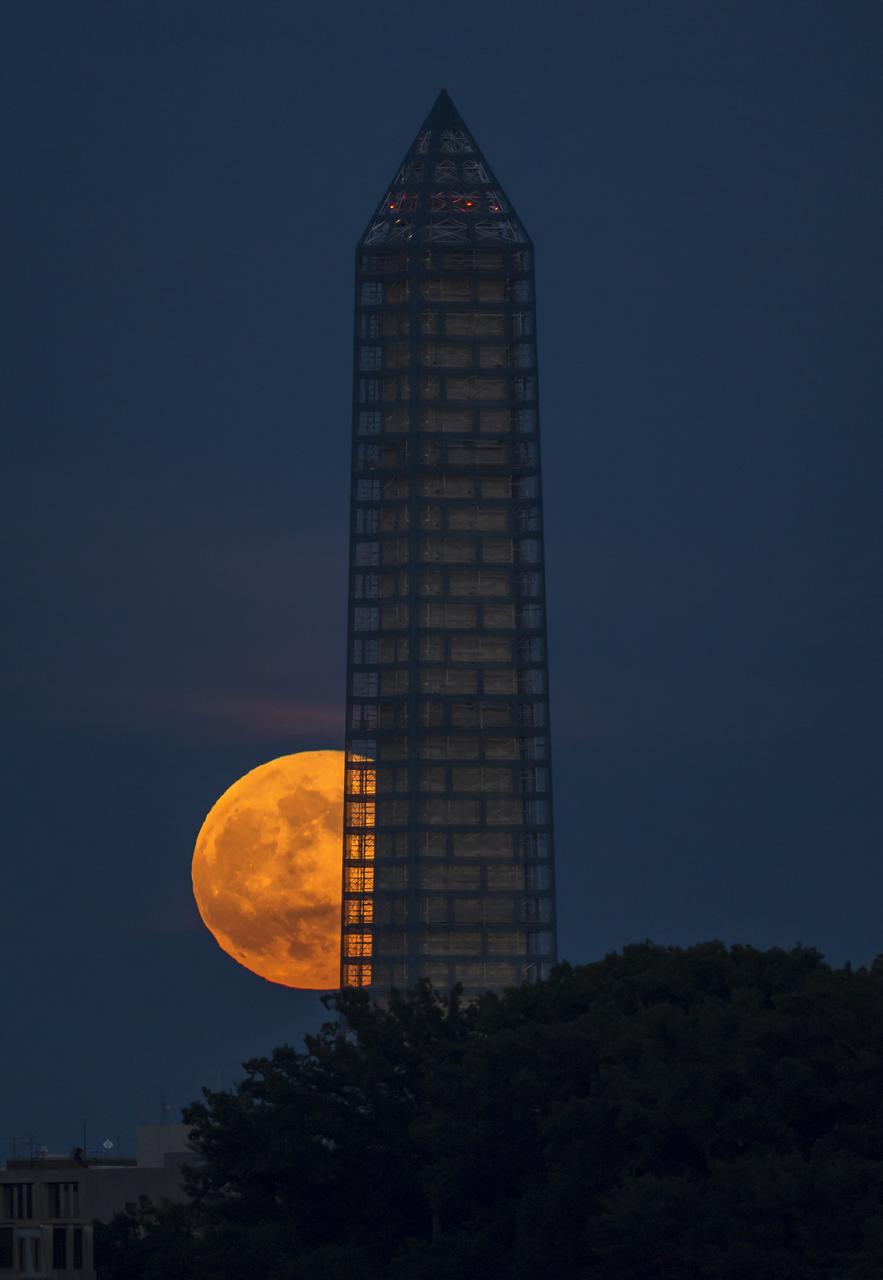
A supermoon rises behind the Washington Monument, Sunday, June 23, 2013, in Washington. This year the Supermoon is up to 13.5% larger and 30% brighter than a typical Full Moon is. This is a result of the Moon reaching its perigee - the closest that it gets to the Earth during the course of its orbit. During perigee on 23 June the Moon was about 221,824 miles away, as compared to the 252,581 miles away that it is at its furthest distance from the Earth (apogee). Photo Credit: (NASA/Bill Ingalls)
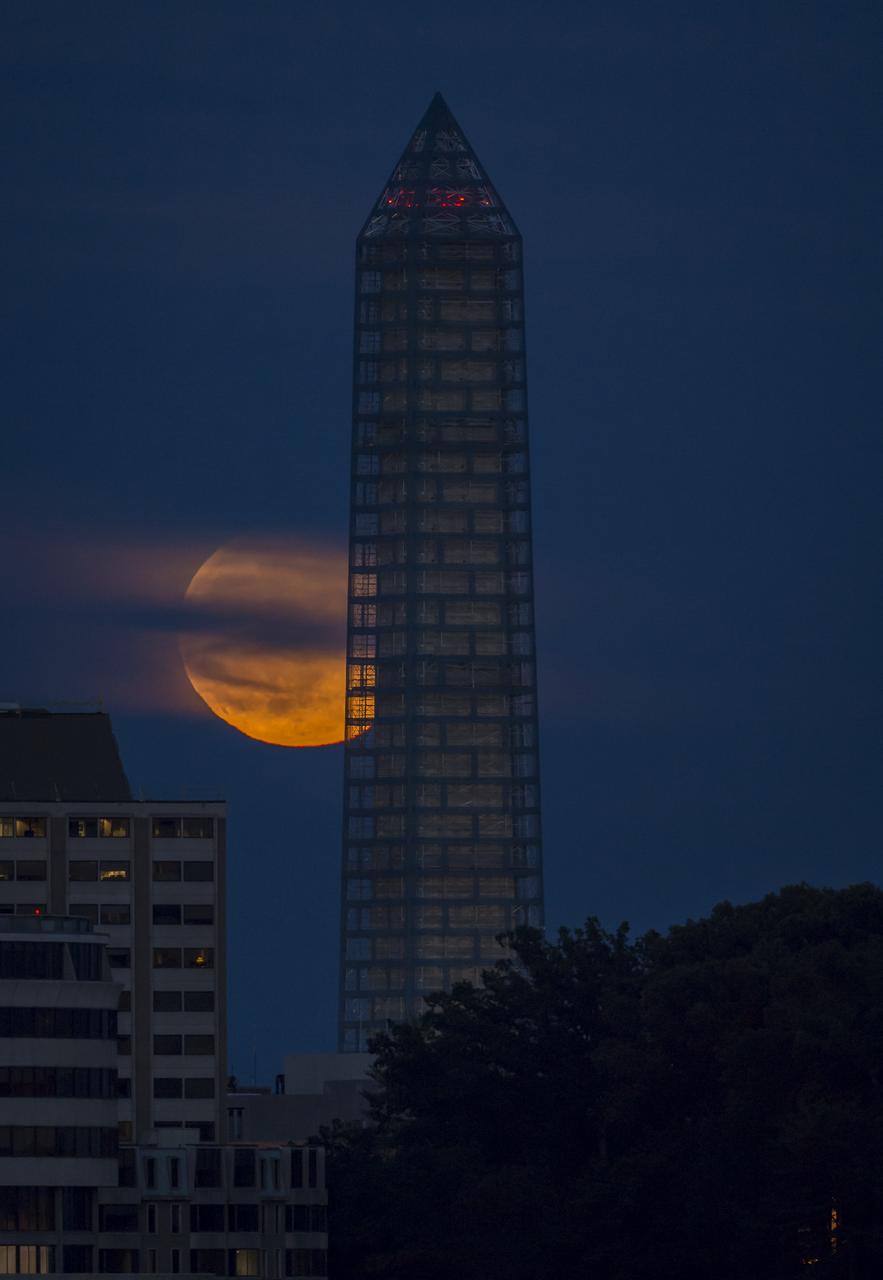
A supermoon rises behind the Washington Monument, Sunday, June 23, 2013, in Washington. This year the Supermoon is up to 13.5% larger and 30% brighter than a typical Full Moon is. This is a result of the Moon reaching its perigee - the closest that it gets to the Earth during the course of its orbit. During perigee on 23 June the Moon was about 221,824 miles away, as compared to the 252,581 miles away that it is at its furthest distance from the Earth (apogee). Photo Credit: (NASA/Bill Ingalls)
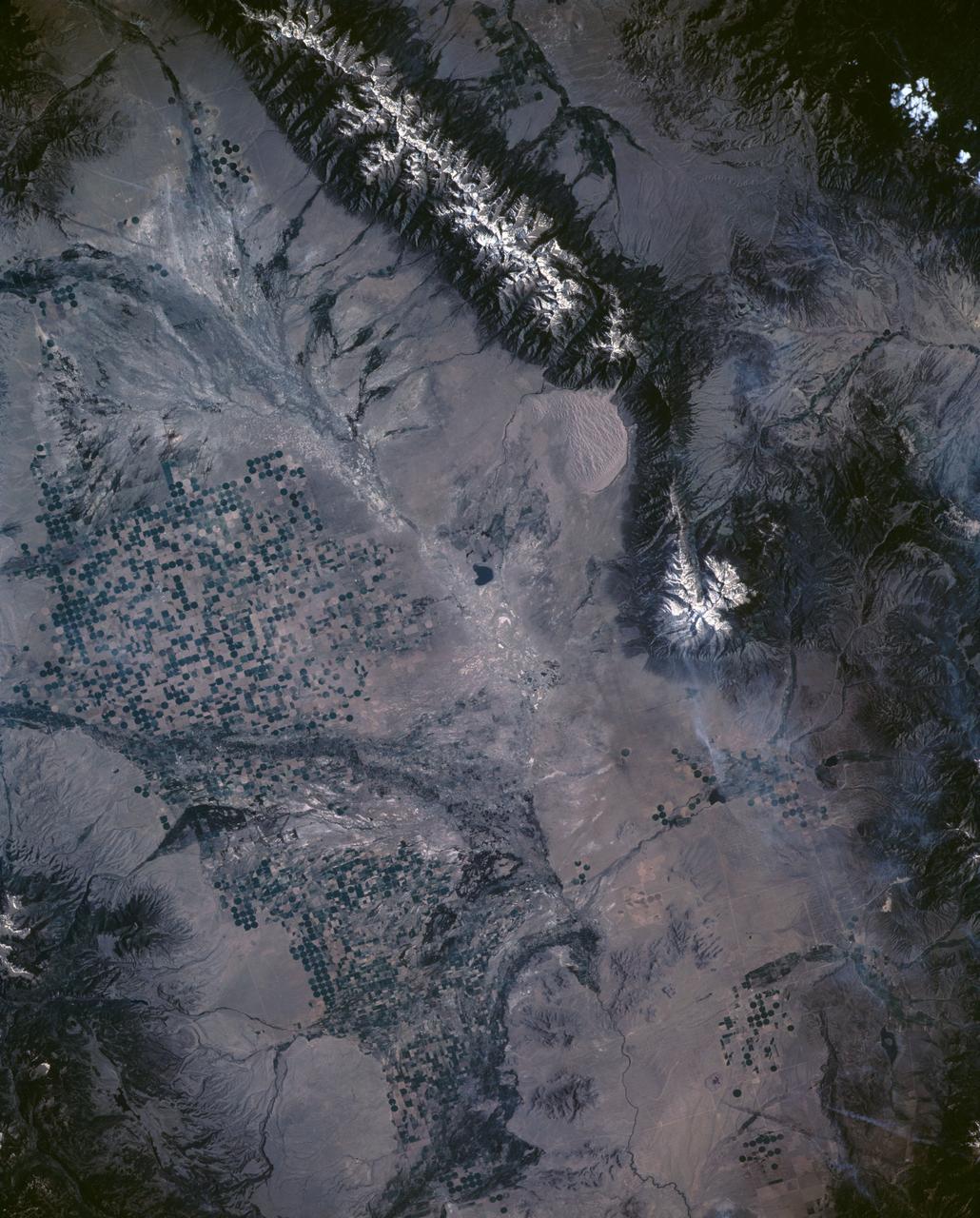
STS040-151-126 (5-14 June 1991) --- Croplands of the San Luis Valley stand out exceptionally clearly from low Earth orbit. The Rio Grande flows through the valley. Circular center pivot irrigation patterns have almost completely replaced the earlier rectangular grid pattern. Pinto beans are the specialty of the area. The Great Sand Dunes National Monument appears in fine detail near the center of the picture. The sands of these dunes have been blown from the valley floor by westerly winds in the course of the last few tens of thousands of years, now banked up against the foot of the Sangre de Christo Mountains (snowcapped peaks reach over 14000 feet). The town of Alamosa lies on the Rio Grande. The San Juan Mountains appear at the bottom left.
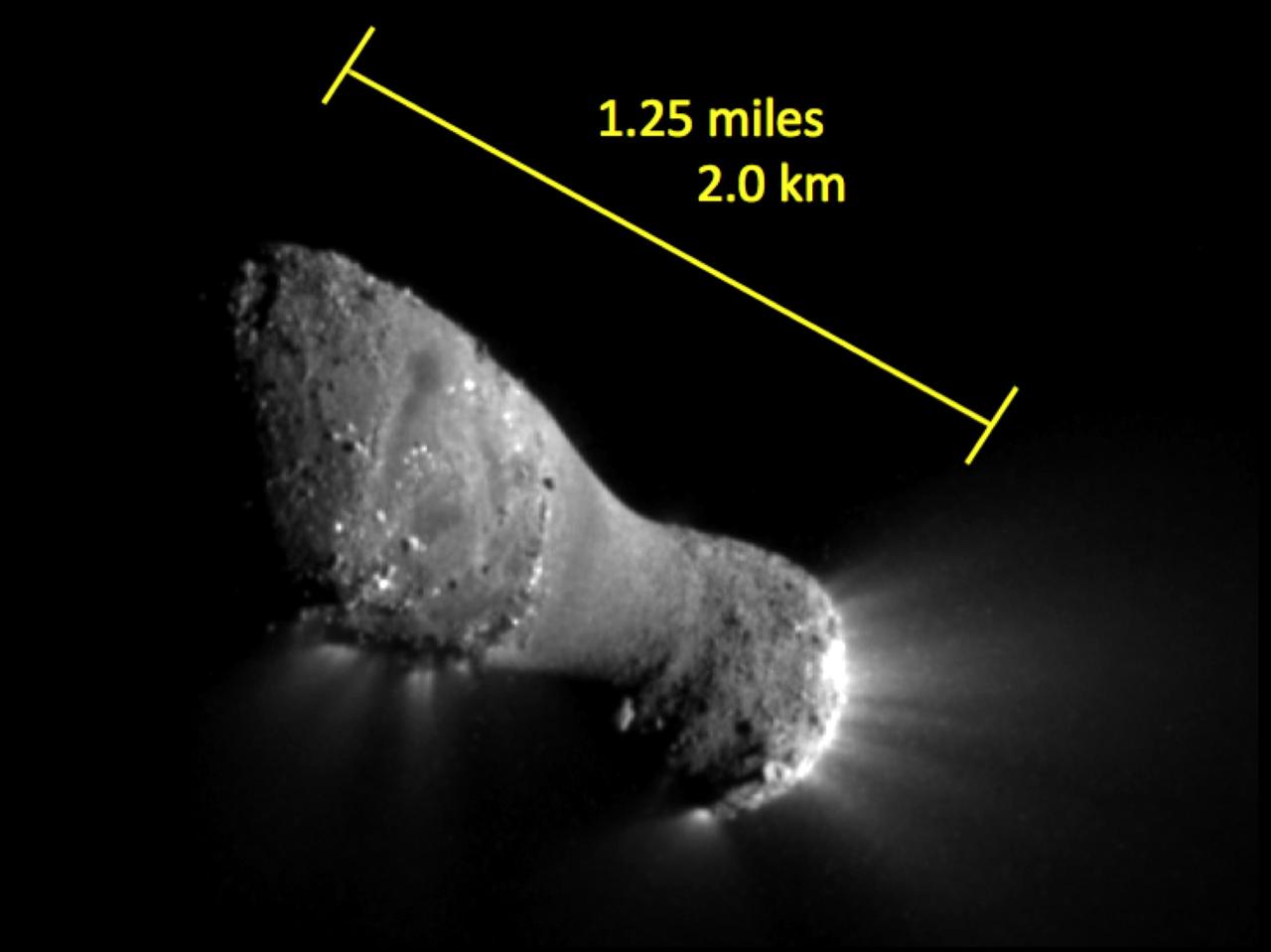
This image, one of the closest taken of comet Hartley 2 by NASA EPOXI mission, shows many features across the comet surface. The length of the comet is equal to the distance between the Capitol building and the Washington Monument in Washington.
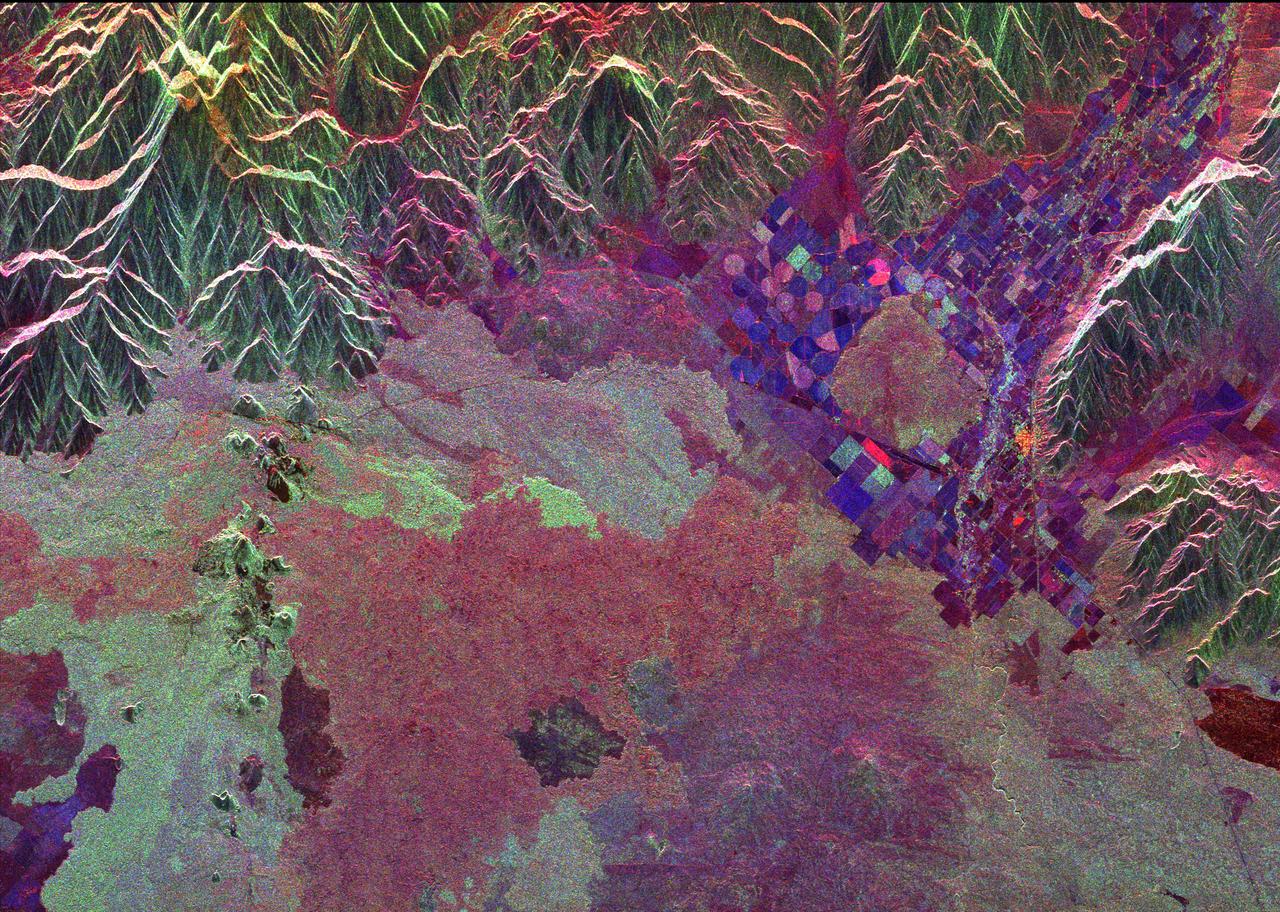
Ancient lava flows dating back 2,000 to 15,000 years are shown in light green and red on the left side of this space radar image of the Craters of the Moon National Monument area in Idaho.
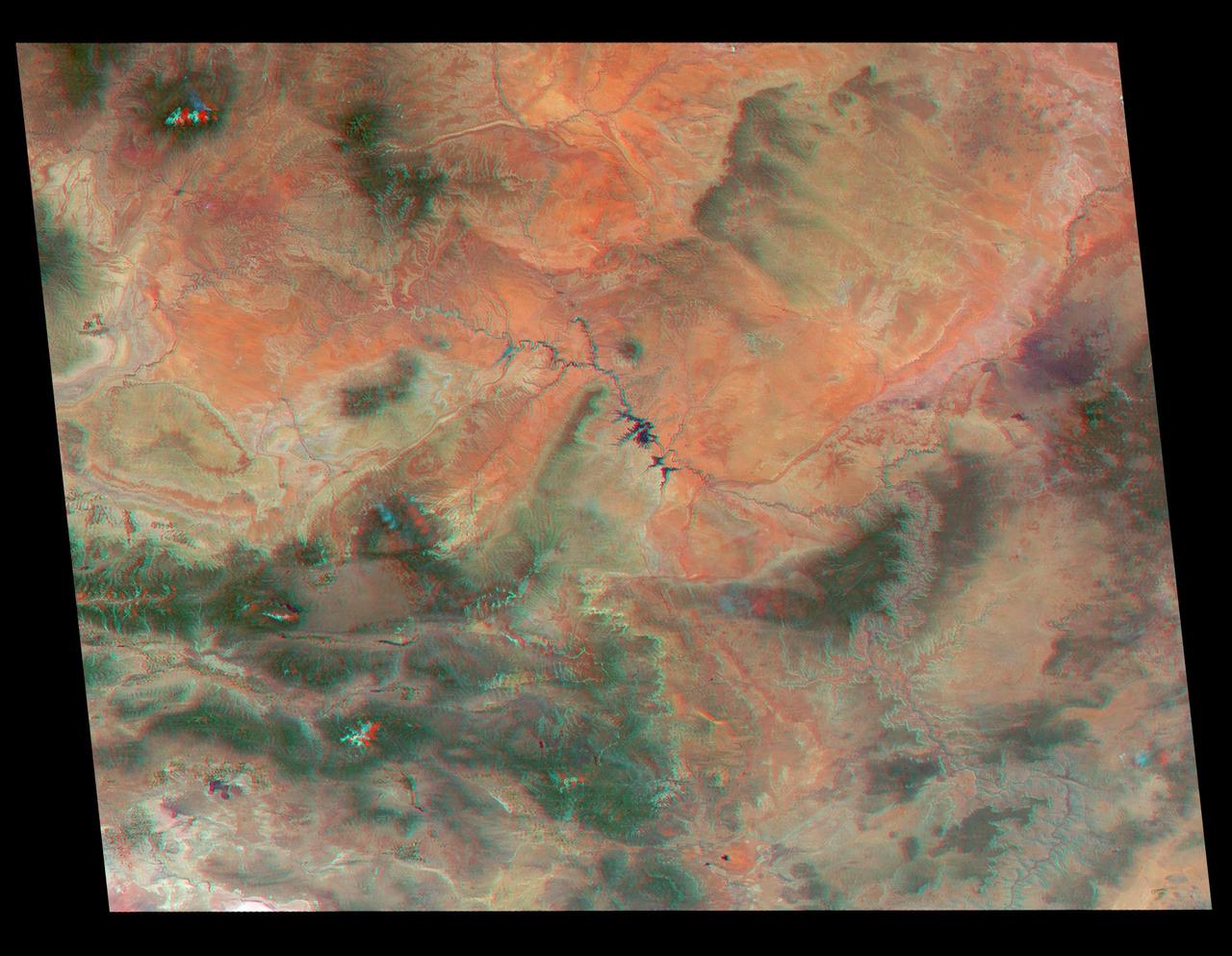
Just in time for the U.S. National Park Service's Centennial celebration on Aug. 25, NASA's Multiangle Imaging SpectroRadiometer (MISR) instrument aboard NASA's Terra satellite is releasing four new anaglyphs that showcase 33 of our nation's national parks, monuments, historical sites and recreation areas in glorious 3D. Shown in the annotated image are Walnut Canyon National Monument, Sunset Crater Volcano National Monument, Wupatki National Monument, Grand Canyon National Park, Pipe Spring National Monument, Zion National Park, Cedar Breaks National Monument, Bryce Canyon National Park, Capitol Reef National Park, Navajo National Monument, Glen Canyon National Recreation Area, Natural Bridges National Monument, Canyonlands National Park, and Arches National Park. MISR views Earth with nine cameras pointed at different angles, giving it the unique capability to produce anaglyphs, stereoscopic images that allow the viewer to experience the landscape in three dimensions. The anaglyphs were made by combining data from MISR's vertical-viewing and 46-degree forward-pointing camera. You will need red-blue glasses in order to experience the 3D effect; ensure you place the red lens over your left eye. The images have been rotated so that north is to the left in order to enable 3D viewing because the Terra satellite flies from north to south. All of the images are 235 miles (378 kilometers) from west to east. These data were acquired June 18, 2016, Orbit 87774. http://photojournal.jpl.nasa.gov/catalog/PIA20889
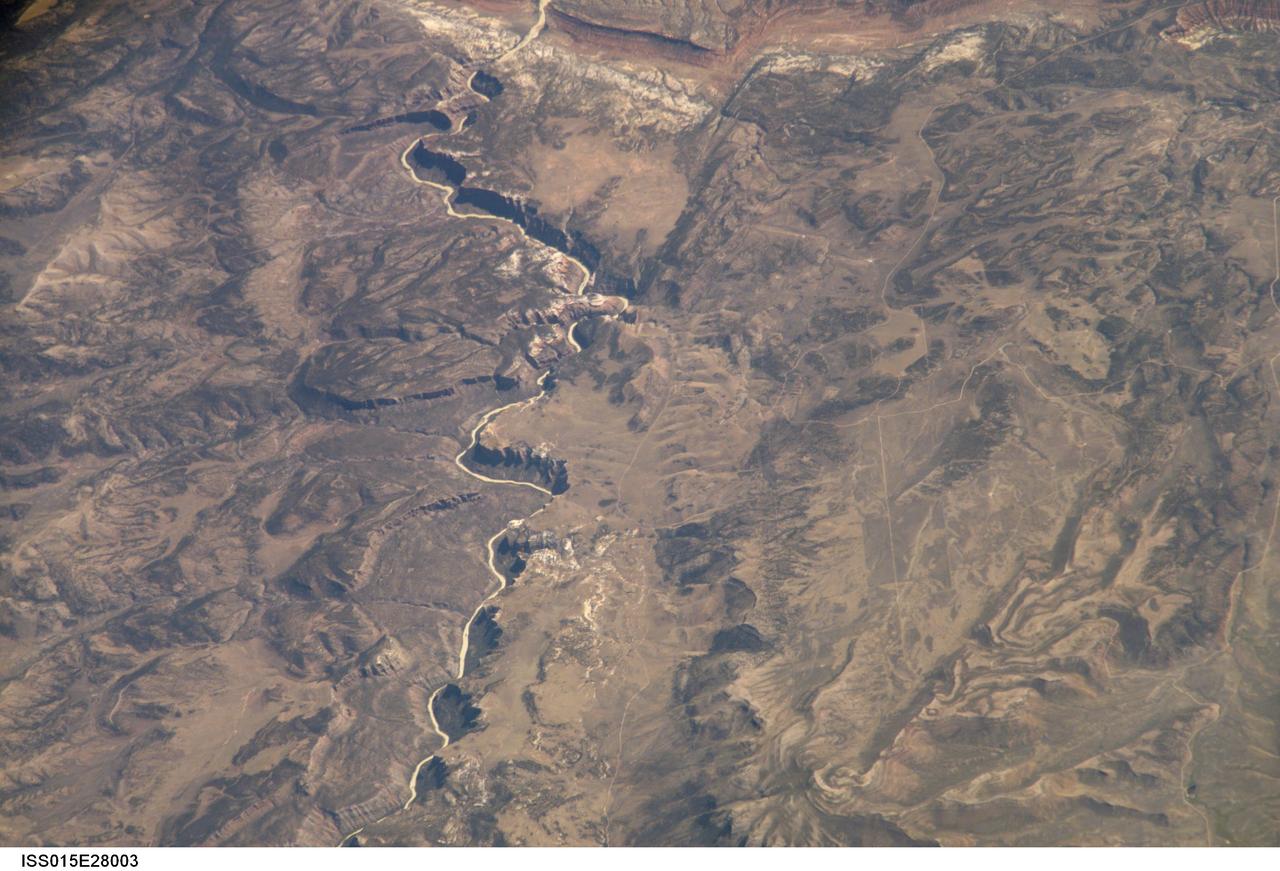
ISS015-E-28003 (12 Sept. 2007) --- A section of Dinosaur National Monument along the Yampa River in Colorado, which straddles the Colorado/Utah border, is featured in this image photographed by an Expedition 15 crewmember on the International Space Station. Dinosaur National Monument is perhaps best known for the abundant fossils found in the approximately 145 Ma (mega-annum, or millions of years old) Morrison Formation exposed in valleys and low ridges, according to scientists. The fossil assemblage is a unique record of terrestrial life of the period (dinosaurs, plants, and other animal species). Remains accumulated in streams and shallow lakes and were swiftly buried (and preserved) by sediments associated with those environments. Scientists believe these sediments in turn were lithified over many millions of years as they were buried under younger deposits -- forming the distinctive stratigraphy of the Monument. The generally flat-laying "layer cake" geology of the region -- similar to the Colorado Plateau to the south - is expressed in the image by parallel beds of tan, reddish-brown, and gray-brown sedimentary rocks cut by the Yampa River at the northern end of the Monument (top). Erosion by the Yampa River exposed the Morrison layer and its trove of fossil material. Together with other fossils found in both older and younger rock layers in the area, the Dinosaur National Monument remains an important scientific resource that continues to provide new insights into the geologic history and paleoecology of the region.
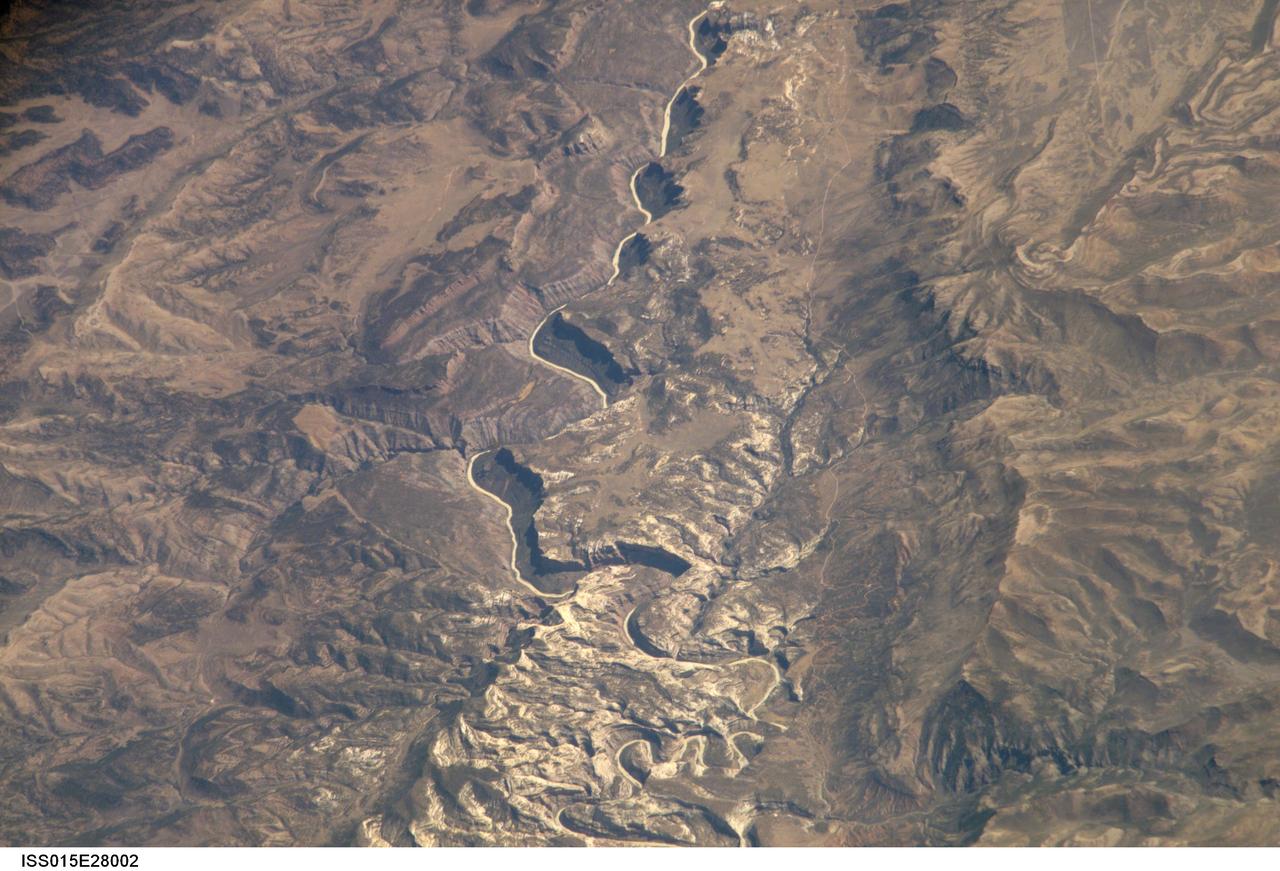
ISS015-E-28002 (12 Sept. 2007) --- A section of Dinosaur National Monument along the Yampa River in Colorado, which straddles the Colorado/Utah border, is featured in this image photographed by an Expedition 15 crewmember on the International Space Station. Dinosaur National Monument is perhaps best known for the abundant fossils found in the approximately 145 Ma (mega-annum, or millions of years old) Morrison Formation exposed in valleys and low ridges, according to scientists. The fossil assemblage is a unique record of terrestrial life of the period (dinosaurs, plants, and other animal species). Remains accumulated in streams and shallow lakes and were swiftly buried (and preserved) by sediments associated with those environments. Scientists believe these sediments in turn were lithified over many millions of years as they were buried under younger deposits -- forming the distinctive stratigraphy of the Monument. The generally flat-laying "layer cake" geology of the region -- similar to the Colorado Plateau to the south - is expressed in the image by parallel beds of tan, reddish-brown, and gray-brown sedimentary rocks cut by the Yampa River at the northern end of the Monument (top). Erosion by the Yampa River exposed the Morrison layer and its trove of fossil material. Together with other fossils found in both older and younger rock layers in the area, the Dinosaur National Monument remains an important scientific resource that continues to provide new insights into the geologic history and paleoecology of the region.
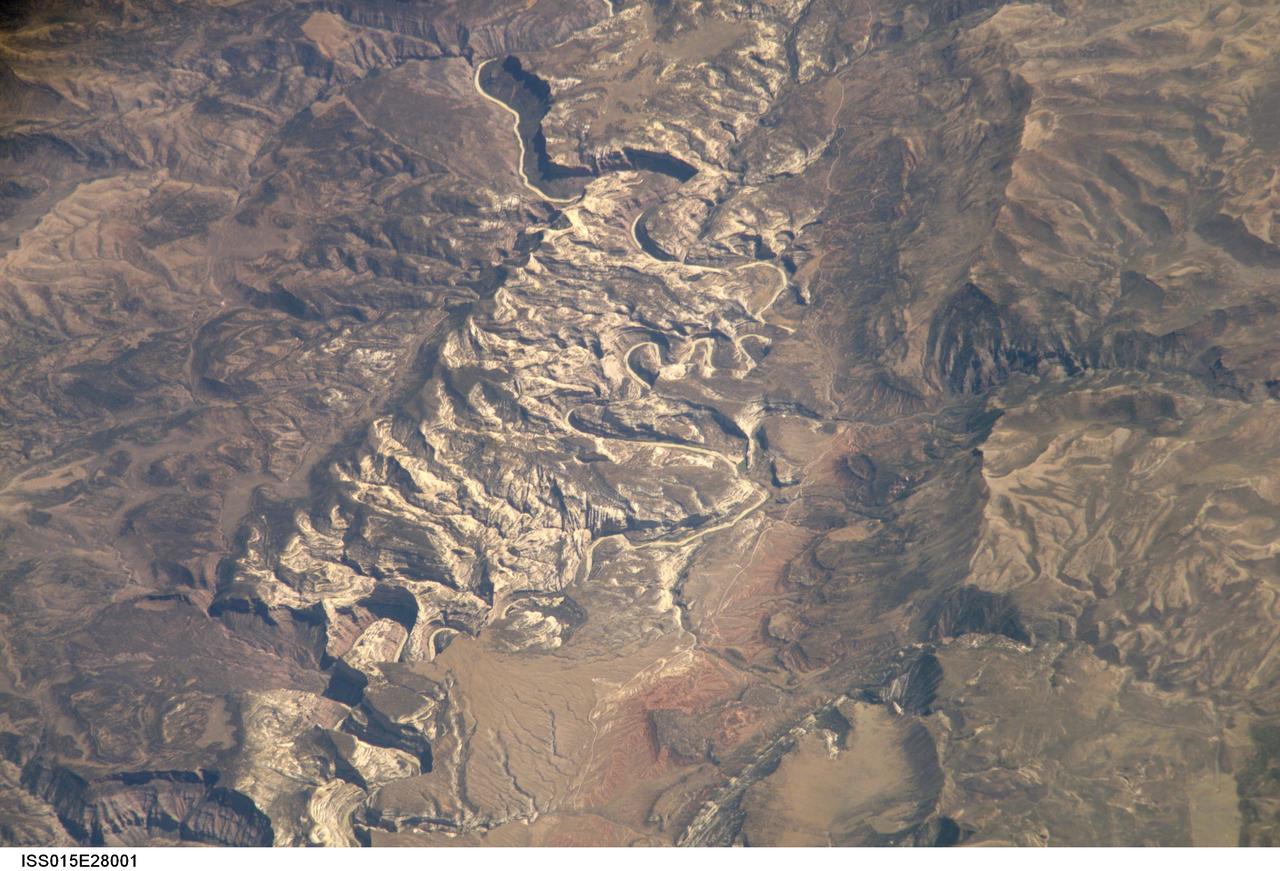
ISS015-E-28001 (12 Sept. 2007) --- A section of Dinosaur National Monument along the Yampa River in Colorado, which straddles the Colorado/Utah border, is featured in this image photographed by an Expedition 15 crewmember on the International Space Station. Dinosaur National Monument is perhaps best known for the abundant fossils found in the approximately 145 Ma (mega-annum, or millions of years old) Morrison Formation exposed in valleys and low ridges, according to scientists. The fossil assemblage is a unique record of terrestrial life of the period (dinosaurs, plants, and other animal species). Remains accumulated in streams and shallow lakes and were swiftly buried (and preserved) by sediments associated with those environments. Scientists believe these sediments in turn were lithified over many millions of years as they were buried under younger deposits -- forming the distinctive stratigraphy of the Monument. The generally flat-laying "layer cake" geology of the region -- similar to the Colorado Plateau to the south - is expressed in the image by parallel beds of tan, reddish-brown, and gray-brown sedimentary rocks cut by the Yampa River at the northern end of the Monument (top). Erosion by the Yampa River exposed the Morrison layer and its trove of fossil material. Together with other fossils found in both older and younger rock layers in the area, the Dinosaur National Monument remains an important scientific resource that continues to provide new insights into the geologic history and paleoecology of the region.
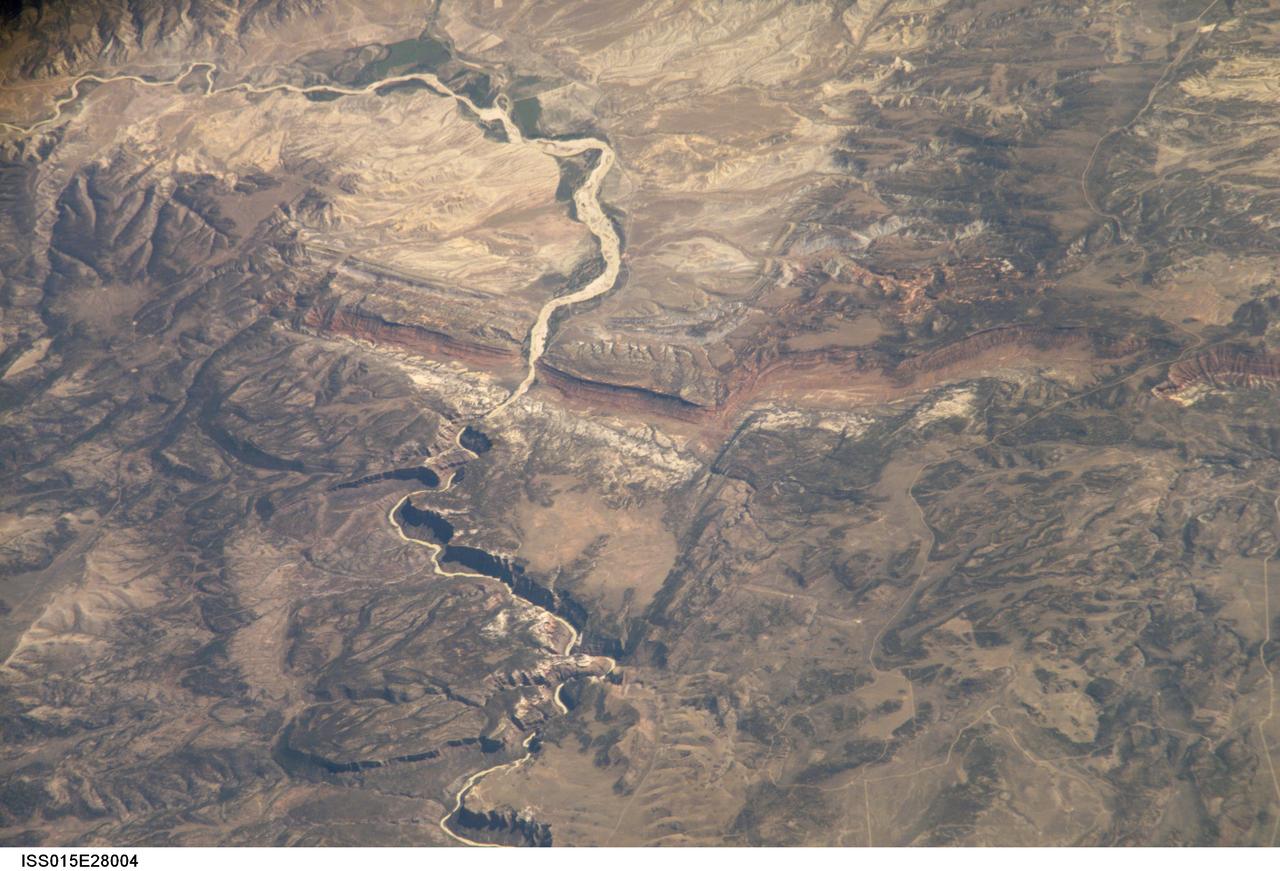
ISS015-E-28004 (12 Sept. 2007) --- A section of Dinosaur National Monument along the Yampa River in Colorado, which straddles the Colorado/Utah border, is featured in this image photographed by an Expedition 15 crewmember on the International Space Station. Dinosaur National Monument is perhaps best known for the abundant fossils found in the approximately 145 Ma (mega-annum, or millions of years old) Morrison Formation exposed in valleys and low ridges, according to scientists. The fossil assemblage is a unique record of terrestrial life of the period (dinosaurs, plants, and other animal species). Remains accumulated in streams and shallow lakes and were swiftly buried (and preserved) by sediments associated with those environments. Scientists believe these sediments in turn were lithified over many millions of years as they were buried under younger deposits -- forming the distinctive stratigraphy of the Monument. The generally flat-laying "layer cake" geology of the region -- similar to the Colorado Plateau to the south - is expressed in the image by parallel beds of tan, reddish-brown, and gray-brown sedimentary rocks cut by the Yampa River at the northern end of the Monument (top). Erosion by the Yampa River exposed the Morrison layer and its trove of fossil material. Together with other fossils found in both older and younger rock layers in the area, the Dinosaur National Monument remains an important scientific resource that continues to provide new insights into the geologic history and paleoecology of the region.
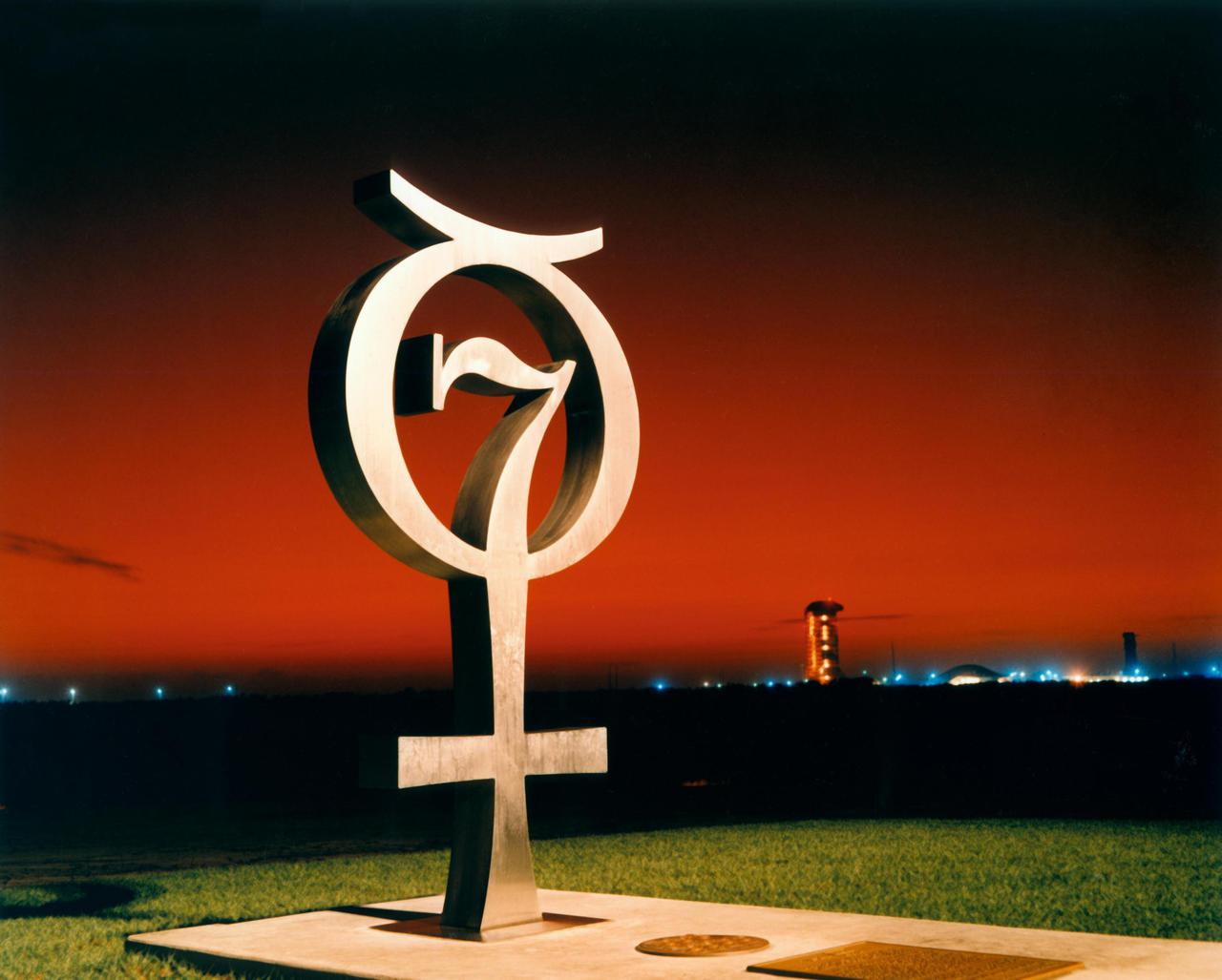
KENNEDY SPACE CENTER, FLA. -- The Mercury monument, honoring the original seven astronauts, is shown here at sunrise at Pad 14.
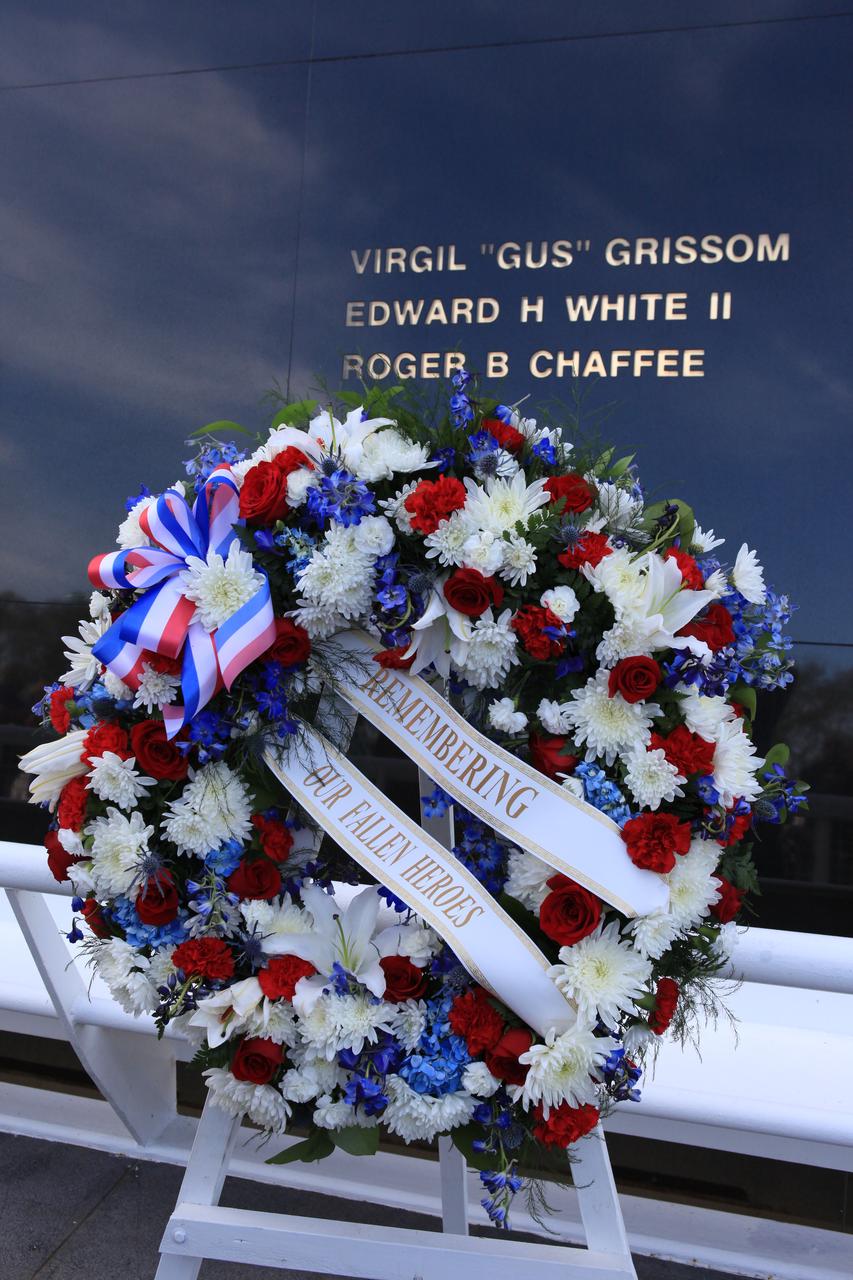
Following the Kennedy Space Center's NASA Day of Remembrance ceremony, Family members of fallen astronauts placed a wreath at the Space Mirror Memorial. The monument includes the names of the fallen astronauts from Apollo 1, Challenger and Columbia, as well as the astronauts who perished in training and commercial airplane accidents are emblazoned on the monument's 45-foot-high-by-50-foot-wide polished black granite surface.
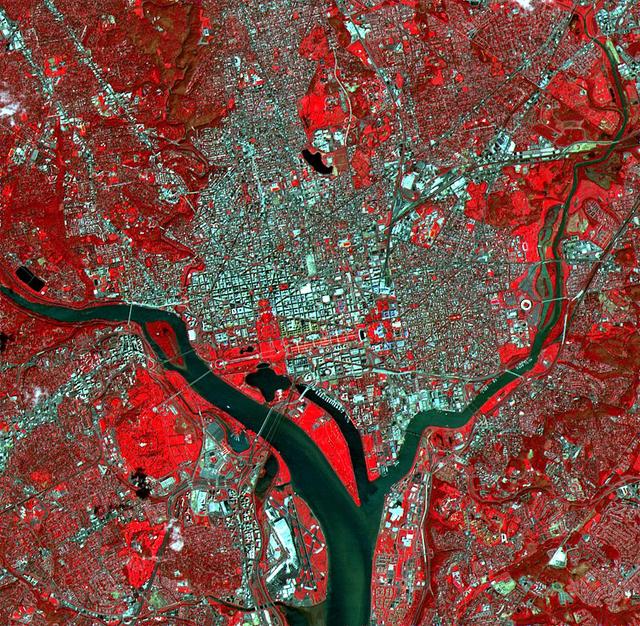
The White House, the Jefferson Memorial, and the Washington Monument with its shadow are all visible in this image of Washington, D.C. With its 15-meter spatial resolution, ASTER can see individual buildings. Taken on June 1, 2000, this image covers an area 14 kilometers (8.5 miles) wide and 13.7 kilometers (8.2 miles) long in three bands of the reflected visible and infrared wavelength region. The combination of visible and near infrared bands displays vegetation in red and water in dark grays. The Potomac River flows from the middle left to the bottom center. The large red area west of the river is Arlington National Cemetery. http://photojournal.jpl.nasa.gov/catalog/PIA02655
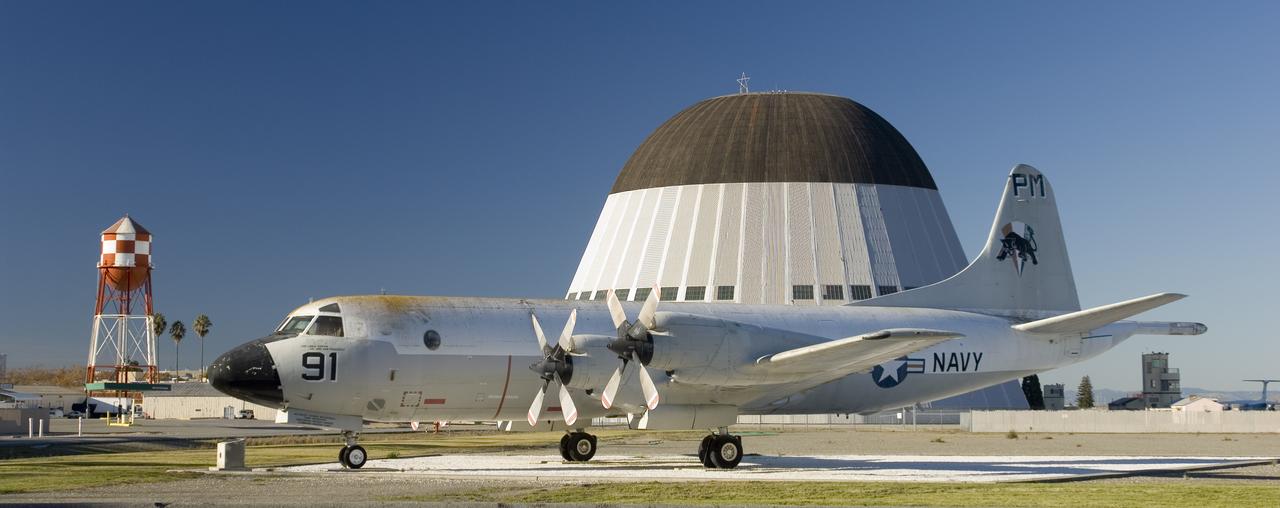
Ames and Moffett Field (MFA) historical sites and memorials Navy Lockheed P-3 Orion Long Range Antisubmarine Partol Aircraft on display in front of MFA Bldg 158 Flgiht Ops (tower) with monuments
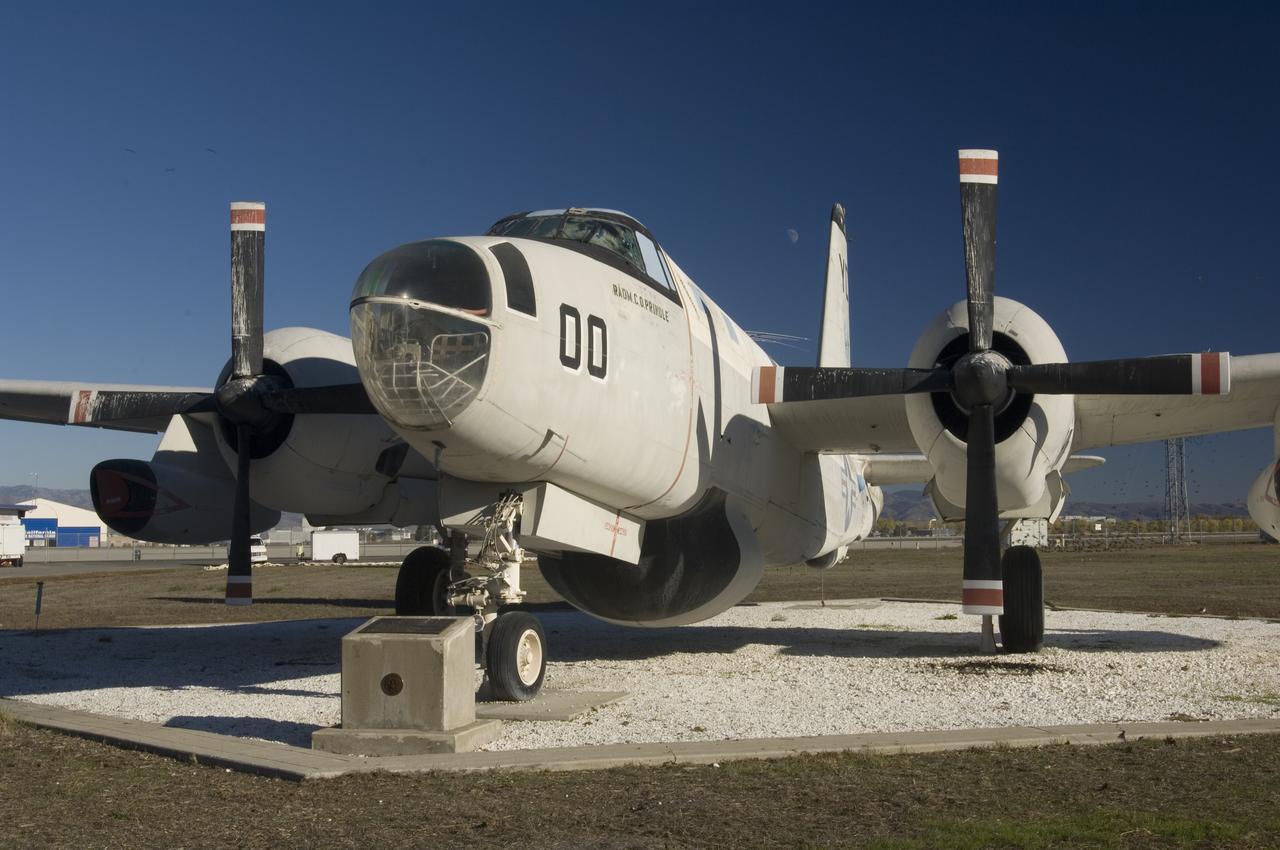
Ames and Moffett Field (MFA) historical sites and memorials Navy Lockheed SP-2E Neptune Long Range Antisubmarine Partol Aircraft on display in front of MFA Bldg 158 Flgiht Ops (tower) with monuments
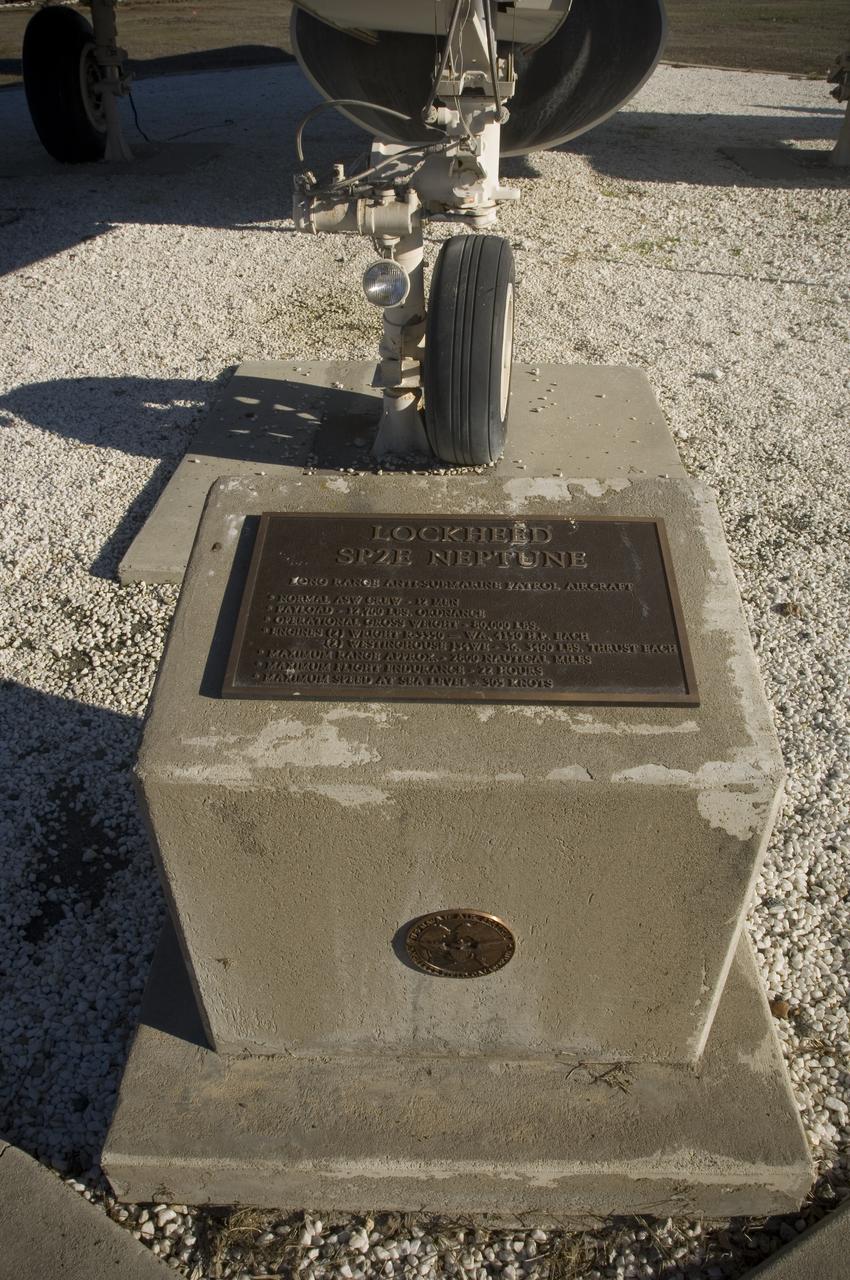
Ames and Moffett Field (MFA) historical sites and memorials Navy Lockheed SP-2E Neptune Long Range Antisubmarine Partol Aircraft on display in front of MFA Bldg 158 Flgiht Ops (tower) with monuments

Ames and Moffett Field (MFA) historical sites and memorials Navy Lockheed P-3 Orion Long Range Antisubmarine Partol Aircraft on display in front of MFA Bldg 158 Flgiht Ops (tower) with monuments

White House Easter Egg Roll decoration and signage is on the South Lawn, with the Washington Monument, in Washington D.C., on April 6, 2026. Photo Credit: (NASA/Crystal R. Hines)

Ames and Moffett Field (MFA) historical sites and memorials Navy Lockheed P-3 Orion Long Range Antisubmarine Partol Aircraft on display in front of MFA Bldg 158 Flgiht Ops (tower) with monuments
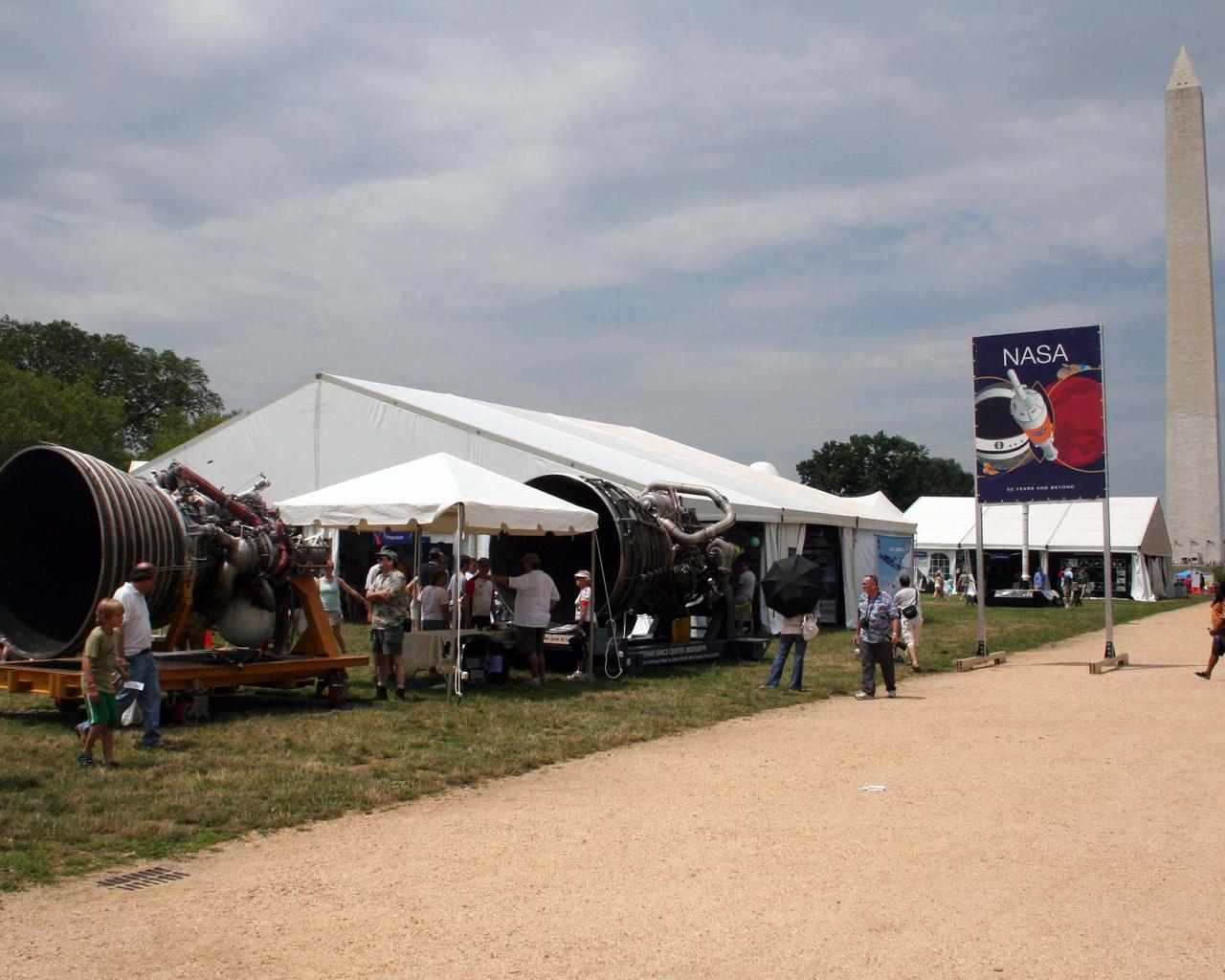
With the Washington Monument as a stirring background, a space shuttle main engine and J-2 engine from Stennis Space Center offer Washington Mall visitors a close-up look at the power of spaceflight
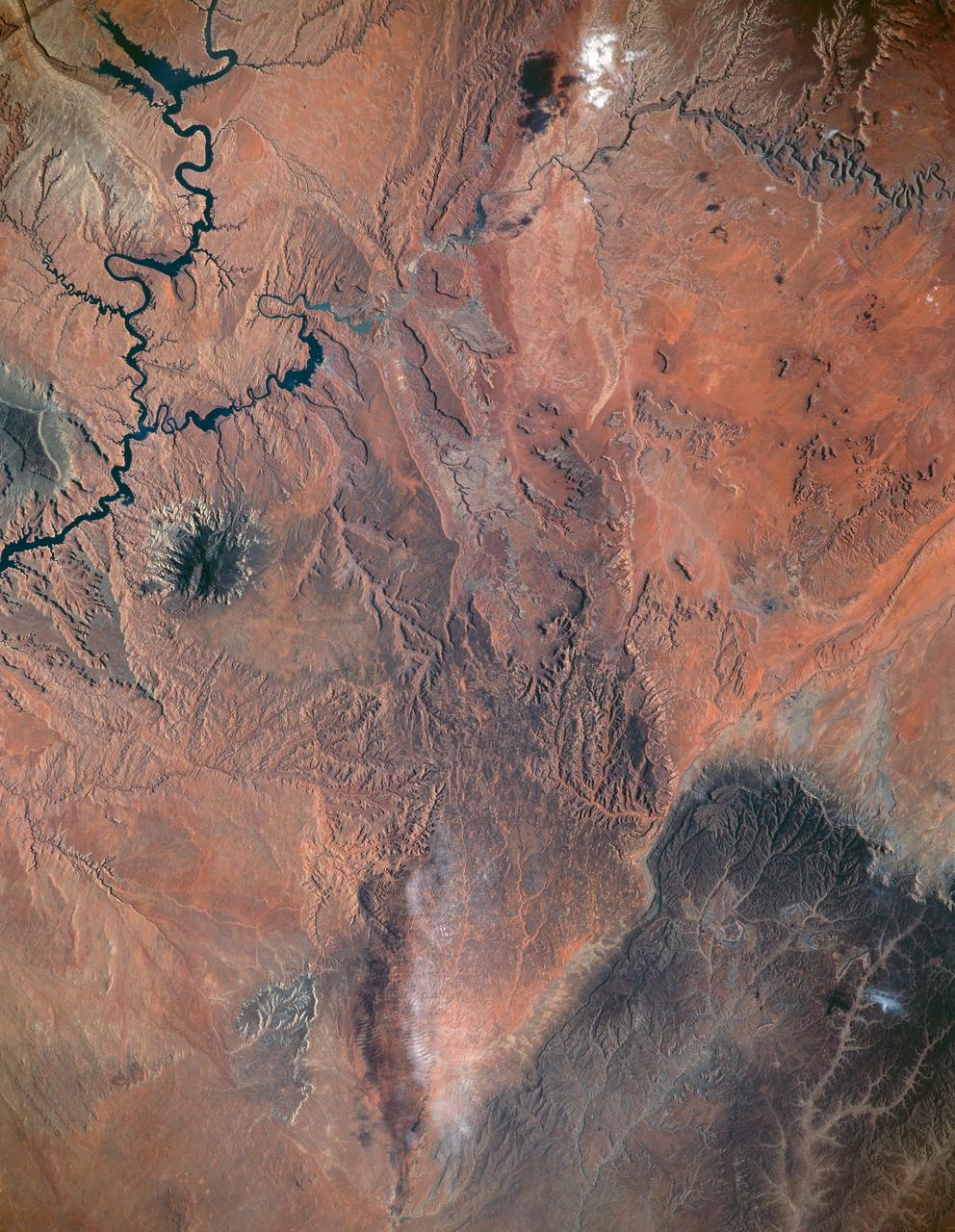
STS040-151-123 (5-14 June 1991) --- This large format view shows parts of northern Arizona and southern Utah. San Juan River, Lake Powell and Monument Valley are visible. Water of Lake Powell can be seen filling the valleys of the Colorado and San Juan Rivers at the top of the image. The darker green areas indicate high, forested country of the lone Navajo Mountain (center left) and Black Mesa (bottom right). Strip mines can be seen south of the rim of Black Mesa. Monument Valley lies between the San Juan River and Black Mesa. Shadows thrown by the individual steep-sided hills make them stand out in the scene.
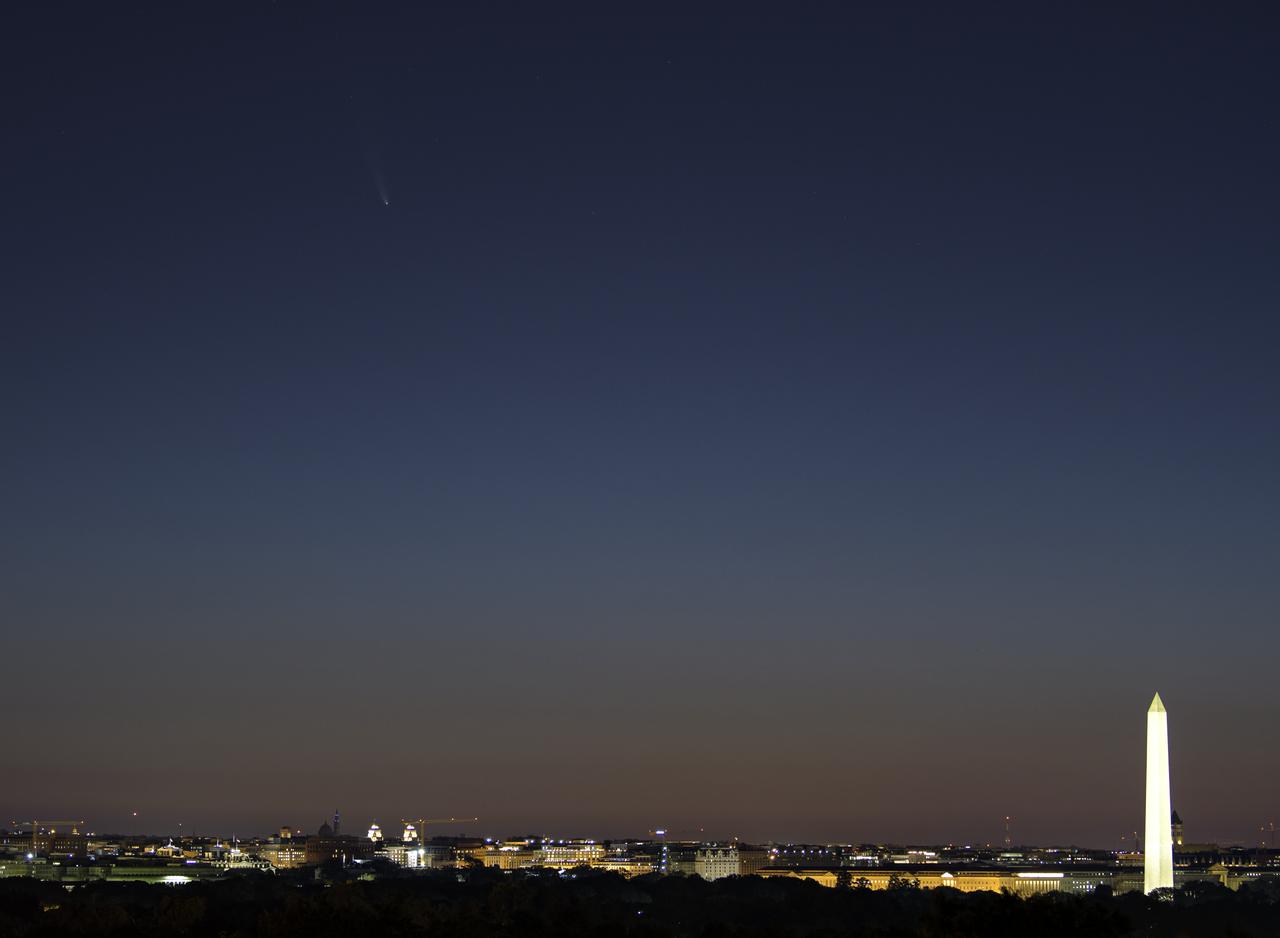
Comet NEOWISE is seen before sunrise, upper left, over Washington, Sunday, July 12, 2020. The comet was discovered by NASA’s Near-Earth Object Wide-field Infrared Survey Explorer, or NEOWISE, on March 27. Since then, the comet — called comet C/2020 F3 NEOWISE and nicknamed comet NEOWISE — has been spotted by several NASA spacecraft, including Parker Solar Probe, NASA’s Solar and Terrestrial Relations Observatory, the ESA/NASA Solar and Heliospheric Observatory, and astronauts aboard the International Space Station. Photo Credit: (NASA/Bill Ingalls)
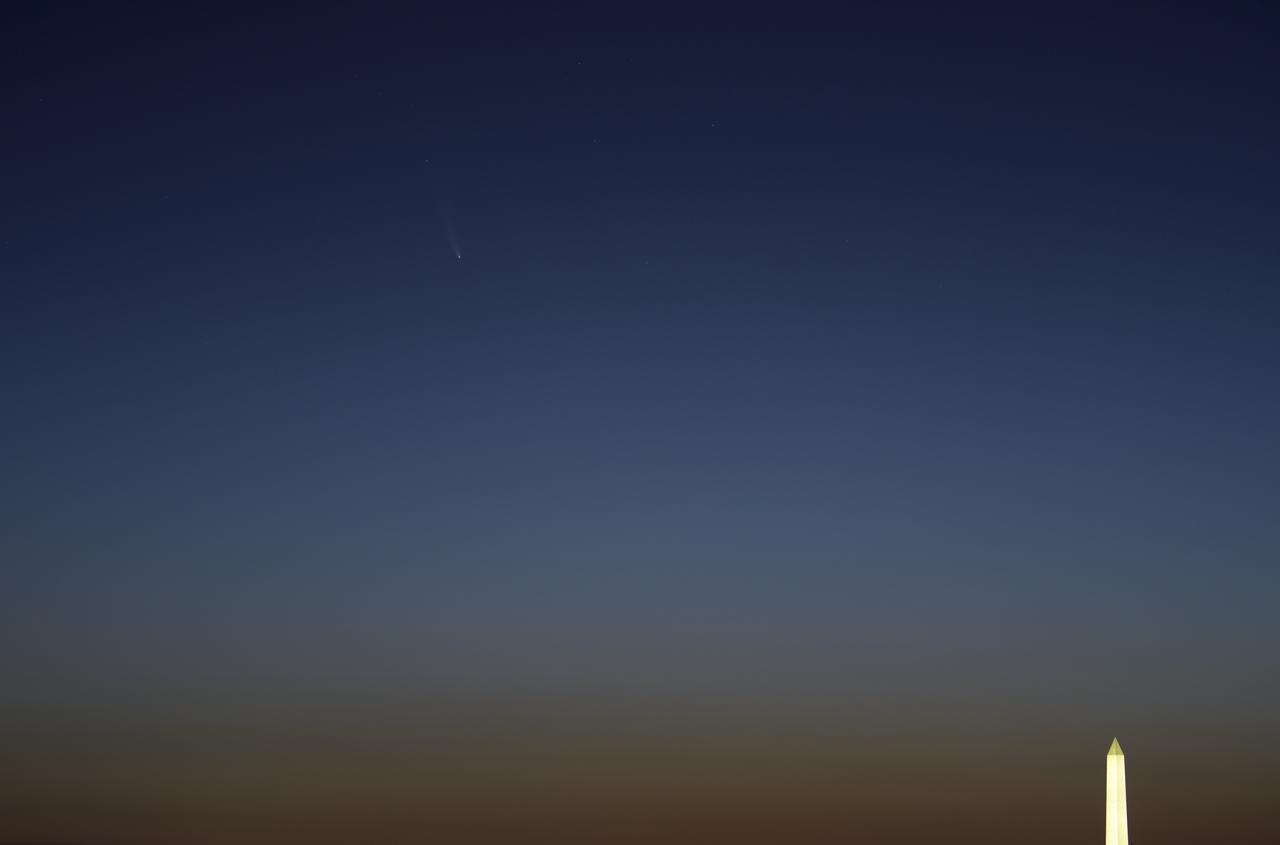
Comet NEOWISE is seen, upper left, before sunrise over Washington, Sunday, July 12, 2020. The comet was discovered by NASA’s Near-Earth Object Wide-field Infrared Survey Explorer, or NEOWISE, on March 27. Since then, the comet — called comet C/2020 F3 NEOWISE and nicknamed comet NEOWISE — has been spotted by several NASA spacecraft, including Parker Solar Probe, NASA’s Solar and Terrestrial Relations Observatory, the ESA/NASA Solar and Heliospheric Observatory, and astronauts aboard the International Space Station. Photo Credit: (NASA/Bill Ingalls)

jsc2018e060239 (06/19/2018) --- 2017 NASA astronaut candidate Jonny Kim during earth and planetary science training in Rio Grande del Norte National Monument Upper Gorge Area near Questa, N.M. Photo Credit: (NASA/Norah Moran)

jsc2018e060068 (06/18/2018) --- 2017 NASA astronaut candidate Matthew Dominick during earth and planetary science training in Rio Grande del Norte National Monument Upper Gorge Area near Questa, N.M. Photo Credit: (NASA/Norah Moran)