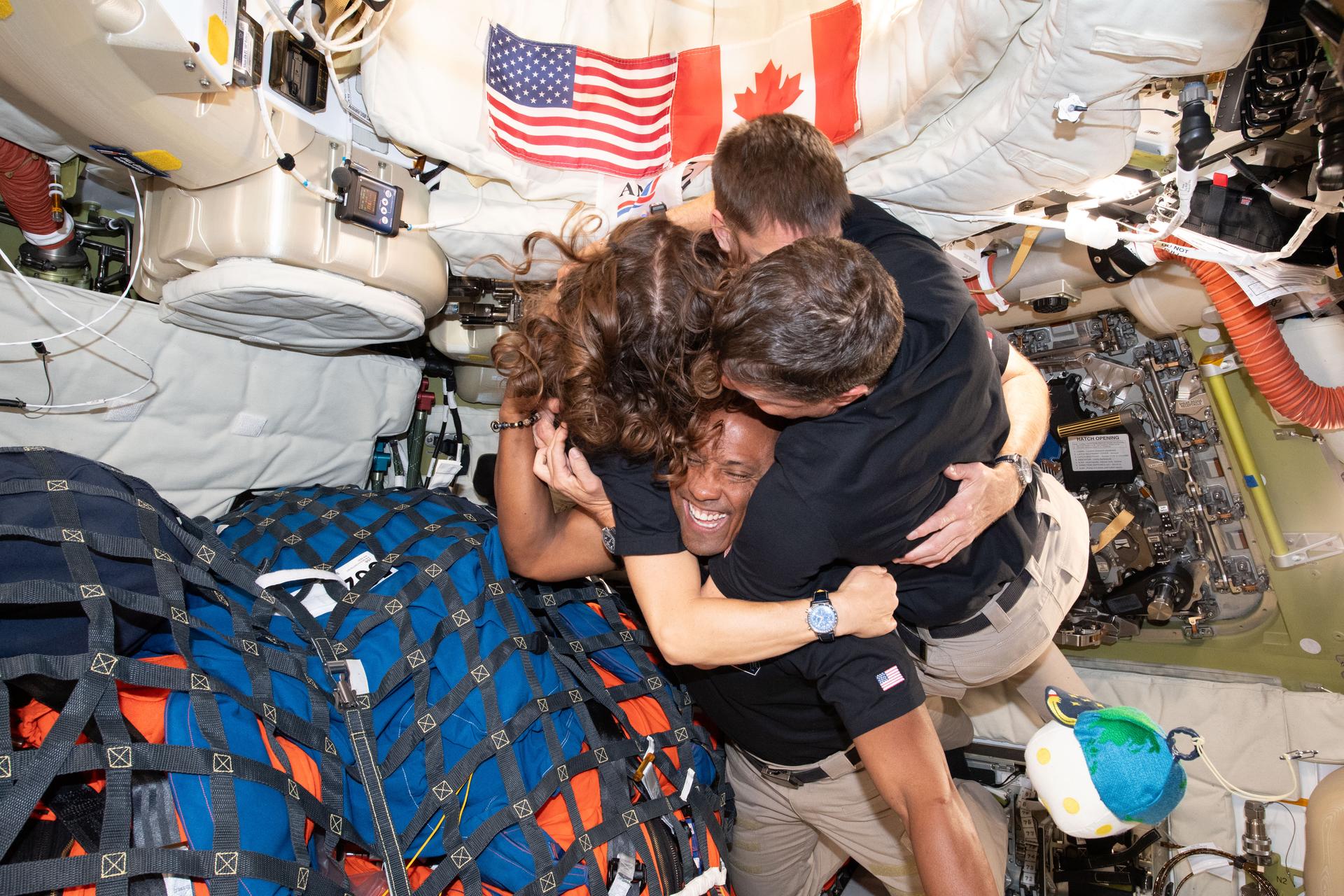
art002e013367 (April 7, 2026) – The Artemis II crew – (clockwise from left) Mission Specialist Christina Koch, Mission Specialist Jeremy Hansen, Commander Reid Wiseman, and Pilot Victor Glover – take time out for a group hug inside the Orion spacecraft on their way home. Following a swing around the far side of the Moon on April 6, 2026, the crew exited the lunar sphere of influence (the point at which the Moon's gravity has a stronger pull on Orion than the Earth's) on April 7, and are headed back to Earth for a splashdown in the Pacific Ocean on April 10. The crew was selected in April 2023, and have been training together for their mission for the past three years.

Artemis II lunar science team member, Juliane Gross, center, and the extended lunar science team behind her, celebrates crew observations made during the lunar flyby on April 6. The team worked in the Science Evaluation Room (SER) in Mission Control at NASA’s Johnson Space Center in Houston. Built specifically for Artemis missions with these science priorities in mind, the SER is equipped to support rapid data interpretation, collaborative analysis, real-time decision making, and seamless coordination between the science and operations teams. Credits: NASA/Luna Posadas Nava
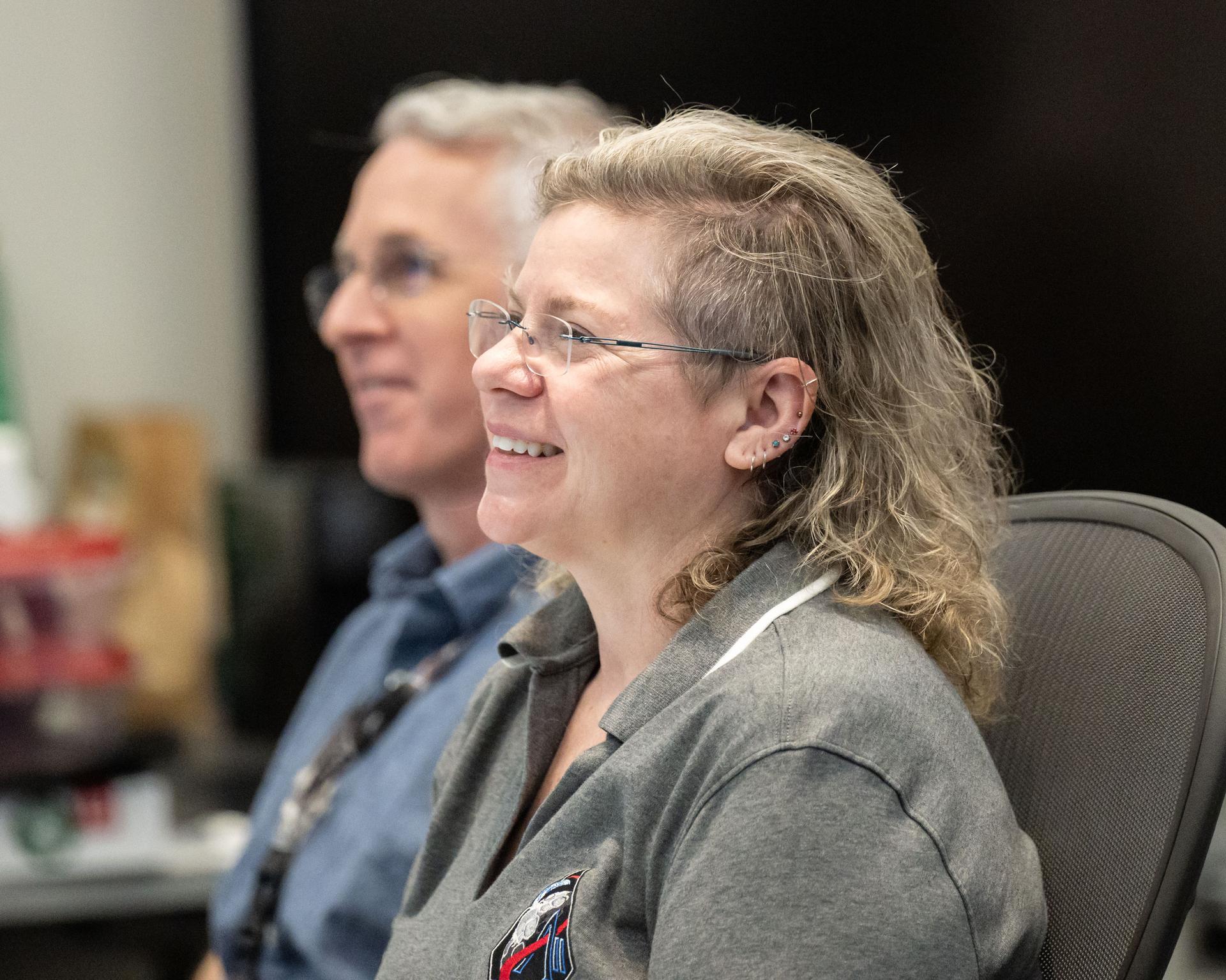
Artemis II lunar science team members, from left, Ryan Ewing, and Barbara Cohen, react to crew observations during the lunar flyby on April 6, 2026. The team worked in the Science Evaluation Room (SER) in Mission Control at NASA’s Johnson Space Center in Houston. Built specifically for Artemis missions with these science priorities in mind, the SER is equipped to support rapid data interpretation, collaborative analysis, real-time decision making, and seamless coordination between the science and operations teams. Credits: NASA/Luna Posadas Nava

Artemis II deputy lunar science lead, Jacob Richardson, celebrates with a dance after hearing astronauts describe seeing impact flashes on the Moon during their lunar flyby on April 6, 2026. Richardson was monitoring the flyby from the Science Evaluation Room (SER) in Mission Control at NASA’s Johnson Space Center in Houston. Built specifically for Artemis missions with these science priorities in mind, the SER is equipped to support rapid data interpretation, collaborative analysis, real-time decision making, and seamless coordination between the science and operations teams. Credits: NASA/Luna Posadas Nava
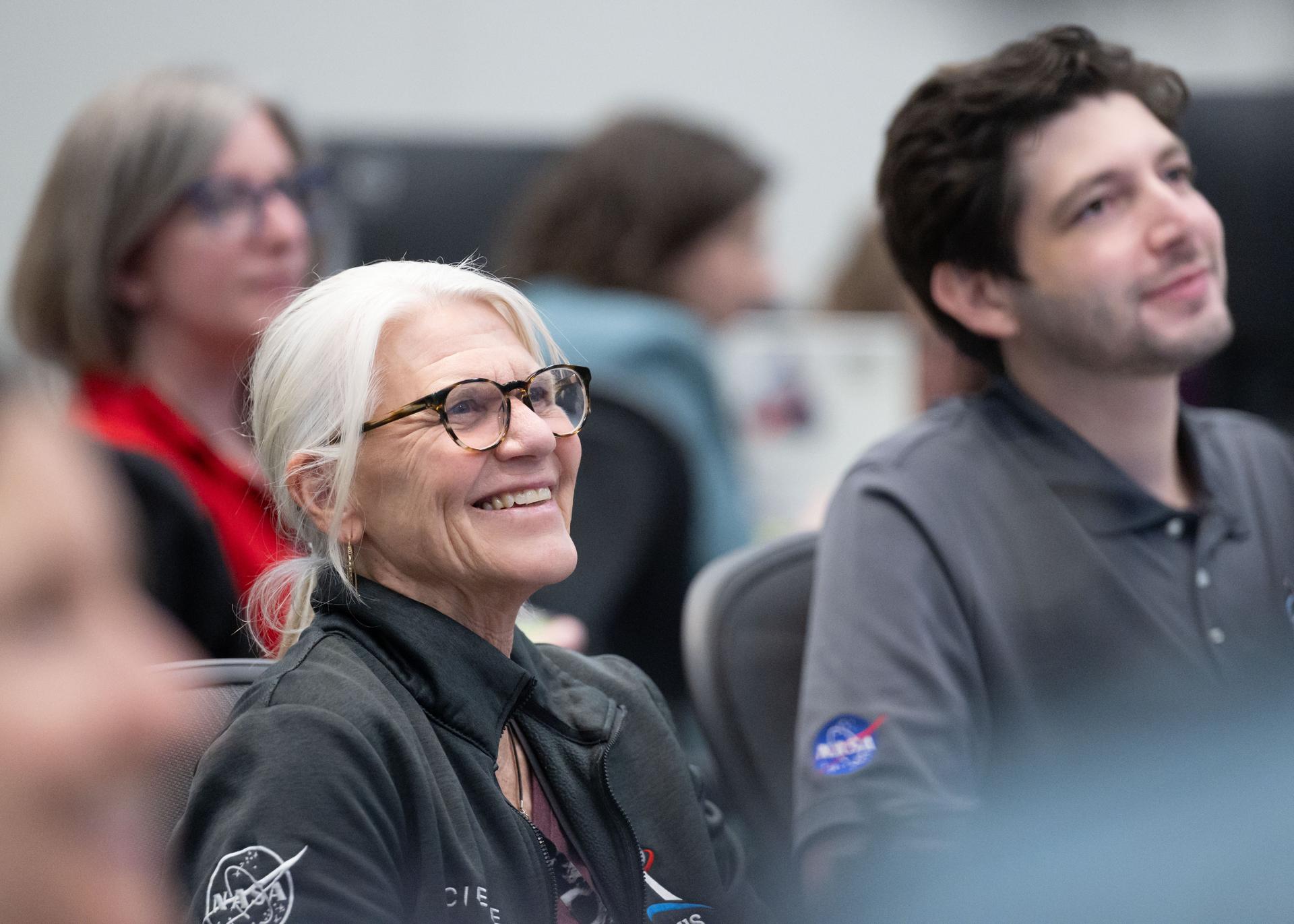
Artemis II lunar science team members, from left, Cindy Evans, and Wilfredo Garcia Lopez, react to crew observations during the lunar flyby on April 6, 2026. The team worked in the Science Evaluation Room (SER) in Mission Control at NASA’s Johnson Space Center in Houston. Built specifically for Artemis missions with these science priorities in mind, the SER is equipped to support rapid data interpretation, collaborative analysis, real-time decision making, and seamless coordination between the science and operations teams. Credits: NASA/Luna Posadas Nava
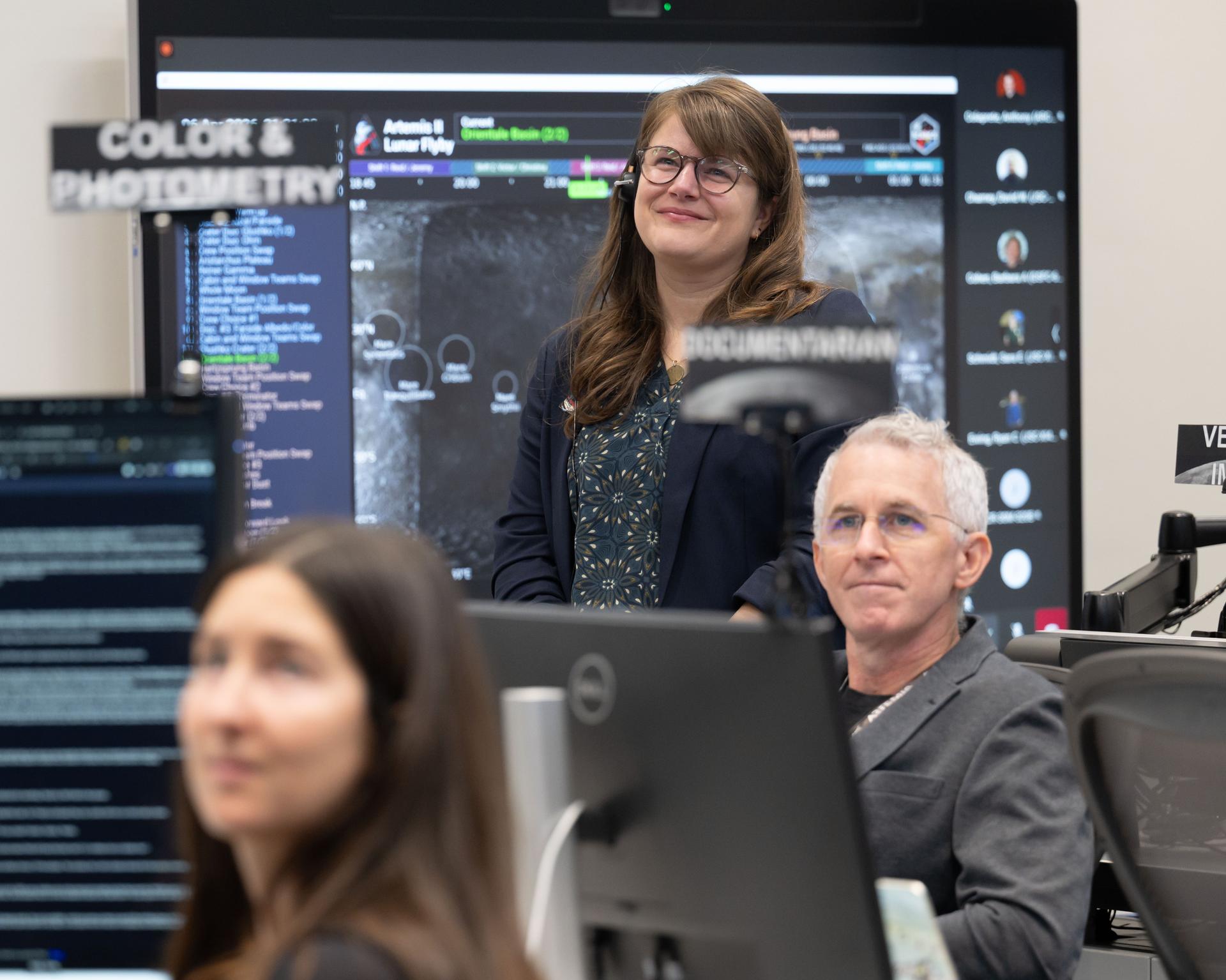
Artemis II deputy lunar science lead Marie Henderson, background, and lunar science team members, Ariel Deutsch, and Ryan Ewing, react to crew observations during the lunar flyby on April 6, 2026. The team worked in the Science Evaluation Room (SER) in Mission Control at NASA’s Johnson Space Center in Houston. Built specifically for Artemis missions with these science priorities in mind, the SER is equipped to support rapid data interpretation, collaborative analysis, real-time decision making, and seamless coordination between the science and operations teams. Credits: NASA/Luna Posadas Nava
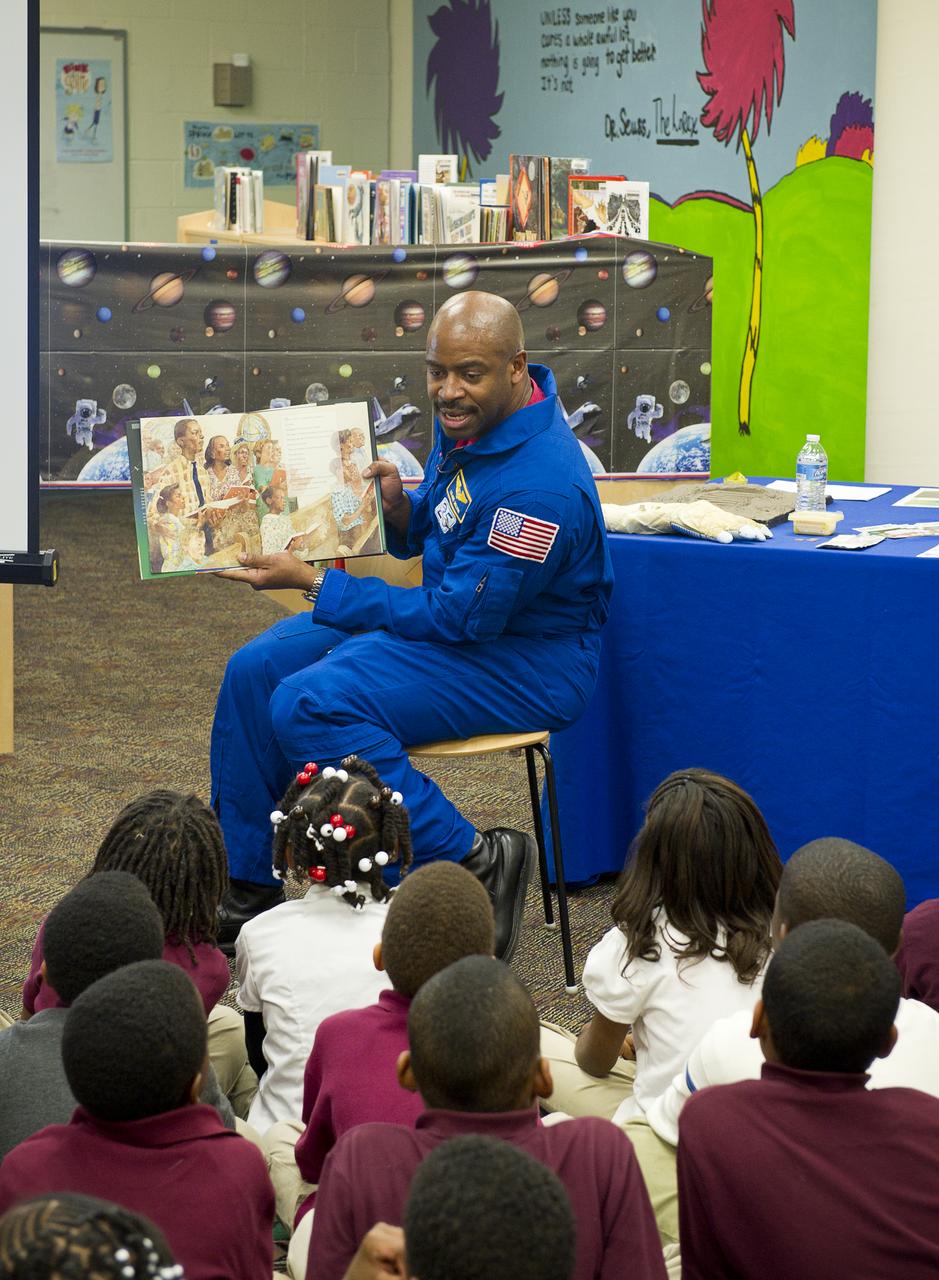
Leland Melvin, NASA Associate Administrator for Education and former space shuttle astronaut, reads to first and third grade students from the book “The Moon Over Star” at Ferebee-Hope Elementary School on Tuesday, Feb. 8, 2011, in Washington, DC. Ferebee-Hope Elementary School, in collaboration with Reading is Fundamental (RIF), hosted this event in honor of Black History Month, and to highlight the importance of reading. Reading is Fundamental distributes more than 50,000 free books to help children discover the joy of reading. Photo Credit: (NASA/Carla Cioffi)
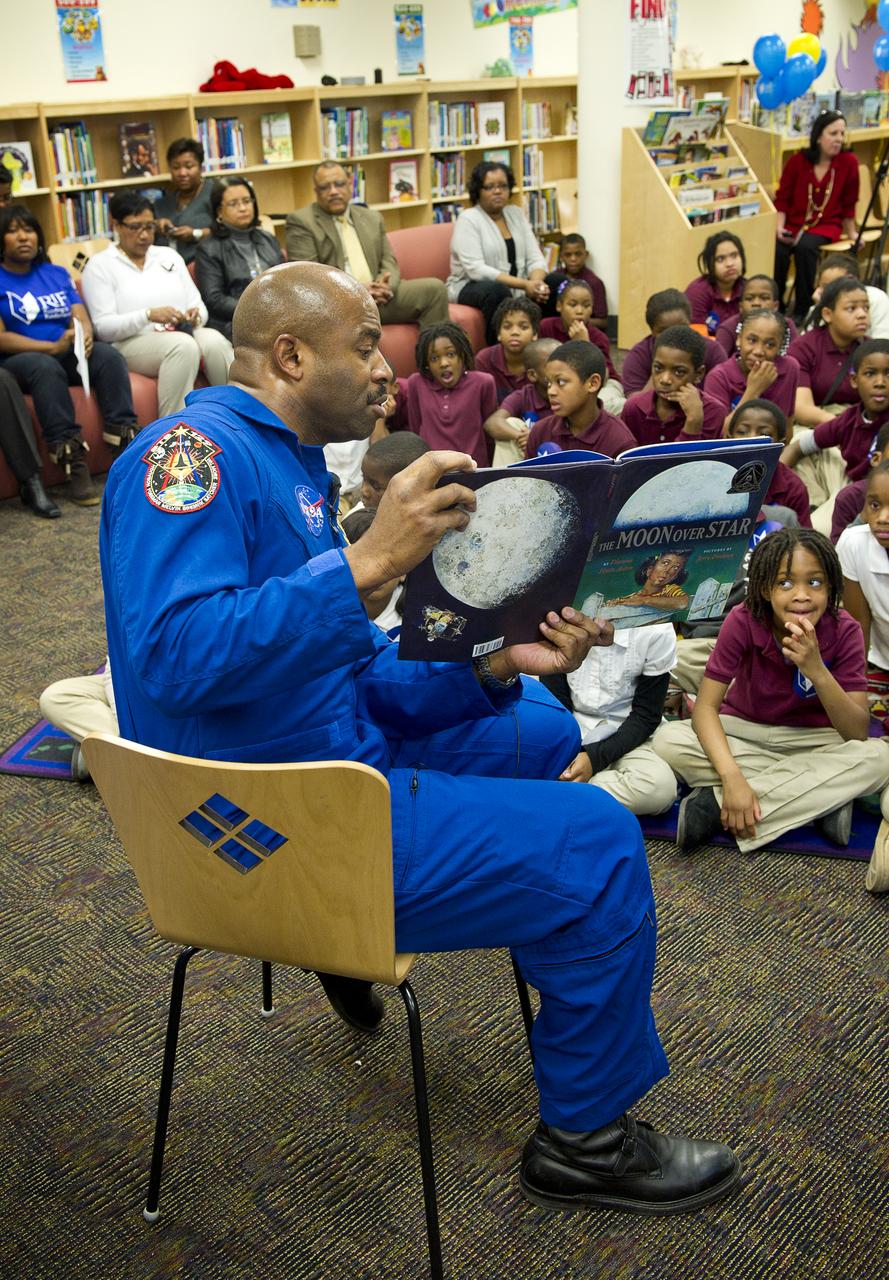
Leland Melvin, NASA Associate Administrator for Education and former space shuttle astronaut, reads to first and third grade students from the book “The Moon Over Star” at Ferebee-Hope Elementary School on Tuesday, Feb. 8, 2011, in Washington, DC. Ferebee-Hope Elementary School, in collaboration with Reading is Fundamental (RIF), hosted this event in honor of Black History Month, and to highlight the importance of reading. Reading is Fundamental distributes more than 50,000 free books to help children discover the joy of reading. Photo Credit: (NASA/Carla Cioffi)
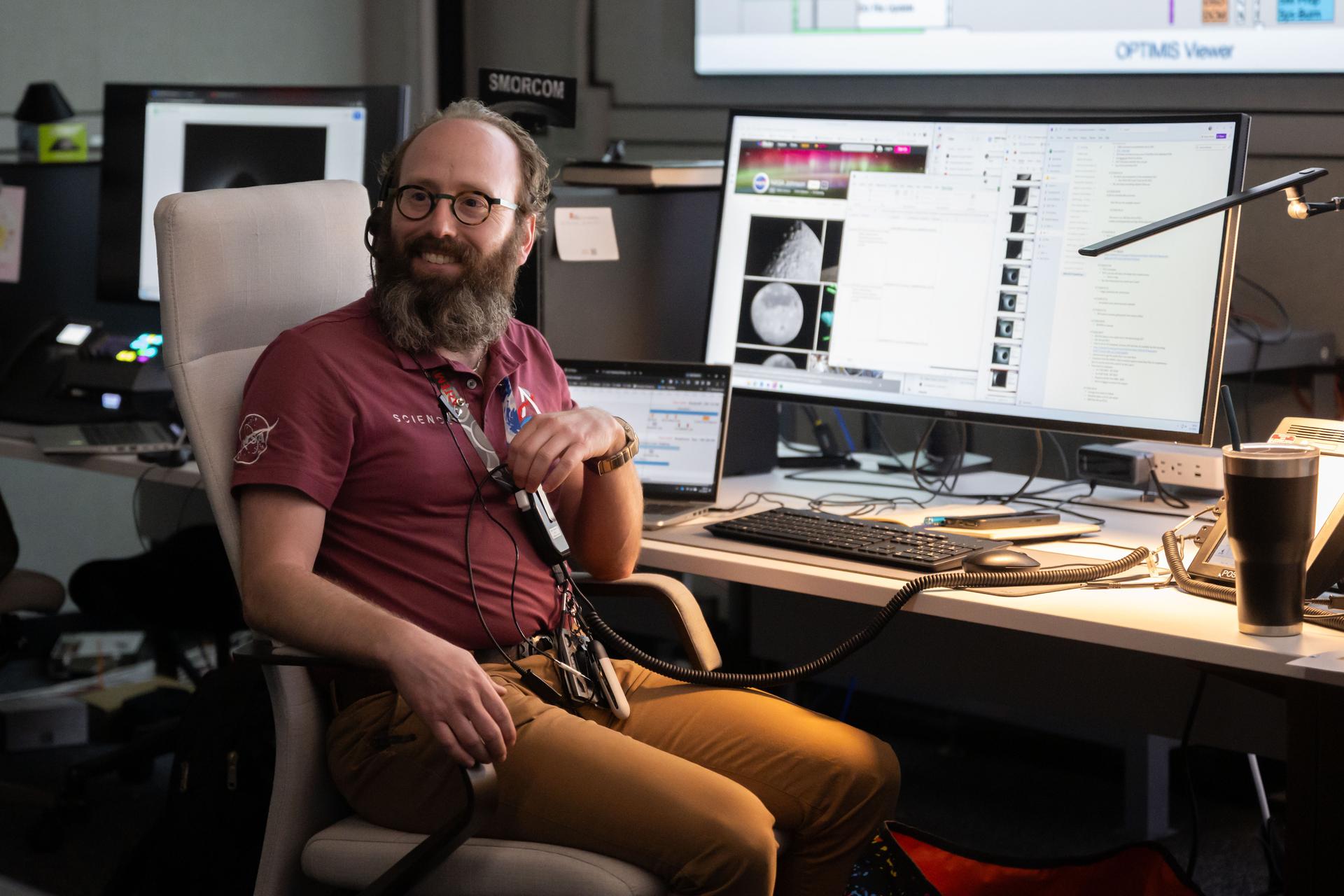
Artemis lunar science team member, Aaron Regberg, works in the Science Mission Operations Room, where scientists analyzed imagery and audio recordings of lunar observations captured by the Artemis II astronauts during their lunar flyby on April 6, 2026.
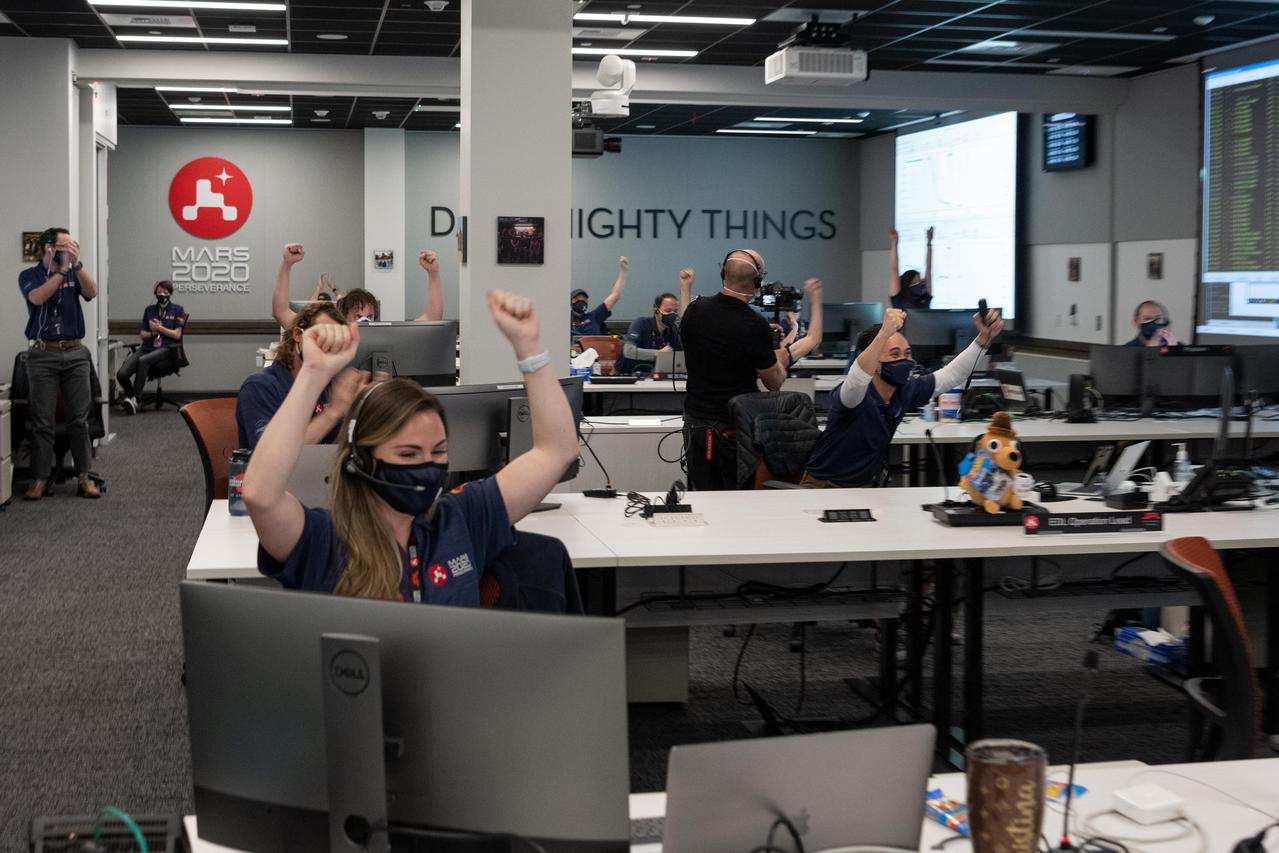
Inside a mission support area at NASA's Jet Propulsion Laboratory in Southern California, Mars 2020 Perseverance team members displayed their joy as the spacecraft successfully completed a complex series of steps to safely touch down on the Martian surface. JPL built and manages operations of the Mars 2020 Perseverance rover for NASA. A key objective for Perseverance's mission on Mars is astrobiology, including the search for signs of ancient microbial life. The rover will characterize the planet's geology and past climate, pave the way for human exploration of the Red Planet, and be the first mission to collect and cache Martian rock and regolith (broken rock and dust). Subsequent NASA missions, in cooperation with ESA (European Space Agency), would send spacecraft to Mars to collect these sealed samples from the surface and return them to Earth for in-depth analysis. The Mars 2020 mission is part of a larger program that includes missions to the Moon as a way to prepare for human exploration of the Red Planet. https://photojournal.jpl.nasa.gov/catalog/PIA23723
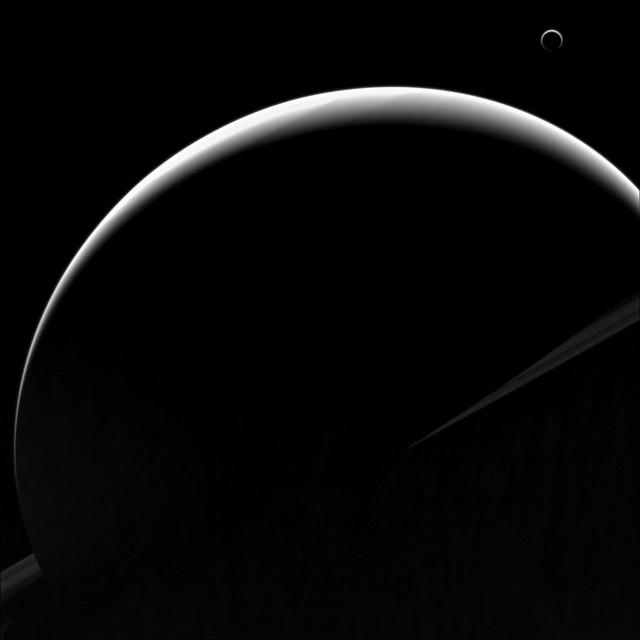
When Galileo first observed Venus displaying a crescent phase, he excitedly wrote to Kepler (in anagram) of Venus mimicking the moon-goddess. He would have been delirious with joy to see Saturn and Titan, seen in this image, doing the same thing. More than just pretty pictures, high-phase observations -- taken looking generally toward the Sun, as in this image -- are very powerful scientifically since the way atmospheres and rings transmit sunlight is often diagnostic of compositions and physical states. In this example, Titan's crescent nearly encircles its disk due to the small haze particles high in its atmosphere refracting the incoming light of the distant Sun. This view looks toward the sunlit side of the rings from about 3 degrees above the ringplane. The image was taken in violet light with the Cassini spacecraft wide-angle camera on Aug. 11, 2013. The view was obtained at a distance of approximately 1.1 million miles (1.7 million kilometers) from Saturn and at a Sun-Saturn-spacecraft, or phase, angle of 154 degrees. Image scale is 64 miles (103 kilometers) per pixel. http://photojournal.jpl.nasa.gov/catalog/PIA18291
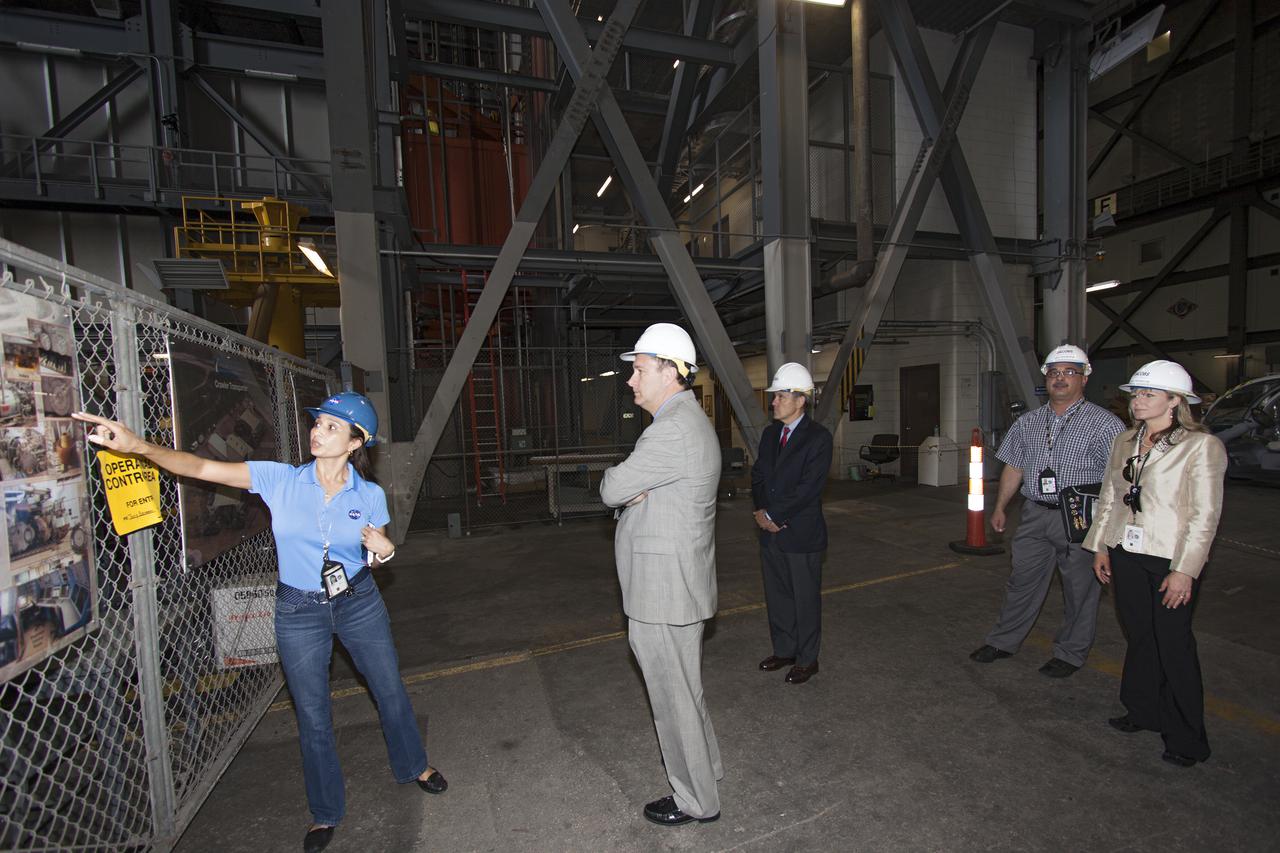
CAPE CANAVERAL, Fla. – NASA Associate Administrator Robert Lightfoot, center, tours the Vehicle Assembly Building, or VAB, during a visit to NASA's Kennedy Space Center in Florida. Here, he receives a briefing from Mary Hanna, crawler-transporter project manager. Behind him, from left, are Kennedy Space Center Director Bob Cabana, Jose Lopez, VAB project manager, and Joy Burkey, program specialist. The VAB is being readied to support NASA's new Orion spacecraft and Space Launch System heavy-lift rocket, the SLS. NASA's FY2014 budget proposal includes a plan to robotically capture a small near-Earth asteroid and redirect it safely to a stable orbit in the Earth-moon system where astronauts can visit and explore it. Performing these elements for the proposed asteroid initiative integrates the best of NASA's science, technology and human exploration capabilities and draws on the innovation of America's brightest scientists and engineers. It uses current and developing capabilities to find both large asteroids that pose a hazard to Earth and small asteroids that could be candidates for the initiative, accelerates our technology development activities in high-powered solar electric propulsion and takes advantage of our hard work on the Space Launch System rocket and Orion spacecraft, helping to keep NASA on target to reach the President's goal of sending humans to Mars in the 2030s. Photo credit: NASA_Jim Grossmann