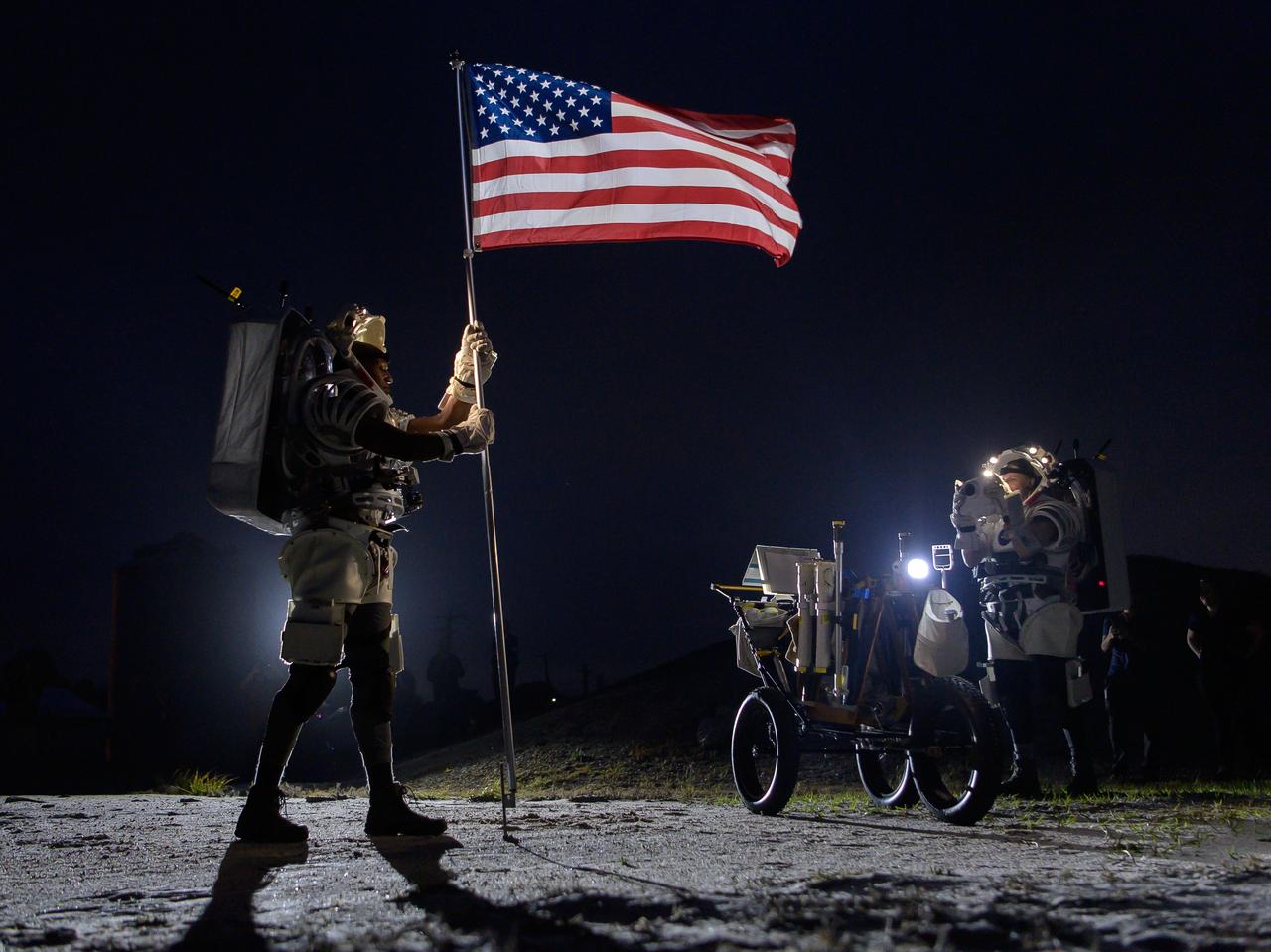
jsc2024e031840 --- NASA astronaut Kate Rubins (right) takes a photo of NASA astronaut Andre Douglas (left) as he raises an American flag during a simulated moonwalk in a rock yard at NASA’s Johnson Space Center. Credit: NASA/Josh Valcarcel
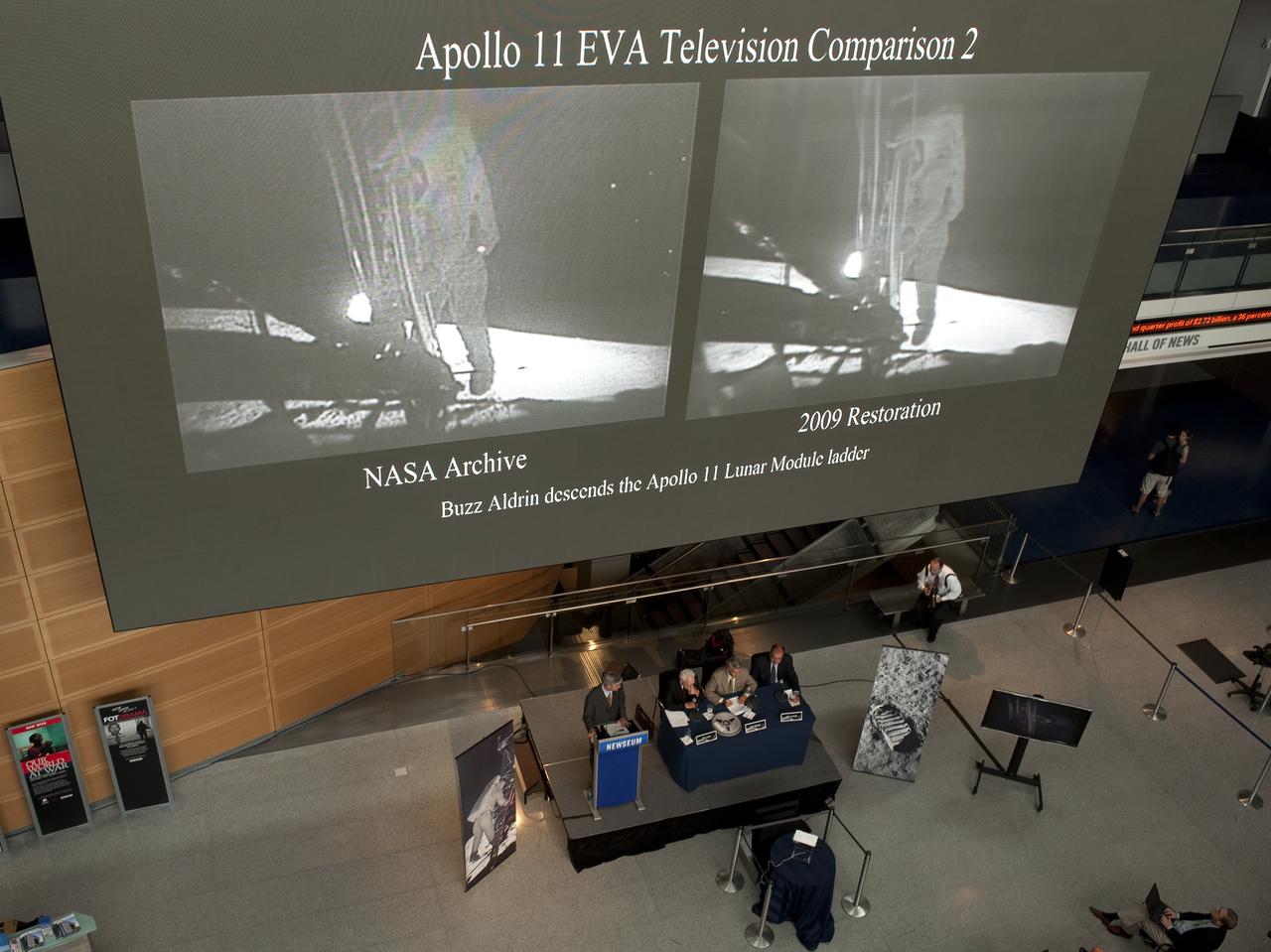
Archived and restored Apollo 11 moonwalk footage is shown on a large video monitor above panelists at a NASA briefing where restored Apollo 11 moonwalk footage was revealed for the first time at the Newseum, Thursday, July 16, 2009, in Washington, DC. Photo Credit: (NASA/Carla Cioffi)
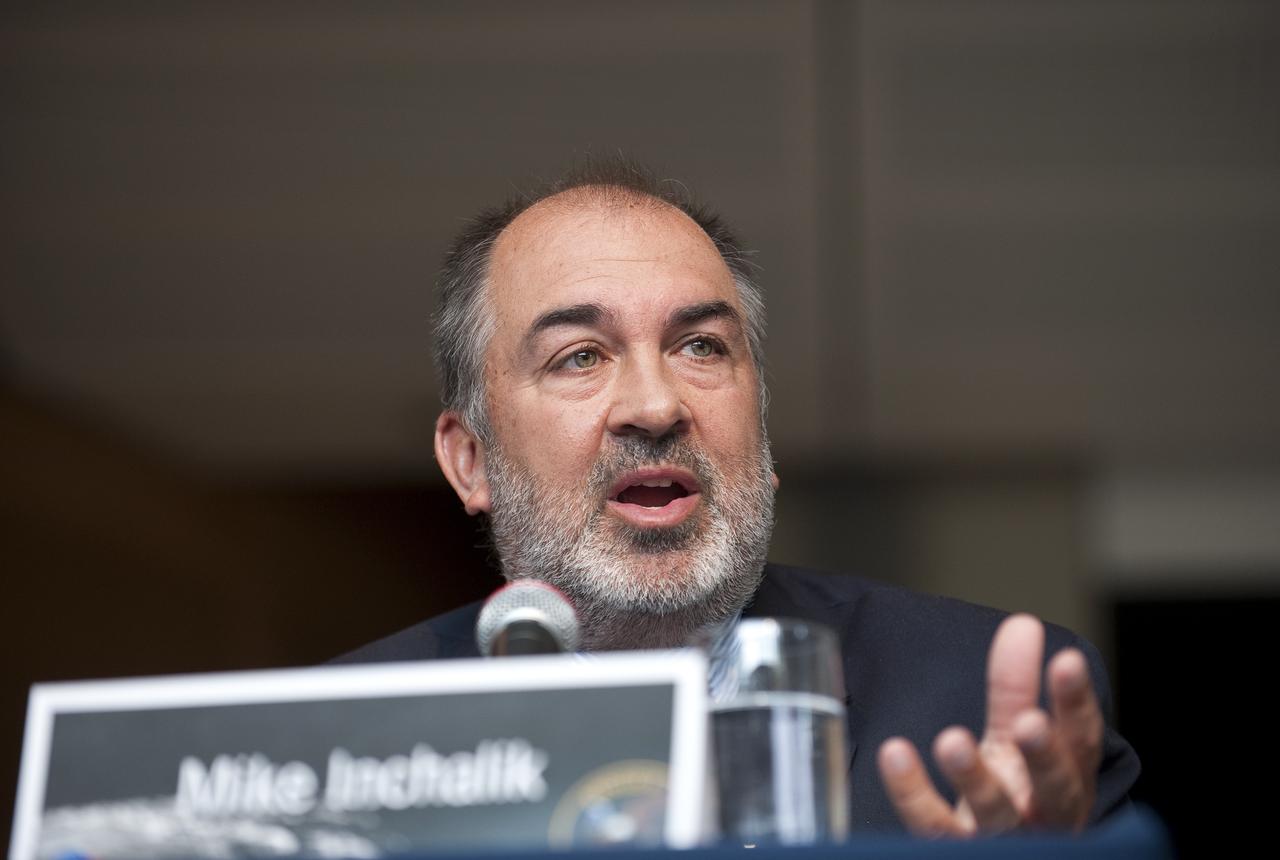
Mike Inchalik, president of Lowry Digital, talks about the job of restoring Apollo 11 moonwalk footage at a NASA briefing where restored Apollo 11 moonwalk footage was revealed for the first time at the Newseum, Thursday, July 16, 2009, in Washington, DC. Photo Credit: (NASA/Bill Ingalls)
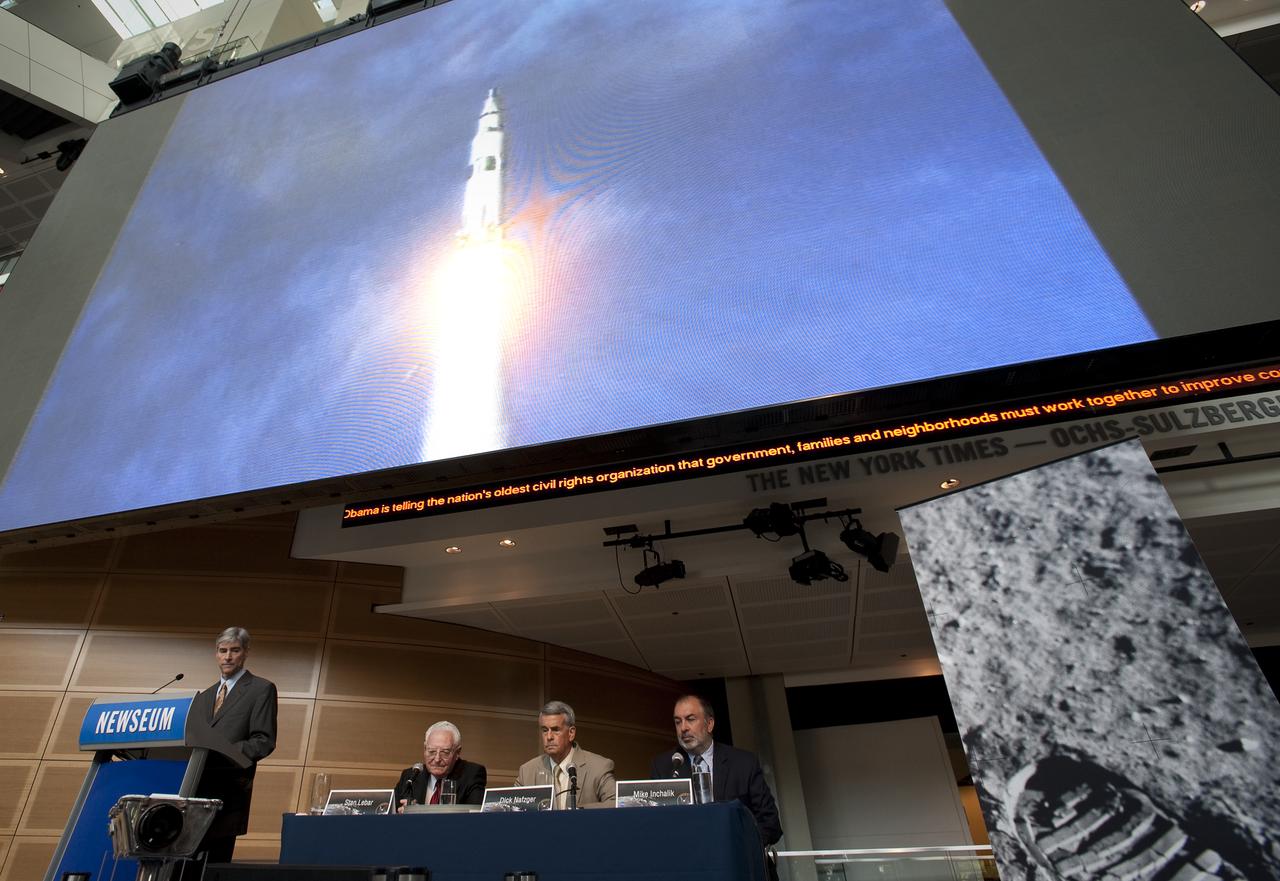
Footage of the Saturn V Apollo 11 rocket launch is seen on a large video monitor above panelists at NASA's briefing where restored Apollo 11 moonwalk footage was revealed for the first time at the Newseum, Thursday, July 16, 2009, in Washington, DC. Photo Credit: (NASA/Bill Ingalls)
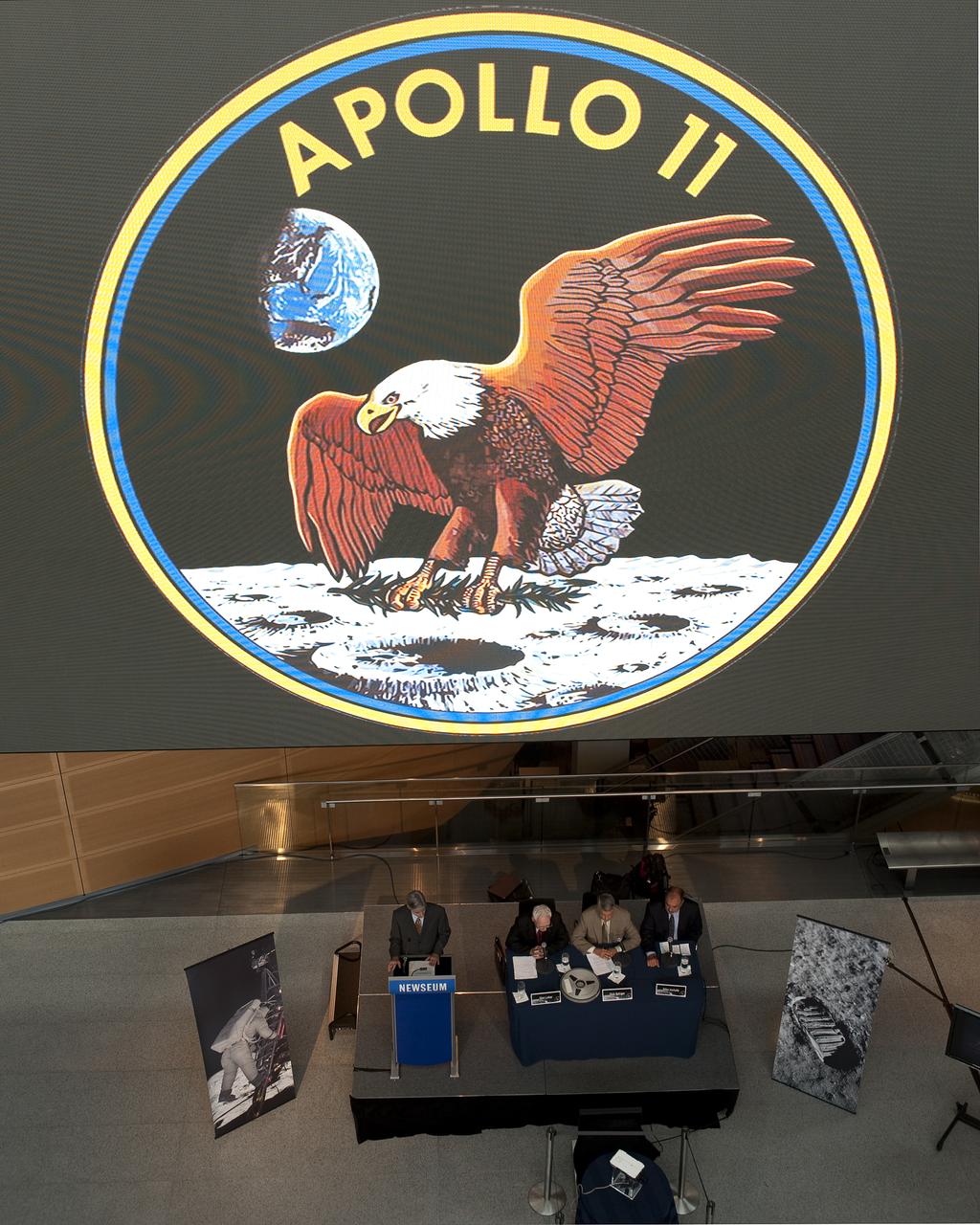
The Apollo 11 logo is seen on a large video monitor above panelists at NASA's briefing where restored Apollo 11 moonwalk footage was revealed for the first time at the Newseum, Thursday, July 16, 2009, in Washington, DC. Photo Credit: (NASA/Carla Cioffi)

Stan Lebar, former Westinghouse Electric program manager, talks about the Apollo era TV cameras during NASA's briefing where restored Apollo 11 moonwalk footage was revealed for the first time at the Newseum, Thursday, July 16, 2009, in Washington, DC. Photo Credit: (NASA/Bill Ingalls)
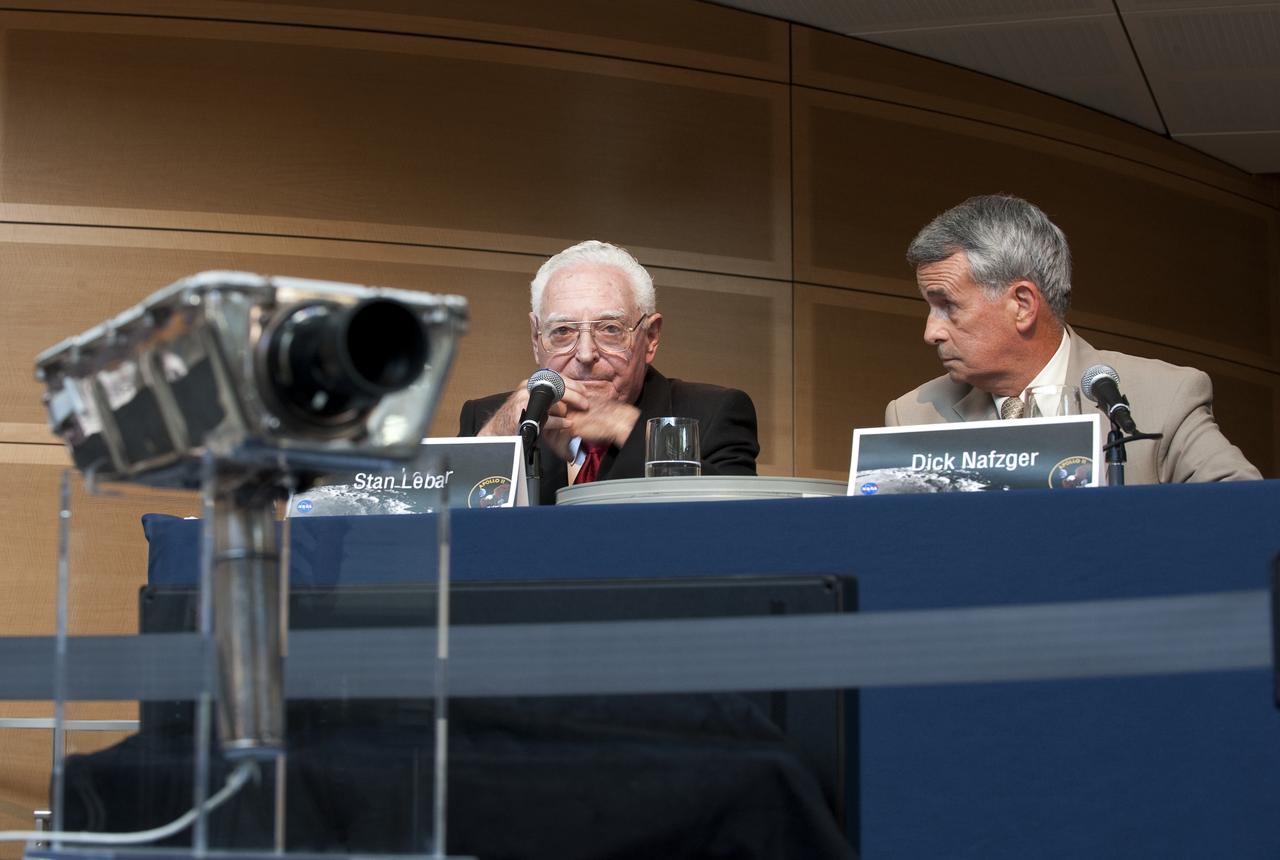
Stan Lebar, former Westinghouse Electric program manager, left, talks about the Apollo era TV cameras such as the one on display in the foreground as Richard Nafzger, team lead and Goddard engineer, listens at NASA's briefing where restored Apollo 11 moonwalk footage was revealed for the first time at the Newseum, Thursday, July 16, 2009, in Washington, DC. Photo Credit: (NASA/Bill Ingalls)
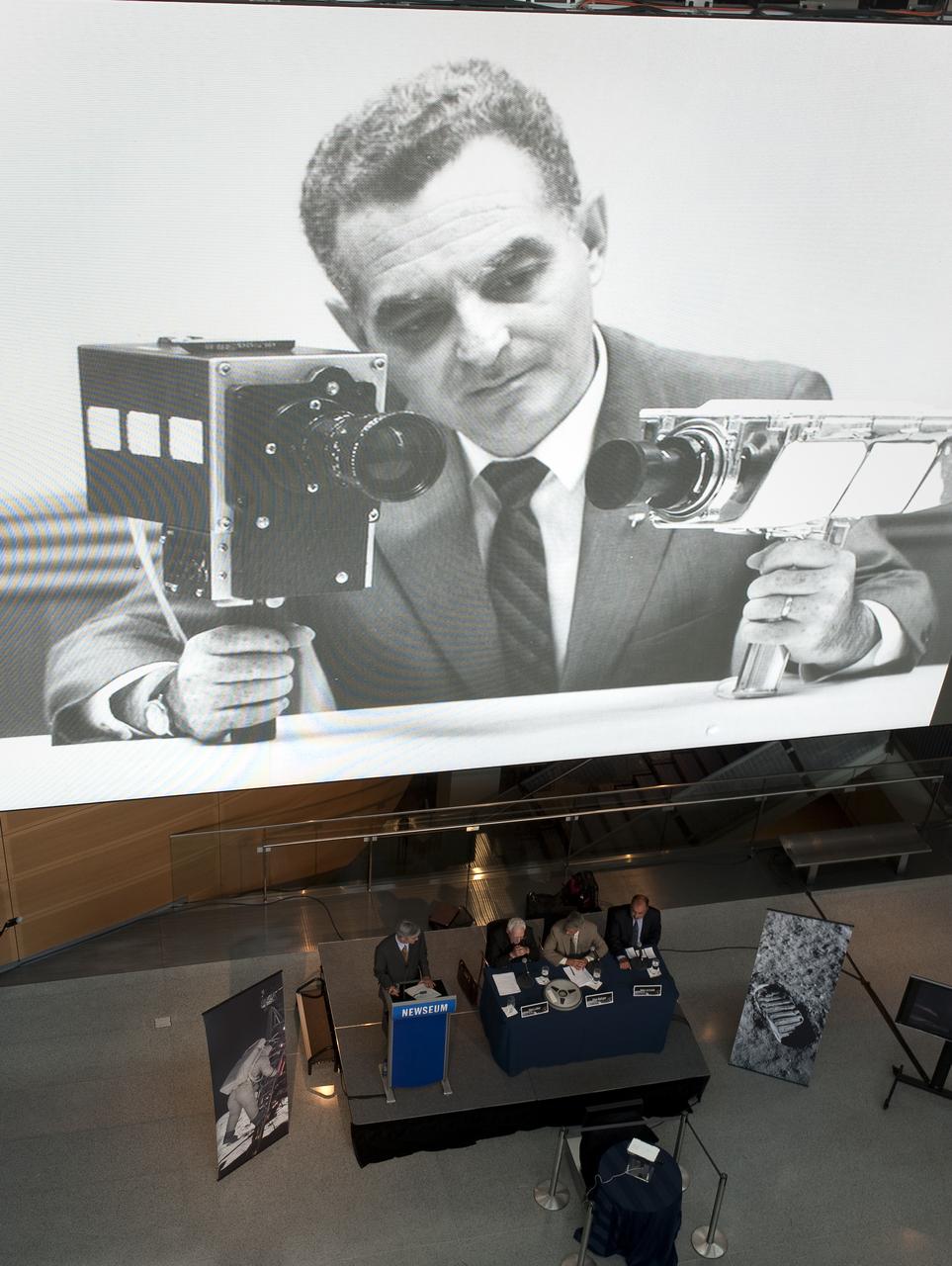
A photograph from the 1960's showing Stan Lebar, former Westinghouse Electric program manager, holding two cameras used during the Apollo missions is seen on a large video monitor above panelists, including Stan Lebar, at NASA's briefing where restored Apollo 11 moonwalk footage was revealed for the first time at the Newseum, Thursday, July 16, 2009, in Washington, DC. Photo Credit: (NASA/Carla Cioffi)
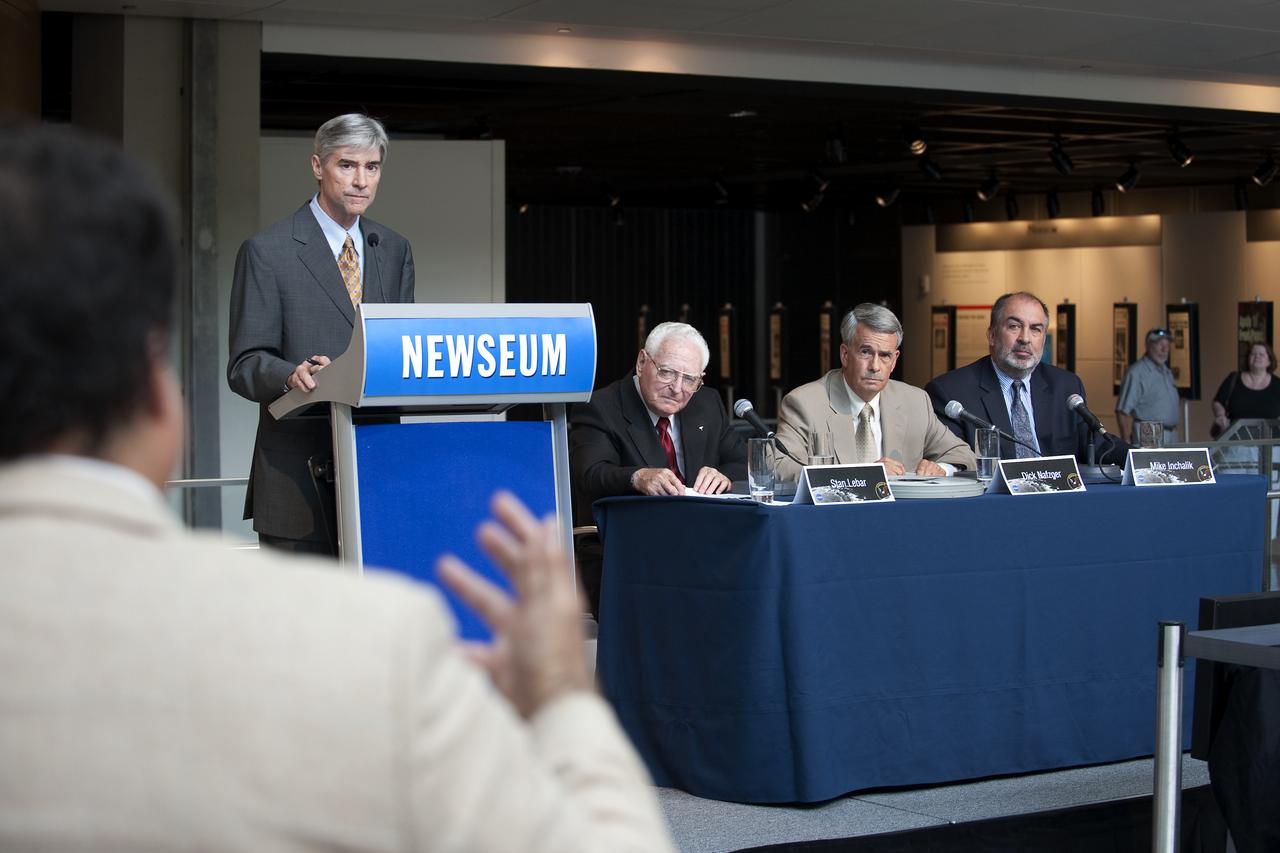
NASA moderator Mark Hess, left, directs reporters' questions to former Westinghouse Electric program manager Stan Lebar, second from left, team lead and Goddard engineer Richard Nafzger and president of Lowry Digital Mike Inchalik, far right, at a NASA briefing where restored Apollo 11 moonwalk footage was revealed for the first time at the Newseum, Thursday, July 16, 2009, in Washington, DC. Photo Credit: (NASA/Bill Ingalls)
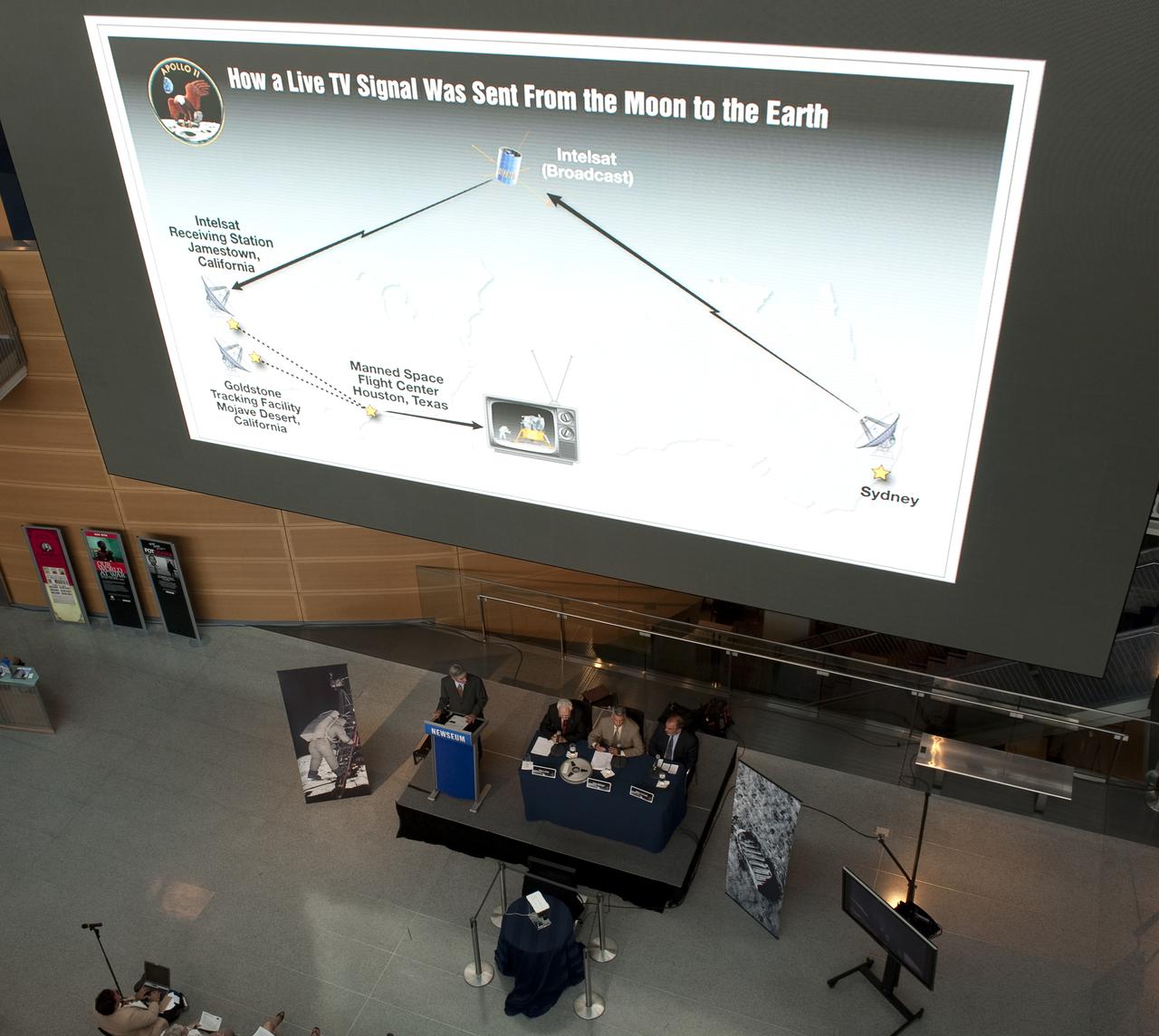
Graphics showing how TV signals were sent from the Apollo 11 mission back to Earth are shown on a large video monitor above panelists at NASA's briefing where restored Apollo 11 moonwalk footage was revealed for the first time at the Newseum, Thursday, July 16, 2009, in Washington, DC. Photo Credit: (NASA/Carla Cioffi)
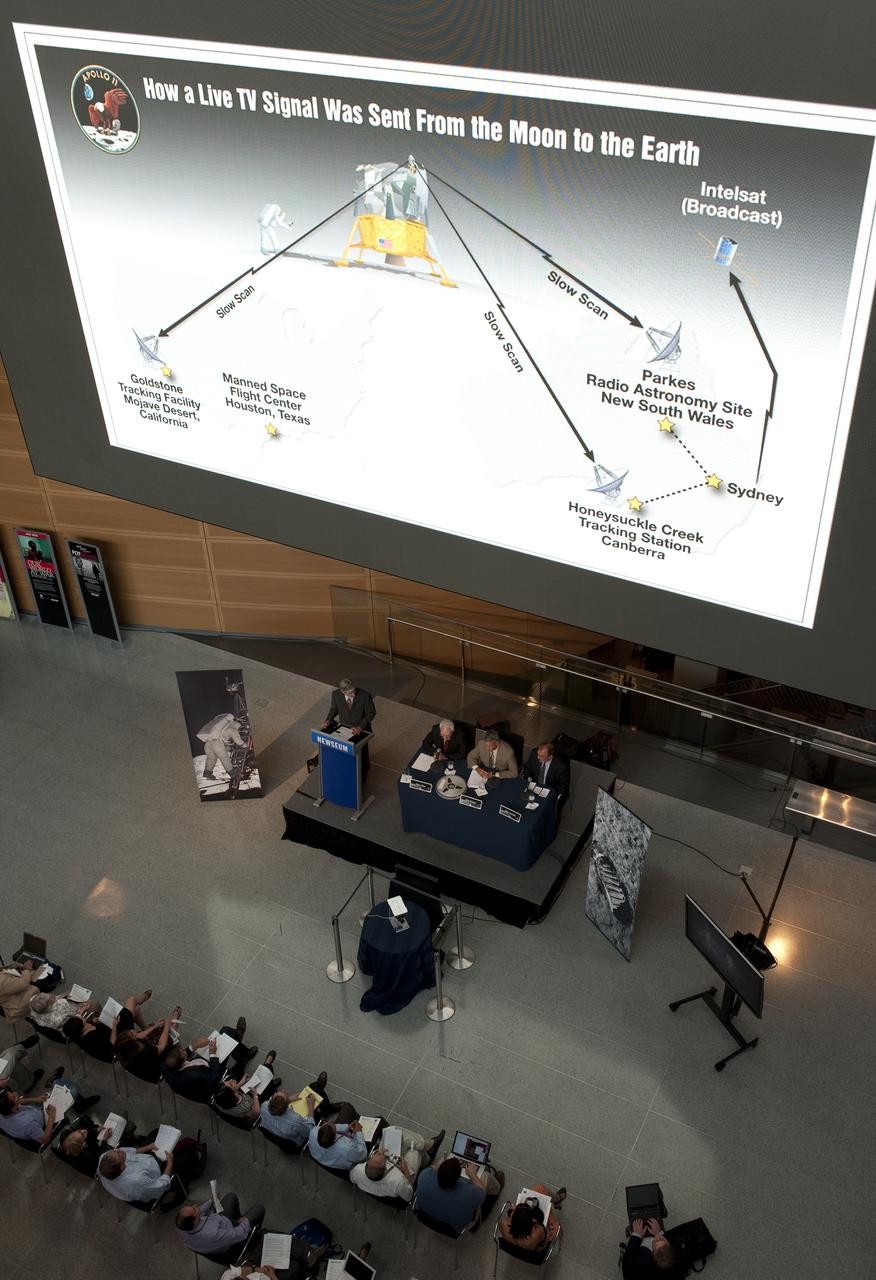
Graphics showing how TV signals were sent from the Apollo 11 mission back to Earth are shown on a large video monitor above panelists at NASA's briefing where restored Apollo 11 moonwalk footage was revealed for the first time at the Newseum, Thursday, July 16, 2009, in Washington, DC. Photo Credit: (NASA/Carla Cioffi)
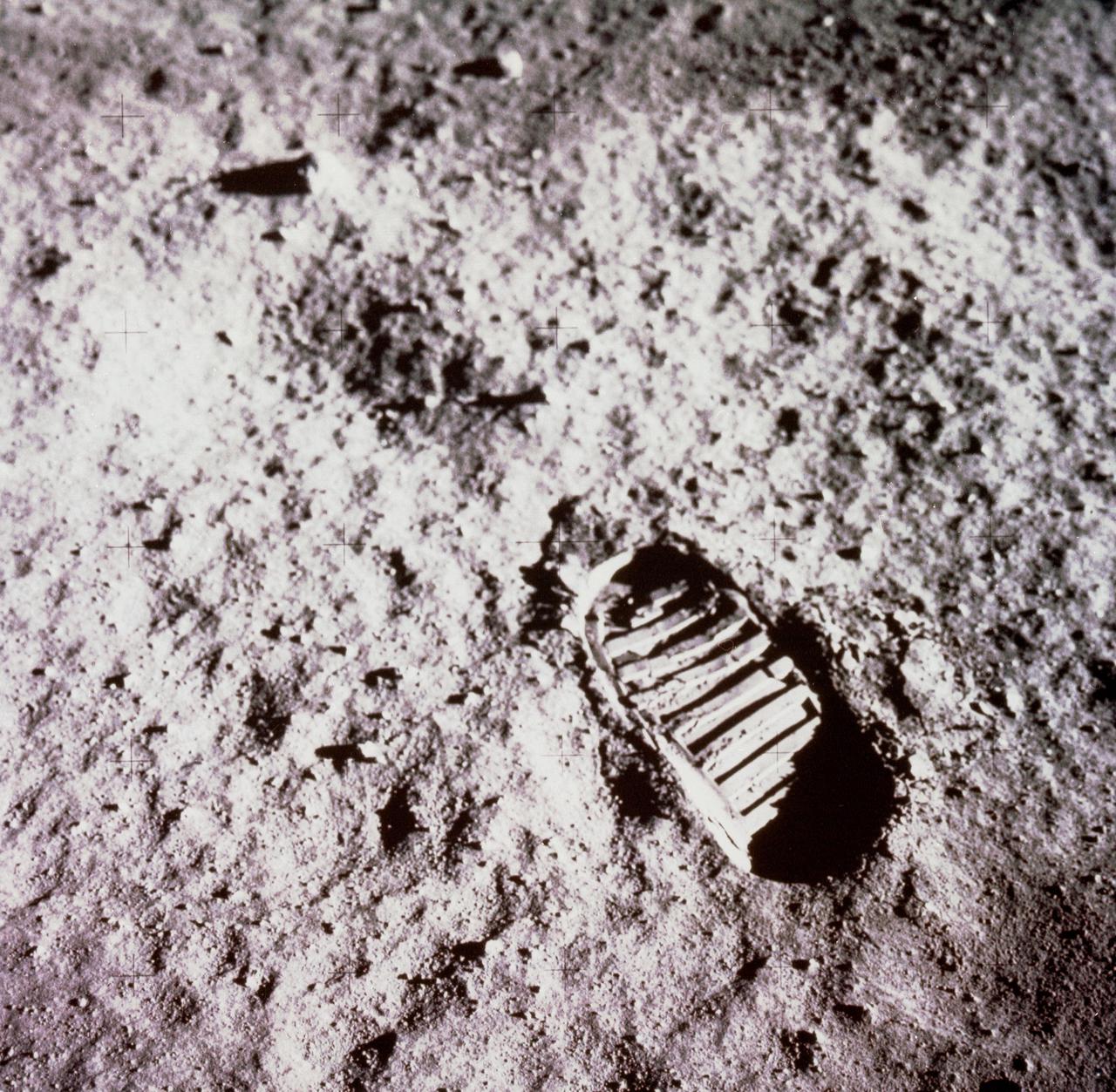
Buzz Aldrin took this iconic image of a bootprint on the Moon during the Apollo 11 moonwalk on July 20, 1969. https://photojournal.jpl.nasa.gov/catalog/PIA24439
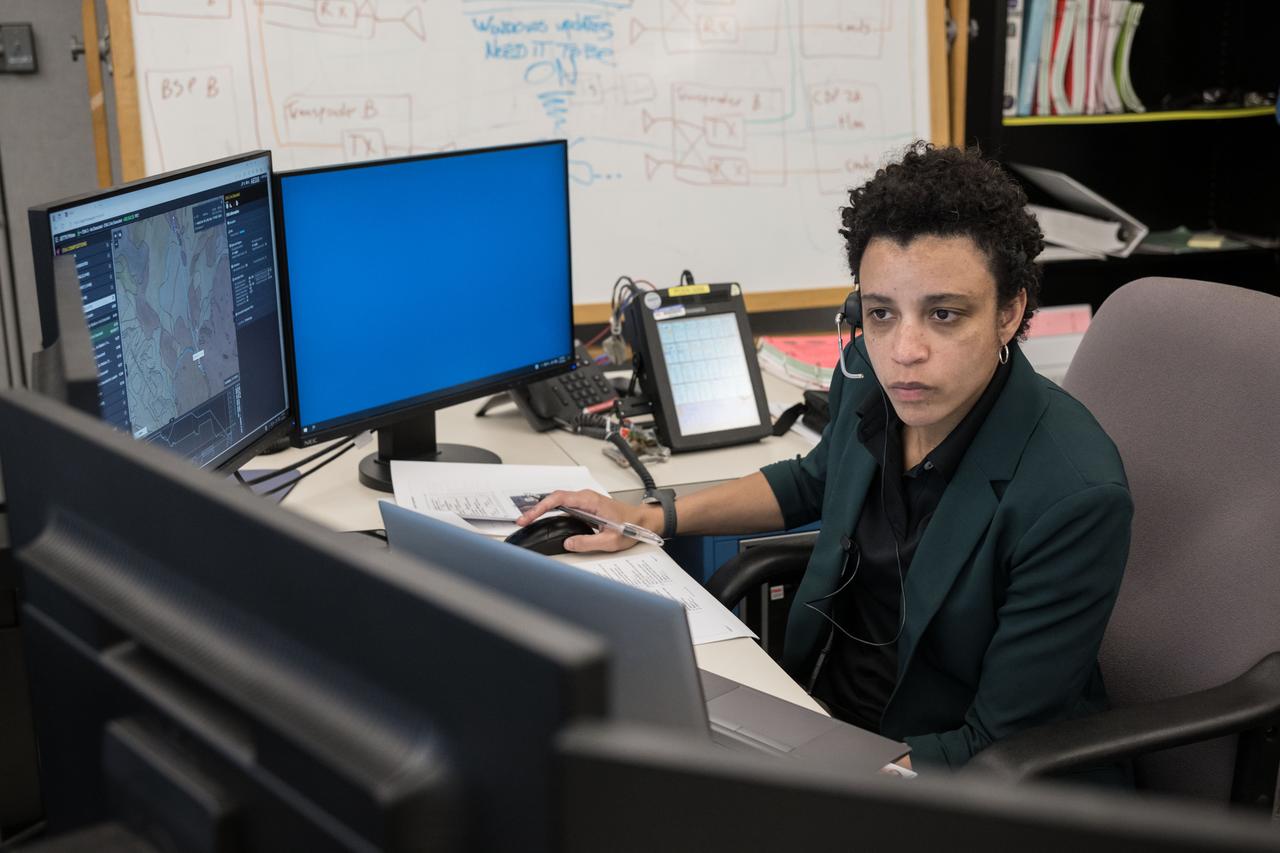
NASA astronaut Jessica Watkins served as the Ground IV for the JETT 5 field test and was the sole point of communications to NASA astronauts Andre Douglas and Kate Rubins who performed simulated moonwalks in the Arizona desert. JETT 5 was a week-long field test in the lunar-like landscape of San Francisco Volcanic Field near Flagstaff, Arizona while a team of flight controllers and scientists at Johnson monitor and guide their activities. Credit: NASA/Robert Markowitz
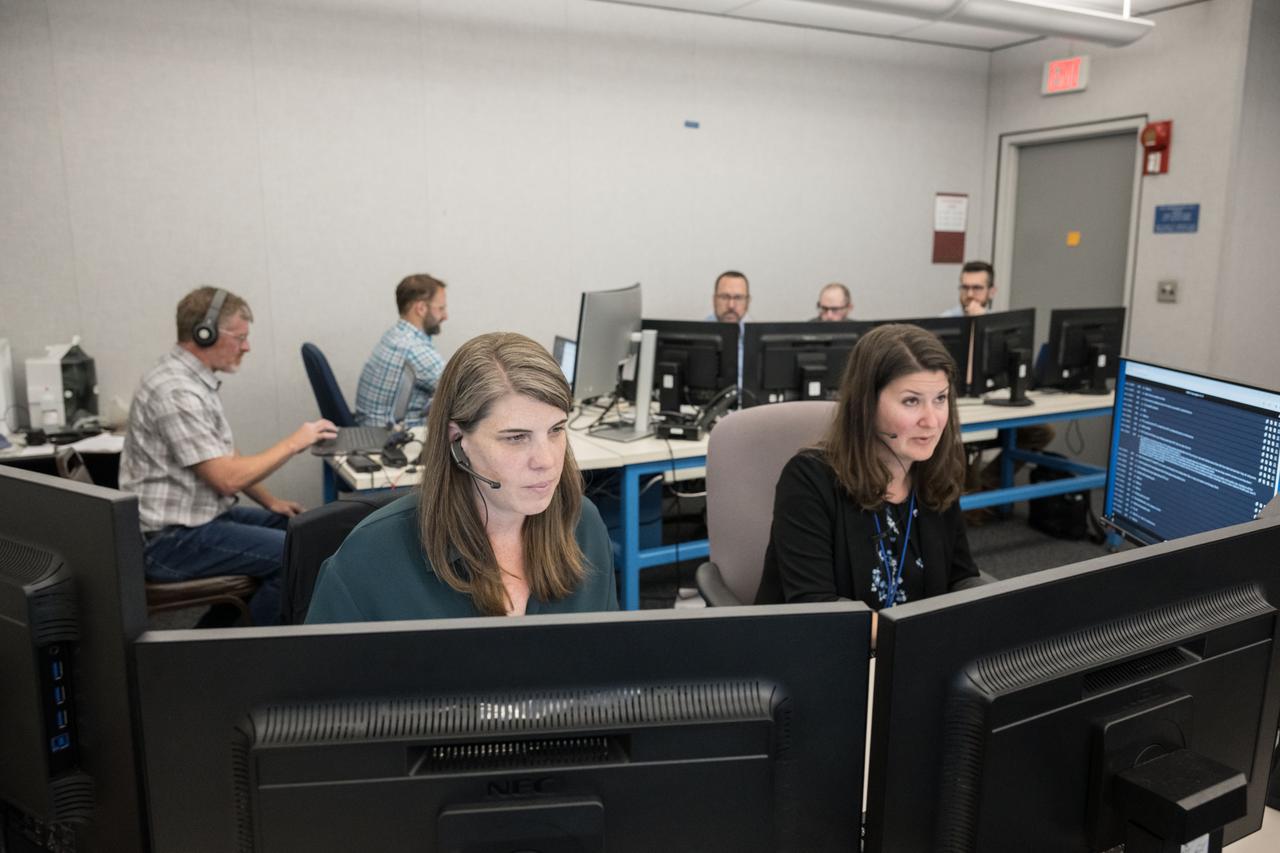
Science Officers Cherie Achilles and Lauren Edgar monitor science operations from a flight control room at NASA’s Johnson Space Center in Houston during a simulated moonwalk field test. JETT 5 was a week-long field test in the lunar-like landscape of San Francisco Volcanic Field near Flagstaff, Arizona while a team of flight controllers and scientists at Johnson monitor and guide their activities. ¬¬ Credit: NASA/Robert Markowitz
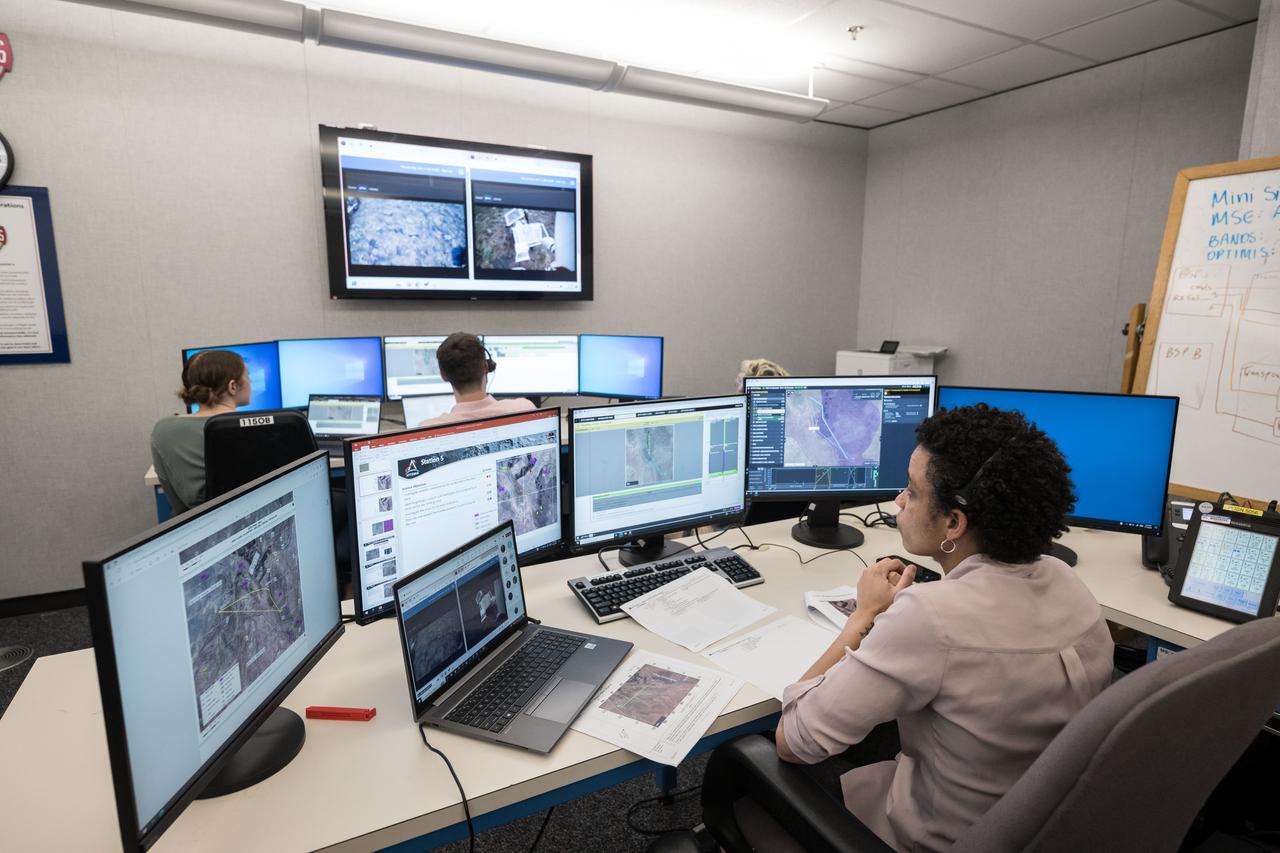
NASA astronaut Jessica Watkins served as the Ground IV for the JETT 5 field test and was the sole point of communications to NASA astronauts Andre Douglas and Kate Rubins who performed simulated moonwalks in the Arizona desert. JETT 5 was a week-long field test in the lunar-like landscape of San Francisco Volcanic Field near Flagstaff, Arizona while a team of flight controllers and scientists at Johnson monitor and guide their activities. Credit: NASA/Robert Markowitz
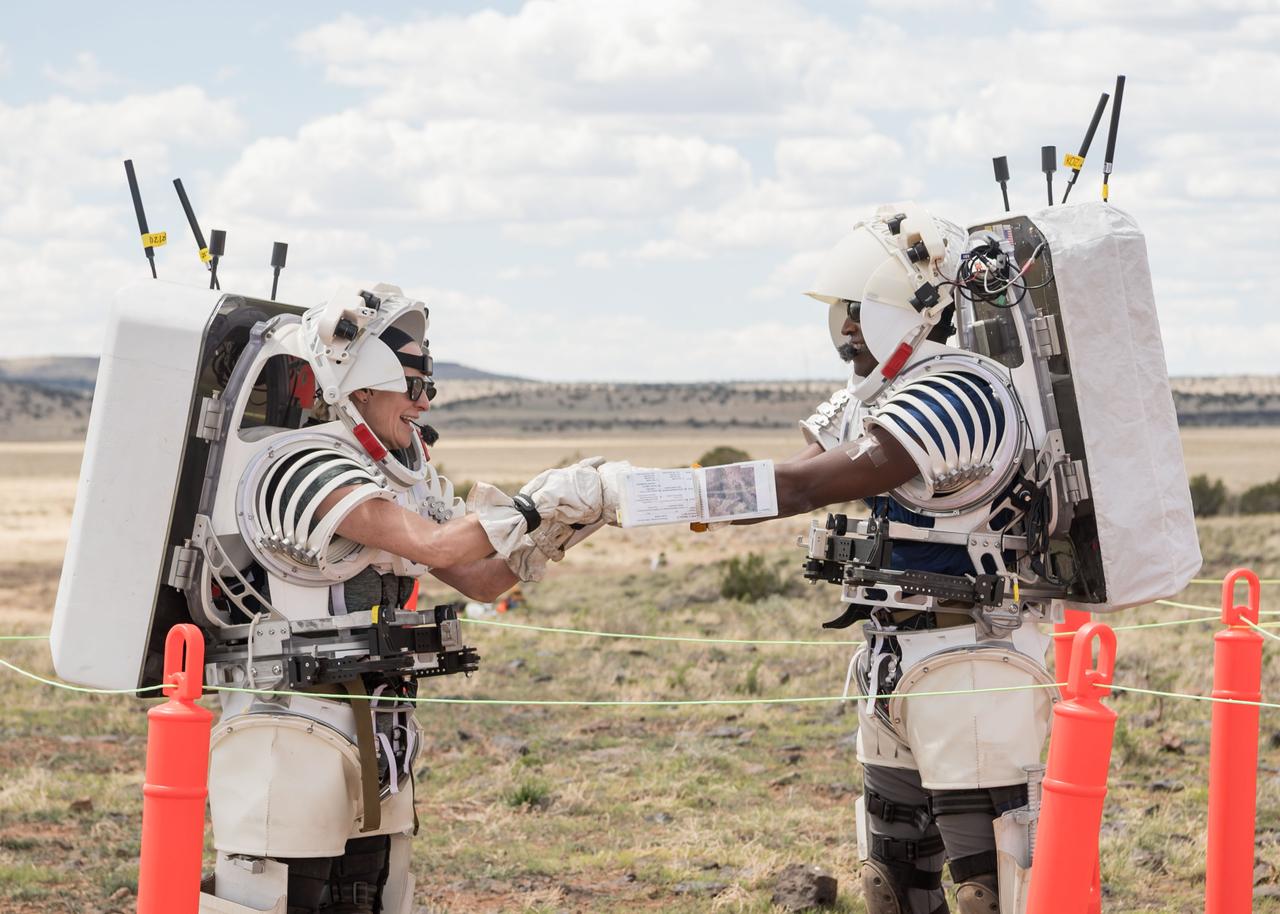
NASA astronauts Kate Rubins and Andre Douglas congratulate each other after the completion of the first simulated moonwalk in a week-long field test consisting of four simulated moonwalks and six advanced technology runs in the San Francisco Volcanic Field in Northern Arizona on May 13, 2024. Credit: NASA/Josh Valcarcel
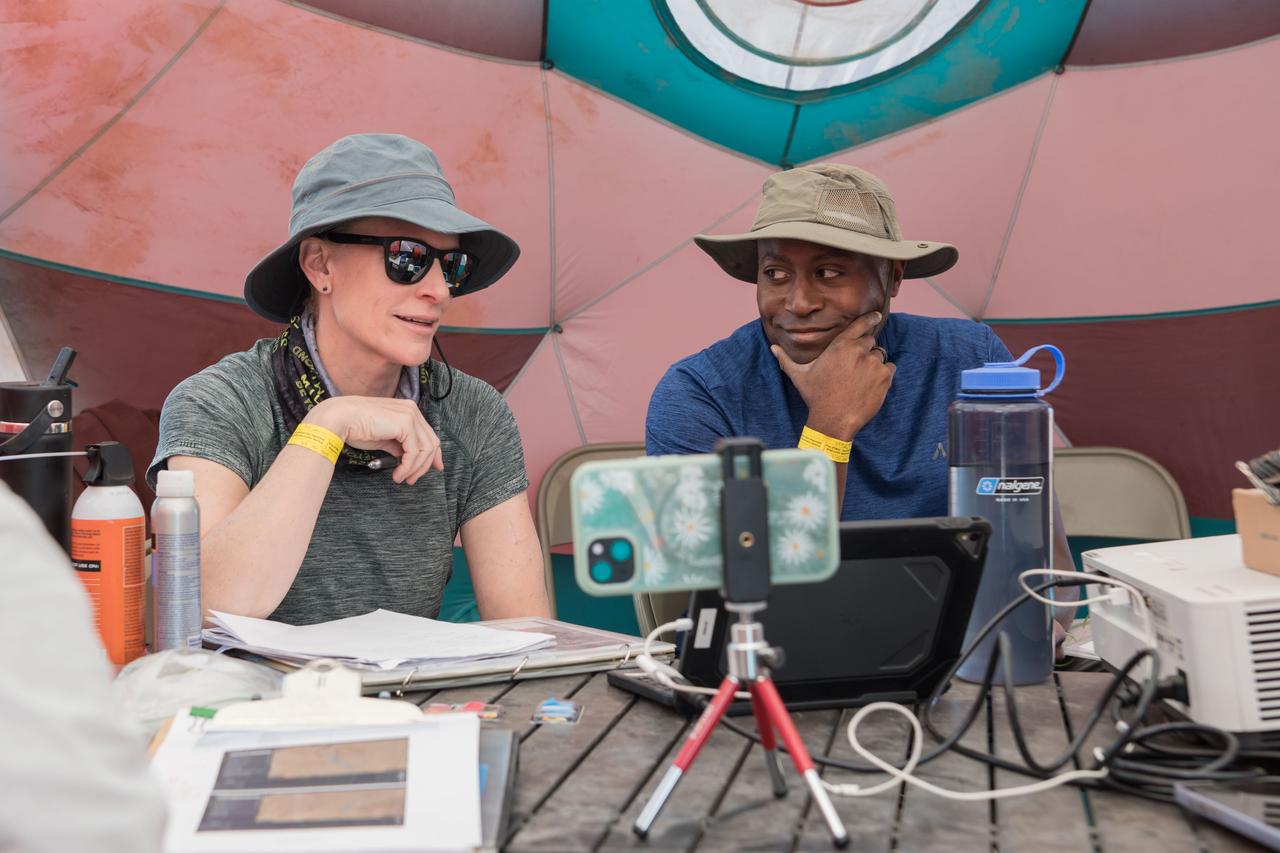
NASA astronauts Kate Rubins and Andre Douglas review test objectives and traverse plans before their first simulated moonwalk in a week-long field test consisting of four simulated moonwalks and six advanced technology runs in the San Francisco Volcanic Field in Northern Arizona on May 13, 2024 Credit: NASA/Josh Valcarcel
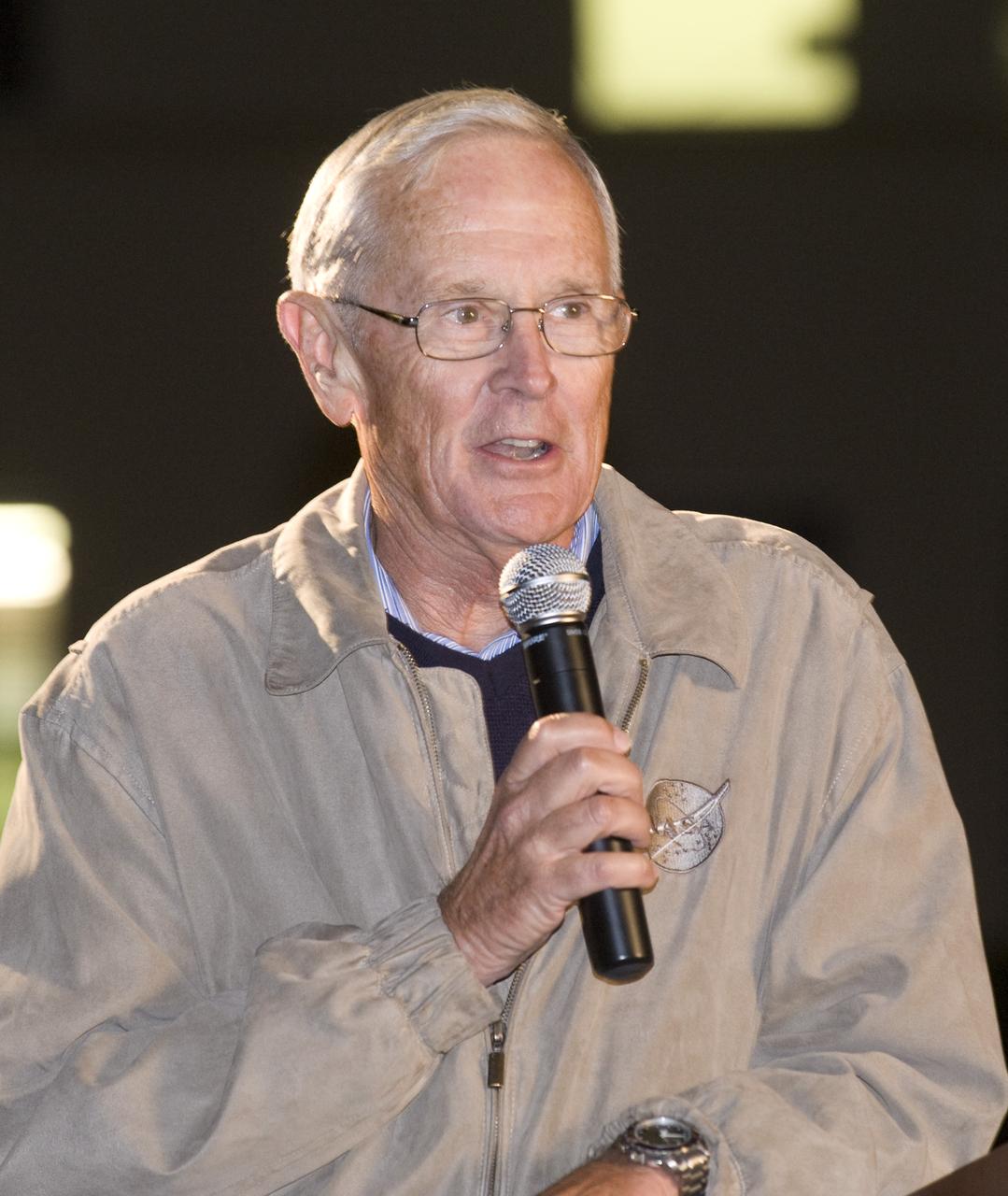
LCROSS Impact Night: Guest Speaker Charlie Duke, A pollo 16 astronaut (moonwalker) address the crowd during the all night public event.
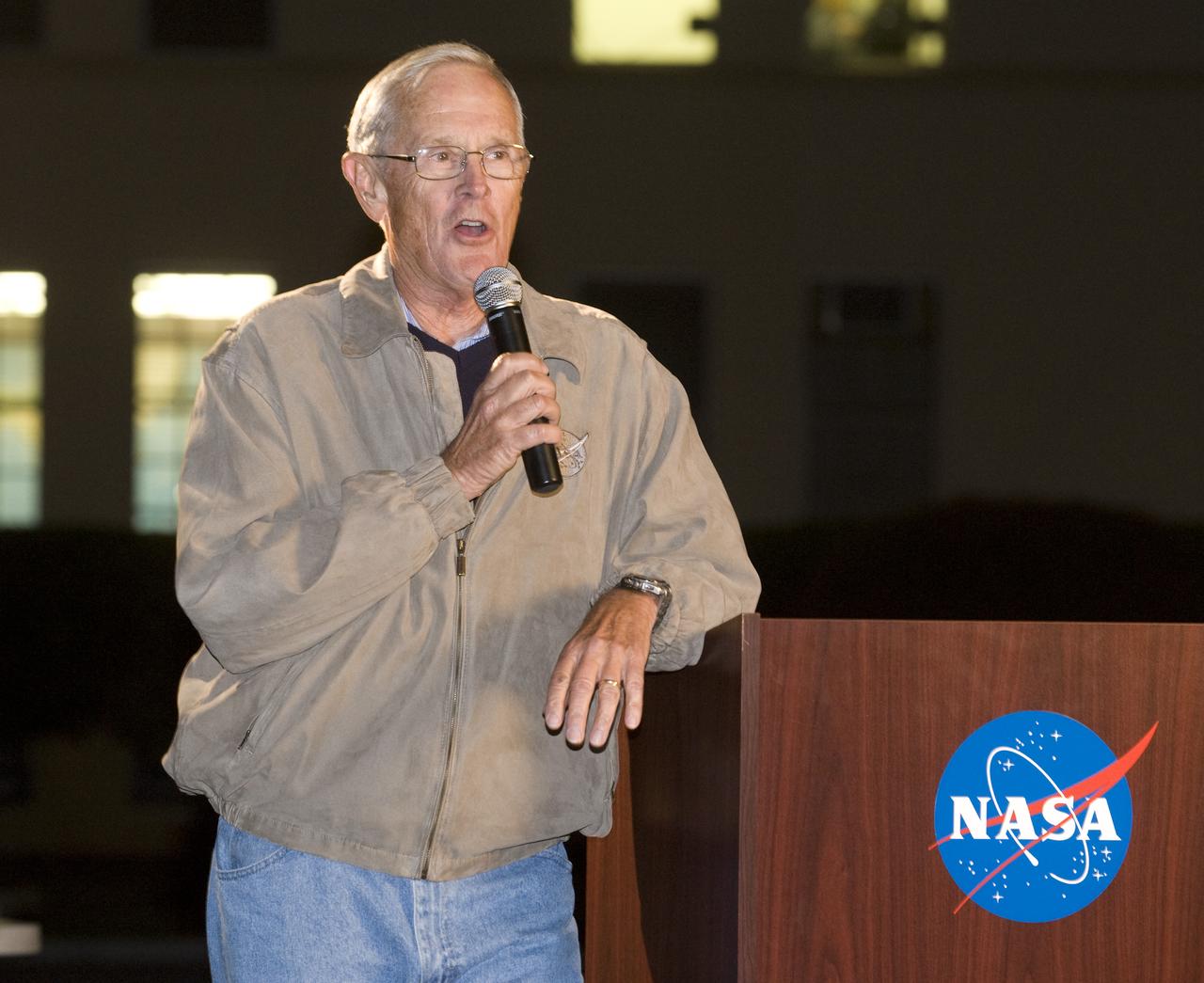
LCROSS Impact Night: Guest Speaker Charlie Duke, A pollo 16 astronaut (moonwalker) address the crowd during the all night public event.
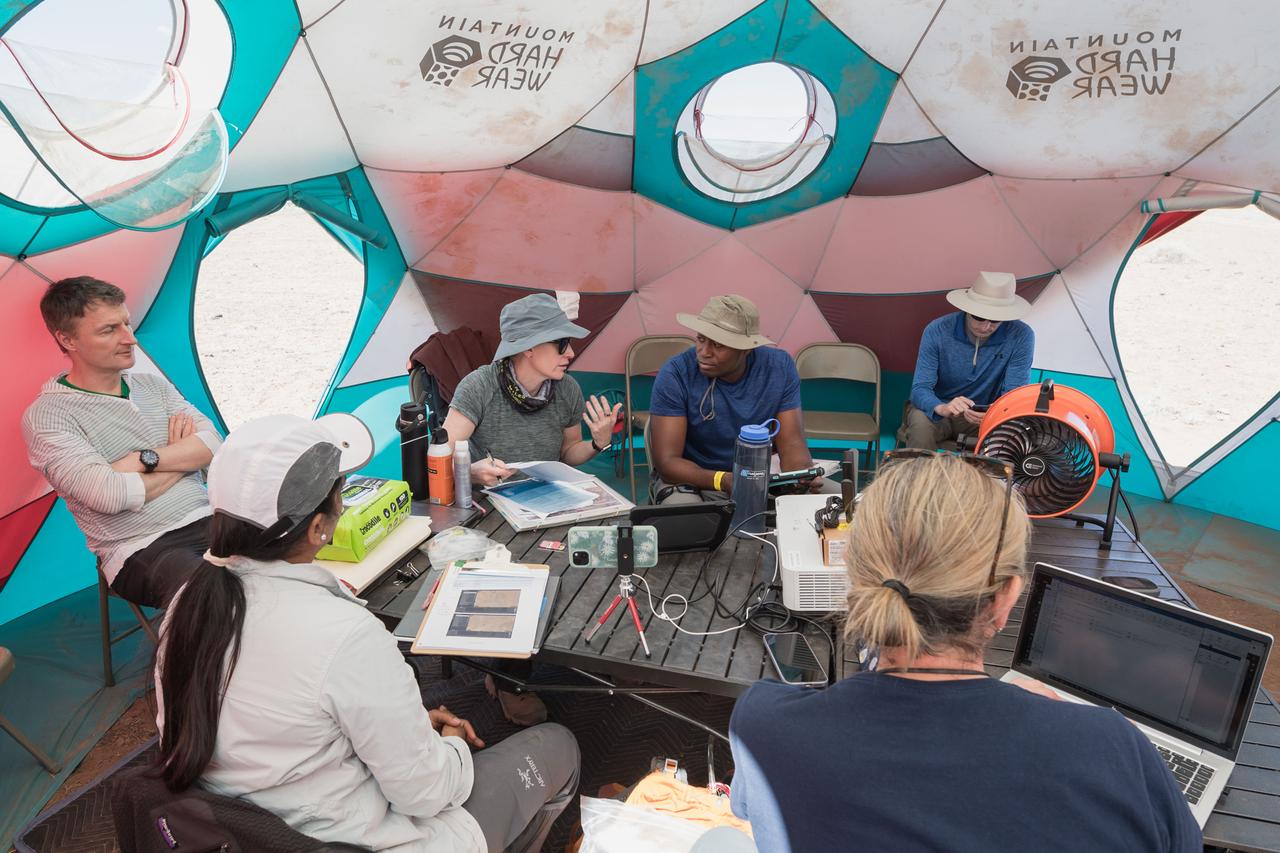
NASA astronauts Kate Rubins and Andre Douglas meet with teams to review test objectives and traverse plans before their first simulated moonwalk in a week-long field test consisting of four simulated moonwalks and six advanced technology runs in the San Francisco Volcanic Field in Northern Arizona on May 13, 2024. Credit: NASA/Josh Valcarcel

NASA astronaut Andre Douglas raises an American flag as NASA astronaut Kate Rubins looks on during their first simulated moonwalk in a week-long field test consisting of four simulated moonwalks and six advanced technology runs in the San Francisco Volcanic Field in Northern Arizona on May 13, 2024. Credit: NASA/Josh Valcarcel
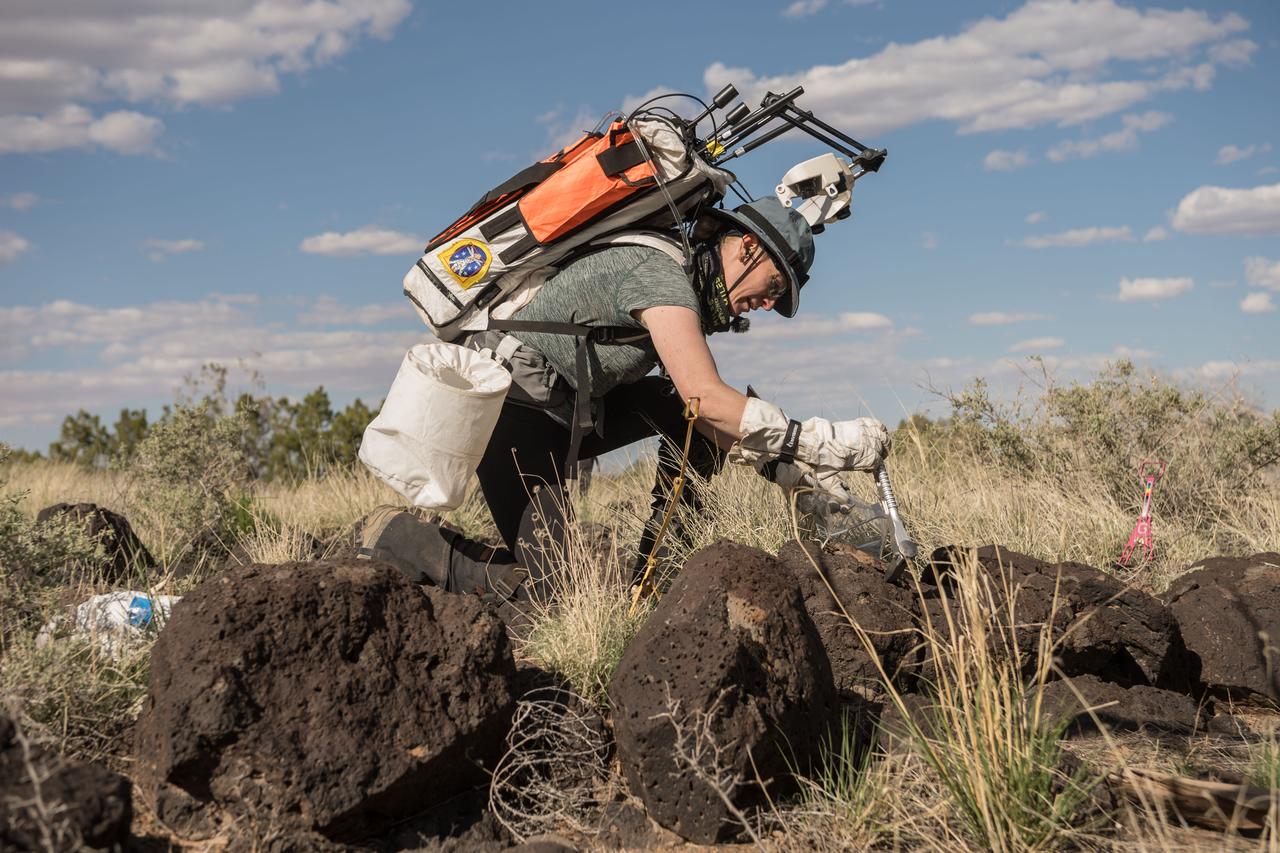
NASA astronaut Kate Rubins uses a chisel to collect a small geologic sample during a simulated moonwalk in the San Francisco Volcanic Field in Northern Arizona on May 17, 2024. Credit: NASA/Josh Valcarcel

NASA astronaut Andre Douglas collects soil samples during the first in a series of four simulated moonwalks in the San Francisco Volcanic Field in Norther Arizona on May 13, 2024. Credit: NASA/Josh Valcarcel

NASA astronauts Andre Douglas and Kate Rubins review procedures during a simulated moonwalk in the San Francisco Volcanic Field in Northern Arizona on May 14, 2024. Credit: NASA/Josh Valcarcel
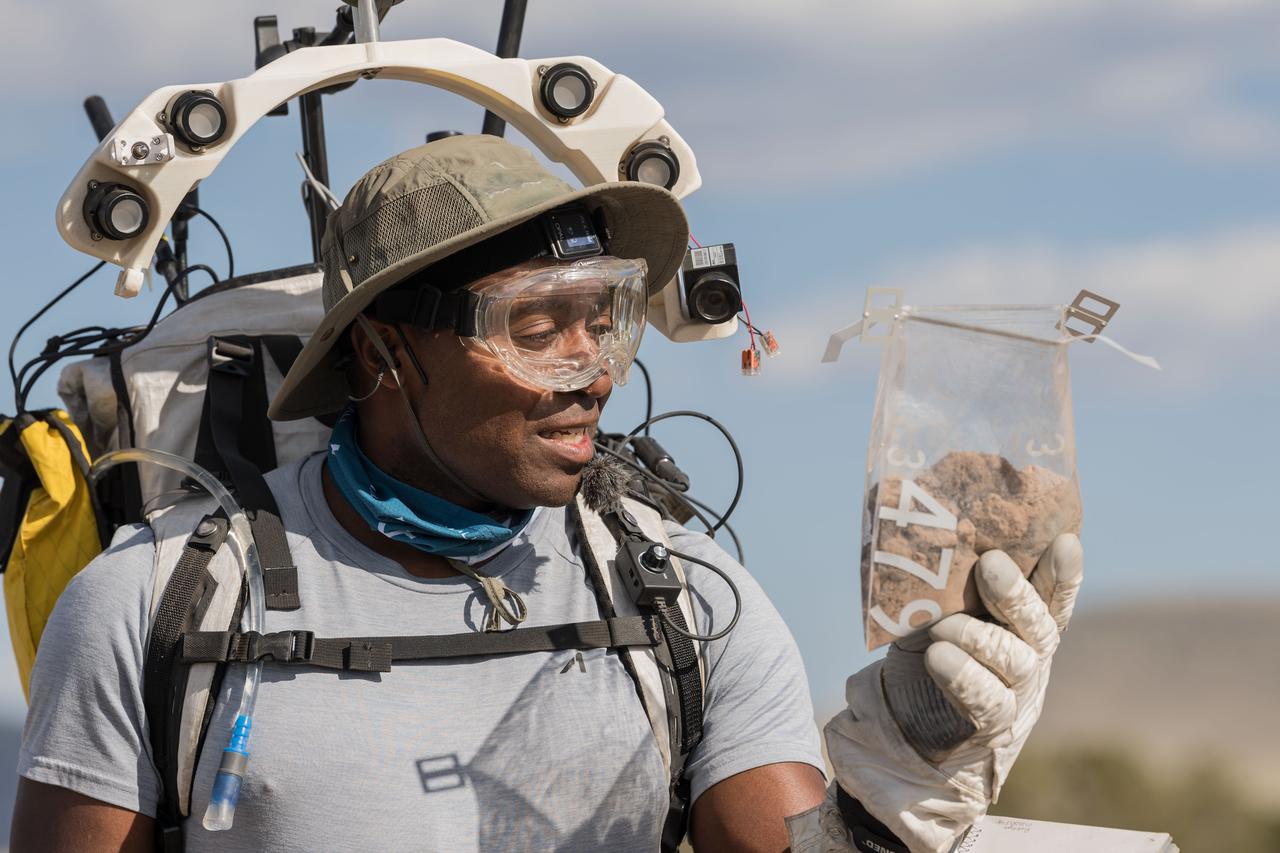
NASA astronaut Andre Douglas takes a closer look at the geologic samples he collected during a simulated moonwalk in the San Francisco Volcanic Field in Northern Arizona on May 17, 2024. Credit: NASA/Josh Valcarcel
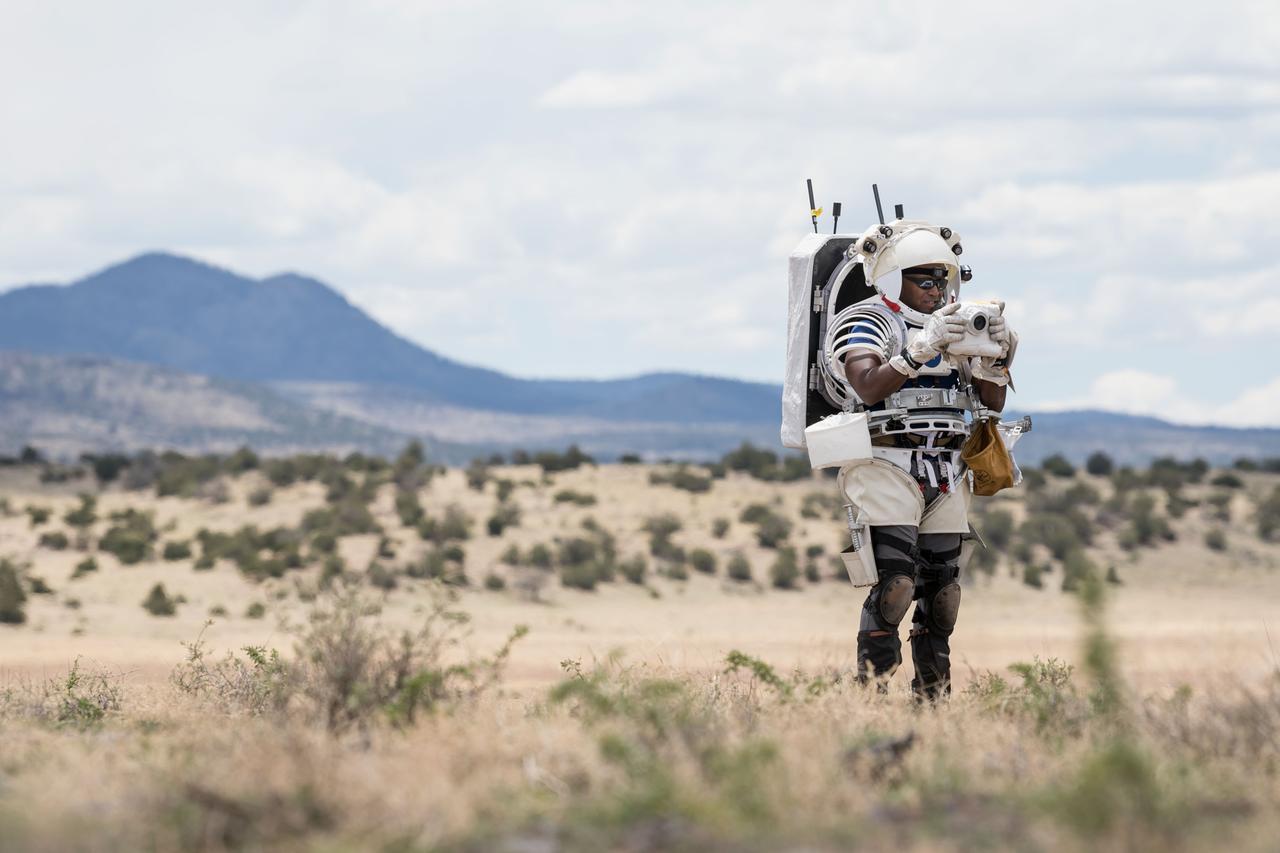
NASA astronaut Andre Douglas takes a picture of the lunar-like landscape during a simulated moonwalk in the San Francisco Volcanic Field in Northern Arizona on May 13, 2024. Credit: NASA/Josh Valcarcel
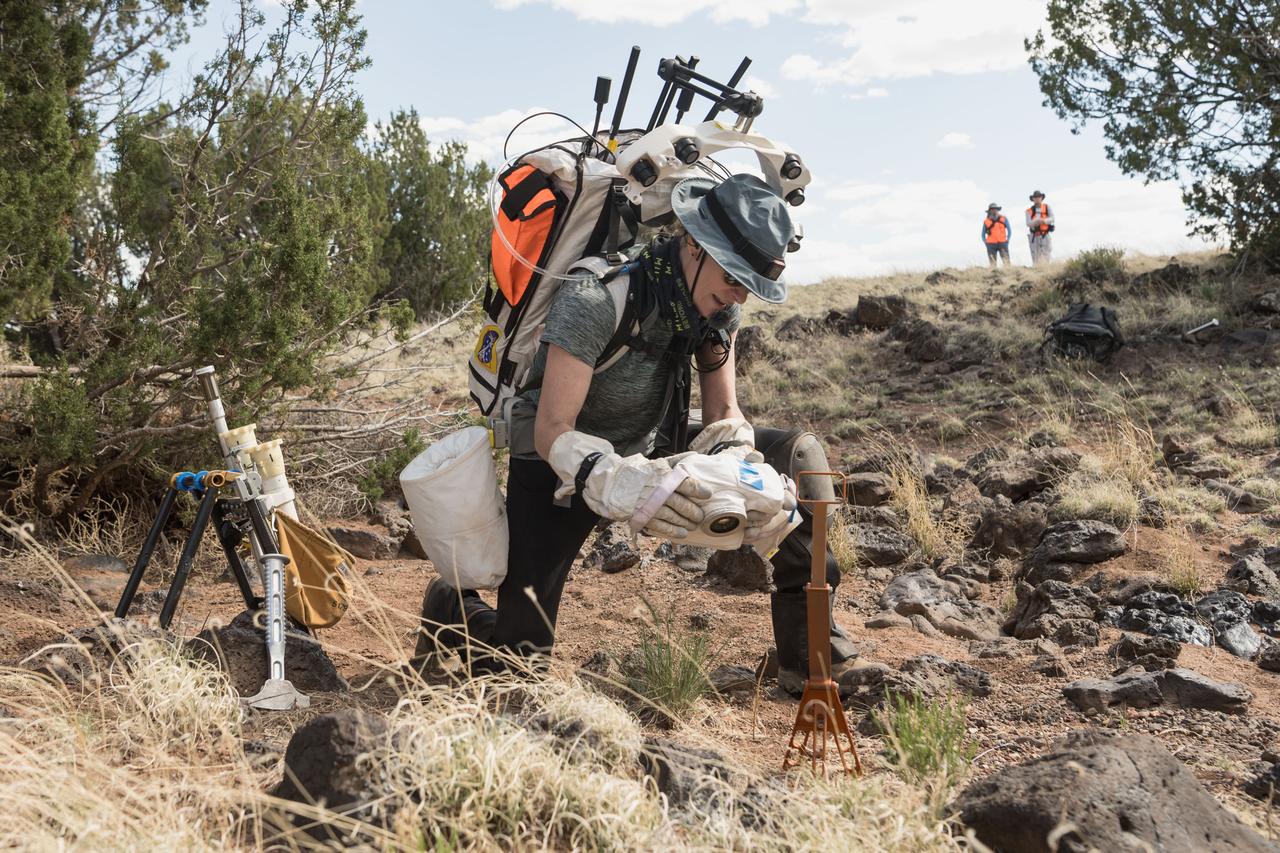
NASA astronaut Kate Rubins takes a picture of a geologic sample during a simulated moonwalk in the San Francisco Volcanic Field in Northern Arizona on May 17, 2024. Credit: NASA/Josh Valcarcel
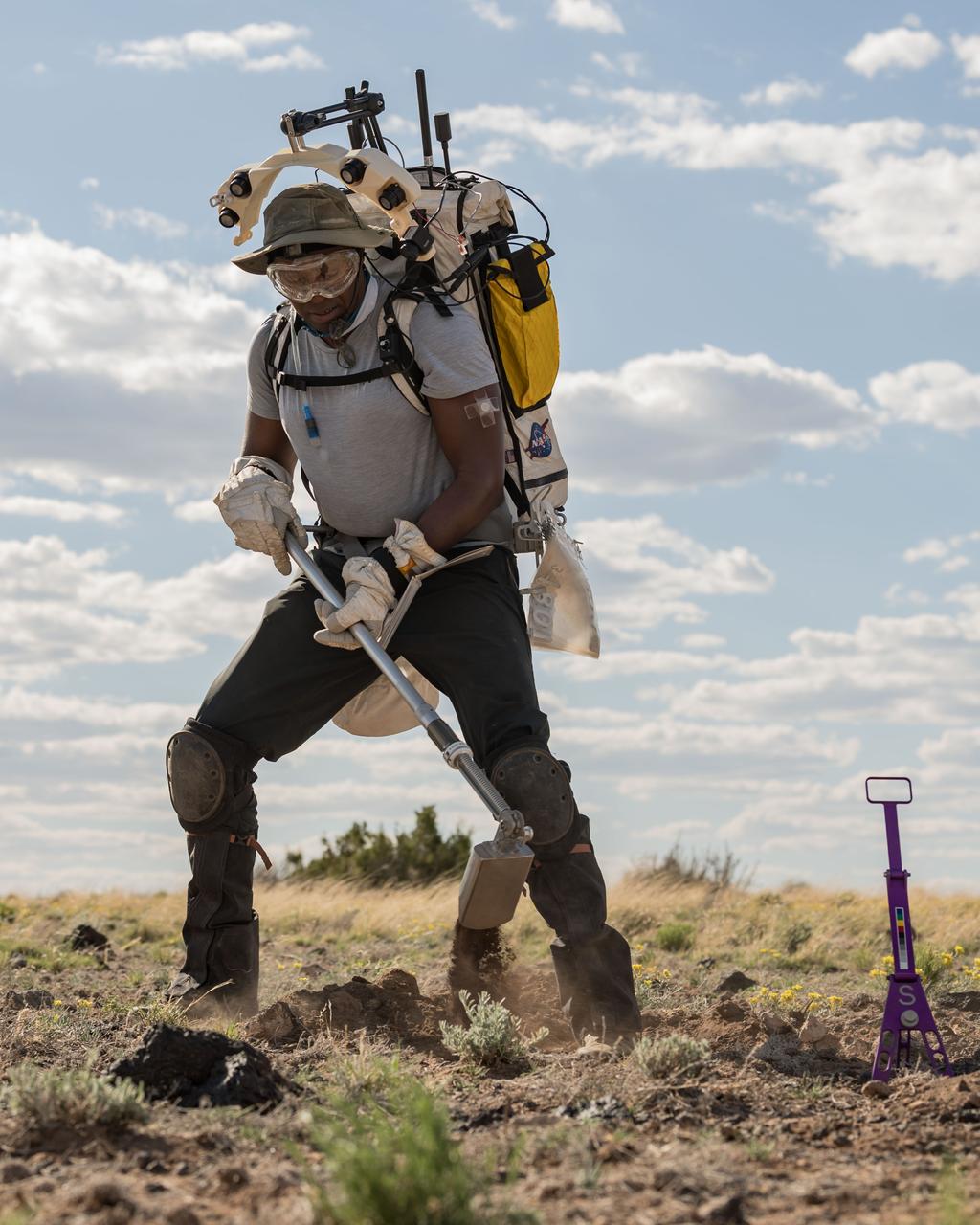
NASA astronaut Andre Douglas uses a scoop to dig into the ground to collect geologic samples during a simulated moonwalk in the San Francisco Volcanic Field in Northern Arizona on May 17, 2024. Credit: NASA/Josh Valcarcel
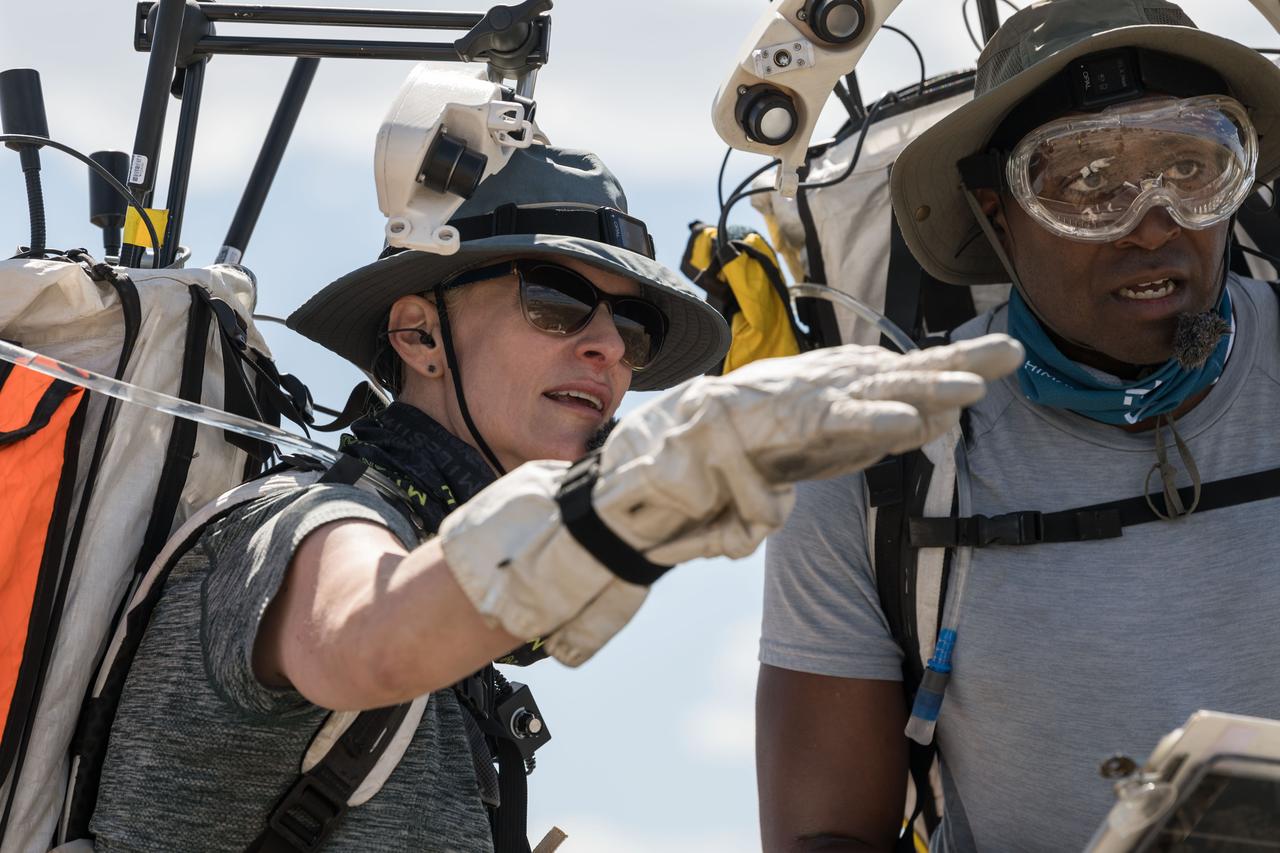
NASA astronauts Kate Rubins and Andre Douglas look ahead at their traverse during a simulated moonwalk in the San Francisco Volcanic Field in Northern Arizona on May 17, 2024. Credit: NASA/Josh Valcarcel
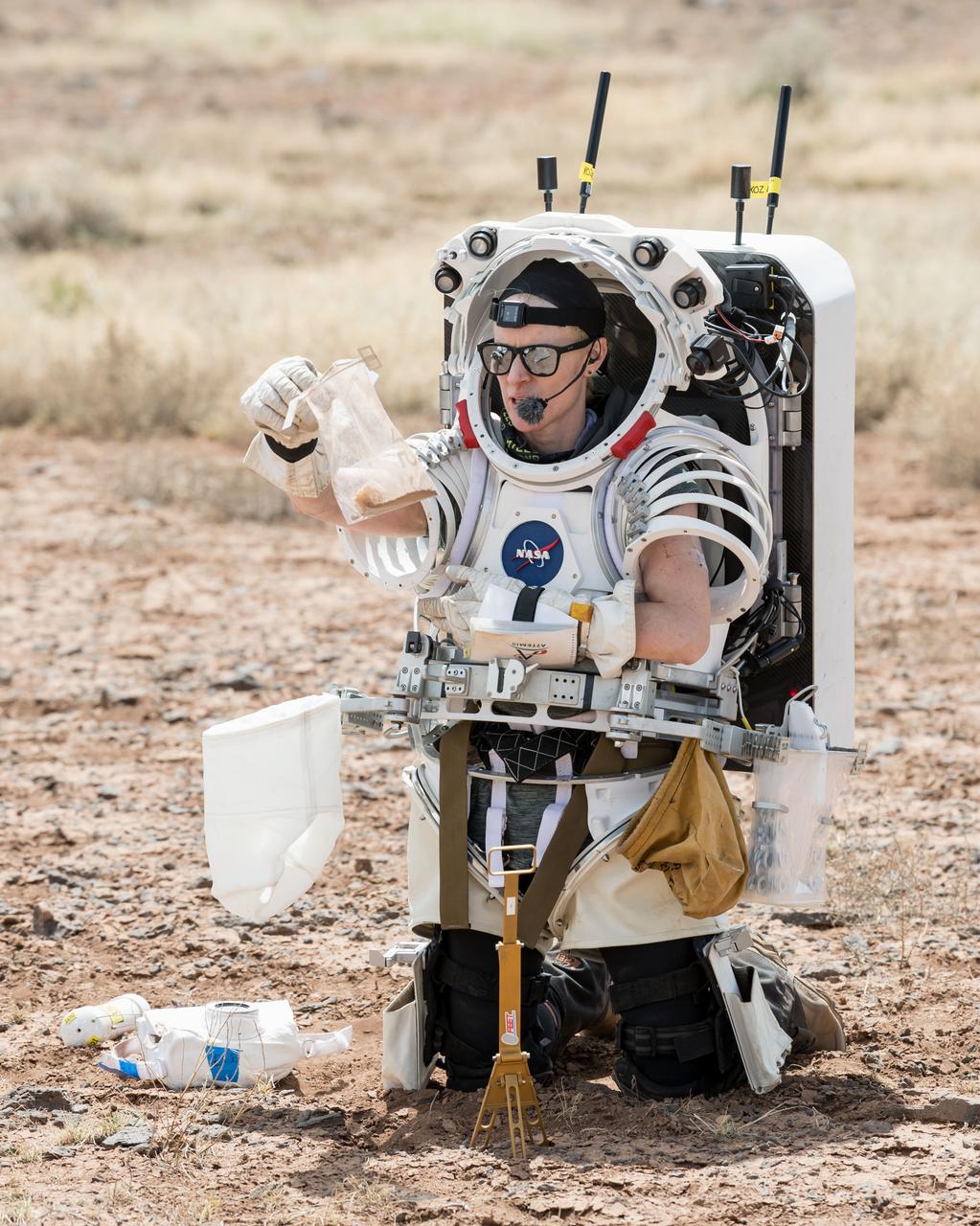
NASA astronaut Kate Rubins examines a geology sample she collected during a simulated moonwalk in the San Francisco Volcanic Field in Northern Arizona on May 13, 2024. Credit: NASA/Josh Valcarcel
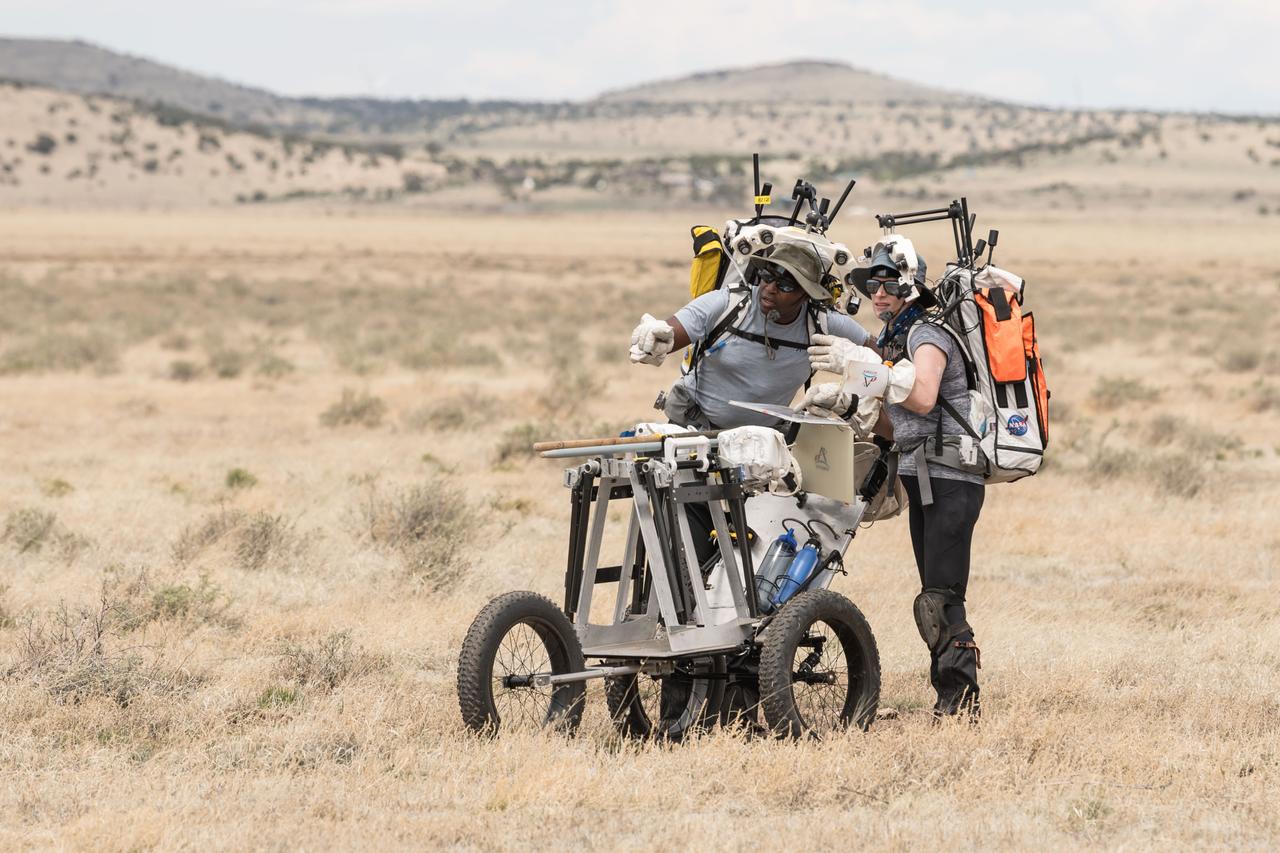
NASA astronauts Andre Douglas and Kate look ahead at their traverse during a simulated moonwalk in the San Francisco Volcanic Field in Northern Arizona on May 14, 2024. Credit: NASA/Josh Valcarcel
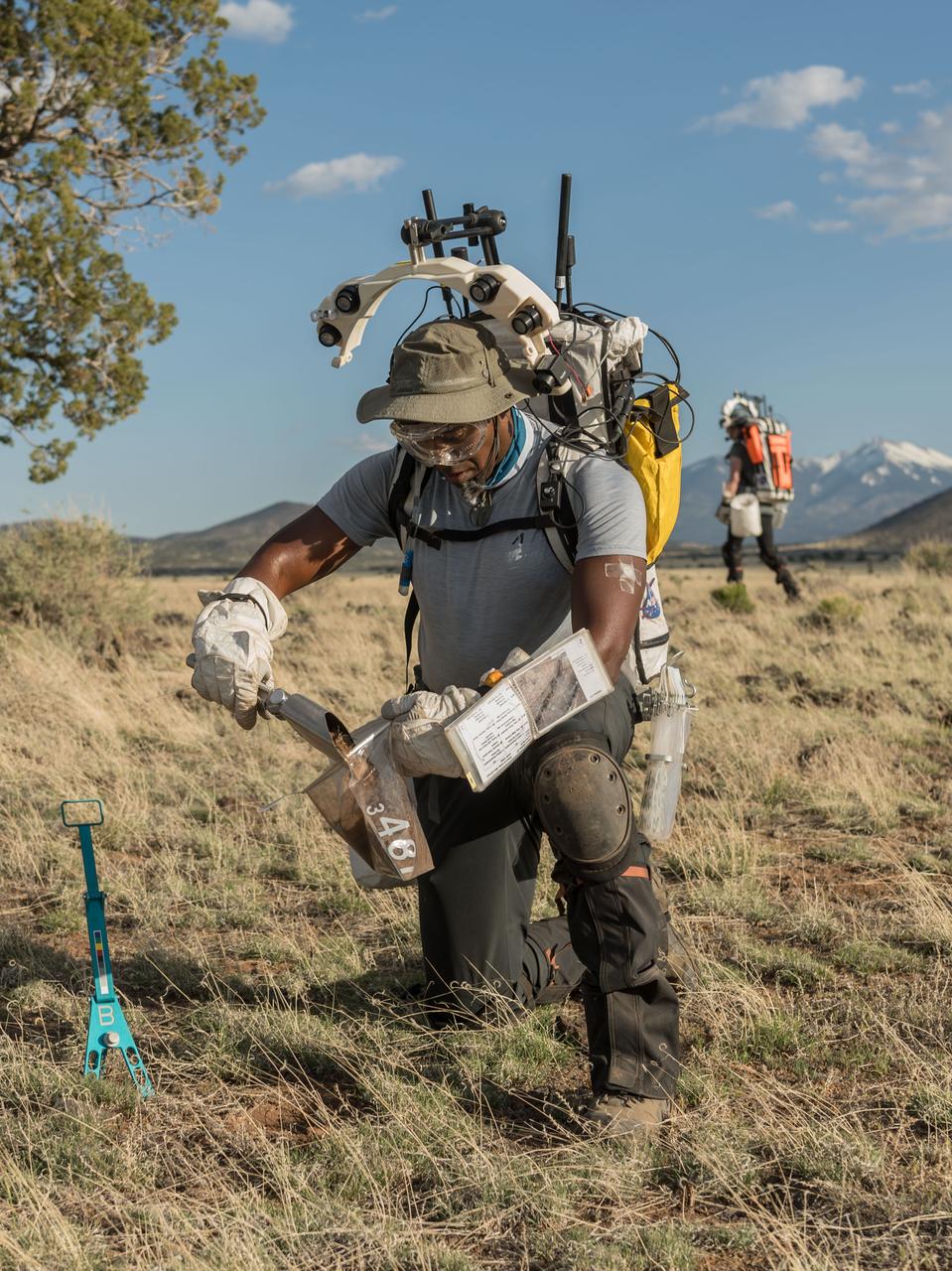
NASA astronaut Andre Douglas pours a scoopful of geologic samples into a sample bag during a simulated moonwalk in the San Francisco Volcanic Field in Northern Arizona on May 17, 2024. Credit: NASA/Josh Valcarcel

NASA astronaut Andre Douglas uses a hammer and chisel to break off a small sample during a¬¬ nighttime simulated moonwalk in the San Francisco Volcanic Field in Northern Arizona on May 16, 2024. Credit: NASA/Josh Valcarcel
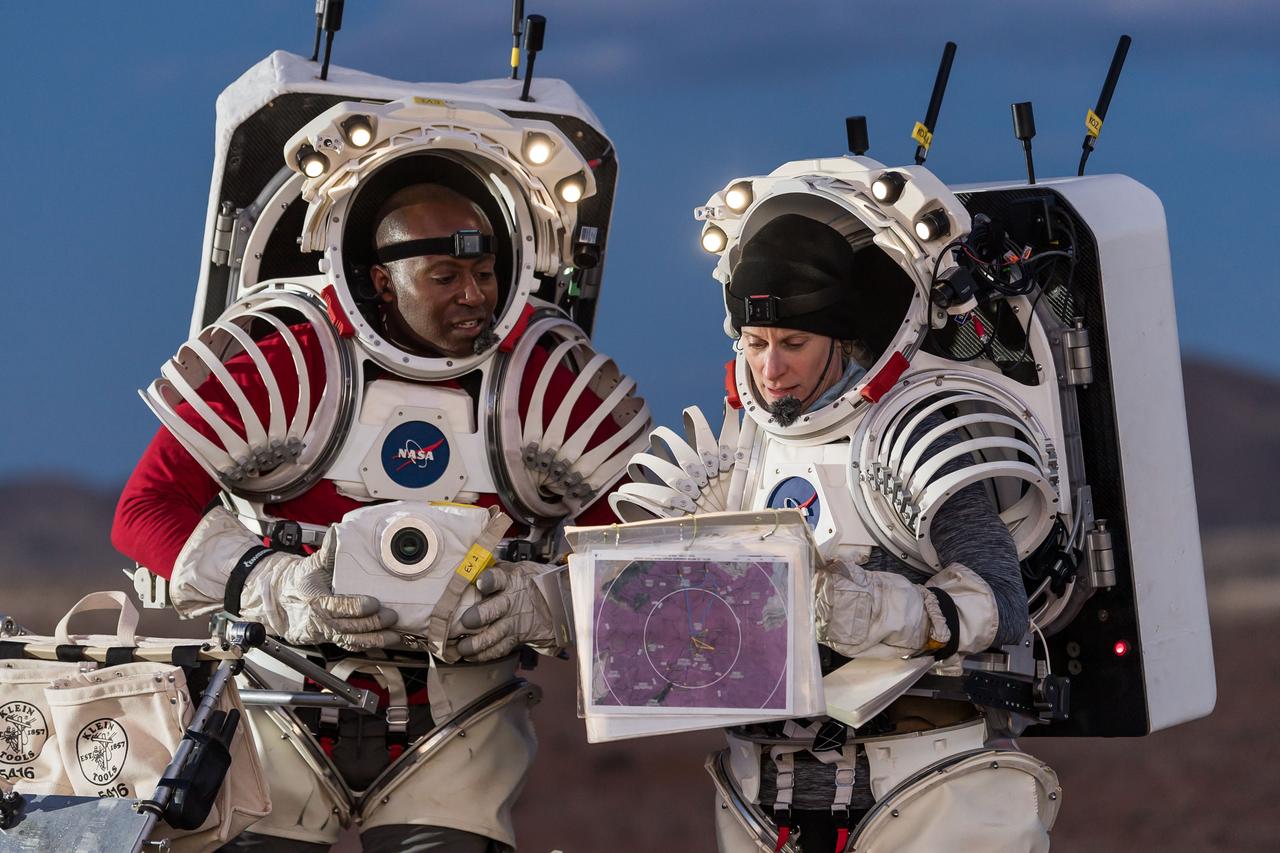
NASA astronauts Andre Douglas, left, and Kate Rubins review traverse plans during a¬¬ nighttime simulated moonwalk in the San Francisco Volcanic Field in Northern Arizona on May 16, 2024. Credit: NASA/Josh Valcarcel
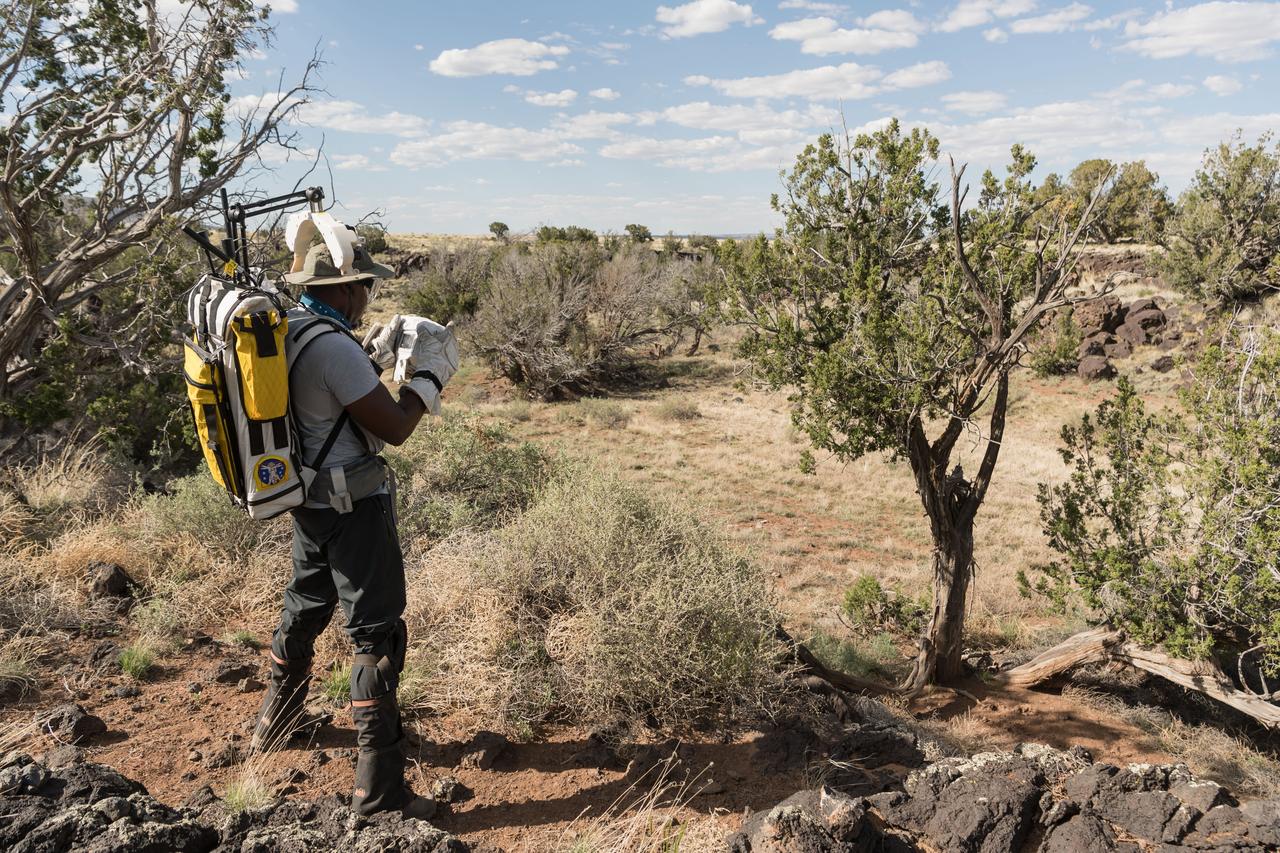
NASA astronaut Andre Douglas takes a picture of the surrounding lunar-like landscape during a simulated moonwalk in the San Francisco Volcanic Field in Northern Arizona on May 17, 2024. Credit: NASA/Josh Valcarcel

NASA astronaut Kate Rubins walks in the lunar-like landscape during a nighttime simulated moonwalk in the San Francisco Volcanic Field in Northern Arizona on May 16, 2024. Credit: NASA/Josh Valcarcel
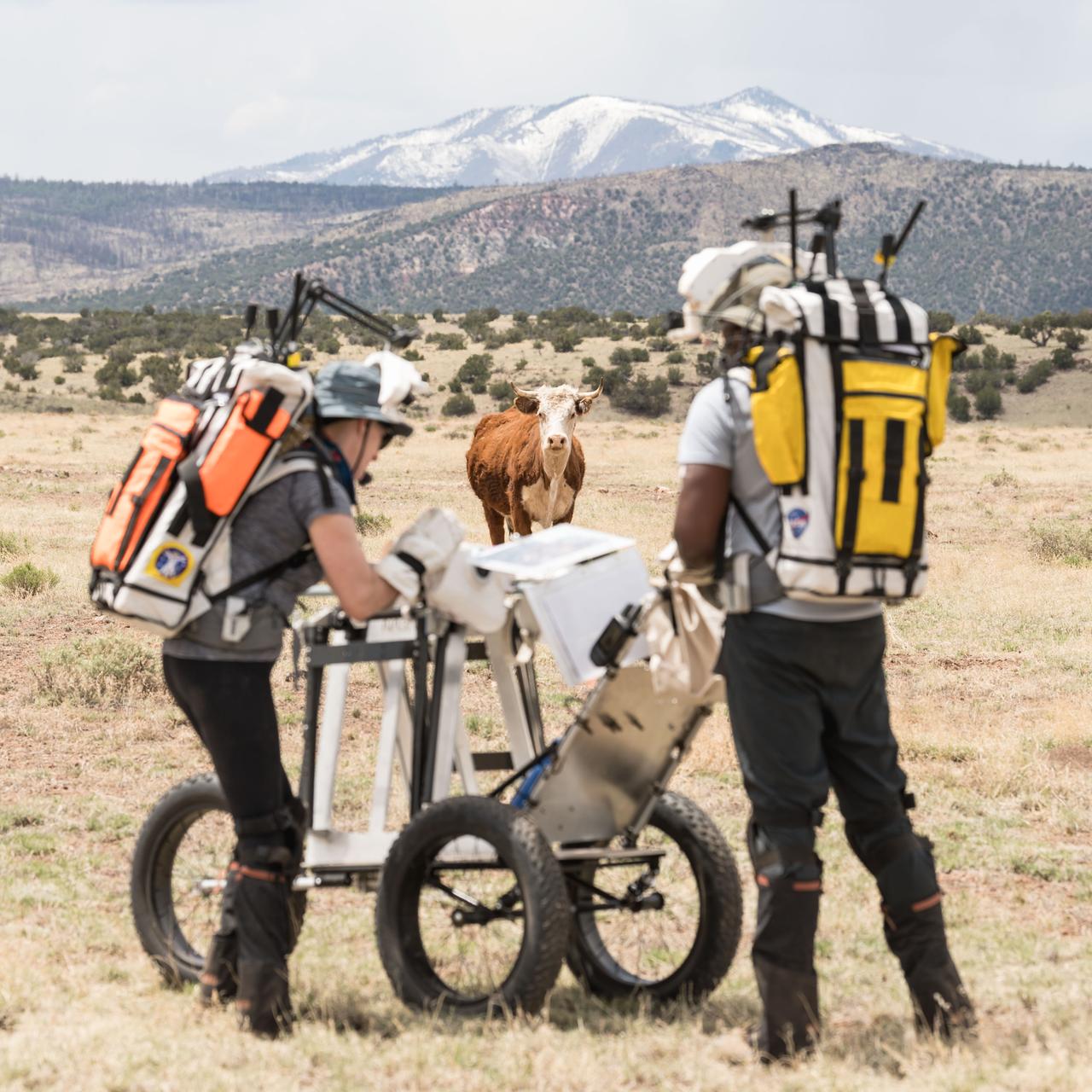
A curious cow watches as NASA astronauts Andre Douglas and Kate Rubins perform a simulated moonwalk in the San Francisco Volcanic Field in Northern Arizona on May 14, 2024. Credit: NASA/Josh Valcarcel
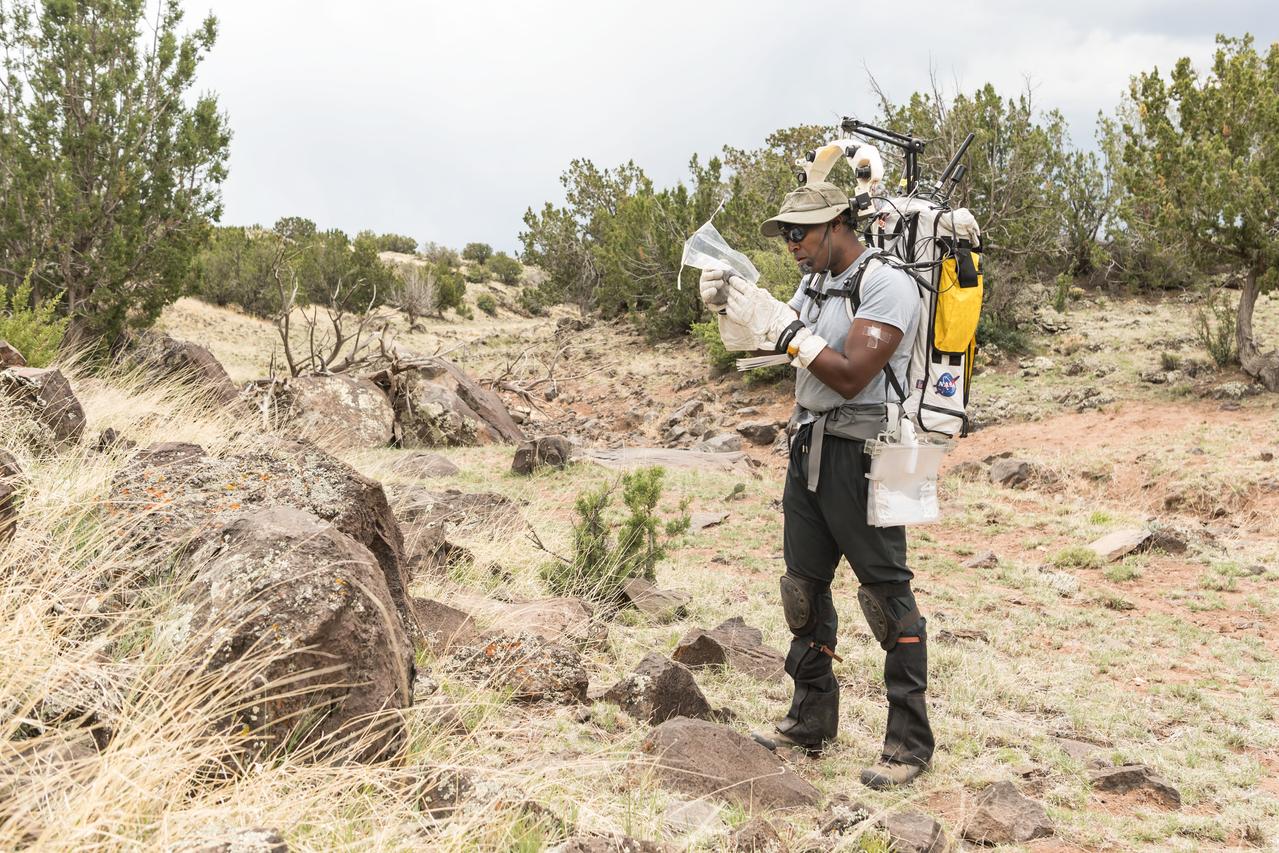
NASA astronaut Andre Douglas examines a geology sample he collected during a simulated moonwalk in the San Francisco Volcanic Field in Northern Arizona on May 14, 2024. Credit: NASA/Josh Valcarcel
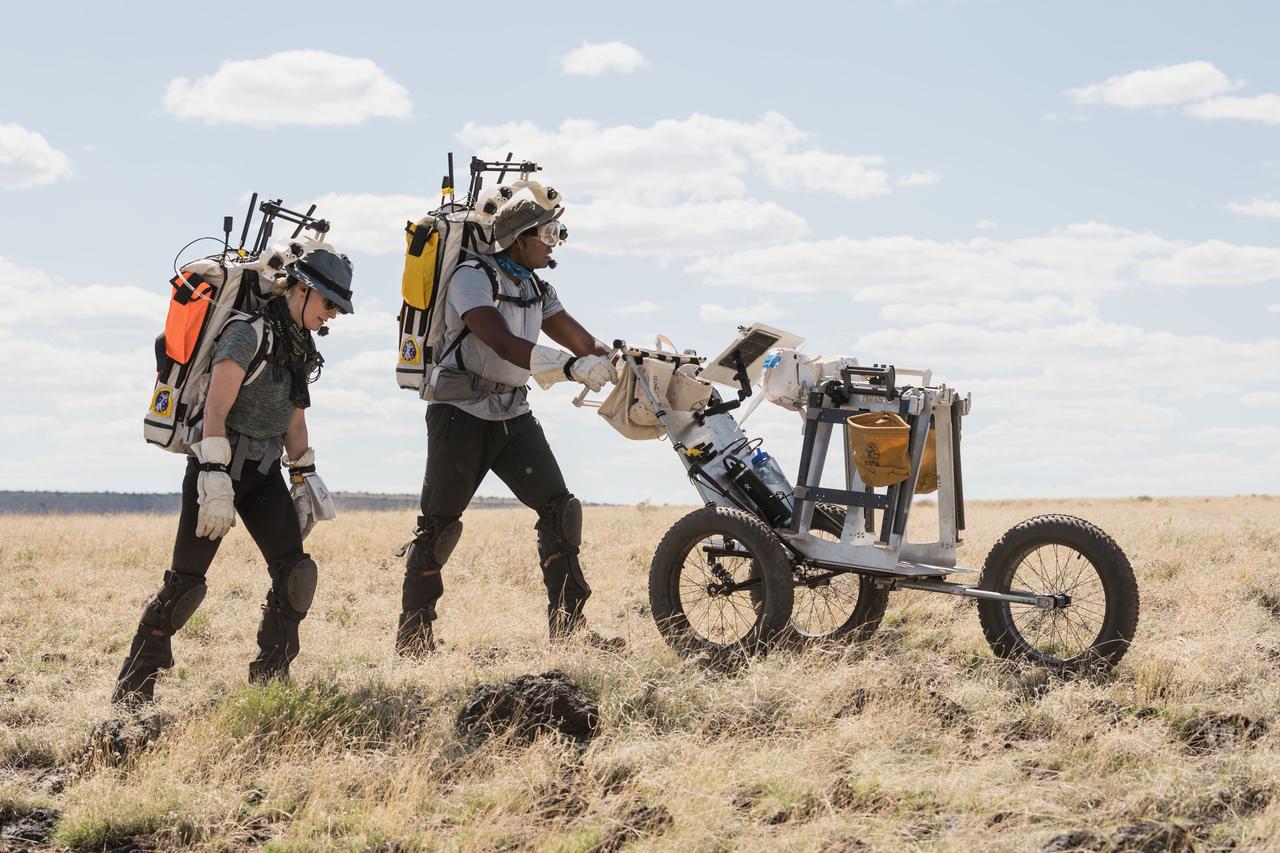
NASA astronauts Kate Rubins and Andre Douglas walk through the lunar-like landscape during a simulated moonwalk in the San Francisco Volcanic Field in Northern Arizona on May 17, 2024. Credit: NASA/Josh Valcarcel
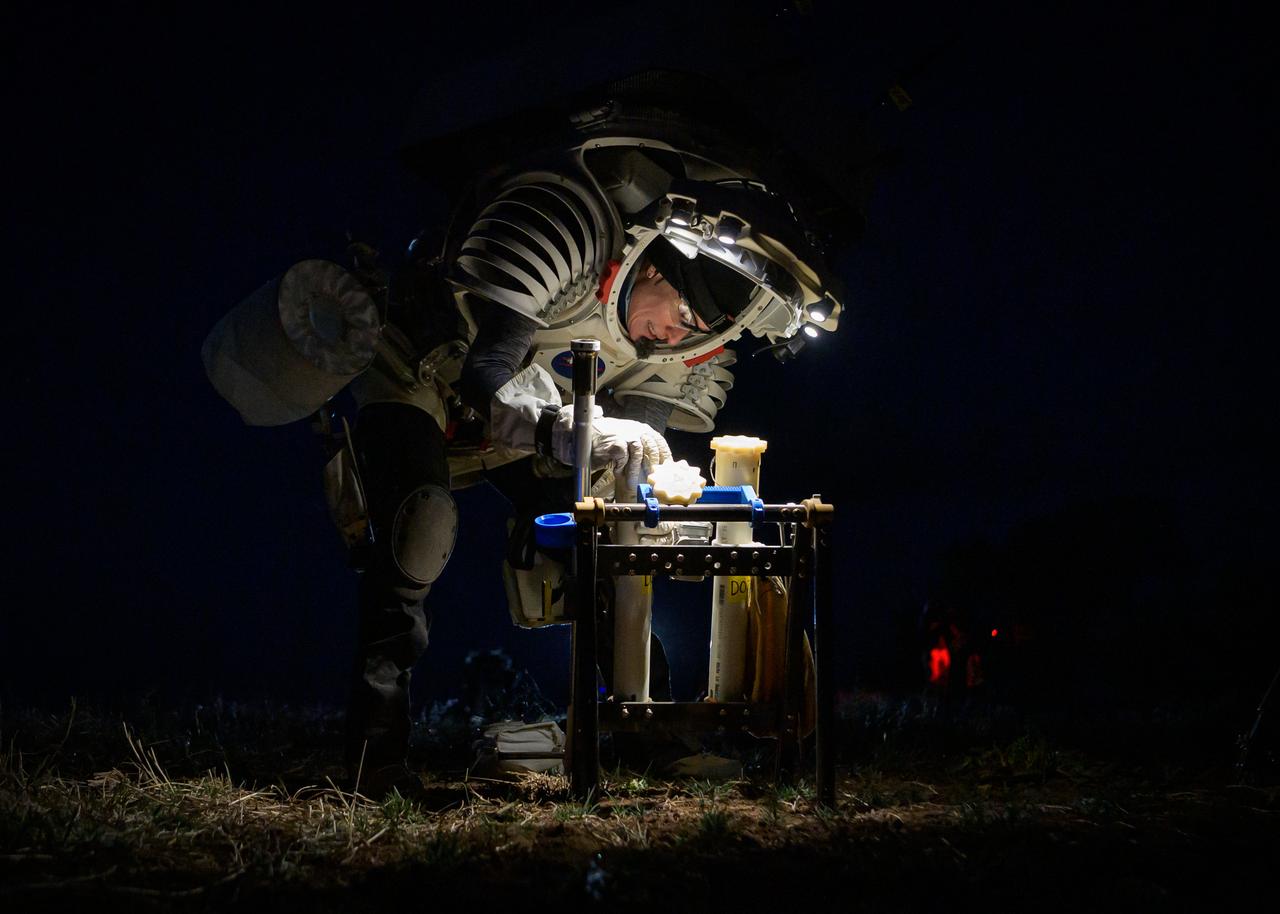
NASA astronaut Kate Rubins selects the geology tool needed during a nighttime simulated moonwalk in the San Francisco Volcanic Field in Northern Arizona on May 16, 2024. Credit: NASA/Josh Valcarcel

NASA astronaut Kate Rubins closes a sample bag full of soil she collected during a simulated moonwalk in the San Francisco Volcanic Field in Northern Arizona on May 14, 2024. Credit: NASA/Josh Valcarcel
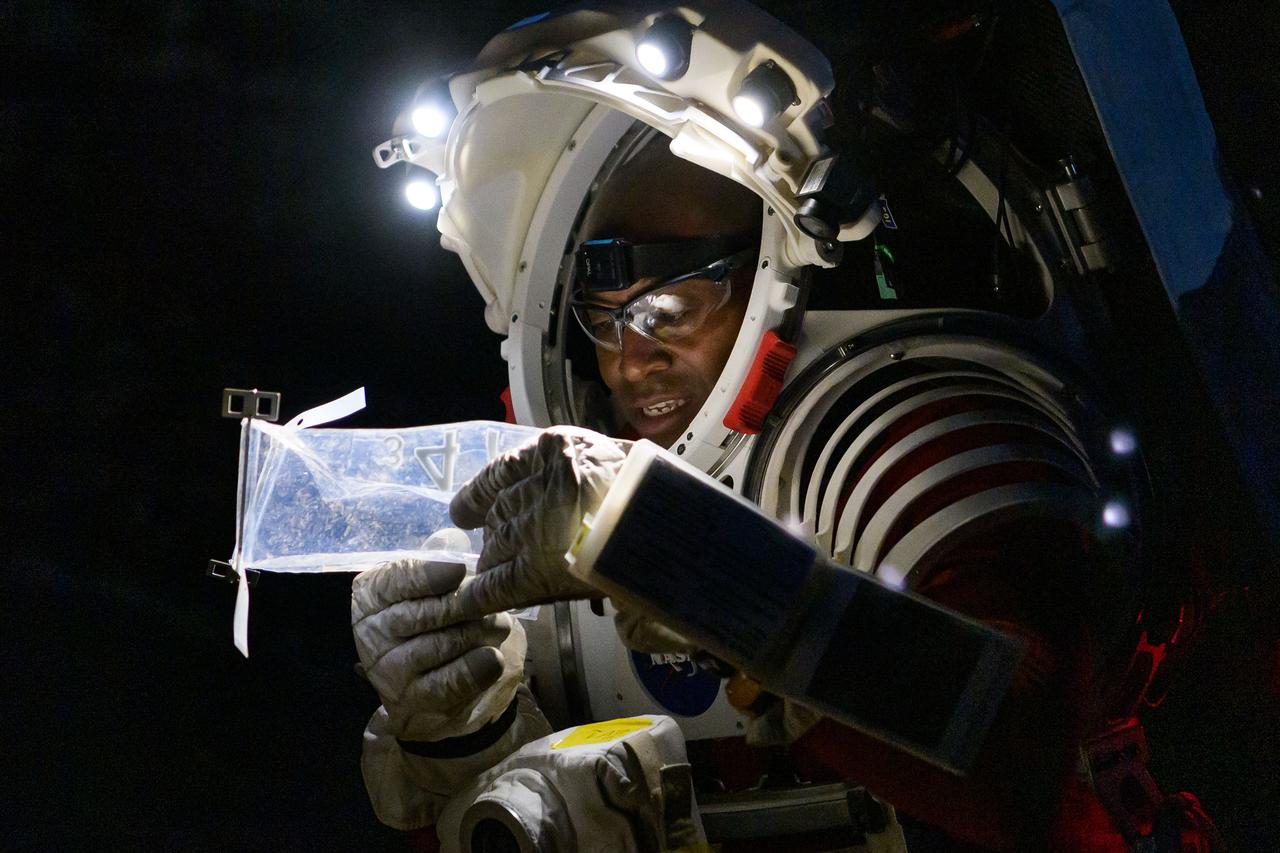
NASA astronaut Andre Douglas examines a geologic sample collected during a nighttime simulated moonwalk in the San Francisco Volcanic Field in Northern Arizona on May 16, 2024. Credit: NASA/Josh Valcarcel
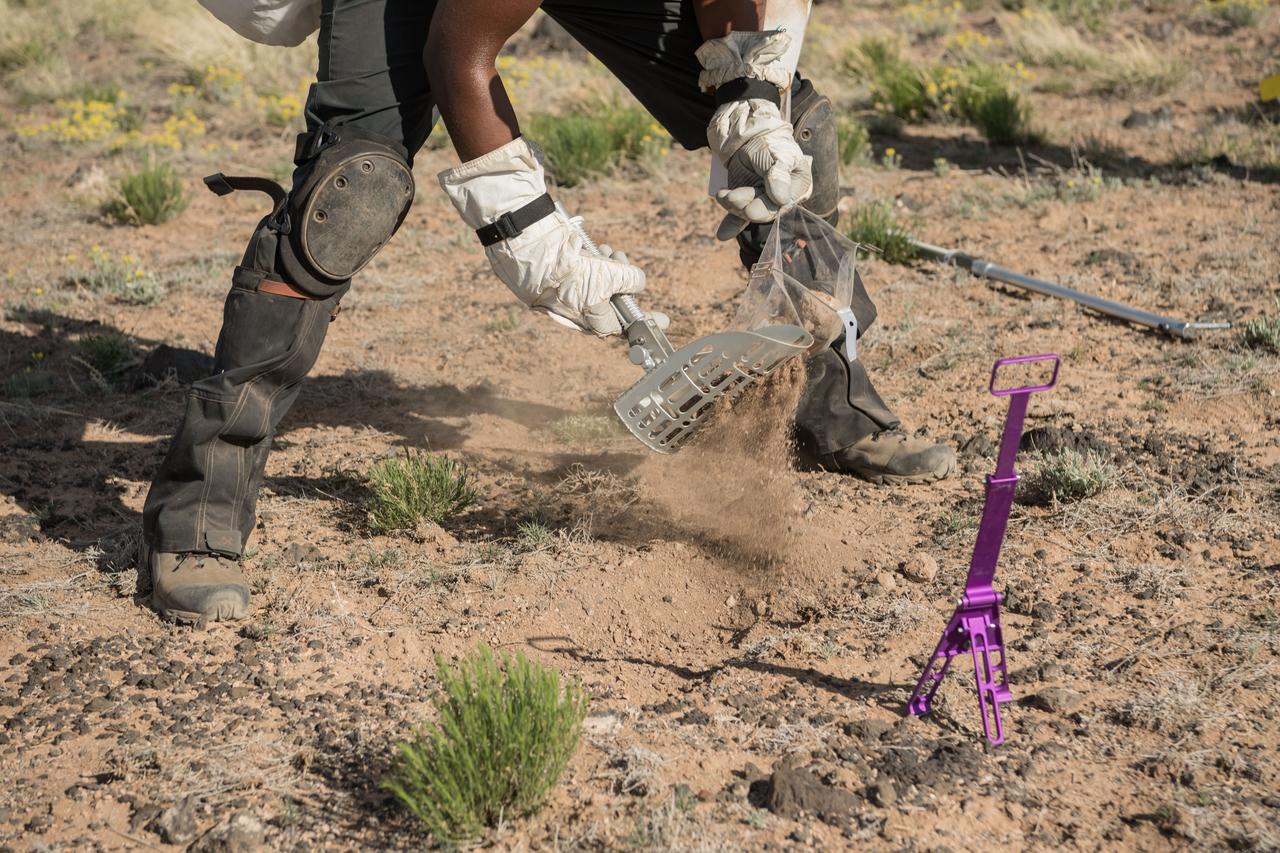
NASA astronaut Andre Douglas uses a rake to pour “lunar” samples into a sample bag during a simulated moonwalk in the San Francisco Volcanic Field in Northern Arizona on May 17, 2024. Credit: NASA/Josh Valcarcel
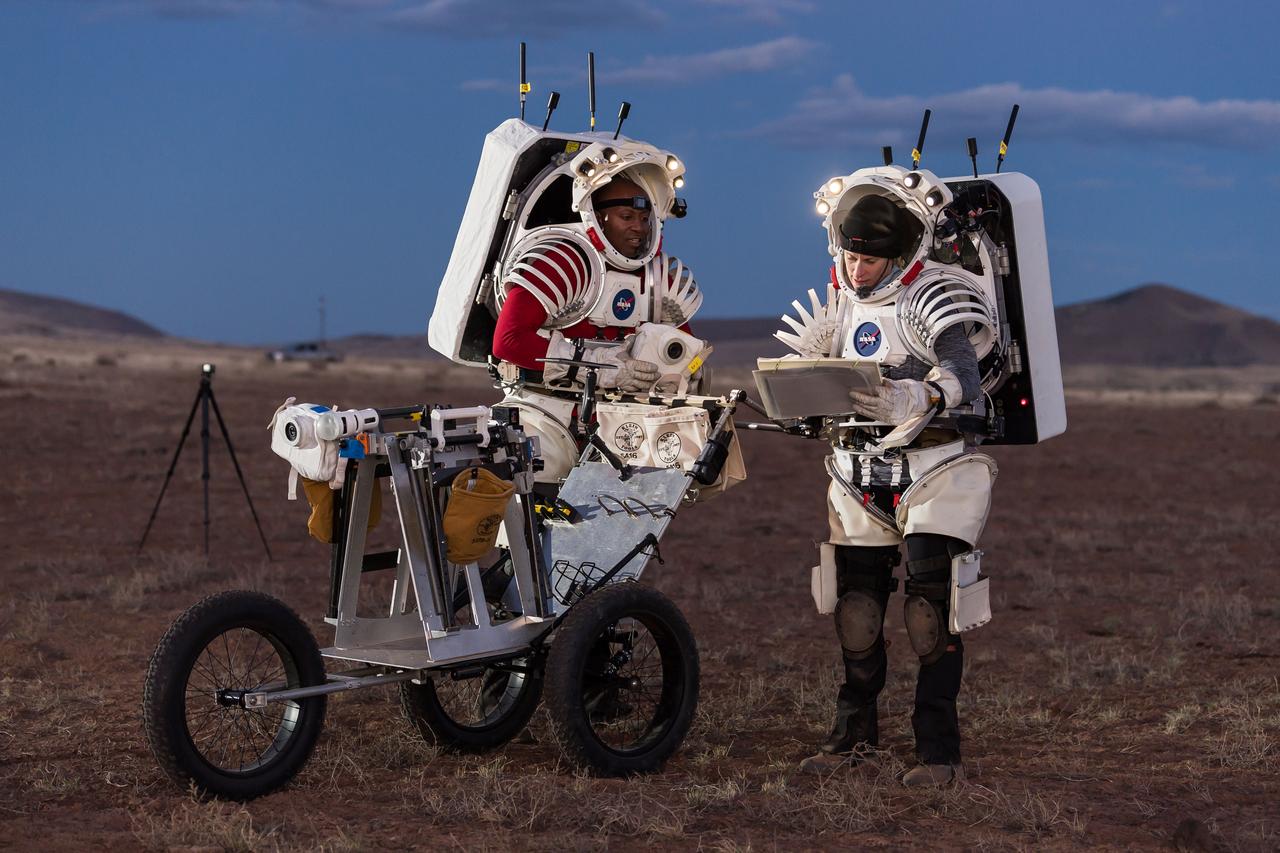
NASA astronauts Andre Douglas, left, and Kate Rubins review procedures during a nighttime simulated moonwalk in the San Francisco Volcanic Field in Northern Arizona on May 16, 2024. Credit: NASA/Josh Valcarcel

jsc2011e118362 - Panorama view of Apollo 16 lunar surface photos of the Station 10 and Sample 381 Rock taken during the second moonwalk of the mission. The panoramas were built by combining Apollo 16 images starting with frame AS16-114-18450 thru end frame AS16-114-18467. The panoramic images received minimal retouching by NASA imagery specialists, including the removal of lens flares that were problematic in stitching together the individual frames and blacking out the sky to the lunar horizon. These adjustments were made based on observations of the Moon walkers who reported that there are no stars visible in the sky due to the bright lunar surface reflection of the Sun.
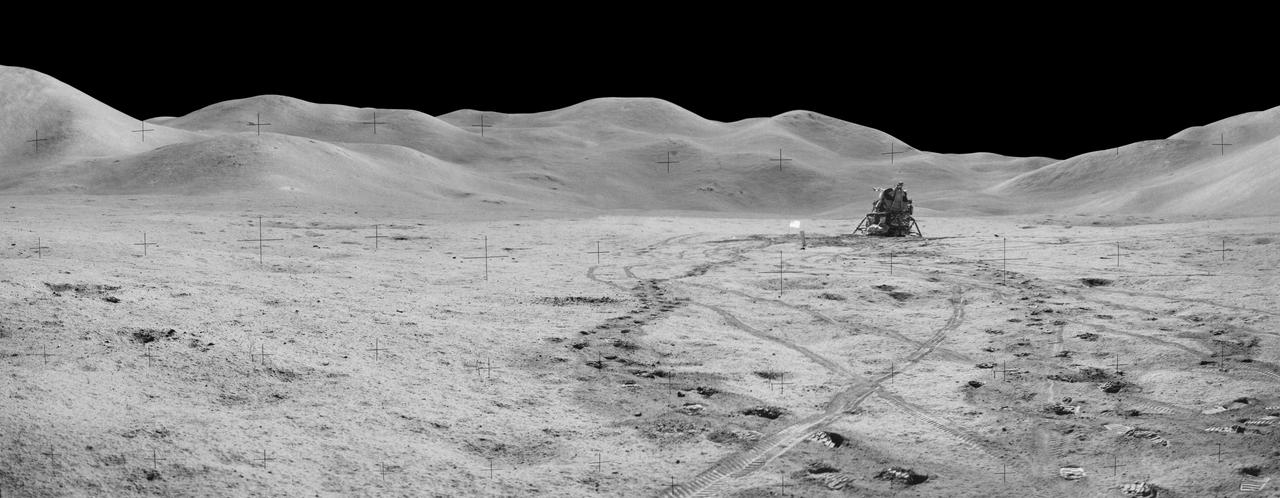
jsc2011e118360 - Panorama view of Station 8 and (Mons) Mt. Hadley taken during the third moonwalk of the Apollo 15 mission. The panoramas were built by combining Apollo 15 images starting with frame AS15-82-11054 thru end frame AS15-82-11058. The panoramic images received minimal retouching by NASA imagery specialists, including the removal of lens flares that were problematic in stitching together the individual frames and blacking out the sky to the lunar horizon. These adjustments were made based on observations of the Moon walkers who reported that there are no stars visible in the sky due to the bright lunar surface reflection of the Sun.

jsc2011e118361 - Panorama view of Apollo 15 lunar module pilot James B. Irwin, using a scoop in making a trench in the lunar soil during the second moonwalk of the mission. The panoramas were built by combining Apollo 15 images starting with frame AS15-92-12420 thru end frame AS15-92-12438. The panoramic images received minimal retouching by NASA imagery specialists, including the removal of lens flares that were problematic in stitching together the individual frames and blacking out the sky to the lunar horizon. These adjustments were made based on observations of the Moon walkers who reported that there are no stars visible in the sky due to the bright lunar surface reflection of the Sun.
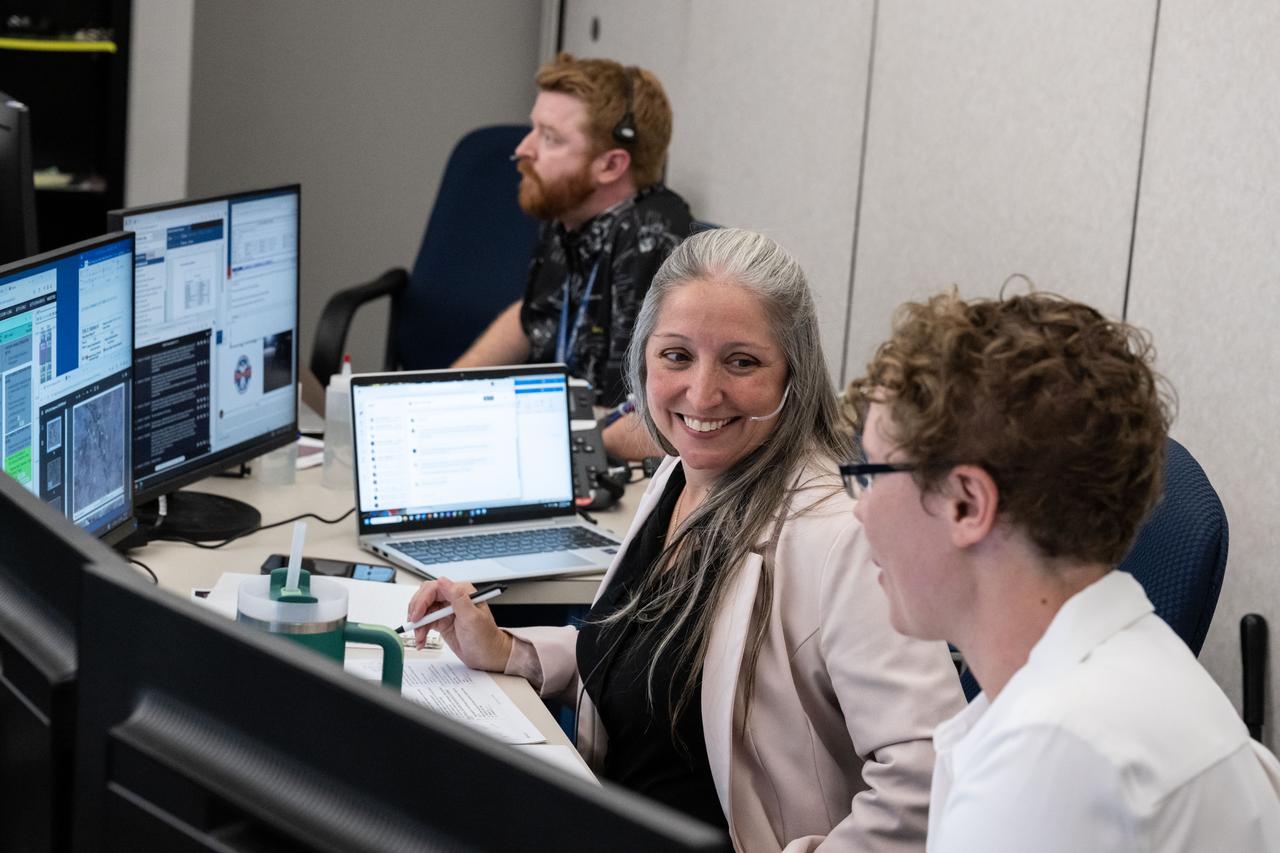
Extravehicular flight controller Jaclyn Kagey, left, and Tess Caswell work in the JETT 5 flight control room during the JETT 5 field test. JETT 5 was a week-long field test in the lunar-like landscape of San Francisco Volcanic Field near Flagstaff, Arizona while a team of flight controllers and scientists at Johnson monitor and guide their activities. Credit NASA/James Blair
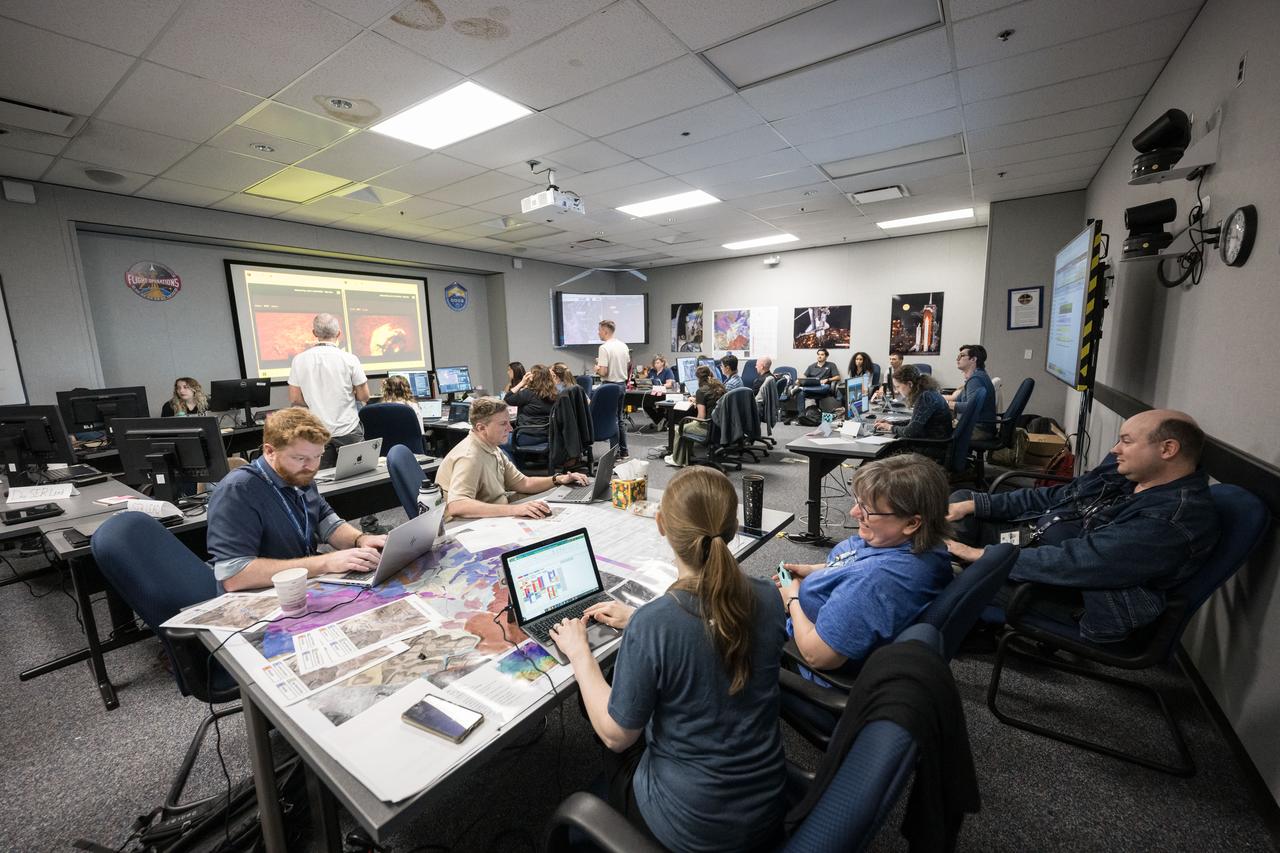
A large group of scientists work in the Science Evaluation Room (SER) at NASA’s Johnson Space Center in Houston during the JETT 5 field test. The SER is the science backroom to mission control during Artemis operations. JETT 5 was a week-long field test in the lunar-like landscape of San Francisco Volcanic Field near Flagstaff, Arizona while a team of flight controllers and scientists at Johnson monitor and guide their activities. Credit: NASA/Robert Markowitz
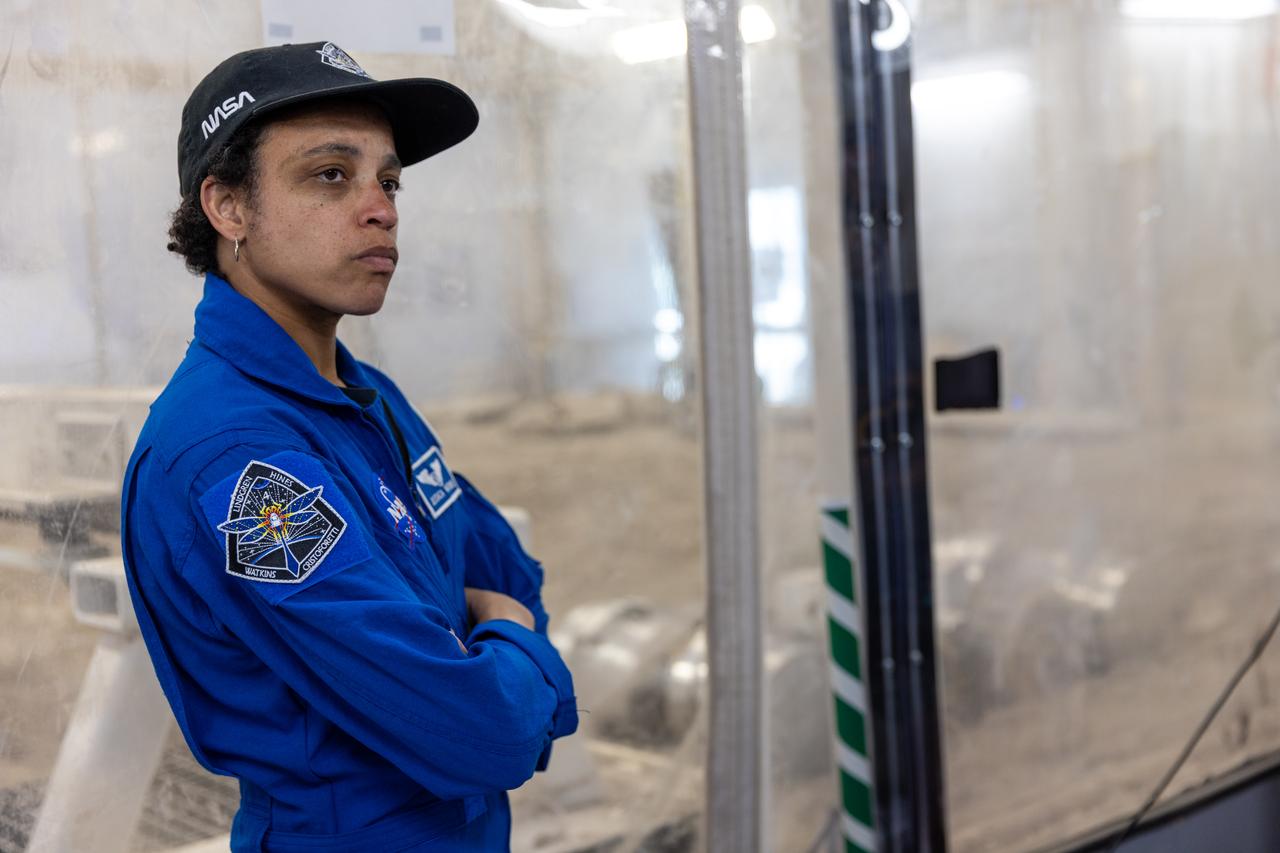
NASA astronaut Jessica Watkins visits the Granular Mechanics and Regolith Operations Laboratory inside Swamp Works at Kennedy Space Center in Florida on Wednesday, Aug. 27, 2025, to view some of the evolving technologies in development that astronauts may use to explore the Moon’s surface, prepare it for sustainable outposts, and to handle the dust that is collected during moonwalks.
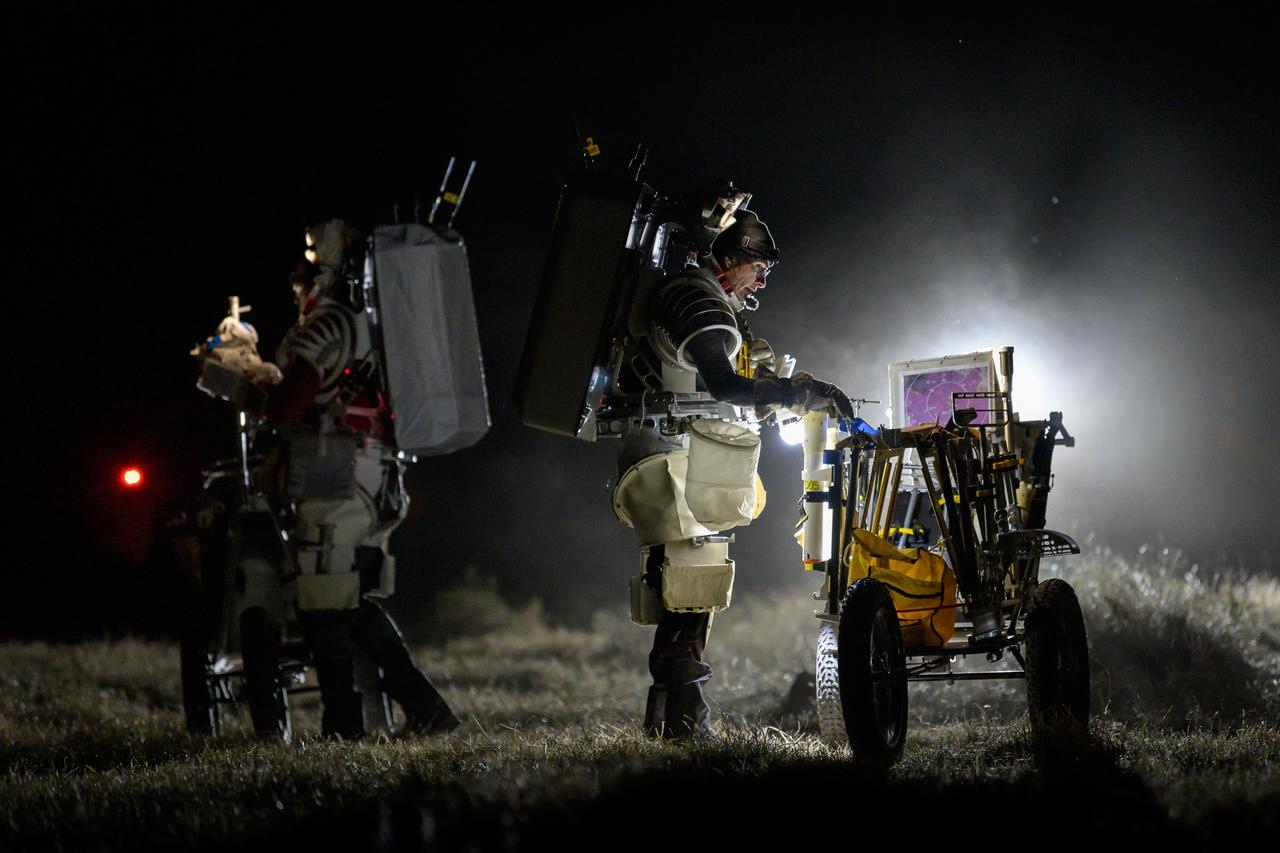
NASA astronaut Kate Rubins conducts a tool audit to ensure she has all of her tools while NASA astronaut Andre Douglas reviews procedures during a nighttime simulated moonwalk in the San Francisco Volcanic Field in Northern Arizona on May 16, 2024. Credit: NASA/Josh Valcarcel
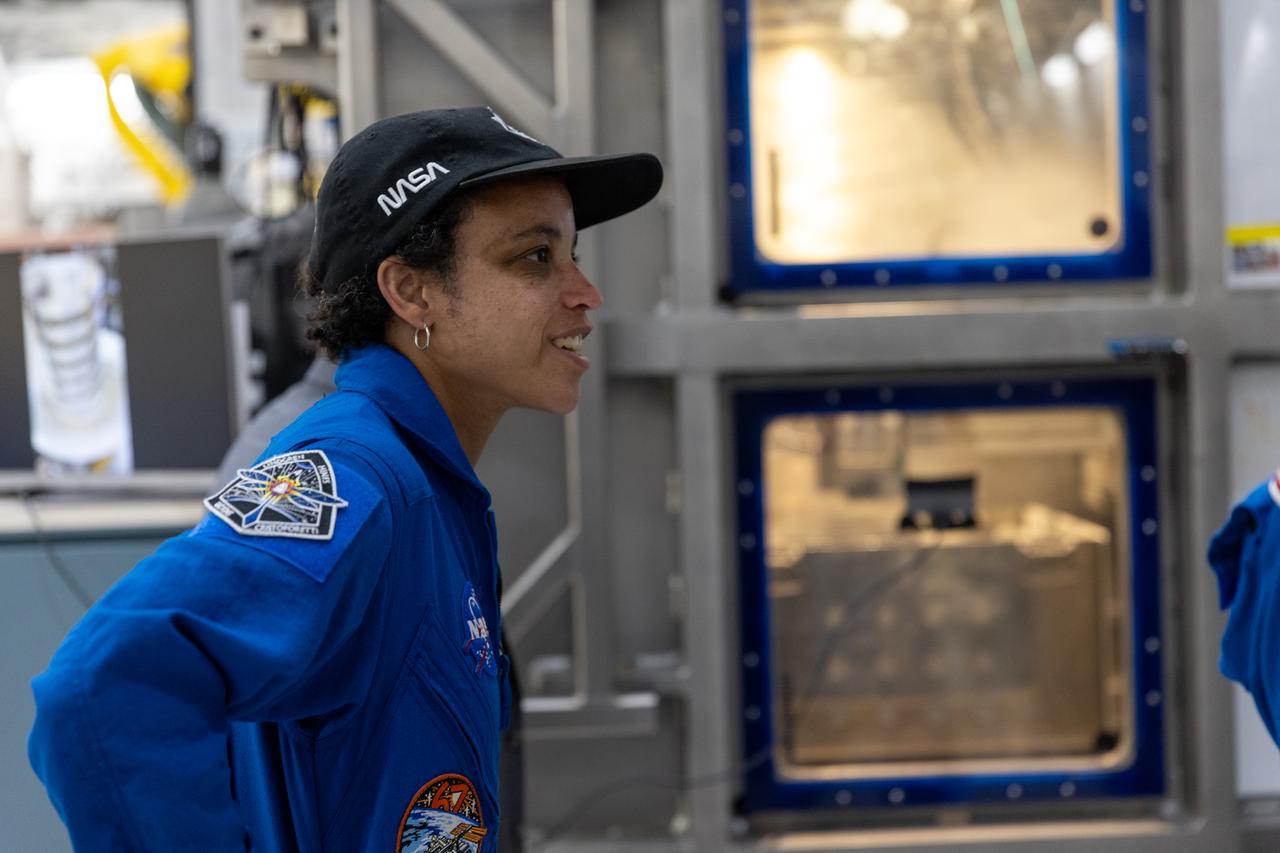
NASA astronaut Jessica Watkins visits the Granular Mechanics and Regolith Operations Laboratory inside Swamp Works at Kennedy Space Center in Florida on Wednesday, Aug. 27, 2025, to view some of the evolving technologies in development that astronauts may use to explore the Moon’s surface, prepare it for sustainable outposts, and to handle the dust that is collected during moonwalks.
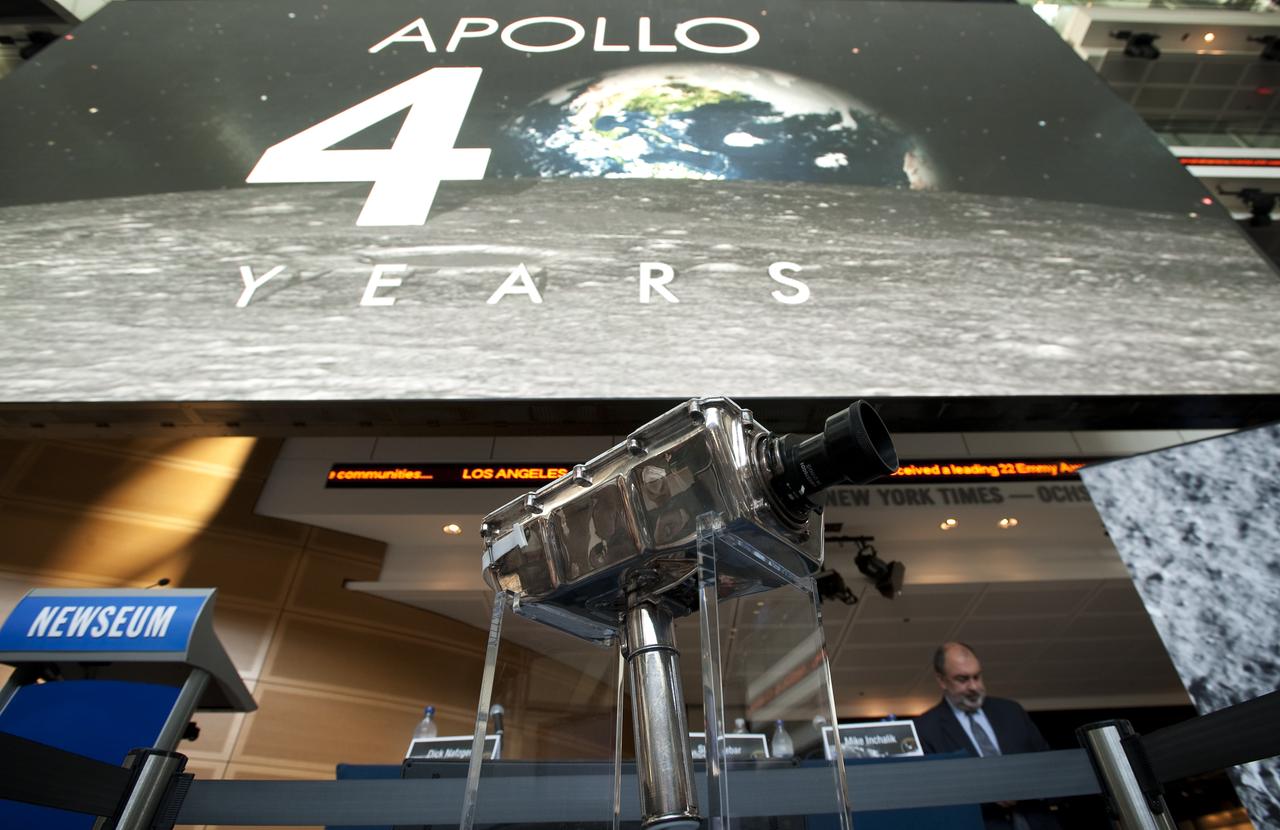
An Apollo TV camera from the National Electronic Museum in Baltimore, Maryland is on display for NASA's briefing to release restored Apollo 11 moonwalk footage at the Newseum, Thursday, July 16, 2009, in Washington, DC. Photo Credit: (NASA/Bill Ingalls)
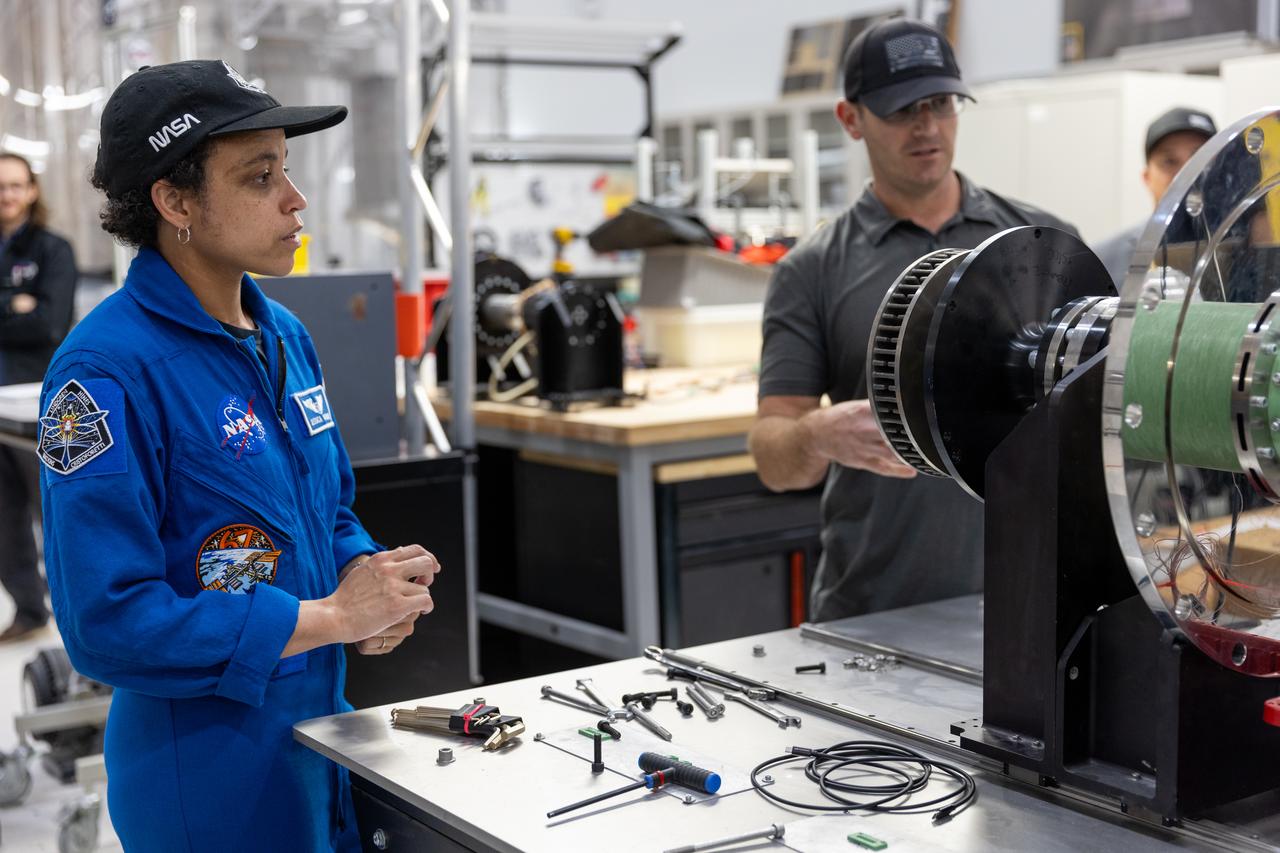
NASA astronaut Jessica Watkins visits the Granular Mechanics and Regolith Operations Laboratory inside Swamp Works at Kennedy Space Center in Florida on Wednesday, Aug. 27, 2025, to view some of the evolving technologies in development that astronauts may use to explore the Moon’s surface, prepare it for sustainable outposts, and to handle the dust that is collected during moonwalks.
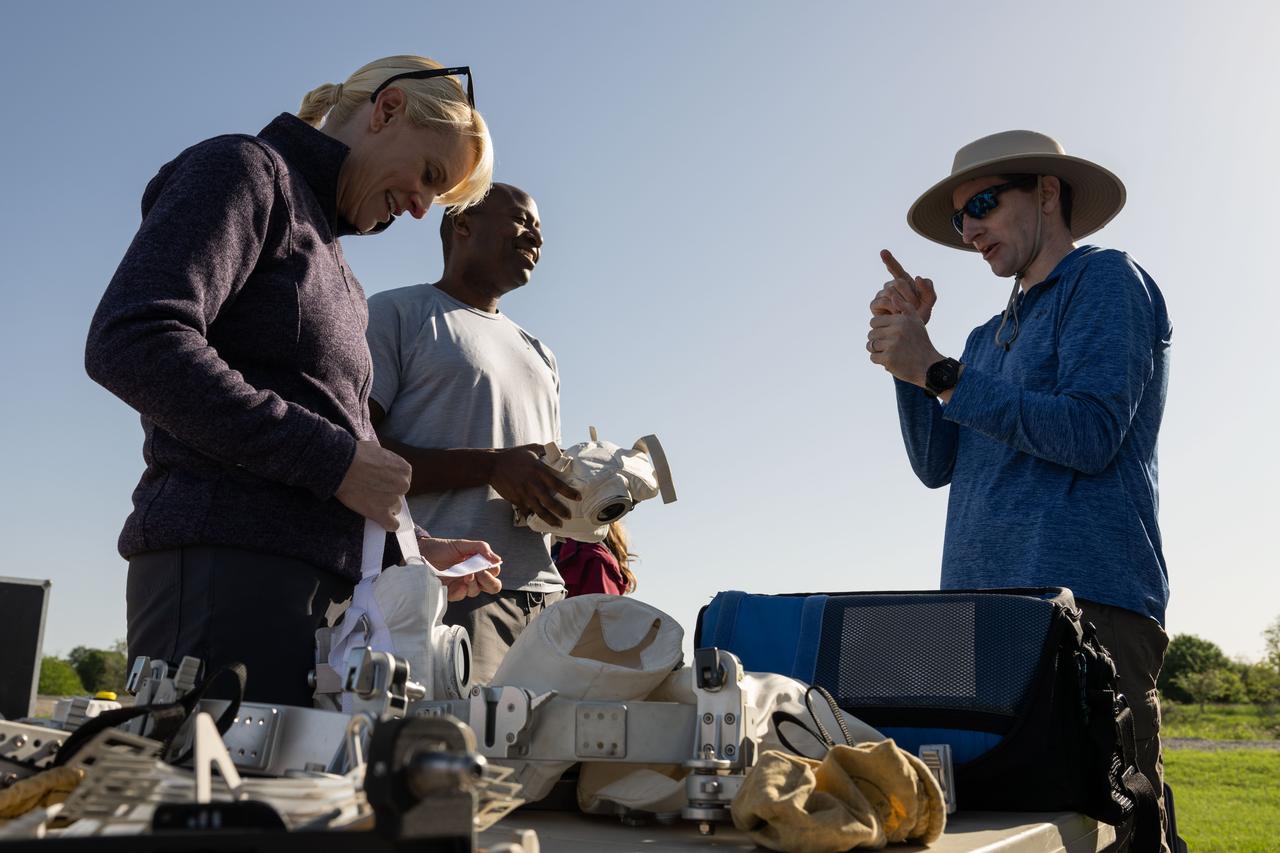
Paul Reichert, astronaut technical imaging instructor, shows NASA astronauts Kate Rubins and Andre Douglas how to use the Handheld Universal Lunar Camera before a simulated moonwalk at NASA’s Johnson Space Center on March 26, 2024. Credits: NASA / Josh Valcarcel
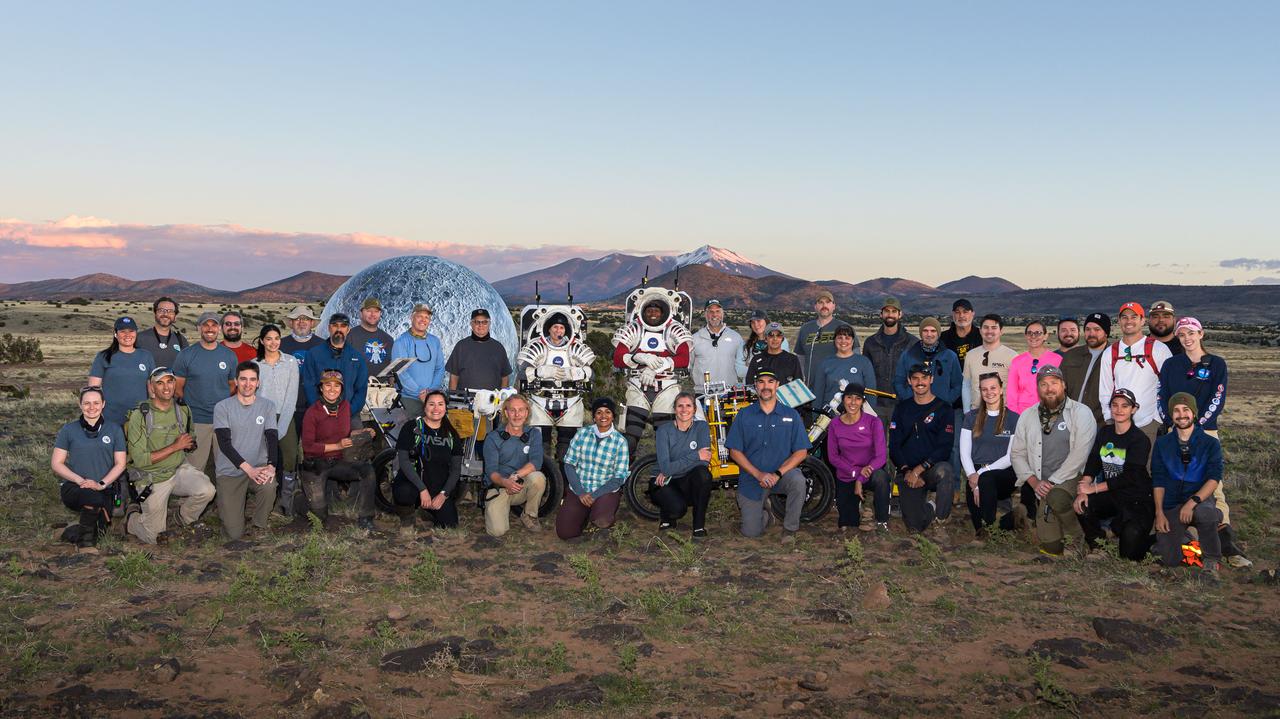
6. The Joint Extravehicular Activity and Human Surface Mobility Test Team poses for a group photo in Northern Arizona after a week-long field test consisting of four simulated moonwalks and six advanced technology runs. Credit: NASA/Josh Valcarcel
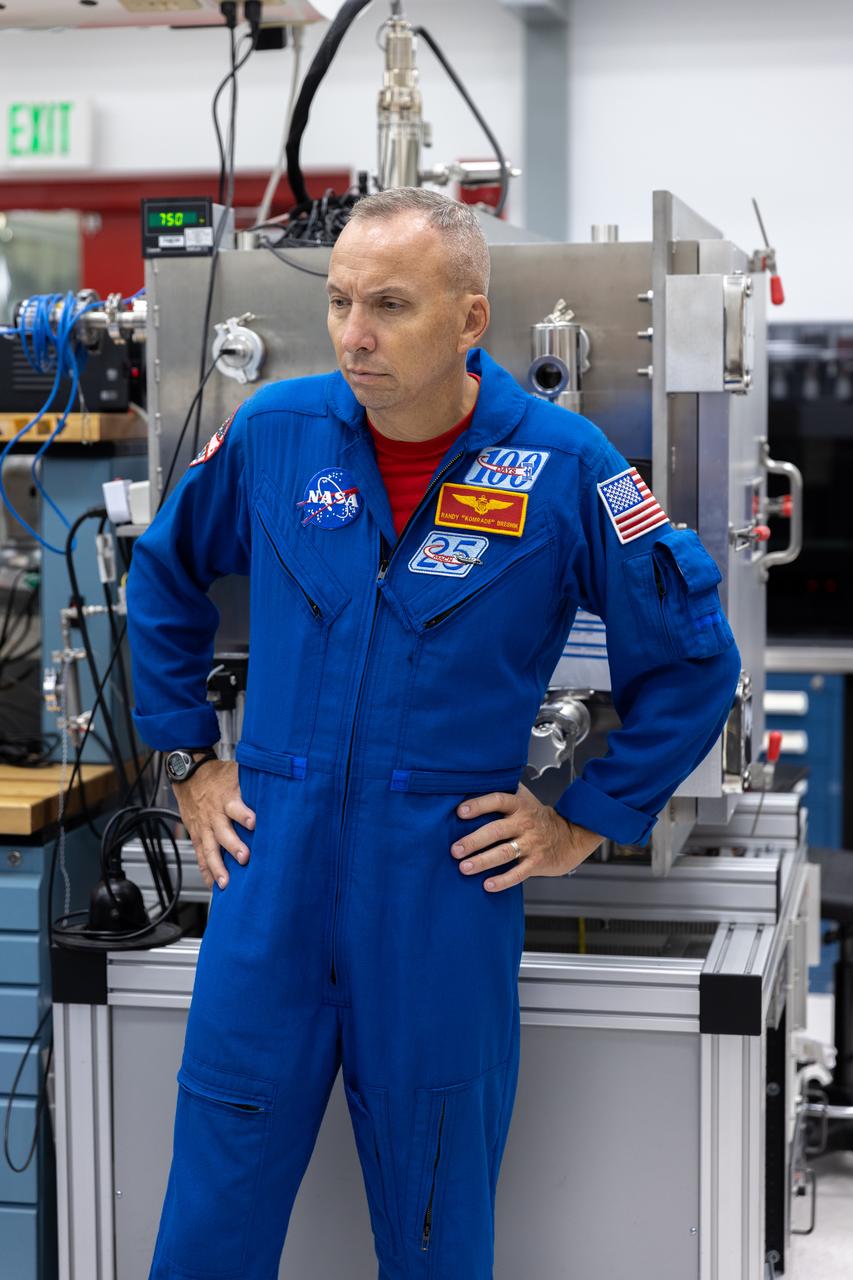
NASA astronaut Randy Bresnik visits the Granular Mechanics and Regolith Operations Laboratory inside Swamp Works at Kennedy Space Center in Florida on Wednesday, Aug. 27, 2025, to view some of the evolving technologies in development that astronauts may use to explore the Moon’s surface, prepare it for sustainable outposts, and to handle the dust that is collected during moonwalks.
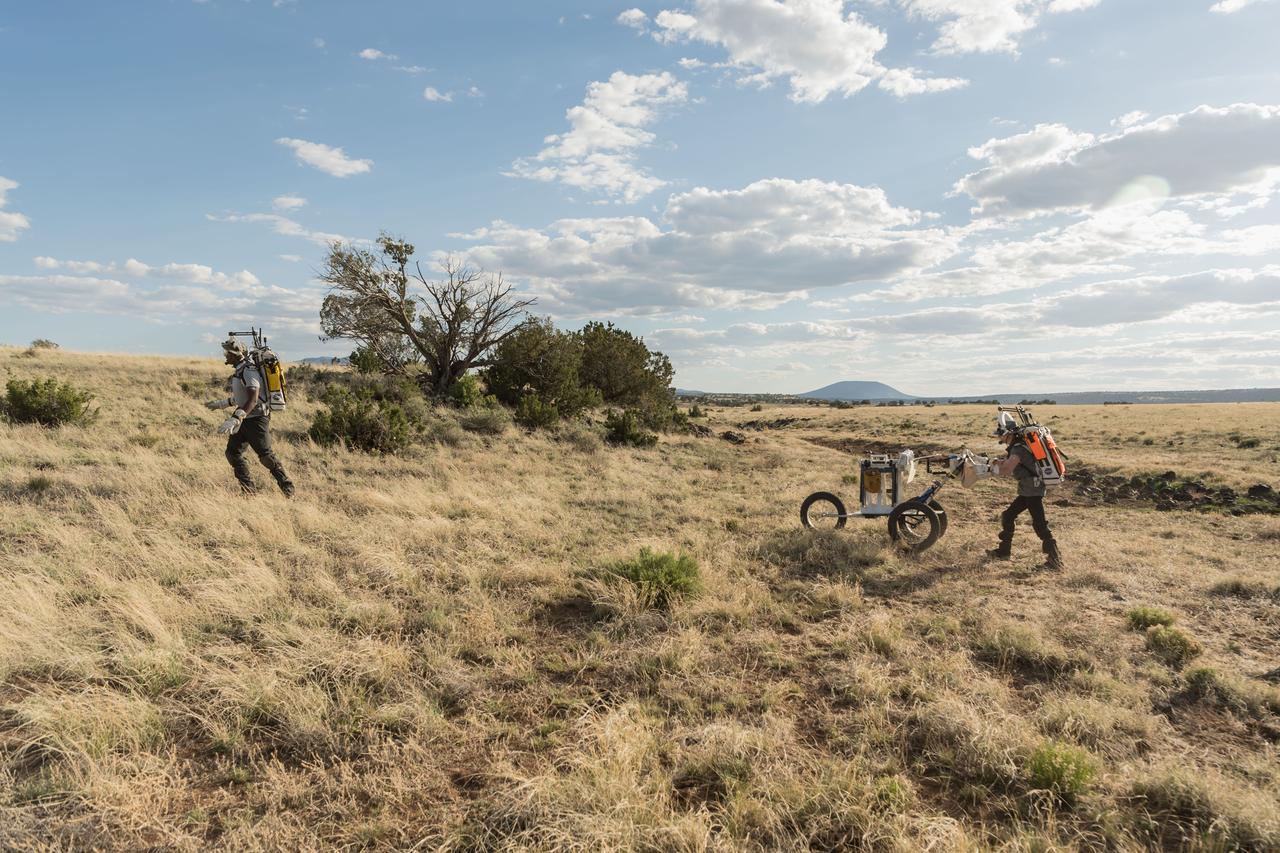
NASA astronaut Andre Douglas leads the way while NASA astronaut Kate Rubins follows behind with a lunar tool cart during a simulated moonwalk in the San Francisco Volcanic Field in Northern Arizona on May 17, 2024. Credit: NASA/Josh Valcarcel
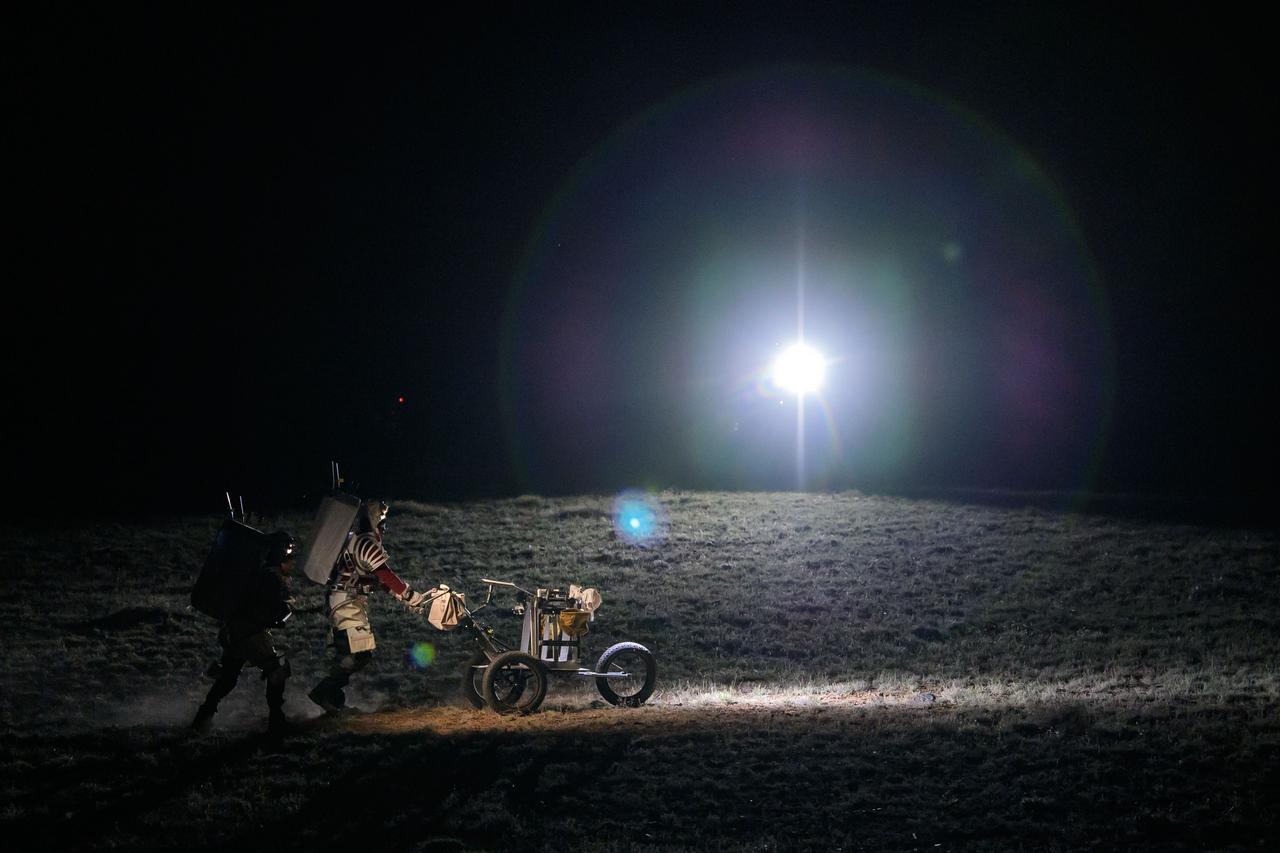
NASA astronaut Andre Douglas pushes a tool cart across the lunar-like landscape while NASA astronaut Kate Rubins follows close behind during a¬¬ nighttime simulated moonwalk in the San Francisco Volcanic Field in Northern Arizona on May 16, 2024. Credit: NASA/Josh Valcarcel

NASA astronaut Andre Douglas uses a hammer to chip off a small rock sample to test equipment before the start of a week-long analog consisting of four simulated moonwalks and six advanced technology runs in the San Francisco Volcanic Field in Northern Arizona on May 12, 2024. Credit: NASA/Josh Valcarcel
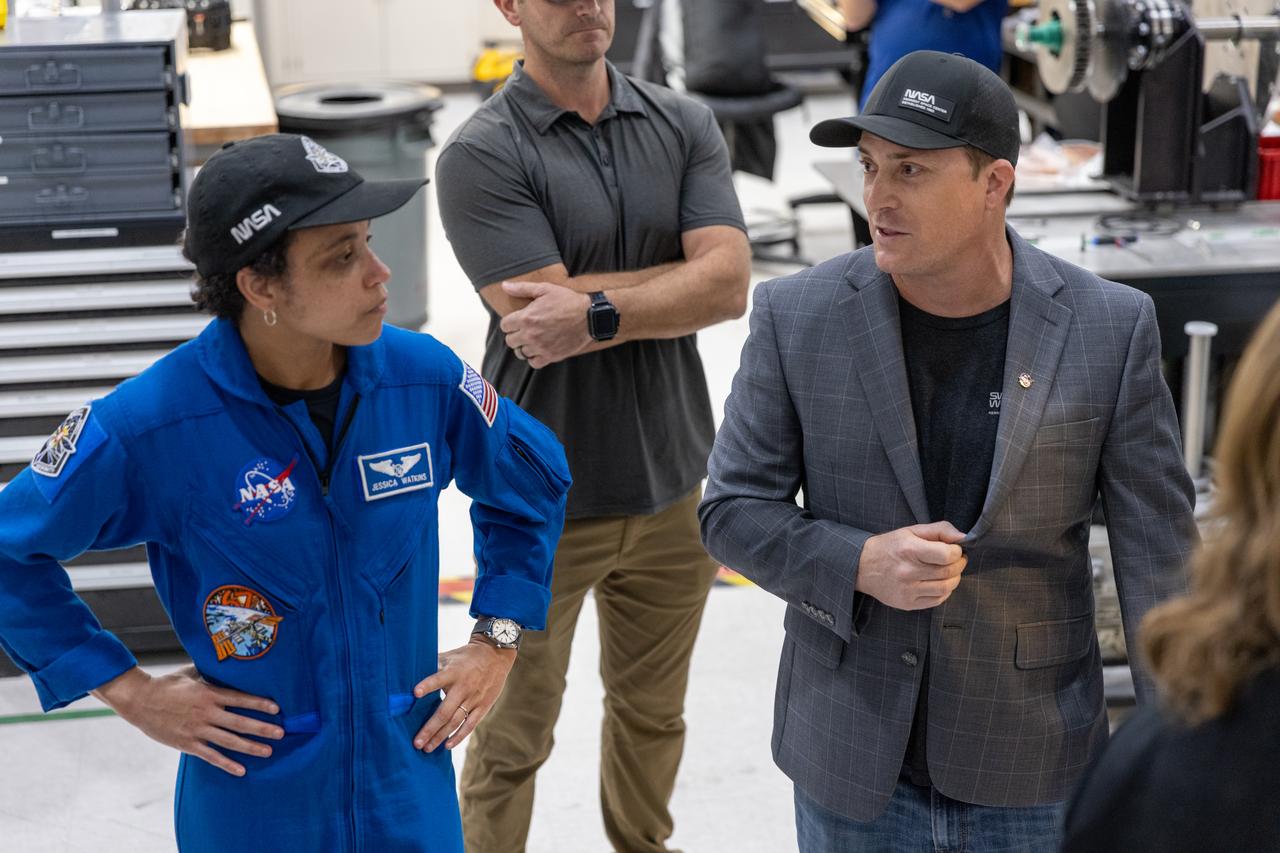
NASA astronaut Jessica Watkins visits the Granular Mechanics and Regolith Operations Laboratory inside Swamp Works at Kennedy Space Center in Florida on Wednesday, Aug. 27, 2025, to view some of the evolving technologies in development that astronauts may use to explore the Moon’s surface, prepare it for sustainable outposts, and to handle the dust that is collected during moonwalks.
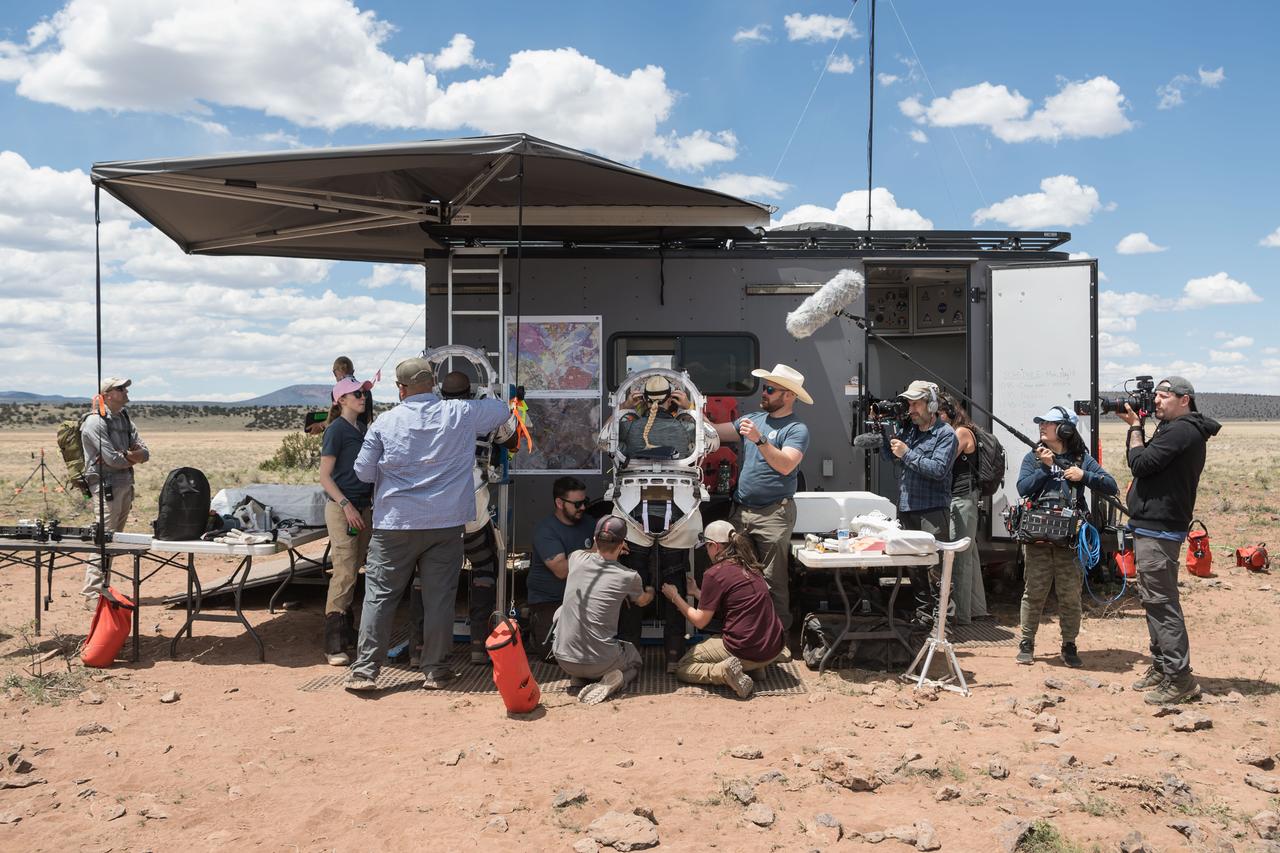
NASA engineering teams help NASA astronauts Andre Douglas (left) and Kate Rubins (right) get into their unpressurized mockup spacesuits before they perform the first of four simulated moonwalks north of Flagstaff, Arizona on May 13, 2024. Credit: NASA/Josh Valcarcel
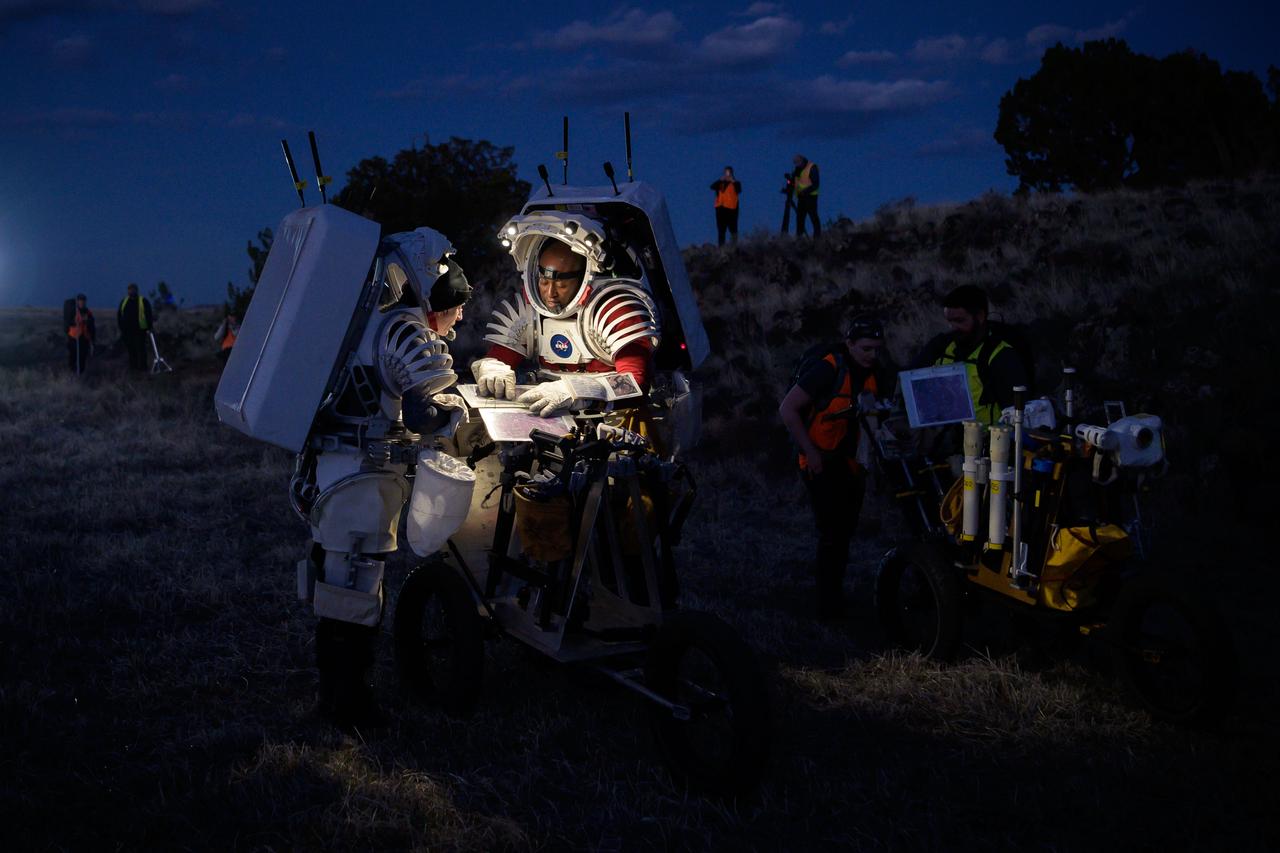
NASA astronauts Kate Rubins, left, and Andre Douglas look at a map that shows their traverse route during a nighttime simulated moonwalk in the San Francisco Volcanic Field in Northern Arizona on May 16, 2024. Credit: NASA/Josh Valcarcel
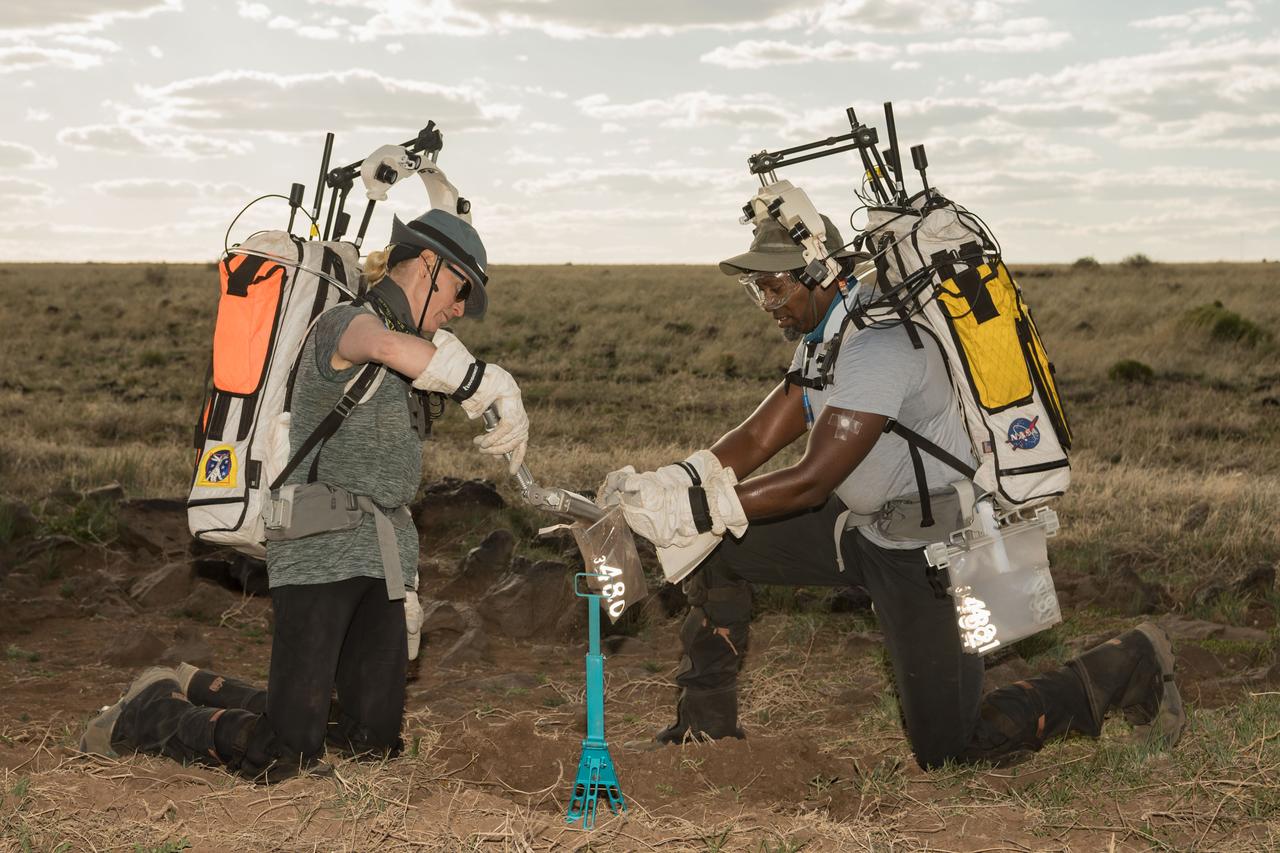
NASA astronaut Andre Douglas holds open a sample bag for NASA astronaut Kate Rubins as she pours some geology samples into it during a simulated moonwalk in the San Francisco Volcanic Field in Northern Arizona on May 17, 2024. Credit: NASA/Josh Valcarcel
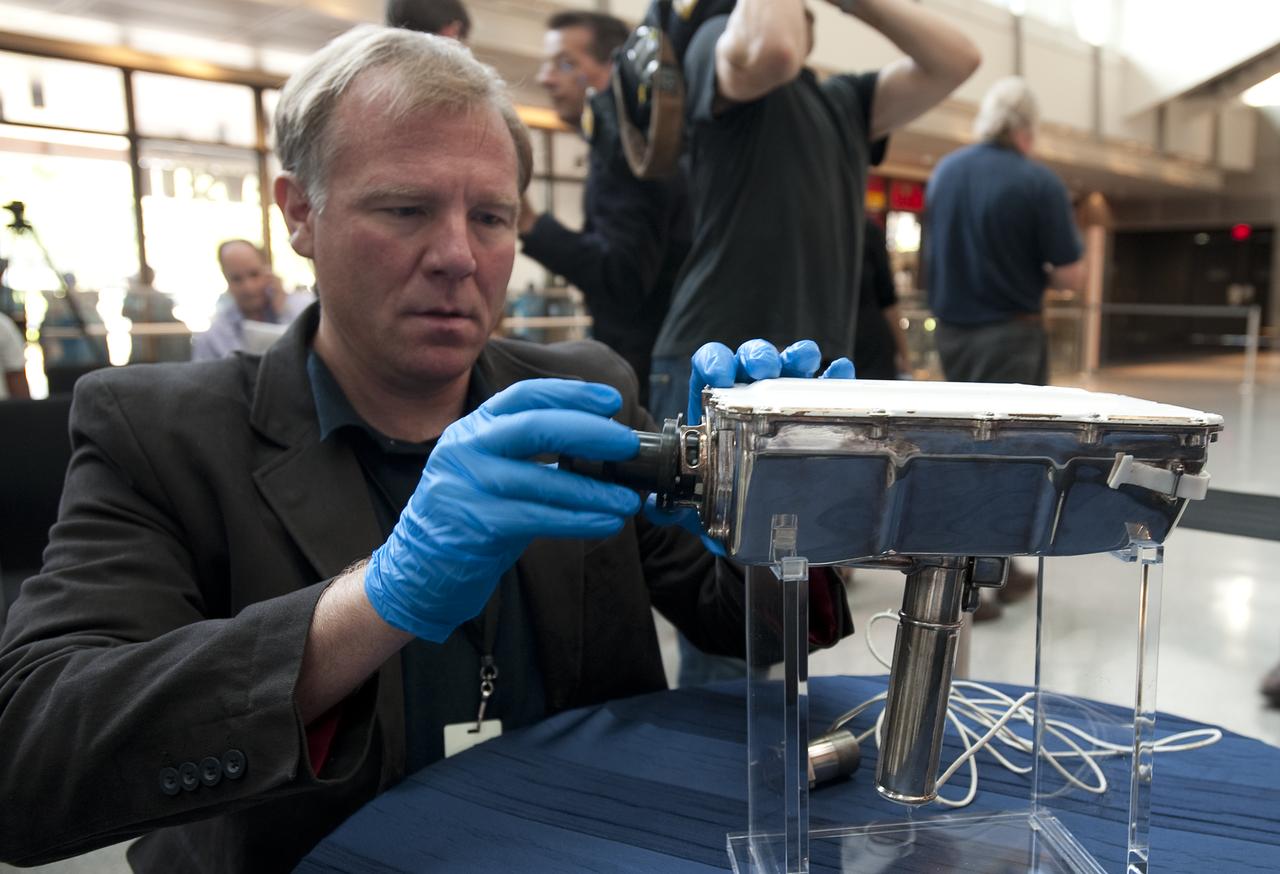
Mike Simons, Director of the National Electronic Museum in Baltimore, Maryland assembles an Apollo TV camera for display prior to NASA's briefing to release restored Apollo 11 moonwalk footage at the Newseum, Thursday, July 16, 2009, in Washington, DC. Photo Credit: (NASA/Bill Ingalls)
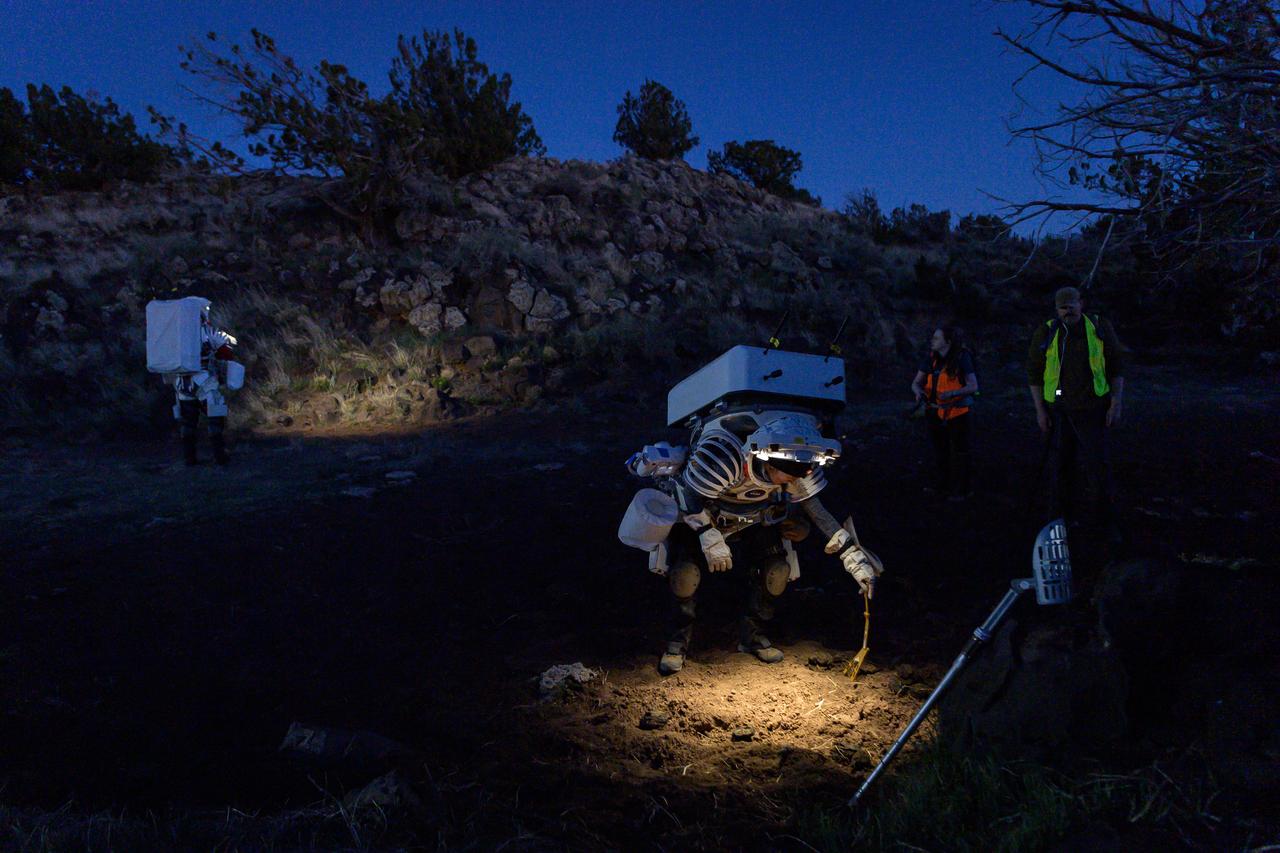
NASA astronaut Kate Rubins places a sample marker in the soil before collecting a sample during a nighttime simulated moonwalk in the San Francisco Volcanic Field in Northern Arizona on May 16, 2024. A sample marker provides a photographic reference point for science samples collected on the lunar surface. Credit: NASA/Josh Valcarcel
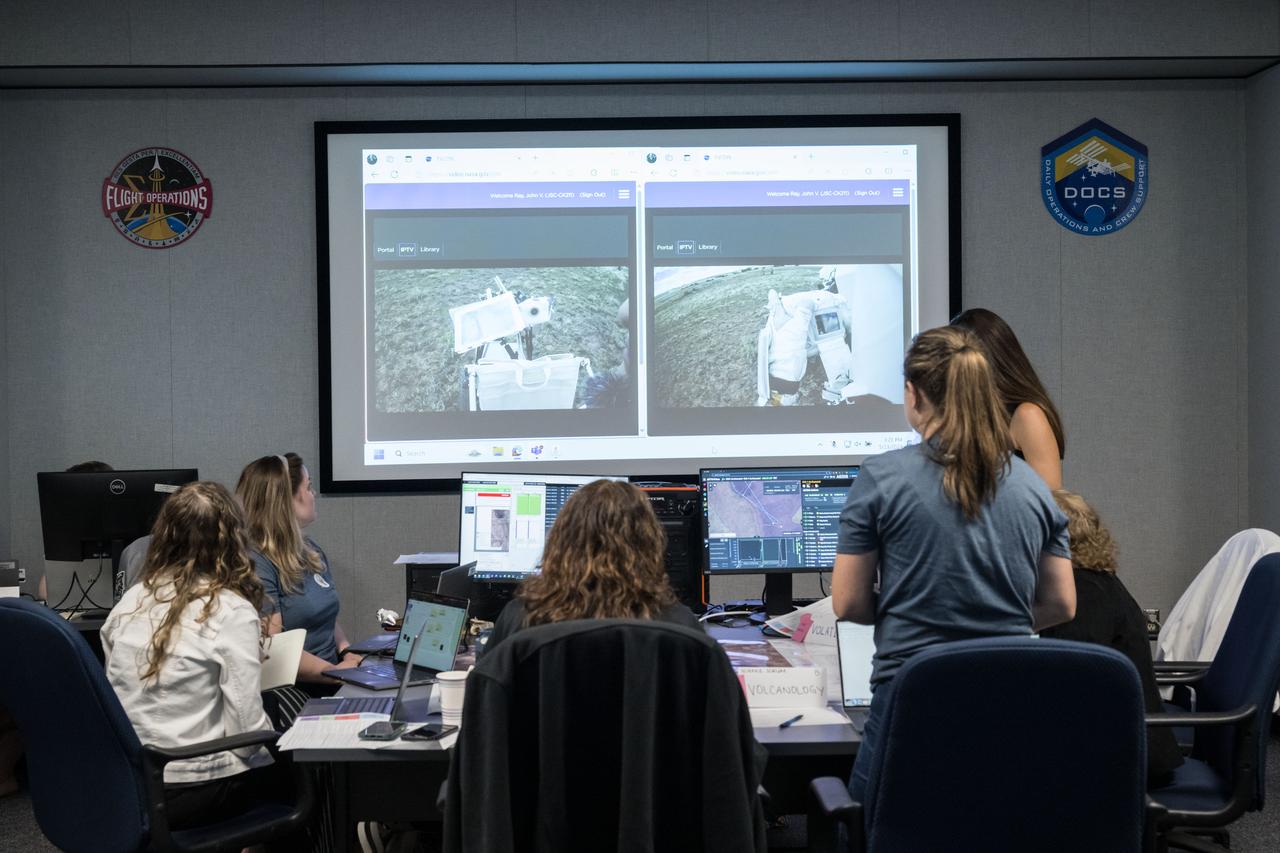
A team of scientists gathered around a table watch video feeds from the cameras worn by NASA astronauts Kate Rubins and Andre Douglas as they performed test moonwalks in the northern Arizona desert while science and flight control teams guided their activities from NASA’s Johnson Space Center in Houston. Credit: NASA/Robert Markowitz
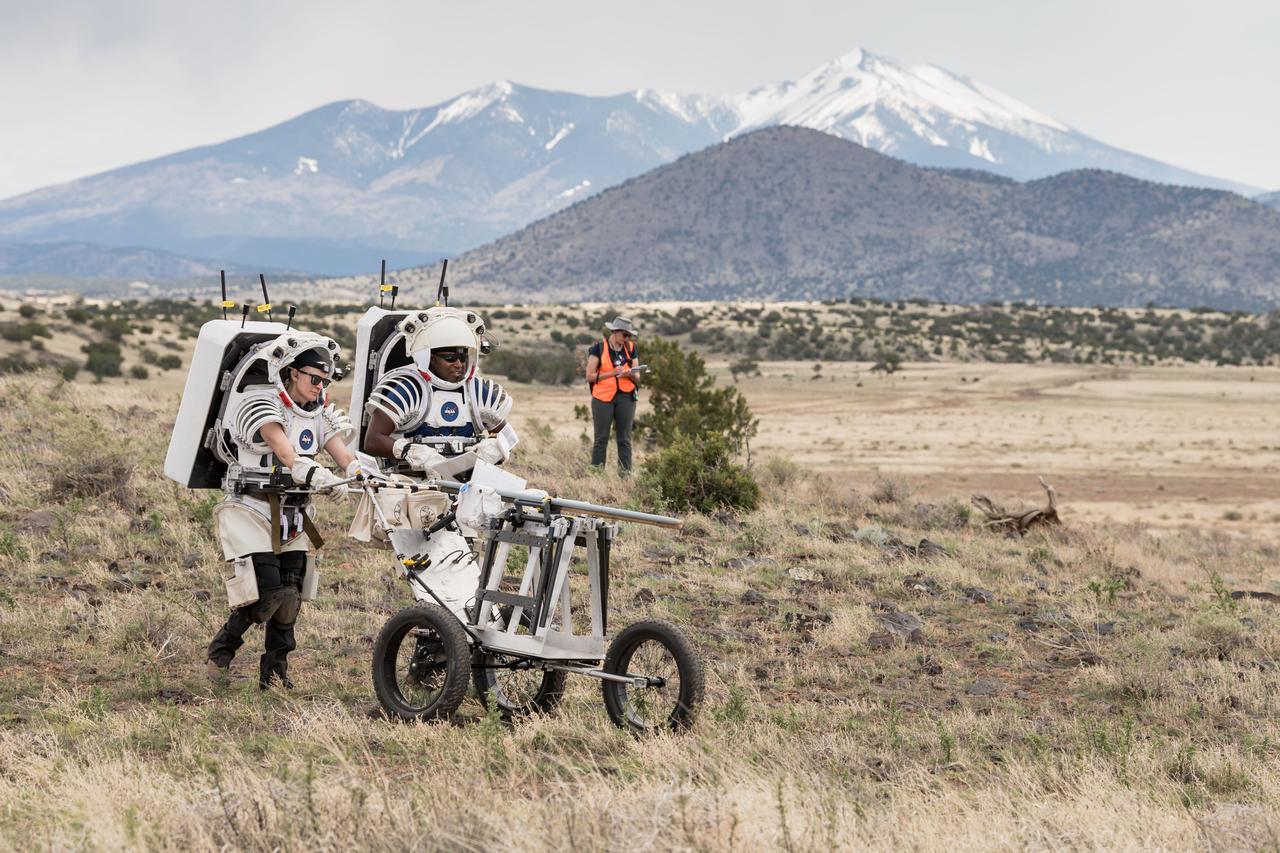
NASA astronauts Kate Rubins and Andre Douglas push a tool cart loaded with lunar tools through the San Francisco Volcanic Field north of Flagstaff, Arizona, as they practice moonwalking operations for Artemis III on May 13, 2024. Credit: NASA/Josh Valcarcel
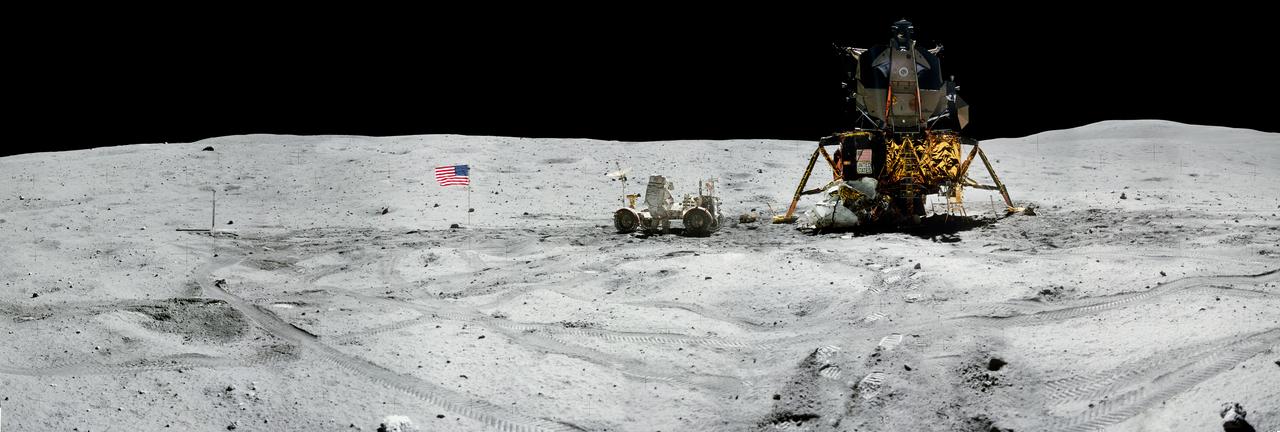
jsc2011e118363 - Panorama view of Apollo 16 commander Astronaut John W. Young, working at the Lunar Roving Vehicle (LRV) just prior to deployment of the Apollo Lunar Surface Experiments Package (ALSEP) during the first moonwalk of the mission on April 21, 1972. The panoramas were built by combining Apollo 16 images starting with frame AS16-116-18573 thru end frame AS16-116-18581. The panoramic images received minimal retouching by NASA imagery specialists, including the removal of lens flares that were problematic in stitching together the individual frames and blacking out the sky to the lunar horizon. These adjustments were made based on observations of the Moon walkers who reported that there are no stars visible in the sky due to the bright lunar surface reflection of the Sun.

jsc2004e20304 - Panorama view of Apollo 17 lunar surface photos for Station 5 at the Taurus-Littrow landing site taken during the second moonwalk of the mission by Apollo 17 commander Eugene Cernan and lunar module pilot Harrison (Jack) Schmitt. The panoramas were built by combining Apollo 17 images starting with frame AS17-145-22159 through end frame AS17-145-22181. The panoramic images received minimal retouching by NASA imagery specialists, including the removal of lens flares that were problematic in stitching together the individual frames and blacking out the sky to the lunar horizon. These adjustments were made based on observations of the Moon walkers who reported that there are no stars visible in the sky due to the bright lunar surface reflection of the Sun.

jsc2004e52779 - Panorama view of Apollo 17 lunar surface photos for Station 6 taken during the third moonwalk of the mission by Apollo 17 commander Eugene Cernan and lunar module pilot Harrison (Jack) Schmitt. The panoramas were built by combining Apollo 17 images starting with frame AS17-141-21575 through end frame AS17-141-21603. The panoramic images received minimal retouching by NASA imagery specialists, including the removal of lens flares that were problematic in stitching together the individual frames and blacking out the sky to the lunar horizon. These adjustments were made based on observations of the Moon walkers who reported that there are no stars visible in the sky due to the bright lunar surface reflection of the Sun.
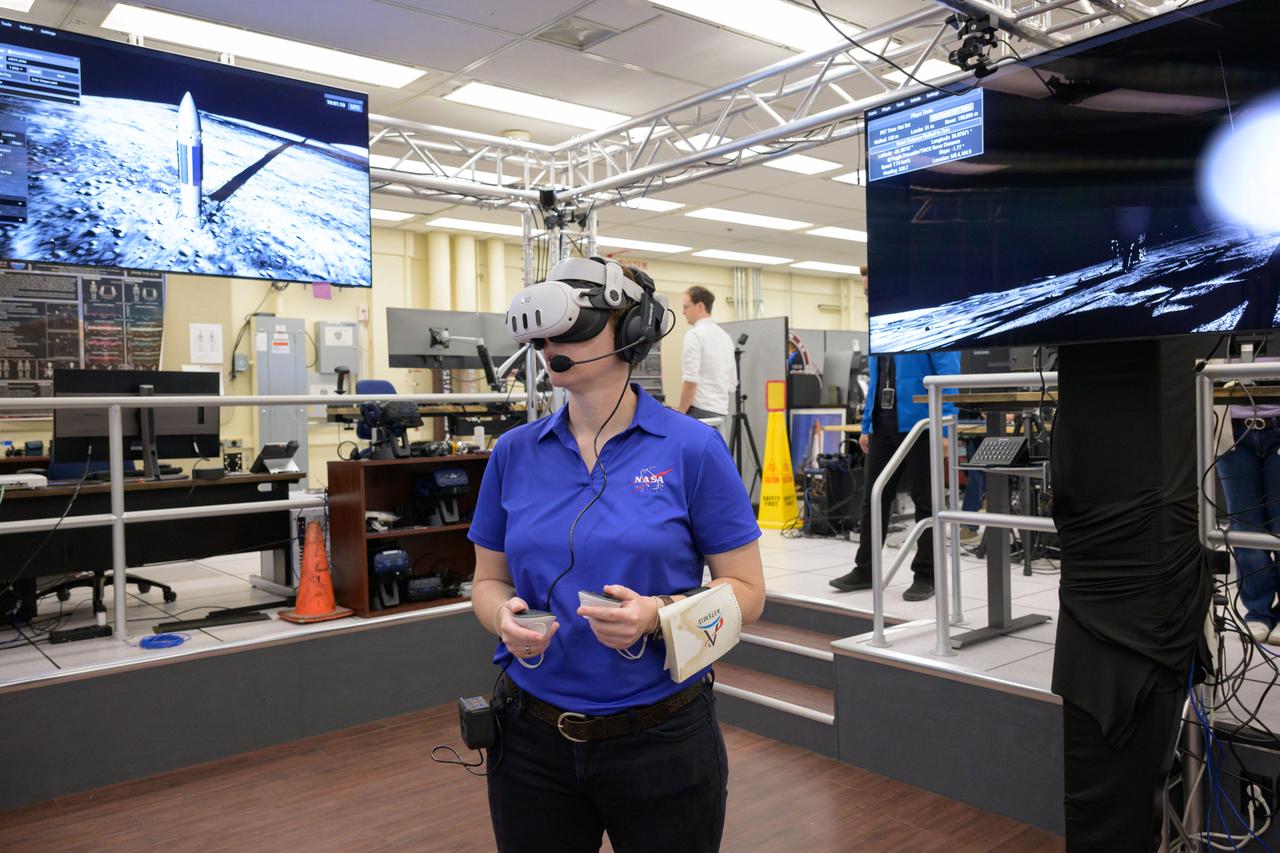
jsc2024e076628 – Tess Caswell, a crew stand-in for the Artemis III Virtual Reality Mini-Simulation, executes a moonwalk in the Prototype Immersive Technology (PIT) lab at NASA’s Johnson Space Center in Houston. The simulation was a test of using VR as a training method for flight controllers and science teams’ collaboration on science-focused traverses on the lunar surface. Credit: NASA/Robert Markowitz
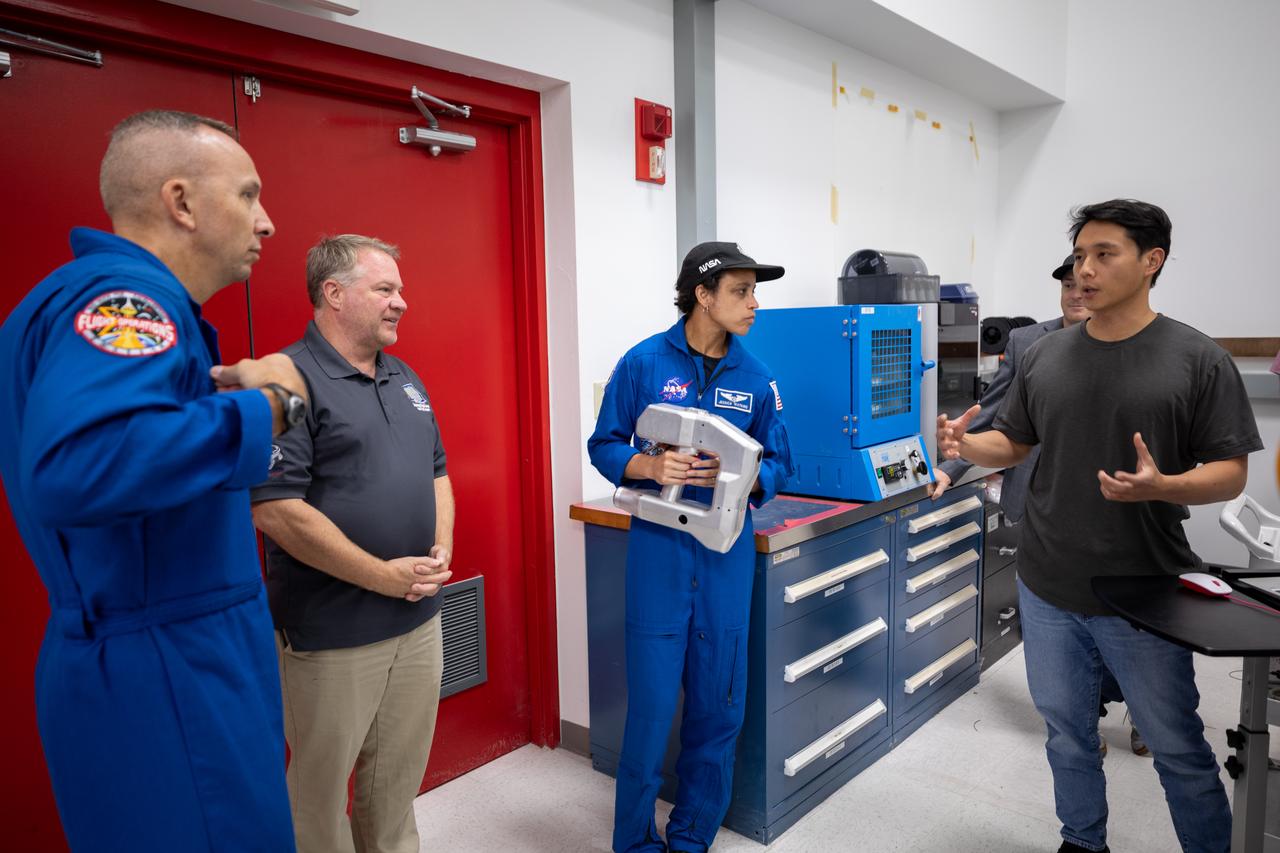
NASA astronauts Randy Bresnik (far left) and Jessica Watkins (center) visit the Granular Mechanics and Regolith Operations Laboratory inside Swamp Works at Kennedy Space Center in Florida on Wednesday, Aug. 27, 2025, to view some of the evolving technologies in development that NASA astronauts may use to explore the Moon’s surface, prepare it for sustainable outposts, and to handle the dust that is collected during moonwalks. Watkins holds an instrument designed to help astronauts electromagnetically remove accumulated lunar dust.
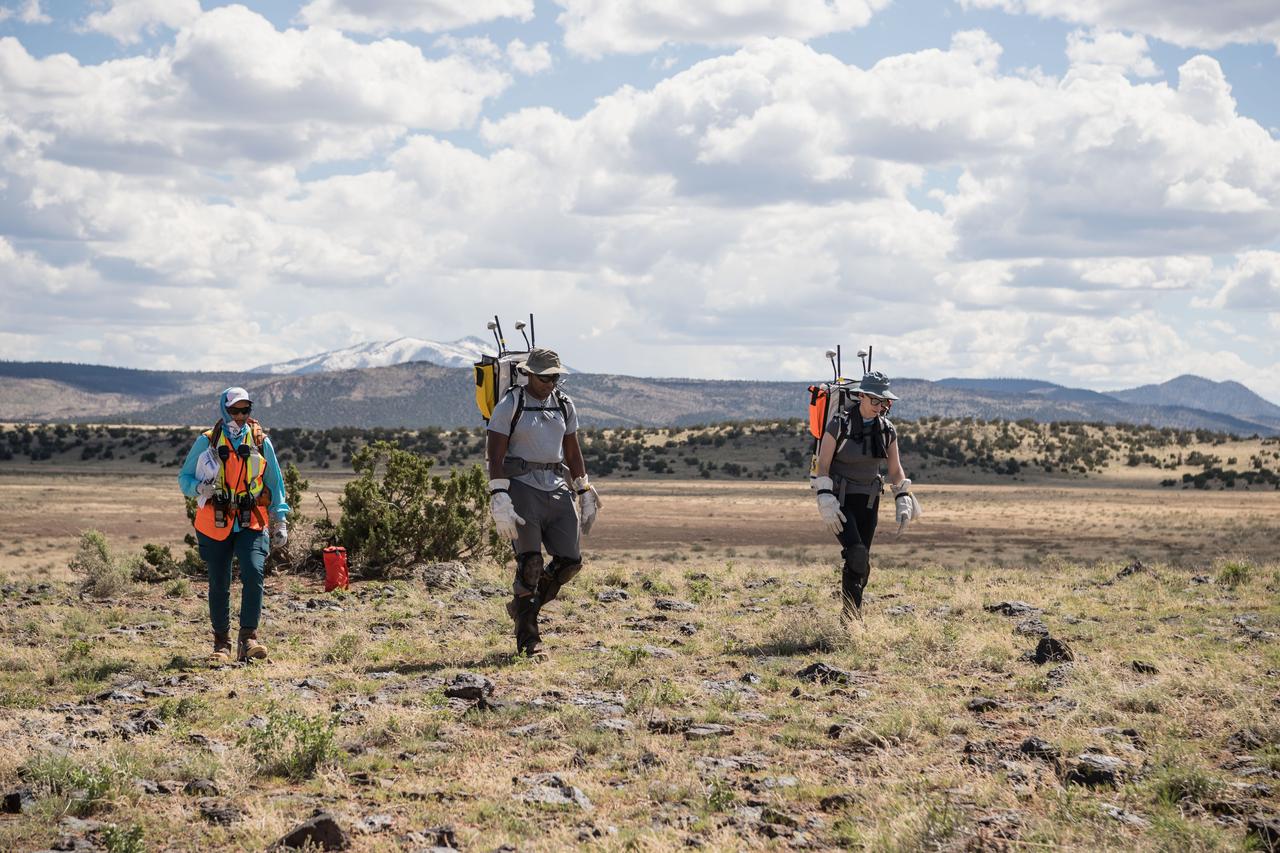
NASA astronauts Andre Douglas (middle) and Kate Rubins (right) walk through the desert during an engineering dry run before the start of a week-long field test consisting of four simulated moonwalks and six advanced technology runs in the San Francisco Volcanic Field in Northern Arizona on May 12, 2024. Image: NASA/Josh Valcarcel

NASA astronauts Randy Bresnik (left) and Jessica Watkins (center) visit the Granular Mechanics and Regolith Operations Laboratory inside Swamp Works at Kennedy Space Center in Florida on Wednesday, Aug. 27, 2025, to view some of the evolving technologies in development that astronauts may use to explore the Moon’s surface, prepare it for sustainable outposts, and to handle the dust that is collected during moonwalks.
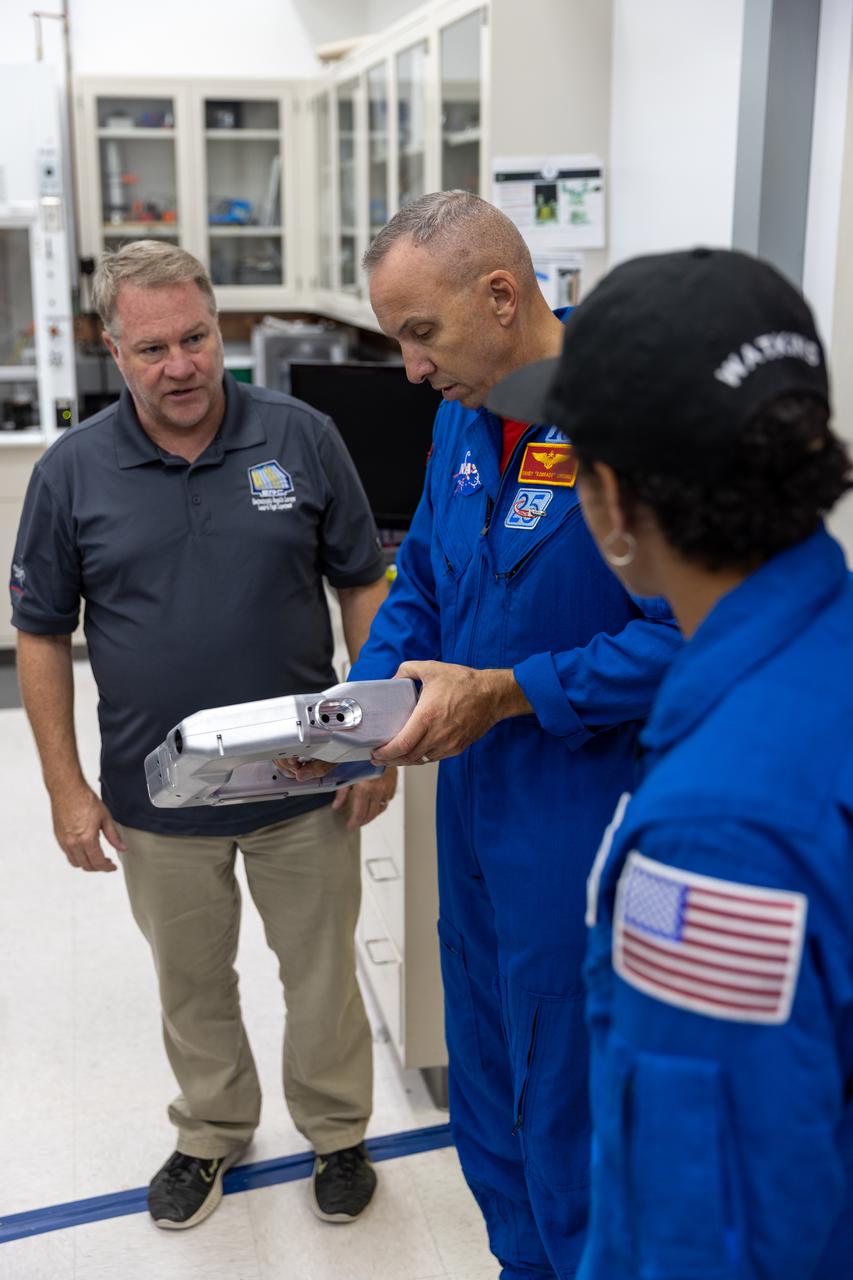
NASA astronauts Randy Bresnik (center) and Jessica Watkins (right) visit the Granular Mechanics and Regolith Operations Laboratory inside Swamp Works at Kennedy Space Center in Florida on Wednesday, Aug. 27, 2025, to view some of the evolving technologies in development that astronauts may use to explore the Moon’s surface, prepare it for sustainable outposts, and to handle the dust that is collected during moonwalks. Bresnick holds an instrument designed to help astronauts electromagnetically remove accumulated lunar dust.

EDWARDS AIR FORCE BASE, Calif. – Disney’s space ranger Buzz Lightyear returned from space on Sept. 11 aboard space shuttle Discovery’s STS-128 mission after 15 months aboard the International Space Station. His time on the orbiting laboratory will be celebrated in a ticker-tape parade together with his space station crewmates and former Apollo 11 moonwalker Buzz Aldrin on Oct. 2 at Walt Disney World in Florida.
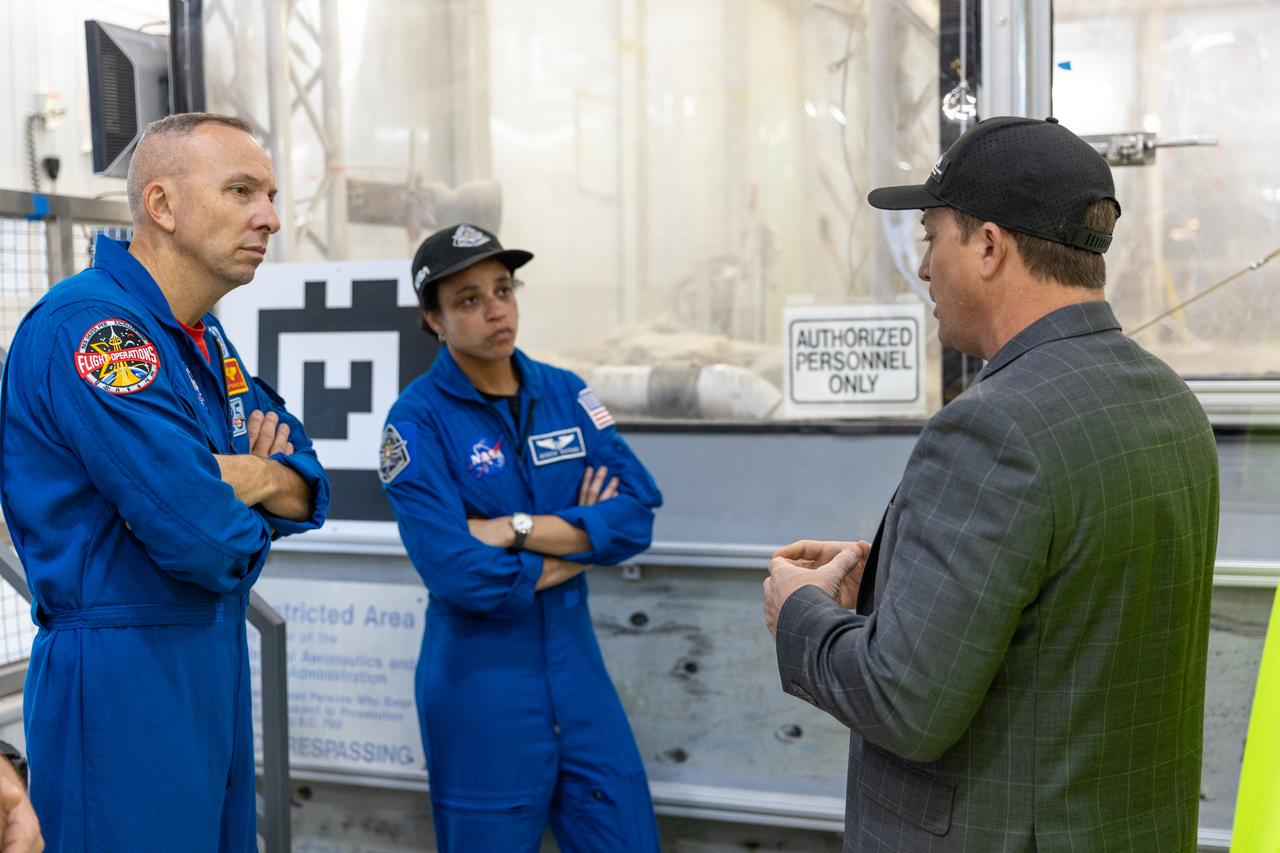
NASA astronauts Randy Bresnik (left) and Jessica Watkins (center) visit the Granular Mechanics and Regolith Operations Laboratory inside Swamp Works at Kennedy Space Center in Florida on Wednesday, Aug. 27, 2025, to view some of the evolving technologies in development that astronauts may use to explore the Moon’s surface, prepare it for sustainable outposts, and to handle the dust that is collected during moonwalks.
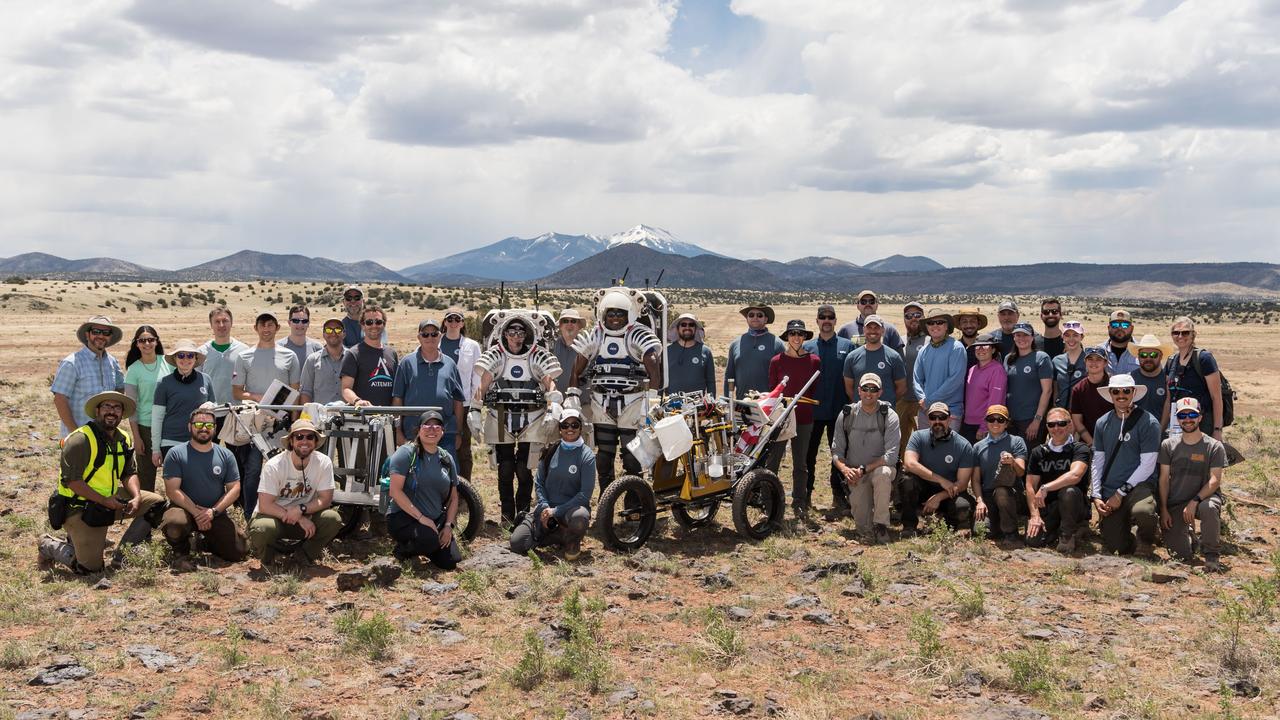
The Joint Extravehicular Activity and Human Surface Mobility Test Team and NASA astronauts Kate Rubins and Andre Douglas before the start of a week-long field test consisting of four simulated moonwalks and six advanced technology runs in the San Francisco Volcanic Field in Northern Arizona on May 13, 2024. Credit: NASA/Josh Valcarcel
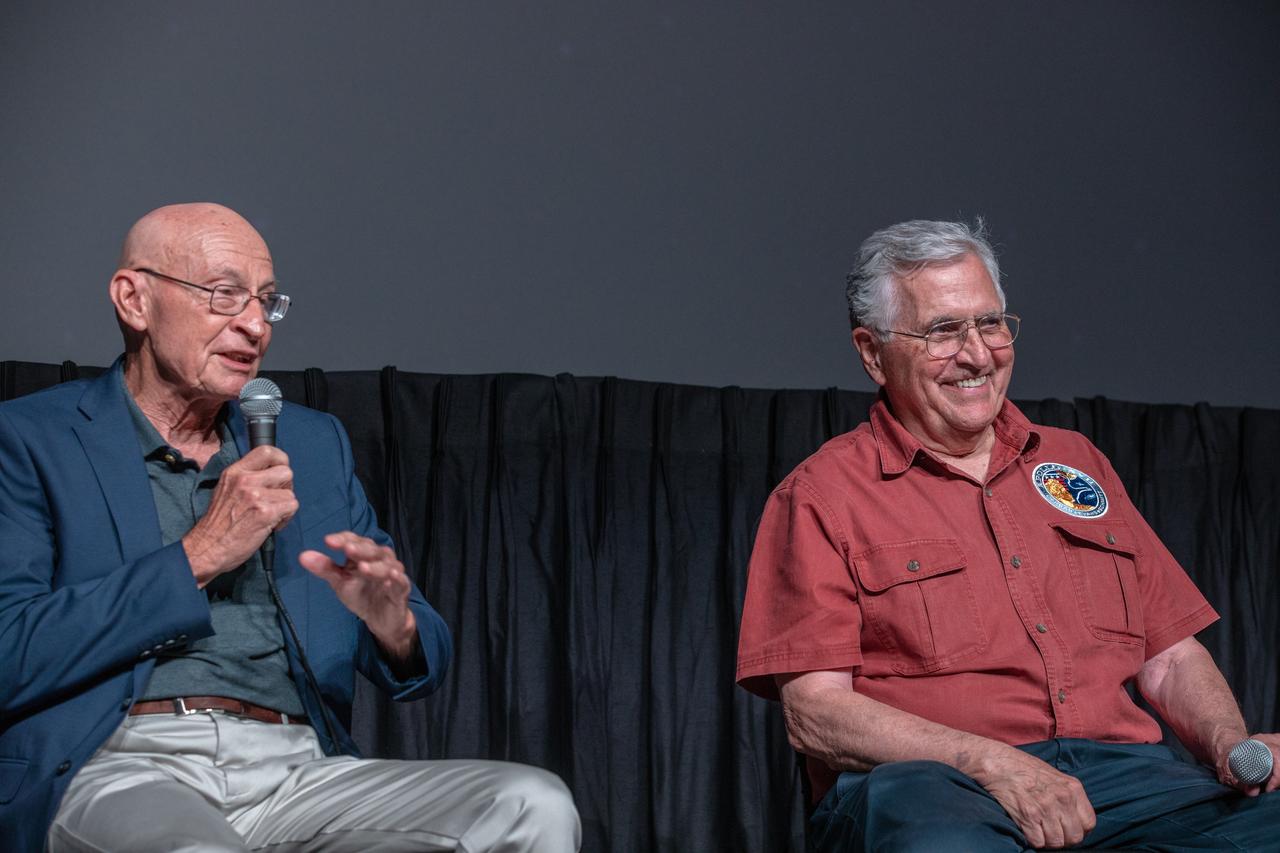
Bob Sieck, left, Apollo-era launch team member and former space shuttle launch director, and Harrison Schmitt, Apollo 17 astronaut and moonwalker, answer questions during the “Apollo Heroes Panel Discussion” in the IMAX Theater at the Kennedy Space Center Visitor Complex in Florida on July 16, 2019. The panel discussion is one of several events at the visitor complex to honor the 50th anniversary of NASA’s Saturn V/Apollo 11 launch and landing on the Moon.
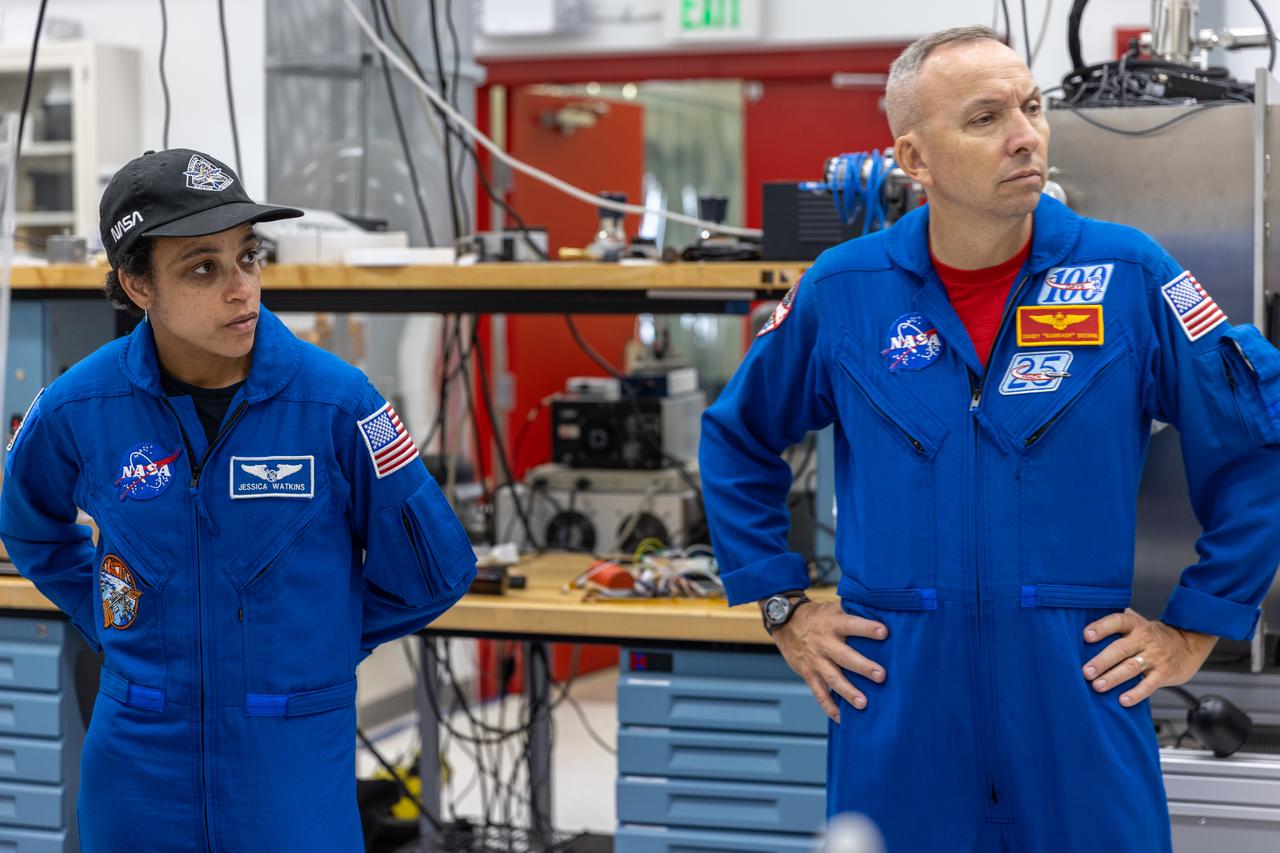
NASA astronauts Jessica Watkins and Randy Bresnik visit the Granular Mechanics and Regolith Operations Laboratory inside Swamp Works at Kennedy Space Center in Florida on Wednesday, Aug. 27, 2025, to view some of the evolving technologies in development that astronauts may use to explore the Moon’s surface, prepare it for sustainable outposts, and to handle the dust that is collected during moonwalks.
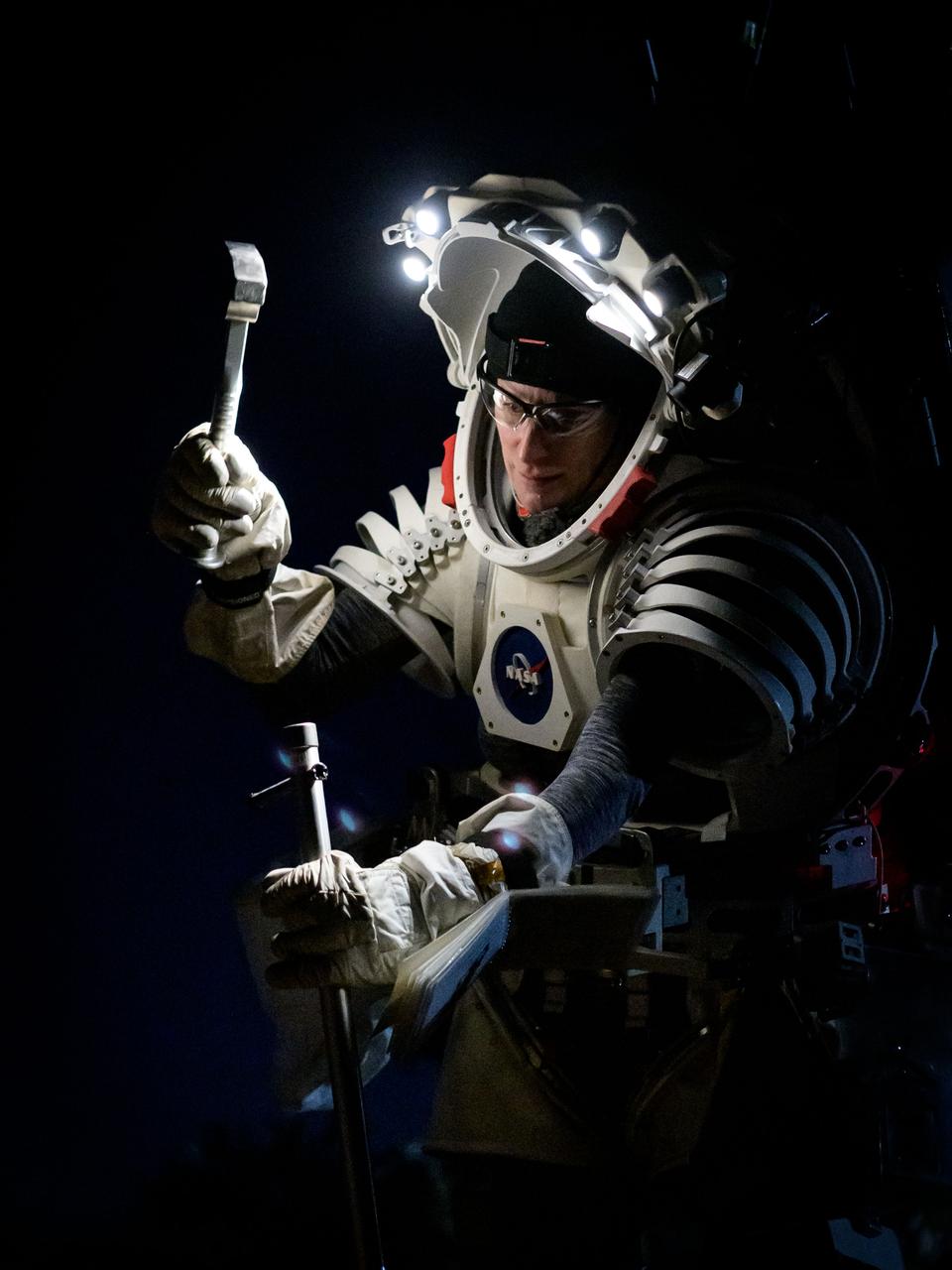
NASA astronaut Kate Rubins uses a hammer to get a drive tube into the ground to collect a pristine soil sample during a¬¬ nighttime simulated moonwalk in the San Francisco Volcanic Field in Northern Arizona on May 16, 2024. The drive tube is the key piece of hardware for preserving the integrity of samples from the Moon. Credit: NASA/Josh Valcarcel
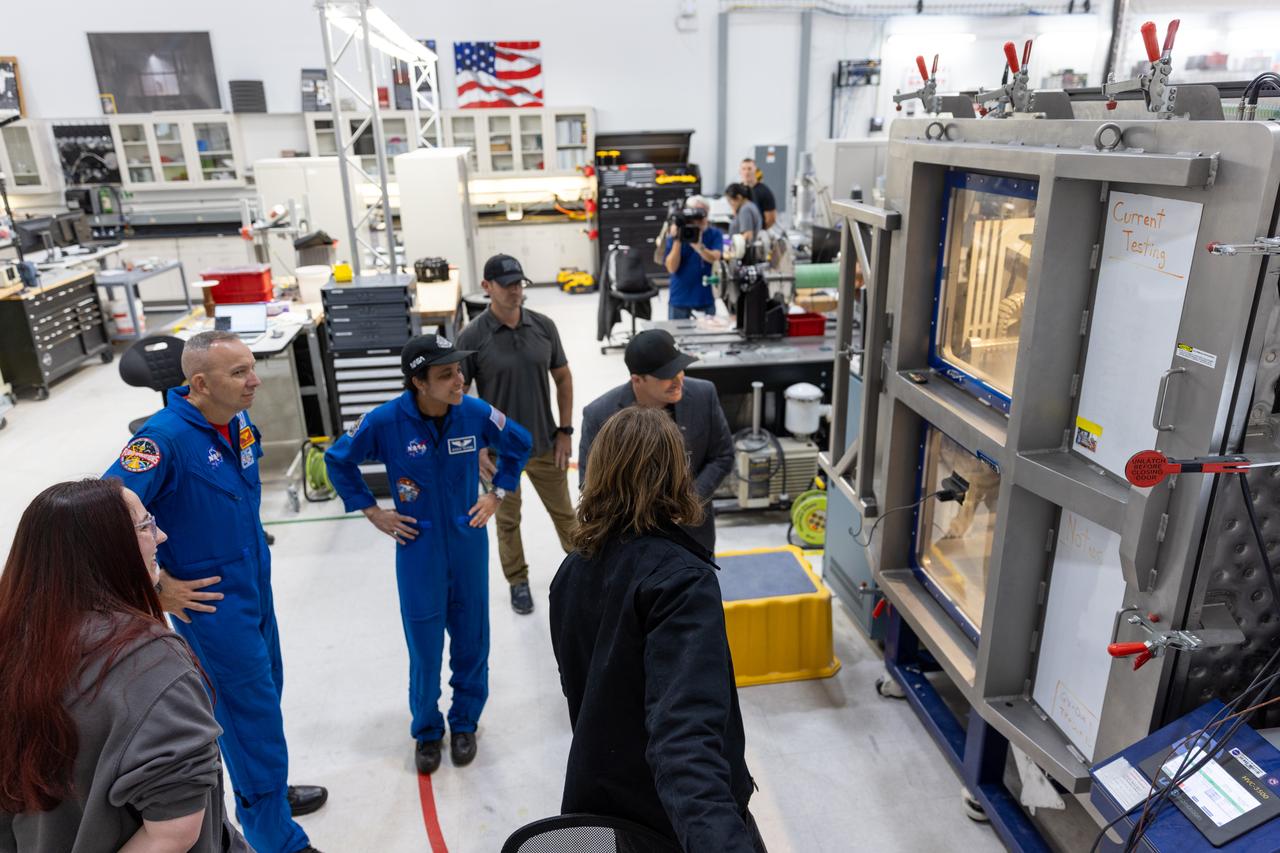
NASA astronauts Randy Bresnik and Jessica Watkins visit the Granular Mechanics and Regolith Operations Laboratory inside Swamp Works at Kennedy Space Center in Florida on Wednesday, Aug. 27, 2025, to view some of the evolving technologies in development that astronauts may use to explore the Moon’s surface, prepare it for sustainable outposts, and to handle the dust that is collected during moonwalks.

NASA Kennedy Space Center Director Bob Cabana, far right, serves as moderator for the “Apollo Heroes Panel Discussion” in the IMAX Theater at the Kennedy Space Center Visitor Complex in Florida on July 16, 2019. Panelists are, from left, JoAnn Morgan, the only woman on console in the Launch Control Center for Apollo 11 launch countdown activities; Bob Sieck, Apollo-era launch team member and former space shuttle launch director; and Harrison Schmitt, Apollo 17 astronaut and moonwalker. The panel discussion is one of several events at the visitor complex to honor the 50th anniversary of NASA’s Saturn V/Apollo 11 launch and landing on the Moon.
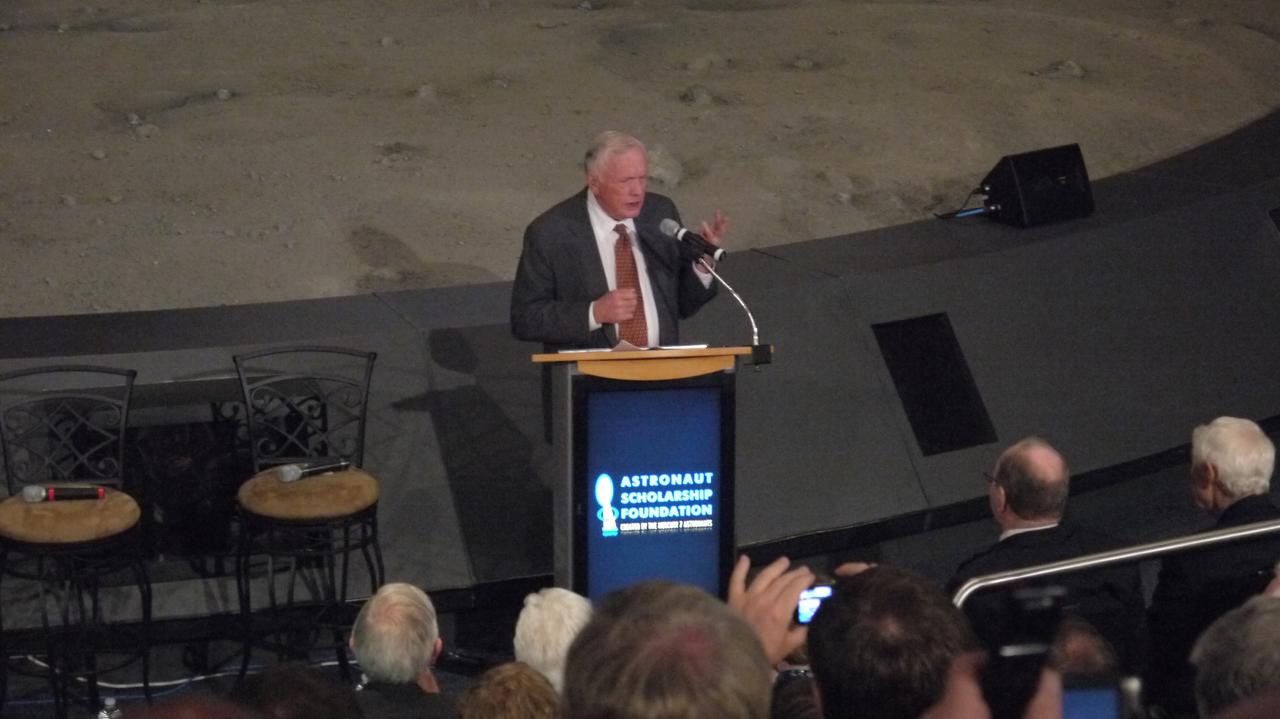
CAPE CANAVERAL, Fla. -- Apollo 11 Commander Neil Armstrong addresses the audience at the 40th anniversary celebration of Apollo 16's lunar landing, which occurred April 20, 1972. The Astronaut Scholarship Foundation hosted the soiree at the Kennedy Space Center Visitor Complex's Saturn V Center. The 11-day Apollo 16 mission featured three moonwalks, including a nearly 17-mile lunar rover road trip to collect more than 200 pounds of moon rocks to return to Earth. Photo credit: NASA/Chris Chamberland
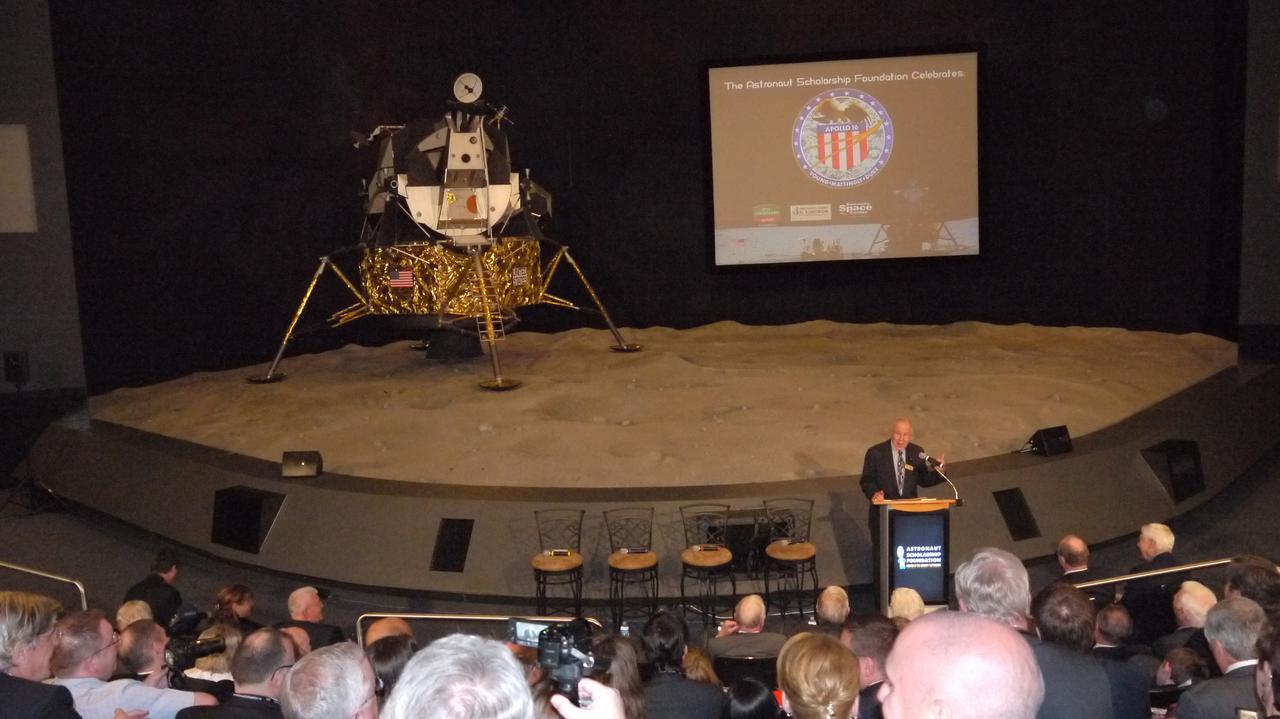
CAPE CANAVERAL, Fla. -- Apollo 16 Lunar Module Pilot Charlie Duke addresses the audience at the 40th anniversary celebration of Apollo 16's lunar landing, which occurred April 20, 1972. The Astronaut Scholarship Foundation hosted the soiree at the Kennedy Space Center Visitor Complex's Saturn V Center. The 11-day mission featured three moonwalks, including a nearly 17-mile lunar rover road trip to collect more than 200 pounds of moon rocks to return to Earth. Photo credit: NASA/Chris Chamberland
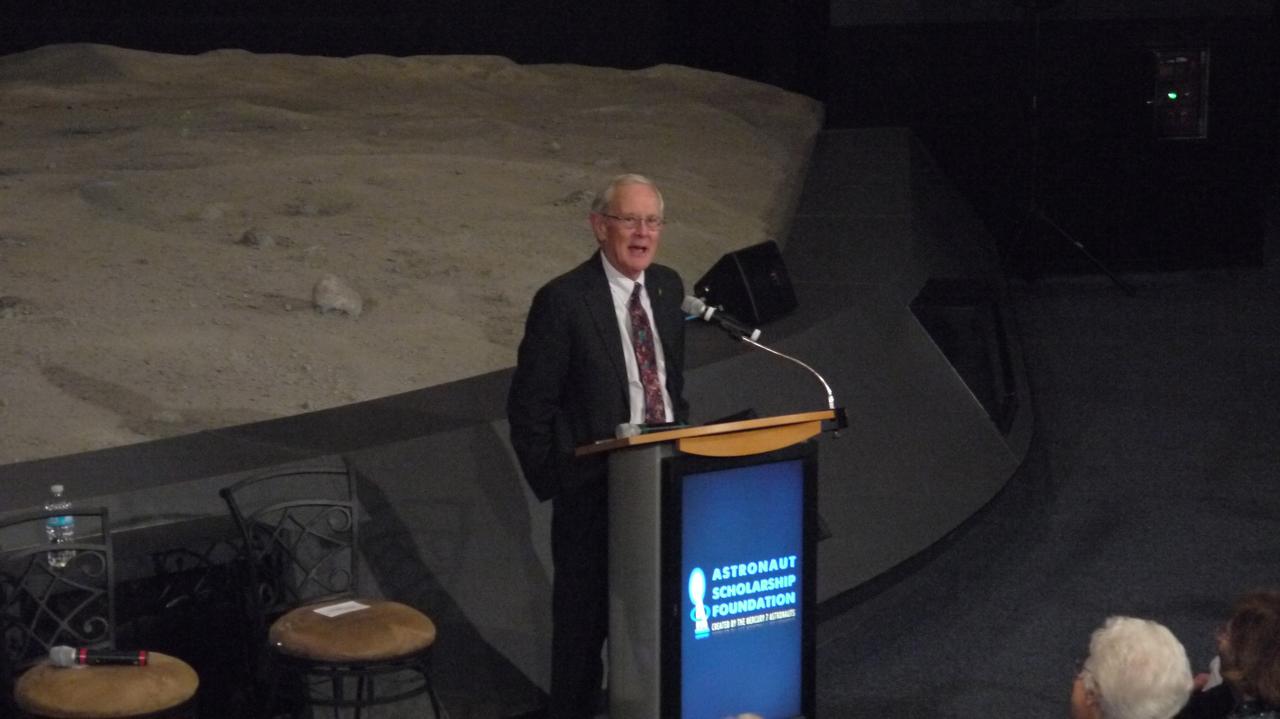
CAPE CANAVERAL, Fla. -- The Astronaut Scholarship Foundation helps celebrate the 40th anniversary of Apollo 16's lunar landing, which occurred April 20, 1972, with a soiree at the Kennedy Space Center Visitor Complex's Saturn V Center. Addressing the audience is Apollo 8 Command Module Pilot and Apollo 13 Commander Jim Lovell. The 11-day Apollo 16 mission featured three moonwalks, including a nearly 17-mile lunar rover road trip to collect more than 200 pounds of moon rocks to return to Earth. Photo credit: NASA/Chris Chamberland
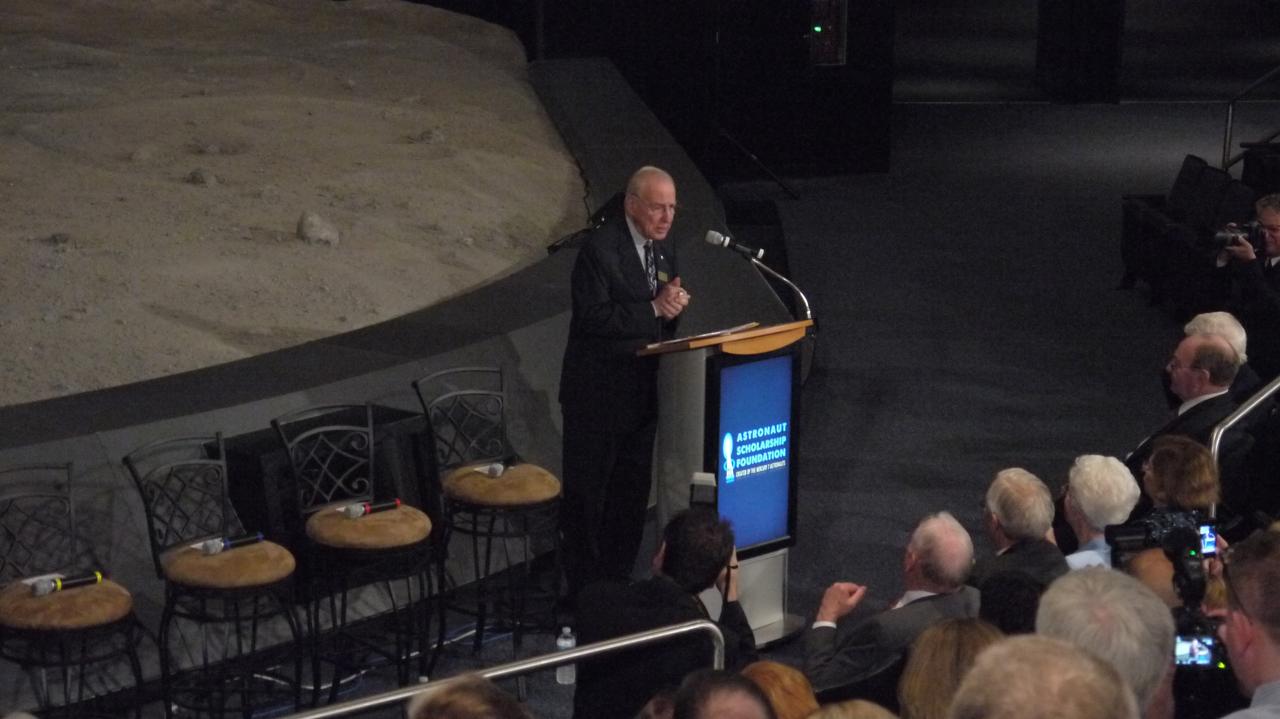
CAPE CANAVERAL, Fla. -- Apollo 8 Command Module Pilot and Apollo 13 Commander Jim Lovell addresses the audience at the 40th anniversary celebration of Apollo 16's lunar landing, which occurred April 20, 1972. The Astronaut Scholarship Foundation hosted the soiree at the Kennedy Space Center Visitor Complex's Saturn V Center. The 11-day Apollo 16 mission featured three moonwalks, including a nearly 17-mile lunar rover road trip to collect more than 200 pounds of moon rocks to return to Earth. Photo credit: NASA/Chris Chamberland
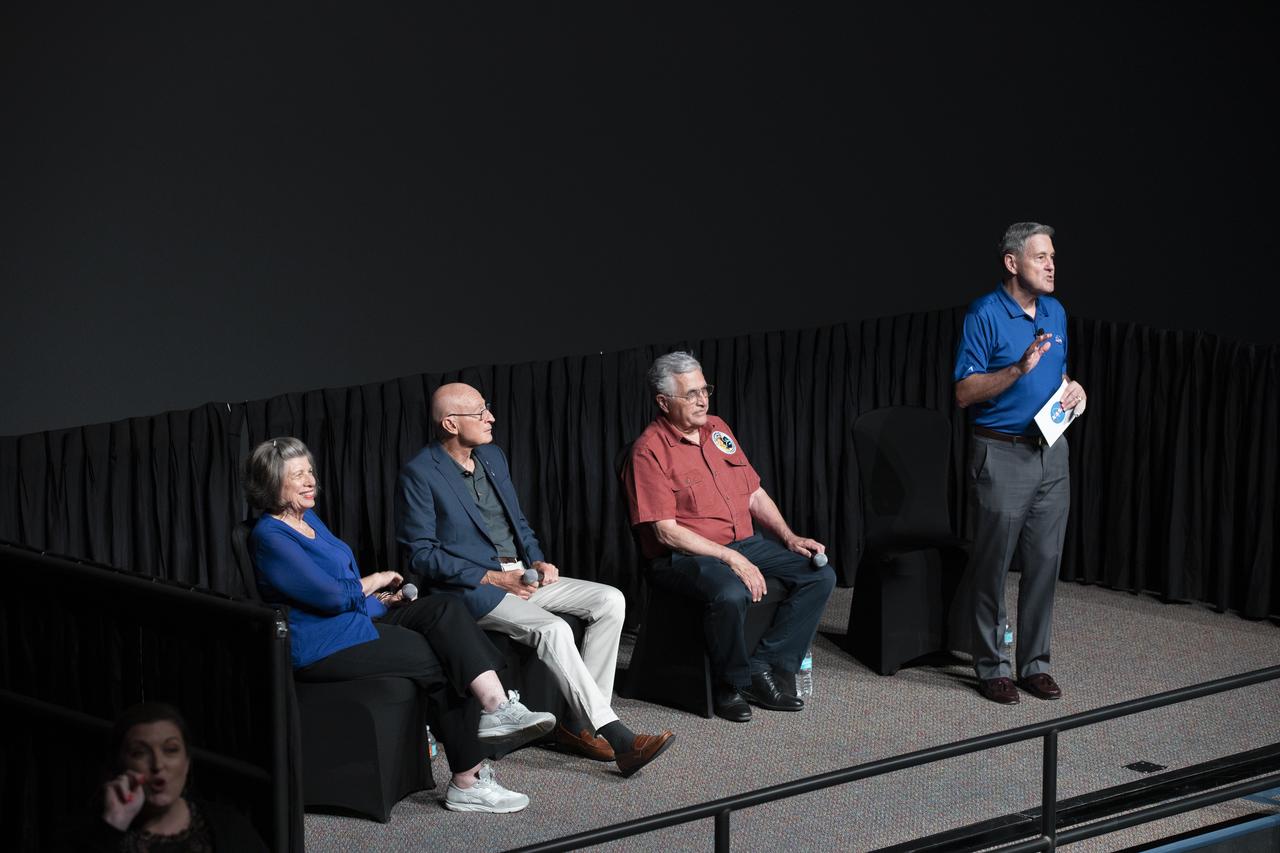
NASA Kennedy Space Center Director Bob Cabana, far right, serves as moderator for the “Apollo Heroes Panel Discussion” in the IMAX Theater at the Kennedy Space Center Visitor Complex in Florida on July 16, 2019. Panelists are, from left, JoAnn Morgan, the only woman on console in the Launch Control Center for Apollo 11 launch countdown activities; Bob Sieck, Apollo-era launch team member and former space shuttle launch director; and Harrison Schmitt, Apollo 17 astronaut and moonwalker. The panel discussion is one of several events at the visitor complex to honor the 50th anniversary of NASA’s Saturn V/Apollo 11 launch and landing on the Moon.
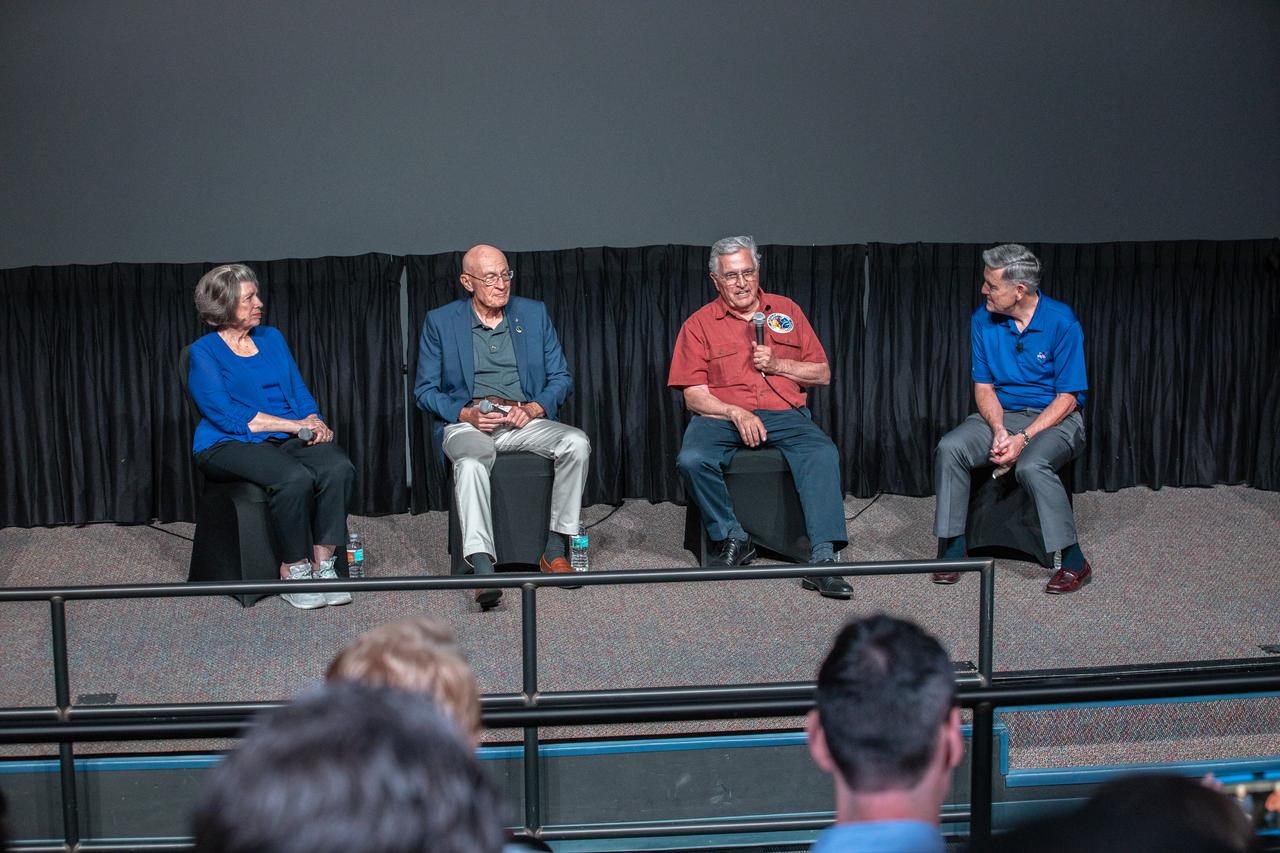
NASA Kennedy Space Center Director Bob Cabana, far right, serves as moderator for the “Apollo Heroes Panel Discussion” in the IMAX Theater at the Kennedy Space Center Visitor Complex in Florida on July 16, 2019. Panelists are, from left, JoAnn Morgan, the only woman on console in the Launch Control Center for Apollo 11 launch countdown activities; Bob Sieck, Apollo-era launch team member and former space shuttle launch director; and Harrison Schmitt, Apollo 17 astronaut and moonwalker. The panel discussion is one of several events at the visitor complex to honor the 50th anniversary of NASA’s Saturn V/Apollo 11 launch and landing on the Moon.
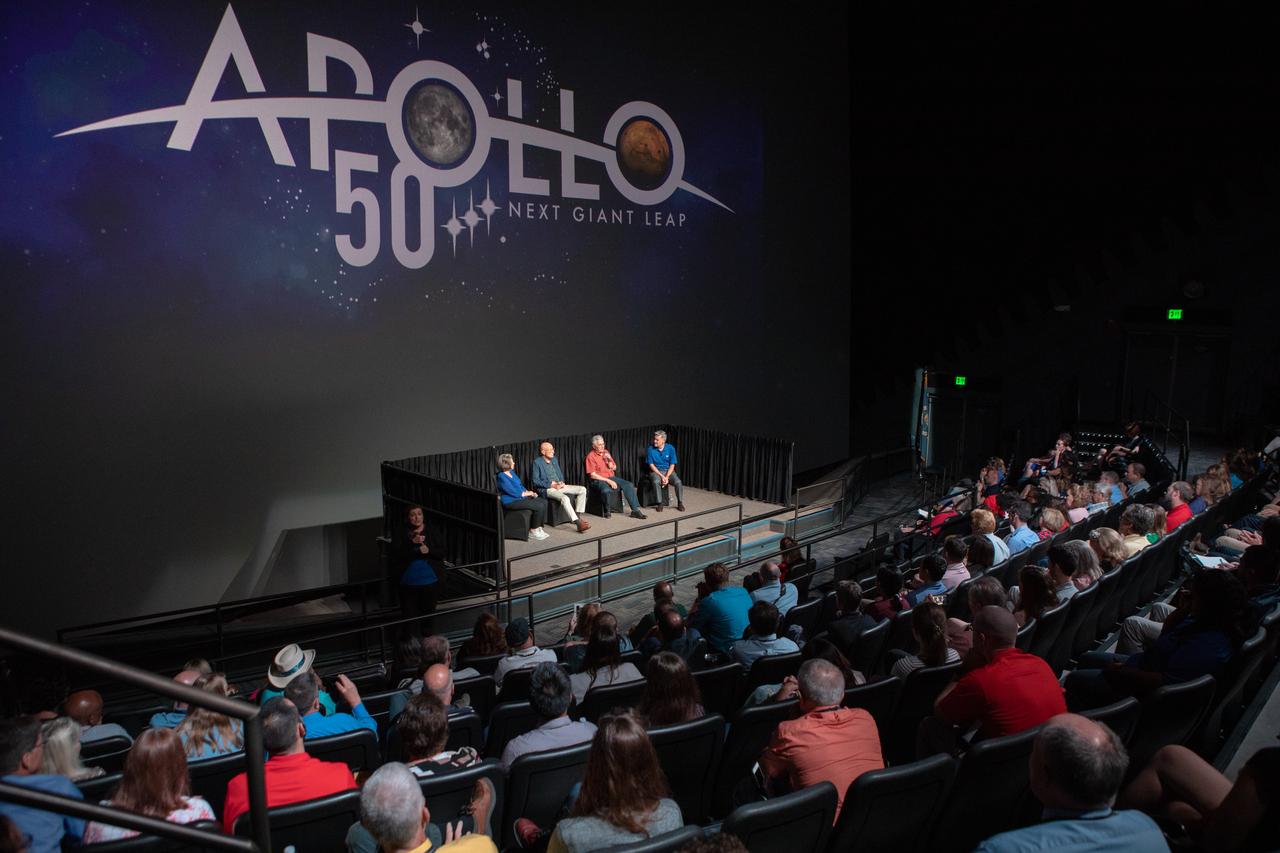
NASA Kennedy Space Center Director Bob Cabana, far right, serves as moderator for the “Apollo Heroes Panel Discussion” in the IMAX Theater at the Kennedy Space Center Visitor Complex in Florida on July 16, 2019. Panelists are, from left, JoAnn Morgan, the only woman on console in the Launch Control Center for Apollo 11 launch countdown activities; Bob Sieck, Apollo-era launch team member and former space shuttle launch director; and Harrison Schmitt, Apollo 17 astronaut and moonwalker. The panel discussion is one of several events at the visitor complex to honor the 50th anniversary of NASA’s Saturn V/Apollo 11 launch and landing on the Moon.
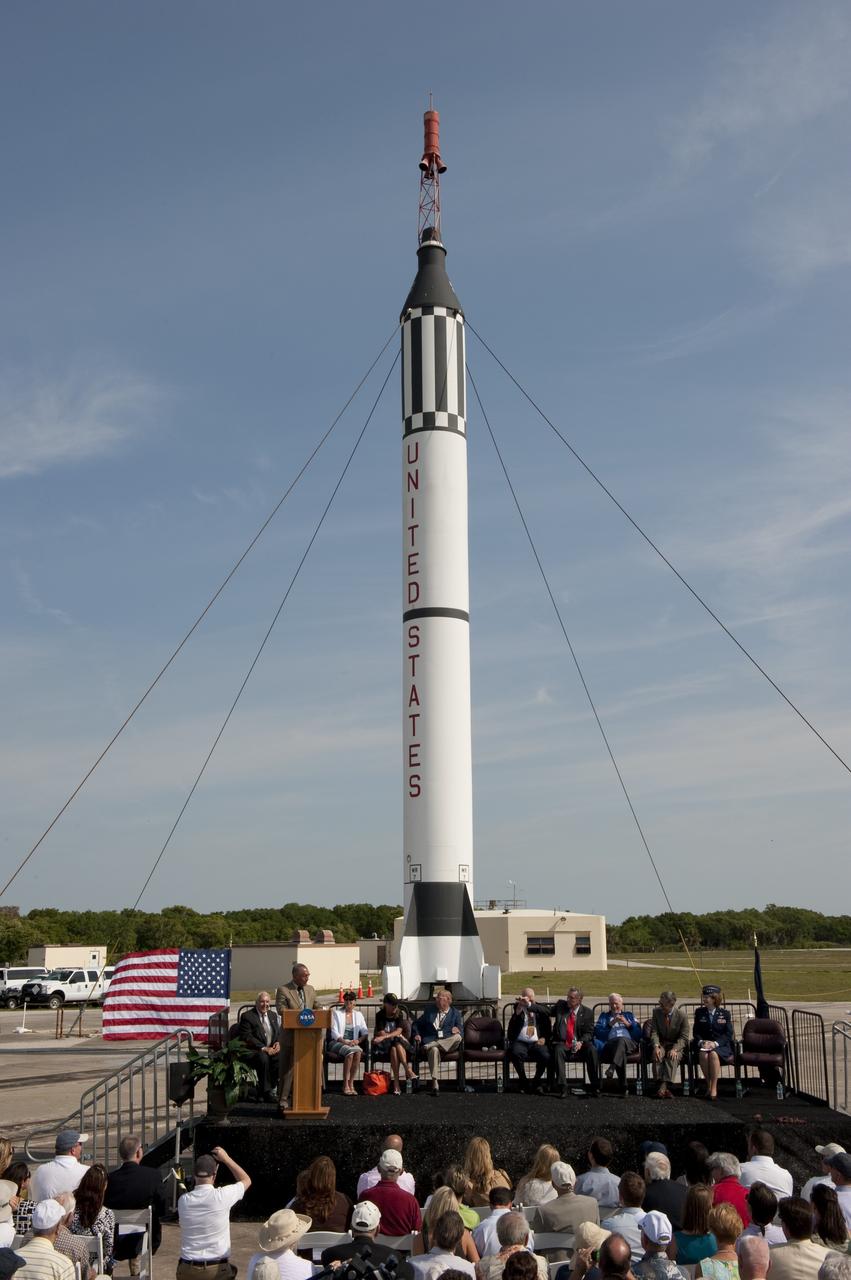
CAPE CANAVERAL, Fla. -- NASA Administrator Charlie Bolden addresses the audience during a celebration at Complex 5/6 on Cape Canaveral Air Force Station in Florida. The celebration was held at the launch site of the first U.S. manned spaceflight May 5, 1961, to mark the 50th anniversary of the flight. Fifty years ago, astronaut Alan Shepard lifted off inside the Mercury capsule, "Freedom 7," atop an 82-foot-tall Mercury-Redstone rocket at 9:34 a.m. EST, sending him on a remarkably successful, 15-minute suborbital flight. The event was attended by more than 200 workers from the original Mercury program and included a re-creation of Shepard's flight and recovery, as well as a tribute to his contributions as a moonwalker on the Apollo 14 lunar mission. For more information, visit www.nasa.gov/topics/history/milestones/index.html. Photo credit: NASA/Kim Shiflett
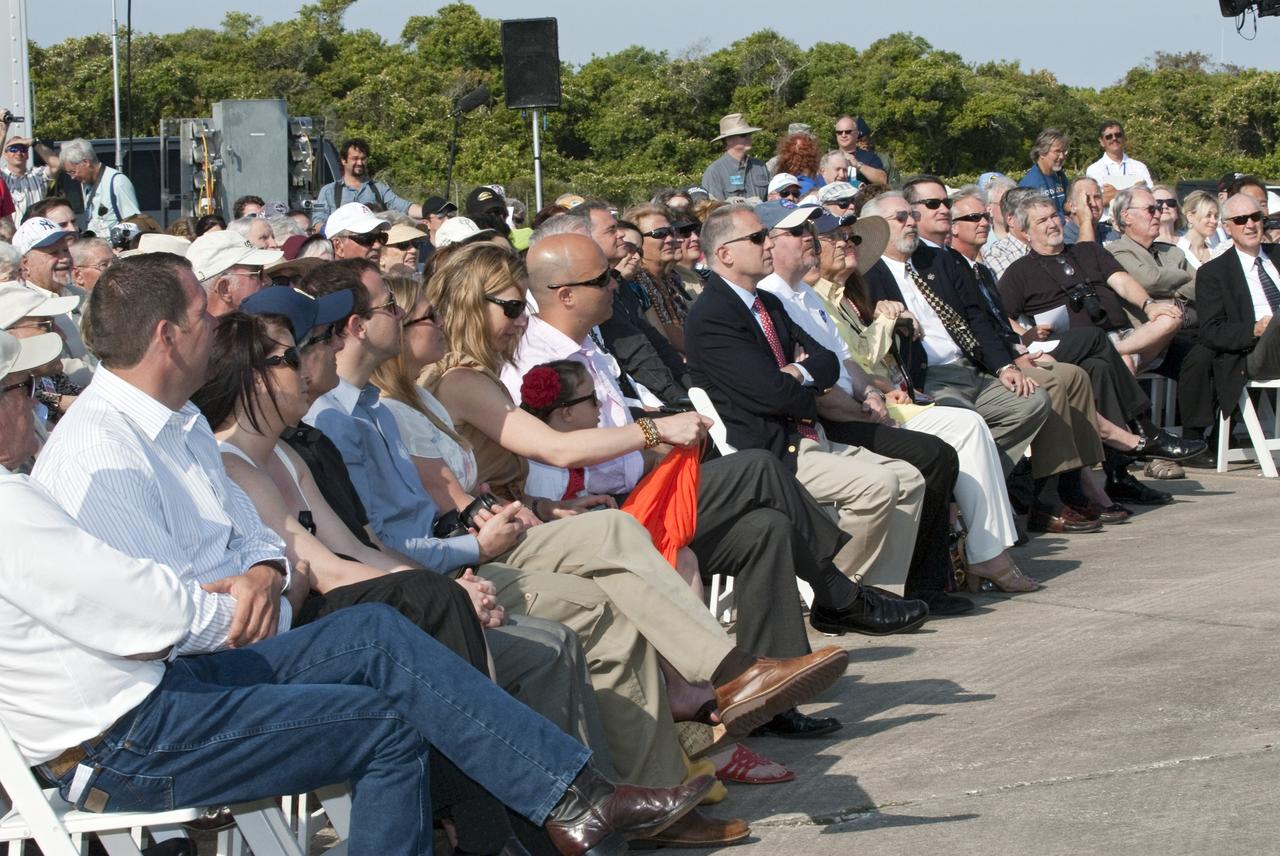
CAPE CANAVERAL, Fla. -- Invited guests attend a celebration at Complex 5/6 on Cape Canaveral Air Force Station in Florida. The celebration was held at the launch site of the first U.S. manned spaceflight May 5, 1961, to mark the 50th anniversary of the flight. Fifty years ago, astronaut Alan Shepard lifted off inside the Mercury capsule, "Freedom 7," atop an 82-foot-tall Mercury-Redstone rocket at 9:34 a.m. EST, sending him on a remarkably successful, 15-minute suborbital flight. The event was attended by more than 200 workers from the original Mercury program and included a re-creation of Shepard's flight and recovery, as well as a tribute to his contributions as a moonwalker on the Apollo 14 lunar mission. For more information, visit www.nasa.gov/topics/history/milestones/index.html. Photo credit: NASA/Kim Shiflett
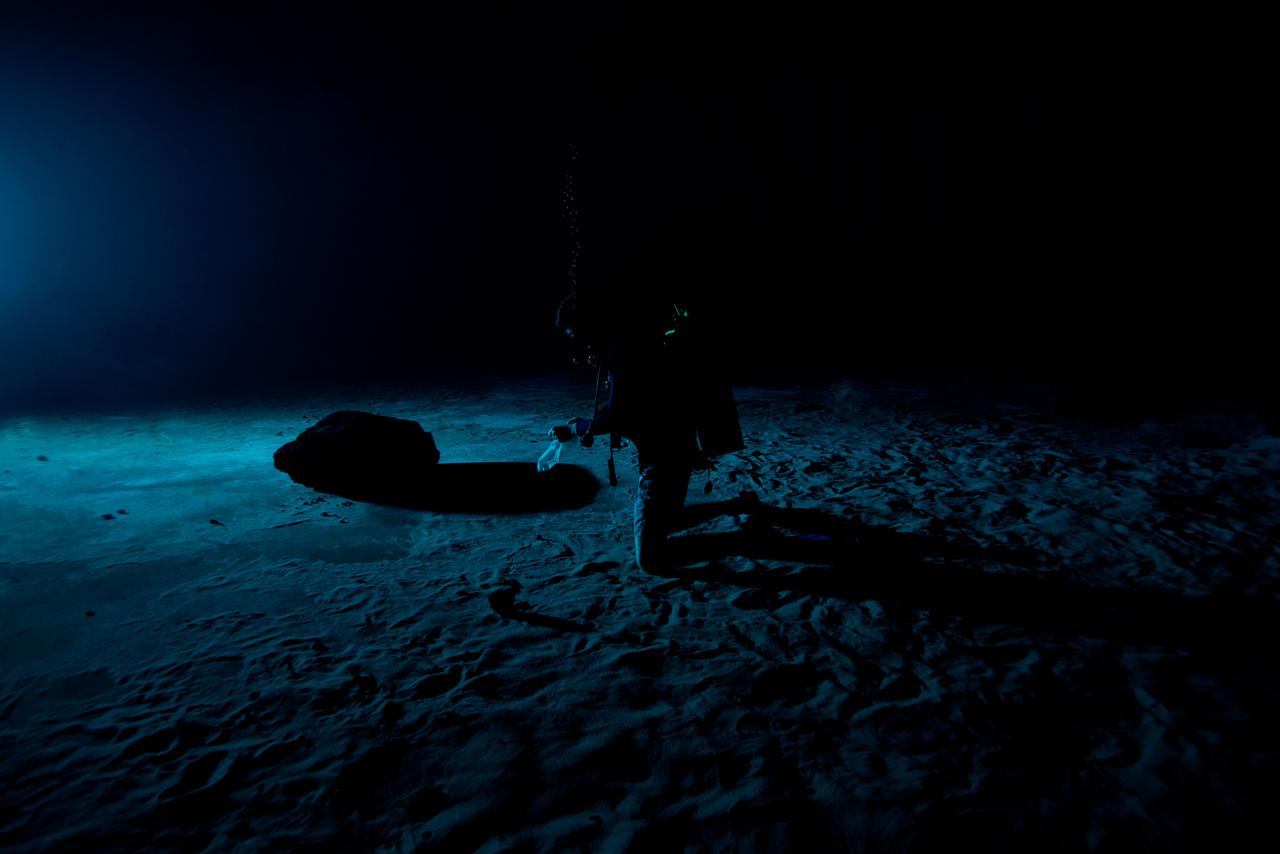
Test subjects performing subjective assessment of underwater lamp source during NBL Preliminary Lunar Lighting Evaluation. Divers at the Neutral Buoyancy Laboratory (NBL) in Houston are setting the stage for future Moonwalk training by simulating lunar lighting conditions. At the Lunar South Pole, the Sun will remain no more than a few degrees above the horizon, resulting in extremely long and dark shadows. To prepare astronauts for these challenging lighting conditions, the team at the NBL has begun preliminary evaluations of lunar lighting solutions at the bottom of the 40-foot deep pool. This testing and evaluation involved turning off all the lights in the facility, installing black curtains on the pool walls to minimize reflections, and using a powerful underwater cinematic lamp, to get the conditions just right ahead of upcoming training for astronauts.
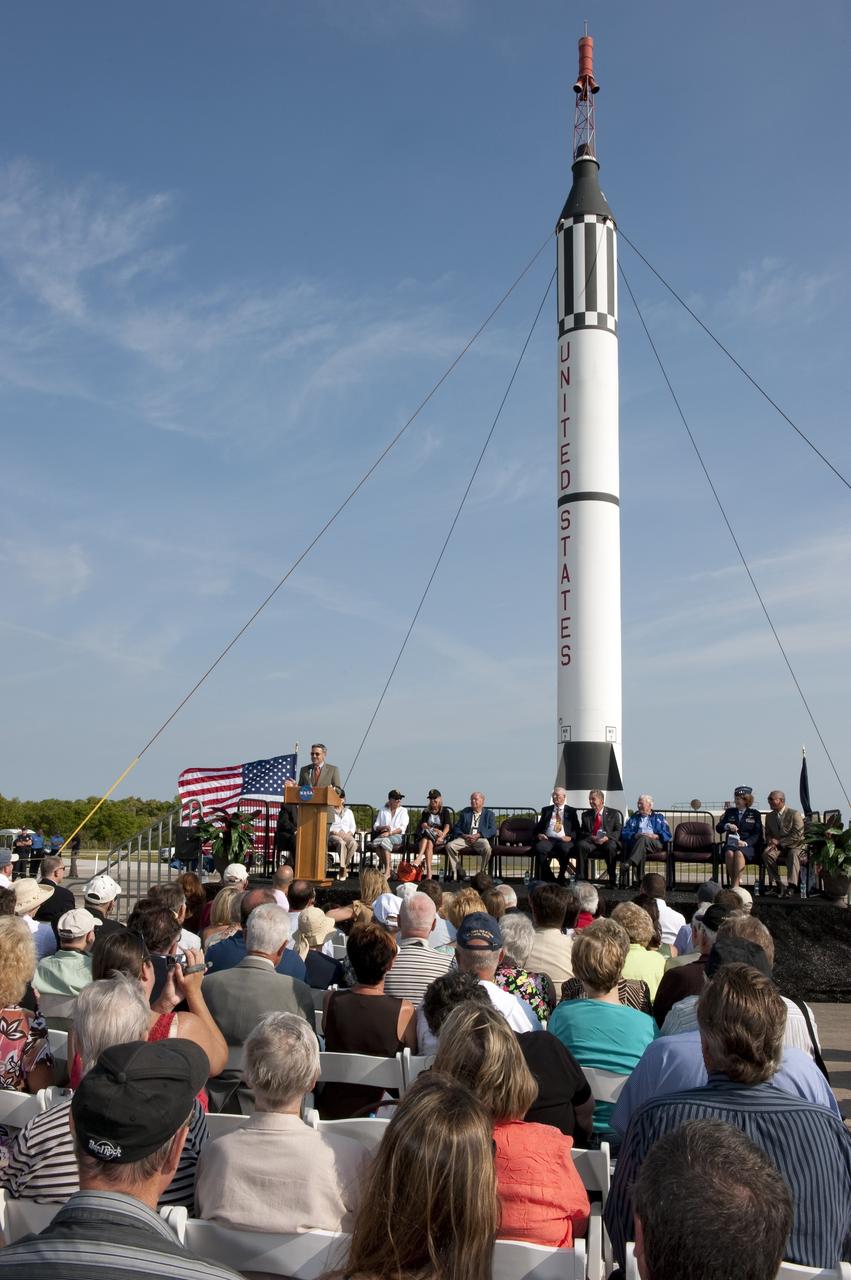
CAPE CANAVERAL, Fla. -- Kennedy Space Center Director and former astronaut Bob Cabana addresses the audience at a celebration at Complex 5/6 on Cape Canaveral Air Force Station in Florida. The celebration was held at the launch site of the first U.S. manned spaceflight May 5, 1961, to mark the 50th anniversary of the flight. Fifty years ago, astronaut Alan Shepard lifted off inside the Mercury capsule, "Freedom 7," atop an 82-foot-tall Mercury-Redstone rocket at 9:34 a.m. EST, sending him on a remarkably successful, 15-minute suborbital flight. The event was attended by more than 200 workers from the original Mercury program and included a re-creation of Shepard's flight and recovery, as well as a tribute to his contributions as a moonwalker on the Apollo 14 lunar mission. For more information, visit www.nasa.gov/topics/history/milestones/index.html. Photo credit: NASA/Kim Shiflett
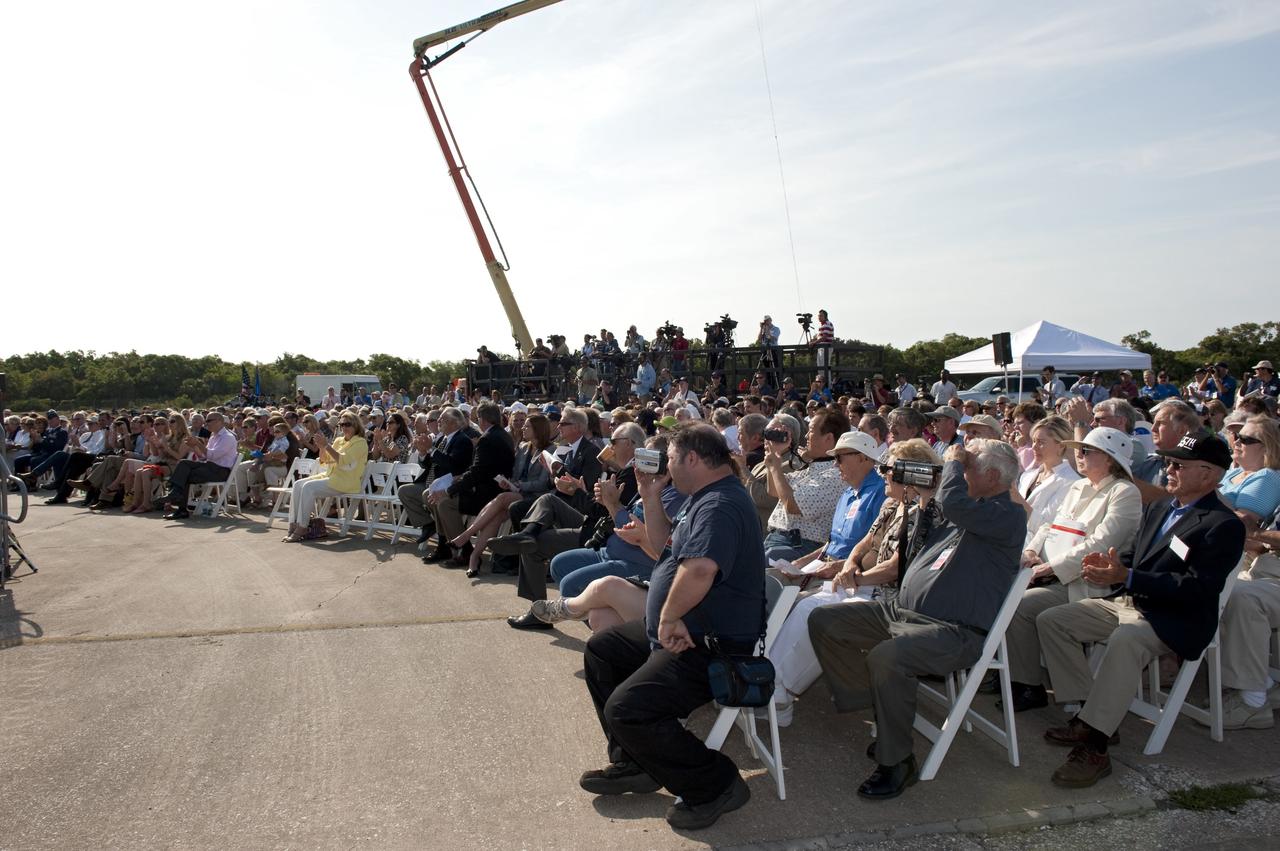
CAPE CANAVERAL, Fla. -- Invited guests and media representatives attend a celebration at Complex 5/6 on Cape Canaveral Air Force Station in Florida. The celebration was held at the launch site of the first U.S. manned spaceflight May 5, 1961, to mark the 50th anniversary of the flight. Fifty years ago, astronaut Alan Shepard lifted off inside the Mercury capsule, "Freedom 7," atop an 82-foot-tall Mercury-Redstone rocket at 9:34 a.m. EST, sending him on a remarkably successful, 15-minute suborbital flight. The event was attended by more than 200 workers from the original Mercury program and included a re-creation of Shepard's flight and recovery, as well as a tribute to his contributions as a moonwalker on the Apollo 14 lunar mission. For more information, visit www.nasa.gov/topics/history/milestones/index.html. Photo credit: NASA/Kim Shiflett
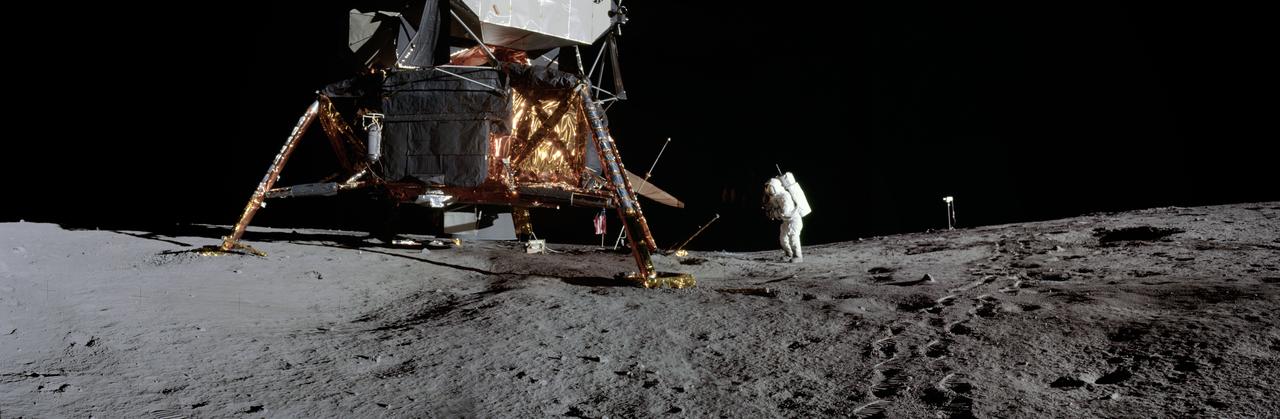
jsc2011e118358 - Panorama view of Apollo 12 lunar surface photos with lunar module pilot Alan L. Bean and the TV taken from just inside the rim of Surveyor Crater on the first moonwalk of the mission. The panoramas were built by combining Apollo 12 images starting with frame AS12-46-6777 thru end frame AS12-46-6780. The panoramic images received minimal retouching by NASA imagery specialists, including the removal of lens flares that were problematic in stitching together the individual frames and blacking out the sky to the lunar horizon. These adjustments were made based on observations of the Moon walkers who reported that there are no stars visible in the sky due to the bright lunar surface reflection of the Sun.
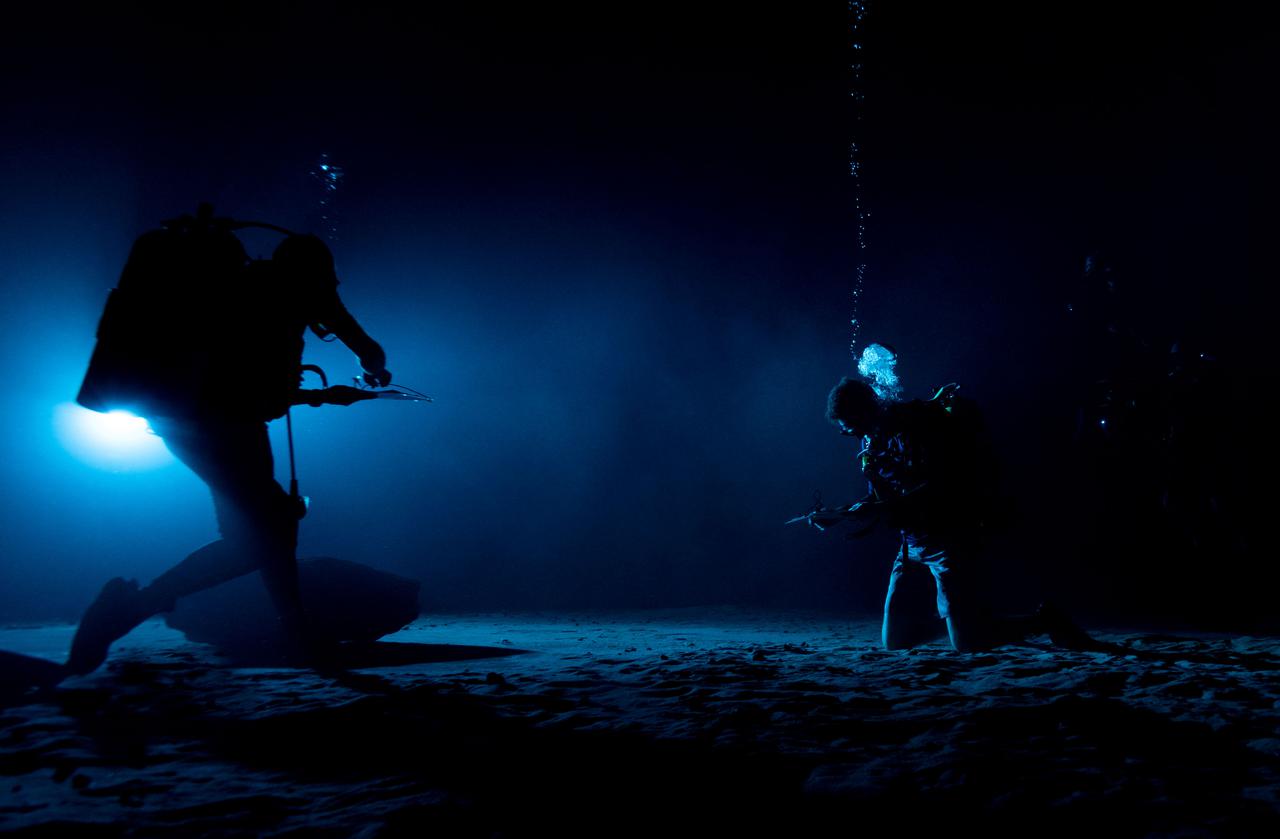
Test subjects performing subjective assessment of underwater lamp source during NBL Preliminary Lunar Lighting Evaluation. Divers at the Neutral Buoyancy Laboratory (NBL) in Houston are setting the stage for future Moonwalk training by simulating lunar lighting conditions. At the Lunar South Pole, the Sun will remain no more than a few degrees above the horizon, resulting in extremely long and dark shadows. To prepare astronauts for these challenging lighting conditions, the team at the NBL has begun preliminary evaluations of lunar lighting solutions at the bottom of the 40-foot deep pool. This testing and evaluation involved turning off all the lights in the facility, installing black curtains on the pool walls to minimize reflections, and using a powerful underwater cinematic lamp, to get the conditions just right ahead of upcoming training for astronauts.
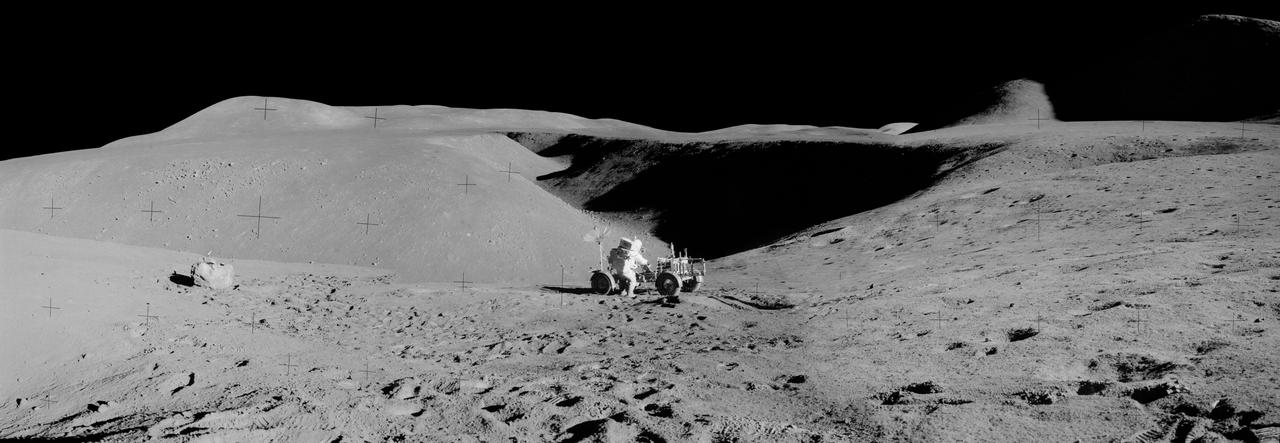
jsc2011e118359 - Panorama view of Apollo 15 lunar surface photos south of Station 2 taken by lunar module pilot James B. Irwin. Astronaut David R. Scott, mission commander, performs a task at the Lunar Roving Vehicle parked on the edge of Hadley Rille (Rima Hadley) during the first moonwalk of the mission. The panoramas were built by combining Apollo 15 images starting with frame AS15-85-11448 thru end frame AS15-85-11453. The panoramic images received minimal retouching by NASA imagery specialists, including the removal of lens flares that were problematic in stitching together the individual frames and blacking out the sky to the lunar horizon. These adjustments were made based on observations of the Moon walkers who reported that there are no stars visible in the sky due to the bright lunar surface reflection of the Sun.
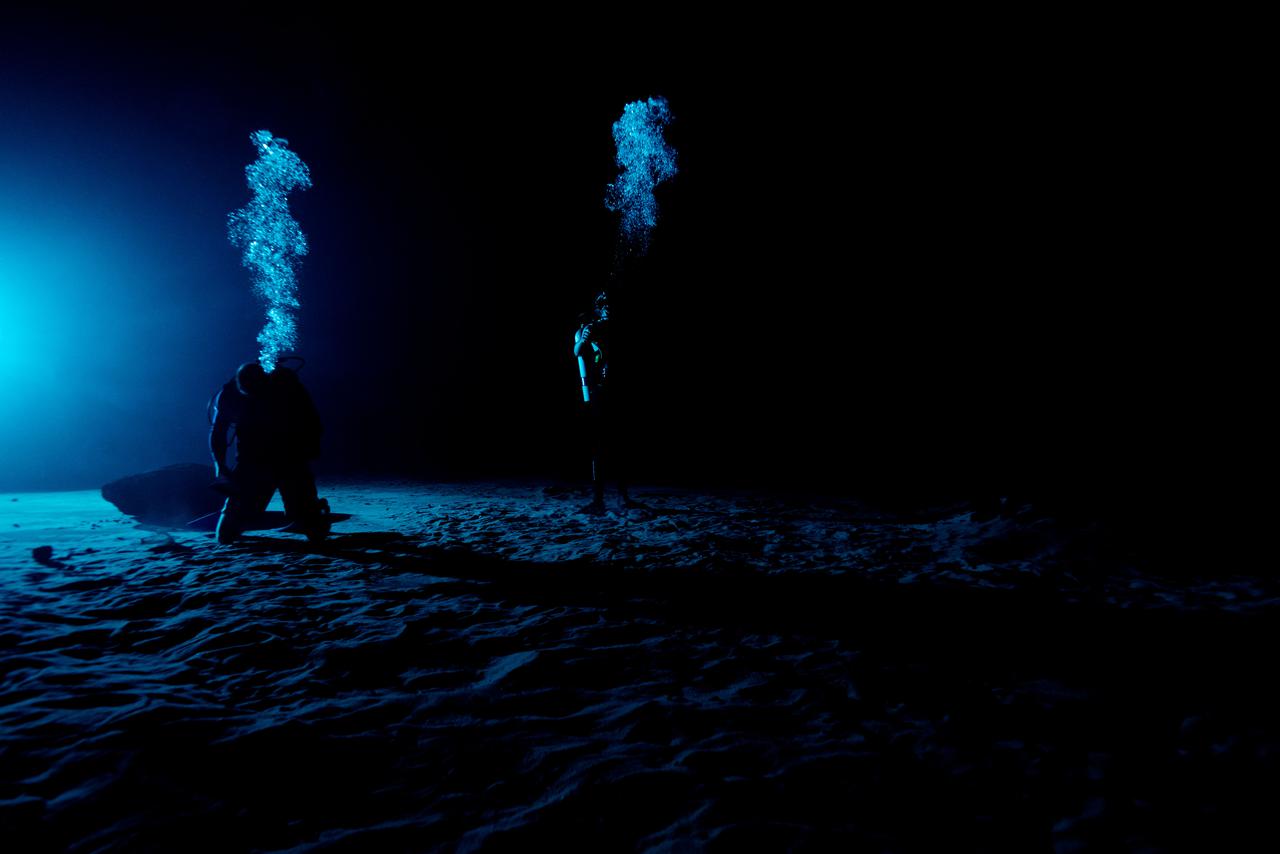
Test subjects performing mission-relevant tasks and evaluating shadow quality during NBL Preliminary Lunar Lighting Evaluation. Divers at the Neutral Buoyancy Laboratory (NBL) in Houston are setting the stage for future Moonwalk training by simulating lunar lighting conditions. At the Lunar South Pole, the Sun will remain no more than a few degrees above the horizon, resulting in extremely long and dark shadows. To prepare astronauts for these challenging lighting conditions, the team at the NBL has begun preliminary evaluations of lunar lighting solutions at the bottom of the 40-foot deep pool. This testing and evaluation involved turning off all the lights in the facility, installing black curtains on the pool walls to minimize reflections, and using a powerful underwater cinematic lamp, to get the conditions just right ahead of upcoming training for astronauts.