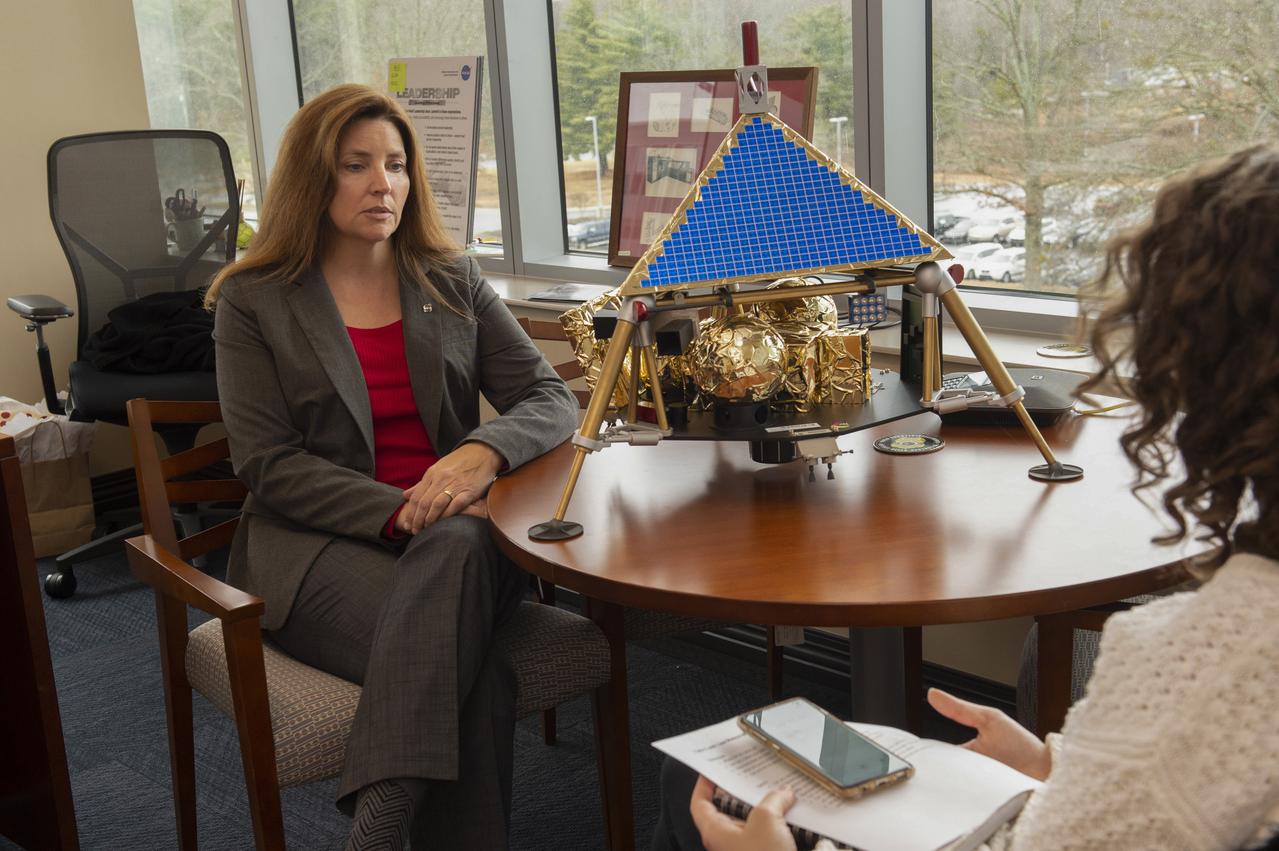
Lisa Watson-Morgan is interviewed for “TAKE FIVE†column in Marshall Star newspaper

Joann Morgan with WESH-TV 2 News Anchor Wendy Chioji
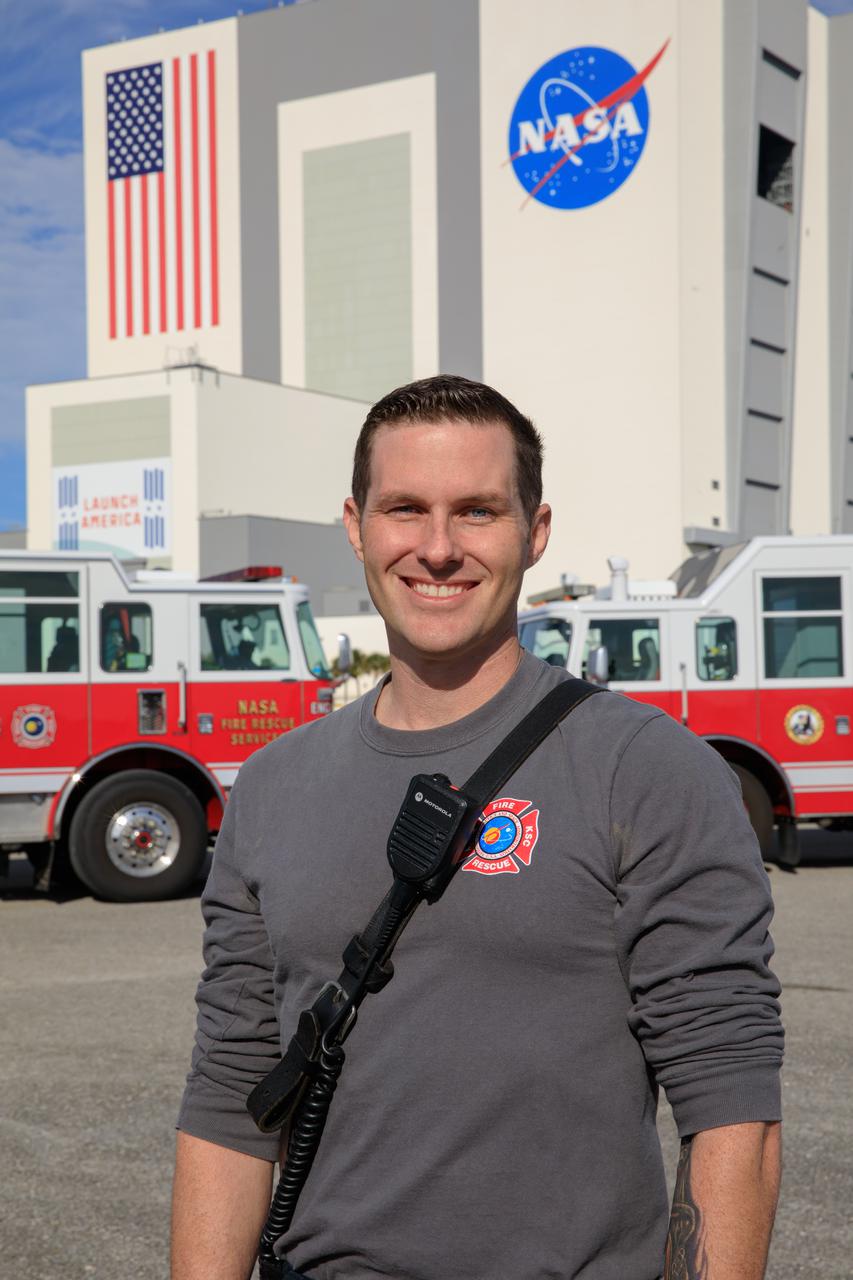
NASA Kennedy Space Center firefighter Andrew Morgan is selected as the Space Coast Fire Chiefs Association’s 2020 Firefighter of the Year. A member of the Technical Rescue Team, Morgan scaled down the side of the Florida spaceport’s Vehicle Assembly Building to rescue a team of painters when their scaffolding motor broke in October 2020, leaving them stranded 375 feet off the ground.
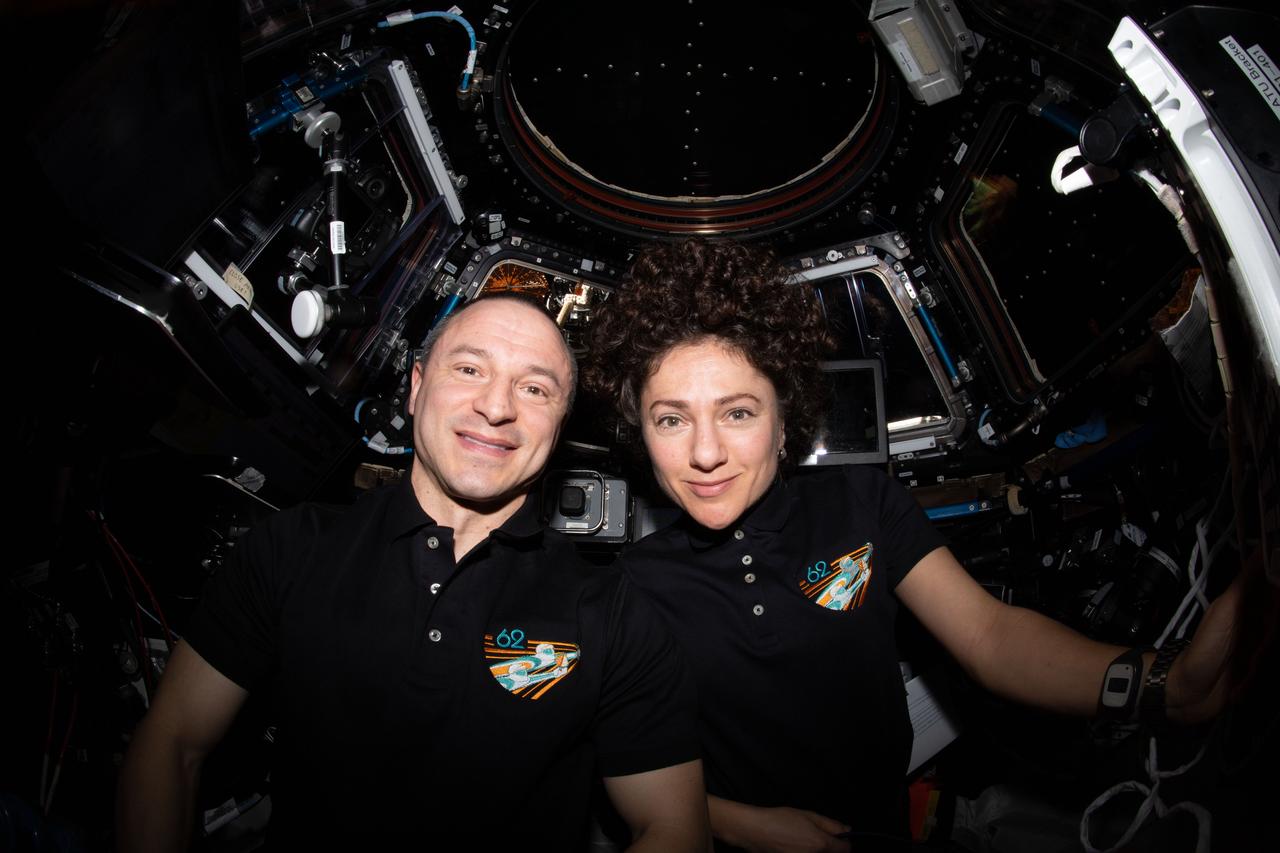
iss062e024073 (Feb. 18, 2020) --- NASA astronauts Andrew Morgan and Jessica Meir pose for a portrait inside the cupola, the International Space Station's "window to the world." The two Expedition 62 Flight Engineers were participating in the capture activities of Northrop Grumman's Cygnus cargo craft.
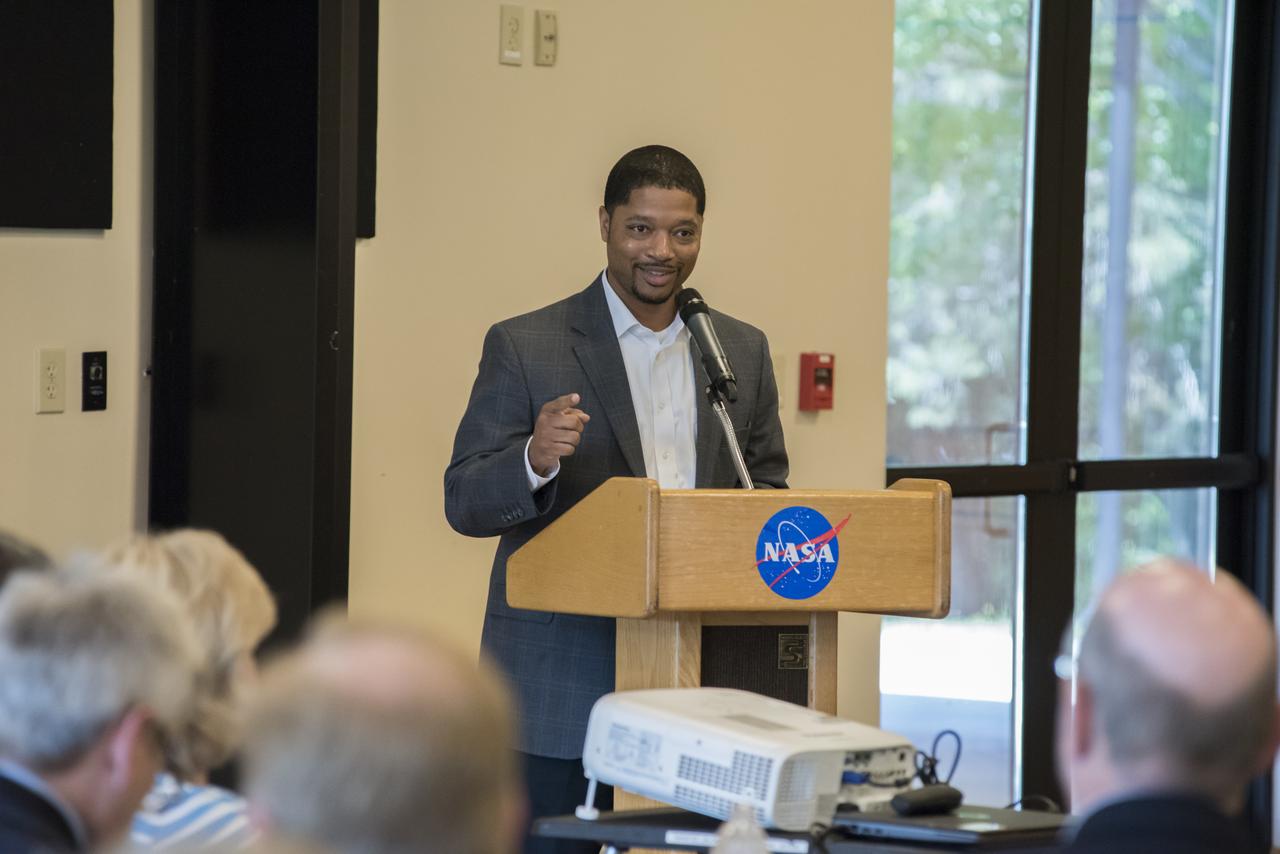
Markeeva Morgan, SLS avionics subsystem manager at NASA’s Marshall Space Flight Center, speaks to an audience of Marshall team members April 26 at the Overlook at Redstone. Morgan was the introductory speaker for the luncheon meeting of the Marshall Association, the center’s professional, employee service organization.
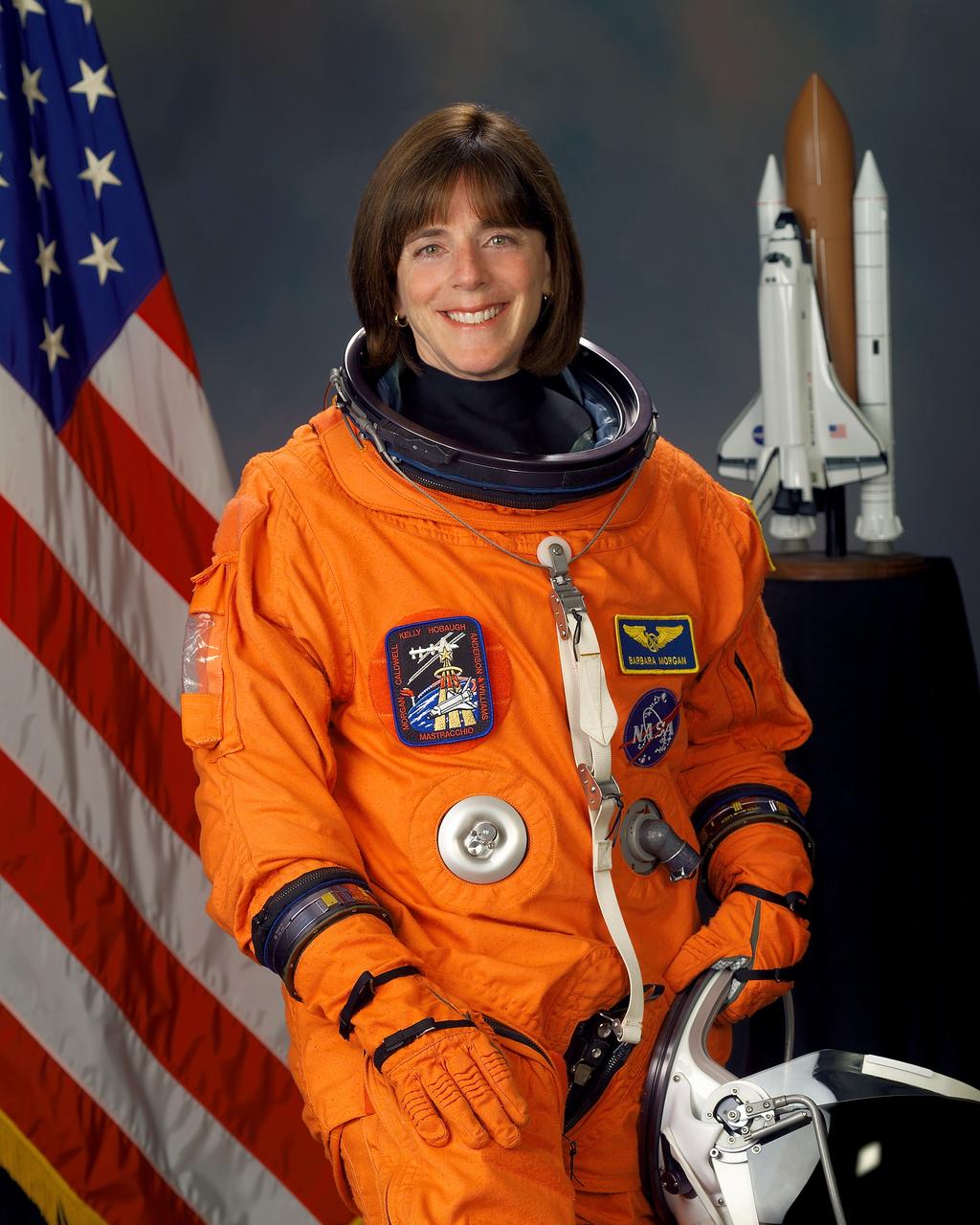
JSC2007-E-13557 (28 Nov. 2006) --- Astronaut Barbara R. Morgan, mission specialist

JSC2007-E-13558 (28 Nov. 2006) --- Astronaut Barbara R. Morgan, mission specialist
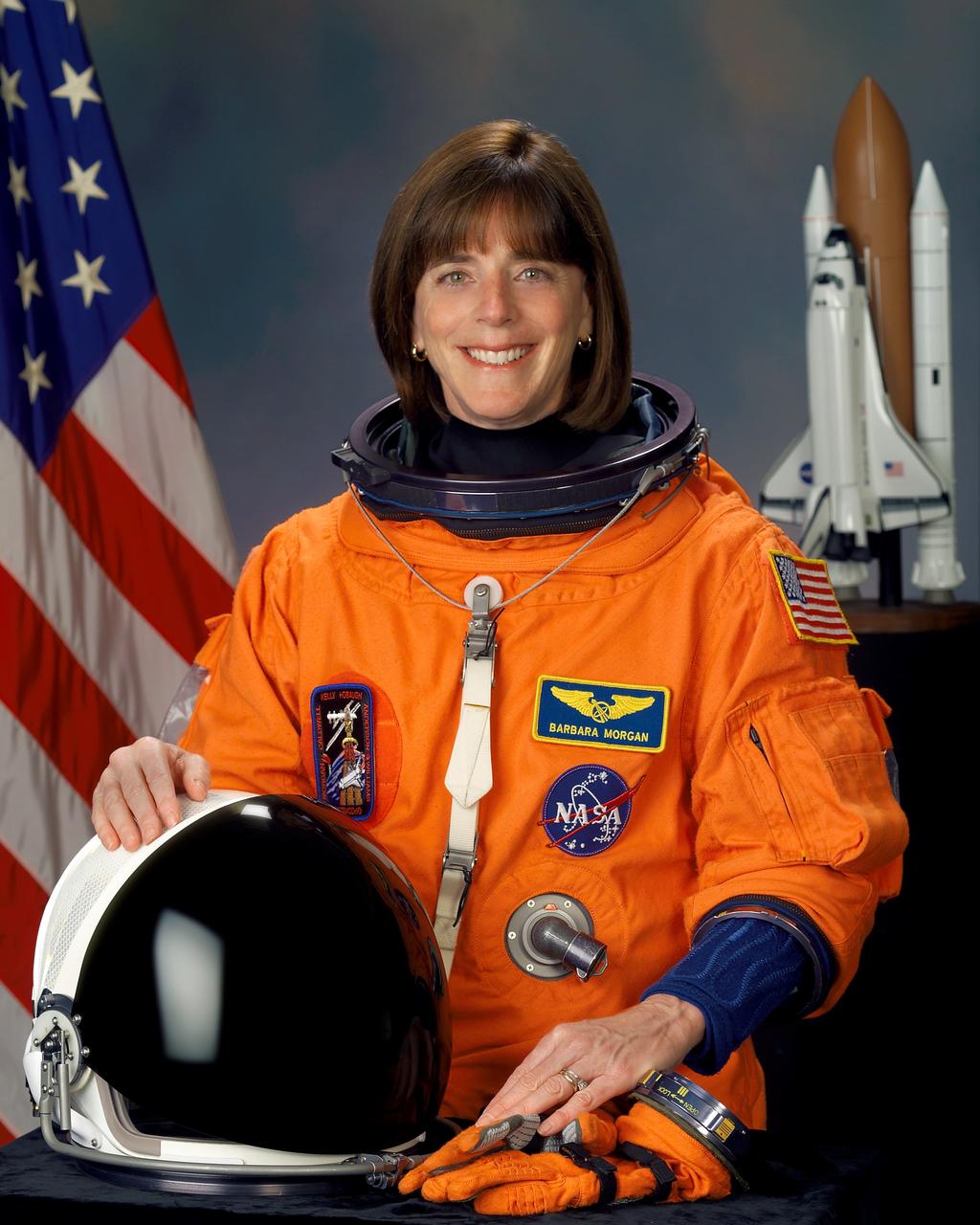
JSC2007-E-13555 (28 Nov. 2006) --- Astronaut Barbara R. Morgan, mission specialist
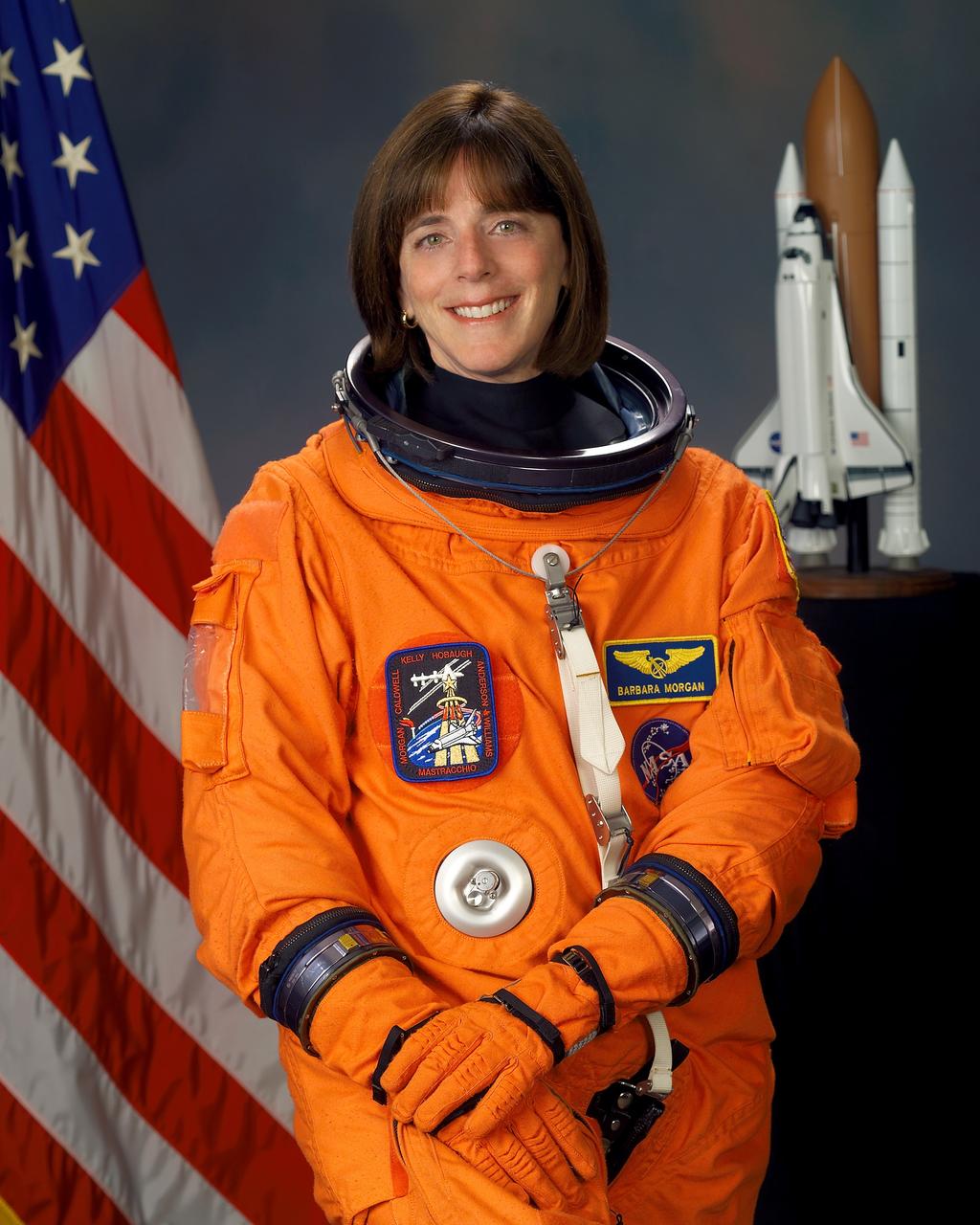
JSC2007-E-13556 (28 Nov. 2006) --- Astronaut Barbara R. Morgan, mission specialist
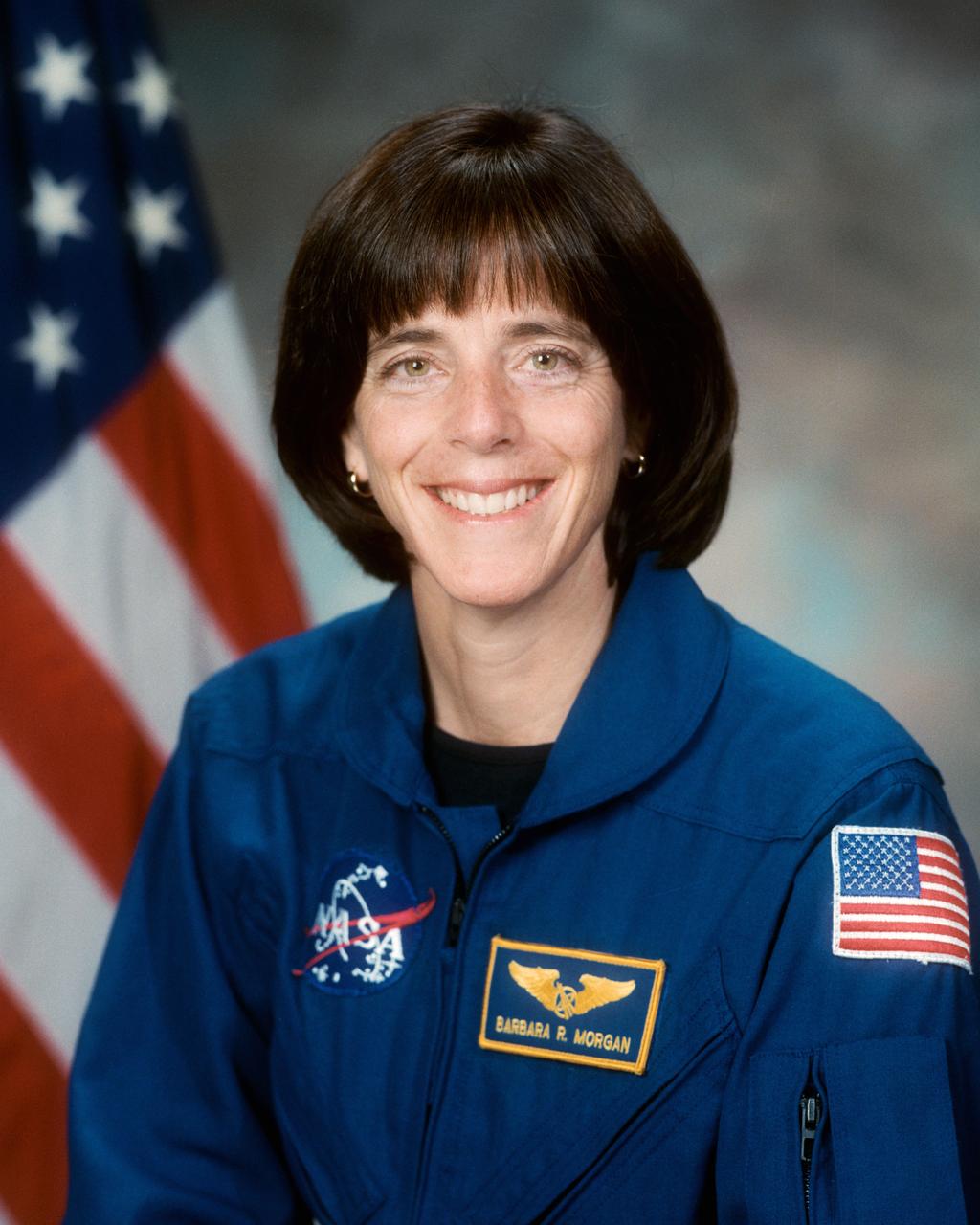
S98-19773 (29 Oct 1998) --- Astronaut Barbara R. Morgan, mission specialist.
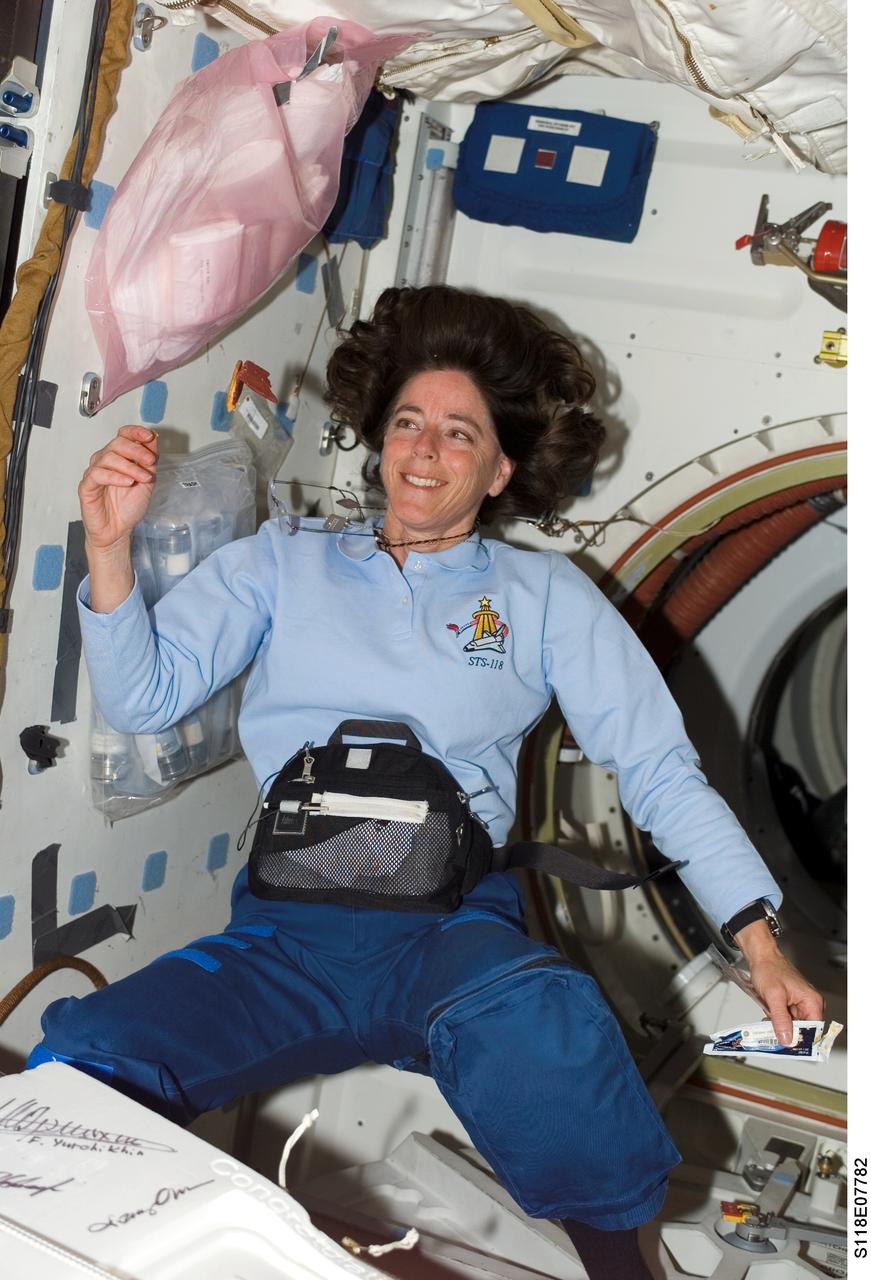
S118-E-07782 (17 Aug. 2007) --- Astronaut Barbara R. Morgan, STS-118 mission specialist, admires a cracker, cheese and meat sandwich she's put together on the mid deck of the Space Shuttle Endeavour. Morgan and her six crewmates are heading down to their final days in joint operations with the Expedition 15 crewmembers on the International Space Station.

Marshall Center Director Patrick Scheuermann and Dr. Lisa Watson-Morgan talk to news media at the April 17 Marshall 2014 Update. Watson-Morgan, the first woman to be named the center's chief engineer, answered questions about progress on the Space Launch System and other projects, and spoke about the importance of attracting young people to science, technology, engineering and mathematics education to maintain a "pipeline" of future engineers.
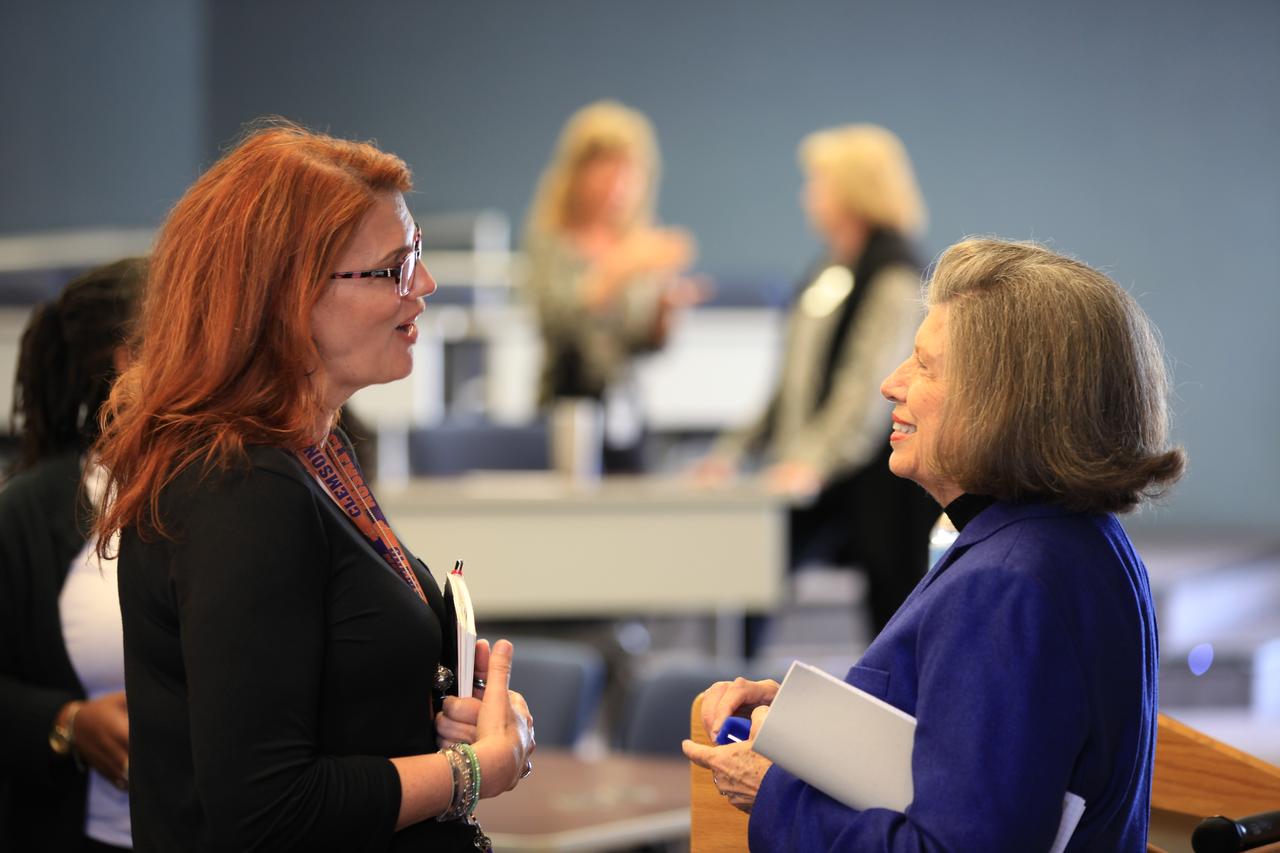
JoAnn Morgan, at right, former associate director of Kennedy Space Center, was the keynote speaker during a Women's History Month event at the center. With the theme "Nevertheless She Persisted," Morgan described her experience as the first female engineer working in the space program in the 1960s. Morgan was the first female in the Launch Control Center firing room during the Apollo 11 launch. Morgan is speaking to Charlie Blackwell-Thompson, the first female launch director, who will lead countdown and launch for Exploration Mission-1. The event was hosted by the center's Kennedy Networking Opportunities for Women (KNOW) and Launching Leaders organizations. The purpose of KNOW is to provide focus on issues such as employment, retention, promotion, training, career and personal development, education, and identify and eliminate barriers that hinder the advancement of women in the workforce.
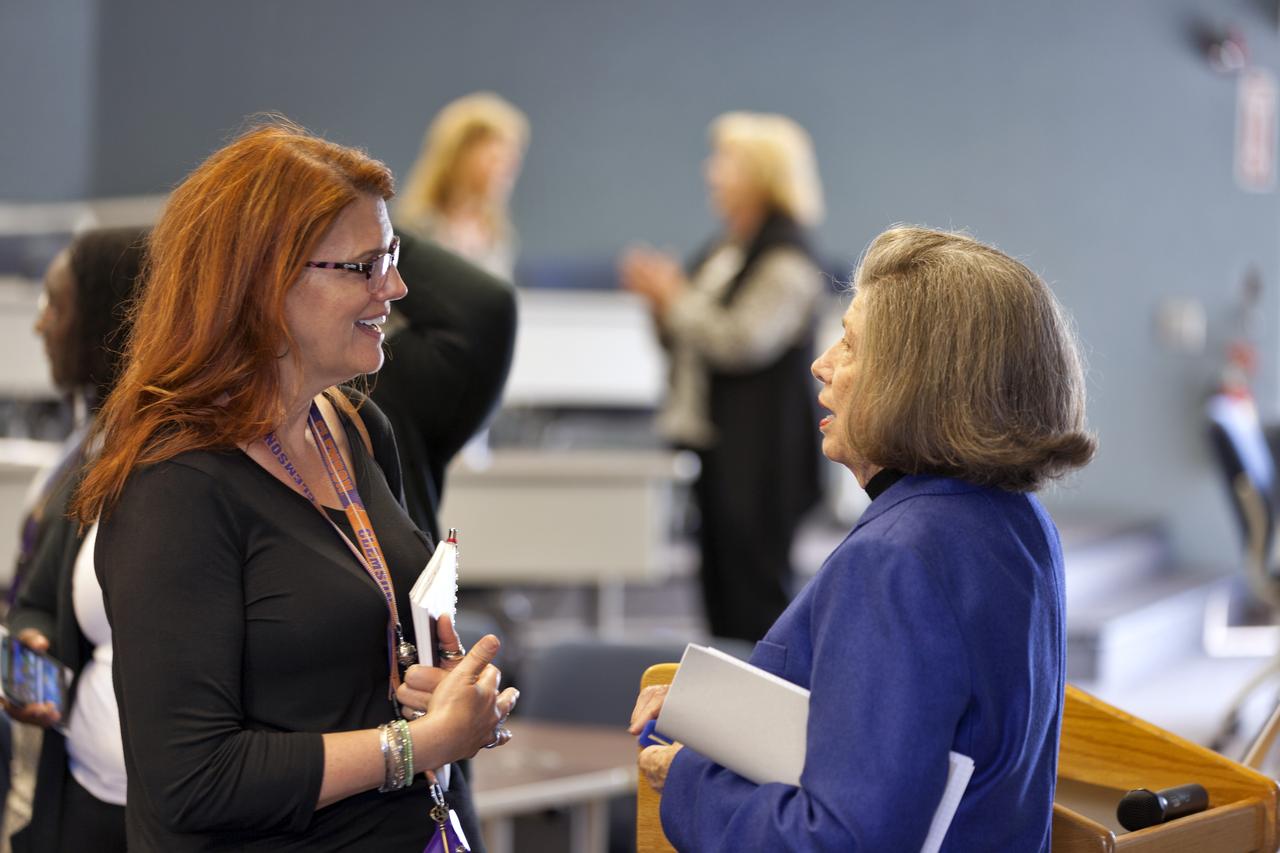
JoAnn Morgan, at right, former associate director of Kennedy Space Center, was the keynote speaker during a Women's History Month event at the center. With the theme "Nevertheless She Persisted," Morgan described her experience as the first female engineer working in the space program in the 1960s. Morgan was the first female in the Launch Control Center firing room during the Apollo 11 launch. Morgan is speaking to Charlie Blackwell-Thompson, the first female launch director, who will lead countdown and launch for Exploration Mission-1. The event was hosted by the center's Kennedy Networking Opportunities for Women (KNOW) and Launching Leaders organizations. The purpose of KNOW is to provide focus on issues such as employment, retention, promotion, training, career and personal development, education, and identify and eliminate barriers that hinder the advancement of women in the workforce.
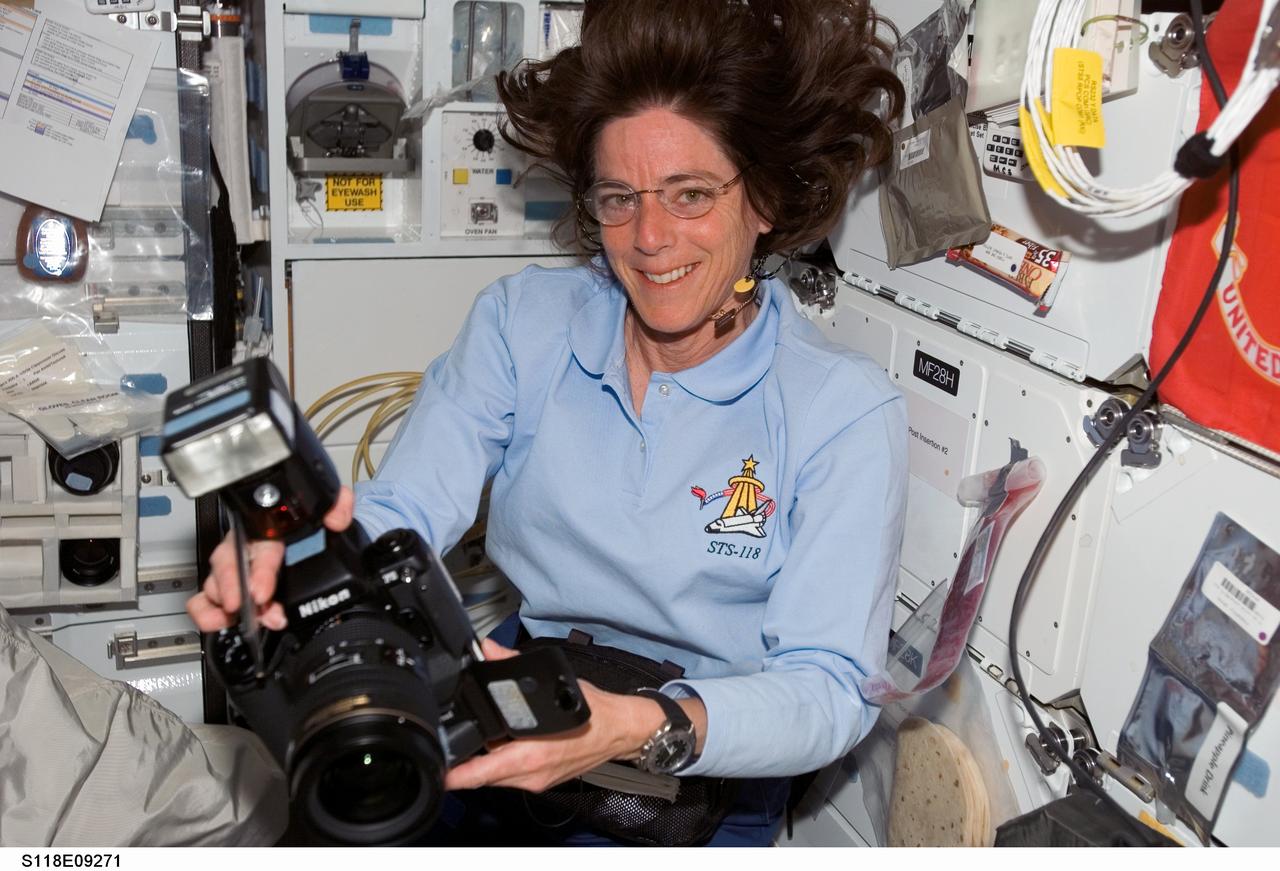
S118-E-09271 (18 Aug. 2007) --- Astronaut Barbara R. Morgan, STS-118 mission specialist, pauses for a photo while holding a still camera on the middeck of Space Shuttle Endeavour.
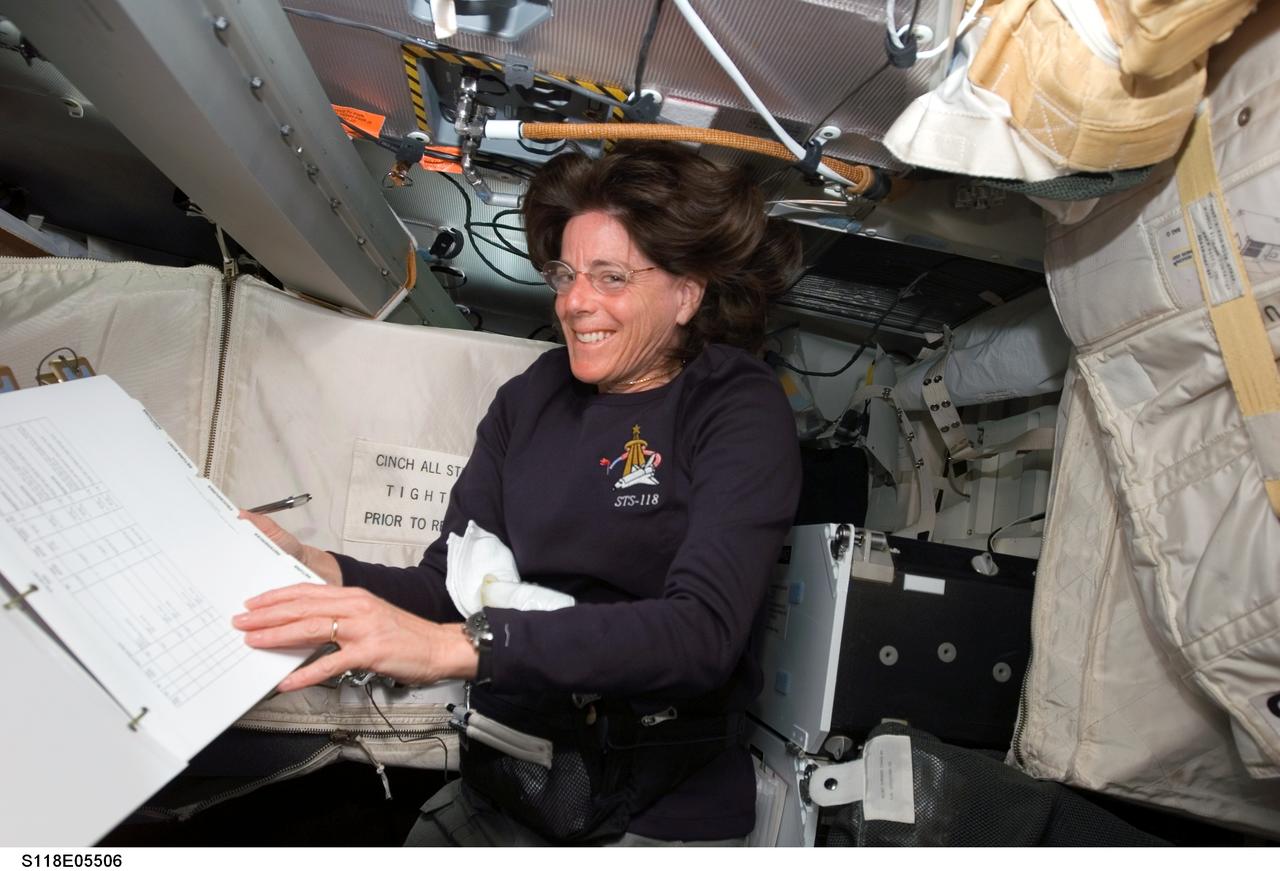
S118-E-05506 (9 Aug. 2007) --- Astronaut Barbara R. Morgan, STS-118 mission specialist, smiles for the camera while working on the middeck of Space Shuttle Endeavour during flight day two activities.
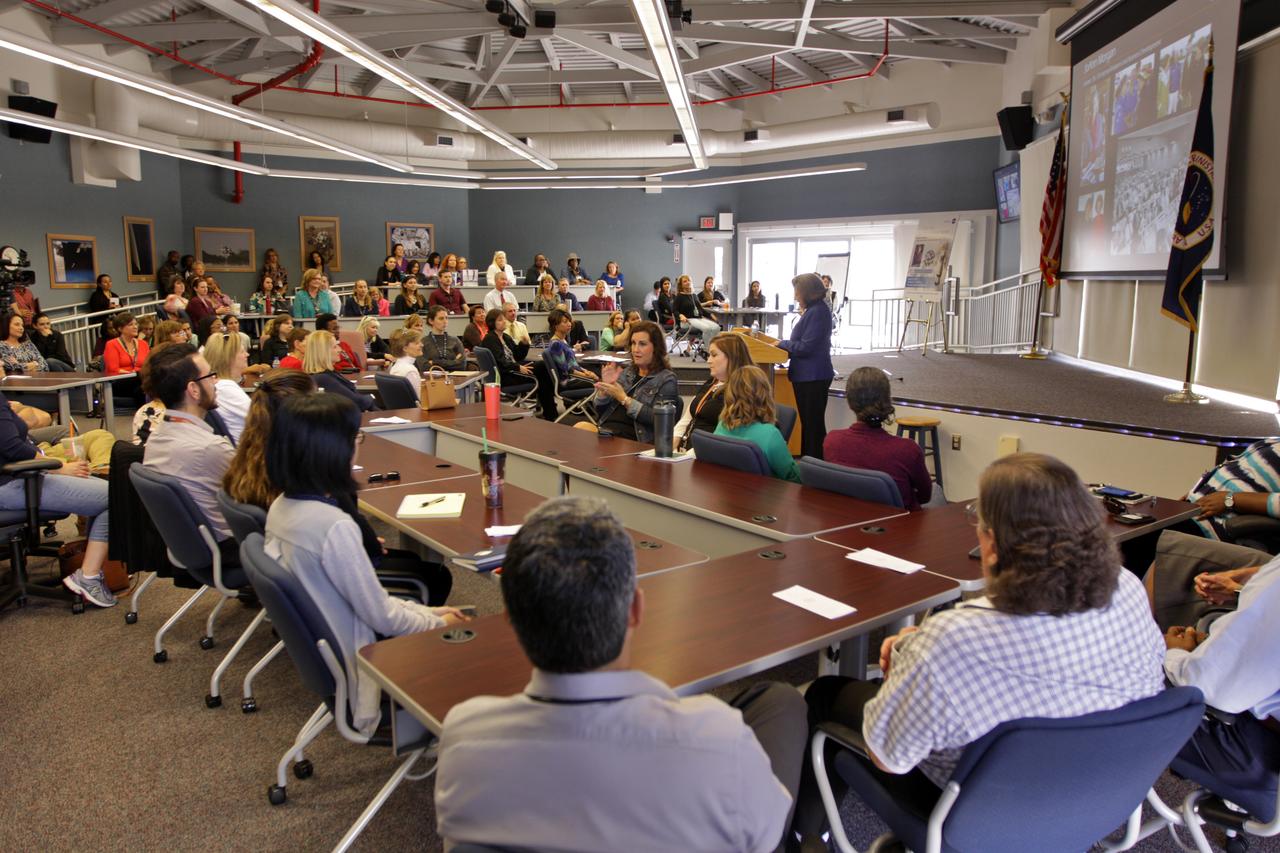
JoAnn Morgan, former associate director of NASA Kennedy Space Center, speaks to workers during a Women's History Month event at the center. With the theme "Nevertheless She Persisted," Morgan described her experience as the first female engineer working in the space program in the 1960s. Morgan was the first female in the Launch Control Center firing room during the Apollo 11 launch. The event was hosted by the center's Kennedy Networking Opportunities for Women (KNOW) and Launching Leaders organizations. The purpose of KNOW is to provide focus on issues such as employment, retention, promotion, training, career and personal development, education, and identify and eliminate barriers that hinder the advancement of women in the workforce.
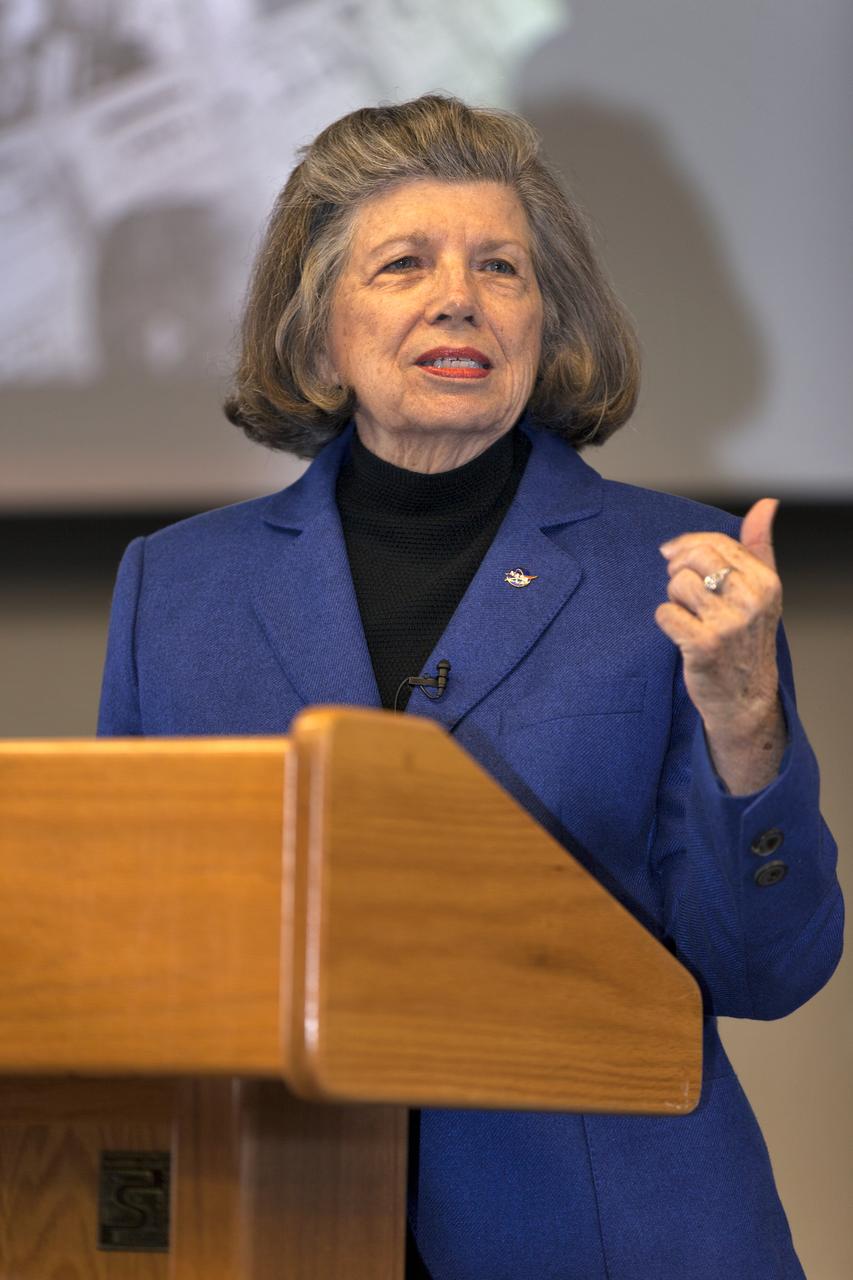
JoAnn Morgan, former associate director of NASA Kennedy Space Center, was the keynote speaker during a Women's History Month event at the center. With the theme "Nevertheless She Persisted," Morgan described her experience as the first female engineer working in the space program in the 1960s. Morgan was the first female in the Launch Control Center firing room during the Apollo 11 launch. The event was hosted by the center's Kennedy Networking Opportunities for Women (KNOW) and Launching Leaders organizations. The purpose of KNOW is to provide focus on issues such as employment, retention, promotion, training, career and personal development, education, and identify and eliminate barriers that hinder the advancement of women in the workforce.
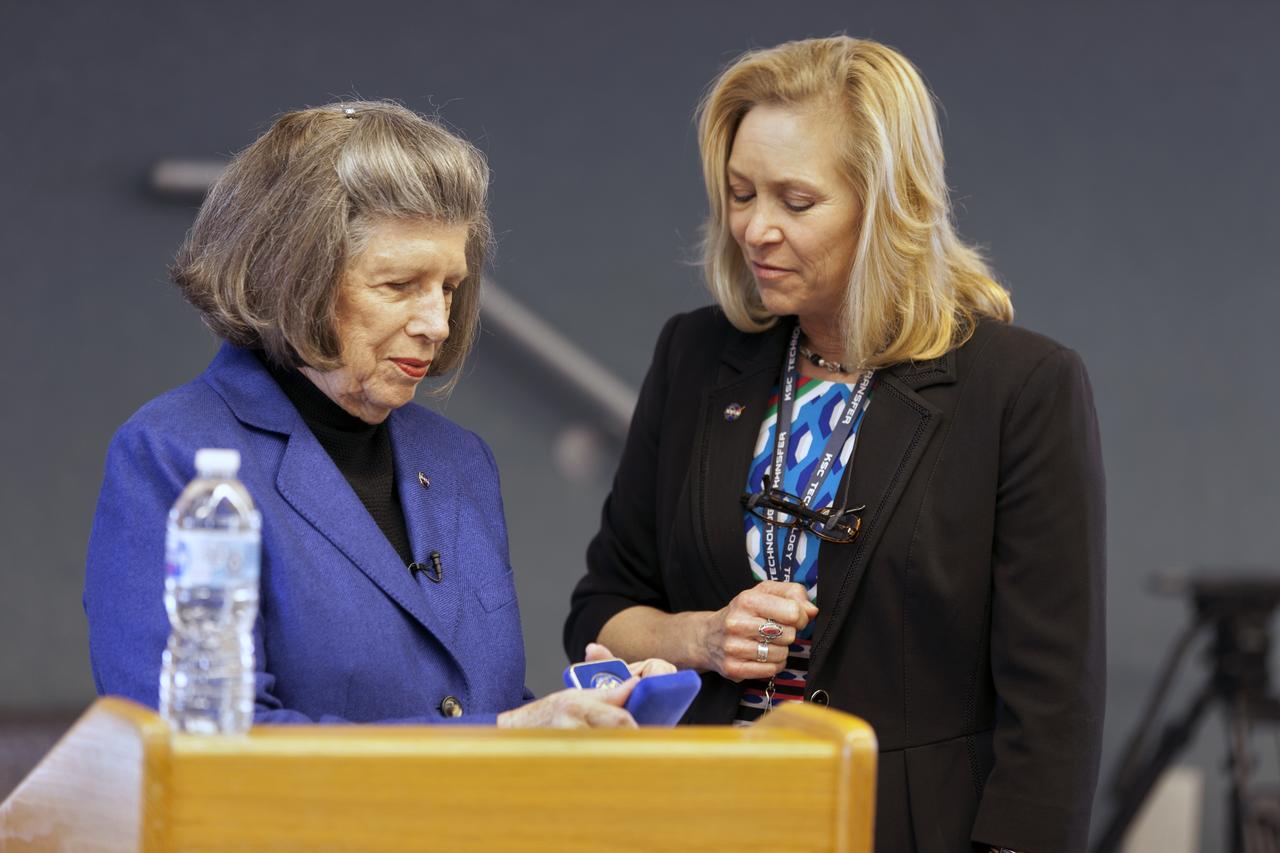
JoAnn Morgan, former associate director of Kennedy Space Center, at left, accepts a special coin from Janet Petro, deputy director of Kennedy, during a Women's History Month event at the center. With the theme "Nevertheless She Persisted," Morgan described her experience as the first female engineer working in the space program in the 1960s. Morgan was the first female in the Launch Control Center firing room during the Apollo 11 launch. The event was hosted by the center's Kennedy Networking Opportunities for Women (KNOW) and Launching Leaders organizations. The purpose of KNOW is to provide focus on issues such as employment, retention, promotion, training, career and personal development, education, and identify and eliminate barriers that hinder the advancement of women in the workforce.
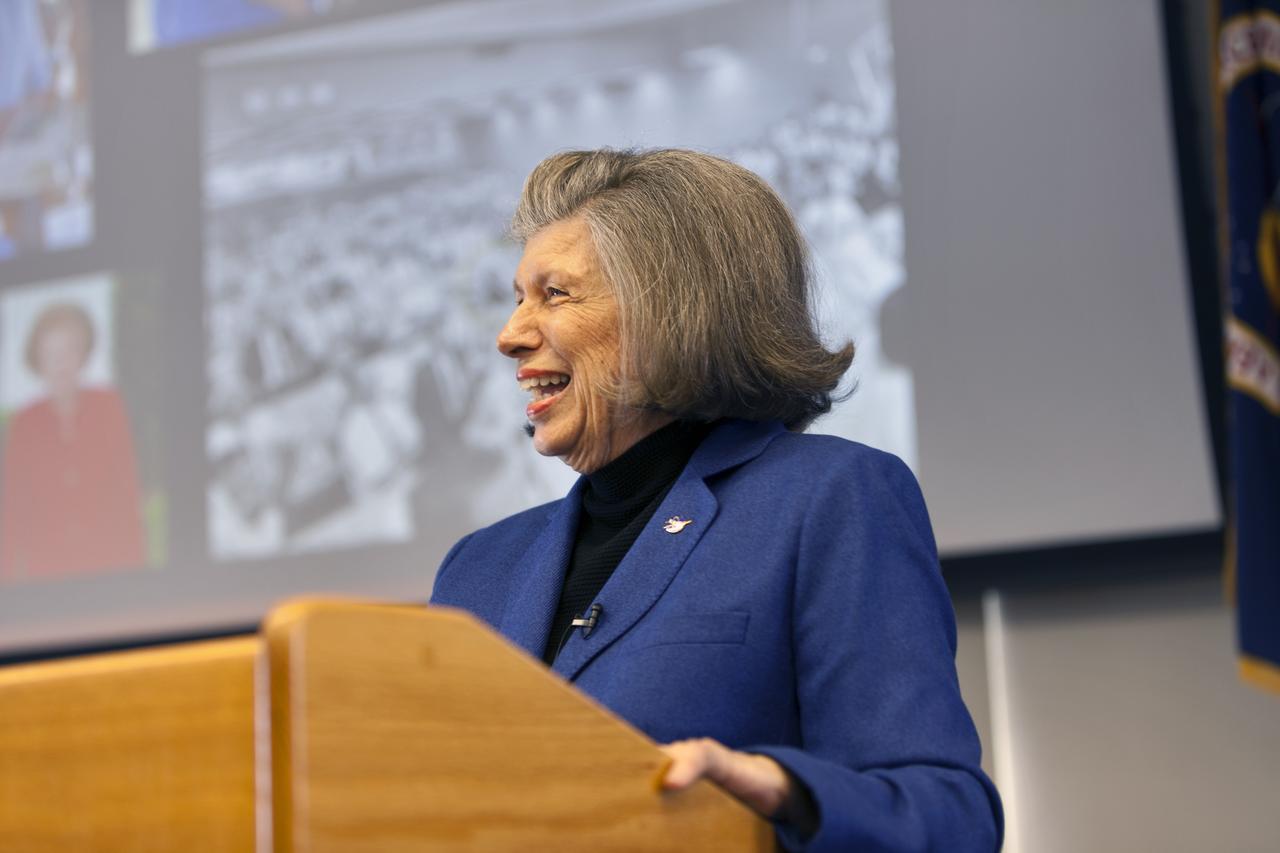
JoAnn Morgan, former associate director of Kennedy Space Center, was the keynote speaker during a Women's History Month event at the center. With the theme "Nevertheless She Persisted," Morgan described her experience as the first female engineer working in the space program in the 1960s. Morgan was the first female in the Launch Control Center firing room during the Apollo 11 launch. The event was hosted by the center's Kennedy Networking Opportunities for Women (KNOW) and Launching Leaders organizations. The purpose of KNOW is to provide focus on issues such as employment, retention, promotion, training, career and personal development, education, and identify and eliminate barriers that hinder the advancement of women in the workforce.
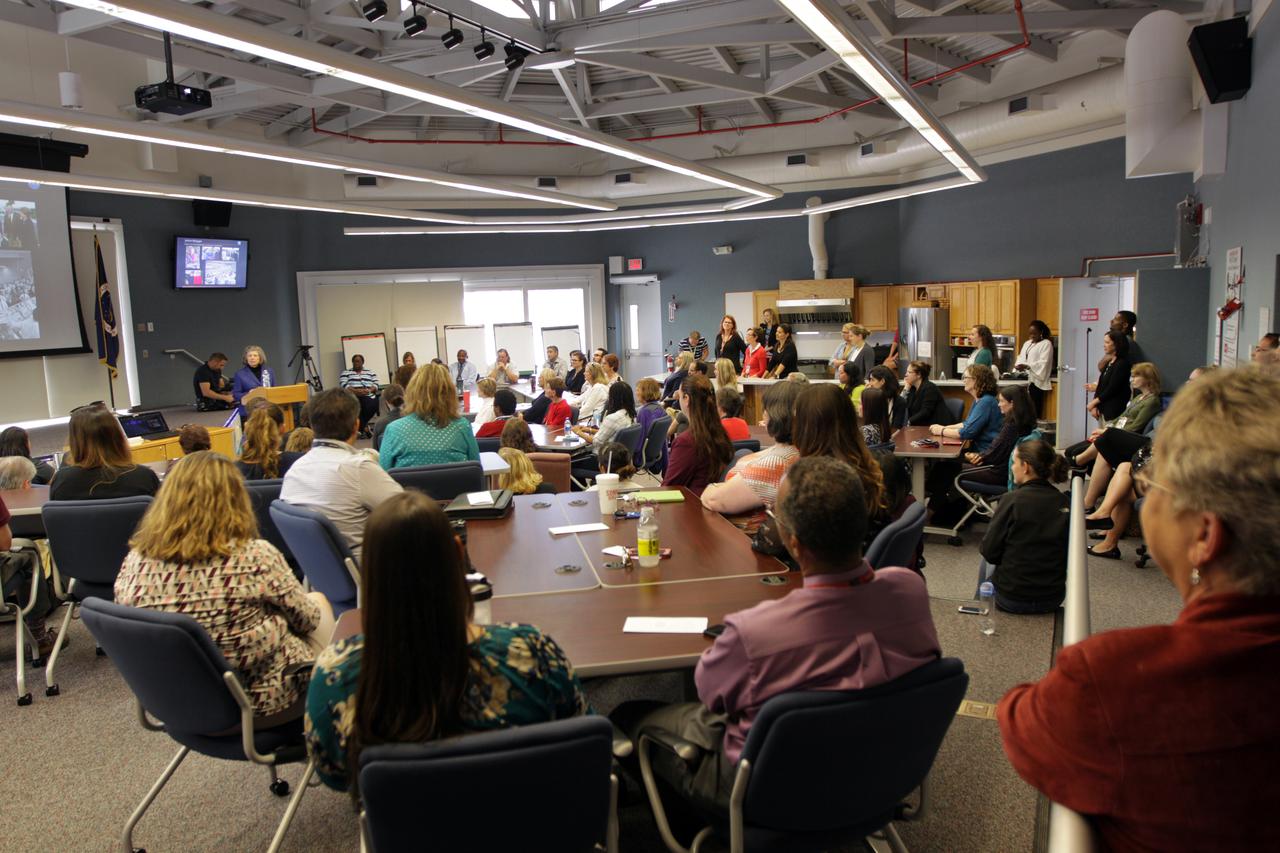
JoAnn Morgan, far left at the podium, former associate director of Kennedy Space Center, was the keynote speaker during a Women's History Month event at the center. With the theme "Nevertheless She Persisted," Morgan described her experience as the first female engineer working in the space program in the 1960s. Morgan was the first female in the Launch Control Center firing room during the Apollo 11 launch. The event was hosted by the center's Kennedy Networking Opportunities for Women (KNOW) and Launching Leaders organizations. The purpose of KNOW is to provide focus on issues such as employment, retention, promotion, training, career and personal development, education, and identify and eliminate barriers that hinder the advancement of women in the workforce.
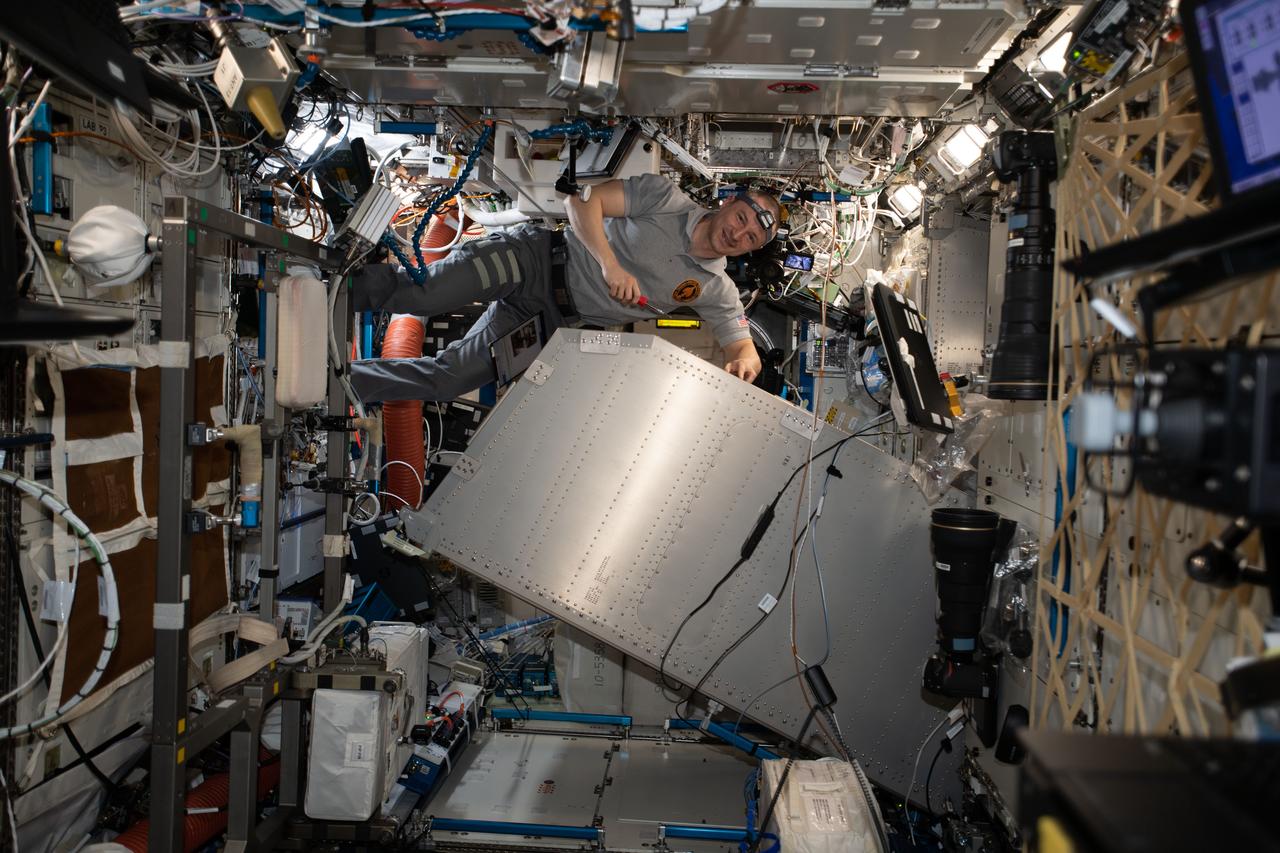
iss062e014085 (Feb. 22, 2020) --- NASA astronaut and Expedition 62 Flight Engineer Andrew Morgan services the Microgravity Science Glovebox (MSG) inside the U.S. Destiny laboratory module. Morgan was cleaning and lubricating the MSG components and photographing the maintenance work for inspection.
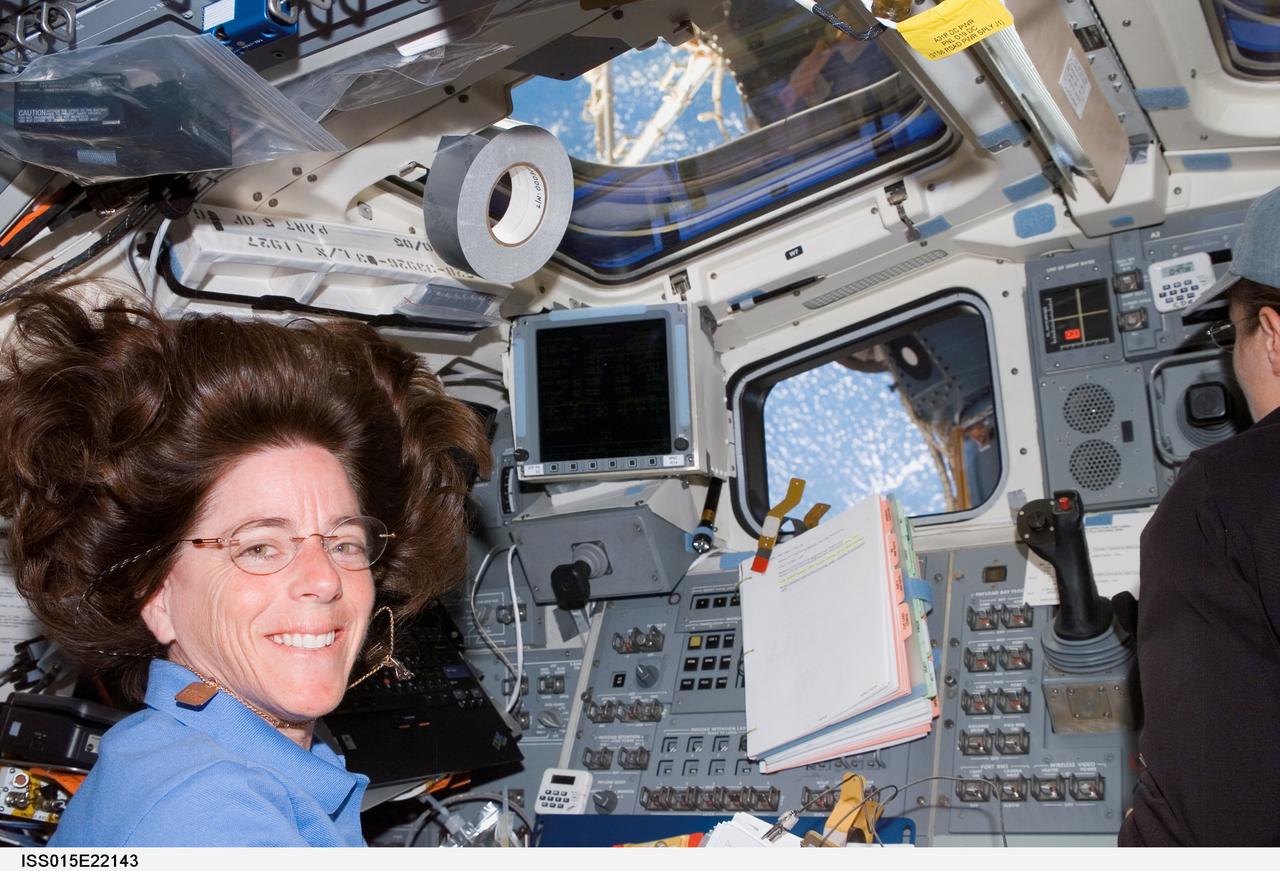
ISS015-E-22143 (12 Aug. 2007) --- Astronaut Barbara R. Morgan, STS-118 mission specialist, pauses for a photo while working the controls on the aft flight deck of Space Shuttle Endeavour while docked with the International Space Station. Astronaut Tracy Caldwell (partially out of fame), mission specialist, is visible at right.
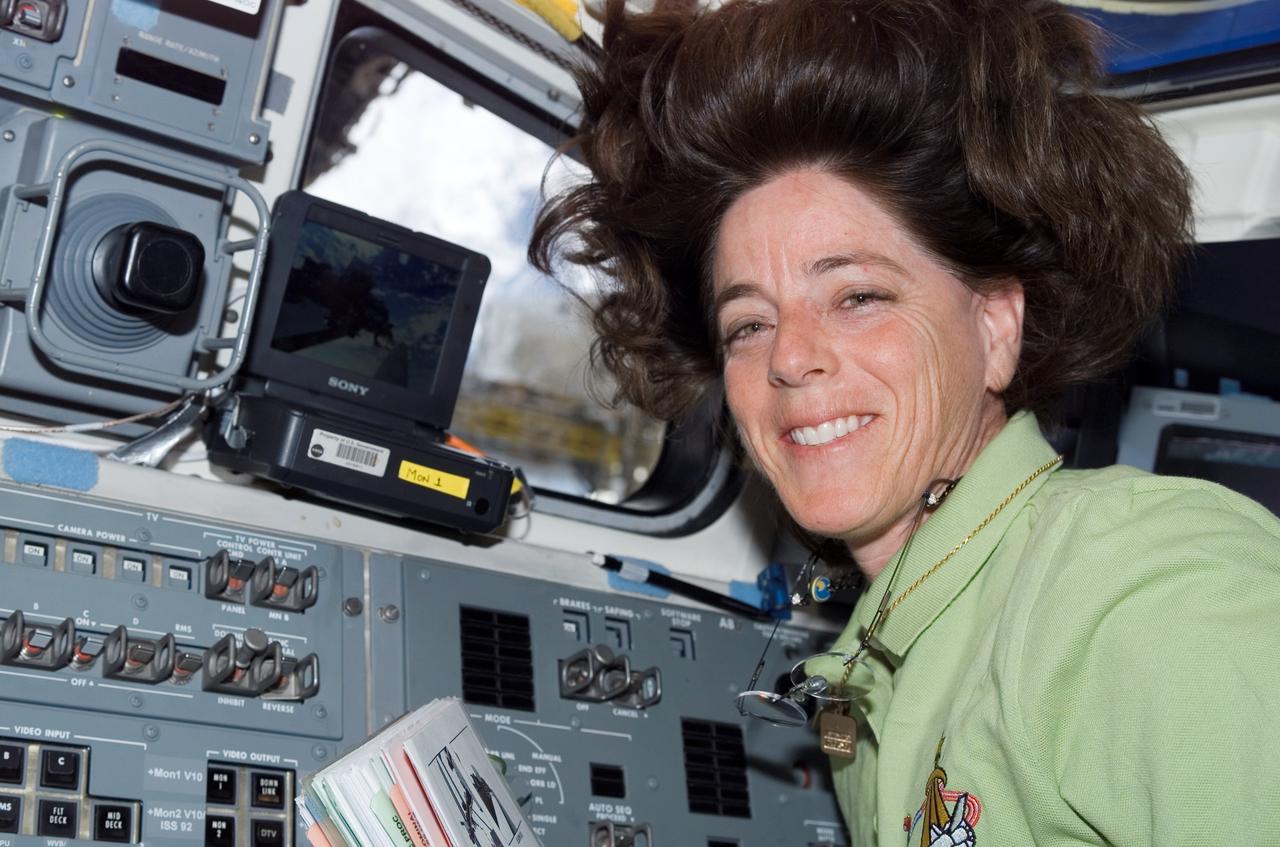
S118-E-07109 (14 Aug. 2007) --- Astronaut Barbara R. Morgan, STS-118 mission specialist, pauses for a photo while working the controls on the aft flight deck of Space Shuttle Endeavour while docked with the International Space Station.
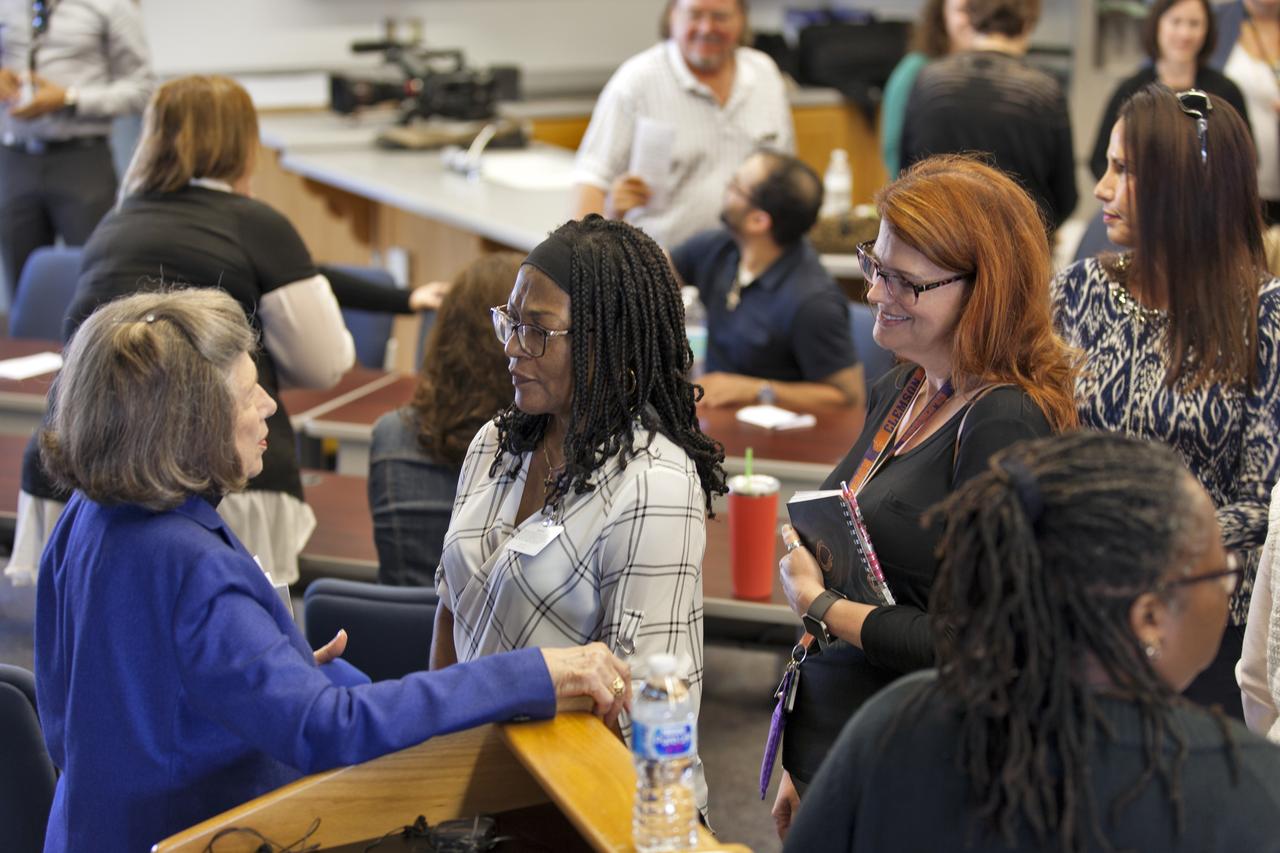
JoAnn Morgan, former associate director of Kennedy Space Center, was the keynote speaker during a Women's History Month event at the center. With the theme "Nevertheless She Persisted," Morgan described her experience as the first female engineer working in the space program in the 1960s. Morgan was the first female in the Launch Control Center firing room during the Apollo 11 launch. Third from the left is Charlie Blackwell-Thompson, launch director for Exploration Mission-1. The event was hosted by the center's Kennedy Networking Opportunities for Women (KNOW) and Launching Leaders organizations. The purpose of KNOW is to provide focus on issues such as employment, retention, promotion, training, career and personal development, education, and identify and eliminate barriers that hinder the advancement of women in the workforce.
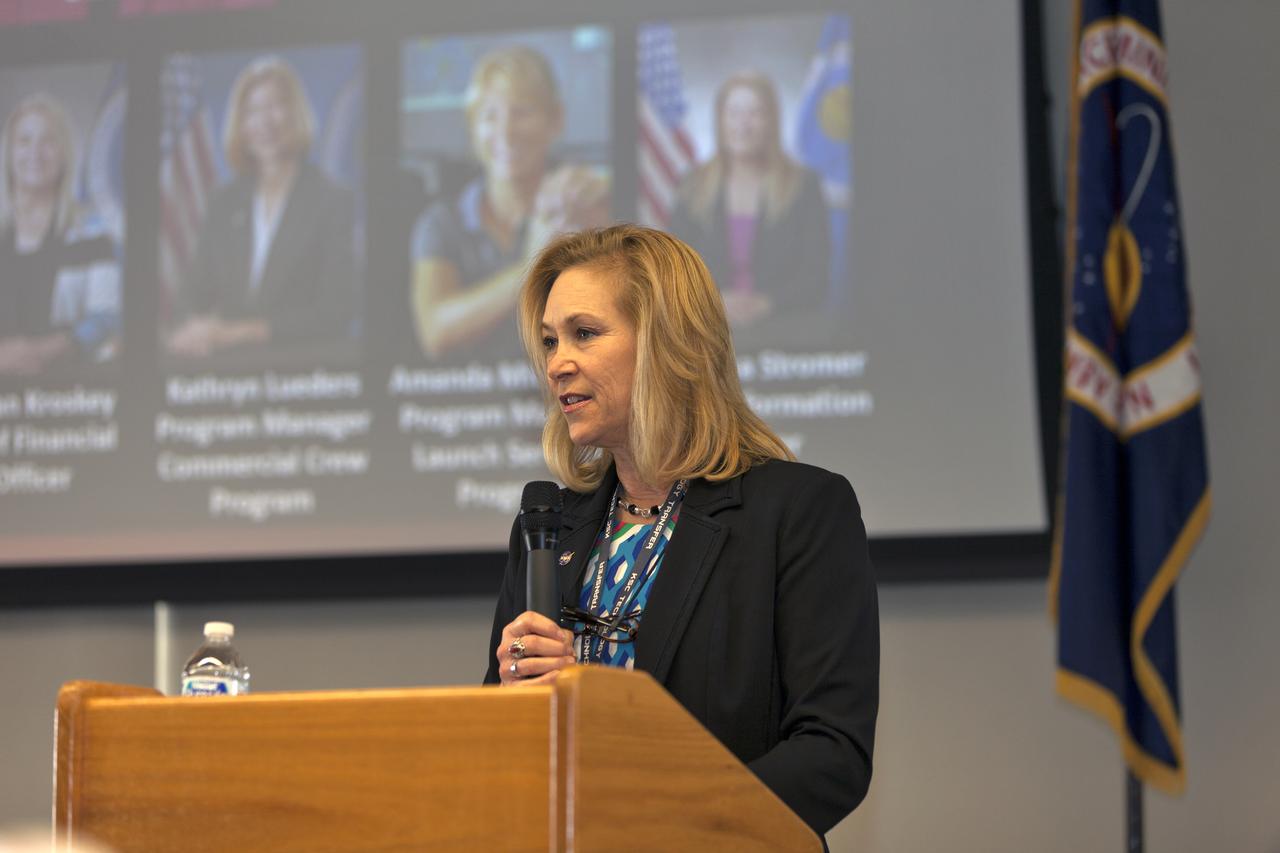
NASA Kennedy Space Center's Deputy Director Janet Petro welcomes workers to the center's Women's History Month event, with the theme "Nevertheless She Persisted." Keynote speaker, JoAnn Morgan, former associate director of the center, spoke to the group about her experience as the first female engineer working in the space program in the 1960s. Morgan was the first female in the Launch Control Center firing room during the Apollo 11 launch. The event was hosted by the center's Kennedy Networking Opportunities for Women (KNOW) and Launching Leaders organizations. The purpose of KNOW is to provide focus on issues such as employment, retention, promotion, training, career and personal development, education, and identify and eliminate barriers that hinder the advancement of women in the workforce.
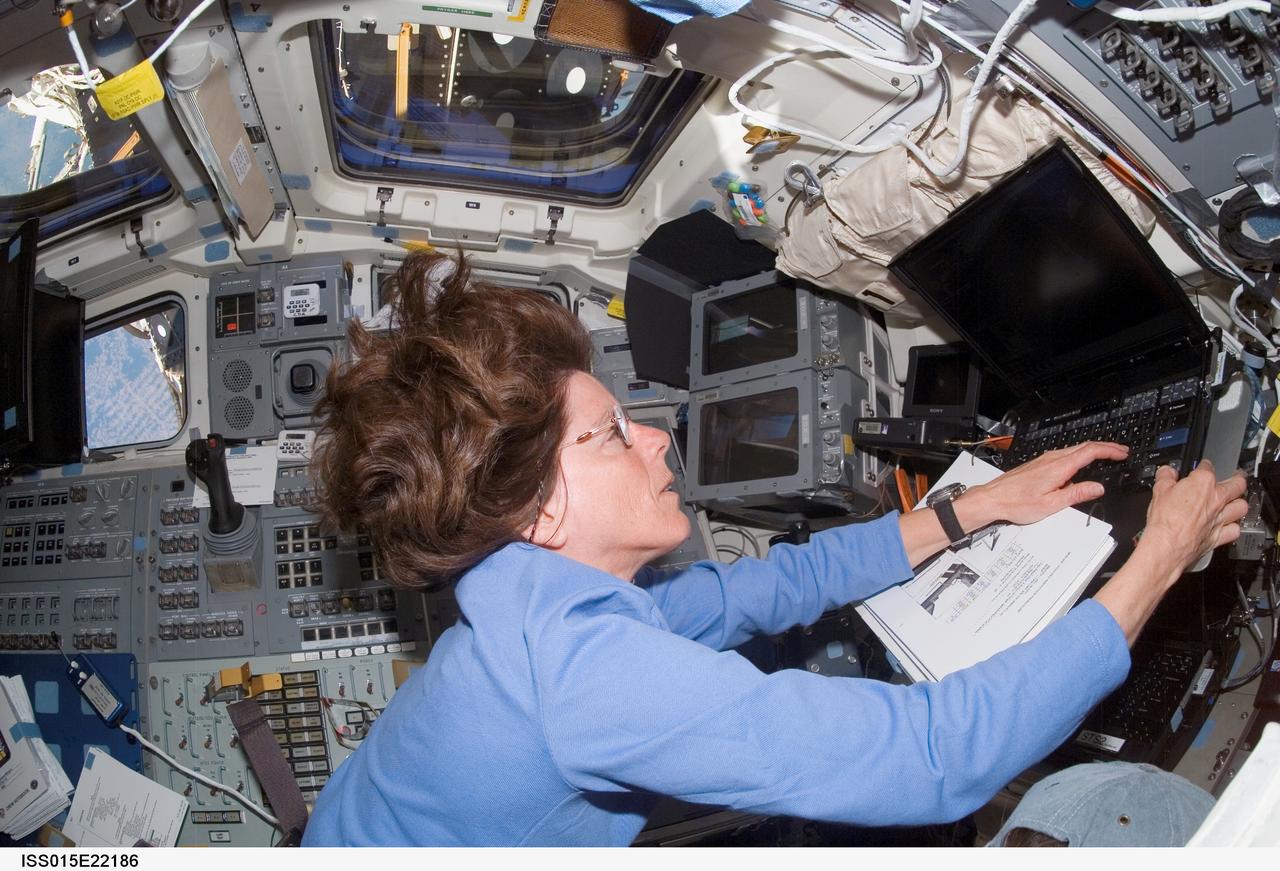
ISS015-E-22186 (12 Aug. 2007) --- Astronaut Barbara R. Morgan, STS-118 mission specialist, uses a computer on the aft flight deck of Space Shuttle Endeavour while docked with the International Space Station.
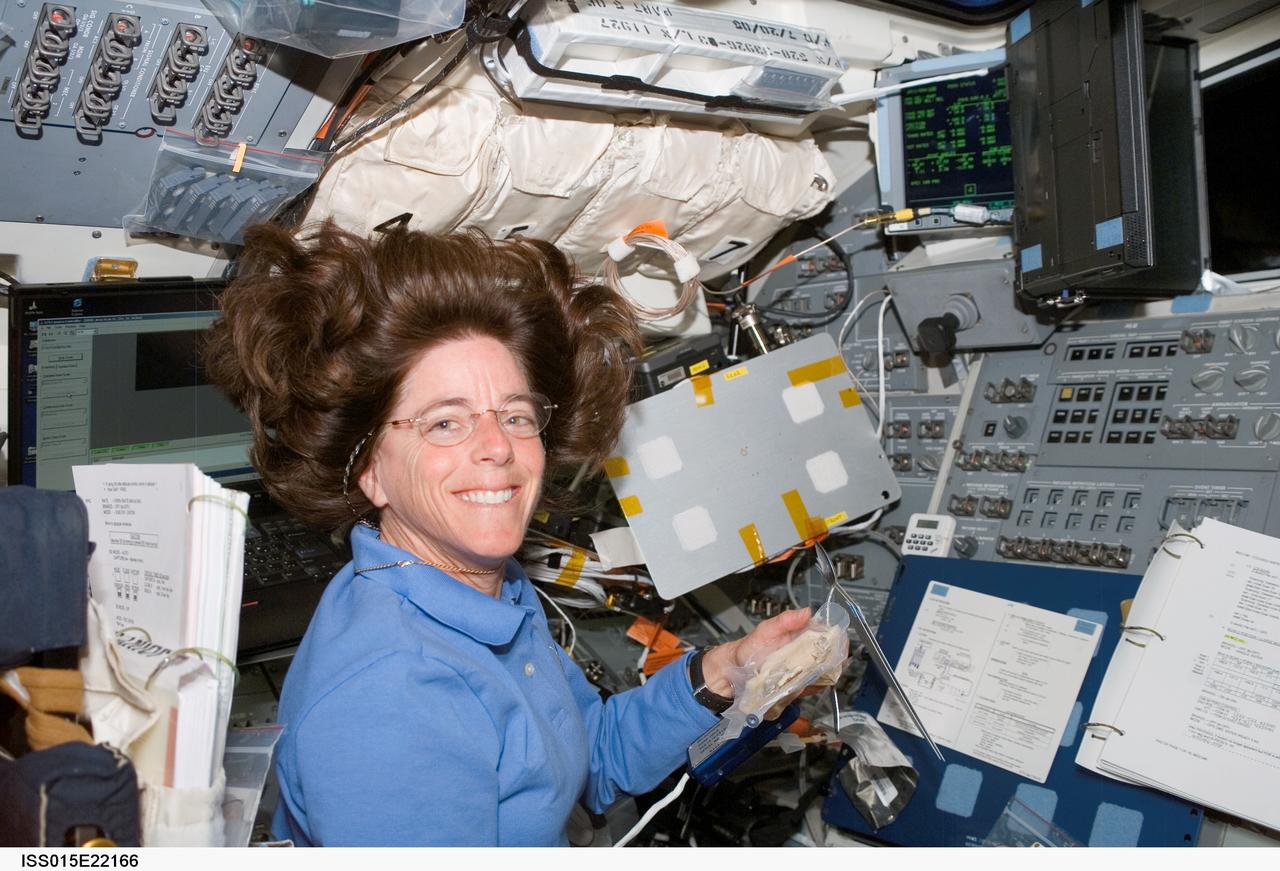
ISS015-E-22166 (12 Aug. 2007) --- Astronaut Barbara R. Morgan, STS-118 mission specialist, smiles for a photo near the aft flight deck of Space Shuttle Endeavour while docked with the International Space Station.
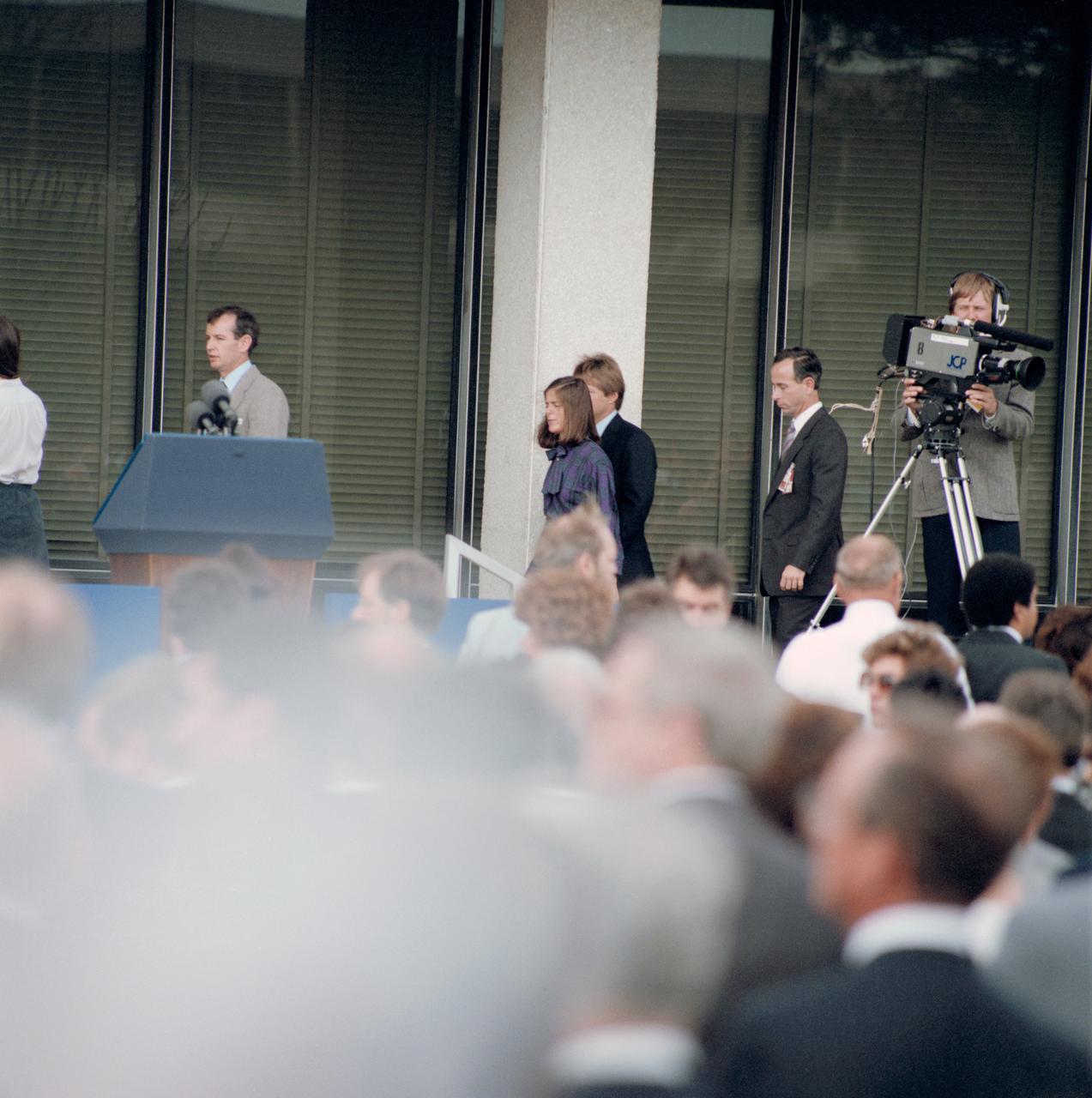
51L-S-108 (31 Jan. 1986) --- Barbara R. Morgan, 51-L backup payload specialist to Christa McAuliffe, with others on the stage at the Memorial service for the Challenger Seven at JSC. Photo credit: NASA
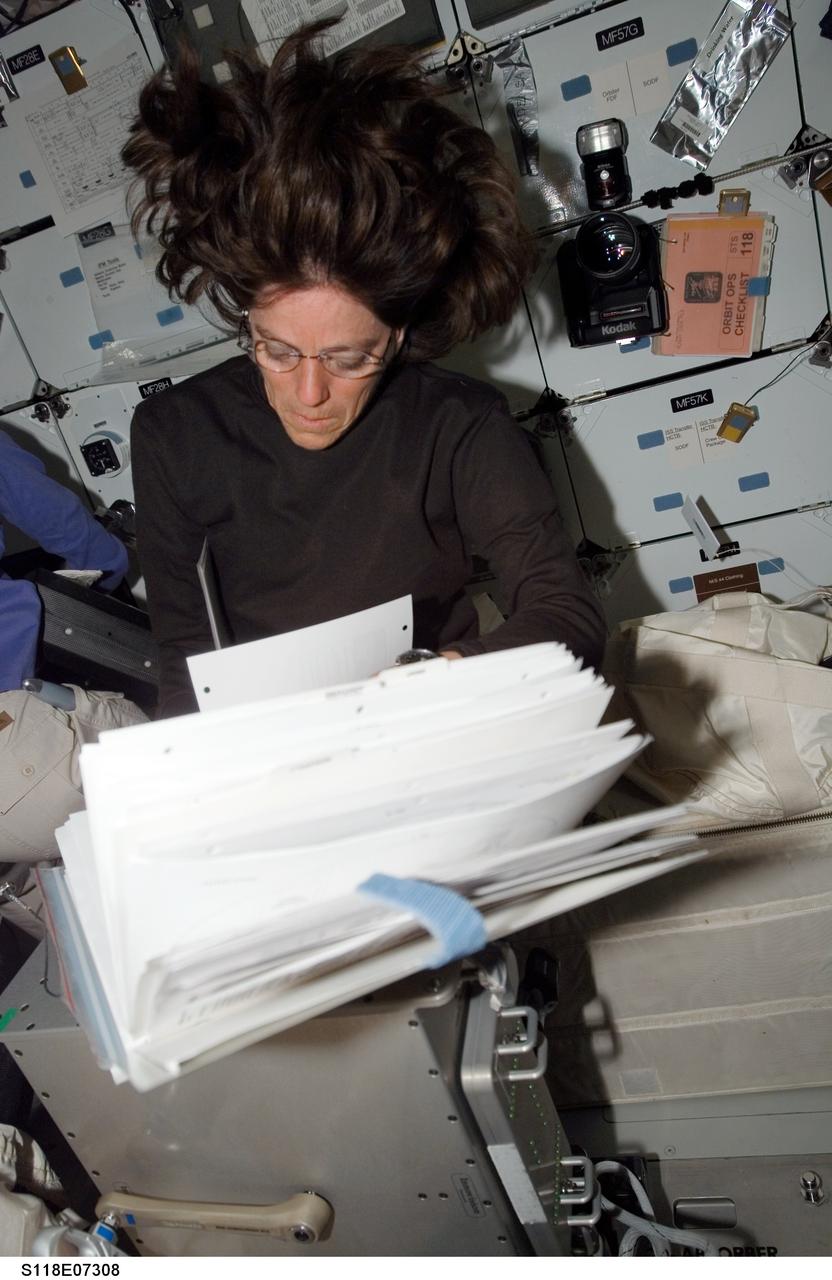
S118-E-07308 (15 Aug. 2007) --- Astronaut Barbara R. Morgan, STS-118 mission specialist, looks over procedures checklists on the middeck of Space Shuttle Endeavour while docked with the International Space Station.
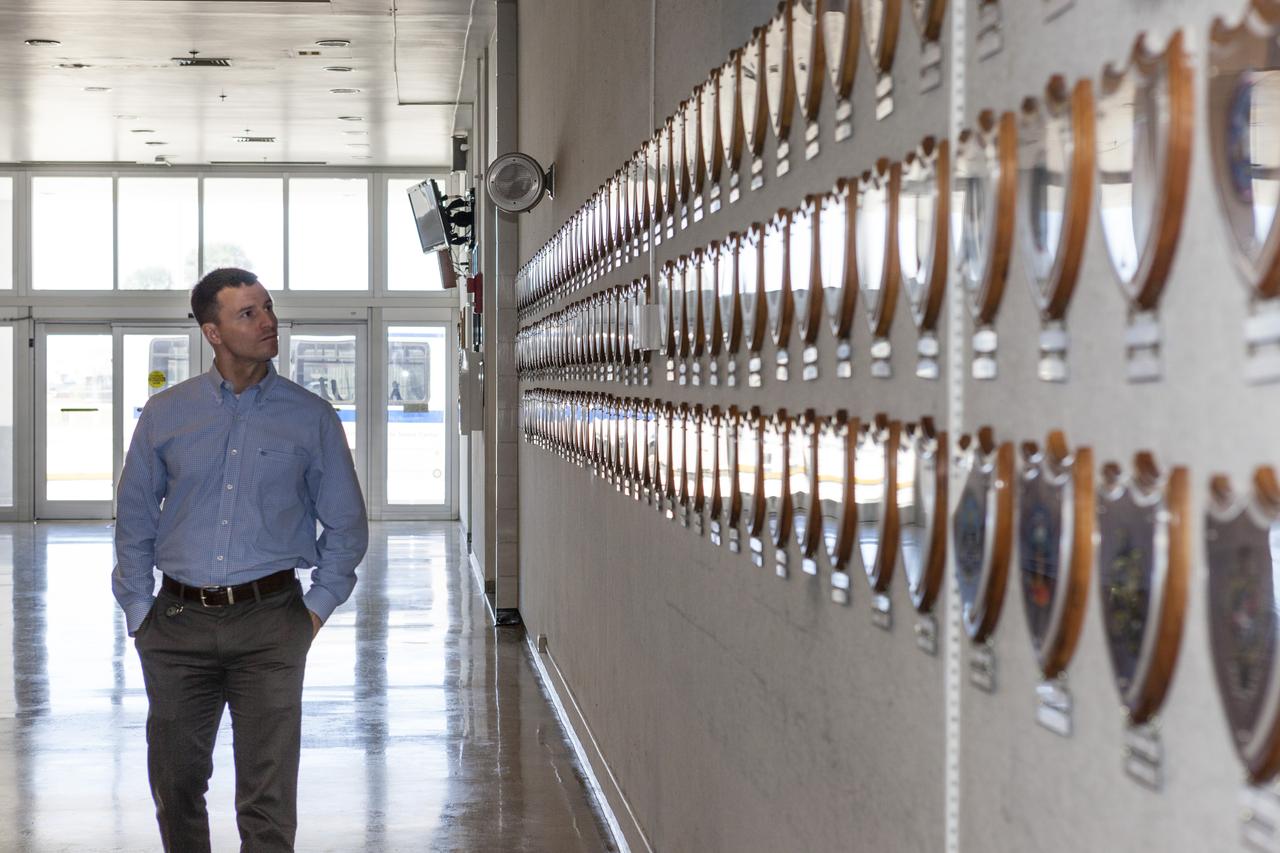
CAPE CANAVERAL, Fla. – NASA astronaut candidate Andrew Morgan surveys the mission plaques on the wall of the Launch Control Center at Kennedy Space Center in Florida during a daylong set of briefings and tours of different facilities at NASA's primary launch center. The astronaut class of 2013 was selected by NASA after an extensive year-and-a-half search. The new group will help the agency push the boundaries of exploration and travel to new destinations in the solar system. To learn more about the astronaut class of 2013, visit: http://www.nasa.gov/astronauts/2013astroclass.html Photo credit: NASA/Kim Shiflett
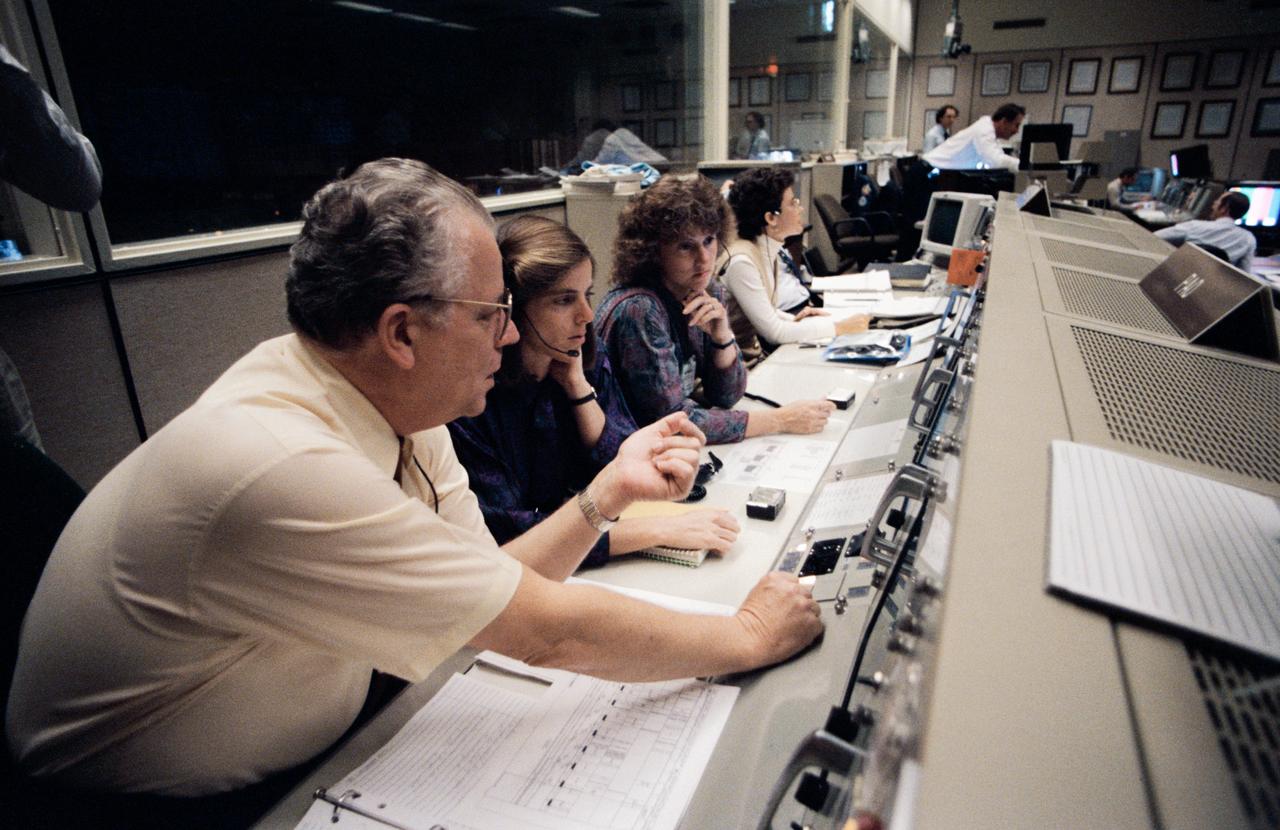
61A-S-135 (5 Nov 1985) --- Two school teachers in training at the Johnson Space Center got their first ?real time? exposure to a Space Shuttle mission as they monitor activity aboard the Spacelab D-1 science module from the mission control center. Sharon Christa McAuliffe (frame center) and Barbara R. Morgan are briefed by Terry White at the Public Affairs console during a television downlink from the Earth-orbiting Space Shuttle Challenger. McAuliffe is scheduled to fly as teacher/citizen observer on the STS 51-L mission early next year; and Morgan is in training as her backup.
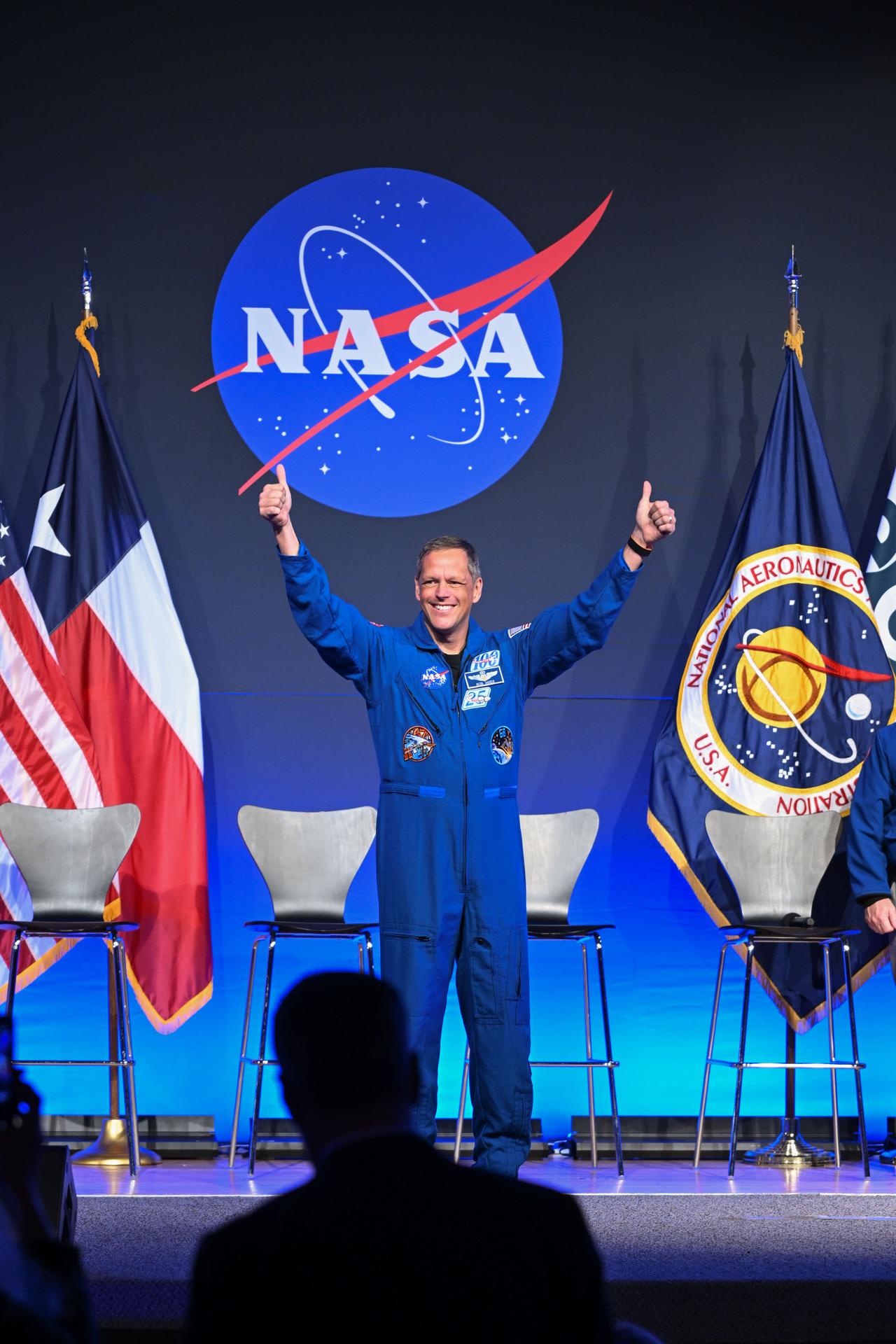
NASA astronaut Bob Hines is announced as the Artemis III backup crew member during an event at NASA's Johnson Space Center in Houston on June 9, 2026. Credit: NASA/Morgan Gridley

NASA astronaut Andre Douglas is announced as an Artemis III mission specialist during an event at NASA's Johnson Space Center in Houston on June 9, 2026. Credit: NASA/Morgan Gridley
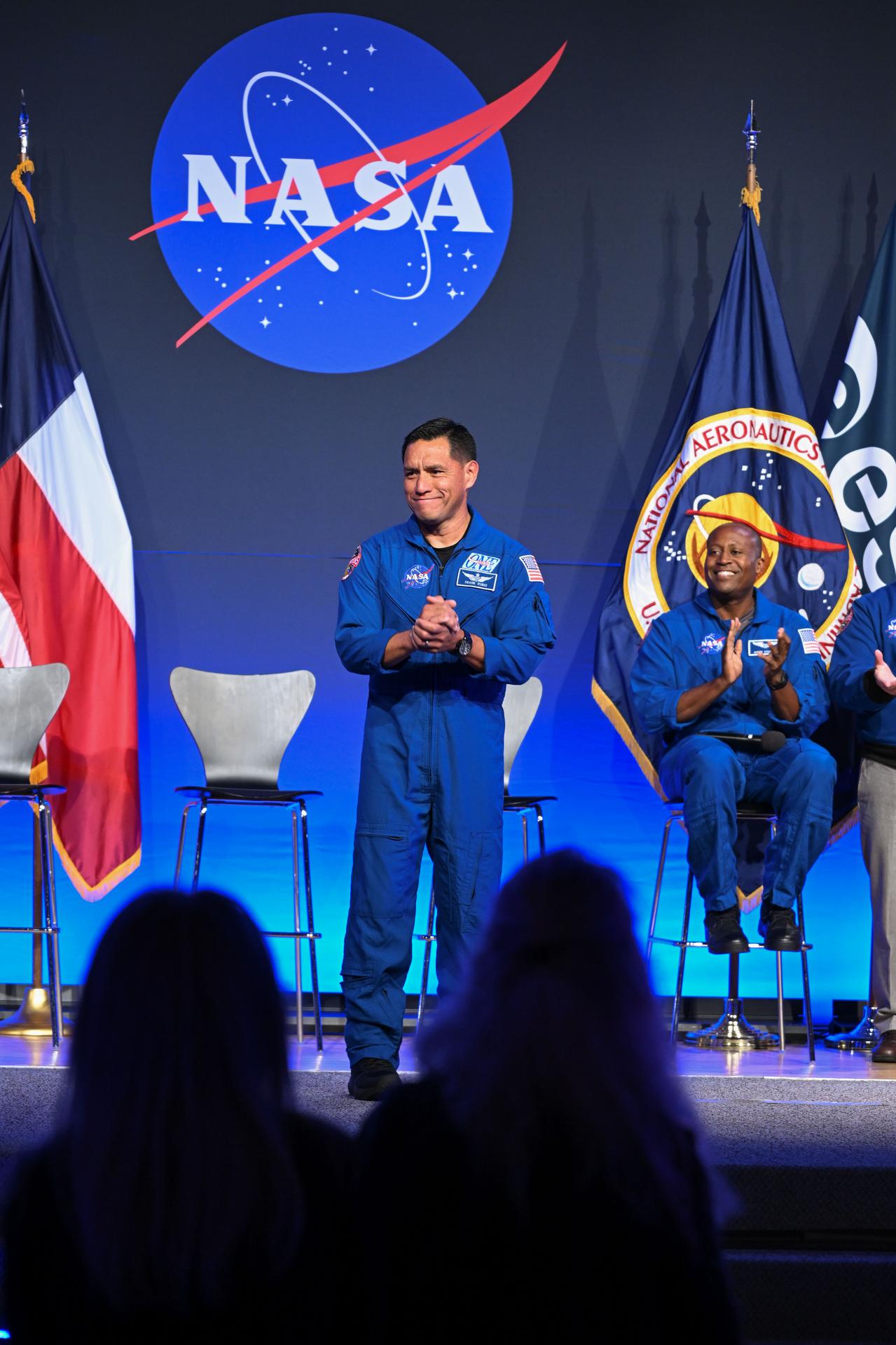
NASA astronaut Frank Rubio is announced as an Artemis III mission specialist during an event at NASA's Johnson Space Center in Houston on June 9, 2026. Credit: NASA/Morgan Gridley
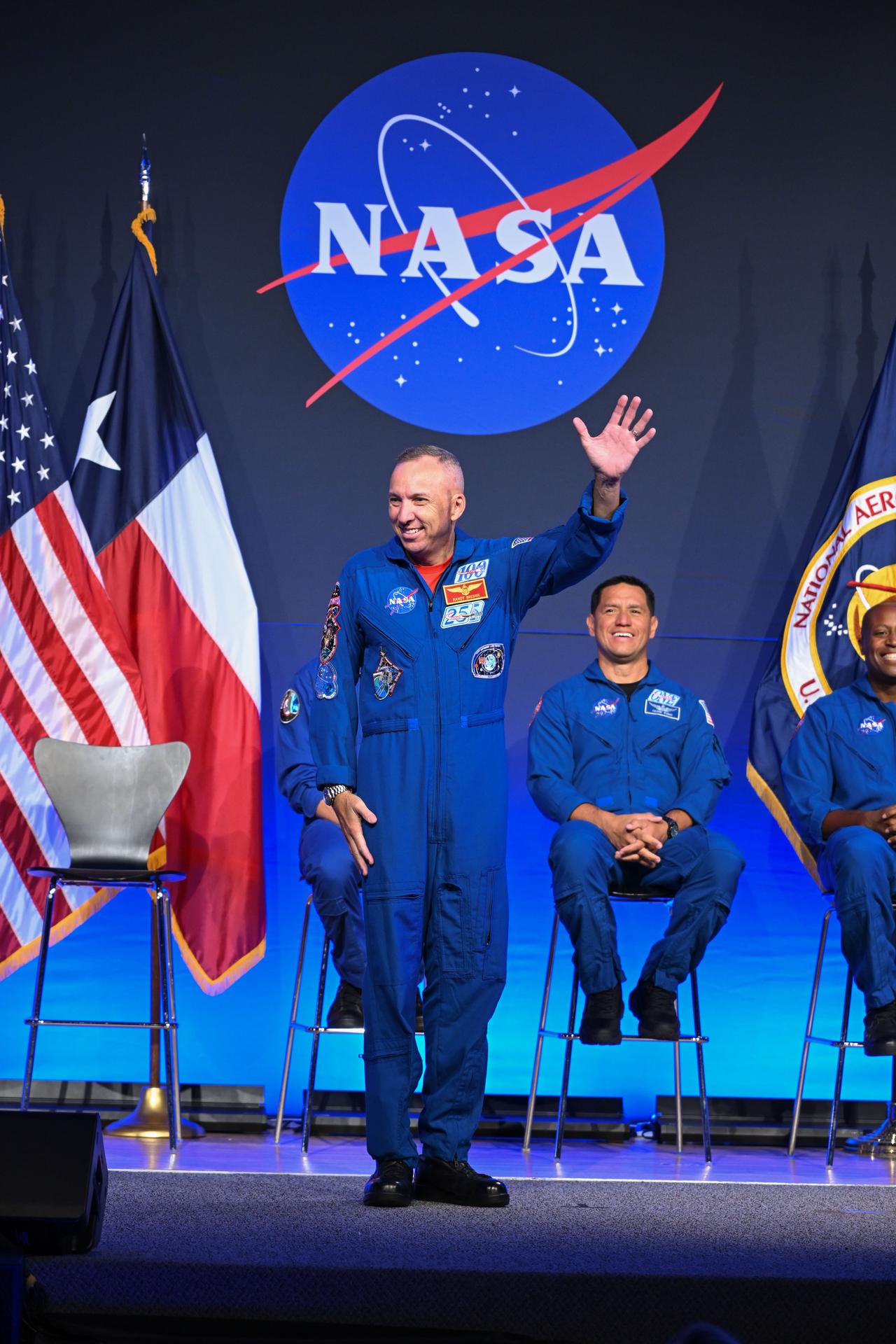
NASA astronaut Randy Bresnik is announced as the Artemis III commander during an event at NASA's Johnson Space Center in Houston on June 9, 2026. Credit: NASA/Morgan Gridley
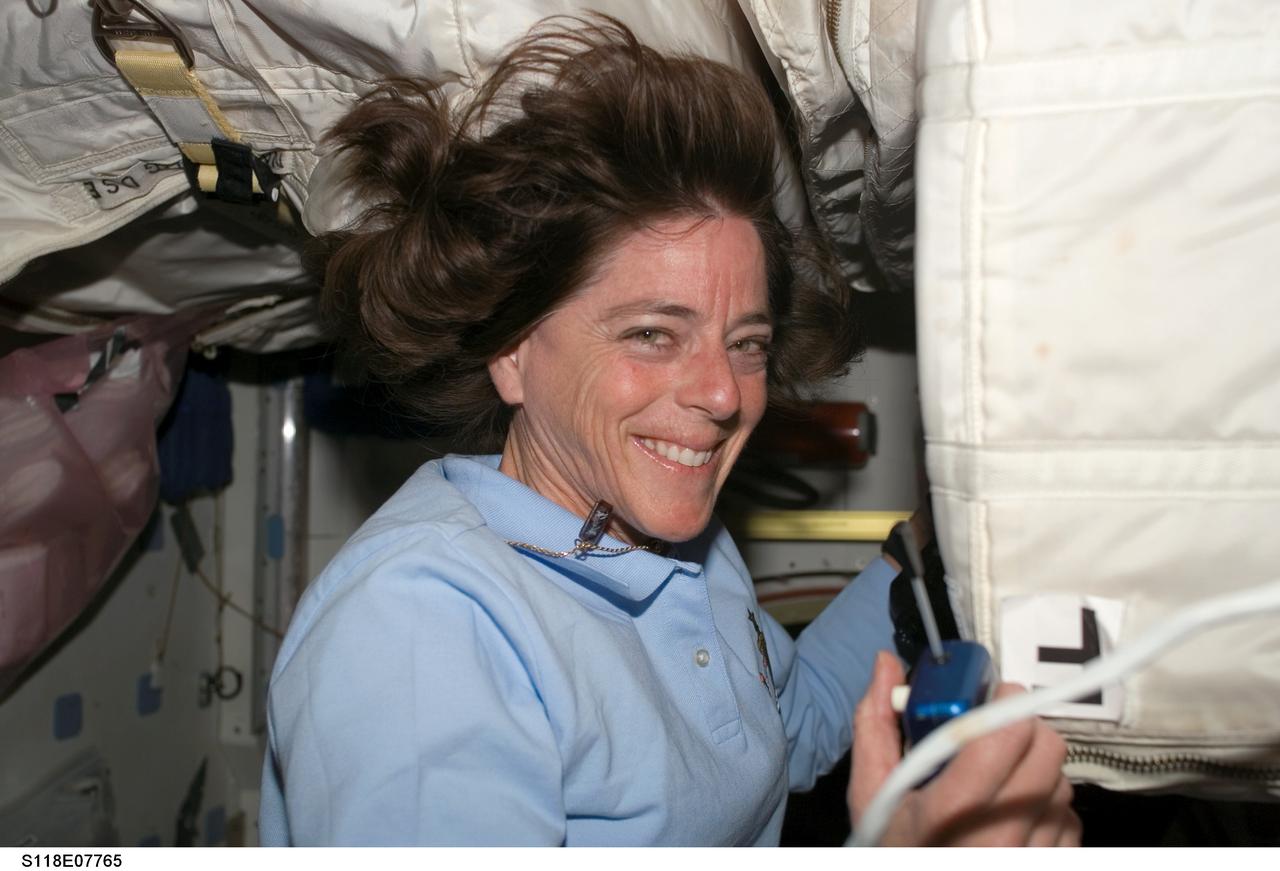
S118-E-07765 (17 Aug. 2007) --- Astronaut Barbara R. Morgan, mission specialist, finds herself surrounded by supplies in SPACEHAB, located in the cargo bay of the Space Shuttle Endeavour. Supply transfer was one of the main activities on the agenda Aug. 17 for the STS-118 crewmembers, who learned their anticipated departure from the International Space Station will come a day earlier due to possible weather issues back home.
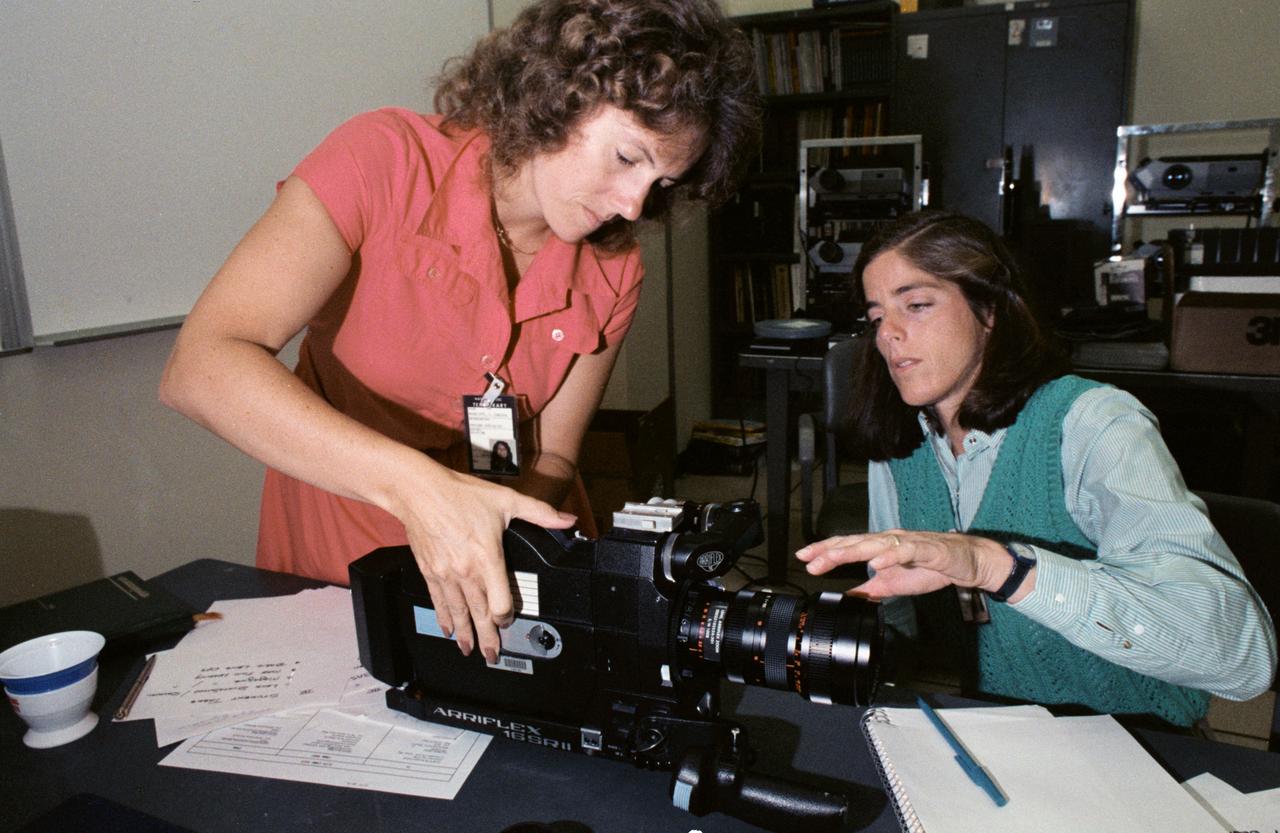
S85-41033 (18 Sept. 1985) --- Two women in training at JSC as part of the Teacher-in-Space Project and a position on NASA’s STS-51L mission learn handling of the Arriflex motion picture camera used on shuttle flights. Sharon Christa McAuliffe (left) was recently named as prime crew member for the 51-L flight; and Barbara R. Morgan, here lending help with camera’s lens, will serve as backup. The photograph was taken by Otis Imboden. Photo credit: NASA
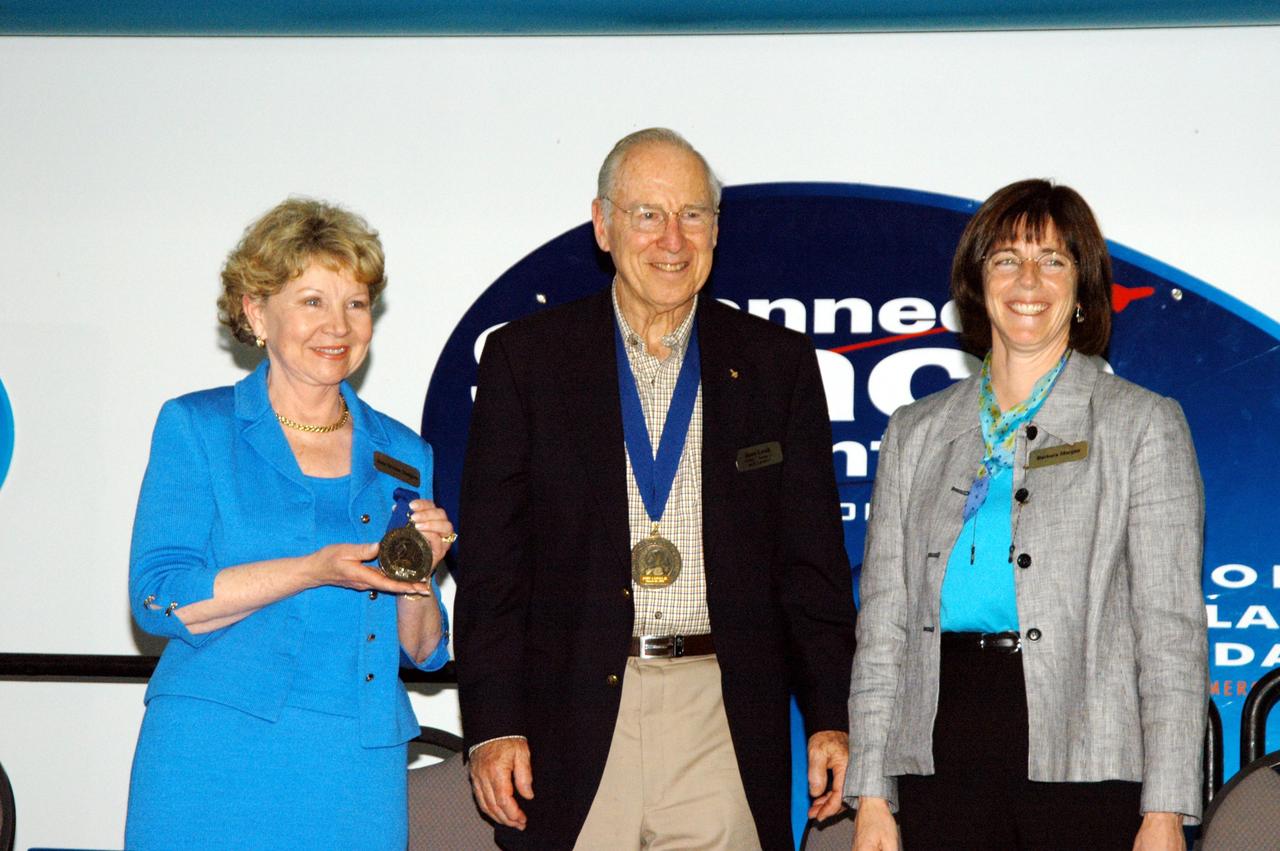
KENNEDY SPACE CENTER, FLA. -- At the Kennedy Space Center Visitor Complex, the late Francis R. "Dick" Scobee, commander of the ill-fated 1986 Challenger mission, is inducted into the U.S. Astronaut Hall of Fame. He is represented by his widow, June Scobee (left), who is accompanied by former NASA astronaut James A. Lovell Jr. and NASA astronaut Barbara R. Morgan. Morgan assumed the duties of Teacher in Space designee following the death of Christa McAuliffe, the teacher on the Challenger mission, and was selected by NASA in January 1998 as the first Educator Astronaut. Also chosen for induction in 2004 are Kathryn D. Sullivan, the first American woman to walk in space; Richard O. Covey, commander of the Hubble Space Telescope repair mission; Frederick D. Gregory, the first African-American to command a space mission; and Norman E. Thagard, the first American to occupy Russia's Mir space station. The U.S. Astronaut Hall of Fame opened in 1990 to provide a place where space travelers could be remembered for their participation and accomplishments in the U.S. space program. To be eligible for induction, an individual must have been a U.S. citizen, a NASA astronaut, and out of the active astronaut corps at least five years. The five inductees join 52 previously honored astronauts from the ranks of the Gemini, Apollo, Skylab, Apollo-Soyuz, and Space Shuttle programs.
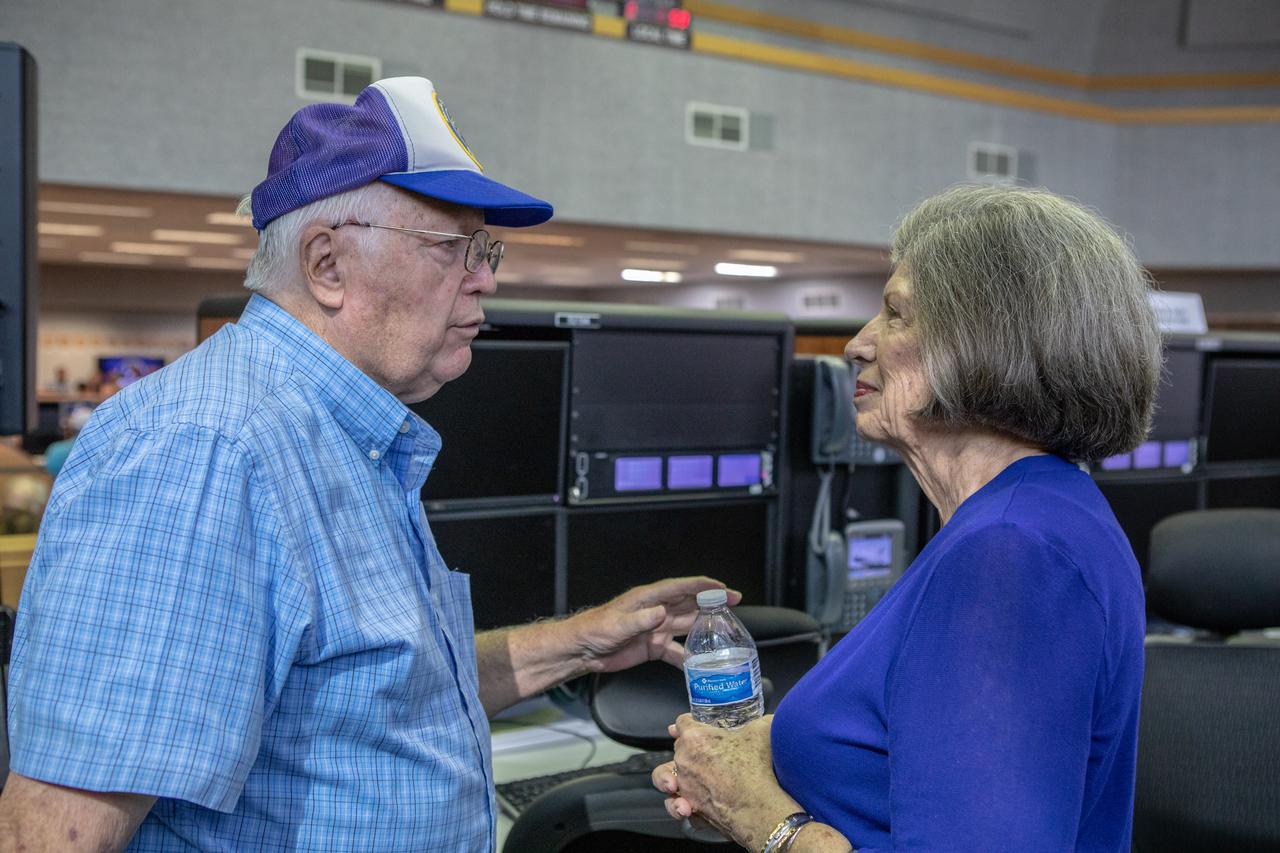
On July 16, 2019, the 50th anniversary of the Apollo 11 launch to the Moon; Apollo launch team member JoAnn Morgan, right, talks with a fellow team member in Launch Control Center Firing Room 1 at NASA's Kennedy Space Center in Florida. Morgan was the only female in the firing room during Apollo 11 launch countdown activities.
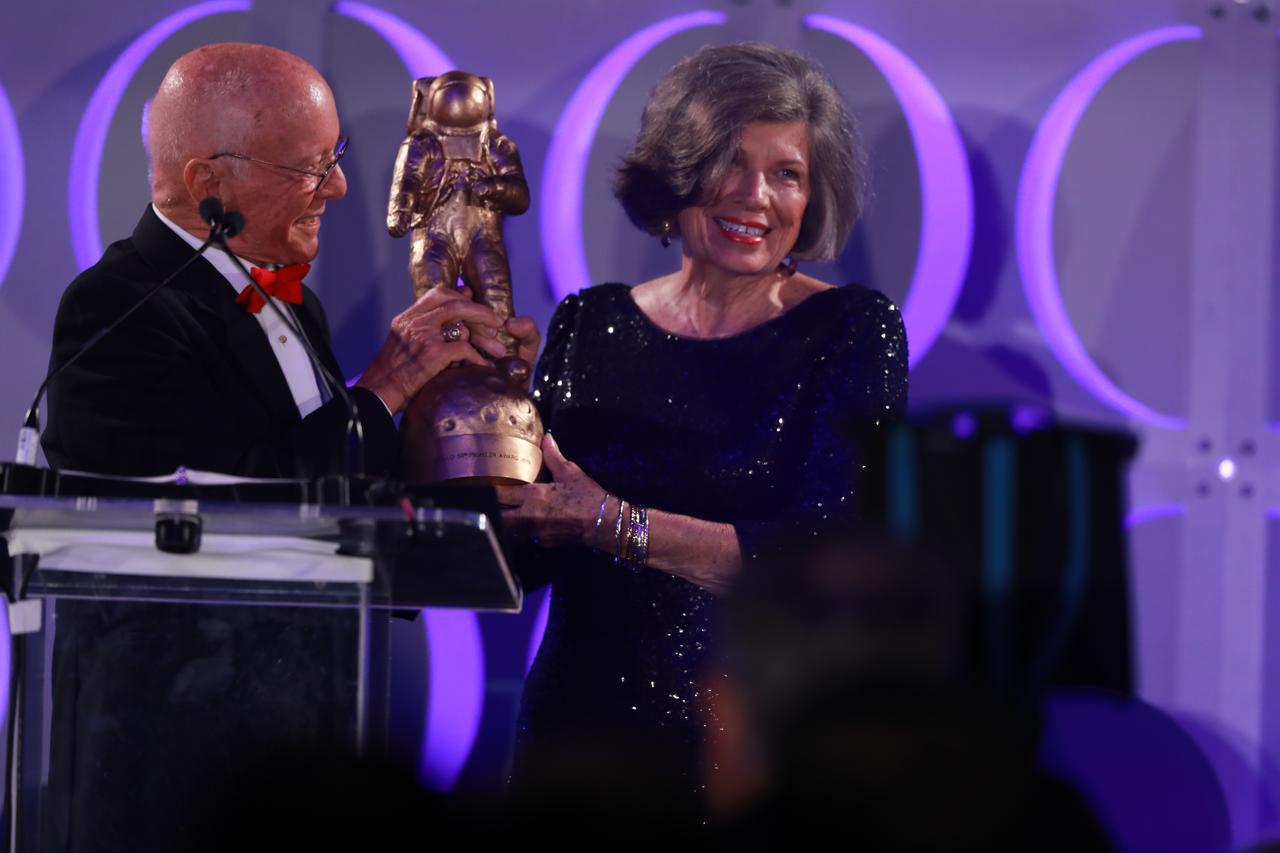
Gerry Griffin, Apollo flight director, left, presents the Pioneer Award to JoAnn Morgan, retired NASA engineer, during the Apollo 11 50th Gala, on July 16, 2019. The gala, presented by Northrop Grumman, was held inside the Apollo/Saturn V Center at the Kennedy Space Center Visitor Comples in Florida. Morgan was the first woman engineer on console at Kennedy Space Center and the only woman in the firing room during the Apollo 11 launch countdown and launch.
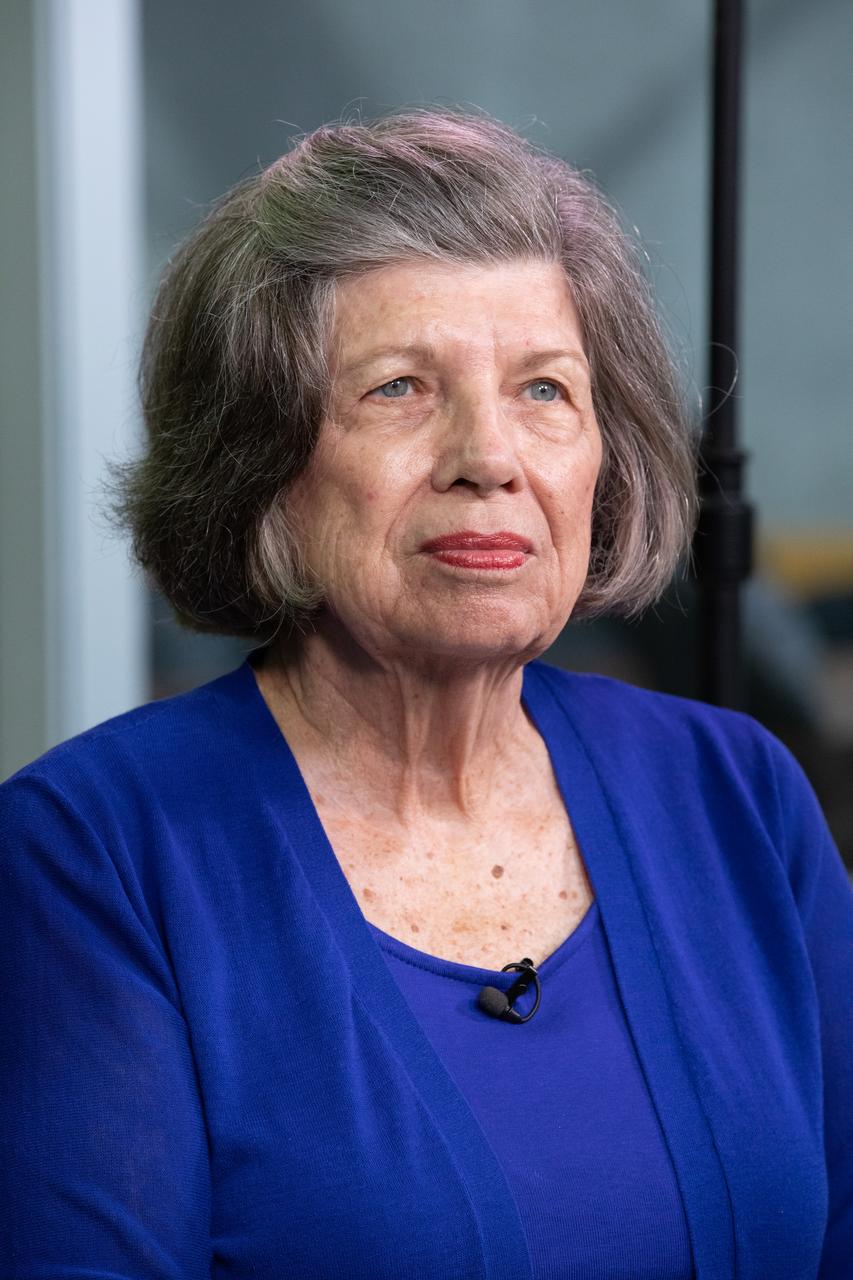
On July 16, 2019, the 50th anniversary of the Apollo 11 launch, Apollo-era launch team member JoAnn Morgan visits Launch Control Center Firing Room 1 at NASA's Kennedy Space Center in Florida. Morgan was the only female in the firing room during Apollo 11 launch countdown activites. Apollo 11 launched on a Saturn V rocket at 9:32 a.m. on July 16, 1969.
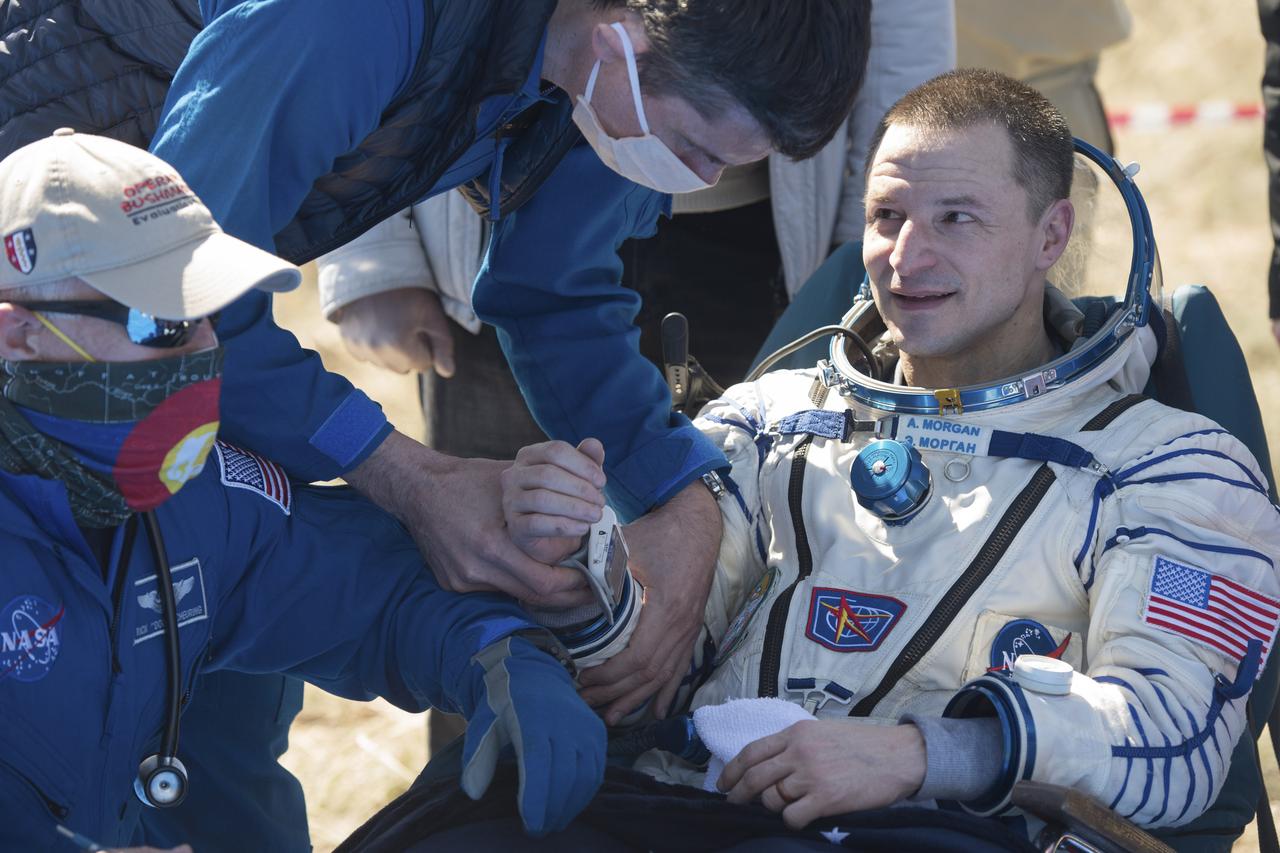
Expedition 62 astronaut Andrew Morgan is seen outside the Soyuz MS-15 spacecraft after he landed with NASA astronaut Jessica Meir and Roscosmos cosmonaut Oleg Skripochka in a remote area near the town of Zhezkazgan, Kazakhstan on Friday, April 17, 2020. Meir and Skripochka returned after 205 days in space, and Morgan after 272 days in space. All three served as Expedition 60-61-62 crew members onboard the International Space Station. Photo Credit: (NASA/GCTC/Andrey Shelepin)
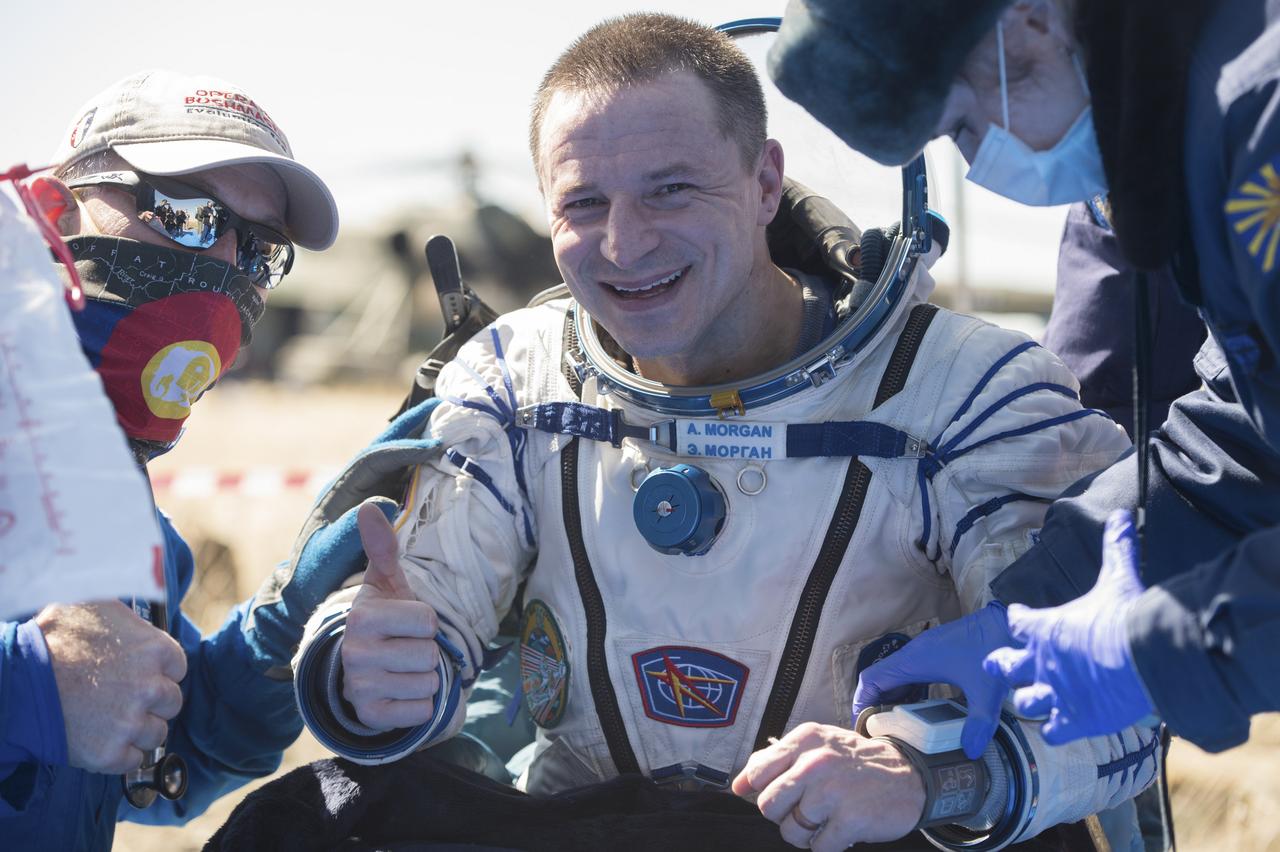
Expedition 62 astronaut Andrew Morgan is seen outside the Soyuz MS-15 spacecraft after he landed with NASA astronaut Jessica Meir and Roscosmos cosmonaut Oleg Skripochka in a remote area near the town of Zhezkazgan, Kazakhstan on Friday, April 17, 2020. Meir and Skripochka returned after 205 days in space, and Morgan after 272 days in space. All three served as Expedition 60-61-62 crew members onboard the International Space Station. Photo Credit: (NASA/GCTC/Andrey Shelepin)
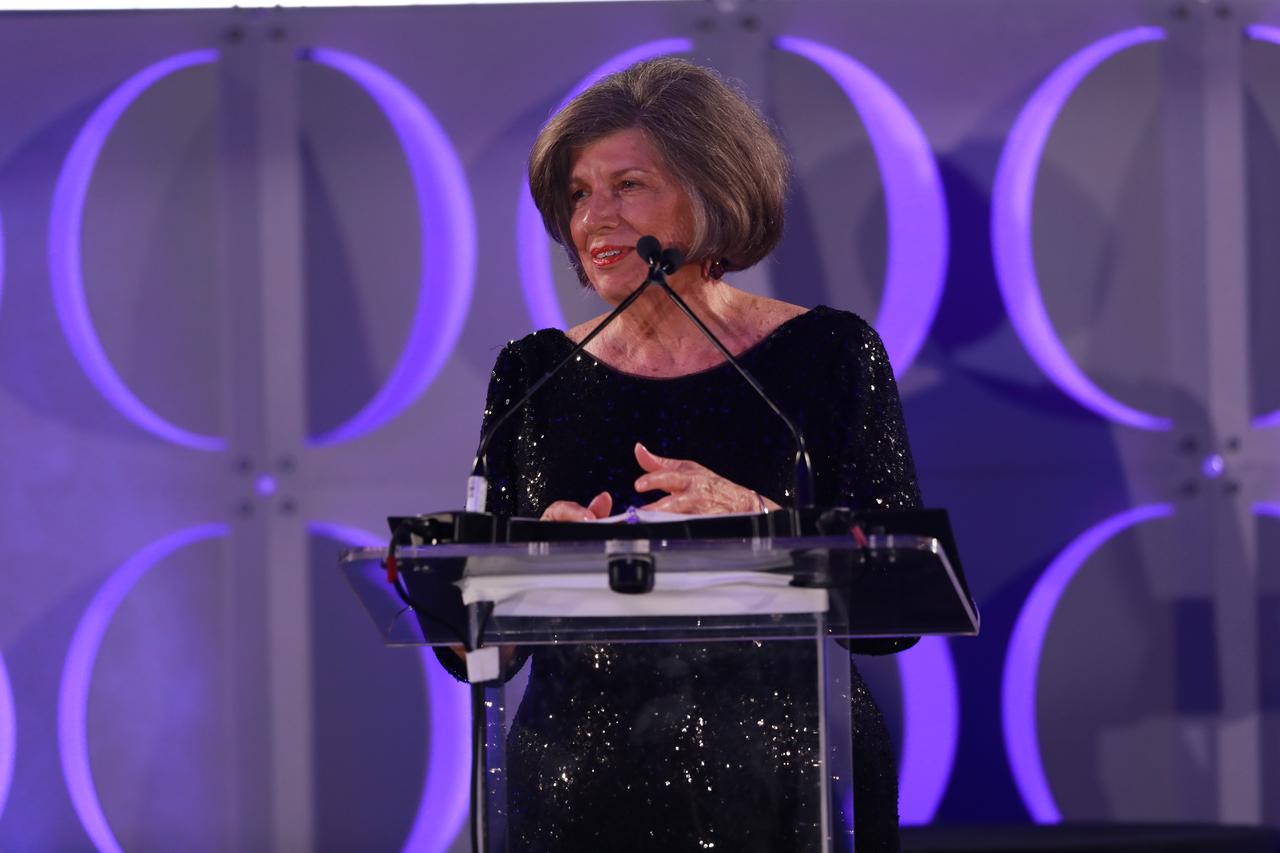
JoAnn Morgan, retired NASA engineer, makes remarks after receiving the Pioneer Award during the Apollo 11 50th Gala on July 16, 2019. The gala, presented by Northrop Grumman, was held inside the Apollo/Saturn V Center at the Kennedy Space Center Visitor Complex in Florida. Morgan was the first woman engineer on console at Kennedy Space Center and the only woman in the firing room during the Apollo 11 launch countdown and launch.
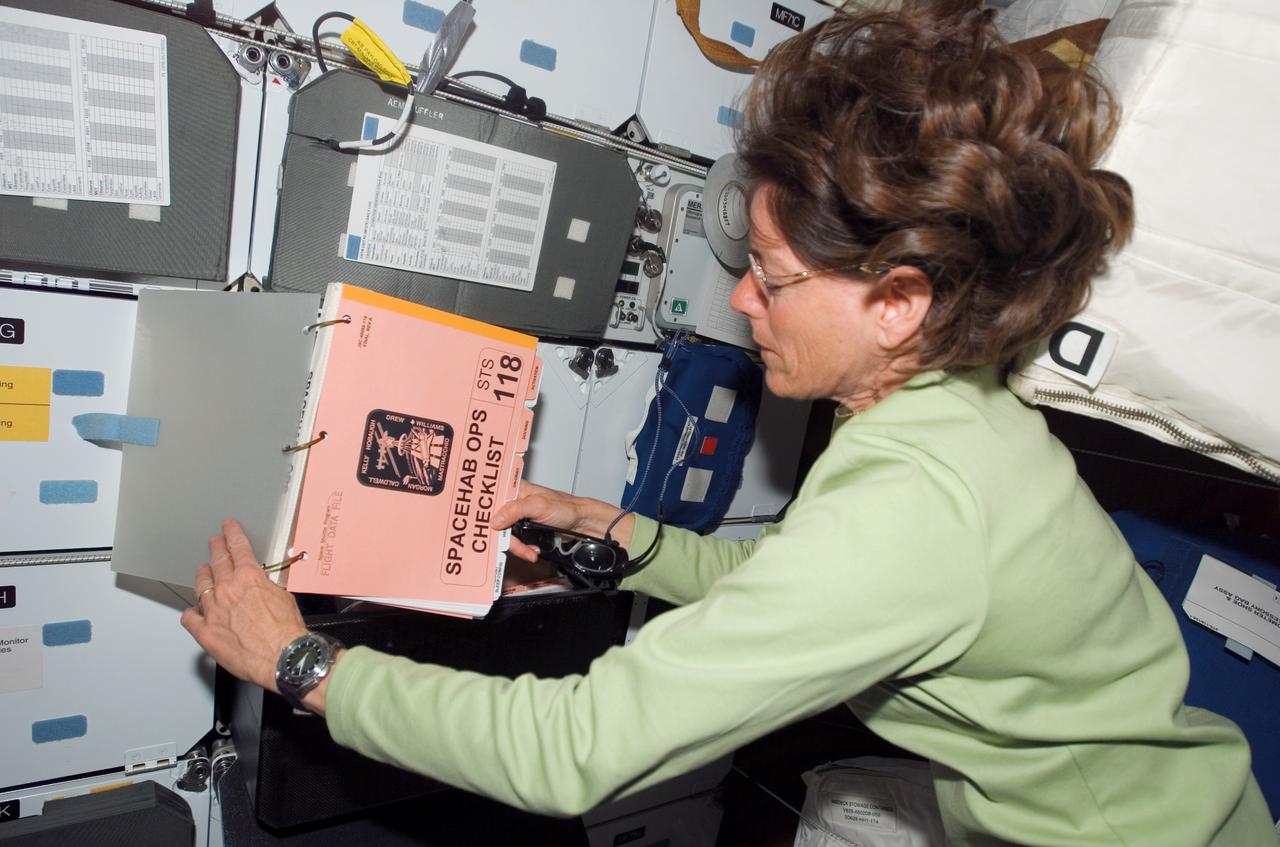
S118-E-06827 (11 Aug. 2007) --- Astronaut Barbara R. Morgan, STS-118 mission specialist, refers to a procedures checklist on the middeck of Space Shuttle Endeavour while docked with the International Space Station during flight day four activities.
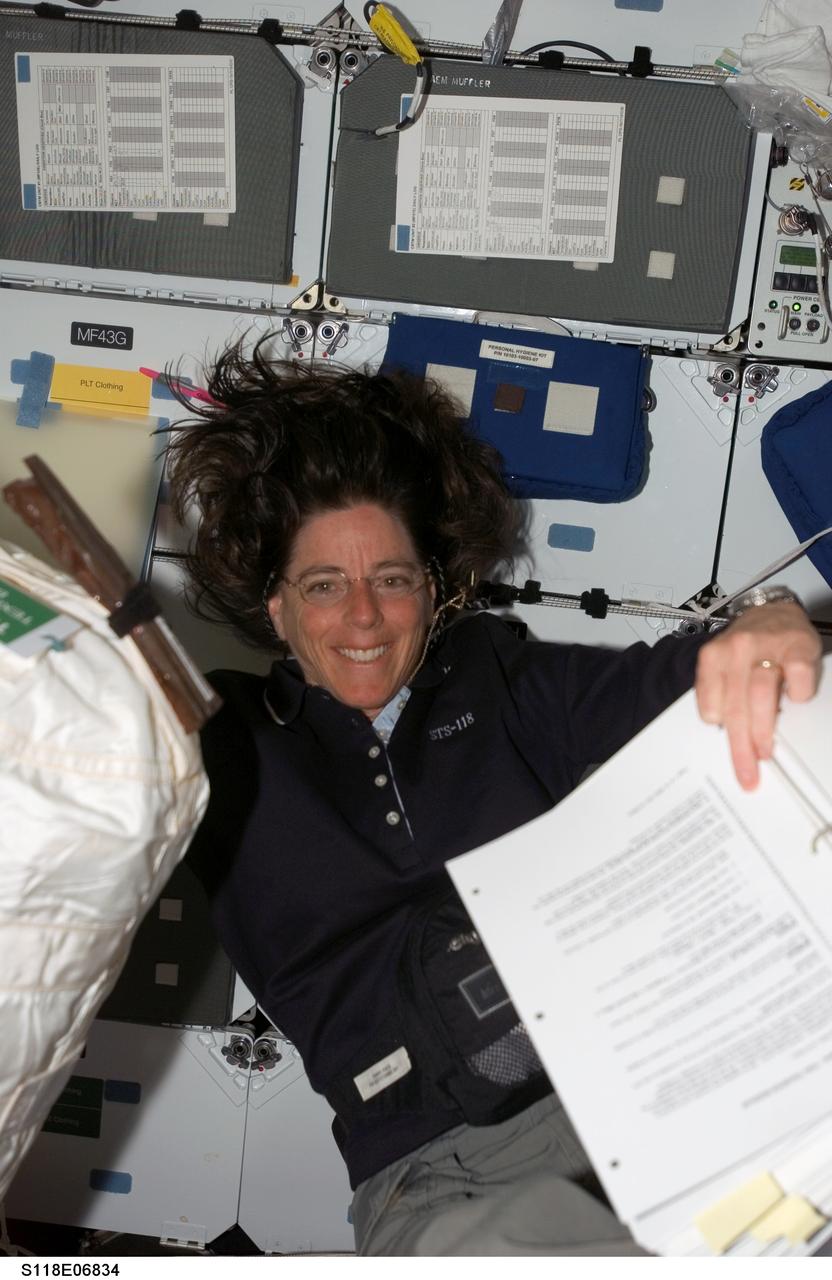
S118-E-06834 (11 Aug. 2007) --- Astronaut Barbara R. Morgan, STS-118 mission specialist, pauses for a photo while working on the middeck of Space Shuttle Endeavour while docked with the International Space Station during flight day four activities.
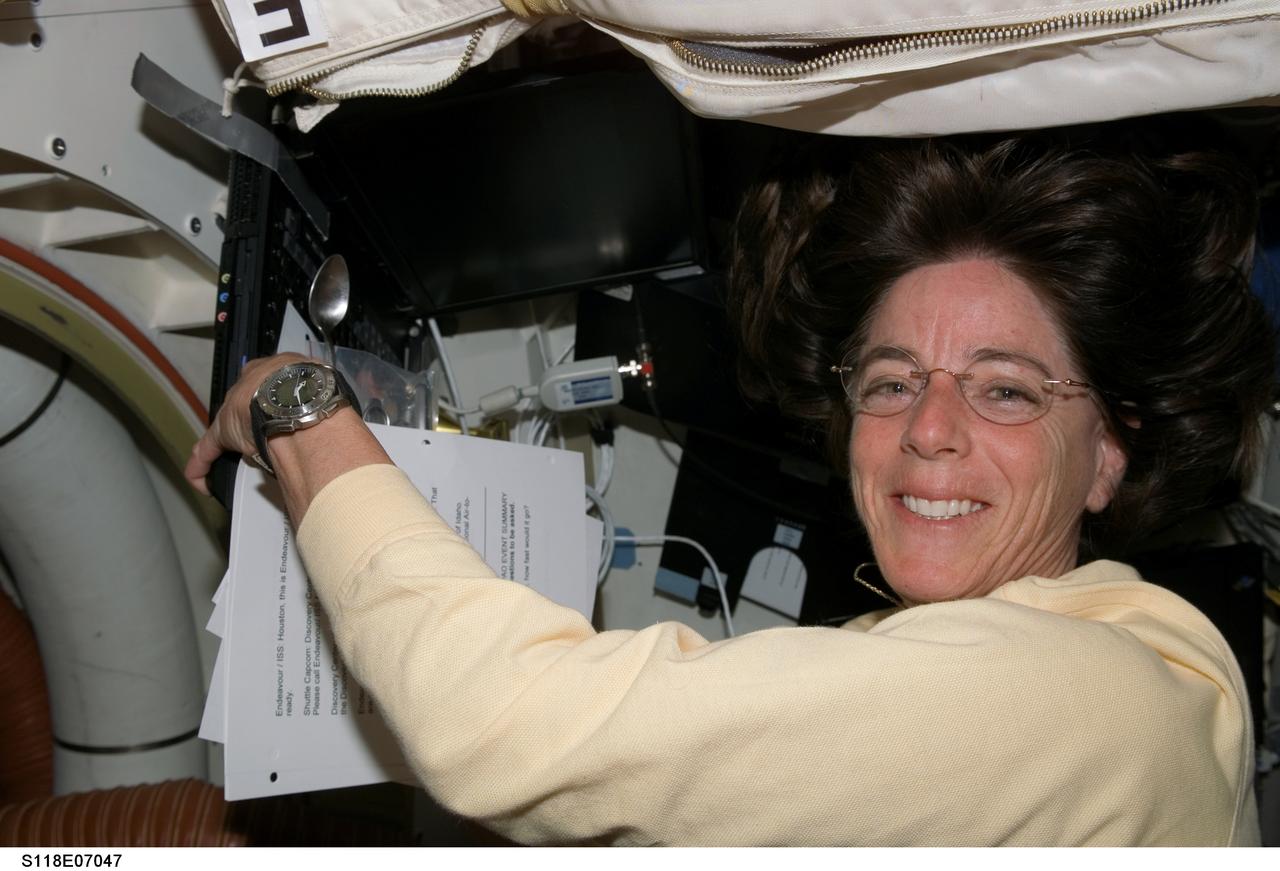
S118-E-07047 (13 Aug. 2007) --- Astronaut Barbara R. Morgan, STS-118 mission specialist, pauses for a photo on the middeck of Space Shuttle Endeavour during flight day six activities while docked with the International Space Station.
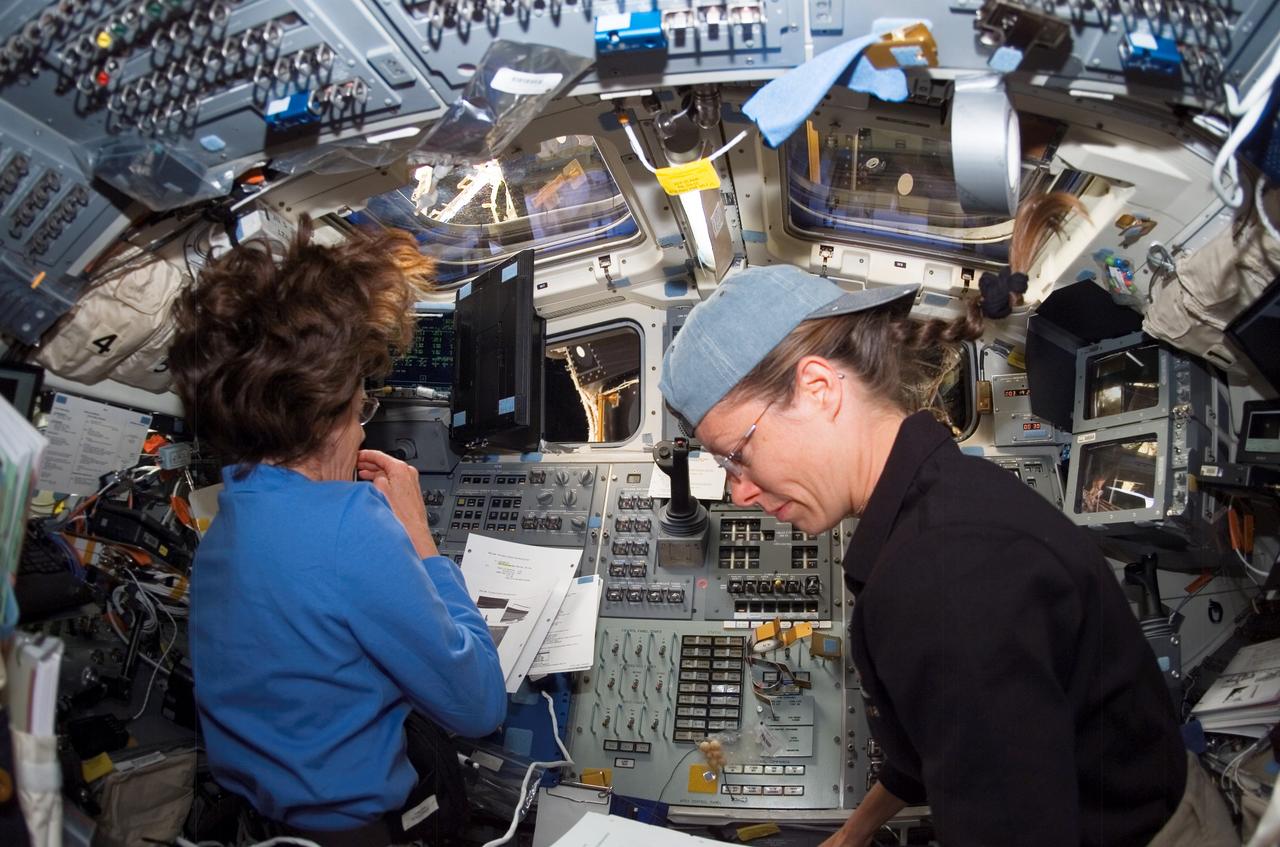
ISS015-E-22201 (12 Aug. 2007) --- During a focused inspection of apparent damage on the underside of the shuttle, astronauts Barbara R. Morgan (left) and Tracy Caldwell, both STS-118 mission specialists, work at the aft flight deck controls of Space Shuttle Endeavour while docked with the International Space Station.
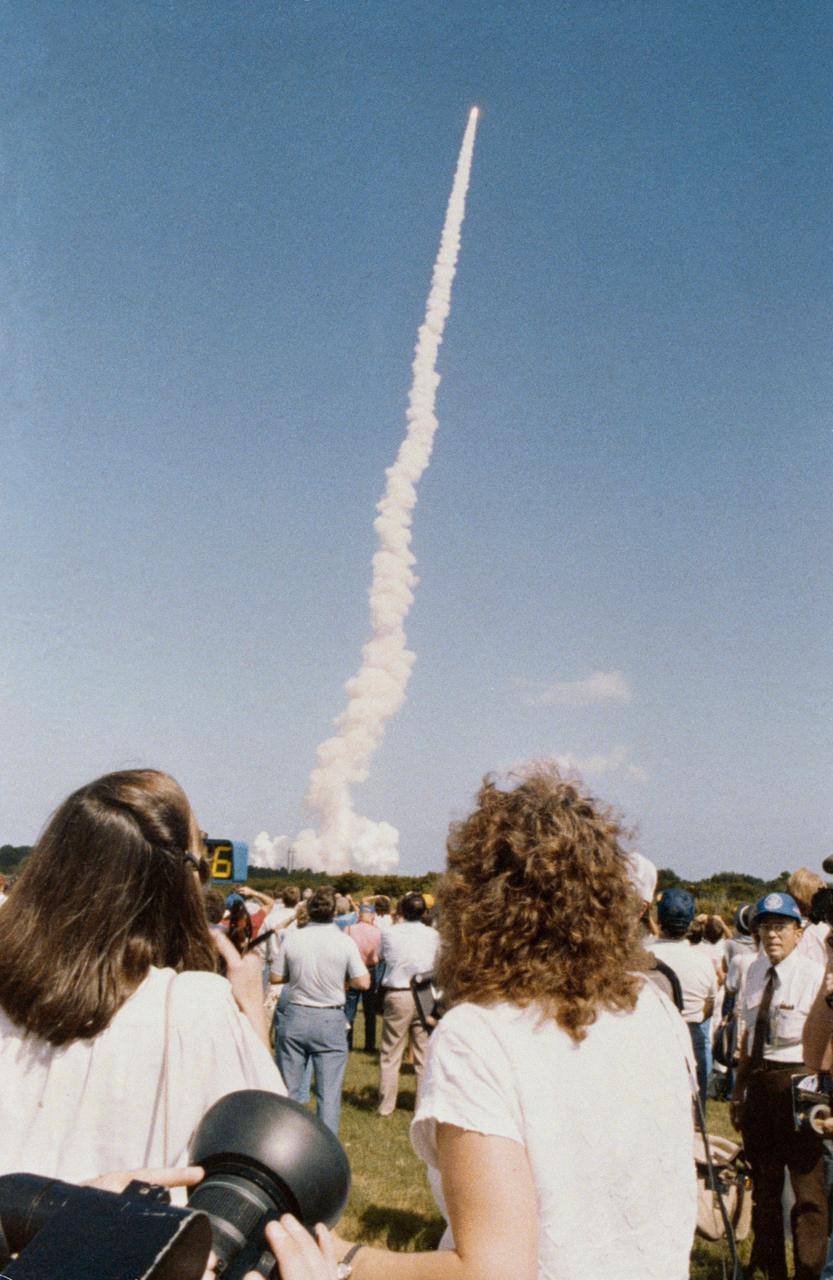
S86-25293 (30 Oct. 1985) --- Barbara R. Morgan and Sharon Christa McAuliffe (right) are pictured during a visit to NASA's Kennedy Space Center (KSC) Launch Complex 39 to witness the launch of the space shuttle Challenger. McAuliffe is scheduled to launch aboard the space shuttle Challenger, STS-51L mission, herself early next year as the United States? first in-space citizen observer. Morgan is the backup for the Teacher-in-Space Project?s payload specialist position. The photo was taken by Keith Meyers of the New York Times. EDITOR'S NOTE: The STS-51L crew members lost their lives in the space shuttle Challenger accident moments after launch on Jan. 28, 1986 from the Kennedy Space Center (KSC). Photo credit: NASA
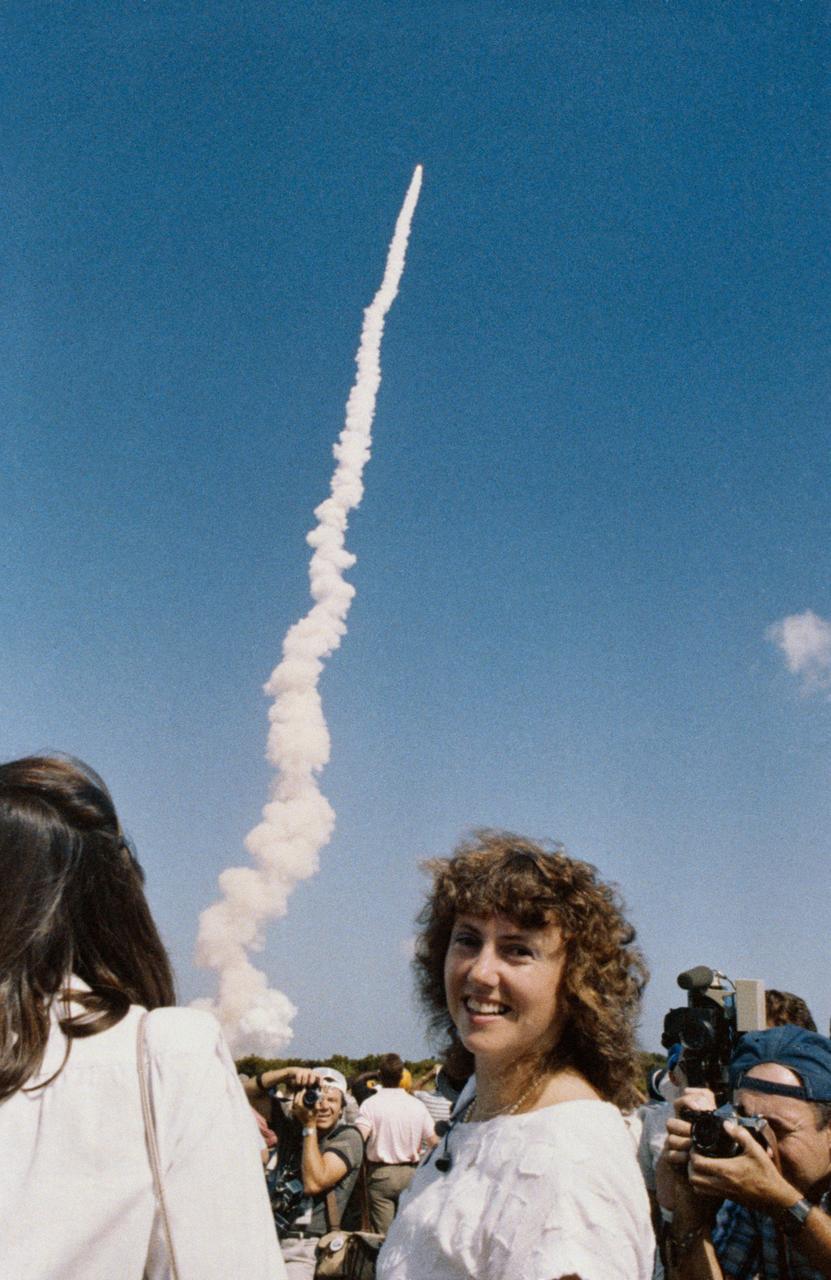
S86-25294 (30 Oct. 1985) --- Barbara R. Morgan and Sharon Christa McAuliffe (right) are pictured during a visit to NASA's Kennedy Space Center (KSC) Launch Complex 39 to witness the launch of the space shuttle Challenger. McAuliffe is scheduled to launch aboard the space shuttle Challenger, STS-51L mission, herself early next year as the United States? first in-space citizen observer. Morgan is the backup for the Teacher-in-Space Project?s payload specialist position. The photo was taken by Keith Meyers of the New York Times. EDITOR?S NOTE: The STS-51L crew members lost their lives in the space shuttle Challenger accident moments after launch on Jan. 28, 1986 from the Kennedy Space Center (KSC). Photo credit: NASA
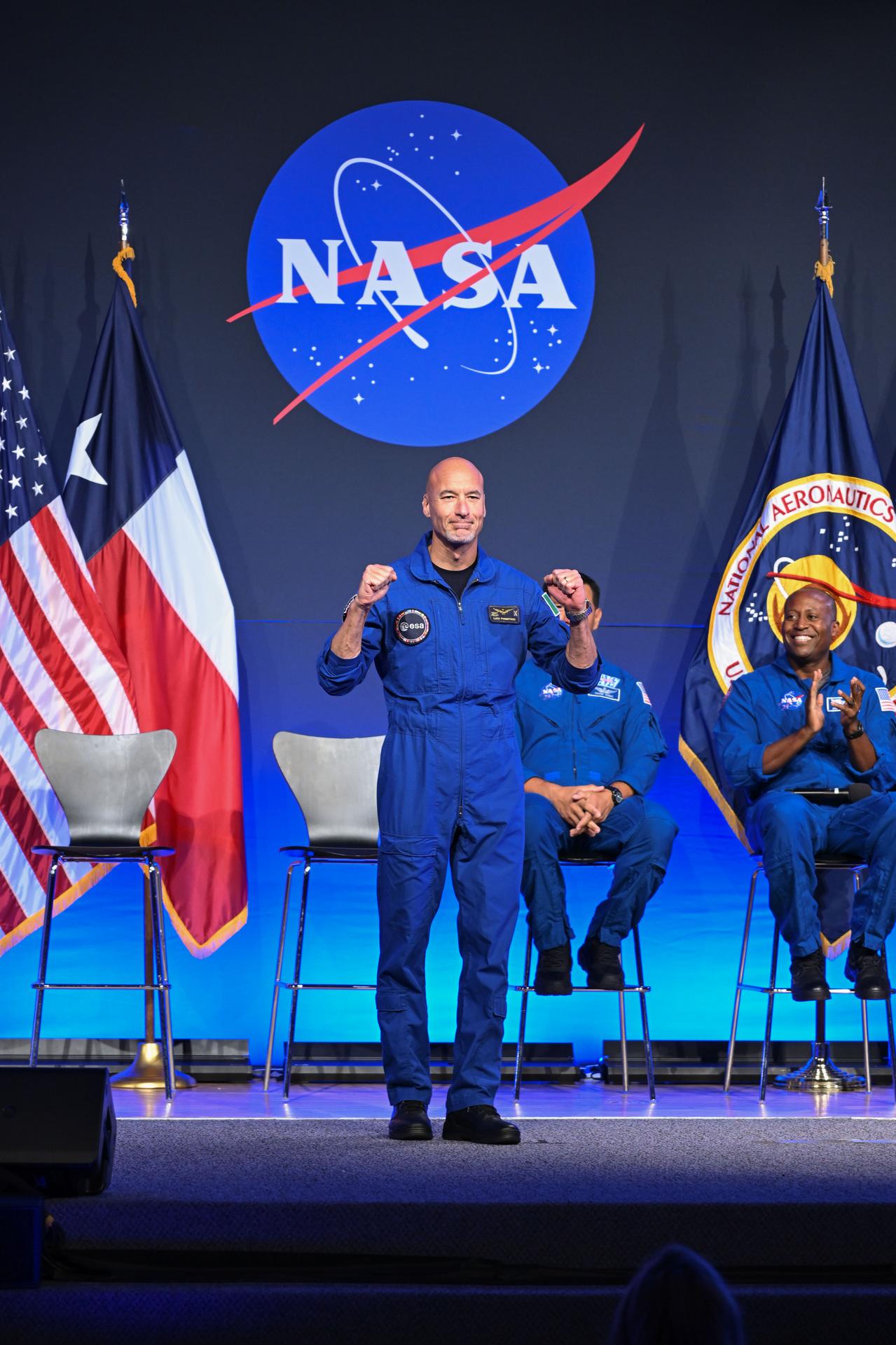
Artemis III Crew Announcement Ceremony Date: June 9, 2026 Location: Bldg. 2south, Teague Auditorium Photo Credit: NASA/Morgan Gridley
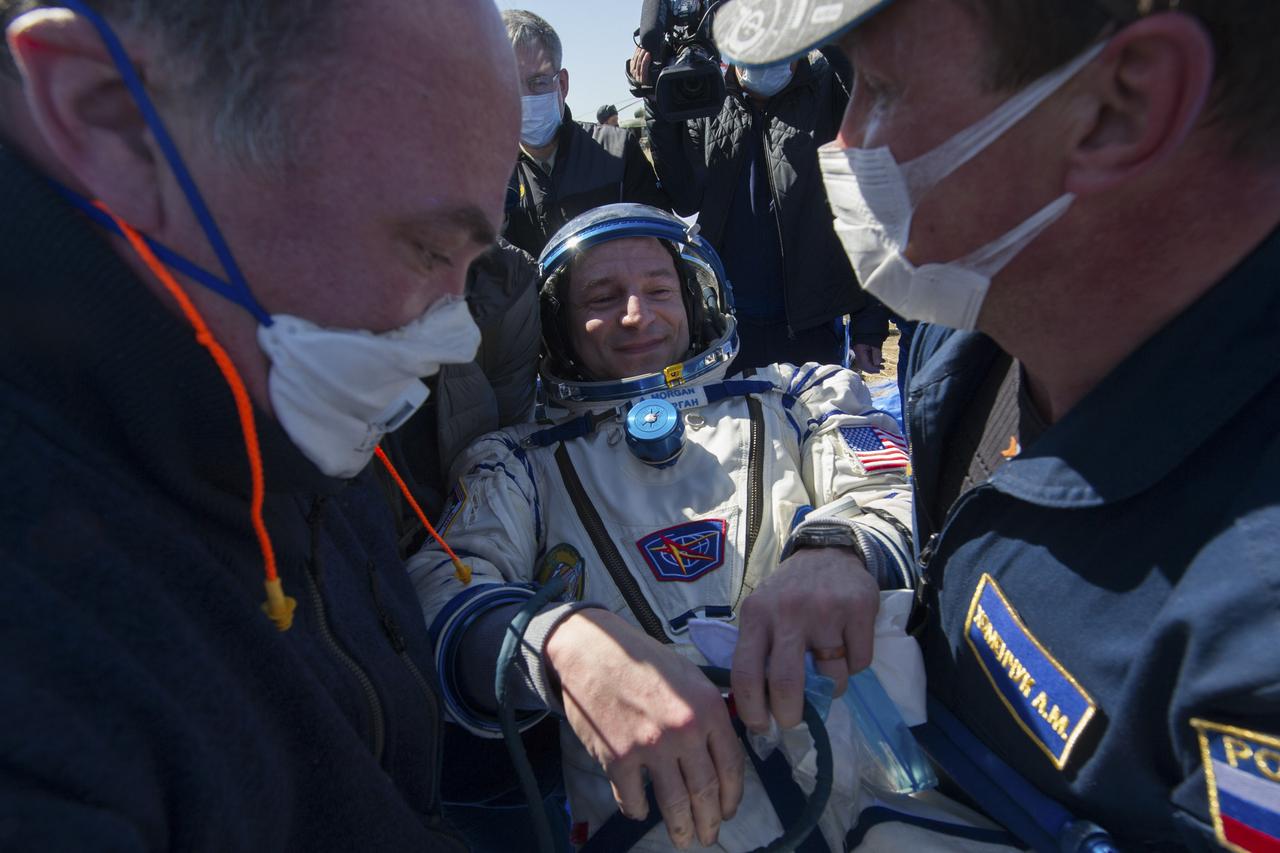
Expedition 62 crew member Andrew Morgan of NASA is helped out of the Soyuz MS-15 spacecraft just minutes after he, Roscosmos cosmonaut Oleg Skripochka, and NASA astronaut Jessica Meir, landed in a remote area near the town of Zhezkazgan, Kazakhstan on Friday, April 17, 2020. Meir and Skripochka returned after 205 days in space, and Morgan after 272 days in space. All three served as Expedition 60-61-62 crew members onboard the International Space Station. Photo Credit: (NASA/GCTC/Andrey Shelepin)
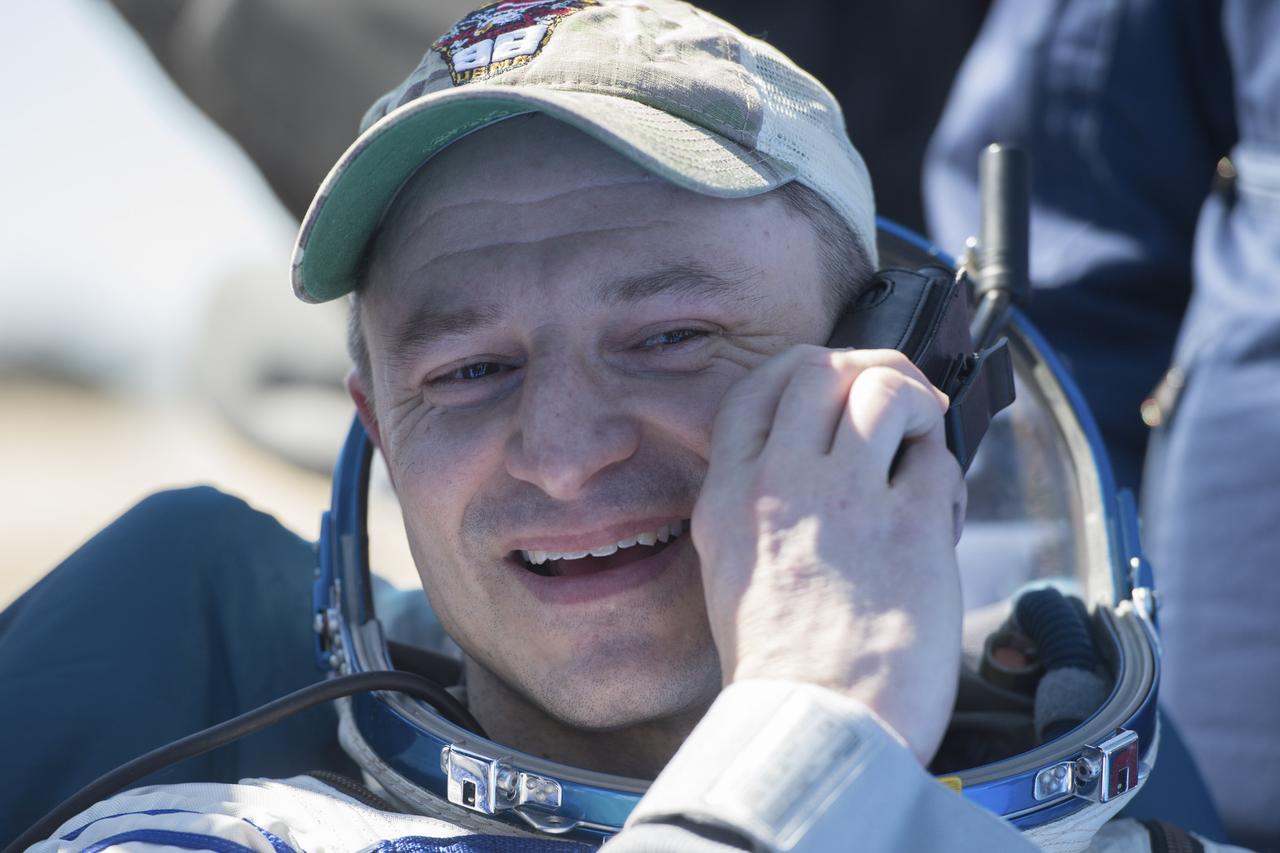
Expedition 62 astronaut Andrew Morgan is seen talking on the satellite phone outside the Soyuz MS-15 spacecraft after he landed with NASA astronaut Jessica Meir and Roscosmos cosmonaut Oleg Skripochka in a remote area near the town of Zhezkazgan, Kazakhstan on Friday, April 17, 2020. Meir and Skripochka returned after 205 days in space, and Morgan after 272 days in space. All three served as Expedition 60-61-62 crew members onboard the International Space Station. Photo Credit: (NASA/GCTC/Andrey Shelepin)
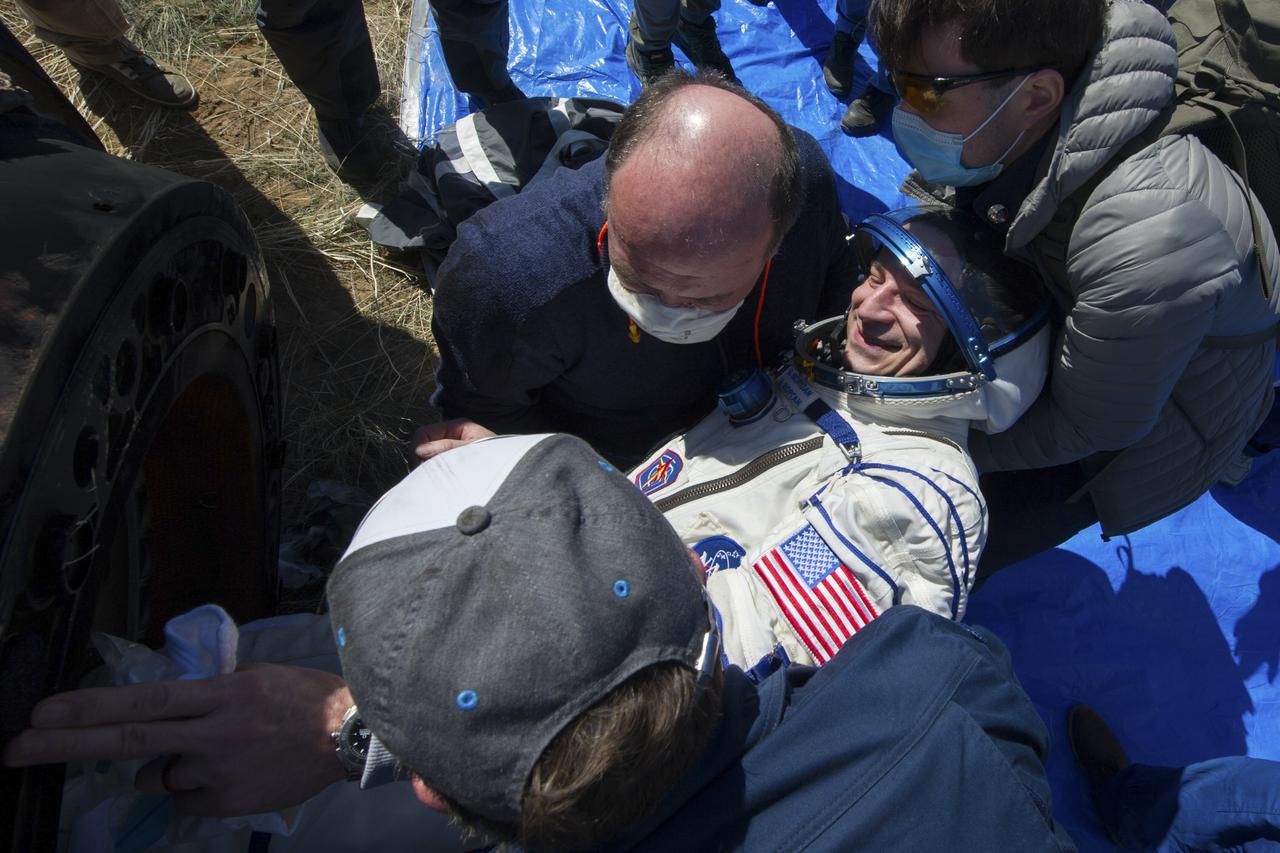
Expedition 62 crew member Andrew Morgan of NASA is helped out of the Soyuz MS-15 spacecraft just minutes after he, Roscosmos cosmonaut Oleg Skripochka, and NASA astronaut Jessica Meir, landed in a remote area near the town of Zhezkazgan, Kazakhstan on Friday, April 17, 2020. Meir and Skripochka returned after 205 days in space, and Morgan after 272 days in space. All three served as Expedition 60-61-62 crew members onboard the International Space Station. Photo Credit: (NASA/GCTC/Andrey Shelepin)
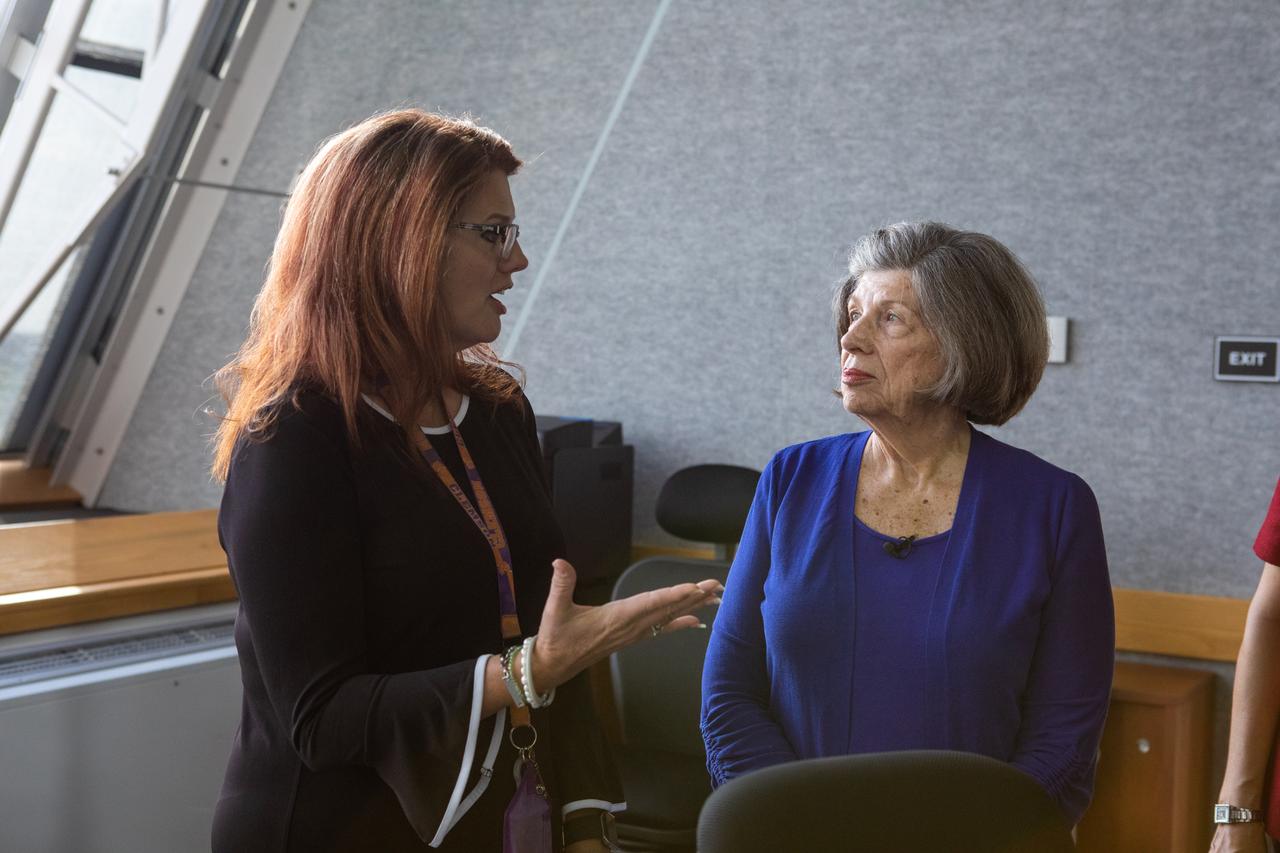
On July 16, 2019, the 50th anniversary of the Apollo 11 launch to the Moon, Artemis 1 Launch Director Charlie Blackwell-Thompson, left, talks with Apollo-era launch team member JoAnn Morgan in Launch Control Center Firing Room 1 at NASA's Kennedy Space Center in Florida. Morgan was the only woman in the firing room during Apollo 11 countdown activities. Blackwell-Thompson is the first female launch director. Apollo 11 launched atop the Saturn V rocket at 9:32 a.m. on July 16, 1969.
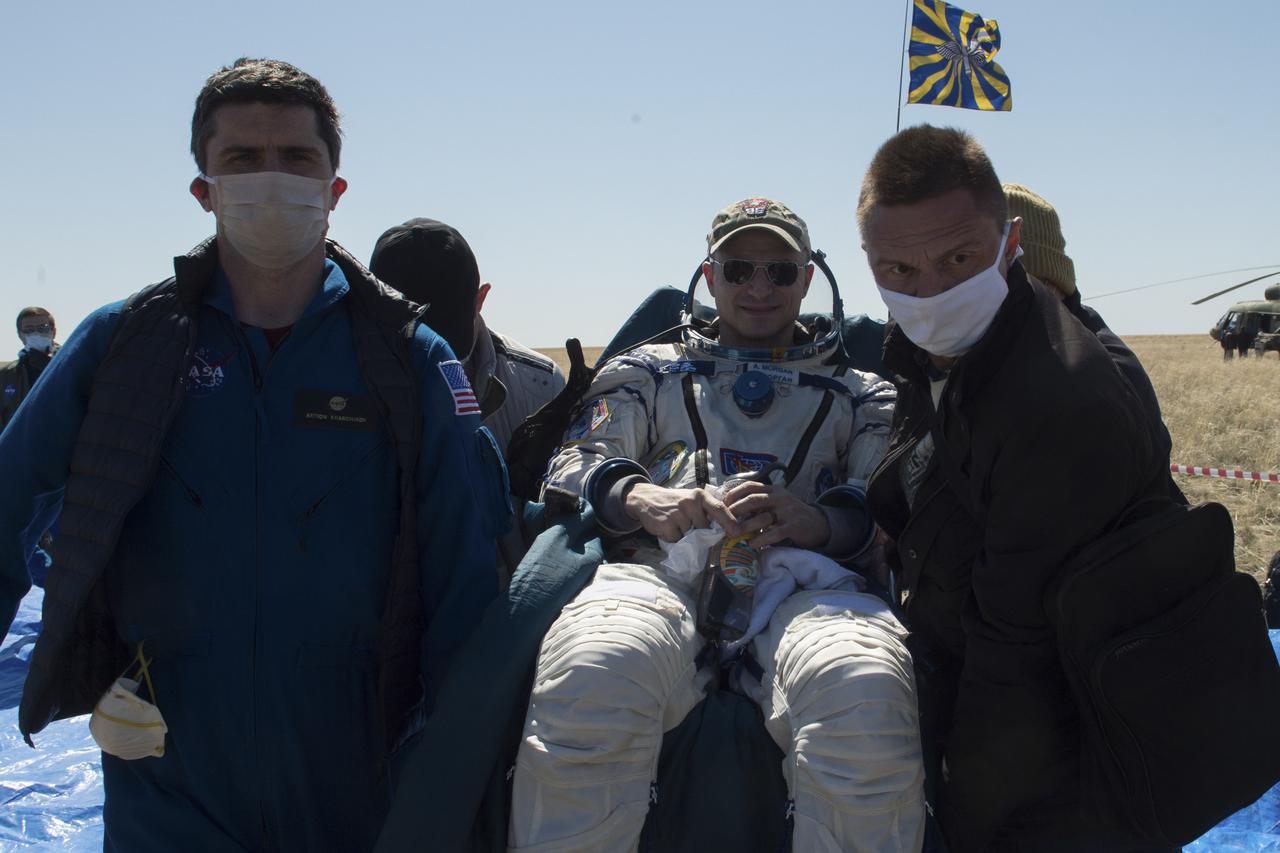
Expedition 62 crew member Andrew Morgan of NASA is carried to an All Terrain Vehicle (ATV) shortly after he, NASA astronaut Jessica Meir, and Roscosmos cosmonaut Oleg Skripochka landed in their Soyuz MS-15 spacecraft near the town of Zhezkazgan, Kazakhstan on Friday, April 17, 2020. Meir and Skripochka returned after 205 days in space, and Morgan after 272 days in space. All three served as Expedition 60-61-62 crew members onboard the International Space Station. Photo Credit: (NASA/GCTC/Andrey Shelepin)
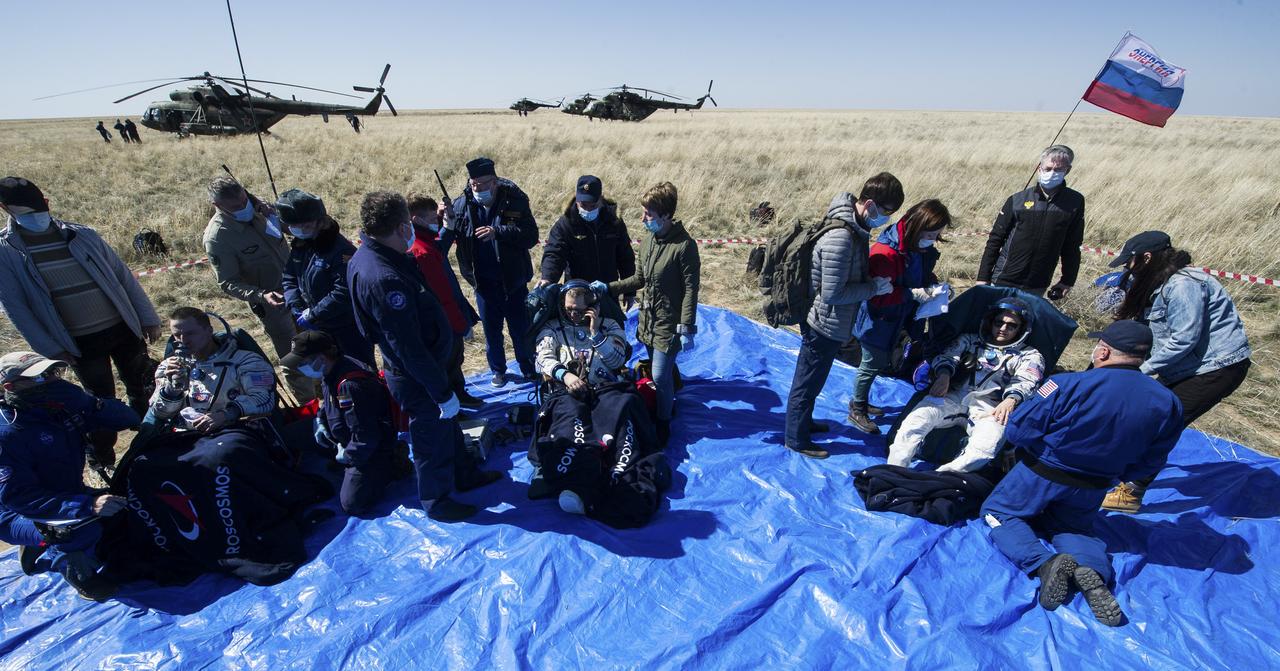
Expedition 62 crew members Andrew Morgan of NASA, left, Oleg Skripochka of Roscosmos, center, and Jessica Meir of NASA sit in chairs outside the Soyuz MS-15 spacecraft after they landed in a remote area near the town of Zhezkazgan, Kazakhstan on Friday, April 17, 2020. Meir and Skripochka returned after 205 days in space, and Morgan after 272 days in space. All three served as Expedition 60-61-62 crew members onboard the International Space Station. Photo Credit: (NASA/GCTC/Andrey Shelepin)
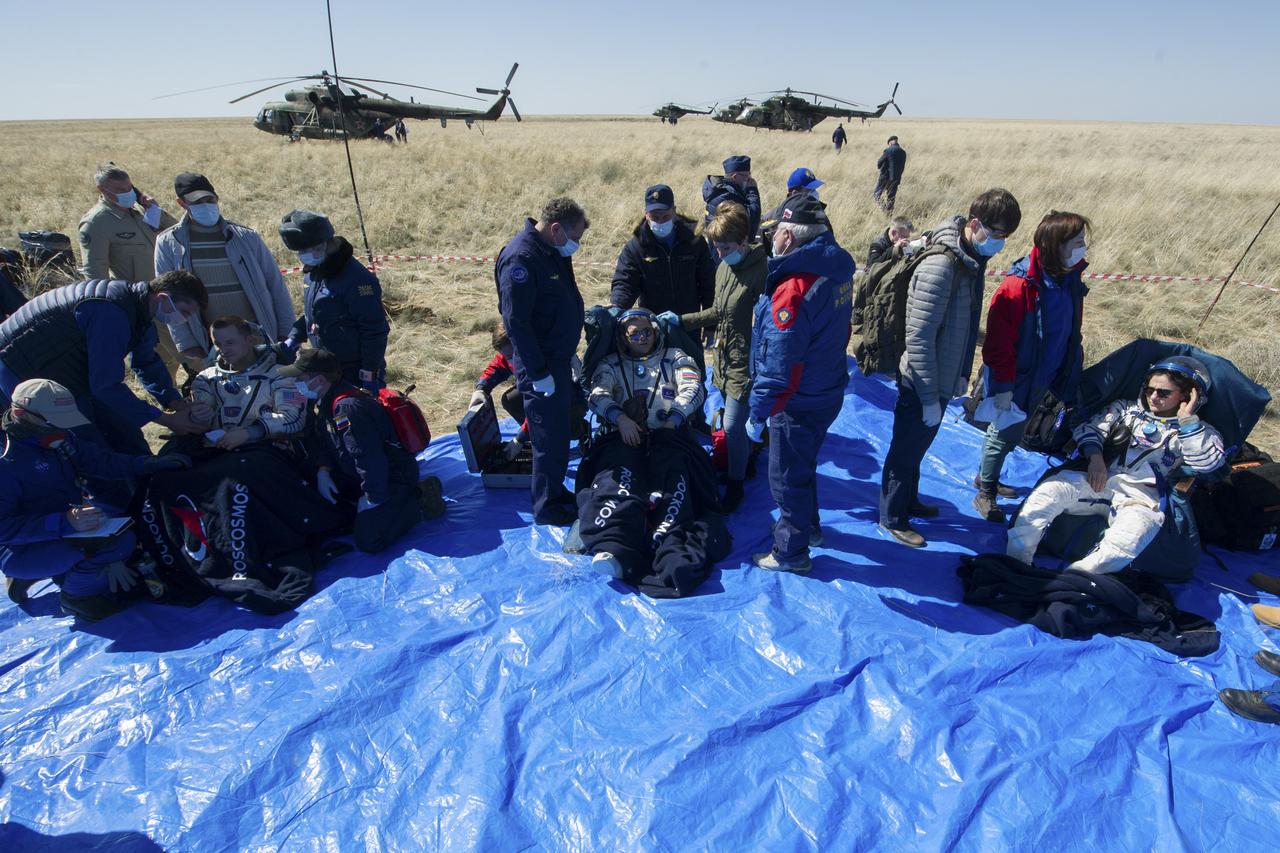
Expedition 62 crew members Andrew Morgan of NASA, left, Oleg Skripochka of Roscosmos, center, and Jessica Meir of NASA sit in chairs outside the Soyuz MS-15 spacecraft after they landed in a remote area near the town of Zhezkazgan, Kazakhstan on Friday, April 17, 2020. Meir and Skripochka returned after 205 days in space, and Morgan after 272 days in space. All three served as Expedition 60-61-62 crew members onboard the International Space Station. Photo Credit: (NASA/GCTC/Andrey Shelepin)
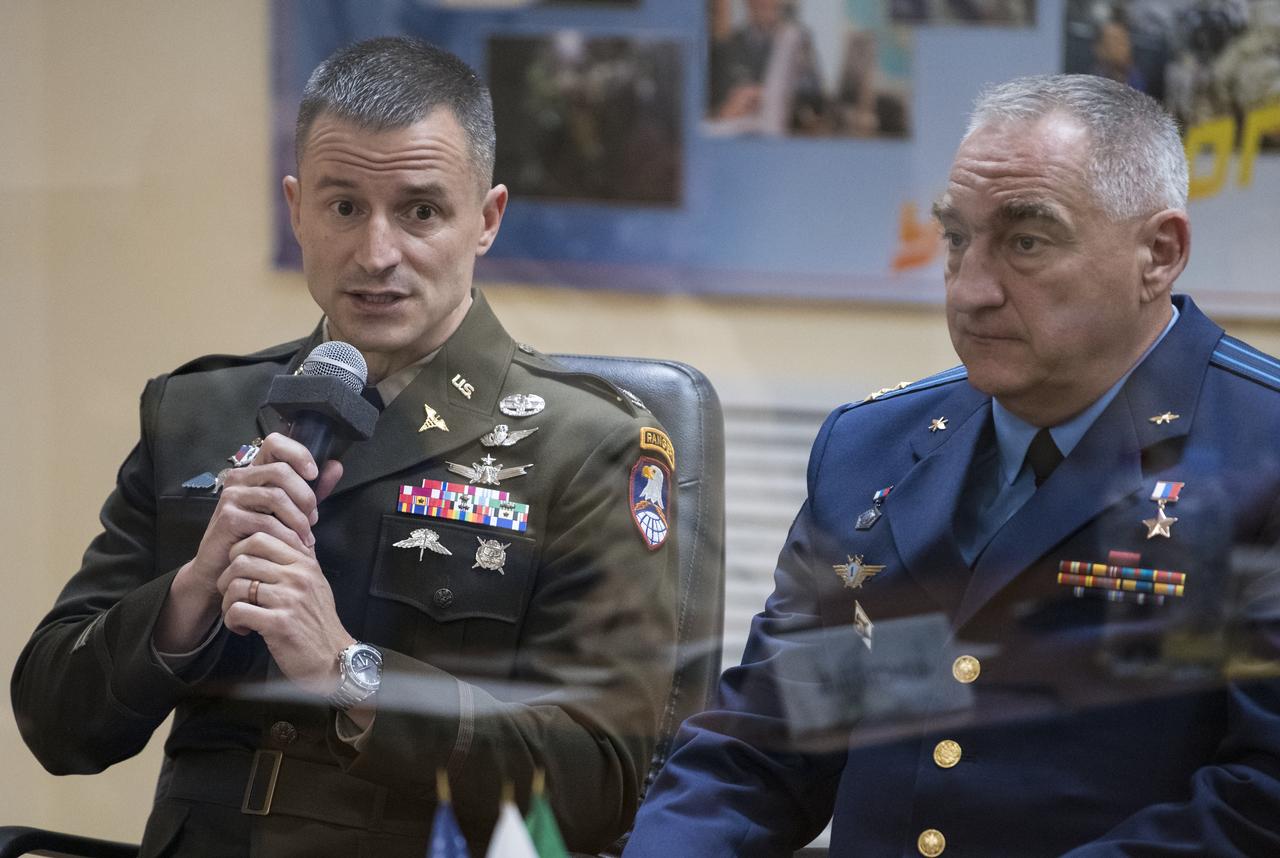
Expedition 60 flight engineer Andrew Morgan of NASA speaks during the State Commission meeting to approve the Soyuz launch of Expedition 60 to the International Space Station, Friday, July 19, 2019 at the Cosmonaut Hotel in Baikonur, Kazakhstan. Morgan, Soyuz Commander Alexander Skvortsov of Roscosmos, and Luca Parmitano of ESA (European Space Agency) are scheduled to launch to the International Space Station aboard the Soyuz MS-13 spacecraft on Saturday, July 20. Photo Credit: (NASA/Joel Kowsky)
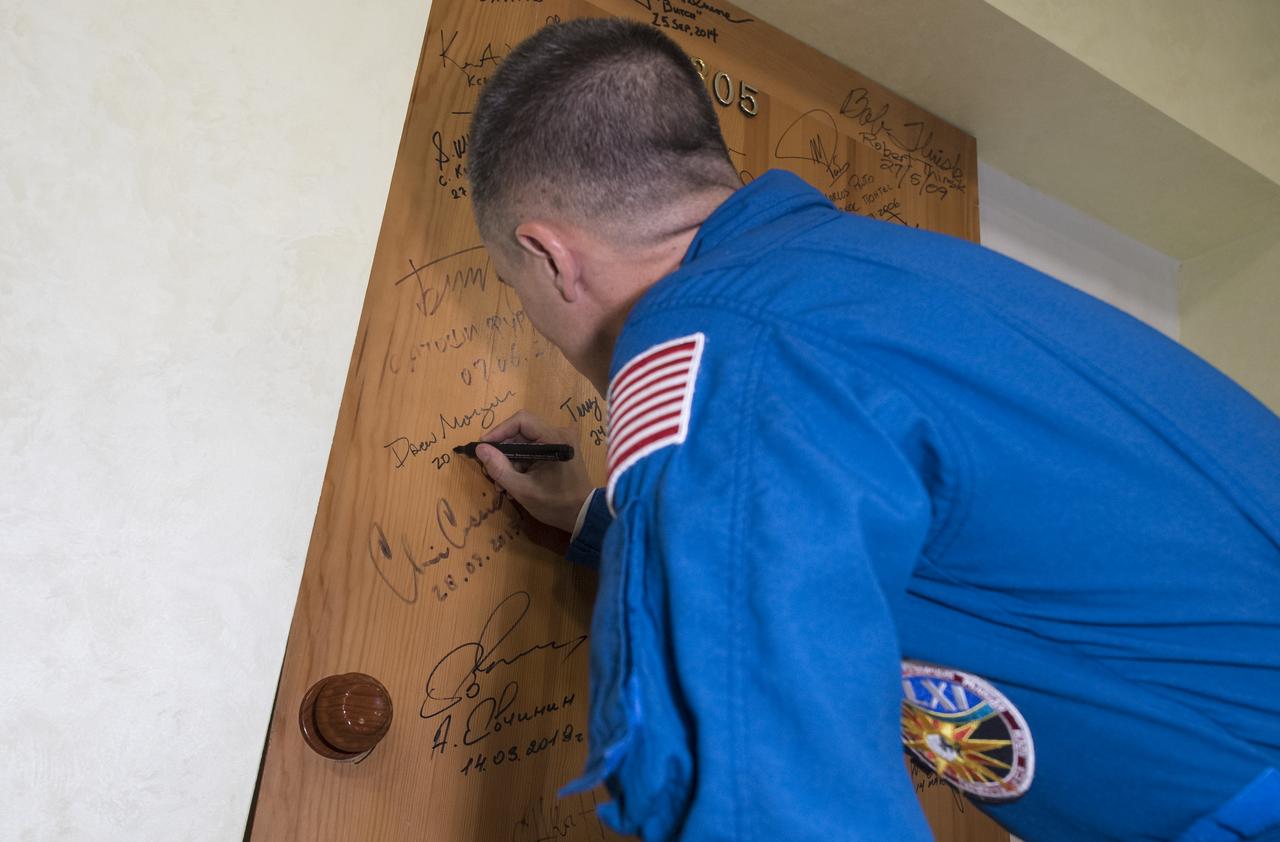
Expedition 60 flight engineer Andrew Morgan of NASA performs the traditional door signing at the Cosmonaut Hotel prior to departing the hotel for launch on a Soyuz rocket with fellow crewmates Alexander Skvortsov of Roscosmos and Luca Parmitano of ESA (European Space Agency), Saturday, July 20, 2019 in Baikonur, Kazakhstan. Skvortsov, Morgan, and Parmitano launched at 12:28 p.m. Eastern time (9:28 p.m. Baikonur time) to begin their mission to the International Space Station. Photo Credit: (NASA/Joel Kowsky)
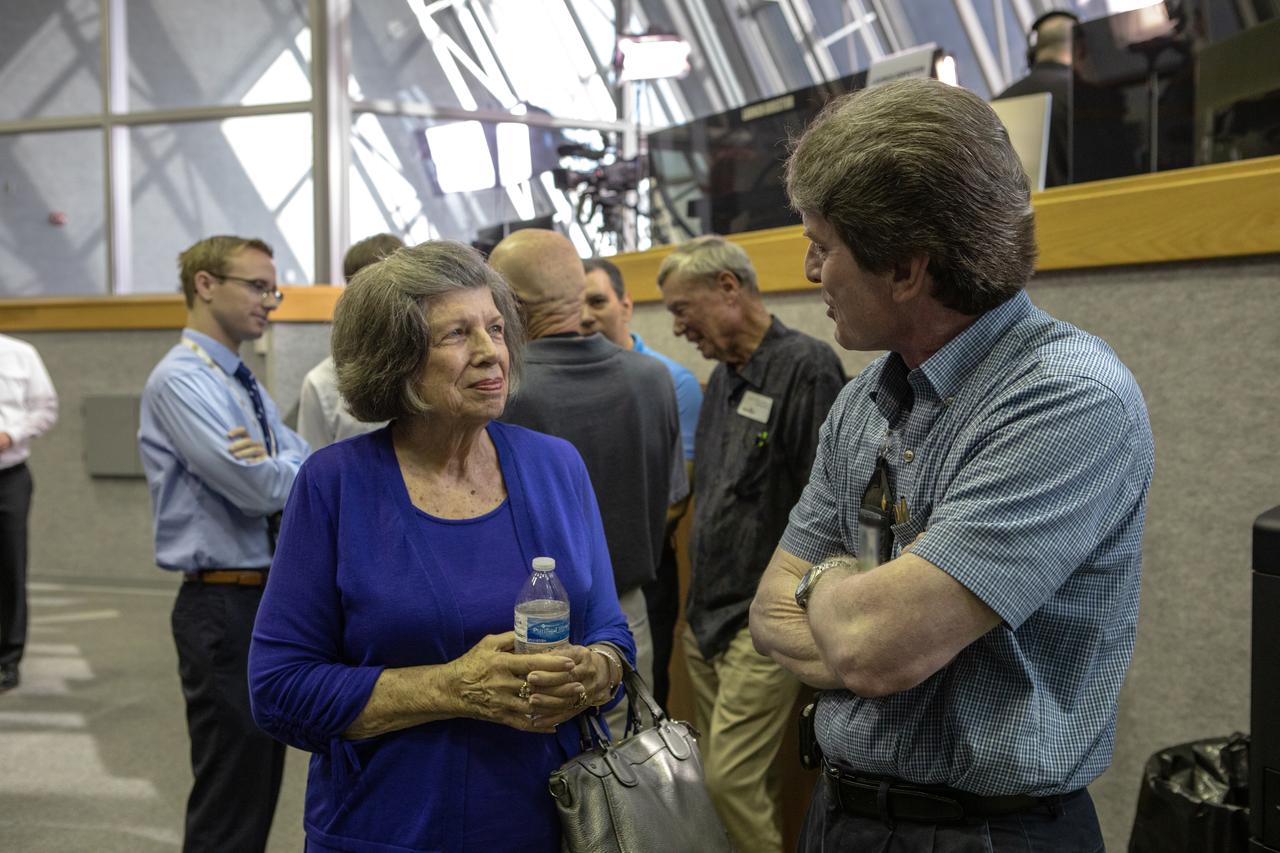
On July 16, 2019, the 50th anniversary of the Apollo 11 launch to the Moon, Apollo-era launch team member JoAnn Morgan, left, talks with an Artemis 1 launch team member in Launch Control Center Firing Room 1 at NASA's Kennedy Space Center in Florida. Morgan was the only female launch team member in the firing room during Apollo 11 launch countdown activities.
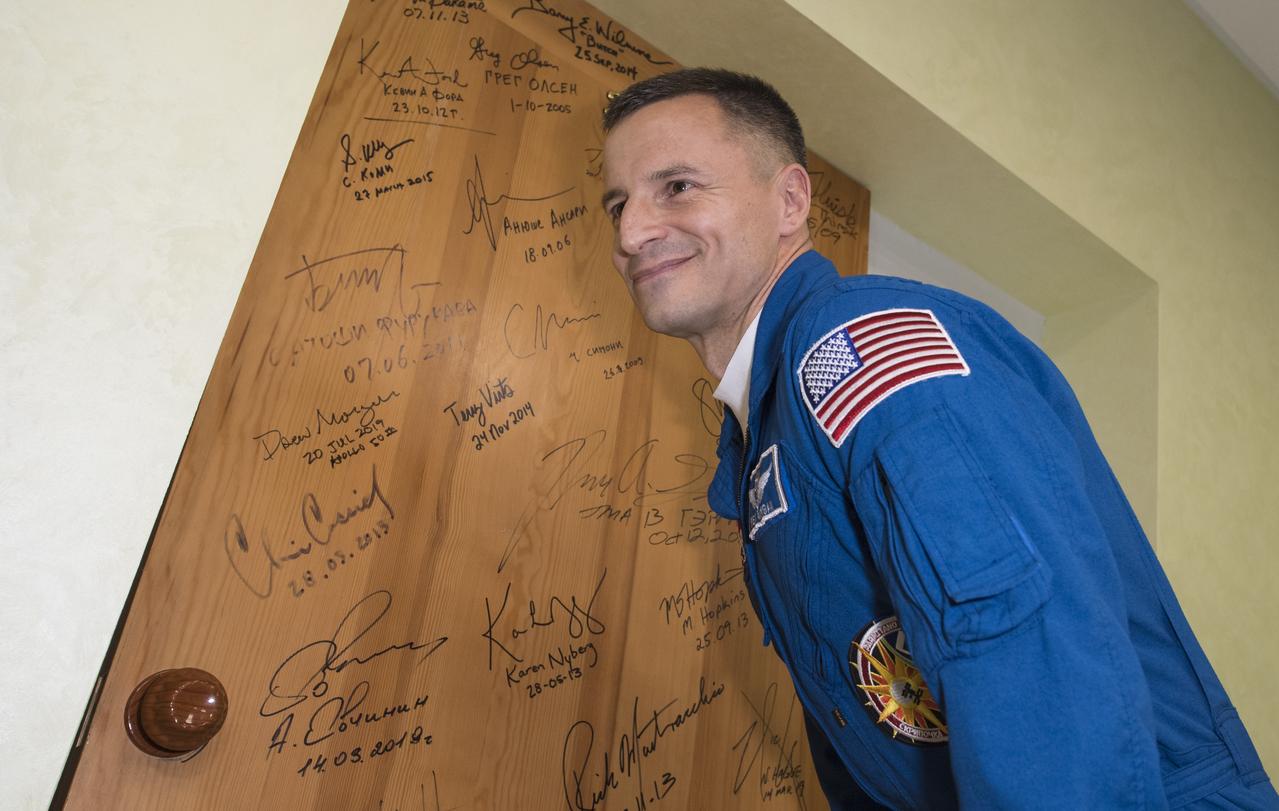
Expedition 60 flight engineer Andrew Morgan of NASA performs the traditional door signing at the Cosmonaut Hotel prior to departing the hotel for launch on a Soyuz rocket with fellow crewmates Alexander Skvortsov of Roscosmos and Luca Parmitano of ESA (European Space Agency), Saturday, July 20, 2019 in Baikonur, Kazakhstan. Skvortsov, Morgan, and Parmitano launched at 12:28 p.m. Eastern time (9:28 p.m. Baikonur time) to begin their mission to the International Space Station. Photo Credit: (NASA/Joel Kowsky)
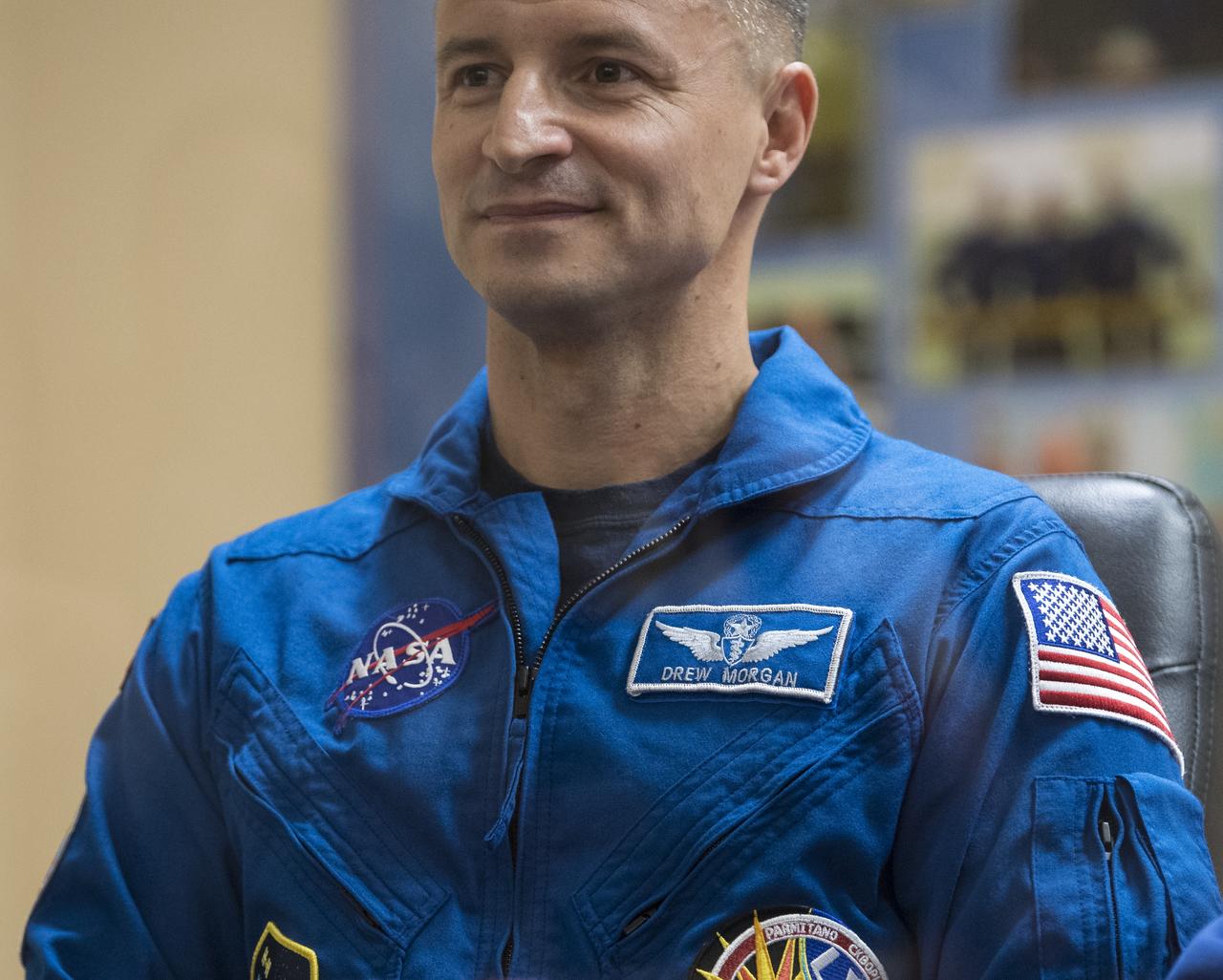
Expedition 60 flight engineer Andrew Morgan of NASA is seen in quarantine, behind glass, during a press conference, Friday, July 19, 2019 at the Cosmonaut Hotel in Baikonur, Kazakhstan. Morgan, Soyuz Commander Alexander Skvortsov of Roscosmos, and flight engineer Luca Parmitano of ESA (European Space Agency) are scheduled to launch to the International Space Station aboard the Soyuz MS-13 spacecraft at 12:28 p.m. Eastern time (9:28 p.m. Baikonur time) on Saturday, July 20. Photo Credit: (NASA/Joel Kowsky)
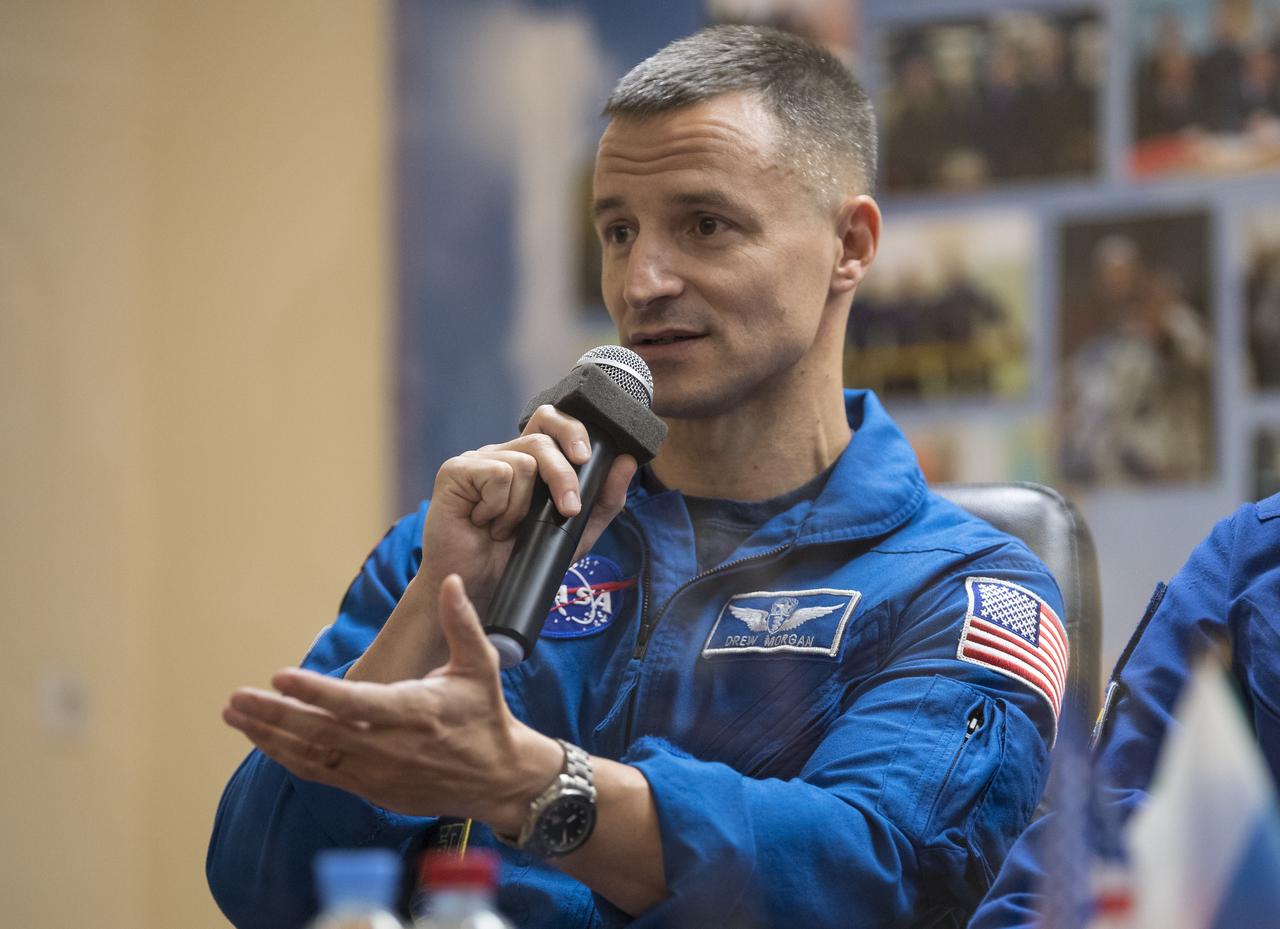
Expedition 60 flight engineer Andrew Morgan of NASA answers a question during a press conference, Friday, July 19, 2019 at the Cosmonaut Hotel in Baikonur, Kazakhstan. Morgan, Soyuz Commander Alexander Skvortsov of Roscosmos, and flight engineer Luca Parmitano of ESA (European Space Agency) are scheduled to launch to the International Space Station aboard the Soyuz MS-13 spacecraft at 12:28 p.m. Eastern time (9:28 p.m. Baikonur time) on Saturday, July 20. Photo Credit: (NASA/Joel Kowsky)
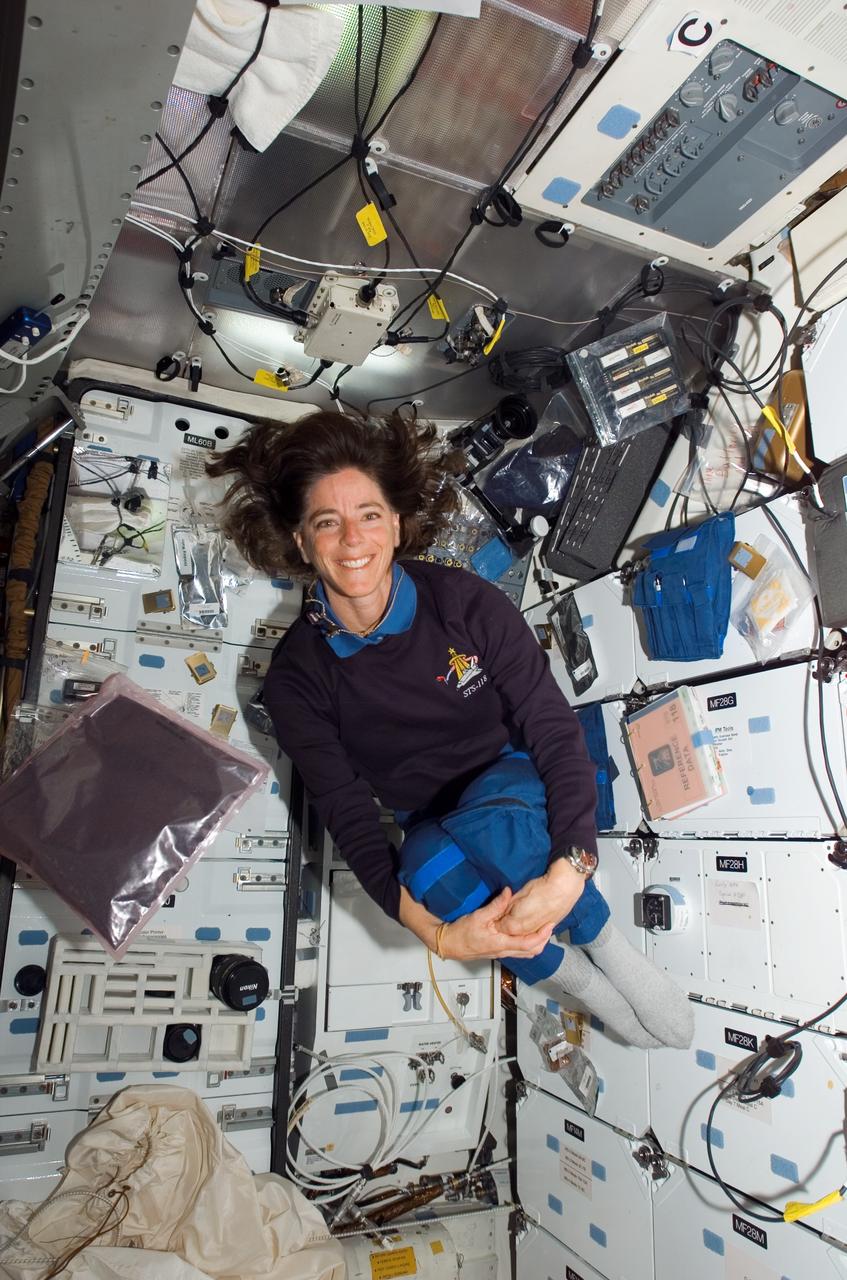
S118-E-10126 (20 Aug. 2007) --- Astronaut Barbara R. Morgan, STS-118 mission specialist, smiles for a photo as she floats on the middeck of the Space Shuttle Endeavour.
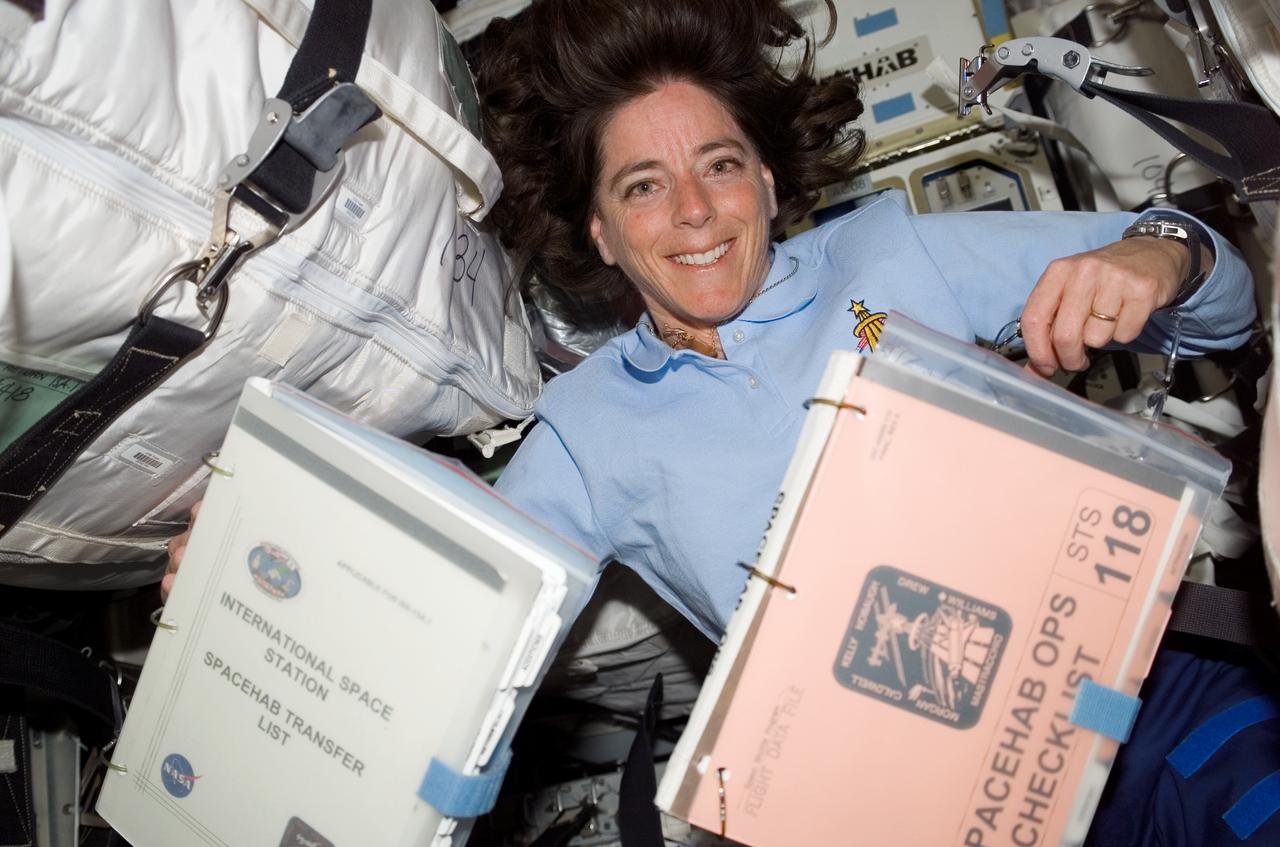
S118-E-07813 (17 Aug. 2007) --- Astronaut Barbara R. Morgan, mission specialist, is surrounded by supplies in SPACEHAB, located in the cargo bay of the Space Shuttle Endeavour. Supply transfer was one of the main activities on the agenda Aug. 17 for the STS-118 crewmembers, who learned their anticipated departure from the International Space Station will come a day earlier due to possible weather issues back home.
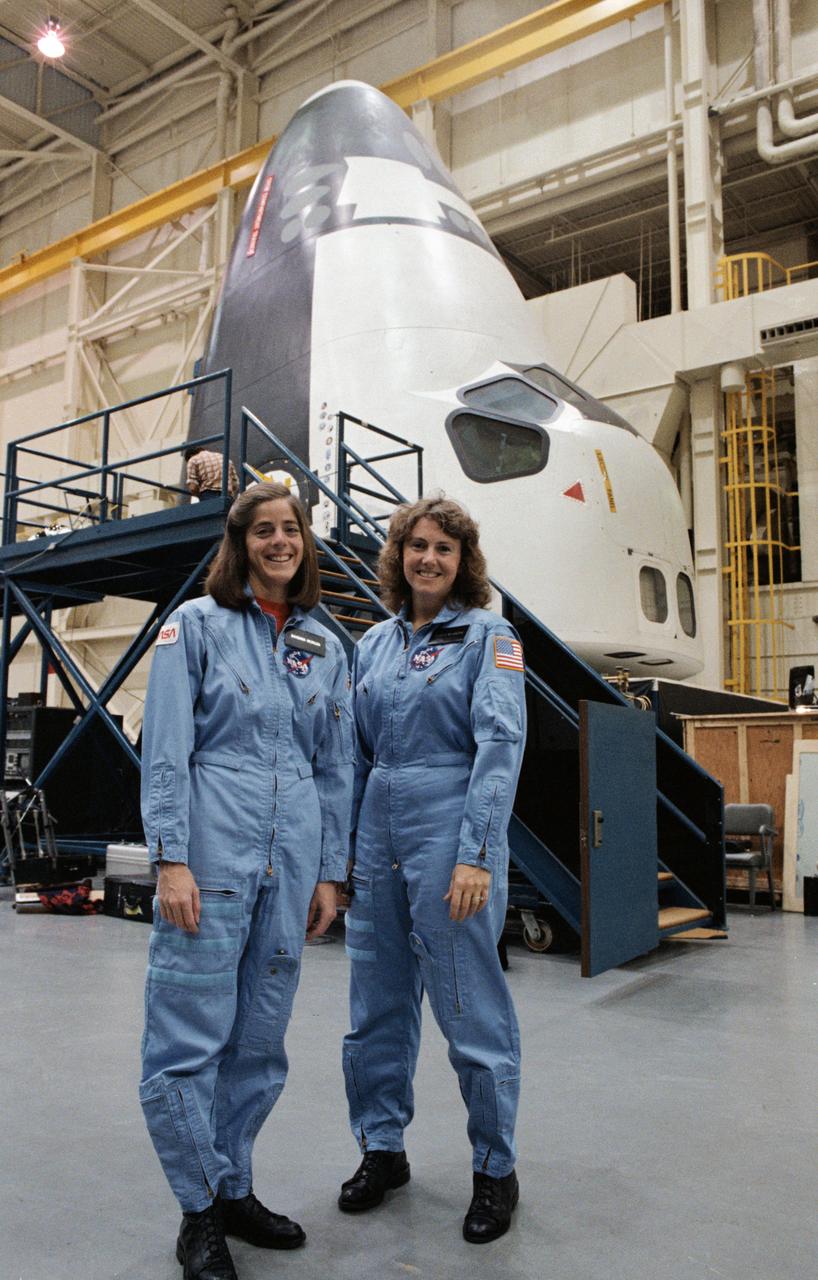
S85-46693 (26 Dec. 1985) --- Sharon Christa McAuliffe (right), the Teacher-in-Space payload specialist assigned to the STS-51L mission, and her backup, Barbara R. Morgan pose for photos after training in the shuttle mock-up and integration laboratory at JSC. The shuttle crew compartment, in a launch mode, can be seen in the background. Photo credit: NASA
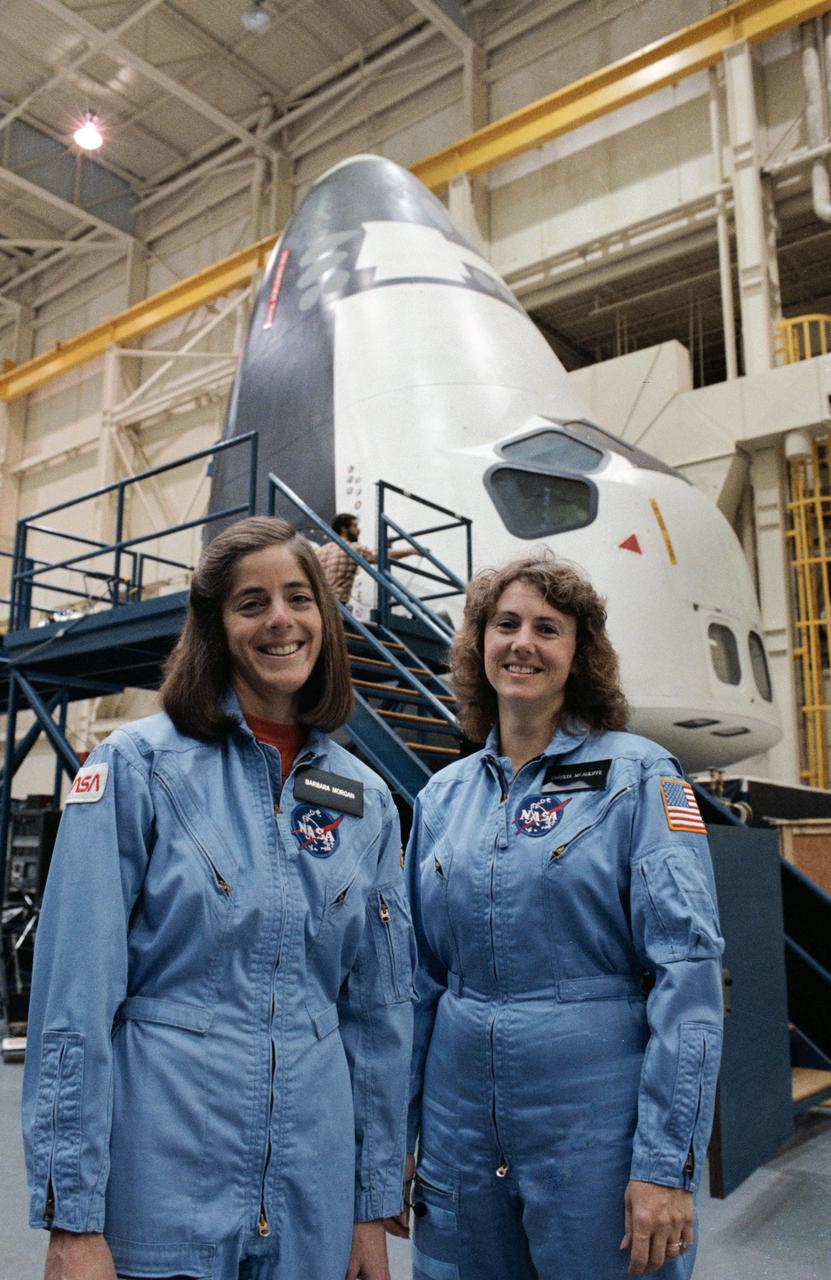
S85-46694 (26 Dec. 1985) --- Sharon Christa McAuliffe (right) and Barbara R. Morgan, Teacher-in-Space payload specialist and backup, respectively, pause from a break in launch and entry readiness training to pose for NASA photographer. The crew compartment trainer (CCT) is in a vertical position (background) to accommodate that training. Astronauts use the shuttle mock-up and integration laboratory to train for a variety of activities. Photo credit: NASA

On July 16, 2019, the 50th anniversary of the Apollo 11 launch, Apollo-era launch team member JoAnn Morgan talks to NASA’s Derrol Nail at the agency’s Kennedy Space Center in Florida about what it was like to be the only female in the firing room on launch day.
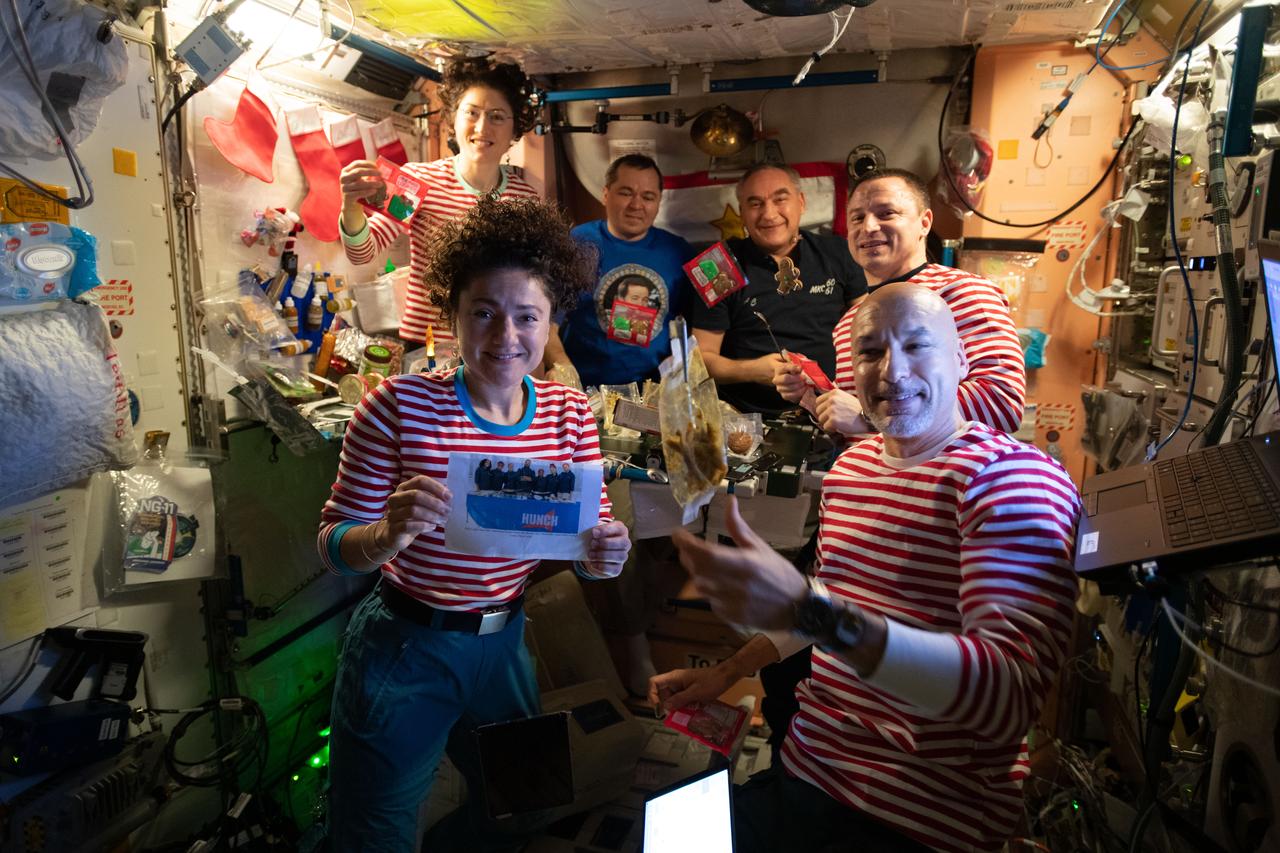
iss061e096558 (Dec. 25, 2019) --- The Expedition 64 crew celebrates Christmas day with a brunch inside the International Space Station's Unity module decorated with stockings, flashlight "candles" and a Christmas tree banner. Clockwise from bottom left are, NASA Flight Engineers Jessica Meir and Christina Koch, Roscosmos Flight Engineers Oleg Skripochka and Alexander Skvortsov, NASA Flight Engineer Drew Morgan, and Commander Luca Parmitano of the European Space Agency (ESA).
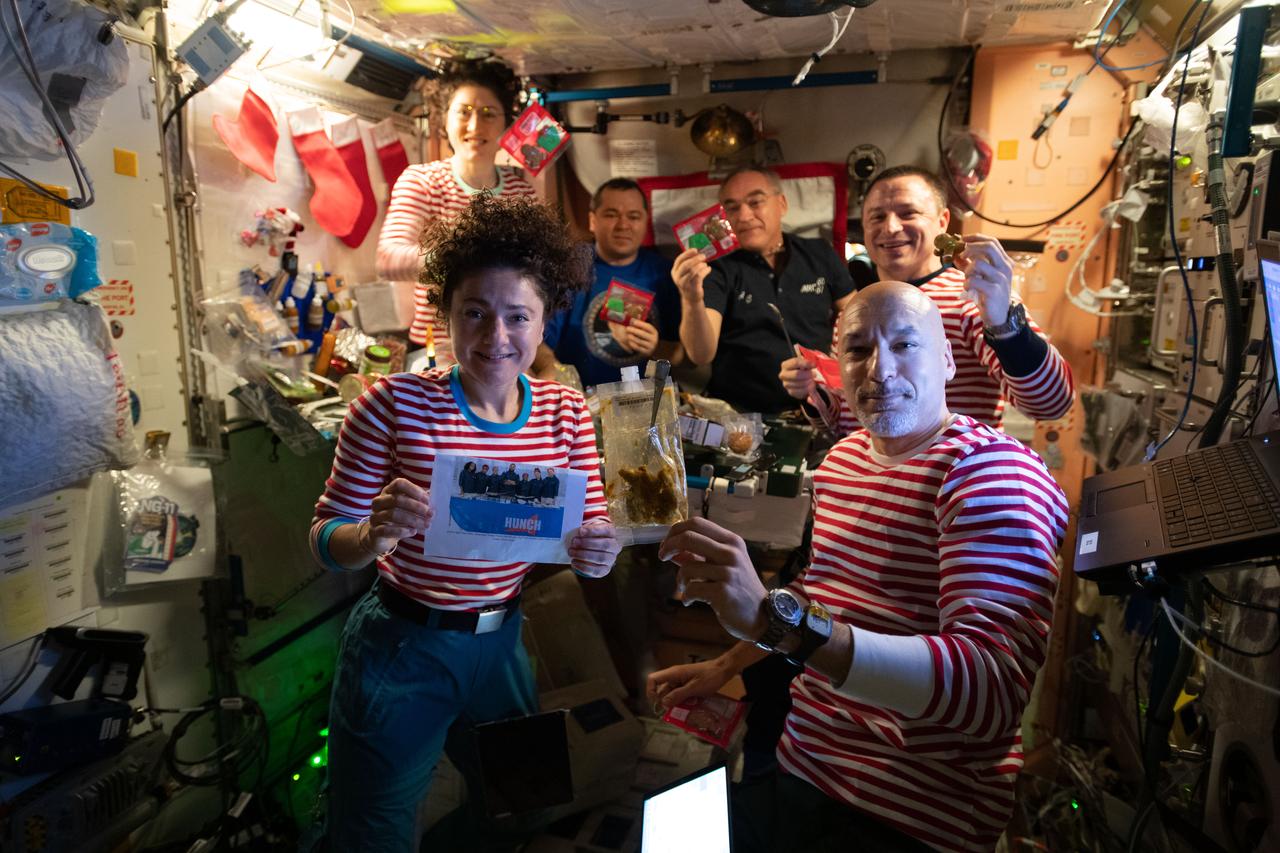
iss061e096558 (Dec. 25, 2019) --- The Expedition 61 crew celebrates Christmas day with a brunch inside the International Space Station's Unity module decorated with stockings, flashlight "candles" and a Christmas tree banner. Clockwise from bottom left are, NASA Flight Engineers Jessica Meir and Christina Koch, Roscosmos Flight Engineers Oleg Skripochka and Alexander Skvortsov, NASA Flight Engineer Drew Morgan, and Commander Luca Parmitano of the European Space Agency (ESA).
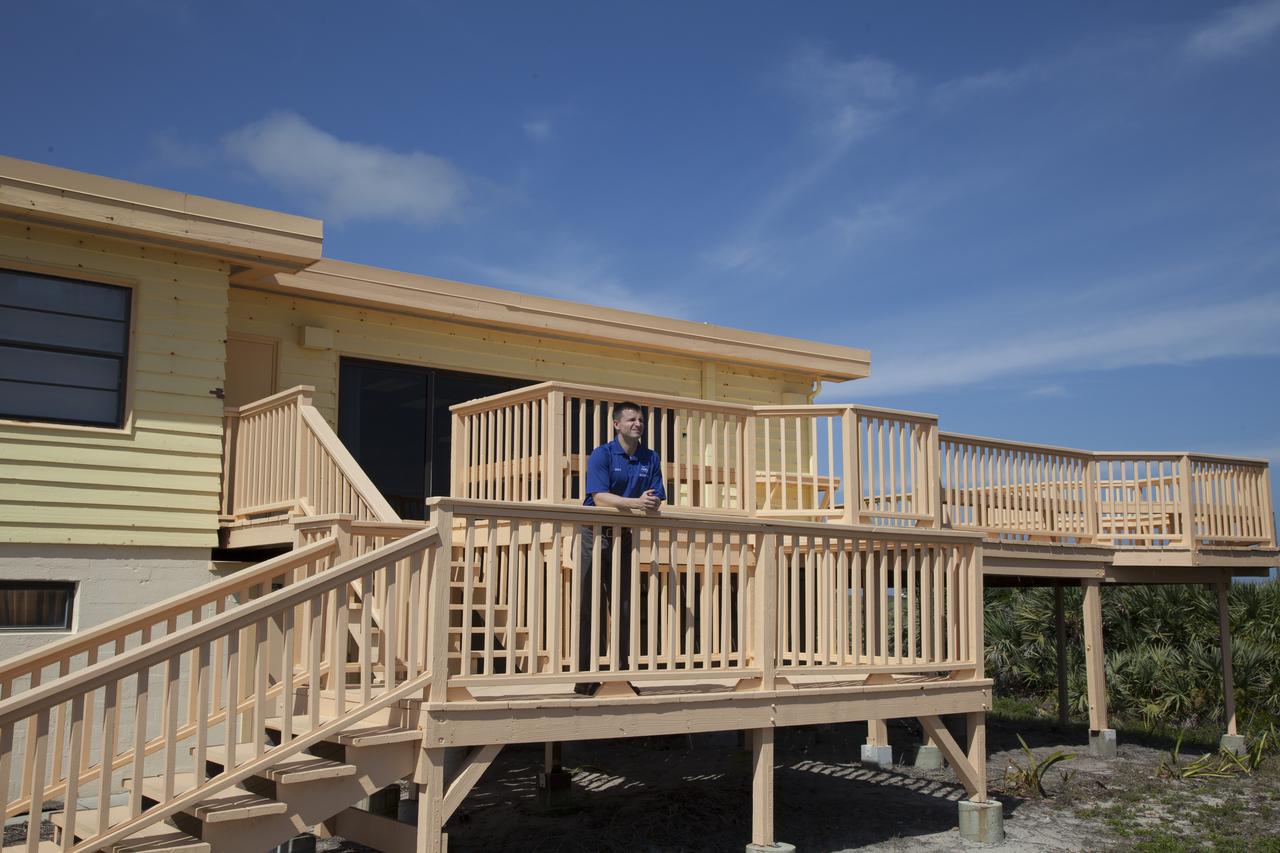
CAPE CANAVERAL, Fla. - NASA astronaut candidate Andrew Morgan looks over the beach while standing at the Beach House at NASA's Kennedy Space Center. The Beach House is a traditional gathering place for astronauts before they fly into space. The astronaut class of 2013 was selected by NASA after an extensive year-and-a-half search. The new group will help the agency push the boundaries of exploration and travel to new destinations in the solar system. To learn more about the astronaut class of 2013, visit: http://www.nasa.gov/astronauts/2013astroclass.html Photo credit: NASA/Daniel Casper
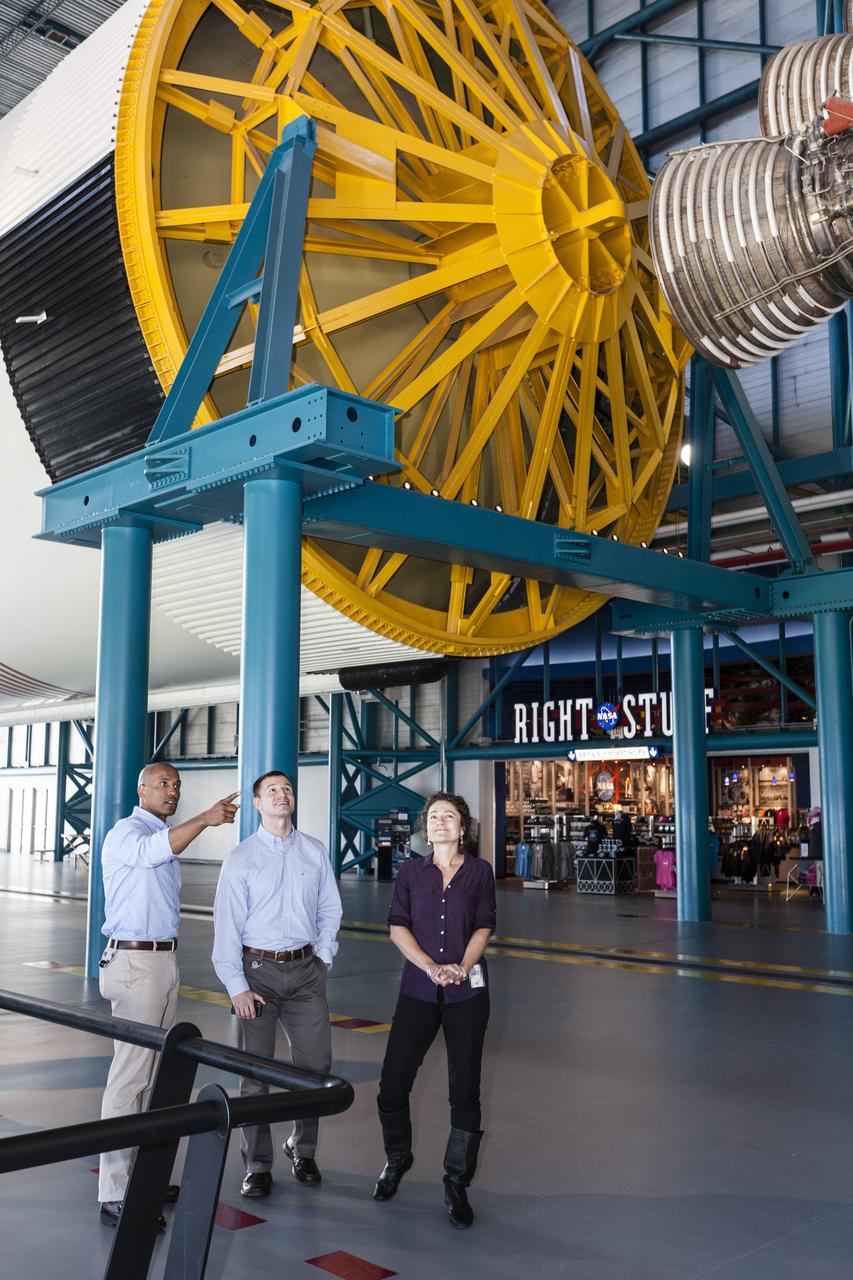
CAPE CANAVERAL, Fla. – NASA astronaut candidates Victor Glover, from left, Andrew Morgan and Jessica Meir tour the Apollo Saturn V Center at Kennedy Space Center in Florida during a daylong set of briefings and tours of different facilities at NASA's primary launch center. The astronaut class of 2013 was selected by NASA after an extensive year-and-a-half search. The new group will help the agency push the boundaries of exploration and travel to new destinations in the solar system. To learn more about the astronaut class of 2013, visit: http://www.nasa.gov/astronauts/2013astroclass.html Photo credit: NASA/Kim Shiflett

Expedition 62 crew members Andrew Morgan of NASA, left, Roscosmos cosmonaut Oleg Skripochka, center, and NASA astronaut Jessica Meir are seen inside the Soyuz MS-15 spacecraft after they landed in a remote area near the town of Zhezkazgan, Kazakhstan on Friday, April 17, 2020. Meir and Skripochka returned after 205 days in space, and Morgan after 272 days in space. All three served as Expedition 60-61-62 crew members onboard the International Space Station. Photo Credit: (NASA/GCTC/Andrey Shelepin)
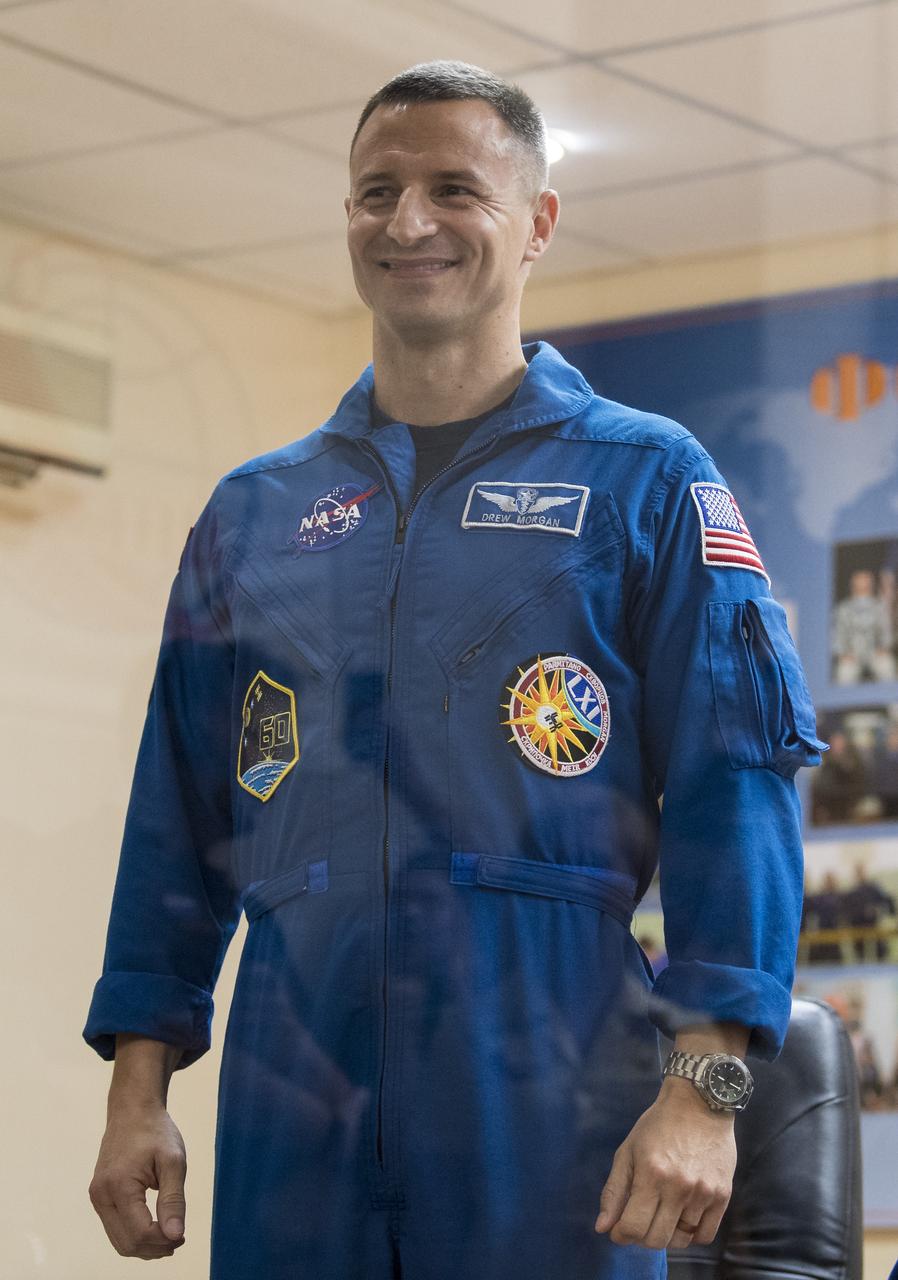
Expedition 60 flight engineer Andrew Morgan of NASA is introduced during a press conference, Friday, July 19, 2019 at the Cosmonaut Hotel in Baikonur, Kazakhstan. Expedition 60 Soyuz Commander Alexander Skvortsov of Roscosmos, flight engineer Andrew Morgan of NASA, and flight engineer Luca Parmitano of ESA (European Space Agency) are scheduled to launch to the International Space Station aboard the Soyuz MS-13 spacecraft at 12:28 p.m. Eastern time (9:28 p.m. Baikonur time) on Saturday, July 20. Photo Credit: (NASA/Joel Kowsky)
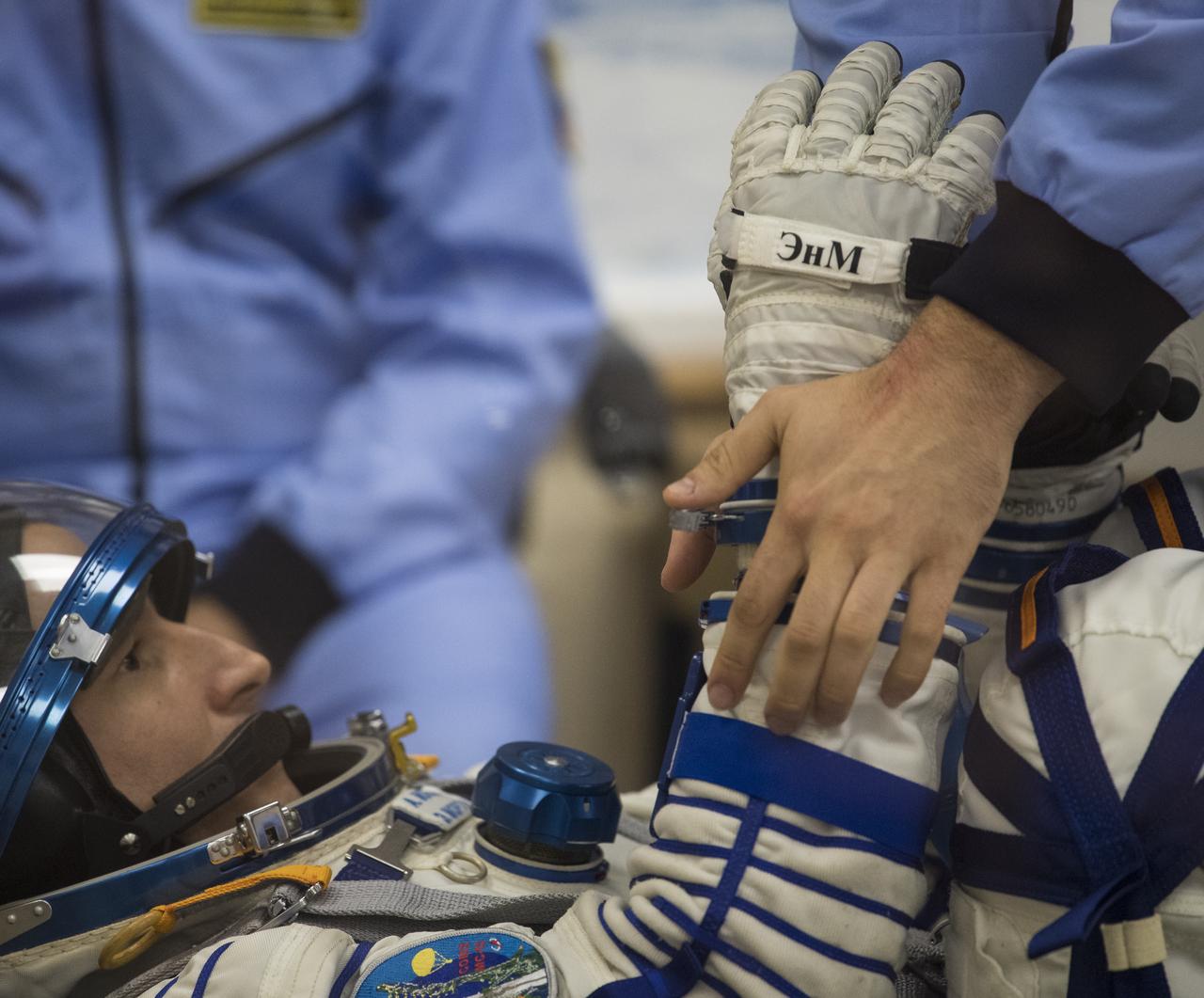
Expedition 60 flight engineer Andrew Morgan of NASA prepares to have his Russian Sokol suit pressure checked in preparation for launch aboard the Soyuz MS-13 spacecraft, Saturday, July 20, 2019 at the Baikonur Cosmodrome in Kazakhstan. Morgan, Alexander Skvortsov of Roscosmos, and Luca Parmitano of ESA (European Space Agency) launched aboard the Soyuz MS-13 spacecraft at 12:28 p.m. Eastern time (9:28 p.m. Baikonur time) on July 20 to begin their journey to the International Space Station. Photo Credit: (NASA/Joel Kowsky)
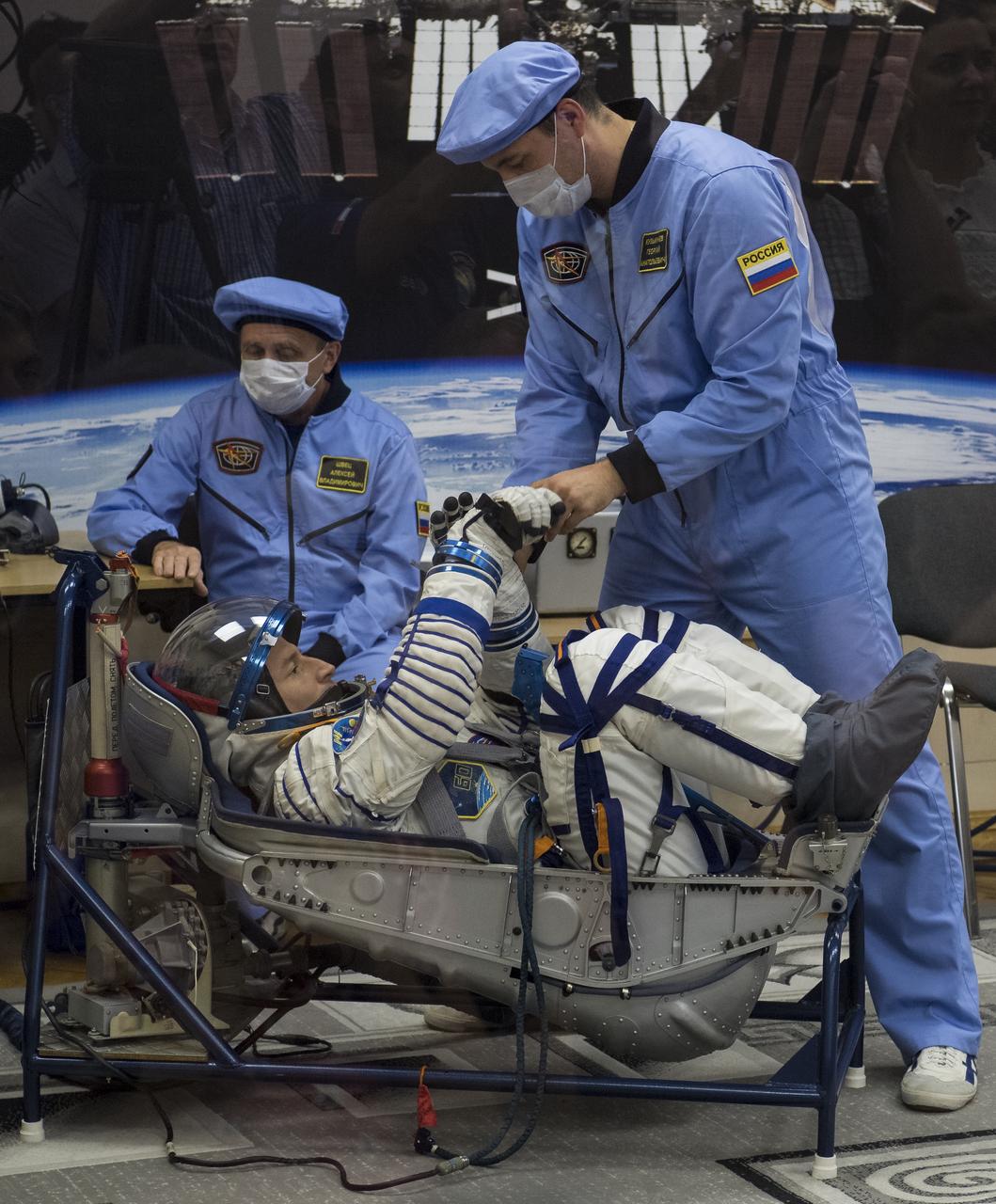
Expedition 60 flight engineer Andrew Morgan of NASA prepares to have his Russian Sokol suit pressure checked in preparation for launch aboard the Soyuz MS-13 spacecraft, Saturday, July 20, 2019 at the Baikonur Cosmodrome in Kazakhstan. Morgan, Alexander Skvortsov of Roscosmos, and Luca Parmitano of ESA (European Space Agency) launched aboard the Soyuz MS-13 spacecraft at 12:28 p.m. Eastern time (9:28 p.m. Baikonur time) on July 20 to begin their journey to the International Space Station. Photo Credit: (NASA/Joel Kowsky)
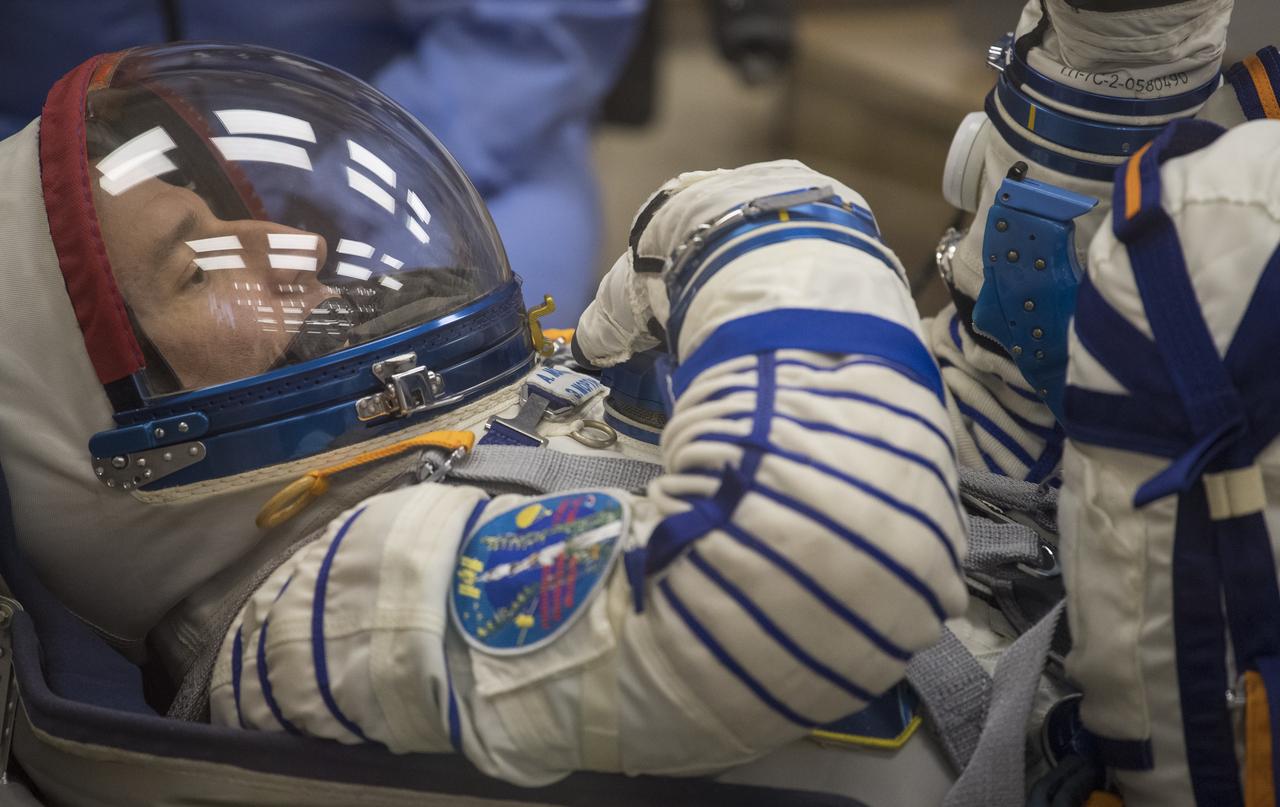
Expedition 60 flight engineer Andrew Morgan of NASA has his Russian Sokol suit pressure checked in preparation for launch aboard the Soyuz MS-13 spacecraft, Saturday, July 20, 2019 at the Baikonur Cosmodrome in Kazakhstan. Morgan, Alexander Skvortsov of Roscosmos, and Luca Parmitano of ESA (European Space Agency) launched aboard the Soyuz MS-13 spacecraft at 12:28 p.m. Eastern time (9:28 p.m. Baikonur time) on July 20 to begin their journey to the International Space Station. Photo Credit: (NASA/Joel Kowsky)
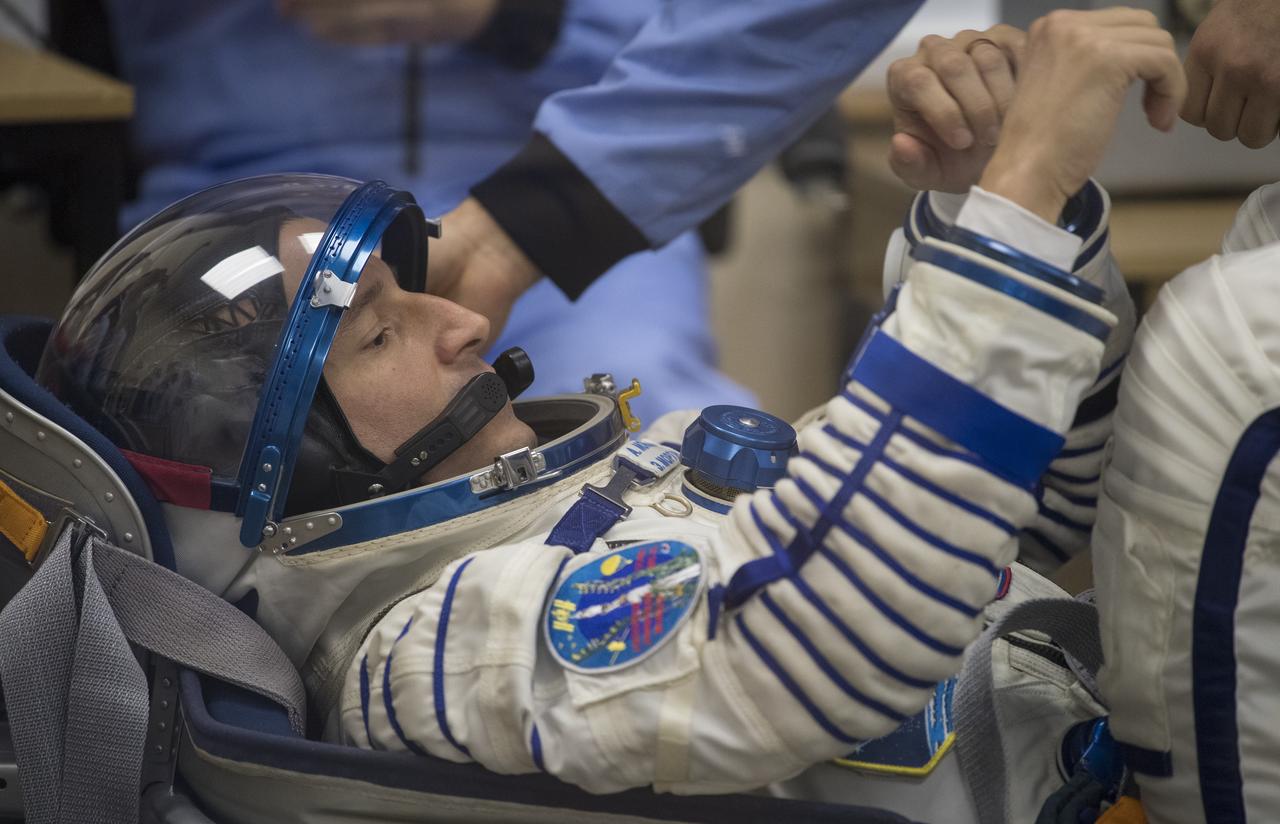
Expedition 60 flight engineer Andrew Morgan of NASA prepares to have his Russian Sokol suit pressure checked in preparation for launch aboard the Soyuz MS-13 spacecraft, Saturday, July 20, 2019 at the Baikonur Cosmodrome in Kazakhstan. Morgan, Alexander Skvortsov of Roscosmos, and Luca Parmitano of ESA (European Space Agency) launched aboard the Soyuz MS-13 spacecraft at 12:28 p.m. Eastern time (9:28 p.m. Baikonur time) on July 20 to begin their journey to the International Space Station. Photo Credit: (NASA/Joel Kowsky)
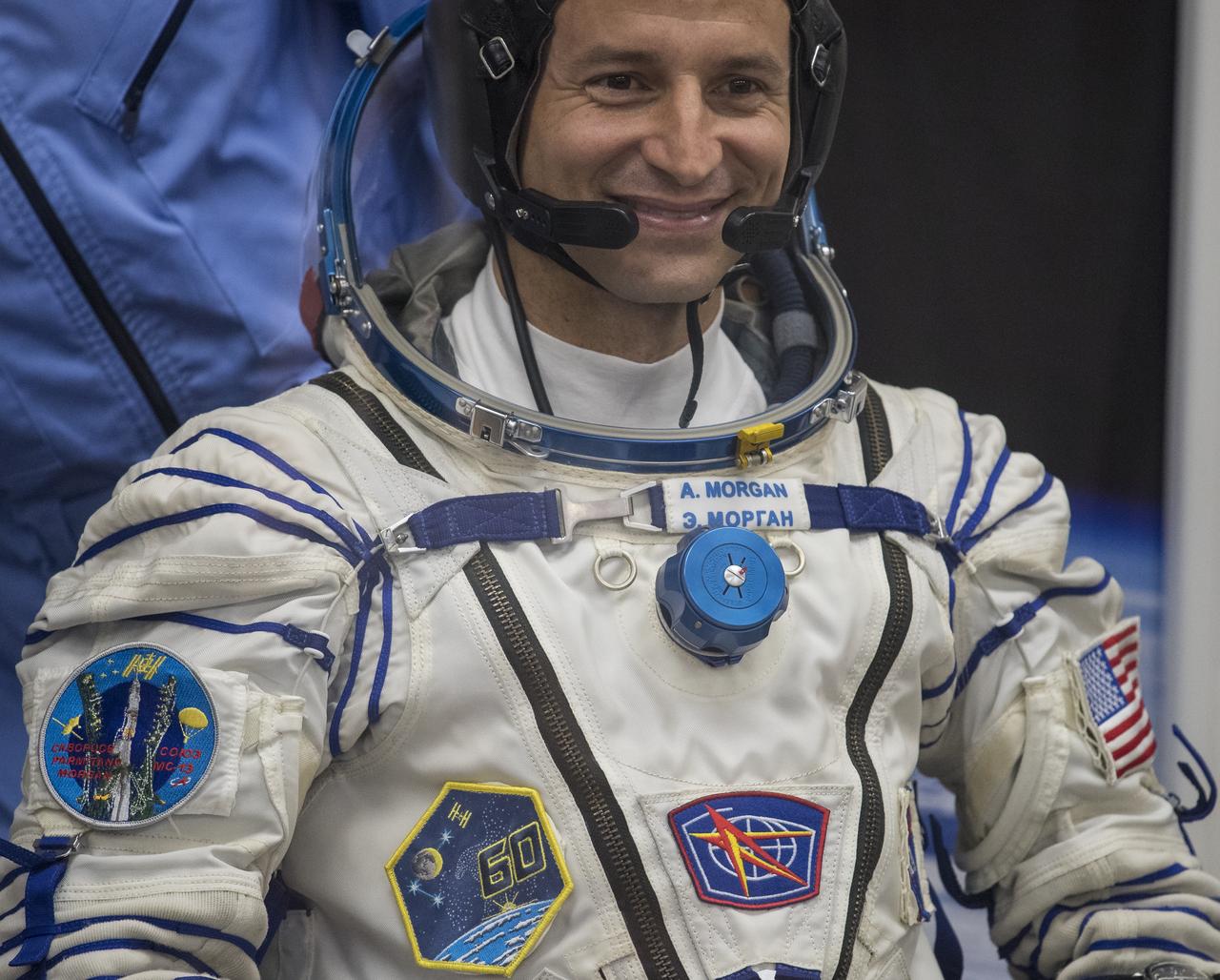
Expedition 60 flight engineer Andrew Morgan of NASA waits to have his Russian Sokol suit pressure checked in preparation for launch aboard the Soyuz MS-13 spacecraft, Saturday, July 20, 2019 at the Baikonur Cosmodrome in Kazakhstan. Morgan, Alexander Skvortsov of Roscosmos, and Luca Parmitano of ESA (European Space Agency) launched aboard the Soyuz MS-13 spacecraft at 12:28 p.m. Eastern time (9:28 p.m. Baikonur time) on July 20 to begin their journey to the International Space Station. Photo Credit: (NASA/Joel Kowsky)
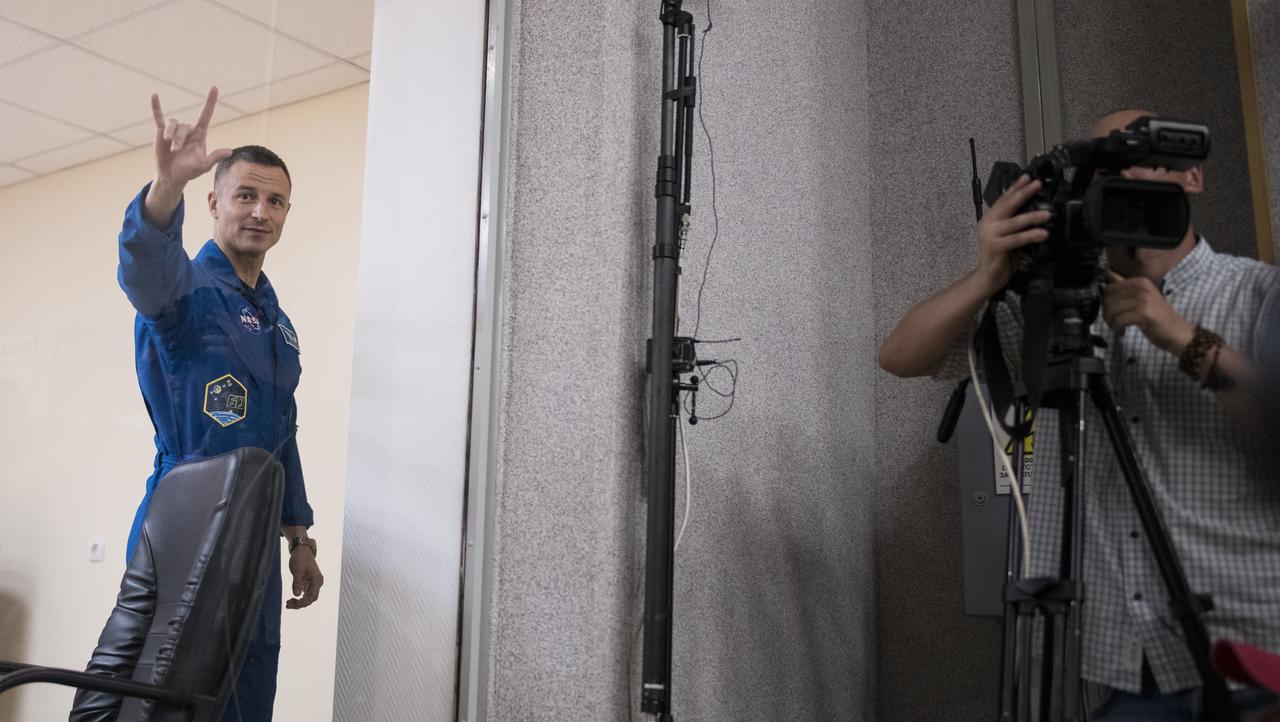
Expedition 60 flight engineer Andrew Morgan of NASA is seen in quarantine, behind glass, as he leaves at the end of a press conference, Friday, July 19, 2019 at the Cosmonaut Hotel in Baikonur, Kazakhstan. Morgan, Soyuz Commander Alexander Skvortsov of Roscosmos, and flight engineer Luca Parmitano of ESA (European Space Agency) are scheduled to launch to the International Space Station aboard the Soyuz MS-13 spacecraft at 12:28 p.m. Eastern time (9:28 p.m. Baikonur time) on Saturday, July 20. Photo Credit: (NASA/Joel Kowsky)
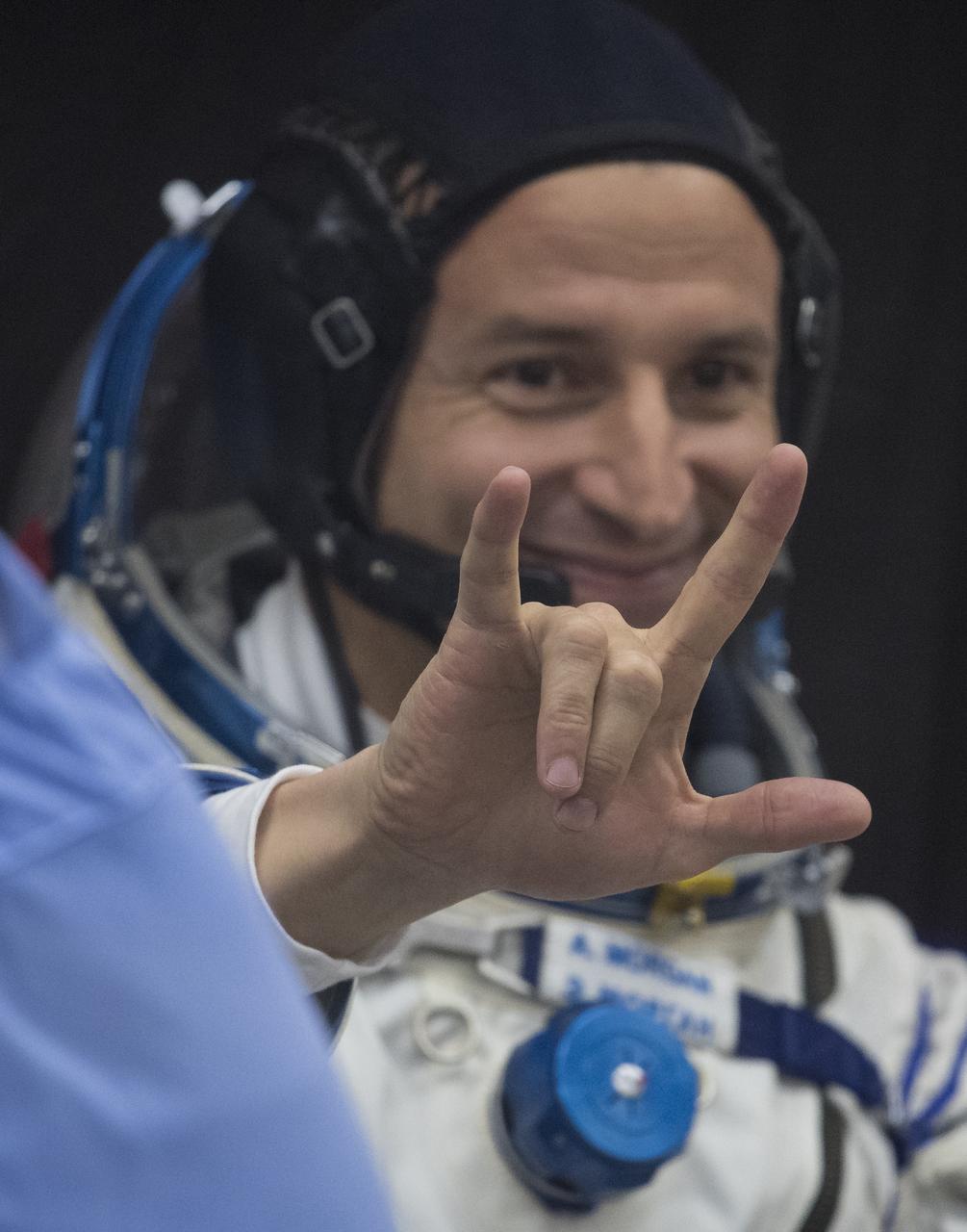
Expedition 60 flight engineer Andrew Morgan of NASA waits to have his Russian Sokol suit pressure checked in preparation for launch aboard the Soyuz MS-13 spacecraft, Saturday, July 20, 2019 at the Baikonur Cosmodrome in Kazakhstan. Morgan, Alexander Skvortsov of Roscosmos, and Luca Parmitano of ESA (European Space Agency) launched aboard the Soyuz MS-13 spacecraft at 12:28 p.m. Eastern time (9:28 p.m. Baikonur time) on July 20 to begin their journey to the International Space Station. Photo Credit: (NASA/Joel Kowsky)
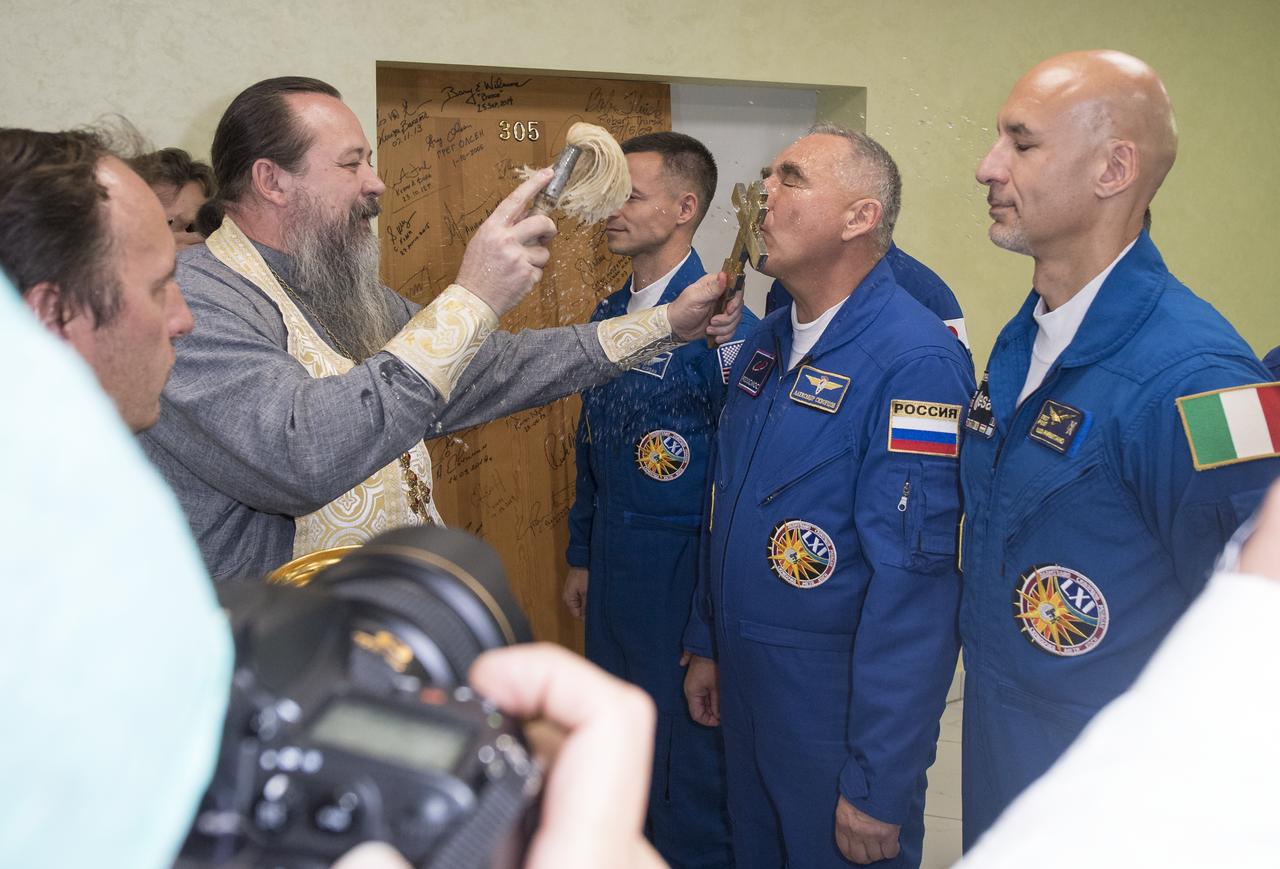
Expedition 60 Soyuz Commander Alexander Skvortsov of Roscosmos is blessed by a Russian Orthodox Priest in the Cosmonaut Hotel prior to departing for launch on a Soyuz rocket with fellow crewmates Andrew Morgan of NASA and Luca Parmitano of ESA (European Space Agency), Saturday, July 20, 2019 in Baikonur, Kazakhstan. Skvortsov, Morgan, and Parmitano launched at 12:28 p.m. Eastern time (9:28 p.m. Baikonur time) to begin their mission to the International Space Station. Photo Credit: (NASA/Joel Kowsky)

Expedition 60 flight engineer Andrew Morgan of NASA is blessed by a Russian Orthodox Priest in the Cosmonaut Hotel prior to departing for launch on a Soyuz rocket with fellow crewmates Alexander Skvortsov of Roscosmos and Luca Parmitano of ESA (European Space Agency), Saturday, July 20, 2019 in Baikonur, Kazakhstan. Skvortsov, Morgan, and Parmitano launched at 12:28 p.m. Eastern time (9:28 p.m. Baikonur time) to begin their mission to the International Space Station. Photo Credit: (NASA/Joel Kowsky)
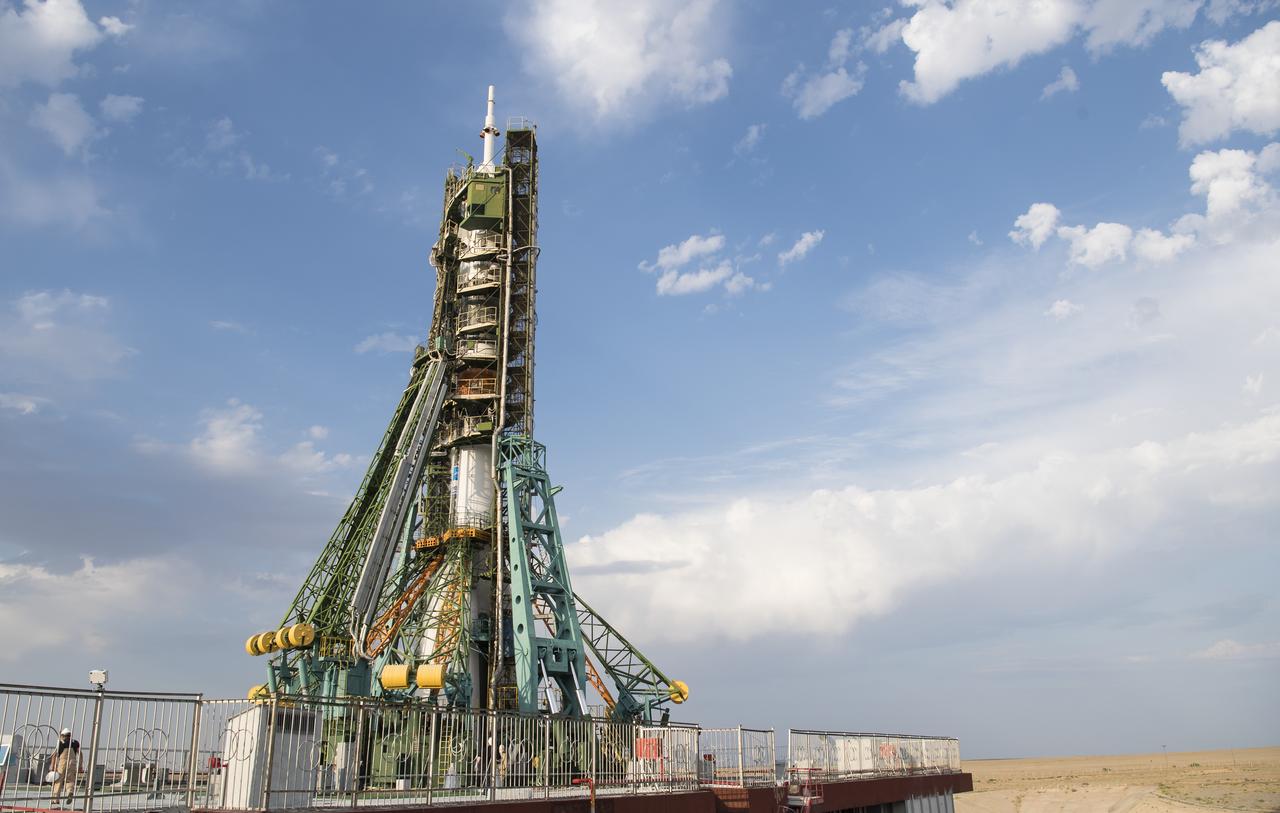
The Soyuz rocket with Soyuz MS-13 spacecraft onboard is seen on the launch pad after the arrival of Expedition 60 flight engineer Luca Parmitano of ESA (European Space Agency), flight engineer Andrew Morgan of NASA, and Soyuz Commander Alexander Skvortsov of Roscosmos, Saturday, July 20, 2019 at the Baikonur Cosmodrome in Kazakhstan. Parmitano, Morgan, and Skvortsov are scheduled to launch at 12:28 p.m. Eastern time (9:28 p.m. Baikonur time) on July 20. Photo Credit: (NASA/Joel Kowsky)
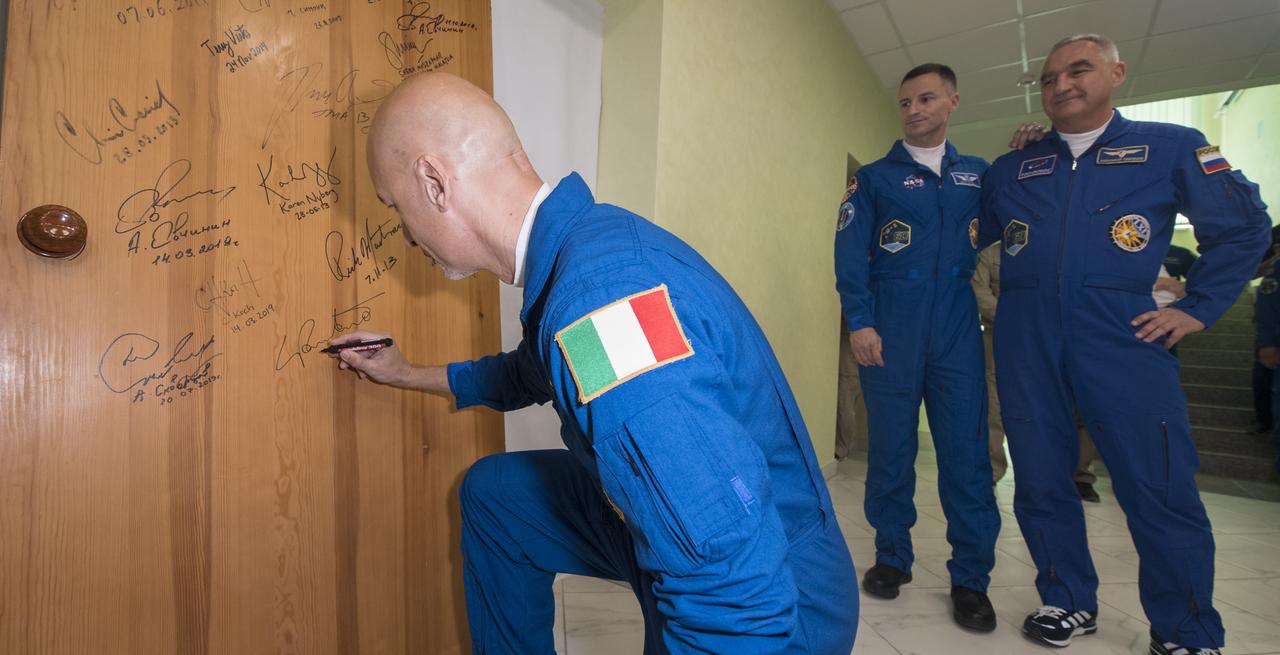
Expedition 60 flight engineer Luca Parmitano of ESA (European Space Agency) performs the traditional door signing at the Cosmonaut Hotel prior to departing the hotel for launch on a Soyuz rocket with fellow crewmates Andrew Morgan of NASA and Alexander Skvortsov of Roscosmos, Saturday, July 20, 2019 in Baikonur, Kazakhstan. Skvortsov, Morgan, and Parmitano launched at 12:28 p.m. Eastern time (9:28 p.m. Baikonur time) to begin their mission to the International Space Station. Photo Credit: (NASA/Joel Kowsky)
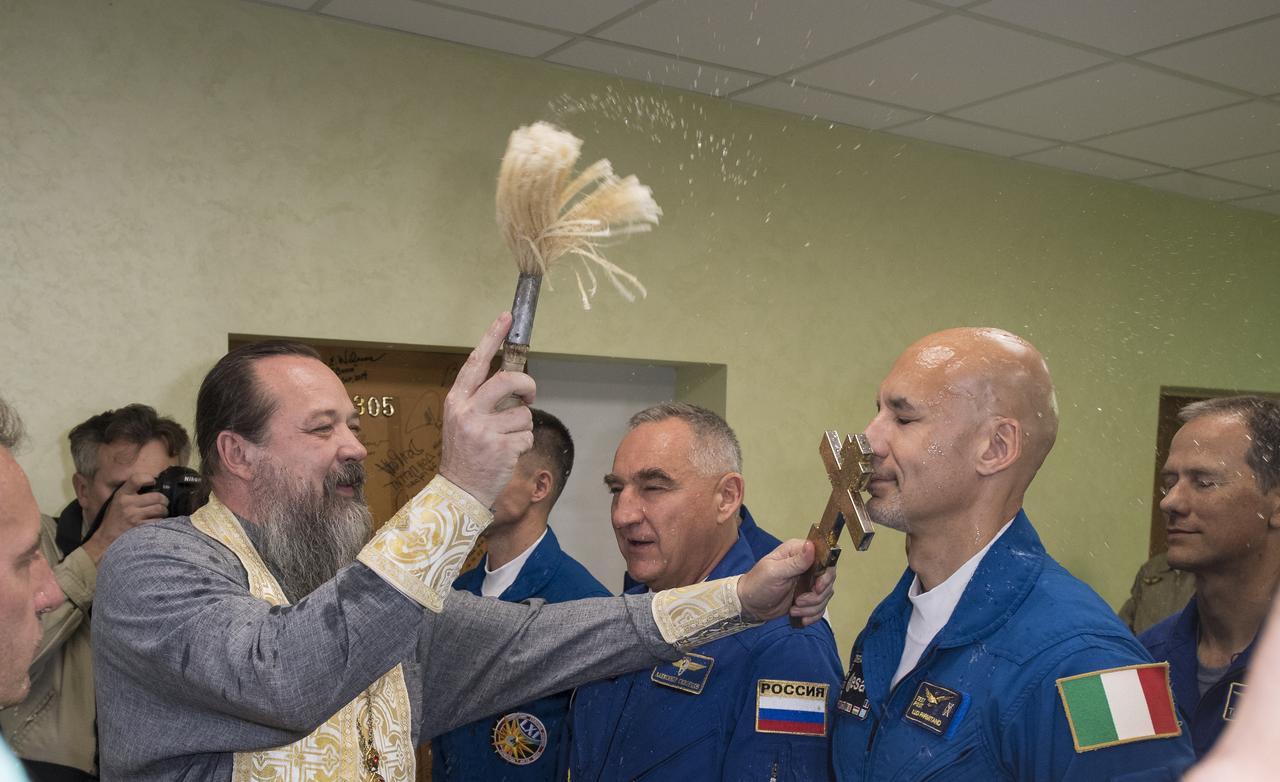
Expedition 60 Soyuz flight engineer Luca Parmitano of ESA (European Space Agency) is blessed by a Russian Orthodox Priest in the Cosmonaut Hotel prior to departing for launch on a Soyuz rocket with fellow crewmates Andrew Morgan of NASA and Alexander Skvortsov of Roscosmos, Saturday, July 20, 2019 in Baikonur, Kazakhstan. Skvortsov, Morgan, and Parmitano launched at 12:28 p.m. Eastern time (9:28 p.m. Baikonur time) to begin their mission to the International Space Station. Photo Credit: (NASA/Joel Kowsky)
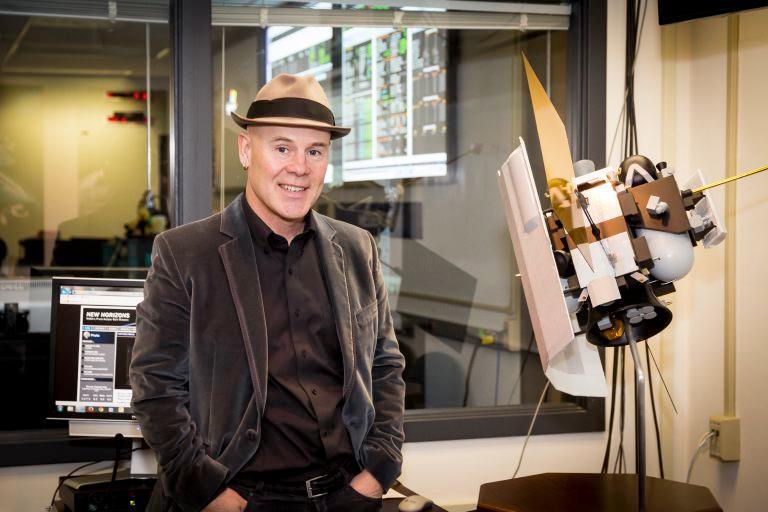
Thomas Morgan Robertson, better known to music fans as Thomas Dolby, has joined Johns Hopkins University as an honorary Homewood Professor of the Arts.
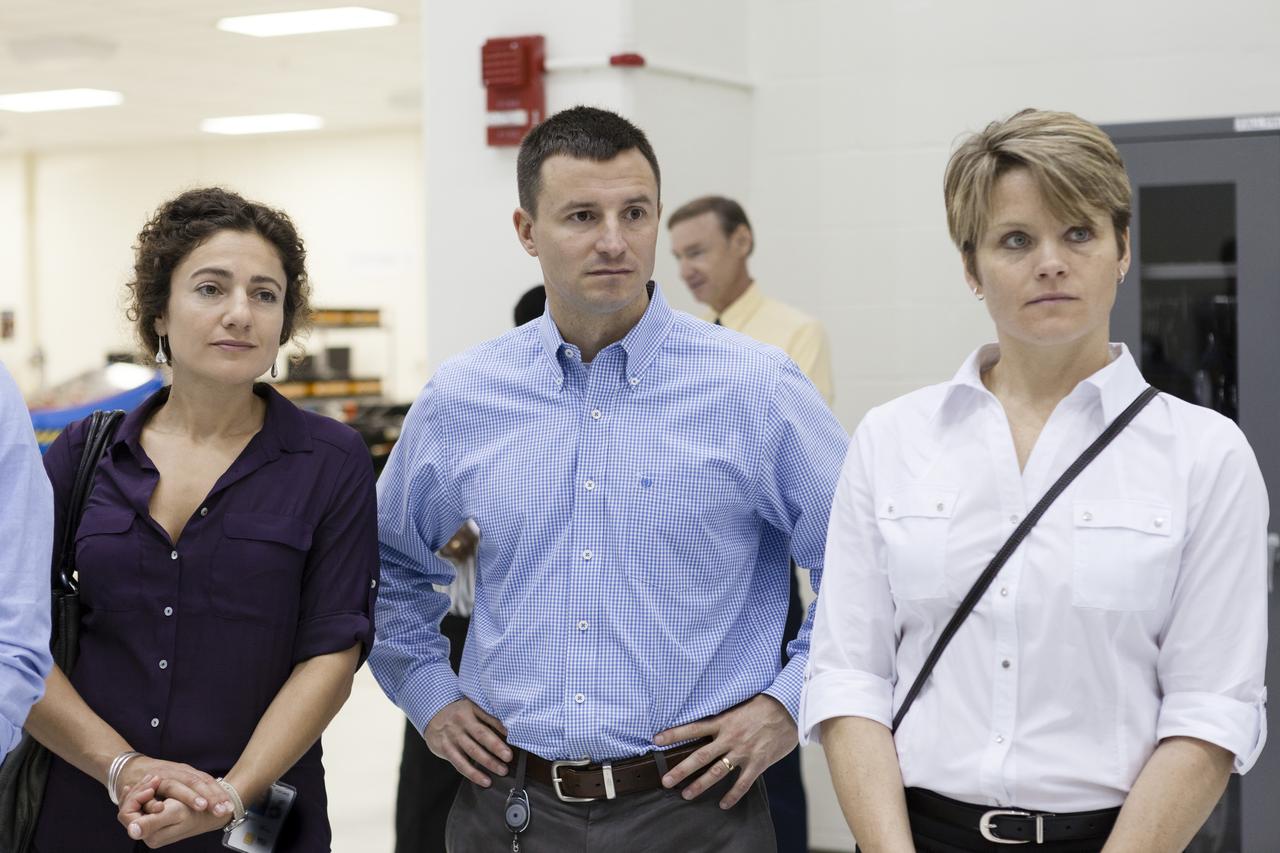
CAPE CANAVERAL, Fla. -- In the Operations and Checkout Building of NASA's Kennedy Space Center in Florida, astronaut candidates Jessica Meir, left, Andrew Morgan, center, and Anne McClain listen to a briefing on preparations for the launch the Orion spacecraft on Exploration Flight Test EFT-1. Plans call for the Lockheed Martin-built Orion to launch atop a United Launch Alliance Delta IV Heavy rocket from Cape Canaveral Air Force Station. The astronaut class of 2013 was selected by NASA after an extensive year-and-a-half search. The new group will help the agency push the boundaries of exploration and travel to new destinations in the solar system. To learn more about the astronaut class of 2013, visit: http://www.nasa.gov/astronauts/2013astroclass.html Photo credit: NASA/Kim Shiflett
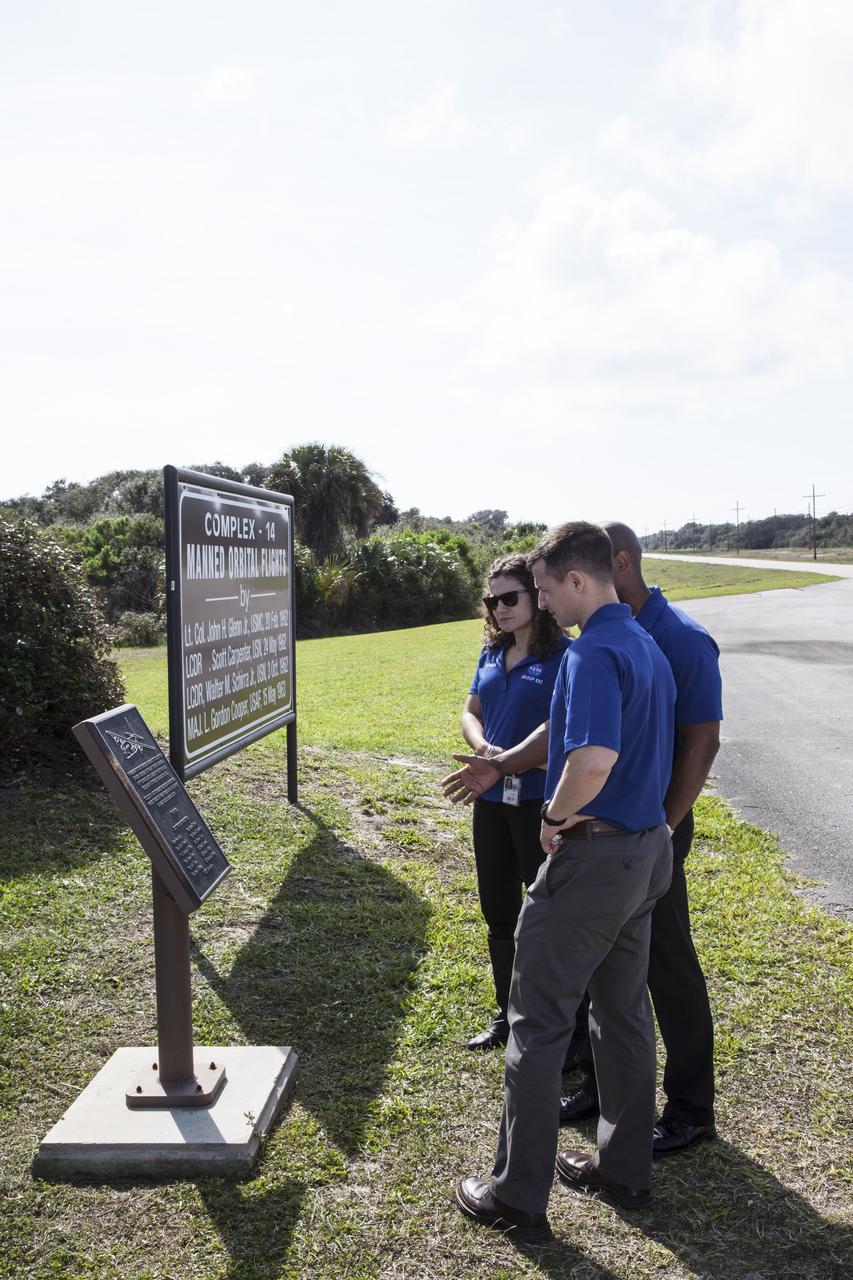
CAPE CANAVERAL, Fla. – NASA astronautcandidates Jessica Meir, Andrew Morgan and Victor Glover review markers at the entrance to Complex 14 at Cape Canaveral Air Force Station in Florida, adjacent to NASA's Kennedy Space Center. Complex 14 served as the launch pad for Mercury astronaut John Glenn when he lifted off in 1962 to orbit the Earth, becoming the first American to do so. The astronaut class of 2013 was selected by NASA after an extensive year-and-a-half search. The new group will help the agency push the boundaries of exploration and travel to new destinations in the solar system. To learn more about the astronaut class of 2013, visit: http://www.nasa.gov/astronauts/2013astroclass.html Photo credit: NASA/Frankie Martin
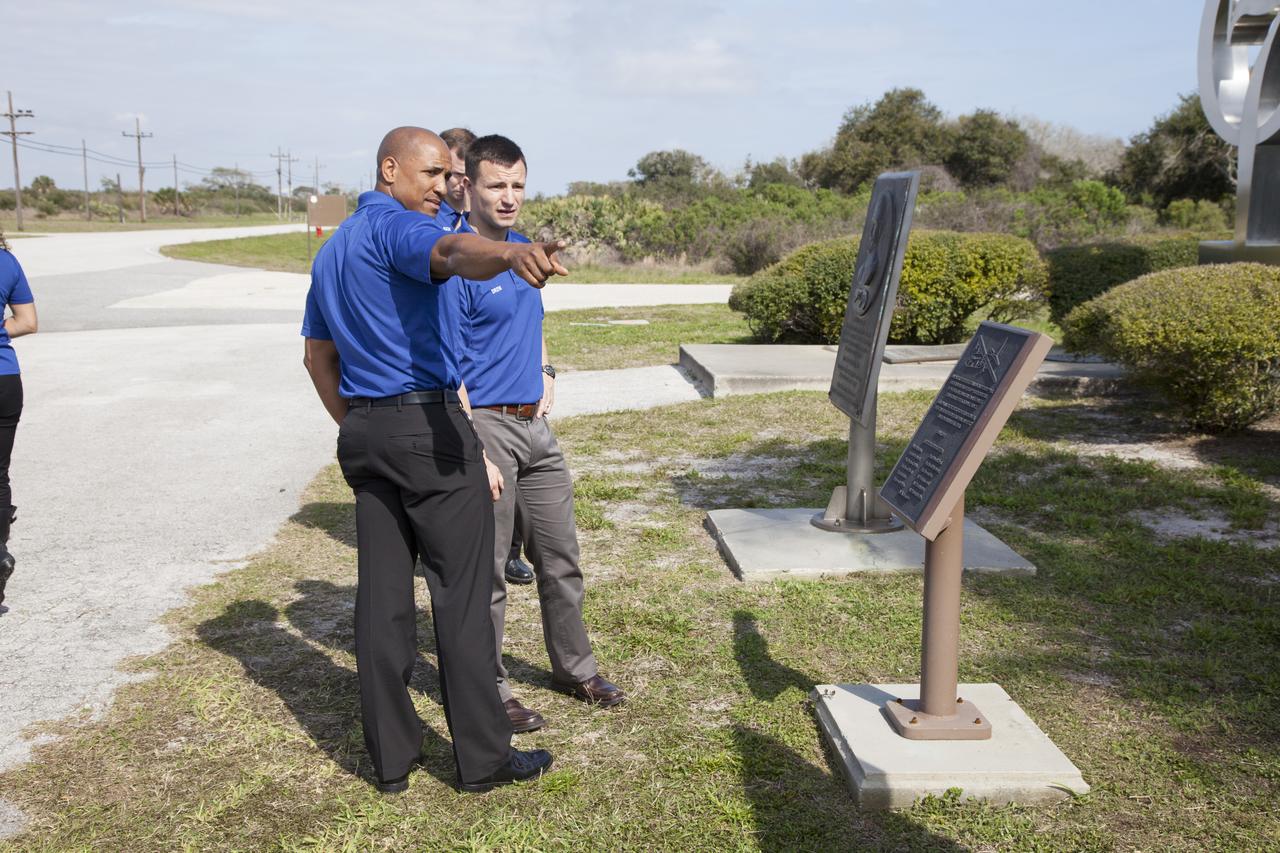
CAPE CANAVERAL, Fla. – NASA astronaut candidates Victor Glover and Andrew Morgan discuss markers at the entrance to Complex 14 at Cape Canaveral Air Force Station in Florida, adjacent to NASA's Kennedy Space Center. Complex 14 served as the launch pad for Mercury astronaut John Glenn when he lifted off in 1962 to orbit the Earth, becoming the first American to do so. The astronaut class of 2013 was selected by NASA after an extensive year-and-a-half search. The new group will help the agency push the boundaries of exploration and travel to new destinations in the solar system. To learn more about the astronaut class of 2013, visit: http://www.nasa.gov/astronauts/2013astroclass.html Photo credit: NASA/Frankie Martin

A NASA Mars Rover Landing banner is seen on the Morgan Stanley video board as NASA's Perseverance rover begins its descent towards the surface of Mars, Thursday, Feb. 18, 2021 in New York City. A key objective for Perseverance’s mission on Mars is astrobiology, including the search for signs of ancient microbial life. The rover will characterize the planet’s geology and past climate, pave the way for human exploration of the Red Planet, and be the first mission to collect and cache Martian rock and regolith. Photo Credit: (NASA/Emma Howells)
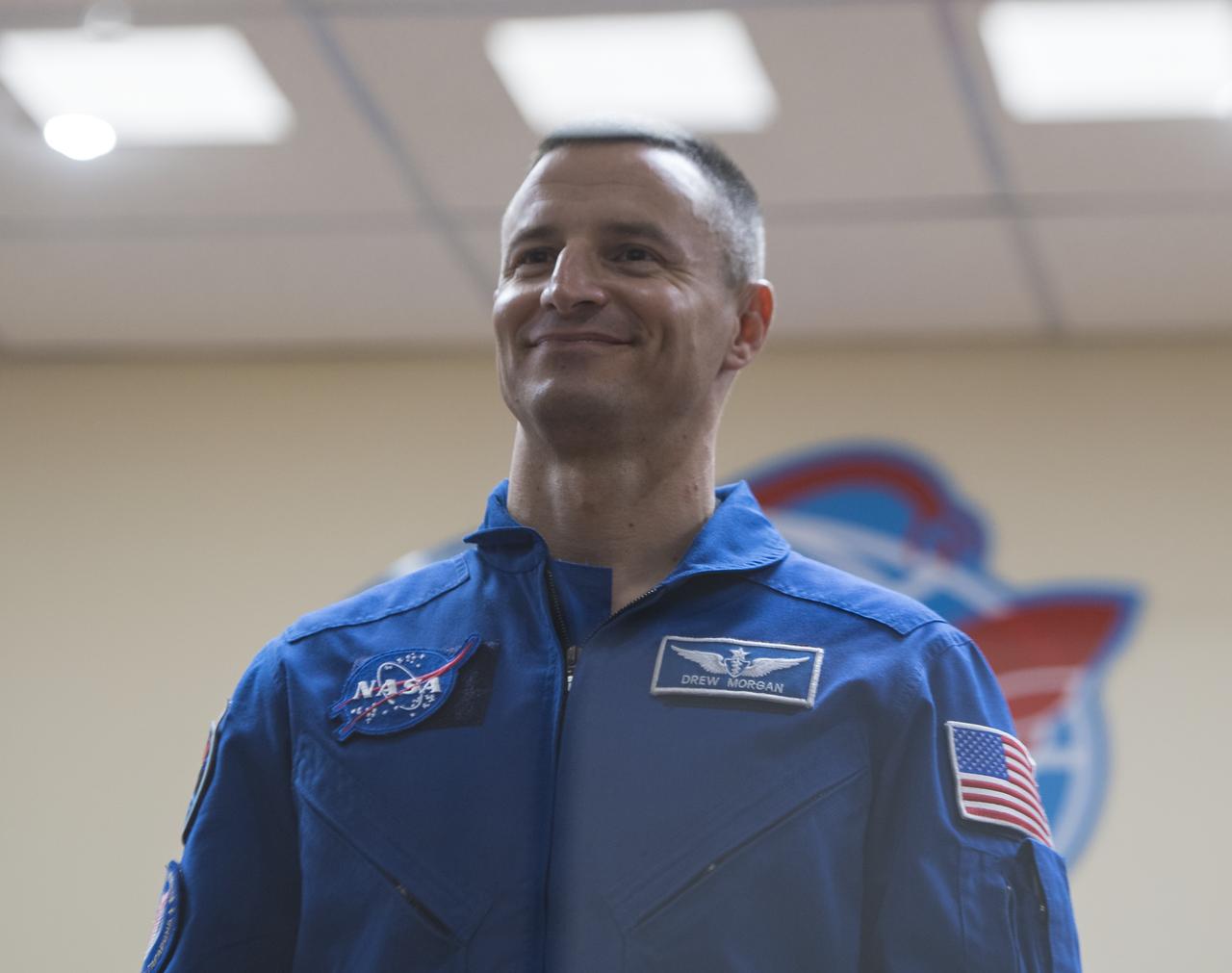
Expedition 58 backup crew member, Flight Engineer Andrew Morgan of NASA, is recognized during a press conference, Sunday, Dec. 2, 2018 at the Cosmonaut Hotel in Baikonur, Kazakhstan. Launch of the Soyuz rocket is scheduled for Dec. 3 and will carry Soyuz Commander Oleg Kononenko of Roscosmos, Flight Engineer Anne McClain of NASA, and Flight Engineer David Saint-Jacques of the Canadian Space Agency (CSA) into orbit to begin their six and a half month mission on the International Space Station. Photo Credit: (NASA/Aubrey Gemignani).
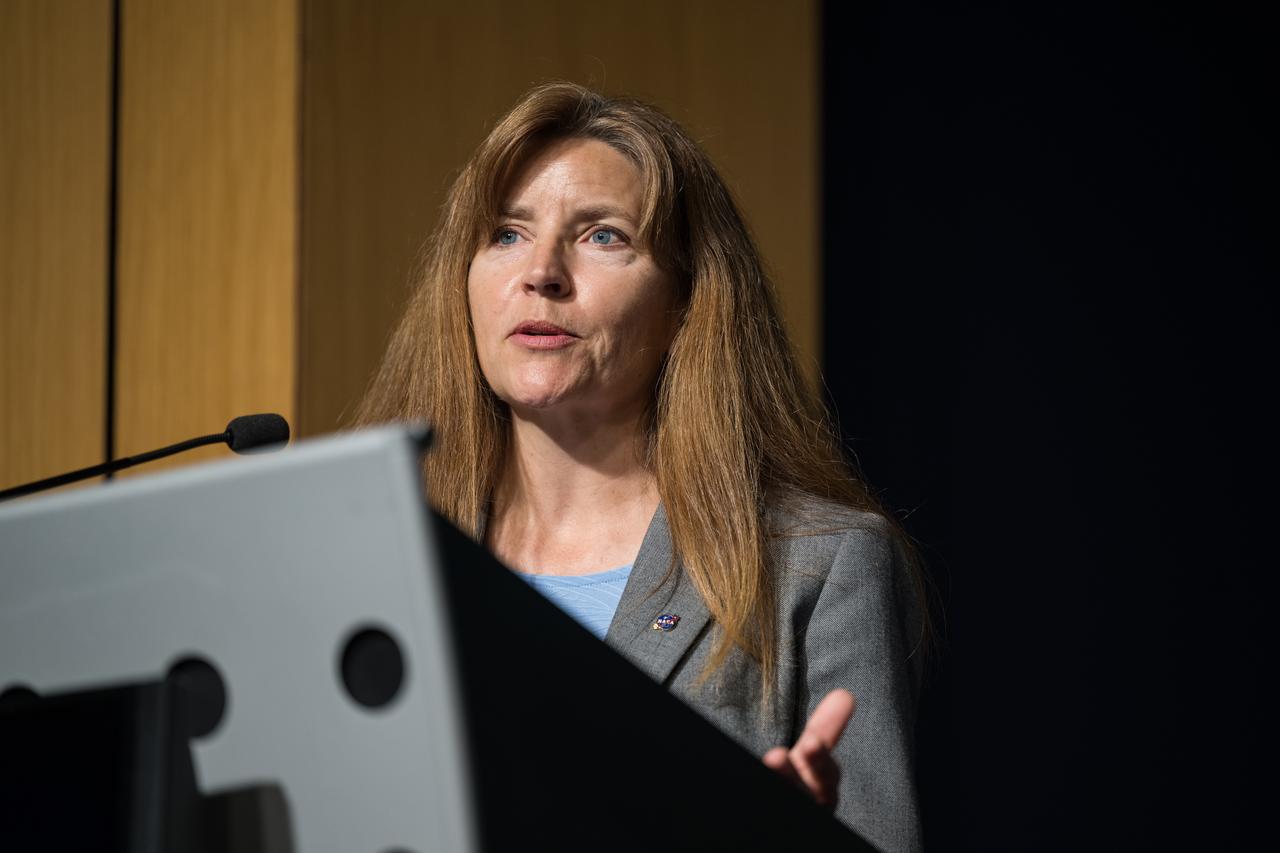
Human Landing System Program Manager Lisa Watson-Morgan gives remarks during an event announcing Blue Origin as the company selected to develop a sustainable human landing system for the Artemis V Moon mission, Friday, May 19, 2023 at the Mary W. Jackson NASA Headquarters building in Washington. The human landing system will take astronauts to and from Gateway in lunar orbit to the surface and back to the lunar space station as part of NASA’s return to the Moon for science, exploration, and inspiration. Photo Credit: (NASA/Aubrey Gemignani)
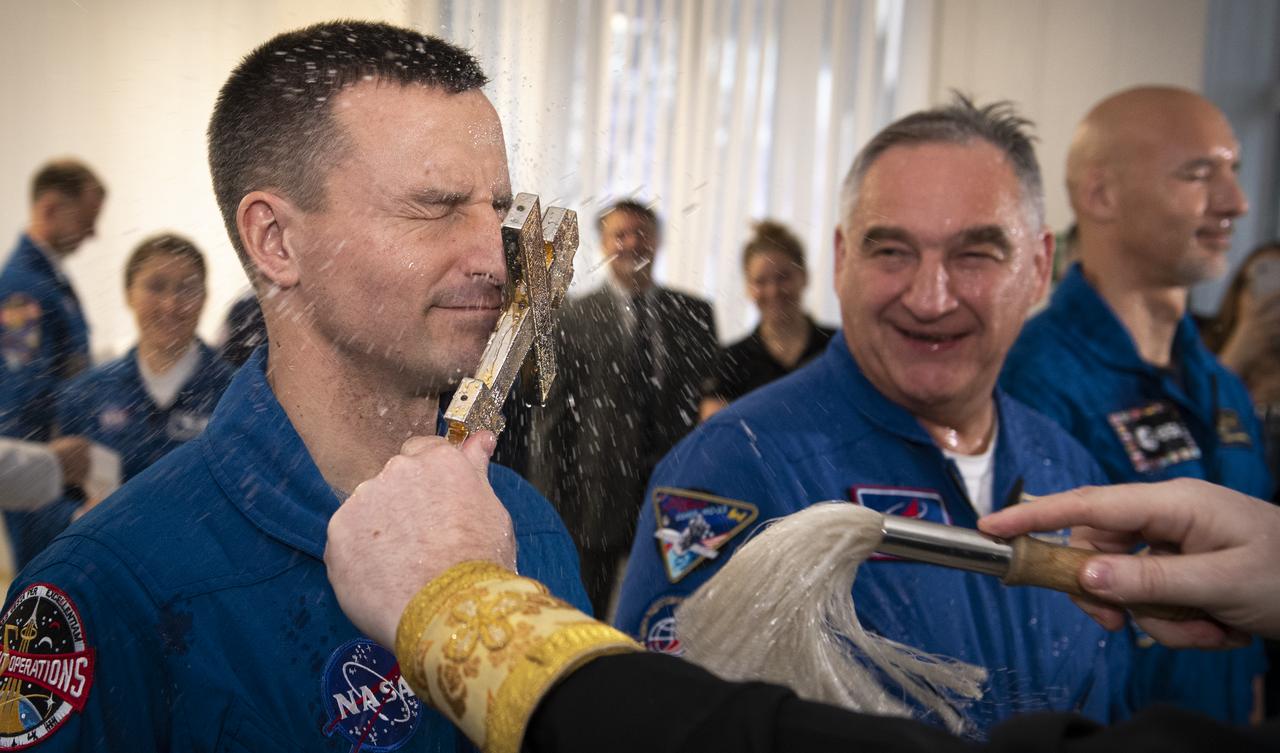
Expedition 59 backup crewmember Drew Morgan of NASA is blessed by a Russian Orthodox Priest in the Cosmonaut Hotel prior to departing for the prime crew's launch on a Soyuz rocket, Thursday, March 14, 2019 in Baikonur, Kazakhstan. Expedition 59 crewmembers Nick Hague and Christina Koch of NASA, along with Alexey Ovchinin of Roscosmos launched March 14, U.S. time, on the Soyuz MS-12 spacecraft from the Baikonur Cosmodrome for a six-and-a-half month mission on the International Space Station. Photo Credit: (NASA/Bill Ingalls)
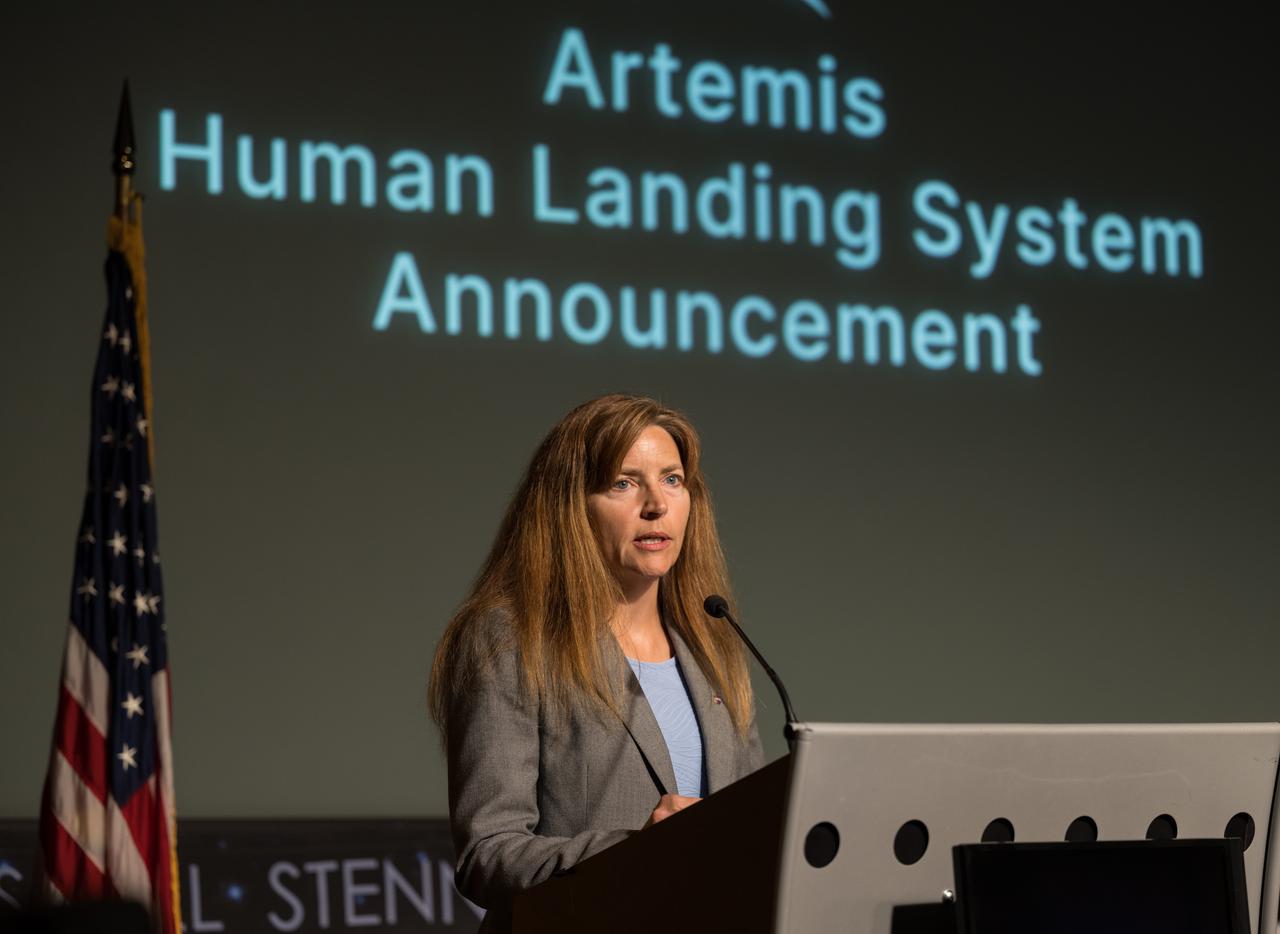
Human Landing System Program Manager Lisa Watson-Morgan gives remarks during an event announcing Blue Origin as the company selected to develop a sustainable human landing system for the Artemis V Moon mission, Friday, May 19, 2023 at the Mary W. Jackson NASA Headquarters building in Washington. The human landing system will take astronauts to and from Gateway in lunar orbit to the surface and back to the lunar space station as part of NASA’s return to the Moon for science, exploration, and inspiration. Photo Credit: (NASA/Aubrey Gemignani)

Expedition 59 backup crewmember Drew Morgan of NASA answers questions during a press conference, Wednesday, March 13, 2019 at the Cosmonaut Hotel in Baikonur, Kazakhstan. Expedition 59 crewmembers Nick Hague and Christina Koch of NASA, along with Alexey Ovchinin of Roscosmos will launch March 14, U.S. time, on the Soyuz MS-12 spacecraft from the Baikonur Cosmodrome for a six-and-a-half month mission on the International Space Station. Photo Credit: (NASA/Bill Ingalls)
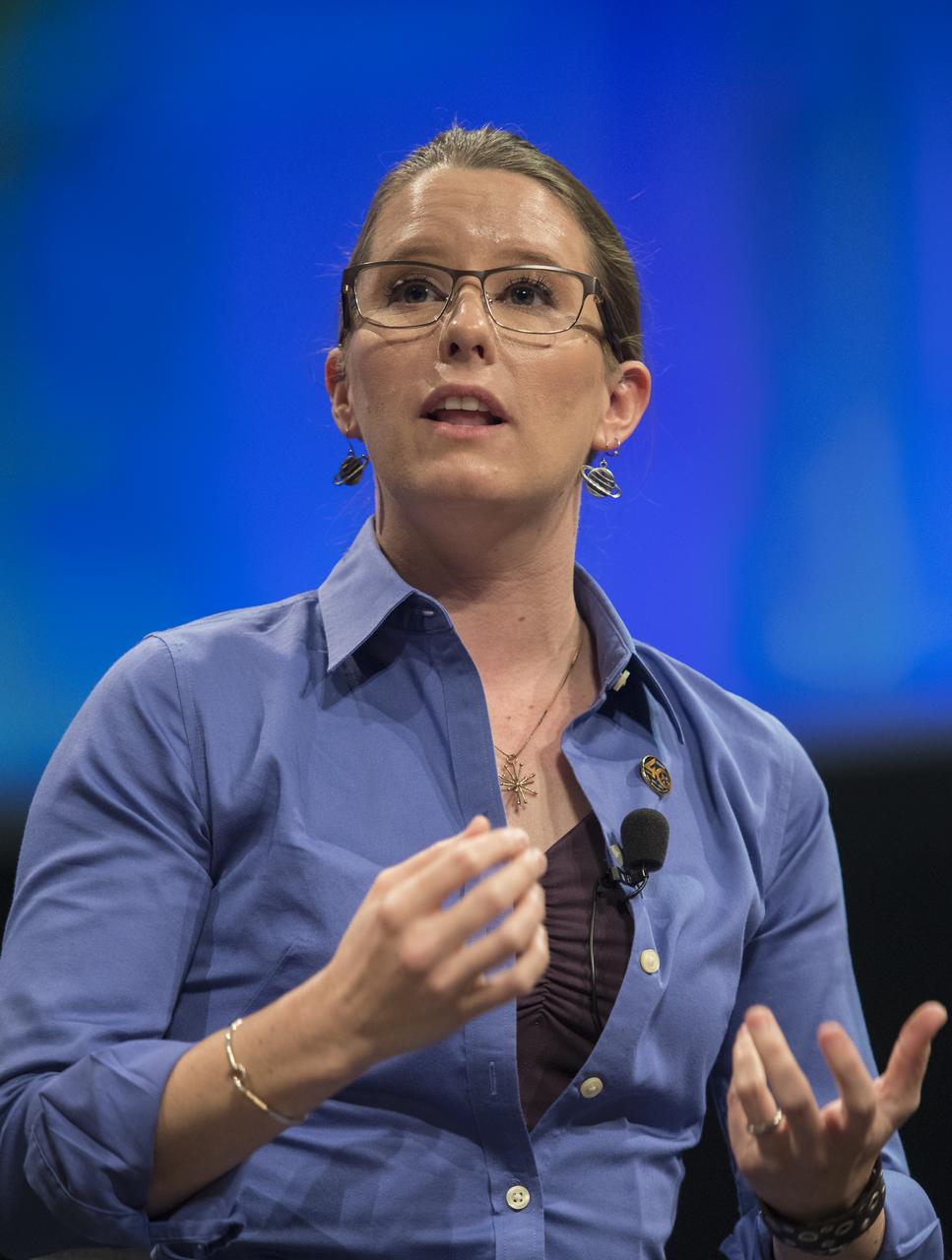
Morgan Cable, researcher, NASA's Jet Propulsion Laboratory, speaks at an event to celebrate the 40th Anniversary of the launch of the Voyager 1 and 2 missions, Tuesday, September 5, 2017 at Smithsonian's National Air and Space Museum in Washington. Voyager 1 was launched September 5, 1977, with a mission to study Jupiter and Saturn, but now the twin Voyager spacecrafts are on a journey into interstellar space to search for the heliopause, a region never reached by any other spacecraft. Photo Credit: (NASA/Aubrey

A NASA Mars Rover Landing banner is seen on the Morgan Stanley video board as NASA's Perseverance rover completes its descent towards the surface of Mars, Thursday, Feb. 18, 2021 in New York City. A key objective for Perseverance’s mission on Mars is astrobiology, including the search for signs of ancient microbial life. The rover will characterize the planet’s geology and past climate, pave the way for human exploration of the Red Planet, and be the first mission to collect and cache Martian rock and regolith. Photo Credit: (NASA/Emma Howells)