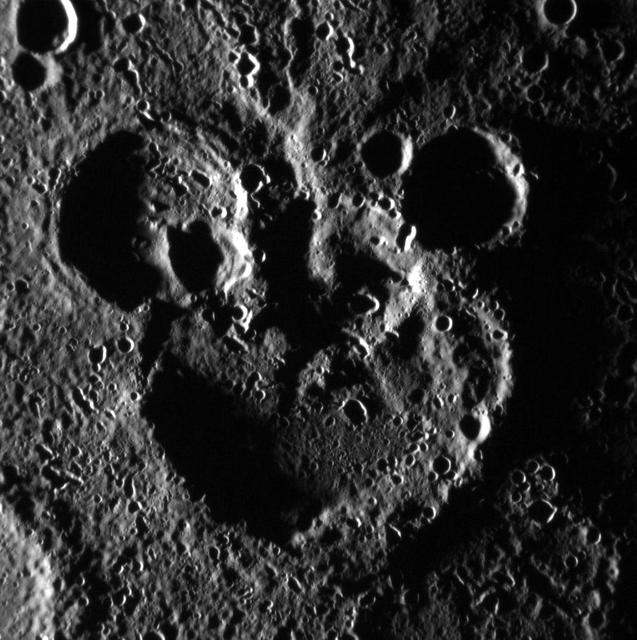
Mickey Mouse Spotted on Mercury!
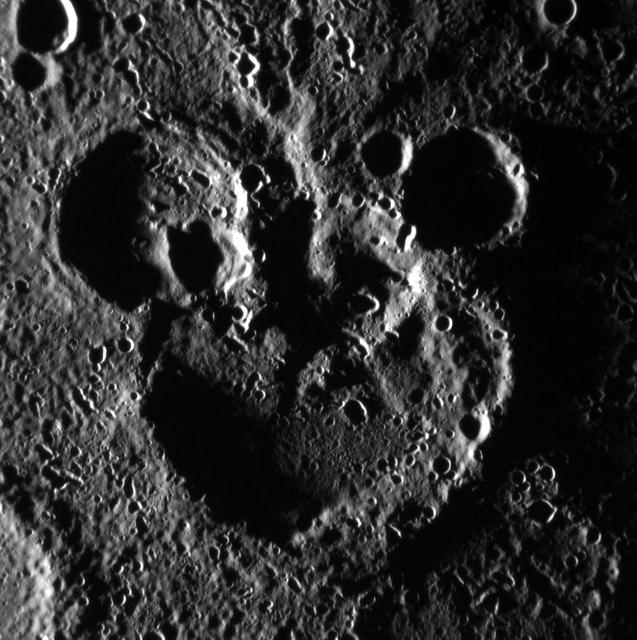
NASA image acquired: June 03, 2012 This scene is to the northwest of the recently named crater Magritte, in Mercury's south. The image is not map projected; the larger crater actually sits to the north of the two smaller ones. The shadowing helps define the striking "Mickey Mouse" resemblance, created by the accumulation of craters over Mercury's long geologic history. This image was acquired as part of MDIS's high-incidence-angle base map. The high-incidence-angle base map is a major mapping activity in MESSENGER's extended mission and complements the surface morphology base map of MESSENGER's primary mission that was acquired under generally more moderate incidence angles. High incidence angles, achieved when the Sun is near the horizon, result in long shadows that accentuate the small-scale topography of geologic features. The high-incidence-angle base map is being acquired with an average resolution of 200 meters/pixel. The MESSENGER spacecraft is the first ever to orbit the planet Mercury, and the spacecraft's seven scientific instruments and radio science investigation are unraveling the history and evolution of the Solar System's innermost planet. Visit the Why Mercury? section of this website to learn more about the key science questions that the MESSENGER mission is addressing. During the one-year primary mission, MESSENGER acquired 88,746 images and extensive other data sets. MESSENGER is now in a yearlong extended mission, during which plans call for the acquisition of more than 80,000 additional images to support MESSENGER's science goals. Credit: NASA/Johns Hopkins University Applied Physics Laboratory/Carnegie Institution of Washington <b><a href="http://www.nasa.gov/audience/formedia/features/MP_Photo_Guidelines.html" rel="nofollow">NASA image use policy.</a></b> <b><a href="http://www.nasa.gov/centers/goddard/home/index.html" rel="nofollow">NASA Goddard Space Flight Center</a></b> enables NASA’s mission through four scientific endeavors: Earth Science, Heliophysics, Solar System Exploration, and Astrophysics. Goddard plays a leading role in NASA’s accomplishments by contributing compelling scientific knowledge to advance the Agency’s mission. <b>Follow us on <a href="http://twitter.com/NASAGoddardPix" rel="nofollow">Twitter</a></b> <b>Like us on <a href="http://www.facebook.com/pages/Greenbelt-MD/NASA-Goddard/395013845897?ref=tsd" rel="nofollow">Facebook</a></b> <b>Find us on <a href="http://instagrid.me/nasagoddard/?vm=grid" rel="nofollow">Instagram</a></b>

This grouping of three crater looks like Mickey Mouse
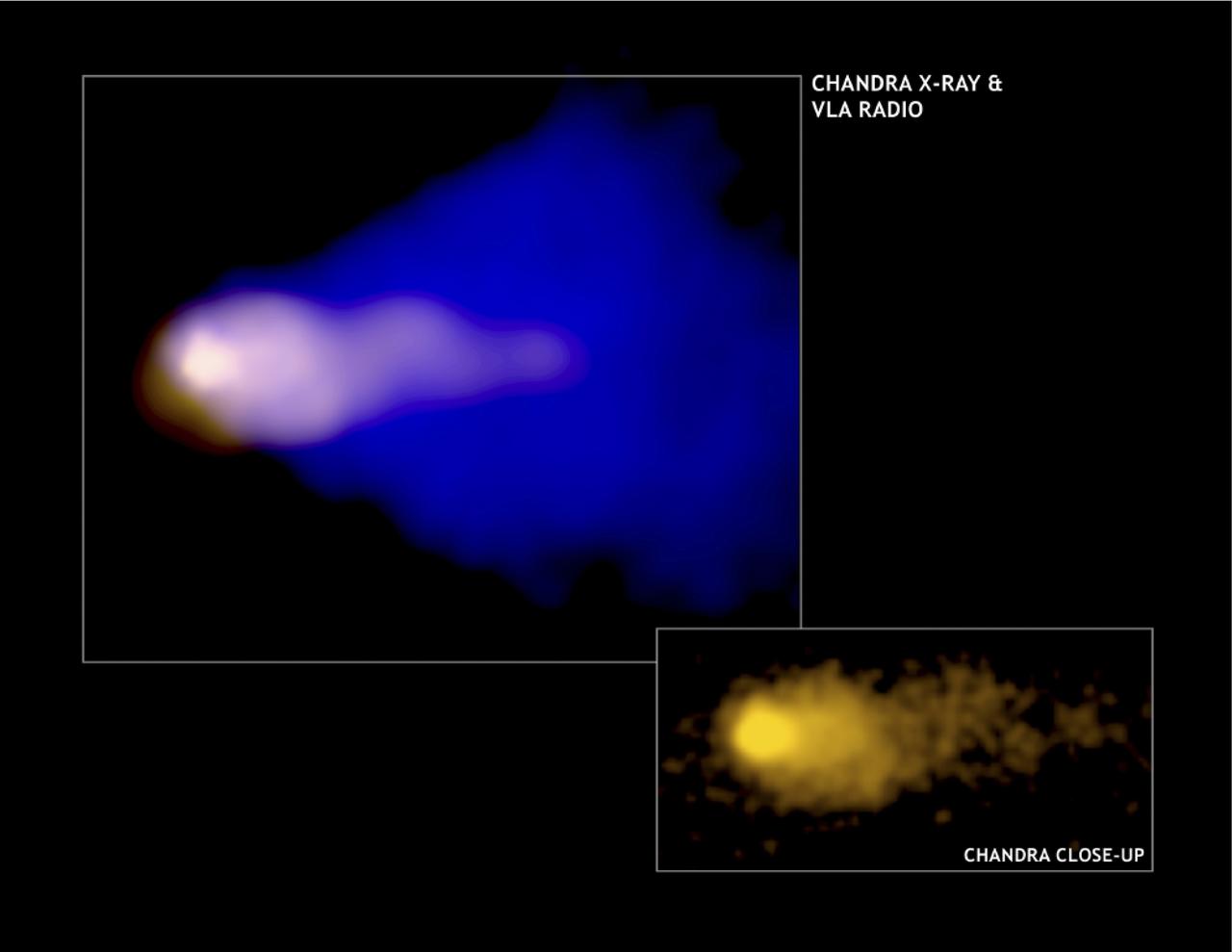
Astronomers have used an x-ray image to make the first detailed study of the behavior of high-energy particles around a fast moving pulsar. This image, from NASA's Chandra X-Ray Observatory (CXO), shows the shock wave created as a pulsar plows supersonically through interstellar space. These results will provide insight into theories for the production of powerful winds of matter and antimatter by pulsars. Chandra's image of the glowing cloud, known as the Mouse, shows a stubby bright column of high-energy particles, about four light years in length, swept back by the pulsar's interaction with interstellar gas. The intense source at the head of the X-ray column is the pulsar, estimated to be moving through space at about 1.3 million miles per hour. A cone-shaped cloud of radio-wave-emitting particles envelopes the x-ray column. The Mouse, a.k.a. G359.23-0.82, was discovered in 1987 by radio astronomers using the National Science Foundation's Very Large Array in New Mexico. G359.23-0.82 gets its name from its appearance in radio images that show a compact snout, a bulbous body, and a remarkable long, narrow, tail that extends for about 55 light years. NASA’s Marshall Space Flight Center in Huntsville, Alabama manages the Chandler program.
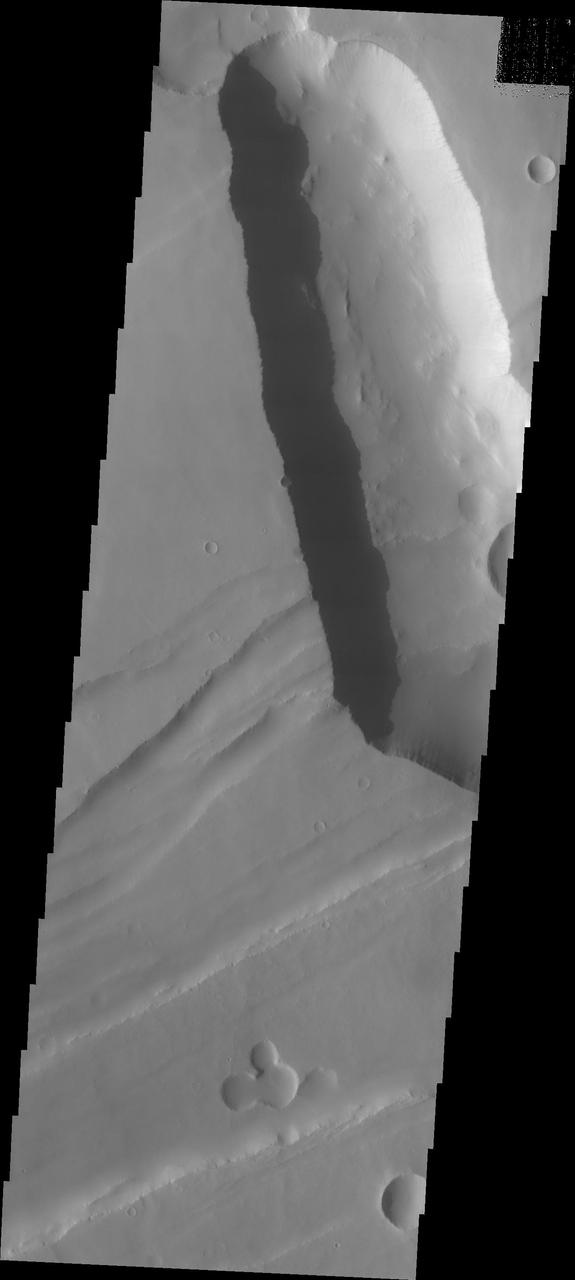
Do you see what I see? Poor Mickey Mouse, only his head remains at the bottom of this image captured by NASA 2001 Mars Odyssey spacecraft.

Do you see what I see in this image from NASA Mars Odyssey spacecraft? There is a mickey mouse hat sitting on the top right side of this daytime infrared image.

Do you see what I see in this image from NASA Mars Odyssey spacecraft? Mickey Mouse is really getting around on Mars, here his head again!
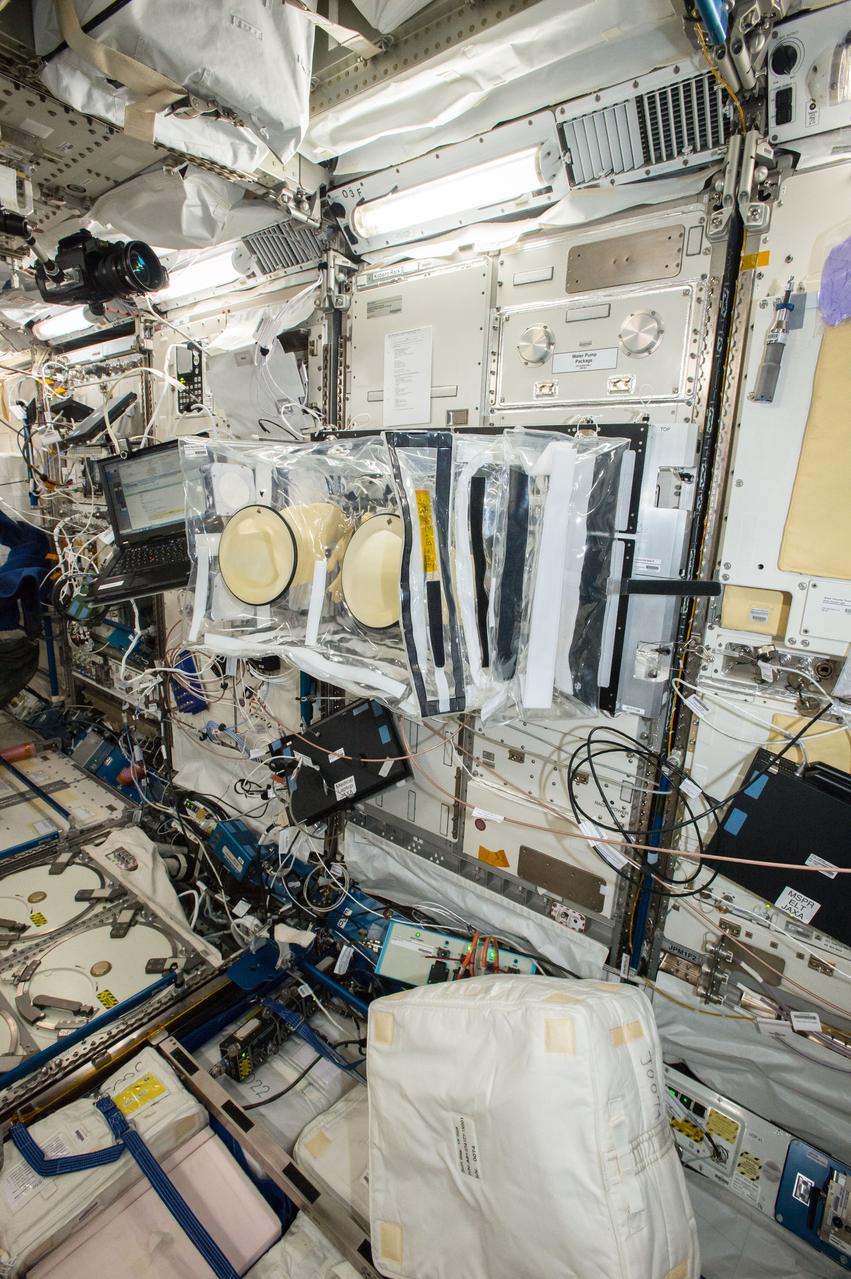
iss048e042371 (Jul. 21, 2016) --- Glove Box set up on the Kobairo Rack for the Mouse Epigenetics experiment in the Kibo Japanese Experiment Pressurized Module (JPM). The Mouse Epigenetics experiment studies the effects of the space environment on genetic activity, which can be used as a proxy for understanding how the human body changes in space.
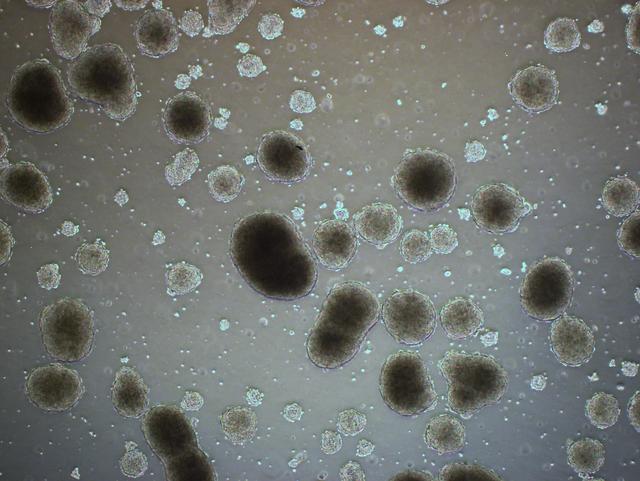
STS-131 payload; Ames Space Bio-Sciences Lab; Mouse embryoid cells, Dr Eduardo Almeida P. I.
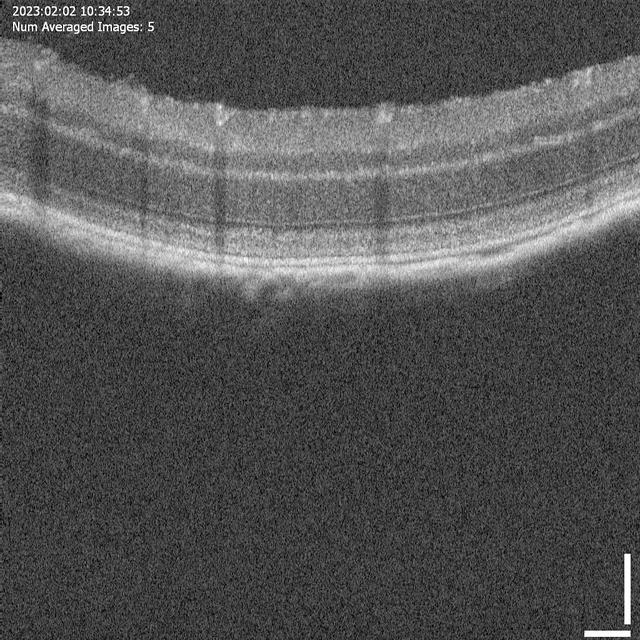
jsc2023e054753 (9/27/2023) --- Optical Coherence tomography image demonstrating the retinal ultrastructure of the mouse retina. Preclinical Validation of a Modifier Gene Therapy to Prevent Spaceflight Associated Oxidative Stress and Apoptosis in Microgravity Mouse Model of Dry Macular Degeneration (Rodent Research-28 or RR-28) tests the effect of a gene therapy on retinal structure and function during spaceflight. (Image courtesy Oculogenex Inc.)
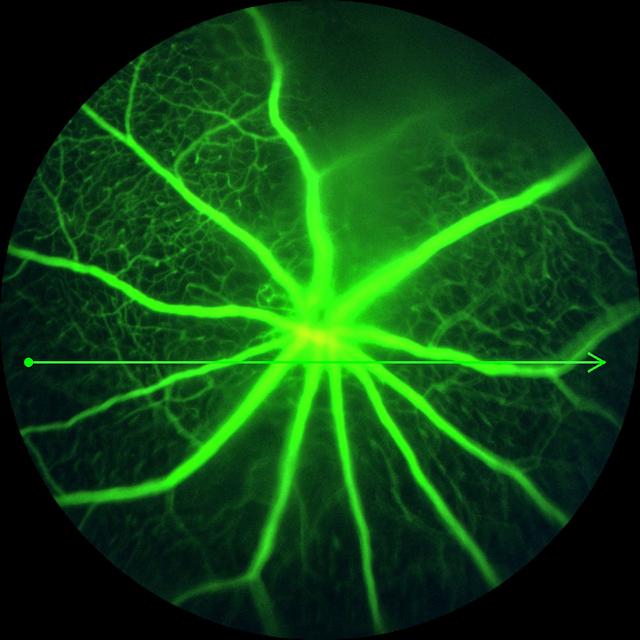
jsc2023e054752 (9/27/2023) --- Fluorescein angiogram of the microvascular circulation of the mouse retina. Preclinical Validation of a Modifier Gene Therapy to Prevent Spaceflight Associated Oxidative Stress and Apoptosis in Microgravity Mouse Model of Dry Macular Degeneration (Rodent Research-28 or RR-28) tests the effect of a gene therapy on retinal structure and function during spaceflight. (Image courtesy Oculogenex Inc.)

iss065e358448 (Sept. 6, 2021) --- Expedition 65 Commander Akihiko Hoshide of the Japan Aerospace Exploration Agency (JAXA) thaws mouse embryo samples inside the Kibo laboratory module for the Space Embryo investigation to learn how the space environment affects key phases of reproduction.

iss065e358449 (9/6/2021) --- Japan Aerospace Exploration Agency (JAXA) astronaut Akihiko Hoshide thaws mouse embryo samples inside the Kibo laboratory module for the Space Embryo investigation to learn how the space environment affects key phases of reproduction.
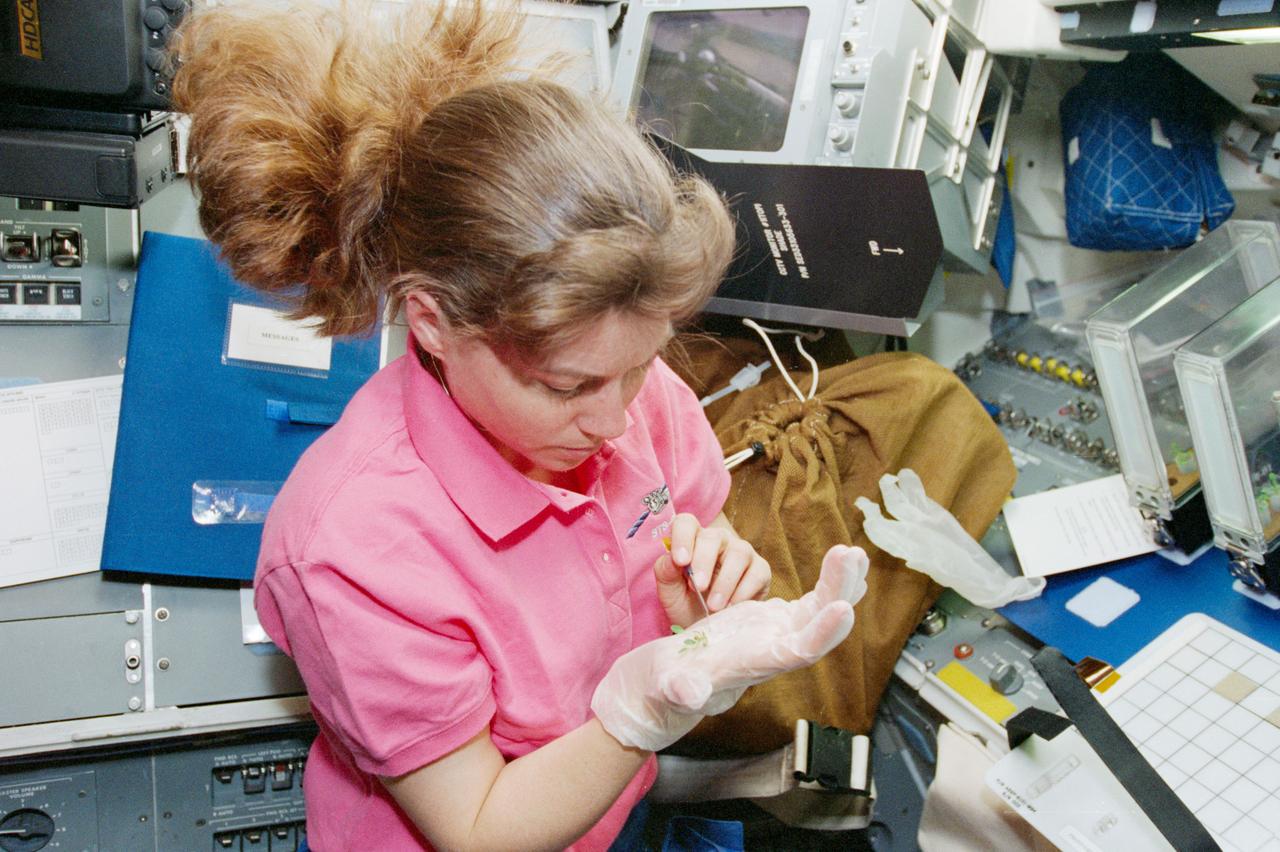
STS093-319-003 (23-27 July 1999) --- Astronaut Catherine G. (Cady) Coleman, mission specialist, handles a tiny mouse ear plant on Columbia's flight deck. The plant experiment is part of the Plant Growth Investigations in Microgravity (PGIM).
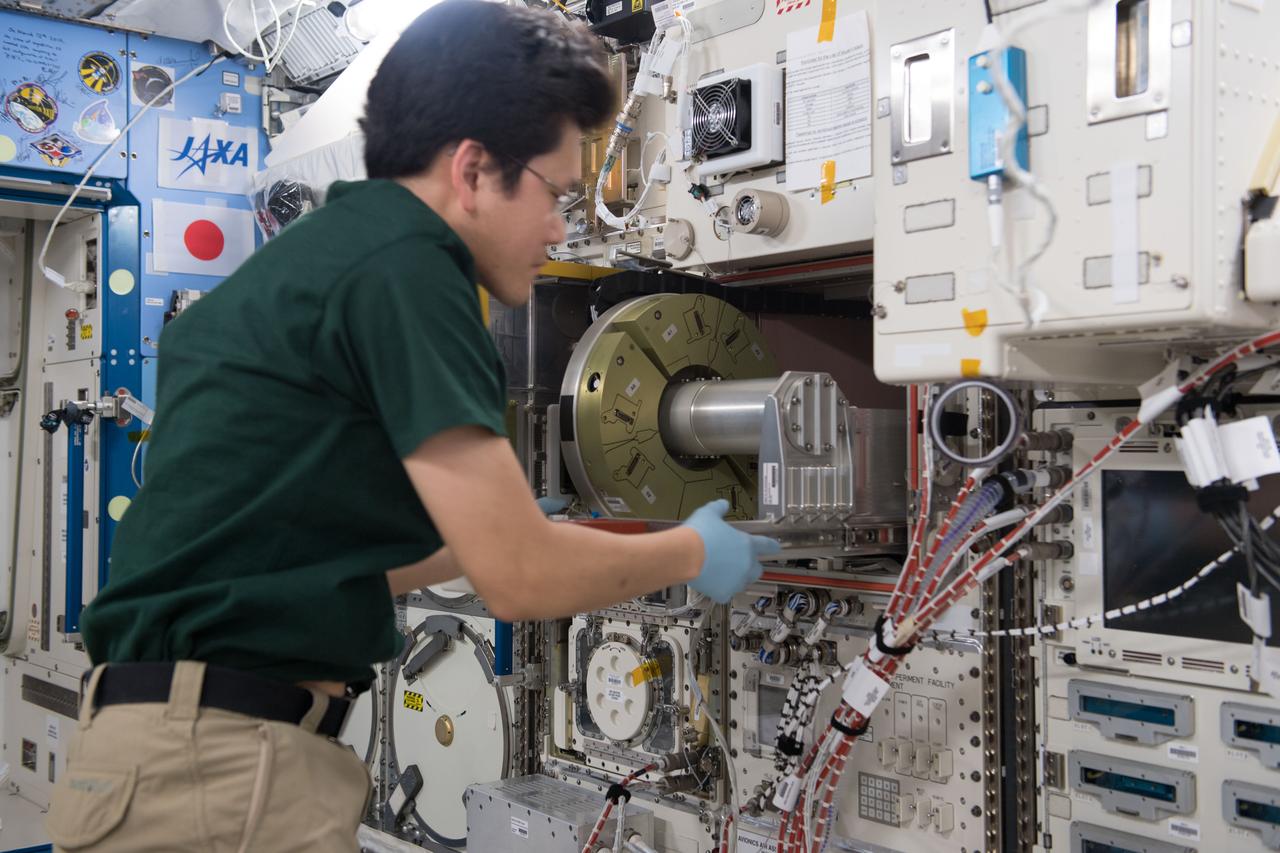
iss054e032753 (2/2/2018) --- A view of Japanese Aerospace Agency (JAXA) astronaut Norishige Kanai working to install Mouse Habitat Unit (MHU) Interface (I/F) Units in Cell Biology Experiment Facility (CBEF) Incubator Units (IUs). Photo was taken in the Kibo Japanese Experiment Pressurized Module (JPM).
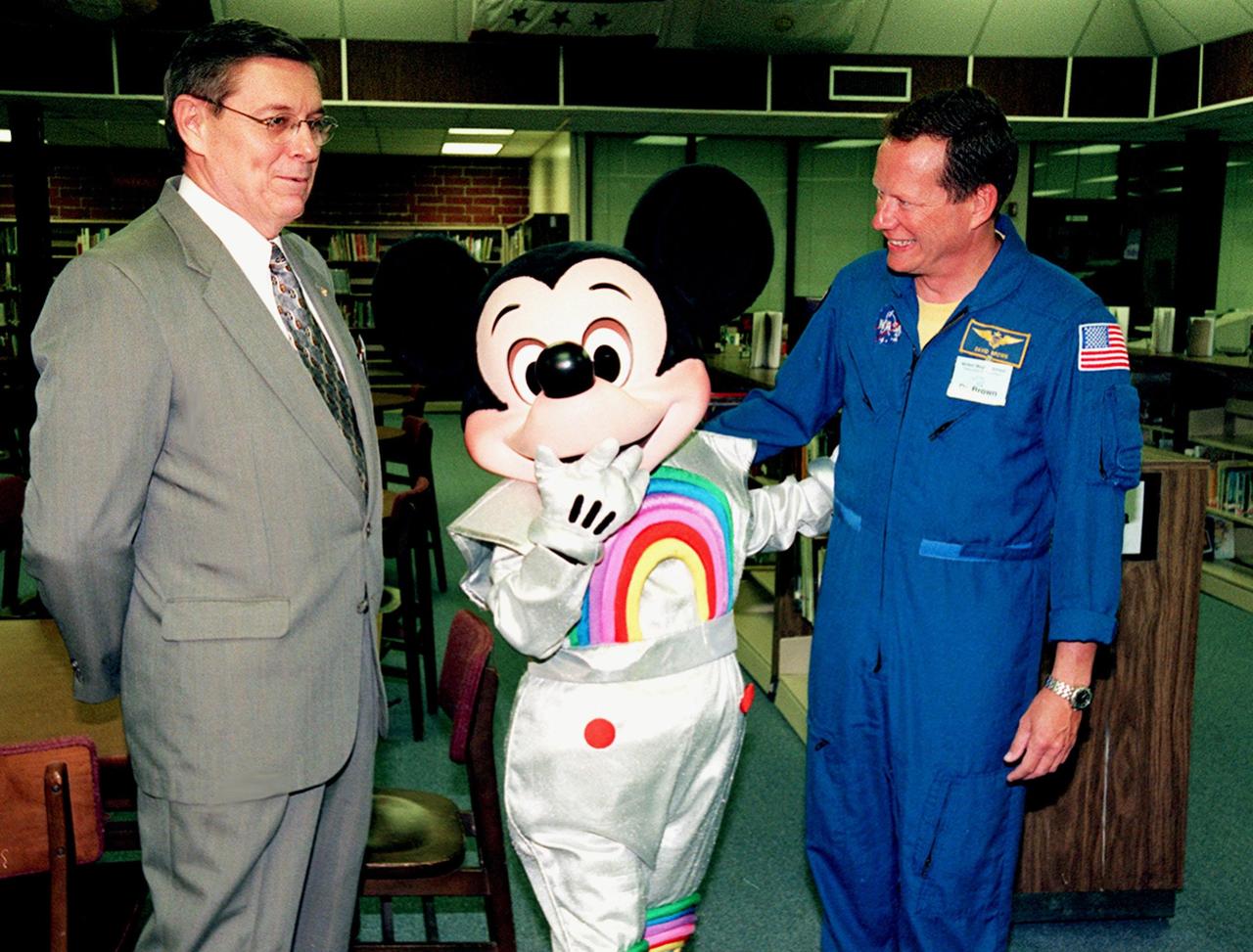
Dr. David Sawyer (left), Superintendent of the Brevard County School District, Mickey Mouse, and Dr. David Brown, a NASA astronaut, attend a tribute to NASA astronaut Ronald McNair held in the gymnasium of Ronald McNair Magnet School in Cocoa, Fla. During the tribute, Walt Disney World presented a portrait of McNair to the school, which had previously been renamed for the fallen astronaut. McNair was one of a crew of seven who lost their lives during an accident following launch of the Space Shuttle Challenger in January 1986
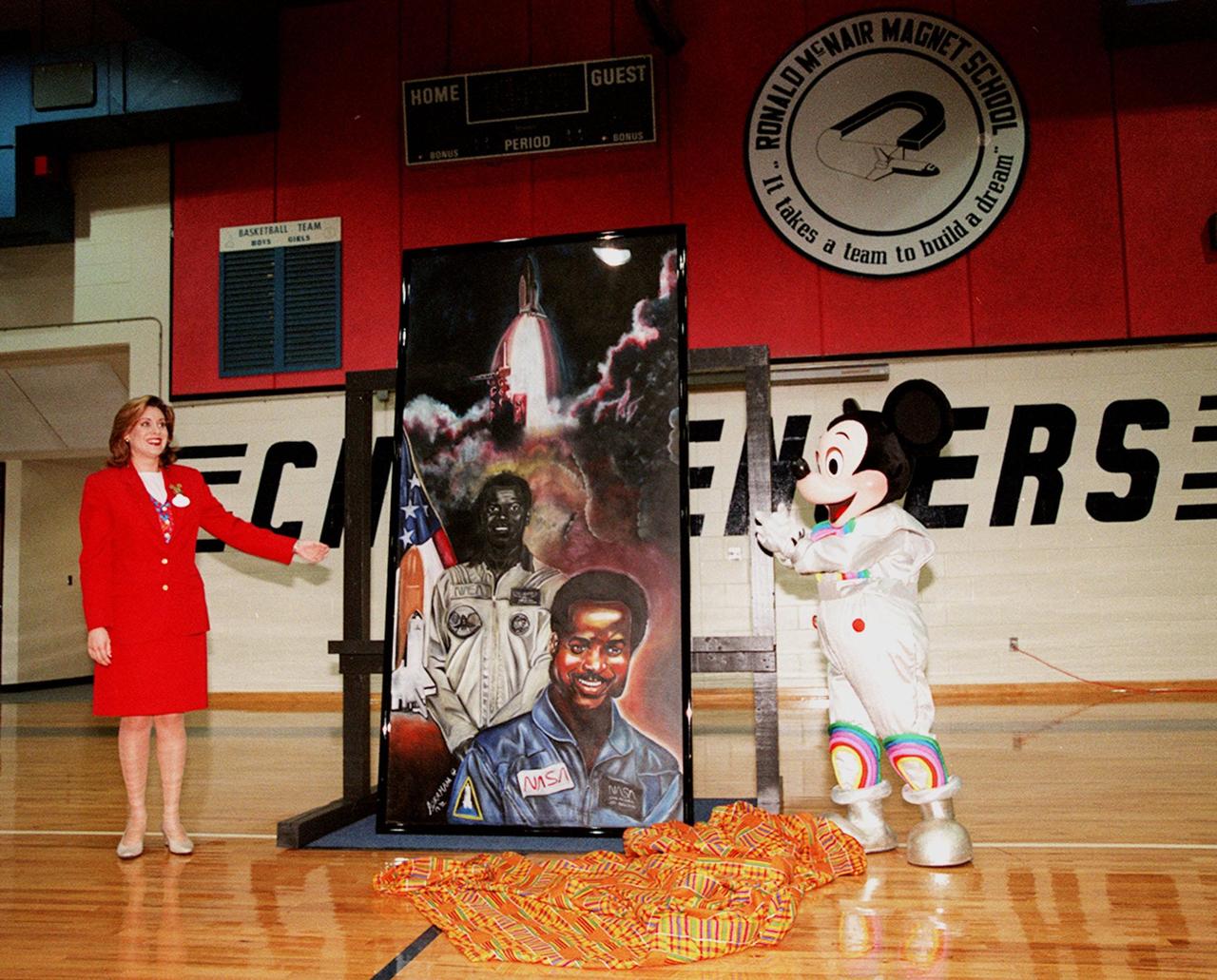
In the gymnasium of Ronald McNair Magnet School in Cocoa, Fla., Ms. Maria Rodriguez, an Walt Disney World Ambassador, and Mickey Mouse pose with a portrait of NASA astronaut Ronald McNair. The portrait was presented to the school by Walt Disney World during a tribute to McNair. The school had previously been renamed for the fallen astronaut, who was one of a crew of seven who lost their lives during an accident following launch of the Space Shuttle Challenger in January 1986
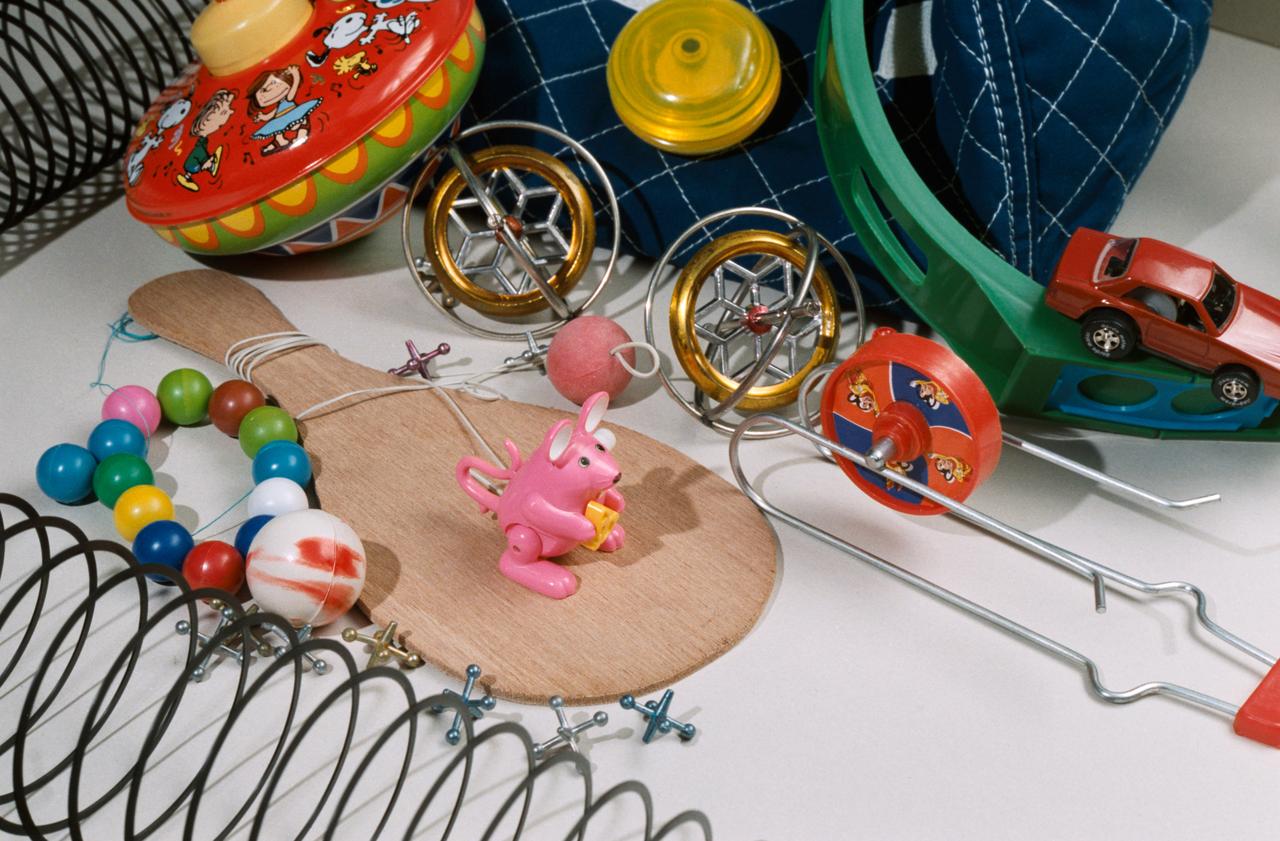
S85-26822 (February 1985) --- The crew members of Space Shuttle flight STS-51D have agreed to demonstrate the behavior of simple toys on their mission scheduled for launch in early March of this year. The pictured toys will be carried aboard the Challenger as part of a study of physics in cooperation with the Houston Museum of Natural Sciences. The toys include a yo-yo, paddle ball, friction powered toy car, flipping mouse, top, ball and jacks, gyroscopes, Slinky, Wheelo. The photograph was taken by Otis Imboden.
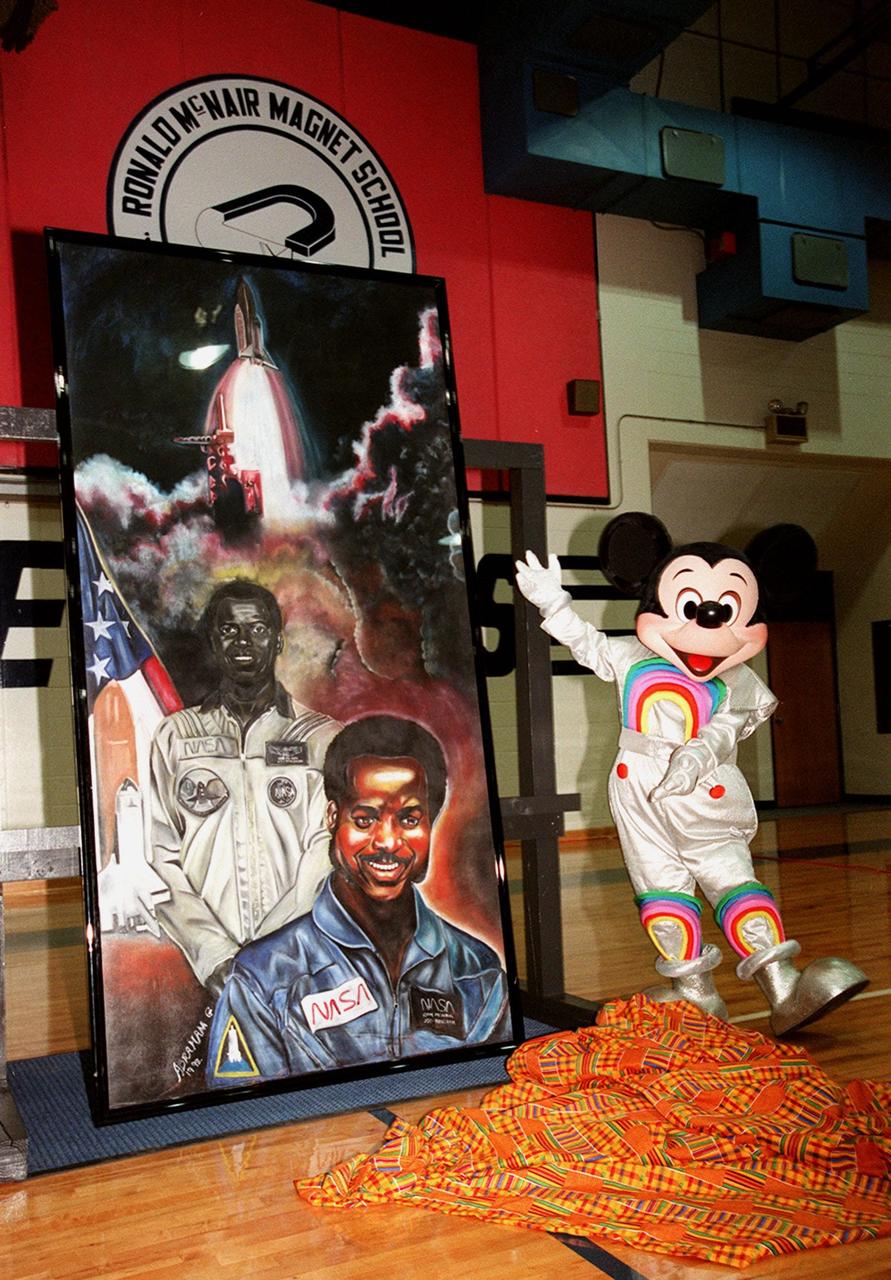
In the gymnasium of Ronald McNair Magnet School in Cocoa, Fla., Mickey Mouse poses with a portrait of NASA astronaut Ronald McNair. The portrait was presented to the school by Walt Disney World during a tribute to McNair. The school had previously been renamed for the fallen astronaut who was one of a crew of seven who lost their lives during an accident following launch of the Space Shuttle Challenger in January 1986
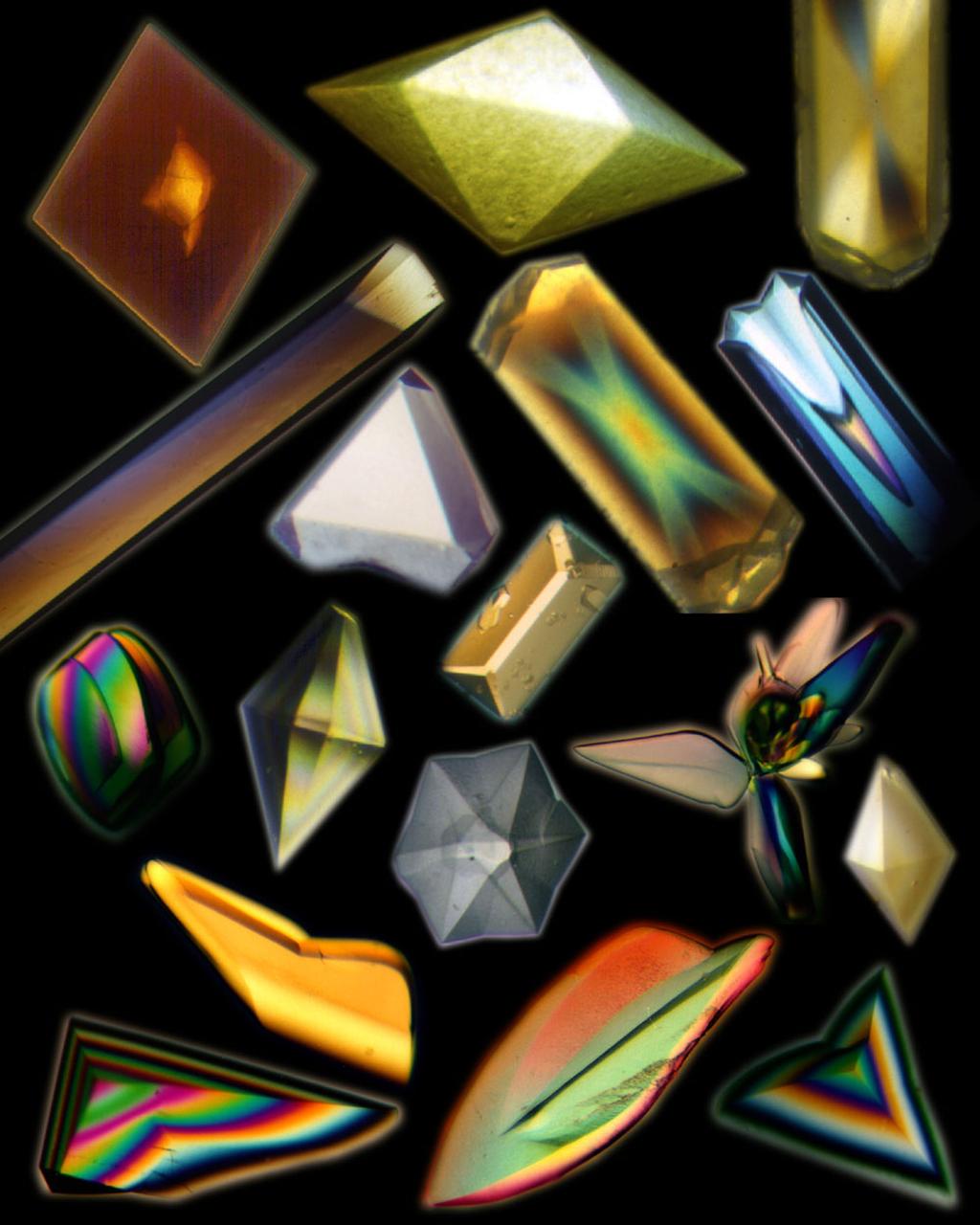
A collage of protein and virus crystals, many of which were grown on the U.S. Space Shuttle or Russian Space Station, Mir. The crystals include the proteins canavalin; mouse monoclonal antibody; a sweet protein, thaumatin; and a fungal protease. Viruses are represented here by crystals of turnip yellow mosaic virus and satellite tobacco mosaic virus. The crystals are photographed under polarized light (thus causing the colors) and range in size from a few hundred microns in edge length up to more than a millimeter. All the crystals are grown from aqueous solutions and are useful for X-ray diffraction analysis. Credit: Dr. Alex McPherson, University of California, Irvine.
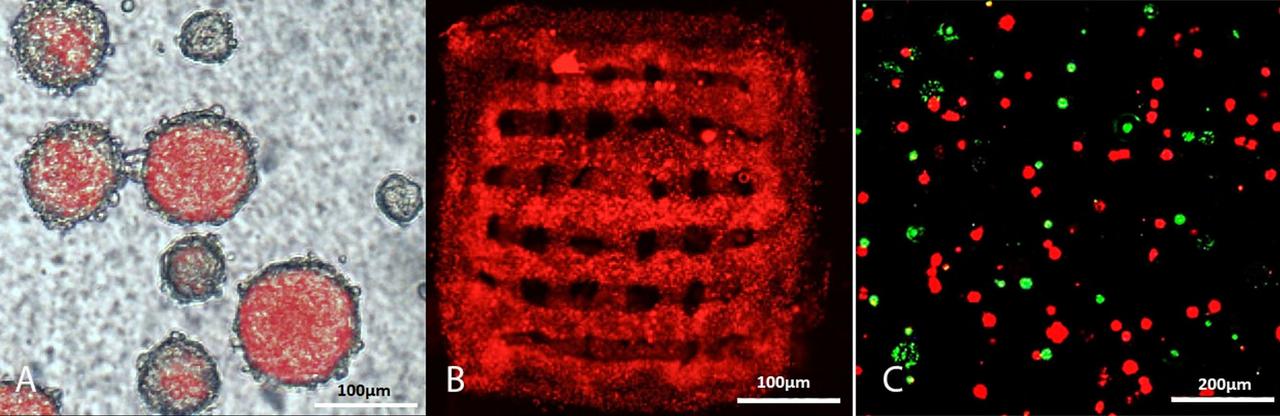
jsc2024e006078 (1/18/2024) --- A = Free floating BC neurospheres, produced from 11 days mouse embryo, expressing red fluorescent protein under actin promoter; B = 3D-printed BC neurospheres in gelatin scaffold 3 days after printing; C = BC neuropsheres survival after Maser15 microgravity exposure (NucGreen™ Dead 488 ReadyProbes (Invitrogen, Cat# R37109) staining for green dead BC neuropsheres, and live BC neurospheres imaged in red without staining). Credit: Uppsala University, Department of Immunology, Genetics and Pathology
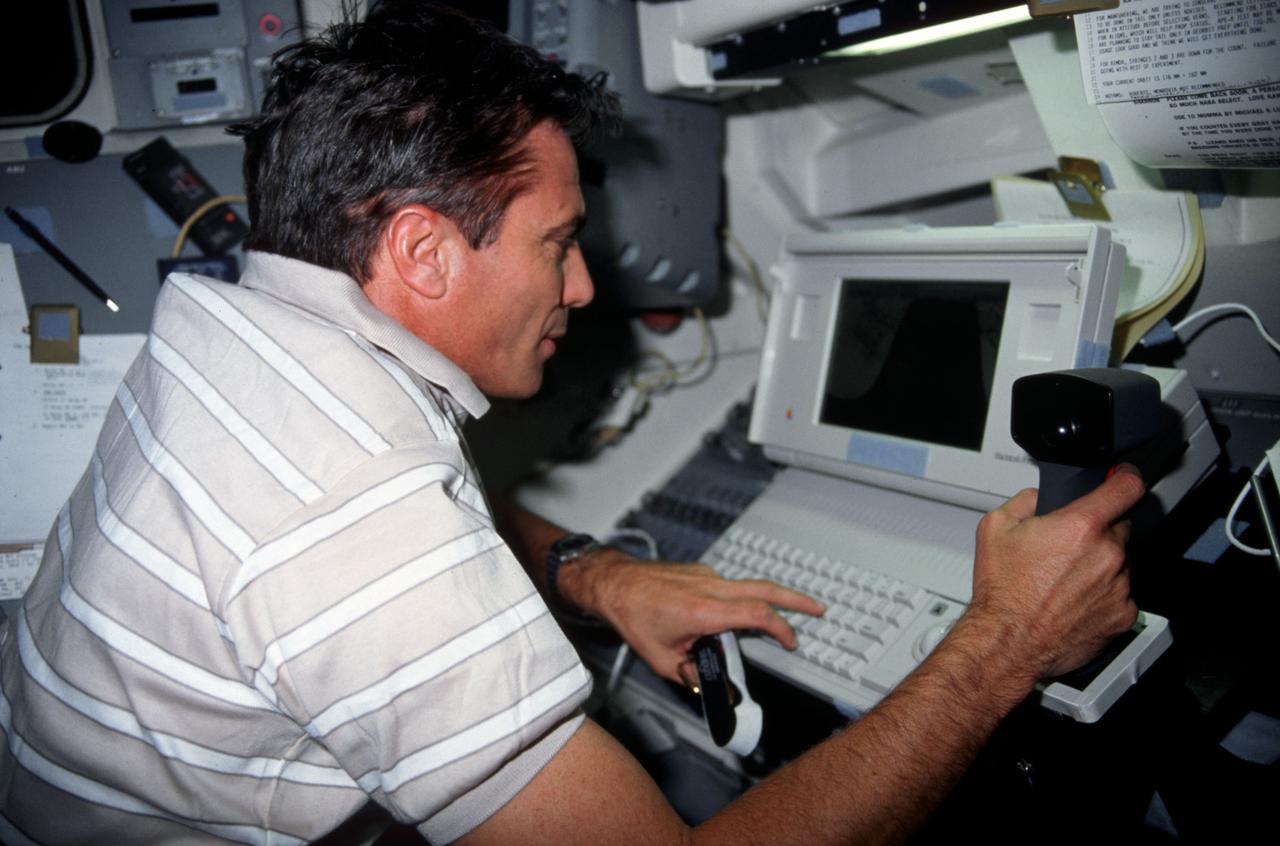
STS043-03-009 (5 Aug 1991) ---- Astronaut John E. Blaha is pictured executing development test objective (DTO) 1208, Space Station Cursor Control Device Evaluation II and advanced applications. The purpose of the Cursor Control Device Experiment is to evaluate human performance under space flight conditions of cursor control devices which are similar to the devices under consideration for use onboard Space Station computers. Here, the mission commander uses a thumbball/handgrip control device. Each crewmember evaluated the different types of cursor control devices during the nine-day STS-43 mission. Other methods of cursor control evaluated were the built-in trackball, a side mounted trackball with restraints and an optical pad with mouse.
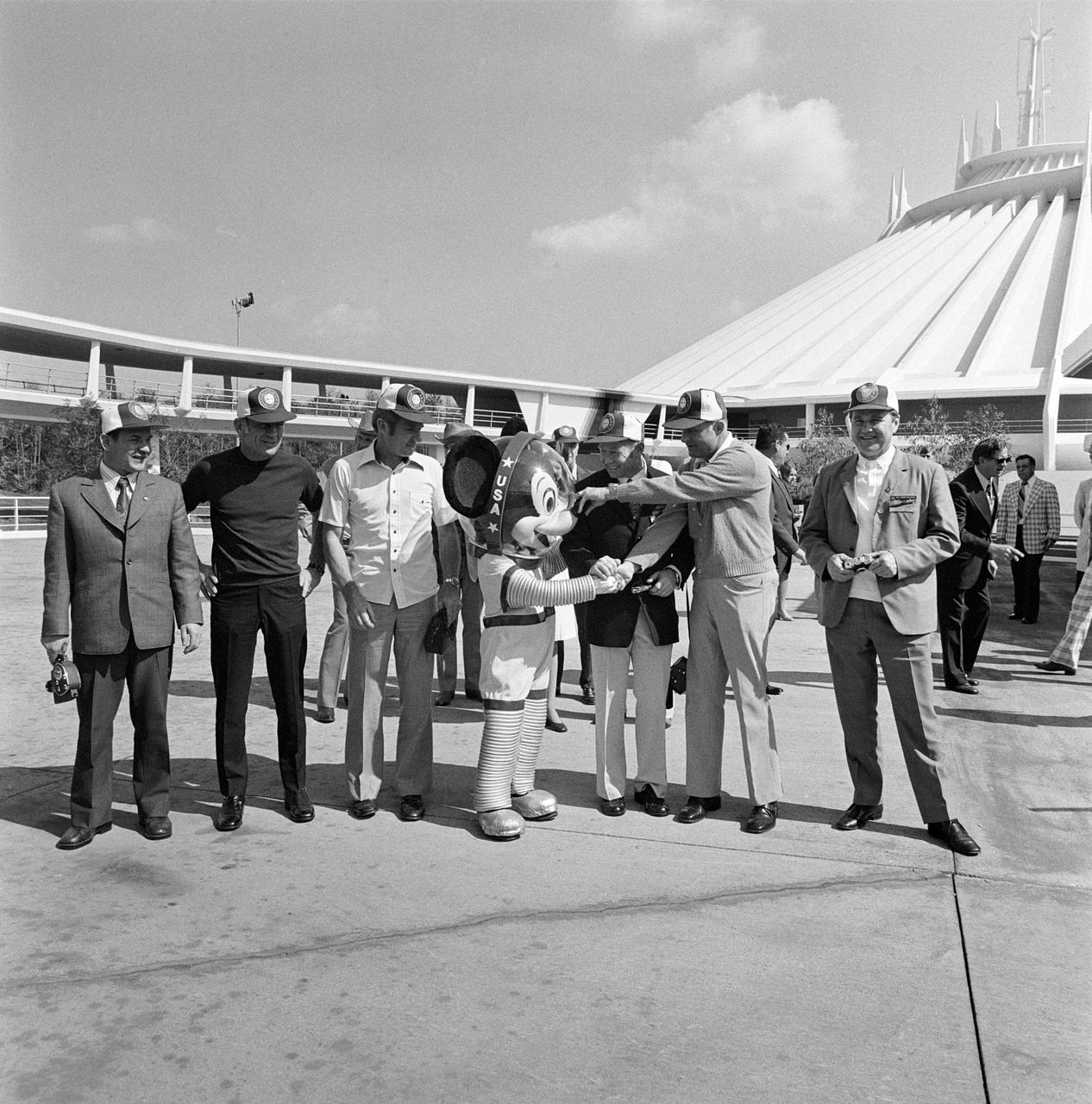
S75-24052 (8-10 Feb. 1975) --- A space-suited Mickey Mouse character welcomes the prime crewmen of the Apollo-Soyuz Test Project mission to Florida?s Disney World near Orlando. The crewmen made a side-trip to Disney World during a three-day inspection tour of NASA's Kennedy Space Center. The crewmen were at KSC to look over launch facilities and flight hardware. Receiving the jovial Disney World welcome are, left to right, cosmonaut Valeriy N. Kubasov, engineer on the Soviet crew; astronaut Donald K. Slayton, docking module pilot of the American crew; astronaut Vance D. Brand, command module pilot of the American crew; cosmonaut Aleksey A. Leonov, commander of the Soviet crew; astronaut Thomas P. Stafford, commander of the American crew; and cosmonaut Vladimir A. Shatalov, Chief of Cosmonaut Training for the USSR.
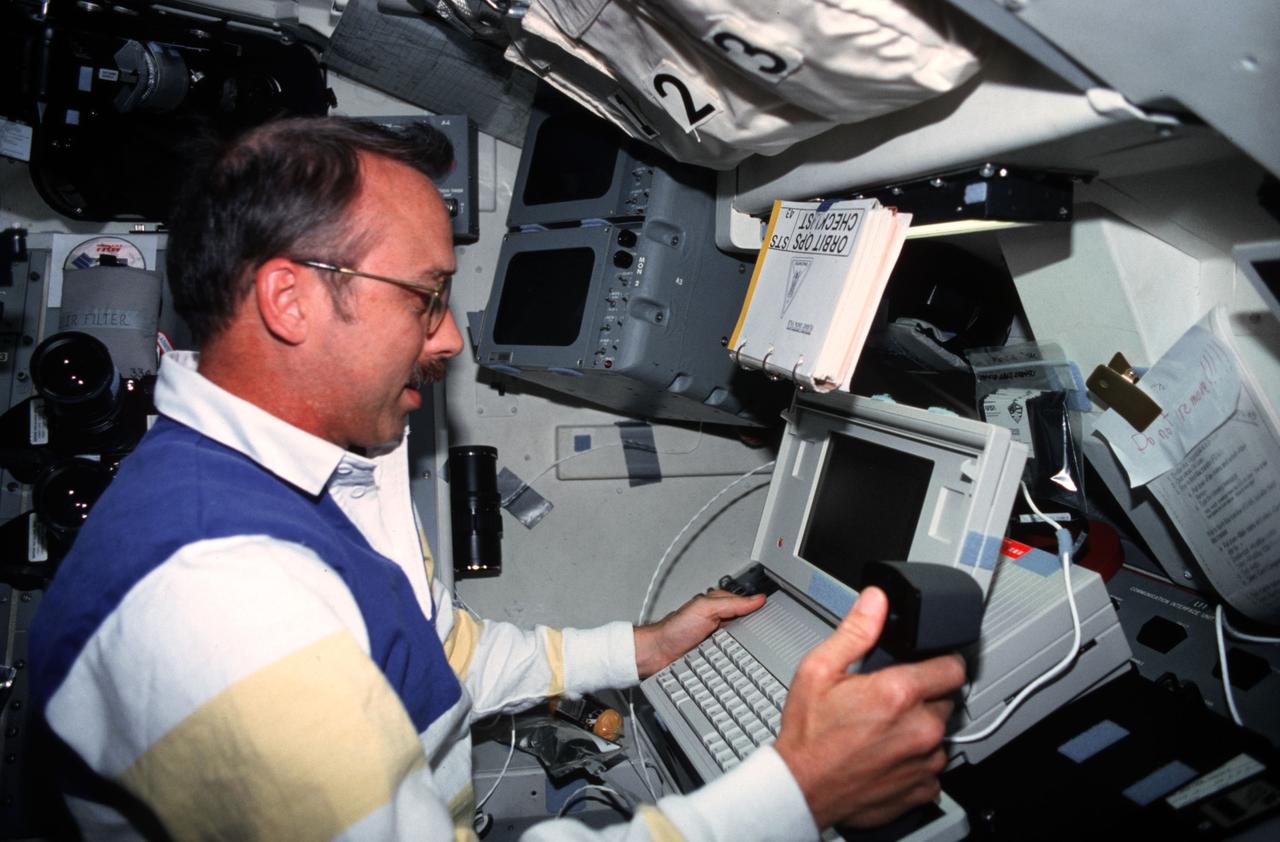
STS043-14-034 (2-11 Aug 1991) --- Astronaut James C. Adamson is pictured executing Development Test Objective (DTO) 1208, Space Station Cursor Control Device Evaluation II and Advanced Applications. The purpose of the Cursor Control Device Experiment is to evaluate human performance under space flight conditions of cursor control devices which are similar to the devices under consideration for use onboard space station computers. Here, the mission specialists uses a thumbball/handgrip control device. Each crewmember evaluated the different types of cursor control devices during the nine-day STS-43 mission. Other methods of cursor control evaluated were the built-in trackball, a side mounted trackball with restraints and an optical pad with mouse.